Kia Stinger Review: Sideways in Kia’s rear-wheel-drive Saloon
A performance Kia sounds like a contradiction, but with the Stinger it appears that the Korean brand has nailed the brief completely. Watch Ciro de Siena experience the new Kia Stinger.
By definition, a halo car exists to bring positivity, excitement and awareness to a brand. Usually, a brand's halo car is a fire-breathing sportscar and occasionally its a fancy-pants SUV. It is very rarely a sedan. Either way, the car should, at least in part, make the driver feel like a hero.
But if the Kia Stinger isn't a halo car, we're not sure what is. For a brand that is, at least in a South African context, widely associated with budget-beating hatchbacks, on our roads, the Stinger might as well be from another planet. And thanks to a potent V6, rear wheel drive and dramatic good looks, it's garnered critical praise from petrolheads, too.
And so, without further ado, we present to you our Kia Stinger video review. In this film, Ciro De Siena first takes the Kia to the iconic Franschhoek Pass but decides he needs a safer space to really test the car. And so we end off at a secret test track in the Cape, to work out if this halo car can make Ciro feel like a hero. Which is actually quite a solid rhyme.
Ford Kuga ST Line in SA (2018) Specs & Price
Ford has added a sporty ST Line kit to the Kuga as well as a new, efficient turbodiesel model in an effort to jump-start the Kuga's sales on local soil. See details below…
The new Kuga is not having the best of times on the sales charts, but that's to be somewhat expected after the disaster that befell the previous generation. Despite enticing pricing, a strong engine lineup and a practical offering, the new Kuga lags behind the competitors like the VW Tiguan, Mazda CX-5, Hyundai Tucson and Toyota Rav4 – to name but a few. Ford is looking to improves sales with some new additions to the Kuga range. Here's what the new models have to offer.
Sporty Kuga ST Line
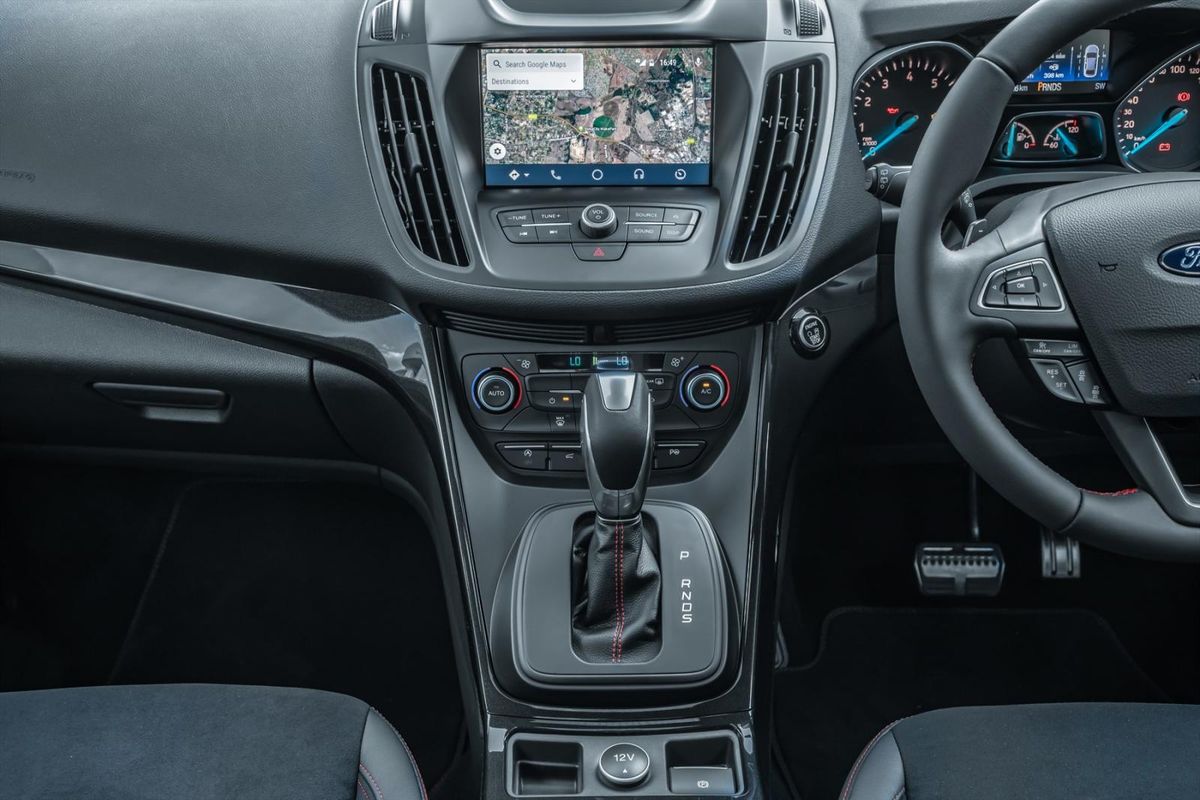
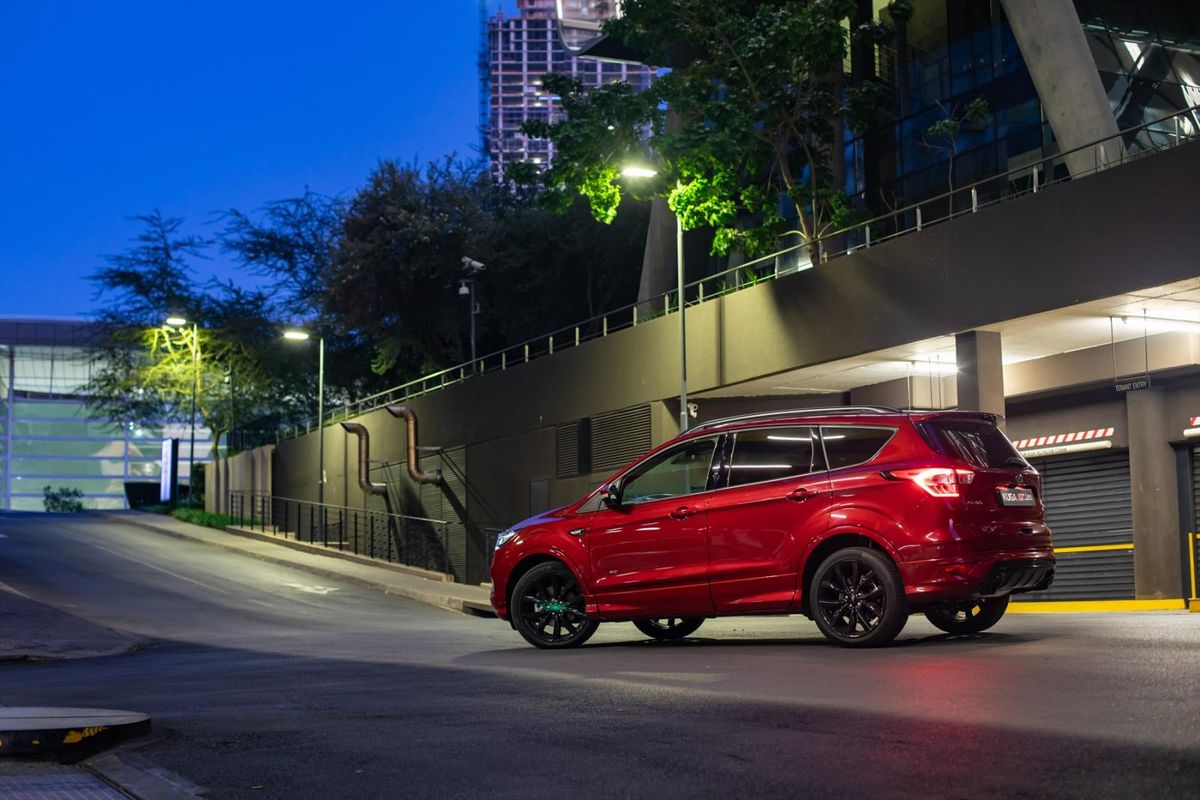
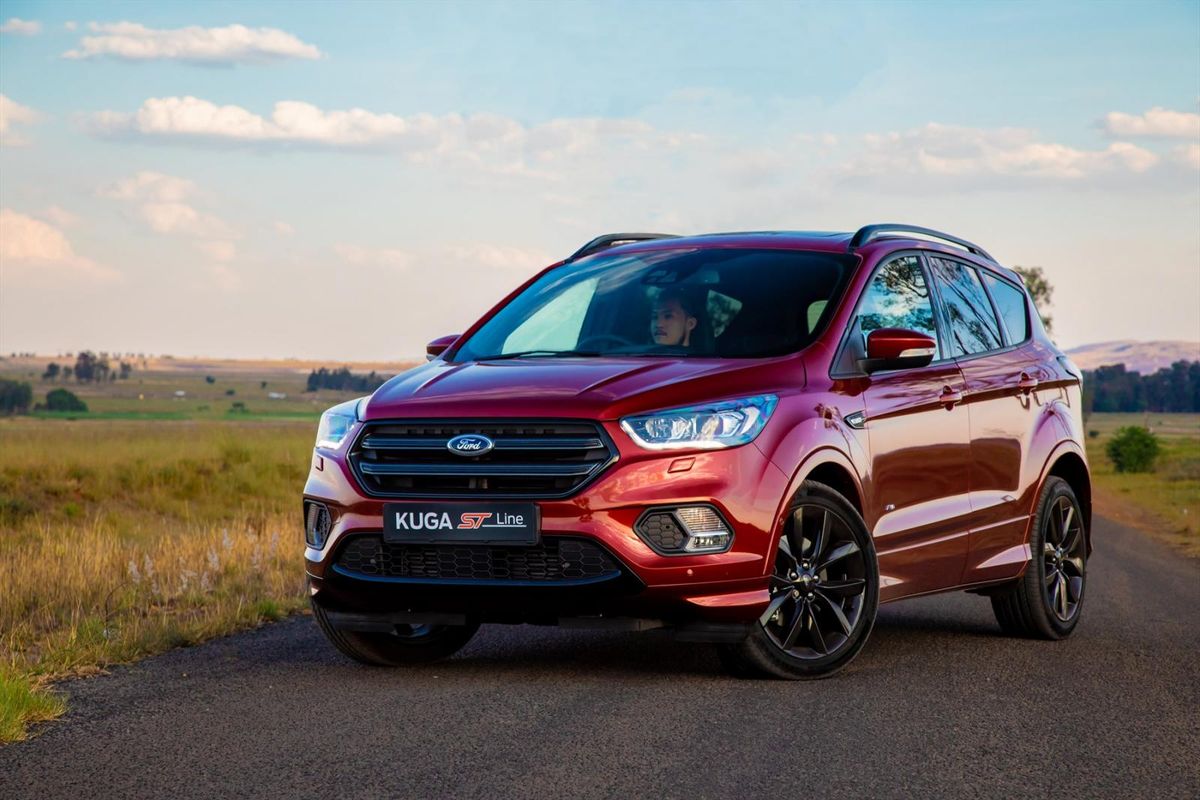
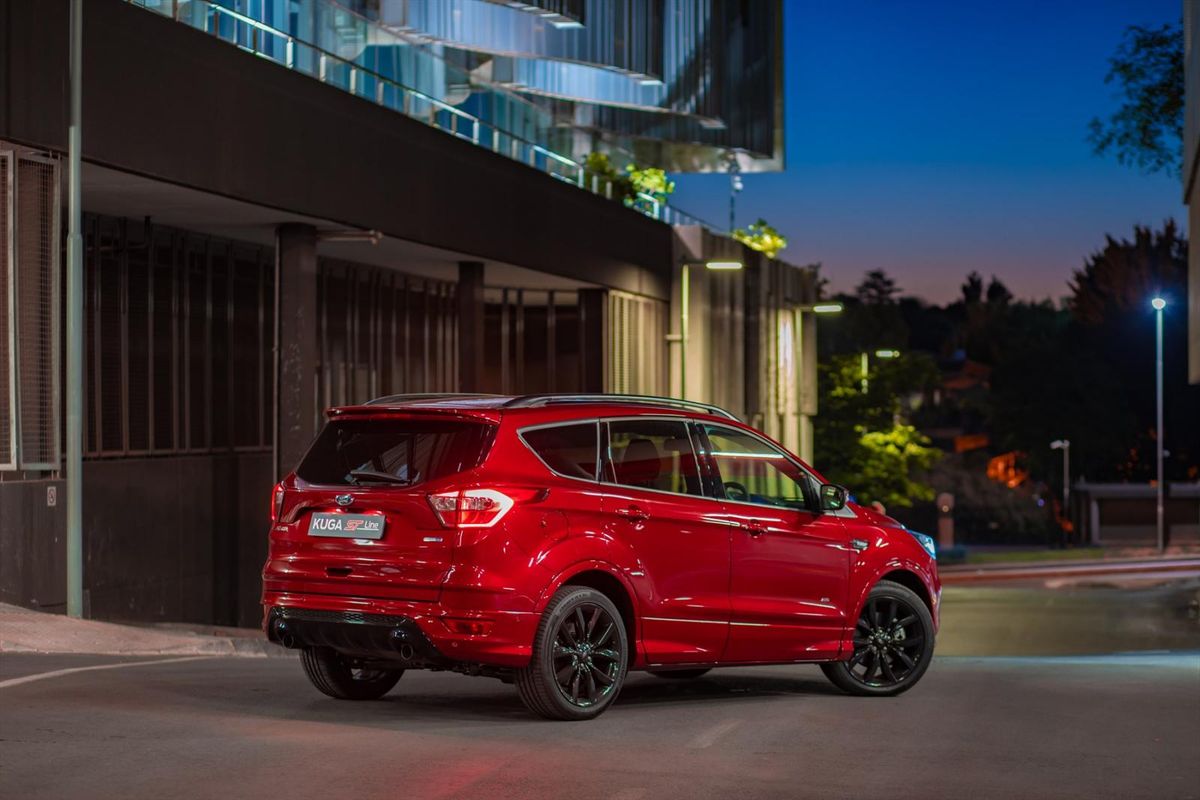
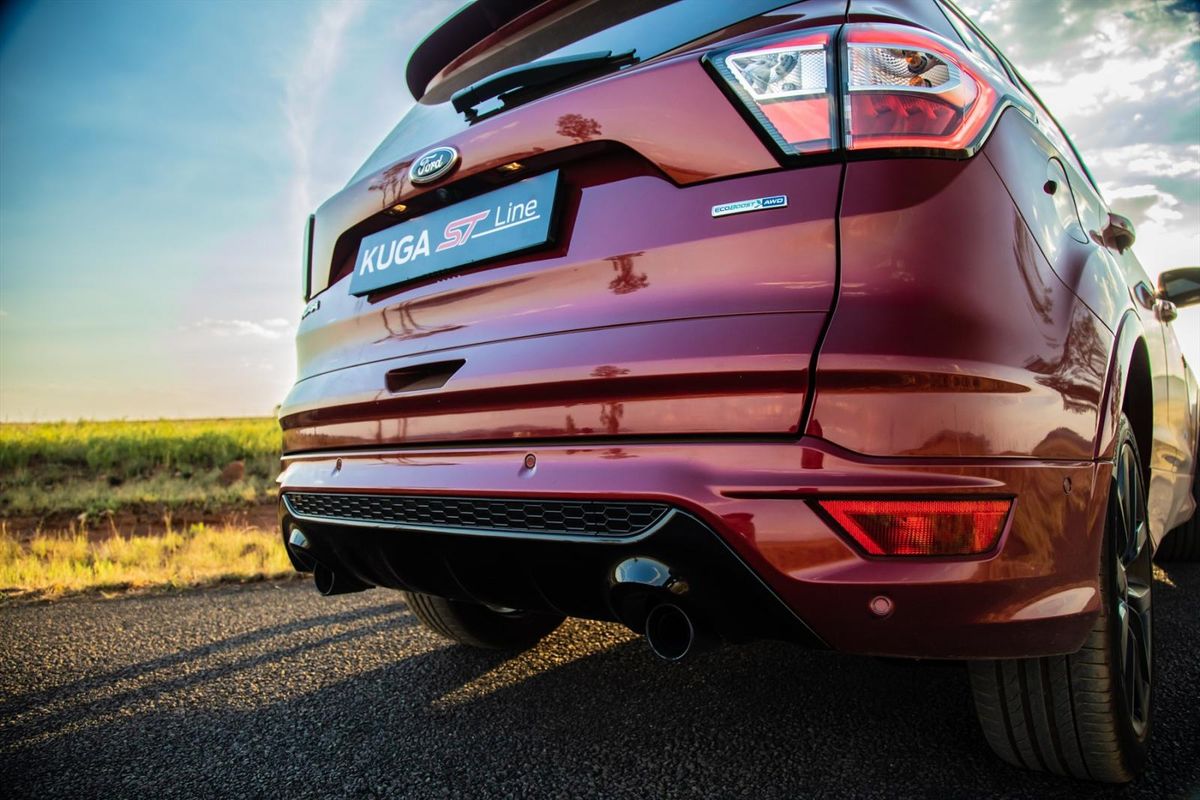
The Kuga ST Line replaces the old Titanium model and offers a sportier offering thanks to high-gloss Ebony Black finish for the front grille, honeycomb design for the lower portion of the grille and matching sports mesh finish on the fog lamp bezels. The skid plate, side skirts, mirrors, door handles, rear roof spoiler and wheel arches are all colour coded and make up the new body kit for the ST Line. Ford has even included an Ebony Black rear diffuser, black roof rails, tinted front and rear lights and privacy glass for the rear windows.
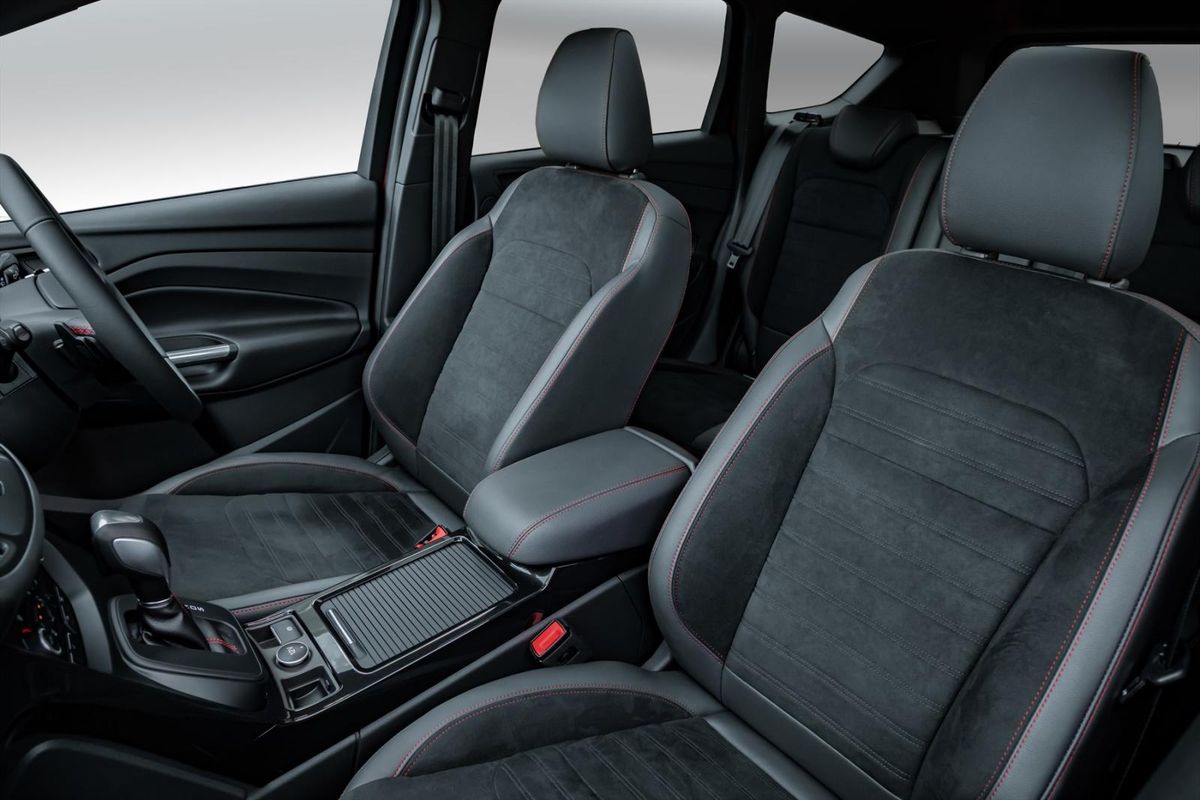
The interior of the ST line features partial leather seats with coloured stitching that extends to the gear lever, centre console and gear lever. The ST Line logo appears on the scuff plates as you open the door.
The trend towards sporty family SUVs continues with a revisited suspension setup that incorporates thicker anti-roll bars, a 10 mm lower ride height and stiffer suspension bushes. Spring and damper rates have also been fine-tuned to improve handling performance.
The Kuga ST Line is offered in either all-wheel drive diesel or petrol guise. The diesel variant is powered by a 2.0-litre turbodiesel engine with 132 kW and 400 Nm and is mated to a 6-speed Powershift automatic transmission. As for the petrol version, a 2.0-litre Ecoboost engine does service under the bonnet and provides 177 kW and 340 Nm of torque and comes mated with a 6-speed torque-converter automatic transmission.
Frugal 1.5 turbodiesel
A new economy-oriented turbodiesel engine has been added to the Kuga lineup too. Power for this unit is rated at 88 kW combined with 270 Nm of torque. This engine is only available in entry-level Ambiente and mid-spec Trend variants. It is also only available with a manual 6-speed gearbox and front-wheel-drive. In terms of fuel economy, Ford claims an average figure 4.2 L/100km.
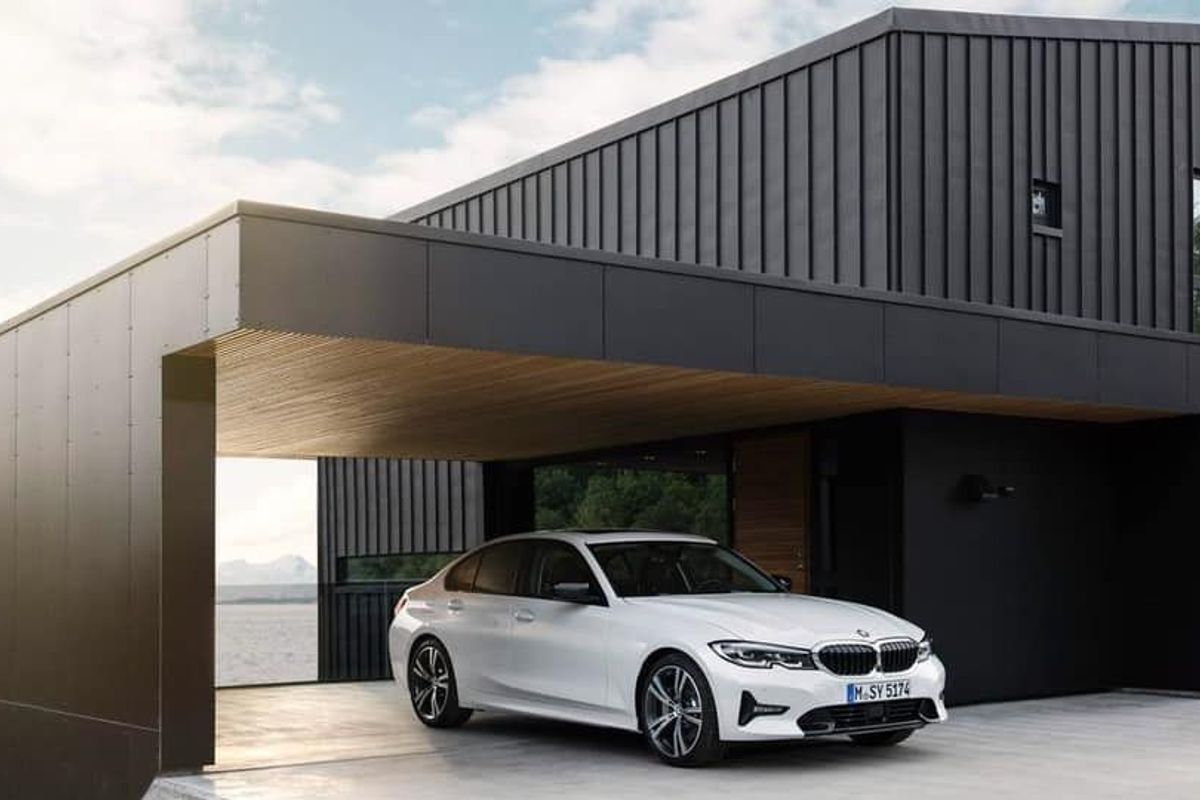
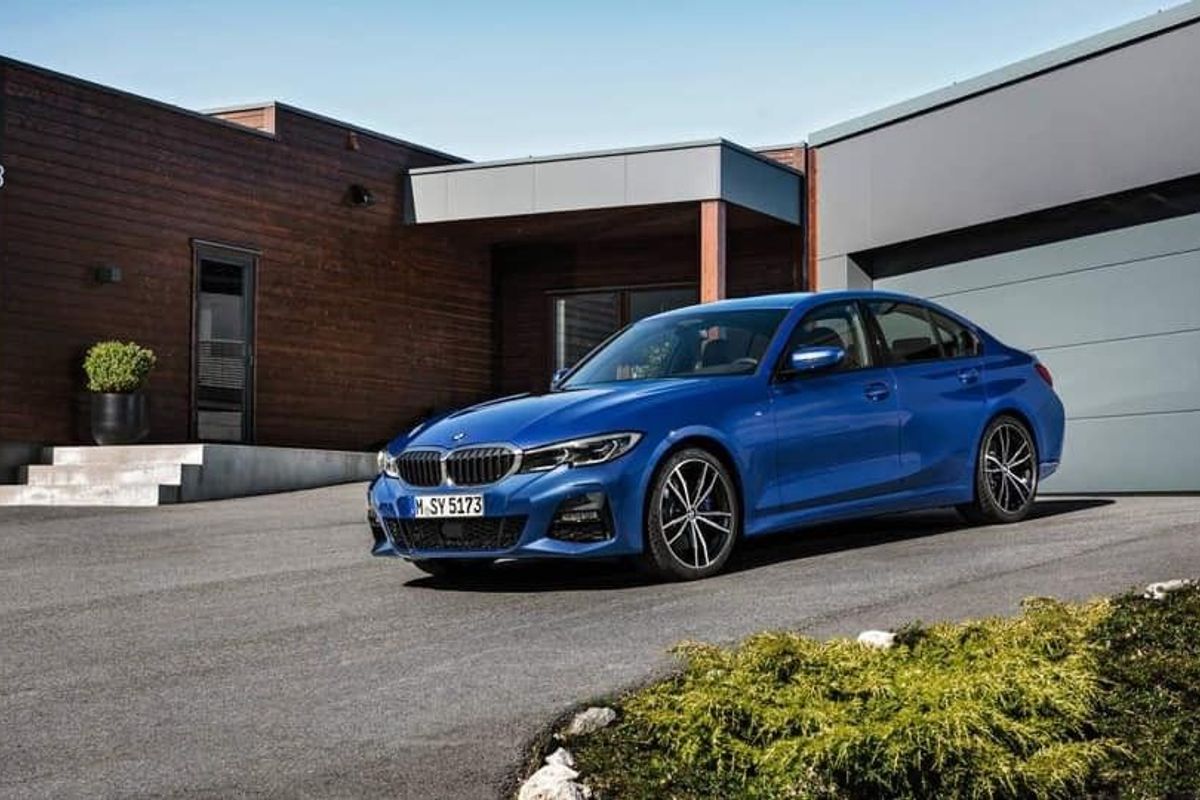
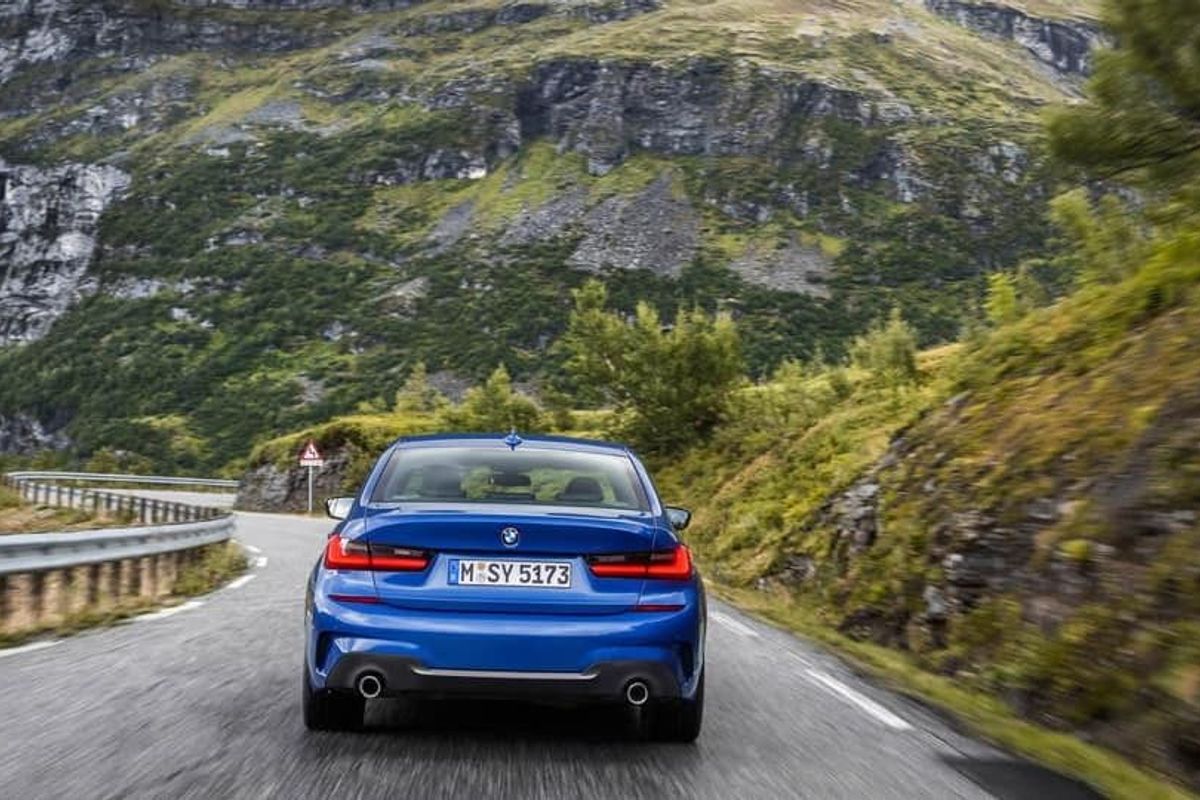
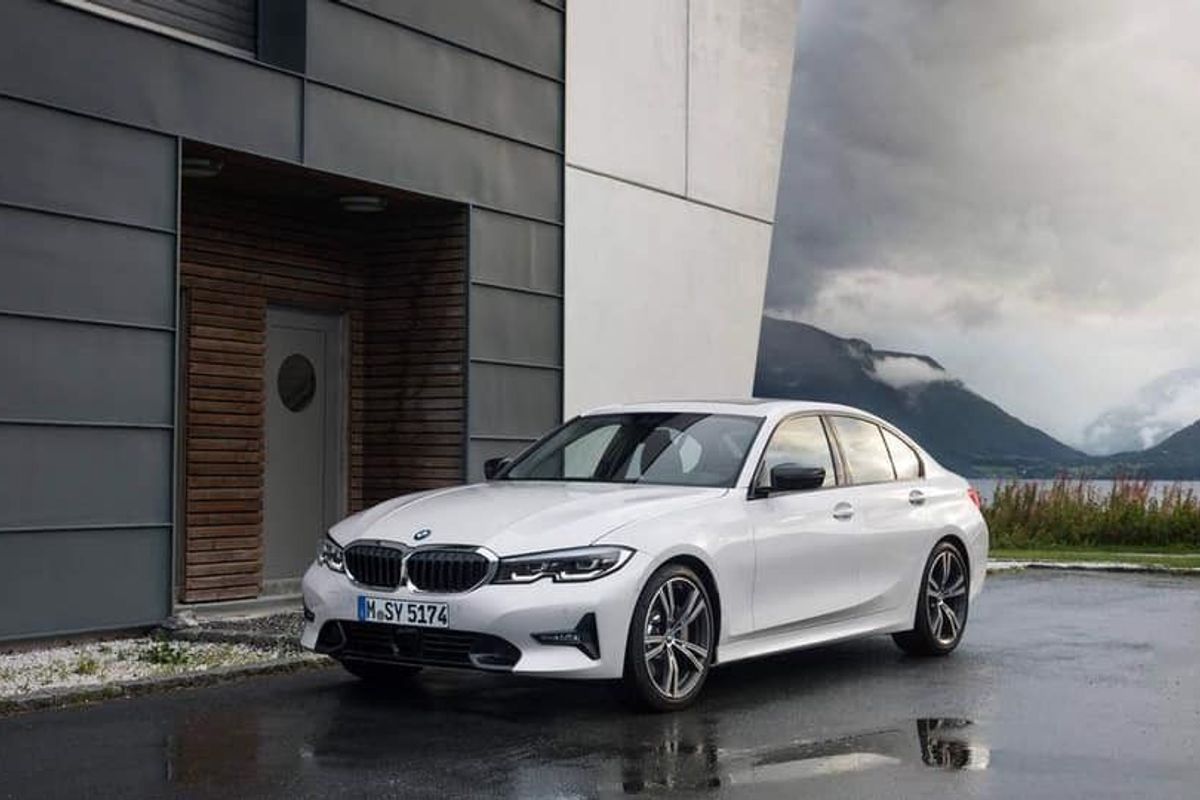
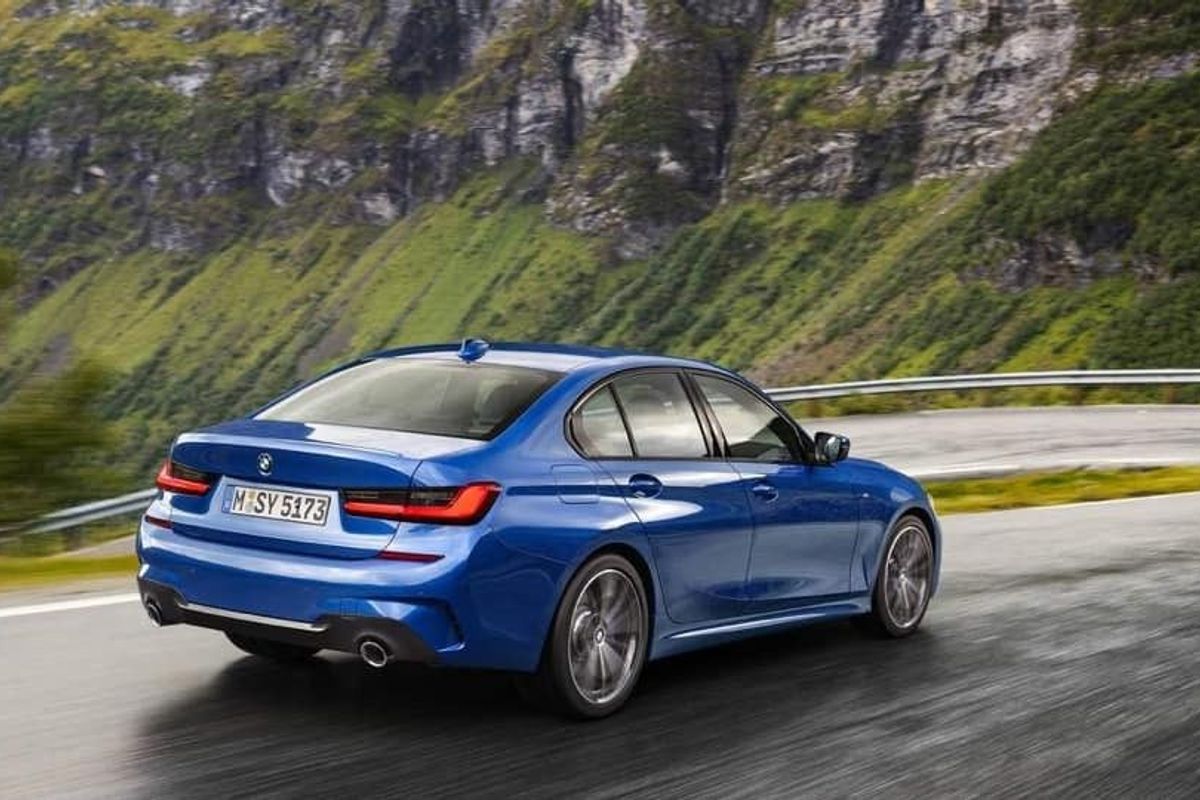
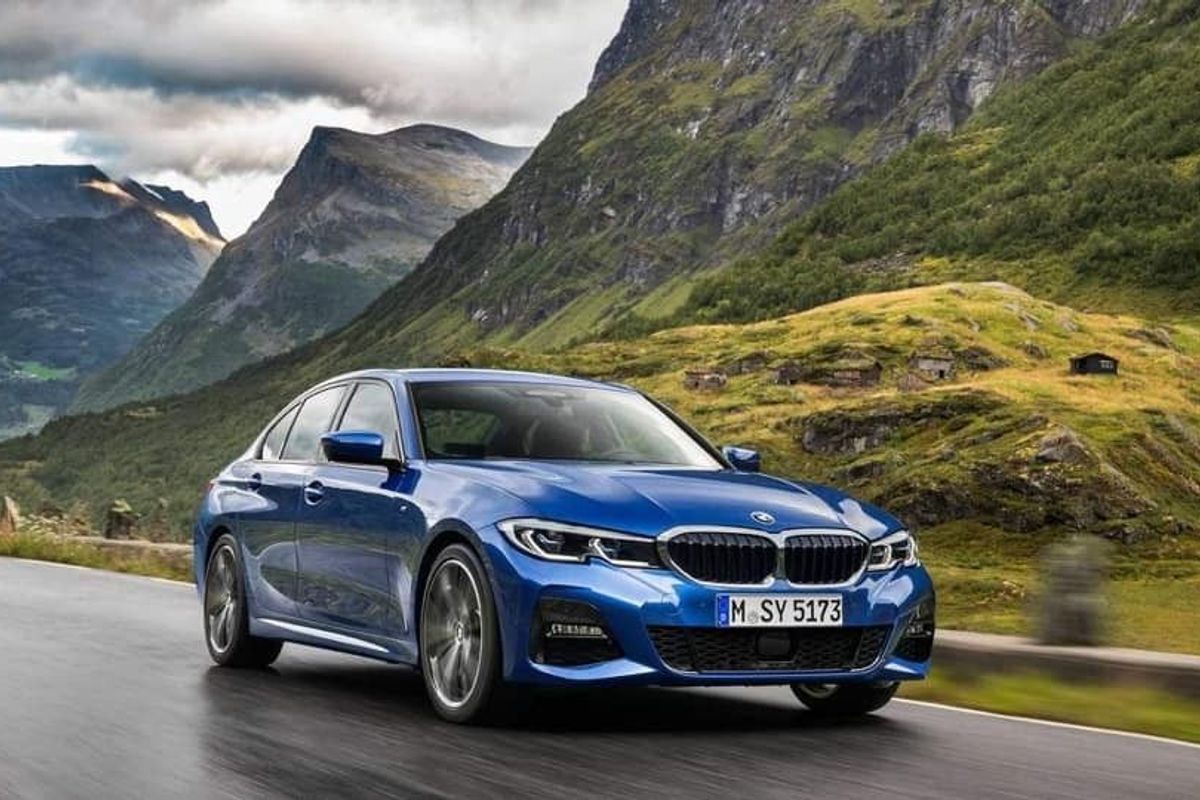
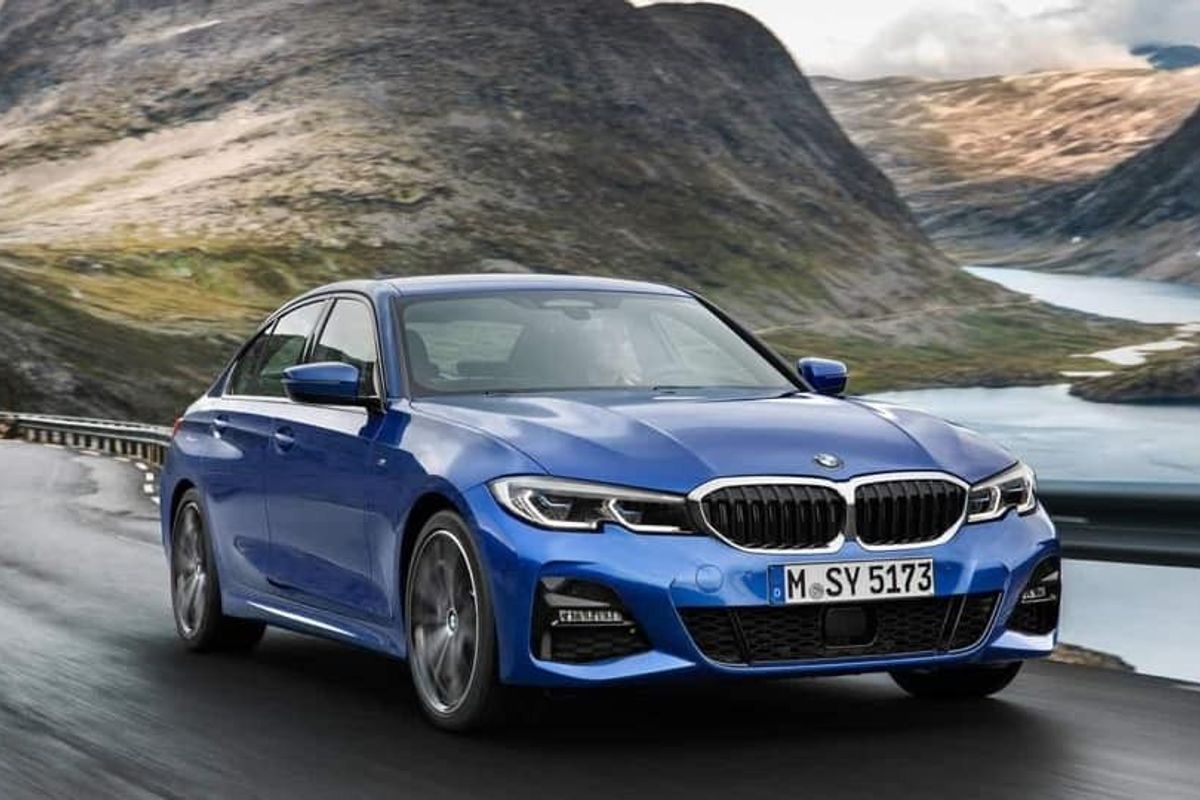
The all-new BMW 3 Series is headed for South Africa in March 2019. Here's what you can expect in terms features and pricing…
Codenamed G20, the 3 Series is an important product for BMW and the new model needs to up its game if it’s to effectively compete against cars such as Audi’s A4 and the Mercedes-Benz C-Class.
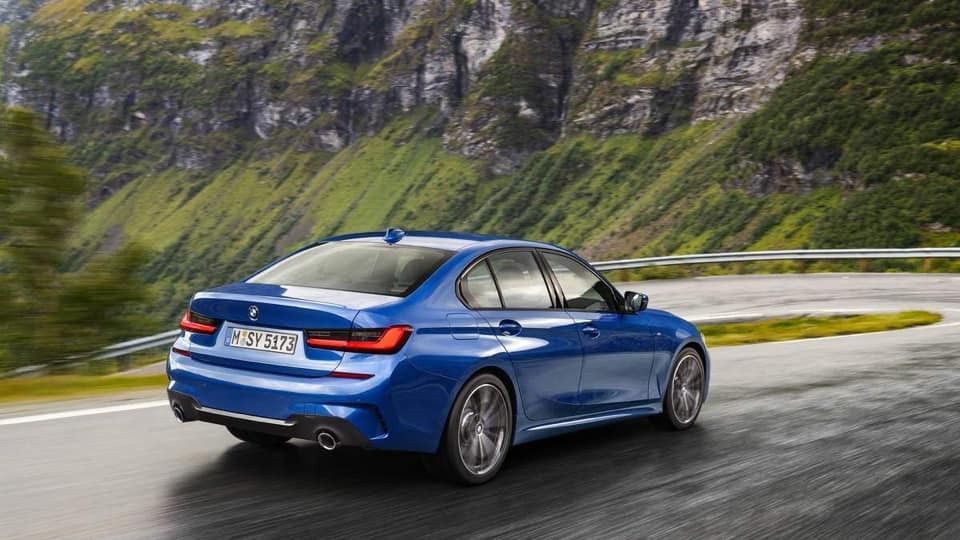
In terms of dimensions, the new 3 Series has grown in length by 85 mm while standing 16 mm wider and just 1 mm taller than the outgoing model. Up front, the new 3 wears a large kidney grille with a single surround which is flanked by newly-shaped LED headlights. Other new details include T-shaped air intakes, twin exhaust pipes at the rear and slim L-shaped 3D taillights. Trim lines include Advantage, Sport Line, Luxury Line and M Sport.
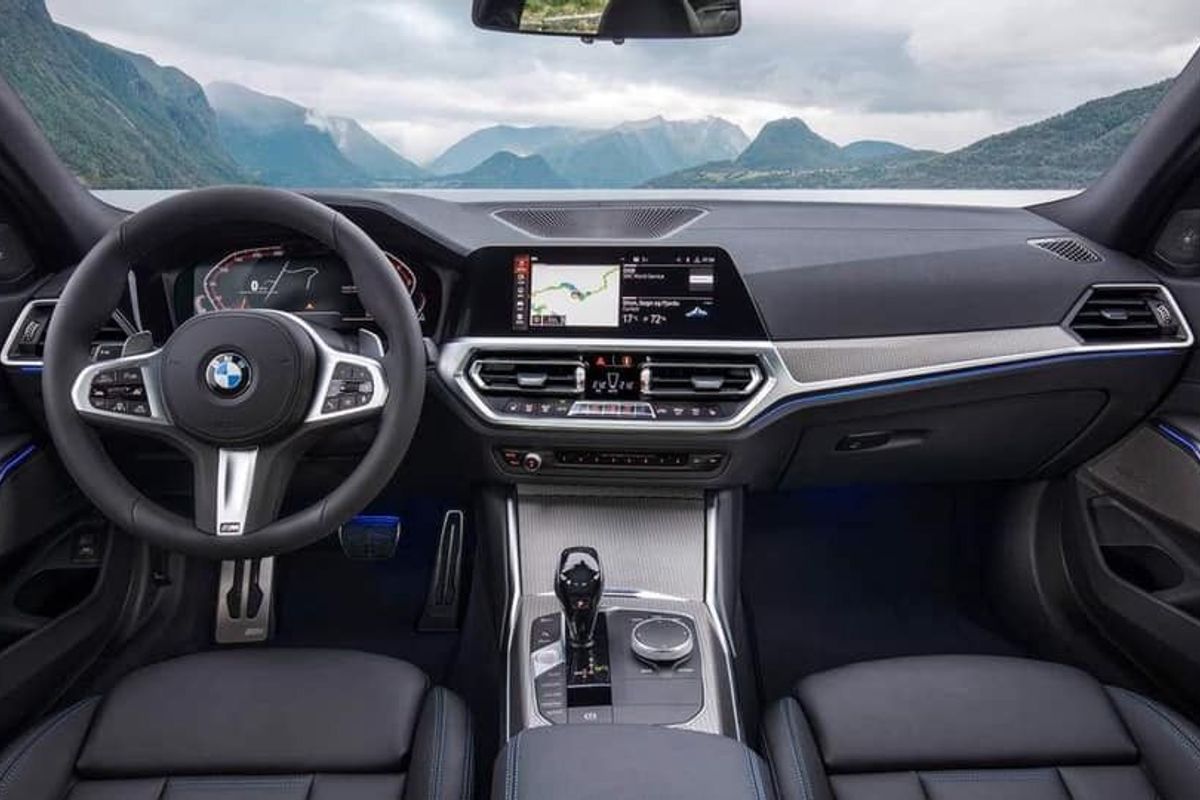
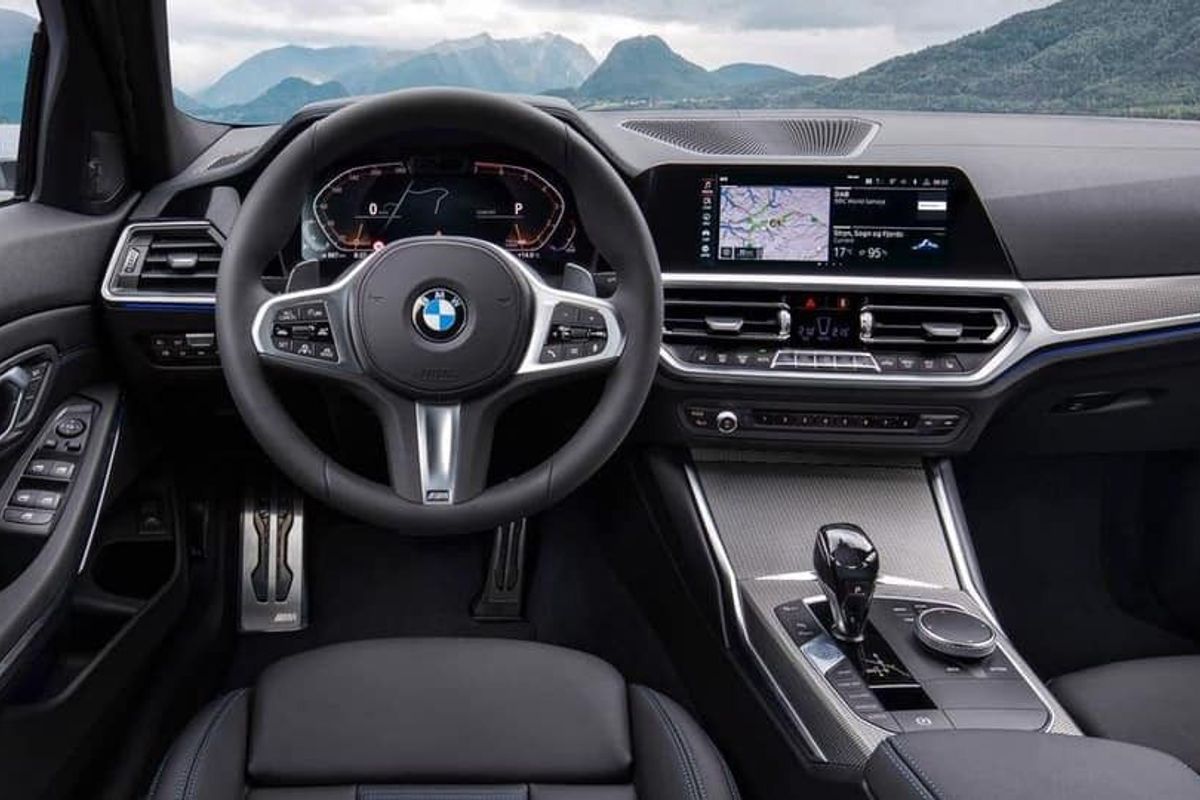
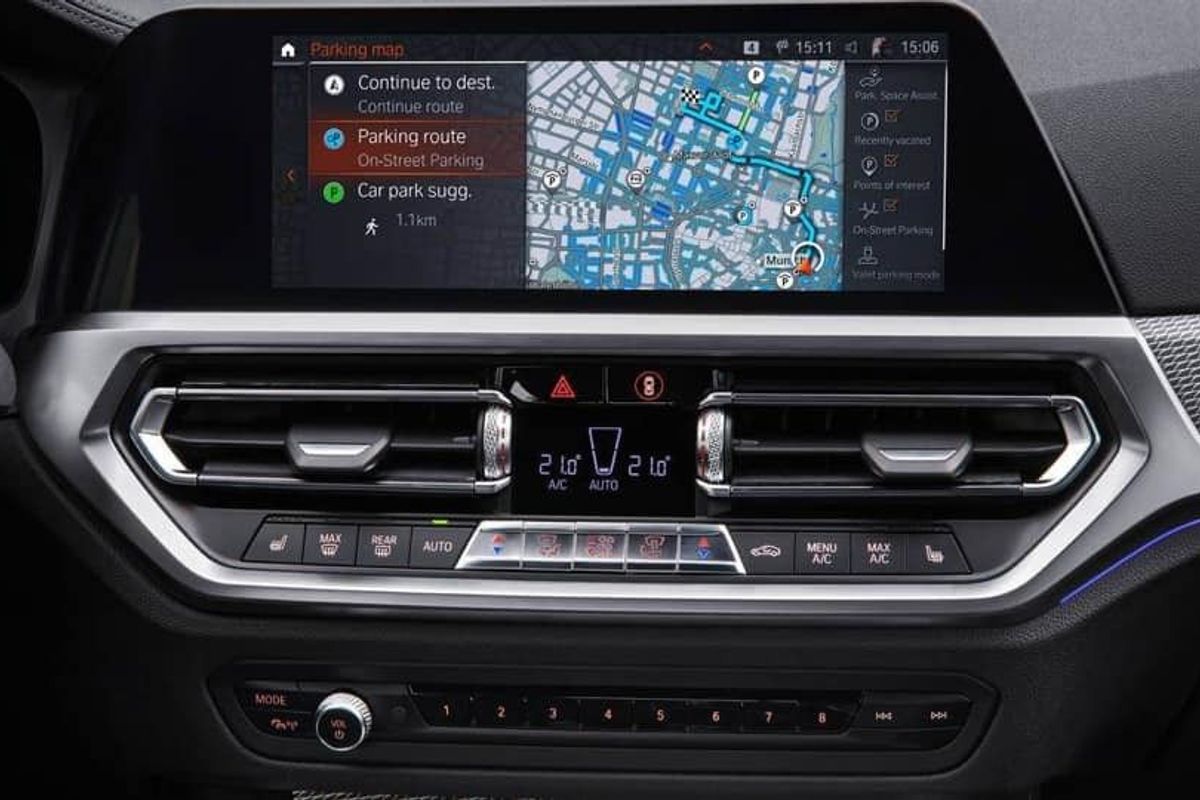
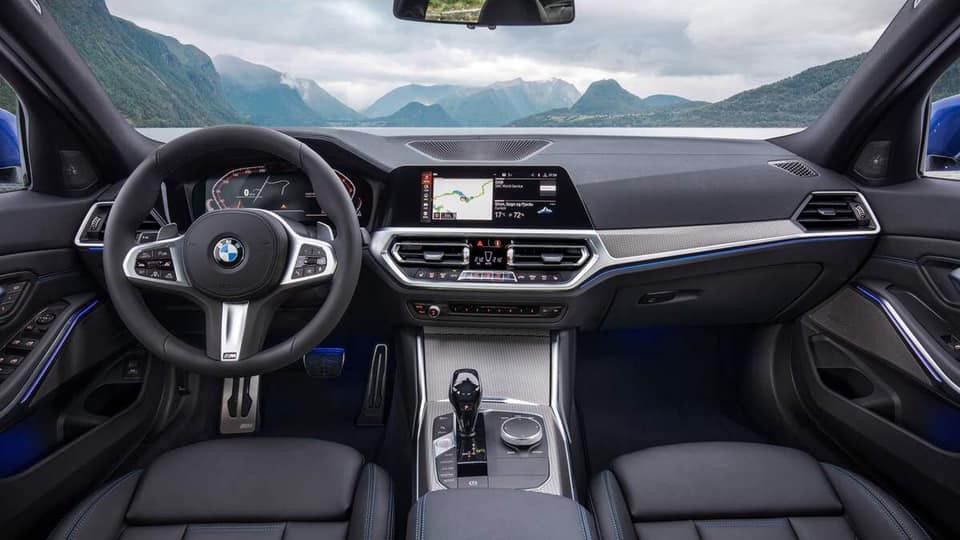
A revised interior with new display screens and the latest iDrive 7.0 operating system boosts the technology offering inside the new 3 Series.
The major highlight inside the new 3 Series is the inclusion of the BMW Live Cockpit Professional which comprises a large 12.3-inch display for the instrument cluster and a 10.25-inch infotainment system, the latter of which is now equipped the latest iDrive 7.0 operating system. A head-up display with a 70% larger surface area is also offered. A wide range of driver assistance features are also on offer, including a Reversing Assistant which was also recently introduced on the new BMW X5.
The rear seat is split 40:20:40 as standard and the load bay offers up to 480-litres of space.
Engine Choice
The new BMW 3 Series will arrive in SA in March 2019. Local specification and pricing details have yet to be confirmed.
The BMW 3 Series will offer 6 engine variants from launch including the 320i, 330i, 318d, 320d, 320d xDrive and the 330d. The 4-cylinder 2.0-litre turbopetrol engine powering the 320i offers 135 kW and 300 Nm with a claimed fuel consumption figure of between 5.7 – 6.0 L/100km. The 330i has more grunt with 190 kW and 400 Nm of torque and fuel consumption is claimed at between 5.8 – 6.1 L/100km. Both are mated to an 8-speed Steptronic transmission.
The diesel range kicks off with the 318d with 4-cylinder, 2.0-litre turbodiesel engine offering 110 kW and 320 Nm of torque which is mated with a 6-speed manual transmission as standard while an 8-speed automatic transmission is optional. Fuel consumption for this engine is claimed at between 4.2 – 4.5 L/100km. The 320d is more powerful with figures of 140 kW and 400 Nm of torque and BMW claims an average fuel consumption figure of 4.4 – 4.7 L/100km. The 140 kW/400 Nm 320d xDrive employs BMW's all-wheel-drive system and is fitted with an 8-speed automatic transmission as standard with claimed fuel consumption figures coming in at between 4.5 – 4.8 L/100km.
A 6-cylinder, 3.0-litre turbodiesel engine is found under the bonnet of the 330d and it has outputs of 195 kW and 580 Nm of torque. this derivative is equipped with an 8-speed automatic transmission and fuel consumption is rated at between 4.8 – 5.2 L/100km.
The new 3 Series rides on a stiffer chassis with a lower centre of gravity and 50:50 weight distribution. A range of options can be chosen to further sharpen dynamics including M Sport suspension with lowered ride height, Adaptive M suspension, variable sport steering, M sport brakes and M Sport differential.
According to BMW's online car configurator, 2 engine choices will be offered to customers from launch, including the 330i and 320d (See pricing below).
The new BMW 3 Series will go on sale in South Africa in March 2019. We will keep you informed as soon as more details become available.
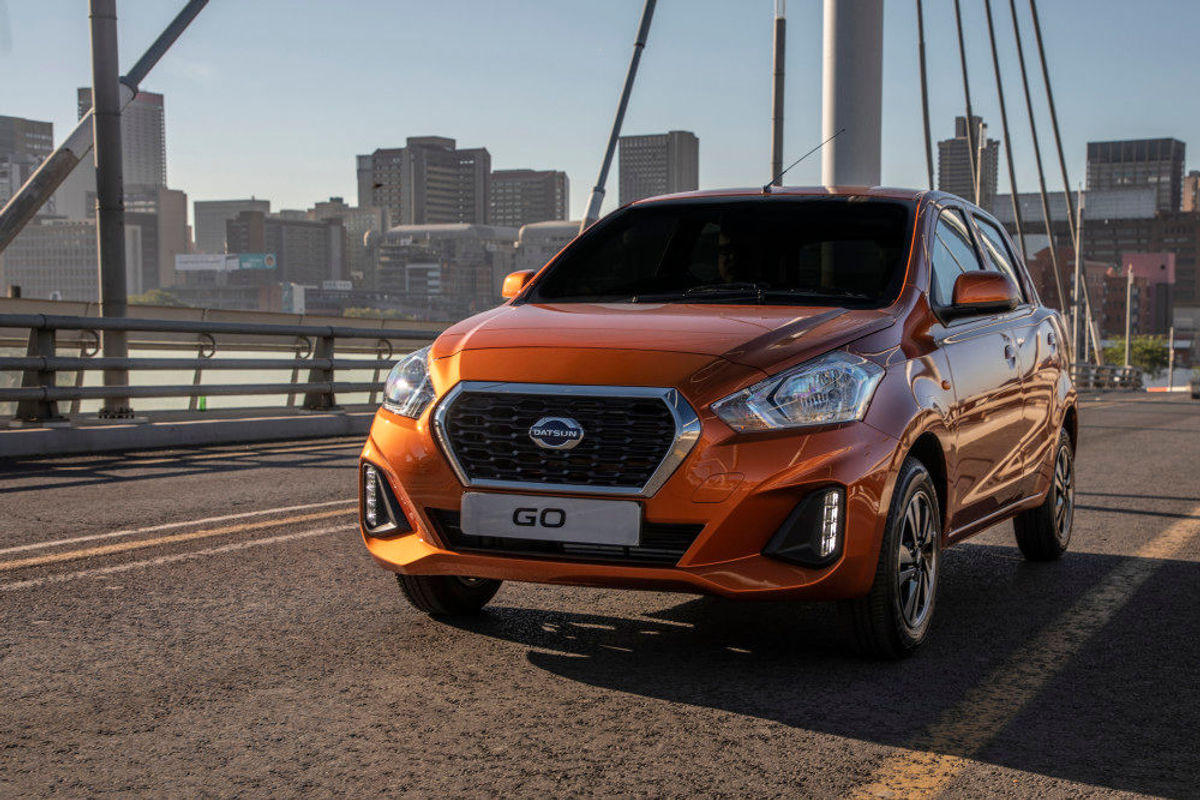
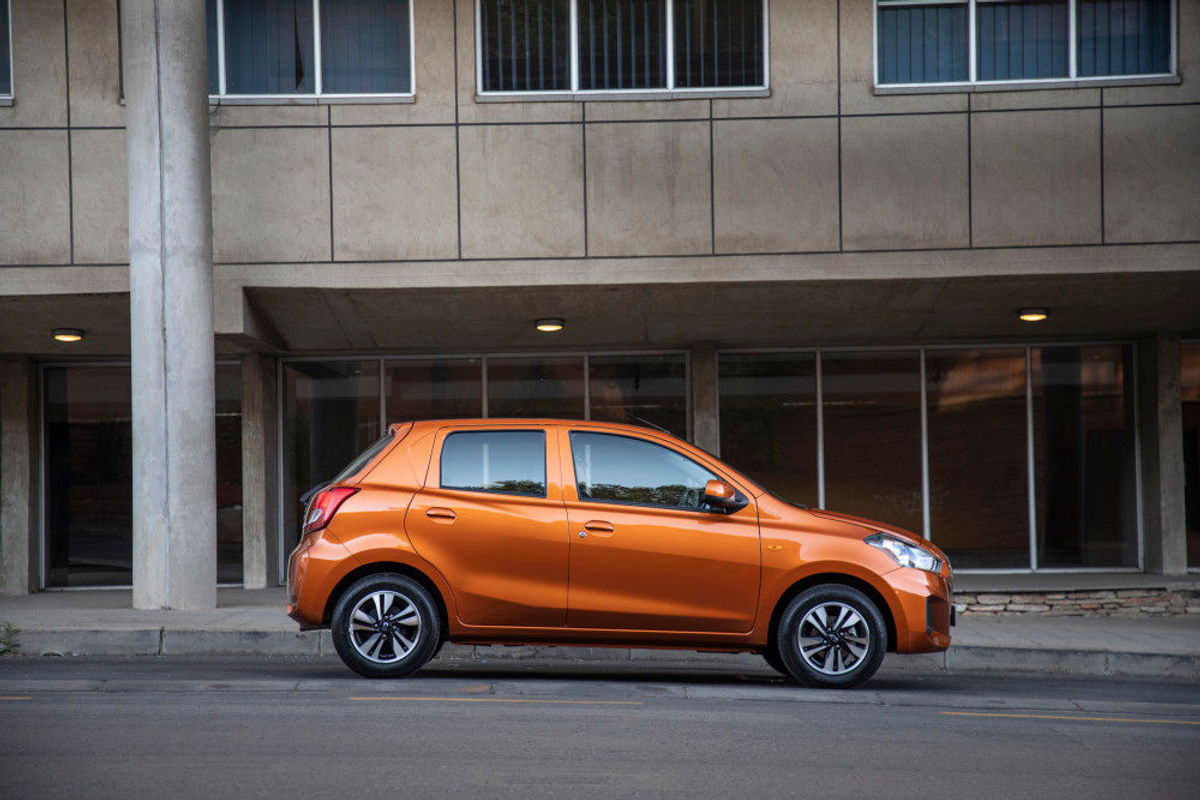
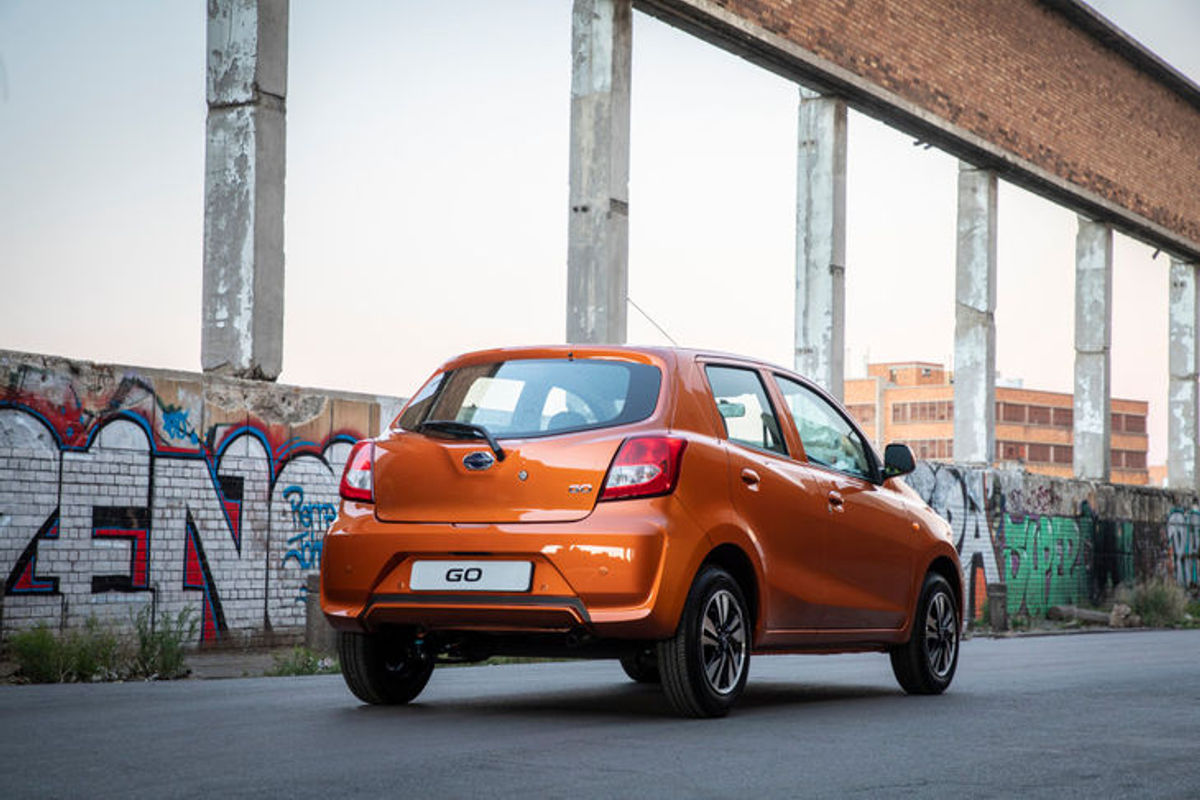
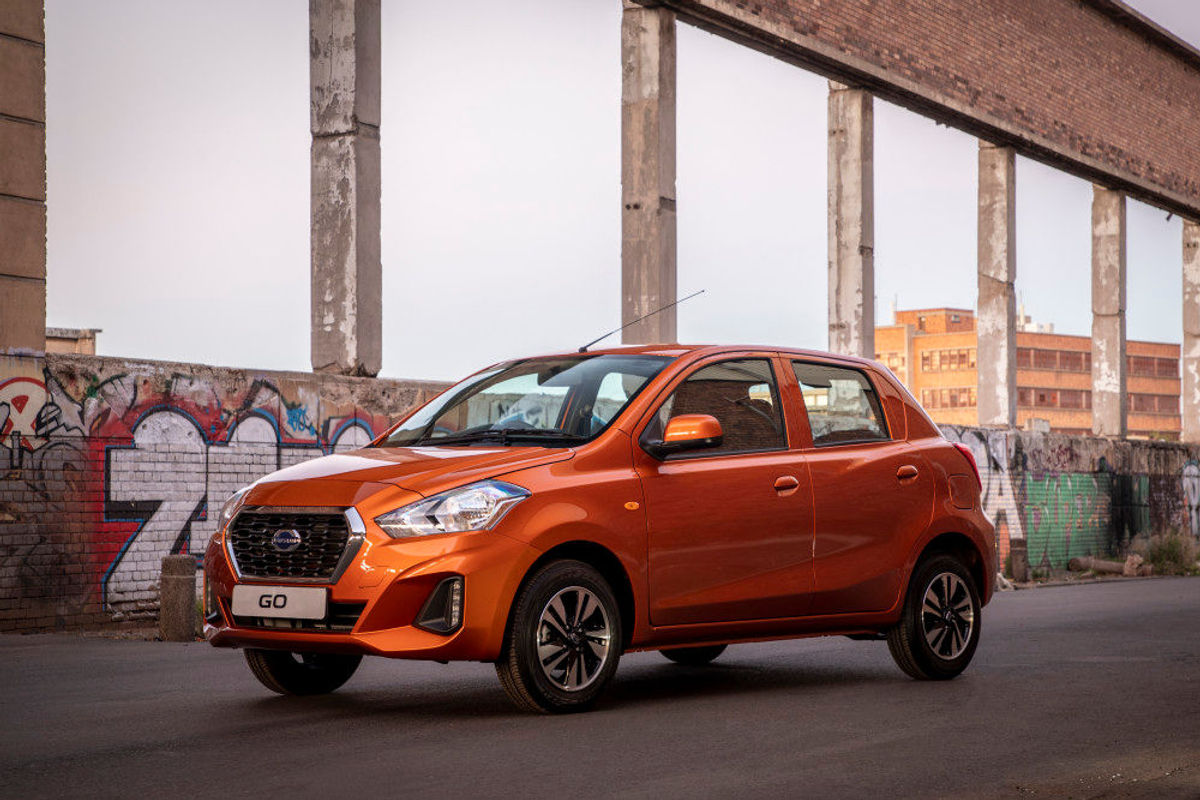
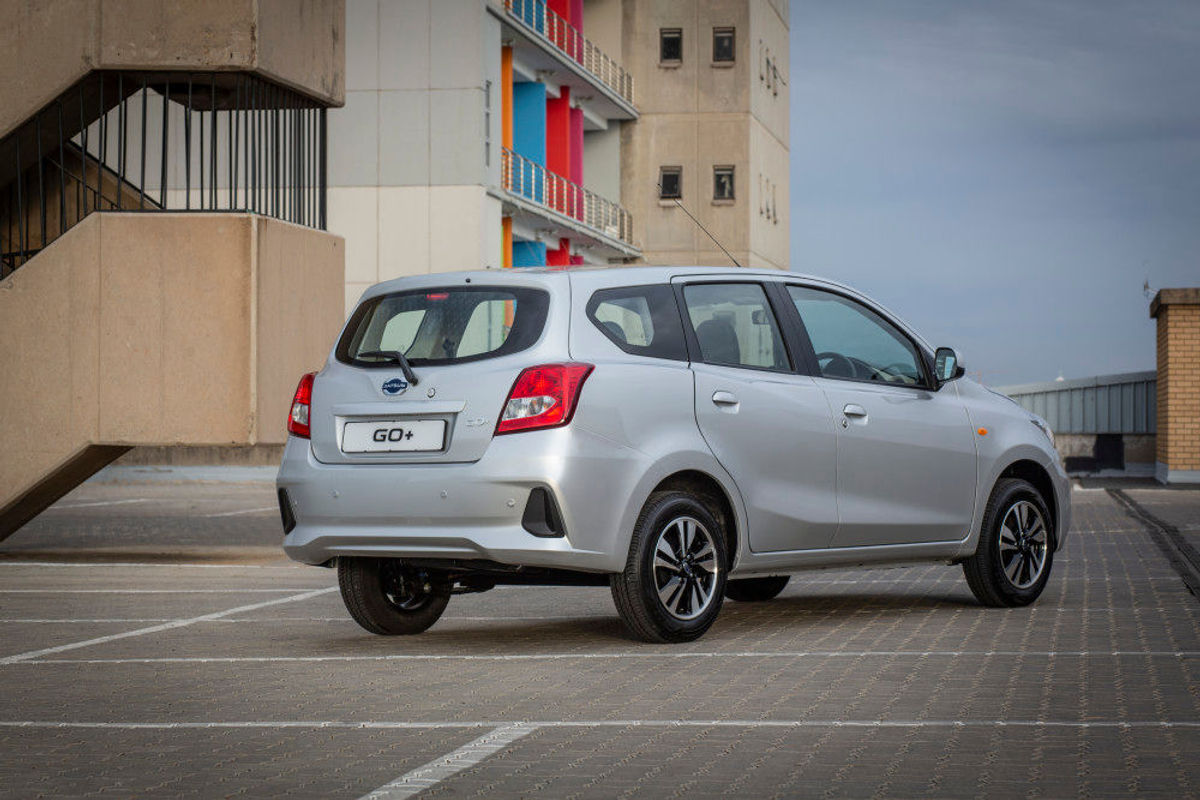
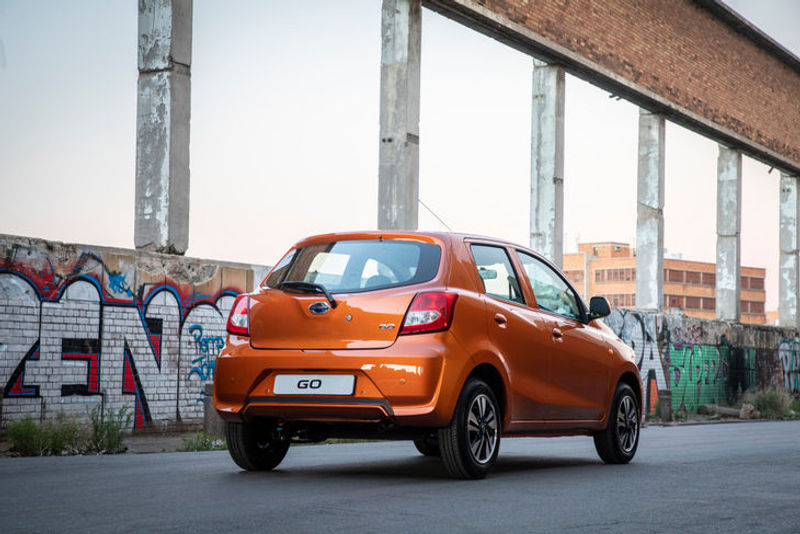
The Datsun Go has been updated and the revised version of the controversial budget car comes to market replete with substantial improvements, including a safety upgrade. We headed to Gauteng to drive the newcomer.
Back in 2013, the car world was surprised by news of the resurgence of the Datsun brand. Hopes were high that finally there would be a quality NEW vehicle that would suit budget-car buyers to a tee. Named Go, it offered pleasing levels of comfort, performance and specification on paper. However, there was a catch. The first iteration of Datsun Go was under-equipped in terms of safety, it featured no airbags or ABS. Later, a single airbag (for the driver) was added to the top-spec 1.2 Lux derivative, which was the sole offering on the market before the arrival of the facelift.
Worse still was that the vehicle's body didn't appear to offer enough structural integrity to provide notable occupant protection in the event of an accident – which meant that even tripling the airbag count would have had little effect. The condemnation in the media (mainstream and social) was brutal after NCAP scored the Go zero. Our review of the Go was ambivalent; we thought it was okay to drive, but the safety issue was critical.
Despite this, the Go has sold well in South Africa, which suggests that many customers are willing to sacrifice safety for the pleasure of owning a new vehicle (a phenomenon that ensured "continuation vehicles", such as the VW CitiGolf and Toyota Tazz, remained in local production long after they'd been replaced in their countries of origin; they sold well right up to the point they were discontinued).
Besides, it's easy to understand why… the alternatives to new-car ownership are running inefficient or unreliable old cars or using public transport which is not without its risks and limitations.
Enter this facelifted Datsun Go, with which the Japanese company hopes to surpass the average sales count of the preceding model (around 500 units a month). To date, almost 25 000 Datsun Go variants have found homes in South Africa.
What's new?
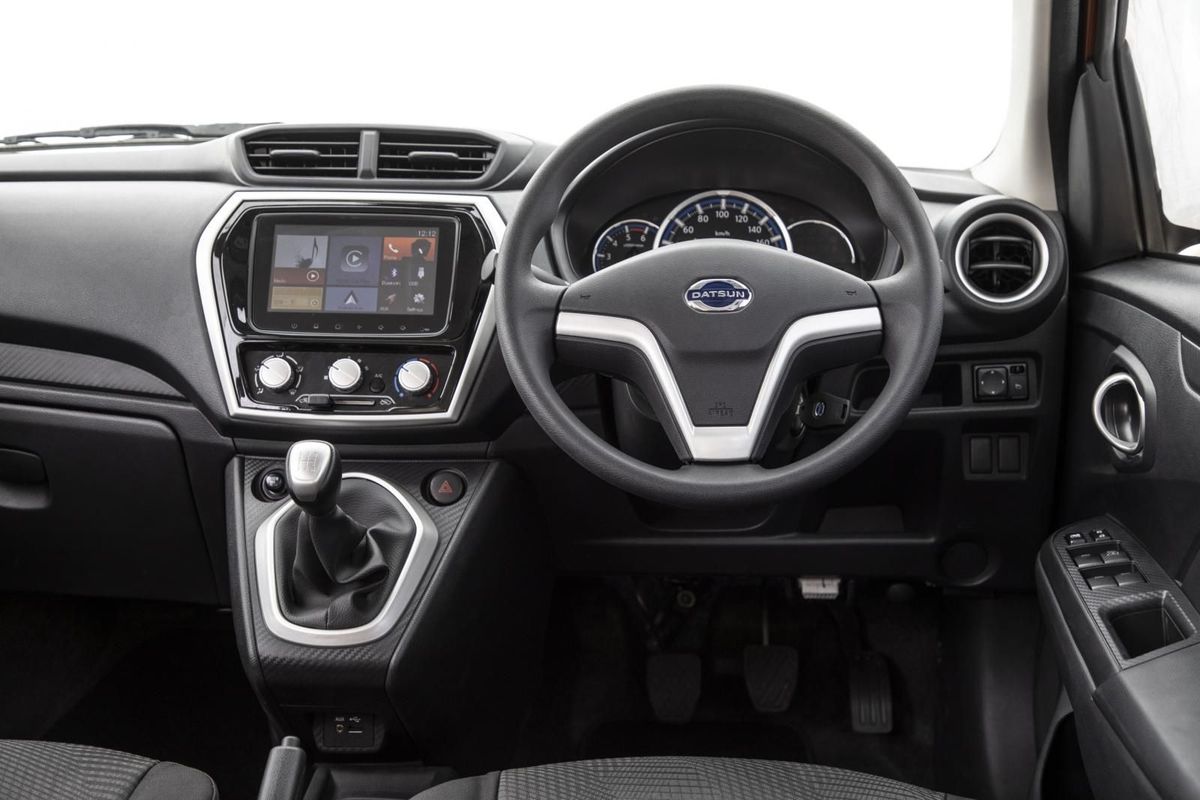
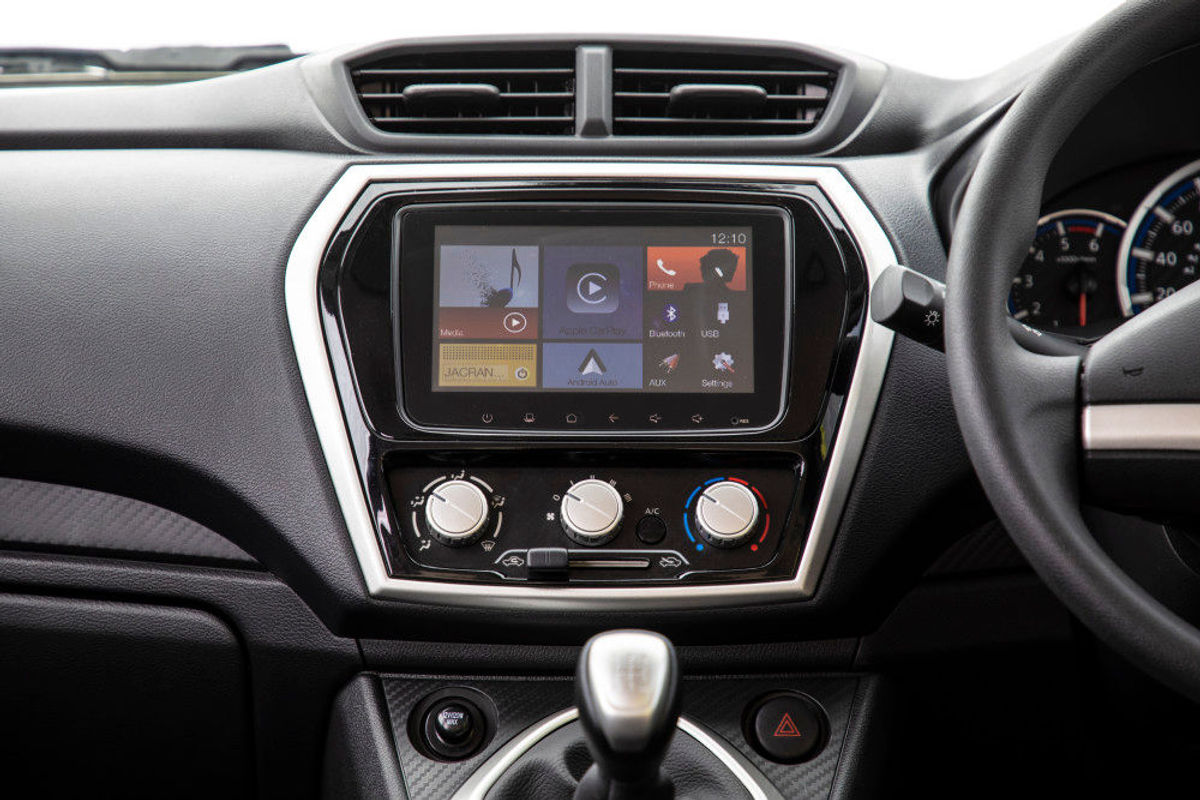
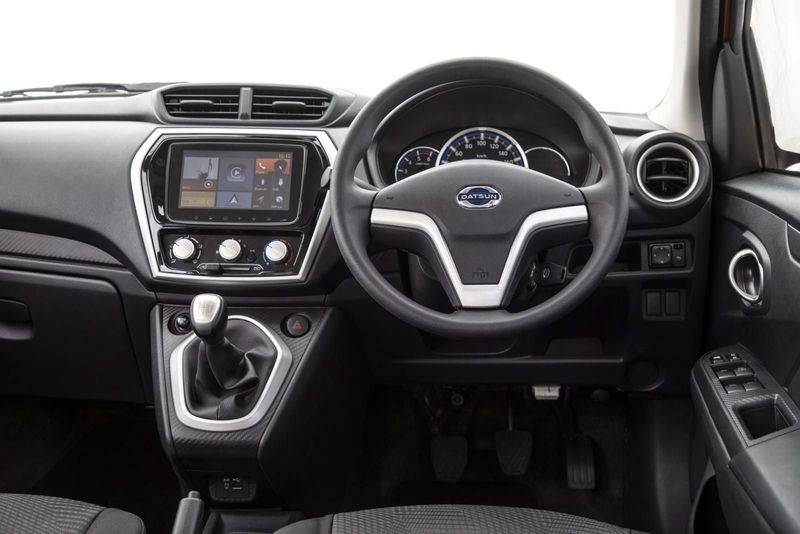
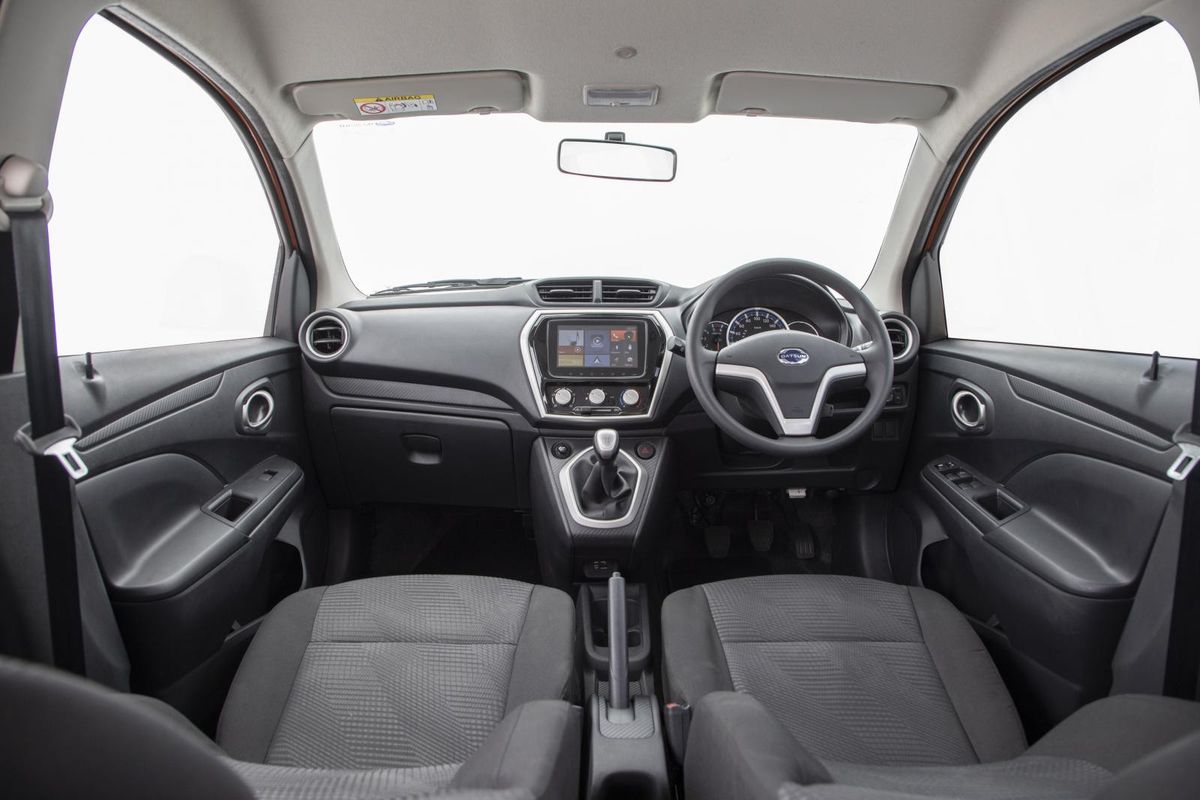
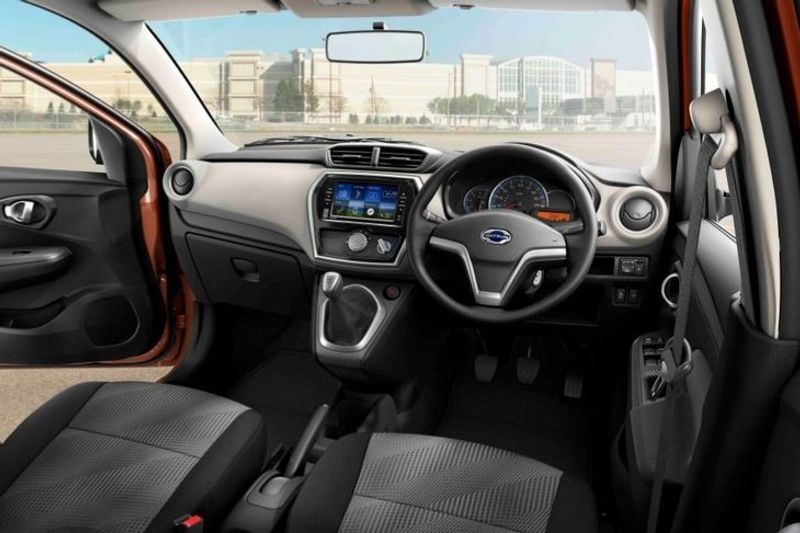
The Datsun Go's revised fascia features a far more modern infotainment system. The front bench also been replaced by 2 individual seats.
There has been a huge focus on the part of Datsun to improve the Go's cabin quality and ergonomics. The 1-piece bench seating arrangement at the front has made way for 2 individual seats and the resulting central space means a conventional handbrake has been fitted, doing away with the agricultural and ungainly "umbrella handle" handbrake, which used to protrude from the dashboard.
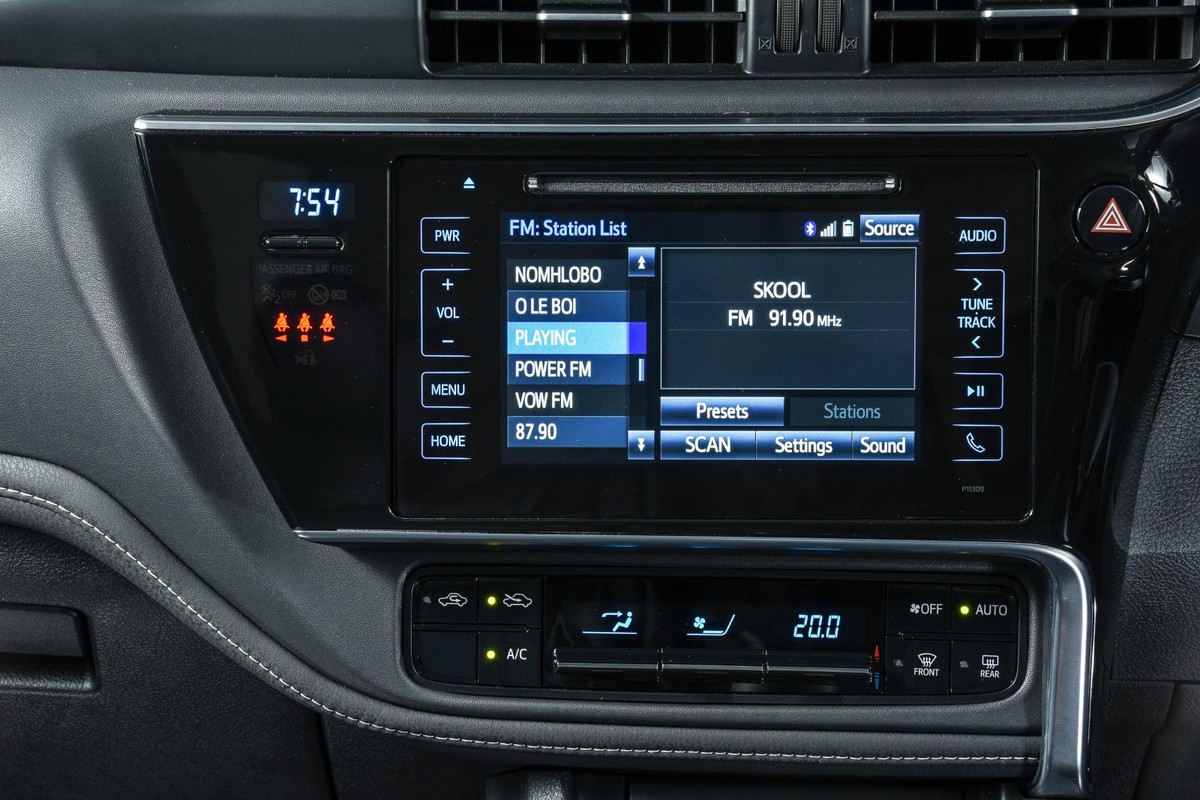
There's an all-new touchscreen infotainment system, which is more akin in layout and user experience to that of a smartphone than a "fancy car radio". We believe the Go's tech-savvy intended target market will lap that up. Also in the mix is Apple CarPlay and Android Auto, the latter we used extensively for its music streaming functionality on our test drive. Another nice feature added to the Go's spec is rear parking sensors.
The powertrain has been carried over and it's a 1.2-litre 3-cylinder motor that produces a tidy 50 kW and 104 Nm. Those outputs may not sound like much (at all), but the Datsun Go is a lightweight vehicle and it doesn't need much in the way of engine pulling power to motivate it. Power goes to the front wheels via a 5-speed manual gearbox. Datsun claims an average fuel economy figure of 5.2 L/100 km.
The massive change, however, is the addition of significant safety features. The driver's airbag has been joined by a 2nd airbag for the front passenger and crucially, an anti-lock braking system (ABS) has been fitted. The addition of ABS will result in fewer collisions (and help inexperienced drivers, in particular). As for improvements to the Go's structural rigidity (especially around the passenger cell), we expect that Datsun will have to have made (or will still make) running upgrades in anticipation of further crash testing being conducted on the upgraded Go by organisations such as NCAP. The firm said that it will be looking at introducing stability control in 2019, but that will undoubtedly impact the list price.
Top-spec models get alloy wheels and daytime running lights
How does it drive?
Our launch route was a combination of highway and urban driving, and we put the newcomer through its paces. However, when we recalled our impressions of the pre-facelift version, we realised that there's now a big jump between the two. The previous version of the Datsun Go suffered from severe body-roll during cornering and a combination of harsh road and engine noise was tough to bear. At 120 kph, we felt a bit vulnerable in the Go and the car didn't inspire confidence on congested highways. This newer version feels a bit more stable and offers a relaxed drive.
The great news is that the new Go feels more solidly assembled and -finished, in general. The gear action is light and smooth, and the 'box's shift quality slick (a good thing, as you'll be working the gears often!). At the altitude of Gauteng, you will need to work that little engine quite hard and almost every highway overtaking manoeuvre required a gear-change down into 4th. We feel that noise, vibration and harshness (NVH) suppression has been improved too. There are still a handful of rough edges, but at this price point, we can't criticise them that harshly.
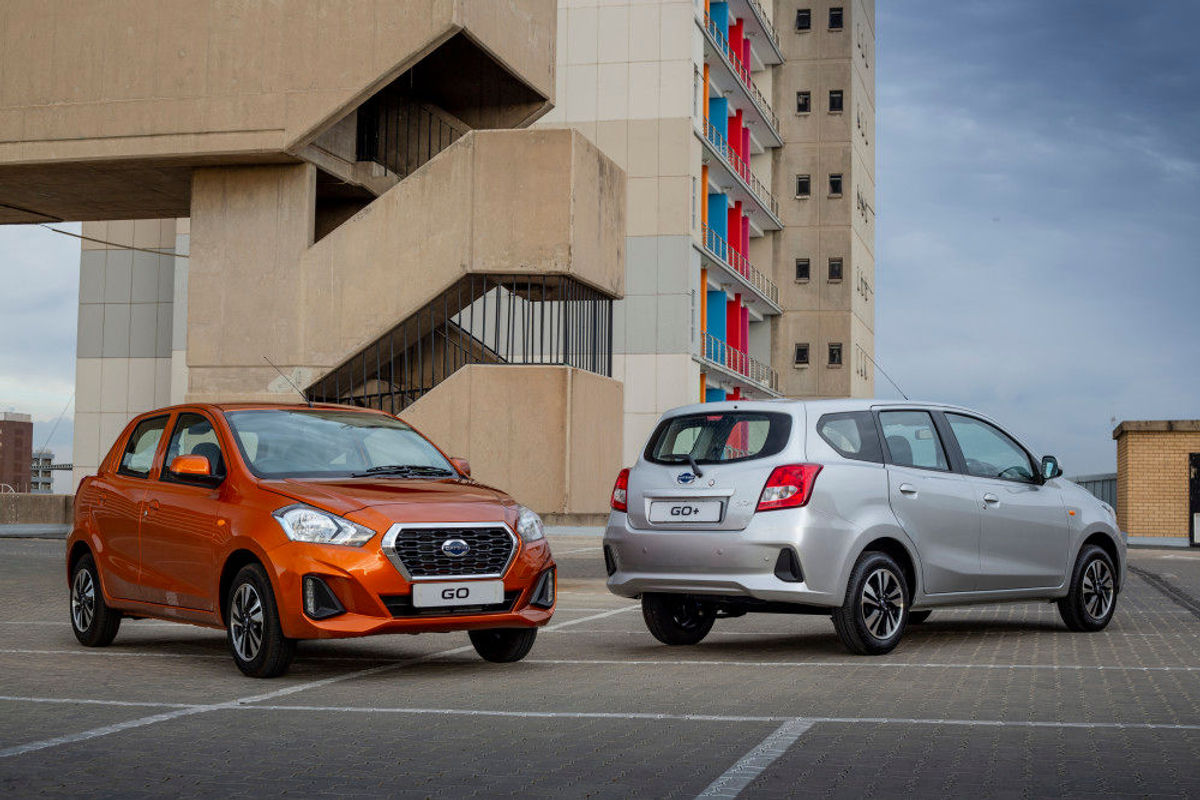
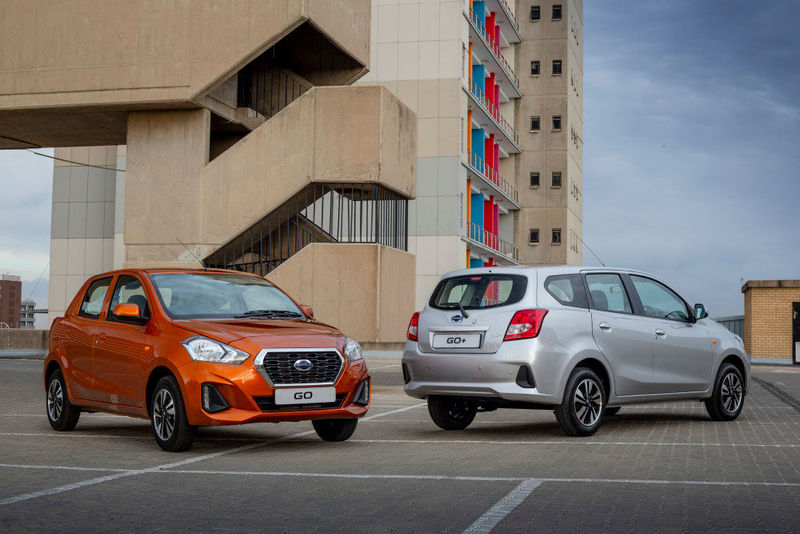
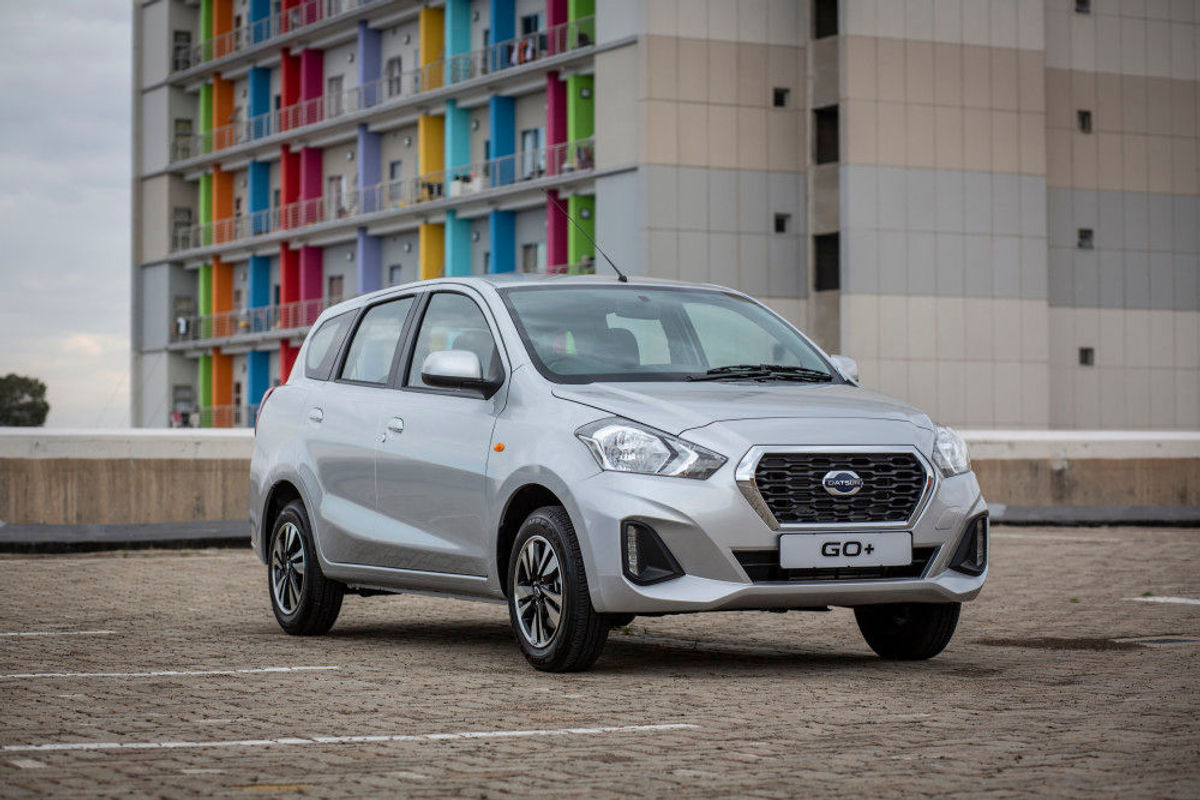
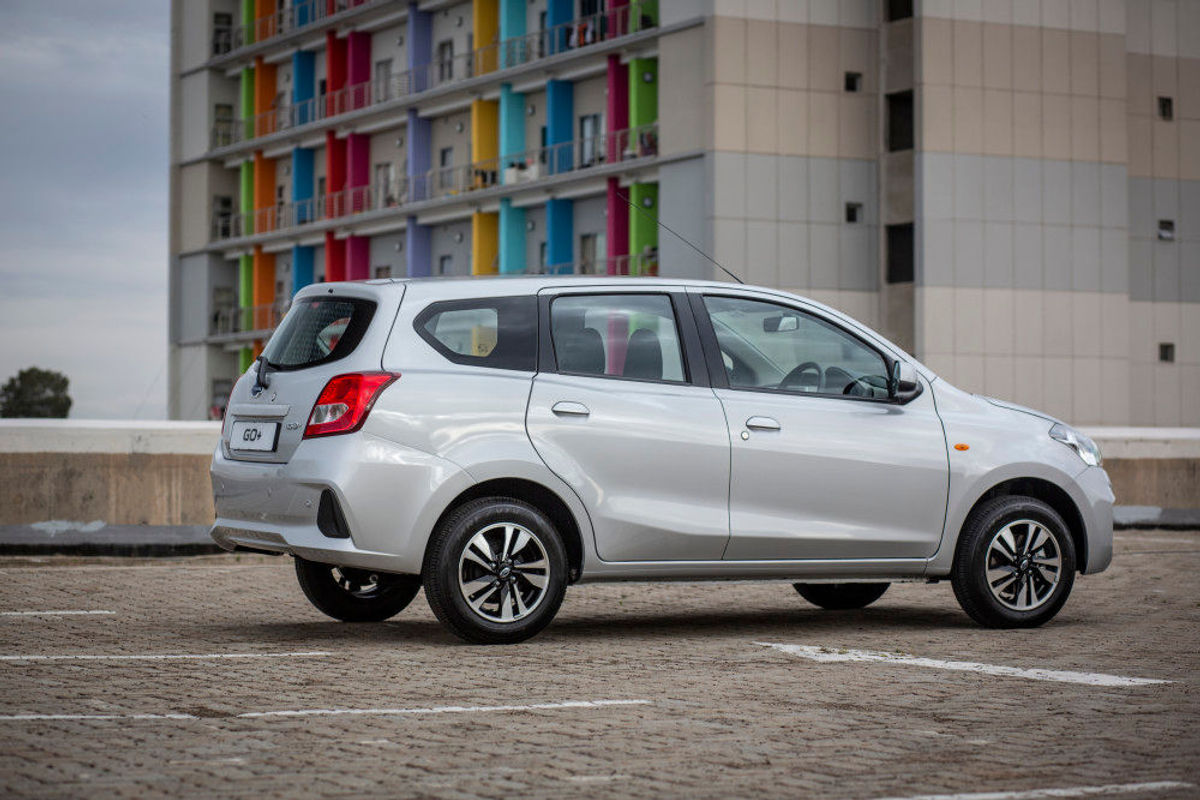
The Datsun Go is also available in a 7-seater and panel van configuration.
Verdict
Now that safety, the proverbial elephant in the room has addressed (at least to an extent), one can justifiably regard the Datsun Go as a strong all-round contender in the (exceedingly) price-sensitive budget car segment. The addition of ABS has huge (but, thankfully, positive) implications and this should further bolster sales. In terms of interior quality, the difference between the outgoing model and the newcomer is night and day; so much so that one could easily be fooled into thinking they were 2 almost unrelated vehicles. More convenience features such as the smart and modern infotainment system will also help draw customers in. So the new Datsun Go is starting to look like quite the budget bargain and, as those dreadful infomercials go, "but wait, there's more". Datsun Go customers will receive 1 year's insurance with their new car, sweetening the deal even further.
Datsun Go – Price in SA
Datsun GO Mid R144 500
Datsun GO Lux R165 500
Datsun GO+ 7-seater Mid R154 200
Datsun GO+ 7-seater Lux R175 900
Datsun GO+ Panel Van R155 200
The Datsun Go is sold with a 3-year/100 000 km warranty and an optional service plan.
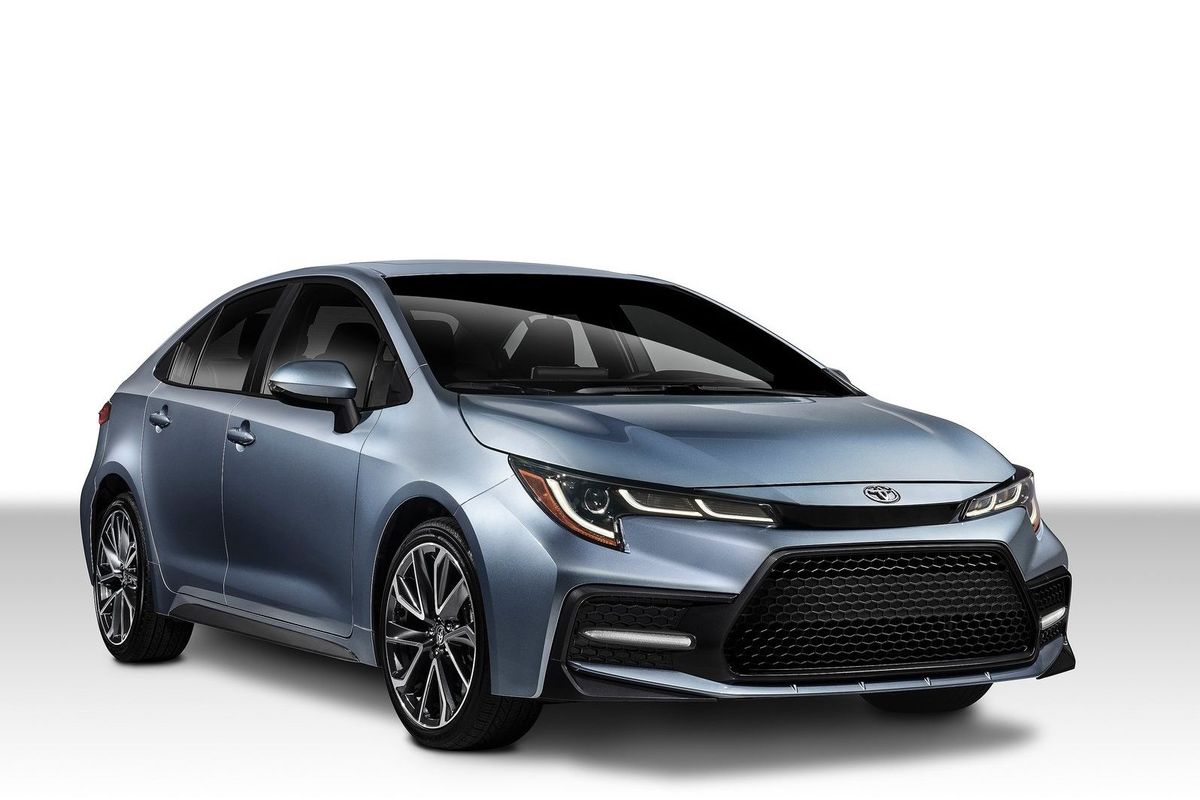
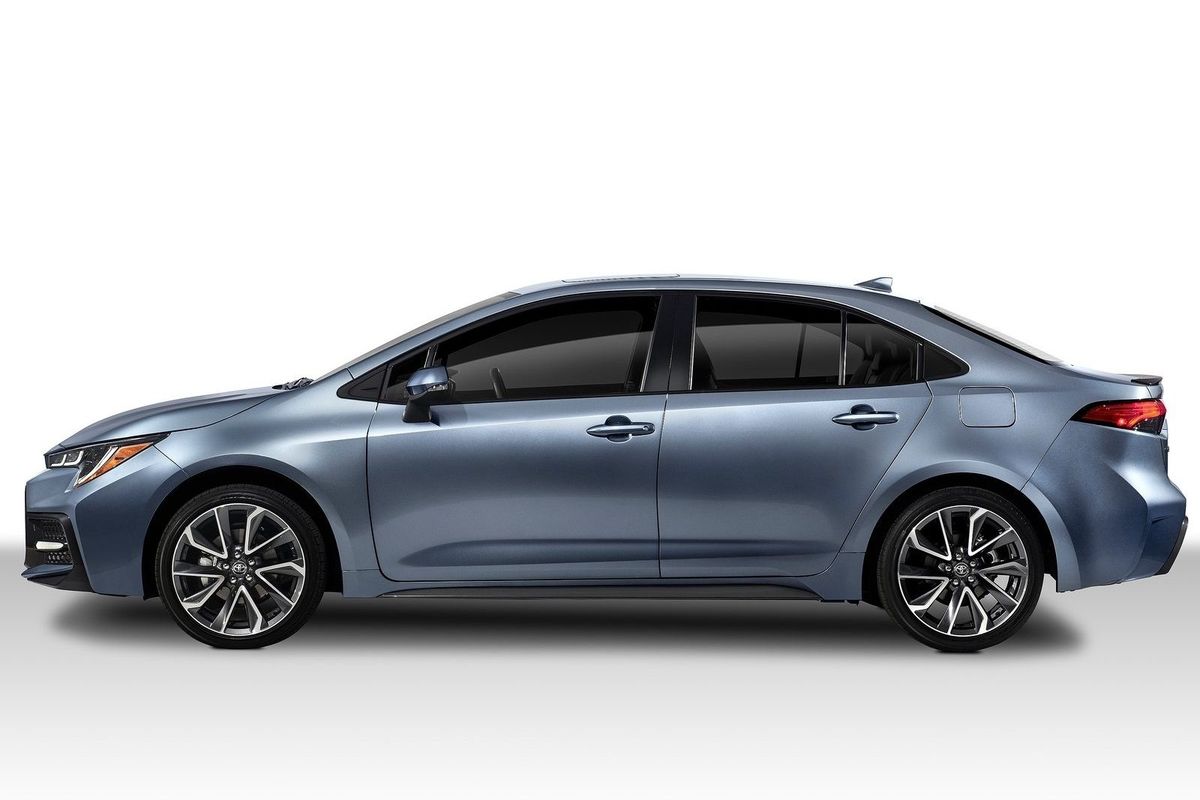
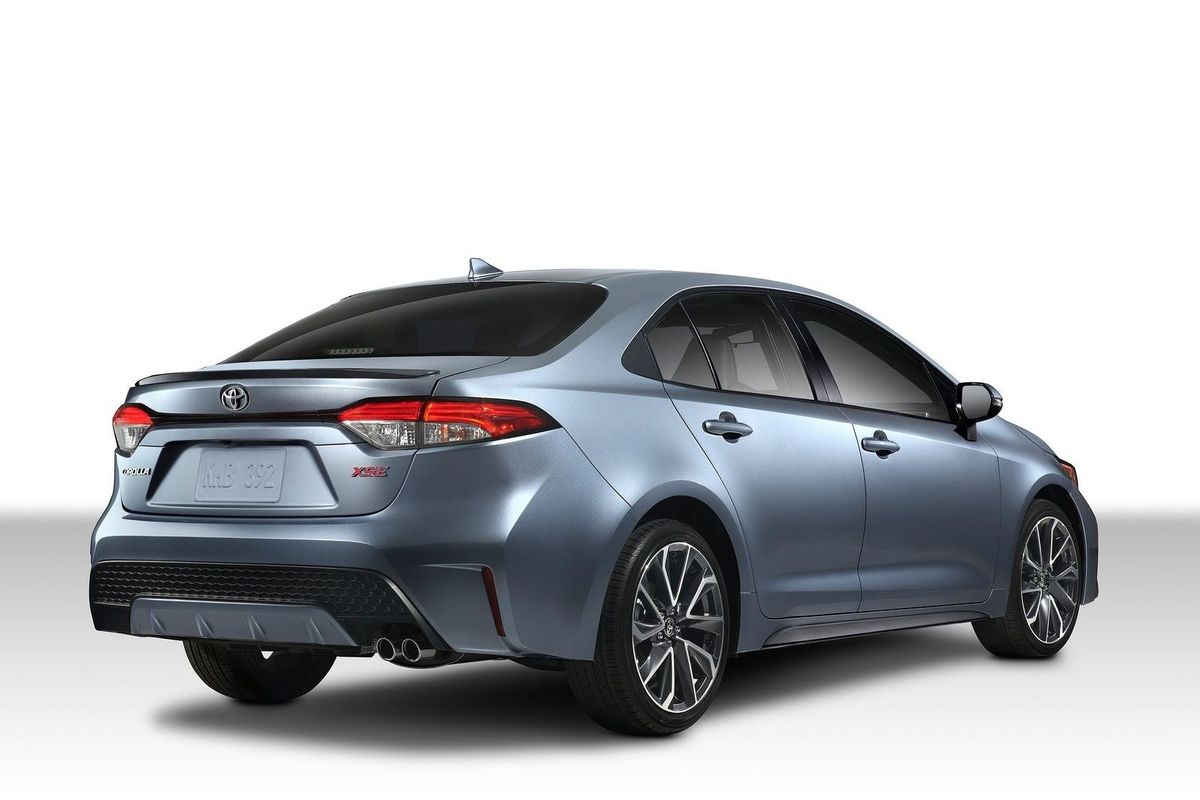
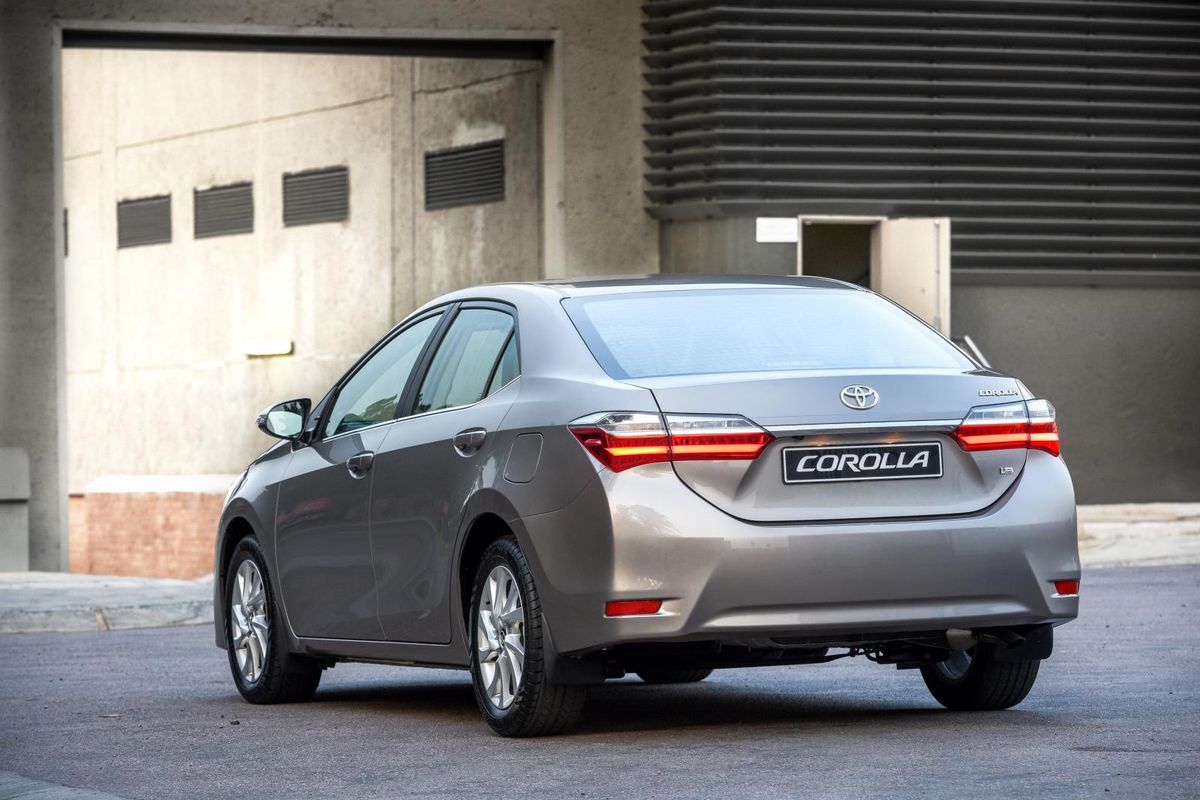
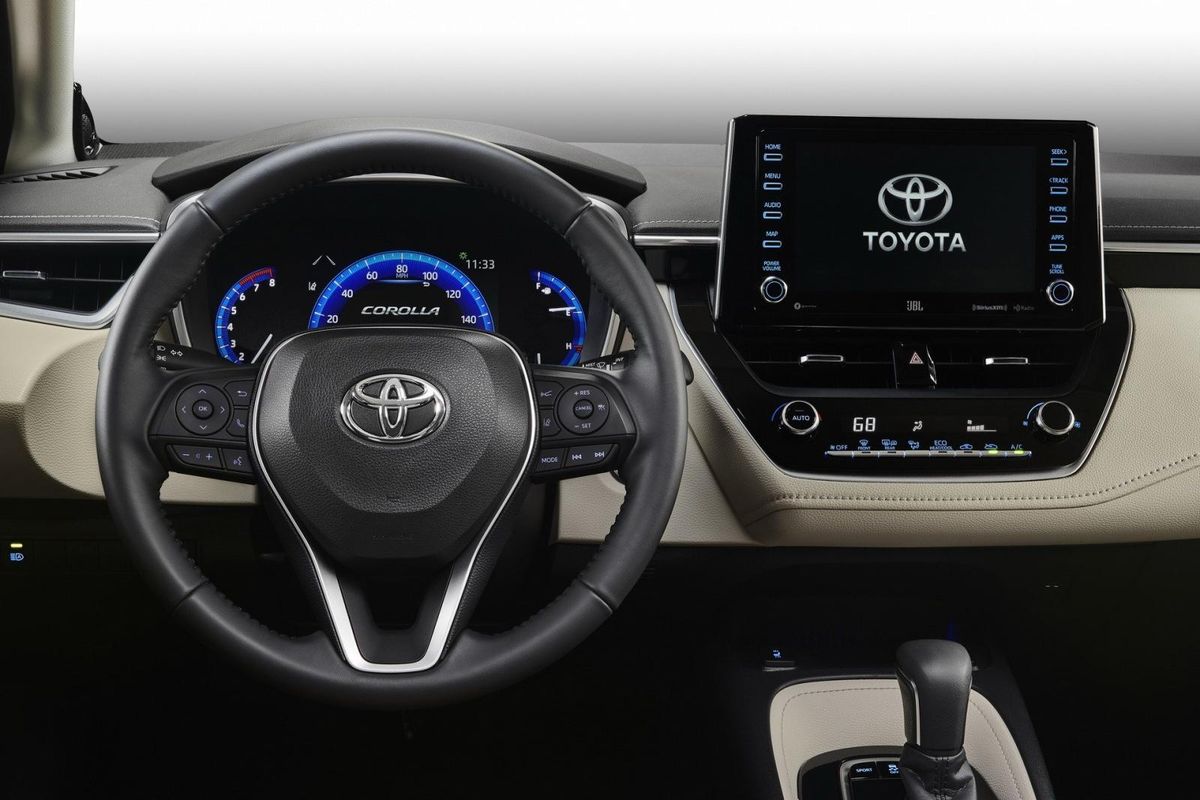
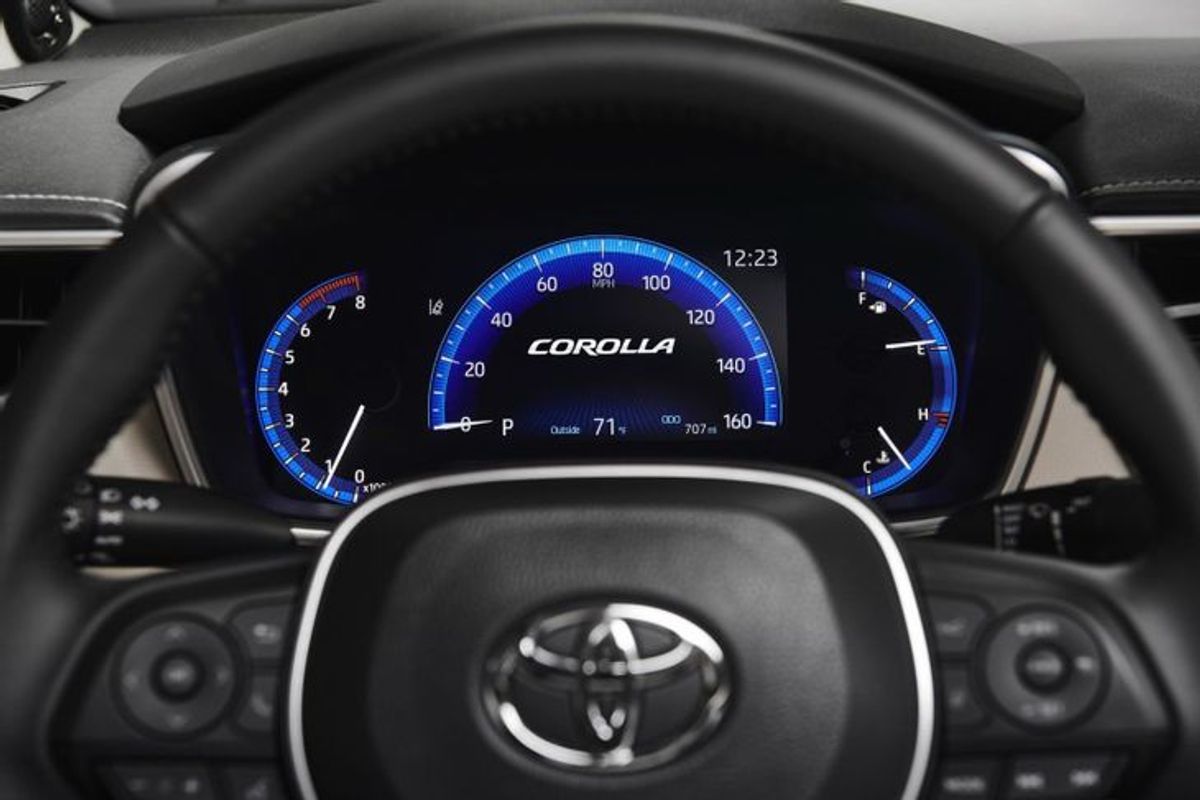
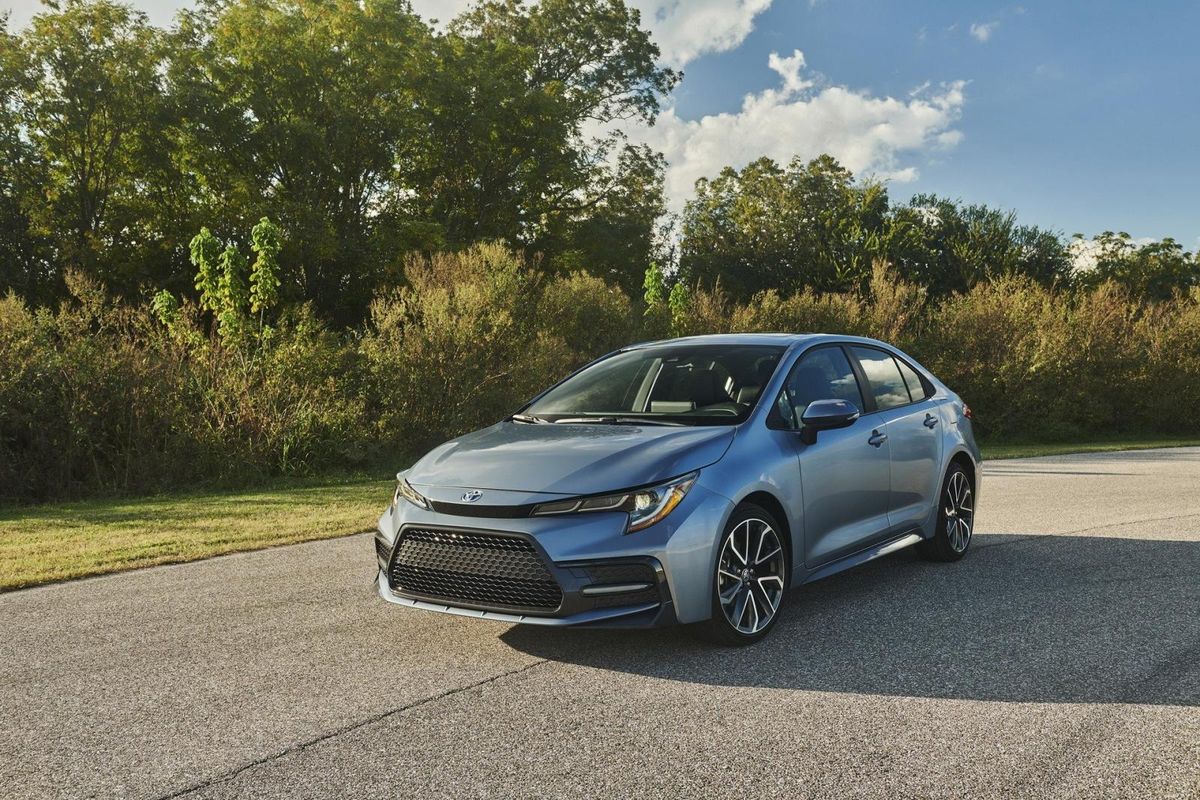
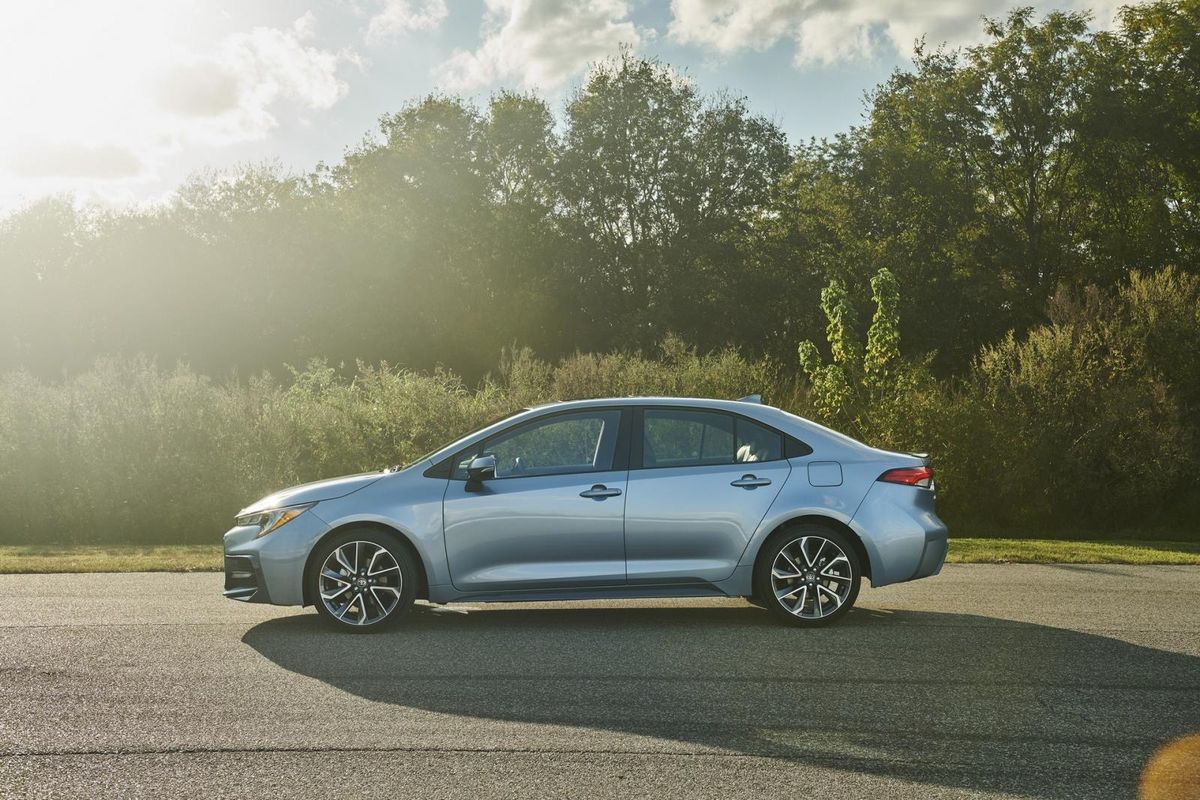
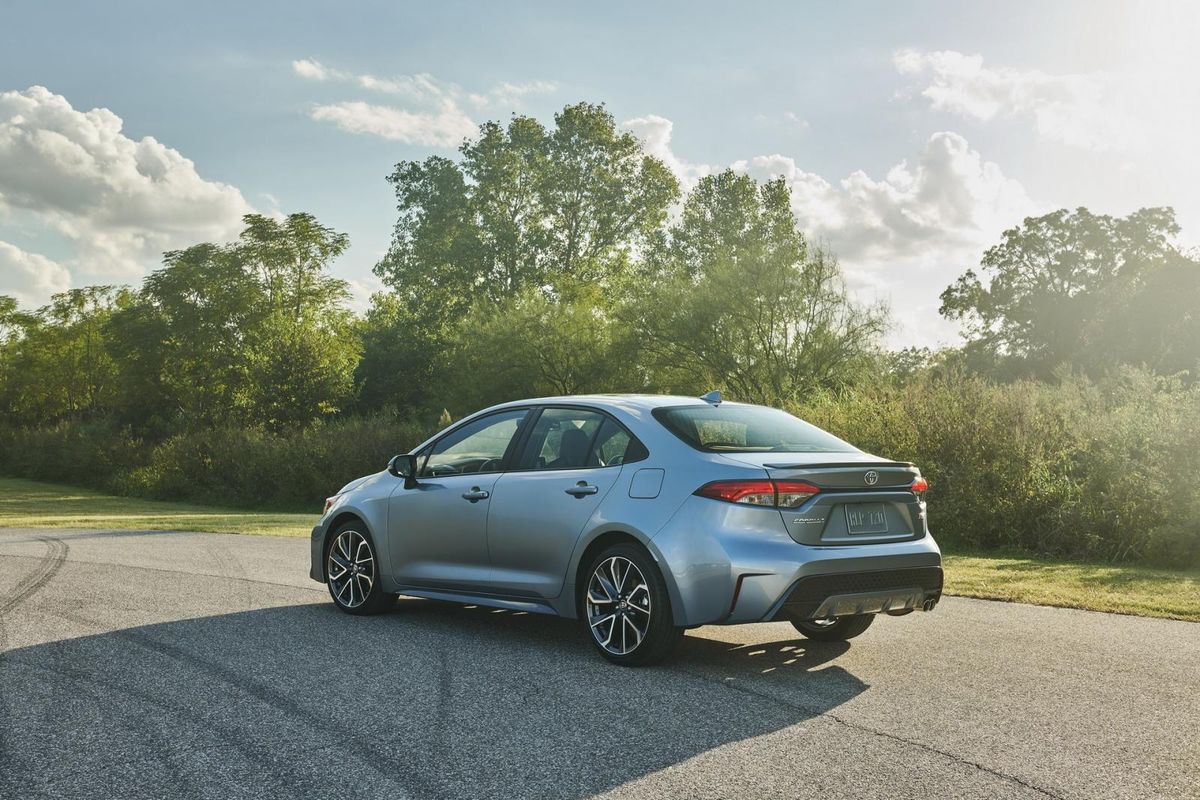
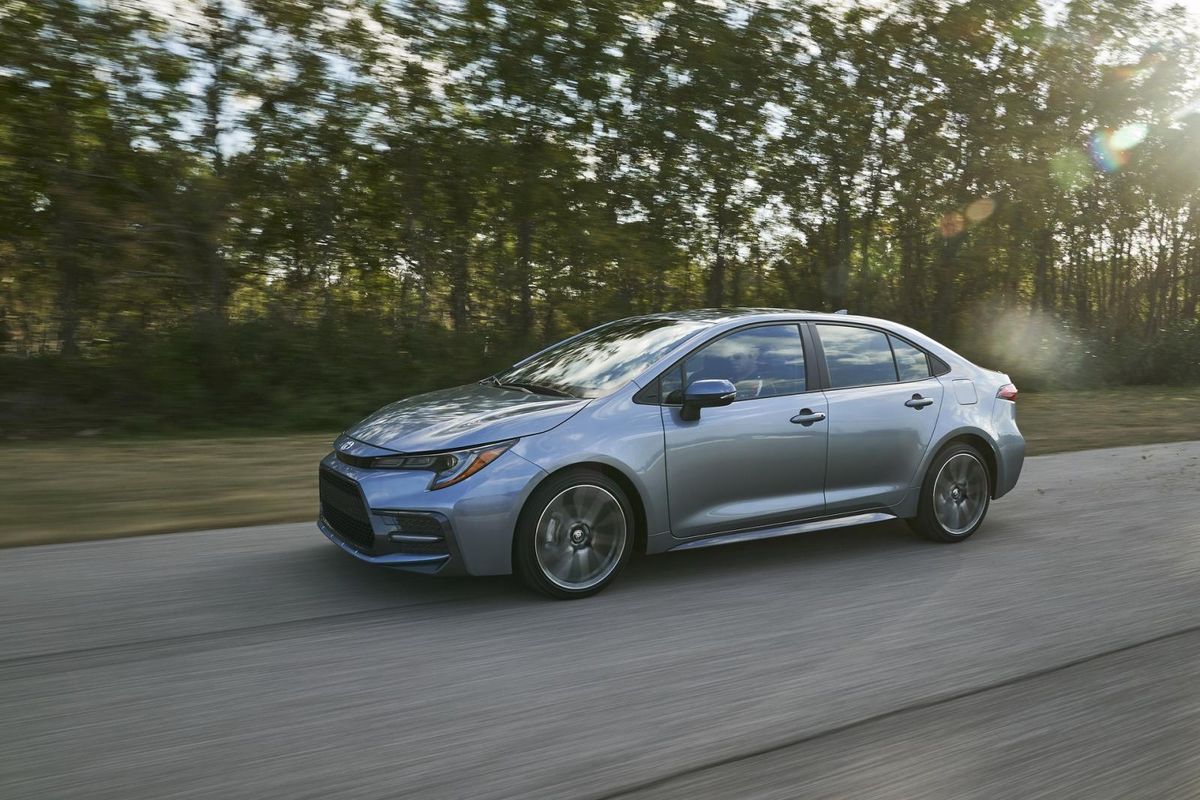
The new 12th-generation Toyota Corolla has been revealed at the Guangzhou International Auto Show in China. See details below…
The new Toyota Corolla hatchback is eagerly anticipated in the SA market and we can't wait to get behind the wheel of this new stylish newcomer. However, for those who want a sedan version, you can now gaze upon the new Corolla sedan which has been officially revealed.
The new Corolla looks sharper and sportier and is built on the Toyota New Global Architecture (TNGA) platform which underpins the Corolla hatchback and touring versions as well as the Prius and stylish C-HR crossover. The new Corolla is 4 640 mm long, 1 780 mm wide and 1435 mm tall with the wheelbase remaining unchanged at 2 700 mm. The front and rear tracks are wider, while the front overhang has been shortened and the rear overhang extended, slightly. Ride comfort has been enhanced with a multi-link rear suspension that replaces the previous torsion beam setup.
The new Corolla sedan shares styling cues with the Corolla hatchback which is due in SA next year.
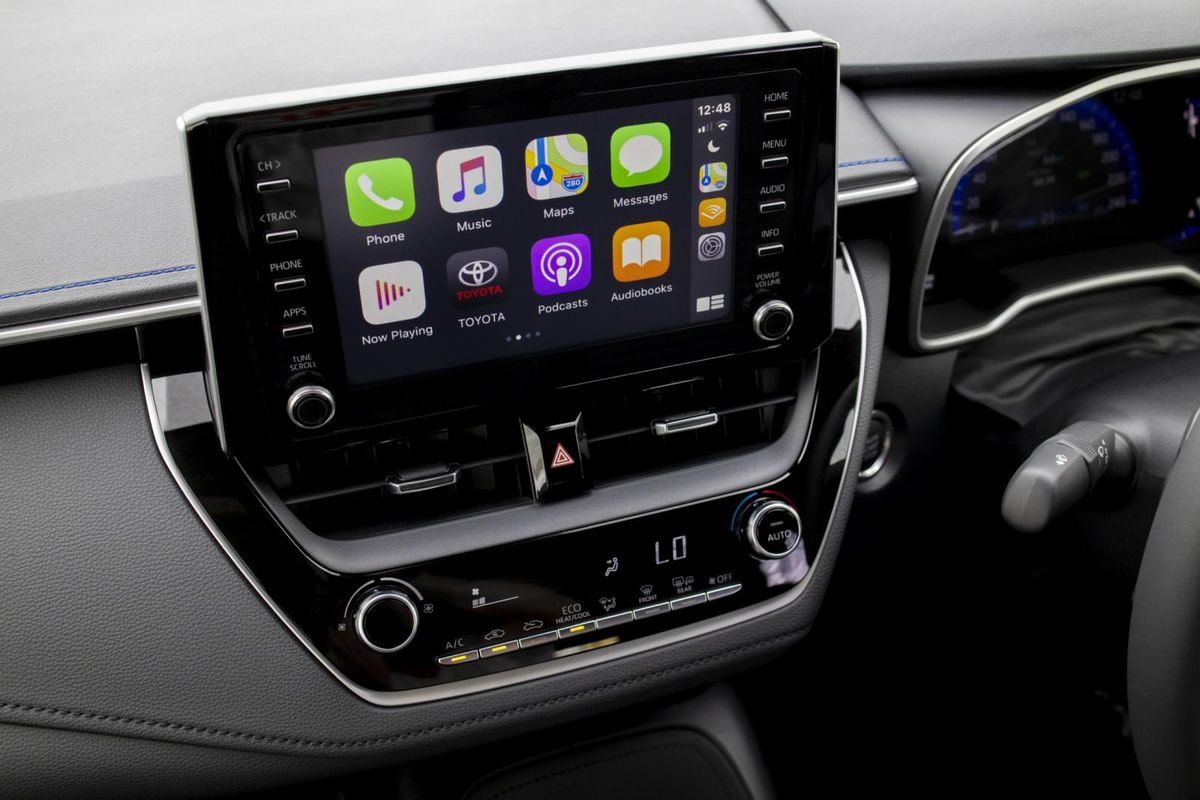
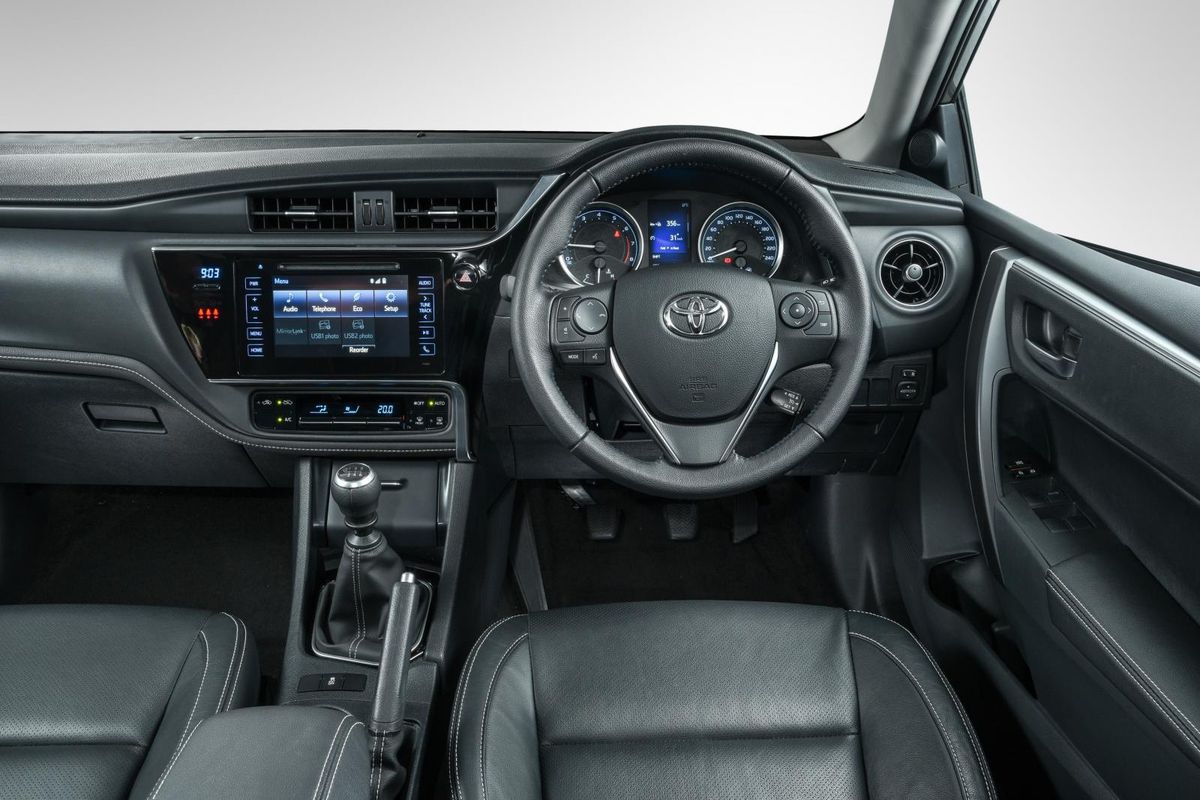
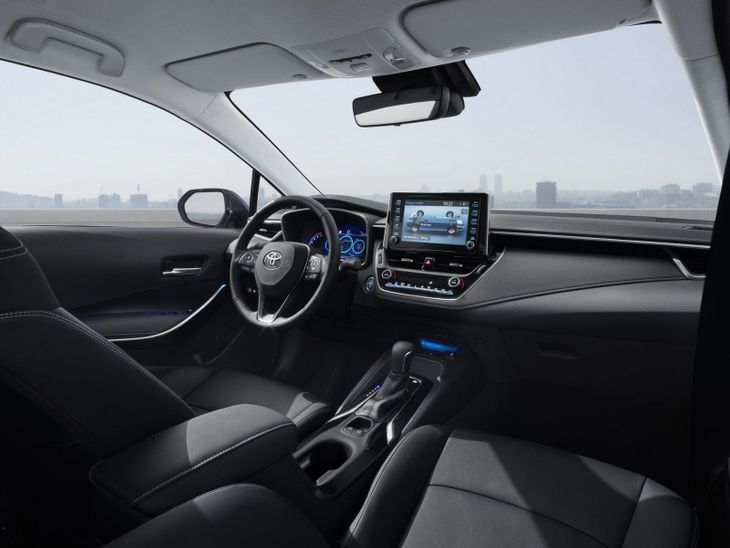
As for the interior, Toyota describes it as "sensuous minimalism" combining sportiness, elegance, comfort and durability. Top-spec derivatives will receive an 8-inch touchscreen infotainment system with Apple CarPlay/Android Auto functionality, while a 7-inch system will be offered on lesser derivatives. Overseas, an optional 800-watt JBL audio system will be offered.
In terms of engines, petrol and hybrid options are on the cards. A new 2.0-litre, naturally-aspirated 4-cylinder mill pushes out a reasonable 126 kW and 205 Nm, mated to either a 6-speed manual or a CVT. The familiar 1.8-litre petrol engine will be carried over but Toyota says it will offer more power at 106 kW and better efficiency.
On the safety front, the latest driving assistance systems will be made available ranging from Lane Tracing Assist, Road Sign Assist, Pre-Collision System with Pedestrian Detection, Dynamic Radar Cruise Control, Lane Departure Alert and Blind Spot Monitoring, all of which fall under Toyota Safety Sense 2.0. A total of 8 airbags are standard.
The new Corolla will be rolled out to markets around the world in the second half of 2019 and can be expected to reach South Africa in 2020.
The 2nd iteration of the BMW M4, the standard-bearer of the next 4 Series (which will be based on the platform of the G30-generation 3 Series – unveiled at this year's Paris Show), is set to arrive in 2020. This is what we think it may look like and, in terms of the highly anticipated sportscar's specs, here's what we know so far…
Render credit: Wayne Batty
There is always a lot of hype around a new BMW 3 Series and in particular its accompanying M models, so we thought we'd have a go at designing our very own headlining M version of the famous nameplate's (yet to be unveiled) 4 Series sibling. Exact details are a little fuzzy, but the picture is starting to clear up as the deadline for the next M car draws ever closer.
xDrive likely to feature
Purists will no doubt scoff at the idea of an all-wheel-drive M3/M4, but in all likelihood, the duo will sport an all-wheel-drive system with a variable electric differential. It seems that either or both will be rear-wheel-driven as well, but the details here are trickier to understand. The most likely scenario is that, like the M5, the next M3/M4 will have a 2WD mode that allows it to be purely rear-wheel-driven at the push of a button. The other possibility is that only the 6-speed manual derivative (or special-edition versions thereof) will be rear-driven and the autos purely xDrive.
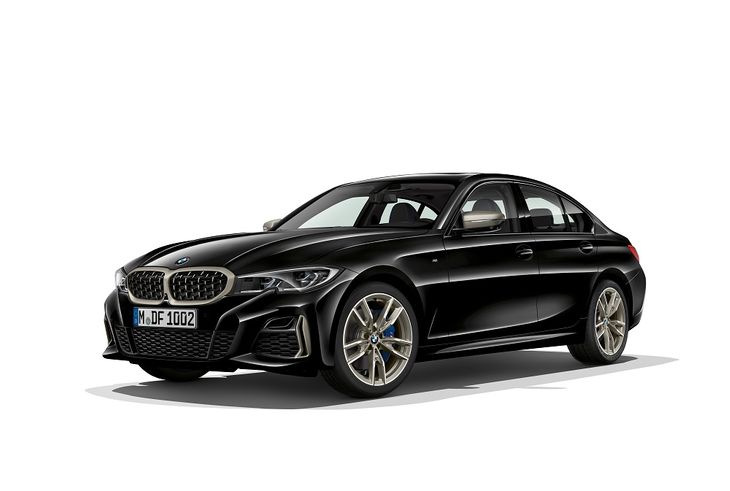
There's always the new M Performance models to think about if you don't want to go full M – this is the M340i.
More boost
BMW will crank up the boost on its M3/M4 engine and, most importantly, it remains a straight-6 with multiple turbos. Peak power is said to be between 335 kW-370 kW making its starting point more powerful than the previous-generation Competition Package. BMW has to play it clever though, as new emissions regulations require the engine to be fitted with a particulate filter. It will have multiple features to improve fuel economy, such as coasting, a more intrusive start/stop system and a 48V electrical system, which will reduce the draw from ancillaries on the engine and, critically, spool up the turbos. Water injection will be used (as BMW did with the M4 GTS) in order to keep temperatures down in the combustion chamber. The further developed engine can also handle higher boost, so expect Competition and CS derivatives to push close to the 400 kW mark.
No more M-DCT
No more M-DCT without a 'Park' mode for the new gen M cars.
With the advancement of the responsiveness and efficiency of torque converter transmission, BMW has decided to drop the dual-clutch unit in favour of the 8-speed ZF sourced auto. Multiple modes will be available to improve shift speeds and ferocity of shifts. As mentioned above, it seems a 6-speed manual has survived and will be available for the new model. Whether it makes its way to SA we will only know closer to the launch.
Less wild, however
The character of the new M3/M4 will be toned down somewhat from the wild and sometimes lairy versions of the F80 and F82. The engineers want the new cars to be more balanced and confident at the limit with a more pliant ride quality. Adaptive damping will be further improved to dial in the chassis control and improve overall ride quality. Variable electric steering mode adjustment will be made to lend better feel and weight to the tiller.
As always, the engineers claim that the new models will be lighter than ever, so expect them to be a few kgs thinner than their predecessors, which will not only improve the cars' dynamism, but stopping power too. It all sounds quite promising then, doesn't it? Bring on 2020.
Motorists (and the SA economy) can breathe a sigh of relief as fuel prices are predicted to fall sharply in December 2018 according to unaudited mid-month fuel price data released by the Central Energy Fund (CEF).
The news of potential drastic fuel price decreases is probably the best news South Africans have had all year. The latest fuel price prediction is driven by the accelerating decline of international oil prices as well as modest improvement in the Rand/Dollar exchange rate.
According to the data, the price of petrol could see a reduction of R1.54 per litre while the price of diesel could come down by 92 cents per litre.
The AA, however, warns that recently-introduced Slate Levy (which manages prices changes) could impact on the final outcome at the end of November 2018. Furthermore, oil cuts by Saudi Arabia could result in oil supply restrictions in 2019 which could drive prices higher, so it's best not to get too excited.
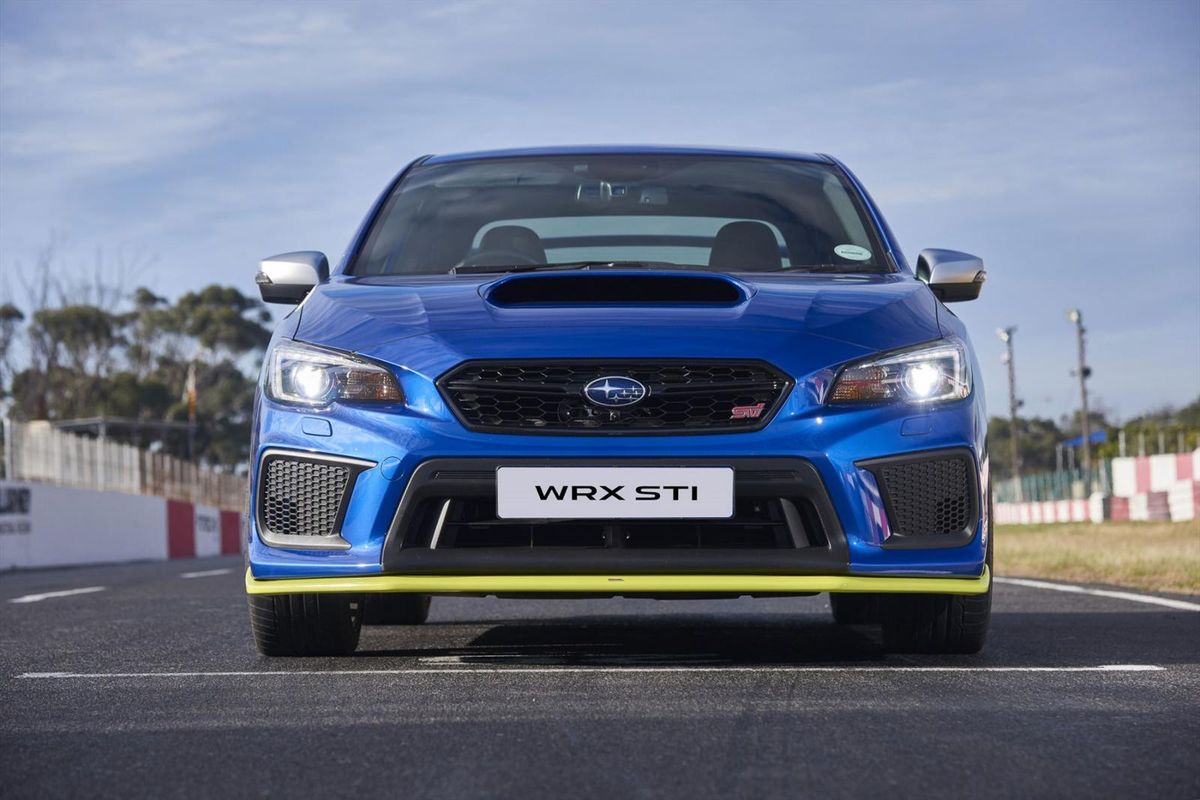
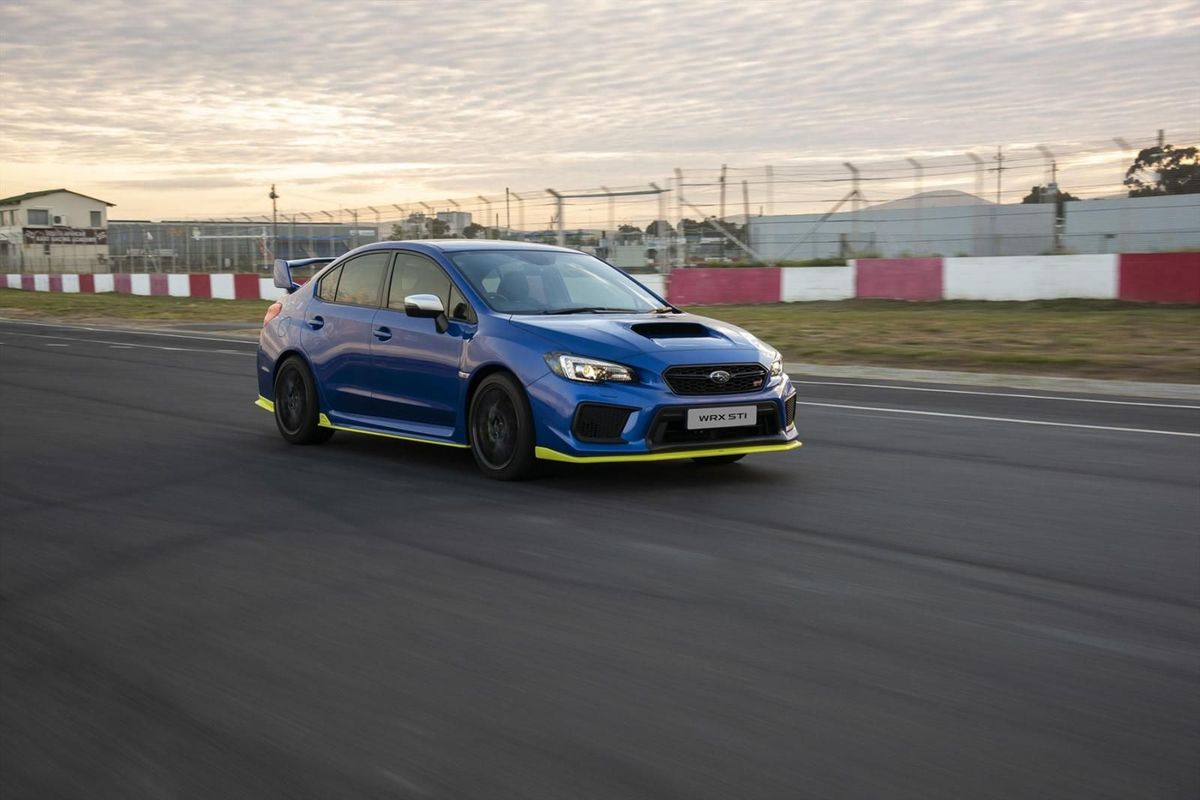
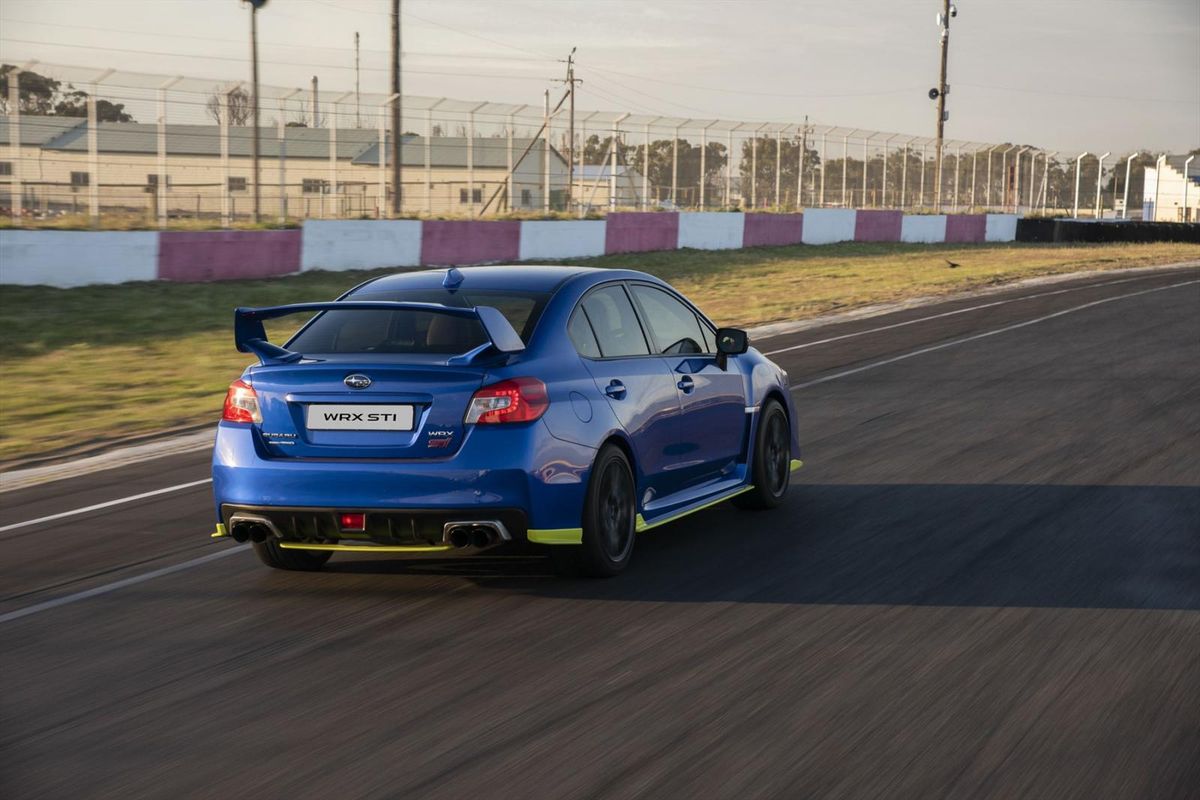
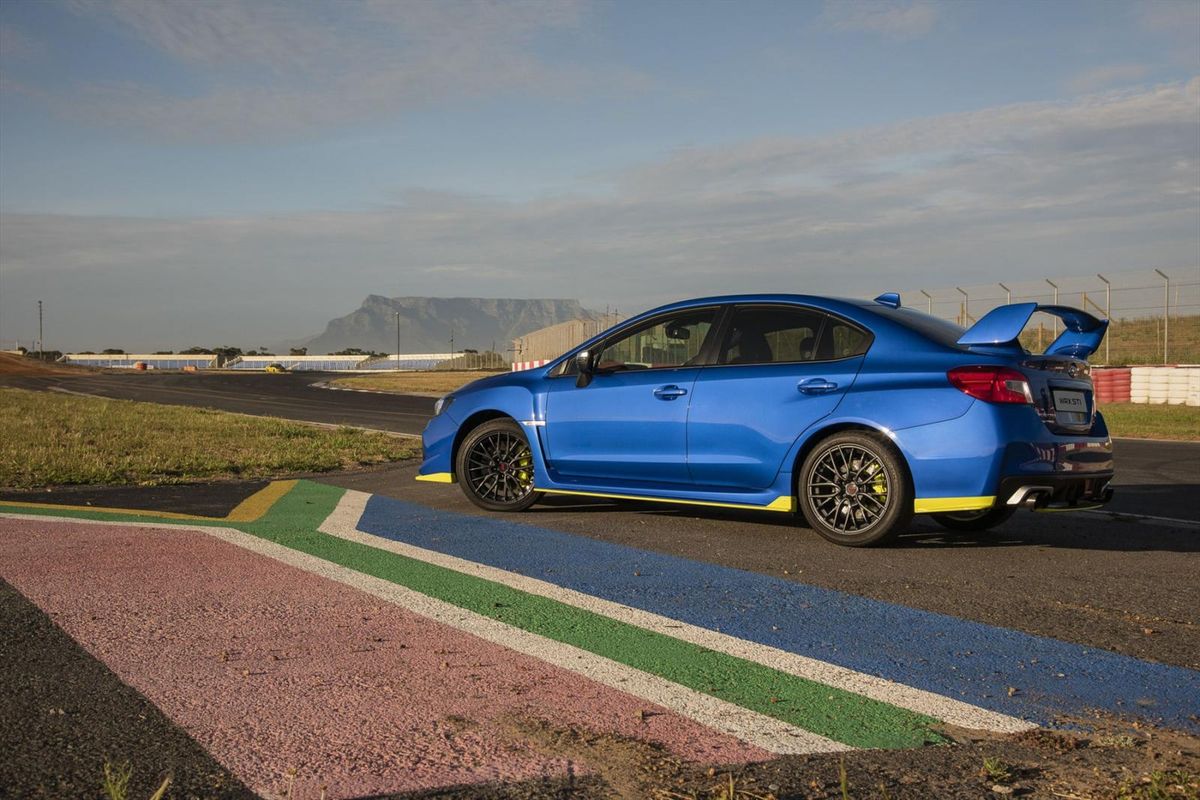
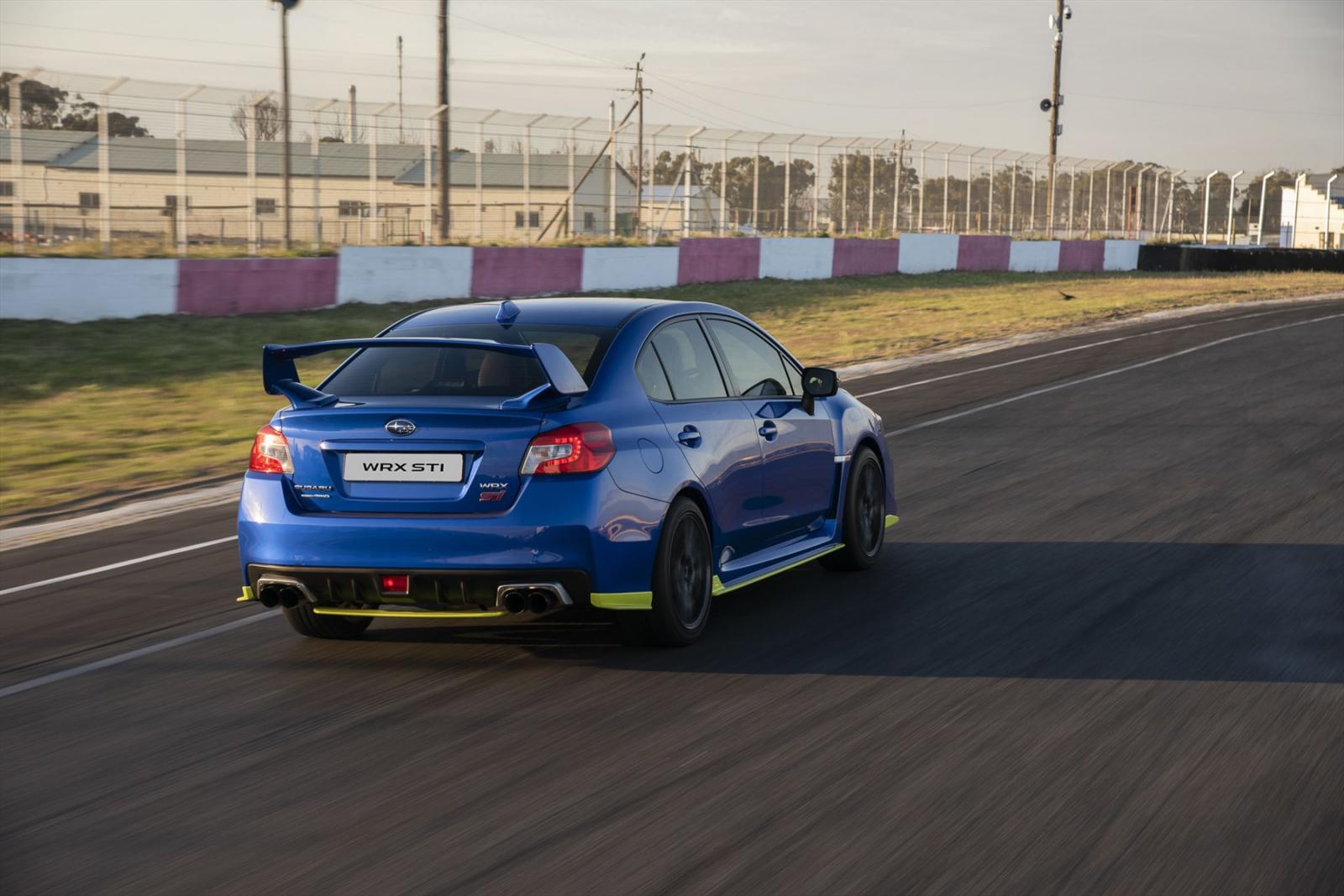
Subaru is offering a limited edition, SA-developed WRX STI Diamond Edition to customers and only 30 are up for grabs!
As a way of celebrating 30 years of the STI nameplate, Subaru is offering a limited edition WRX STi Diamond Edition which was locally developed by Subaru Southern Africa’s technical team, led by Technical Manager, Deon Van Heerden, making it exclusively available to the region with only 30 being produced.
The brief for the WRX STi Diamond Edition according to Van Heerden was simple, “We needed to get STI reborn and create a vehicle that was more powerful and something that would become a talking point for STi fans.” Development of this special edition started in January 2017 and took 18 months to develop.
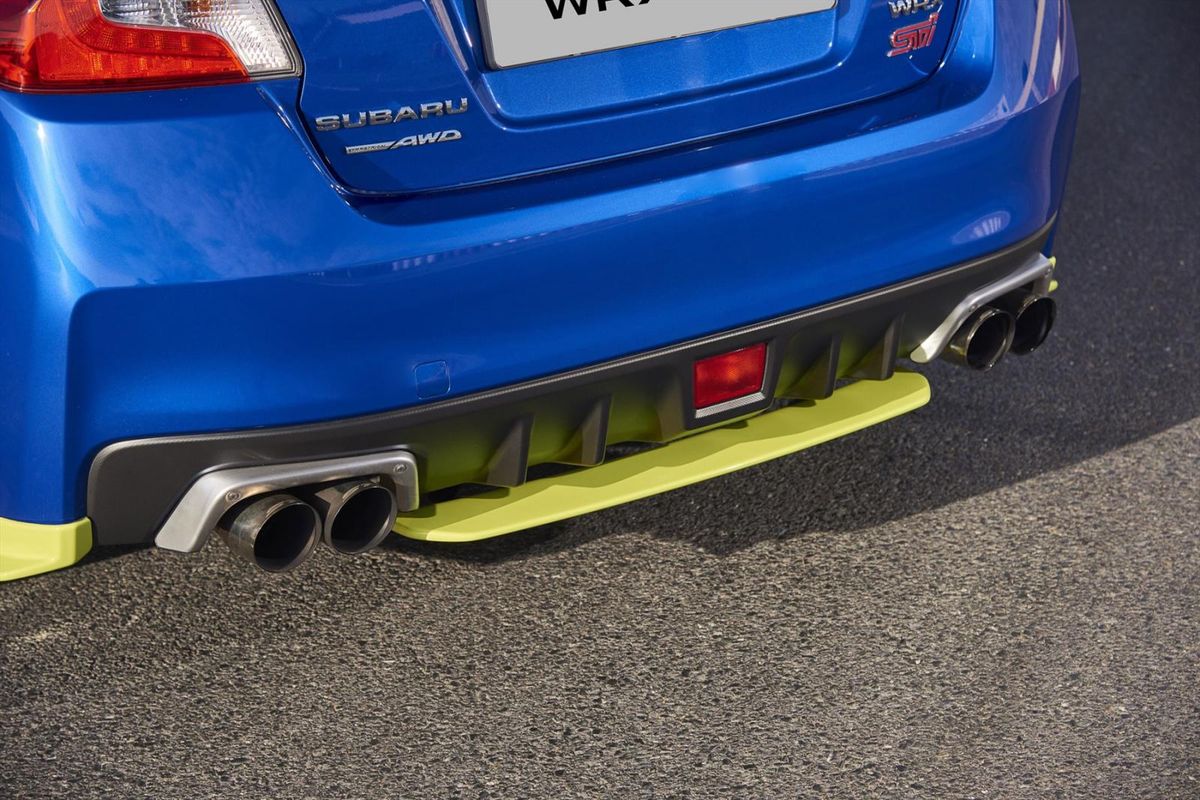
The WRX STi Diamond Edition is powered by a fettled 2.5-litre, high-boost turbocharged Boxer engine that offers 260 kW @ 4 500 rpm and 464 Nm of torque at 4 000 rpm. The sprint from zero to 100 kph takes just 5.0 seconds, some 0.7 seconds faster than the standard WRX STI. The remapping of the Electronic Control Unit and the fitment of a performance exhaust system has contributed to improved performance. A 6-speed manual transmission is standard, driving all 4 corners with Subaru’s symmetrical all-wheel drive system.
A new engine brace has been fitted for better stability and balance and the WRX Sti Diamond Edition is equipped with Brembo brakes.
A total of 7 airbags are fitted as well as ABS with EBD, active torque vectoring and vehicle stability control. Front and rear cameras, blind spot detection and rear cross traffic alert is also standard.
Design features
A lower body kit is fitted and special 19-inch alloys add to the presence of the WRX STi Diamond Edition.
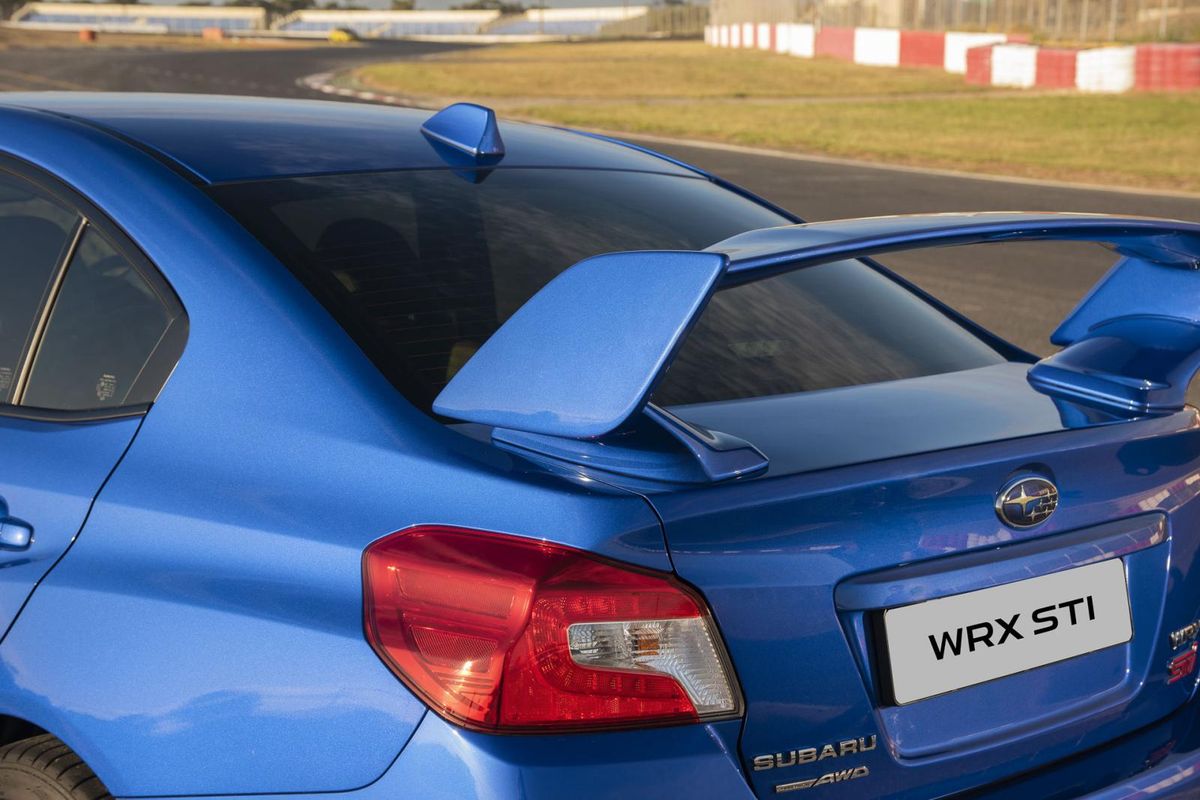
The WRX STi Diamond Edition rides 20mm lower than the standard WRX STi and the body kit, seen in a High Viz yellow further lowers the front-end by 10 mm. The spoiler vane gets a stainless steel STI badge unique to this limited edition model and high gloss black Diamond Edition badges appear on the sides of the rear wing. The WRX STi Diamond Edition rides on 19-inch lightweight and darkened aluminium Y-design alloy wheels.
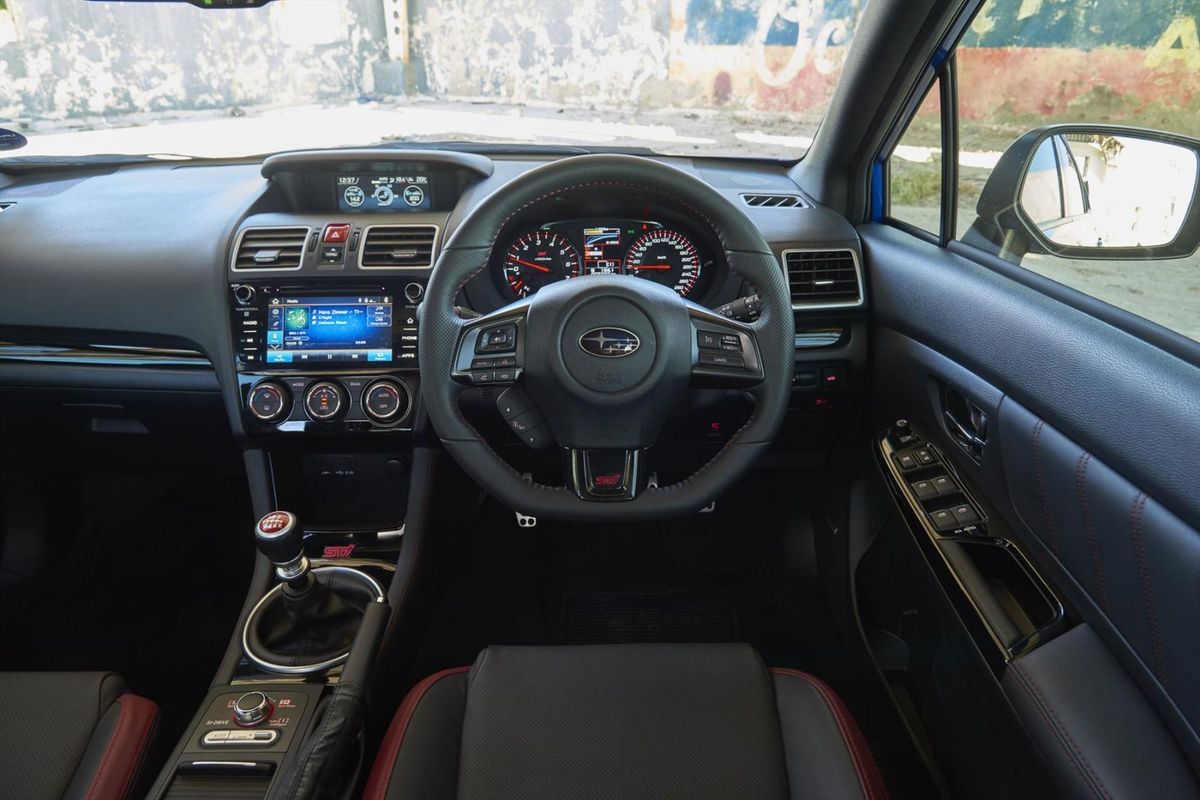
On the inside, Diamond Edition details seen on the dashboard inlays make it clear that this is no ordinary WRX STi with a numbered panel also found on the driver’s side. A 7-speaker, 440 W Harmon Kardon sound system is fitted along with a 7.0-inch touchscreen infotainment system with Apple CarPlay and Android Auto functionality as well as Bluetooth.
Subaru WRX STi Diamond Edition – Price in SA
Subaru WRX STi Diamond Edition – R799 000
A 5-year/150 000 km warranty and 3-year/75 000 km maintenance plan is included.
Datsun has launched a significantly reworked version of its Go budget car line-up in South Africa. Take a look at specification and pricing below…
Since its return to South Africa in 2014, the reborn Datsun brand has done steady business, with nearly 20 000 units of its Go and Go+ sold locally. It's interesting to note that sales this year (up-to-and-including September), have already surpassed the marque's previous annual best performance. So, in the tough current economic climate, the cheap and cheerful Go (and its 7-seater Go+ sibling) have certainly found favour with local consumers.
From launch, however, the Go has often been criticised for its lack of safety features, particularly in a segment where it is likely to be purchased by relatively inexperienced buyers. Now, with the facelifted version, Datsun has addressed this concern as it tries to reposition the brand as slightly more aspirational and in tune with modern consumers' needs and desires.
Fresher styling inside and out
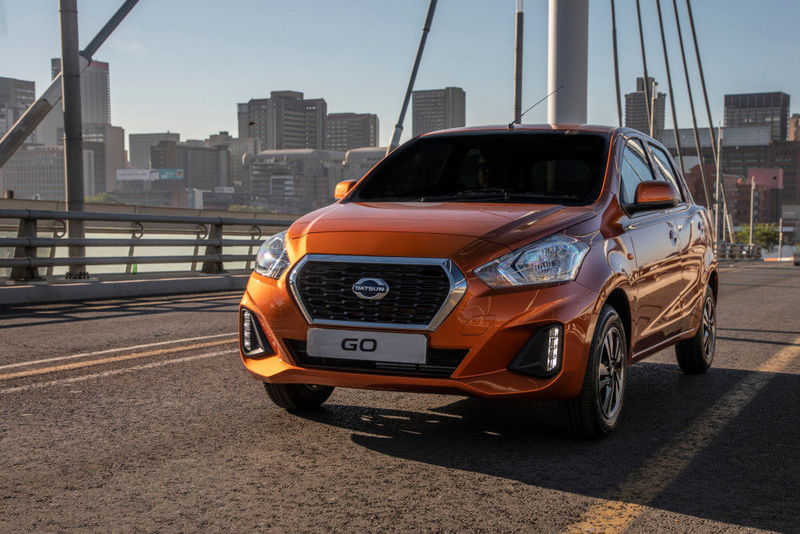
Crisper styling all-round, bigger wheels and fresh colours have injected new life into this budget offering.
The Go's design revisions are both obvious and effective, giving the little hatch a far edgier and modern look. There are vertical LED daytime running lights on both Go variants, and the front and rear bumpers are more "chiselled" in their appearance. Wheel size has gone up to 14 inches on both variants, with the flagship Go also getting alloys.
The bigger changes are to be found inside, where Datsun has given the Go a far more upmarket-looking facia. Gone are the front bench seat and umbrella handbrake, for example, and there is a noticeable improvement in attention to detail, too.
Extensive safety and infotainment features
Neater cabin features modern infotainment system and dual front airbags.
At launch, both models will be fitted with a classy 7-inch touchscreen infotainment system that even feature Android Auto/Apple CarPlay functionality. Once the launch promotional campaign has run its course, this system will still feature on the flagship model. The pricier Go variant also gets a rear window wash/wiper feature, and fitted to all models is a new tailgate lock – in the previous model the tailgate could only be opened from inside the car. Other standard safety features include coloured electric side mirrors, reverse parking sensors, intermittent wipers, central locking and an immobiliser. LUX grade derivatives are equipped with daytime running lights and body colour door handles.
On the safety side, consumers will be happy to hear that all models will now be sold with dual front airbags and ABS. It's also worth noting that the revised model further features upgraded rear safety belts as well as rear park sensors.
No engine change
Powering the Go is the same 1.2L 3-cylinder engine that develops 50kW and 104Nm of torque. Datsun claims a fuel consumption figure of 5.2L/100km. A CVT-equipped version is likely to join the currently all-manual line-up at a later date.
Datsun Go – Price in SA
Datsun GO Mid Spec – R144 500
Datsun GO Lux Spec – R165 500
Datsun GO+ 7-seater Mid – R154 200
Datsun GO+ 7-seater Lux – R175 900
Datsun GO+ Panel Van – R155 200
The Datsun Go is old with a 3-year/100 000 km warranty and an optional service plan. In addition, consumers will receive 1-year insurance with the purchase of a GO or GO+.
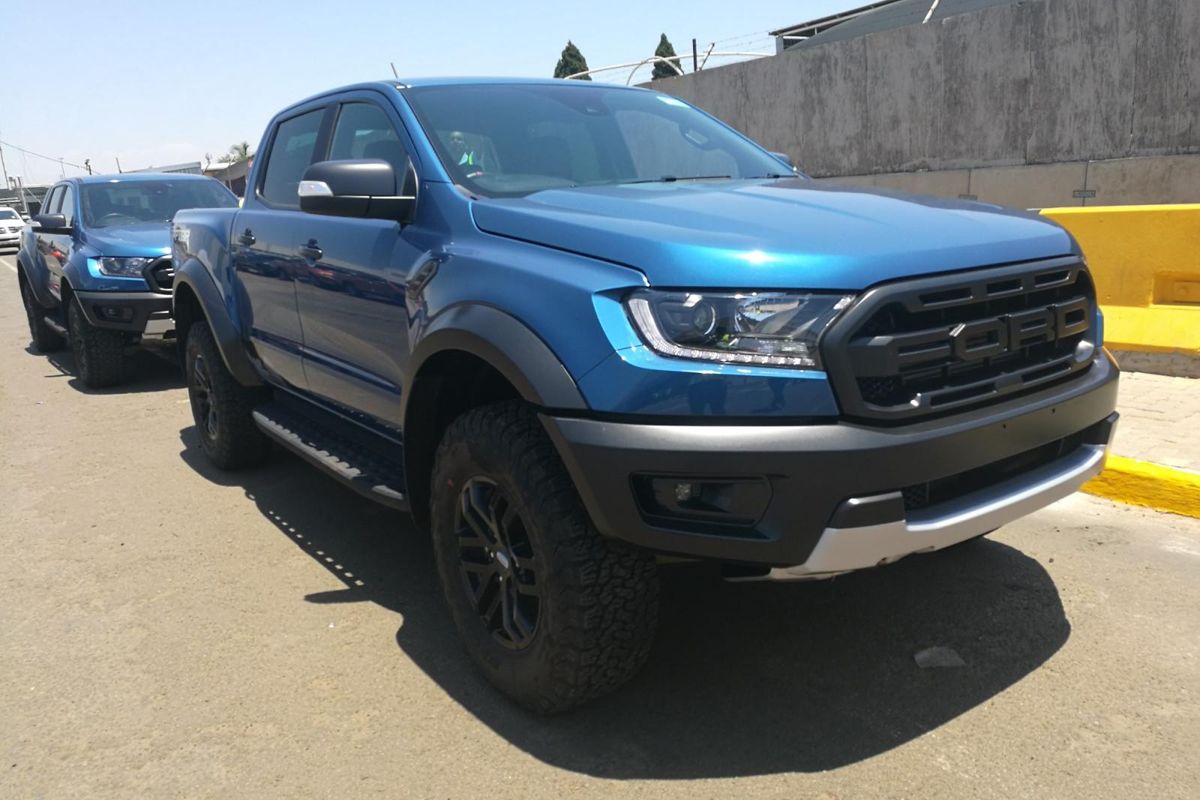
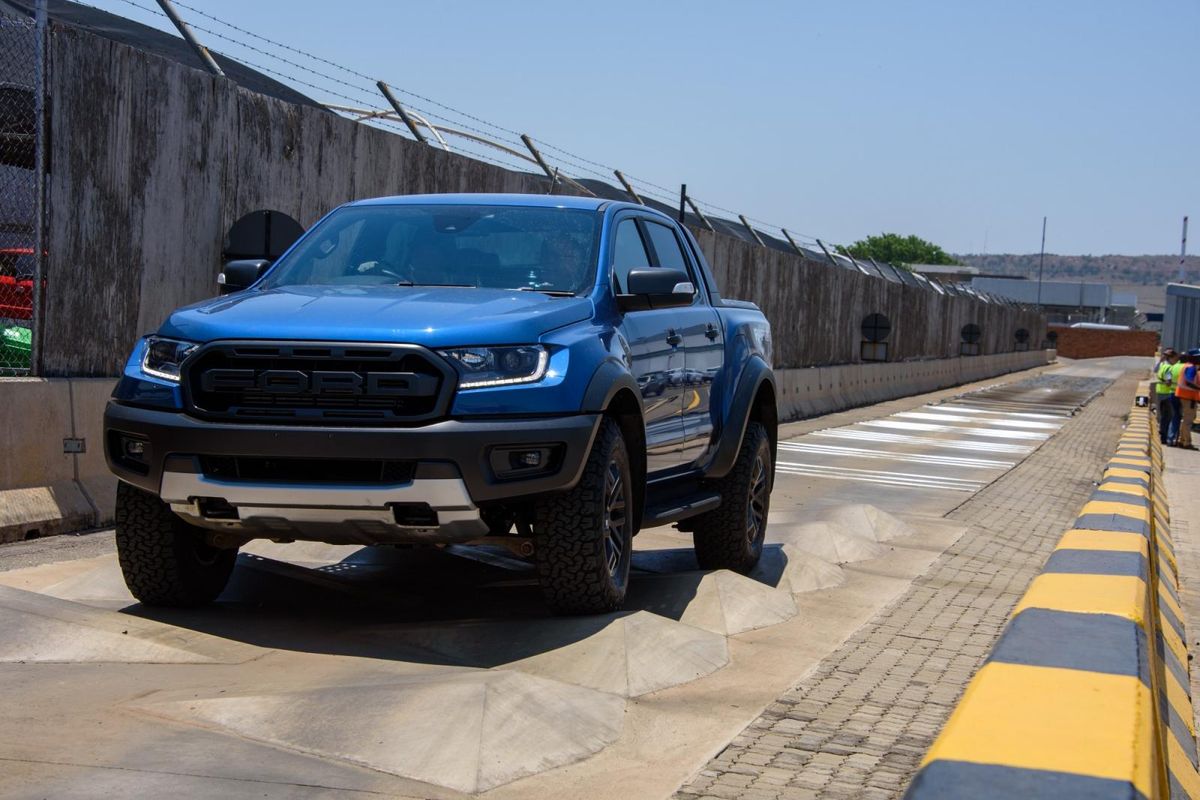
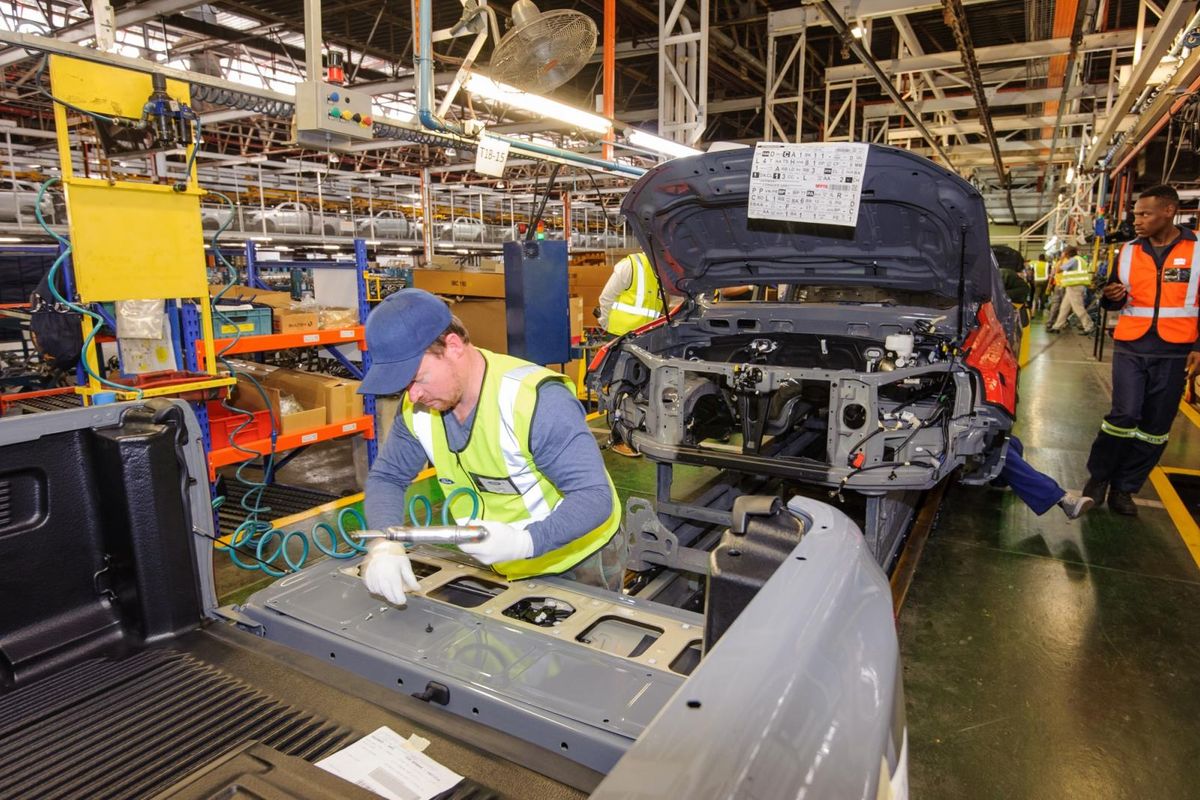
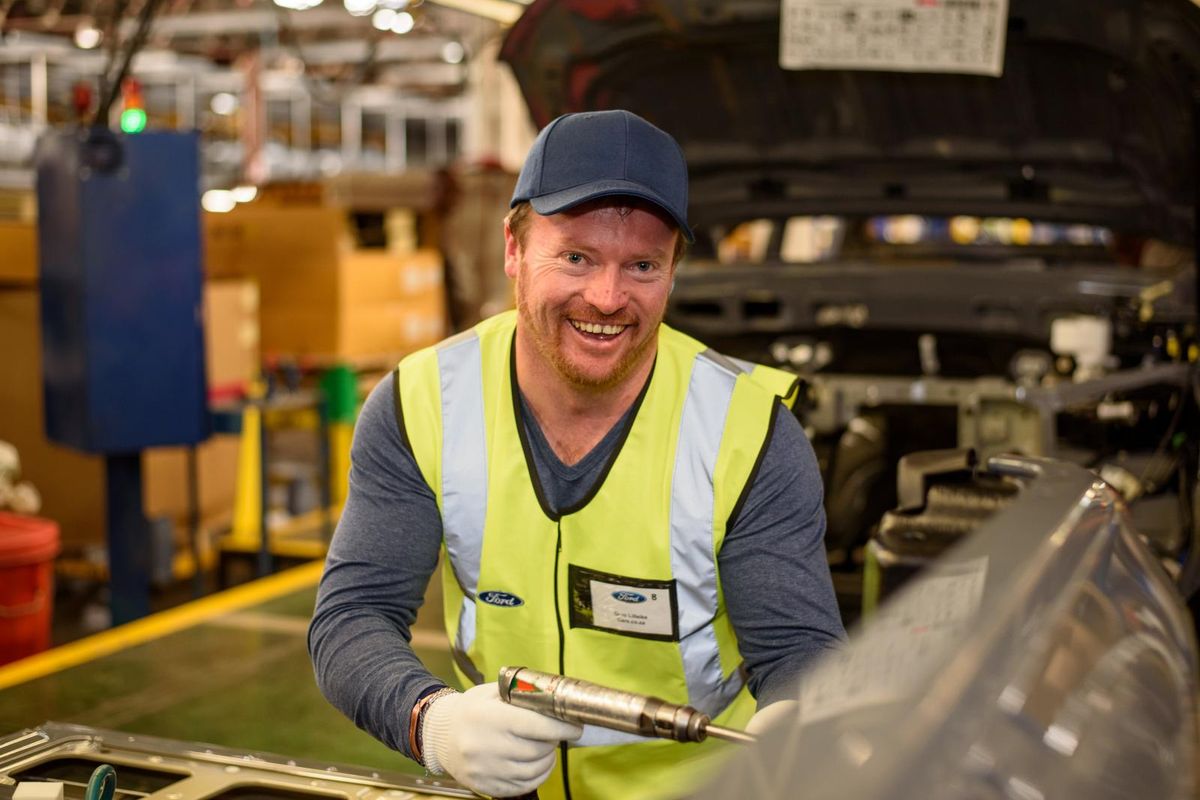
Ford South Africa is gearing up for expanded production in 2019 at its upgraded plant in Silverton, Pretoria and Cars.co.za Journalist, Gero Lilleike, headed to Silverton to help build the pre-production units of the Ranger Raptor which is due to launch locally in the first half of 2019.
Ford South Africa’s plant in Silverton is where the popular Ranger bakkie and Everest SUV are built for local consumption and export markets, but it’s also where the highly-anticipated, high-performance Ranger Raptor bakkie will come to life in the not-too-distant future.
In an effort streamline production and accommodate the production of the Ranger Raptor, Ford has invested nearly R3-billion to expand and upgrade its Silverton plant, a process which has taken more than 18 months to complete. A wide range of upgrades and enhancements have been implemented at the plant, including the installation of 25 new robots in the Body Shop. A total of 115 fully automated robots are now responsible for handling and welding of components. Installed production capacity has increased and up to 168 000 vehicles are expected to roll off the production line in 2019.
Ockert Berry, VP of Operations, Ford Middle East and Africa commented, “The Silverton Assembly Plant has been transformed to achieve our highest-ever installed capacity. This required a total rethink and re-engineering of many of our established production processes and operations throughout the plant to improve throughput, efficiencies and ergonomics to reach the projected production targets.”
“While gearing the plant up for the higher volumes was a key objective, this had to be managed alongside a significant increase in production complexity associated with the unique characteristics of the Ranger Raptor, the introduction of a new engine programme, and extensive product enhancements planned for the 2019 Ranger and Everest,” Berry states.
Building the Ranger Raptor
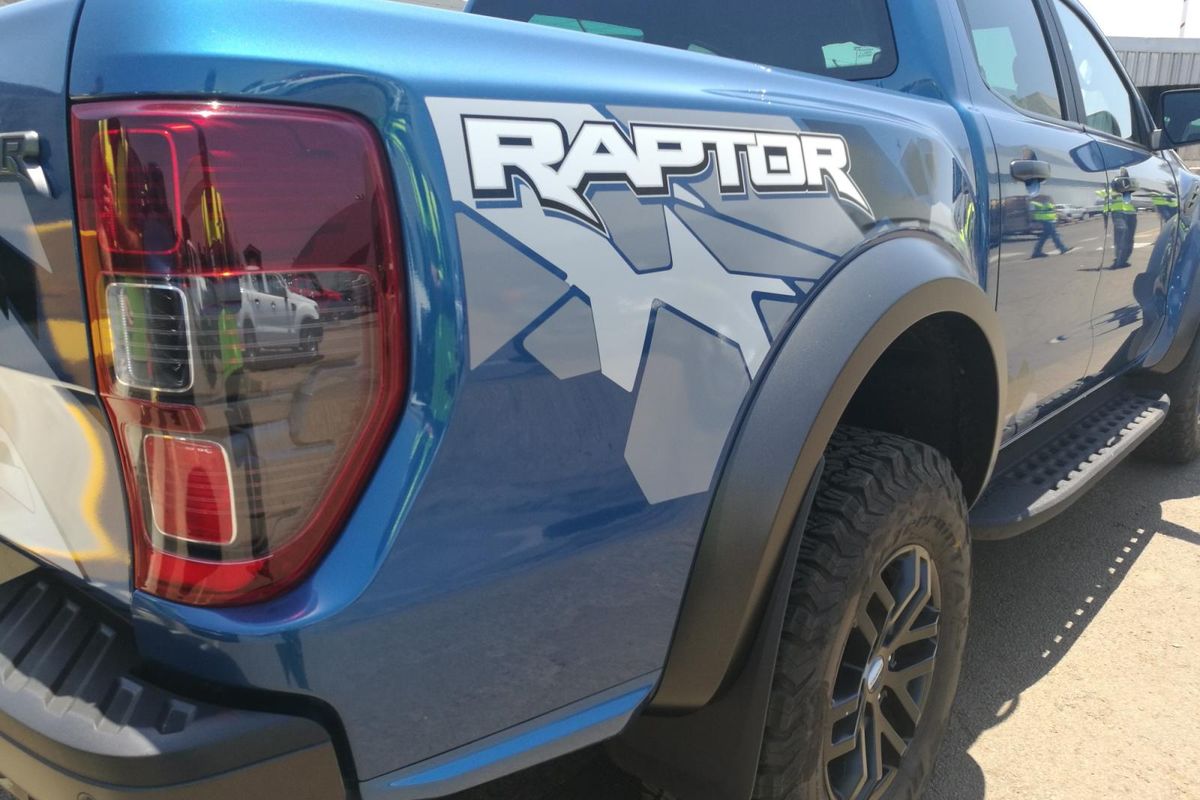
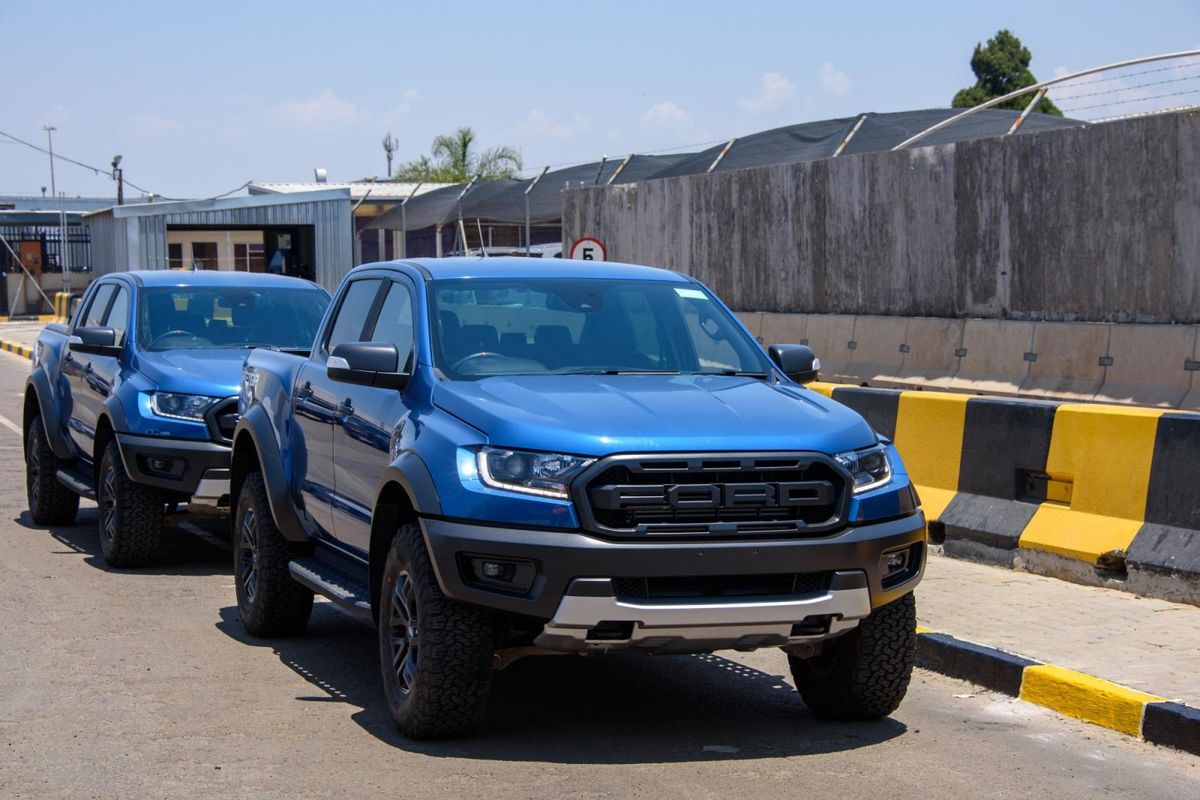
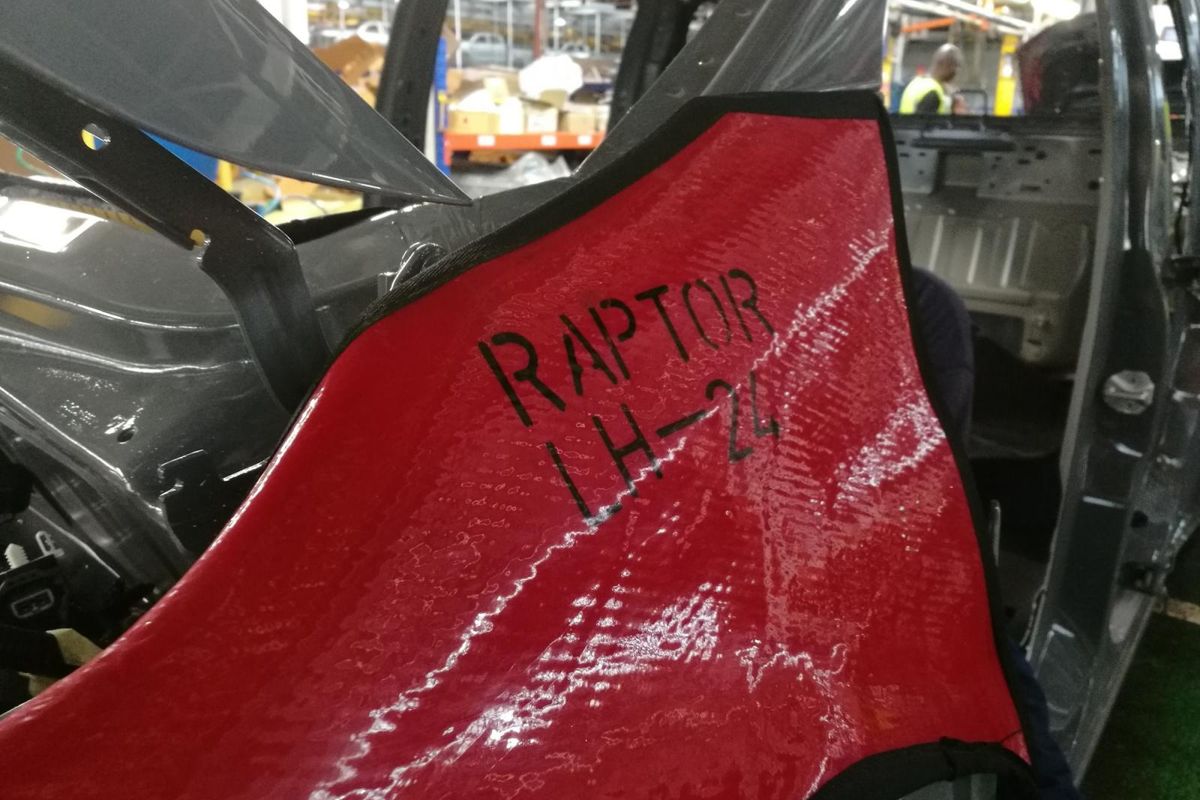
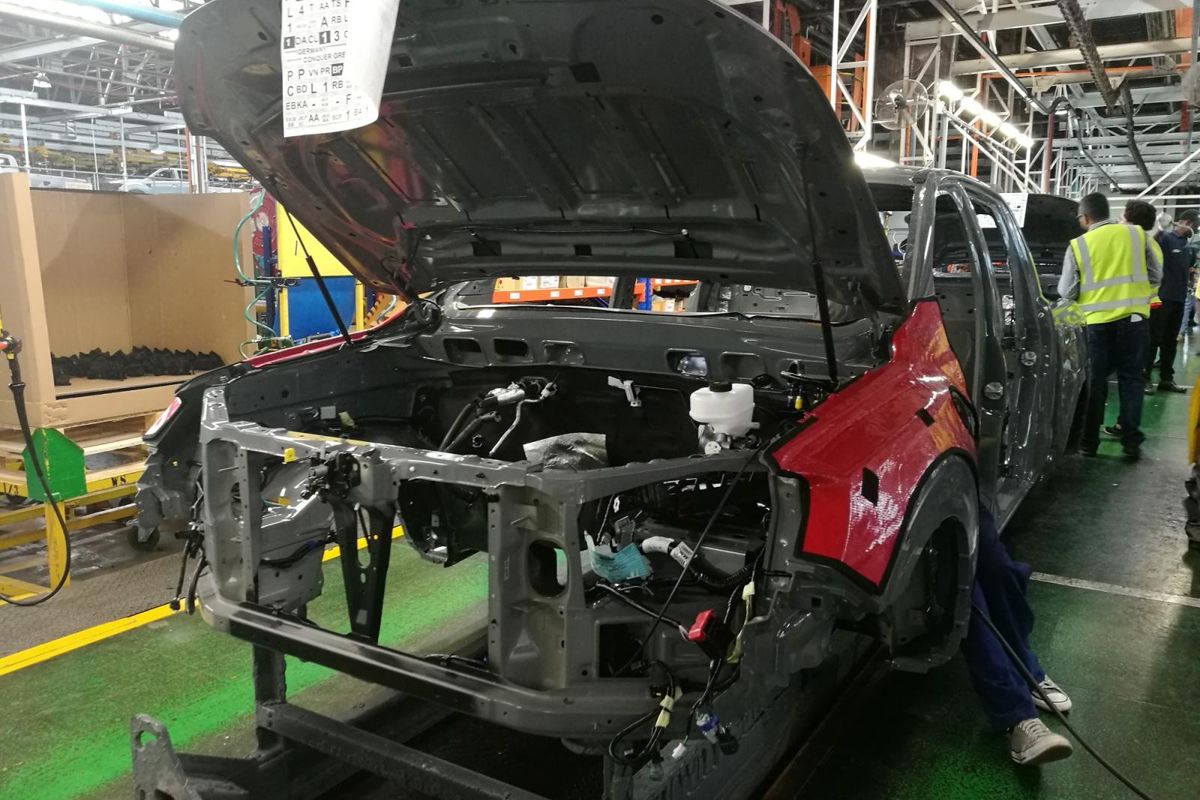
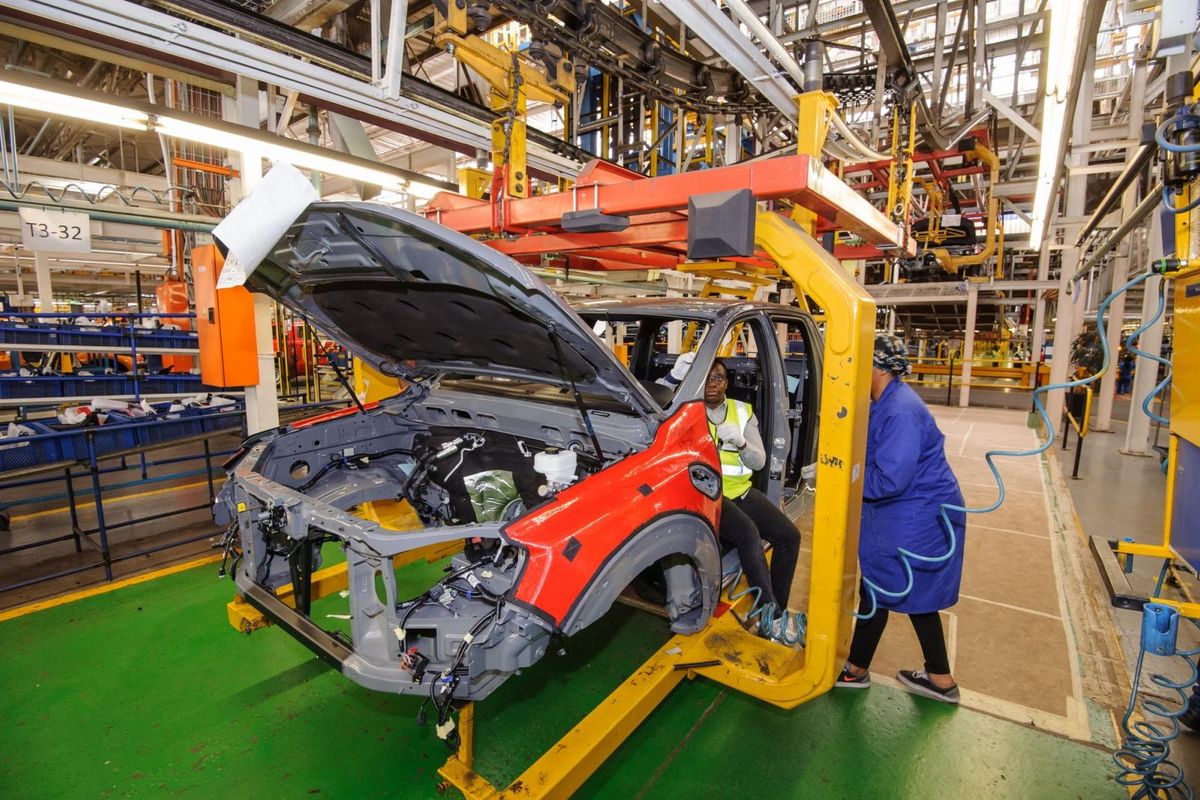
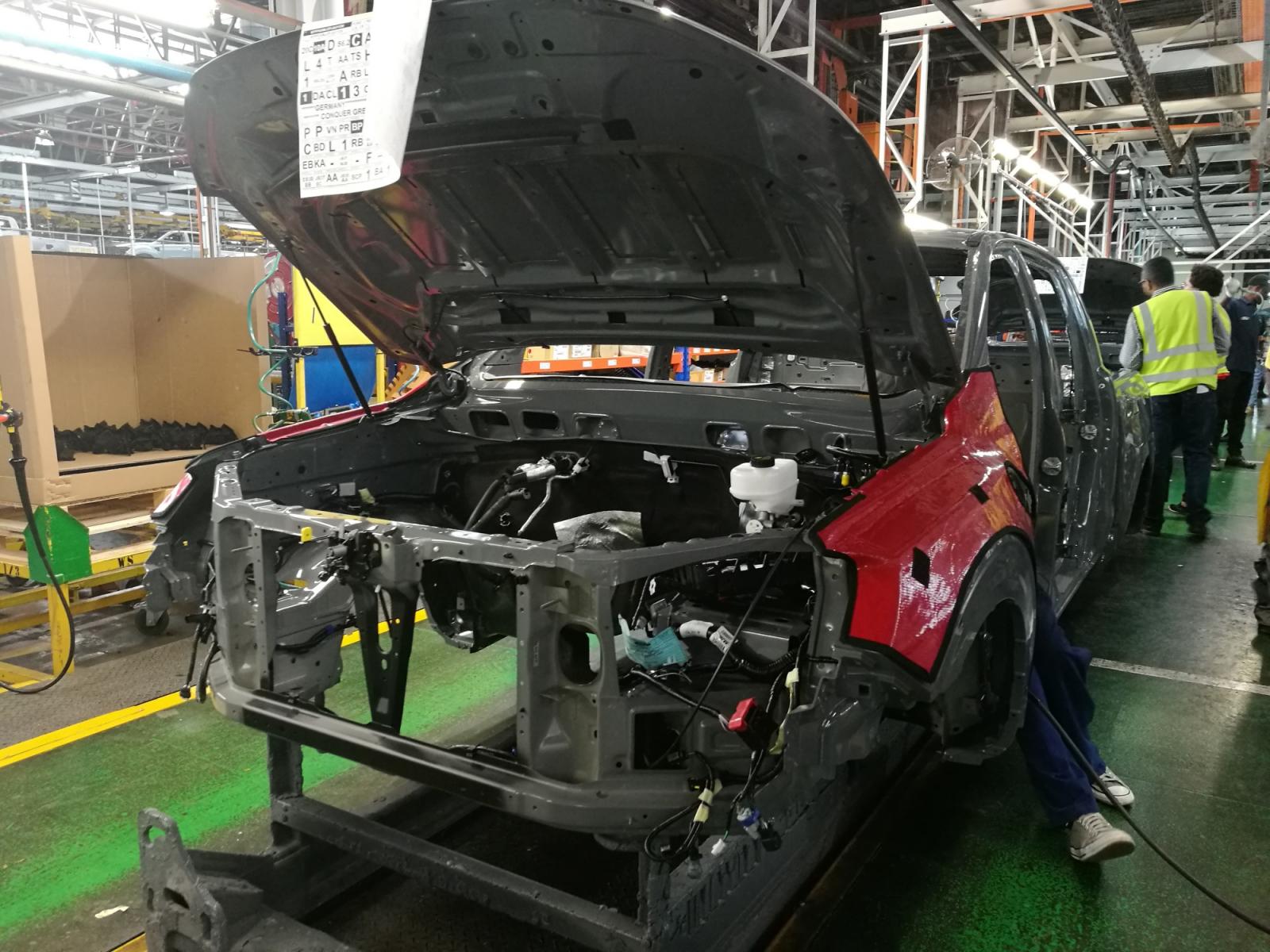
The Ranger Raptor has no less than 350 unique parts. These are the pre-production units being built…
The forthcoming Ranger Raptor brings its own set of complications to the production line as the Ranger Raptor is vastly different to the standard Ranger model and the assembly line has therefore been re-engineered to accommodate both Ranger configurations.
“Accommodating the Ranger Raptor’s long-travel suspension, 150mm wider track, 168mm wider body and much bigger tyres required significant upgrades at numerous points along the assembly line,” Berry states. “There are around 350 parts that are unique to the Ranger Raptor, which adds a lot of complexity to the line.”
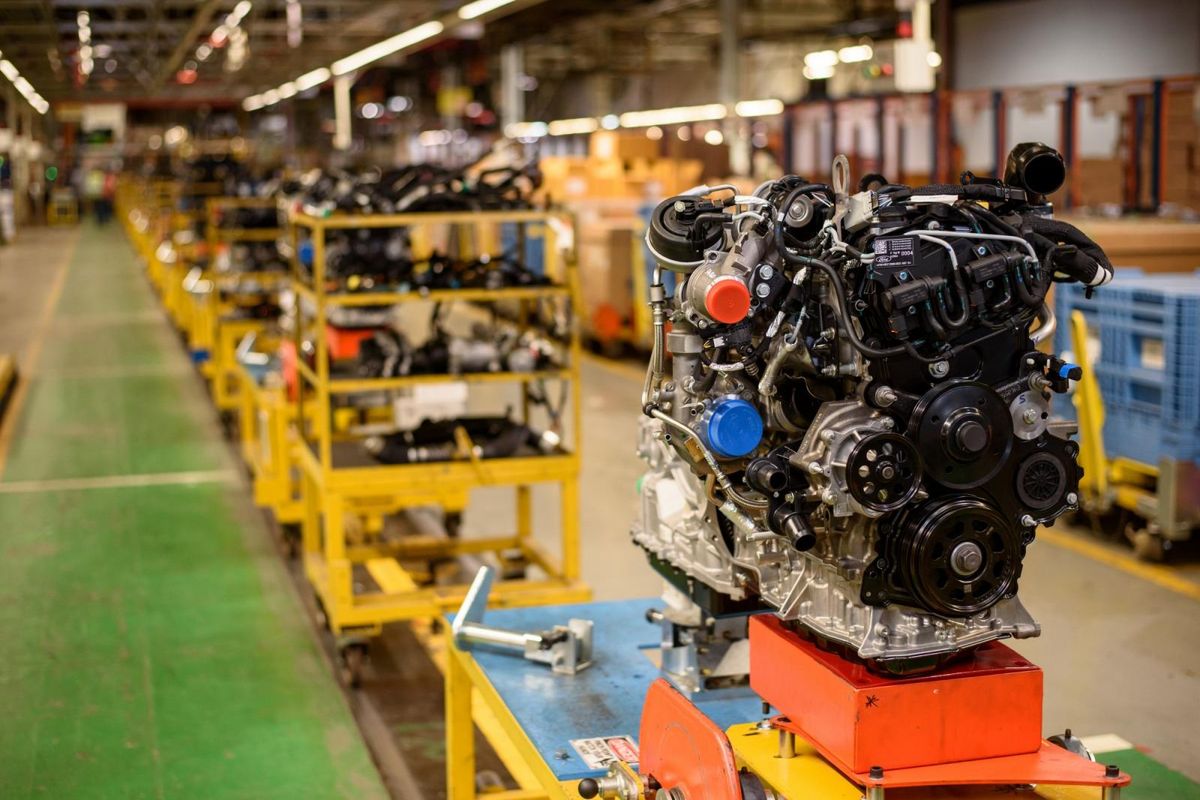
A new engine line has also been installed to accommodate the new 157 kW 2.0-litre bi-turbodiesel engine that will power the Ranger Raptor but which is also expected to be offered in selected Everest and Ranger derivatives in 2019 along with a new 10-speed automatic transmission.
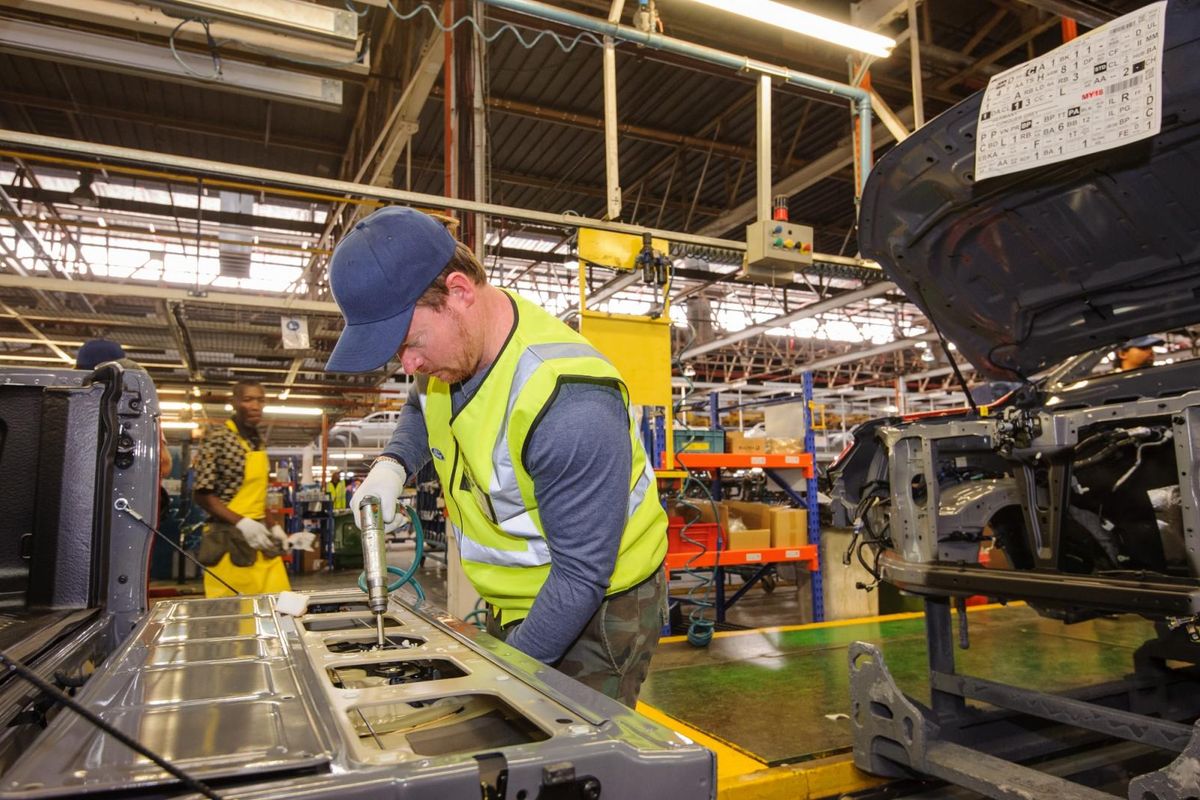
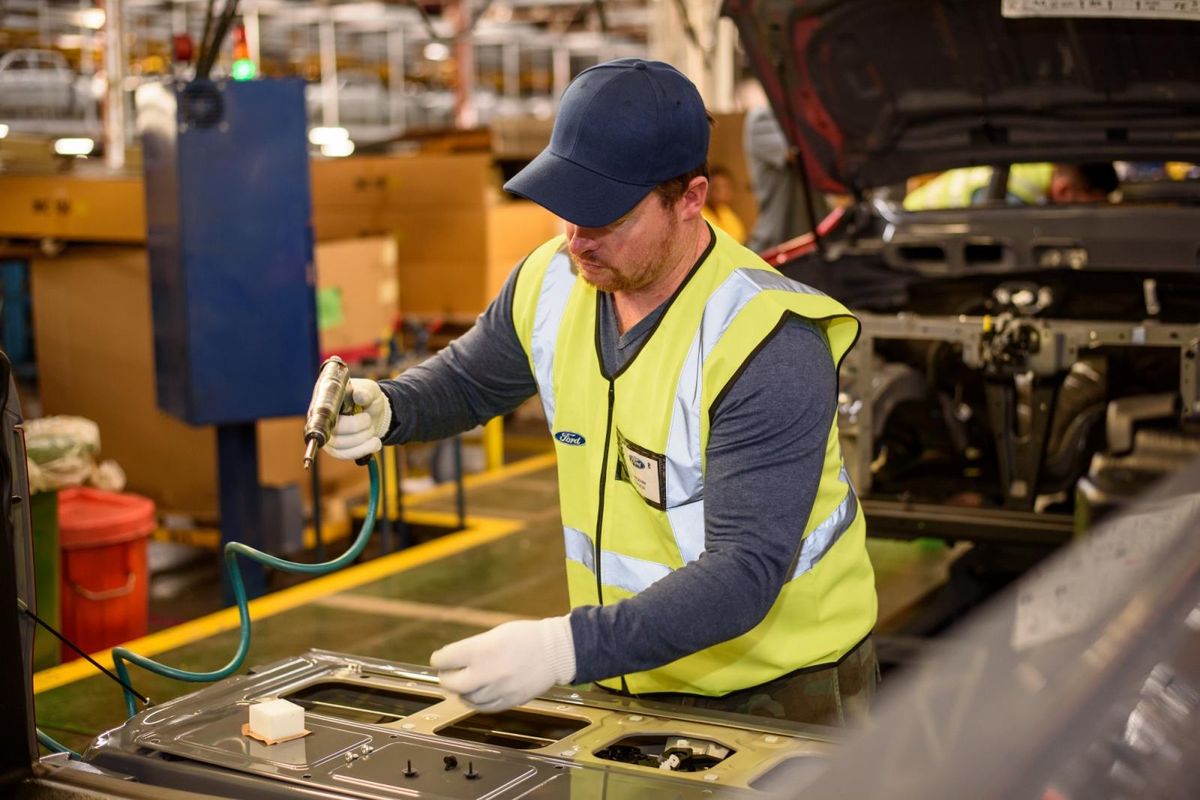
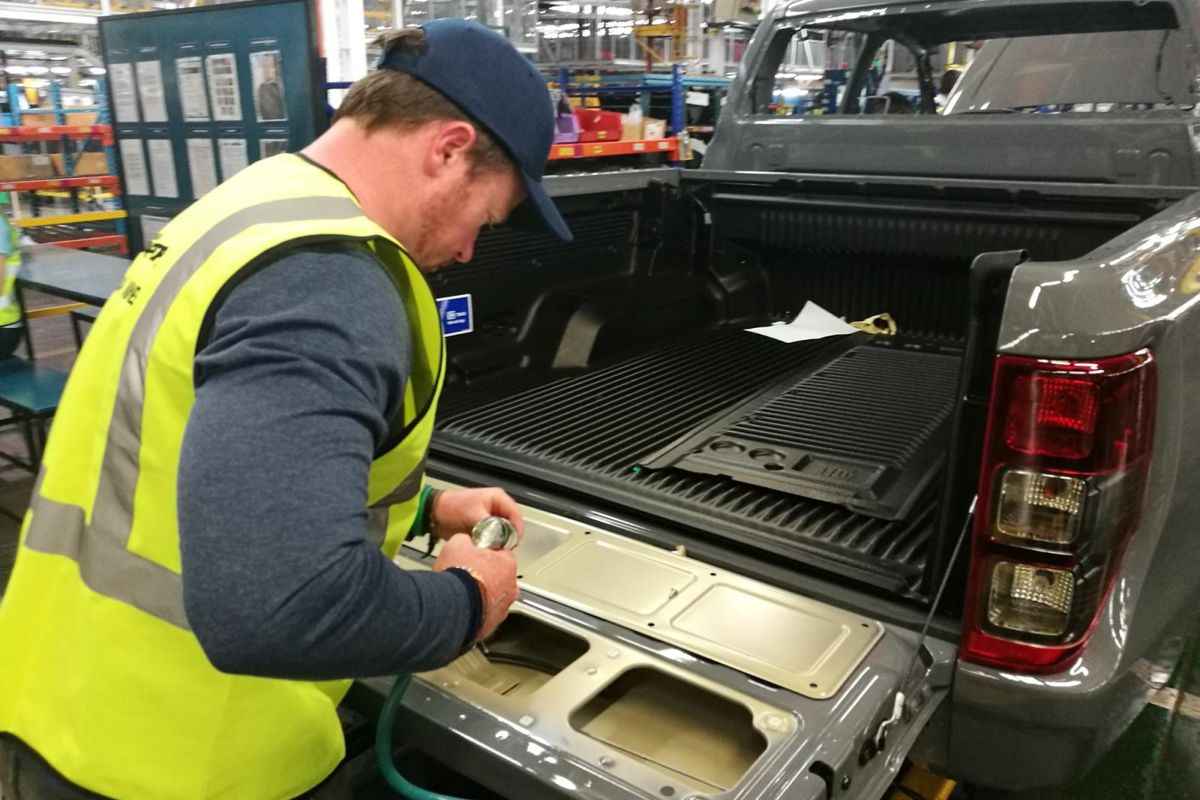
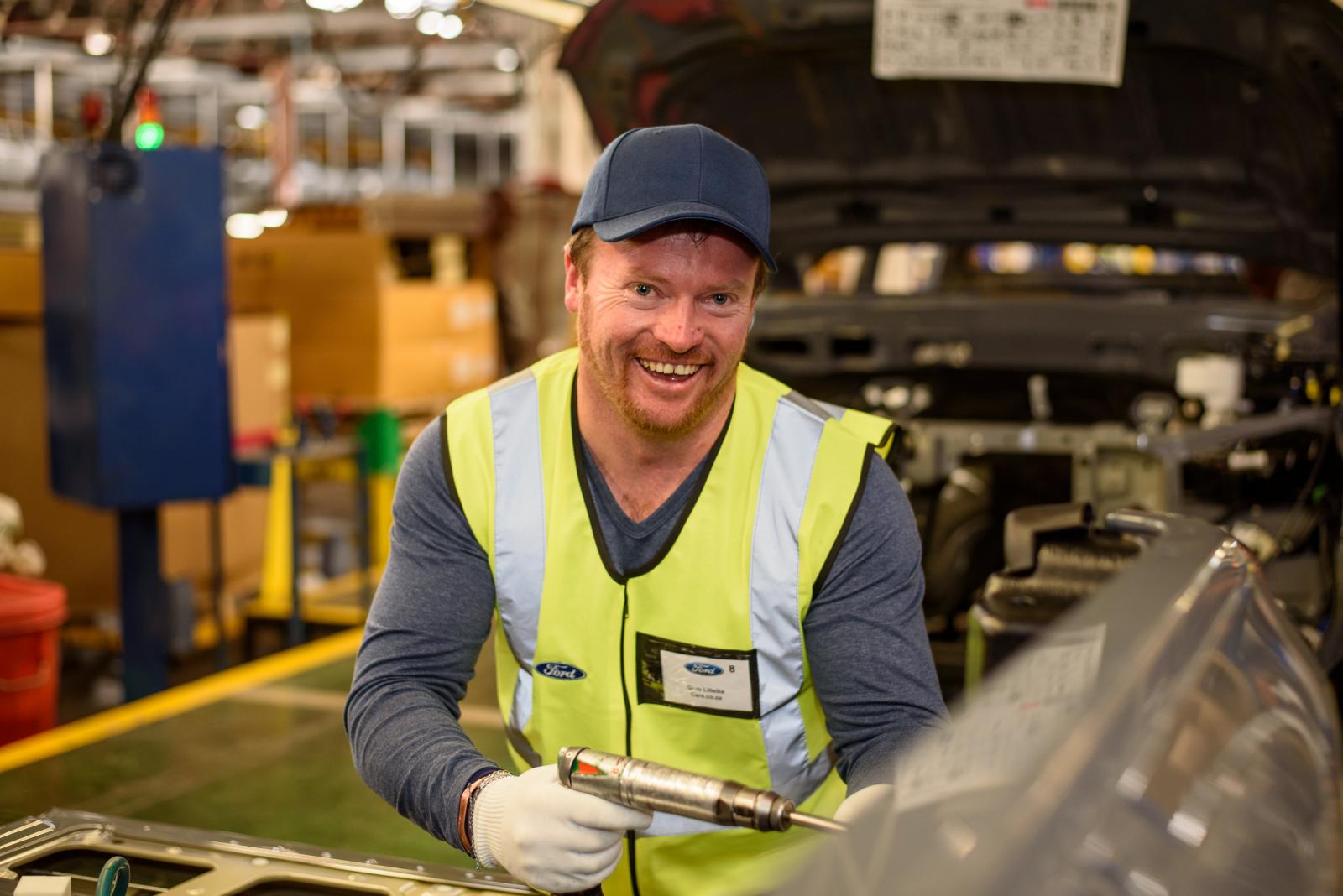
Gero Lilleike works on installing the tailgate mechanism on a Ranger Raptor pre-production unit.
Seeing Silverton plant in full operation is a fascinating experience but Ford arranged a unique event that would place local media representatives on the production line to work on actual pre-production Ranger Raptor units.
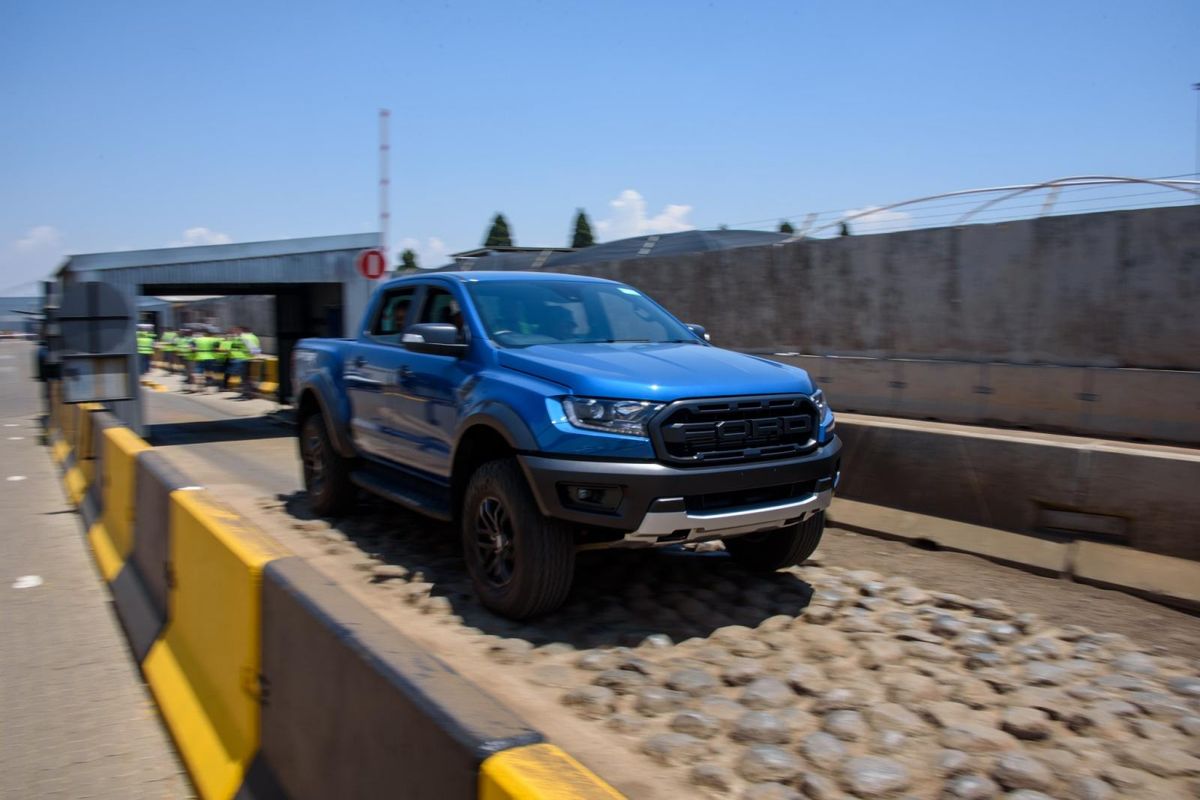
The pre-production Ranger Raptor units are built to expose any production issues but they also undergo various quality and safety tests before full-scale production starts.
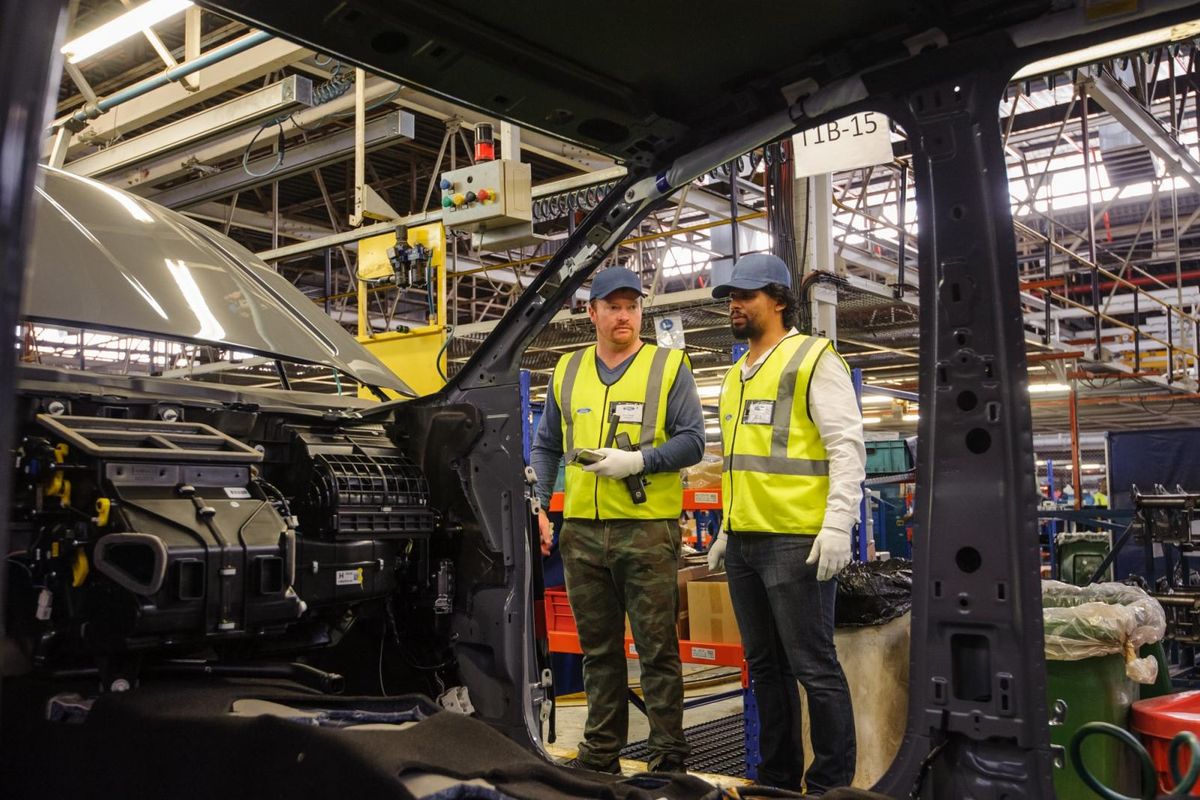
Media representatives were split into groups and positioned at various stations on the production line under the watchful eye of trained professionals who would offer guidance and support but also to ensure that quality control was maintained.
Gero was positioned at the tailgate station with the task of installing the tailgate mechanism on various Ranger derivatives as well as the pre-production Ranger Raptor units. He was guided by a veteran of the trade, a friendly fellow by the name of Jacob, who has been employed at Silverton plant for 33 years. Jacob’s expertise proved to be invaluable in helping to get the mechanism installed in time without having to bring the entire production line to a grinding halt.
While we look forward to testing the Ranger Raptor on local soil, Ciro De Siena did drive it with much enthusiasm in the Australian Outback earlier this year. If you have not yet seen the video, do yourself a favour and give it a watch below!