Volkswagen Crafter (2018) Specs & Price
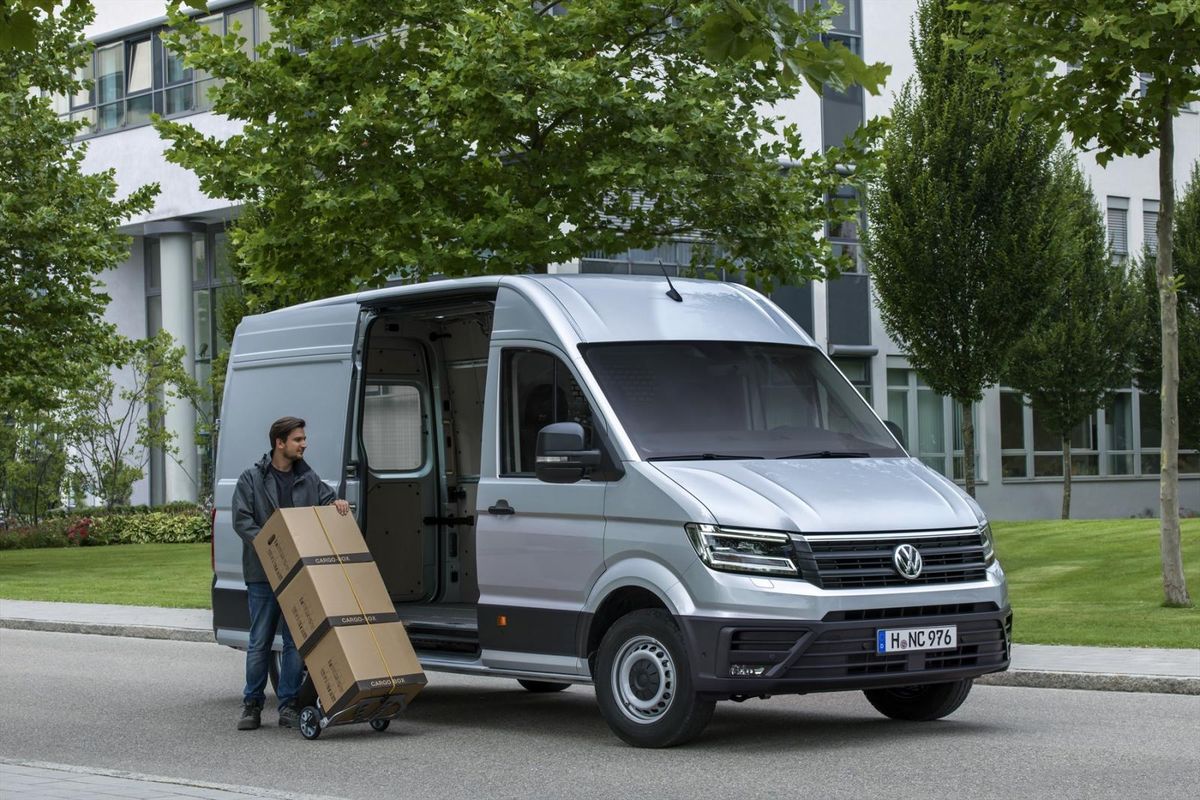
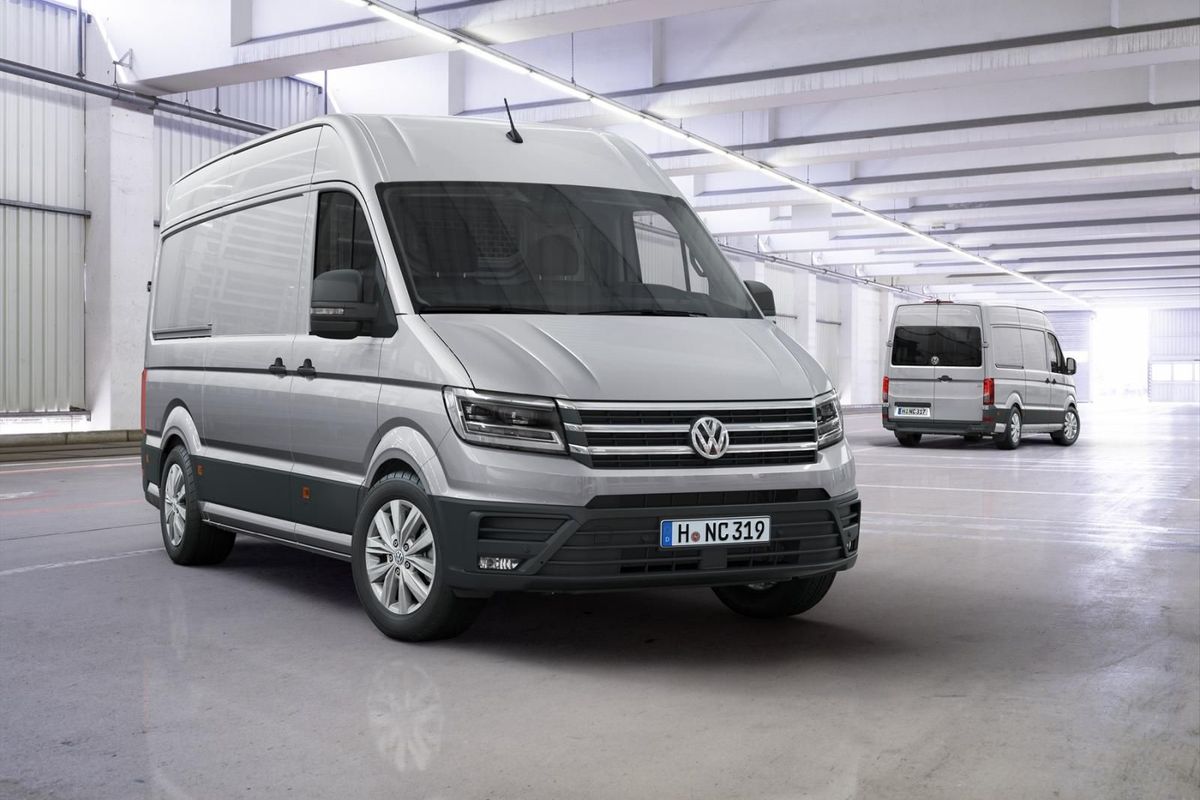
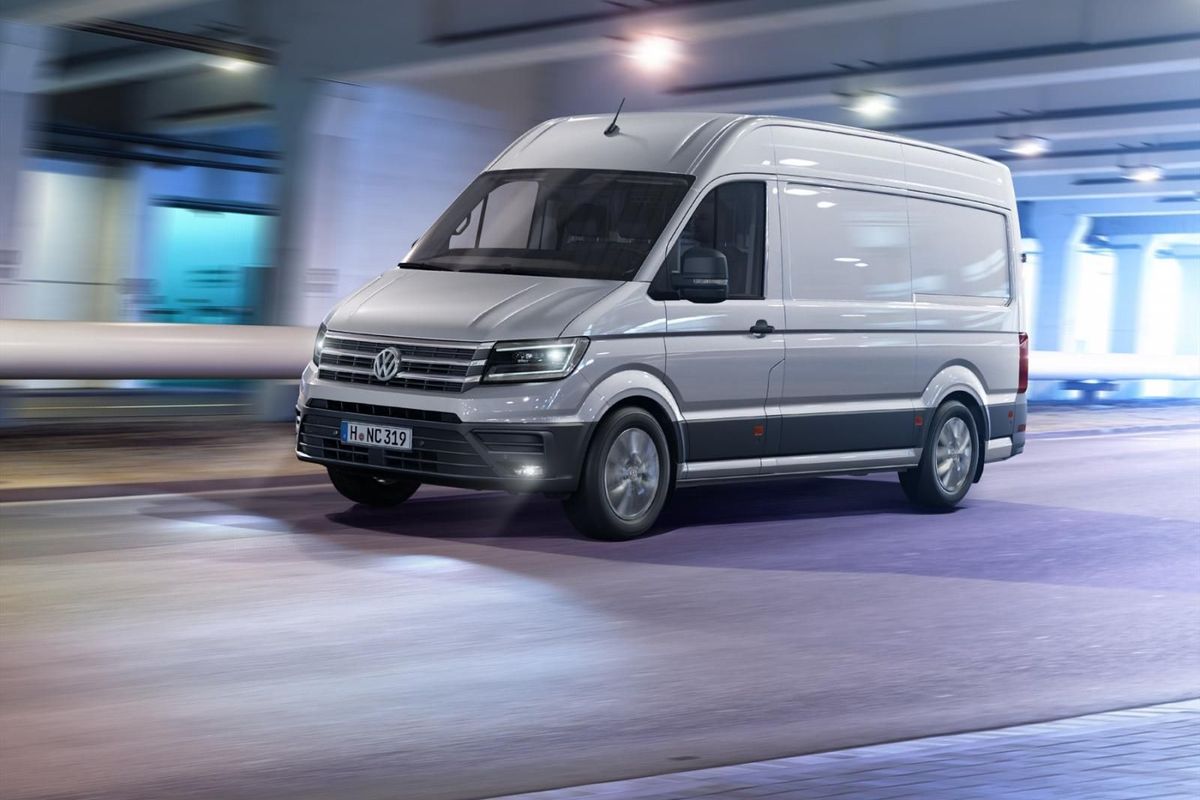
I probably shouldn’t say this, but the Volkswagen Crafter borders on "cool". The newfound ambitions of entrepreneurship are steadily putting a sparkling sheen on the workhorses of the automotive world and, where this large VW is concerned, not even its bitter rivals ever seem to faze its rising popularity.

It’s been on sale for a great number of years now, but despite the relative interest in commercial vehicles by the population in general, the Crafter has become a household brand. Many South Africans are likely to get their taste of Crafter in passenger bus form. I know I have, even with the typical South African V8 conversion added; it’s massively spacious; the chairs mostly comfortable for long stints and has always had an air of robust reliability about it.

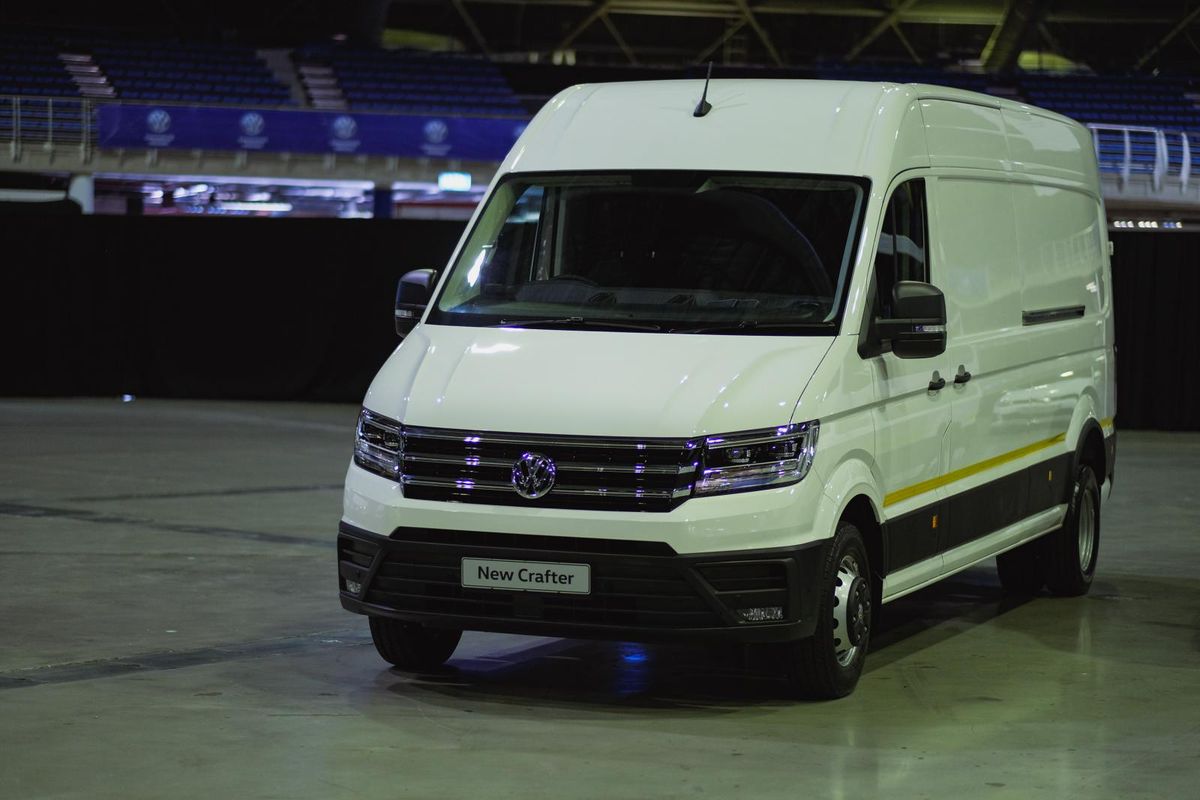
VWSA has just availed a brand spanking new version to the South African market. Aesthetics, aside from what many may think, have become rather important in the commercial vehicle business too. A fleet of carriers is an extension of a company’s appearance and thus they have marketing duties.
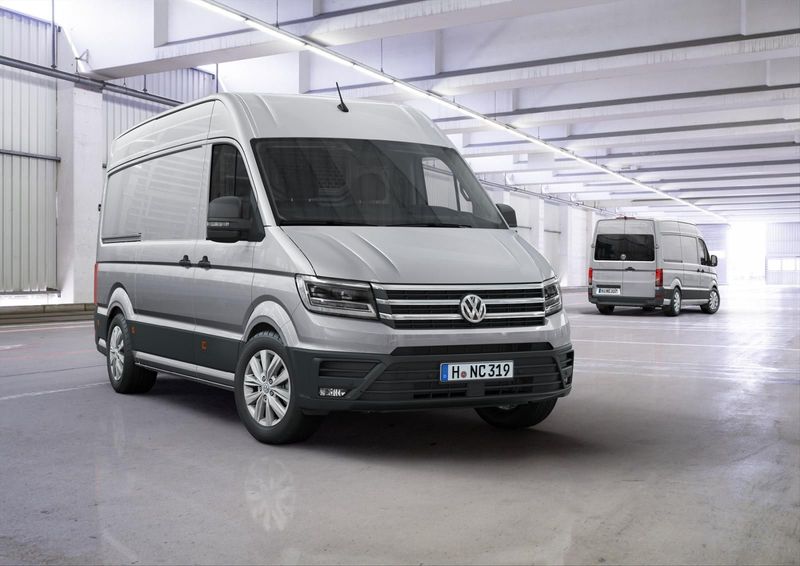

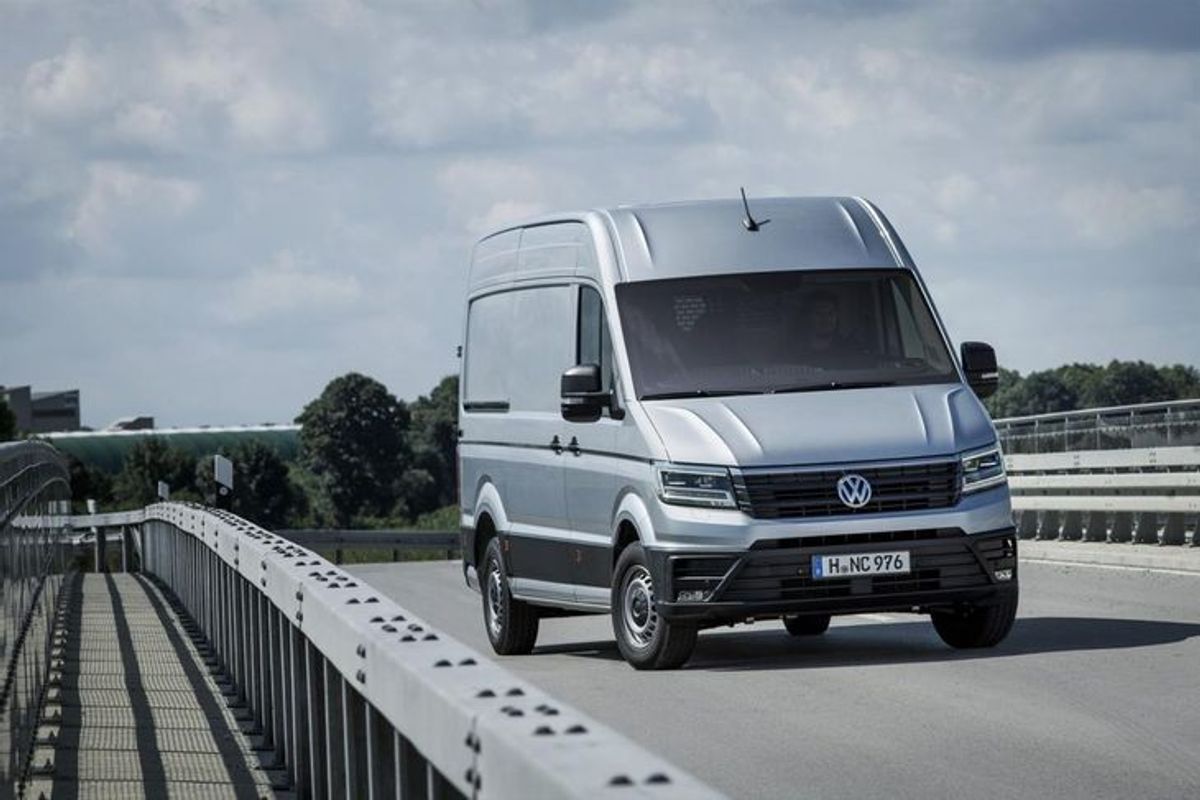
The Crafter may be produced by Volkswagen's Commercial Division, but its appearance takes its cue from the brand's passenger car line-up.

I’m confident that vinyl wrappers will be delighted to enhance the exteriors of the new Crafter with crafty designs thanks to its slick new expression of large letterbox type headlights and a bejewelled grille. The new Crafter is now closer in physical commonality with smart VW passenger cars on the roads.   

The changes

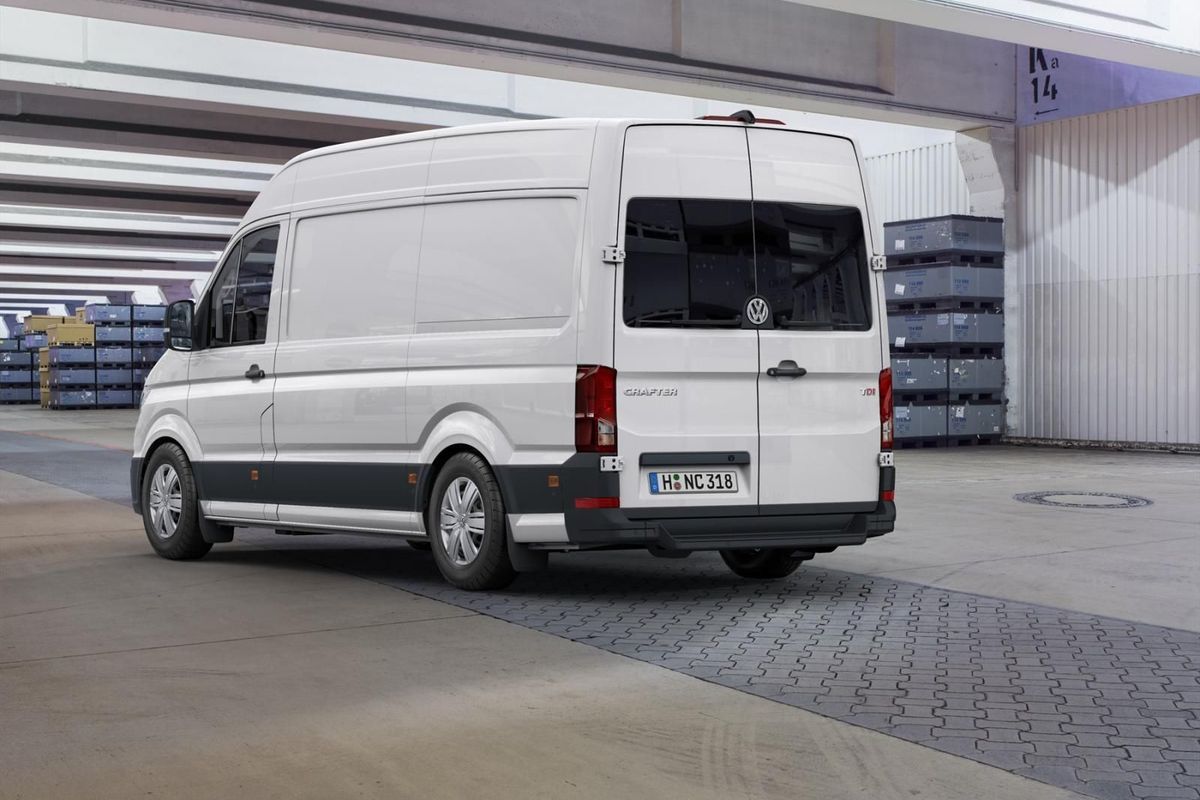
Looks aside, VW says with the new van enjoys a larger permitted maximum cargo volume of 5.0 metric tonnes, with 17.5 m³ unshackled for squeezing in extra cargo while the option of various drive types and derivatives is there to meet bespoke applications.

It comes in three length options (5 986 mm, 6 836 mm or 7 391 mm in panel van guise. Heights vary from 2 355 mm, 2 625 mm and 2 637 mm for the panel van while more options include closed body alternatives as well.
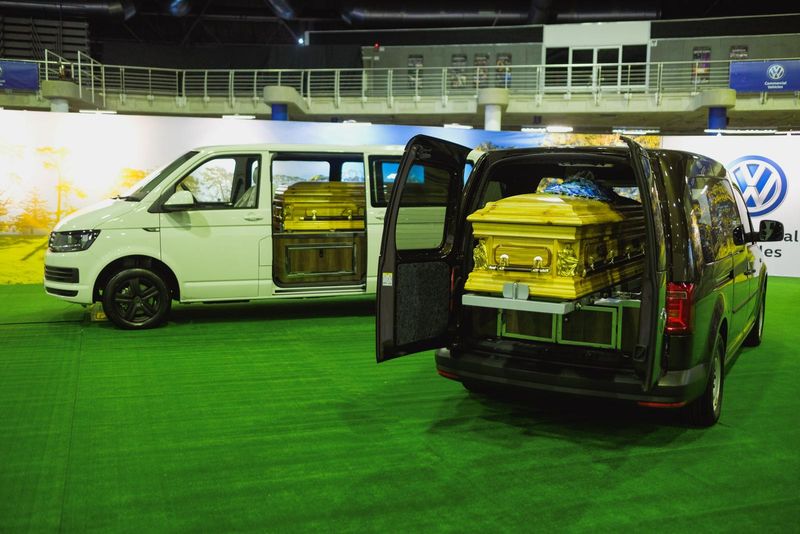

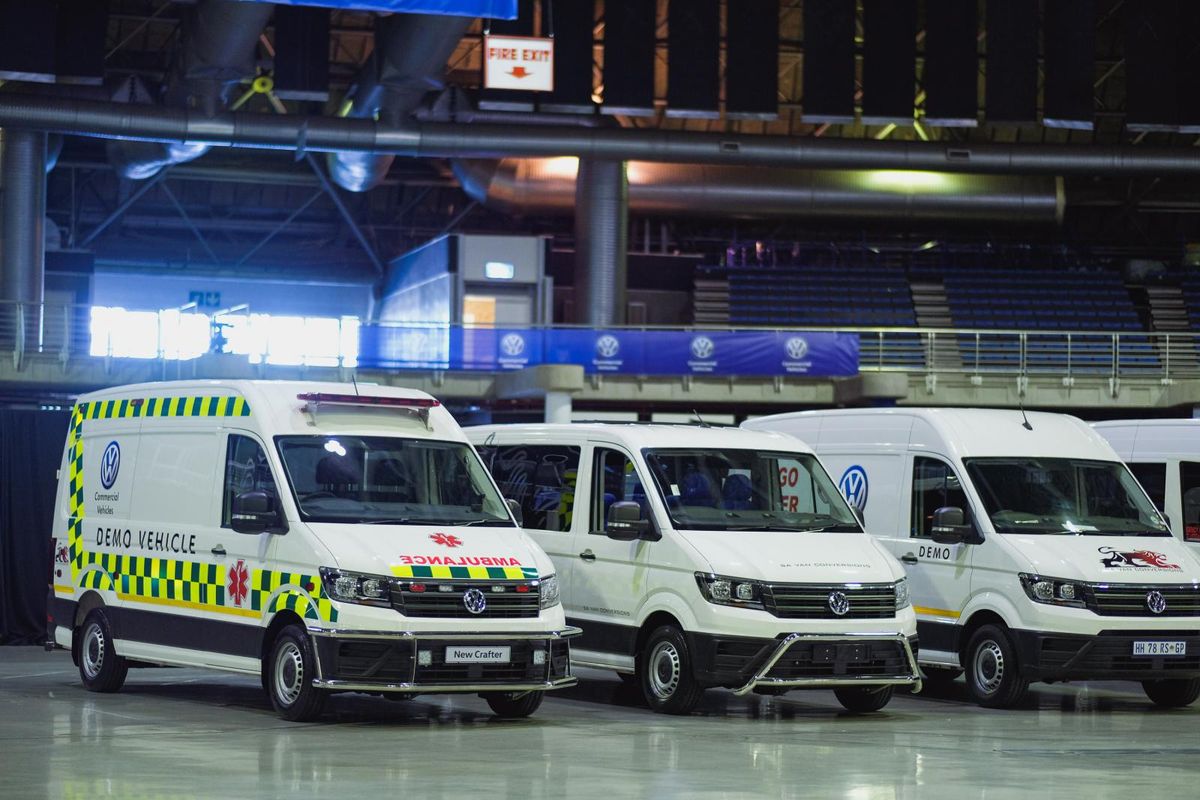
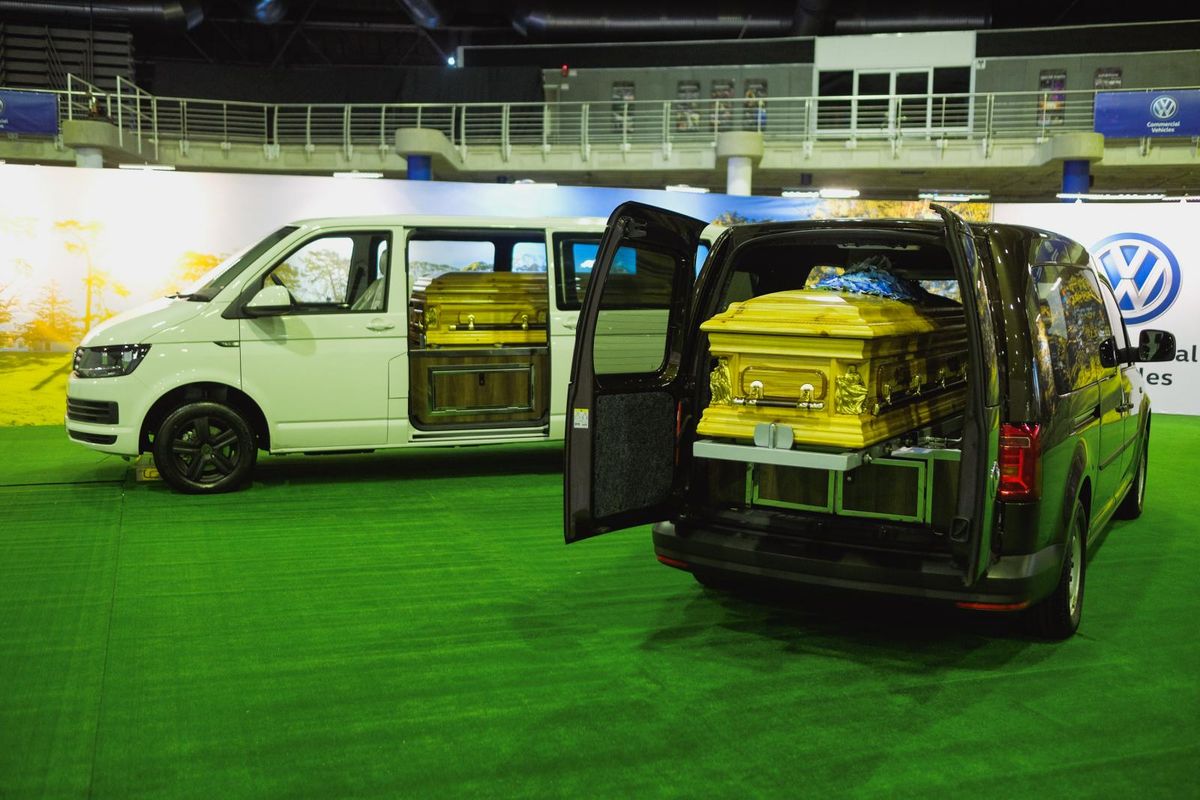
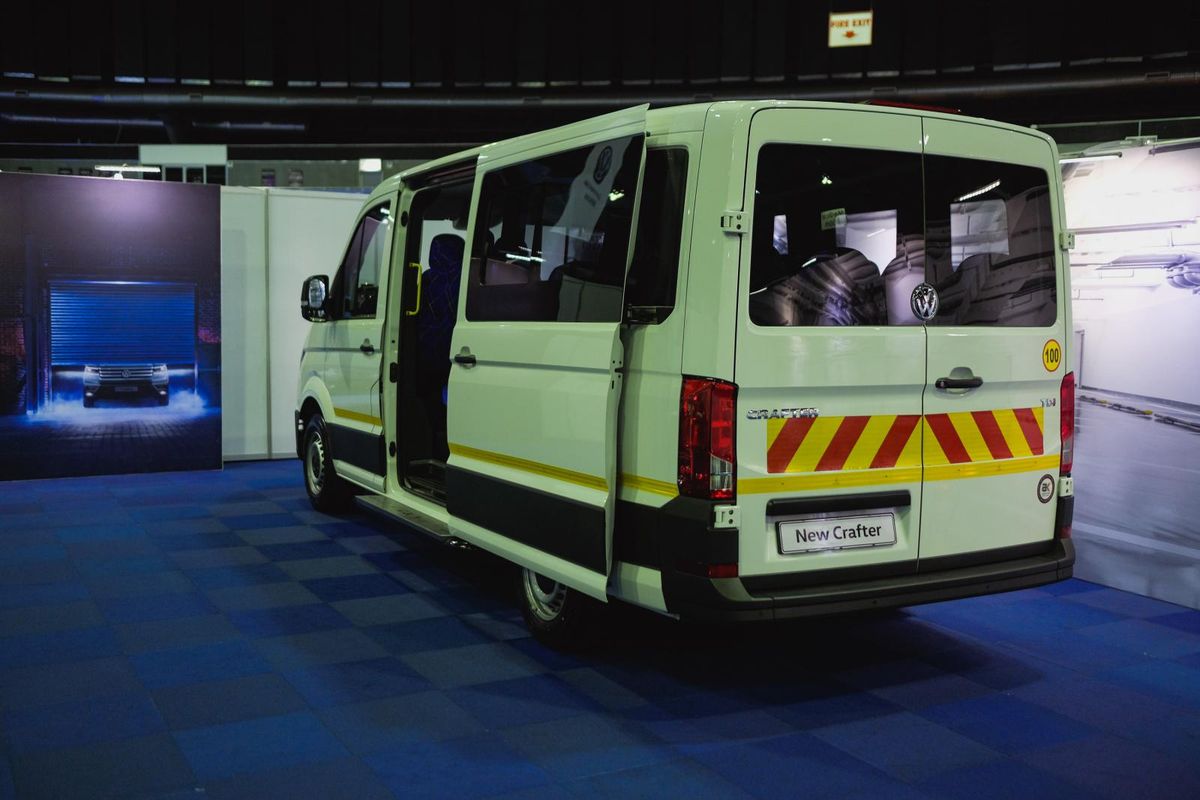
The Crafter can be adapted to transport some passengers on their very last trip in this plane of existence… in some style, we may add.

Additional improvements and specification include safety features such as side-wind compensation system – a key danger mitigating system in the sector; hill hold assist – for those treacherous steep angled stops – and automatic a post-collision braking system. A steering wheel with height and telescopic adjustment also adds to driver comfort and safety by enhancing various driver postures.

More enhancement can be had through an electro-mechanical steering system; Park Assist; Trailer Assist and as optional extras: a reverse-view camera, rear traffic alert; cornering LED lights, adaptive cruise control and EBS. Available passive safety systems include front, side and head airbags for driver and front passenger.

Entrepreneurship

As it is aimed higher than the usual 1-tonne pick-up start-up, there are a number of business sectors where a large carrier such as the Crafter is highly sought-after and VW says it gathered the opinions of typical Crafter customer bases to get a better understanding of what it needed to refine in building this new iteration. The questions included: what can assist the daily lives of courier drivers in inner-city traffic? How can construction vehicles manoeuvre more easily through muddy building sites? How can accidents caused by tired drivers on long trips be prevented? These are the exact concerns of fleet owners who are adamant to reduce risk and raise profitability.
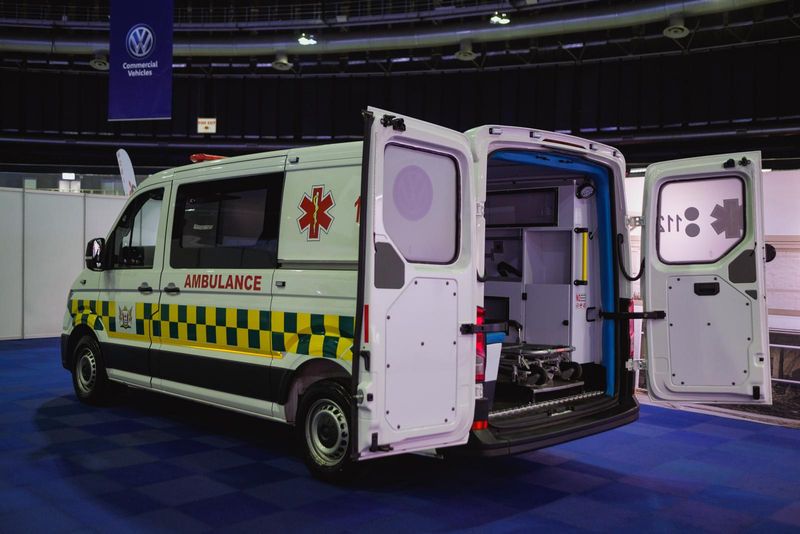

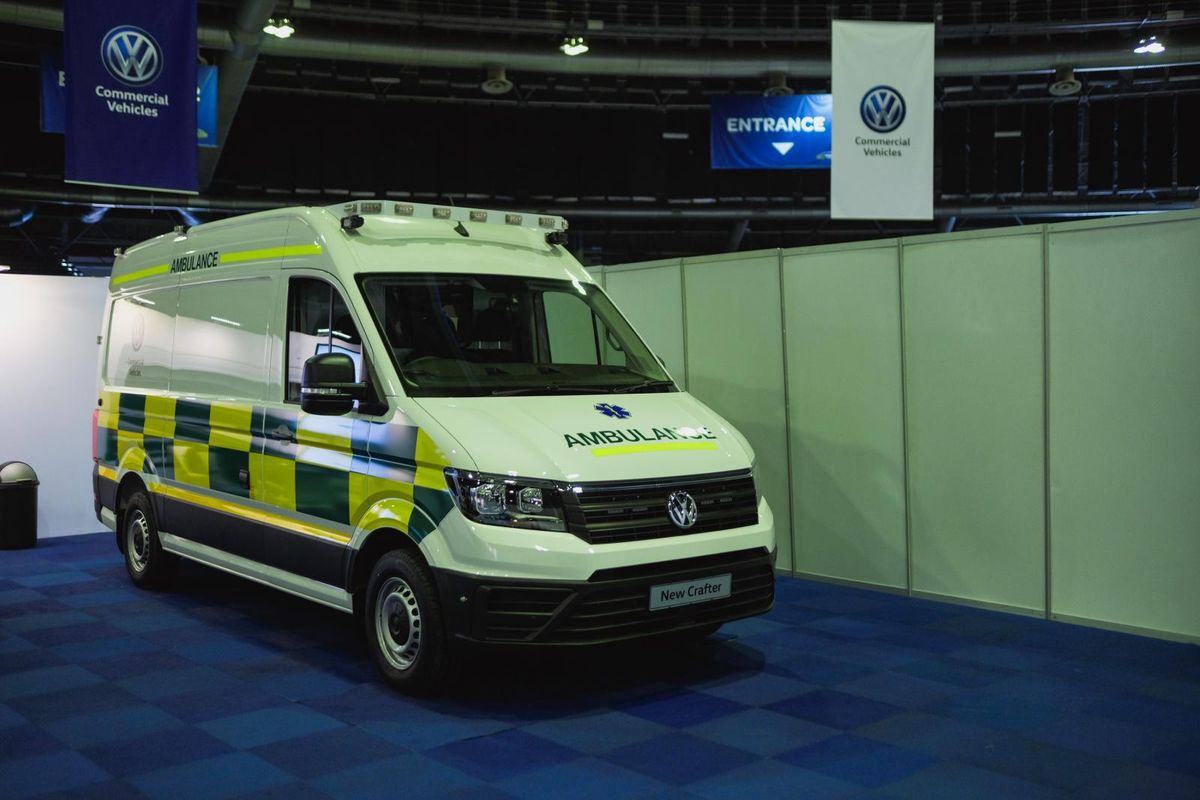
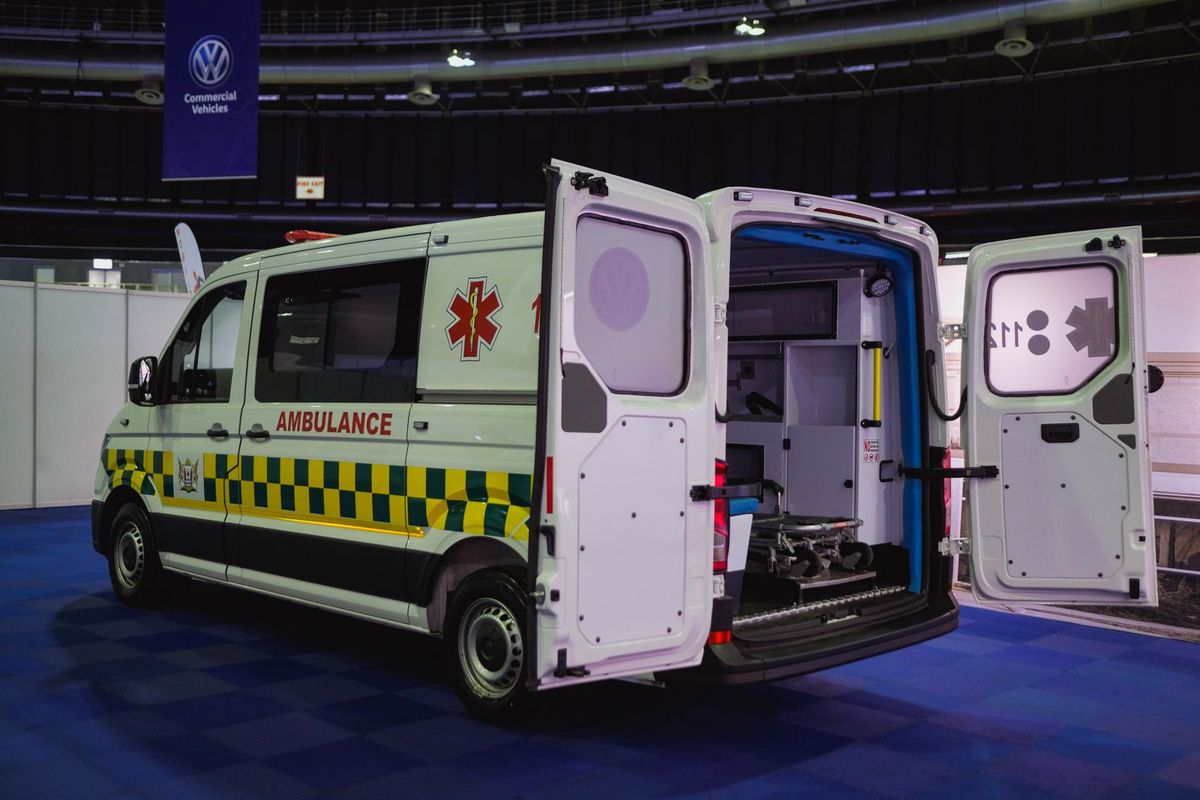
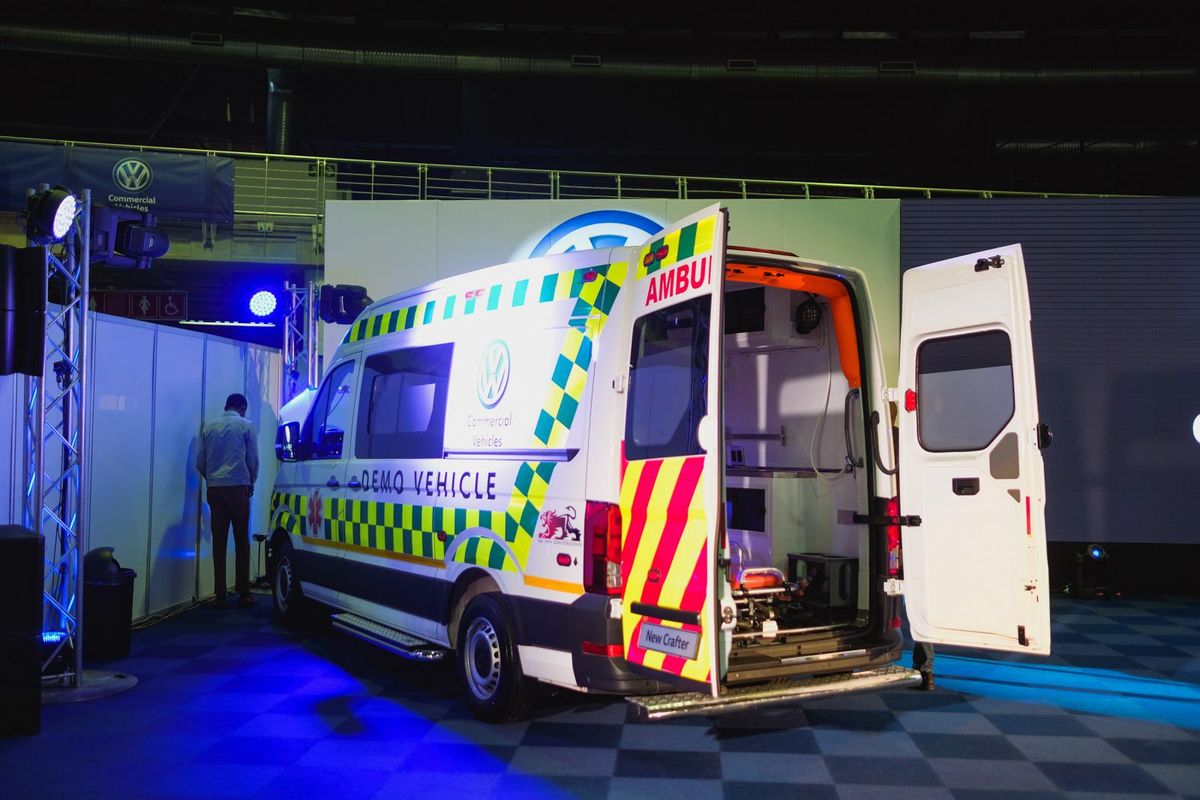
At the media launch of the new Crafter range, VW displayed a unit that had been customised to perform as an ambulance.

The engineers at VW were then able to gain insight into various customer needs and which systems can be used effectively to achieve these objectives when creating this new Crafter. I’m not entirely certain about the importance of the new Crafter's standard electric windows fitment, but I’m confident that central locking with wireless remote control is a must have. VW further did its homework on convenience features too: the Crafter cabin has storage designed specifically for a mobile phone, laptop and tablet, folding rule and working gloves.

Fuel economy is a crucial aspect in running a fleet business and according to VWSA: “The Crafter's fundamentally new exterior design gives the model improved consumption and emission figures.” South Africa exclusively gets a 103 kW 2.0-litre TDI engine either in front or rear-wheel drive configuration. The 4-cylinder TDI engine has peak torque of 340 Nm and its average fuel consumption is claimed as 7.3 to 7.6 litres/100 km depending on the derivative.
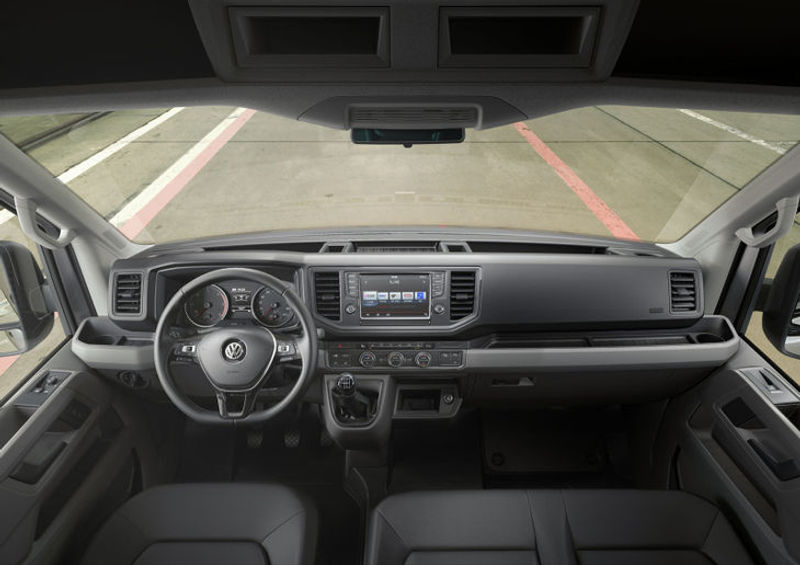

In its highest spec, the Crafter's interior is decidedly car-like, although various storage options make the cabin very practical too. 

VWSA promises reliability from the engine, which it says is designed for both local and long-distance operation, as well as low maintenance and repair costs.

Functionality

To accommodate current fleet operators who'd like to upgrade to the new Crafter, an optional universal cargo floor is equipped with shelving mounts, so that existing shelving systems from lease vehicles or previous models can be installed for all common suppliers of customisation solutions. A second compressor for refrigeration or fresh produce applications, four variants of a 2nd battery and a 2nd air conditioner are optionally available.

The new Crafter comes standard with a 2-year/unlimited km manufacturer warranty, a 5-year/120 000 km Genuine Automotion service plan and a 12-year anti-corrosion warranty. The service interval is 20 000 km.

New Crafter Prices (VAT and emissions tax included)

Crafter 35 (MCV) Panel Van R509 700

Crafter 35 (LCV) Panel Van R588 100

Crafter 50 LWB (Bus Conversion Ready) R625 800

Crafter 50 LWB (Panel Van) R625 800

Crafter 50 LWB with overhang (Bus Conversion ready) R635 800

Crafter 50 LWB with overhang (Panel Van) R635 800

Related content:

Volkswagen Crafter Revealed

Is this the new Hyundai H1?

Hyundai H-1 2.5 VGTi 9-seater Bus (2016) Review

Ford Tourneo Connect 1.0T Trend (2015) Review
Interested in buying a VW Crafter?

Find one for sale on Cars.co.za

BMW M3 CS (2018) International Launch Review

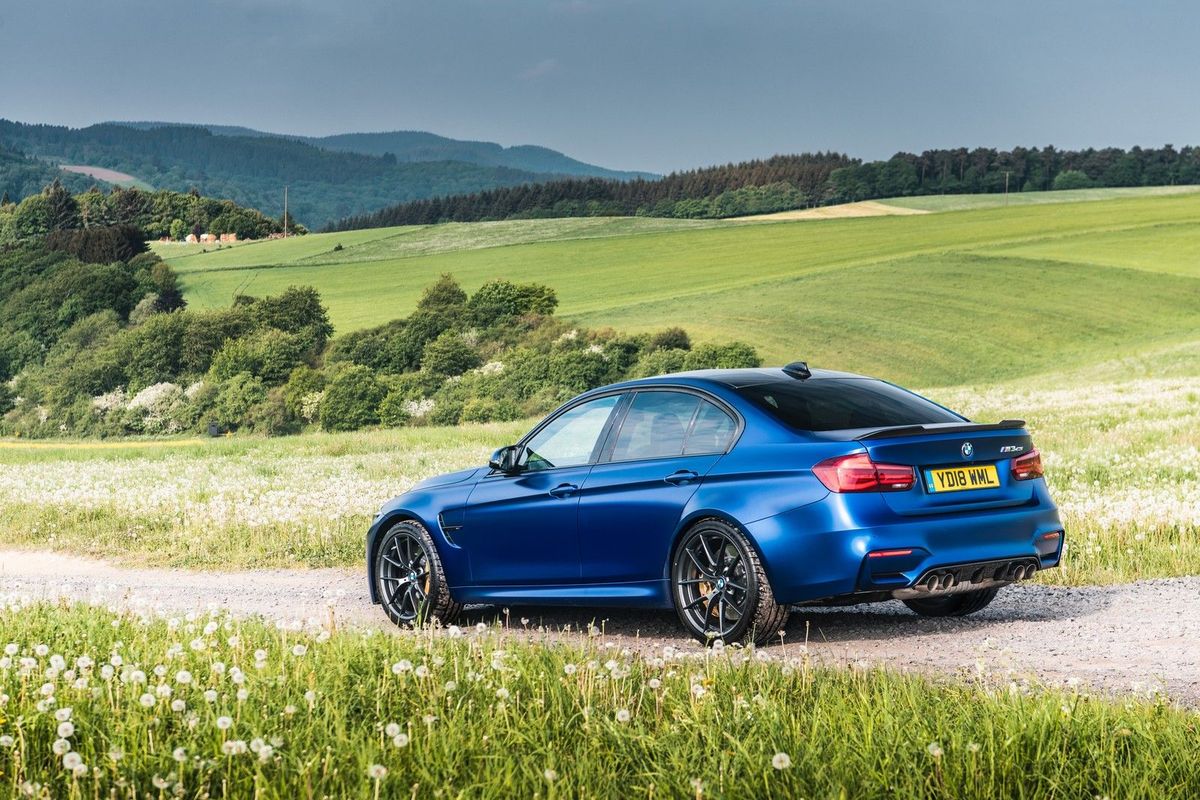
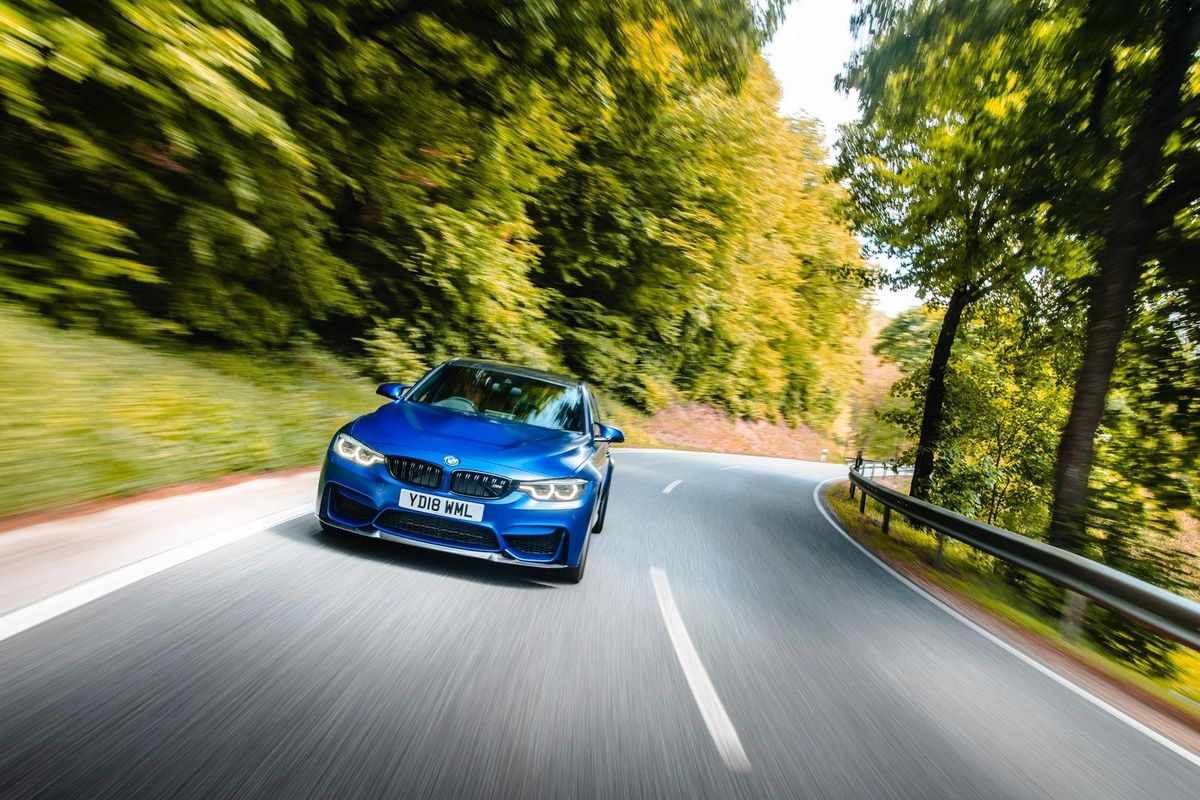
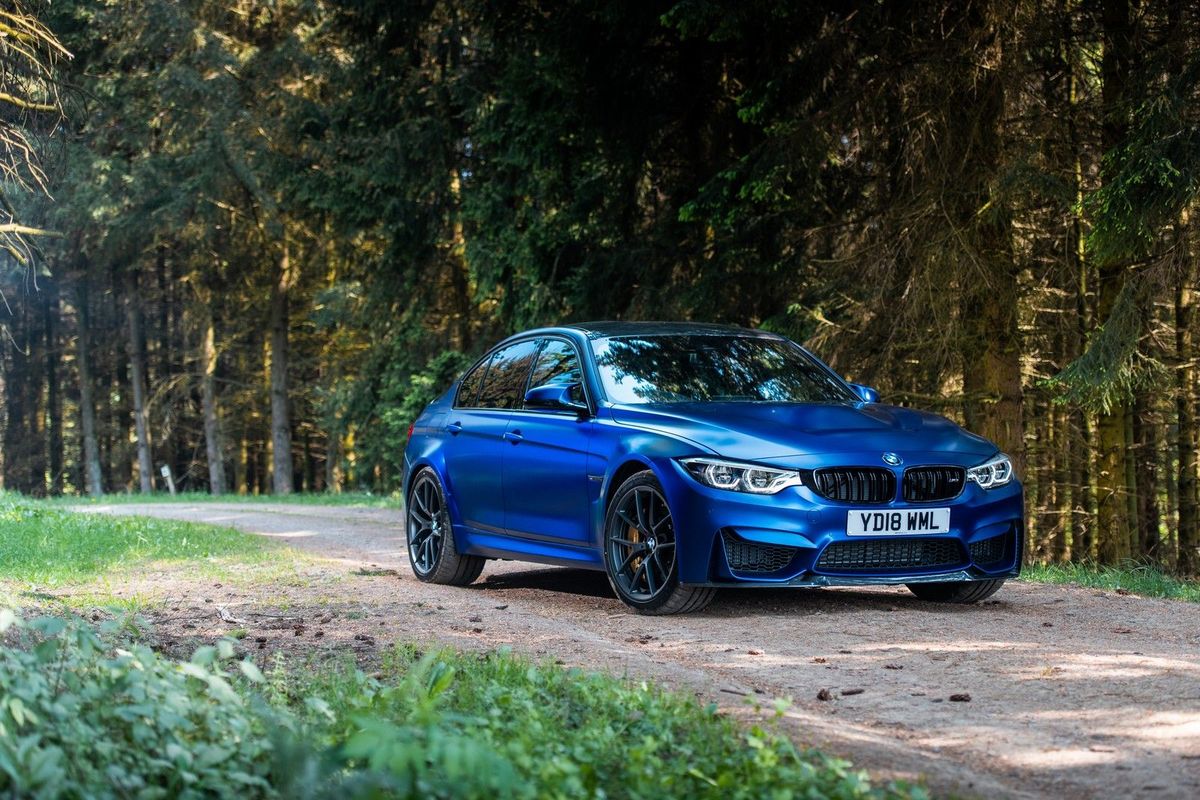
Has BMW saved the best for last with its new BMW M3 CS? It's a mix and match operation that blends bits from the Competition Pack and GTS in a final swansong for this generation of M3. Cars.co.za correspondent Richard Lane heads to the hills surrounding the Nurburgring to savour a machine that only 20 South African customers will have the pleasure of owning from new.

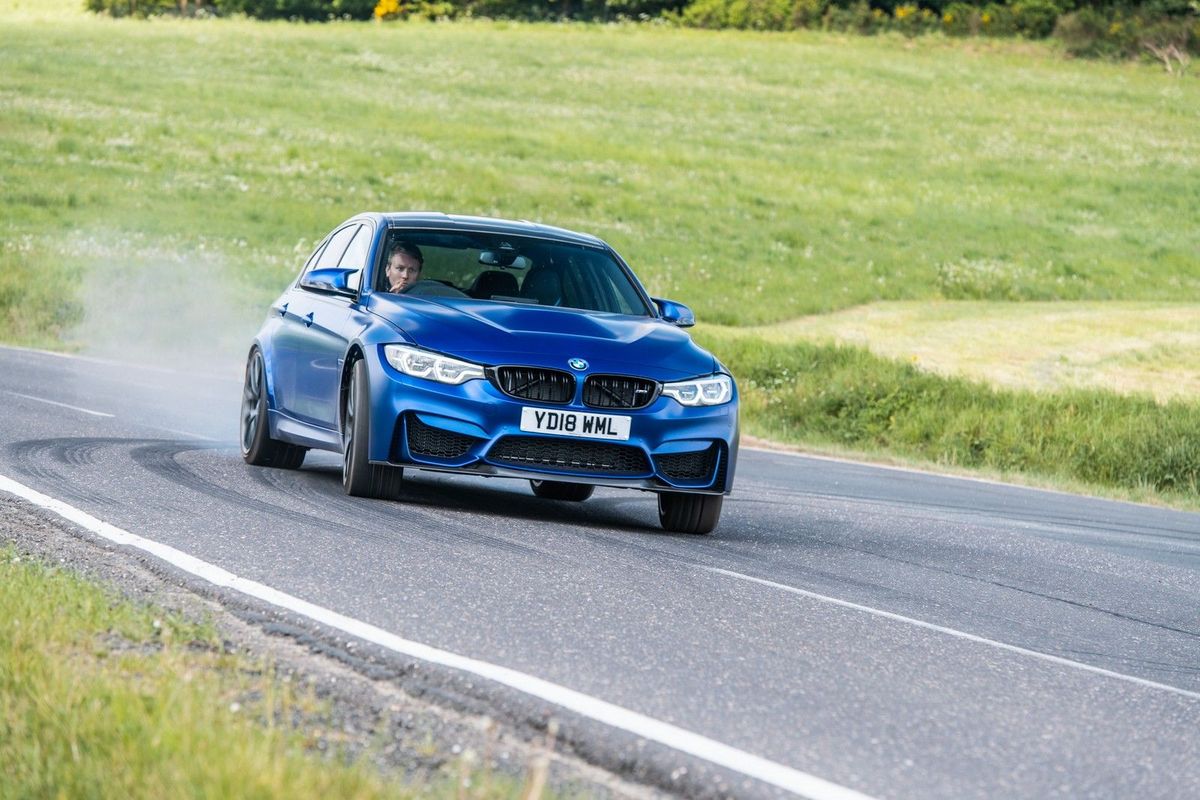
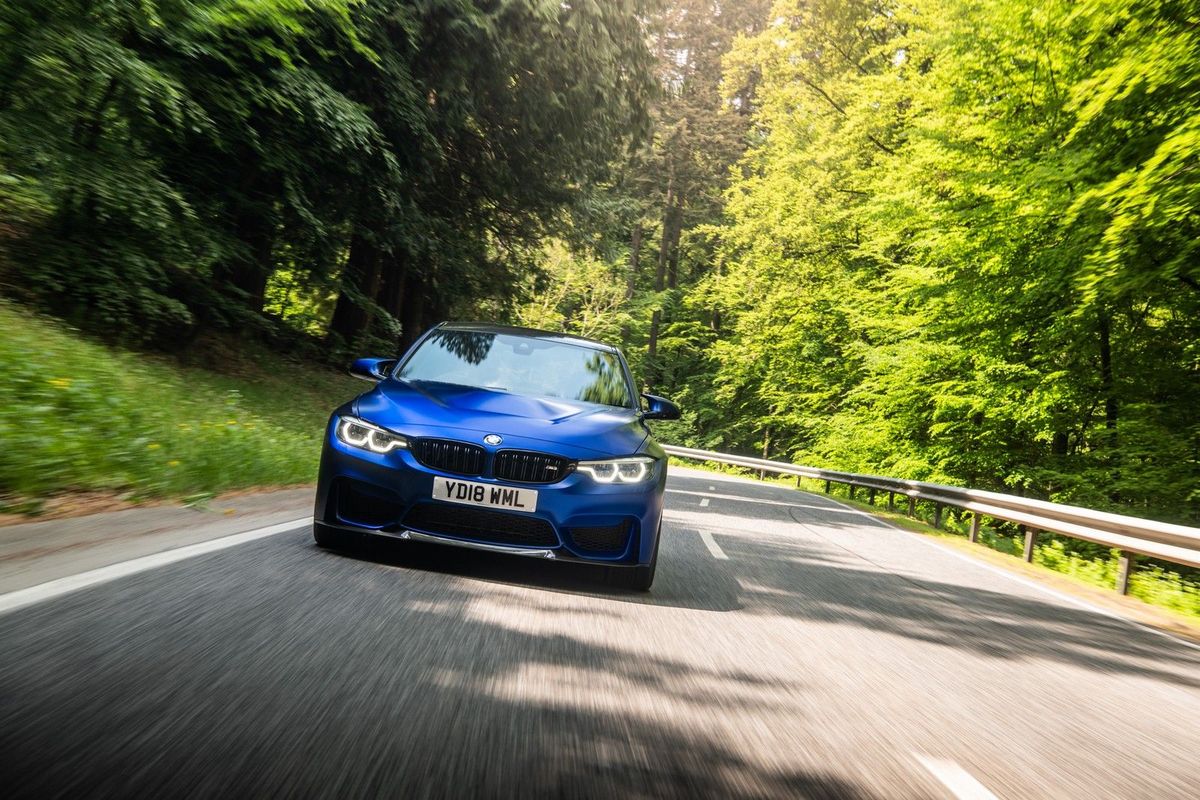
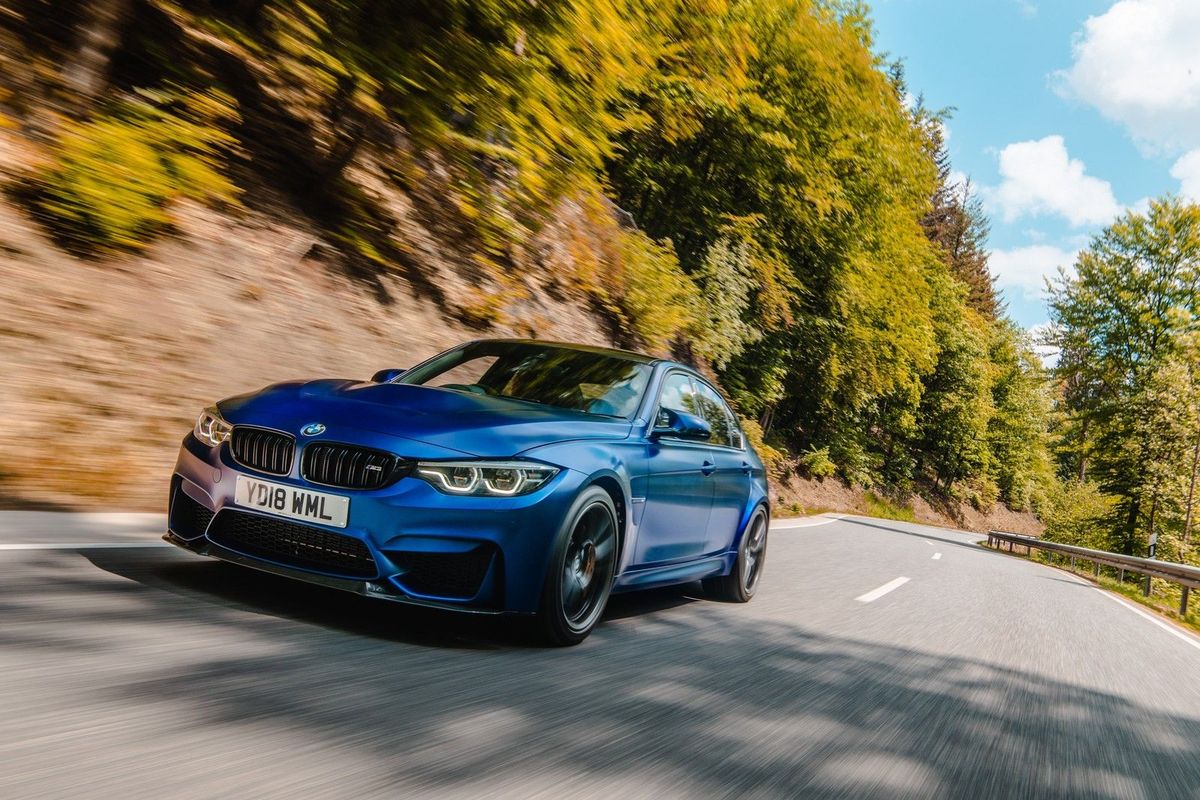
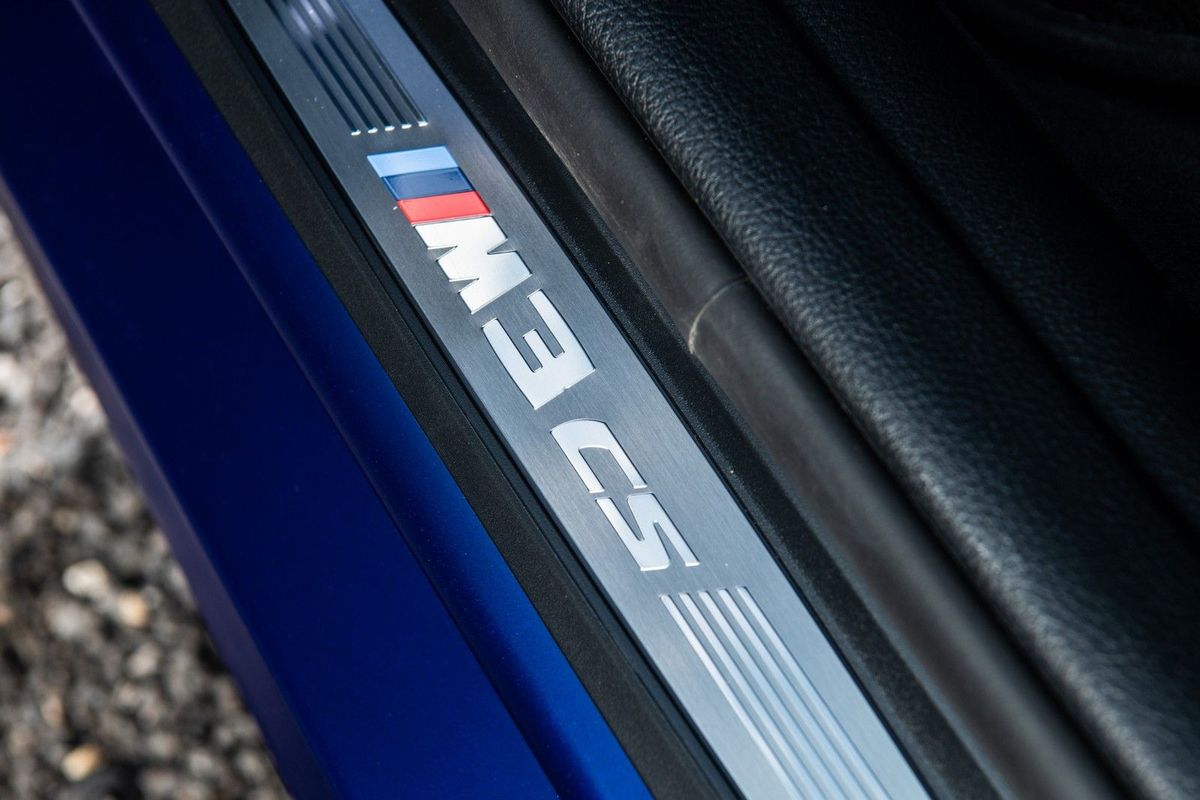
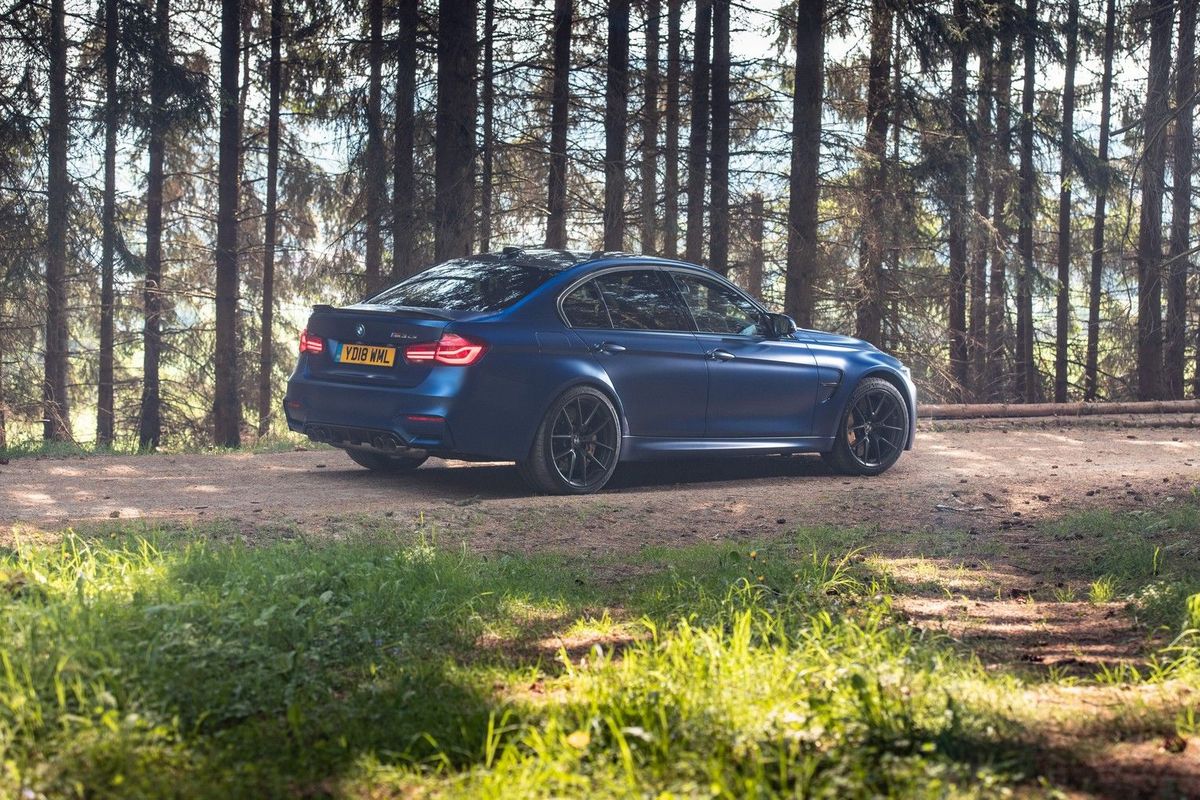
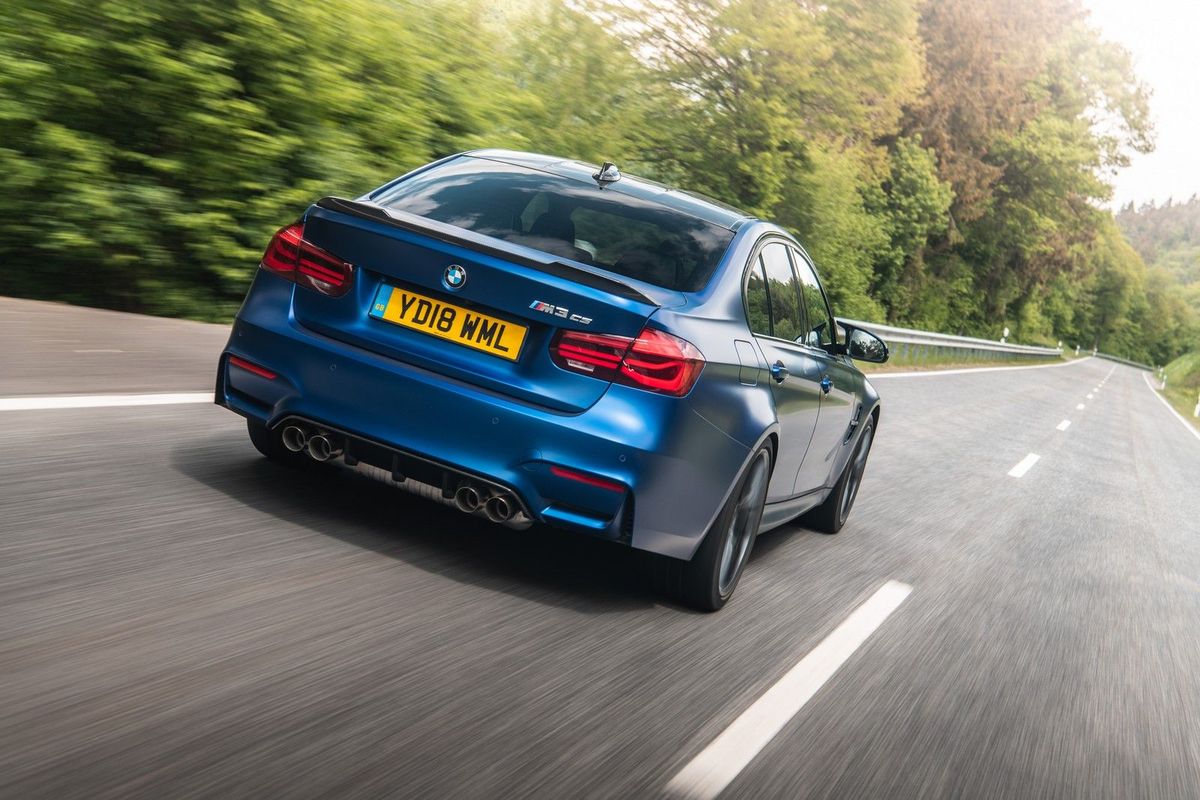
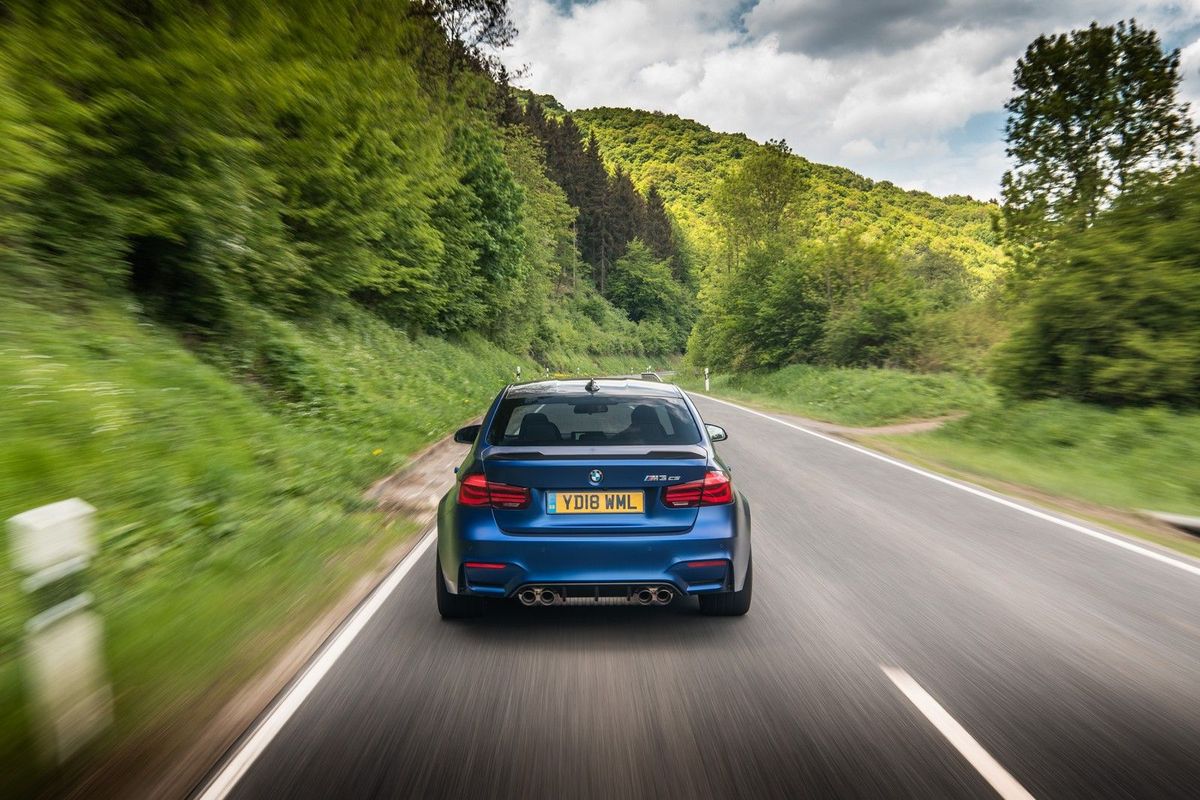
The taut, indigo form before you represents the end of the line for the F80-generation M3. It’s called the Club Sport, or CS, and it uses the clout of internal combustion alone to drive the rear wheels. That’s obvious, though, isn’t it? Since its conception in the late 1980s, every 3 Series breathed upon by BMW Motorsport GmbH has been the same: propelled mainly by six cylinders, but occasionally four or eight, and always pushing and not, heaven forbid, pulling.


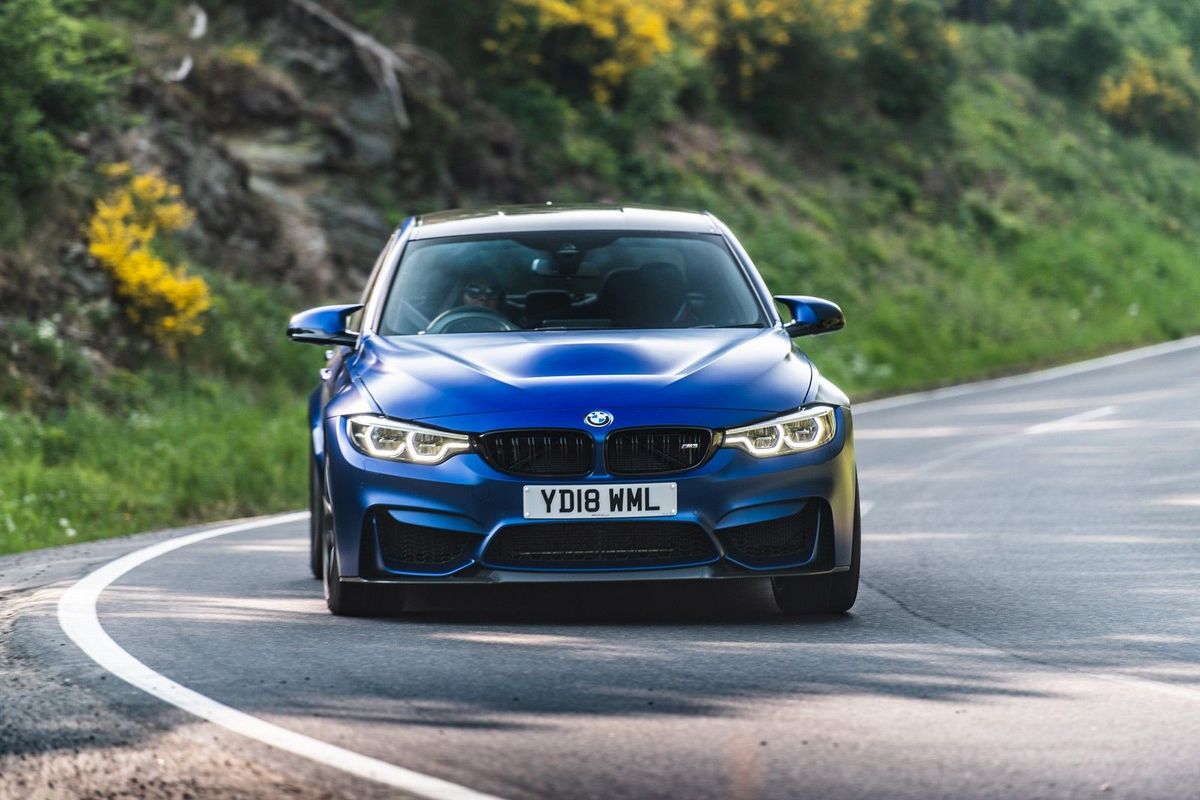
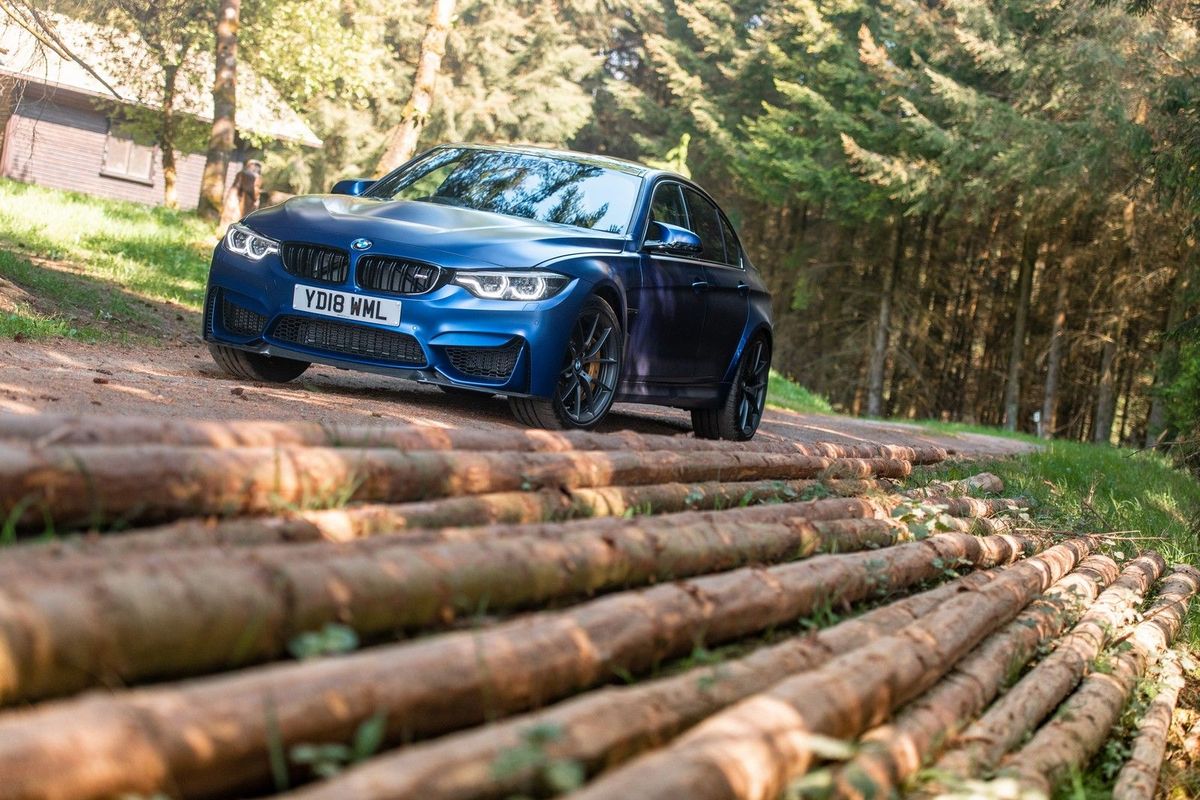
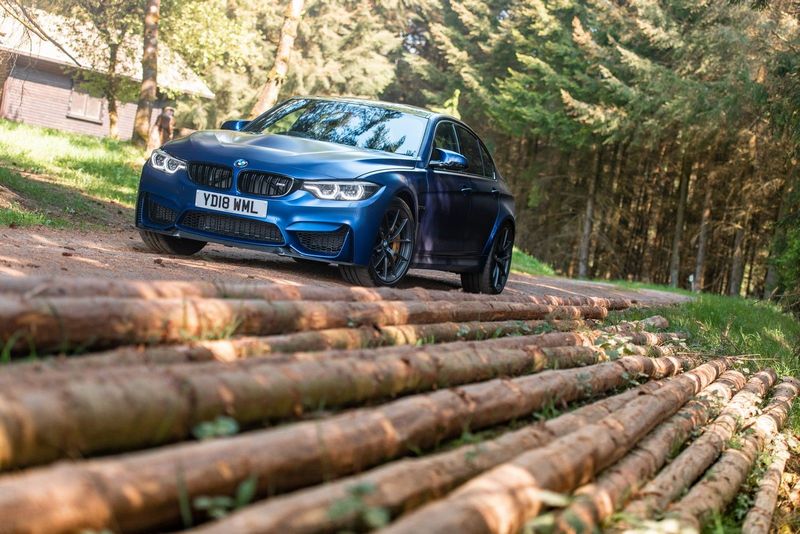
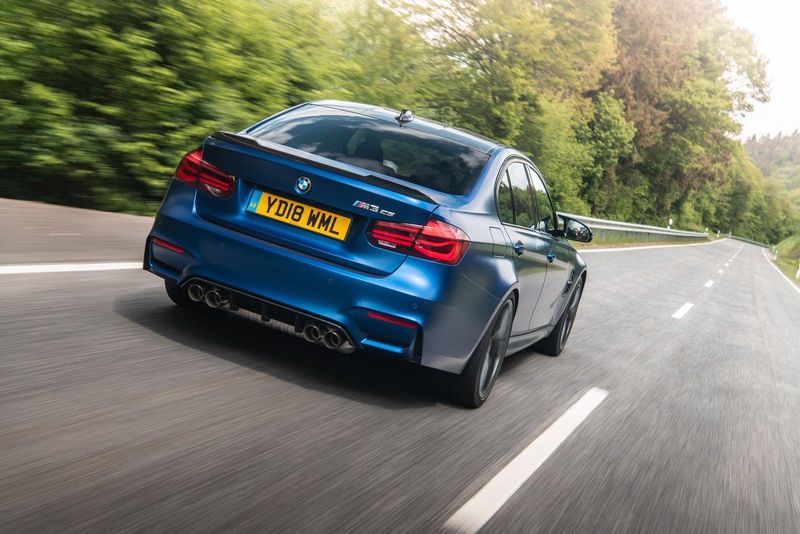
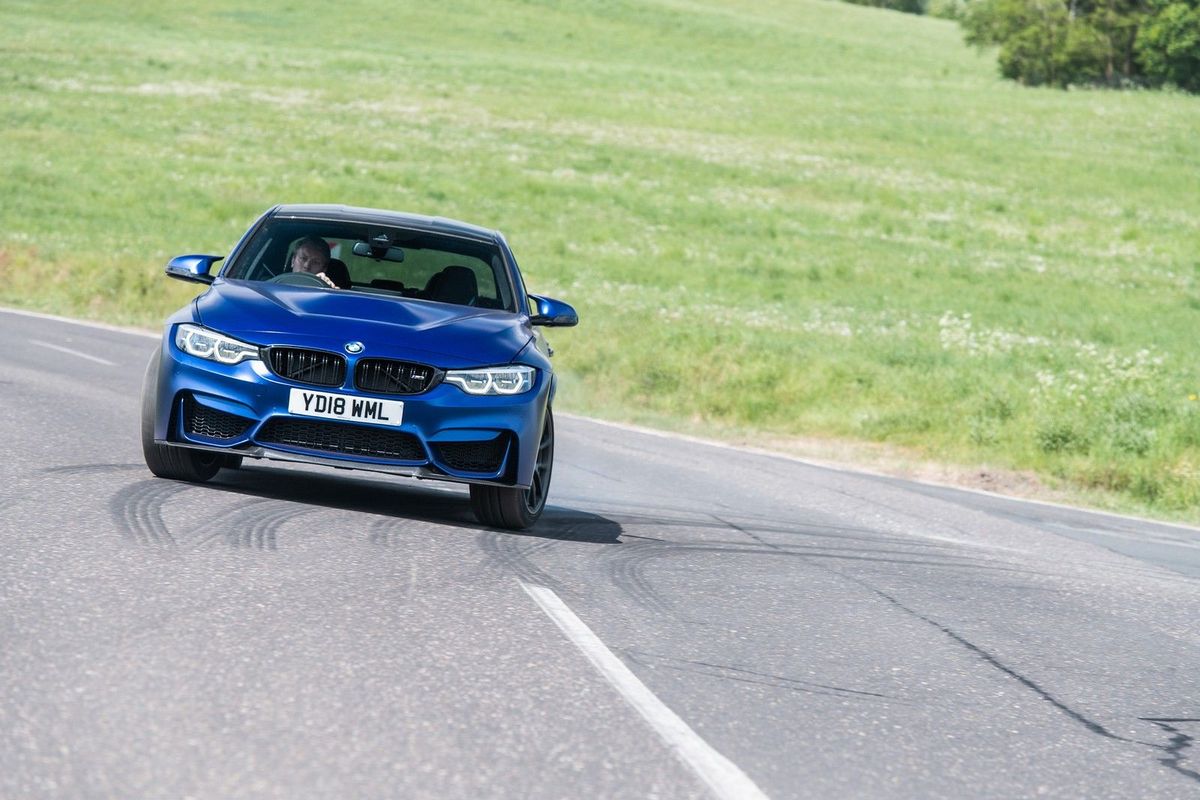
Few BMW M3s have looked this purposeful and poised.

But that might soon change. When the G20-generation car arrives a couple of years from now, it could well employ an electrified powertrain to reliably take total output closer to 370 kW, while allowing BMW’s red-hot junior saloon to more easily conform with a stricter new Worldwide Harmonised Light Vehicle Test Procedure (WLTP).

Following in the footsteps of the latest M5, the successor to the F80 might also deliver drive to its leading axle, changing the habit of a lifetime. Nothing is certain, of course, but if it went this way, it would represent wholesale changes to the M3 recipe. Neither is it any stretch to imagine how such a development would sit with those who considered even forced induction a deplorable departure following the gloriously free-revving atmospheric 4.0-litre V8 of the E90/92/93-gen M3. M division boss Frank van Meel talks about how an M3 will always feel like an M3 no matter the hardware, but commercial and regulatory objectives mean he has little time for nostalgia. Petrolheads might feel differently, referring to the last "proper" this or that. As far as the M3 is concerned, the Club Sport could be "the one".

It means this lightweight, track-ready saloon is significant before you even get to the nuts and bolts, the composites and aerodynamics – and before you consider how uncommon a sight it will be on the road. The M4 coupé will remain in production for some time to come, but the last M3 of any description will go down the line next month (June 2018), its tenure lightly truncated by the WLTP test cycle.


Possibly the last time we will see an M3 powered by a combustion engine alone.

The M4 was always intended to last a little longer and will benefit from a new particulate filter to facilitate that. The upshot is that no more than 1 200 examples of the M3 CS will leave BMW’s Regensburg plant, and there’s also a price sure to cement its rarity. You’d have to wholeheartedly buy into what is rather a niche corner of the automotive world – the one inhabited by factory-prepared track day sedans – to cough up R1 773 500. What you’ll get in return is the same black-accented aesthetic formula you’ll find on the M4 CS released last year.

What else do you get?

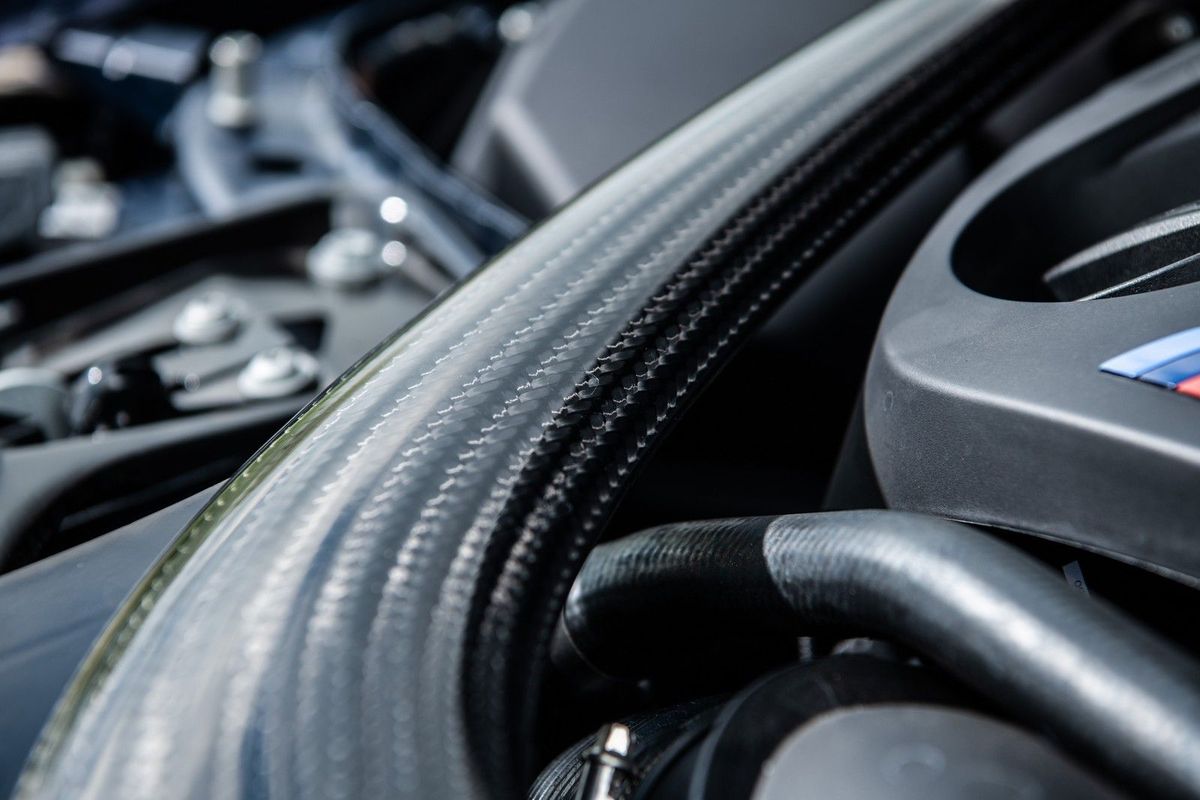
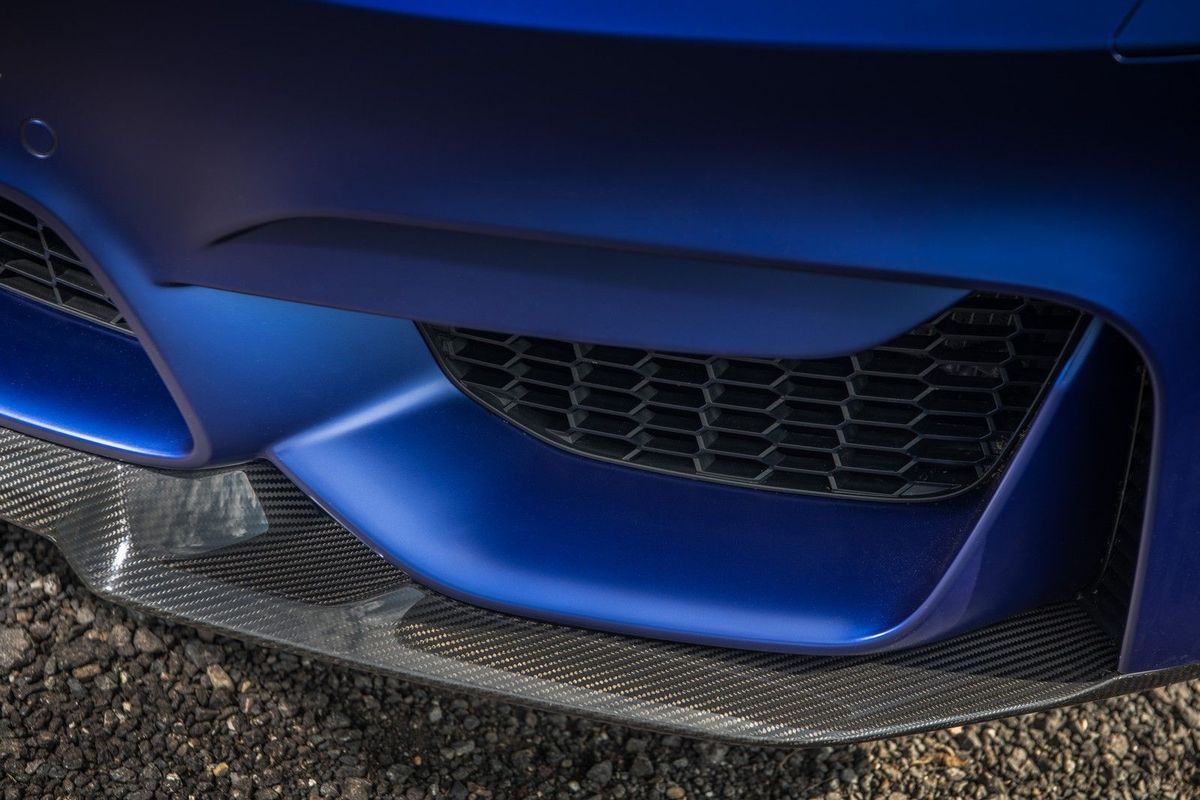
The body features a wickedly profiled carbon fibre Gurney flap to match a similarly aggressive front splitter. Painted on top but naked underneath, so too is the bonnet wrought of carbon fibre reinforced plastic (CFRP) – it’s 25% lighter than that of a standard M3 – and if you sidle up to an M3 CS, eventually a broad, sunken vent ahead of the brutal power dome will reveal itself. It gives the car’s snout a DTM-style rake, something of a gaping grin.

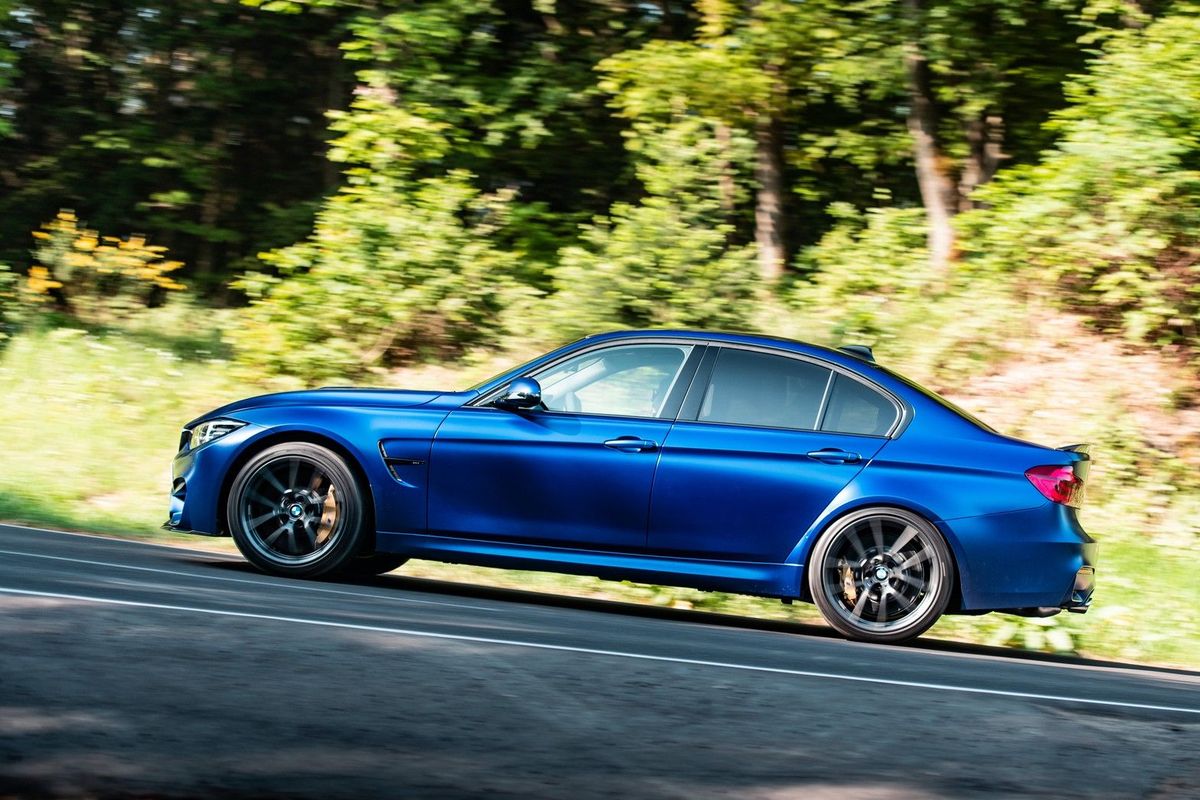
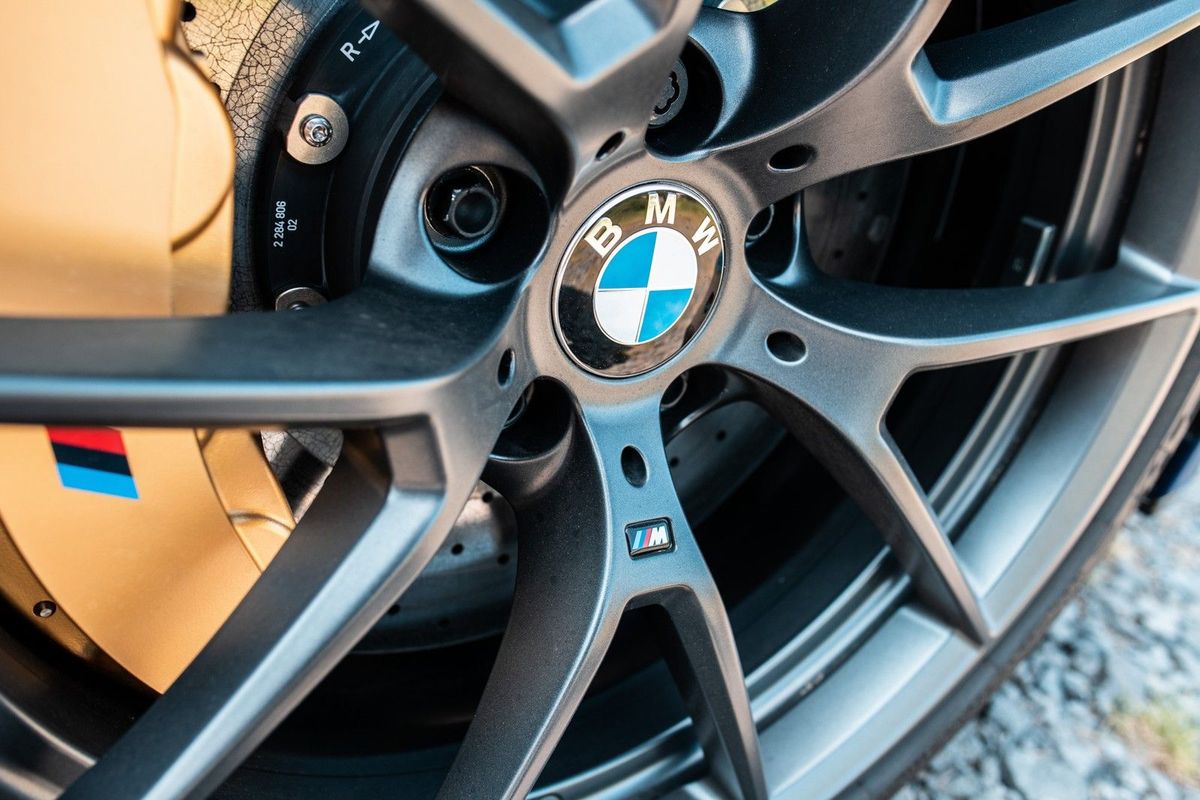
And forget a finger: you could barely get even a cigarette paper between the rear wheel arches and the semi-slick Michelin Pilot Sport Cup 2 tyres. They’re wrapped around lightweight forged alloys wheels (20-inch at the rear and 19-inch at the front). On a Competition Pack M3 – until now, the most focused variant of the F80 M3 – you’ll find the larger wheel size at the front, too, although the CS dials down the glamour for greater steering response. Even so, not since the M3 CRT of the noughties has the spiritual cornerstone of M division’s operations held such deliciously serious visual appeal.


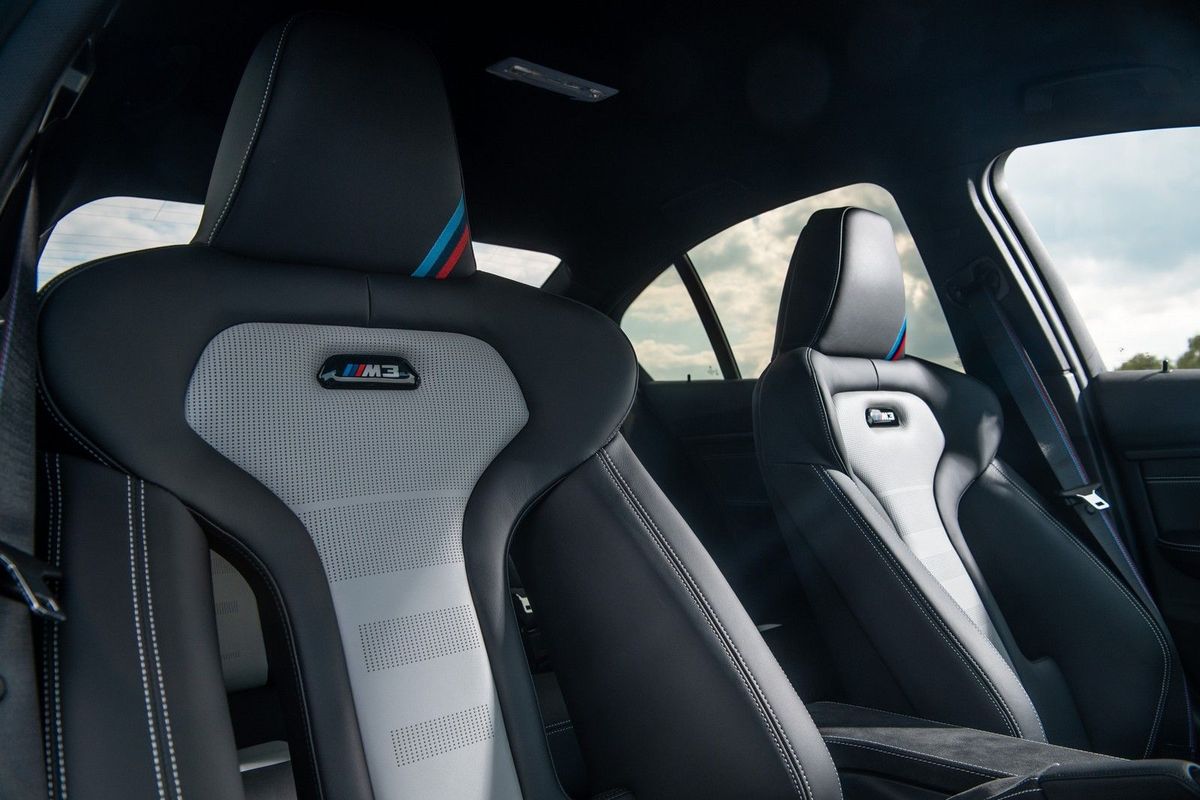
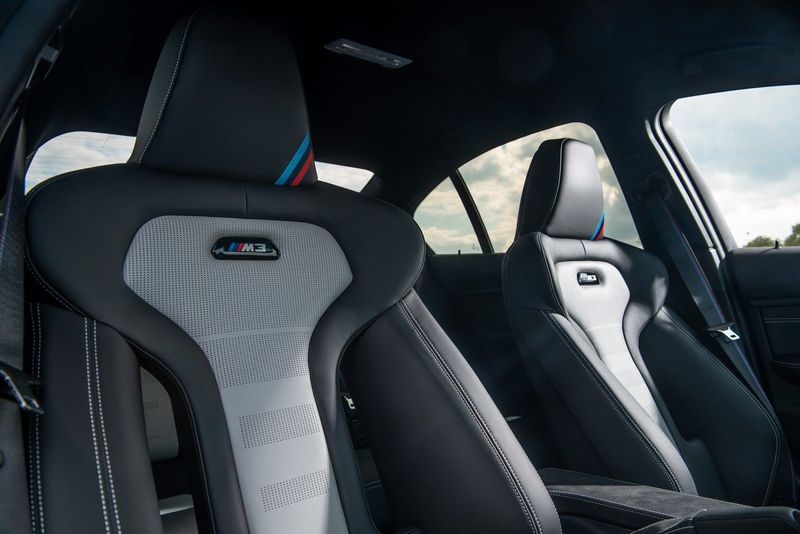
Special seats have chunks removed them to reduce weight.

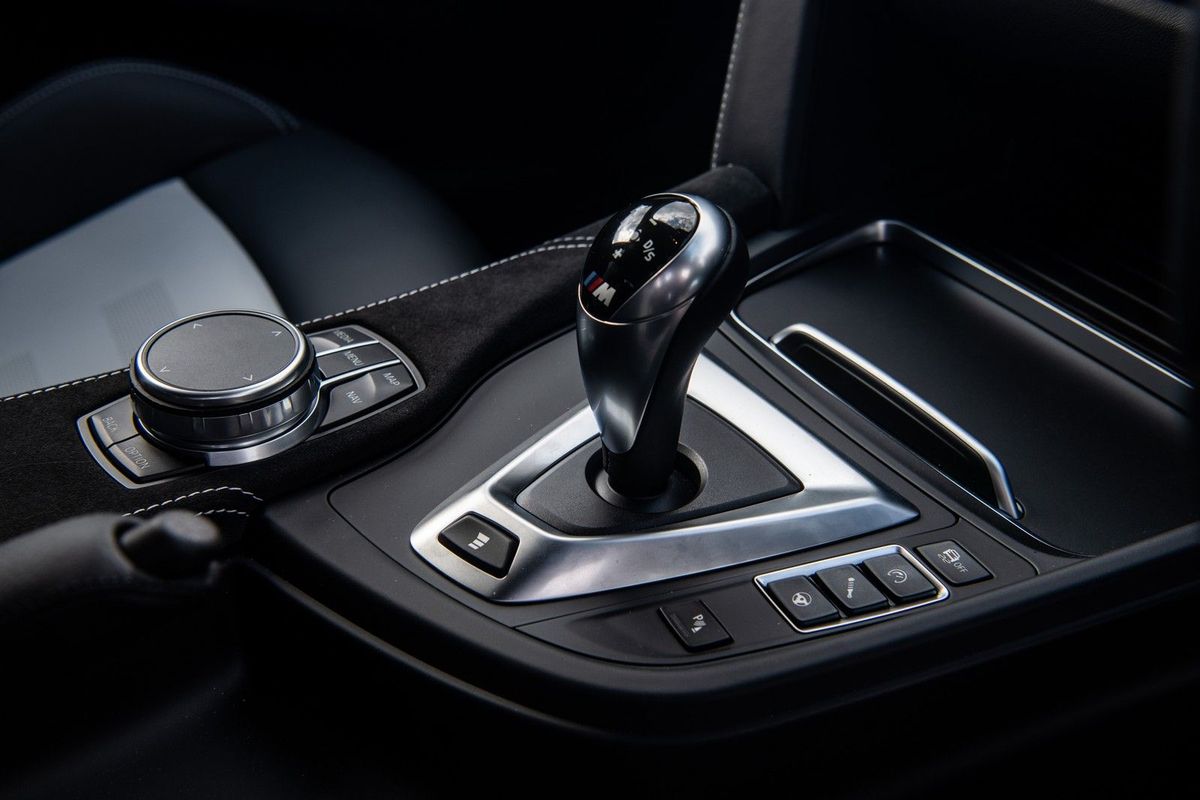
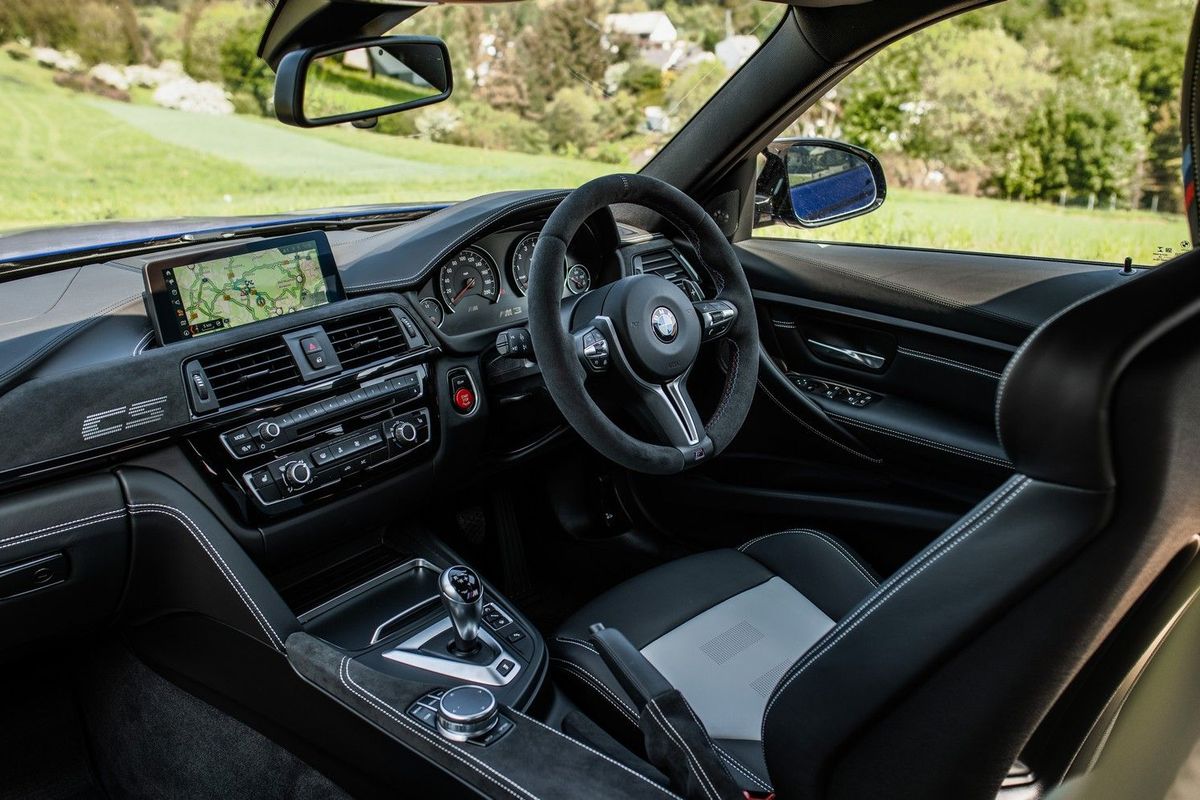
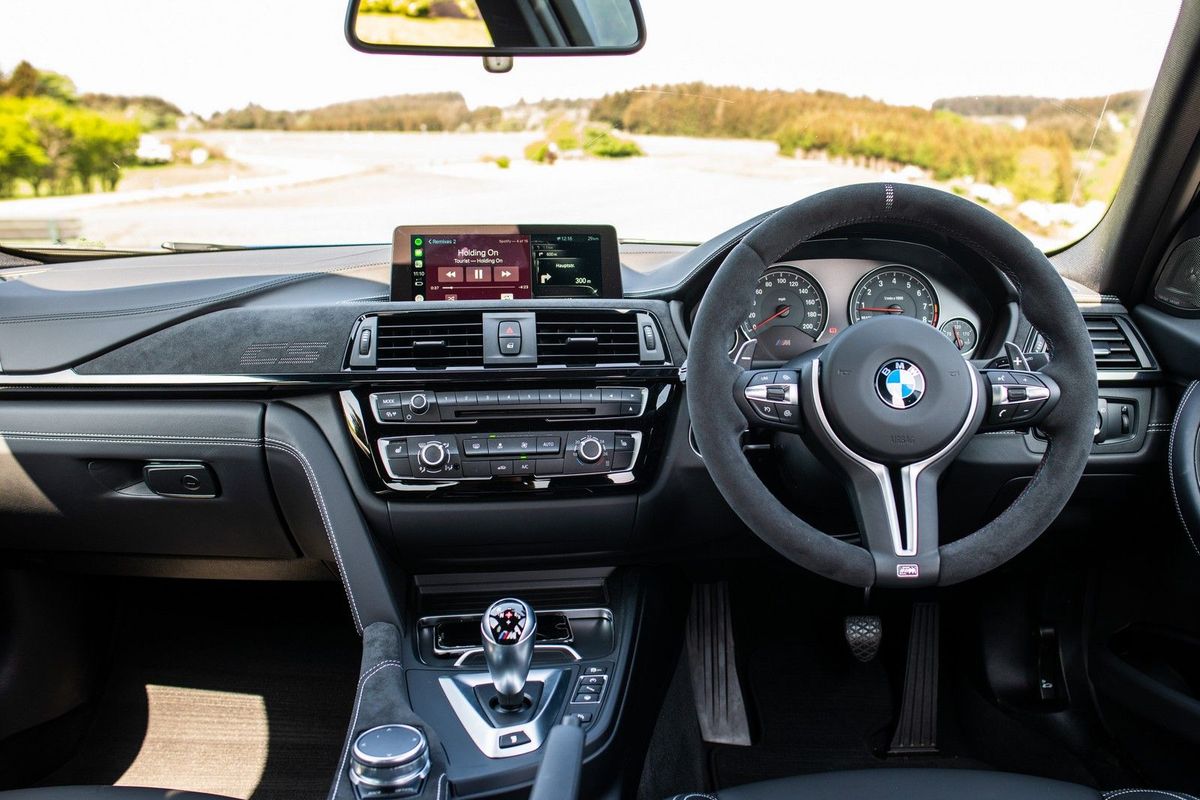
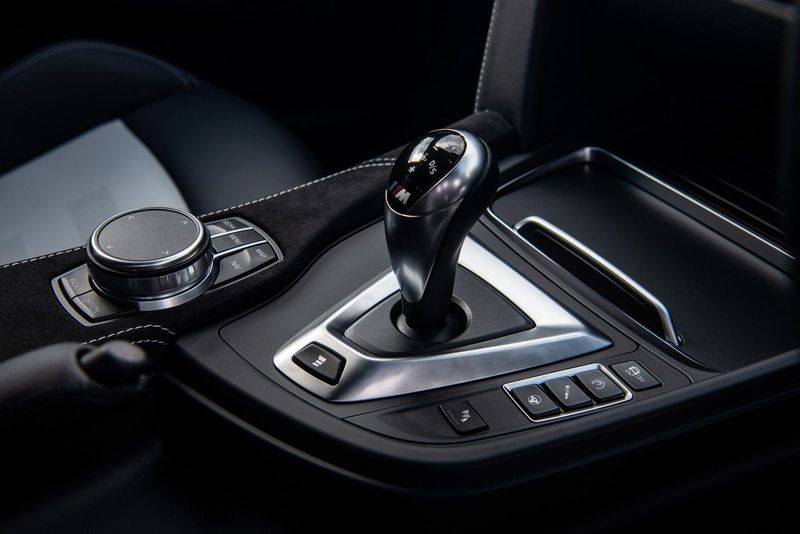
And so you climb aboard and sink low into sinuous two-tone seats complete (or rather, incomplete) with cut-outs. Where the new M5 places its occupants a fraction too high, the driving position here remains near perfect, with your eye line grazing an Alcantara-clad 3-spoke steering wheel that, true to BMW form, is still strangely generous in girth. There’s also Alcantara on the centre console and dashboard, which is pared back in terms of switchgear, but with no apparent lack of functionality. 

There’s climate control and BMW’s iDrive-operated Professional infotainment system, and a Harman Kardon sound system is fitted as standard. The persona is satisfactorily hardcore, even if you don’t get the lightweight door cards from this car’s M4 sibling (a bonus, because those slimline pieces don’t offer any storage).


Alcantara is used liberally throughout the cabin. It's elegantly moulded down the side of the transmission tunnel, complete with white stitching.

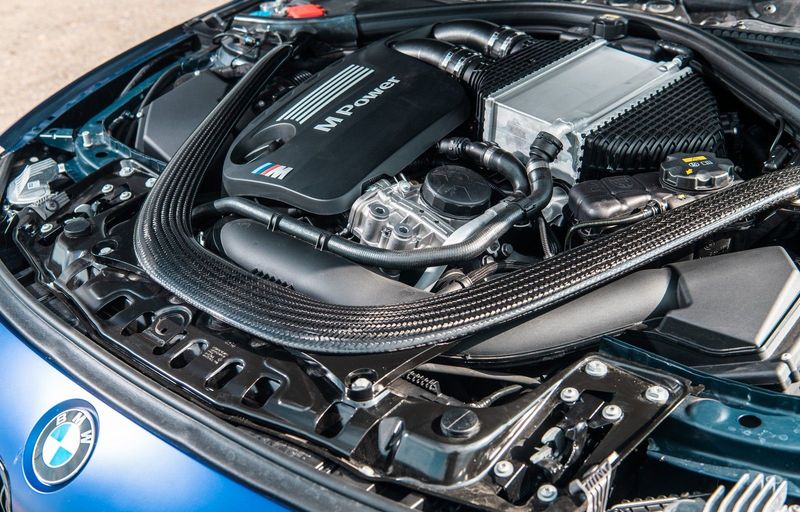
Despite an asking price to make you wince, BMW’s S55 3.0-litre twin-turbocharged straight 6 doesn’t benefit from the water injection system of the M4 GTS. It doesn’t need that technology, developing only 7 kW more than the 331 kW you’ll find in an M3 Competition Pack. And honestly, does a saloon capable of dispatching the 0 to 100 kph benchmark in just 3.9 sec and running on to a governed 280 kph need to be any quicker? It does not, but it can always be lighter. Strangely, this car’s substantial use of CFRP results in a saving of only 10 kg over the Competition Pack car, but the centre of gravity is said to be usefully closer to the road.

Getting behind the wheel

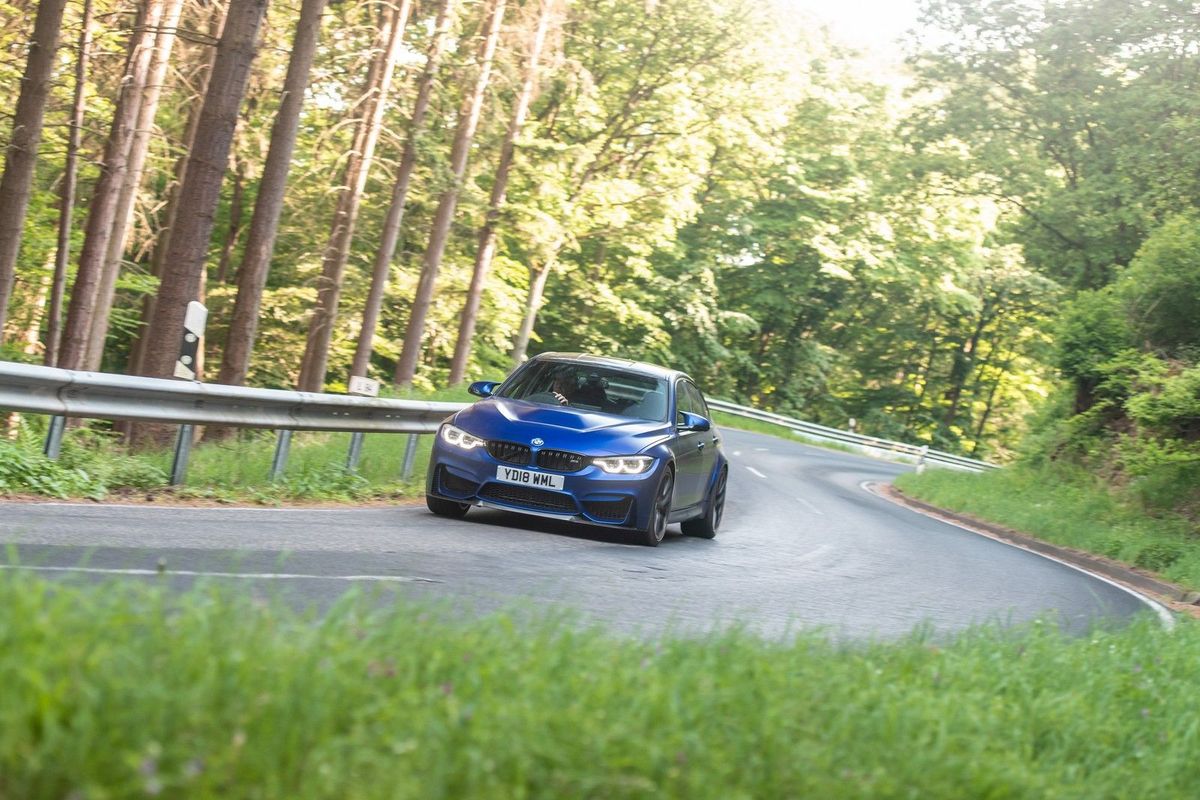
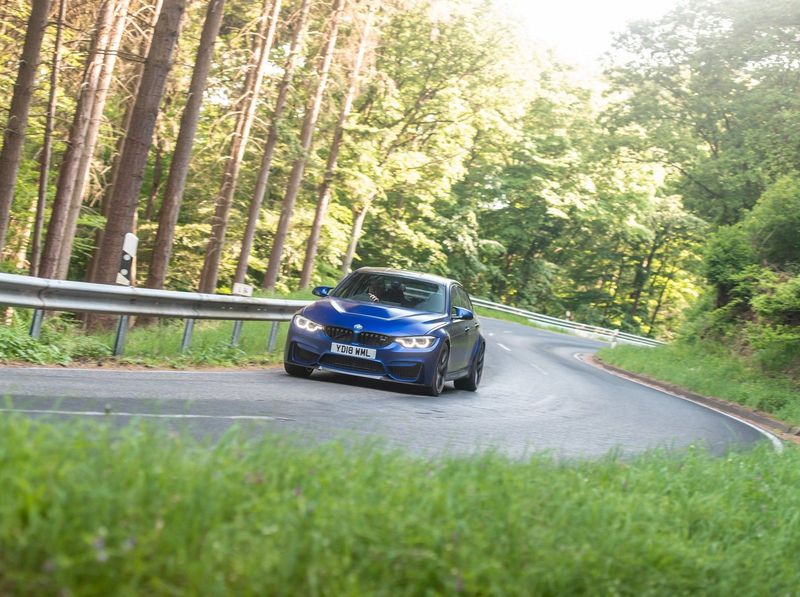
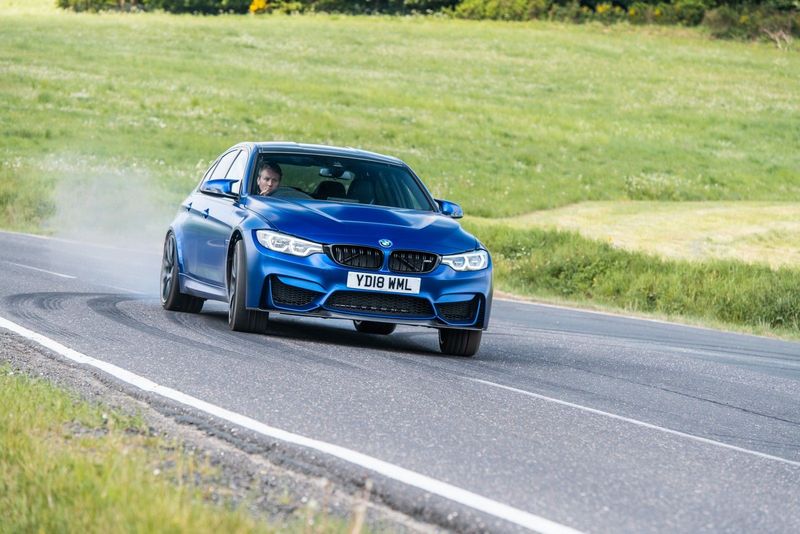
Today, those roads are in the shadow of the Nürburgring. They’re almost as challenging as the Nordschleife itself, only with more of the mottled surface that’s limited to the jowl-tugging corner known as Karussell. Given the tyres in question, warm weather plays heavily into this car’s hands, and straight away the precision with which an M3 CS turns in to corners is startling, even if you’re familiar with the Competition Pack on which it is so heavily based.

Indeed, it’s only the trio of steering modes, those wheels and tyres, the calibration of the ESC and the active M differential that separate Club Sport from Competition. The rack and its gearing are unchanged, as are the spring rates and suspension geometry, so there is still roughly 0.5 deg more negative camber than on a stock M3.


Even with the substantial use of CFRP, the CS is only 10 kg lighter than the Competition Pack.

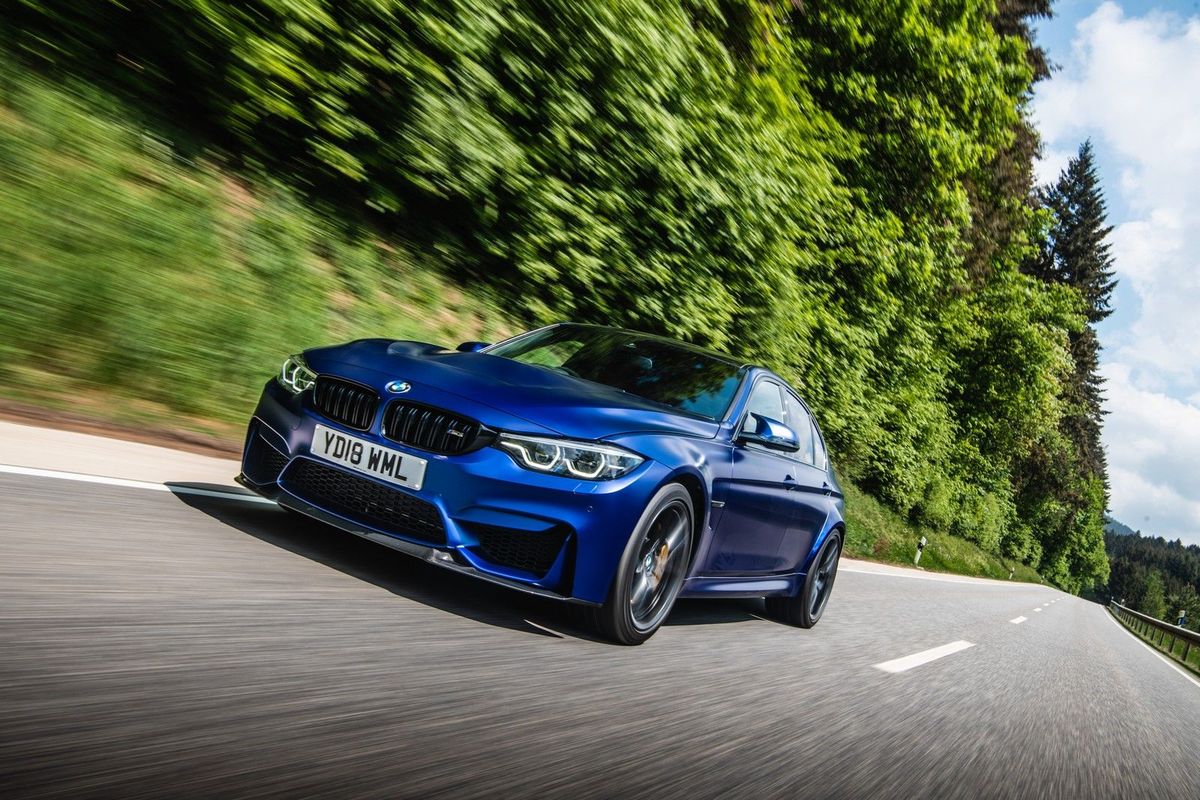
The collective effect of these minor alterations is considerable, however. This is now a chassis of extraordinary composure, resulting from deeper reserves of tightly controlled pliancy than you might imagine. With less unsprung mass, there’s an almost predatory manner to direction changes, and a palpable feeling that the chassis sets itself a touch earlier during the entry phase than an M3 Competition Pack does. Although it was hardly required, it feels as though a veneer of inertia has been peeled from the car. Owing to its B-pillars, the M3 CS is also fractionally stiffer than the M4 CS and that’s not hard to detect if you drive the two in succession.

Anybody who has driven a McLaren will recognise the pedal feel of the brakes, too. Our test car was specified with BMW’s optional carbon-ceramic discs (denoted by gold calipers) and feel pleasingly light on assistance, biting firmly and progressively and permitting you to lean increasingly hard on a front axle that wilted into understeer only once during an entire afternoon’s committed driving. Such are the adhesive properties of the tyres, in fact, that 3rd-gear sweepers can rapidly boil down to mind over matter, and you get the gratification of feeling that differential, recalibrated for vast grip, subtly nudging the nose inwards under power.

Listen to the video clip below to listen to the M3 CS' provocative exhaust note:

The M3 CS then explodes out of corners with just a hint of squat and almost mid-engined poise. Aside from a 7-speed dual-clutch transmission that seems reluctant to downshift early, therefore limiting the opportunity for engine braking, our only objective complaint is that while the sensory relay from the contact patch to steering rim is improved, it’s still a marginal affair. A clearer line of communication runs to the backs of your thighs, however.


Small mechanical changes to the steering and M differential further enhance the M3 turn-in and corner-hugging ability.

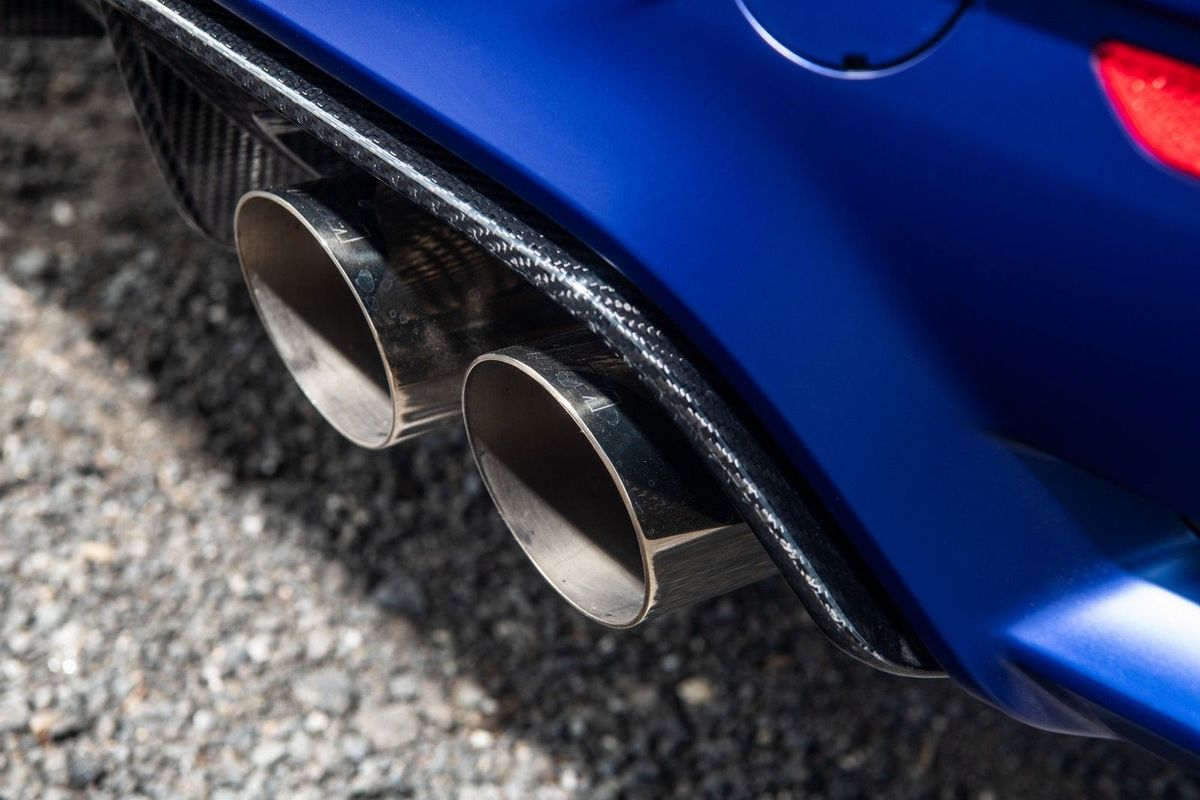
But what of this engine? It has never been the most affable device, although, in this application, it barks viciously through a sports exhaust rounded off by a quartet of stainless steel tips. It also seems to punch harder through the mid-range than ever before, which is the result of an improved electronic mapping rather than any hardware changes. In the face of more powerful rivals, the M3 has long wanted for greater in-gear shove at moderate crank speeds, and now it has it.

With all that balance and grip, this car’s limits are stratospherically high – too high, perhaps. Mind you, if you could work a useful degree of temperature into the tyres on, say, a damp day, it would likely satisfy its driver in a way few others can, not least because M has slackened off the stability control parameters both in normal driving and when you select M Dynamic mode. This F80 M3, which began life with a capricious dynamic character, has become deeply intuitive and is no small way likeable.

Where does it sit in the rankings?


The M3 CS may just be the perfect M3, and just in time as the last one rolls off the line in June.

As you may have surmised, from a driver’s perspective, the M3 CS is the most rewarding product M division currently offers. It is a deadly serious product, less affordable or playful or extroverted than an Alfa Romeo Giulia Quadrifoglio or Mercedes-AMG C63 S but equally usable and, in its own way, absolutely as fulfilling.

It would also run rings around those cars at a track day. In the cold light of day, even such a phenomenal bandwidth is not enough to justify a circa-R400 000 premium over an M3 Competition Pack that’s terrifically capable. Then again, the contentment of owning "the one" should linger long after the sting of that expense has faded.

Related content:

BMW M3 Competition Pack (2016) Review
Drag Race: BMW M4 Competition Pack vs BMW M760Li

Track Battle | Audi RS5 vs BMW M4 CP vs Mercedes-AMG C63 S – Part 2

Track Battle | Audi RS5 vs BMW M4 CP vs Mercedes-AMG C63 S – Part 1

Special-edition BMW M3s: The Ultimate List

Alfa Romeo Giulia Quadrifoglio (2017) Video Review
Celebrating BMW M3 [with Easter Eggs & Videos]

Interested in buying a BMW M3?

Find a new/used example on Cars.co.za

Renault Clio R.S. 18 (2018) Specs and Price

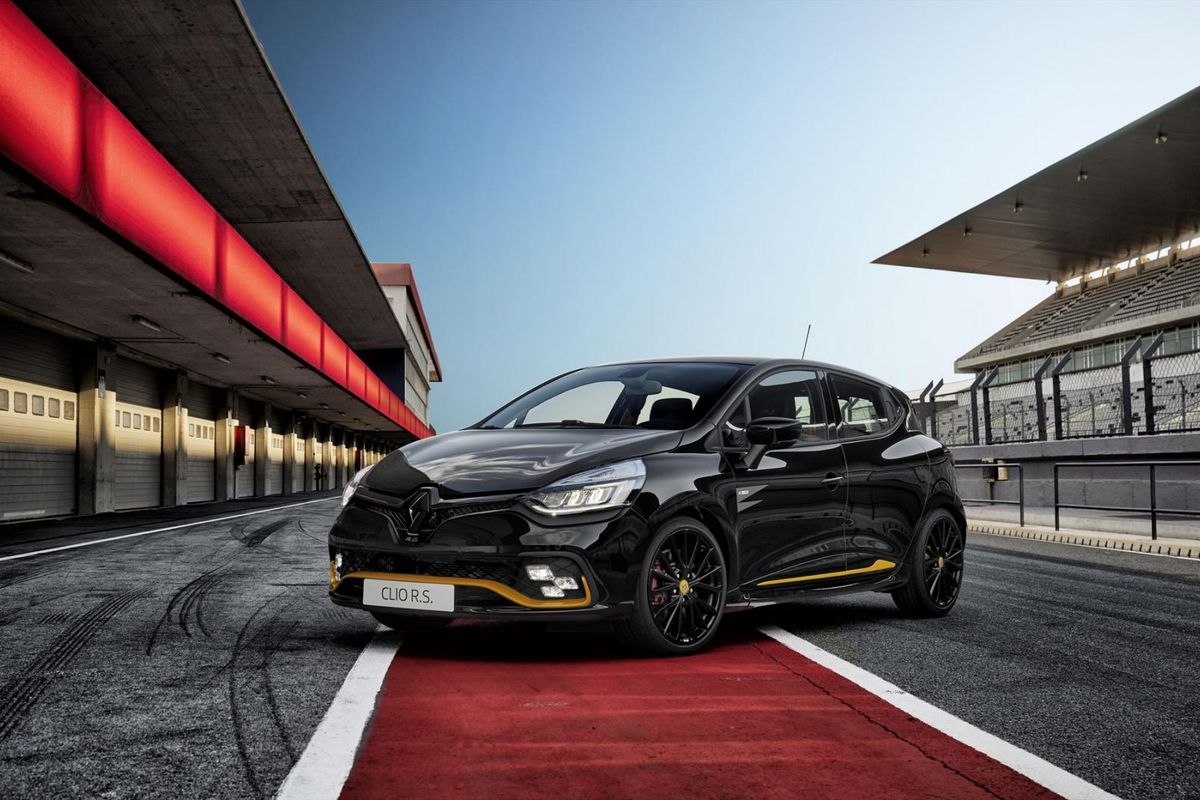
The sporty arm of Renault is launching a limited run of collector’s edition Clio RS models in South Africa.

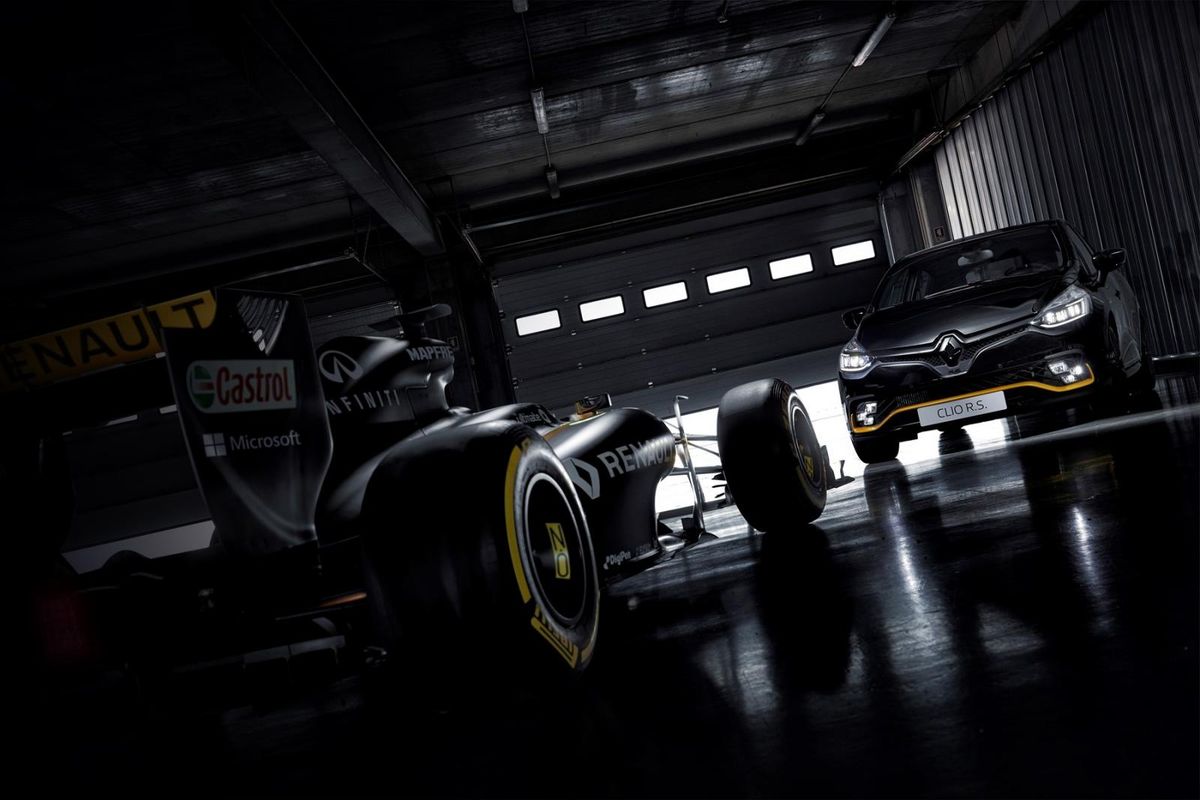
For 2018, Renault Sport is releasing a special, collectable edition of the Clio RS that will satisfy the F1 enthusiast. Just 65 units will be available in the South African market.

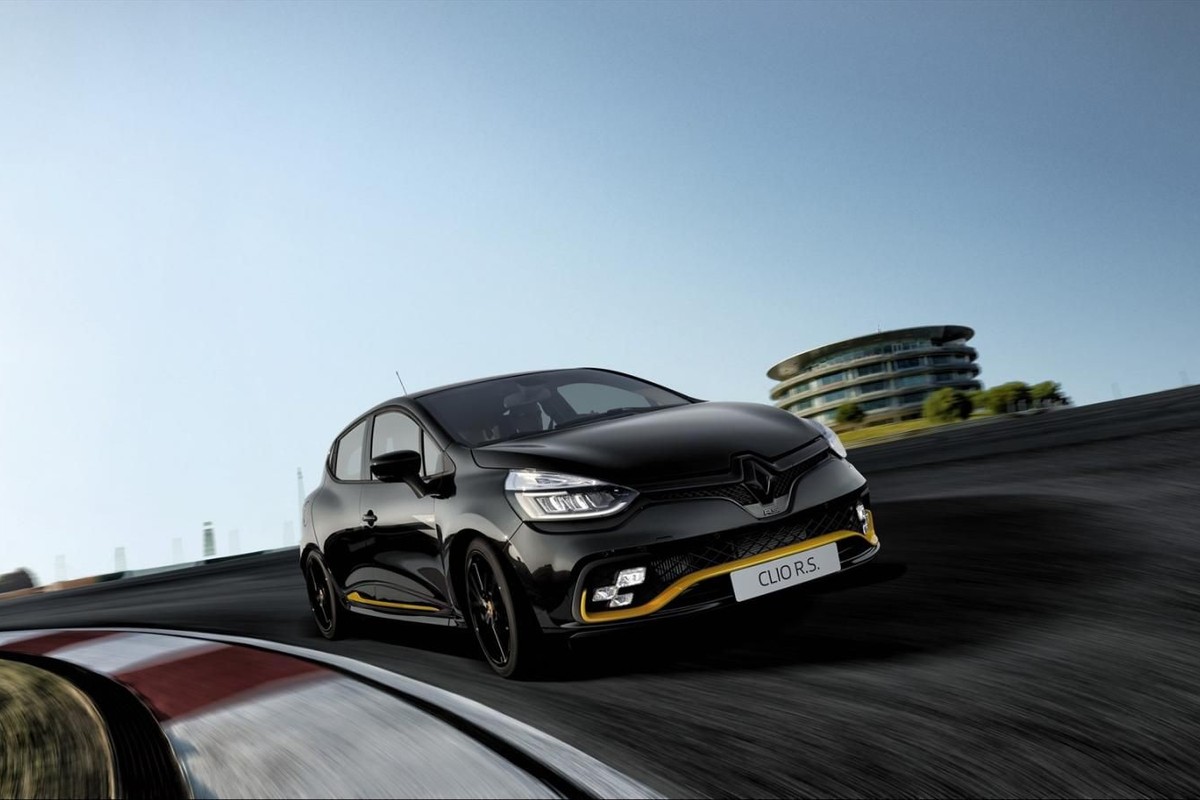
The RS 18 as it’s called takes the Cup chassis from last year’s Clio Trophy and turns it into something more hardcore. The suspension is lowered and stiffened and the front end features hydraulic bump stops. Beyond that, there’s an Akrapovic exhaust system that emits a unique soundtrack for the Clio RS 18.

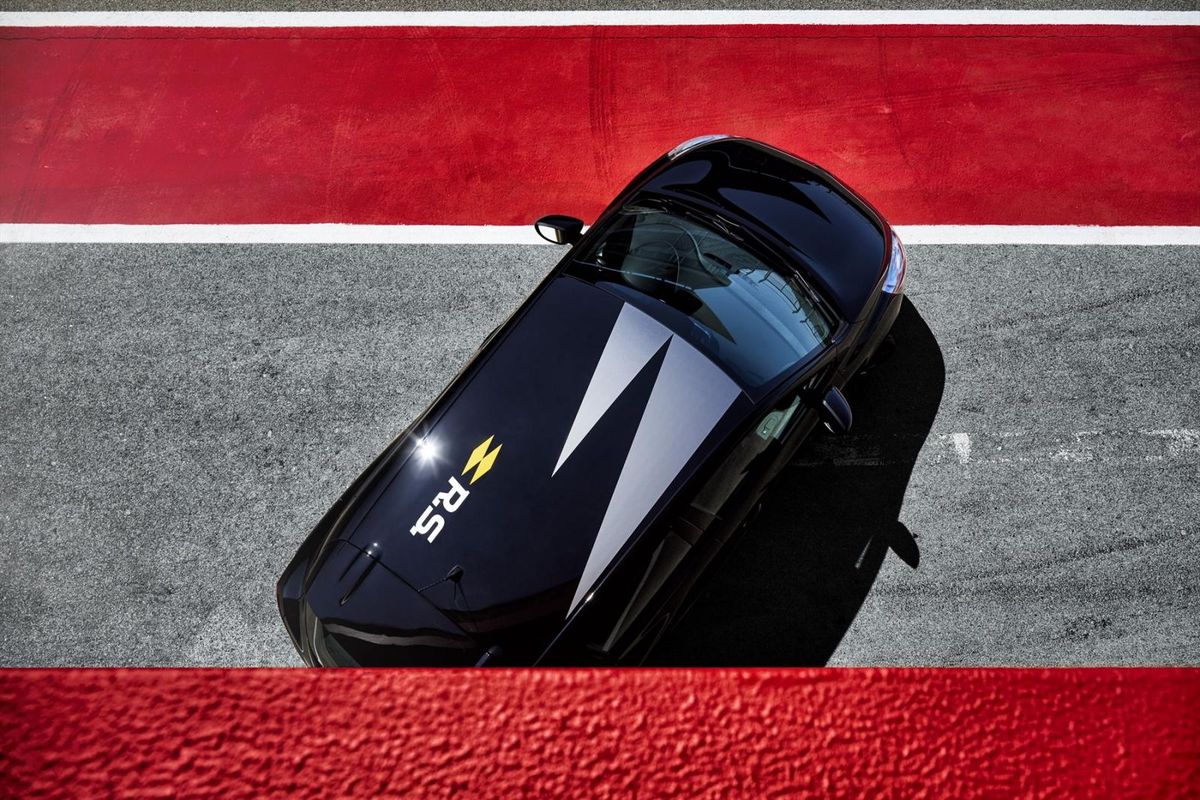
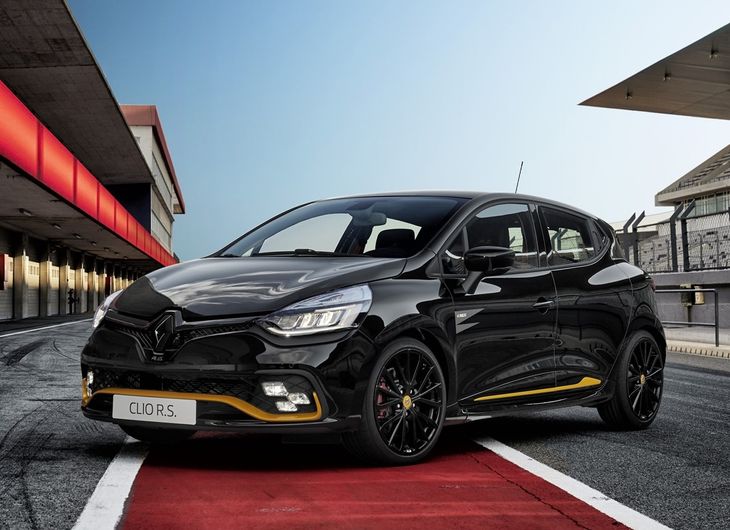
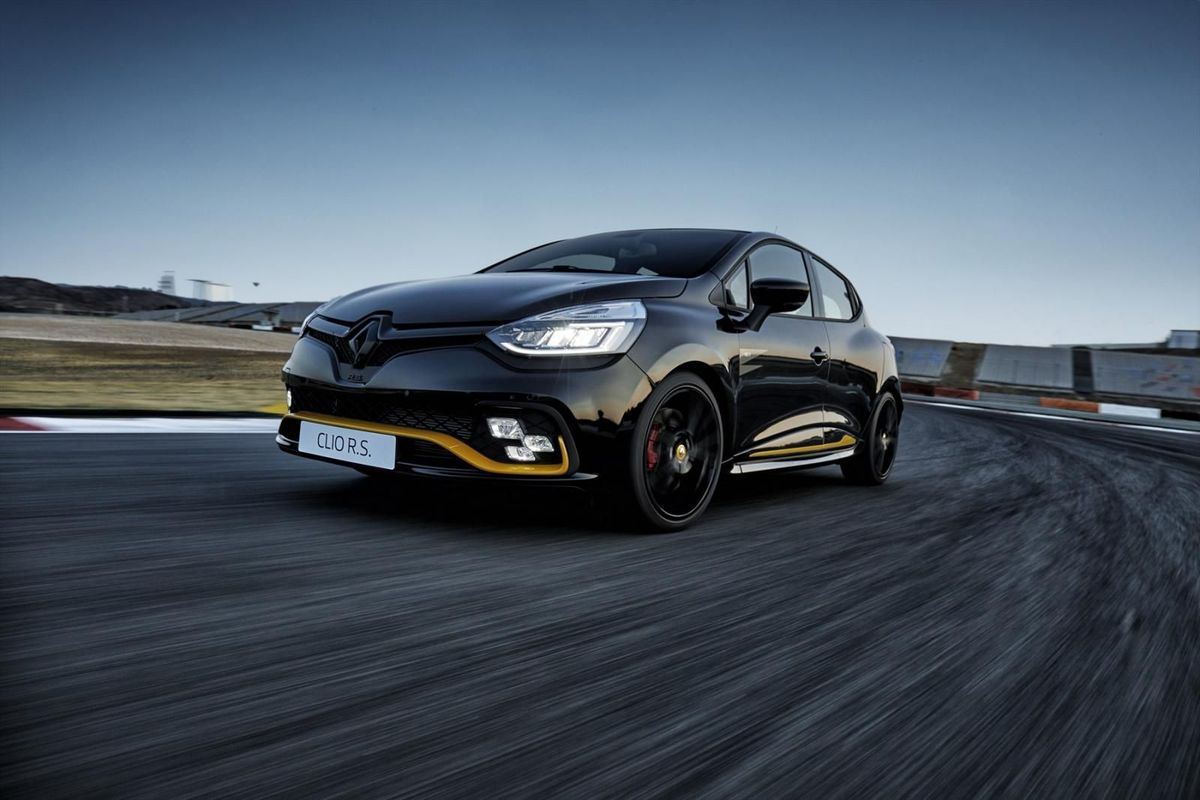
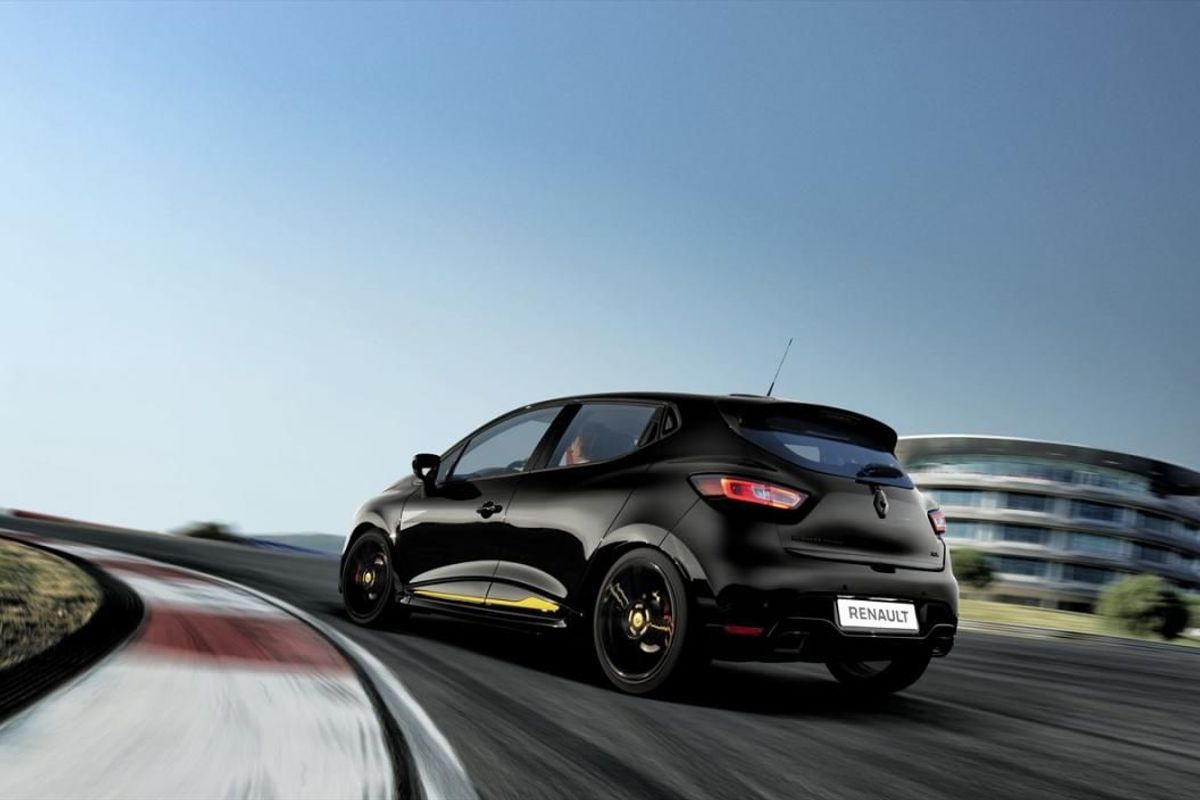
Visually the RS 18 is different too. It has the same colour scheme as the current Renault F1 car, showing off deep black and liquid yellow accents.

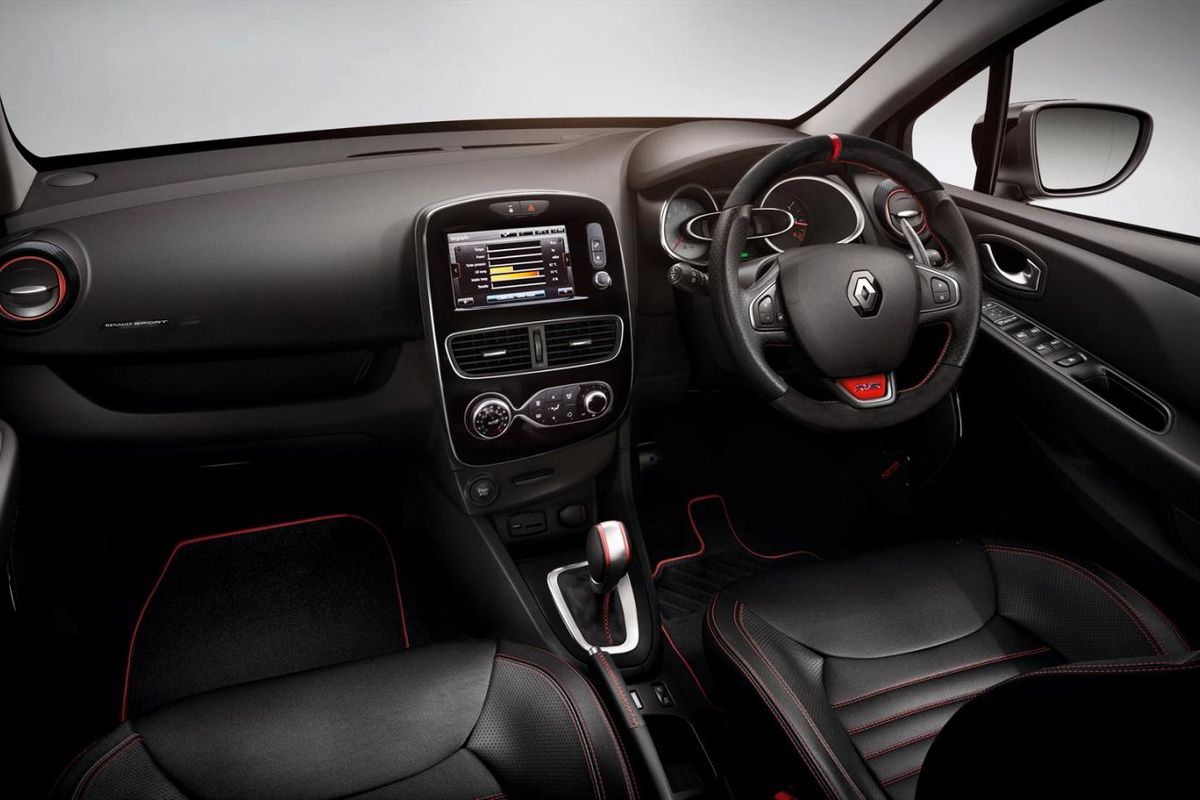
Renault Sport decals are pinned on the door panels and on the roof while the Renault badge is blacked out at both ends.

The door sills reflect a unique number to add to what Renault RS believes will be a collectable model in the future.

Power remains the same, delivering 162 kW and 280 Nm from the 1.6-litre turbopetrol engine. It is equipped with a launch control mode and a 6-speed dual clutch gearbox only.

As with Renault’s entire range, the Clio models come standard with a 5-year/150 000 km warranty. The Clio range also offers a standard 3-year/45 000 km service plan with the R.S. being 3-year/ 30 000km. Service intervals are set at 15 000 km, with R.S. models at 10 000 km.

Renault Clio – Price in SA (May 2018)

  • New Clio 66kW Turbo Authentique – R211 900

  • New Clio 66kW Turbo Expression – R229 900

  • New Clio 66kW Turbo Dynamique – R246 900

  • New Clio 88kW Turbo EDC Expression – R269 900

  • New Clio 88kW Turbo GT-Line – R269 900

  • New Clio R.S. 18 F1 (Incl. Metallic Paint) – R449 900

Related content

Limited Edition Renault Clio RS 18 Coming to SA

Renault Clio RS (2017) First Drive

Renault Clio GT-Line & RS Trophy (2017) Video Review
10 Cheapest New Cars With 150 kW Or More

Searching for a used Clio RS?

Start your search here

Pick Your Hot Hatch Poison

If you want to buy a hot hatch, then you have some tough decisions to make. Here is a list of the most potent hot hatchbacks that are either currently on offer or heading to South Africa this year. Which one of these potent machines are on your hit list?

Combining good looks, sizzling performance and high levels of handling ability, hot hatchbacks are hugely popular in South Africa. Join us as we list some of the most potent hot hatch products that are bound to get your adrenaline pumping and put a smile on your dial. Pick your poison!

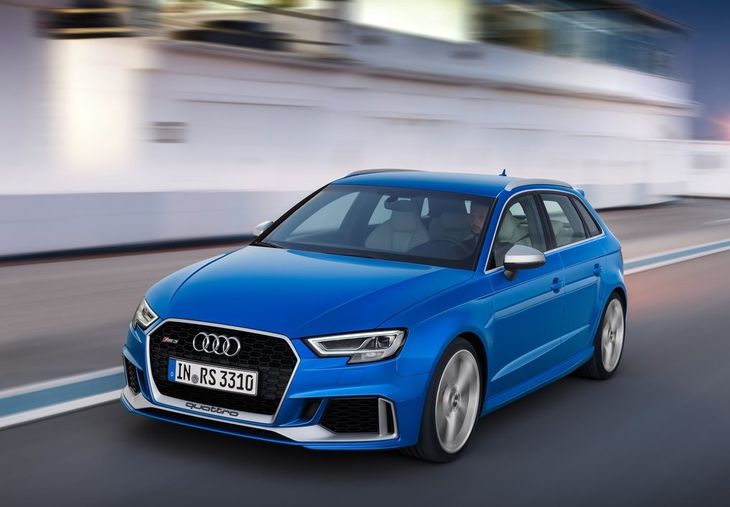
Audi RS3 Sportback

Price: R903 500 (May 2018)

Engine: 5-cylinder, 2.5-litre turbopetrol

Power: 294 kW @ 5 850 – 7 000 rpm

Torque: 480 Nm @ 1 700 – 5 850 rpm

Transmission: 7-speed dual clutch automatic

0-100 kph: 4.1 secs

Top Speed: 250 kph

Fuel consumption: 8.3 L/100km

Watch the Audi RS3 Sportback take on the BMW M2 in a drag race battle below!

Buy an Audi RS3 on Cars.co.za

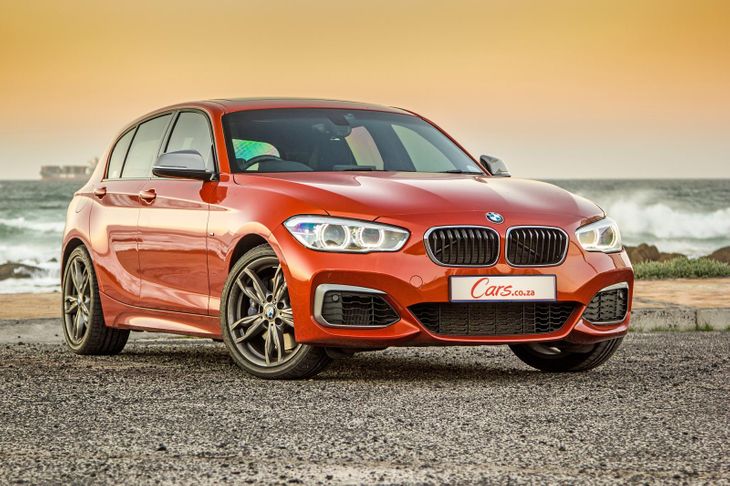
BMW M140i

Price: R687 940 (May 2018)

Engine: 6-cylinder, 3.0-litre turbopetrol

Power: 250 kW @ 5 500 rpm

Torque: 500 Nm @ 1 520 – 4 500 rpm

Transmission: 8-speed automatic

0-100 kph: 4.6 secs

Top Speed: 250 kph

Fuel consumption: 7.1 L/100km

Watch our video review of the BMW M140i below!
Buy a BMW M140i on Cars.co.za

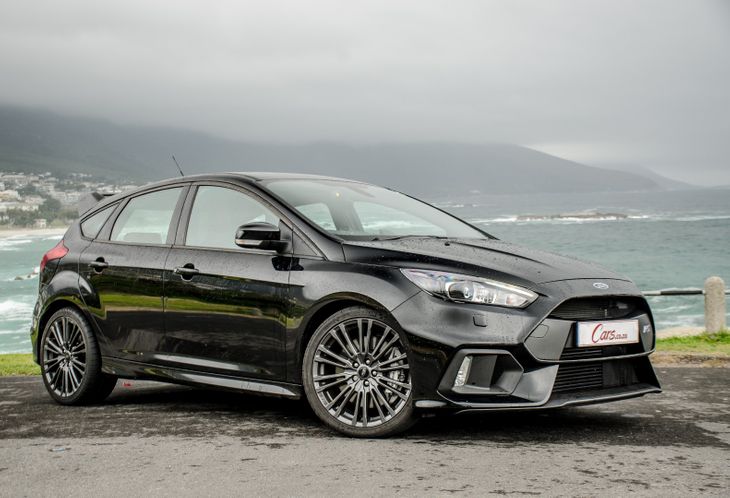
Ford Focus RS

Price: R712 900 (May 2018)

Engine: 4-cylinder, 2.3-litre turbopetrol

Power: 257 kW @ 6 000 rpm

Torque: 440 Nm @ 1 600 – 5 000 rpm

Transmission:  6-speed manual

0-100 kph: 4.1 secs

Top speed: 250 kph

Fuel consumption: 7.7 L/100km

Watch the Ford Focus RS tear up the streets of CPT in the dead of night

Buy a Ford Focus RS on Cars.co.za

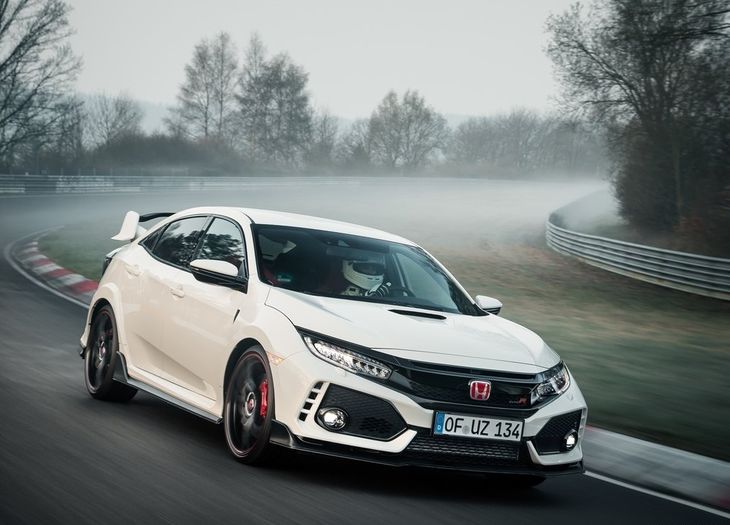
New Honda Civic Type R

Price: R635 500 (May 2018)

Engine: 4-cylinder, 2.0-litre turbopetrol

Power: 228 kW @ 6 500 rpm

Torque: 400 Nm @ 2 500 – 4 500 rpm

Transmission: 6-speed manual

0-100 kph: 5.7 secs

Top Speed: 270 kph

Fuel consumption: 7.5 L/100km

Watch our video review of the new Honda Civic Type R below!
Buy a Honda Civic Type R on Cars.co.za

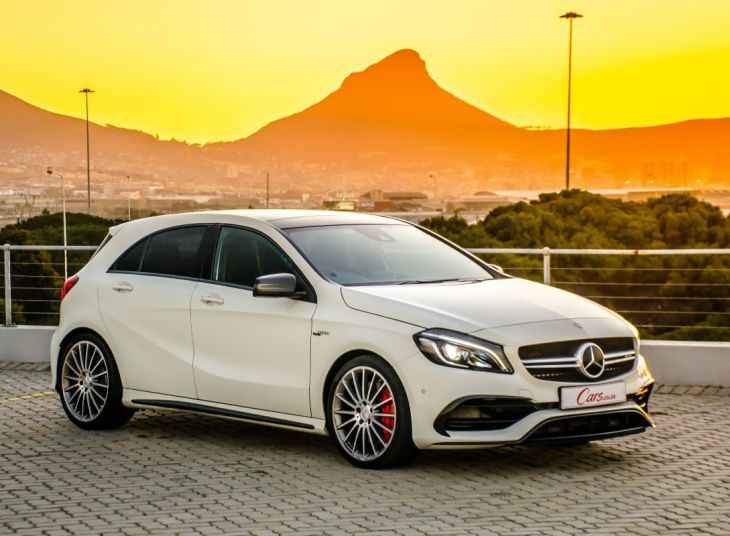
Mercedes-Benz A45 AMG 4Matic

Price: R812 259 (May 2018)

Engine: 4-cylinder, 2.0-litre turbopetrol

Power: 280 kW @ 6 000 rpm

Torque: 475 Nm @ 2 250 – 5 000 rpm

Transmission: 7-speed dual clutch automatic

0-100 kph: 4.2 secs

Top speed: 250 kph

Fuel consumption: 7.3 L/100km

Watch the Mercedes-Benz A45 AMG take on the Audi RS3 in the video below!

Buy a Mercedes-Benz A45 AMG on Cars.co.za

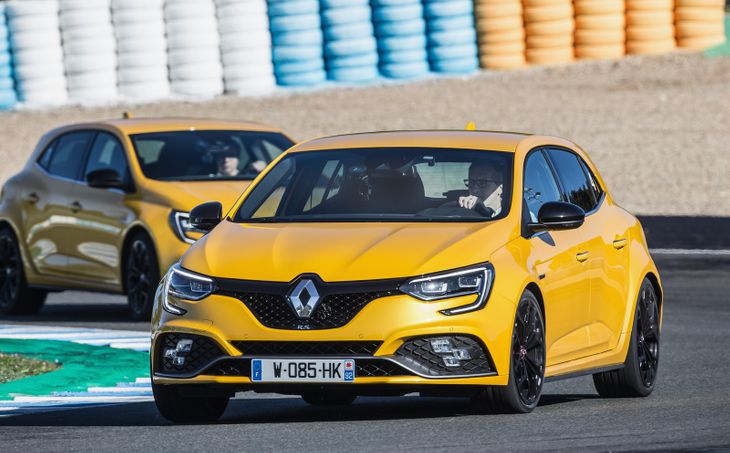
New Renault Megane RS

Price: TBC, arrives mid-2018

Engine: 4-cylinder, 1.8-litre turbopetrol

Power: 205 kW @ 6 000 rpm

Torque: 390 Nm @ 2 400 – 4 800 rpm

Transmission: 6-speed EDC or 6-speed manual

0-100 kph: 5.8 secs

Top speed: 250 kph

Fuel consumption: 6.9 L/100km

Watch the new Renault Megane RS in action in the video below!

Buy a Renault Megane RS on Cars.co.za

Renault Clio RS 18 F1 (Just arrived in SA!)

Price: R449 900 (May 2018) 

Engine: 1.6-litre turbopetrol

Power: 162 kW

Torque: 280 Nm

Transmission: 6-speed dual-clutch transmission

0-100 kph: 6.6 secs

Top speed: 235 kph

Fuel consumption:  5.7 L/100 km

Buy a used Renault Clio RS on Cars.co.za

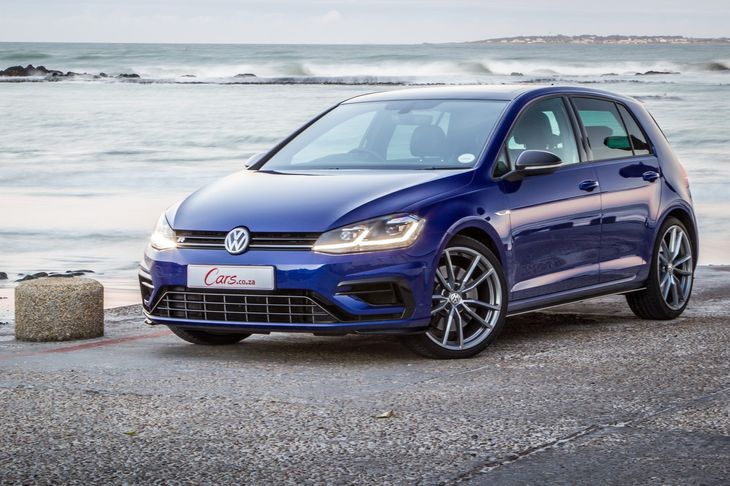
Volkswagen Golf R

Price: R664 400 (May 2018)

Engine: 4-cylinder, 2.0-litre turbopetrol   

Power: 213 kW @ 5 400 – 6 500 rpm

Torque: 380 Nm @ 1 850 – 5 300 rpm

0-100 kph: 4.6 secs

Top speed: 250 kph

Transmission: 7-speed DSG

Fuel consumption: 7.0 L/100km

Watch the VW Golf R go head-to-head against the VW GTI!


Buy a Volkswagen Golf R on Cars.co.za


Striking Lexus LC 500 Limited Edition for SA

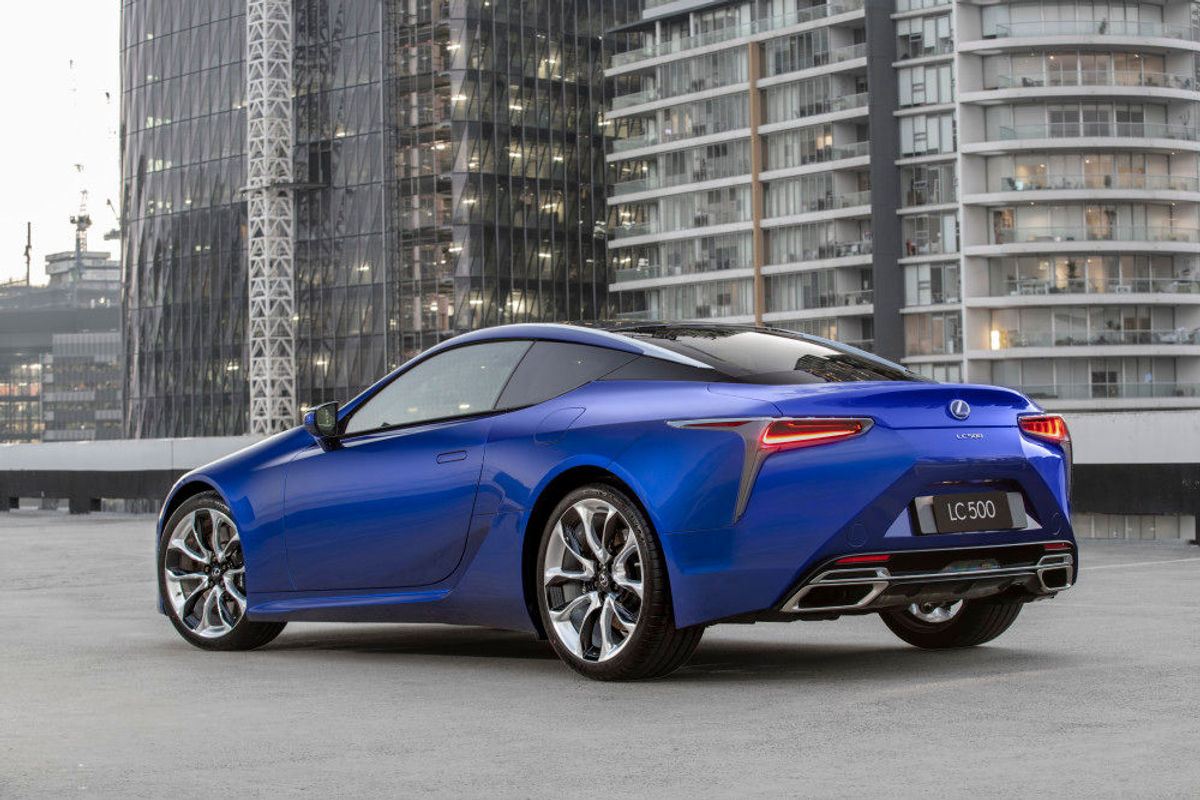
Lexus has developed a special blue paint treatment inspired by the wings of the American Morpho butterfly and it will feature for the first time in South Africa when the LC 500 Limited Edition model arrives on our shores in August 2018.

Based on 15 years of research, the new paint treatment, called Morphic Blue, incorporates 300 billion nano-structure pigment flakes that generate iridescence, giving the impression of the colour constantly changing with the light.

Interestingly, Lexus says that the blue hue is imparted by a light effect that’s created by the texture of the liquid coating and that no materials in the coating are actually blue. No blue dyes or pigments have been added.

The paint itself undergoes an 8-month process that includes 12 production steps and 20 quality inspections. A total of 7 layers are applied and only 2 Morphic Blue LC 500’s can be produced in a single day at the Motomachi factory in Japan, the home of the LC 500.


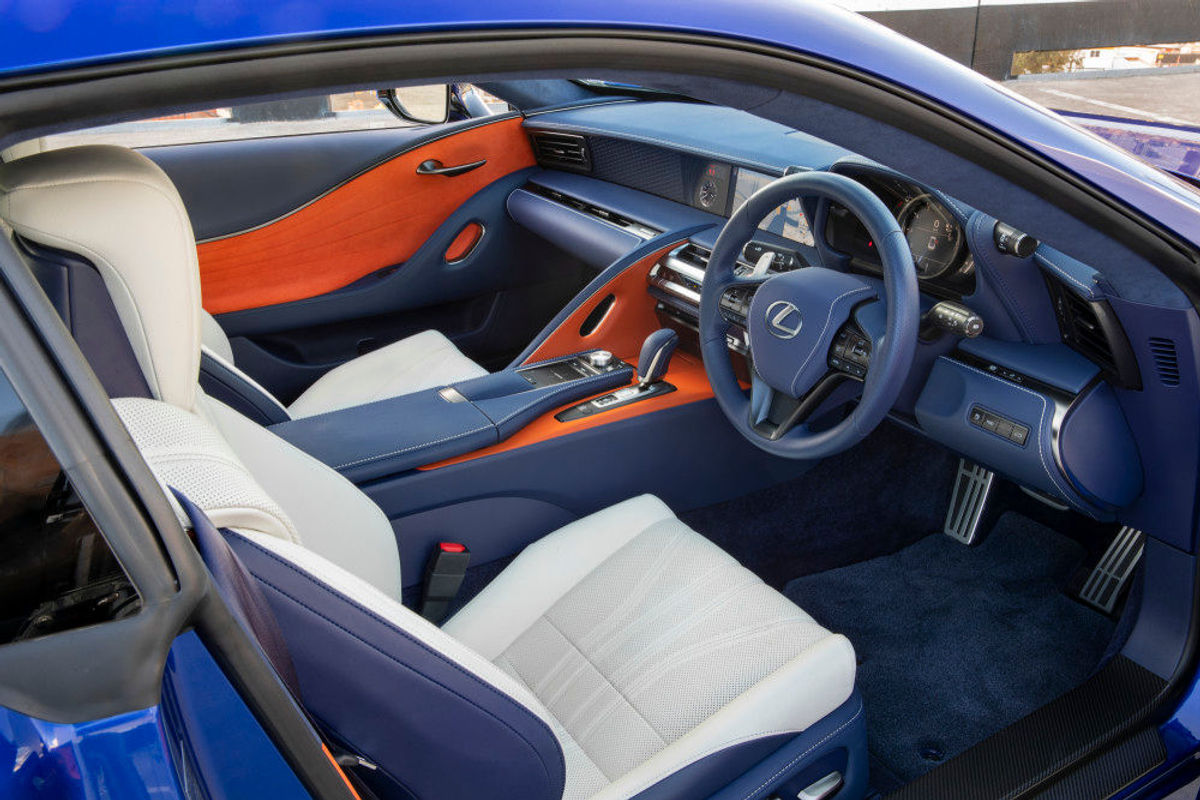
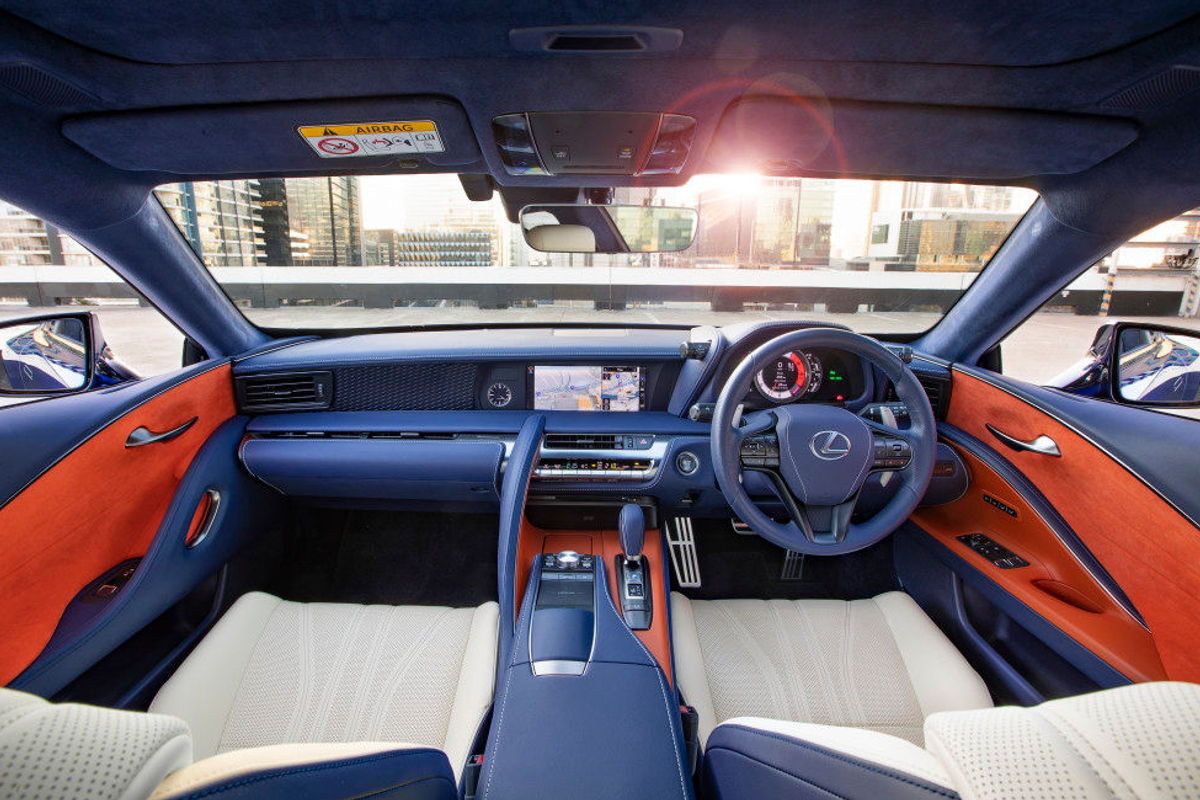
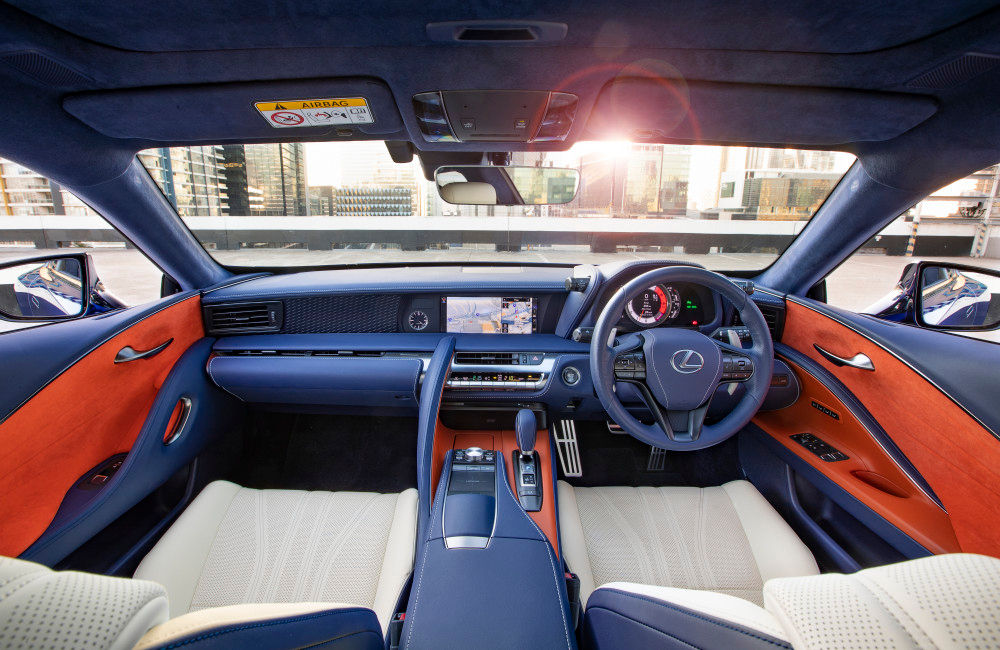
The interior of the LC 500 Limited Edition makes use of semi-aniline leather and Alcantara.

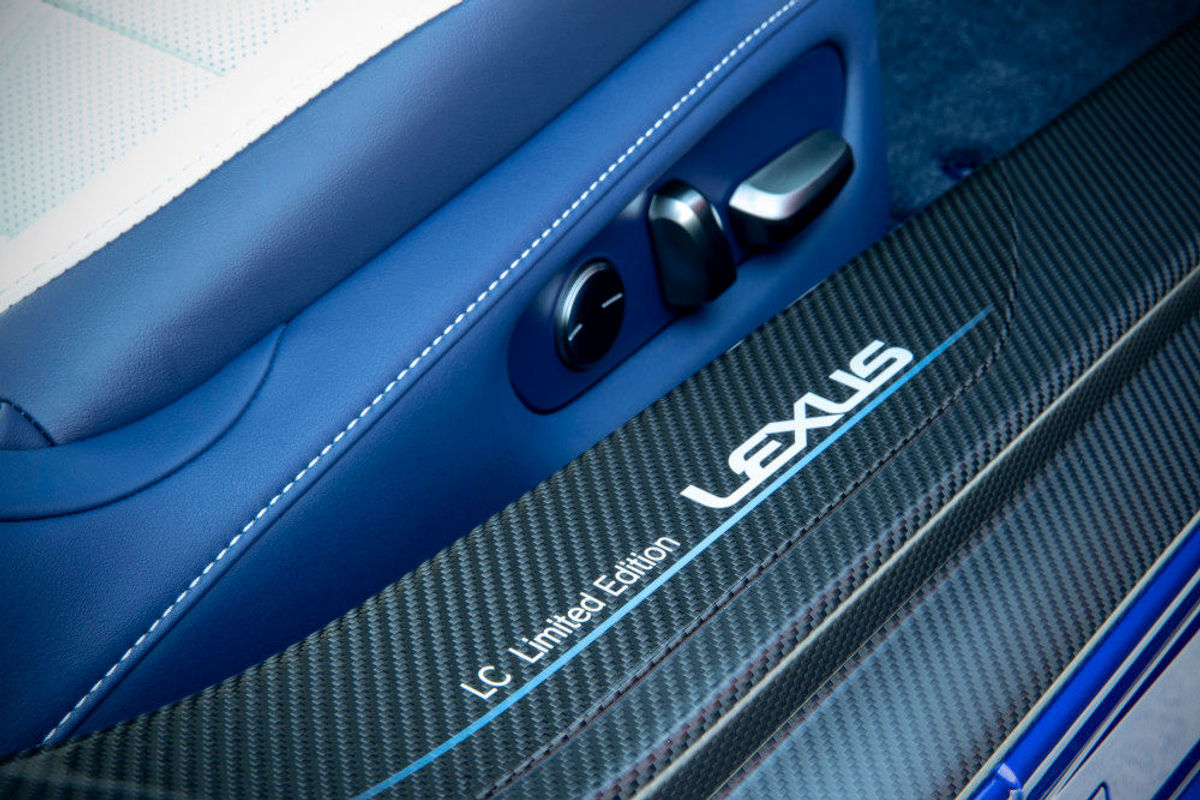
The body colour is matched with an interior featuring a Chrysalis Blue colour scheme that combines orange, blue and white. Semi-aniline leather and Alcantara also feature extensively inside this bespoke LC 500 Limited Edition.

The LC 500 Limited Edition is powered by a naturally aspirated 5.0-litre V8 engine with peak outputs of 351 kW and 540 Nm of torque and mated to a fast-shifting 10-speed automatic transmission.

Pricing for the LC 500 Limited Edition is yet to be announced, but we will keep informed as soon as more information becomes available.

Buy a new or used Lexus LC 500 on Cars.co.za

Related Content

Lexus LC 500 (2017) Launch Review

Lexus LC (2017) First Look

Lexus Luxury LS Lands in SA


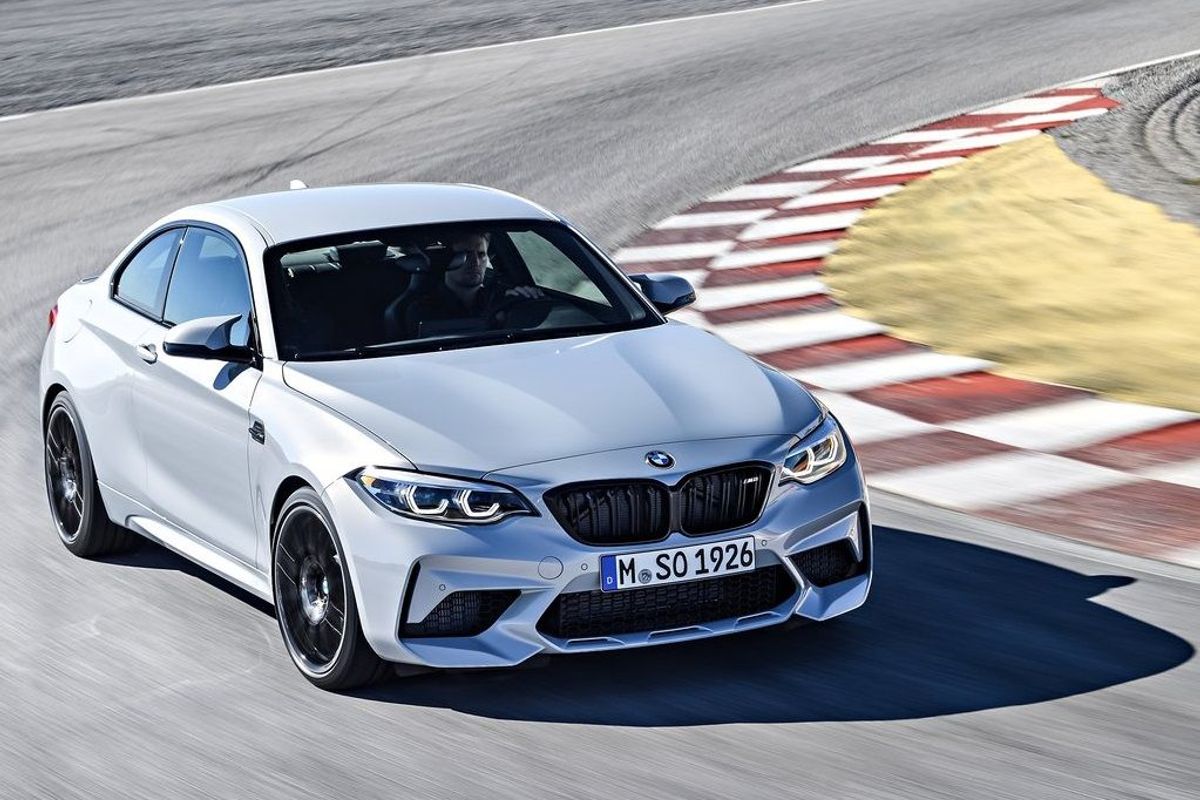
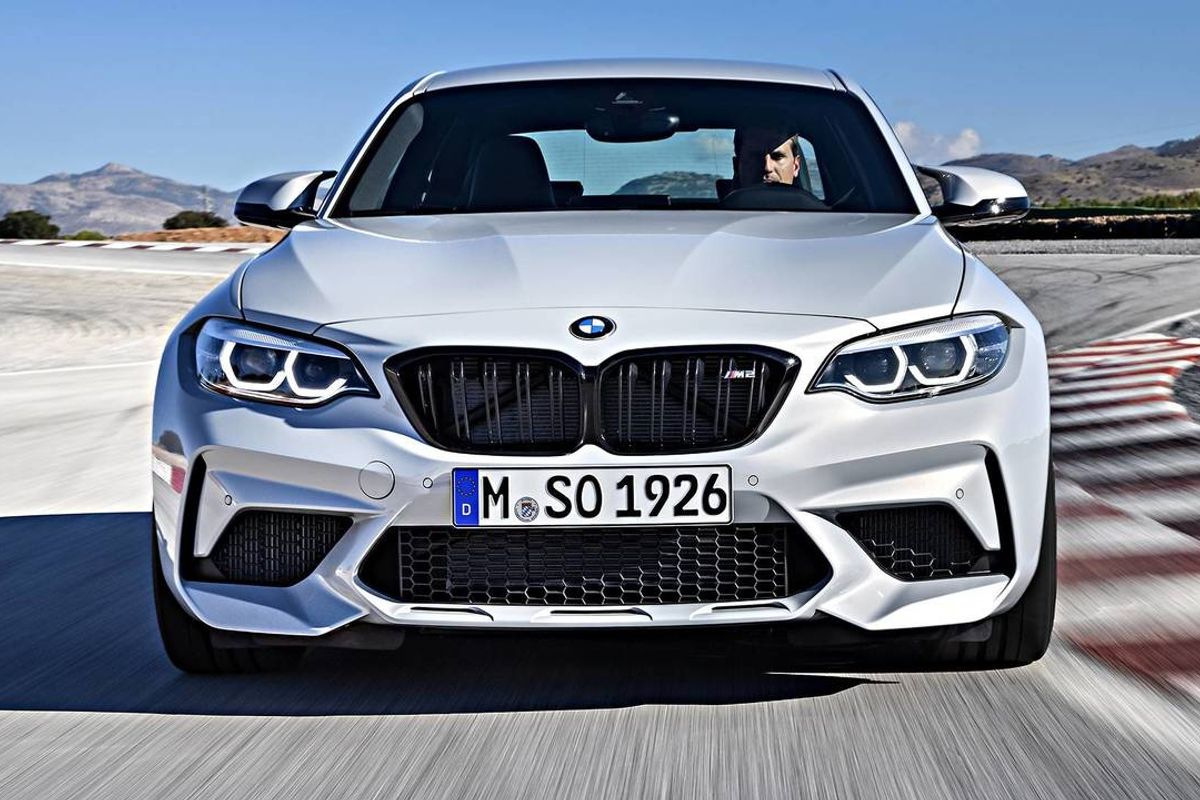
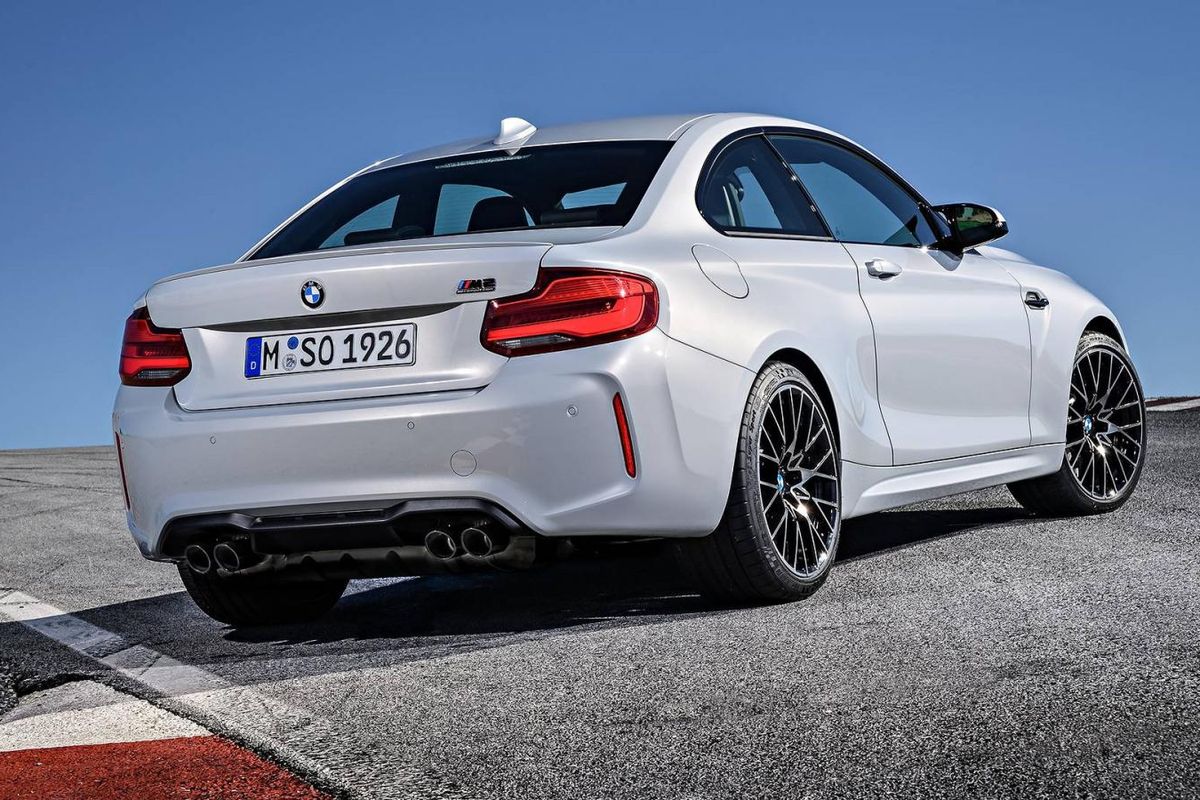
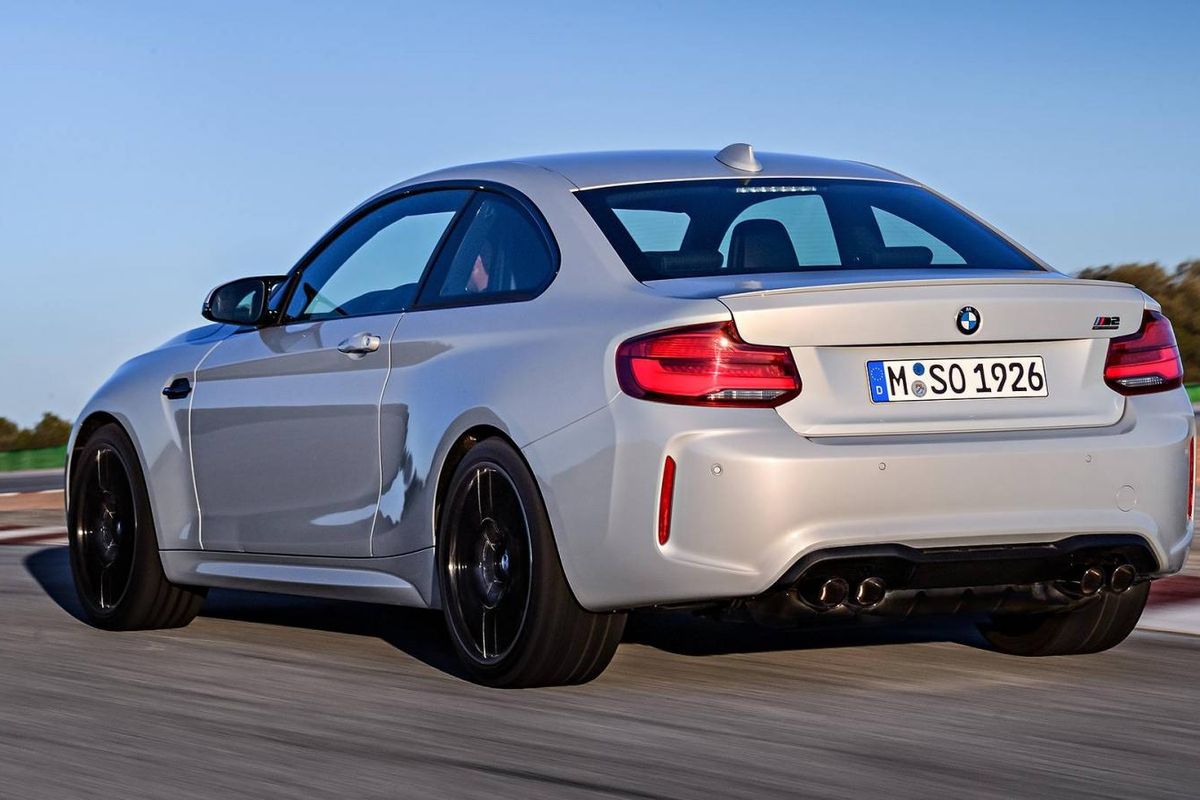
BMW M2 Competition (2018) Specs & Price

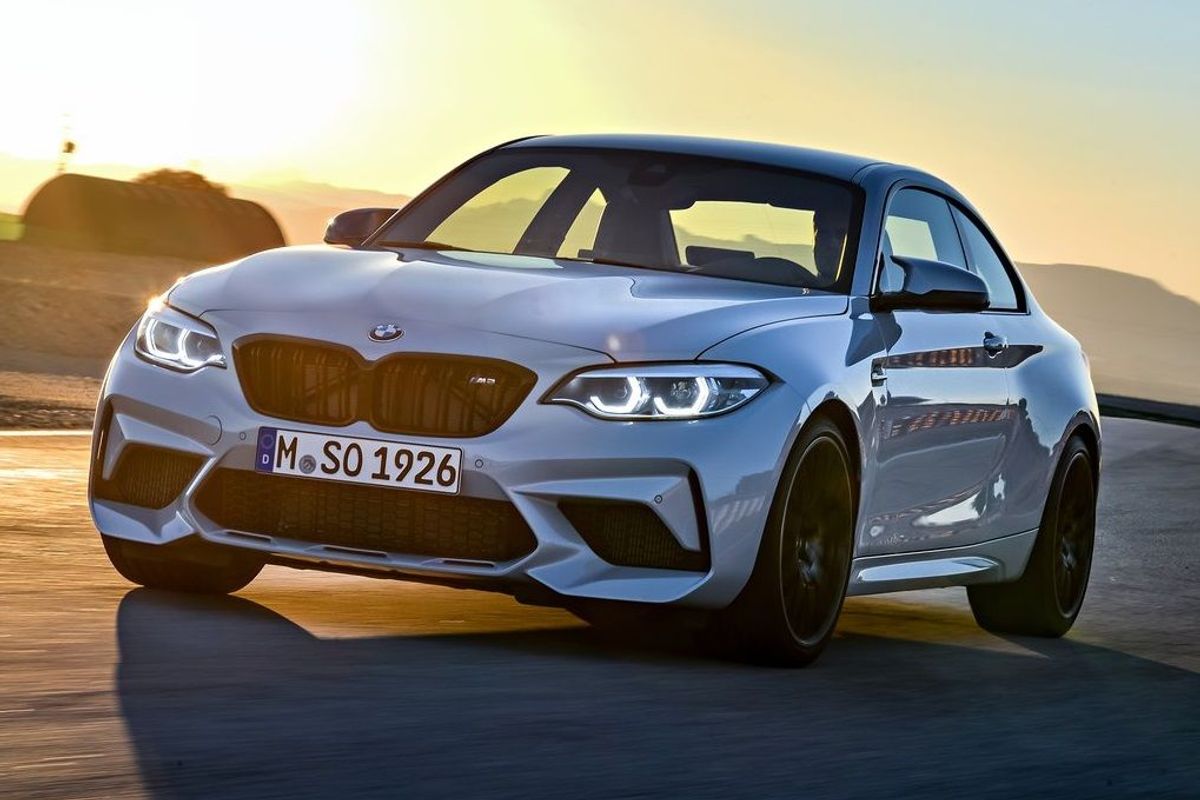
The BMW M2 Competition will arrive in South Africa in September 2018 and the initial consignment of the 302 kW/550 Nm version of the 2-time #CarsAwards performance car category champion is only 25 units. Prices start at just under R1 million, before options. 

The BMW M2 Competition, which was unveiled at the Beijing Motor Show, shares the same biturbo, 6-cylinder 3.0-litre engine that powers the M3 and M4, but has been  tuned to deliver peak outputs of 302 kW and 550 Nm of torque, which means it offers 30 kW and 50 Nm more than the standard M2 Coupe, which it replaces.

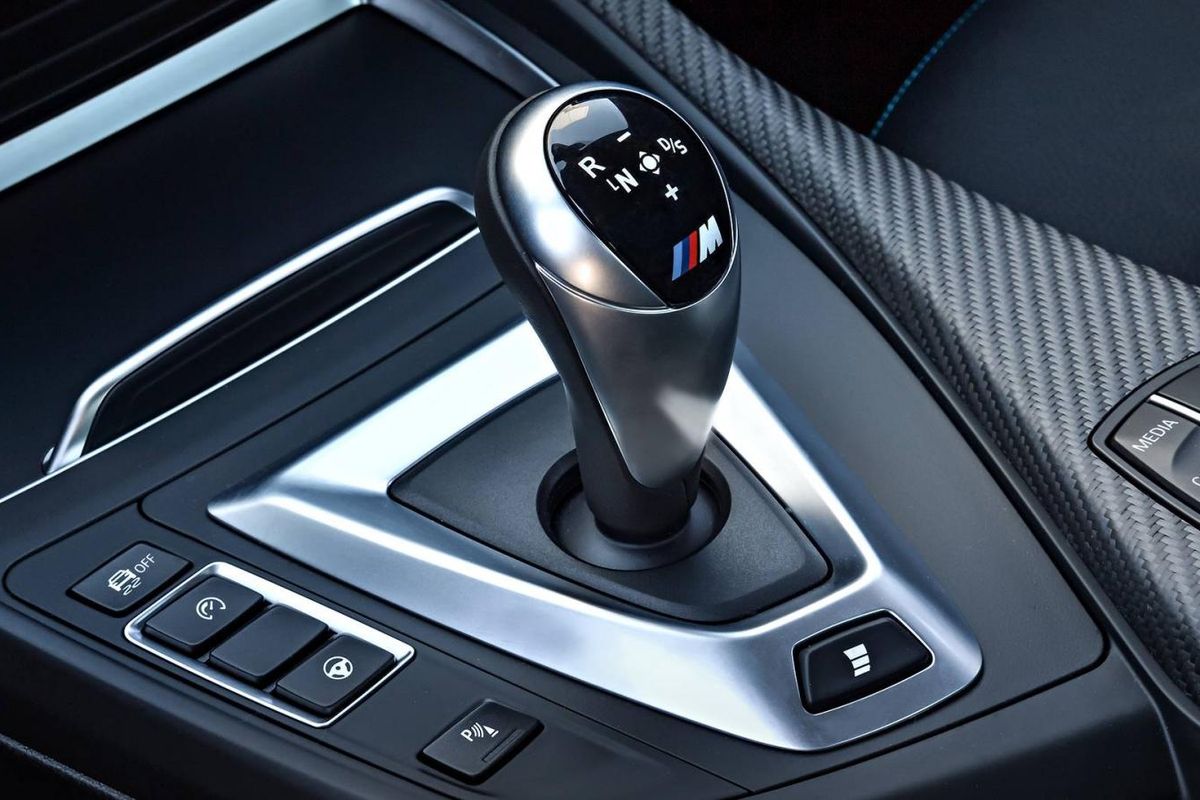
When equipped with a 7-speed dual-clutch (M-DCT) automatic transmission, the M2 Competition is claimed to sprint from 0 to 100 kph in 4.0 sec, while the 6-speed manual version will reach the benchmark in 4.2 sec. Top speed is limited to 250 kph, but an optional M Driver's Package will take the top speed to a heady 280 kph.

The M2 Competition houses the same cooling system as the M4 Competition which includes a central radiator, 2 side radiators and an extra engine oil cooler. The electromechanical power steering system has been revised and the Active M Differential has been enhanced. 


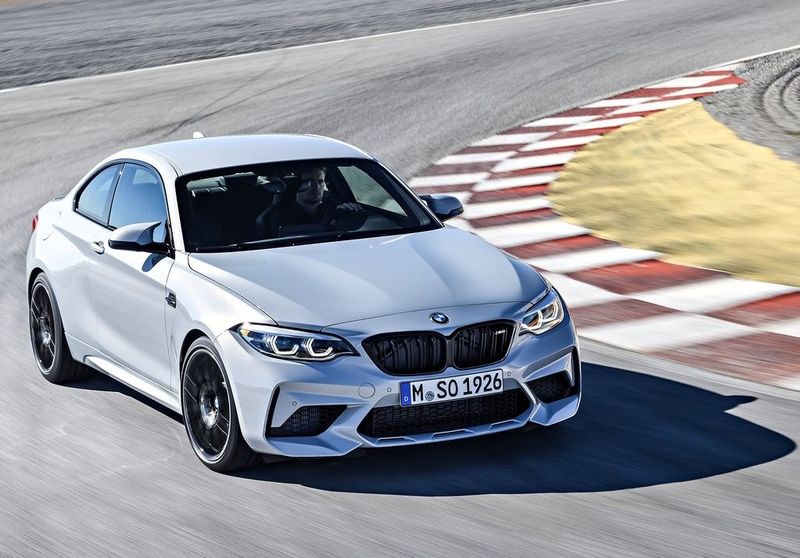
The new BMW M2 Competition will replace the current M2 Coupe and will reach SA in September 2018. 
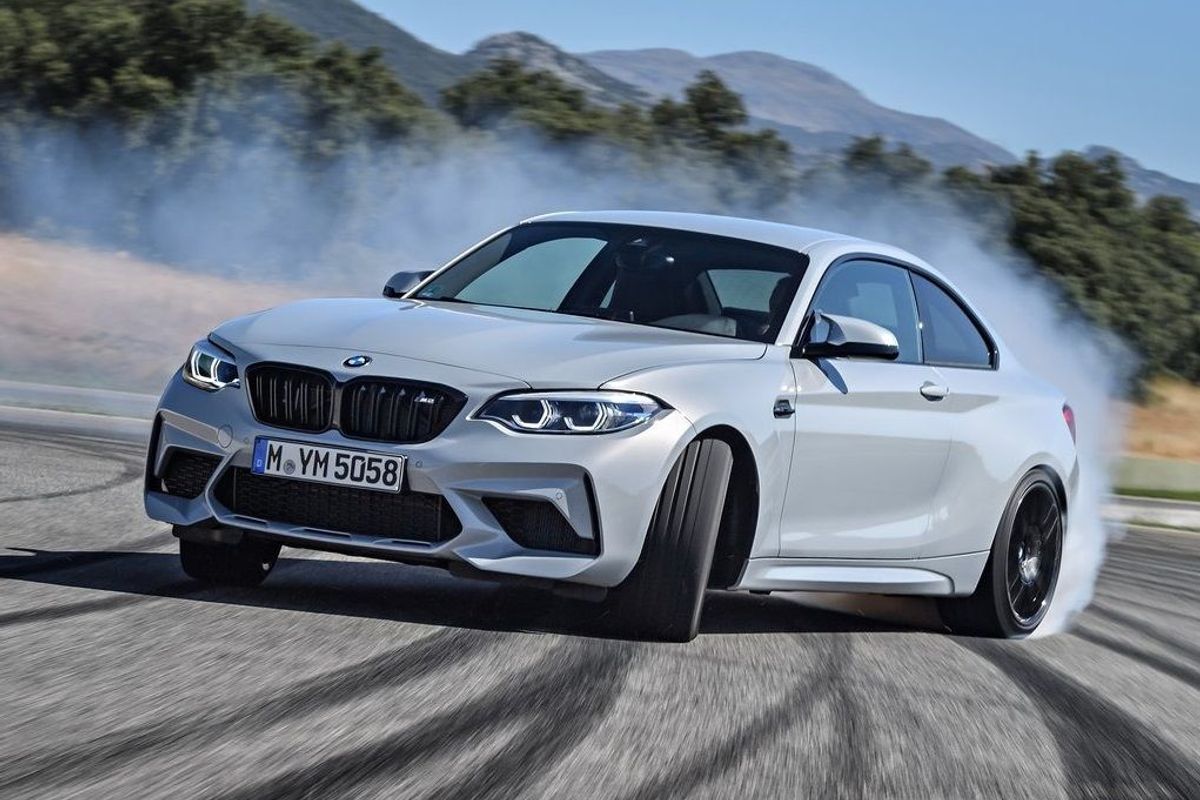
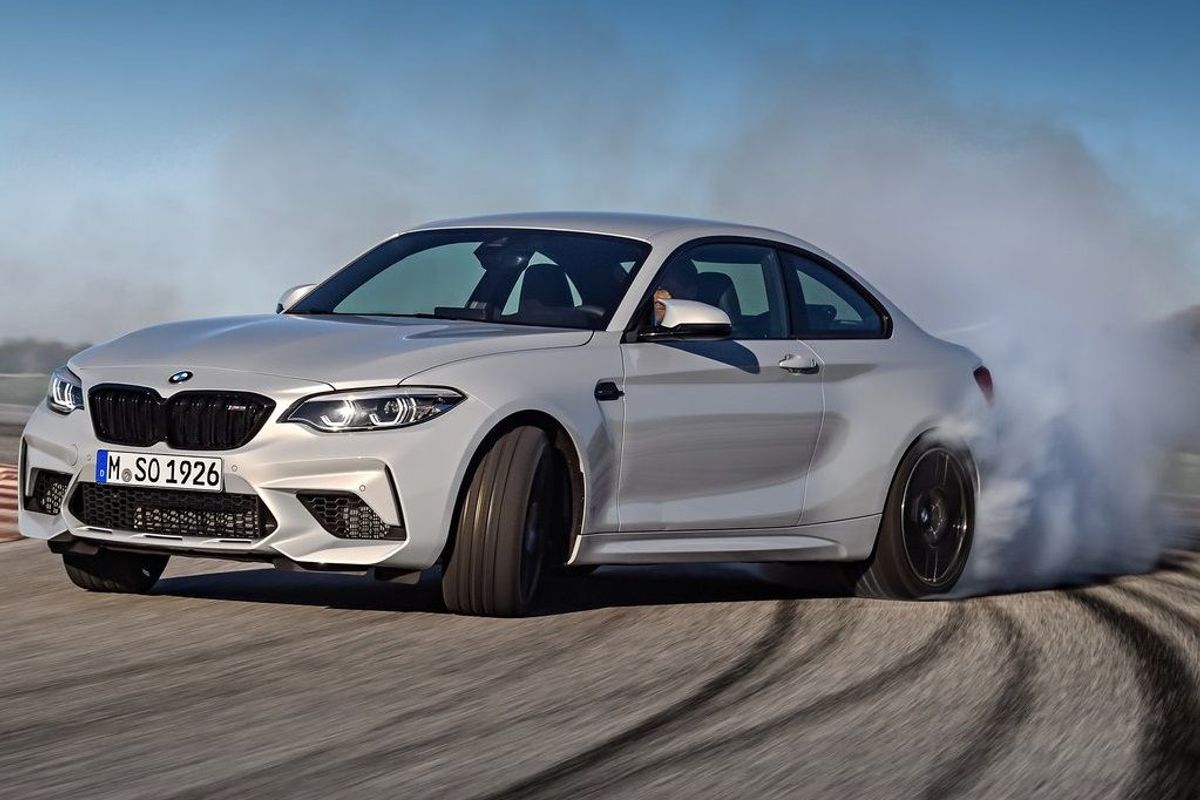
In terms of design, the M2 Competition features a larger, angular black kidney grille, modified front bumper with vents in the lower lip, black chrome exhausts and is optionally available on new 19-inch black alloy wheels shod with Michelin Pilot Super Sport tyres.
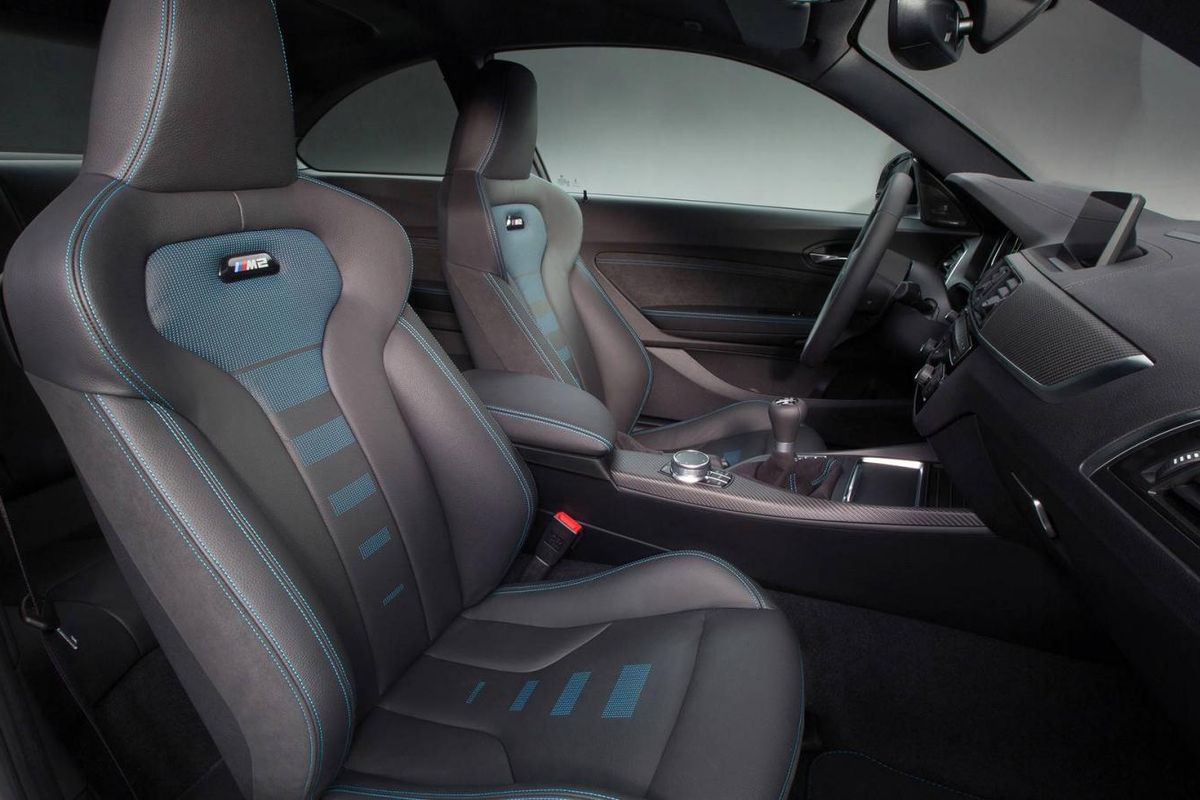
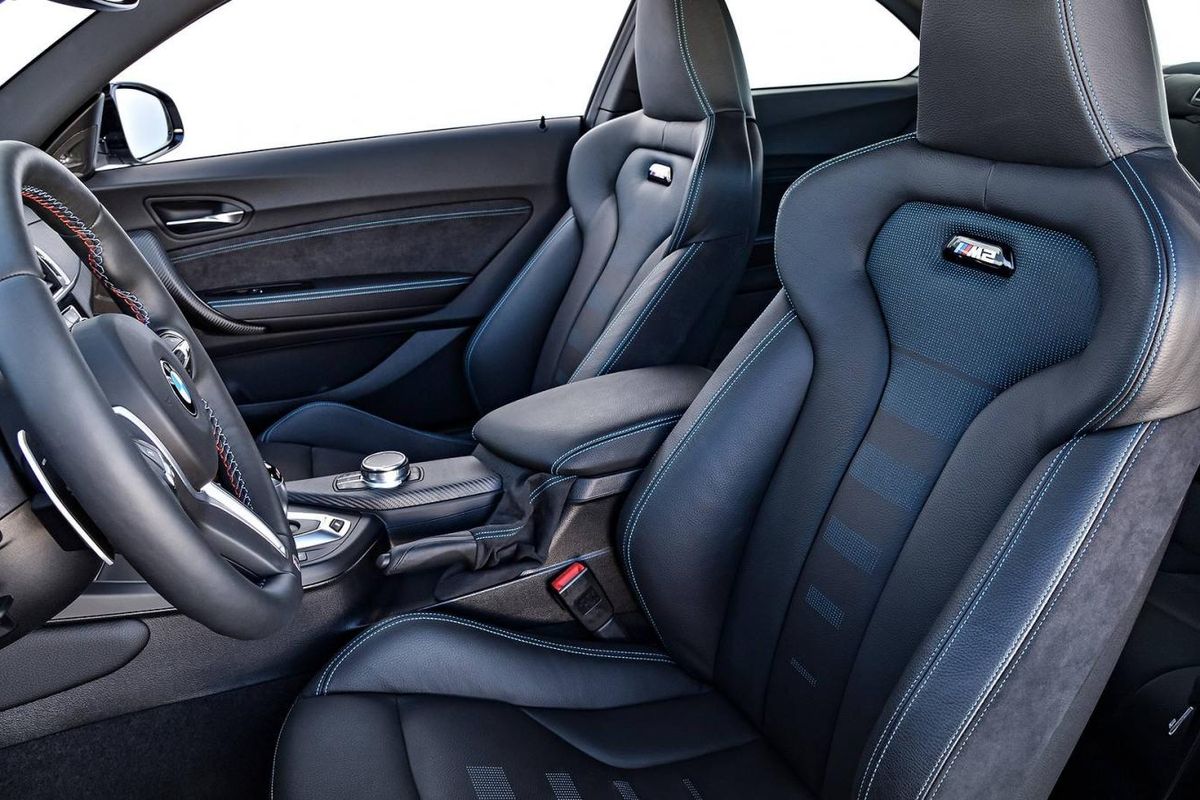
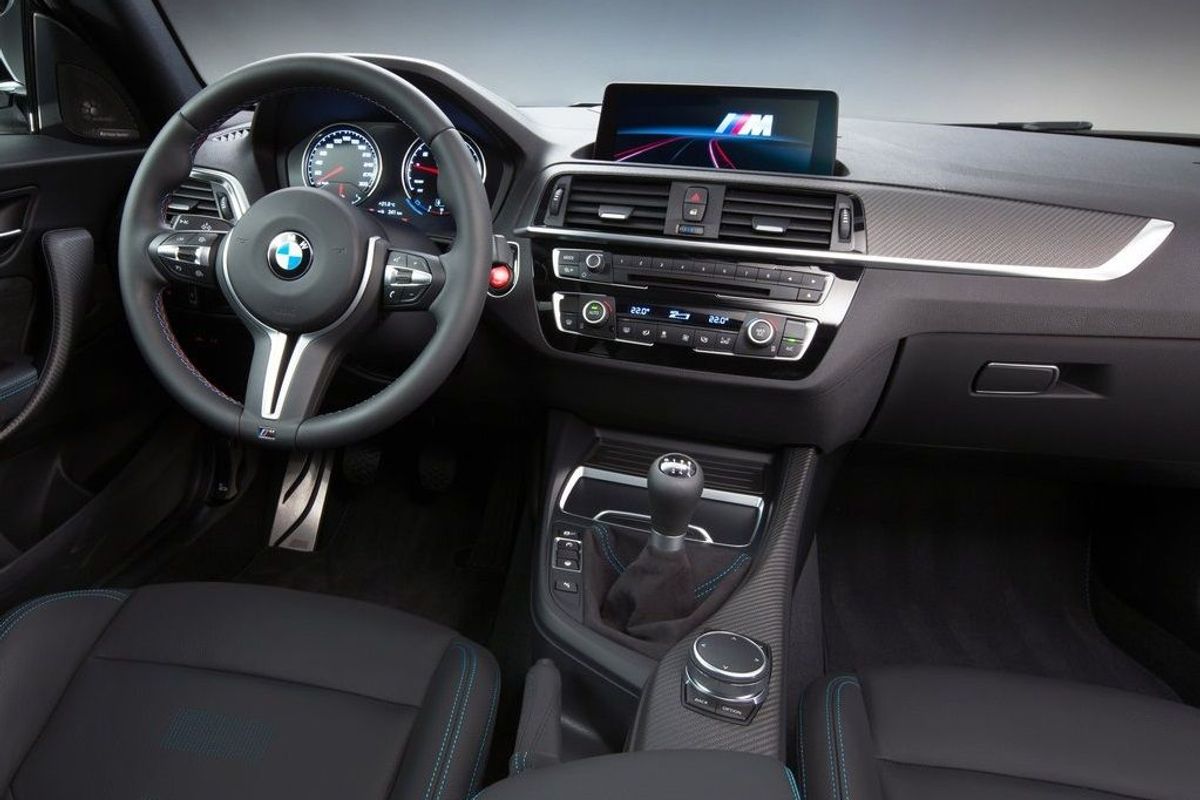
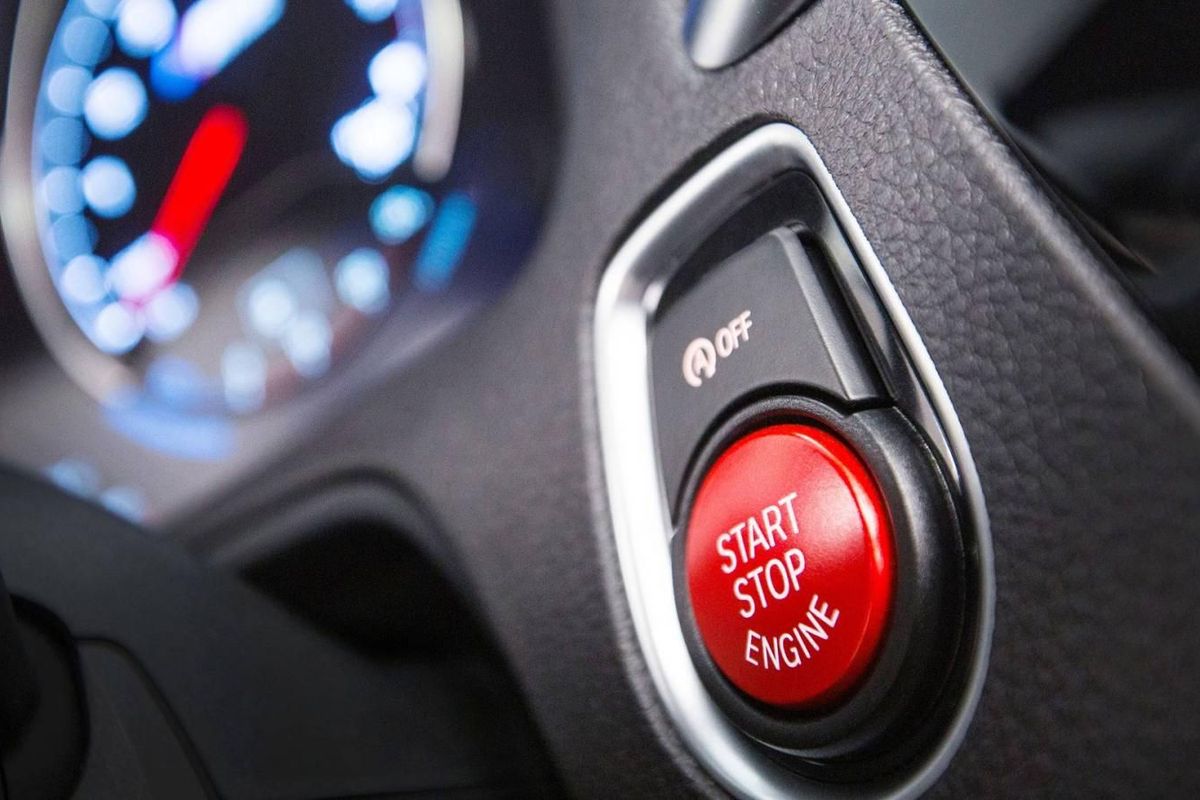
The interior benefits from new M sports seats featuring illuminated M2 logo seen on the backrests. The model is also equipped with a red push-button ignition while the sport steering wheel has M buttons that store the driver's personalised performance settings. Other neat touches include M2 Competition sill plates and the seat belts feature BMW M stripes.

Prices (as of September 2018, confirmed to Cars.co.za by a source).

M2 Competition 6-spd manual R983 029  
M2 Competition M-DCT R1 037 505 

Buy a BMW M2 on Cars.co.za

Related content:

BMW M2 Coupe Auto (2016) Review
Classic Battle of the Brands: M2 vs RS3 vs A45

Audi RS3 vs BMW M2 (2017) Drag Race

Audi RS3 vs BMW M2 (2017) Track Race

Drag Race: BMW M2 vs Mercedes A45 AMG [Video]

BMW M2 vs Audi RS3 (2017) Comparative Review Video
Winners of 2017/18 Cars.co.za Consumer Awards – powered by WesBank

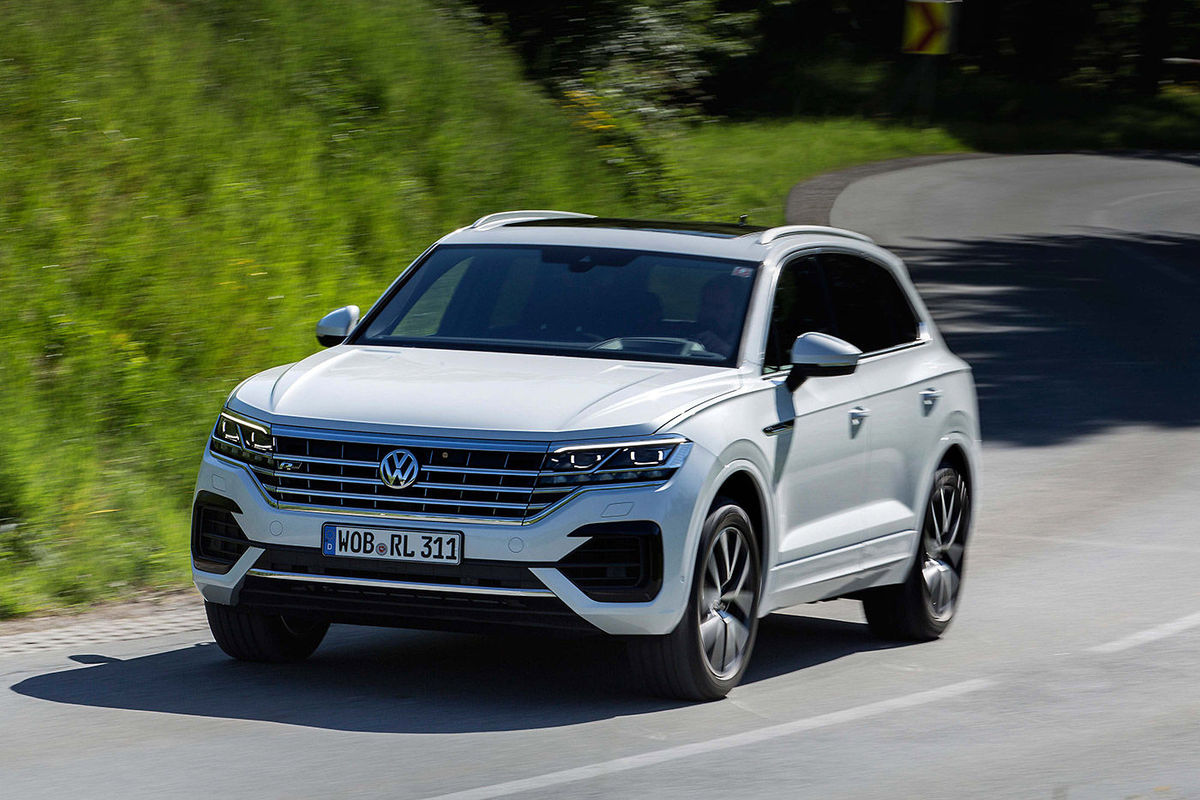
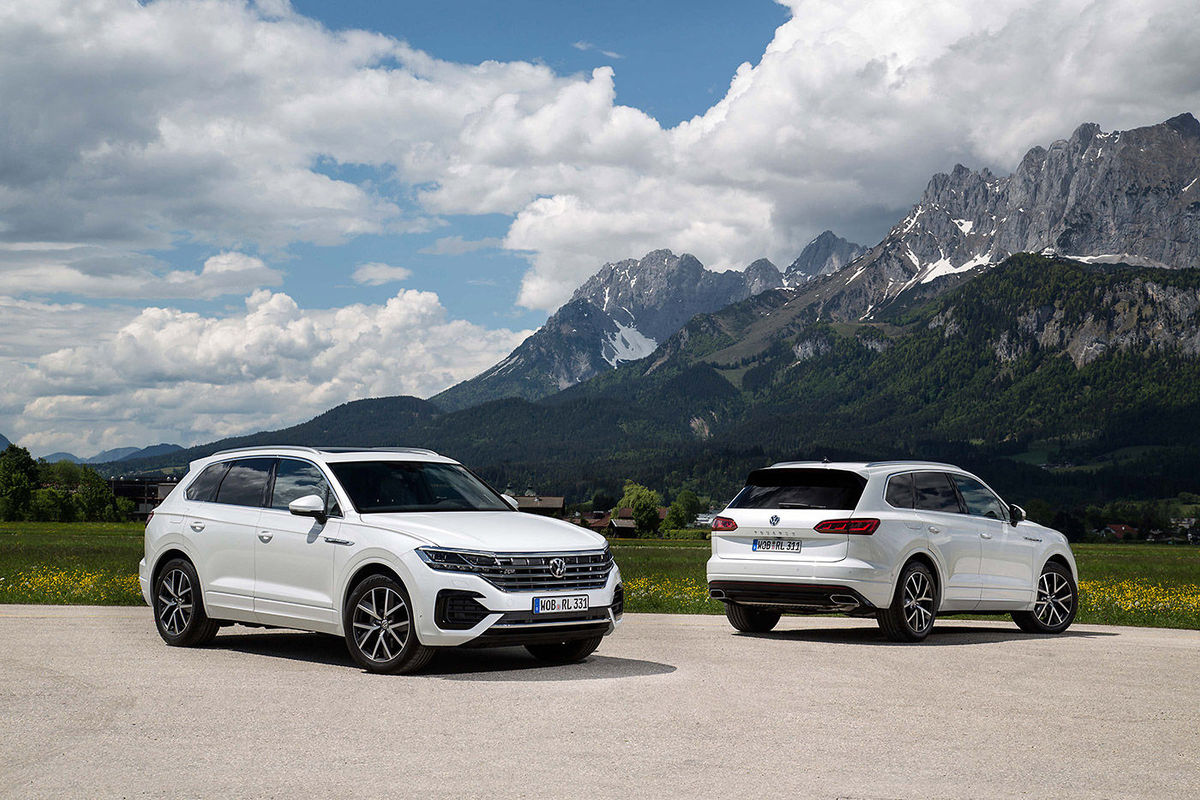
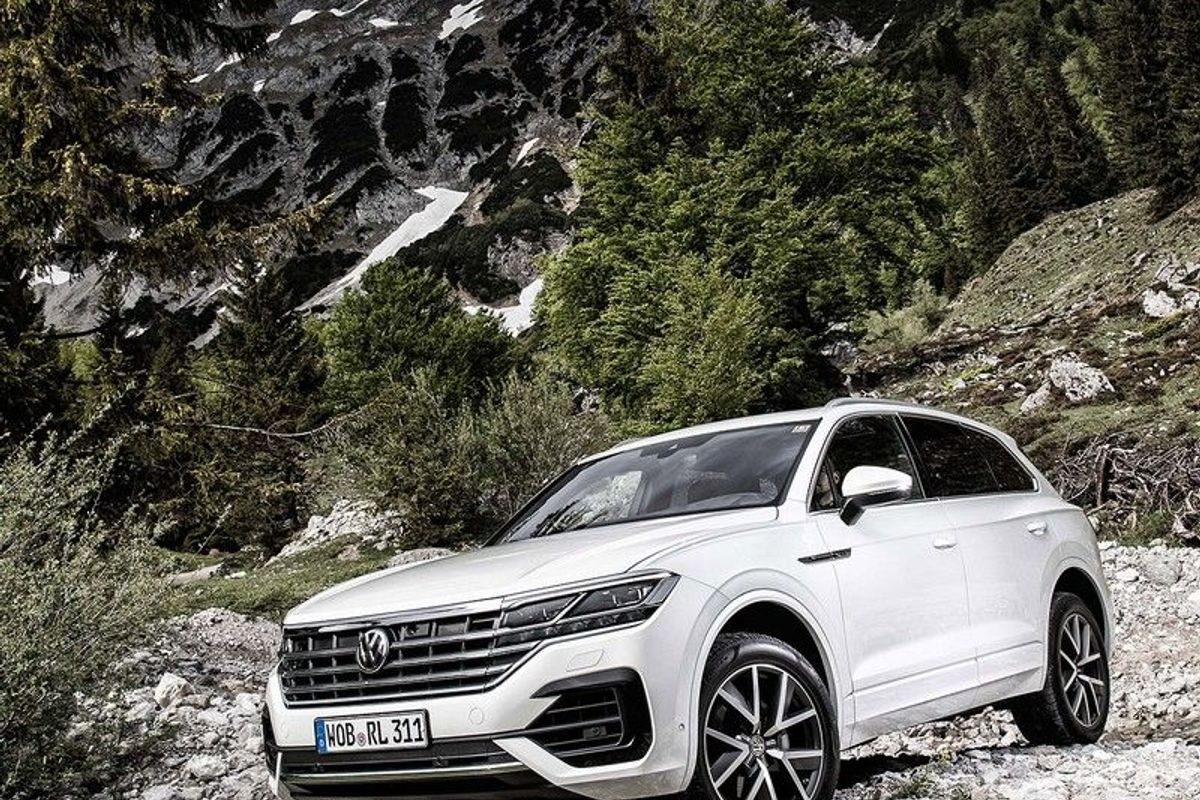
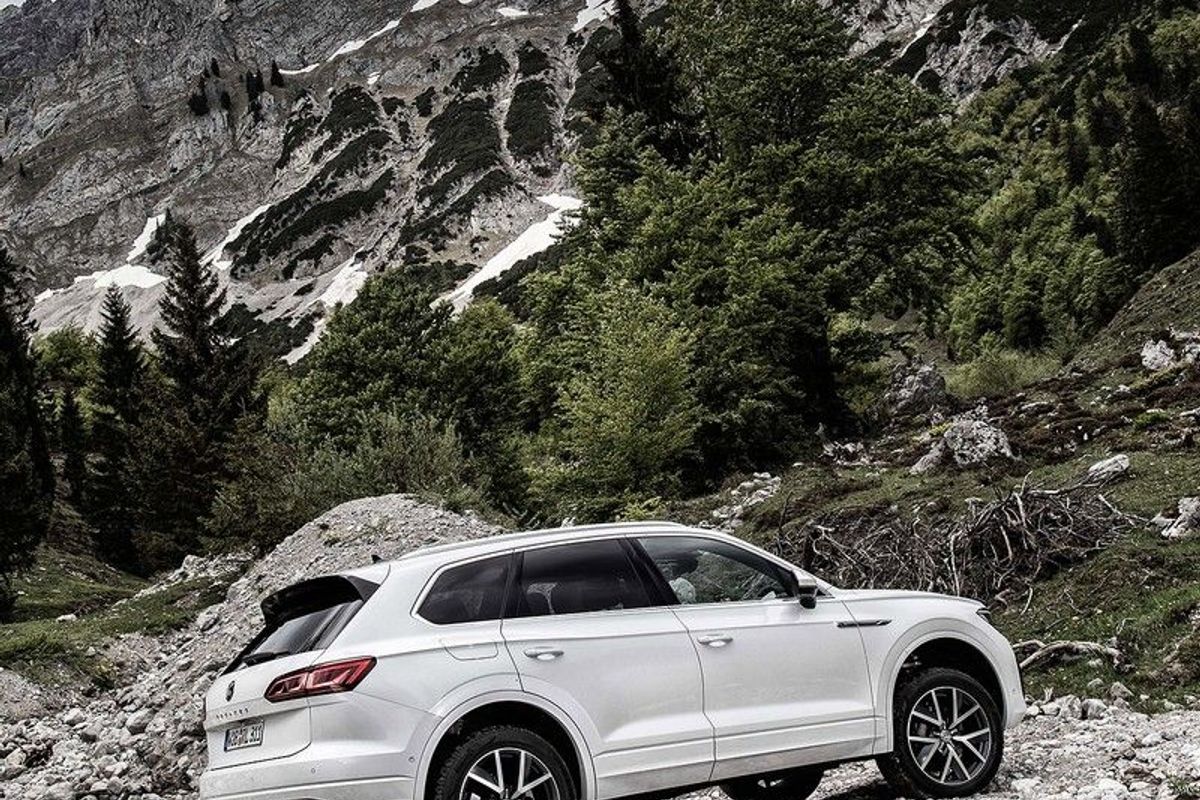
Volkswagen Touareg (2018) International Launch Review
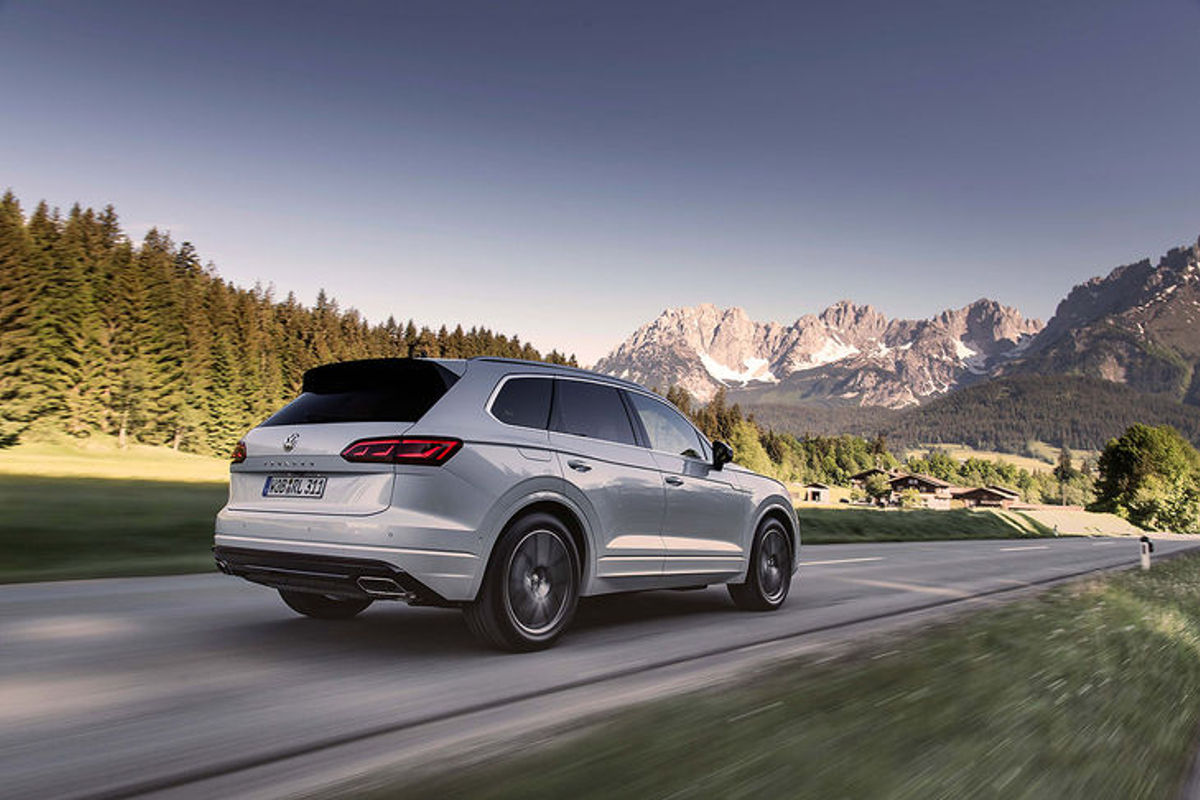
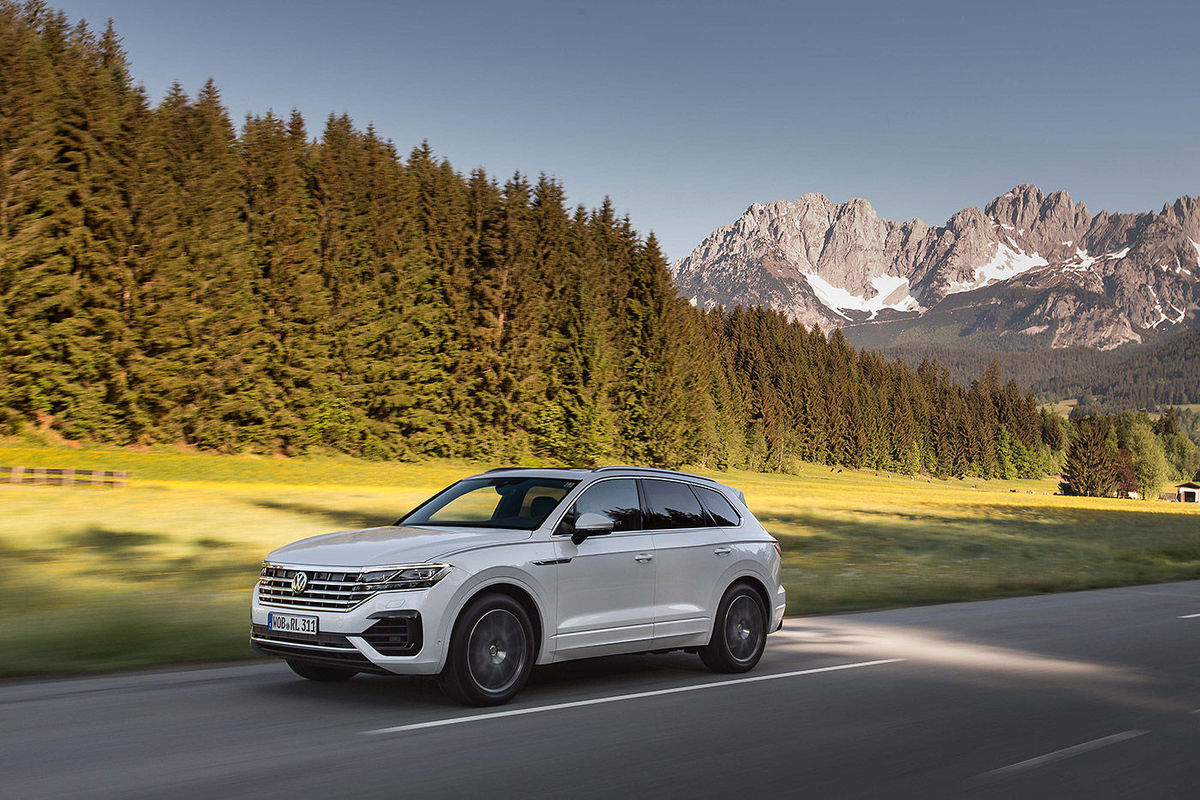
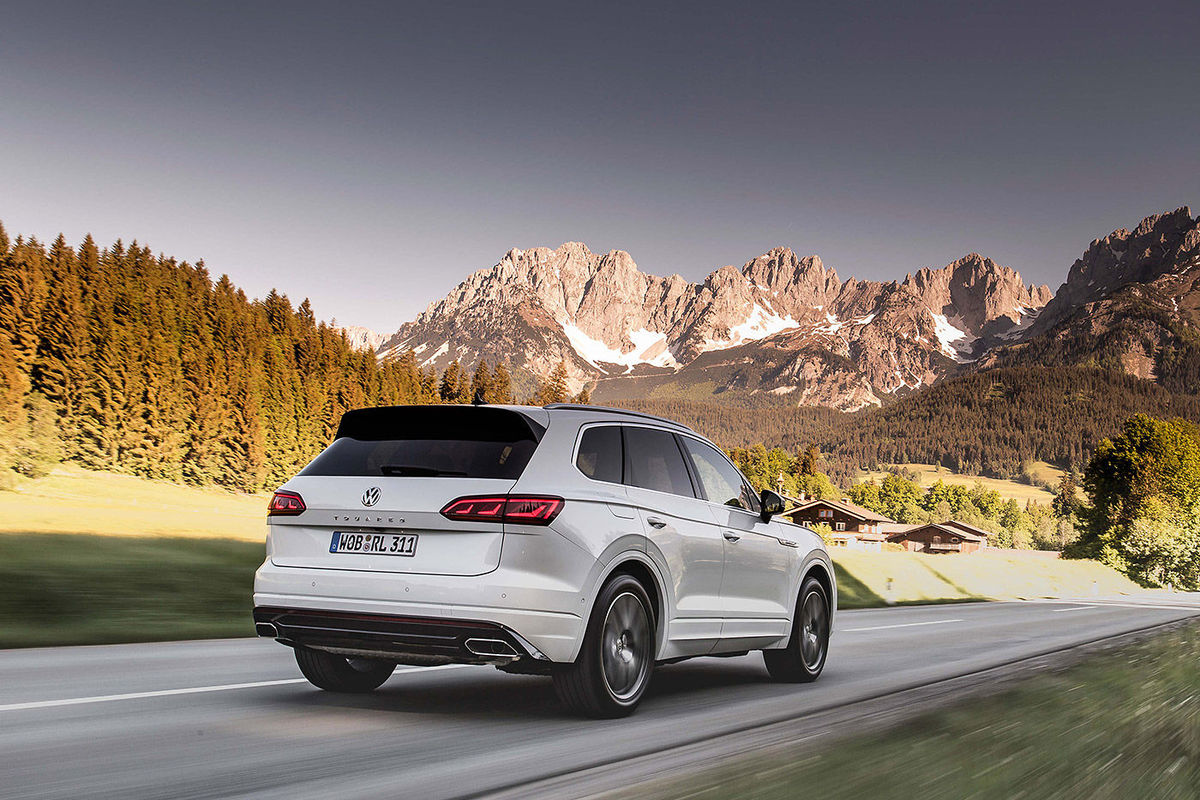
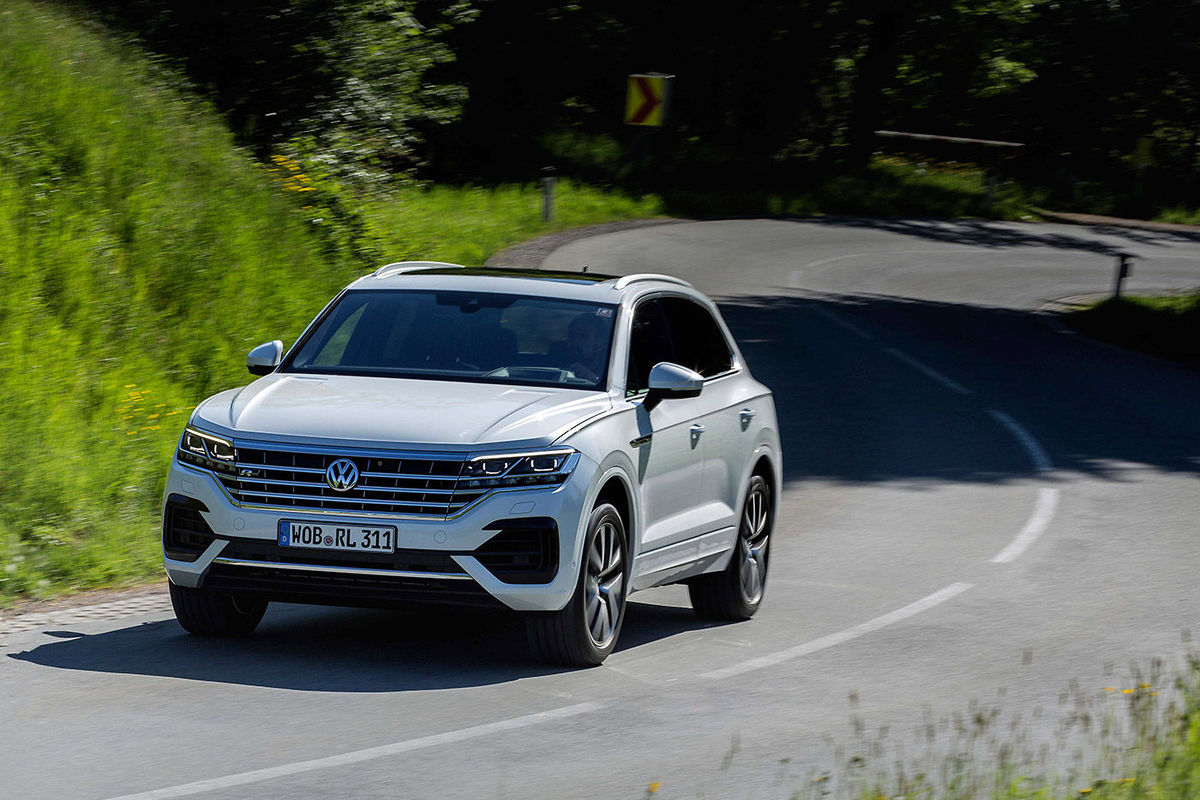
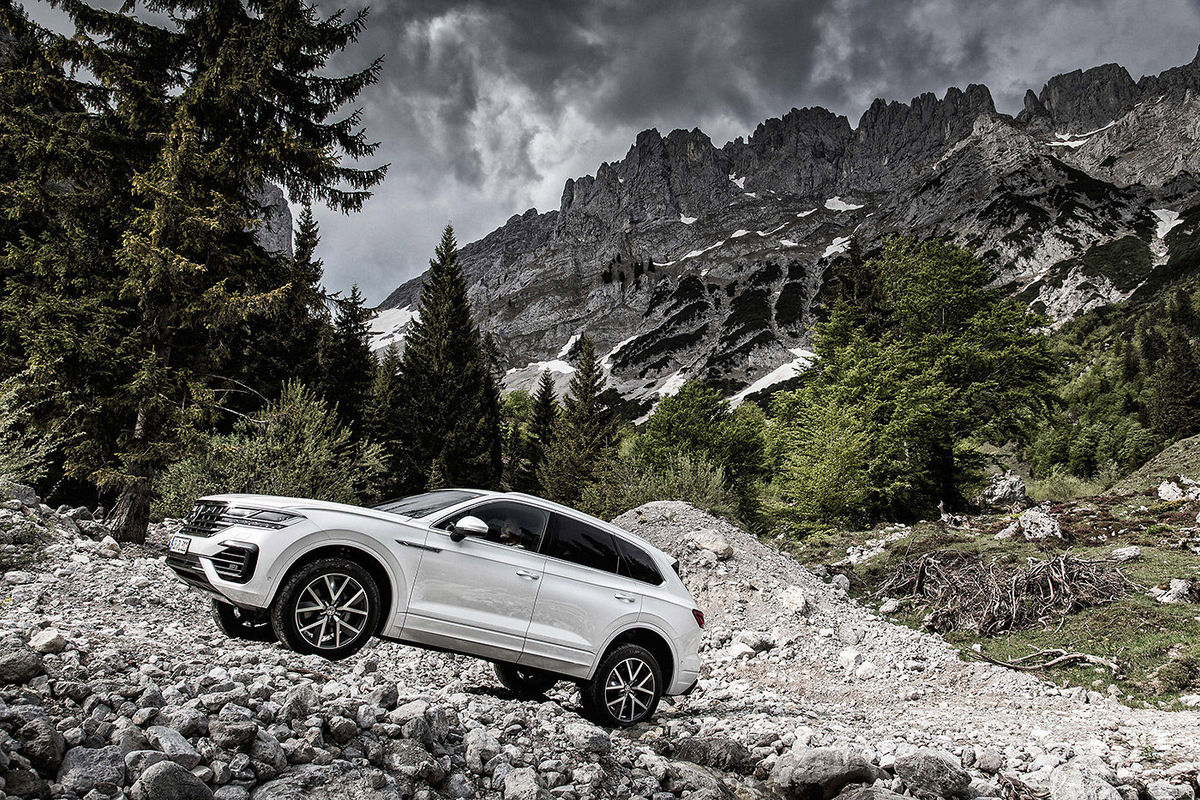
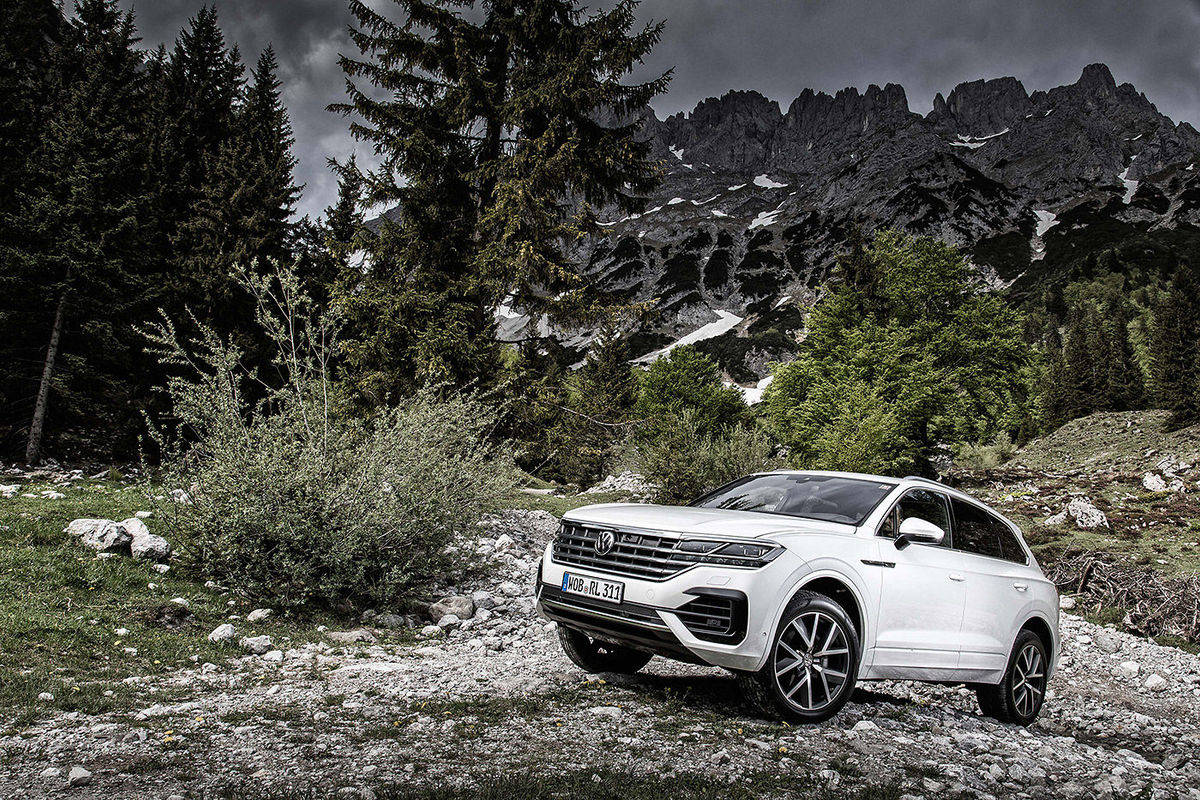
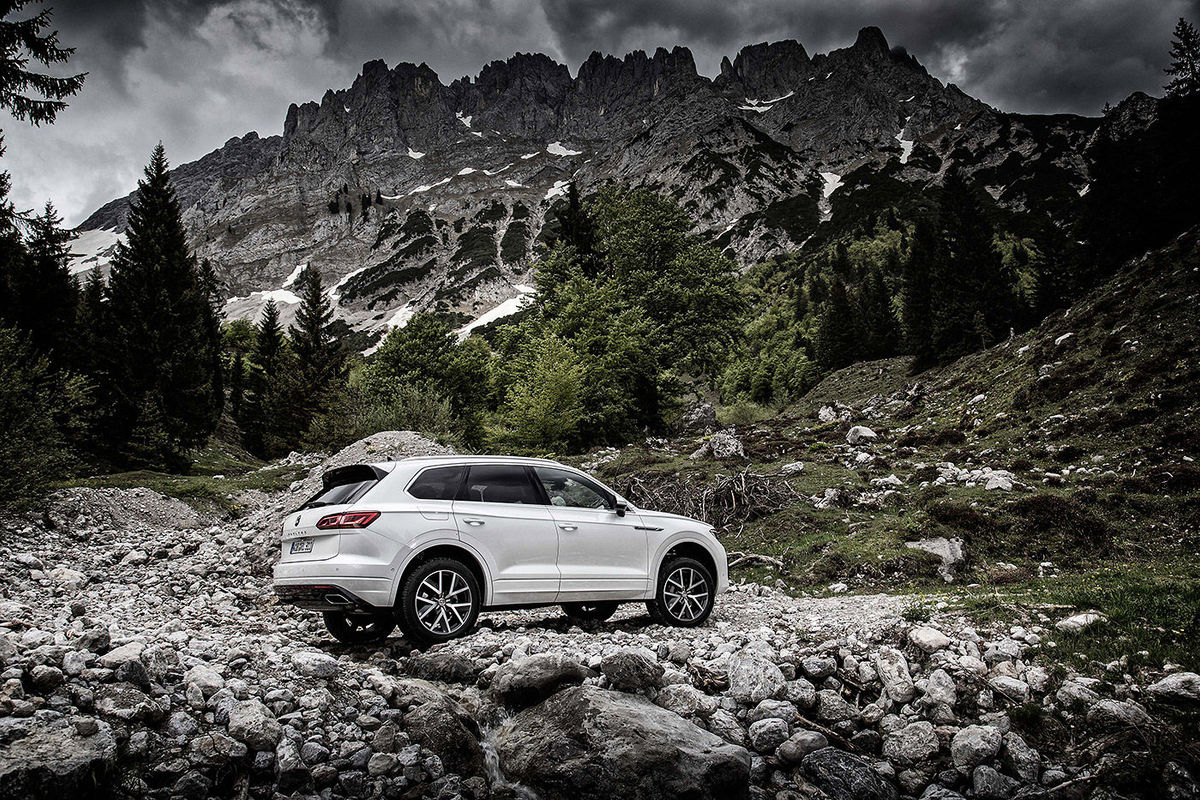
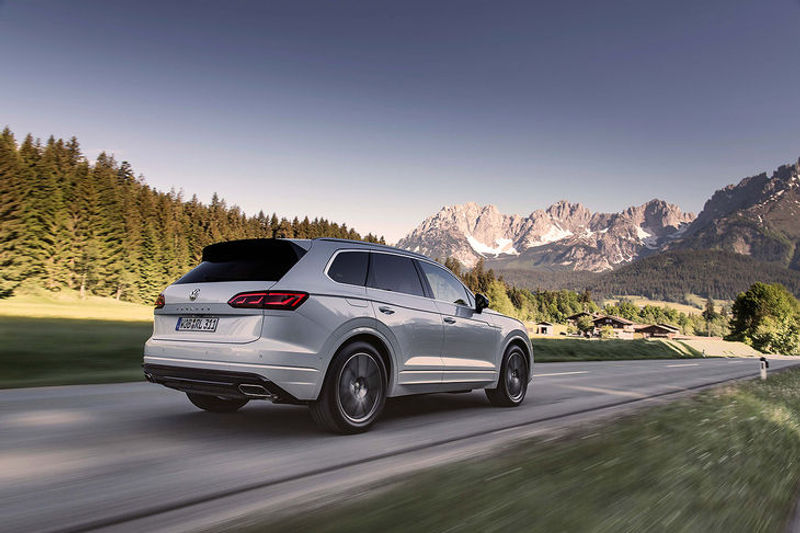
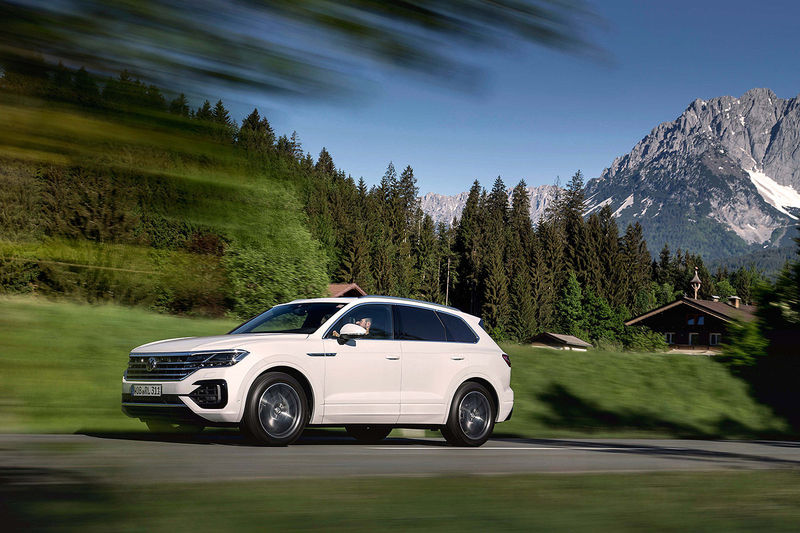
Volkswagen's all-new Touareg will be introduced in South Africa around July or August 2018. The brand's flagship off-roader has often struggled to shine in the shadow of the VW group's other protagonists in the premium SUV segment. Is that about to change? Cars.co.za correspondent Matt Saunders travelled to Austria to drive the new model and see if it's ready for the limelight.

Common platform strategy must work out rather well for the Volkswagen Group, especially for the Volkswagen brand where the positive effect is clear. If your potential customer knows just enough to know that a VW Golf and an Audi A3 share a platform, after all, that knowledge is inevitably going to make the cheaper vehicle in the equation look like the smarter buy. With the new VW Touareg, that positive effect of shared tech across the group is even more favourable.


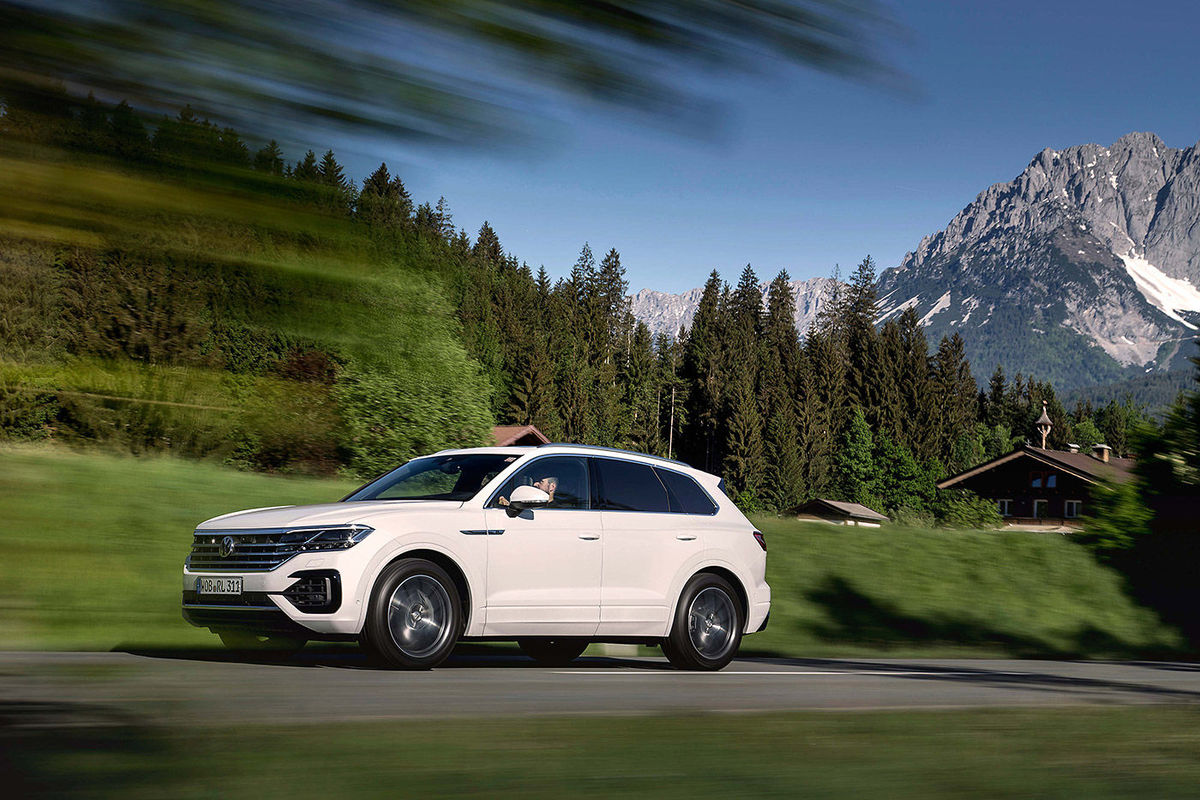
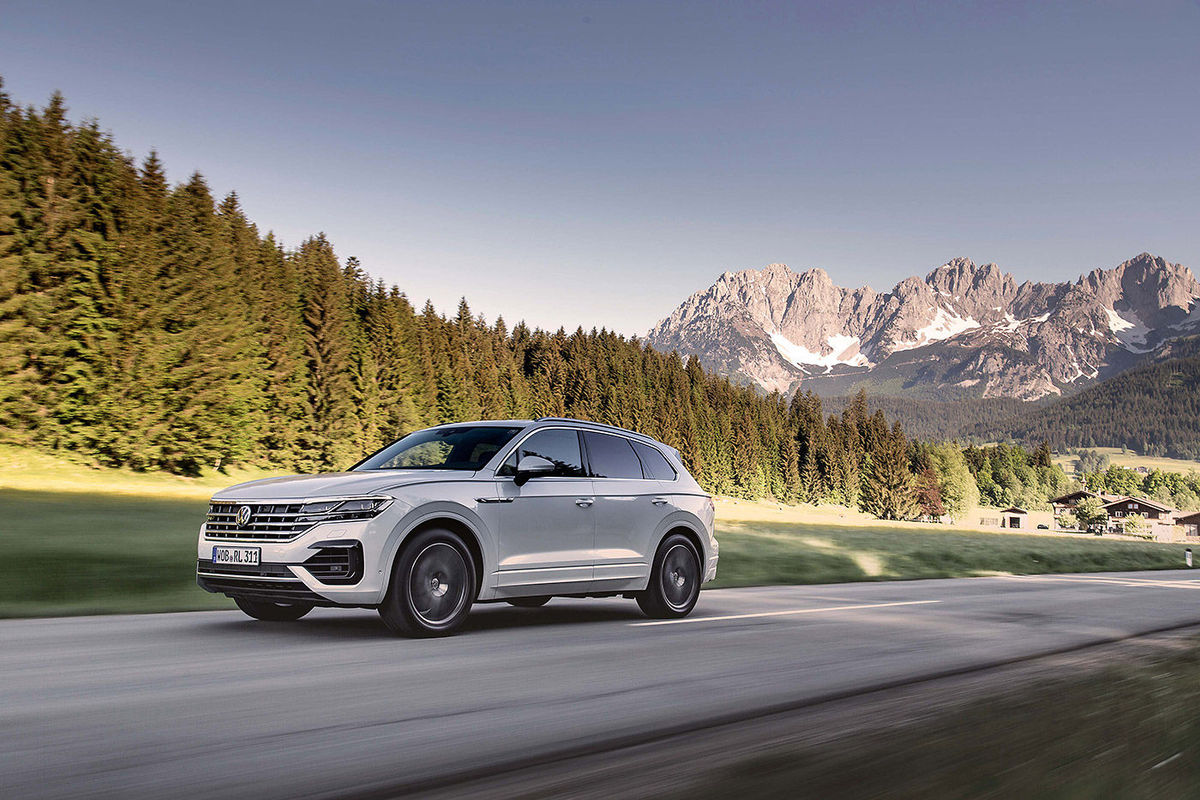
The new Touareg shares its underpinnings with the Bentley Bentayga and the Lamborghini Urus.

The cars this 3rd-generation luxury SUV is related to are mostly more expensive. The Touareg’s active roll cancellation system uses the same technology you’ll find on a R4-million Bentley Bentayga, and its four-wheel steering system is shared with an even more expensive Lamborghini Urus. But if you bought a new Touareg on the basis that it’s some kind of bargain-hunter’s super-SUV, my guess is that your smug face wouldn’t last very long. The Touareg remains a surprisingly functional and relatively simple sort – and that’s in spite of Volkswagen’s attempts to give it more glitz.

Though the car handles better than its predecessor, it’s a long way from having the agility of a Porsche Cayenne; and while the interior has high-quality materials and high-tech ingredients, the Touareg lacks the richness or design appeal of either a Range Rover Velar or a Volvo XC90.

Powerful and practical


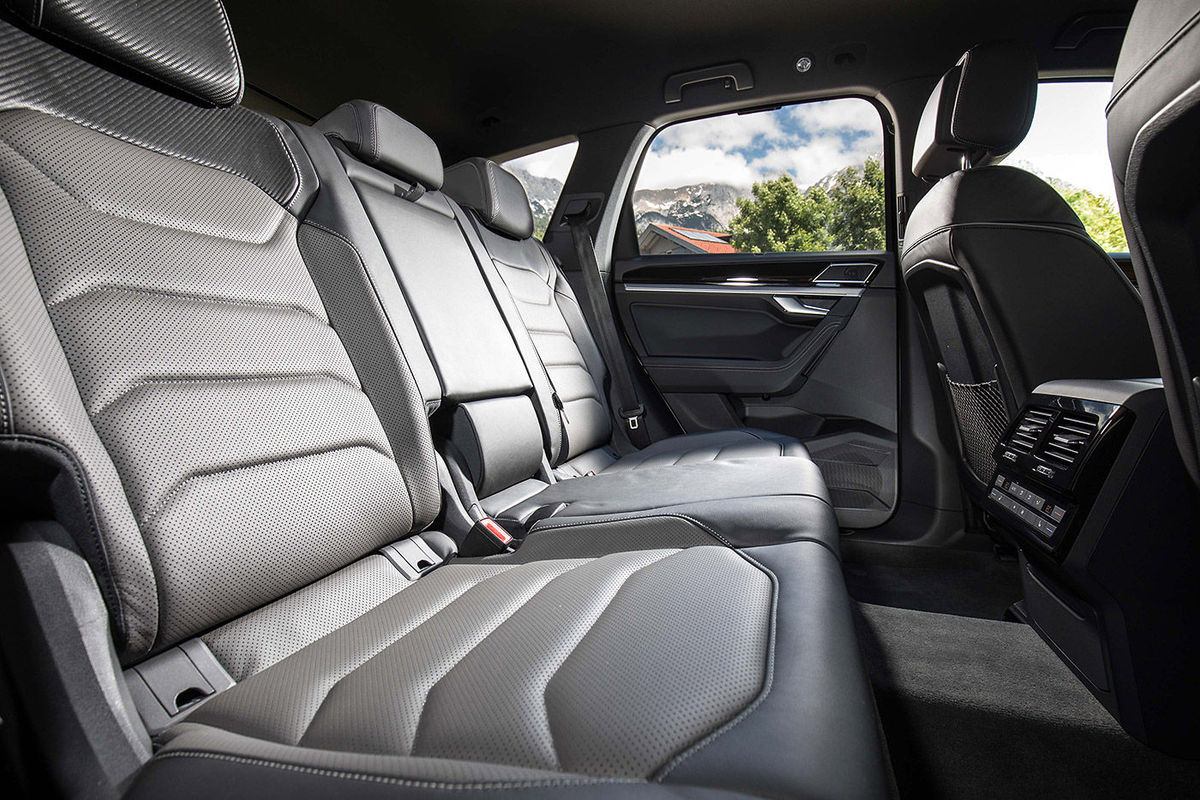
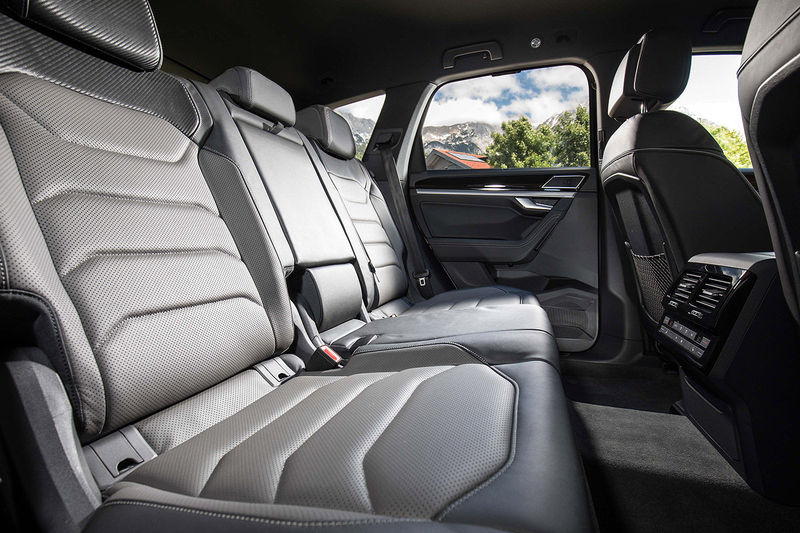
As a pure 5-seater SUV, the Touareg has heaps of room for all passengers.

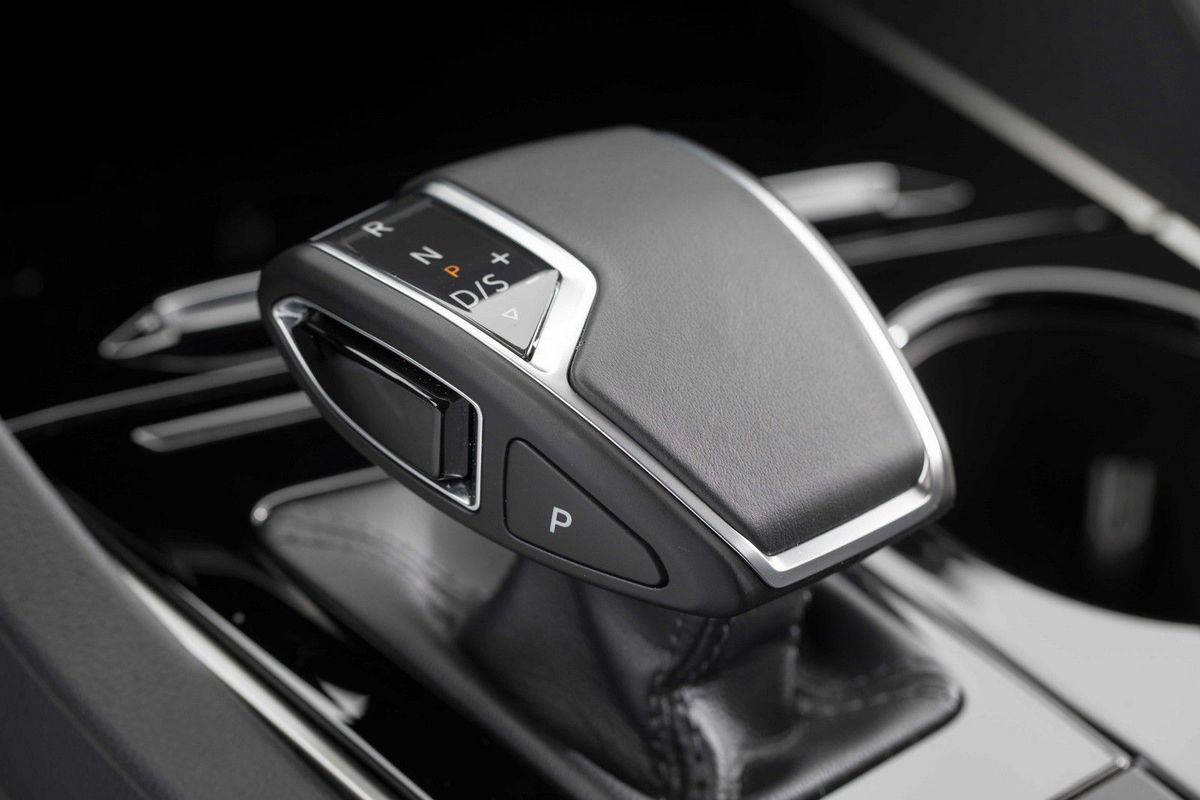
It will be powered by either a V6 turbodiesel or V6 turbopetrol in Mzansi and, whereas a V8 turbodiesel and petrol plug-in hybrid will be offered overseas at a later stage, they are not confirmed for our market. We tested the torquier V6 turbodiesel, and our test car had 2-chamber air suspension, active anti-roll bars and four-wheel steering, all of which are likely to be optional equipment. Its centre diff-based four-wheel-drive system and 8-speed automatic gearbox, however, will be standard.

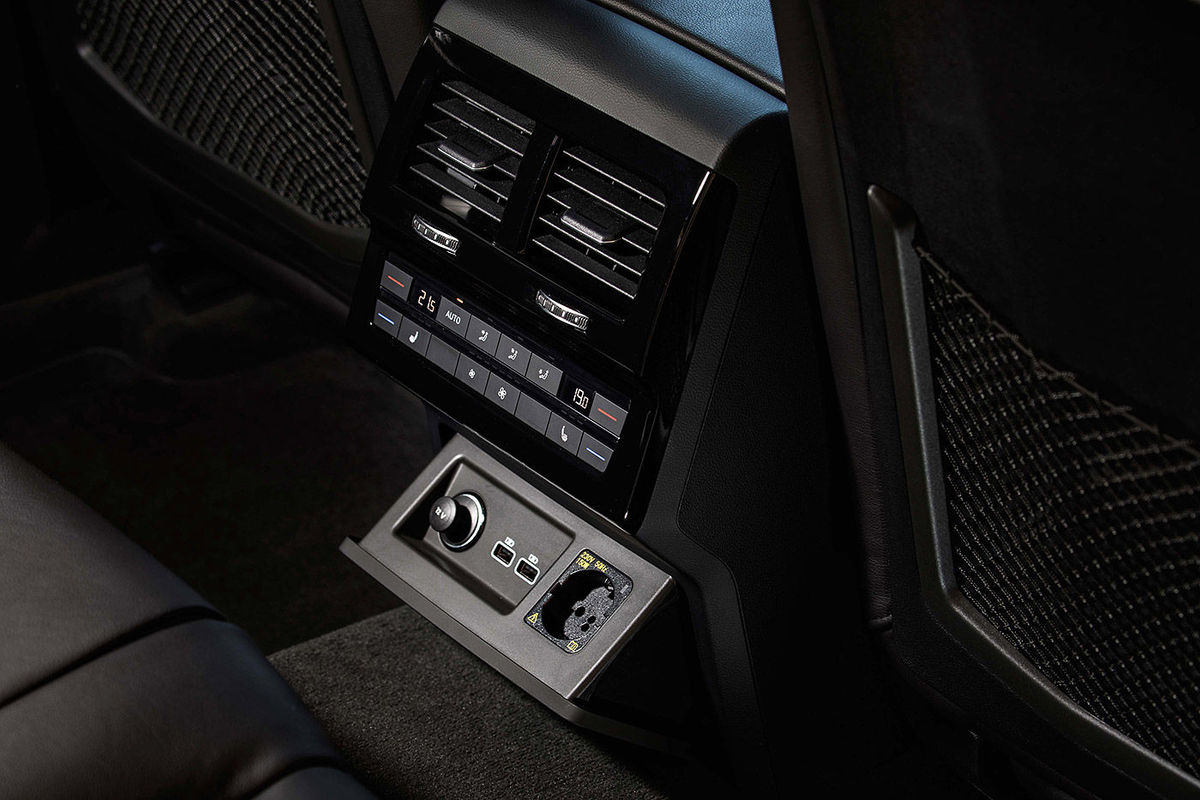
The Touareg’s a 5-seater with a luggage bay that’ll swallow up to 810 litres of cargo before you start flopping over backrests. It has plenty of room even for larger adults in both rows, and up front, the cabin looks and feels solid, classy and expensively hewn, though it retains a functional ambience.

The driving experience


Engines available include both V6 turbopetrol and V6 turbodiesel units. A V8 turbodiesel and plug-in hybrid are on their way too, but not confirmed for SA.

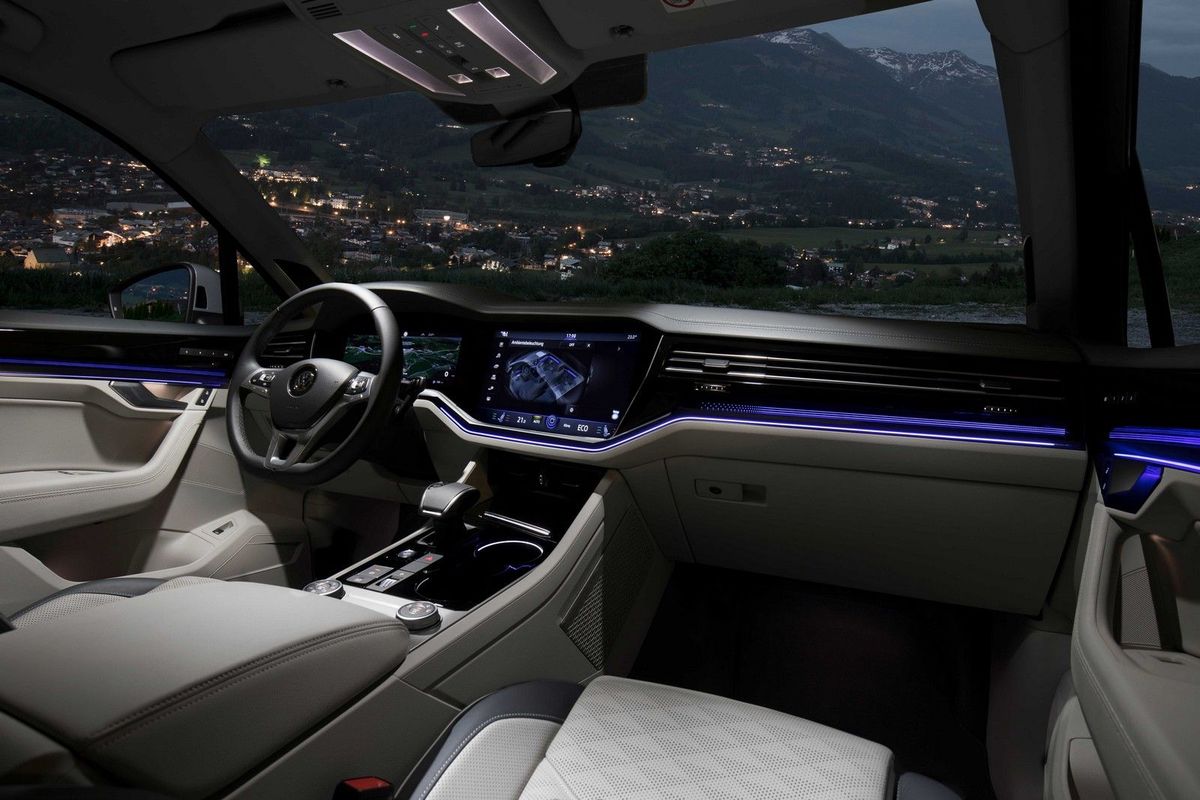
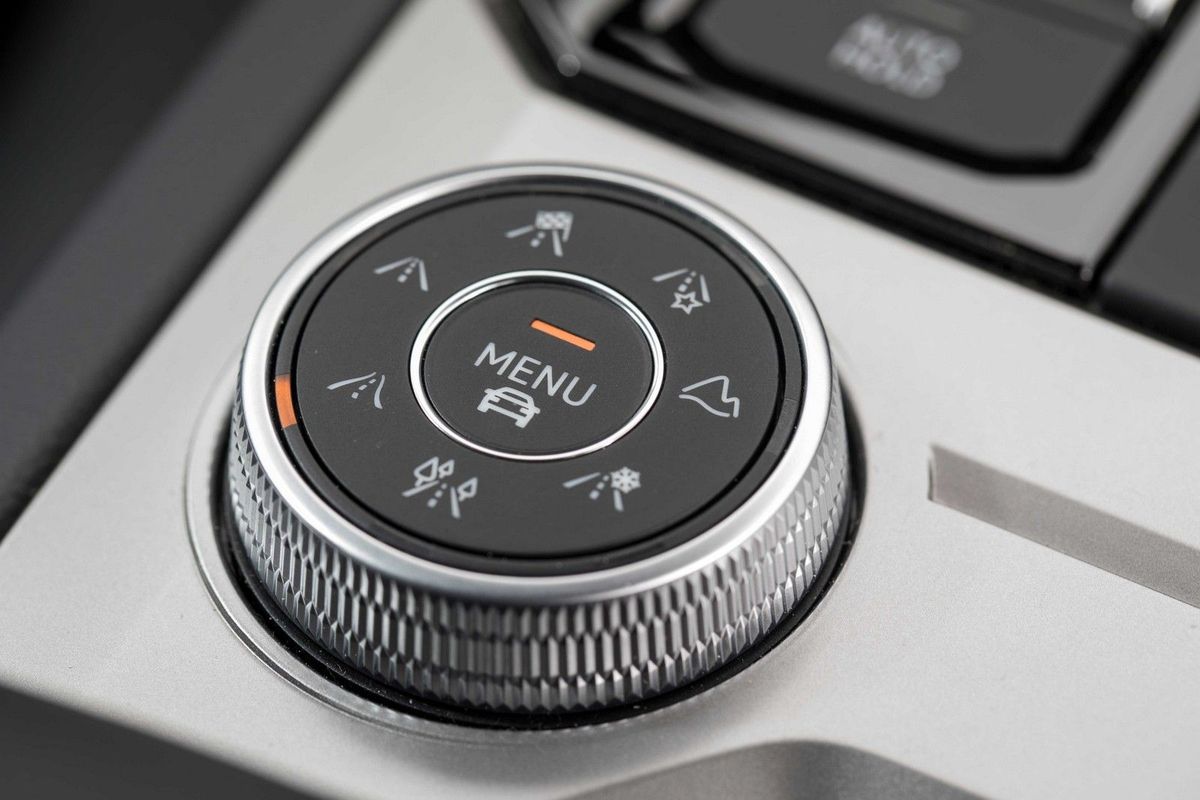
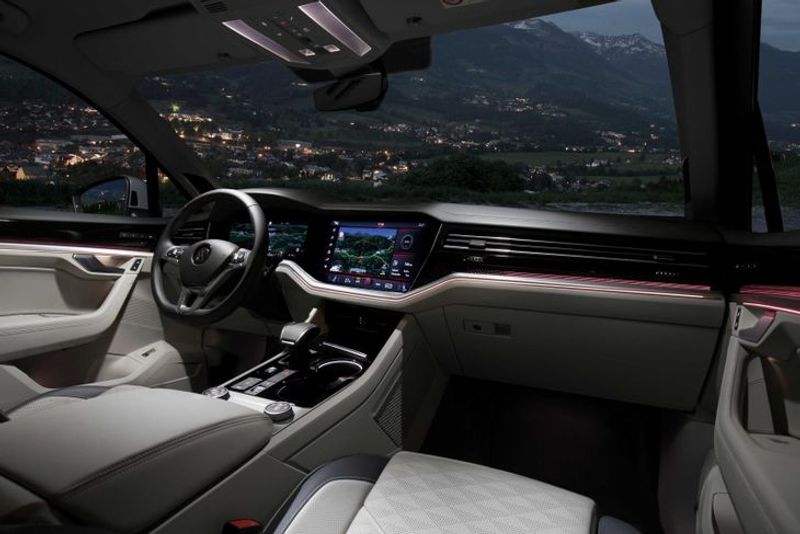
The wow factor comes from its large duo of instrument and infotainment screens, which butt up against each other similarly to Mercedes’ most-recent orientation. The system’s complexity makes it less intuitively usable than some; it’s nonetheless slick and impressive. On the transmission tunnel, you’ll find the rotary dials controlling the car’s adjustable-height air springs and its driving modes. Having sampled several of them, you’ll find that Normal and Comfort suit the car best on the road, since they combine the Touareg’s first-rate refinement and isolation with a settled, comfortable ride; and handling that melds intuitive drivability with wieldiness and precision well.

In other modes, the Touareg is agile for a car of its size, but not particularly enticing drive. Our test car’s active suspension and variable-ratio steering systems seemed to take some predictability out of the handling: around tight bends, the steering quickened suddenly (at about a quarter turn of lock) and the extra weightiness felt artificial.


The dual-screen setup is quite similar to what Mercedes-Benz offers in the E-Class and other contemporary high-end models. Still, it looks great.

In a pattern of typical use more typical of a big SUV, the car works very agreeably, a shortage of centre feel on that steering and an inconsistency in its weight and provision of feedback being only minor dynamic bugbears. The engine hauls the car along smartly and with performance in reserve, and it’s quiet and smooth with it, only very occasionally being tripped up by a slightly hesitant transmission.

Summary

By and large, this is the same understated, competent Touareg, known and loved for its fuss-free sense of ease of use since it first appeared in 2003. It’s not likely to be anyone’s must-have vehicular acquisition of 2018, but it is a very nice car and has a rare unpretentiousness among the ever-increasing luxury SUV ranks.

The promotional clip for the new Touareg was filmed in Cape Town and surrounds, check it out:

Related content:

New Volkswagen Touareg Revealed

Porsche Cayenne (2018) Launch Review
Spy Shots: New BMW X5

Alfa Romeo Stelvio 2.0T Super Q4 (2018) Review [w/Video]
Updated Spy Shots: 2018 Mercedes-Benz GLE

Interested in buying a used Touareg?

Find one for sale on Cars.co.za

Isuzu adds X-Rider Black 4×2 to KB range

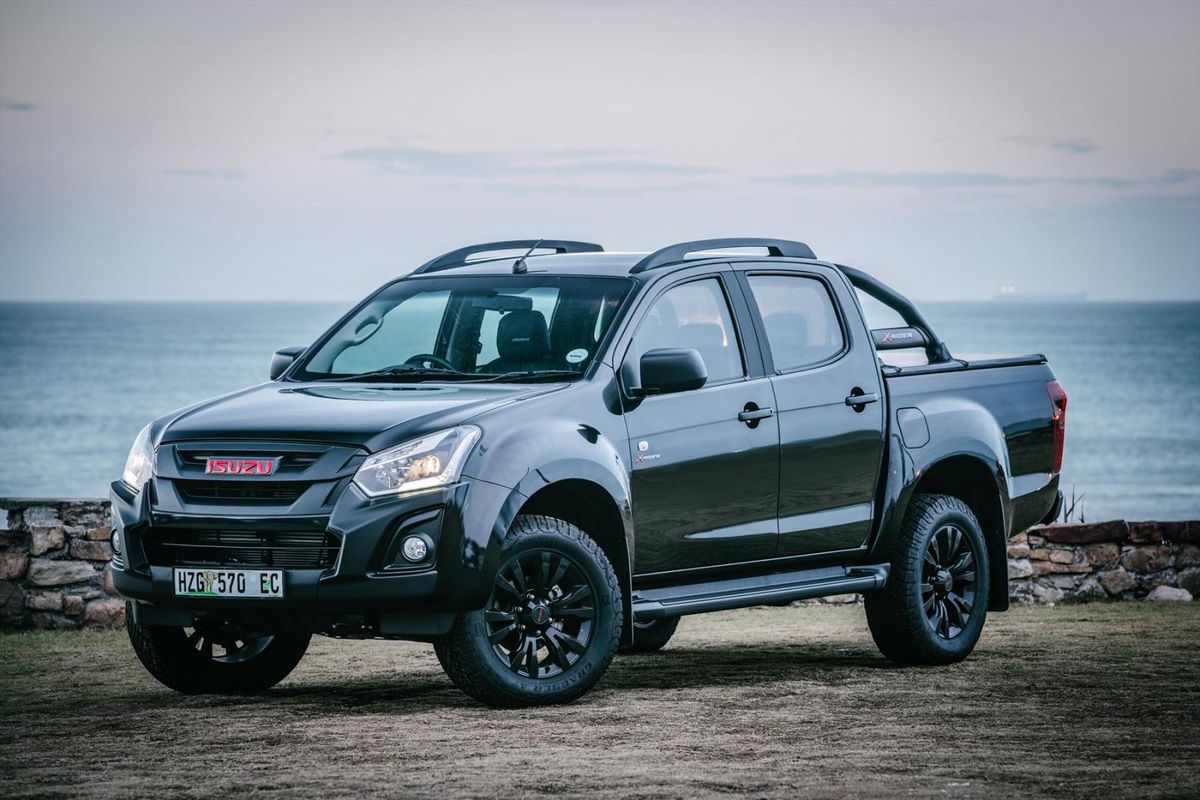
Following its recent introduction of the MU-X adventure SUV, Isuzu Motors SA has expanded its KB bakkie line-up with the launch of a limited-edition KB250 double-cab X-Rider Black 4×2 derivative.

The X-Rider specification, which incorporates distinctive styling elements and upmarket features that set it apart from the rest of the derivatives in the KB range, was introduced in 2016 as a 700-unit limited edition run, but sustained demand prompted Isuzu to make it a permanent fixture in its bakkie range early last year.

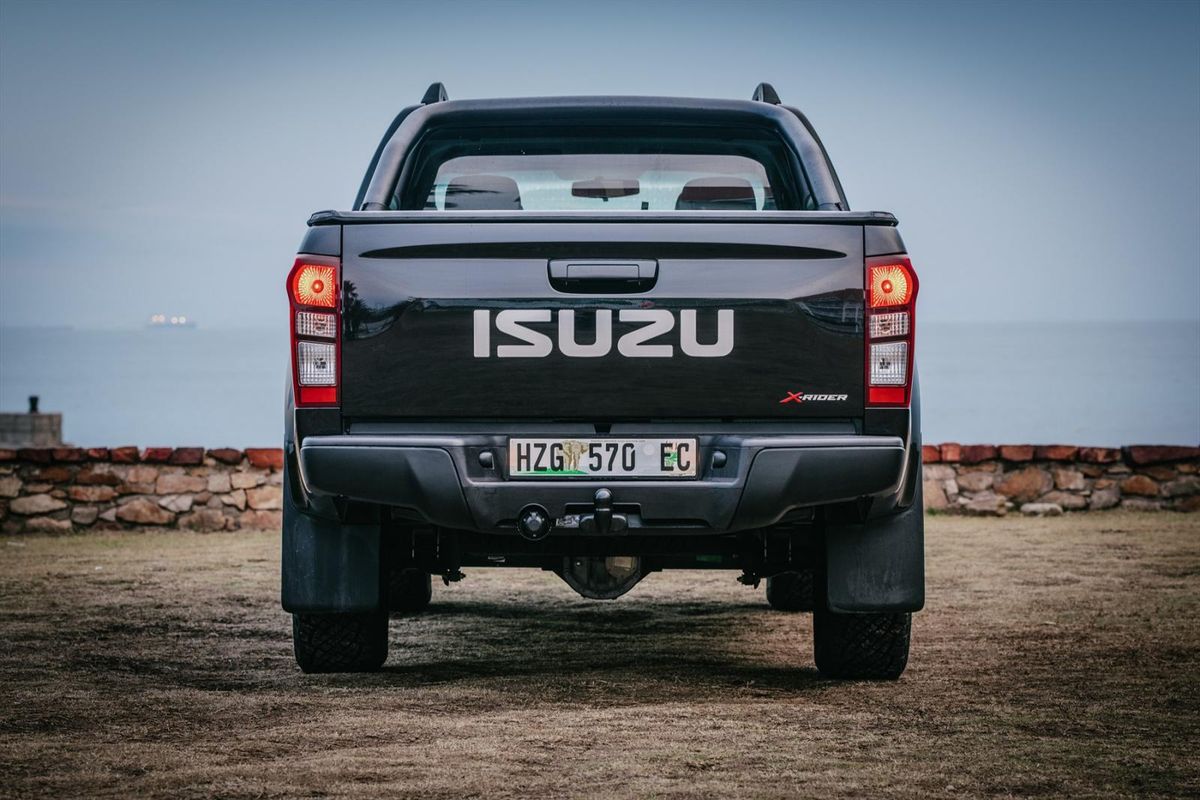
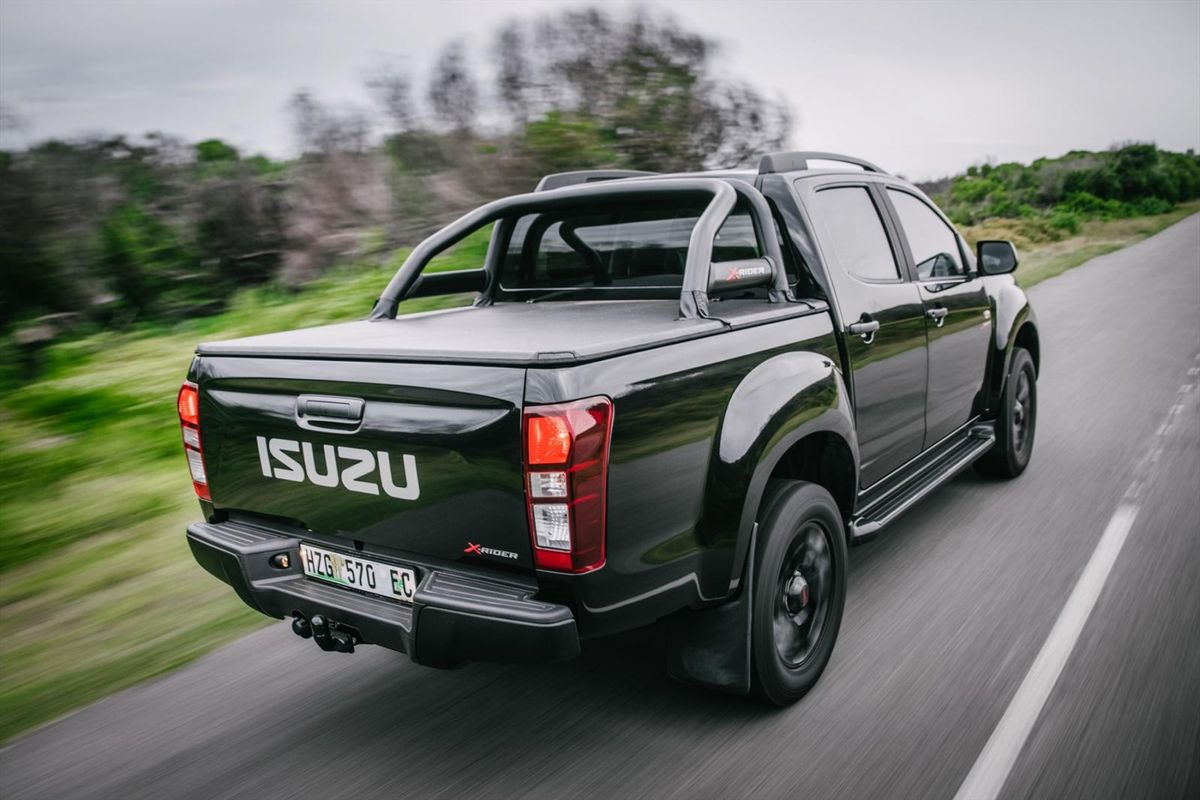
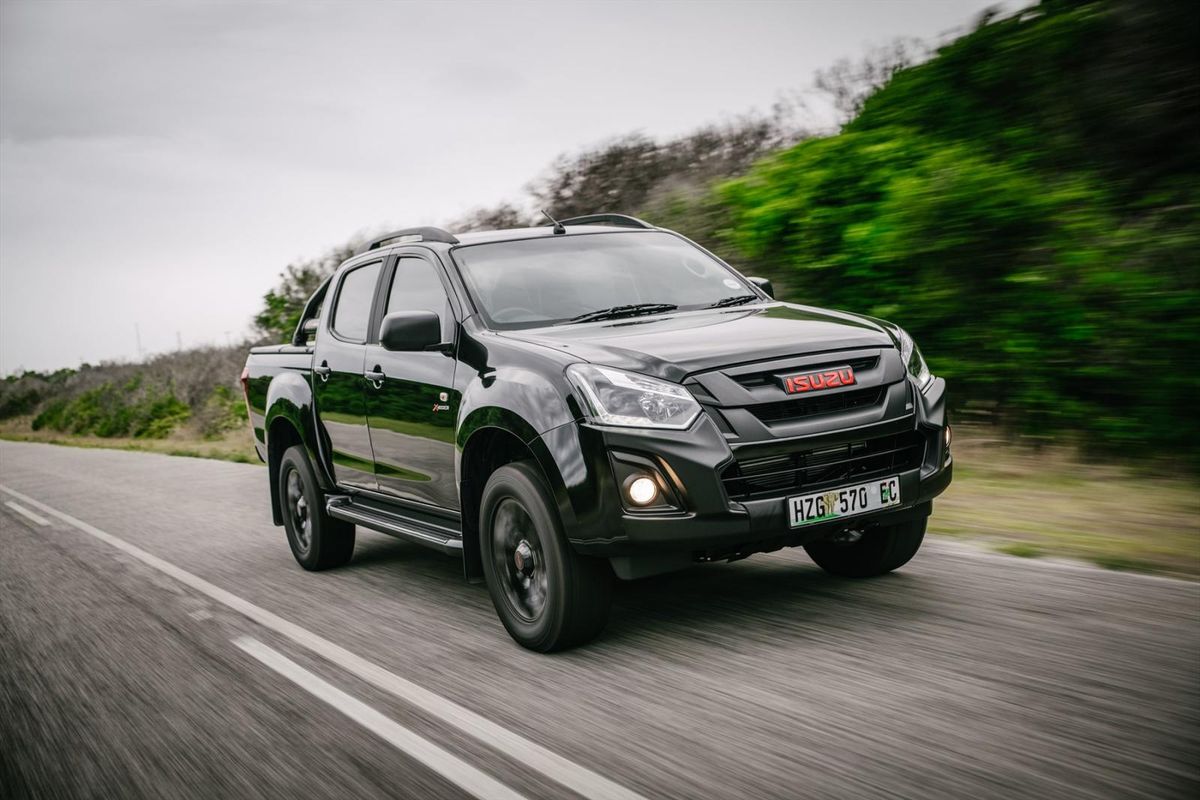
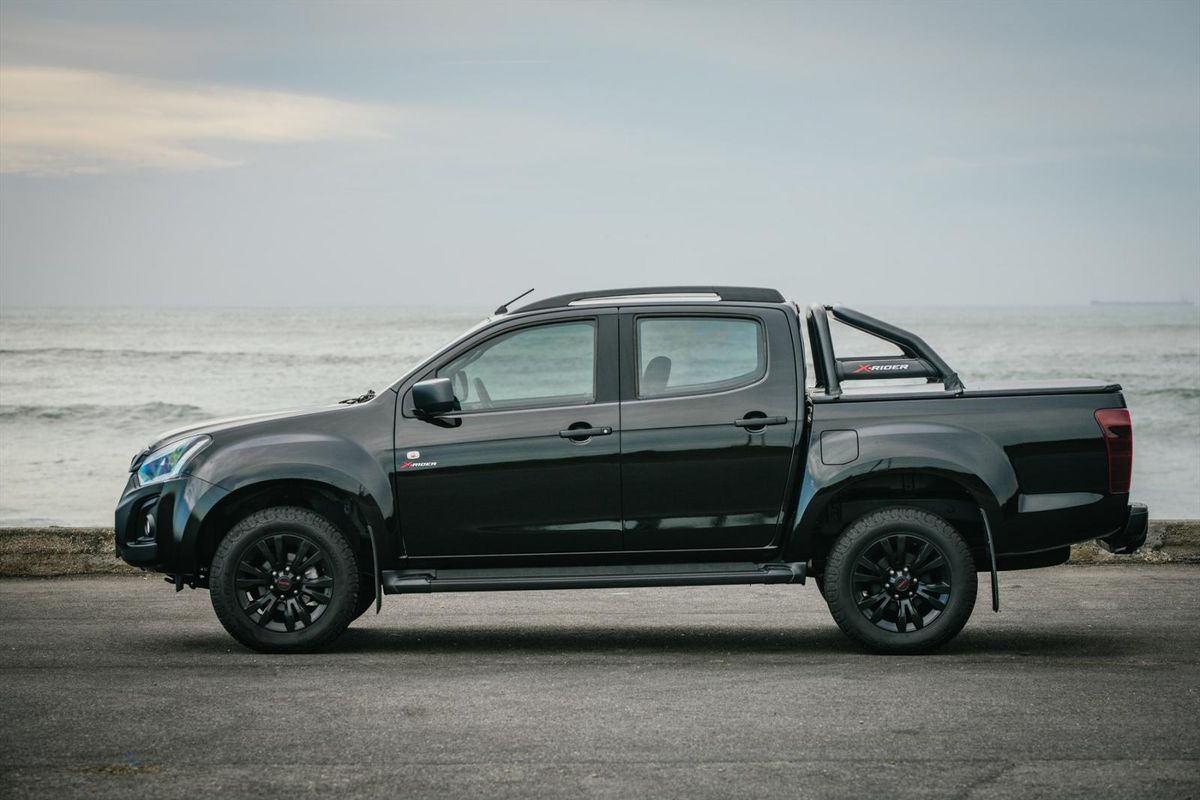
This new interpretation of the X-Rider theme is billed as a limited edition too. While the KB250 Double Cab X-Rider Black derivative, which is available in 4×2 guise with a 5-speed manual gearbox, features all the usual X-Rider trim accoutrements, it’s painted exclusively in the Black Meet Kettle body colour.

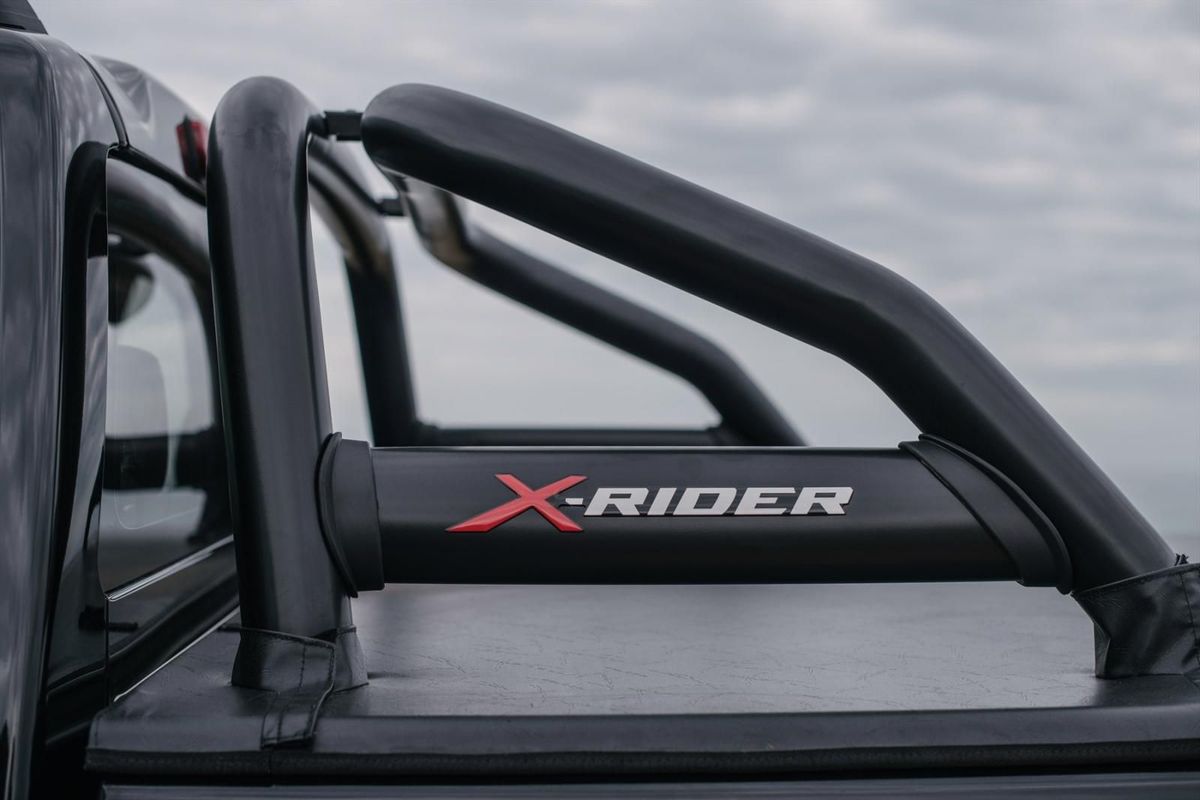
Apart from its noir exterior finish, the front of the X-Rider Black is adorned with a black bumper guard, projector headlamps with integrated LED daytime running lights and fog lamps. These features are complemented by black-finished B-pillars, side steps and a sports bar in the load bay that bears an X-Rider logo on either side, which is also applied to the front doors and rear tailgate. A matching black tonneau cover and 18-inch alloys (with red Isuzu badges) complete the look.

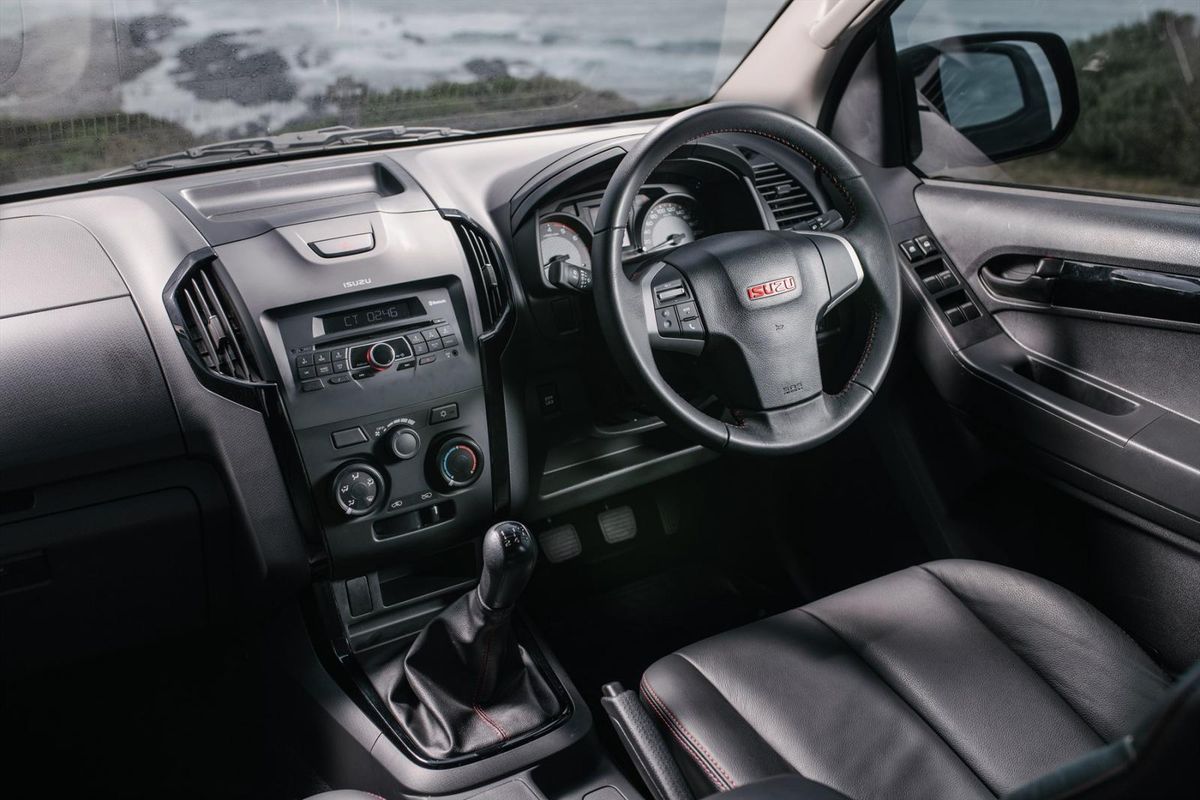
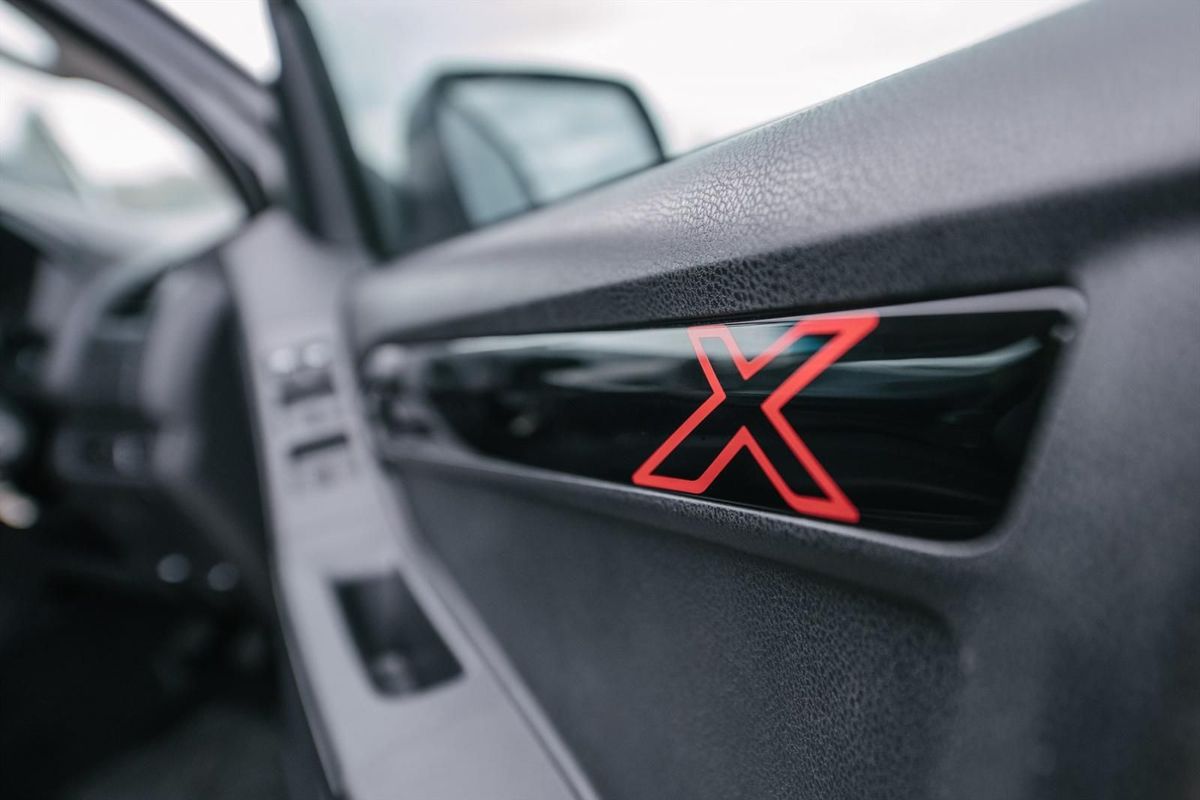
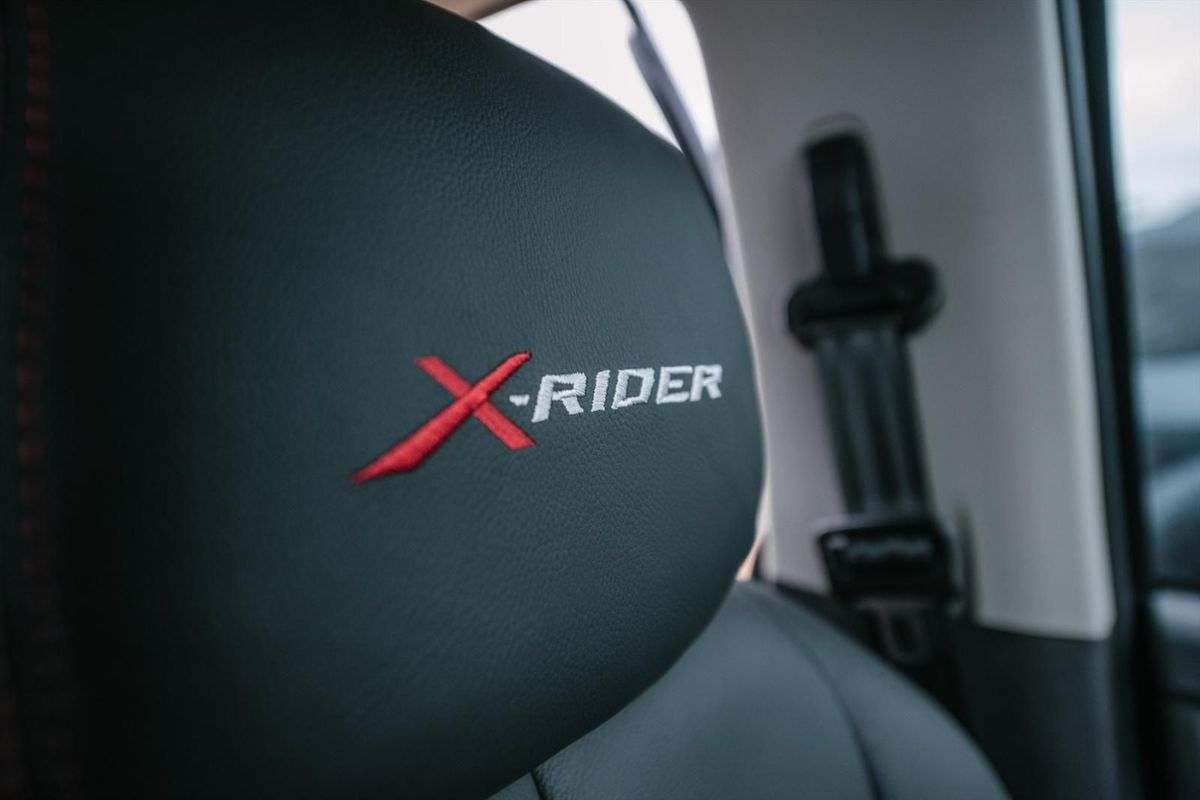
Inside, the cabin is trimmed in black leather seats accented by red bolster stitching and the "X-Rider" logo, which is embroidered on the headrests. Red stitching is also used for the leather-trimmed steering wheel emboldened with the red Isuzu badge, and on the gear lever boot. Piano black trims feature on the vents, audio system, front console and door inserts, the latter of which bear a red "X".

The Isuzu bakkie range comes standard with Isuzu Complete Care, comprising a 5-year/120 000km manufacturer warranty and roadside assistance, a 5-year/unlimited km anti-corrosion warranty and a 5-year/90 000 km service plan. Service intervals are every 15 000 km/12 months.  

Prices of the Isuzu KB250 X-Rider derivatives (as of May 2018):

KB250 Double Cab X-Rider Black 4×2 MT         R426 300

KB250 Double Cab X-Rider 4×2 MT                  R407 800

KB250 Double Cab X-Rider 4×4 MT                  R454 100

Related content:

Isuzu KB 250 HO X-Rider Extended Cab (2016) Review
Toyota Hilux Dakar Edition Price Announced

Mitsubishi Triton Athlete in SA

Facelifted Ford Ranger Confirmed for SA in 2019

Roush tuning now available for Ford Ranger

Isuzu MU-X (2018) Video Review
Isuzu MU-X (2018) Specs & Price

Isuzu MU-X (2018) Launch Review [w/Video]
Interested in buying an Isuzu KB?

Search for a new/used example on Cars.co.za

Toyota Hilux Dakar Edition Price Announced

Toyota South Africa has announced a Dakar edition of its Hilux bakkie. See how much it costs here.

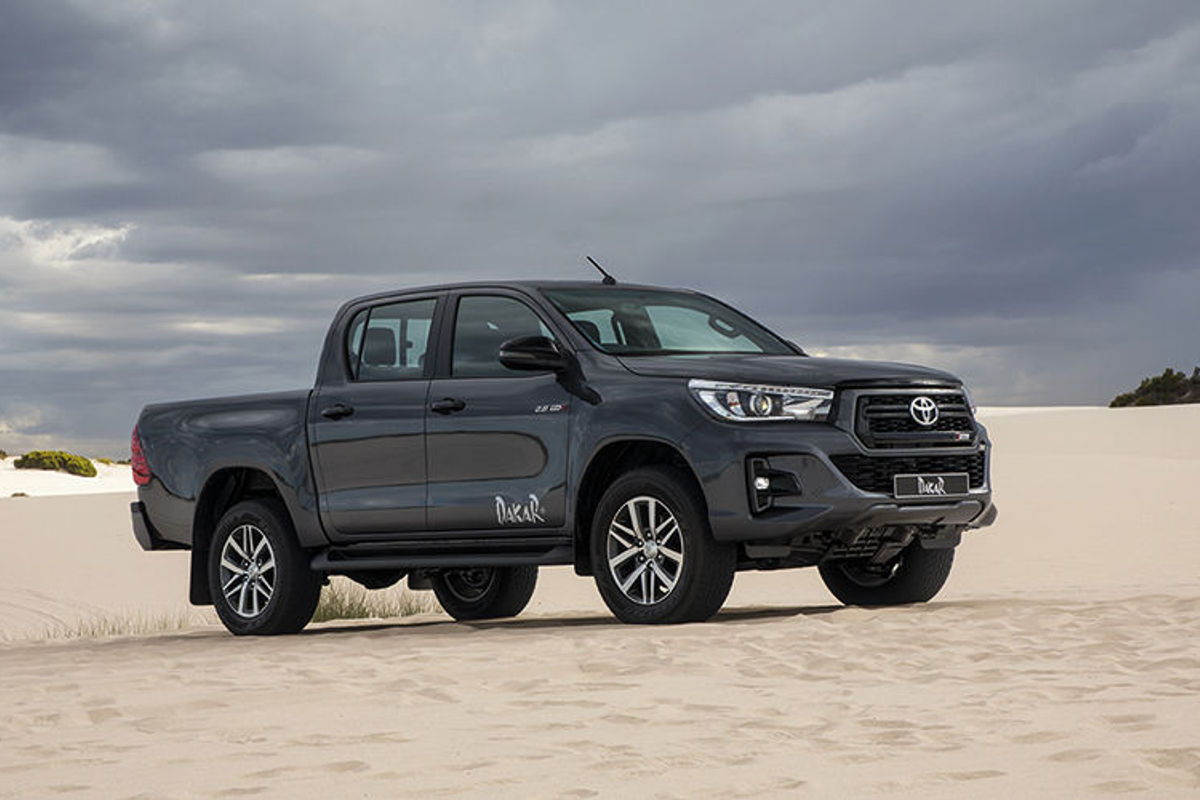
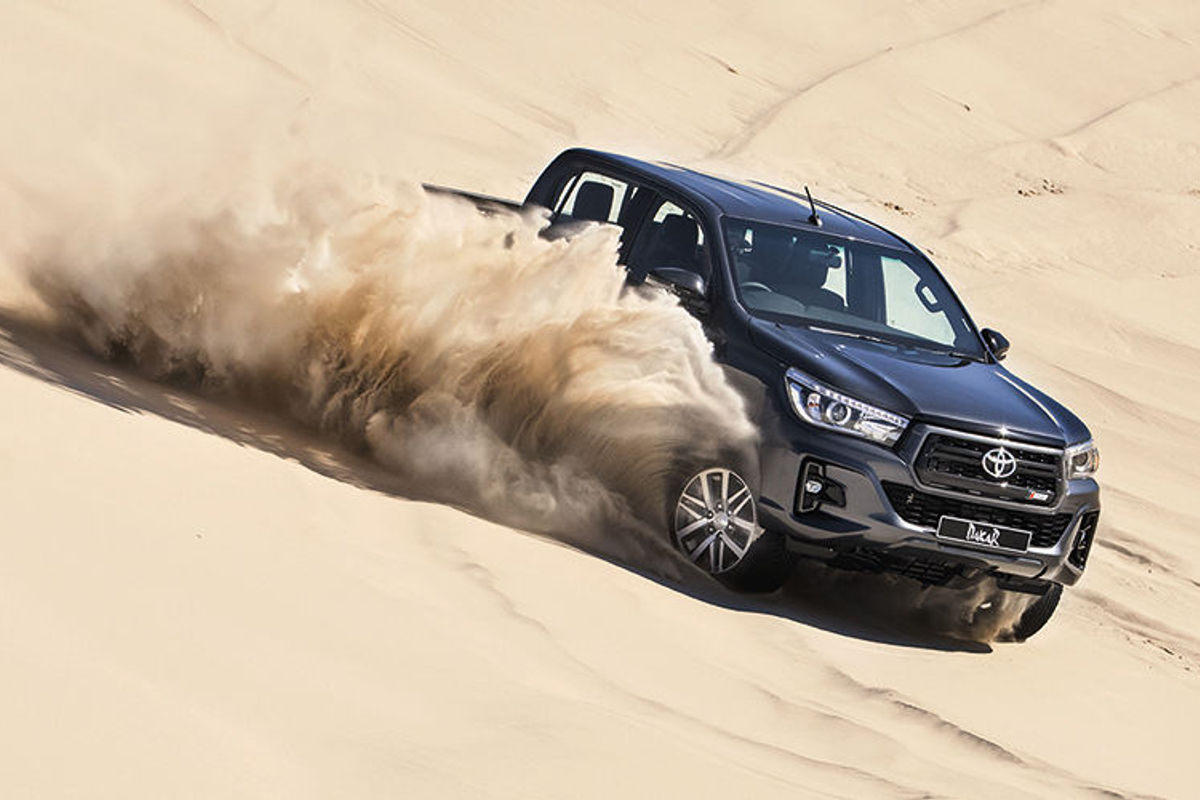
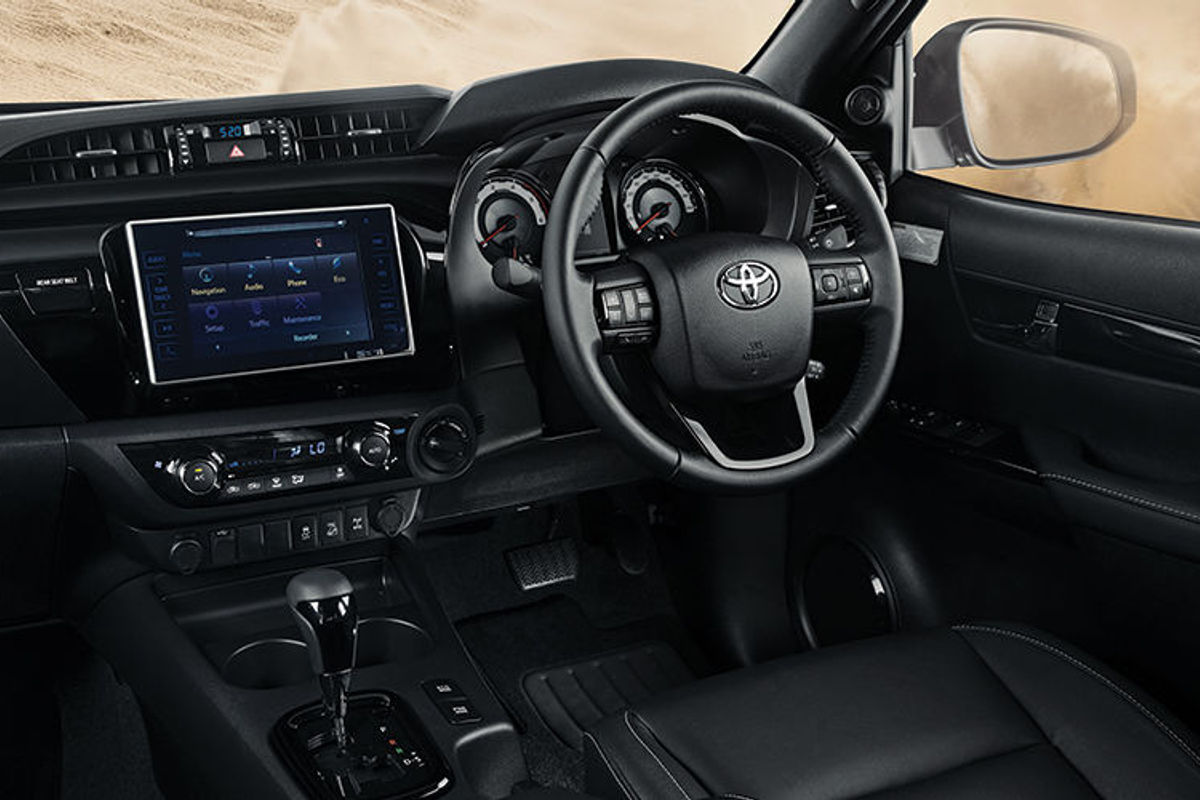
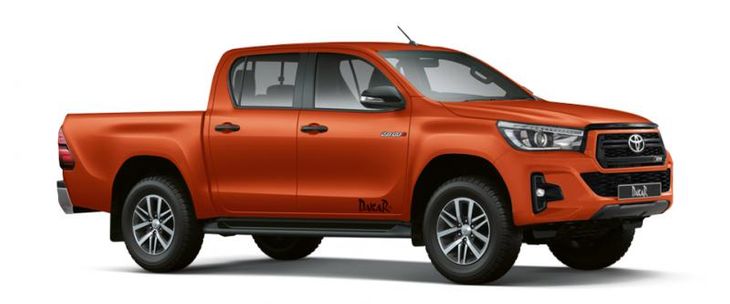
Toyota South Africa has introduced a Dakar version of its Hilux double-cab bakkie. Visually, it's different from lesser Hilux models thanks to a new front end, grille, side mirrors and door handles. Oh yes, and there are Dakar stickers too. Inside, the cabin features black trim and partial leather upholstery. The Dakar Edition gets satellite navigation as standard on top of the touchscreen audio system with built-in reverse-view camera and automatic climate control. 

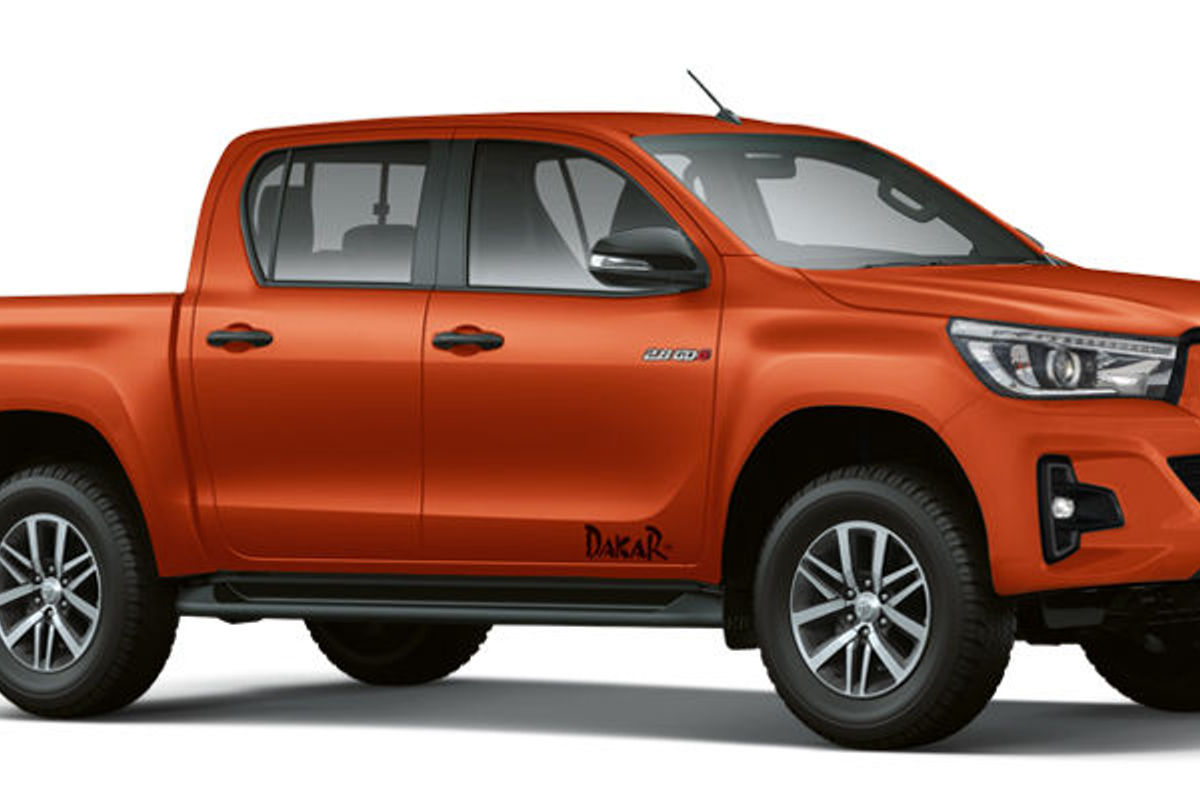
There are only two engine options available for the Toyota Hilux Dakar; the popular 2.8-litre GD-6 turbodiesel with 130 kW and 420/450 Nm, as well as the muscular 4.0-litre naturally-aspirated V6, which punches out peak outputs of 175 kW and 376 Nm. You can choose from the 4 colour finishes:  Glacier White, Chromium Silver, Graphite Grey Metallic and outrageous Inferno Metallic, seen below.


Inferno Metallic Toyota Hilux Dakar edition. Now where have we seen a vibrant orange paint finish on a bakkie before?

Toyota Hilux Dakar Edition Price in South Africa

Hilux 2.8 GD-6 RB Dakar (130 kW / 420 Nm): R535 000

Hilux 2.8 GD-6 RB Dakar AT (130 kW / 450 Nm): R553 400

Hilux 2.8 GD-6 4×4 Dakar (130 kW / 420 Nm): R601 100

Hilux 2.8 GD-6 4×4 Dakar AT (130 kW / 450 Nm): R621 000

Hilux 4.0 V6 4×4 Dakar AT (175 kW / 376 Nm): R662 700

Further reading:

Toyota Hilux Turns 50: 8 Bakkies That Made it a Legend

Drag Race: Hilux vs Ranger vs Amarok vs KB

Toyota Hilux vs Ford Ranger vs Isuzu KB vs Volkswagen Amarok (2016) Comparative Review

2016 Toyota Hilux vs Ford Ranger – Offroad & Review

Bakkie Comparison: Nissan Navara vs Ford Ranger Fx4 [with Video]

Watch the new Toyota Hilux Dakar Edition TV Commercial


Interested in buying a Toyota Hilux?

Find a new/used example for sale on Cars.co.za

Hyundai i20 1.4 Active (2018) Launch Review

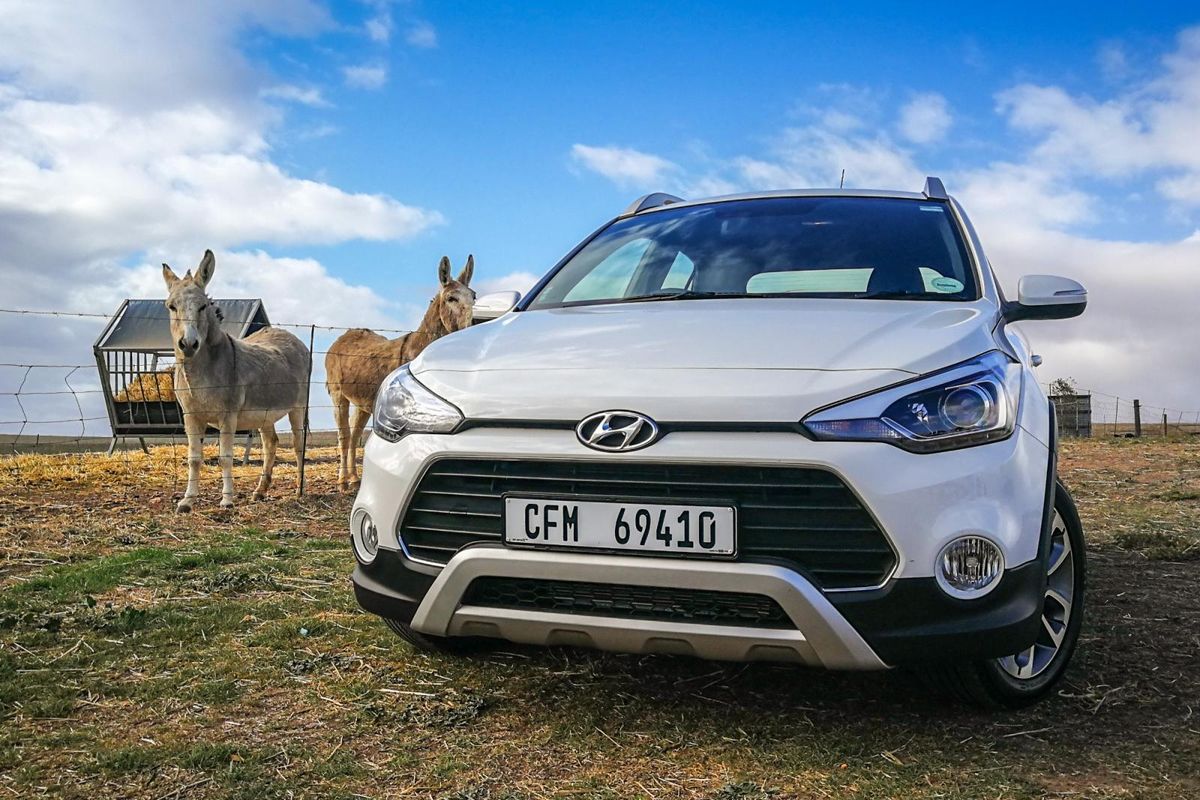
In a market where 5-door hatchbacks and SUVs are all the rage, it makes perfect sense to combine the 2 body styles, doesn't it? With the launch of the i20 Active, Hyundai is the latest brand to have done just that.

The Hyundai i20 has been one of the most popular cars in its segment since introduction in 2009, and that takes some doing seeing as this is a market category that includes the likes of the Volkswagen Polo and Ford Fiesta! Now, for this iteration of Hyundai's compact hatchback's mid-life facelift, the Korean marque has introduced a number of fairly noticeable styling tweaks, some spec refinements and also this – the new crossover-themed i20 Active – as a flagship derivative. Think what CrossPolo is to Volkswagen's Polo and you'll have a perfect view of the i20 Active's positioning. 

Read more about the changes to the rest of the i20 line-up here

It's got the look

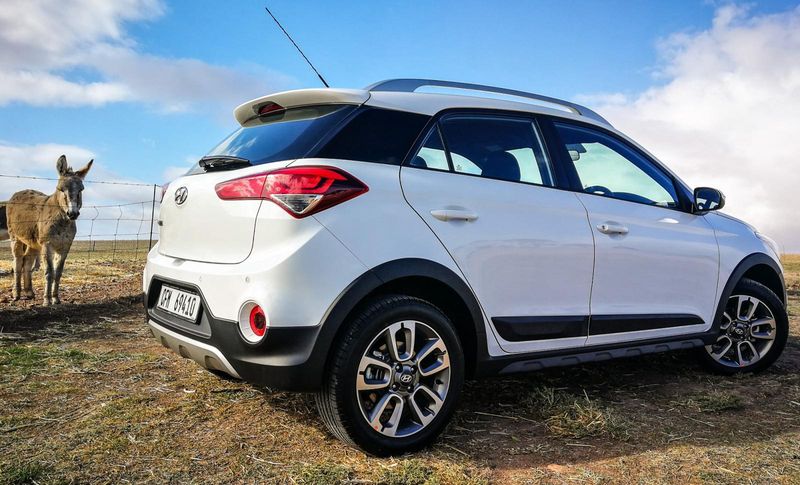
To turn the standard i20 into the Active, Hyundai has added all the usual SUV-themed design features. You get neat roof rails, 16-inch wheels, a ride height raised by 20 mm, black plastic wheel arch linings and cladding elsewhere, as well as front and rear "skidplates". Interestingly, the new Active derivative actually uses the grille and rear tailgate of the pre-facelift i20, yet it still manages to look fresh…


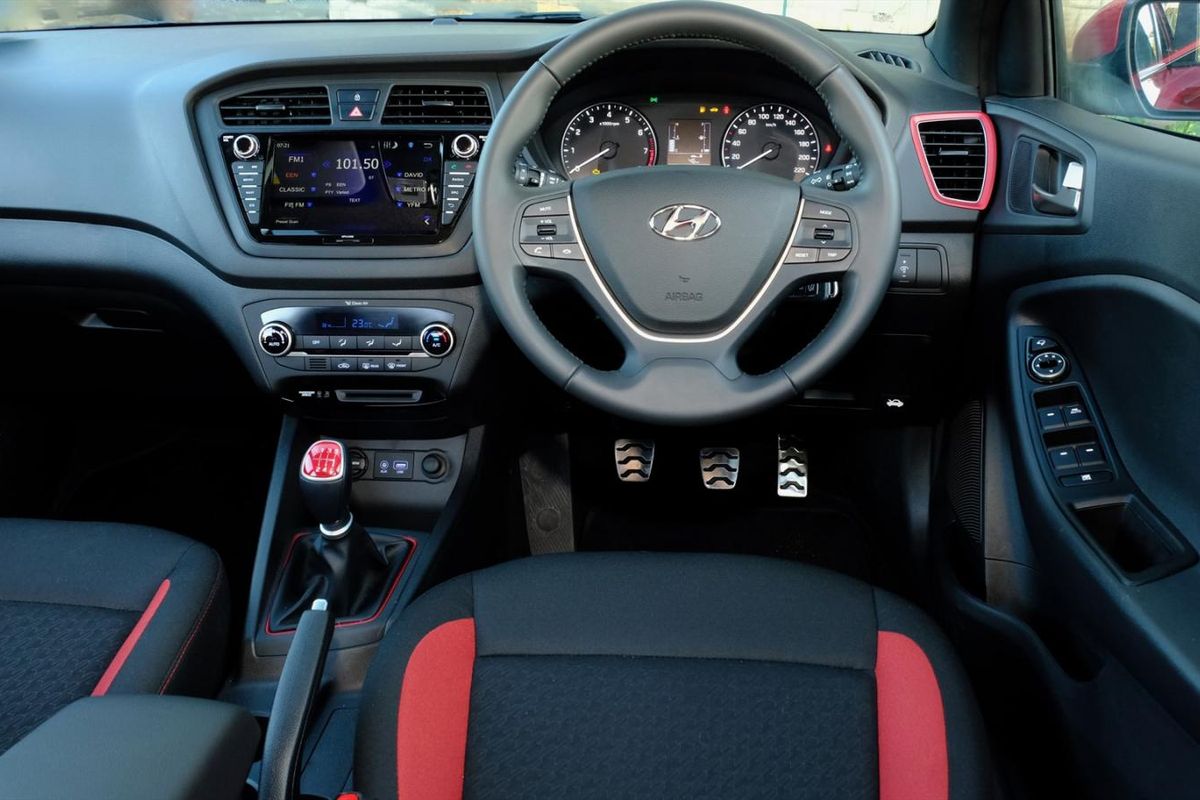
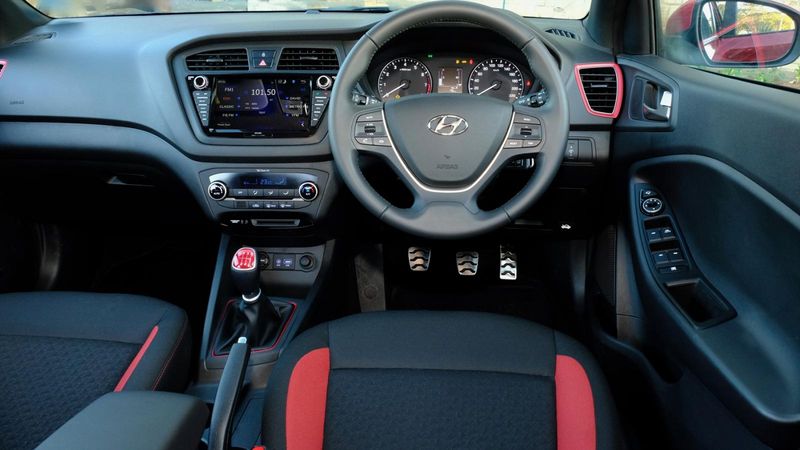
Red inserts are specific to the i20 Active. Note large touch-screen system that is standard. 

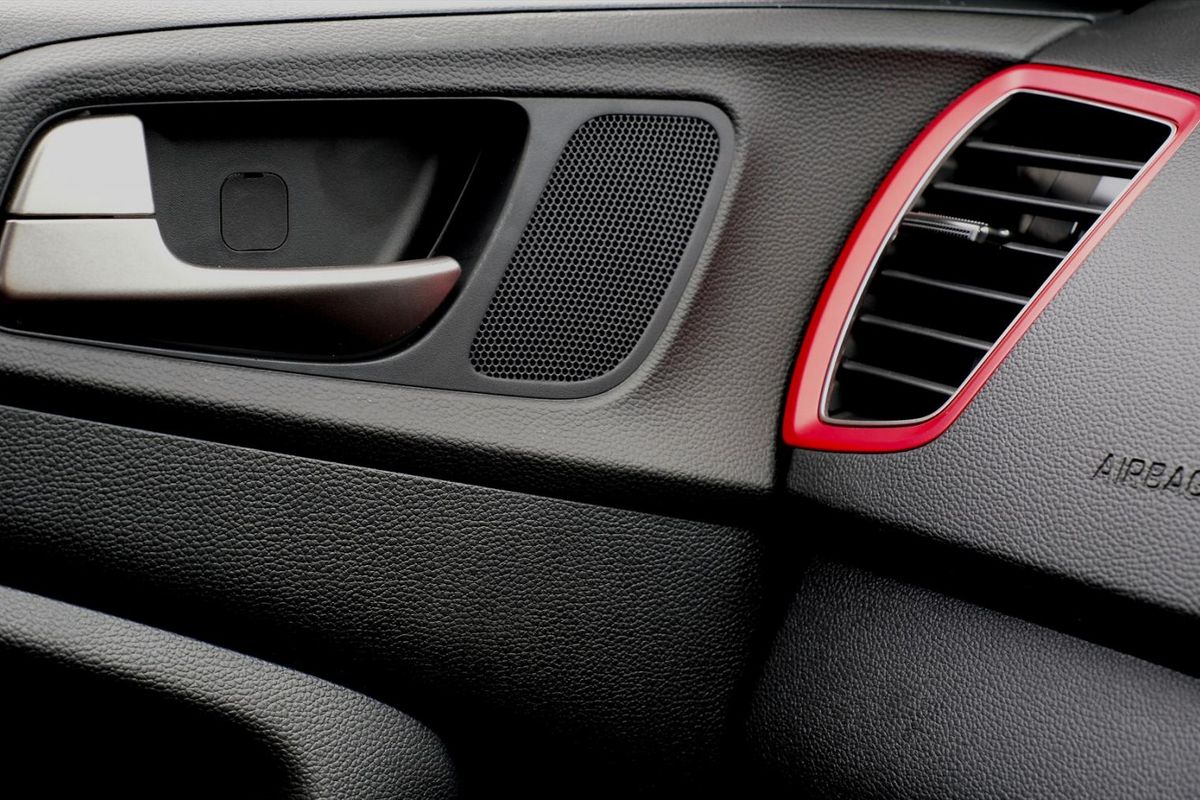
Inside, the i20 is distinguished from its siblings by red or blue trim inserts (depending on the choice of exterior colour) on the gear lever console, gearknob and air vents.

Overall, it's a good-looking offering that has plenty of showroom appeal. Build quality appears to be very solid and the facelifted i20s all benefit from subtle upgrades to the trim materials and ergonomics. Included is a neat touchscreen infotainment system that, for an extra R2 500, can be upgraded at dealer level to include navigation. There's also a convenient centre armrest that includes a storage compartment. 

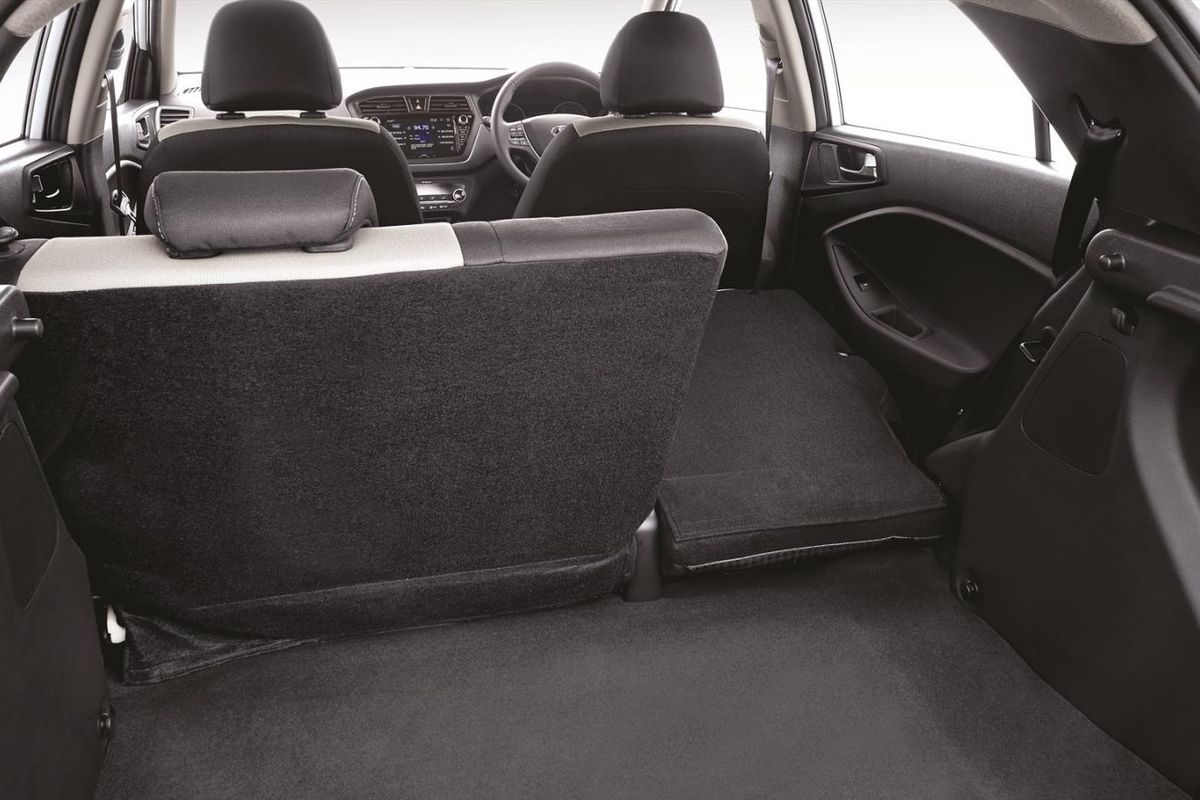
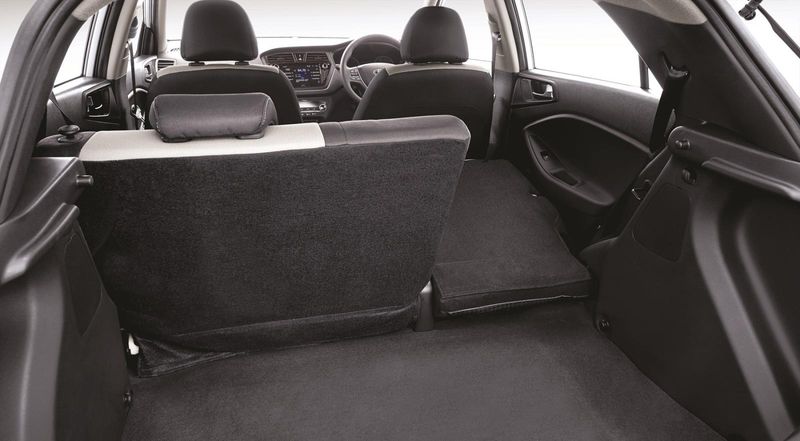
In fact, practicality is one of the i20's strengths. The driving position is really good, with a height-adjustable driver's seat being standard. Even with my 1.8m frame behind the steering wheel there was ample legroom left for rear passengers. The luggage bay measures a very decent 285 litres, expanding to 1 001 with the rear seats folded. 

Sufficient power


It's an attractively styled newcomer, this i20 Active, and fits perfectly within a popular segment.

The new i20 Active replaces the previous "Sport" in the line-up, but don't expect performance fireworks as a result. It is powered by the same 1.4-litre naturally aspirated engine as other models in the i20 line-up. The engine delivers 74 kW at 6 000 rpm and 133 Nm of torque at 3 500 rpm. Mated with a fuss-free 6-speed manual transmission, the i20 Active feels sufficiently powerful for the daily grind, but turbocharged rivals feel more responsive to throttle inputs, as you'd expect. 

More important than outright performance in this segment is fuel economy – Hyundai claims a combined cycle consumption of 6.7 litres/100 km, which seems fair, seeing as after a morning of hard driving (including mountain passes) our car indicated a consumption figure of 8.8 litres/100 km.

We drove the Active on roads of varying quality in the Western Cape, but did not try it on gravel. The extra 20 mm of ground clearance will undoubtedly be appreciated by owners that travel rougher surfaces often, but we're also happy to report that on tarred surfaces and at higher speeds the raised clearance didn't negatively affect the i20's general surefootedness. This car has always had well-balanced underpinnings. You get the sense that it can easily cope with more power. At the same time, it remains comfortable in the cabin and NVH refinement is very good. 

Packed with features, but…


The luggage bay is nicely shaped and sized to accommodate a small family's luggage and more. Rear seats are split 60:40.

When it comes to the showroom appeal of the i20 Active, many boxes are ticked. The new infotainment system is going to be a powerful arm-twisting tool for salesmen, but, besides that, you get automatic climate control, electric windows all-round USB/aux and Bluetooth support, rear park assist and auto lights, among other items.

In terms of safety equipment, the news is not as positive. Dual front airbags are included, as are ABS with EBD, but there's no ESP and some competitors also offer a greater number of airbags. At this price (R279 900) we maintain that ESP really ought to be included. Of course, those ESP-equipped rivals can't always match the i20 in terms of other (non-safety) features and particularly the warranty/service plan, so the consumer has to decide what is ultimately more important to them.

Summary

The i20 range's local success is likely to continue even in the face of new additions to the market from the likes of Volkswagen (Polo), Ford (Fiesta) and Toyota (Yaris). The Korean newcomer offers excellent value for money, after all. The new, improved i20 derivatives are all only R5 000 more expensive than their predecessors, of which you can say about half is accounted for by the VAT increase at the beginning of April. And then there is that peace-of-mind back-up – a 5-year/150 000 km general warranty that is further bolstered by an additional 2-year/50 000 km powertrain warranty. This particular model is also supported by a 3-year/60 000 km service plan.

At R279 900, the Hyundai i20 Active offers an alluring ownership proposition with its crossover looks, standard features and excellent warranty/service plan. 

You may also be interested in:

Fiat Panda 0.9 TwinAir 4×4 Cross (2018) Review

Ford Fiesta (2018) Specs and Pricing

Hyundai i20 Facelift (2018) Specs and Pricing

5 Small Crossovers for under R200k

Looking for a new / used Hyundai i20 to buy?

Find one on Cars.co.za today by clicking here