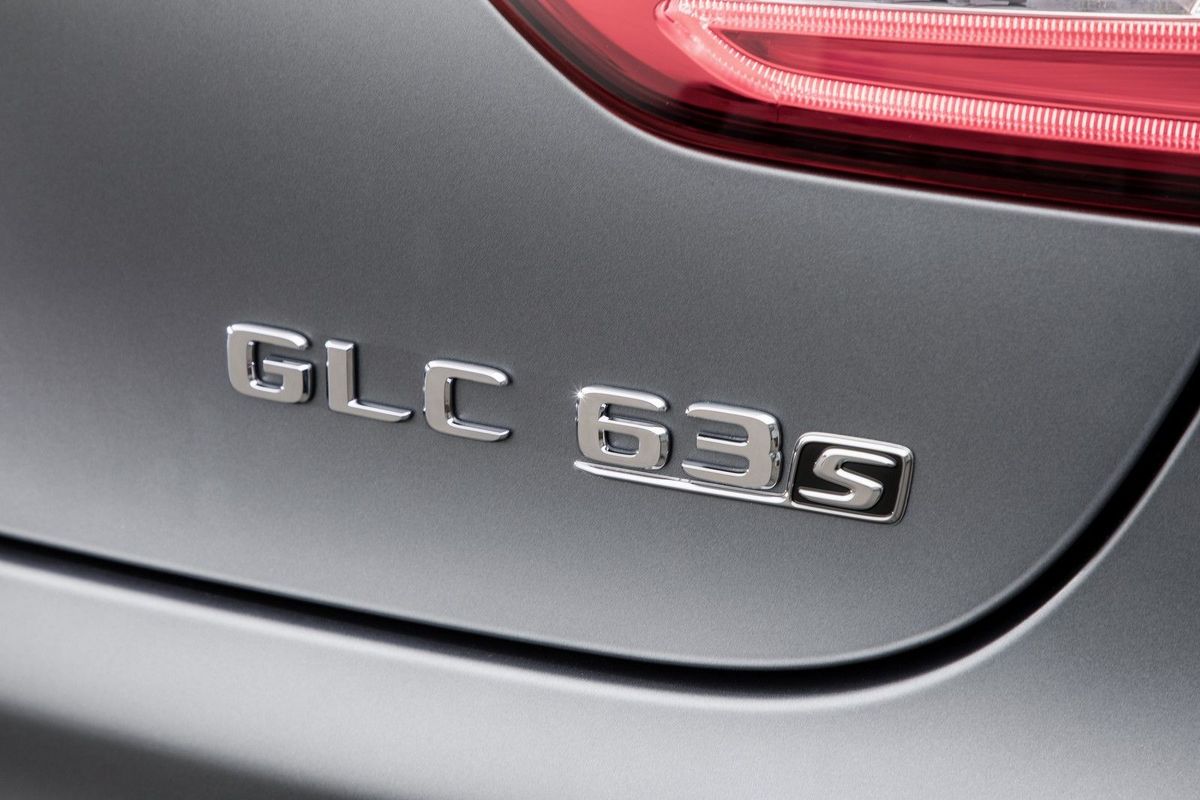
Mercedes-AMG GLC 63 S (2018) Launch Review
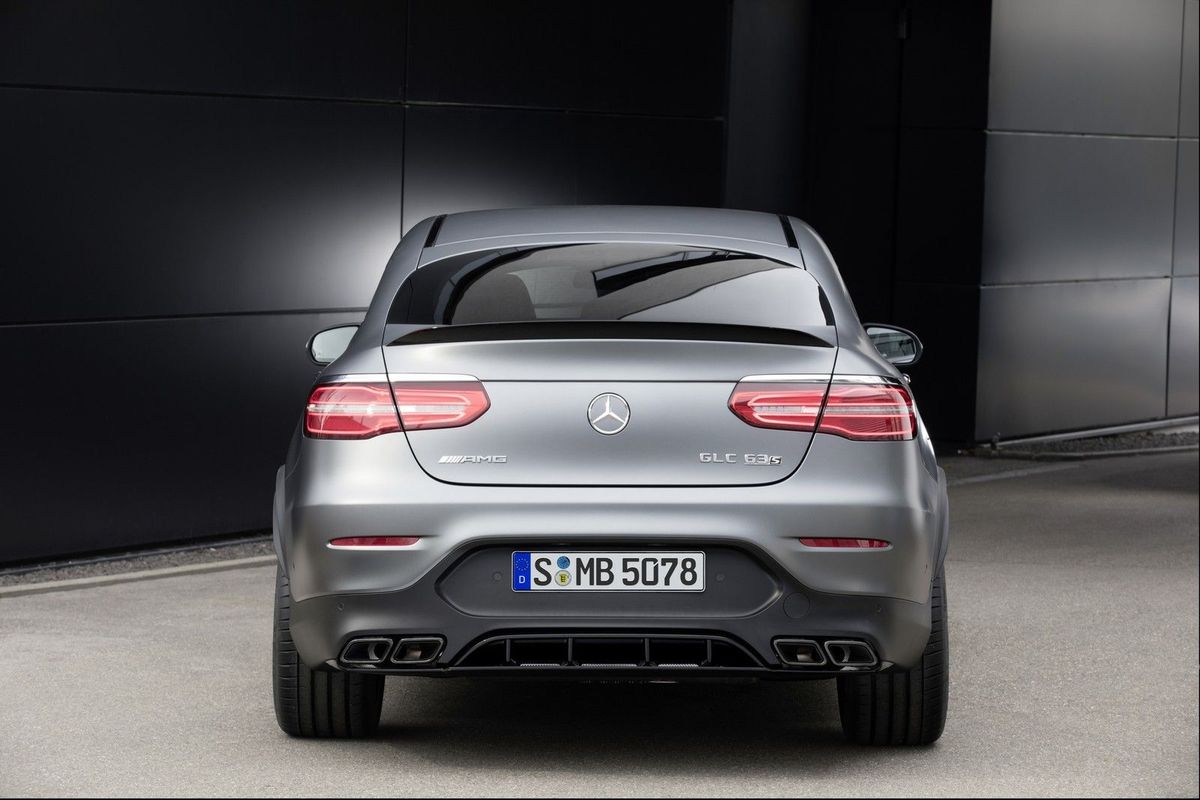
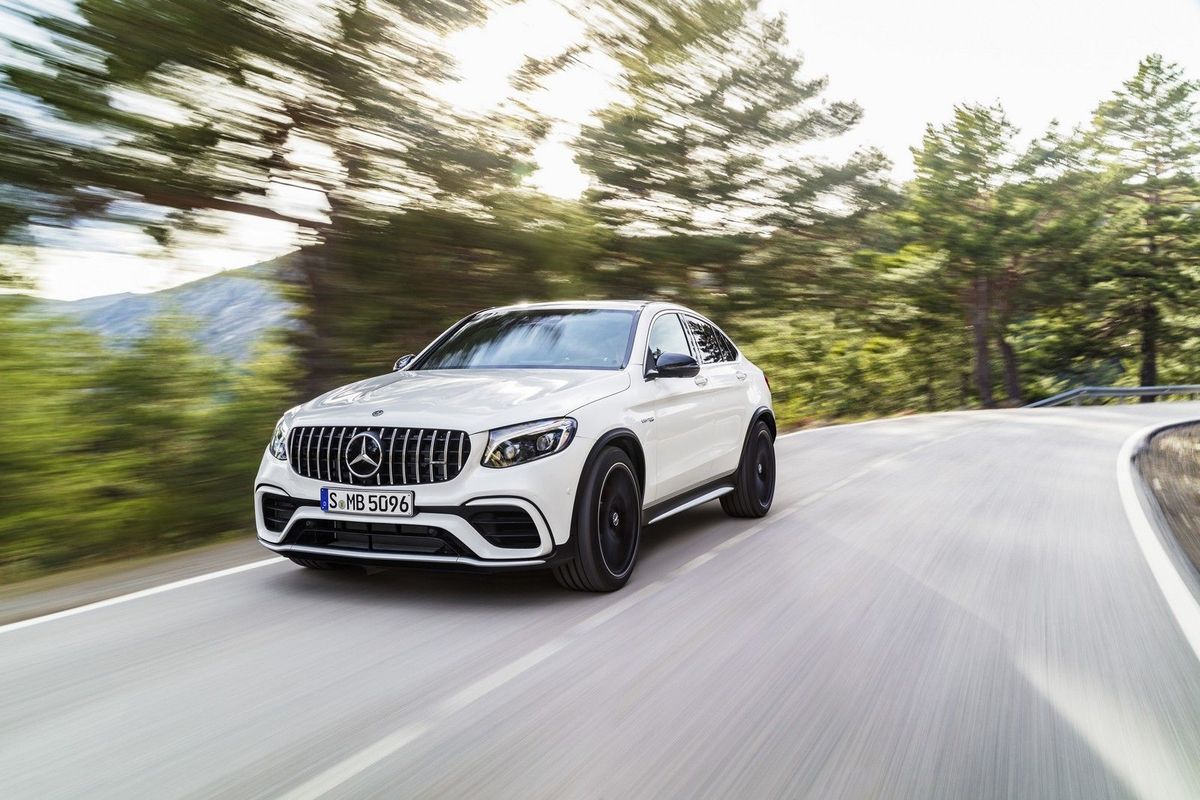
Mercedes-AMG has fashioned a Performance Executive SUV all of its own by dropping a biturbo V8 into the award-winning GLC and GLC Coupe. We headed to Zwartkops Raceway to see what it can do.

The battle for SUV supremacy is no longer defined in terms of practicality; no, it's being fought in kW, Nm and 0 to 100 kph acceleration times. Following the arrival of the Alfa Romeo Stelvio Quadrifoglio, Audi SQ5, BMW X3/X4 M40i and Jaguar F-Pace SVR (to name a few), this new Mercedes-AMG GLC 63 jumps right up to the top (well, equal top) with 375 kW, 700 Nm and a 3.8-second 0 to 100 kph time, which is pretty insane, considering it tips the scales at 1 850 kg. However, the challenge faced by every tar-shredding SUV maker is how to make all of that weight and power go around corners… That’s where the Affalterbach division does some of its best work.

What is it?
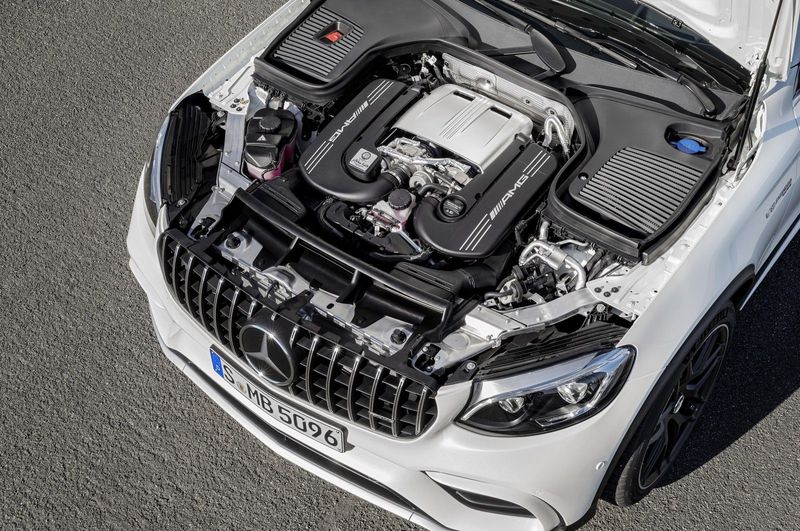

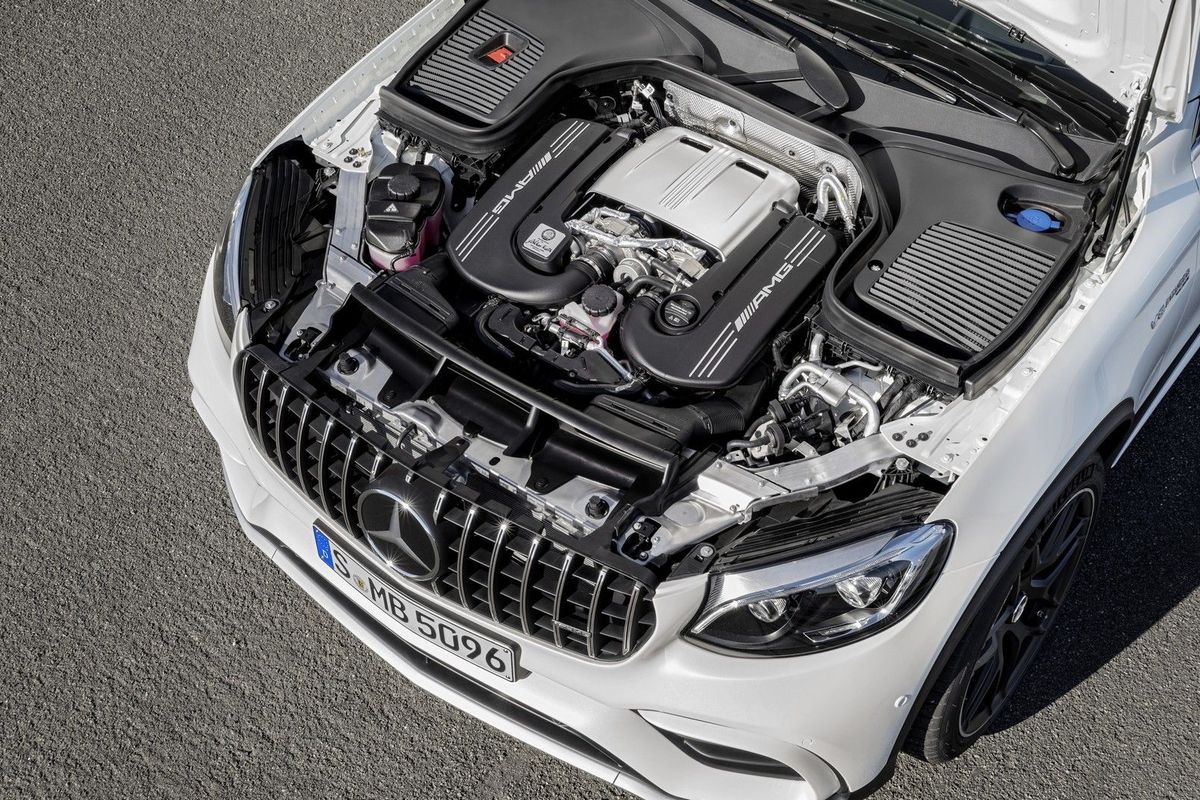
Referred to by Merc as a 'hot V' the turbochargers sit in the middle of the engine inside the V.

The GLC's competition includes wares from Alfa Romeo, Audi, BMW, Jaguar and Volvo. All of these brands, bar Volvo, have or are developing performance derivatives of these SUVs. Evidently, there’s enough need for a family car that can engage warp speed (to make sure it'll arrive at Woolies before it closes) that makes it profitable for manufacturers to build high-performance SUVs.

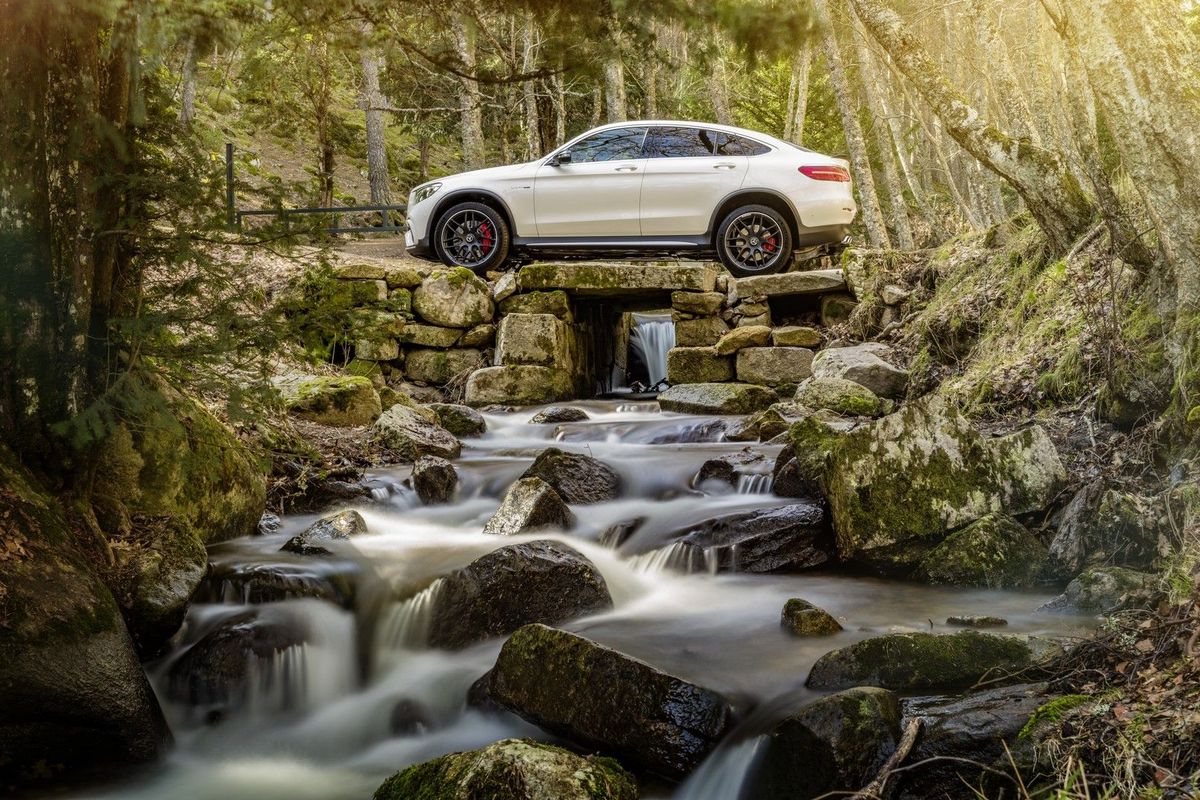
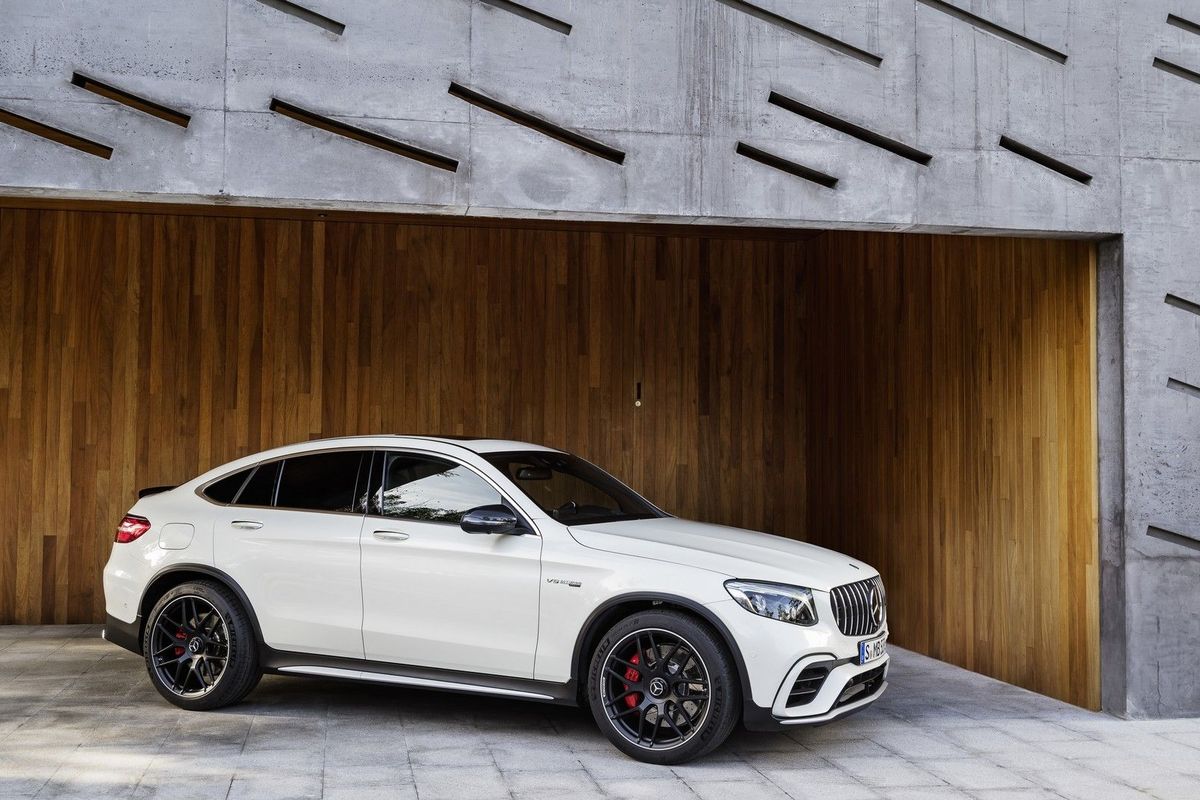
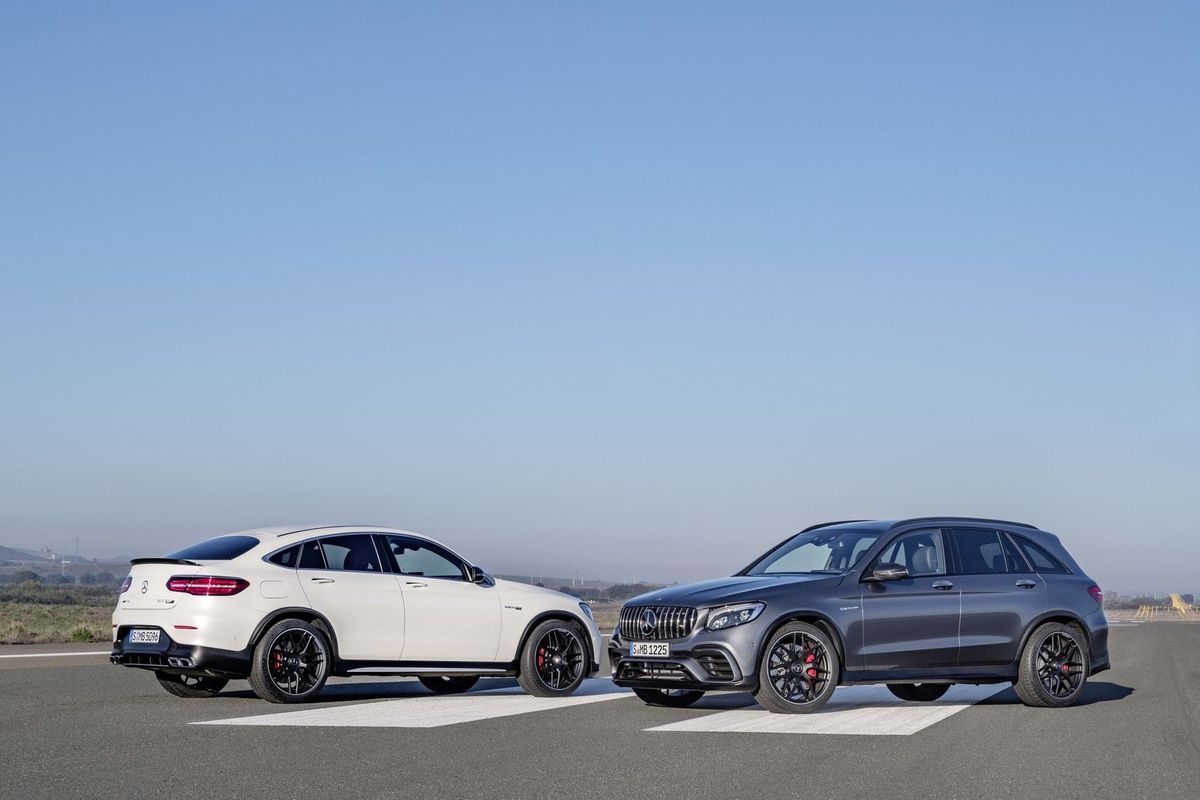
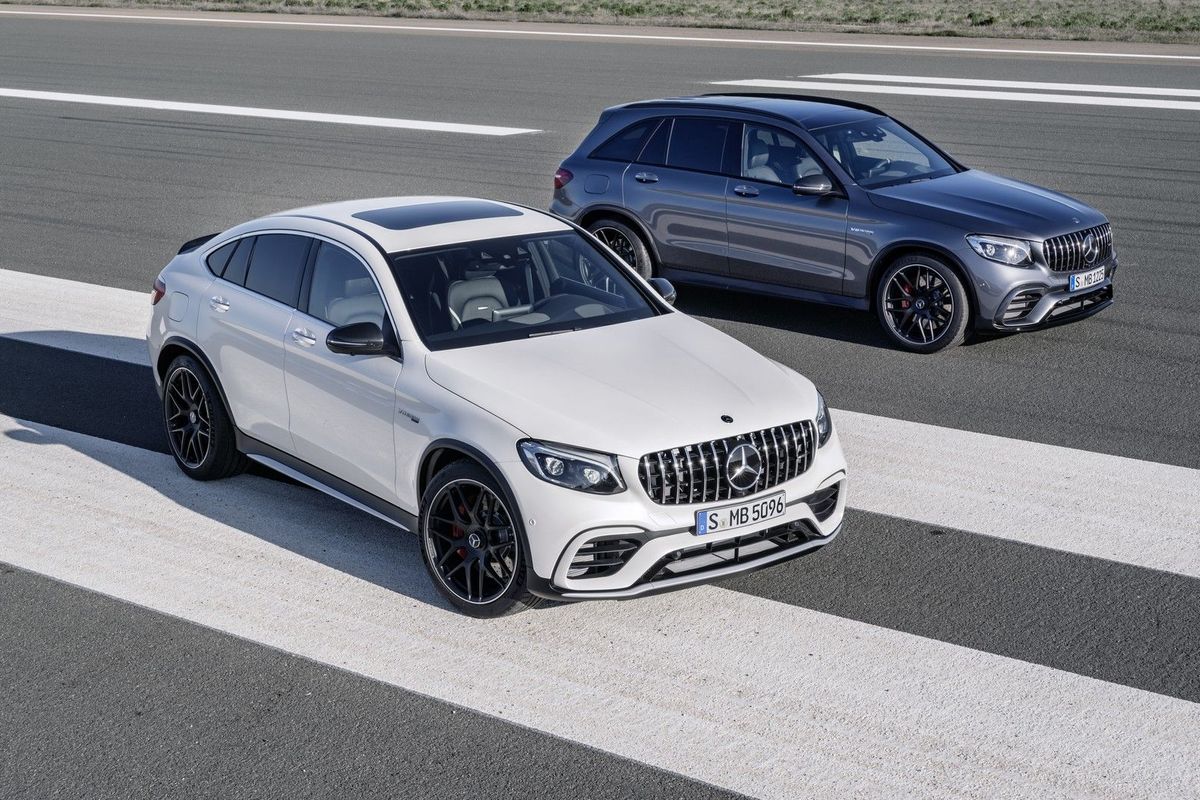
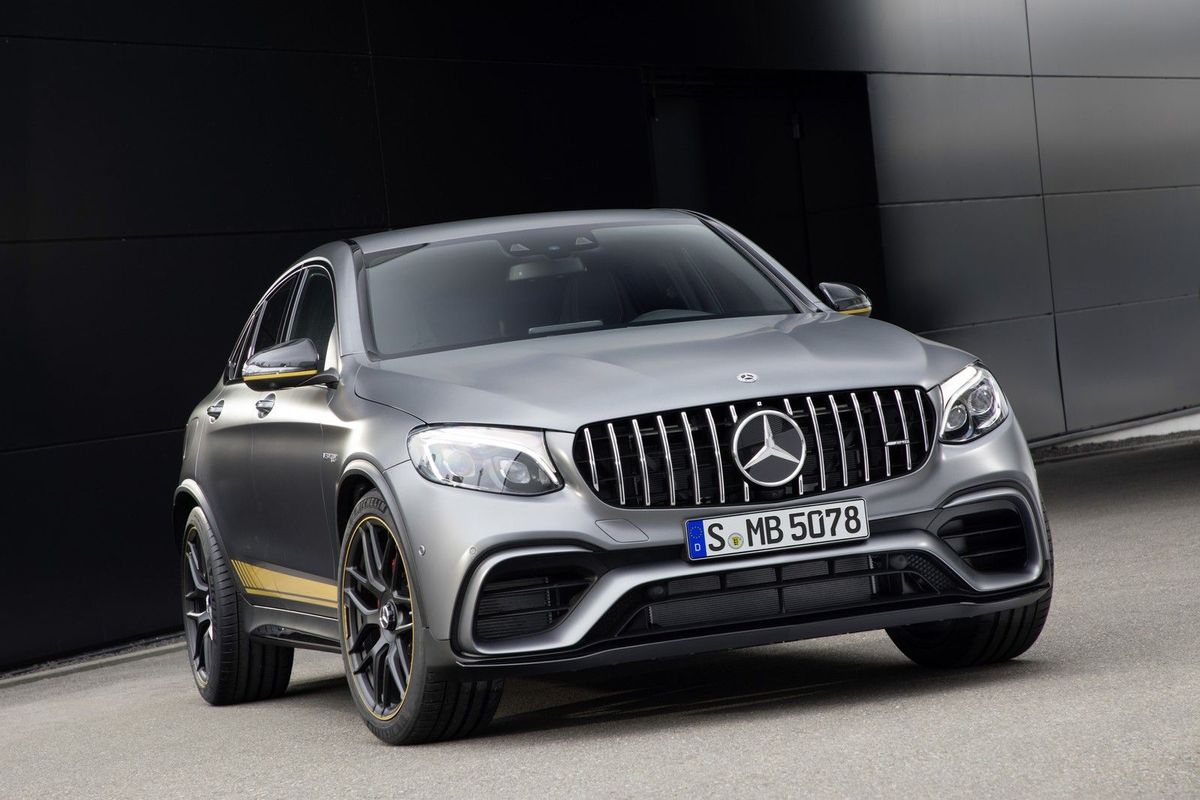
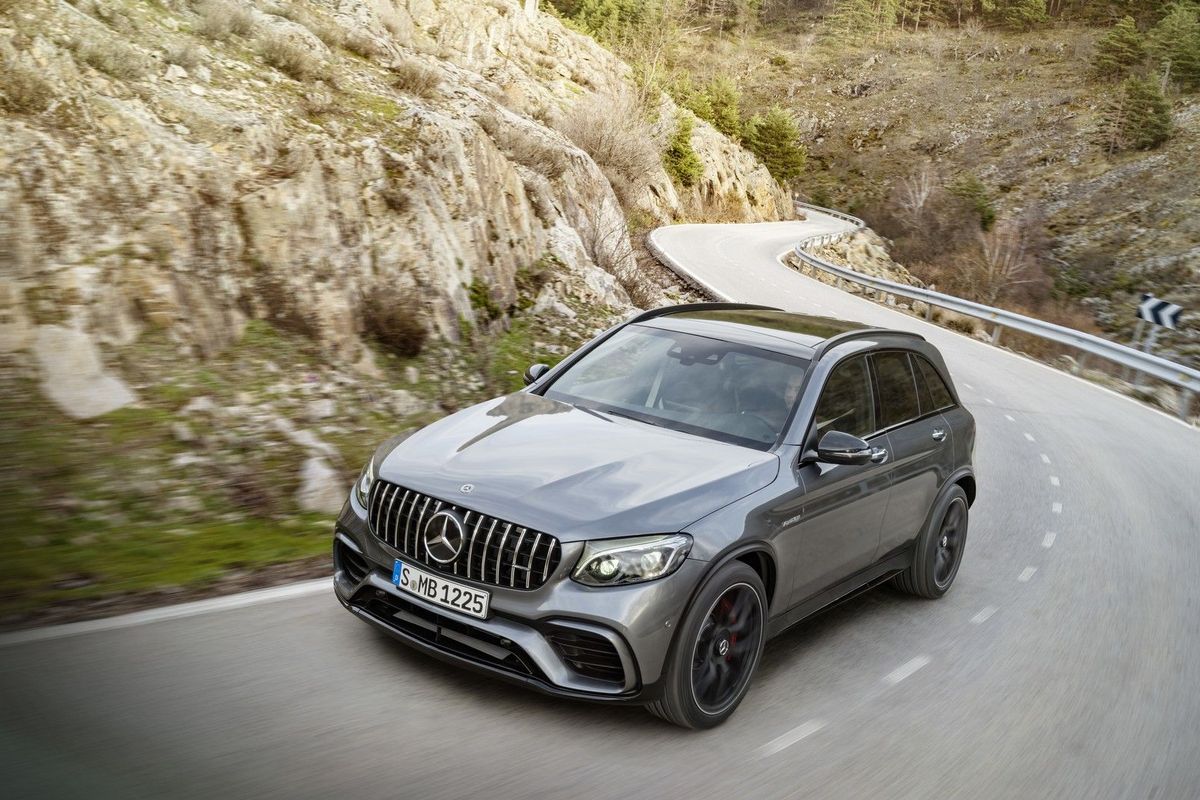
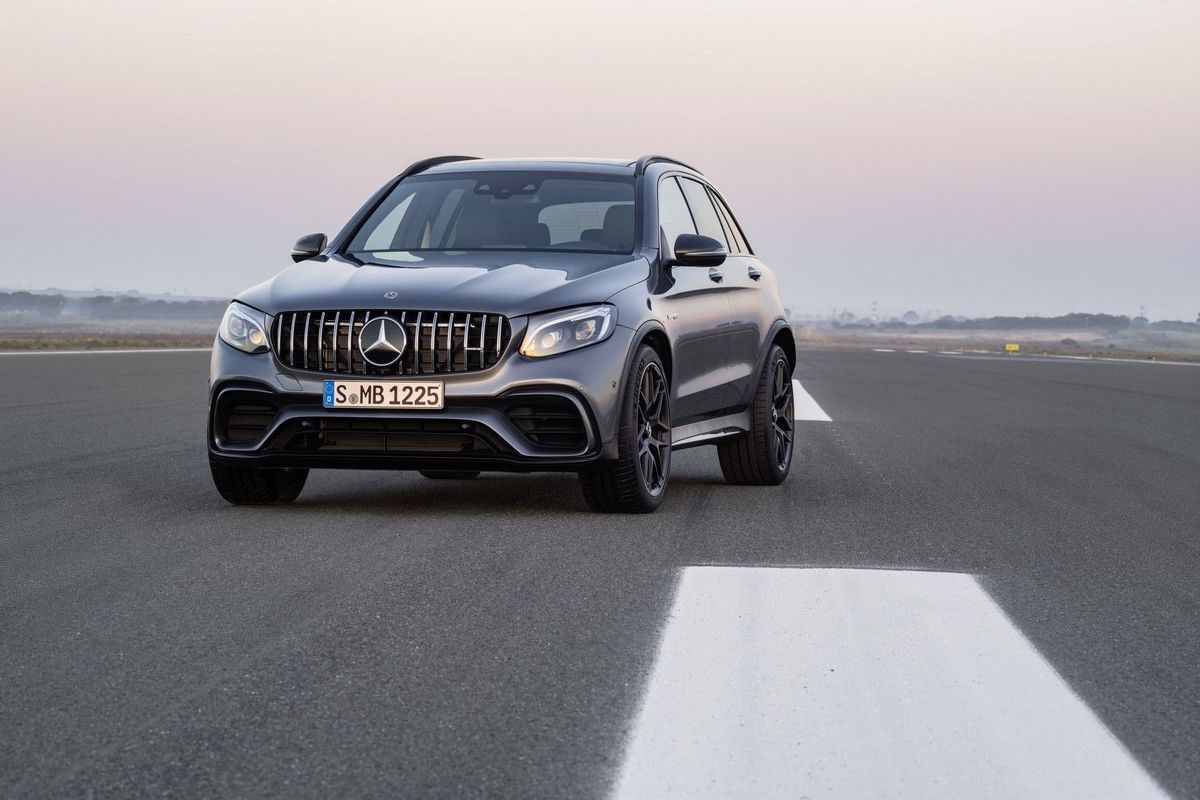
Mercedes-AMG is not one to shy away from a challenge and so, the Affalterbach-based division has tossed in the E63’s 4.0-litre V8 biturbo engine, borrowed its rear differential too (but without drift mode) and then swiped the Panamericana front grille from the AMG GT. Sounds like a bit of a mix and match of parts but it all hangs together rather well. The GLC 63 looks menacing from the front and with the wider track has a muscular stance, like a Rottweiler, if you will.

The additions are available in both SUV and Coupe models and the Coupe gets a large rear spoiler lip, which can be deleted if you don’t want it specced. Both have identical performance figures and will only be available in ‘S’ derivative, which means local motorists will be availed the most powerful AMG versions exclusively.

How fast does it go?
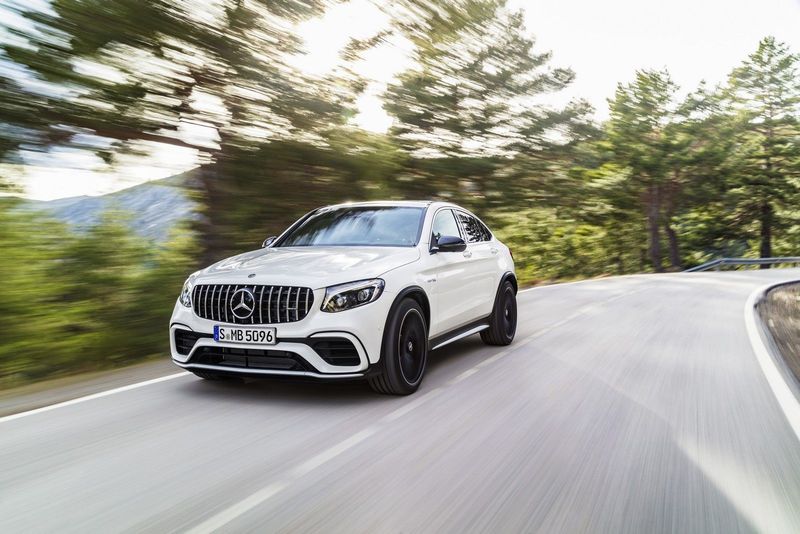

Only the Alfa Stelvio Quadrifoglio can match the GLC 63 S in the power and acceleration stakes, but the Merc has 100 Nm more.

Having Zwartkops raceway at our disposal allowed for an intimate assessment of the GLC 63’s skill set. You will not be left wanting for straight line performance. With the 4 Matic all-wheel-drive system, the GLC really bites into the tarmac and launches off the line, with no slippage. The launch control system is now even easier than ever. So long as you are in any drive mode except Comfort (Sport, Sport Plus or Individual) all you need to do to activate a Race Start is mash the 2 pedals to the floor. No more fiddling with 20 buttons in the perfect combination like you would to achieve a Mortal Kombat Fatality.

The 3 modes of traction control available are all vastly different. The default position, which is fully on doesn’t allow any leeway. It will interfere and cut power very quickly, especially if you aren’t smooth and progressive with throttle and steering applications. It’s the most aggressive traction control system I’ve ever felt but is there to save you when surprises are sprung, like a slippery road surface.
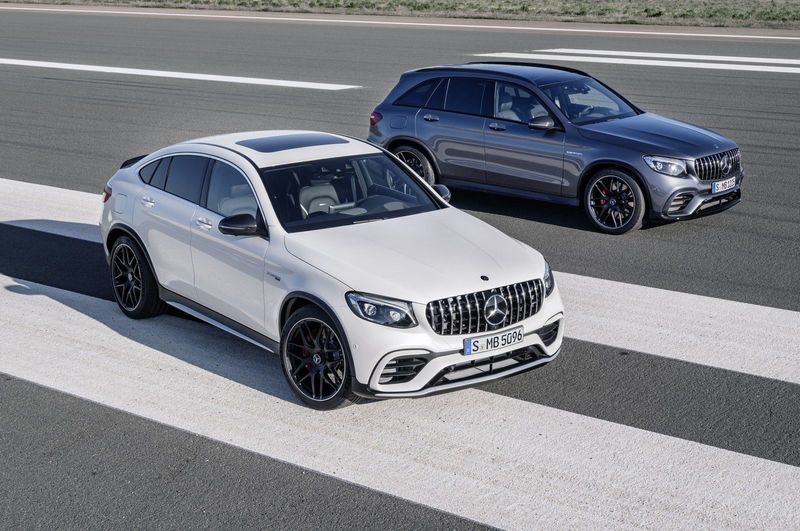

Coupe or SUV? With the performance and style of the 63 S, the Coupe makes more sense now than it did before – practicality loss aside.

Sport handling traction mode obviously allows a little more leeway, but you’re not going to find yourself in any real trouble before the system backs off the power. Once all traction control is off the GLC 63 shows a bit more character. Under braking all that weight shifts around and you can use it to pitch the Benz into corners; there’s enough grip (let alone chassis strength) that it doesn’t just fold over into understeer, it will hold its line and you can drive through on the power. You won’t get the rear to play under power despite it being predominantly rear-wheel-driven with a maximum of 50% of power capable of being directed to the front when required.

I somehow doubt the GLC 63 will see too many track days, and just as well, because you’ll cook the brakes in 3 laps and the ceramic options aren’t optimal for everyday driving as they require heat to bite properly…

On the road

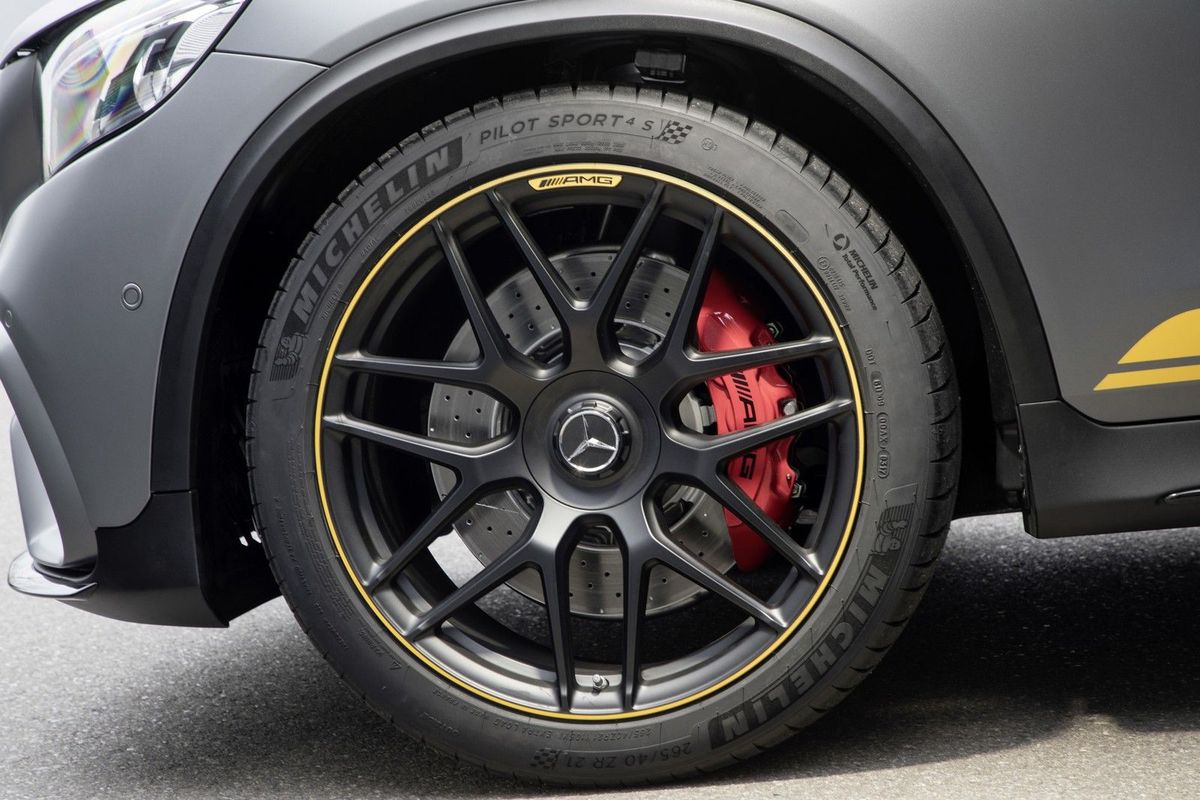
A blast around the Cradle of Humankind on the outskirts of Johannesburg allowed for a reasonable examination of what the GLC 63 S is like as a road car. With its air suspension set to comfort mode, it’s certainly one of AMG’s more comfortably-sprung cars. The standard wheels come in 20-inches, but ours were all equipped with the 21-inch options. With a 40 profile, they actually have decent sidewall give when the road surface deteriorates.
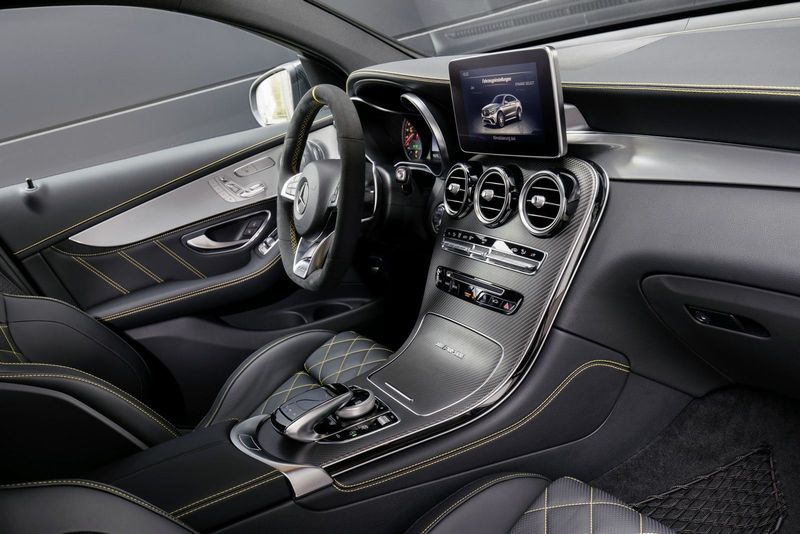

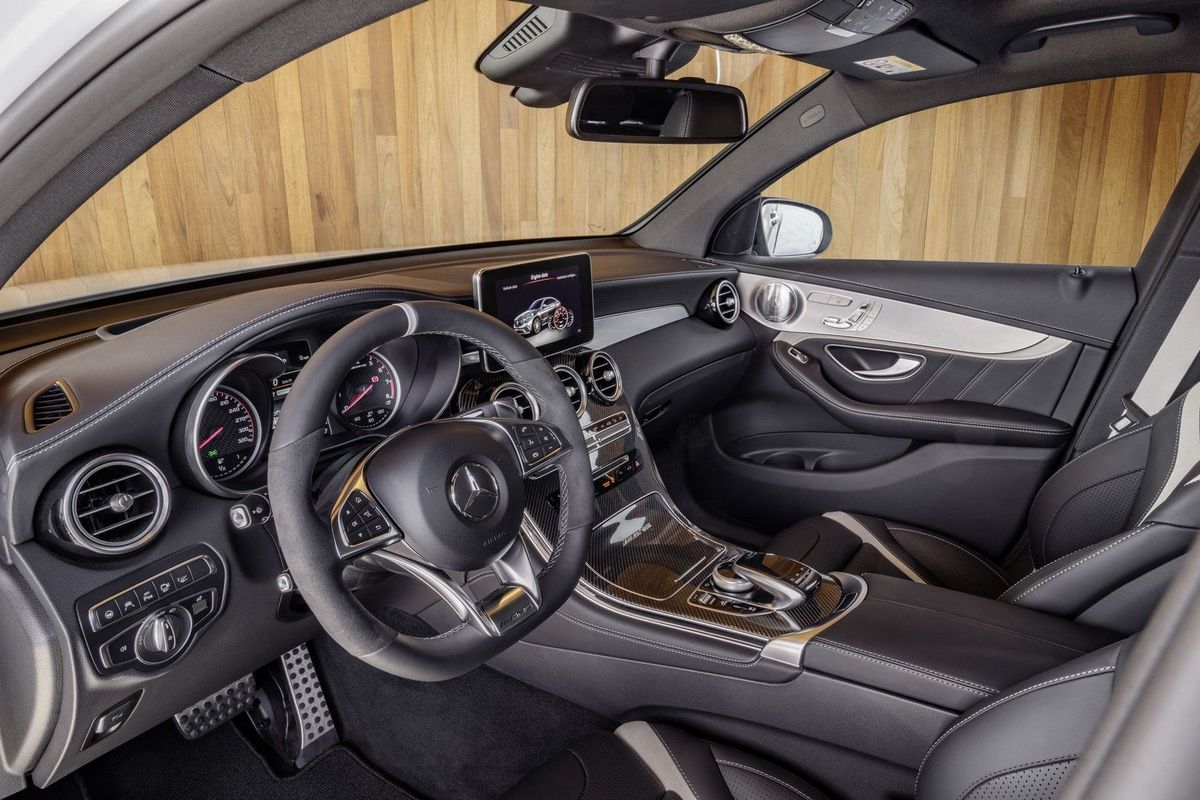
Interior of the GLC feels more solid than other models in the Mercedes-Benz range of late.

Only on the most gritty tarmac do you notice road roar from the tyres and small cuts and bumps in the road are dealt with quite well.

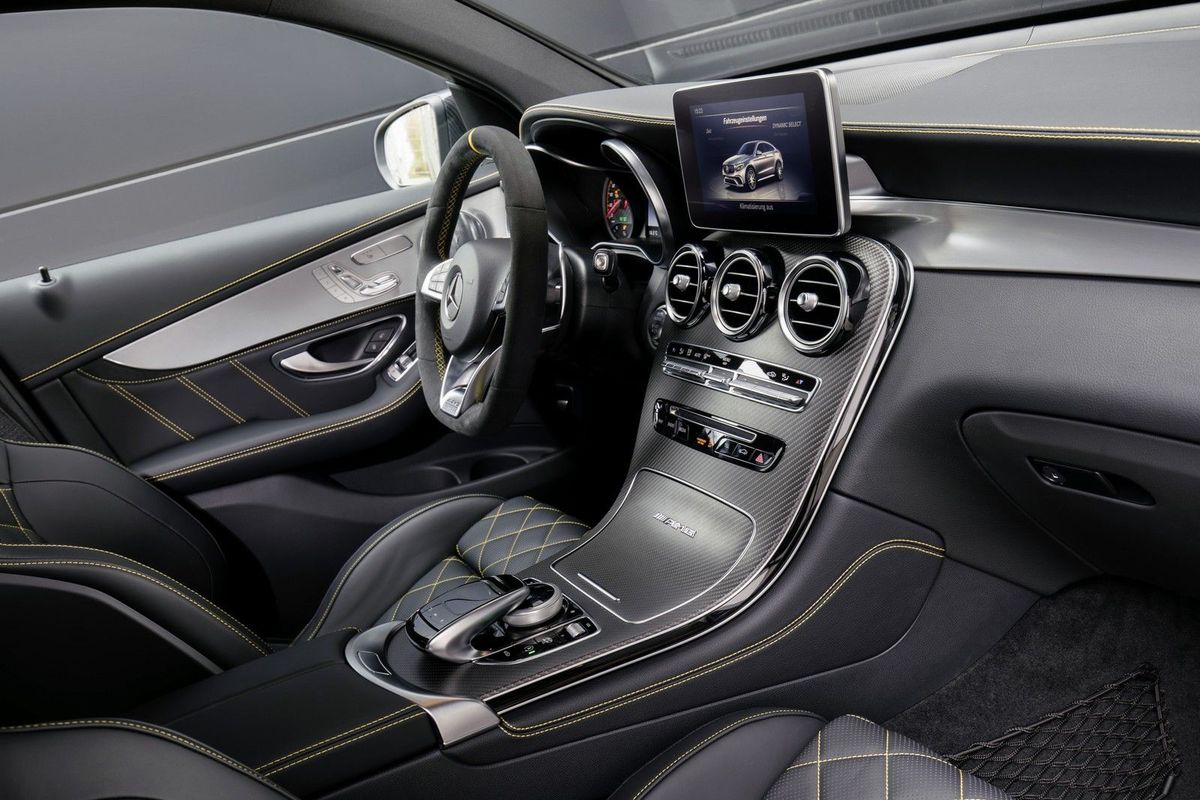
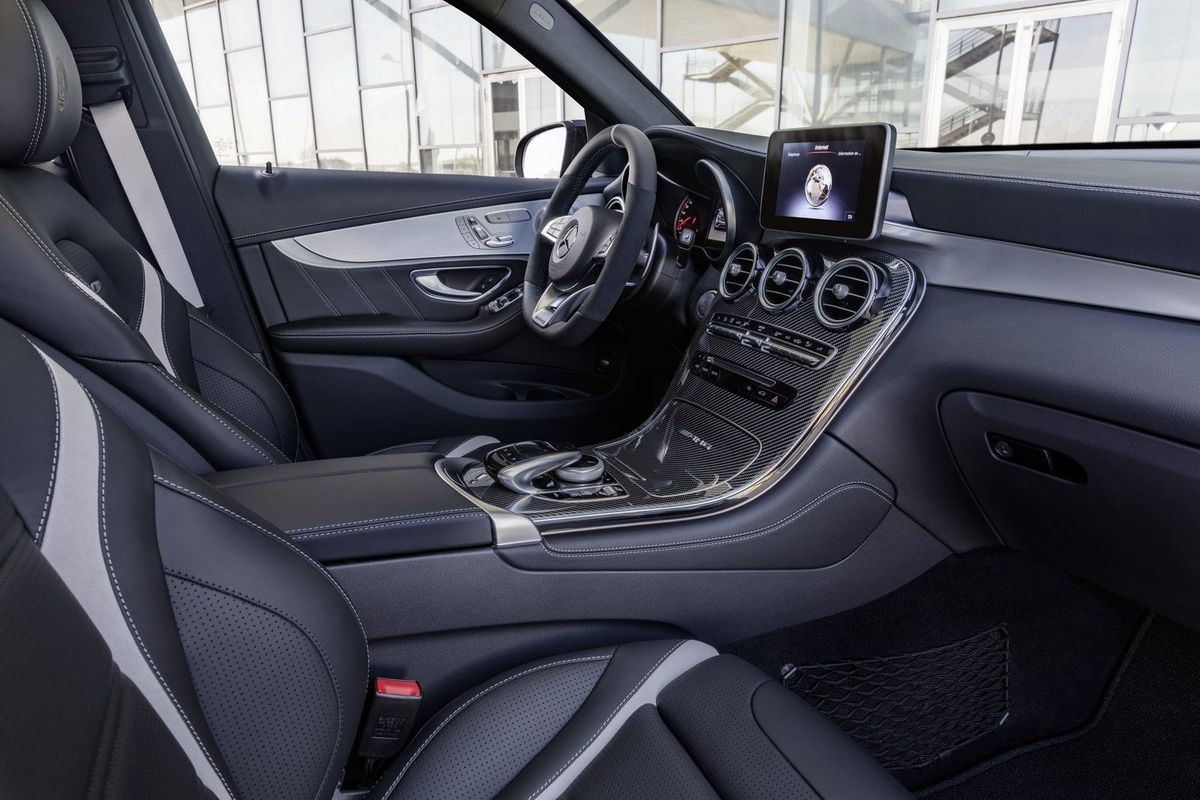
As for the interior, the GLC appears to have one of Benz’s more solidly-built cabins. The centre stack that runs from the central air vents through to the Comand controls still creaks like plastic when you prod it, but the aesthetic design and ergonomics remain excellent.

Final thoughts

Only the Alfa Stelvio Quadrifoglio matches the GLC 63 S in the performance stakes, and you can’t buy one of those in SA until the end of this year. I’ve always been a proponent of the SUV as the Coupe has severe practicality restrictions that seem unreasonable in an SUV. However, in something like this, a 63 S, it’s more about design, looks and attracting attention and the Coupe trumps its SUV sibling in that department.

If practicality ranks highly on your requirements list then for the R1.5 million you’re better off looking at something like a (Land Rover) Discovery, (Mercedes-Benz) GLE, (Audi) Q7 or (Volvo) XC90. In SA, we do have a slightly bizarre attraction for big powerful status symbols, therefore the GLC 63 S ticks all the right boxes… if you want to make a statement.

Pricing (May 2018)

Mercedes-AMG GLC 63 S R1 563 596

Mercedes-AMG GLC 63 S Coupe R1 679 605

Related content:

6 High-Performance SUVs Coming to SA in 2018

Mercedes-Benz GLC 250d Coupe 4Matic (2017) Review

Mercedes-Benz GLC 300 (2015) Review
Jaguar F-Pace SVR Blasts into New York Auto Show

Jaguar E-Pace D240 R-Dynamic HSE (2018) Review
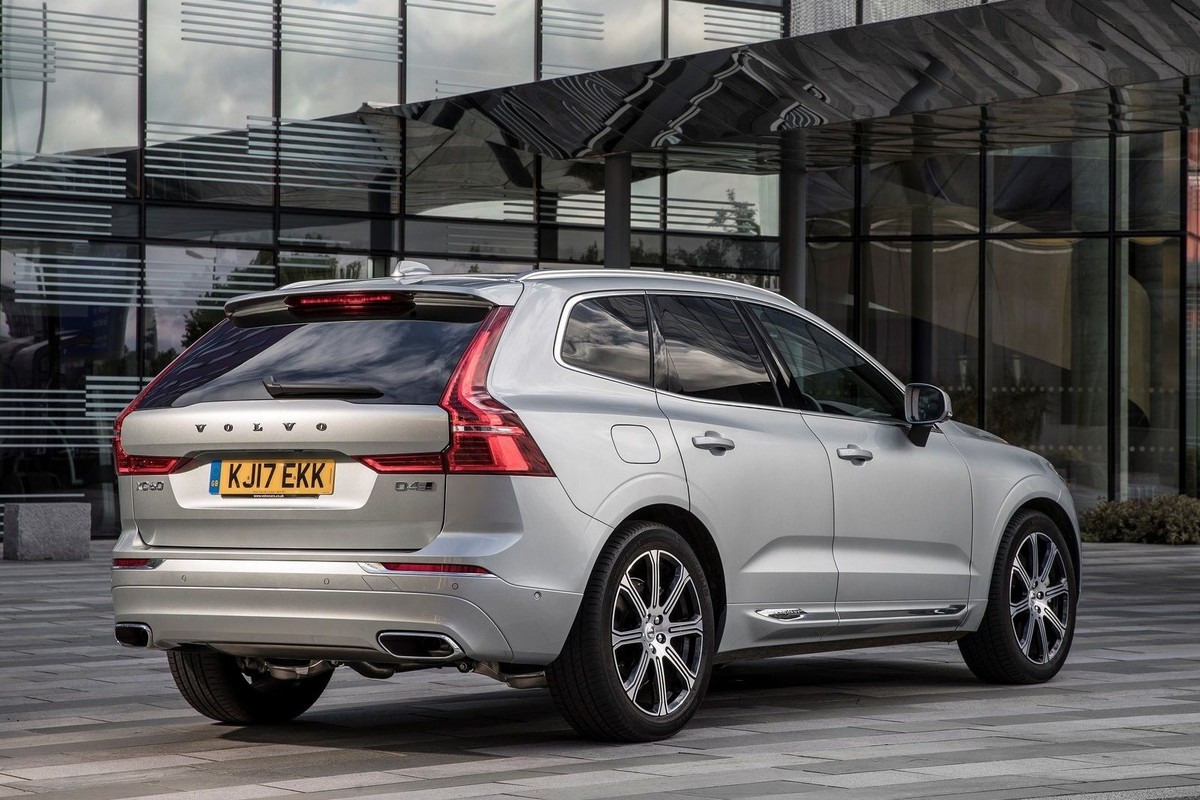
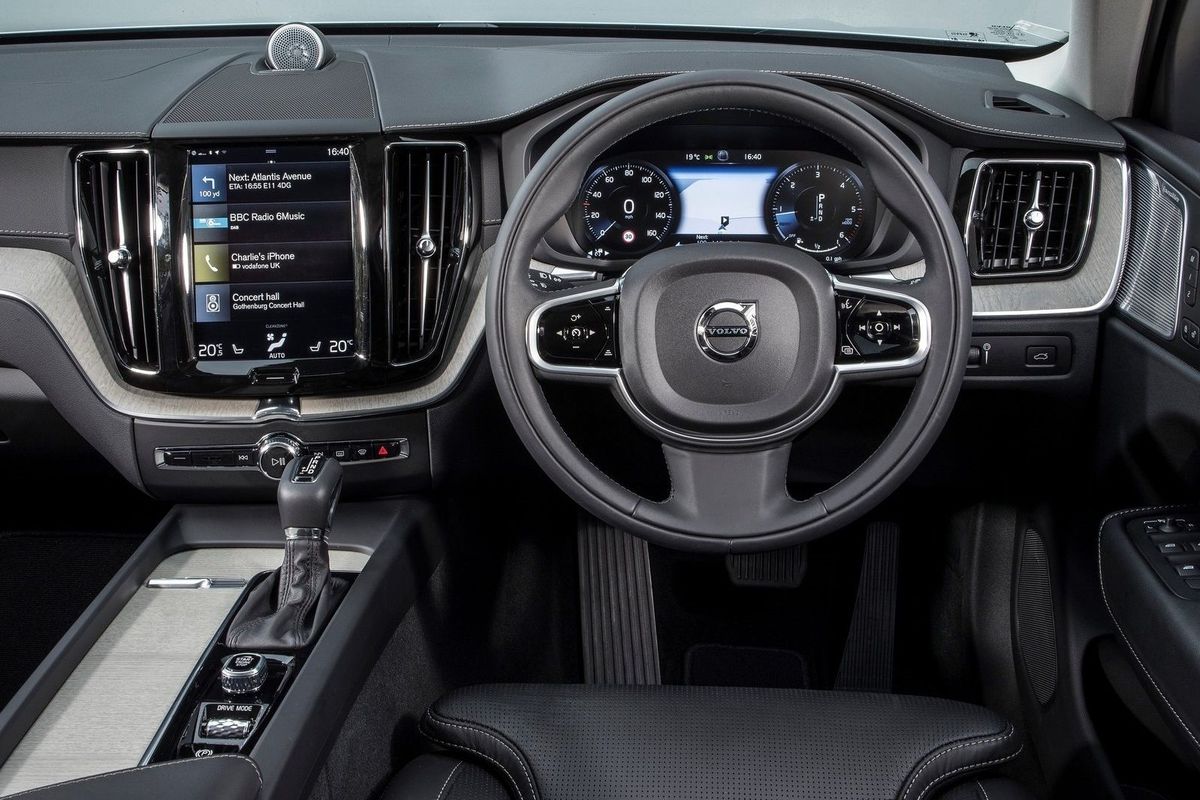
Volvo XC60 Price Announced for South Africa

The Volvo XC60 has quietly arrived in South Africa and we have pricing and some details for this new SUV. 

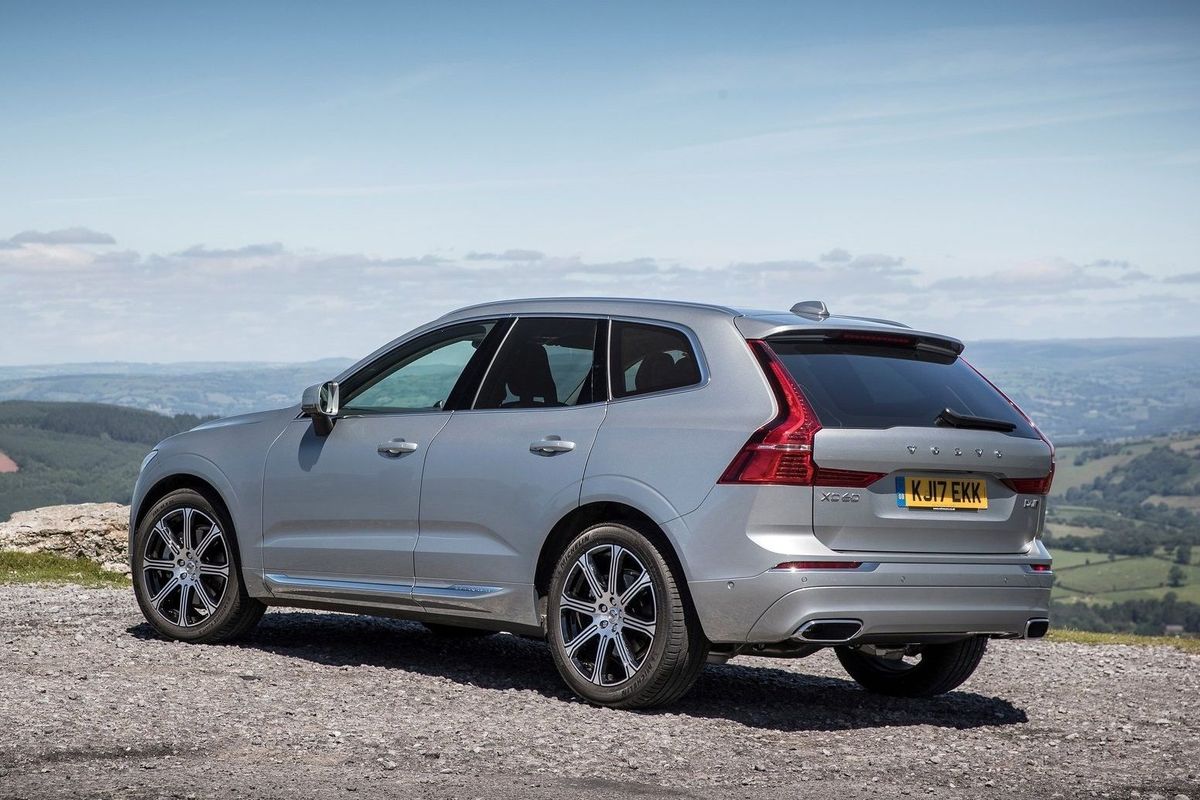
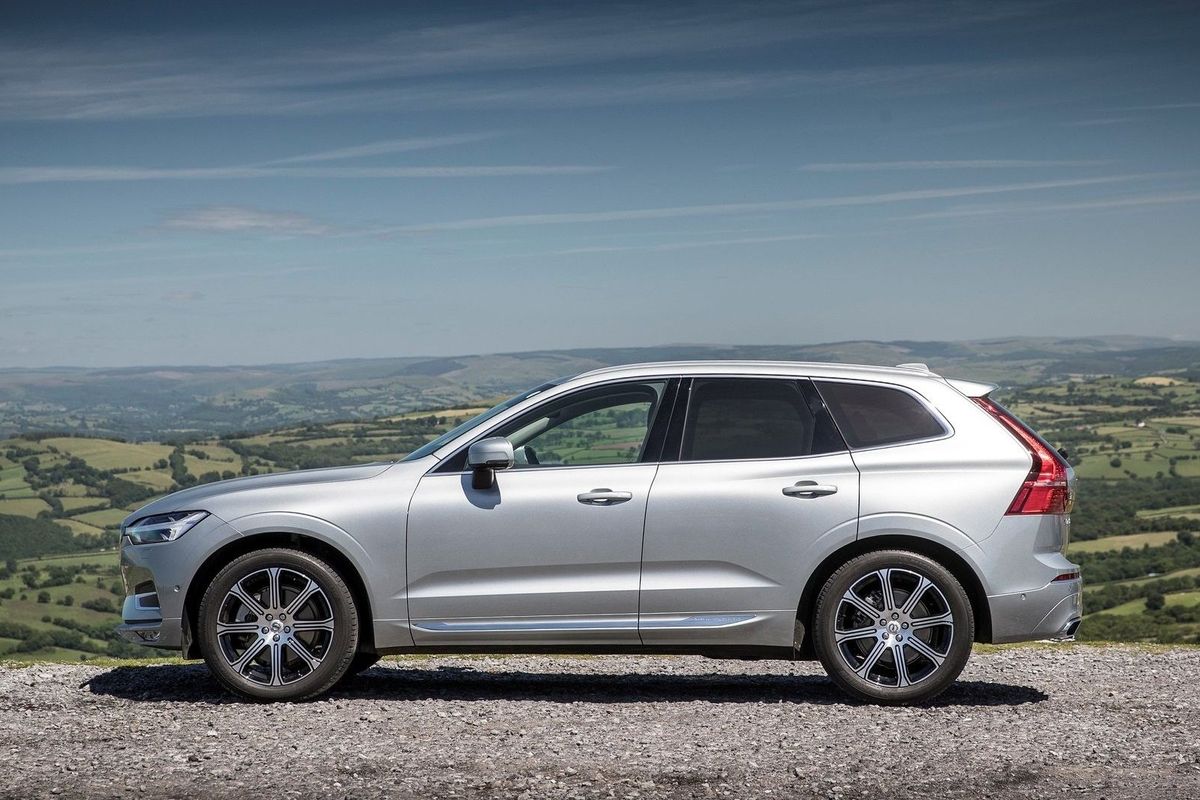
The Volvo XC60 will be pitched competitively against key rivals – the Audi Q5, BMW X3, Jaguar F-Pace, Lexus NX, Mercedes-Benz GLC and Porsche Macan. It arrives in SA on the back of a World Car of the Year 2018 victory. "Of the 3 finalists, the new XC60 was my preferred candidate for the overall win," comments Cars.co.za Consumer Experience Manager Hannes Oosthuizen. "It probably is the best example of all that is good about Volvo at the moment – great design inside and out, quality finishes and a strong performance/efficiency balance, without sacrificing the practicality and safety aspects the brand is so famous for."

In terms of trim, the new Volvo XC60 comes to market in Momentum, Inscription and R-Design spec. The range of engines for the newcomer is limited to 2.0-litre four-cylinder turbocharged units, both petrol and diesel. The D4 motor has 140 kW and 400Nm, the T5 puts out 187 kW and 350 Nm, T6 produces 235 kW and 400 Nm, while the top-spec diesel D5 has a mighty 173 kW and 480 Nm.

We had the opportunity to drive the new Volvo XC60 in Spain not so long ago and here, Ciro De Siena takes us through the new offering from the Swedish brand.

Volvo XC60 Price in South Africa (May 2018)

The new Volvo XC60 comes standard with a 5 year / 100 000 km warranty and maintenance plan and a 5 year / unlimited mileage roadside assistance plan.

XC60 D4 Geartronic AWD Momentum R664 000

XC60 T5 Geartronic AWD Momentum R680 600

XC60 D4 Geartronic AWD Inscription R708 100

XC60 D4 Geartronic AWD R-Design R710 400

XC60 T5 Geartronic AWD Inscription R724 700

XC60 T5 Geartronic AWD R-Design R727 000

XC60 T6 Geartronic AWD Momentum R731 000

XC60 D5 Geartronic AWD Momentum R732 600

XC60 T6 Geartronic AWD Inscription R775 100

XC60 D5 Geartronic AWD Inscription R776 800

XC60 T6 Geartronic AWD R-Design R777 400

XC60 D5 Geartronic AWD R-Design R779 000

You may also be interested in:

Volvo S90 (2016) First Drive video

Volvo S90 (2017) Specs & Pricing in SA

5 Reasons why the Volvo S90 matters

Winners of the Cars.co.za Consumer Awards – Powered by WesBank

With 5 Series, the Germans pull ahead again

Looking for a new/used Volvo to buy?

Find one on Cars.co.za today

Will It Drift? BMW M5 vs Mercedes-AMG E63 S

The new BMW M5 has landed in South Africa and we pitted it against its rival from Mercedes-AMG, the E63 S. Now that both of these monsters feature all-wheel drive, we had to ask ourselves – will it drift?

These 2 models from these 2 brands have been star players in the German horsepower war for decades. It's a war that has gotten so out of hand that both of these carmakers have decided to fit their super-saloons with all-wheel drive. But luckily for us, BMW and Mercedes-AMG have a sense of humour. They've fitted the new M5 and the E63 S with switchable rear wheel drive…something we thought we should test. In this video, we introduce our Cars.co.za Consumer Awards judge, Ernest Page.

Follow Ernest on his social media channels:

https://www.facebook.com/PerformanceWithPage

https://twitter.com/ernestspage

Further Reading

BMW M5 Competition Specs & SA Launch Date

BMW M5 (2018) Launch Review
BMW M5 (2018) Specs & Price

Mercedes-AMG E63 S 4Matic (2017) Launch Review
Audi RS5 vs BMW M4 Competition Pack vs Mercedes-AMG C63 S Coupe [w/Video]

Track Battle | Audi RS5 vs BMW M4 CP vs Mercedes-AMG C63 S – Part 1

Track Battle | Audi RS5 vs BMW M4 CP vs Mercedes-AMG C63 S – Part 2

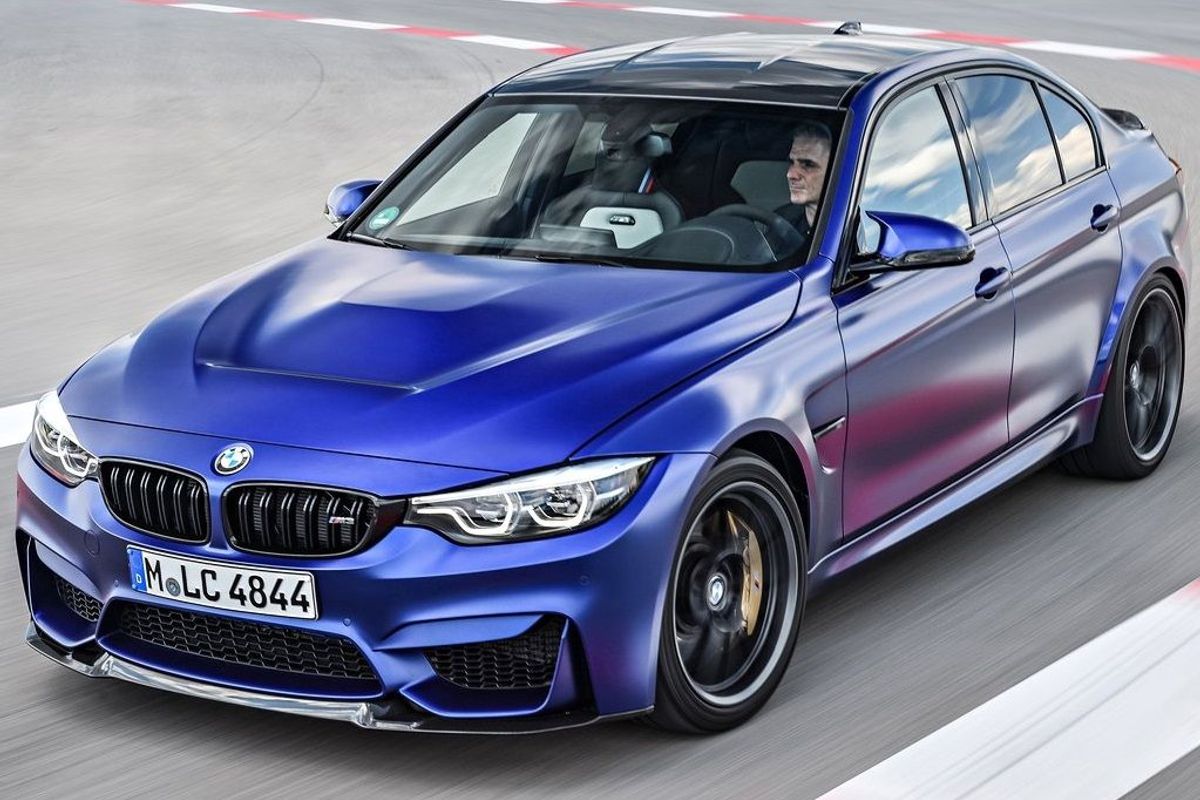
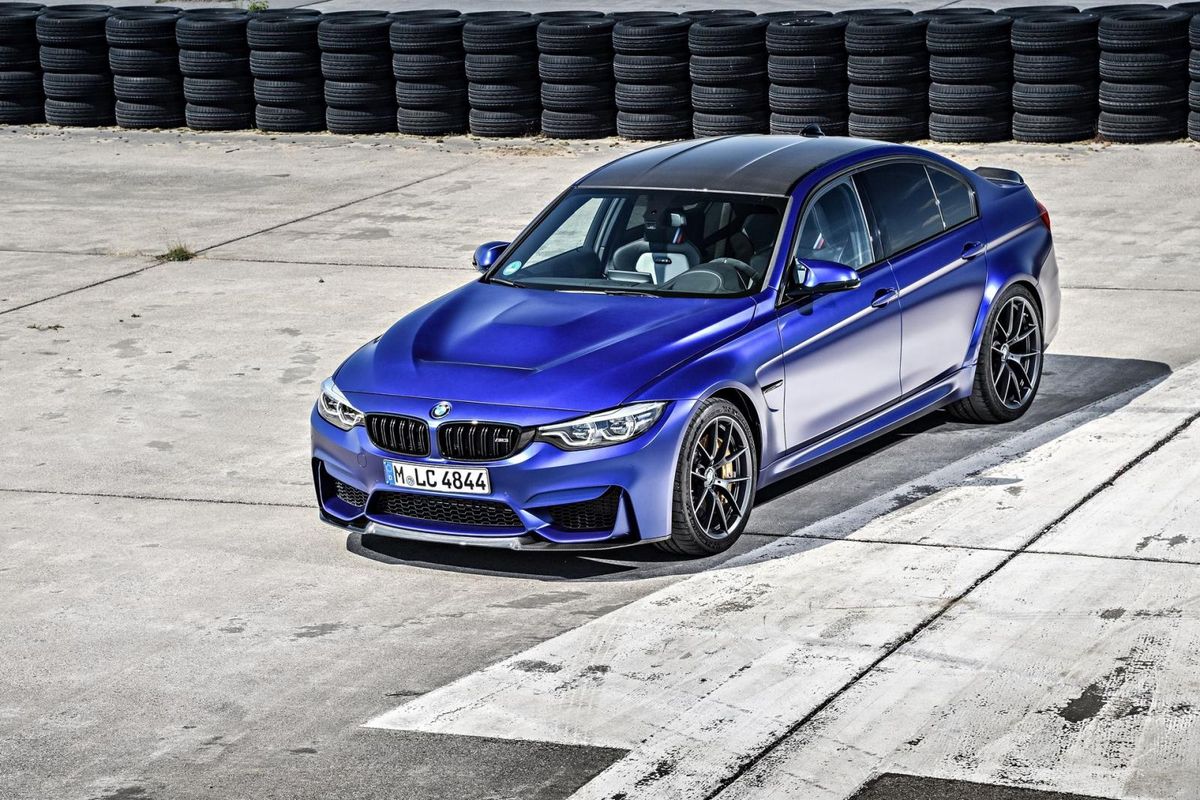
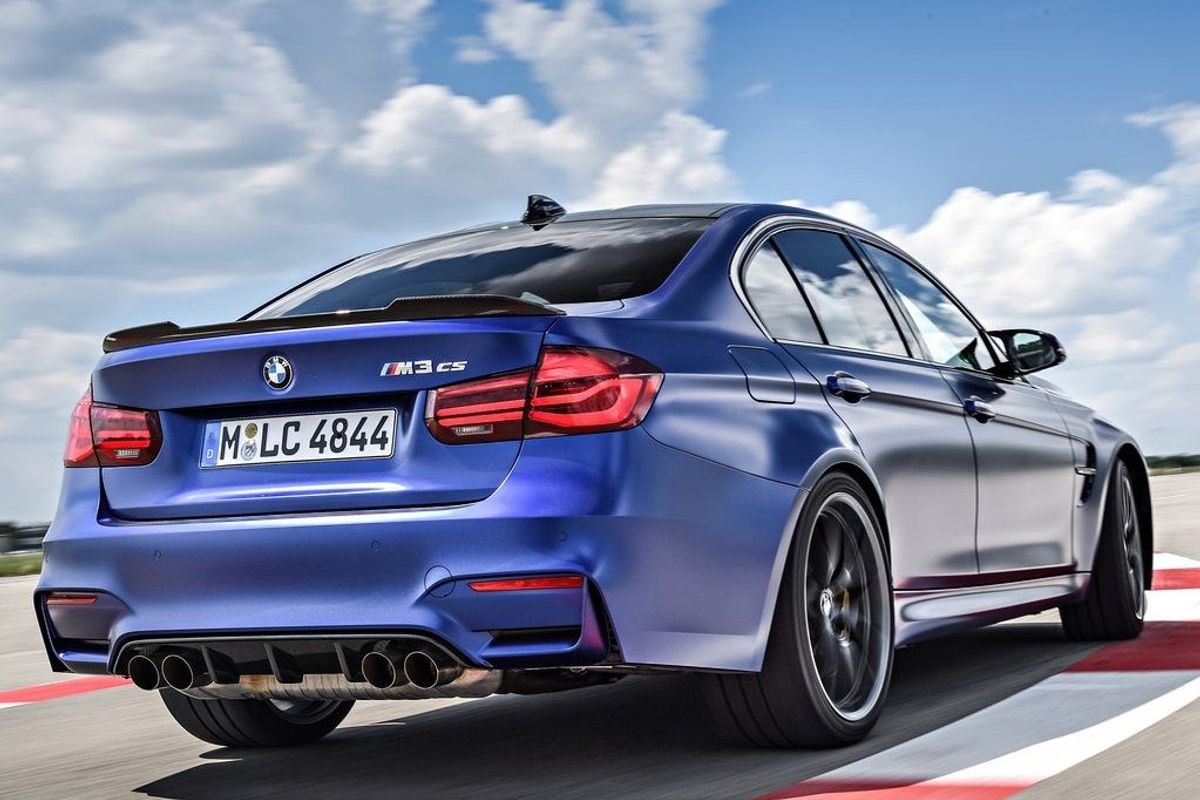
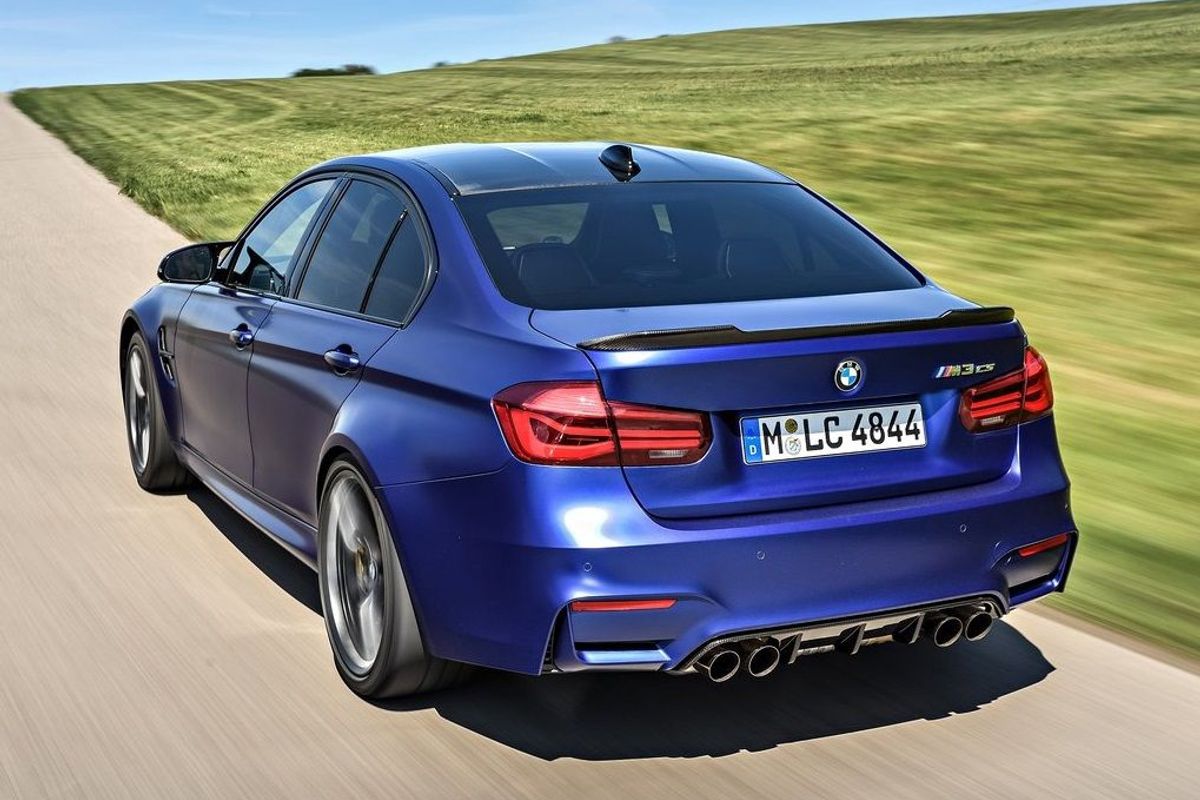
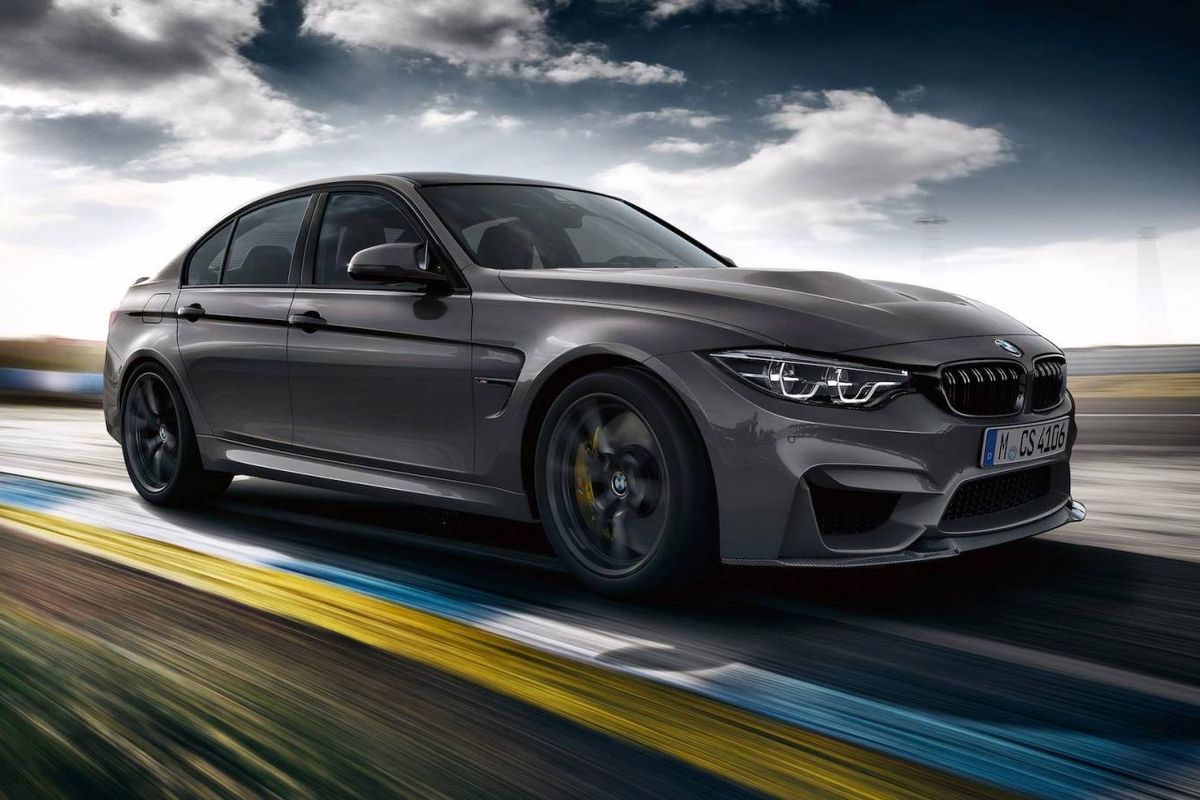
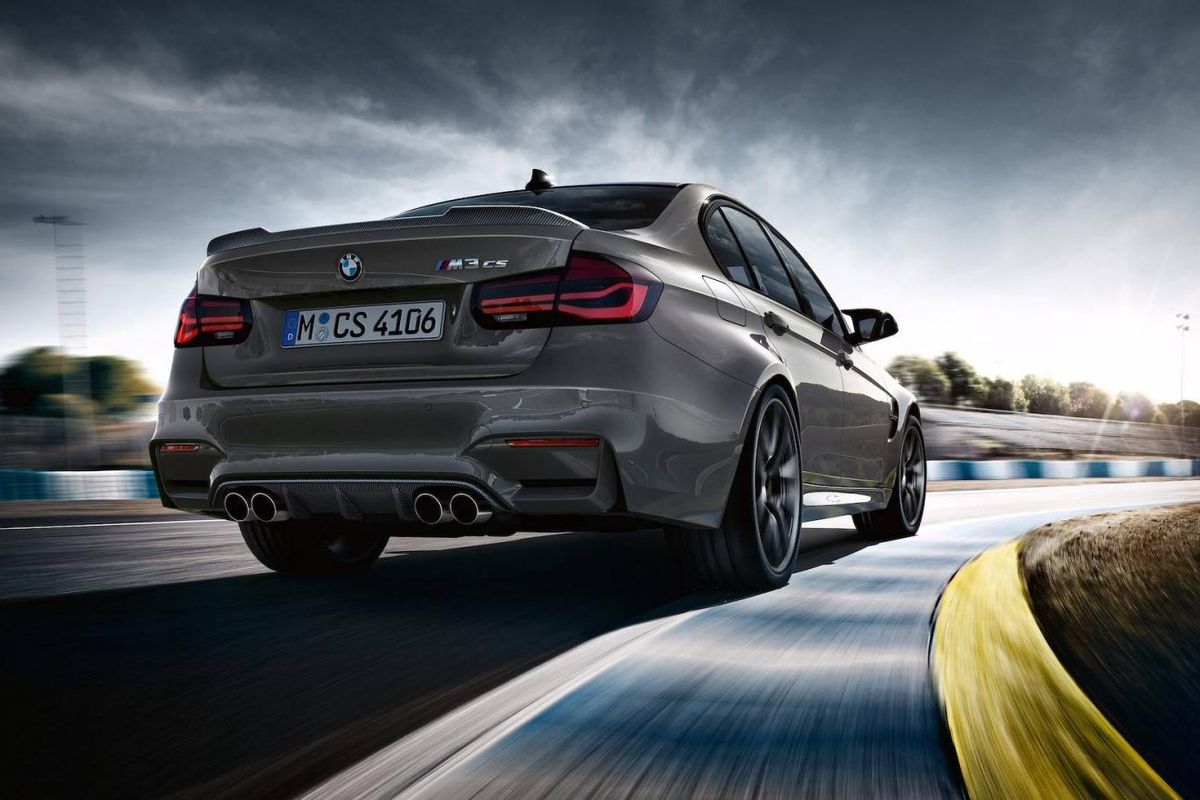
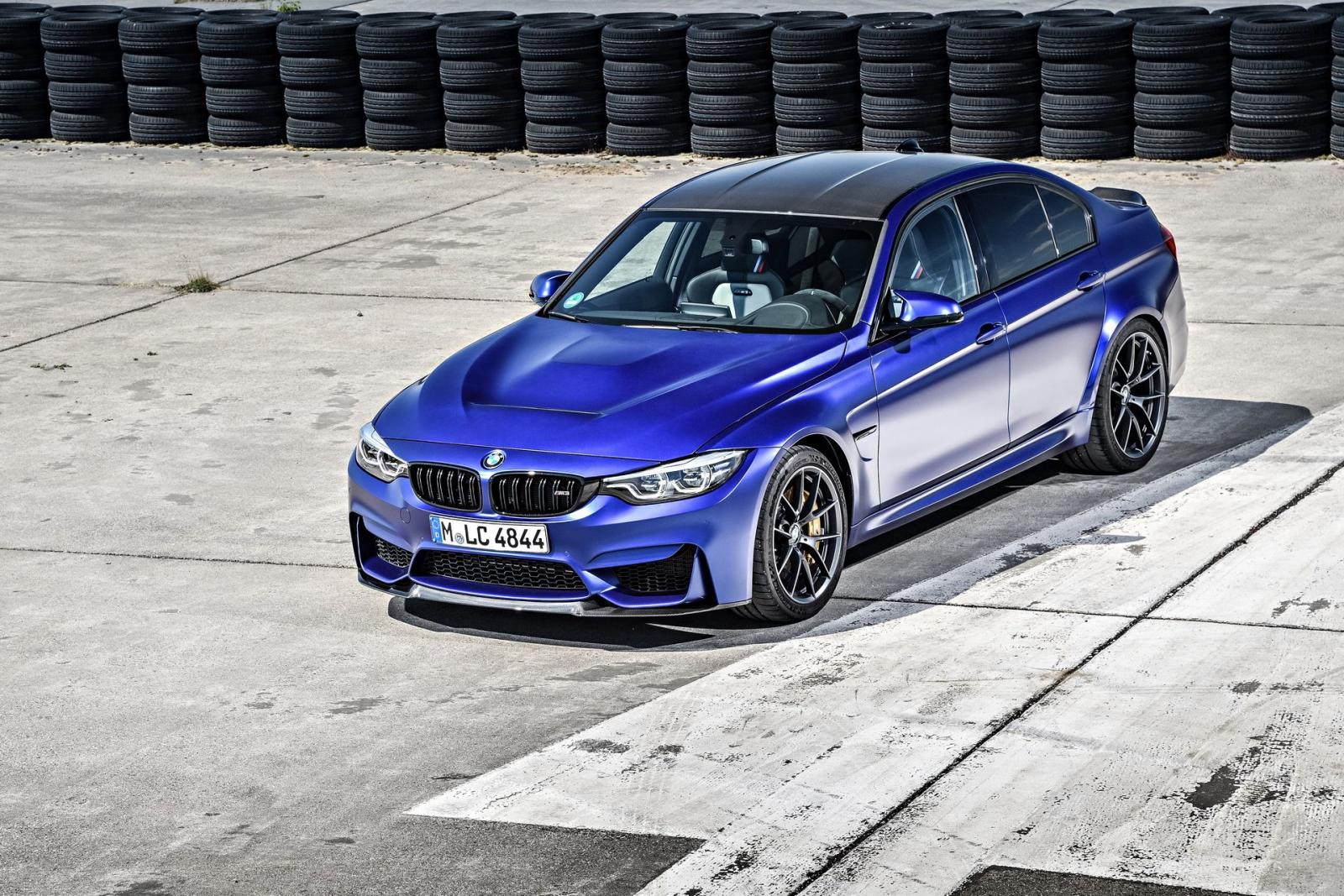
BMW M3 CS Coming to SA [w/Video]

BMW is introducing a limited-edition M3 CS to market and only 20 will be offered in South Africa.

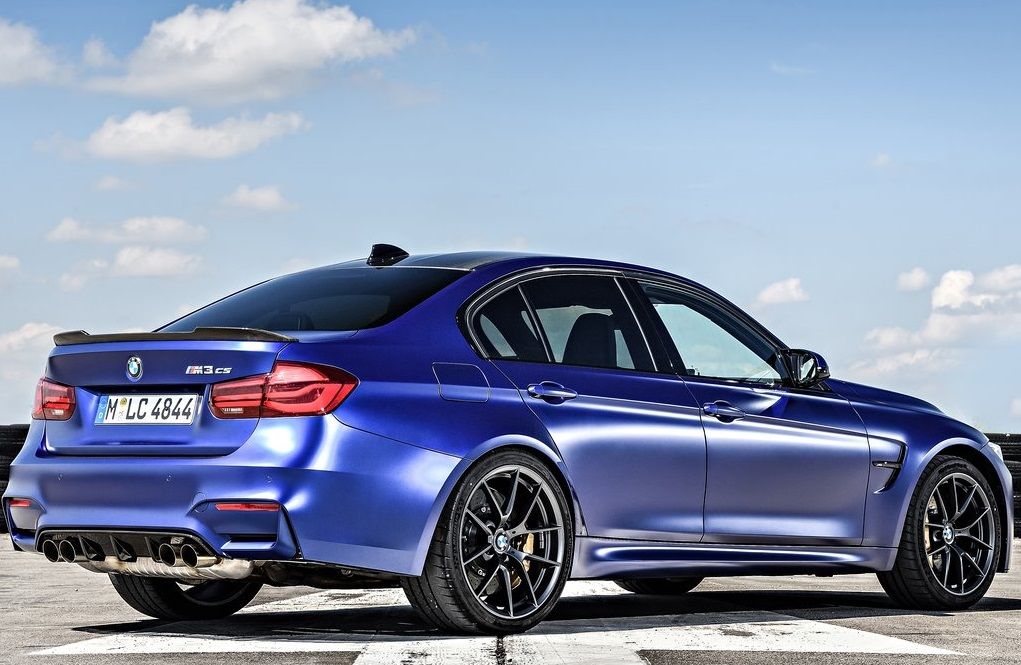
Much like the M4 CS, the M3 CS is lighter and faster but will offer the convenience of rear doors. The M3 CS is the final iteration of the current F80 M3 with production ending in June 2018. The M3 CS is currently launching in Europe and it's expected to arrive in South Africa September 2018. The BMW M3 CS is priced at R1 773 500 and a spokesperson from BMW SA has confirmed that orders are in progress and that the current allocation for our market is almost sold out, so if you want one, you'd better move quickly! Being a limited-edition model, only 20 will be up for grabs in our market and 1 200 units will be built by BMW for markets worldwide. 

Herewith the key details for the BMW M3 CS…

Key details

Engine performance


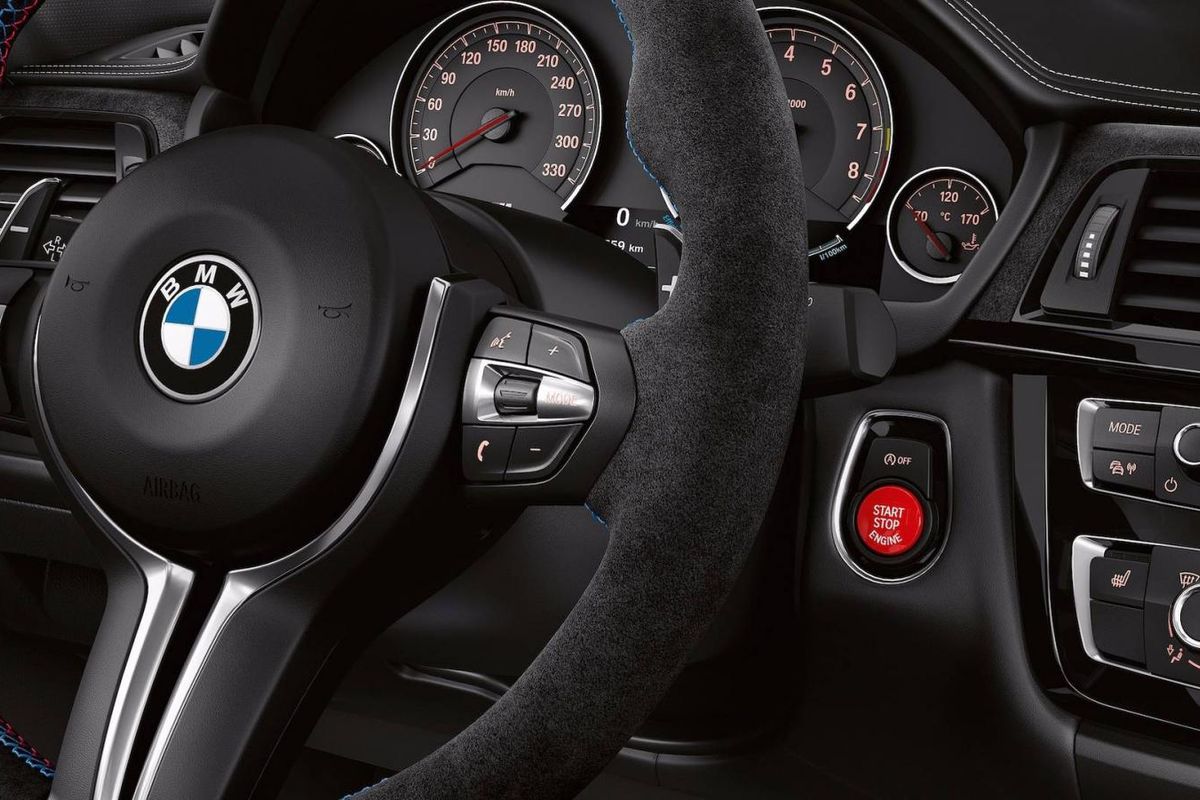
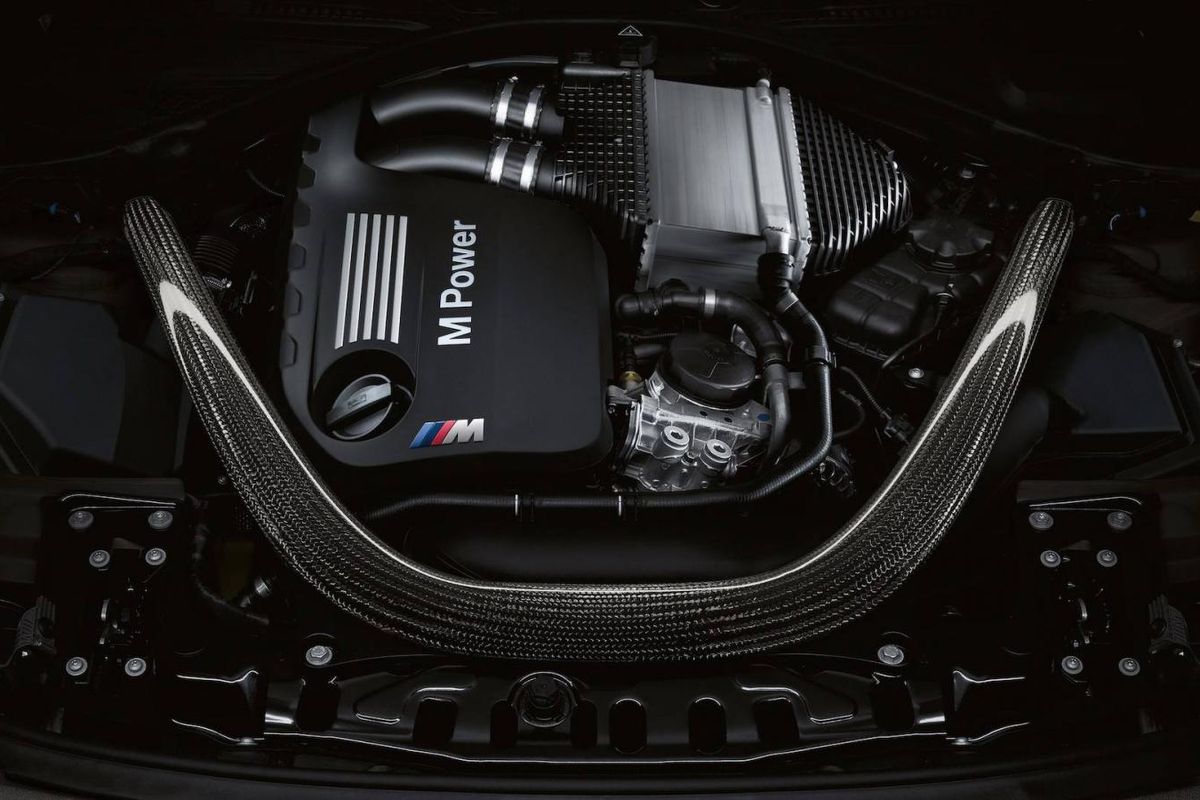
The BMW M3 CS packs 338 kW and 600 Nm of torque, good enough for a zero to 100 kph sprint in 3.9 secs.

The M3 CS offers more power than the M3 Competition Package and develops 338 kW and 600 Nm of torque from its twin-turbocharged 3.0-liter inline-6 cylinder engine. BMW’s M Driver’s Package is standard which means top speed is rated at 280 kph and the M3 CS is capable of a claimed sprint from zero to 100 kph in just 3.9 seconds. A 7-speed M Double Clutch Transmission (DCT) is fitted as standard. Fuel consumption is rated at 8.3 L/100km.

Furthermore, an adaptive M suspension system is fitted as standard and has been tuned to deliver optimum performance on both the road and track. Dynamic stability control with M Dynamic Mode and an active M differential ensure maximum traction.

Styling bits


Beefed up performance is complemented with sporty styling to match the go.

The M3 CS rides on 19-inch Orbit Grey Matt light alloys up front and 20-inch wheels at the rear shod in semi-slick, road-legal Michelin Pilot Sport Cup 2 rubber as standard while Michelin Sport road tyres will also be offered, if you wish.

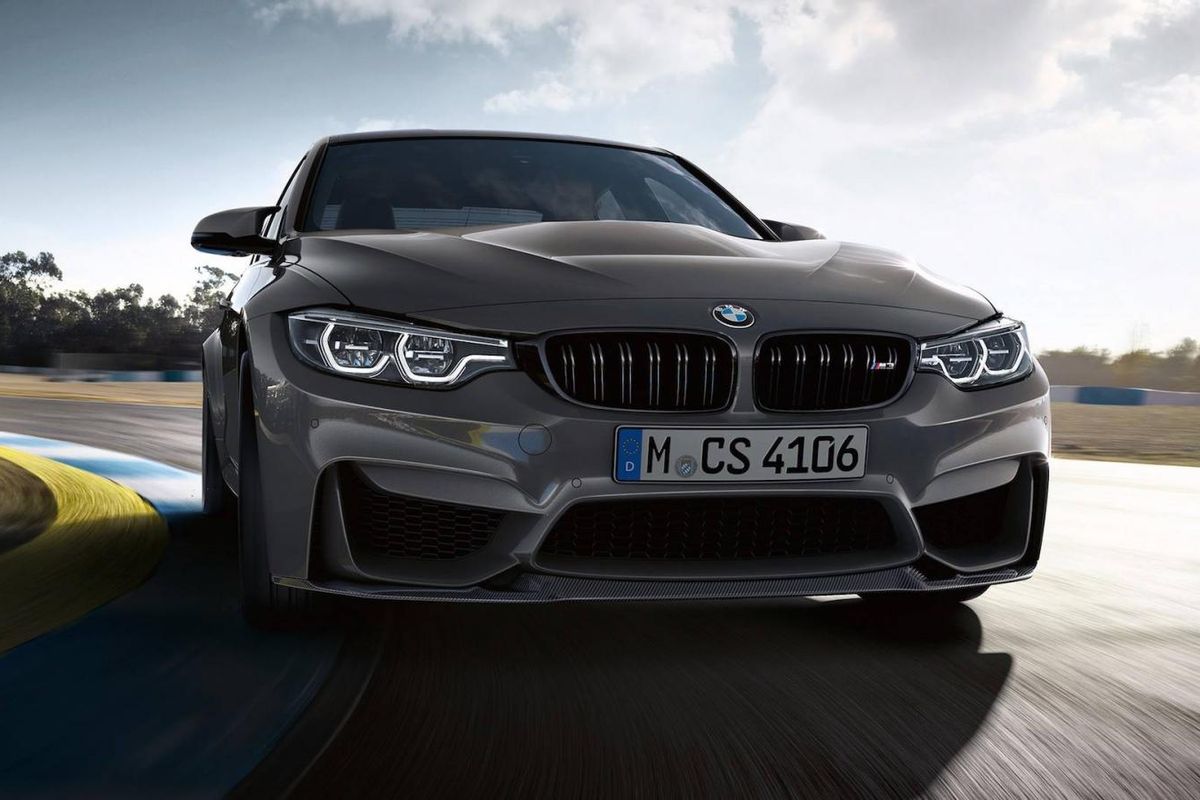
The face of the M3 CS features a sculpted fascia with a dual kidney grille, a large central air vent with 2 smaller vents to either side and a bulging bonnet for good measure. Other notable bits include twin LED headlights, carbon fibre front splitter and rear diffuser and a 4-pipe, dual-branch sports exhaust system. The carbon fibre Gurney spoiler lip on the boot lid has been specially redesigned for the M3 CS.

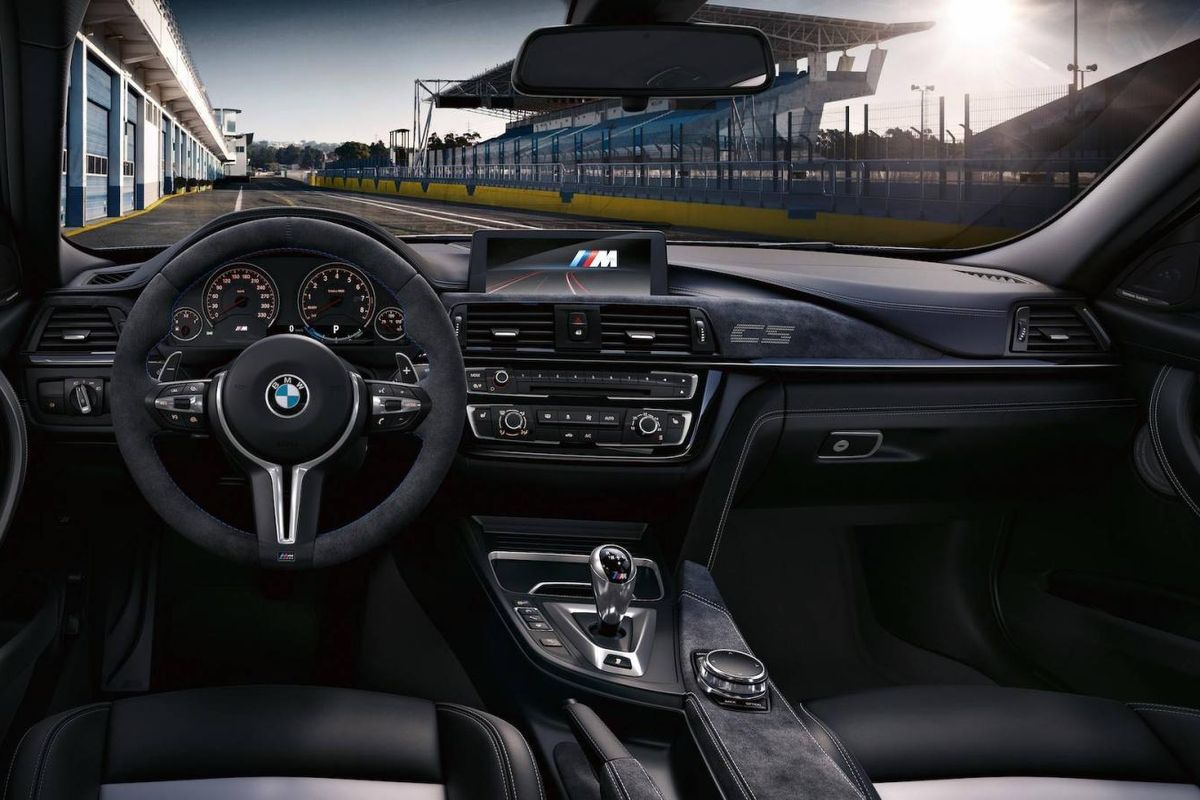
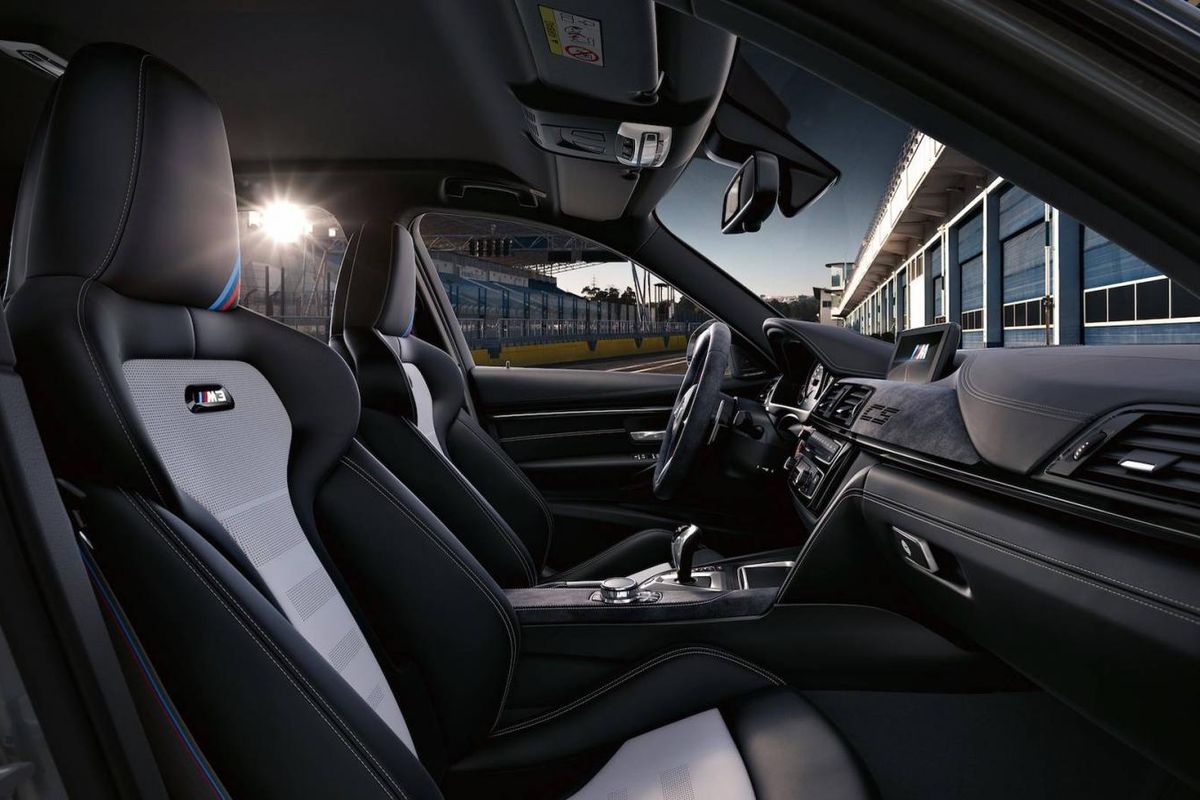
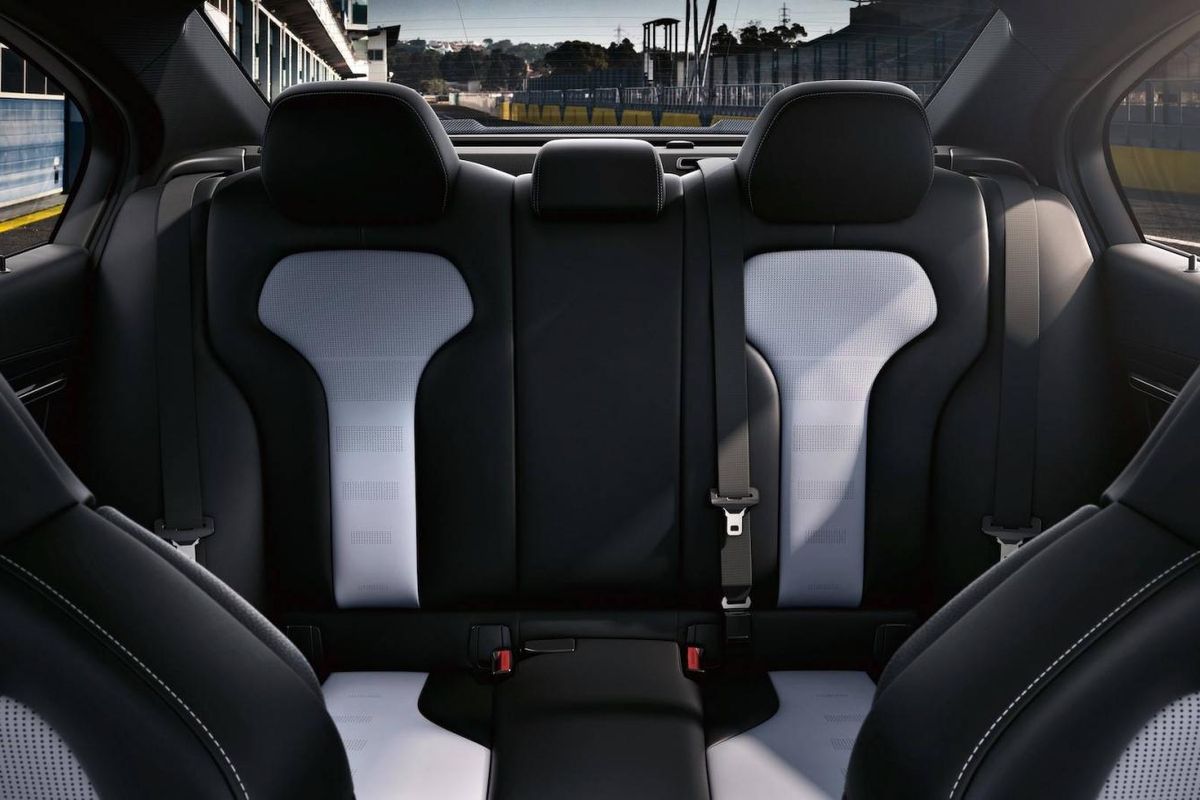
On the inside, the M3 CS wears 2-tone Silverstone/Black leather and Alcantara. Standard features include automatic climate control, a Harmon Kardon surround sound system and Navigation system professional.

Buy a BMW M3 on Cars.co.za

Related Content

BMW M4 CS (2017) Launch Review [with Video]
BMW M5: Now with M Performance Parts

BMW X2 (2018) Revealed

BMW 640i GT (2017) Launch Review
BMW M2 vs Audi RS3 (2017) Comparative Review Video
BMW i8 vs Audi R8 Spyder – The Strangest Sportscar Rivalry?

Highlights: SA's first BMW M Festival [with Videos]

BMW M140i (2017) Video Review
BMW and the future of the Double-Cab Bakkie

2017/18 Cars.co.za Consumer Awards – powered by WesBank; Finalists

Rendering: BMW M8

#CarsRaceDay – Hillclimb Shootout [Complete Video Series]

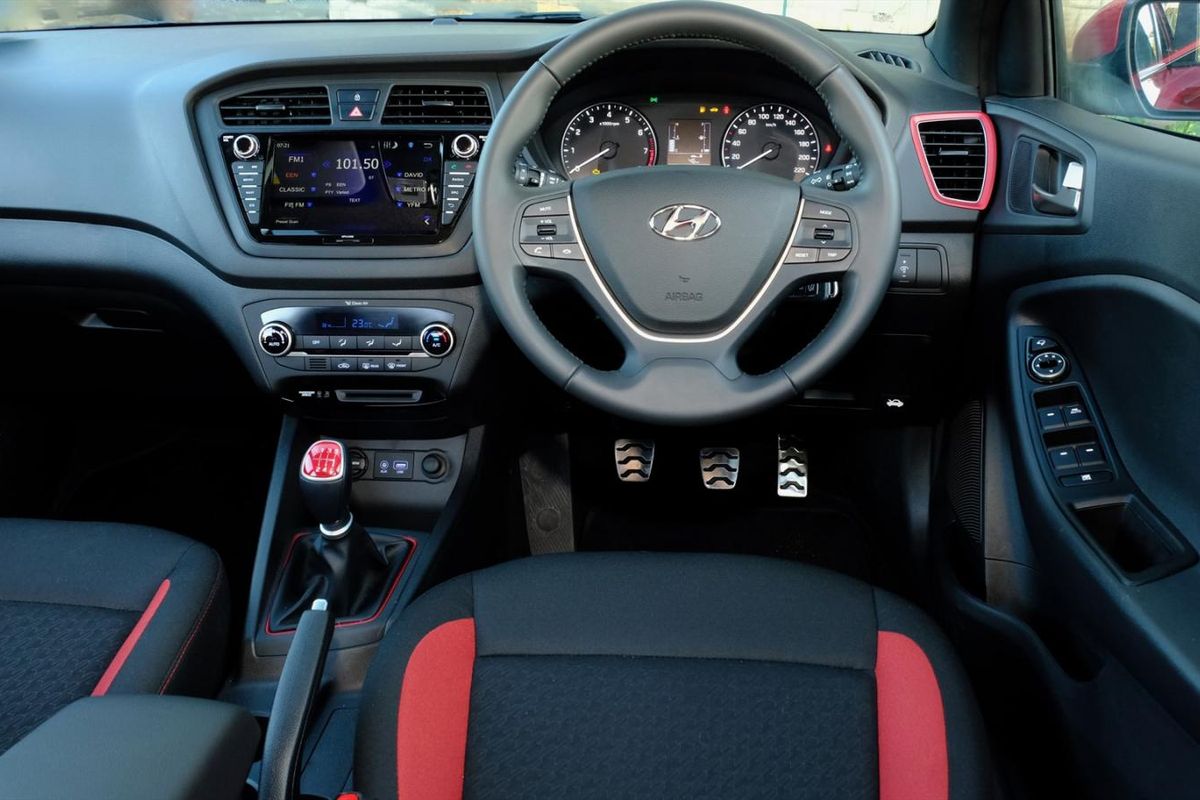
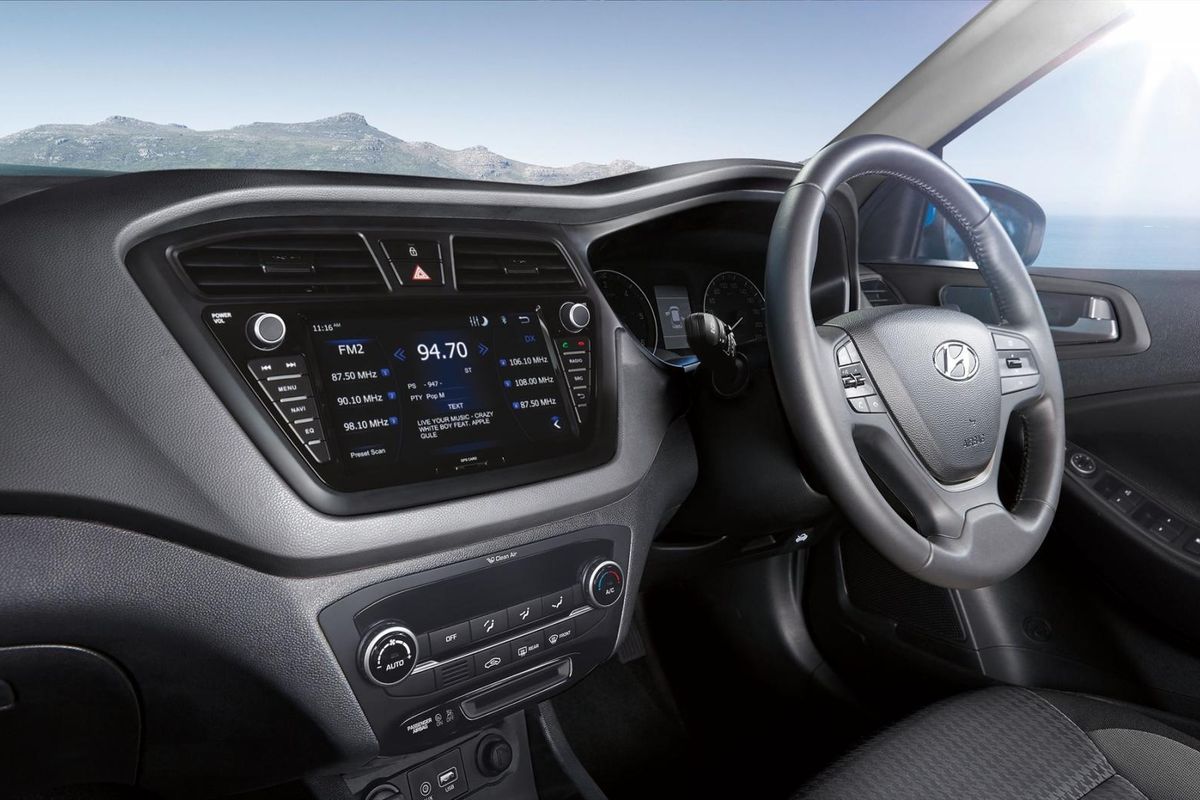
Hyundai i20 Facelift (2018) Specs & Price

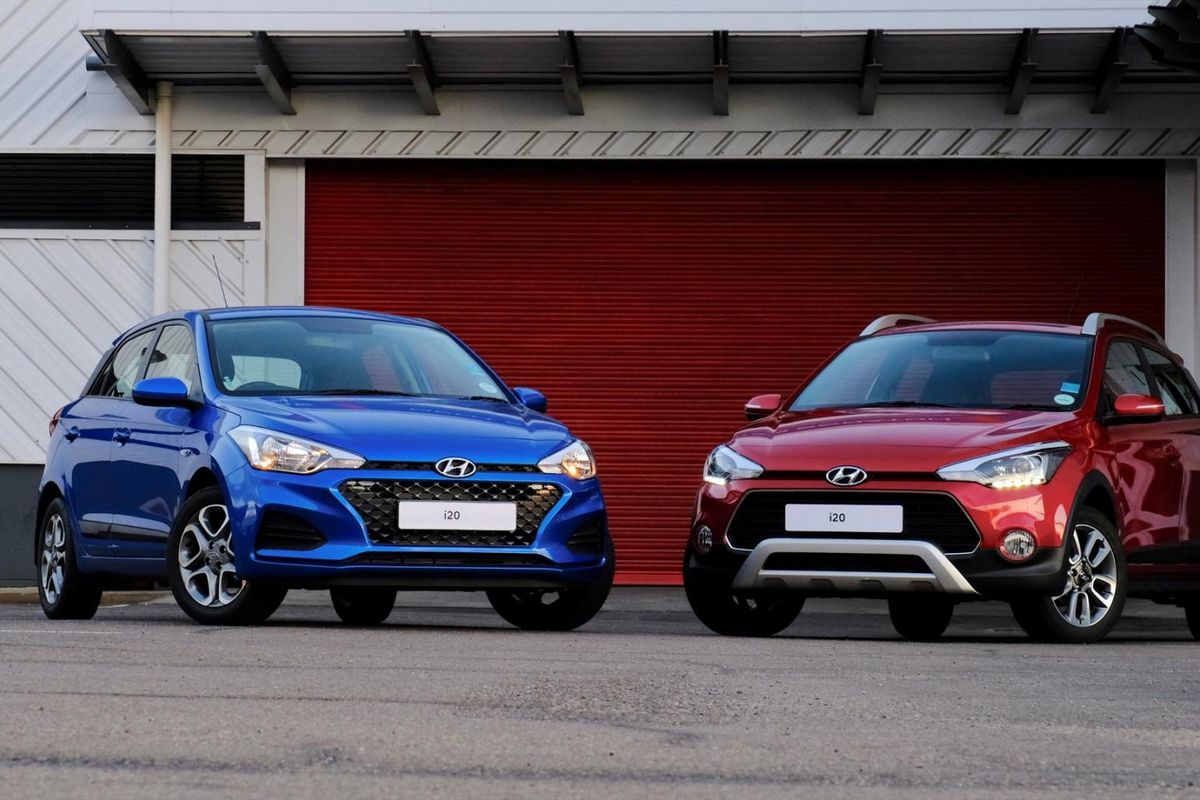
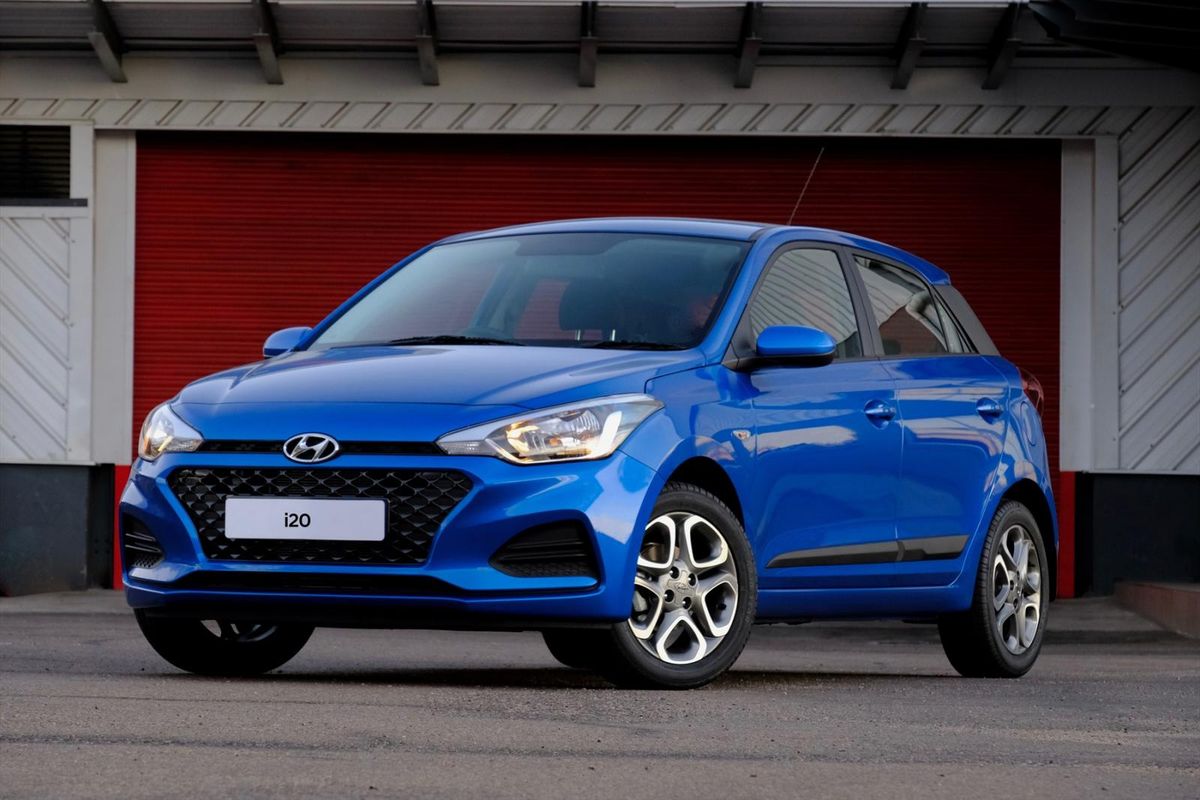
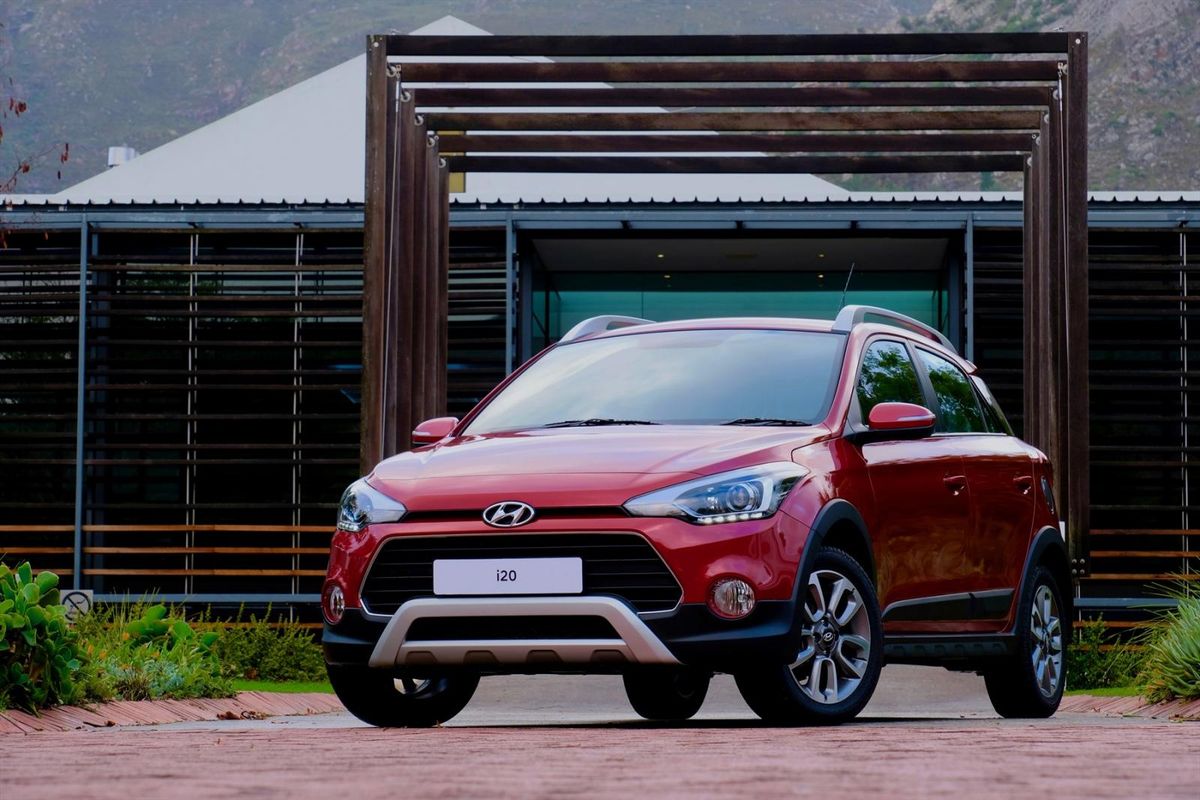
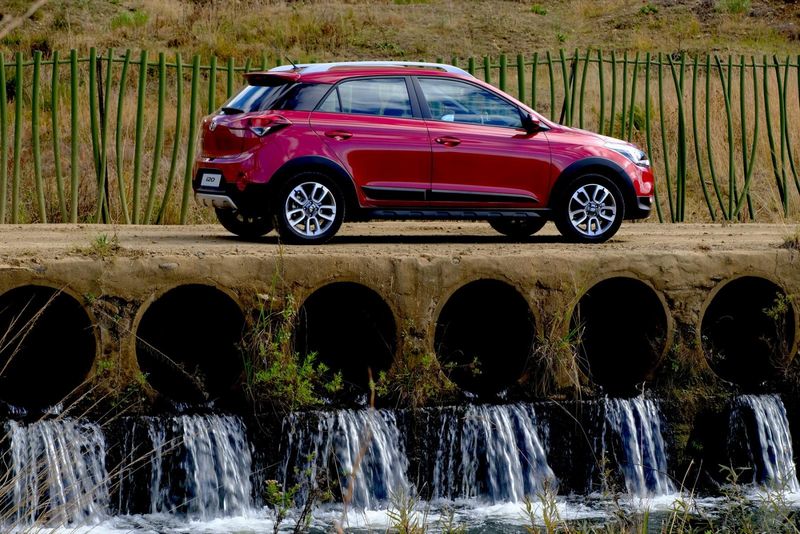
Hyundai has announced the specification and pricing of its facelifted i20 range in South Africa. In addition to the subtle mid-life upgrade, there is now also a crossover-flavoured Active derivative.
With close to 90 000 examples sold in the South African market since its initial introduction in 2009, the i20 is one of the mainstays of the Korean giant's local line-up. The current generation i20 was originally launched early in 2015 and has now come under the knife for slight facelift. Several models have also benefitted from added features, but the major news is arguably the introduction of the crossover-themed Active 1.4 which replaces the outgoing Sport and comes in at a more affordable price.

General design changes

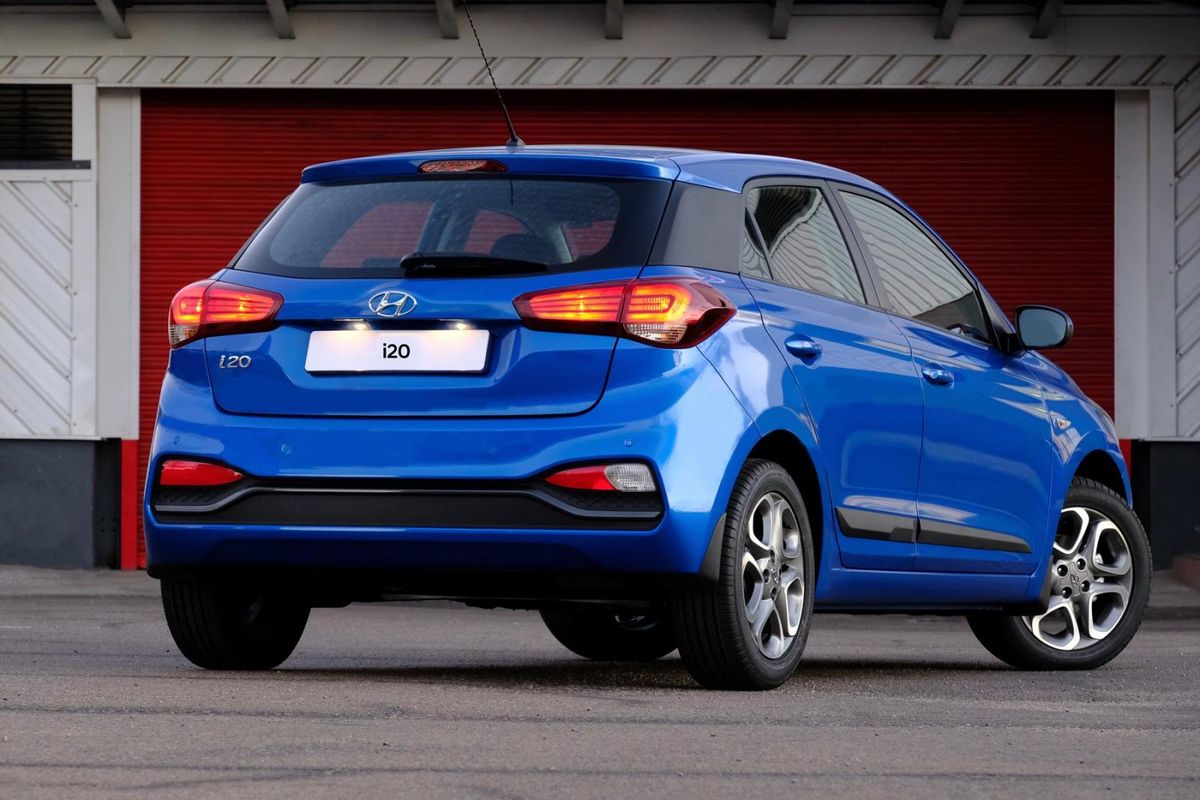
Ignoring the Active for now, the rest of the range also benefits from a few styling tweaks, predominantly to the front and rear bumpers, a reshaped grille and different graphics of the head- and taillamps. Inside, Hyundai's efforts have gone into creating a more upmarket look and feel, and so expect to see upgraded materials and finer attention to detail. Under-the-skin changes include revisions to the front and rear suspension as well as the steering, all in an effort to endow the i20 with greater steering precision, comfort and responsiveness. We'll drive the new i20 soon, so look out for our thoughts on these changes.

The Active


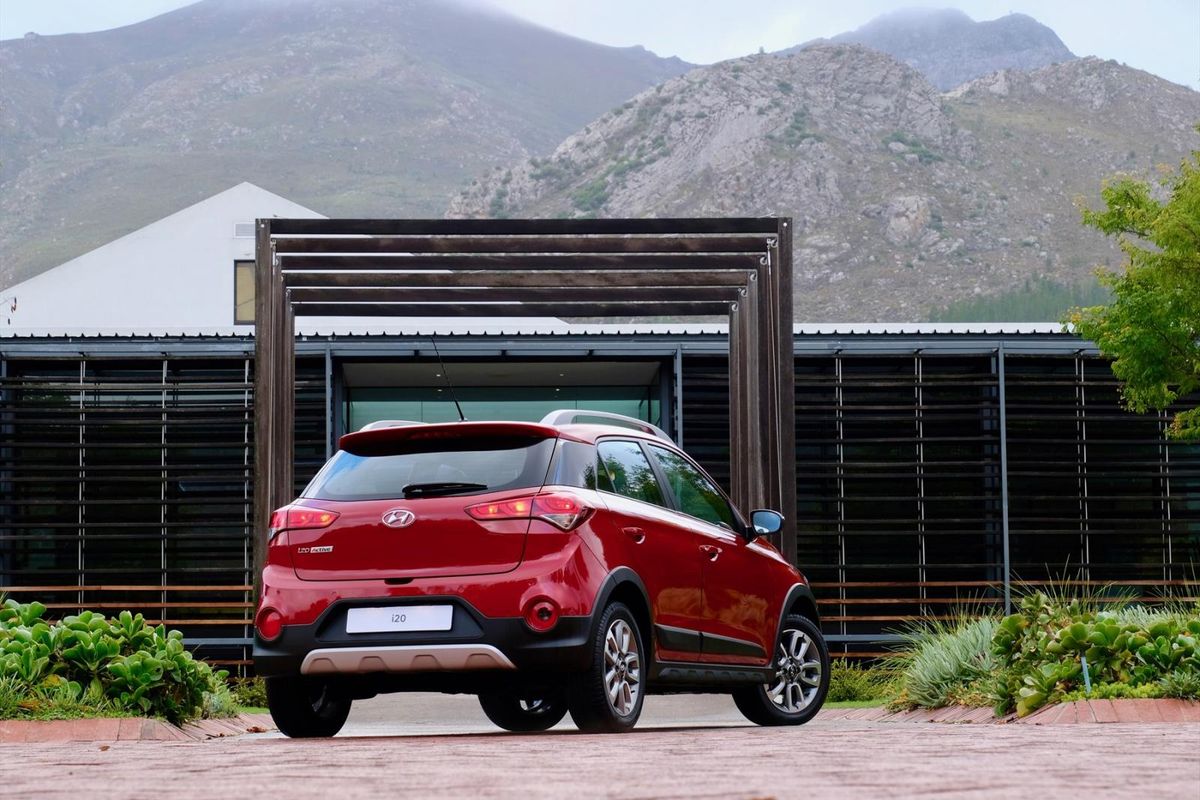
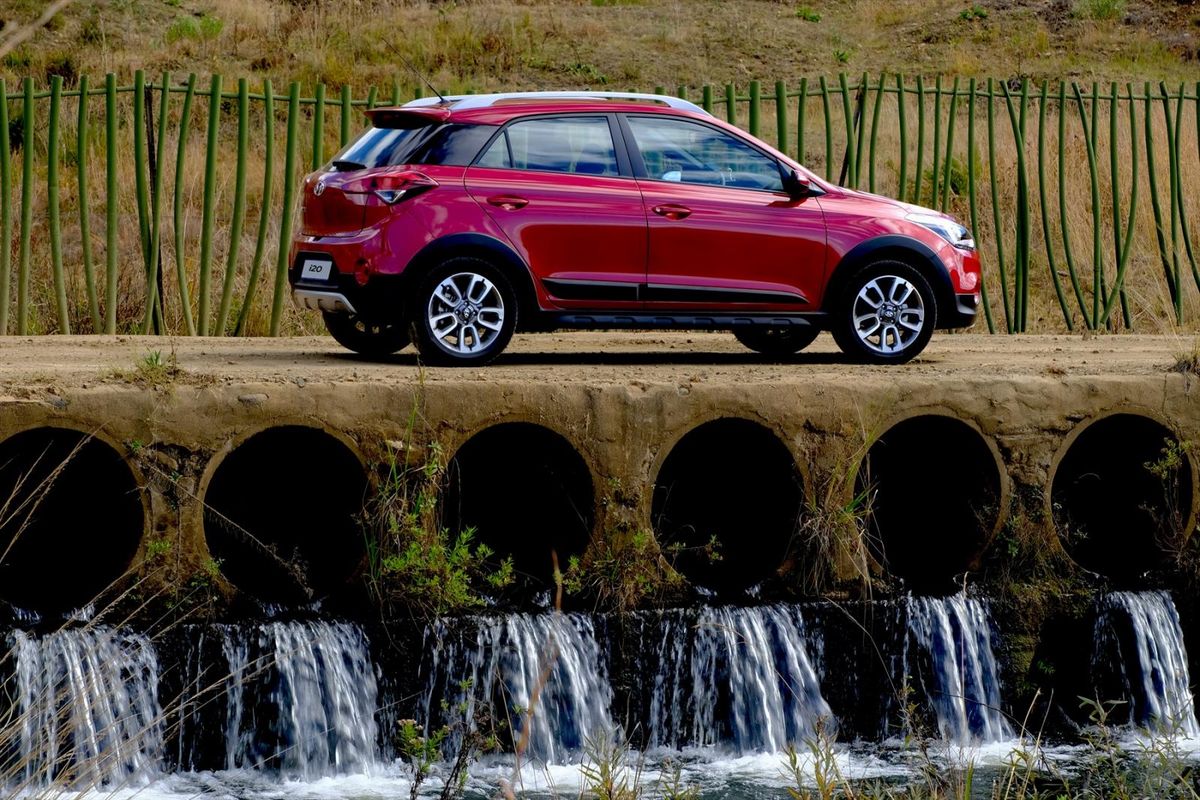
With slightly higher ground clearance and typical SUV addenda as part of the design, the new Active derivative fits well into the marketplace.

As crossovers are very much the trend at present, it only makes sense for Hyundai to add such a product to the i20 line-up. Although the only practical benefit of the Active's crossover pitch appears to be a ride height that's 20mm higher than normal, you do also get a more individualistic look. Based on other brands' success stories with similar vehicles, we can see this going down well in the local market.

The Active gets all the usual SUV-addenda, including roof rails, wheel arch linings and front and rear "skid plates" to make it look ready for the urban jungle. It also gets a very different grille/front foglight treatment and inside there is a far more youthful blue/red colour theme. Standard specification is generous on this model and includes; automatic air-conditioning, infotainment system (navigation optional), auto lights, leather steering wheel/gearknob, rear park assist, projection headlamps with LED DRL, different alloy wheel finish, height-adjustable driver's seat and electric windows all-round. It still appears a bit light on safety specification, with only dual front airbags and ABS/EBD appearing on the features list. We'd have liked to see ESP (electronic stability control) included, too.

Other models

The rest of the line-up remains much the same, but there are some specification tweaks. The entry-level 1.2 Motion derivative has gained an infotainment system, while the slightly dearer Fluid gets that and adds a centre armrest and rear park assist. The 1.4 Motion Auto also gets an infotainment system, while the 1.4 Fluid Auto further adds auto lights, a centre armrest, leather steering wheel/gearknob and LED daylight running lights. The 1.4 Fluid manual's specification is similarly beefed up.

Model range and Pricing

i20 1.2 Motion MT – R229 900

i20 1.2 Fluid MT – R241 900

i20 1.4 Motion AT – R254 900

i20 1.4 Fluid AT – R284 900

i20 1.4 Fluid MT – R266 900

i20 1.4 Active MT – R279 900

All derivatives are sold inclusive of Hyundai's excellent 5-years/150 000 km warranty (and addition 2-years/50 000km powertrain warranty), while 1.2L derivatives come with a 2-years/30 000km service plan, extended to 3-years/60 000km for 1.4L offerings. Roadside assistance is also part of the deal, for 5-years/150 000km.

You may also be interested in;

Hyundai Grand i10 1.2 Glide (2018) Review

12 Well-specced cars for under R250 000 in SA

Winners of the Cars.co.za Consumer Awards – Powered by WesBank

Interested in buying a new / used Hyundai i20?

Find one on Cars.co.za today by clicking here

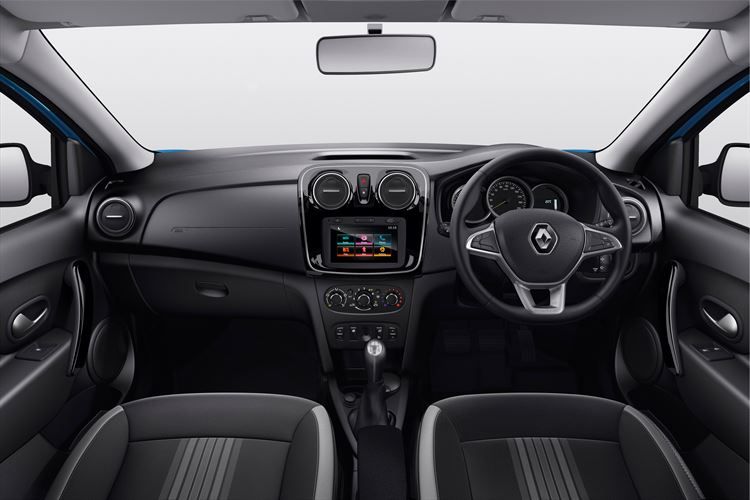
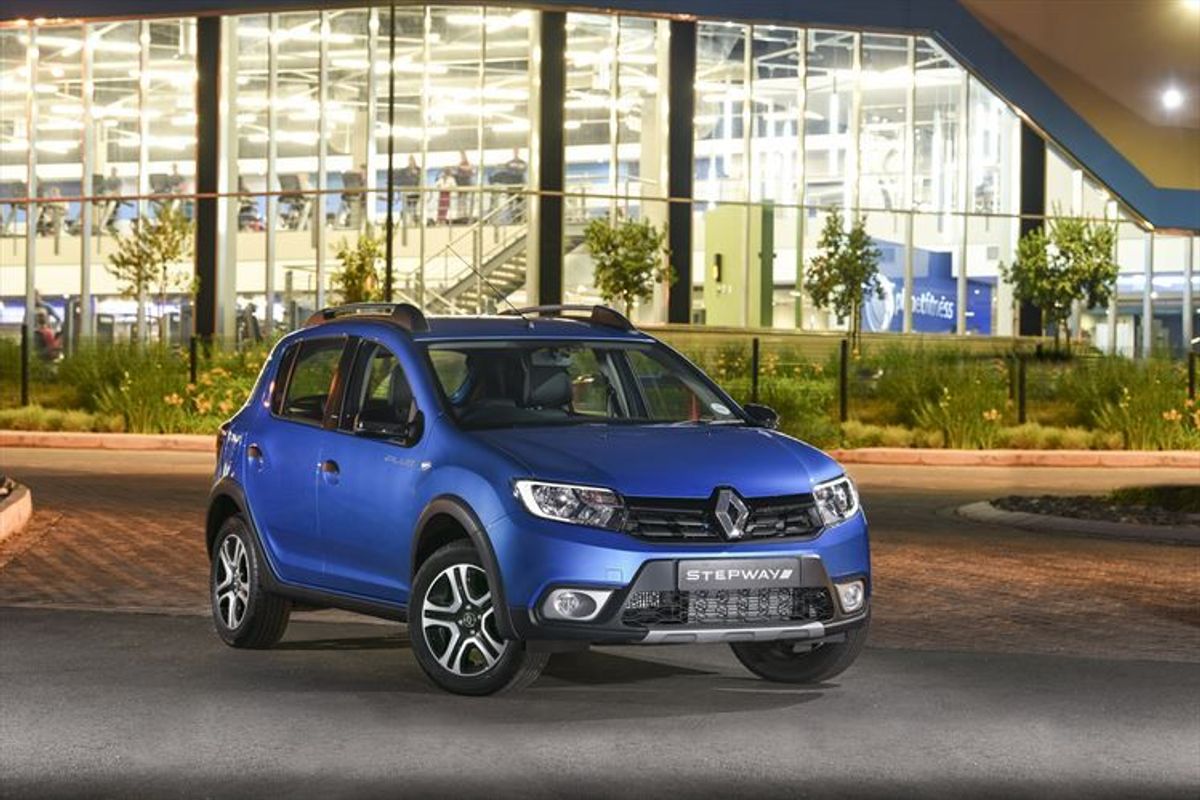
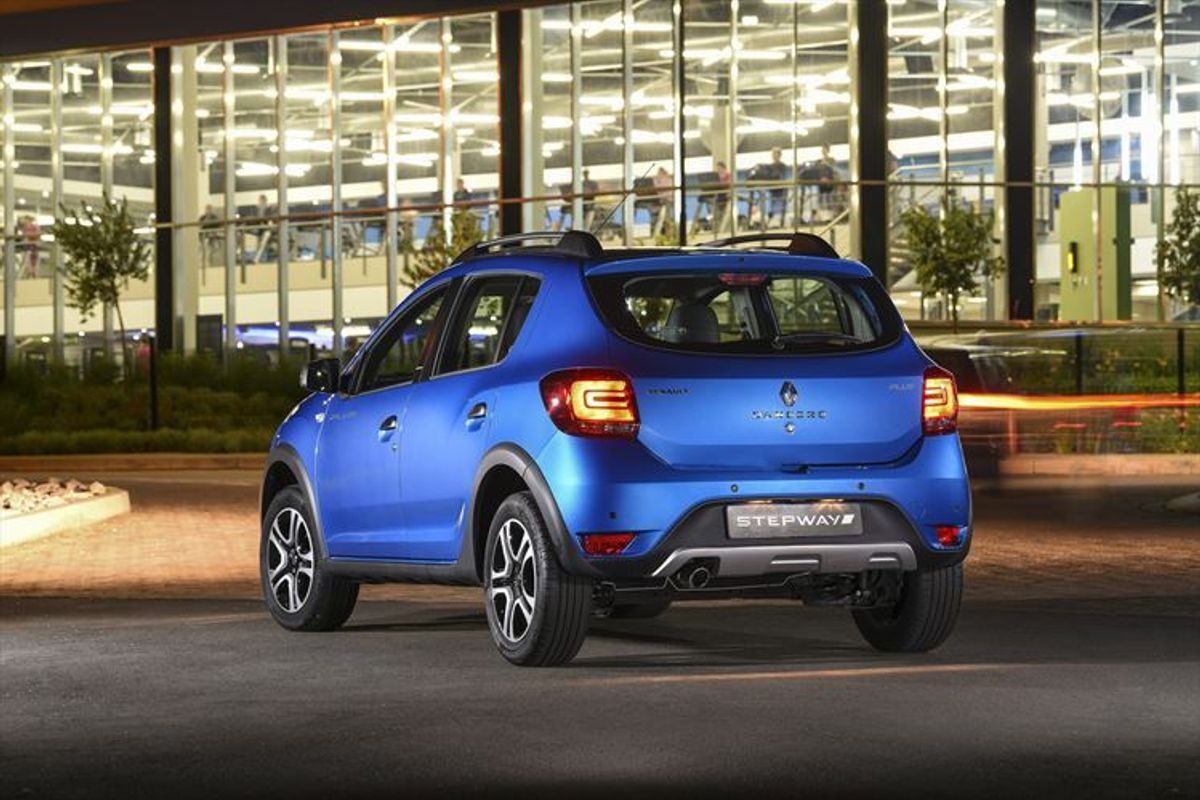
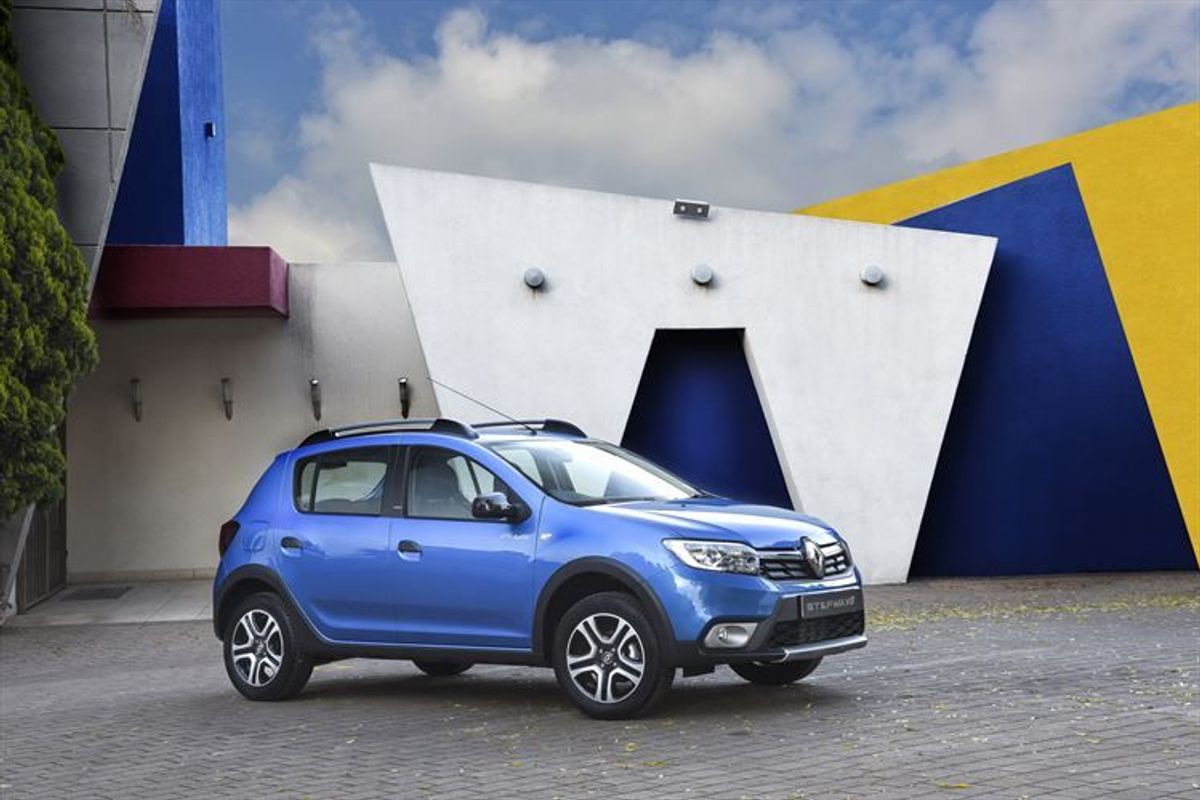
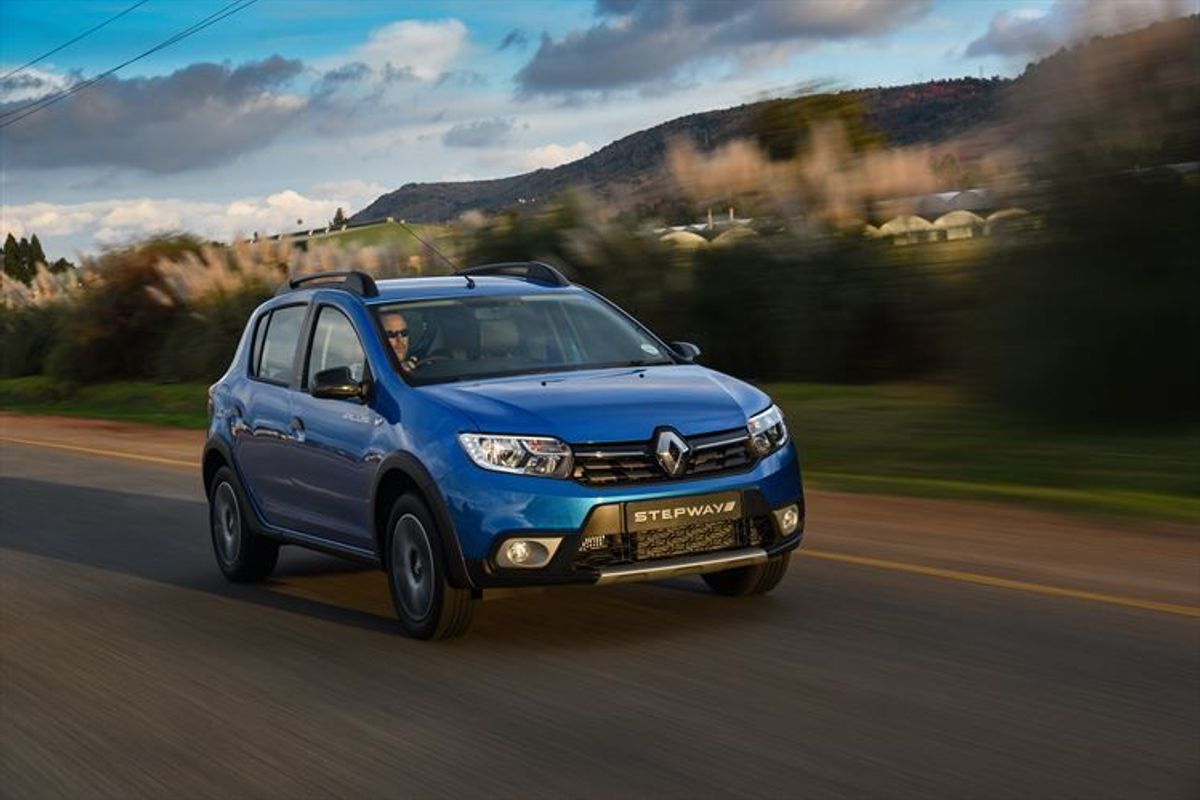
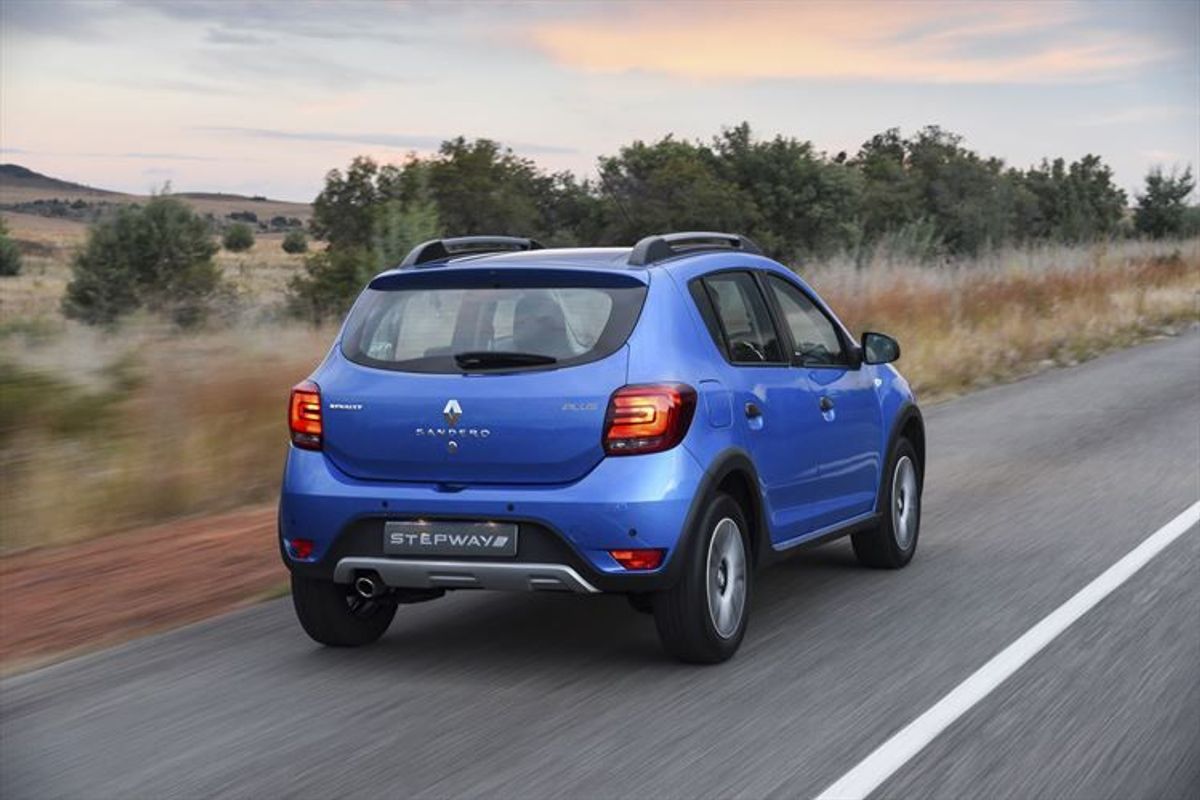
Renault Sandero Stepway Plus in SA

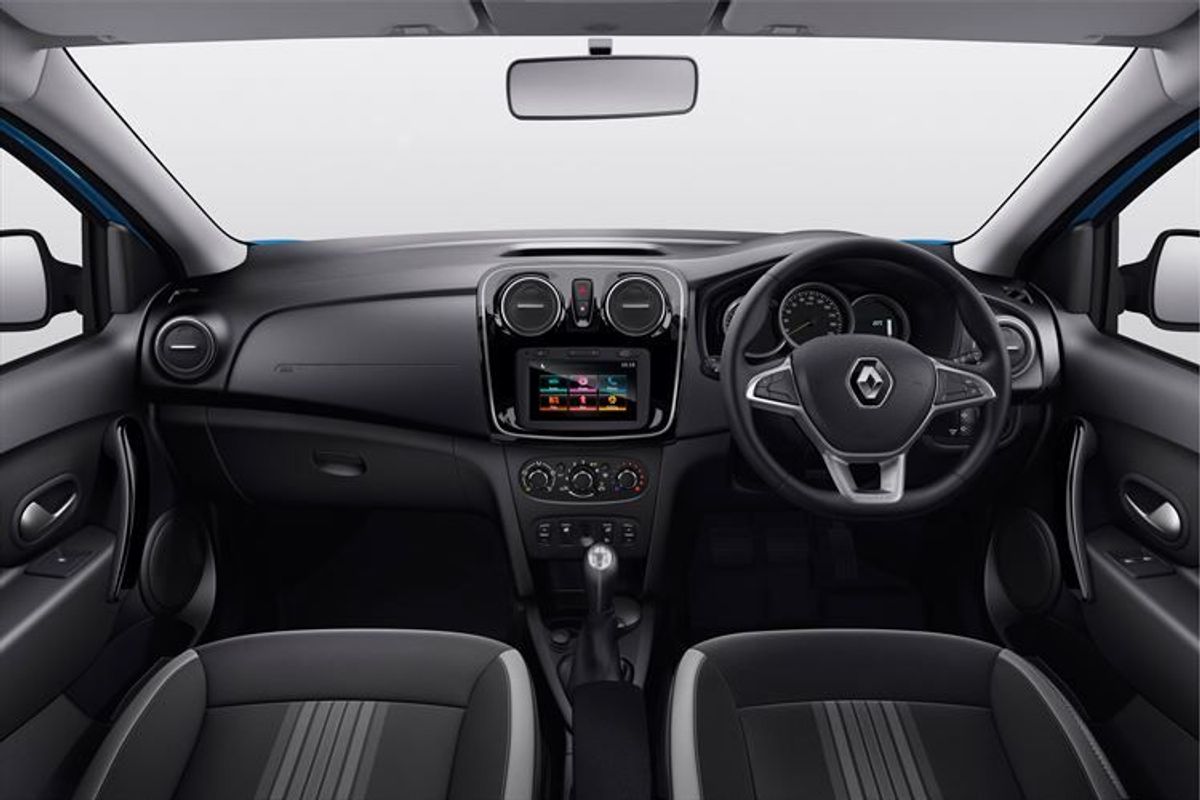
Renault has introduced a new flagship Sandero Stepway Plus derivative in South Africa. Take a look at specification and pricing for the Sandero Stepway Plus below…

Renault’s popular Sandero Stepway Dynamique derivative has been replaced with the Stepway Plus which is now exclusively available in 2 new body colours including Dune Beige and Cosmos Blue. The new flagship derivative is further fitted with specific badging as well as 16-inch wheels with 2-tone flexwheel covers.

Engine Power

The Sandero Stepway Plus is powered by the familiar 0.9-litre, 3-cylinder turbopetrol engine with 66 kW and 135 Nm of torque. A 5-speed manual transmission is standard.

Key Features


The Sandero Stepway Plus represents good value at this price point with generous standard specification. 

Standard features for the Sandero Stepway Plus include a 7-inch MediaNav touchscreen with navigation, cruise control, rear park assist with rear parking camera and electrically operated side mirrors and windows.

Safety features fitted include ABS with EBD, Emergency Brake Assist, Hill Start Assist Electronic Stability Control, traction control and 4 airbags. ISOFIX child seat mounts are also standard.

Optional features for the Stepway Plus include leather seats for R10 000 and metallic paint for R2 500.  

Renault Sandero Stepway – Price in SA (May 2018)

66 kW Sandero Expression – R171 900

66 kW Sandero Stepway Expression – R186 900

66 kW Sandero Stepway Plus – R206 900

A 5-year/150 000 km warranty and 2-year/30 000 km service plan is standard.

Buy a new or used Renault Sandero Stepway on Cars.co.za

Related Content

Renault Sandero Stepway Dynamique (2017) First Drive

12 Well-Specced Cars Under R250k in SA

Renault Sandero Stepway 66 kW turbo Dynamique (2017) Review

Renault Sandero Stepway 66kW turbo Dynamique (2017) Video Review

5 Small Crossovers for Under R200k

Global NCAP and AA Crash Test Popular Cars in SA

Jaguar E-Pace (2018) Video Review

The recently launched E-Pace slots in below its World Car of the Year-winning F-Pace sibling in Jaguar's product line-up. It shares its platform with the desirable (if long-serving) Range Rover Evoque and competes with the BMW X2 and Volvo XC40 in the battle for supremacy between SA's baby premium-badged SUVs.

The F-Pace is Jaguar's best-selling model in South Africa and our track test ace, Ashley Oldfield, reckons it's the best-handling big SUV on the market. Fans of the alphabet will have realised that that E is just before F, and so the E-Pace was designed to be the younger sibling; the more compact of the two. In this video, we test drive the top-spec diesel available in South Africa, the P240D HSE R-Dynamic. 

Buy a new or used Jaguar E-Pace on Cars.co.za

Related content:

Jaguar E-Pace D240 R-Dynamic HSE (2018) Review

Jaguar E-Pace (2018) International Launch Review

5 Interesting things about the new Jaguar E-Pace

Volvo XC40 (2018) Launch Review

Volvo XC40: 5 Rivals To Beat

BMW X2: First Drive in SA

BMW X2 (2018) Launch Review [w/Video]   

Alfa Romeo Stelvio 2.0T Super Q4 (2018) Review [w/Video]

Alfa Romeo Stelvio 2.0T Super (2018) Video Review

Lexus Luxury LS Lands in SA

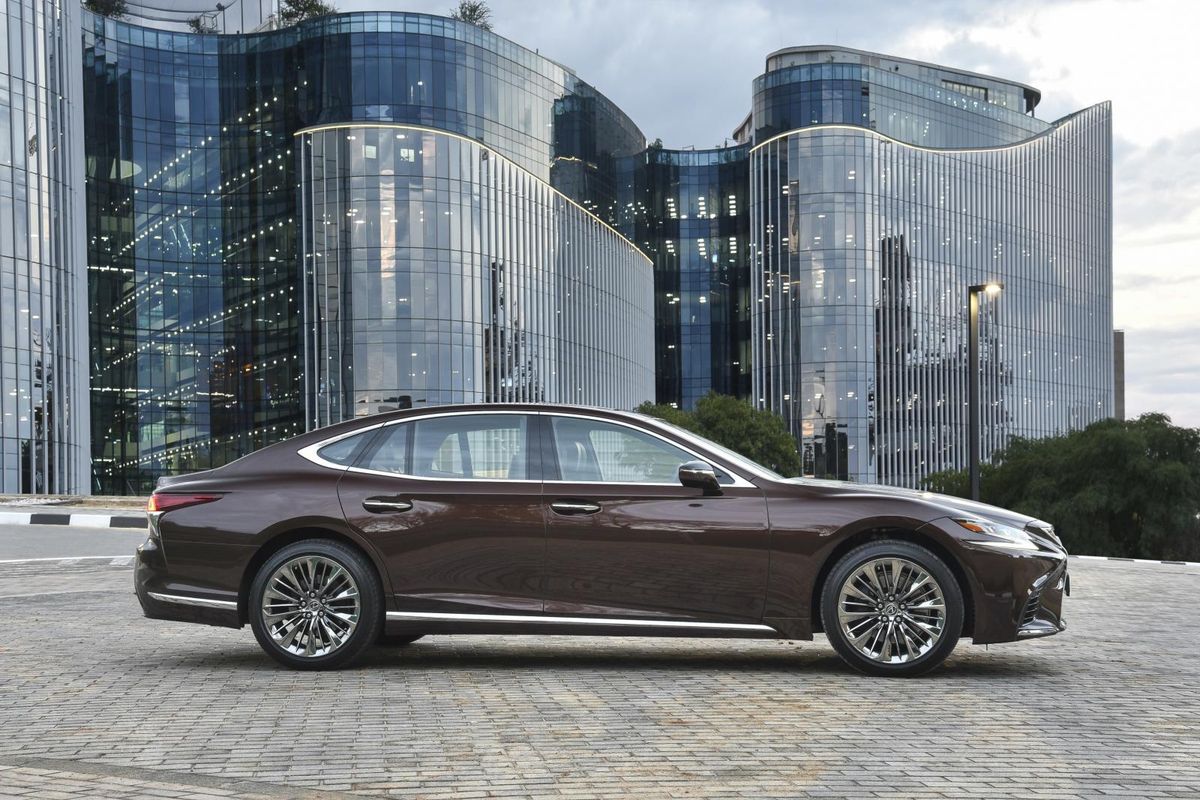
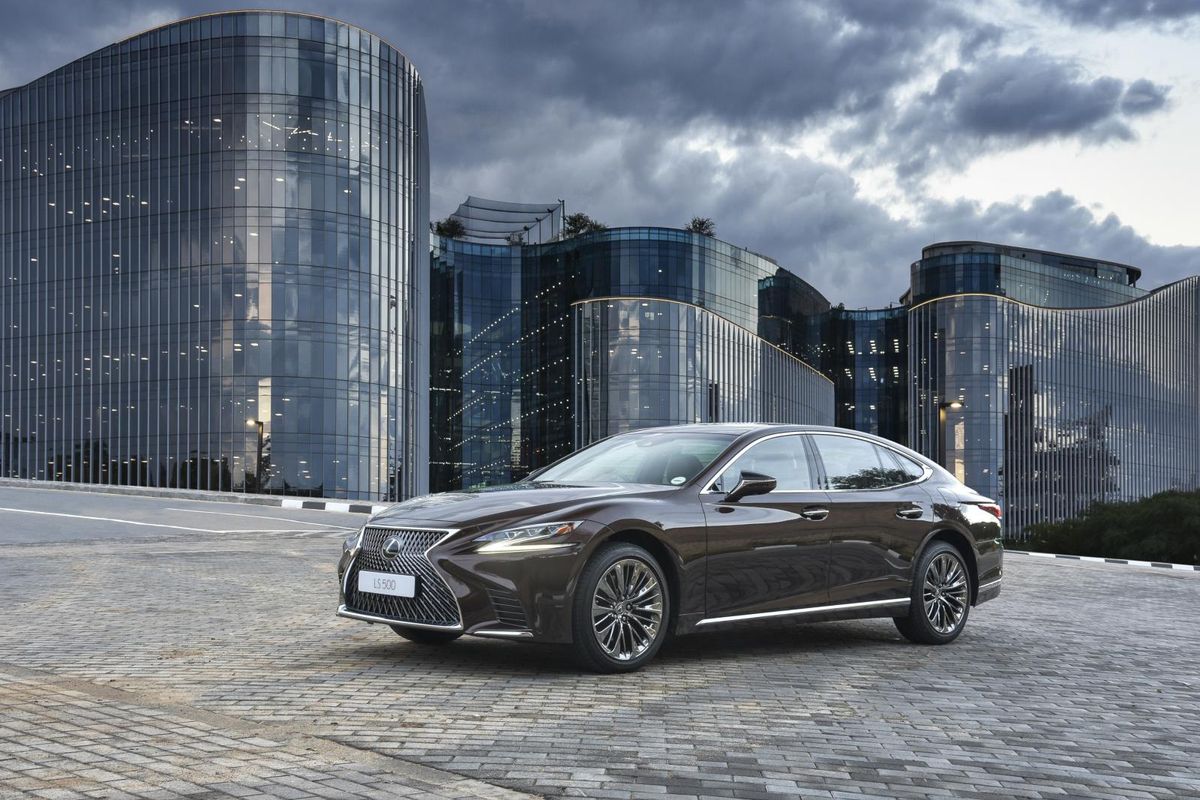
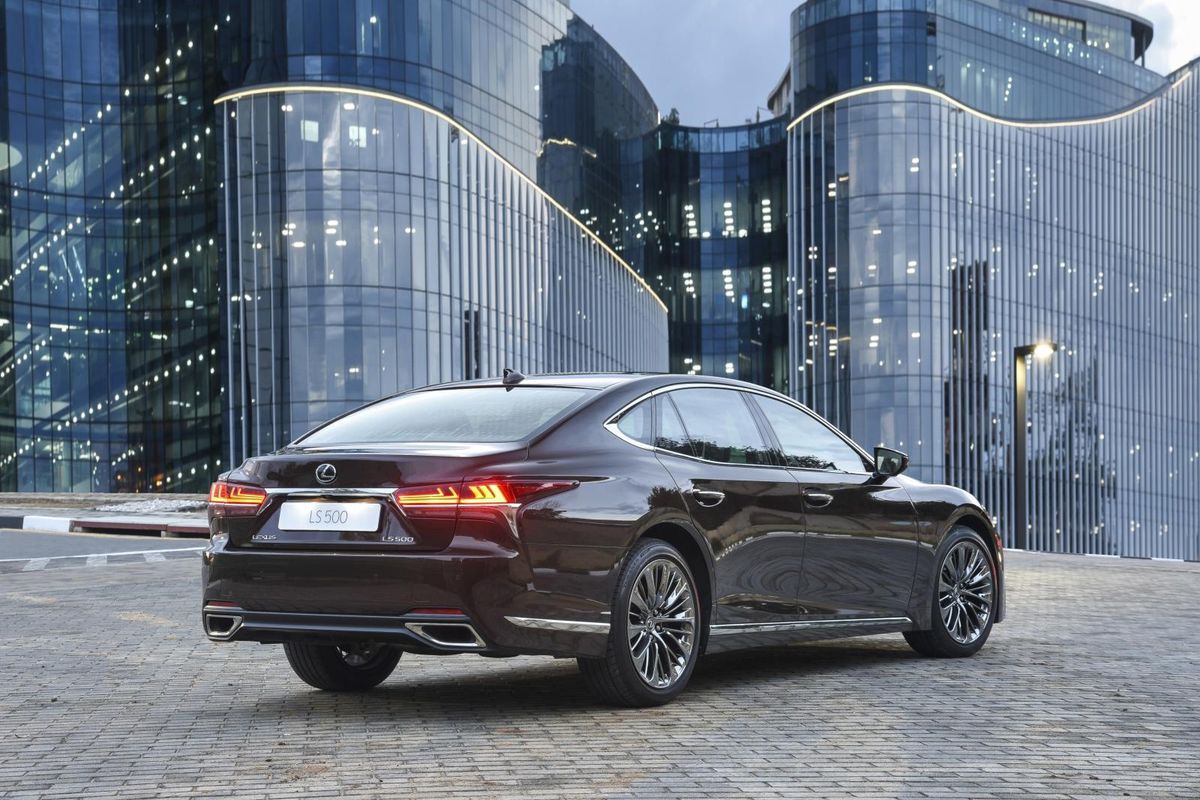
The flagship luxury sedan from Lexus has arrived in South Africa. Lexus claims it brings premium levels of powertrain smoothness, spaciousness, handling, ride comfort, safety, craftsmanship and attention to detail. Let's meet the new Lexus LS 500.

Riding on a new rear-wheel-drive platform and featuring trademark Lexus design cues like the spindle grille, the new Lexus LS 500, now in its fifth generation, is promising a lot. Underneath that bonnet is an interesting powertrain. It's a 3.5-litre twin-turbocharged V6 packing 310 kW and 600 Nm, meaning this luxury limo is capable of 100 kph sprints in 5 seconds. Lexus claims this engine promises V8 levels of power without the thirst associated with an 8-cylinder engine. Power goes to the rear wheels via a 10-speed automatic transmission. Lexus claims its new LS 500 consumes 9.5 L/ 100 km. 

The new Lexus boasts adaptive variable damping as well as air suspension, with the aim of providing ultimate comfort irrespective of road quality as well as being able to raise/lower the car for easy access. Lexus has fitted its new LS 500 with 20-inch alloys wrapped in run-flat rubber and there are 11 colour options. 

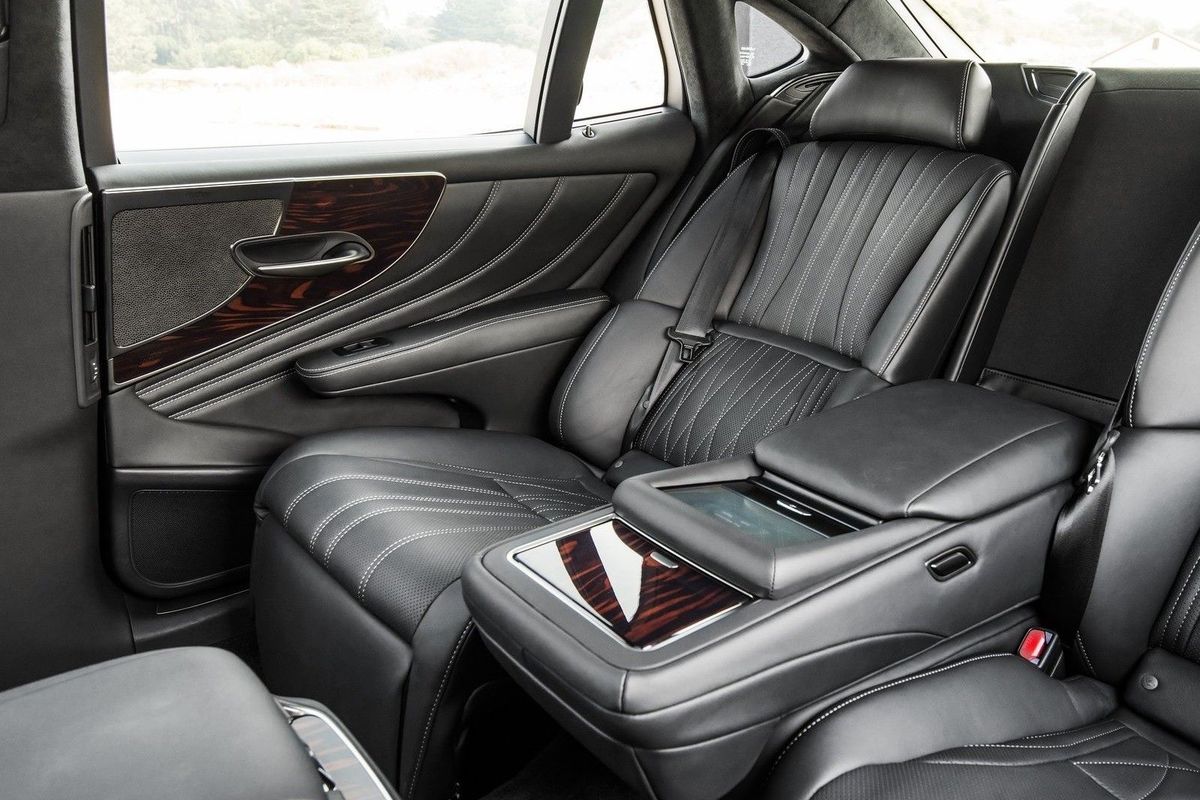
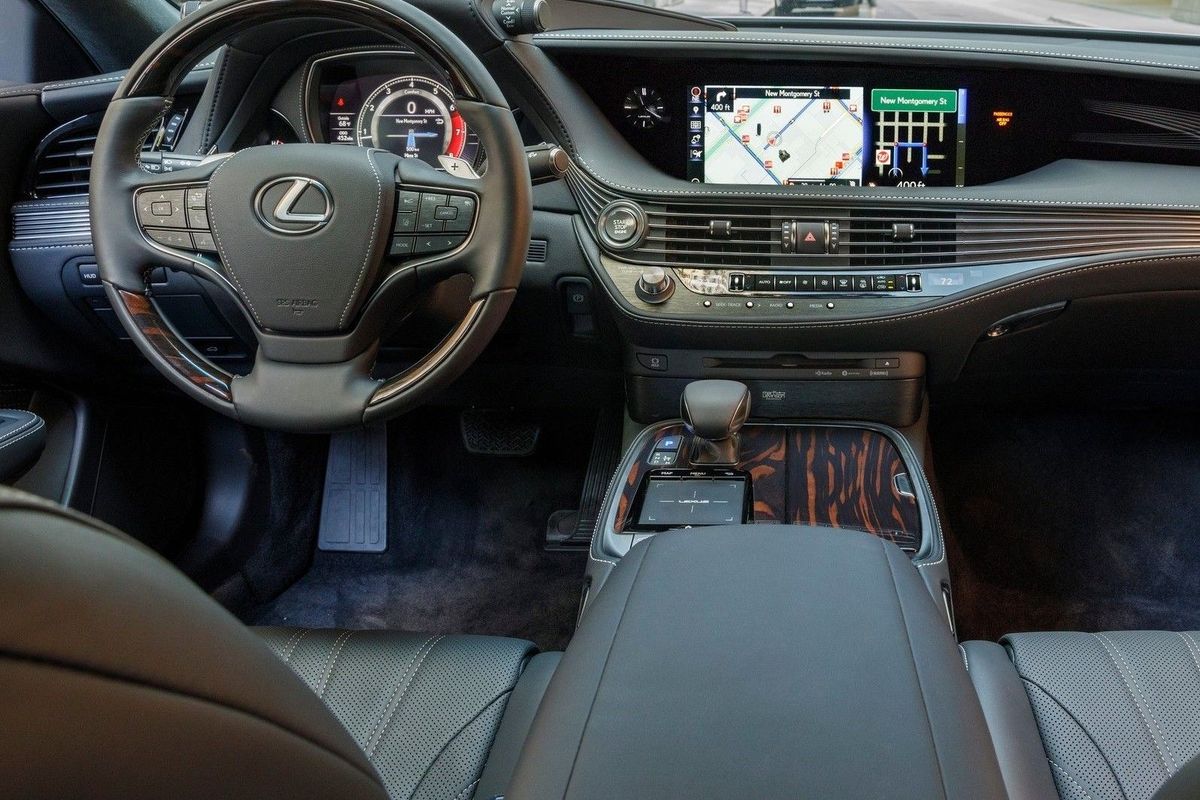
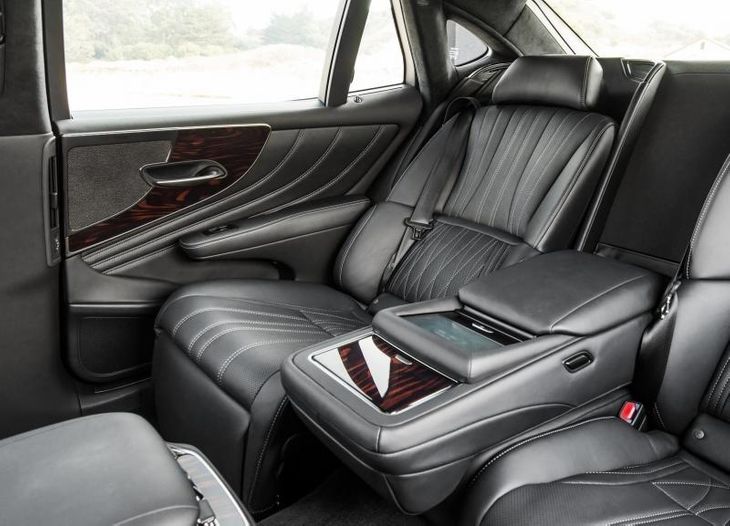
The cabin is where it becomes really special. While the rear of the LS 500 is arguably the best place to be, the new version features a driver-focused cockpit filled with luxury elements such as metal and wood as well as leather in abundance. The rear cabin features a multi-function touchscreen in the rear centre armrest console which is used to precisely control the position of the rear seats, together with audio, climate, sunshade and interior lighting functions. There are three preset seat modes: Business, which is the default; Entertain, which reclines the seat for comfortable viewing of the entertainment monitor, and Relax, which extends the leg ottoman, deeply reclines the seatback and moves the front passenger seat to its further forward position to provide maximum legroom. The rear seats feature 22-way adjustment too! The front seats are just as comfortable with 28-way adjustment and massage functionality. 


The rear cabin of the new Lexus LS 500 will be a very comfortable place to be

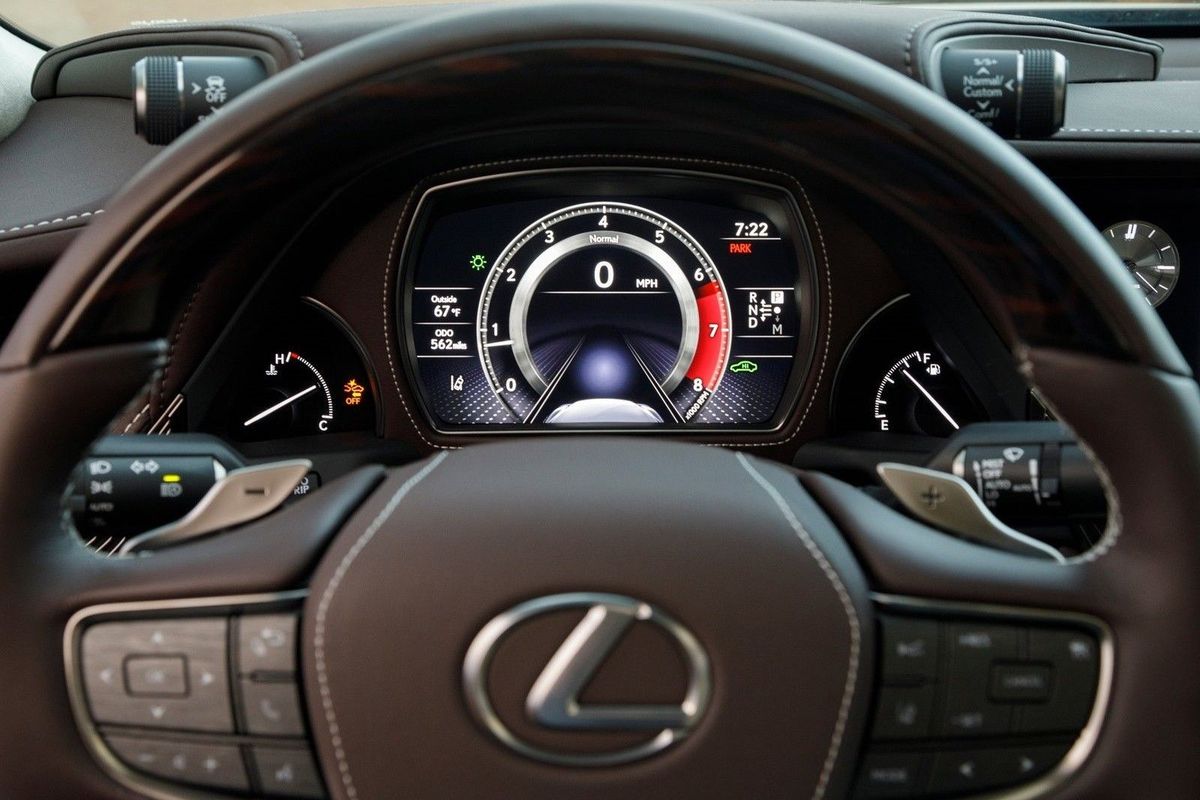
In terms of standard features, the new Lexus LS 500 comes packed to the hilt. Its safe too, featuring autonomous systems which will intervene to avoid crashes. There's a 12.3-inch multi-media screen, head-up display, rear-seat DVD entertainment as well as the famous Mark Levinson 23-speaker QLI Reference Surround Sound audio system. 

Lexus LS 500 Price in South Africa (May 2018)

The new Lexus LS 500 goes up against the BMW 7 Series, Mercedes-Benz S-Class, Audi A8 and Jaguar XJ. Lexus is offering a 7-year/105 000km Warranty and Full Maintenance Plan. The vehicle service intervals are at every 15 000km, alternatively once a year.

Lexus LS 500  R2 141 400

Related content:

Read a first drive report and video review of the Lexus LC 500

Mercedes-Benz S-Class Cabriolet (2016) First Drive

Best First Class Luxury Cars in South Africa

BMW 750i Design Pure Excellence (2016) Review

BMW 7 Series: A Tech Showcase [with Video]

Interested in buying a Lexus LS?

Find a used Lexus LS for sale here

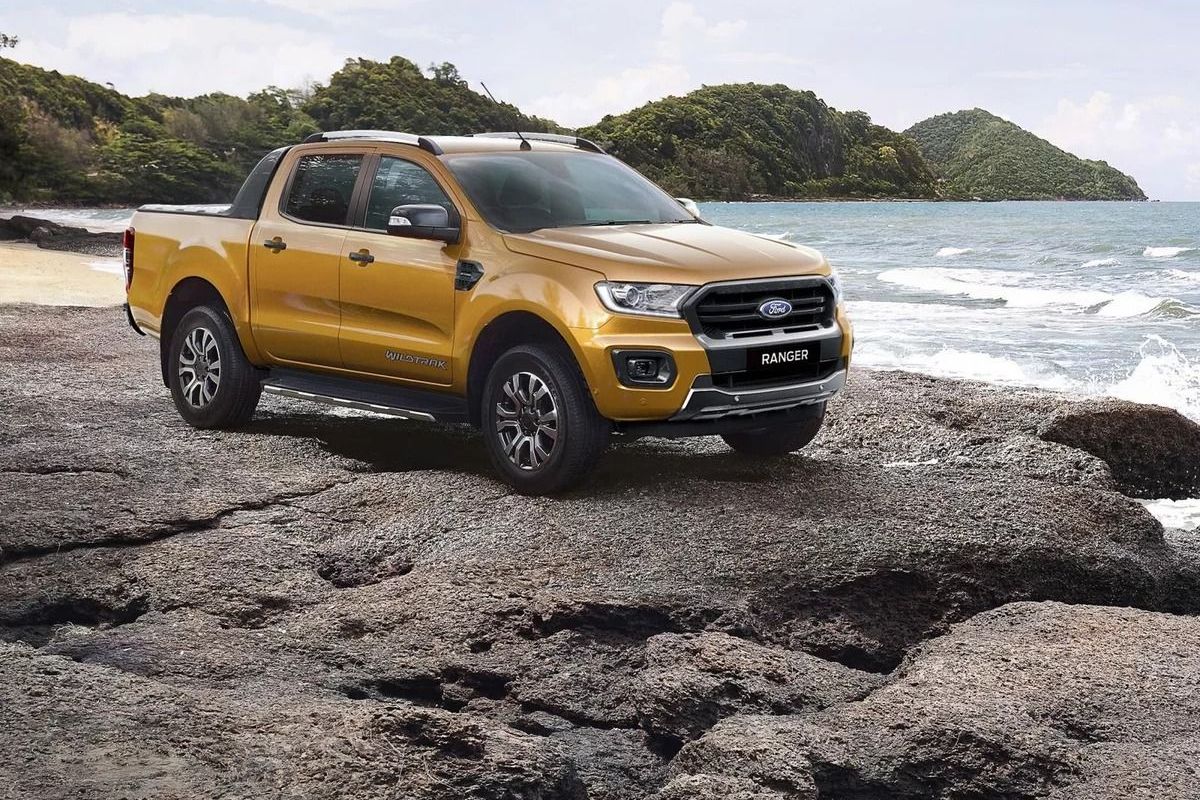
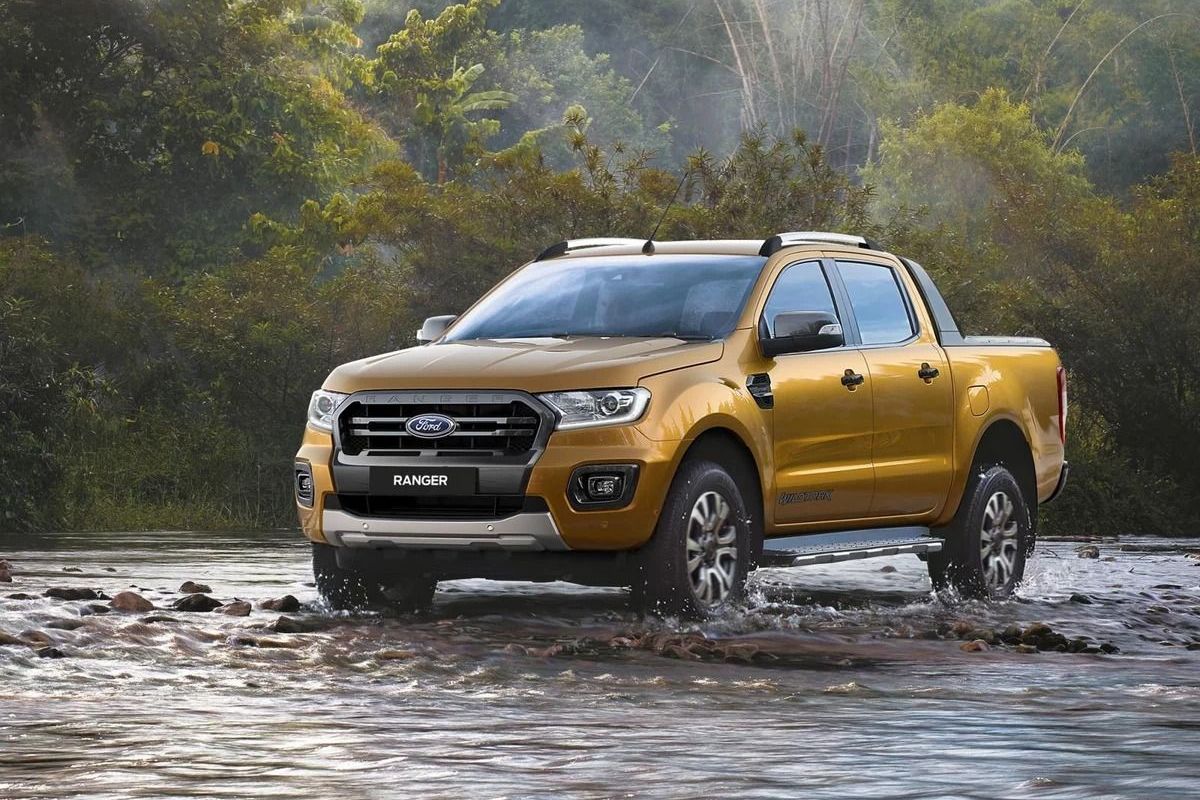
Facelifted Ford Ranger Confirmed for SA in 2019

Ford South Africa has confirmed that a facelifted version of its Ranger bakkie will be coming to SA in 2019. The big change? A biturbo diesel engine and a 10-speed automatic gearbox from the Raptor!

Ford South Africa, after investing R3-billion in its local operation, confirmed that the new updated Ranger will be built at the Silverton factory in Pretoria, with engines assembled by the Struandale plant in Port Elizabeth. The facelifted Ranger will also continue to be exported to over 148 countries around the world. 

So what's new? The big news are the engine changes. The new Biturbo diesel four-cylinder which was the headline for the Ranger Raptor will also be available for non-Raptor derivatives. Packing 157 kW and 500 Nm from just 1 750 rpm, this new engine appears quite potent but we've got to look at it mechanically. Ford claims the sequential turbos are the key to responsiveness and efficiency, and let's not forget that new 10-speed automatic gearbox either. The facelifted Ford Ranger will still be able to tow up to 3 500 kg. 

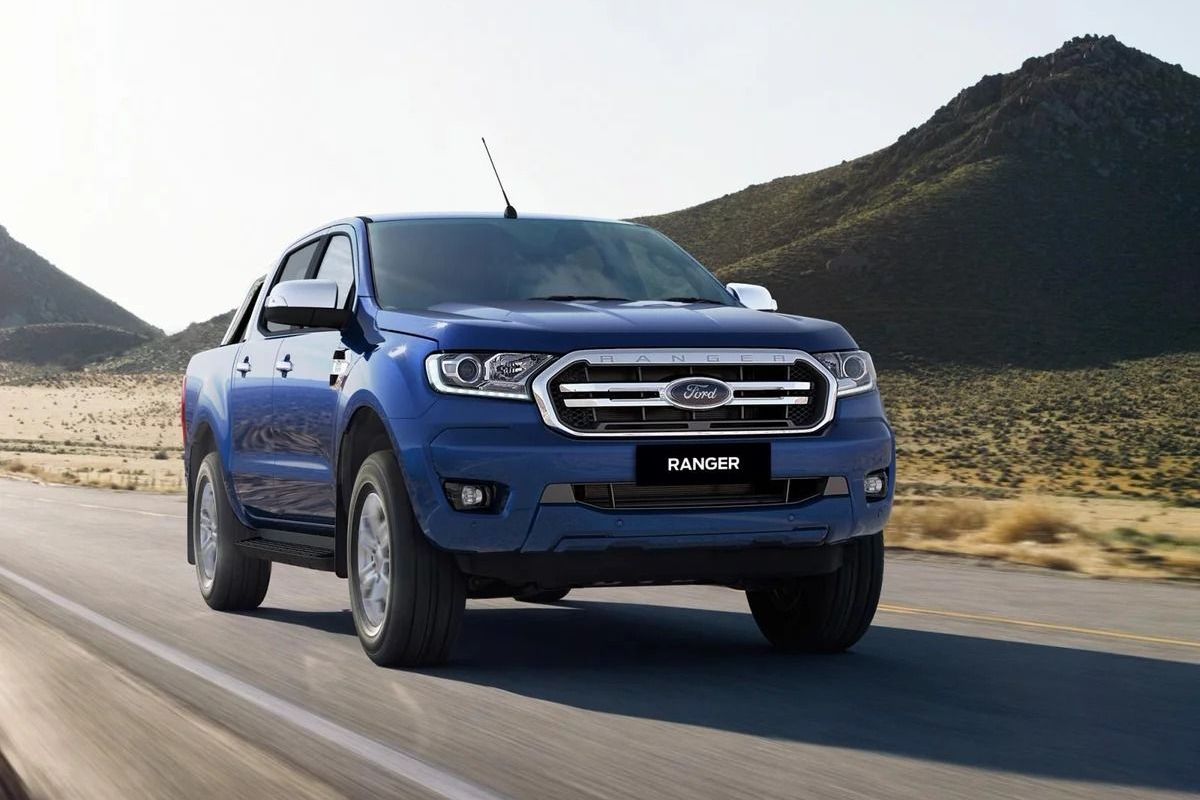
In terms of looks, the Ranger will feature a cleaner new grille and a revised bumper with a wider intake. Ford claims there'll be a bigger difference between the derivatives with colours and bumpers. Safety is becoming more and more autonomous and the Ranger will feature Ford’s Pre-Collision Assist using Inter-Urban Autonomous Emergency Braking (AEB) with Vehicle Detection and Pedestrian Detection. This system is designed to detect pedestrians as well as vehicles and to bring the Ranger to a complete stop, to help mitigate rear-end collisions and road-traffic collisions with pedestrians at speeds above 3.6km/h.

The suspension has also been reworked for the 2019 model, and Ford claims it has reduced and controlled body roll. There's also a focus on improving the driving experience when towing as well as sharpening up the steering.

We'll have more details, specification and pricing for the 2019 Ford Ranger closer to the launch date. We also predict, based on the Australian market that the Everest SUV will be facelifted with the new Biturbo and 10-speed gearbox.

Related content

How Much Will The Ford Ranger Raptor Cost in SA?

Most Powerful Double-Cab Bakkies in SA

Ford expands its Struandale engine plant

Ford Ranger Raptor Revealed, Coming to SA [w/Video]

Bakkie Comparison: Nissan Navara vs Ford Ranger Fx4 [with Video]

Ford Confirms Ranger Raptor Bakkie (Video)

2016 Toyota Hilux vs Ford Ranger – Offroad & Review

Ford Ranger 3.2 4×4 Wildtrak (2016) Review

Ford Ranger Fx4 (2017) – a Raptor Kit with a Warranty

6 Most Fuel-Efficient Double-Cab Bakkies in SA

Most Powerful Double-Cab Bakkies in SA

Want to buy a Ranger?

Browse through stock here.


Mercedes-Benz G-Class (2018) International First Drive

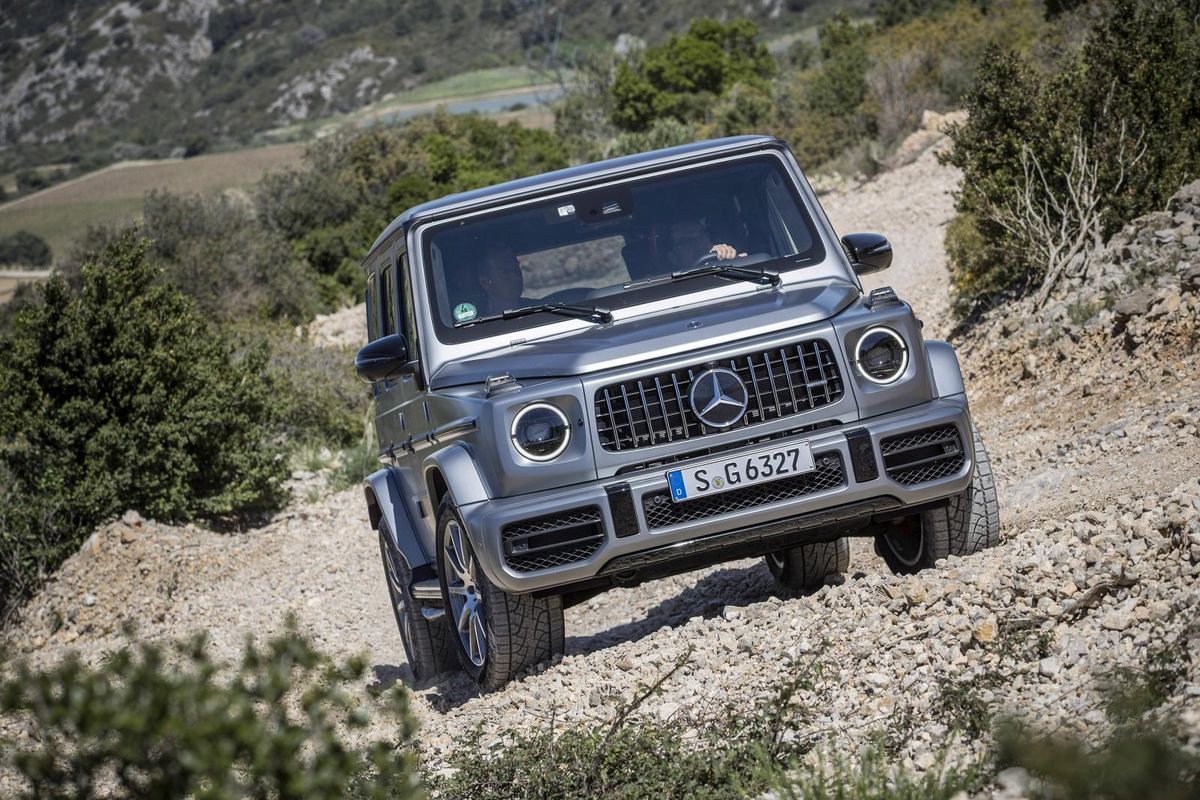
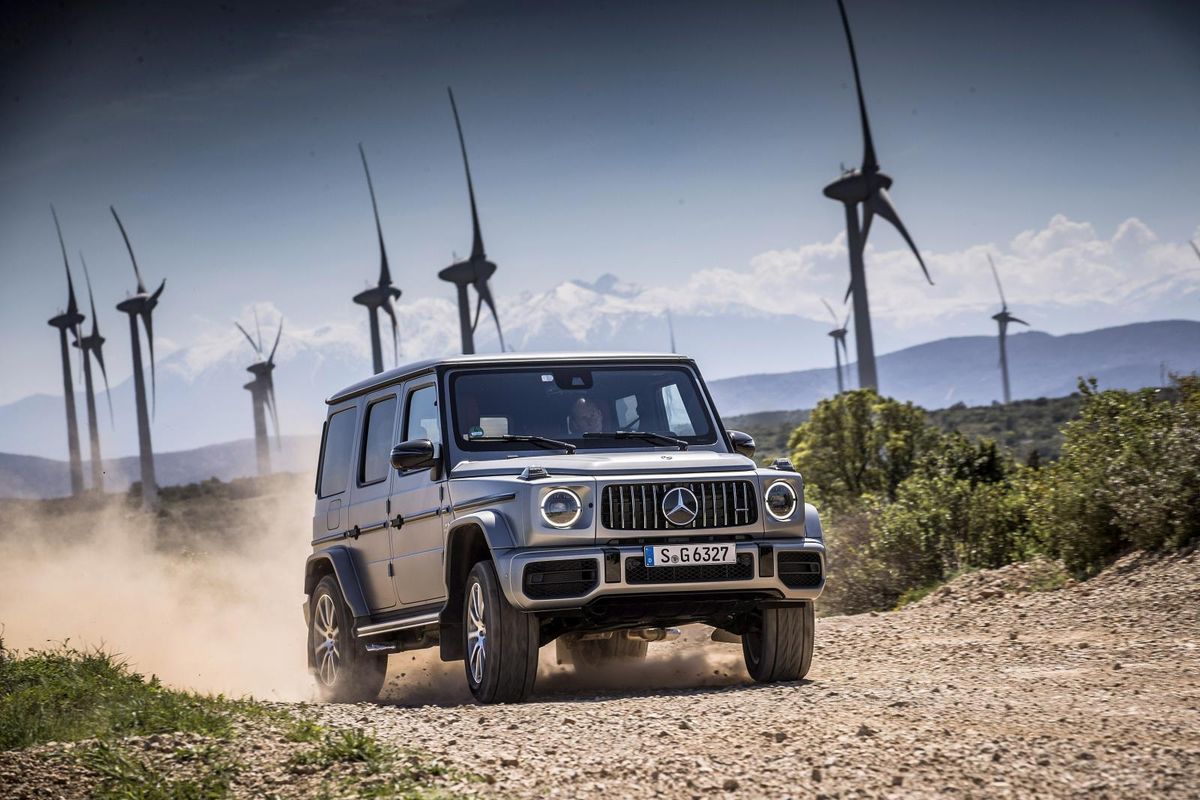
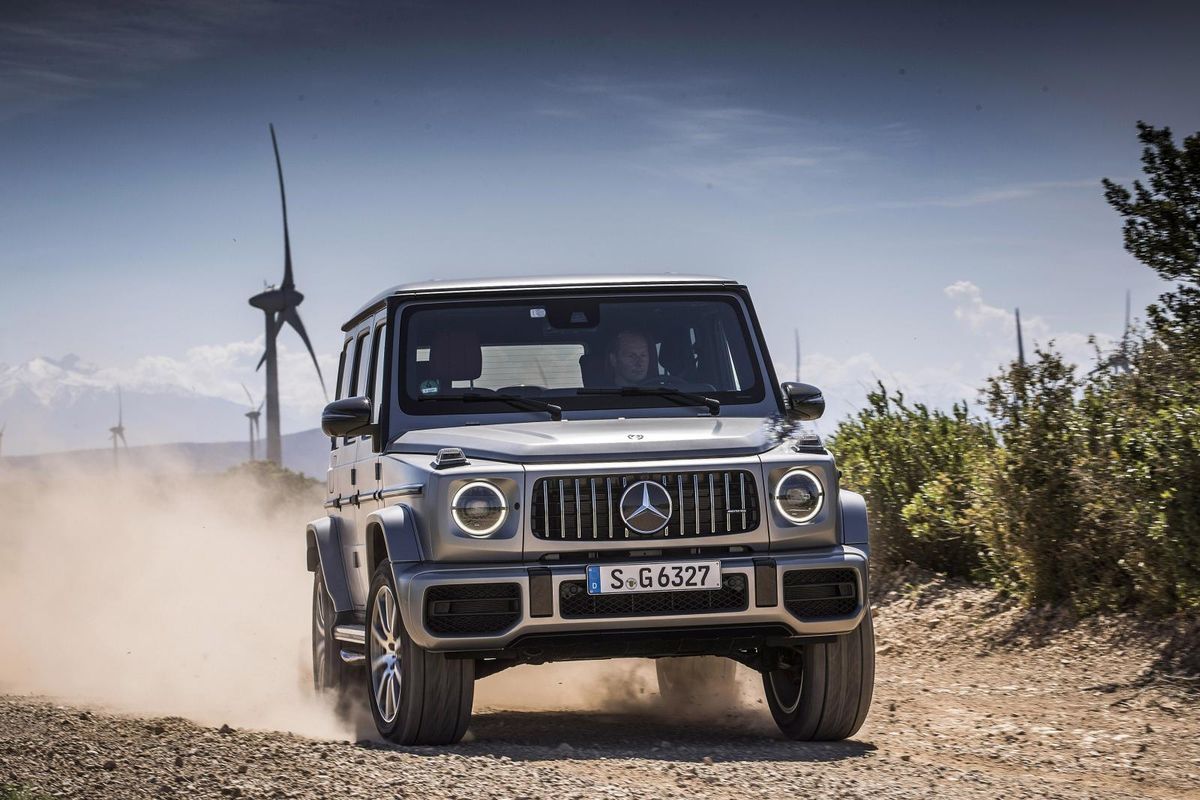
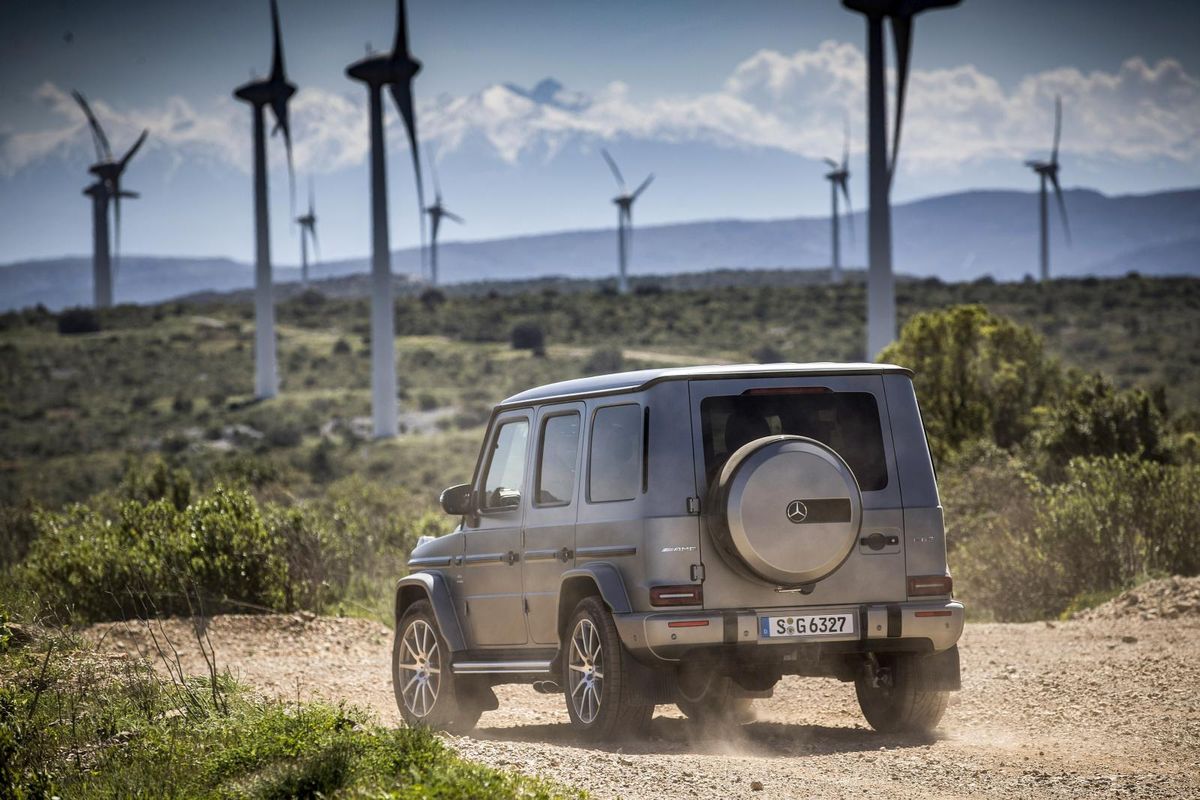
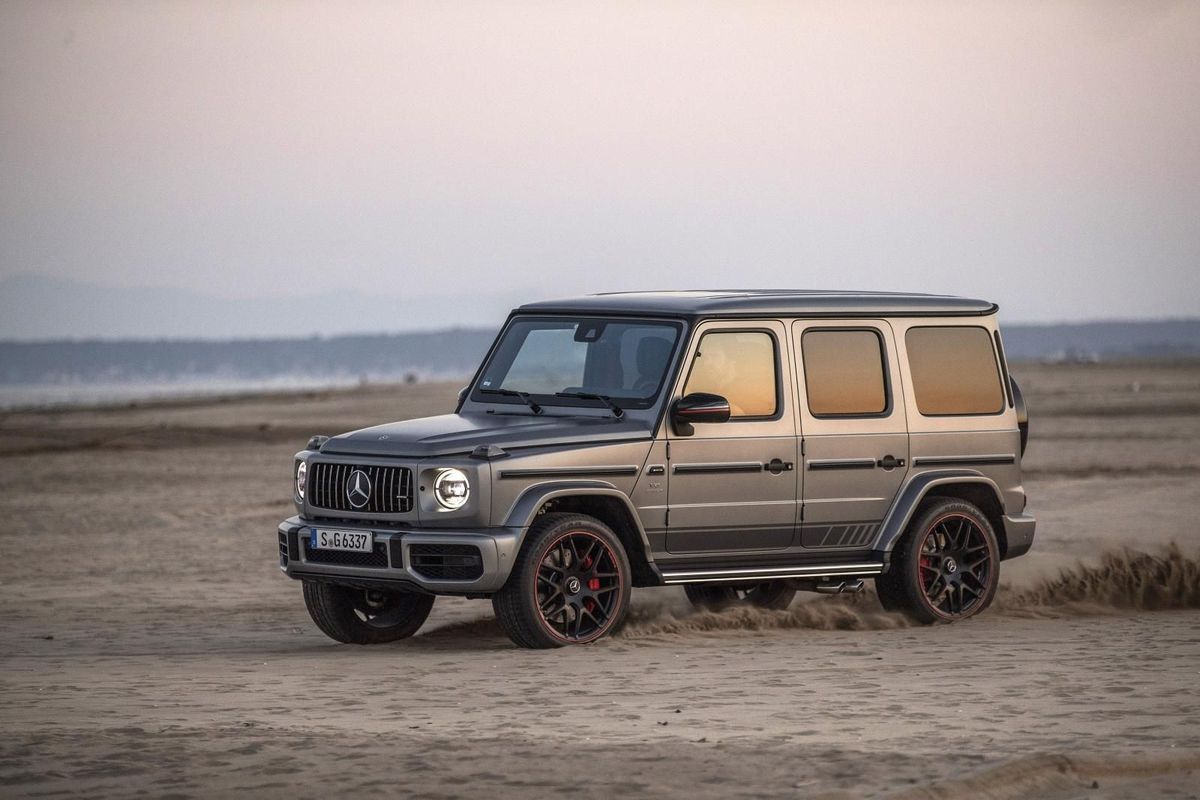
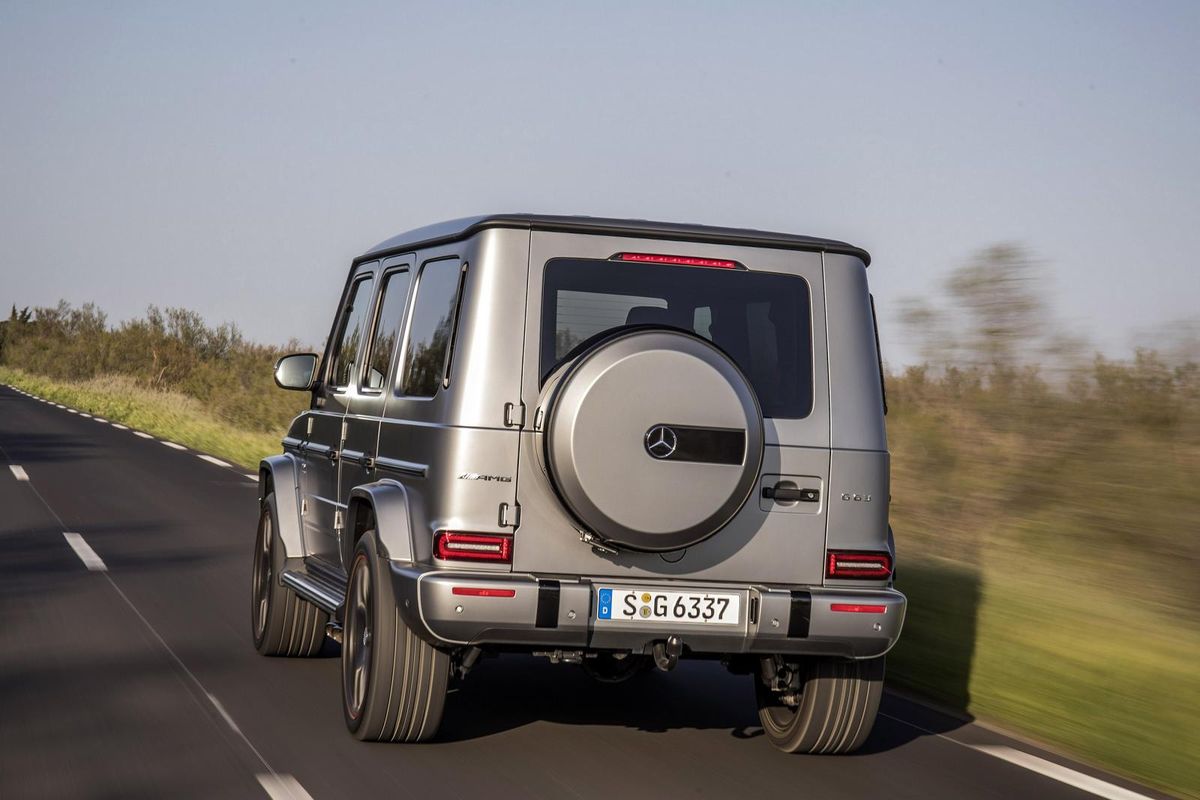
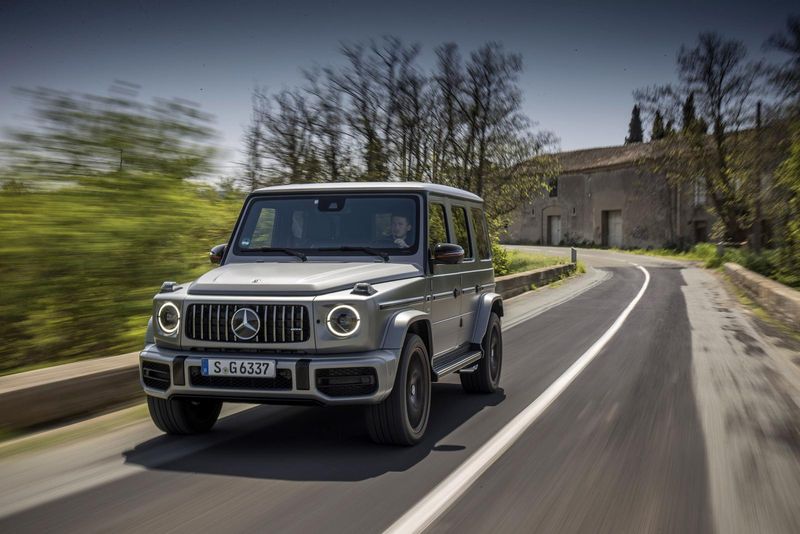
To the untrained eye, the new G-Class looks much the same as its predecessors. But don't be fooled by the newcomer's iconic silhouette: Mercedes-Benz has reinvented its mightiest off-roader. Our UK correspondent, Richard Lane, has driven the Mercedes-AMG G63 version of the G-Class (traditionally the range's top-selling derivative) and boldly declares it a "proper Range Rover rival".

Gunnar Guthenke, the head of Mercedes-Benz's G-Class division, suggests the people who buy this car fall into 3 categories. There are "true off-roaders", who, for either professional or recreational reasons, require a device capable of forging a path many would consider too challenging to undertake on foot. Then there are the aesthetes, who feel they can’t get a machine of such bravura anywhere else. The kindest way to describe the last group is "the new money"… this is the buying demographic that craves the most extravagant, bombastic creation to wear the Three-pointed Star. It’s a role that’s been comfortably filled since AMG began fettling the G-Class in 1999.

The car’s history goes back rather a lot further in time than that, of course. Having been introduced in 1979, the Graz-built G-Class is Mercedes’ longest-serving model, and it’s also the only one to have no specified "end of production" in the diary. What you see here represents the most significant upgrade the G-Class has undergone – one that aims to keep all 3 of the aforementioned cliques happy – and it’s no stretch to call it a "reinvention".


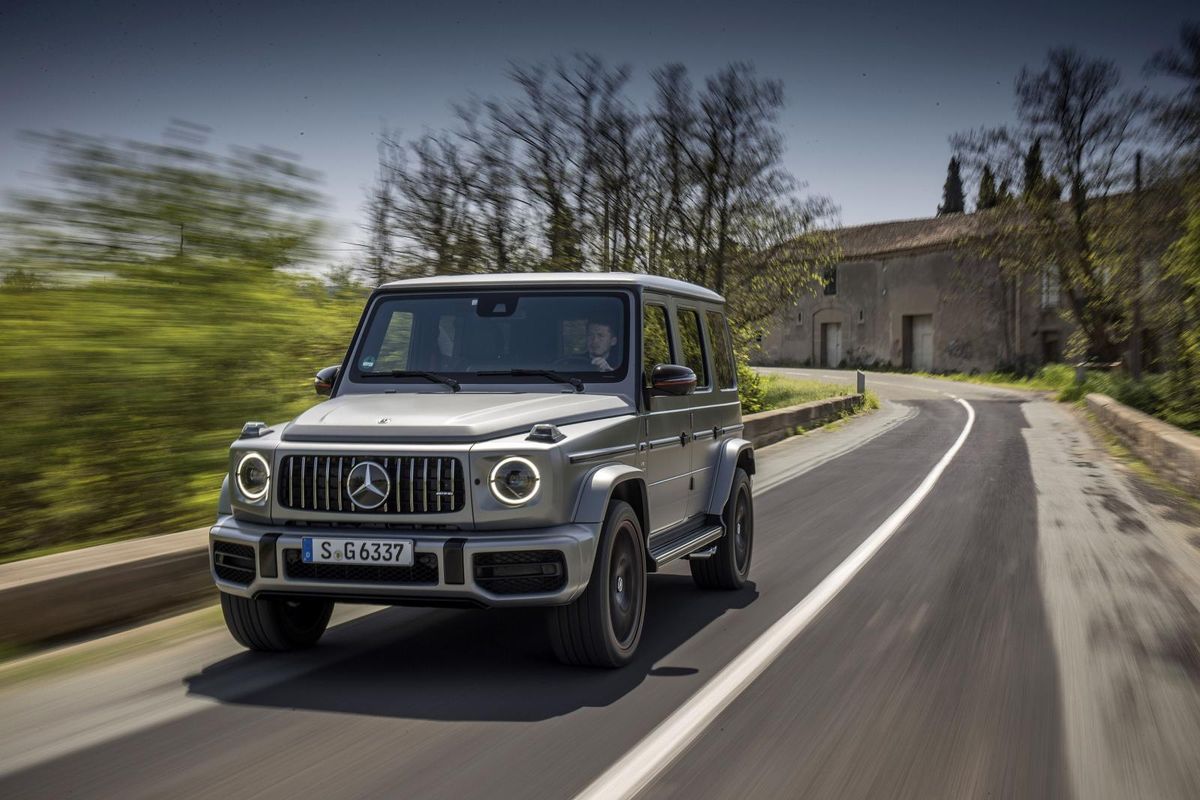
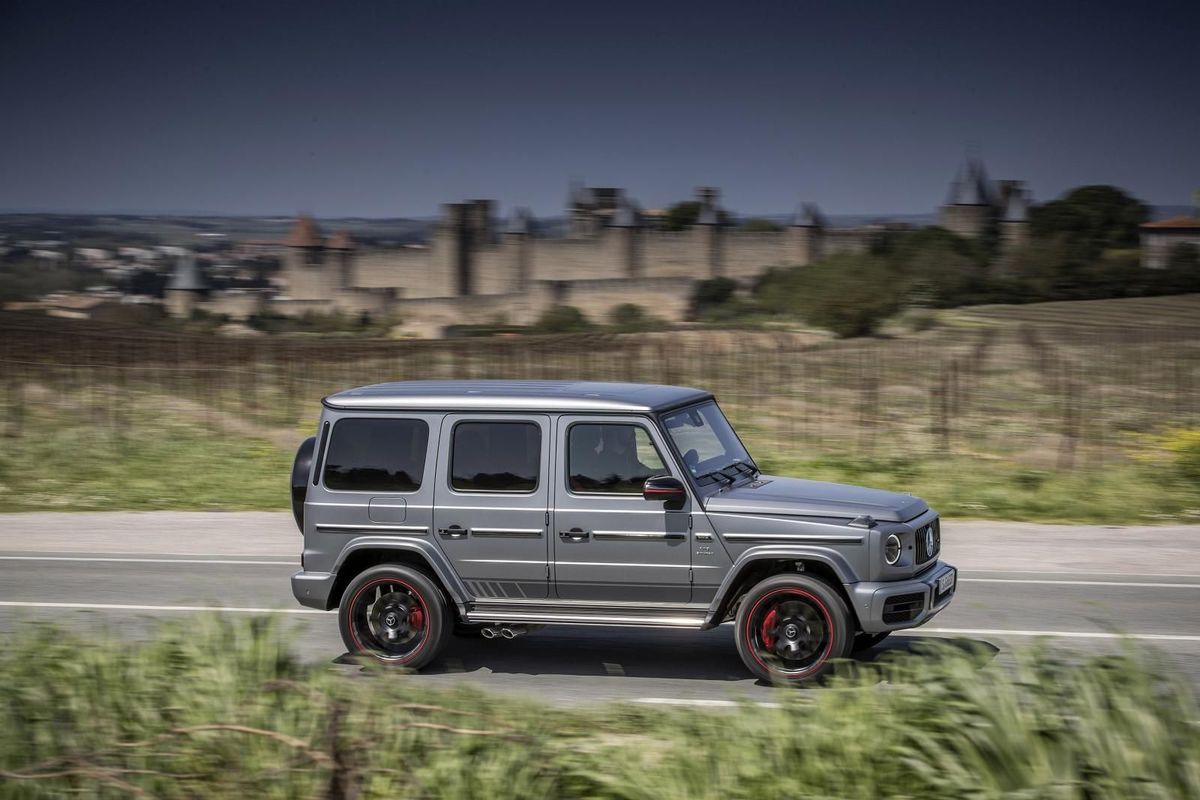
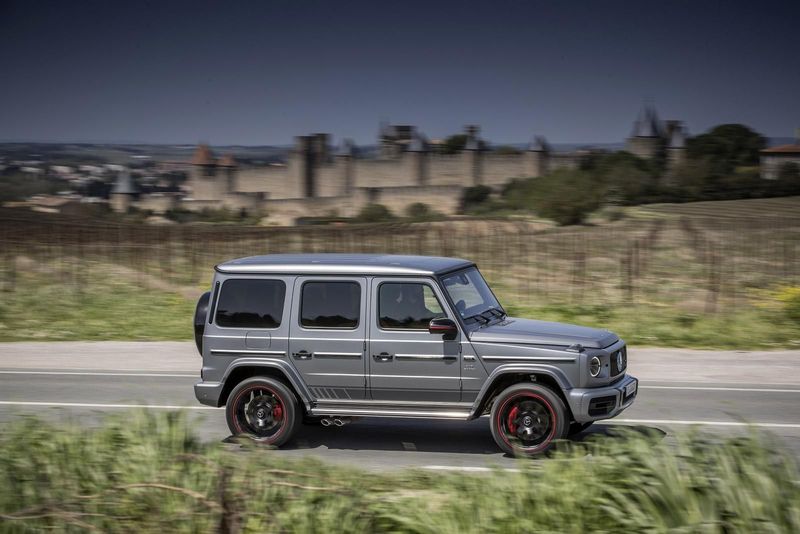
The G-Class is one of the most instantly recognisable vehicles on the road, underneath its aluminium sheetmetal, Benz has rung the changes.

However, the biggest problem in reinventing an icon lies in knowing what to keep and what to change. In this case, Mercedes has improved almost everything underneath the aluminium skin, but left the car’s demeanour well alone. It must have been tempting to increase the rake of the windscreen – less wind noise, more space for the vast digital dials embedded in the dashboard – but the change amounts to less than a single degree and so the fantastically elevated, abrupt view from the front seats remains.

Still looks old school – on purpose

Similarly, the hinges of the doors remain visible, and much of the opening and closing mechanism has been carried over so owners can continue to enjoy that richly mechanical crunch. That’s precisely the sort of thing that matters to so many of those prepared to hand over the best part of R1.7 million to get their hands on a new G-Class, let alone the AMG version. No surprise, then, that the bonnet-mounted indicators also remain, despite costing 5 times as much to develop as originally planned.


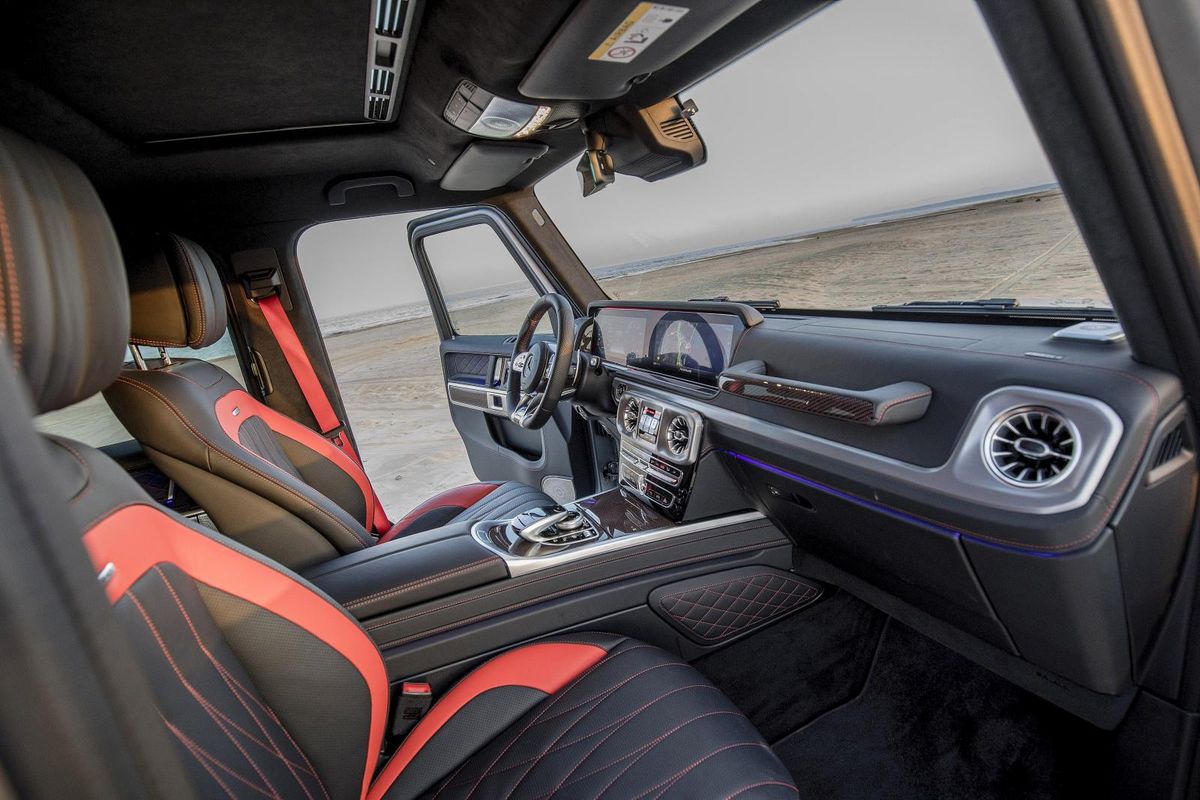
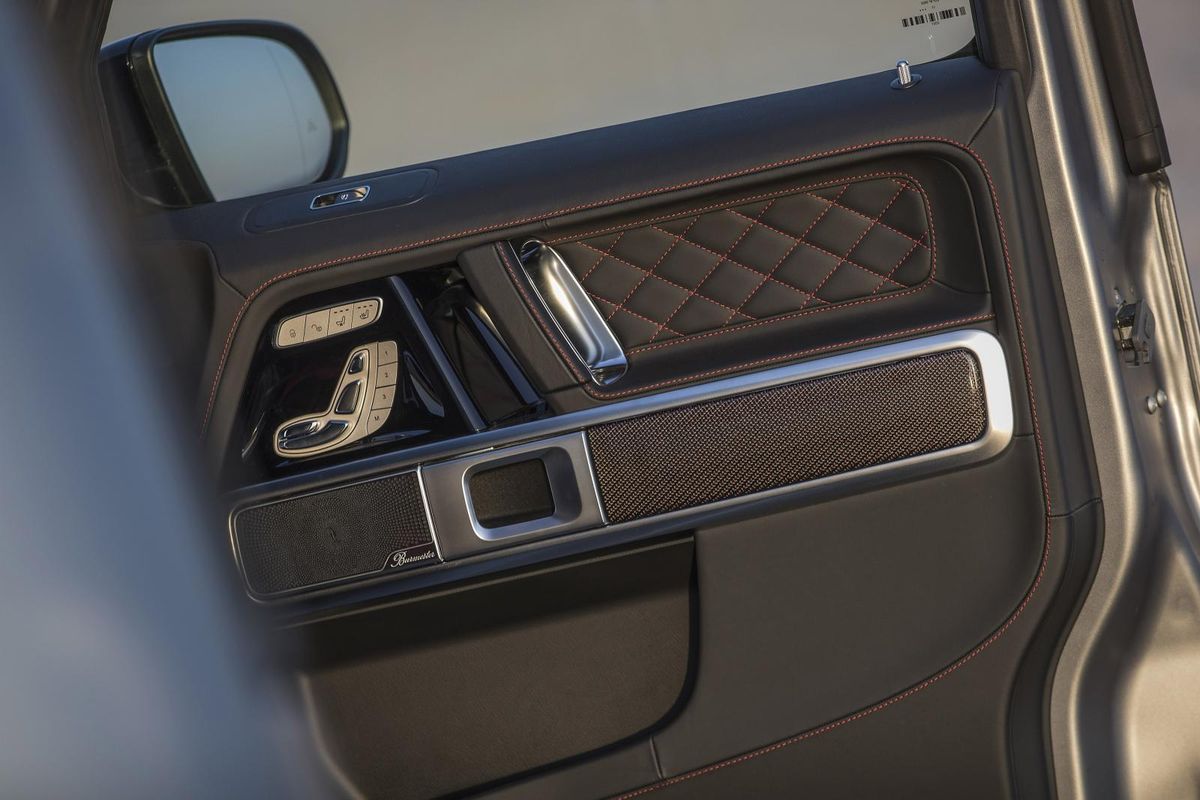
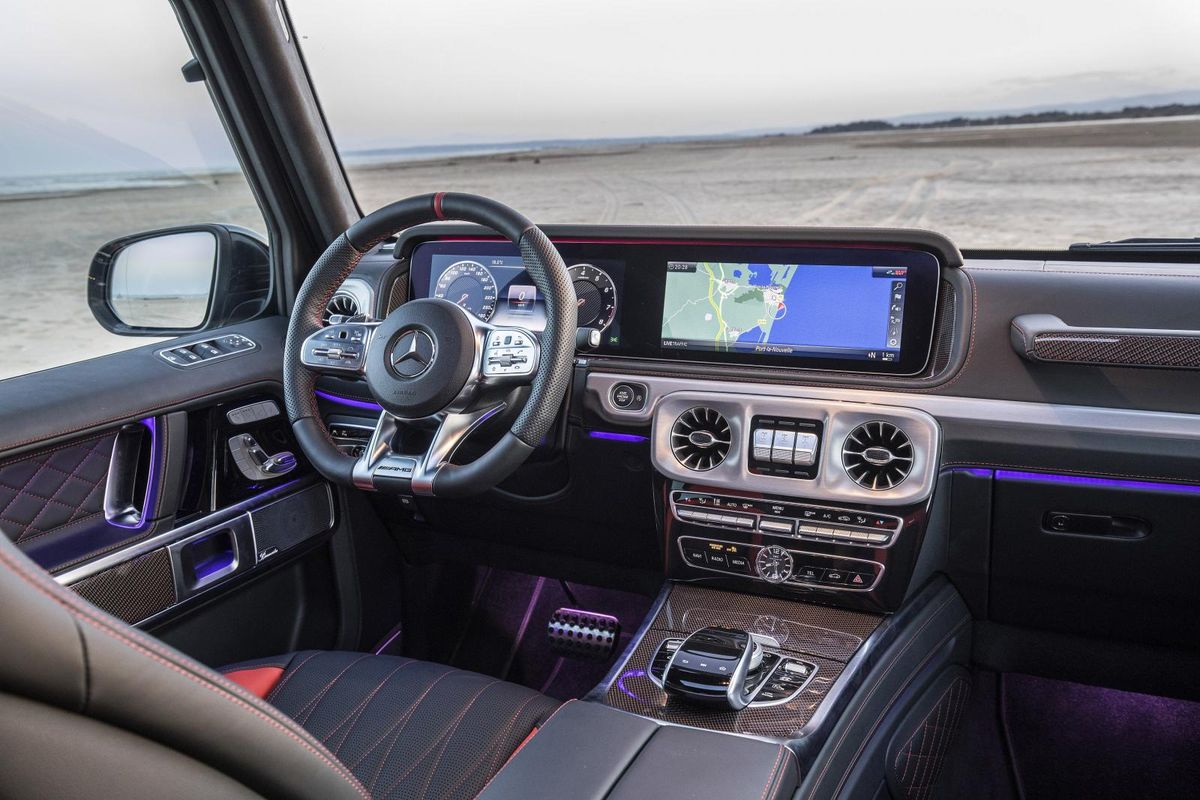
Although the G-Class interior is as luxurious as any premium SUV's, the driving position remains bolt-upright and on-top-of-the-dashboard.

Mercedes has safety regulations to thank for that. They stipulate that the housing must be deformable from any angle and the light emitted be visible from road level less than a metre from the front of the car. The front passenger still has the convenience of a dash-mounted grab handle, although, this being 2018, it looks much smarter.

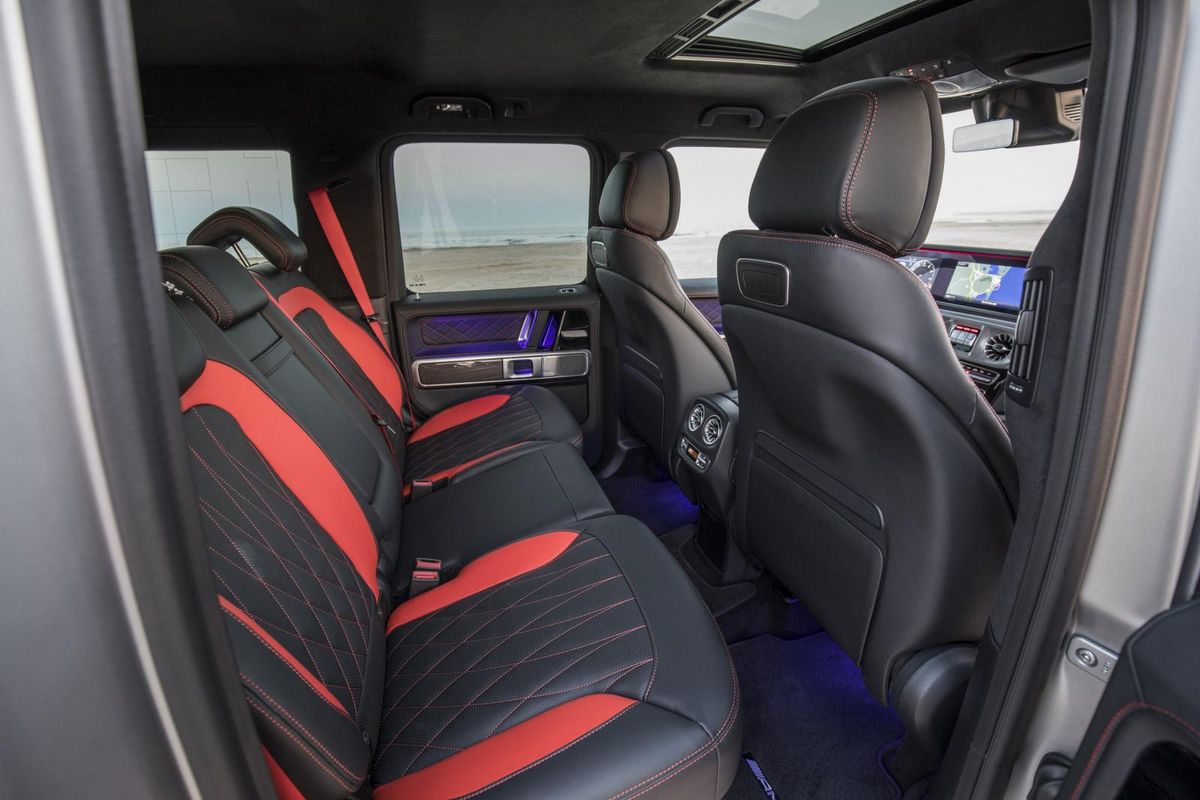
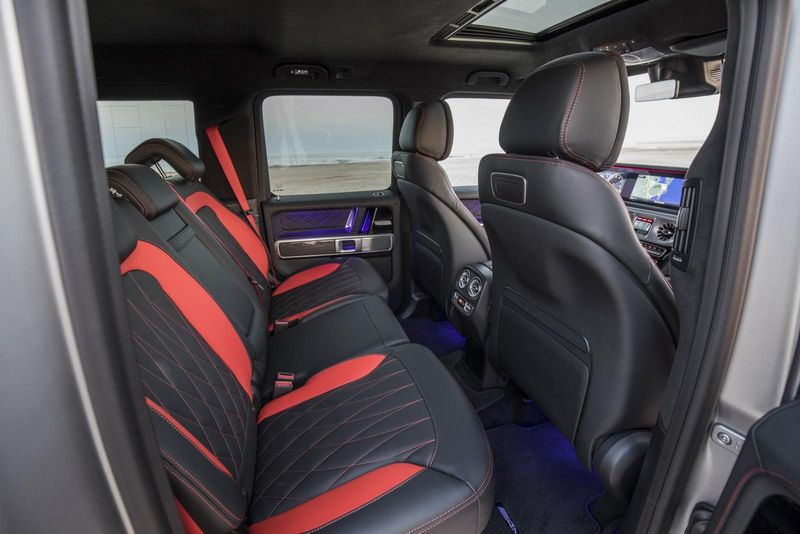
All occupants will also benefit from substantially more leg and shoulder room than before. Step from the old W463-generation car into the new one and the growth spurt is palpable. In fact, the new car has grown in every dimension, being 53 mm longer, 64 mm wider and 15 mm taller than before.


The new G-Class' increased dimensions make its occupants feel less cramped. The quilted leather adds to a bespoke-cabin ambience.

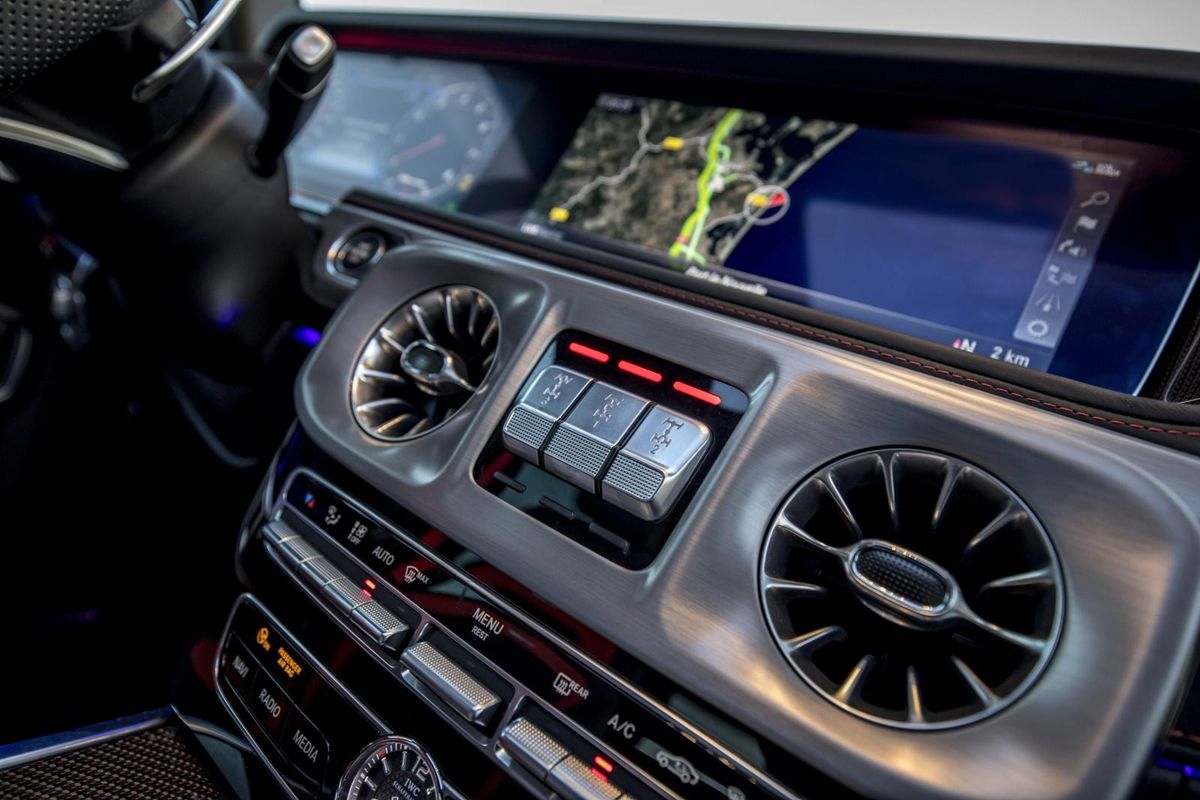
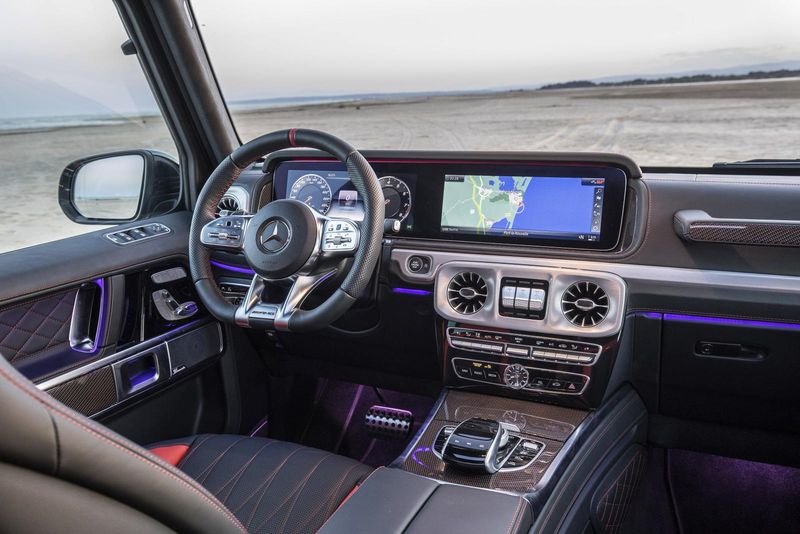
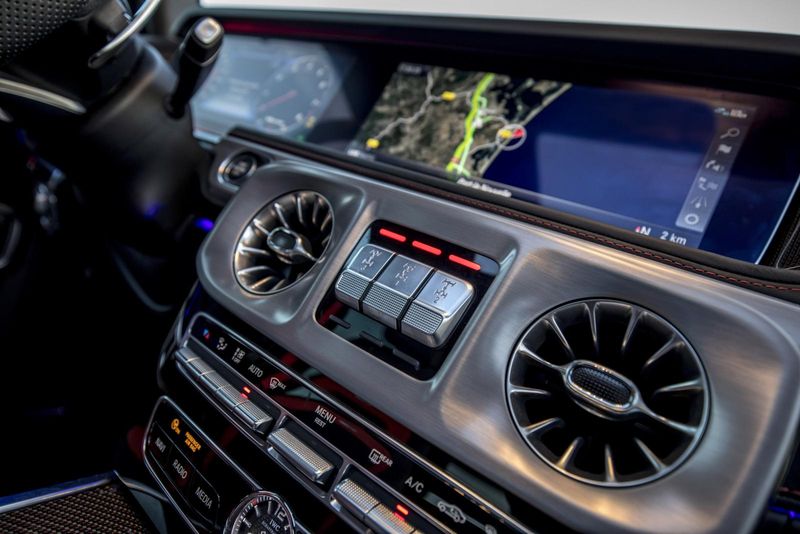
The other fundamental change to the G-Class is found within the interior. The architecture retains an old-school feel, with its squared-off panels, but that’s juxtaposed against a pair of adjacent 12.3-inch displays. Various parts are borrowed from the E-Class but, for a hand-built car, it feels suitably opulent, not to mention comfortable.

There is little here to upset the design junkies, then (moreover, this car looks far more convincing in the metal than in the pictures), although it is the driver who stands to gain most from the wholesale changes Mercedes-Benz has wrought… With the help of a new brace that links the front suspension turrets, the torsional rigidity of the ladder frame and bodyshell has increased by more than half.


The fascia of the G-Class' cabin is a far cry from the '80s original; the milled metal finishes feel grand and look positively futuristic.

The G-Class has historically been guided by a low-geared recirculating ball set-up so infamously indirect that having only just turned the nose of the car in you’d need to begin unwinding the lock simply to avoid running wide on the exit. Owners have long complained about this, so there’s now electromechanical rack and pinion steering.

New double-wishbone front suspension

Laying the foundations for such a change, Benz relinquished a rugged solid front axle in favour of using double wishbones mounted directly to the ladder frame. It has not been an easy job: to maintain the G-Class’ tremendous ground clearance, the engineers had to position the lower wishbone attachment point as high as possible, fighting for every millimetre. Incidentally, ground clearance between the axles has increased by 6 mm to 241 mm (it continues to better that of a Toyota Land Cruiser 200).


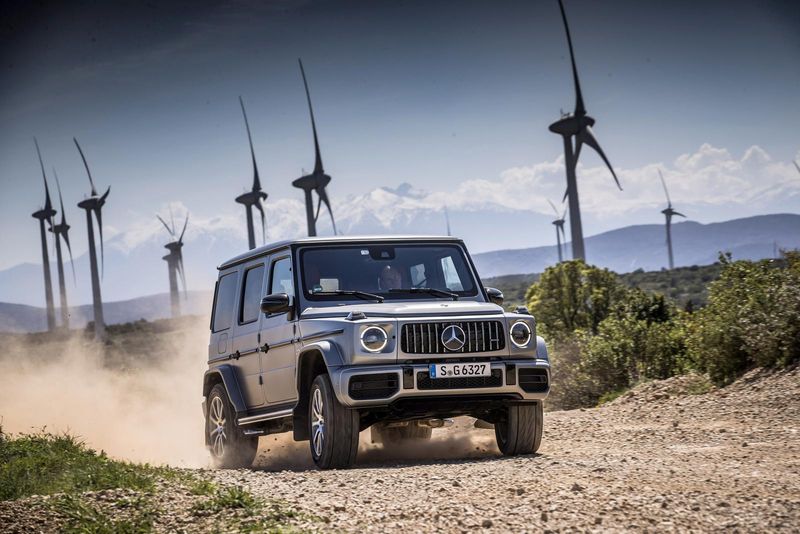
Even though the G-Class' on-road performance shows tremendous improvement, its off-road prowess is, incredibly, better too.  

You could fill a book with this car’s off-road vital statistics – breakover angles, wading depth and so on – but suffice it to say that when going gets tough, the new G-Class is superior to its predecessor in every measurable way, if only by a small margin.

The 'brick' handles much better

By contrast, out on the road, it is quickly apparent that this car now possesses an attribute that has for decades evaded it entirely: handling. In addition to the modernised front axle, there’s a new rigid rear axle that’s placed by four trailing arms with the continued use of a Panhard rod to prevent any undesirable lateral movement.


The redesigned suspension and adaptive damping have made the G-Class much more sure-footed, body roll is well under control.

There is body roll and it can be substantial if you’re really working the Goodyear Eagle F1 rubber fitted to AMG models, but the roll rate is suitably commensurate with steering inputs, allowing you to work the contact points. Likewise, with such a high centre of gravity to fight against, it’s not long before the front tyres are chirping with understeer, but the remarkable thing is that you can accurately predict when that point will arrive and drive accordingly.

Play by its rules – be patient on corner entry – and you can get the G63 to adopt a satisfying rear-led balance as you knead more torque into the road surface. It’s old-fashioned (if slightly cantankerous) fun. This car is farcically quick; the decision to adjust the torque split from 50/50 to a rear-biased 60/40 hasn’t hurt the dynamics.


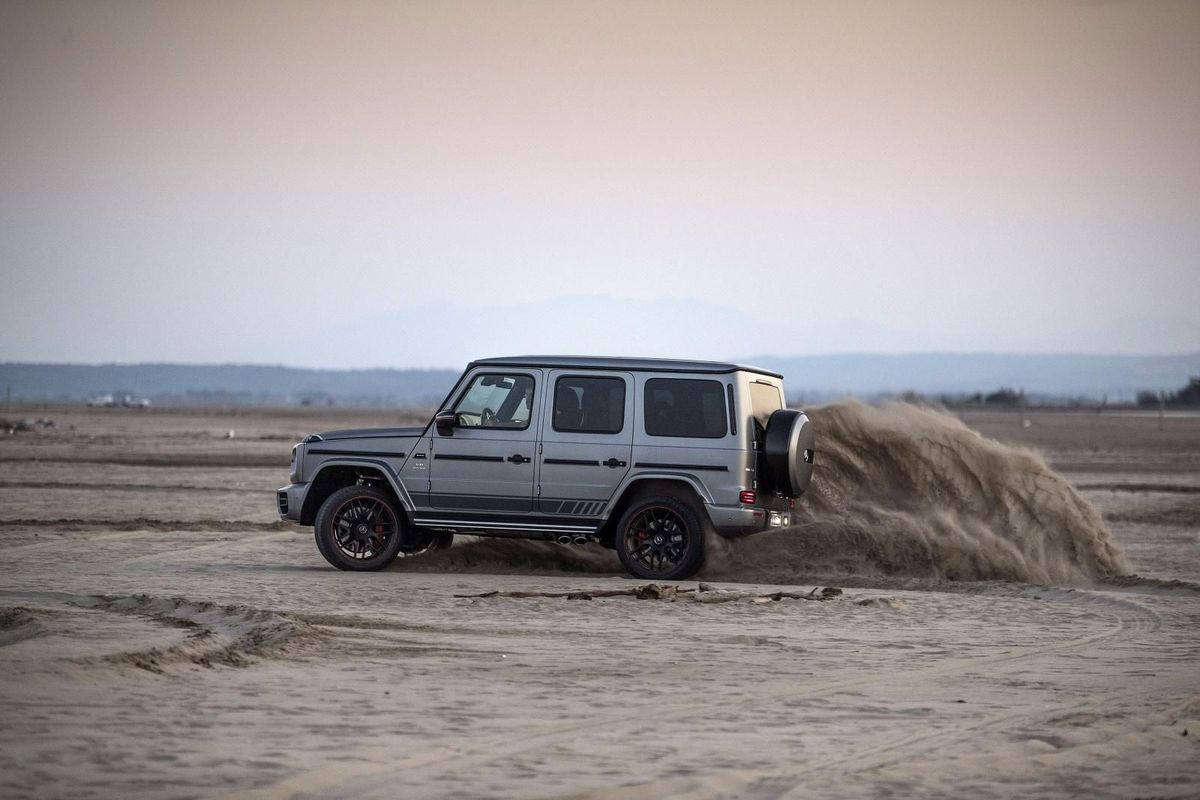
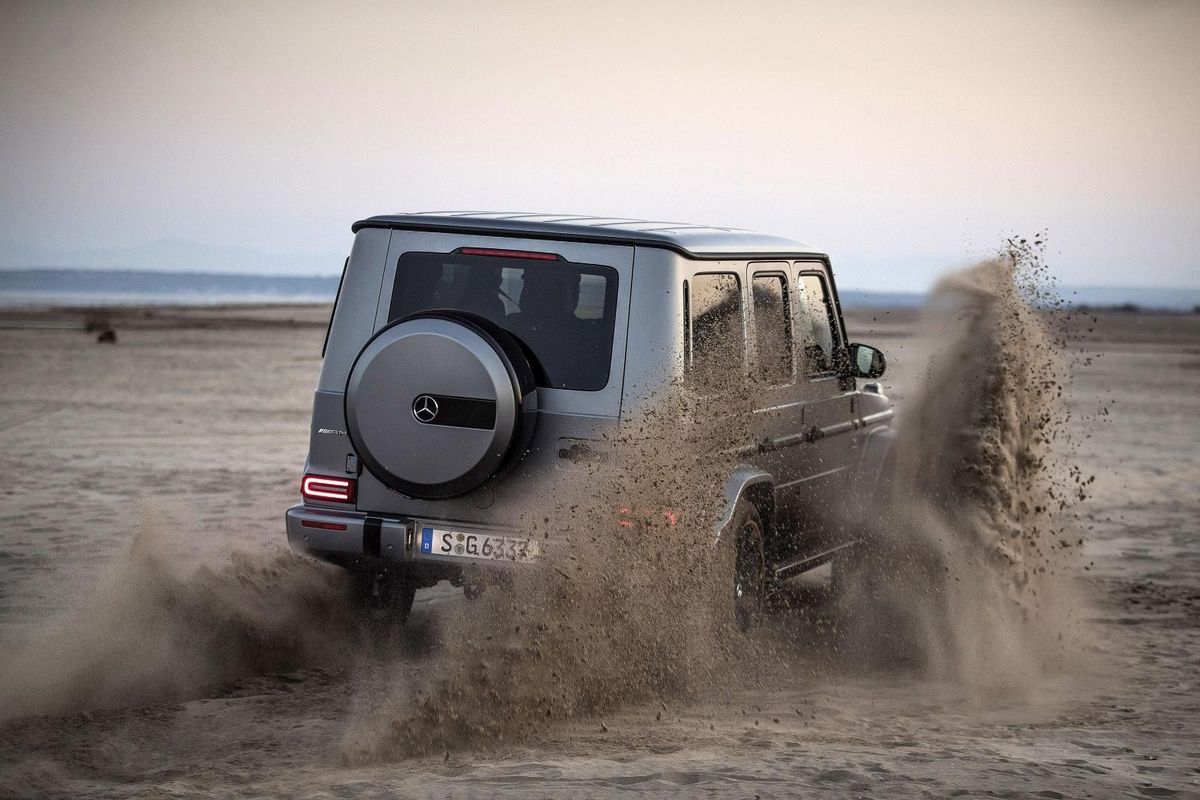
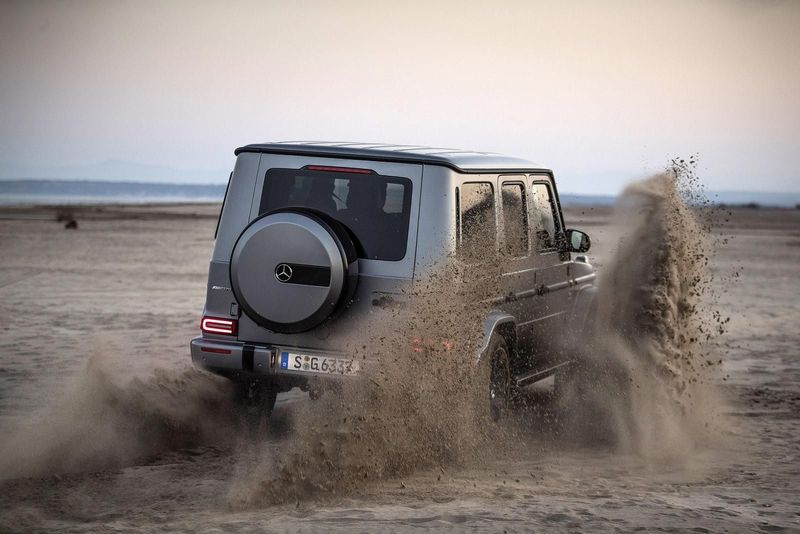
A "bewildering" 850 Nm is enough to create a mini sandstorm when applying full throttle in the loose stuff…

Adaptive suspension now standard

The ride quality has dramatically improved too. All G-Class models will use adaptive suspension, and although there’s still a consistent low-frequency jostle, it’s subtle enough that you might just consider this car as a long-range rival for a Range Rover or Porsche Cayenne. Barring the odd clunk from a differential and the wind noise at speed, usability and refinement are now a significant part of the G-Class package.

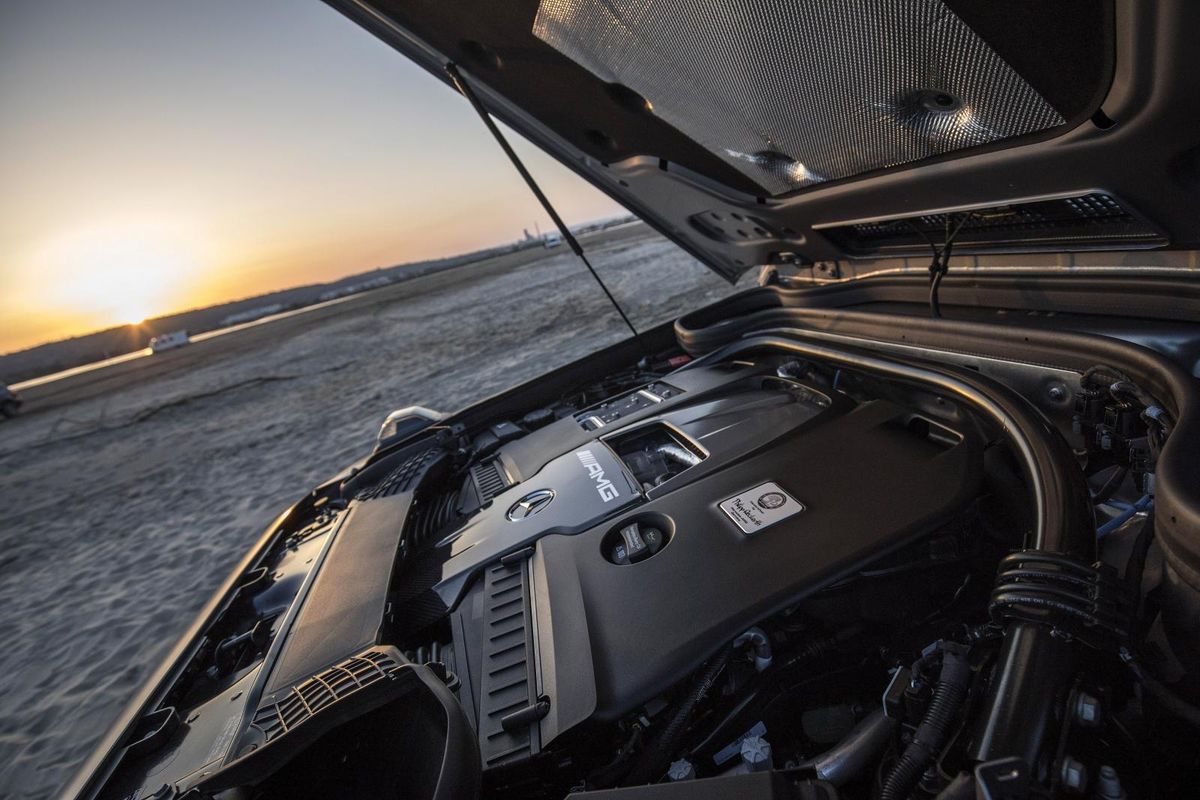
But let’s return to the subject of torque, because it’s remarkable that it has taken so long to get to the heart of the matter. In the case of the G63, that heart is Mercedes-AMG’s M178 4.0-litre twin-turbo V8. Tuned for duties in a 2.5-tonne off-roader, it develops 430 kW at 6 000 rpm and a bewildering 850 Nm at 2 500-3 500 rpm, making it more potent even than its dry-sumped sibling in the Mercedes-AMG GT R supercar. Top speed is 240 kph, but it is a 0-100 kph of 4.5sec that widens the eyes.


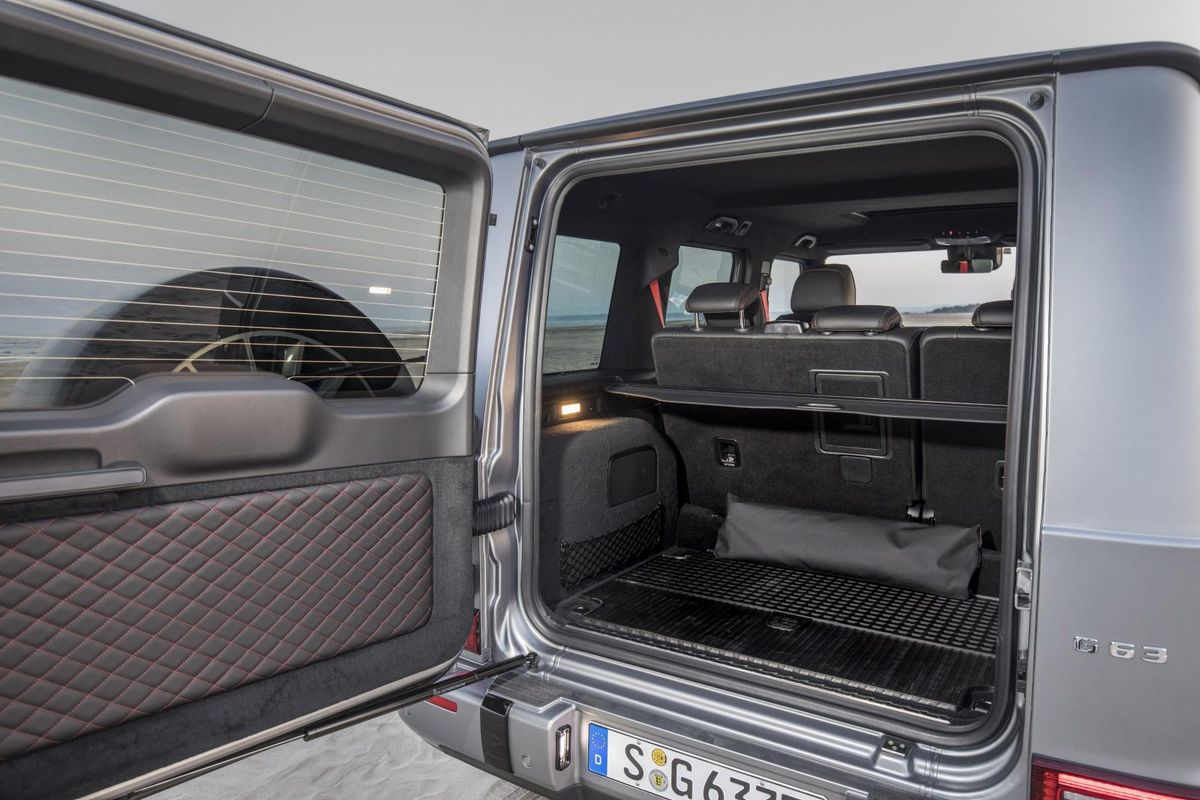
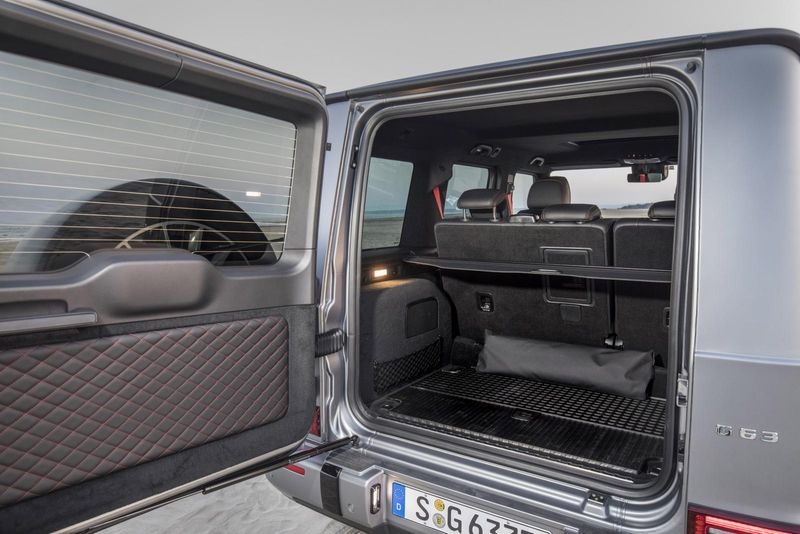
Again, the side-opening rear door is an anachronism in contemporary SUVs, but at least you can stack goods completely vertically.

The engine operates through a Mercedes 9G-Tronic torque-converter transmission with quite outstanding aural pomposity, and while not quite as serrated as the 5.5-litre M157 unit, its more hulking tone matches its predecessor for sheer volume. Cruise anywhere remotely near a parallel structure and there’s no doubt the exhausts exit to the sides, so for all its sophistication, this (at least in AMG guise) is still a machine those of a retiring disposition will tire of quickly.

Summary

With so much to take in, a full road test of this G-Class is certainly warranted, and we're unlikely to get a chance before the 4th quarter of 2018 (its South African launch is confirmed for late in Q3). What’s clear is that it’s a machine that has comprehensively redefined its bandwidth, while richly retaining its core character.

Related content:

Mercedes-AMG G63 Announced, Now With 4.0 V8 Biturbo

New Mercedes-Benz G-Class Shown

New Mercedes-Benz G-Class Interior Shown

Nissan Patrol 5.6 LE Premium (2018) Review

SA's Unsung Off-Road Sales Hero 

Toyota Land Cruiser 200 4.5 GX (2016) Review

Interested in buying a G-Class?

Find one for sale on Cars.co.za