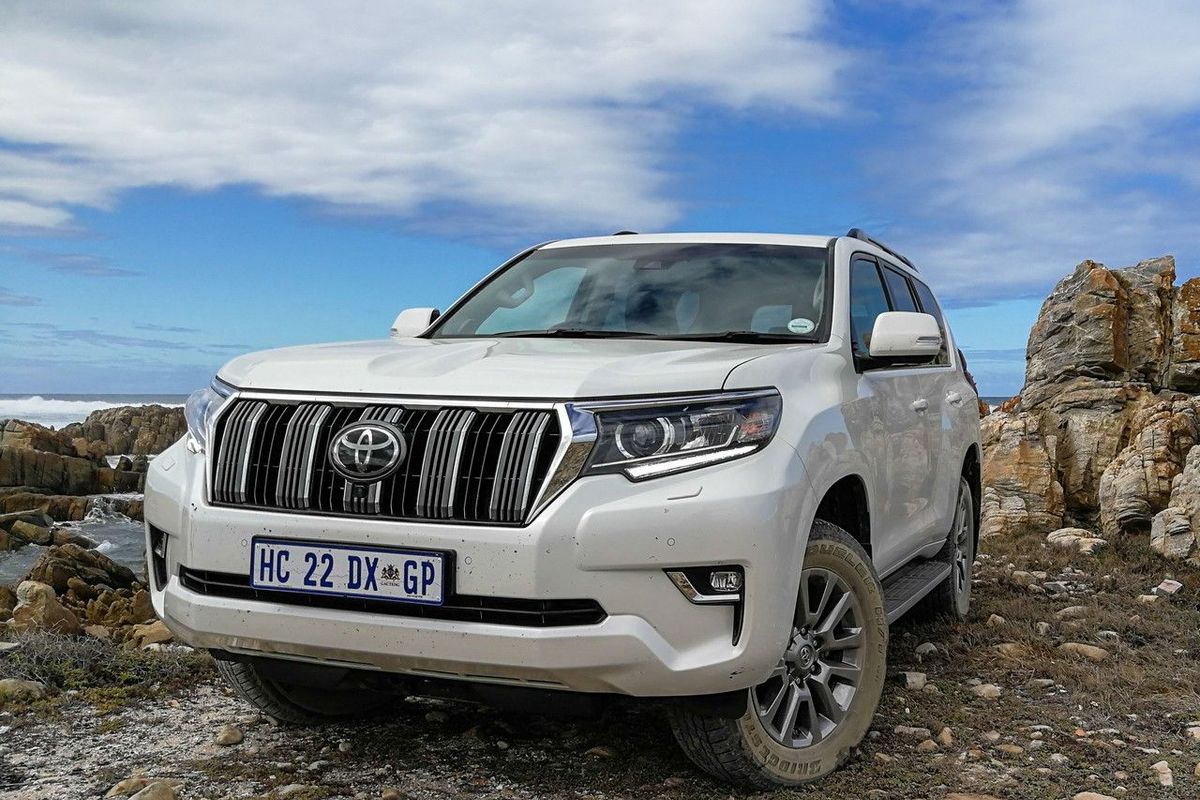
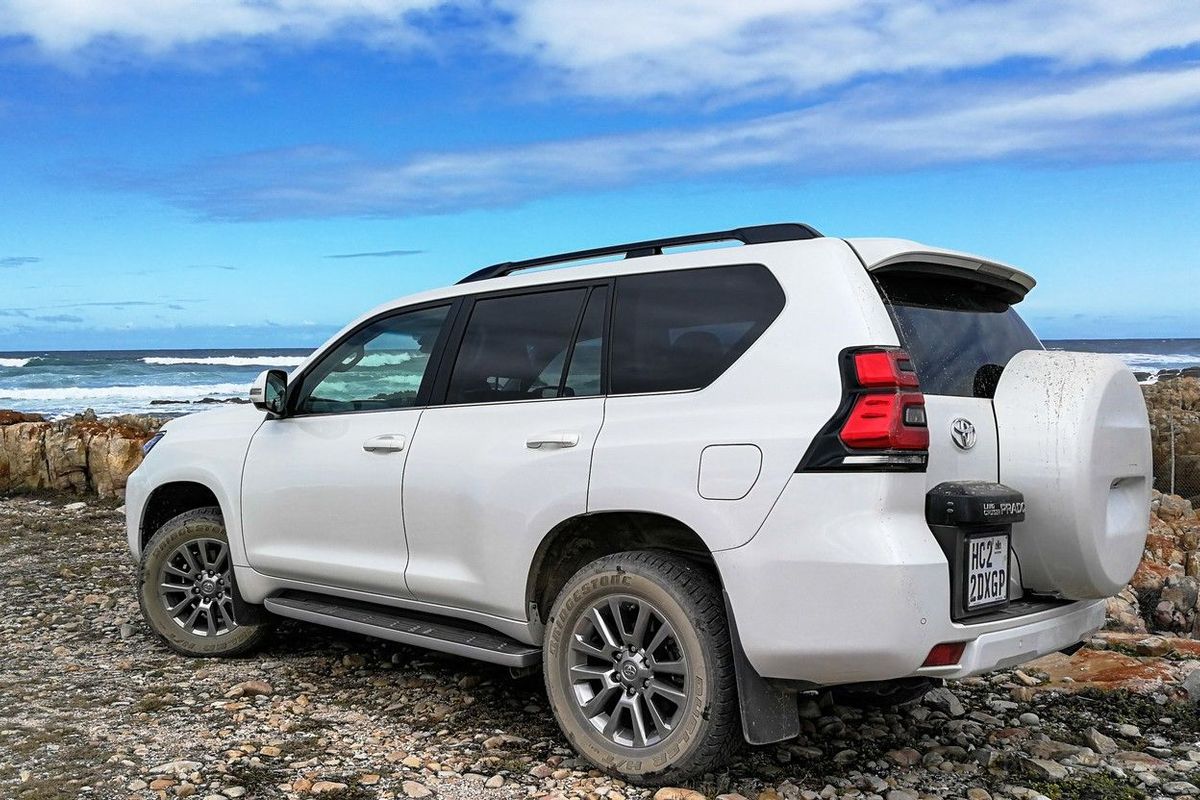
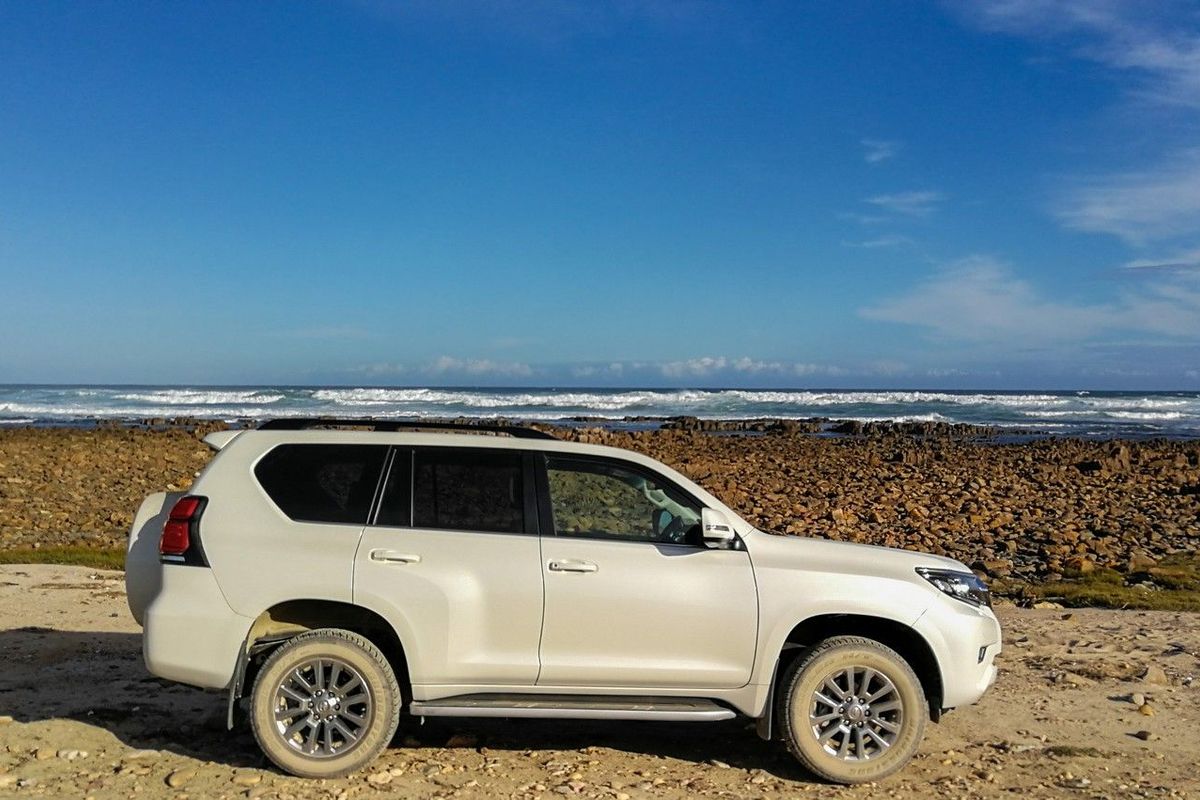
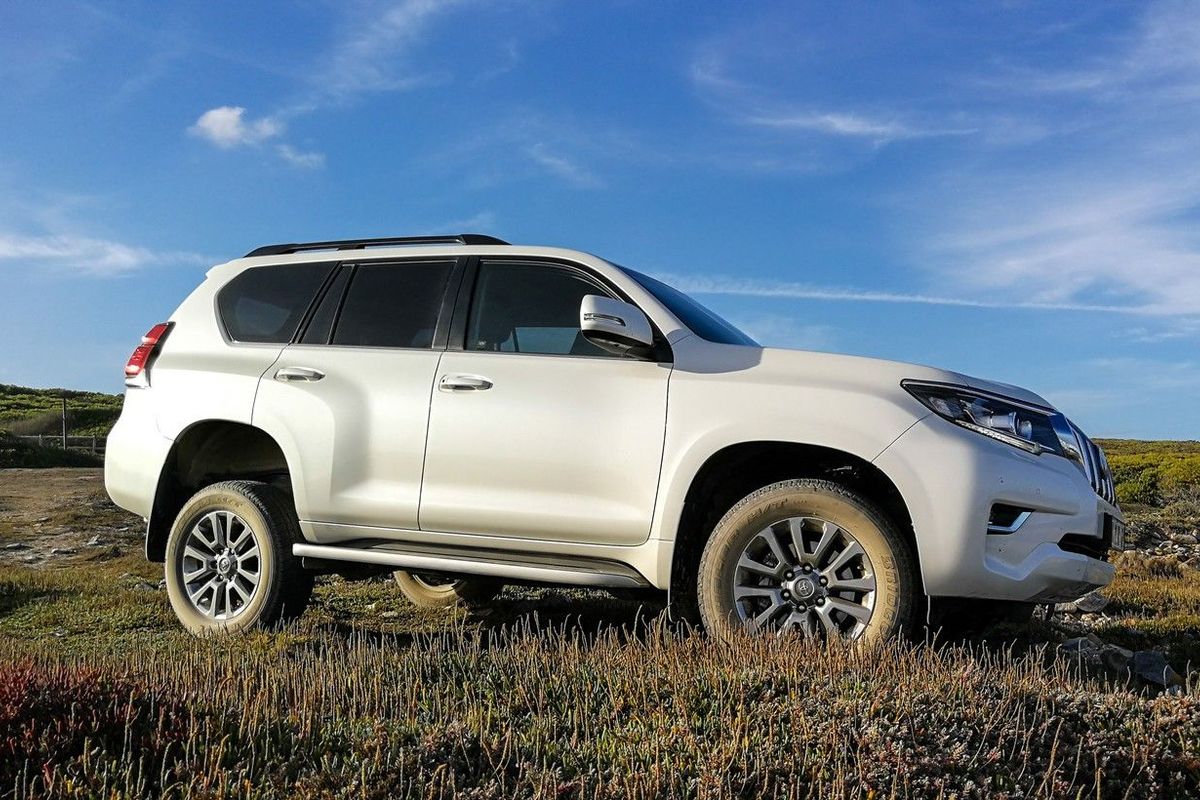
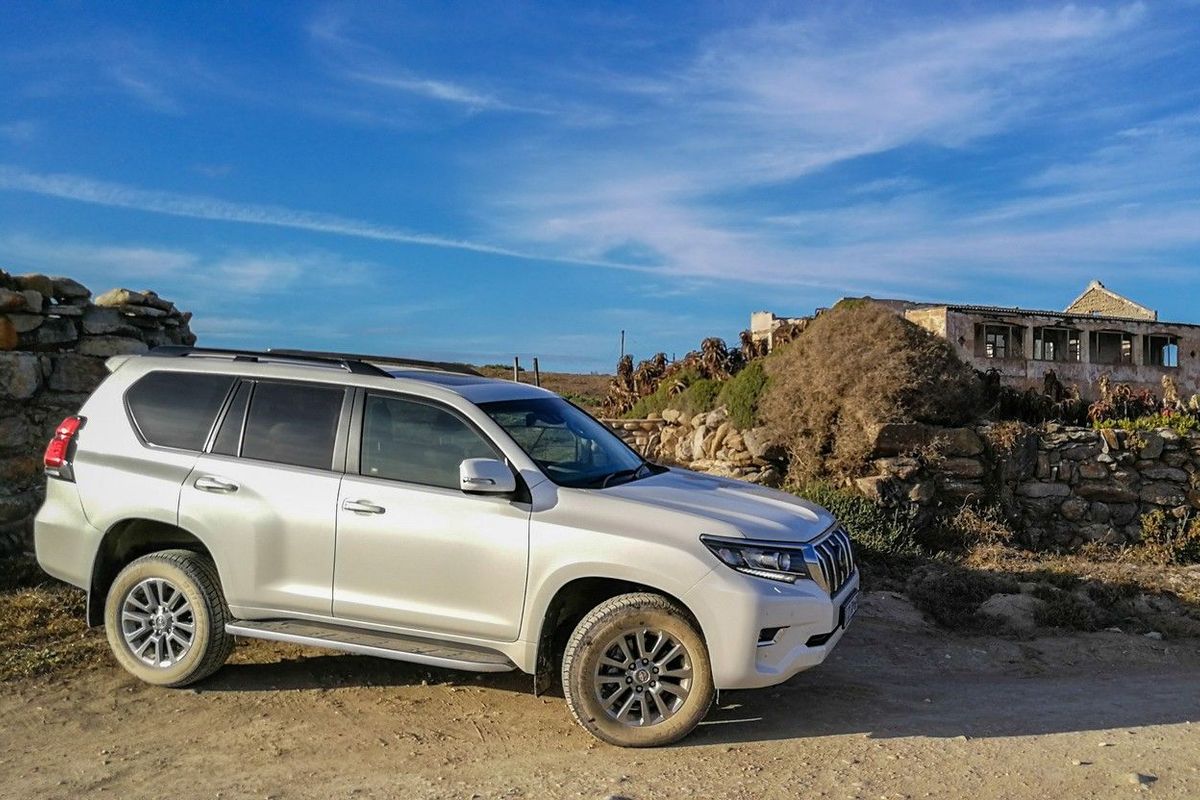
Toyota Land Cruiser Prado 3.0D VX-L (2018) Quick Review
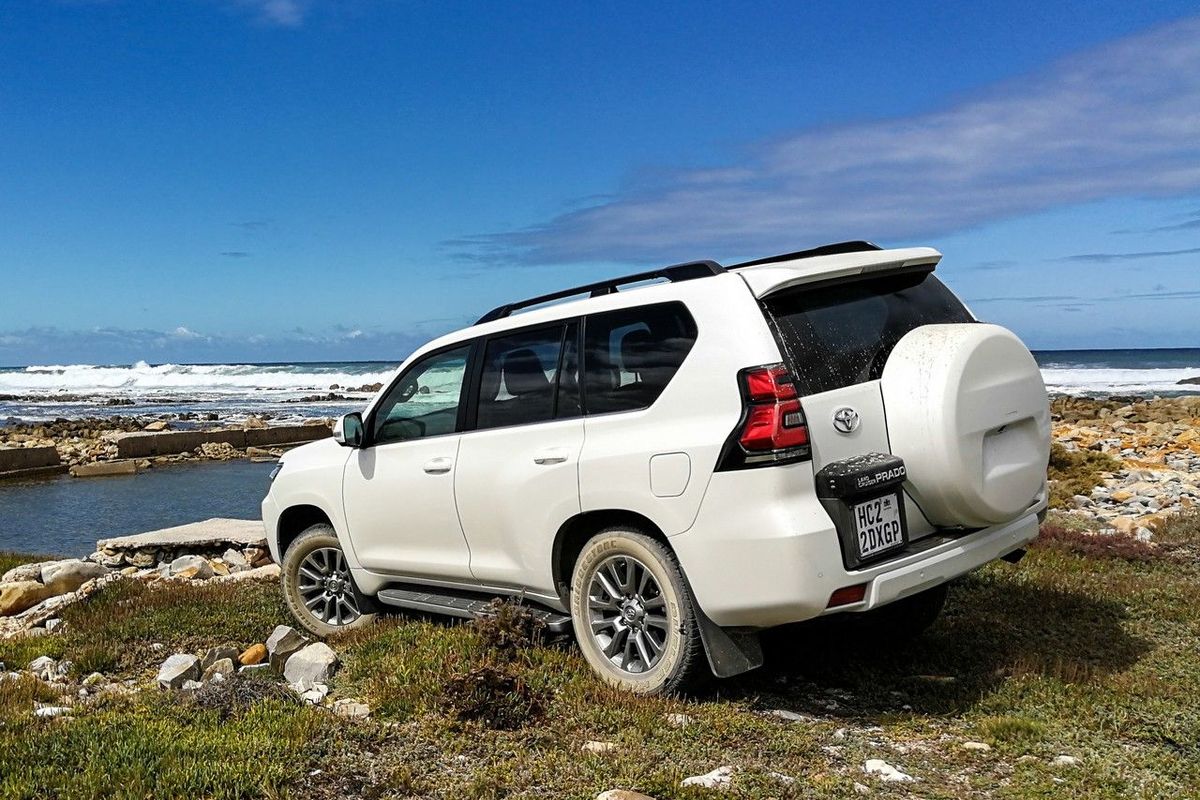
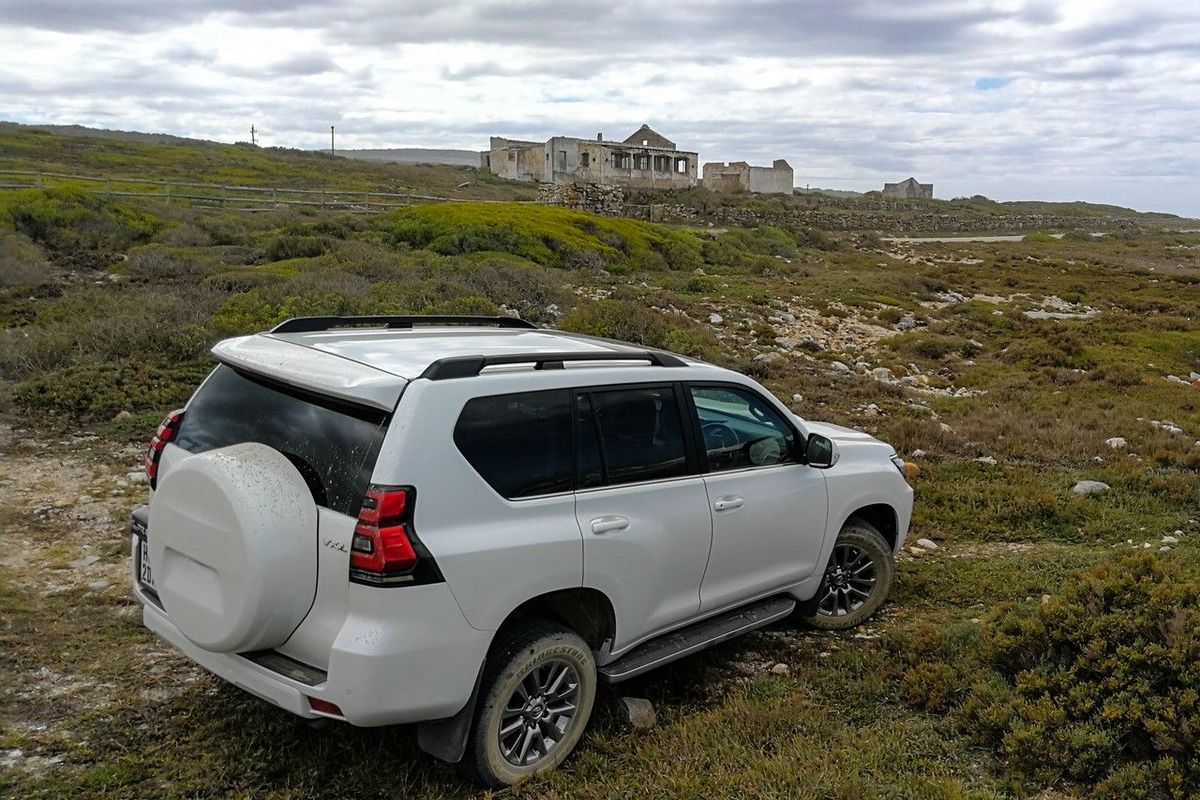
The Toyota Prado, which remains hugely popular with adventurous motorists who occasionally exploit the full extent of their vehicles' off-road ability, has received an update. But don't worry, it has NOT become a softy!

We like: High value standard spec, robust reputation, comfortable long-distance cruiser, off-road ability

We don’t like: Could do with a touch more power, updated cabin still lags in terms of design/ergonomics.

Alternatives:

  • Stylish and sophisticated Land Rover: For about R40 000 more you can get the baby derivative in the new Discovery range. It is, of course, a very desirable, stylish product that also offers more engine power and torque (190 kW and 600 Nm), but you'll have to spend a considerable amount on extras to get close to matching the features offered as standard in the Prado. 
  • Rugged, aged Pajero: Coming in significantly cheaper than the Prado is another legend of the bush… the Mitsubishi Pajero. It's not as sophisticated nor as feature-packed as the Toyota, but if off-road ability is a requirement and your budget is tight, it's an alternative that's unlikely to let you down.

Compare the Toyota Prado 3.0D VX-L with the Land Rover Discovery TDV6 S and Mitsubishi Pajero 3.2 DI-D GLS Exceed by clicking here

Facts & Figures

Price: R979 600 (May 2018)
Engine: 3.0-litre, 4-cylinder turbodiesel
Transmission: 5-speed automatic
Power: 120 kW 
Torque: 400 Nm
Fuel consumption: 8.5 L/100 km (claimed)
0-100 kph: 11.7 seconds 
Top speed: 175 kph (claimed)

What's changed?
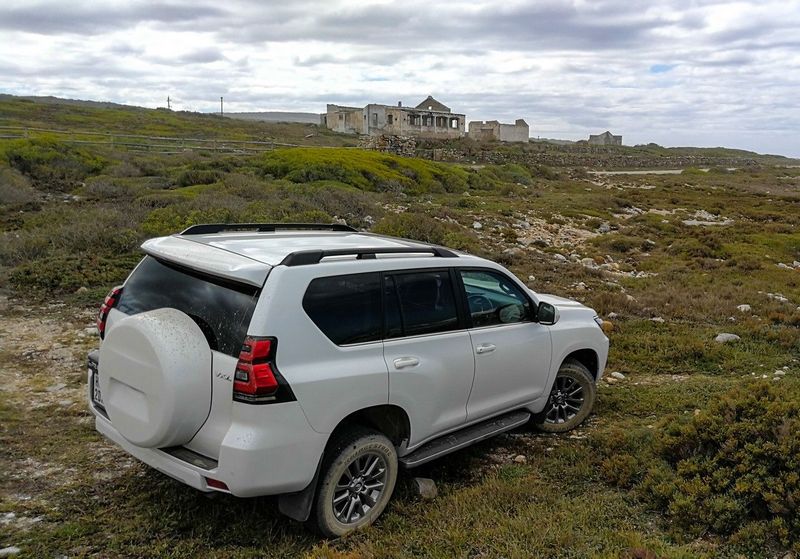

Venturing far off the beaten track? That's the enduring appeal of the Prado – luxury and unburstable reliability combined.

Toyota's Land Cruiser Prado has been a strong seller in the local market for a very long time – it seems impervious to changes in automotive trends and fashion trends. There are several reasons for its enduring appeal, the most important one of which is that it is a proper Land Cruiser, and therefore perceived to be nearly indestructible and unmatched in its ability to transport 7 people in relative luxury across vast distances (even outside of our borders). It's a real peace-of-mind adventure machine.

Nevertheless, time doesn't stand still and so Toyota recently refreshed the Prado, adding a higher-specification VX-L flagship model (reviewed here), more blingy looks and a few technological updates. But, at its mechanical core, the Prado is relatively unchanged – which is probably exactly what most of its hardcore fans will want.

The Good

Supremely comfortable
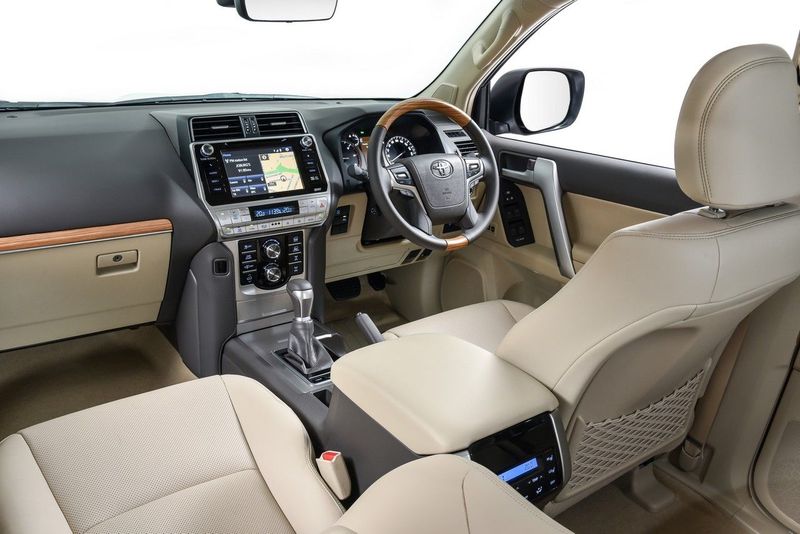

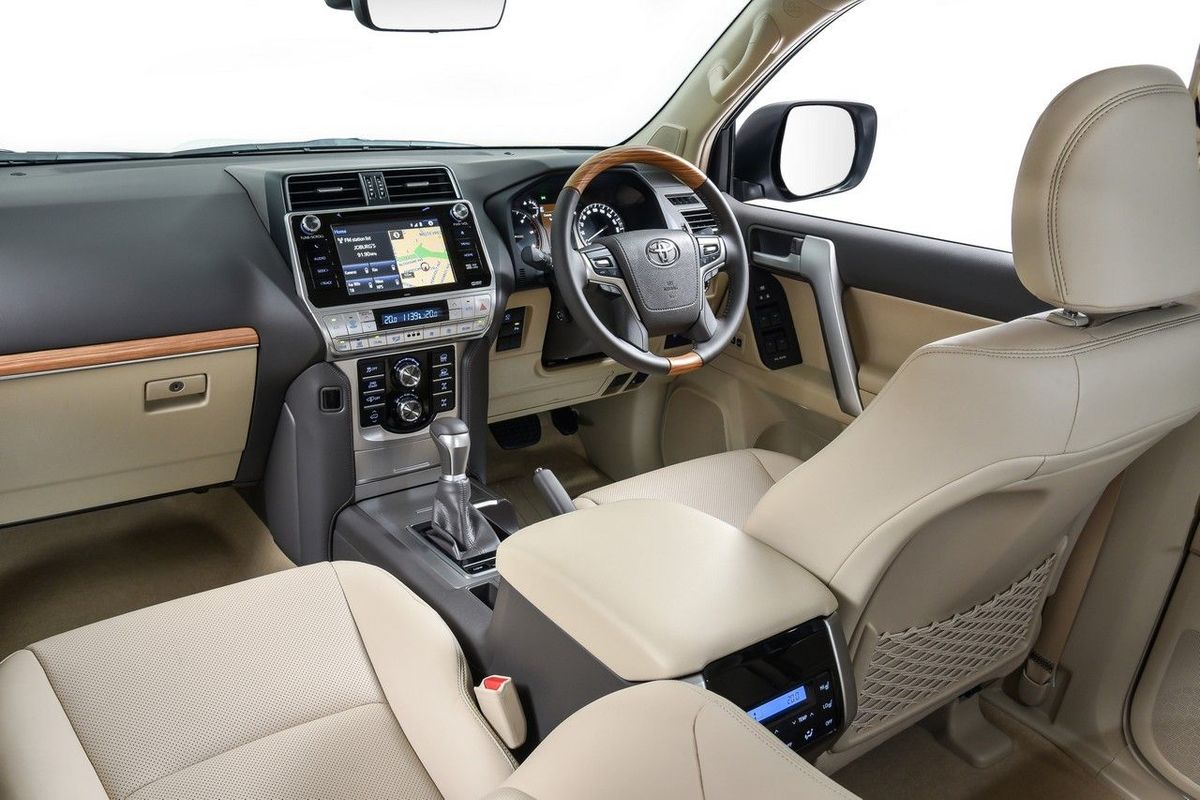
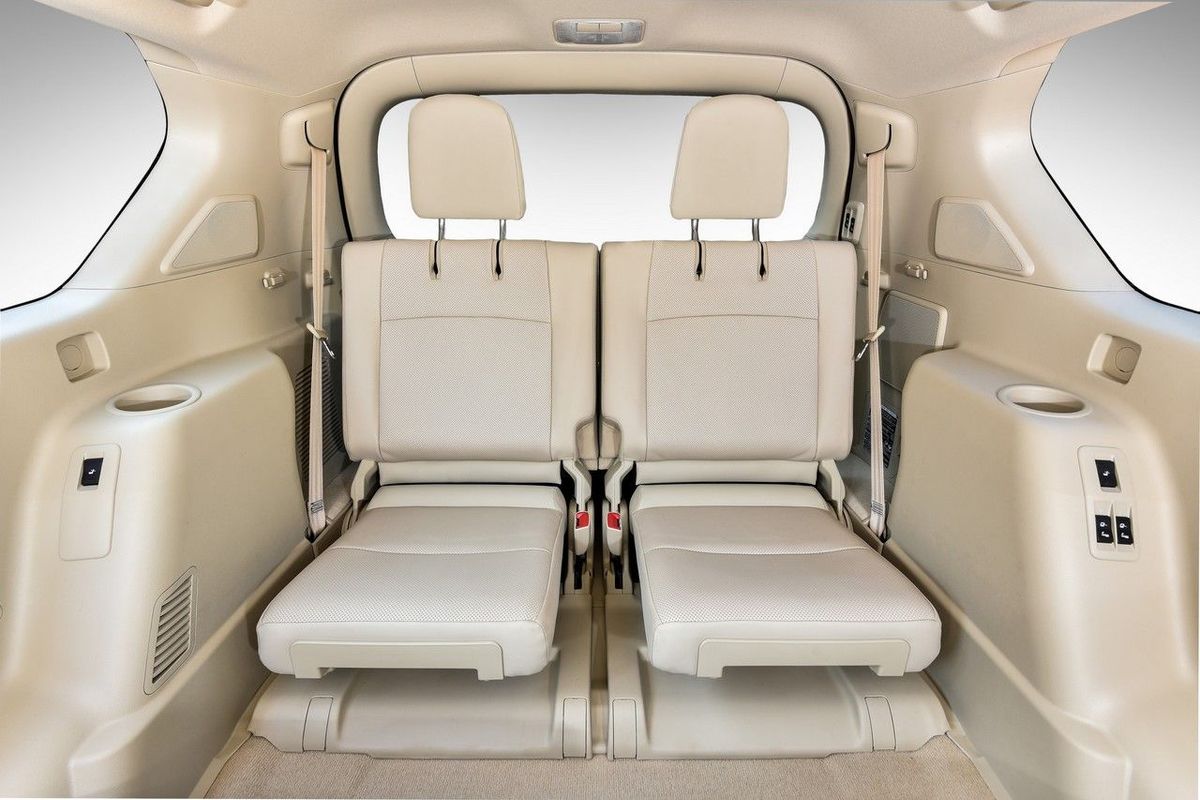
Our test unit came with an all-black interior, but a lighter "Neutral Beige" treatment is also available (pictured).

The Prado has a traditional body-on-frame construction, which is widely believed to be ideal for vehicles meant for extreme off-road usage. This suspension type isolates the cabin from many of the impacts that could occur in the bundu, but often translates into a fairly uncontrolled, bumpy ride and wallowy on-road handling at higher speeds. While the Prado isn't dynamically as "car-like" as a new Discovery, for example, on tar roads its soft, refined ride is arguably more in tune with the likely usage patterns it will face. It does roll quite a bit more in the corners, but that's a small price to pay for such effortless comfort elsewhere (in addition to the off-road advantages).

The high levels of comfort are not only the result of the chosen suspension configuration. This VX-L derivative is plushly appointed with features such as heated/cooled front seats, triple-zone climate control, leather upholstery and even an electrically operated 3rd row of seats. The seats are cossetting and offer great support for longer distances; what's more, the seating positions throughout the vehicle prioritises good visibility out of the vehicle. Evidently, the designers of the Prado wanted its occupants to see landscapes whizz by as they make their way to their next destination while ensconced in the comfort of Toyota's venerable luxury off-roader.
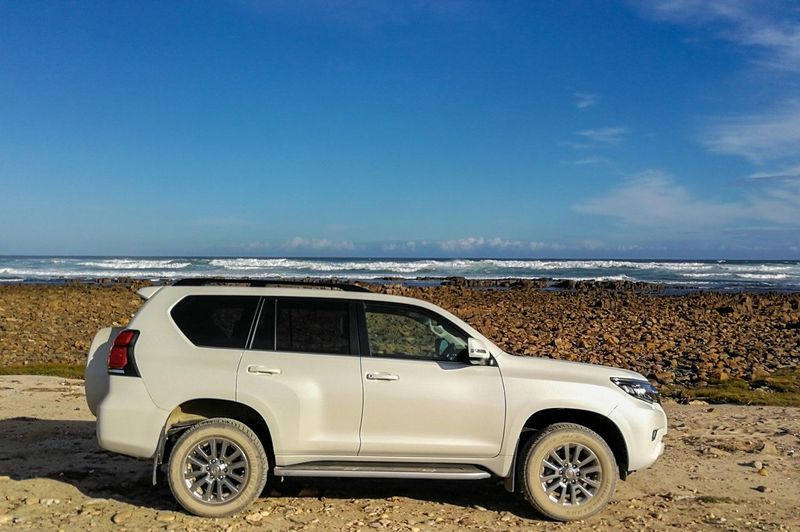

The Prado remains one of the best (possibly THE best) vehicles to drive if long distances on unsealed roads are part of the plan. 

We also think there has been a noticeable improvement in the NVH (noise, vibration, harshness) suppression. Certainly, when cruising at the national speed limit the cabin is a hushed, calm place with even the noise of the relatively aged turbodiesel engine underneath the dramatically sculpted bonnet struggling to make its way to the occupants' ears. Head onto rougher surfaces such as gravel roads and the impressive performance continues – the comfort-optimised suspension, generously sidewalled 18-inch tyres and admirable cabin insulation combine to make it possible for the Prado to shrug off such changing conditions. 

Off-road ability
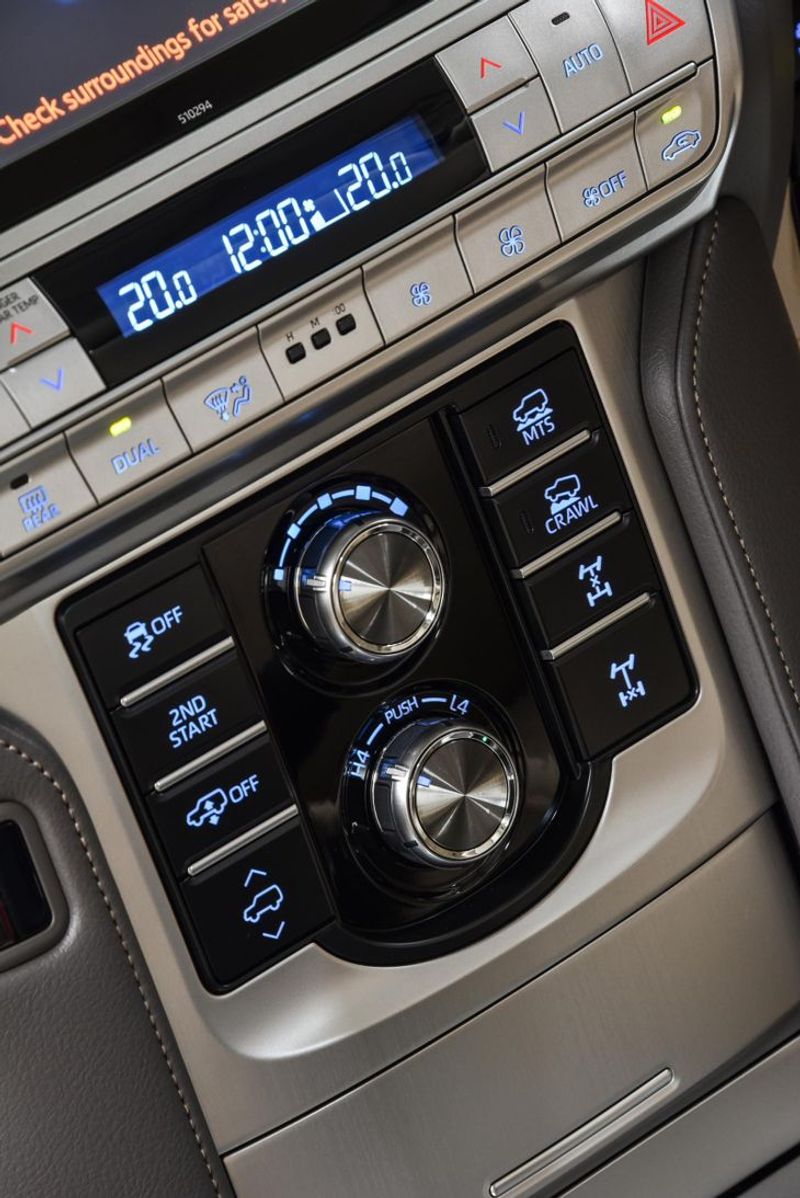

The Prado is packed with electronic off-road aids. Use them properly and you're highly unlikely to ever get stuck.

The Prado appears to be optimised for off-road use in every possible way. Notice the deep "canyon" on the bonnet? Well, that's there to improve visibility! You may also notice that the dashboard is slightly lower these days… also to improve visibility when conditions get tricky. The Prado offers a ground clearance of 215 mm (which seems a conservative claim to the naked eye), with 31-degree approach, 25-degree departure and 22-degree ramp break-over angles.

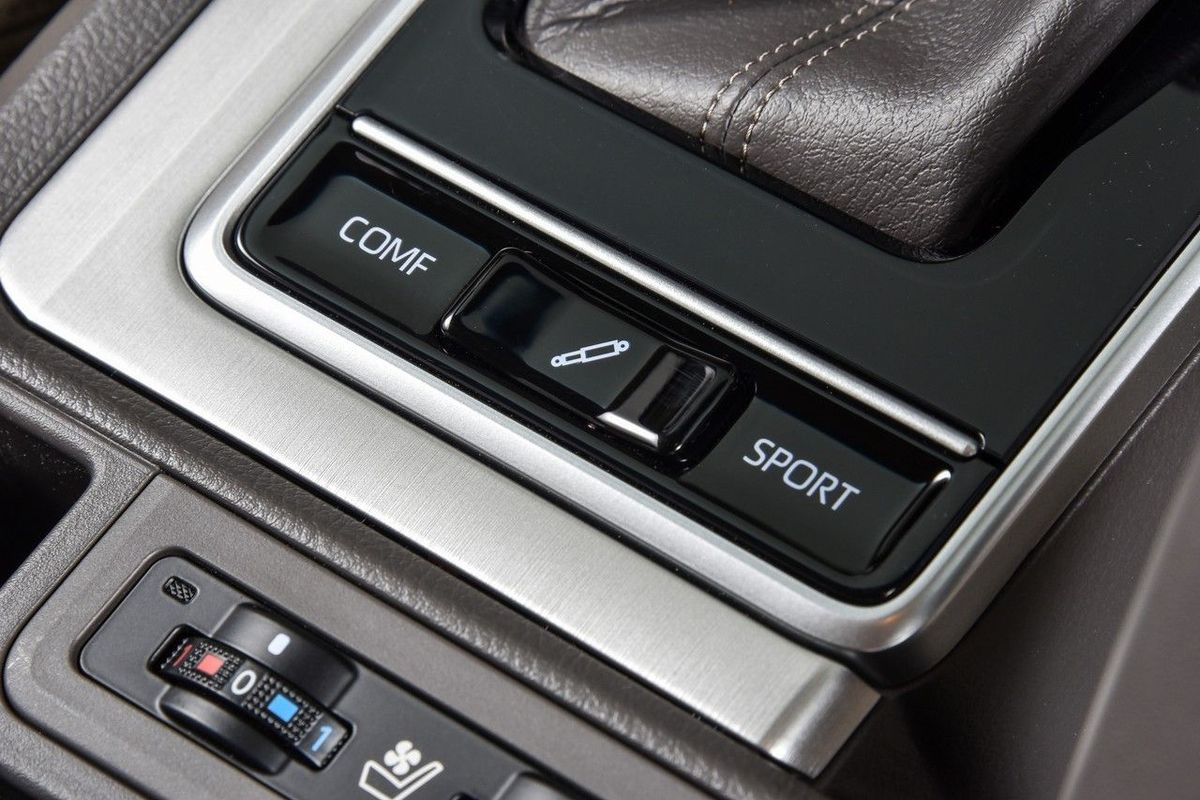
But those are minor details… In keeping with the times, the Prado has a Multi-Terrain Select system (operated by a large rotary knob) that allows its driver to set up the vehicle for prevailing off-road conditions by fine-tuning its traction control, transmission, power and suspension settings. There are 5 modes to choose from: Mud&Sand, Loose Rock, Mogul (compromise setting), Rock&Dirt and Rock. Downhill Assist Control is fitted, as is a low-range transfer case with both rear- and centre diff-locks.
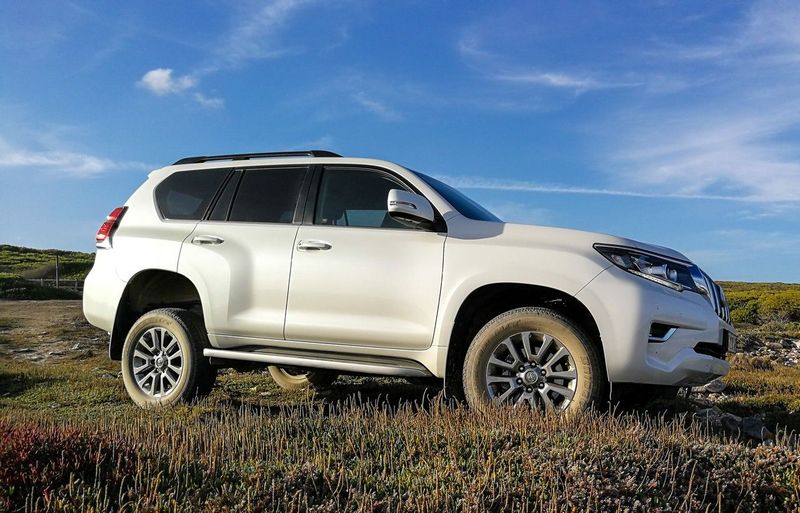

Great axle articulation contributes to the Prado's traction-finding abilities.

The Prado further features the crawl control mode from its bigger brother, the Land Cruiser 200, and, as such, is easy to pilot in the type of extreme terrain that might intimidate even relatively experienced adventurers. Then there are those KDDS hydraulically interconnected front and rear stabilisers – by disconnecting a particular wheel's stabiliser bars at low speed, it can benefit from greater wheel travel in a cross-axle situation. All of this sounds terribly complicated, but, in reality, the Prado eschews a complex solution (such as air suspension, which is integral to many premium SUVs) in favour of mechanical simplicity. It's unlikely to go wrong. 

We ventured quite far off the beaten track with the Prado and found it a confidence-inspiring off-roader. Visibility is truly excellent – the new surround-view Multi Terrain Monitor camera system includes panoramic and overhead view modes. If you're going to be doing a lot of serious off-roading, then you may have to consider a different tyre, but the standard Bridgestone Duelers strike a good on/off-road compromise. We think they contribute to the overal quietness as well. Indeed, if you use the Toyota's available off-road assistance systems properly, the Prado will invariably find a way to achieve positive traction in whatever off-road condition it may find itself. 

Standard Features
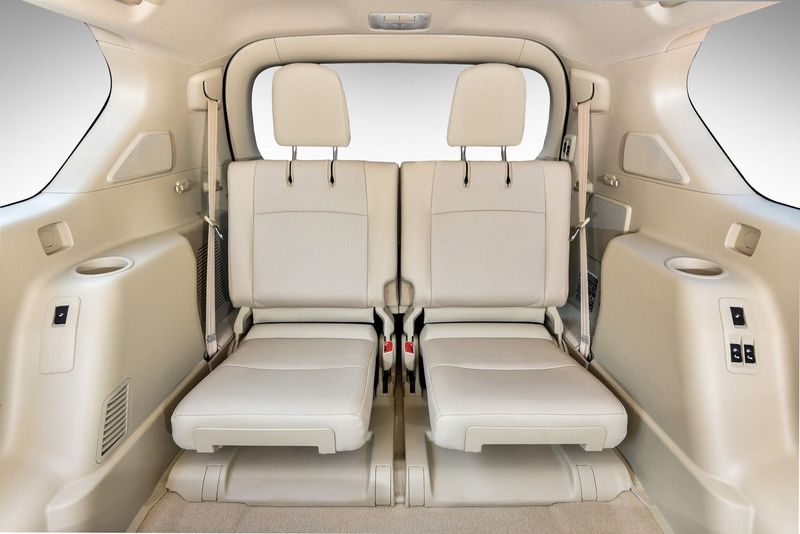

The third row of seats in the Prado VX-L are electrically controlled. 

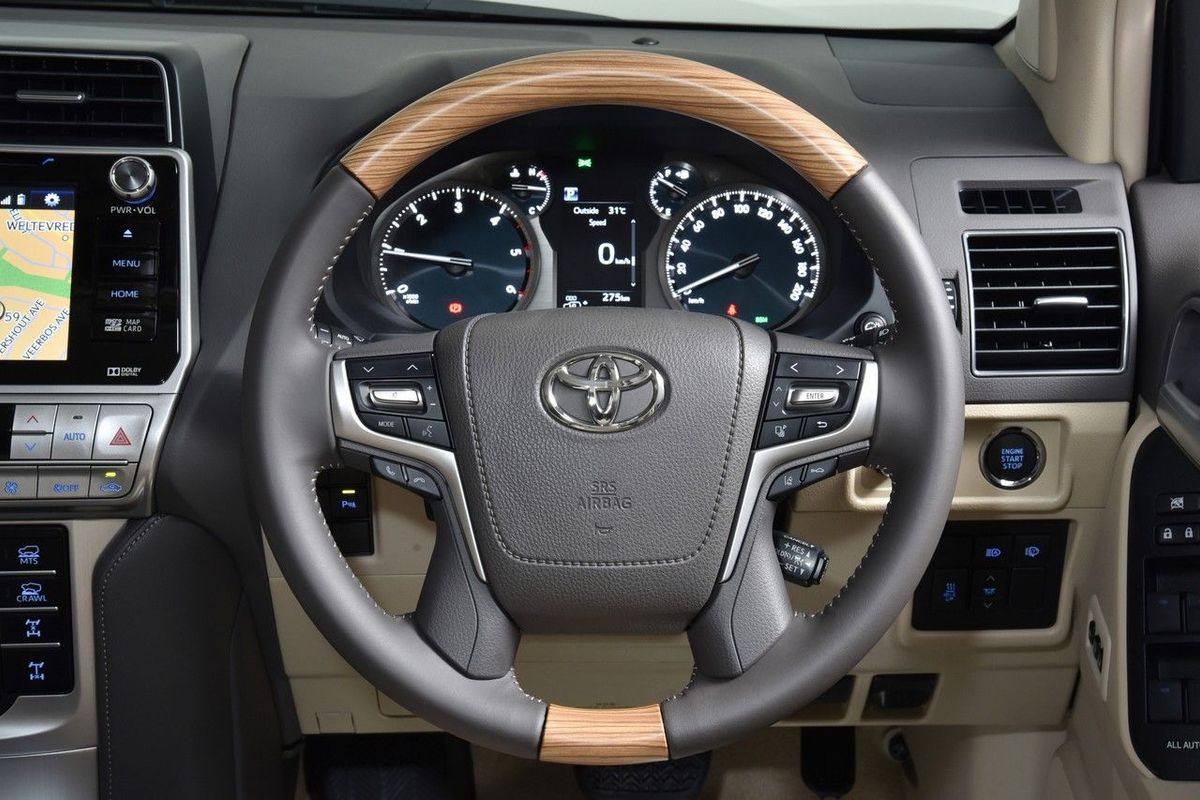
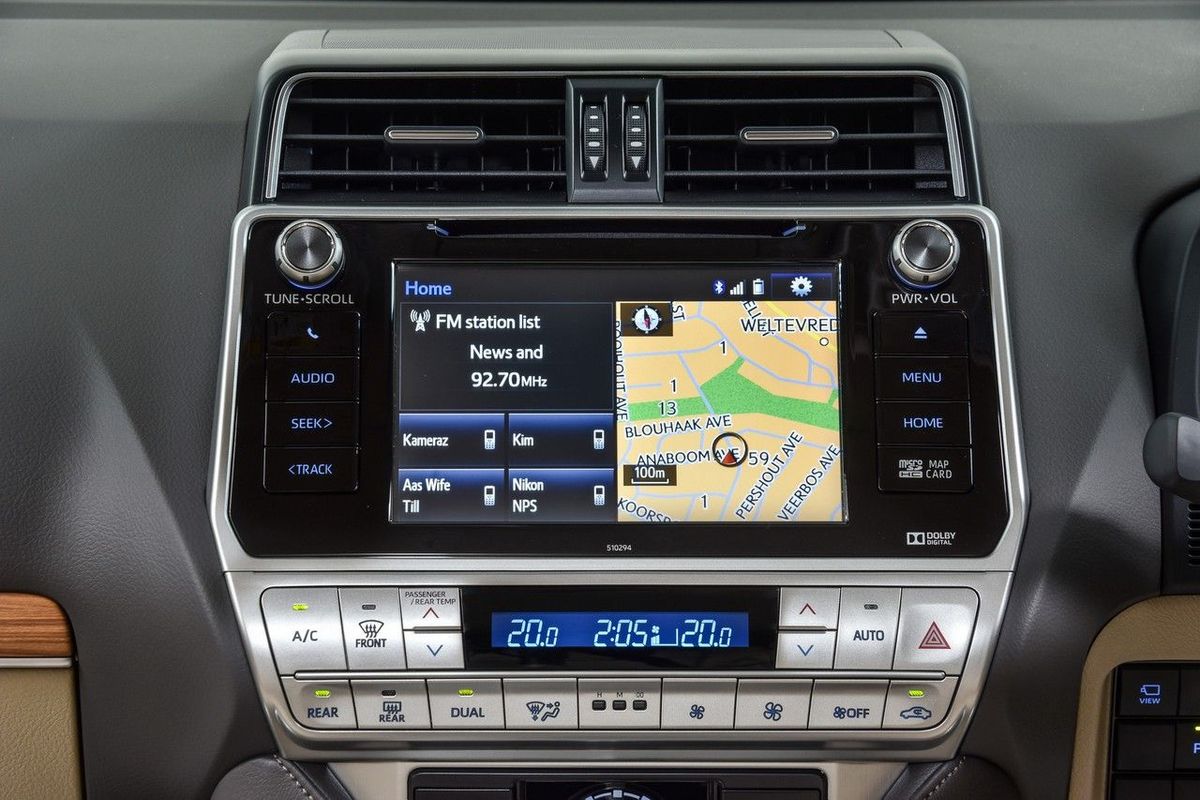
This new VX-L derivative is positively loaded with luxuries. Just about everything is electrically adjustable, including the steering wheel and 3rd row of seats. This flagship model also comes with a tilt/slide "moonroof" and shares the VX's comprehensive infotainment system, replete with a 14-speaker Premium sound system and large tablet-like touchscreen. As mentioned before, the front seats are heated and cooled, but even the second row gets heating for those early winter morning starts!

The moonroof is not the only thing that distinguishes the VX-L from lesser derivatives. In fact, its specification sees a greater focus on advanced safety systems. In addition to ABS, EBD, Brake Assist, stability control and Trailer Sway Control systems, the VX-L further adds a raft of active technologies, including a pre-collision system with pedestrian detection, adaptive cruise control, lane departure alert and an automatic high-beam function.

The adaptive cruise control is particularly useful when hitting the long road and the rear cross traffic alert system is one of the automotive sector's best new innovations. 

The (not so) Good

No extra oomph
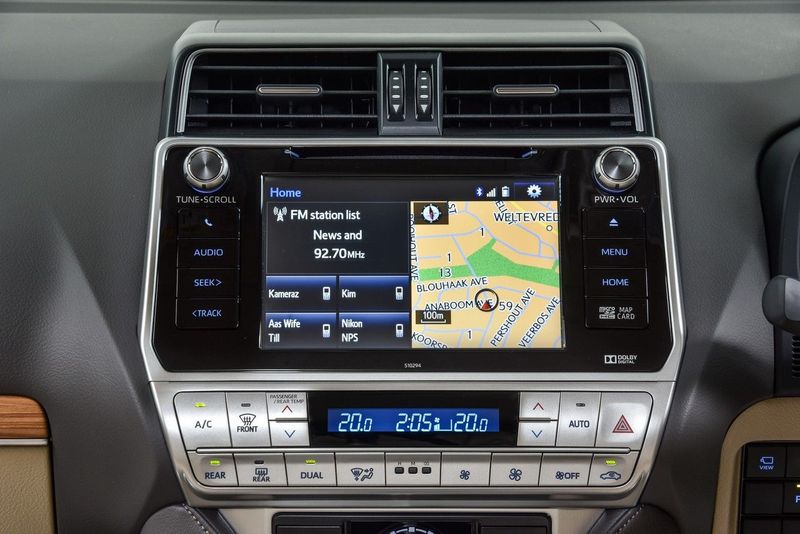

The Prado's new infotainment system is comprehensive and easy to use.

Firstly, let's be clear… we appreciate the fact that the 3.0D-4D engine underneath the Prado's bonnet is both tried and tested and also able to operate on relatively poor quality, high-sulphur diesel. This is particularly beneficial when travelling into unknown areas. We also rate the engine's ability in low-speed off-roading conditions, where it feels particularly well-matched to the 5-speed automatic 'box. 

But there are areas in which it is clearly lagging. With 120 kW and 400 Nm of torque on offer, its outputs are significantly lower than those boasted by the competition, and by virtue of tipping the scales at nearly 2.5 tonnes, the Prado is no featherweight. So, when loaded with people and their detritus, the Prado is not the most responsive of vehicles when you need to, for example, overtake a slew of slower vehicles. It is also relatively thirsty compared with modern rivals. Toyota claims a combined cycle consumption figure of 8.5 L/100km, but you're likely to get closer to 10L/100km in mixed driving. We achieved 9.5 L/100 km on a longer stint.

All things considered, however, we're happy to continue with the lower output, especially if a lot of cross-border driving is on the agenda.

Pricing and warranty

The flagship Prado 3.0D VX-L derivative, as tested here, sells for a cool R979 600, which includes Toyota's usual 3-year/100 000 km warranty and a 5-year/90 000 km service plan. On the downside, you'll have to take it for service every 10 000 km…

Verdict
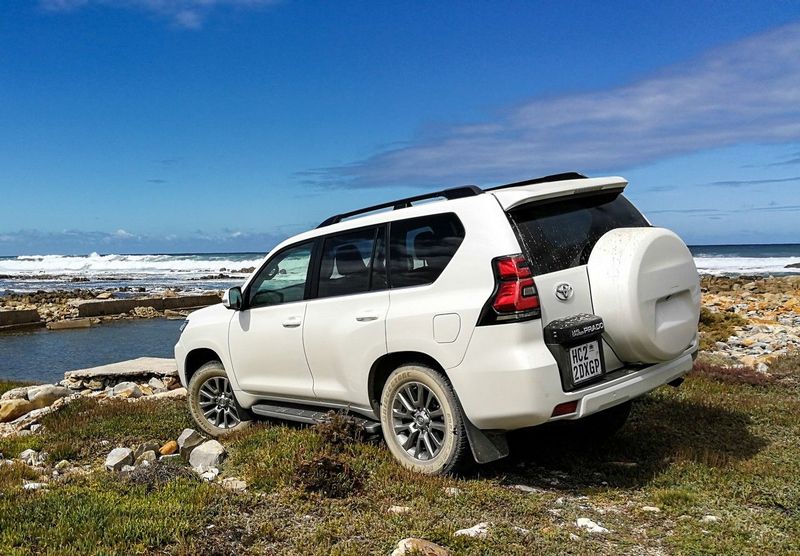

It's not going to win any beauty contests, but nevertheless, the Prado is highly desirable. 

The Prado is exceptionally well-priced considering its vast array of talents. It offers extensive off-road ability (including genuine, confidence-boosting cross-border capability), a comprehensive standard specification, and, of course, it instils the sense that you've bought something that will last forever. In reality, there isn't a vehicle that is directly comparable to this VX-L derivative; not at the price. The similarly rugged Pajero is unrefined, aged and lacking in modern tech by comparison, and the Discovery has seemingly become more of a style statement that, as standard, lacks many of the features fitted as standard to the Prado, yet the Landy costs more.

So, if you're looking for a vehicle that has it all and can do it all (except win drag races), then the Prado remains the top choice.

You may also be interested in:

Toyota Land Cruiser Prado (2017) launch review

Buyer's Guide – Rugged 7-seat SUVs (2018)

Top 5 Used Luxury SUVs under R500k
Looking for a new/used Toyota Prado to buy?

Find one on Cars.co.za today by clicking here

10 Cheapest New Cars With 150 kW Or More

New vehicle prices in South Africa have rocketed skywards over the last year as a weaker Rand drove the costs of importing vehicles to our market ever higher. We investigate whether there’s still some real bang-for-buck value in the market.
With new car prices soaring dramatically over the past year in a volatile economy, your money buys you less, particularly if you are looking for a more performance-orientated car. Take the latest Volkswagen Golf GTI as an example. With a lofty starting price R548 600, the GTI is now an expensive proposition.

Nonetheless, for the purpose of this list, we have set the performance threshold at 150 kW as that’s certain to result in willing performance in combination with a compact body shell. Obviously, we aren’t accounting for weight or a sporty chassis at this point, but it’s interesting to see where the power bargains are hiding in the new car market. Take a look!

Top 10 Cheapest New Cars in SA with at least 150 kW (in ascending price order)

1. Hyundai Elantra Turbo Elite Sport

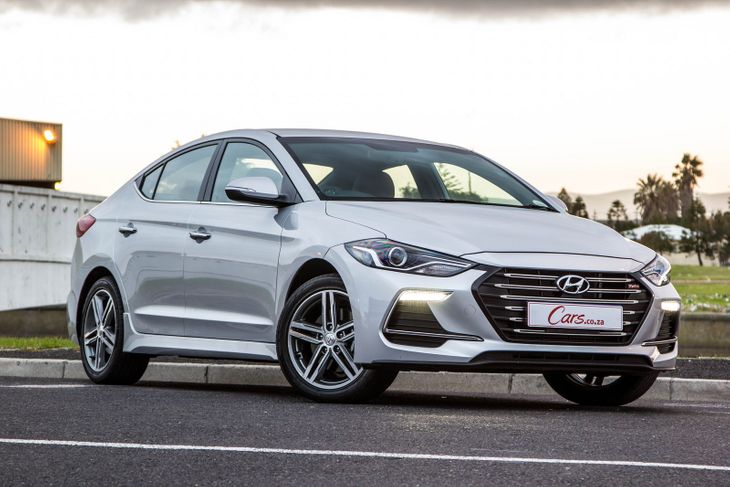
The new Hyundai Elantra was launched earlier this year and the range-topping Elantra 1.6 Turbo Elite Sport offers the practicality associated with a sedan while also delivering some thrills behind the wheel. Powered by the same turbocharged 1.6-litre 4-cylinder engine found in the Veloster Turbo, buyers get 150 kW and 265 Nm of torque with a claimed sprint time of 7.7 seconds in the run to 100 kph using a 6-speed automatic dual-clutch transmission. The Elantra 1.6 Turbo Elite Sport is priced from R399 900. 

Read: Hyundai Elantra 1.6 Turbo Elite Sport (2017) Quick Review
Looking for a Hyundai Elantra? Find one on Cars.co.za

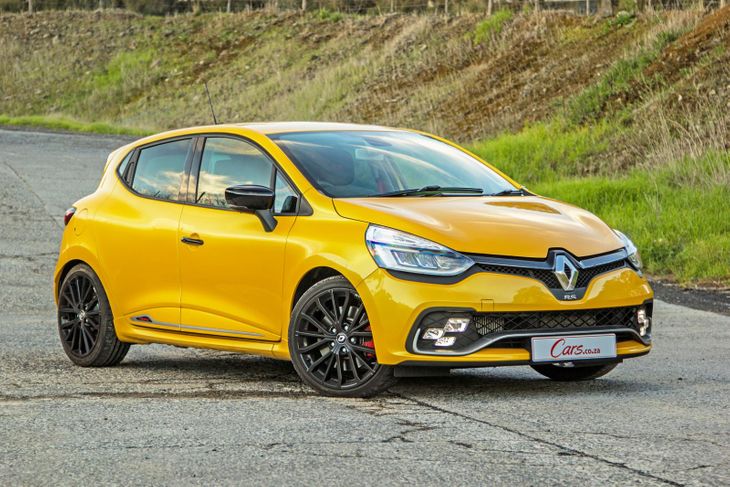
2. Renault Clio RS 220 Trophy

The recently-launched Clio RS 220 Trophy is a scintillating road-going track car that offers no less than 162 kW and 260 Nm of torque from its turbocharged 1.6-litre, 4-cylinder petrol engine. Using a 6-speed automatic dual-clutch transmission, the Clio RS 220 Trophy offers performance kicks with a zero to 100 kph sprint time of 6.6 seconds. For the amount of thrills, this Clio 220 RS Trophy offers decent value starting at R438 900. 

Read: Renault Clio RS 220 EDC Trophy (2017) Quick Review

Want to buy a Renault Clio? Find one on Cars.co.za

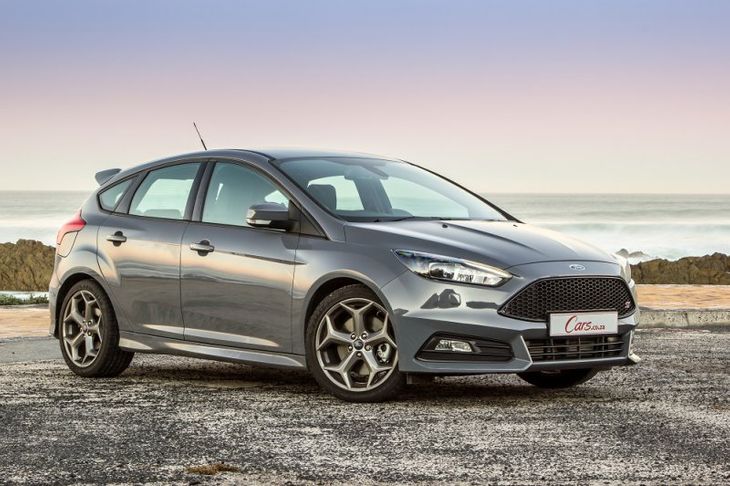
3. Ford Focus ST1

Ford Focus ST1 is still a relative bargain in the market with 184 kW and 360 Nm of torque on offer from its turbocharged 2.0-litre engine. It will sprint from zero to 100 kph in approximately 6.5 seconds and will top out at 248 kph. The ST1 is the entry-level ST, so there are a few luxuries missing, such as leather seats, daytime running lights and climate control. It’s a bare-bones performance bargain in most people's books. R457 800 gets you into an ST1, but to upgrade to the ST3 will cost R501 100. 

Read: Ford Focus ST Review

Want to buy a Ford Focus? Find one on Cars.co.za

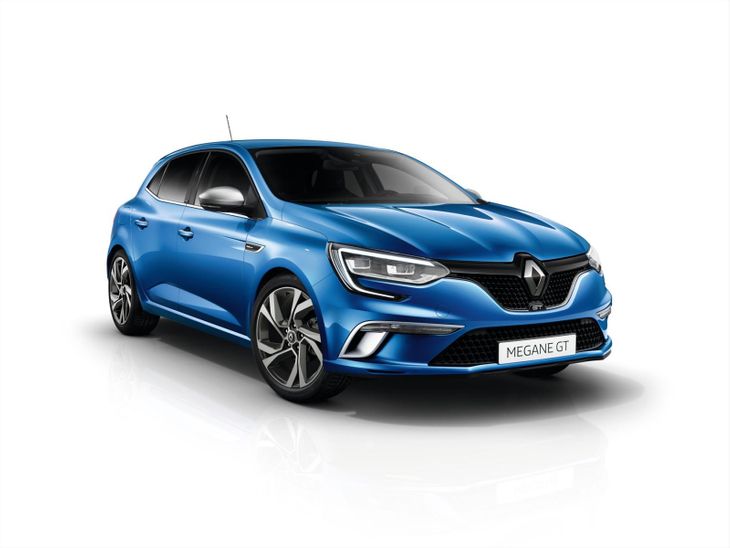
4. Renault Megane GT

With its stylish and sporty styling, the new Megane GT offers good performance with 151 kW and 280 Nm of torque developed by from its 1.6-litre turbopetrol engine. Zero to 100 kph is dispatched in 7.1 seconds with a top speed of 230 kph using a 7-speed dual clutch transmission. The Megane GT is all yours for R461 900. 

Read: Comparative Review: Opel Astra 1.6T Sport vs Renault Megane GT Turbo

Want to buy a Renault Megane? Find one on Cars.co.za

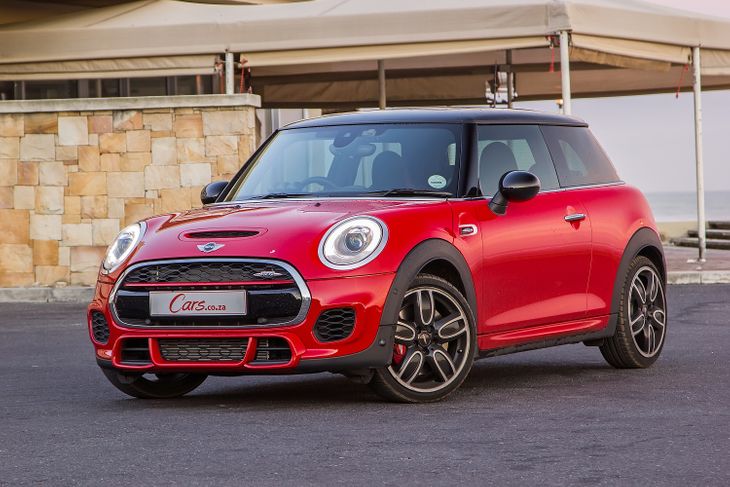
5. Mini John Cooper Works Hatch 3-Door

The JCW is an eminently wieldy "pocket rocket" and (relative) performance bargain. With 170 kW and 320 Nm of torque on tap from its 2.0-litre turbopetrol motor, the JCW is said to catapult from standstill to 100 kph in just 6.3 seconds. Beware of the optional extras list, however; things can get pretty expensive if you specify many of the goodies that Mini offer. The basic JCW costs R491 095.

Read more: Mini John Cooper Works Hatch (2016) Review

Thinking about buying a Mini JCW? Find a new/used one on Cars.co.za

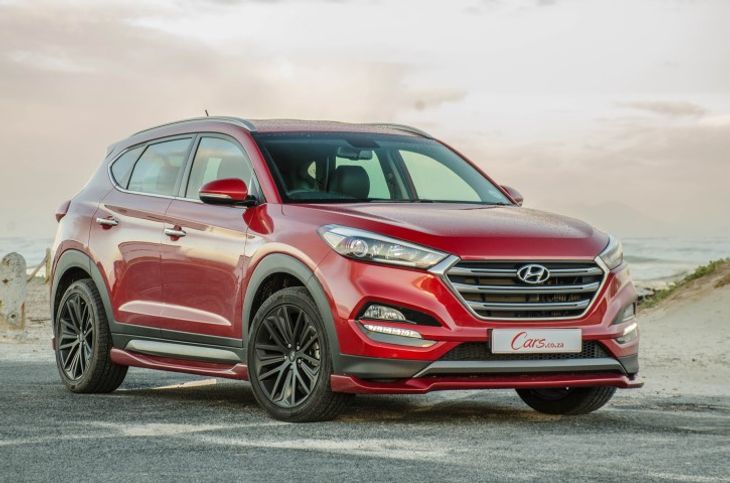
6. Hyundai Tucson Turbo Executive Sport

Hyundai's decision to sell a sportier version of its Tucson family SUV seems to be paying off as customers are taking a liking to the beefier Tucson Turbo Executive Sport . The Tucson Turbo Executive Sport is the only compact family SUV to make it onto this list with 150 kW and 295 Nm of torque offered from its 1.6-litre turbopetrol engine. The Tucson Turbo Executive Sport is priced R504 900. 

Read: Hyundai Tucson Sport (2017) Quick Review

Hyundai Tucson Sport Gains AWD Auto

Want to buy a Hyundai Tucson? Find one on Cars.co.za

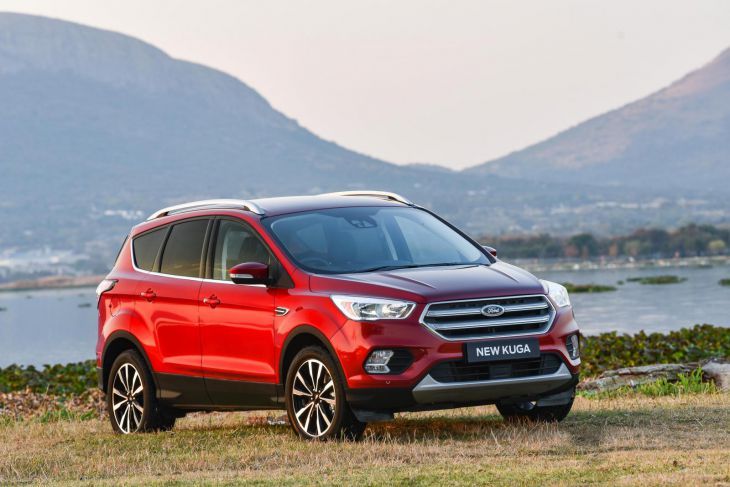
7. Ford Kuga 2.0T AWD Titanium

The revamped Kuga was introduced midway through 2017. This top-of-the-range model features a 2.0-litre turbopetrol engine that thumps out 177 kW and 340 Nm of torque. Mid-size SUVs are certainly turning up the wick on what are essentially family cars. Zero to 100 kph takes just 7.6 seconds and it has a top speed of 212 kph. With all of the Kuga's issues, pricing on this model is quite generous throughout the range, this model retails for R508 100.

Read: Ford Kuga 2.0TDCi AWD Titanium (2017) Review

Ford Kuga Facelift (2017) Launch Review

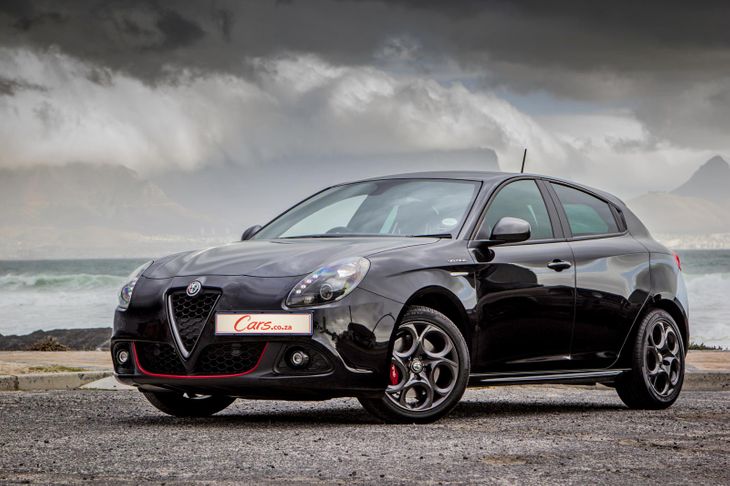
8. Alfa Romeo Giulietta 1750TBi Veloce

Alfa Romeo recently updated its Giulietta and this range-topping Veloce derivative is claimed to be the fastest car on this list with a zero to 100 kph sprint time of 6.0 seconds. The 1.75-litre turbopetrol engine churns out 177 kW and 340 Nm of torque and is mated to a 6-speed automatic dual-clutch transmission. The Alfa Romeo Giulietta 1750TBi Veloce is priced from R512 900. 

Read: Alfa Romeo Giulietta 1750TBi Veloce (2017) Quick Review

Alfa Romeo Giulietta Squadra Corse review

Search Cars.co.za for new/used Alfa Romeo Giulietta

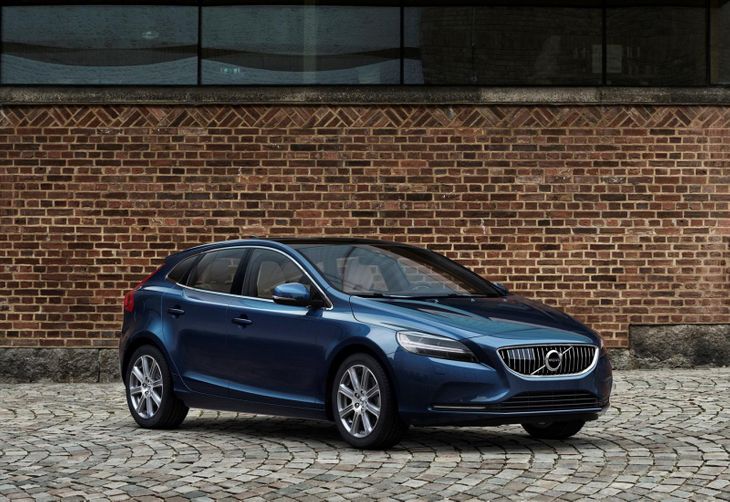
9. Volvo V40 T5 Momentum

Volvo isn’t known as a bargain performance brand, but in T5 Momentum guise, the V40 offers excellent value courtesy of its 180 kW/350 Nm 2.0-litre four-cylinder turbopetrol motor mated with an 8-speed automatic gearbox. Acceleration from zero to 100 kph is achieved in a claimed 6.3 seconds. The starting price for the Volvo V90 T5 Momentum is R519 000.

Read: Volvo V40 Cross Country T5 AWD Inscription (2016) Review

Search Cars.co.za's stock for new/used Volvo V40 T5 models

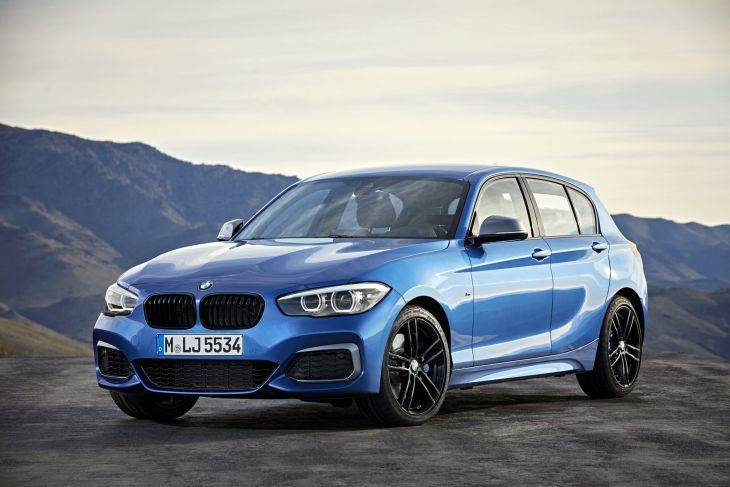
10. BMW 125i MSport Sports auto

The baby Bimmer creeps onto the list at number 10, sneaking in ahead of the Golf GTI by a few thousand rands. Facelifted back in 2017, the 1 Series got a bunch of new names for its engines to confuse everyone. This 125i unit boasts a 2.0-litre turbocharged petrol with 165 kW and 310 Nm of torque. The 100 kph sprint takes just 6.1 seconds thanks to the automatic gearbox. Starting price, before options on a 125i is R545 665.

BMW M140i (2016) Review 


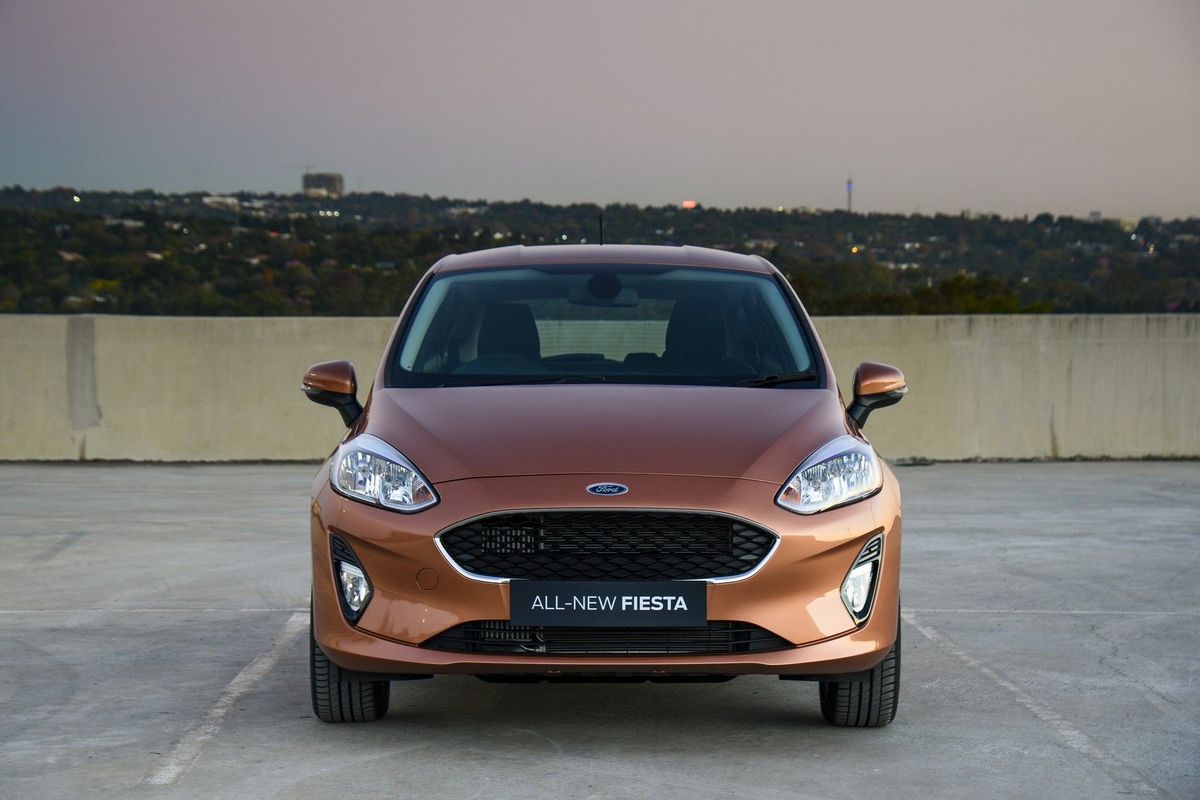
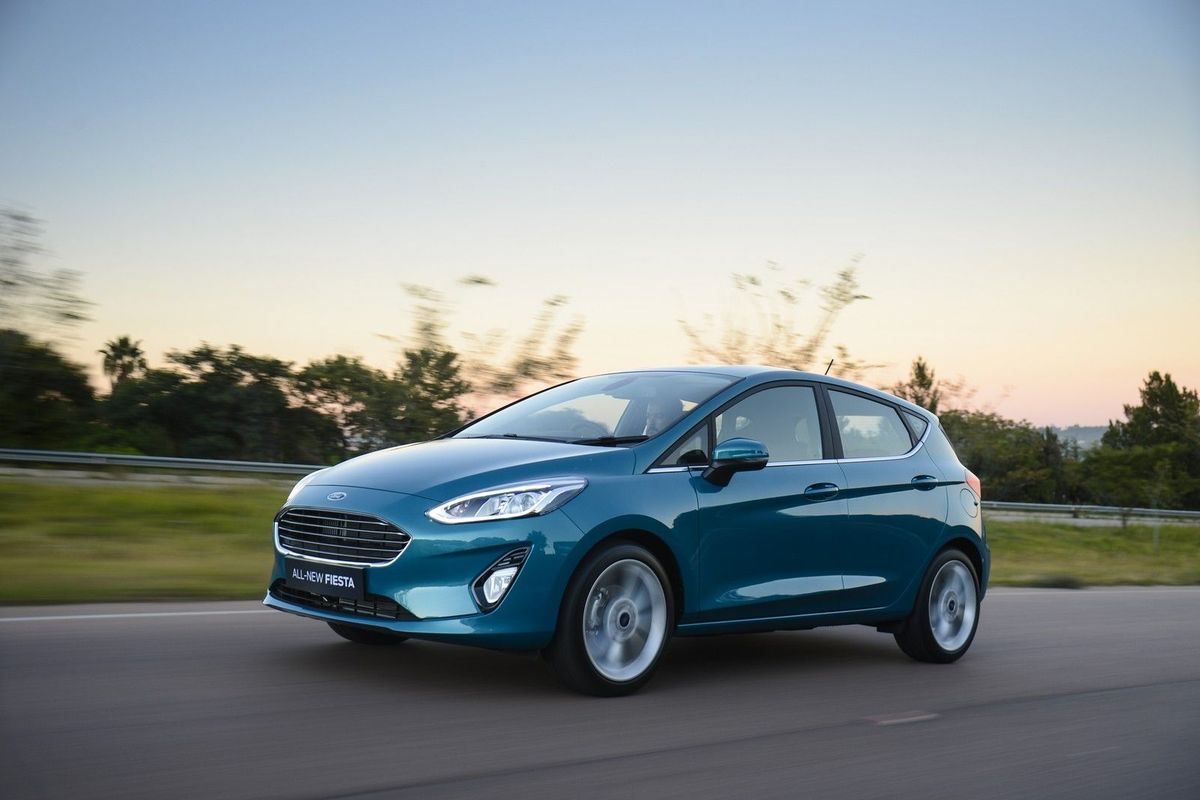
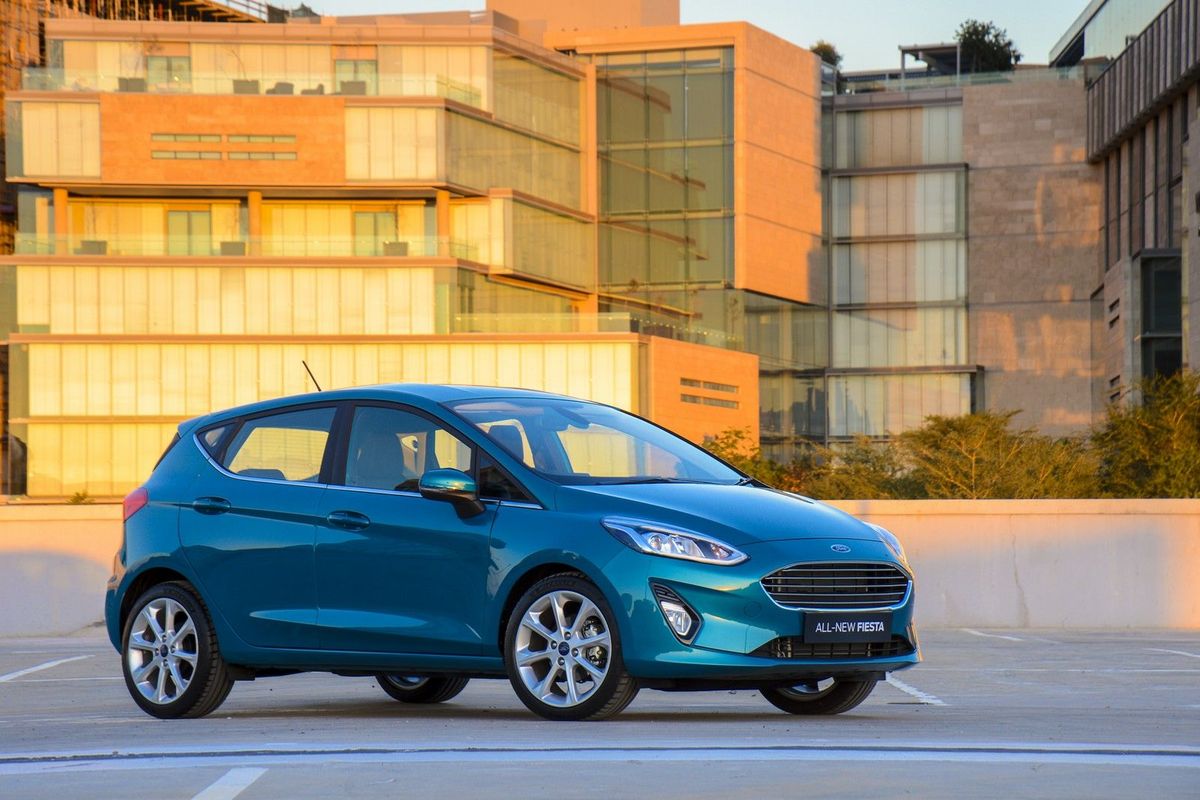
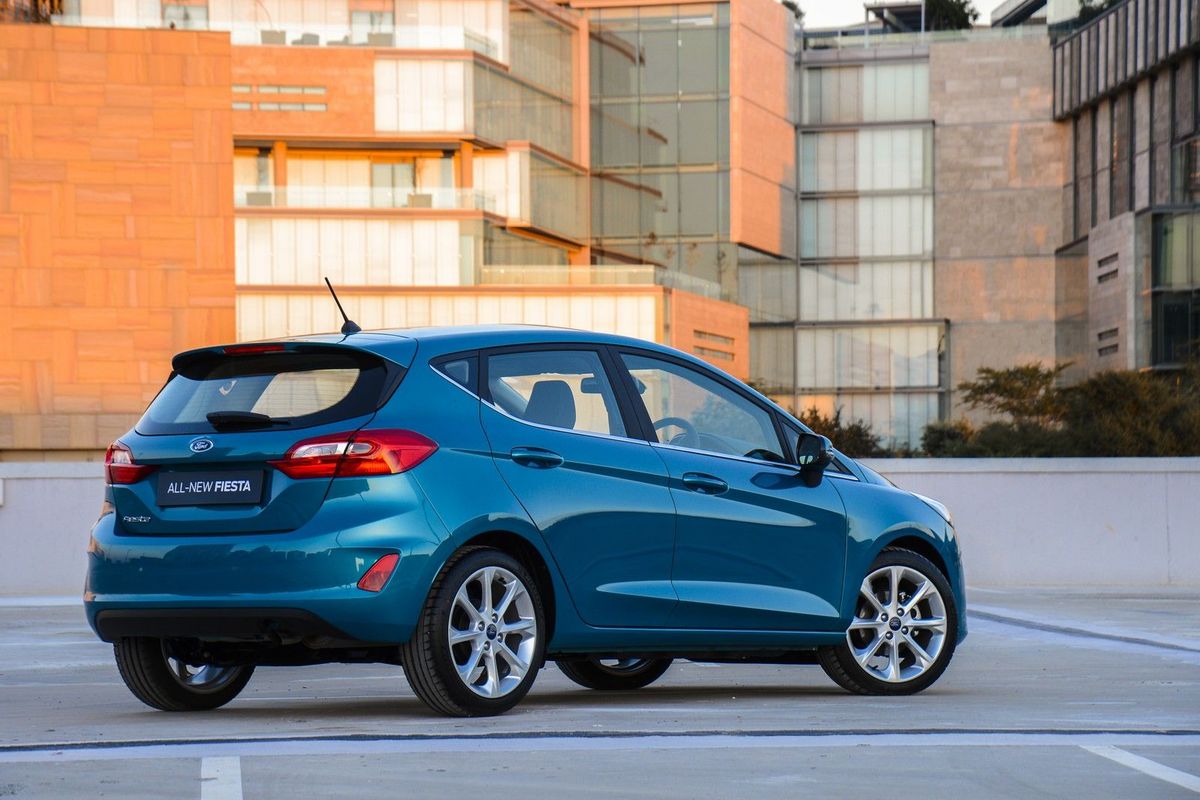
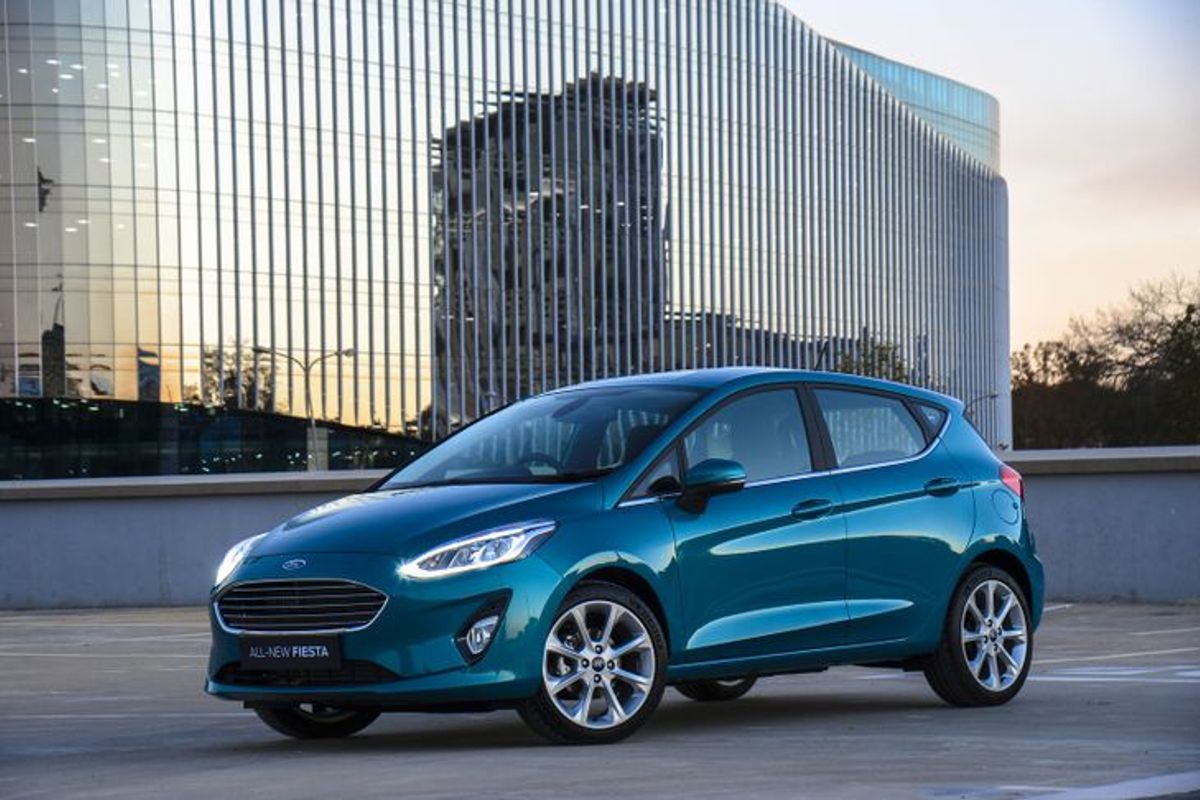
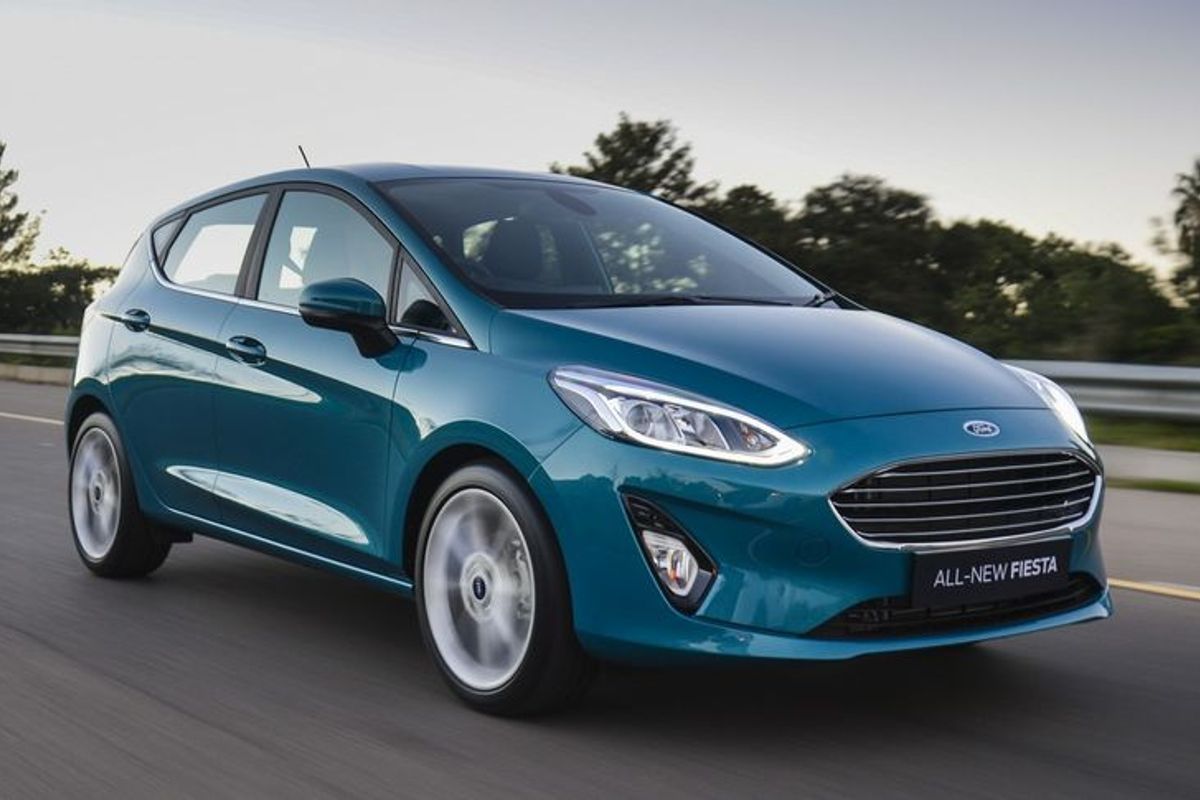
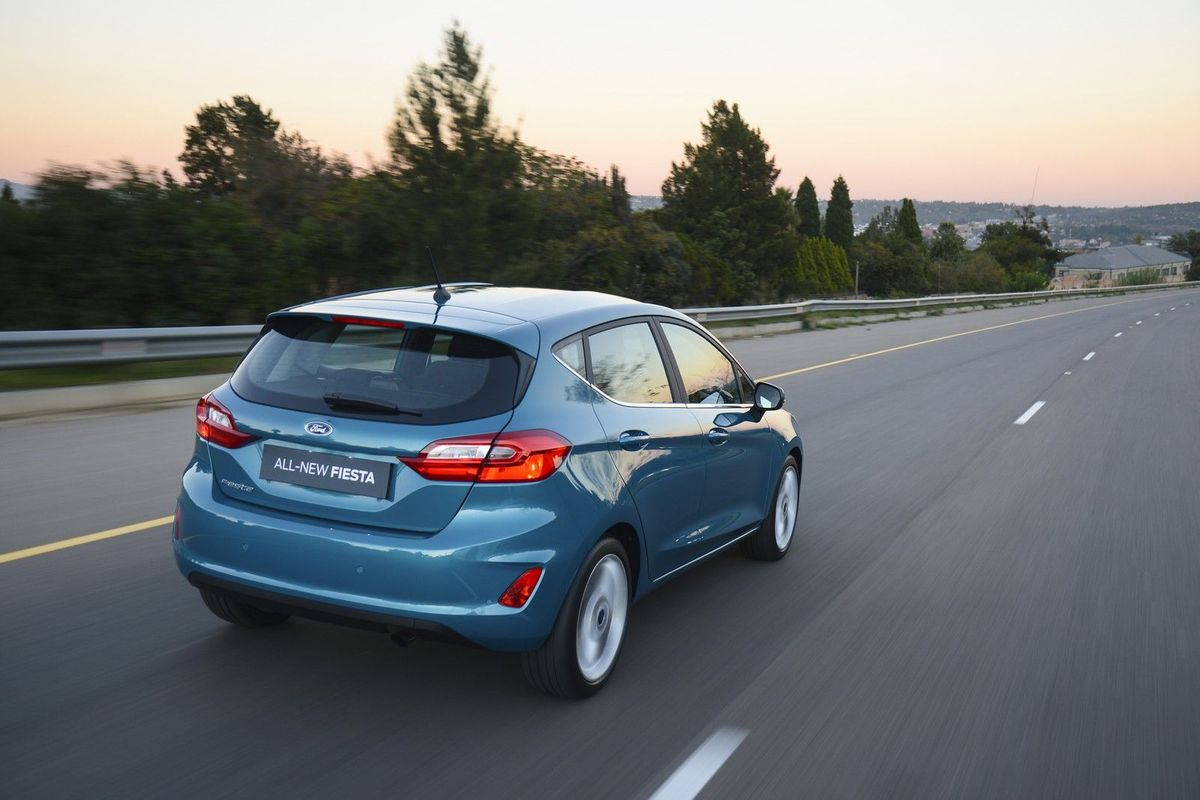
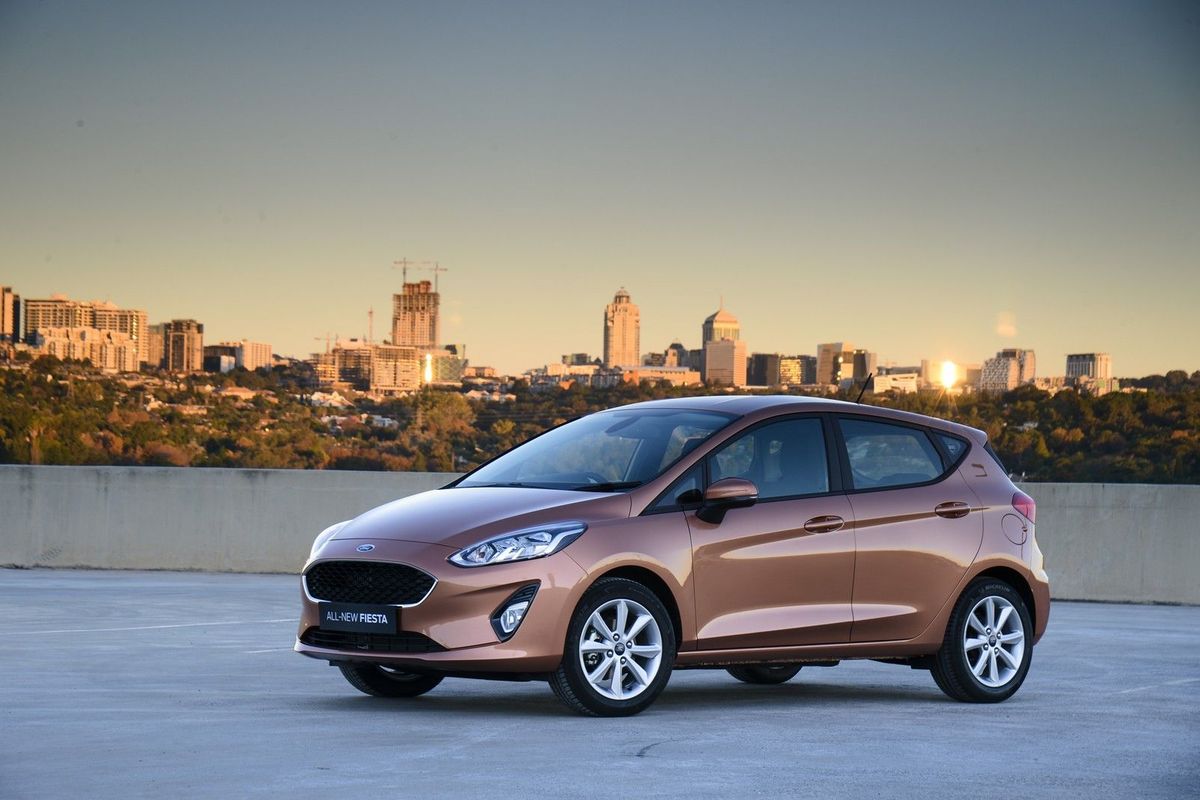
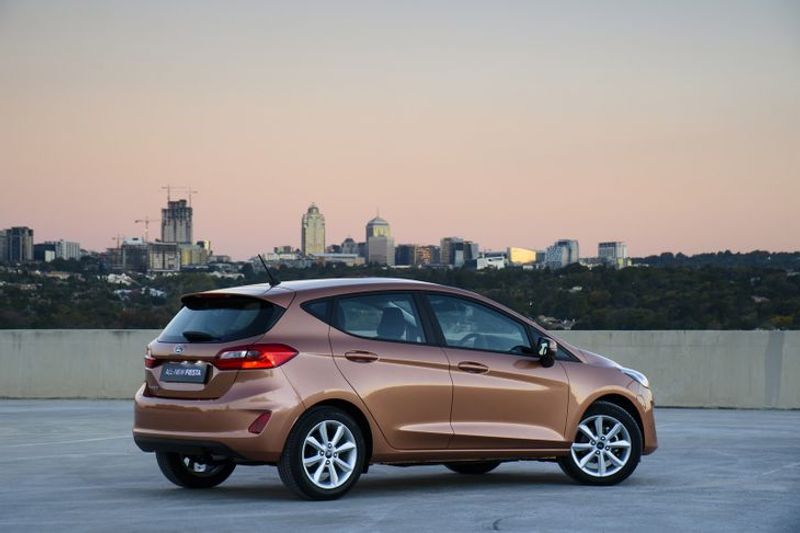
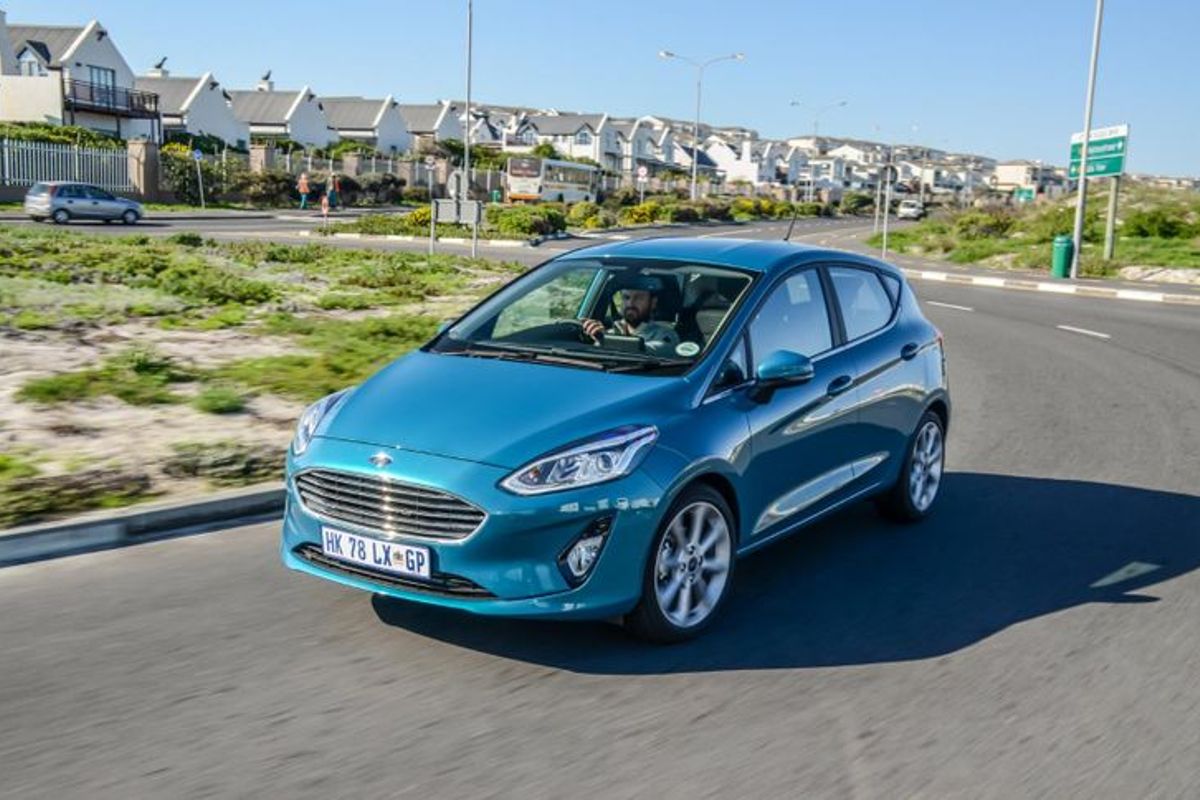
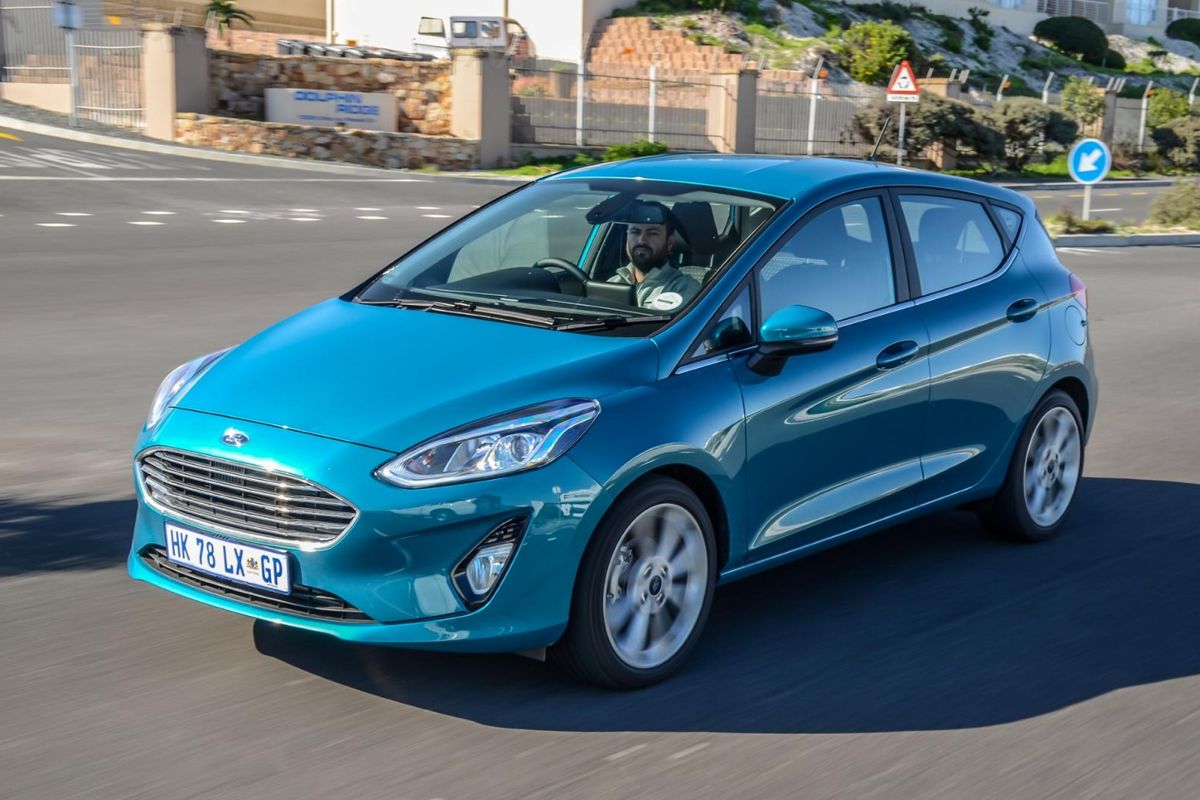
Ford Fiesta (2018) Specs & Price

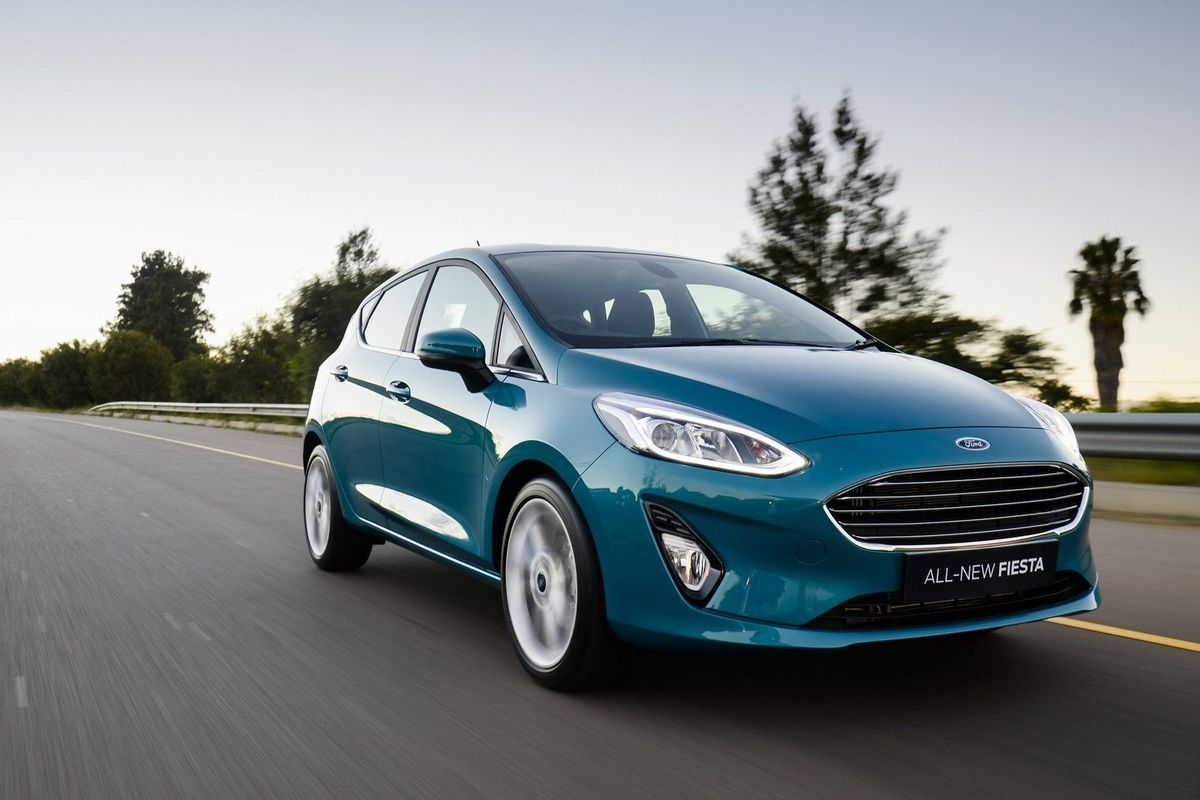
Ford has released specification and pricing details of its all-new Fiesta ahead of the compact hatchback range's local launch this week. As a major competitor to the top-selling Volkswagen Polo, much is expected of Ford's new B-segment offering.

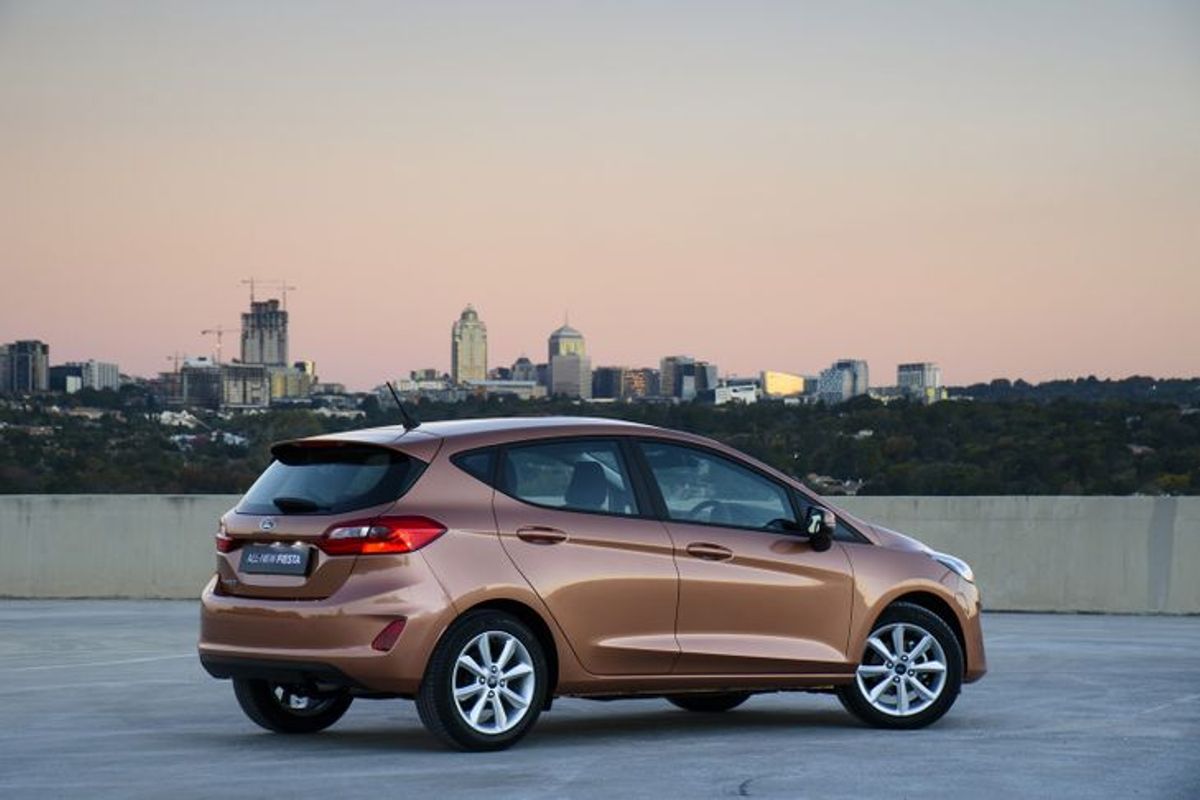
Ford admits that the new Fiesta is an evolutionary, rather than revolutionary, product; the Blue Oval claims that changes were made purely to improve what was already a good product in the eyes of its customers. The new version has grown somewhat compared with its predecessor (it is 71 mm longer and 13 mm wider), but whereas the front track has increased by 30 mm and the rear by 10 mm, the wheelbase is just 4 mm longer than before. Rear passengers are afforded 16 mm more knee room.

The new Fiesta weighs in at between 1 165 kg and 1 206 kg, depending on the derivative and type of transmission specified. Luggage space is a claimed 303 litres and, when the rear seats are folded down, 984 litres of utility space is available.

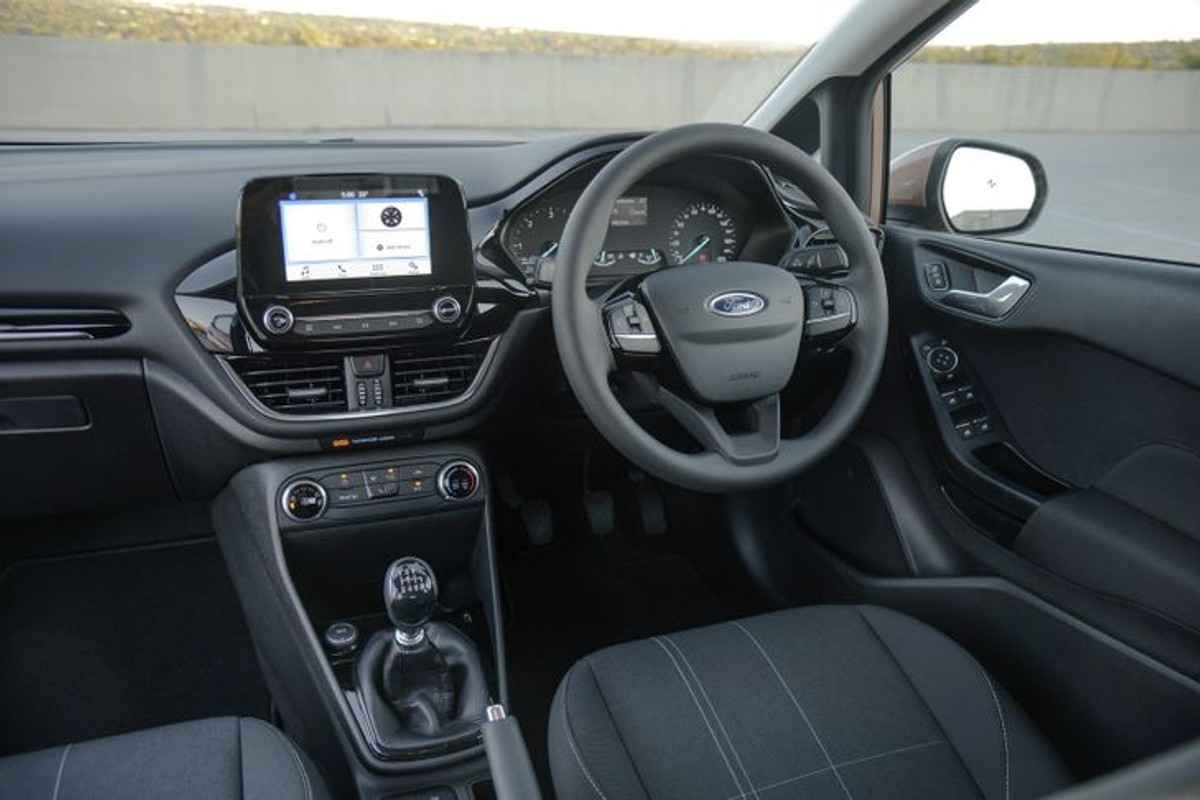
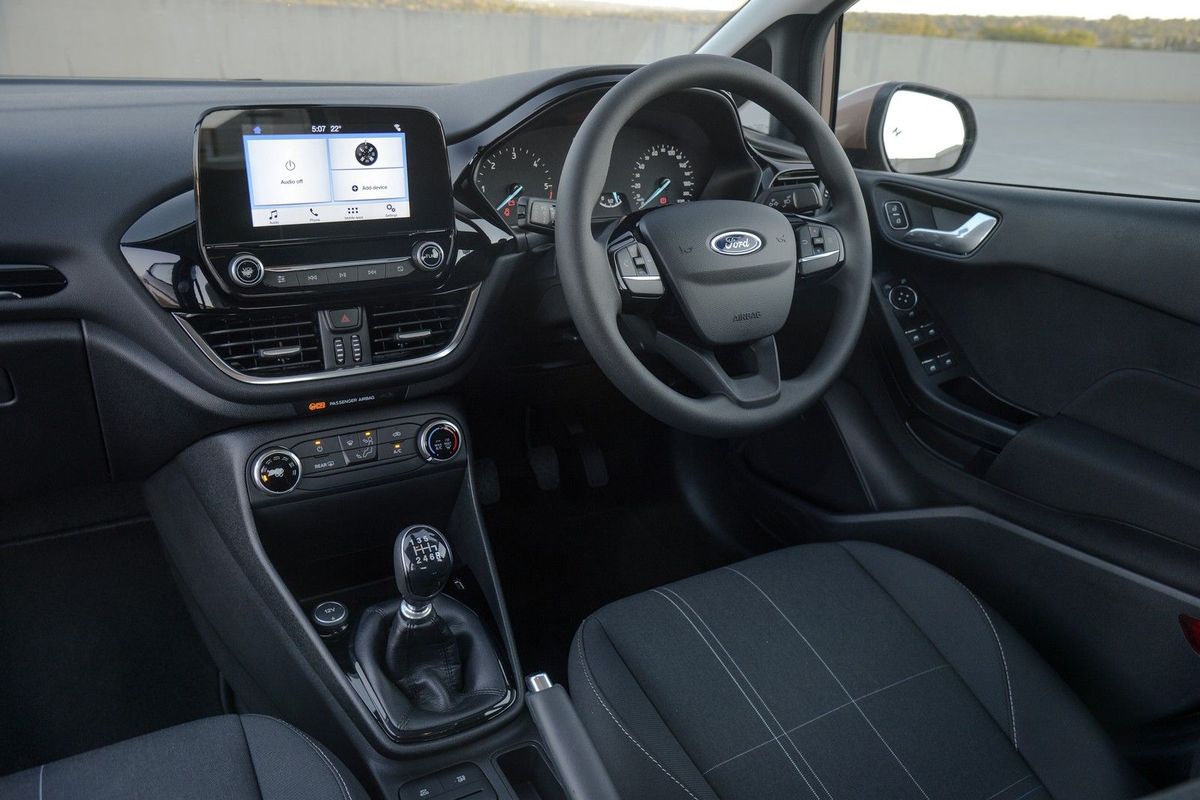
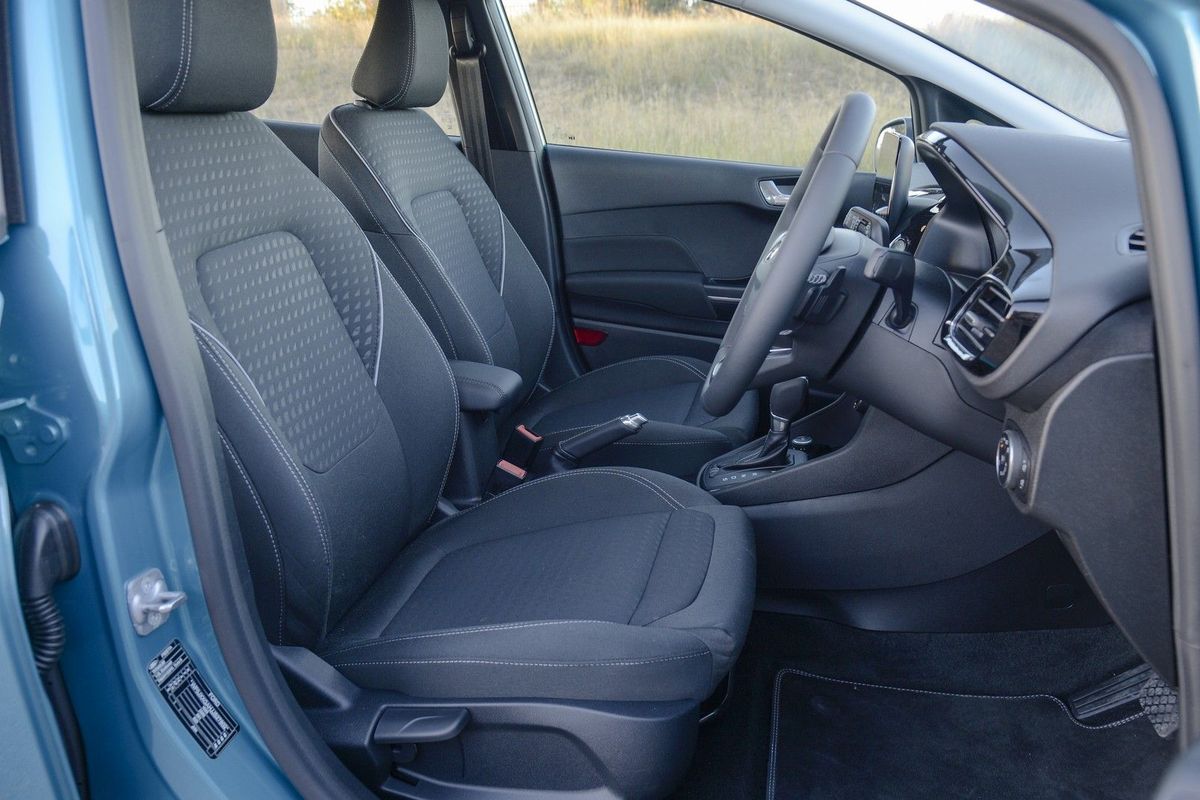
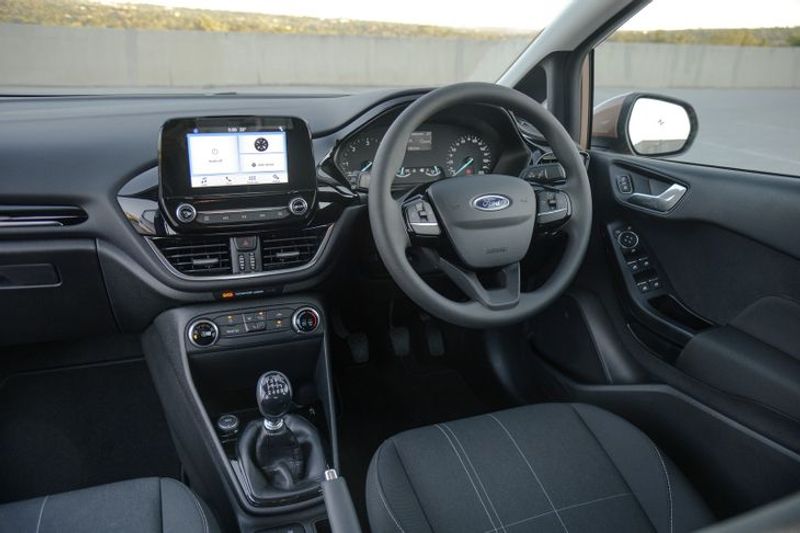
The interior has been updated with new, softer-touch materials and improved build quality, with tighter panel gaps. The Trend derivatives feature a 6.5-inch infotainment system (with Sync3), while the Titanium versions are equipped with an 8-inch touchscreen setup, which includes Sync3 and navigation. The button count on the new Fiesta has more than halved thanks to the touchscreen system and helps produce a cleaner looking fascia. Both spec levels support Apple CarPlay and Android Auto.

A pair of USB ports are availed up front and whereas a 6-speaker sound system is standard on the Trend, the Titanium features a 7-speaker premium audio setup.

The new model is based on the same platform as before, but Ford's engineers worked extensively to better insulate the newcomer's cabin from engine noise and vibrations. The firm has further stiffened up the Fiesta's body structure to improve on-road comfort, as well as the overall driving experience.

Safety has been upped for the new model with a minimum of 4 airbags as standard. It also comes equipped with ABS with EBA and EBD, hill-start assist and electronic stability. Reverse parking sensors are now standard across the model lineup.

Compared with the specification of Trend derivatives, Titanium versions come equipped with electronic climate control (instead of manual airconditioning), a leather-trimmed steering wheel and gear knob, heated sports seats, rain-sensing wipers and LED daytime running lights.

Engine range

The 1.0-litre 3-cylinder turbopetrol engine has been retained for the new Fiesta range. Both Trend and Titanium models offer 6-speed manual and auto options. Manual Trend and automatic Trend and Titanium derivatives produce 74 kW and 170 Nm of torque, but the manual Titanium derivative's power is increased to 92 kW (although peak torque is unchanged at 170 Nm). The turbodiesel 1.5-litre Fiesta is only available as a manual and delivers 63 kW and 175 Nm of torque.

Claimed fuel economy for 1.0 derivatives in manual guise is 4.3 L/100 km, with the autos said to consume an average of 5.2 L/100 km. The diesel sips just 3.3 L/100 km with its manual 'box.

All new Fiesta derivatives come standard with Ford Protect, comprising a 4-year/120 000 km warranty, 3-year/unlimited distance roadside assistance and 5-year/unlimited km corrosion warranty. A 4-year/60 000 km service plan is included, with service intervals at 15 000 km.

Pricing (as of May 2018)

1.0 EcoBoost Trend 6MT           R261 900

1.0 EcoBoost Trend 6AT            R277 300

1.5 TDCi Trend 6MT                  R292 500

1.0 EcoBoost Titanium 6MT       R295 900

1.0 EcoBoost Titanium 6AT        R310 600

Related content:

Ford Fiesta (2018) Launch Review

Ford Fiesta (2018) International Launch Review

Ford Fiesta ST (2018) International Launch Drive [w/Video]

Most Fuel Efficient Budget Cars in SA

Top 5 Cool Facts: Next Ford Fiesta (2017)

Video Comparison: 2018 Volkswagen Polo & 2017 Volkswagen Polo

Volkswagen Polo 1.0 TFSI Comfortline (2018) Quick Review

Want to buy a Ford Fiesta? 

Find a new or used Ford Fiesta on Cars.co.za

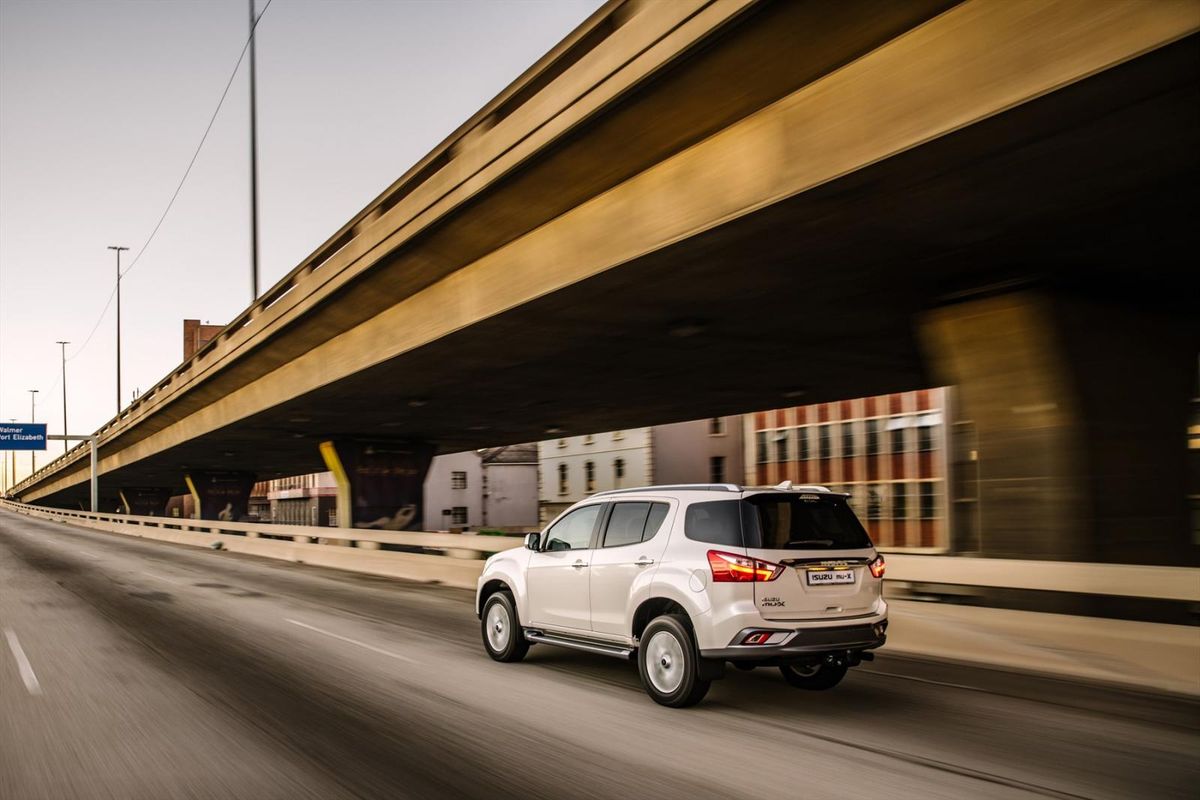
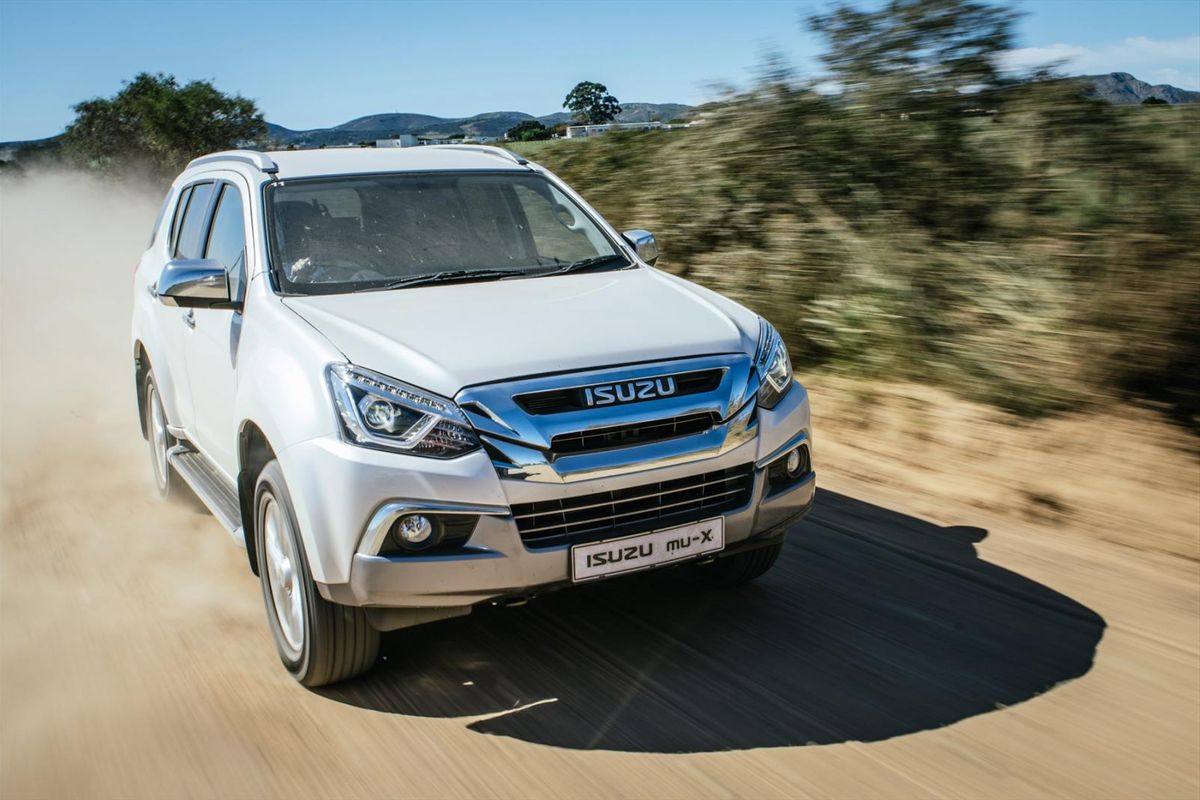
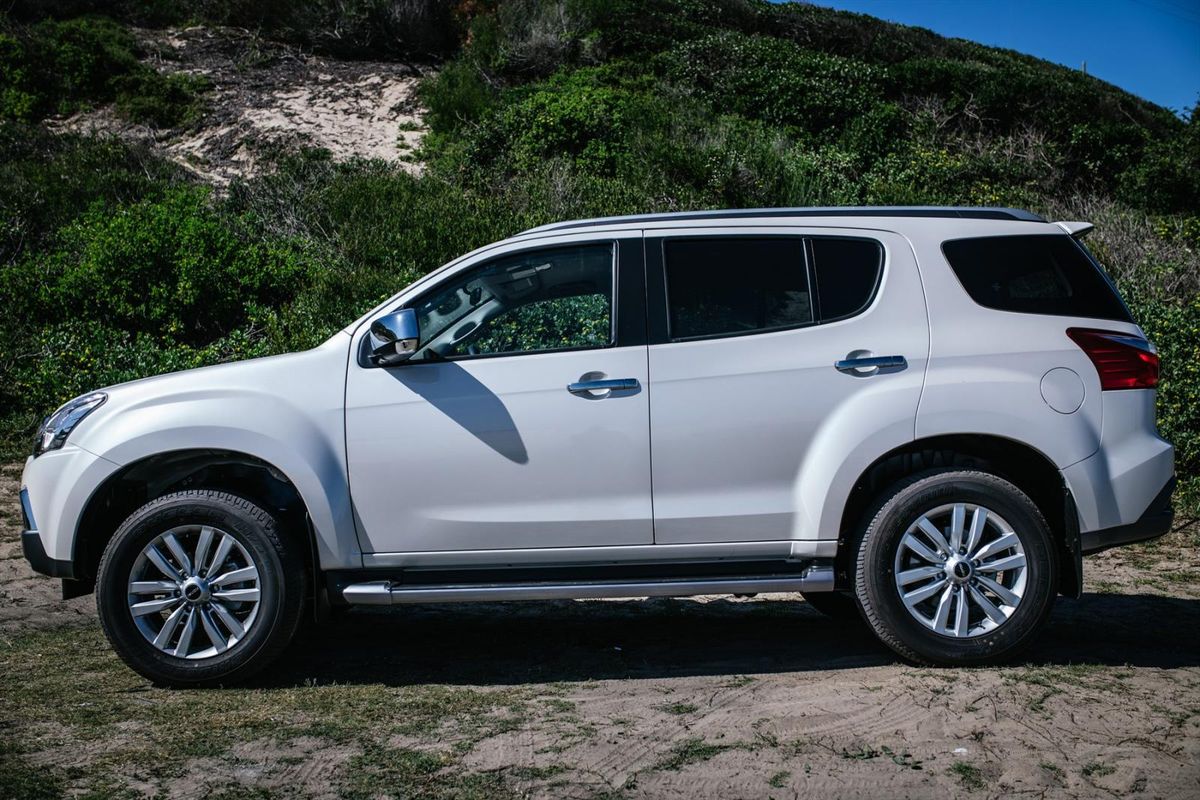
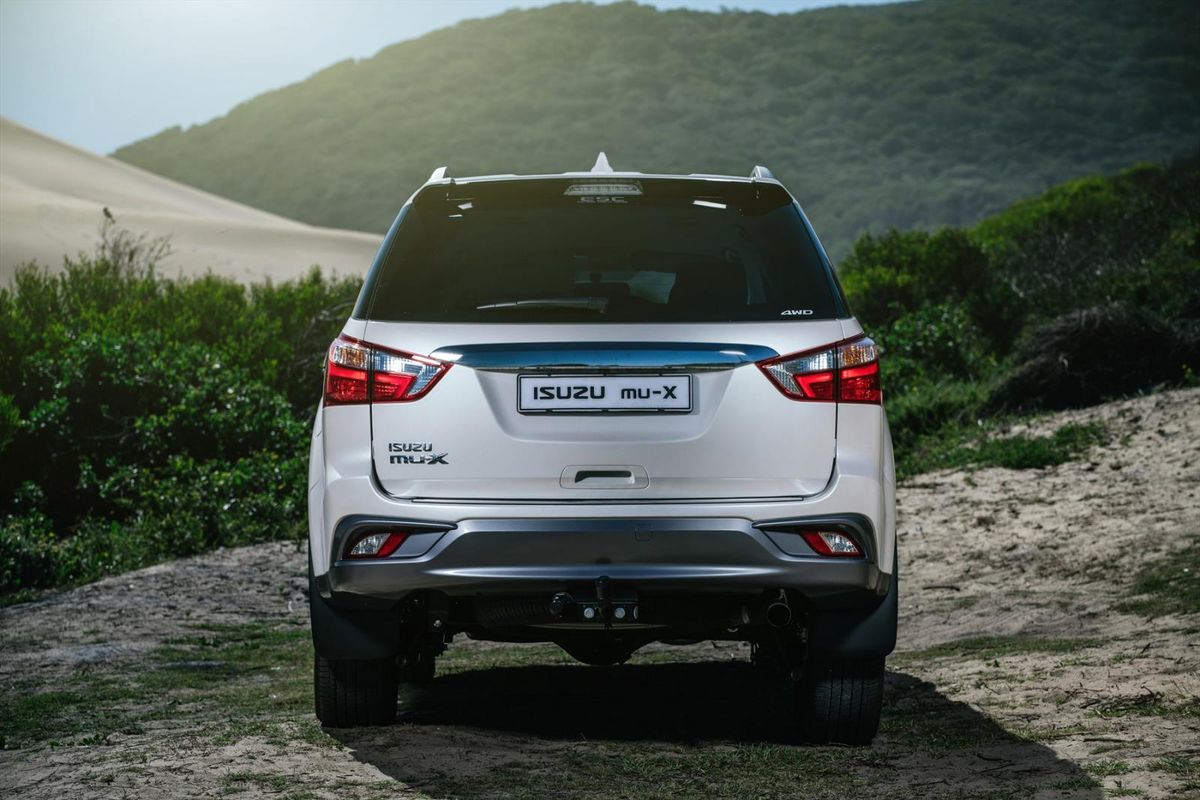
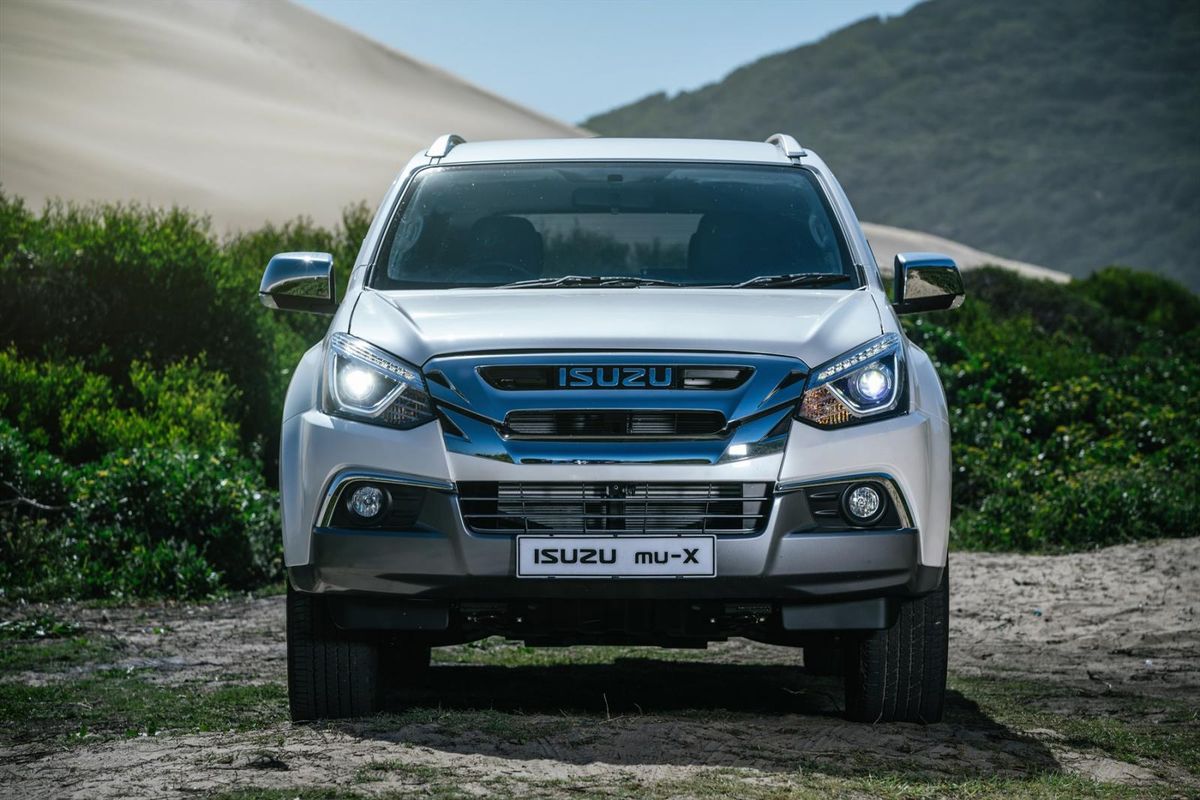
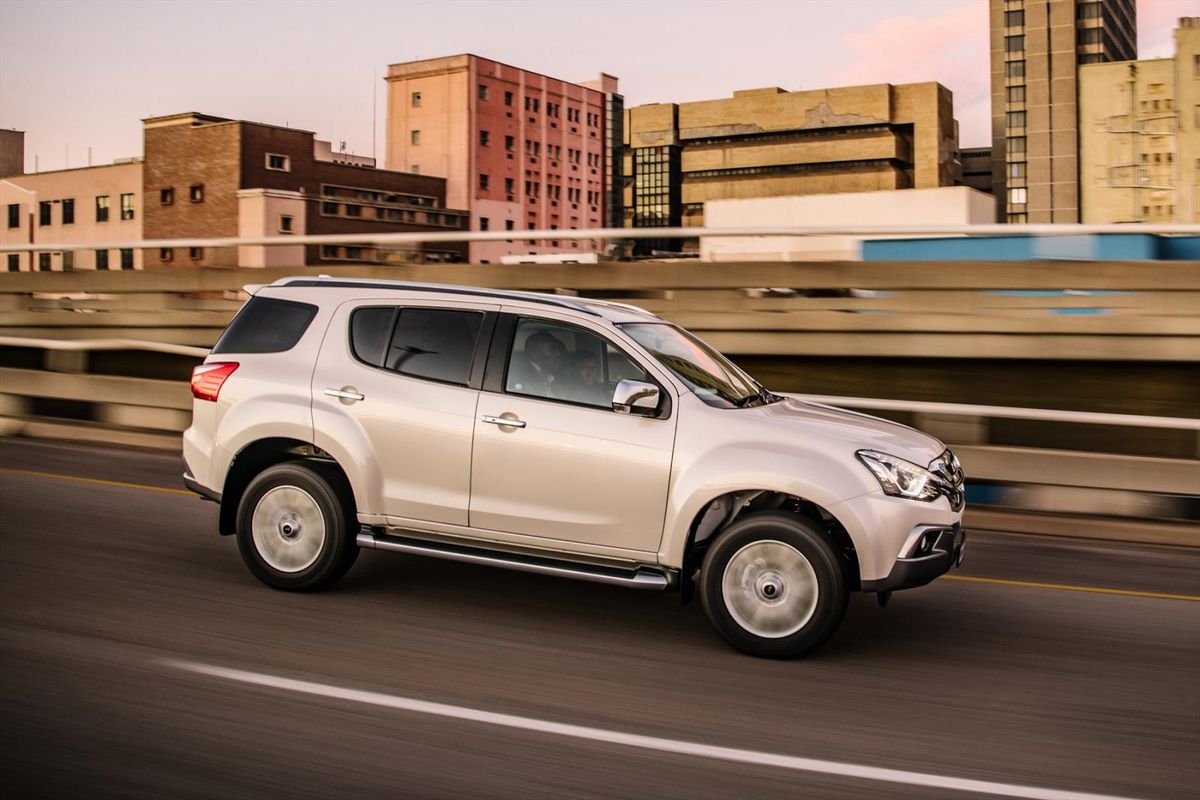
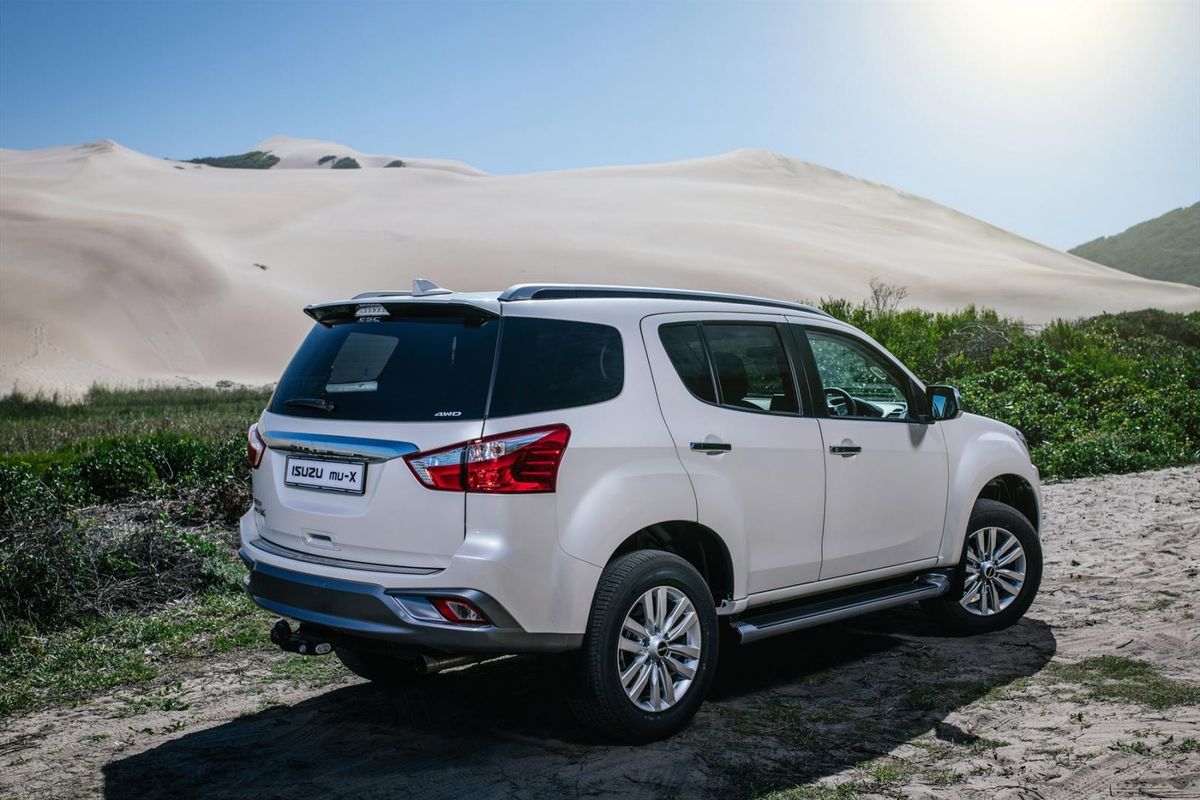
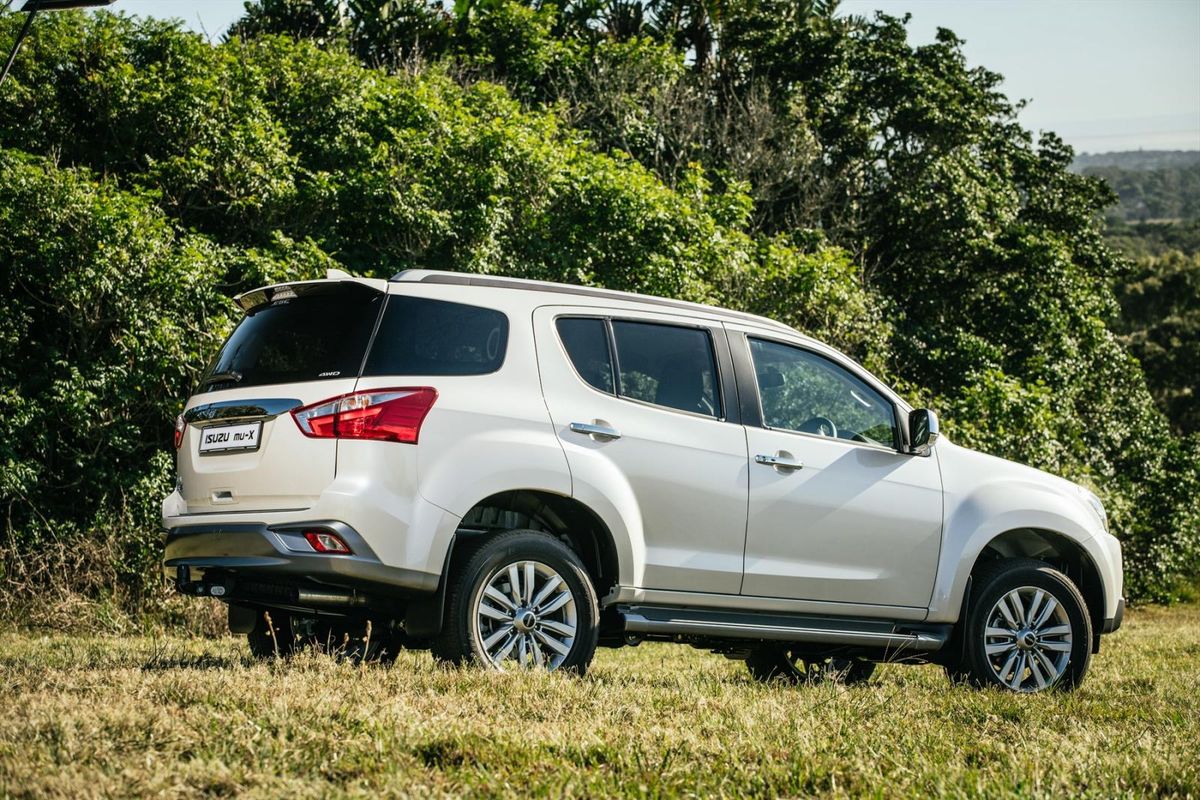
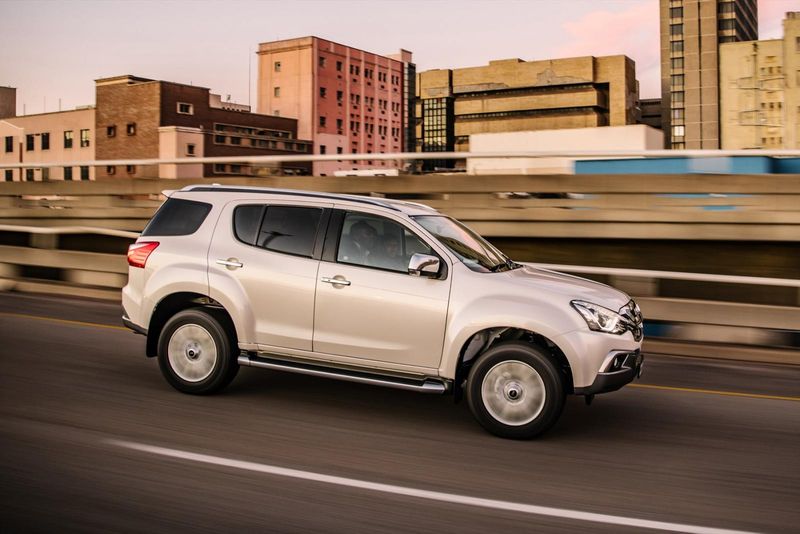
Isuzu MU-X (2018) Video Review

Isuzu has introduced its first new model since General Motors' departure from the South African market: a 7-seater Adventure SUV named the MU-X.

This new offering is a rival to the Toyota Fortuner, Ford Everest and Mitsubishi Pajero Sport. The MU-X may share its workmanlike 3.0-litre 4-cylinder turbodiesel engine with the venerable KB bakkie, but its a well-specified, practical family vehicle with a pliant ride quality courtesy its multi-link rear suspension. Can the modernised Isuzu succeed where its now departed cousin, the Chevrolet Trailblazer failed?

Ciro de Siena reviews the top-of-range MU-X derivative: the 3.0 4×4 Automatic.

Further Reading

Isuzu MU-X (2018) Launch Review

Isuzu MU-X (2018) Specs & Price

Isuzu mu-X confirmed for SA: 3 Rivals It Needs to Beat

Isuzu MU-X (2018) International Launch Review

Isuzu after GM: Return of the Samurai!

Isuzu MU-X (2018) Launch Review [w/Video]

Isuzu operates its own business in South Africa; its products are no longer produced or retailed under the General Motors banner. The MU-X represents the Japanese company's first solo new vehicle launch in the local market. We drove it in the Eastern Free State.

Isuzu does exceptionally well in South Africa… in the bakkie segment, sales of the KB regularly total more than 1 000 units a month – in fact, the Japanese bakkie easily features as one of South Africa’s top 10-selling model ranges in the new vehicle market. Its buyers are particularly loyal; they appear to appreciate the durability and longevity that the KB provides. The introduction of the MU-X offers a family-style option for Isuzu lovers to step into. While many of the components are shared with the outgoing Chevrolet Trailblazer, Isuzu insists that its engineers have had a hand in differentiating the MU-X as an Isuzu –  not a badge-engineered Chevrolet.

What is it?


The MU-X runs the 3-litre turbodiesel engine from the KB bakkie and multi-link rear suspension.

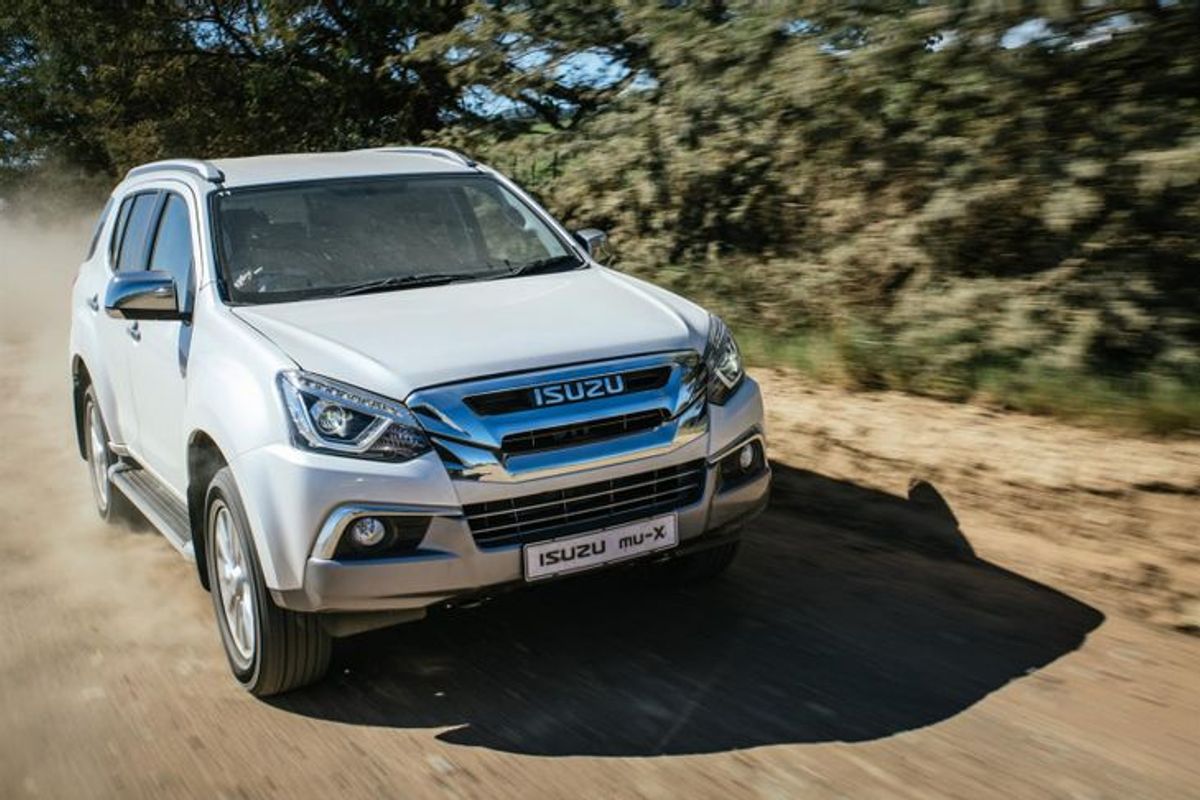
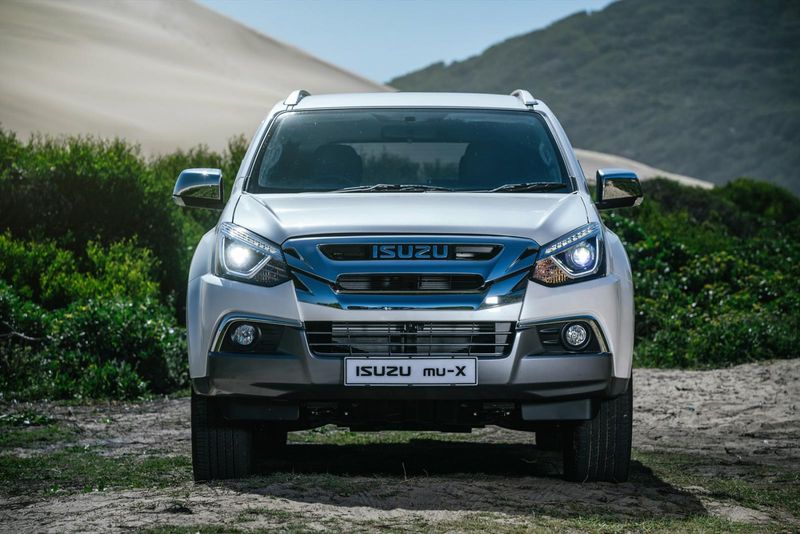
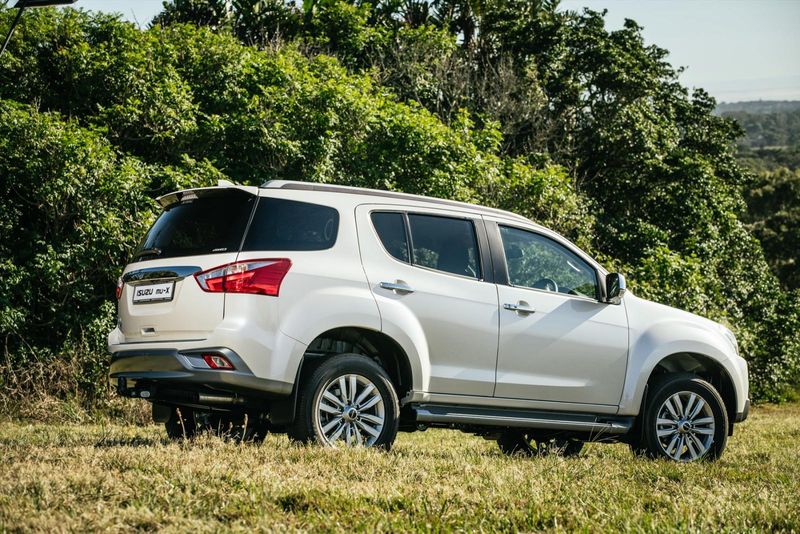
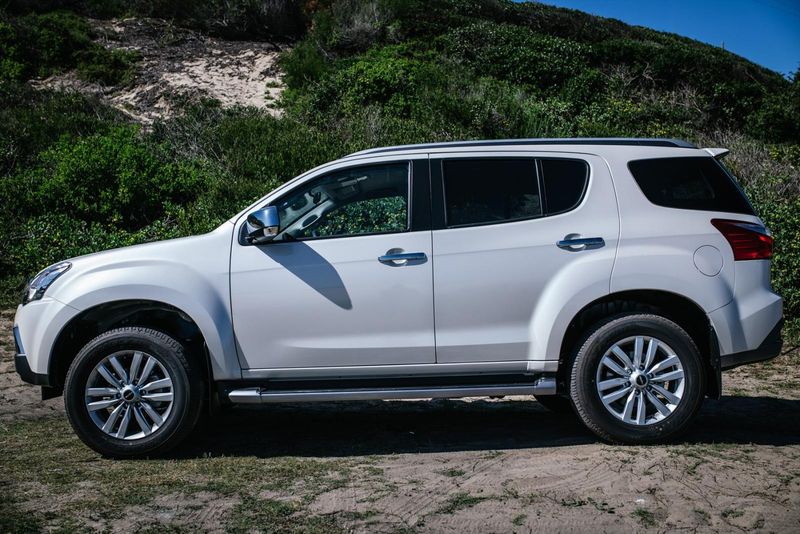
Bakkie-based SUVs are nothing new to us, the major players in the market are the Toyota Fortuner and Ford Everest. The Mitsubishi Pajero Sport also competes in the segment, but can’t match the sales numbers of the former. The MU-X, with its underlying KB chassis and engine fits perfectly in the segment. The overall design appears quite oval or dome-ish and it has an interesting face with a fair amount of chrome in the grille and surrounding bumper area.

The MU-X features an independent front- and multi-link rear suspension configuration that ostensibly tames some of that typical rear end shake and drift that tend to plague ladder-on-frame designs. Under the bonnet is the 3.0-litre turbodiesel engine, which is good for 130 kW and 380 Nm of torque. In terms of off-road equipment, the 4×4 model is equipped with low range and switchable 4wd/2wd modes. An electronic traction control system deals with sending drive to individual wheels as it is required to maintain traction. There’s no diff-lock, but Isuzu says they are testing a manual locking system that it may introduce later. Hill descent control is also standard.

What's it like to drive?


In true Isuzu style, The MU-X is an excellent off-roader, despite the lack of diff-lock.

The major highlight of the MU-X driving experience (we drove from Fourways in Johannesburg to Clarens in the Eastern Free State) is the cabin insulation. The NVH levels are impressively low; the Isuzu's cabin seems to suppress road noise and wind noise better than its rivals.

It’s also well damped (for a bakkie-based vehicle). It handles dirt roads and rutted surfaces well, remaining comfortable and controllable when things start to get bumpy. There are limits to the ride quality if you come across a succession of potholes or washboard gravel where the MU-X's suspension will jiggle about a bit before settling down. This is normal in bakkie-based SUVs and the MU-X actually deals with tricky conditions better than both the Ford and Toyota.

The steering is quite heavy for an off-road vehicle and when traversing the pre-prepared 4×4 course with the Isuzu I had to put a bit of muscle into turning the wheel over rocky terrain. The heavier steering doesn’t make it feel any more planted out on the road either, where it can be quite slow to react and vague around the centre.


The cabin is quiet and the ride is comfortable for a bakkie-based SUV.

The MU-X did, in typical Isuzu fashion, tame the 4×4 course. It’s an excellent 4×4 when it comes to navigating the tricky stuff and even without diff lock, it climbed up and over quite tricky inclines. The traction control system channels the torque well… it never spun a wheel in a rush to accelerate and maintained smooth forward progress.

KB reliability

The engine under the bonnet feels like a tried and trusted Isuzu unit – in other words, it's an old-school turbodiesel. It feels bulletproof, if a little underpowered and less refined compared with Ford’s 3.2- and Toyota’s 2.8-litre units.

It’s not horrendously slow, but the more modern units we’ve become accustomed to in its rivals provide better overtaking ability with fewer and faster kickdowns through the auto box. Fuel efficiency appears to be a strong point, with a claimed consumption of 7.3 L/100 km for the 4×2 and 7.9 L/100 km for the 4×4. On our mostly highway drive to Clarens, we managed 8.2 L/100 km confirming the reasonable consumption figure for a vehicle of this type.

We can’t yet attest to the long-term durability of the MU-X, but it does feel like a solid, well put together vehicle.

Up to date interior


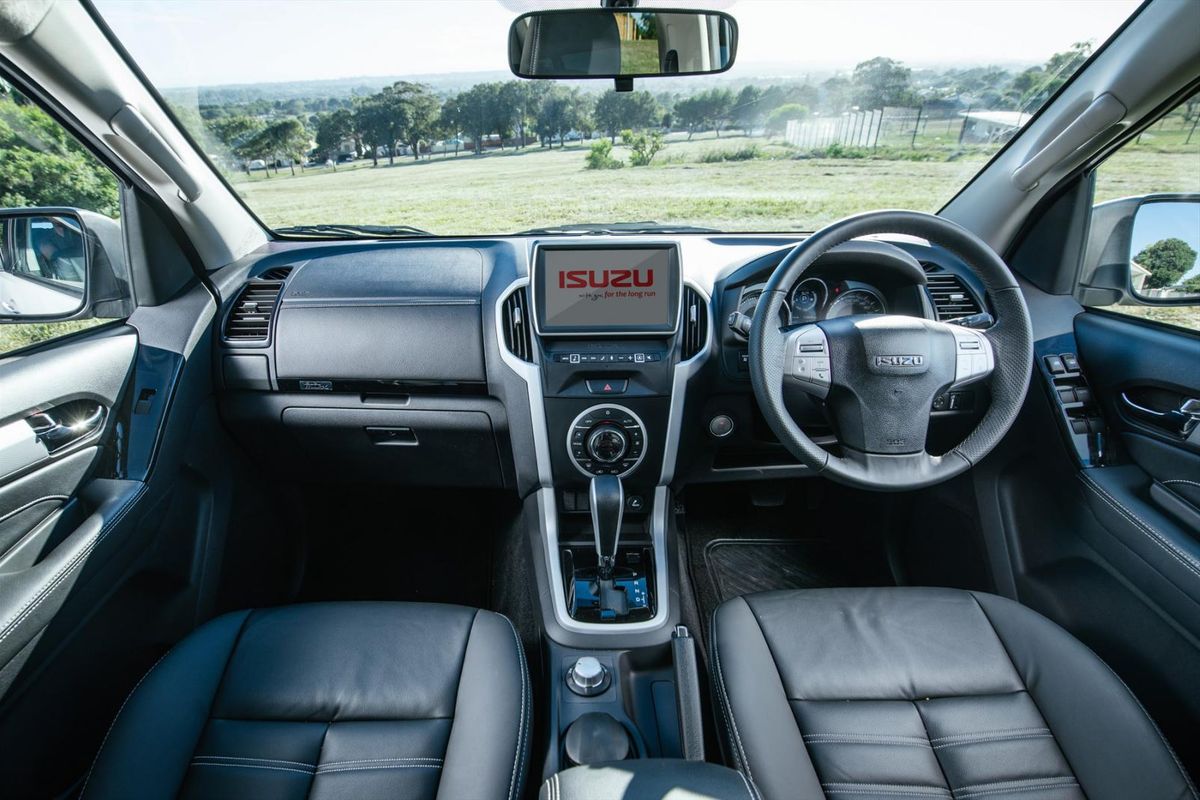
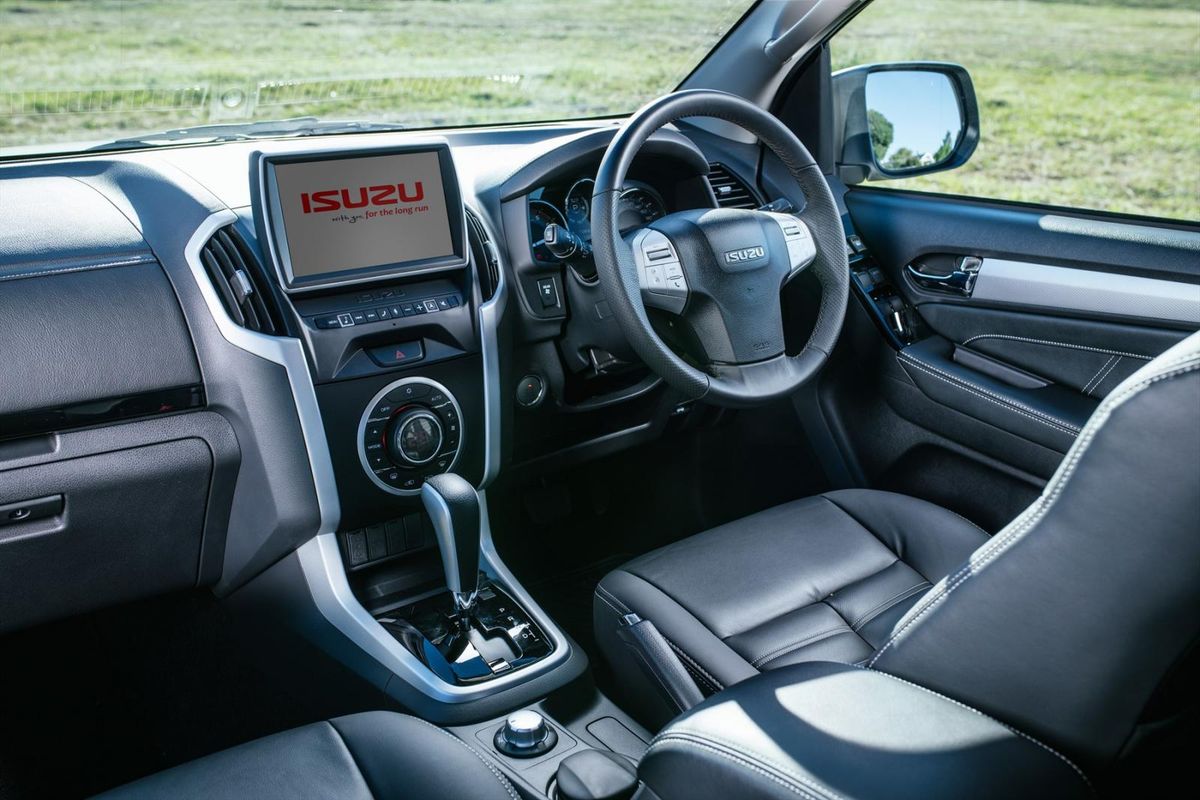
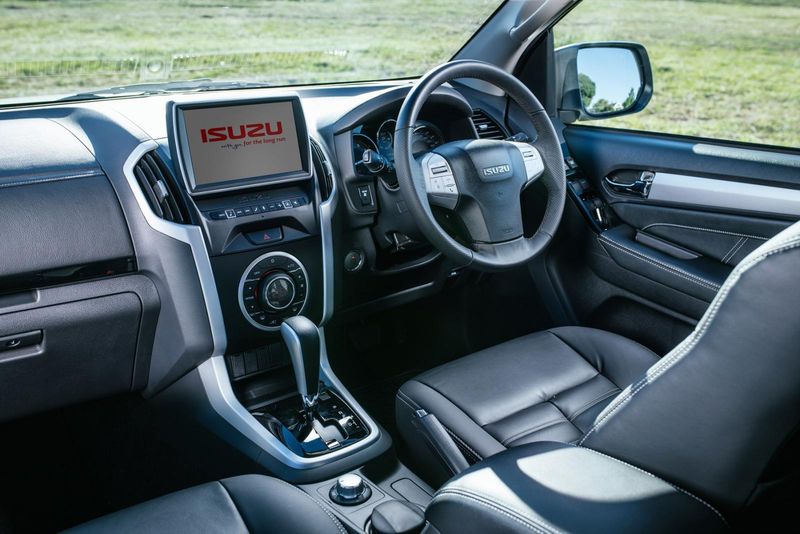
It would be nice to have a reach adjustable steering wheel, but the build quality appears good as does the level of infotainment tech.

The seats in the MU-X are very comfortable for long trips and all 7 seats are trimmed in leather. The steering wheel is not reach-adjustable so the perfect driving position may not be attainable for drivers of all shapes and sizes. The instrument binnacle is pretty standard with a digital display between the dials for the trip computer. Cruise control is fitted, but apart from eyeballing the analogue speedo dial, there’s no notification for what speed you have set it to engage.

The infotainment system has modern software that includes Apple CarPlay and Android auto compatibility, as well as built-in navigation. I’m not convinced by effectivity of the user interface and some of the settings have no effect from what I could see. It feels like a generic system that’s not particularly useful until you plug in your phone and run Android or Apple apps through it. A pair of USB ports are placed up front, as well as one USB port in the rear.

In terms of accommodation, the MU-X feels somewhere between the Fortuner and the larger Everest in terms of passenger space. All the rear seats can be folded flat, but the loading level of the boot is quite high. The centre console is quite large and there’s a decent-sized slot in front of the gear lever to slide in your smartphone.

Final thoughts


Isuzu lovers who didn't want to buy an old Chev Trailblazer may just have found the perfect partner for their KB bakkie.

Is the MU-X just a Trailblazer with an Isuzu badge on the front? There are a lot of similarities, yes. The cabin is very similar, for one, and the steering wheel is identical to the Chev's. There are good points to come from that connection, the ride quality is good, the quality appears solid and it's well-specced vehicle with no optional extras, apart from a tow bar.

The engine may feel somewhat older and agricultural, but it gets the job done and still retains a 3-tonne tow rating (braked trailer) and that’ admirable.

Off-road capability remains an Isuzu strong point and adventurers won’t be let down by the lack of diff lock, which is initially off-putting.

It is competitively priced with the equivalent Fortuner and Everest and that’s quite something, considering the MU-X is a full import where the other two are assembled locally. Don’t expect the newcomer to shoot the lights out in terms of sales, at least not initially, but for Isuzu loyalists that haven’t had a family vehicle/adventure SUV option at their disposal since the days of the Isuzu Frontier, the MU-X might just be the ticket. Isuzu is, after all, a much stronger brand than Chevrolet ever was.

Pricing and warranty

The 4×2 and 4×4 models are sold with a 5-year/120 000 km warranty and a 5-year/90 000 km service pan. Service intervals are every 15 000 km.

Isuzu MU-X 3.0 4X2 AT6 R568 000

Isuzu MU-X 3.0 4X4 AT6 R629 100

Related content:

Isuzu MU-X (2018) Specs & Price

Isuzu MU-X (2018) International Launch Review

Toyota Fortuner vs Ford Everest (2016) Comparative Review [Video]

Buyer's Guide: Rugged 7-Seat SUVs

Aston Martin DB11 Unleashed (w/Video)

Aston Martin has topped off its DB11 range with an AMR derivative. Here's what you need to know about the newcomer.

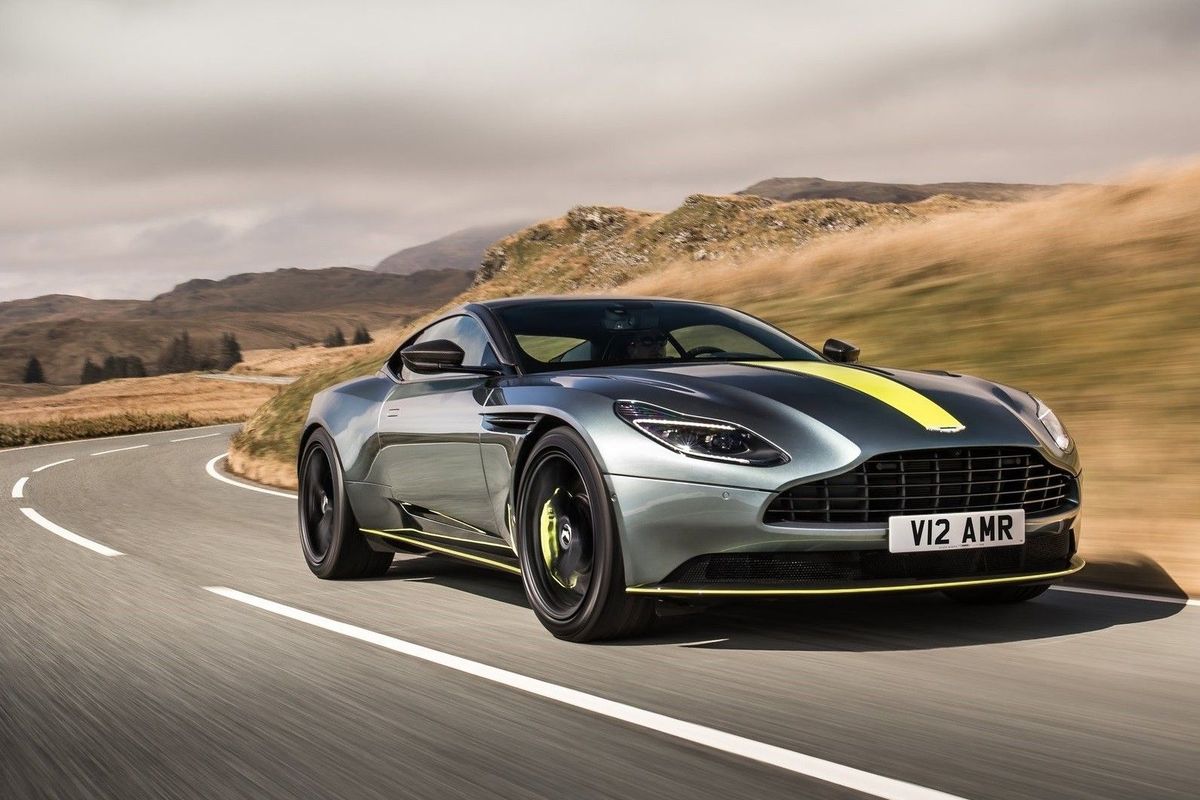
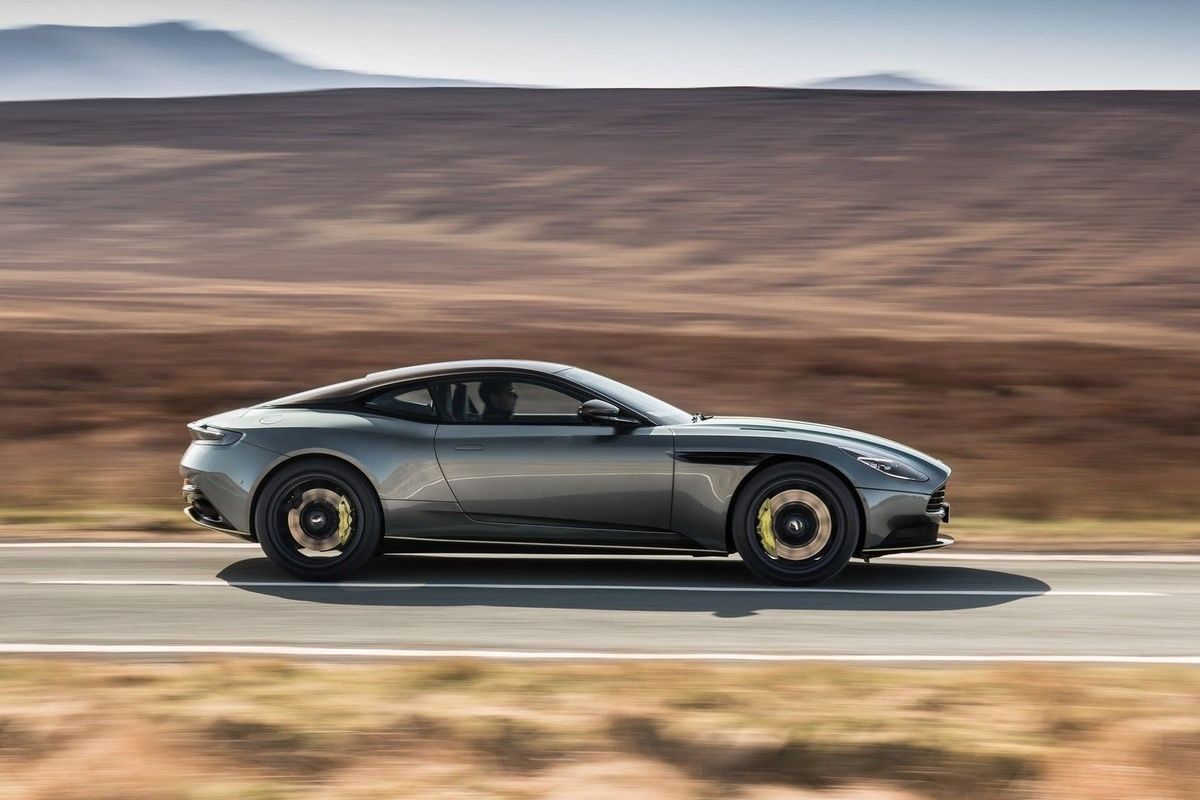
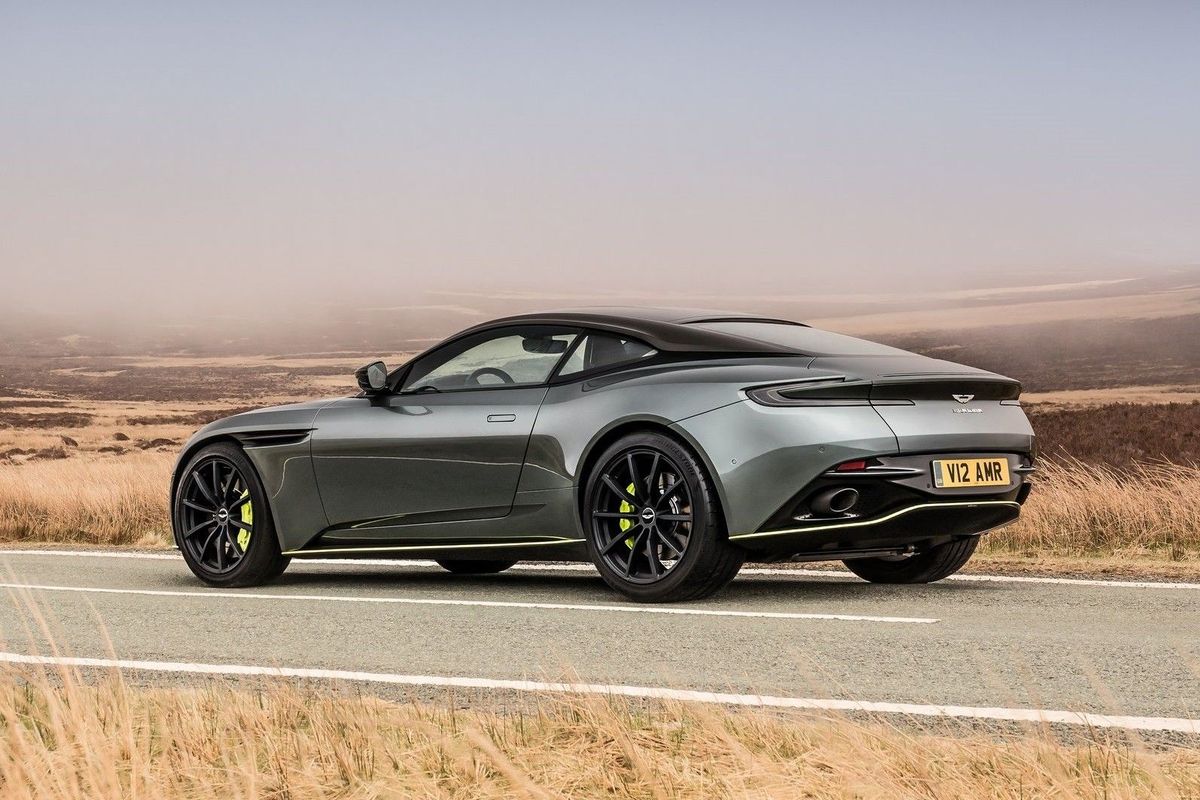
The current DB11 is a suave-looking and elegant grand tourer (GT) and despite its V12 powerplant, even the most devout Aston Martin fan would agree it's not the most performance-orientated coupe that the Gaydon-based firm has ever produced. The DB11 Aston Martin Racing (AMR) version, which was launched at the opening of the new Nürburgring-based AMR Performance Centre in Germany, features a heightened power output, improved dynamics, louder exhaust and cosmetic upgrades. 

The big changes occur in the engine bay, where the 5.2-litre twin-turbocharged motor is upgraded to 470 kW and 700 Nm (the standard car produces 447 kW). Thanks to a reworked transmission, the new DB11 AMR is said to sprint from 0 to 100 kph in 3.7 sec (a 0.2 sec improvement), before going on to a top speed of 334 kph.

Aston Martin president & chief executive officer, Dr Andy Palmer, said of the DB11 AMR: "Since its initial launch back in 2016, the DB11 range has matured rapidly and intelligently, selling close to 4 200 V12-engined examples in that period. With the exceptional V8 Coupe and Volante we felt the V12 could reveal more of its sporting potential, while remaining the consummate GT.

"By applying a suite of carefully considered performance and styling enhancements the DB11 AMR is both faster (334 kph) and more precise. It's a combination that engages and cossets in equal measure to create a dynamic and seductive new flagship for the DB11 range, while consolidating the existing V12-powered DB11s as future collectibles," he added.

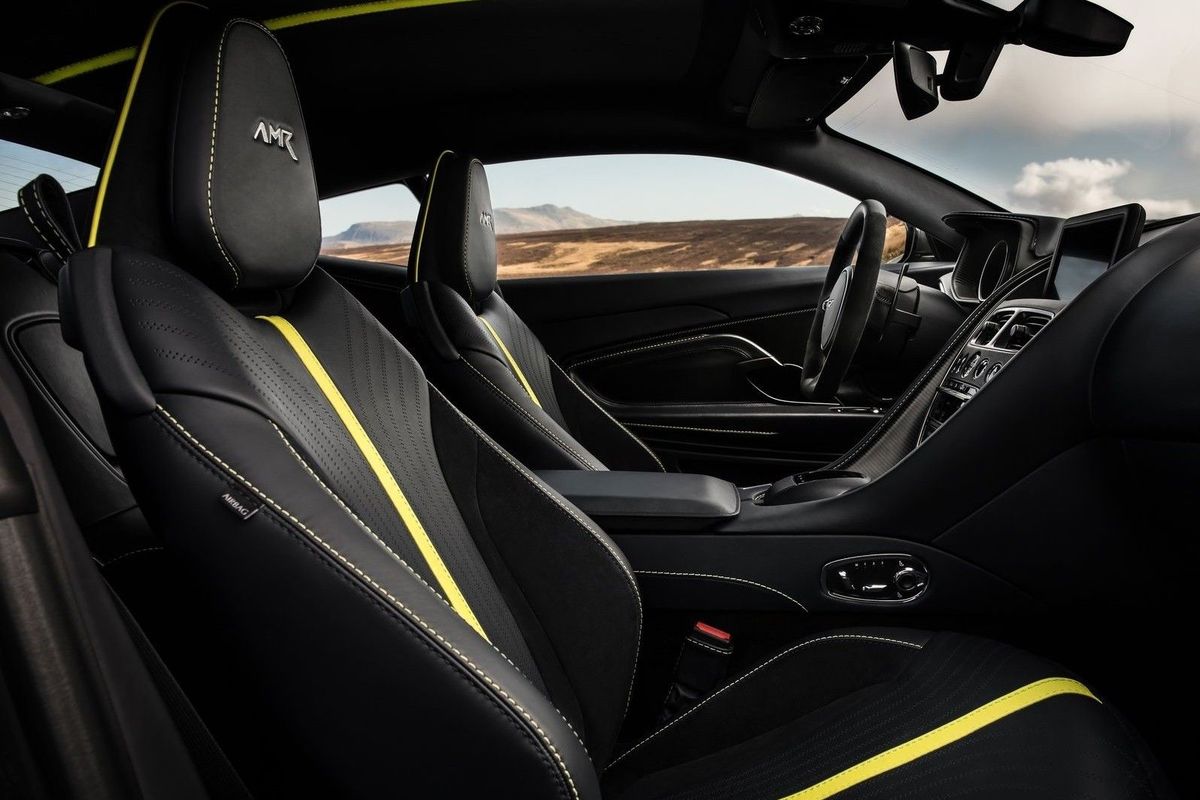
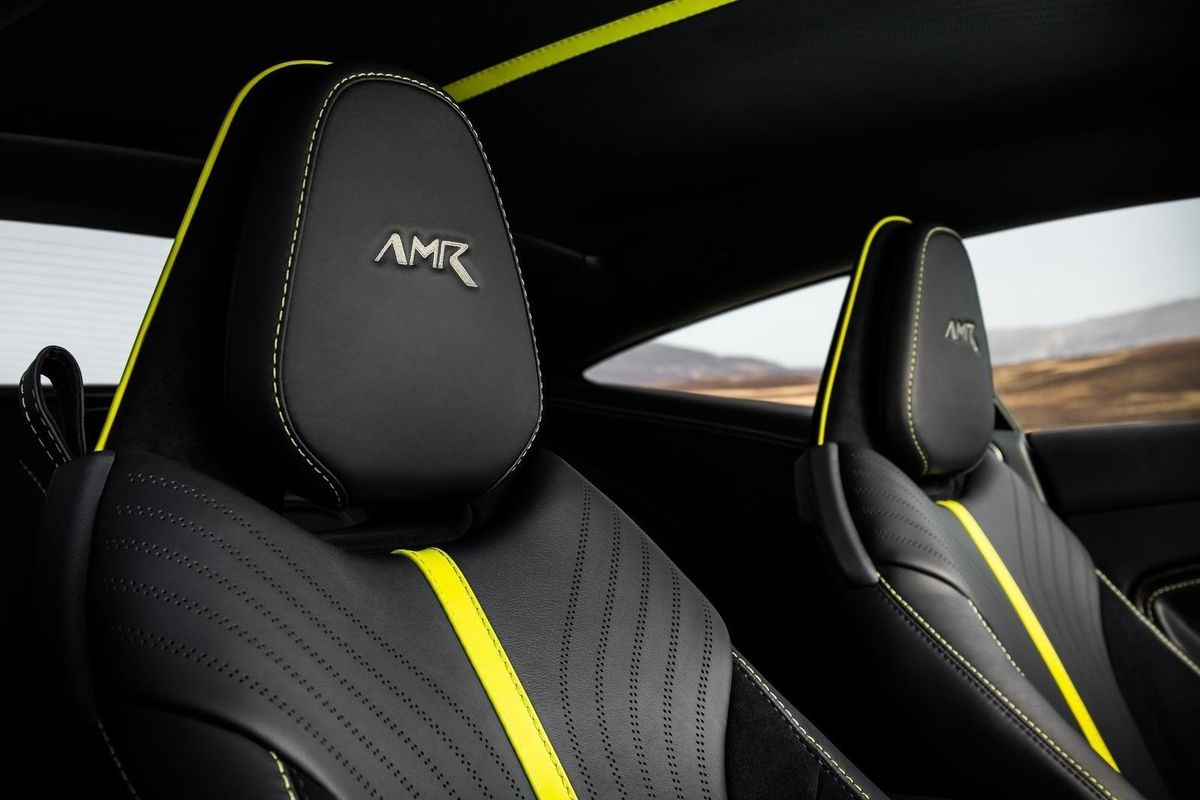
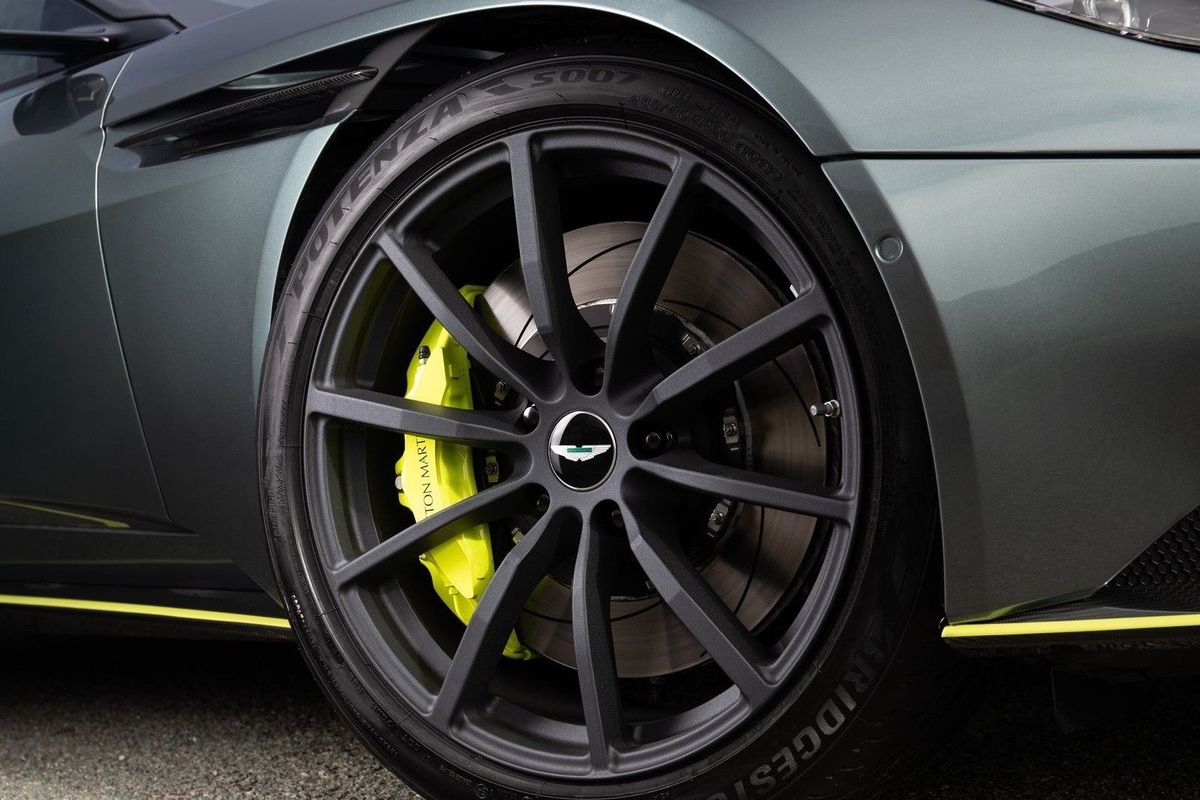
In terms of visual accoutrements, the DB11 AMR features carbon-fibre detailing, dark headlight surrounds and smoked tail lamps. The dark theme is continued with the interior, with monotone leather and alcantara upholstery and a bold, contrasting central lime stripe.

There is also the exclusive AMR Signature Edition, which has green and lime decals. For those who want even more, AMR avails accessories such as a carbon-fibre engine cover, exhaust tips, tailored luggage sets and a deployable spoiler that add further detail to the model's exterior, while a new carbon-fibre sports steering wheel and shift paddles continue the racier, bespoke feel in the cabin. 

Further reading:

Aston Martin Goes Topless with DB11 Volante

Aston Martin Showcases AMG-powered DB11

Aston Martin DB11 (2016) First Drive

Aston Martin DB11 (2016) Video Review

Aston Martin Vantage (2018) Launch Review

Aston Martin DB11 AMR Video


Interested in buying a used Aston Martin?

Find one for sale on Cars.co.za

Rolls-Royce Cullinan Coming to SA

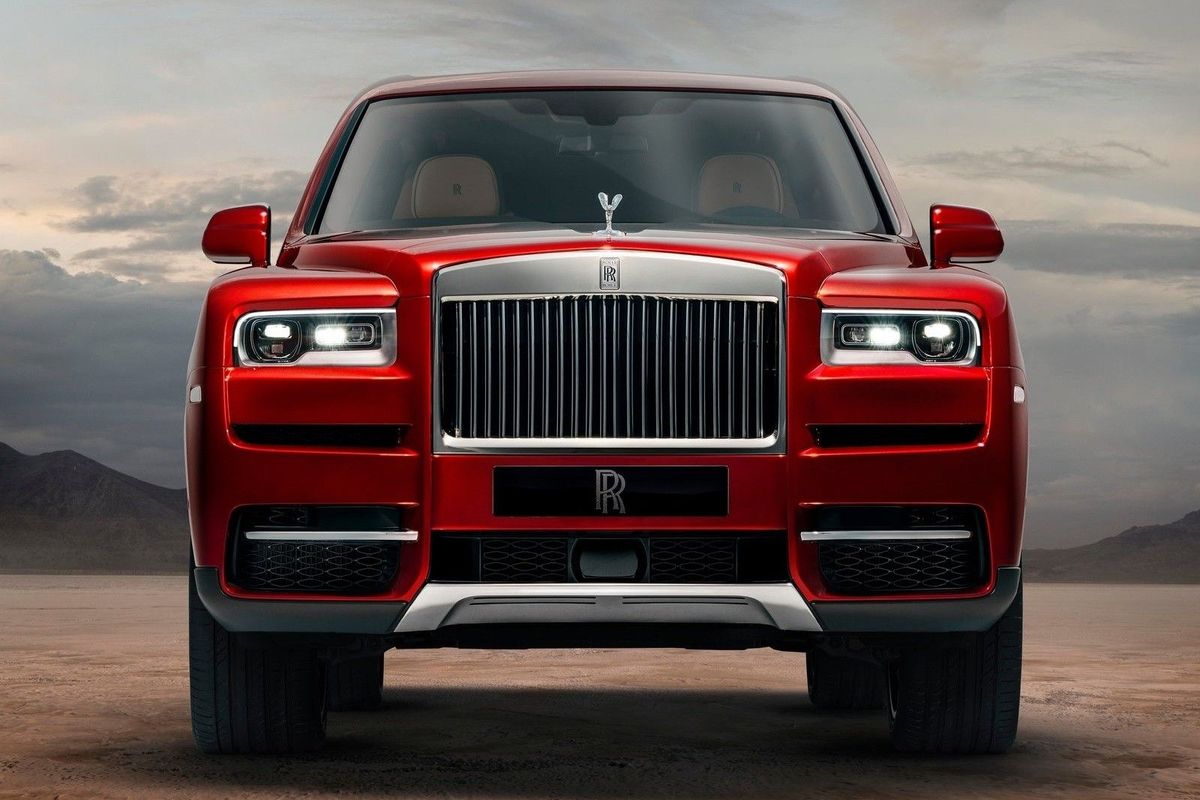
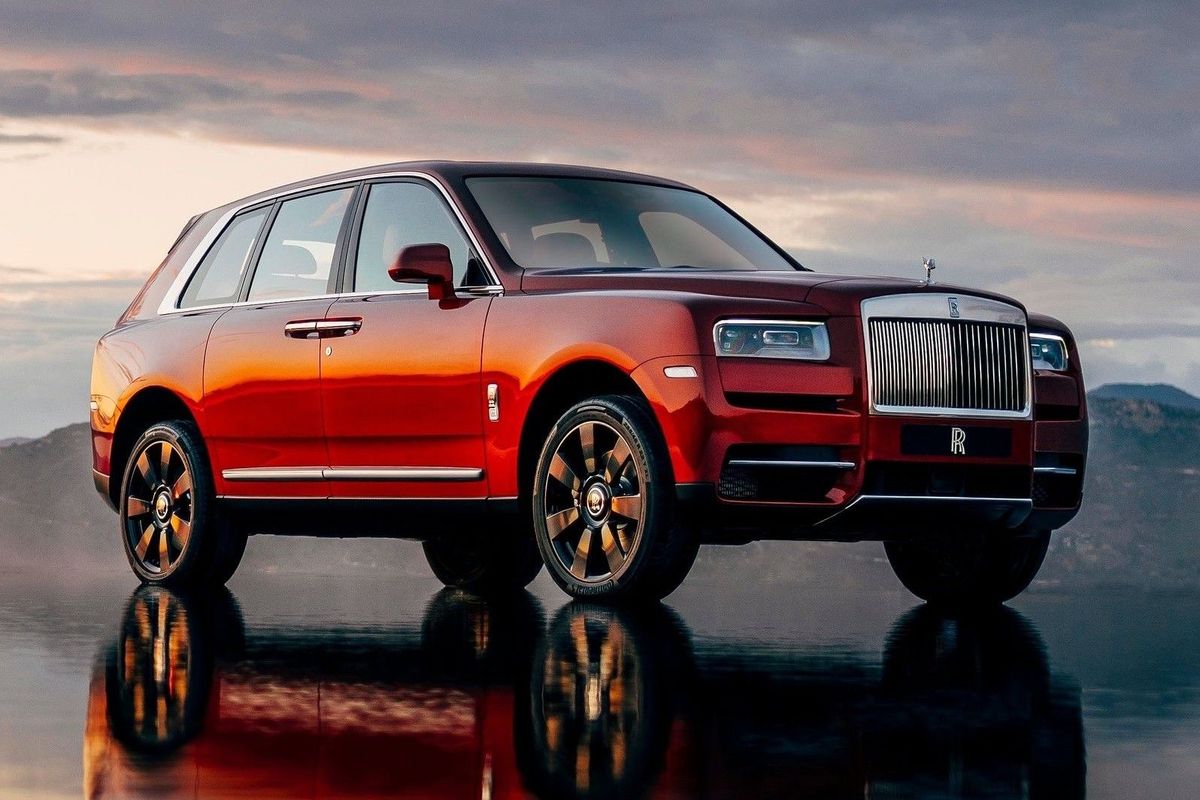
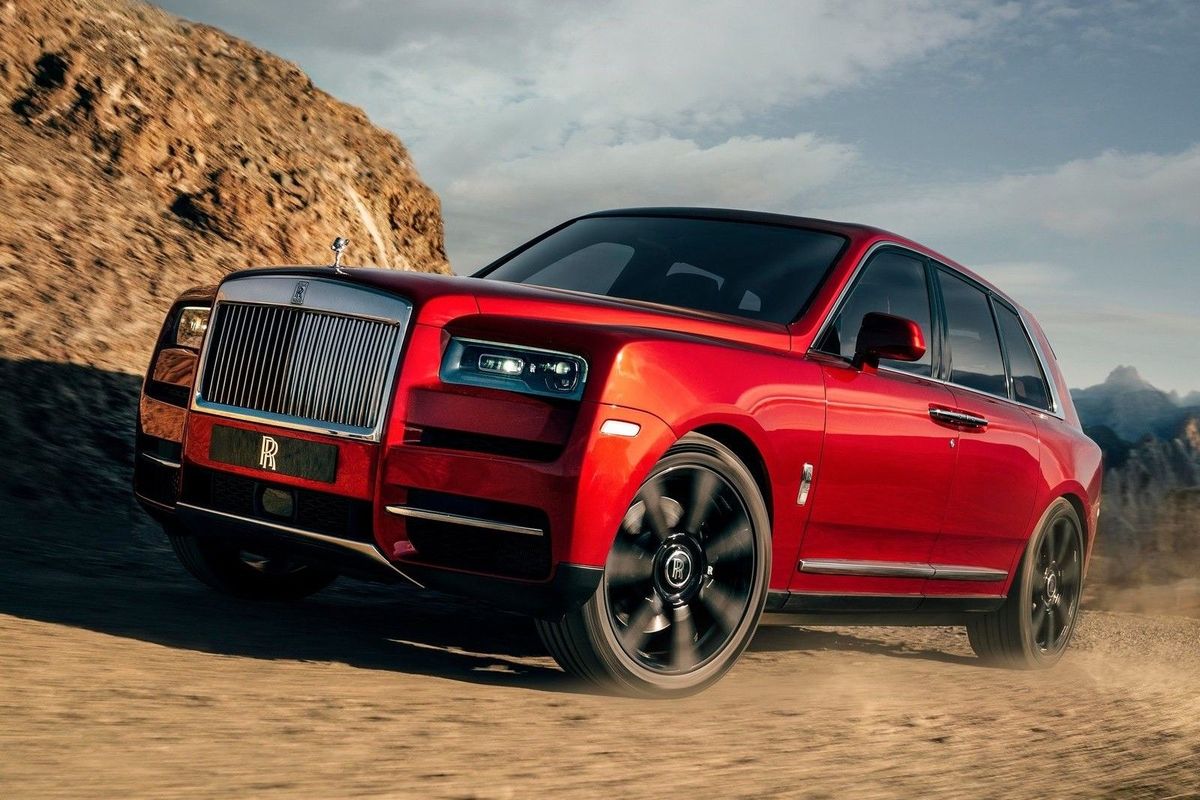
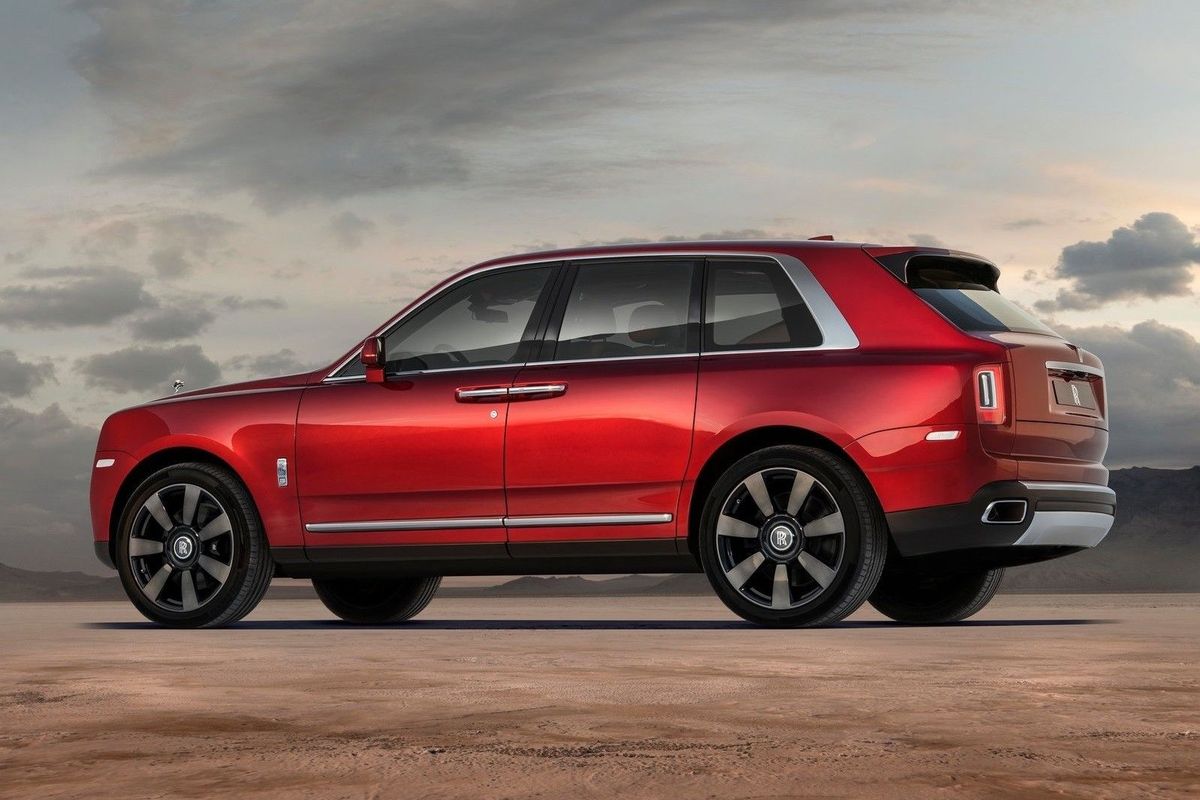
After years of teasing, Rolls-Royce has finally showcased its first ever SUV. It's called the Rolls-Royce Cullinan and some examples of this ultra-luxurious SUV will be making their way to South Africa.

Named after the famous Cullinan diamond, which was discovered near Pretoria more than a century ago (1905) and subsequently cut up to form part of Britain's Crown Jewels, this new SUV represents a new direction for ultra-luxurious carmaker Rolls-Royce, based in Goodwood. First announced back in 2015 with the tagline, "the Rolls-Royce of SUVs", the Cullinan is aimed at a younger generation of high-net-worth people. 

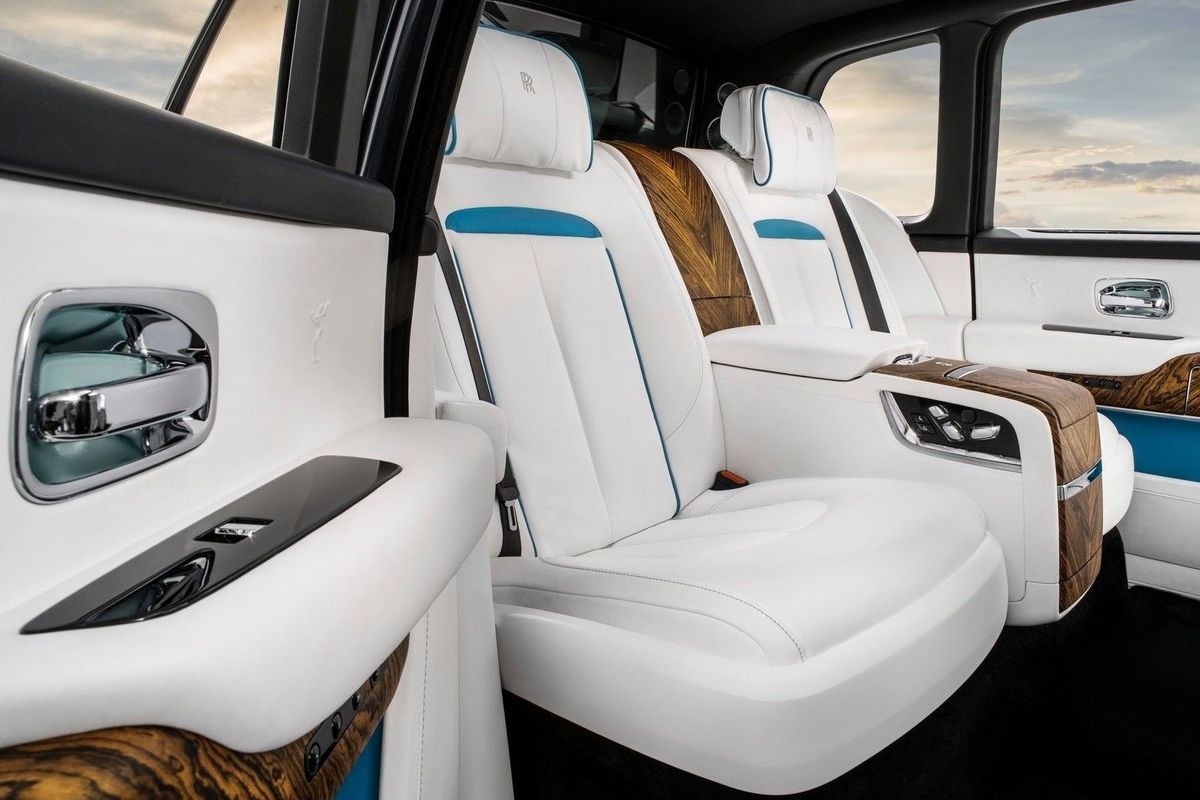
The Cullinan is available with two rear-seat configurations; Lounge and Individual; and being a Rolls-Royce, no 2 units are likely to be identical thanks to an array of personalisation features. There's a glass partition that separates the front and rear occupants and, upon opening the tailgate, the luggage area offers 560 litres of luggage space, with 600 litres available when you remove the parcel shelf. Fold all the seats down and you gain 1 930 litres of utility space, which, Rolls-Royce claims, is enough to transport, "a Mark Rothko from the Art Gallery or a newly discovered artefact from the latest archaeological dig." You cannot make this stuff up!


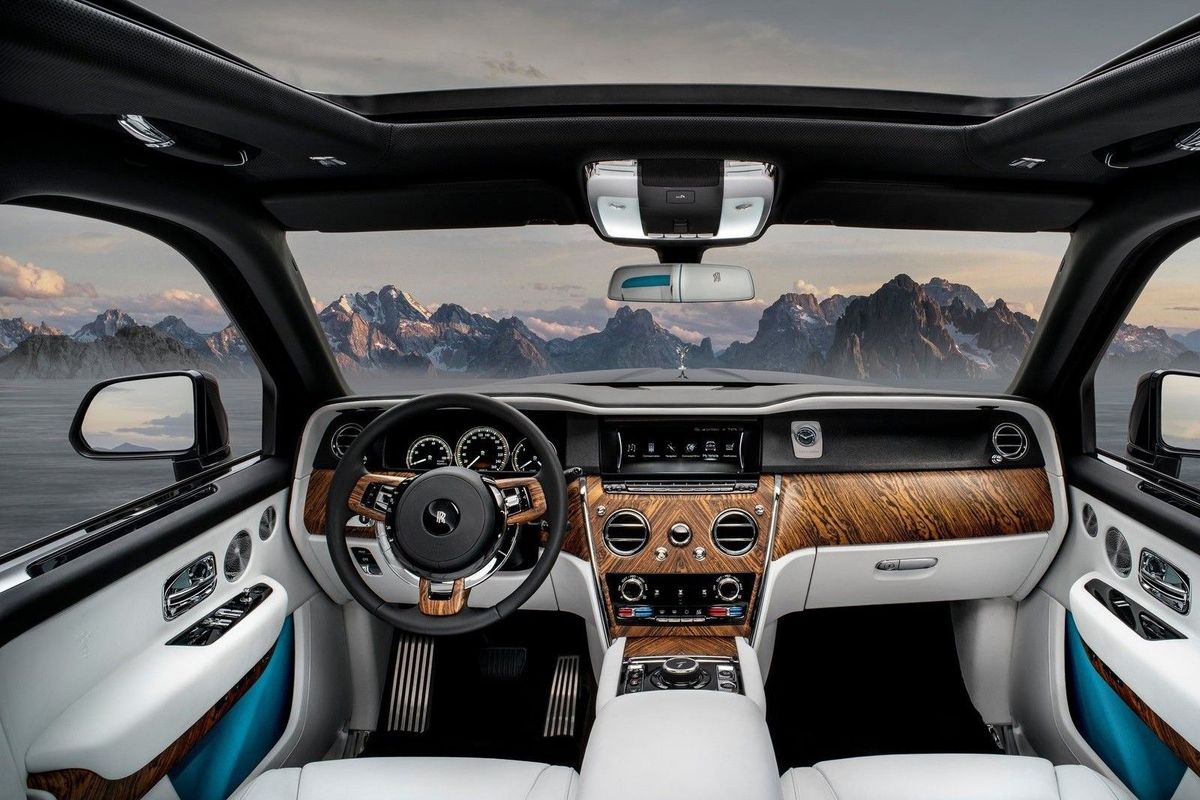
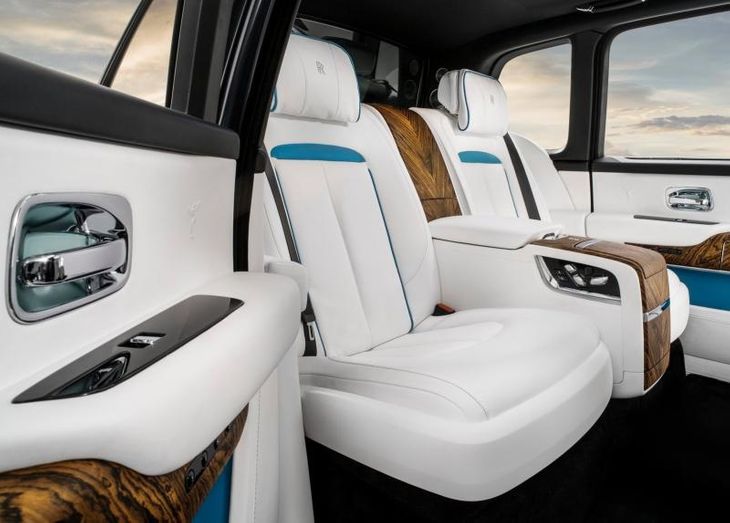
The fully-connected interior of the new Rolls-Royce Cullinan SUV

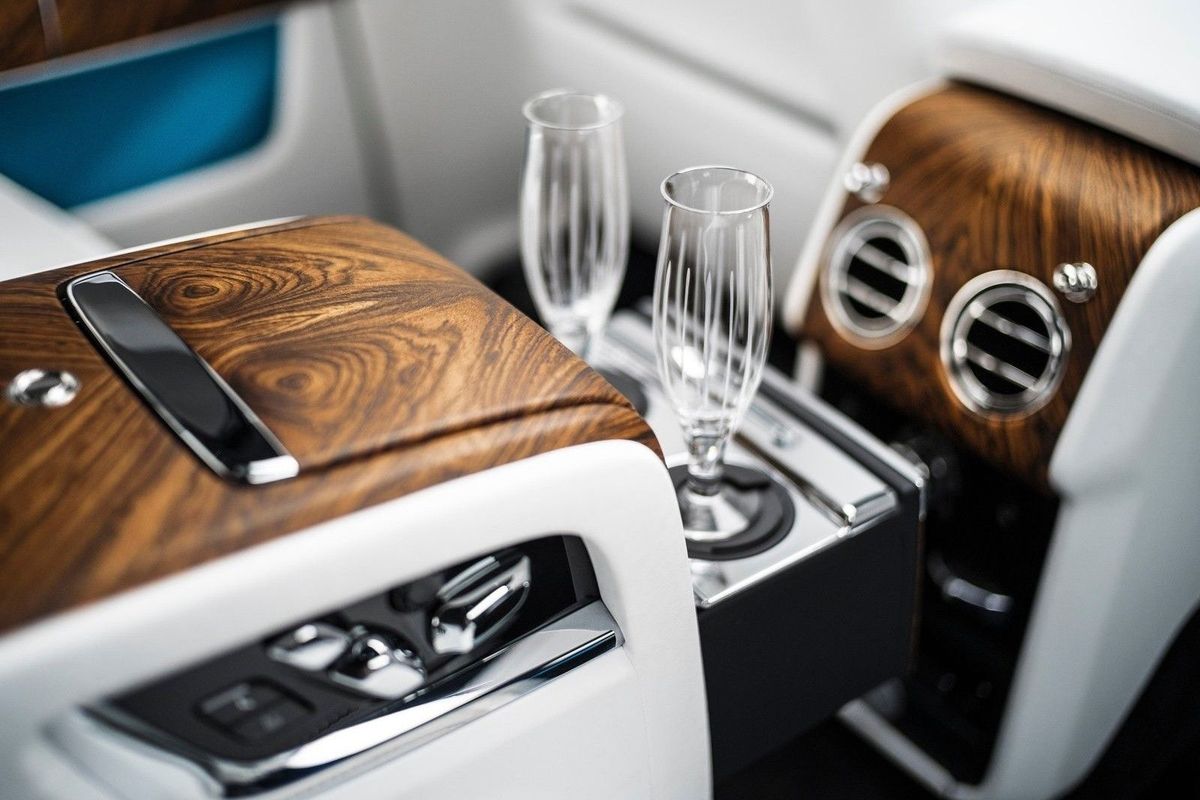
The cabin of the Rolls-Royce Cullinan is a special place to occupy, as these pictures attest. It has every conceivable gadget and piece of tech you can think of. Open the door and the vehicle lowers itself by 40 mm to make entry easier. The steering wheel is heated, all seats feature heating and cooling functions and those rear doors will automatically close themselves. The instrument binnacle is fully digital and, don't be fooled by the old-school wood trim and vents: it includes touchscreen infotainment.

Features such as Night Vision and Vision Assist including daytime and night-time Wildlife & Pedestrian warning; Alertness Assistant; a 4-Camera system with Panoramic View, all-round visibility and helicopter view; Active Cruise Control; Collision Warning; Cross-Traffic Warning, Lane Departure and Lane Change Warning; an industry-leading 7×3 High-Resolution Head-Up Display, WiFi hotspot, and of course the latest Navigation and Entertainment Systems are all standard. There are five USB ports too, with a wireless charging pad afforded to front passengers.

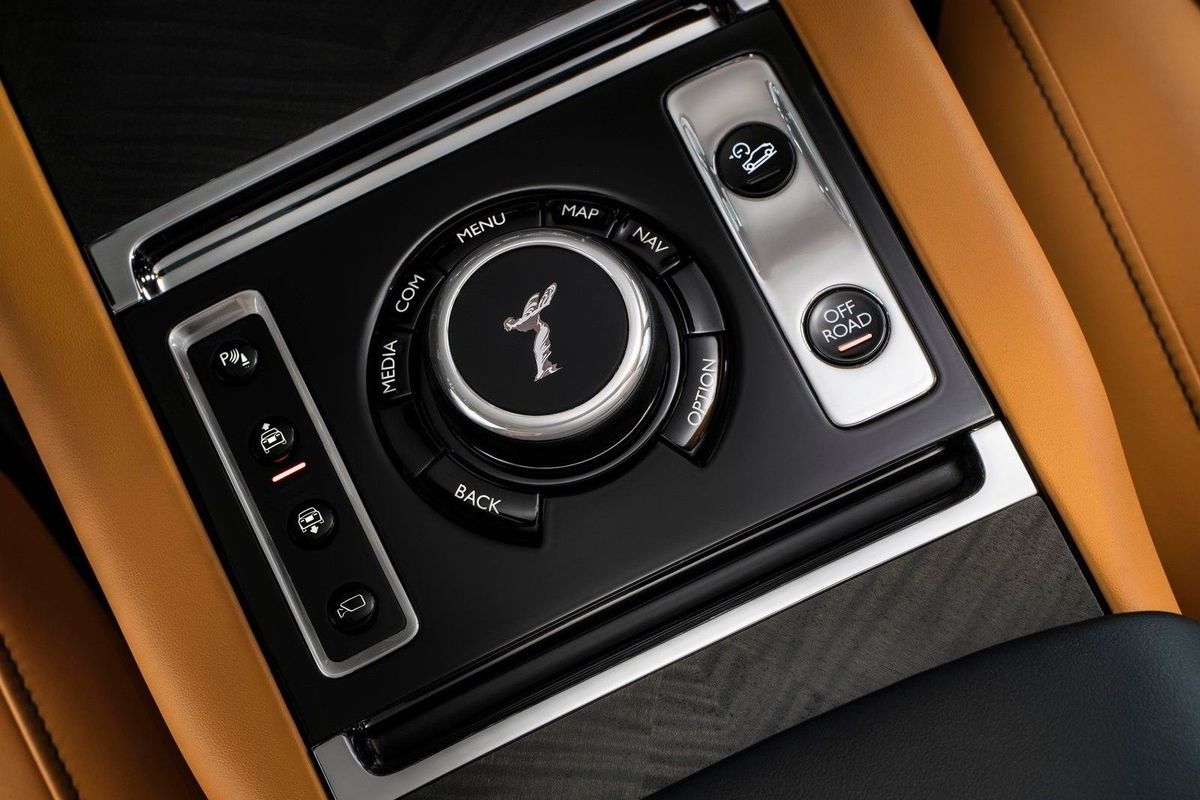
Under the large bodywork sits an all-aluminum architecture, self-levelling air suspension and a reworked version of the 6.75-litre twin-turbocharged V12 engine. In its latest incarnation, it has peak outputs of 420 kW/850 Nm and drives all four wheels through an automatic transmission. For off-road applications, the Cullinan features an "Everywhere" button, which activates and dynamically adapts the behemoth's offroad capability. Now we're not sure how many Cullinans will ever venture off the tar, but Rolls-Royce is claiming it can tackle rough track, gravel, wet grass, mud, snow and sand. It also boasts a wading depth of 540 mm. 


The automatically-closing rear doors reveal a luxurious and comforting cabin

The reveal has only just happened this past week and already the first Rolls-Royce Cullinan customer has been identified. Someone in Saudi Arabia has reportedly taken delivery of a Cullinan after paying close on  2.4 million Saudi Riyals (Almost R8 million). As for the South African market, local supercar blogger Zero2Turbo claimed that half a dozen Cullinans were on their way here. The first four will land in 2018, with two arriving in 2019.

You may also be interested in:

Rolls-Royce shows Vision Next 100 concept

Rolls-Royce Cullinan spy shots (new SUV)

Rolls-Royce Ghost Black Badge first drive

Rolls-Royce Ghost Series II video review

Rolls-Royce Phantom II – Truly Bespoke

Looking to buy a new / used Rolls-Royce?

Find one on Cars.co.za by clicking here

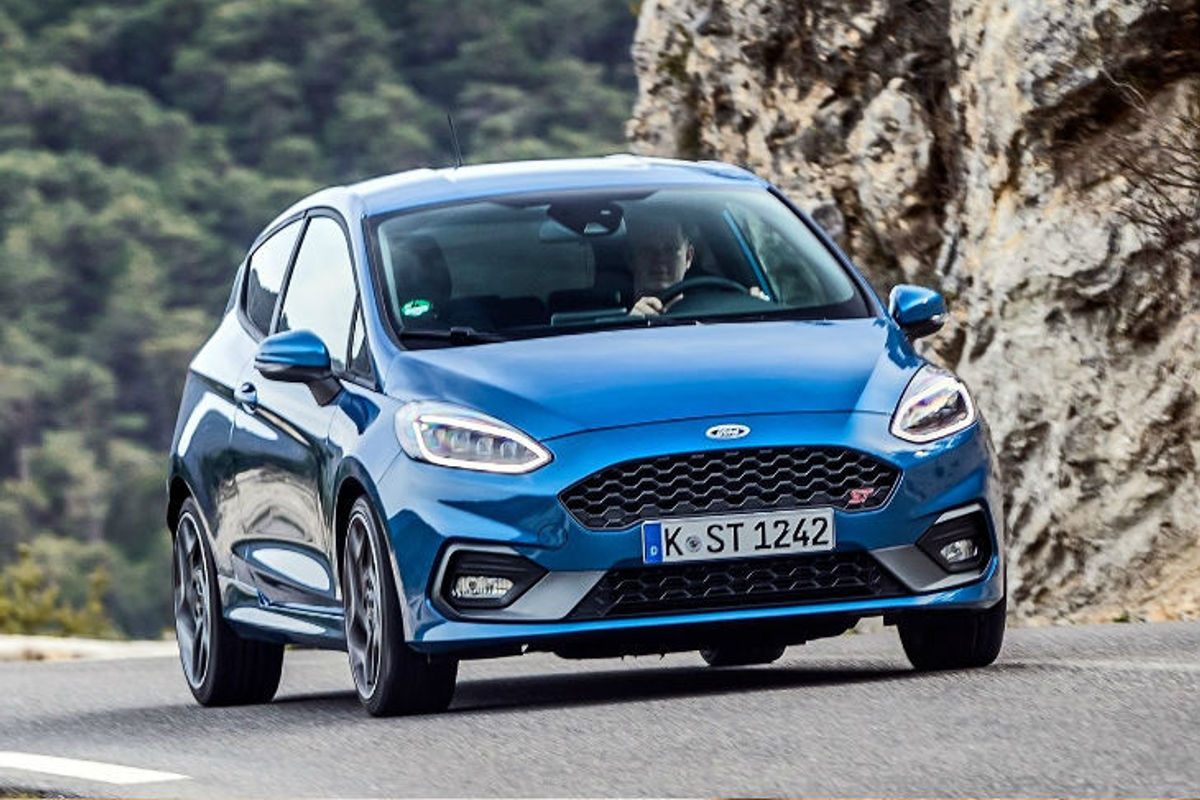
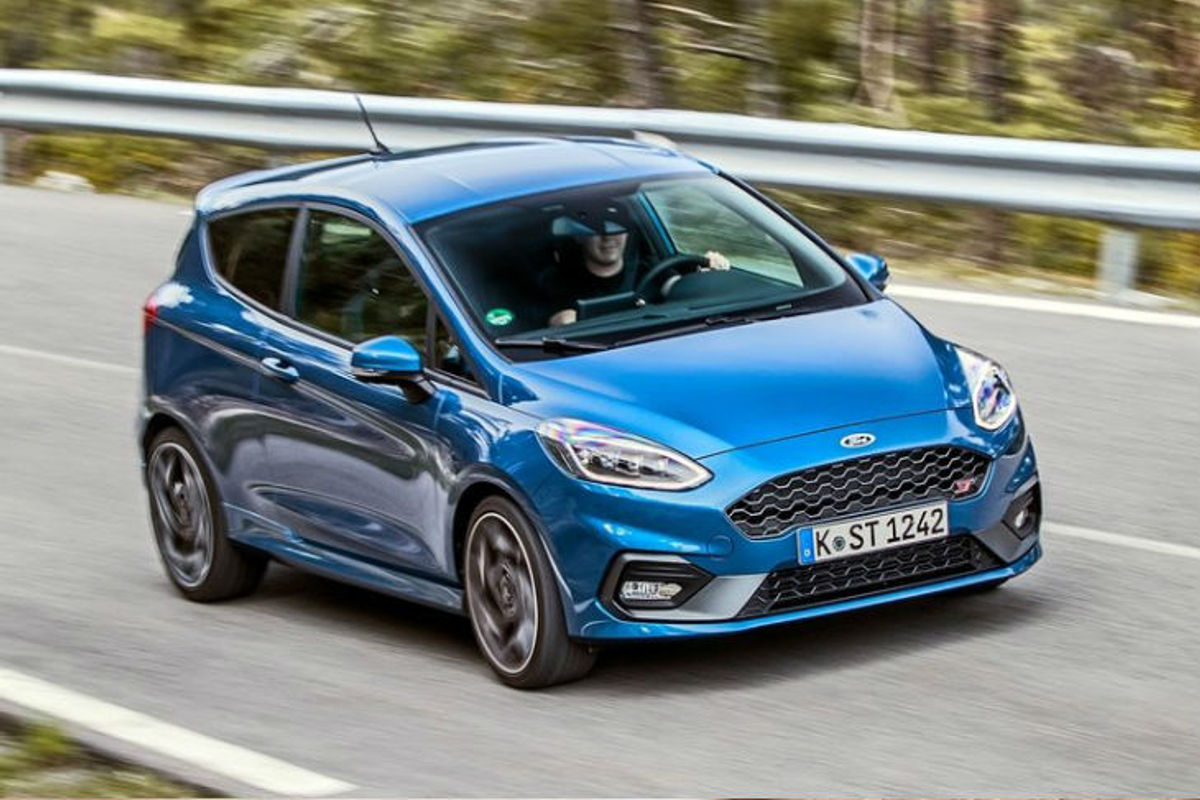
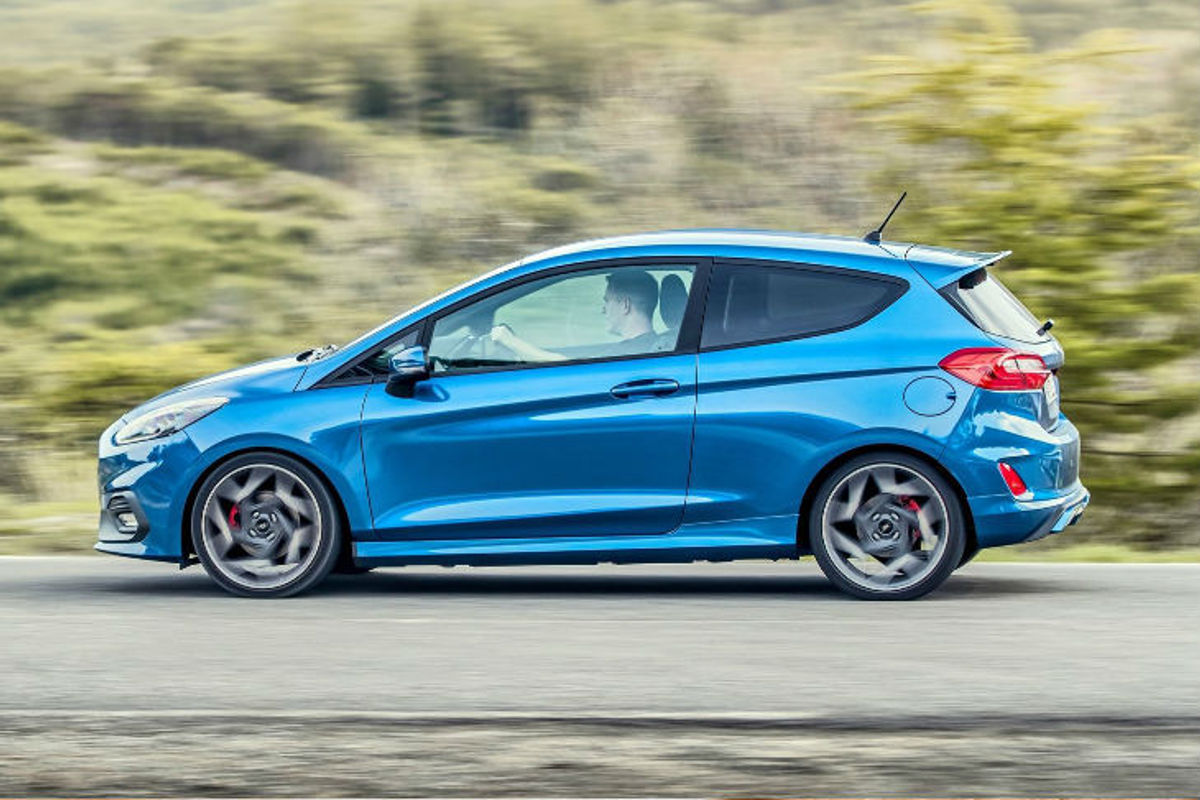
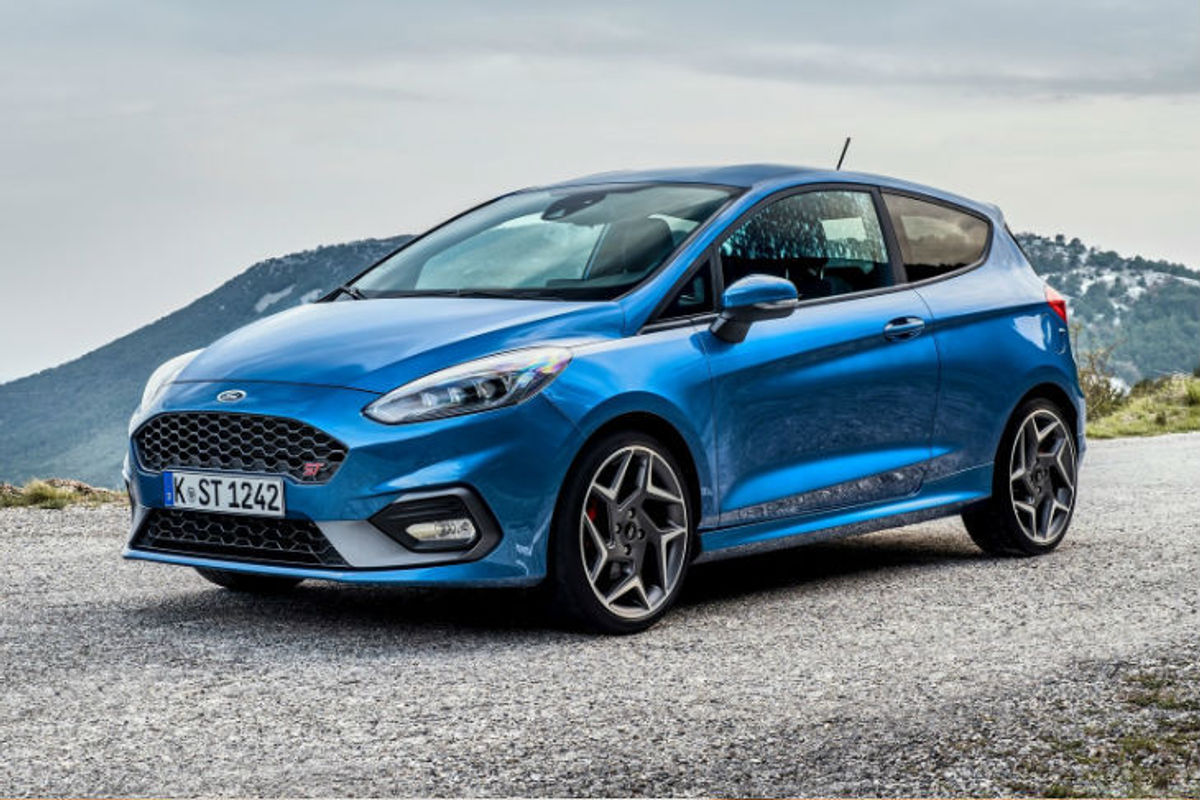
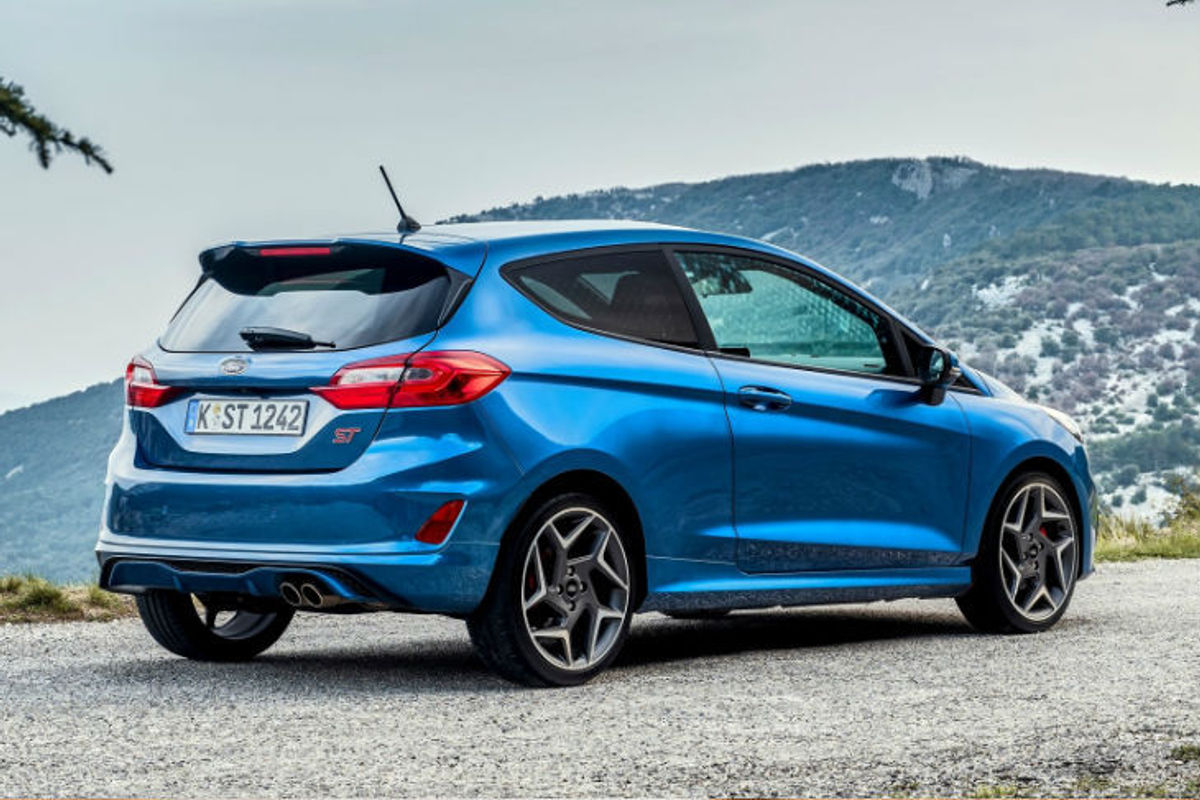
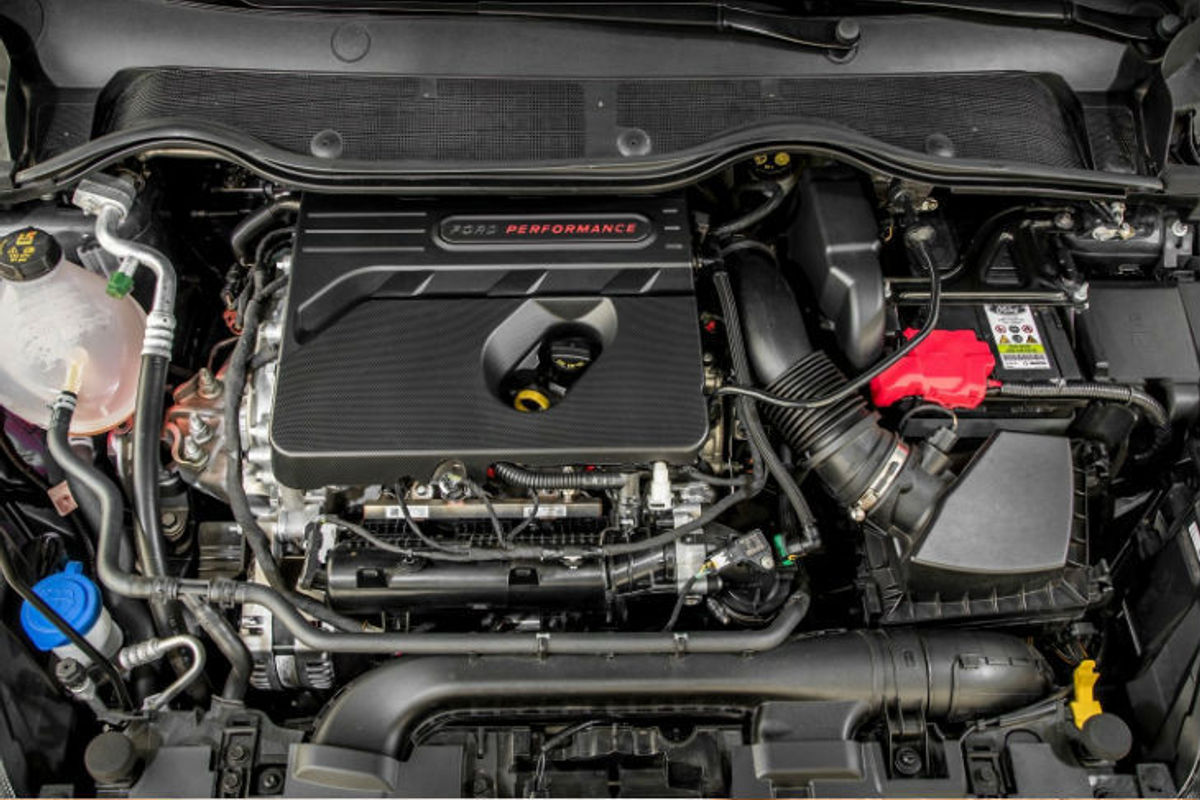
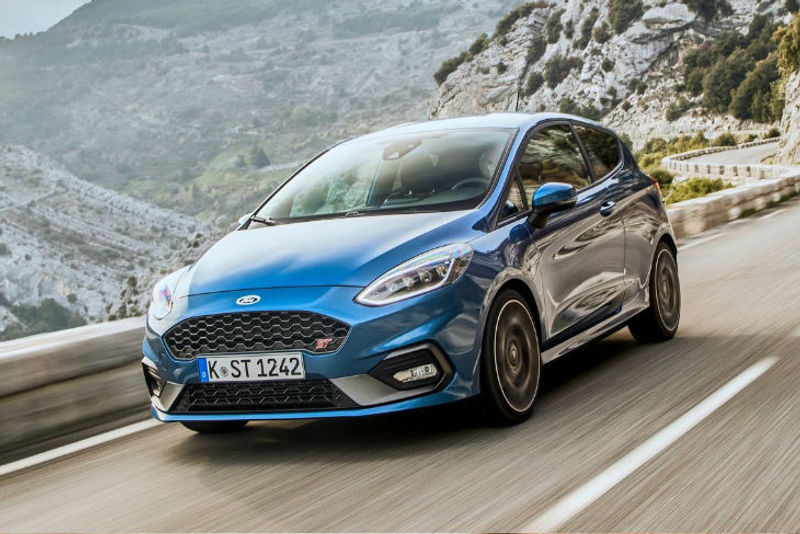
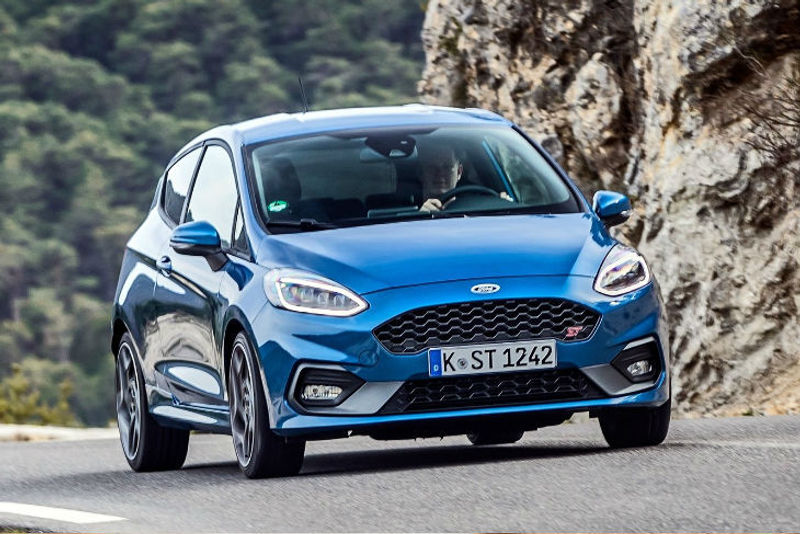
Ford Fiesta ST (2018) International Launch Drive [w/Video]

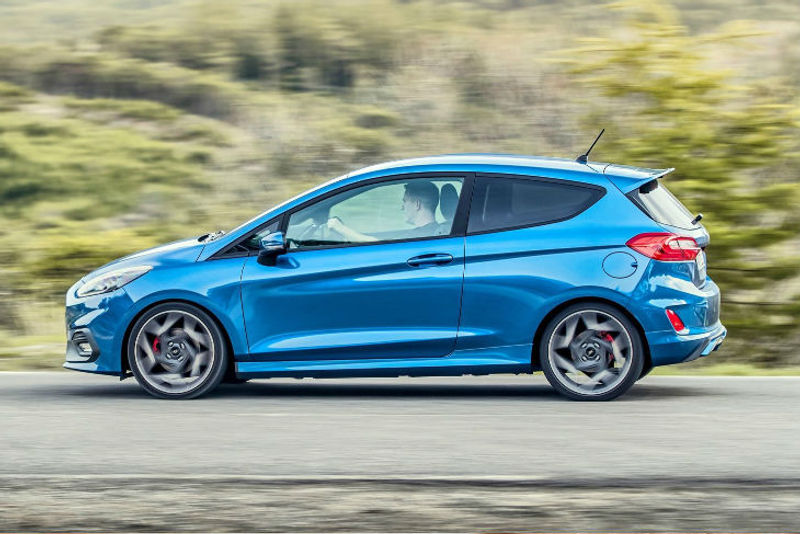
Although the ST version of the 7th-generation Fiesta has 1 fewer cylinder than its celebrated predecessor, the 3-pot supermini hot hatch is also one of the most sophisticated cars that Ford's TeamRS division has ever produced. Yes, the new ST is easier to live with… and better to drive quickly! Our UK correspondent Matt Saunders savours the chance of having his cake and eating it…

Remember when hot hatchbacks felt like a break from the rigorous commercial norm of the car business? Oddballs and extroverts like the Alfa Romeo 147 GTA, the unique-to-South Africa Opel Kadett GSI 16V S aka Superboss and Renault Clio V6. They certainly don’t make ’em like that anymore.

The modern descendants of these cars might still be fun to drive but, at least as far as the industry is concerned, they’re now not only serious cars but also serious money-making machines. Being seen as key "brand-builders" by the companies producing them, hot superminis (small compact hatchbacks) are now twice as popular in Europe as they were just 5 years ago. As a result, both the specification of this new, 3rd-generation Ford Fiesta ST and the evident time and effort lavished on it by in-house tuning department Ford Performance echo that loud and clear.


The new ST has the fastest steering rack and stiffest torsion beam yet to be fitted to a performance Ford.

Coming along just a year after the European launch of the 7th-generation Fiesta hatchback on which it’s based (the standard range of derivatives recently went on sale in South Africa), the new ST has a list of hardware upgrades and performance features more lengthy and impressive, in many ways, than that of the car with which Ford's performance car division, known as TeamRS, built its modern reputation: the 2002 Focus RS, which was sadly never available in the South African market.

A Fiesta ST with an LSD (if you'd like one)

That it’s the first fast Fiesta to be available with a helical limited-slip differential for its driven front axle will be the headline-grabbing titbit plucked by many from its specification sheet (it’s optional, and supplied by Quaife). But this is actually a car with so much new and interesting technical content that I’ll do well to cover all of it.

The car’s departure point is a Fiesta chassis braced in key areas on the underside of the body-in-white, which is itself 14% more rigid than that of the standard car. The new ST also has the fastest steering rack and the stiffest torsion beam yet to be fitted to a performance Ford. It has particularly interesting suspension, too, which is well worth examining before we move on.


Tenneco has supplied frequency selective dampers that aren't adaptive in the traditional sense, but operate in a similar way.

Frequency selective dampers from Tenneco feature front and rear. They are double-valved in order to better handle both high – and low-frequency inputs than a conventional passive damper could but they’re not "adaptive" as such – just clever. Moreover, Ford fits asymmetrical, directionally wound springs onto the car’s rear axle, which are in effect bent into their fittings in order to apply a stabilising lateral force onto the rear wheels as well as performing the usual load-bearing job.

The springs address a key problem that hot hatchbacks with twist-beam rear suspension have always had: that, in order to effectively locate the rear axle and deliver top-level handling precision, you have to fit very rigid suspension mounting bushes which have a detrimental effect on the ride. These "torque vectoring" springs, says Ford, do as good a job as a Watt’s linkage setup in solving that problem and permit the fitment of much softer bushes. 


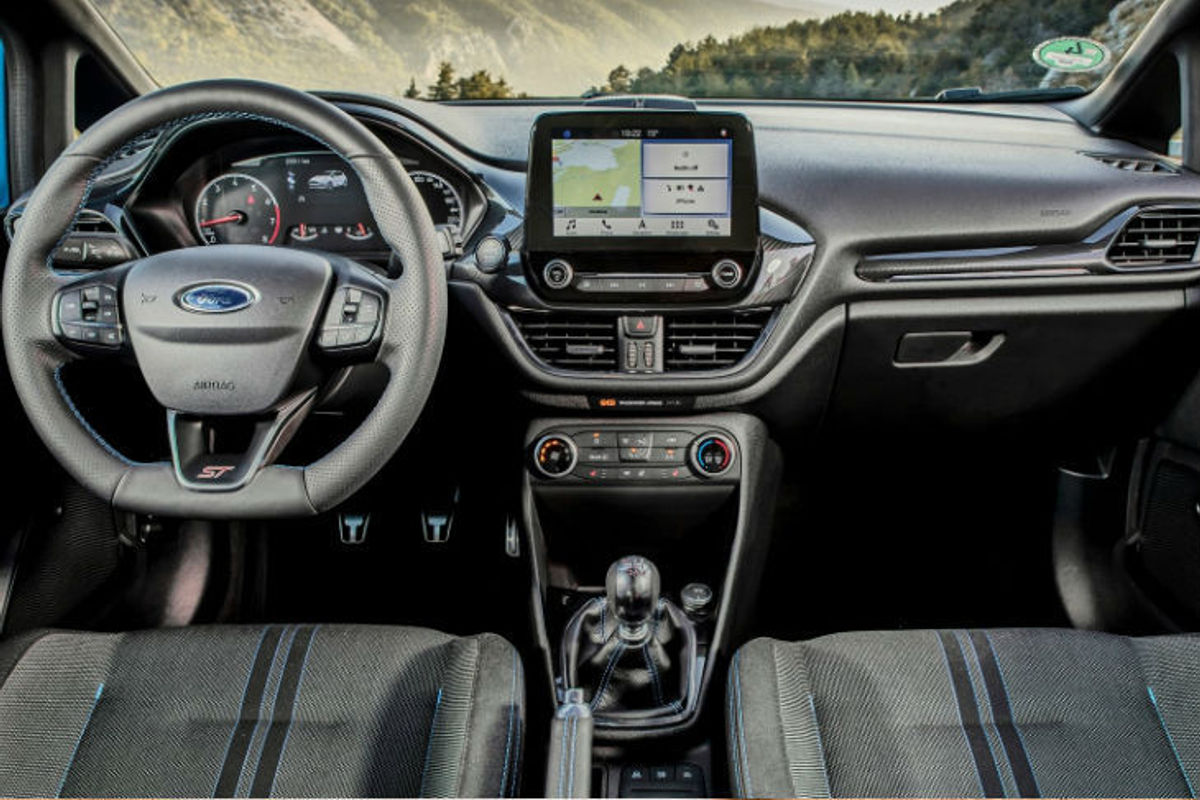
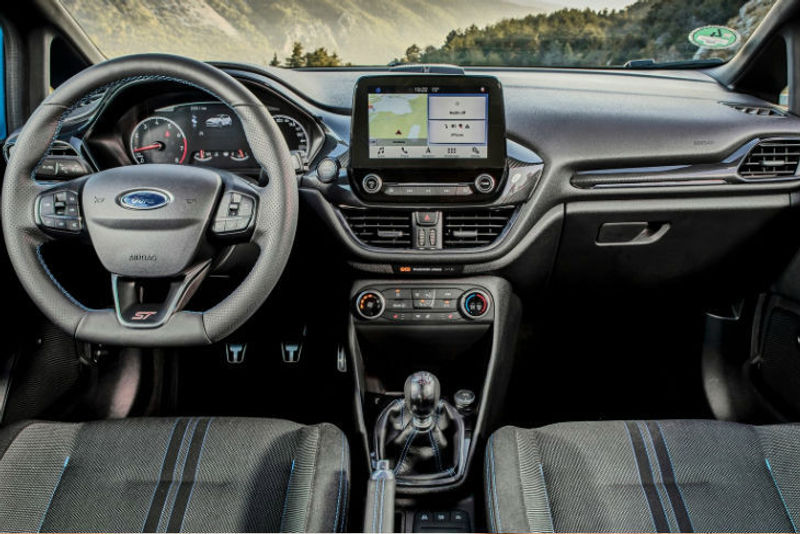
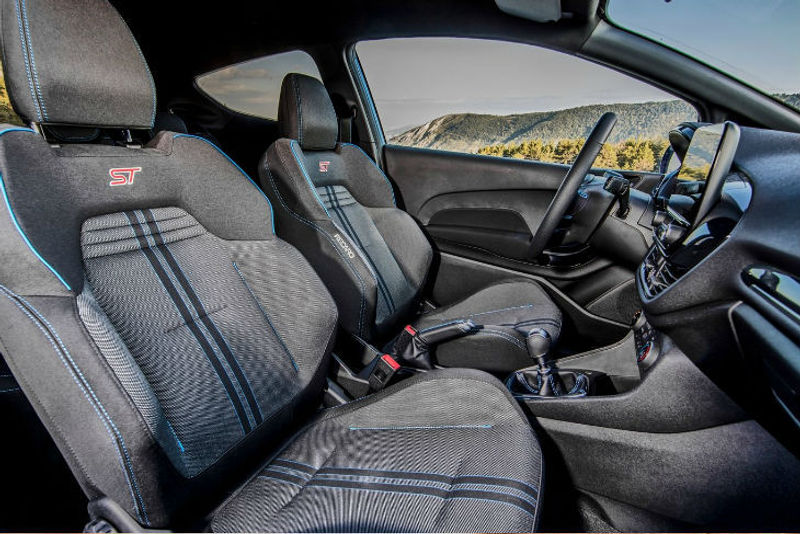
The ST's interior racier details are subtle, including contrast stitching and almost prerequisite carbon fibre-look insets.

The Fiesta ST has a dedicated front hub design of the sort becoming common among cars of its ilk. It has allowed Ford to lower the car’s ride height without lowering its front suspension roll centre too much, and it keeps control of front kingpin angle and wheel offset as necessary in order to avoid too much torque steer and bump steer. The spring rate is slightly higher than that of the outgoing car but, as the engineers behind the car’s chassis development will tell you, the new damping and bushing in combination contribute to a more mature, rounded feel to the new car’s ride – and all without taking the all-important playful handling balance and cutting-edge response away from the handling.

Much-improved ride quality

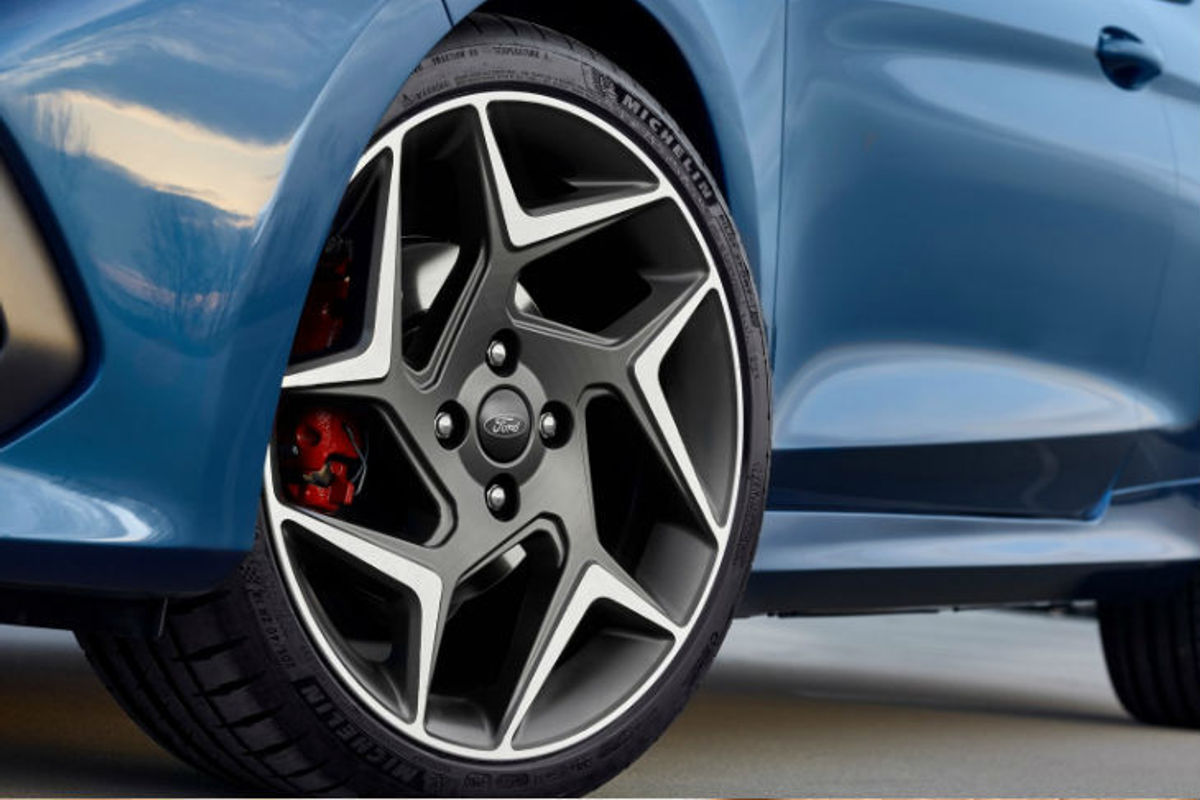
Those engineers will also tell you that while they loved the last Fiesta ST (as did many of us), it certainly had an uncompromising ride that they simply couldn’t justify transferring directly onto this new version. But before you doubt them, these are the same engineers who, halfway through the development programme, sent the Pilot Sport 4S tyres originally intended for the car back to Michelin and insisted only grippier Pilot Super Sports would do.


Is the Fiesta ST the first hot hatch to feature cylinder-deactivation technology? Perhaps, but it is no less potent than its predecessor.

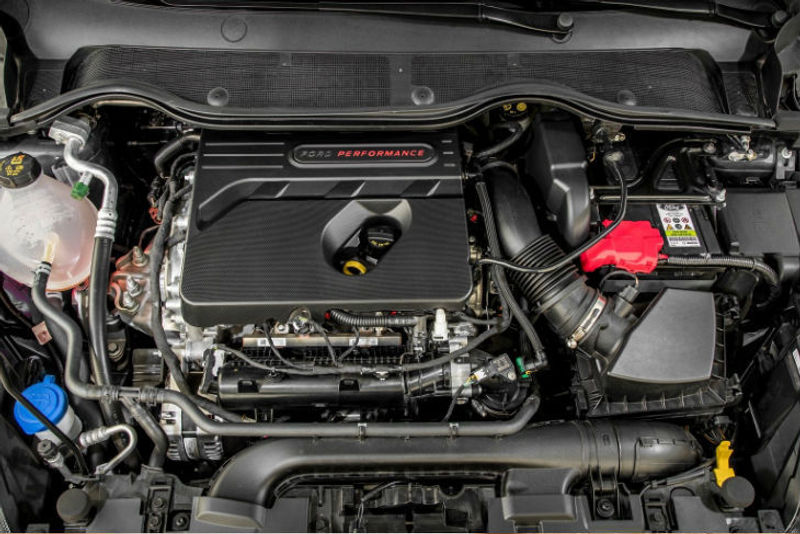
The ST’s new engine is one about which, I dare say, you may already have read: an all-aluminium, 3-cylinder, 1.5-litre turbocharged motor, which gives the car identical peak power and torque figures to those of the outgoing ST’s 1.6-litre 4-pot (147 kW and 290 Nm), but which can also deactivate its middle cylinder and run on 66% of its normal swept volume in conditions of light load. That’s a 3-cylinder engine capable of running on two: a car industry first. Upshot? A 20% improvement in the claimed fuel economy and CO2 emissions compared with the old ST. Perhaps of more interest, the new motor is also lighter than the one it replaces.

A distant flavour of the 5-pot Focus ST

This is also the first Fiesta ST to have selectable driving modes: Normal, Sport and Track. As you cycle through them, that engine gets fruitier and fruitier-sounding as its active exhaust and engine sound synthesising system combine to bring additional layers of noise. There’s a distant flavour of the original 5-cylinder Focus ST both about the way this engine warbles and its torquey mid-range feel.


Selectable driving modes add to the ST's sense of theatre, especially in terms of the ferocity of the exhaust note… 

I’m not totally sold on the time it takes the crankshaft to slow down from high revs, I have to say (it’s a function of the counterbalance measures that 3-cylinder engines need in order to run smoothly at low rpm). Can’t help wondering, either, how much faster the engine would spin, and how much more power it would develop, if Ford dropped the flywheel completely. Still, perhaps that’s just me. All in all, there’s certainly plenty of urgency, plenty of character and, in spite of the torque, a likeable willingness to rev.

In lots of ways, the Fiesta feels like the car it replaces: it has meaty, fixed-ratio steering with which it’s easy to gel in spite of its pace, as well as supreme handling response and brilliantly flat body control – which we’ll get to. But the way it rides is something else.


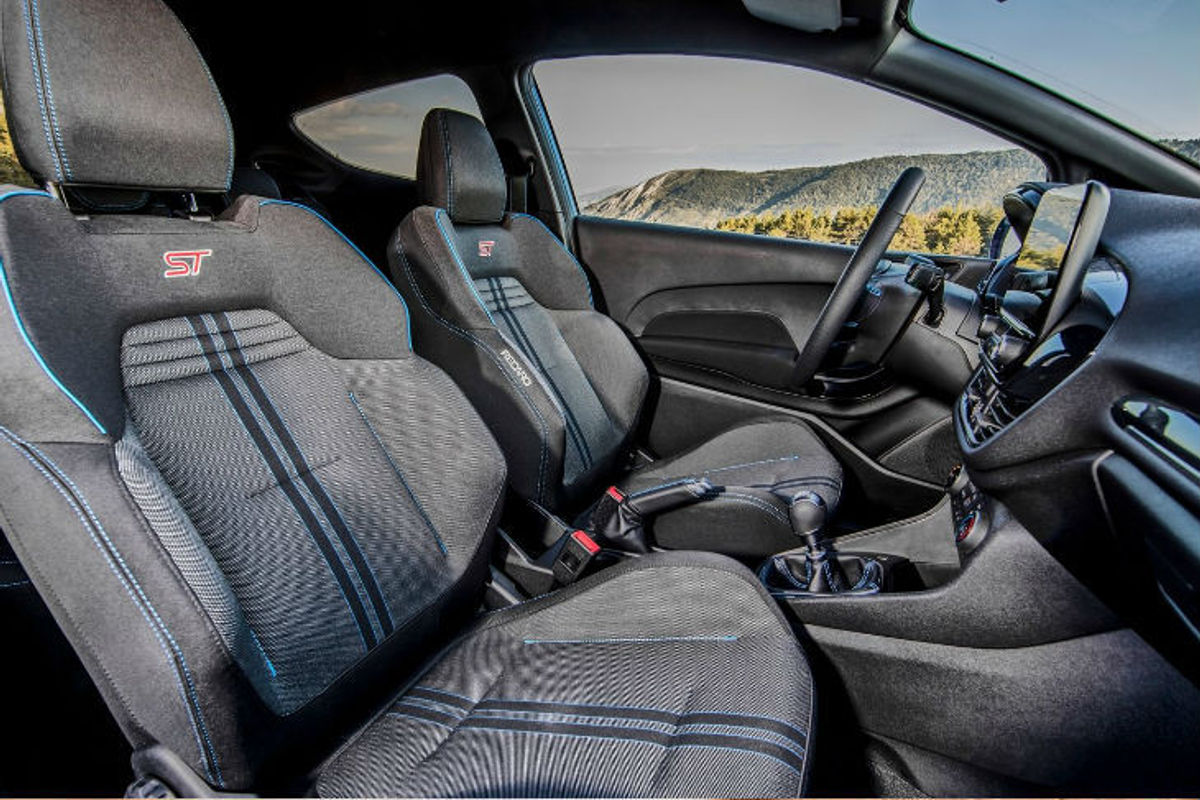
Body-hugging, ST-branded Recaro sports front seats are a feast for the eye and are a boon in the twisties.

Having only driven the car at a test track I can’t tell with certainty how it might deal with a British B-road, but there’s quite a lot more suppleness and ride dexterity here than there used to be. Over what lumps and bumps I could find on our test drive, over which the outgoing ST’s dampers might have bristled and its body fidgeted, the new model’s suspension just sucks up the punishment and lets you get on with it. Perhaps more importantly on surfaces over which drivers of the old ST might have felt the need to apologise to their passenger for the selfishness of their buying decision, I suspect you won’t in the new one.

It passes the girlfriend/mother-in-law test

And that’s a bit of a revelation: a Fiesta ST that passes the girlfriend/mother-in-law test. Hurrah.

Equally brilliant is the car’s handling – although that much we expect of a Ford Performance product. The ST feels a shade more precise in its steering response than the last one did, turning in more crisply, gripping harder and staying slightly truer to your intended path than its forebear did as the lateral load builds into the rear tyres. It’s certainly capable of carrying more cornering speed than the old car and it has a bit more mid-corner stability, while traction on corner exit is subtly but notably stronger than it was thanks to the machinations of that Quaife limited-slip diff.


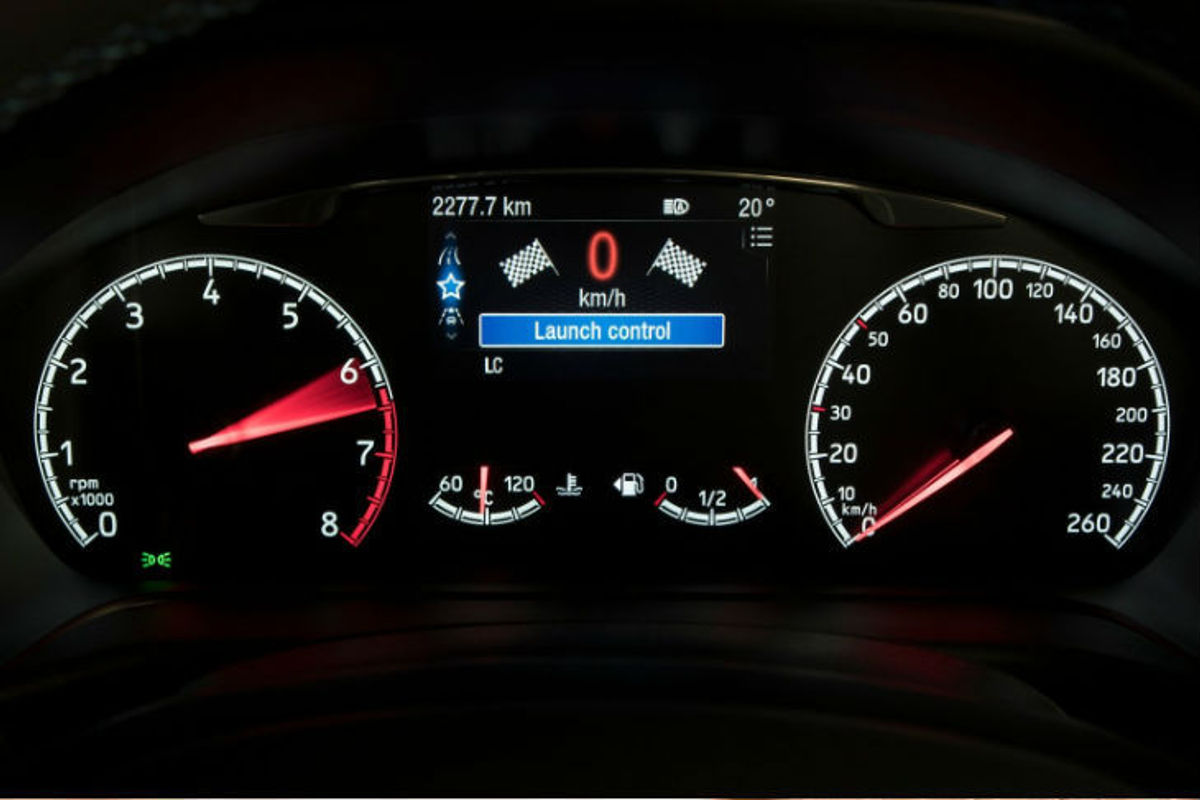
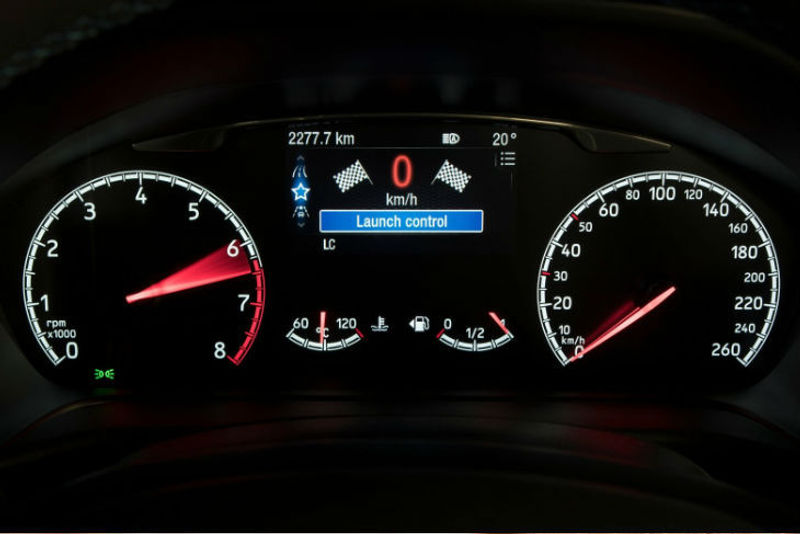
With its launch control engaged the Fiesta ST is claimed to hit 0 from 100 kph in just 6.7 seconds.

But fear not: the car is still a barrel of fun when you disengage the stability control and unload the rear axle. On a trailing throttle, the Fiesta can be teased into easily tamed oversteer more willingly than any other hot supermini. Its handling balance and adjustability remain exceptional, and in a way that speaks volumes about the philosophy of chassis engineers who think a front-drive performance car that isn’t sensitive to controllable lift-off oversteer just isn’t worth their time and who can’t understand why so many of their rivals seem to be so afraid of the phenomenon that they try to engineer it out entirely. Lucky for Ford, I guess, that they are.

Summary

Given how many new arrivals have lately come into the market niche that the last Fiesta ST so plainly bossed, and how short our initial test drive was, we’ll leave the decision as to whether this car is another Ford Performance class-leader and worldbeater for another day. It’s right up there, mind you, and as good as any ST-badged Ford I’ve yet driven. And it’s none the worse as a driver’s car for what’s pretty plainly an attempt to give it a slightly broader sales appeal. 

When this year’s very best affordable performance cars are weighed and measured, the Fiesta ST will take some serious beating. But will South African aficionados get to see this highly-praised little car arrive in our market before the end of 2019? Ford Motor Company of Southern Africa says it doesn't have an ETA for the Fiesta ST yet, but we think if Ford can successfully homologate the car for local conditions and bring it to market at a competitive price, it will be sooner rather than later…

Related content:

Ford Fiesta (2018) Launch Review

Preview: 2018 VW Polo GTI vs 2018 Ford Fiesta ST

Ford SA Releases Hotter Fiesta ST

Three-cylinder Ford Fiesta ST Announced

Ford Fiesta (2018) International Launch Review

Top 5 Cool Facts: Next Ford Fiesta (2017)
 

Want to buy a Ford Fiesta? 

Find a new or used Ford Fiesta on Cars.co.za

BMW Safety Recall in SA: Are You Affected?

Although the recently announced safety recall campaign relating to some previous-generation BMW 1 Series, 3 Series, X1 and Z4 derivatives is mostly of consequence to consumers in the United Kingdom, just under 16 000 vehicles in South Africa are affected too.

In response to a query by Cars.co.za this week, BMW South Africa's manager of group product communications Edward Makwana said the issue, affecting units of the respective aforementioned models built between March 2007 and September 2011, "relates to the plug of the power distributor which may degrade over time due to frictional corrosion and vehicle vibration. In certain conditions, this can affect the electrical connection to the car and may result in a loss of power."

Worldwide, just under 400 000 BMWs are affected by this campaign, of which the overwhelming majority are in the UK (just under 312 000), but nonetheless, 15 933 vehicles in South Africa also need to be booked in at franchised BMW workshops so that technicians can "install a repair cable with an improved plug at the power distributor. The workshop stay is expected to last approximately 2 hours. BMW will cover the cost of the safety recall," Makwana added.

Makwana concluded that the owners of the affected vehicles would be informed (via postal letters, we understand) in the next few weeks.

It's best to check

However, considering that many vehicles produced between 2007 and 2011 will probably have changed owners a number of times since they were new and may no longer be serviced and/or repaired at franchised dealers, some owners of second-hand 1 Series, 3 Series, X1 and Z4 derivatives of that vintage may prove difficult for BMW to track down. To check if a vehicle needs to be booked in and worked on as part of the campaign, you can contact or visit your nearest franchised BMW dealer.   

Alternatively, customers can contact BMW telephonically on 0800 600 555 (toll-free) Monday to Friday 7am to 7pm, or send an email with their vehicle's VIN details to [email protected]. They can also make an enquiry via an online chat on the BMW.co.za website – the latter option worked well for this author.

Related content:

Subaru Recall in SA

Mitsubishi Issues Airbag Recall in SA

Ford Kuga Recall: Phase 2 Starts

Ford Announces Figo/Ikon Recall: What this means

Interested in buying a BMW?

Find a new/used example for sale on Cars.co.za

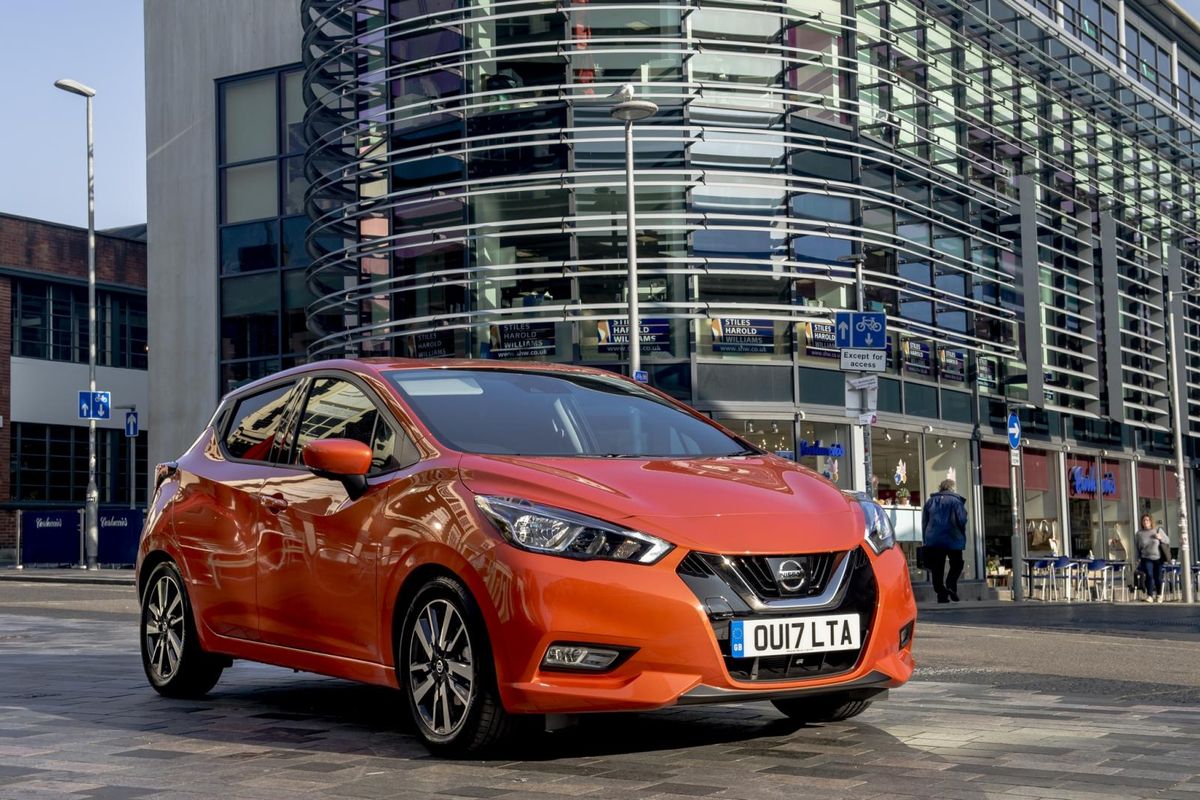
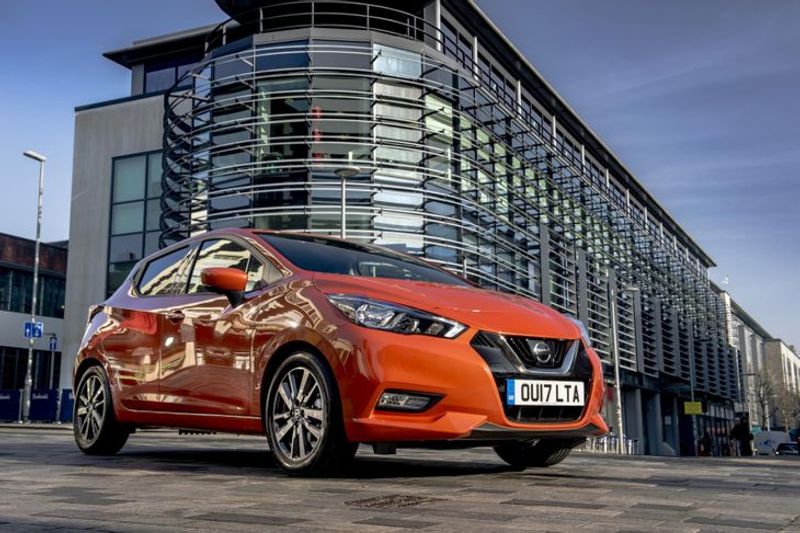
We Drive 2018 Nissan Micra [updated]

Nissan will introduce its new 5th-generation Micra in the local market in June 2018. In contrast with the previous generation budget-oriented Micra Active, which remains on sale, the newcomer will be positioned at the upper end of the compact hatchback segment. Our UK correspondent drove the newcomer last year and here’s what he thought of it (now includes some local specification)…

What is it?


The latest Micra aims to break new ground by offering attractive styling and a wide range of tech that will appeal to the younger buyer.

In a trend-bucking move away from mass-production of affordable “world” cars (a practice that may now be left to its Datsun sub-brand), Nissan primarily designed and developed its new Micra specifically for the EU, the world’s largest small hatchback market. This version is produced in France as well as Thailand, the latter of which is the most likely source of the units that will be launched in the South African market in the near future. 

Worldwide sales of the Micra have dwindled in recent years while its competitors have long since moved on in terms of design and technology. Nissan is hoping for a revitalisation of sales for a car whose ageing, blobby design appears only to attract an ever-diminishing number of bridge club members and retired librarians.

A bit harsh? Perhaps, but not entirely untrue. Something radical was needed if the Micra name was to continue.

The exterior

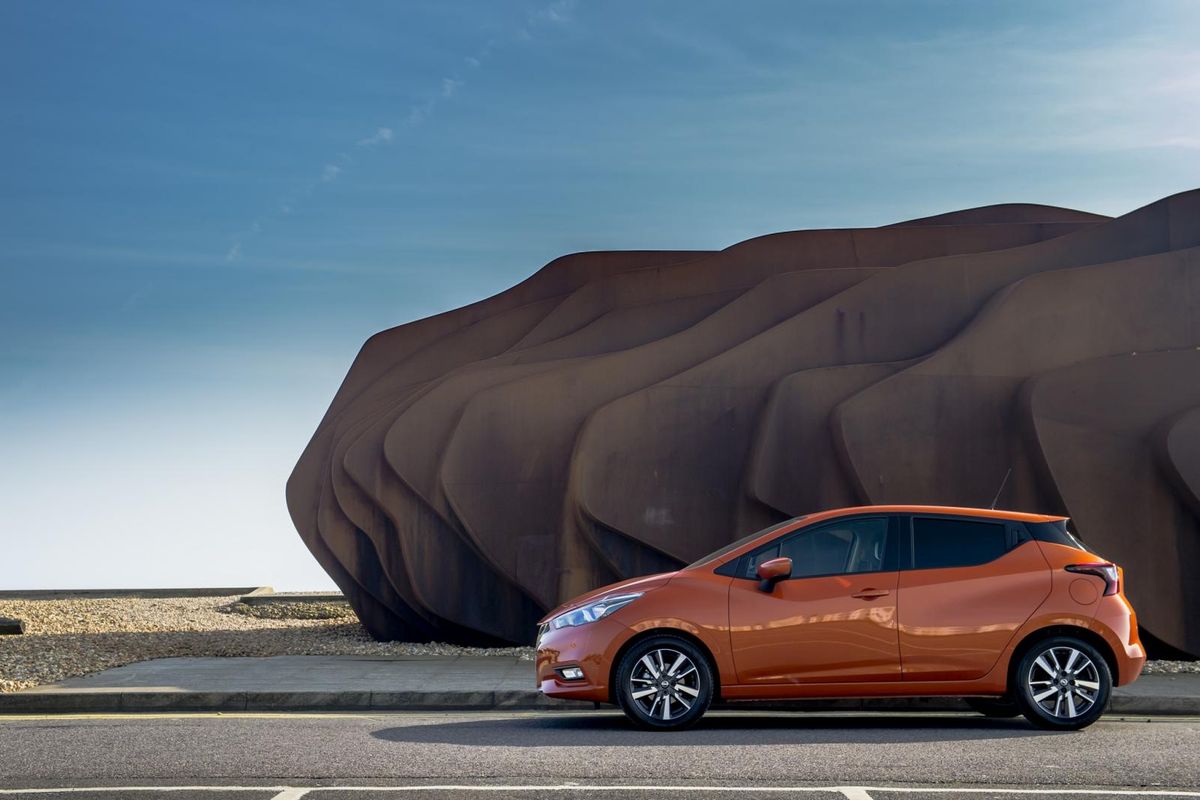
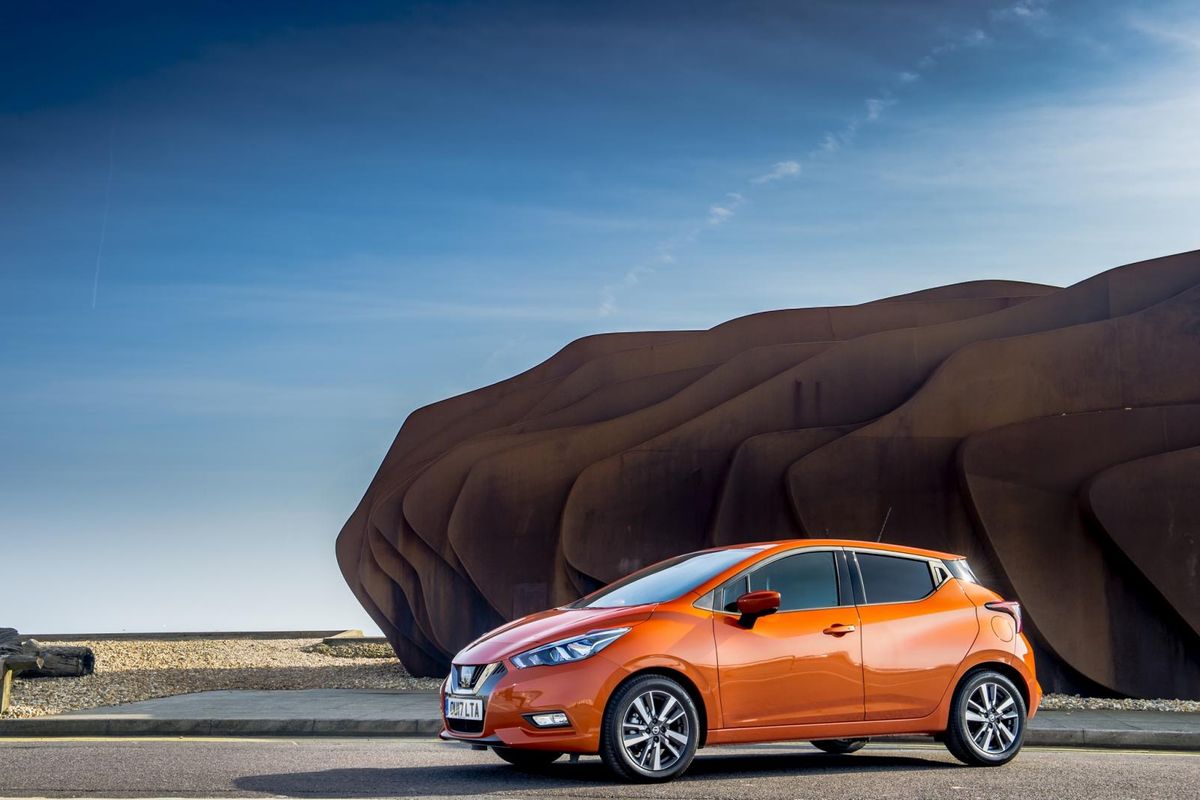
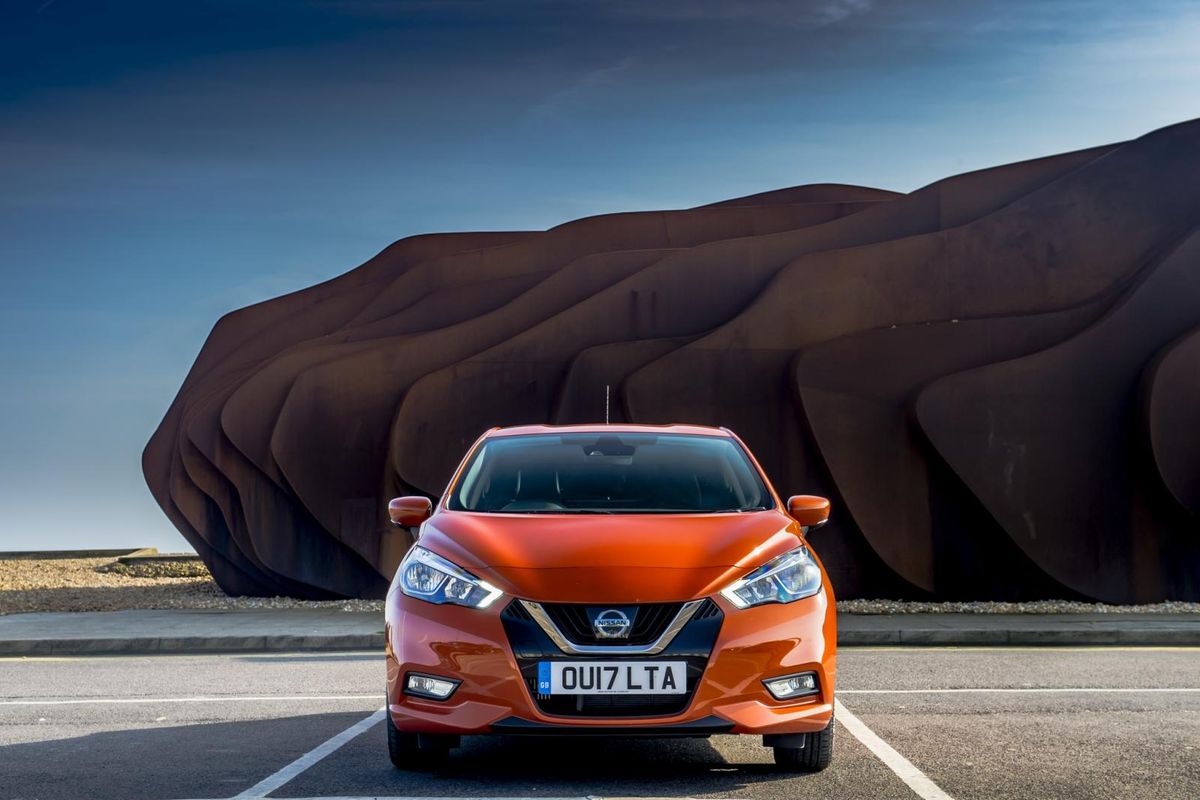
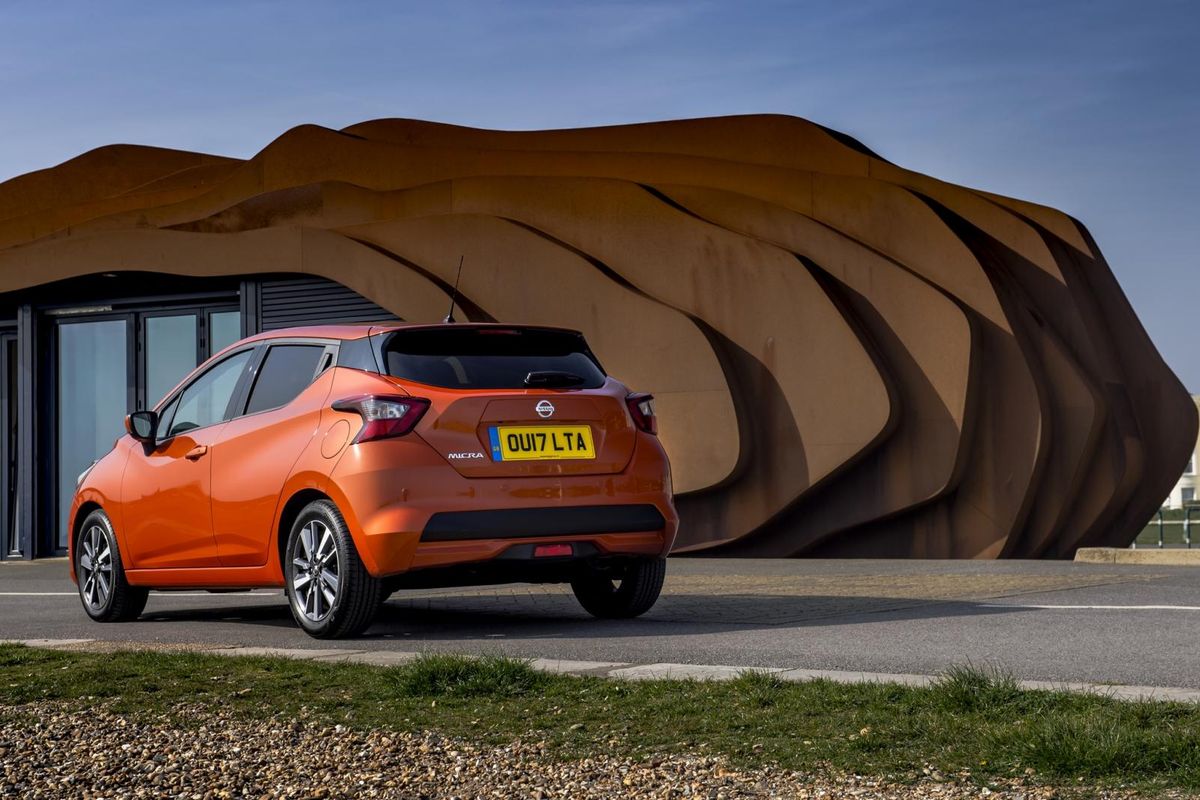
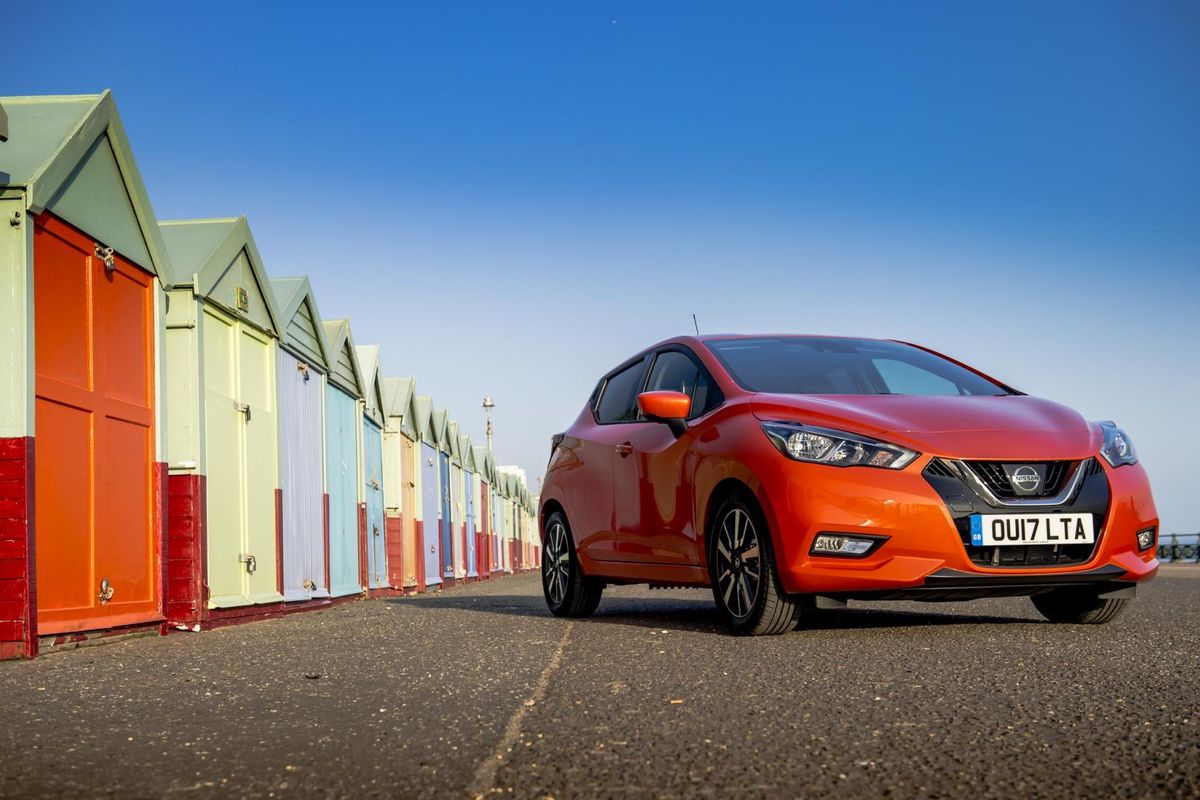
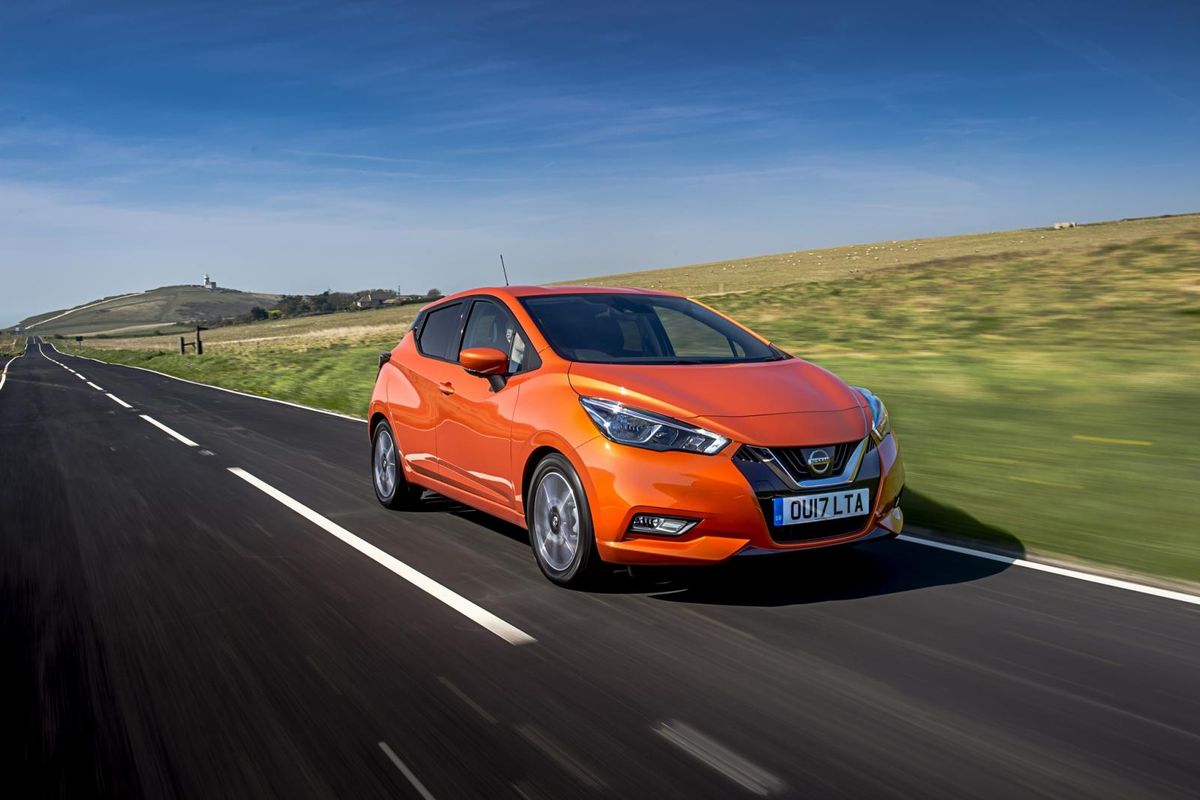
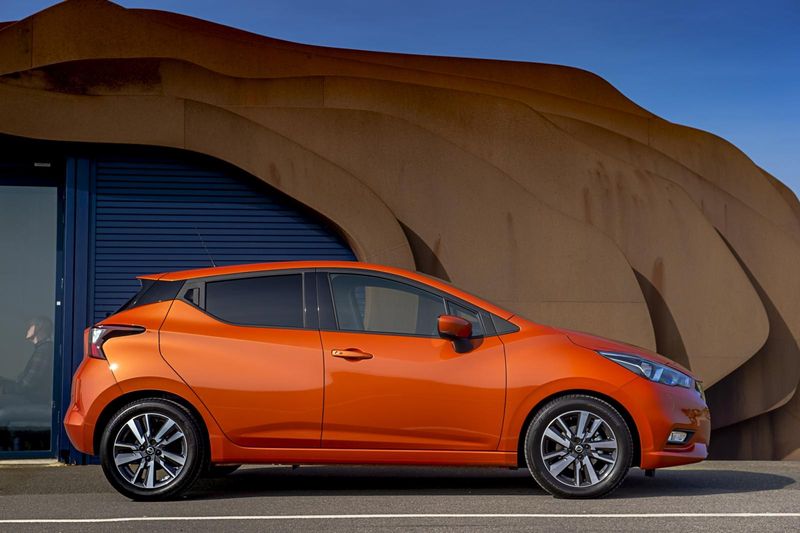
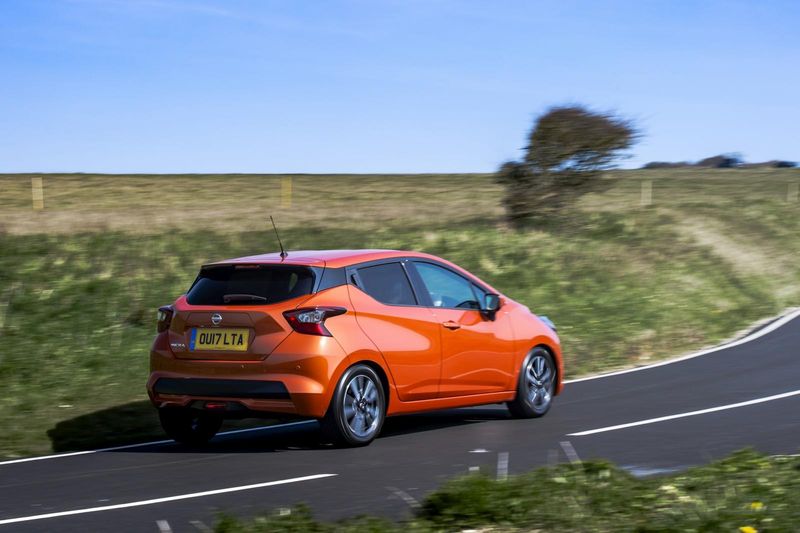
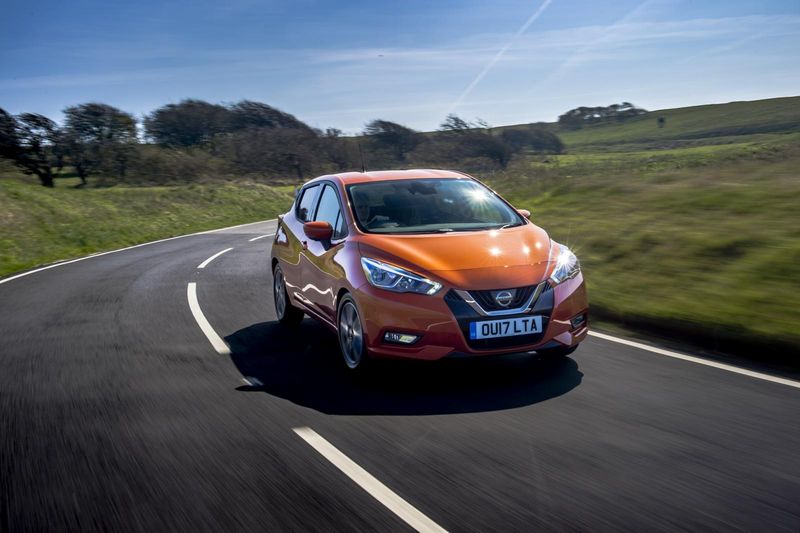
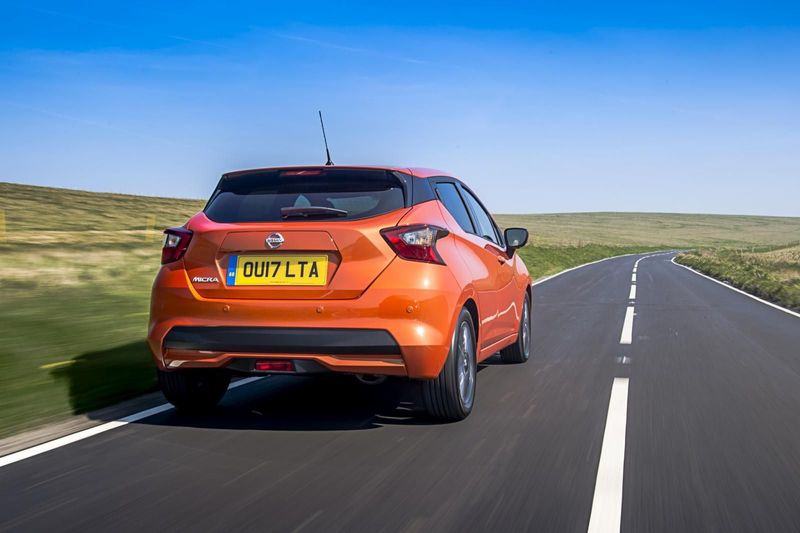
The new Micra is uninhibitedly styled to turn heads and targets an altogether younger demographic. It is lower, wider and longer than its predecessor and its chiselled exterior offers considerably more space inside. Now riding on an agile, re-engineered chassis, the newcomer can pack extensive safety kit and connective technology.


Lower, wider and longer, the new Micra is more spacious than it’s predecessor. 

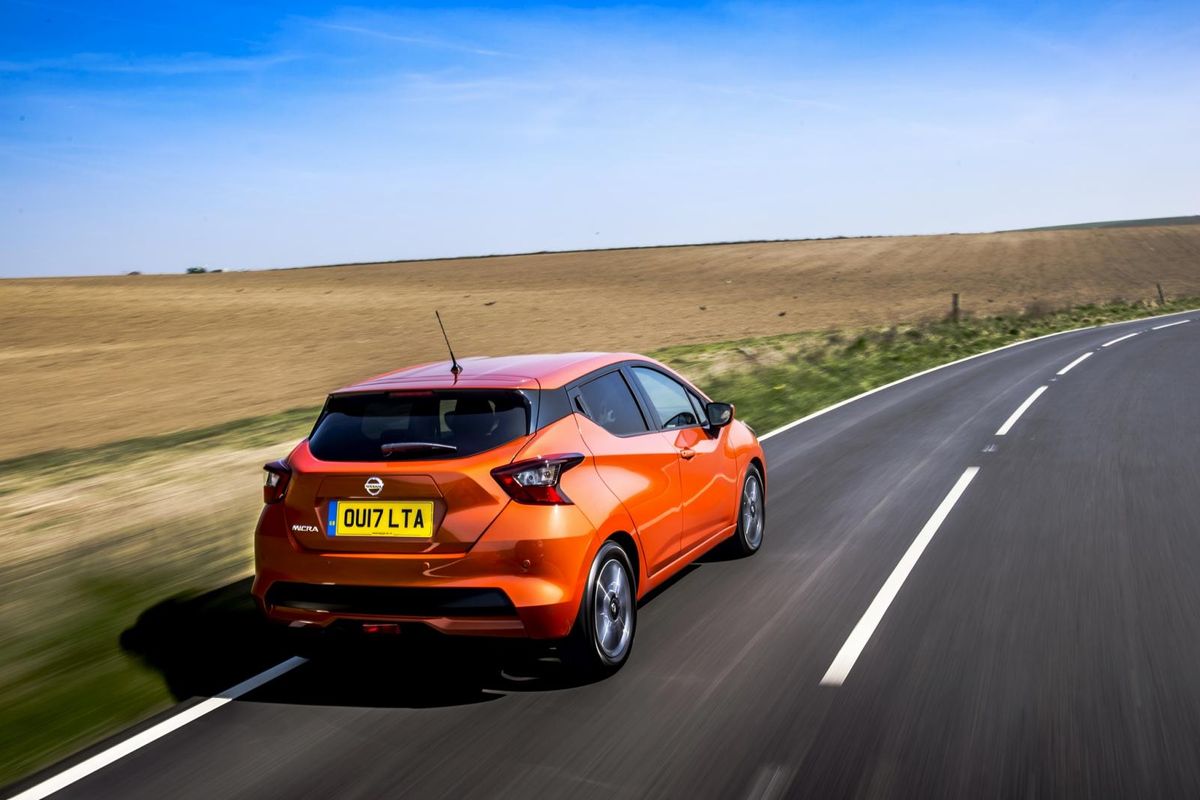
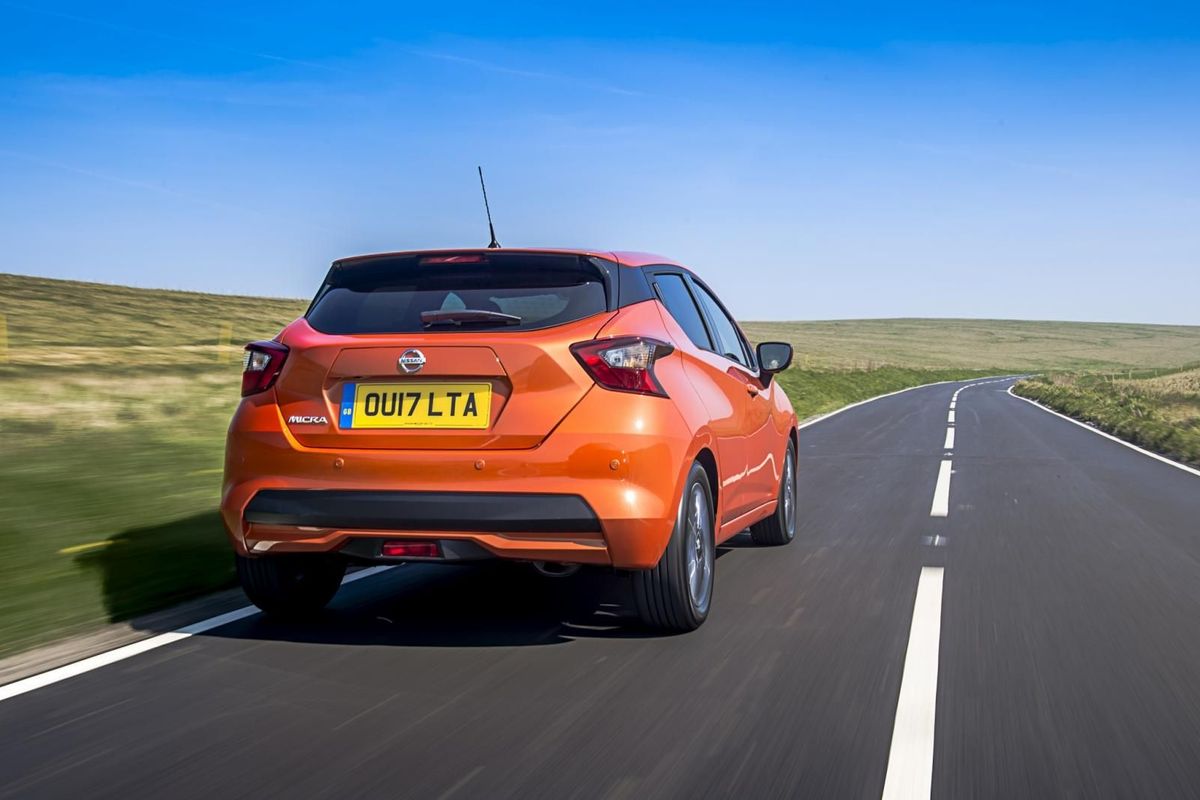
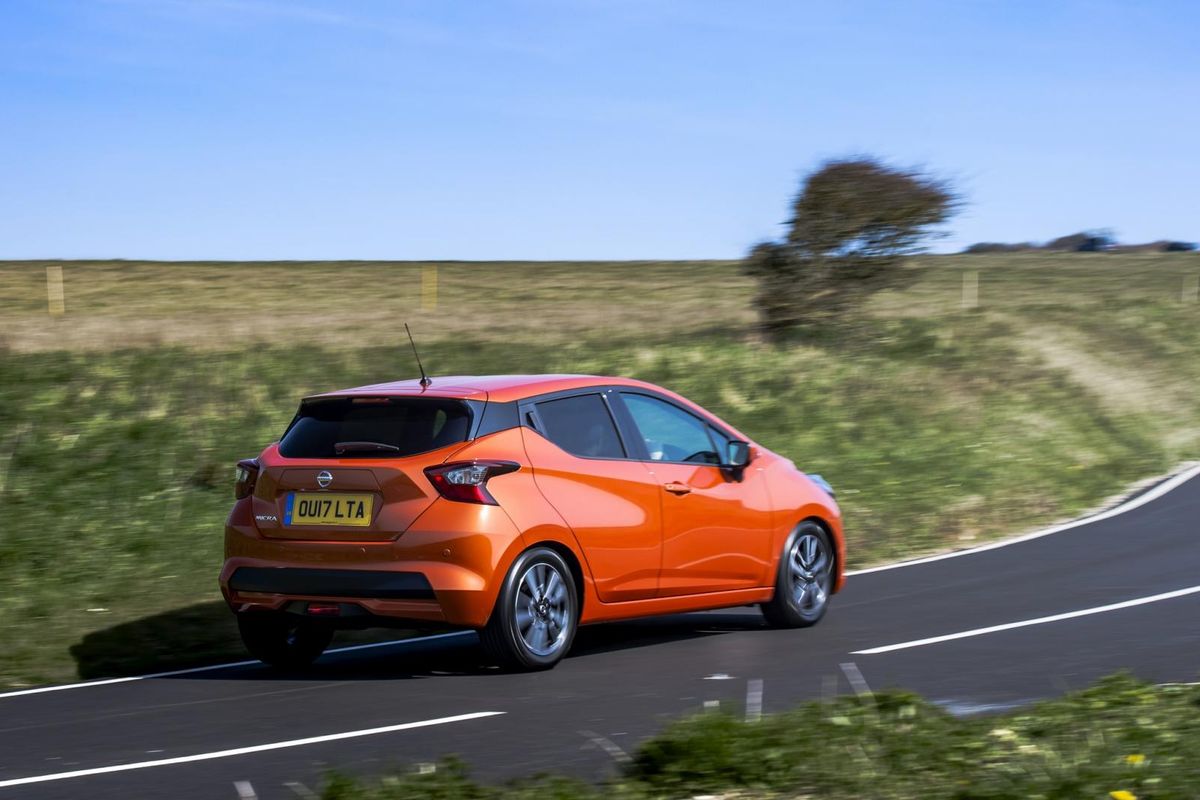
Its design incorporates many of the current Nissan design cues including the distinctive V-grille, from where sharp crease lines run through to the rear ends boomerang-shaped lights. The floating roof effect of the C-pillar creates an airy feeling. The rear door handles are hidden in the trailing edge of the C-pillars and an extended roofline culminates in a spoiler.

The interior

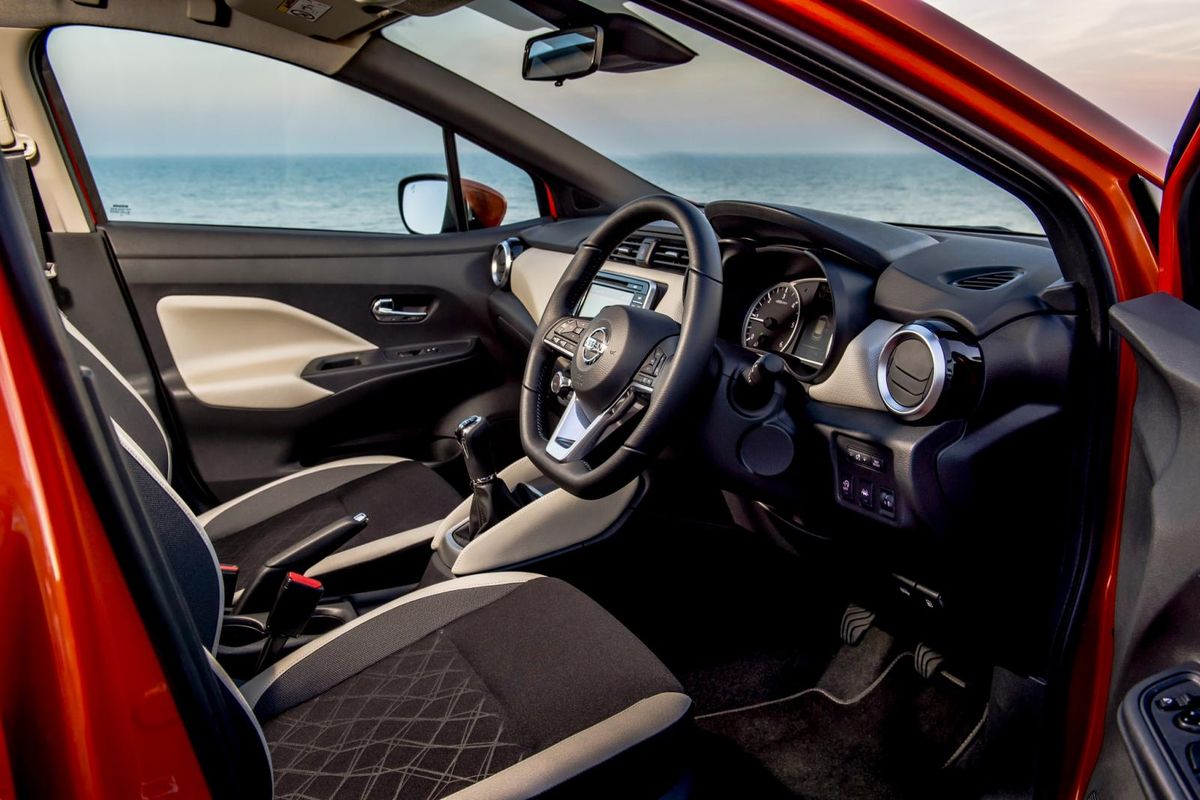
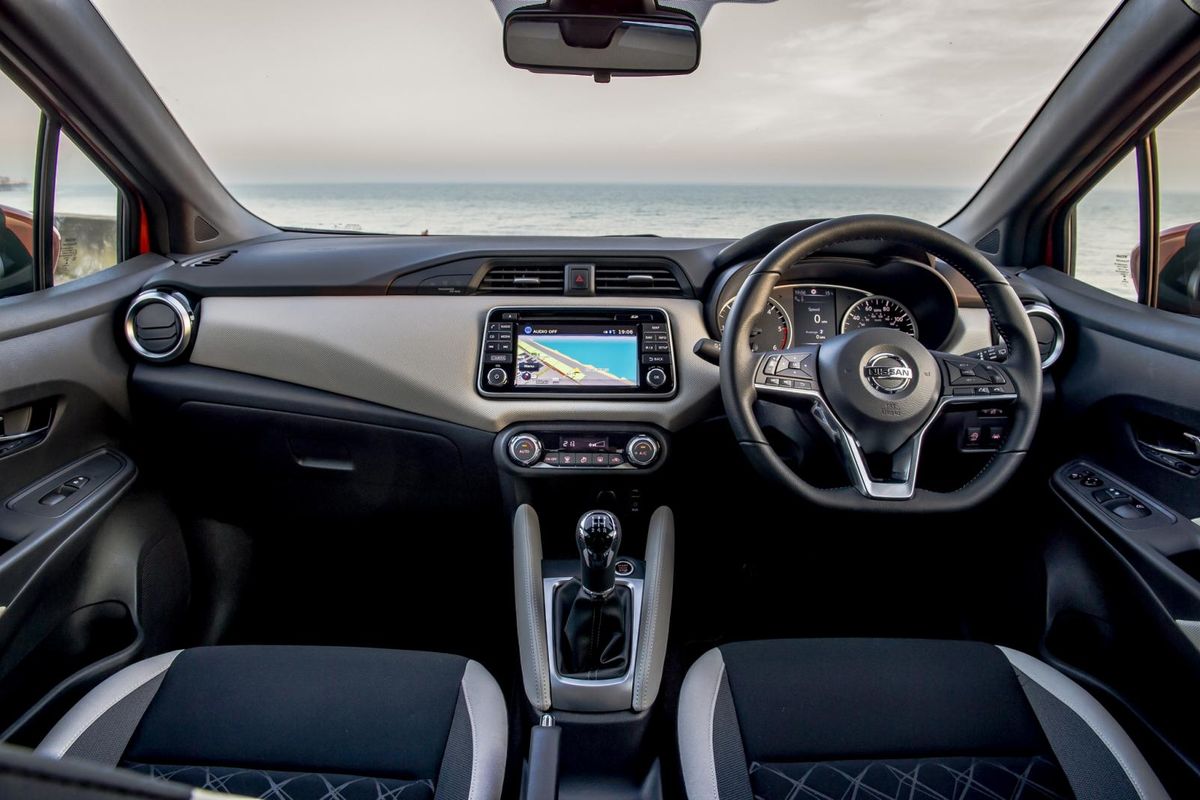
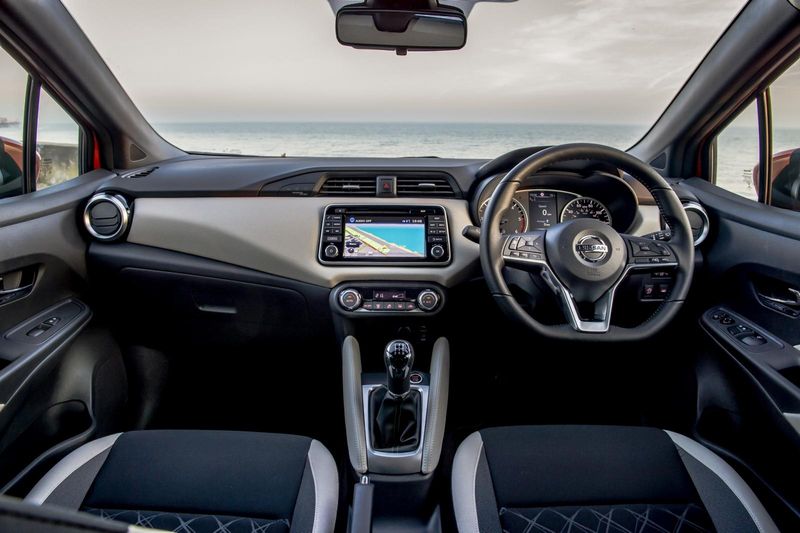
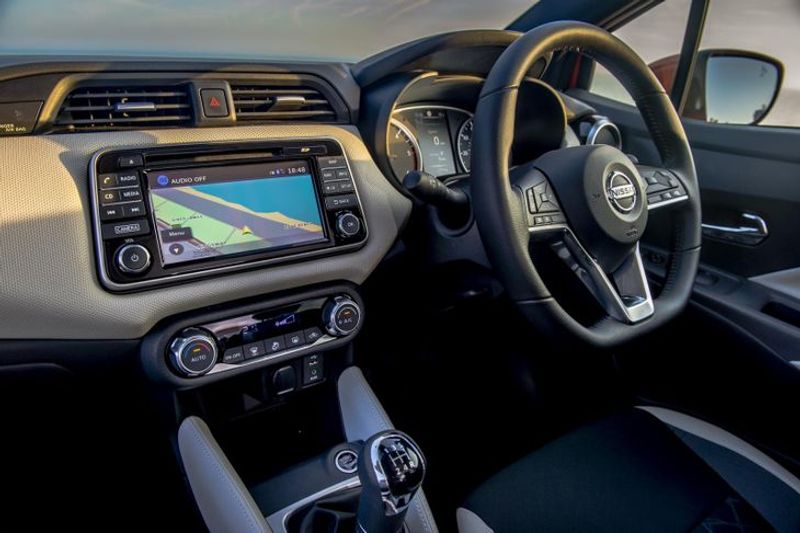
Inside, the new Micra is a huge step forward. The drab interior has been replaced by something more stylish and modern. But most crucial is the quality. This is a far better-finished car than before with more soft-touch plastics and modern fittings. The driving position is lower and the extended width and wheelbase translate into more cabin space and the new “gliding wing” shaped dashboard imparts the feeling of greater cabin width.


The interior represents a major improvement over its predecessor, featuring a new cabin design and enhanced perceived interior quality. 

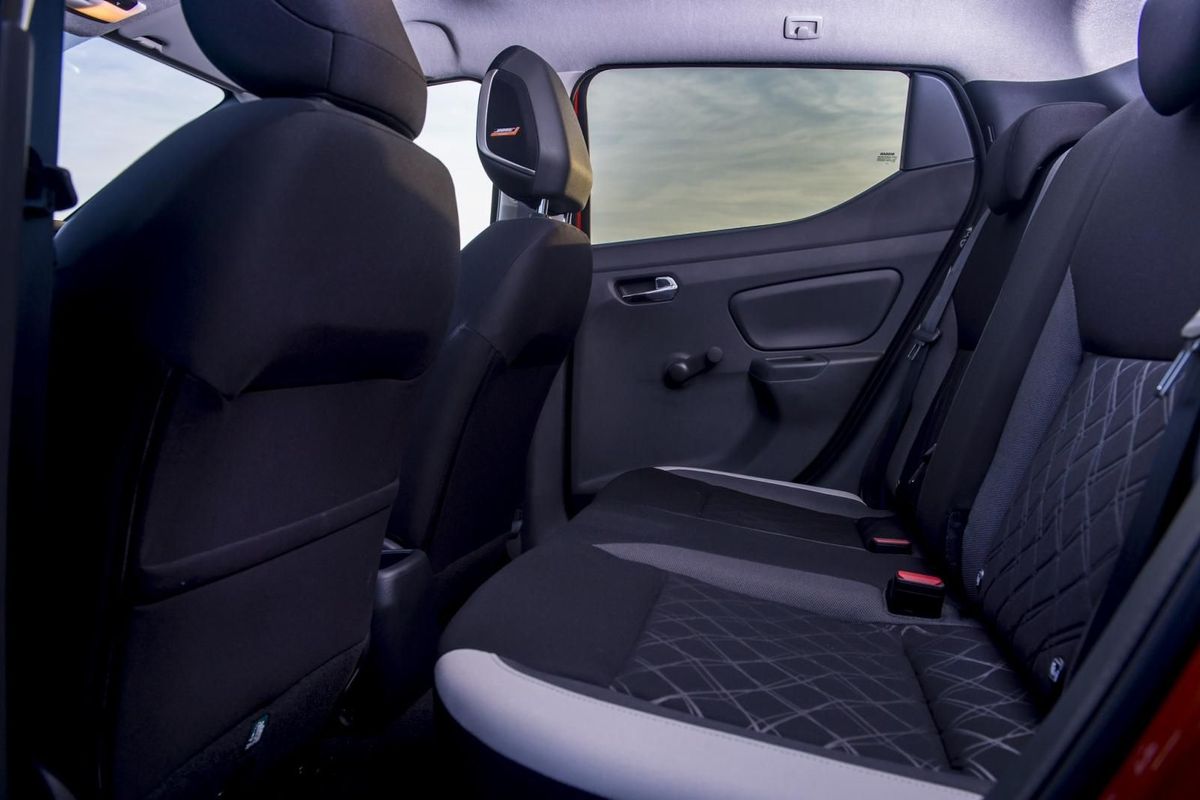
Room for those in the back is about standard for a hatchback in this class and the generous 300-litre luggage bay is deep, which does mean you have to lift heavy things out over a substantial lip. The Micra does, however, come with a proper spare wheel as standard. Oddly, the rear windows across the range only have manual winders (UK specification).

Technology

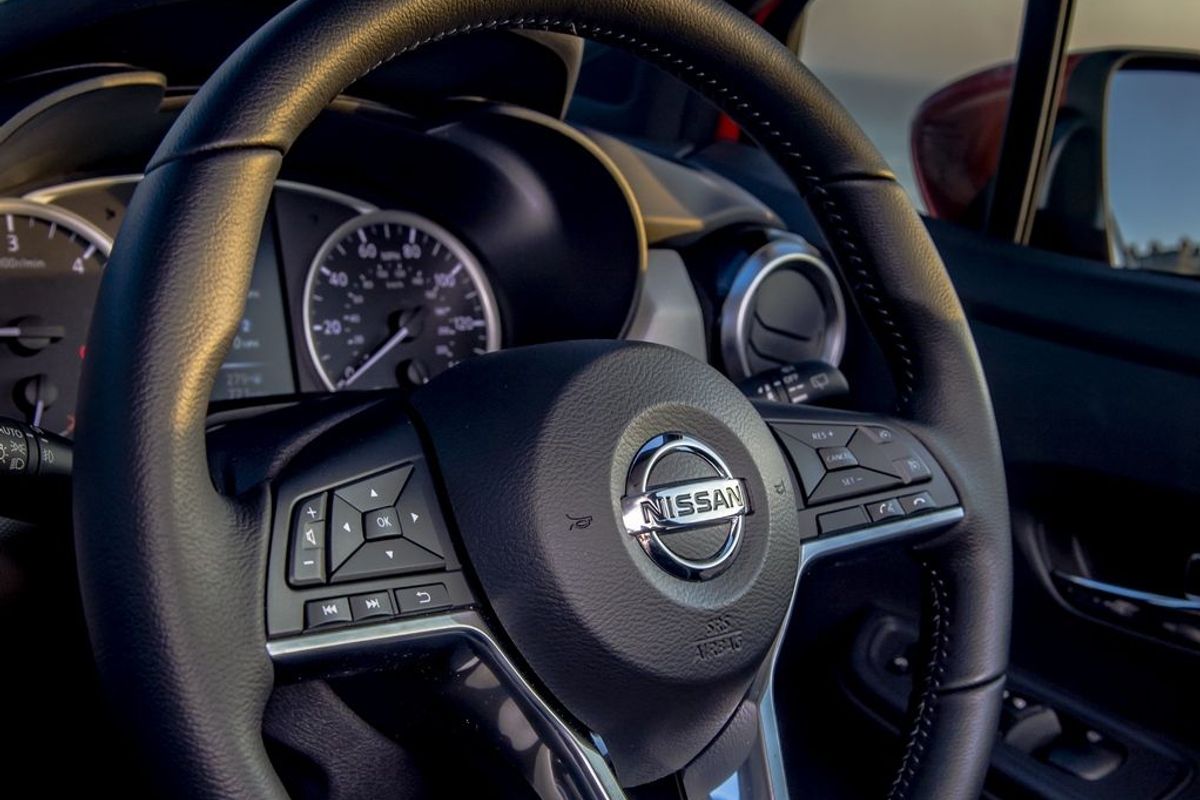
In many “firsts” in its segment, the new Micra sees the trickling down of on-board technology from larger more luxurious cars in the upper echelons of Nissan’s current international line-up. In Europe, new tech includes lane departure warning, emergency city braking with pedestrian recognition as well as Nissan’s around-view monitor, traffic sign recognition, high beam assist and blind spot warning. There’s a seven-inch full-colour central display providing access to the audio system, navigation, mobile phone, downloadable apps and Siri voice control via Apple CarPlay.


The new Micra is packed with useful features, but Nissan SA is yet to confirm local specification for the local market. Let’s hope it’s generous!

With due deference again shown to its younger target market, there’s an all-new 6-speaker ‘Bose Personal’ sound system, developed through close collaboration with Nissan. Although the complete local specification will only be revealed at the Micra’s media launch, Nissan South Africa has revealed that cars in our market will feature at least “a modern infotainment system that includes Apple CarPlay, 6 airbags, an anti-lock braking system (ABS) and electronic brakeforce distribution (EBD)”.

Engine and transmission

Meanwhile, Nissan SA has further revealed that Micra will be powered by 0.9-litre, 3-cylinder turbopetrol unit, which develops 66 kW/140 Nm and is mated with a 5-speed manual gearbox. In my experience, when driven with sense, the engine consumes only 4.4L/100 km and emits just 99g/km of CO2. But fortunately, it has the longest legs of any 3-pot I’ve driven in quite some time and is enormous fun to drive with dollops of enthusiasm.


The new Micra is a frugal daily runner, and depending on the engine, performance is decent too. 

Ride and handling

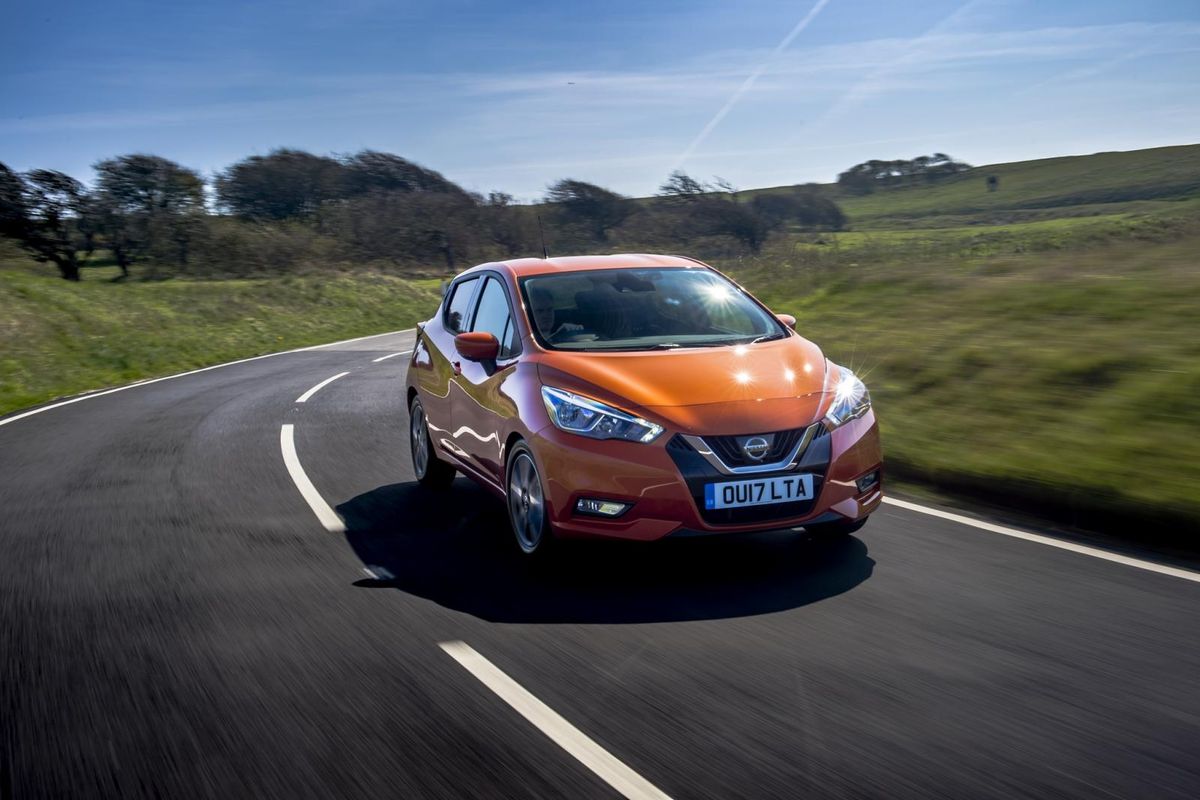
The car now sits lower and wider than the outgoing model and thanks to some clever tech borrowed from the more expensive crossover range, the Micra is really good to drive.

Around town, the car feels nice and small enough to navigate easily through traffic. After a short drive, you’ll be impressed by the combination of abilities that the Micra exhibits. On a twisty road, the direct steering lets you place the car with confidence and the car offers plenty of grip.


Ride quality is good and the new Micra could quite possibly lead the segment locally provided that specification and engine choice is favourable.

Out on the motorway, the aerodynamic body of the Micra makes road and wind noise a faint hum which is really impressive in this class. The chassis and suspension setup works best here – it eliminates the high-frequency bumps from expansion joints in the road and you end up wondering why the car in front is fidgeting around while you barely feel a thing.

Prices

There aren’t prices available for local Micra derivatives yet, but in the UK the range starts from an appealing £11,995, which translates to around R200 000, which would be a decent starting point. It is known, however, that the Micra will have a 3-year/90 000 km service plan, 6-year/150 000 km warranty and 24-hour roadside assist.

Summary


Out with the boring, fuddy-duddy image and in with a dramatically more appealing design. Micra is so different it needs a new name?

The Micra is a huge leap forward over the previous models and that is partly thanks to how successful Nissan crossovers have been lately. That success has let some of their tech filter down to the Micra, making it a really accomplished rival to the established competition. It faces a greater challenge than some of its small car rivals, from the premium go-kart experience of the Mini, to the very capable Ford Fiesta and the panache of the Fiat 500, as it has to overcome the stigma of being a historically boring car. Nissan has redefined the character of the Micra in the 2017 model to make it a sportier and more exciting car than it’s ever been in the past, which is all evident when you get behind the wheel.

Overall, the new Micra is a great little car. If Nissan SA positions it smartly, it might disrupt the segment (in a good way), it certainly deserves every chance to succeed.

Related content:

Nissan Micra Active (2017) Launch Review

Nissan Micra Active Launches in SA (2017) Specs & Pricing

Volkswagen Polo 1.0 R-Line (2017) Quick Review (w/Video)

All-new Ford Fiesta ST Revealed [with Video]

Fiat 500C 0.9 TwinAir Lounge Auto (2017) Review

Facelifted Renault Clio (2016) First Drive

Looking for a used Nissan Micra?

Start your search for one here