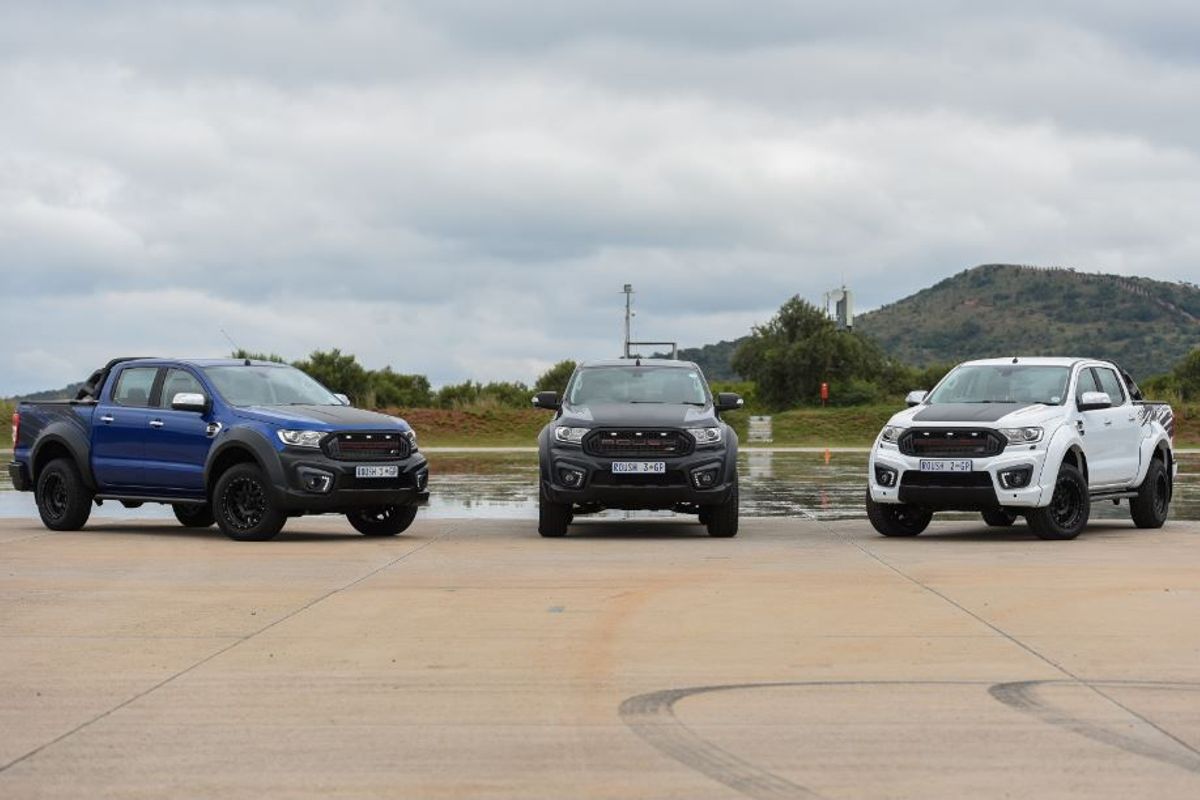
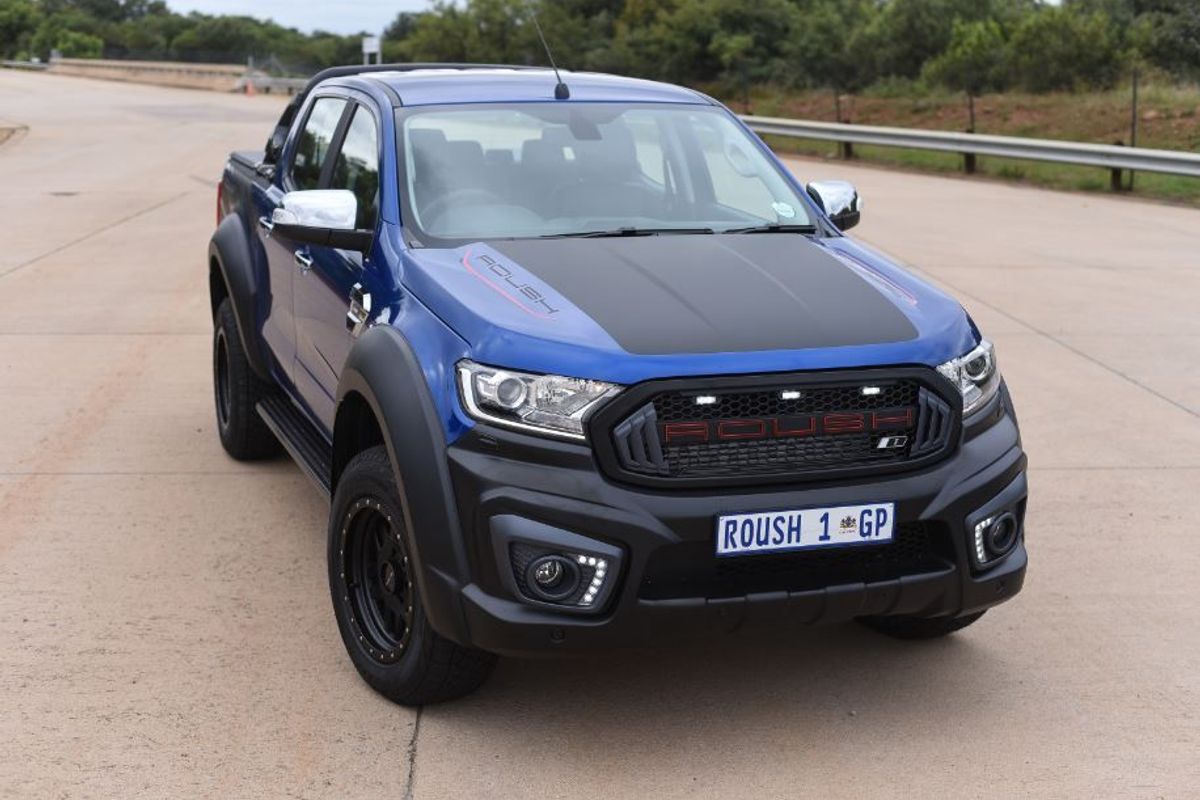
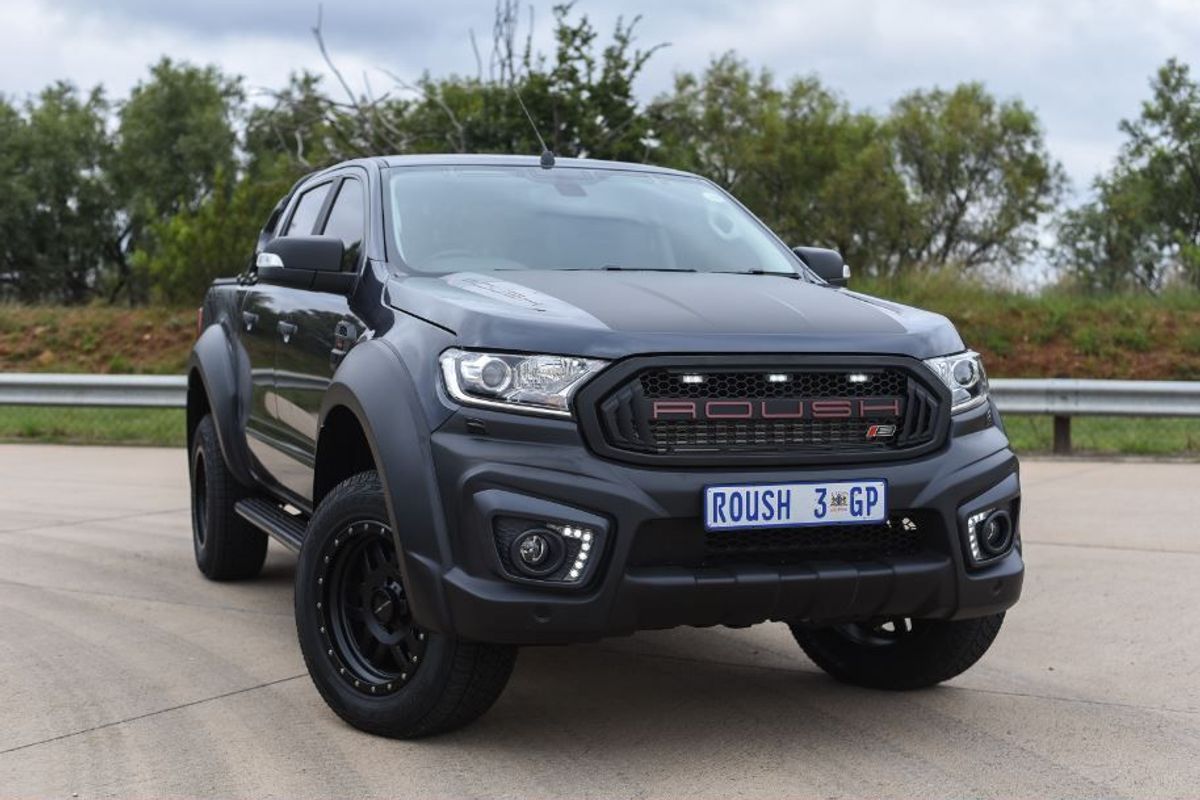
Can't wait for a Ford Ranger Raptor? How about a Roush-tuned Ford Ranger instead? Check it out!
With two years of development and testing under its belt, Roush Performance and Performance Centre has unveiled a Roush Ford Ranger for the South African market. The Roush Performance upgrade which is available in three stages and has been designed to be "within Ford's performance tolerances" ensuring that the engine won't be overly stressed. In fact, Roush is confident enough to offer a Ford and Roush 3-year / 60 000 km drivetrain warranty. The Roush upgrades are also fully supported by Ford Motor Company of South Africa, which bodes well.
Three stages of Roush
RS1 – The Roush Stage 1 Ranger offers aesthetic upgrades that individualize your Ranger and make it stand out from the rest, but allows you the option of a whole lot more. Kit includes:
Body Kit
ROUSH Bumper/front grill
ROUSH Extended Wheel Arches
Rear Bumper
Decklid Cover
18-inch Alloy Rims & Tyres
Sport Bar & Side Steps
Tonneau Cover
Dual Pipe Cat-back Exhaust
ROUSH Aesthetics
Bonnet wrap
Windscreen Banner
ROUSH Splash (Rear)
ROUSH Accessories
Embroidered Headrests
ROUSH Car Mats
RS2 – The Stage 2 ROUSH Ranger offers more than street presence. With an improved high-flow cat back exhaust combined with the added performance from a pre-programmed chip that includes 5 pre-mapped programmes and a Hybrid turbo, you can expect up to 16% increase in power or 170 kW of power and 550 Nm on the flywheel. This from the 3.2-litre turbodiesel model Ford sells in a standard Ranger.
Body Kit
ROUSH Bumper/front grill
ROUSH Extended Wheel Arches
Rear Bumper
Decklid Cover
18” Alloy Rims & Tyres
Sport Bar & Side Steps
Tonneau Cover
ROUSH Decals
ROUSH Branding –
Bonnet wrap
Windscreen Banner
Side Stripes (Doors)
ROUSH Splash (Rear)
Dome Badges
Front Grill Letters
ROUSH Accessories
Embroidered Headrests
Rubber Car Mats
Level 1 Performance Upgrade
Uprated Performance Intercooler
Cat-back High Flow Exhaust System
5 Map Chip (Software)
Ford Protect 3yr/60 000km Comprehensive Drivetrain Warranty
Pedders Slotted Geomet Coated Rotor Brakes & Pads
Pedders Foam Cell TrakRider Suspension
RS3 – The ROUSH Stage 3 Ranger with an up to 30% increase in performance through the addition of a High-flow cat-back exhaust, performance uprated intercooler, hybrid turbo upgrade and a 5 map software chip. Power figures are estimated at 190 kW and 650 Nm. With added power comes improved braking with Pedders Kevlar Ceramic brake kits and smoother ride courtesy of Pedders Foam Cell TrakRyder Shocks with an elevated ride height.
The Body Kit
ROUSH Bumper/front grill
ROUSH Extended Wheel Arches
Rear Bumper
Decklid Cover
18” Alloy Rims & Tyres
Sport Bar & Side Steps
Tonneau Cover
ROUSH Branding
Dome Badges
Front Grill
Embroidered Headrests **
Rubber Car Mats
ROUSH Accessories
Full ROUSH Leather Interior
ROUSH Graphics
Sport Bar
Tonneau Cover
Side Step
Window Tinting
Level 3 Performance Upgrade
Hybrid Turbo Upgrade
Dual Pipe High flow Catback Exhaust
Aluminium Uprated Performance Intercooler
5 Map Chip (Software)
Ford Protect 3 yr/60 000km Drivetrain Warranty
ROUSH Handling Pack
Pedders Slotted Geomet Coated Rotor Brakes & Pads
Pedders Foam Cell TrakRider Suspension
Roush Ranger Pricing
The Roush upgrade costs are on top of the purchase price of a Ford Ranger.
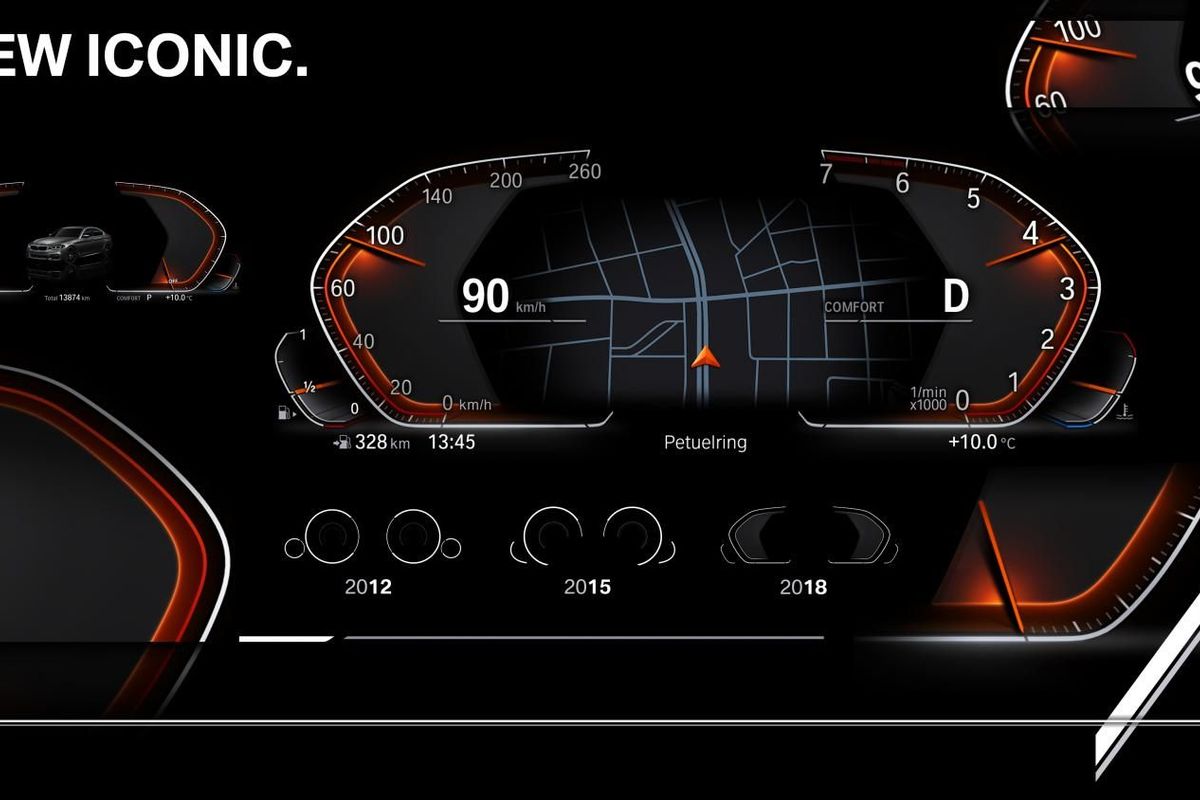
BMW will be releasing a new version of its iDrive in 2018 and we'll see the new infotainment system make its debut in the new BMW X5, 3 Series and 8 Series, which are due for reveal before the end of the year.
Can you believe that BMW's iDrive has been in service since 2001? However, given how fast technology progresses and despite numerous tweaks and facelifts, the BMW dashboard layouts tend to feel a little outdated in comparison to the crips offerings of the Volkswagen Group's Active Info Display / Virtual Cockpit and Peugeot's i-Cockpit.
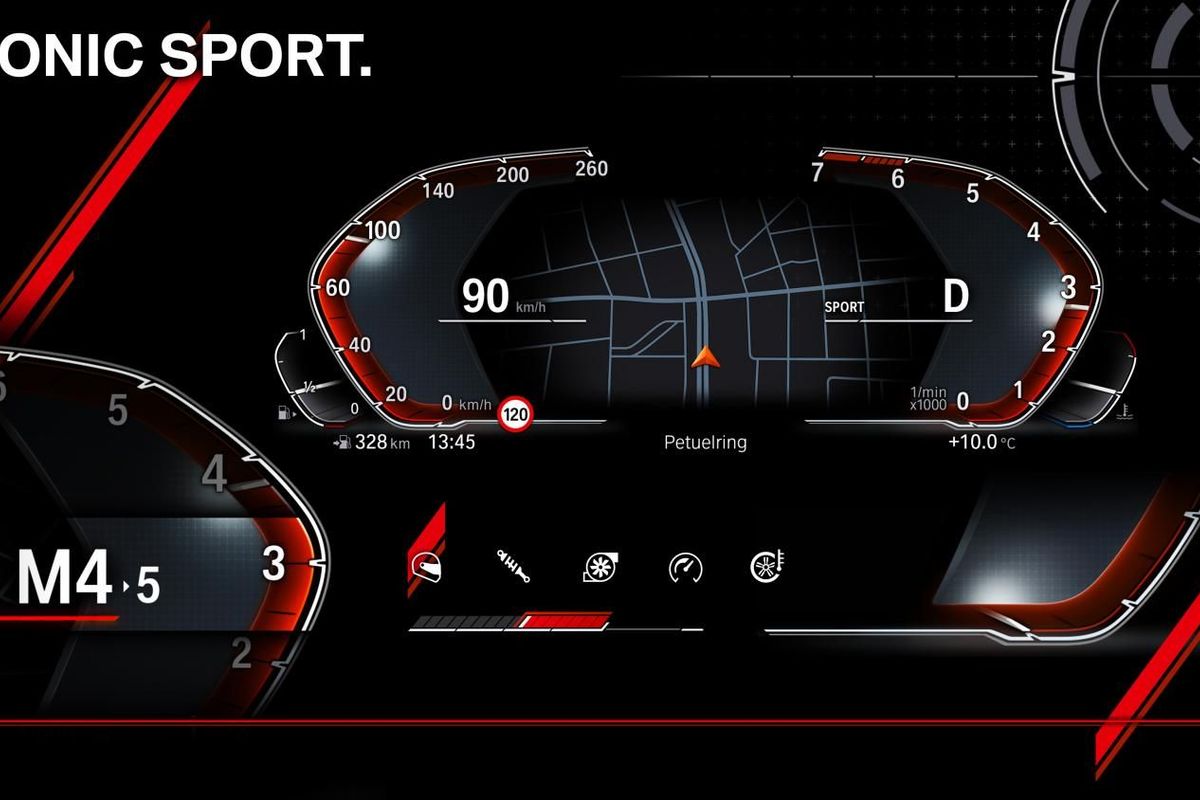
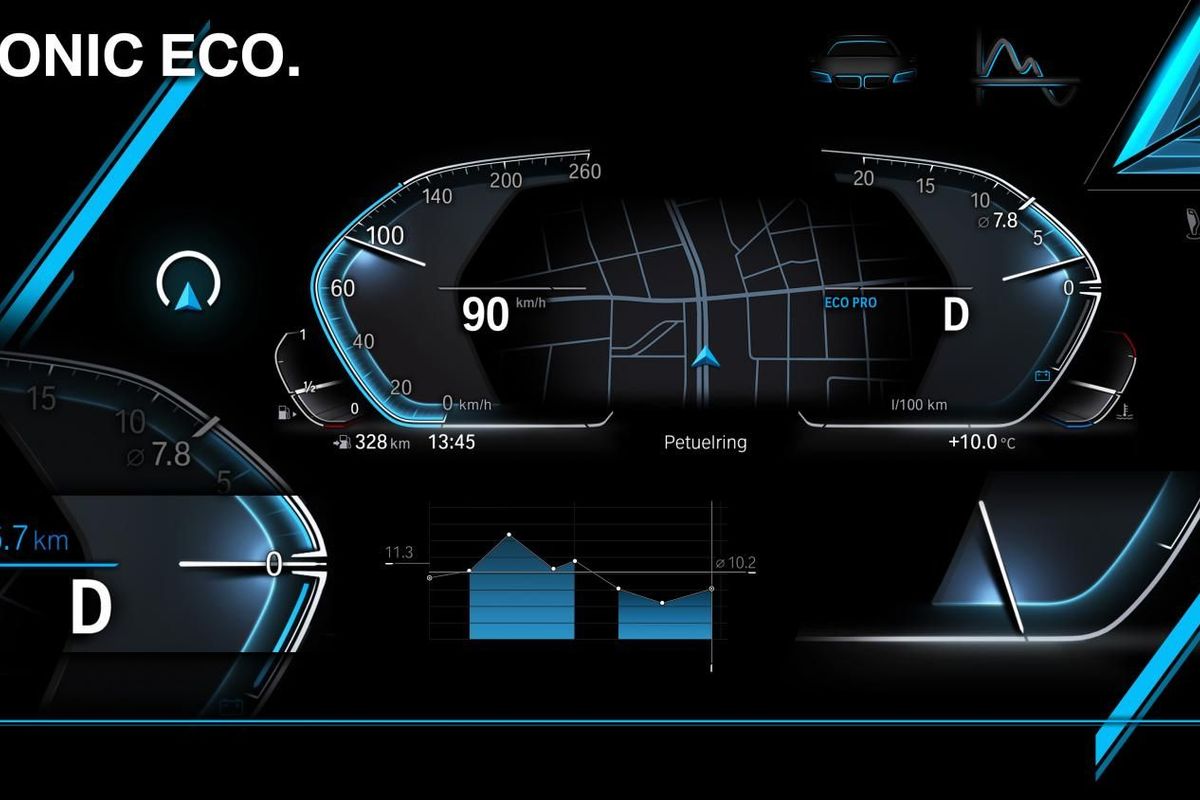
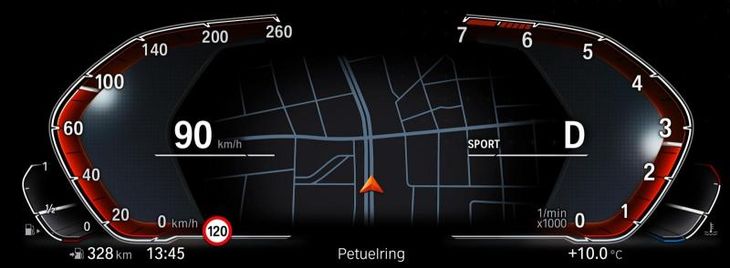
Dubbed BMW iDrive 7.0, this new generation of display is completely digital and is claimed to offer a "clear layout and structuring, intuitive operation, and customisable and personalised displays which has been designed to always provide the driver with the right information at the right time." With a navigation map located in the centre, the new system features a rev counter and speedometer, but not in the typical BMW circle dial shape which we've grown accustomed to over the decades.
First previewed in the BMW X7 iPerformance concept, this new dashboard layout looks fresh and clean, but the real test will be in the user experience. BMW claims that its new layout can be customised with "up to ten freely configurable main menu pages, each containing between two and four pads." The system will feature the standard iDrive controller, touchscreen functionality, voice control and the new gesture control tech. Naturally the display changes depending on which mode the car is in. For example, when your BMW is in Sport mode, it'll display performance data like turbo boost pressure and G-forces.
The new BMW OS announcement formed part of BMW's Digital Day, where it "offers an insight into current product developments, technological concepts, innovations and manufacturing processes that will enable it to shape the future of mobility."
Volvo's XC40 has landed in South Africa and we had a chance to sample the new premium compact family car in Johannesburg. Is it worth your attention and, critically, can it match some of the German offerings? Short answer? Yes, most definitely… let's find out why.
It seems that Volvo cannot put a foot wrong at the moment. Buoyed by investment from Geely and lauded globally (the brand has bagged several #CarsAwards category wins), Volvo's SUVs have elbowed their way into the limelight on sheer weight of merit. The XC90 took the premium SUV market by storm, its XC60 executive SUV sibling recently won the 2018 World Car of the Year title and the new XC40, which has been named the European Car of the Year, is now available in South Africa.
What is an XC40?
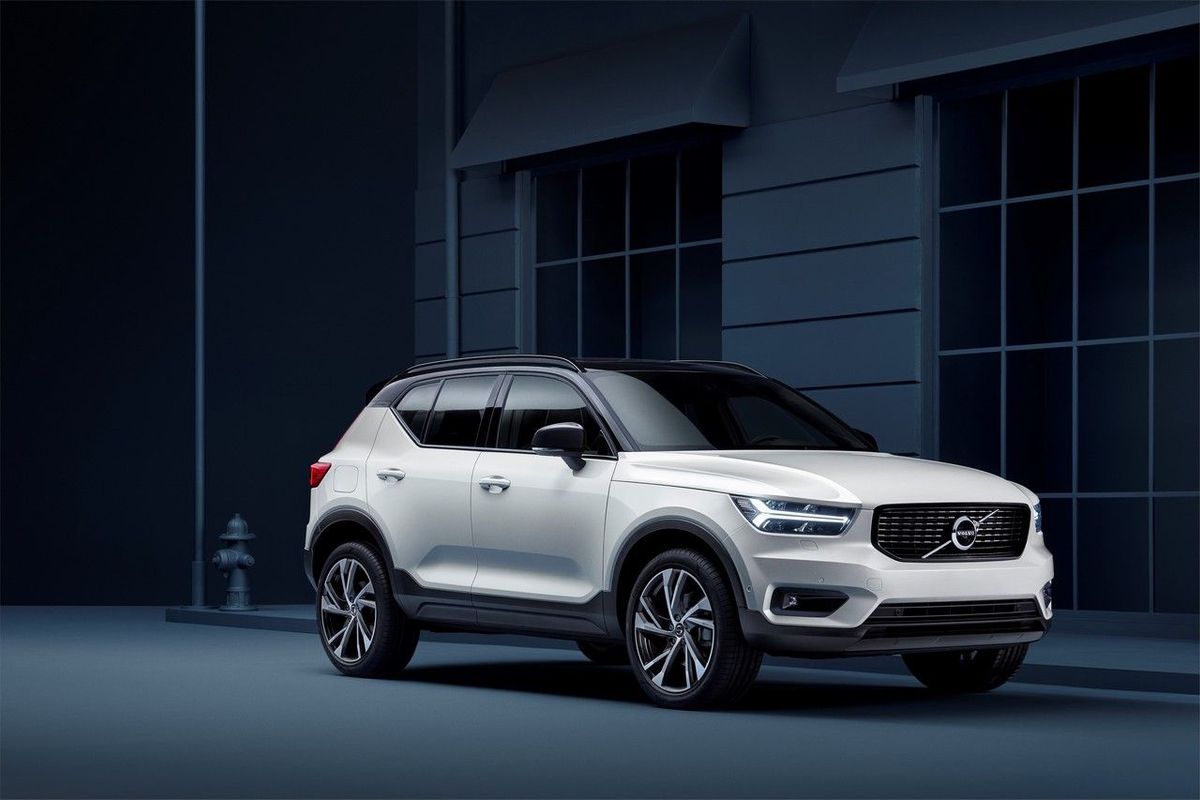
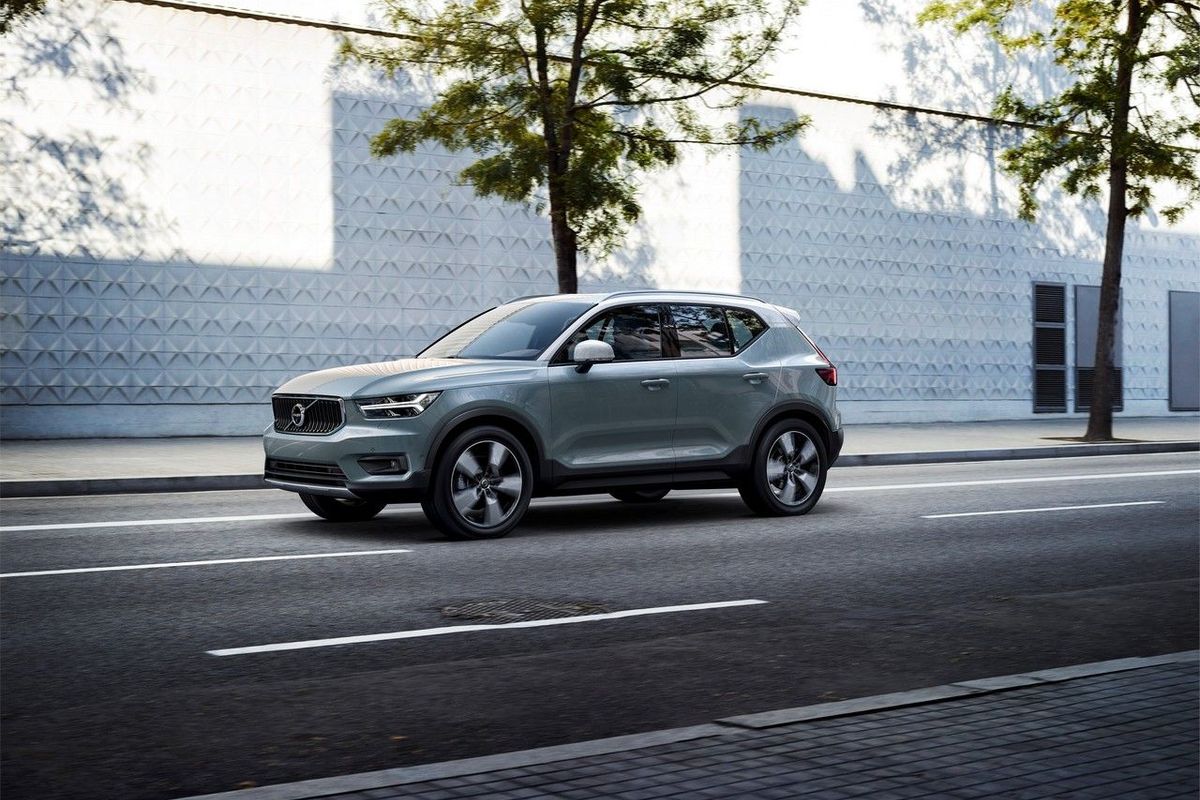
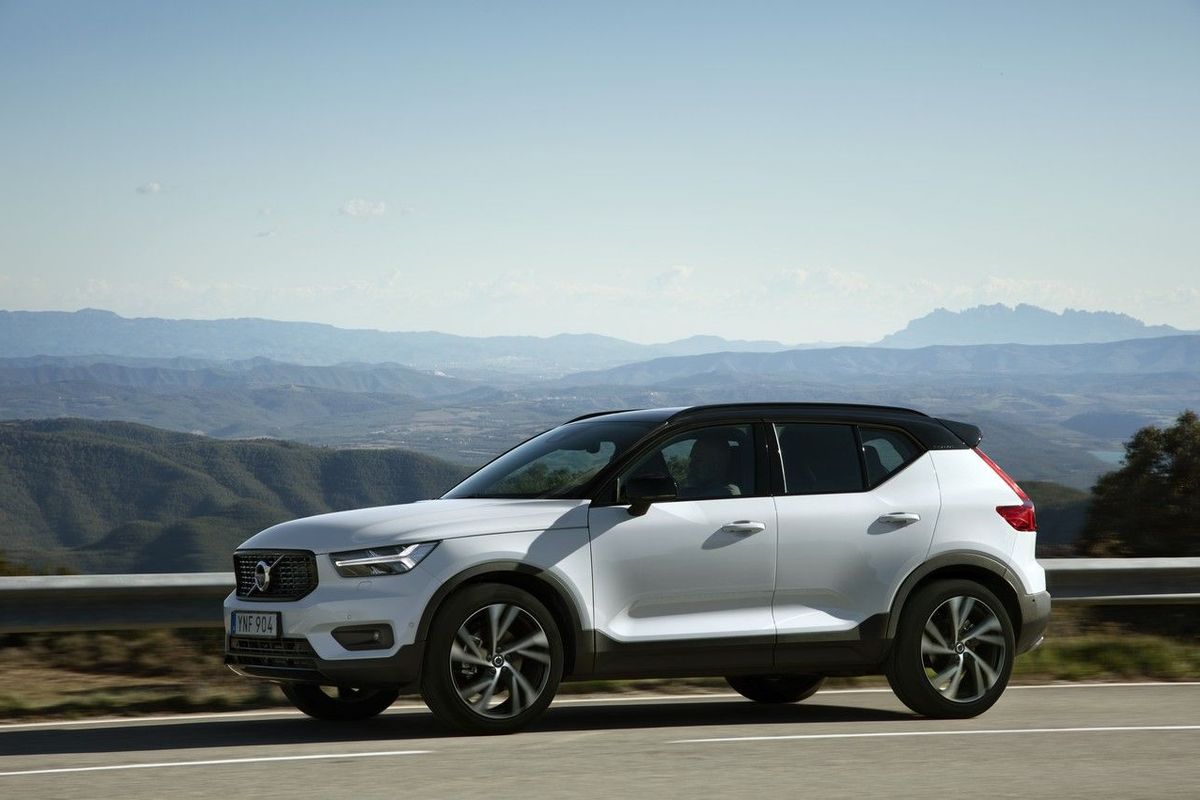
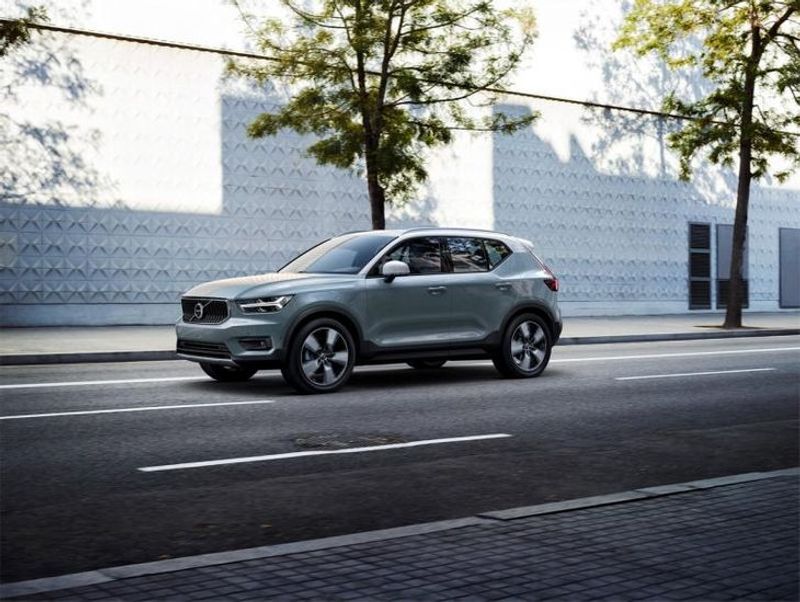
It's arguably one of the most stylish vehicles in the segment, yet it retains its Volvo identity.
Given how the market has reacted to the emergence of the premium compact family car segment, it makes sense for the Swedish brand to be playing in this space. However, Volvo is not alone; BMW (X2), Jaguar (E-Pace), Audi (Q2) and some various Mercedes-Benz SUVs also vie for their share of the pie.
It would be foolish to dismiss the XC40 as a shrunken XC60 or XC90, because while the vehicles share some elements, the newcomer is not built on Volvo's Scalable Product Architecture (SPA). The newcomer is the first vehicle to be assembled on Volvo's modular vehicle platform, named Compact Modular Architecture (CMA). This new platform will be underpinning future products and, based on our first impressions of the new XC40, we're keen to see how versatile this platform can be.
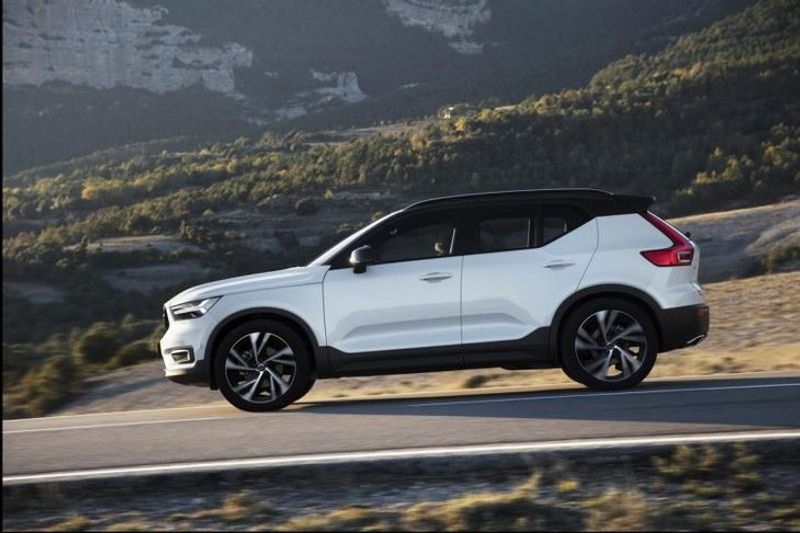
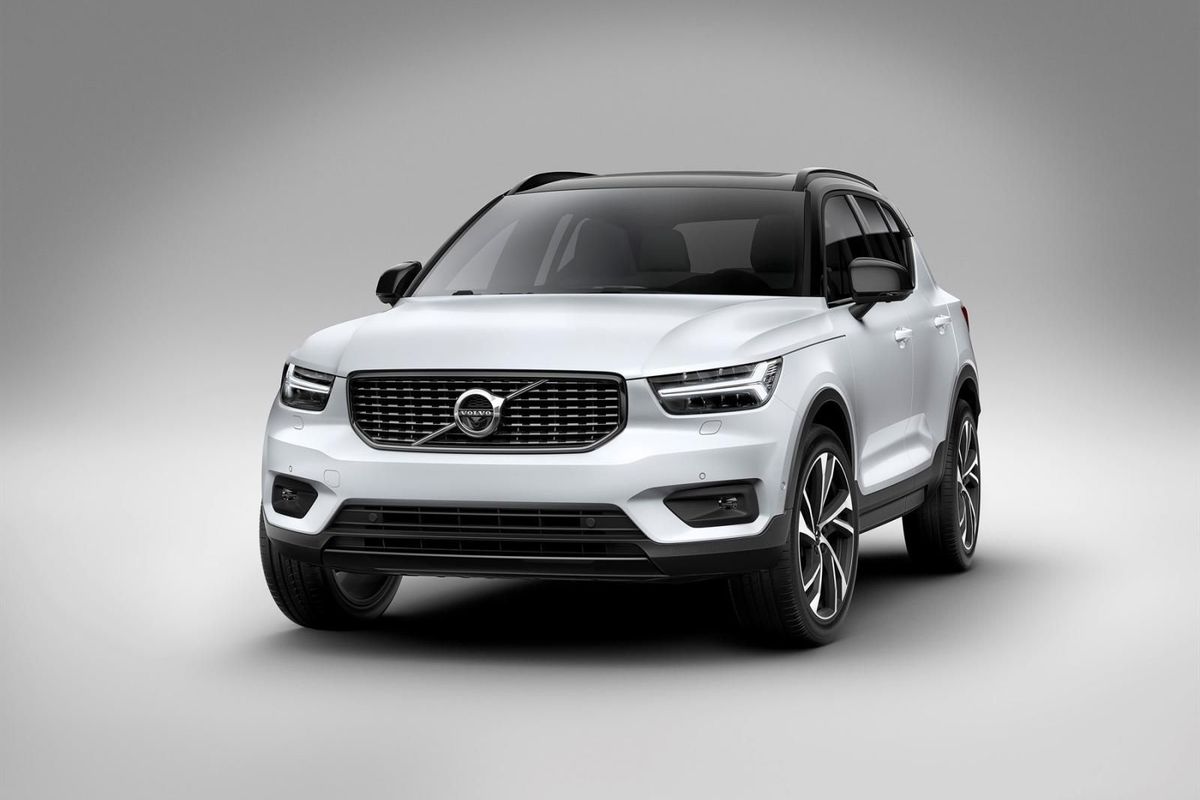
When you look at pictures of the XC40, it appears really compact but at almost 4 metres in length, it's bigger than you think. Volvo claims the new XC40 has the same height and width as the XC60. It may be the smallest SUV in the Volvo family, but it boasts 211 mm of ground clearance, making it suitable for some off-road excursions.
Personalisation
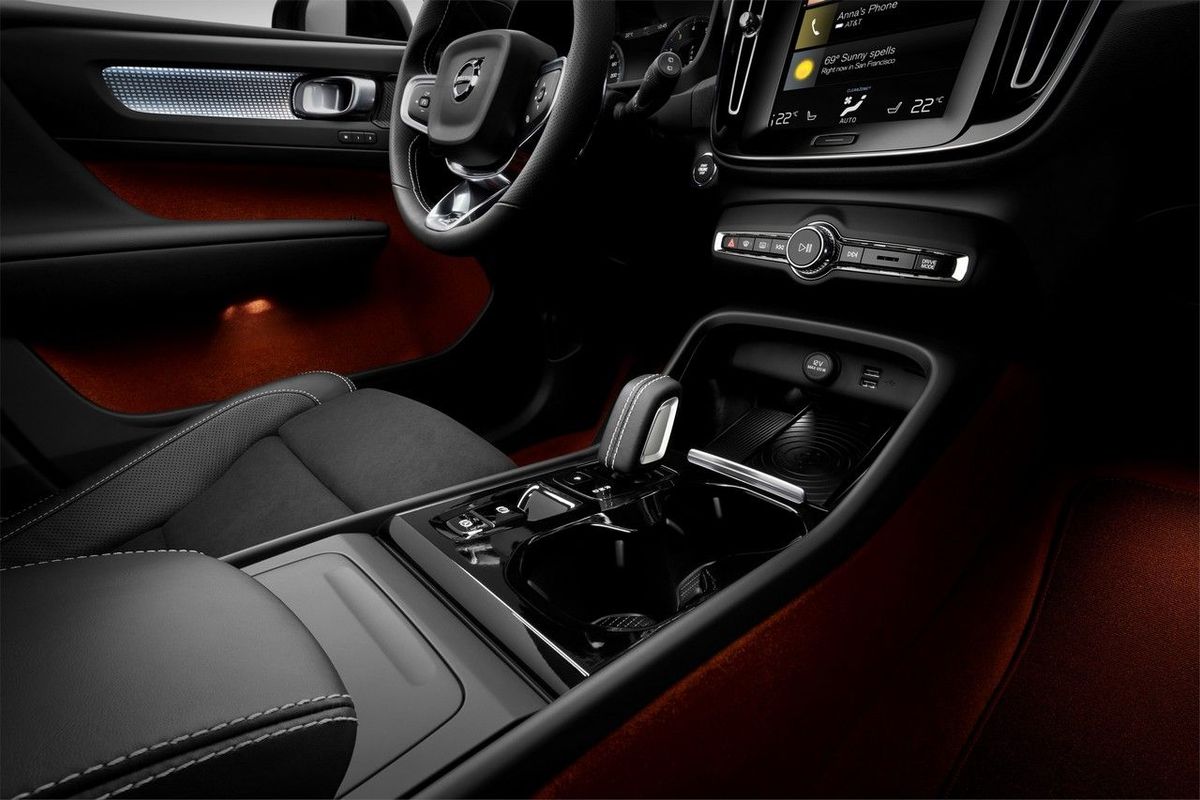
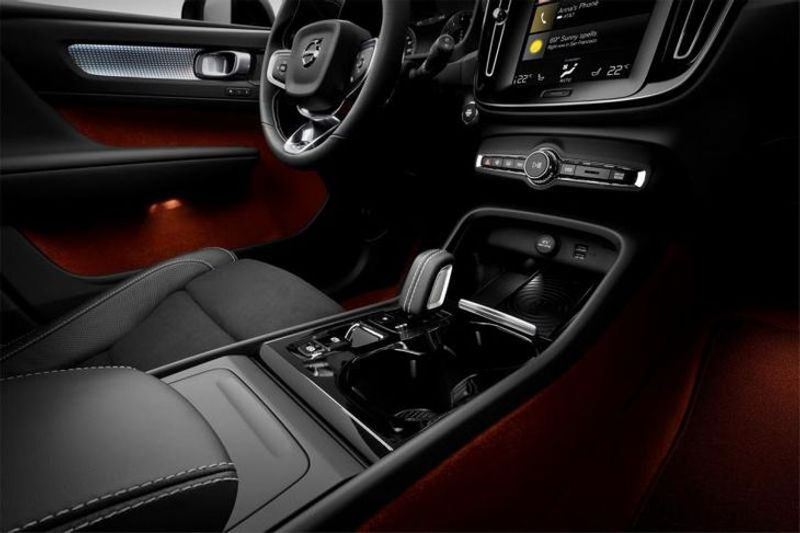
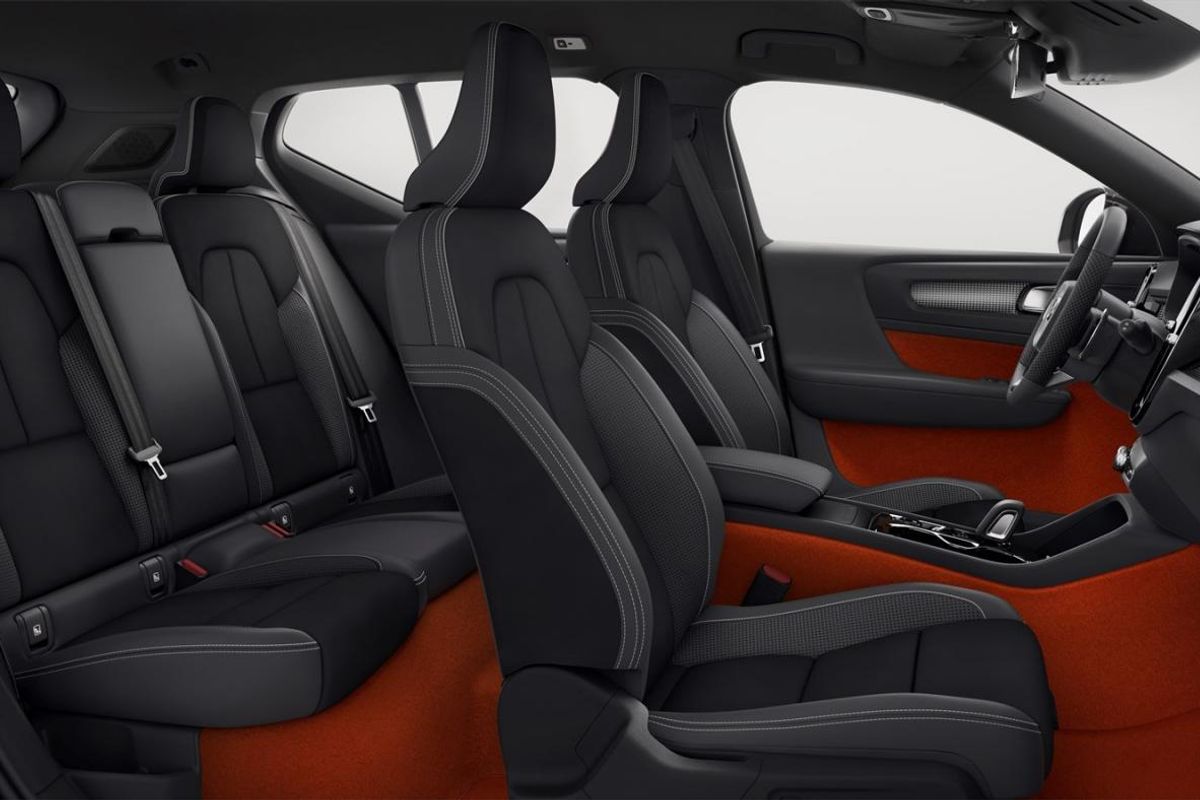
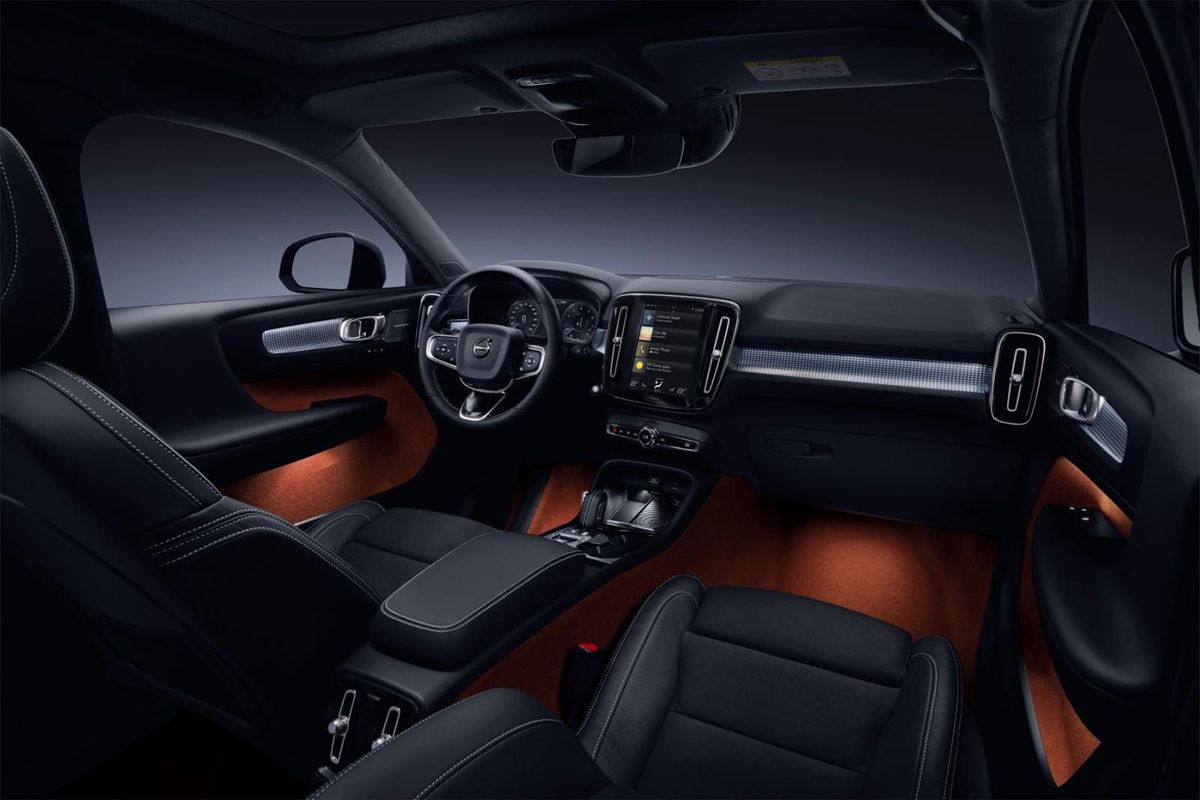
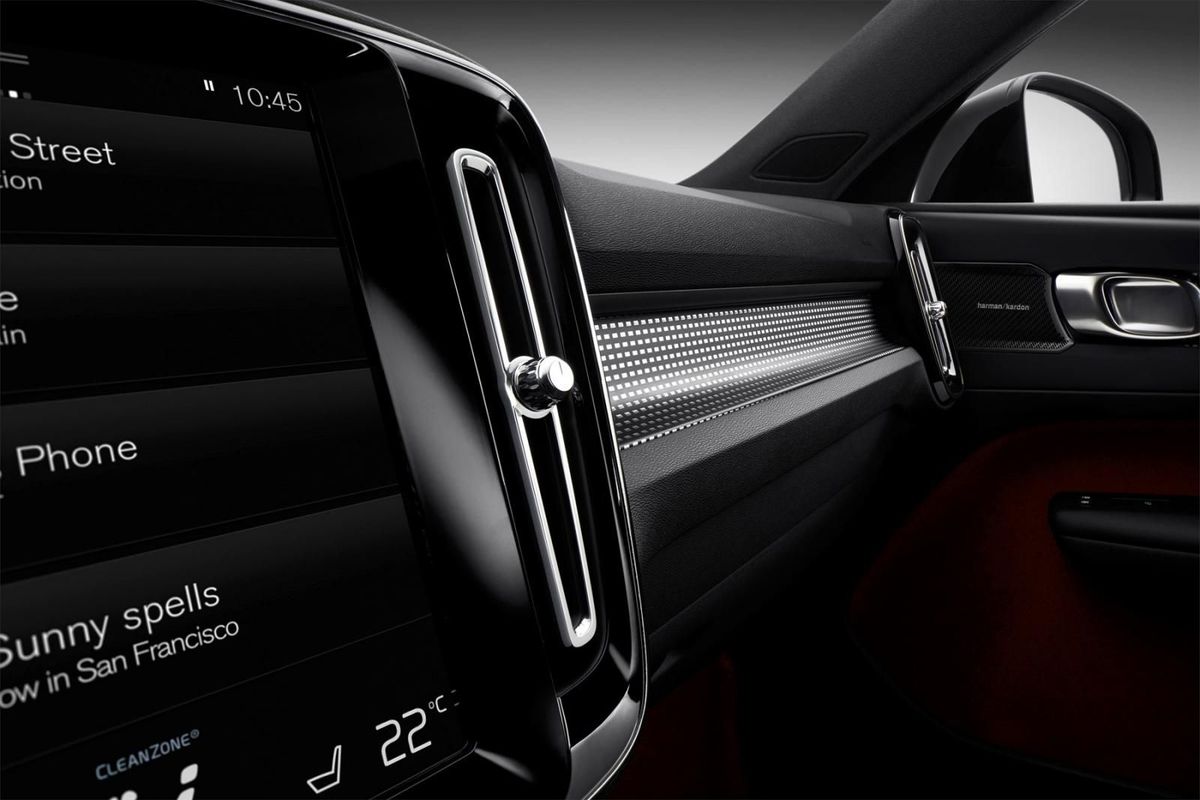
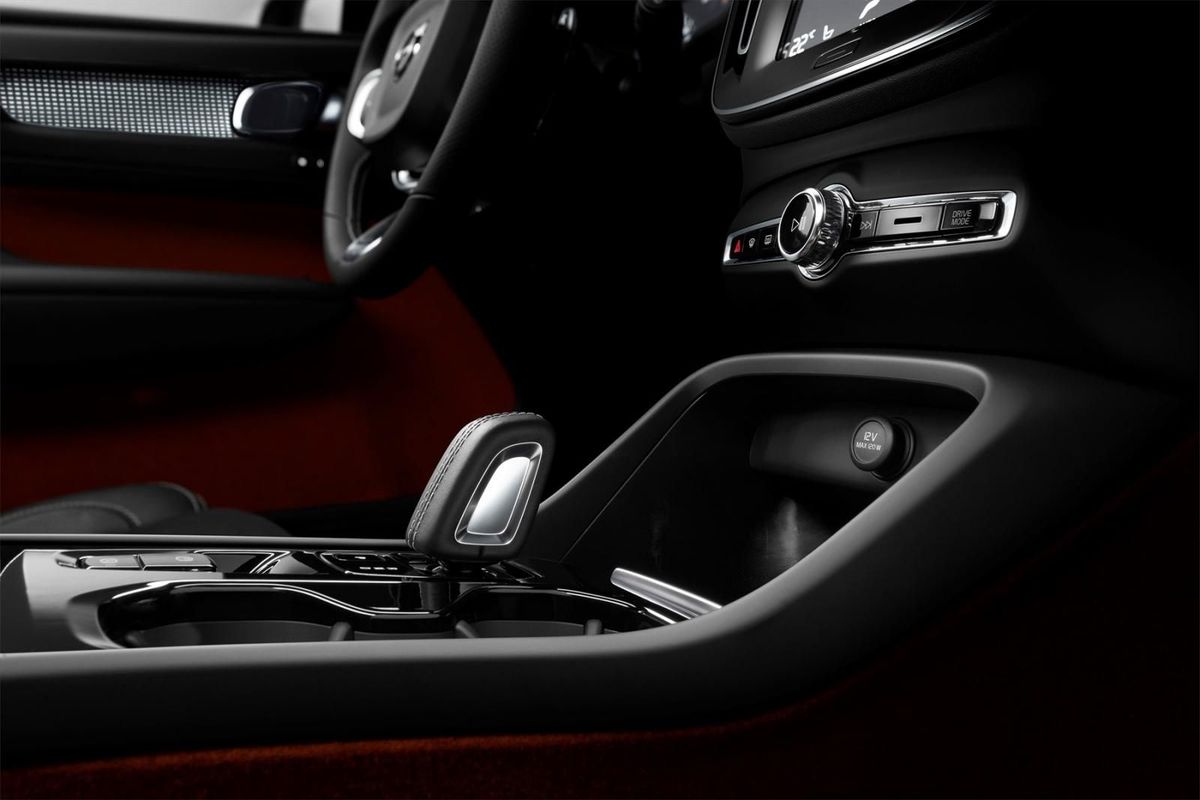
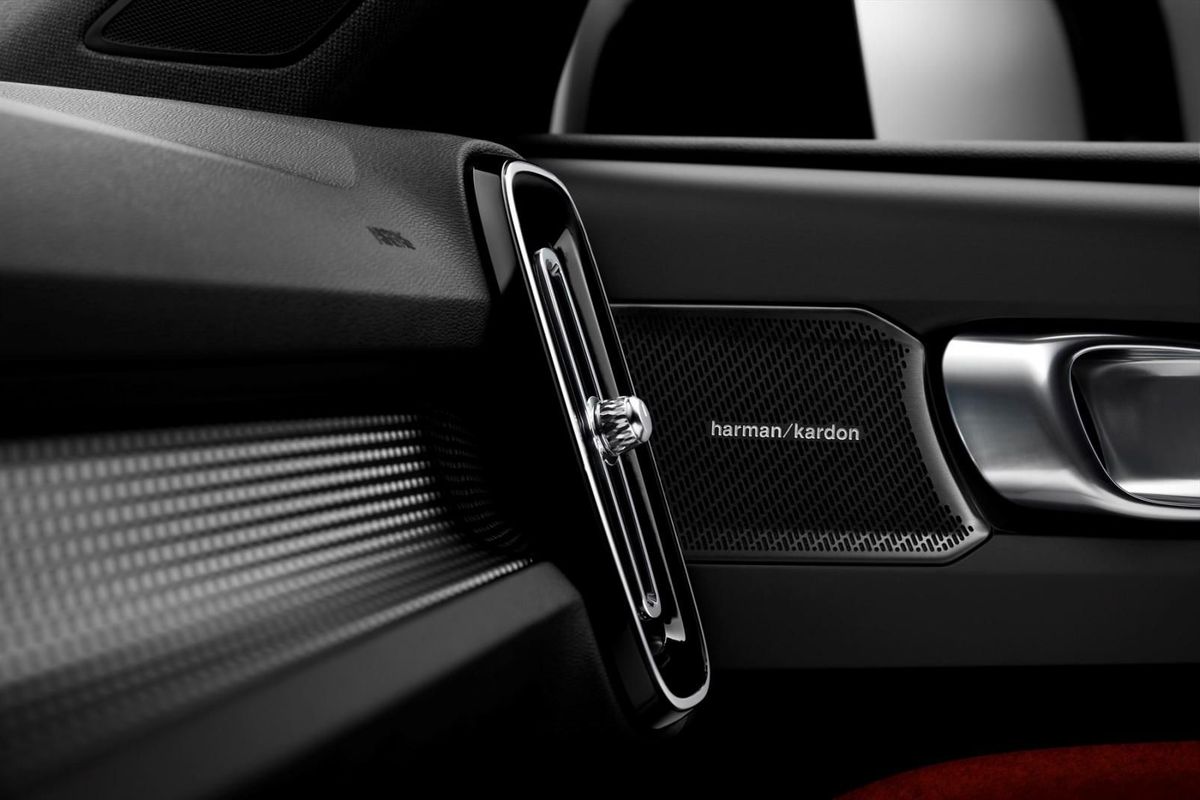
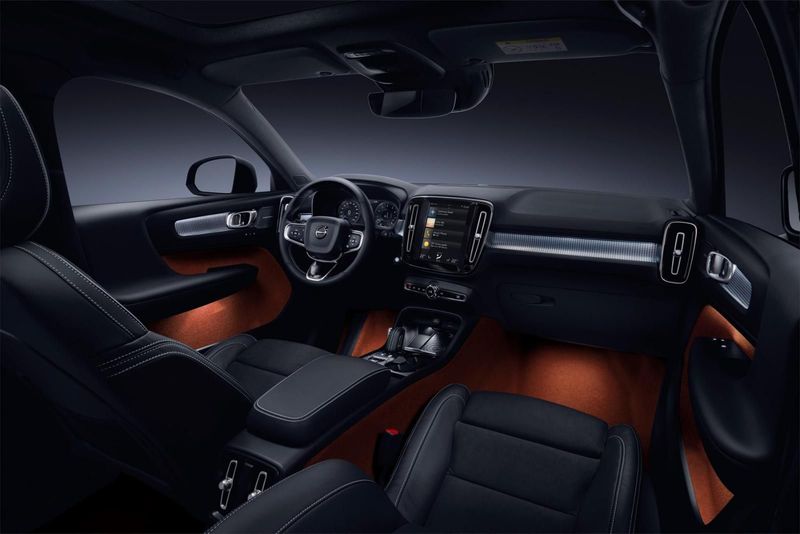
The Lava Orange inserts may not appeal to all tastes, but it adds some vibrancy to the cabin. Note the clever storage solutions dotted around the transmission lever.
Volvo South Africa has realised that image and personalisation options are key in this segment and, as a result, you can create an XC40 that is tailored to your individual taste and is likely to be one of a kind. There are 13 exterior colours, 9 alloy wheel designs, 7 interior themes and 3 interior trim inlays. We're quite fond of the Lava Orange floor colour, but understand that it could be too rich for some tastes.
Engines and trim
Volvo has ostensibly covered all the bases with regards to the new XC40's range line-up. There is a combination of turbopetrol, turbodiesel, manual, auto, front-wheel drive and all-wheel drive options. Admittedly they're not all available from the launch we attended this week, but we're glad to see there's an XC40 to suit the vast majority of customer requirements. The entry-level T3 derivatives arrive in the third quarter of this year and there'll be Inscription versions joining the range in future. This new T3 motor is a 1.5-litre turbocharged 3-cylinder unit producing 115 kW and 265 Nm, while consuming a claimed 6.8 L/100 km.
The rest of the lineup are engines we've experienced before in Volvo's other products. The D4 is a 2.0-litre turbodiesel 4-cylinder unit with 140 kW and 400 Nm, while the T5 packs 185 kW and 350 Nm, and is definitely the fastest model in the range. The turbodiesel engine will be the thriftiest of them all, with a claimed consumption figure of 5.2 L/100 km. At launch, the D4 and T5 will feature all-wheel drive and 8-speed automatic 'boxes, with the option of manual 'boxes and front-wheel drive coming later.
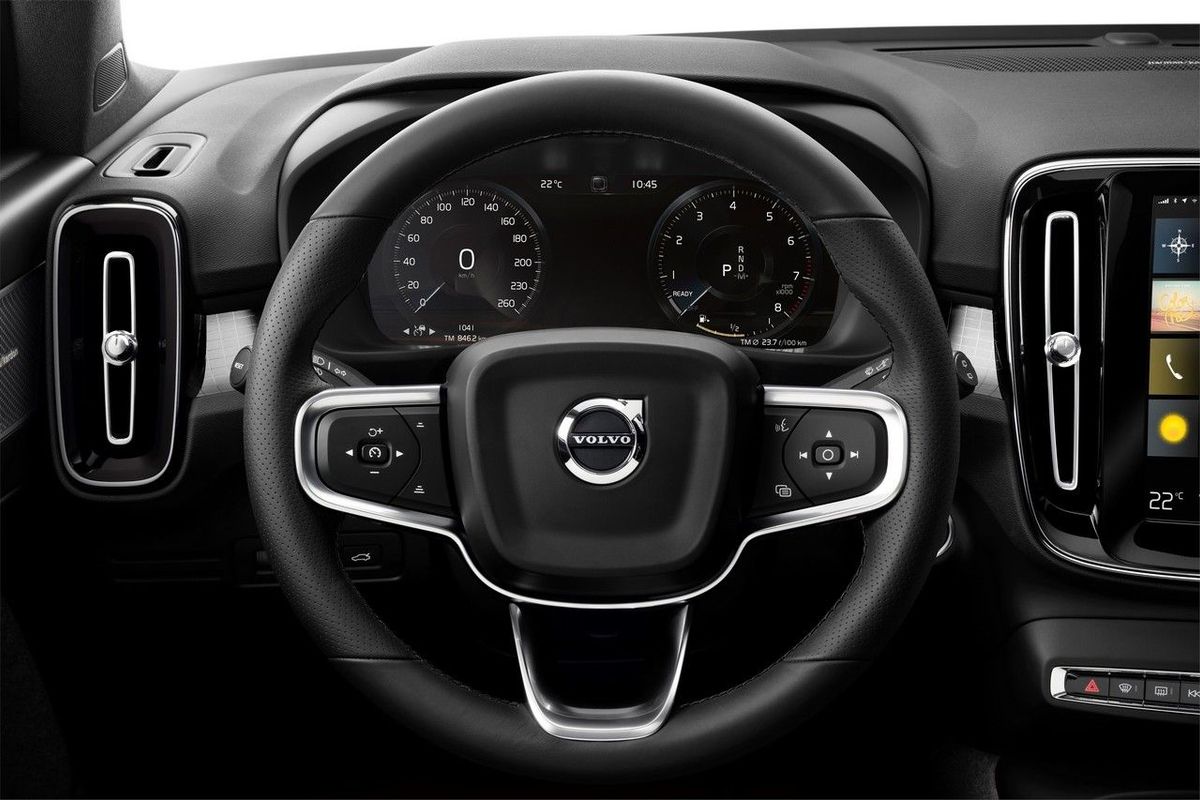
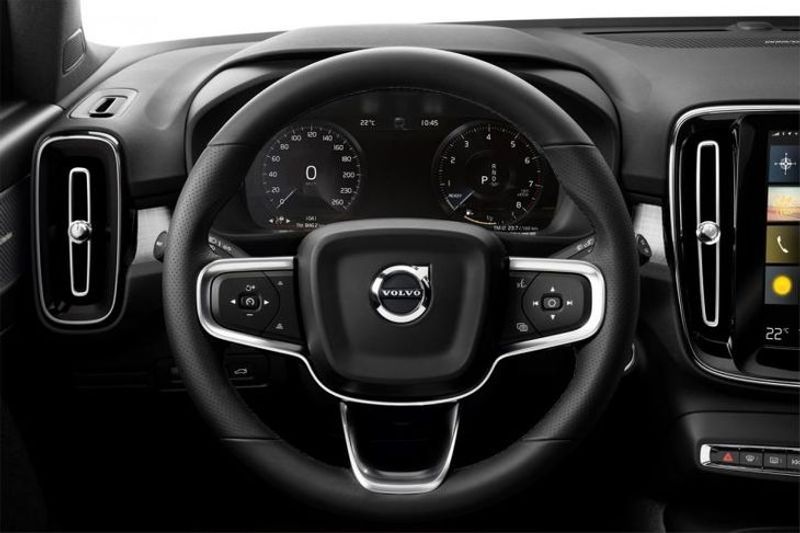
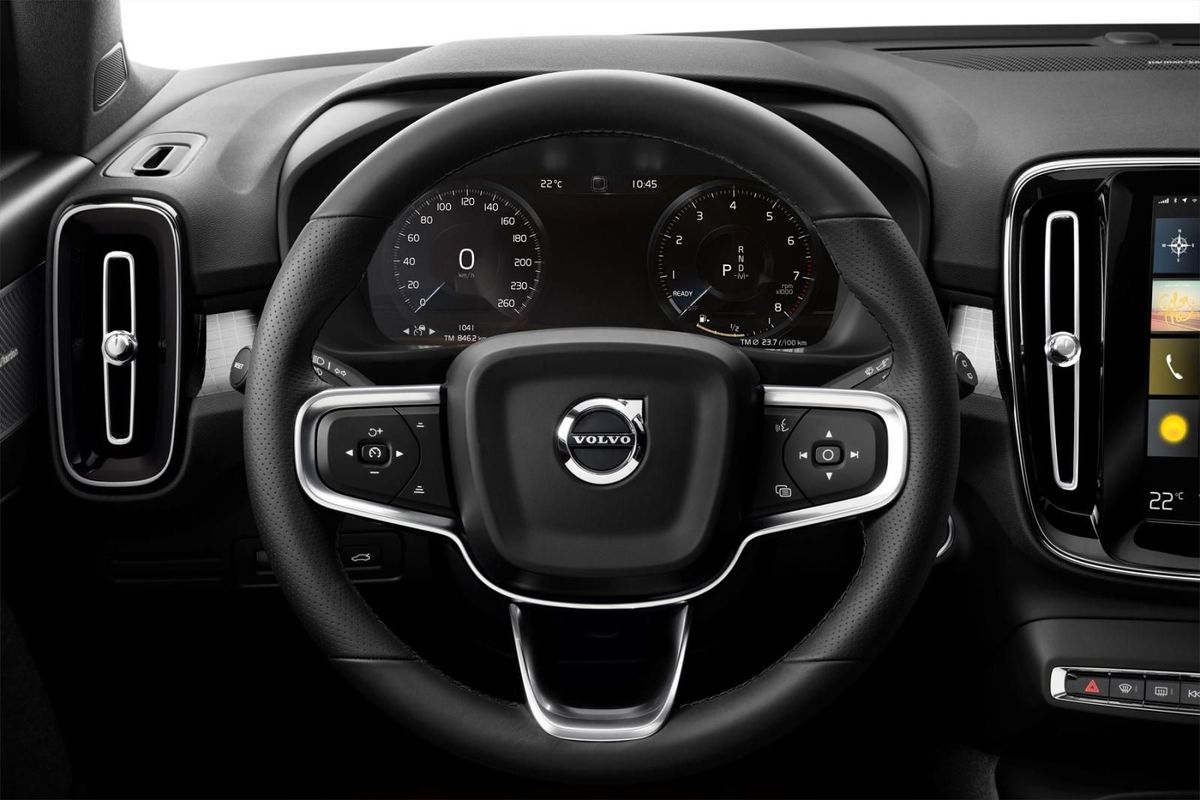
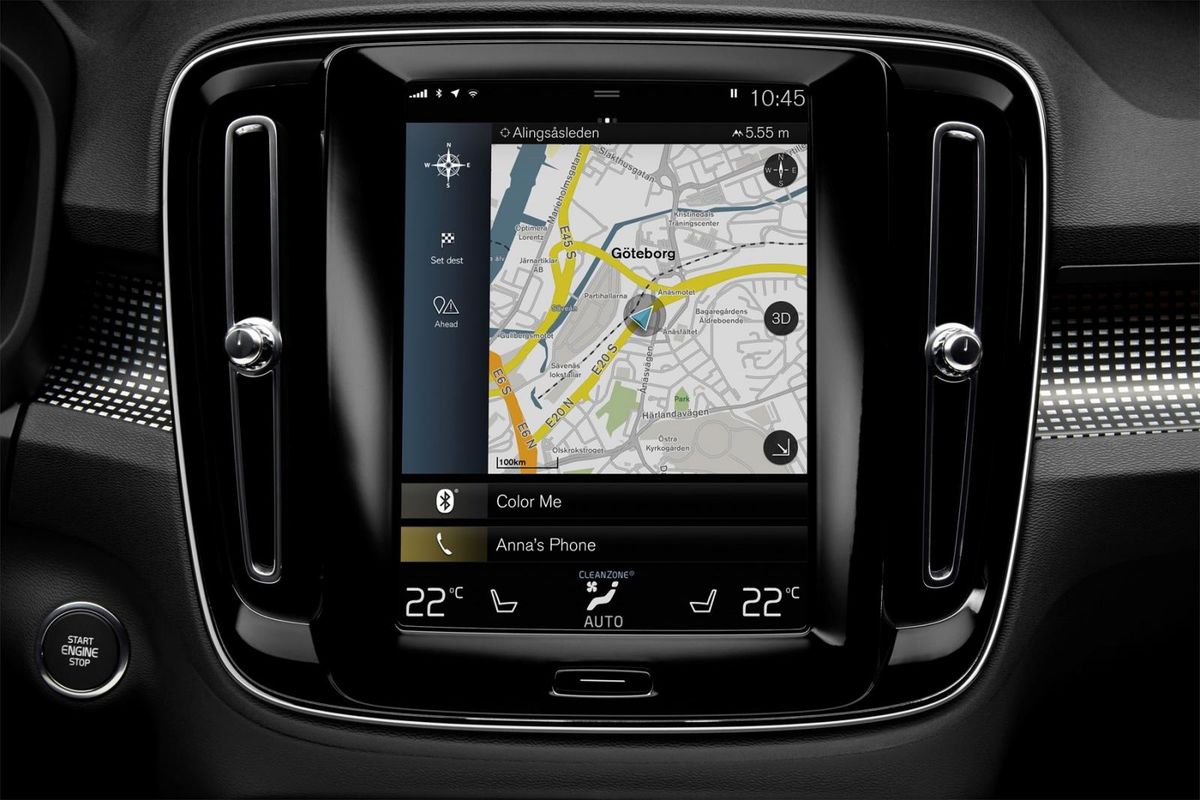
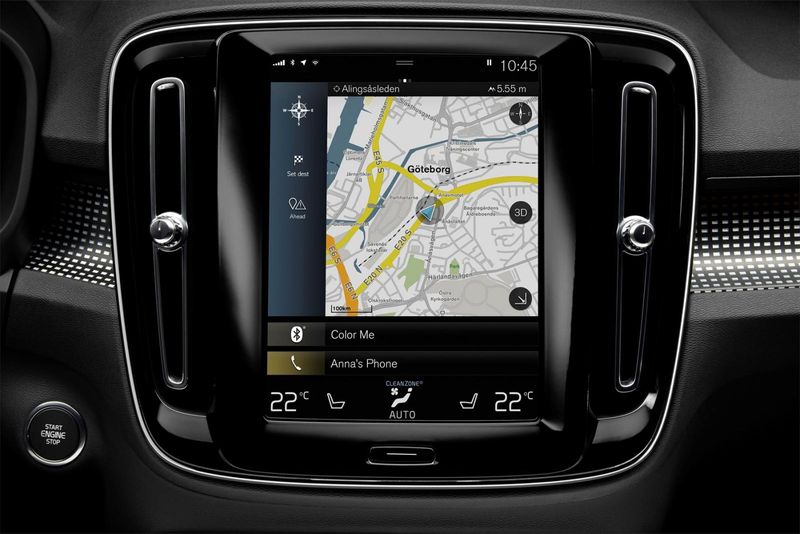
The digital display is crisp and clear, while the Volvo Sensus infotainment system features Android Auto and Apple Carplay – perfect for the modern generation
What's it like to drive?
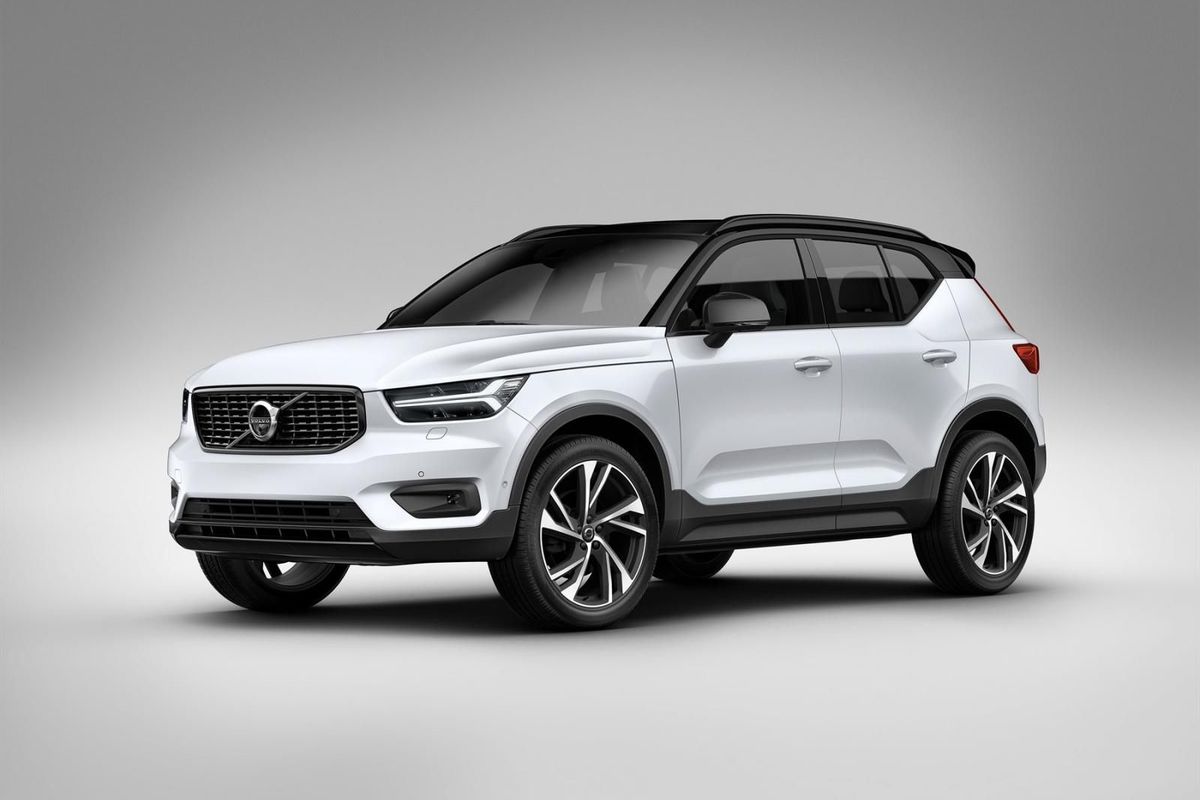
As ever, first impressions count for much. Image is vital in this segment, arguably more so than in more moderately priced compact family cars. When we set eyes upon the Volvo XC40 for the first time, we were deeply impressed with how contemporary the car looks. For the Instagram generation, the car is remarkably photogenic, both inside and out, and as mentioned earlier, it's bigger than you think. We often receive comments that a new car looks like an existing product made by another brand, or it has elements from a rival. Here, the design is so unique yet familiar, there'll be no mistaking it for anything other than a modern Volvo.
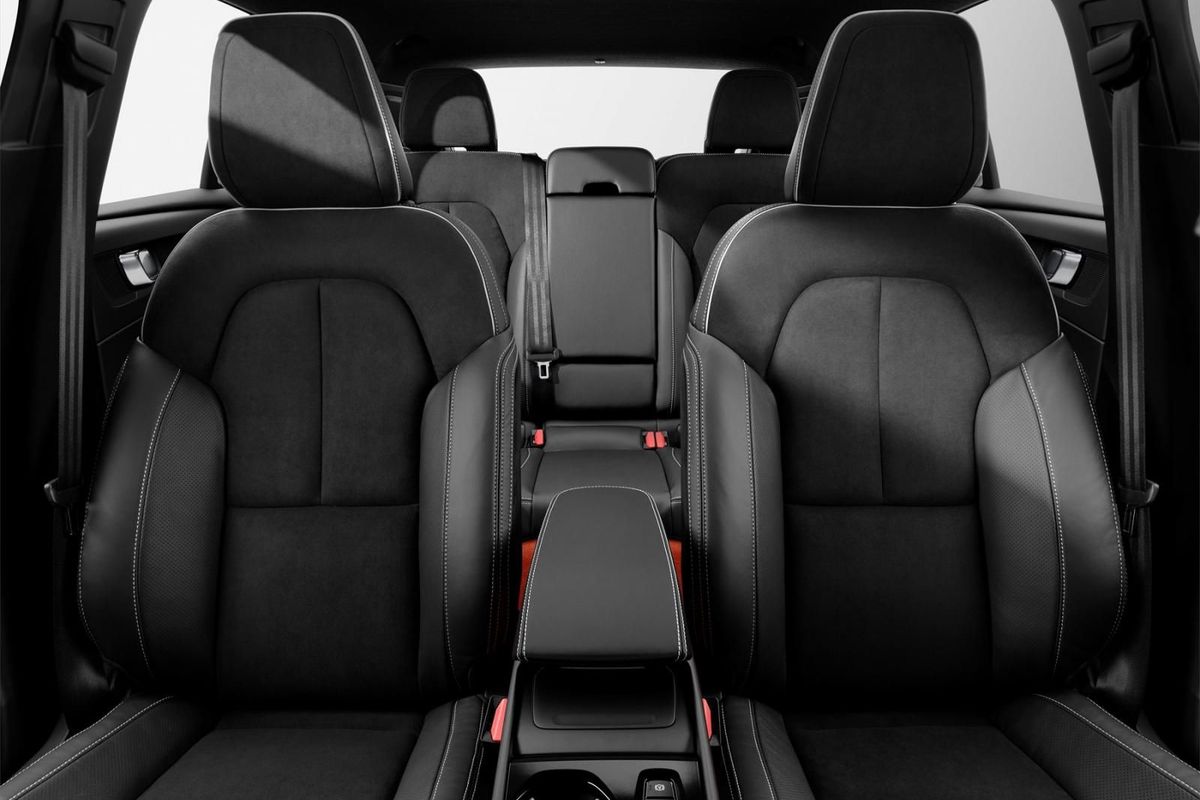
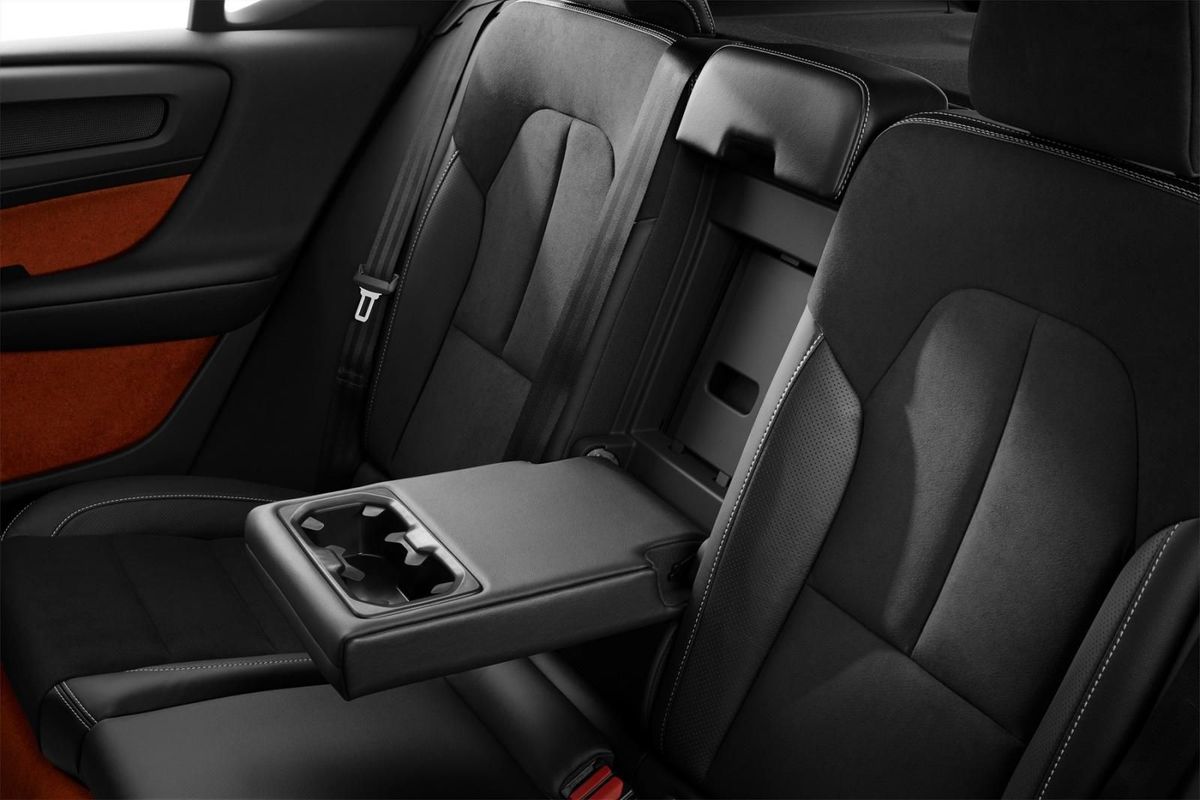
The cabin retains that modern Swedish minimalism and the level of fit-and-finish is great, which is what customers in this segment are looking for. The driving position is set high, the seats are comfortable and supportive and once you're used to its workings, the Sensus infotainment system is a gem. Being a Volvo, safety specification is off the charts and there's a lot of autonomous tech that will intervene on your behalf. Rear legroom is a little tight for taller passengers, but that's on par for this segment.
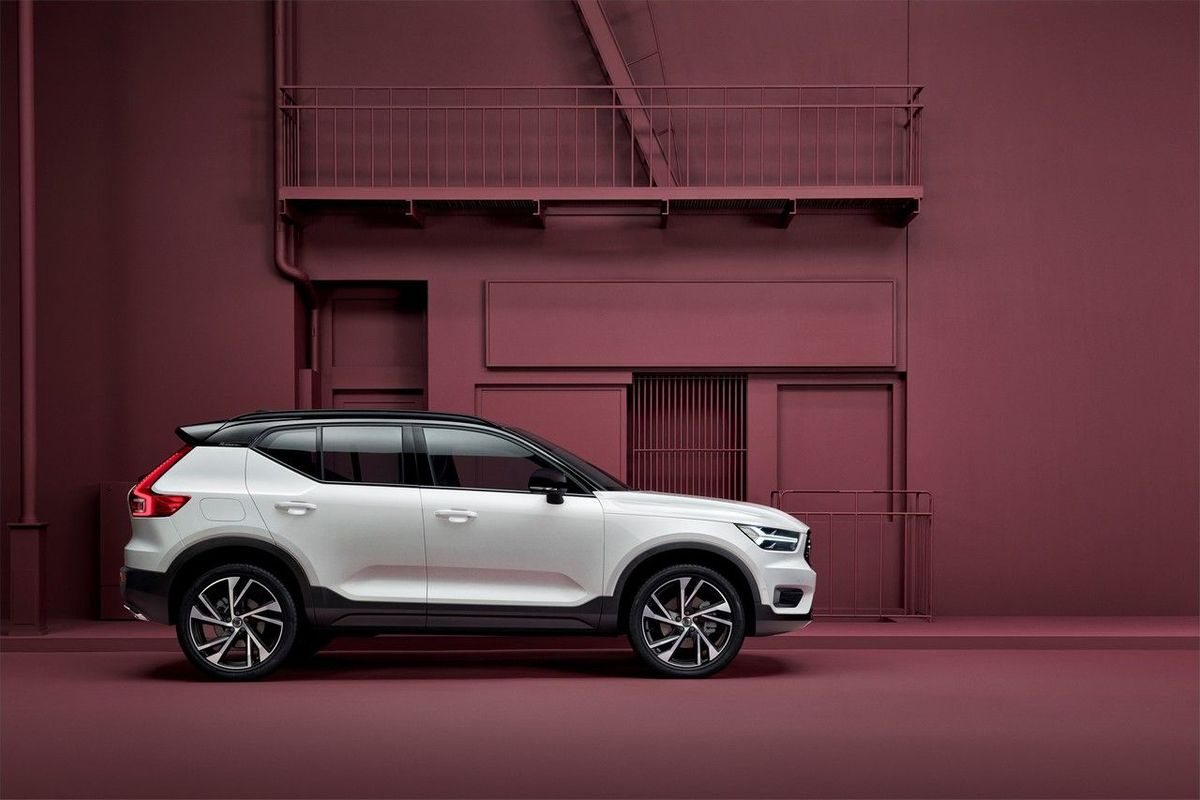
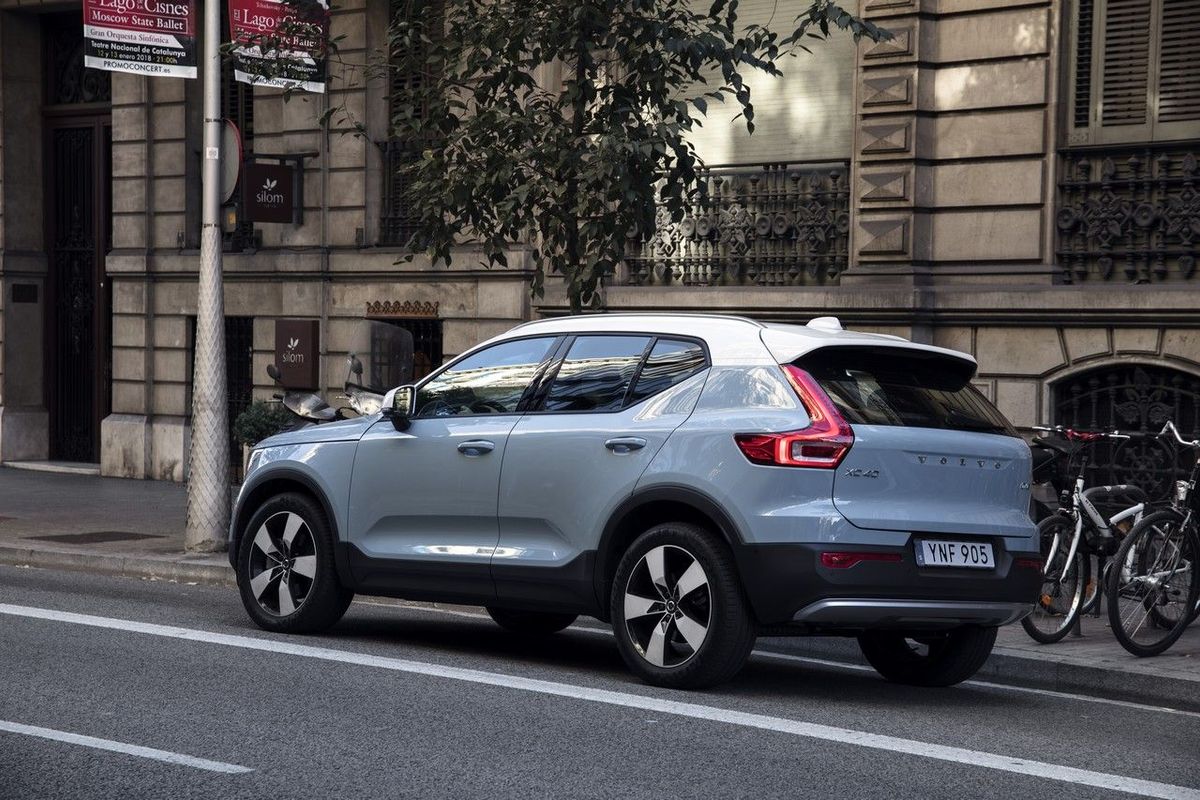
Photos make the XC40 appear small, but it's actually the same height and width as its XC60 sibling.
On the launch, we opted to drive the petrol-powered T5 R-Design and the D4 R-Design. Not only do they look good, but in the T5's case, it promises deceptively brisk performance. Both of these engines are 2.0-litre forced induction units from the DriveE series and we've experienced them both in other products from Volvo.
With 185 kW and 350 Nm, the T5 offers respectable off-the-line performance as well as commendable in-gear shove. Interestingly, Volvo SA claims this T5 will hit 100 kph from standstill in 6.4 seconds!. Even when in Comfort mode, there's no hesitation; the car can surge forward if you extend your right foot all the way down. However, when you do decide to stretch the car's legs, we found the engine note to be a tad unrefined. Granted, very few owners will be caning their XC40s, but its worth noting.
Our pick of the range has to be the turbodiesel, although we're eager to sample the compact 3-cylinder unit. The D4 2.0-litre turbodiesel has outputs of 140 kW and 400 Nm, making it pretty useful if you're perpetually in a hurry. But, despite those big numbers, the fuel economy is where the D4 really shines. While Volvo SA claims 5.1 L/100 km, we were quite happy to see 6.1 L/100 km on our test route through the urban Fourways sprawl. The engine pulls well from low in the rev range and the 8-speed transmission is responsive and smooth enough to keep the motor operating in its optimal range, but should you need power on demand, it's there when you need it. Unfortunately, the turbodiesel motor also suffers a bit in terms of mechanical noise and the sound can be intrusive and rough when pressing on.
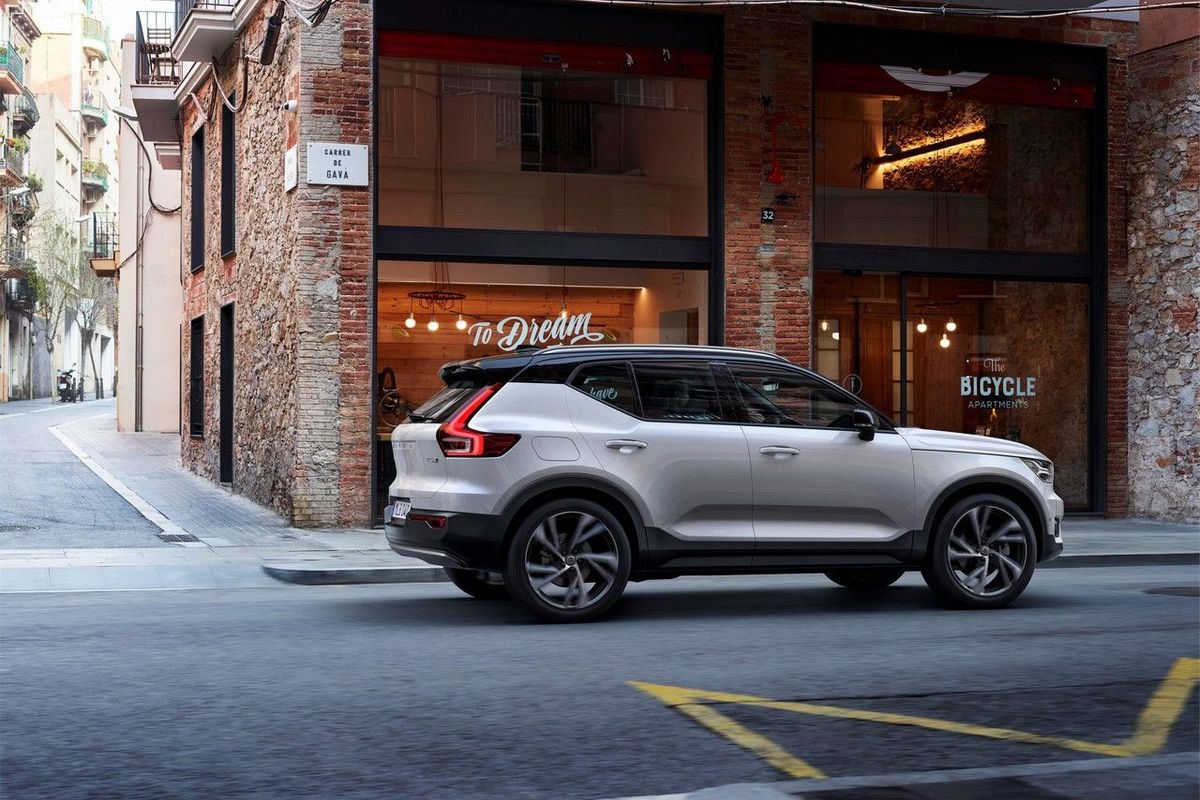
With all-wheel drive and decent ground clearance, you can actually go for a gravel drive without fear
Both the T5 and D4 share some pleasant driving traits. From behind the wheel, the driving experience is pleasantly upmarket. The steering is surprisingly light and despite the high driving position, the X40 drives like a luxury hatchback. Alloy wheels come in 18-, 19-, 20- and 21-inch varieties and our two test cars rode on the stylish 20-inch rims and tyres. While pretty to look at, we found that our launch route was peppered with potholes and rough surfaces that upset the smooth ride quality and the coarse bitumen elicits some loud cabin noise. To be on the safe side, we recommend the 19-inchers, as they'd likely offer a better ride thanks to a higher-profile tyre.
Is it worth your attention?
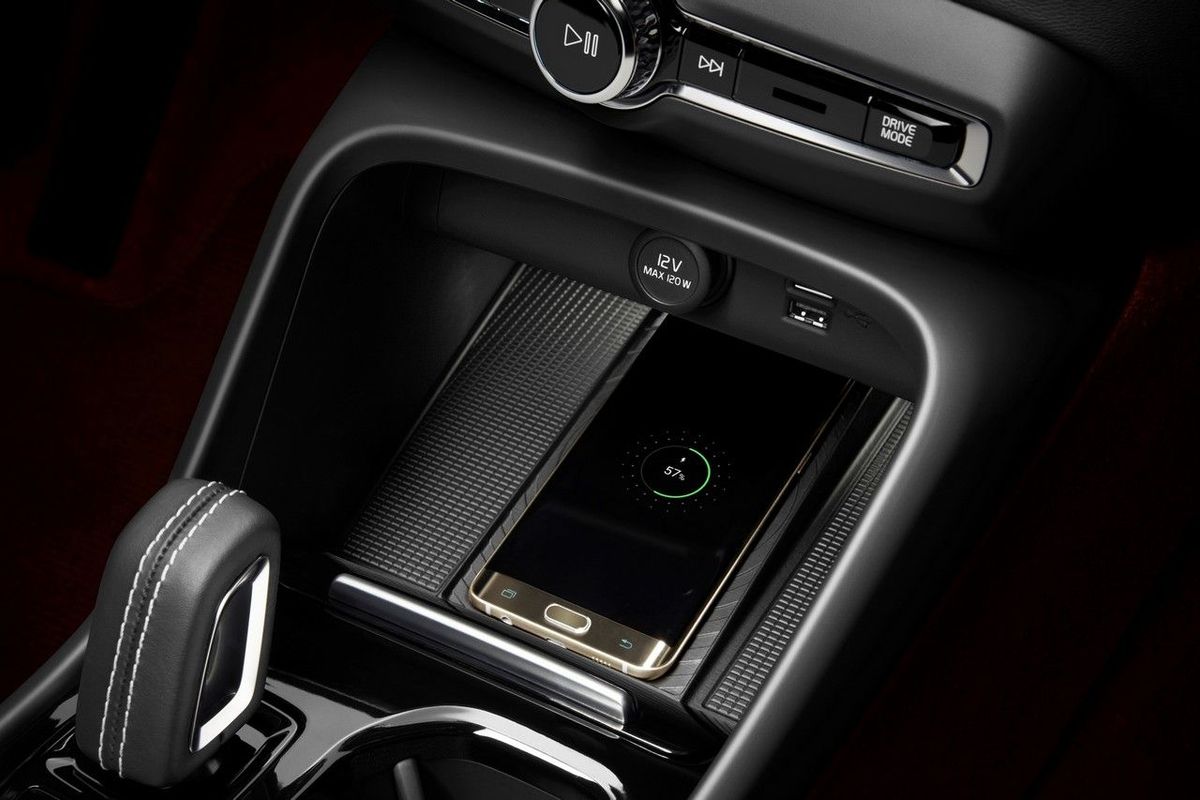
Volvo has struck a great balance of luxury and sportiness with its XC40. It's surprisingly spirited and agile to drive, yet exudes Swedish style and ingenuity. There are nifty cabin features that prompt us to say: "Why didn't we think of that?". The mobile phone cradle (with wireless charging pad), plastic bag shopping hook, removable bin and storage compartments under the seats are examples of what makes this a clever car. If you fold the rear seats down there's plenty of room for a mountain bike.
Given its luxury positioning, the XC40's pricing and specification is comparatively keen; it's pitched straight into the market where the BMW X2 and Jaguar E-Pace are already sparring for sales. The T3, for example, comes in at R486 500, which is impressive. With the car industry battling to find unique designs and brands typically playing it safe with conservative lines, it's great to see that Volvo can still produce head-turning designs that capture the buying public's imagination.
Indeed, this is no shrunken XC60 and even if you don't like the styling, you can't argue that it's not at least interesting. Volvo SA was happy to announce that it needed to stop taking pre-orders for the car because take up was so good that there were concerns stock supply would become an issue. The best problem in the world, in other words. We predict that this stylish newcomer will be the best-selling Volvo in South Africa. It is clearly in contention for the top spot in its segment. It's easy to see why.
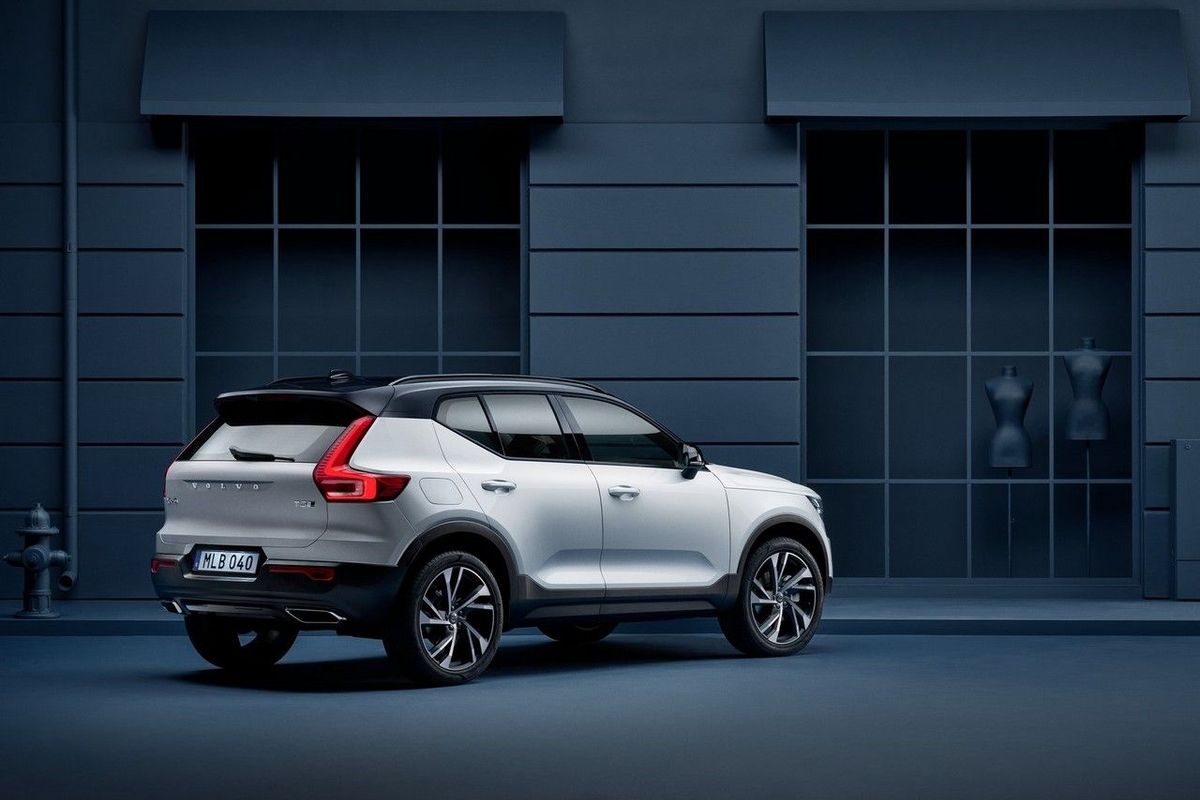
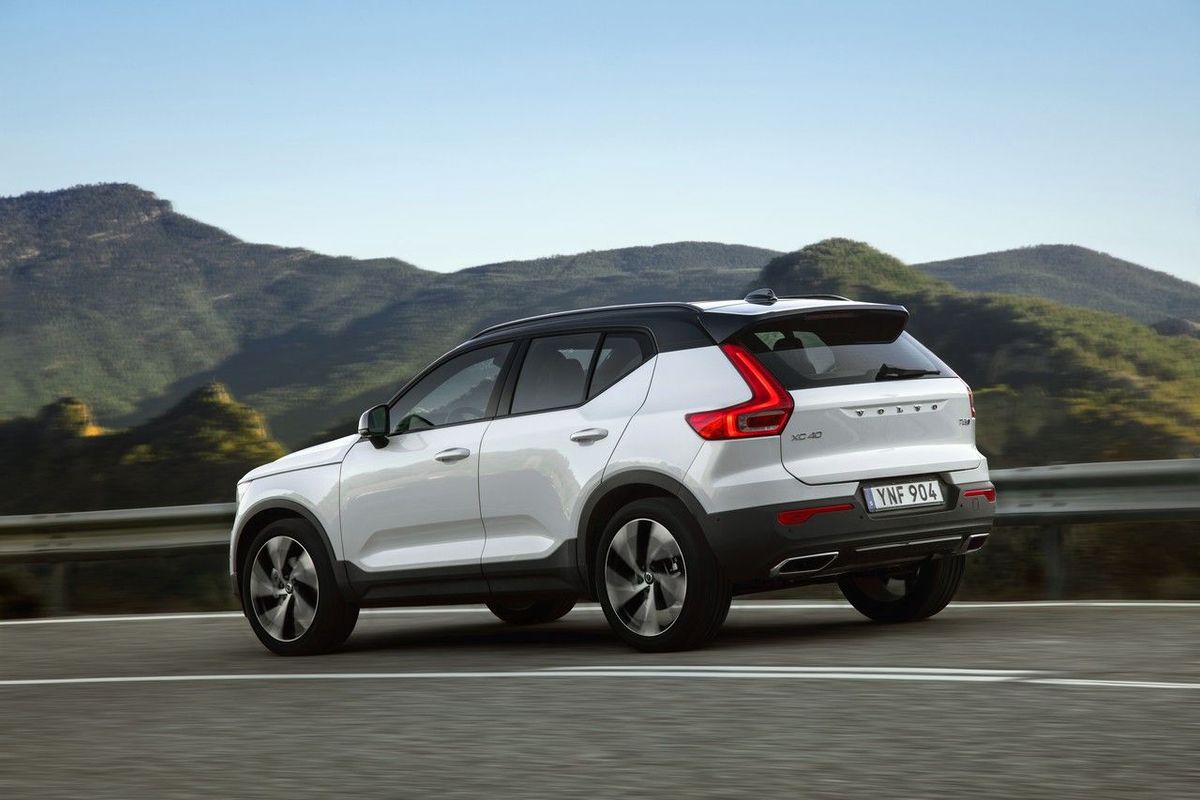
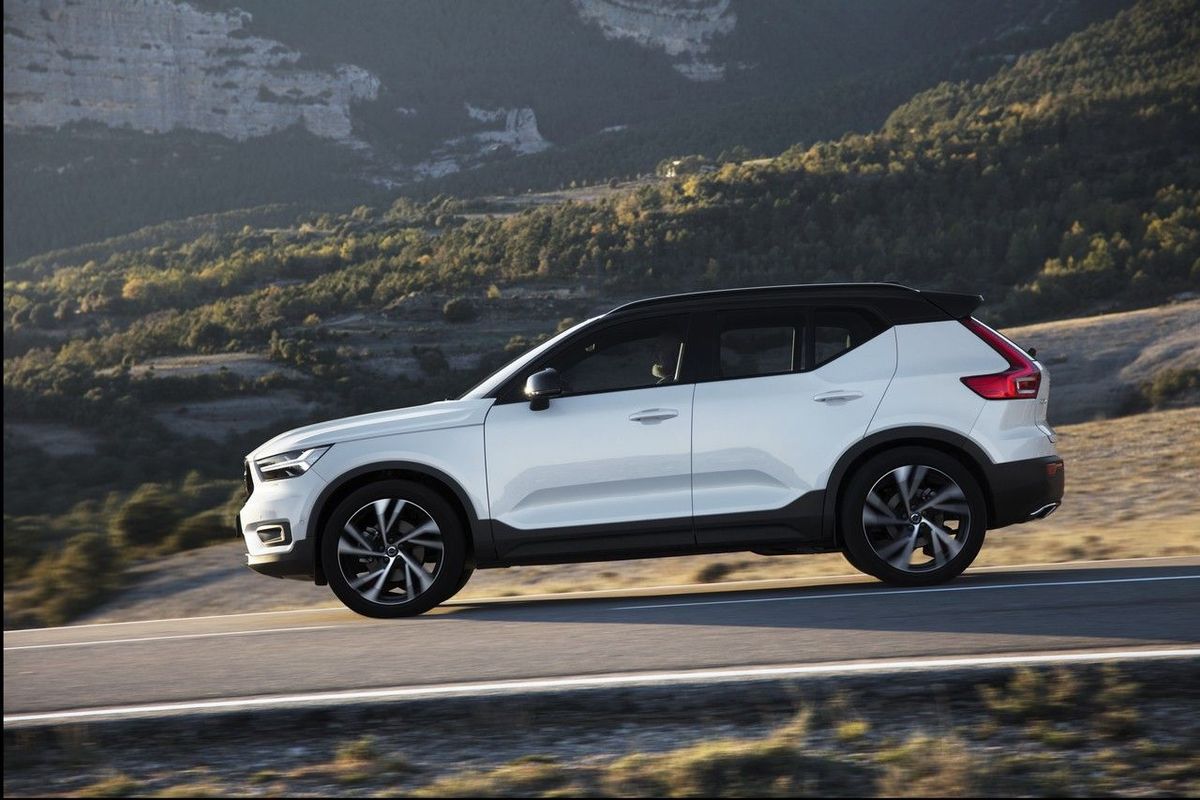
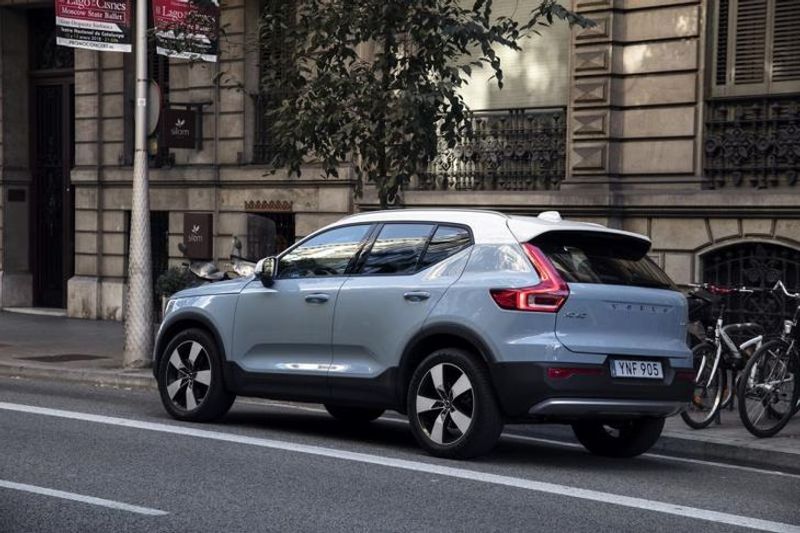
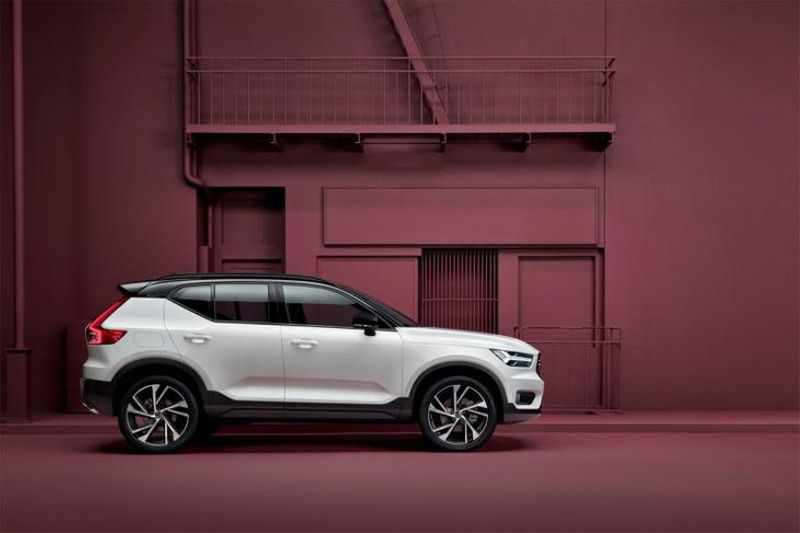
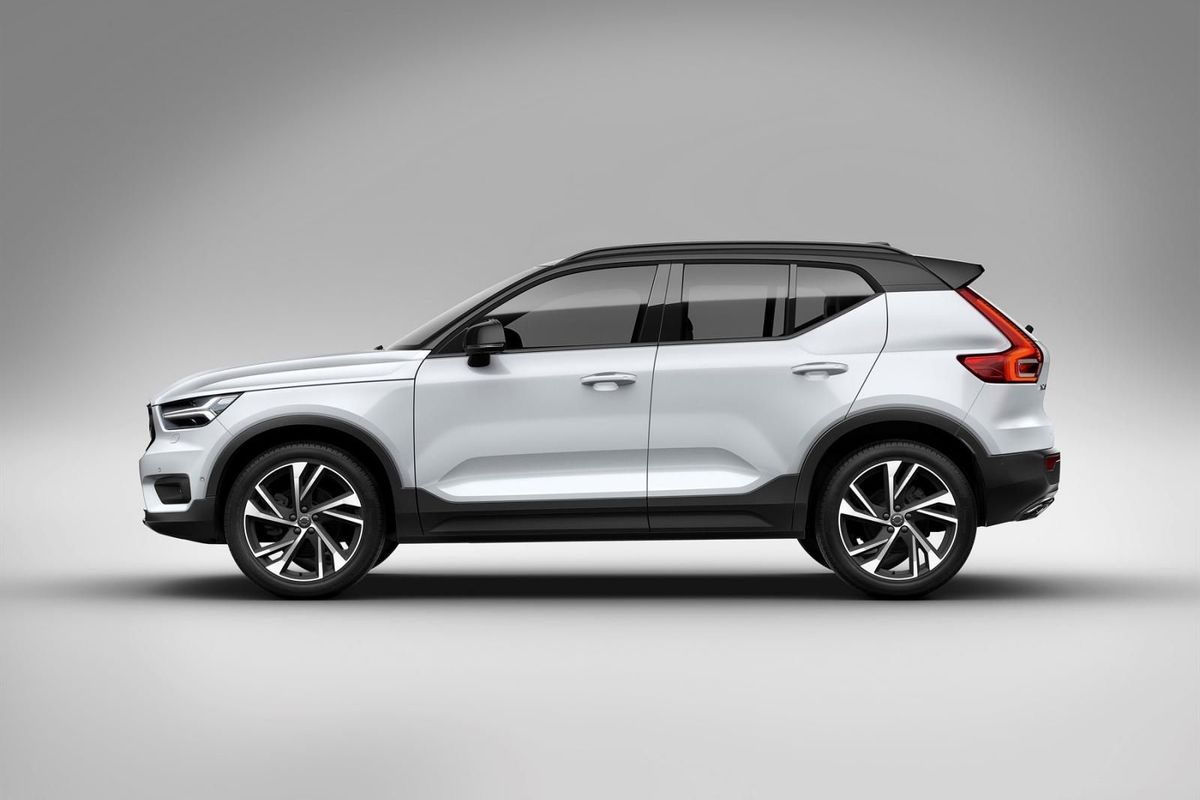
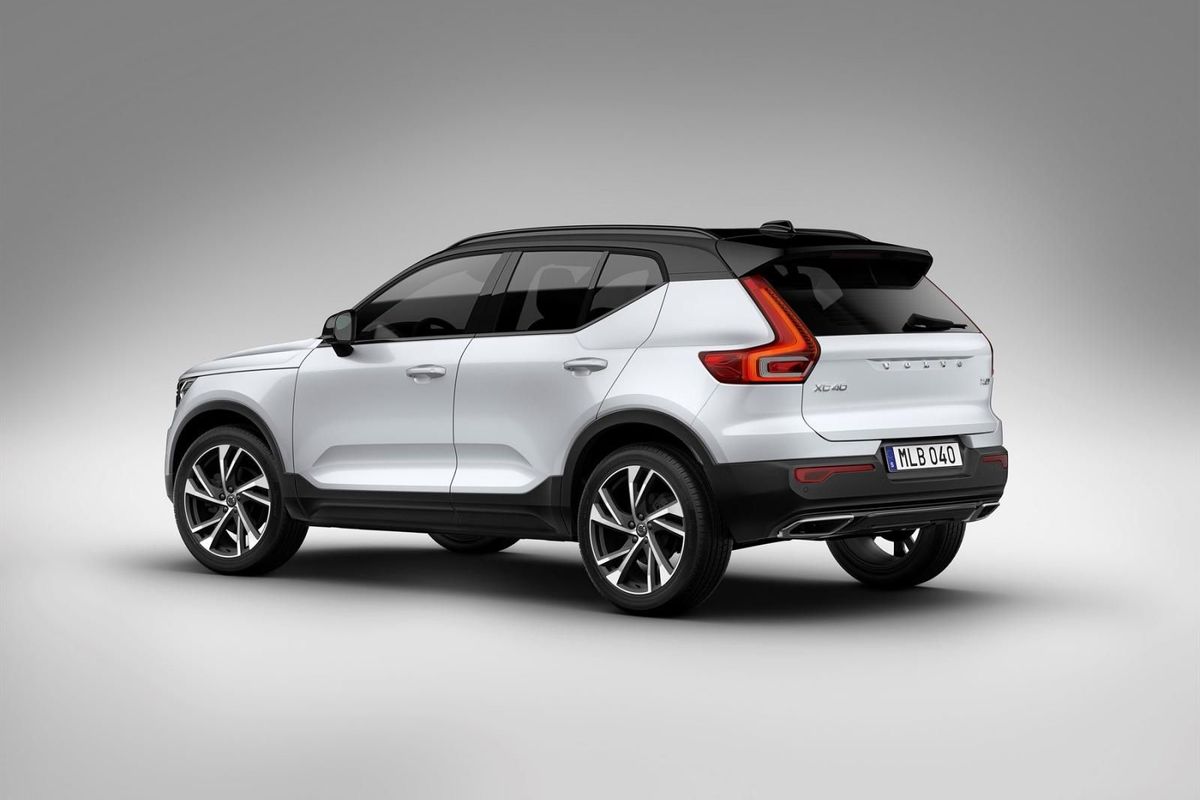
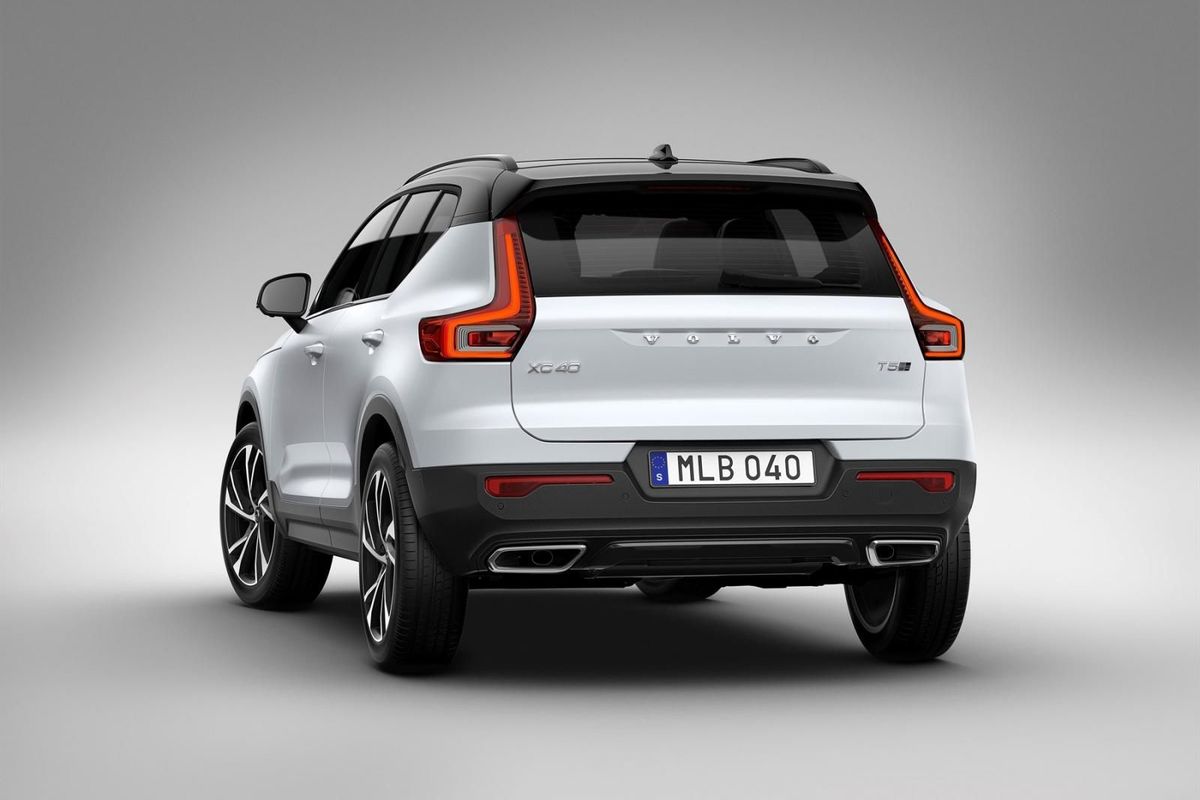
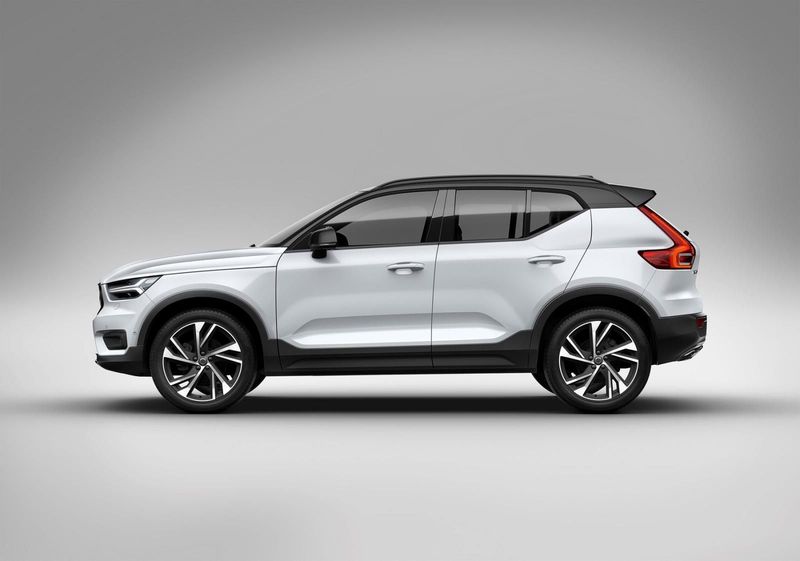
In contrasting white with black roof, the Volvo XC40 is one stylish newcomer to the premium SUV arena
Volvo XC40 price in South Africa
Every XC40 comes with a 5-year/100 000 km warranty and maintenance plan, 5-year/unlimited mileage roadside assistance (including a Skytrax track unit). The pricing below includes VAT, with the second amount being the CO2 emissions tax. Please note that the T3 entry-level models are only available from the third quarter of 2018.
Internationally, Volvo offers a subscription service called Care By Volvo, where customers can "subscribe to a car rather than buy it, for a fixed monthly fee which includes the likes of service, maintenance, insurance and other added value benefits". This plan is currently under consideration for introduction in the South African market and, if all goes according to plan, you'll be able to subscribe to Volvo ownership by the middle of 2019.
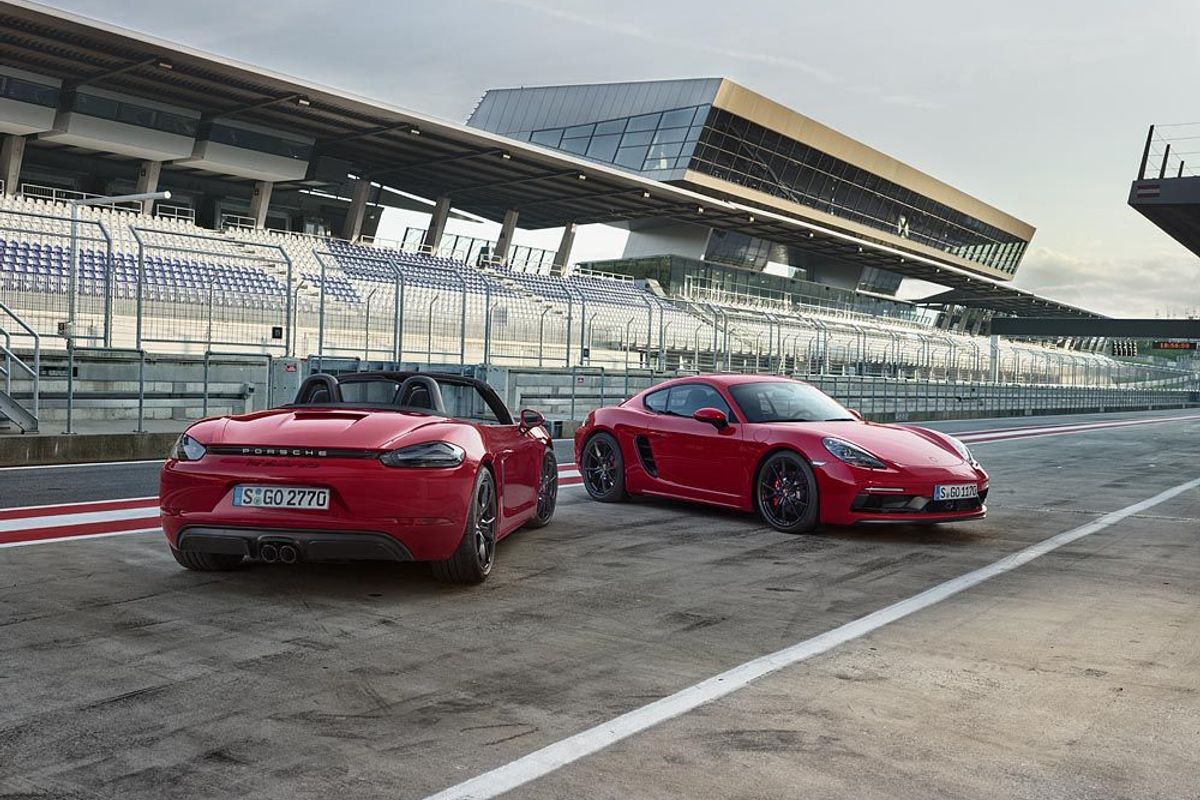
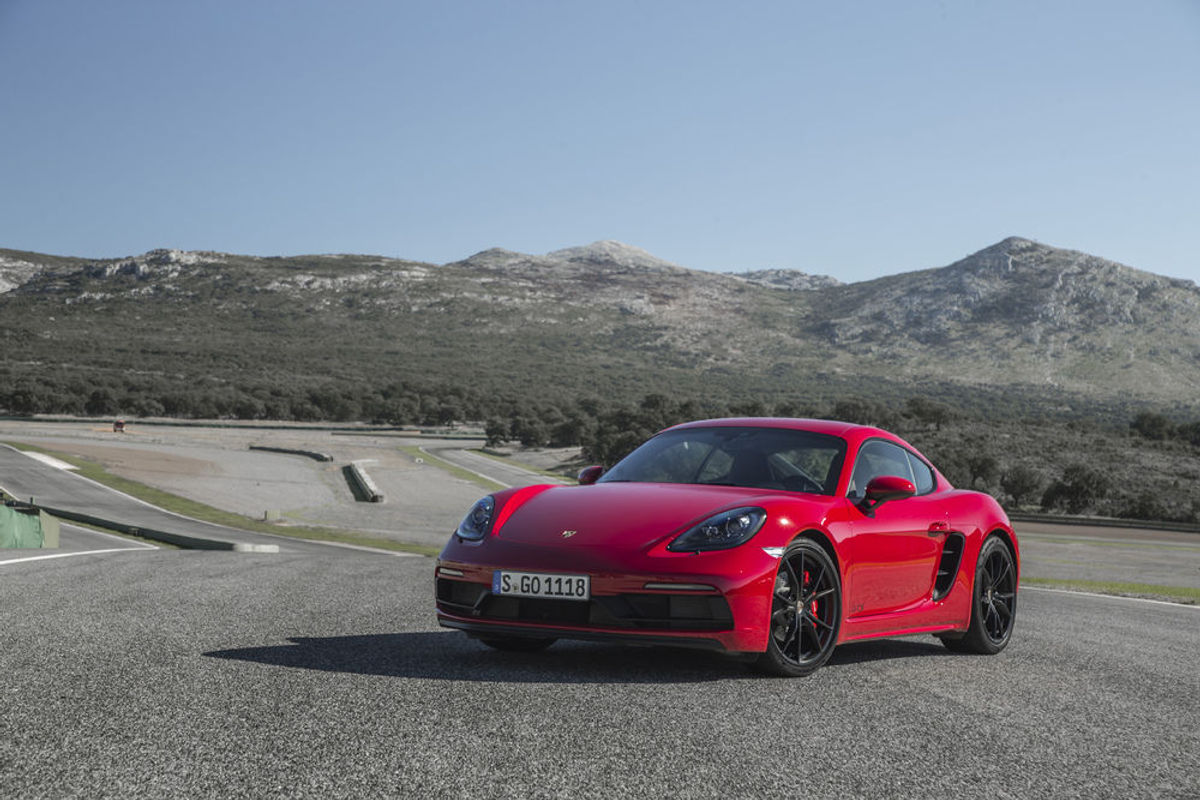
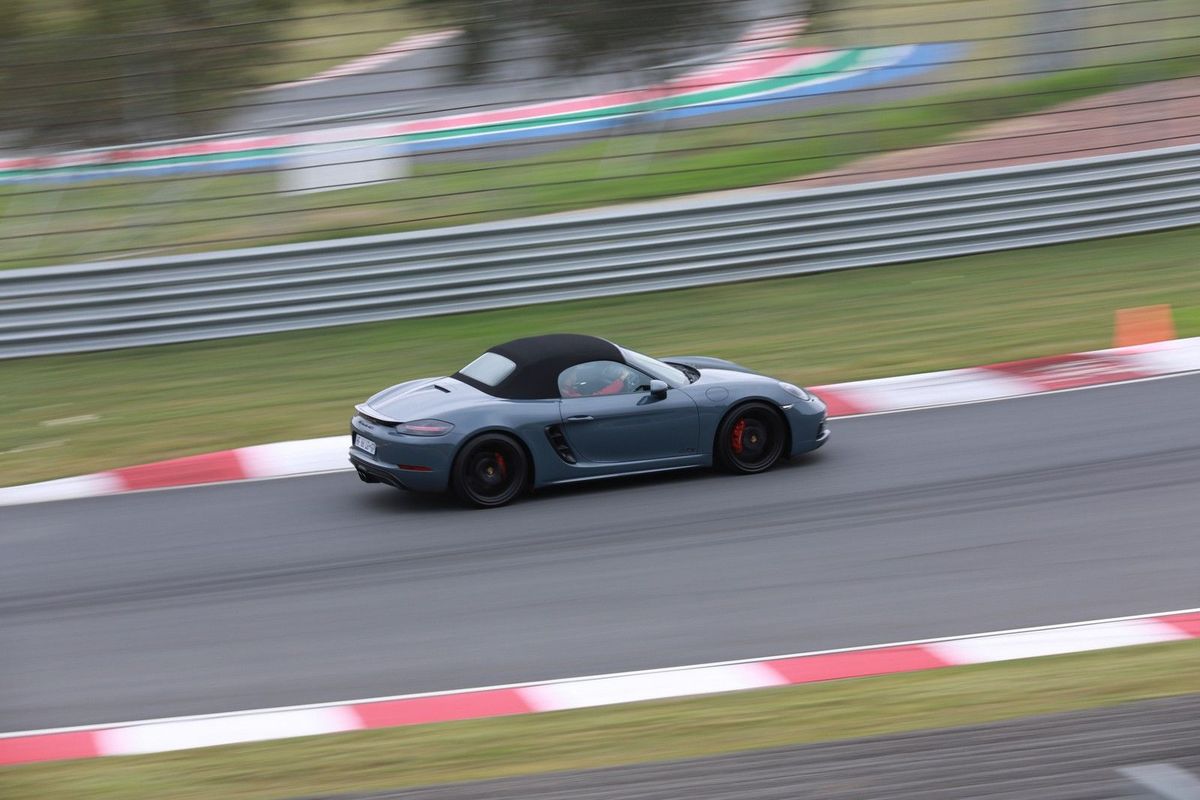
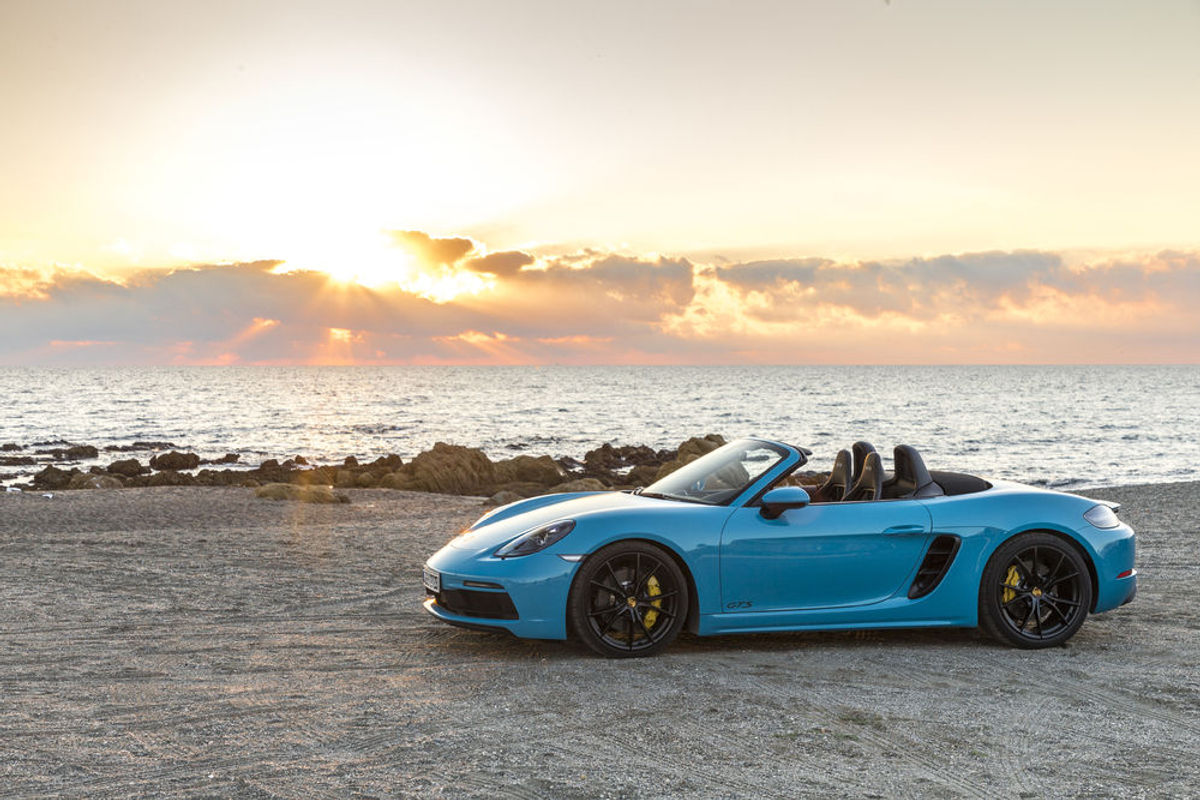
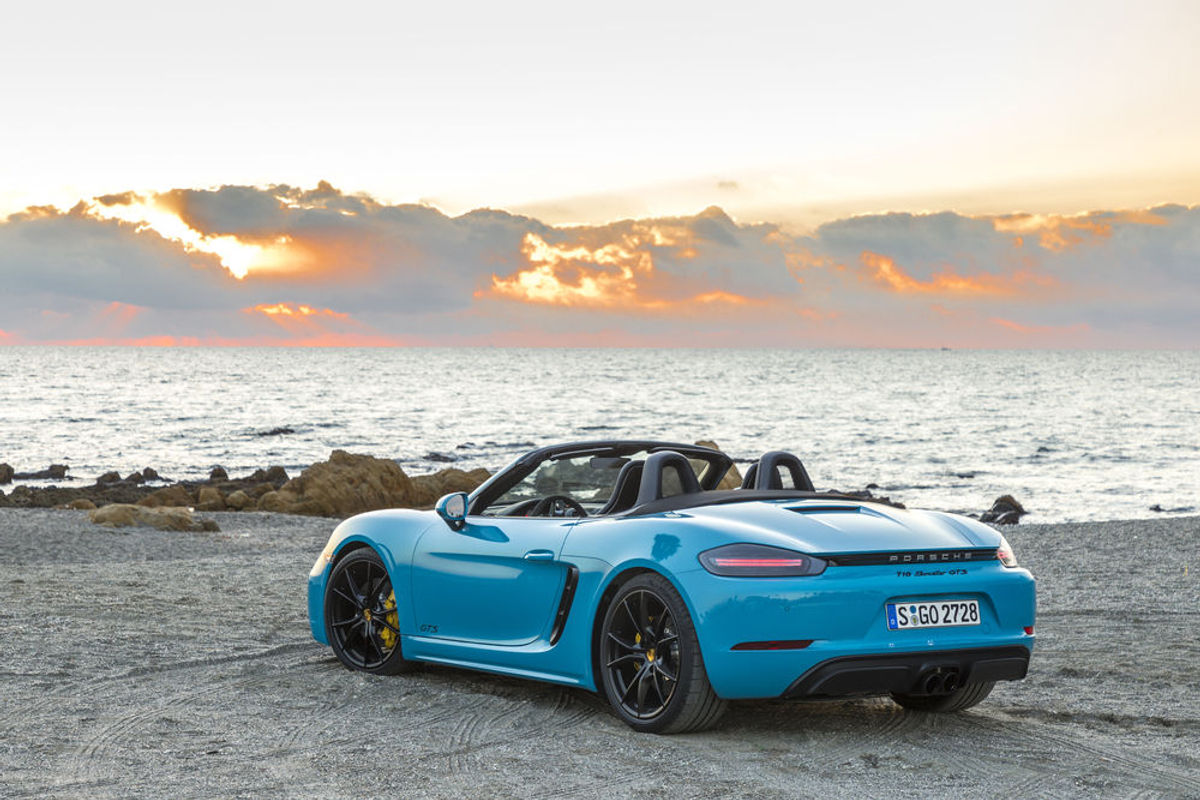
Porsche's (quite intentional) trickle of improved Cayman and Boxster derivatives continues with the introduction of GTS versions of the 718 Cayman coupe and 718 Boxster roadster to the local market. The newcomers offer higher outputs from their 4-cylinder engines and extra handling prowess.
What’s new?
By now, most of us know what to expect from a Porsche model's life cycle: it starts off with the basic car, followed by an S version, which offers a bit more verve. Then, apparently, Porsche's engineers in Zuffenhausen get a bit twitchy and they're allowed to develop models further, which leads to the release of derivatives such as a GTS, a GT3, possibly a GT4 and, if they have nothing to do on a Tuesday afternoon, an R (or something suitably bonkers). What this means for the buyer is that they have to choose at what point they'd like to quench their fomo… Wait too long and the one you want will be too expensive; buy too early and you’re the person who bought the version that’s missing the extra kilowatts and suspension tweaks that make the difference.
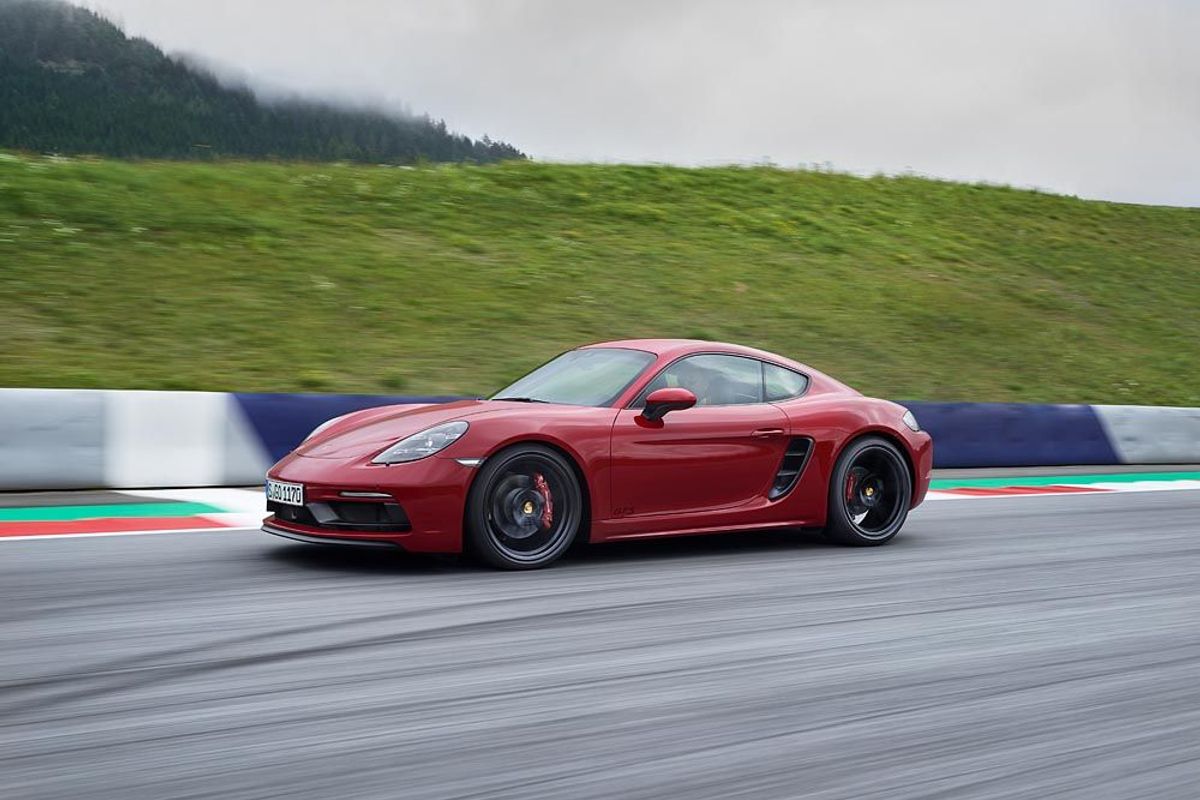
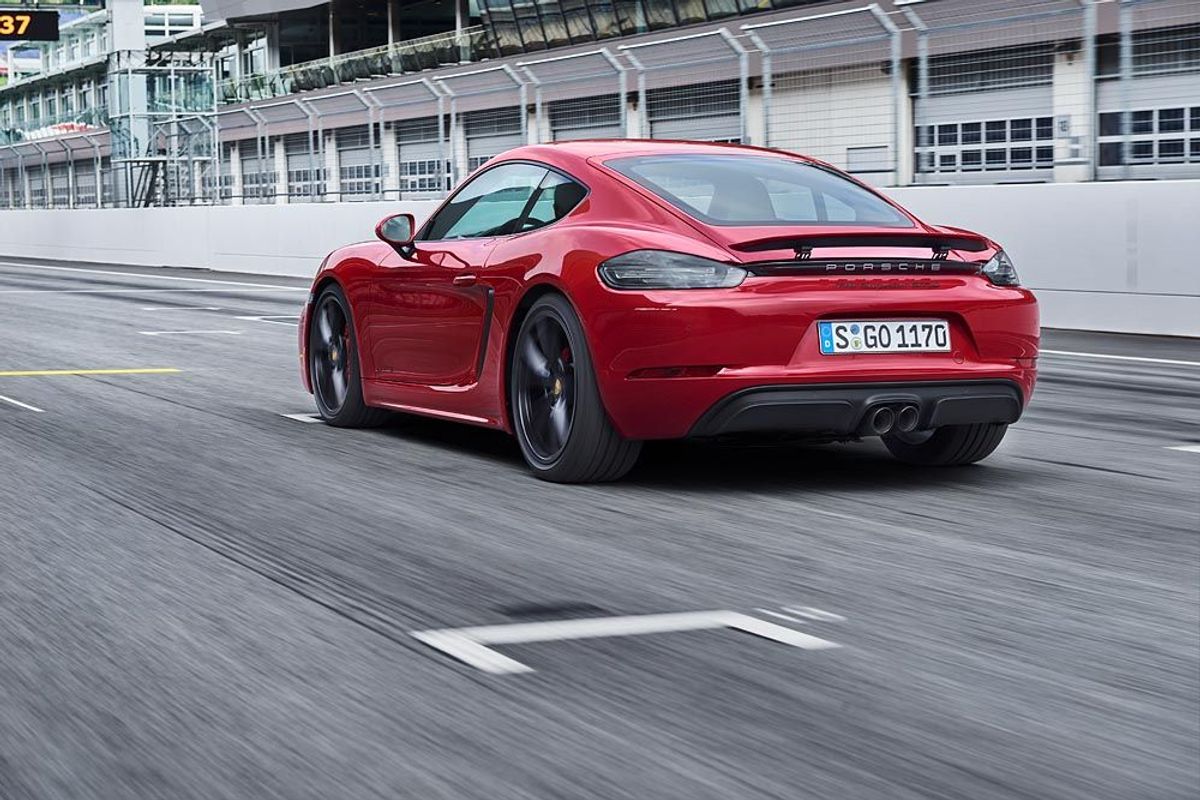
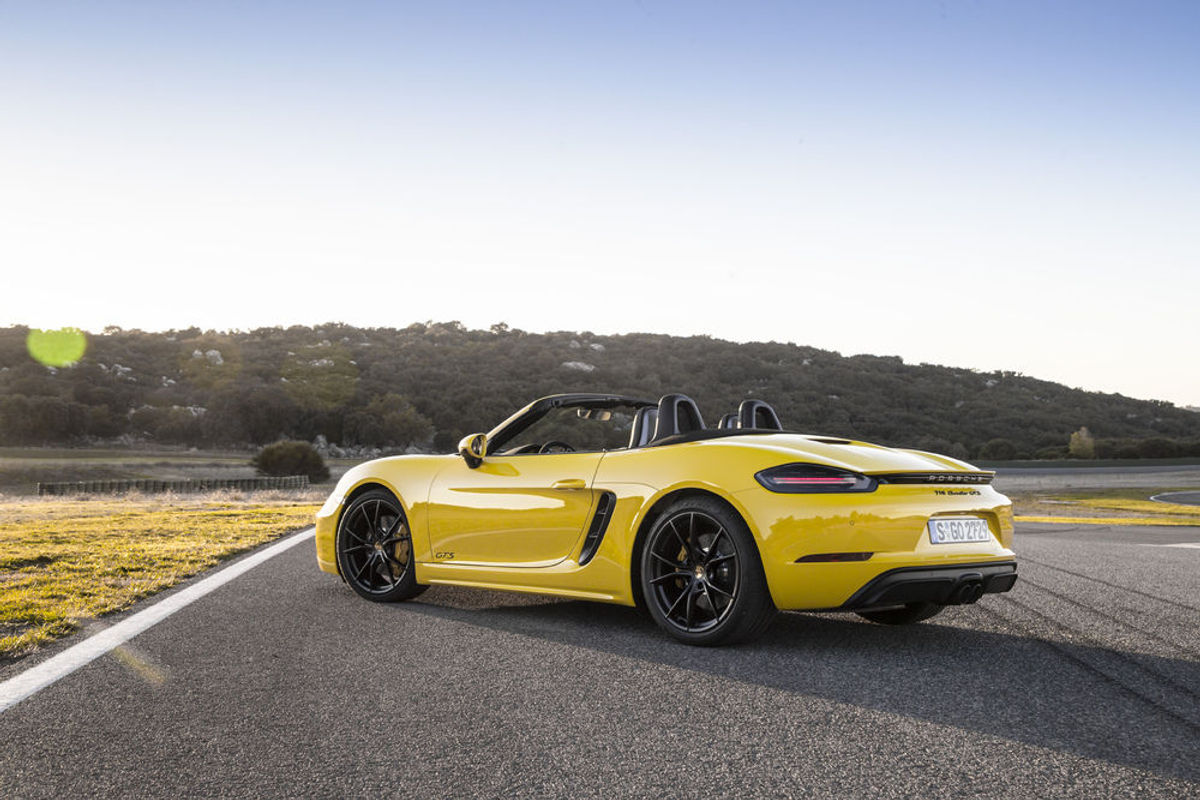
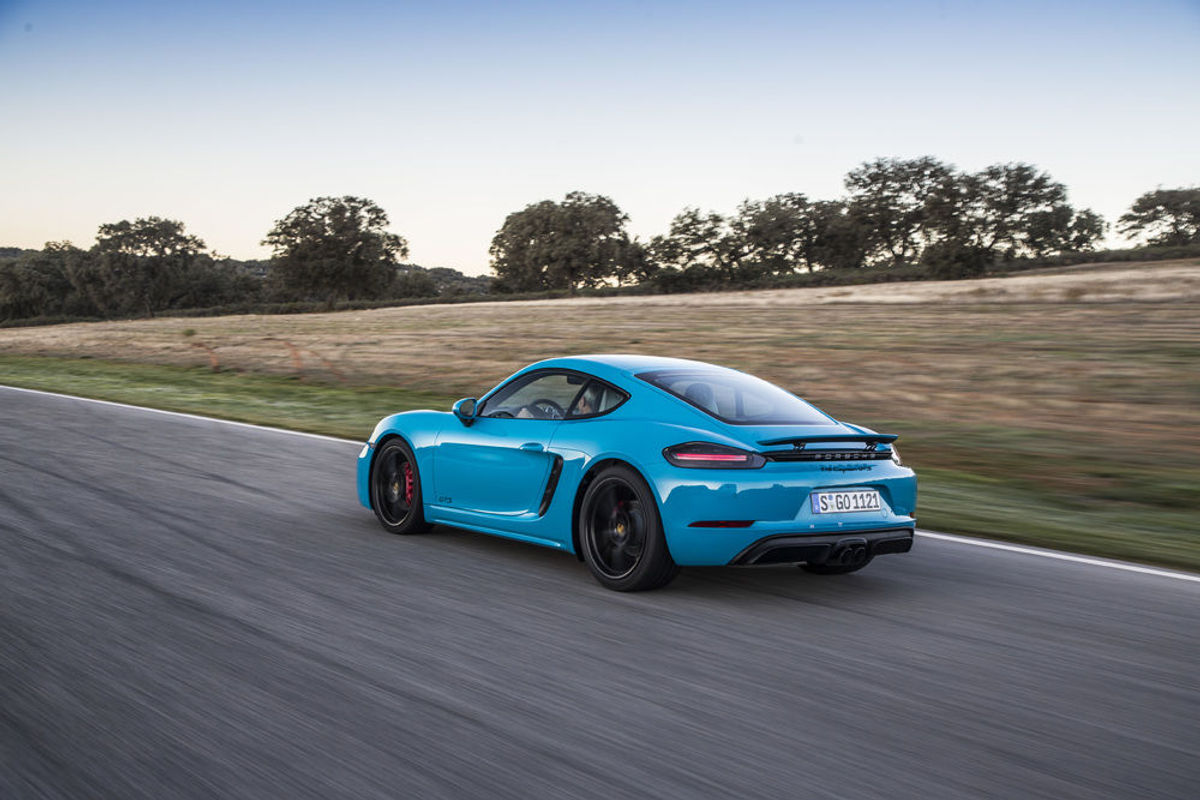
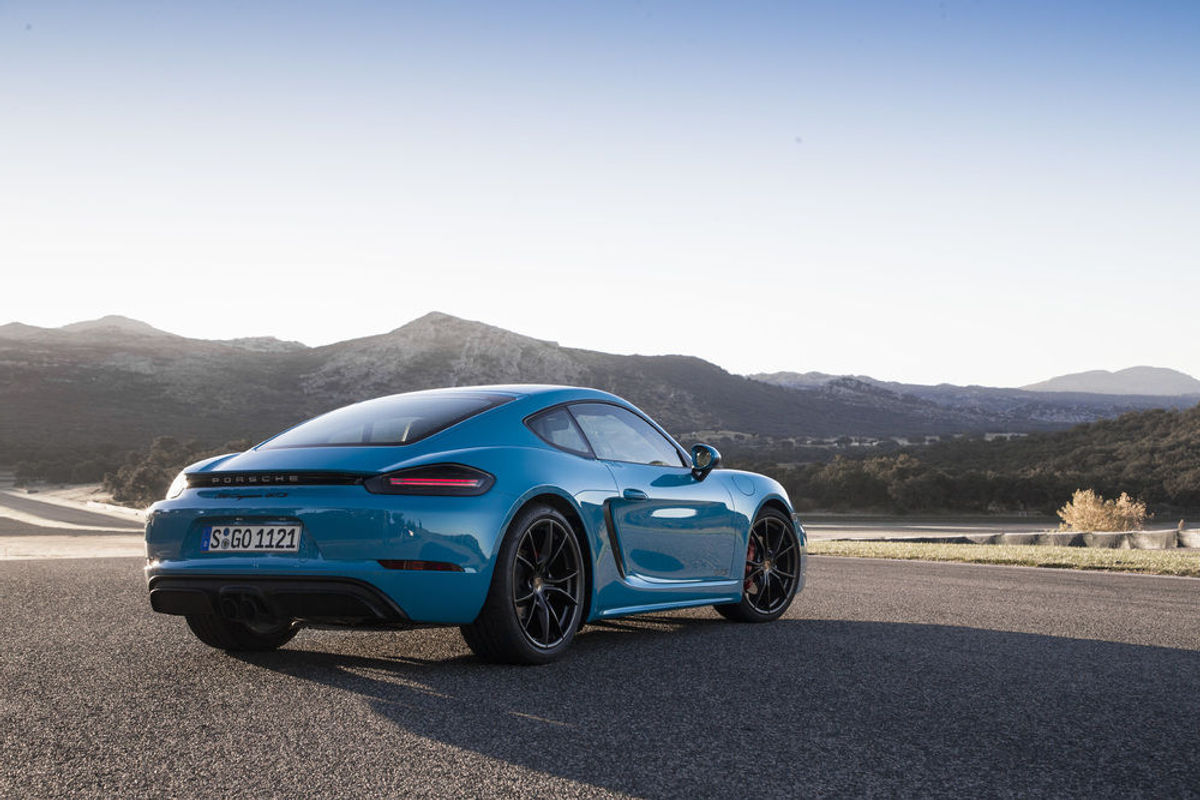
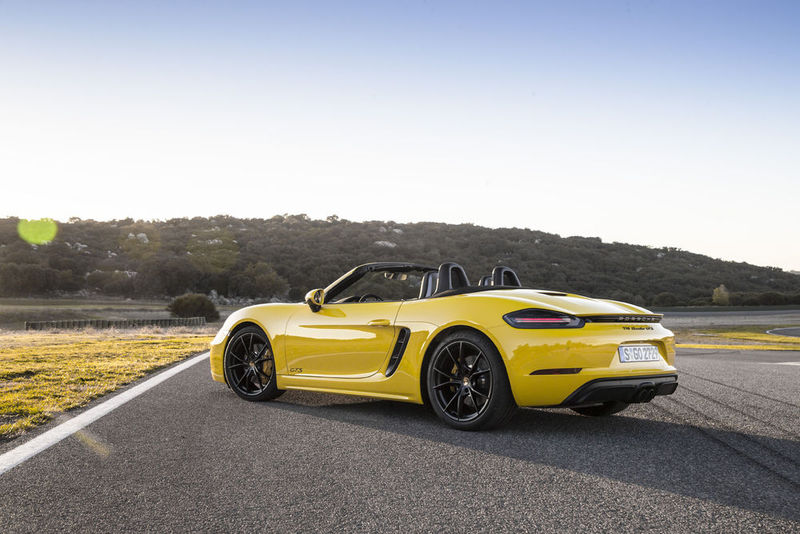
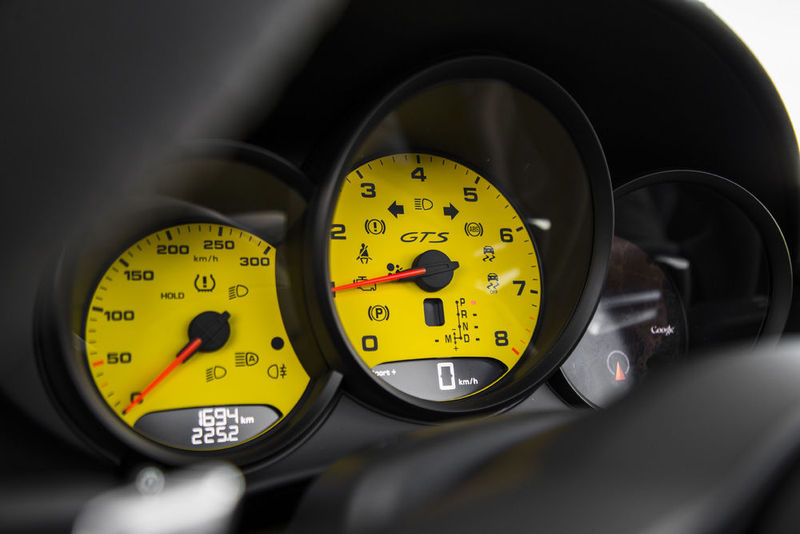
Tinted tail lights, dark rear boot lip and the special wheels denote GTS model (other than the obvious GTS badge).
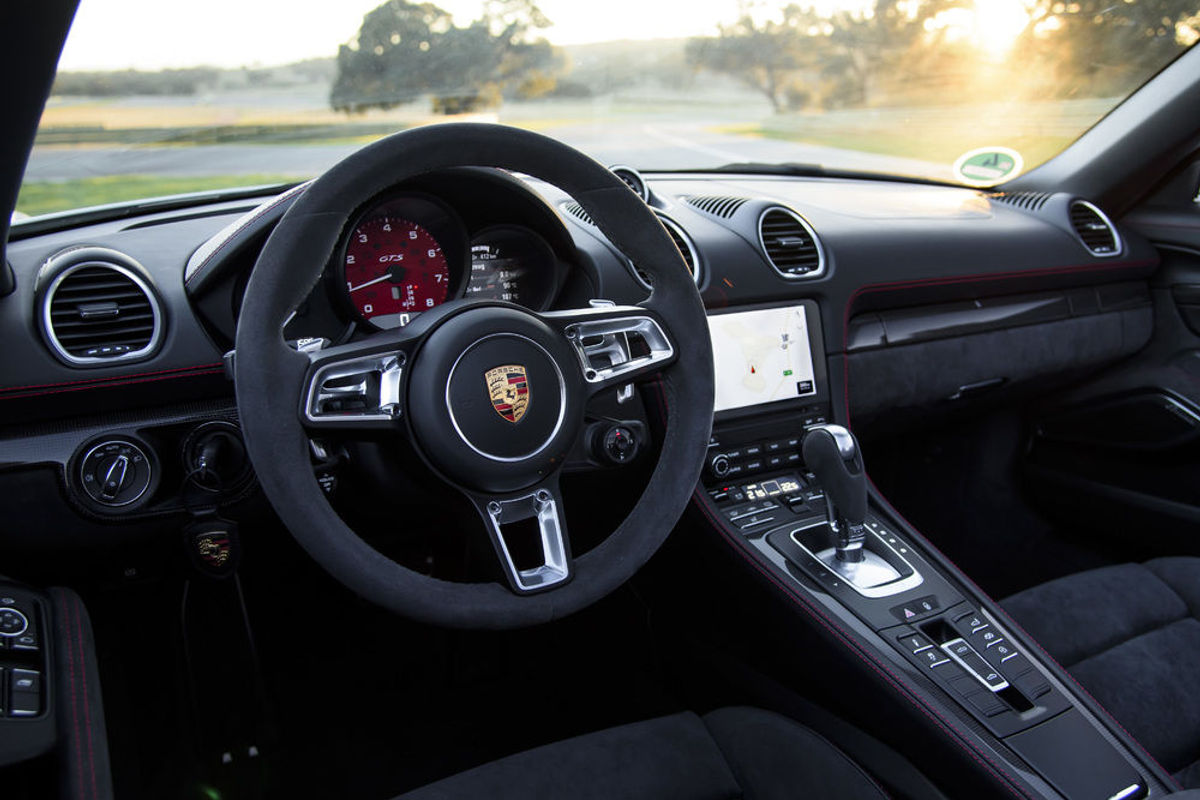
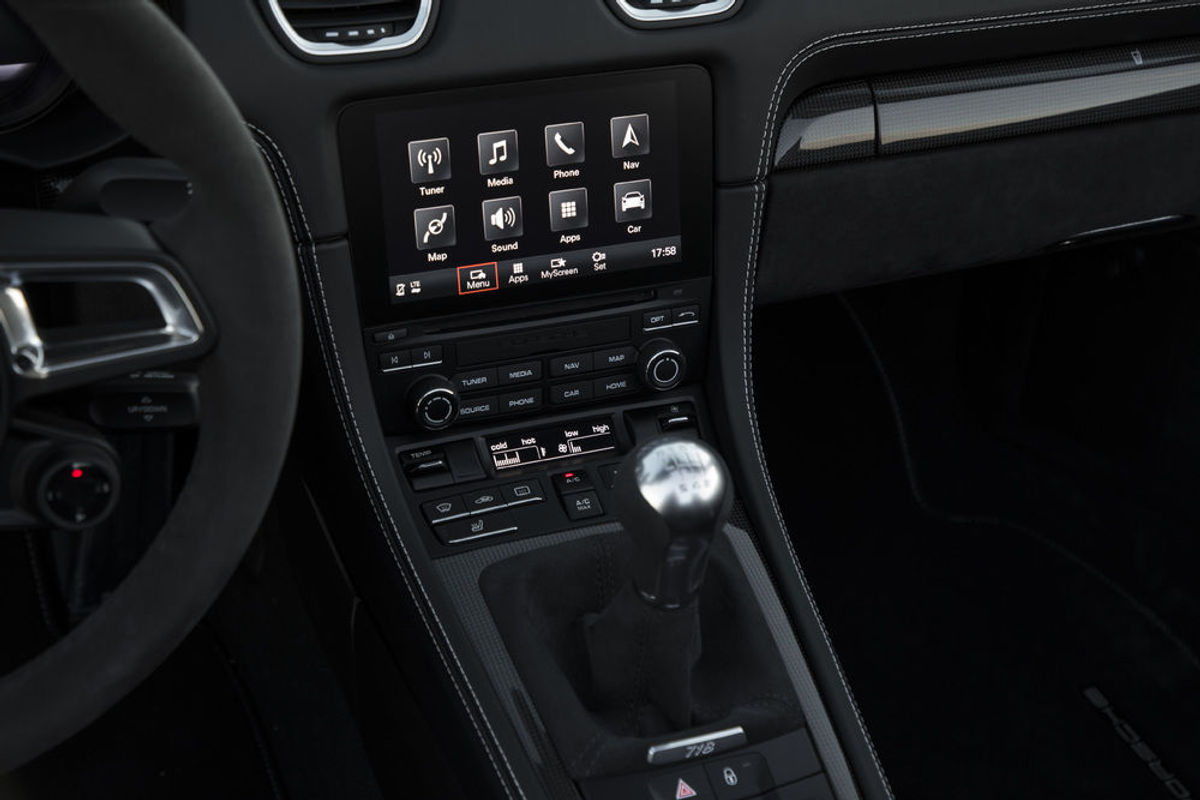
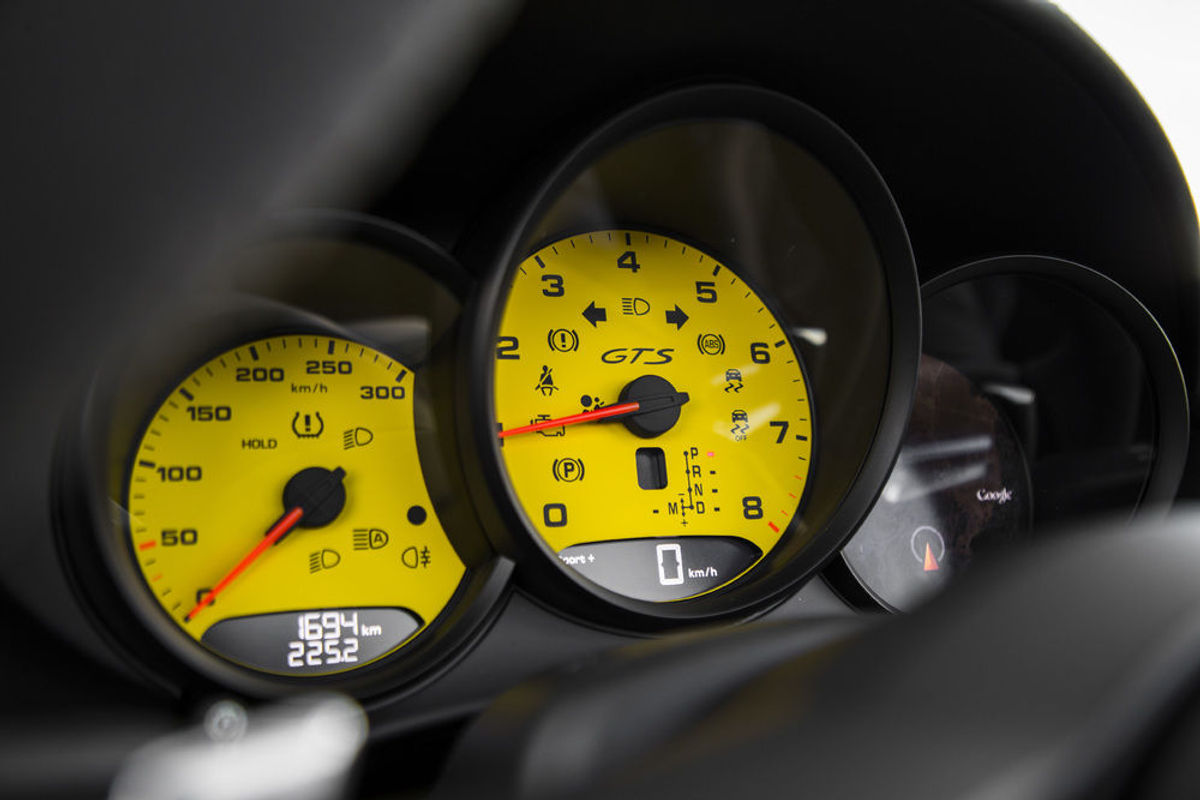
So the GTS is a progression from the Cayman S and Boxster S. It gets 11 kW more power, but torque remains at 420 Nm. Furthermore, it's kitted out with a load of standard kit that’s usually on the options lists of S derivatives. That means the Sport Chrono package is standard, as is torque vectoring and Porsche’s famed PASM stability system, which sees GTS versions sit 10 mm lower.
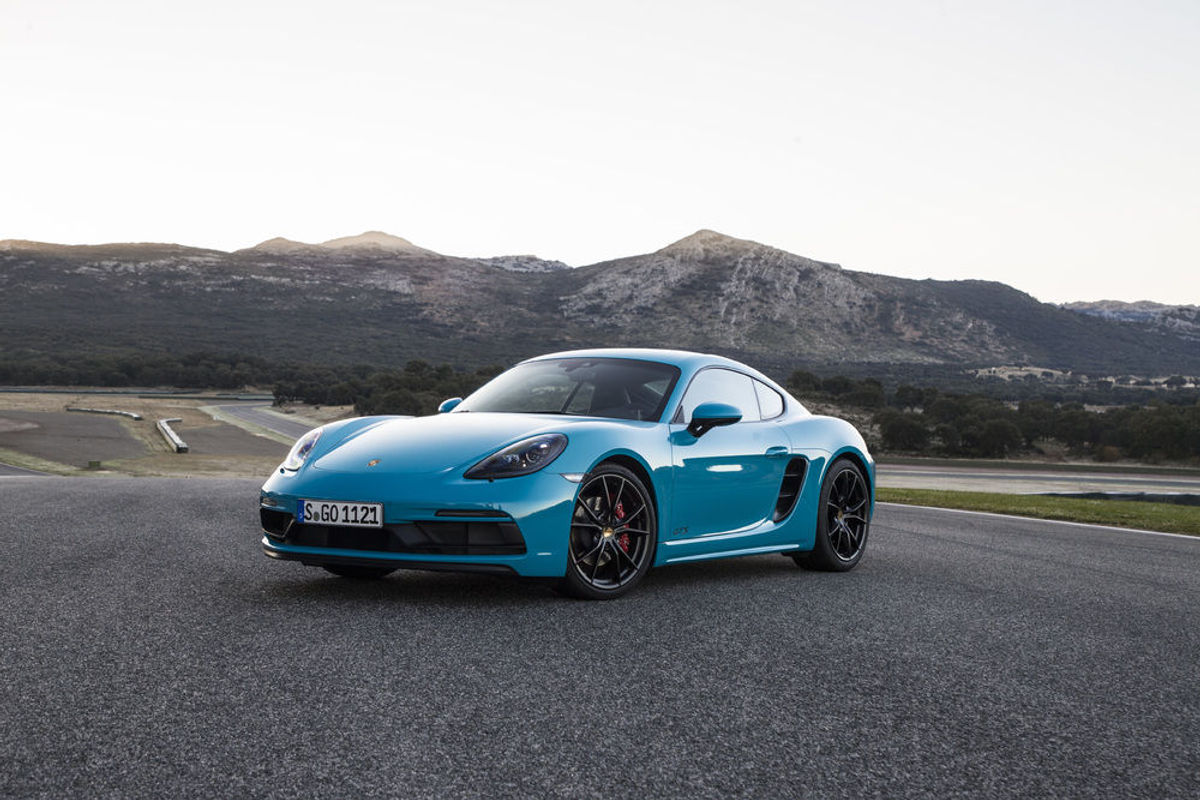
The exterior of a GTS features dark-tinted head and taillights and a black rear apron. GTS decals sit behind the front wheel arches and a sports exhaust system is standard. Inside, the seats are trimmed in Alcantara, as is the roof lining and a few other touch points around the cabin. The final addition is GTS badging in the headrests of the seats.
More from 4?
In line with the rest of the 718 series, the Boxster GTS and Cayman GTS are powered by a turbocharged flat-4-cylinder engine. In GTS spec, the 2.5-litre motor produces peak outputs of 269 kW and 420 Nm of torque. Equipped with the dual-clutch PDK transmission, the cars are claimed to hit 100 kph from standstill in 4.1 seconds. Choose a 6-speed manual and Porsche reckons the best you’ll manage is 4.6 seconds, which is anything but pedestrian, but it's interesting to note how much faster the PDK box is claimed to be than its stick-shift counterpart…
The flat-4 cylinder 2.5-litre engine is a happy revver and quickly hits its 7 000 rpm rev limit.
The engine emits a unique note from of its exhaust ends: it sounds neither very intimidating, nor sonorous, to bystanders. Porsche is admittedly not the type of car brand that strives to achieve the perfect exhaust note, certainly not on its forced-induction cars… For decades, turbochargers have muted any hint of crisp and clear tailpipe drama, you'd get wooshes, yes, but no guttural growls. Non-turbo models such as the 911 GT3 and previous-generation Cayman R positively sang, but the 718 lacks the aural drama of something like a Mercedes-AMG A45 or the rorty Audi TT RS.
Stepping onto home turf
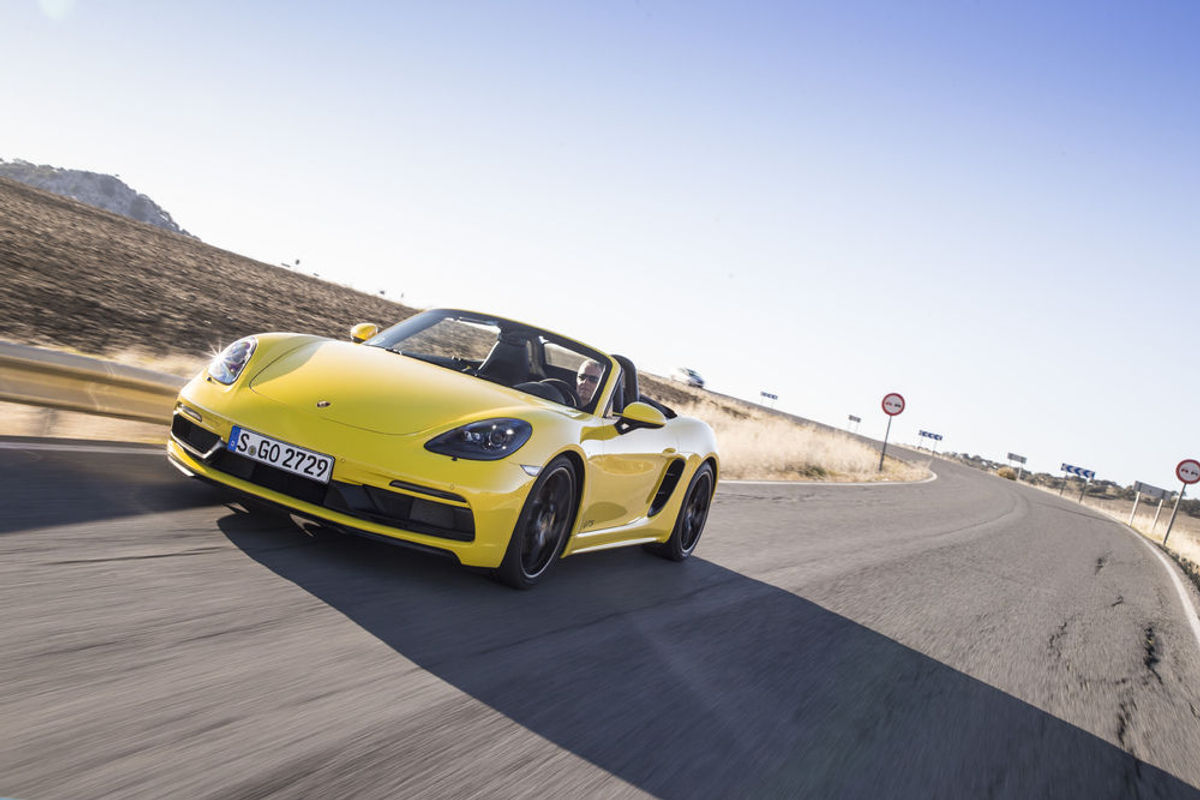
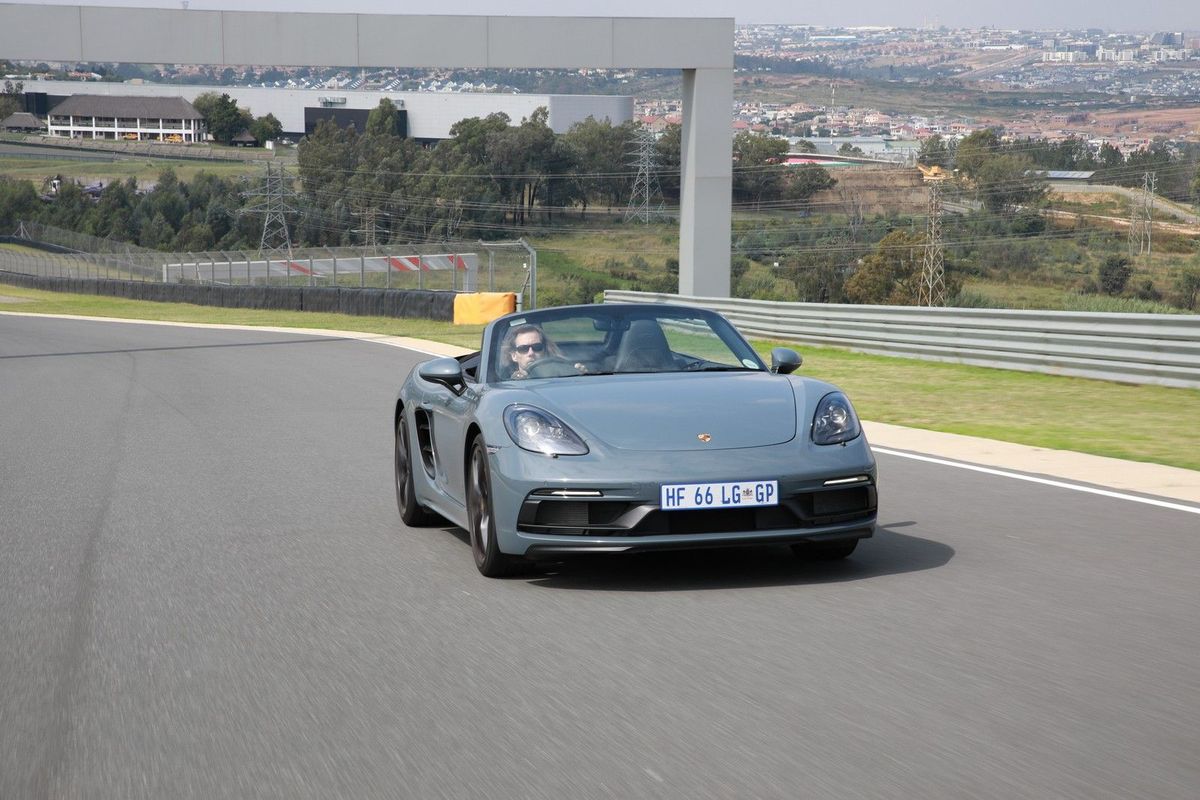
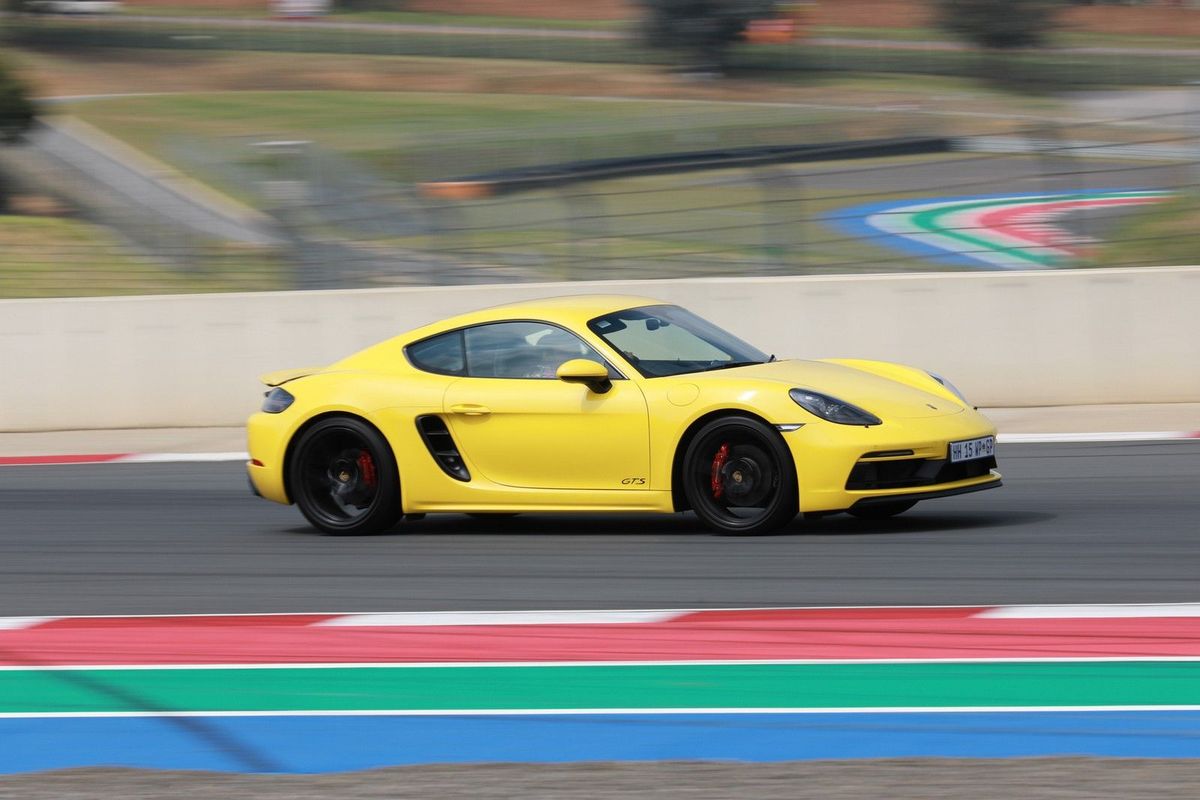
There is good news, however. For what their engines lack in terms of ear-tingling excitement, the Cayman GTS and Boxster GTS can deliver unadulterated driving experiences, seemingly at will. Out on Porsche’s home turf of Kyalami, an ideal place to test cars' dynamic ability, we were allowed to really open up the taps on the GTS versions. The mid-engined balance of the Cayman is especially fun to exploit… As you progress through the driving modes to the climactic Sport Plus setting, the Cayman’s talents become incrementally more accessible. The Boxster isn’t a softie, however; it impresses in the same way as the Cayman, but its suspension is more pliant. It’s fun to drive on track, but compared with the Cayman, the hardtop provides the most thrilling drive.
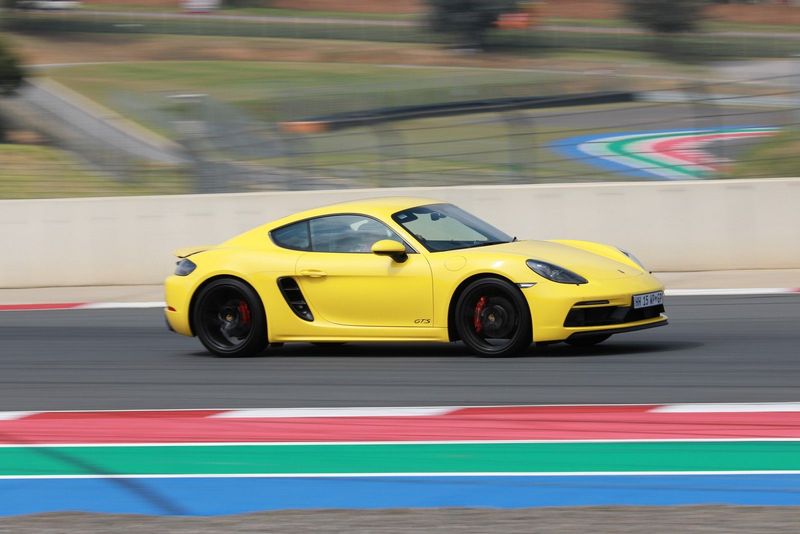
The handling prowess of the Cayman is easily accessible, especially at Kyalami, which is home turf now, right?
Both versions of the 718 GTS instil a feeling of superb balance: a GTS' front end is fast to react and the chassis responds quickly to swaps of direction. It’s not rear-limited by any stretch of the imagination, so you’re free to stand on the throttle early and power out of corners with zeal.
The steering is sharp and has reasonable feedback, but I would like to experience a little more feel from the tyres, especially towards the ends of long fast corners, where you’re not quite sure whether the front tyres are beginning to push (understeer) or not. Still, the GTS (particularly the Cayman) can hold a tighter line on corner exits than any AWD or RWD sportscars in its class.
The responsiveness of the turbo 4-pot is excellent on track, as is the slick PDK transmission. The motor revs cleanly to 7 000 rpm and hardly hesitates to draw breath before snatching the next gear. The power delivery is much more linear than you'd expect from a turbo motor, which undoubtedly helps to keep the car's tail in line when you flatten the accelerator when exiting corners.
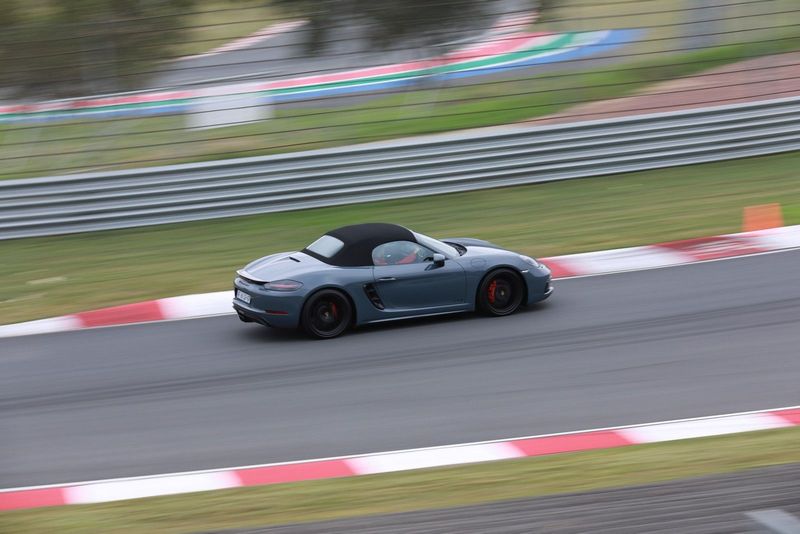
The Boxster GTS is slightly softer than the Cayman but still thoroughly fun to whip around bends and on track.
Those who like to slide cars' rears might find the GTS a little too planted and grippy for their liking… besides, the power delivery is too smooth to produce that instantaneous shove that can elicit breaks in traction. A lower-grip surface (and a bit more provocation) could yield better sideways results, except that doesn’t really seem to be what the Cayman and Boxster are about.
Final thoughts
The Cayman GTS and Boxster GTS illustrate how good the underlying 718 chassis is. By virtue of their mid-engined layouts, they're intrinsically balanced in a way that none of their competitors can quite match… they feel light and exciting to steer enthusiastically, but also respond promptly and accurately to driver inputs without ever "biting back".
I feel there’s still more to exploit from the Cayman and Boxster packages. I would love to see Porsche drop in the flat-6 from the Cayman R into the 718 chassis to see how much it’s really got, but, alas, the time of 6-pots in a Cayman or Boxster has probably gone. That said, we can still look forward to what’s to come, which will (in all likelihood) be a GT4 version. For now, this is an excellent point to get into a Boxster or Cayman, albeit with a bit of a price premium over the likes of the F-Type 2.0, TT RS or even something like the upcoming BMW M2 Competition Pack.
Lexus has released a teaser image and short video of its new ES mid-size sedan which is due to make its debut at the upcoming Beijing Motor Show next week.
The new 7th generation Lexus ES will break cover at the Beijing Motor Show in China next week with sharper and sportier styling. Lexus South Africa says that the new ES will arrive in South Africa later this year.
The new ES takes inspiration from the brand’s flagship LS model and looks more aggressive than the current model with a new headlight design and a ‘waterfall’ spindle grille with vertical slats. The beltline is pronounced with thick chrome work seen towards the C-pillar while slim horizontal taillights round off the look at the rear.
The interior will likely borrow elements from the LS too but we will only know for sure once the ES makes its debut. A host of new technology is expected to feature in the new ES.
Powertrain details for the ES have yet to be revealed but reports suggest that a 3.5-litre V6 will find a home under the bonnet of the new ES with as much as 224 kW and paired with an 8-speed automatic transmission. A hybrid version is also likely with a 2.5-litre petrol engine pairing with an electric motor, much like the current ES 300h.
We will keep you updated as more details are revealed, stay tuned!
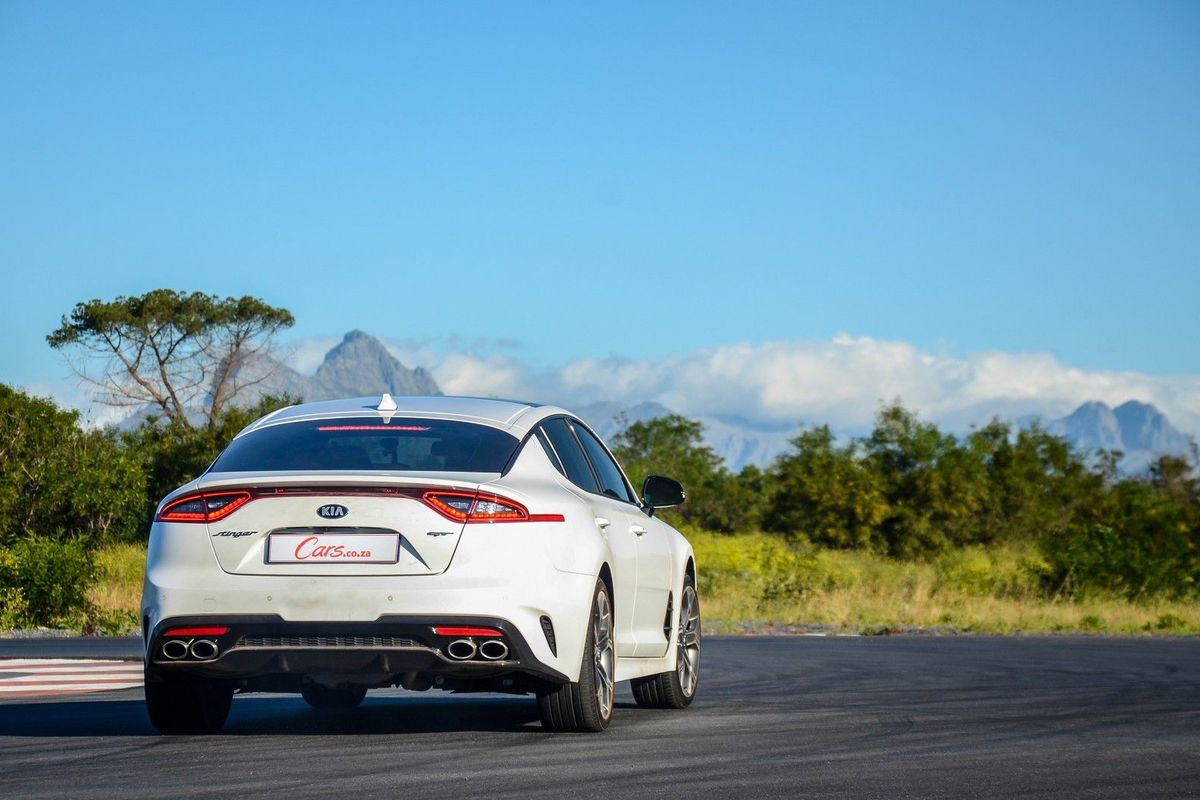
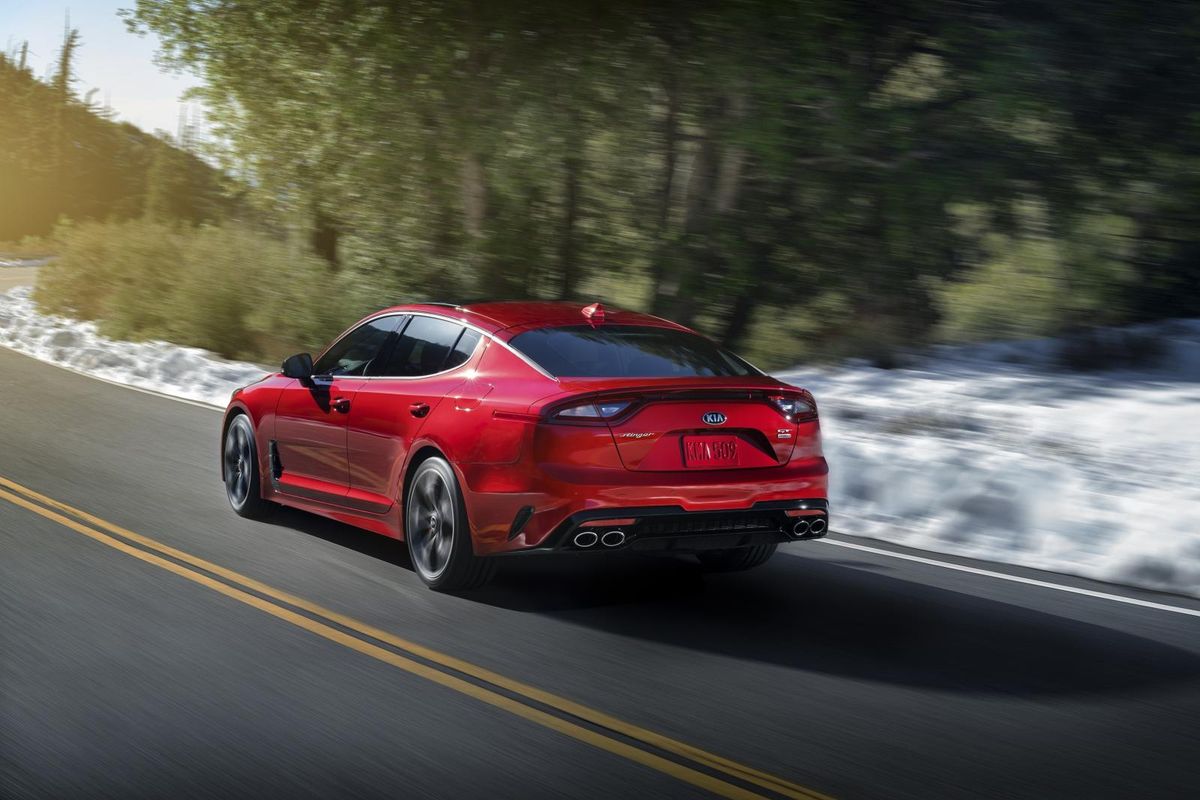
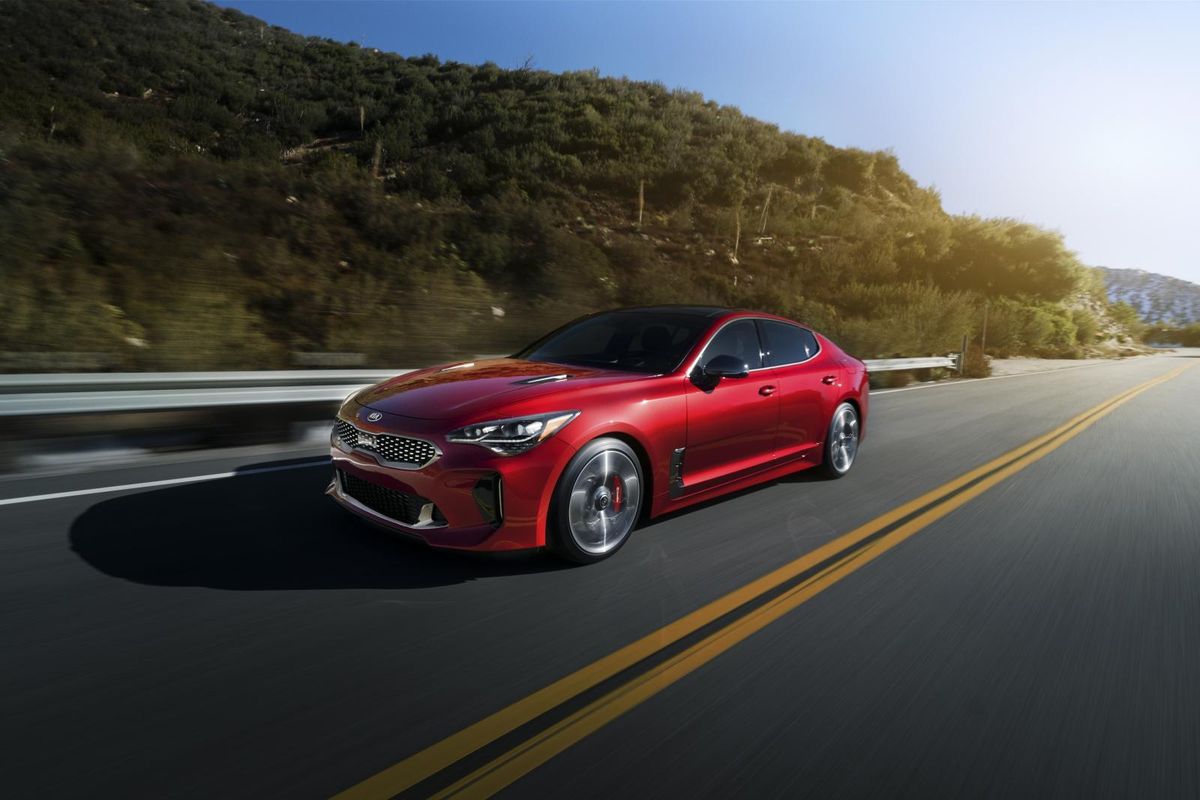
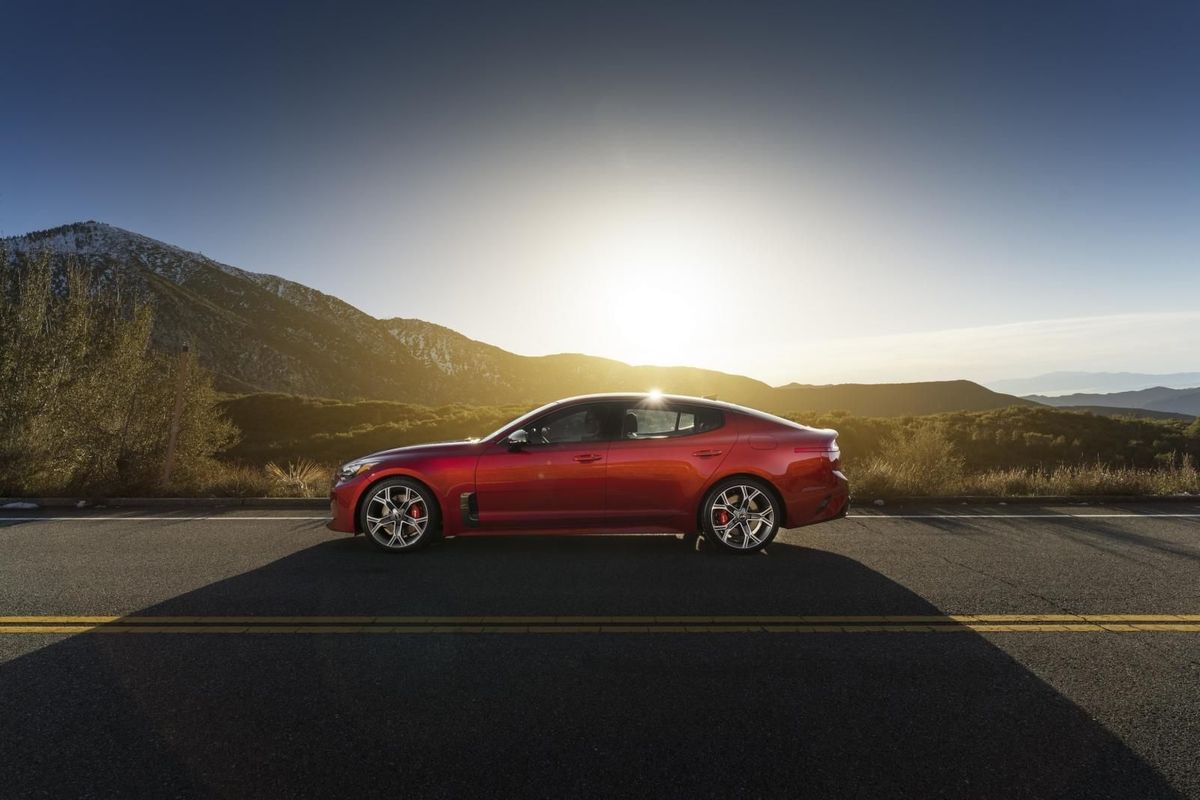
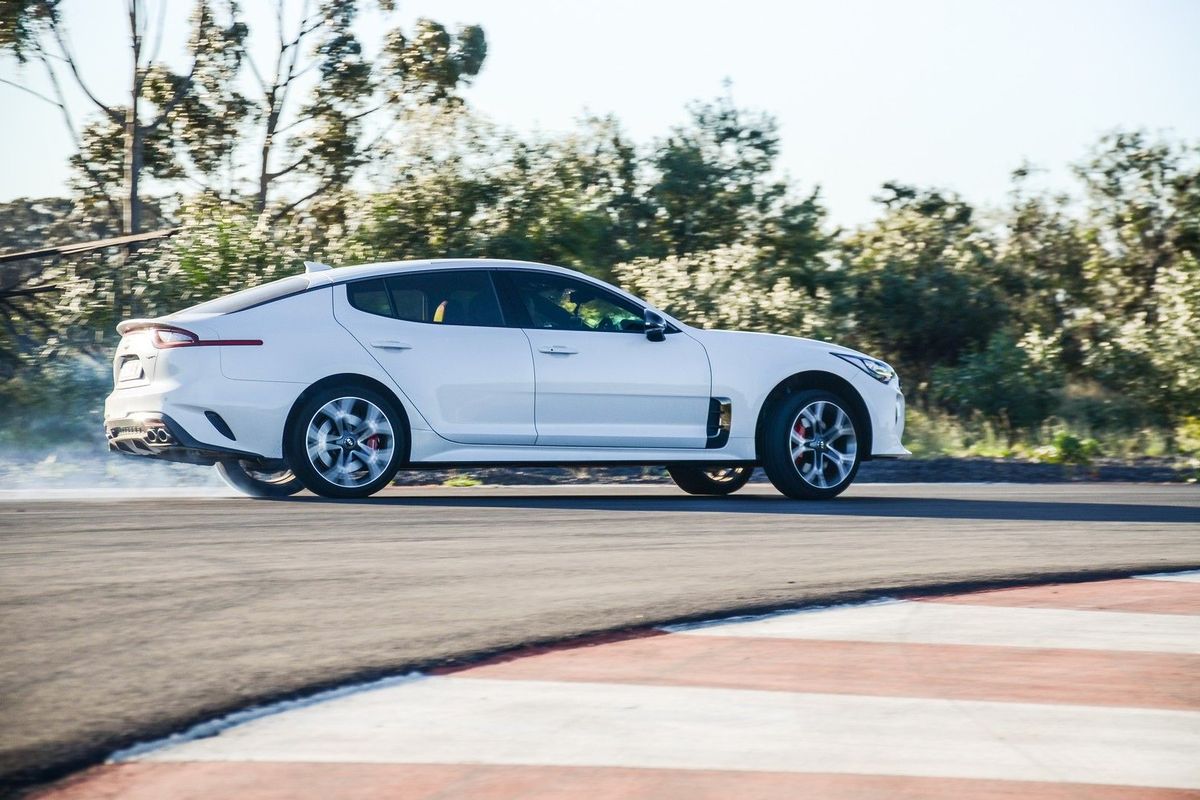
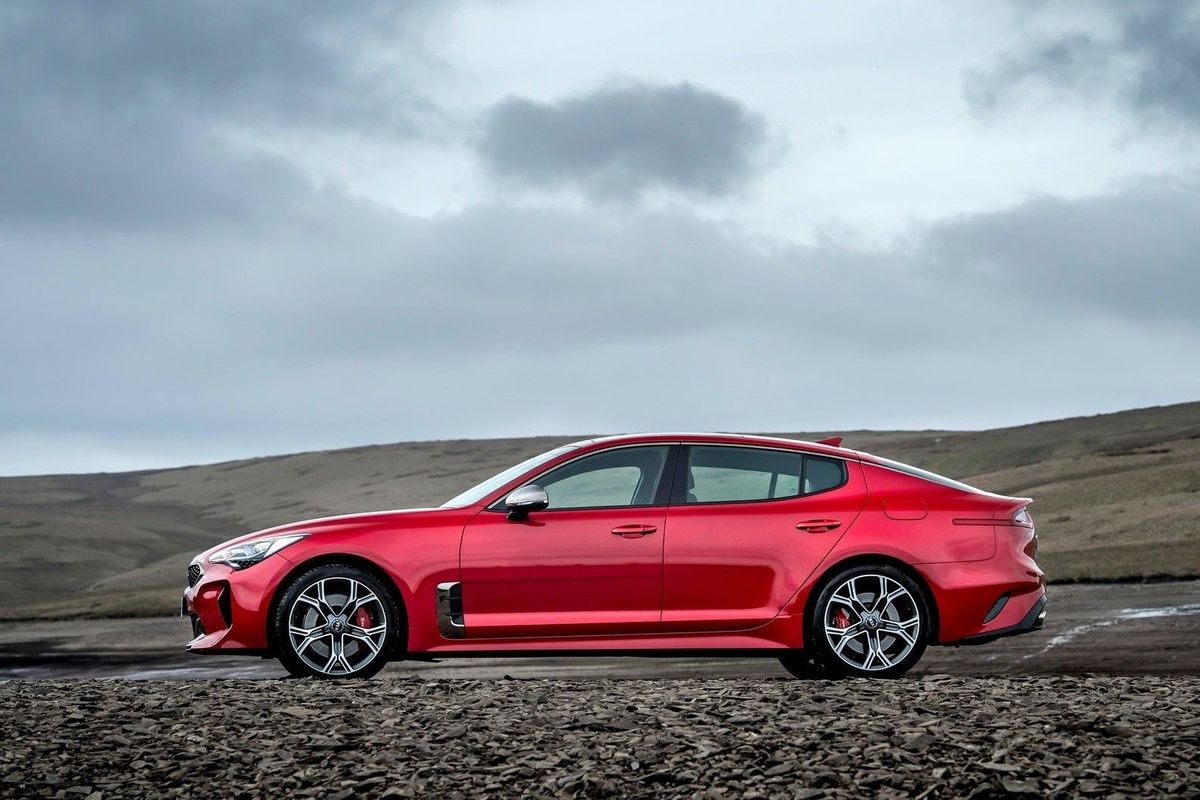
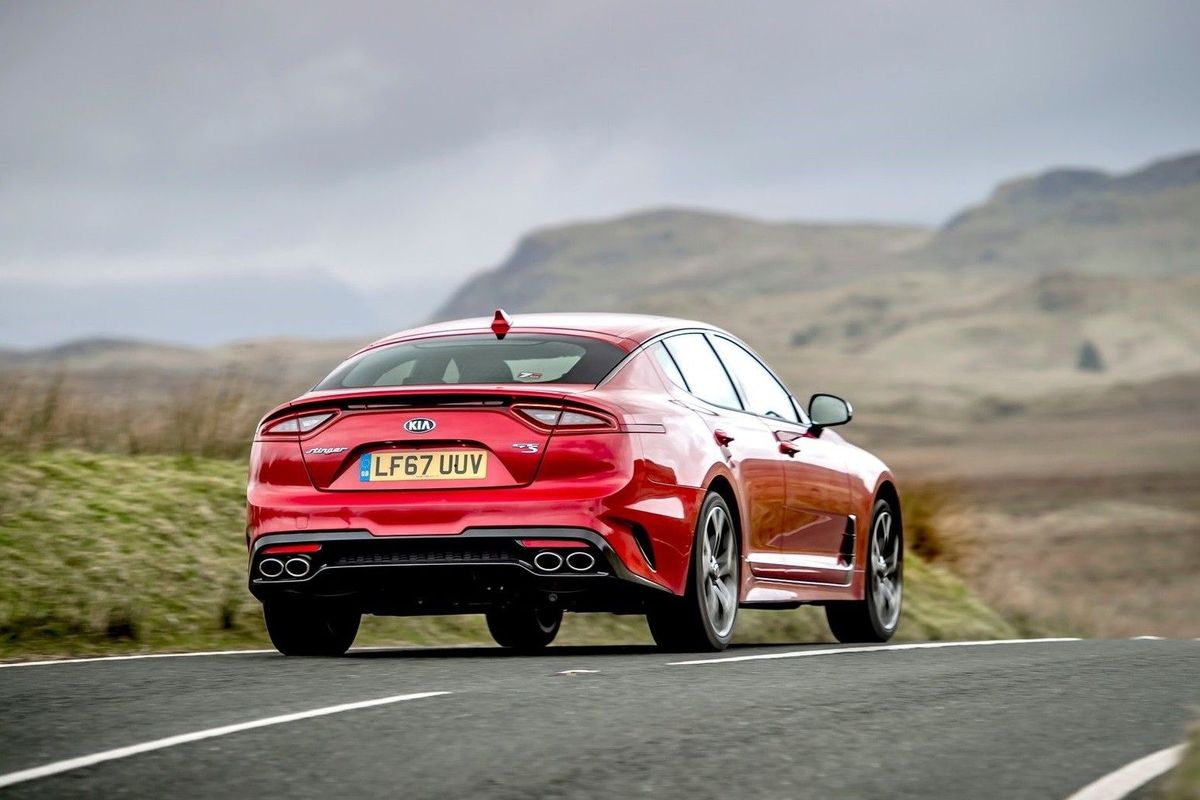
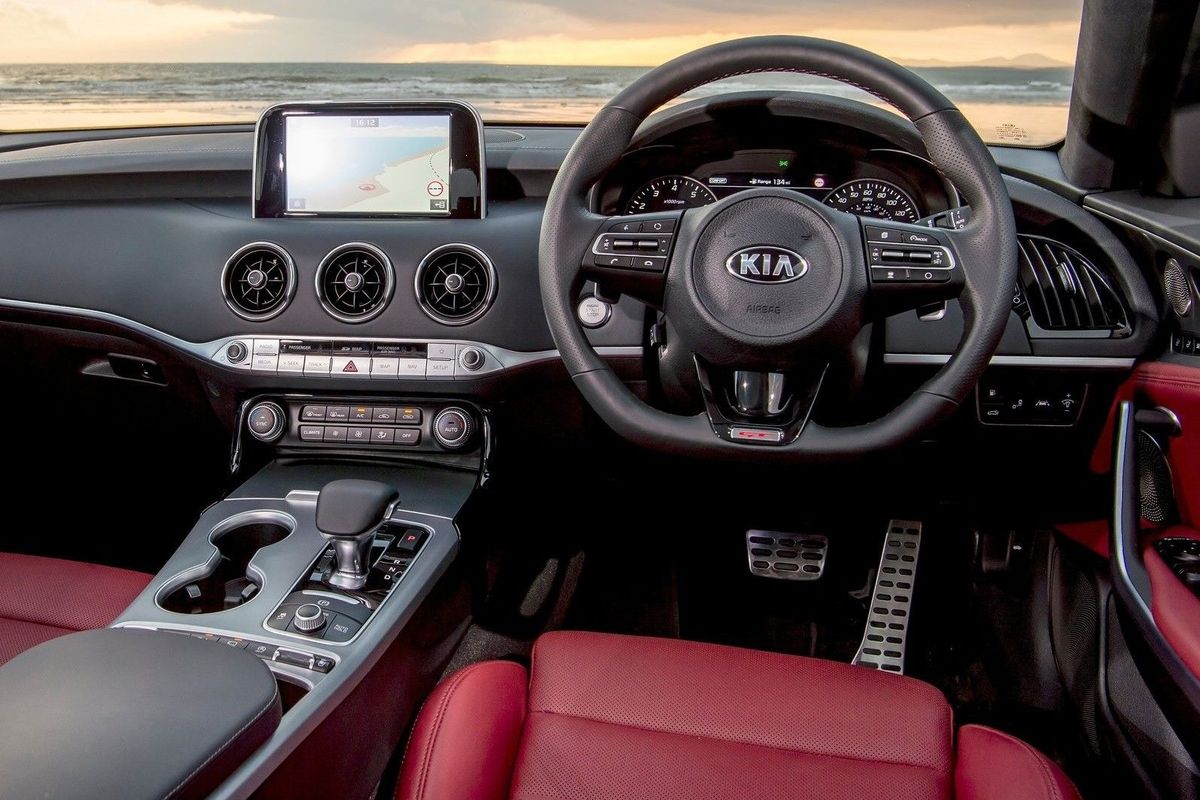
Kia South Africa has confirmed that its Stinger will be going on sale in August 2018. Here's what we know so far.
Kia South Africa surprised the SA public back in 2017 when it showcased a Stinger at the SA Motoring Experience held at Kyalami. Fast forward to April 2018 and the Korean company has confirmed that the Stinger will be introduced to our market in limited numbers during August 2018.
“Unlike any KIA that has come before it, the Stinger is the embodiment of an everyday dream car,” says Gary Scott, CEO of KIA Motors South Africa. “From its birth as the GT concept, through the years of tuning and refining it on the legendary Nürburgring Nordschleife, no detail was spared to create a true Gran Turismo. It is not about outright power, hard-edged dynamics and brutal styling at the expense of luxury, comfort and grace. Instead, it’s a driver’s car equally suitable for spirited long-distance driving and everyday enjoyment.”
The Kia Stinger was developed on the Nürburgring Nordschleife under the guidance of Albert Biermann, Executive Vice President and Head of Vehicle Test & High Performance Development. That name will sound familiar if you know your BMW M products, as that's where he was stationed before moving to Kia.
The Kia Stinger is powered by a 3.3-litre twin turbo V6 engine which packs a 272 kW and 510 Nm punch. Power goes to the rear wheels via an eight-speed automatic gearbox. Kia claims a 0-100 kph time of 4.9 seconds and it'll run onto a top speed of 270 kph. Pricing has yet to be confirmed and Kia said in its press release that "full specification details and pricing of the SA-bound KIA Stinger will be announced at the end of this month (April 2018). Customers and fans are invited to visit www.kiastinger.co.za where they can register to receive up-to-date information and other exclusive content as it’s revealed."
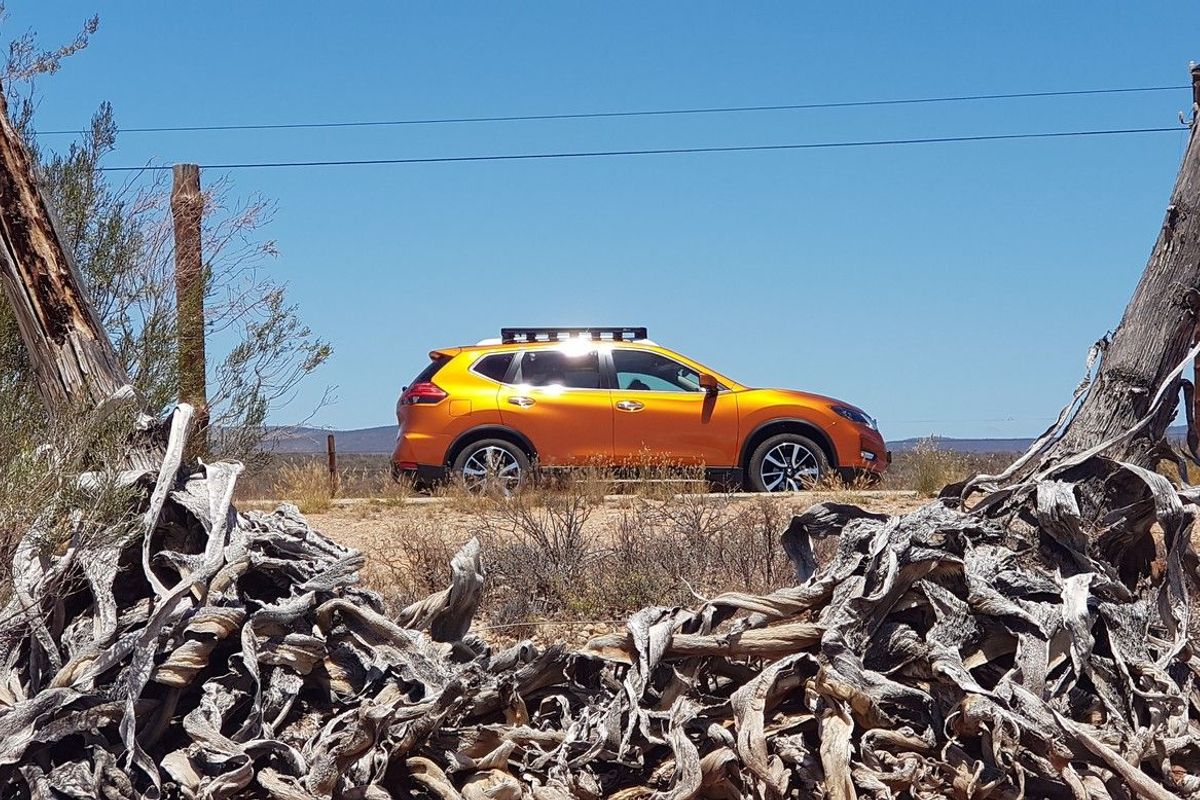
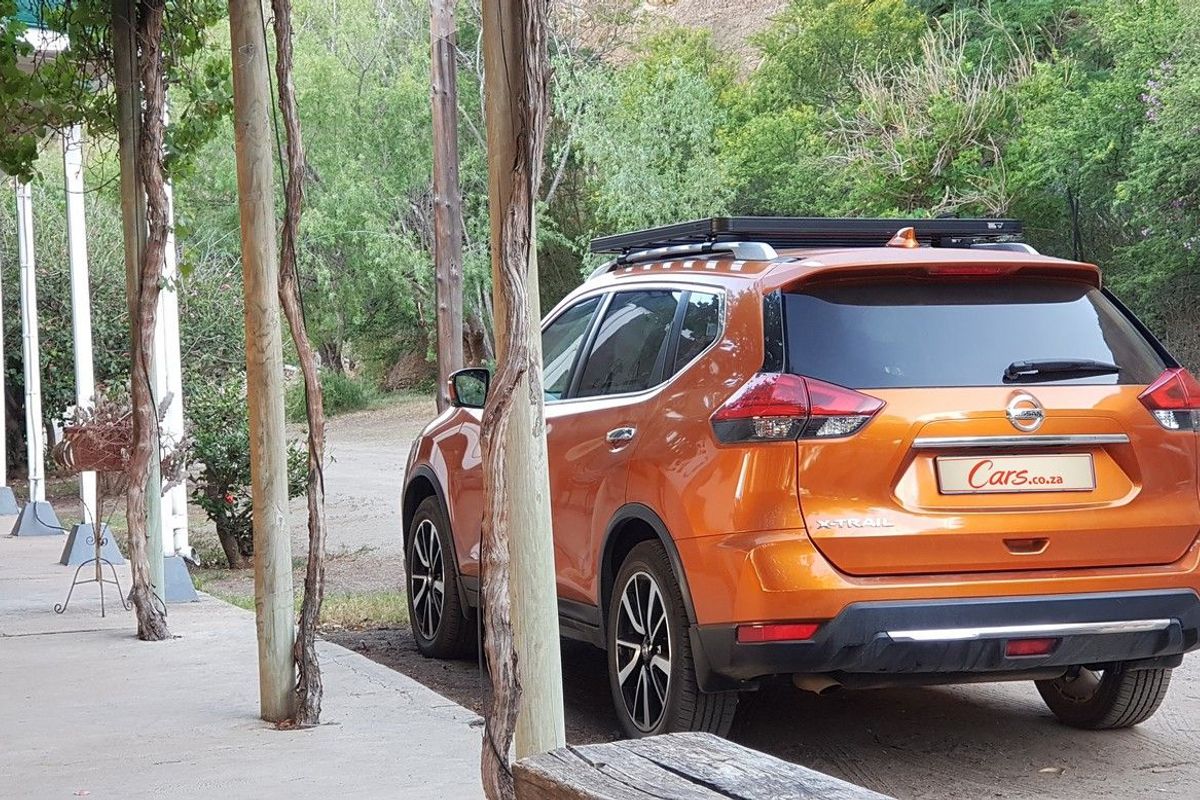
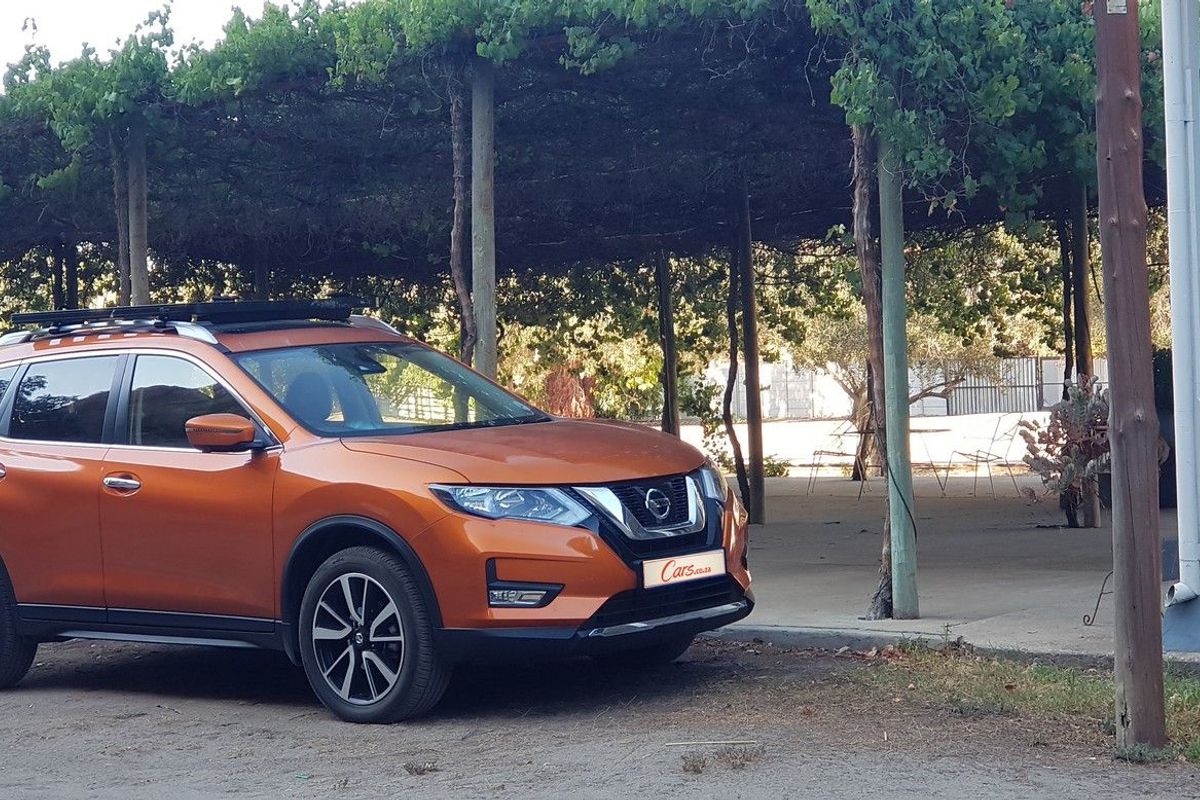
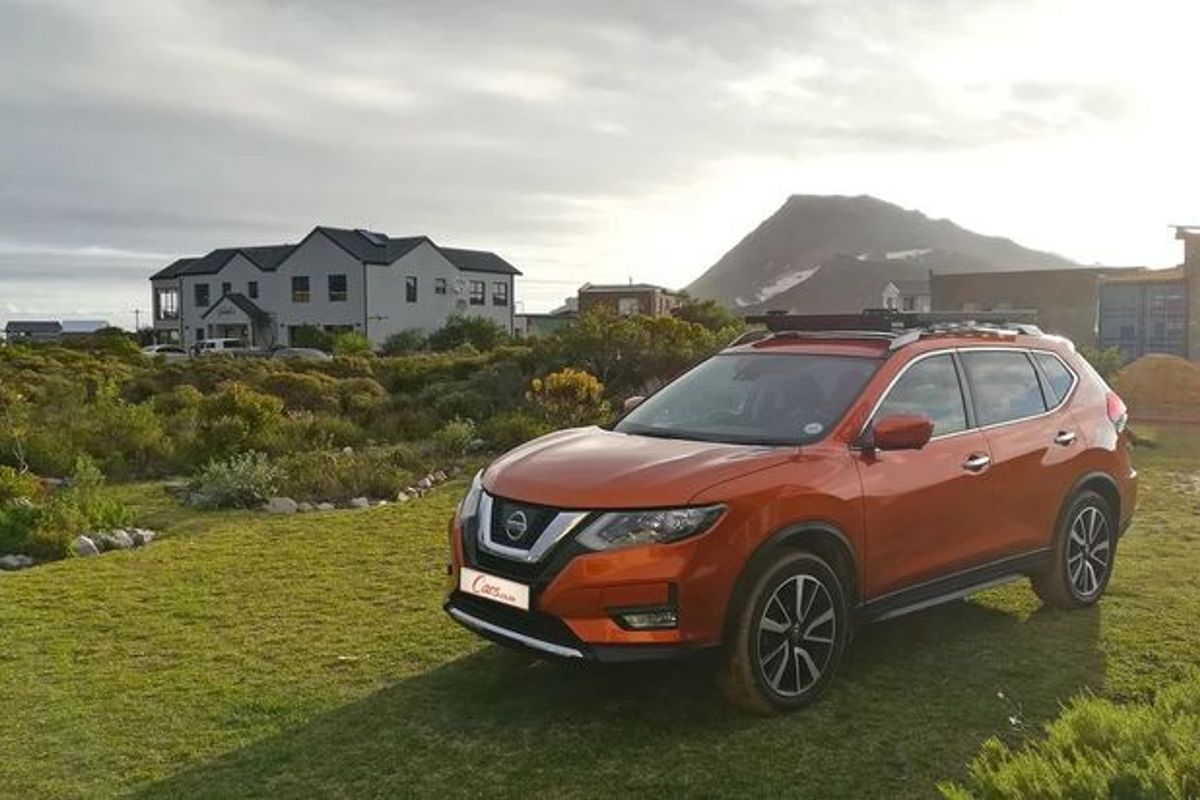
Nissan’s X-Trail has evolved dramatically from its boxy predecessors. It's noticeably larger – and borrows bold new looks from the ever-popular Qashqai – in a bid to take on a segment dominated by the Toyota RAV4. We tested the top-of-the-range turbodiesel Tekna derivative over a long weekend, during which we carted many family members and covered considerable distances of tarmac and gravel…
We like: Efficient diesel engine, comfortable ride, spacious cabin, value for money
We don’t like: Luggage space, outdated infotainment system, manual gearbox option doesn’t make much sense
Alternatives
A global superstar: The Toyota RAV4 is one of the bestselling cars in the world with its practicality, reliability and relative affordability earning it many fans. In the local market, the RAV4 also dominates. The closest comparable derivative to the top-spec X-Trail is the RAV4 2.2D-4D AWD GX, which is listed at just R3 000 more than the Nissan, at R476 700.
Japan’s rising star: The latest Mazda CX-5 has been a boon for the brand in our market. The model impresses with its luxurious interior and superb ride-quality, with practical touches such as a 3-way split-folding rear seat and comfort features such as an automatic tailgate setting it apart from the pack. The top-of-the-range diesel Akera derivative, at R567 400, is pricey, however.
The Korean Option: The Hyundai Tucson continues to sell well in SA, and is the second-best selling model in this segment. Buyers seem to be enticed by Hyundai’s 7-year warranty, the Tucson’s good looks and comfortable interior. The 1.7CRDi Executive does cost less than the X-Trail, at R454 900, but does feature notably less spec.
Overlooked but overpriced: Honda’s CR-V seems to have fallen out of favour with SA car buyers. The latest generation is not offered with a turbodiesel engine on the local market and pricing seems way out of step with rivals. While you might be able to make a case for the Honda being the most luxurious car in the segment, at R590 600 for the mid-spec 1.5T Executive AWD, it is a particularly pricey alternative.
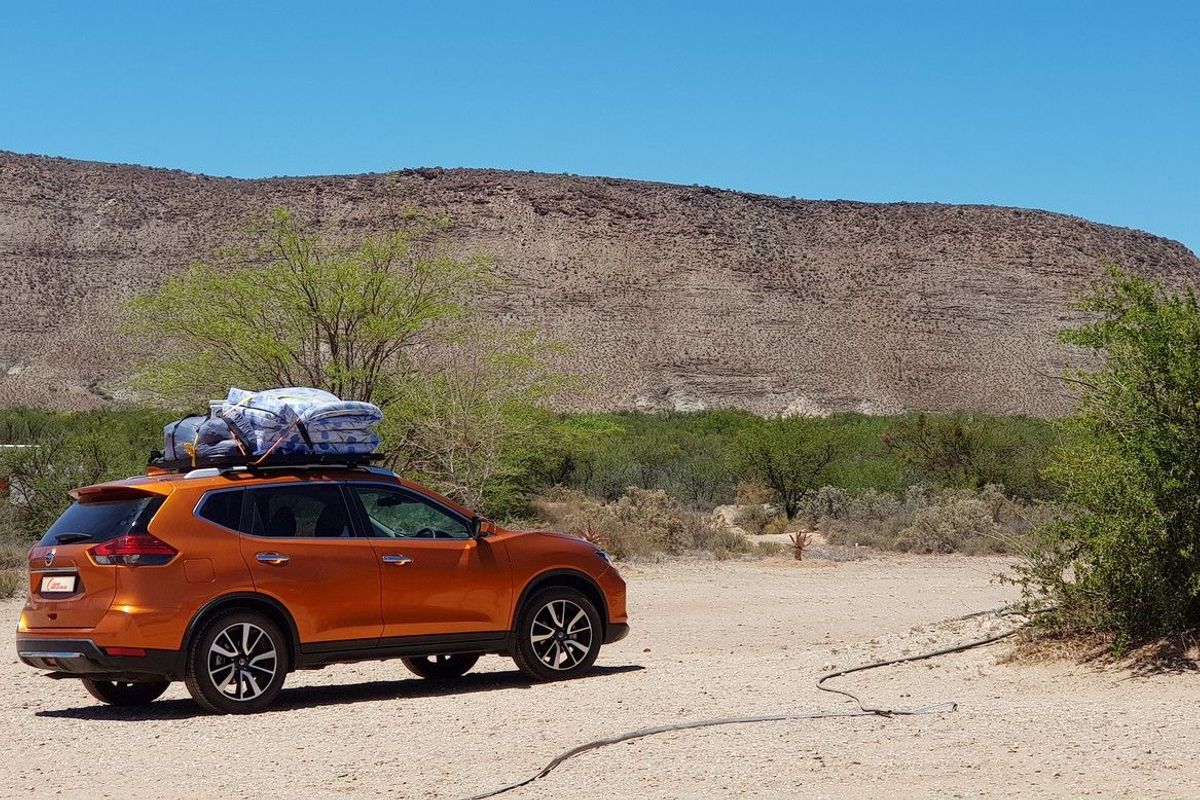
The Nissan X-Trail harks back to a time when compact SUVs (or family cars, in #CarsAwards parlance) were actually used for more than just urban commuting. While it is a comfortable "daily driver", it better suits the motorist (and their family) who prefers a bit of adventure, with a suspension setup that is biased towards comfort, which helps the X-Trail cope with gravel and badly surfaced roads; the sort of elements you might encounter on the way to your favourite campsite, for example.
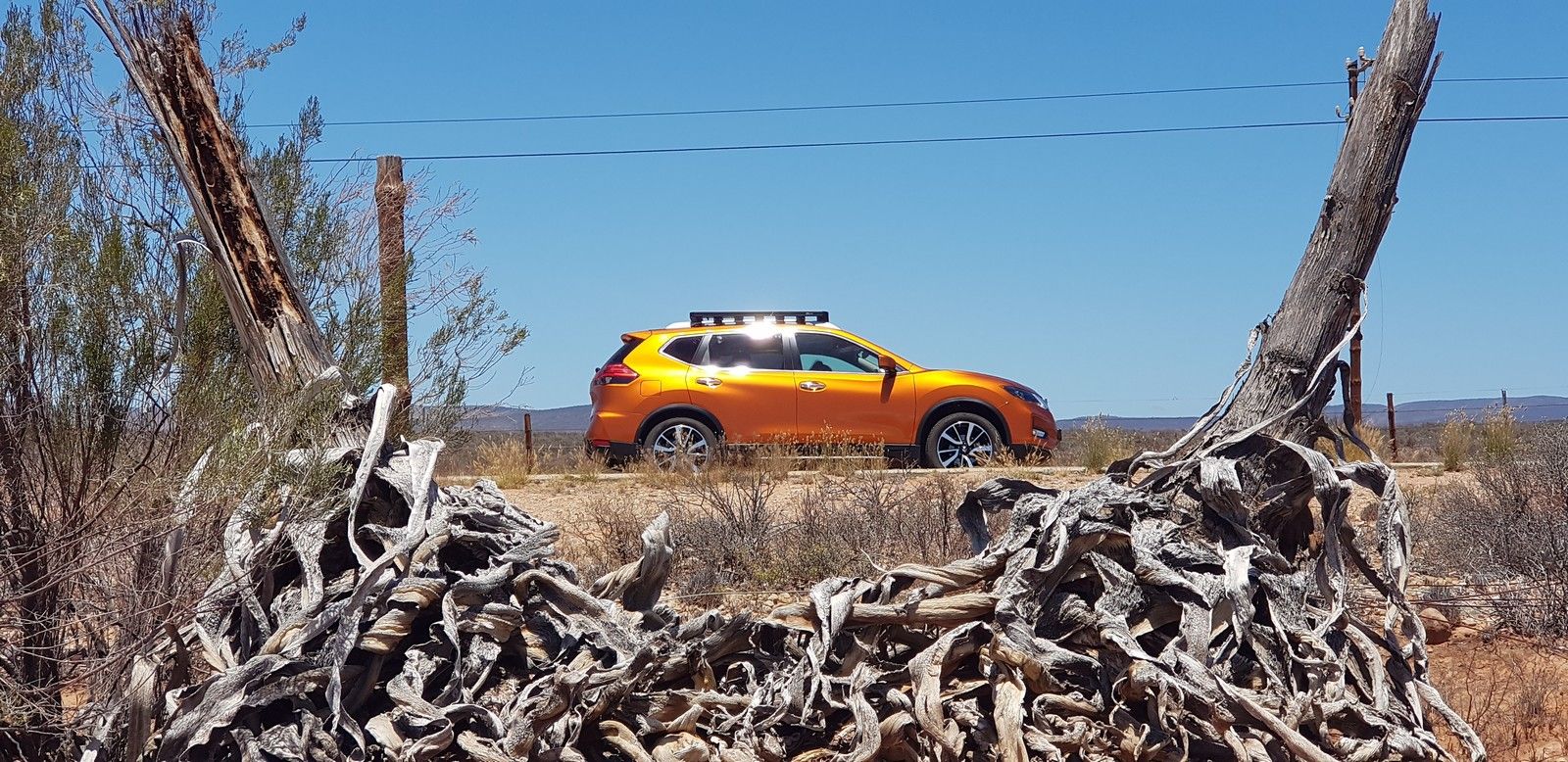
X-Trail is a bit more rugged than your regular soft-roading SUV.
Over the years, the X-Trail has become a particularly large SUV, which does make it less suitable to city living, but Nissan has made every effort to provide the convenience features you would want in a daily driver, particularly in high-spec Tekna guise.
The Tekna also offers an intelligent 4×4 system, which is closer in behaviour and setup to an all-wheel-drive system, rather than hardcore 4×4. There is no low-range and the installation utilises torque-vectoring to manage wheel slip/loss of traction.
How does it fair in terms of…
Kerb appeal?
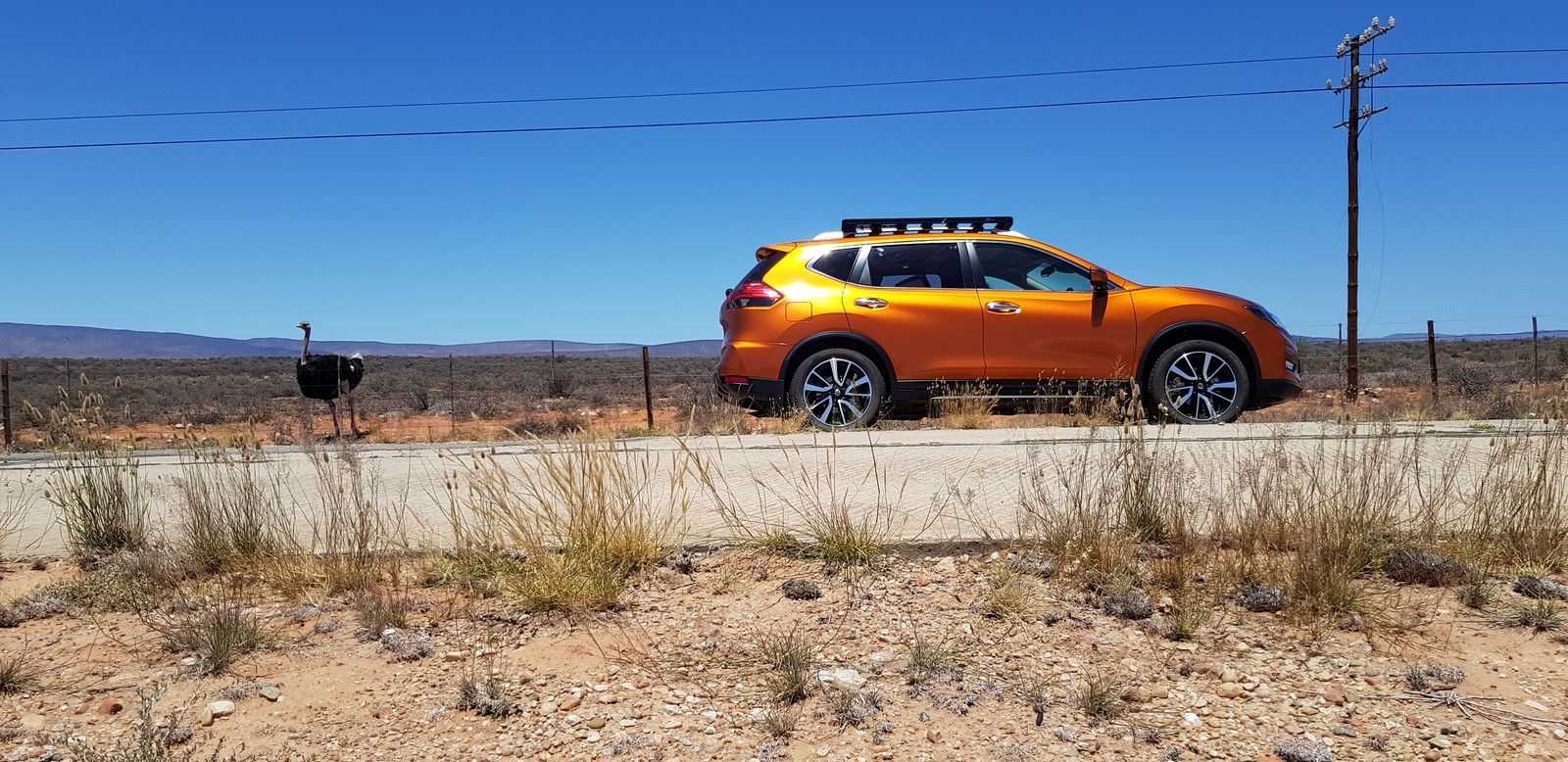
The X-Trail will appeal more to those looking to explore the world outside of the city limits. The car has no sporty pretensions and is a refreshing alternative in a segment where SUVs are increasingly built to almost exclusively operate as road-going machines. The design seems to want you to think of the X-Trail as a 4×4, or at least a car with which you could confidently venture off the beaten track.
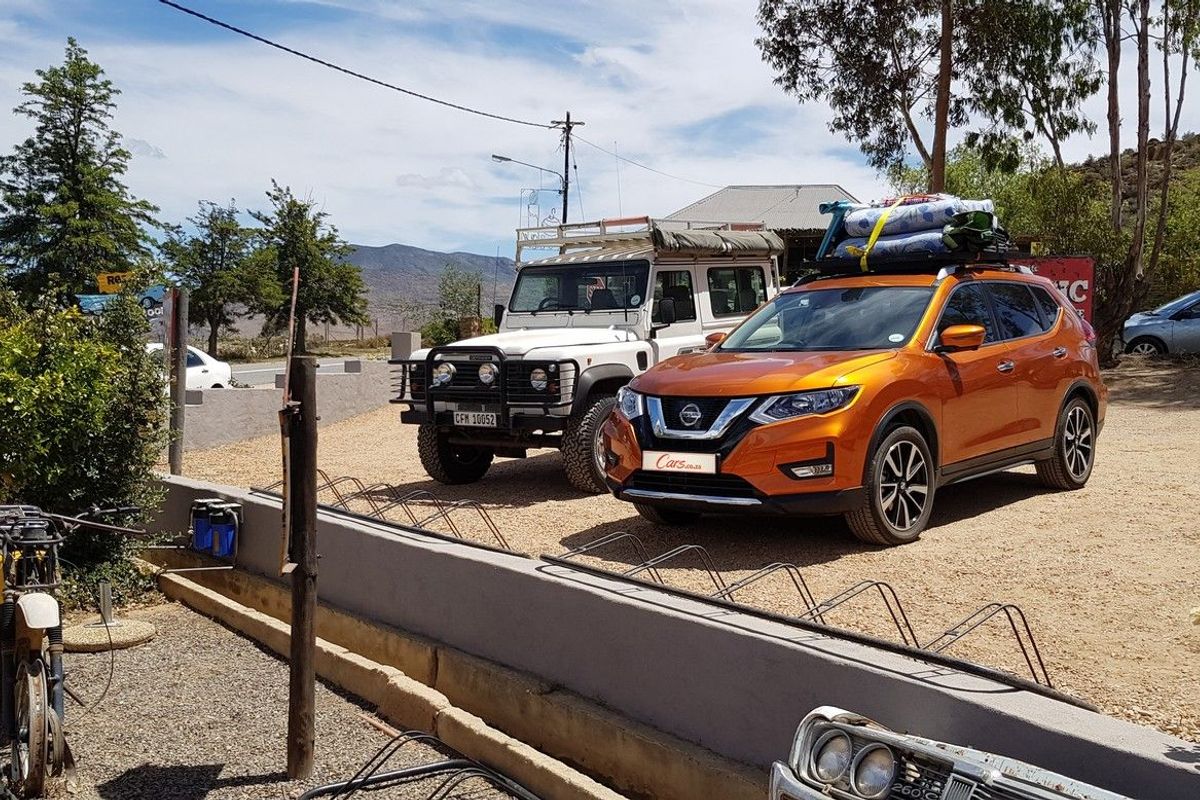
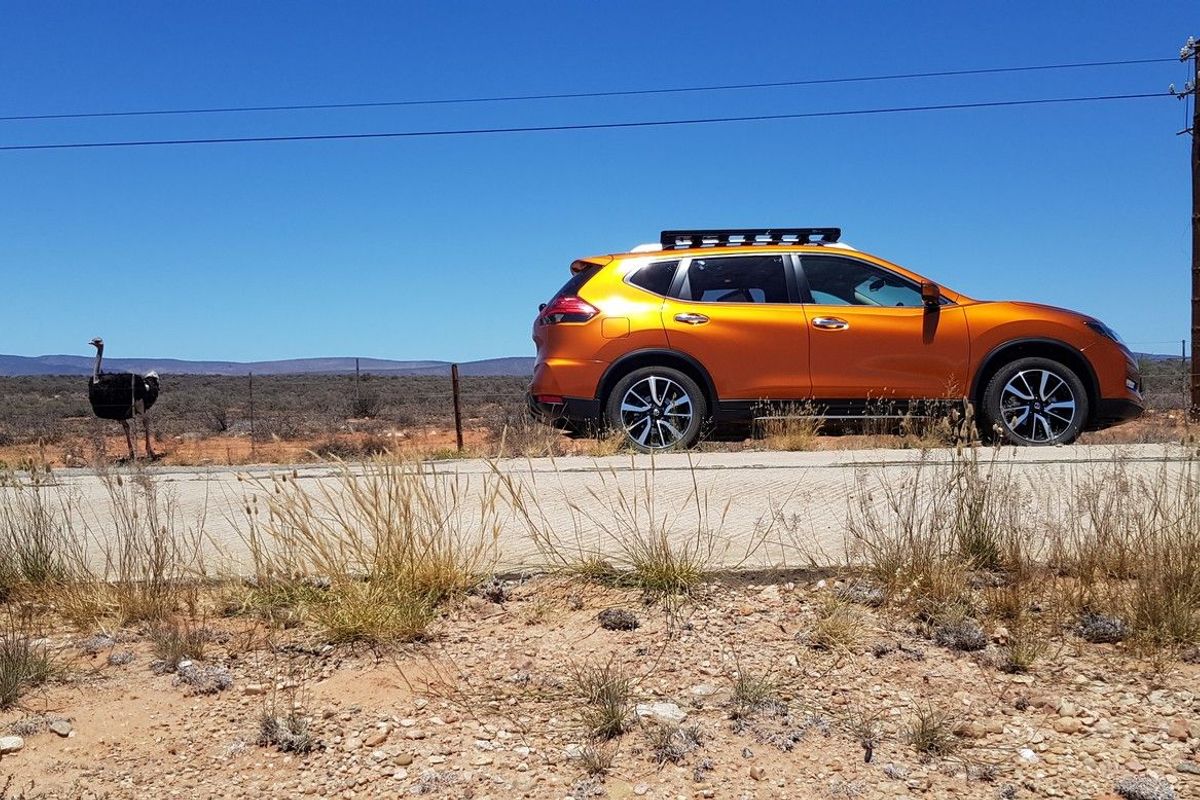
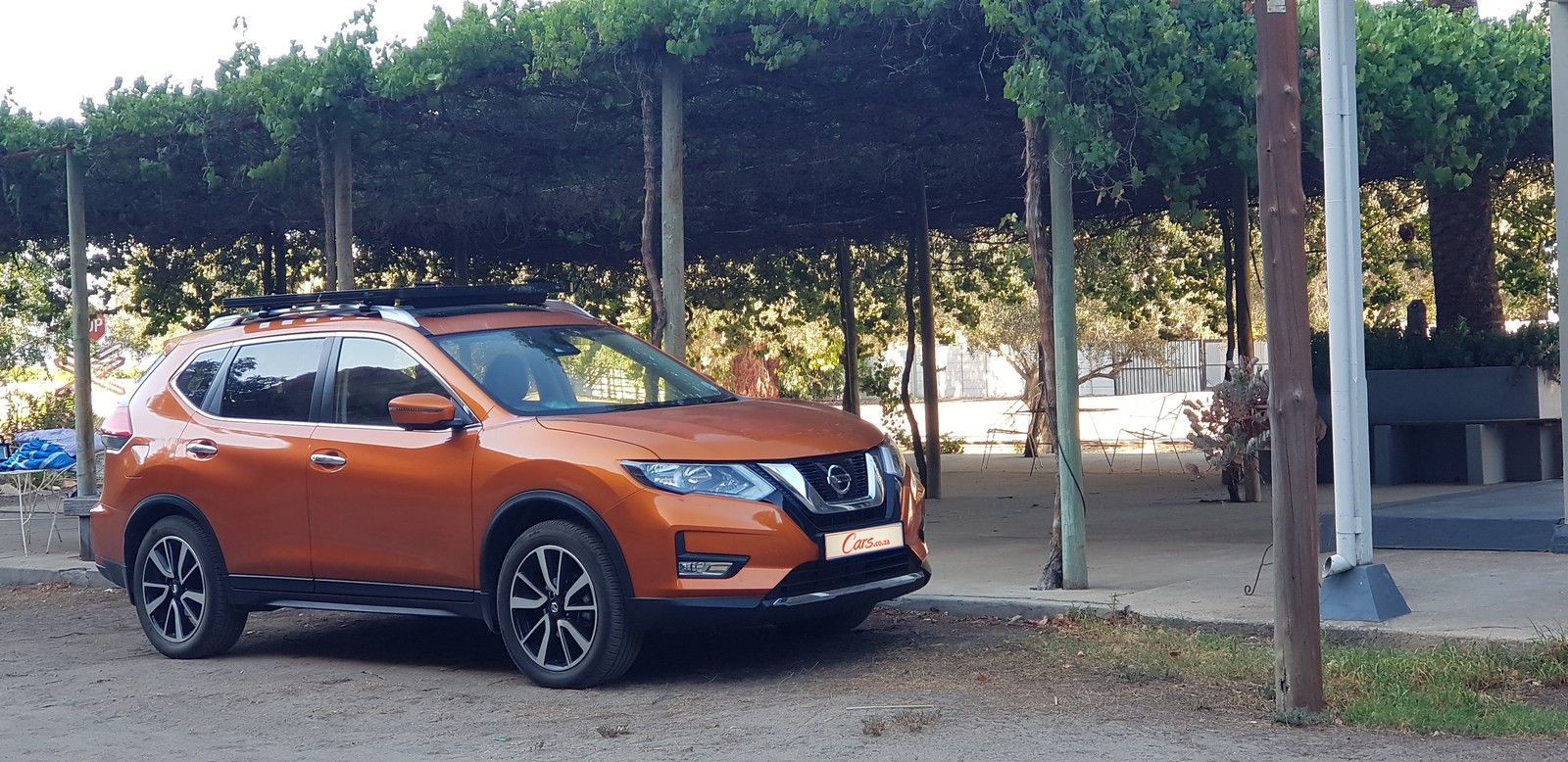
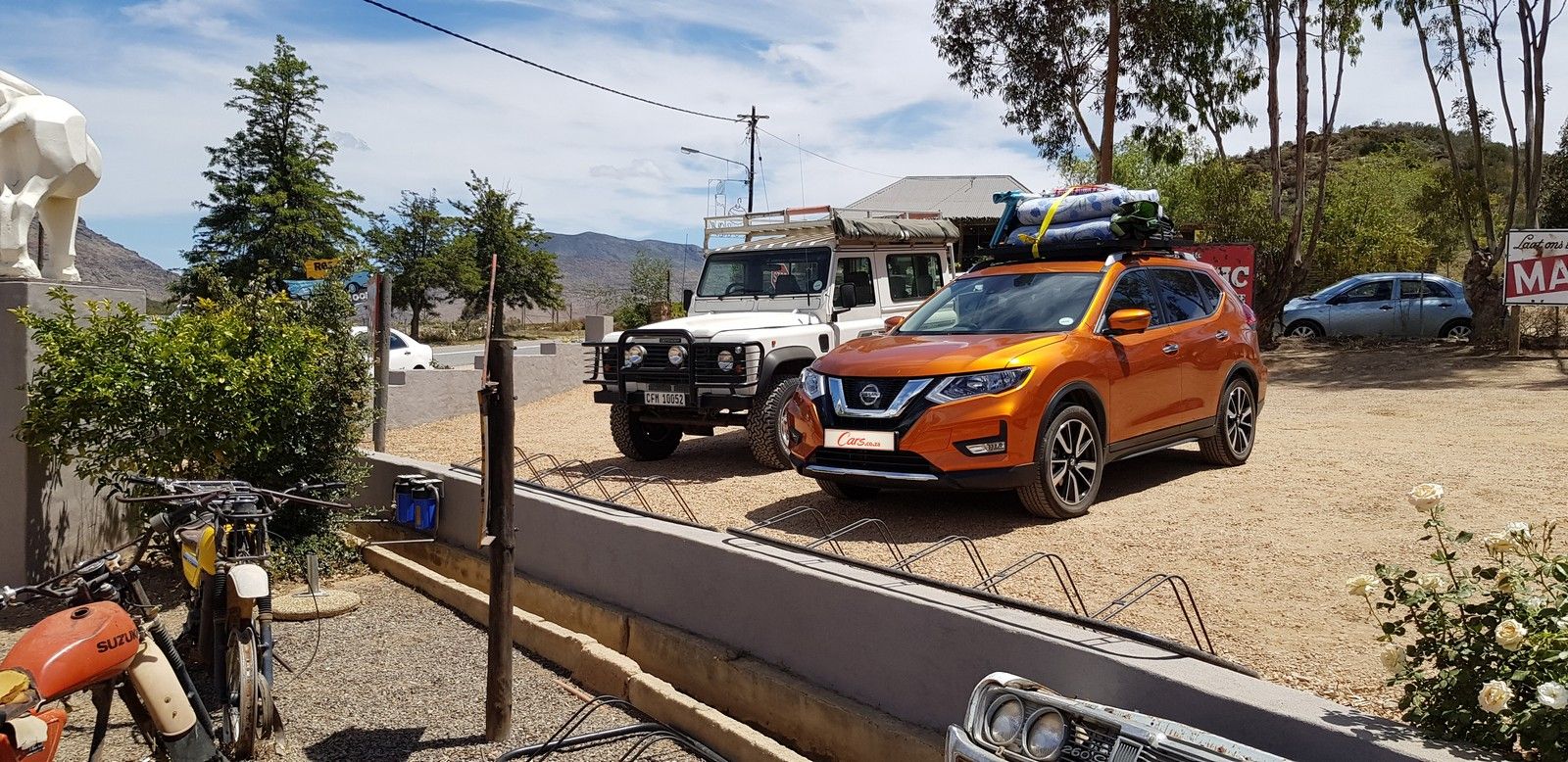
The X-Trail in this burnt orange colour makes for a standout SUV in the parking lot, or in the veld, in this case.
It is a large car compared with other offerings in its segment and by virtue of its arresting orange paint-job, it commands much attention and is imposing to perhaps just the right degree. The 19-inch wheels (fitted as standard to this Tekna derivative) certainly lift the exterior and add a touch of glam.
Interior?
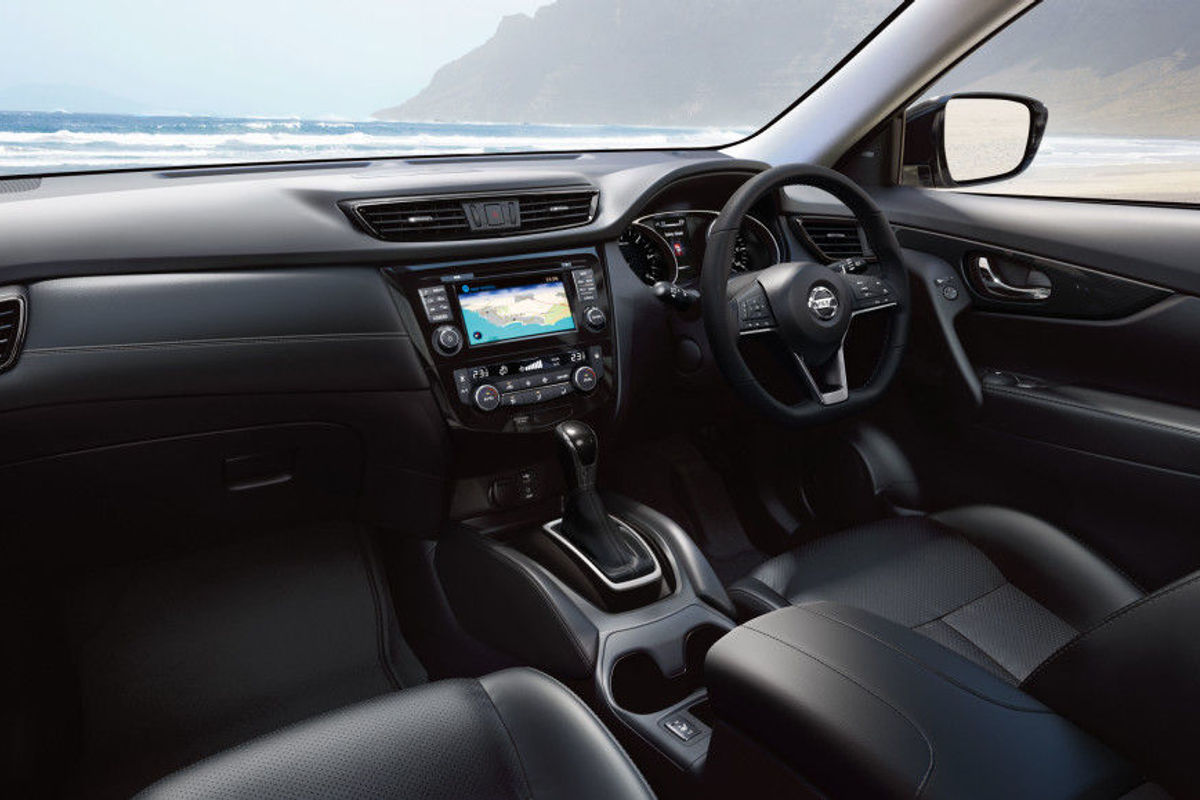
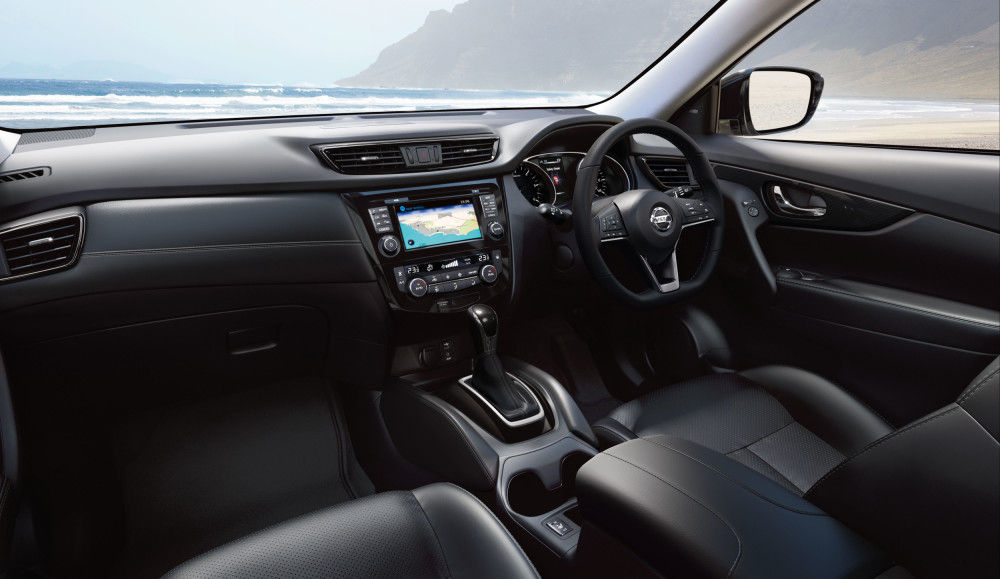
The X-Trail's dashboard and fascia aren't going to win any design awards, but the look is biased towards ruggedness and functionality and, in that sense, it works. The plastic trim is of a suitably high quality for a car at this price point and the quality of the finish on the steering wheel deserves praise.
The front seats are comfortable enough on long journeys, but having just sampled the new seats in the facelifted Qashqai, it would be great to see those seats being offered in the X-Trail too; they really do offer an improvement in overall comfort.
A modern, hard-wearing cabin, our only gripe being the look and feel of the infotainment system.
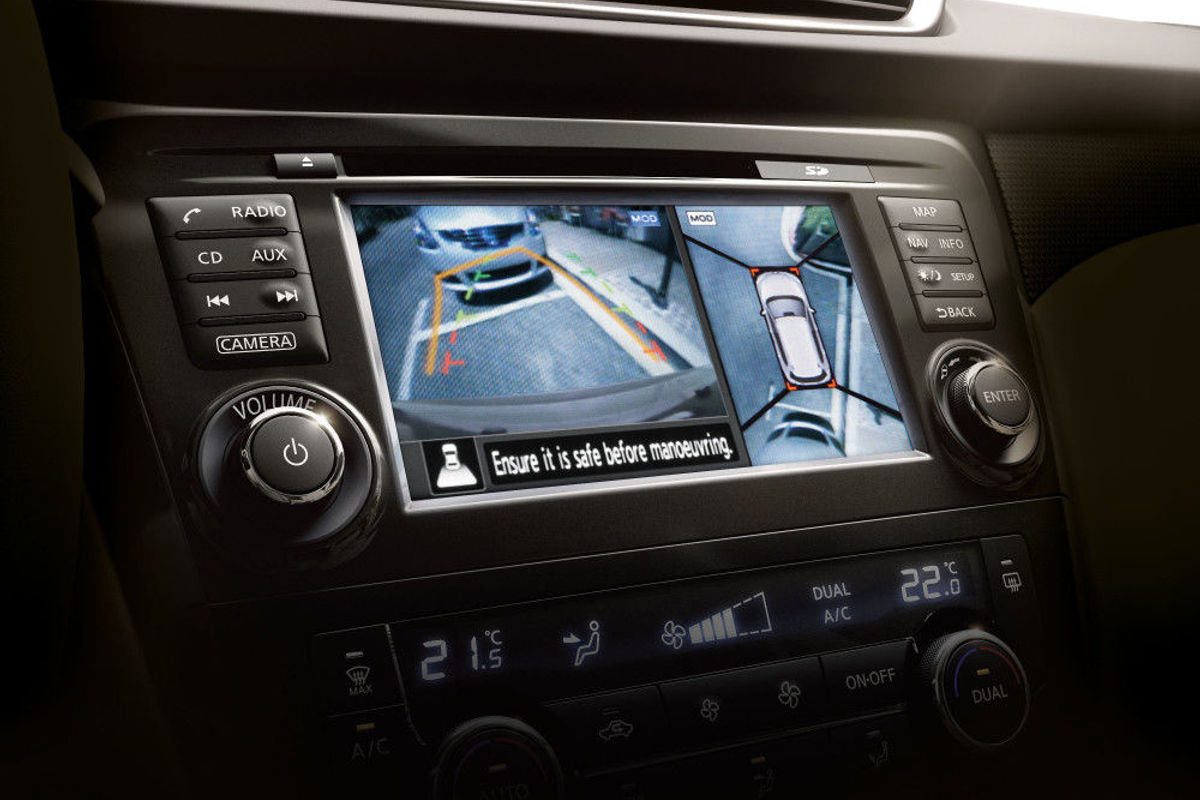
Our biggest gripe with the interior is the infotainment system. It feels like Nissan could have offered something a bit more modern. While it functions perfectly well, it looks outdated and a new system would significantly lift the feel of the cabin.
The quality of the picture on the screen particularly negatively affects the 360-degree parking camera display. While it is very welcome to have a parking aid of this nature available in the X-Trail, it is let-down by the low-resolution of the display.
Ride Comfort?
We covered hundreds of kilometres on tar and around 30 km on gravel and the X-Trail coped admirably on both road surfaces. Even though this Tekna derivative rides on large 19-inch alloys, the tyre profile is still 55, which is a meaty-enough sidewall to help improve ride comfort. Highway cruising is particularly comfortable and the suspension setup is biased for comfort, rather than outright handling, which is perfect for a car of this nature.
Our test unit was fitted with a manual transmission. There's nothing wrong with the 6-speed box, it's slick and easy to use, but given the performance characteristics of a turbodiesel (with its low redline and narrow "power bands"), the driver does end up using that shifter a lot. It also makes pulling away smoothly quite challenging.
The X-Trail is a comfortable cruiser thanks to its softer suspension, also helping it deal with off-road stretches better.
Unfortunately, if you really want a 4×4 X-Trail with the 1.6dci engine, you won’t be able to order it with an automatic ‘box (or CVT, for that matter). For a self-shifting 4×4, buyers will have to opt for the 2.5-litre naturally aspirated petrol motor. This will cost around R10 000 extra, but the downsides will be a significantly increased fuel bill and a chunk less torque, at 233 Nm, which is not ideal if you plan to use the vehicle for towing.
Practicality?
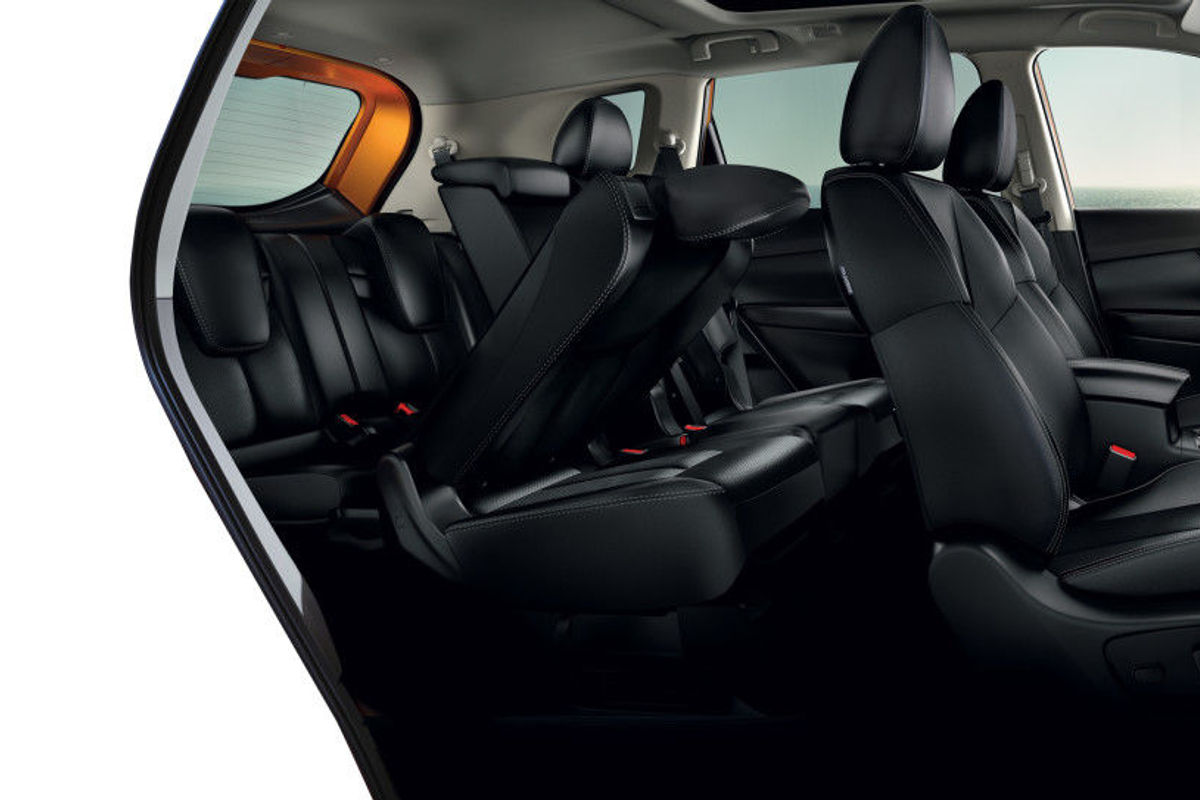
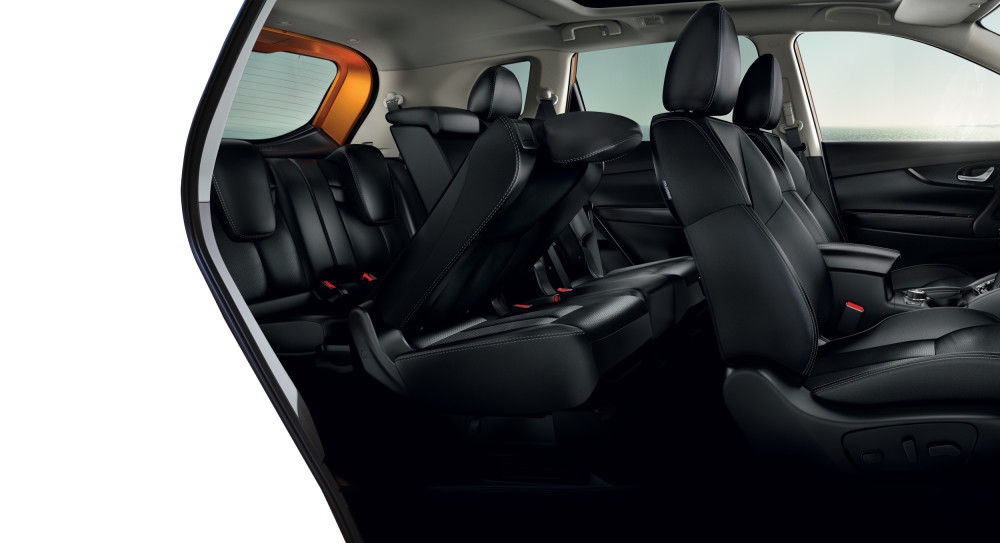
Interior passenger space is impressive with ample head and shoulder room for 4 adult passengers, with perhaps a bit of a squeeze if you need to transport three adults in the second row. It will, however, feel cavernous for small children, you may want to attach tracking devices to your little ones in case they go missing somewhere between the driver’s seat and the luggage (we jest, of course!).
Seven seats are an option on the X-Trail and all rear seats are able to fold flat.
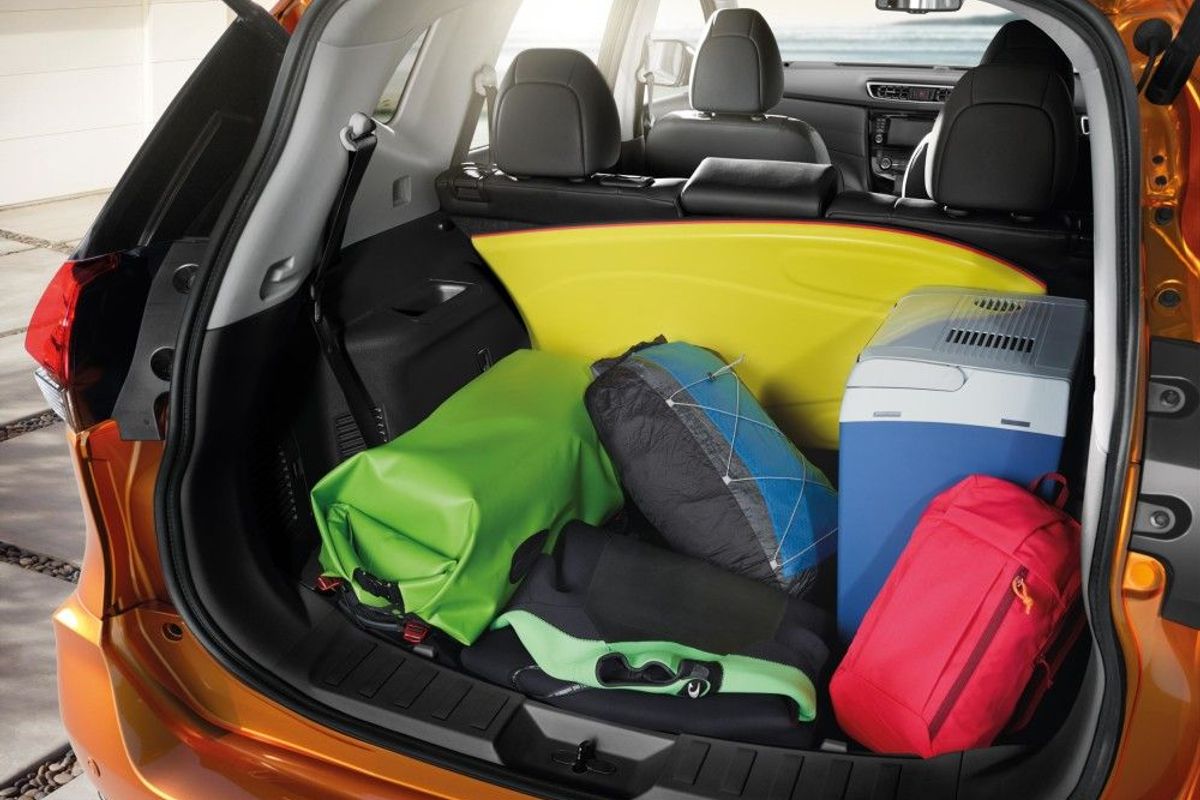
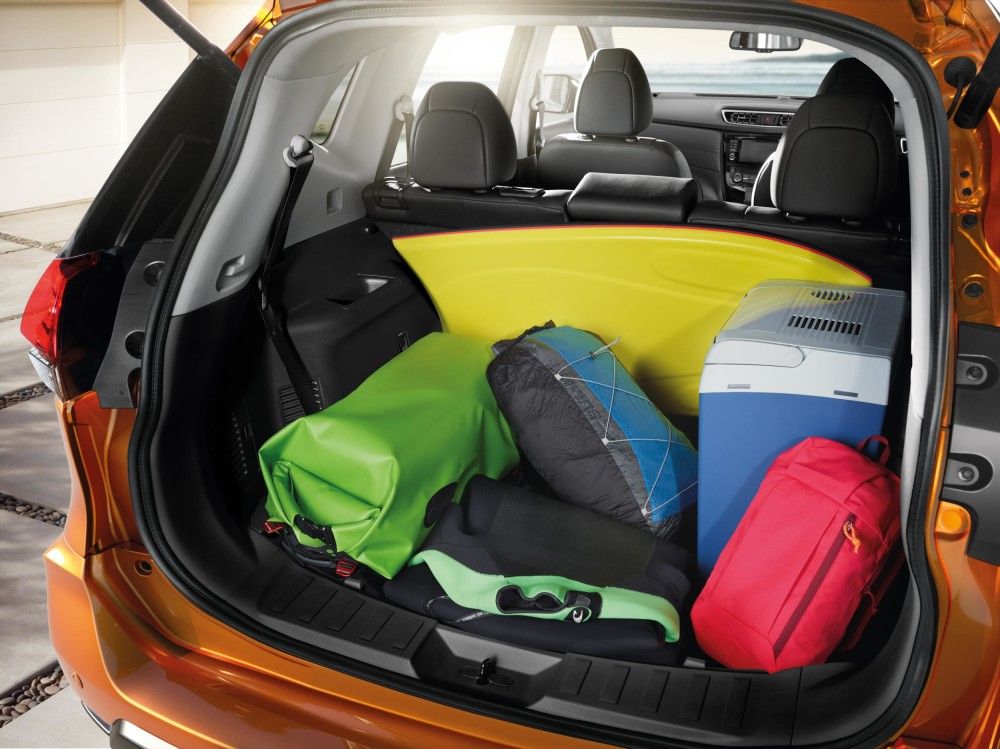
Luggage capacity is problematic, however. It’s great that there is a full-size spare and given that the X-Trail is the kind of car you might actually take on proper long-haul adventures, on balance you’re likely to appreciate the spare. However, we feel that families might appreciate having more space to pack their detritus. The bay is wide but quite shallow, and it’s difficult to fit even medium-sized suitcases, slotted in on their side, below the retractable parcel shelf.
If a big camping trip is planned, for example, and the 2nd row of seats is needed for passengers, you’re likely to need a trailer or roof box to increase capacity.
The boot is bigger than direct rivals but the shape could be squarer for easier loading.
This is curious as the X-Trail is a large car, particularly in terms of length (to reiterate, it's longer than many, if not all, of its rivals). We remember driving the 1st and 2nd-gen X-Trails and their luggage bays felt cavernous by comparison. In terms of exterior dimensions, the older generation cars were more compact, yet somehow felt like they offered more loading space, perhaps due to their overtly boxy designs. However, in terms of claimed specification, the X-Trail’s "boot" is larger than most of its rivals (550 litres), compared with the 488 of the Tucson and 522 of the CR-V. It just doesn’t feel as capacious as the numbers suggest.
The X-Trail is offered in 7-seat configuration, in the form of the Acenta and Acenta Plus, but both of those trim packages are only available with a petrol motor.
Power and efficiency?
With 96 kW and 320 Nm, the 1.6-litre turbodiesel in the X-Trail is not the most powerful engine in the segment, but it never feels like it is underpowered. Turbo lag (the brief hesitation between throttle inputs and the actual delivery of acceleration) is ever-present, but in a certain way, the manual gearbox enables you to modulate throttle input mid-gear which allows the driver to surf the whoosh of the turbo rather than be overwhelmed by it.
Diesel is definitely the way to go for an SUV like this, we just wish there was an auto version available.
After a few hours in the car we had adapted to the engine’s characteristics, which led to a smoother drive for passengers and frankly unbelievable fuel consumption figures. We achieved 5.4 L/100 km over a roughly 120 km open-road distance, covered mostly on freeways. Although the author's better half will tell you that that is because she was driving, which may… or may not… be accurate.
That figure is very close to the 5.3 L/100 km average consumption figure claimed by Nissan, but you can expect consumption to hover around the 7.5 L/100 km mark in day-to-day urban driving. On paper at least, the X-Trail claims the best average fuel consumption among its rivals.
Price and after-sales service
There's a certain peace of mind when buying a Nissan product given that it has one of the best warranties on the market, at 6 years/150 000 km, which is double the length of time offered by brands such as Toyota and Mazda, although in the Mazda's case the 3-year warranty is offered with unlimited mileage.
Keep in mind though that the X-Trail's standard service plan is only valid for 3 years, with a 3-year/90 000 km plan offered as standard, compared to the 5-year/90 000 km offered by Hyundai for the Tucson.
Verdict
The Nissan X-Trail has remained true to its rugged name and offers a package that will facilitate an outdoors lifestyle more than competently. It really does instil that go-anywhere feeling, and we would argue is the best off-roader this side of the bakkie-based SUVs. In reality, if you’re looking to tackle tricky offroad scenarios, you’re better off in a vehicle such as the Ford Everest, but for just about everything else, the 4×4 X-Trail should cope just fine.
The low fuel consumption will certainly save you money on those out-of-town trips and the comfort on badly-surfaced roads and rutted gravel will be appreciated by everyone in the car. The luggage capacity, however, could prove to be this car’s Achilles heel.
At this price-point, given its excellent warranty, the X-Trail is hard to argue against. If you’re looking to make a statement, you’re likely better off in Hyundai Tucson, and if you’re looking for a daily driver, you’re likely better off in the Mazda CX-5. But for real-world ability, especially outside the city, the X-Trail is hard to beat.
There's something to be said about earning your rightful place among the top players in any industry. There are a few premium and first-class SUVs that have been around the block for some time now, but several are trying to jump on the bandwagon… I am just not sure they have what it takes, at least not yet. After all, brand value is something that takes time to build and has to be earned.
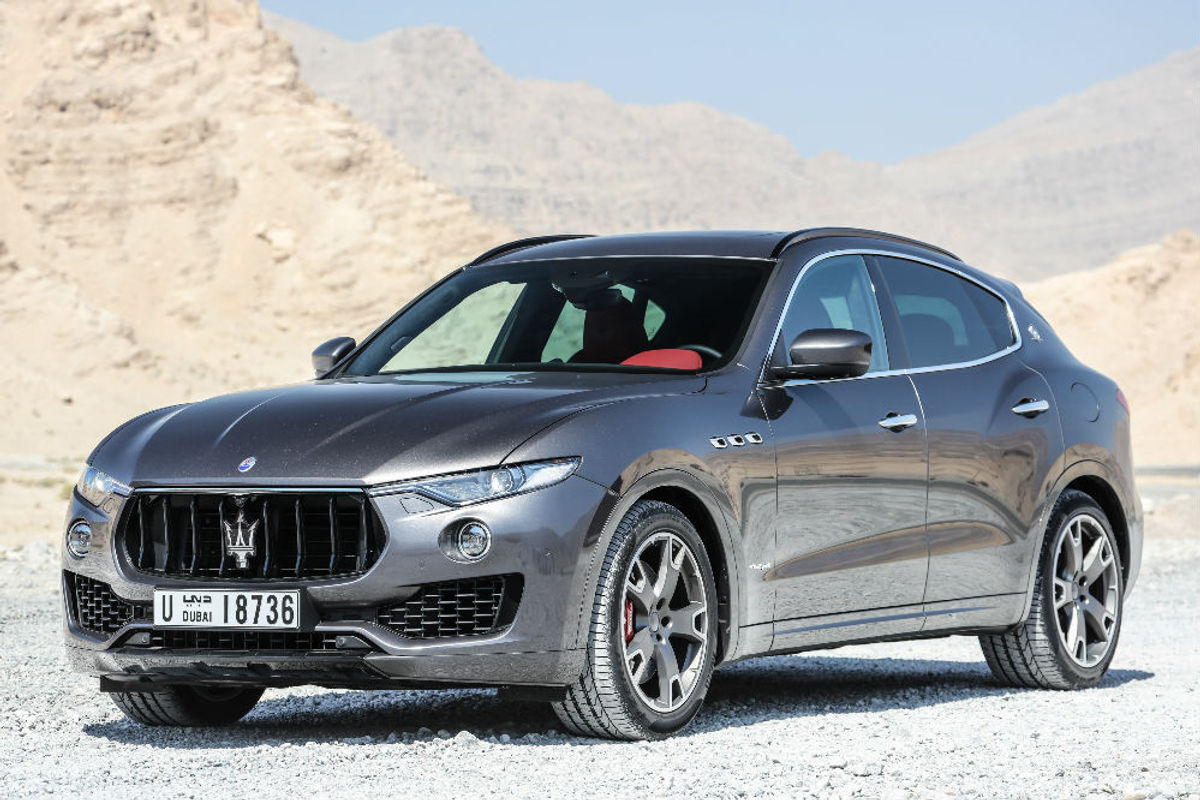
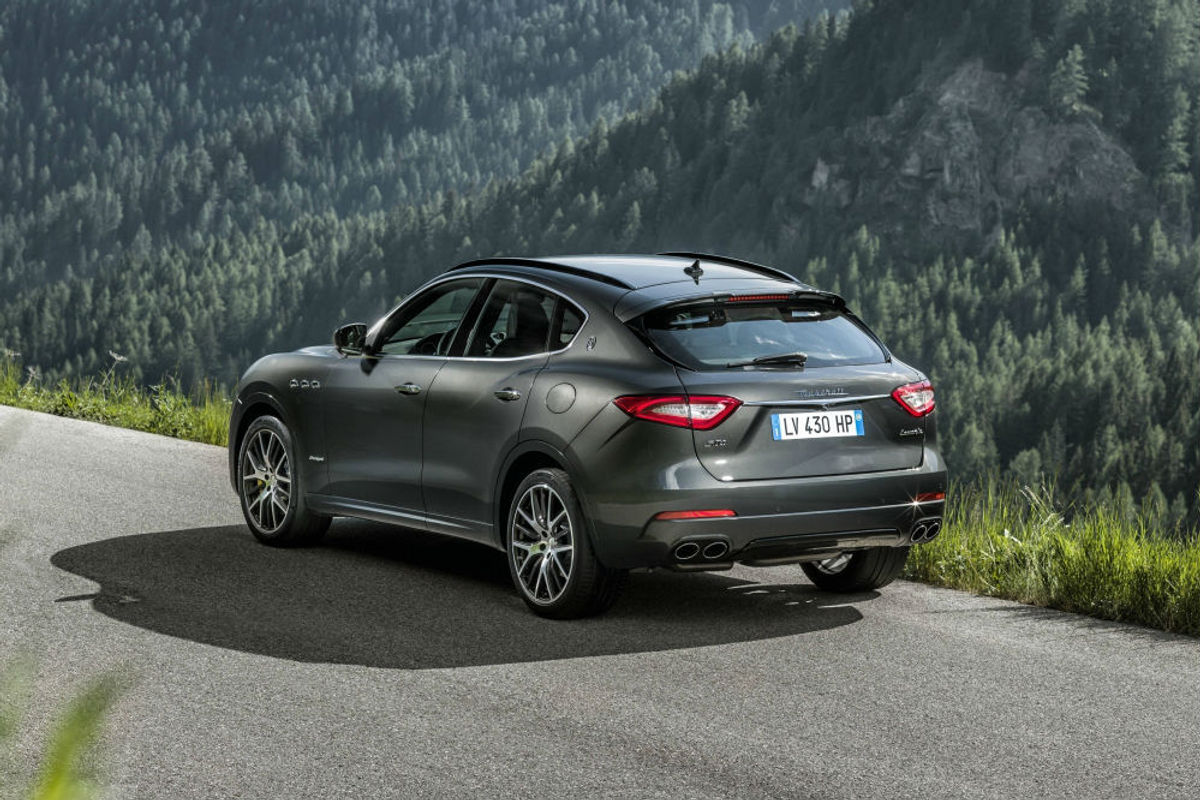
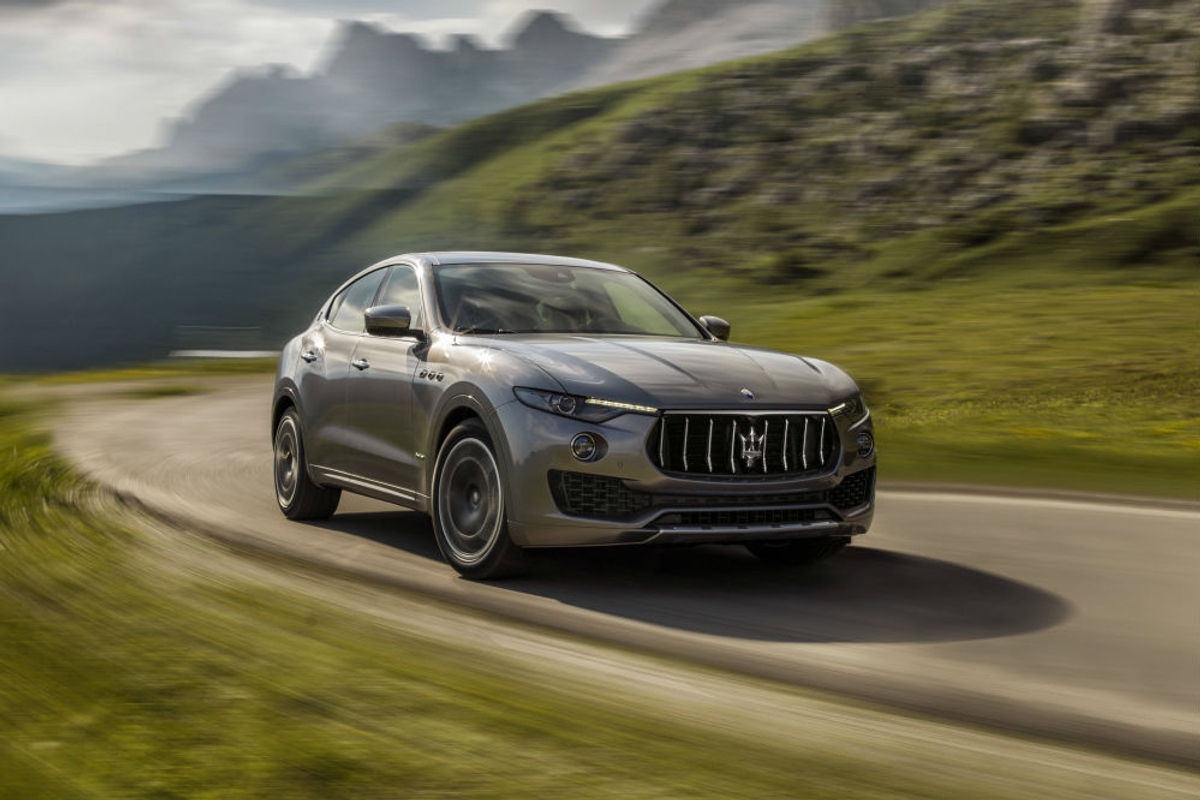
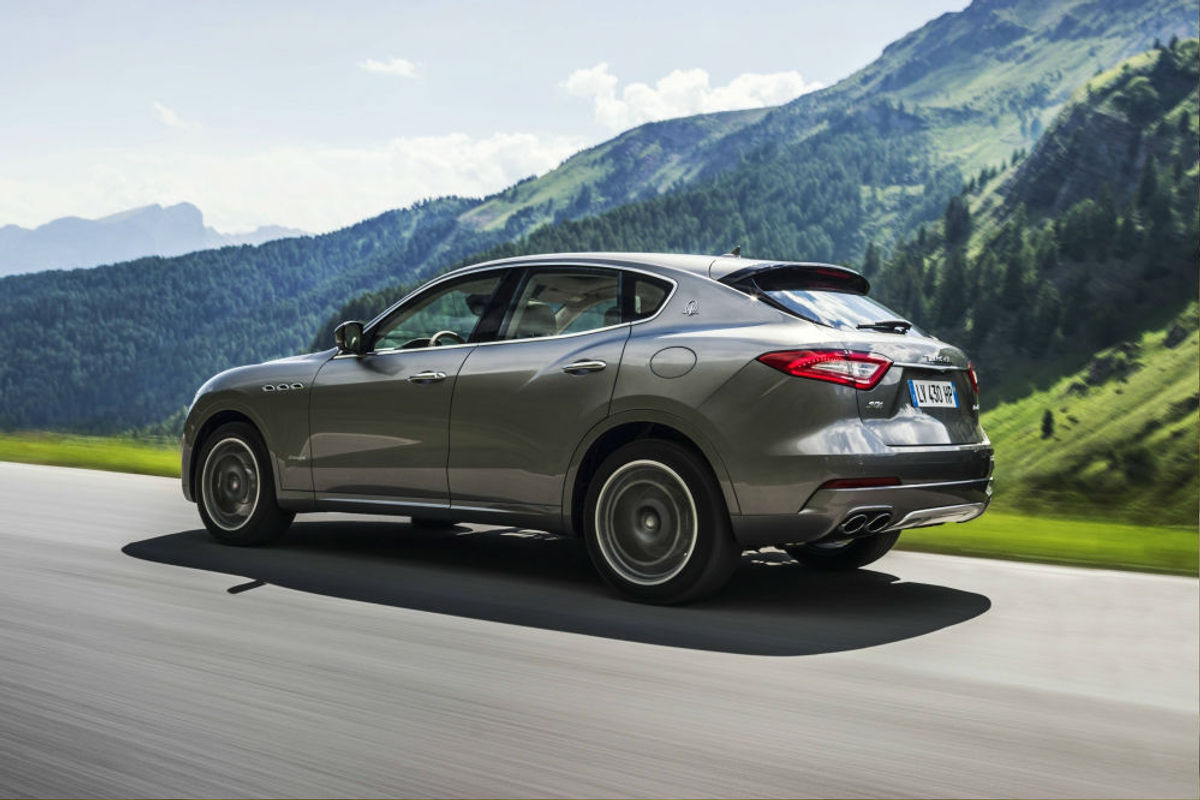
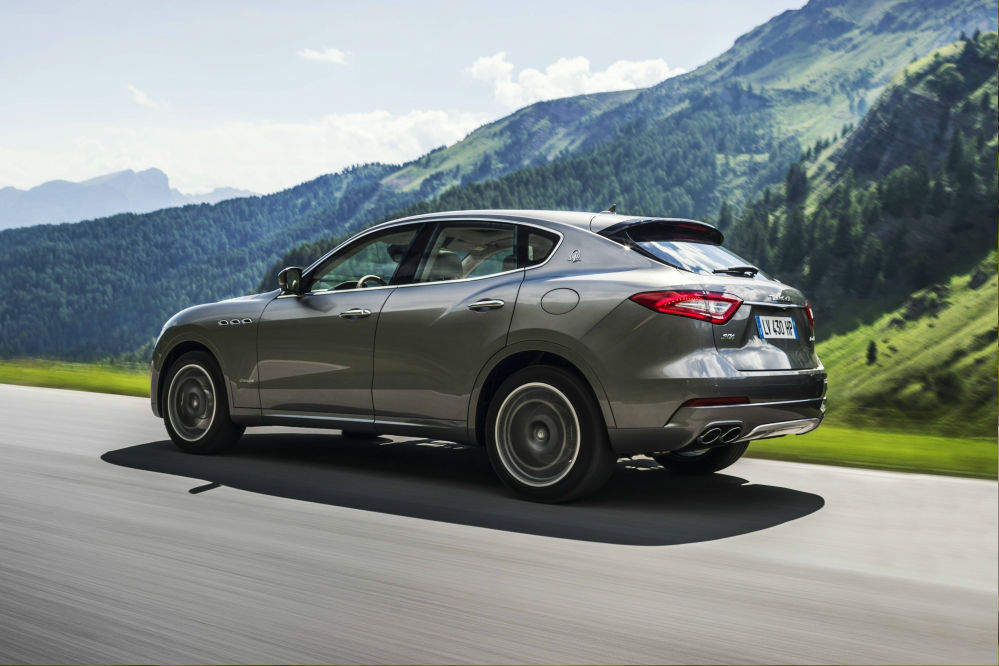
Maserati is one such newbie that entered this segment in 2016 with the introduction of its Levante – a name inspired by the warm, Mediterranean wind that can change from mild to gale force in an instant (similar to that of Cape Town’s South Easter, then?). From its launch until June 2017, 25 000 Levante units were sold in 72 countries around the world, making it the highest-selling Maserati in that time, but the derivative that was originally launched in South Africa was the 3.0-litre turbodiesel V6. And, while it's no slowcoach with its 202 kW, 600 N.m of torque and a 0-100 kph sprint time of 7.3 seconds, it's not the sheer embodiment of a sporty Maserati either.
The 3.0-litre twin-turbocharged V6 powerplant transforms the Levante from a mere fashion statement to a performance SUV.
The Levante S – powered by a twin-turbo direct injection V6 that delivers 316 kW and 580 Nm – is now available on the local market, and, performance wise, the S is a suitably rapid Maserati. Capable of blasting from 0 to 100 kph in 5.2 seconds (replete with an urgent, snarly exhaust note), the S will go on to a top speed of 264 kph.
However, it costs R1 950 000, before you've specified either the open-pore-wood-grain-laced GranLusso or racier-looking GranSport packages, which pitches the S against faster, more powerful V8-engined machinery such as the Porsche Cayenne Turbo (404 kW/770 Nm) at R2 064 000, Mercedes-AMG GLE63 (410 kW/700 Nm) at R2 025 576, BMW X5 M (423 kW/750 Nm) at R2 073 757 and Range Rover Sport Autobiography Dynamic Supercharged (386 kW/625 Nm) at R1 989 435.
Up against a throng of thrusting V8s
Therefore, Maserati, although it offers spirited-enough performance, is outgunned at the price. Perhaps it succeeds at being a first-class SUV, which would position it ahead of anything that the aforementioned German products and the Range Rover Sport can produce… after, all, it is quite affordable compared with a Bentley Bentayga, which starts at around R3 million and a petrol-engined Range Rover, the cheapest of which is the Vogue SE Supercharged (R2 464 811)
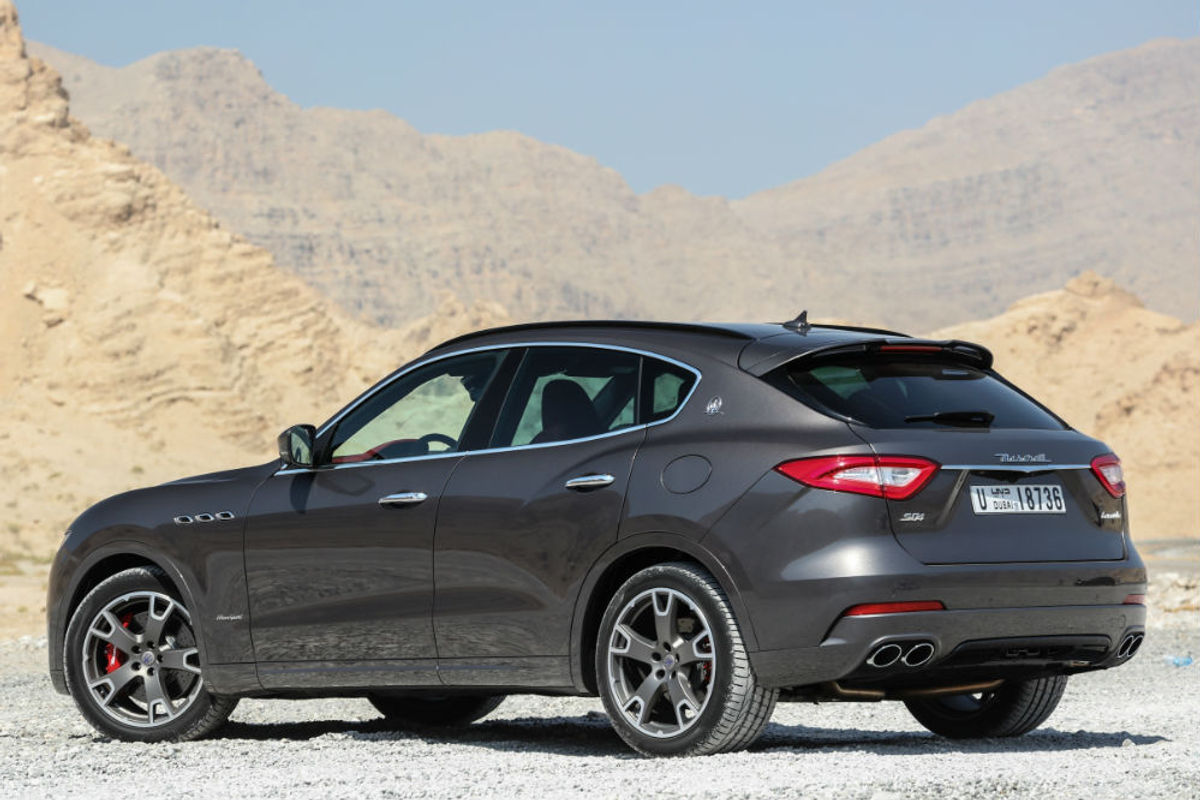
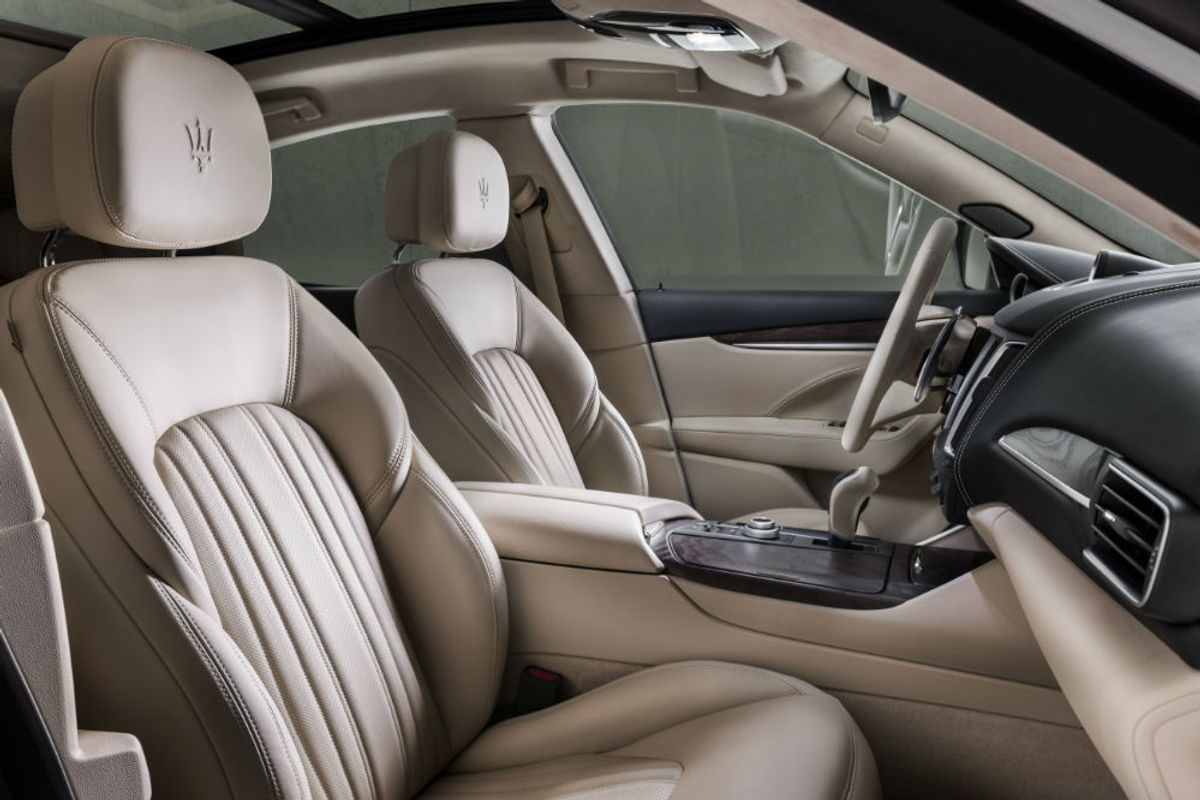
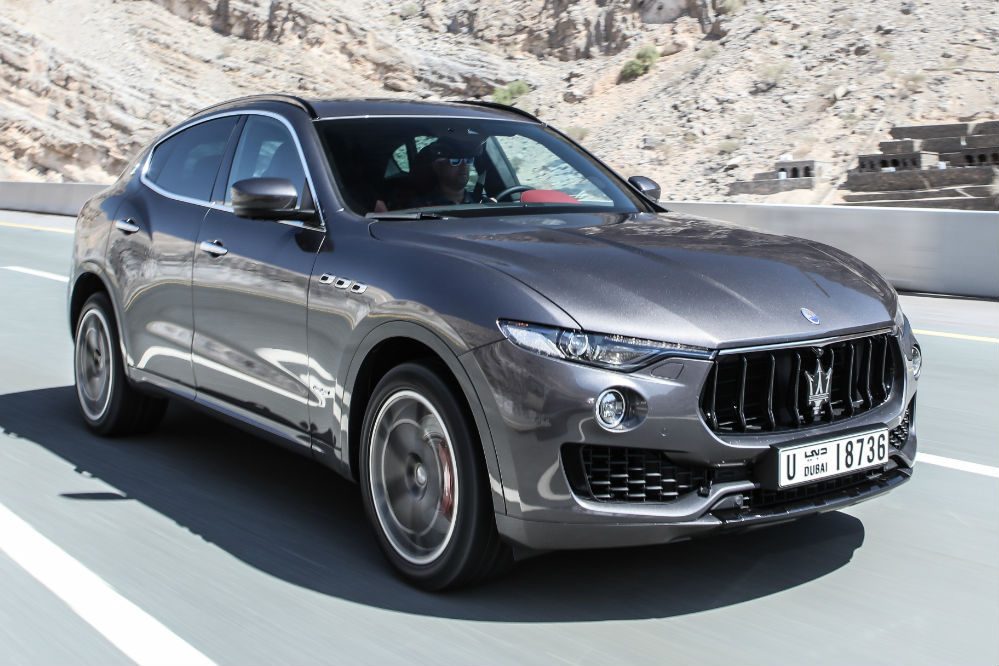
In GranLusso trim, the Levante S features sumptuous wood grain inserts and plusher seats, the GranSport is decidedly sportier.
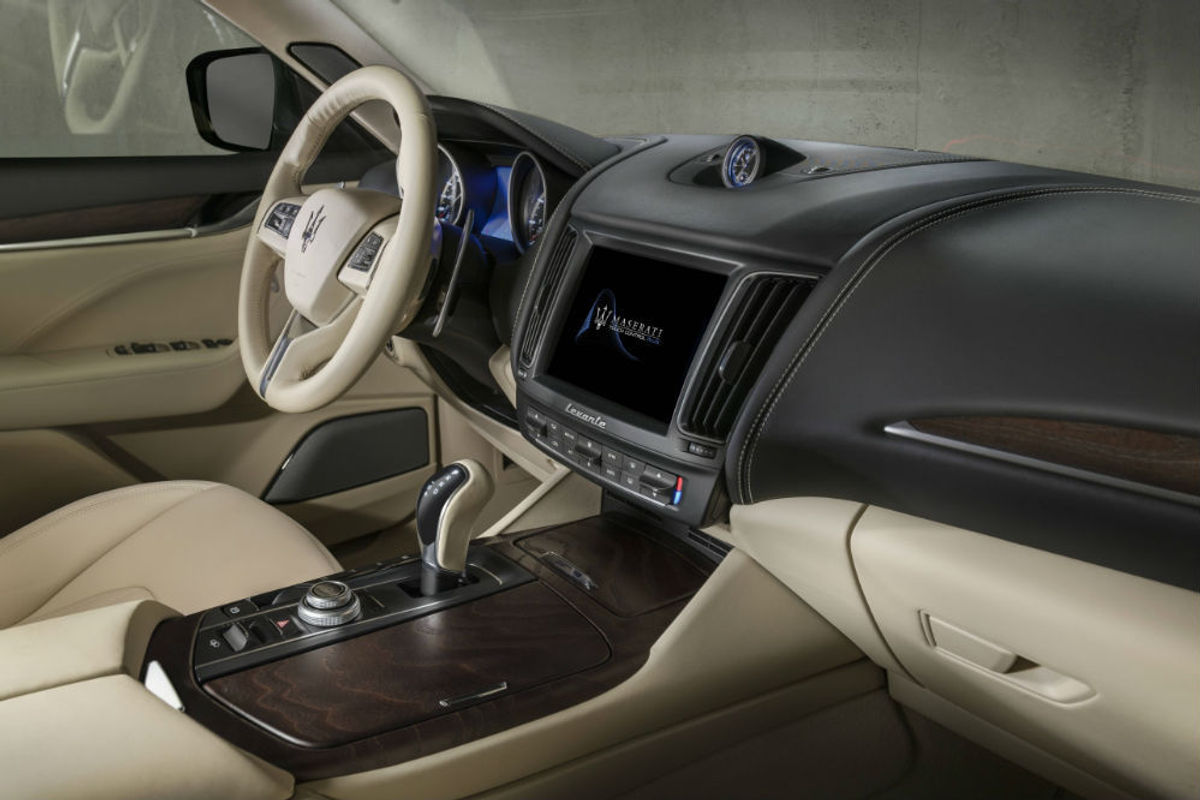
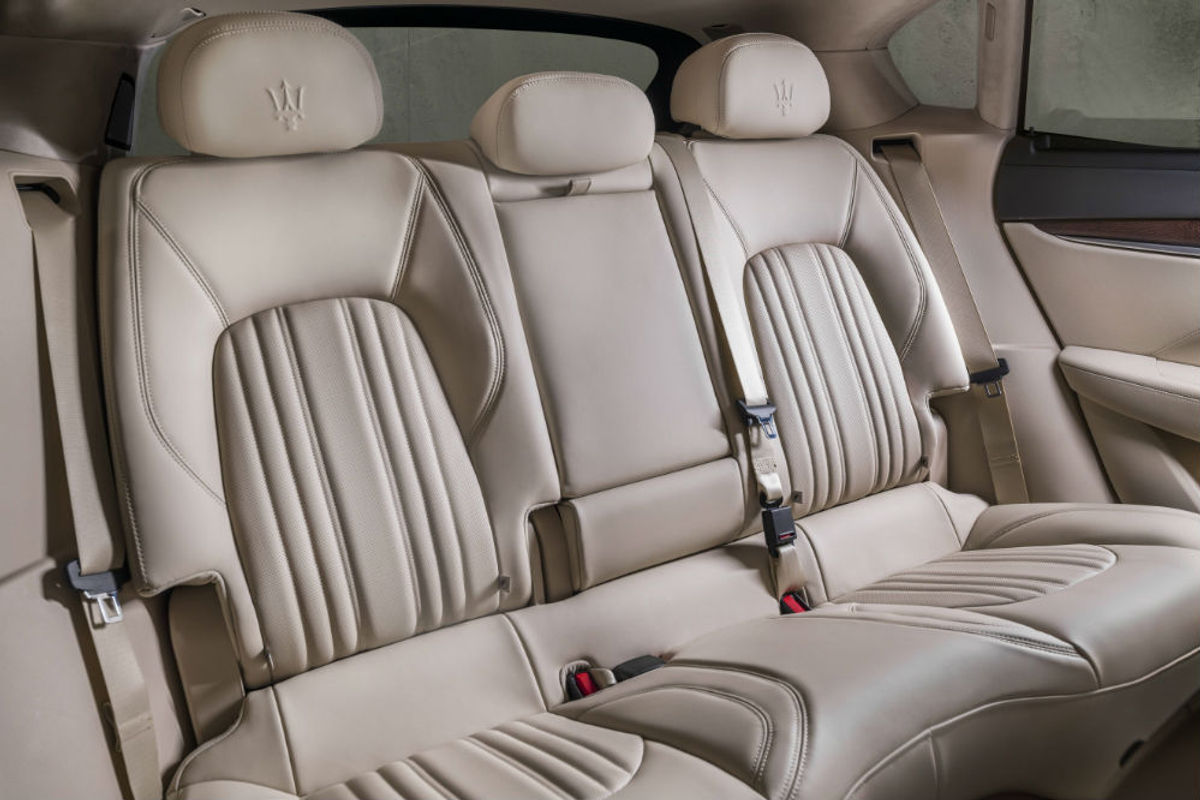
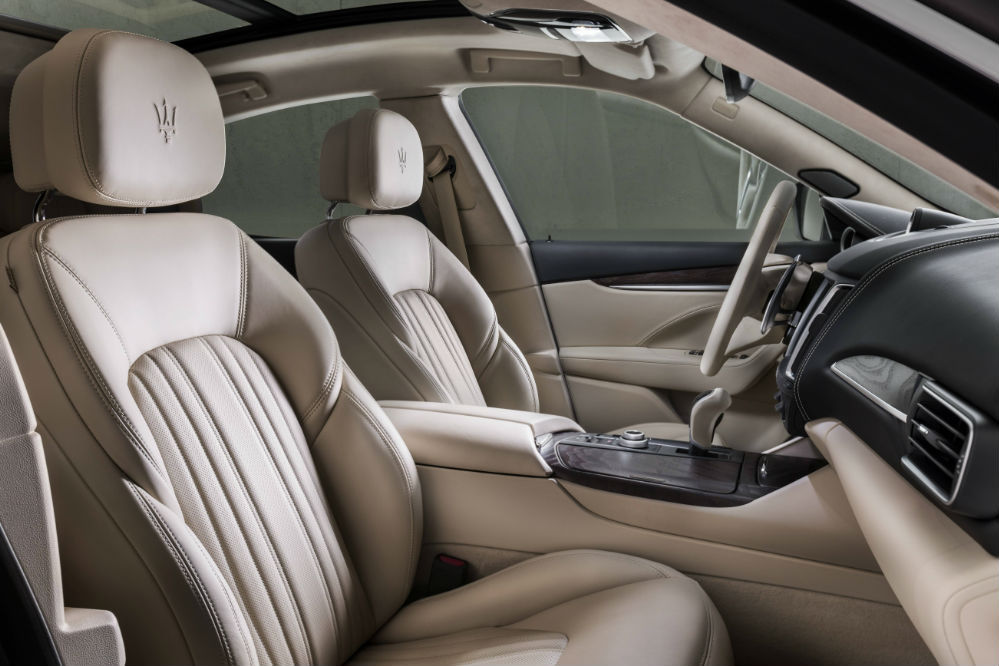
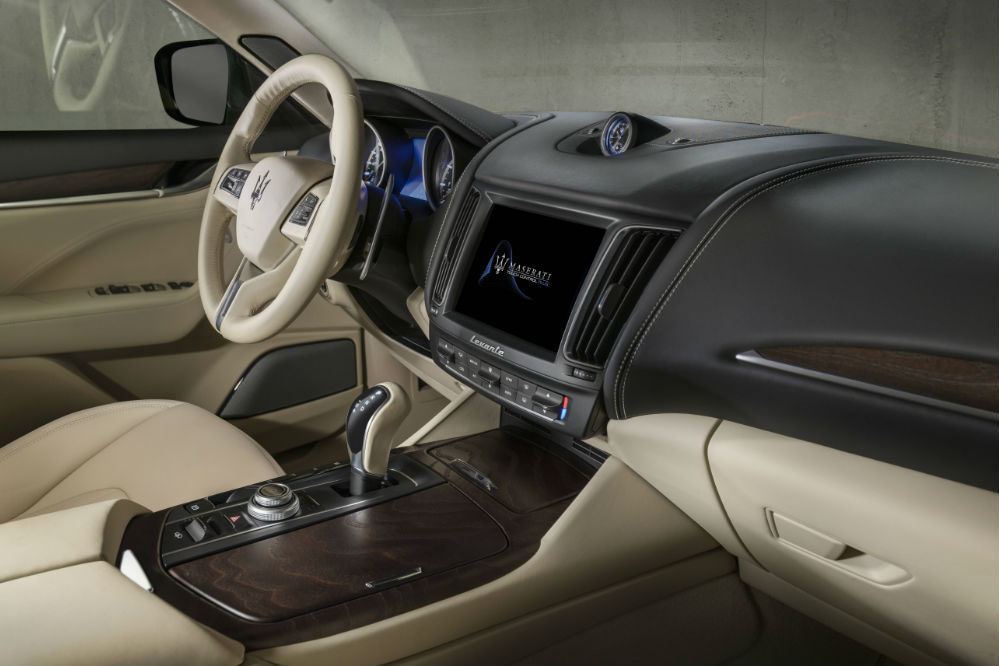
For a start, the Levante has a 3.0-metre wheelbase, which helps makes it slightly longer overall than its major competitors and therefore the Italian juggernaut's cabin is quite roomy… something you look for in a first-class SUV. But supreme comfort is another requirement and I struggled to find a comfortable seating position and not just in the body-hugging, sculpted driver’s seat of the GranSport, but in the passenger and the rear seats as well. Standard equipment includes leather-trimmed upholstery and a multifunction steering wheel, piano black trim, an 8.4-inch MTC+ touchscreen infotainment system, Bose audio with 8 speakers, cruise control, hill descent control, dual-zone climate control, wipers with rain sensor and keyless entry on the front doors. These features are certainly welcome, but don’t scream “super luxury” to me.
Thankfully for Maserati’s sake, the cabin positively exudes style and fine taste, especially when kitted out in signature red leather. And in true Maserati style, the customer has endless options to choose from – a total of 26 interior colour combinations, to be precise. Compared with its competitors, when it comes to looks (both inside and out), the Levante stands out, its interior looks special (right up there with the best), but overall comfort and the “wow” factor, in terms of tech, lags behind.
The Levante's interior certainly has a sense of occasion, but in terms of onboard technology, the Maserati's not a class-leader.
According to the Italian marque's representatives, the Levante S’ standard features list might give its rivals a run for their money, and that is not an outlandish claim: even in cars that sit near the R2-million mark as standard, you'd be astounded by what you have to add (at extra cost) to specify them to a truly grand scale. But, as my fellow motoring scribe Ferdi de Vos opined when he drove the S overseas, “you need to dig deep for exclusivity, with extras (the S) will probably cost close to R2.3 million” too.
For all its tasteful design, the Levante's interior still doesn't feel quite as special as a Range Rover's (or markedly better than the powerful V8-engined competitors priced around the newcomer) and if its driving experience/performance is not any more special than any of the aforementioned cars, does the Maserati badge have enough gravitas to compete with any of them? Think of the Levante as the kook among the local road surfers that still needs to earn its place before it drops in on that big wave.
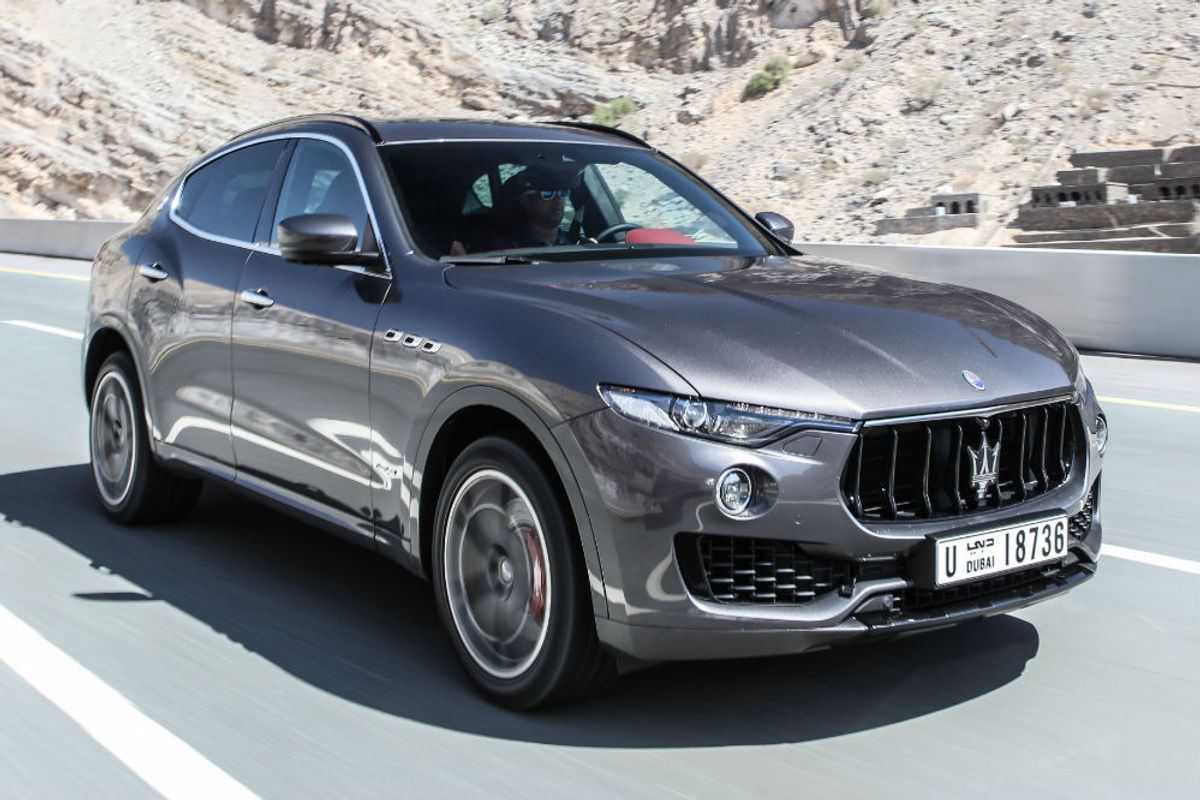
The Levante S is delightful to drive, tastefully designed (and finished), but in terms of outright performance, for the price, not that fast.
The aforementioned Cayenne Turbo, GLE63, X5 M and Range Rover Sport (let alone its meteoric SVR flagship, which costs R2 281 335, about the same as a well-specced Levante S) are well established in our market. They already make heads turn, hearts beat faster and change the course of conversations. This newcomer, as exquisite as it is, bears the badge of an undervalued brand that has lived in the shadow of Ferrari… Maserati desperately needs wider recognition in order to flourish.
Therefore, it wouldn’t be my first option in this ever-growing segment. Look, if it is exclusivity you are after or standing out from the crowd, then you might be able to justify the hefty price tag of R1 950 000 (remember, that's before options). But in a segment of the market where devaluation is steep even on popular brands' products, how many buyers would be willing to be among the first to take the plunge and fly the flag for Maserati? Not all that many, I fear.
The highly-anticipated Volvo XC40 launches in South Africa in this week and we'll be at its local launch. In the meantime, here's how much you can expect to pay for this baby Volvo SUV.
Volvo is on an incredible streak with its SUV family. The XC90 has won every Premium SUV award in the Cars.co.za Consumer Awards – Powered by Wesbank since inception. The XC60 scooped the 2018 World Car of the Year and the XC40 took home the 2018 European Car of the Year. The compact XC40 is promising a lot in the fiercely contested premium compact SUV segment as it launches this week.
The new Volvo XC40 will come to market in stages. Right from the get-go there will be 2 trim levels; a sporty-focused R-Design trim and the more executive Momentum trim. There are 2 engines to choose from at launch; a D4 diesel and a T5 petrol and these are mated to an all-wheel-drive powertrain. The entry-level T3s and flagship Inscription models arrive in the third quarter of 2018, with the T3 units featuring front-wheel drive.
The new XC40 is the first Volvo model to come from a new CMA platform that will also be used for future '40' models and electrified cars.
Volvo is entering the global compact car market and its new XC40 compact SUV will rival the likes of the BMW X1/X2, Jaguar E-Pace and Audi Q3. Production of the XC40 commenced in November 2017 in Ghent, Belgium.
Volvo now has 3 global SUVs including the XC90, XC60 and now, the new XC40. The XC40 is the first model to be produced on Volvo's new modular vehicle architecture, CMA, which will underpin future cars in the 40 cluster including electric vehicles. CMA was co-developed within Geely and provides the economy of scale for this segment.
Key Features
A host of impressive technology from the XC90 and XC60 will make its way into the XC40.
While it may only be arriving towards the end of the year, we're particularly interested in the new T3. It's a 1.5-litre turbocharged 3-cylinder unit producing 115 kW and 265 Nm, while consuming a claimed 6.8 L/100 km and putting out 154 g/km. The rest of the engine lineup are engines we've experienced before in Volvo's products. The D4 is a 2.0-litre turbodiesel four-cylinder unit with 140 kW and 400 Nm, while the T5 packs 185 kW and 350 Nm, and is definitely the fastest model in the range. The diesel engine will be the thriftiest of them all, with a return of 5.2 L/100 km. At launch, both the D4 and T5 will feature all-wheel drive and 8-speed automatic gearboxes, with the option of manual gearboxes and front-wheel drive coming later.
The XC40 features safety, connectivity and infotainment technology seen on the XC90 and XC60 which includes the impressive 9-inch Sensus Connect touchscreen and digital instrument cluster. Safety and driver assistance features on the XC40 include Pilot Assist semi-autonomous assistance system, City Safety, Run-Off-Road protection and mitigation, Cross Traffic Alert with brake support and a 360° camera for safe parking.
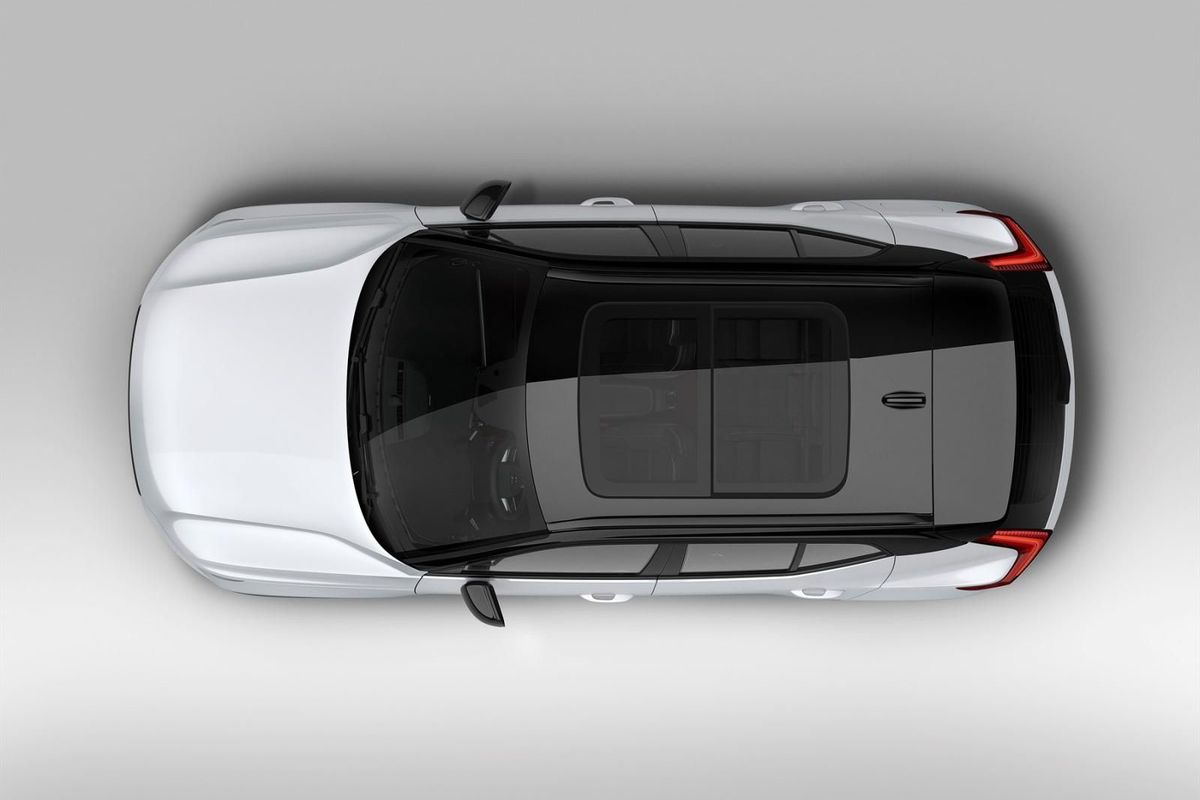
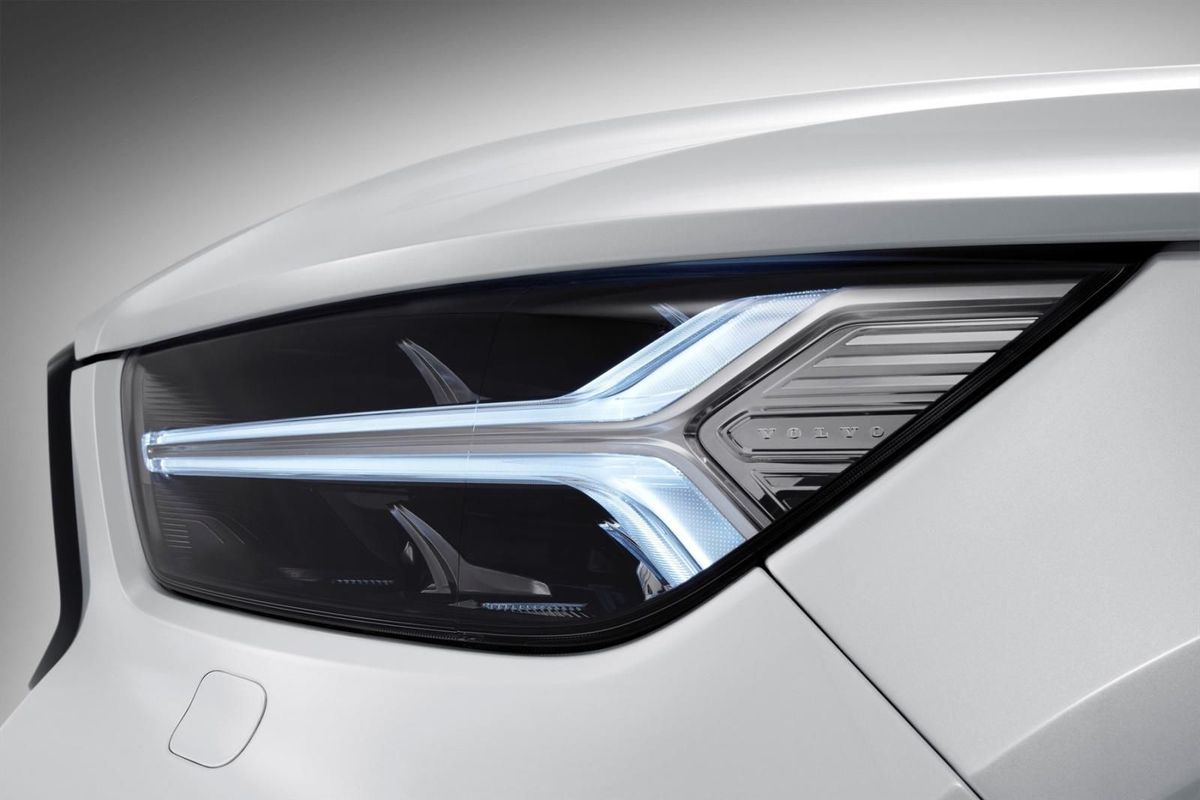
Design details include an optional contrasting black or white roof, white mirror caps and wheels. On the inside, Oxide Red leather and 'Lava' carpets made from 100% recycled materials will create a unique interior ambience.
Volvo's tablet-like Sensus Connect infotainment system will be offered on the XC40. It's an excellent system.
The XC40 is packed with innovative storage solutions seen in the doors and under the seats. There are features such as a removable rubbish bin, cubby hole hook and smartphones can also be charged or stored using the dedicated smartphone storage area with inductive charging. A multi-adaptable boot floor will also keep items organised.
Volvo XC40 Price in South Africa
The new Volvo XC40 lands in South Africa with a solid after-sales plan. Every Volvo comes with a 5-year/100 000 km warranty and maintenance plan, 5-year/unlimited mileage roadside assistance (including a Skytrax track unit). Please note that the T3 entry-level models are only available from the third quarter of 2018.
Internationally, Volvo offers a subscription service called Care By Volvo, where customers can "subscribe to a car rather than buy it, for a fixed monthly fee which includes the likes of service, maintenance, insurance and other added value benefits". This plan is currently under consideration for a South African market introduction and if all goes according to plan, you'll be able to subscribe to Volvo ownership in the middle of 2019.
These are some of the first images of the next-generation Volkswagen Golf. Our German spy photographers spotted the prototype of the successor to our 2017/18 #CarsAwards premium hatchback champion while it was undergoing testing. See details below…
Picture credit: S. Baldauf/SB-Medien
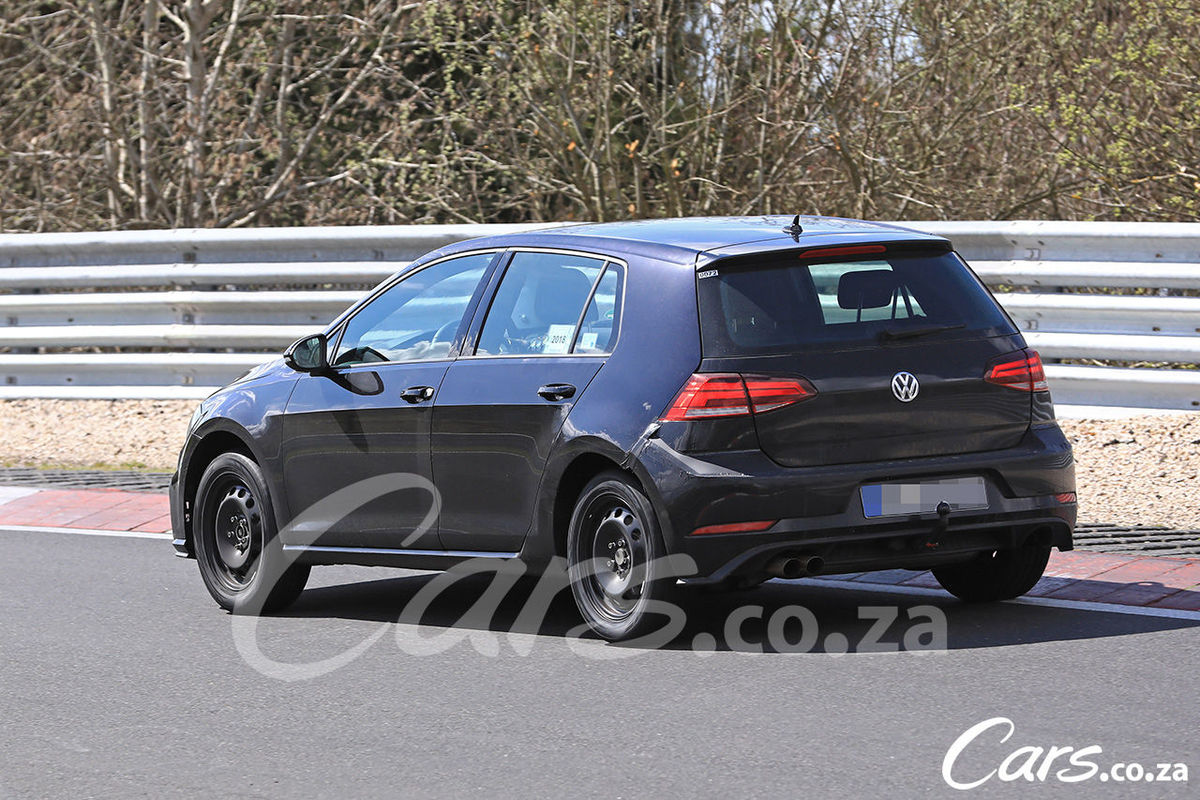
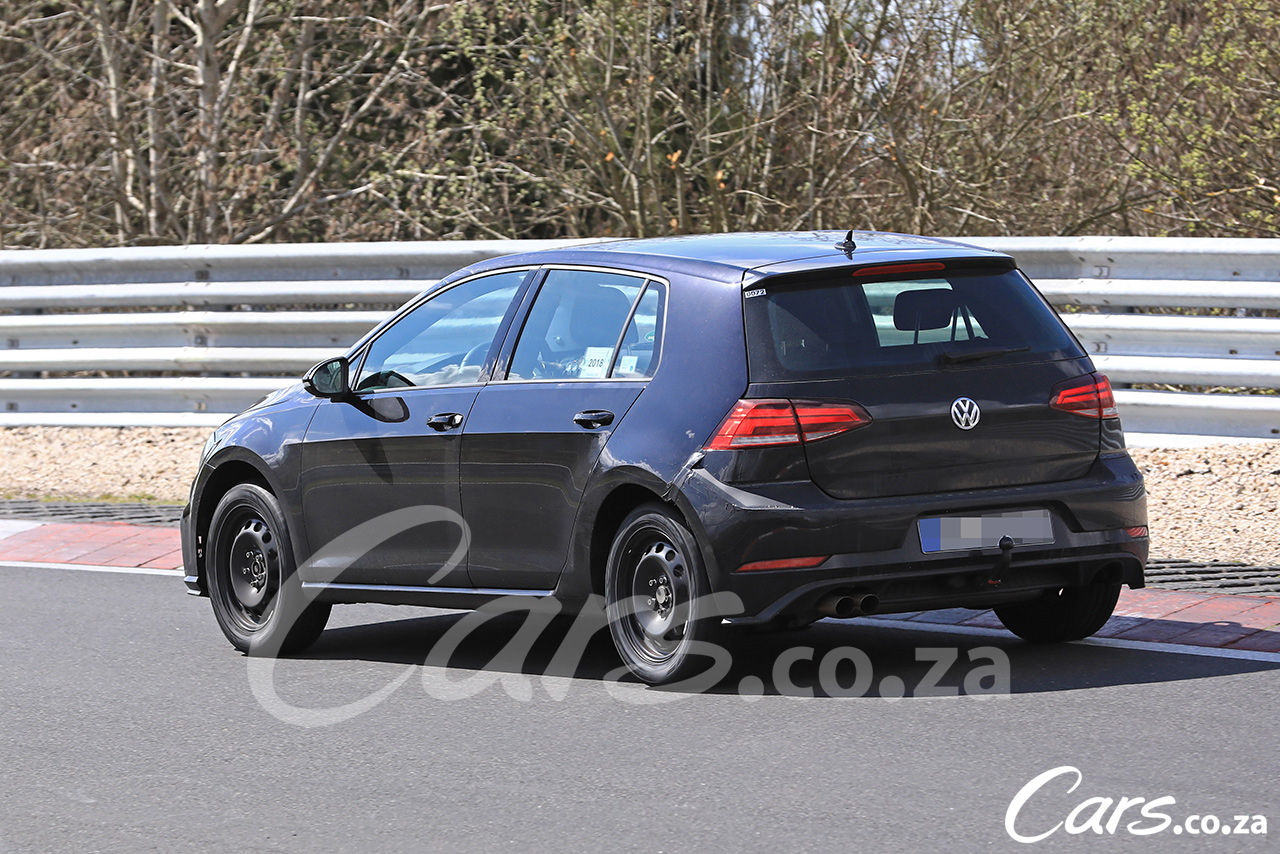
The next iteration (8th generation) of the popular Volkswagen Golf is under development and a prototype wearing very little camouflage was recently spied testing in Europe.
Key styling features
The bodywork appears to be very similar to that of the Golf 7.5, but you may notice that the shape of the front-end is more squared-off, while the rear-end looks longer than the current car's. We expect the Golf 8 will feature, inter alia, slimmer LED headlights and a lower, redesigned bonnet.
The design of the next Golf will be evolutionary, but the car will feature more weight-saving materials in its construction.
These photographs suggest that radical exterior styling changes are not on the cards for the new Golf 8… it is believed that Volkswagen will rather look to introduce refinements to the design, which has, after all, proven to be quite popular thus far. The Golf 8 will be based on a modified version of Volkswagen’s MQB platform and incorporate more lightweight materials that will reduce the premium hatchback's kerb weight significantly (sources say by between 50 and 70 kg).
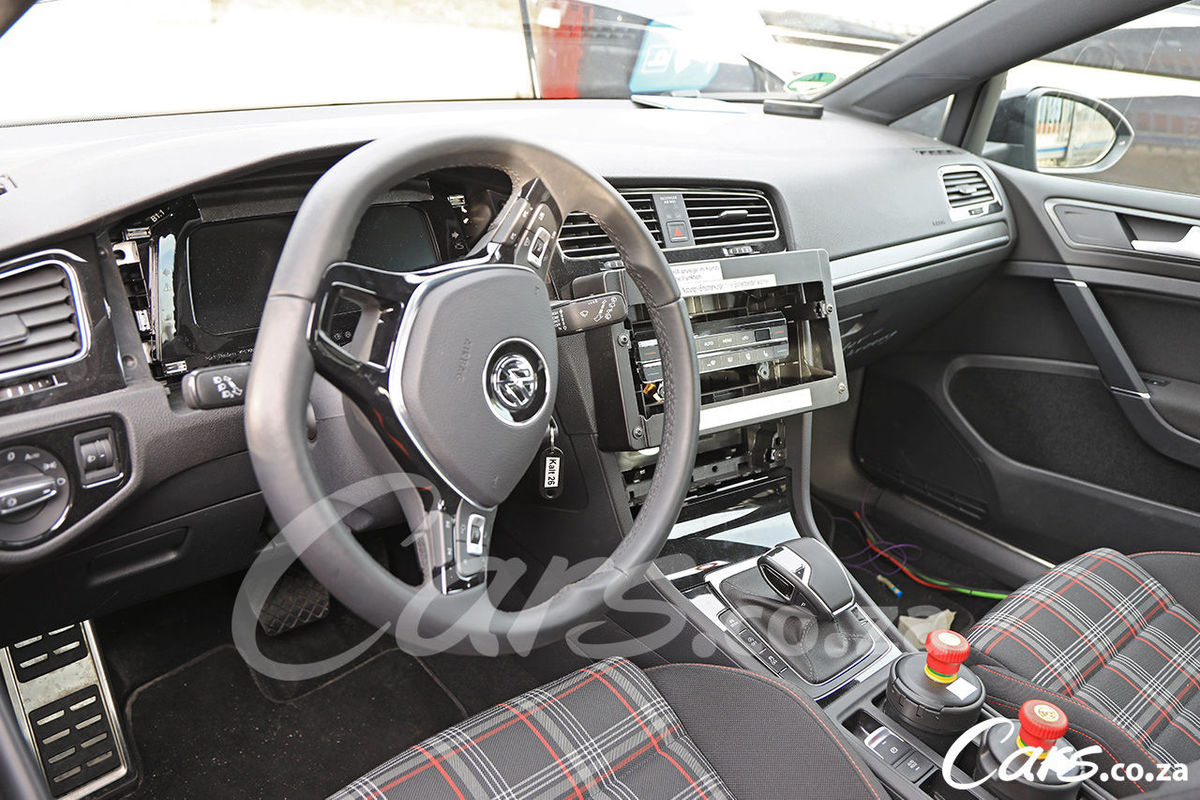
The Golf's interior will be redesigned and digital displays are expected to be used extensively across the range.
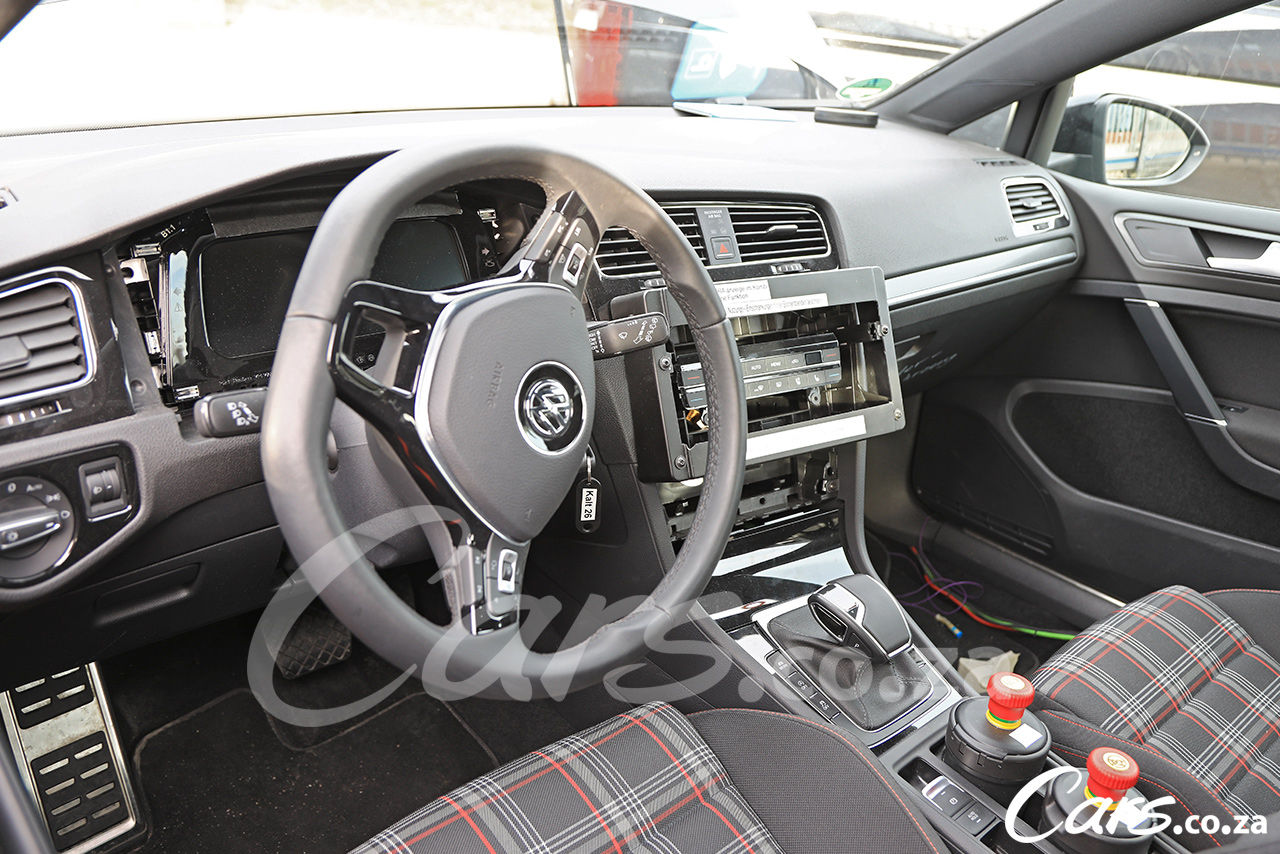
The interior, however, is expected to be extensively overhauled and will likely incorporate digital displays to replace most of the switchgear. The interior spy image shows an Active Info Display that forms part of the instrument cluster and you can expect to see a large infotainment screen (integral to the fascia) on the production version.
Potential engines
Although engine details have yet to be confirmed, it is anticipated that a 1.0-litre (in various states of tune) and 1.5-litre turbopetrol engines will be offered. On the diesel front, 1.5- and 2.0-litre turbodiesels are likely. A 48V mild hybrid system is expected, along with cylinder deactivation and coasting function to further enhance efficiency.
We previously reported that the 2.0-litre turbopetrol Golf GTI will, in all likelihood, comprise 3 derivatives including a standard GTI, GTI Performance Pack and GTI Clubsport. The standard GTI could offer as much as 195 kW, while the Clubsport could see a peak output figure of no less than 240 kW. As for the Golf R derivative, a 300 kW 2.0-litre turbopetrol is likely, but a 3.0-litre VR6 engine with up to 370 kW is not out of the question.
The new Volkswagen Golf 8 is expected to go into production in 2019 and can be expected locally in 2020. We will keep you updated as more details emerge.