Volkswagen Amarok 3.0 V6 TDI (190 kW) Launch Review
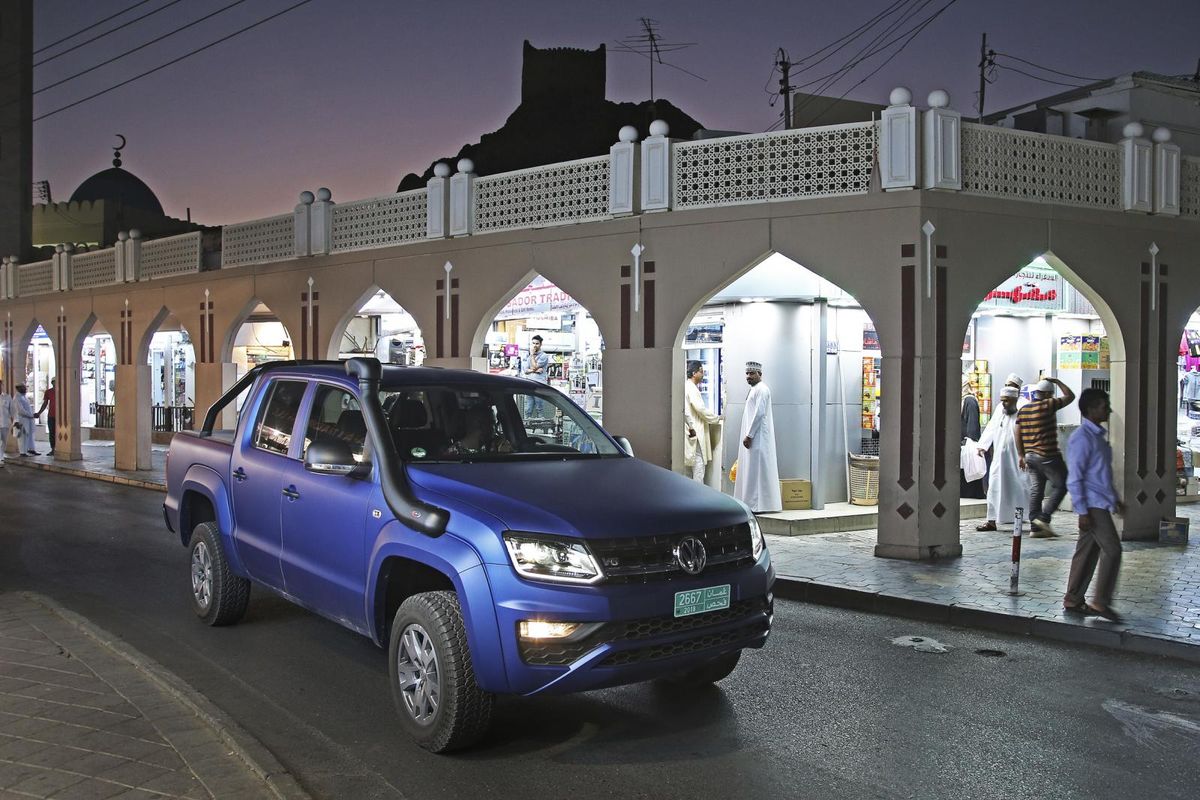
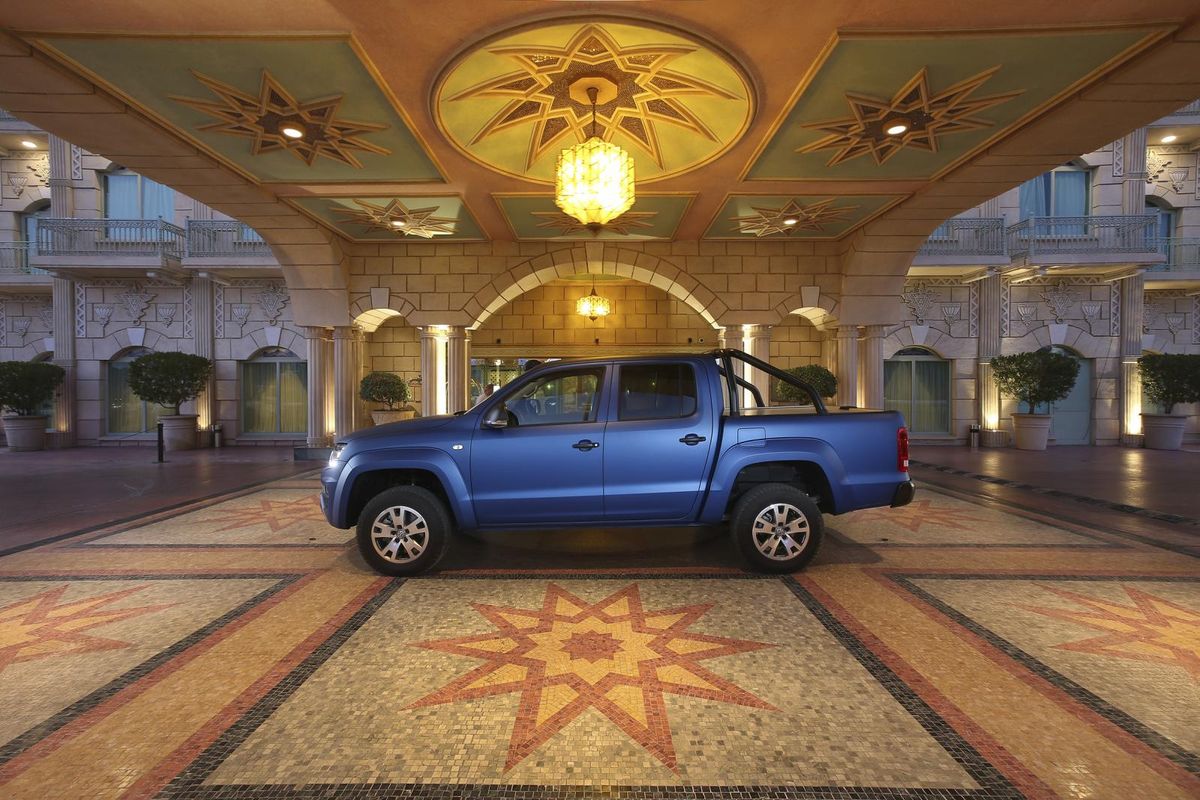
Volkswagen will launch an updated and more potent version of its 3.0-litre V6 turbodiesel-engined Amarok double cab in South Africa in 2019, and we’ve just returned from an exclusive pre-launch drive of the 190 kW/580 N.m machine through the deserts of Oman.

Judging by the extreme terrain and relentless heat faced by journalists over the 3 days of the launch, Volkswagen wants you to know the Amarok is one tough bakkie. And this is what impressed me the most about the Amaroks we drove; we were the 5th group of journalists from around the world, which meant that these test cars had already been through 12 punishing days crisscrossing the interior of Oman. And not one of the cars had a squeak, rattle or mechanical issue throughout our trip.

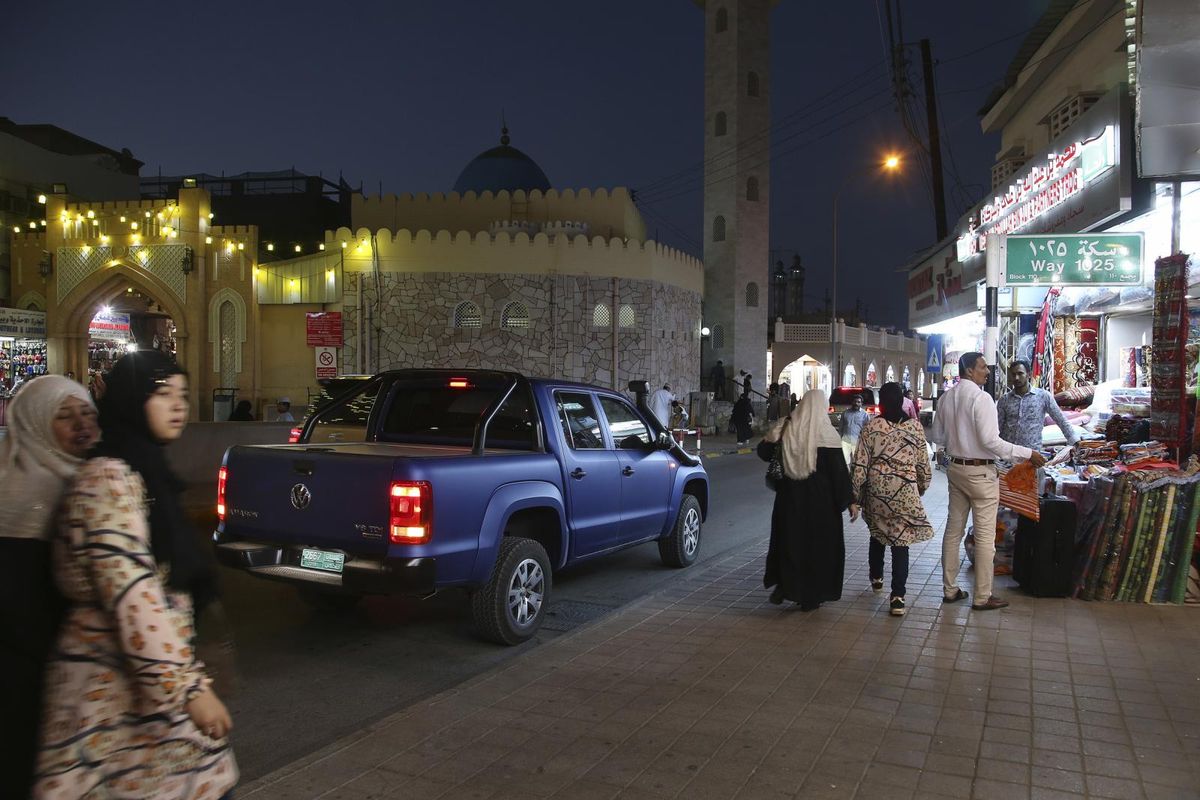
Starting in the capital city, Muscat, we loaded up our luggage in what was already 35°C  heat – at 08:30 in the morning. This was to be a baptism of fire for me: I was thrown into a manual-with-the-steering-wheel-on-the-wrong-side car.
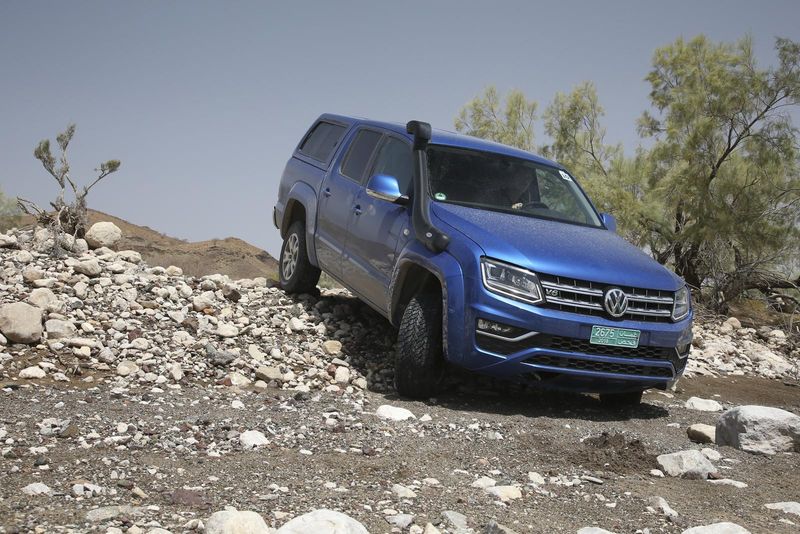

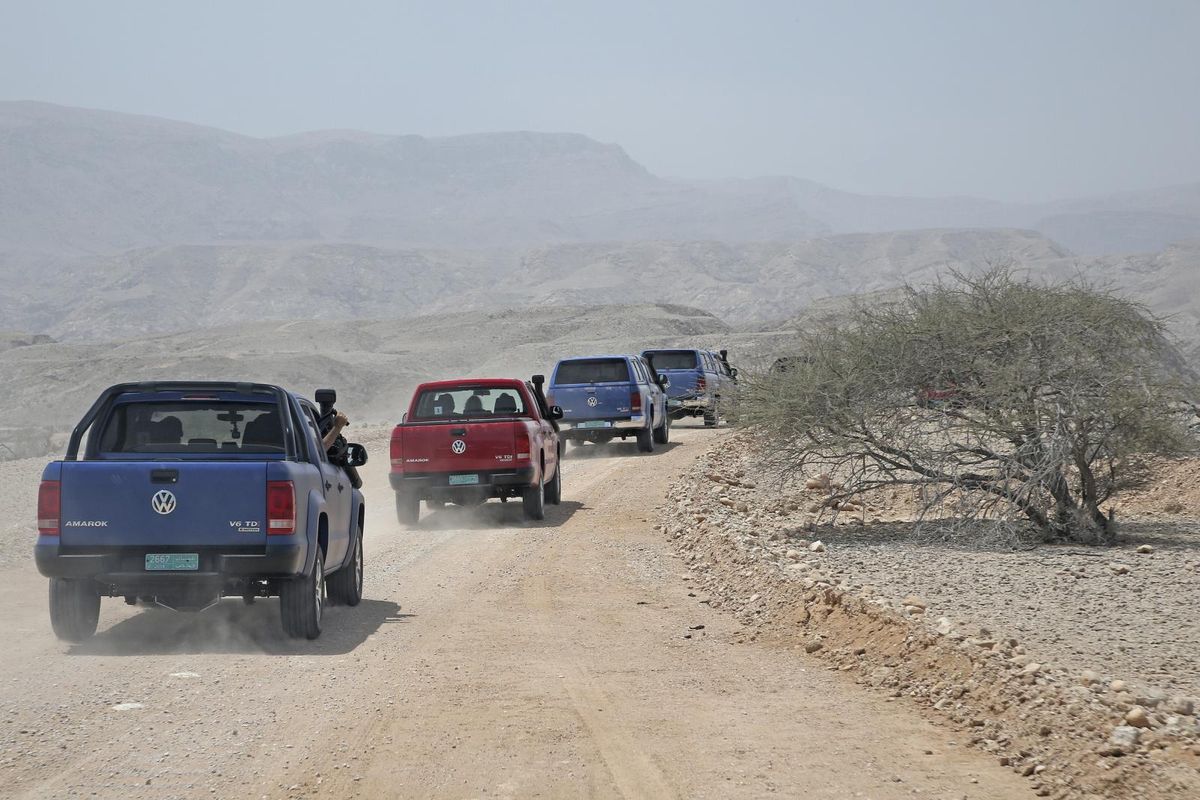
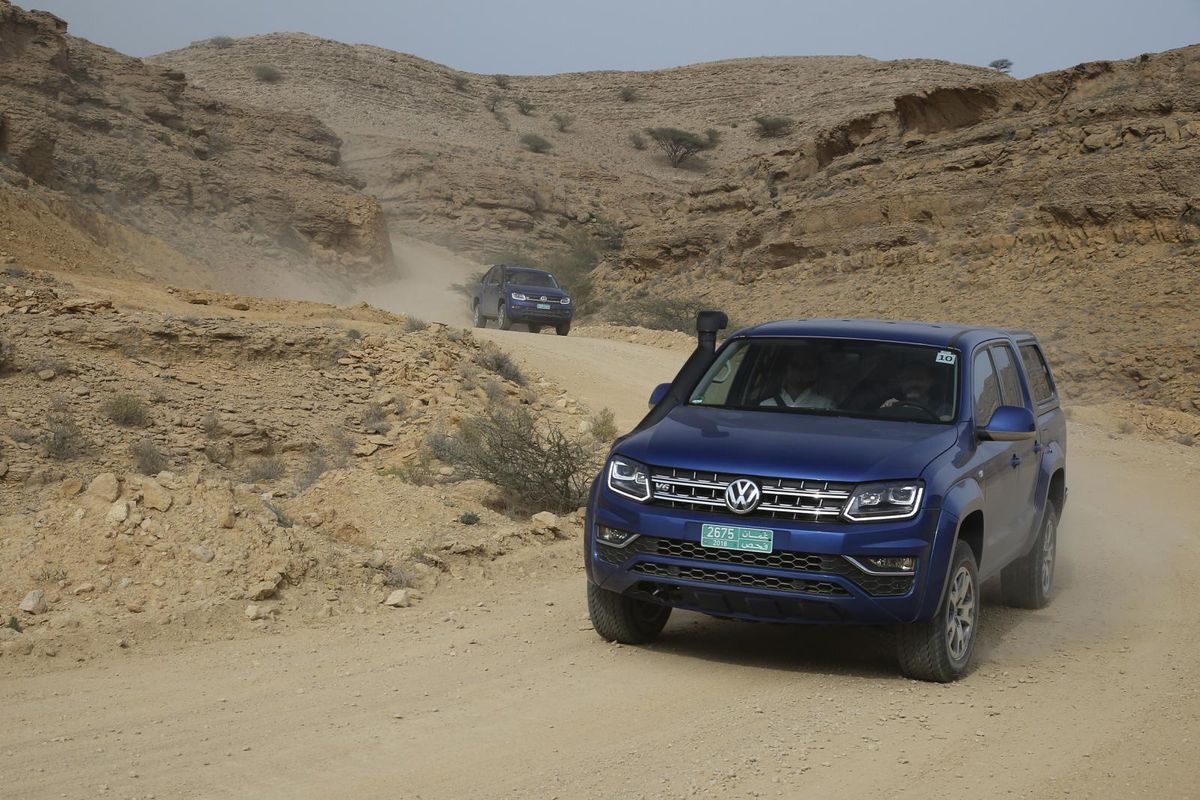
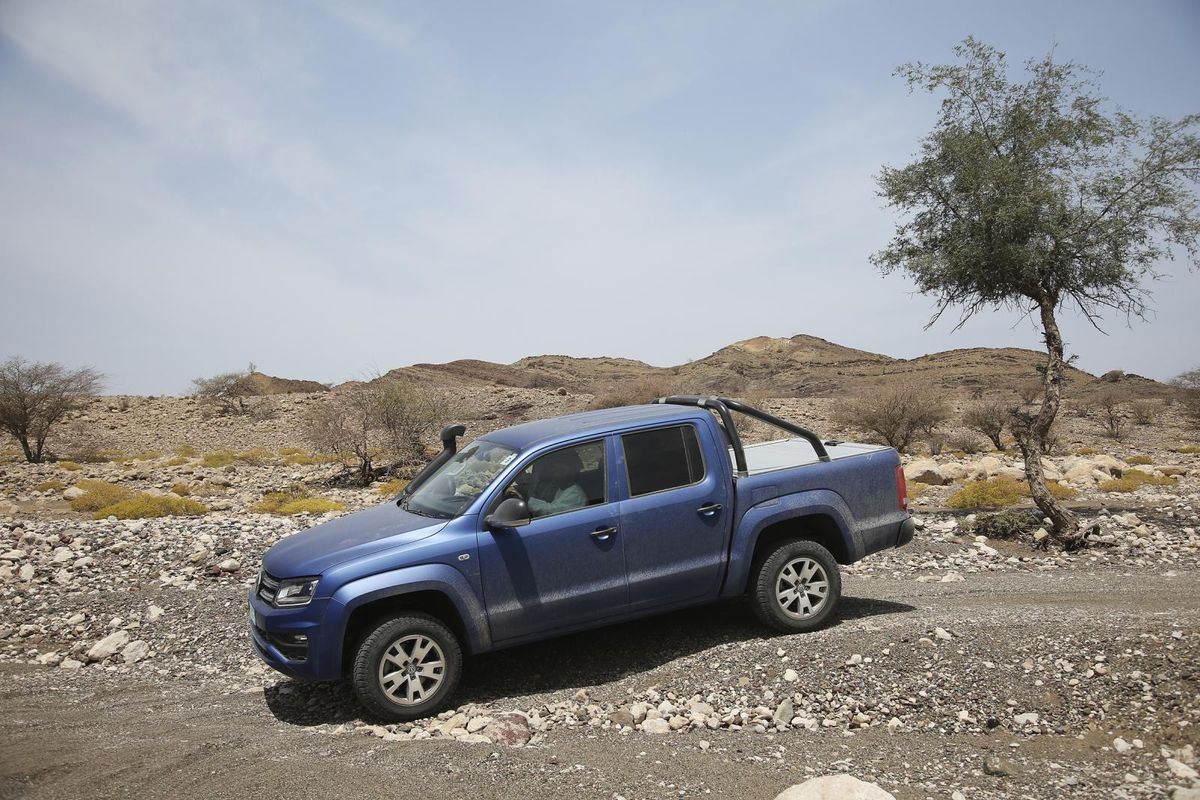
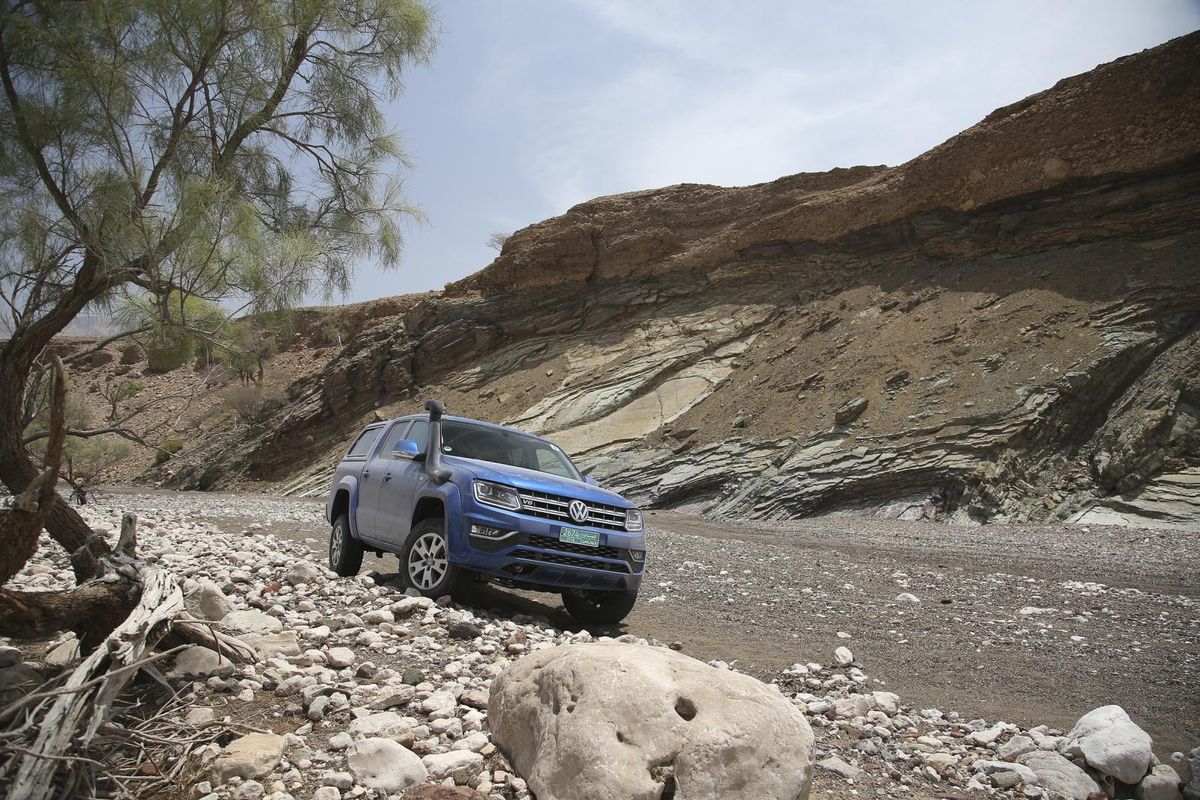
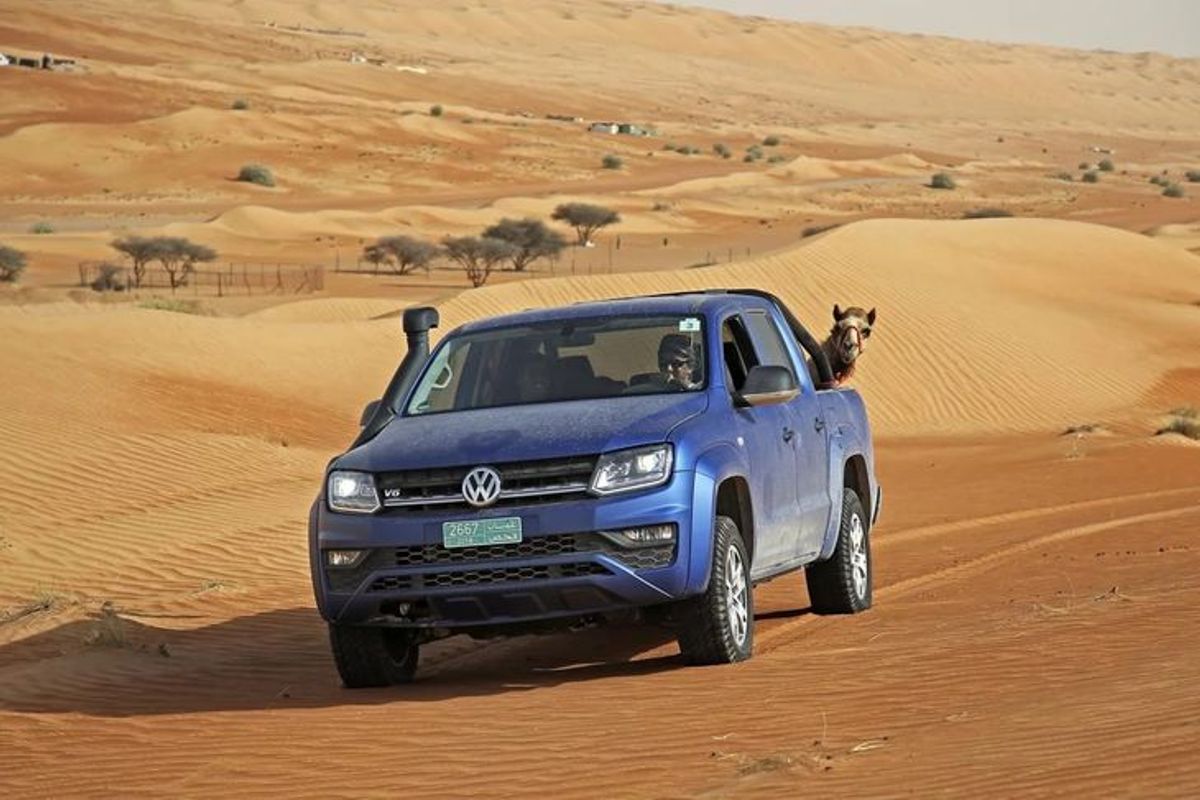
An Amarok V6 equipped with a canopy traverses a wadi (a dry riverbed) in Oman. 

It was great to experience the manual Amarok, as this variant is available with a low-range transfer case, however this configuration won’t be available in South Africa.

The big news here is that, largely in response to the upcoming Mercedes X-Class, Volkswagen has hiked up the 3.0-litre V6 turbodiesel's power output up from 165 kW to 190 kW (200 kW on overboost, for up to 20 sec), while the peak torque has increased from 550 Nm to 580 Nm (available between 1 400 and 3 000 rpm).

The testing ground was Oman. The country's almost the size of Germany, but with a population of less than 5 million, it is home to some incredible, dramatic roads which are traversed entirely by 4x4s, reaching into the most remote regions of the region and providing a lifeline to rural and desert communities. It was to be a harsh test for the Wolfsburg-based manufacturer’s relatively "new kid on the bakkie block".
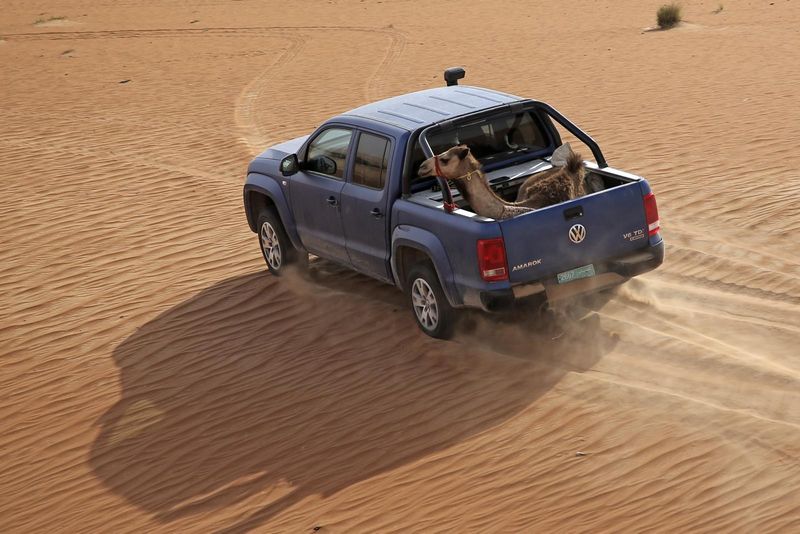

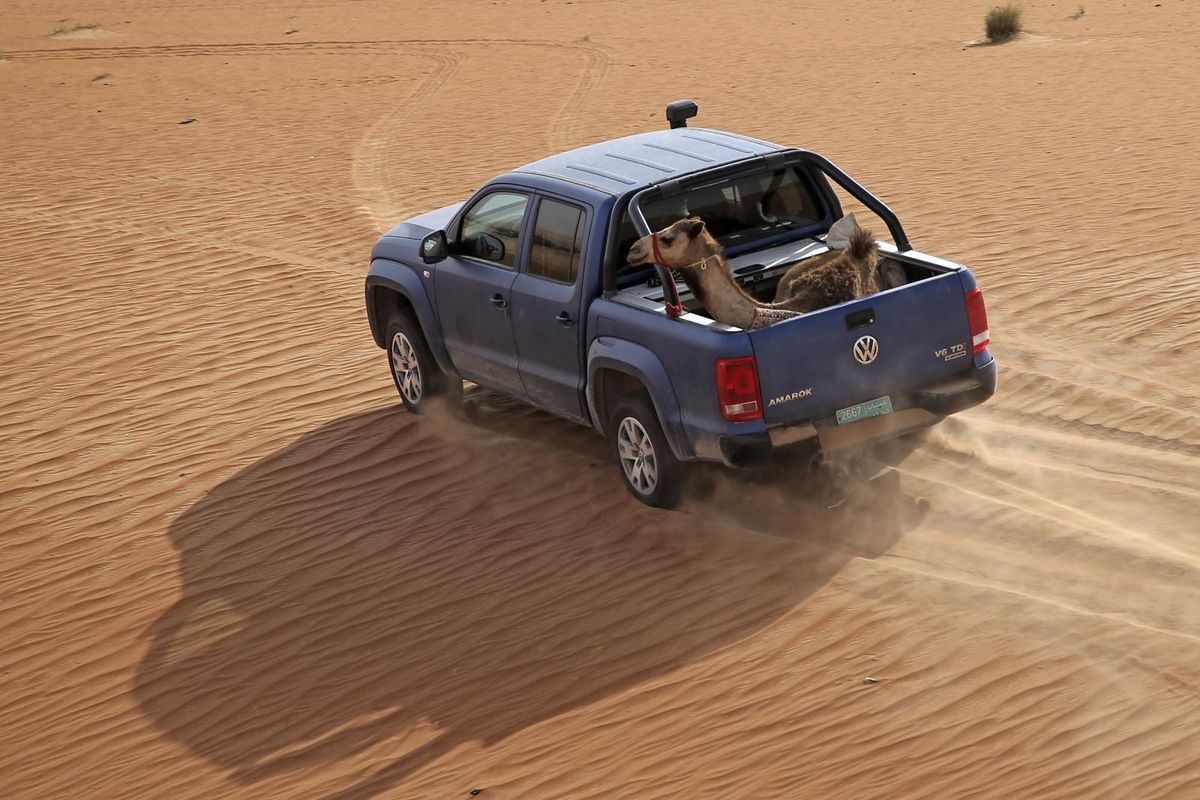
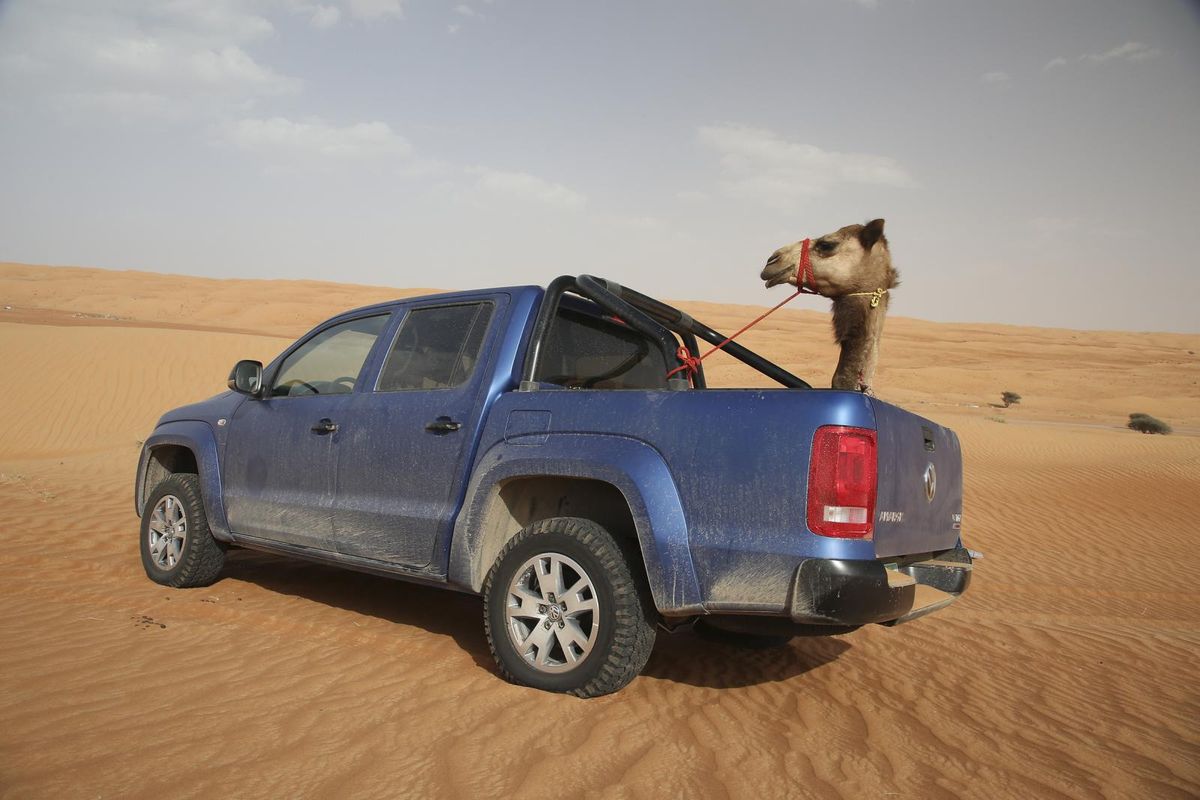
When your camel runs out of steam, the Amarok's more than willing to take over dune-climbing duties.

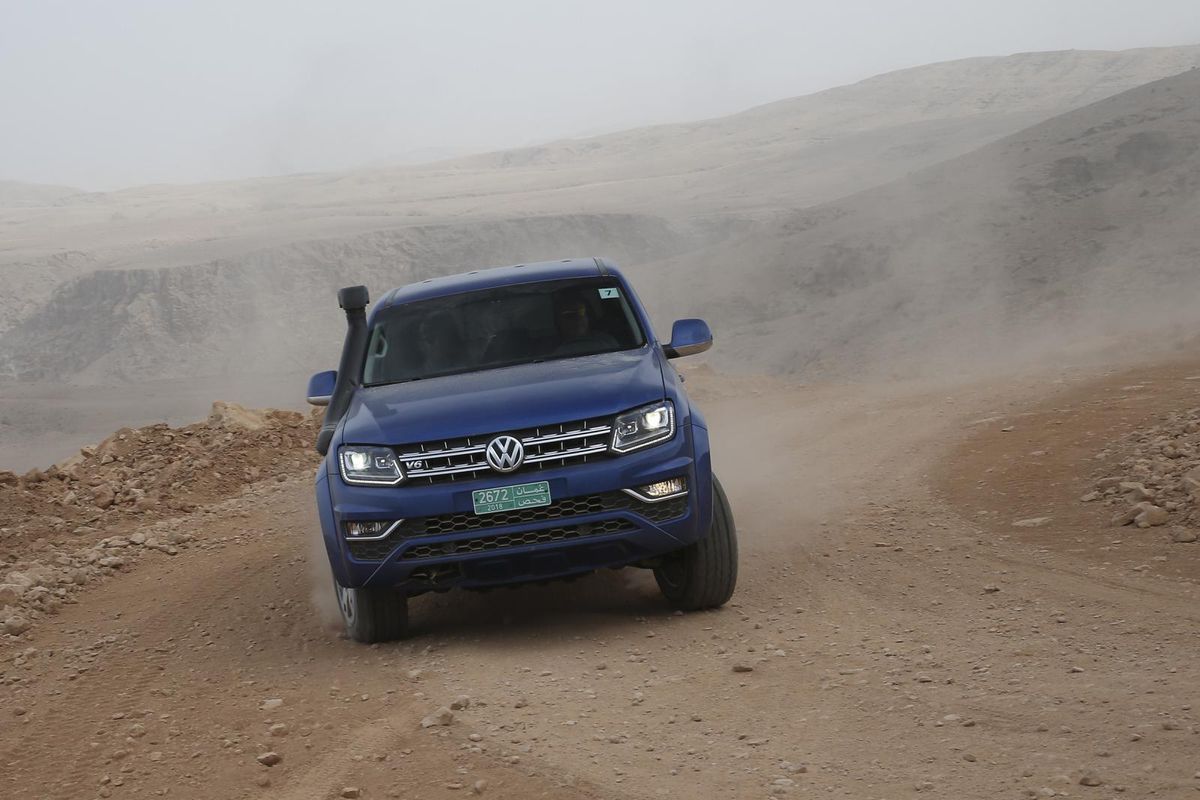
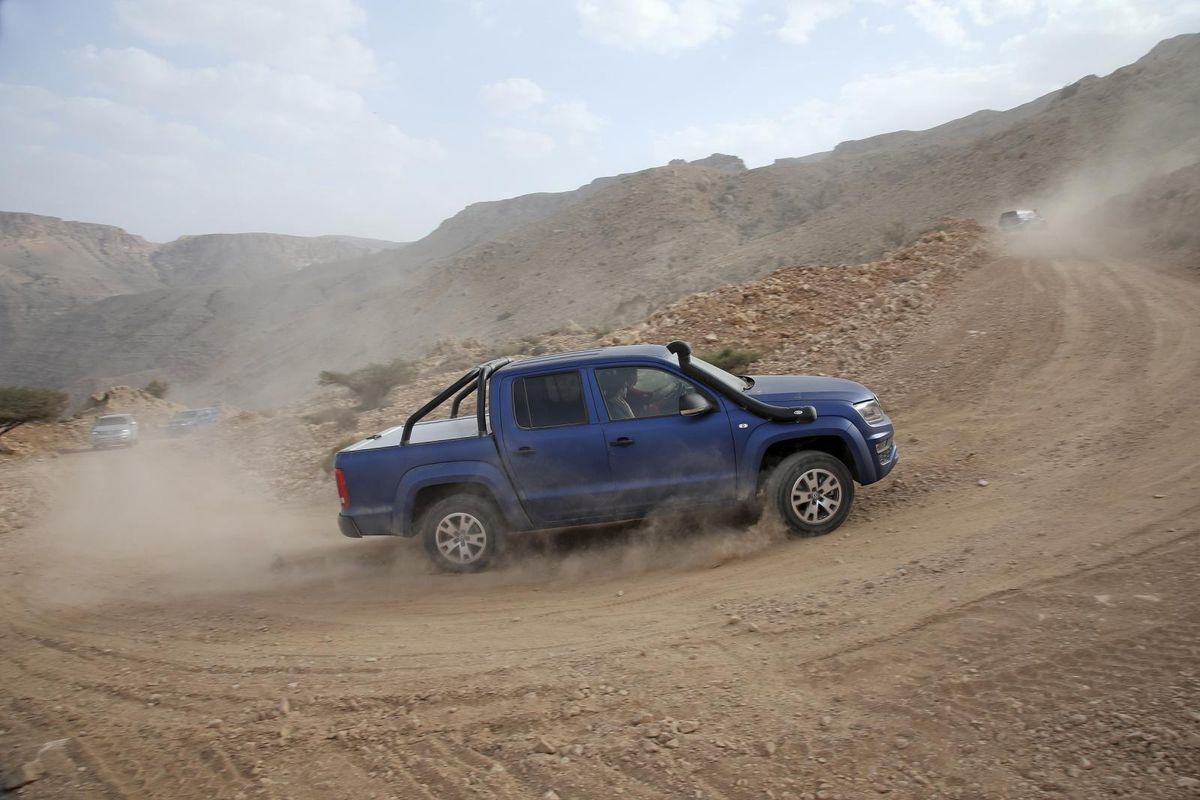
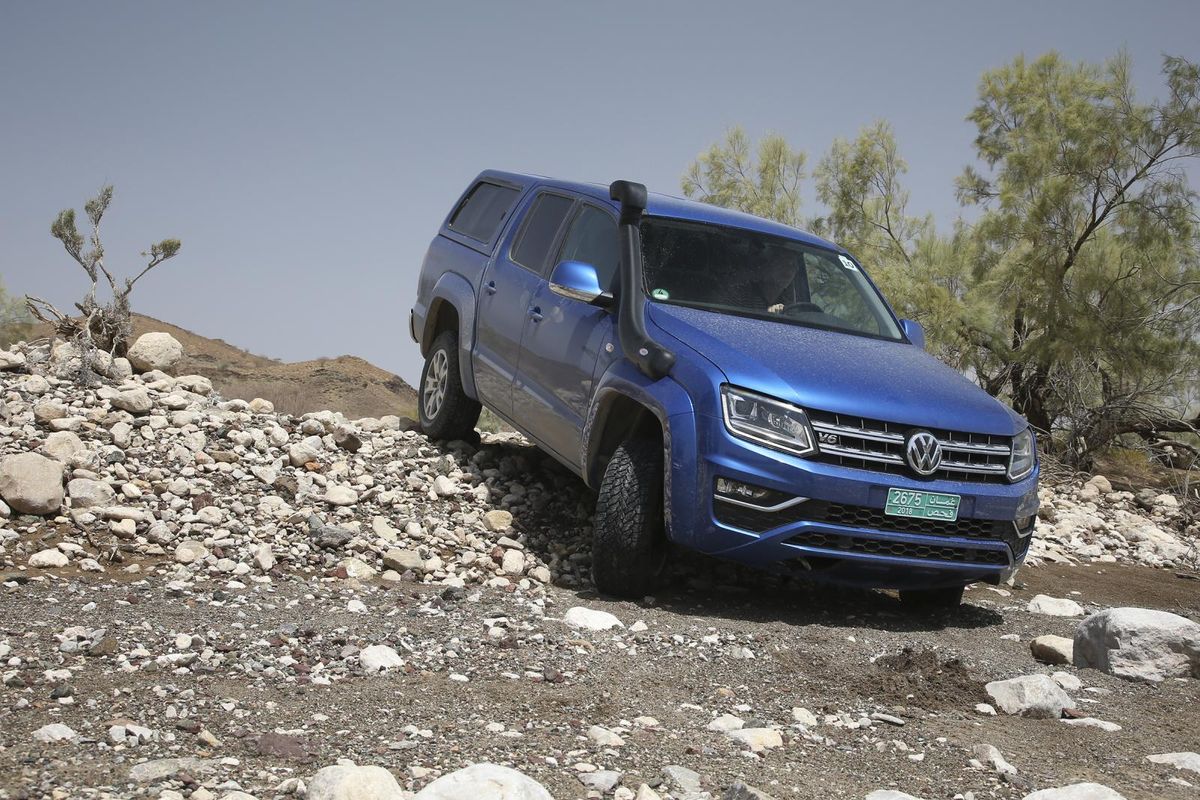
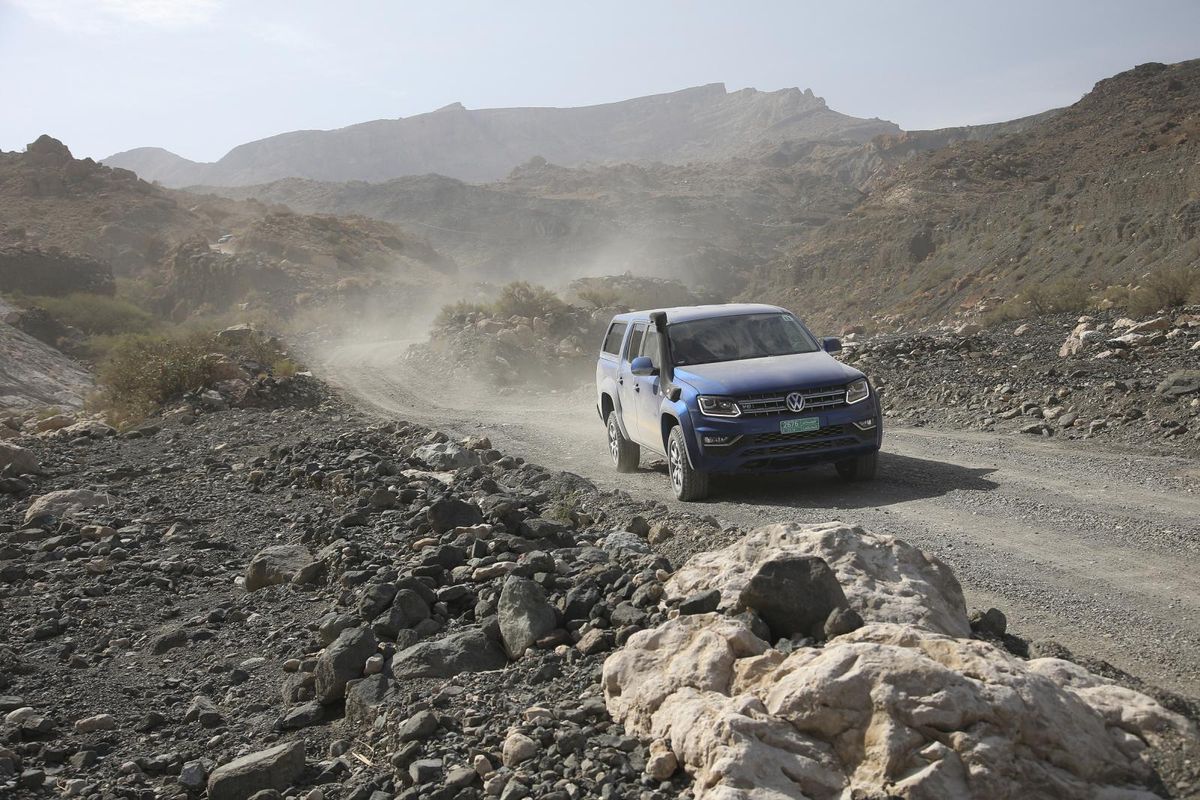
The first day saw the convoy tackling an impossibly steep mountain pass, climbing high into the interior of the country from a quick drive on a beach to over 2 000 metres above sea level. The Amaroks coped admirably and we didn’t even have to use low range. Even if they had wanted to, our colleagues in the automatic variants didn’t have that option, as automatic Amarok derivatives are still not offered with low range and won’t be for our market.

Automatic Amarok 3.0 V6 TDIs sold in South Africa feature permanent 4Motion all-wheel drive and to aid off-road prowess, the bakkies are equipped with a significantly lowered first gear, which plays the role of a crawler gear. Additionally, the hill-descent control is customisable, allowing you to set the preferred speed of descent.

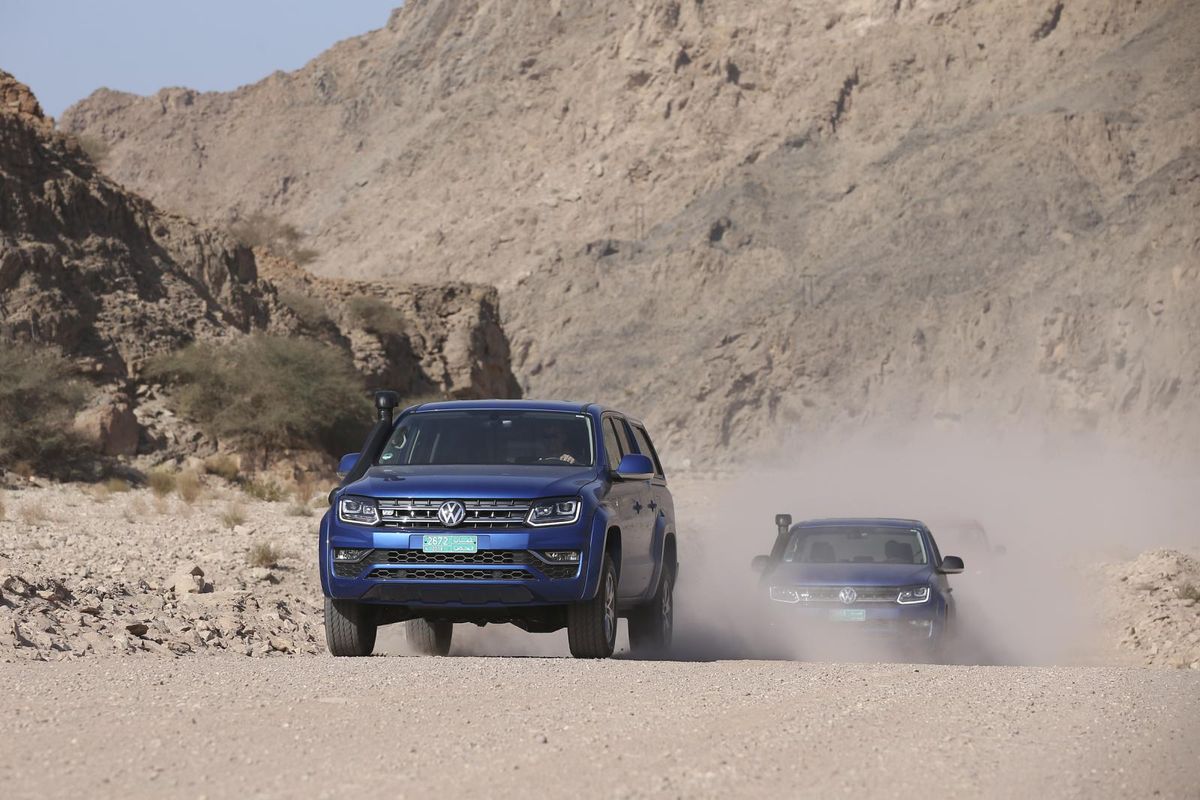
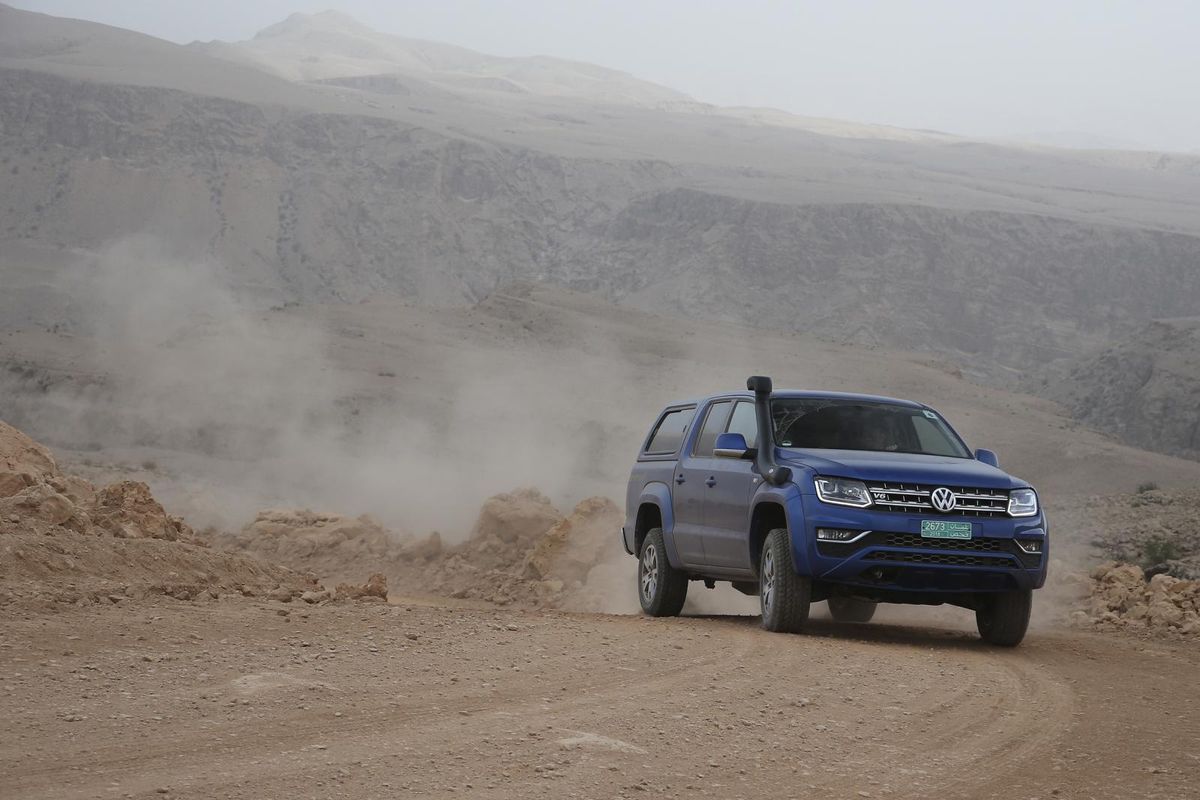
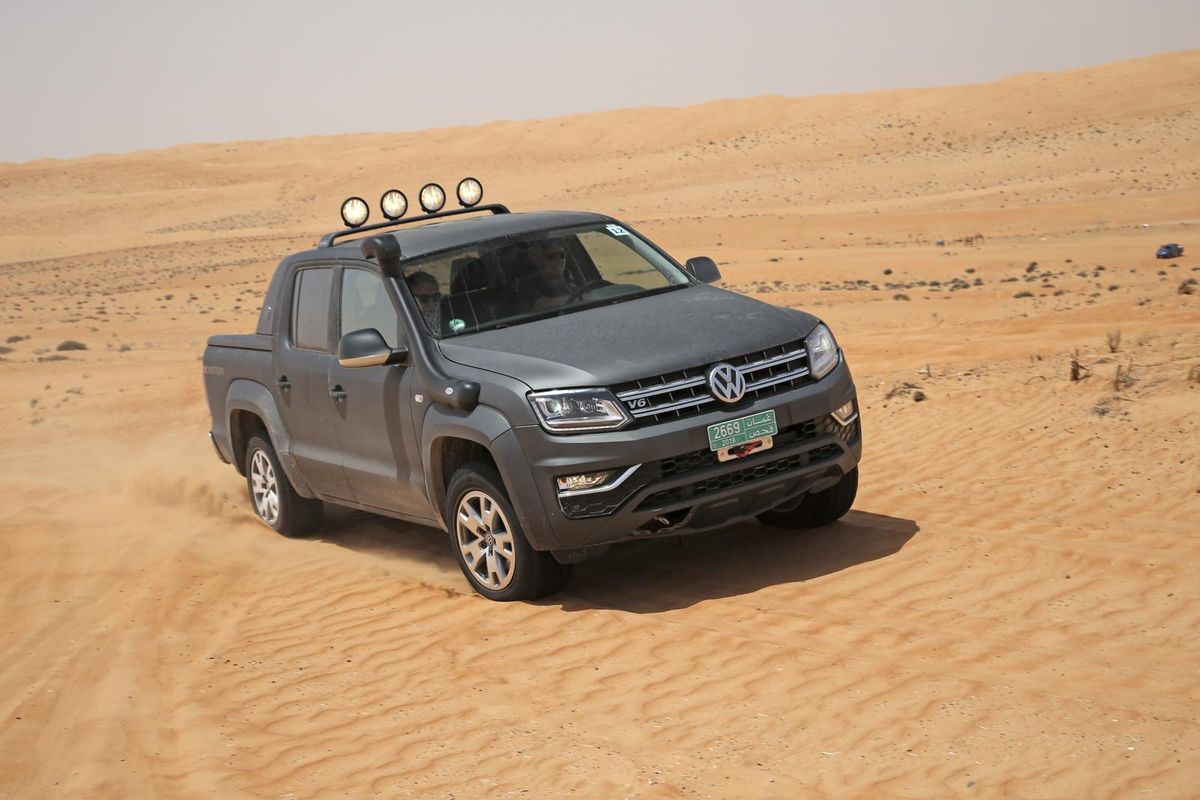
"Our" bakkies were modified though; each was fitted with a snorkel to help the car breathe easier out on the dunes. The rear-facing mouth of the device, and the fact that it draws in air from above the roofline and not down in the stream of dust and sand kicked up by the car in front, help to keep the cars going in the desert.
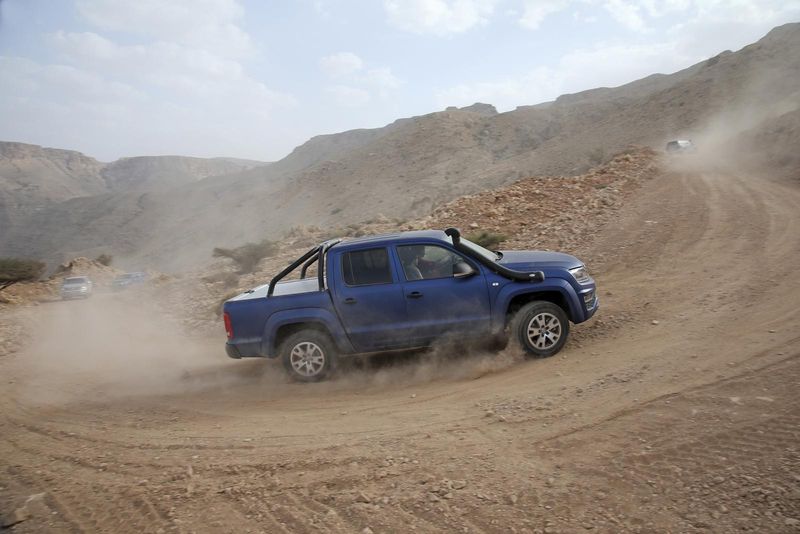

The first day of the Amarok adventure saw the convoy tackling an impossibly steep mountain pass.

Underbody protection was fitted as any trip through rural Oman means crossing countless dry river beds, filled with rocks and boulders. Fairly hardcore offroad tyres were fitted too, and 2 of the vehicles were fitted with winches (neatly hidden in the front bumper) to aid with vehicle recovery (if necessary).

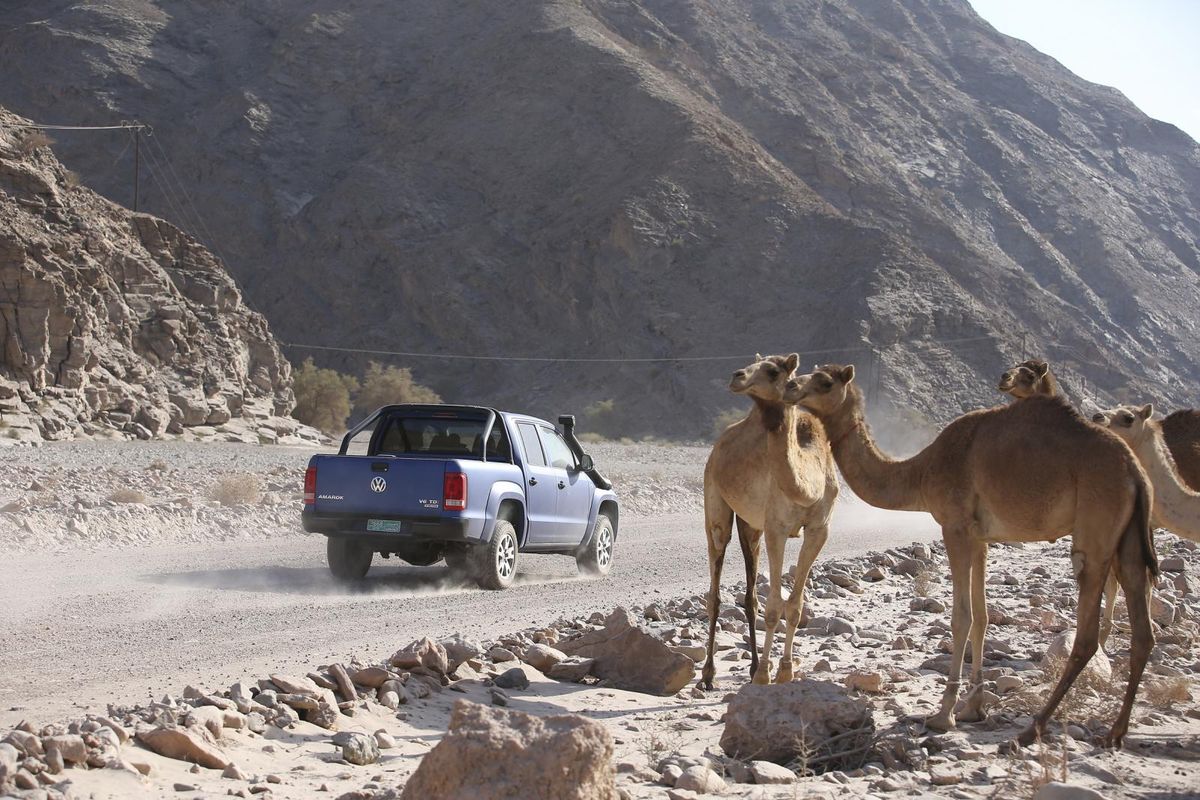
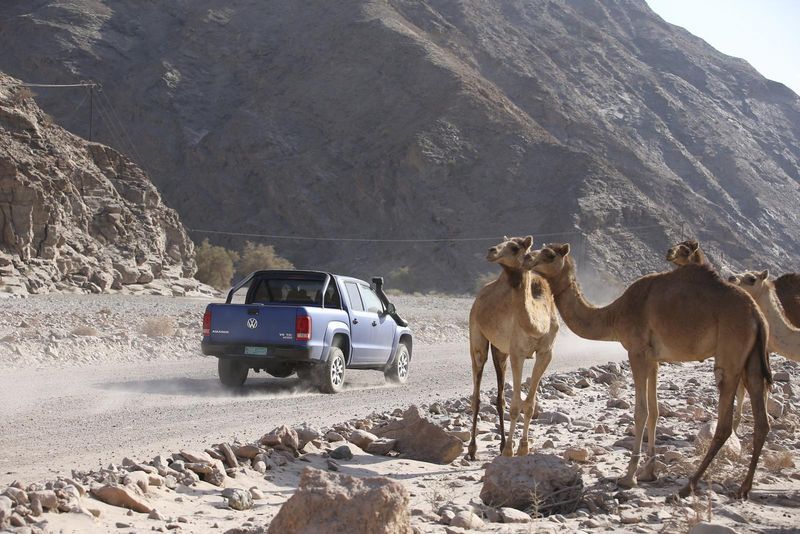
Day 2 saw the convoy head deep into the desert, where only camels and Toyota Land Cruisers survive. For some of the Bedouin people we spoke to, they’d never ever seen a Volkswagen, and perhaps if the German manufacturer hadn't hosted the Amarok media event in their region, they would never have.

Our hosts had set up a training ground for us to experience dune driving at its best, and local guides were on hand to show us the ropes. They were however in a hurry, for some reason, and keeping up with them was a test of bravery and thrashing the bakkies across the sand. I thoroughly enjoyed coaxing my Amarok up and down the dunes; the auto 'box effectively selects the best gear for each off-road situation. It makes the drive on the open sand less stressful for a relative novice. Only one of us got properly stuck (it happened to be the head honcho from VW, who, after a few weeks out here, perhaps become a bit too exuberant with his dune-bashing.)
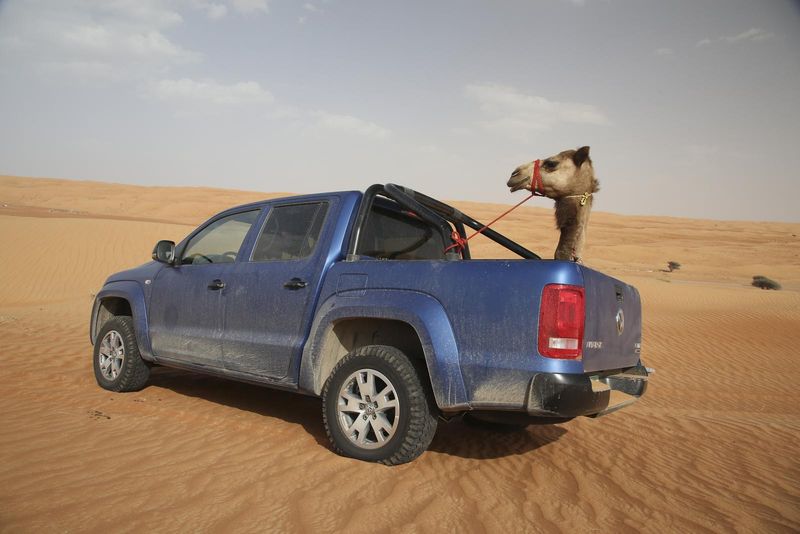

The Amarok's auto 'box certainly took the stress out of dune driving, especially for a relative novice.

We covered around 1 200 km in 3 days, and around 400 of those were on some of the smoothest highways I’ve ever encountered, so I’m not sure I’m qualified to comment on how the Amarok might fare on our slightly less-than-ideal roads back home.

However, that engine absolutely hauls. The feeling of acceleration is almost what you’d experience in a hot hatch and coupled with SUV-like road manners and ride quality, the Amarok is frankly excellent at eating up mile after mile of tarmac. The way this engine builds speed is remarkable. Who could have predicted that a horsepower war would break out in the world of bakkies? Either way, the consumer is the winner. The Amarok's suspension setup, meanwhile, is perhaps not as soft as that found in the Ford Ranger Wildtrak, but the benefit is that the Volkswagen feels like it can actually go around corners.

The 8-speed automatic operates in the best way, which is to say that you don’t really notice its machinations… at all. Interior space and comfort has never been in short supply in the Amarok, and that hasn’t changed, but unfortunately neither has the fascia, which is feeling a little plain and dated now, although the plastics employed are a good compromise between the soft-touch and rugged-feeling varieties.

The feeling of acceleration produced by the 190 kW Amarok is almost akin to what you’d experience from a hot hatch.

The infotainment system is standard Volkswagen fare, which is to say that it doesn’t look particularly fancy but is comprehensive and easy to use. And, of course, one feature we were particularly pleased about was the aircon. You can definitely rely on the aircon unit in the Amarok to keep you cool through the worst of our South African summers. It frankly kept us alive out there in that Middle-Eastern heat.

Summary

Modern bakkies have to perform a multitude of roles. For many South African motorists, the bakkie is a daily-driver, as well as being a family car and needs to be up to the unique demands of increasingly being seen as a status symbol. When the 190 kW Amarok 3.0 V6 TDI arrives in South Africa, it will sit at the top-end of the market, and especially with the imminent entry of Mercedes Benz into the mix, a flagship bakkie essentially has to be a luxury SUV with a load bed affixed aft of its cab.

The Amarok, which was named the winner in the Leisure Double Cab Bakkie category of the 2017/18 Cars.co.za Consumer Awards – powered by WesBank, portrays this role better than most, and while comparisons to the upcoming Benz X-Class will be ubiquitous, for now, the Volkswagen rules the roost in providing performance, luxury, ride quality and practicality. As for when exactly the 190 kW version will arrive in South Africa, Volkswagen South Africa can only confirm that it will be at some point next year (2019) and that the new top-of-the-range derivative will be offered in eye-catching Aventura specification. Pricing will be confirmed at a later date.

Related content:

Volkswagen Amarok 3.0 V6 TDI Highline Plus (2017) Review [with Video]

Mercedes-Benz X-Class Pricing Announced Ahead of Launch

Volkswagen Amarok 3.0 V6 TDI (2017) Video Review

Preview: Volkswagen Amarok V6 vs Mercedes-Benz X-Class V6

Nissan Navara vs VW Amarok (2017) Which is better for off-roading?

Most Powerful Double-Cab Bakkies in SA

5 Cheapest Automatic Double-Cab Bakkies in SA
Interested in buying an Amarok?

Search for a new/used example on Cars.co.za

BMW i8 Roadster Price Announced [Video]

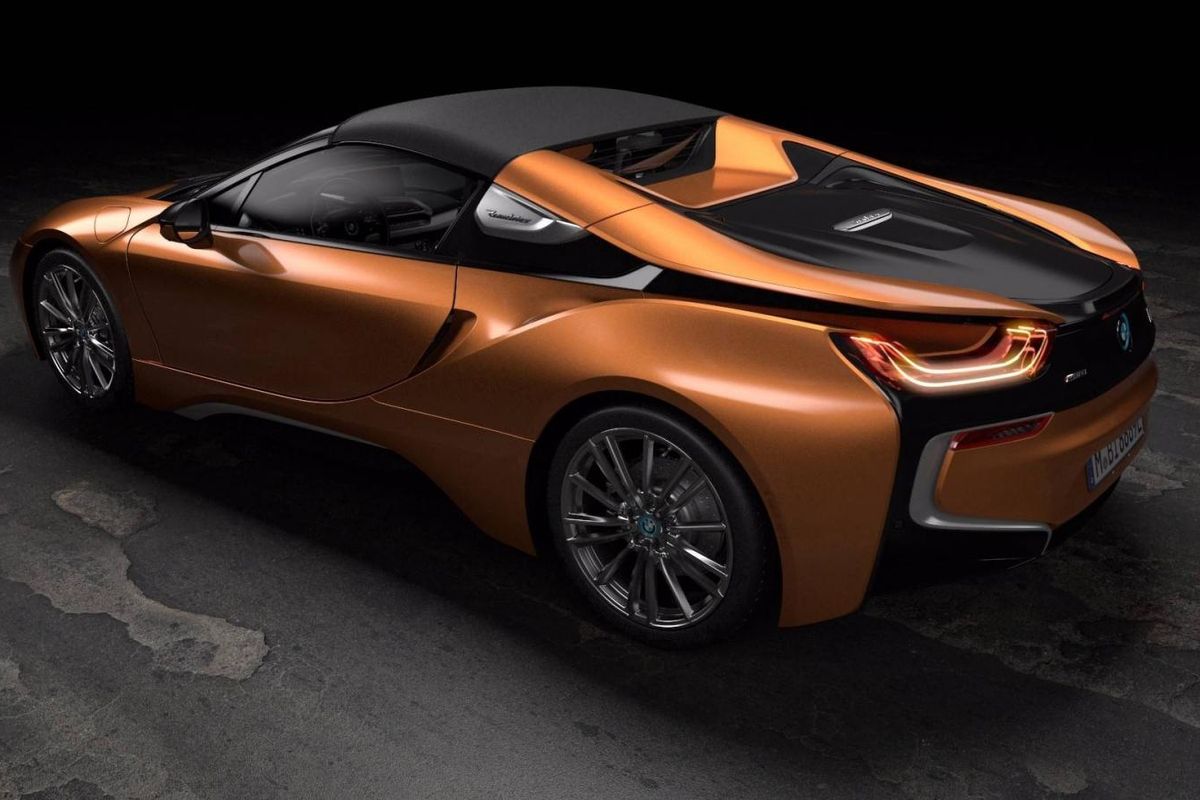
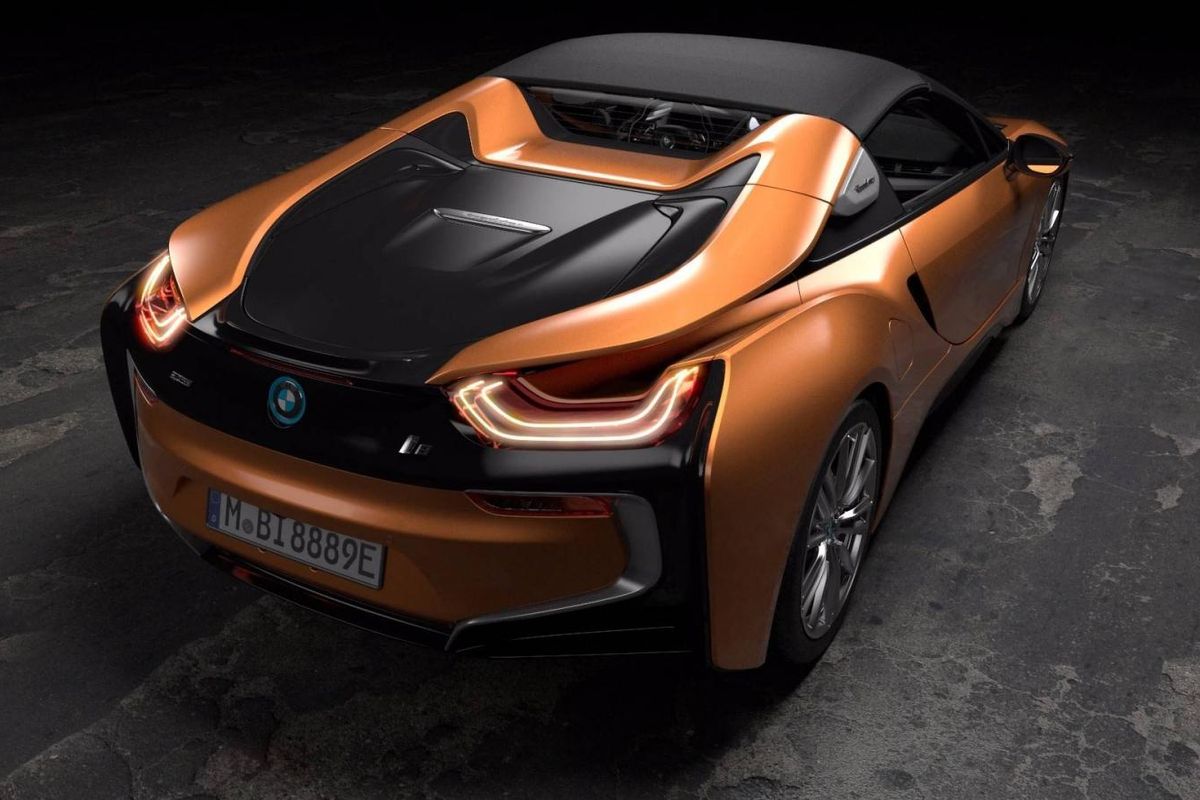
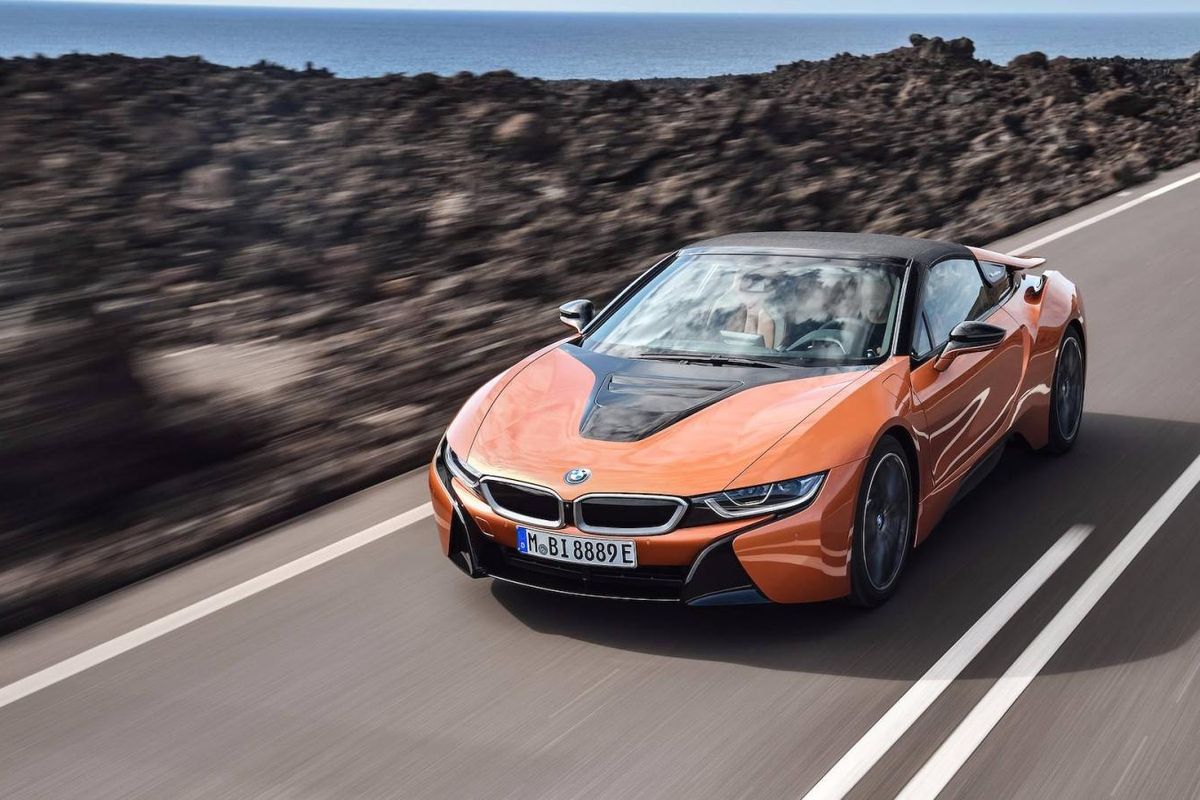
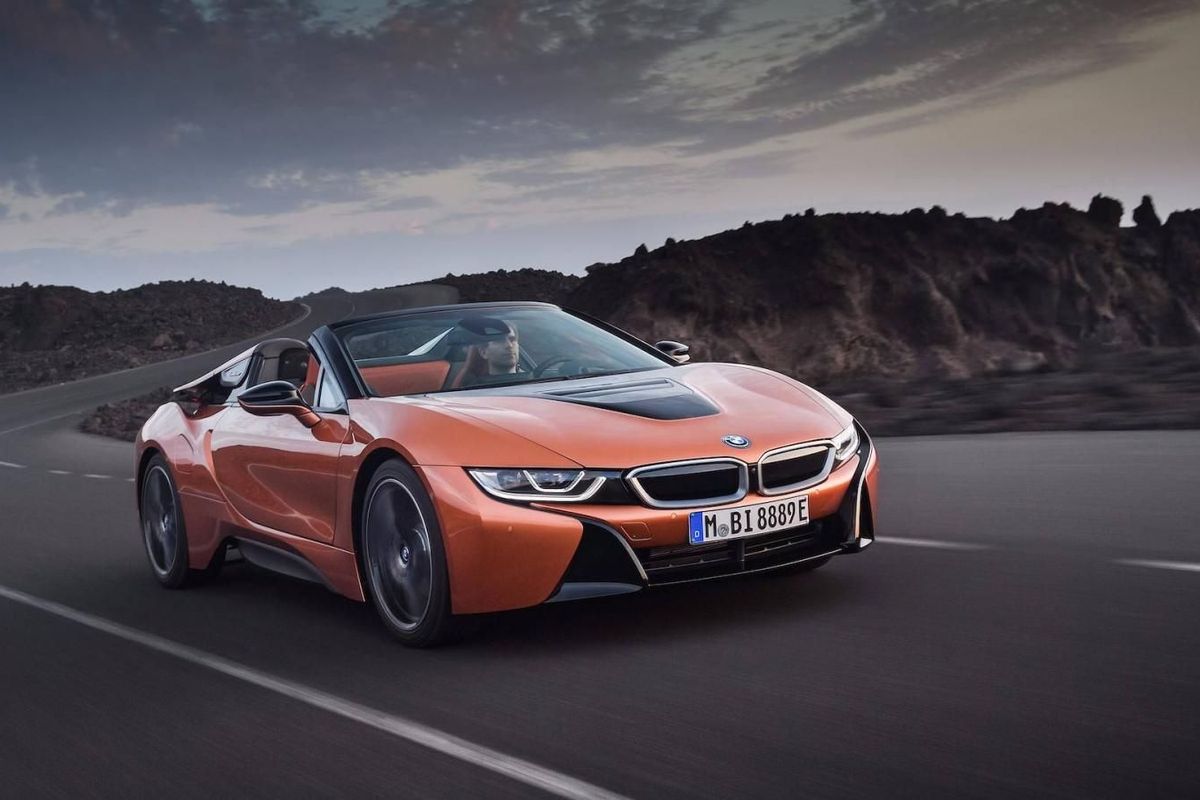
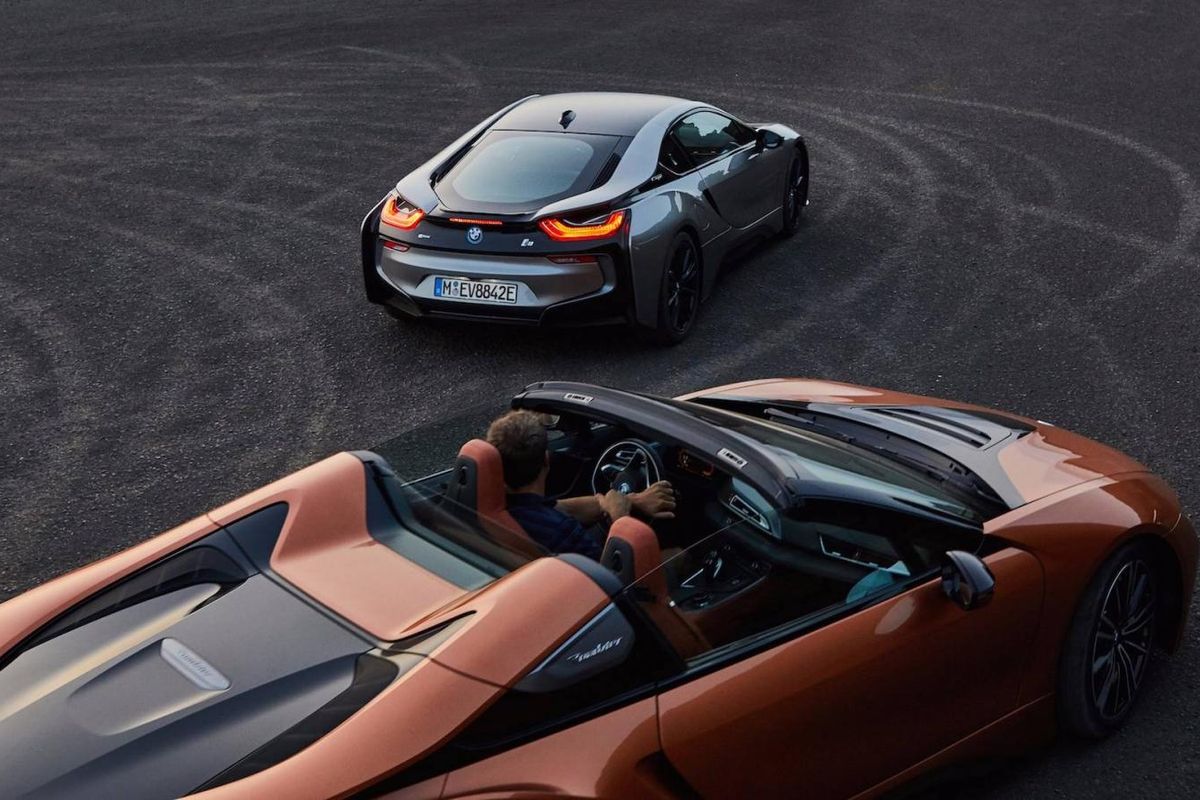
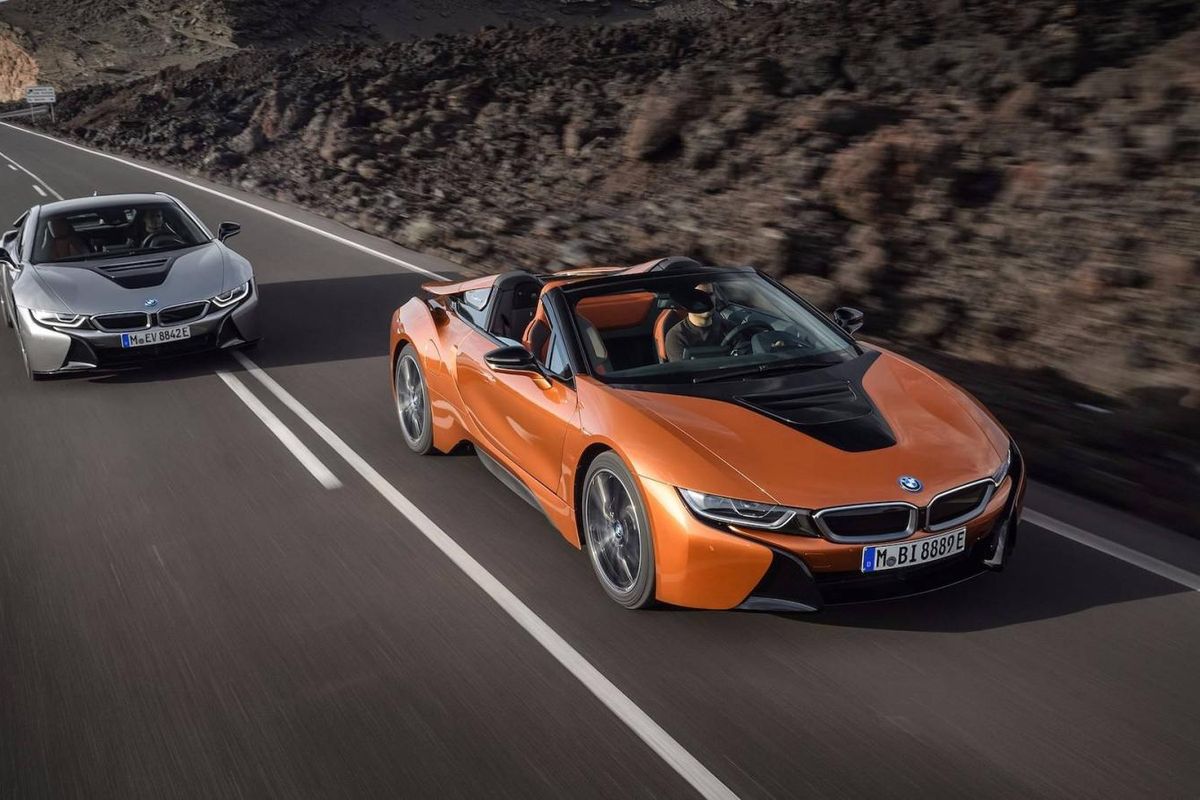
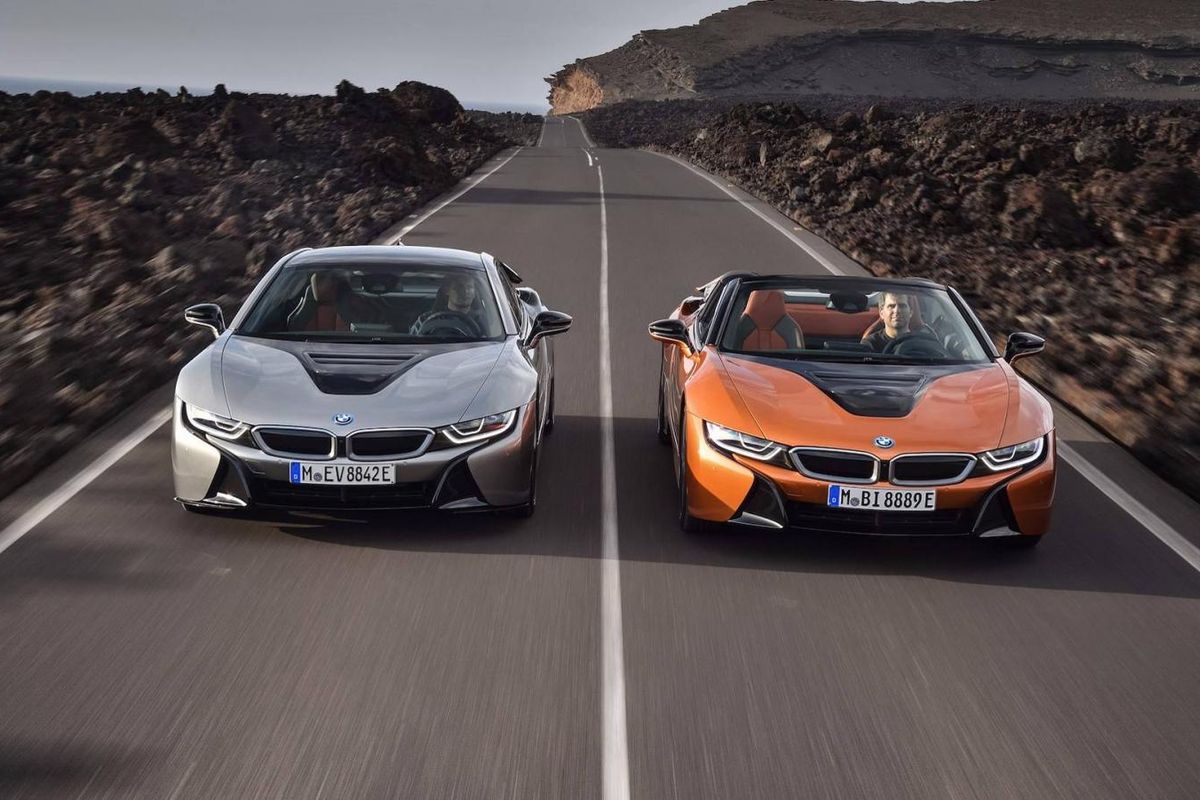
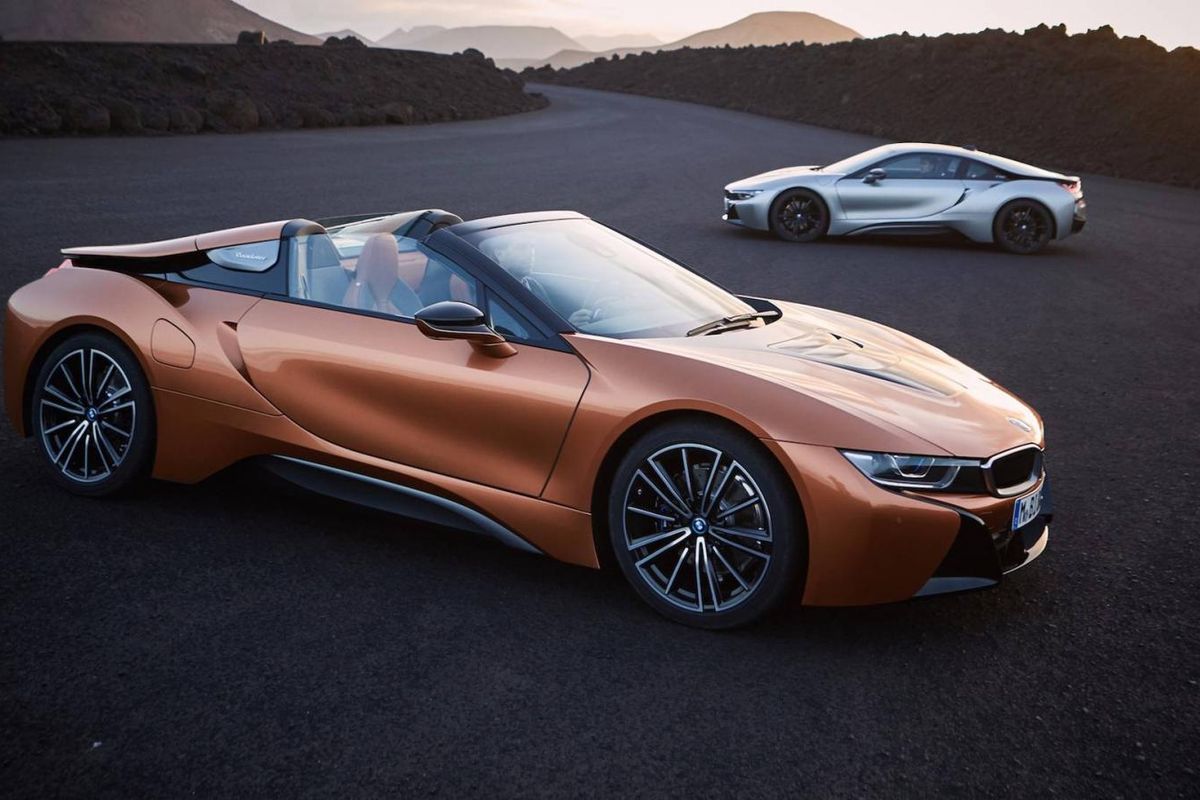
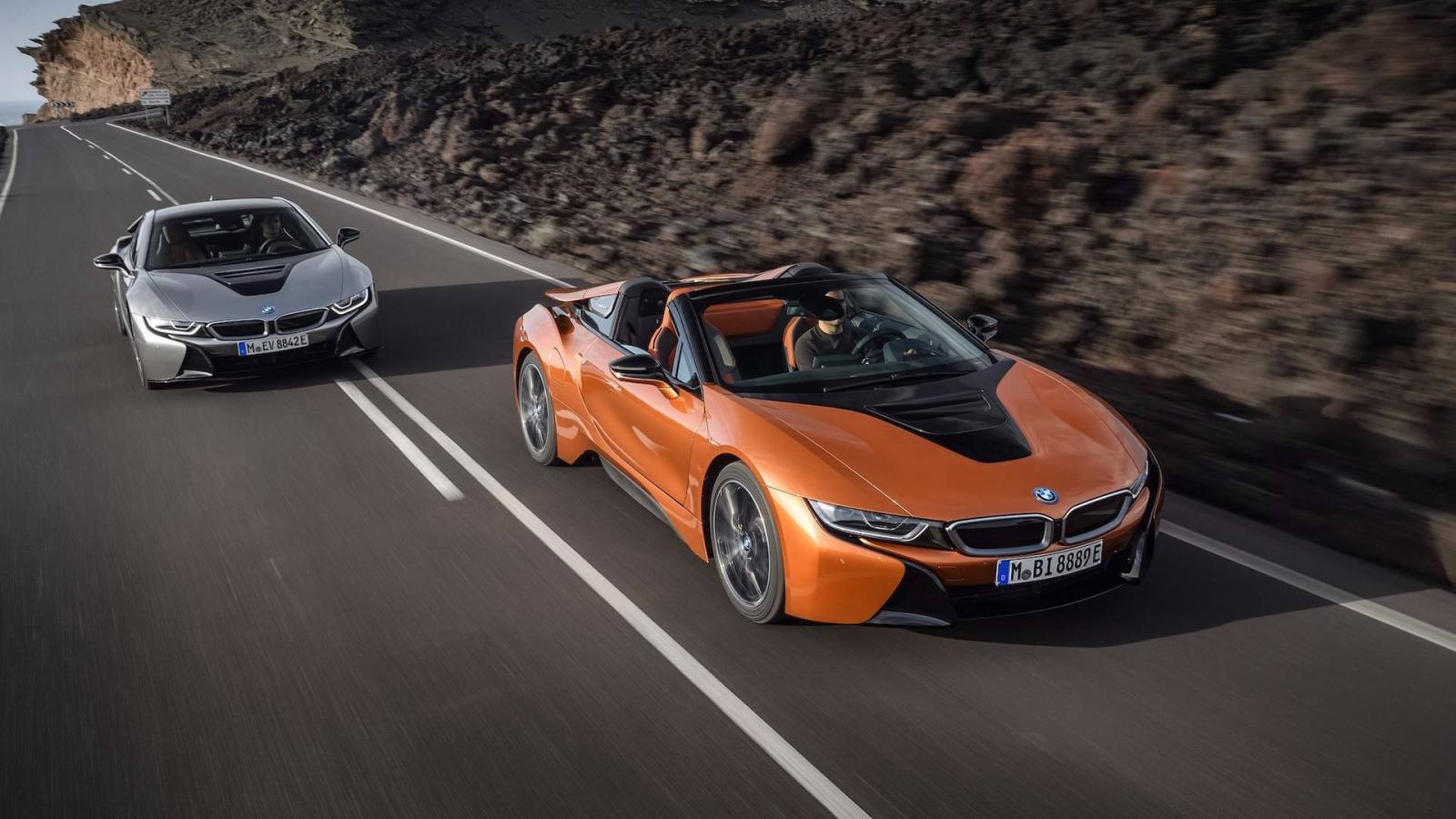
After numerous teasers and speculation, BMW has finally revealed the new i8 Roadster. Take a look at pricing and details for the new i8 Roadster and updated i8 Coupe below. 

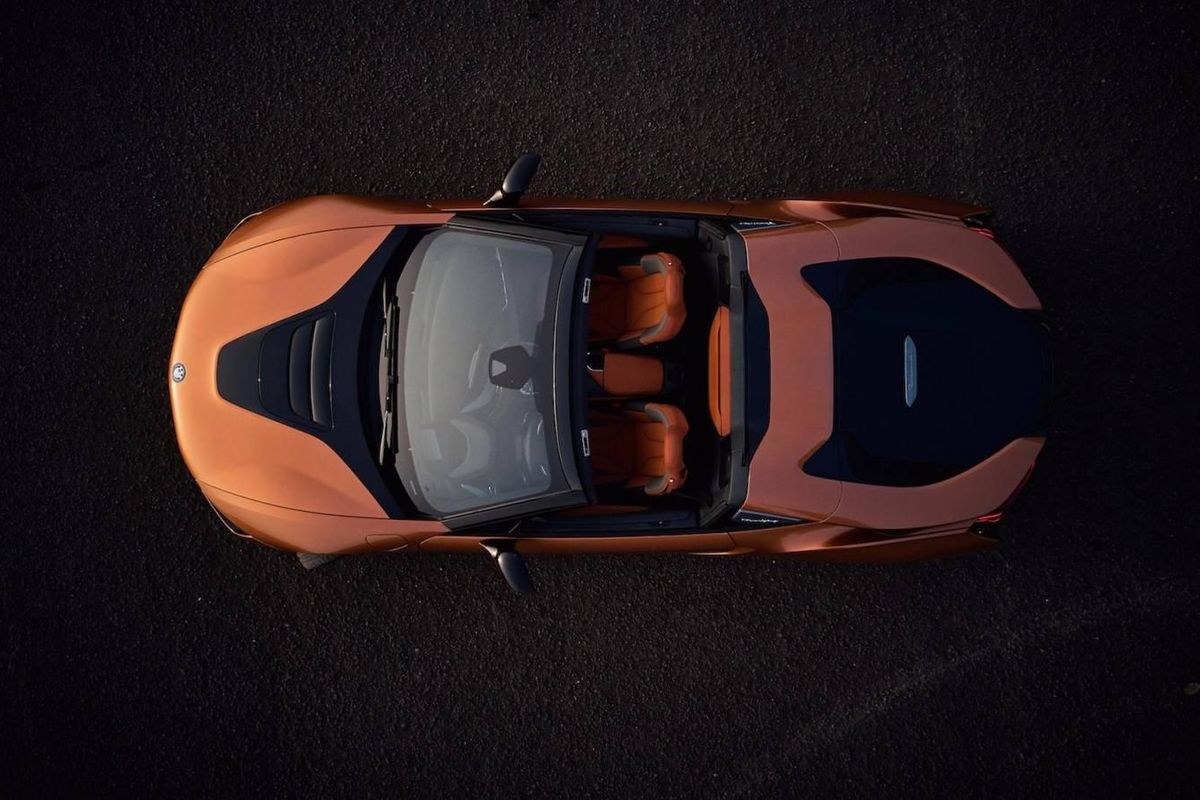
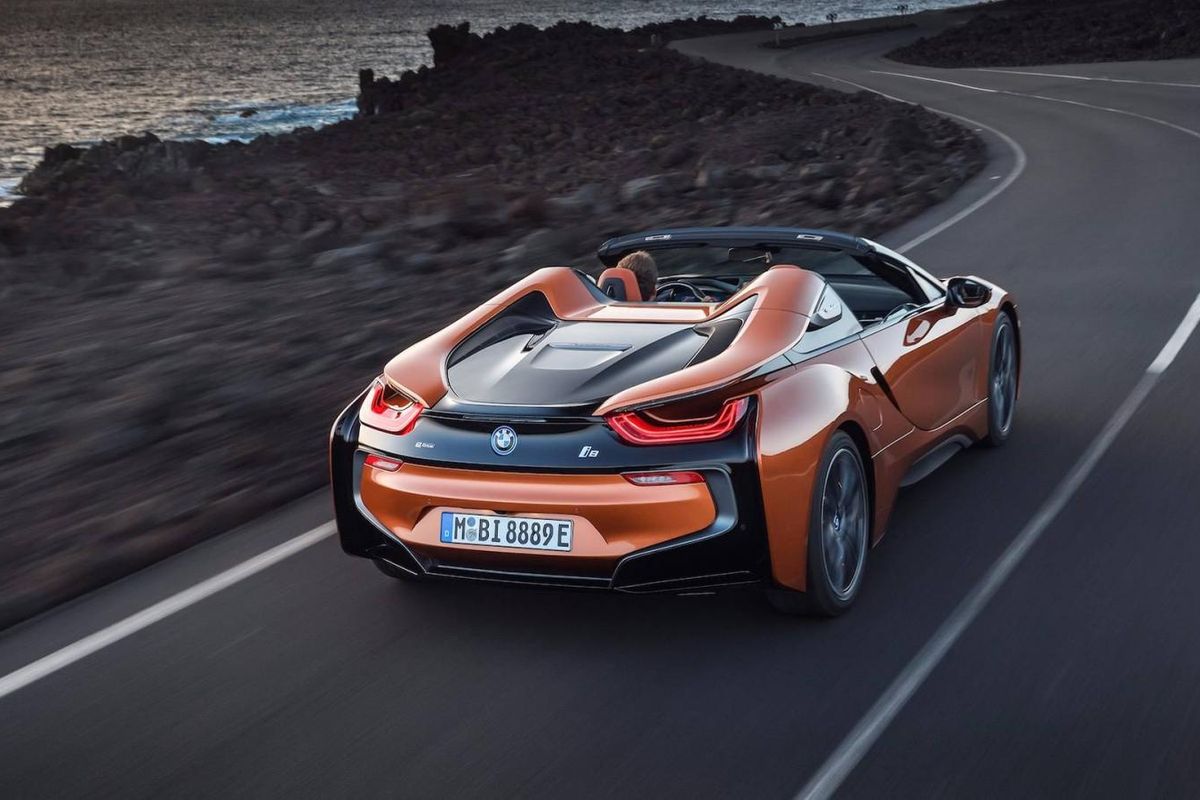
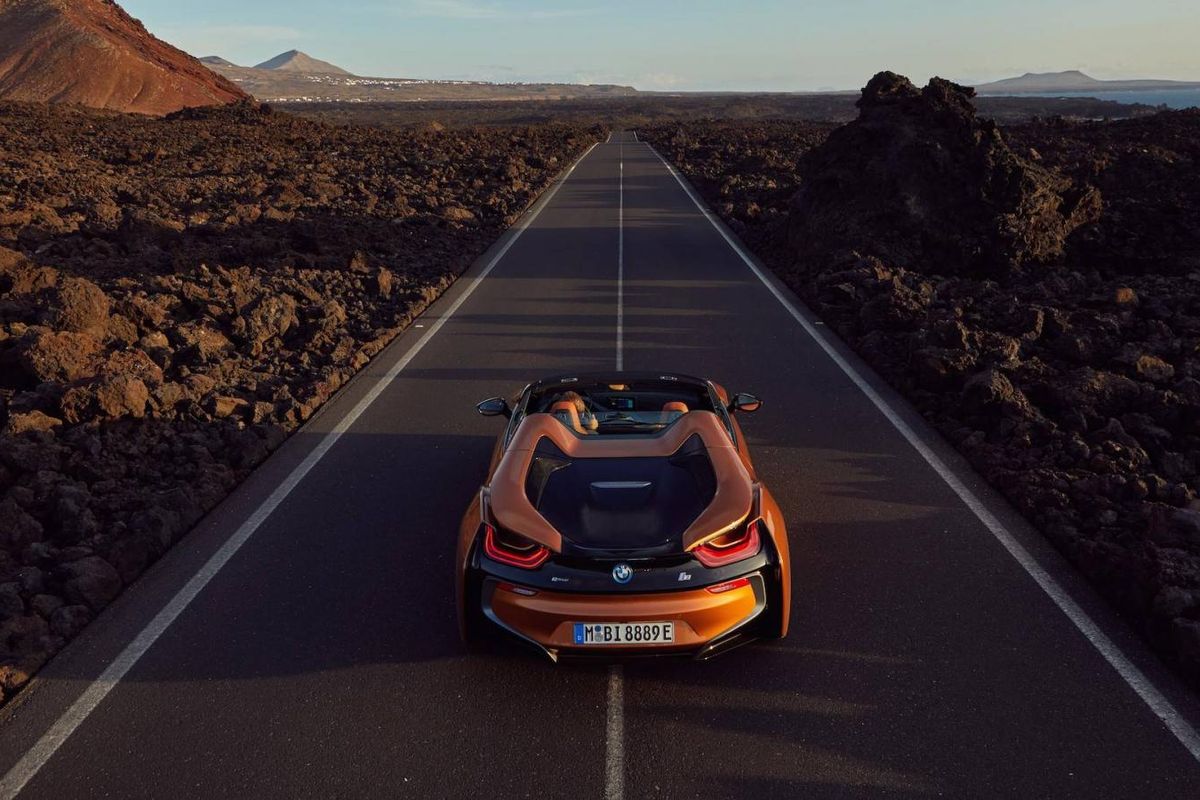
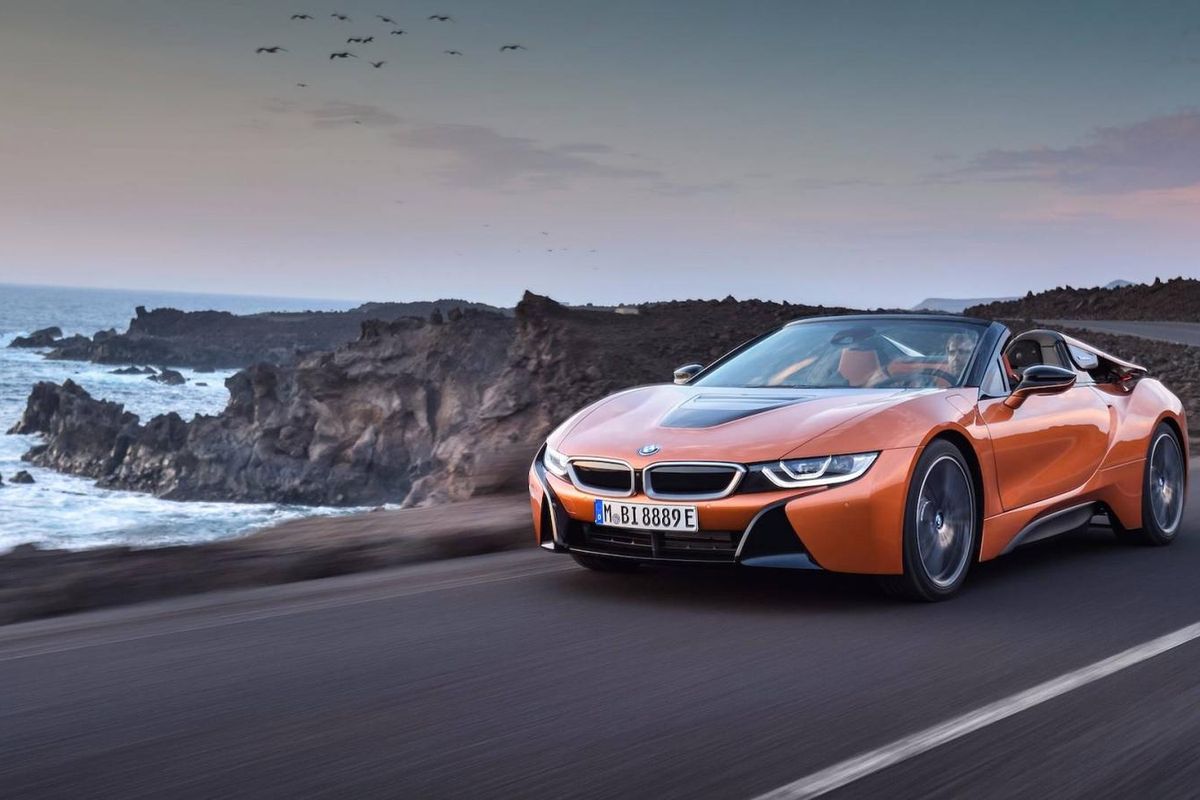
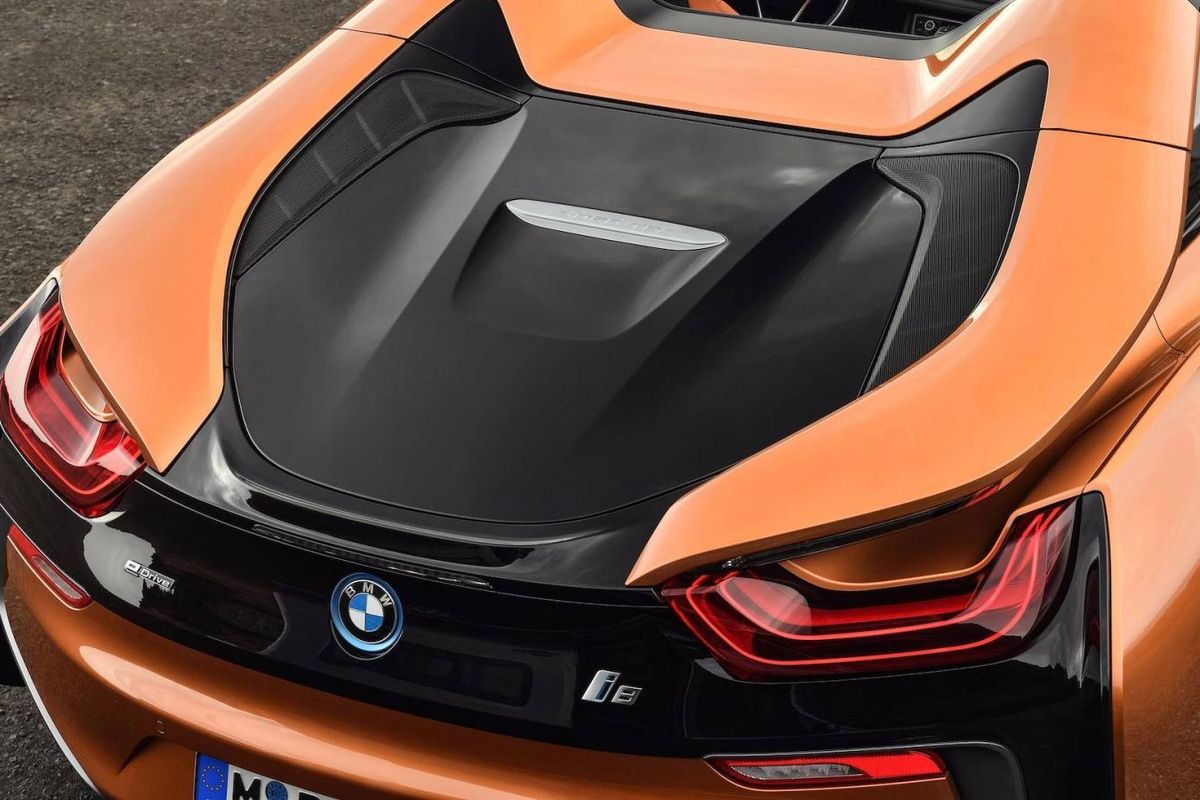
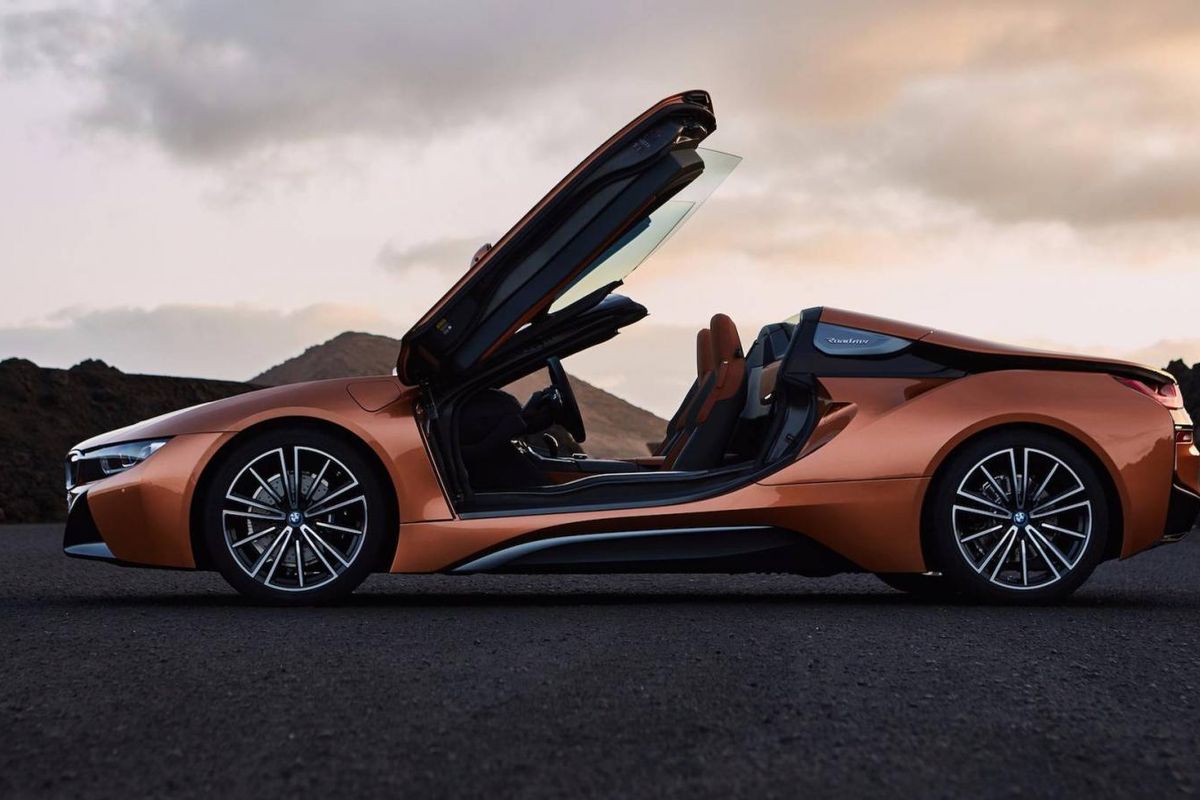
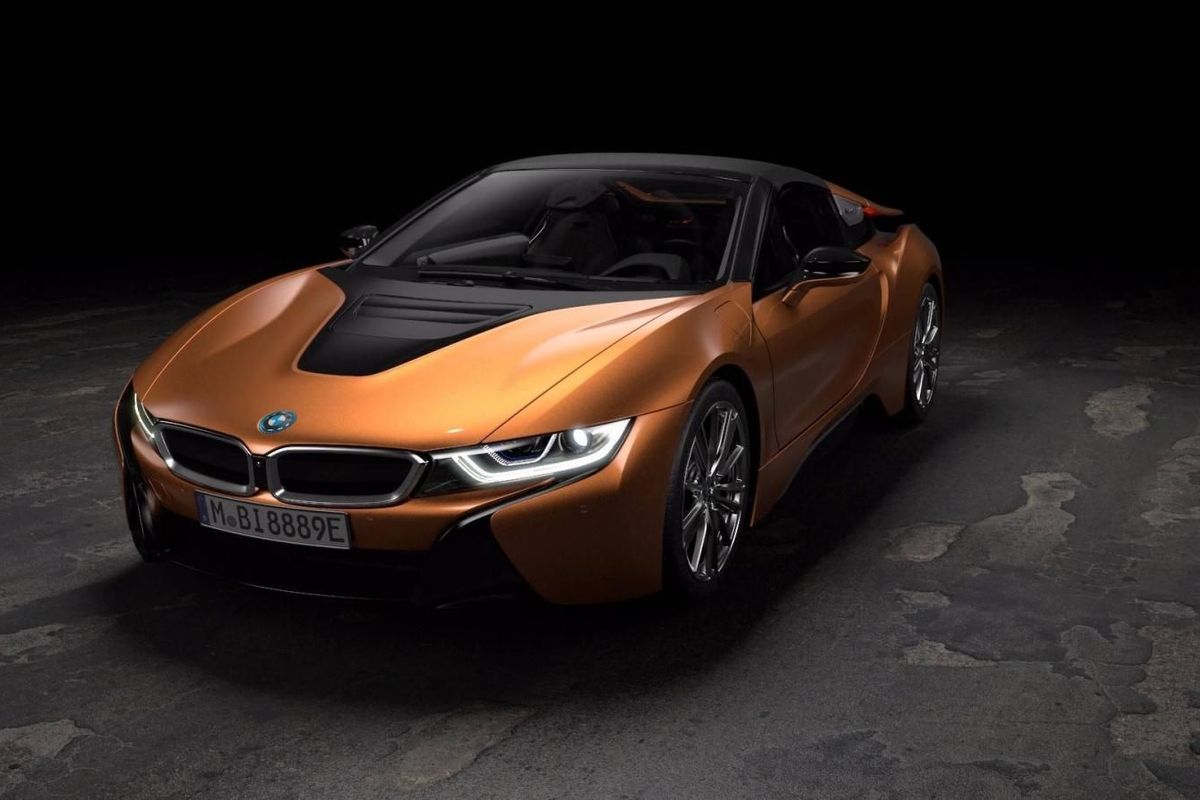
The BMW i8 Roadster is the third official vehicle in the i-lineup and this topless version forms part of a facelifted i8 range which will arrive in South Africa in the middle of 2018. Some of the changes include redesigned LED headlights, along with new bumpers front and rear and a refreshed range of alloy wheel designs. The electrically-operated fabric roof opens and closes 15 seconds at speeds up to 50 kph and the striking butterfly doors, synonymous with the i8, have been retained. The i8 Roadster is a strict 2-seater and with the omission of the rear seats, additional storage space of up to 100 litres is offered behind the seats. 

Outputs and efficiency


The updated i8 Coupe and new i8 Roadster now offer more power and improved electric range.

Both the i8 Roadster and i8 Coupe feature a revised version of the i8's plug-in hybrid setup, which comprises a turbocharged 1.5-litre 3-cylinder petrol engine driving the rear wheels with 170 kW/320 Nm and combined with an uprated electric motor which now offers 105 kW/250 Nm mounted on the front axle. Total system output for both the i8 Roadster and Coupe is 275 kW (266 kW previously). A more powerful 11.6 kWh battery is fitted (previously 7.1 kWh) and electric range for the i8 Roadster is claimed at 53 km while the i8 Coupe can travel 55 km in pure electric mode. 

Electric driving is now possible at speeds up to 105 kph (previously 70 kph) and when in eDrive, the electric driving threshold increases to 120 kph. In terms of fuel consumption, BMW claims a figure of 2.1 L/100km for the i8 Roadster and 1.9 L/100km for the i8 Coupe. 

The i8 Roadster weighs in at 1 593 kg, some 60 kg heavier than its coupe sibling, and will sprint from zero to 100 kph in 4.4 seconds while the i8 Coupe is marginally faster, completing the sprint to 100 kph in 4.2 seconds. Top speed is rated at 250 kph. A 6-speed automatic transmission is standard as is Dynamic Damper Control. A full charge will take 4.5 hours using a 10 A/230 V domestic power socket. 

Styling and equipment


The i8 Roadster can deploy its fabric roof in 15 seconds and is offered with a new Accaro interior trim as an option. 

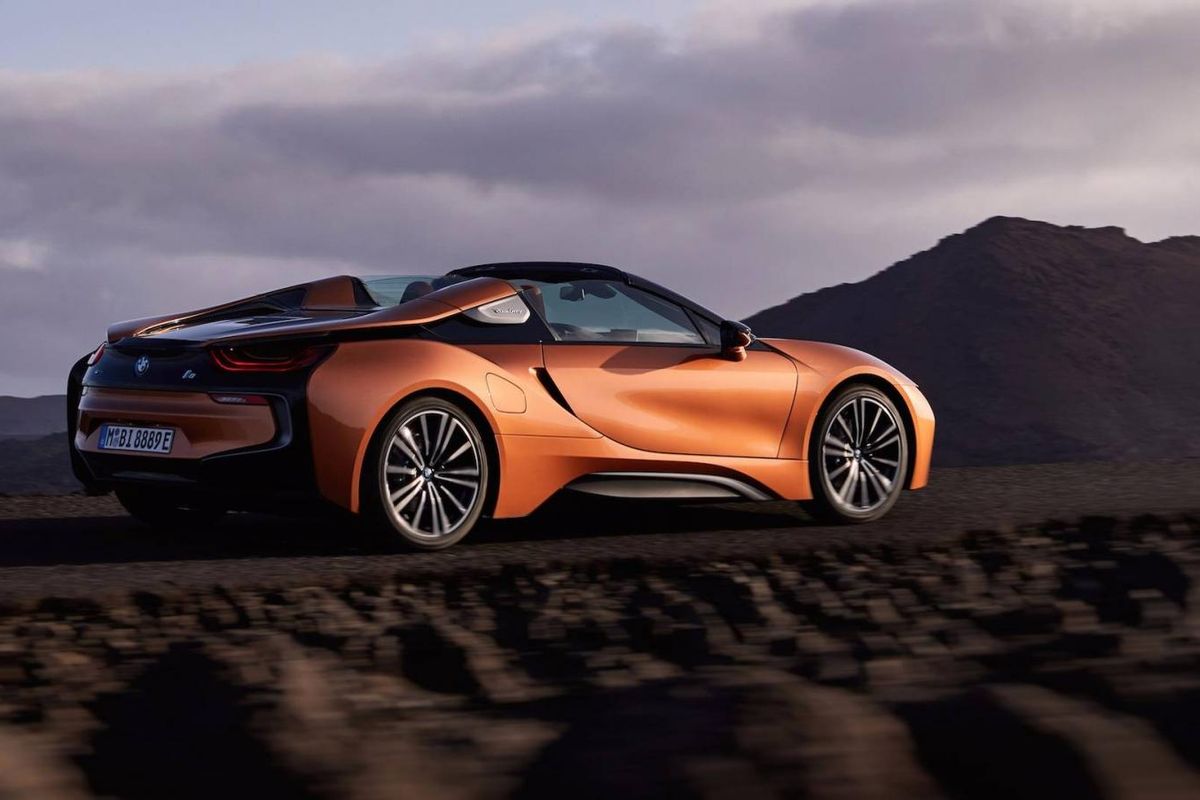
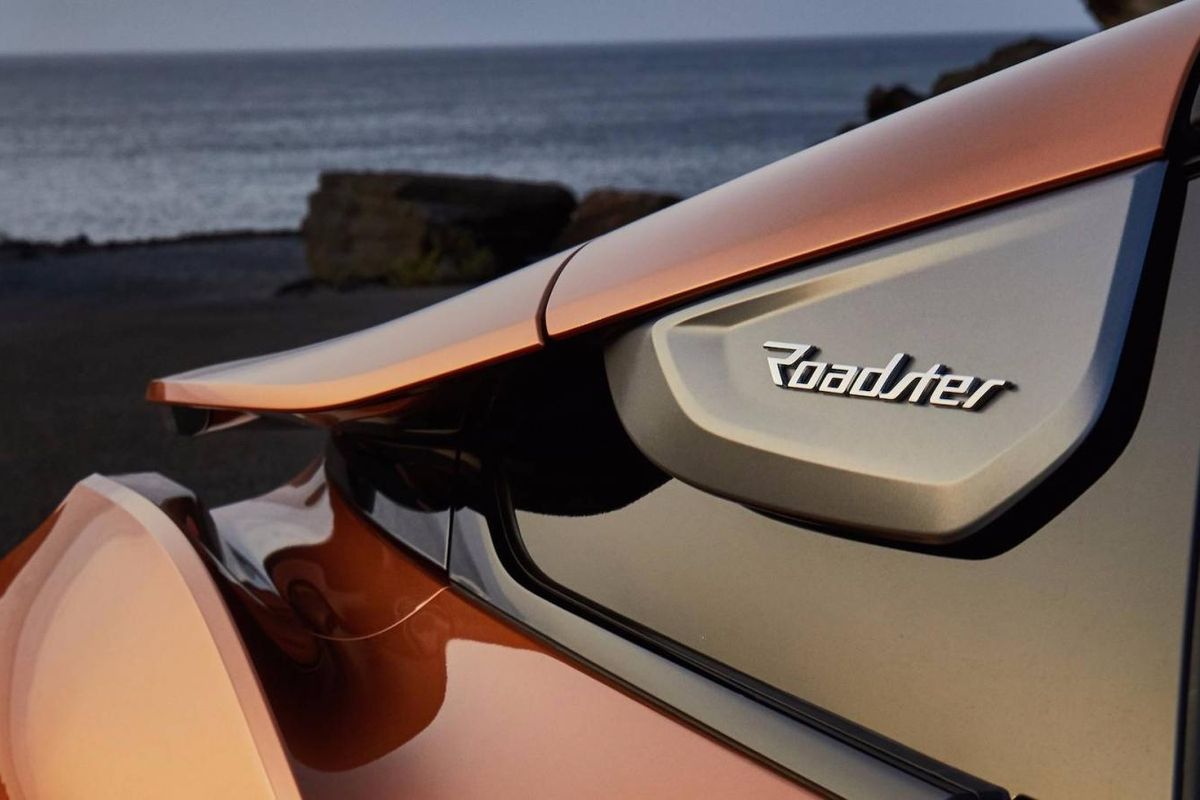
The i8 Roadster rides on new 20-inch light alloy wheels in double-spoke design as standard (optional for i8 Coupe). Model-specific lettering as in 'Roadster' and 'Coupe' is seen on the C-pillars. 

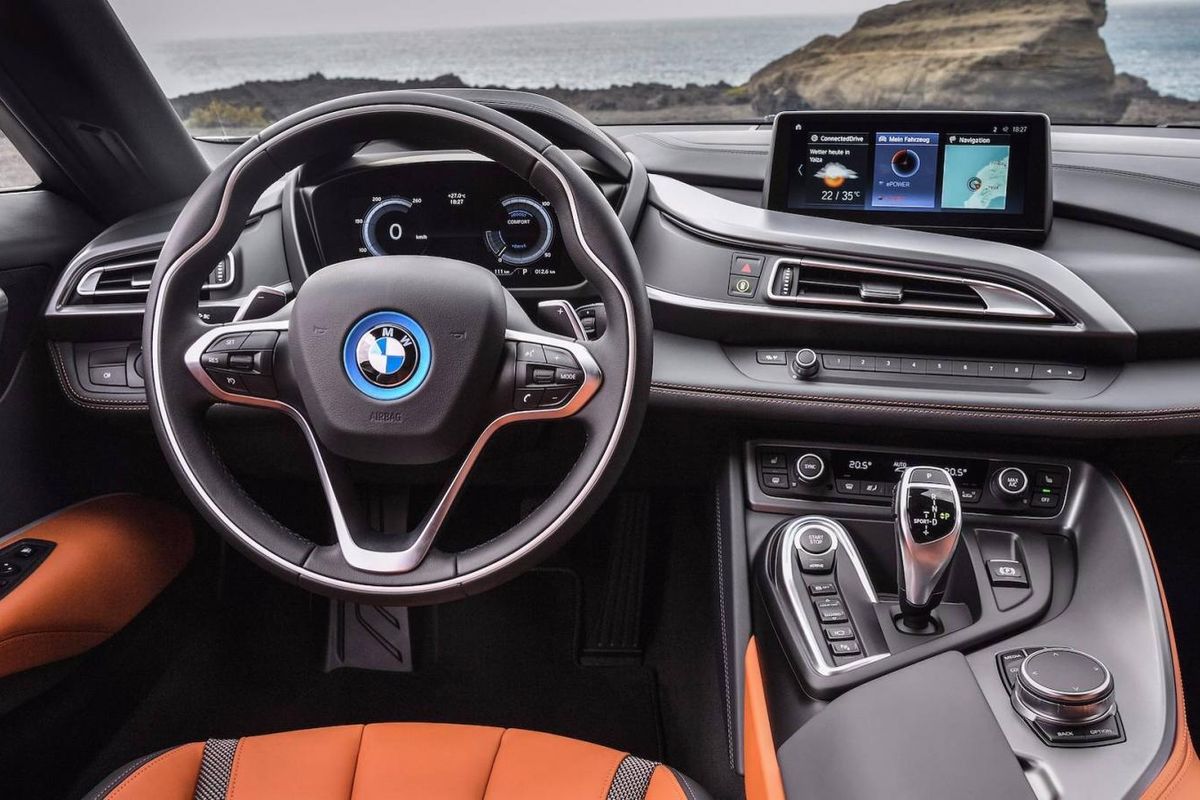
Both variants will be offered with new E-Copper metallic and Donnington Grey metallic paintwork. On the inside, a Carpo interior design is standard for both models and in the i8 Roadster will feature an Ivory White and Black combination while in the i8 Coupe features Ivory White. A new Accaro interior trim in Amido and E-Copper will be offered as an option. 

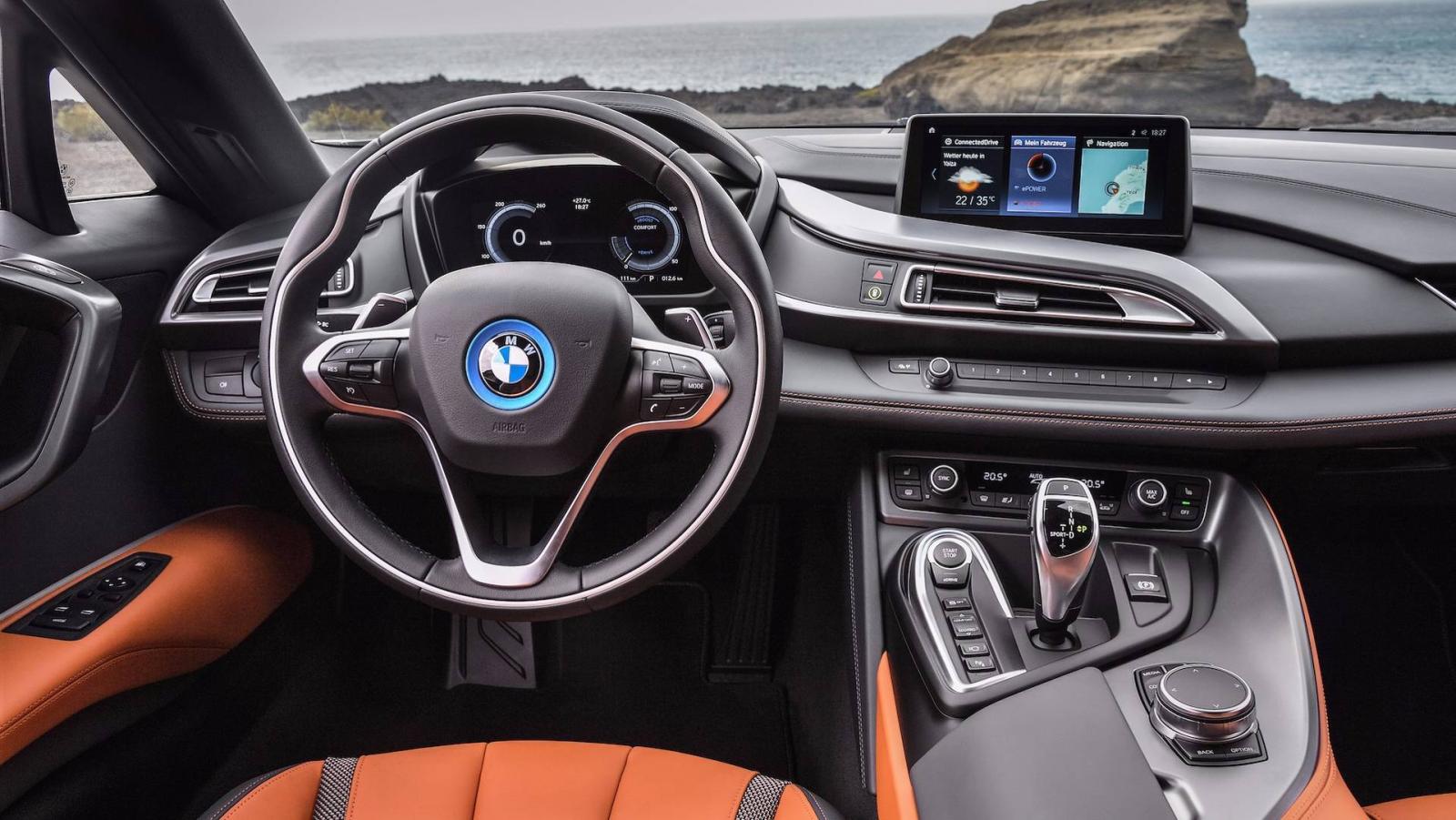
Standard equipment includes Navigation System Professional with ConnectedDrive Services, BMW Display Key, Driving Assistant with Surround View and a mode 2 charging cable. The Control Display features a tile-based menu design with live mode. Options include a BMW Head?Up Display with model-specific content, non-dazzling BMW Laserlight with BMW Selective Beam and acoustic pedestrian warning.

Facelifted BMW i8 and i8 Roadster Price in South Africa

eDrive Coupe          R2 095 200
eDrive Roadster      R2 329 300

Further reading:

BMW i8 vs Audi R8 Spyder – The Strangest Sportscar Rivalry?

BMW i8 Coupe (2017) Review

Spy Shots – BMW i8 Convertible

BMW i8 wins Engine of the Year

Facelifted BMW i3 Revealed

BMW i3 Video Review

Read all about BMW's i Performance brand

Want to buy a BMW i8?

Find a new or used BMW i8 on Cars.co.za

Higher Fuel Prices for SA

Motorists in South Africa can expect further fuel price increases in May 2018 based on unaudited mid-month data released by the Central Energy Fund says the Automobile Association of South Africa (AA)…

Motorists are in for another round of fuel price increases in May 2018 as escalating tension in Syria and the Middle East has sent international petroleum prices soaring in the first half of April.

The Rand also weakened against the US Dollar over the same period and based on unaudited mid-month data, the AA predicts that the petrol price could rise by as much as 41 c/l and diesel by 48 c/l.

“Petroleum prices were largely flat in the first week of April, but spiked sharply as tensions escalated in Syria. The Middle East lies near many of the world's key oil producers, and petroleum prices have historically been sensitive to instability in the region" says the AA.

Rising international petroleum prices is the main contributing factor for the expected increase while the weaker Rand accounts for only 4 cents in the rise according to the AA.

Motorists were hit with a 72 cent increase in April and if these latest predictions materialise, it would mean that fuel prices will have increased by more than R1 in the space of 2 months.

The AA warns that prolonged instability in the Middle East could driver international petroleum prices even higher.

"Several foreign powers have now taken a position in the Syrian civil war. If tensions escalate, or the war itself drags out even further, the outlook for oil prices would become more negative. South Africans should be aware that their fuel budgets might come under renewed strain in the short to medium term," the AA concludes.

Related Content

Fuel Price Breakdown: What do you pay for?

What does the strong Rand mean for our car prices?

Budget Speech 2018: Motorists in the crosshairs

Top 10 Most Fuel Efficient Budget Friendly Cars

Top 10 Most Fuel Efficient Cars in SA

Most Fuel Efficient SUVs in SA

5 Most Fuel-Efficient Double-Cab Bakkies in SA (2016)
10 Ways To Save Fuel


Volkswagen Tiguan Allspace (2018) Launch Review

Volkswagen has added a 7-seater variant to its popular family car range, but is the Tiguan Allspace more than just a standard Tiguan with 2 extra seats? We drove it through twisty and muddy hills in KZN to see how different it really is. Read on…

What’s new?

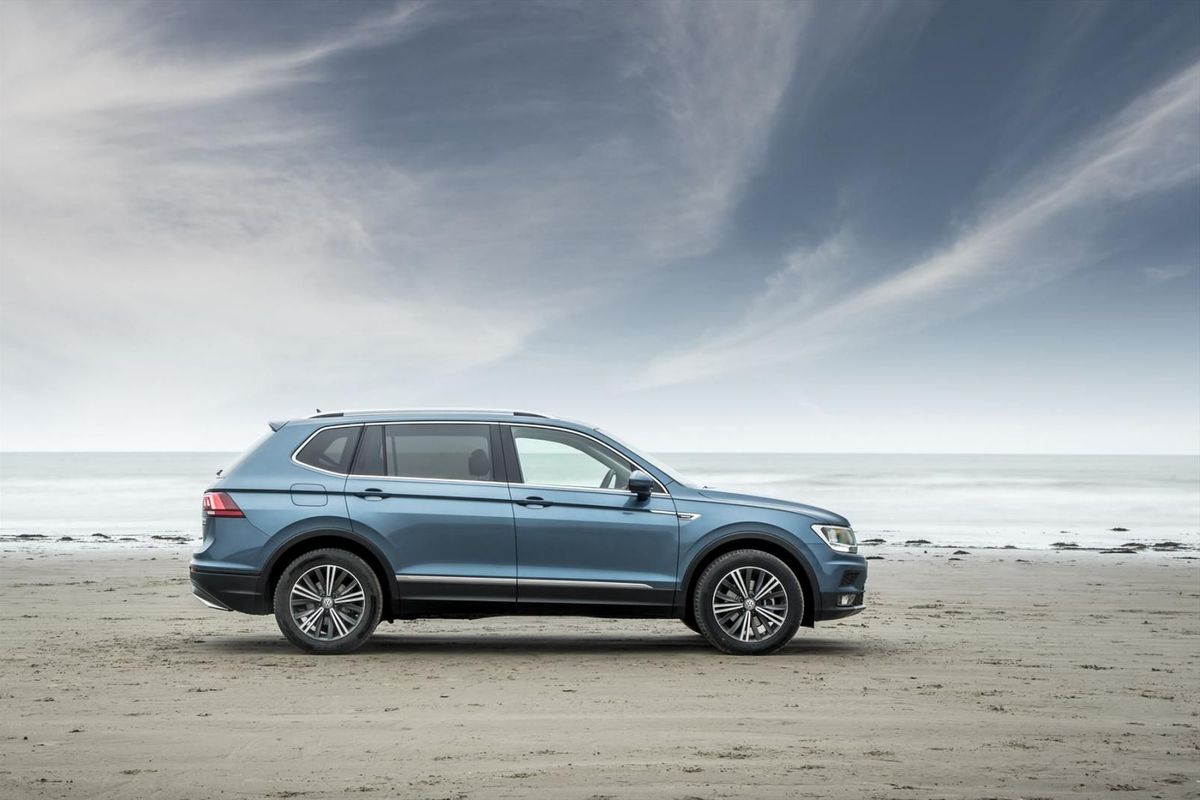
Compared with the standard Tiguan, the Allspace is 210 mm longer overall (to house the extra pair of rear seats), but it has its a distinct design, standard specifications and a modified platform. The wheelbase is longer by 110 mm (for more rear passenger legroom) and the cargo capacity is improved by 115 litres (in 5-seater mode).

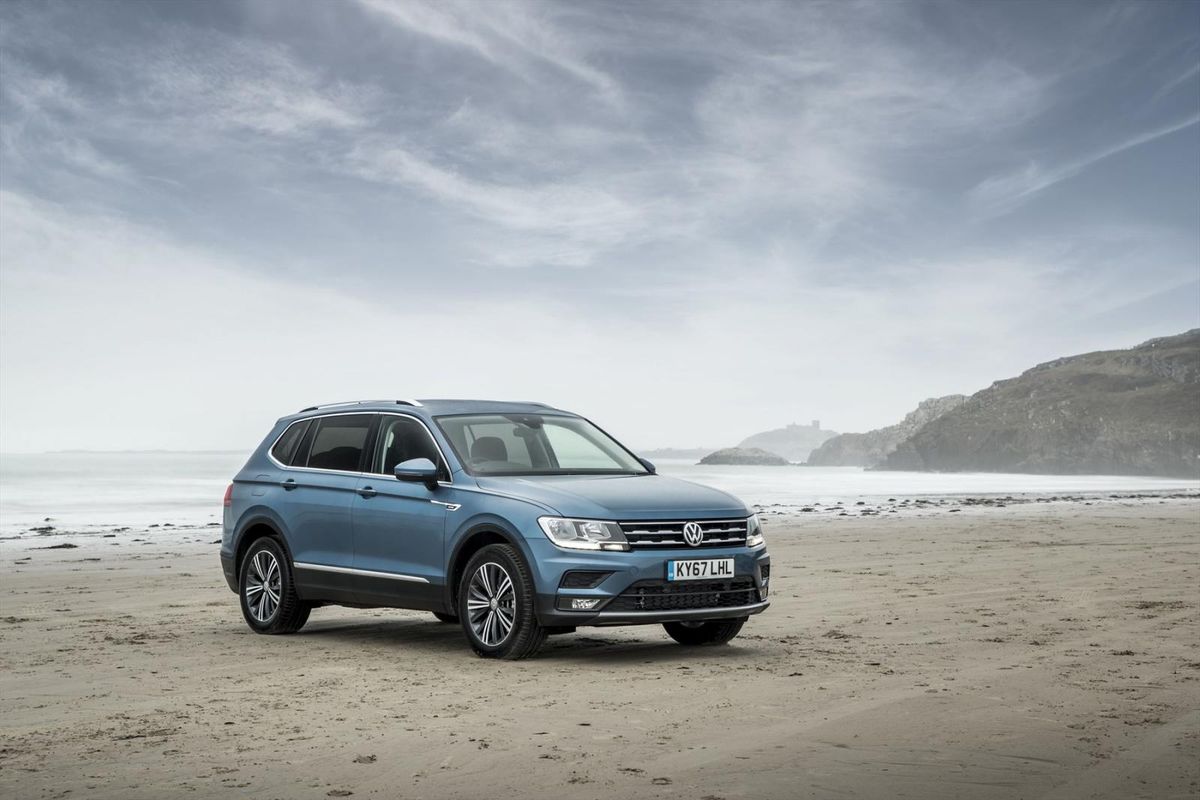
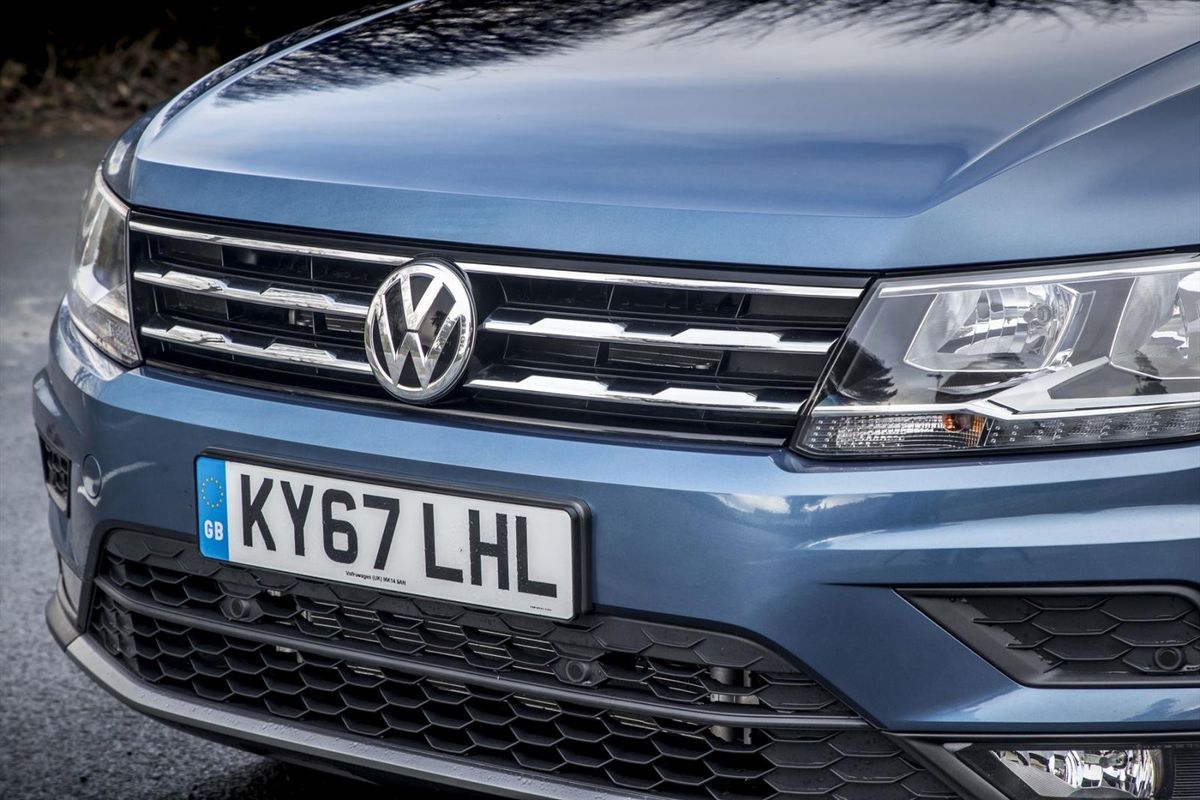
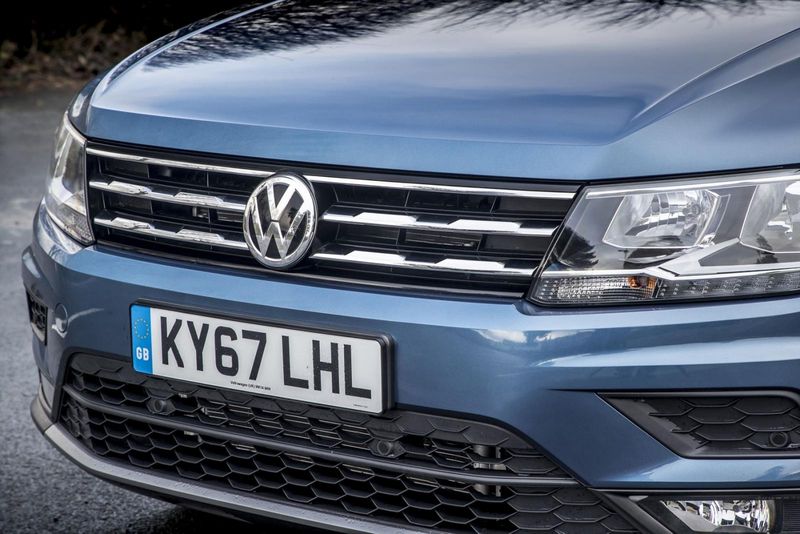
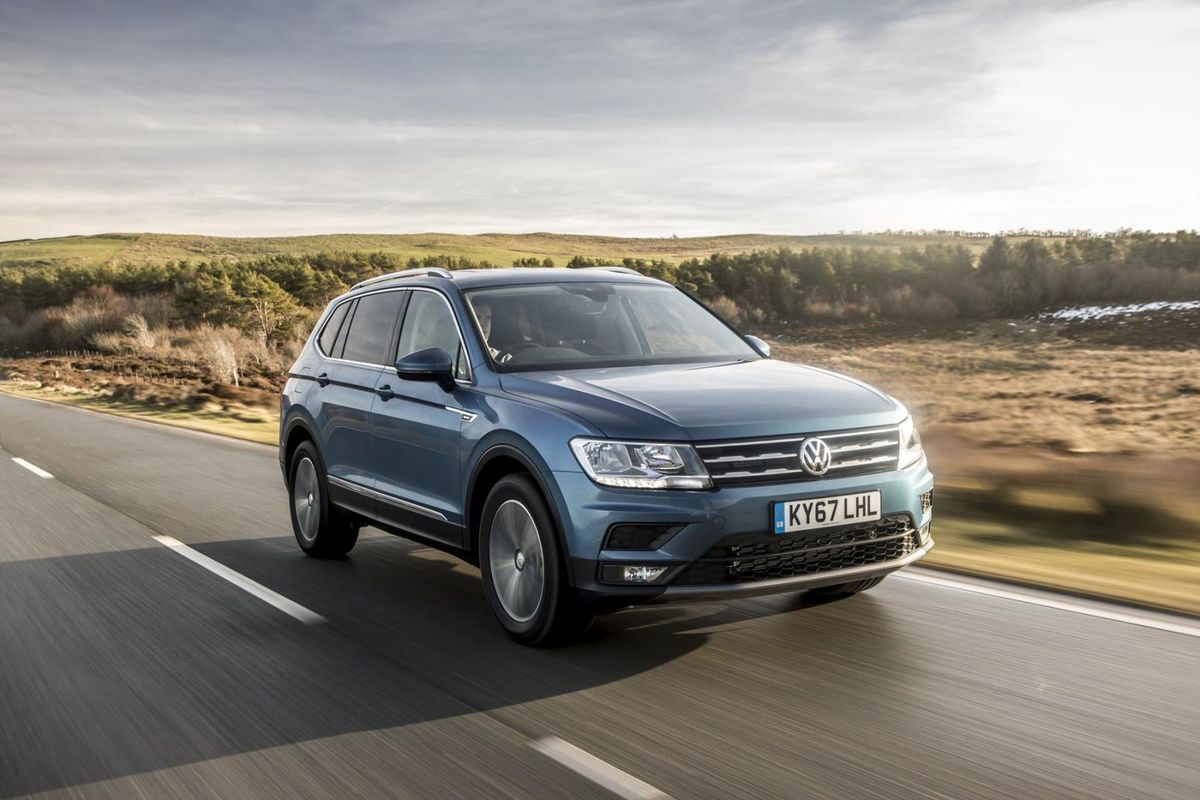
The face of the Tiguan Allspace, despite minor changes to the bumper, is immediately recognisable as its own model. The front end is rounder and less sporty in appearance. To put it another way, the standard Tiguan looks quite angular and square from the front, whereas the Allspace has a softer, smoother face.


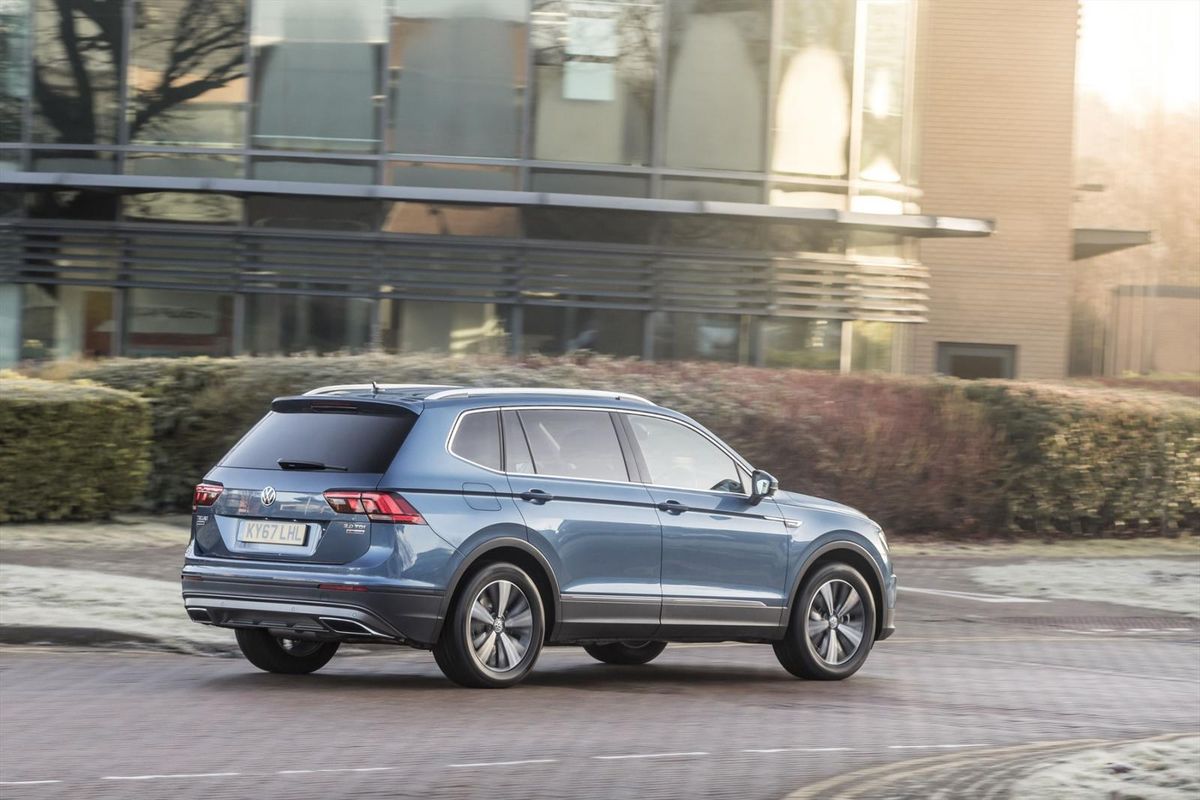
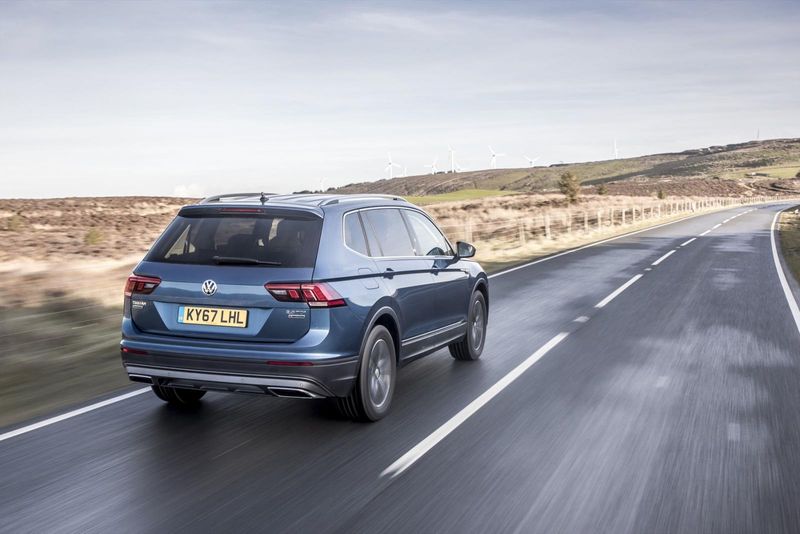
Softer face of the Tiguan Allspace makes it look different from the standard model.

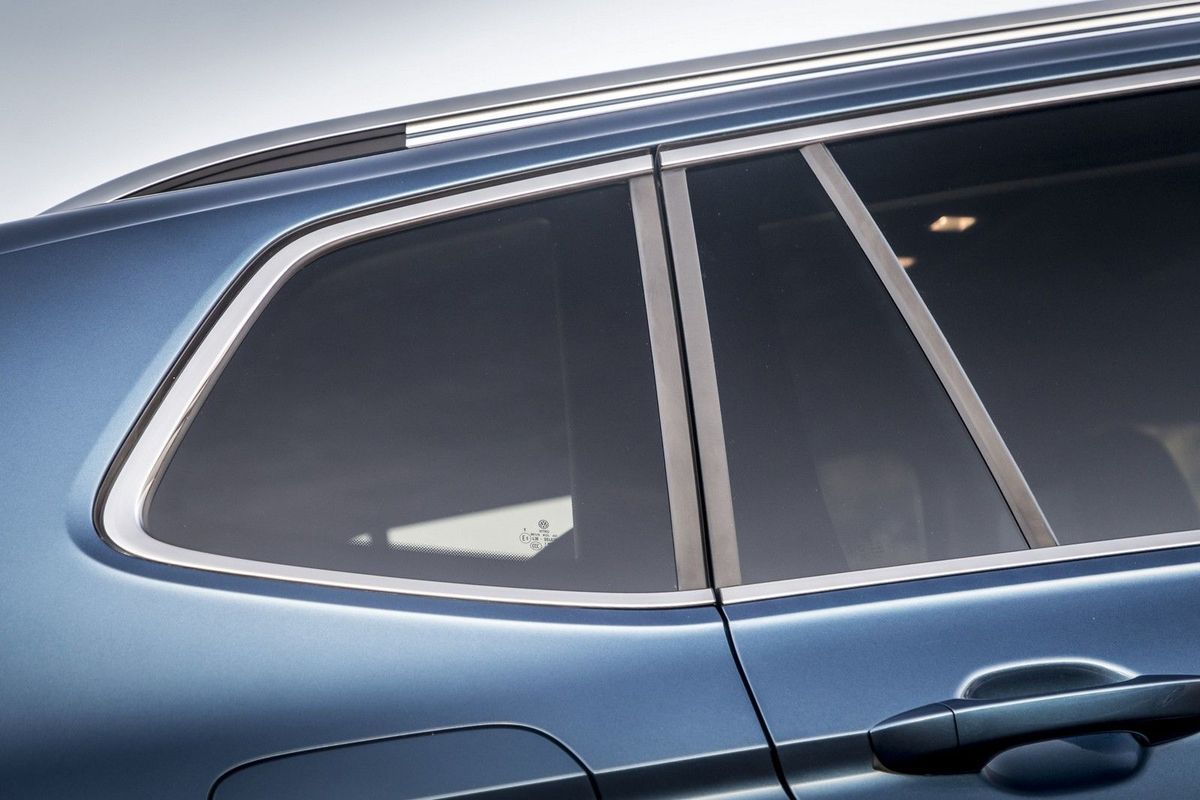
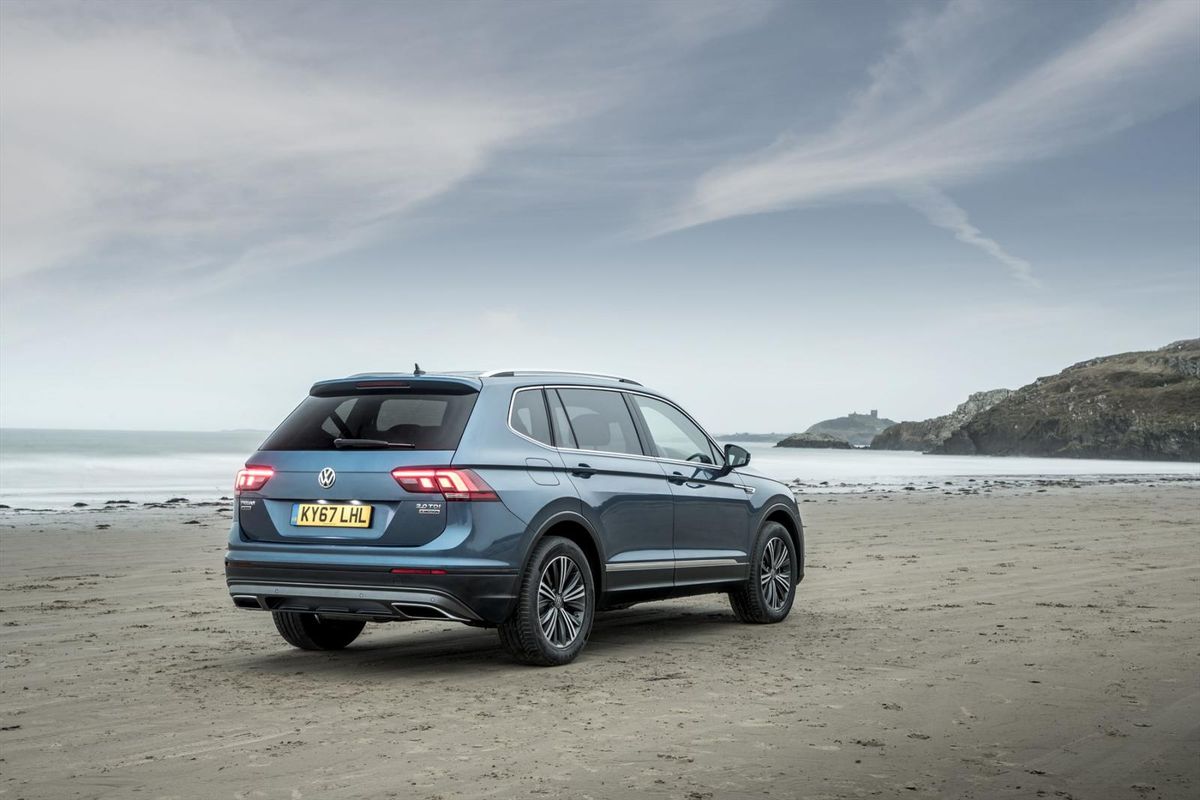
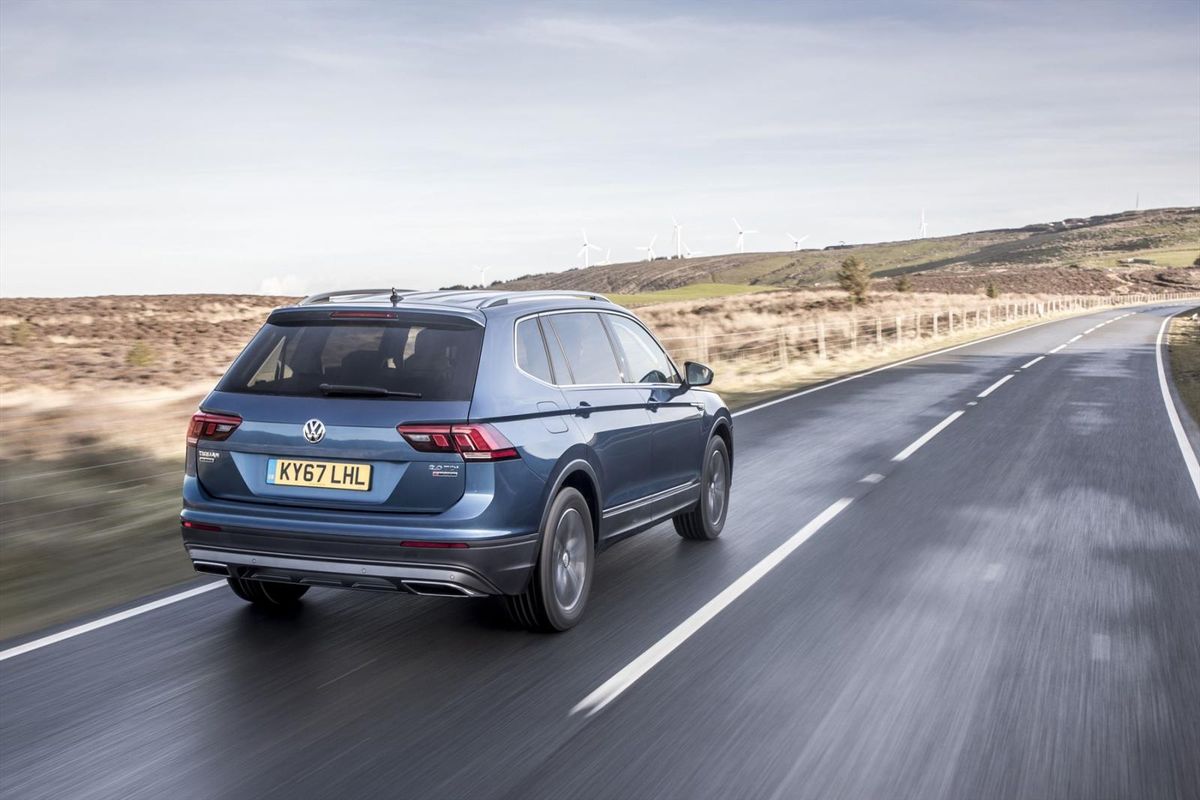
In terms of the newcomer's rear three-quarter aspect, the Allspace's back window has been extended to give 3rd-row passengers a slightly better view out of vehicle.

And, finally, on the engine front, there is a new 2.0-litre turbopetrol unit that delivers 132 kW and 320 Nm of torque. Those familiar with Volkswagen's engine line-up will recognise these outputs from the now discontinued Scirocco, which utilised this powerplant.

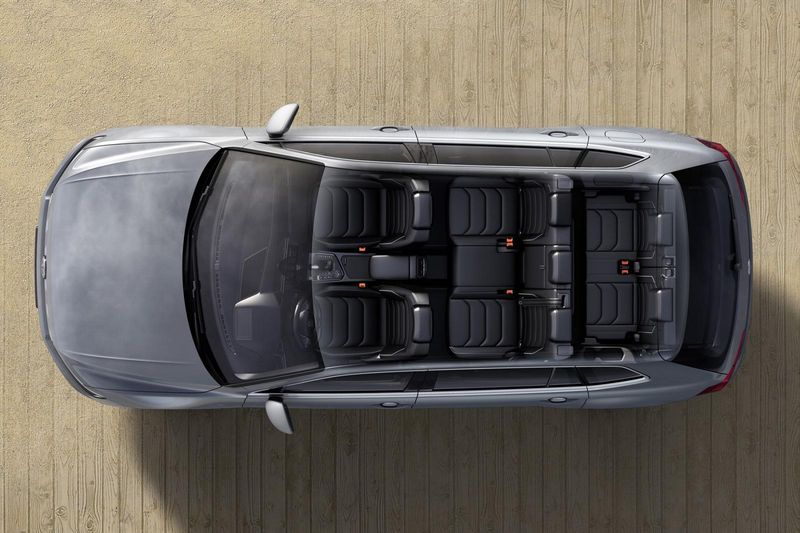
Can you actually fit 7 people in it?

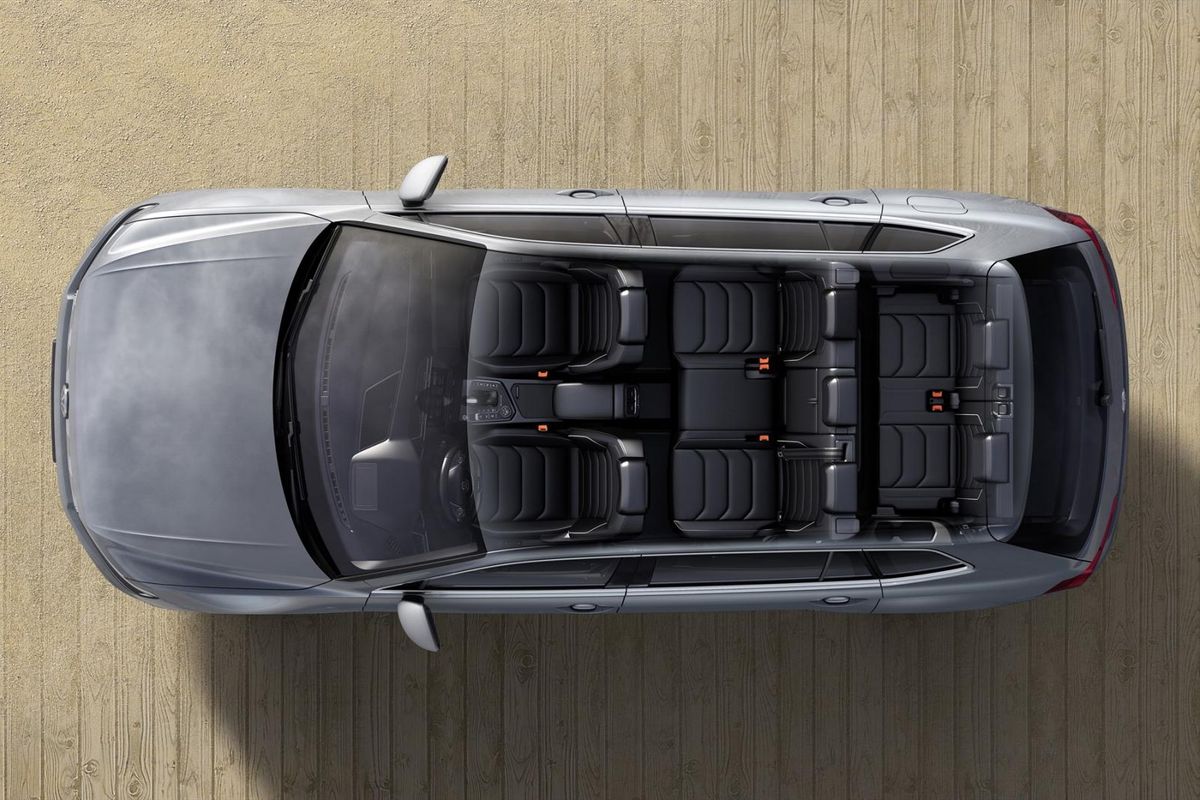
The 3rd row of seats is not suited to accommodate adults, because anyone over 1.7 metres in height is bound to run out of headroom. The 2nd row does slide forward on rails, however, providing a bit of extra legroom for the third row, making it perfectly suited for children (…and the vertically challenged among us).


The rear-most seats are fine for smaller people and luggage space with all the seats in place is still fair.

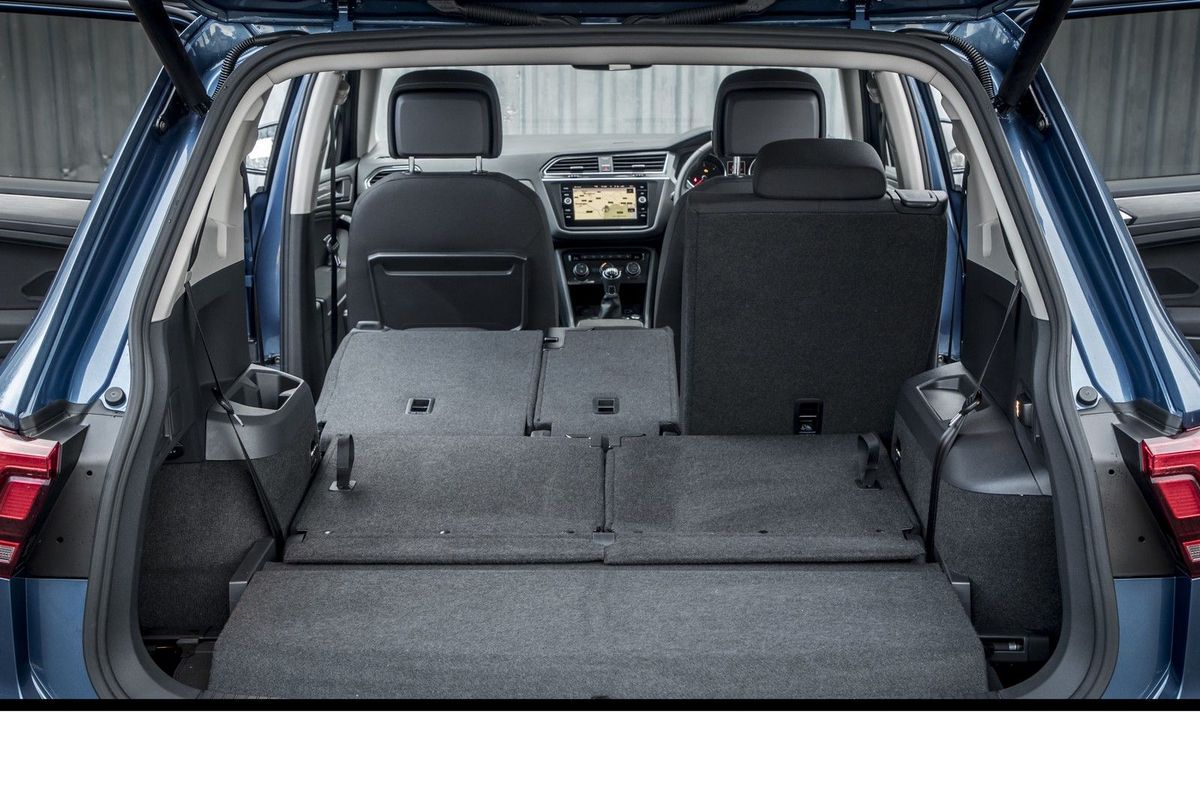
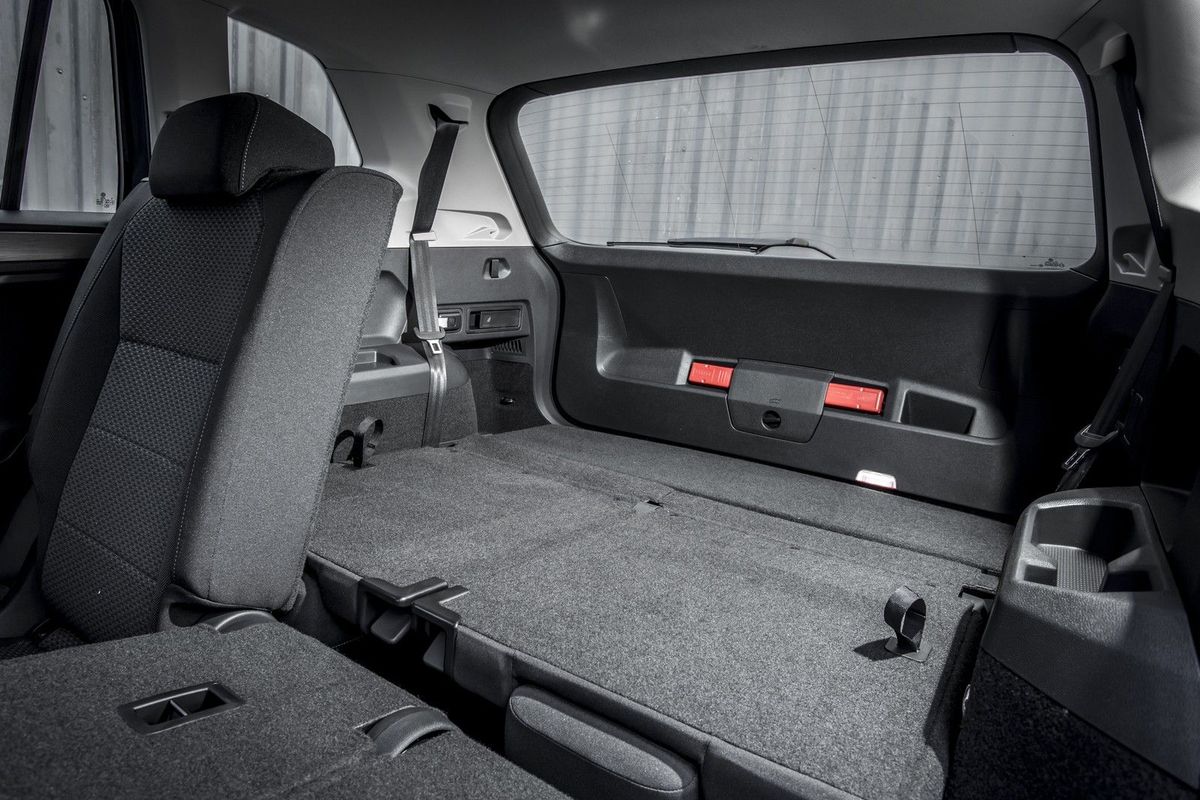
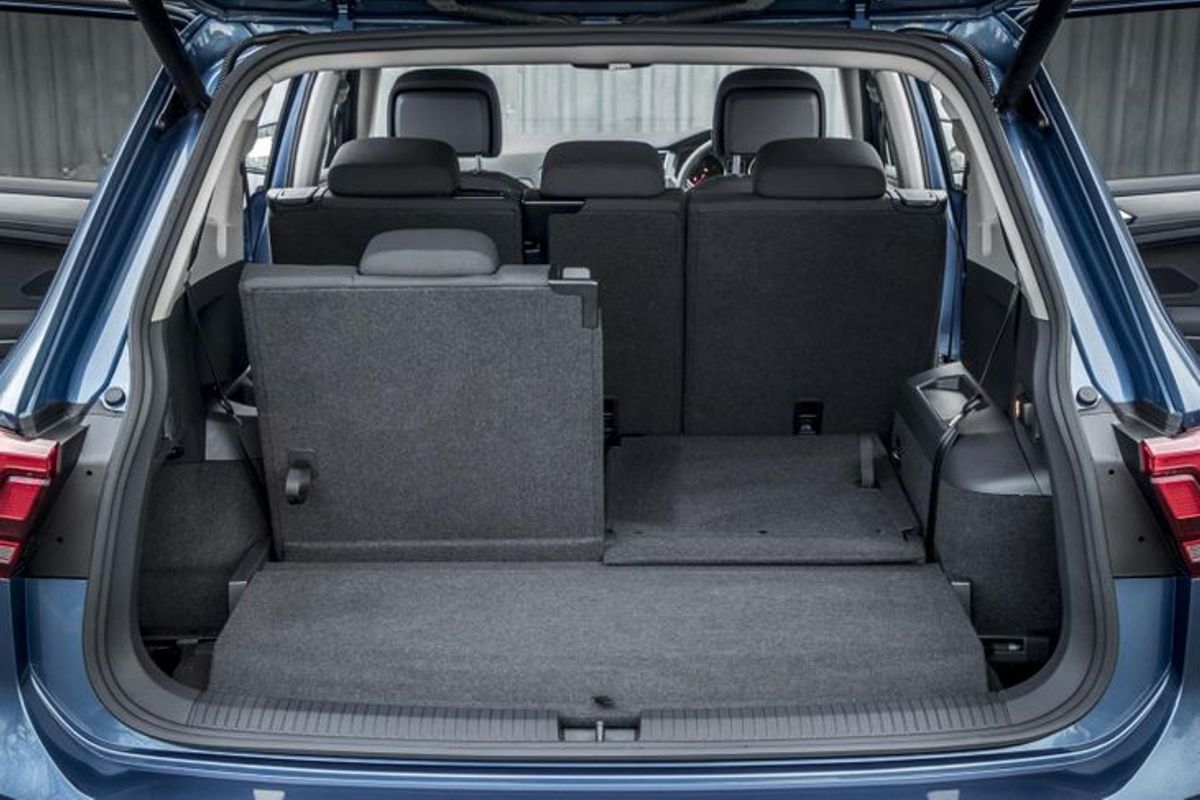
The seats are practical in their folding arrangement allowing for a 40/20/40 split and even the front passenger seat can be folded flat, which would make it possible to load an 8- or 9-foot surfboard without difficulty. The extra length has meant that the loading area grows to 700 litres in 5-seater mode and 1 775 litres with the middle row folded flat. Even with all the seats up, there’s a reasonable (for this segment) 230 litres of luggage space available.

Loading practicality is one of the Allspace's strongest traits: the rearmost seats can be lowered via a lever in the bay, which is flanked by shopping bag hooks and a handy torch.

How does it drive?

We had a chance to sample the new turbopetrol engine, which felt a little flat considering the power figures it is said to produce. The roads we drove required a lot of slowing down and then overtaking from low speed. The 132 kW didn’t really make its presence felt until you put your foot flat to summon all of the motor's available grunt. The DSG gearbox's mapping has always leaned towards economy (it often uses a higher gear than one might expect, which could be the reason the initial sluggishness).


The new 132 kW turbopetrol engine was previously used in the Scirocco.

Only the entry-level 1.4-litre turbopetrol 110 kW engine comes with front-wheel-drive, the rest of the derivatives has 4Motion all-wheel-drive and a selectable off-road mode. Ground clearance is 208 mm, which is decent for a road-biased SUV and, if you opt for the off-road kit, you get an extra 7 degrees of approach angle.

For a full review of the Volkswagen Tiguan click here

Pricing and competitors

The Allspace gains a few extra standard features compared with the regular Tiguan, but comes with a bit of a price increase for obvious reasons (it has 2 more seats). There aren’t many direct competitors to the VW, save for the Nissan X-Trail 7-seater, but that lacks the Tiguan's engine and transmission refinement. Further afield there’s the much more off-road biased Fortuner and Everest or the more expensive Hyundai Santa Fe and Kia Sorento. If value for money is a major consideration then consider the Mahindra XUV500. All things considered, the Tiguan Allspace appears to have carved out a tiny niche for itself in the refined 7-seater family car segment. 

1.4 TSI 110 kW Trendline DSG R463 400

2.0 TSI 132 kW Comfortline 4MOTION DSG R523 800

2.0 TDI 110 kW Comfortline 4MOTION DSG R571 100

2.0 TSI 162 kW Highline 4MOTION DSG R604 800

The new Tiguan Allspace comes standard with a 5-year/90 000 km service plan, 3-year/120 000 km warranty, 12-year anti-corrosion warranty and space saver spare wheel. The service interval is 15 000 km.

Related content

Volkswagen Tiguan Allspace (2018) Specs & Price

3 Reasons Why Volkswagen Tiguan is #CarsAwards Finalist

Spy Shots: Volkswagen Tiguan XL

Is Volkswagen building a Tiguan R? [with Video]

Volkswagen Tiguan 1.4 DSG (2016) Video Review

Comparative Review: Mazda CX-5 2.2DE AWD Akera vs Hyundai Tucson 2.0CRDi Elite [with Video]

Looking for a used Tiguan?

Start your search here

5 SUVs We Need in SA

There are many models and variants of cars we don't get in South Africa due to our comparatively small market and right-hand-drive only law. But, are there right-hand drive cars out there that we're missing out on? Here are 5 SUVs that we think would be well-received locally.  

South Africa is an isolated automotive market, with specific fuel and vehicle import tariff issues – not to mention us being a right-hand-drive destination too, which is the minority configuration globally. The latter is often tabled as an excuse why South Africans can’t have access to desirable family cars available everywhere else.

There are some very appealing right-hand drive cars we are being denied and to assist in a campaign for greater choice, we’ve done the homework and can now present you the case for some great family crossovers and SUVs which we think should be on sale locally.

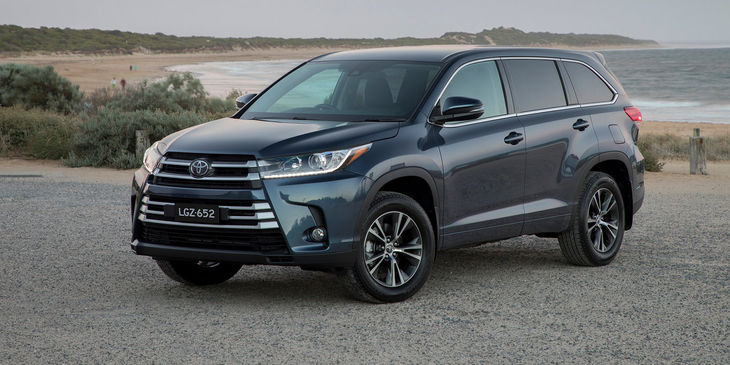
Toyota Kluger

Ordinarily, one cannot imagine Toyota dealers having excess receiving and processing capacity to add any more volume to their avalanche of monthly sales. The Japanese brand absolutely rules our local market, with a portfolio of product perfectly tailored to South African customer requirements, across a very broad, accessible, pricing spectrum. But… There’s always room for more, isn’t there?

It’s called the Kluger and despite its strange name, this is a 7-seater crossover which is built on the same platform as a South African favourite which has never returned – the Toyota Camry. As such, unlike most of Toyota’s SUVs, Kluger is not built on a ladder-frame platform. Think of it as a big RAV4 and you’ll be imagining the correct technical reference: monocoque construction and a definite on-road bias with both front- and all-wheel drive options.

There’s no diesel engine but you have a naturally-aspirated 3.5-litre V6 good for 218 kW and 350 Nm, matched to an 8-speed automatic transmission, unlike the 6-speed in Fortuner. There’s a 65 kg mass difference between the front- and all-wheel drive Klugers, accounting for a small margin of advantage regarding fuel-consumption towards the two-wheel drive versions. Inside, it’s massive, a true 7-seater with 529 litres of luggage capacity and comfort levels you’d expect from a sedan.

For the South African market, Kluger would sit between Fortuner and Prado, a niche that is perhaps too small. But think about what is on offer here: a monocoque Toyota 7-seater with all-wheel drive. Surely there must be customers who want all those seats, access to the quality and convenience of Toyota’s vast dealer network, some AWD traction for gravel travelling and who appreciate the high-speed cruising stability and refinement of a Camry platform with some ground clearance. Surely?

Hyundai Kona

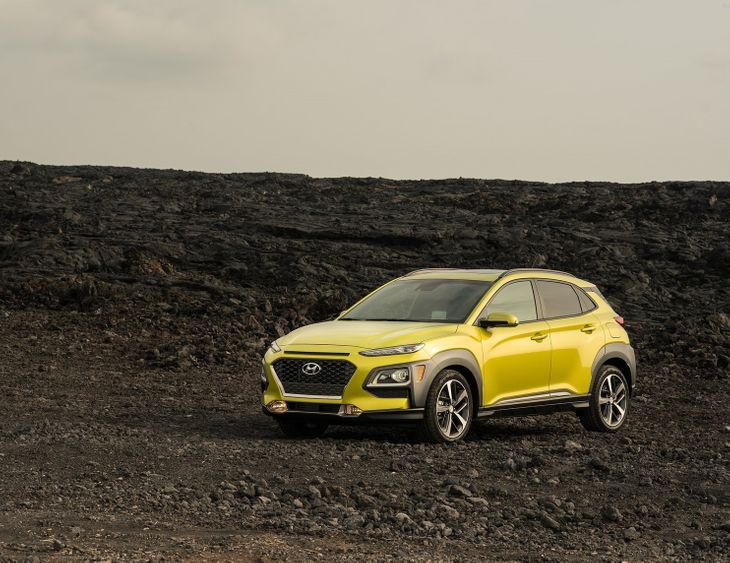
Although sibling brand Kia has garnered all the design awards and adulation for its courage in developing an authentic Korean automotive aesthetic, this Hyundai is unlike any that has come before it. It’s more radical in appearance than the production Kia Stonic – and built to specifications which expertly match current buying trends.

Kona is the correct configuration (B-segment SUV) and size, with styling that differentiates it from anything else and all the build quality you have come to expect from a Korean car. What Juke did for Nissan in 2010, Hyundai is most certainly hoping Kona will do for it in 2018. Beyond its daring styling, Hyundai has equipped Kona with those excellent engines of its own making, providing a myriad of choices including a naturally aspirated 2.0-litre (110 kW/180 Nm) or turbocharged 1.6-litre options in petrol (130 kW/265 Nm) or diesel (110 kW/300 Nm) form. Making the most of those engine outputs are 6-speed manual or snappy 7-speed dual-clutch transmissions.

There’s a tiny 1.0-litre turbocharged triple too, but with only 172 Nm, it might struggle a touch with South African distances and topography. The battery-powered Kona, due to go on sale globally later this year, features an astounding 470 km range claim, which could appeal greatly to those South Africans who made their homes grid-independent electricity sources during the days of loadshedding.

South Africans might not have warmed to the asymmetric-door Veloster hatchback, but they’ll certainly take interest in an outrageously styled Hyundai SUV. Hyundai South Africa is still trying to make a business case for the Kona and with the positive exchange rate movements during early 2018, it may have found a way to introduce the Kona locally.

Nissan Pathfinder

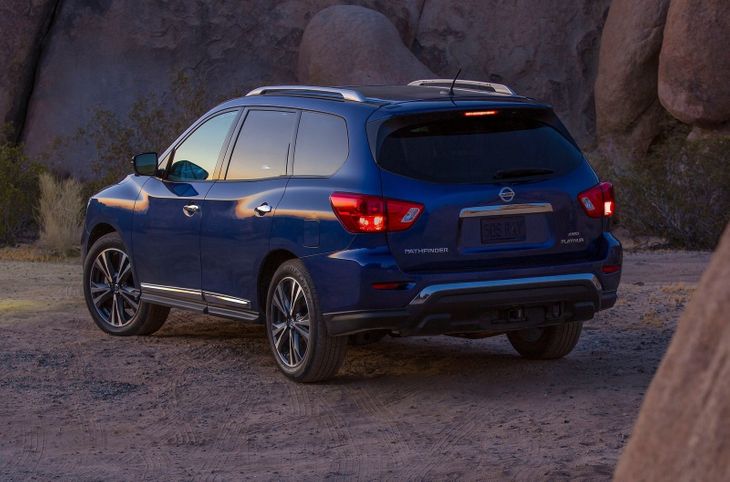
Despite its name, the latest generation Pathfinder has not found a path to South Africa – getting lost to the reality of Toyota’s Fortuner and Prado absolutely dominating all and any Japanese SUV sales locally. That is a shame as this latest one has been reconfigured in a way that could make it work here.

Pathfinder is no longer related to the Navara bakkie and therefore features a monocoque construction, which makes it quieter, more agile and stable at speed. The debit is a great deal less capability in truly technical off-road terrain, but with its current marketing impetus being that of a larger 7-seater SUV, that doesn’t matter much. Both engine options burn 95 unleaded, with the 2.5-litre 4-cylinder hybrid using 13% less fuel than Pathfinder’s 3.5-litre V6, with a marginal performance discrepancy, the hybrid’s outputs being 188 kW/330 Nm versus that V6’s 202 kW and 340 Nm.

In time, Nissan’s Terra will surely fill the void of Pathfinder in South Africa, but for those who yearn for what Murano once was and dislike the unnerving body roll which is a feature of all ladder-frame SUVs, there could be an argument made for this Nissan SUV to find a path back into the local line-up.

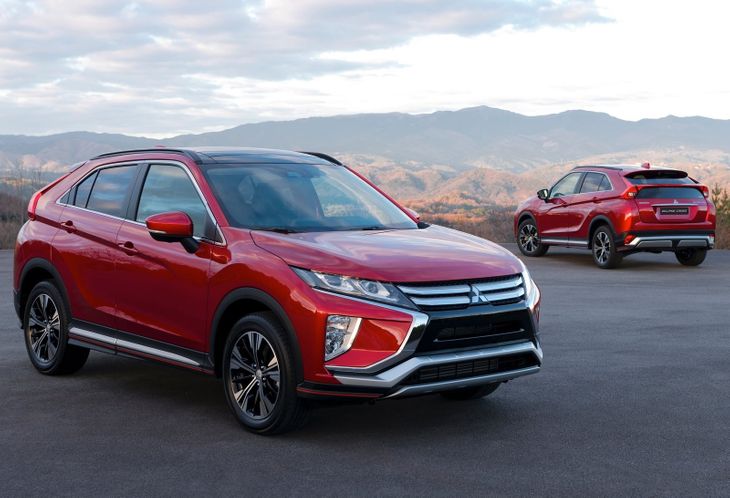
Mitsubishi Eclipse Cross

There was a time when Mitsubishi could do no wrong in the South African market if you were shopping for a gravel traveller: Pajero long- and short-wheelbase, Colt double-cab and even that diminutive low-range equipped Suzuki rival, the iO. As SUVs and crossovers have become a default purchase in the local buying market between R250 000 and R600 000, Mitsubishi has cruelly been denied any associated sales momentum.

Perhaps an outlandishly styled crossover – which certainly isn’t the current Outlander – could revive Mitsubishi’s South African market fortunes. Exactly such a vehicle exists, but peculiarly we can’t get it, yet. It’s called the Eclipse Cross and whereas that name was once reserved for a Mitsubishi performance coupe, in 2018 it denotes a Qashqai-size crossover. With suspension bits and wheelbase dimensions borrowed from the larger Outlander, Eclipse Cross is roomier inside than most rivals and not averse to some committed gravel travel, featuring Mitsubishi’s Active Yaw Control, which is what made their Lancer Evos so unbeatable as four-door pseudo supercars.

Powered by a sweet 1.5-litre turbocharged petrol, good for 110 kW and 250 Nm, Eclipse Cross has 175 mm of pothole proof ground clearance, with standard Apple CarPlay and Android Auto on-board too. Considering there is a R150 000 segment of opportunity for placement between ASX and Outlander in Mitsubishi’s local line-up, the absence of Eclipse Cross is most confounding. Earlier this year, Mitsubishi South Africa confirmed that the arrival of the Eclipse Cross to South African shores was scheduled for Q4 2018. It was also confirmed that it will slot between the smaller ASX and larger Outlander in the SA line-up. 

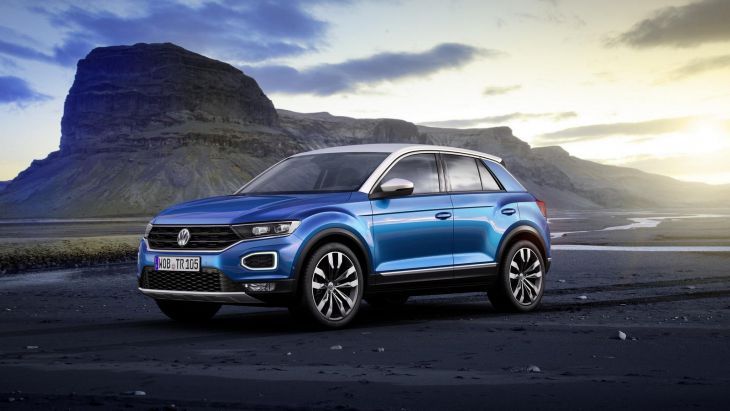
VW T-Roc

Smaller than Tiguan but built on the same, outstanding MQB platform, T-Roc is for those who seek all the appeal of a VW-badged crossover, yet want the parking convenience of more humble exterior dimensions. T-Roc’s luggage capacity is 65 litres larger than a Golf7 and greater than the Audi Q2 at 445 litres, but slightly short of Mini’s Countryman.

The design is contemporary, and VW offers its full range of compact engines within the model line-up including a 1.0-litre triple (same as you’ll find in the new Polo) and all the way up to the 140 kW, 2.0-litre engine powering the 4Motion T-Roc. With 400 Nm and VW’s 7-speed DSG transmission, the T-Roc 2.0 is a veritable compact crossover pocket rocket, capable of 0-100 kph in 7.2 seconds and more comfortable on gravel roads than you’ll ever experience in anything GTi.

In principle and execution, T-Roc has the making of a runaway success in South Africa – which makes its absence a mystery.

Related content

Four Cars We Need in SA

5 Cars We Want To See for Sale in SA

Nissan Pathfinder leaked, but not coming to SA (yet)

Buyer's Guide: Rugged 7-Seat SUVs

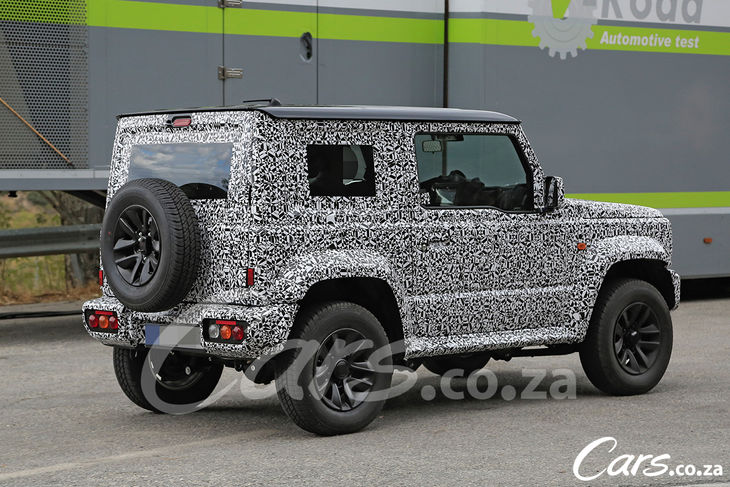
Spy Shots: Suzuki Gears Up For Next Jimny

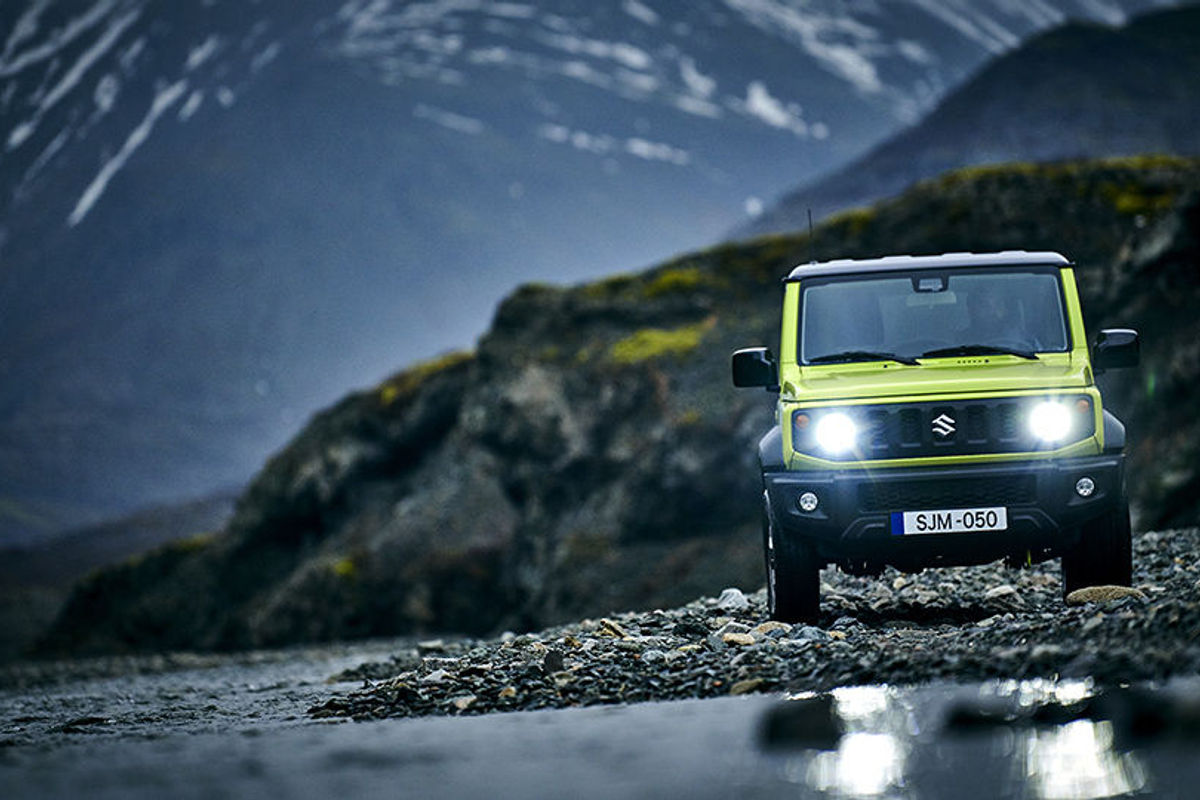
The lovable and relatively popular Suzuki Jimny has reached the end of its lifespan and reports are suggesting that the fourth-generation Jimny will be revealed towards the end of 2018 with market launch slated for 2019. Production of the current Jimny has reportedly come to an end and Suzuki is now preparing to produce the next iteration. Here’s what we know about the new Jimny thus far…

The Suzuki Jimny has a devoted fan base in South Africa and across the world. This compact off-roader is often lauded for its surprising capability in rough terrain as well as its compact dimensions and cute looks. There is, however, a new Jimny on the way and it will probably land in South Africa in 2019 after it is expected to be revealed later this year.  

Its boxy dimensions will largely remain and it is expected to grow in size and Suzuki will retain its body-on-frame construction and 4×4 system which means it will still be very capable in the rough. The Jimny’s on-road handling ability is expected to improve and a major interior revamp is expected too. The interior will likely feature similar styling to the new Swift (due in SA soon) and will incorporate a touchscreen infotainment system.


The new Suzuki Jimny will grow in size, but it will retain its boxy styling with major changes expected inside.

The new Jimny is expected to be powered by a naturally-aspirated 1.2-litre petrol engine while top-of-the-range models will feature a Suzuki’s turbocharged 1.0-litre Boosterjet engine with 82 kW and 170 Nm of torque. Based on the fact that Suzuki SA does not offer the Boosterjet engine in the Baleno in South Africa and it’s not expected in the new Swift either, we will be surprised if it makes to our shores in the Jimny, but we hope it does.

The current Jimny is powered by a 63 kW/110 Nm 1.3-litre petrol but we hope the 1.2-litre engine will offer a bit more grunt. A diesel engine option is not expected.

Suzuki is keeping official details under wraps for now but we will keep you updated as soon as more information becomes available.

Buy a new or used Suzuki Jimny on Cars.co.za

Related Content

Suzuki does 'simple' best: Why its success is no surprise

Suzuki's Brand of the Year milestone

Suzuki Swift (2018) International Launch Drive [w/Video]

New Cars in SA for 2018
Can Rust Affect Car Crash Safety?

We all know that rust on a car isn’t a good thing and if it isn’t effectively dealt with, your car will eventually meet a rusty end. Do you think rust can affect the crash safety of a car? A non-profit Swedish organisation, Villaagarnas Riksforbund, conducted some tests to find out…

Car safety technology is far more advanced today than it ever was and most new cars on the market offer relatively high levels of passive and active safety. However, many people can’t afford new cars and rather opt for older, used models that suit their budget and needs.

When those older cars were on sale, they too had to meet the safety standards of the day, but the age of the vehicle and the amount of rust it has can seemingly have a negative effect on the car’s ability maintain its crashworthiness over time.

Villaagarnas Riksforbund, a non-profit Swedish organisation, simulated EuroNCAP crash tests (frontal and side impact) on 2 used cars, the Mazda6 (2003-2008) and Volkswagen Golf (2004-2008), both of which exhibited a fair amount of rust. Also, importantly, the crash tests simulated the EuroNCAP guidelines prescribed when these cars were new. The guidelines of today are far more stringent.

The final result revealed that the old and rusty cars could not meet the same level of crash safety that they once exhibited, particularly in the case of the Mazda6.

Results

Mazda6


The Mazda6 scored a weak 4 rating (26 points) on EuroNCAP’s 5-point rating system when it was a new car, but this rusty Mazda6 achieved a weak 3 (18 points) in these latest tests.

The researchers pointed out that “When the Mazda 6 was tested in the frontal test, the car was deformed so that the driver’s seat ended up leaning against the interior of the car and the crash test dummy hit its head in the B-pillar. It was also suggested that passengers were at 20% more risk of being killed in an accident as a result of rust, which is significant.

Volkswagen Golf


The Golf fared much better and lost only 1 point in this test. When it was new, its EuroNCAP safety score was a weak 5 (33 points) and in this test it scored a strong 4 (32 points).

Rust on older cars is common, particularly for cars at the coast but used car buyers are advised to thoroughly inspect the vehicle for rust before buying it and if necessary seek advice on how to manage rust.

Buy a used car on Cars.co.za

Related Content

Global NCAP and AA Crash Test Popular Cars in SA
South Africa's Most Dangerous Roads

Children on the back of a bakkie – new law falls short

New Cars in SA for 2018
 

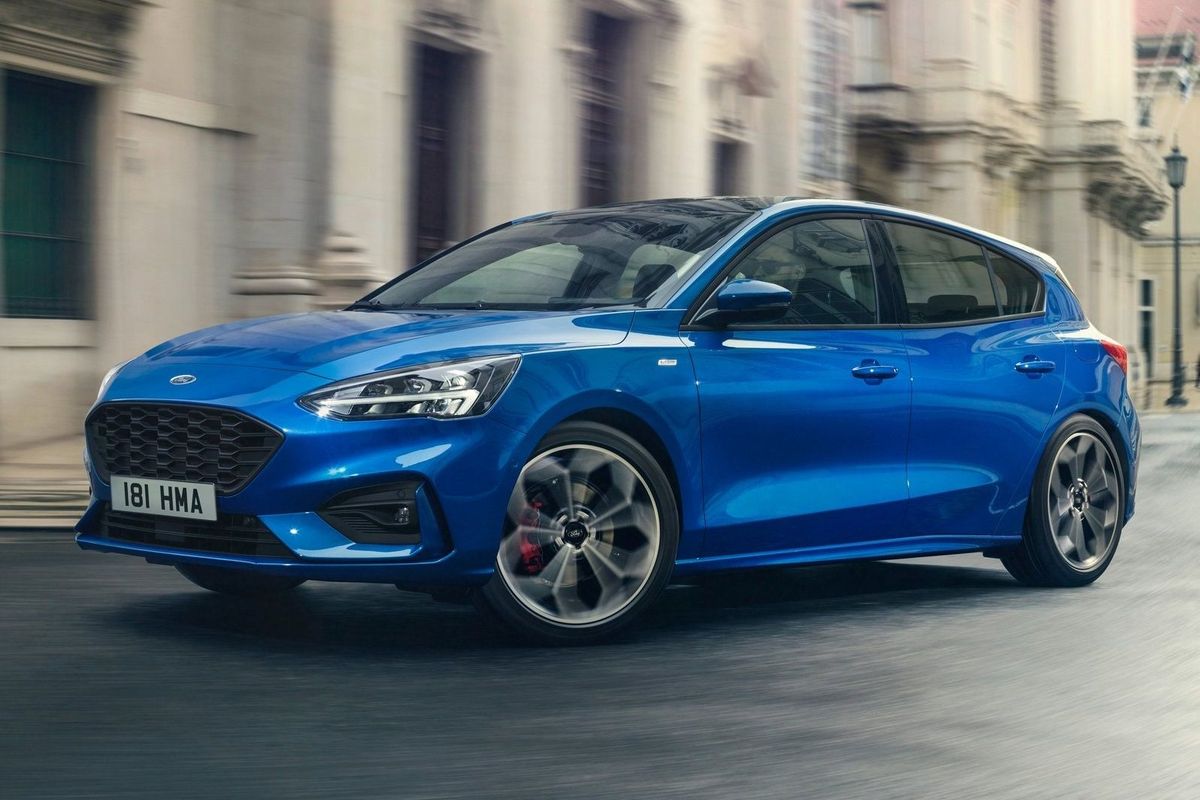
2019 Ford Focus: 5 Rivals It Has To Beat

The all-new Ford Focus – which is set to arrive in South Africa before the end of 2018 – will offer a host of new technologies, higher levels of occupant comfort, plus enhanced performance and efficiency. However, Ford's newcomer will compete in the ultra-competitive premium hatchback market and will, therefore, have its work cut out to beat these 5 rivals.

The next incarnation of the Focus has been revealed (mid-April 2018) and the newcomer is claimed to incorporate comprehensive improvements. In fact, the premium hatchback has been redesigned from the ground up. The Blue Oval says the packaging of the new car was influenced by feedback received from Focus customers from around the globe and, as was the case with it's predecessor, the new Focus is a "global car", with each country's market receiving a Focus tailored to suit its needs.

If you haven't read the new Ford Focus article already, click here: All-new Ford Focus Revealed

Considering the purchase of a current new or used Focus? Start your search here

While the South African spec of the new Focus is yet to be confirmed, Ford will offer its newcomer in sedan, estate and hatchback guises. Also, depending on the market, there are the various trims on offer such as Vignale, ST-Line, Active and Titanium. However, will the Focus be able to beat these 5 key rivals?

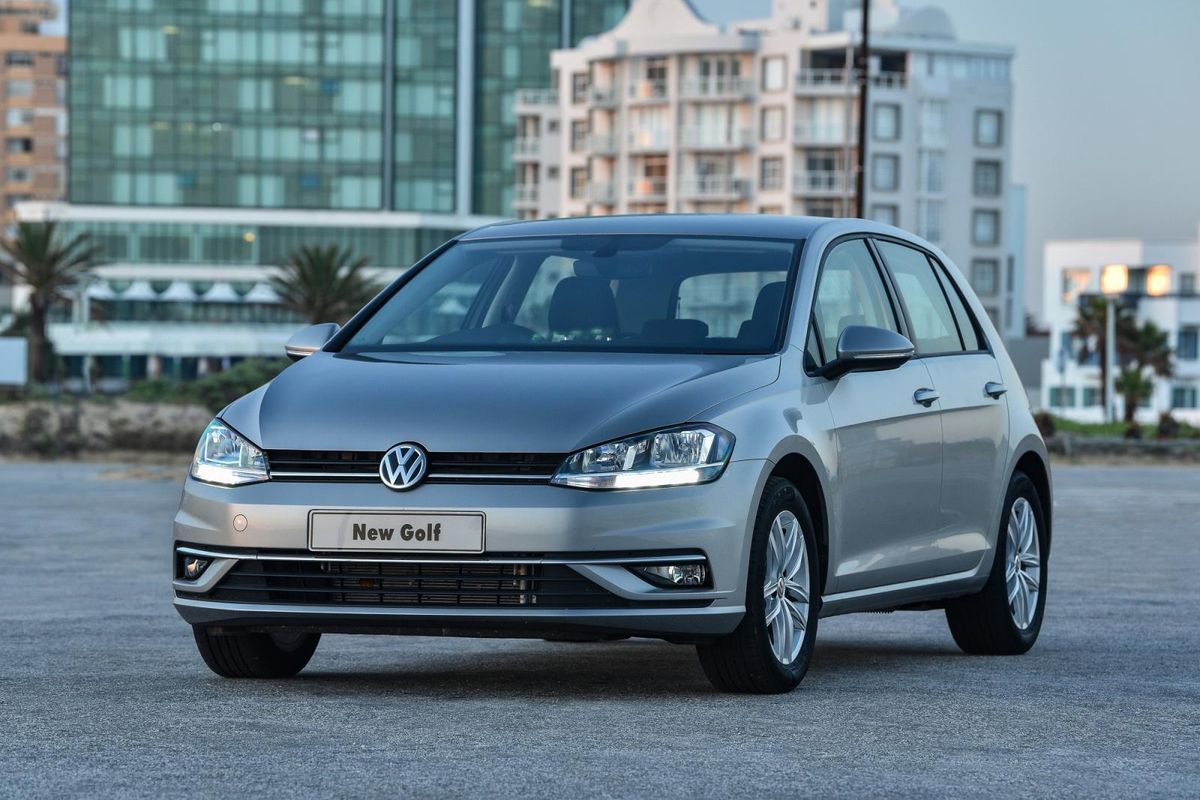
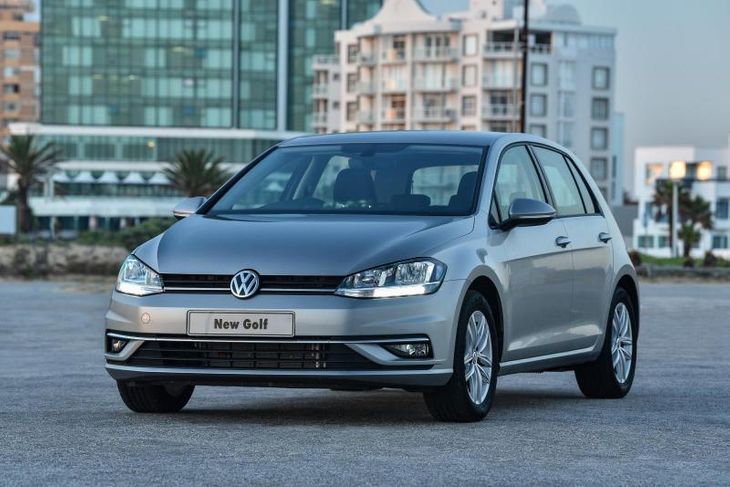
Volkswagen Golf

The Volkswagen Golf is one of the most popular choices in this segment and while the GTI version dominates sales, the 1.0- and 1.4-litre turbopetrol versions offer a lot of value, especially the 1.4TSI Comfortline R-Line derivative, which is the 2017/18 Cars.co.za Consumer Awards – powered by WesBank champion in the Premium Hatchback category. The Golf is impeccably built and refinement is class-leading; the range's prices start at R300k.

Volkswagen Golf 1.0 Trendline (2017) First Drive

Volkswagen Golf GTI (2017) Video Review

Volkswagen Golf R, GTI & GTD (2017) Track Comparison Video
 

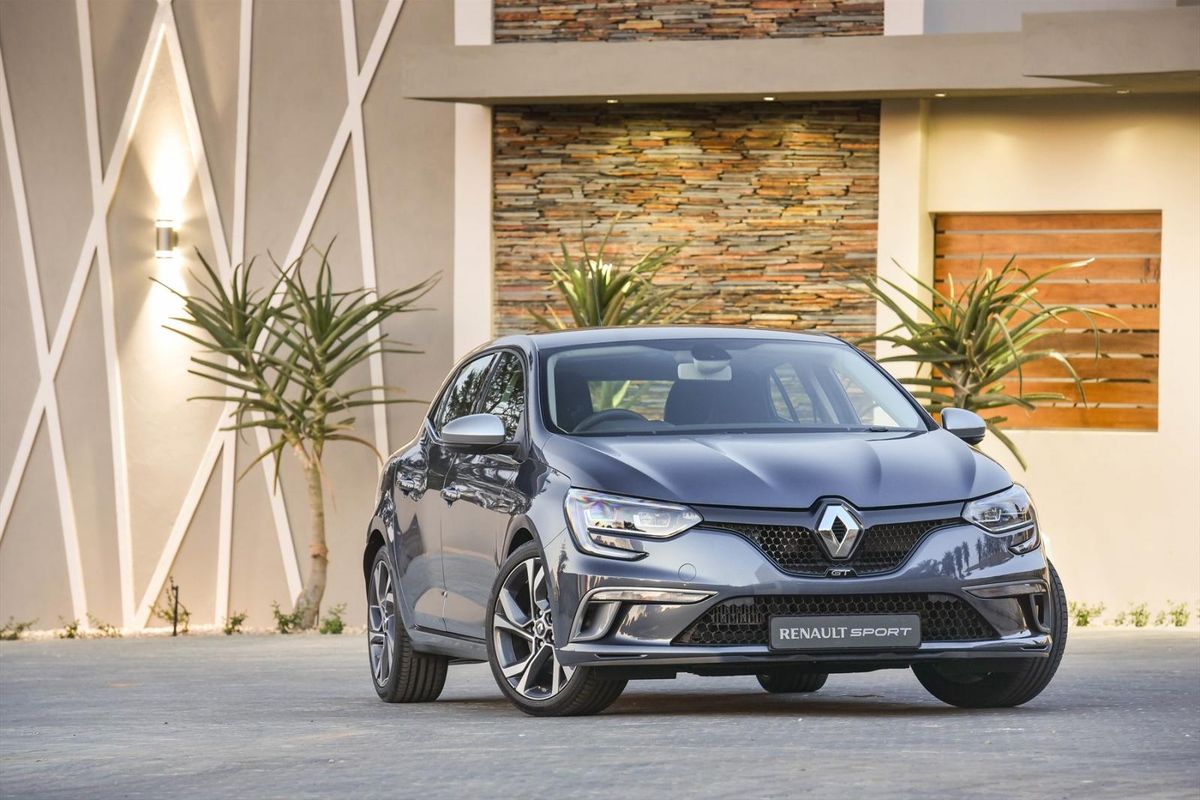
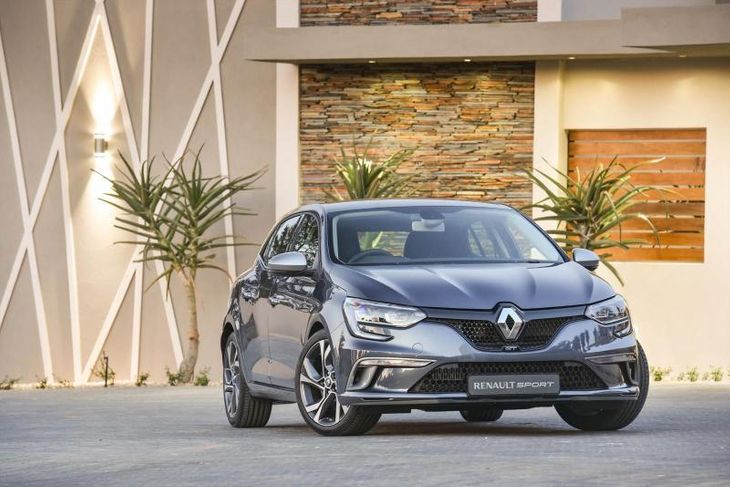
Renault Megane

Renault's Megane is now in its 4th generation and, apart from offering sophisticated styling (both inside and out), generous specification and a satisfying driving experience, the French hatchback boasts impressive cabin space by virtue of sharing its platform with the Kadjar family car. There is a selection of compact turbocharged engines available and the Megane ranks well in terms of safety spec. However, its build quality is no more than fair. Derivatives are priced from R295k.

Renault Megane (2016) First Drive

Renault Megane 1.2 GT Line (2016) Quick Review

Comparative Review: Opel Astra 1.6T Sport vs Renault Megane GT Turbo

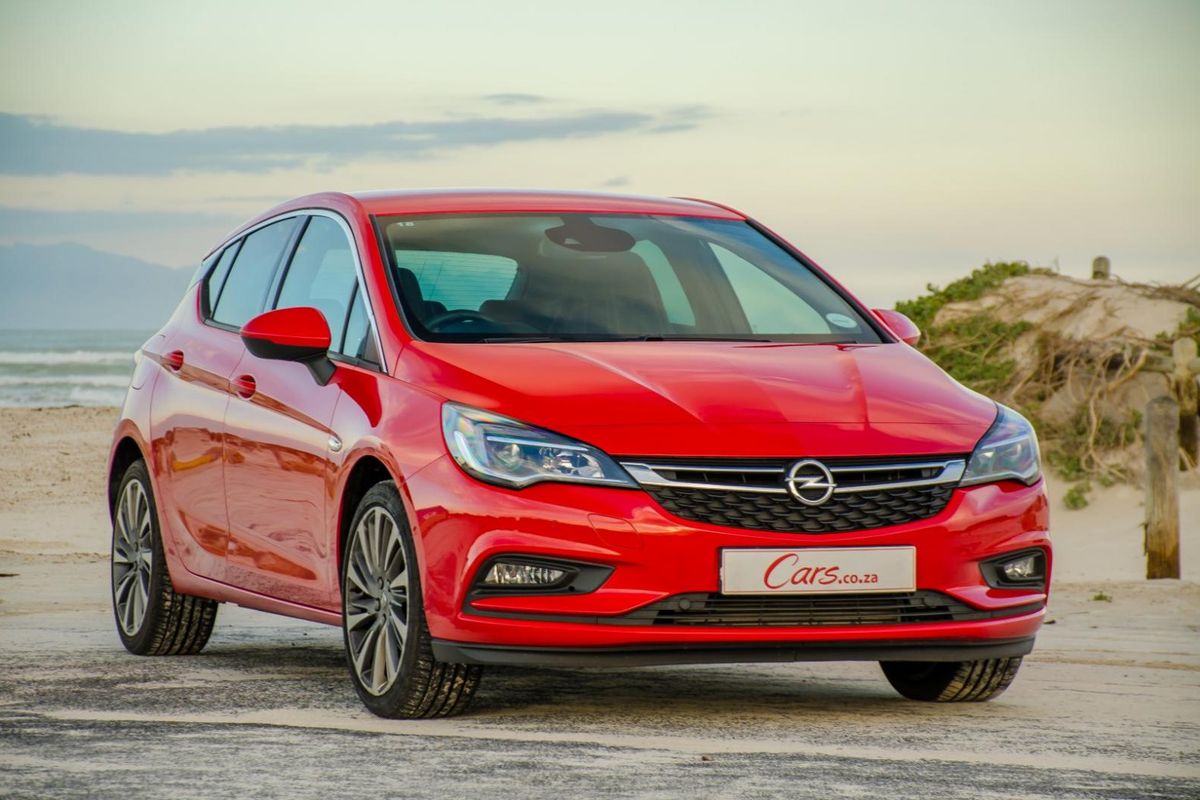
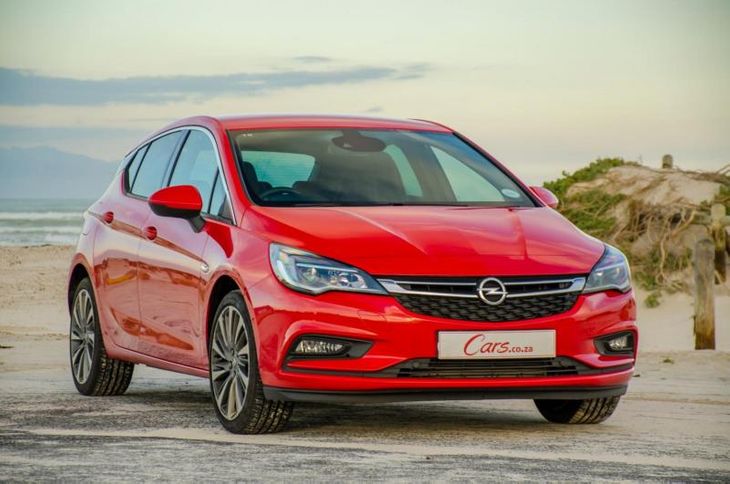
Opel Astra

The distribution of Opel now falls under the auspices of the urban-based Williams Hunt dealer group (following the withdrawal of General Motors from South Africa at the end of 2017). Regrettably, in terms of sales, the Astra remains largely underappreciated in our market. It's a surprisingly competent vehicle, boasting an impressive array of technologies, good build quality and potent, but frugal powerplants. Priced from R283k, the Astra comes backed by a 5-year warranty and service plan from new.

Opel Astra 1.4T Sport Automatic (2016) Review

Opel Astra 1.0T Essentia (2016) Review

Opel Astra (2016) First Drive

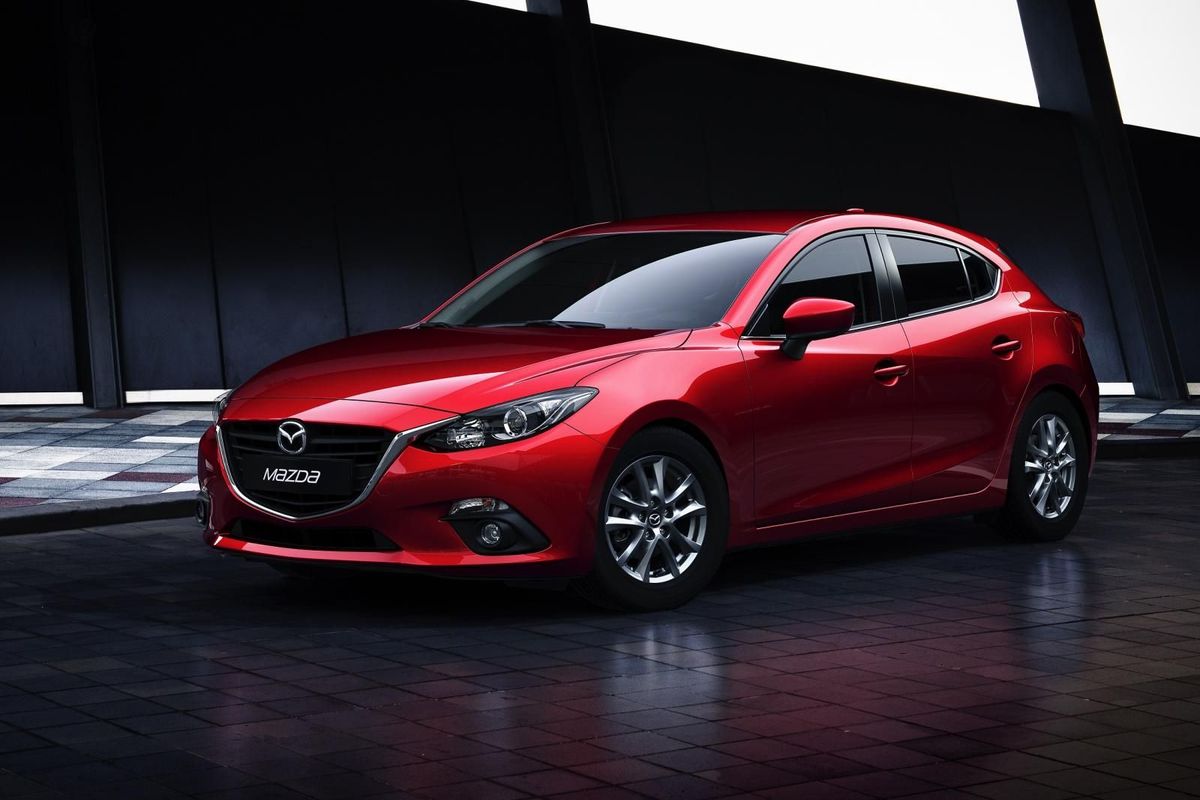
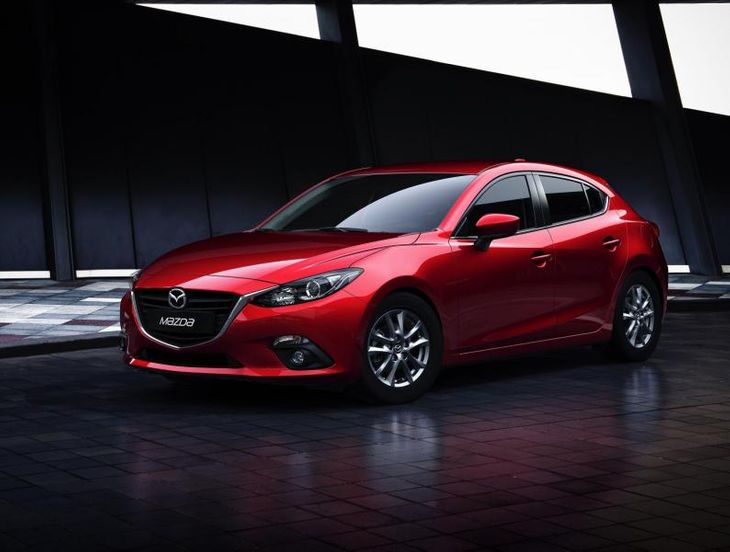
Mazda3

Mazda offers a variety of competitive products (the resurgent Hiroshima-based brand notably won a pair of 2017/18 Cars.co.za Consumer Awards courtesy of the Mazda2 and CX-5). Whereas SUVs make up the bulk of the Japanese marque's sales on the local market, the long-serving 3 hatchback is a solid proposition. It is well-made, pleasant to drive and offers good cabin space, but lacks some of the tech (no turbo powerplants) and glamour of some of its rivals. Prices begin at R266k.

Mazda3 2.0 Astina Plus Automatic (2016) Review

Extended Test: Mazda3 2.0 Astina [with Video]

Mazda3 with G-Vectoring tech: Does it work? [Video]

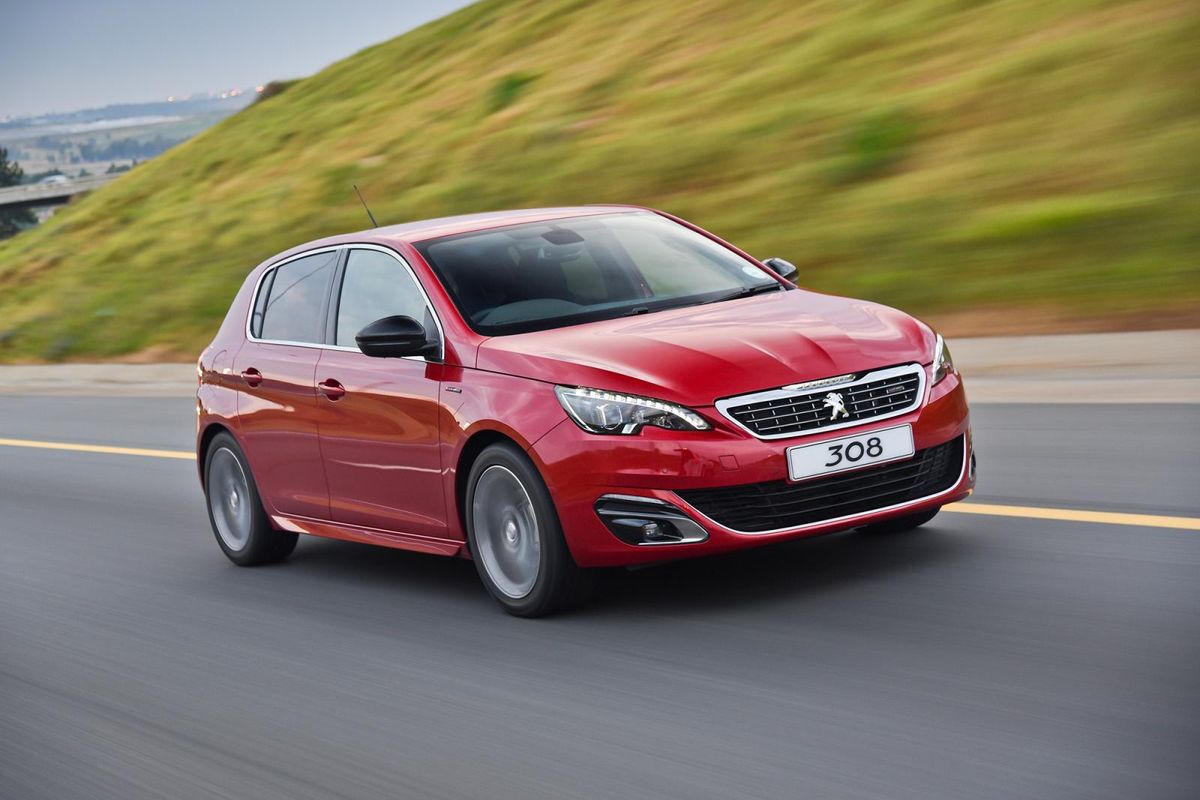
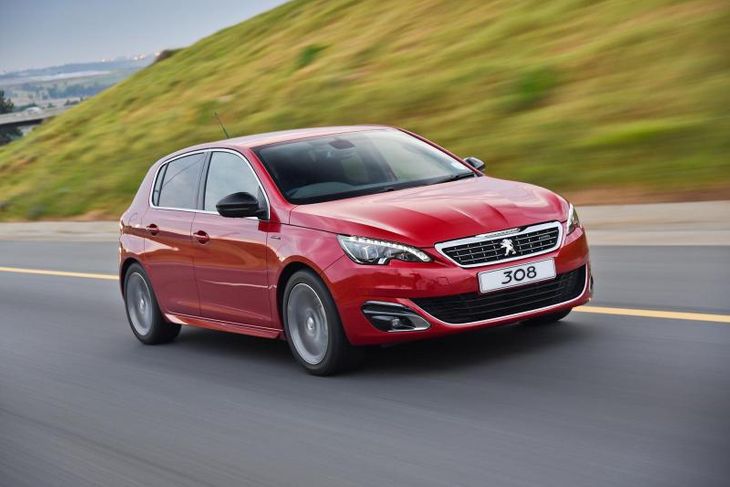
Peugeot 308

As part of a recent rationalisation of Peugeot's product line-up in South Africa, sales of the 308 were discontinued, which was a pity, because the French marque's premium hatchback offers a satisfying driving experience courtesy of a plethora of comfort and luxury features. However, a facelifted version is due to be introduced in South Africa in mid-2018 and that bears . As is the case with aforementioned Astra, the 308 remains an underrated product and comes with some excellent compact turbocharged engines.

Peugeot 308 (2015) First Drive

Peugeot 308 GT Now in South Africa

Peugeot 308 1.6 GT (2015) Review

Also Consider: Honda Civic, Toyota Auris, Kia Cerato, Hyundai i30.


Aston Martin Vantage (2018) Launch Review

Aston Martin likes to refer to its new Vantage as a "hunter" or a "predator". What's its prey, then? Well, there's the Porsche 911, to name one. But can this relatively small British marque really take on its formidable rivals with the new Vantage? After briefly driving the important new sportscar on local soil we think Aston Martin has reason to be so bullish. The 911 should watch its back…

The previous-generation V8 Vantage, which was on sale for more than a decade, was a charming offering. But the progress of time changed its context significantly: towards the latter half of the Aston's product cycle, it didn't really have much to offer apart from sexy looks, an evocative exhaust note and, arguably, a more evocative name than its similarly-priced rivals.

The new Vantage is to Aston Martin what the upcoming G20-generation 3 Series will be to BMW – a product that would be judged as a disappointment if it fails to achieve runaway sales success. The Vantage is the marque's core model and it competes in a particularly busy segment flooded with talented rivals. Unlike its predecessor, it won't have a very long model life, with new company boss Andy Palmer keen to avoid falling into that trap again. In future, Aston Martin will have more traditional model cycles, with profits from outgoing models funding the development of their next iterations.

In short, then… the new Vantage has to sell strongly. And to do that, it has to be flippin' brilliant, because the pinnacle sportscar market is absolutely cut-throat. 

Local distributors Daytona organised a short test drive in Cape Town to allow us to make up our own minds. Although a far more in-depth evaluation (full review) of the newcomer will need to take place in future, we think the new Vantage might be even better than the hype suggests. Here are 5 reasons why:

1. It's got the look


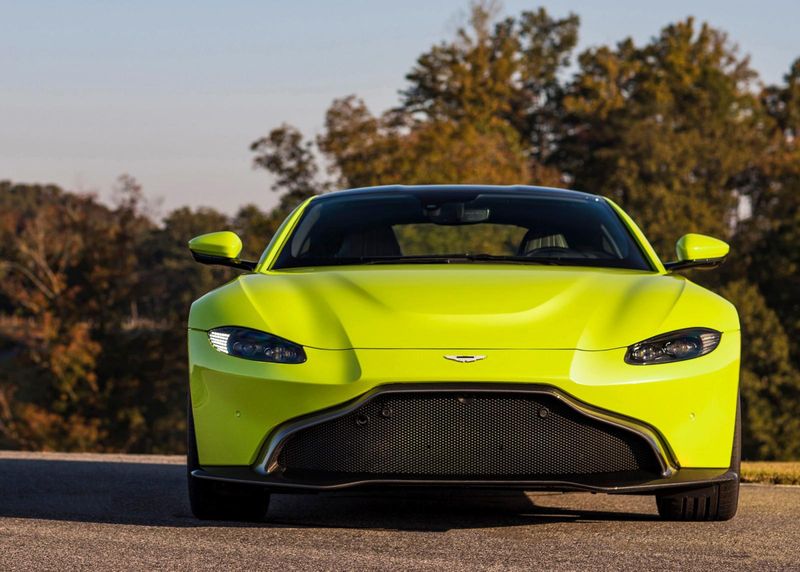
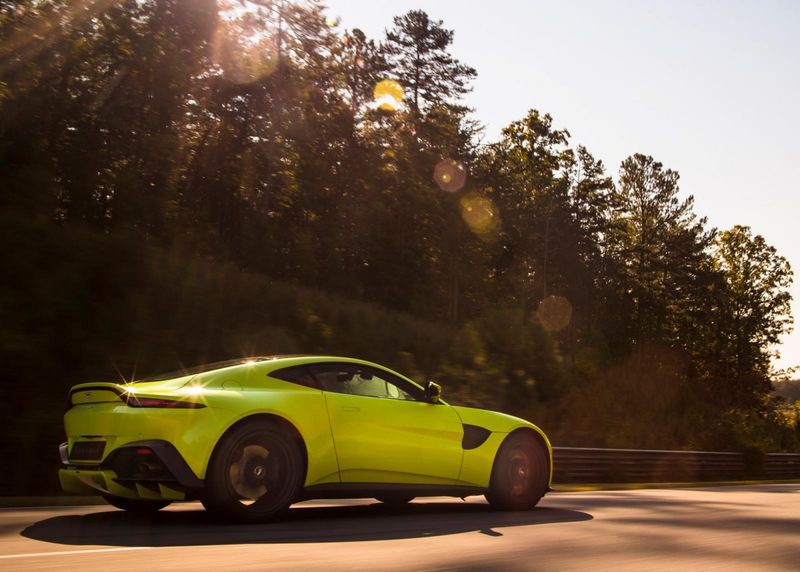
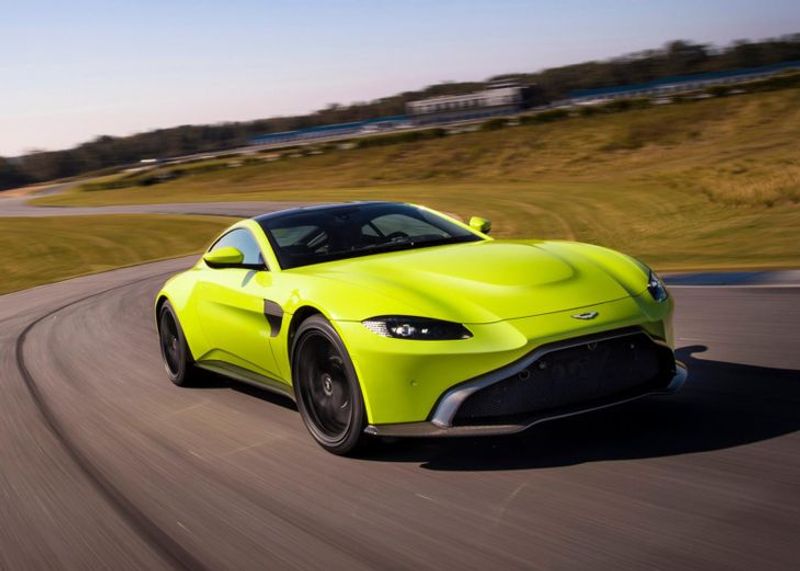
One of the most controversial aspects of the new Vantage is its grille. Aston Martin offers several different colour treatments.

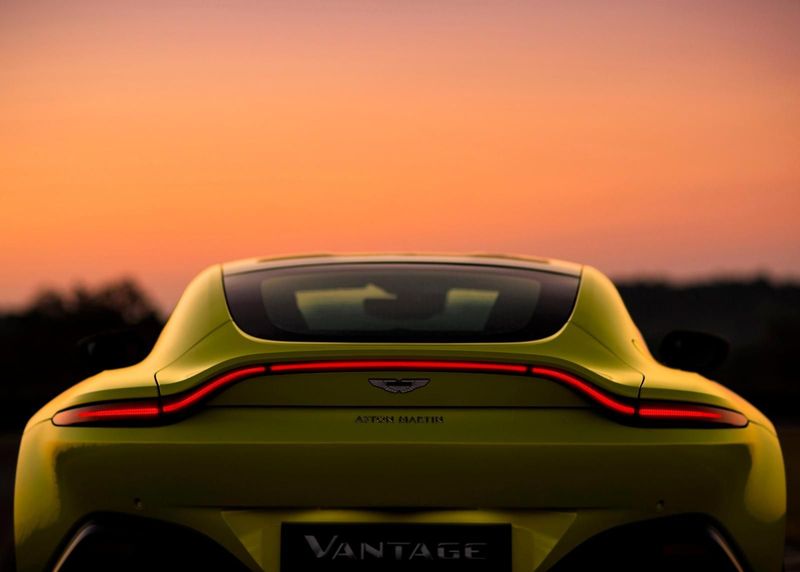
It's become something of a cliche to say that a new car looks better in the metal than it does in photographs, and the Vantage is indeed another one of those cars. Some brand purists have complained that the gaping grille marks too much of a departure from the Aston Martin design language and that the headlights look like they've been pinched off a Mazda MX-5. Some have also suggested that the back-end reminds them of the Honda Civic Type R.

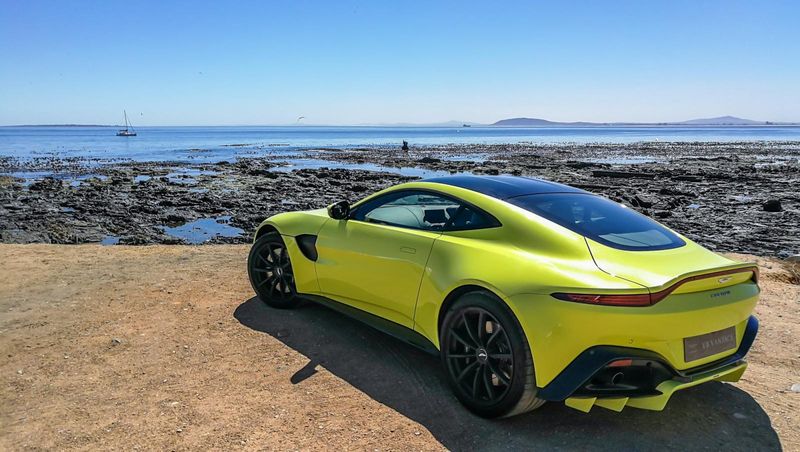
Well… there may be nuggets of truth in all of those criticisms, but I urge you to only make up your mind after seeing the new Aston in the metal. When finished in its launch colour, Vibrant Lime Essence (as shown here), the new Vantage represents nothing short of a bold piece of design. Having said that, I'm not a huge fan of this colour, as it tends to hide some of the more interesting sculptural aspects of the newcomer's shape, but it's but one of more than 40 colours in which the Vantage can be ordered. The proportions of the car are just spot-on: it's wider than before and with the wheels pushed out to the corners, the Vantage looks squat and muscular. 


The aero-optimised rear-end is a big departure from Aston Martin's previous design language. 

It's also worth noting that the new Vantage is essentially the production version of the DB10 that featured in Spectre, the last Bond film. Interestingly, Bond was going to drive the new DB11 in that movie, but when the director and producer visited Aston Martin's offices and spotted the DB10 concept, they convinced the marque to build 10 units for the film. For what it's worth, I didn't like the look of the DB10 – the Vantage is one of the very few examples where the finished product has turned out better than the concept!

There is a multitude of personalisation options available. For example, the controversial grille can be had in 3 different finishes. Depending on your chosen specification, the overall appearance of the Vantage (and, consequently, your opinion of its core design), could change quite dramatically. Go play around on the online configurator to build a Vantage of your dreams. You can find it here.

What is key, here, however, is that the Vantage looks different to everything else in its segment of the market. It also no longer looks like a smaller version of another Aston Martin. At its price point, exclusivity and individuality are major considerations – the Vantage certainly has those!

2. The cabin is a leap forward


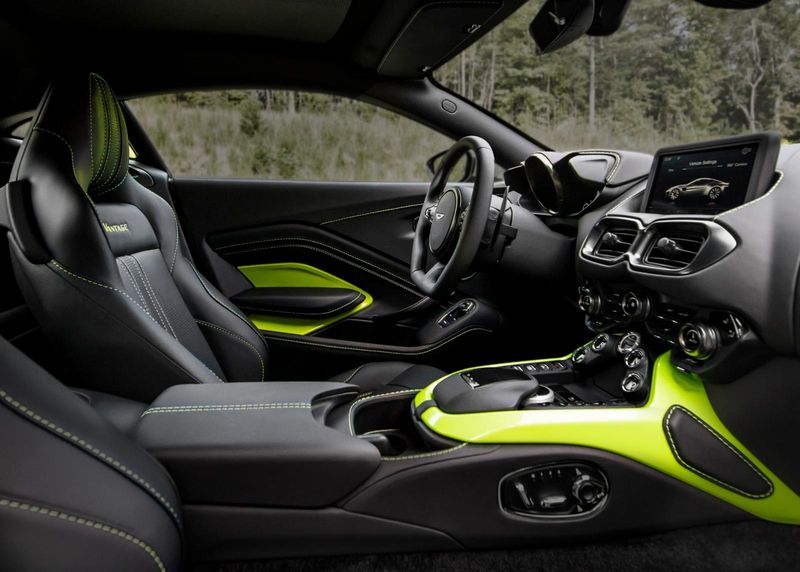
Comfortable for 2 and far more modern than before, the Vantage's cabin represents a major step forward for this model.

The previous-generation Vantage certainly looked the part on the outside, but one couldn't help but feel somewhat shortchanged when entering the cabin. While Aston Martin did an admirable job of hiding some of the shared Volvo and Ford interior parts, the clunky navigation system, at times messy ergonomics and occasionally cheap-feeling controls were definite let-downs. 

The new car's cabin is infinitely better. The quality of the touch points is of a consistently high standard, and there are some very neat touches. I particularly like the leather-strap doorpulls. Sure, you'll recognise some elements from the Mercedes-Benz parts bin, but this time around the design is more coherent and nothing feels cheap except, possibly, the air vents. The extra width in the cabin also translates into more shoulder space, while the increased wheelbase means there is now considerably more space underneath the tailgate – enough, they say, to accommodate a pair of golfbags. 


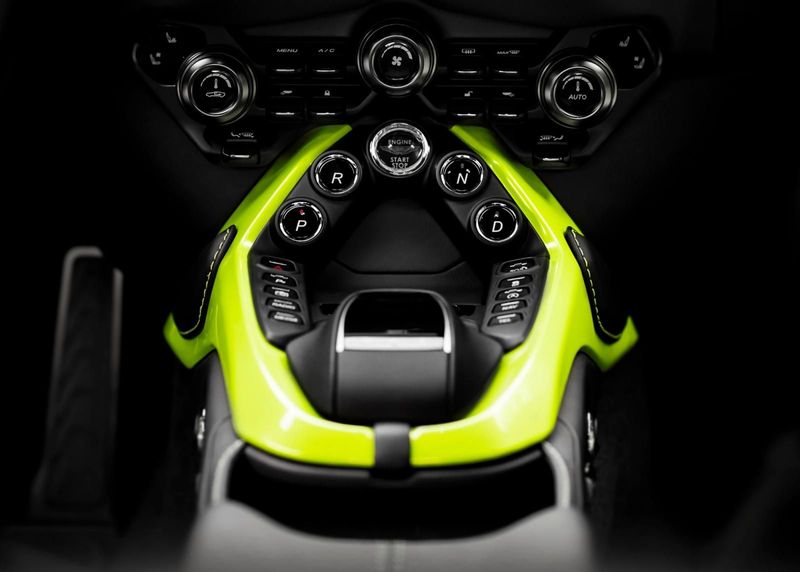
The centre console/transmission tunnel is quite busy with loads of minor controls. Note leather-covered brace pads.

As is the case with many new-generation sportscars, a number of important controls have migrated to the steering wheel. So, with a flick of a finger, you can scroll between the various drive settings or fiddle with the damper stiffness, all while keeping your hands on the wheel. I also particularly enjoyed the placement and size of the large shift paddles. They really fall easily to hand.

There are a vast number of options available for the cabin as well. To make things simpler, Aston Martin offers several "packs" – Sports Plus, Comfort, Exterior Black and Tech – to potentially make the selection process easier.

3. It's agile, communicative


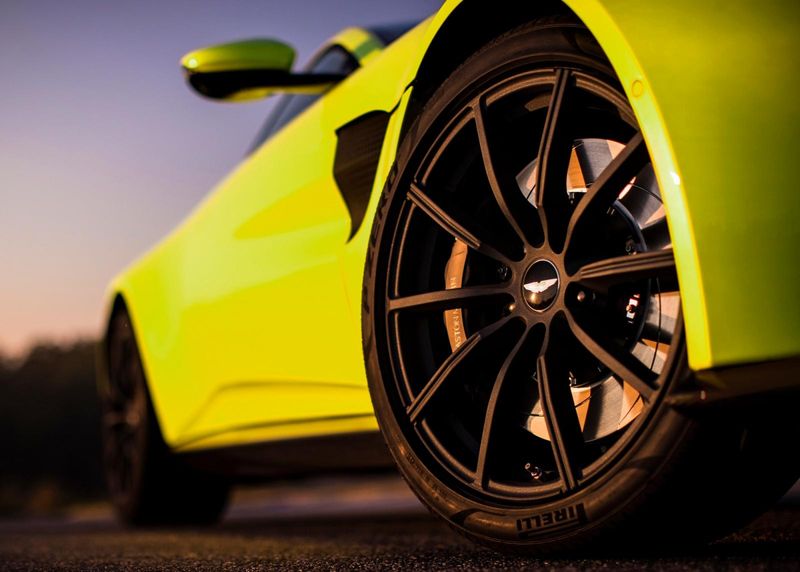
Standard front brakes are large 2-piece, 400-mm ventilated steel items. The Vantage's steering is fast and linear.

The Vantage's structure is an all-aluminium one, but only about 30% of it is shared with the larger DB11; the larger car's suspension components have been transplanted to the Vantage, albeit in significantly different states of tune. The Vantage is quite a short car – it's shorter than a 911 – and with its engine pushed far back the new Aston boasts the 50/50 front-to-rear weight balance that's ideal for a dynamic sports car. Also worth noting is that the rear subframe is mounted directly onto the main structure, which, according to Aston Martin, makes the Vantage feel more connected with the road.

Dig deeper into the technical specification documents and you find more clues to why the Vantage feels so lively, direct and responsive on the road. It's the first Aston Martin to feature the company's new fast-acting electronic rear differential. At lower speeds it has been tuned to aid agility, while at higher velocities it improves stability. The car also features a torque vectoring system and highly adjustable dampers and powertrain settings.


The Vantage offers a very impressive blend of supple ride comfort and sharp dynamics.

Unlike the DB11, which has a more comfort-oriented GT setting, the Vantage kicks off with a Sport setting as the default, with Sport+ and a more aggressive Track mode to round things off. Despite its description, I found that Sport offers more than enough inherent comfort to make the Vantage an easy daily driver, yet it is also very responsive in this mode. Flick to Sport+ and there's an immediate and noticeable difference in the stiffness and reaction from the transmission/engine. But… and this is something that I rate as a BIG plus… as you flick into the more aggressive settings, the stability control doesn't disappear. So it's possible to have the increased responsiveness, louder engine sound and firmer springs without sactificing traction/stability. There is a separate switch to deactive stability control completely.

On the road and during our brief drive, the Vantage displayed marvellously fast, linear steering, and a lovely balance of suppleness and sharpness.  

4. Fast and with a great soundtrack


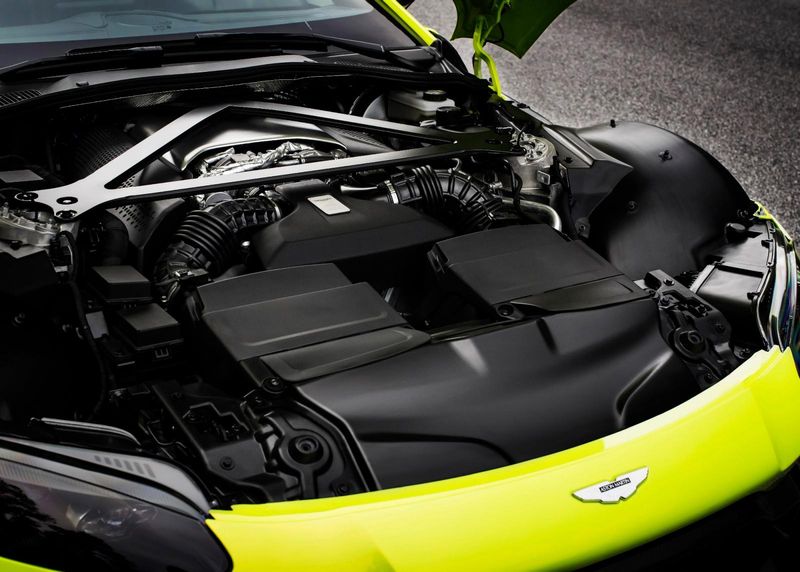
The 4.0L twin-turbo V8 is borrowed from AMG, but features some changes for use in the Vantage. It is positioned far back.

Aston Martin's current agreement with Daimler extends to the engine department, where the Vantage gets the twin-turbo 4.0-litre V8 used in Mercedes-AMG's GT. There are some differences, however. The Vantage engine has different turbos, a unique exhaust manifold and is mated not with the Mercedes-AMG's transmission, but an 8-speeder from ZF. The previous Vantage sounded great (it was one of the most admired aspects of the car), but this new one arguably sounds better, and is louder more of the time. Even in its "base" Sport setting the engine will make itself heard when you tickle the throttle. It suits the "predatory" nature of the car.

The engine delivers 375 kW at 6 000 rpm and 685 Nm of torque, all the way from 2 000 to 5 000 rpm. On the road that flat torque curve is very noticeable, and makes the transmission's job relatively easy. At first, it may seem odd that a car as overtly sporty as the new Vantage should feature a normal torque-converter automatic, but I'd rate the ZF 'box as one of the most surprising and impressive aspects of the overall package. Leave it to its own devices and it does its job smoothly and almost imperceptibly. Engage with it and the transmission will delight with the immediacy and crispness of its responses. 

Aston Martin claims a 0-100 kph time of 3.6 seconds and a lofty top speed of 314 kph. These performance figures, by the way, are very similar to those quoted by Mercedes-AMG for the hardcore (and similarly priced) GT R. 

5. Good value?


This is just the start of the new Vantage story – even more hardcore and faster versions are likely to follow.

With a base price of around R2.8 million, the Vantage is anything but cheap for an "entry-level" Aston Martin. However, perhaps it appears so because we are looking at it through our pre-2018 Aston Martin goggles. Right now, cars with similar performance (Mercedes-AMG GT R and Porsche 911 Turbo PDK/911 GT3 PDK) sell for similar money. The difference is that those rival vehicles appear at (or near) the top of their respective model ranges, while the Vantage is just the starting point of its own. 

The Vantage doesn't exhibit the sheer brutality of the AMG GT R, and is neither as quick off the mark as the 911 Turbo, nor as intimately interactive as the GT3, but it now displays a spread of talents topped by a badge that adds considerable exclusivity and desirability to the mix. In summary, then, the list of reasons one can rightfully raise for not considering a new Vantage is very, very short and probably will have little to do with the abilities of the car. 

Verdict


Exclusivity, desirability… the Aston Martin Vantage offers those by the bucket load.

I have driven most of Aston Martin's offerings during the past 15 years or so. From my perspective, this Vantage seems the most-complete sportscar the Gaydon-based firm has ever produced. Yes, we need to drive it on a track to really test its performance limits, but based on this short test experience, there are clearly several more reasons to consider the Vantage (compared with its predecessor).

Everything that has made Aston Martin appealing is still there – the dramatic looks, the evocative soundtrack, desirability and exclusivity. But now you can add excellent build quality, a cabin that's pretty much bang up to date ergonomically, greater comfort levels, a truly excellent engine/transmission combination and pin-sharp dynamics to the mix. The new Vantage is as rewarding to pilot for the capable enthusiast, as it is unintimidating to drive for a relative novice. I'm willing to bet that it will indeed be a thorn in the side of the establishment. It's a car that marks a new chapter for Aston Martin, and one that forces you to re-evaluate your own beliefs about this brand. 

You may also be interested in:

Aston Martin DB11 First Drive (2016)

Aston Martin DB11 Video Review (2016)

HillClimb Shootout – Aston Martin Vantage N430 vs BMW M240i vs Jaguar F-Type 400 Sport (video series)

Mercedes-AMG GT R First Drive

Porsche 911 Carrera S Coupe First Drive

Looking for a new / used Aston Martin to buy?

Find one on Cars.co.za today by clicking here

Nissan Qashqai (2018) Review | Facelift For The Win

The newly facelifted Nissan Qashqai reminds us why it's such a good seller all around the globe. We have a go in the top-spec diesel model with all the bells and whistles.

Take a guess what the best selling car in Britain is… it's the Ford Fiesta. In second place its the VW Golf and in third…another Ford, the Focus. But in fourth place, is this, the Nissan Qashqai. Yes our fellow motorists in the UK love the Qashqai, and when you spend some time with it, it is quite easy to see why.

In this video, we cover the load/boot space, interior features, fuel consumption, engine performance and new safety features now available in the latest Nissan Qashqai. The model reviewed is the top-of-the-range 1.5dCi Tekna variant, which in South Africa is currently listed at R445 500 (April 2018)

To compare the Qashqai to its rivals, visit our compare tool now:

https://www.cars.co.za/compare-cars/Nissan-Qashqai-1-5dCi-Tekna/47060091/

Related content

Facelifted Nissan Qashqai (2018) Launch Review

Crossover Comparison: Honda HR-V vs Mazda CX-3

Hyundai Creta (2017) Video Review

Comparative Review: Hyundai Tucson vs Kia Sportage vs Renault Kadjar vs Volkswagen Tiguan

Searching for a used Qashqai?

Browse through our stock here