One of the most hardcore hot hatches in the market is back! Is it just a one-trick track pony or can you live with it in the real world?
Much has changed with the new model as Honda looks to extract a whole new level of performance from an all-new chassis and suspension setup.
In this review, Ciro takes the Type-R into the mountains and becomes conflicted about what he likes – and doesn't like – about the front-wheel-drive hot hatch.
Production of the BMW X3 has started at BMW Group's facility in Rosslyn, north of Pretoria.
The BMW Group plant has a maximum capacity of 76 000 vehicles every year, but the big and important number here is the R6.1 billion investment into South Africa. The Rosslyn plant previously assembled 3 Series sedans for both local and international markets, but given the demand of the SUV, BMW Group has switched production to the X3.
The investment announcement came back in 2015 and over the past three years, the factory has been retooling and modifying its facilities to manufacture the X3. Thanks to what BMW claims are "three years of hard work and planning", the X3 production has started on time. The Rosslyn plant was the first factory to be built by the BMW Group outside of its homeland in Germany and the 3 Series was built for 35 years. That's almost 1.2 million cars assembled over this period!
Tim Abbott, CEO of BMW Group South Africa and Sub-Saharan Africa, says the successful ramp-up of production of the BMW X3 at Rosslyn is a vote of confidence in the country and in BMW Group South Africa’s associates. “The allocation of production of such a crucial model to our plant is about as big a vote of confidence as it gets,” Abbott says. “The demand for the BMW X3 globally is powerful, and ramping up on time and to the right standards is vital to the model’s success. I have full confidence in our associates and plant management at Rosslyn. This is the team that won the coveted JD Power Platinum award in 2015, showing that a South African plant can lead the world in terms of quality,” Abbott says.
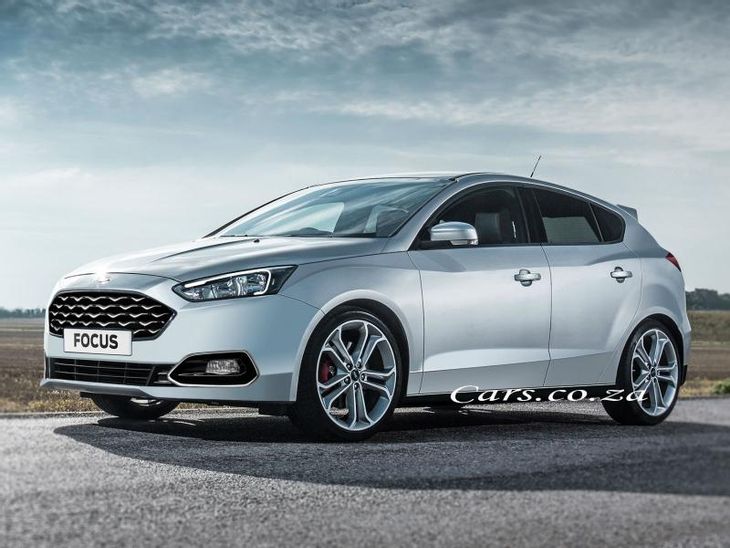
Ford has officially released a teaser image and video of the next-generation Focus hatchback which is expected to be revealed on the 10 April 2018 and with a potential South African market introduction in 2019.
The new Ford Focus hatchback will be larger, but lighter, feature much cleaner lines and a raft of new onboard technologies. Based on a development of the existing C2 platform, the new Focus is expected to sit lower, wider and longer (the latter attribute certainly in the case of the sedan) than the current model. As is the case with the Fiesta, there should be a number of trim lines, including the sportier ST-Line and the upmarket Vignale (replete with chrome detailing and LED head- and tail lamps).
Our render from July 2017 is fairly accurate when compared to the official image from Ford.
The engine line-up has yet to be confirmed, but over and above weight saving measures such as the more extensive aluminium and high-tensile steel in the body construction, the Blue Oval will utilise its 1.0-litre EcoBoost turbocharged petrol engine in various states of tune as well as the 1.5-litre 4-cylinder turbodiesel. Let's not forget the performance ST version either. The manual transmissions will feature 6 ratios, but it remains to be seen whether the controversial 6-speed dual-clutch Powershift automatic option will be upgraded or replaced.
We'll be attending a test drive event in Europe in June and will bring you a comprehensive report. Watch this space.
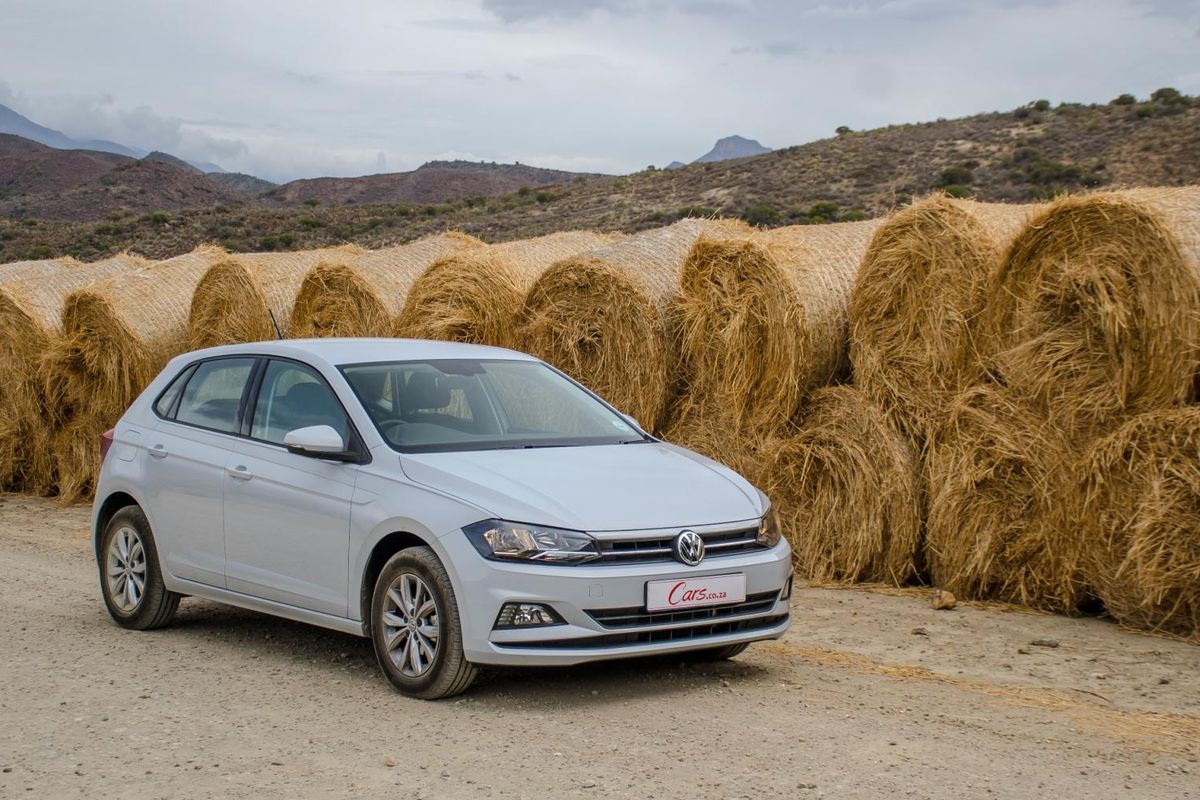
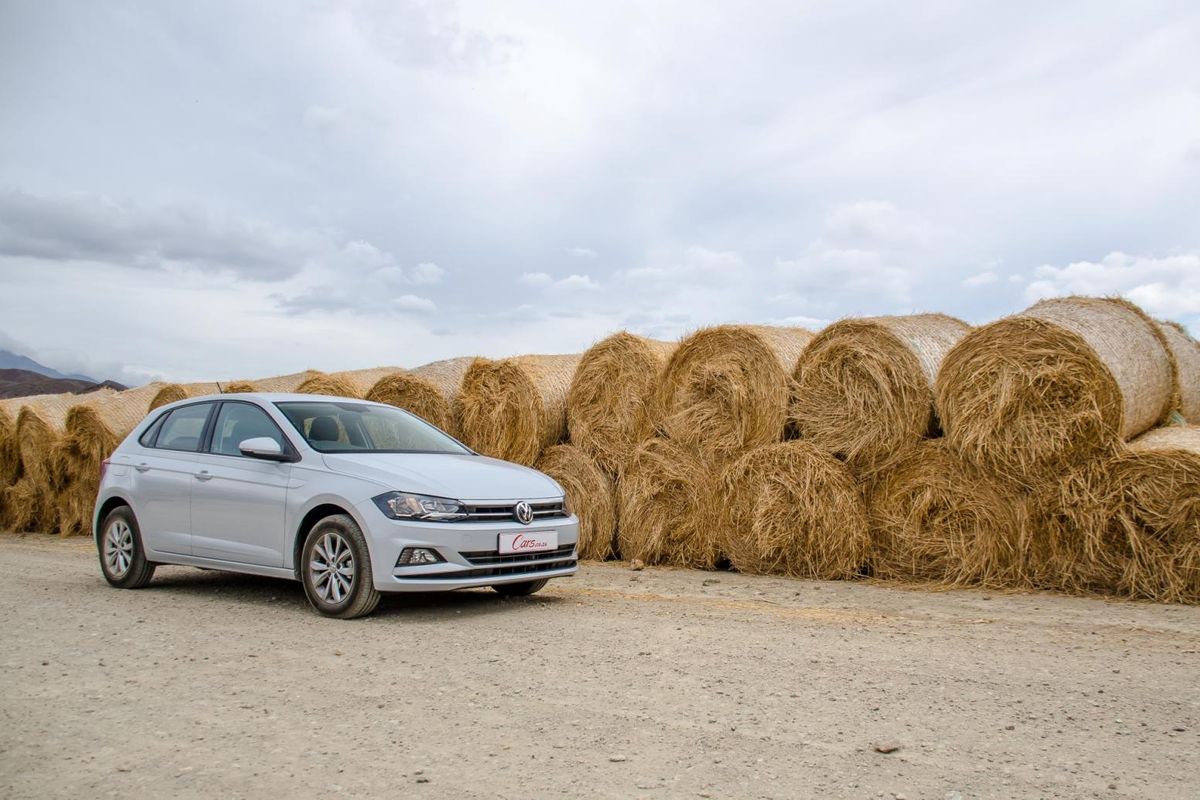
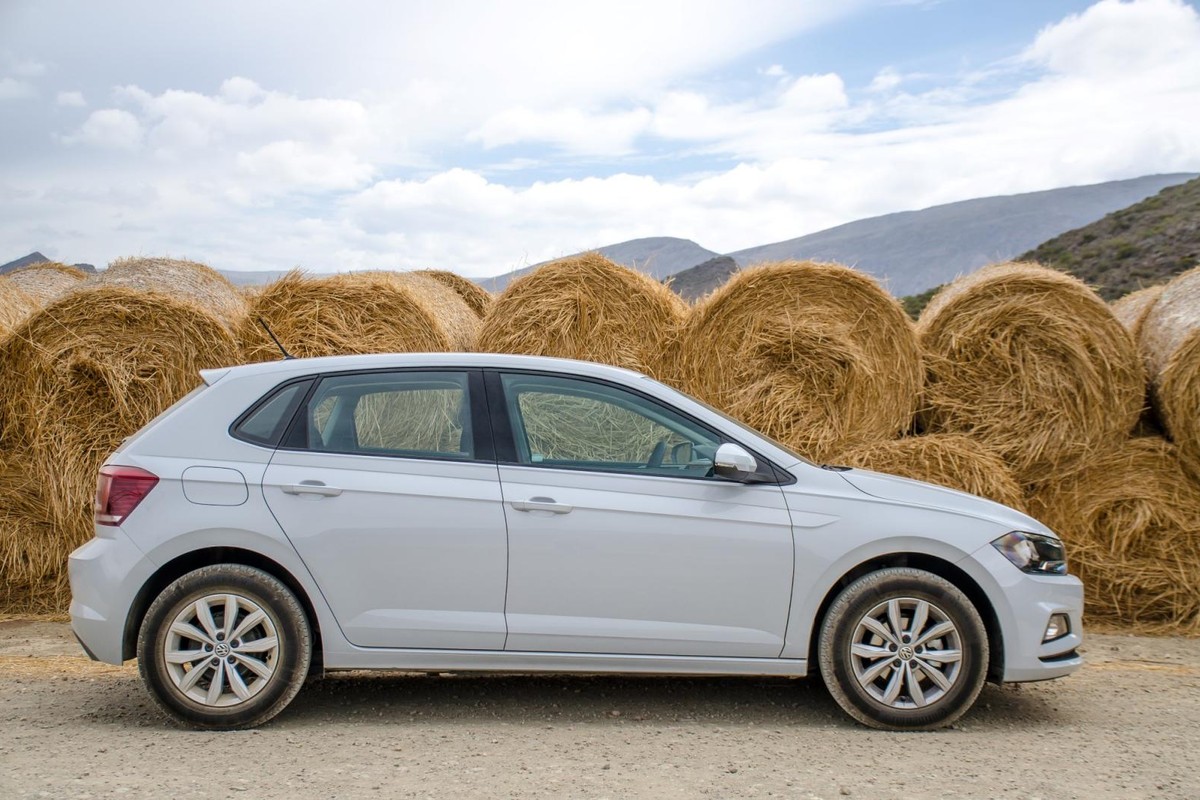
Volkswagen Polo 1.0 TFSI Comfortline (2018) Quick Review
The new Volkswagen Polo impressed our team of testers in range-topping Polo Highline guise, but what does the mid-spec Polo Comfortline have to offer… and does its 70 kW 1.0-litre turbopetrol engine deliver adequate performance? Let’s take a closer look…
We don’t like: Some more power would be nice, pricey with options.
Alternatives
For more power: Consider the Ford Fiesta 1.0T Trend priced from R253 100. It’s powered by a 3-cylinder, 1.0-litre engine with 92 kW and 170 Nm and is arguably the most entertaining car to drive out of this trio. It offers similar standard spec to the Polo Comfortline, but it can’t beat the Volkswagen’s superior interior fit and finish. Note that the all-new Fiesta is due in SA very soon, which means you might be able to negotiate a good deal on the current-gen car.
French style: Consider the Renault Clio 66 kW Turbo Dynamique priced from R246 900. It offers perky performance from its 66 kW/140 Nm 0.9-litre, 3-cylinder engine and comes well-specced for a car at this price point. For roughly the same money as the Polo Comfortline, you can also consider the more powerful Clio 88 kW Turbo GT-Line priced from R269 900.
A German option: The former Cars.co.za Consumer Awards Compact Hatchback category winner is still worth considering. Priced from R256 429, the Opel Corsa 1.0T Enjoy offers 85 kW and 170 Nm from its perky 3-cylinder, 1.0-litre engine. Standard specification is good and its interior execution is both upmarket and tasteful, but admittedly not as sophisticated as that of the Polo.
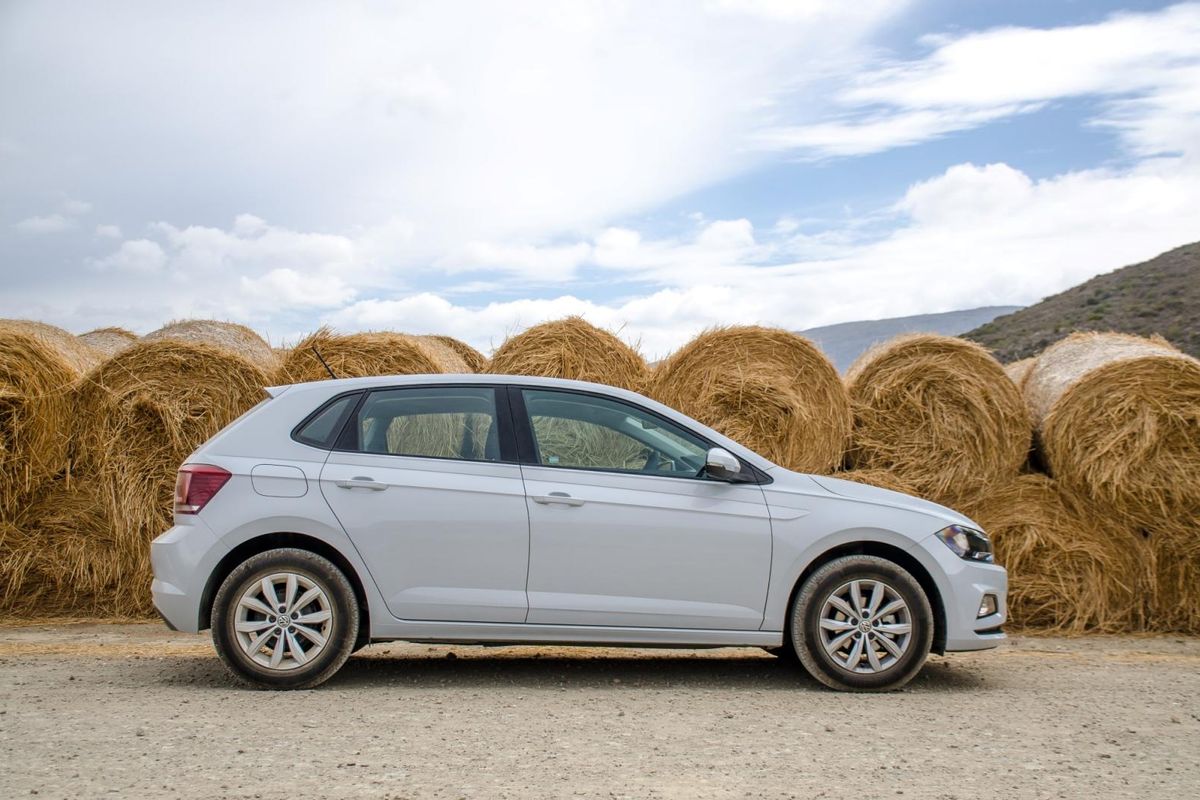
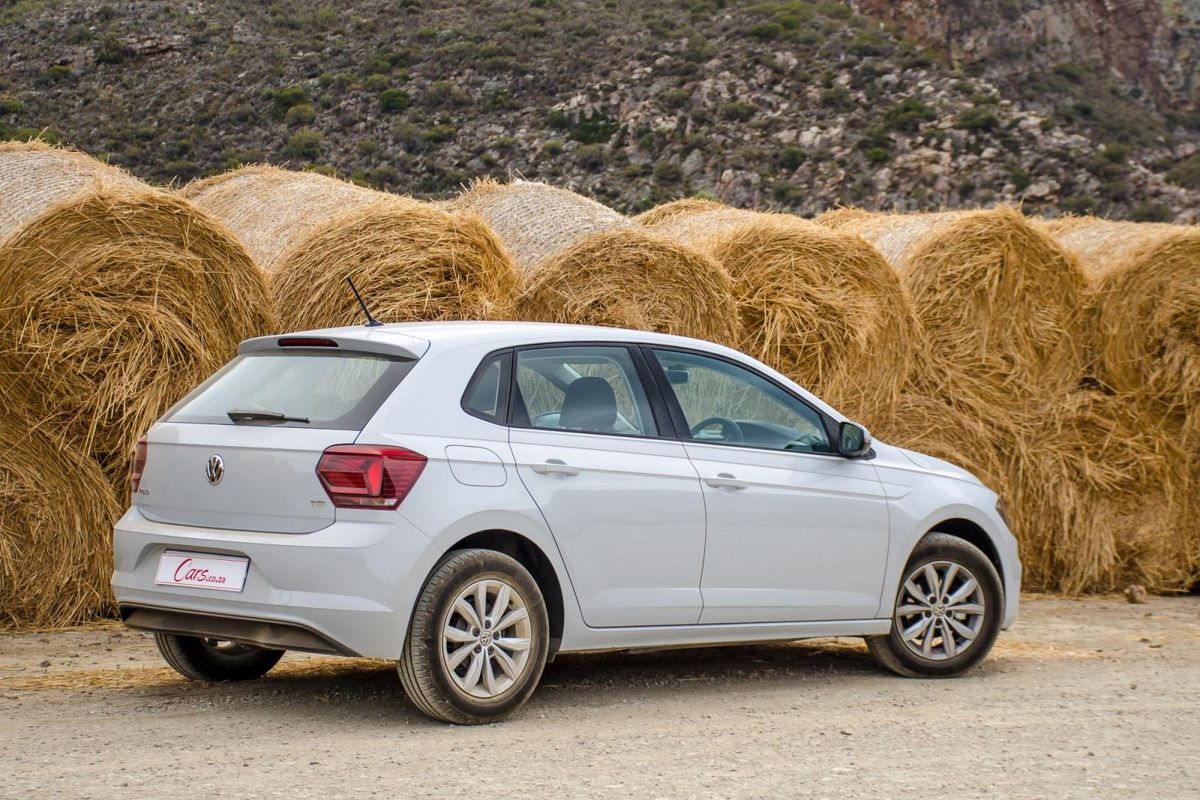
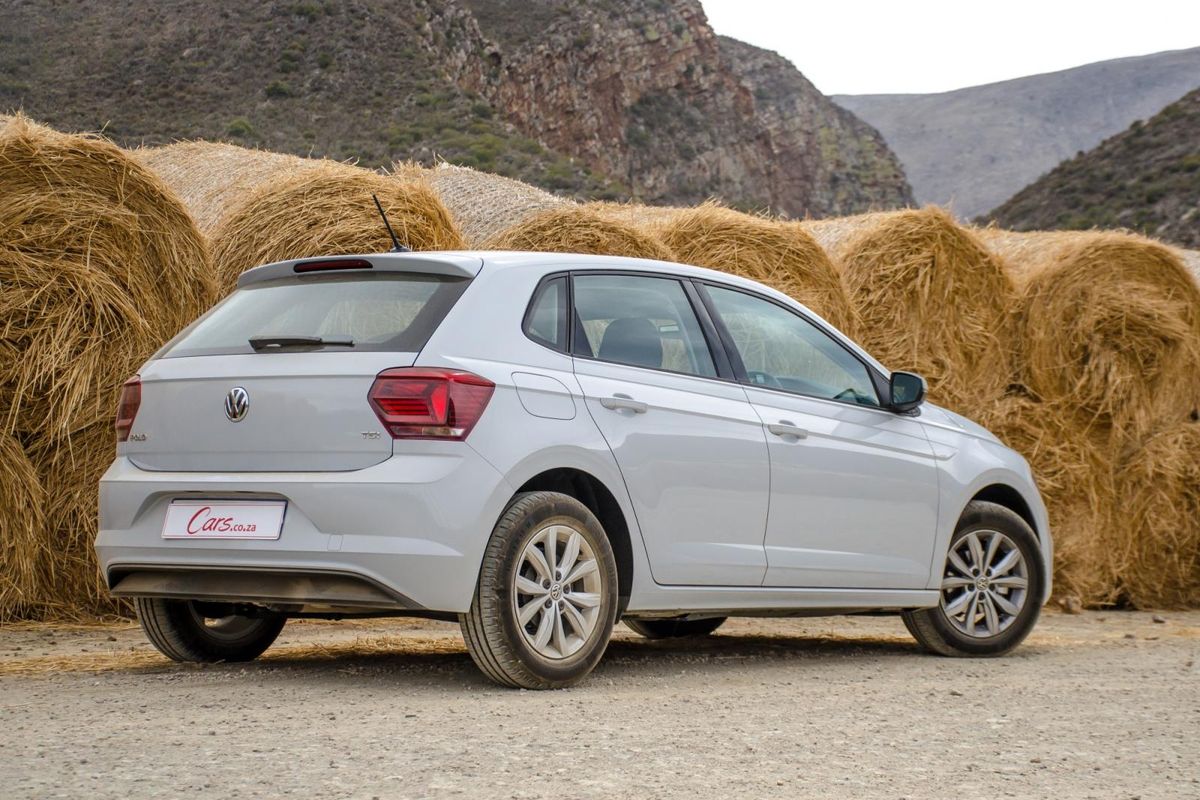
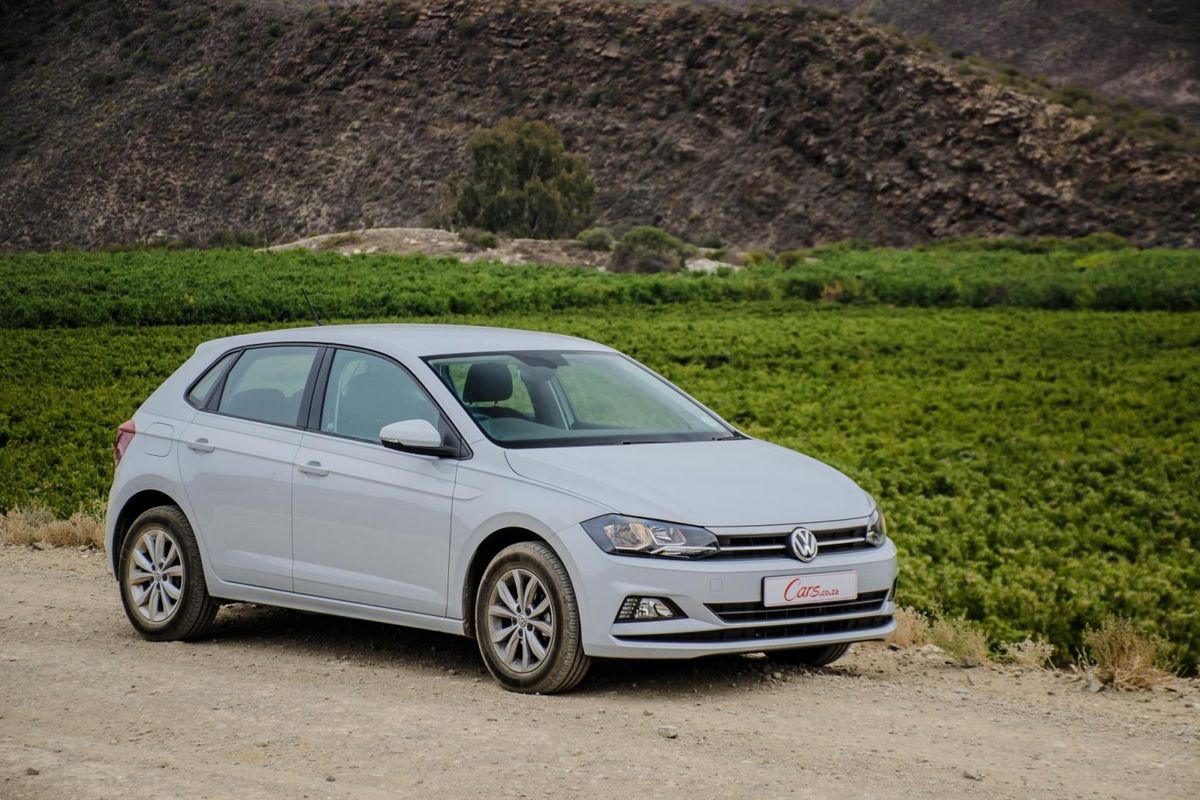
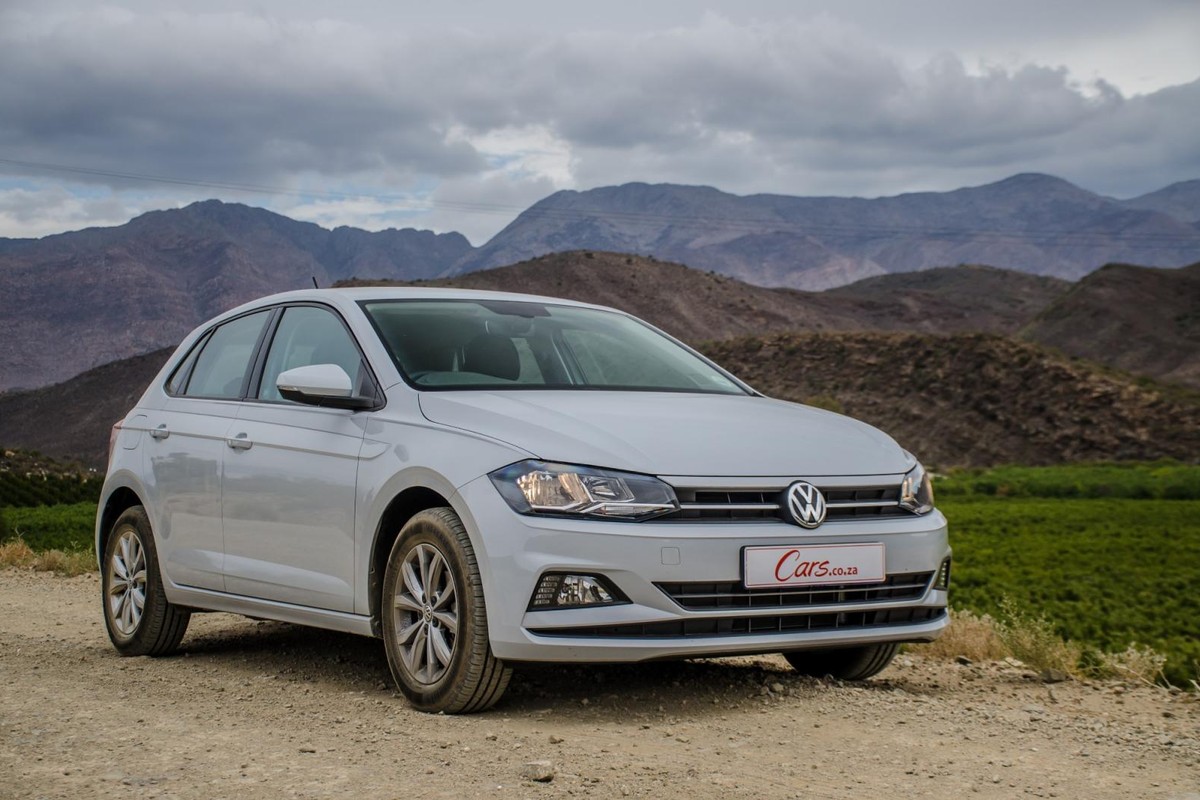
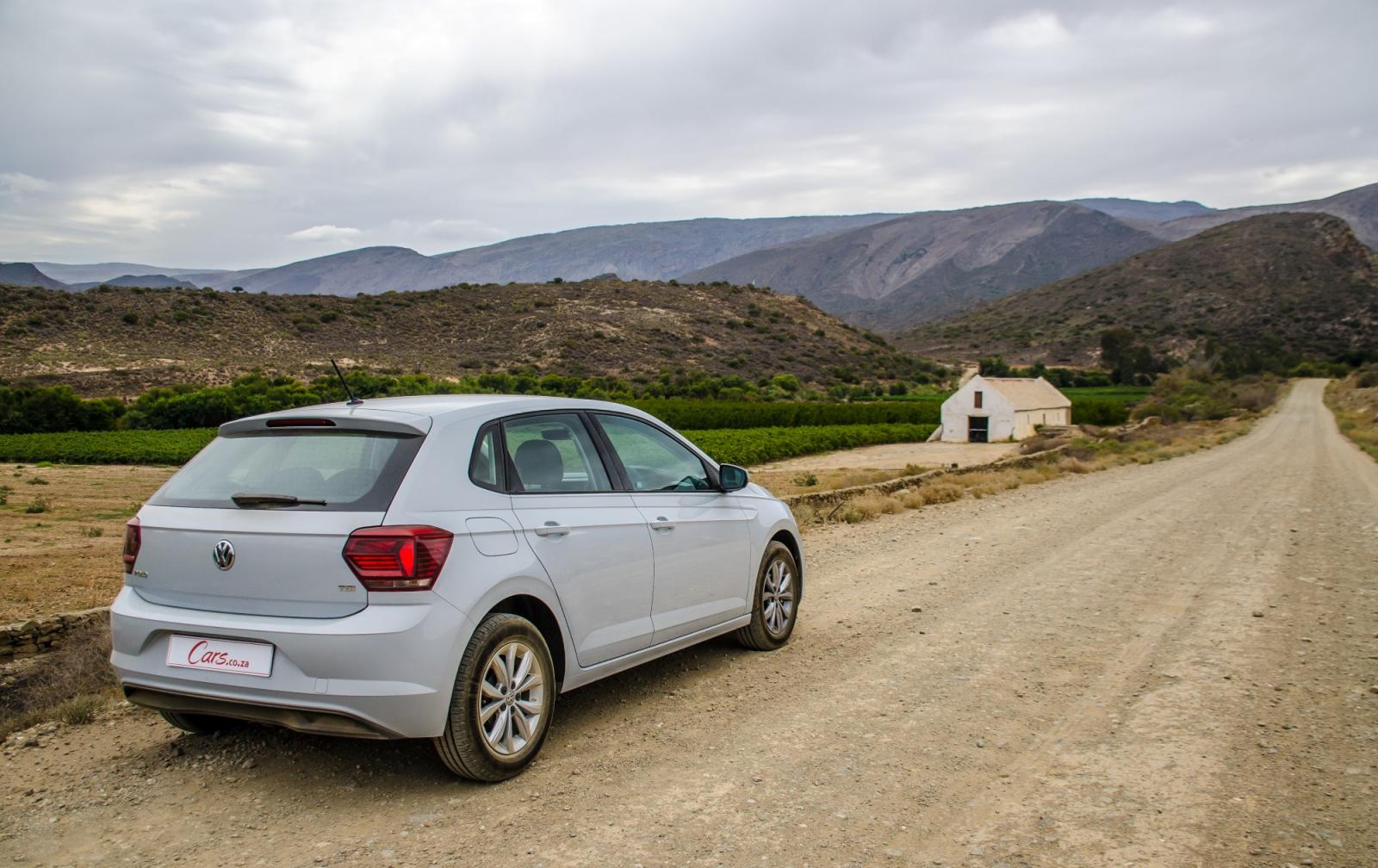
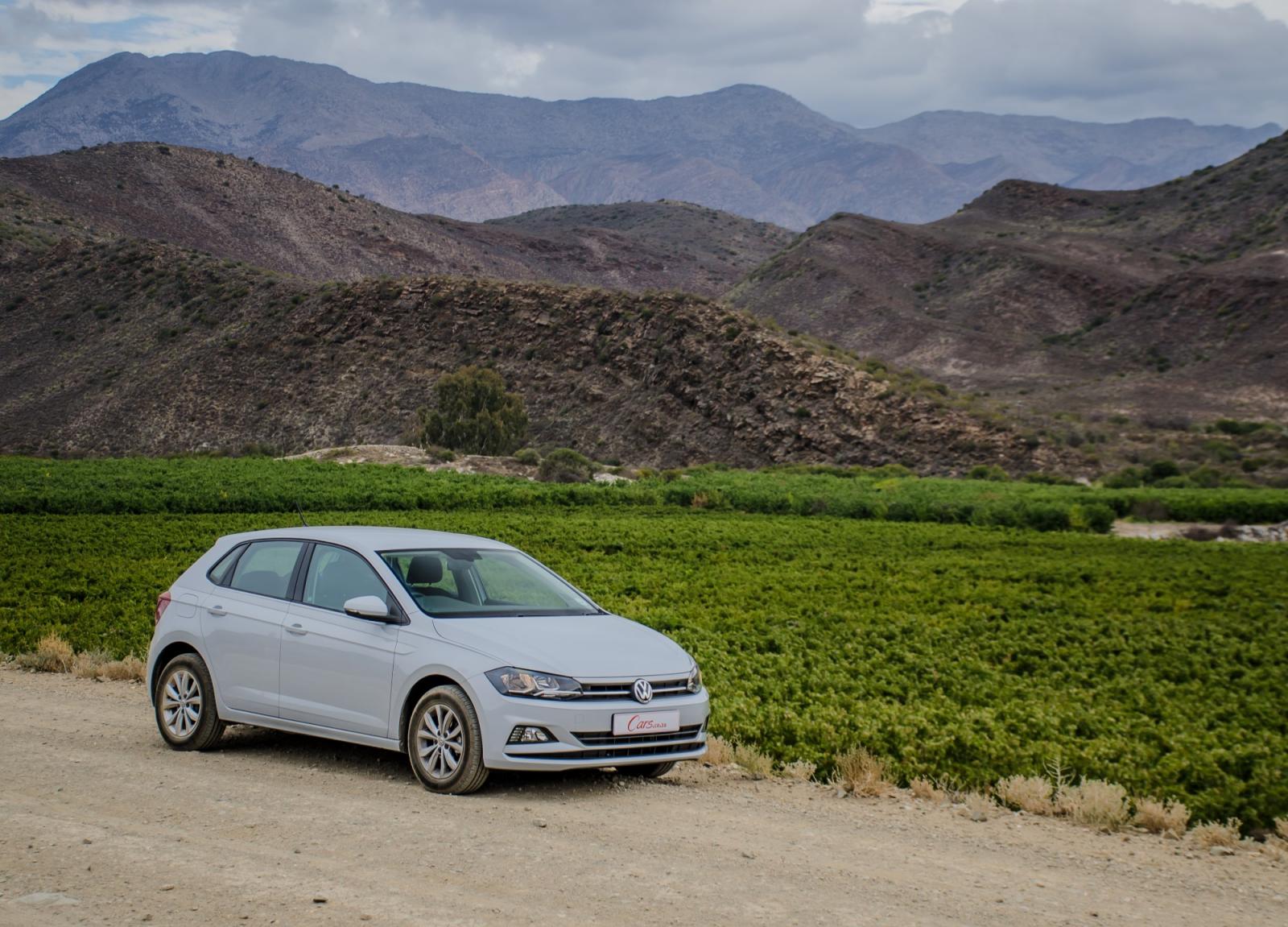
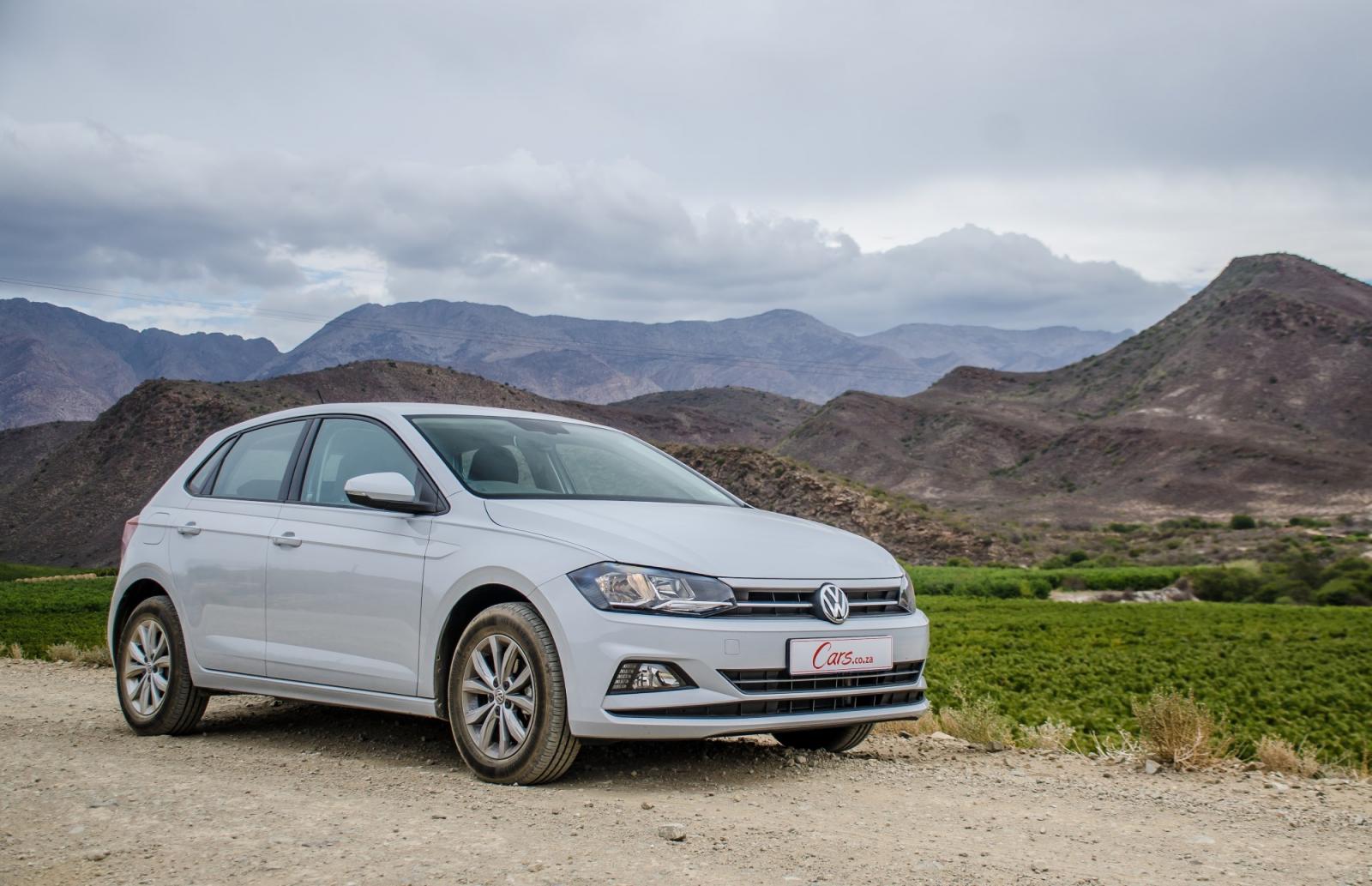
The new Polo not only looks better than before, it's also more practical thanks to its larger dimensions.
The new 6th-generation Polo was recently introduced in South Africa and buyers looking to purchase this stylish new Polo can choose between 2 turbocharged 1.0-litre engines and 3 trim levels (Trendline, Comfortline, Highline). While the more powerful 85 kW/200 N.m engine is reserved for the range-topping Polo Highline we tested recently, most buyers will probably consider the more affordable mid-spec Polo Comfortline derivative first.
Is the new Polo Comfortline the one to go for in the Polo range and does it offer enough value to warrant a purchase? Read on…
The Good
Engine performance and efficiency
Punchy performance and low fuel consumption are what you can expect from the Polo Comfortline.
Many buyers might be sceptical of the performance of the Polo’s new 3-cylinder, 1.0-litre turbocharged engine and while we found that the 85 kW Polo Highline had more than enough power to silence the naysayers, the Polo Comfortline's 70 kW looks less flattering on paper. The reality on the road, however, is a different story.
We took the Polo Comfortline on a weekend jaunt into the Cape countryside and we were pleasantly surprised by how much urge this engine has to offer on the open road. That relatively demure 70 kW is backed by 175 Nm of torque, which is channelled to the front wheels via a 5-speed manual transmission.
The engine delivers its power in a refined manner and although a slight hollow thrum at higher revs serves as a reminder that there’s a 3-cylinder engine under the bonnet, the motor performed better than we expected. The Polo surges forward with composed intent and although it can’t be described as a "warm (as opposed to hot) hatch", it’s definitely quick enough to deal with everyday cut-and-thrust traffic conditions with ease.
Indeed, this Polo feels quicker than its claimed 0-to-100 kph sprint time of 10.8 sec suggests. The transmission has a pleasingly smooth, positive action and overtaking on the highway is a cinch as the engine’s power band is always close-to-foot, even in 5th. You can, however, expect a momentary lag in acceleration when shifting up.
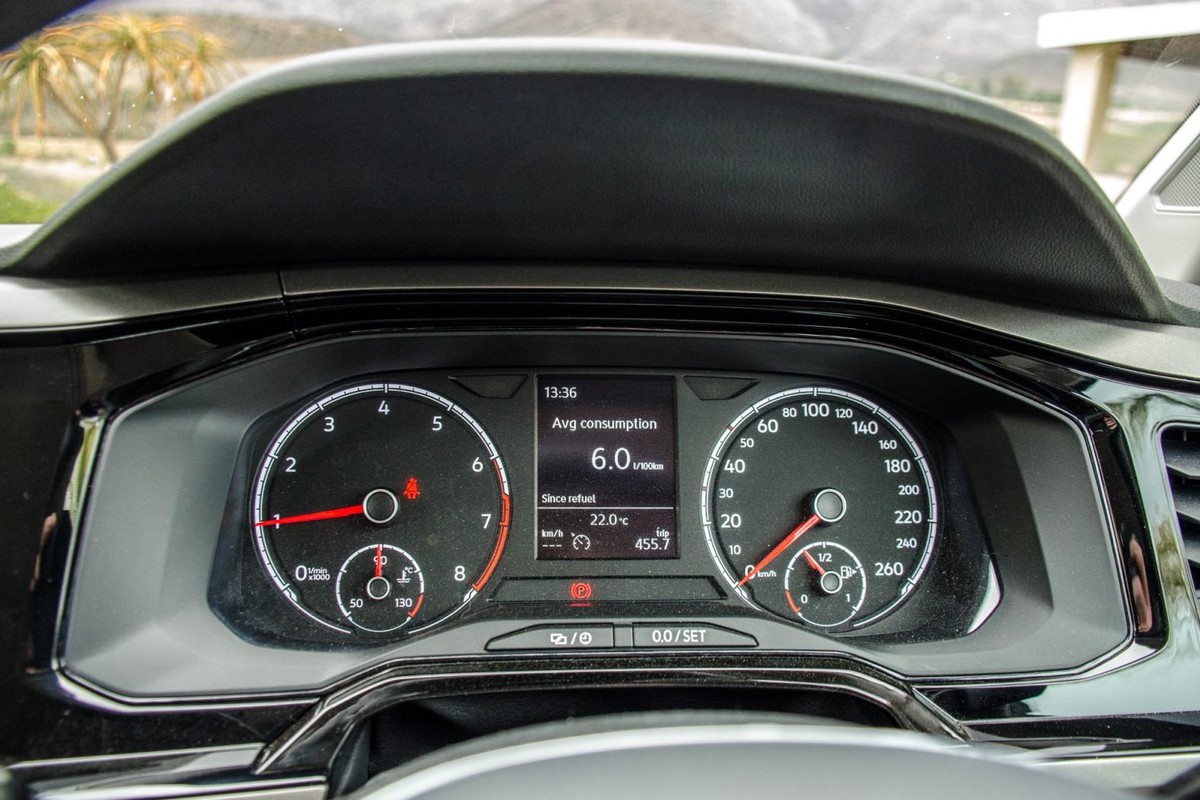
Apart from offering solid performance, we are pleased to report that the Polo Comfortline can return an excellent fuel consumption figure too. Volkswagen claims 4.5 L/100 km and we averaged 5.7 L/100 km, which is very impressive given that the Volkswagen was driven with intent, in and around town, during its test tenure.
Ride quality and handling
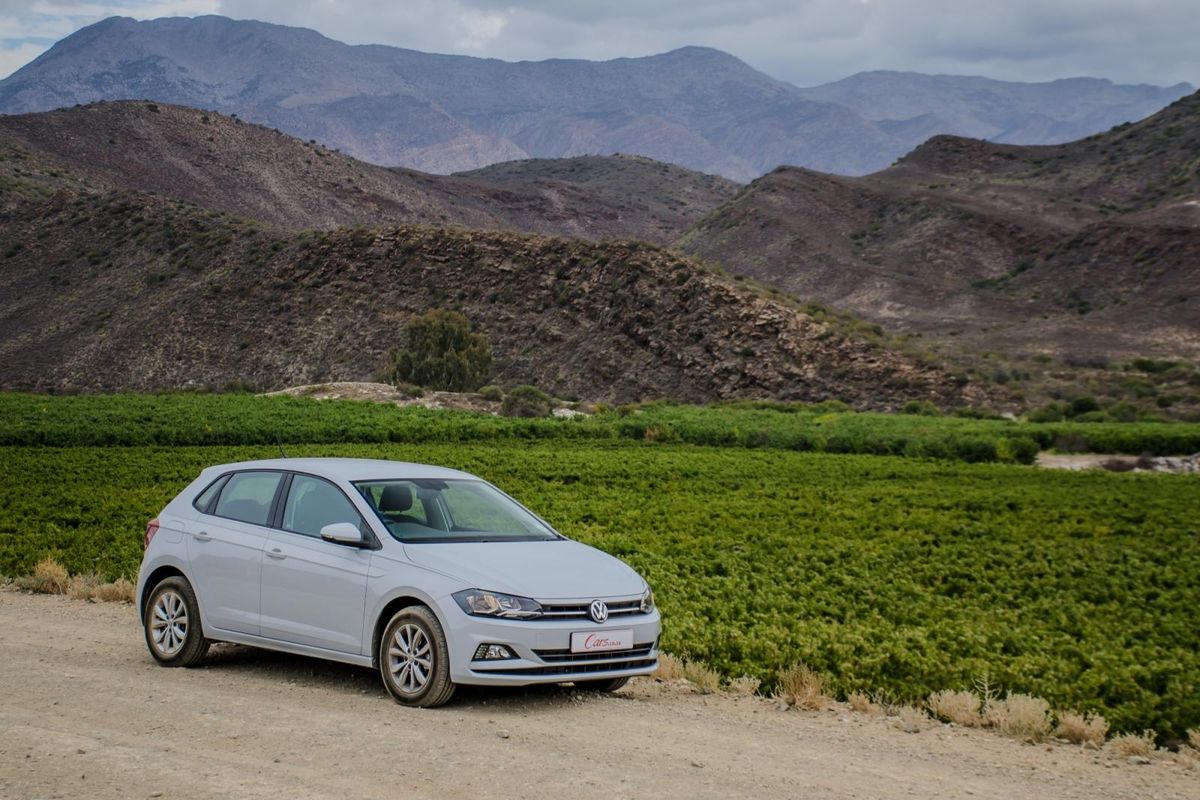
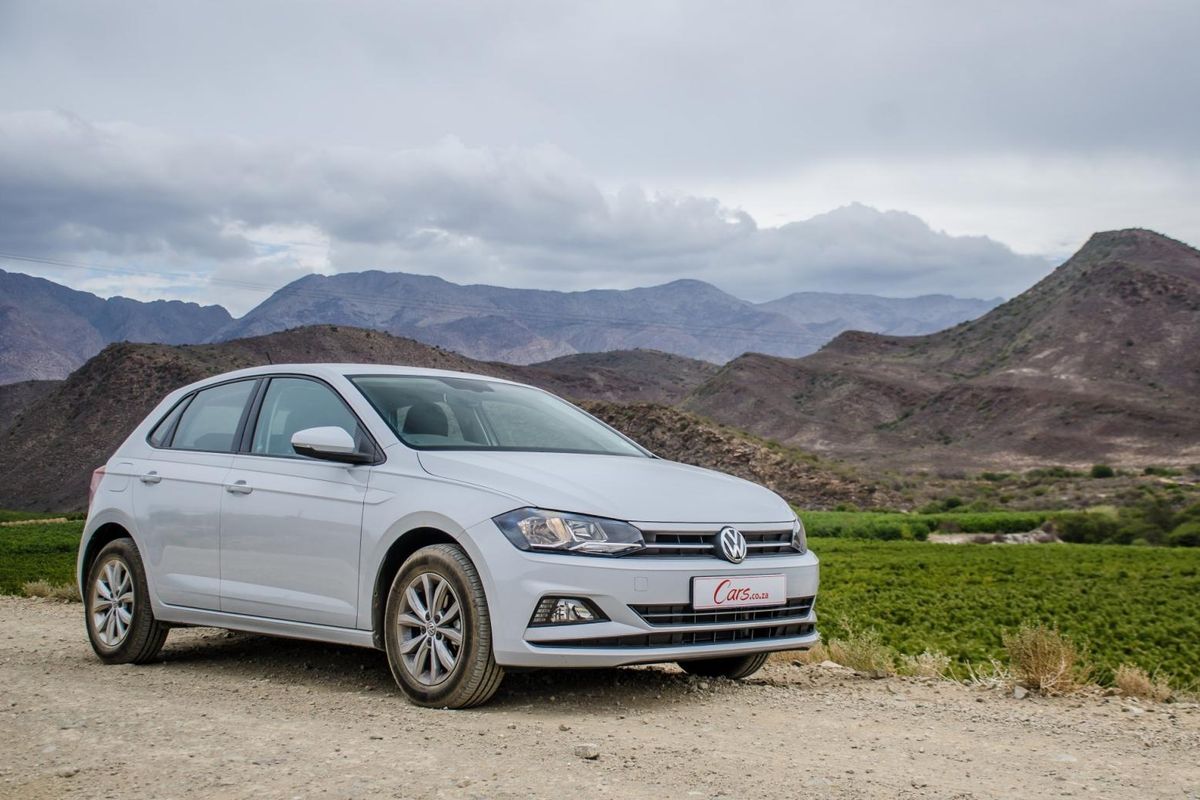
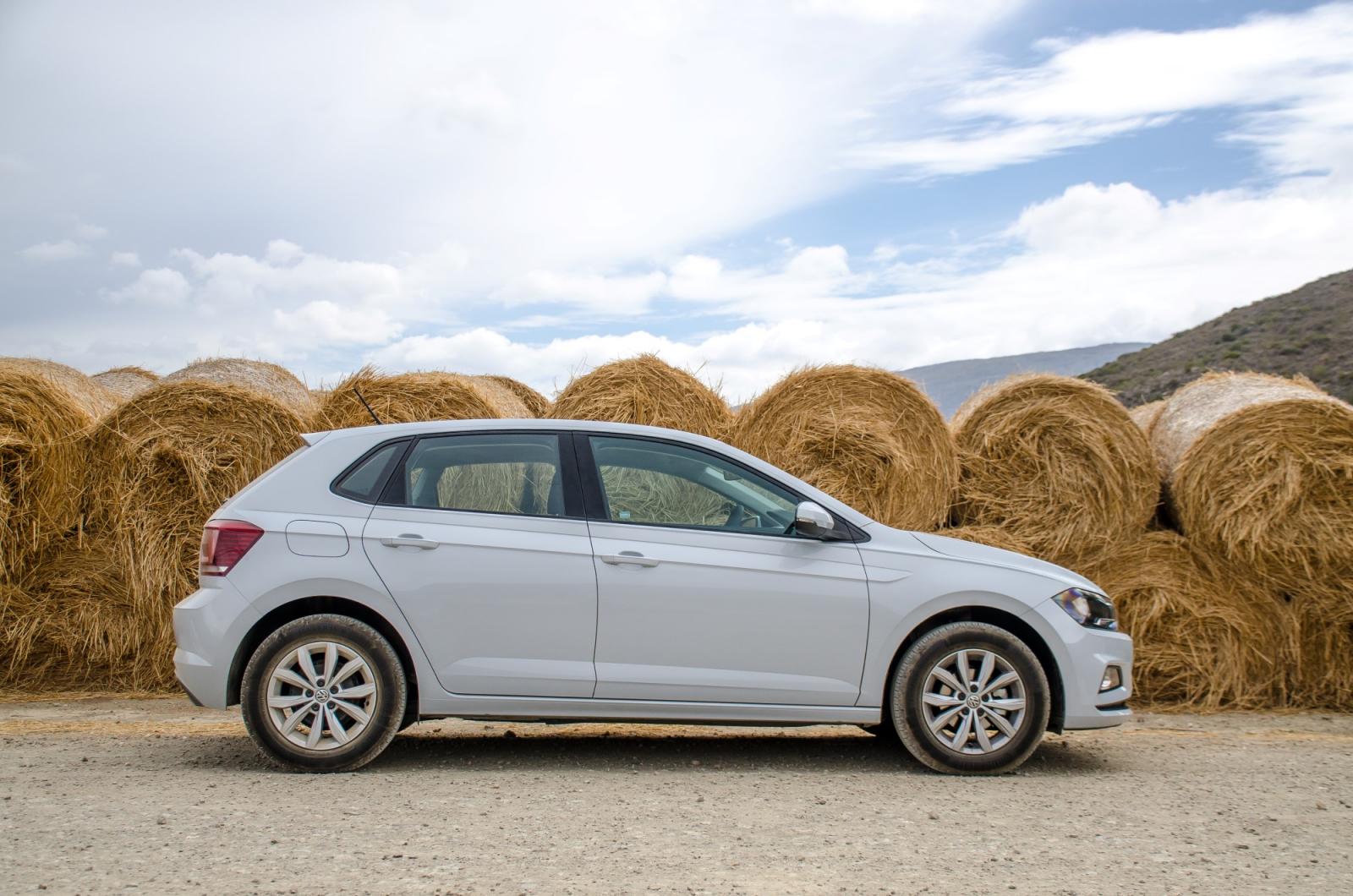
The Polo's ride quality is to be commended and it performed admirably on gravel.
The Polo’s ride and handling is a major highlight; Volkswagen's newcomer excels in delivering lofty driving comfort and we think it’s the class leader in this regard.
Most road imperfections are smartly absorbed and even though the suspension is sprung for optimal ride comfort, it still has a degree of firmness to it, which makes the Polo's responses to steering inputs feel direct and responsive. The steering is evenly weighted and because grip levels are high, the Comfortline can tackle corners with confidence. We also drove the test unit on gravel, where it fared surprisingly well. You are unlikely to be disappointed by the ride this new Polo delivers, it’s that good.
Interior styling and features
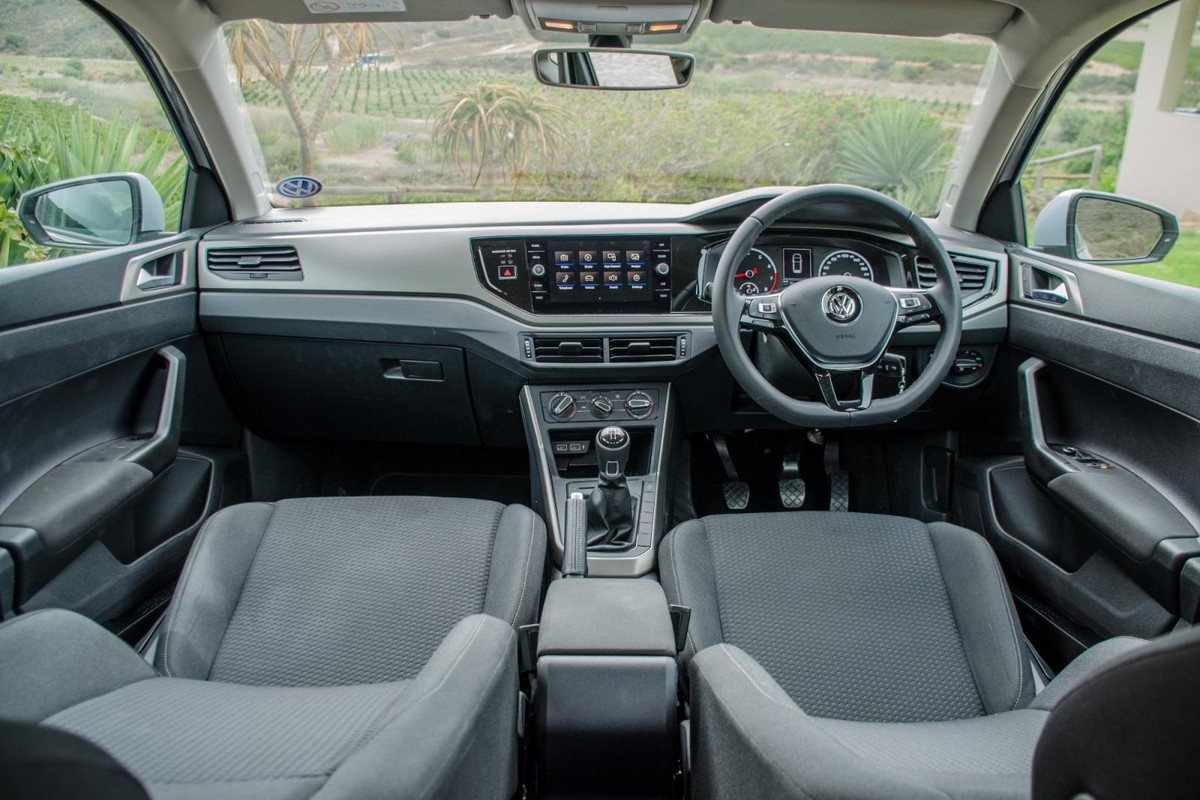
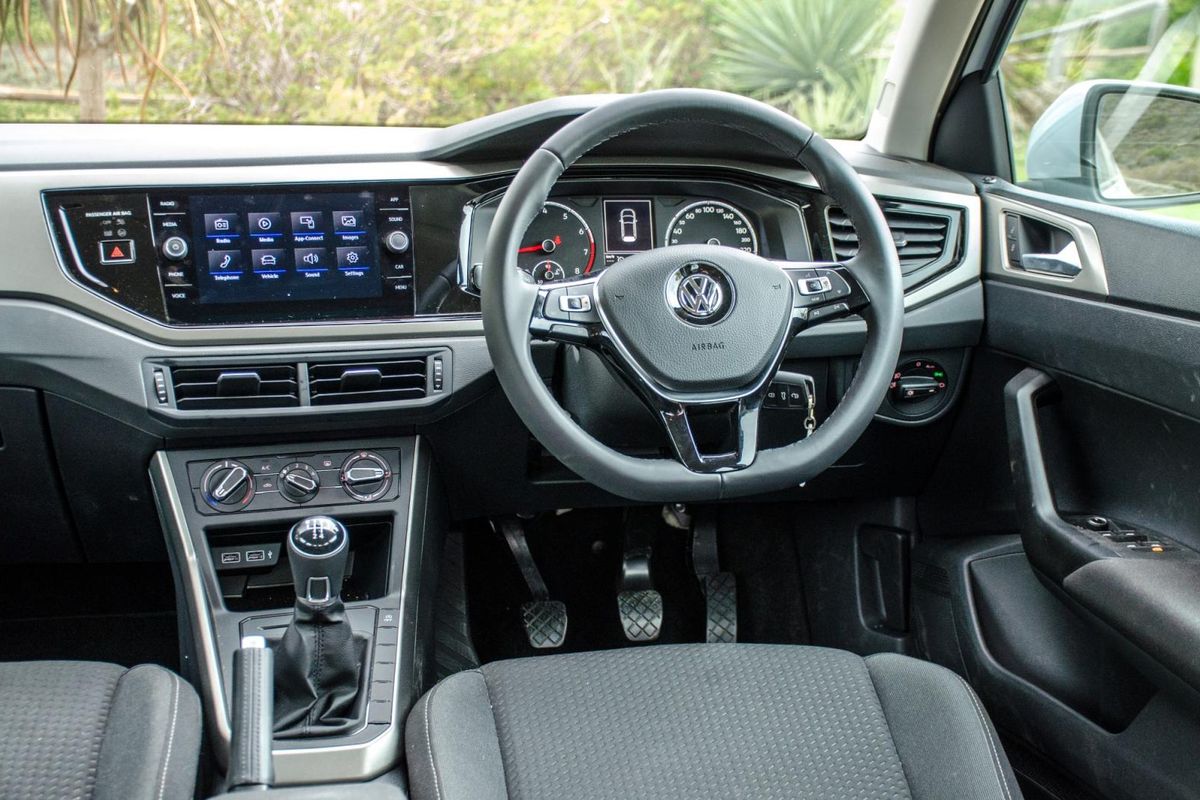
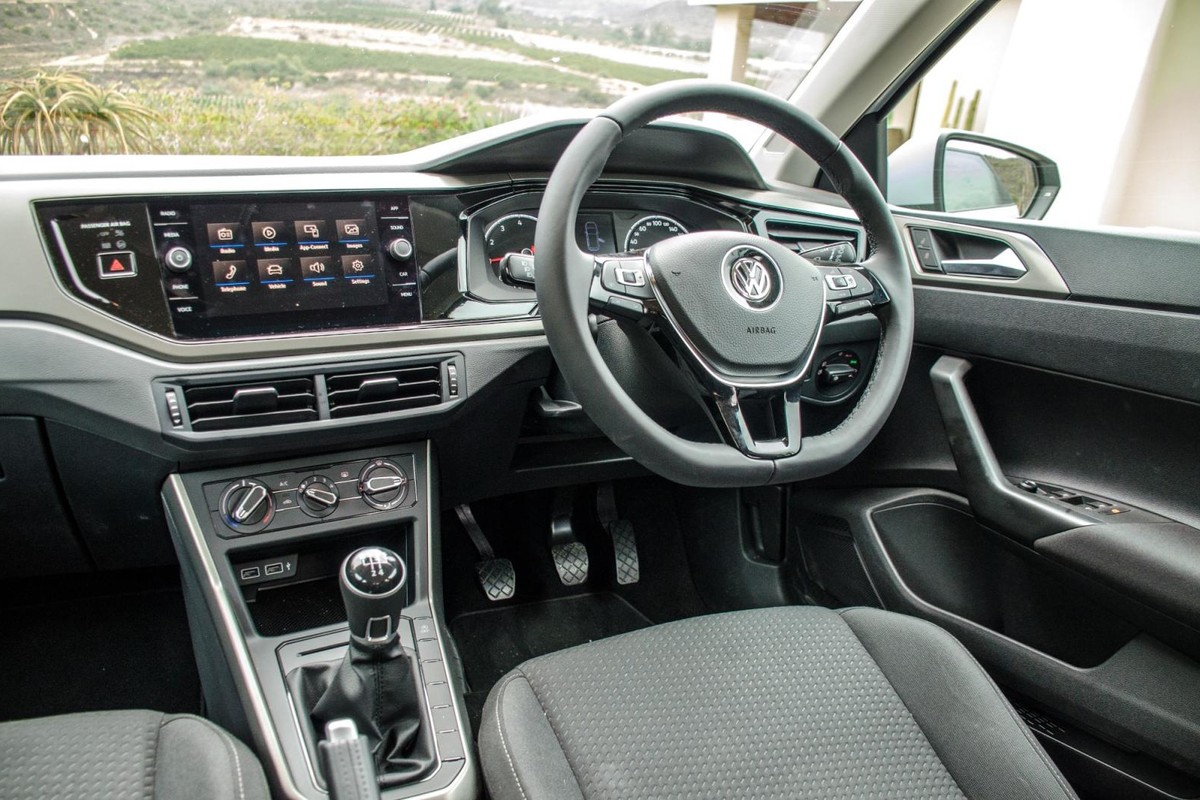
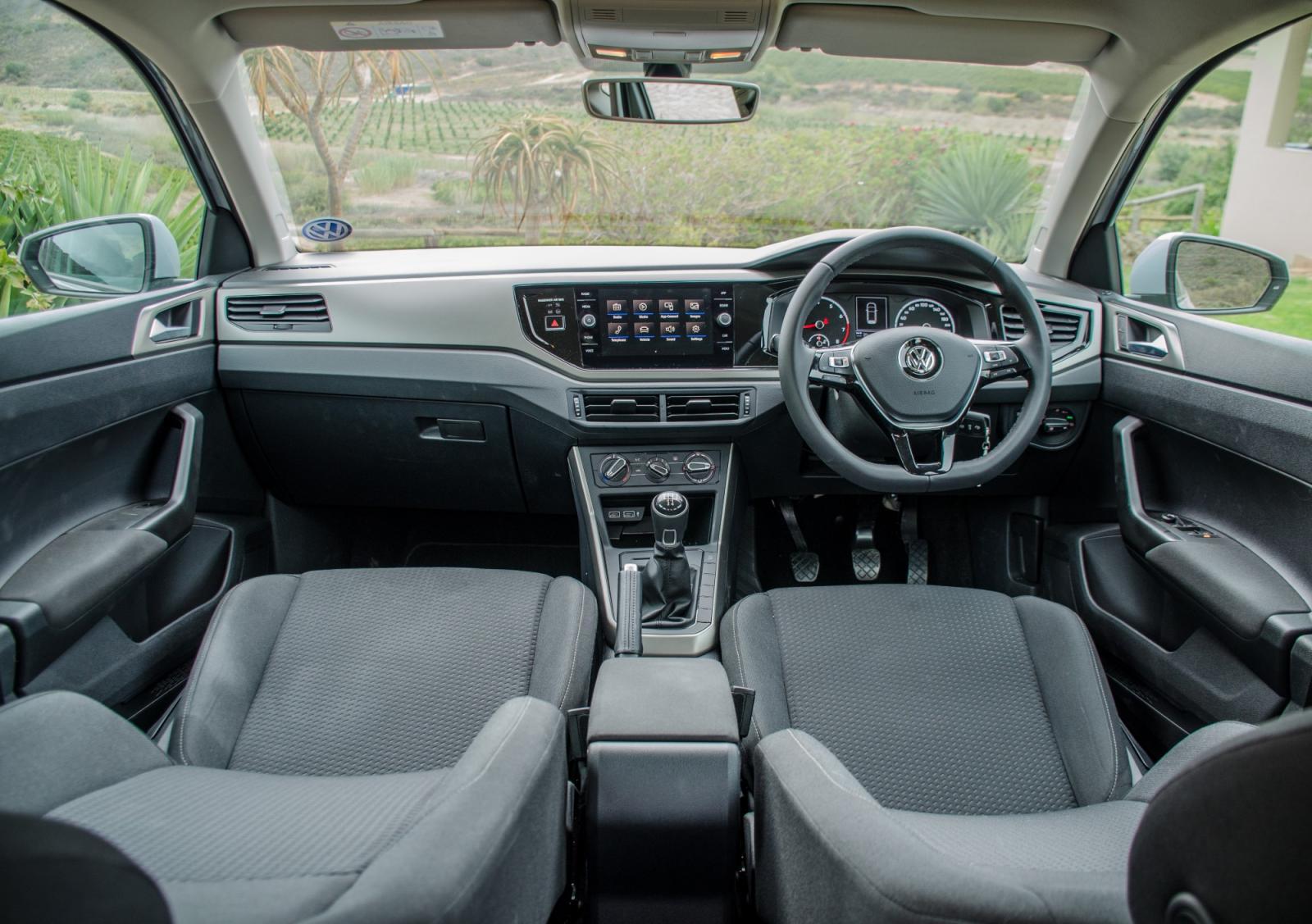
The Polo's interior exhibits excellent build quality – its simple and modern design will find favour with buyers.
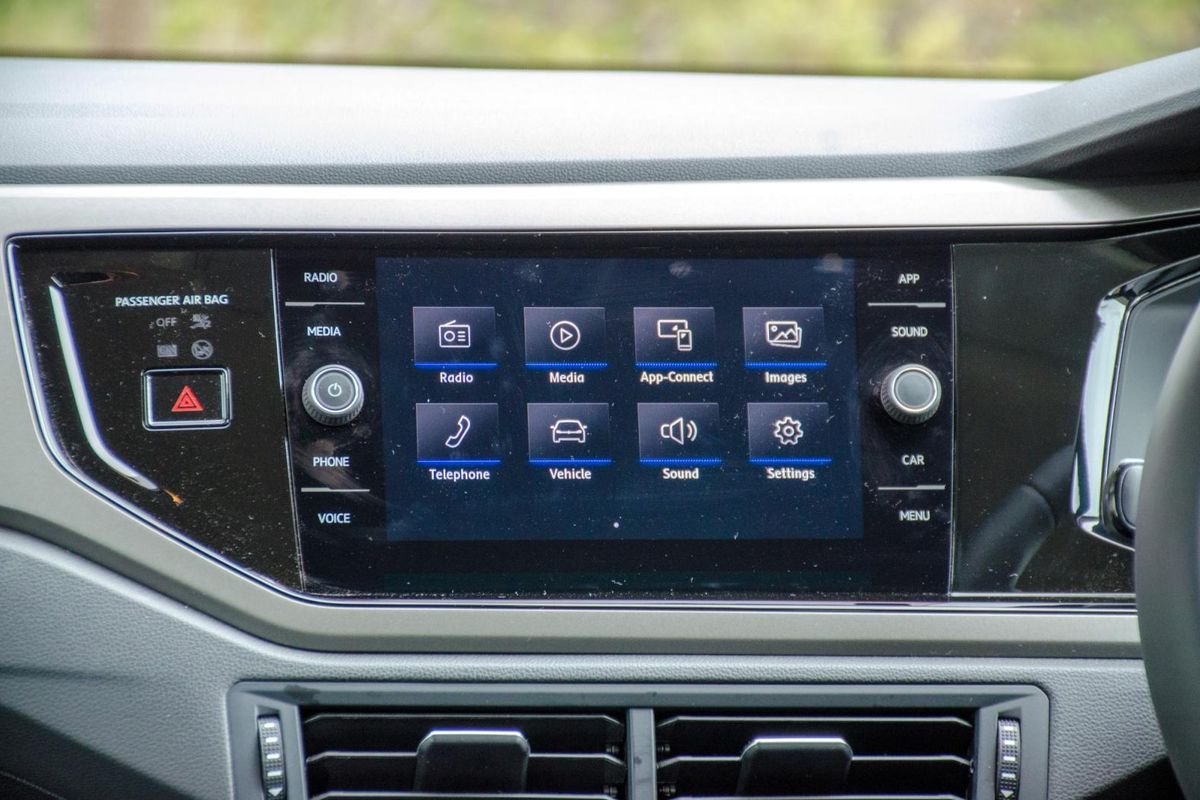
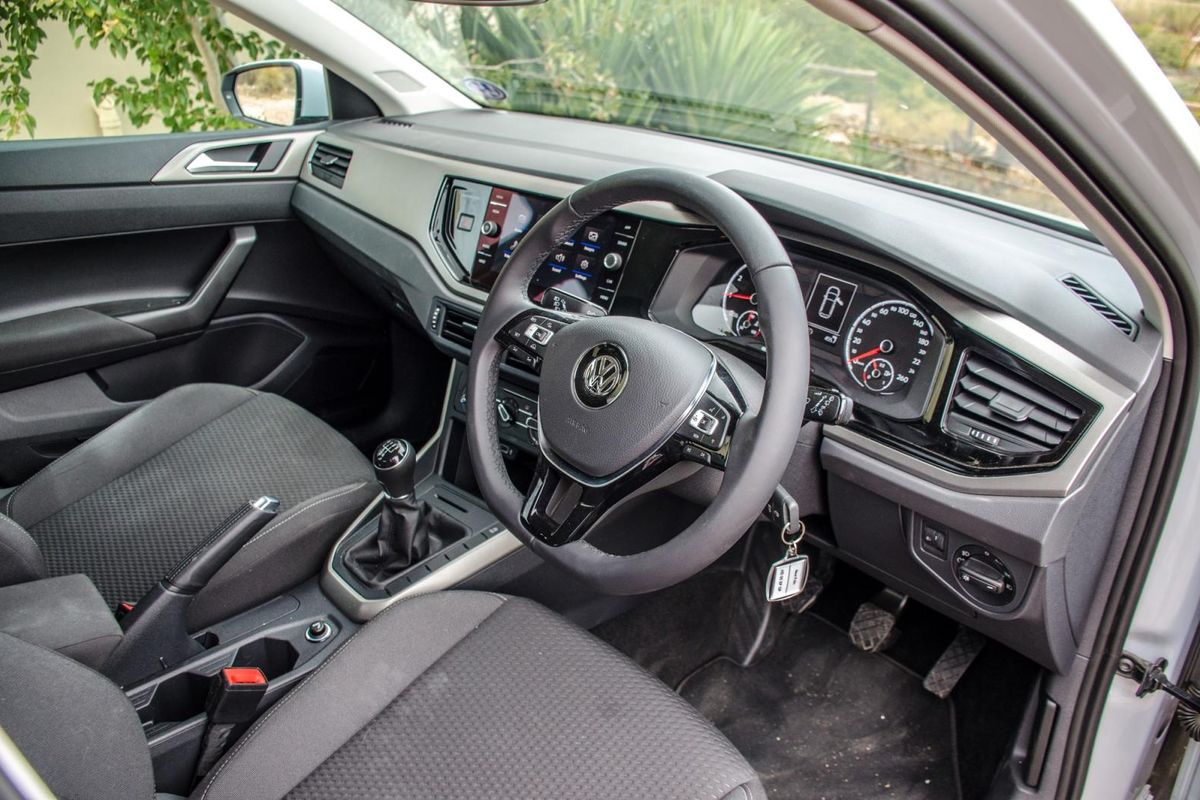
The Polo's interior is equally impressive; its elegantly simple, yet thoroughly modern cabin design drew unanimous praise from our testers. It looks and feels genuinely premium with a combination of both soft-touch and harder plastics. The cabin is solidly constructed and it’s hard not to notice the new, slick 6.5-inch touchscreen infotainment system, which has a perfectly logical layout and is very easy to use. It offers, inter alia, Bluetooth connectivity, MP3 playback and 2 USB ports to connect devices. The shiny screen does, however, attract fingerprints over time, but it’s easy enough to clean with a soft cloth. Navigation is offered as an option…
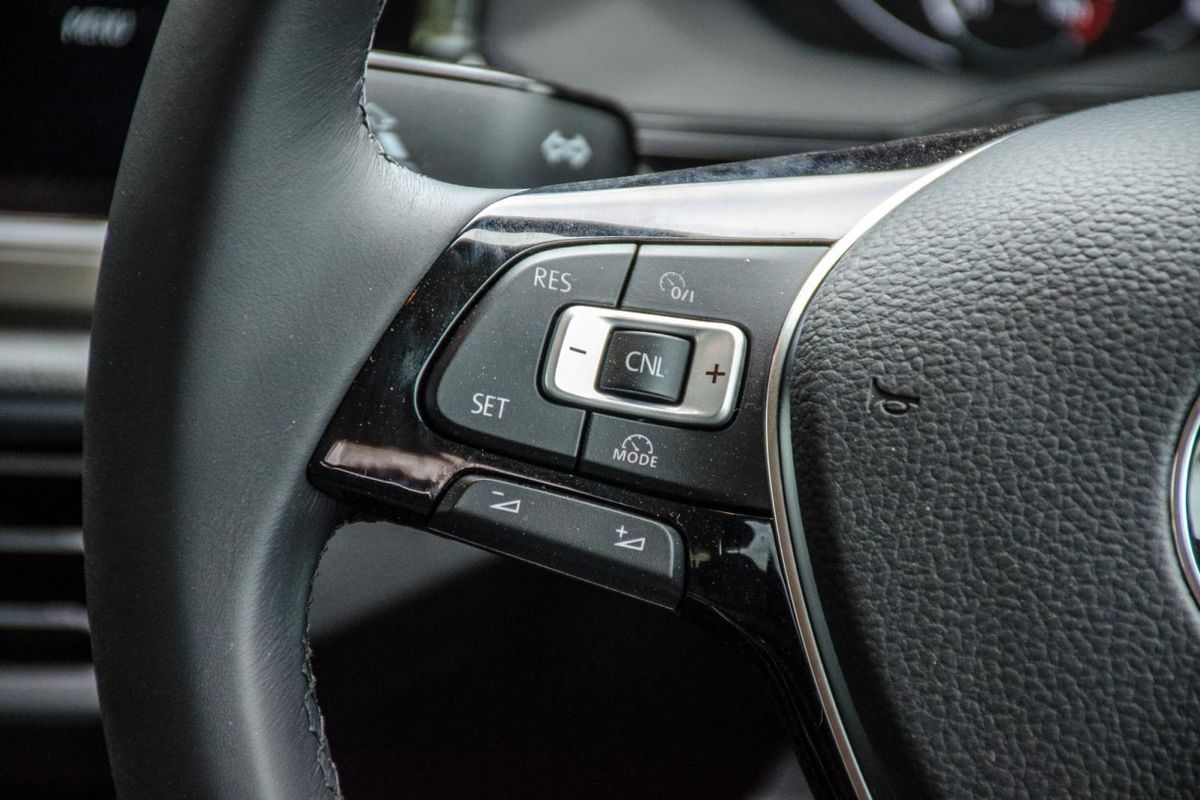
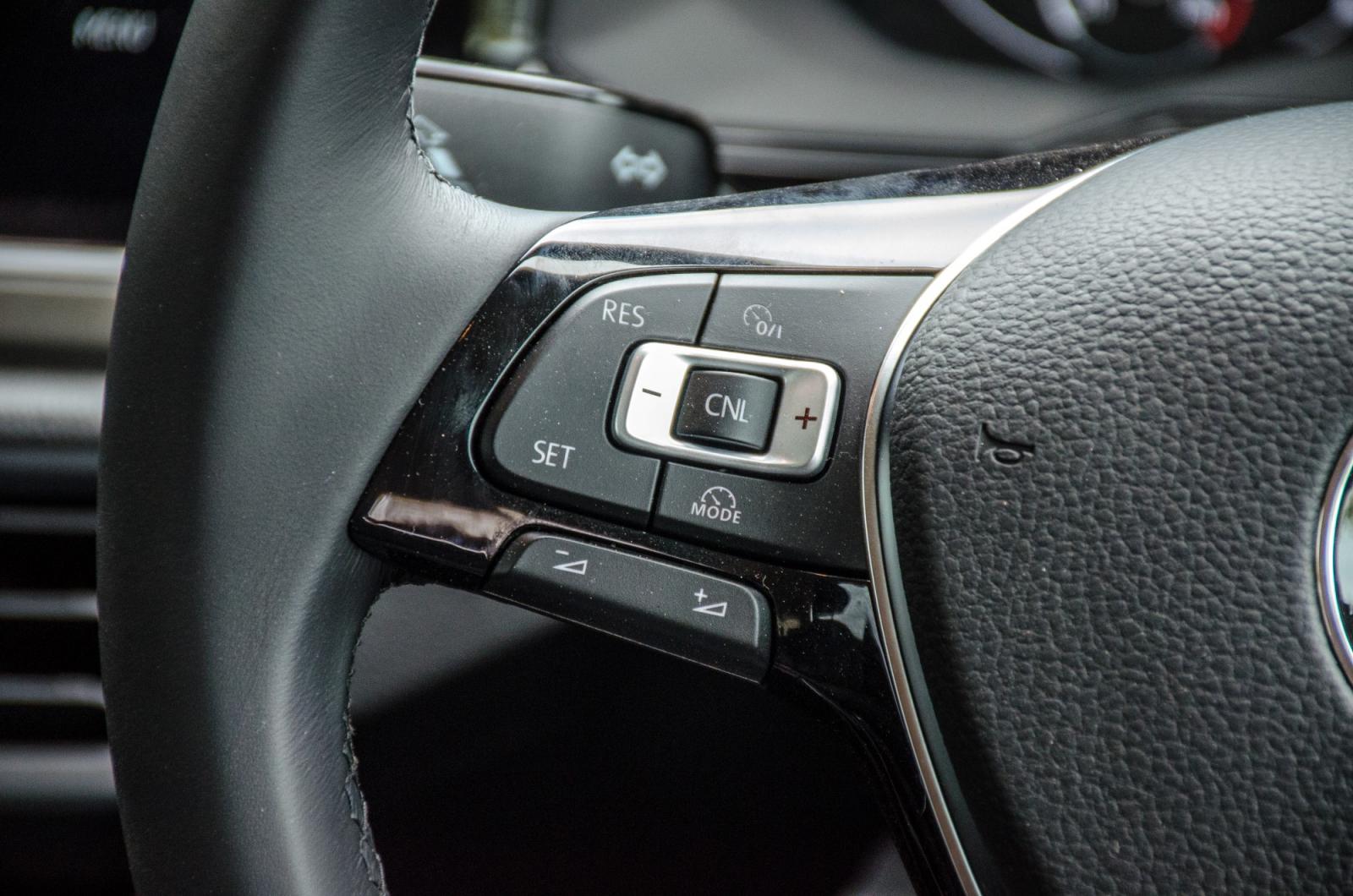
A multi-information display is located in the instrument cluster (Active Info Display is optional) and you can toggle through its menu using the steering mounted controls. The steering wheel itself is adjustable for rake and reach and combined with the manually height-adjustable driver’s seat, it’s easy to find a comfortable driving position.
The Polo Comfortline comes standard with cloth upholstery and we found the seats to offer average comfort. This test unit was also fitted with optional cruise control, which costs an additional R1 579. In terms of safety, this derivative is equipped as standard with 6 airbags, ABS with EBD, brake assist, electronic stability control and traction control. A host of additional driver assistance features is optionally available.
Practicality
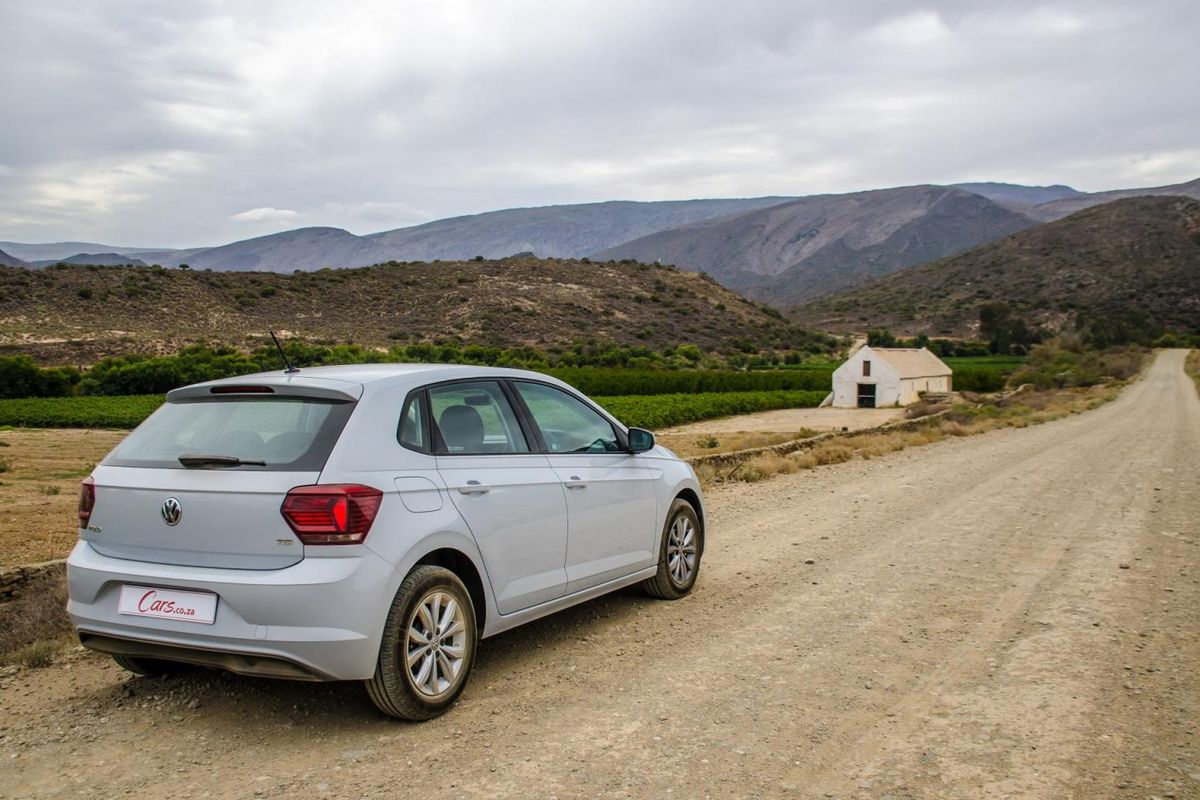
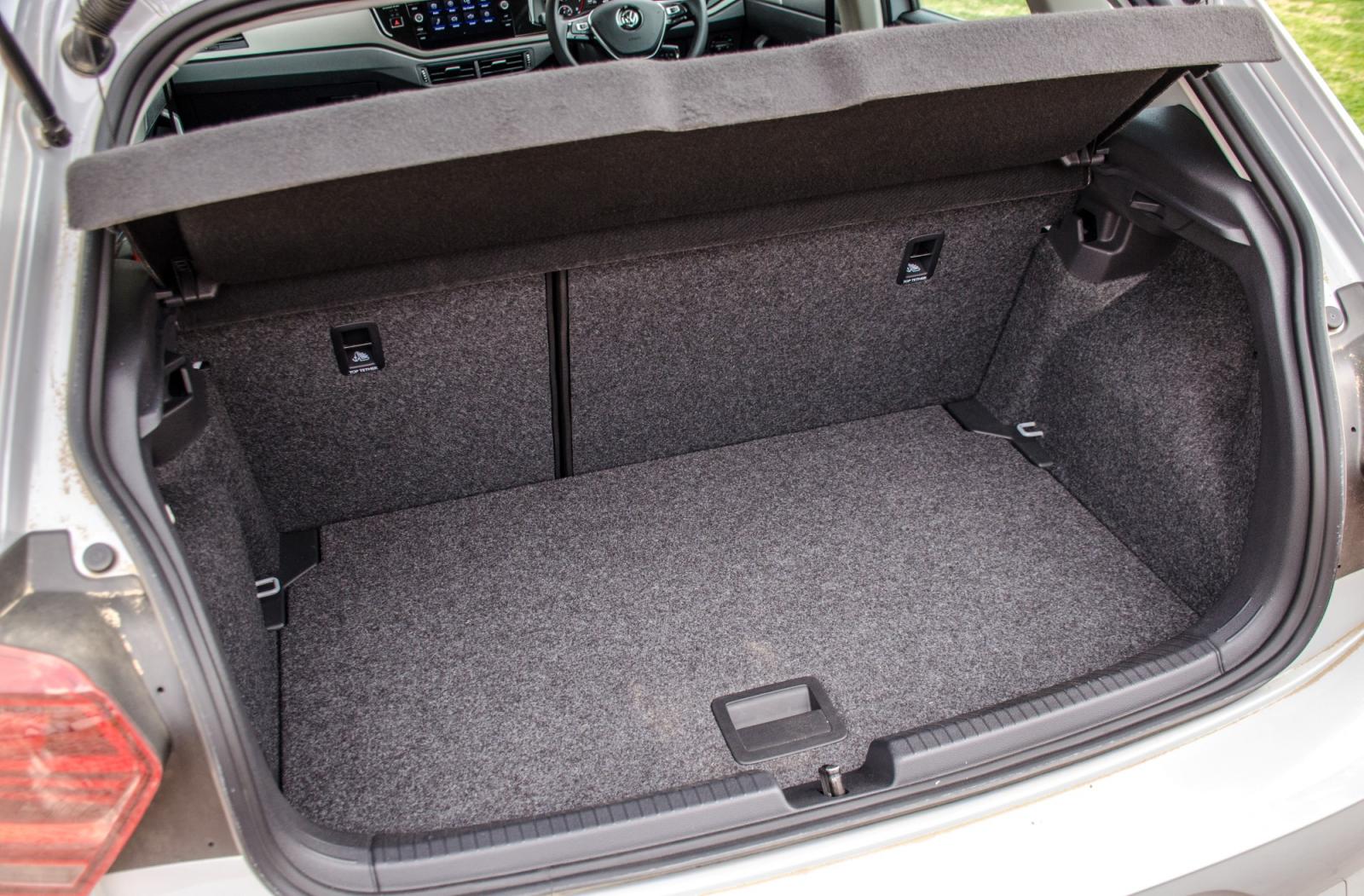
A major increase in load bay capacity will prove useful on out-of-town excursions…
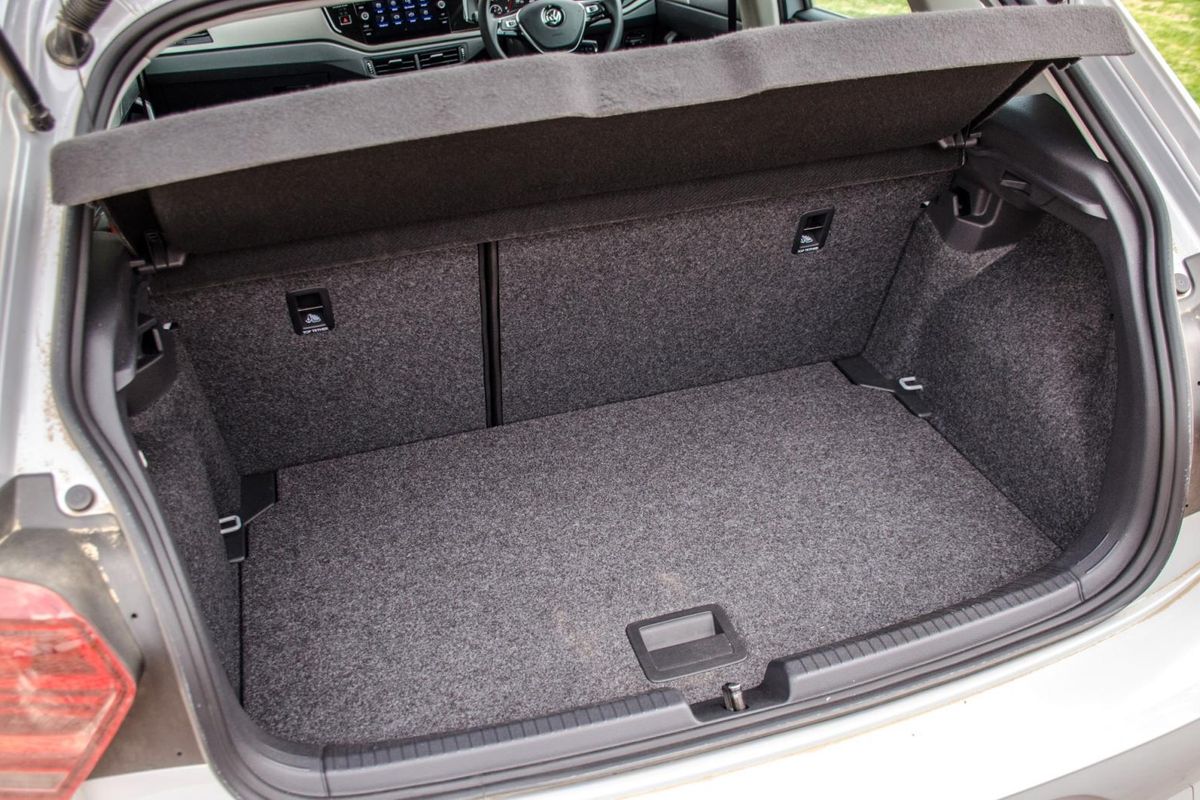
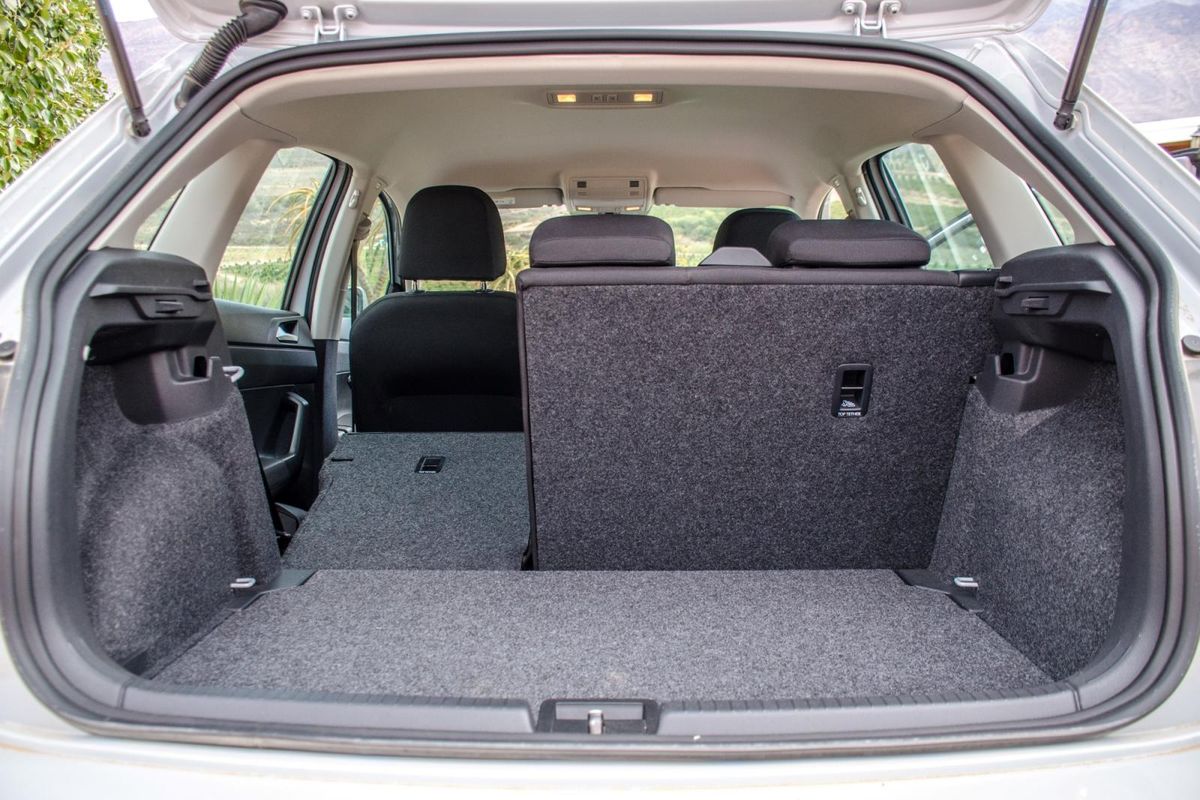
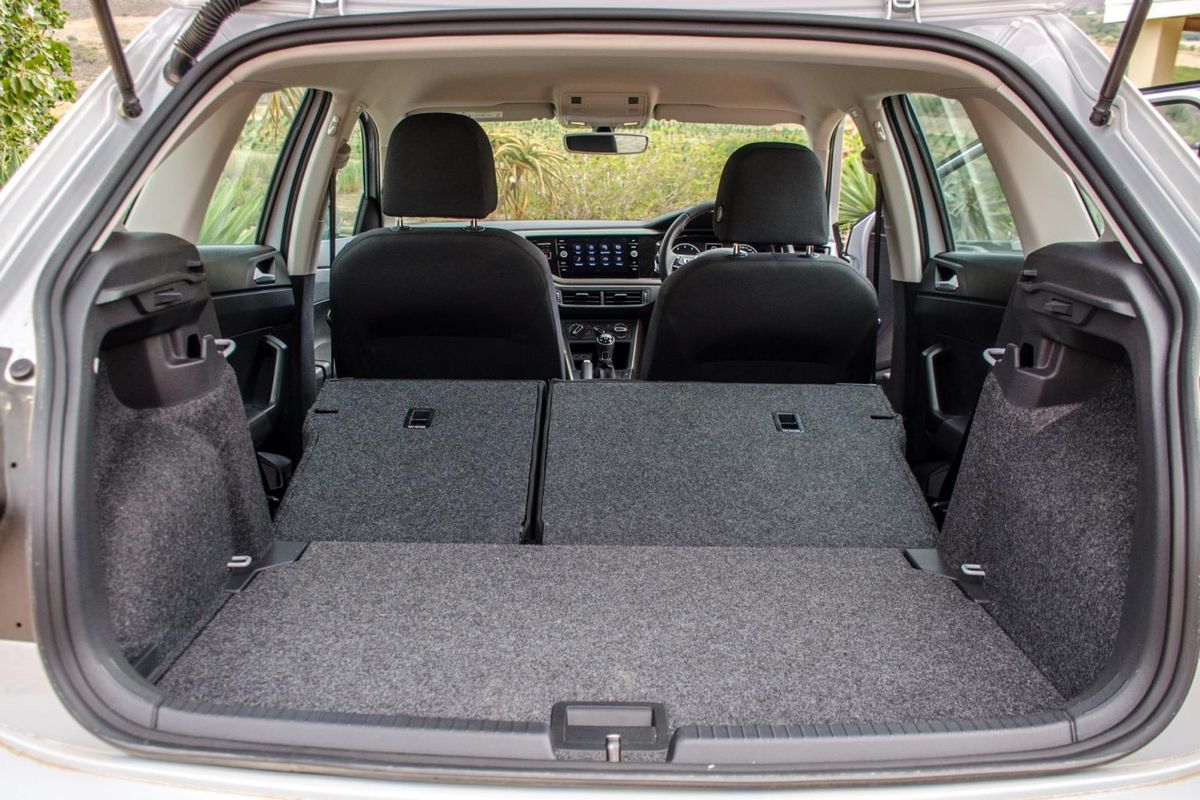
Thanks to its larger dimensions (courtesy of riding on the Golf's sophisticated MQB platform), the new Polo is more practical than the model it replaces and the first major benefit is the enlarged load bay, which is said to measure 350 litres (previously 280 litres), which represents a significant improvement. Furthermore, the rear seatback can split and fold forward in a 60:40 configuration, which allows you to access more space should you need to accommodate larger, bulkier loads.
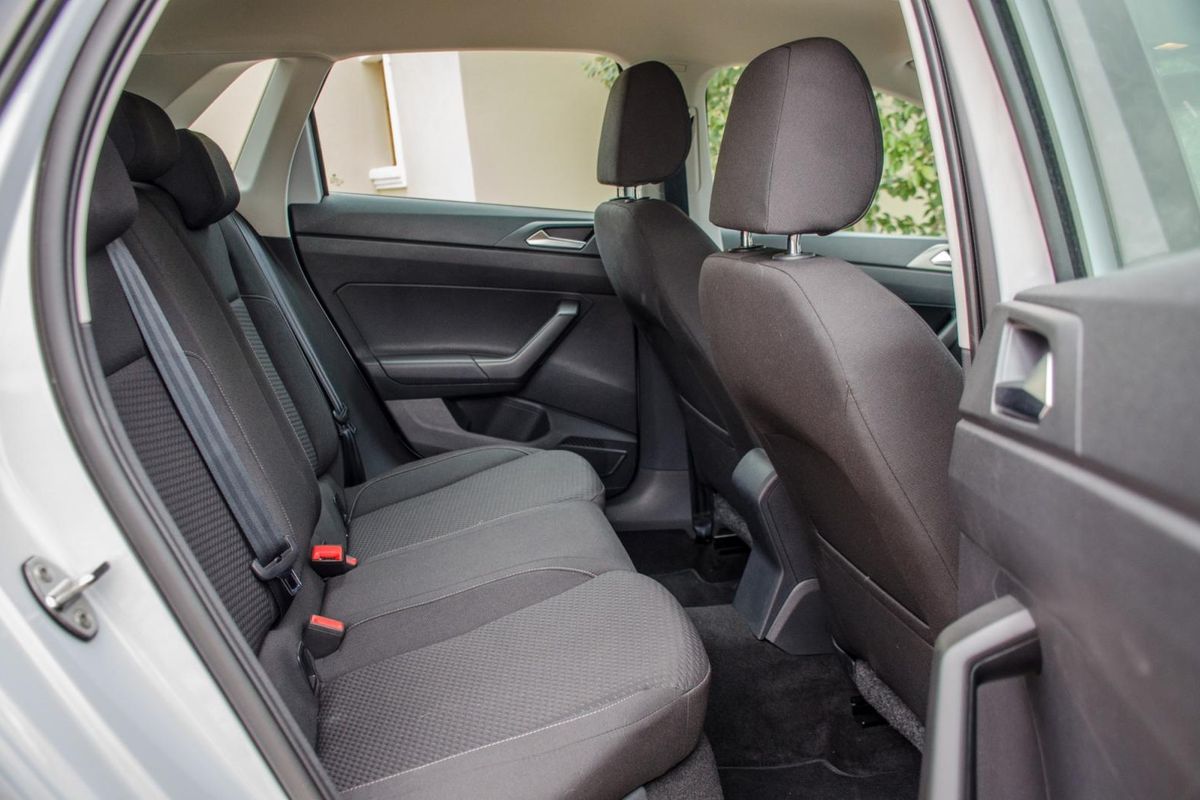
There’s adequate space for rear passengers (even a pair of average-sized adults will fit in the back) and bottle holders are availed in each and every door moulding. There is also a pair of cup holders for the driver and front passenger, which is always handy for those in-car coffee breaks.
The Not-so-good
Can become pricey due to options
Although standard specification is fair, adding nice-to-have options can prove to be costly
The new Polo Comfortline is difficult to fault as an overall product, but some criticism can be levelled at its price and specification when compared to its main rivals, some of which offer more comprehensive standard feature lists for less money.
Features such as cruise control (R1 579), front and rear park distance control (R2 763), a reverse-view camera (R2 851) and satellite navigation (R10 526) are offered as options, which, if selected, will see the asking price soar to more than R280 000. Then, if you tick off some of the more luxurious optional features such as Active Info Display (R7 544) and panoramic sunroof (R9 211), you are looking at a total price of closer to R300 000!
The Comfortline, if generously specced, is an expensive proposition, albeit a quality one. Buyers are therefore advised to choose optional features prudently.
Price and warranty
The Volkswagen Polo 1.0 TFSI Comfortline manual is priced at R264 700 and is sold with a 3-year/120 000 km warranty and 3-year/45 000 km service plan. If you want the convenience of an automatic, the Polo Comfortline DSG is priced from R280 700.
The Polo Comfortline is a capable all-rounder that deserves consideration, but quality comes at a price.
The new Polo is a quality product – perhaps the best in its segment – courtesy of an impressive ride/handling balance and an admirably designed and -produced interior. Buyers should find the Comfortline derivative’s performance adequate for most daily tasks and its excellent fuel efficiency is a bonus. Although it’s not underpowered, we suspect that the sparkle of the Volkswagen's performance will lessen somewhat when it's fully loaded with passengers and luggage… It could do with a little more power.
Furthermore, the Polo Comfortline strikes a good balance in terms of standard specification, but it can become pricey once you start ticking boxes on the extensive options list. The Volkswagen will, however, hold its value longer than most and its price and can be partly justified by robust resale values in the used car market.
Some rivals, such as the Renault Clio, for example, offer a longer warranty and more comprehensive standard spec, so buyers will have to weigh up their priorities. Be that as it may, the Polo Comfortline is a well-rounded product that’s likely to claim the lion’s share of local sales… It should most definitely be on your shopping list.
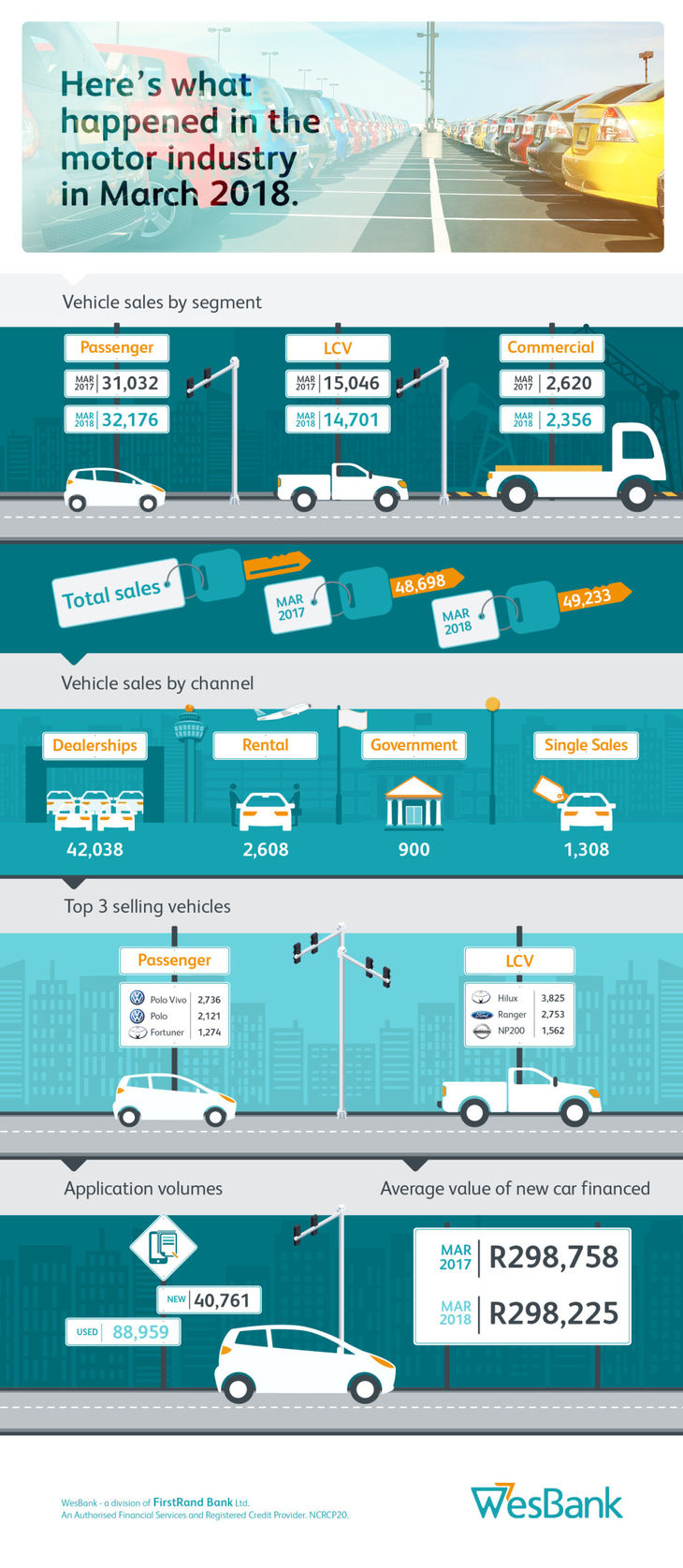
New car sales soared to new highs in March 2018 according to the National Association of Automobile Manufacturers of South Africa (NAAMSA) but commercial vehicle sales remained under pressure while exports declined as a result of BMW’s switchover in production from the 3 Series to the X3.
Despite all the public holidays in March 2018, new passenger car sales achieved the highest level yet for this year recording an increase of 3.7% year-on-year and with 90.2% of sales occurring through the dealer channel, The improvement has been attributed to pre-emptive buying by consumers to avoid the increase in value added tax, new vehicle emissions taxes and ad valorem duty changes announced in the budget.
“Following the budget speech indicating an increase in VAT and ad valorem tax from 1 April, it is our view that consumers opted to avoid the increases these factors will have on vehicle purchase prices. These, combined with the renewed consumer and business confidence, and a reduction in the repo rate contributed to the growth in the passenger car segment,” said Ghana Msibi, WesBank’s Executive Head for Sales and Marketing.
Light Commercial Vehicle (LCV) sales declined marginally by 2.3% while exports registered a significant decline of 8.1%, mainly due to BMW switching from 3 Series production to X3 production at its plant in Rosslyn, Pretoria.
New Car Sales Summary for March 2018
Aggregate new car sales of 49 233 up by 1.1% (+535 units) compared to March 2017
New passenger car sales of 32 176 up by 3.7% (+1 144 units) compared to March 2017
LCV sales of 14 701 down by 2.3% (-345 units) compared to March 2017
Export sales of 27 438 down by 8.1% (-2 421 units) compared to March 2017
Most popular car brands in SA for March 2018
Toyota: 11 378 units sold with a market share of 23.1%
Volkswagen: 7 541 units sold with a market share of 15.3%
Ford: 5 595 units sold with a market share of 11.4%
Nissan: 5 410 units sold with a market share of 11.0%
Hyundai: 3 065 units sold with a market share of 6.2%
According to NAAMSA, the medium-term prospects for the local economy had improved following Moody’s decision to retain South Africa’s international and domestic credit rating at investment grade with a stable outlook as well as an interest rate reduction of 0.25%.
More so, the stronger Rand should have a positive impact on new vehicle price inflation and economic growth may recover to about 2.0% in 2018 as business and consumer confidence stabilises further. These factors are expected to impact positively on domestic new car sales during the course of the year. NAAMSA predicts a 3.0% improvement in new car sales volumes for 2018 compared to 2017. Strong global economic growth will support the export market and a modest increase in export sales is expected during the balance of 2018.
The M760Li xDrive is as close as we're likely to get to BMW offering an M-derivative of its 7 Series first class car, but does the flagship derivative manage to combine the seemingly disparate characteristics of a purist's driving machine, on the one hand, and a plush limo' on the other?
We like: Shattering performance, good value, split-personality dynamics, standard tech spec
We don’t like: Slightly fidgety low-speed ride on poor surfaces (even in Comfort), likely depreciation
Alternatives:
Brutish Benz: These days, you can choose from 3 grades of S-Class – there is the "standard" Benz model, the fiery AMG, and don't forget the opulent Maybach derivatives. We think the most obvious rival to the M760Li is the AMG S65, sold here in long-wheelbase "L" trim only. It has slightly more power from its turbocharged 6.0-litre V12 and an extra 200 Nm of torque. Nevertheless, the rear-wheel drive Mercedes is slower to 100 kph, and lacks the driver engagement and accuracy of the BMW. It is also more than R500k more expensive! Read our launch review of the recently facelifted S-Class here.
Avantgarde Brit: Until Audi's all-new A8 arrives in South Africa, another alternative could come in the form of the mostly forgotten Jaguar XJ. The recently released XJR575 derivative features a 423 kW supercharged V8 engine, so it is not short on grunt. Nevertheless, it can't keep up with the BMW and Benz, and while its interior is visually striking, it lacks the definitive prestigiousness that makes the S-Class and 7 Series so desirable. It should be a hoot to drive, though. Not offered in long-wheelbase, so if your demands lean more towards the luxury limousine side, it may fall out of consideration. Find out more here.
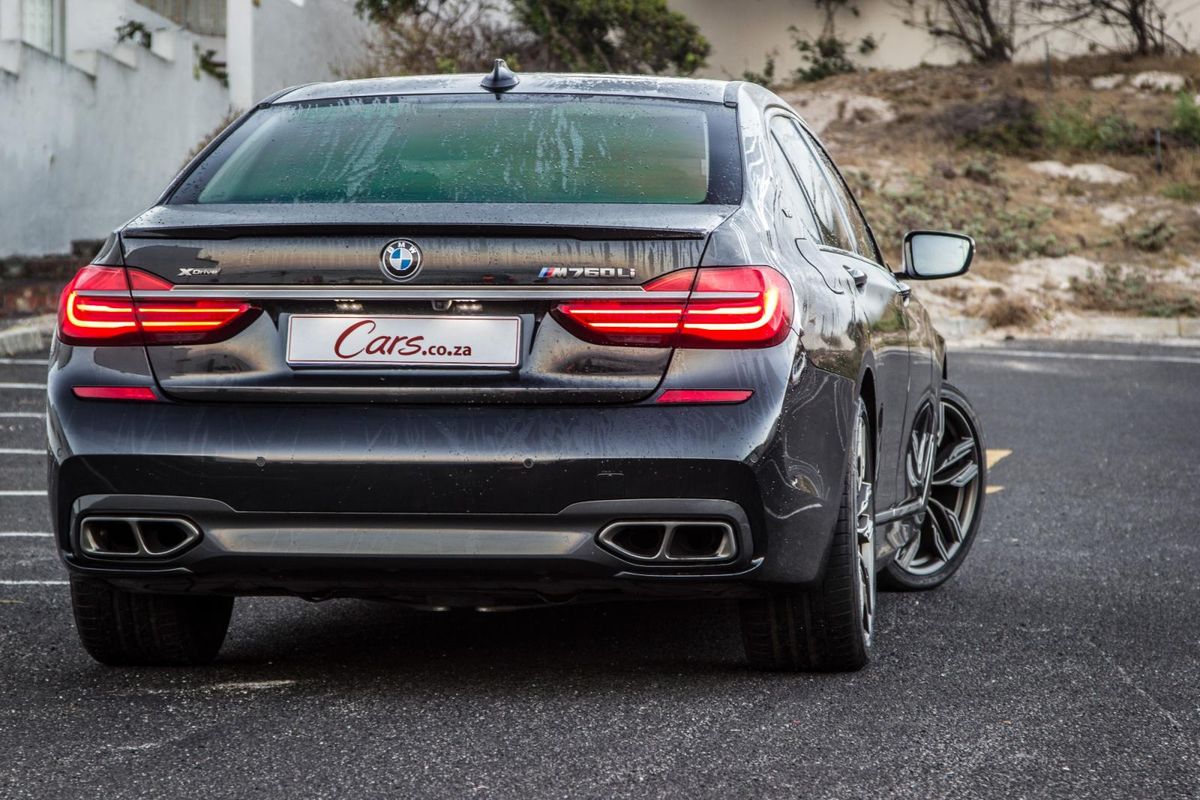
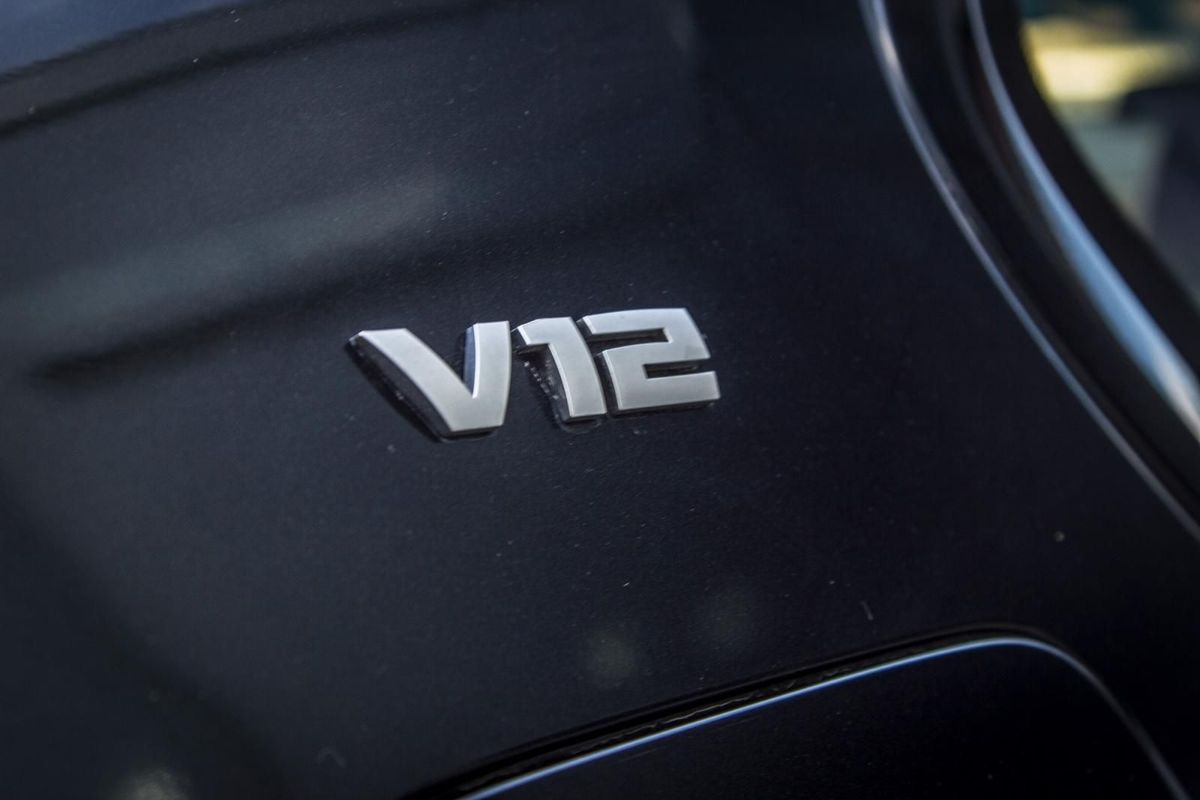
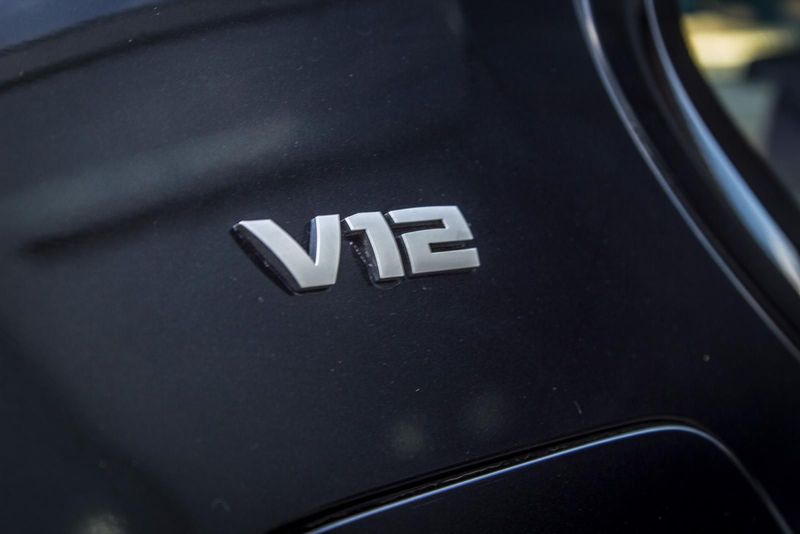
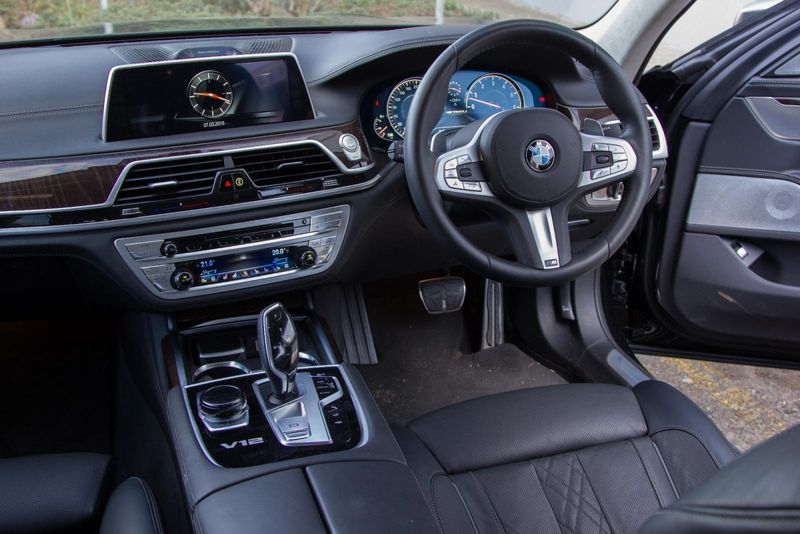
A V12 badge is rarer than ever these days, and a clear sign that you're driving the ultimate Seven.
Facts & Figures
Price: R2 801 836 (March 2018, no options)
Engine: 6.6-litre, V12 twin-turbo petrol
Transmission: 8-speed automatic
Power: 448 kW
Torque: 800 Nm
Fuel consumption: 12.8 L/100 km (claimed)
0-100 kph: 3.7 seconds (claimed)
Top speed: 250 kph (claimed/limited)
Attempting the impossible?
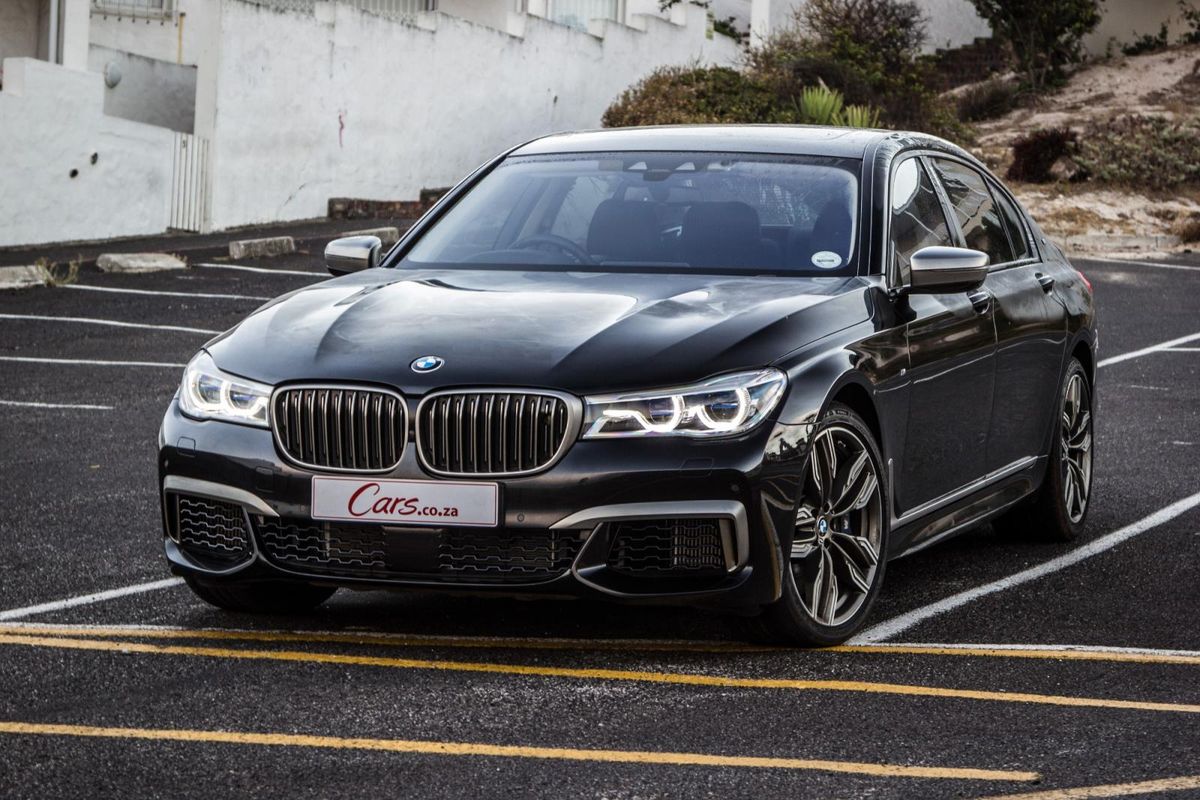
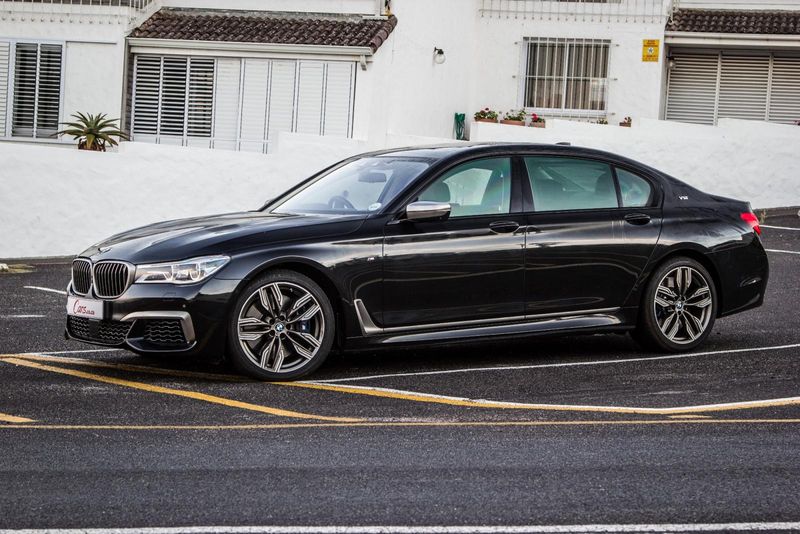
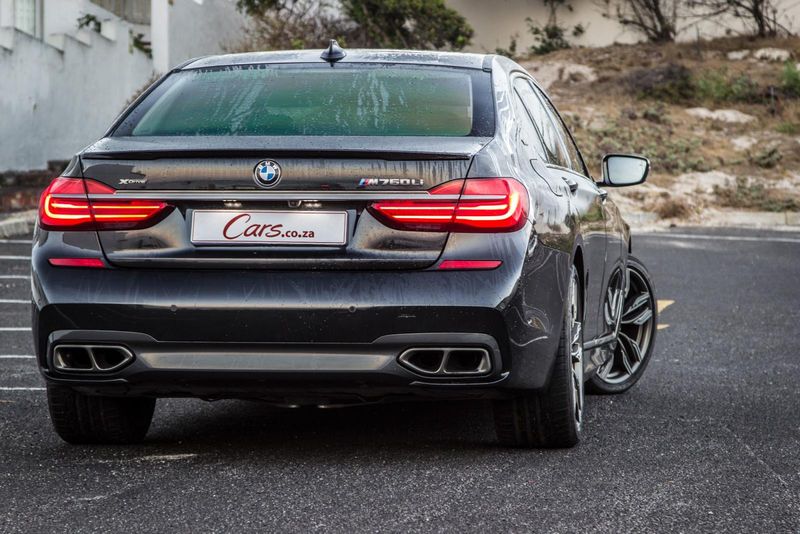
Finished in black and with the M Aerodynamic kit (standard) the M760Li looks sinister.
Right now, if you crave a heady cocktail of high performance, luxury and technology and you have a budget that stretches to around R3 million, BMW's new flagship 7 Series has arguably elbowed its way to the front of the consideration queue. After all, we know the latest 7 Series positively bursts with technology and clever – and some not-so-clever – features. Also, in long-wheelbase form, and with the right option boxes ticked, it has the stretch-out-and-relax appeal of a private jet. And now, with the addition of a twin-turbocharged 6.6-litre V12 borrowed from Rolls-Royce, it's got the performance of a supercar…
The question is, however, whether the newcomer is able to fulfil all of the expectations created by its eyebrow-raising specification sheet.
The Good
Iron Fist in Velvet Glove Performance
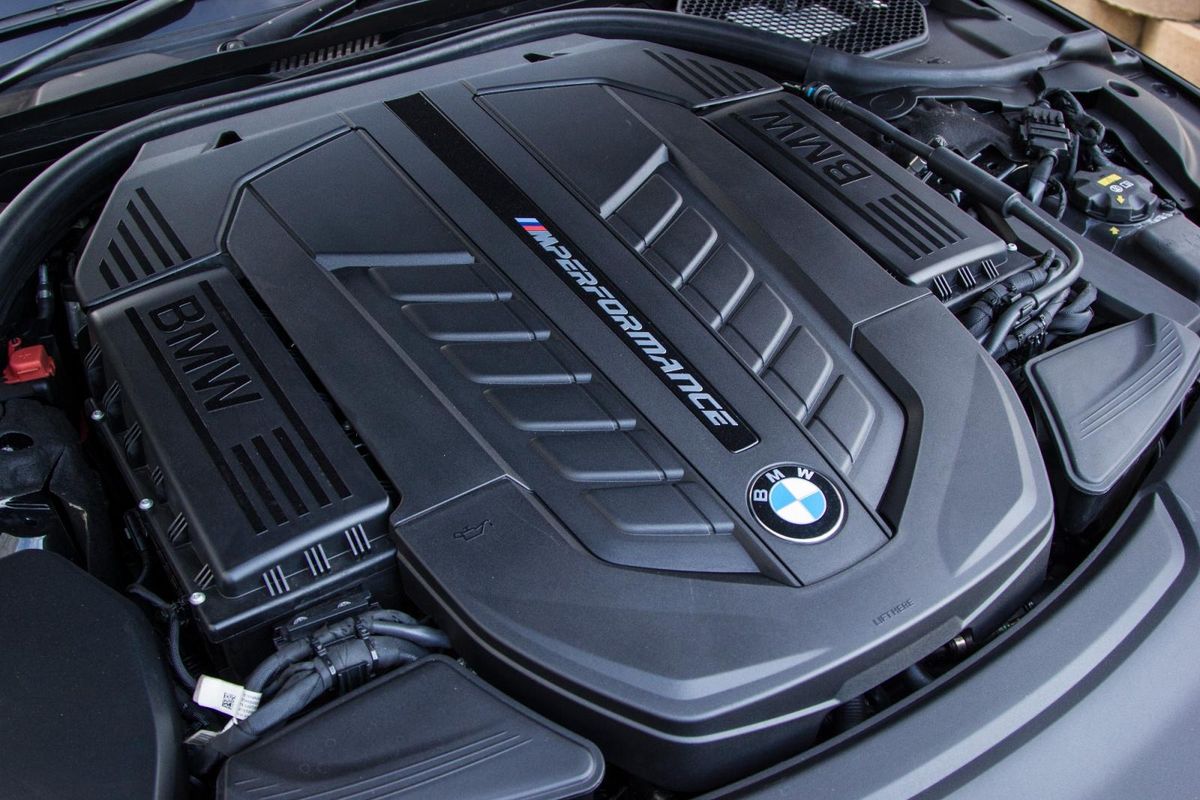
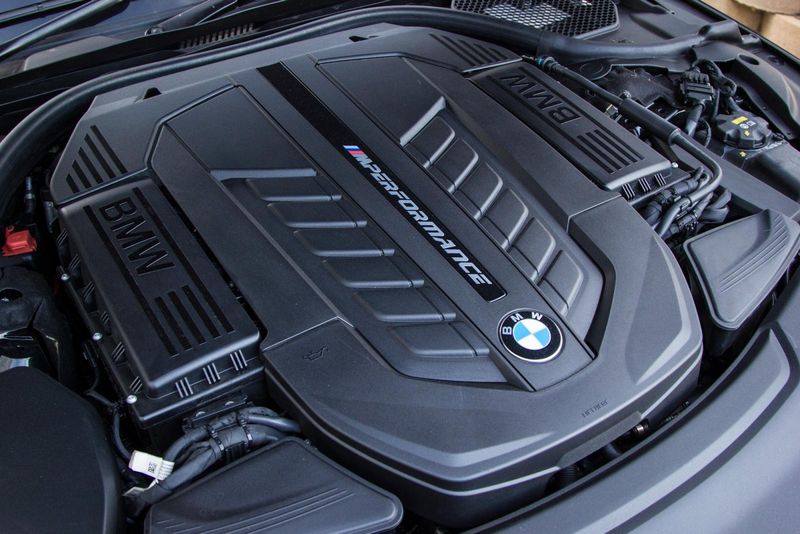
Underneath all of that black plastic nestles a 6.6L V12 with 2 turbochargers. Lag? What lag?
The M760Li's 6.6-litre V12 features a narrow, 60-degree V configuration, with the 2 compact monoscroll turbochargers positioned outside (and plumbed into) each of the pair of 6-cylinder banks. Maximum power of 448 kW is delivered at 5 500 rpm, and the full 800 Nm of torque becomes available from as low as 1 500 rpm. So… there's an awful lot of power on offer, and yet, when you first fire up the M760Li the immediate impression is one of refinement – very typical of a 12-cylinder motor, because it is inherently better balanced.
To transmit all that power BMW has employed an 8-speed Sport automatic transmission with M Performance-specific tuning to deliver "sportier" gearchanges. Of course, the character of the transmission changes as you scroll through the various drive settings; there are manual shift levers too, but an unexpected addition is a Launch Control function, fitted as standard.
There is nothing that can quite prepare occupants for the shock of experiencing a car as large as this launching from standstill to 100 kph in only 3.7 seconds. That figure, by the way, means it completes the benchmark sprint faster than any other current production BMW, barring the all-new M5 (3.4 sec). Pay a little extra (well, R40 500 to be exact) and you can get the M Driver's Package, which increases the top speed from the standard, electronically limited, 250 kph to an eye-popping 305 kph!
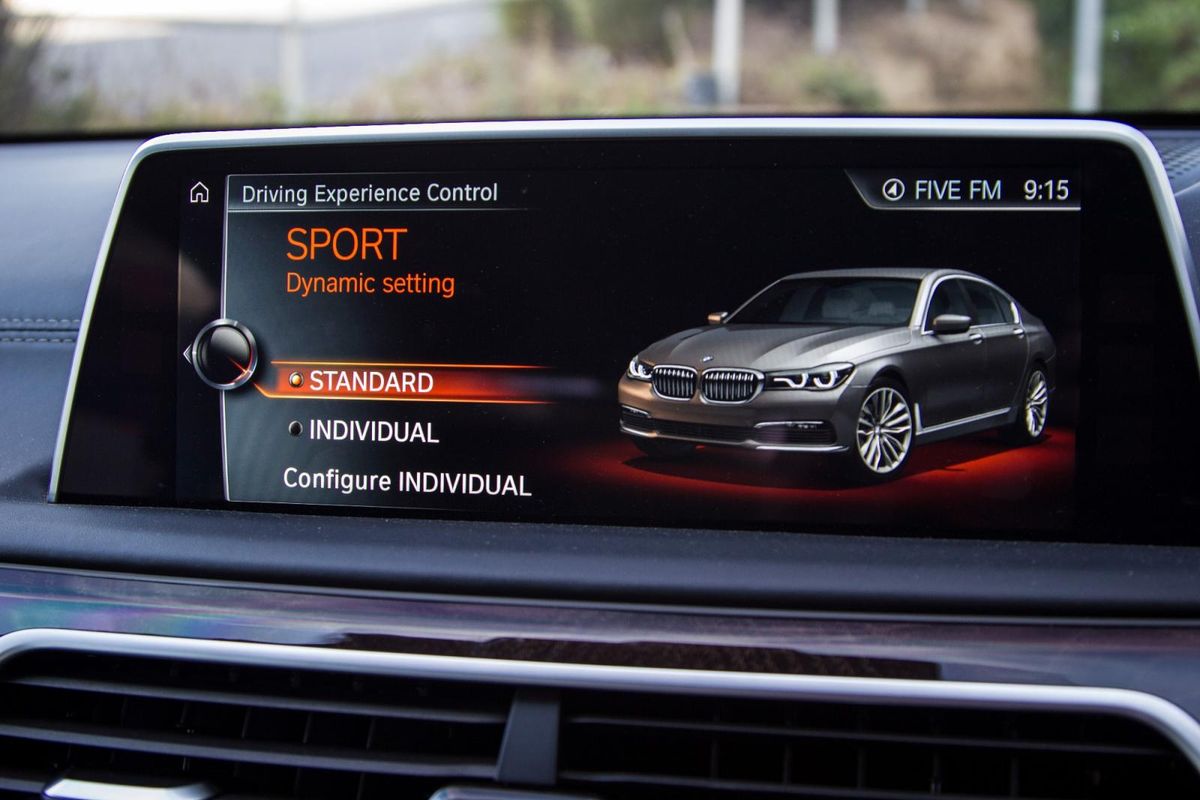
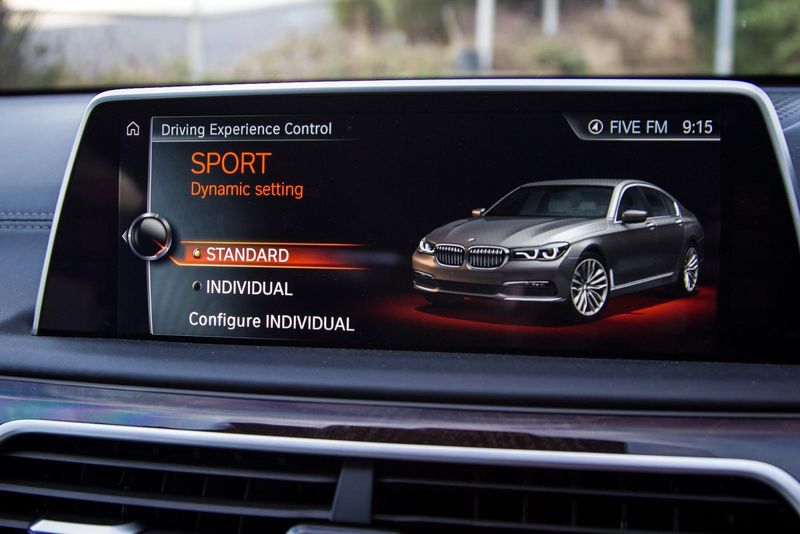
Various adjustable settings give the M760Li an astonishing breadth of talents.
However, the numbers tell only half the story. Pottering around town, the engine is quiet, refined… it purrs. Be gentle with it and you could even get quite close to BMW's claimed fuel consumption figure of 12.8 L/100 km. In fact, when the Bimmer's driven in its default setting, the accelerator pedal and transmission respond intuitively to driver inputs – as if to strike a fine balance between delivering first-class-car refinement, as well as subtle reminders of the potential that rests under the M760Li driver's right foot.
However, switch the BMW to its sportier modes and the M760Li comes alive with a furious snarl. Given the type of car that this is, we feel just enough of the sound reaches occupants' ears, courtesy of an active M Sports Exhaust system. BMW has definitely not made it loud, just for the sake of being loud… and that's a good thing.
So while the sound won't explode your eardrums, the relentless nature of the power delivery could blow your mind. Because the thrust builds so quickly from such low revs, and because the rev limiter is at nearly 7000 rpm, at which point the M760Li still pulls strongly, the rate of acceleration can feel scarily fast when you keep your foot planted to the floor.
Spread of dynamic talents
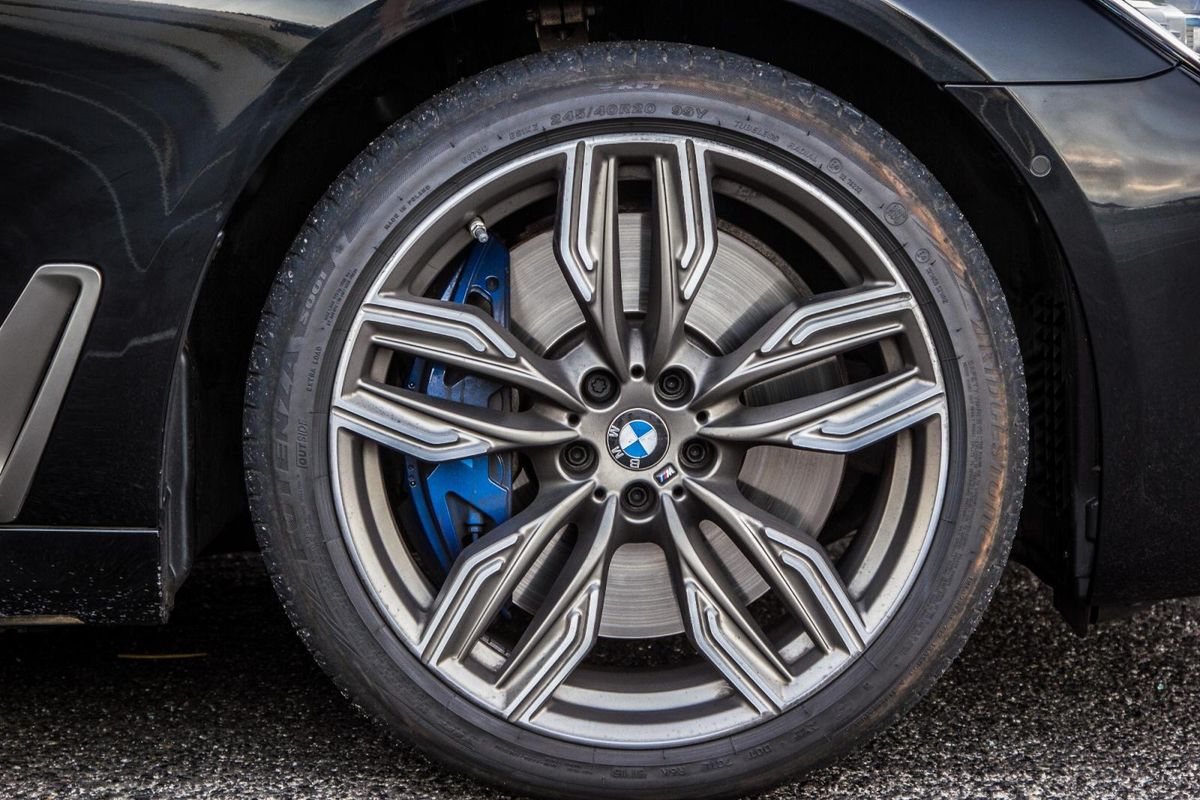
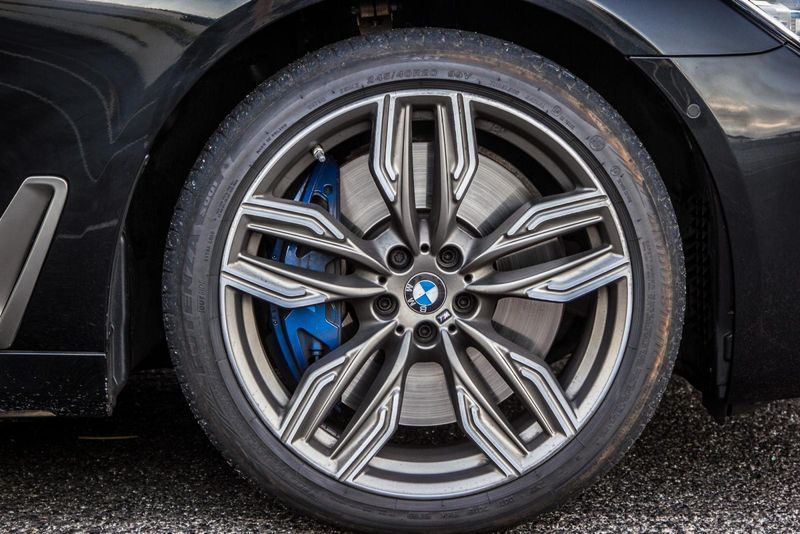
This 20-inch, lightweight alloy wheel is standard, but buyers can select from other designs, too.
The M760Li features BMW's xDrive permanent all-wheel drive system, which helps to put all that power down – and ensure traction in slippier conditions – as standard. It can distribute torque between the front and rear axles as required and apportion the percentages automatically, but in its standard form, the Bimmer has a rear-wheel bias to ensure a sportier driving feel. With its (relatively) light Carbon Core construction, low centre of gravity and tunable suspension and drivetrain, the current 7 Series has maintained BMW's tradition of offering the most dynamic option in the luxury sedan segment.
An Executive Drive Pro (active) suspension- and updated Dynamic Drive systems, the latter of which is claimed to reduce roll at both axles, are standard too. The stock air suspension has also been fettled to better suit the M760Li's dynamic positioning and, overall, it is clear the emphasis was on delivering exceptional comfort under normal driving conditions, and limiting body roll when cornering at high speeds.
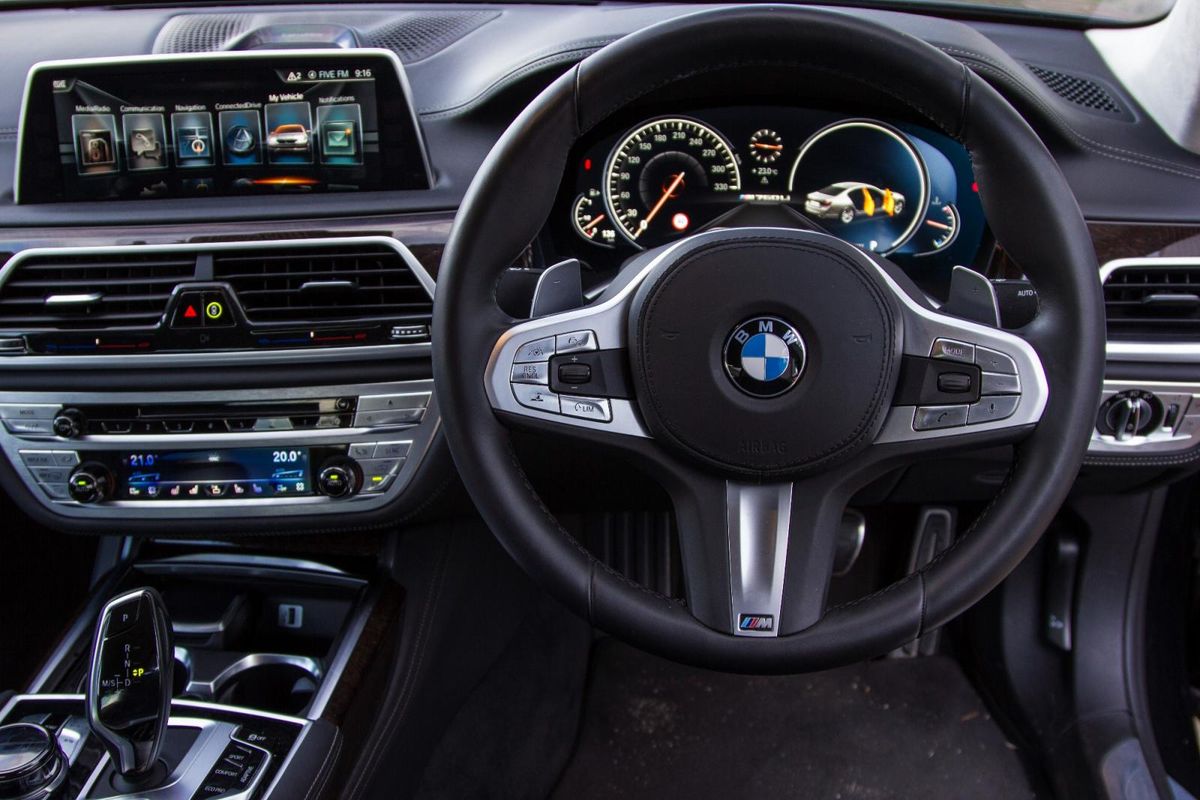
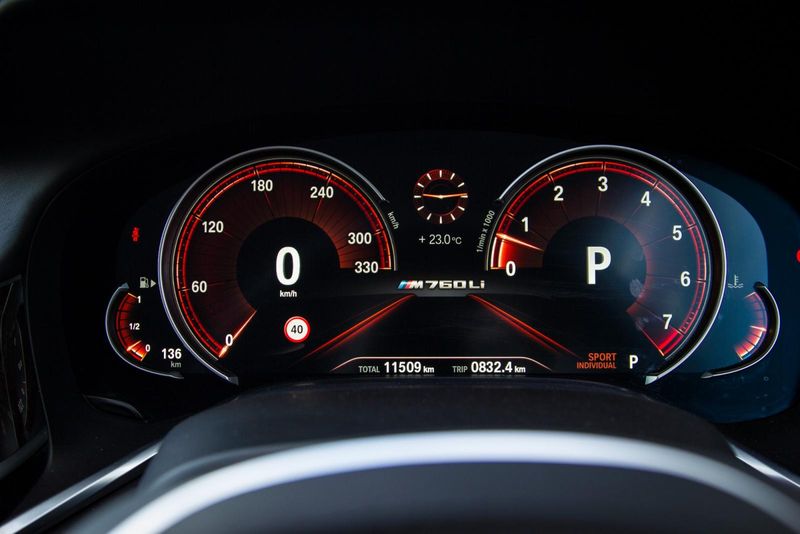
Turn up the heat – Select Sport mode and the digital instrumentation switches to red.
BMW has been largely successful in achieving an admirable ride/handling balance. At lower speeds and in the appropriate setting, the M760Li displays the damping you'd expect from a traditional luxury sedan, provided the road surface is up to scratch (see further comments lower down in this article). It is definitely a car with which vast distances can be covered at considerable speed and in great comfort.
It's when you start going faster that the M760Li performs that magic trick that is such a hallmark of BMWs – it manages to shrink around the driver. Once more, selecting the appropriate settings for such driving is a must, but once that has been done, the Bimmer enjoys being hustled, rewarding the driver with fast, direct steering and the type of body control that would make sporty sedans 2 sizes smaller blush.
Good value…
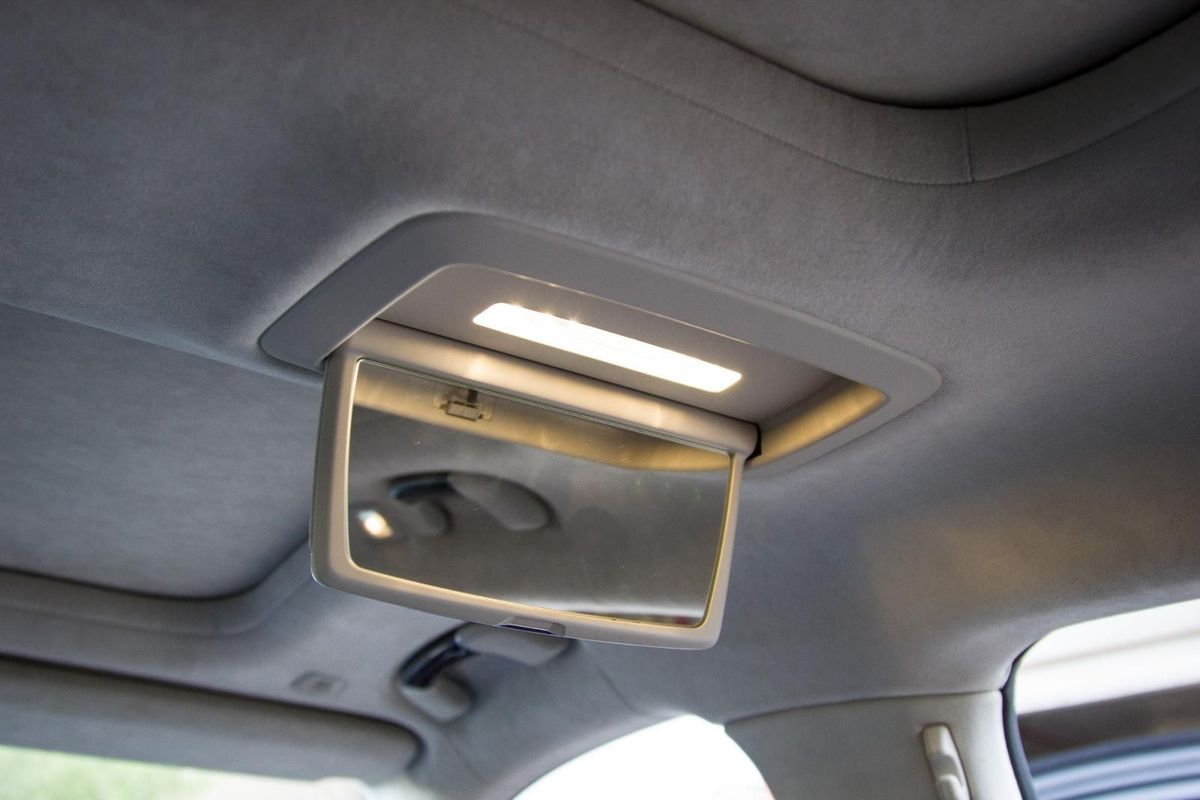
Value for money is not a term one often gets to discuss at the price level of this car, but it's worth mentioning that the M760Li undercuts its key competitor by some margin, without skimping on too many of the nice-to-have features. Included are such niceties as BMW's Laser Lights, a panoramic glass sunroof, sumptuous black Nappa leather upholstery and remote parking (see video), among a great many other features. A top-notch Bowers & Wilkins 16-speaker sound system is also standard.
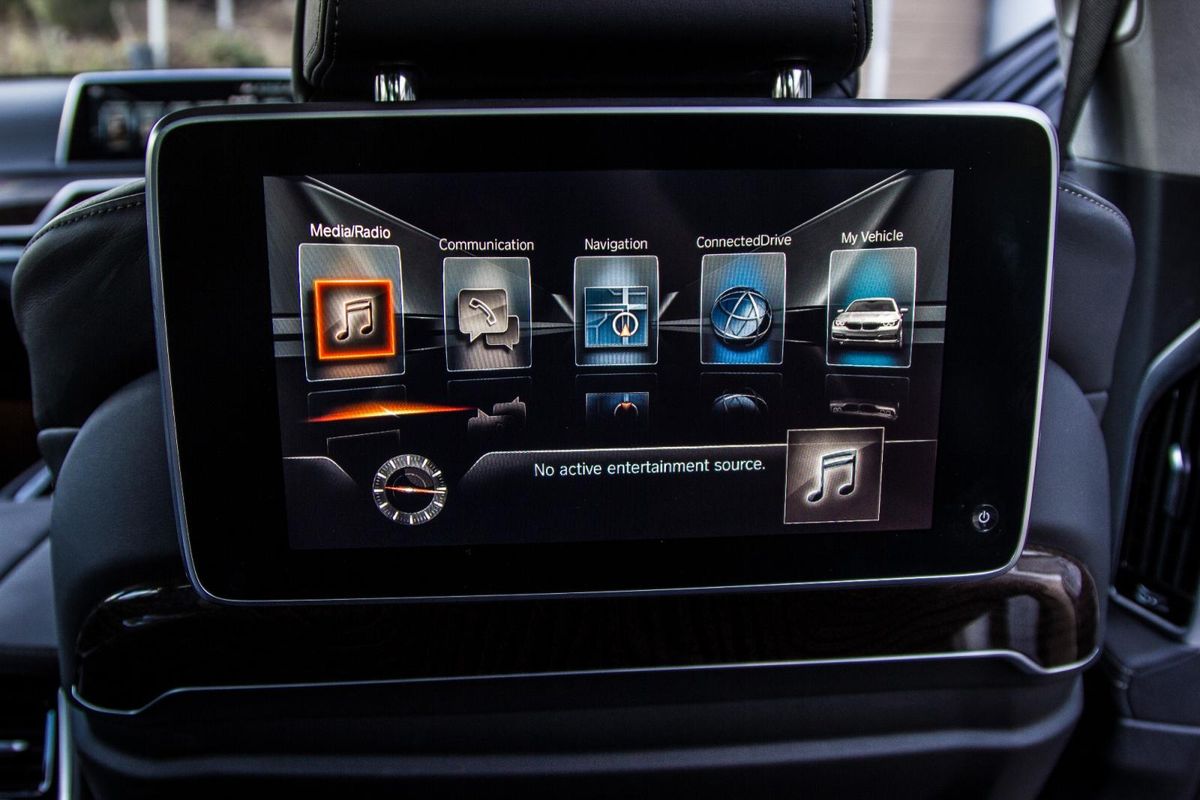
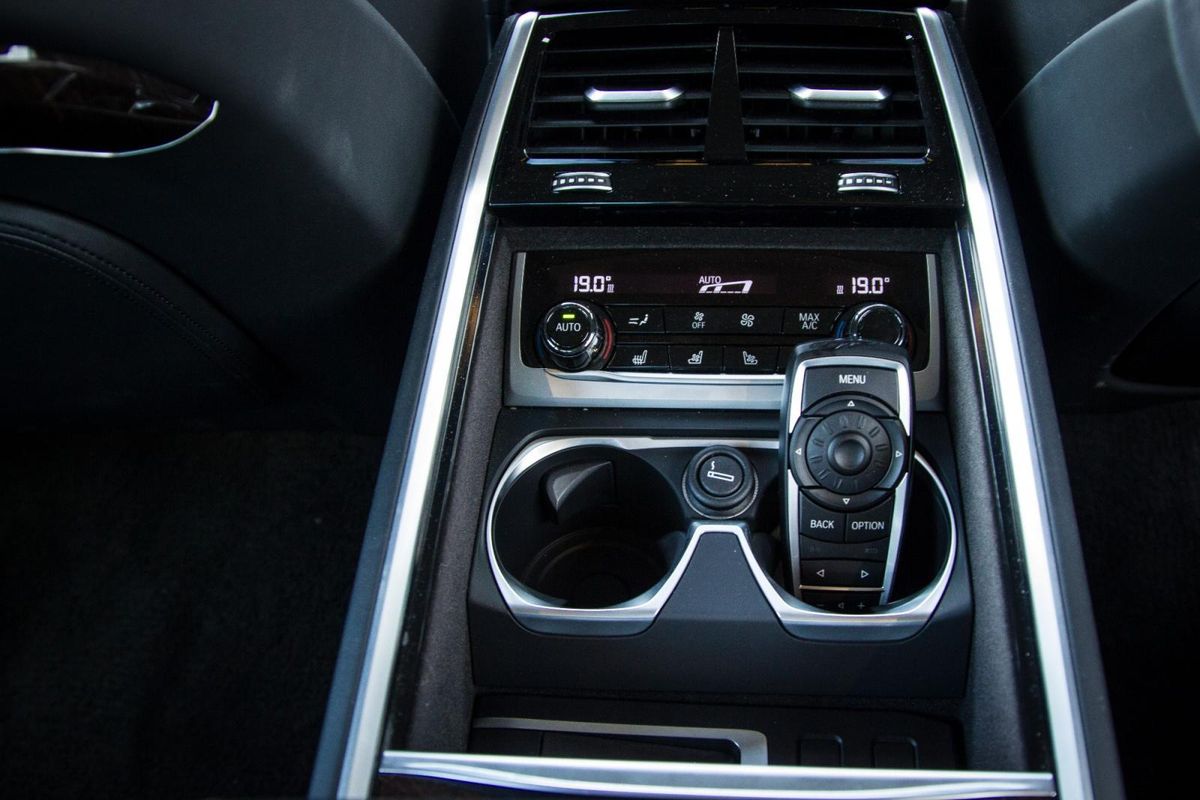
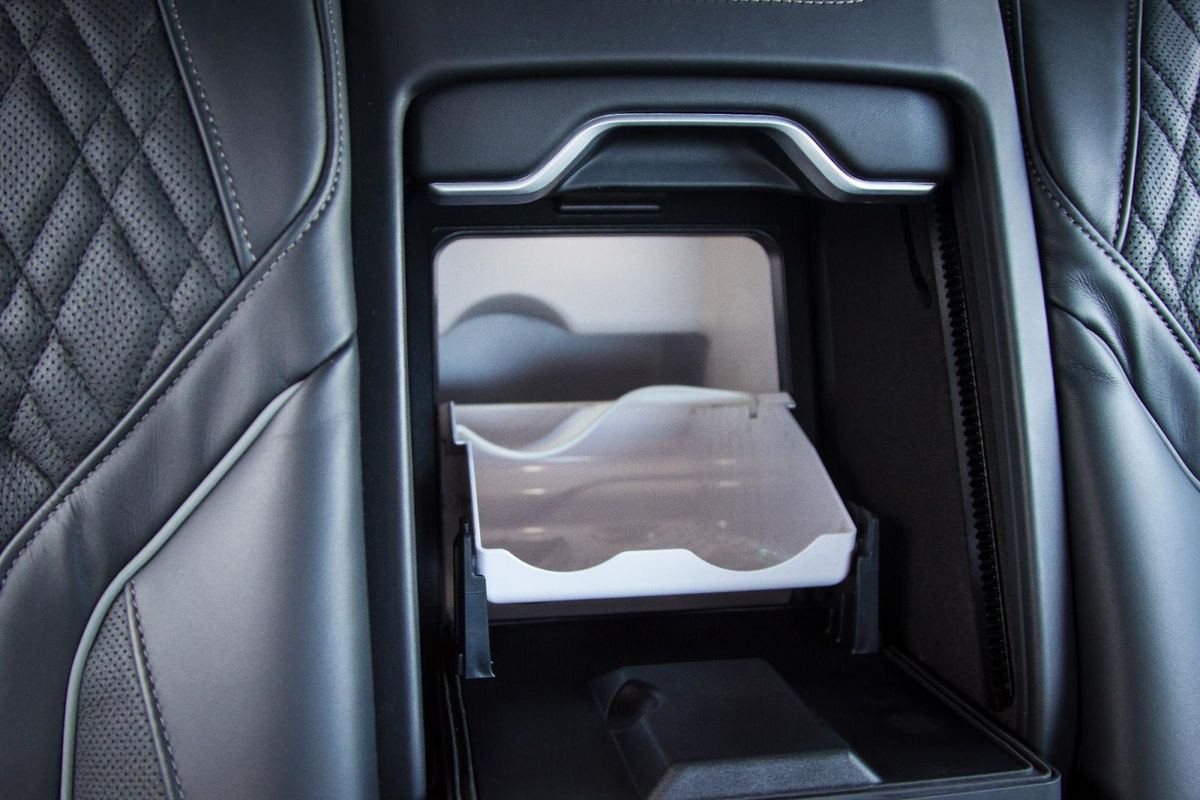
Our test unit also featured Executive Lounge rear seating (R54 100), which really makes aft occupants feel like First Class passengers. Tailored for 2, with extending footrests and individual heating/cooling and massage functions, rear occupants can also enjoy a comprehensive entertainment system that includes 2 ten-inch colour displays. You can even specify a Coolbox to keep the champagne chilled (R18 000).
The (not so) Good
Fidgety, lumbering around town
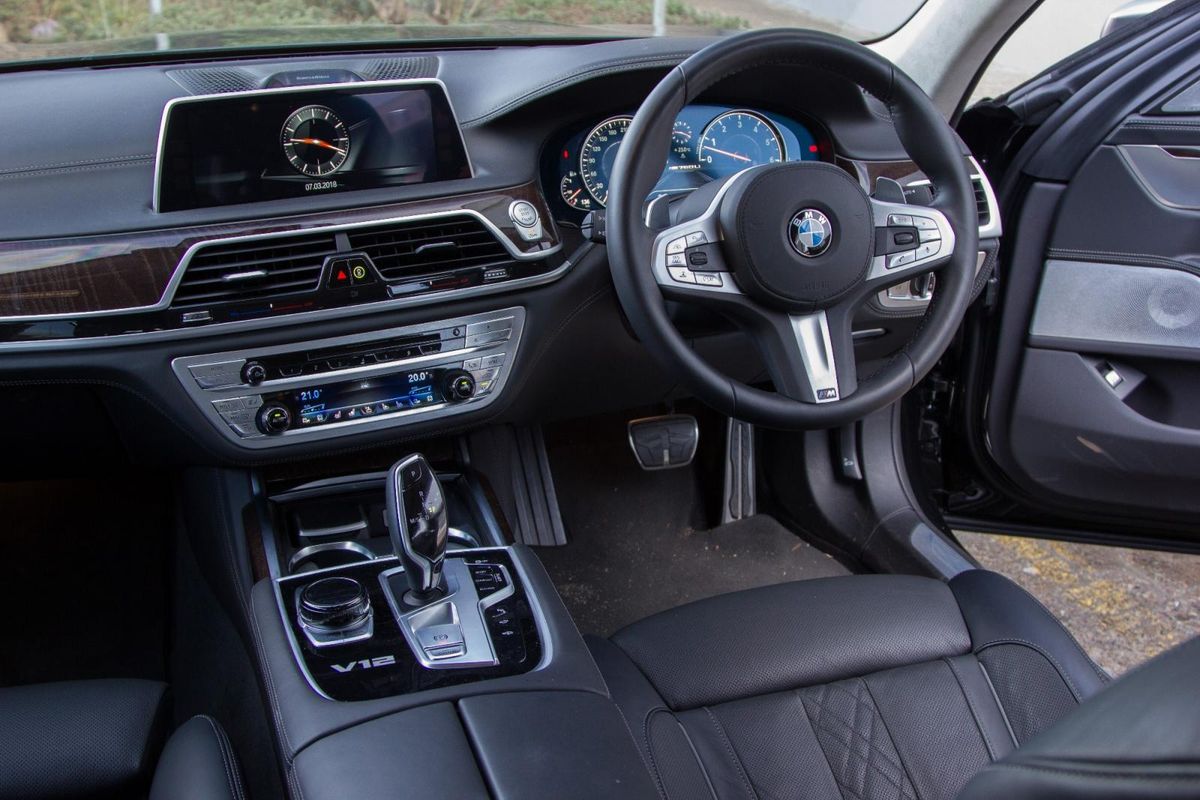
Impeccable quality and a great driving position, but some of the features are a bit gimmicky.
The M760Li's near-perfect scorebook is (slightly) blotted by a sub-par performance on some of our less impressive road surfaces. Undoubtedly this criticism applies to many other cars with air suspension and low-profile rubber, but given this model's undoubted flagship status, we think less tyre roar should reach the cabin. At town speeds – and remember our towns are littered with speed humps and bumps, nevermind potholes – the M760Li's resolute composure is occasionally somewhat ruffled. Some testers also noted that when the 7 Series slows to a standstill with the application of mild braking pressure (at the approach to an intersection, for example), at the very point of coming to a stop, the car jerks briefly, not alarmingly, but enough to make the vehicle's occupants' heads nod involuntarily, which is not refined.
Gesture control? No thanks…
We really do admire BMW's efforts in moving the tech game forward but, several 7 Series test cars later, we still don't think Gesture Control cracks it as a worthwhile feature. It simply comes across as gimmicky. Of course, you don't have to use it… so we're being picky here…
Pricing and Warranty
The M760Li has a base price of R2 801 836 (March 2018), but few cars are likely to arrive without any options. Check out the BMW configurator to virtually build your own and get an idea of accurate cost. However, as we explained earlier, the standard specification of this model is actually very comprehensive, and the price compares favourably with rivals from Mercedes-AMG and Jaguar. The M760Li is backed with a 2-year/unlimited km warranty and comes with a 5-year/100 000 km maintenance plan.
Verdict
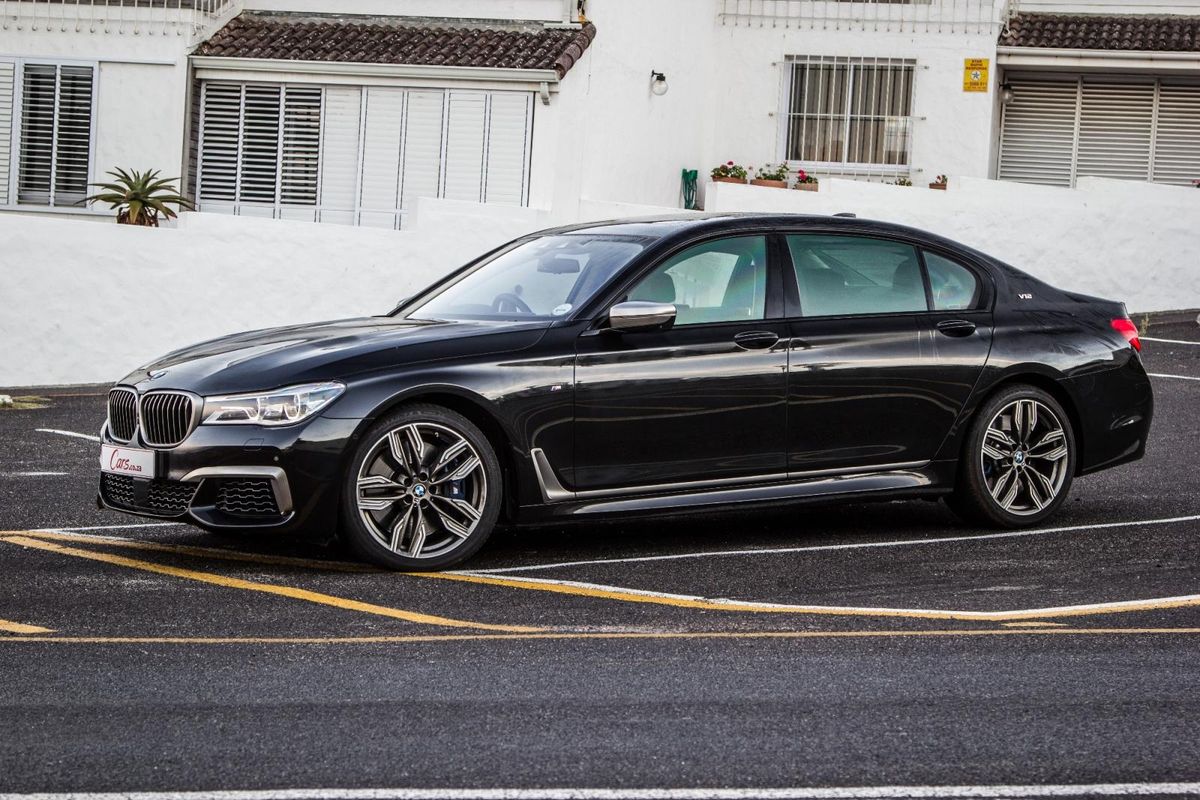
You won't be seeing many of these in SA, but when you will see it, this will be the most likely view…
For many wealthy consumers out there, the prospect of driving or owning the ultimate product of any brand holds significant appeal. These potential buyers are unlikely to quibble about minor specification issues, or an ever-so-slightly fidgety ride on poor surfaces. Those buyers will be very happy merely knowing they have acquired a car that sets a new benchmark in its segment for performance, luxury and technology. In other words, many of them will be happy buying an M760Li based on its specification sheet alone.
But what about those customers who care about what all those numbers, and all those drivetrain technologies, add up to? Well, every time they leave the confines of the city, venture out to (or stumble across) a challenging piece of road, the M760Li will reward them with proof that one can, indeed, have your cake and eat it. There are very very few cars that truly fit that description.
Fuel prices in South Africa are rising sharply this month with fuel levy increases and international factors being main contributors.
Motorists in South Africa will be paying significantly more for fuel this month as an additional 52 c/litre increase in fuel levies come into effect.
The Department of Energy has released its fuel price adjustments for April 2018 and they are as follows:
Petrol (both 95 – ULP and LRP): 72.00c/l increase
Petrol (both 93 – ULP and LRP): 69.00c/l increase
Diesel (0.05% Sulphur): 65.20c/l increase
Diesel (0.005% Sulphur): 65.20c/l increase
The Rand/US Dollar exchange rate weakened slightly in March 2018 and increasing crude oil prices led to higher Basic Fuel Prices on all petroleum products. In his Budget Speech earlier this year, the former Finance Minister, Malusi Gigaba announced that the General Fuel Levy will increase by 22 c/litre from R3.15 to R3.37 (7% increase), and the RAF Levy will increase by 30 c/litre from R1.63 to R1.93 (18% increase).
“The increases are way above inflation and will have a knock-on effect on other prices, including public transport. The poor, who are already under enormous financial strain, will bear the brunt of these increases, which come at the same time VAT is increasing to 15%. These increases will, unfortunately, result in a heavier burden for the very people who need relief the most” said the AA last month.
"The good news is that Moody’s’ decision to hold its current rating and change its outlook to 'stable' gives South Africa much-needed breathing space to address economic issues. We are hopeful increased political and economic stability will spill over into a more stable outlook for fuel prices" the AA concludes.
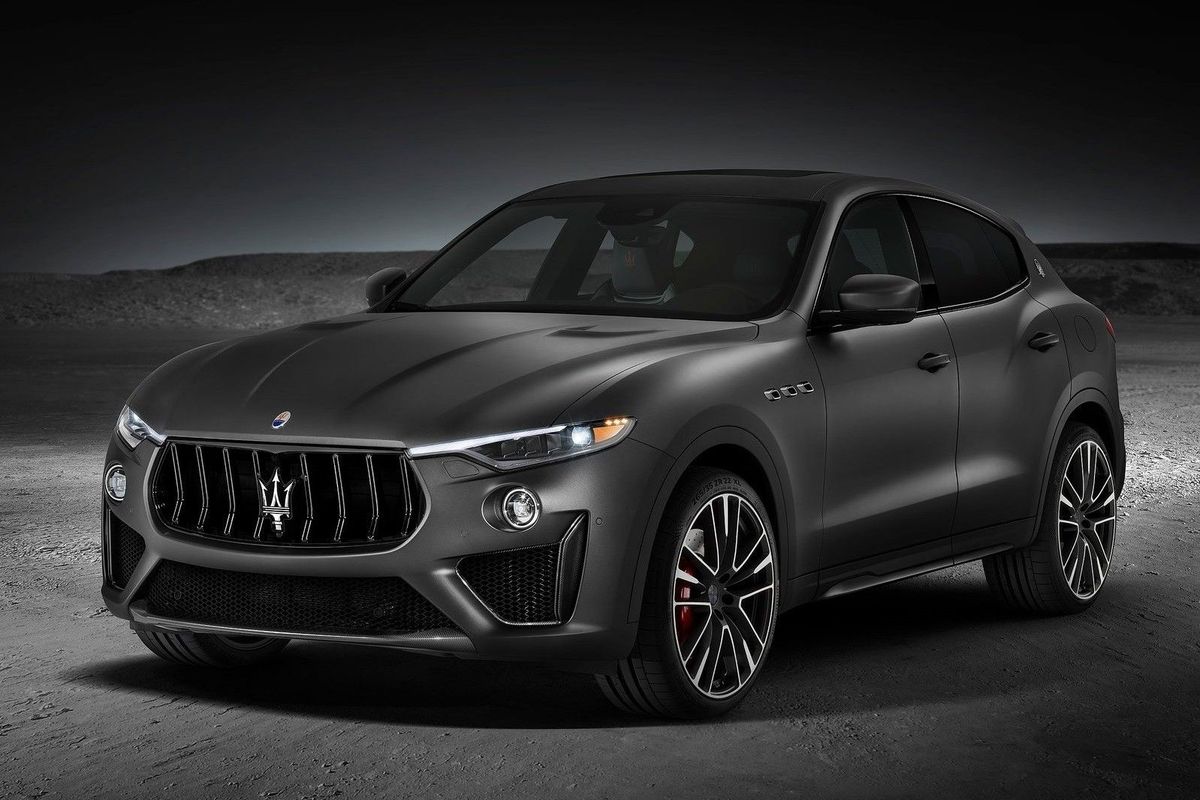
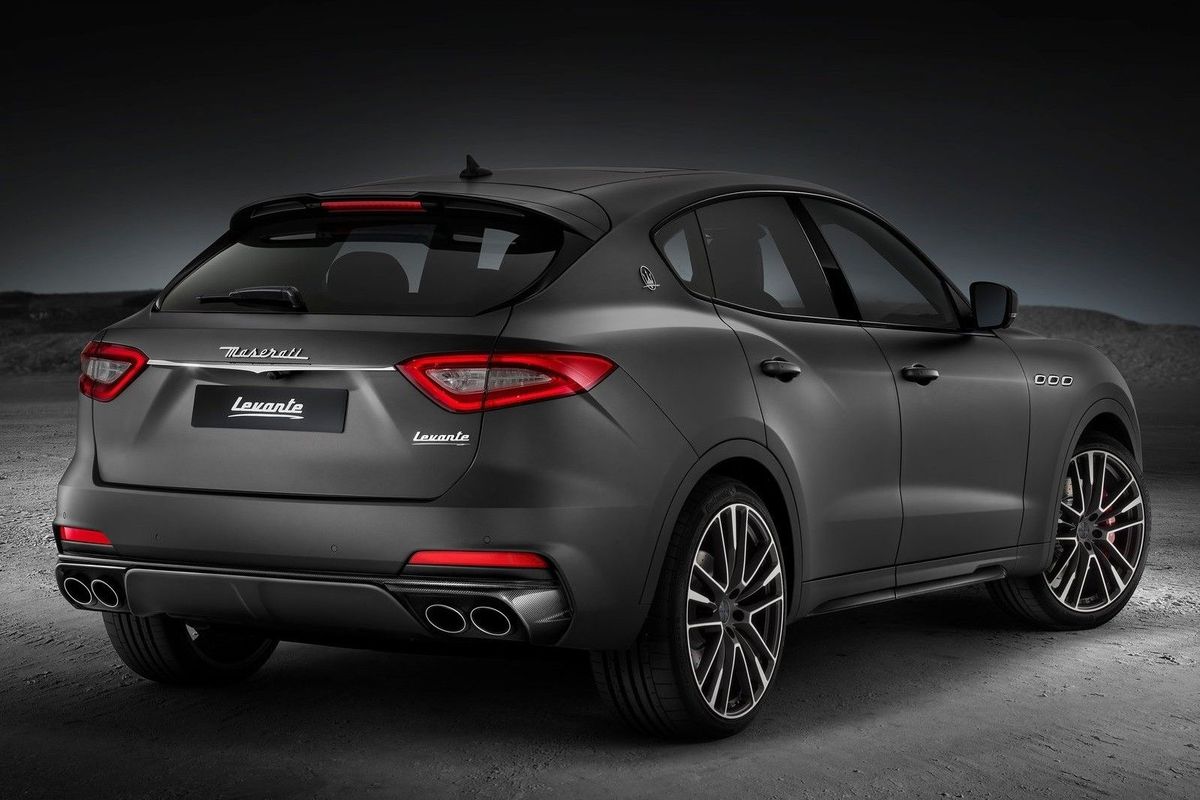
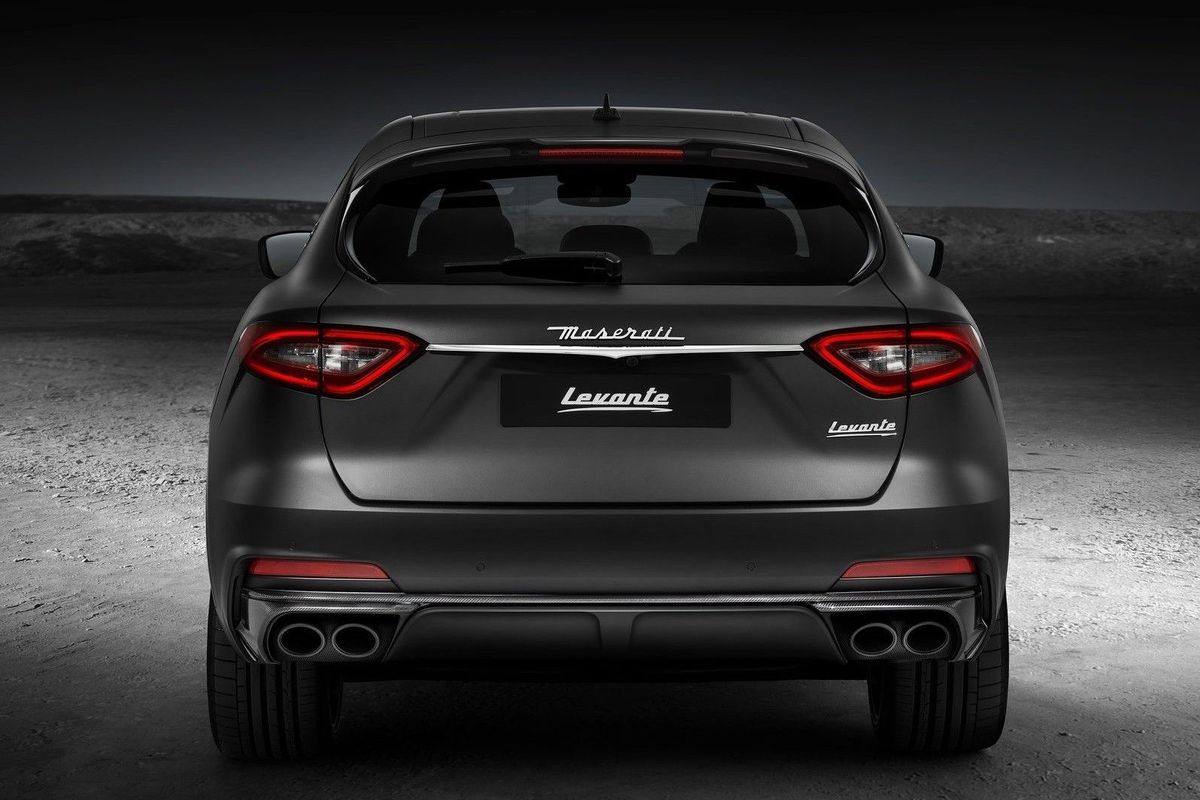
Maserati has introduced a hardcore version of its Levante SUV. Now featuring a biturbo V8 engine, the Levante Trofeo promises the ultimate performance from its SUV range.
The headline numbers make for great reading. The engine is a 3.8-litre twin turbo V8 motor, made by Ferrari in Maranello and it pushes out 440 kW and 730 Nm. It's enough to see the Maserati Levante Trofeo hit 100 kph in a claimed 3.9 seconds and it boasts a top speed of over 300 kph.
Maserati claims this engine "boasts the highest output per litre (156 hp/litre) of any Maserati powerplant ever produced." Under the skin, the Maserati Levante Trofeo's chassis has been tuned to cope with the additional power, while not sacrificing ride comfort. All that power goes to the Q4 Intelligent All-Wheel Drive system via an automatic transmission.
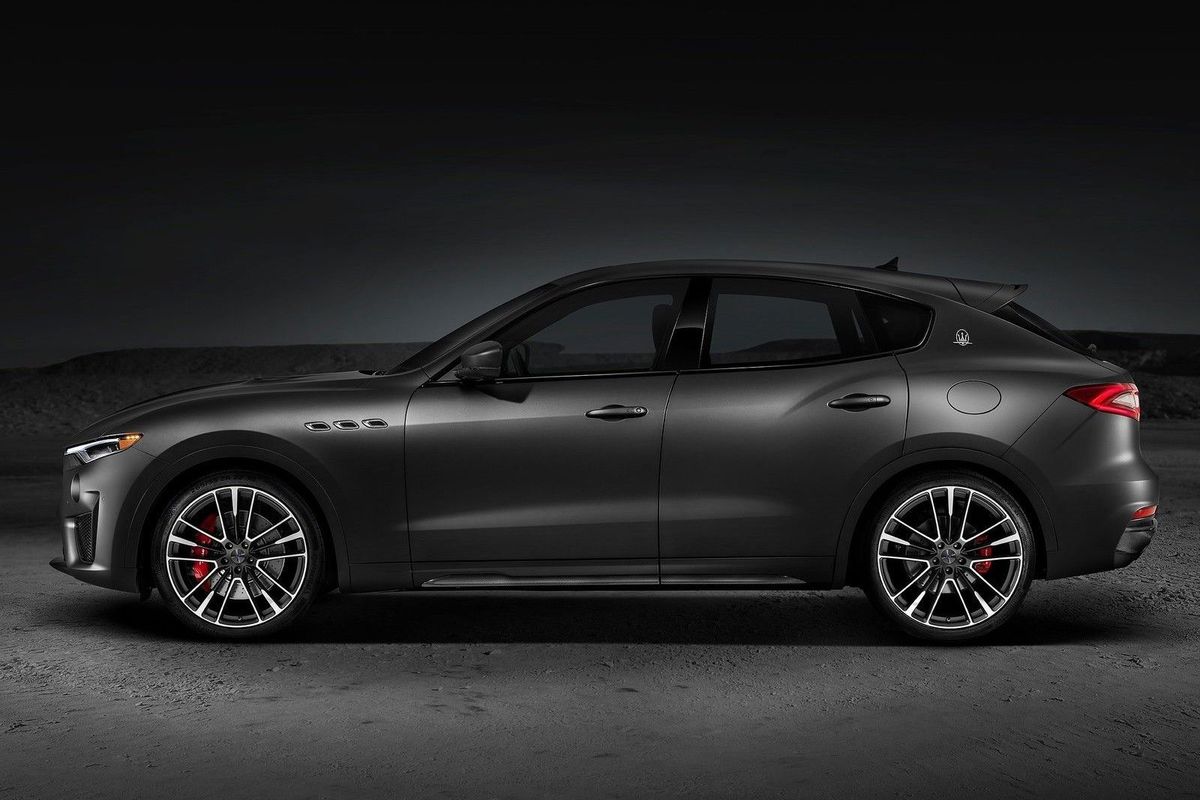
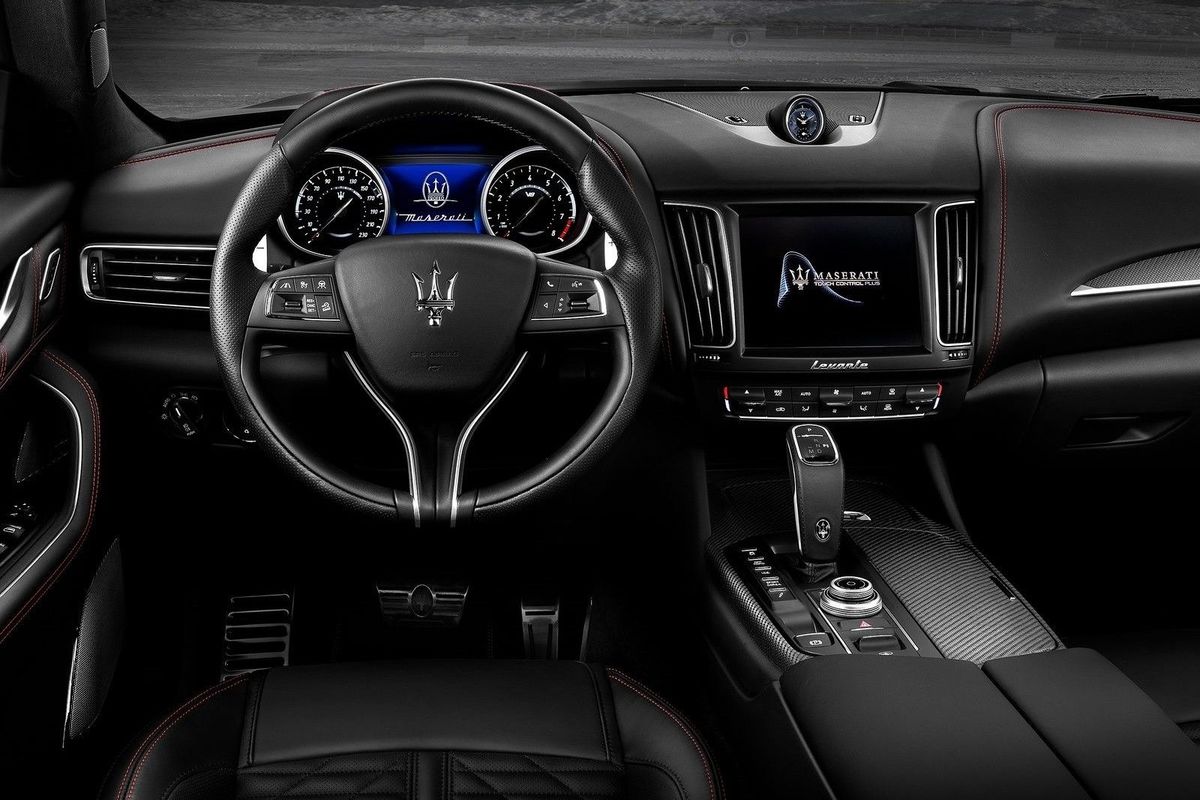
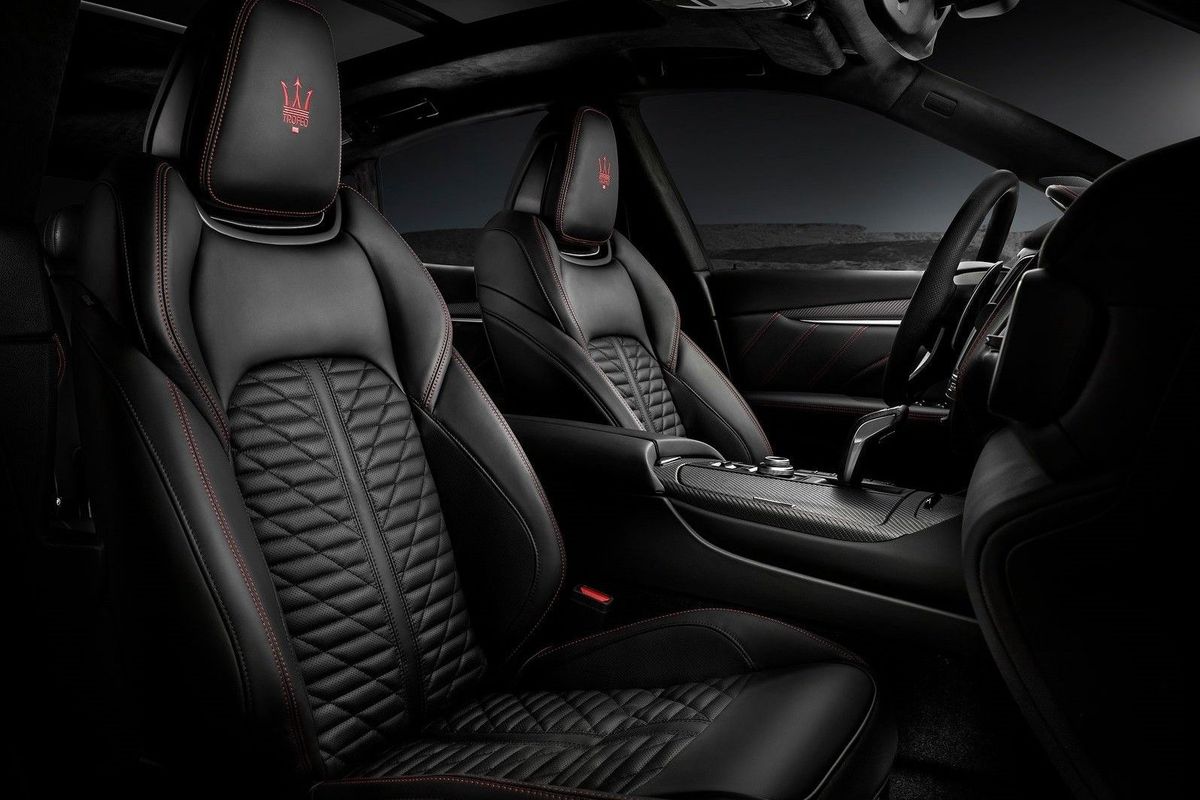
The new Maserati Levante Trofeo features forged 22-inch alloys, which are available in both polished and matte finishes, carbon fibre detailing both in and out as well as full matrix LED headlights. The cabin boasts leather sculpted sports seats, matte carbon fibre trim, Trofeo badges dotted around the cabin and a Bowers & Wilkins sound system. The Levante Trofeo is produced at the Maserati factory in Mirafiori, Turin, Italy.
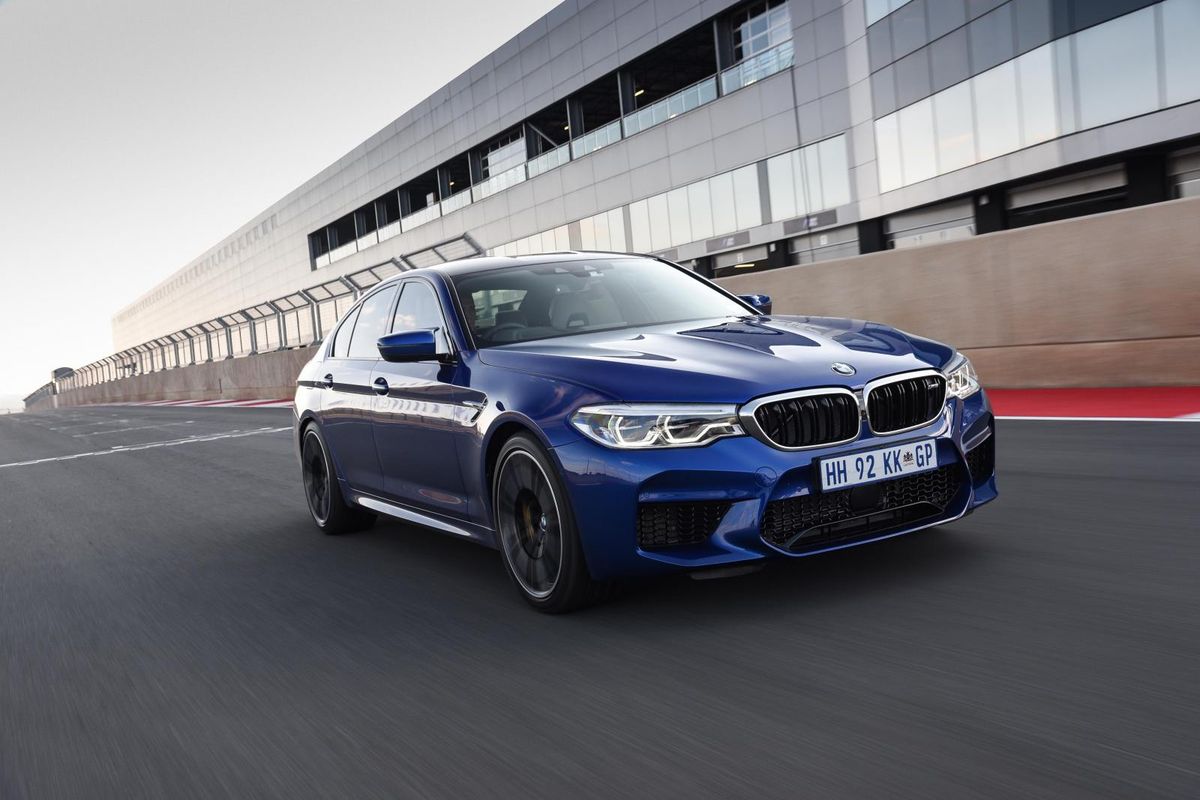
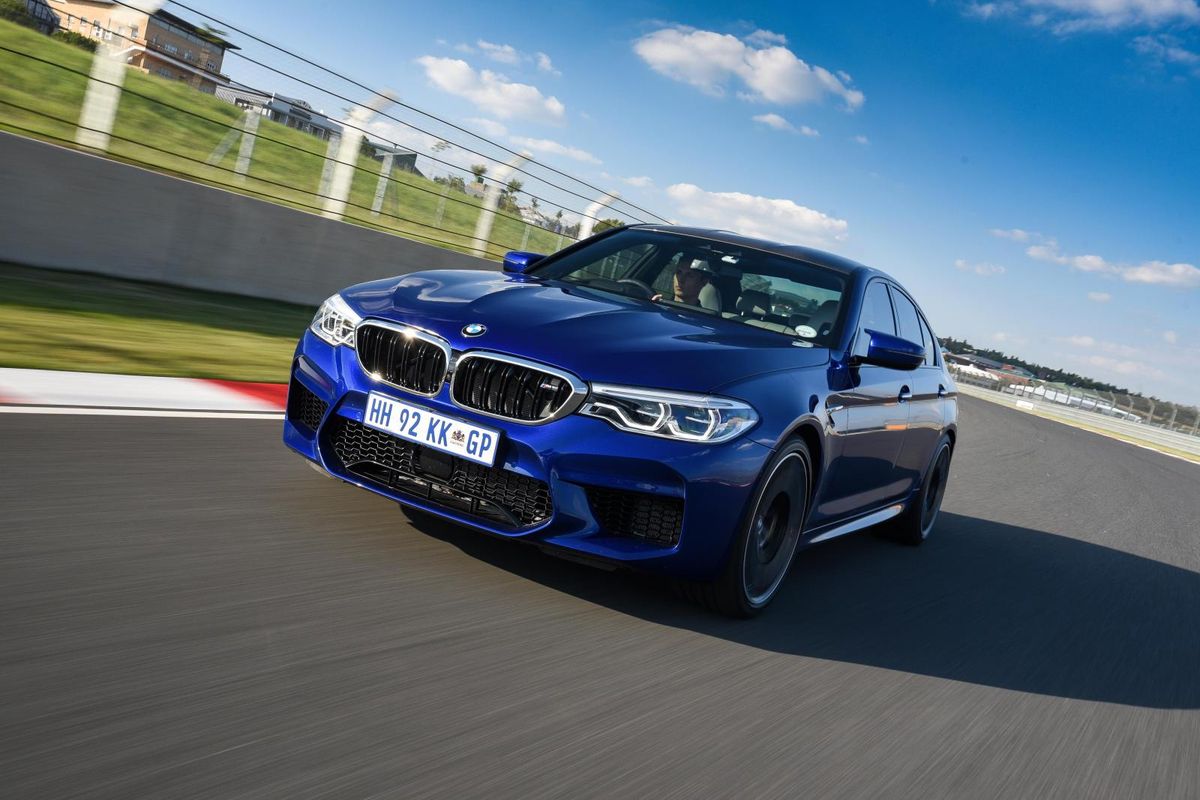
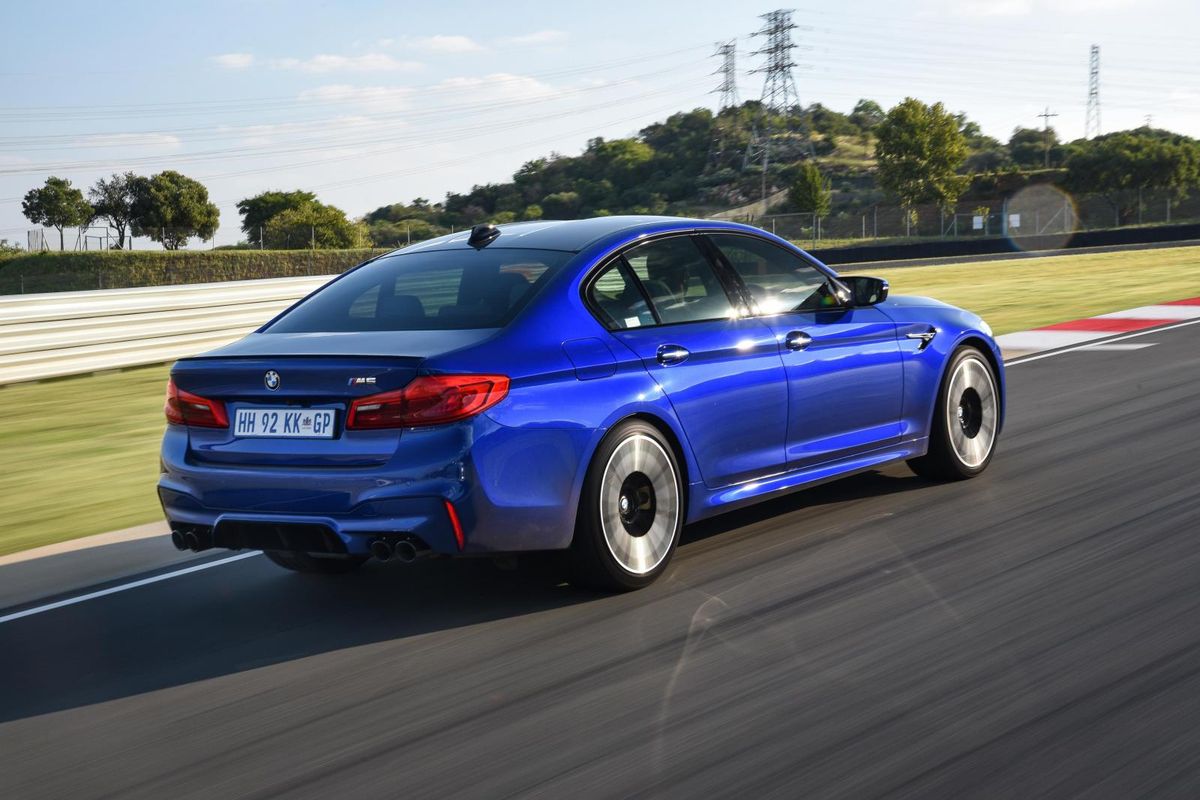
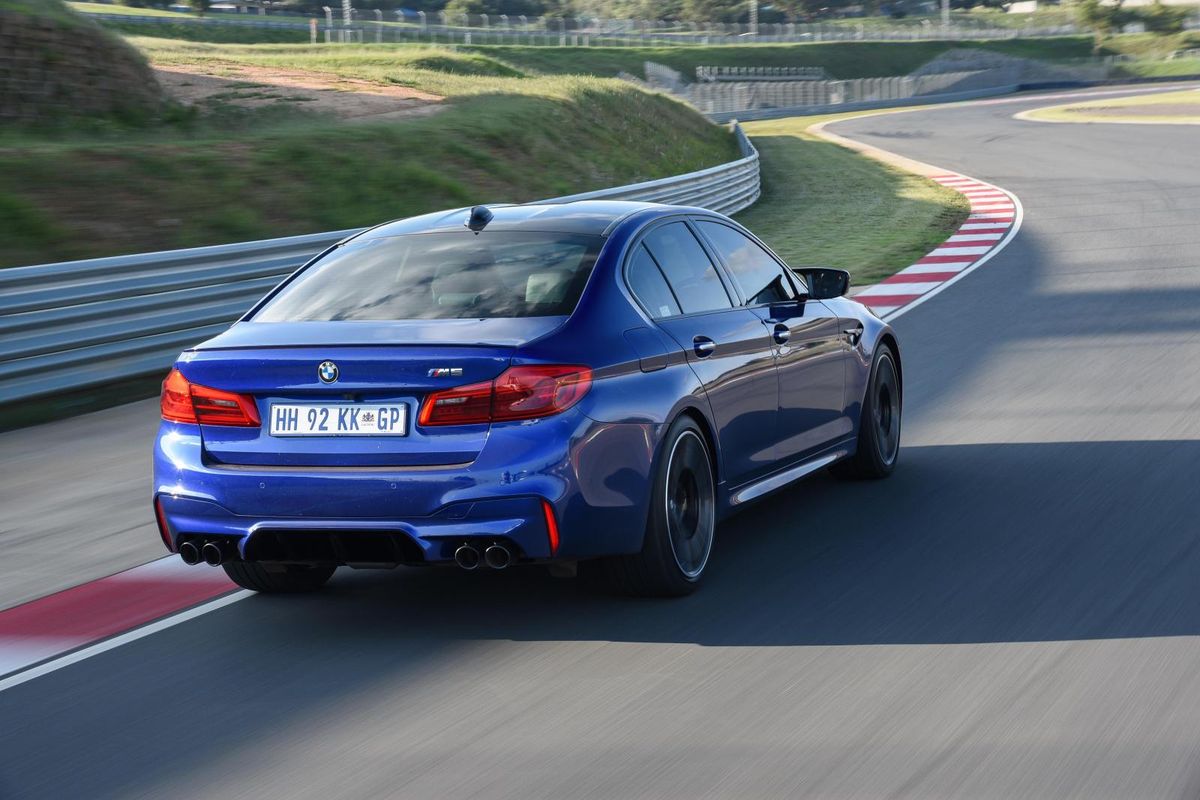
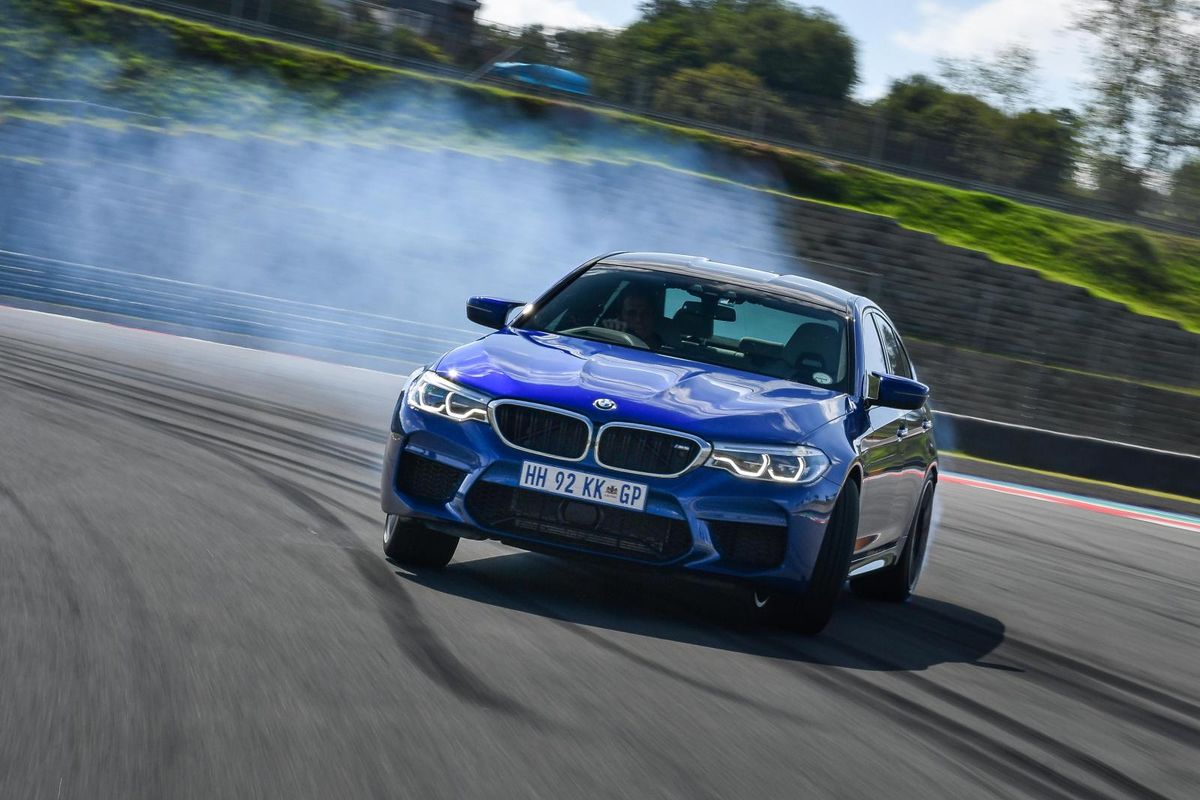
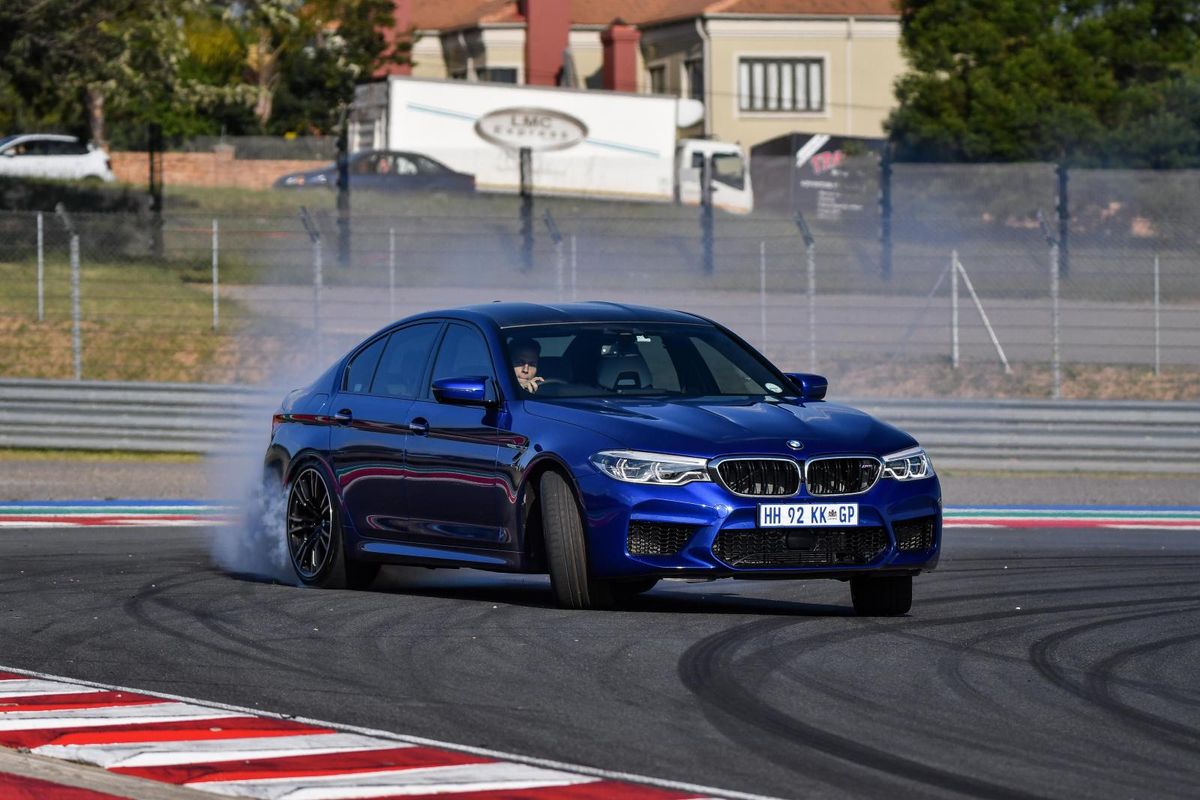
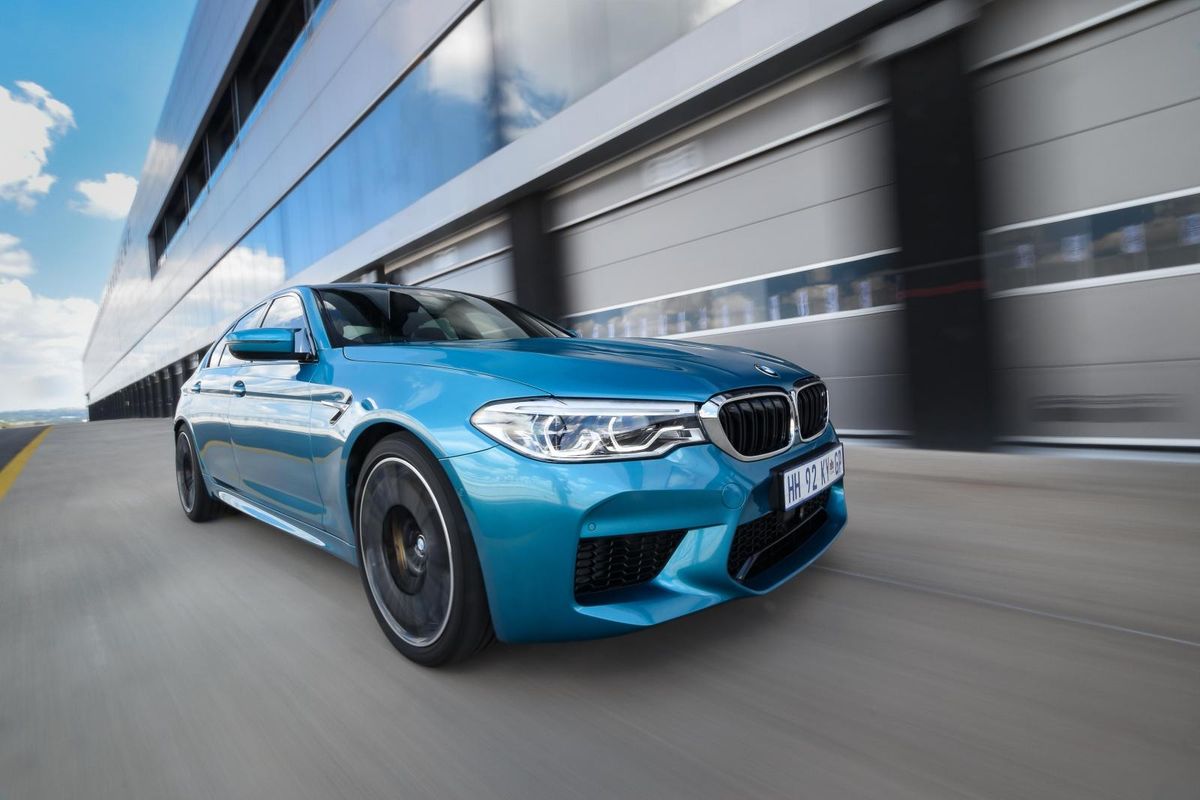
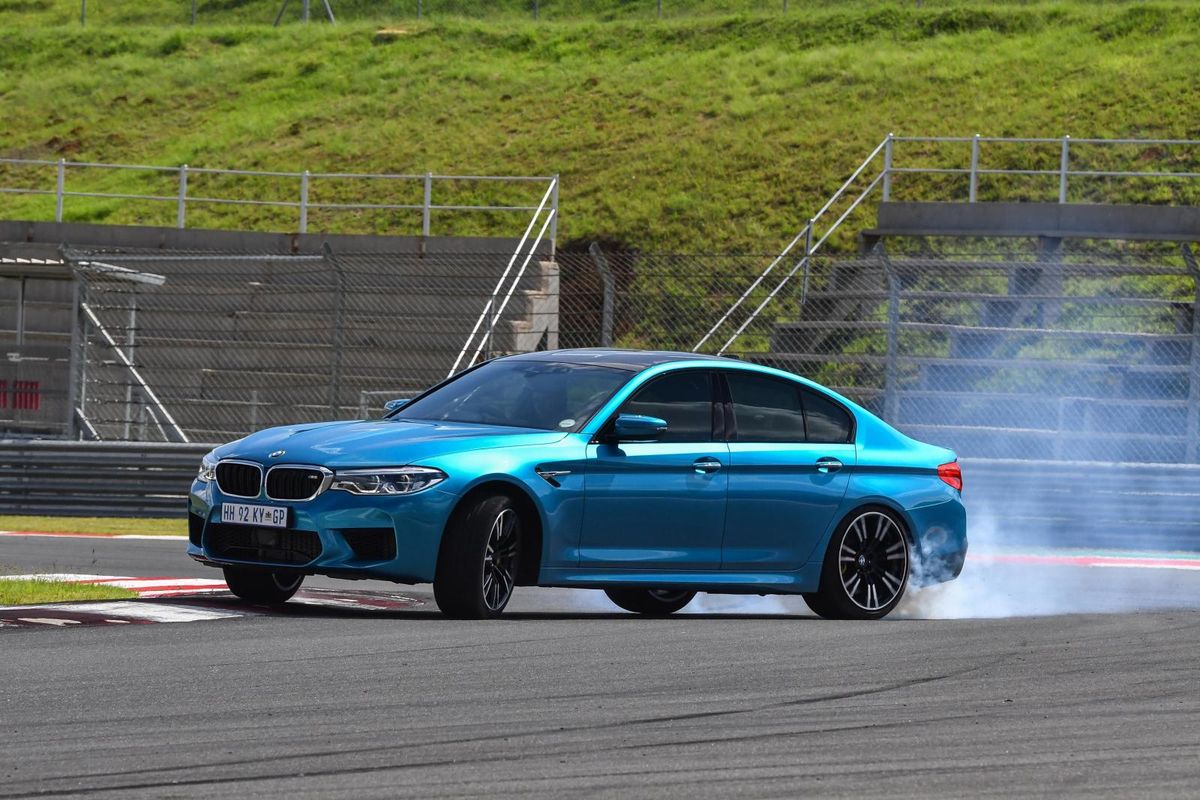
BMW South Africa marked the local market introduction of its latest M car – the F90-generation M5 – with a track session on the Kyalami circuit. We were there to sample the super sedan and get a taste of what it’s like.
What’s new?
It’s an all-new BMW M5, so obviously it’s new from the ground up and based on the latest 5 Series platform. BMW made sure that this newest model was more powerful, even lighter and featured more adjustable driving programmes than ever before. There’s still a 4.4-litre V8 under the bonnet with twin turbos nestled in between the V (the gap between the engine's pair of cylinder banks) delivering the added shove. The roof is made from carbon fibre reinforced plastic in order to lighten the considerable heft of the M5… to an extent.
Drive is sent to all wheels via an automatic (not dual-clutch) 8-speed transmission. All-wheel-drive isn’t entirely new for the M5 as the previous model was available with xDrive (4wd) in some markets. The all-wheel-drive system is adjustable in 3 modes, which rank from all-wheel drive, mostly all-wheel-drive but with a little slidey action and rear-wheel drive only – which is only available with the traction control off.
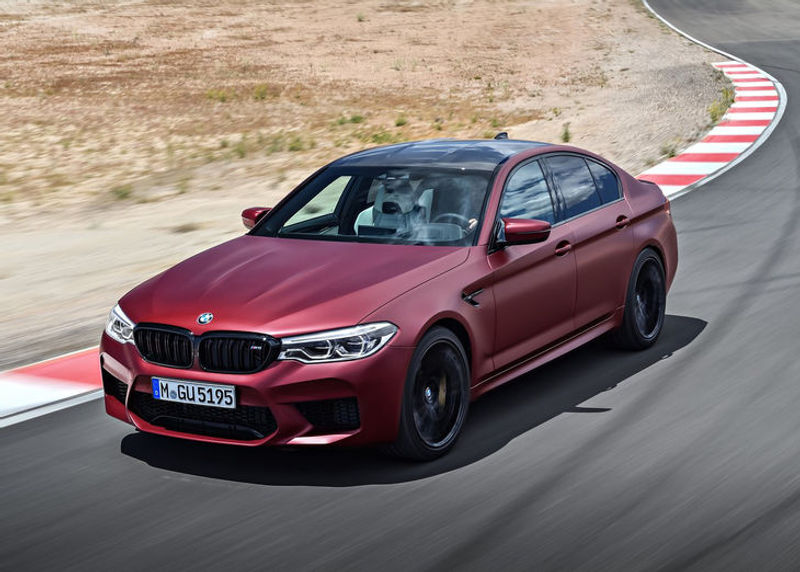
The new M5 still looks understated and restrained. The perfect sleeper.
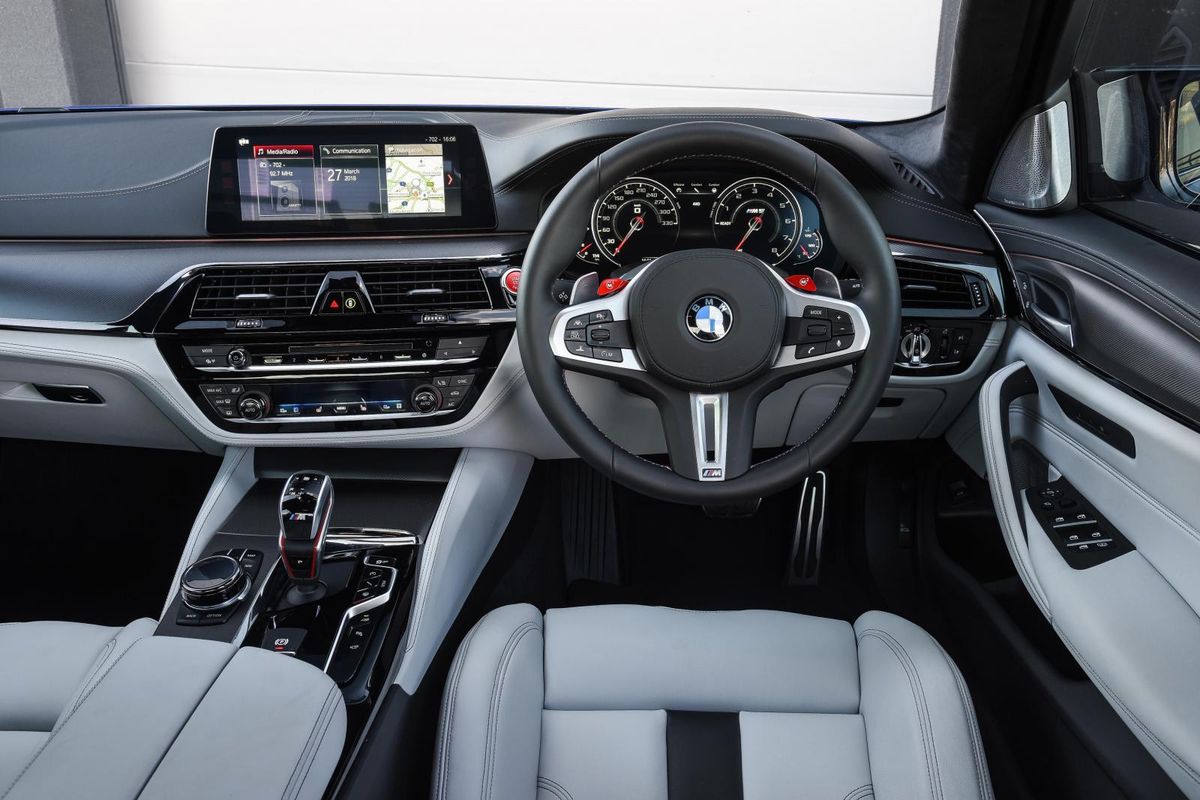
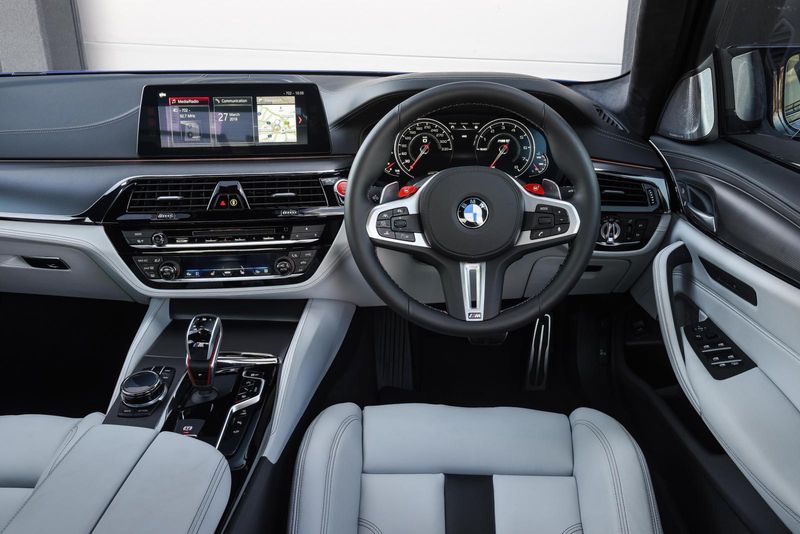
The cabin differs from all other M cars as there are distinct additions to the transmission lever – it’s a square lever has the gearbox ferocity settings atop. Then there’s the rather out-of-place red M1 and M2 switches. I say out of place because they feel like gubbins an M4 DTM or track-focused car might have; steering wheel-mounted metallic red thumb switches seem very "boy racer" for a premium super sedan.
I happen to have driven the latest Mercedes-AMG E63 and E63 S so was looking forward to a bit of comparison, albeit not a perfect back-to-back but good enough to get a feel for the status of this new M car.
What’s it like to drive?
I can only give you a quick impression of what it’s like on the brilliantly smooth surface of Kyalami, a real-world road test will have to wait until we test the M5 on our local roads.
To begin my stint behind the wheel, I built pace gradually. I started with the M5 in Sport mode and was requested not to fiddle with the traction control settings. When I stomped on the sedan's throttle pedal it didn’t provoke the loud bark of excitement from the exhaust I was expecting, but the Bimmer appeared to gather speed with alacrity.
The new M5 feels a little tame to me, having driven the previous generation in just about every form, I was expecting to be hurled back into my seat and sent on a wild ride. With 441 kW and 750 Nm of torque from the 4.4-litre twin-turbo V8, I was preparing for a ballistic missile. Its power is linear and never brutal, the numbers on the speedo evolve astonishingly quickly but the actual feel is smooth and undramatic.
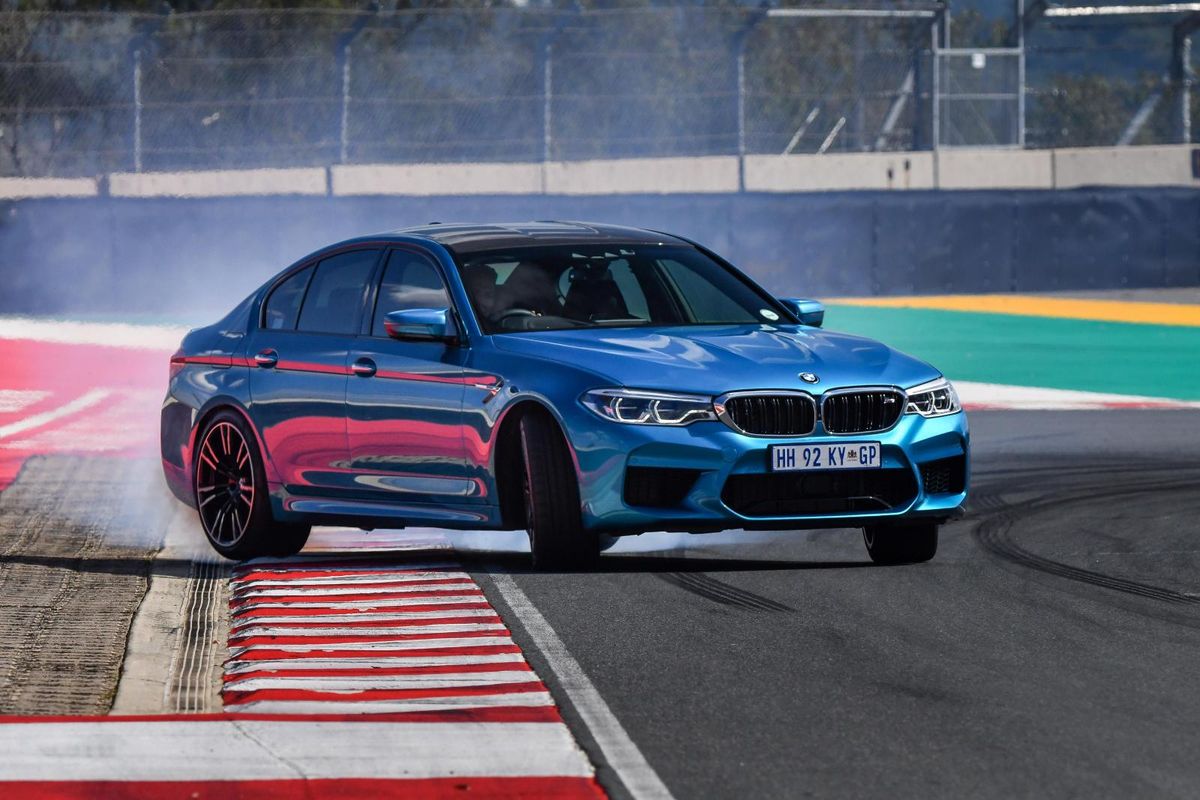
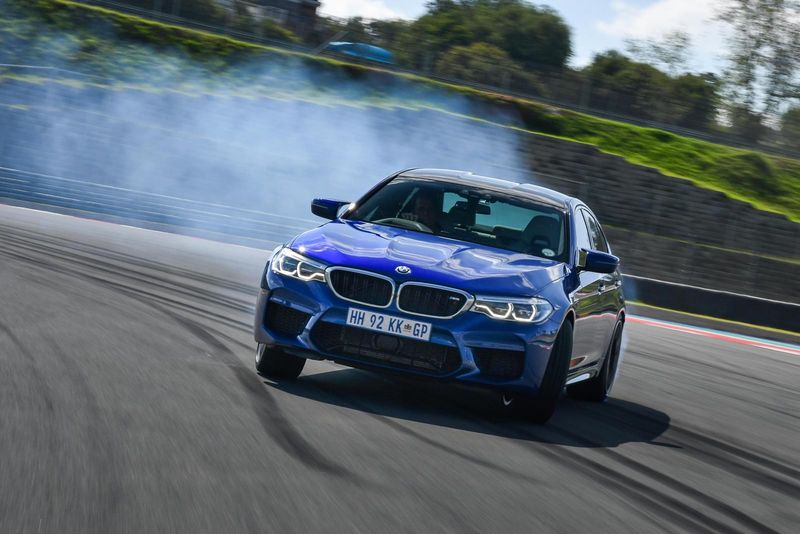
With a 2WD mode, you can execute these sort of long drifts, but it requires more provoking than in previous versions.
The same goes with the handling in 4WD modes. The nose tucks in quickly and it's alarmingly agile for a 2-tonne sedan, especially in the esses, where it flip-flops from maximum load on one side to maximum load on the other side within tenths of a second. That sort of manoeuvre in the old car would have had you sliding and fighting to keep it all under control.
Gone is the wild rear end when you power out of a corner, the all-wheel drive, combined with a more linear power delivery allows for amazing traction and corner exit speeds.
When you select 4WD Sport, you can provoke the M5's rear end into a bit of power on oversteer, but it’s pulled straight by the differential before it gets to an advanced slide.
What's more, the shifts from the new torque converter automatic are less brutal than those of the outgoing car's M-DCT and deal with the 750 Nm of torque better than the rather viscous and jerky dual-clutch 'box. It will definitely be an improvement in everyday conditions. In fact, it doesn’t feel out of place on track either, shifting seamlessly up and down with swift execution.
Those red levers for the M1 and M2 programmable settings look a little out of place in an otherwise superb cabin. Note the new square gear lever.
Rear-wheel drive is available if you want to get the M5's back-end out of shape or slide around, but the sedan needs to be provoked through hamfisted steering and blunt throttle inputs to get truly loose, it’s not a naturally edgy performance machine, at least not judging by its performance at Kyalami. Long, well-controlled drifts are relatively easy to hold and throttle adjustments keep the rear end dancing to whatever you tune you prefer. It’s probably this "ease of operation" that explains why the M5 now holds the Guinness World Record for the longest drift ever completed in 8 hours at some 235 miles (374 km)
Final thoughts
With the addition of 4WD, it seems the M5 has lost some of that killer instinct and hard-edged feel about it. Its abilities feel accessible; piloting the sedan at heady velocities is not something that you need to build up to and prove yourself before earning. The BMW handles with supreme confidence allowing the driver to take charge and turn in hard and, similarly, power out hard on corner exits.
These aren’t really the traits I’ve become accustomed to in BMW M cars, however. To me it just doesn’t feel as rewarding to push the latest M5 and see where its limits are. The engine is near perfect in terms of the linear acceleration it delivers, but because of that, the acceleration feel isn’t as exciting nor as noticeable as you’d expect, unless you gaze down at the speedo. The Mercedes-AMG E63 S driven on track was more involving and entertaining to drive and had more character to it. It was hard to bond with the M5 despite its unbelievable performance.
In actual fact, it feels very much like a modern quattro Audi RS, and not like a BMW M car. That’s either the perfect attempt to steal all Audi’s RS6 sales or, it could backfire and have the opposite effect.
Pricing
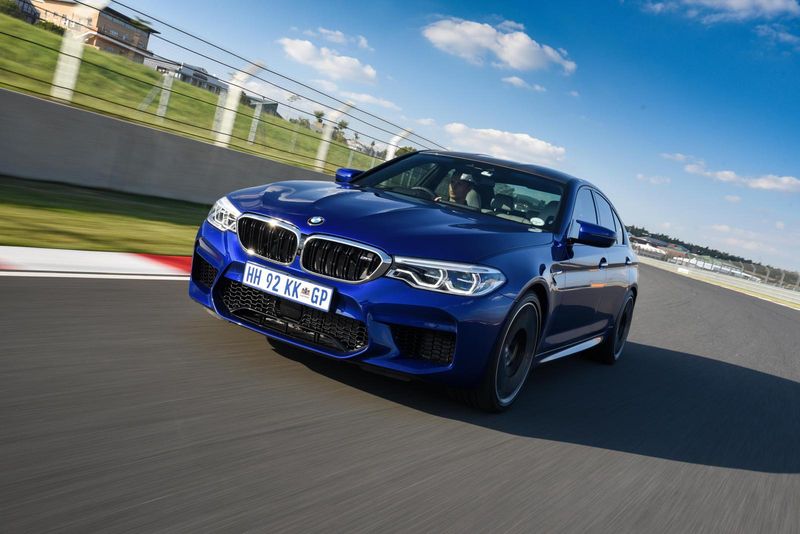
Only 5 of these First Edition models came to SA and have already been snaffled.
A standard BMW M5 is priced at R1 762 806 and is immediately available. The First Edition models, of which there are only 5 in the country, have all been sold for R2 024 006. The First Edition models are notable by the Frozen Dark Red Metallic paint scheme.
Volvo has bagged its first overall World Car of the Year title with the XC60, which will be introduced in South Africa in mid-2018. We recently travelled to the global launch of the new generation Executive SUV in Barcelona, Spain, for a test drive of this eagerly anticipated model.
The XC60, which defeated the Mazda CX-5 and Range Rover Velar to the title, is due to arrive in South Africa around June 2018, following the introduction of the XC40 family car. Pricing has not been released yet for our market. However, we expect it to be pitched competitively against key rivals – the Audi Q5, BMW X3, Jaguar F-Pace, Lexus NX, Mercedes-Benz GLC and Porsche Macan.
"Of the 3 finalists, the new XC60 was my preferred candidate for the overall win," comments Cars.co.za Consumer Experience Manager Hannes Oosthuizen. "It probably is the best example of all that is good about Volvo at the moment – great design inside and out, quality finishes and a strong performance/efficiency balance, without sacrificing the practicality and safety aspects the brand is so famous for."
In our first drive we mostly tried to stay out of trouble while driving on the wrong side of the road, but in between those moments Ciro De Siena takes us through the new offering from the Swedish brand, and what we can expect when the SUV finally arrives on our roads.