New Mercedes-Benz G-Class Interior Shown
The interior of the new Mercedes-Benz G-Class has been revealed ahead of its debut at the North American International Auto Show (NAIAS) in January 2018.

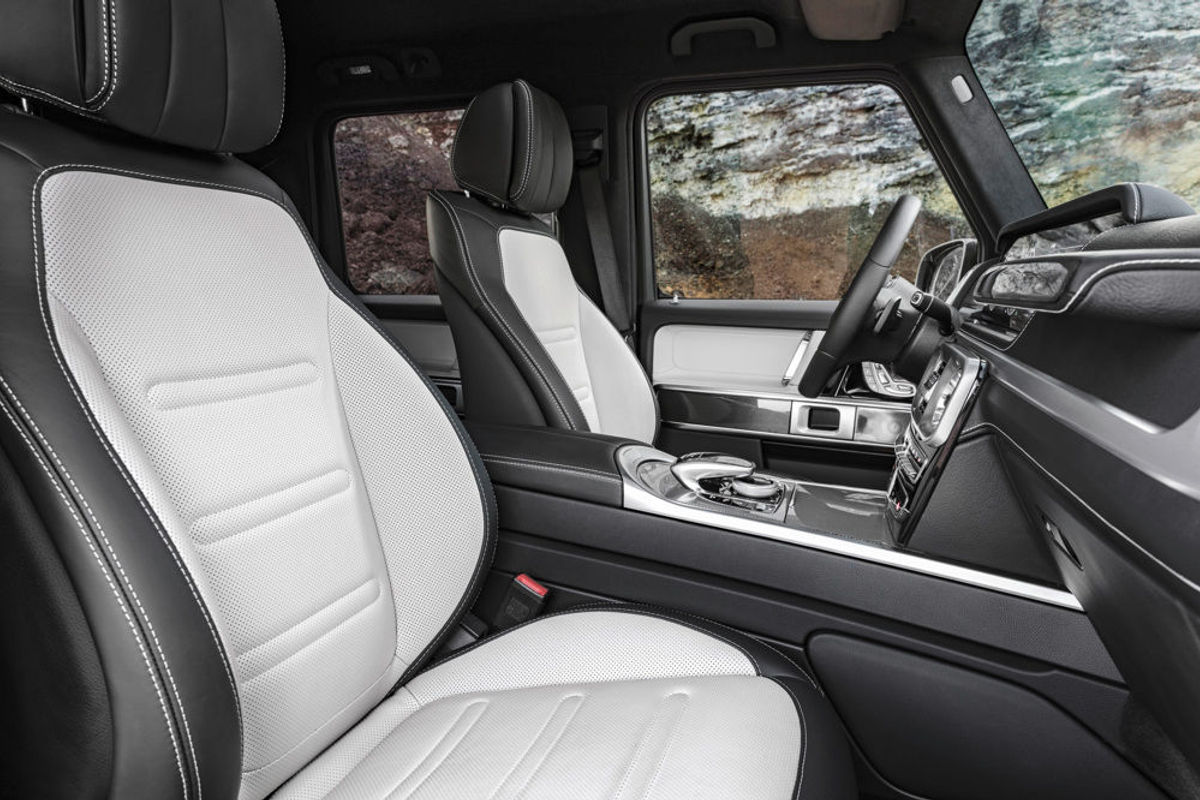
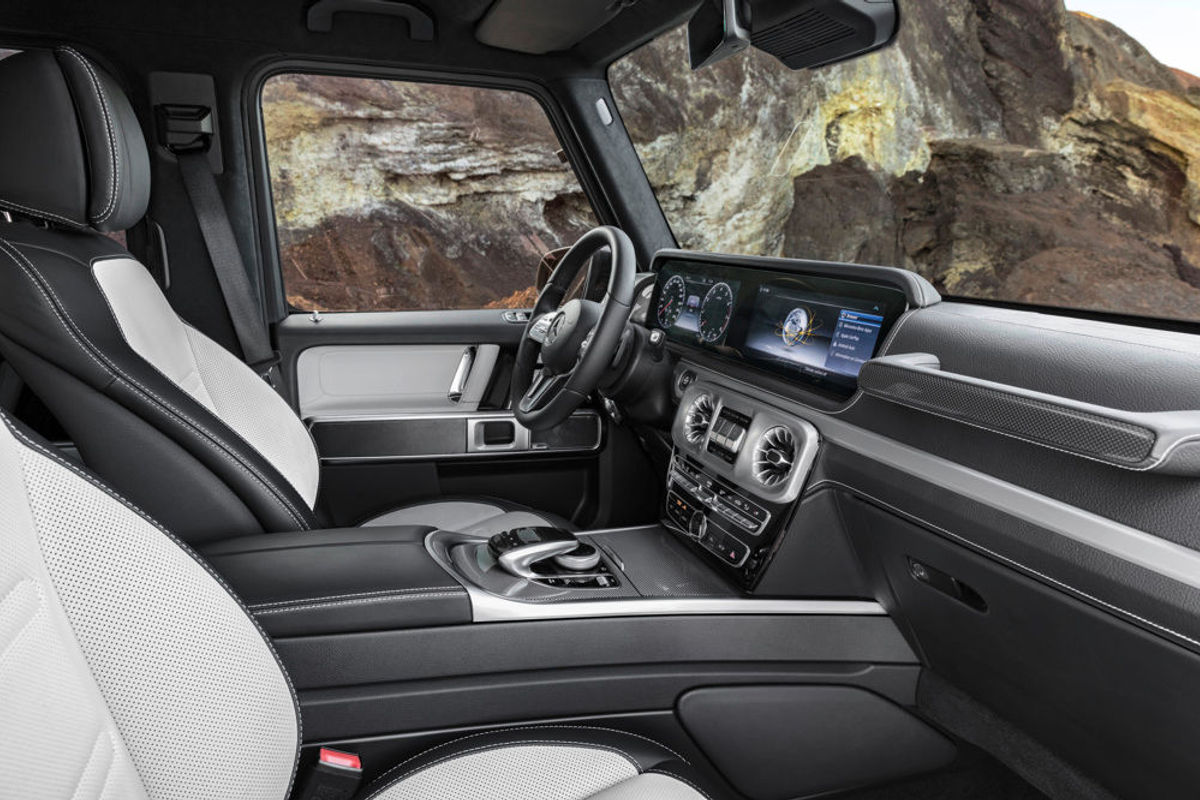
Mercedes-Benz is gearing up to introduce the new G-Class to the world and although its exterior design is expected to be evolutionary rather than radically new, it’s the interior where the most impactful changes will be found. Mercedes-Benz has revealed the interior design of the new G-Class and it’s noticeably more luxurious and technologically jazzed up than the current model. More than this, comfort and convenience levels have been improved and the G-Class’ interior will feature a smattering of high-quality materials befitting of the iconic offroader.

Key Details
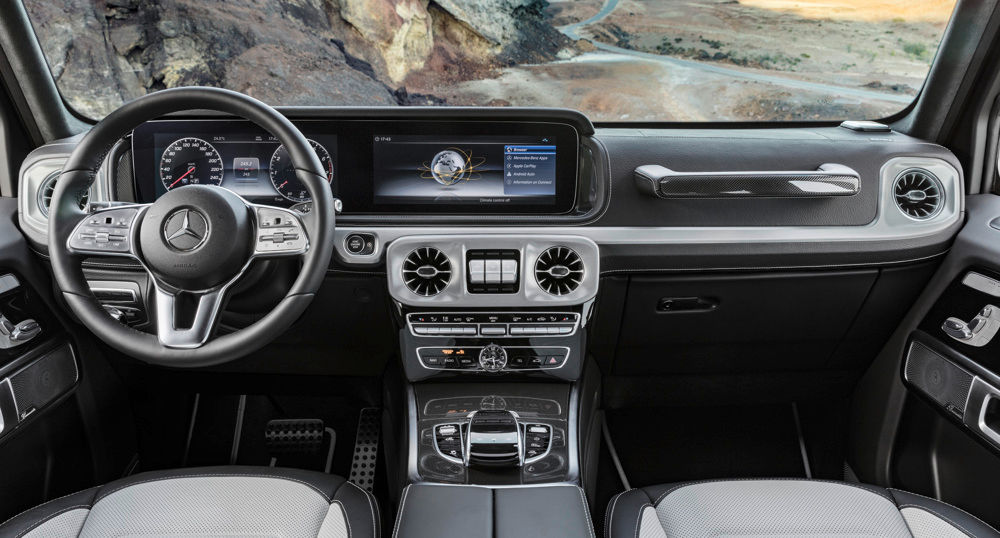

The new G-Wagon features an optional Widescreen Cockpit and steering wheel found in the E- and S-Class. 

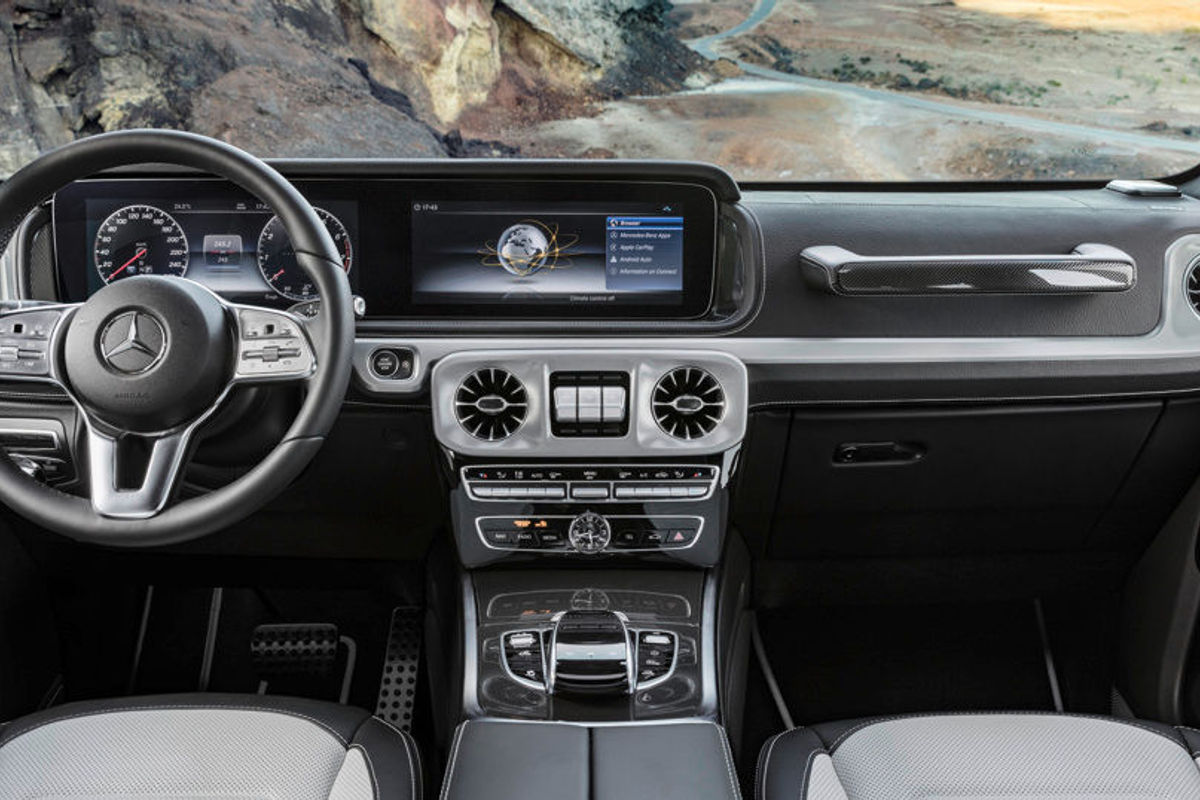
The most prominent feature in the new G-Wagon is the optional Widescreen Cockpit taken from the E-Class and S-Class. It comprises two 12.3-inch screens under shared glass that stretches from the driver’s side across to the centre stack. The system boosts the premium feel in the cabin and can be controlled using the touch-sensitive Touch Controls on the steering wheel which function much like a smartphone with swipe functionality. The screen display is customisable with 3 themes including Classic, Sport and Progressive.

For those who prefer a more traditional look, two tubular analogue dials set in a 12.3-inch frame, flanked by a 12.3-inch navigation screen is fitted as standard.  

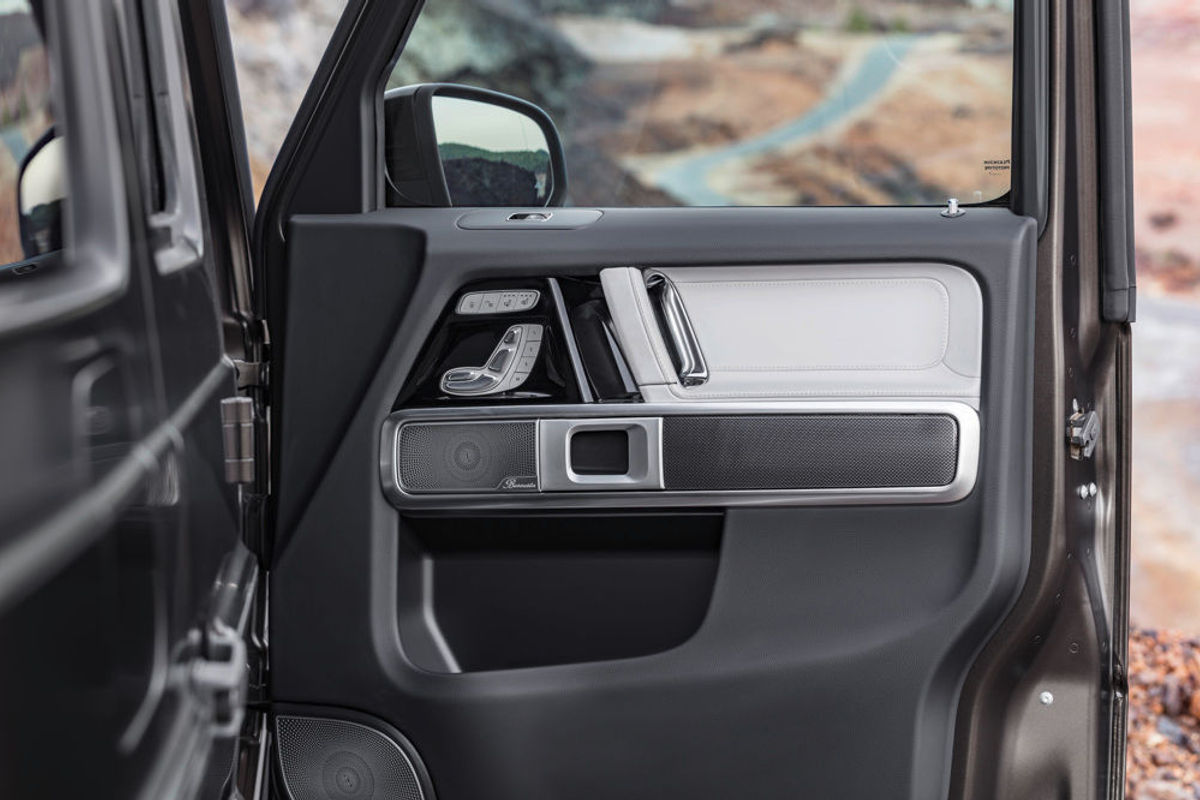
Key G-Class elements such as the grab handle and chrome-highlighted switches for the differential locks, seen between the air vents, have been retained. The shape of the air vents mimic that of the round headlights while the shape of the speakers are similarly shaped to the indicator lights.

As standard, the G-Class is finished in high-quality materials which include open-pore wood trim, metal accents, carbon fibre and leather.
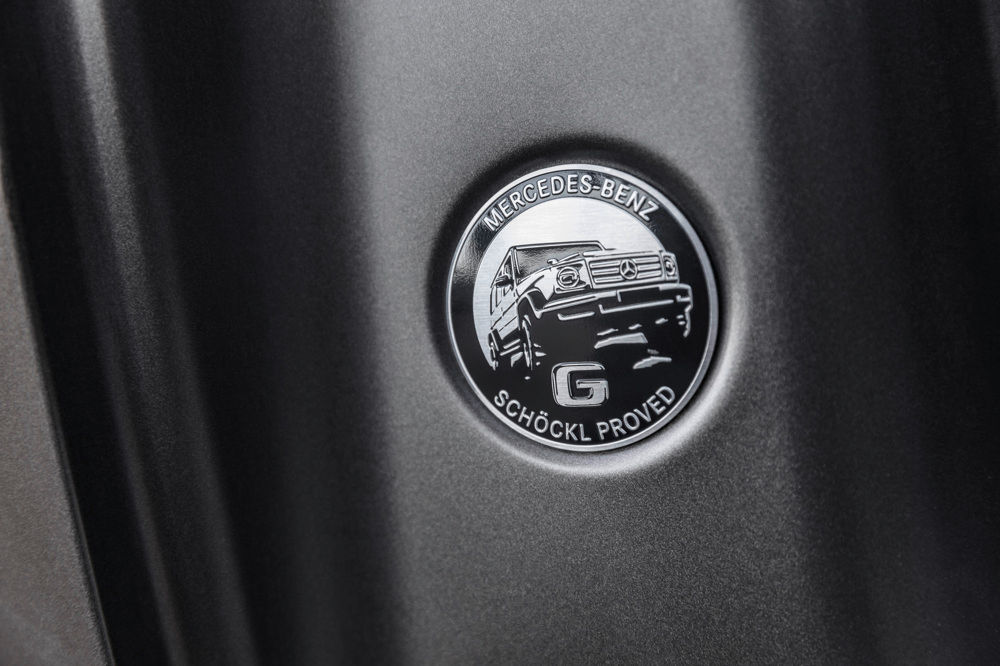

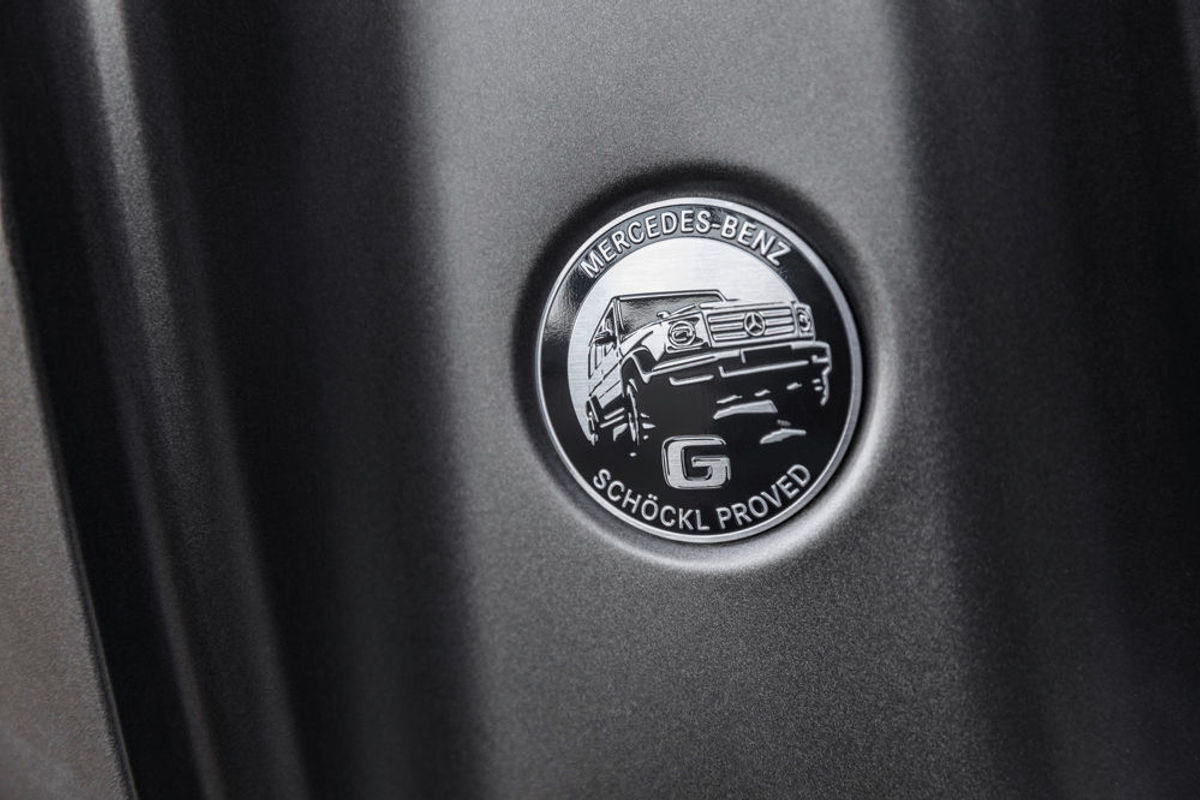
The G-Class' offroad ability is proven on the Schöckl, a mountain in Graz, where the vehicle is produced. 

A "Schöckl" badge with a “G” is found on the B-pillar and signifies the tested offroad ability of the vehicle at Merc’s Graz plant's local mountain, used for its hard and merciless testing which every G-Wagon needs to overcome.

The interior also benefits from numerous new storage spaces as well as 2 removable cup holders and an oddment tray found ahead of the touch pad in the centre console. A wireless charging pad can also be specified as an option.

A Burmester surround sound system with 16 speakers is fitted as standard while a 590W amplifier with Digital Sound Processing is available as an option.

Passengers are well-catered for with a reclining rear bench that can be folded down to 60, 40 or 100 percent. The seats offer heating and memory function while an optional Active Multicontour Seat package includes multi-contour seats with various massage functions, climatised seats and fast seat heating. The driver and front passenger also get treated to adjustable lumbar support.

As you can expect, Mercedes-Benz will offer a wide range of trim options to suit varying tastes. An AMG Line trim package can be specified, which apart from red seat belts, red topstitching on the black leather seats, centre console, instrument panel and doors, will also include a flat-bottomed steering wheel, which is a first for the G-Class.

The arrival of the new G-Class in South Africa has not yet been confirmed but it will likely arrive later in 2018. We will keep you informed as more details emerge.

Buy a Mercedes-Benz G-Class on Cars.co.za

Related Content

Five Questions: Klaus Hartmann (Mercedes-Benz G-Class)

Mercedes-Benz G-Class Bakkie Spied

Can't Wait for Mercedes-Benz X-Class? Check this out

Update: Mercedes-Maybach Reveals G650 Landaulet (Video)

Mercedes-Benz GLB To Enter Production In 2019

Five Cool Things You Should Know About The Mercedes-Benz G-Class
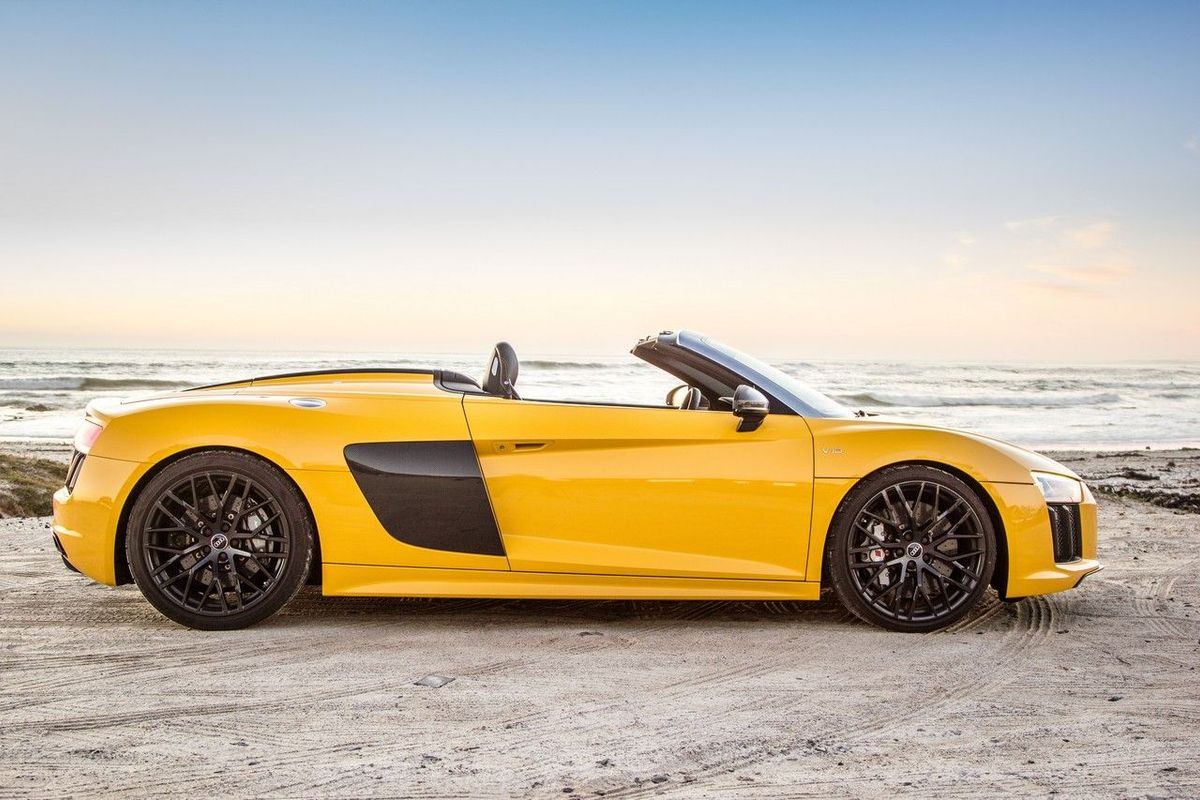
 

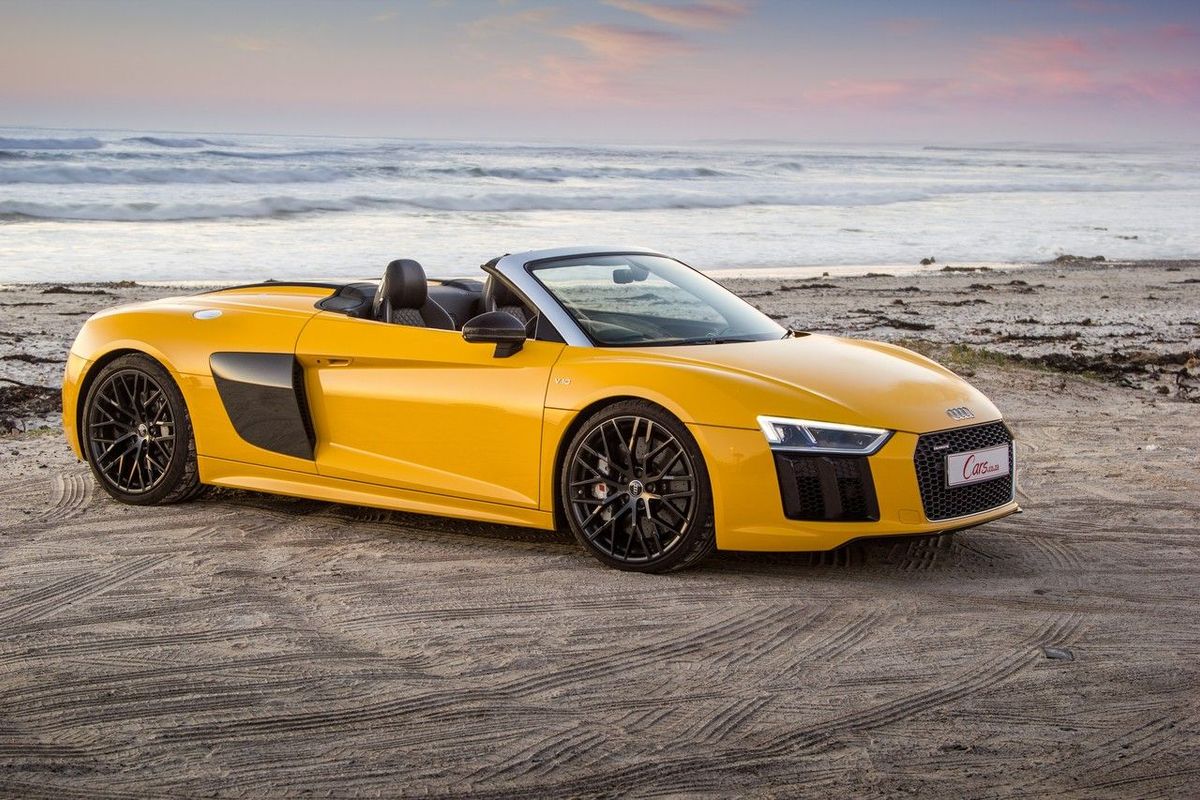
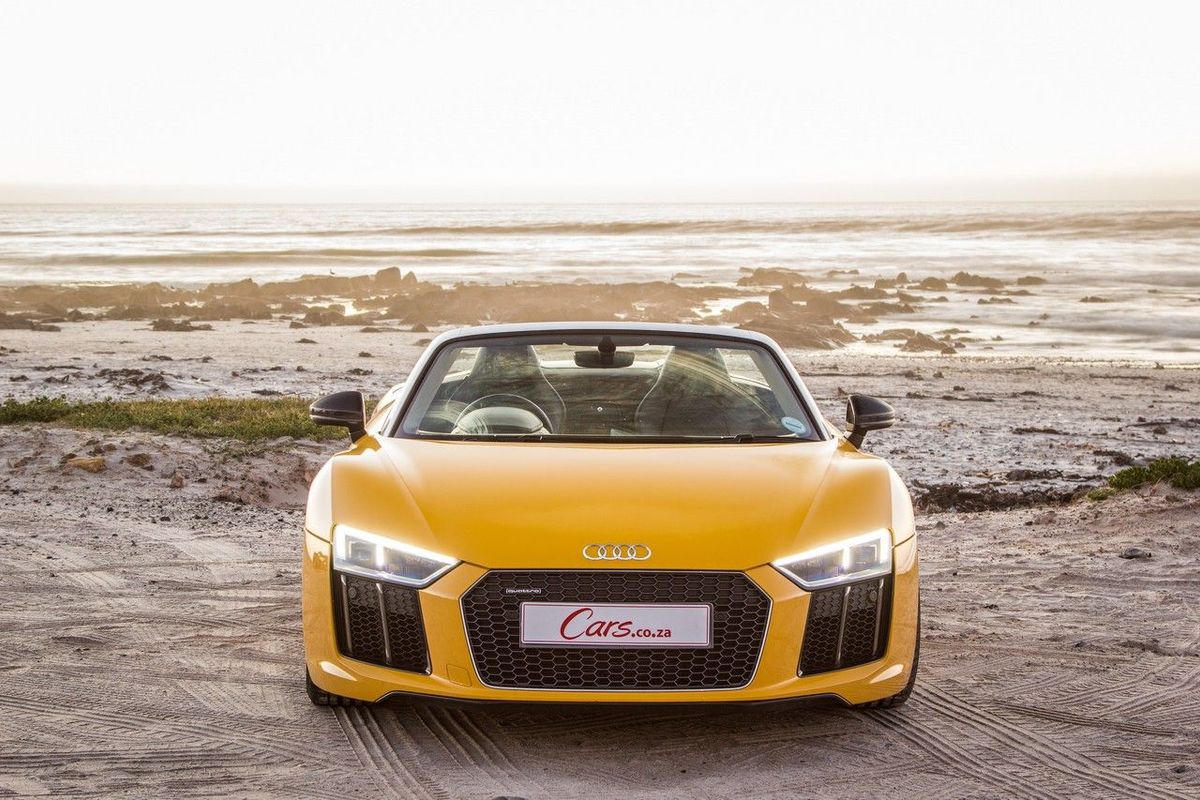
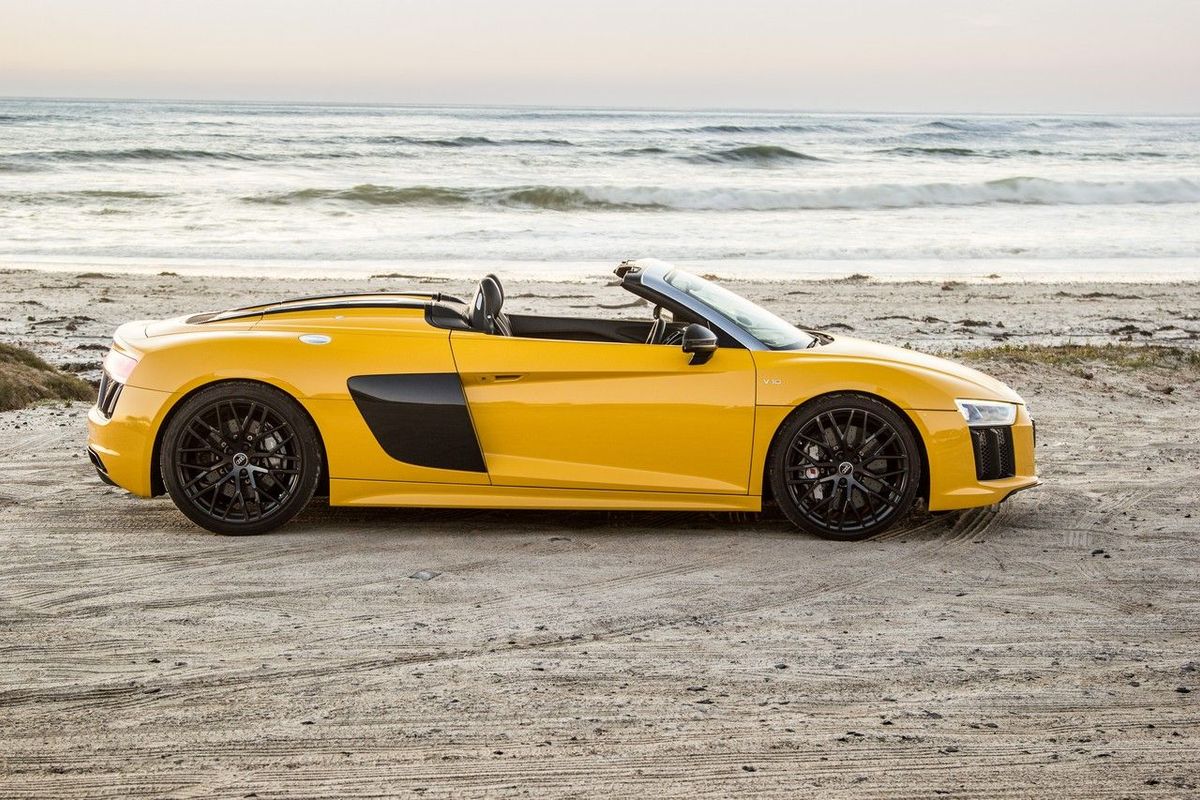
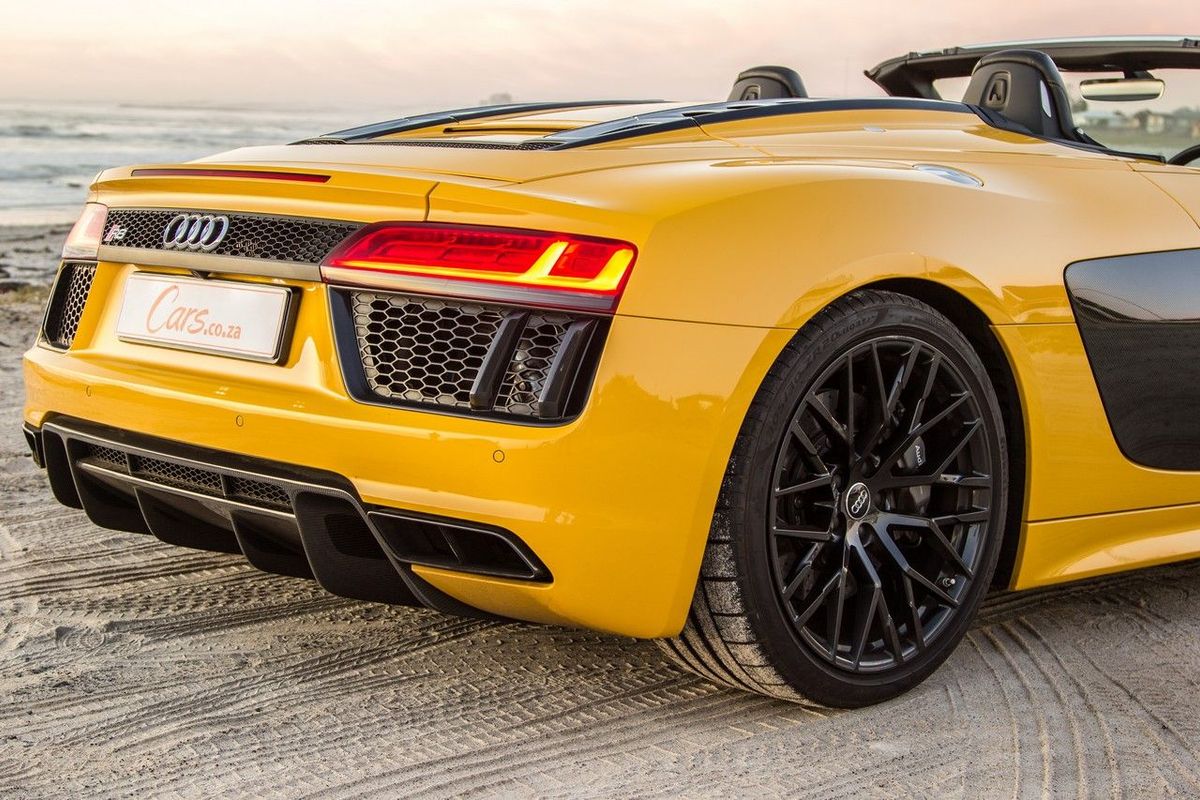
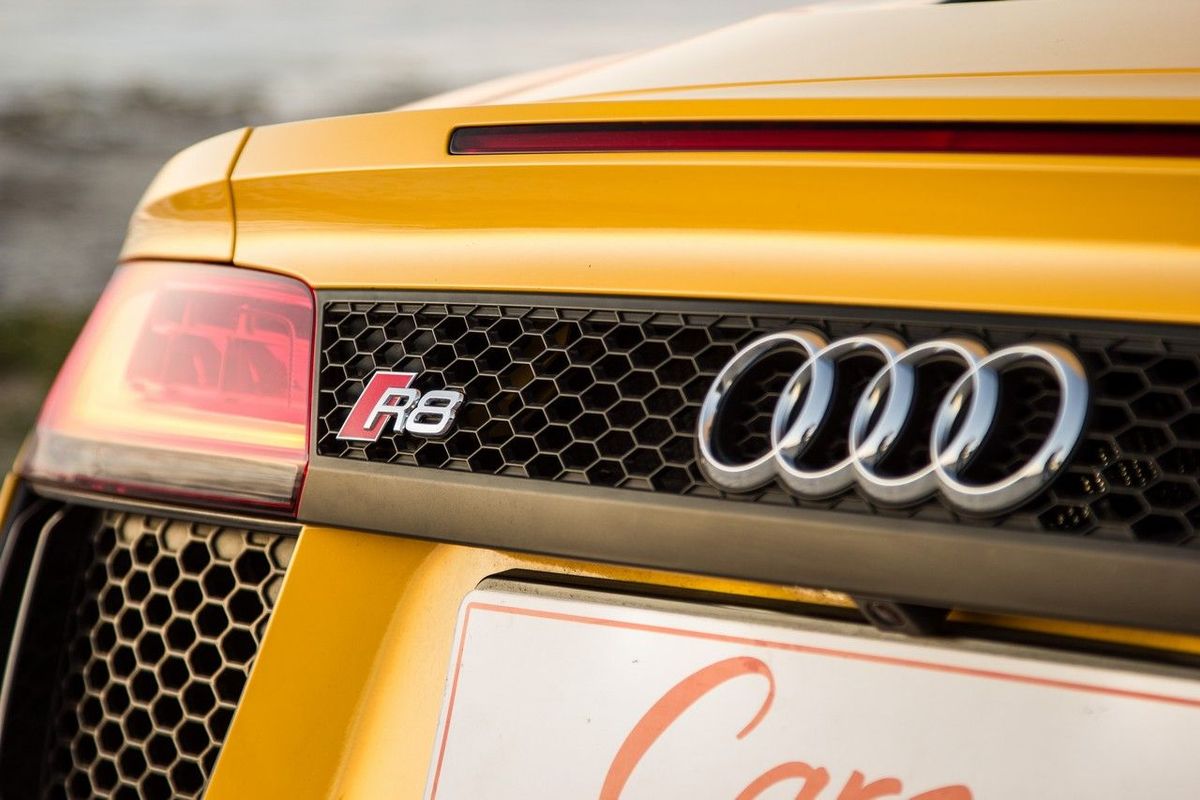
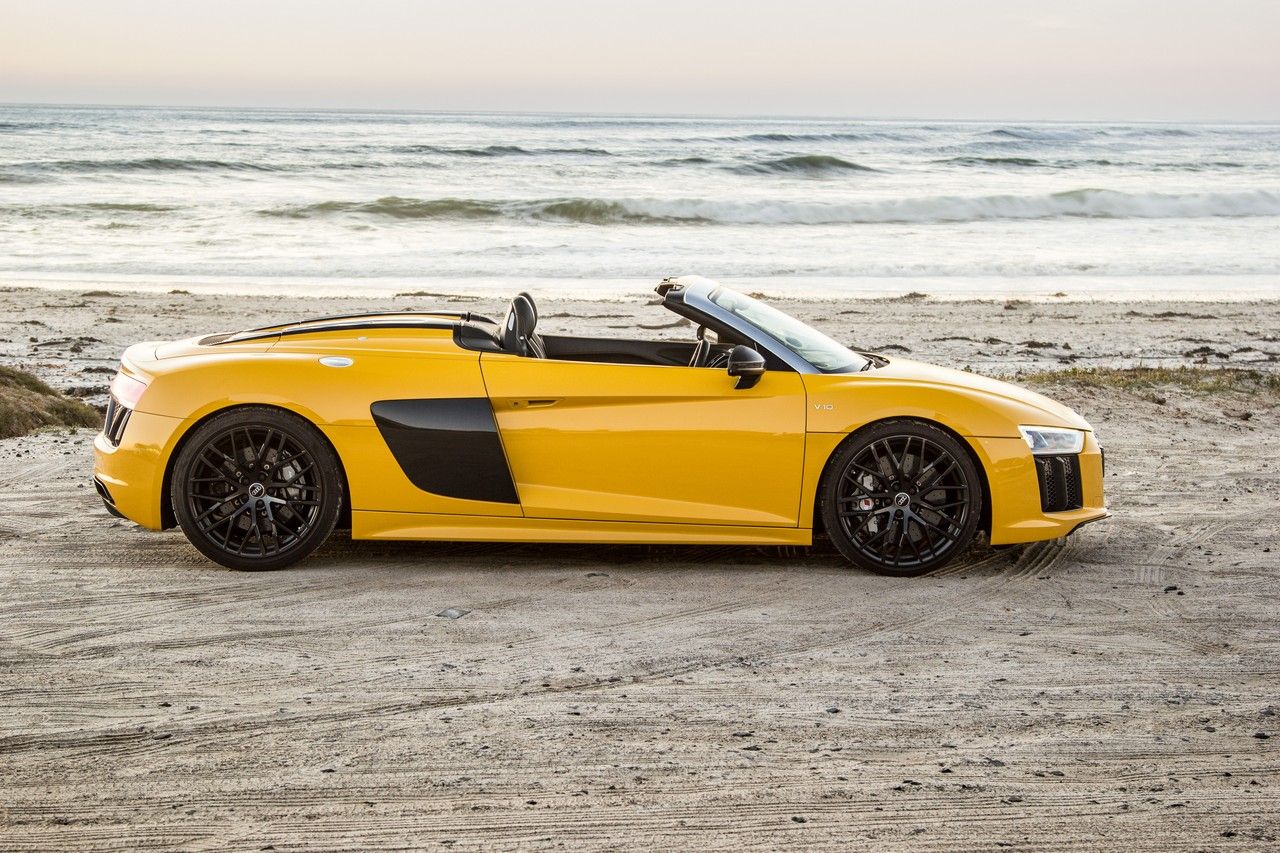
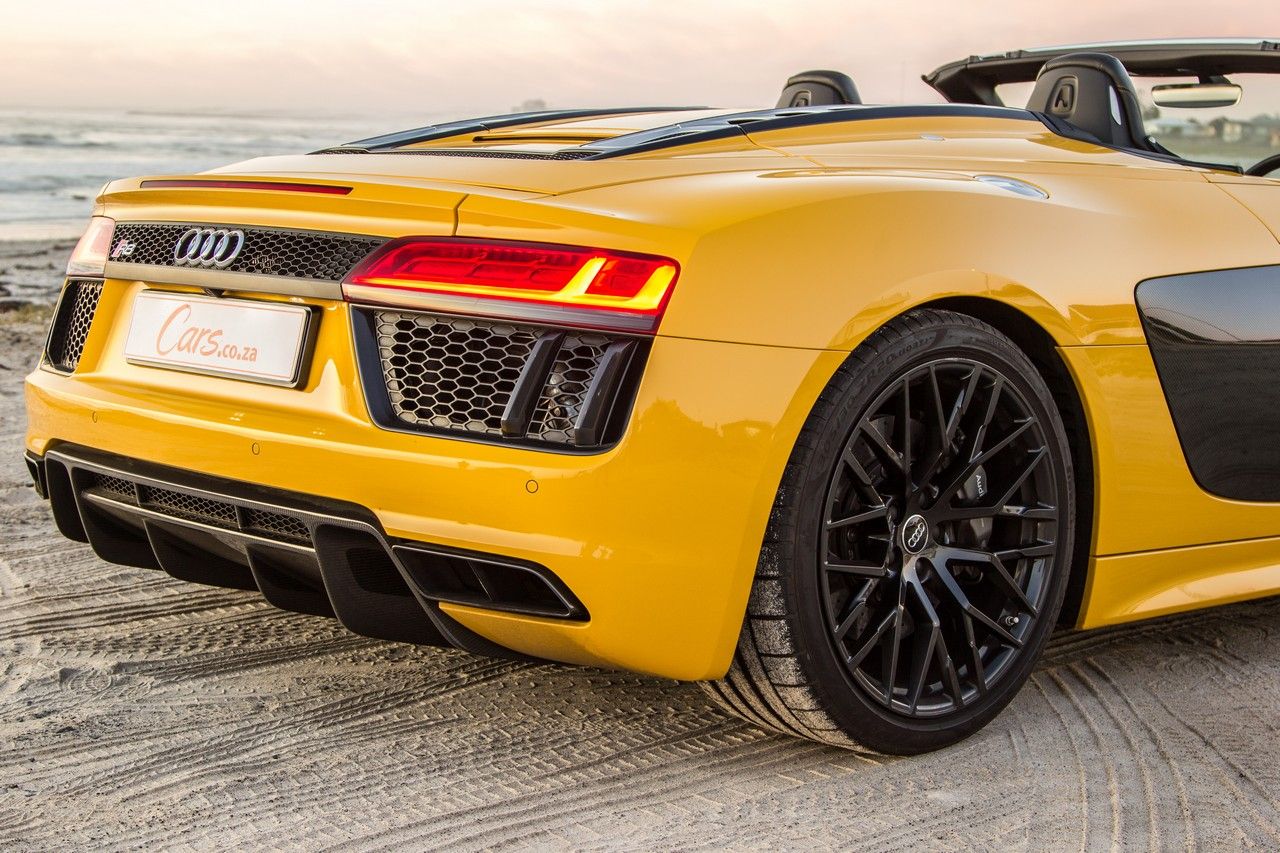
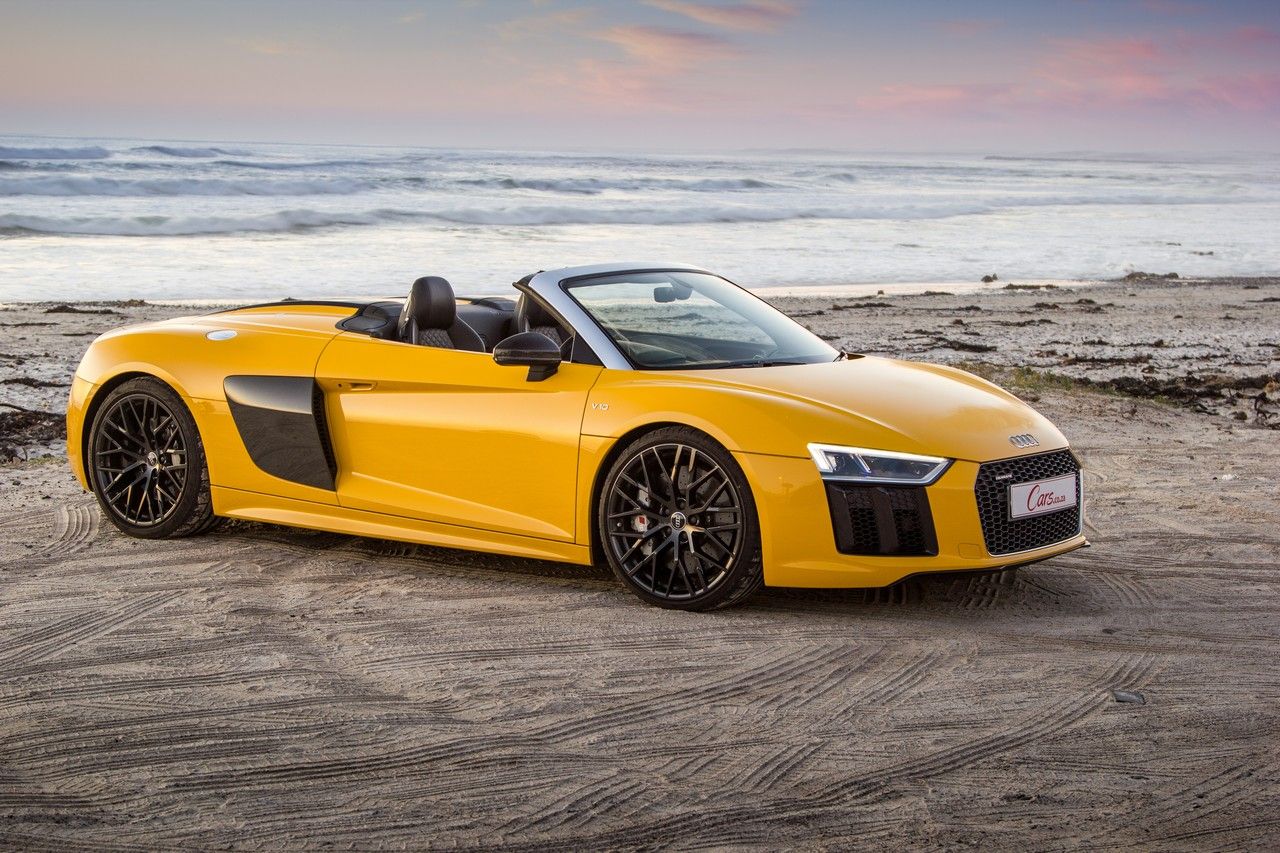
Audi R8 V10 Spyder (2017) Quick Review

Audi’s open-top supercar brings you one notch closer to that sonorous V10 engine that gleefully performs its greatest hits, on demand, just behind your left ear. If you can't (or don’t want to) reach up the V10 Plus derivative, the Spyder is the best alternative.

We like: naturally aspirated V10 soundtrack, ease of everyday use, compelling performance

We don't like: No more manual version, not suited to taller drivers, overpriced

Alternatives:

  • For something wilder – The Jaguar F-Type SVR Convertible is not a mid-engined supercar, but it offers a wilder ride and emits fruitier pops and bangs. Bear in mind it’s more powerful than the Audi, accelerates just as quickly and, somehow, costs R650k less.
  • For something with more pedigree – The Porsche 911 Turbo Cabriolet PDK costs the same as the R8 Spyder, but isn’t going to give you the same aural stimulation and doesn’t really give the best of what the 911 package has to offer.
  • For the newest entrant – The Mercedes-AMG GT C Roadster is the newest addition to this club. The Benz is powered by a stonking engine, but its handling can be a little wild if you don’t have your wits about you.

Quick Specs

Price: R 2 905 500
Engine: 5.2-litre V10 petrol
Power: 397 kW at 7 800 rpm
Torque: 540 Nm at 6 500 rpm
Gearbox: 7-speed dual-clutch automatic
Kerb weight: 1 720 kg
0-100 kph: 3.6 sec
Top speed: 318 kph
Economy: 11.7 L/100 km

What’s new?

The R8 V10 is closely related to the Lamborghini Huracan Spyder, and barring trim differences and body style, they are near-identical. For this version of the R8 V10, Audi has included the much-loved S-Tronic dual-clutch transmission, as well as a new differential that’s capable of sending 100% of its power to the rear wheels. It’s still primarily an all-wheel-drive car, but the adjustability of the V10 Spyder's diff will in all likelihood entice buyers that have previously berated Audi's supercar for its tendency to understeer at the limit and its safety-first handling characteristic.


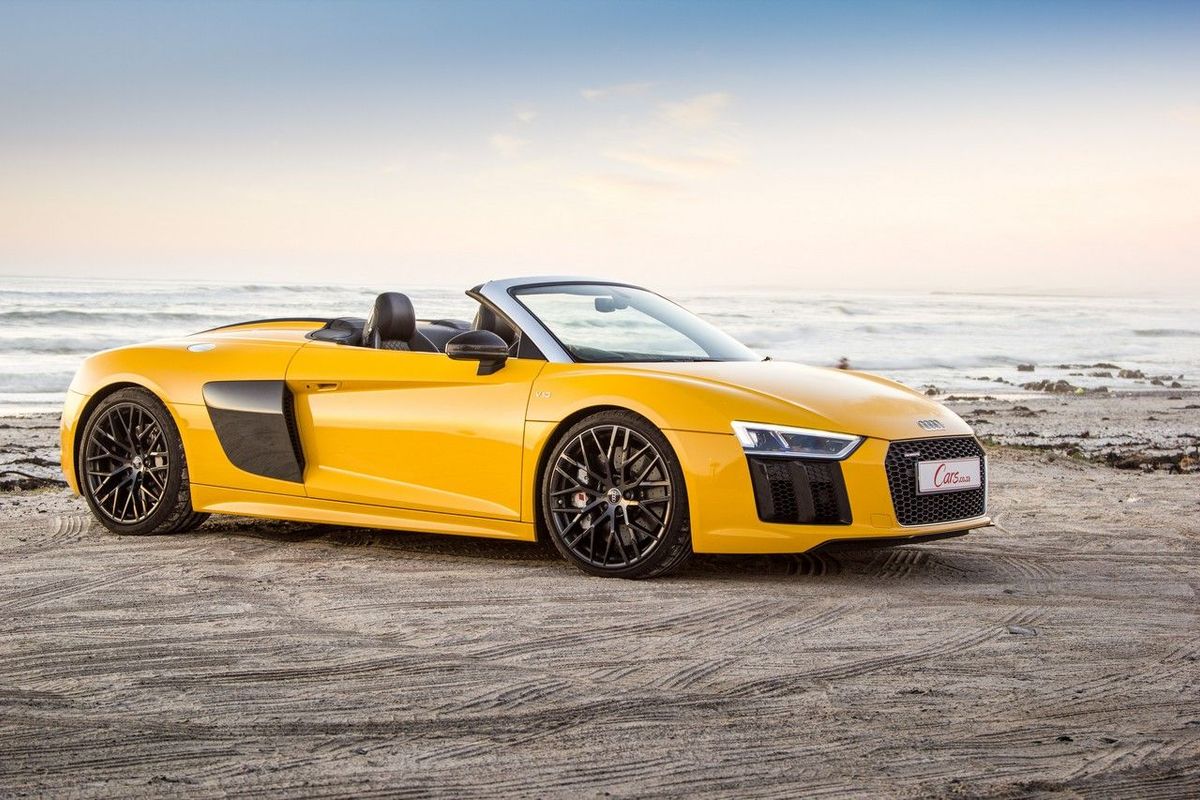
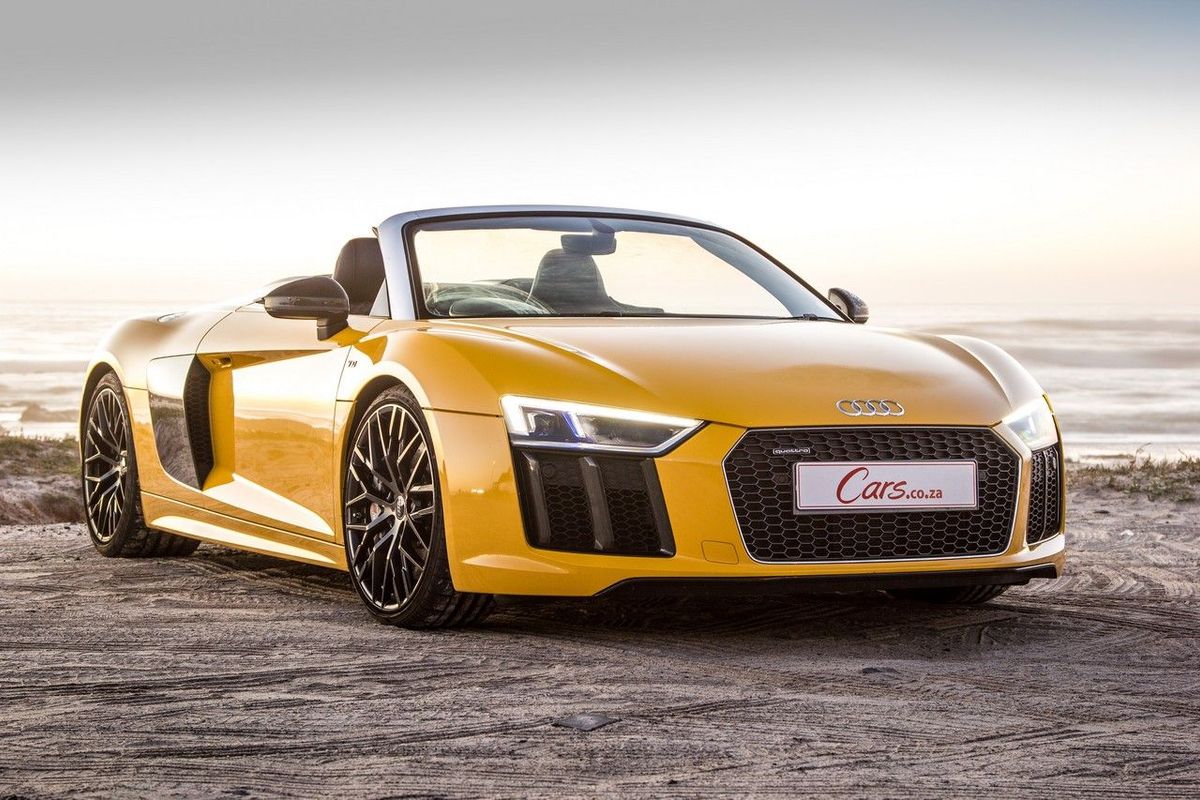
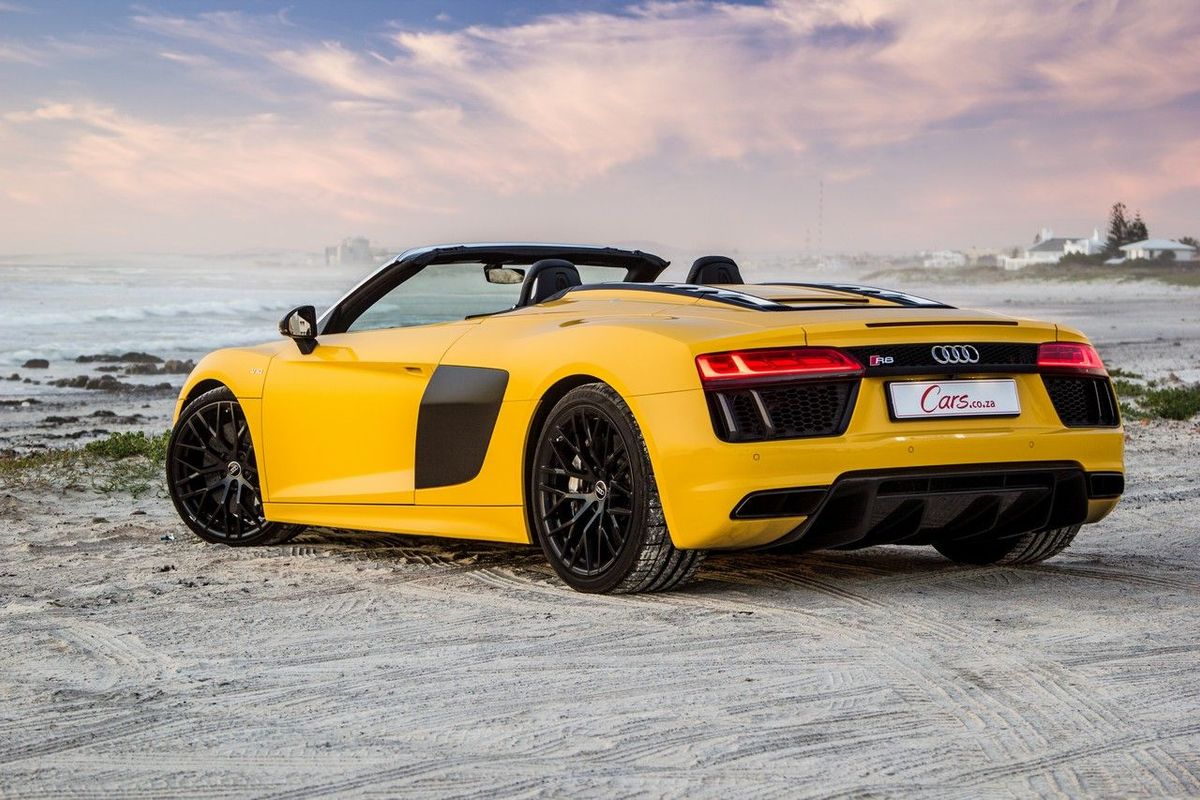
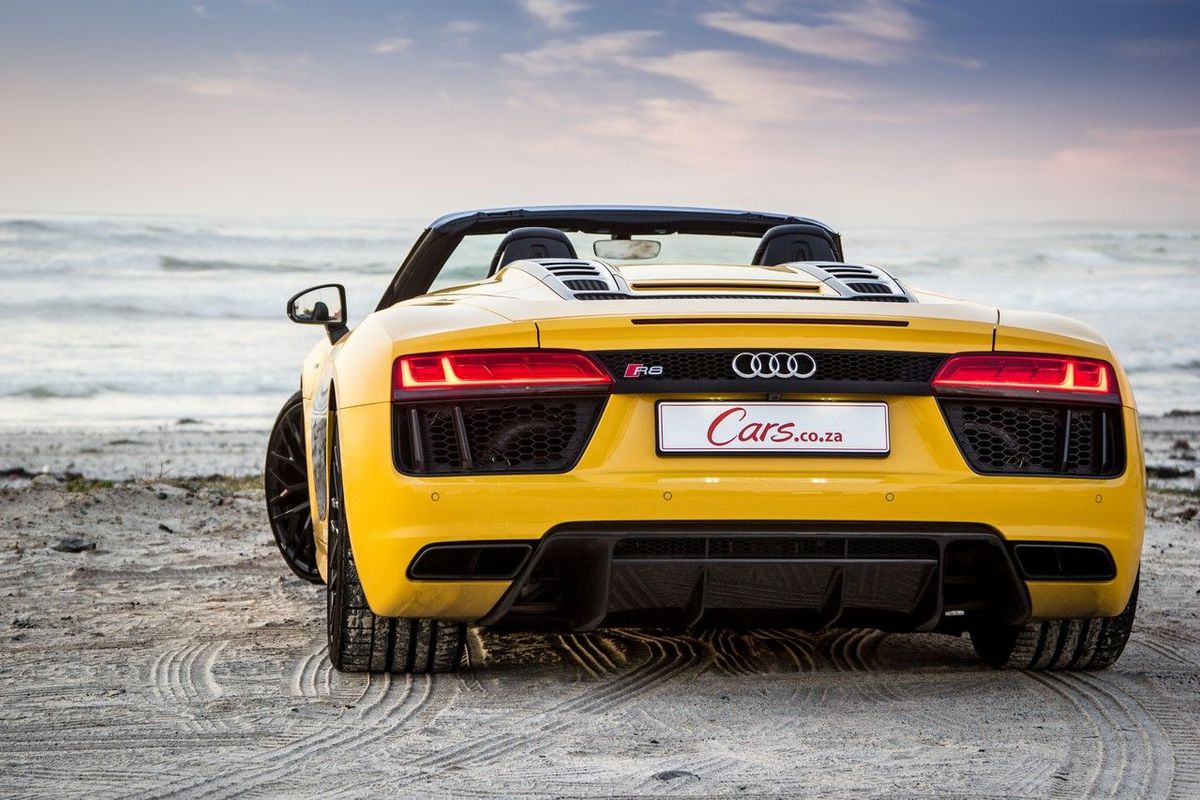
Still an eye-catching design, although arguably not different enough from its predecessor.

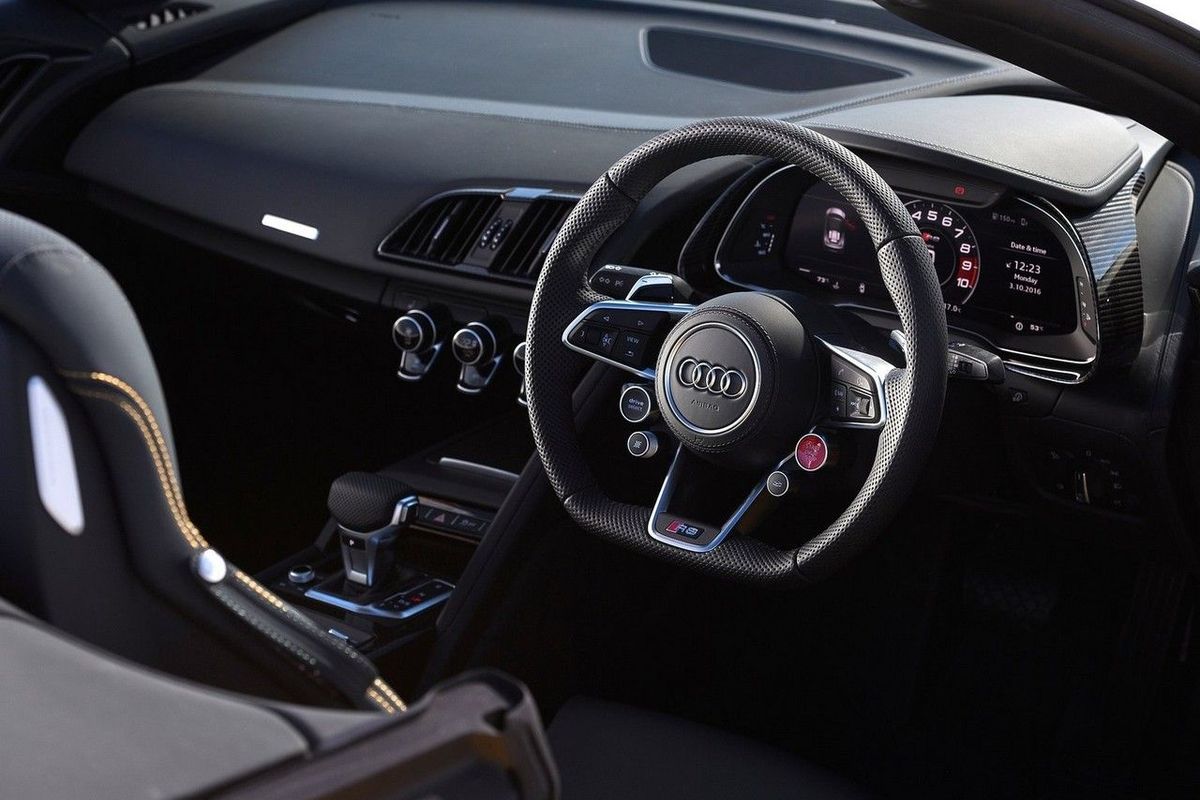
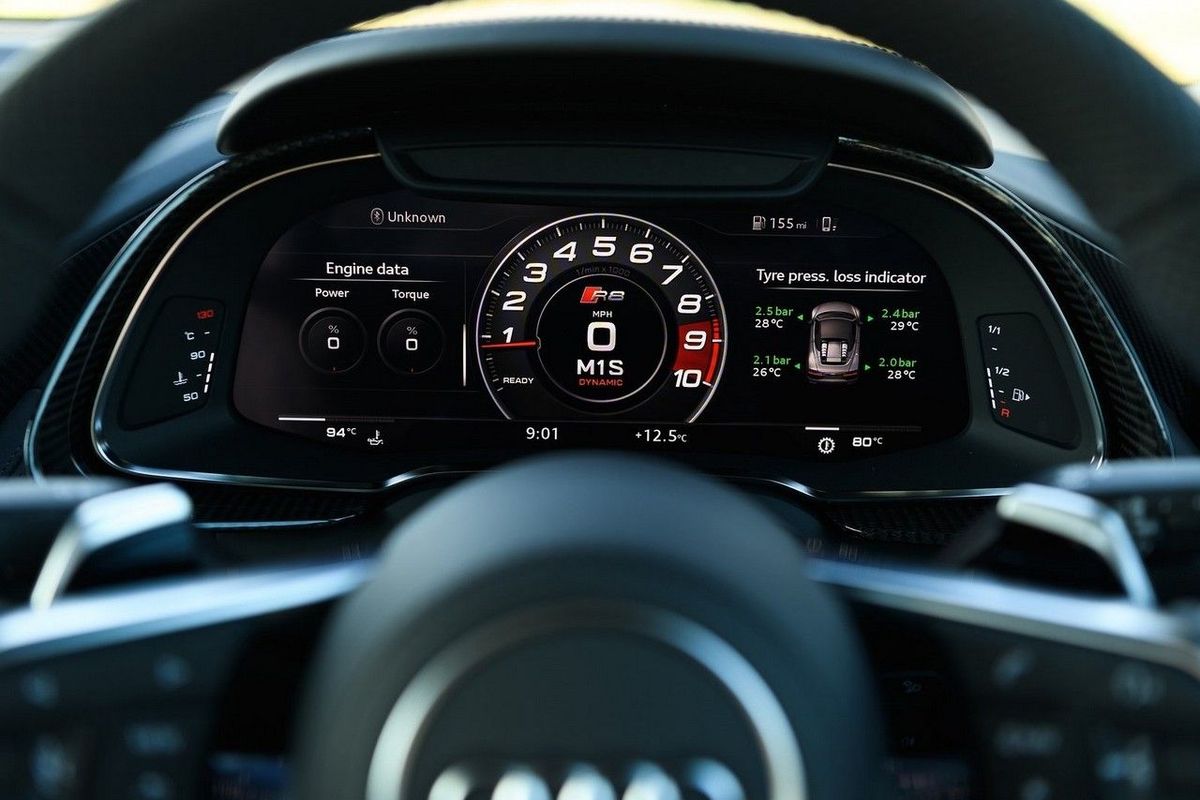
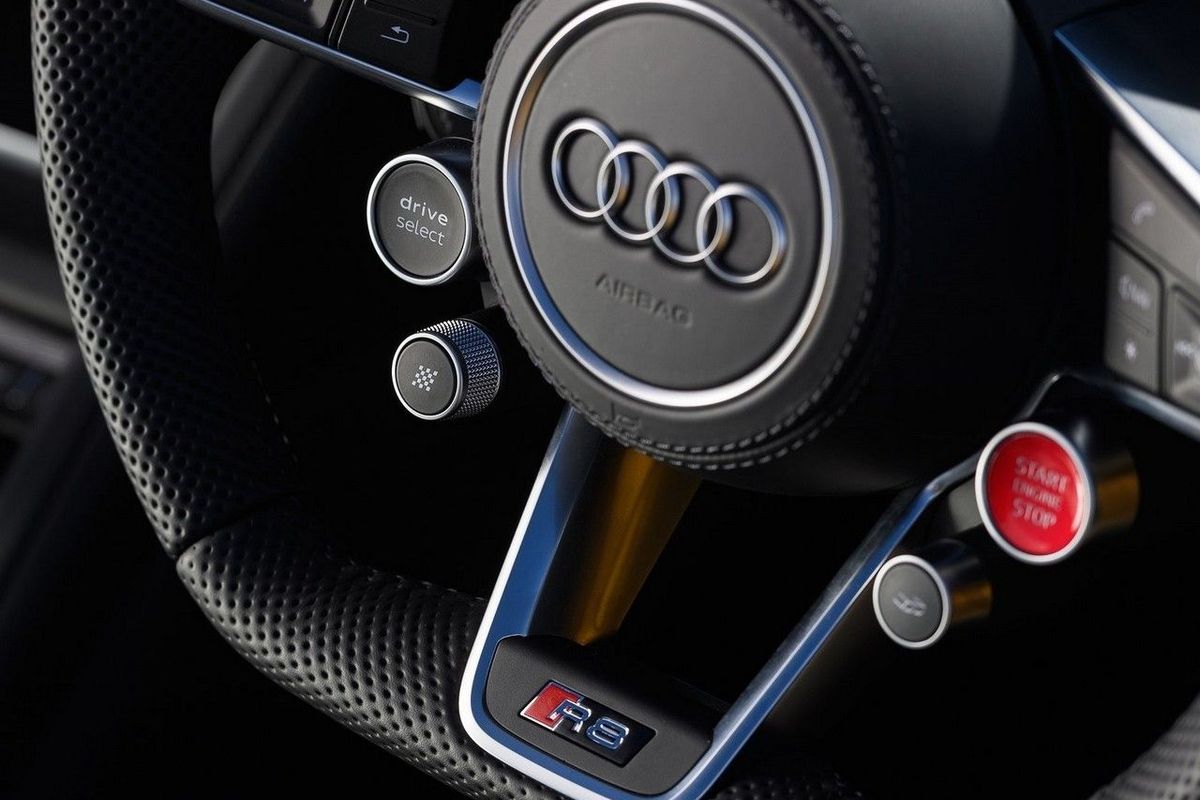
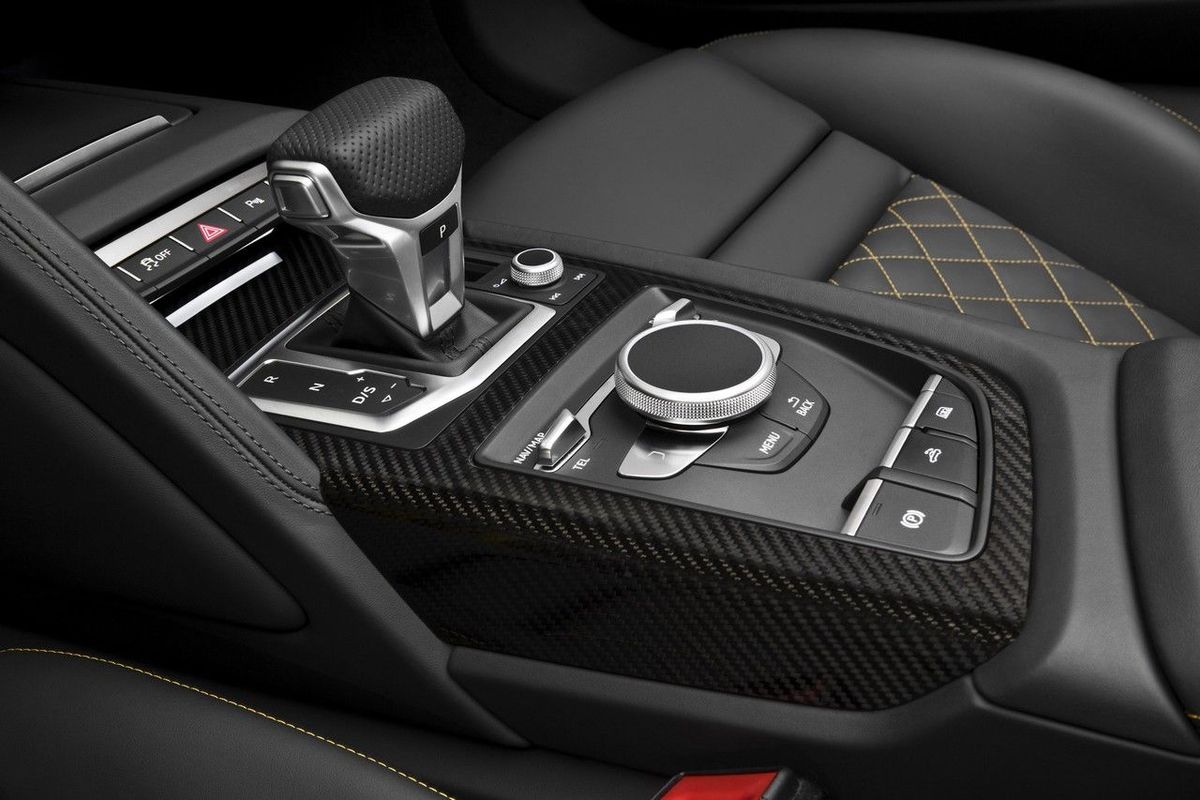
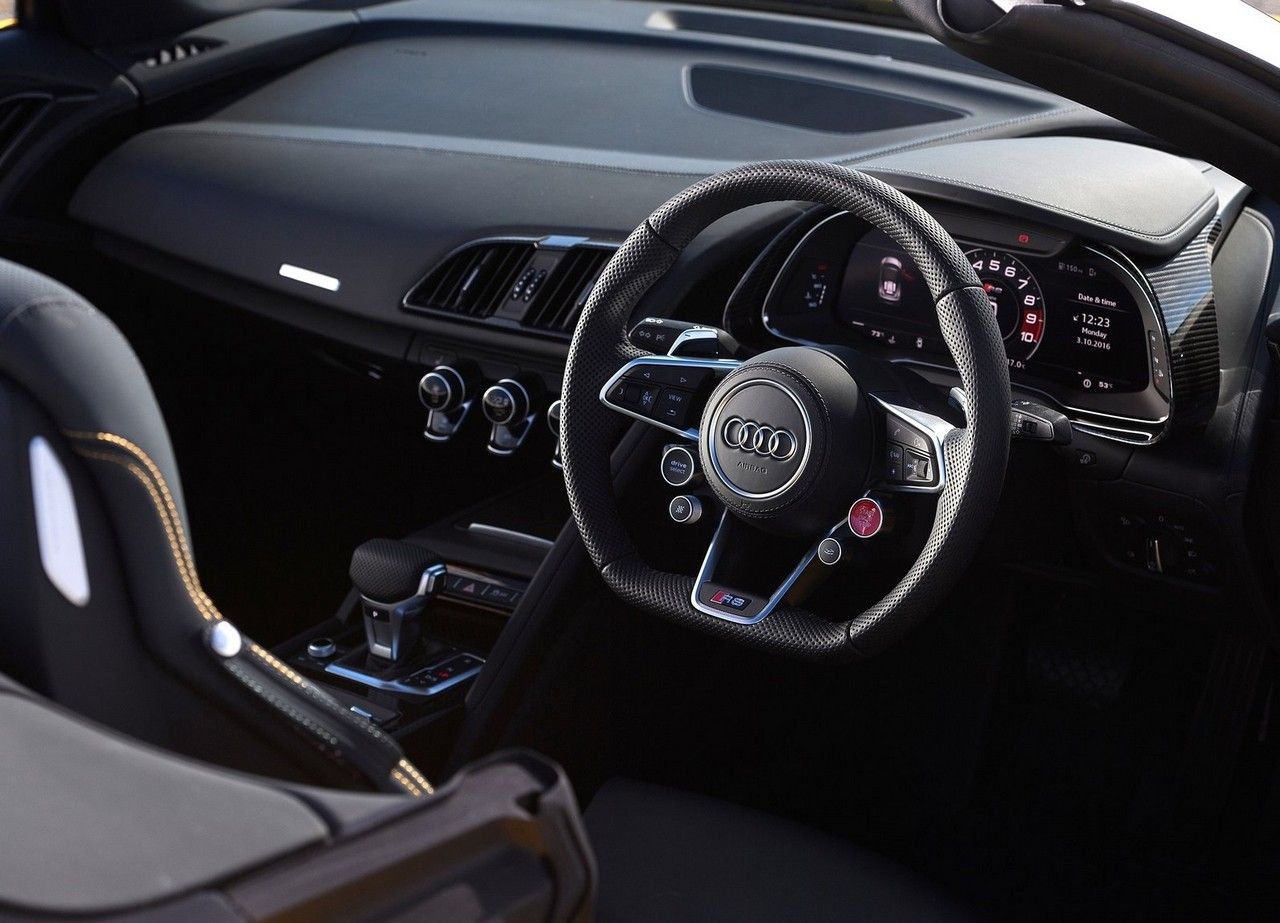
The newcomer's interior is a masterclass in Audi minimalist design, where all the pertinent information is displayed on the Virtual Cockpit (all-digital display) in the instrument cluster with a plethora of buttons/toggles mounted on the steering wheel. This makes the steering wheel a little cluttered, but the buttons mostly stay out of the way when you’re wielding the wheel from side to side with zeal.
The good

V10 engine goodness

The last of a dying breed, a throwback to the days of mental supercars, whatever you might call the rev-happy V10 engine, it’s time is coming to an end. But what an end. At a lofty 8 500 rpm, it touches that nerve that sends goosebumps coursing out of your skin. Out in Grabouw, as we wound through the Apple orchards, through valleys and over hills, the howl of the 397 kW/540 Nm V10 was evocative and unforgettable…


The best way to enjoy the V10 engine? With the top down and at 8 000 rpm.

With the top down (it can be dropped in around 20 sec, at speeds of up to 50 kph), the sound is enhanced more vividly compared with the coupe. Even with a cold chill in the air, the urge to drop the roof on a good road is hard to resist. Crank the heater up a bit, fold the roof down and bask in the glory of a super responsive, naturally aspirated V10. Oh, we have missed such linear power delivery and a lanky rev range in modern turbo engines!

Everyday sportscar

When the Audi R8 arrived back in 2006, it changed the way we thought about top-end sportscars/supercars… They could be fiendishly fast, but comfortable in traffic and capable of cresting speed bumps without graunching the car's nose. The new model retains that inherent ease of use. With a couple prods of the Drive Select button, the R8 can be shuffled from an apex-hunting, corner-hugging machine to something with which you can potter round town. The ride is never going to be as good as the R8's more practically packaged siblings, but it’s entirely easy to live with.


The R8 has a brilliant way of adapting from mountain pass slayer to inner-city trundler with consummate ease.
The talents of the R8 are accessible, even to those who don’t own a race suit and fireproof undies. It doesn’t feel like it’s about to snap into oversteer or run out of grip. You can push on with confidence and, with the top down, it all feels faster as the wind buffets you. The cabin remains relatively quiet at speed and you can have a conversation without having to raise your voice to a yell. The engine noise is way louder than the wind ever gets!

The bad

Not for taller drivers

As we discovered with the Lambo Huracans, the roadster driving position does not seem to allow the driver’s seat to go as far back as it does in the coupe. This is probably because the roof is stored behind the driver and in front of the engine. If you’re 6ft (183 cm) or taller, your legs are going to have to be bent more than you’d like, which is a pity, as the Spyder is probably the best version of the R8.


Audi interiors are almost always exceptional. The R8's is exquisite, bar the cluttered steering wheel.

Overpriced

The previous generation R8 may have been much loved and -respected, plus moved the sportscar game on significantly, but the price of this new model is staggering, to put it bluntly. The Spyder starts at R2.9 million before options and you can quite easily spend R200k-500k on options if you want bigger wheels, racing seats, performance steering wheel and ceramic brakes. The competition all seem to be considerably less money.
Verdict

The R8 Spyder can no longer claim to be one of only a handful comfortable or easiest-to-live-with supercars. The likes of Mercedes-AMG and, to a lesser extent, Jaguar and Porsche have joined the "can do it all sportscar" ranks. What it does have is an easily accessible thrill zone. It’s not scary like a 400 kW sportscar can be, it’s not intimidating to hustle around a tight mountain pass and it excels on open, sweeping roads. The levels of balance and driver involvement are just right for a mainstream sportscar and the ravishing (top-down) look is unlikely to disappoint onlookers.
Moreover, the big trick up the R8 Spyder’s sleeve is its engine: the 5.2-litre V10 makes life with the roof down a bucket list event every time you let the motor spin merrily to the top end of its rev range. Nothing sounds quite like it (bar the aforementioned Huracan of course) and the soundtrack is unfettered, unlike the synthesised pops, crackles and bangs that are the calling cards of the turbocharged brigade.

It’s certainly not worth an extra R500k over the hard top in most people’s books, but if you’re playing in the R3-million price frame for a car, you’re likely unconcerned with the purchasing cost and more likely to pick the car that prompts outbreaks of goosebumps with the most alacrity.

Related content:

BMW i8 vs Audi R8 Spyder – The Strangest Sportscar Rivalry?

Faster Audi R8 Spyder V10 Plus Revealed

Audi R8 V10 Plus (2016) Review

Part 1: Audi R8 vs McLaren 570S with Drag Race

Searching for a used R8?

Start your search here

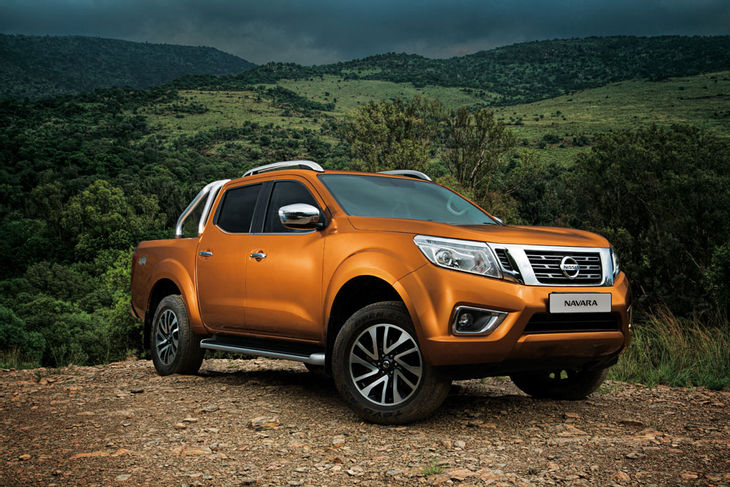
3 Reasons Why Nissan Navara is #CarsAwards Finalist

What makes the Nissan Navara 2.3D 4×4 LE Automatic a strong contender in the Leisure Double Cab Bakkie category of the 2017/18 Cars.co.za Consumer Awards – powered by WesBank? We investigate…

The new and improved Nissan Navara came to market earlier this year and unlike its rivals, it boasts a new engine and the first coil spring 5-link rear suspension to be used on a 1-ton bakkie, which is said to offer better handling characteristics and car-like ride comfort. Does the Navara have what it takes to best its rivals in terms of performance, capability and comfort?

3 Reasons Why Nissan Navara is a #CarsAwards Finalist

1. Good performance

Making its debut in the new Navara is a twin-turbo 2.3-litre turbodiesel engine, mated with a 7-speed automatic transmission, that delivers a heady 140 kW and 450 Nm of torque. These figures compare very favourably with the larger engines used by the Nissan's main rivals, and the torque peak is available from 1 500 to 2 500 rpm.

This engine’s performance is strong and smooth and where the Navara most definitely has a number of rivals beat (in particular the Ford Ranger), is in terms of fuel efficiency. With a quoted combined cycle consumption figure of 7.0 L/100km, it comfortably undercuts the Toyota Hilux, too.

2. Comfortable and practical

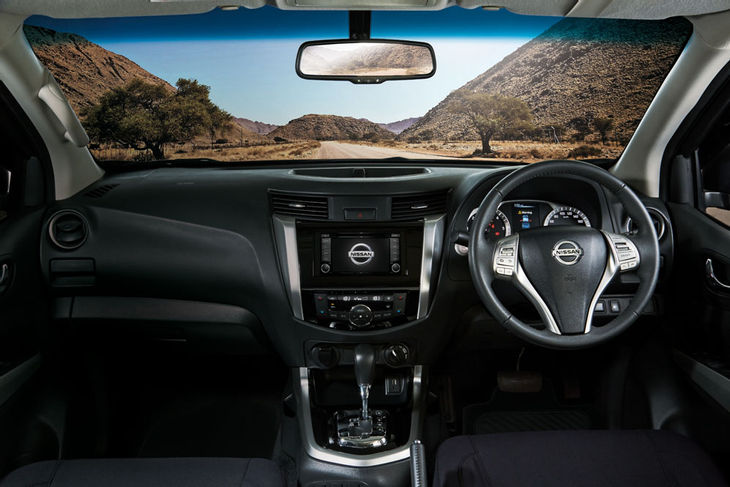
Inside, you'll find a spacious cabin with particularly impressive shoulder room. The seats are comfortable and irrespective of whether you sit at the front, or rear, the legroom is better than fair and headroom is good. Rear ventilation outlets are also fitted as well as a convenient electrically-operated rear sliding window.

From a practicality point of view, it's worth noting that the loading tub is bigger than before – it is 67 mm longer and 18 mm deeper – resulting in a capacity of 1 111 litres. This particular derivative is rated to lug up to 967 kg with a maximum towing capacity of 3.5 tonnes.

3. Nimble offroader

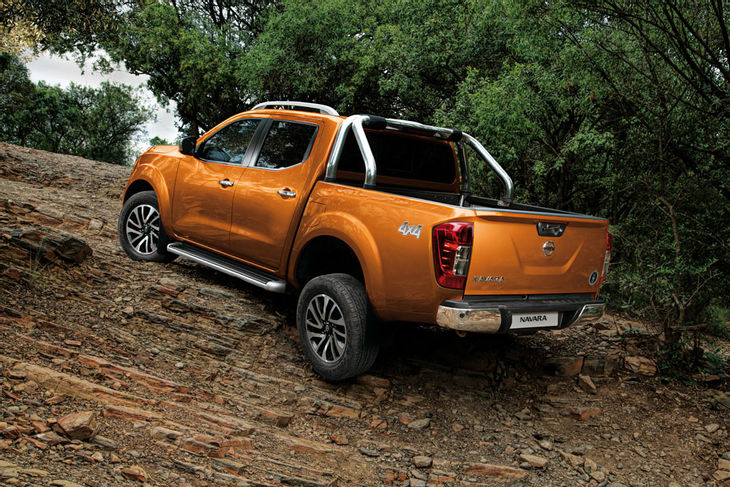
A rear differential lock is fitted for use in more difficult off-road scenarios and hill-start assist makes pulling away on inclines a cinch. You also get shift-on-the-fly 4-wheel drive, with four-wheel drive High and Low modes on offer. It is possible to switch to 4H at speeds up to 100 kph. In off-road situations, the clutch modulation is a little trickier to master than in some competitors' products, but there's more than enough crawling torque to clear most obstacles.

Off-road, the Navara’s new suspension allows for greater wheel travel, benefitting performance across rutted surfaces or cross-axle obstacles. A shortened wheelbase and a particularly stubby front-end has resulted in significantly improved approach and breakover angles. Even the departure angle is apparently improved by as much as 3 degrees. All of this contributes to the Navara feeling quite nimble and manoeuvrable in off-road conditions.

Have Your Say: Complete our survey!

Do you own a Navara? We would love to hear from you! Tell us about your experience by completing our Ownership Satisfaction Survey. Your input counts for 50% of the final result.

What are the Navara's rivals in #CarsAwards?

The 2017/18 #CarsAwards finalists: Leisure Double Cab Bakkie category

Compare the Navara's specs with the Ford Ranger 3.2 Wildtrak 4×4 Auto and Volkswagen Amarok 3.0 V6 TDI 4Motion Highline Plus

Related Content

Nissan Navara 2.3D 4×4 LE (2017) Review

Nissan Navara vs Ford Ranger (2017) Comparative Review Video Part 1

Nissan Navara vs Ford Ranger (2017) Comparative Review Video Part 2

Bakkie Comparison: Nissan Navara vs Ford Ranger Fx4 [with Video]

Nissan Navara vs VW Amarok (2017) Which is better for off-roading?

Why Navara shakes up the double-cab market

#CarsAwards Finalists Testing: Gerotek turns up the heat

2017/18 Cars.co.za Consumer Awards – powered by WesBank; Finalists

Audi RS3 vs BMW M2 (2017) Track Race

In a world…where hot hatches have nearly 300kW and cost R1million, these two contenders fight for supremacy. It's Part Two of our feature with the BMW M2 and the Audi RS3.

That does sound a bit Hollywood but we do think this video is a bit of a blockbuster. Recently, we hired the Killarney race circuit outside Cape Town and staged a drag and track race featuring the 2017 Audi RS3 Sportback and 2016 BMW M2.

The best way to compare these two cars in detail is to use our compare tool, simply follow this link:

https://www.cars.co.za/compare-cars/Audi-RS3-RS3-Sportback-quattro-vs-BMW-M2-M2-coupe-auto/04030519/050155502/

If you haven't yet watched the drag race, here it is:

https://www.youtube.com/watch?v=L87OsWqfNQo

In part 2, we headed to the full circuit, made sure Ashley had consumed sufficient calories to sustain himself and unleashed both cars. The aim was to set two times for each car, one standing start hot lap and one flying lap. Both cars were rigged with Racelogic V-Boxes for the most accurate timing possible and both cars were driven within a few minutes of each other, to ensure track conditions were as close to identical as possible.

Watch the full video here:

However, we didn't want to stop there. We wanted to provide you, the viewer, with as much data and footage from our race day as possible. The V-boxes provided a tonne of great data and videos which you'll find below.

Hot lap videos – POV

Let's kick it off with the Audi RS3's hot laps POV video. The V-box has also added speed and G-forces:


And now onto the BMW M2. These videos are a great way to compare how each car went about setting its lap times.

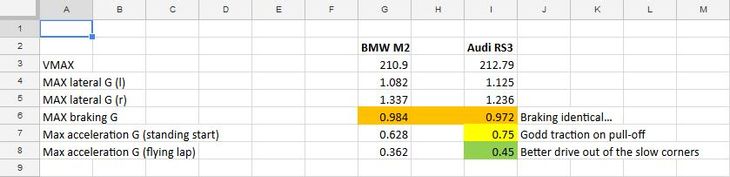
Key Data

Here are some headline figures which we've pulled from the V-boxes.

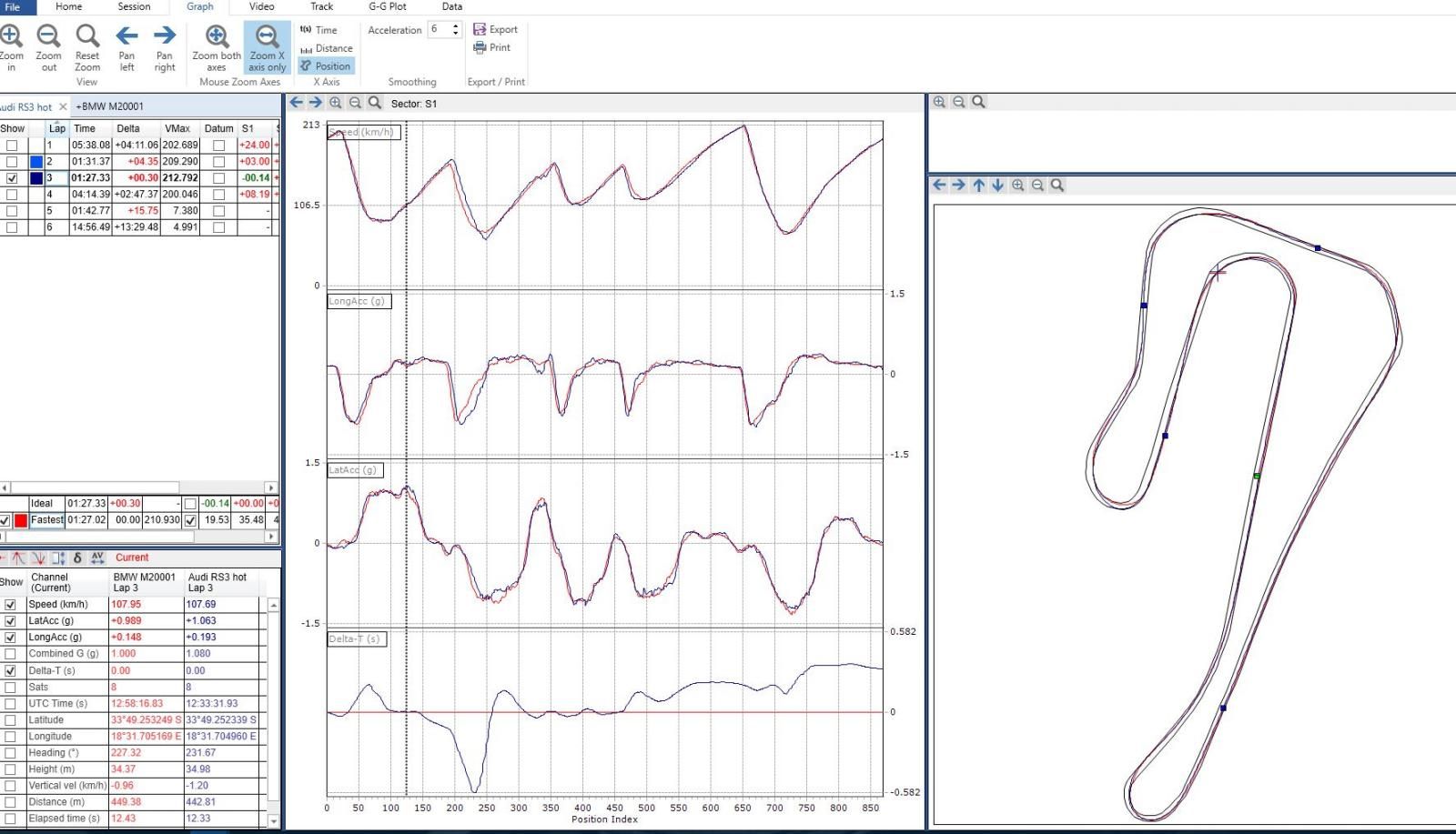
Telemetry

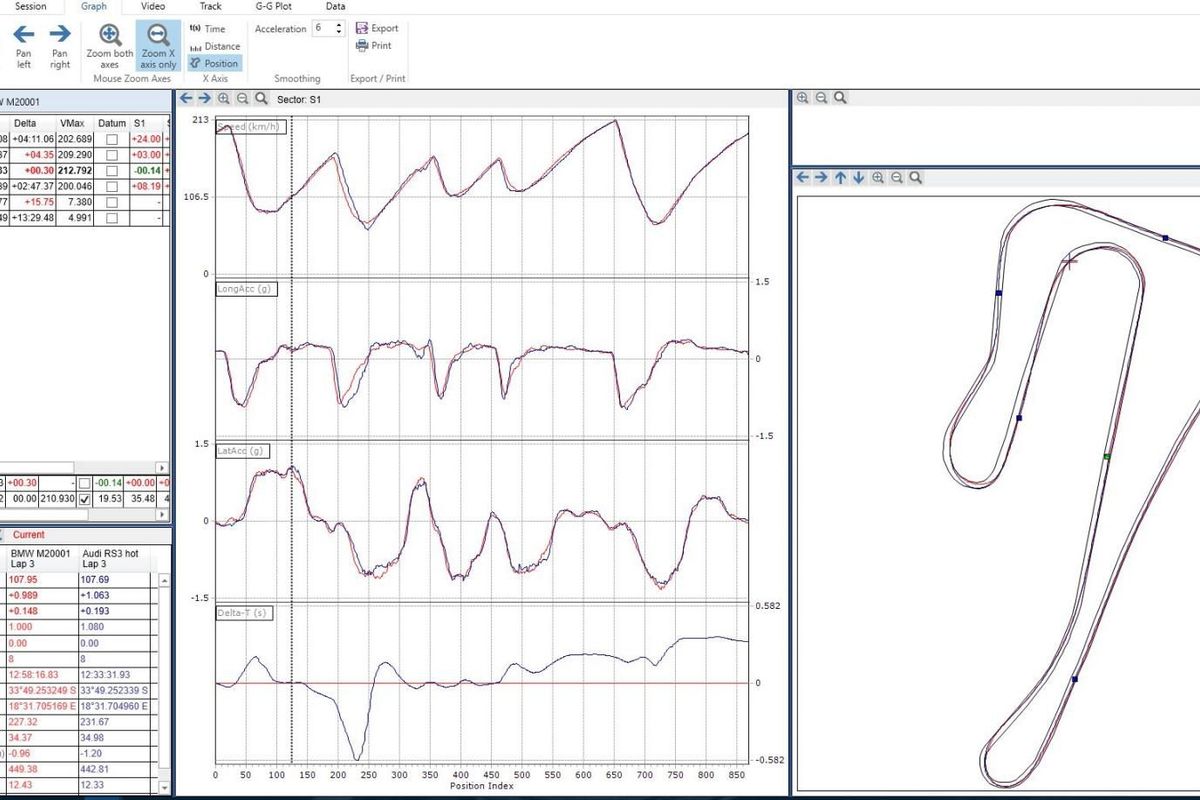
Below is a screengrab from the V-box desktop software. Here you can see how each car compares, according to the graphs. The Audi is represented by the blue line, with the BMW in red.

– Graph 1: Speed differential

– Graph 2: Longitudinal acceleration, g-force. Denotes acceleration and braking g-forces.

– Graph 3: Latitudinal acceleration, g-force. Denotes g-forces experienced during cornering

– Graph 4: Time difference over the course of the lap

– Large graph: The racing line taken by each car over the course of the track.

Summary

If you haven't worked out which car took the track title, you'll just have to watch the video above…

In short, this is how Ashley Oldfield, our racing driver, summed up the two cars:

"The Audi RS3 just gets better and better, and the new one is particularly fast. However, it does feel like a one-lap special. The average driver can climb in and with relatively little practice, push the car to its limits and set decent lap times. The M2 remains an exceptional driver's car. It feels like the more you drive it, the better it gets, and the better you get as a driver. It's definitely the car I'd take home."

Searching for a used Audi RS3?

Start your search here

Searching for a used BMW M2?

Start your search here

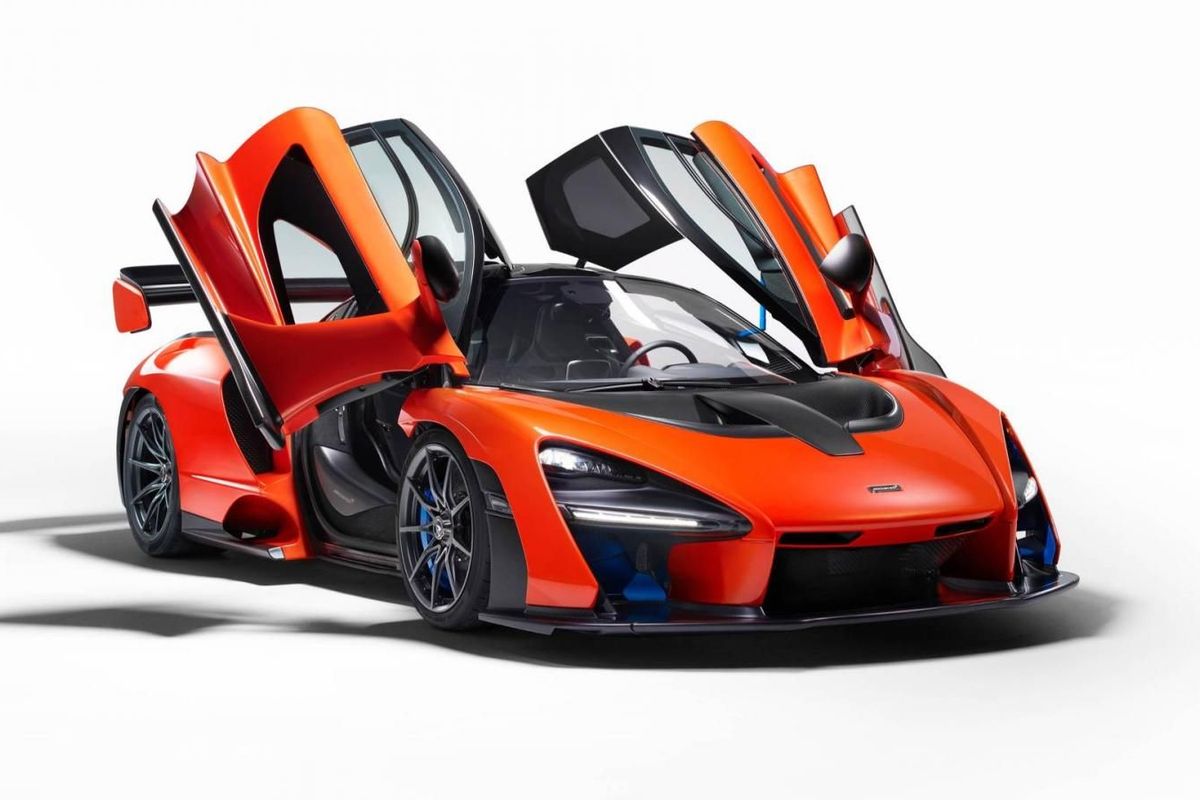
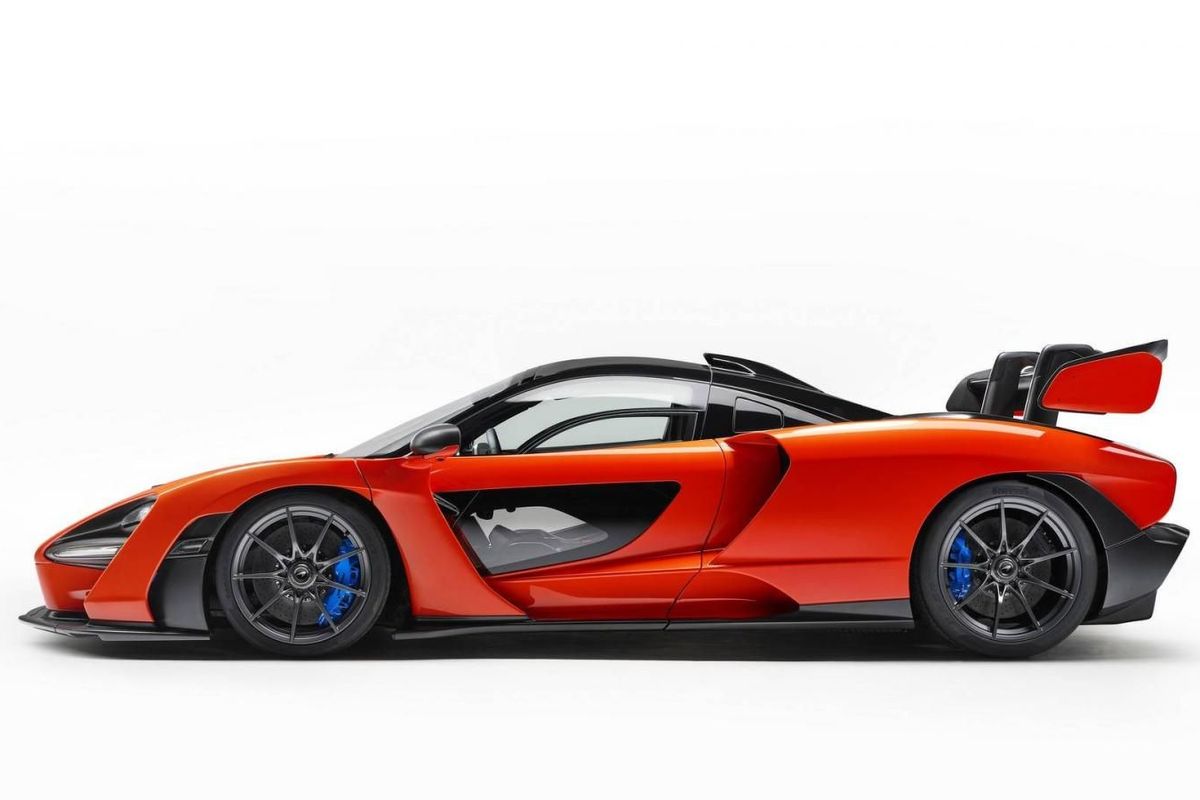
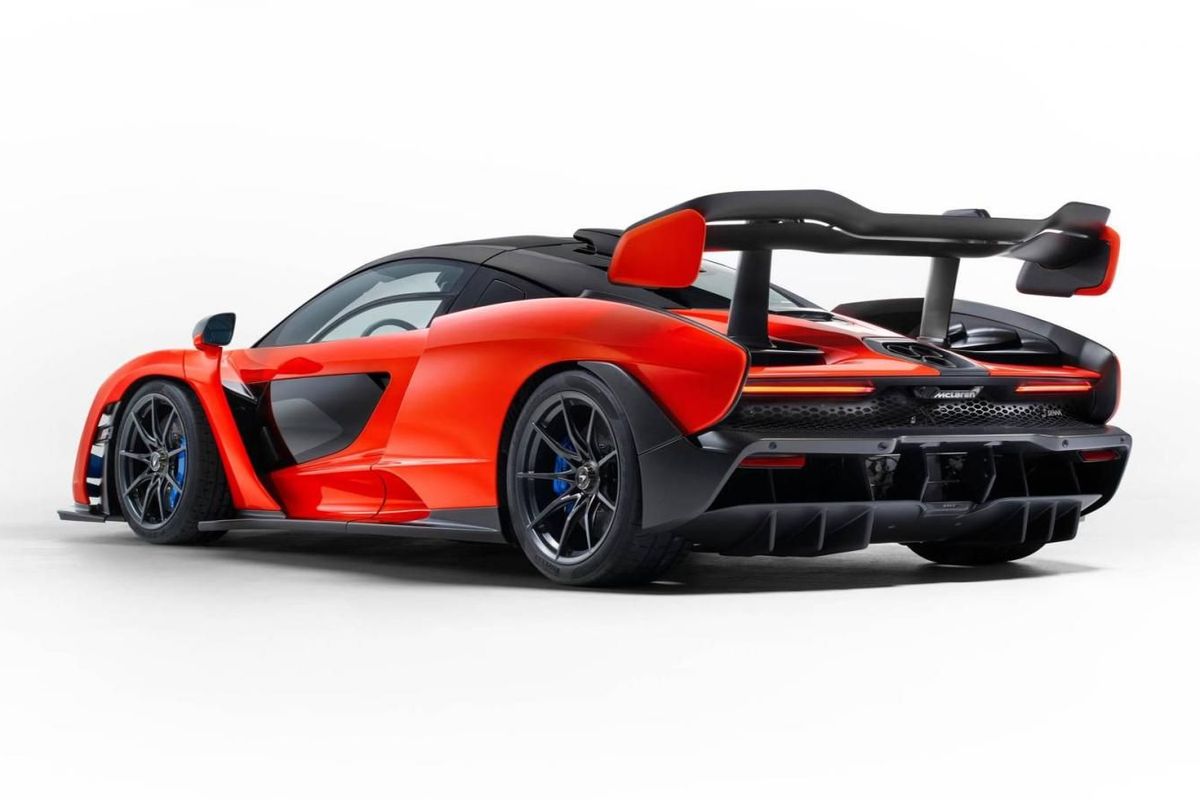
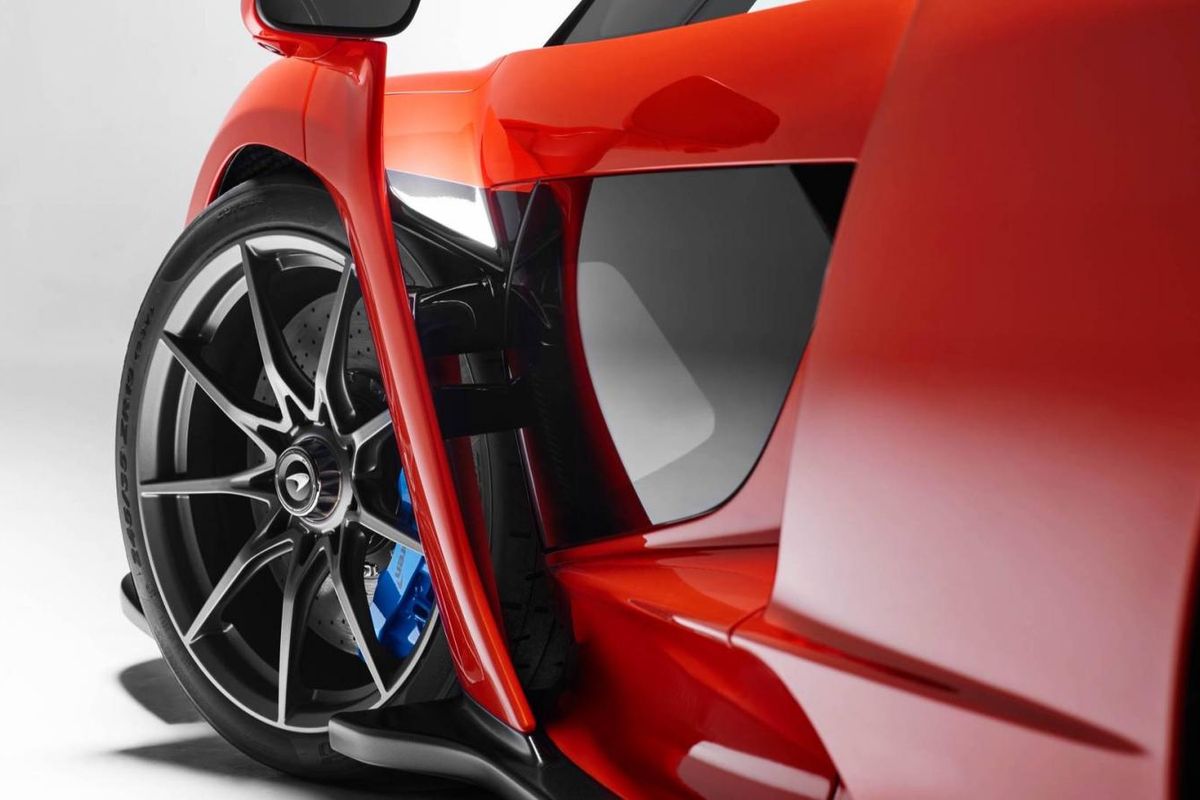
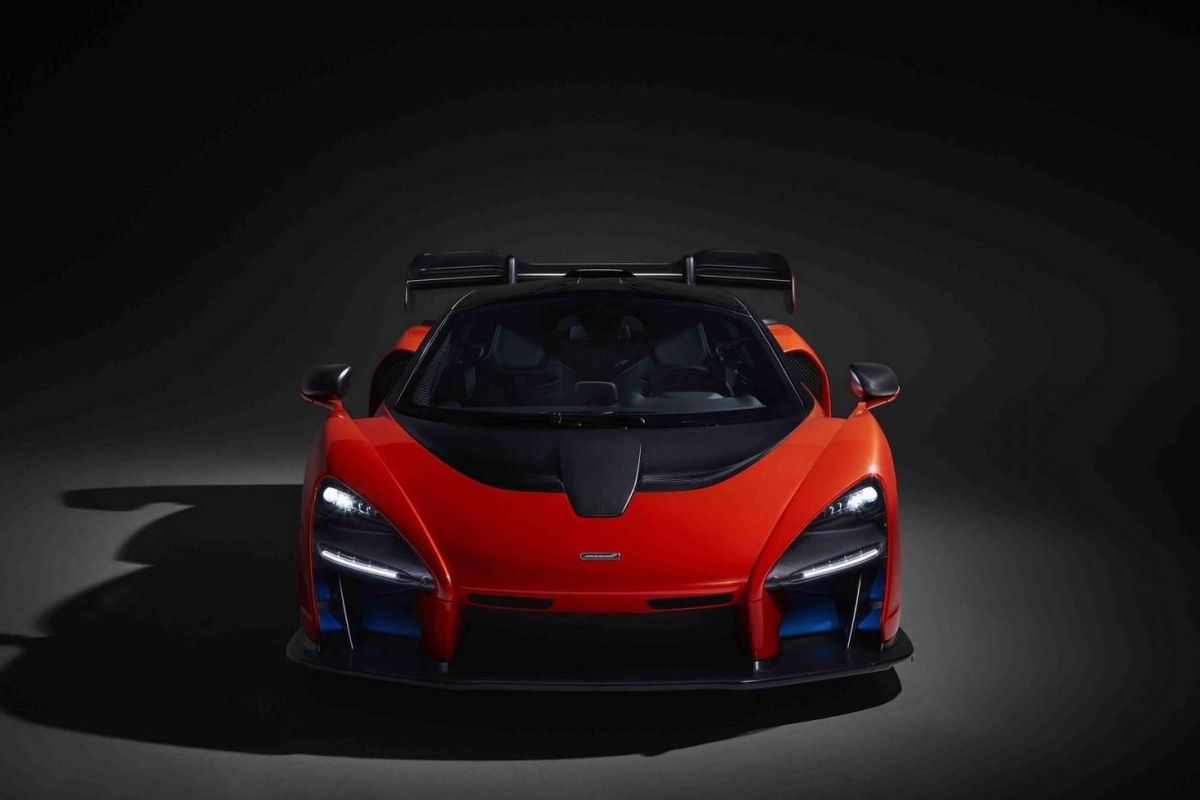
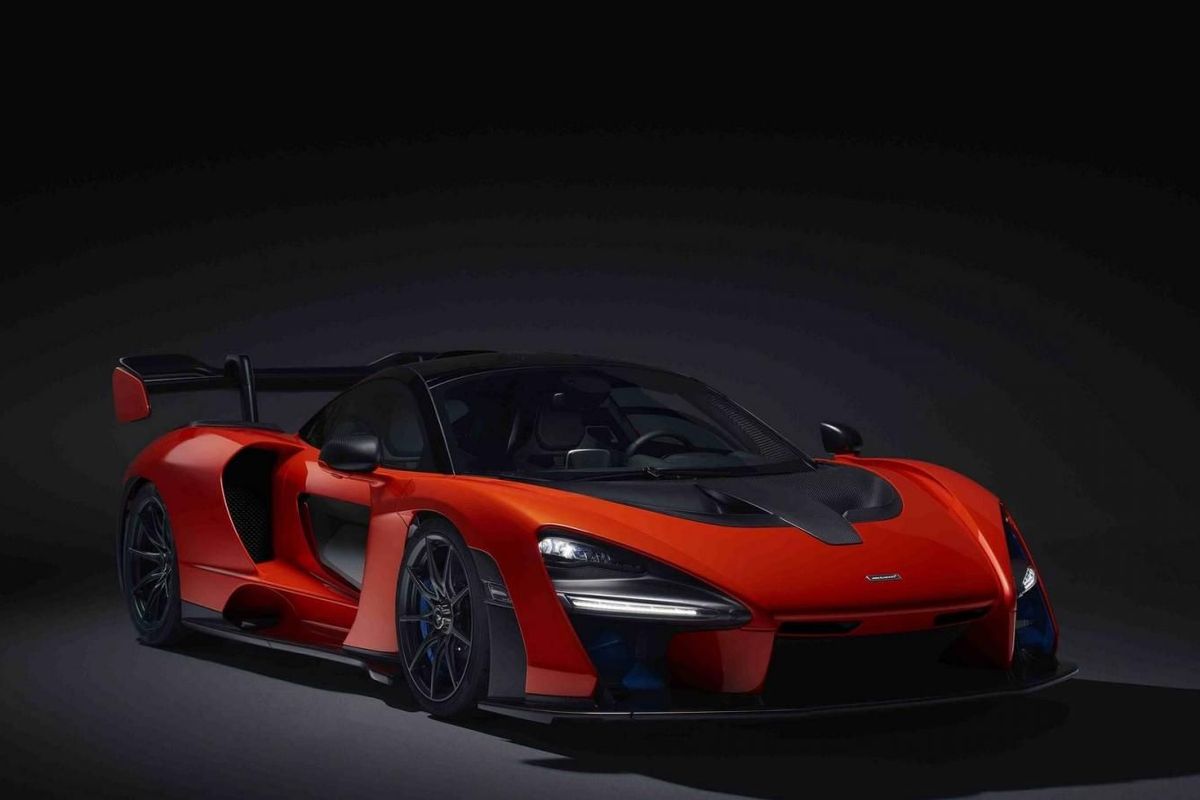
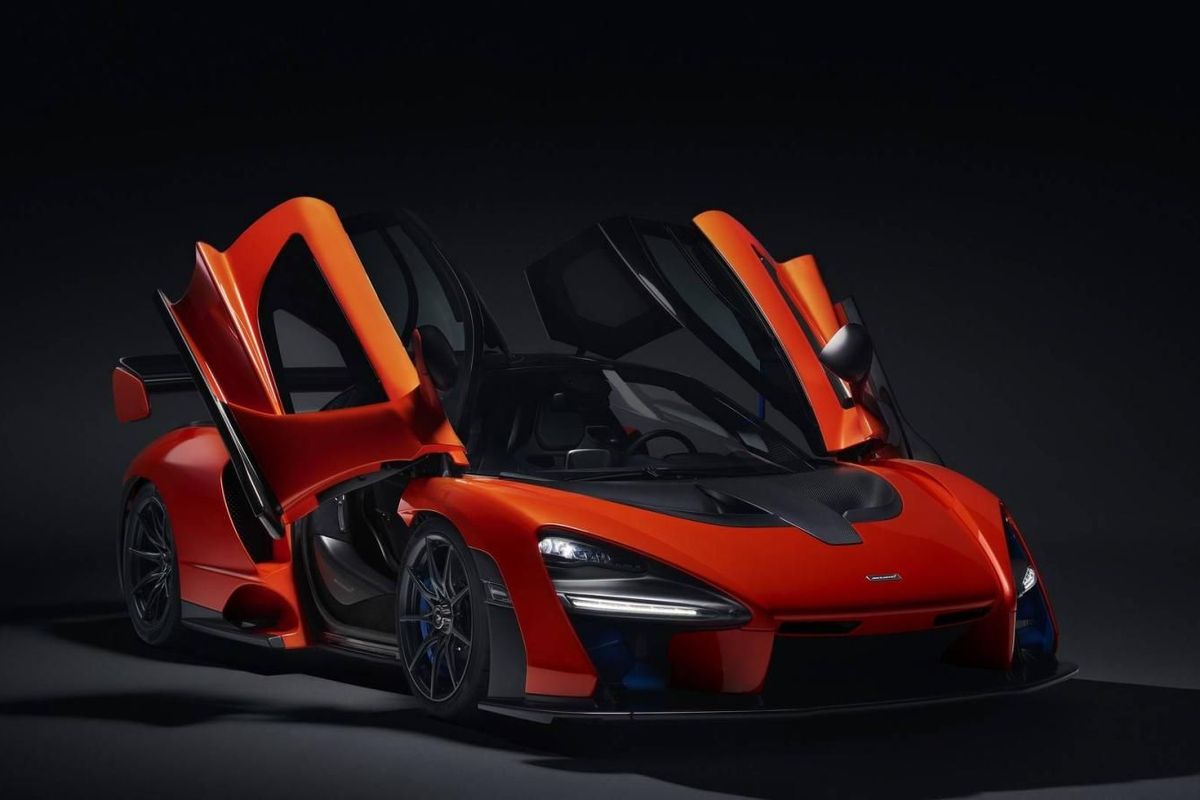
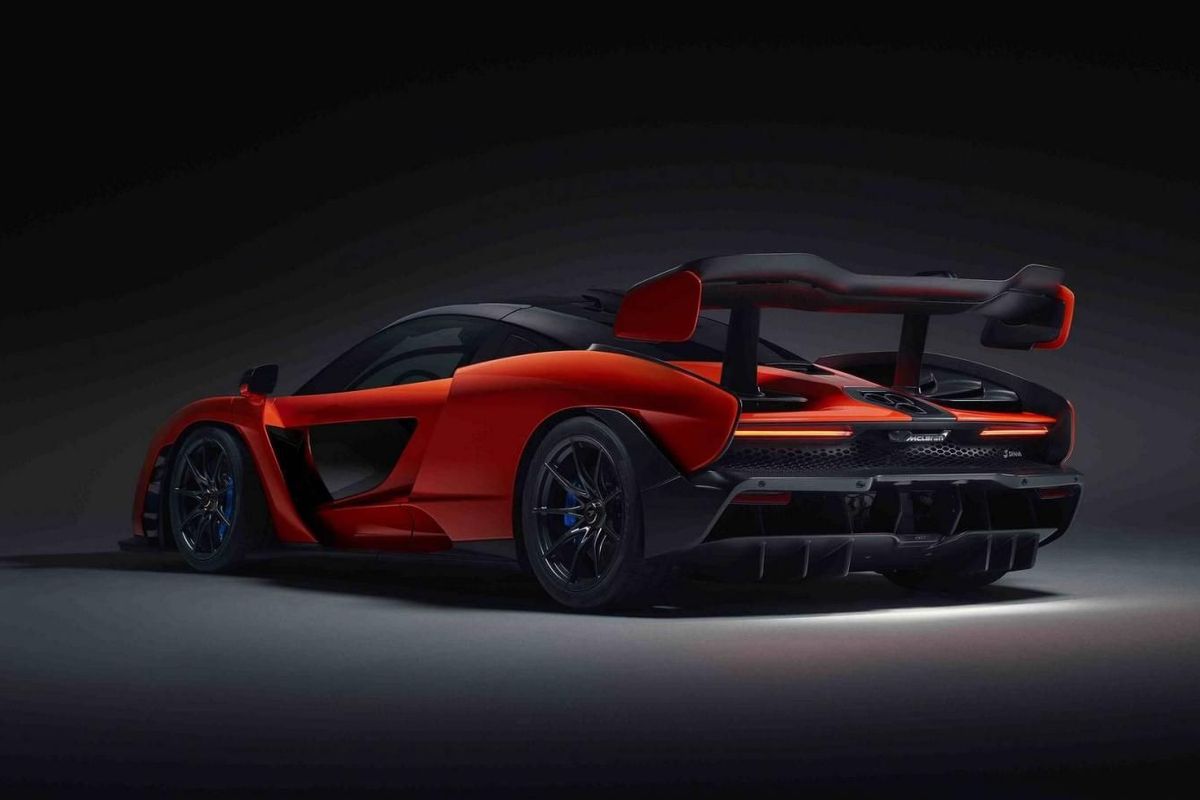
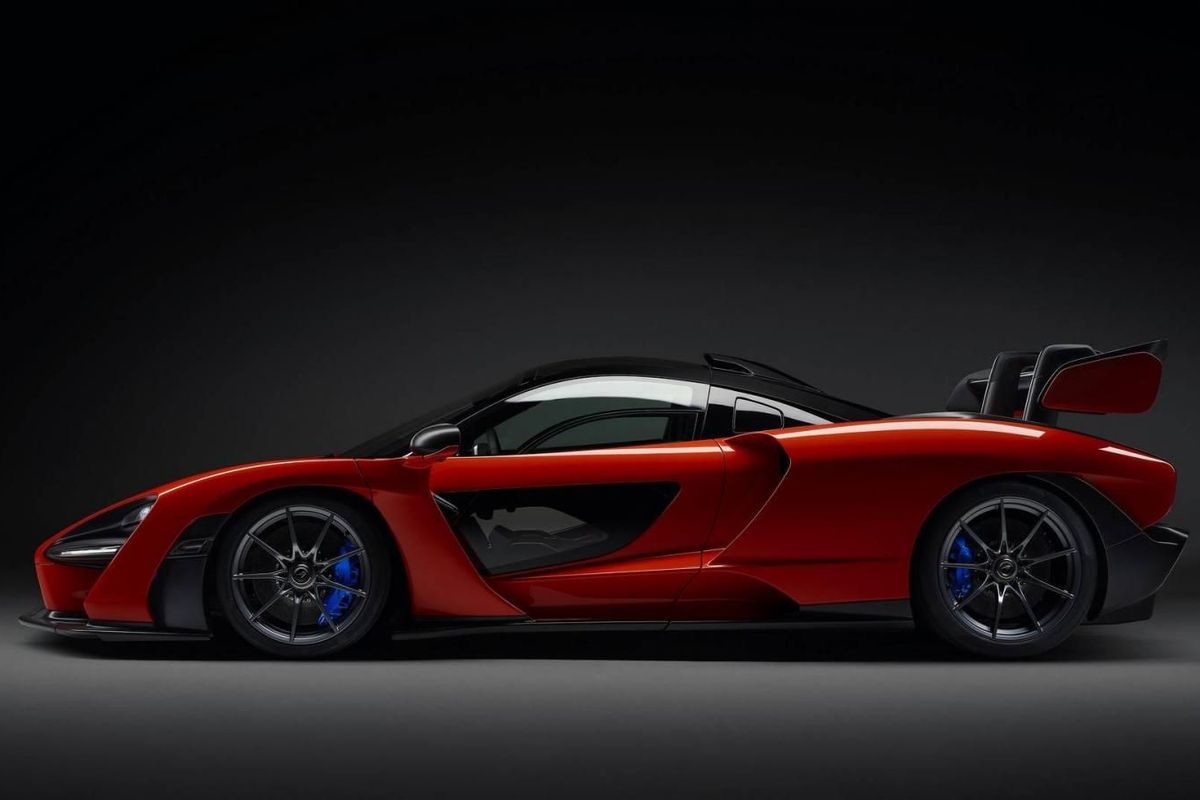
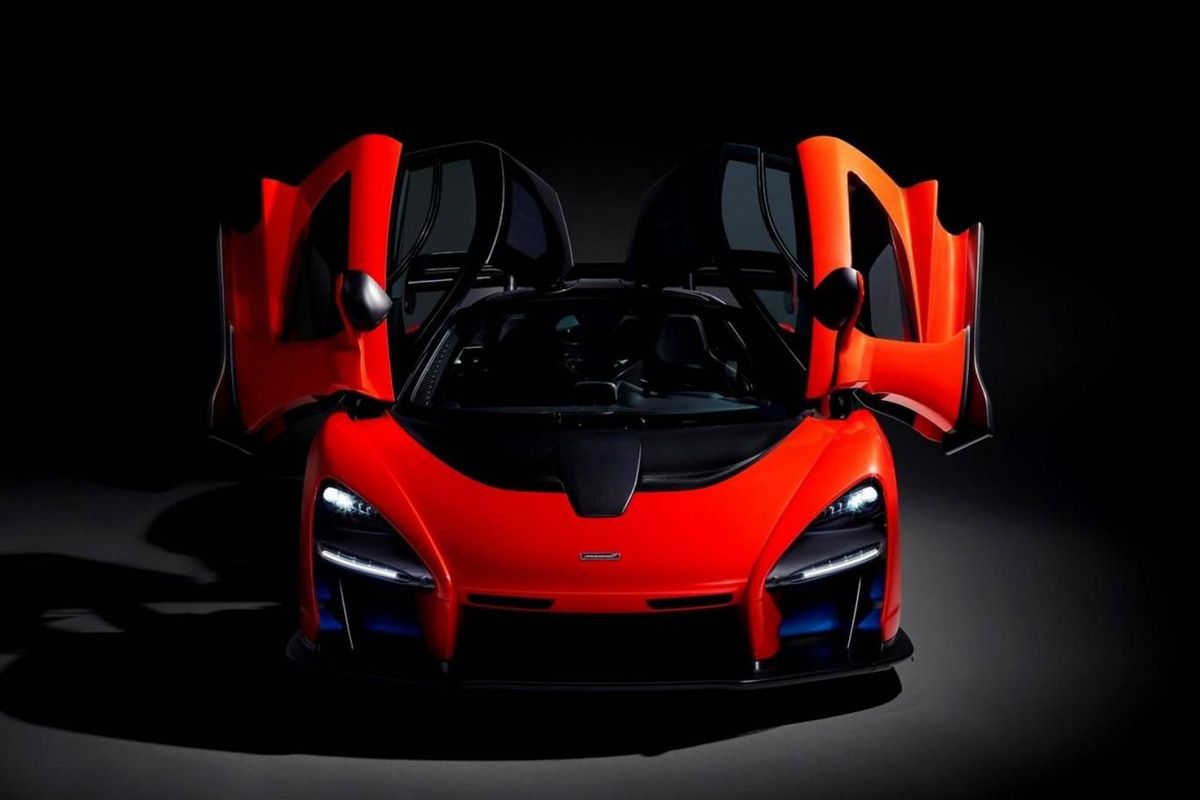
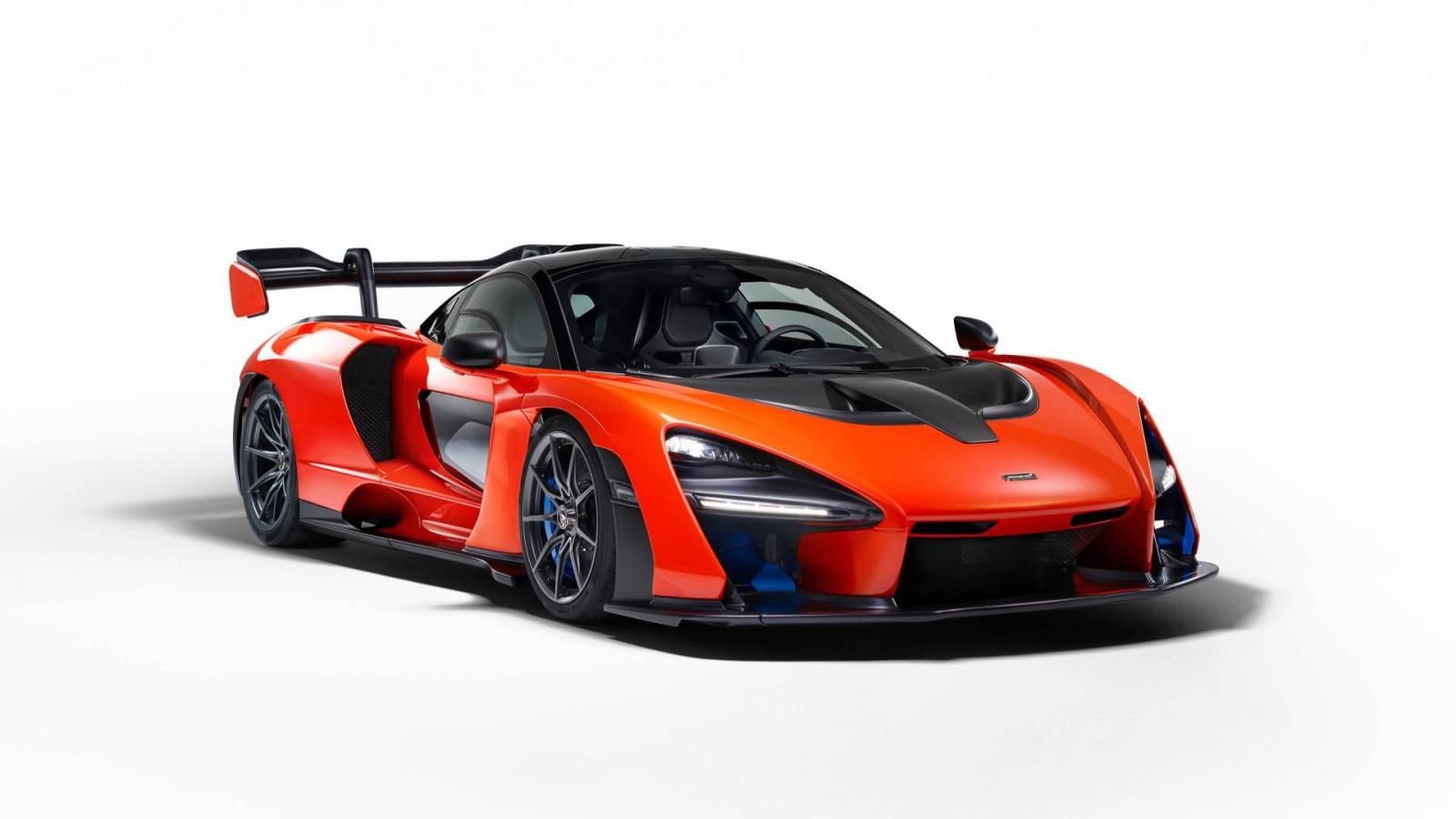
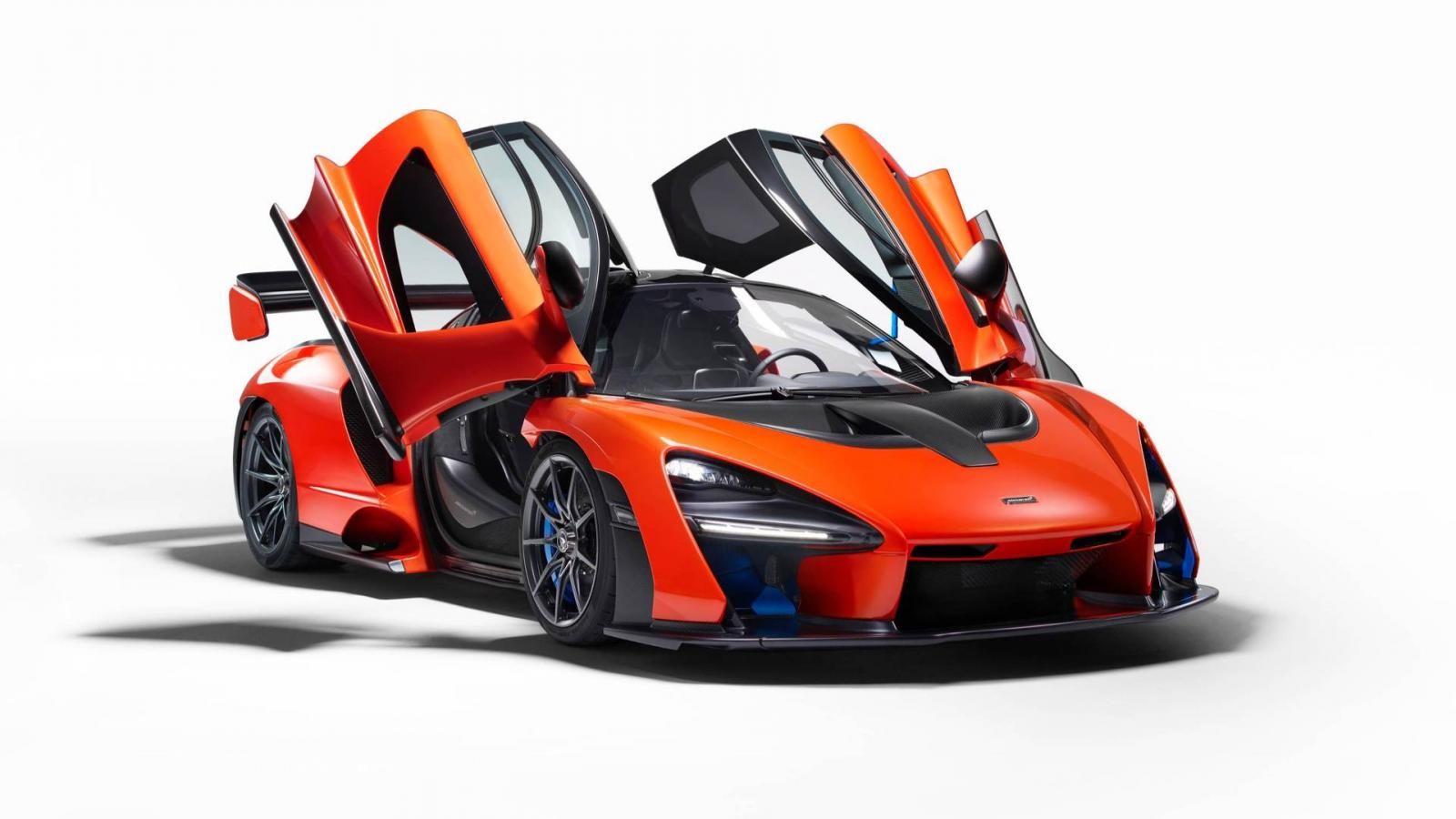
New McLaren Senna Revealed

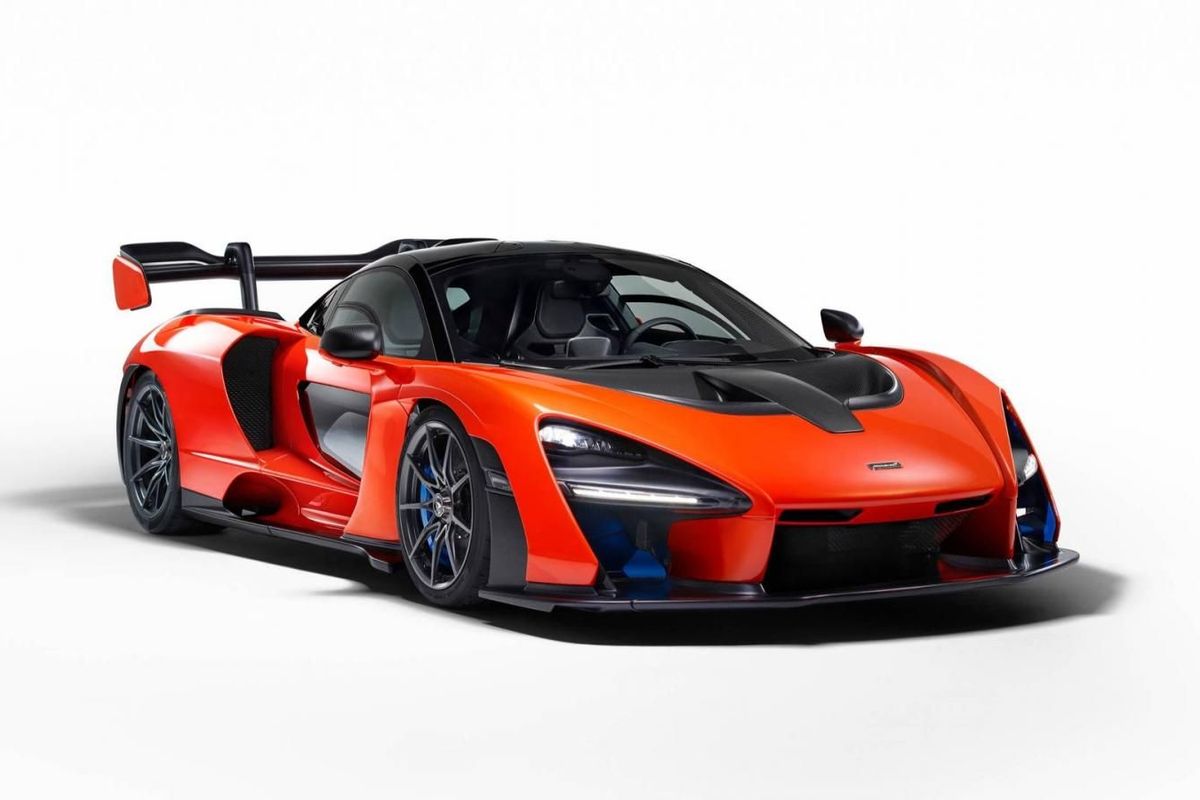
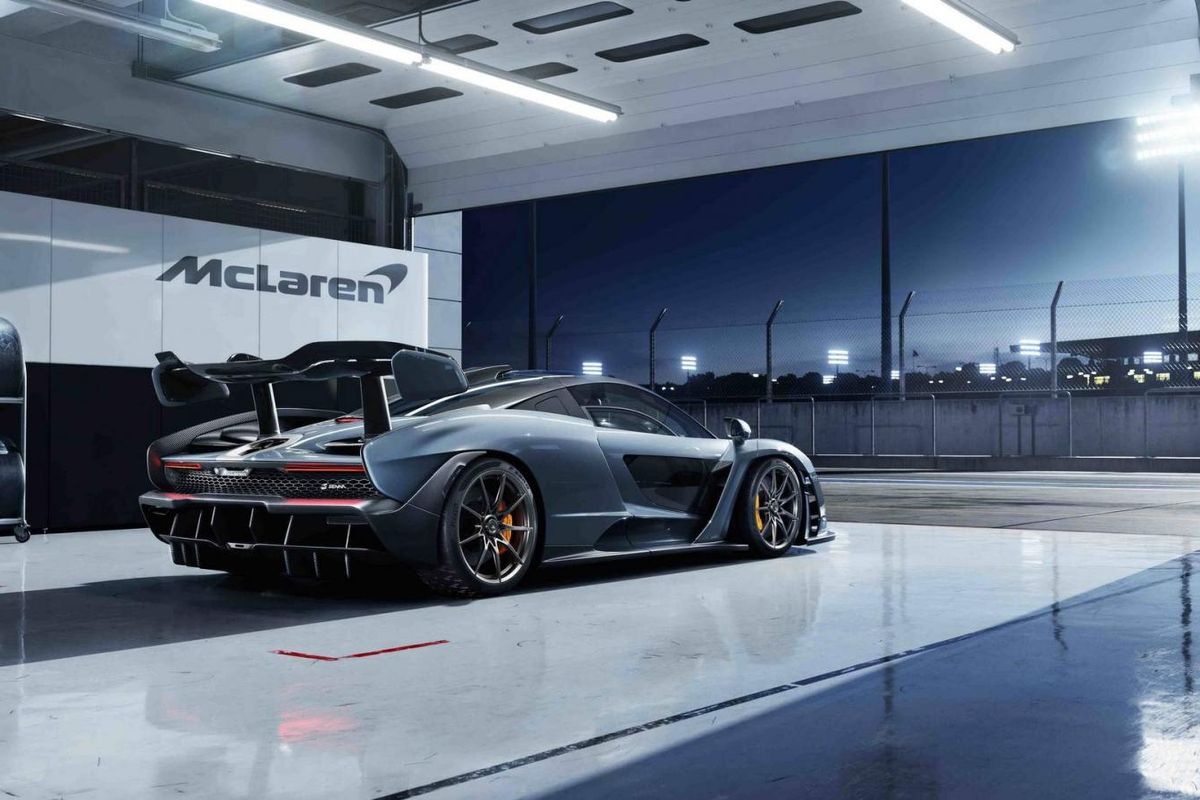
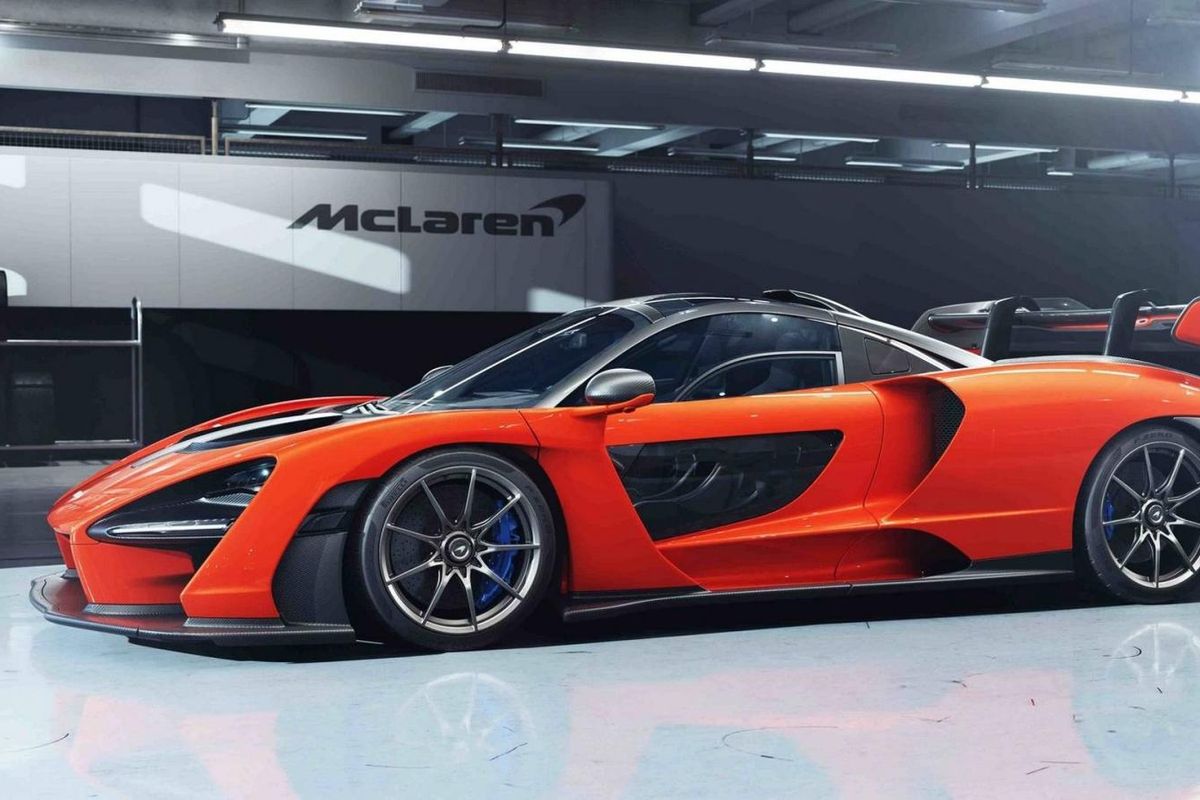
The new McLaren Senna has broken cover and it’s the most track-focused, road legal car to come from the British supercar maker.

Named after Ayrton Senna, the legendary F1 driver, the McLaren Senna is the brand’s most ‘track-concentrated’ car for the road. Production will start in Q3 of 2018 and will be limited to 500 units. The McLaren Senna will be built at the McLaren Production Centre in Woking, Surrey, England.

“The McLaren Senna is a car like no other: the personification of McLaren’s motorsport DNA, legalised for road use but designed and developed from the outset to excel on a circuit. Every element of this new Ultimate Series McLaren has an uncompromised performance focus, honed to ensure the purest possible connection between driver and machine and deliver the ultimate track driving experience in the way that only a McLaren can” says Mike Flewitt, Chief Executive Officer, McLaren Automotive.

Engine and chassis

The Senna features lightweight construction with body panels and a chassis made of carbon fibre. Its carbon fibre Monocage III chassis is the strongest ever built by the company for a road car and the Senna is consequently the lightest road-legal McLaren, weighing in at 1 198 kg.

The Senna features RaceActive Chassis Control II (RCCII) which is a double-wishbone suspension system with hydraulically interconnected dampers. Stiffness is controlled using a kinetic roll system (K damper) and builds on the system used in the 720S and with Race mode, introduces a lower ride height, lower centre of gravity and a stiffer suspension.


The Senna is McLaren's most hardcore, track-focused road car to date. 

The Senna is fitted with a mid-mounted, twin-turbocharged 4.0-litre V8 engine with 588 kW and 800 Nm of torque with an impressive power-to-weight ratio of 491 kW per tonne, making it an extreme performance machine and a worthy member of the McLaren Ultimate Series alongside the P1.

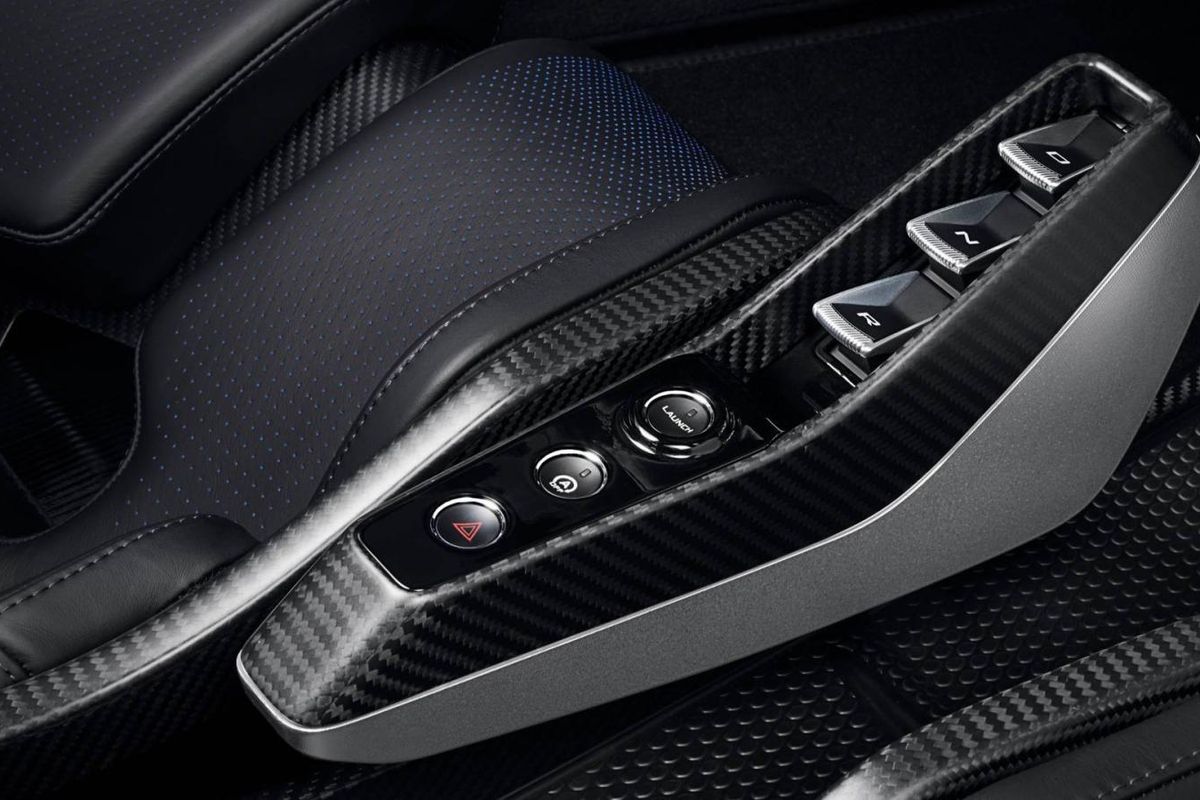
A 7-speed, dual-clutch transmission directs power to rear wheels and the driver can engage full manual mode to facilitate manual shifting using the steering wheel mounted carbon fibre paddles.

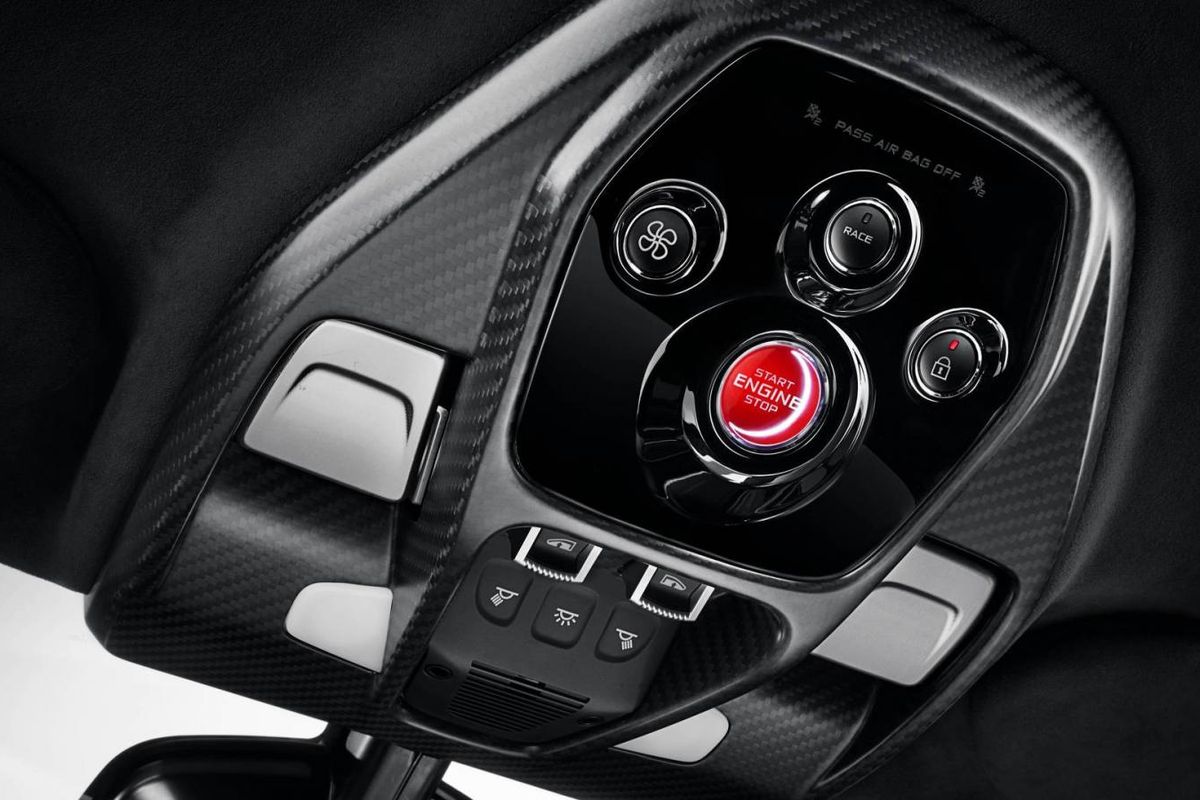
A total of 4 driving modes are at the driver’s disposal, including Comfort, Sport, Track and Race and all of them, according to McLaren, are “suitably savage”. The aforementioned Race mode is accessed via a switch in the roof-mounted panel.

Official performance figures for the McLaren Senna have yet to be revealed but with those outputs, it’s performance is expected to be phenomenal.

“The McLaren Senna delivers true performance, all the way to the limit of a driver’s ability. With a truly astonishing power-to-weight ratio, this car is about performance that is accessible and attainable, yet at the same time exciting and challenging for the very best drivers in the world – and with an intense, sensory experience to match” says Andy Palmer, Vehicle Line Director, McLaren Ultimate Series.

Styling details


Striking design meets ultimate functionality as every part of the Senna contributes to maximising performance. 

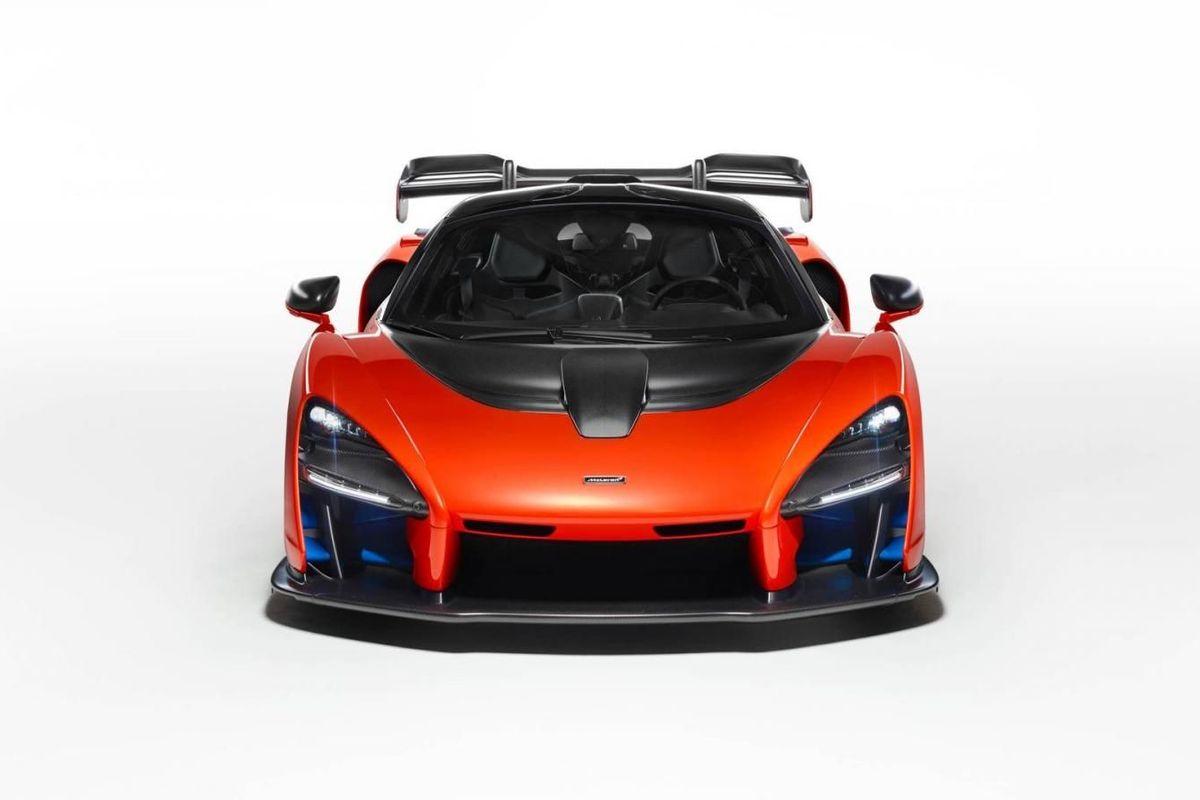
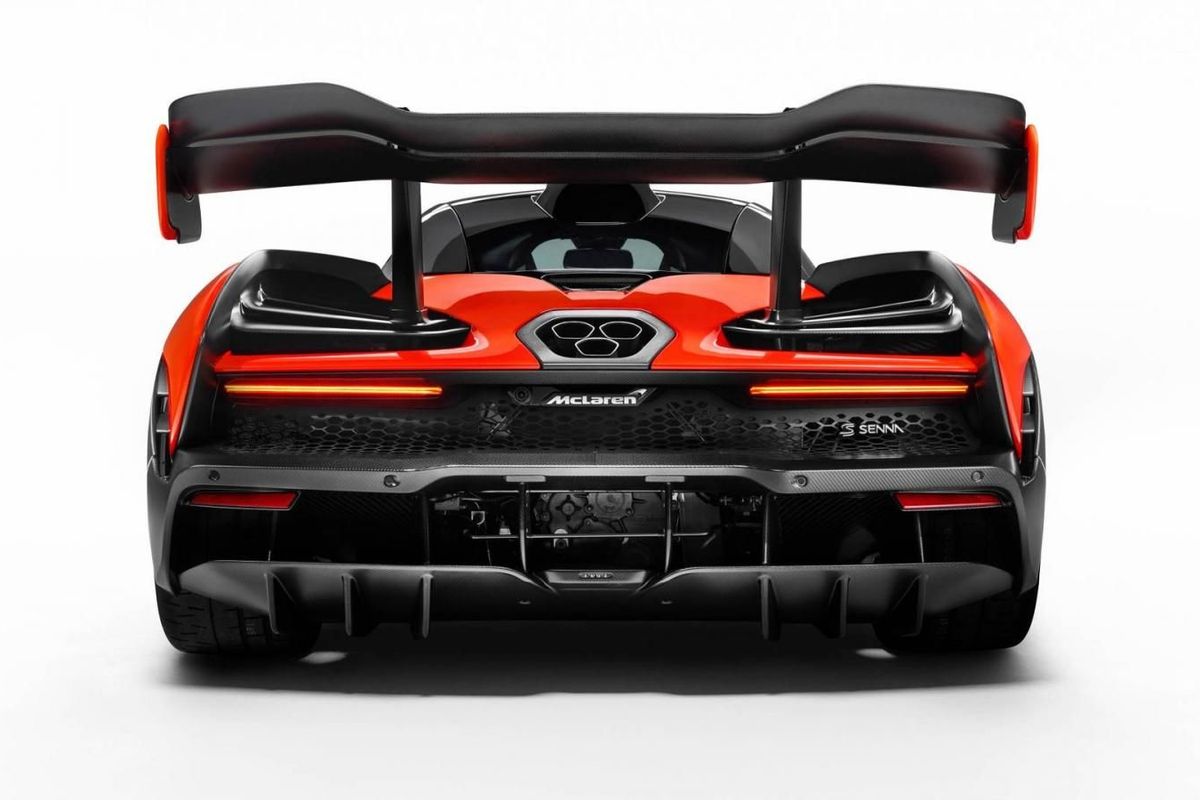
Built for performance, the Senna’s design adopts McLaren’s ‘form follows function’ philosophy, guided by downforce and aerodynamic balance. The Senna features a new generation of front and rear active aerodynamics to maximise performance. The overall design, as well as the front splitter and double rear diffuser contribute to ultimate downforce and aerodynamic efficiency. Front aero blades further add to the drama and can be finished in one of 5 theme specifications such as Azura Blue or McLaren Orange.

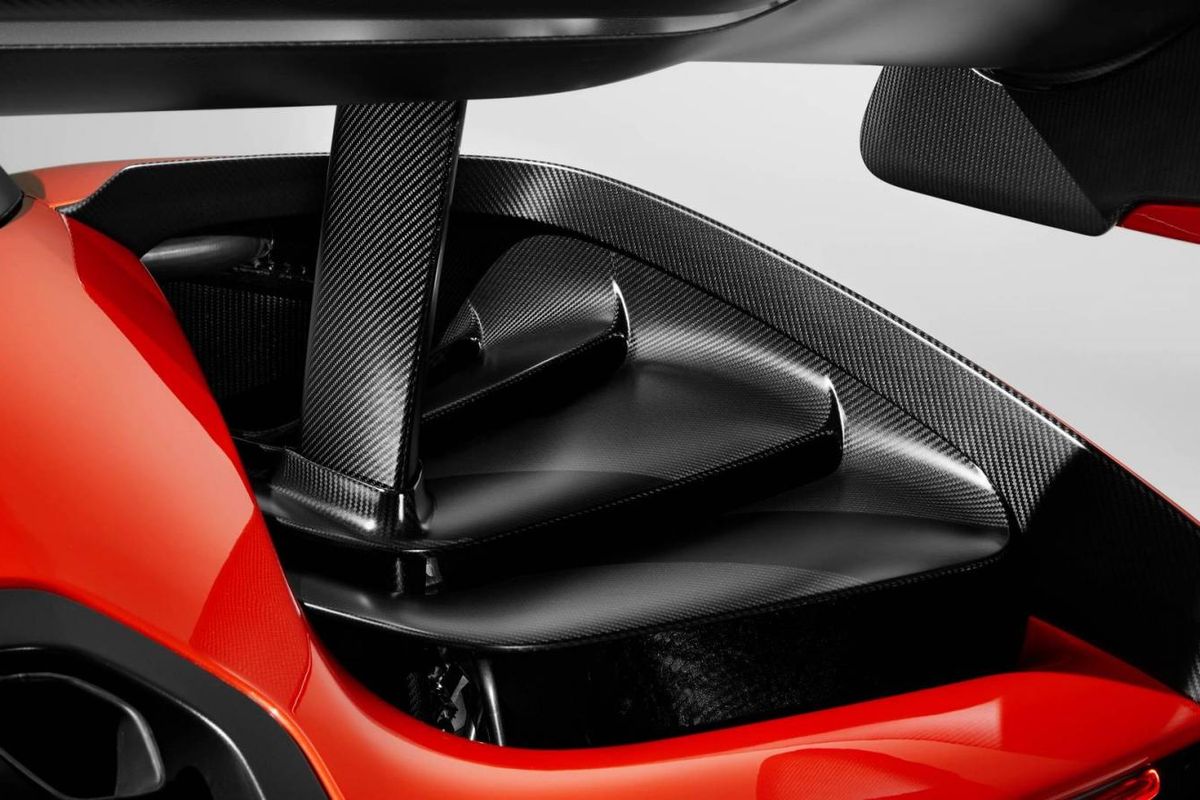
A large, double-element rear wing is fitted and is hydraulically actuated and constantly adjusts to enhance downforce and aerodynamic balance. It also serves as an airbrake under hard braking.

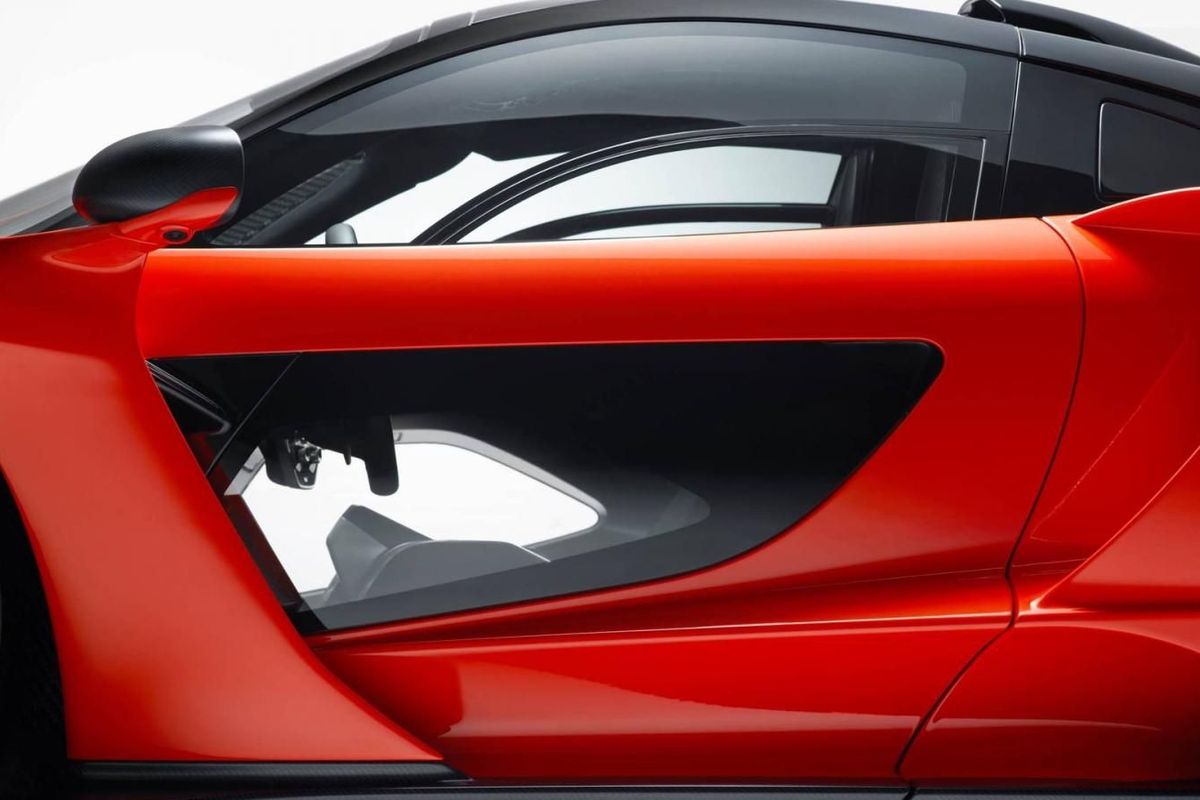
The Senna also features F1-inspired dihedral doors that hinge forwards and upwards, opening with a portion of the roof, making it easier to enter and exit the vehicle. The doors are made of carbon fibre and feature 2-piece glass side windows.


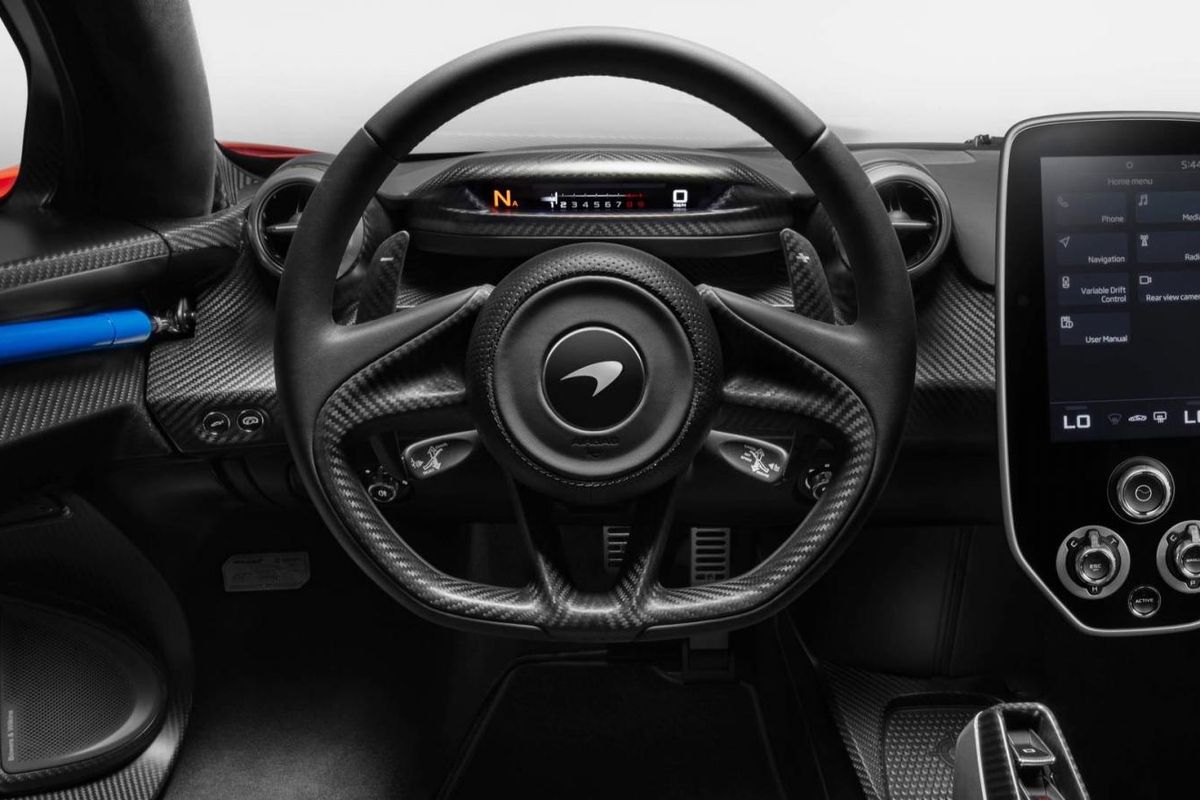
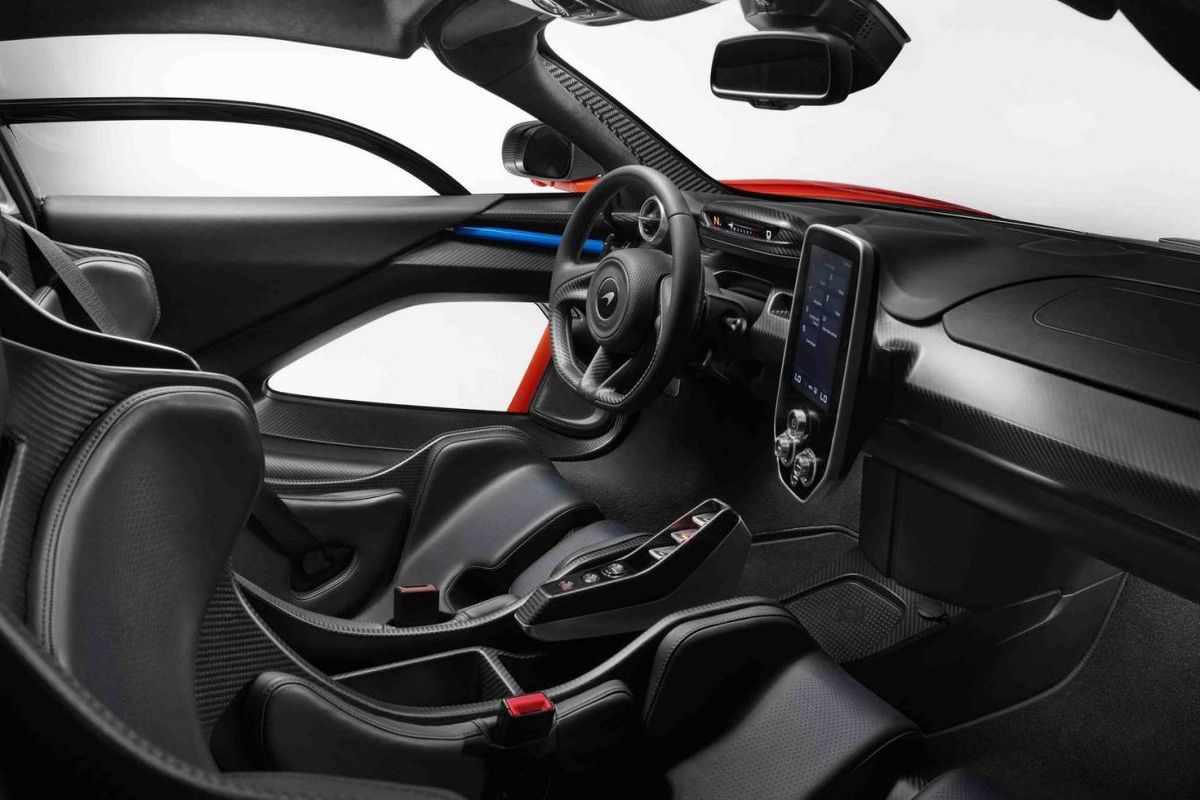
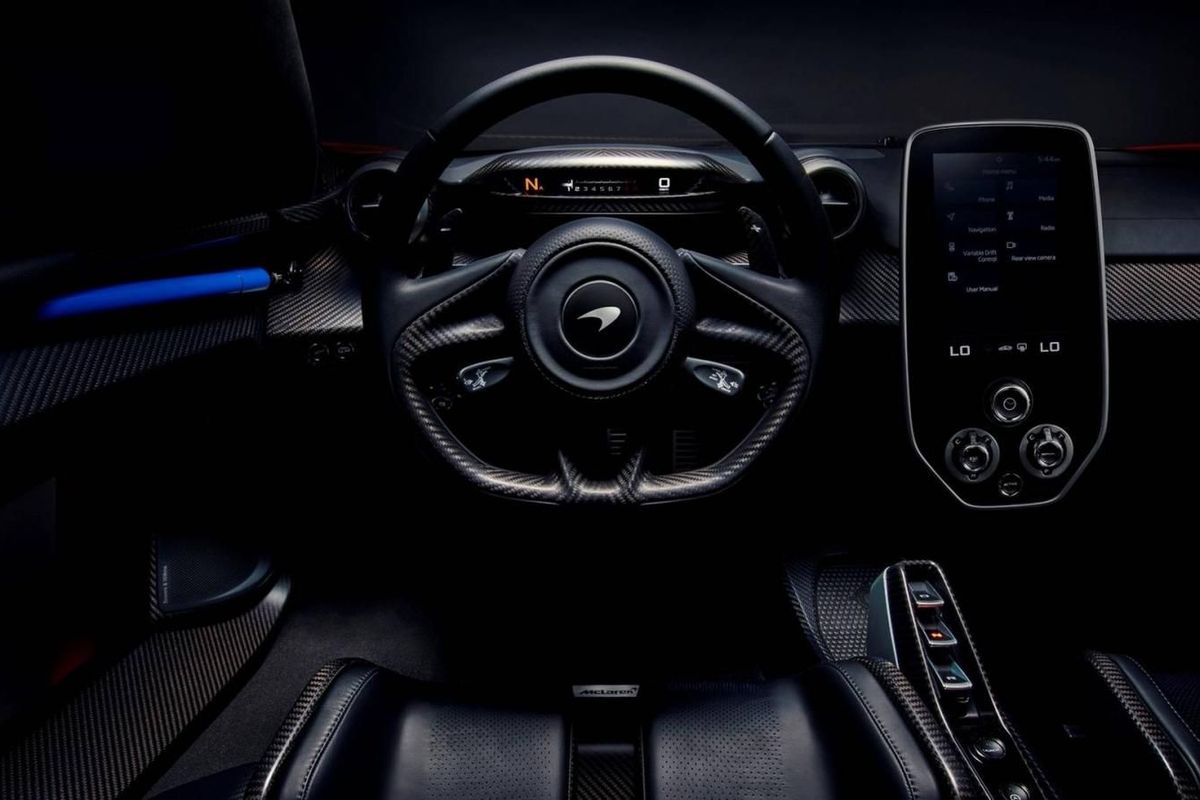
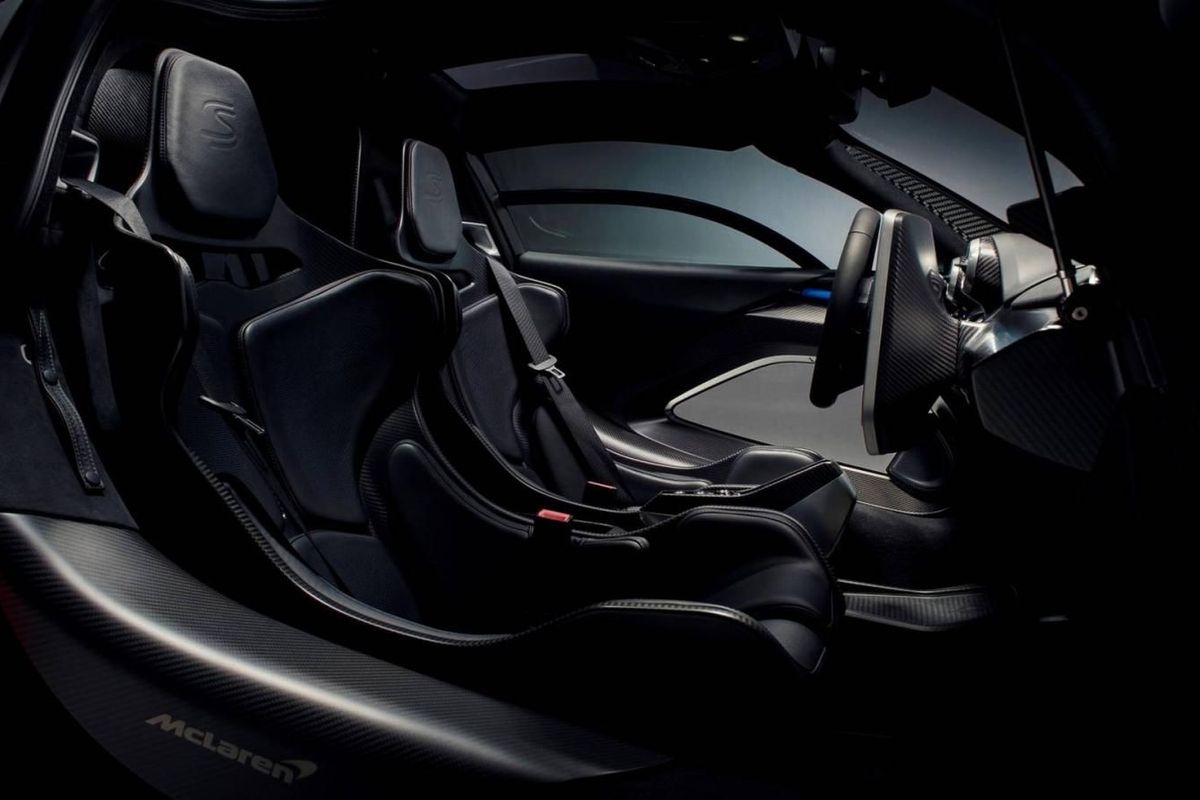
A simple, uncluttered interior design places the focus squarely on the driver. 

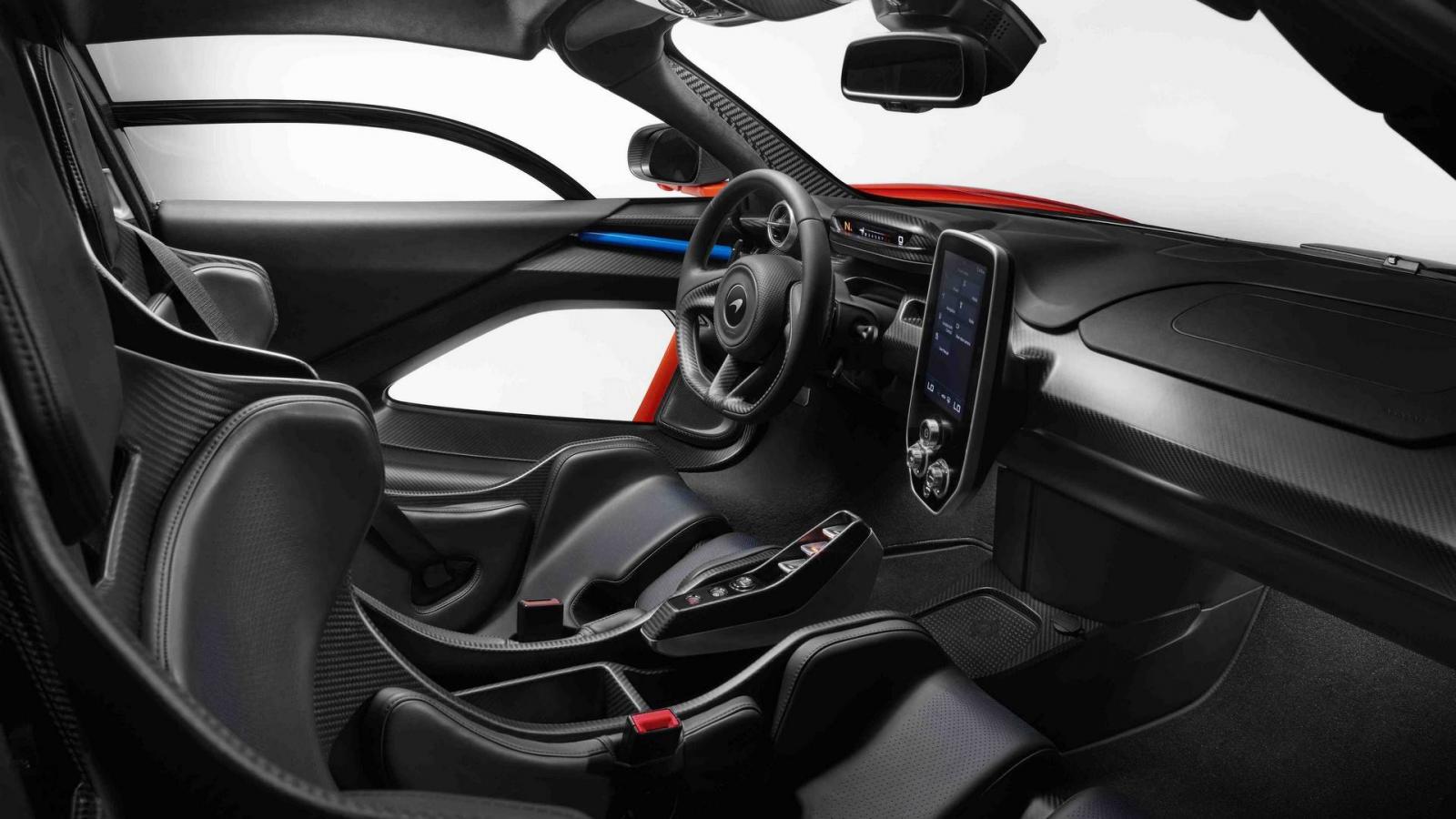
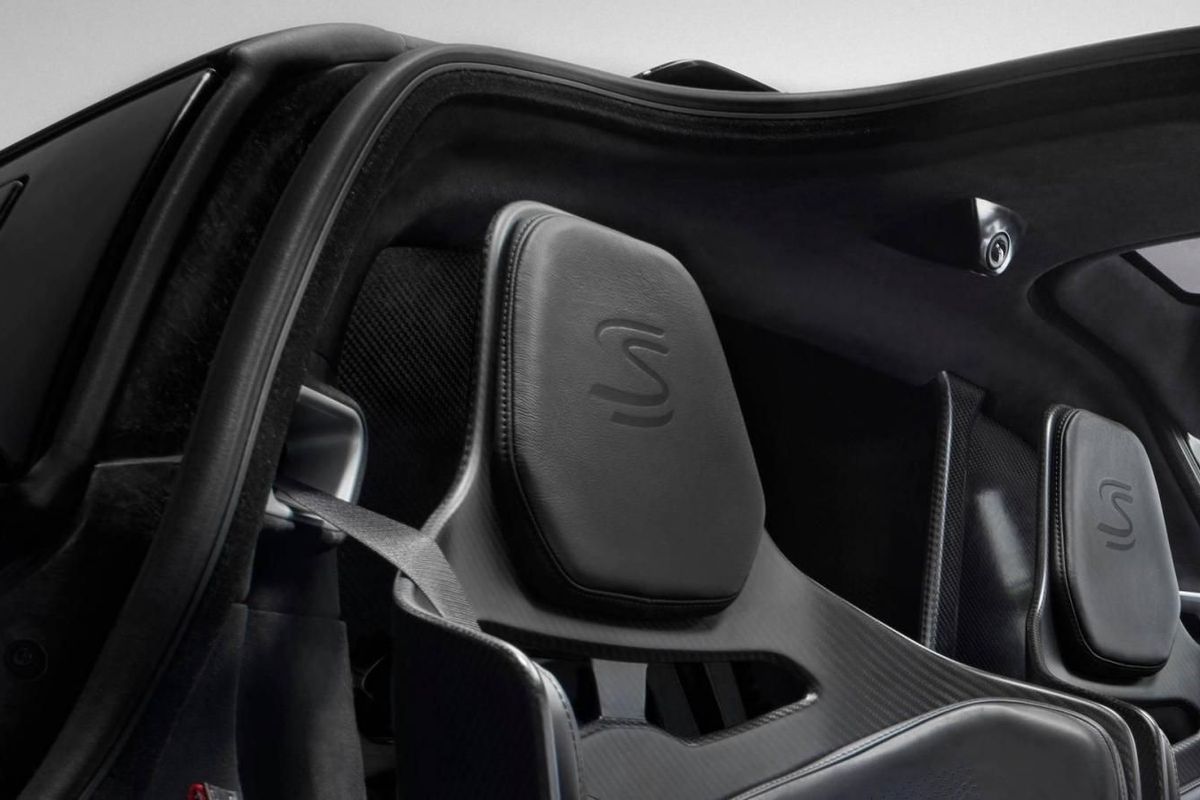
In an effort to reduce weight, the interior only features the bare minimum with exposed carbon fibre used extensively. The seats and fascia can be wrapped in Alcantara or leather and driver controls have been kept to a minimum to reduce cockpit clutter. Even the 3-spoke steering wheel is free of buttons and switchgear. The driver, instead, makes use of a high-definition McLaren Folding Driver Display and a central infotainment screen. Storage space is limited to a chamber behind the seats with enough space to store 2 helmets and race suits.

The McLaren Senna is priced at approximately £750 000, which equates to a whopping R13 737 319. All 500 units have apparently already been sold. Six units are confirmed for the South African market.

Buy a McLaren on Cars.co.za

Related Content

#CarsRaceDay winners list + McLaren 570S lap

McLaren 570S Spider (2107) Launch Review Video

McLaren 650S on Road & Track – The Fastest Car We've Ever Tested

Part 1: Audi R8 vs McLaren 570S with Drag Race

Part 2: Audi R8 vs McLaren 570S Track Race

McLaren P1 Breaks Kyalami Lap Record (Video)

McLaren's All-New 720S Supercar lands in SA

McLaren reveals new P15 extreme

The Sorry State of Speed

3 Reasons Why Ford Ranger Wildtrak is #CarsAwards Finalist

What makes the Ford Ranger 3.2 Wildtrak 4×4 Automatic a strong contender in the Leisure Double Cab Bakkie category of the 2017/18 Cars.co.za Consumer Awards – powered by WesBank? We investigate…

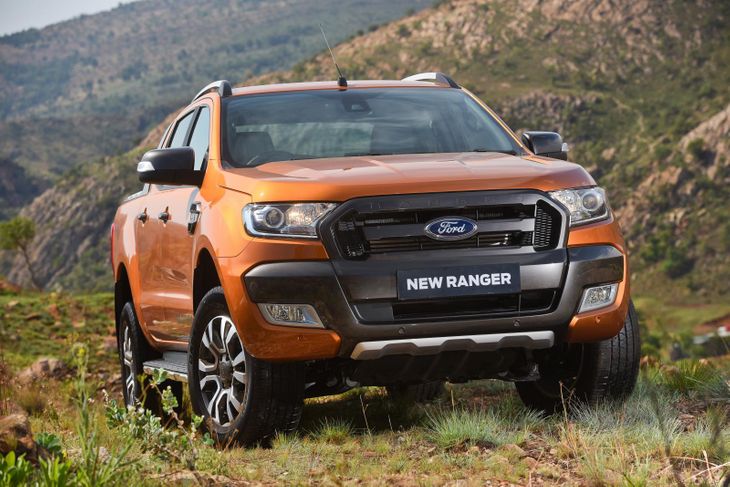
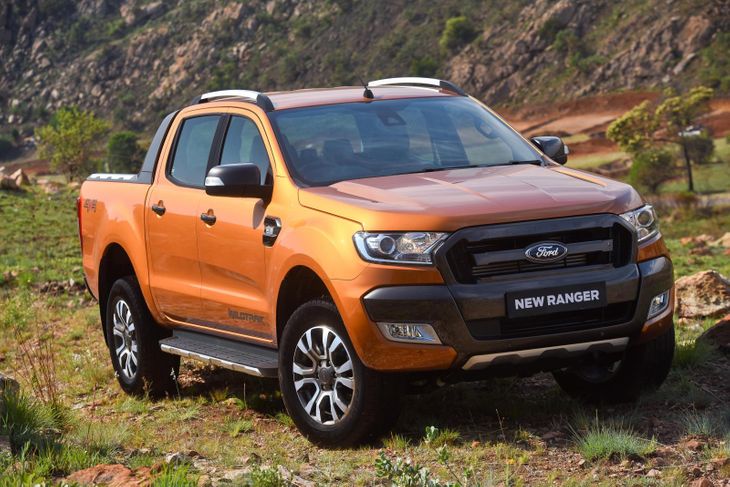
The Ranger Wildtrak is back to defend its title in the Leisure Double Cab category! Well equipped, sturdy and endowed with appealing square-jawed looks, the Ford Ranger continues to sell up a storm in South Africa. This model is powered by a muscular 5-cylinder engine and is claimed to offer class-leading passenger comfort. Will the Ranger Wildtrak retain its champion status in this category?

3 Reasons Why Ford Ranger is #CarsAwards Finalist

1. Powerful engine

Underneath that bulging bonnet lies a 5-cylinder, 3.2-litre turbodiesel engine that produces peak outputs of 147 kW and 470 Nm and propels the Ranger via a 6-speed automatic transmission. Although the Ranger Wildtrak labours under hard acceleration, once up to speed, it has no problem maintaining momentum and the motor is reasonably refined. Ford claims a combined cycle fuel economy rating of 9.0 L/100 km for this model and it’s also rated to tow 3 500 kg (braked trailer).

2. High levels of passenger comfort

A big advantage that the Ranger continues to hold over its competitors is passenger space. Courtesy of a long wheelbase and good packaging, the cabin is longer, affording rear passengers more space.

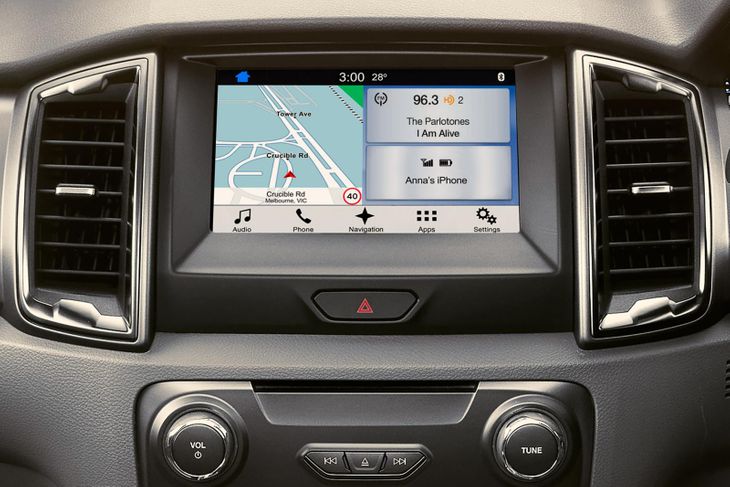
Leather-upholstered seats are standard on Wildtrak models (it even extends to the facia, with orange stitching) and there are a multitude of storage spaces around the cabin. Ford's Sync3 8-inch touchscreen interface now offers navigation and is Apple CarPlay and Android Auto compatible. Other nice features included on this Ranger Wildtrak include adaptive cruise control, lane keeping aid and blind spot monitoring.

3. Capable and confident on all surfaces

The Wildtrak’s ride quality is surprisingly smooth and well-mannered on the road, irrespective of how much cargo/number of passengers it is transporting.

It’s superbly capable offroad and with loads of torque, it can surge through the thickest sand or clamber over terrain only suitable for mountain goats. An electronic rear differential ensures optimum traction in challenging terrain and possibly the best part of this Wildtrak is the ability for the driver to switch between 2H, 4H and 4L using a knob next to the transmission lever. The Wildtrak's capability is therefore easily accessible. 

Watch our extended test and detailed review of the Ford Ranger Wildtrak below!

Have Your Say: Complete our survey!

Do you own a Ranger Wildtrak? We would love to hear from you! Tell us about your experience by completing our Ownership Satisfaction Survey. Your input counts for 50% of the final result.

What are the Ranger Wildrak's rivals in #CarsAwards?

The 2017/18 #CarsAwards finalists: Leisure Double Cab Bakkie category

Compare the Wildtrak's specs with the Nissan Navara 2.3 D 4×4 LE Auto and Volkswagen Amarok 3.0 V6 TDI 4Motion Highline Plus

Related Content

Ford Ranger 3.2 4×4 Wildtrak (2016) Review

Extended Test: Ford Ranger 3.2 4×4 Wildtrak [with Video]

Rendering: SA-bound Ford Ranger Raptor

Ford Confirms Ranger Raptor Bakkie (Video)

#CarsAwards Finalists Testing: Gerotek turns up the heat

2017/18 Cars.co.za Consumer Awards – powered by WesBank; Finalists

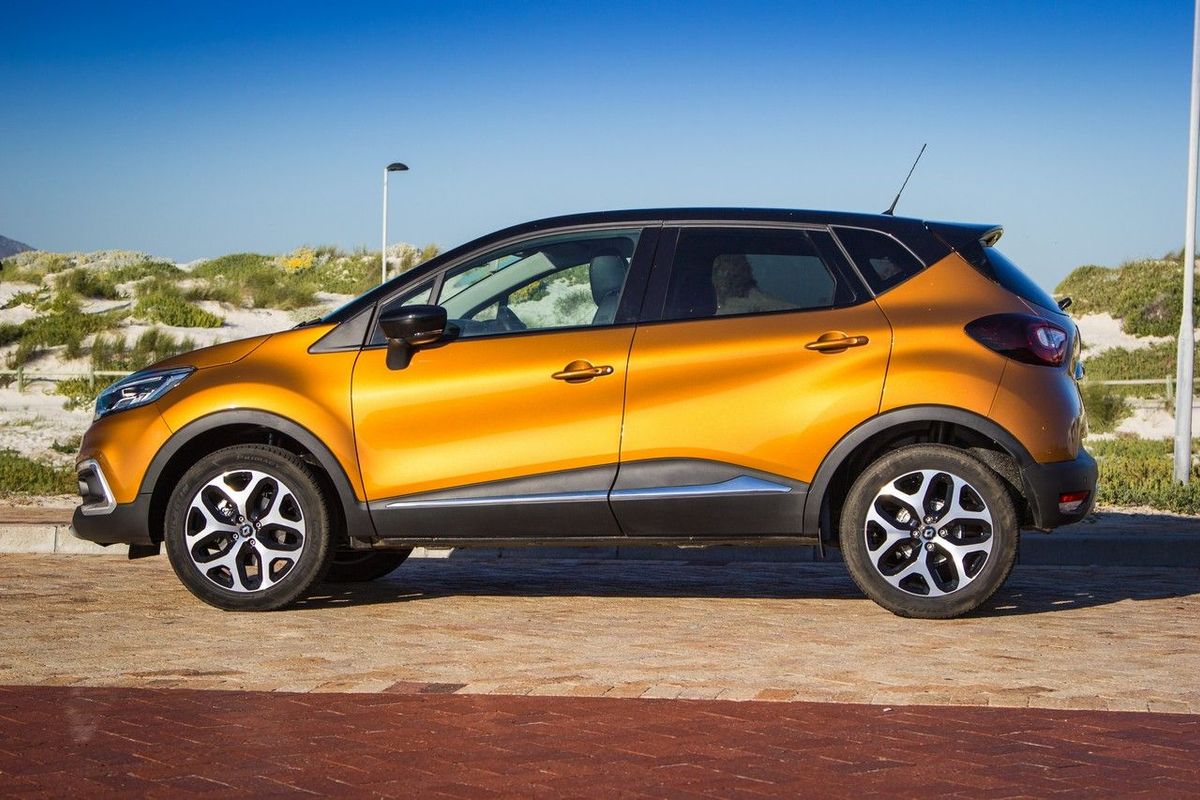
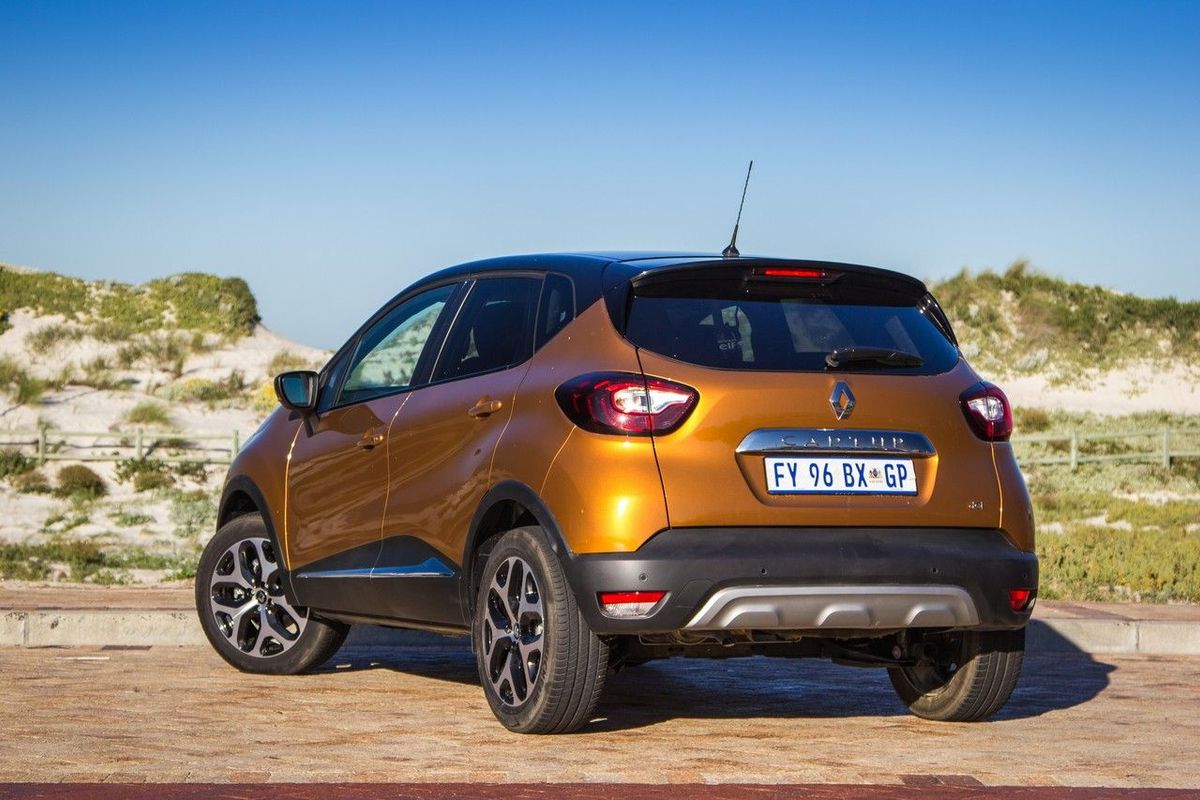
Renault Captur 66 kW dCi Dynamique (2017) Quick Review

Renault has facelifted its popular Captur and it appears not much has changed other than the introduction of some aesthetic tweaks to bring the 2017/18 #CarsAwards category finalist in line with the rest of the French marque's products. Does this new-look model carry on in the same vein as its predecessor, or should you be looking elsewhere?

We like: Superb economy and power from the turbodiesel engine, good safety spec, clever cabin packaging and practicality

We don’t like: Marginal build quality in some areas

Alternatives

  • The 2016/17 #CarsAwards winner: The Suzuki Vitara is a tough act to follow. Thanks to a combination of admirable build quality, good comfort and practicality, plus Suzuki's stellar reputation for after-sales excellence, the Vitara is a popular choice. It is, however, outgunned in terms of on-road performance and specification stakes by the Renault Captur, plus the 1.6-litre petrol's not as frugal.
  • Go Korean: The popular Hyundai Creta has made quite a name for itself. A turbodiesel model is available but comes in at a hefty premium compared to the Captur's asking price. It's a little bigger inside than its French rival, but cannot match the latter's interior tech.
  • Also worth a look: The Ford Ecosport. It has been a popular model in terms of sales for the Blue Oval and has an excellent engine in the form of a 1.0-litre turbopetrol. It is due for a replacement very soon, though. 

Compare the Renault Captur DCI with its rivals here!

Facts & Figures

Price: R304 900 (December 2017)
Engine: 1.5-litre turbodiesel four-cylinder
Power/Torque: 66 kW / 220 Nm
Transmission: 5-speed manual
Fuel consumption: 3.6 L/100 km (claimed)
0-100 kph: 13.1 secs
Top speed: 171 kph
Boot capacity: 377-1 235 litres


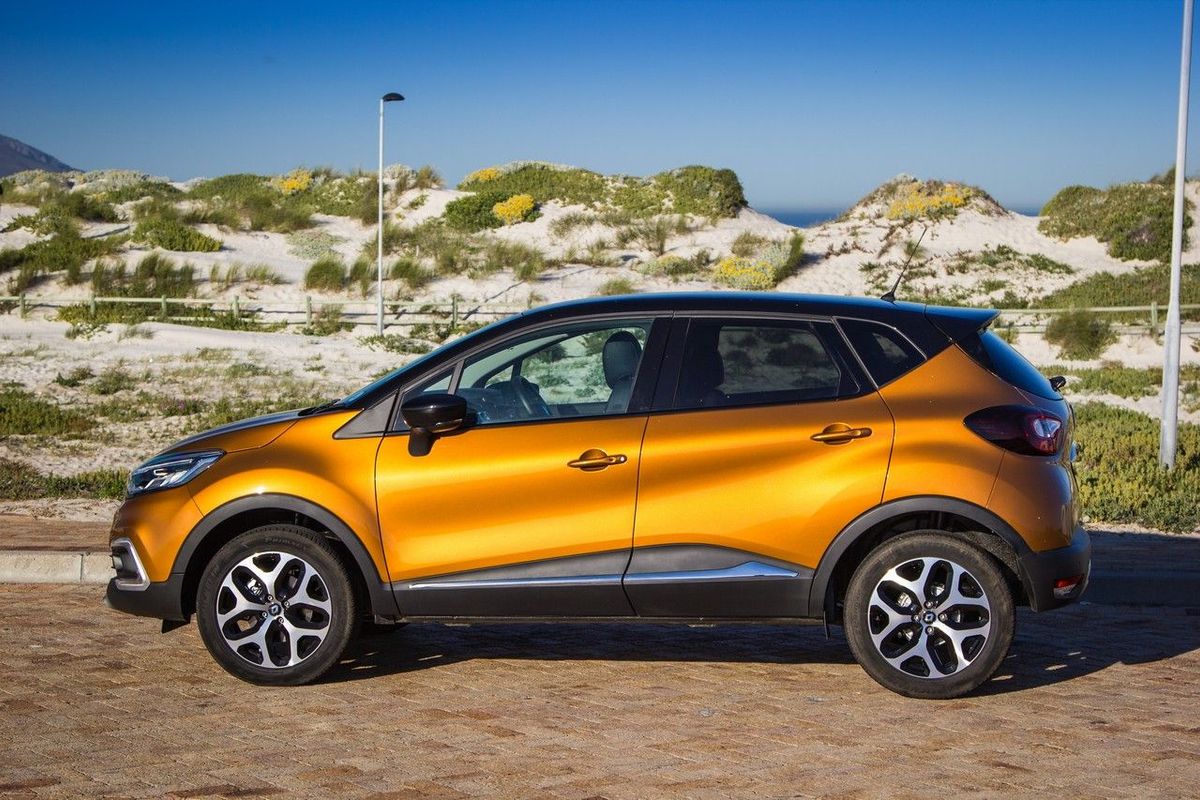
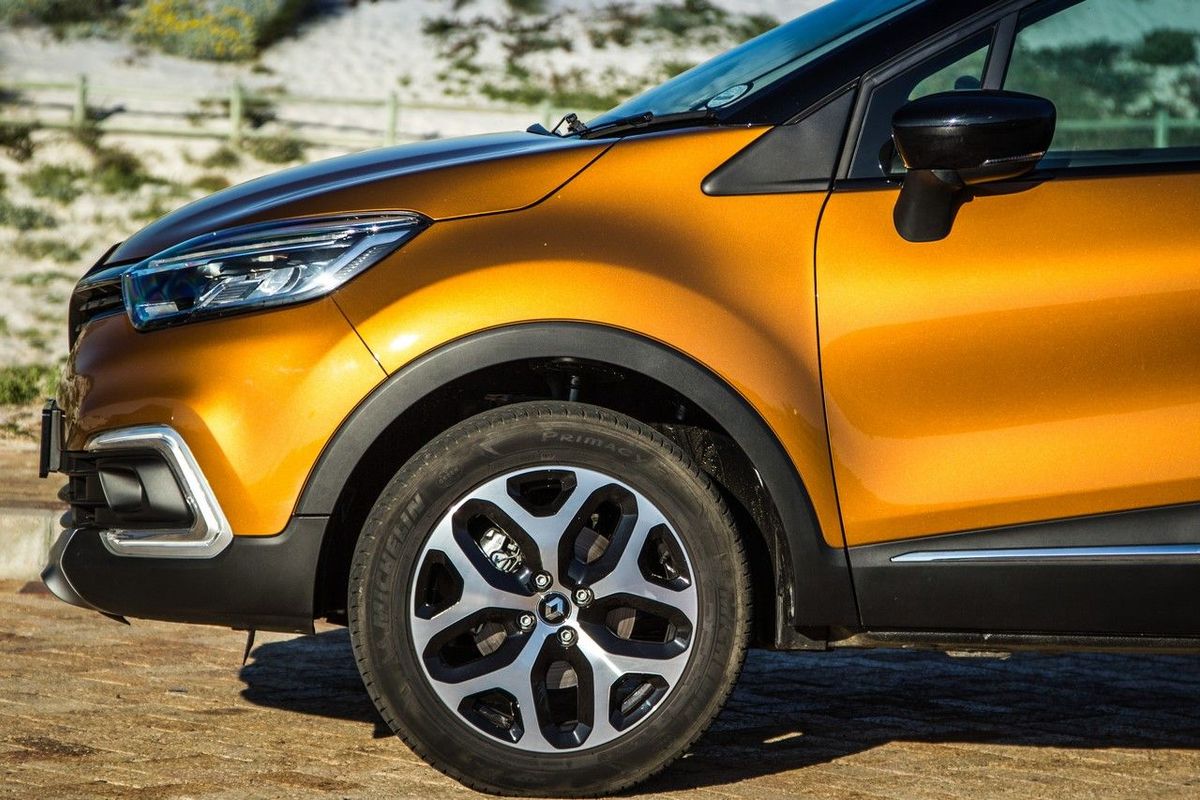
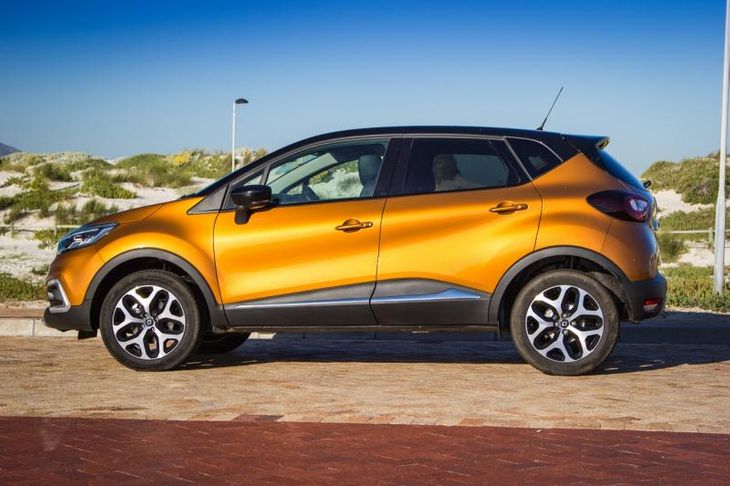
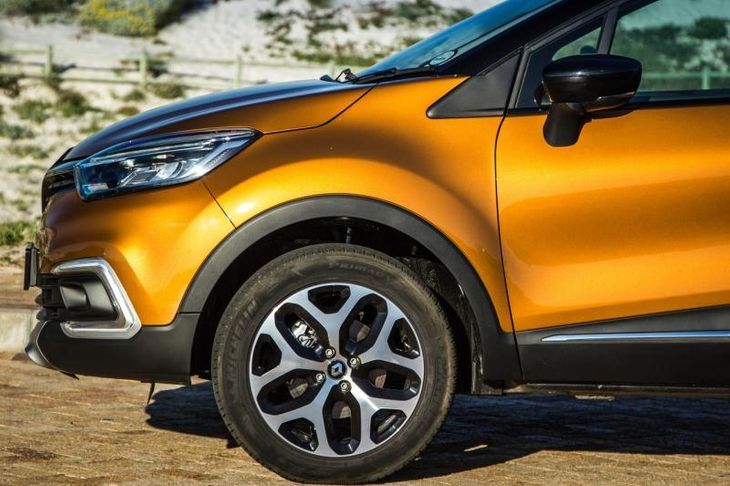
Visually, it'll take a keen-eyed enthusiast to spot the major changes to the Renault Captur. These wheels and the LED running lights at the front are giveaways

What is it?

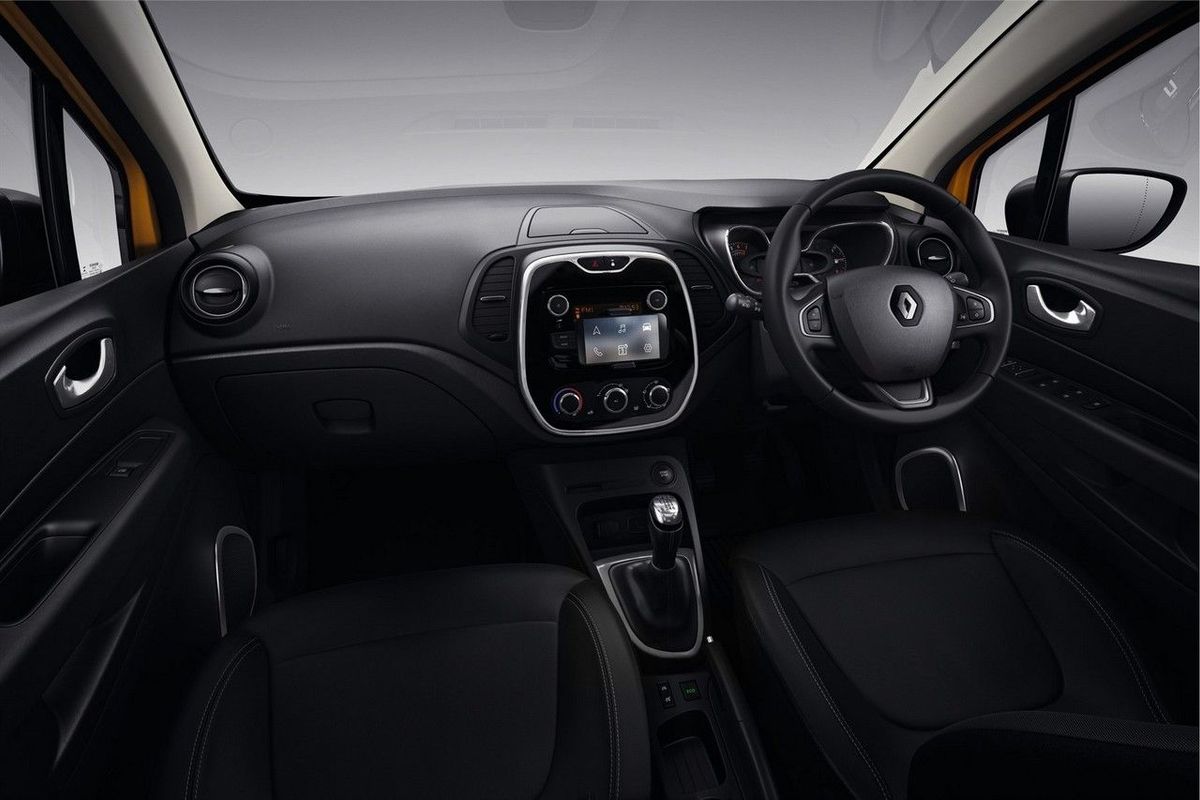
Renault South Africa calls this the (very mildly) facelifted Captur and you'll spot some visual changes at the front end (fresh LED headlamp clusters, for example), but overall its much of a muchness compared with the outgoing version, save for some material upgrades to the interior, which were most welcome. The big change is actually to the Captur derivative line-up itself, which gains an all-new Blaze entry-level offering.

The Good

The powerplant

We are pleased that Renault carried the 1.5-litre turbodiesel engine over to this revised model. It's not the newest and most advanced engine and has been used in numerous applications such as the Duster and Clio, as well as some Nissan products. It offers up a paltry 66 kW, but the 220 Nm of torque more than makes up for it. It can be a tad lethargic at the bottom of the rev range, but it pulls strongly once you're past the 2 000 rpm mark.

Renault claims a 0-100 kph sprint time of only 13 seconds, but in reality, the Captur feels relatively spirited in cut-and-thrust traffic. The motor is mated with a fairly slick manual gearbox, which we found effortless to use, which is just as well, because you have to shift smartly to keep that engine in its sweet spot.

Much like before, the 1.5-litre turbocharged diesel engine delivers astonishing fuel consumption. The official claim is a bit far-fetched, but we tried our utmost to achieve close to that figure. We comfortably went under 5.0 L/100 km during the first few days and, as the test period progressed, the consumption dropped even further, before settling at a "personal best" of 4.3 L/100 km. It's a fantastic vehicle to consider if saving money at the pumps is a priority.

Standard specification


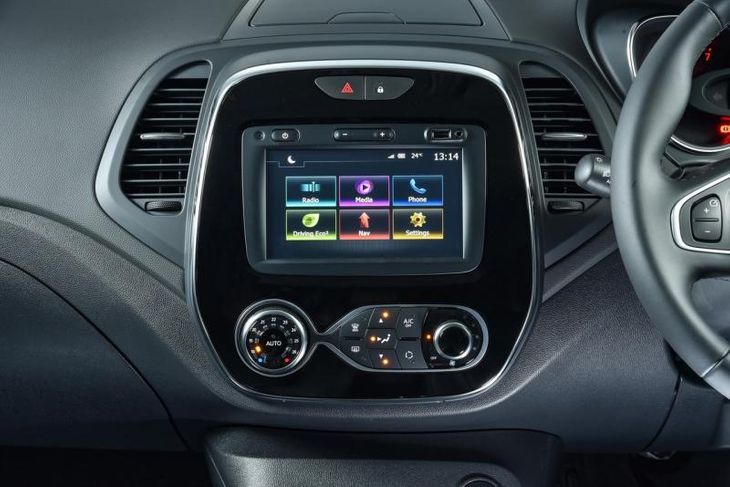
Some of the standard features of the Renault Captur: a comprehensive infotainment system and an automatic climate control setup.

Renault's strategy of specifying its cars liberally is well established (even the top-end Kwid features satnav). The Captur lacks for little in Dynamique trim and features a 7-inch MediaNav infotainment system that offers Bluetooth connectivity, radio, satellite navigation and a USB port. We found the system easy to use, the menus simple to navigate and connecting a phone via Bluetooth was simple. Other standard comfort features include cruise control (with speed limiter), climate control air conditioning and electric windows and side mirrors. Rear park distance control (with a reverse-view camera) is also standard.

Safety features

As a compact family car (as opposed to a compact hatchback, which is more accustomed to a commuter role) safety features are critically important. The Captur has a 5-star EuroNCAP safety rating, including ABS with EBD, brake assist, stability control, hill start assist, 4 airbags and a tyre pressure monitoring system. There are ISOfix child-seat mounts on the front passenger seat and rear outer seats for those who wish to fit baby seats.

Practicality

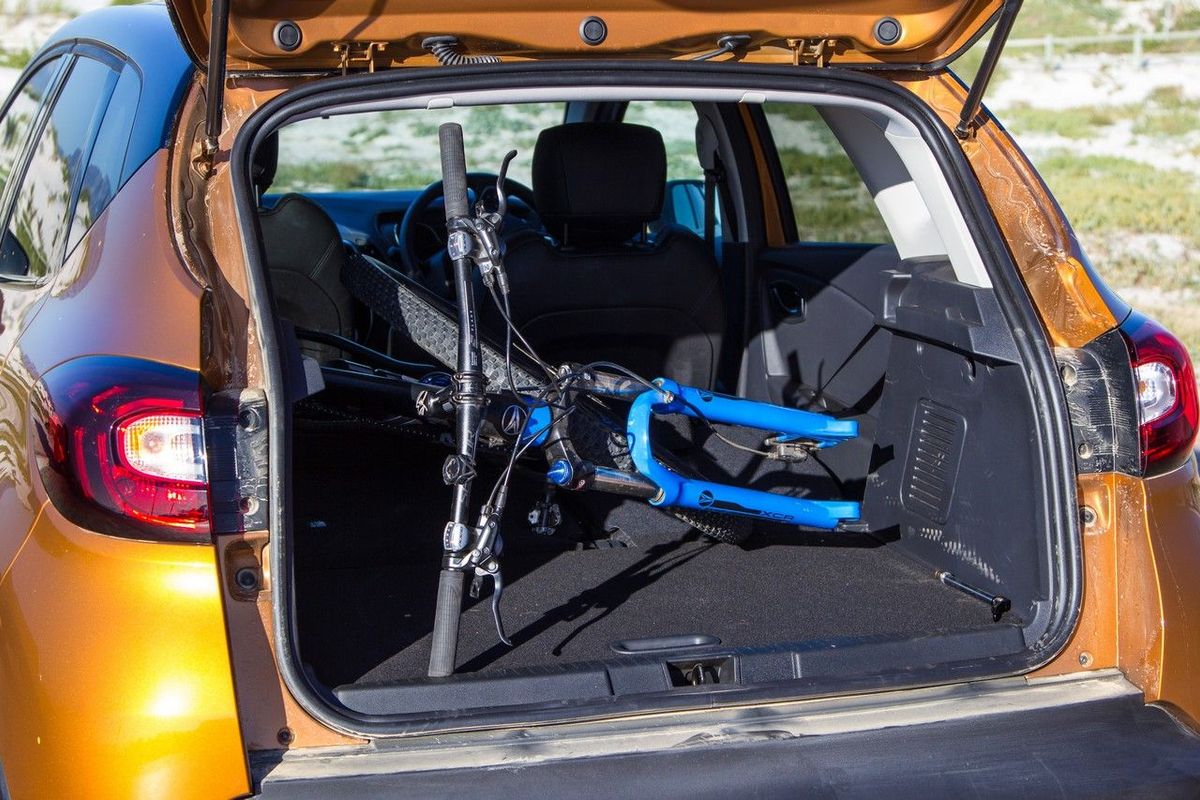
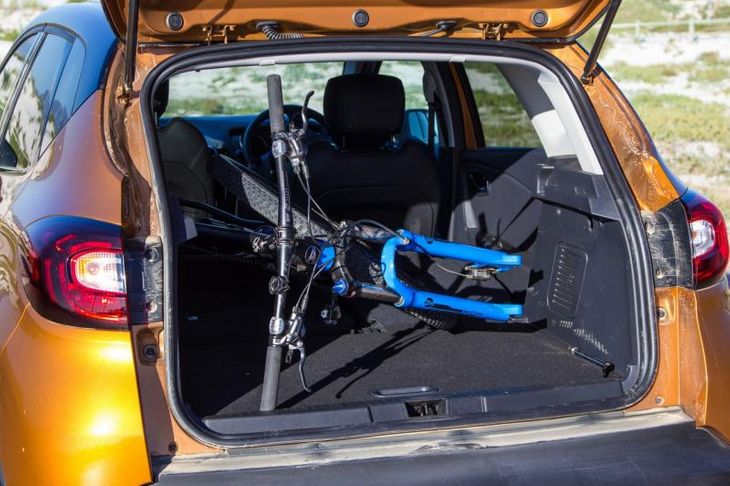
The Captur features a few nifty features to make the most of the car’s compact proportions. The luggage bay is split in 2 by a false floor and its capacity totals 377 litres, which compares favourably with rivals such as the Toyota C-HR (328 litres) and the Ford Ecosport (362 litres), but falls a bit short of the Hyundai Creta, which offers 402 litres. We put the extremities of the Renault's rear cavity to the test by loading it up with a 29-inch mountain bike.


1x mountain bike inserted into the depths of the Renault Captur luggage bay.

The Not-so-good

Build quality

As likeable as the Captur is, it's interior quality is, at best, middling. Sure, at the derivative's price point, the excellent spec makes up for it to an extent, but the cabin still features a few questionable panels and finishes. This would be acceptable in a rugged, utilitarian product such as the Duster, but for a product marketed as a stylish and fashionable runabout for upwardly mobile motorists, it's not quite up to spec. Also, while we're on the topic of quality, our test unit did have an annoying rattle which we couldn't pinpoint. As we said, these are just minor black marks on the Captur's otherwise excellent report card.

Price and warranty

This facelifted Renault Captur derivative costs R304 900 and is sold with a 5-year/150 000 km warranty and 3-year/45 000 km service plan.

Verdict

Renault has adopted an unapologetic "don't-mess-with-the-recipe" attitude insofar as the packaging of the Clio-based Captur is concerned. On many levels, the Captur delivers what this market desires, which explains why it is a finalist in the 2017/18 Cars.co.za Consumer Awards, powered by WesBank.

The turbodiesel-engined derivative is our pick of the range for sure, but for those who are anti-diesel, there is a decent 1.2-litre turbocharged petrol motor, available in both automatic and manual. The Captur still rides and drives well, and the practicality solutions will win it favour with families. Our test team includes two mountain bikers and both of them heartily recommend the Captur in terms of loading up mountain bikes. The number of standard onboard and safety features is more than generous, and the TomTom-powered satnav does a fine job of alerting you to fixed speed cameras and accident hotspots. 


The Renault Captur is one of the more stylish vehicles in the segment. These wheels and paint colour add to the image!

Related content:

Renault Captur (2017) Launch Review

Facelifted Renault Captur (2017) Specs & Price

Hyundai Creta vs Suzuki Vitara vs Renault Captur (2017) Comparative Video Review

Crossover Comparison: Honda HR-V vs Mazda CX-3

Compact Crossovers: Practical Hyundai Creta vs Stylish Toyota C-HR

Thinking about buying a Captur?

Search for a new/used example here

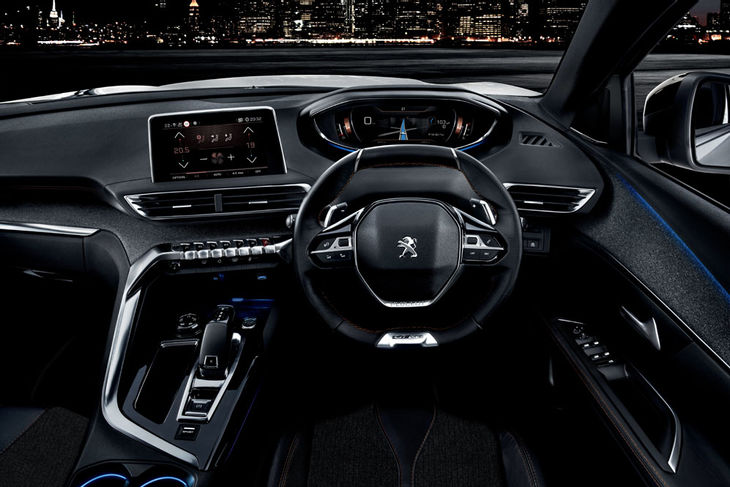
3 Reasons Why Peugeot 3008 is #CarsAwards Finalist

What makes the Peugeot 3008 1.6T GT-Line a worthy contender in the Family Car category of the 2017/18 Cars.co.za Consumer Awards – powered by WesBank? We investigate…

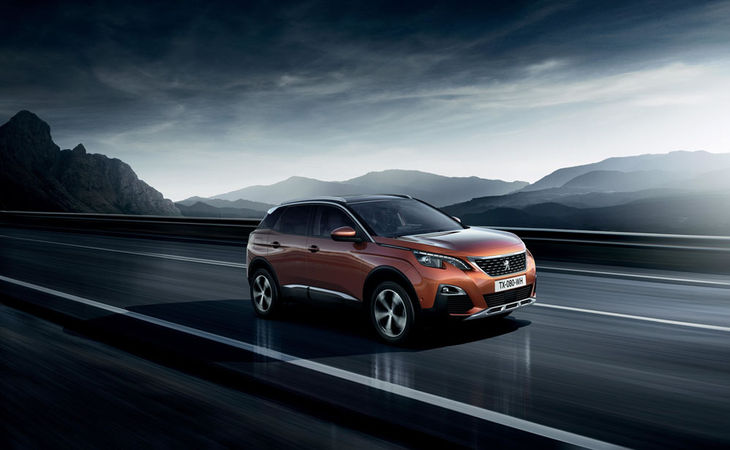
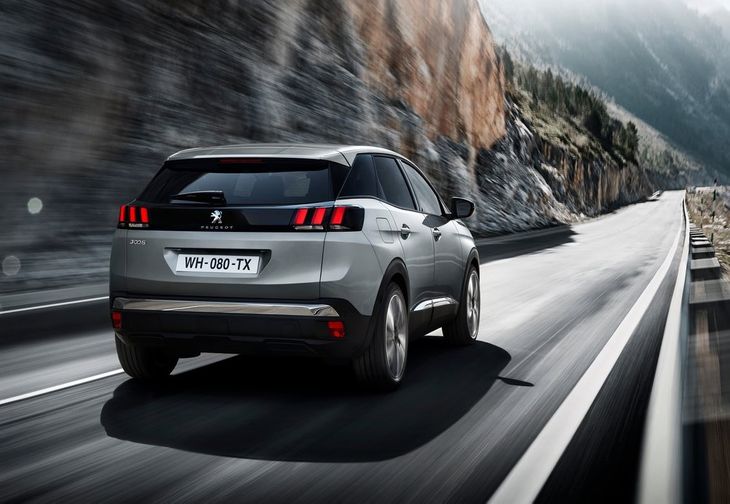
Peugeot’s 3008 walked away with the European Car of the Year title and represents the latest and greatest from the French. Not only does it boast bold exterior styling, but it's also an incredibly upmarket and futuristic cabin. Combined with an all-in features list and a strong powertrain, it’s difficult to overlook this new offering. Can the 3008 scoop the win in the Family Car category?

3 Reasons Why Peugeot 3008 1.6T GT-Line is a #CarsAwards Finalist

1. Eager and efficient engine

This 1.6-litre turbo engine produces respectable power figures of 121 kW and 240 Nm and it can show a decent turn of speed when needed. This engine also does duty in some of Peugeot’s performance products and when you engage Sport mode, the 3008 is eager to please. You can make the most of the powertrain by using the steering-wheel shift paddles.

The engine is mated to a 6-speed automatic gearbox and can go 757 km between refuels. Peugeot claims the 3008 will consume just 5.3 L/100km.

2. Big on load space

At first glance, the Peugeot 3008 looks to be smaller than its rivals, but clever packaging has meant that there’s more space than you expect. Boot space starts at 520 litres and when you fold the rear seats down, 1 670 litres becomes available. Space for rear passengers is fair.

3. Comfortable and safe

On the road, the new 3008 is highly refined, giving you a quiet driving experience. The ride quality exhibited by the 3008  is sublime and the leather seats are especially comfortable, particularly on those long family road trips.

In terms of safety, the 3008 is well-equipped with 6 airbags, ABS with EBD, brake assist, electronic stability control and traction control, driver attention alert, lane departure warning and road sign detection. ISOFIX child seat mounts are also fitted across the range.

Watch #CarsAwards judge, Juliet McGuire review the Peugeot 3008 in the video below!

Have Your Say: Complete our survey!

Do you own a 3008? We would love to hear from you! Tell us about your experience by completing our Ownership Satisfaction Survey. Your input counts for 50% of the final result.

What cars are the 3008's rivals in #CarsAwards?

The 2017/18 #CarsAwards finalists: Family Car Category

Compare the 3008's specs with the Mazda CX-5 2.5 Individual and Volkswagen Tiguan 1.4 TSI Comfortline DSG

Related Content

Peugeot 3008 (2017) Launch Review

Peugeot 3008 2.0 HDi Allure (2014) Review

Peugeot Introduces GFV Program in SA

#CarsAwards Finalists Testing: Gerotek turns up the heat

2017/18 Cars.co.za Consumer Awards – powered by WesBank; Finalists

Spy Shots: New BMW X5

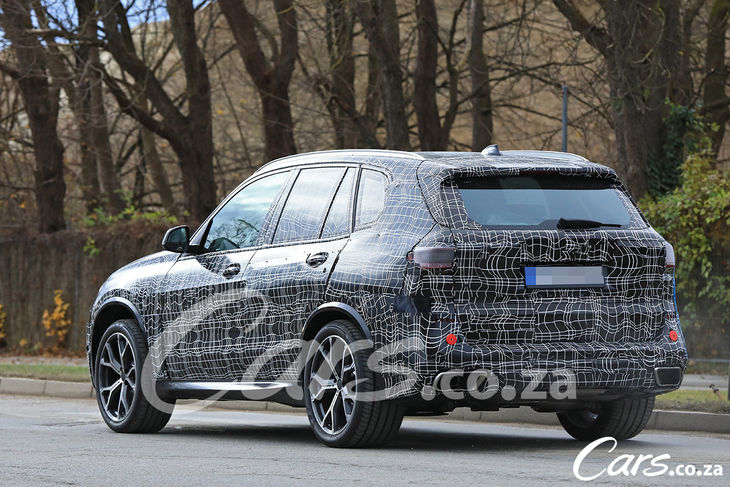
BMW will introduce the new fourth-generation X5 premium SUV in 2018 and prototypes have been spied testing in Europe.

Picture credit: S. Baldauf/SB-Medien

The BMW X5 SUV has been a major success for the brand and the next-generation X5, codenamed G05, is expected to go into production in August 2018. Production of the current X5 will come to an end in July 2018 with no facelift expected.

The new G05 BMW X5 will be built on BMW’s CLAR architecture, which will also underpin the new X6 and forthcoming X7. This move will result in a significant weight saving in the new X5 which will enhance performance and handling while also improving efficiency. A mix of lightweight magnesium, aluminium and Carbon Fibre Reinforced Plastic (CFRP) will be used in the construction of the new X5. Proportionally, the new X5’s dimensions are expected to remain largely the same.


The new X5 will be lighter and more efficient than the model it replaces with new or heavily revised petrol engines expected.

The new X5 prototype you see in these spy photographs is heavily camouflaged but you will notice the large, pronounced kidney grille, quite similar in fact to the upright and somewhat contentious grille seen on the Concept X7 shown earlier this year at the 2017 Frankfurt Motor Show.

The larger grille will beef up the X5’s road presence and in its side profile, you will notice a sloping roofline with 2 character lines running across the body. BMW’s distinctive Hofmeister kink seen on C-pillar also appears to be more rounded on this X5 prototype. At the rear, large rectangular exhaust tips can be seen but the heavy camouflage has hidden the rear styling well. The interior design is expected to be familiar and will likely incorporate finer finishes and high-quality materials, as well as tech elements from models like the 7 Series.  

Expected engines

In terms of engines, BMW will introduce new petrol engines in the X5, which includes a thoroughly revised (technically new) 6-cylinder 3.0-litre engine with 250 kW used in the X5 sDrive40i and X5 xDrive40i. The more powerful X5 xDrive50i will employ a heavily-revised/new 4.4-litre V8 with 347 kW. 

On the diesel front, a B57 3.0-litre turbodiesel used in the popular 30d and 40d will have outputs of 198 kW and 238 kW respectively while the M50d will employ a new quad-turbo, 3.0-litre diesel engine with at least 298 kW.

As for the manic X5 M, it is expected to have the same twin-turbocharged 4.4-litre V8 that’s found under the bonnet of the new M5 with outputs of 441 kW and 750 Nm of torque. With a lighter body and xDrive all-wheel drive, the new X5 M will likely achieve a 0-100 kph sprint time of below 4 seconds when it arrives. In terms of hybrid powertrains, BMW is pushing its iPerformance brand quite heavily and there will be a 40e version joining the ranks.

The introduction of the new BMW X5 in South Africa is yet to be determined but it will likely arrive towards the end of 2018 or early in 2019.  We will keep you updated as more details are revealed.

Watch the new BMW X5 and X5 M testing at the Nurburgring below.


Buy a BMW X5 on Cars.co.za

Related Content

BMW X5 Special Edition and X6 M Sport Edition Announced

BMW X5 M/X6 M Black Fire Edition Headed for SA

BMW X5 M (2015) Review

2014 BMW X5 40d (2014) Review

BMW X5 xDrive25d (2016) Review

Spy Shots: BMW X5 M vs Mercedes-AMG GLE63

BMW X7 iPerformance Concept Revealed


Audi RS3 vs BMW M2 (2017) Drag Race

A few weeks ago we published a head-to-head video featuring the new Audi RS3 sedan and the BMW M2 and it upset quite a lot of our audience. That video certainly had some issues but the most common complaint was that we didn't race the cars.

Well, we're here to rectify that, and we've gone big. In Part 1 of The Rematch, we hired Cape Town's Killarney drag strip, wrangled a brand new Audi RS3 Sportback and BMW M2, and staged what we think is a pretty epic drag race…or two.

Look out for Part 2, where we unleash our in-house race ace Ashley Oldfield on the full Killarney race circuit for a hot lap shootout.

We'll also be publishing exclusive videos and data which was collected on the day using the RaceLogic V-Box system.

Related content

BMW M2 vs Audi RS3 (2017) Comparative Review Video

Audi RS3 Sedan (2017) Quick Review

Audi RS3 Sportback & Sedan (2017) Specs & Price

Audi RS3 (2016) Review

Drag Race: Audi RS3 vs Mercedes A45 AMG [Video]

Track Race: Audi RS3 vs Merc-AMG A45 vs Honda Civic Type R vs BMW M2 [Video]

BMW M2 vs Mercedes-AMG A45 vs Audi RS3 vs Honda Civic Type-R: On-track analysis (Video)

Interested in buying an RS3?

Search for one on Cars.co.za

Looking for a used BMW M2?

Begin your search here