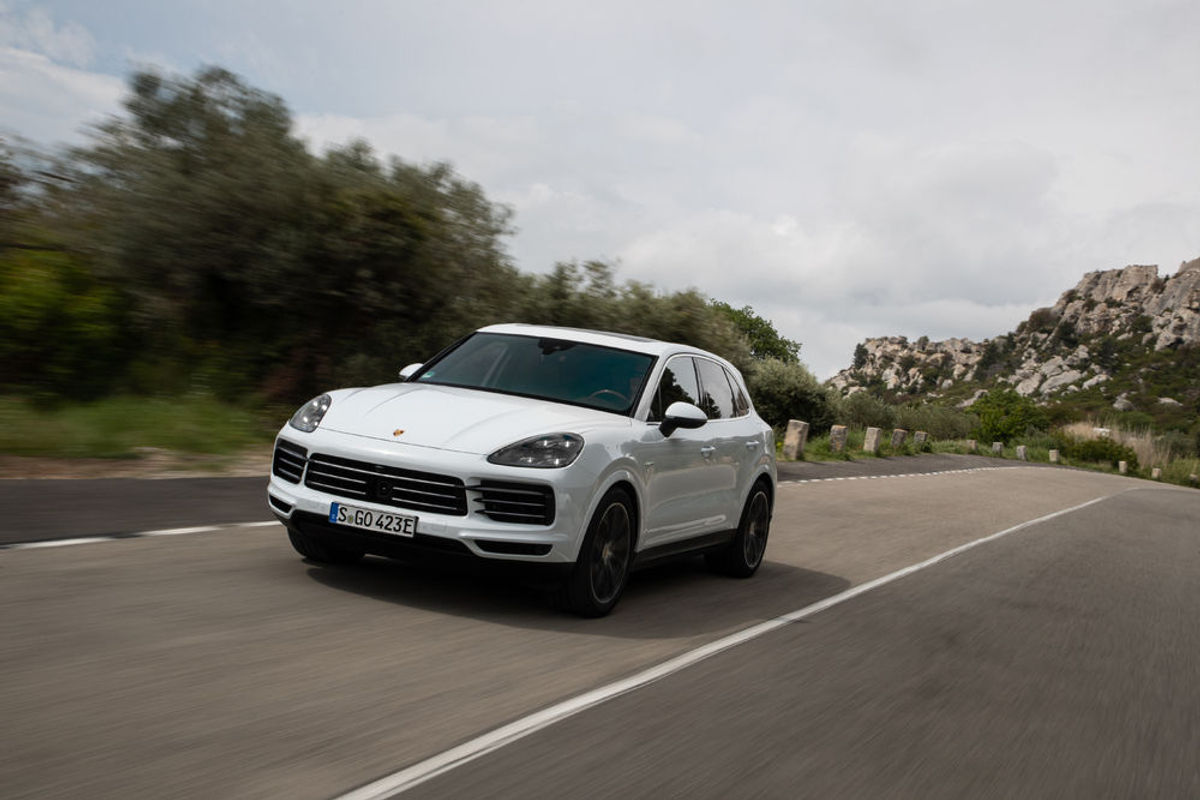
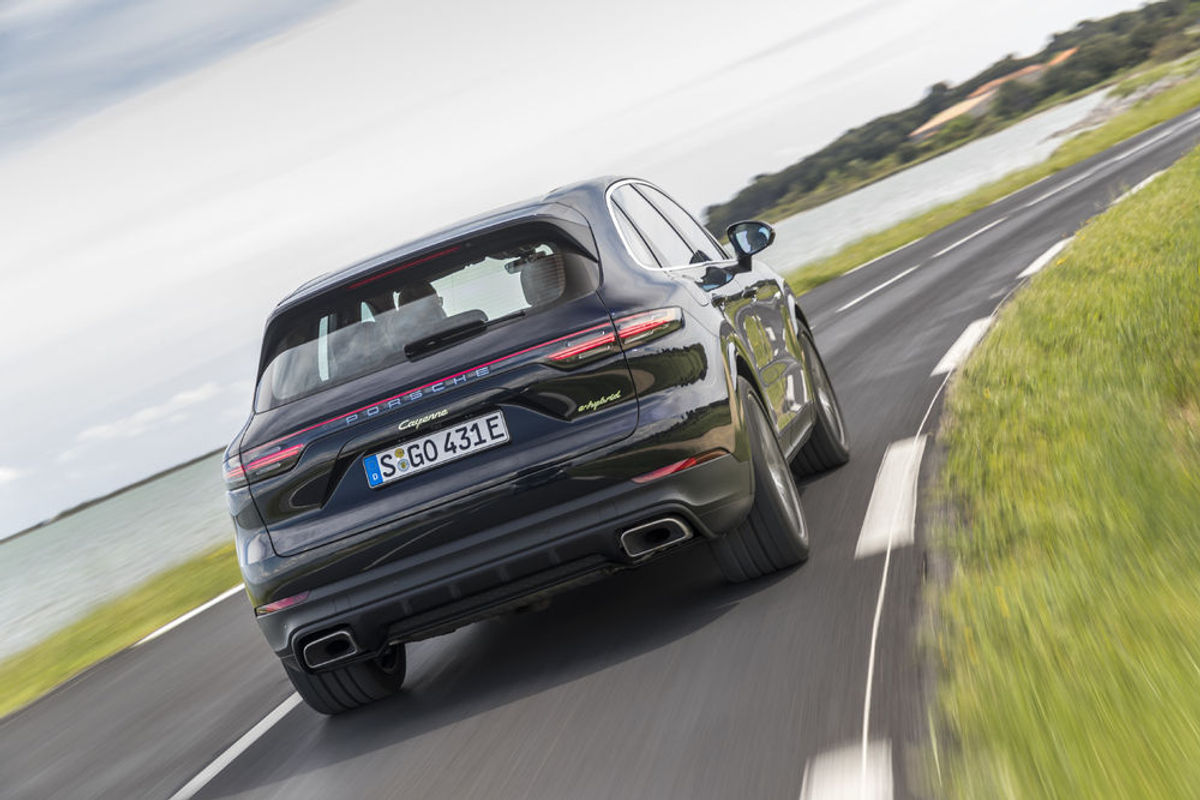
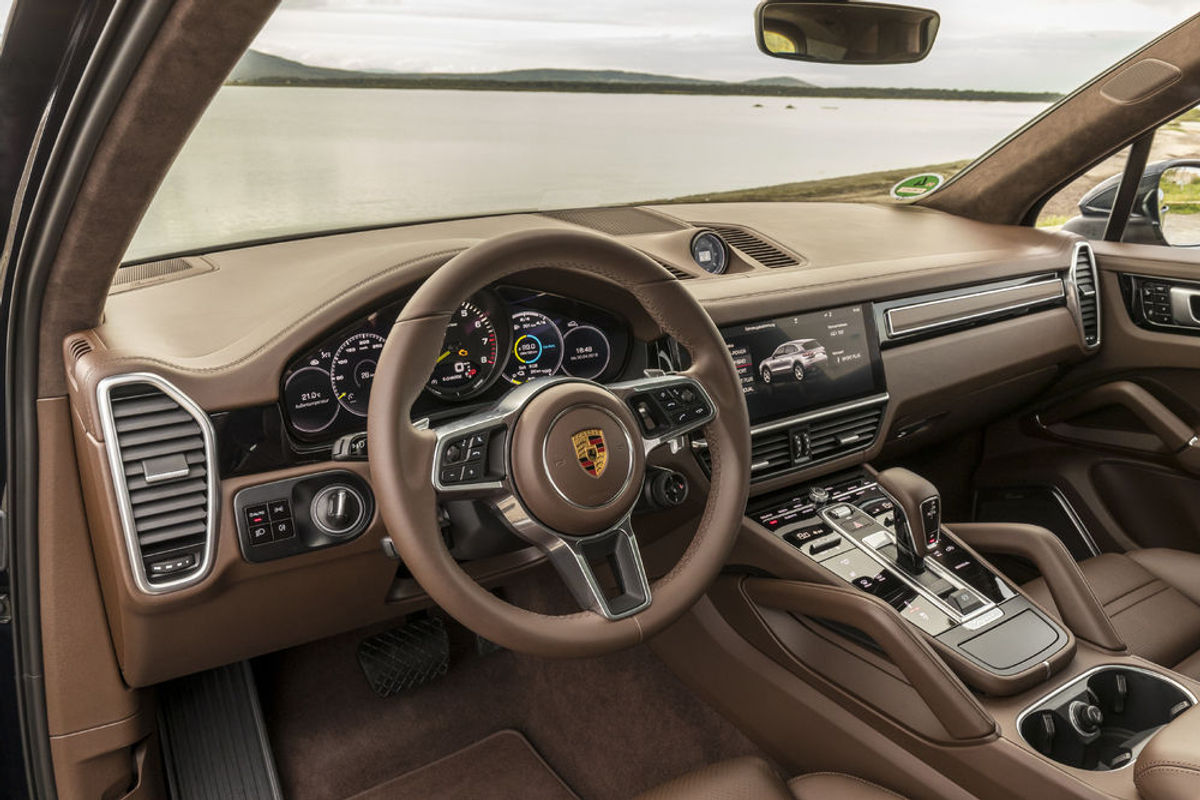
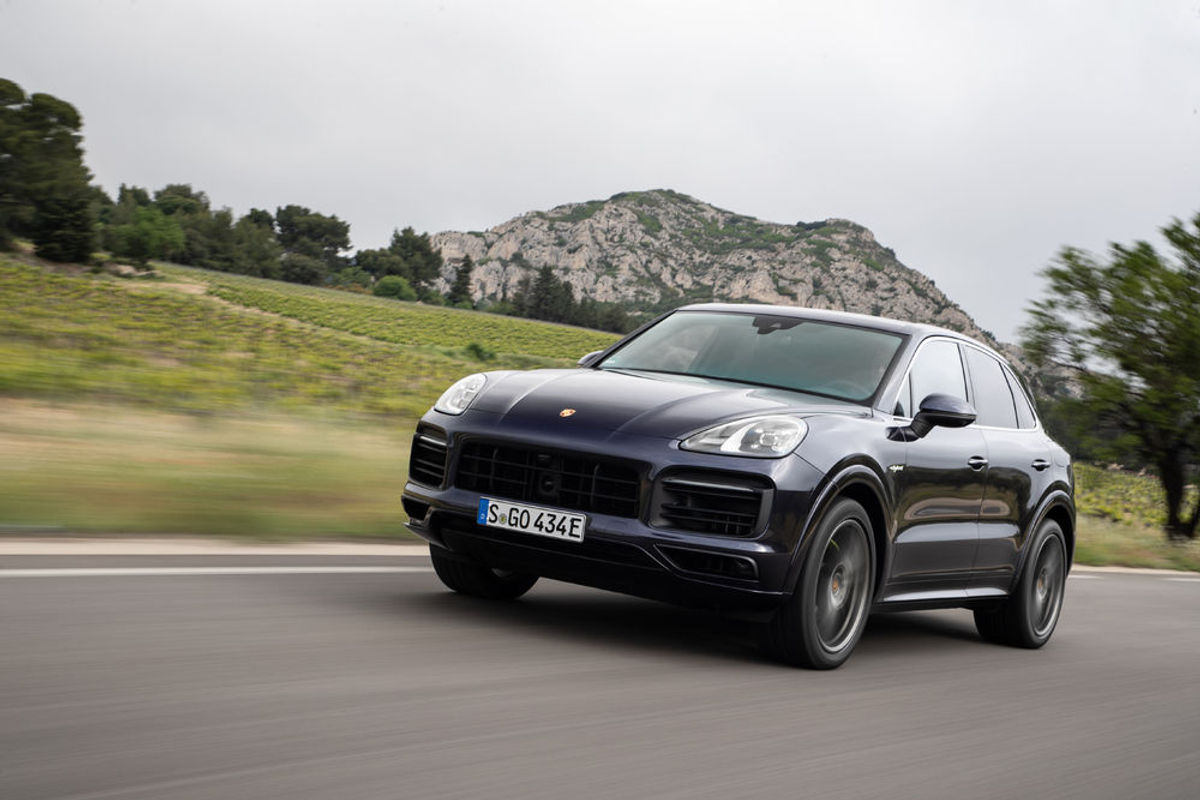
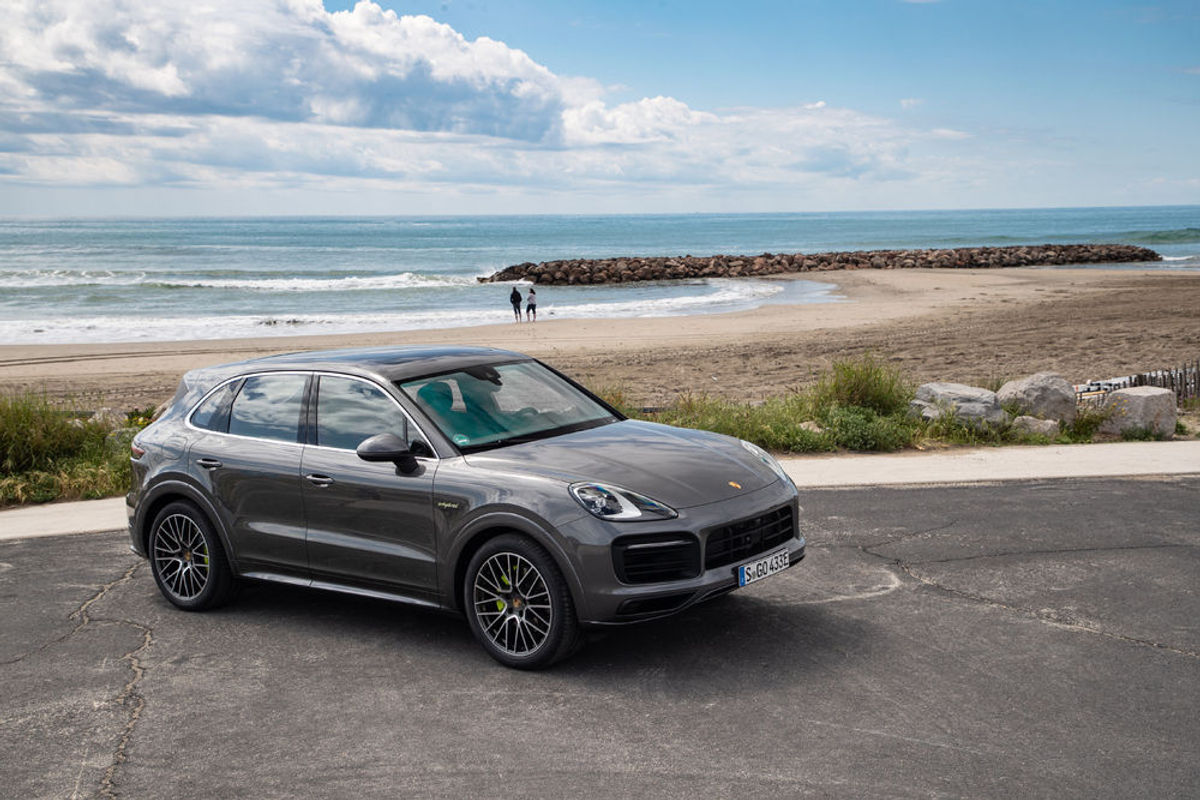
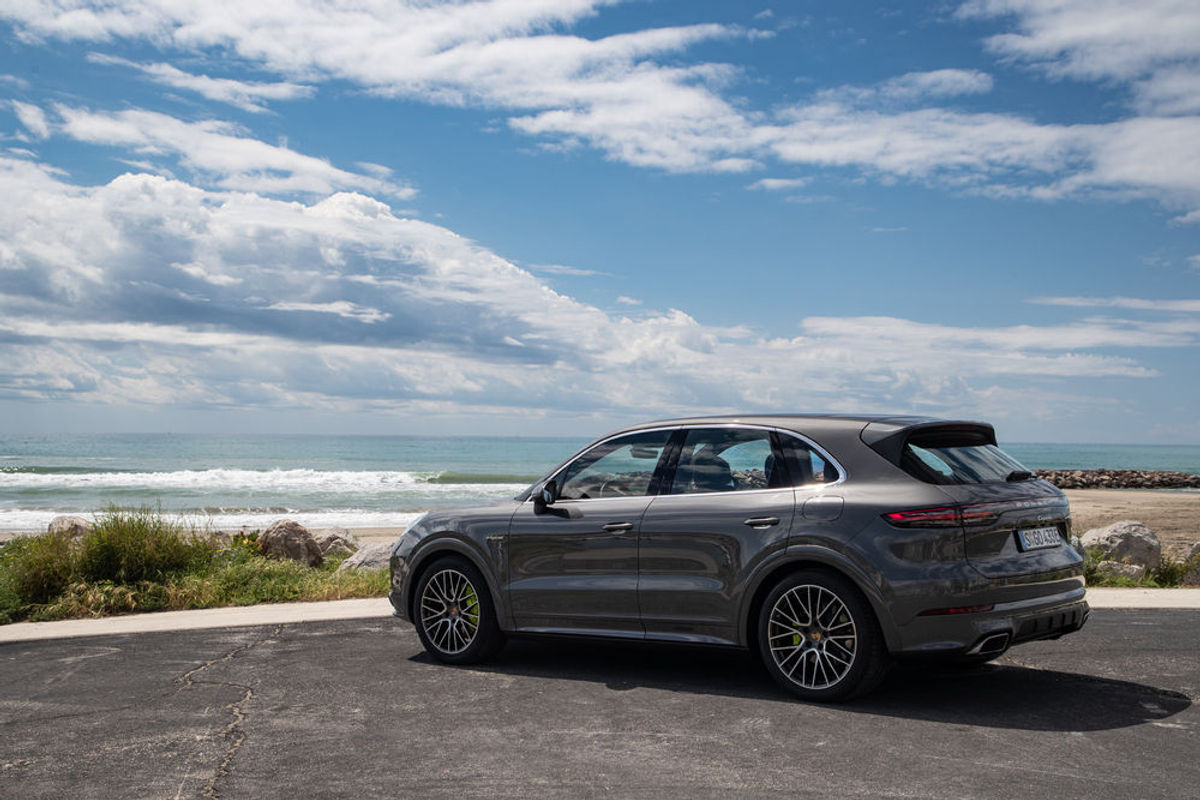
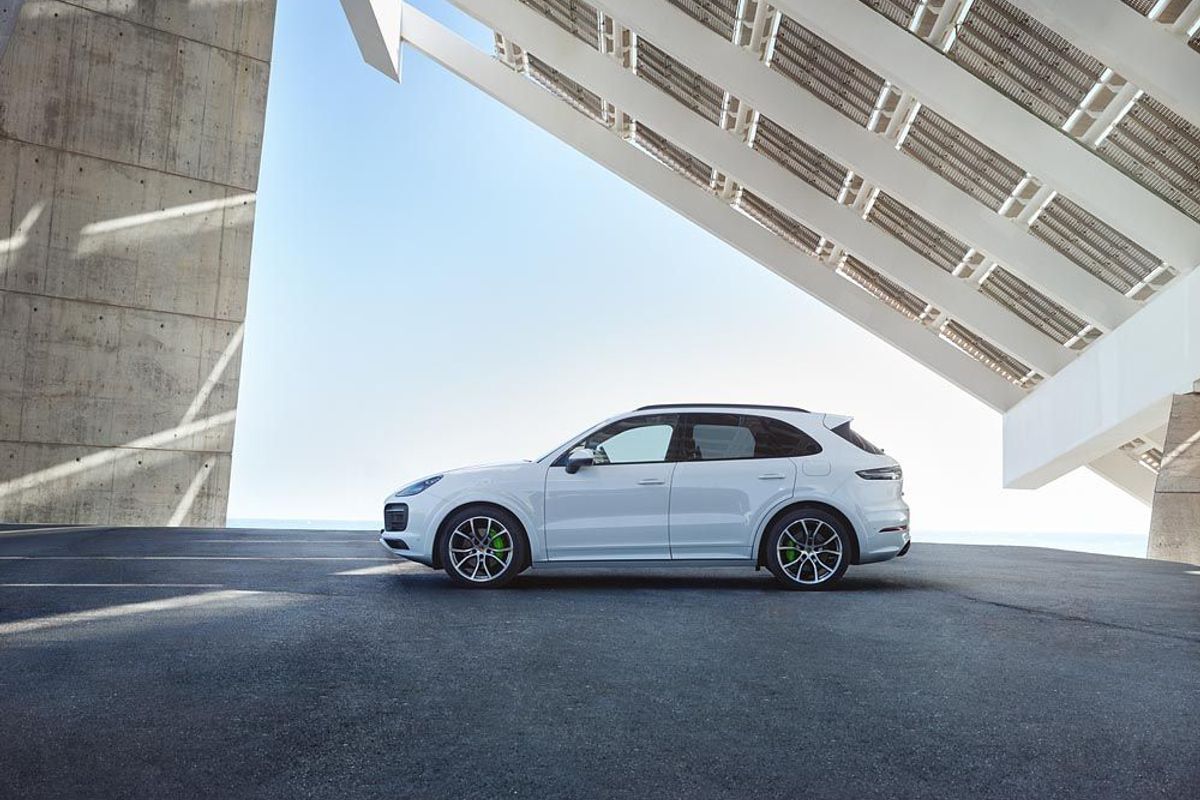
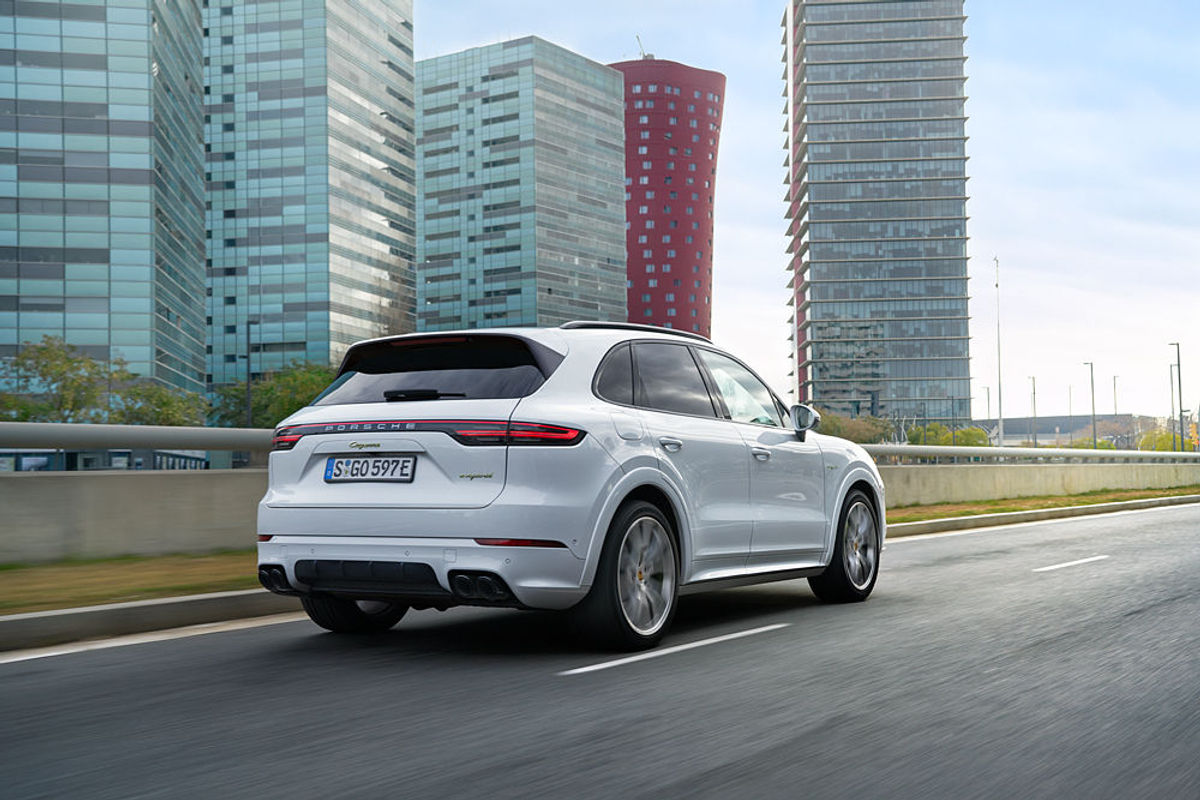
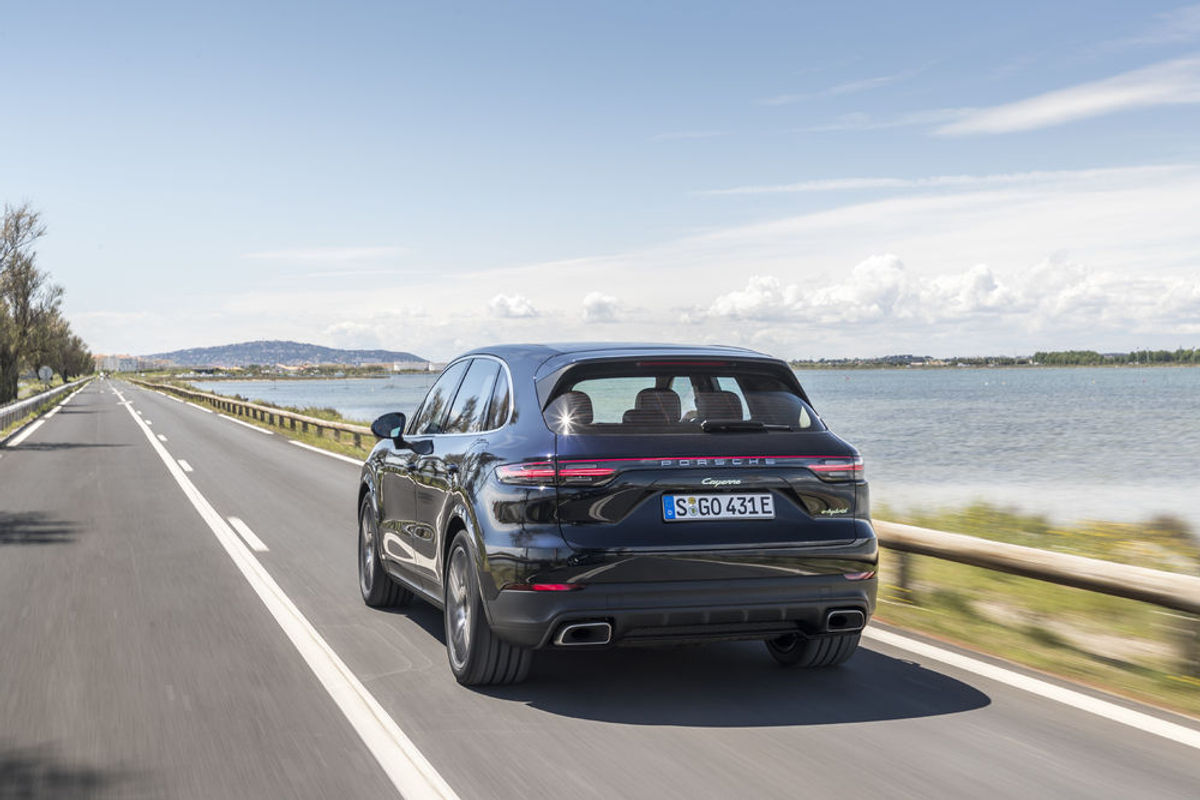
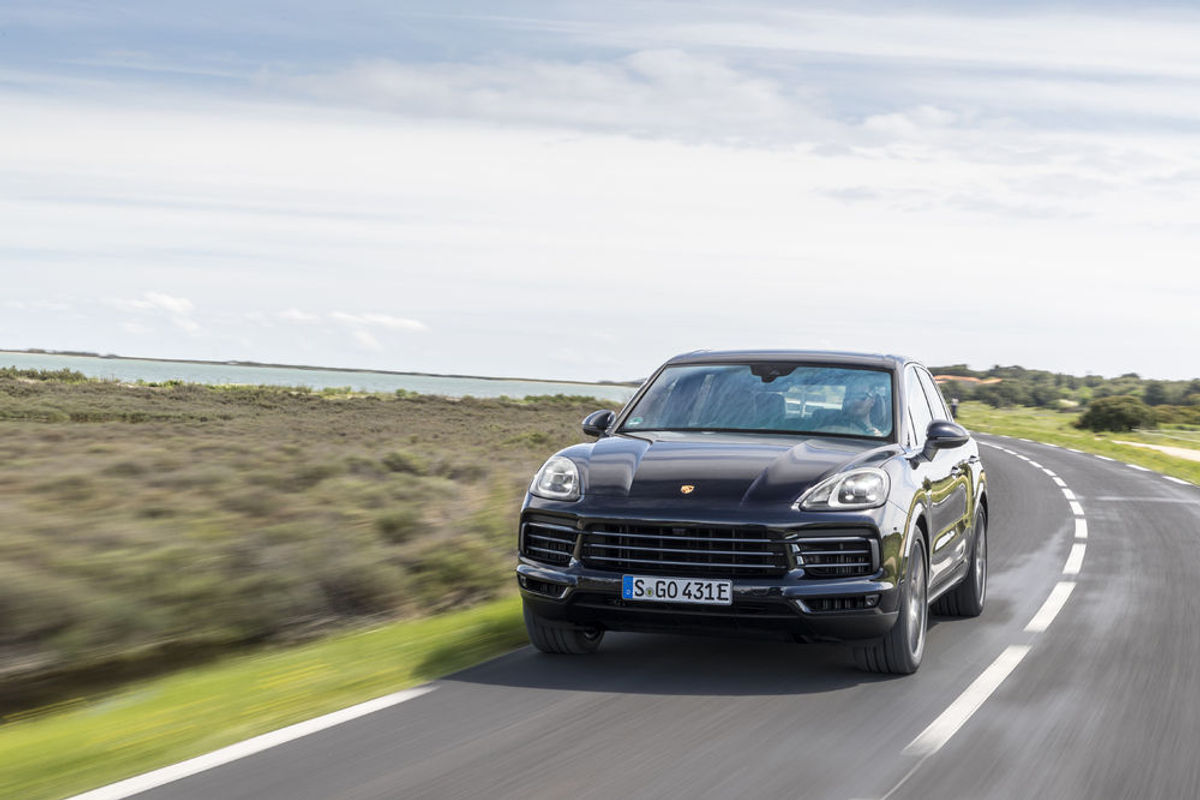
Porsche continues to improve its hybrid offering. For the new Cayenne, the capabilities of the new electric power unit are dramatically improved.
Porsche has been developing hybrid tech for some time now. The previous generation Cayenne and Panamera both shared parts for hybrid models that promised all-electric modes as well as combining with turbopetrol powerplants to deliver maximum performance.
The new Cayenne e-Hybrid uses the same 3.0-litre V6 turbopetrol engine that delivers 5 kW more to make a total of 250 kW. The electric motor has vastly improved from the predecessor by some 43% and offers 100 kW of additional power. The sum total amounts to 340 kW and 700 Nm of torque.
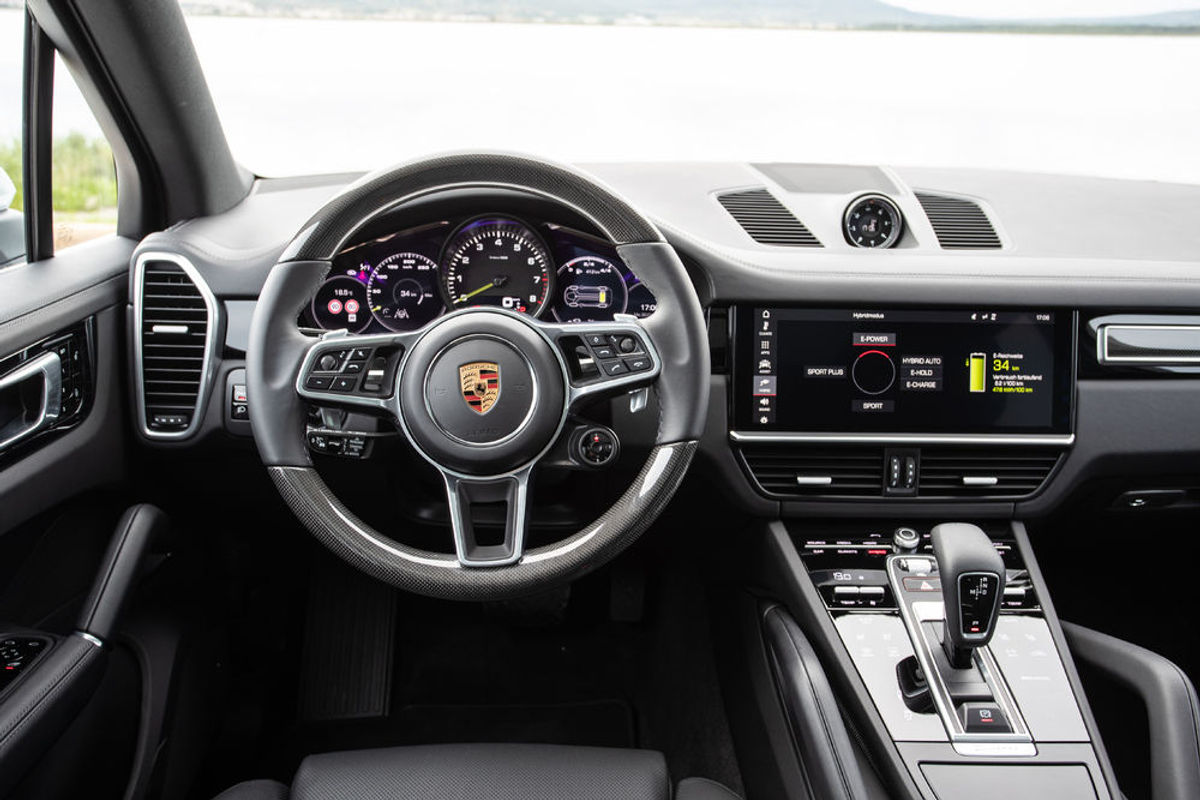
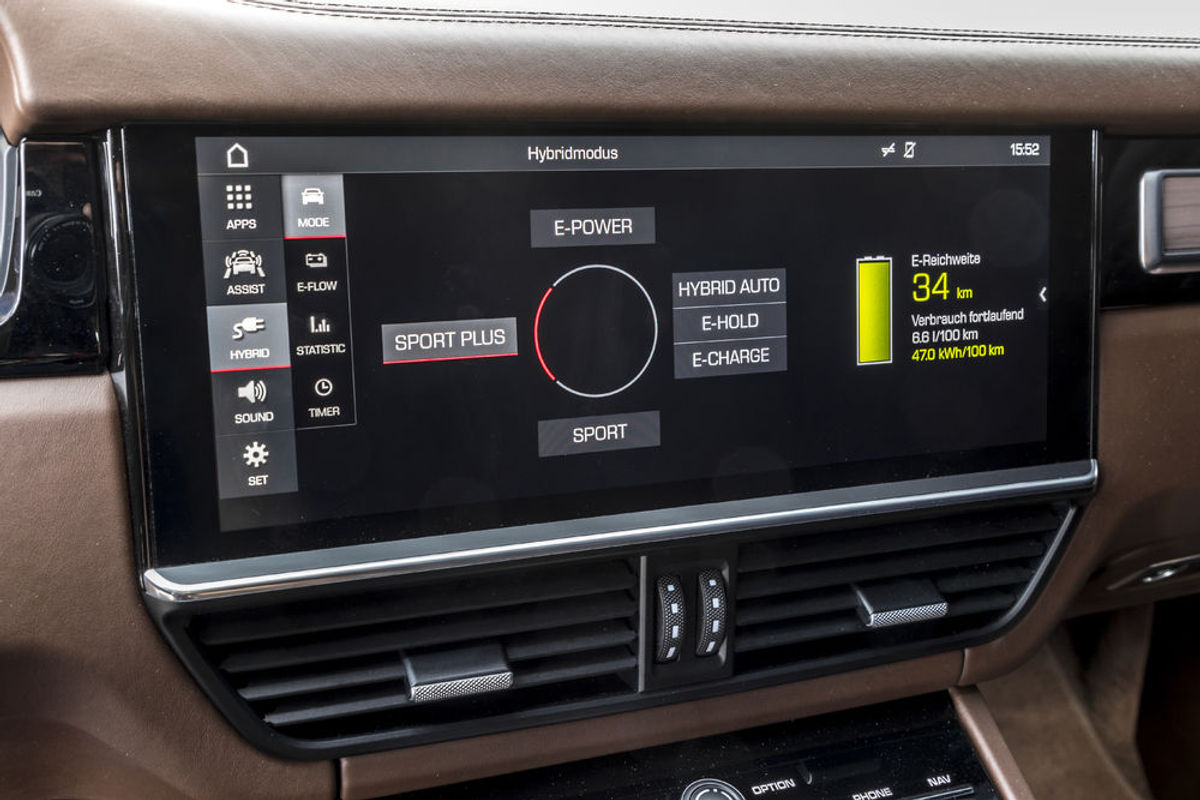
Zero to 100 kph is dealt with in 5.0 seconds at it will run on to a top speed of 253 kph. There are 4 driving modes to choose from that deliver very different levels of performance and power from the battery-powered electric motor. E-Power, Hybrid Auto, Sport and Sport Plus work in ascending order in delivering maximum power. The Cayenne e-Hybrid has placed a major emphasis on sportiness hence the standard spec now includes the Sport Chrono package.
The hybrid system has been sufficiently improved that the range in pure electric mode has increased from 30 km to 44 km and it can maintain a top speed of 135 kph in pure electric mode. The plug-in charging system includes a new connection that's easier to use. The key shows the current status via an LED and allows the driver to switch between timed and immediate charging at the touch of a button. The timer can be programmed for time-shifted charging via the Porsche Connect app. Charging times themselves vary depending on the onboard charger and electricity source.
Porsche South Africa has confirmed that the Cayenne e-Hybrid will be arriving in SA before the end of 2018. Porsche owners will have the option of charging their Cayenne either at home or at Porsche centres around the country.
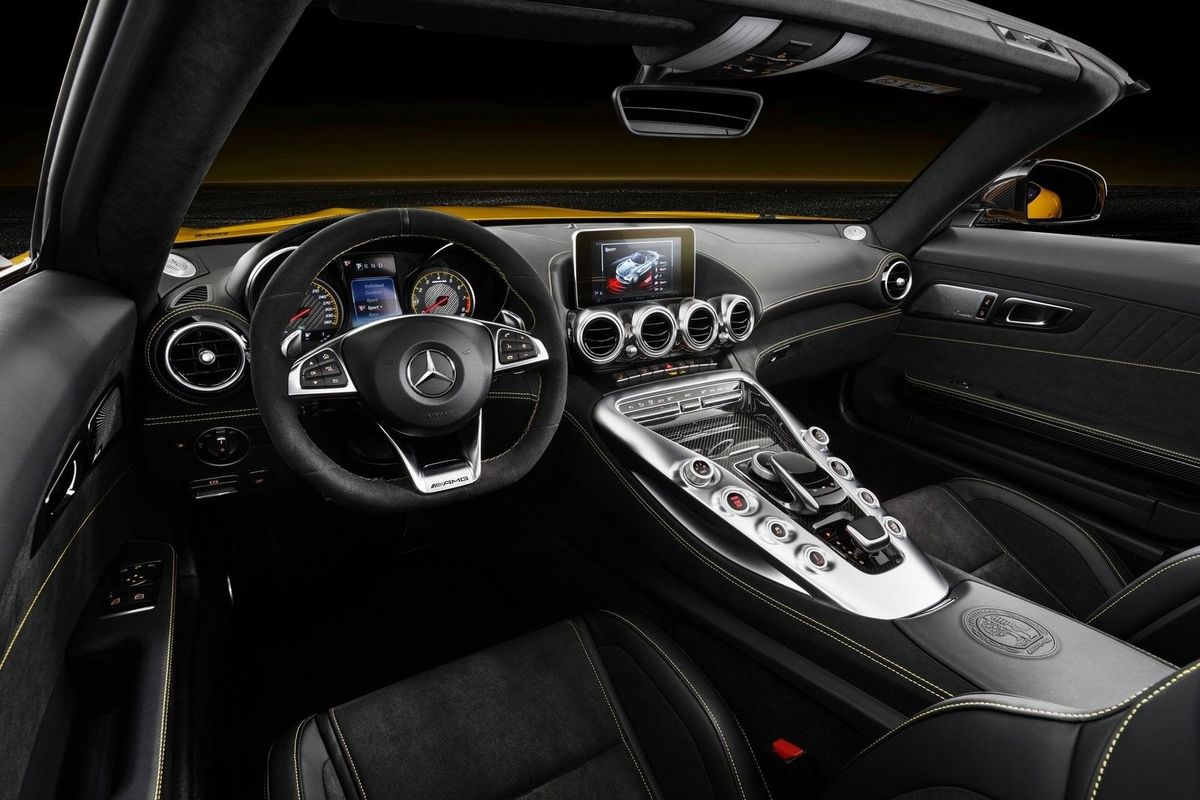
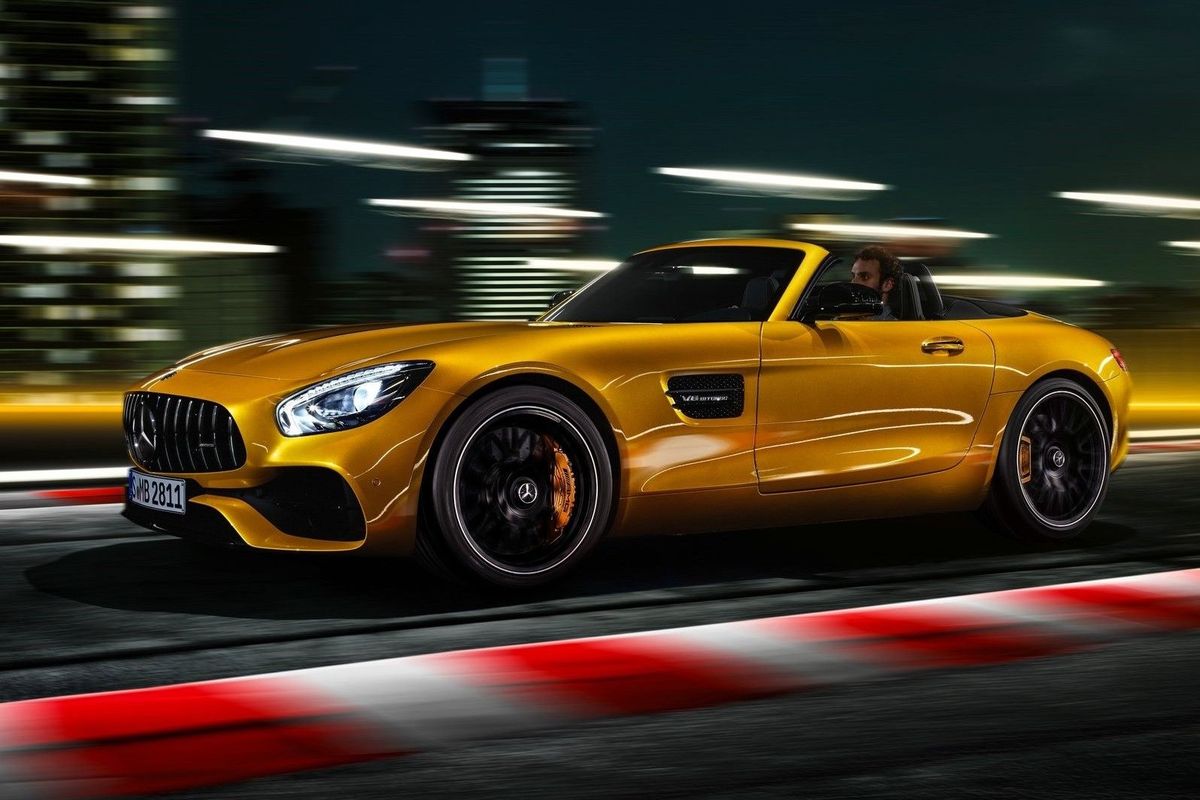
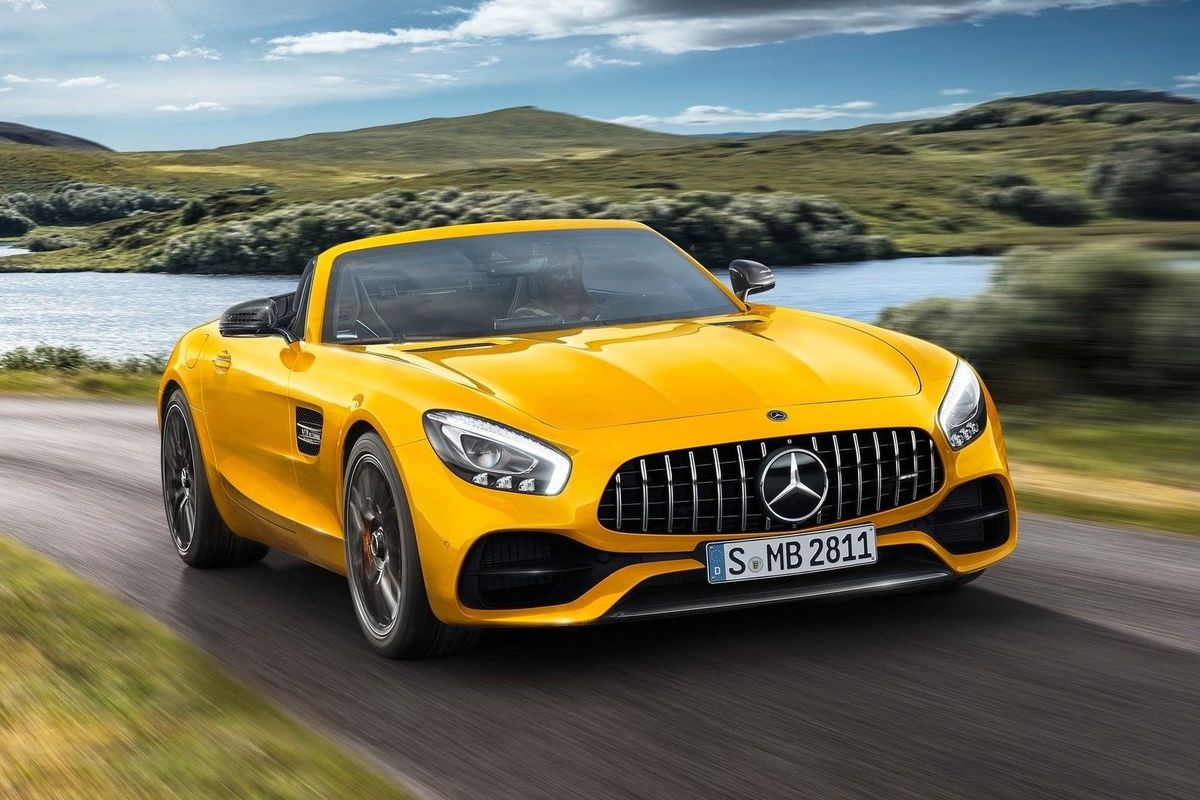
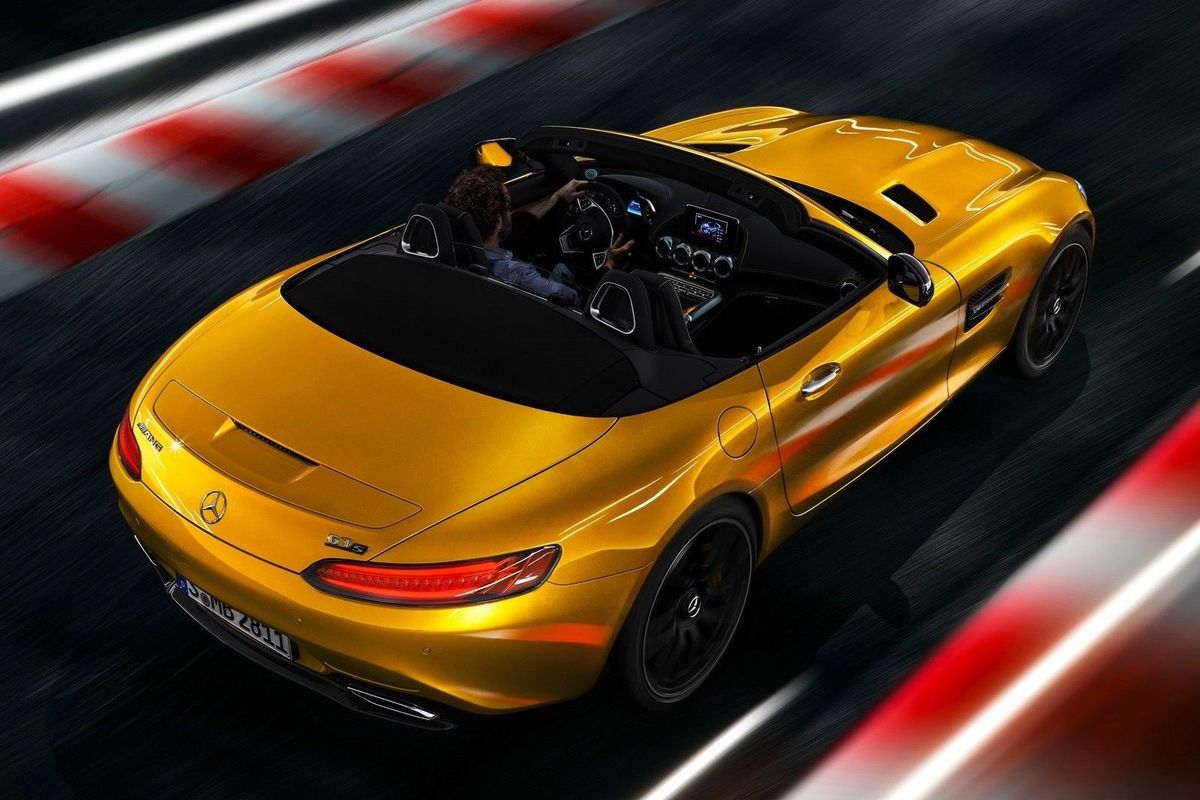
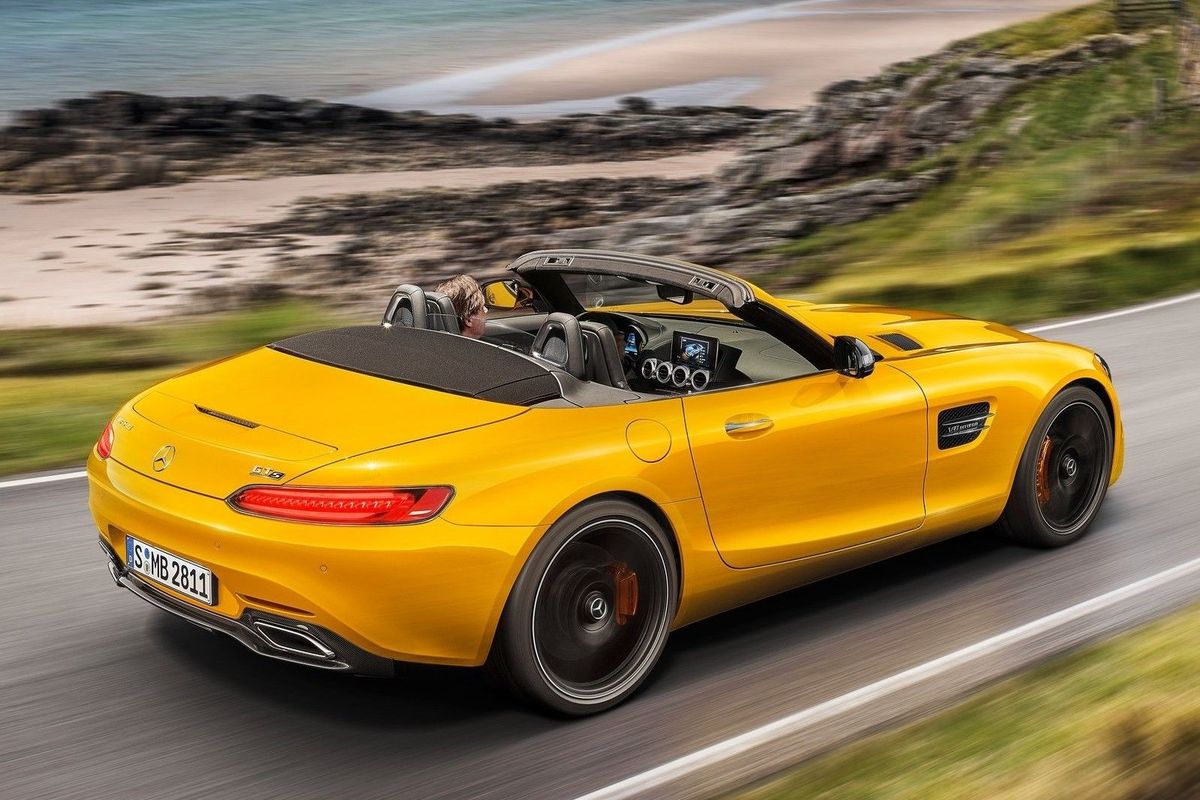
Mercedes-AMG has expanded its GT convertible portfolio with a new GT S derivative. Herewith some details.
The Mercedes-AMG GT family has grown considerably and now comprises four two-door coupés, three roadsters, two customer sports racing cars and three four-door coupés. This new GT S Roadster slots between the baby AMG GT Roadster and the potent AMG GT C Roadster. In comparison to the entry-level roadster, the GT S feaatures uprated performance, suspension, brakes and trim.
"With the AMG GT S Roadster, our AMG GT family has gained another exceptionally sporty member that combines high driving dynamics with an emotional open-air experience," says Tobias Moers, Chairman of Mercedes-AMG GmbH. "The new model represents the perfect alternative for the performance-oriented AMG GT Roadster customer."
Under that long bonnet is the potent 4.0-litre biturbo V8 motor, but in GT S application, outputs are ramped up to 384 kW and 670 Nm, with all that shove available from 1 900 rpm. If you bury the throttle from standstill, Mercedes-AMG claims you'll blitz to 100 kph in 3.8 seconds and max out at 308 kph. Power goes to the rear wheels via a 7-speed AMG Speedshift DCT 'box. The AMG GT S rides on 19-inch 10-spoke alloy wheels, wrapped in 255/35 R 19 and 295/35 R 19 at the front and rear respectively.
Adaptive damping is fitted as standard, as is an electronically controlled differential. In terms of stopping power, you can opt for ceramic brakes, but the standard AMG composite units should be plenty if you're not taking your AMG GT S to the track. In the cabin, the AMG GT S Roadster features the AMG Silver Chrome Interior package as standard, giving the interior an upmarket finish.
Mercedes-AMG says the new GT S Roadster is available to order right now, with a market launch in July 2018.
Ford showcases new reverse camera technology [Video]
Statistics have shown that reversing is one of the most stressful and hazardous parts of everyday motoring. Ford claims to have helped improve things by showing off a new reverse camera system, which claims to show drivers what's around the corner.
The new Ford Focus is expected to make landfall in South Africa towards the end of the year and some of the technology that debuts in this car is quite futuristic. In response to the theory that reversing is one of the most stressful and hazardous parts of driving, the Blue Oval has come up with a solution to make things easier. It's a reverse camera offers 180-degrees of vision and it's linked to the car's autonomous systems, which, if the driver fails to react, will automatically brake the car.
“We know that for nearly all our customers, reversing is a crucial part of their daily drive – and one that some of them really don’t enjoy”, said Ford’s chief program engineer for the Focus, Glen Goold. “This little camera is helping us to make a big step forward in making it easier to go backwards.”
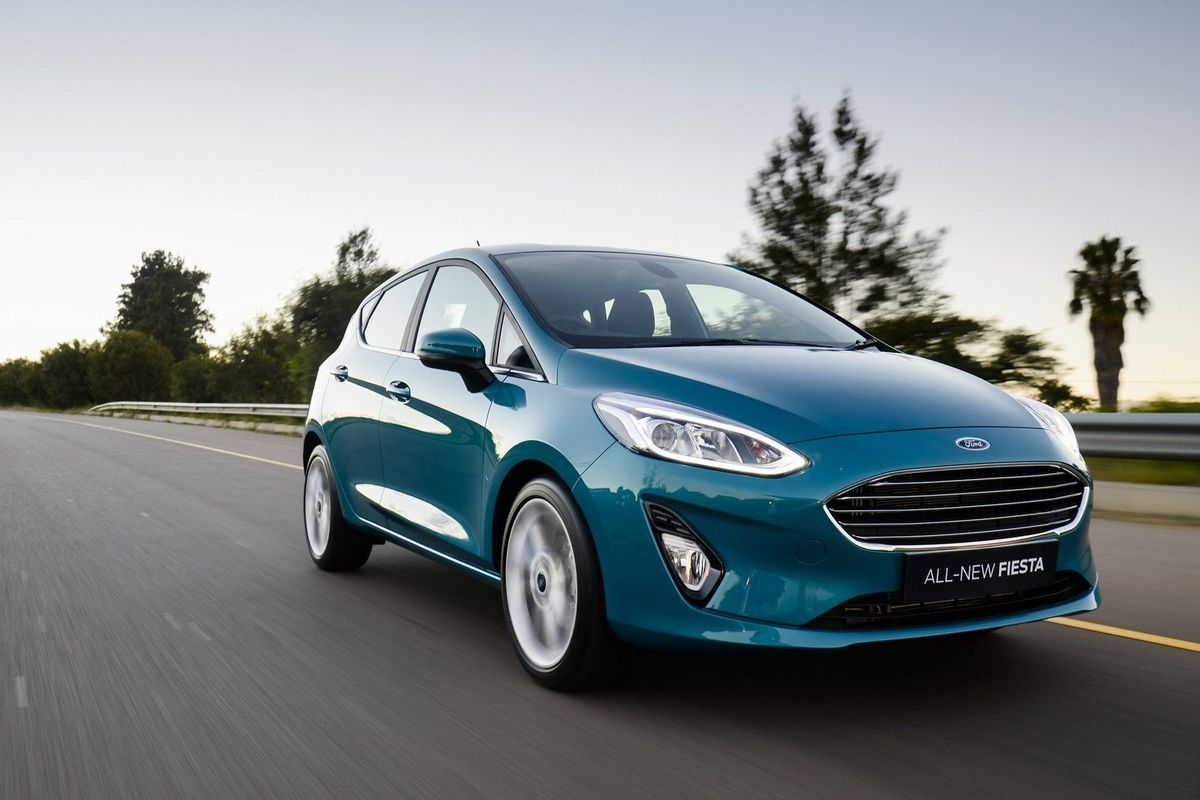
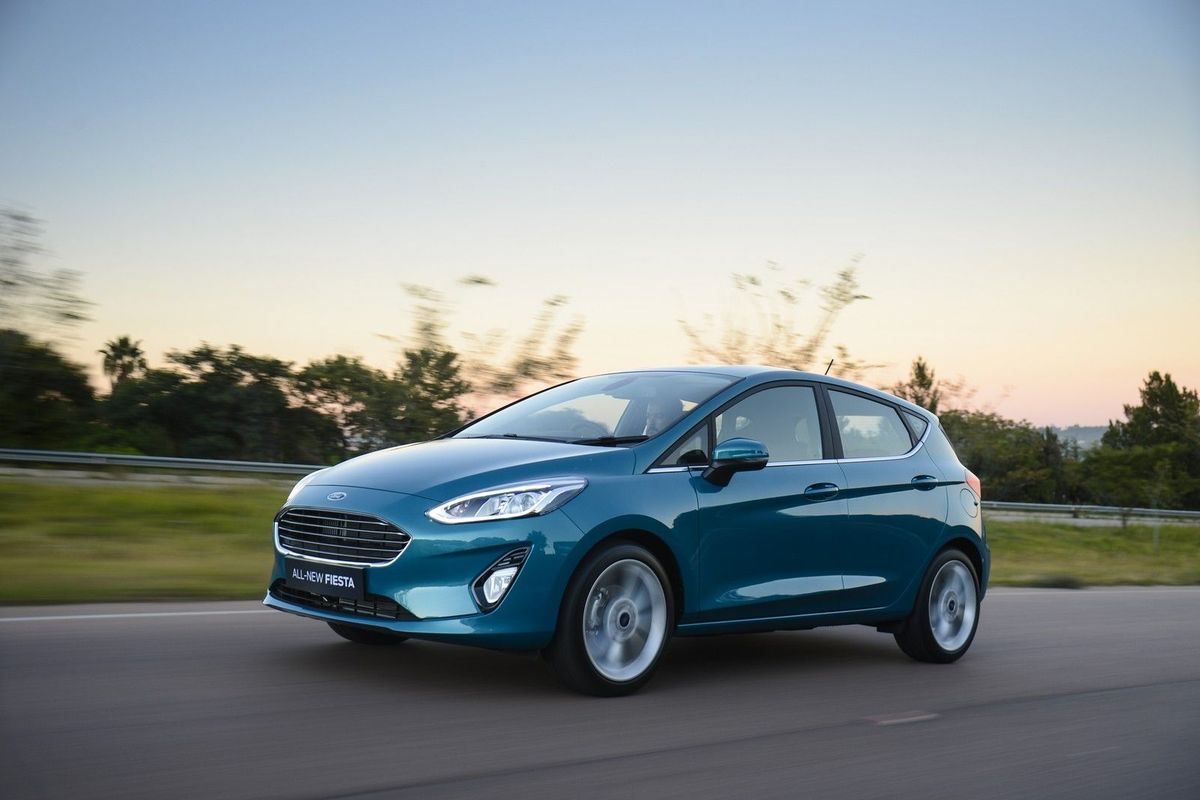
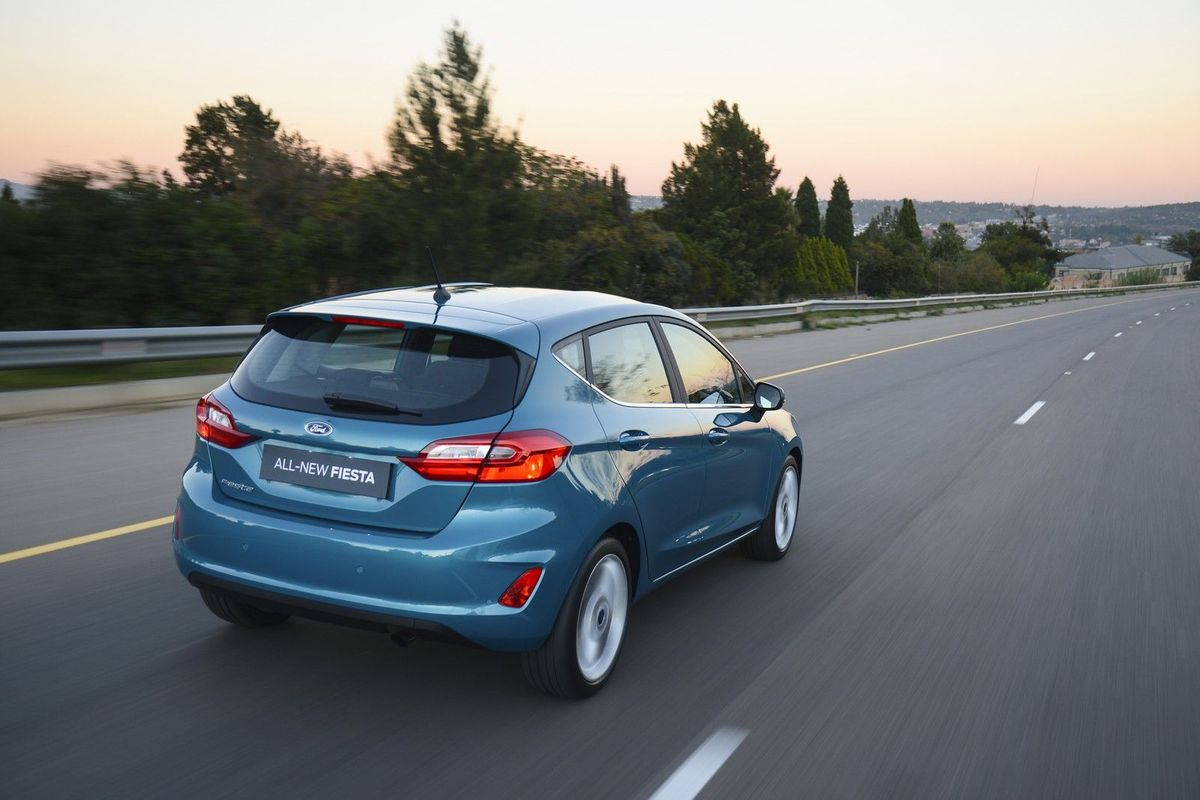
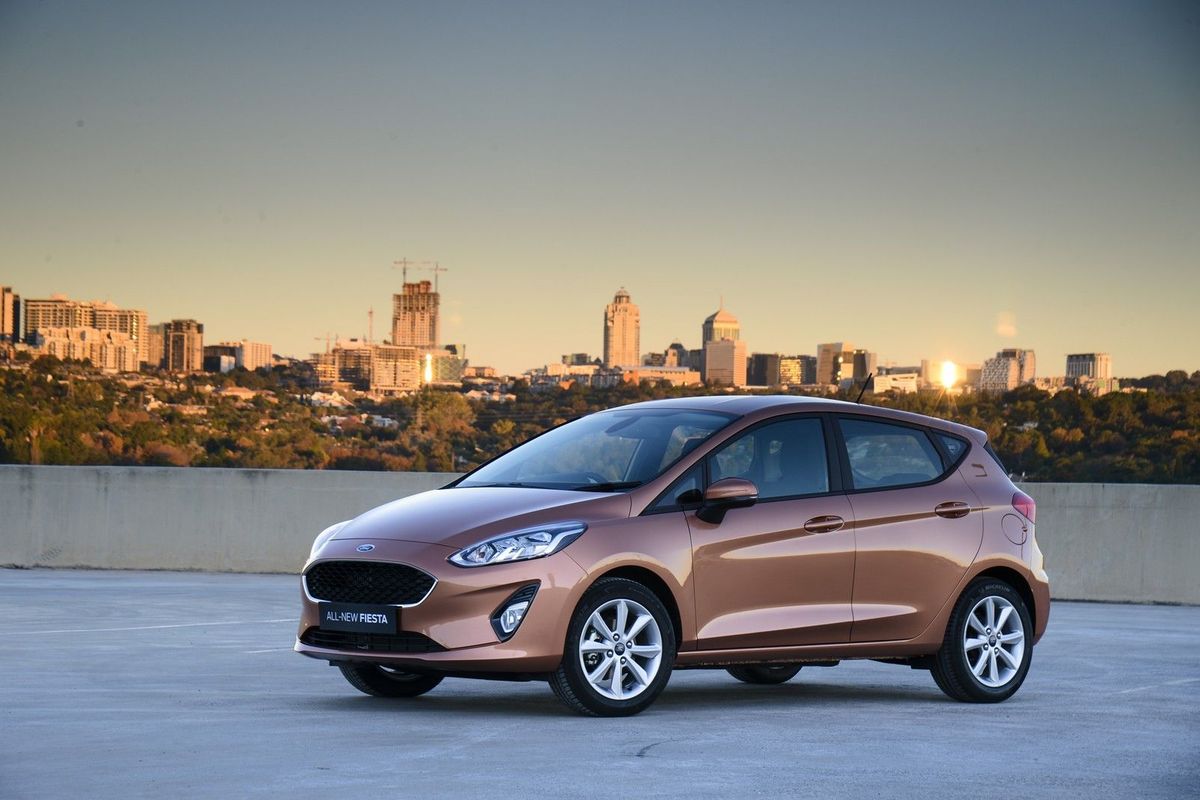
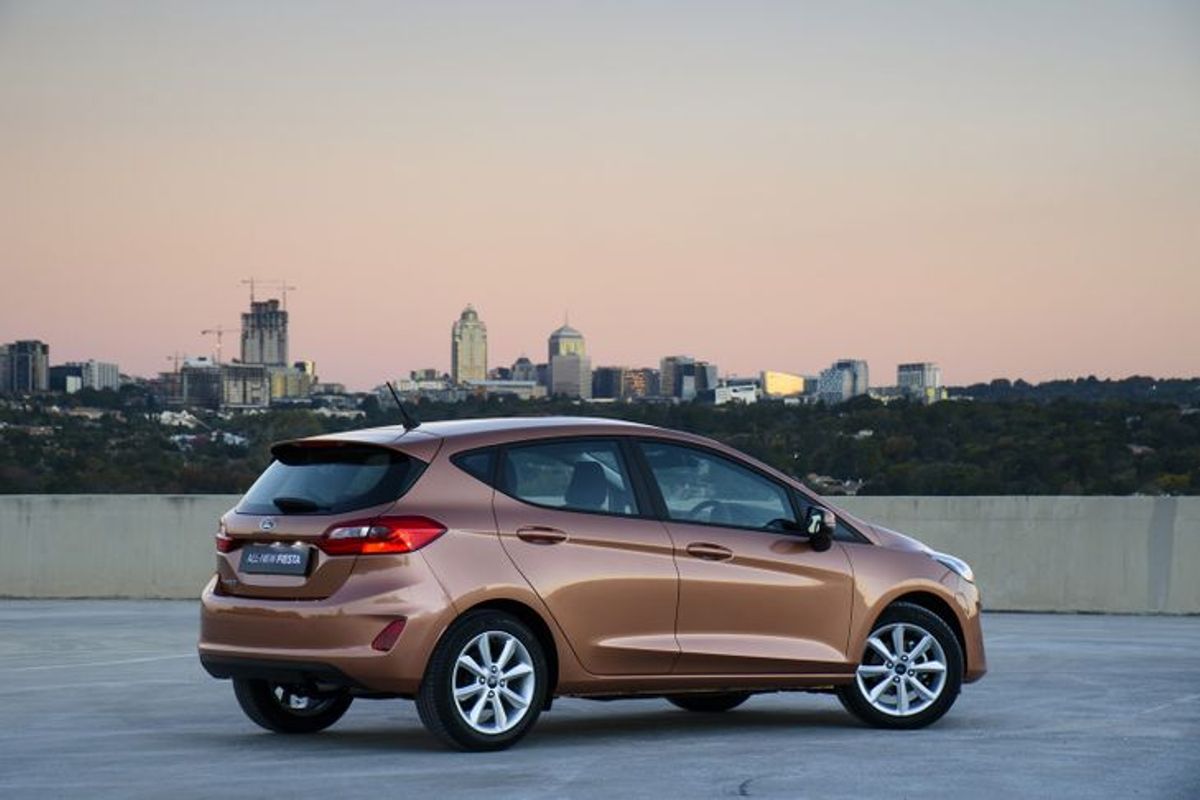
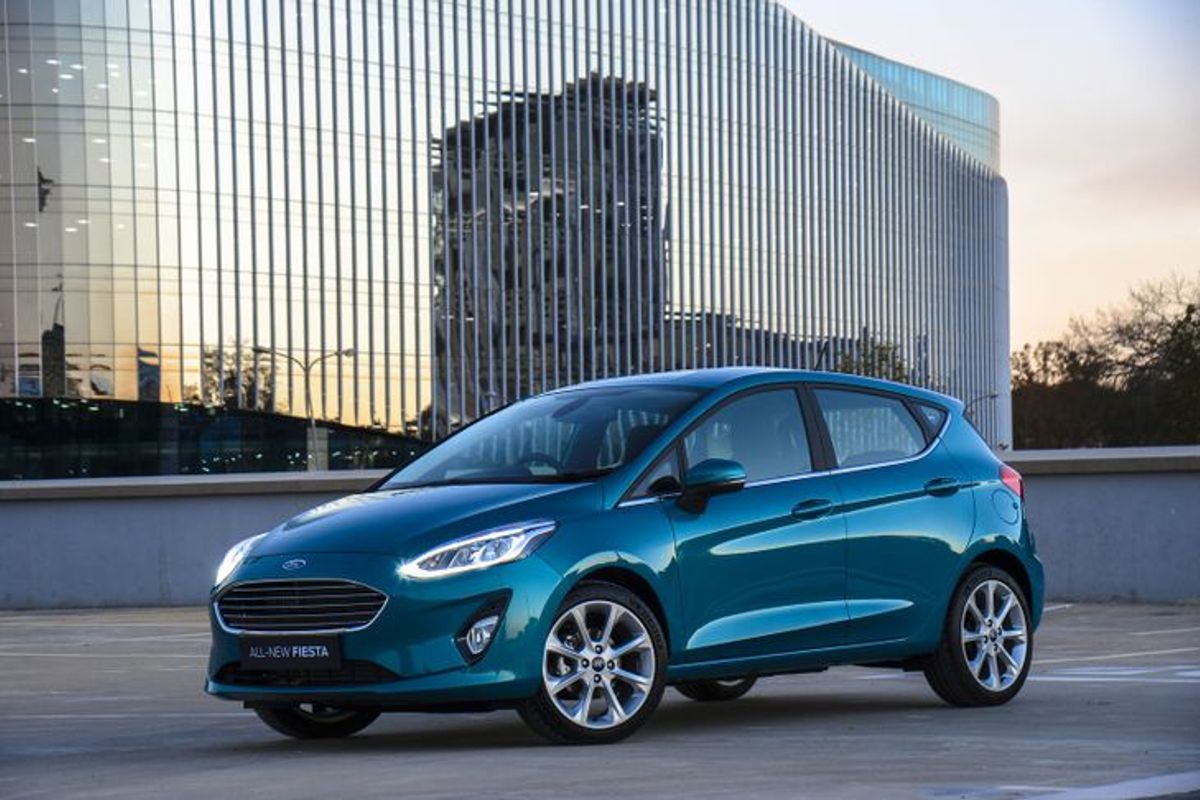
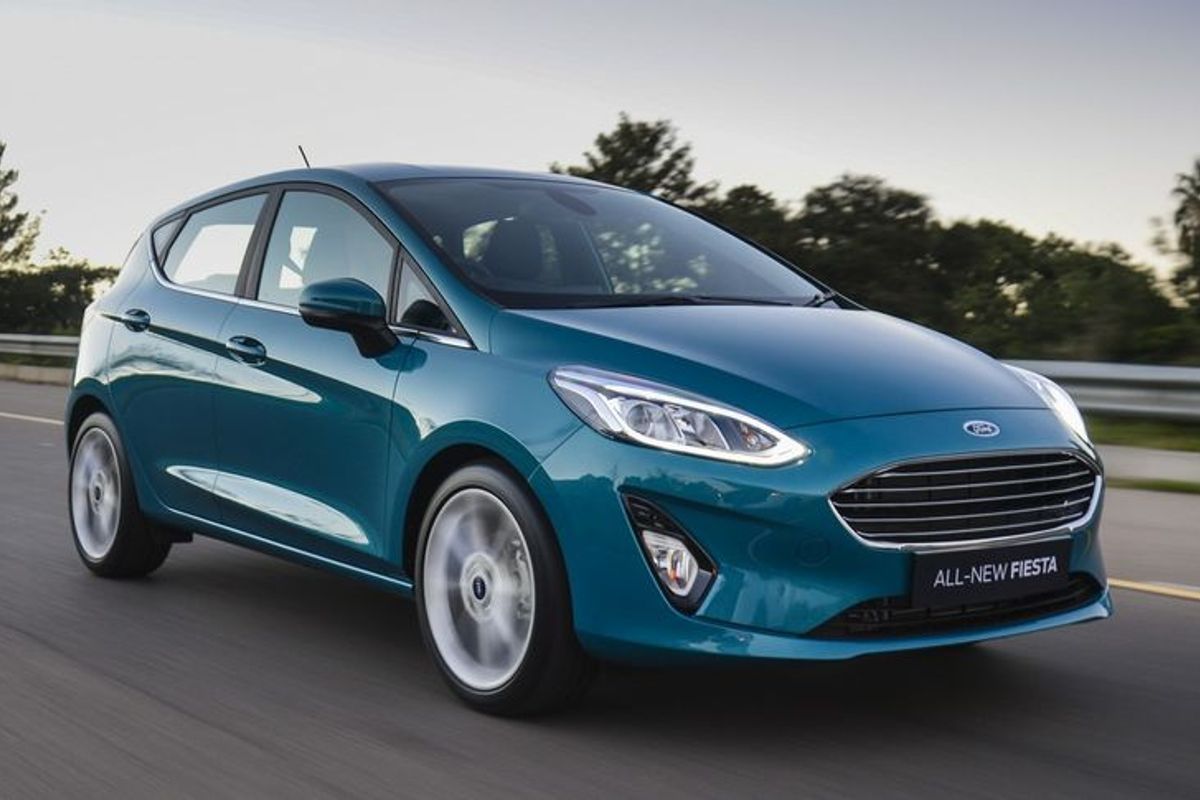
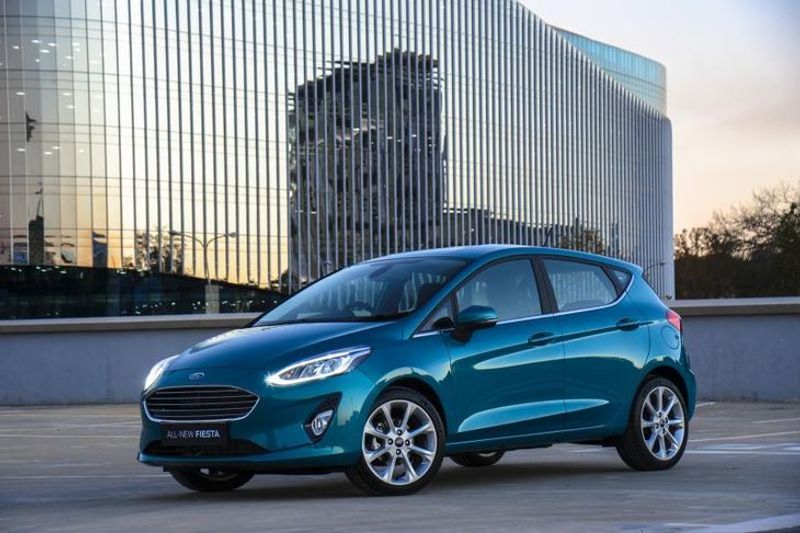
The new Ford Fiesta has landed in South Africa and we got a chance to drive the newcomer. The big news is that Ford is playing an upmarket strategy with its new compact hatchback – the entry-level naturally-aspirated Fiestas are gone.
The Ford Fiesta is the number one rival to the segment-leading Volkswagen Polo and with 2018 being the year where both models have been replaced by all-new versions, we're in for an interesting comparison. For a start, the new Ford Fiesta range has been trimmed dramatically, with the popular naturally-aspirated models like Ambiente being culled from the lineup.
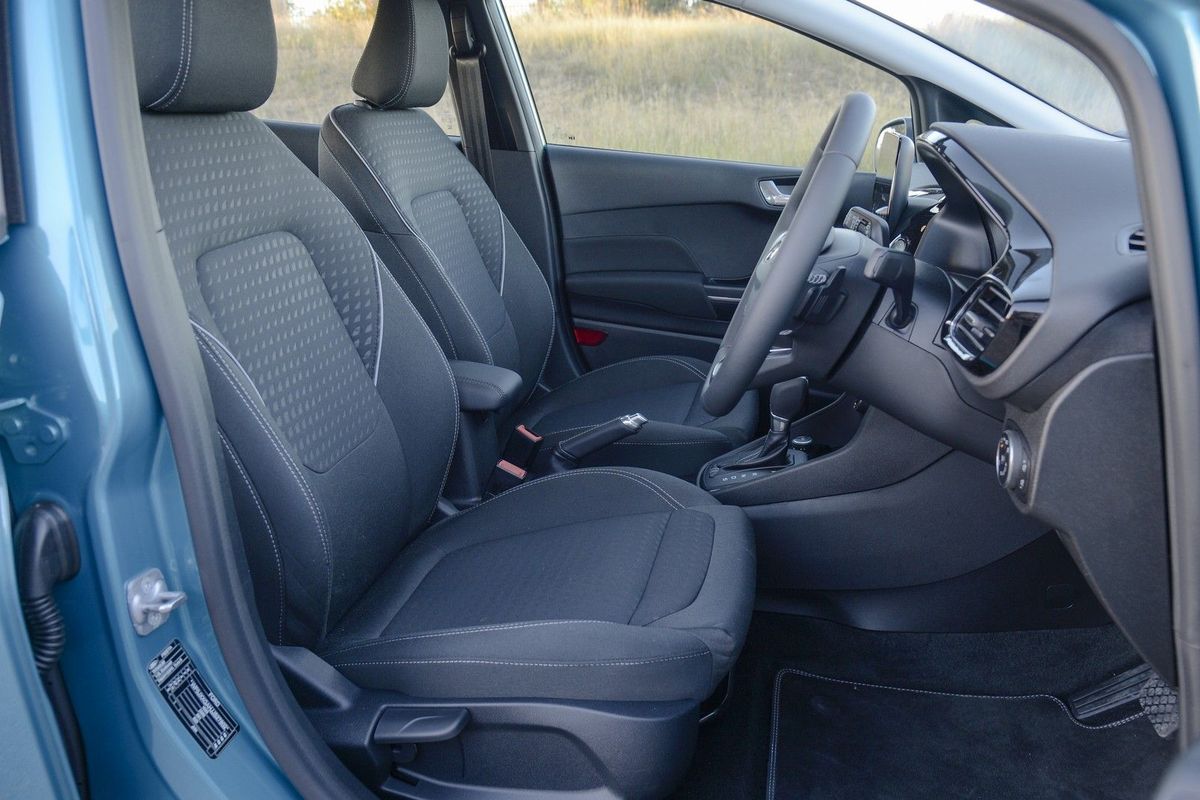
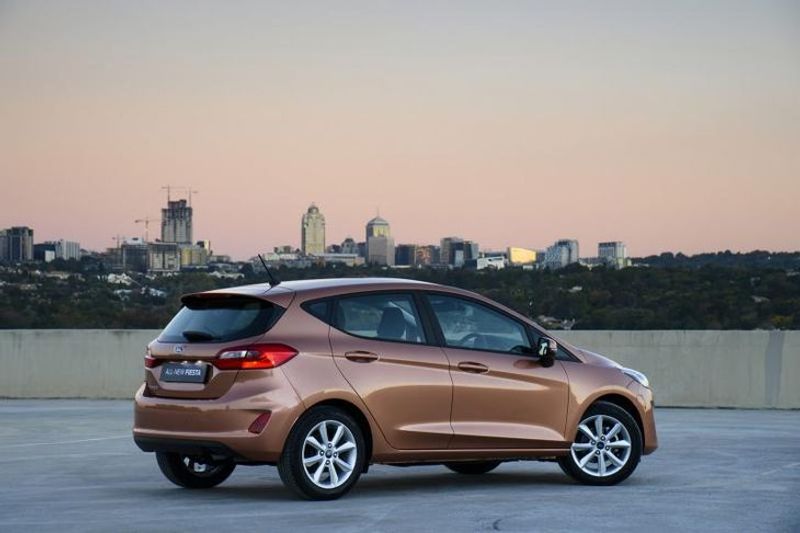
While it may look like a facelift of the previous version of Fiesta, we're told that while it is based on the same platform, there have been substantial changes mechanically with better insulation, stiffer body structure and improved suspension. There are new upmarket materials in the cabin too. Ford claims the front track is 30 mm wider and the reworked chassis offers better body control and more cornering grip. To be fair, the Fiesta has never been a dull car to drive and this new-generation model is just as great to drive in an enthusiastic manner. But more on that in a little while…
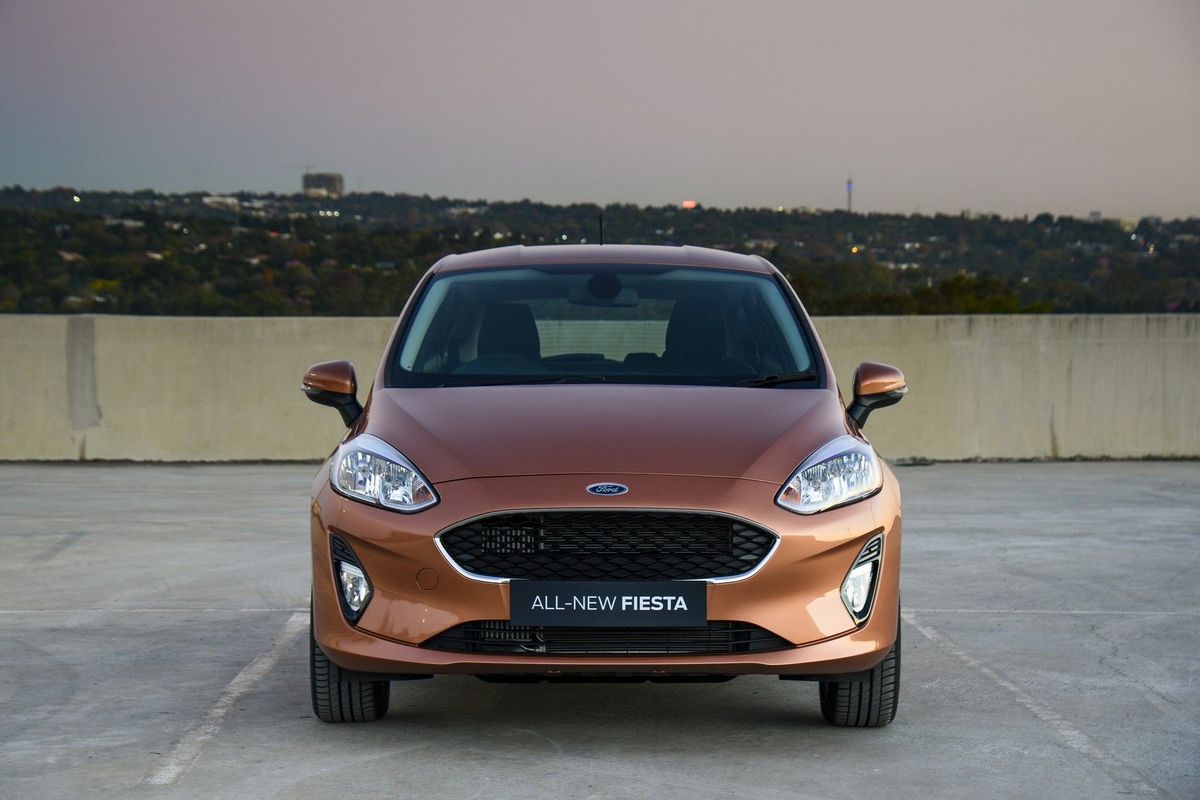
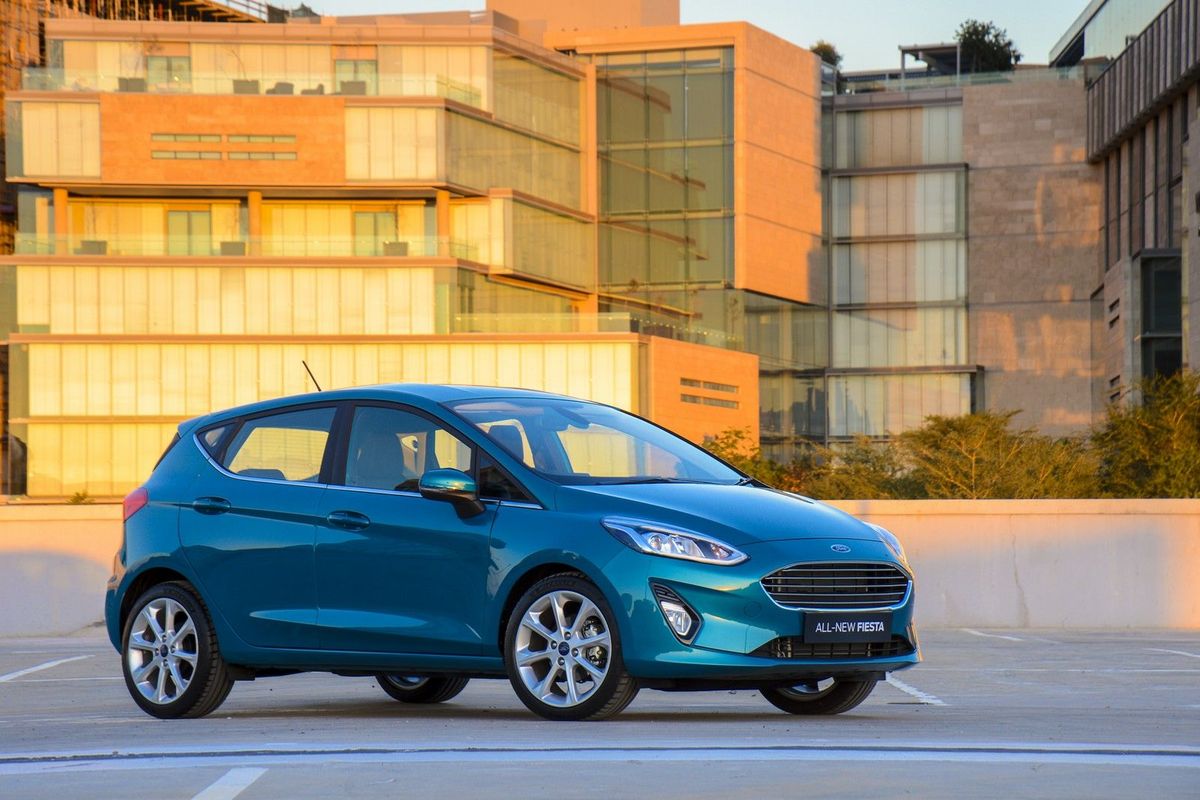
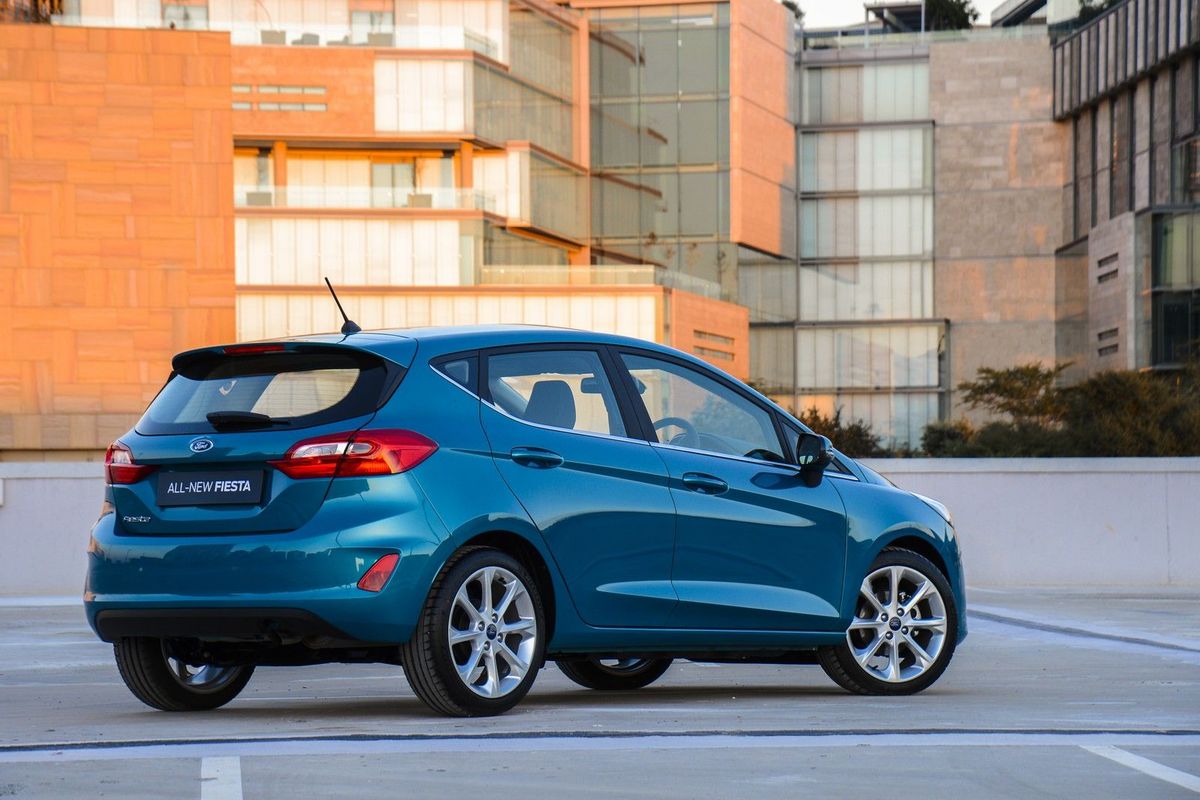
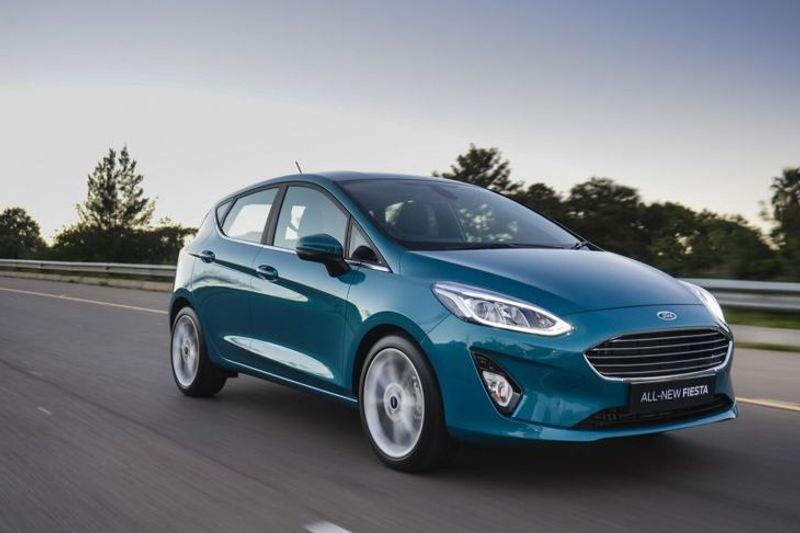
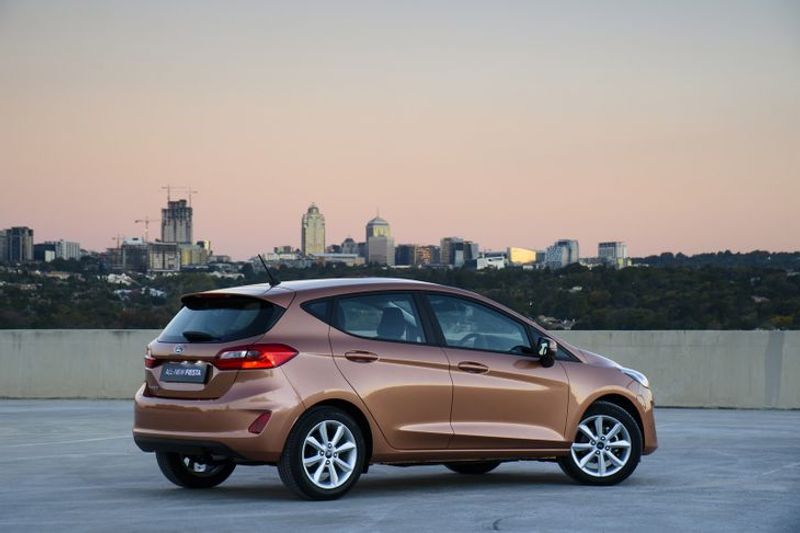
The new Ford Fiesta gains a new look. Titanium derivatives gain the Aston-Martin-style grille.
Engines
The petrol and diesel powerplants now feature force-induction exclusively throughout the range. The award-winning 1.0-litre EcoBoost engine is retained and there's a 1.5-litre turbodiesel motor. Available in two states of tune, the 1.0-litre Ecoboost 3-cylinder engine promises brisk performance coupled with decent efficiency.
Both the manual and automatic transmissions have 6 forward speeds. The manual Trend and automatic Trend and Titanium derivatives produce peak outputs of 74 kW and 170 Nm of torque, but the manual Titanium derivative's power is increased to 92 kW (although peak torque is unchanged at 170 Nm). The turbodiesel 1.5-litre Fiesta is only available as a manual and delivers 63 kW and 175 Nm of torque. If you're after the ultimate in fuel efficiency, then the diesel is the way to go; while the claim of 3.3 L/100 km is a little far-fetched, we saw an indicated return of less than 5.0 L/100 km on our launch route.
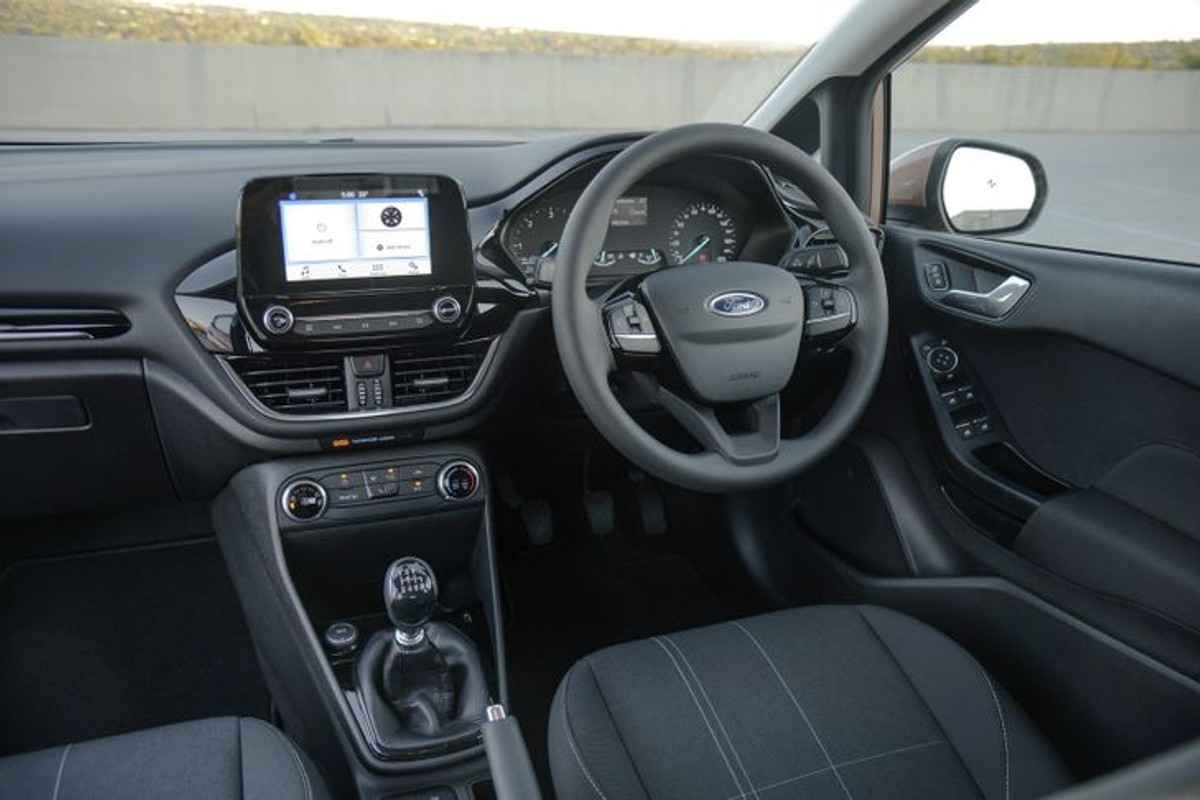
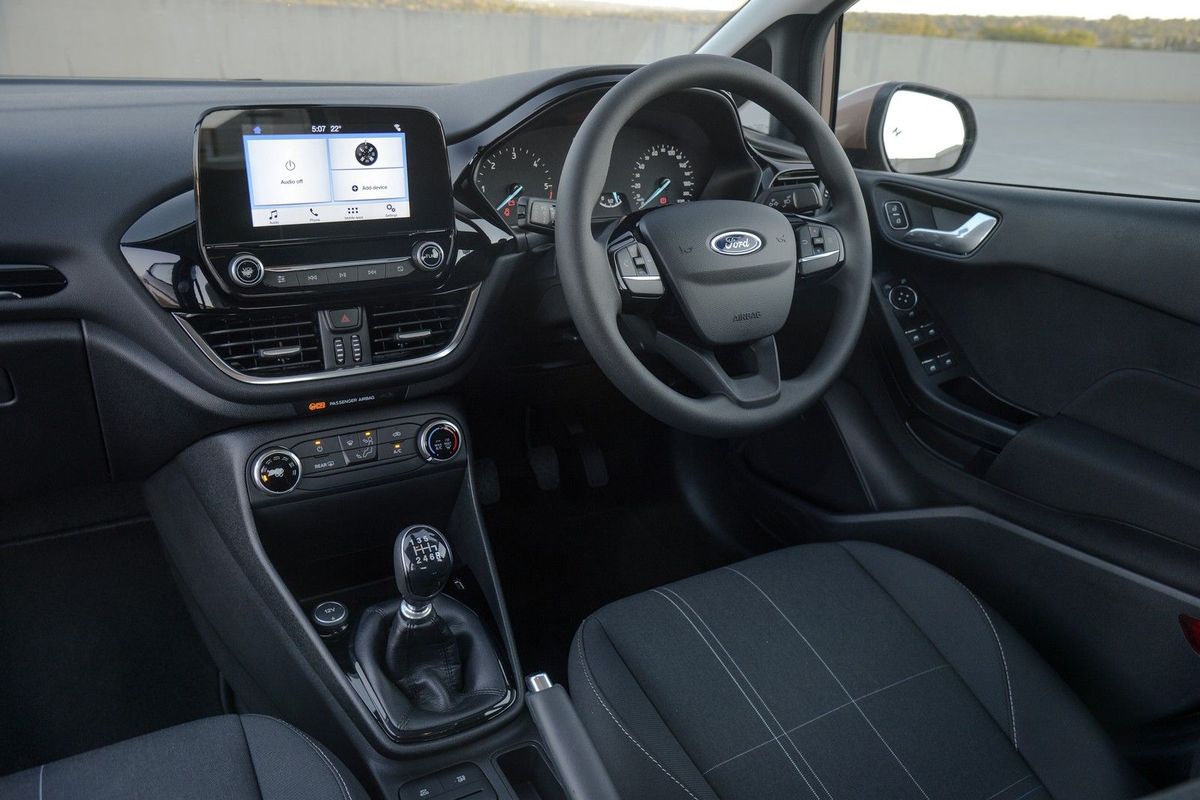
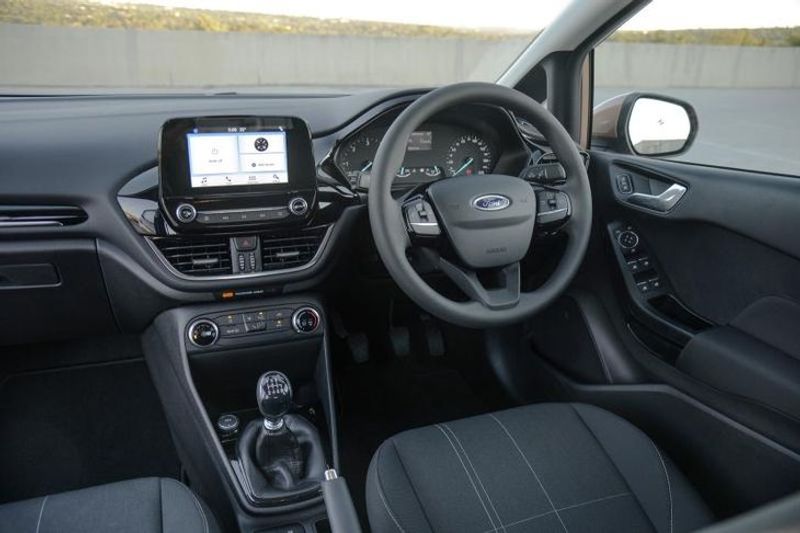
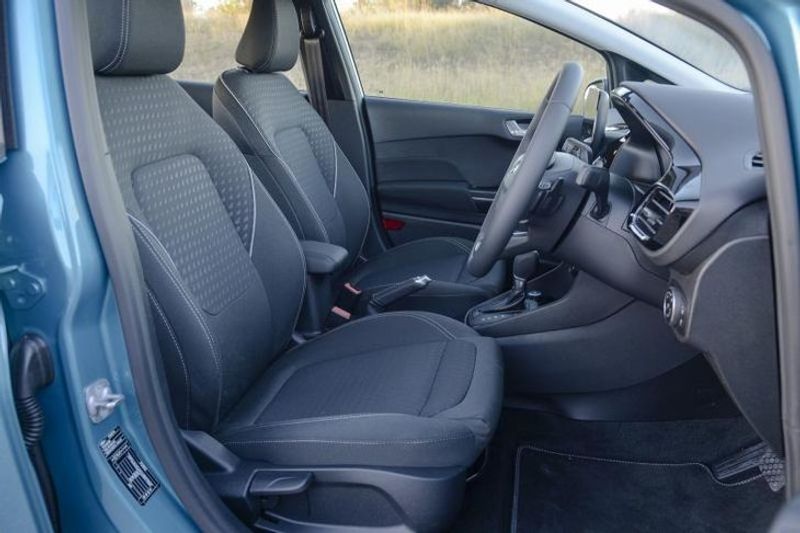
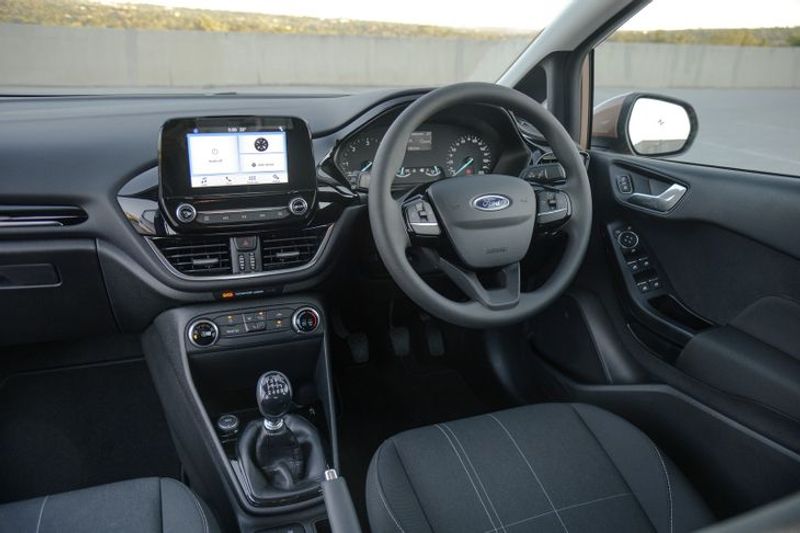
The cabin of the new Ford Fiesta is dominated by the big infotainment screen featuring Android Auto / Apple Carplay
Specification
The Fiesta's list of standard features is excellent. Unlike its rivals, who tend to make most of the nice-to-haves optional, Ford has specced its new Fiesta comprehensively. The focal point of the refreshed cabin is the new infotainment system. Its the SYNC3 setup, which we've experienced in other contemporary Fords (such as the Ranger, Everest and Kuga) and, for those who live permanently connected, it's superb. SYNC3 features Apple CarPlay and Android Auto, both of which allows you to mirror your smartphone and enjoy hands-free communication. It also integrates Google Maps and supports apps such as music-streaming service Spotify.
The Trend derivative does get a smaller screen of 6.5-inches, while the Titanium's is 8-inches in size and boasts navigation as standard. Both levels of trim feature a pair of USB ports, while the Titanium gains an extra speaker over its Trend sibling. Previous generations of Fiesta were hindered by the immense number of buttons and ergonomically, it wasn't great. New Fiesta has addressed this by drastically cutting down on buttons and incorporating most functions in the infotainment system.
The new Ford Fiesta is safer too, with a tougher and stronger crash-absorbing structure and front-, side- and curtain airbags. The usual safety acronyms are there too; ABS with electronic brake assist (EBA) and electronic brake-force distribution (EBD), hill launch assist (HLA), plus electronic stability- and traction control (ESC).
The Titanium derivatives come jam-packed with features such as satnav and heated seats
What's it like to drive?
The launch route from Johannesburg to the North-West province is filled with tarmac that is in dire need of repair in places and it's here where the Fiesta showed off its decent ride quality and on-road refinement. The suspension was working overtime to soak up all the ruts and undulations, but we didn't feel any harsh jolts in the cabin.
We sampled 2 derivatives: a 1.0-litre EcoBoost automatic and a 1.5-litre diesel manual. The petrol-powered Fiesta still delivers credible performance while the gearbox shifts smoothly when left to its own devices. You can mix things up by slotting the gear lever into Sport and take control using the steering-wheel-mounted paddles and while it's not a super-responsive dual-clutch unit, shifts are brisk enough. Thanks to the new sound deadening material, the car is more refined and we could hardly hear the triple-cylinder motor, which is a pity, as the motor usually emits unique, pleasant thrum.
Fiesta has not lost any of its fun-to-drive traits. The communicative chassis and great steering have been retained, but refinement has been increased.
The second vehicle was the diesel and while we're on the topic of refinement, it too exhibited lower-than-expected noise levels. We're quite used to hearing small capacity diesel motors clattering away, but this engine is deceptively quiet. It's also punchy, with all its shove becoming available from low down in the rev range. The 6-speed manual gearbox is good too, but if you're a little careless and lazy with your shifts, you can find yourself accidentally going from 2nd to 5th. Minor concentration issues from the driver aside, it's a commendable package if you want notable overtaking ability from a motor that's otherwise tuned for optimal efficiency.
With an excellent track record when it comes to handling thanks to a communicative chassis and steering feel, the Fiesta has never been a mundane car to "pedal". The previous range's ST, of course, was one of the most entertaining vehicles you could buy at its price point, but performance aspirations aside, even the 1.0-litre Ecoboost can provide bargain thrills. The best news is that the new Fiesta carries on this tradition and can be hustled around traffic circles with youthful exuberance. The steering delivers generous feedback and, unlike some of the modern setups that feel vague, the Fiesta's tiller feels like there's a direct mechanical connection to the front wheels.
Summary
With a new Volkswagen Polo, a new Ford Fiesta and a new Suzuki Swift (about to be launched), the compact hatchback segment of the market's buzzing.
Growing old is mandatory, growing up is optional. Ford has applied this mantra to the Fiesta and while its great to see new levels of refinement, tech and comfort applied, the fun factor and ease of use when it comes to the basic art of driving has not been lost. We're lamenting the lack of an ultra-affordable Ambiente model, but understand that the new Figo will be filling this gap, in the same manner that the Polo Vivo sits at the bottom of the Polo family.
The Ford Fiesta's new infotainment system is a major feather in its cap as its German rival charges extra for the convenience. We're big fans of the redesigned dashboard and think the younger audience will appreciate this car for its standard specification. While its admittedly not as well finished as the segment leader and unlikely to match its sales figures, it's worth noting that the new Fiesta is the number one selling car in the United Kingdom, so Ford is clearly doing something right.
While some may be shocked by the cost of getting behind the wheel of the new Fiesta, it does come with a full house of specification, features and safety and if you pick the right derivative, you could be bagging an accomplished compact car with all the bells and whistles for a reasonable price.
The next iteration of the Cars.co.za Consumer Awards – powered by WesBank, should see a close battle between the new Volkswagen Polo, new Ford Fiesta and, most probably the new Suzuki Swift (which will be launched soon).
Pricing (as of May 2018)
All new Fiesta derivatives come standard with Ford Protect, comprising a 4-year/120 000 km warranty, 3-year/unlimited distance roadside assistance and 5-year/unlimited km corrosion warranty. A 4-year/60 000 km service plan is included, with service intervals at 15 000 km.
The facelifted Kia Sportage was spotted undergoing tests at the Nurburgring in Germany. While most forthcoming cars are heavily disguised, the new Kia Sportage had almost zero camouflage and we can have a good look at this popular SUV.
Picture credit: S. Baldauf/SB-Medien?
Usually, prototypes are heavily disguised when they're being tested, but here is a rare exception. This is the 2019 Kia Sportage facelift, which our spy photographers snapped at the Nurburgring.
We can see that both the front and rear have been revised with chrome detailing, new-look headlights and redesigned fog lights. We're told by our photographer source that the new Sportage features an updated infotainment system too, but under the skin, the new Sportage will be the first Kia model to feature a 48V mild-hybrid diesel engine. Kia calls this EcoDynamics+ and it will combine a diesel motor, a mild-hybrid starter-generator as well as a 48-volt lithium ion battery. With a connection to the diesel engine's crankshaft, the mild-hybrid starter-generator feeds up to 10 kW of electric power. Naturally, the brakes and deceleration can be captured to recharge the battery. The electrification is said to improve efficiency by 4% on the new Euro combined cycle test. The electric motor works in a similar way the Toyota with the Auris hybrid where the electric motor helps take the load off the engine by 'helping out' during pull-away before handing back power duties over.
It's a big step forward for Kia and we're keen to see if this technology makes its way to South Africa when the facelifted Sportage eventually makes its way here during 2019.
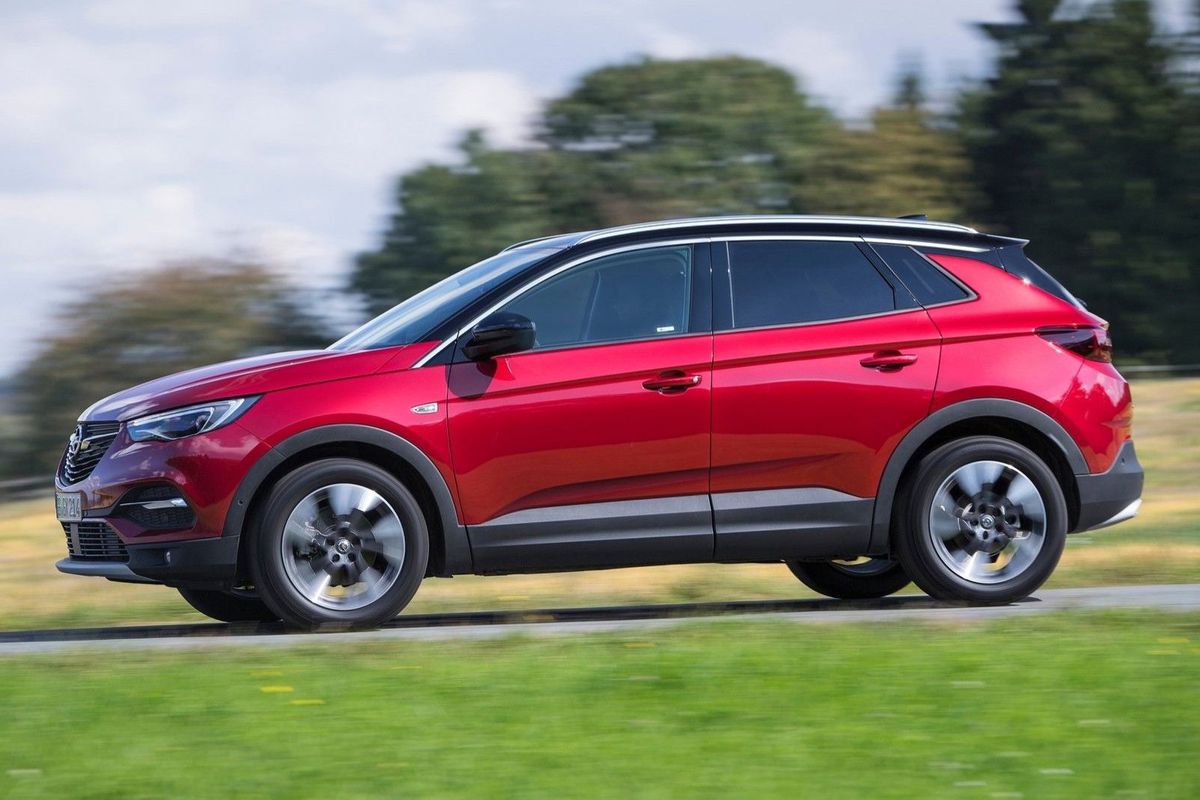
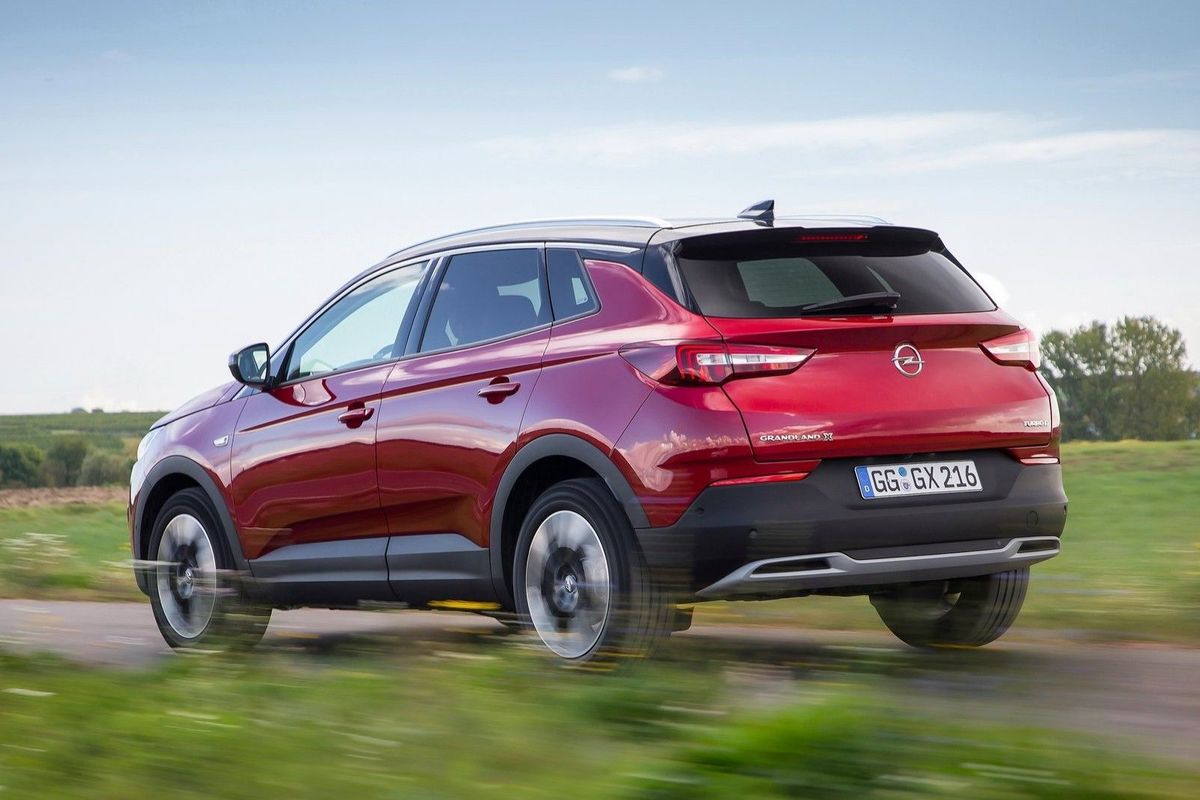
The reboot of the Opel brand continues to gather pace in South Africa with the arrival of the new Grandland X, the German marque's offering in the extremely busy and competitive crossover/SUV segment. We take a closer look.
Since General Motors left South Africa late last year, the new local distributors of Opel, the Williams Hunt Group, has had a busy time restoring confidence in the brand and optimising its dealership network for the years ahead. It has made quick progress – the brand grew in market share in the first quarter of the year, launched the Crossland X and it has established a 35-strong dealership network that is better in tune with its target audience and future product roll-out. It has also launched Opel Finance (with WesBank) and a Guaranteed Future Value programme is on the cards soon. So… Opel is here to stay and confident for the future. The freshly introduced Grandland X C-segment SUV is the brand's new flagship.
Positioning in a tough segment
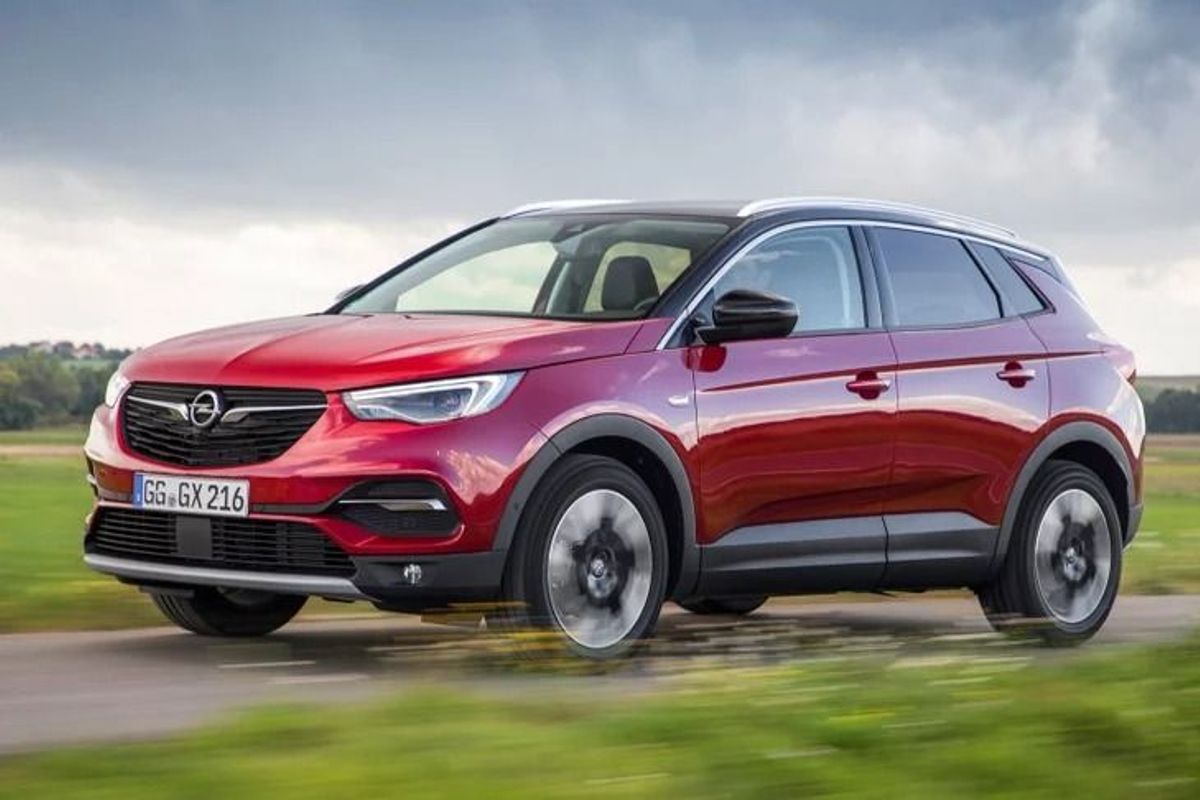
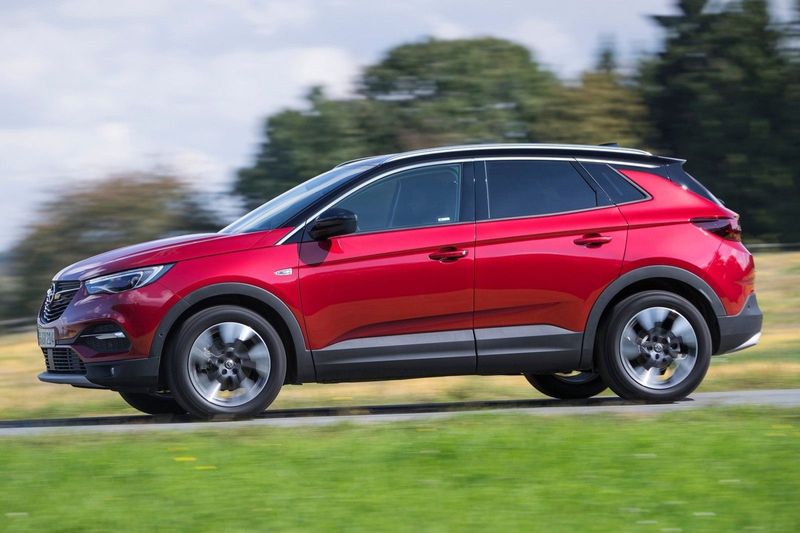
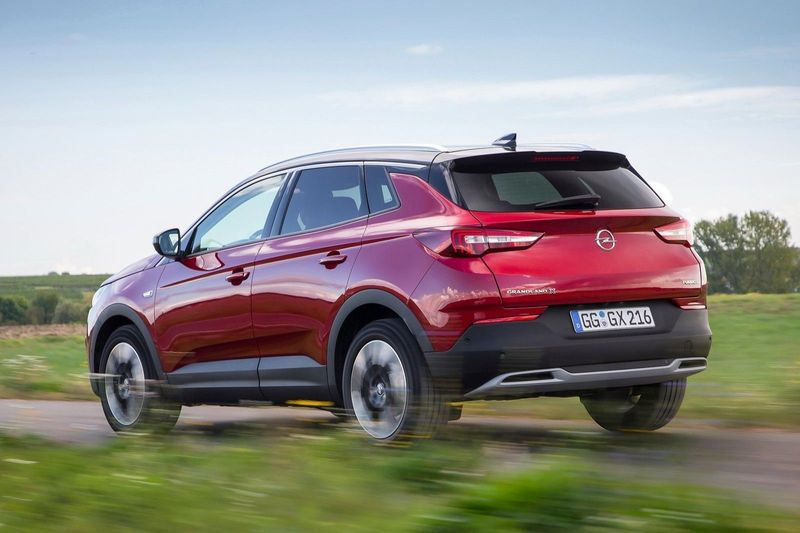
Looks closely and you can see hints of its sibling, the Peugeot 3008, but for the most part the Grandland X has a look of its own.
The C-segment for SUVs is one of the few areas in the market that is showing steady growth. The Grandland X will compete against such tough challengers as our current Cars.co.za Consumer Awards – Powered by WesBank, Family Car champion, the Mazda CX-5, last year's winner the Volkswagen Tiguan and the car that the Opel is actually based upon, the excellent Peugeot 3008. Other rivals include the Toyota RAV4, Hyundai Tucson and Kia Sportage. Certainly a tough crowd…
Initially Opel will offer only 3 derivatives, all powered by the same 121kW/240Nm 1.6L turbopetrol sourced from Peugeot, coupled with a 6-speed automatic transmission. We know this engine well, of course, and it has impressed in the French maker's products thus far. The media did not have the opportunity to drive the Grandland X at its introduction, but as it shares its underpinnings and drivetrain with the 3008, we expect a similarly comfortable, agile feel from behind the steering wheel. The Grandland X is one of the lightest vehicles in its segment, a fact that contributes to excellent (claimed) fuel efficiency. A 2.0L turbodiesel derivative will join the line-up in the first quarter of 2019.
Upmarket design and finishes
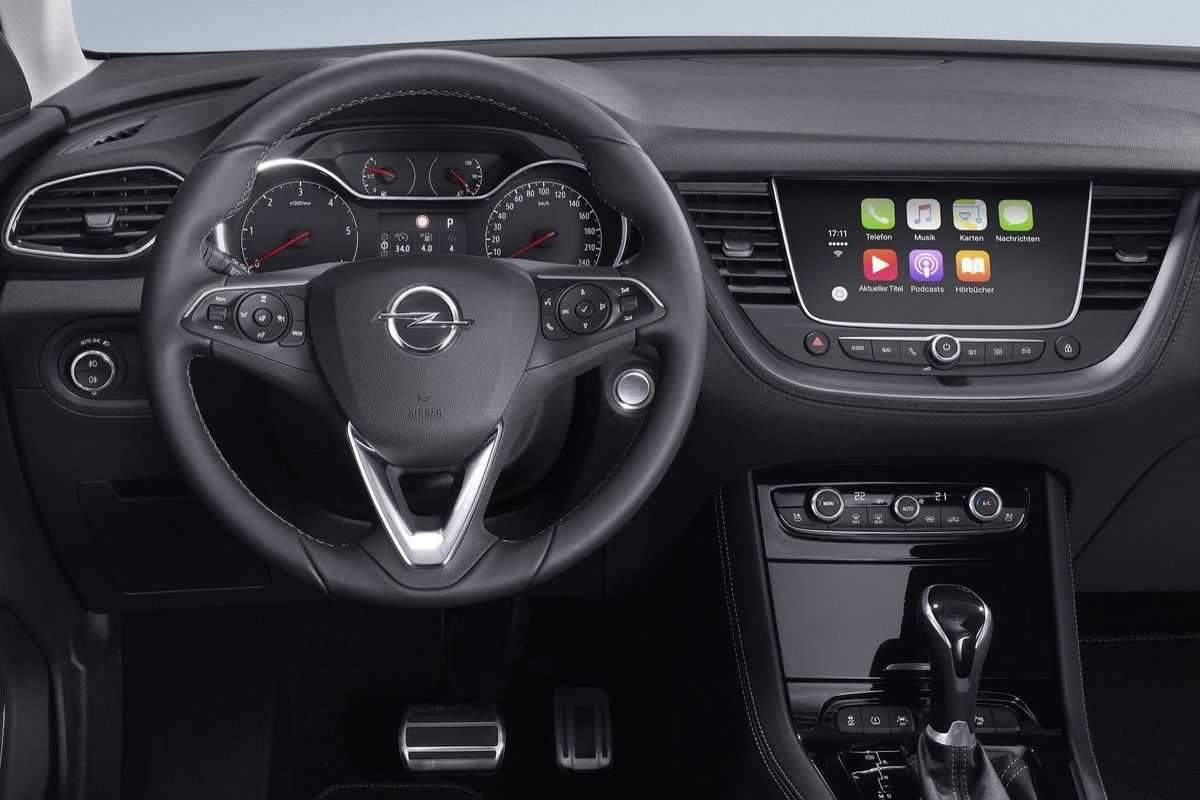
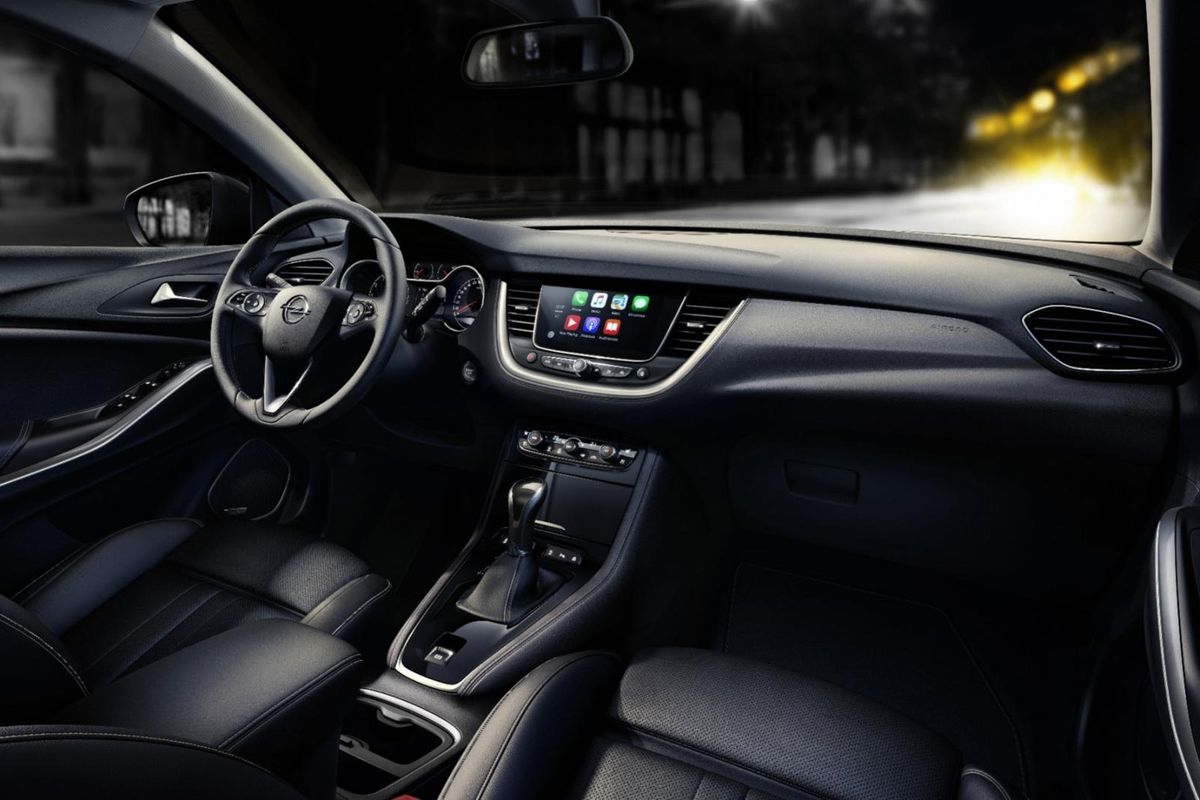
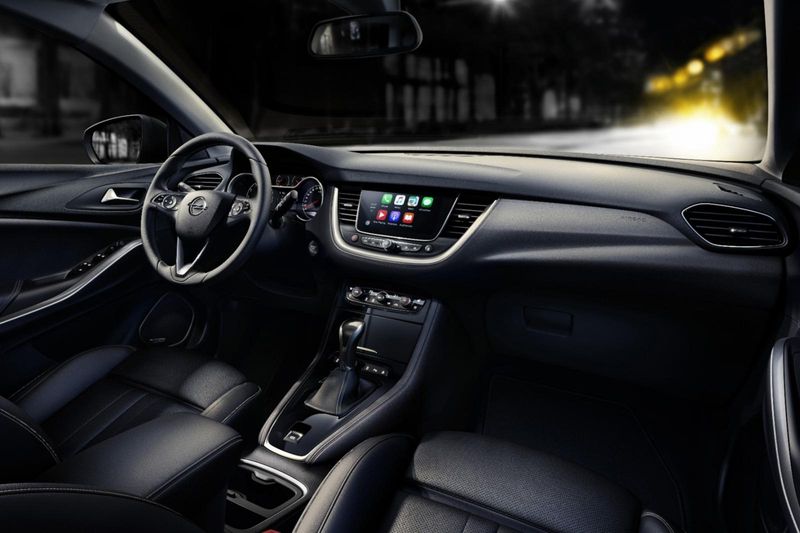
Cabin is similar to the one in the Astra and emphasises clean, sweeping surfaces and advanced features.
The Grandland X may be based on the 3008 but the 2 cars look completely different. In line with Opel's current design theme, the Grandland X features neat, chiselled lines that are devoid of frills. It relies on sculpting and details (LED signature etc.) to stand out from the crowd. For once, Opel will make the Grandland X available in a variety of interesting colours, and buyers can also opt for a contrasting black roof or even a full-length panoramic sunroof.
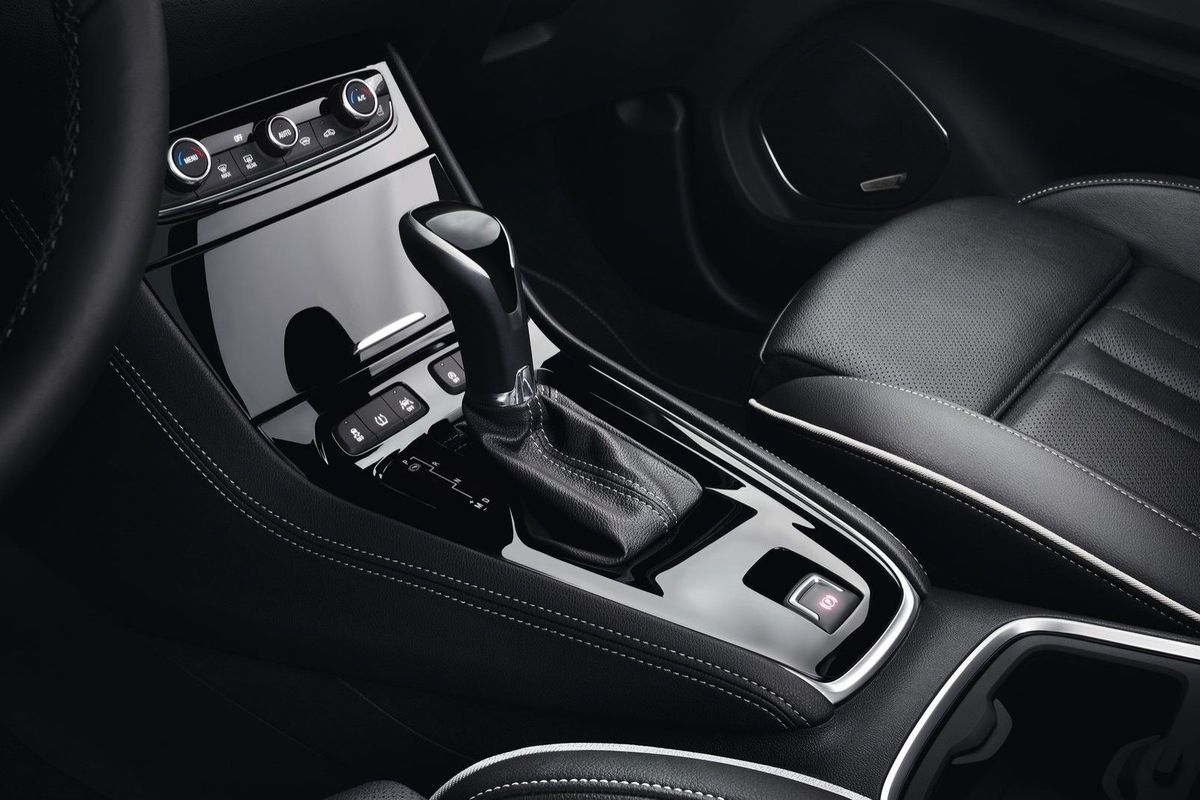
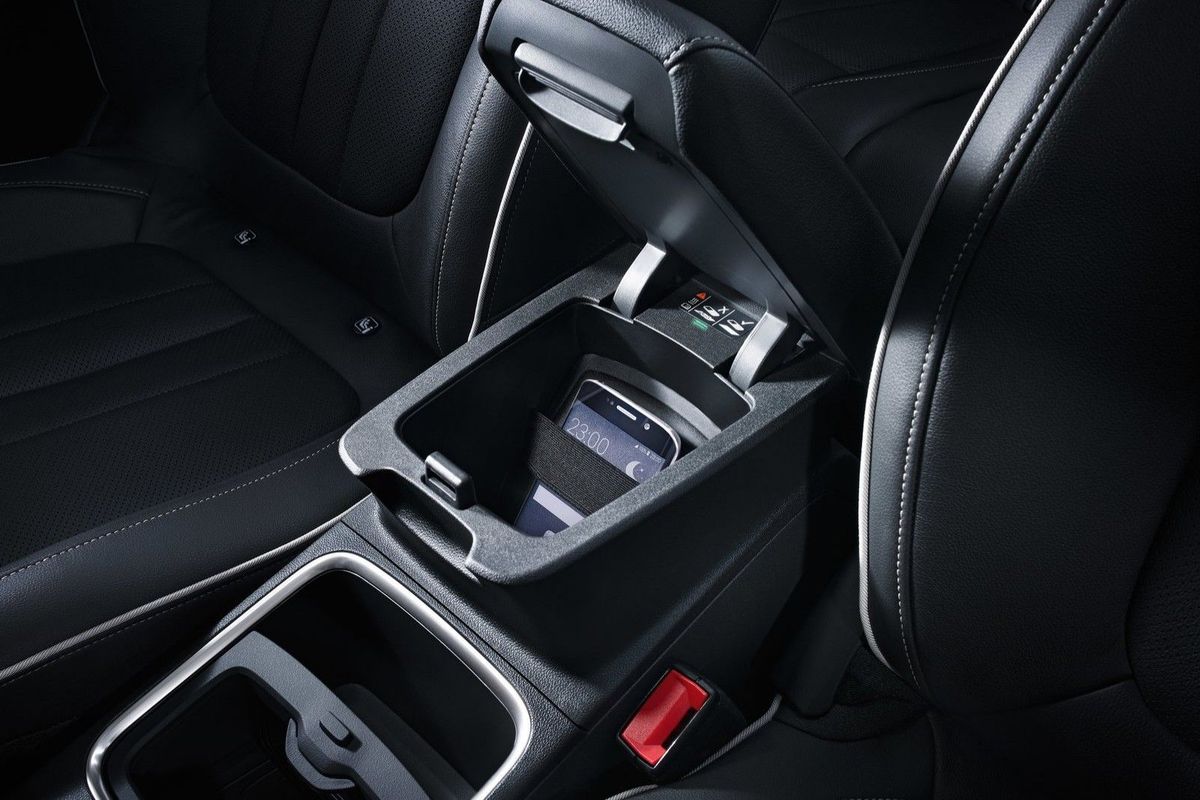
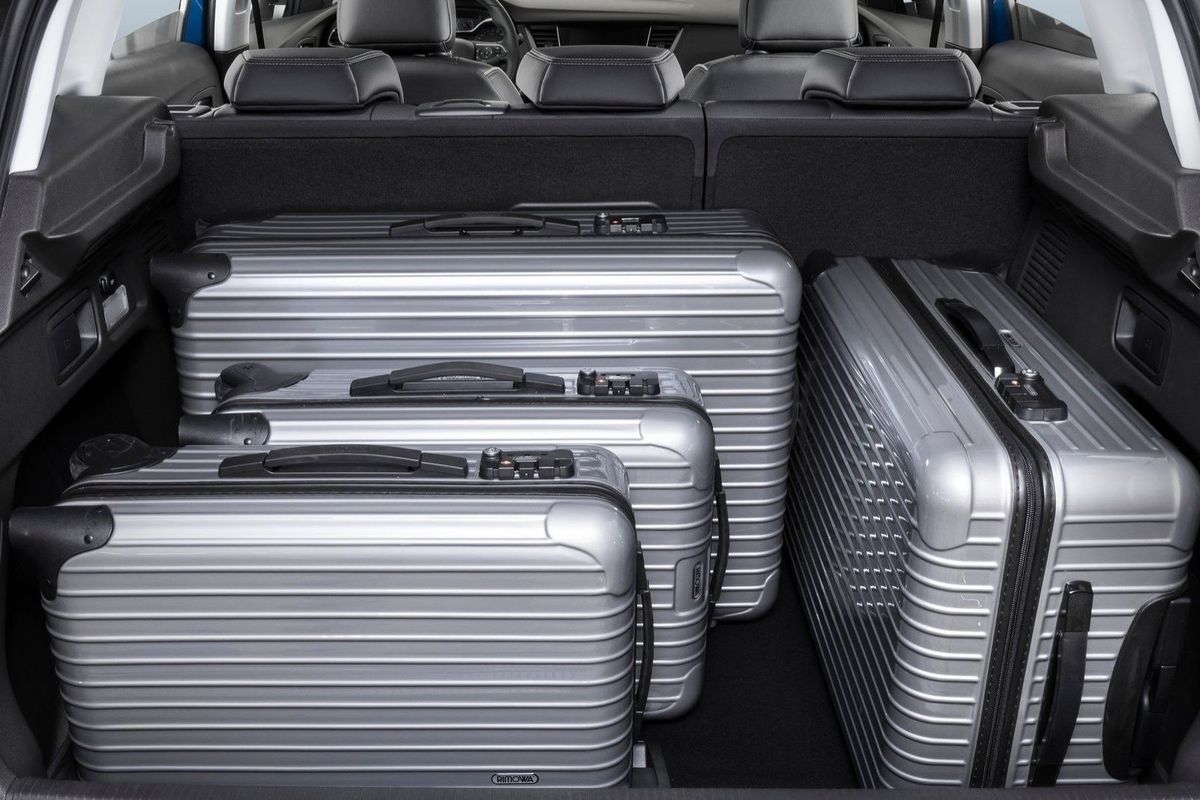
Inside, the 3008's unique i-Cockpit layout has given way to a facia that appears very similar to the one in the Astra. Gone is the small, low-mounted steering wheel and instead the focus falls on a sweeping dashboard design and high quality materials. As is the case with most Opels, the driving position is really good, with a wide range of adjustment on offer from the rake/reach adjustable steering wheel and driver's seat. There are also loads of storage spaces, and rear legroom is generous. The boot measures 514L, one of the biggest in this segment and you can drop the rear seats from a standing position behind the car to free up a total of 1 652L of space.
Loads of tech
Turbocharged 1.6L turbo engine is mated with a 6-speed automatic transmission.
One of the Opel brand's key USPs is the "democratization of innovation". In short, it believes new technology should be available to everyone. Consequently its cars tend to be highly specified.
The baby of the range, the 1.6T automatic may have smaller 16-inch wheels and cloth upholstery, but it still gets a neat colour touch-screen infotainment system with Apple CarPlay and Android Auto compatability. Climate control, cruise control, park assist and LED daytime running lights are also standard. If you want leather, you can spend about R19 000 more and get not only that, but also seat ventilation.
A likely strong seller is the Enjoy derivative which adds 17-inch alloys, rain-sensing wipers and auto lights, as well as a lane-departure warning system. The flagship Cosmo comes fully loaded with 18-inch alloy wheels, leather upholstery, blind spot alert, navigation, automated parking, adaptive LED headlamps, heated seats, a hands-free power tailgate and more.
Model range and Pricing
Grandland X 1.6T Automatic – R429 000
Grandland X 1.6T Enjoy Automatic – R465 000
Grandland X 1.6T Cosmo Automatic – R565 000
Prices include Opel's usual (and excellent) 5-years/120 000 warranty and a 5-years/90 000 km service plan. We will receive the Grandland X for testing soon, so watch out for a full review.
With the ambitious Stinger GT, the Korean automotive industry has announced its ambition to infuse its products with dynamism – and not nominally either, but to a level that will rival the best in the business. Kia is making a clear statement; it's not just about sales…
Kia’s product people will tell you it was a project decades in the making. The desire to execute a luxury car, with driving dynamics to rivals Germany’s best.
The ascent of Kia as an automotive brand is inarguable. Its sales success and residual values in the South African market are testaments to a brand that has positively altered perceptions. One hardly recalls the awfulness of those first Sportages, which arrived here in the late 1990s. But for all the popularity of Picanto and excellence of its SUVs, Kia realises that to be recognised as an established challenger, instead of being the perennial pretender, it must also market a car which is somewhat German.
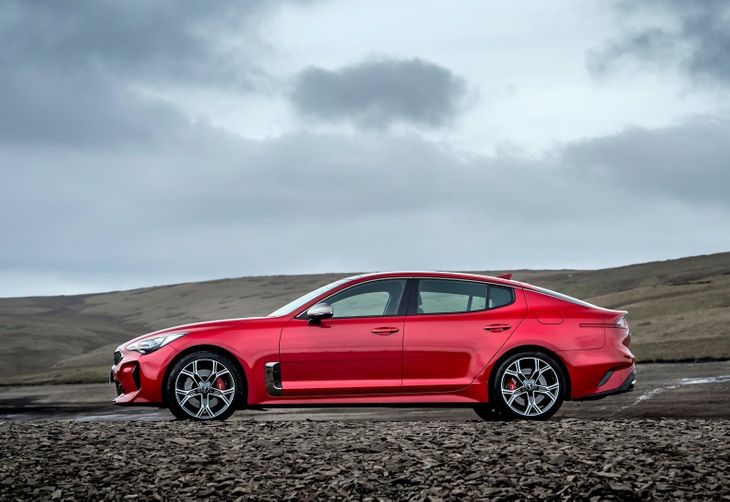
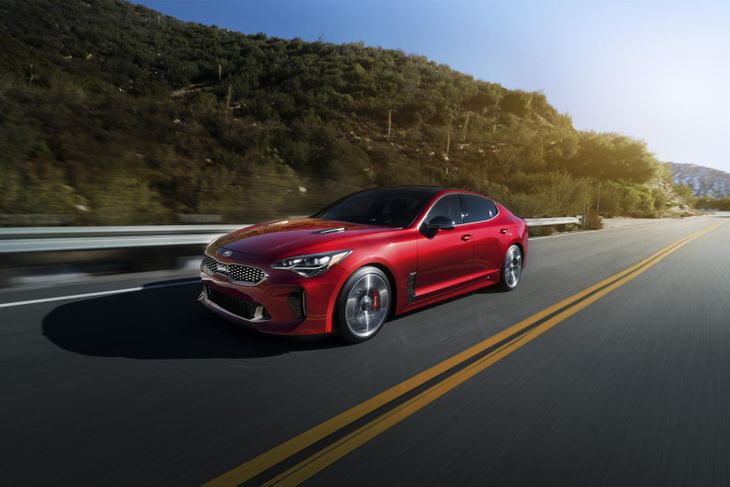
The new Kia Stinger certainly hits the right notes with its styling. Will it be taken seriously in SA?
After months of speculation, Kia recently confirmed that its Stinger GT will become available in limited numbers locally. This daring product strategy is also a moment of truth for South African car buyers, allowing them to judge if a South Korean vehicle can be the equal of one sourced from southern Germany. Stinger GT becomes both the most expensive and powerful Korean car to ever go on sale in South Africa: you pay R5 short of R860k for 272 kW and typically generous Kia equipment levels.
To industry observers, Kia’s South African approach with Stinger GT appears unwise. But Stinger GT is an apex point for the Korean industry, a necessary show of confidence. Stinger GT’s purpose is not so much to sell, but to show exactly what South Korean automotive engineering is truly capable of.
Ignoring the low-hanging fruit
Scrutinise the specification and there isn’t a single number that is suspicious or substandard. As a collection of digits, the Stinger GT is very convincing. Kia’s 3.3-litre V6 is twin-turbocharged to banish lag and boosts 272 kW of peak power, supported by a surge of torque, 510 Nm rotating that crankshaft at only 1 300 rpm.
This Stinger GT is an awful lot of car for the money, sacrificing little performance for the convenience of 406 litres of liftback-enabled boot space. But there is a problem. It competes in a dying segment against some astonishingly mature rivals. The sedan market is retracting rapidly everywhere but China, replaced by insatiable consumer demand for SUVs and crossovers. You’d think Kia would have invested in a Sportage GT if market behaviour was leading its high-performance vehicle planning.
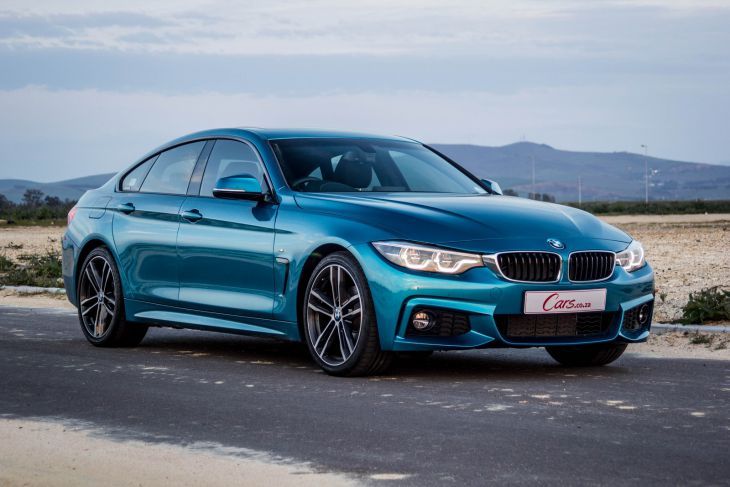
The BMW 4 Series Gran Coupe is widely regarded as the dynamic benchmark in the segment.
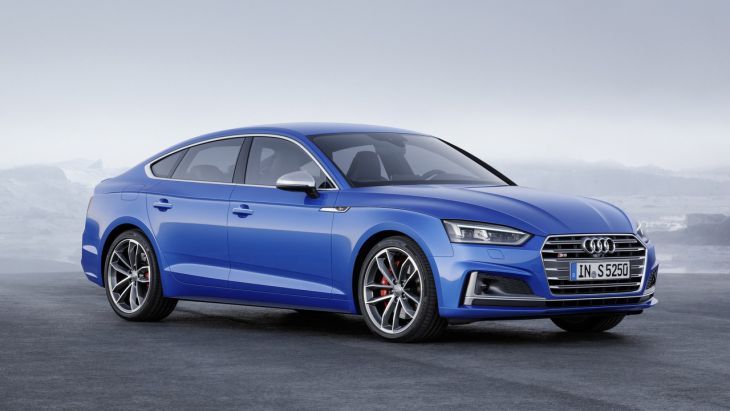
Large luxury sedans and limousines will always remain, but there is a real fear that in less than a decade the once burgeoning D-segment luxury four-door car won’t exist anymore – at least in any configuration that we have become accustomed to, since the 1980s. It does appear a bit counterintuitive that Kia would deploy so many resources in creating a halo vehicle for a declining market. Not only does Stinger GT launch into a troubled market, but it’s also a brutally competitive one, facing some of the best designs from Audi and BMW: A5 Sportback and 440i Gran Coupe.
Disposing of a chief engineer to build a car capable of rivalling German D-segment status symbols is a suicide brief. Lexus has tried, valiantly, and Jaguar flirts with moments of inspiration courtesy of XE, but luxury four-door performance cars are a realm of undisturbed German excellence. Why would Kia try and disrupt that?
The A5 Sportback leads the pack in terms of refinement and quality.
For Kia, Stinger GT is not a vanity project, its purpose is much deeper than that. This is not mere grandstanding, it’s an attempt to affirm not only the credibility of Kia – but the South Korean car industry in broader terms. It’s akin to an automotive Samsung Galaxy moment. Remember when iPhone was the only Smartphone worth having? Seemingly incapable of being rivalled? Exactly. With Stinger GT, Kia is attempting to replicate Samsung’s Galaxy success on four wheels.
To compete with Germans, you need to be… German
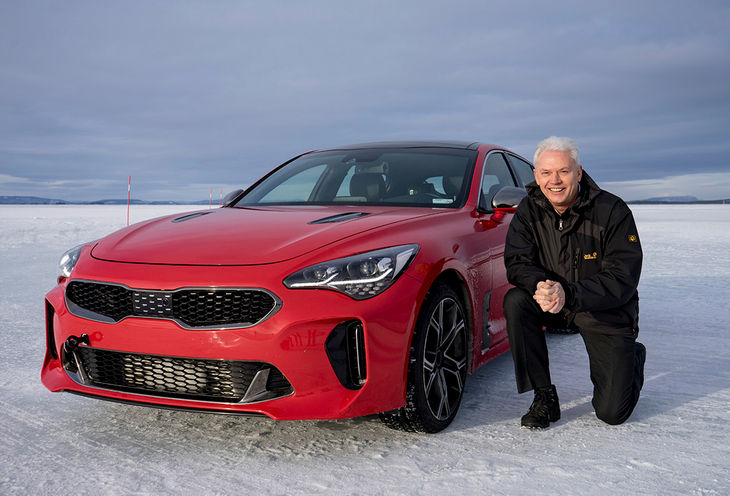
The secret to Stinger GT’s convincing specification and performance potential is the fact that it is built in Korea, with input from Koreans, but the idea and final execution authority resided with a German: Albert Biermann. If you are a BMW enthusiast that name might sound roundly familiar as Biermann used to be the boss of all things engineering at BMW’s M Division.
If you want to beat the Germans then buy a German: Albert Biermann, ex BMW M division engineer.
Unlike their Asian rivals across the Sea of Japan, the Koreans aren’t indifferent to entrusting lead design and engineering positions to foreigners. Having established amazing efficiency in their industrial engineering and materials sourcing, Kia started evolving from a bland quality brand to one with a distinct style all of its own. That styling revolution, which has credibly differentiated Kia, is the responsibility of former Audi design chief, Peter Schreyer.
A similar logic applies to the Korean quest for that most elusive recognition that every aspiring car brand desires: to be graded as being capable of building a proper performance car. Lexus may never repeat its LFA, but the brand equity it gained from the supercar project was tremendous. For Kia, its Stinger GT is much of the same: a symbol that it can do uncompromised engineering excellence at least as well as the Germans can.
It’s why Kia did something humbling, by plainly poaching a few of the best German performance car engineers available. Biermann in his position at BMW M was exactly who Kia wanted and, given the opportunity to do something radically new after 32 years at BMW, was too much of an incentive to disrupt for him to ignore.
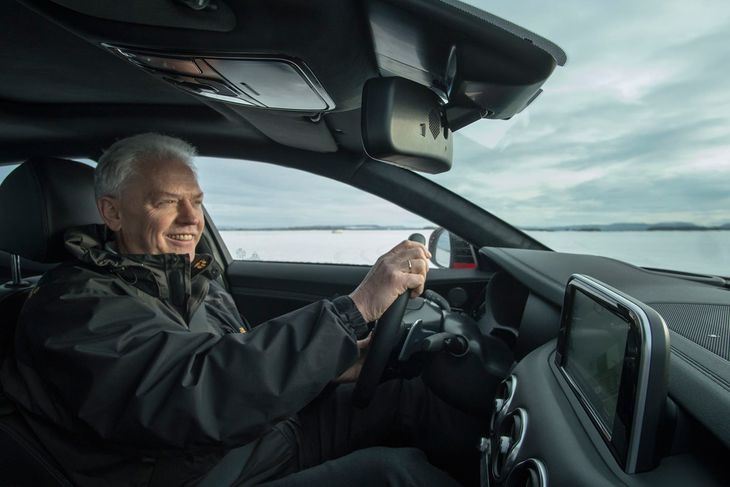
Biermann brought decades of experience in optimising handling, drivetrain and ride quality to the Kia Stinger project.
The German contribution to Stinger GT is not absolute. Any performance car is anchored by the quality of its engine and the 3.3-litre twin-turbocharged V6 is very much Kia’s own design and the work of its Korean powertrain team. Biermann’s task was to harmonise the 8-speed automatic transmission, 272 kW engine and the Stinger GT’s platform dimensions into an integrated engineering package which would be refined when required, but also clip apexes with the best BMWs too.
That would not be the easiest task as his former brand, BMW, has set a very high standard with its 440i Gran Coupe, as has Audi with its S5 Sportback. By virtue of Biermann’s 3 decades at BMW, he possesses an unrivalled technical literacy of the nuances between ride quality, sound insulation and a rewarding driver experience. As Biermann turns 60 this year, he hasn’t been pouring over data streams and 3D drawings at Kia, his role is to guide the gifted team of young Korean engineers to envision and execute what is achievable beyond their collective comfort zone.
With the Stinger GT, Biermann has delivered a convincing German D-Segment performance sedan. It’s only weakness is mass, at 1 855 kg it’s notably heavier than a 440i Gran Coupe and A5 Sportback. The Kia might best BMW’s in-line six with its V6, but the difference in mass does slow its sprinting ability, although it still manages to be 2/10ths of a second faster from 0-100 kph than the BMW, running the benchmark in 4.9 seconds. That’s correct, you can now buy a sub-5 second Korean car.
The Kia has the German duo pipped in the performance stakes, but building brand prestige is not just about performance figures.
Measured in performance, appearance and technical proficiency this is the first time that a Kia has ever been merited as a rival to anything BMW. Pricing is an issue, the Stinger GT is a bargain alternative to 440i, BUT also the most expensive Korean car ever marketed in South Africa. Legacy BMW brand confidence could unbalance the appeal of that nearly R50 000 price advantage that the Kia enjoys over a 440i Gran Coupe, compared to wildly unknown residual values for the Stinger GT in future.
The Stinger GT is a tellingly symbolic car. It represents where the Korean automotive industry would like to see itself in 2018: a performance sedan capable of rivalling Germany’s best. In 1998, it would have been laughable that a Kia sedan could ever rival any BMW. Twenty years later, a former BMW engineer has made certain Kia can.
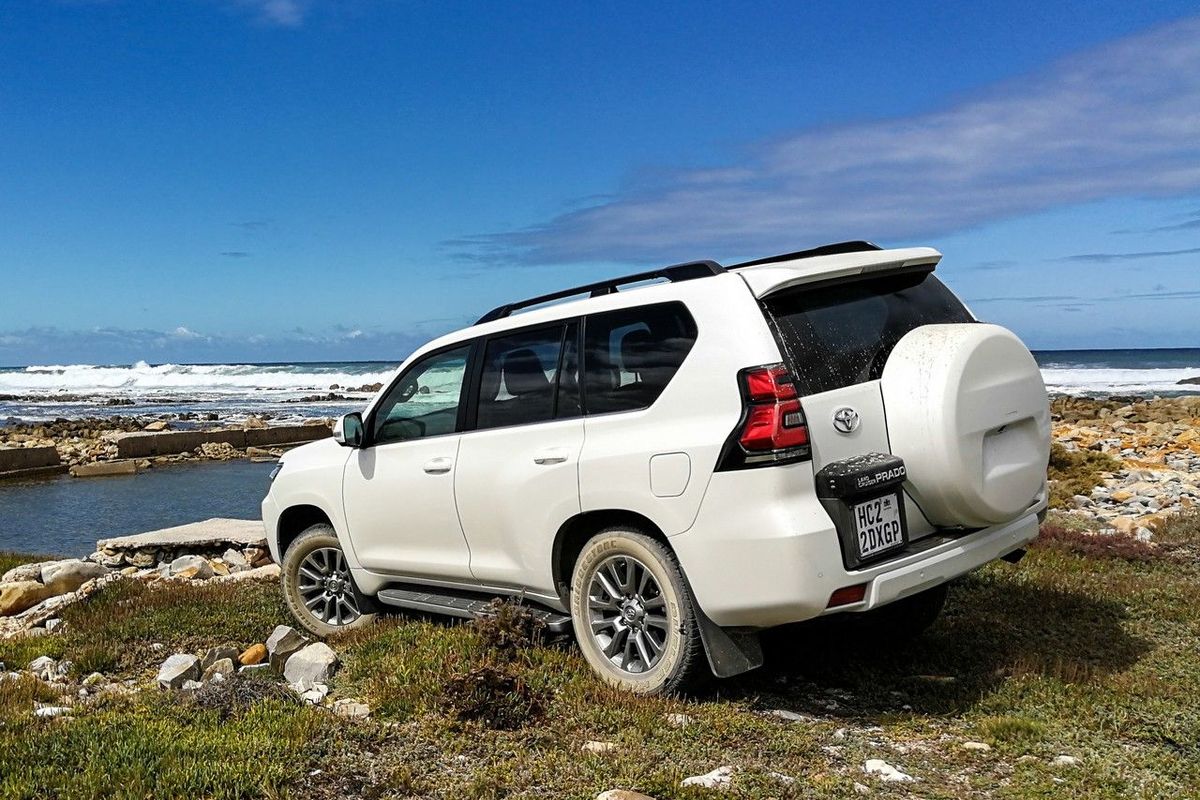
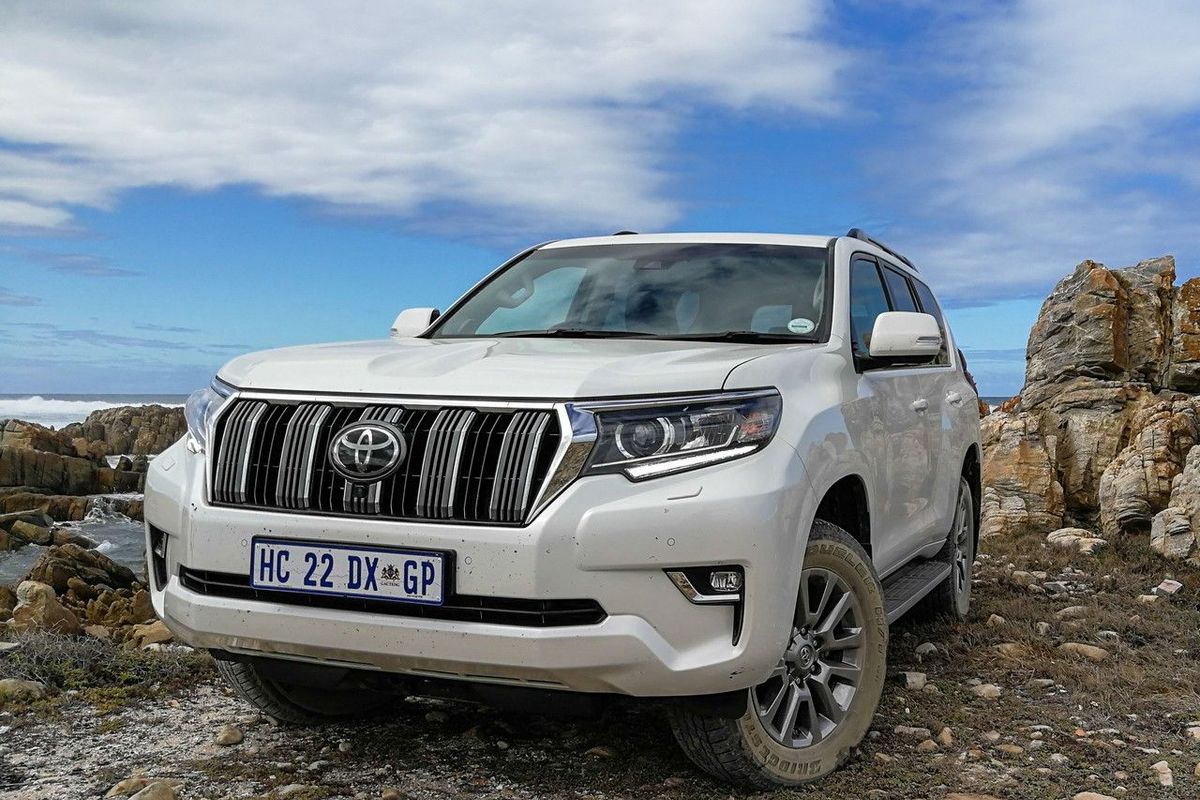
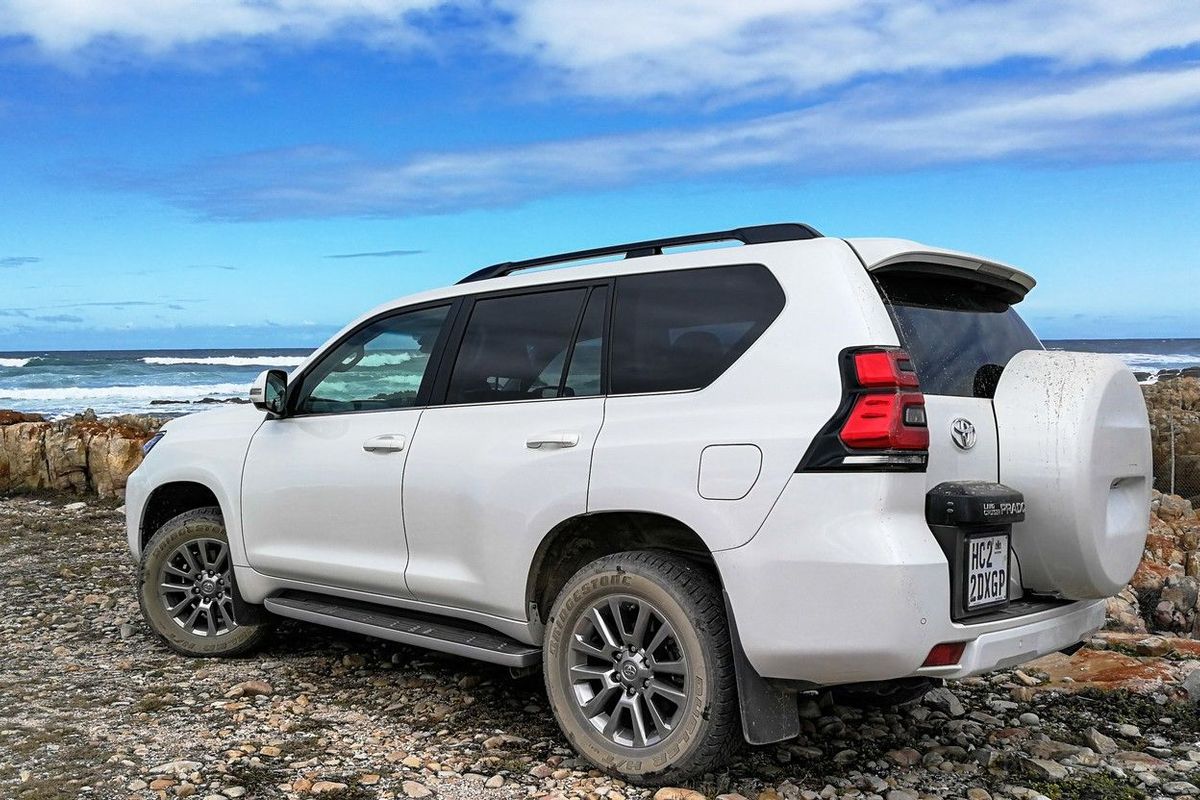
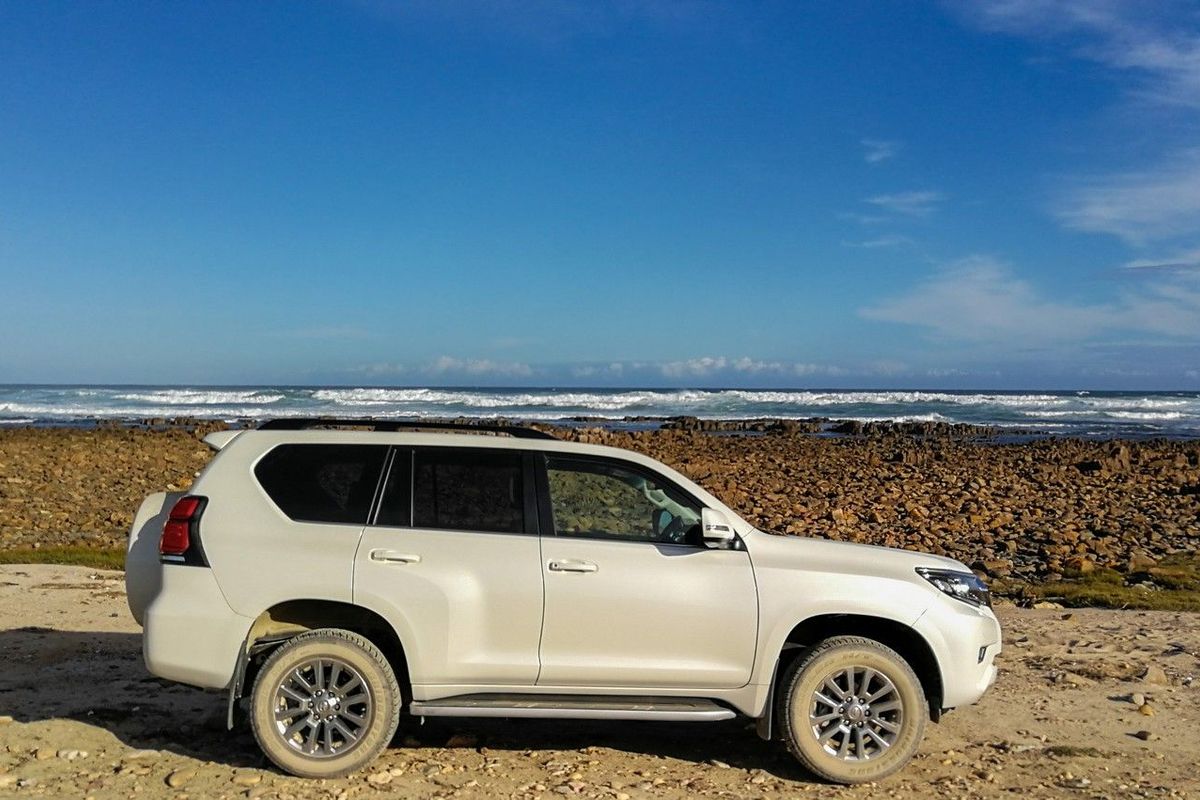
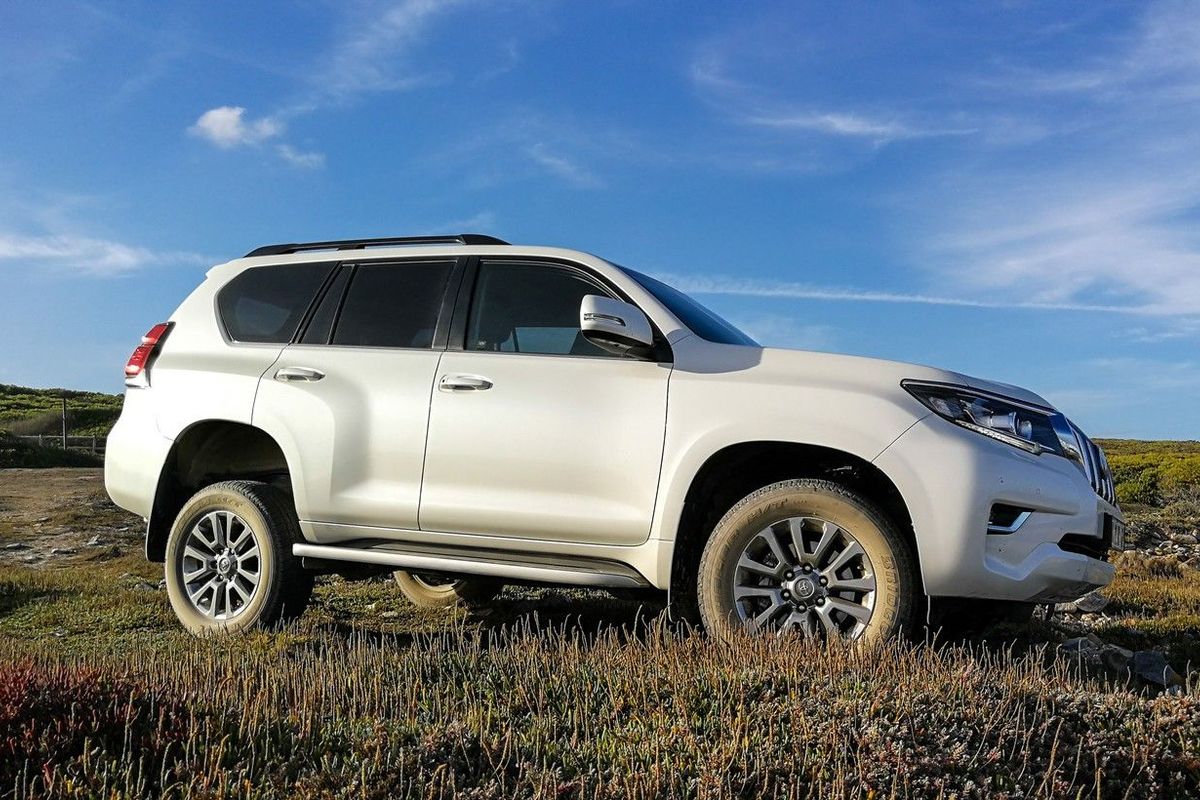
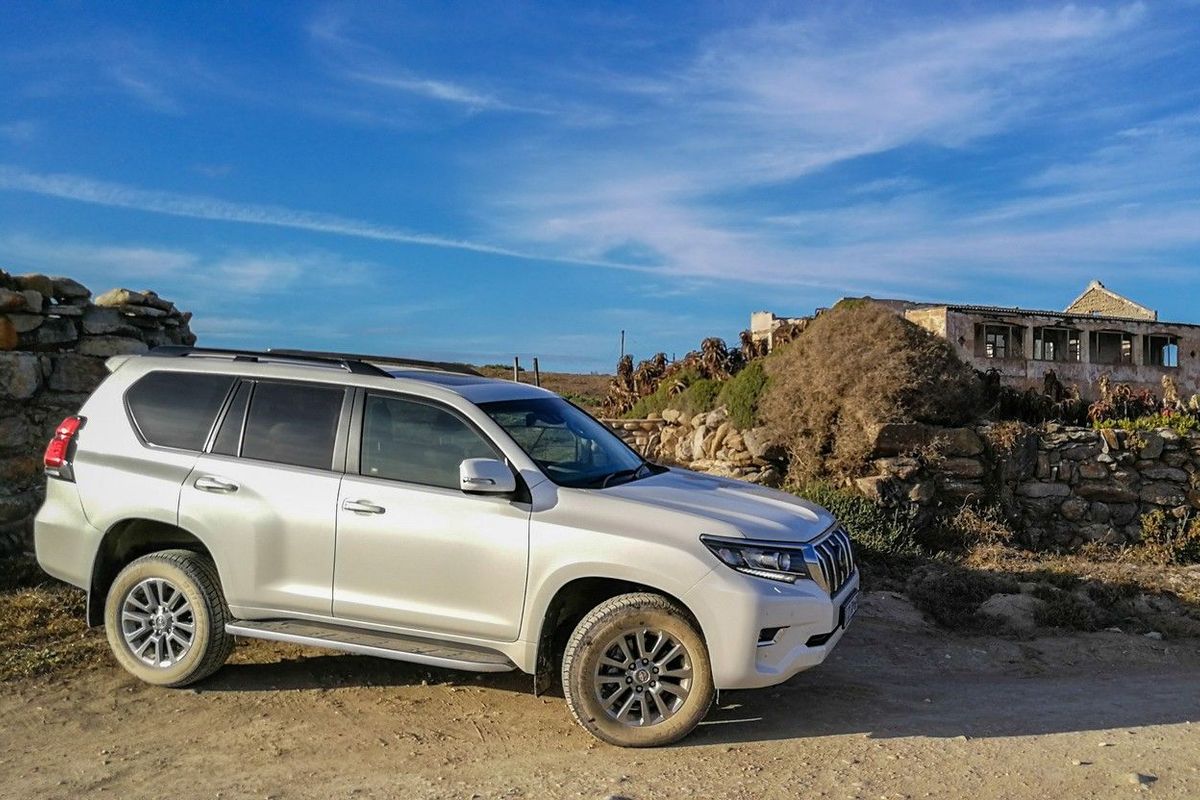
Toyota Land Cruiser Prado 3.0D VX-L (2018) Quick Review
The Toyota Prado, which remains hugely popular with adventurous motorists who occasionally exploit the full extent of their vehicles' off-road ability, has received an update. But don't worry, it has NOT become a softy!
We like: High value standard spec, robust reputation, comfortable long-distance cruiser, off-road ability
We don’t like: Could do with a touch more power, updated cabin still lags in terms of design/ergonomics.
Alternatives:
Stylish and sophisticated Land Rover: For about R40 000 more you can get the baby derivative in the new Discovery range. It is, of course, a very desirable, stylish product that also offers more engine power and torque (190 kW and 600 Nm), but you'll have to spend a considerable amount on extras to get close to matching the features offered as standard in the Prado.
Rugged, aged Pajero: Coming in significantly cheaper than the Prado is another legend of the bush… the Mitsubishi Pajero. It's not as sophisticated nor as feature-packed as the Toyota, but if off-road ability is a requirement and your budget is tight, it's an alternative that's unlikely to let you down.
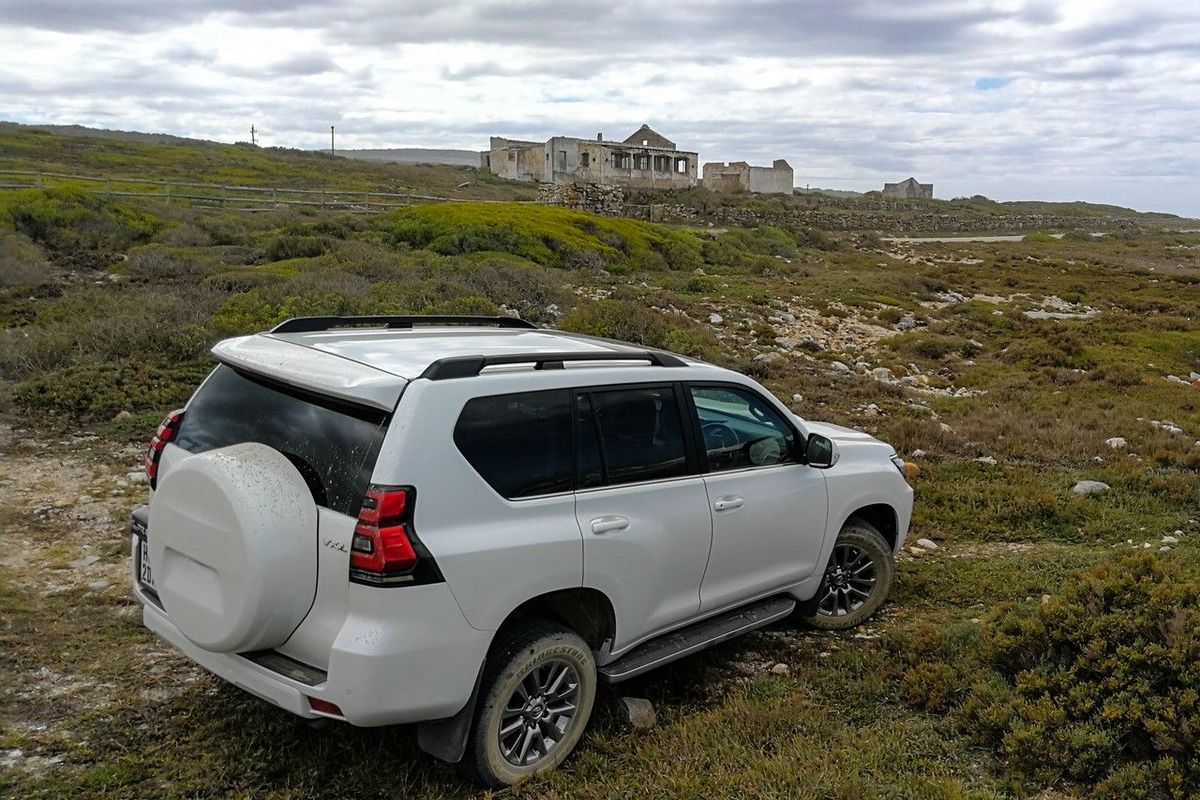
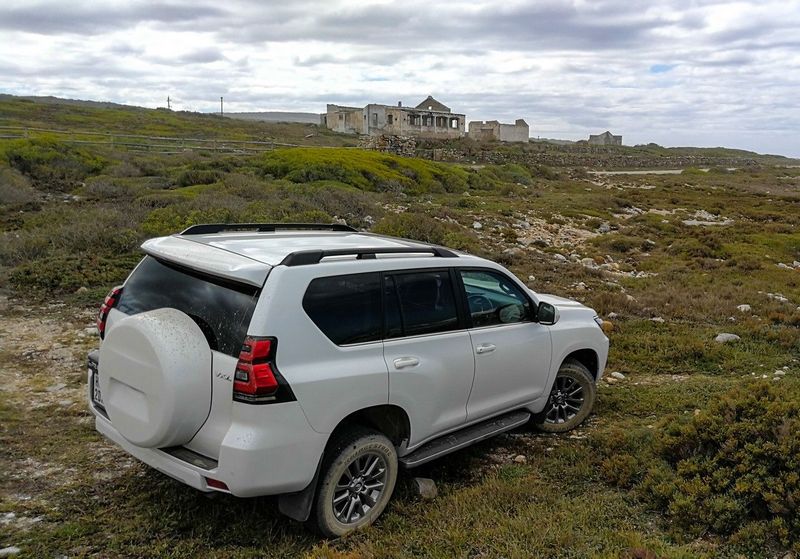
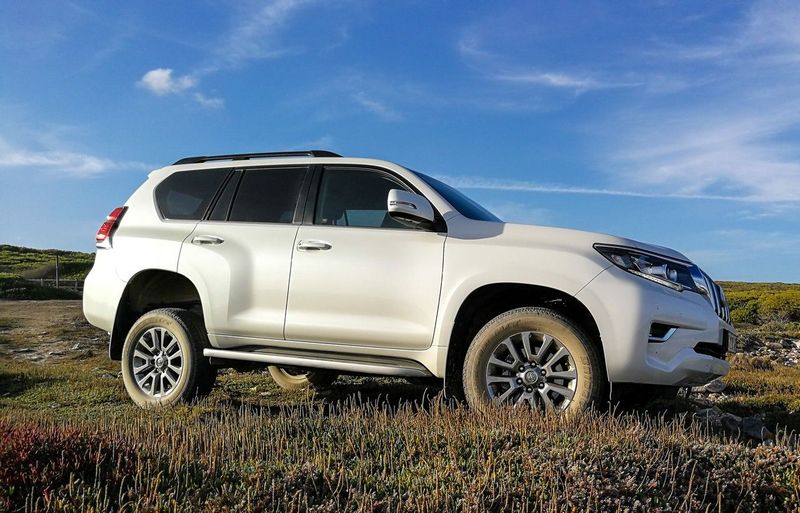
Venturing far off the beaten track? That's the enduring appeal of the Prado – luxury and unburstable reliability combined.
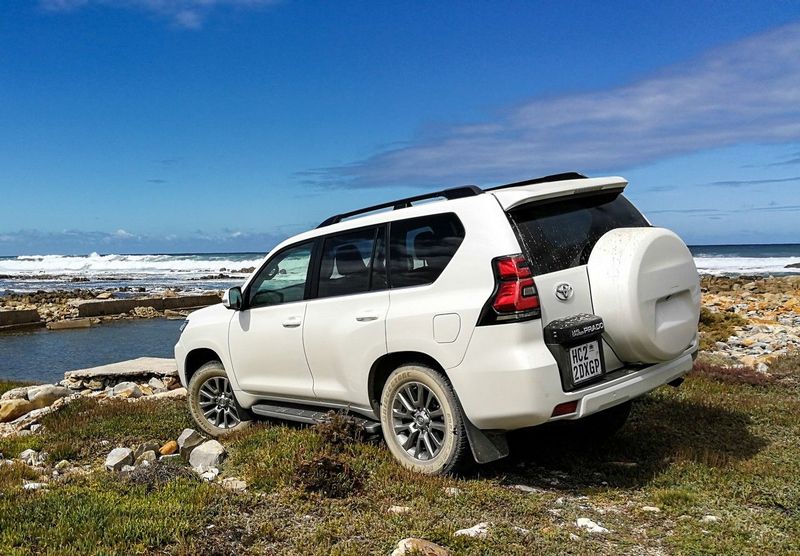
Toyota's Land Cruiser Prado has been a strong seller in the local market for a very long time – it seems impervious to changes in automotive trends and fashion trends. There are several reasons for its enduring appeal, the most important one of which is that it is a proper Land Cruiser, and therefore perceived to be nearly indestructible and unmatched in its ability to transport 7 people in relative luxury across vast distances (even outside of our borders). It's a real peace-of-mind adventure machine.
Nevertheless, time doesn't stand still and so Toyota recently refreshed the Prado, adding a higher-specification VX-L flagship model (reviewed here), more blingy looks and a few technological updates. But, at its mechanical core, the Prado is relatively unchanged – which is probably exactly what most of its hardcore fans will want.
The Good
Supremely comfortable
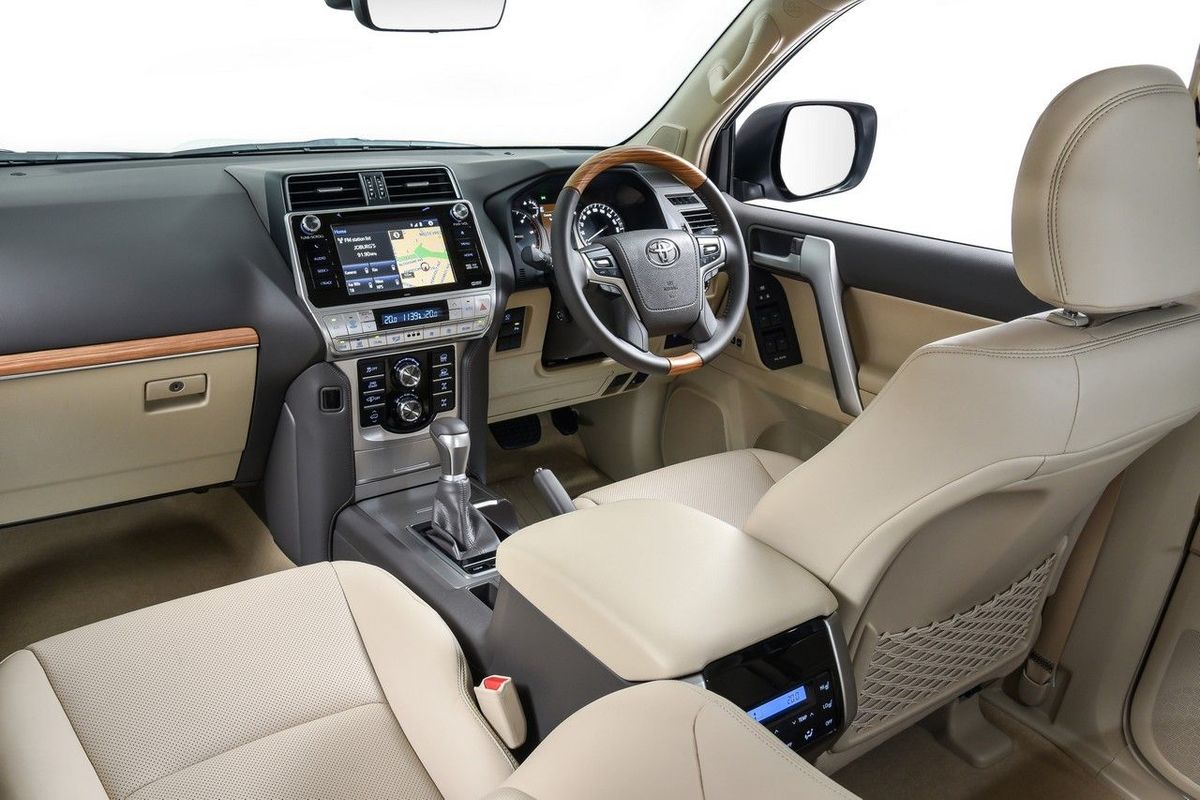
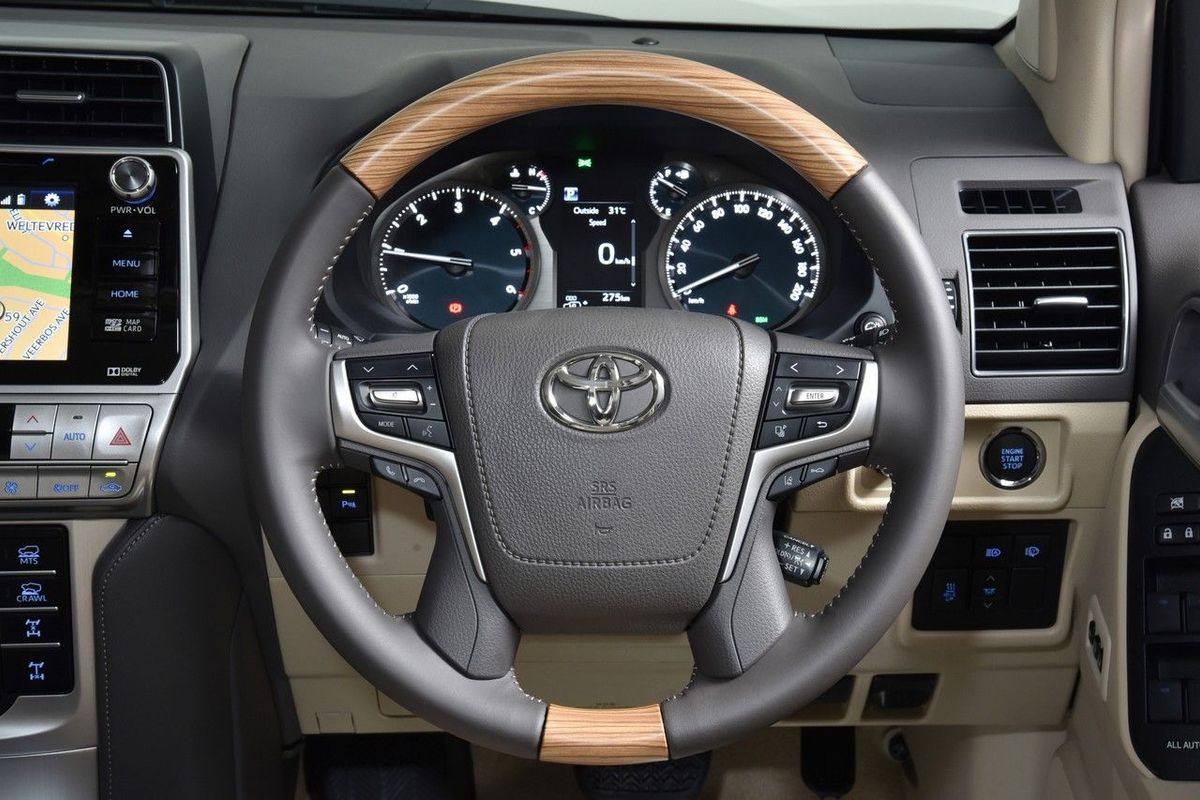
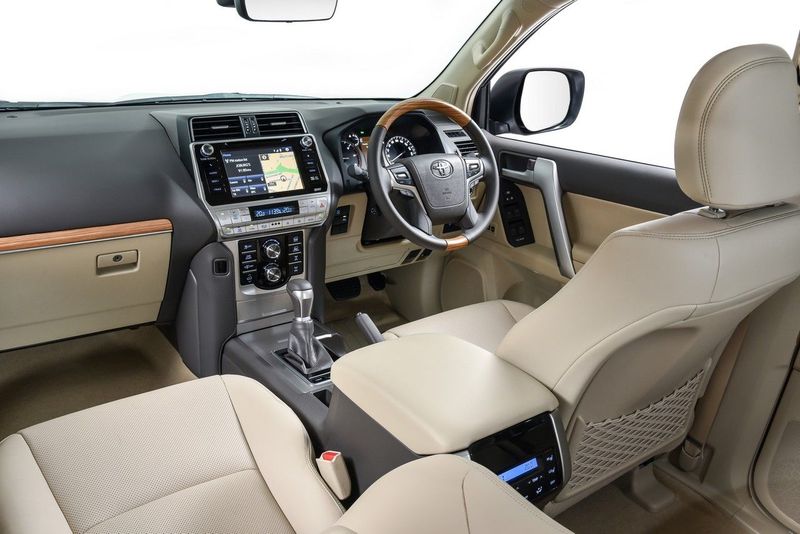
Our test unit came with an all-black interior, but a lighter "Neutral Beige" treatment is also available (pictured).
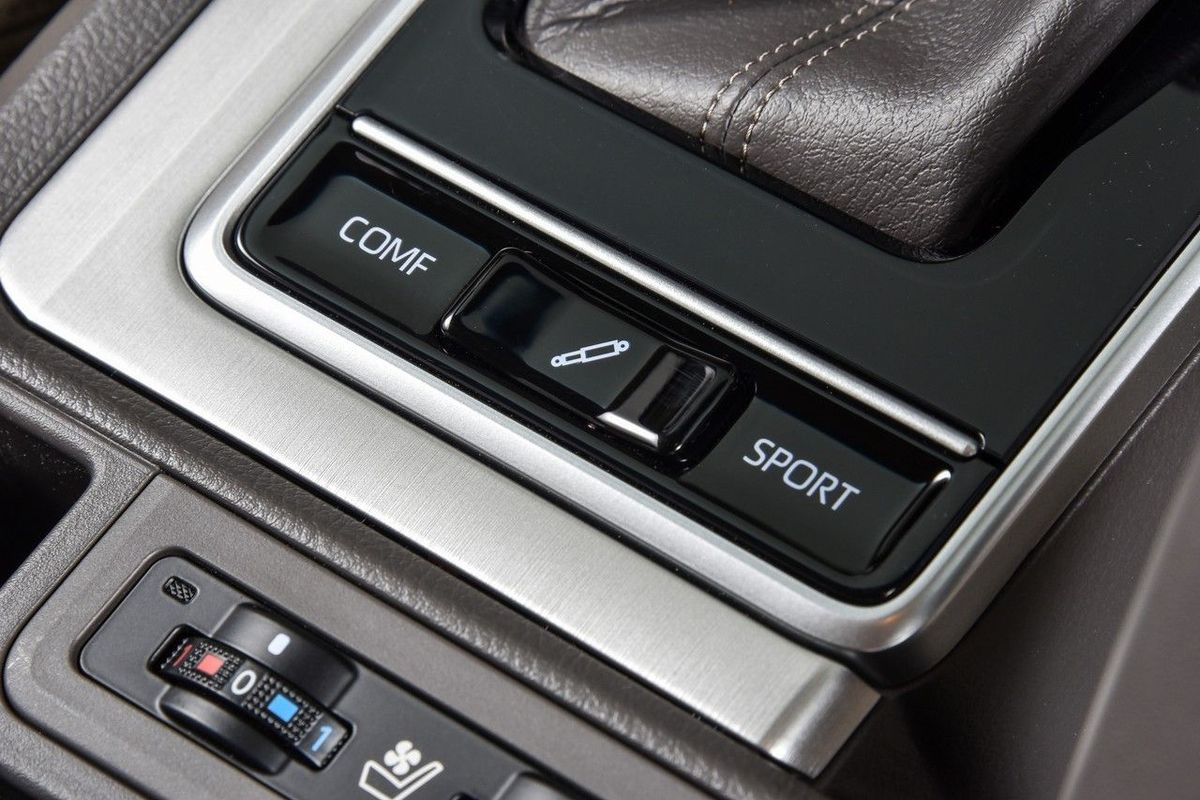
The Prado has a traditional body-on-frame construction, which is widely believed to be ideal for vehicles meant for extreme off-road usage. This suspension type isolates the cabin from many of the impacts that could occur in the bundu, but often translates into a fairly uncontrolled, bumpy ride and wallowy on-road handling at higher speeds. While the Prado isn't dynamically as "car-like" as a new Discovery, for example, on tar roads its soft, refined ride is arguably more in tune with the likely usage patterns it will face. It does roll quite a bit more in the corners, but that's a small price to pay for such effortless comfort elsewhere (in addition to the off-road advantages).
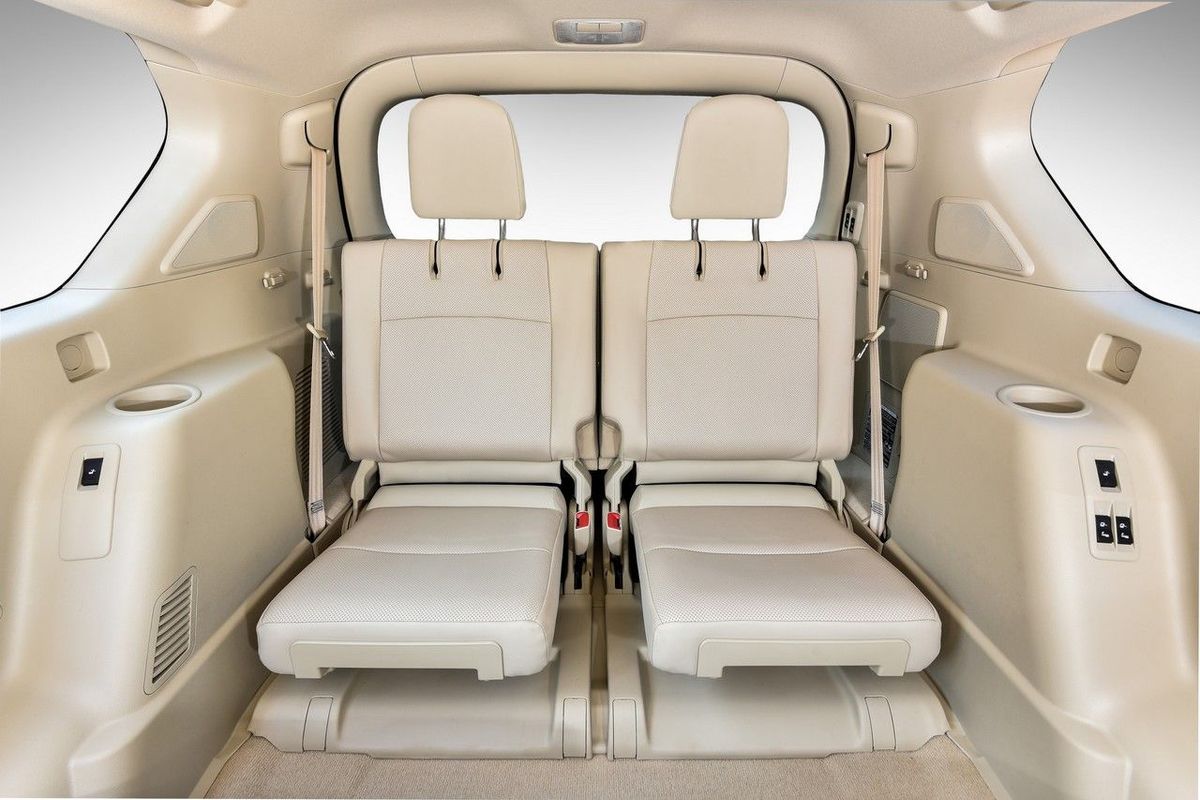
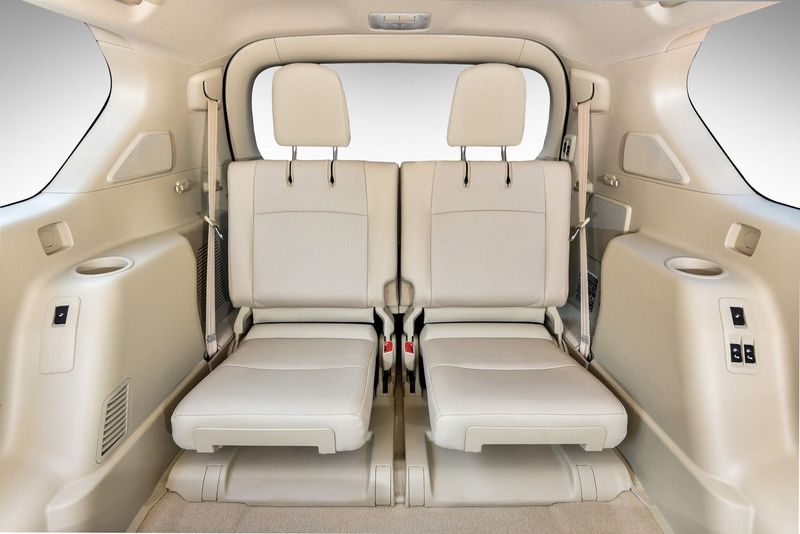
The high levels of comfort are not only the result of the chosen suspension configuration. This VX-L derivative is plushly appointed with features such as heated/cooled front seats, triple-zone climate control, leather upholstery and even an electrically operated 3rd row of seats. The seats are cossetting and offer great support for longer distances; what's more, the seating positions throughout the vehicle prioritises good visibility out of the vehicle. Evidently, the designers of the Prado wanted its occupants to see landscapes whizz by as they make their way to their next destination while ensconced in the comfort of Toyota's venerable luxury off-roader.
The Prado remains one of the best (possibly THE best) vehicles to drive if long distances on unsealed roads are part of the plan.
We also think there has been a noticeable improvement in the NVH (noise, vibration, harshness) suppression. Certainly, when cruising at the national speed limit the cabin is a hushed, calm place with even the noise of the relatively aged turbodiesel engine underneath the dramatically sculpted bonnet struggling to make its way to the occupants' ears. Head onto rougher surfaces such as gravel roads and the impressive performance continues – the comfort-optimised suspension, generously sidewalled 18-inch tyres and admirable cabin insulation combine to make it possible for the Prado to shrug off such changing conditions.
Off-road ability
The Prado is packed with electronic off-road aids. Use them properly and you're highly unlikely to ever get stuck.
The Prado appears to be optimised for off-road use in every possible way. Notice the deep "canyon" on the bonnet? Well, that's there to improve visibility! You may also notice that the dashboard is slightly lower these days… also to improve visibility when conditions get tricky. The Prado offers a ground clearance of 215 mm (which seems a conservative claim to the naked eye), with 31-degree approach, 25-degree departure and 22-degree ramp break-over angles.
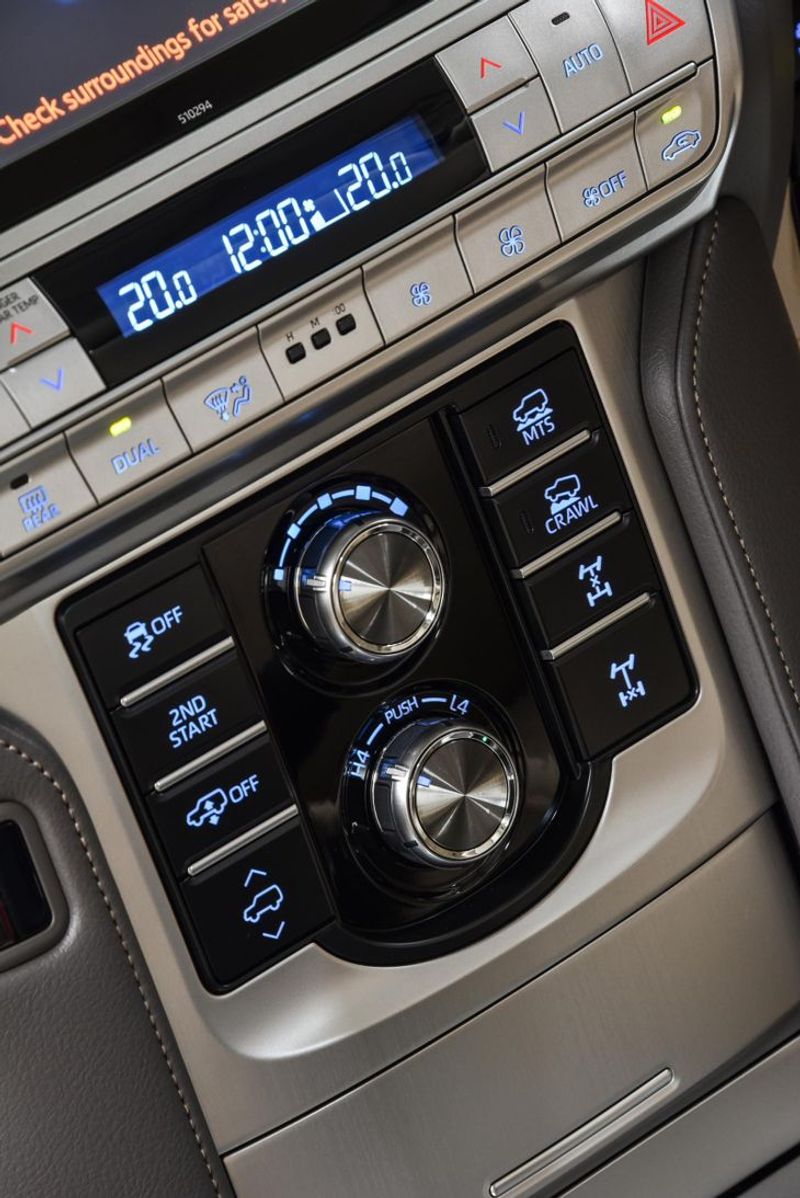
But those are minor details… In keeping with the times, the Prado has a Multi-Terrain Select system (operated by a large rotary knob) that allows its driver to set up the vehicle for prevailing off-road conditions by fine-tuning its traction control, transmission, power and suspension settings. There are 5 modes to choose from: Mud&Sand, Loose Rock, Mogul (compromise setting), Rock&Dirt and Rock. Downhill Assist Control is fitted, as is a low-range transfer case with both rear- and centre diff-locks.
Great axle articulation contributes to the Prado's traction-finding abilities.
The Prado further features the crawl control mode from its bigger brother, the Land Cruiser 200, and, as such, is easy to pilot in the type of extreme terrain that might intimidate even relatively experienced adventurers. Then there are those KDDS hydraulically interconnected front and rear stabilisers – by disconnecting a particular wheel's stabiliser bars at low speed, it can benefit from greater wheel travel in a cross-axle situation. All of this sounds terribly complicated, but, in reality, the Prado eschews a complex solution (such as air suspension, which is integral to many premium SUVs) in favour of mechanical simplicity. It's unlikely to go wrong.
We ventured quite far off the beaten track with the Prado and found it a confidence-inspiring off-roader. Visibility is truly excellent – the new surround-view Multi Terrain Monitor camera system includes panoramic and overhead view modes. If you're going to be doing a lot of serious off-roading, then you may have to consider a different tyre, but the standard Bridgestone Duelers strike a good on/off-road compromise. We think they contribute to the overal quietness as well. Indeed, if you use the Toyota's available off-road assistance systems properly, the Prado will invariably find a way to achieve positive traction in whatever off-road condition it may find itself.
Standard Features
The third row of seats in the Prado VX-L are electrically controlled.
This new VX-L derivative is positively loaded with luxuries. Just about everything is electrically adjustable, including the steering wheel and 3rd row of seats. This flagship model also comes with a tilt/slide "moonroof" and shares the VX's comprehensive infotainment system, replete with a 14-speaker Premium sound system and large tablet-like touchscreen. As mentioned before, the front seats are heated and cooled, but even the second row gets heating for those early winter morning starts!
The moonroof is not the only thing that distinguishes the VX-L from lesser derivatives. In fact, its specification sees a greater focus on advanced safety systems. In addition to ABS, EBD, Brake Assist, stability control and Trailer Sway Control systems, the VX-L further adds a raft of active technologies, including a pre-collision system with pedestrian detection, adaptive cruise control, lane departure alert and an automatic high-beam function.
The adaptive cruise control is particularly useful when hitting the long road and the rear cross traffic alert system is one of the automotive sector's best new innovations.
The (not so) Good
No extra oomph
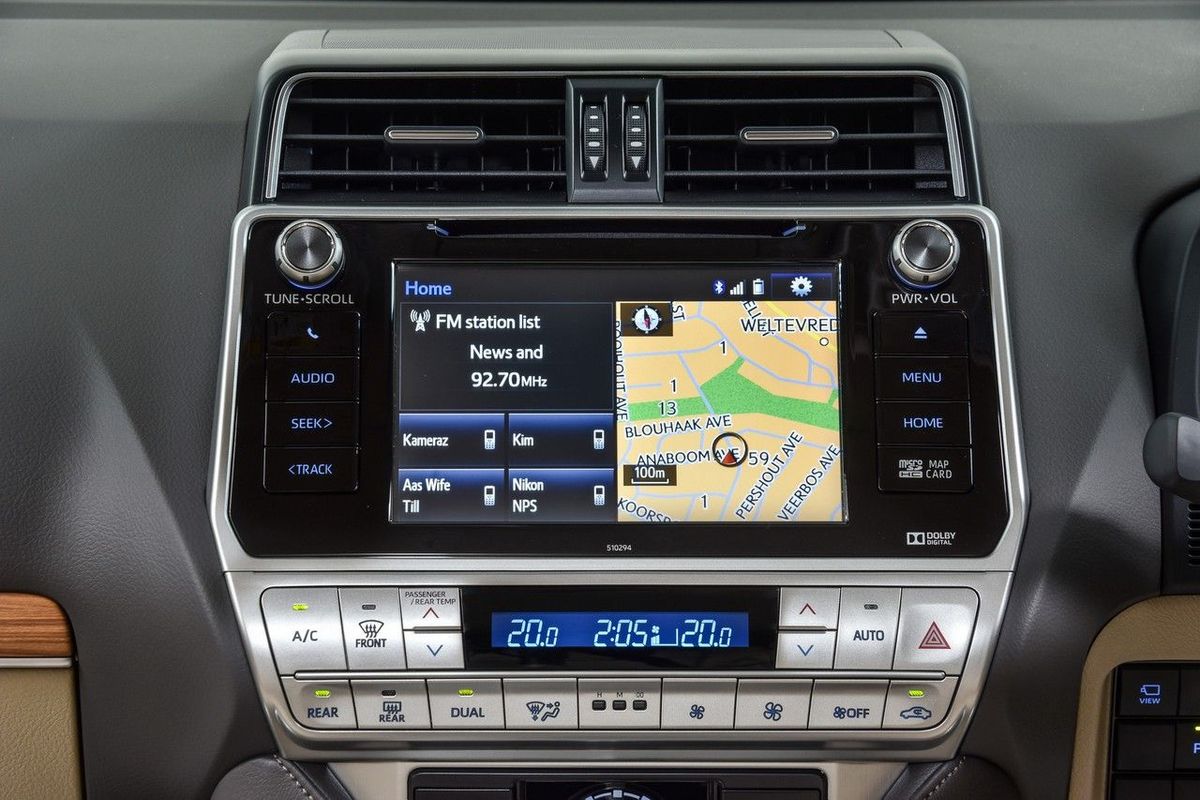
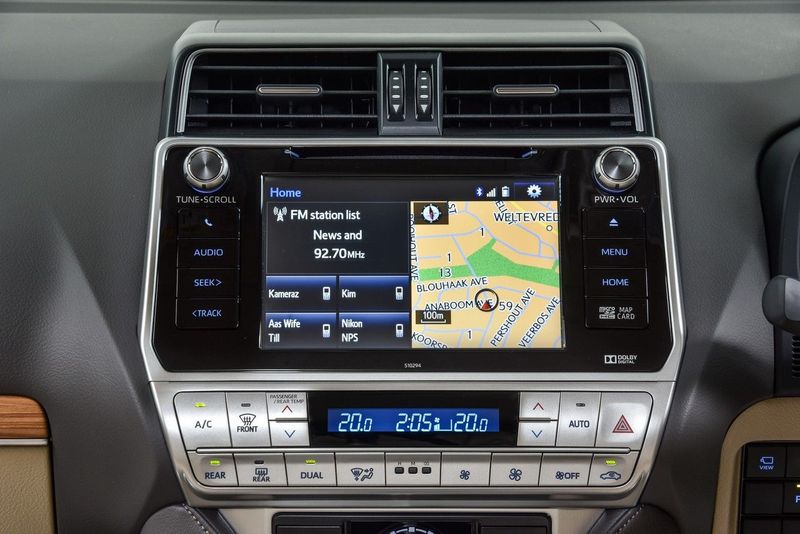
The Prado's new infotainment system is comprehensive and easy to use.
Firstly, let's be clear… we appreciate the fact that the 3.0D-4D engine underneath the Prado's bonnet is both tried and tested and also able to operate on relatively poor quality, high-sulphur diesel. This is particularly beneficial when travelling into unknown areas. We also rate the engine's ability in low-speed off-roading conditions, where it feels particularly well-matched to the 5-speed automatic 'box.
But there are areas in which it is clearly lagging. With 120 kW and 400 Nm of torque on offer, its outputs are significantly lower than those boasted by the competition, and by virtue of tipping the scales at nearly 2.5 tonnes, the Prado is no featherweight. So, when loaded with people and their detritus, the Prado is not the most responsive of vehicles when you need to, for example, overtake a slew of slower vehicles. It is also relatively thirsty compared with modern rivals. Toyota claims a combined cycle consumption figure of 8.5 L/100km, but you're likely to get closer to 10L/100km in mixed driving. We achieved 9.5 L/100 km on a longer stint.
All things considered, however, we're happy to continue with the lower output, especially if a lot of cross-border driving is on the agenda.
Pricing and warranty
The flagship Prado 3.0D VX-L derivative, as tested here, sells for a cool R979 600, which includes Toyota's usual 3-year/100 000 km warranty and a 5-year/90 000 km service plan. On the downside, you'll have to take it for service every 10 000 km…
Verdict
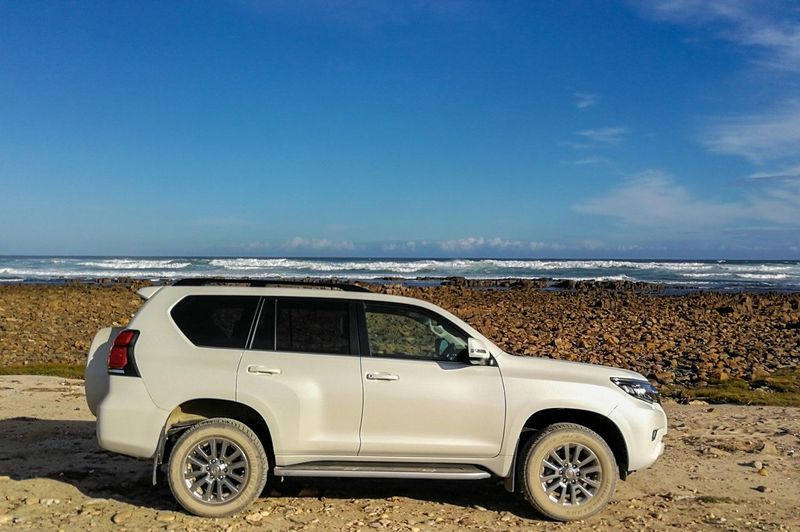
It's not going to win any beauty contests, but nevertheless, the Prado is highly desirable.
The Prado is exceptionally well-priced considering its vast array of talents. It offers extensive off-road ability (including genuine, confidence-boosting cross-border capability), a comprehensive standard specification, and, of course, it instils the sense that you've bought something that will last forever. In reality, there isn't a vehicle that is directly comparable to this VX-L derivative; not at the price. The similarly rugged Pajero is unrefined, aged and lacking in modern tech by comparison, and the Discovery has seemingly become more of a style statement that, as standard, lacks many of the features fitted as standard to the Prado, yet the Landy costs more.
So, if you're looking for a vehicle that has it all and can do it all (except win drag races), then the Prado remains the top choice.
New vehicle prices in South Africa have rocketed skywards over the last year as a weaker Rand drove the costs of importing vehicles to our market ever higher. We investigate whether there’s still some real bang-for-buck value in the market.
With new car prices soaring dramatically over the past year in a volatile economy, your money buys you less, particularly if you are looking for a more performance-orientated car. Take the latest Volkswagen Golf GTI as an example. With a lofty starting price R548 600, the GTI is now an expensive proposition.
Nonetheless, for the purpose of this list, we have set the performance threshold at 150 kW as that’s certain to result in willing performance in combination with a compact body shell. Obviously, we aren’t accounting for weight or a sporty chassis at this point, but it’s interesting to see where the power bargains are hiding in the new car market. Take a look!
Top 10 Cheapest New Cars in SA with at least 150 kW (in ascending price order)
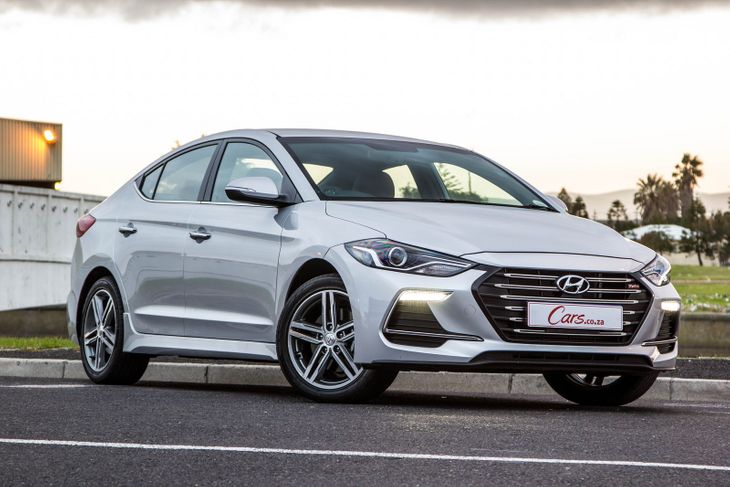
1. Hyundai Elantra Turbo Elite Sport
The new Hyundai Elantra was launched earlier this year and the range-topping Elantra 1.6 Turbo Elite Sport offers the practicality associated with a sedan while also delivering some thrills behind the wheel. Powered by the same turbocharged 1.6-litre 4-cylinder engine found in the Veloster Turbo, buyers get 150 kW and 265 Nm of torque with a claimed sprint time of 7.7 seconds in the run to 100 kph using a 6-speed automatic dual-clutch transmission. The Elantra 1.6 Turbo Elite Sport is priced from R399 900.
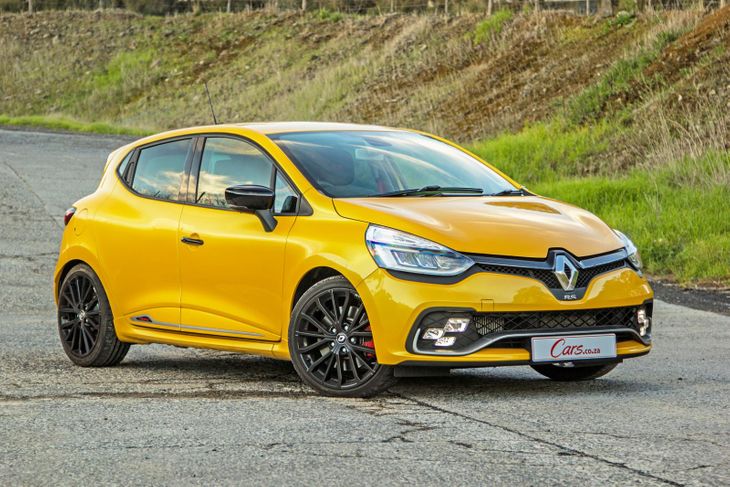
The recently-launched Clio RS 220 Trophy is a scintillating road-going track car that offers no less than 162 kW and 260 Nm of torque from its turbocharged 1.6-litre, 4-cylinder petrol engine. Using a 6-speed automatic dual-clutch transmission, the Clio RS 220 Trophy offers performance kicks with a zero to 100 kph sprint time of 6.6 seconds. For the amount of thrills, this Clio 220 RS Trophy offers decent value starting at R438 900.
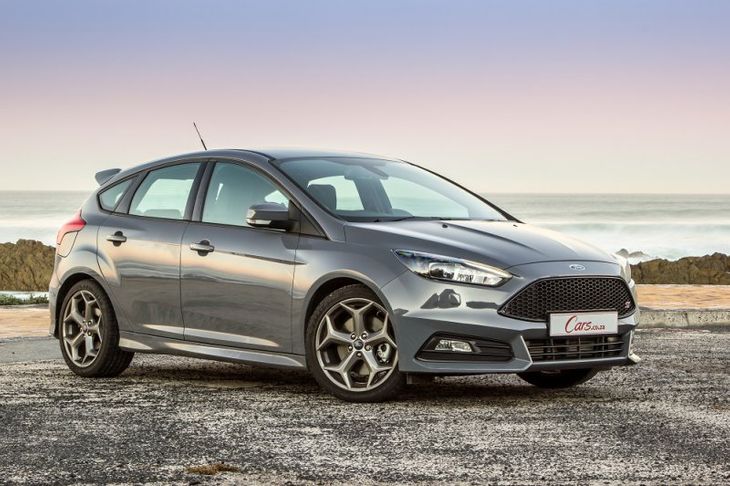
Ford Focus ST1 is still a relative bargain in the market with 184 kW and 360 Nm of torque on offer from its turbocharged 2.0-litre engine. It will sprint from zero to 100 kph in approximately 6.5 seconds and will top out at 248 kph. The ST1 is the entry-level ST, so there are a few luxuries missing, such as leather seats, daytime running lights and climate control. It’s a bare-bones performance bargain in most people's books. R457 800 gets you into an ST1, but to upgrade to the ST3 will cost R501 100.
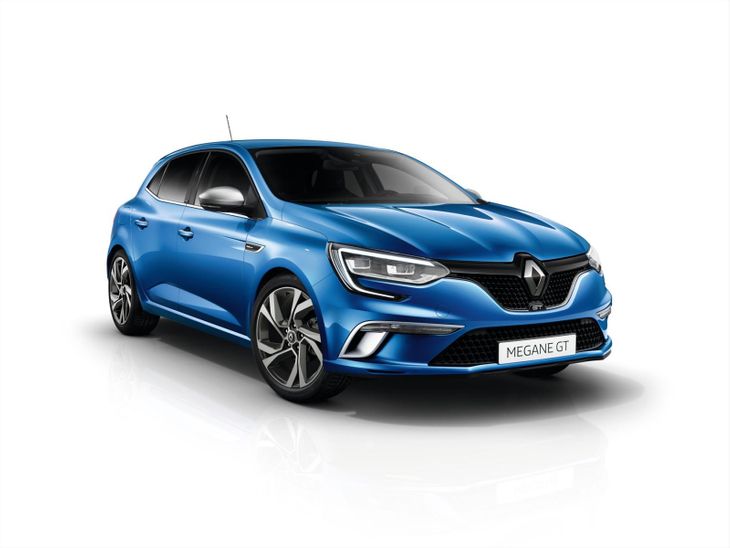
With its stylish and sporty styling, the new Megane GT offers good performance with 151 kW and 280 Nm of torque developed by from its 1.6-litre turbopetrol engine. Zero to 100 kph is dispatched in 7.1 seconds with a top speed of 230 kph using a 7-speed dual clutch transmission. The Megane GT is all yours for R461 900.
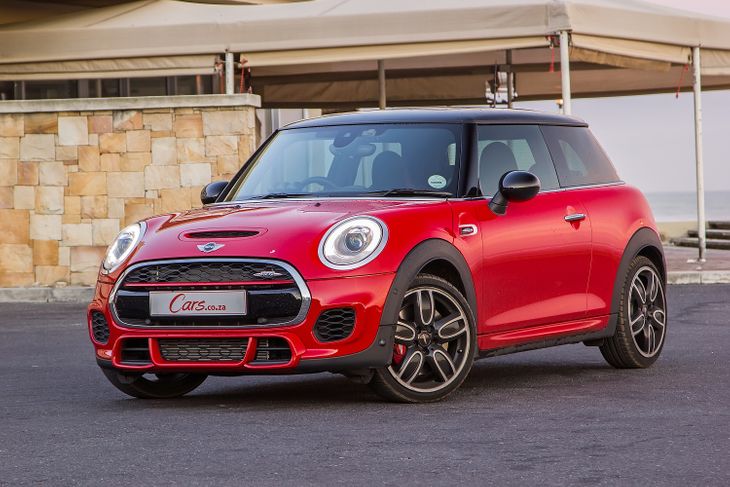
The JCW is an eminently wieldy "pocket rocket" and (relative) performance bargain. With 170 kW and 320 Nm of torque on tap from its 2.0-litre turbopetrol motor, the JCW is said to catapult from standstill to 100 kph in just 6.3 seconds. Beware of the optional extras list, however; things can get pretty expensive if you specify many of the goodies that Mini offer. The basic JCW costs R491 095.
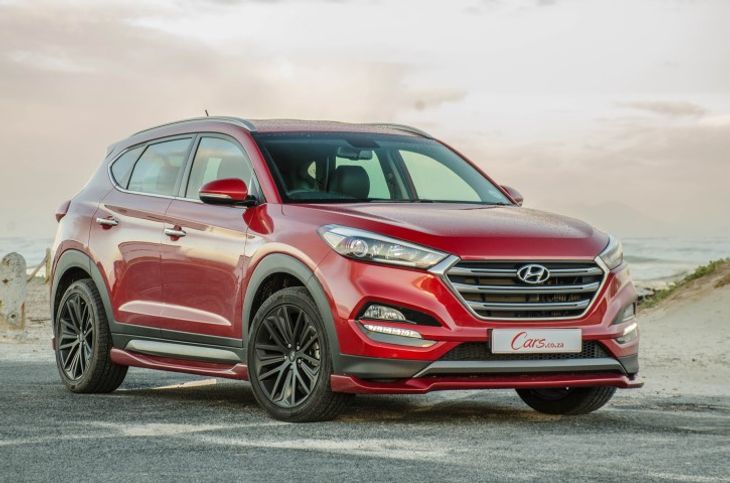
Hyundai's decision to sell a sportier version of its Tucson family SUV seems to be paying off as customers are taking a liking to the beefier Tucson Turbo Executive Sport . The Tucson Turbo Executive Sport is the only compact family SUV to make it onto this list with 150 kW and 295 Nm of torque offered from its 1.6-litre turbopetrol engine. The Tucson Turbo Executive Sport is priced R504 900.
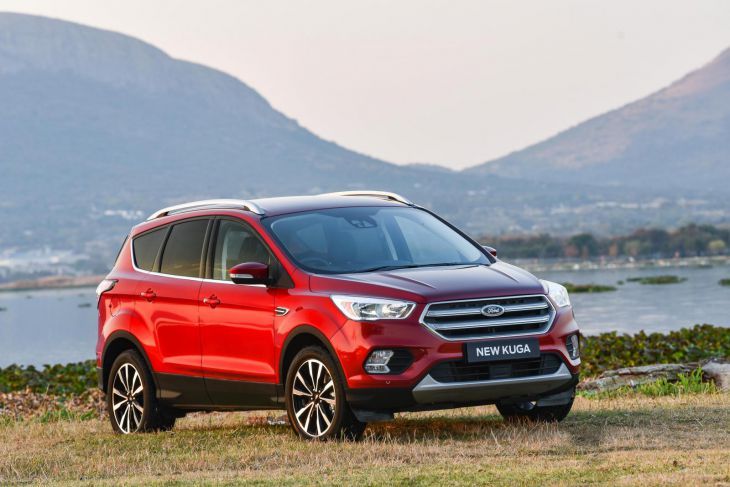
The revamped Kuga was introduced midway through 2017. This top-of-the-range model features a 2.0-litre turbopetrol engine that thumps out 177 kW and 340 Nm of torque. Mid-size SUVs are certainly turning up the wick on what are essentially family cars. Zero to 100 kph takes just 7.6 seconds and it has a top speed of 212 kph. With all of the Kuga's issues, pricing on this model is quite generous throughout the range, this model retails for R508 100.
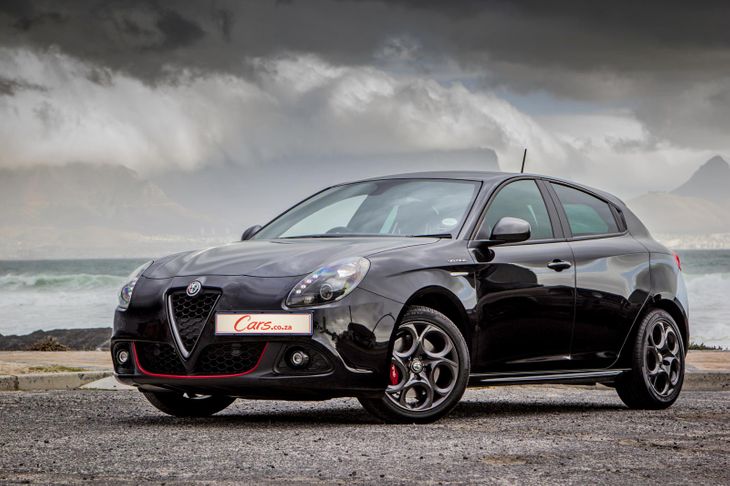
Alfa Romeo recently updated its Giulietta and this range-topping Veloce derivative is claimed to be the fastest car on this list with a zero to 100 kph sprint time of 6.0 seconds. The 1.75-litre turbopetrol engine churns out 177 kW and 340 Nm of torque and is mated to a 6-speed automatic dual-clutch transmission. The Alfa Romeo Giulietta 1750TBi Veloce is priced from R512 900.
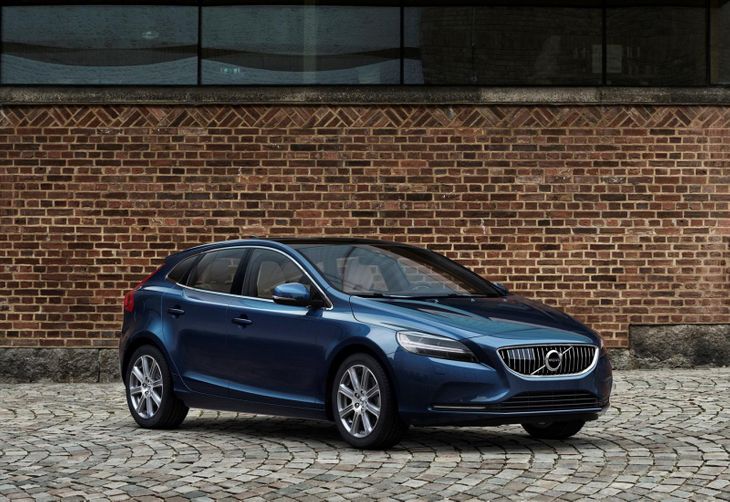
Volvo isn’t known as a bargain performance brand, but in T5 Momentum guise, the V40 offers excellent value courtesy of its 180 kW/350 Nm 2.0-litre four-cylinder turbopetrol motor mated with an 8-speed automatic gearbox. Acceleration from zero to 100 kph is achieved in a claimed 6.3 seconds. The starting price for the Volvo V90 T5 Momentum is R519 000.
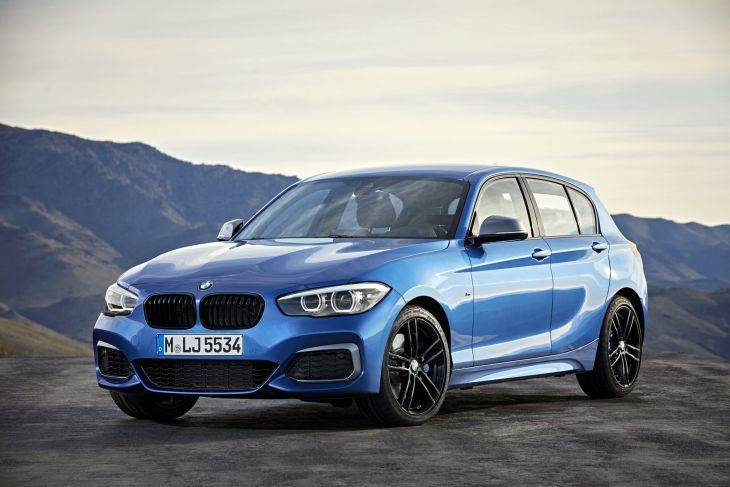
The baby Bimmer creeps onto the list at number 10, sneaking in ahead of the Golf GTI by a few thousand rands. Facelifted back in 2017, the 1 Series got a bunch of new names for its engines to confuse everyone. This 125i unit boasts a 2.0-litre turbocharged petrol with 165 kW and 310 Nm of torque. The 100 kph sprint takes just 6.1 seconds thanks to the automatic gearbox. Starting price, before options on a 125i is R545 665.
Ford has released specification and pricing details of its all-new Fiesta ahead of the compact hatchback range's local launch this week. As a major competitor to the top-selling Volkswagen Polo, much is expected of Ford's new B-segment offering.
Ford admits that the new Fiesta is an evolutionary, rather than revolutionary, product; the Blue Oval claims that changes were made purely to improve what was already a good product in the eyes of its customers. The new version has grown somewhat compared with its predecessor (it is 71 mm longer and 13 mm wider), but whereas the front track has increased by 30 mm and the rear by 10 mm, the wheelbase is just 4 mm longer than before. Rear passengers are afforded 16 mm more knee room.
The new Fiesta weighs in at between 1 165 kg and 1 206 kg, depending on the derivative and type of transmission specified. Luggage space is a claimed 303 litres and, when the rear seats are folded down, 984 litres of utility space is available.
The interior has been updated with new, softer-touch materials and improved build quality, with tighter panel gaps. The Trend derivatives feature a 6.5-inch infotainment system (with Sync3), while the Titanium versions are equipped with an 8-inch touchscreen setup, which includes Sync3 and navigation. The button count on the new Fiesta has more than halved thanks to the touchscreen system and helps produce a cleaner looking fascia. Both spec levels support Apple CarPlay and Android Auto.
A pair of USB ports are availed up front and whereas a 6-speaker sound system is standard on the Trend, the Titanium features a 7-speaker premium audio setup.
The new model is based on the same platform as before, but Ford's engineers worked extensively to better insulate the newcomer's cabin from engine noise and vibrations. The firm has further stiffened up the Fiesta's body structure to improve on-road comfort, as well as the overall driving experience.
Safety has been upped for the new model with a minimum of 4 airbags as standard. It also comes equipped with ABS with EBA and EBD, hill-start assist and electronic stability. Reverse parking sensors are now standard across the model lineup.
Compared with the specification of Trend derivatives, Titanium versions come equipped with electronic climate control (instead of manual airconditioning), a leather-trimmed steering wheel and gear knob, heated sports seats, rain-sensing wipers and LED daytime running lights.
Engine range
The 1.0-litre 3-cylinder turbopetrol engine has been retained for the new Fiesta range. Both Trend and Titanium models offer 6-speed manual and auto options. Manual Trend and automatic Trend and Titanium derivatives produce 74 kW and 170 Nm of torque, but the manual Titanium derivative's power is increased to 92 kW (although peak torque is unchanged at 170 Nm). The turbodiesel 1.5-litre Fiesta is only available as a manual and delivers 63 kW and 175 Nm of torque.
Claimed fuel economy for 1.0 derivatives in manual guise is 4.3 L/100 km, with the autos said to consume an average of 5.2 L/100 km. The diesel sips just 3.3 L/100 km with its manual 'box.
All new Fiesta derivatives come standard with Ford Protect, comprising a 4-year/120 000 km warranty, 3-year/unlimited distance roadside assistance and 5-year/unlimited km corrosion warranty. A 4-year/60 000 km service plan is included, with service intervals at 15 000 km.