Frankfurt Show: Kia Proceed Concept & Picanto X-Line
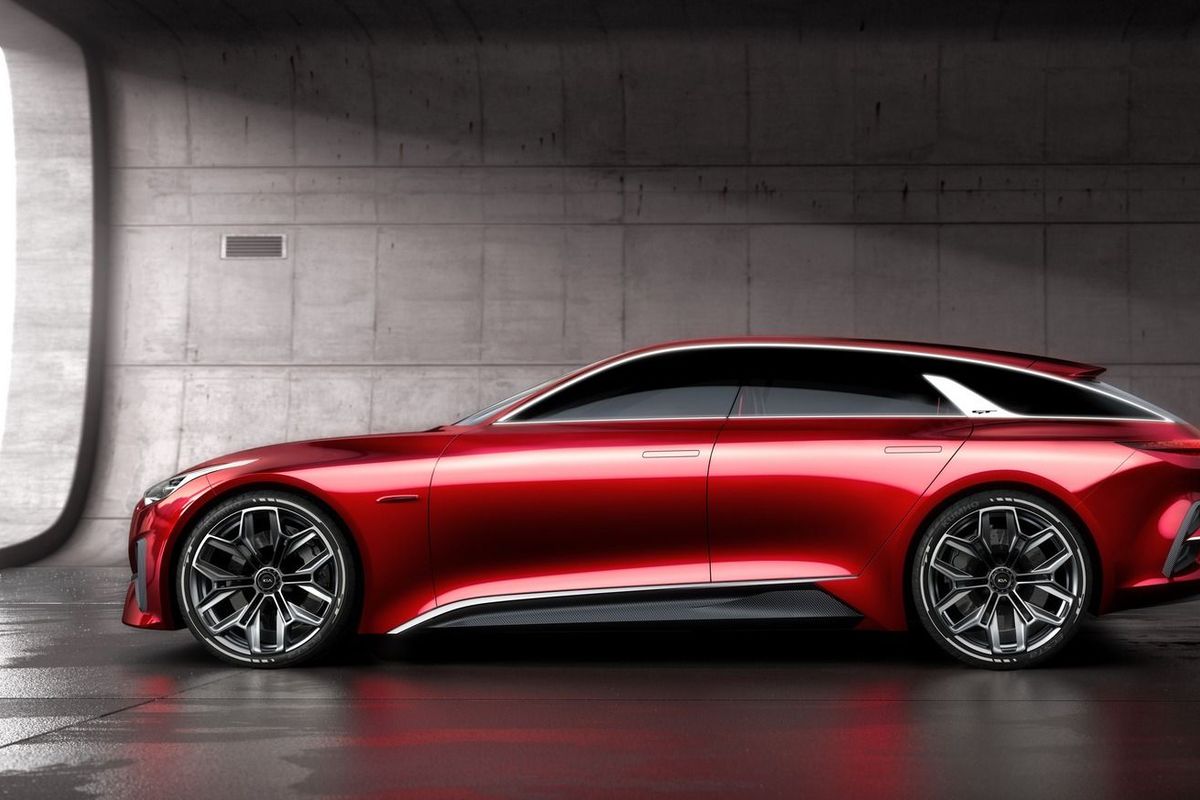
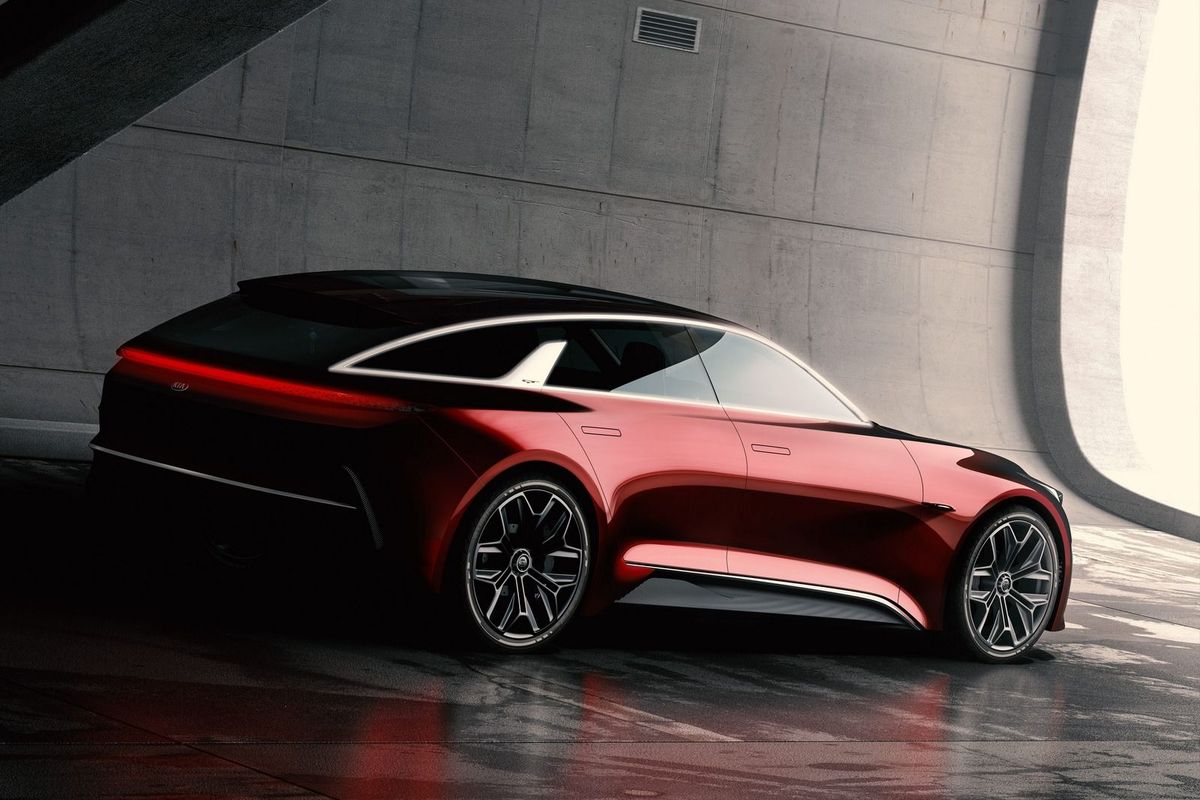
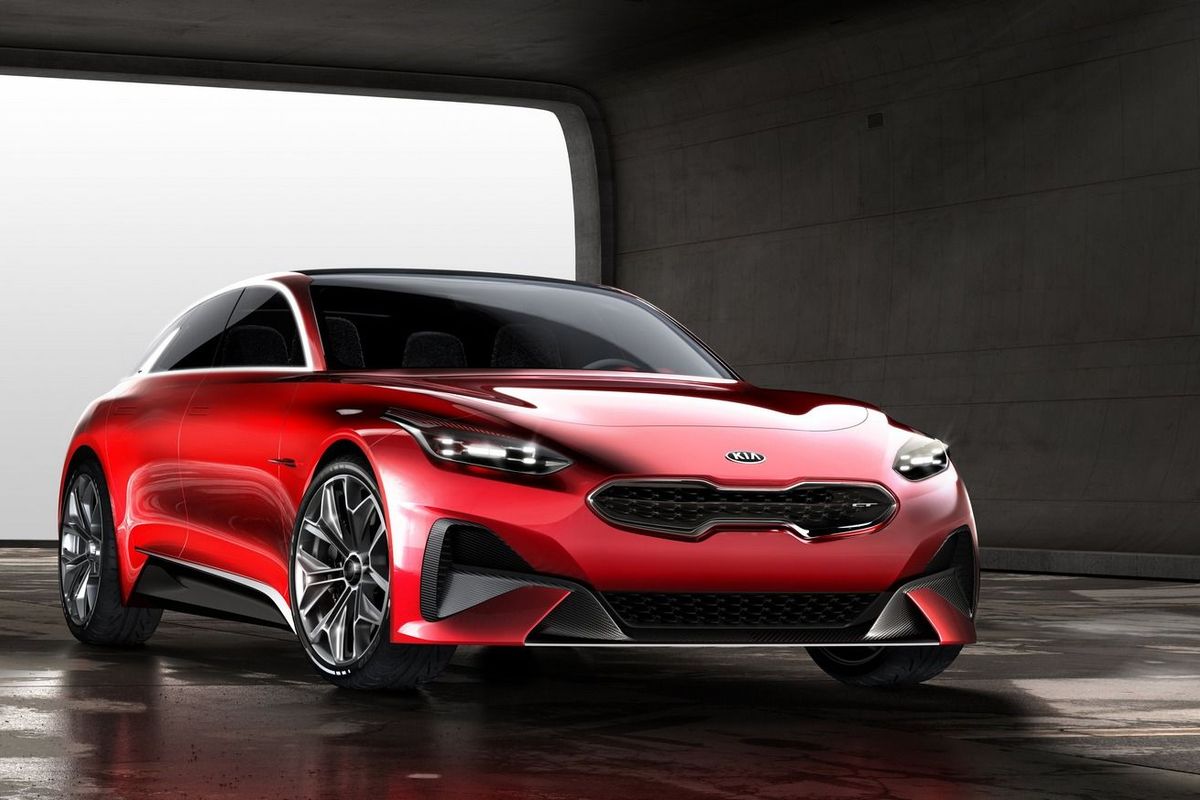
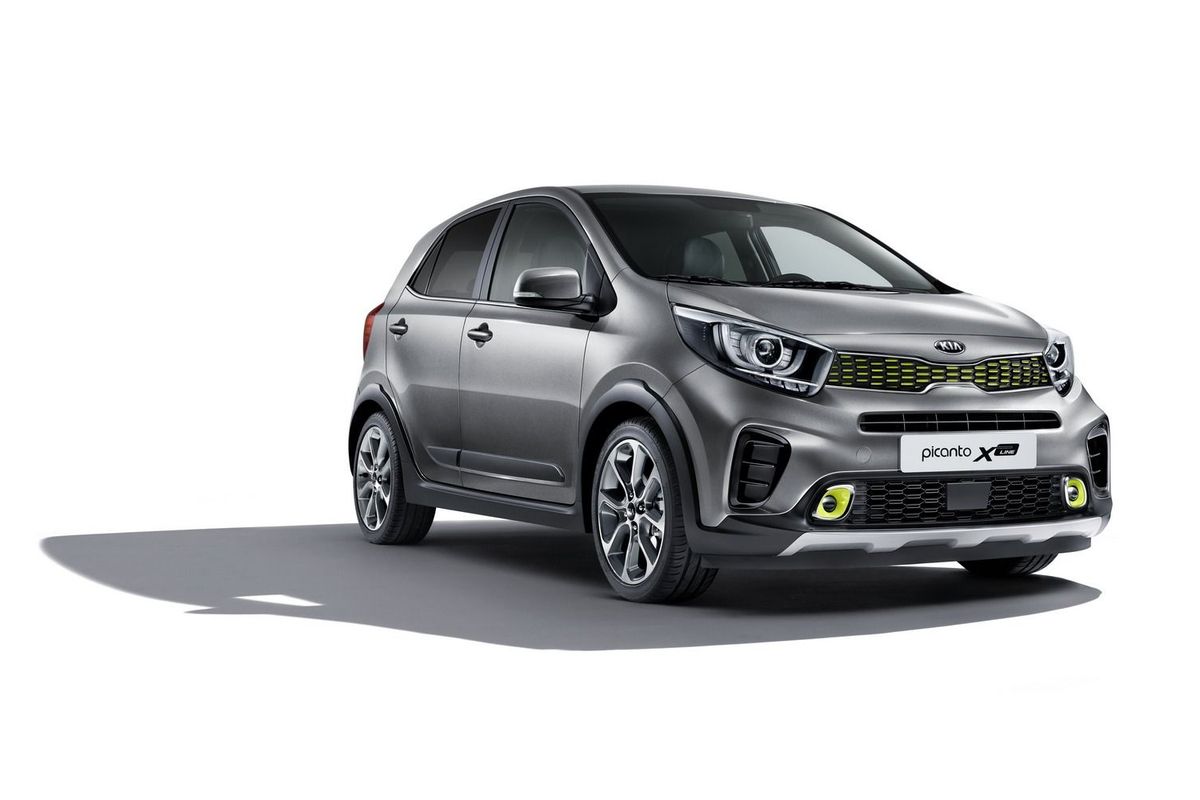
Kia revealed its latest Proceed concept as well as a rugged looking Picanto at the 2017 Frankfurt motor show.
The Proceed is the prelude to the Cee'd, a European hatchback that Kia doesn't bring to SA. It's quite similar to the Cerato in shape and size so sort of makes sense that both models don't overlap in our local market. This concept sees Kia taking the Cee'd into new territory with what it calls an extended hot hatchback.
It's difficult to see how much different it is to a regular coupe, but Kia is convinced that the Proceed concept provides an alternative to customers looking for a sporty 3-door hatchback. Gregory Guillaume, Chief Designer Europe for Kia Motors, commented: "the Proceed Concept represents a bold new vision of how the vibrant soul of the pro_cee’d could be reincarnated and revitalised for a new generation of performance-oriented drivers.”
No other details have been provided about the Proceed other than the Sharkblade bodywork panel at the rear that helps reinforce the roof as there are no B-pillars in the car.
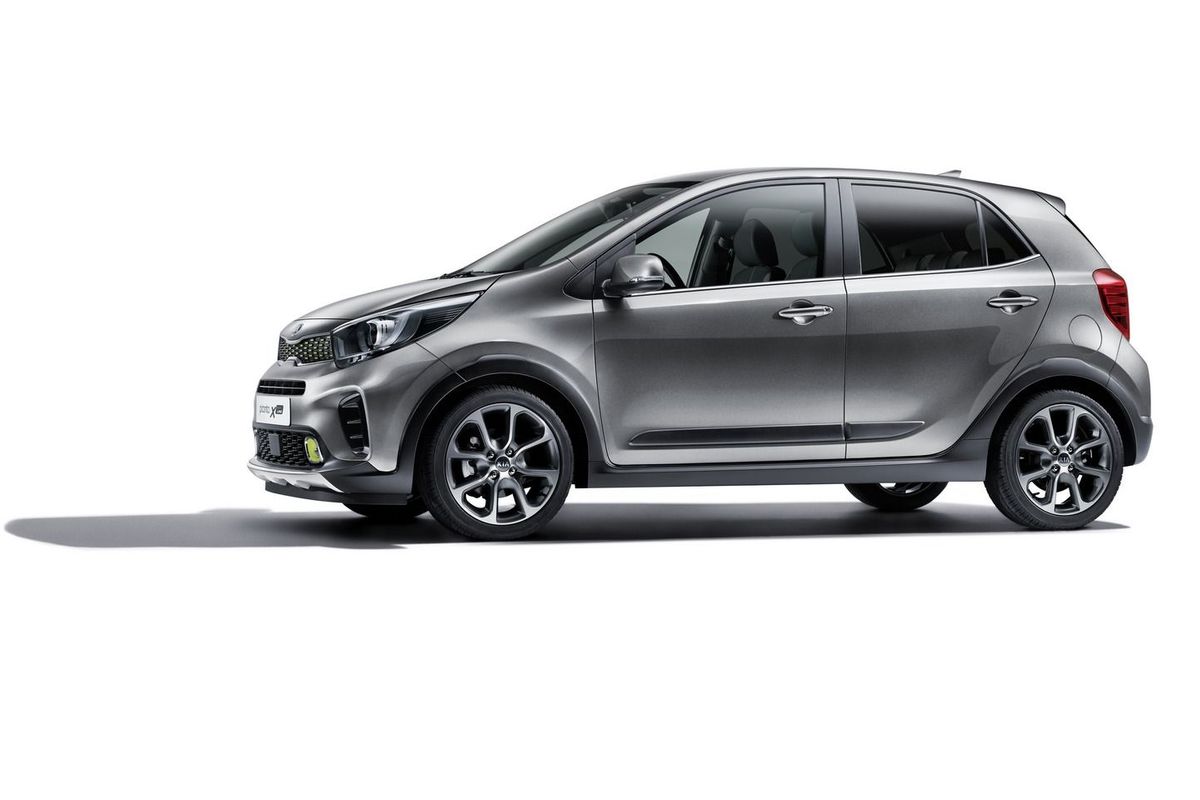
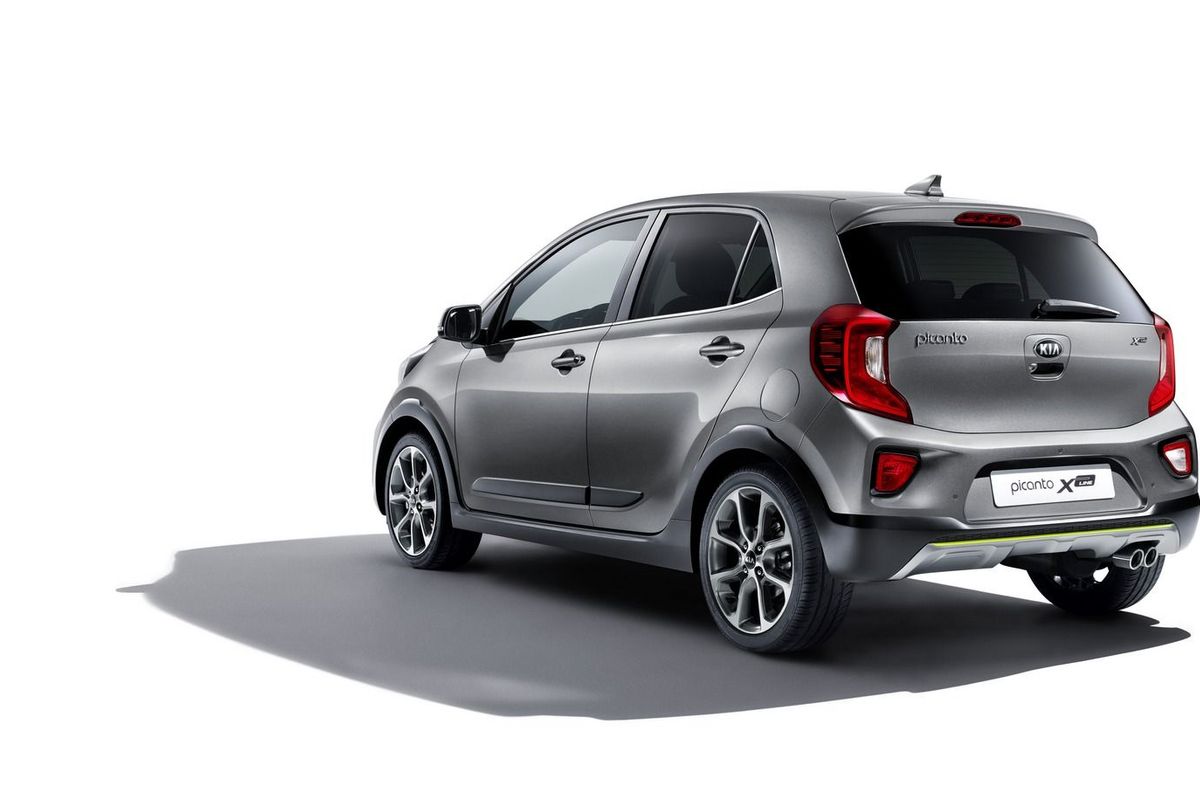
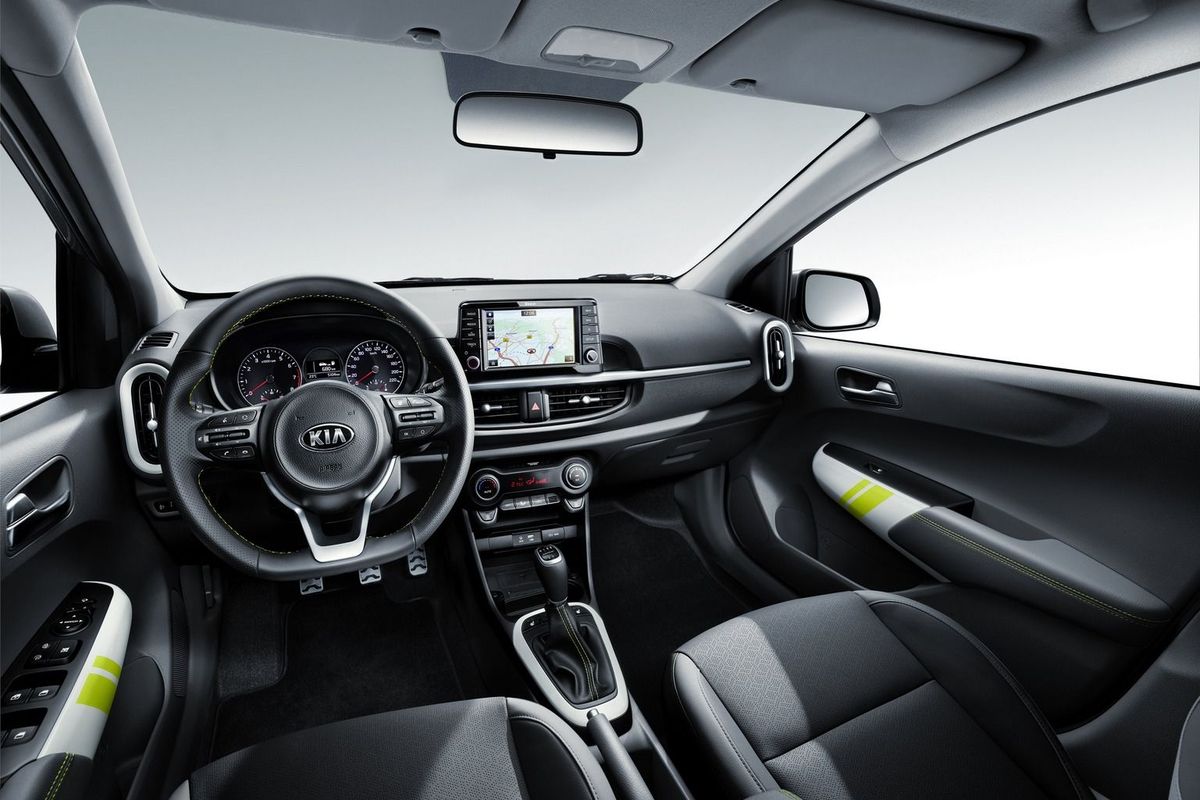
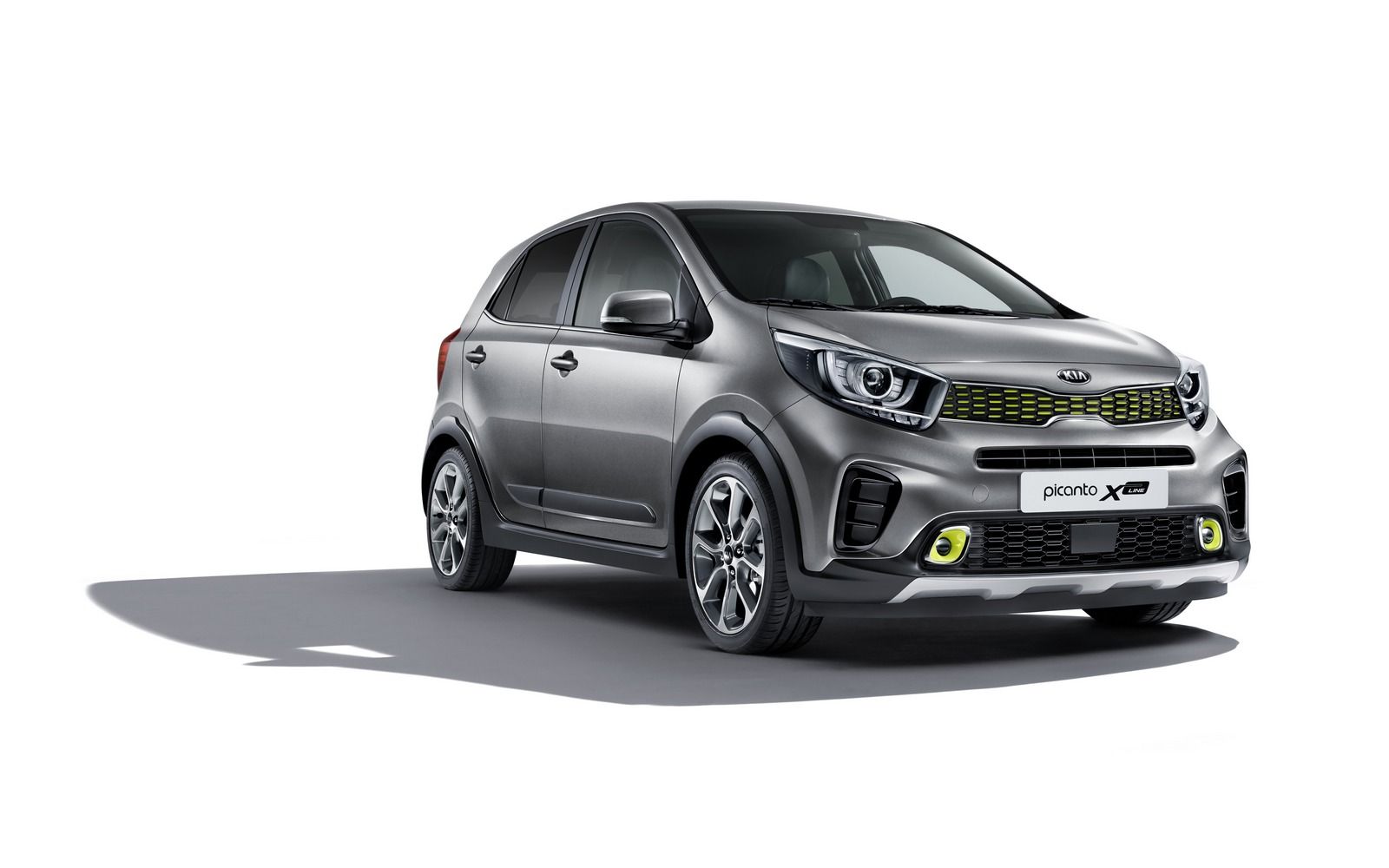
Picanto X-Line
Rugged looking Picanto X-Line is the most powerful Picanto ever.
Taking inspiration from its SUVs, Kia has thrown together a rather rugged looking Picanto for the Frankfurt show. The Picanto X-Line features 15 mm of extra ground clearance and plans to mix it with the likes of the Renault Sandero Stepway and Volkswagen Cross up! The Picanto X-Line also uses Kia's 1.0-litre turbopetrol engine it puts out 74 kW and Kia claims the X-Line is the most powerful Picanto ever. Kia also mentioned that the turbopetrol engine could be used in other variants of the Picanto soon. We'll have to wait and see if this technology filters through to local models in the future.
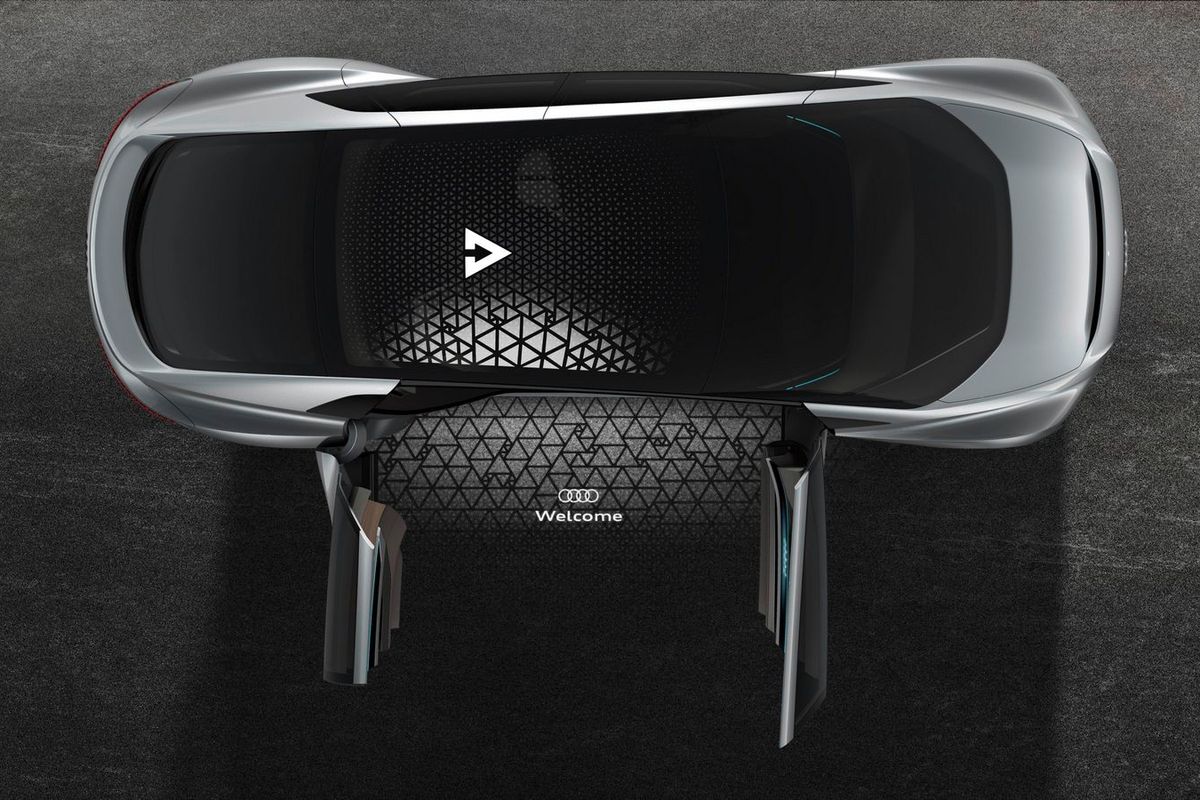
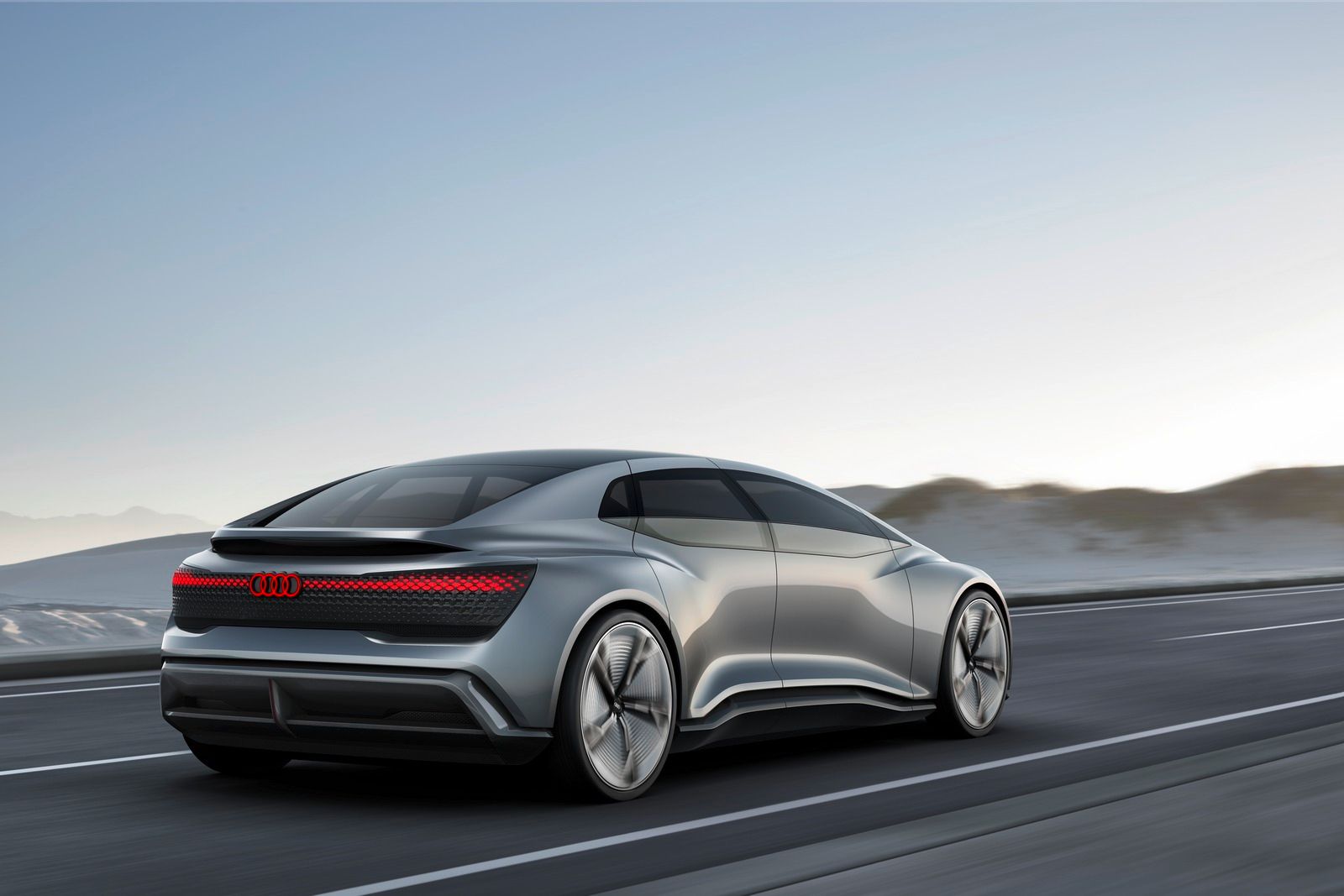
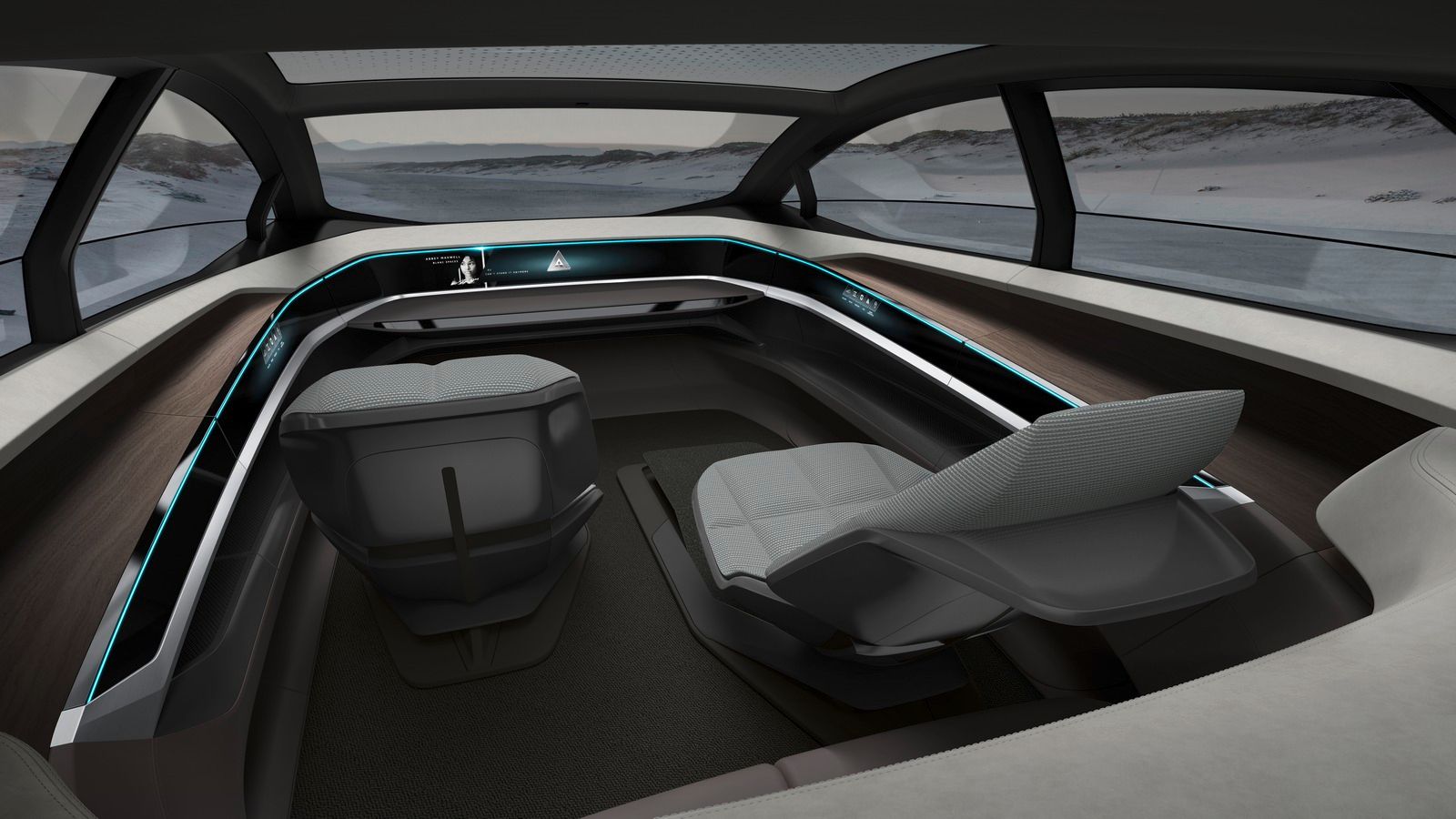
Audi's Aicon concept shows a 2+2 seater future where there's no need for a steering wheel or pedals.
The Audi Aicon was shown the night before the official kick-off to the Frankfurt Motor Show. Audi says the Aicon is a design study that focusses on future initiatives surrounding drivetrain, suspension, digitalization and sustainability in a 'visionary manner'.
Without the need for a steering wheel or pedals, much of the connecting ancillaries can be removed as well. This means Audi has created a car that's considered to be a means of first class autonomous travel.
The autonomous Aicon provides a possible glimpse of what future travel will look like.
As a fully autonomous vehicle, it uses lasers and radar to see where it's going and therefore doesn't have long distance headlights. The vehicle itself is lit up in multiple ways in order for pedestrians to see it as well as to communicate with other vehicles via lighting motions.
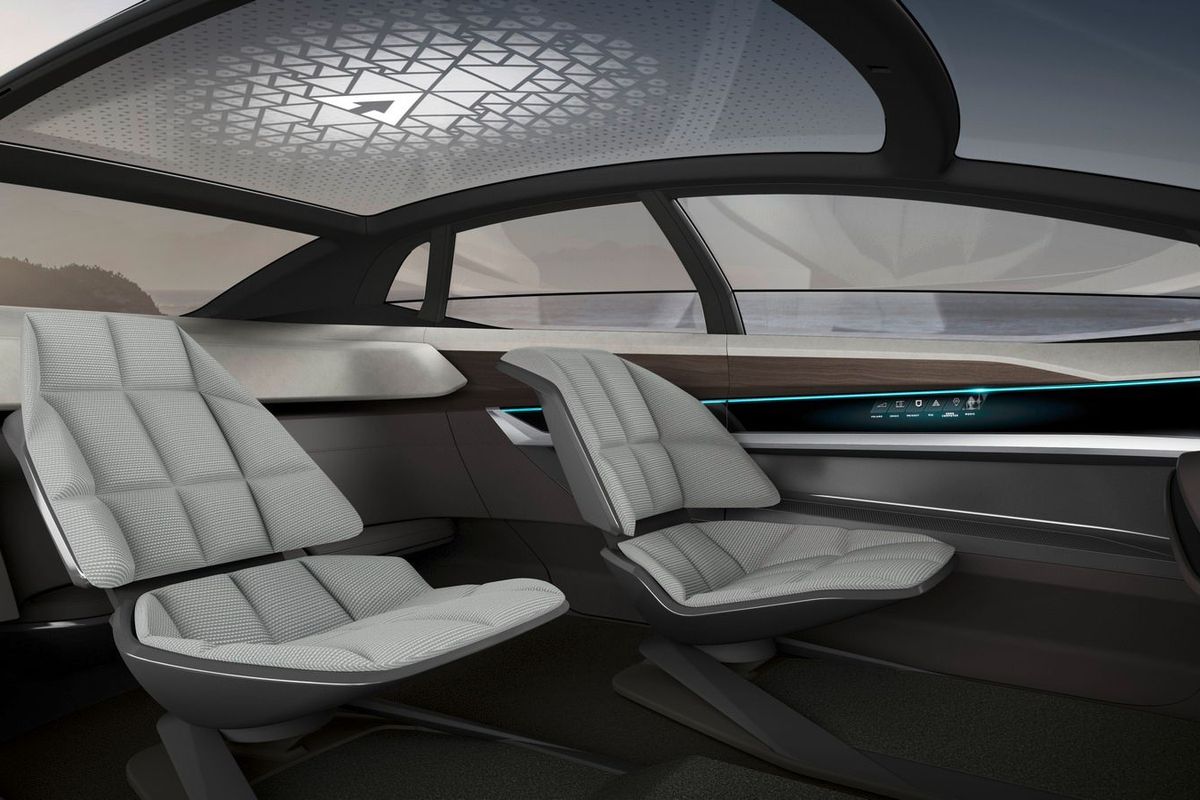
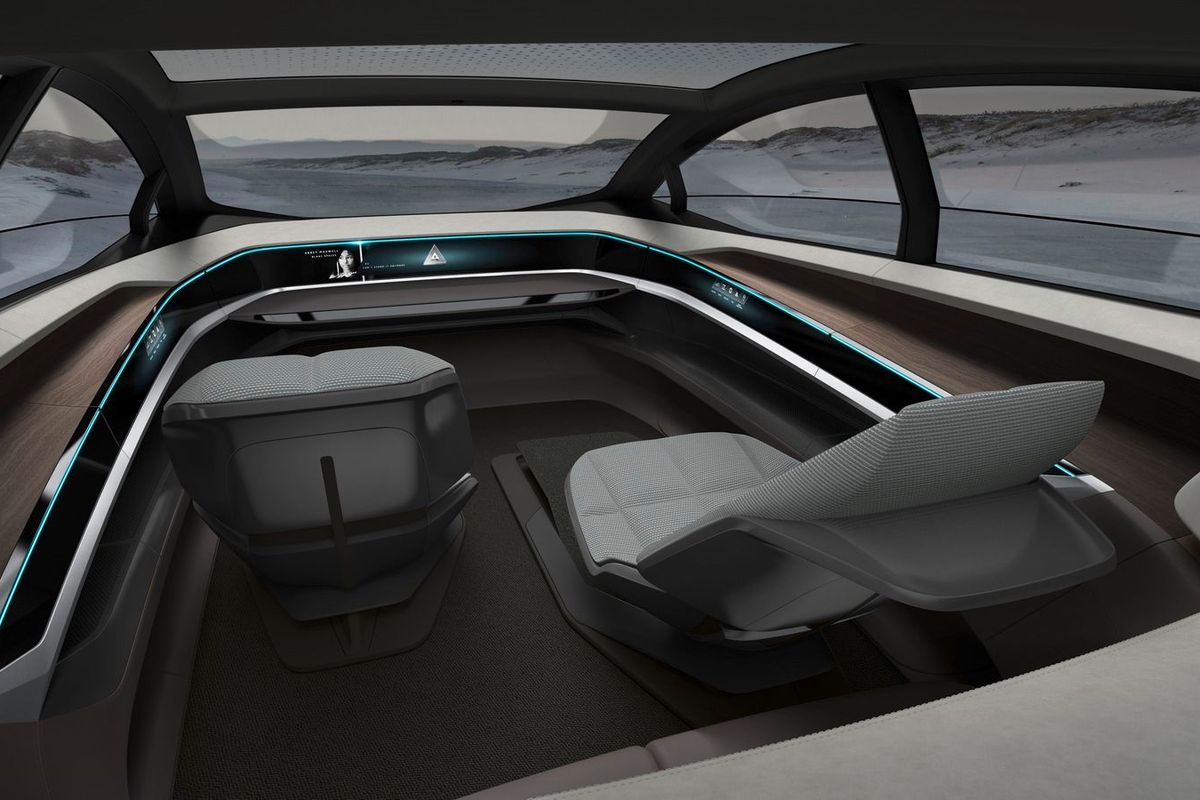
The interior is as much of a tech-fest as the Audi innovators can think of. Haptic screens within the cabin allow passengers to communicate with the car, set a destination as well as browse the web or social media. There's also voice recognition and eye tracking. The Aicon comes with a digital personal assistant that recognises the passenger by their phone and then activates all their favourite settings. The personal assistant is obviously ordered around via voice recognition too.
Electric quattro
The Aicon has no need for traditional driving apparatus and the interior rather serves as a comfortable entertainment cocoon.
Audi has fitted the Aicon with 4 electric motors powered by solid batteries, much more powerful than current lithium-ion batteries. Total power is 260 kW and 550 Nm with each battery powering one wheel. With lightweight material design and improved energy recuperation, Audi sees the Aicon doing around 700 km per charge. The batteries can be charged from zero to 80% in around 30 minutes and can automatically plug itself in without passenger assistance.
Without a steering wheel or need for one, the Aicon is equipped with a complete all-wheel steering system without compromising the available space. Despite its long wheelbase of nearly 3.47 metres, the car is extremely agile due to its two steerable axles – the turning radius of only 8.50 metres is below that of a small car thus making the Audi Aicon suitable for city centre driving.
Luxury BMW models such as the 7 Series, forthcoming 8 Series and X7, i8 and i8 Roadster will wear a new black and white BMW roundel with the company name “Bayerische Motoren Werke” written in full to both recognise BMW's rich history as well as to create a distinct luxury product category.
The new presence for BMW's luxury models will be unveiled at the 2017 Frankfurt Motor Show this week. For BMW, its flagship models embody a new understanding of luxury, "one which brings together an emotionality defined by inspirational aesthetics and the joy of driving with the experience of freedom and self-determined individuality."
Apart from these luxury models wearing a bespoke badge that distinguishes them from the rest of the BMW range, BMW will also focus its attention on nurturing its relationships with customers and their experiences and emotions by offering a special mobility experience through new and unique services. For instance, when your BMW needs a service, BMW will pick up your car and return it to you wherever you are. More than this, BMW will also offer customers the choice to use its other luxury models when they need them. Can't fit all your camping gear into your 7 Series, no problem, use the X7! Thank you, BMW. Want to go for a sporty weekend drive? Sure, take this 8 Series for the weekend. You get the idea…
BMW i8 owners will also be treated to other experiences as part of the BMW i Pure Impulse Experience and these include exclusive sightseeing tours and gala dinners.
"For these people, life is all about making the best possible use of the time available to them. Their motto is ‘to own the moment’ – i.e. to max out every snap-shot of time with meaningful and beautiful things” says Hildegard Wortmann, Senior Vice President Brand BMW.
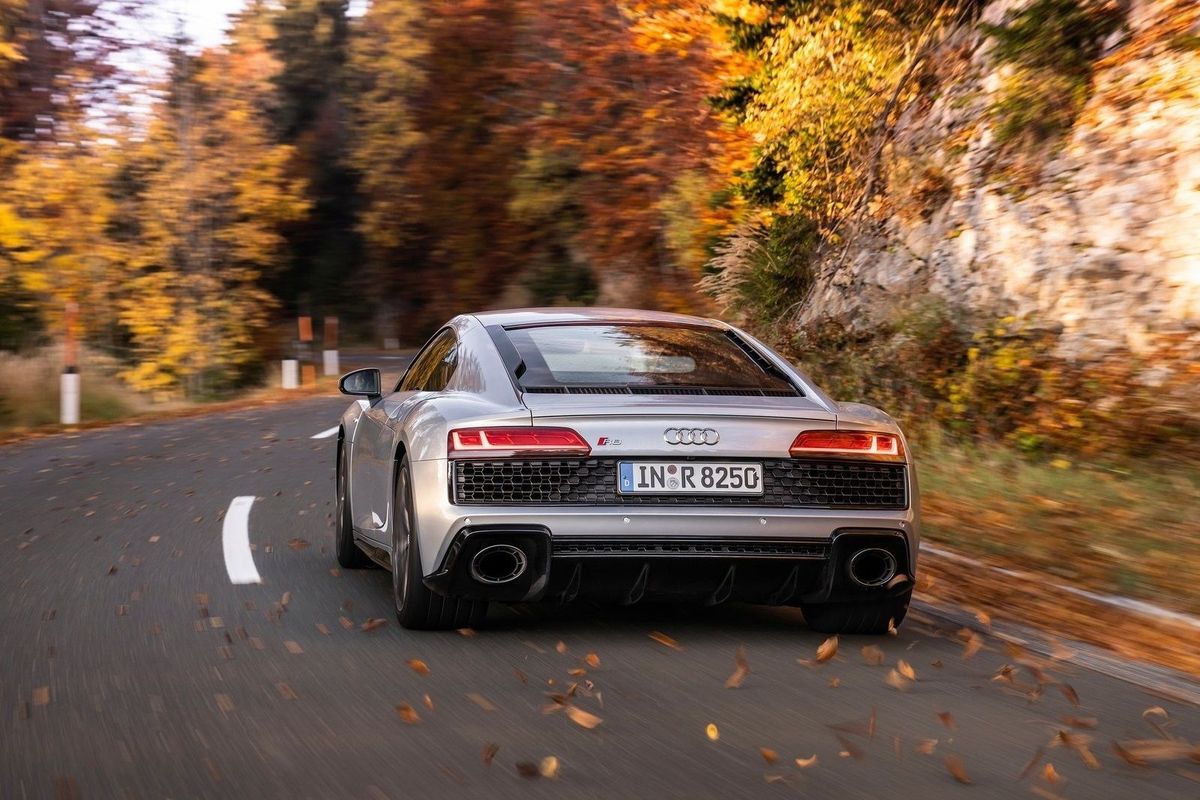
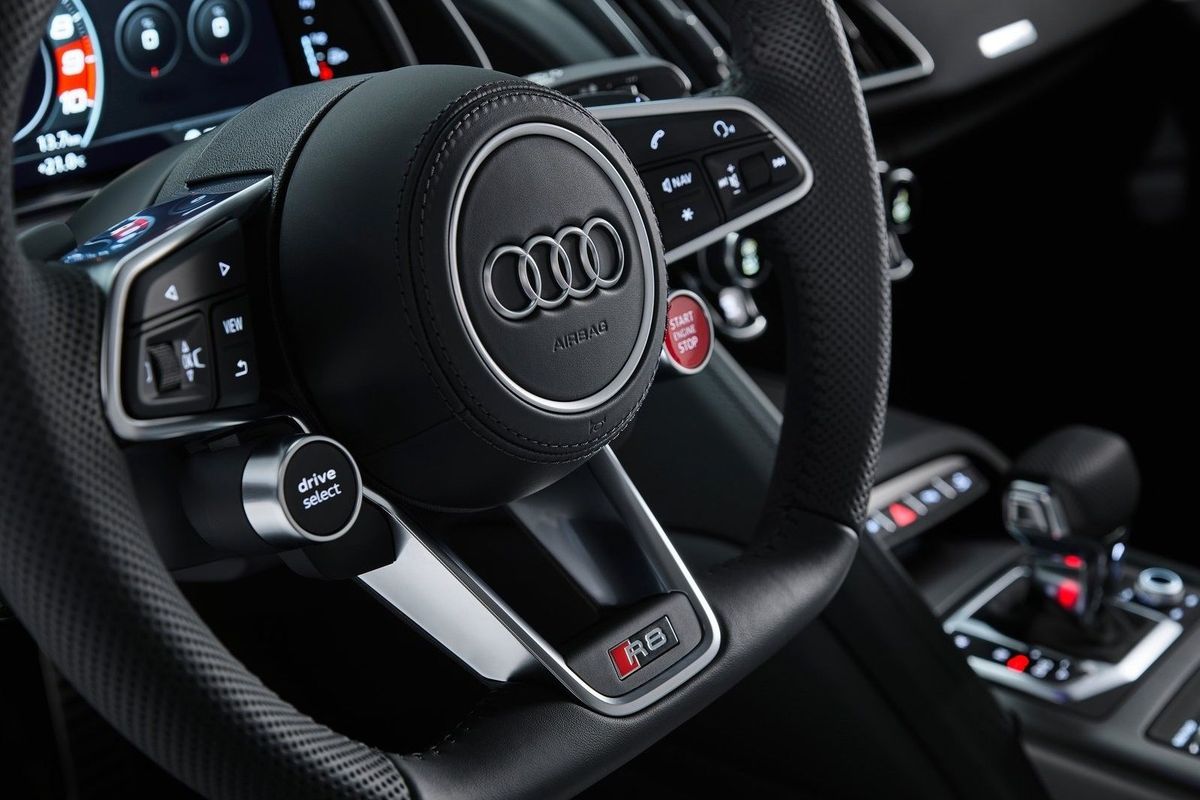
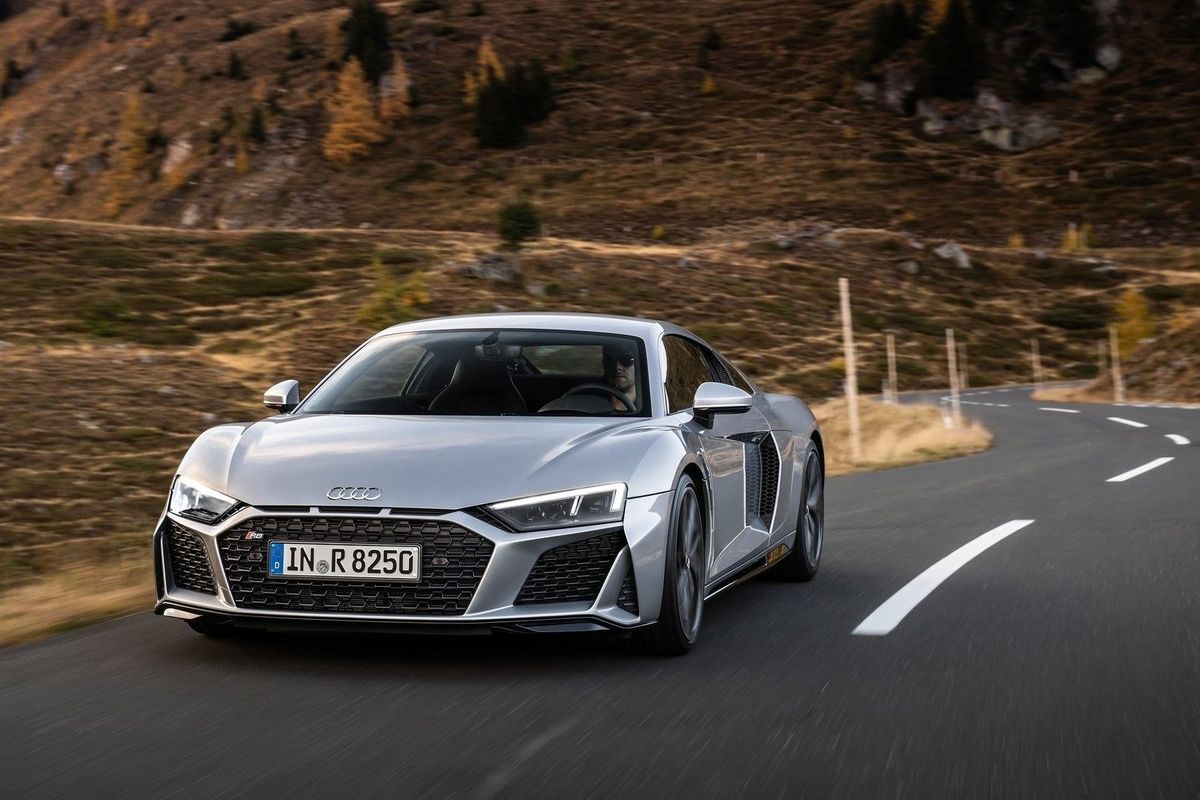
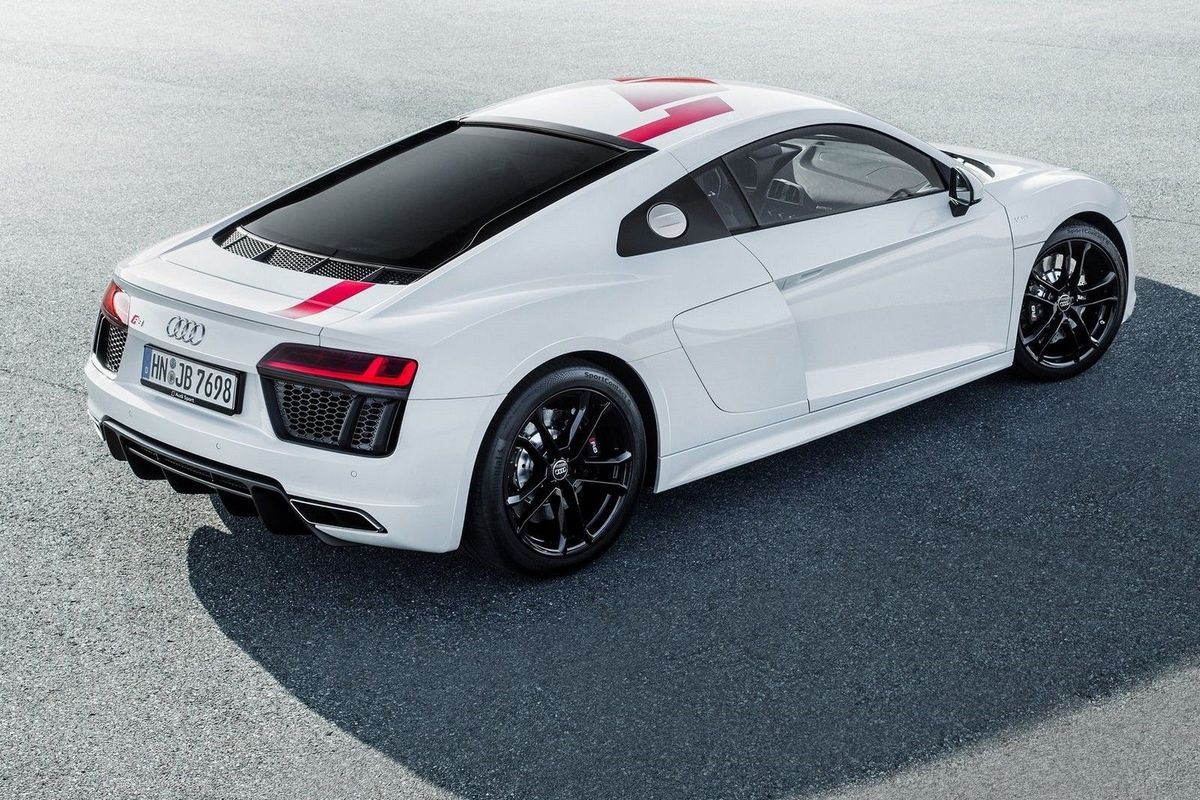
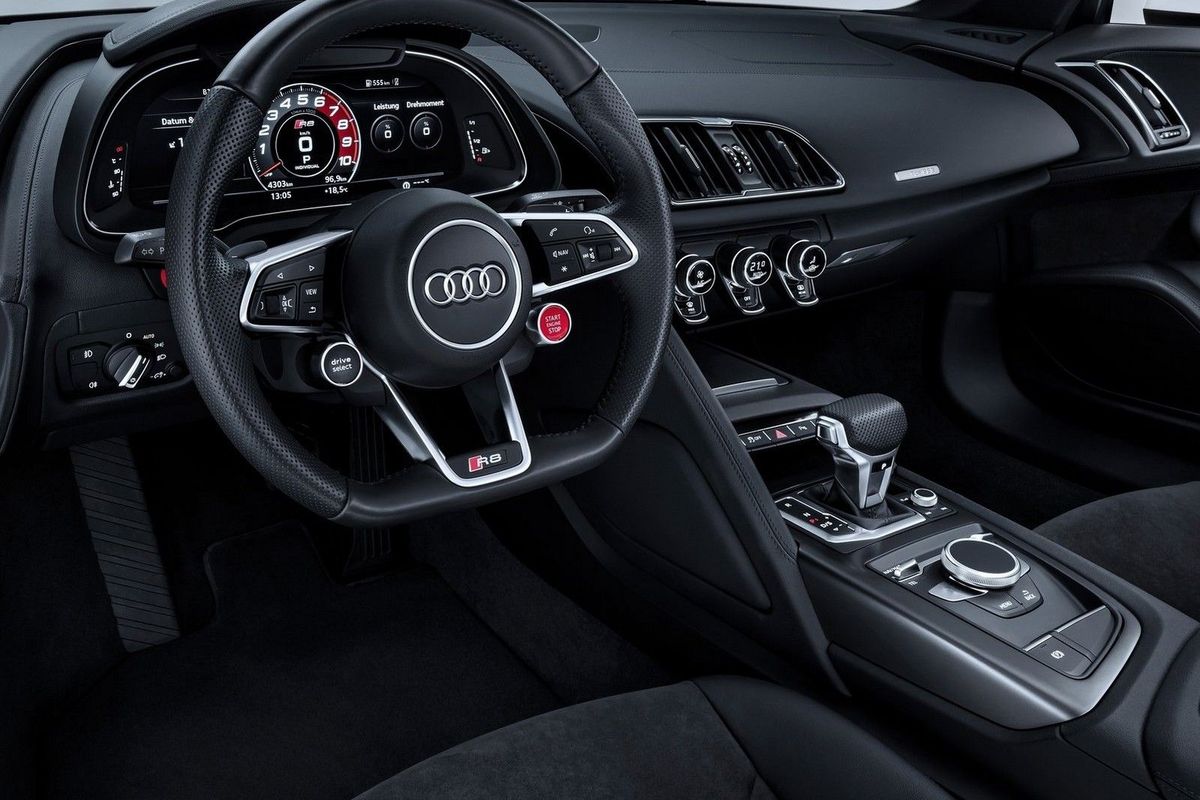
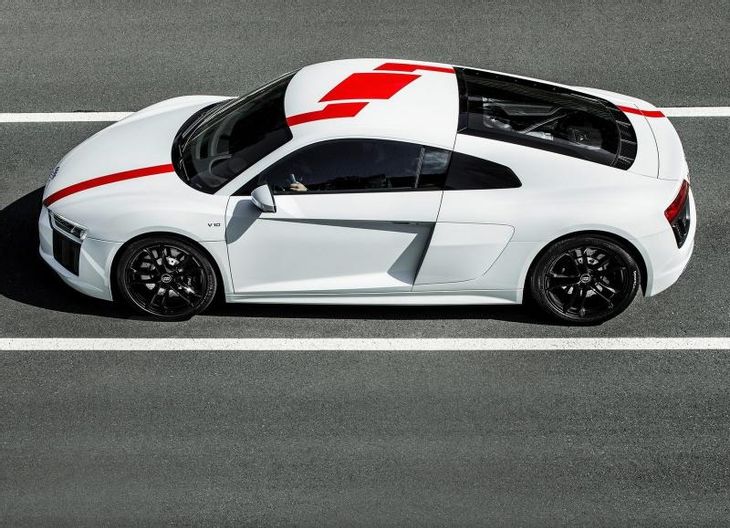
All R8s are quattros, right? Not anymore, Audi's introduced its supercar with rear-wheel drive. What's special about it?
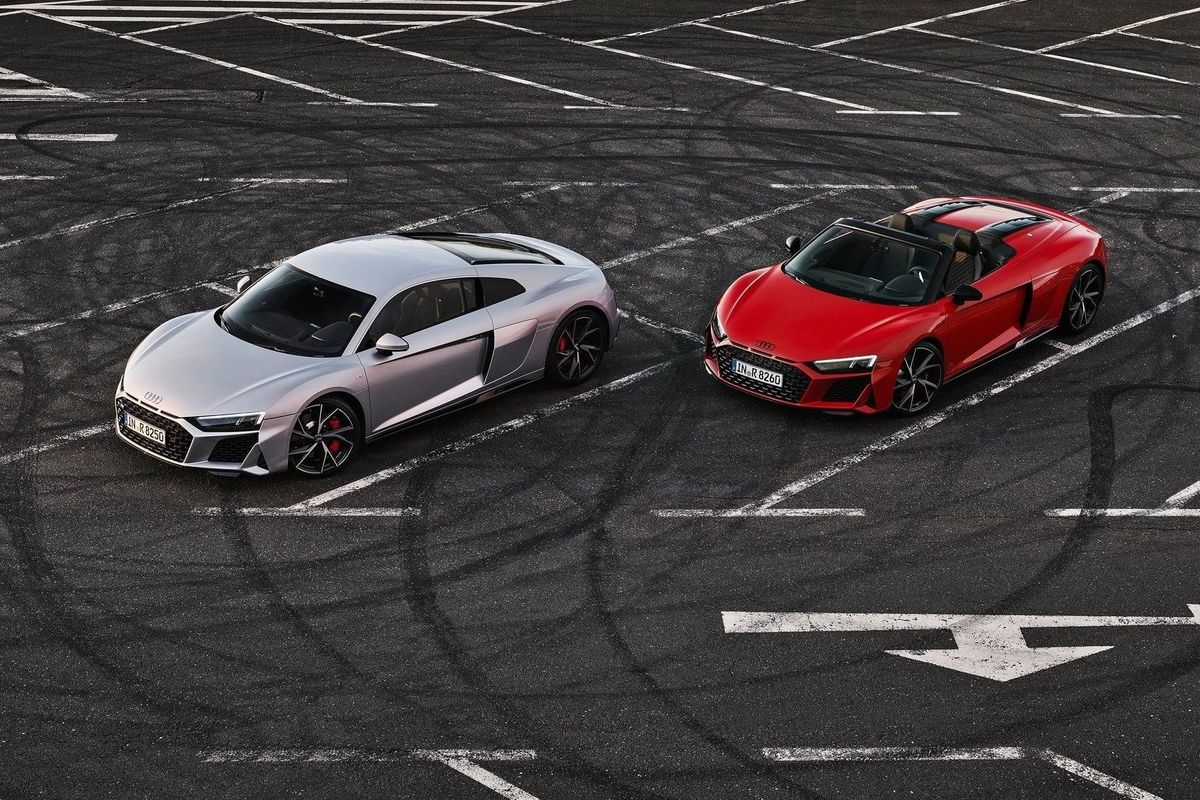
It's called the Audi R8 V10 RWS and it's limited to just 999 units. Both coupe and spyder convertible derivatives will be made available. Visually, it's different to the standard Audi R8 with the addition of matte black detailing, but the real difference lies in the rear-wheel drive setup.
It's a radical departure from the strict "we are quattro" ethos which Audi has adhered to with its sportscars and ex-Lambo boss Stephan Winkelmann, CEO of Audi Sport said, "a limited-edition special model for customers with an appreciation for driving enjoyment, the R8 V10 RWS is an absolutely exclusive offer. With its mid-mounted V10 engine and rear-wheel drive, it brings the driving concept of our R8 LMS racing car to the streets."
Power comes from a 397 kW and 540 Nm naturally-aspirated V10 engine. It'll sprint to 100 kph in a claimed 3.7 seconds for the coupe, while the spyder is 0.1 seconds slower. Both derivatives can achieve top speeds in excess of 300 kph.
For the driving purists, the rear-wheel drive setup now means that some drifting action is now possible. If the driver selects Dynamic mode, controlled drifts are possible with the electronic stability control (ESC) only stepping in at the limit. Deliveries of the R8 RWS will commence at the beginning of 2018. At this stage, it's unknown if the Audi R8 RWS is confirmed for South African introduction, however.
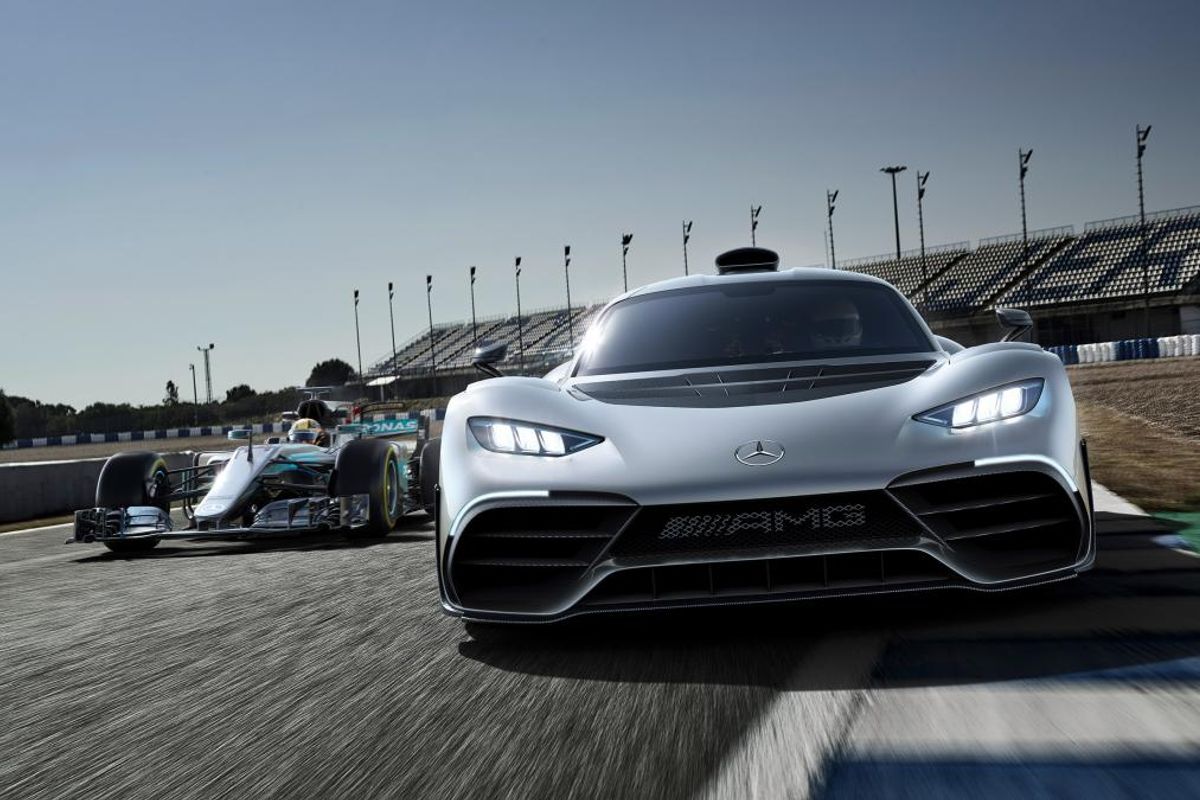
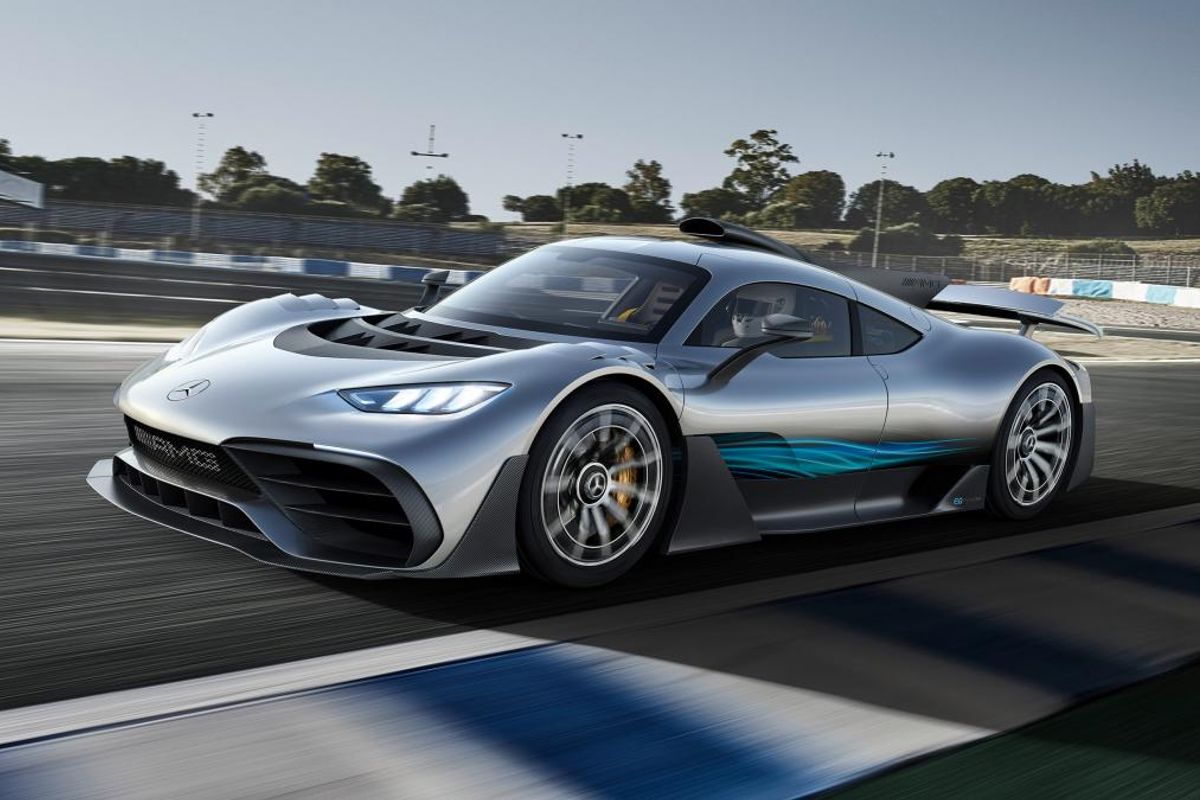
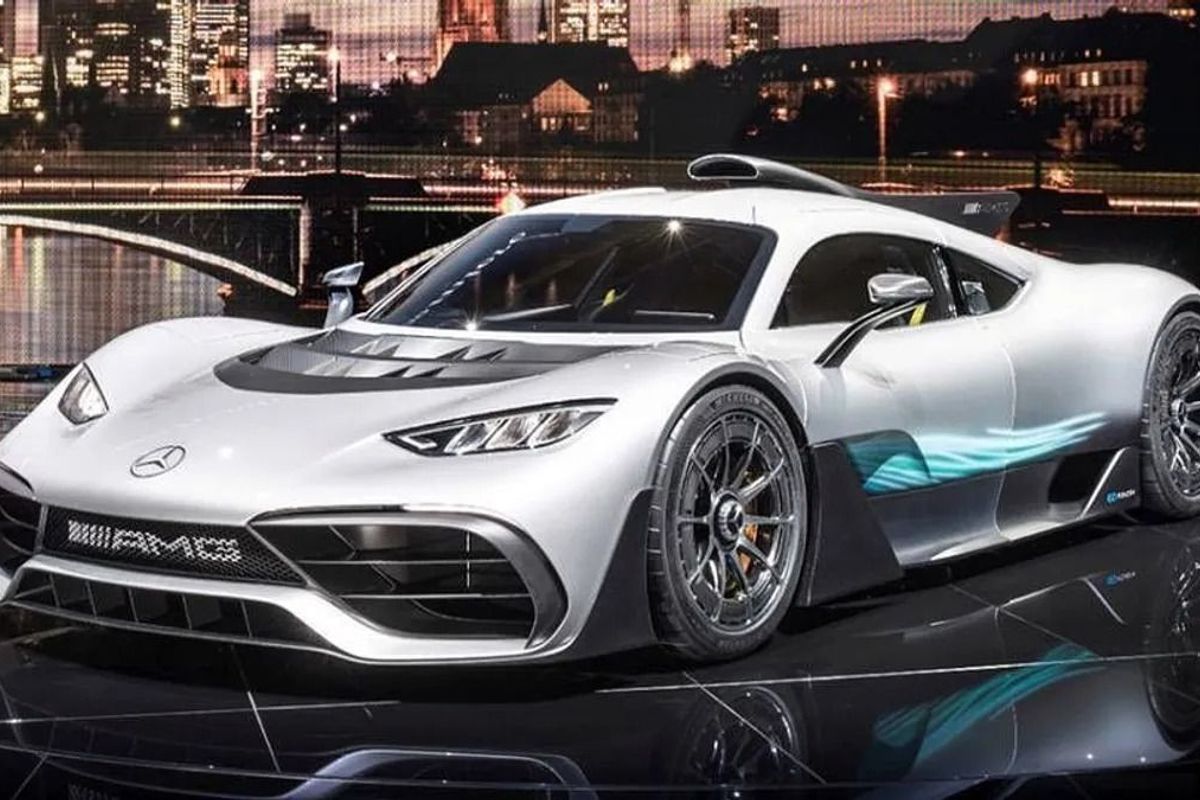
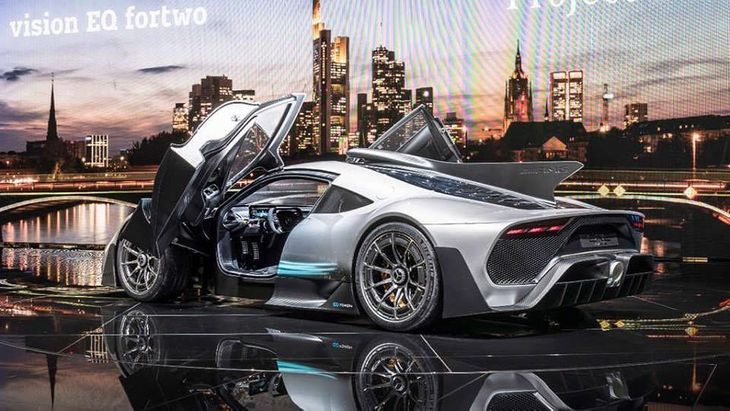
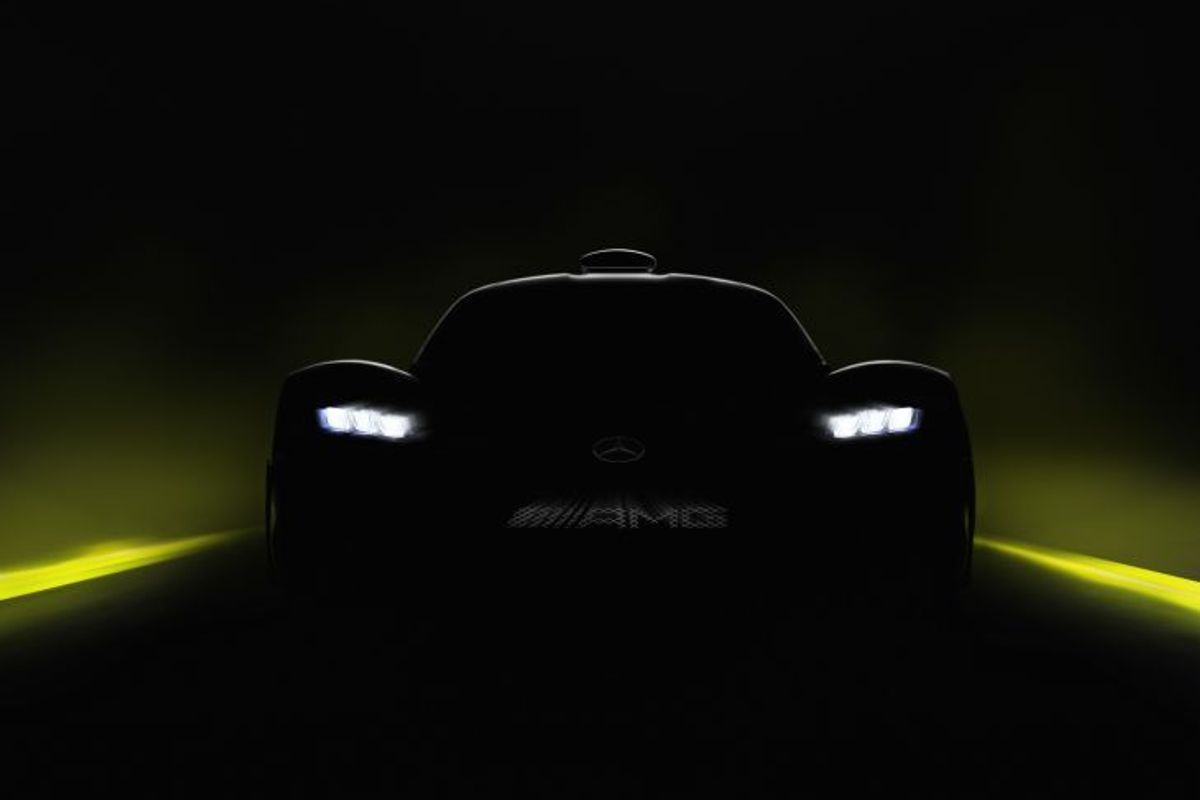
On the eve of the 2017 Frankfurt Motor Show, Mercedes-AMG has revealed its hugely-hyped Project One hypercar. Featuring hybrid and Formula One technology, this beast is capable of outrageous performance. Let's see what it's all about. This is a breaking news story and will be updated as more details emerge.
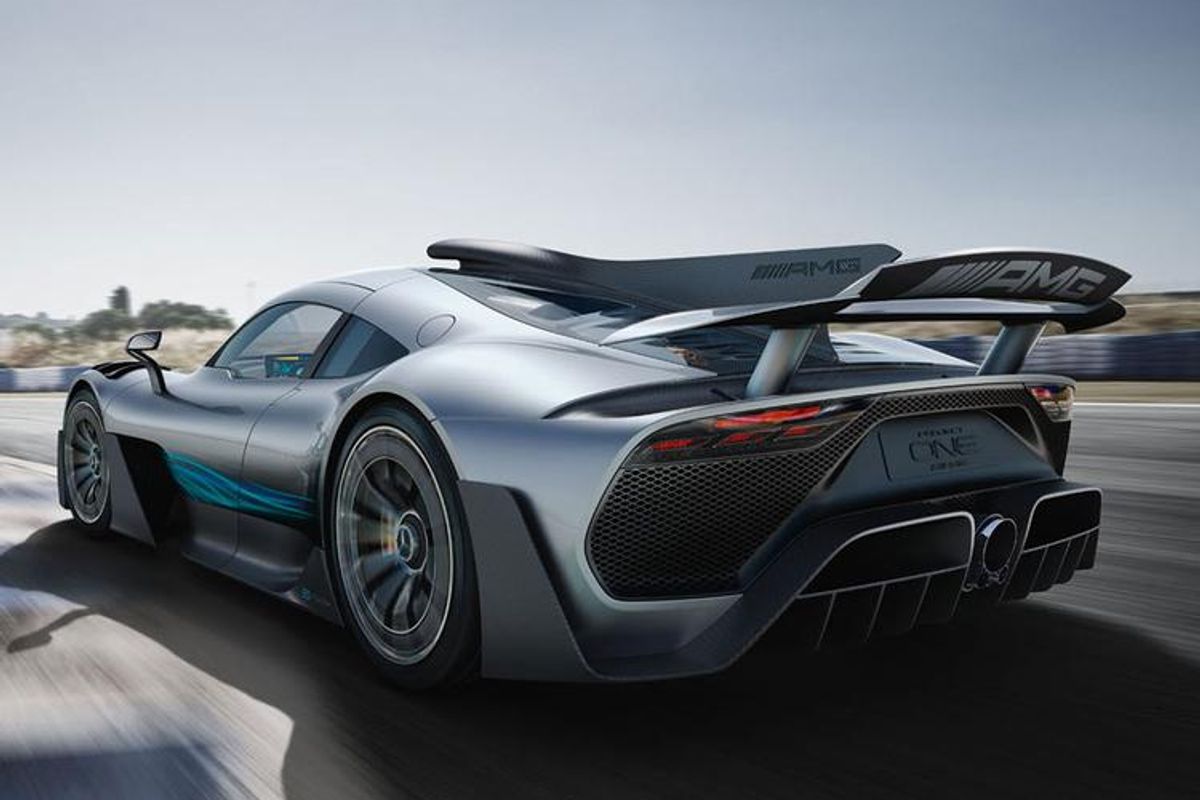
After a few teasers, the Mercedes-AMG Project One has finally been revealed. It looks like a road-going Le Mans prototype racecar and it certainly has the performance to match. This car, when it goes into production, will be a rival to the McLaren P1, Porsche 918 and Ferrari LaFerrari. Also bear in mind that Aston Martin is developing a hyper car.
Powertrain and Performance
The Mercedes-AMG Project One is powered by a hybrid powertrain comprising an F1-sourced, turbocharged 1.6-litre V6 engine from the championship-winning WO7 Hybrid, coupled with a “purely electric and wheel-selective front axle drive concept”. The engine will idle at 4 000 rpm and will redline at an eye-watering 13 500 rpm. According to reports, the engine will be good for at least 50 000 km before needing a rebuild, which is probably alright, seeing as most hypercars do so little mileage.
The engine will work in conjunction with 2 electric motors. The first 80 kW electric motor is tasked with keeping the turbocharger on the boil at all times while the second 120 kW motor is linked directly to the crankshaft. An additional 2 electric motors at the front axle will allow for pure electric driving with a range up to 24 km on electric power alone. Essentially, we're looking at a vehicle powered by five engines!
In terms of performance, we're looking at outputs of around 760 kW (1000 hp). With power going to all four wheels, acceleration off the line promises to be brisk with a claim of 2.5 seconds to complete the 0-100 kph run. Perhaps more impressive is the 0-200 kph time of just under 6 seconds.Top speed? 350 kph. While it's no Bugatti Veyron/Chiron top-end slayer, we predict that the instant torque offered by the electric motors means it'll leave pretty much everything behind when it comes to in-gear acceleration.
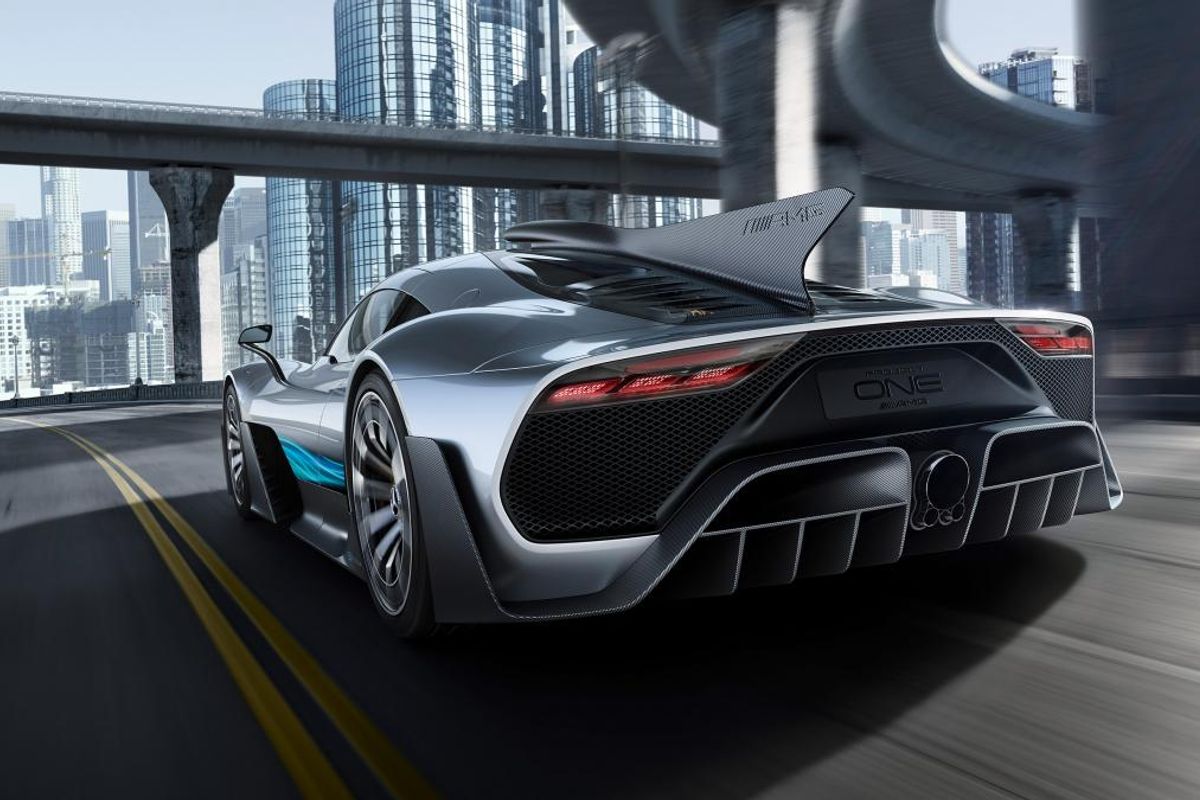
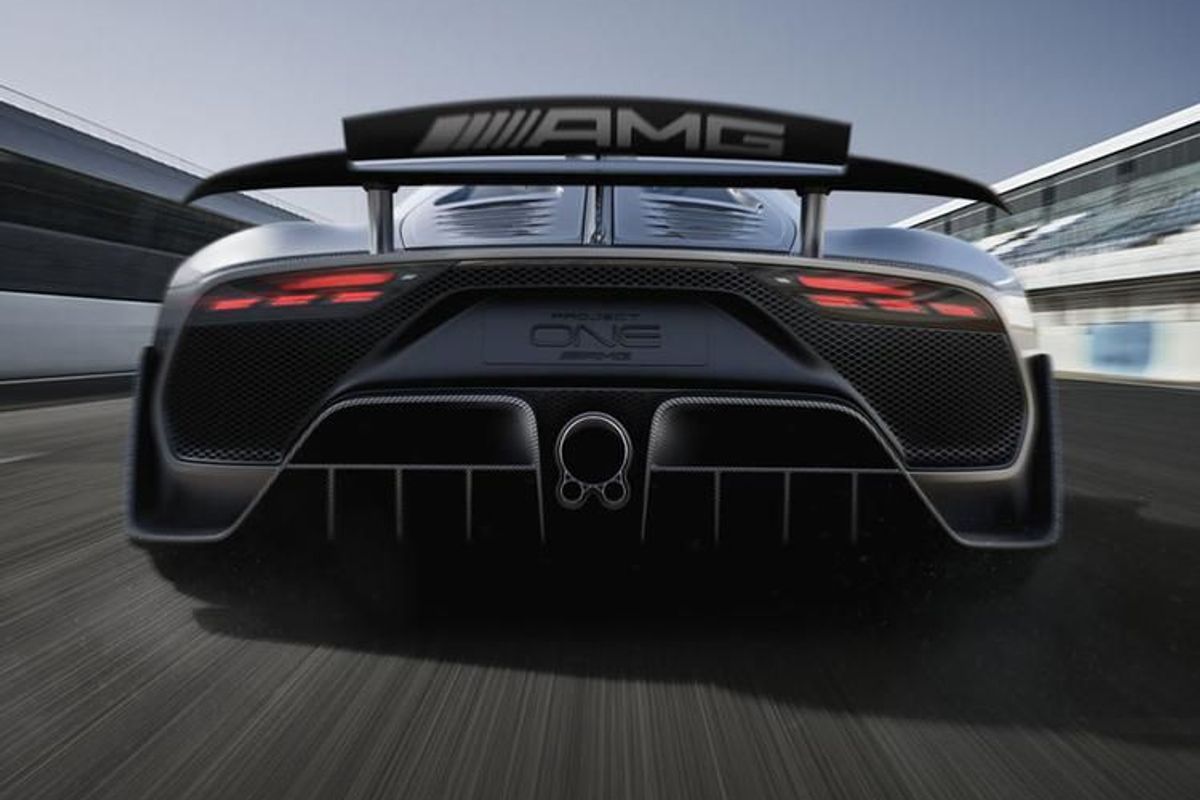
Mercedes-AMG Project One: Note the copious amounts of aerodynamics wings and fins.
The Cabin
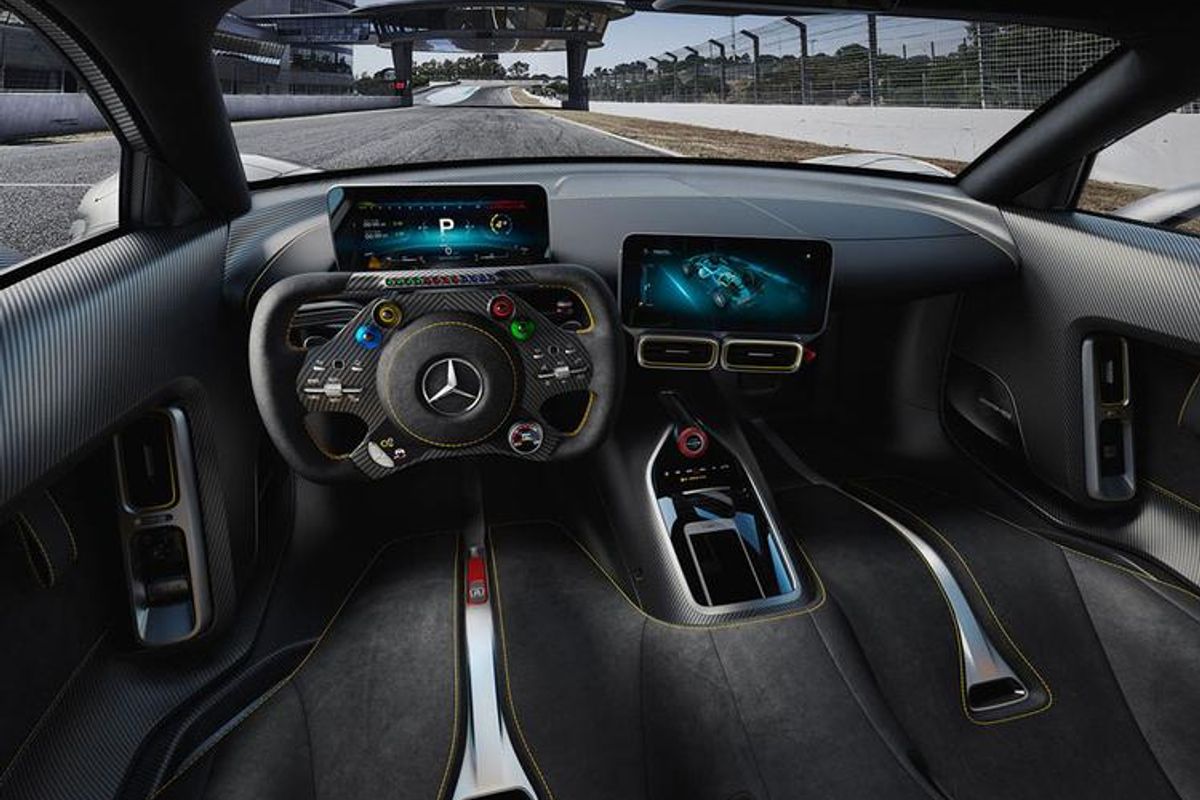
When you step into the cabin of the Mercedes-AMG Project One, there is a distinct air of minimalism. It's a strict two seater. The ergonomics and features are purely driver-focused and the majority of the controls have been placed on an F1-style steering wheel. There's extensive use of carbon fibre and the rectangular steering wheel looks radical.
Can you get one?
No, we're afraid not. All 275 units were sold before this announcement and customers are reportedly paying up to 2.2 million Euros for a Mercedes-AMG Project One. The first deliveries will be in 2020.
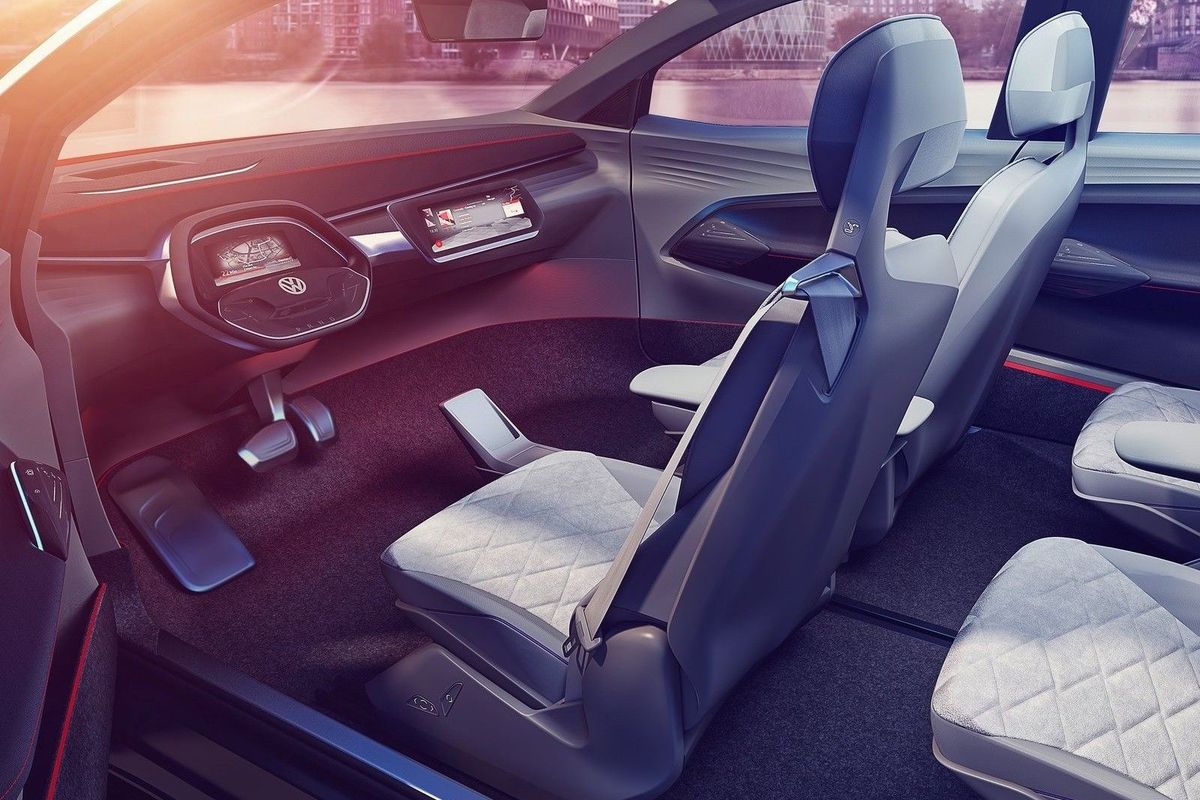
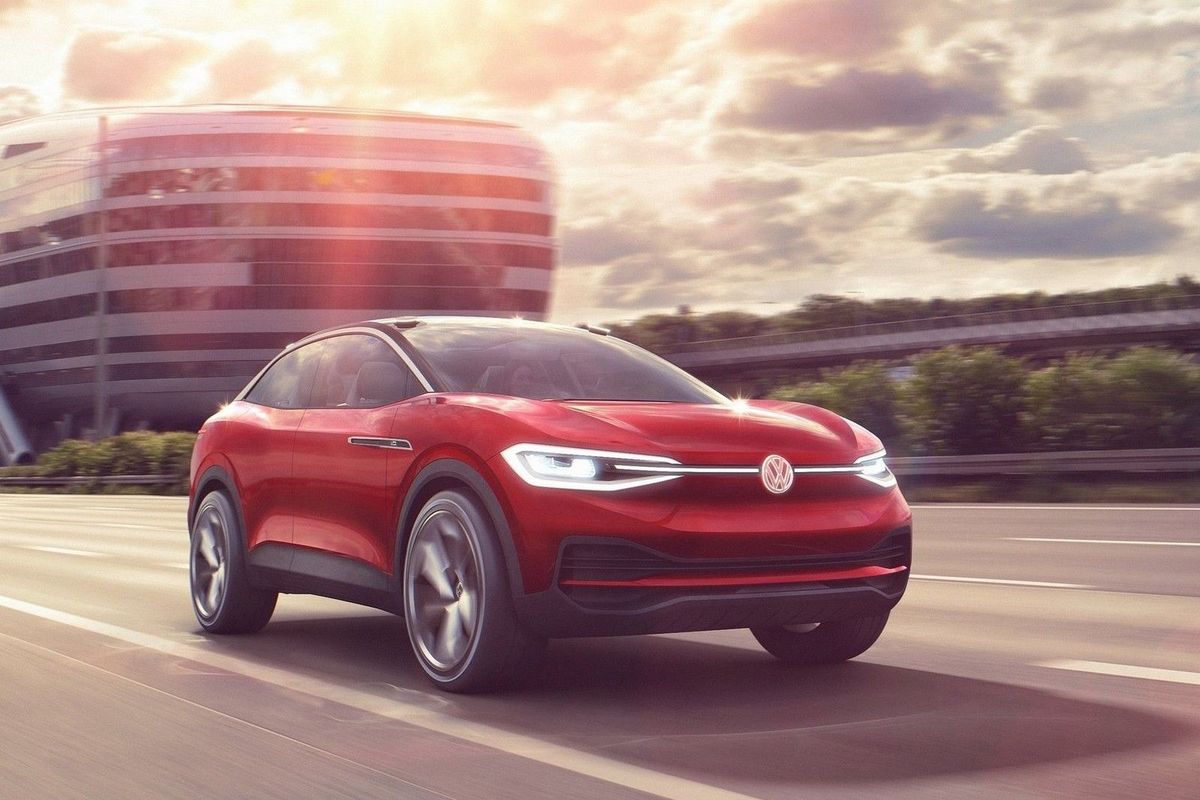
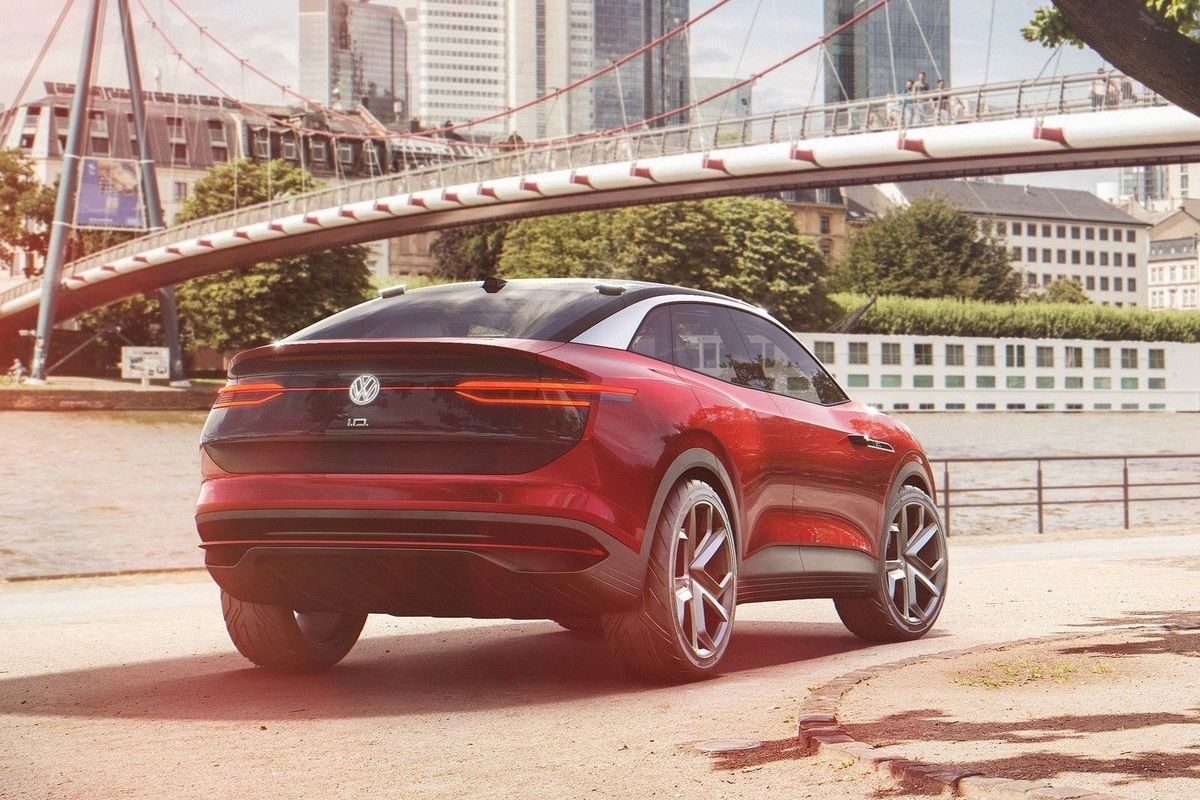
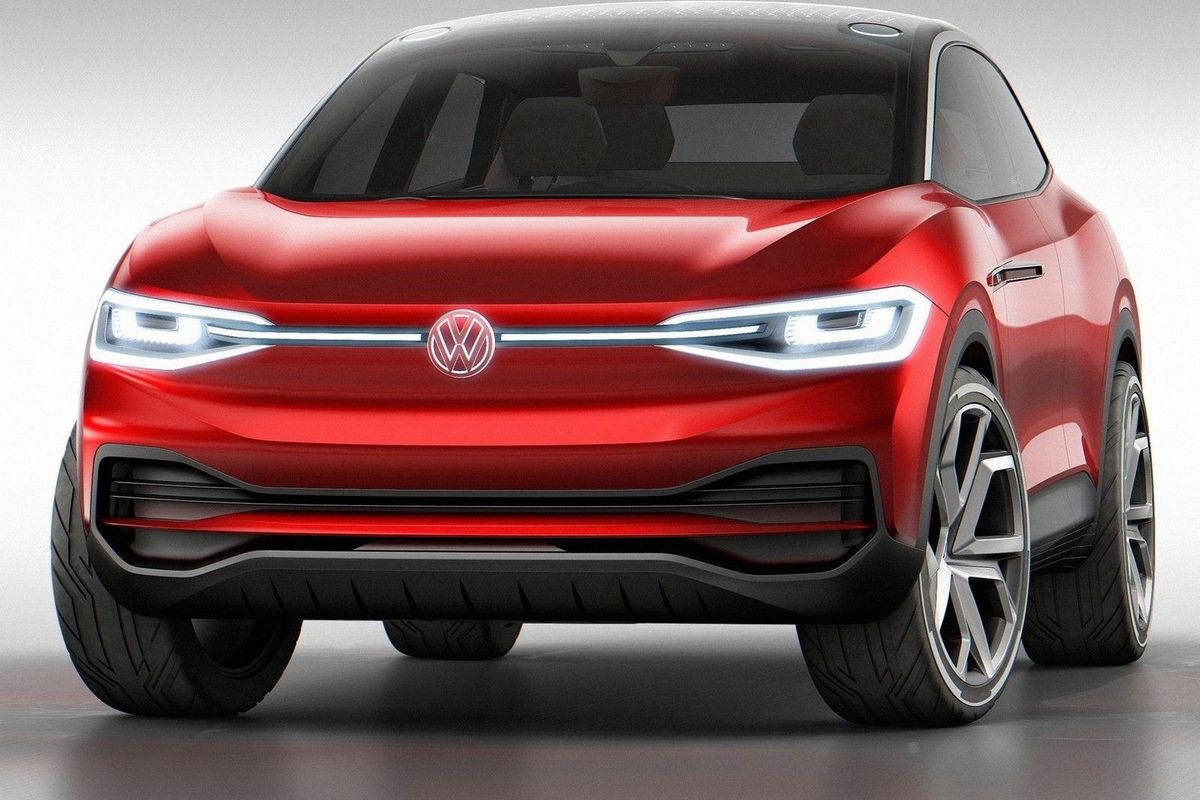
ID Crozz II Concept expands Volkswagen’s electric plans
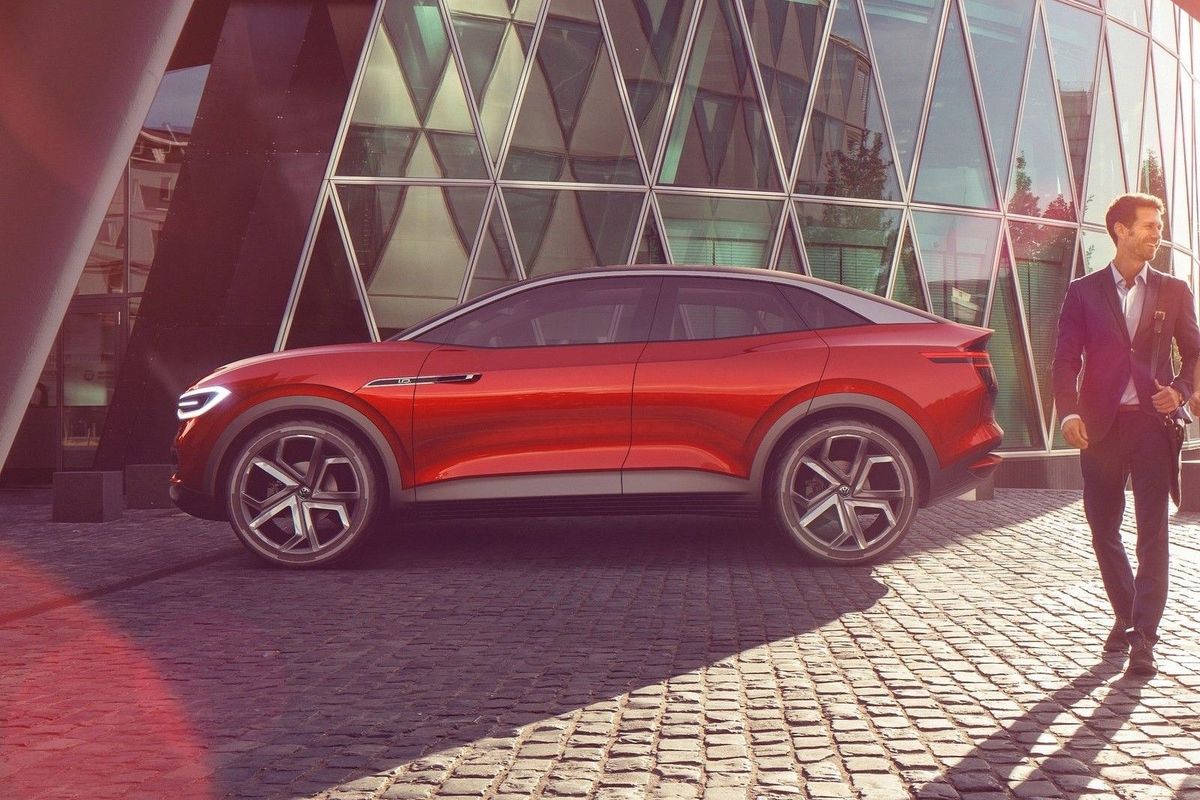
Volkswagen has unveiled the 2nd version of its zero emission SUV, called the I.D. Crozz II. It's another step in the electrification journey for Volkswagen as the brand aims to offer both electric vehicles and SUVs. It's set to go into production in 2020.
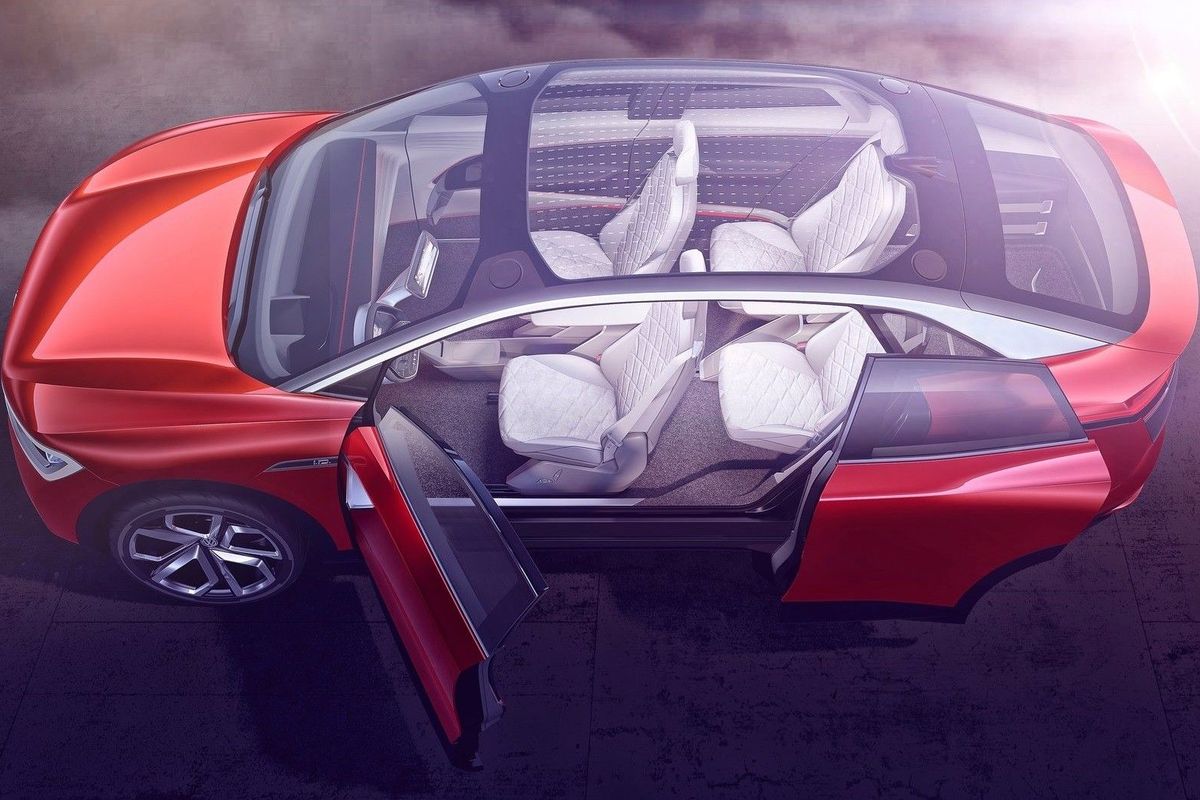
The first version of I.D. Crozz was first seen earlier this year in Shanghai. Now it has been further refined and with a new lick of paint and a tweaked interior, we get to see I.D. Crozz II. In terms of design, we're looking at an SUV combining with a 4-door coupe. Under the sheet metal it features numerous innovative technologies such as interactive voice control to open the doors and to activate the autonomous I.D. Pilot mode.
Volkswagen claims that I.D. Crozz II is a sporty zero-emission vehicle and it features an electric 4Motion all-wheel drive setup. Power is claimed to sit at 225 kW and it has a top speed of 180 kph.
On a single charge, it has a range of up to 500 km and the lithium ion battery has an energy capacity of 83 kWh. The battery is cleverly placed under the vehicle floor, which creates cabin space and lowers the centre of gravity, which in turn improves the handling. With a planned production version launch target of 2020, I.D. Crozz II forms an important part of both Volkswagen's electric strategy and its SUV campaign.
General Tire rolls out rugged new rubber [with Video]
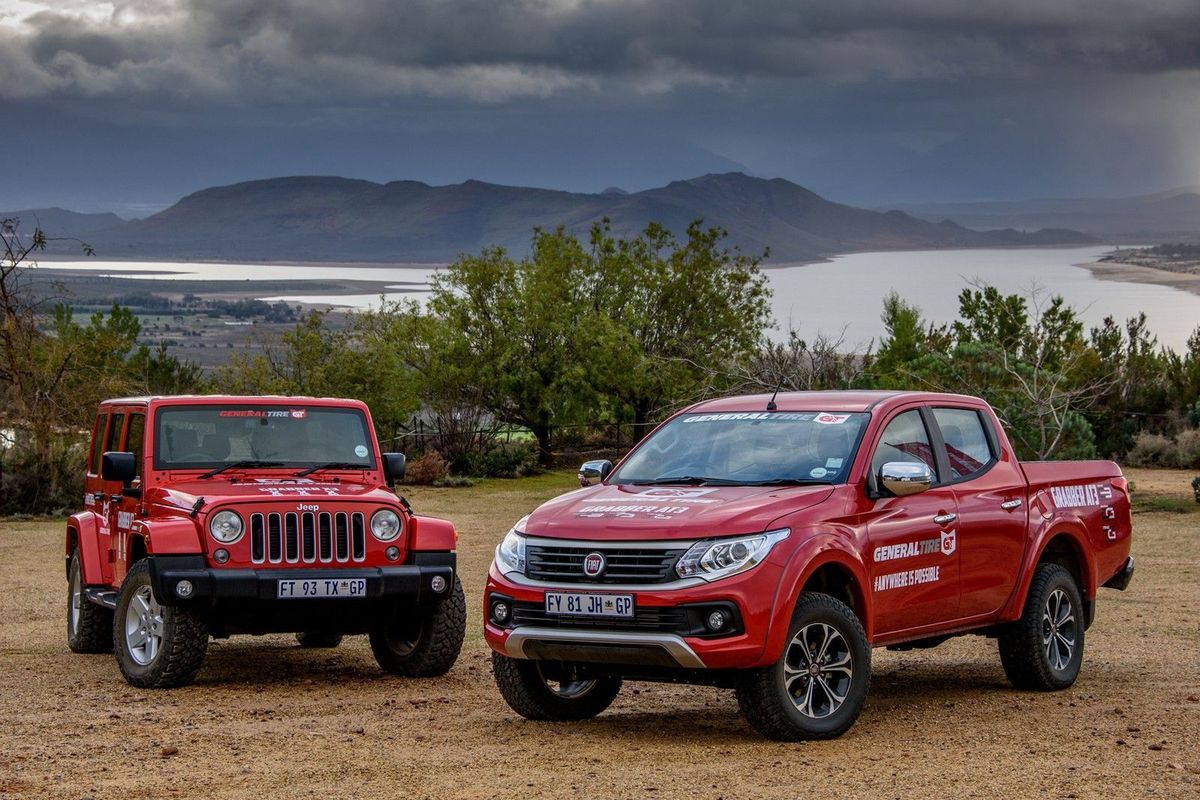
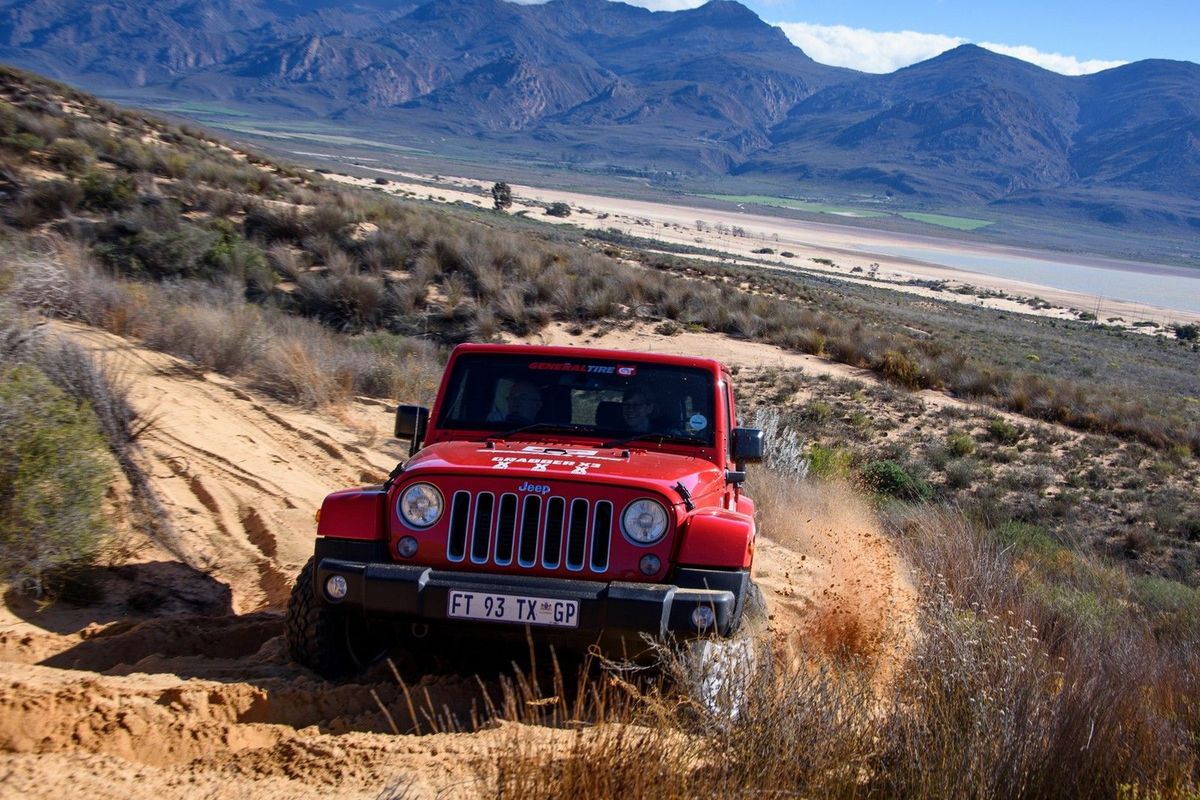
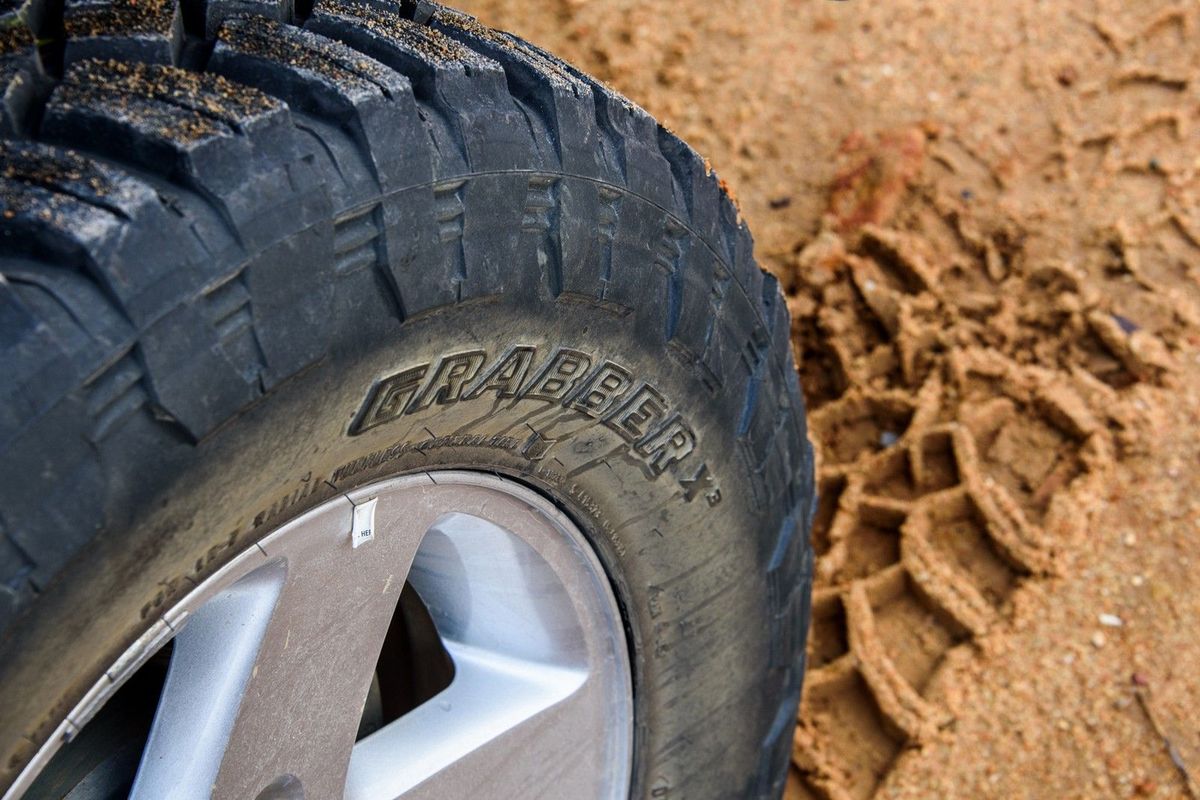
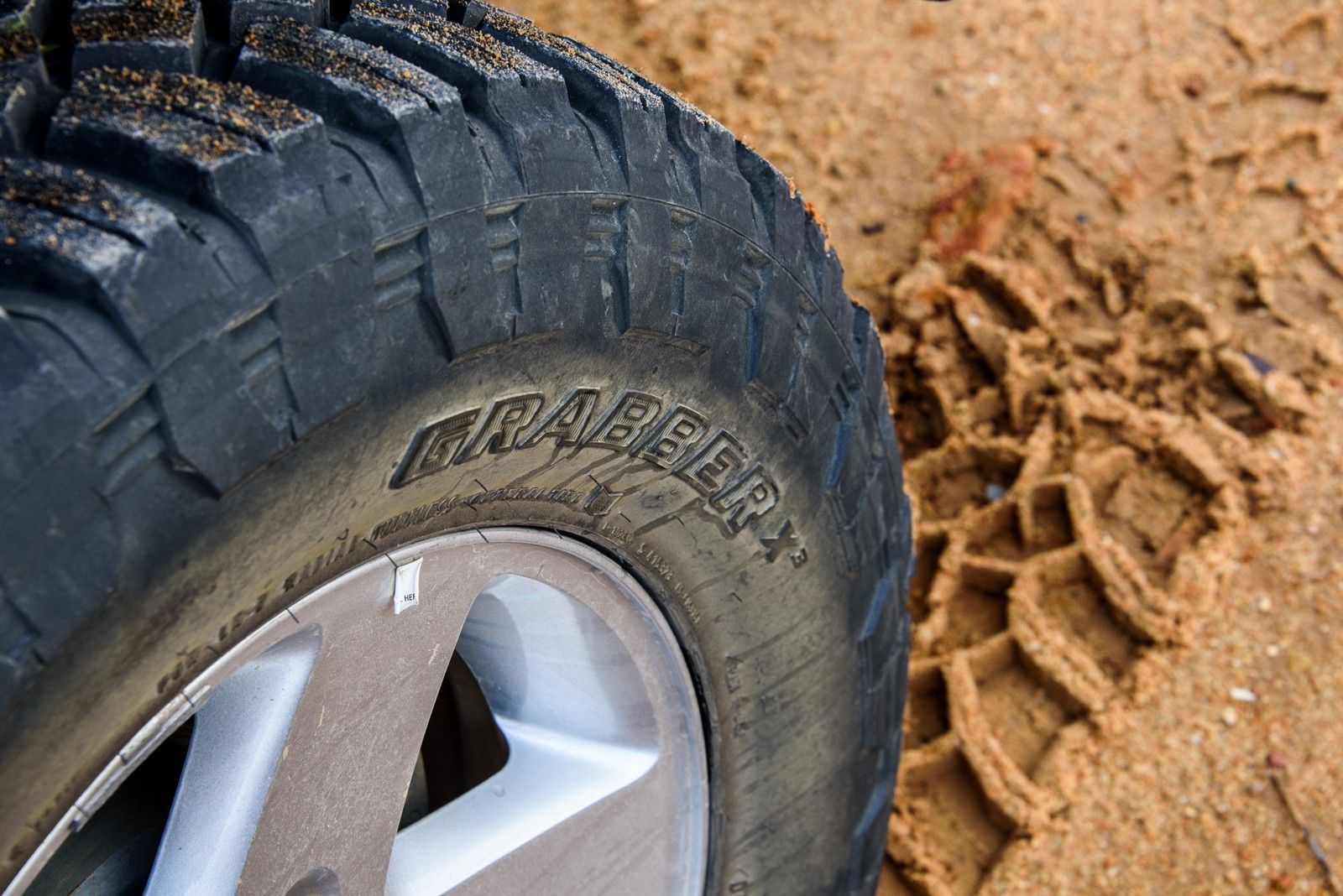
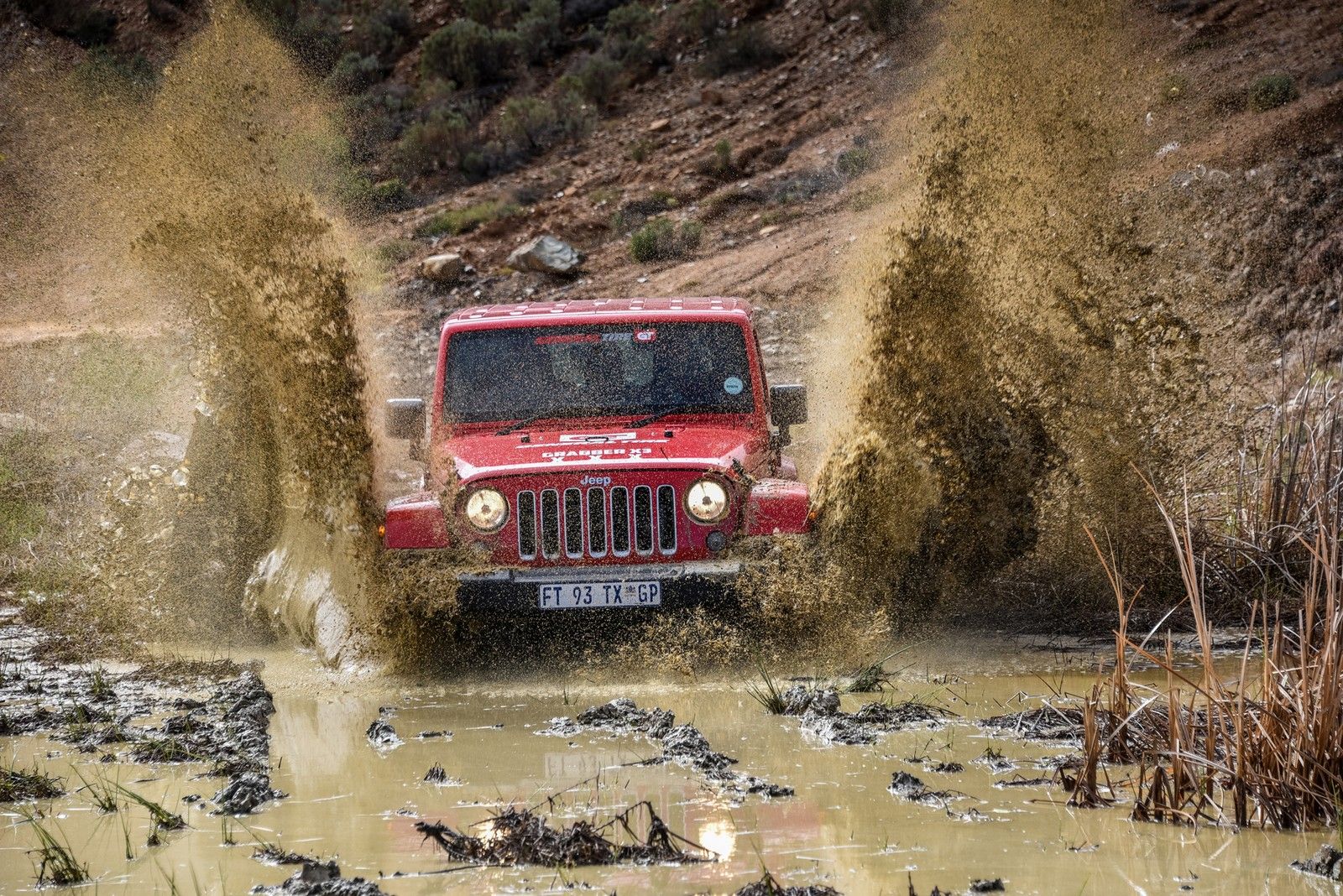
We took 2 new adventure-seeking tyres from General Tire – the all-terrain Grabber AT3 and the extreme-terrain Grabber X3 – through their paces at Klipbokkop Mountain Reserve to see if anything could stop them.
By Michael Salzwedel
Conversations about cars are funny things. Typically, you’re going to hear about how and why car x is better than car y, and this will almost always involve how much grunt they have and how quickly they can move. Then, of course, there’ll be the design debates, the technology talk and the monetary musings.
All of which is well and good, of course, but in every car, there’s just one thing (well, usually four) that collectively connects everything about that car to the surface it happens to be riding on. Yep, good ol’ tyres. Let’s talk about them.
At any given time, your tyres are the only physical points of contact between your car and the road (if not, you better hope help is at hand!). If they’re not right for the job, or not doing their job properly, your whole driving experience is compromised. You might have a gem of an engine, the fanciest tech and more driving skill than Ken Block, but if your tyres are lacking, it won’t count for much. Tyres are the primary enablers of any motoring experience or adventure, so it’s critical that they’re well chosen.
Enter the Grabber AT3 and X3
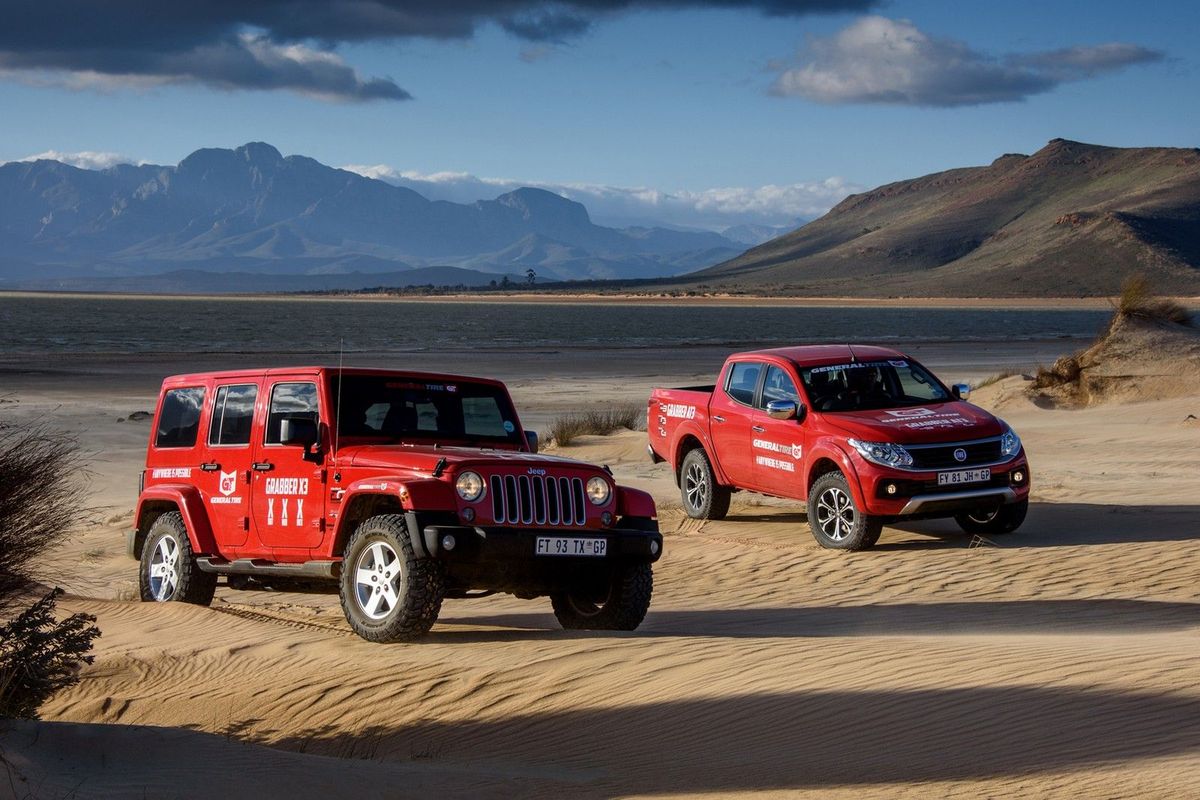
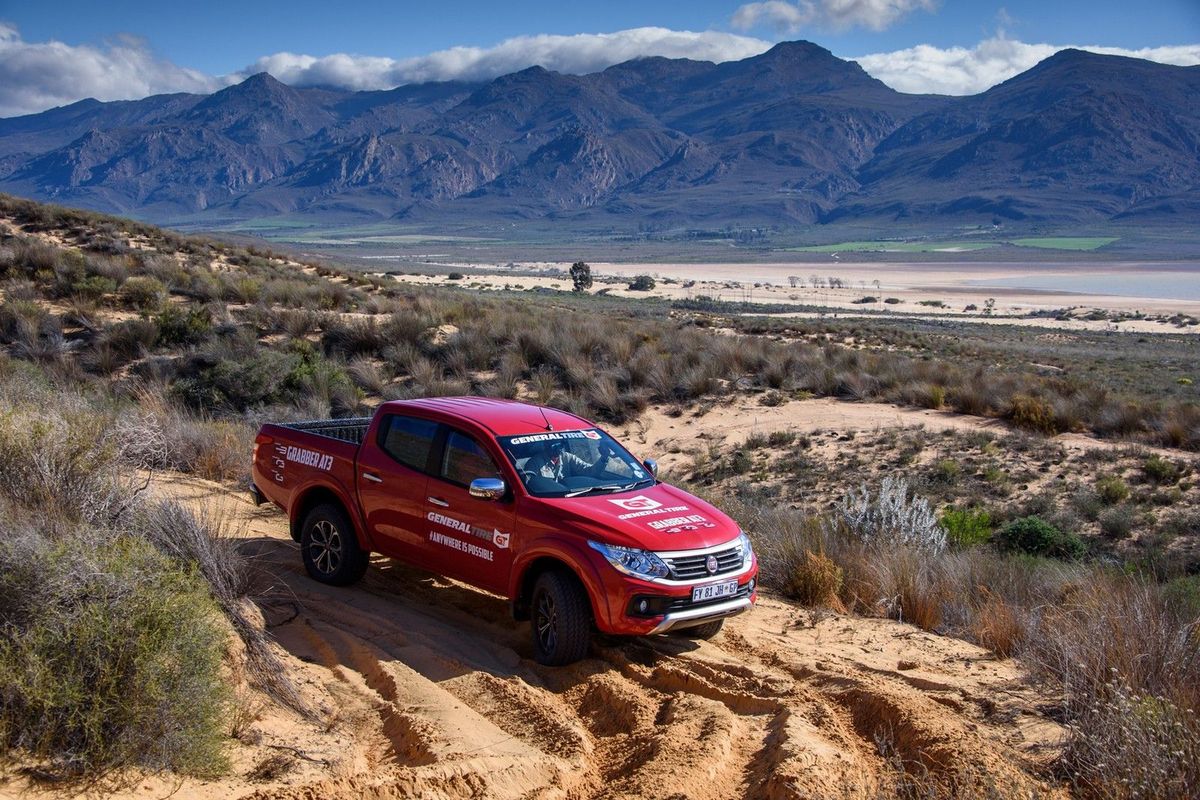
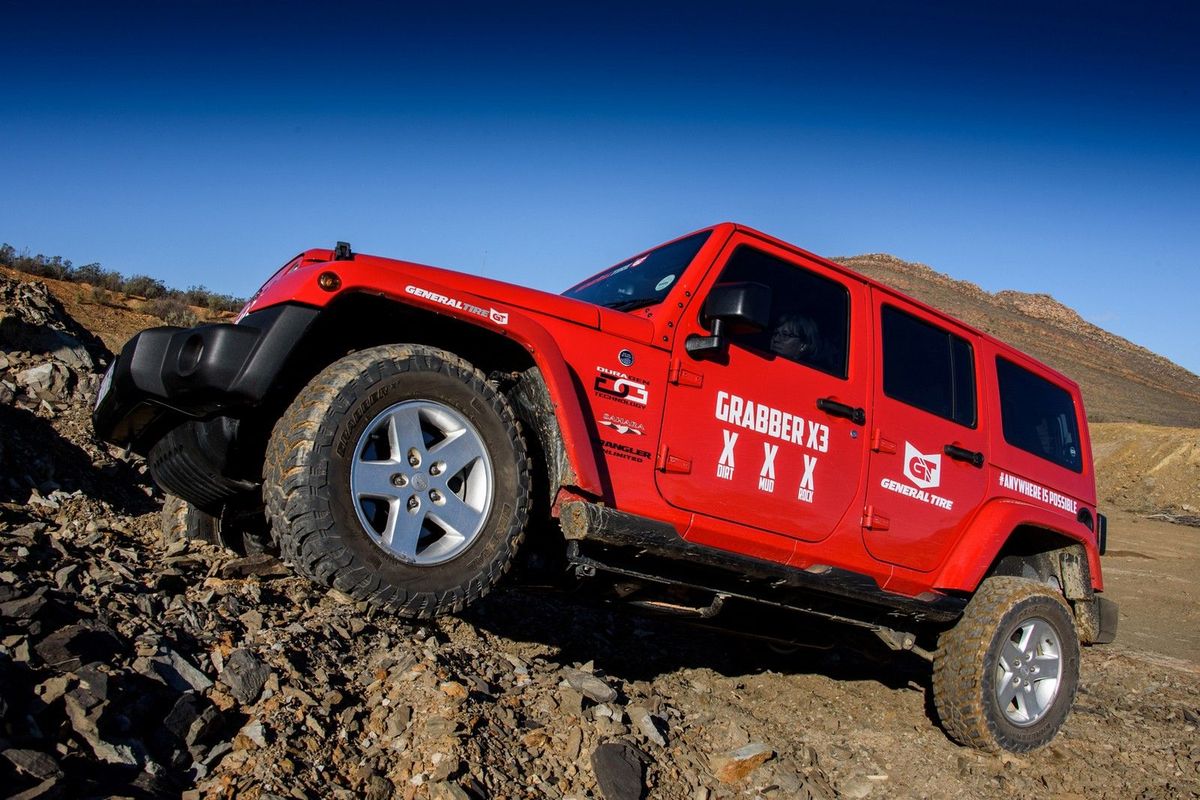
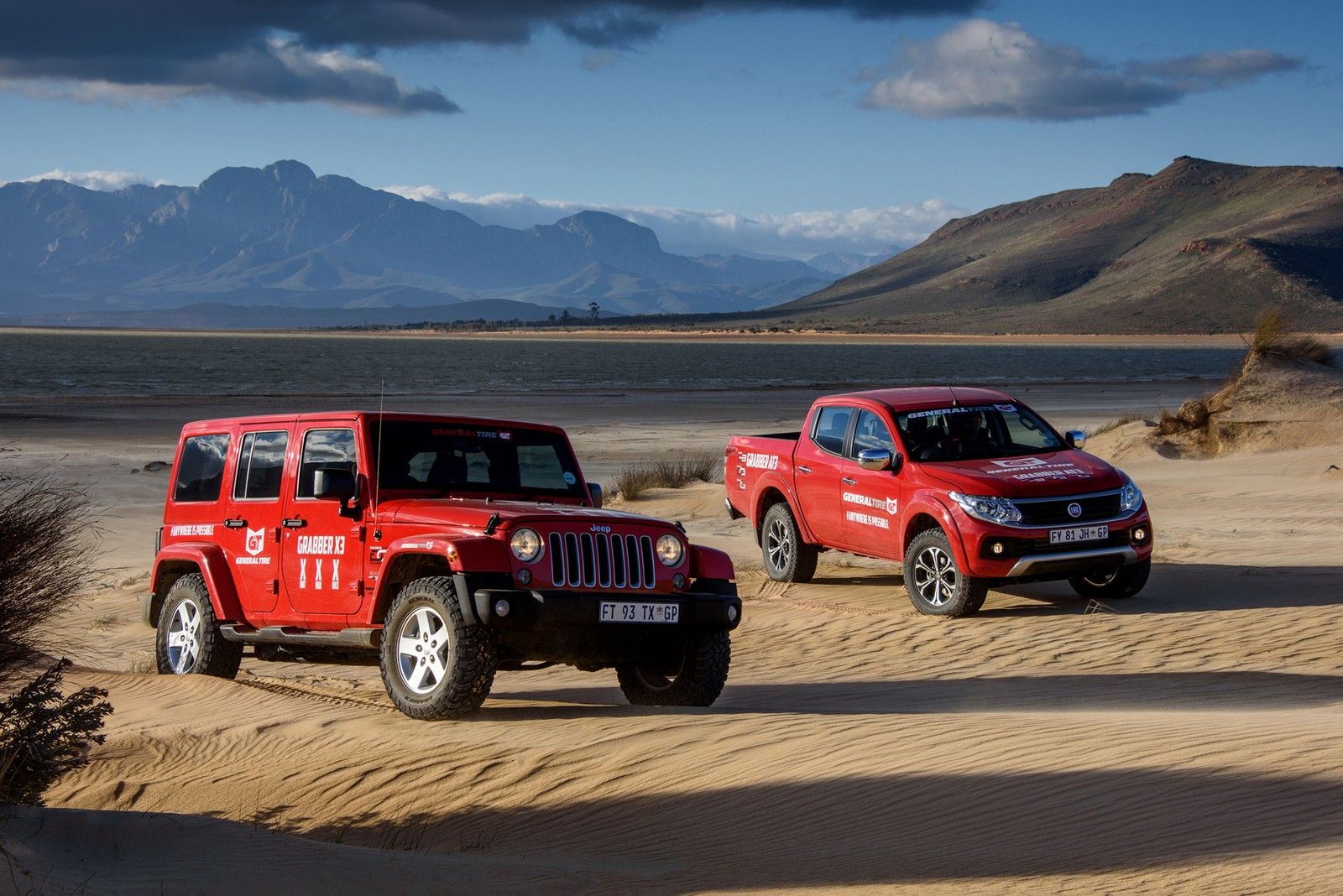
With this in mind, we headed out for an adventure to the superbly positioned Klipbokkop Mountain Reserve (home of the General Tire Adventure Academy, which was launched earlier this year) at the Brandvlei Dam just south of Worcester in the Western Cape. Our mission: to test the capabilities of General Tire’s two new off-road tyres: the all-terrain Grabber AT3 (fitted to the new Fiat Fullback 2.4 Di-D 4×4) and the Grabber X3 extreme-terrain (fitted to current-gen Jeep Wrangler Sahara Unlimiteds).
The "3" in each name refers to different things: in the case of the AT3 it refers to this being the third generation of all-terrain tyre from General Tire, while in the X3 (successor to the Grabber MT), it refers to the three types of terrain this tyre loves to tackle: mud, dirt and rock.
The newcomers sit alongside General Tire’s other existing offerings including the Grabber TR gravel gobblers, Grabber GT high-performance SUV tyres, and Altimax Comfort and Sport passenger tyres.
The new AT3 and X3s are only up for grabs on the replacement market and are not being supplied as OEM-spec on new vehicles.
Designed for 50% on-road and 50% off-road use, the main perks of the AT3s over the version they replace is that they are quieter, tougher and more durable. They’re available in 13 sizes spanning rim widths of 15 to 20 inches. These are aimed at SUV, bakkie or more serious off-road vehicle owners who are looking for a competent all-in-one offering that demonstrates healthy off-road ability when required but also boasts ample suitability for on-road use.
The chunkier X3s, on the other hand, beg to be given a proper off-road beating and are intended for 20% on- and 80% off-road use. They’re only available in five sizes for now, for 15-17 inch rims.
New tech
General Tire has introduced three new performance-enhancing technologies with these tyres:
TRACGEN: traction ribs and multi-angled sipes (small incisions in the rubber) in the tread help to improve loose surface traction through gripping edges that interlock with the off-road surface;
DURAGEN: a robust rubber compound that offers better cut and chip resistance, and reinforced tread blocks that reduce deformation, improve tread life in rugged terrain and maximise stability under load;
COMFORT BALANCE: this refers to enhanced geometry, material distribution and tread block orientation, allowing for better surface interaction.
Time to get dirty
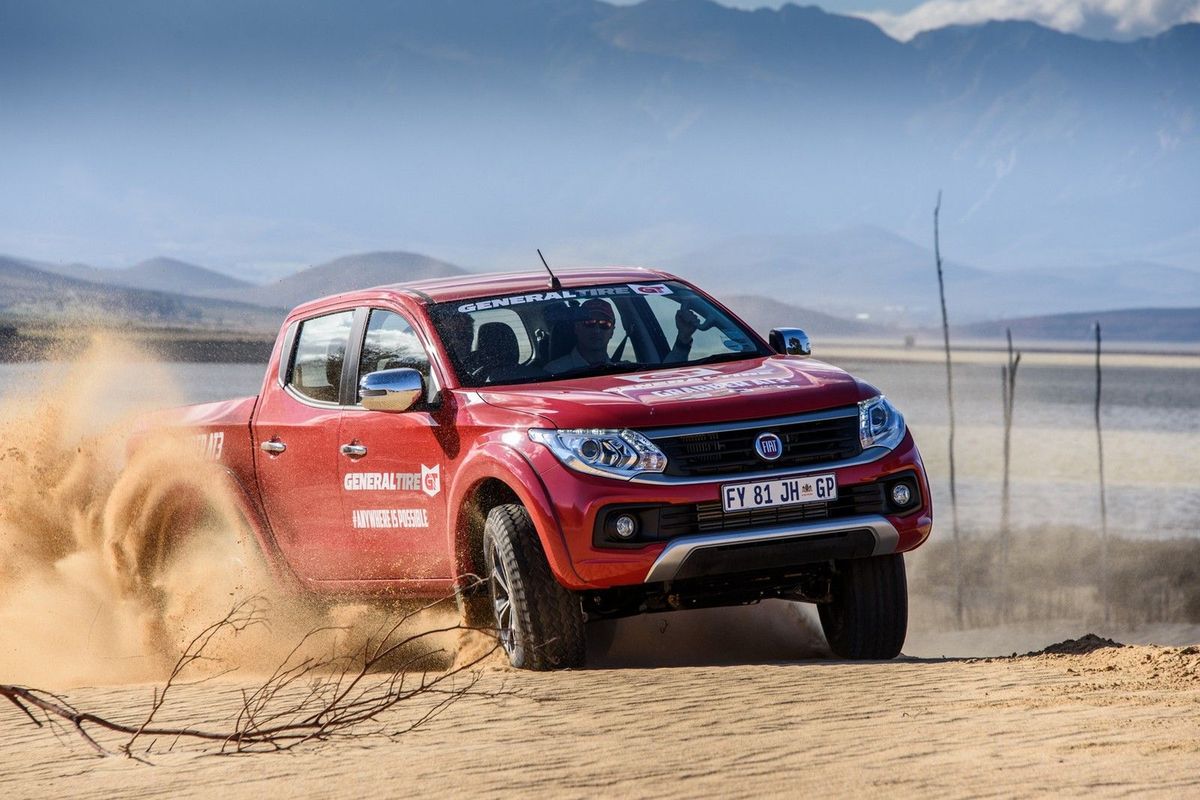
There are plenty of variables that contribute to a vehicle’s off-road ability in any given situation. The characteristics of the terrain itself present a vast range of driving challenges, and then there are vehicle considerations including ride height, clearance angles and the type and design of key innards like the gearbox and the four-wheel-drive system. Often the most important variable of all is what tyres you’re riding on and how much air they’ve got in them. Dropping your tyre pressure in sand, for example, can be the difference between getting stuck and powering through.
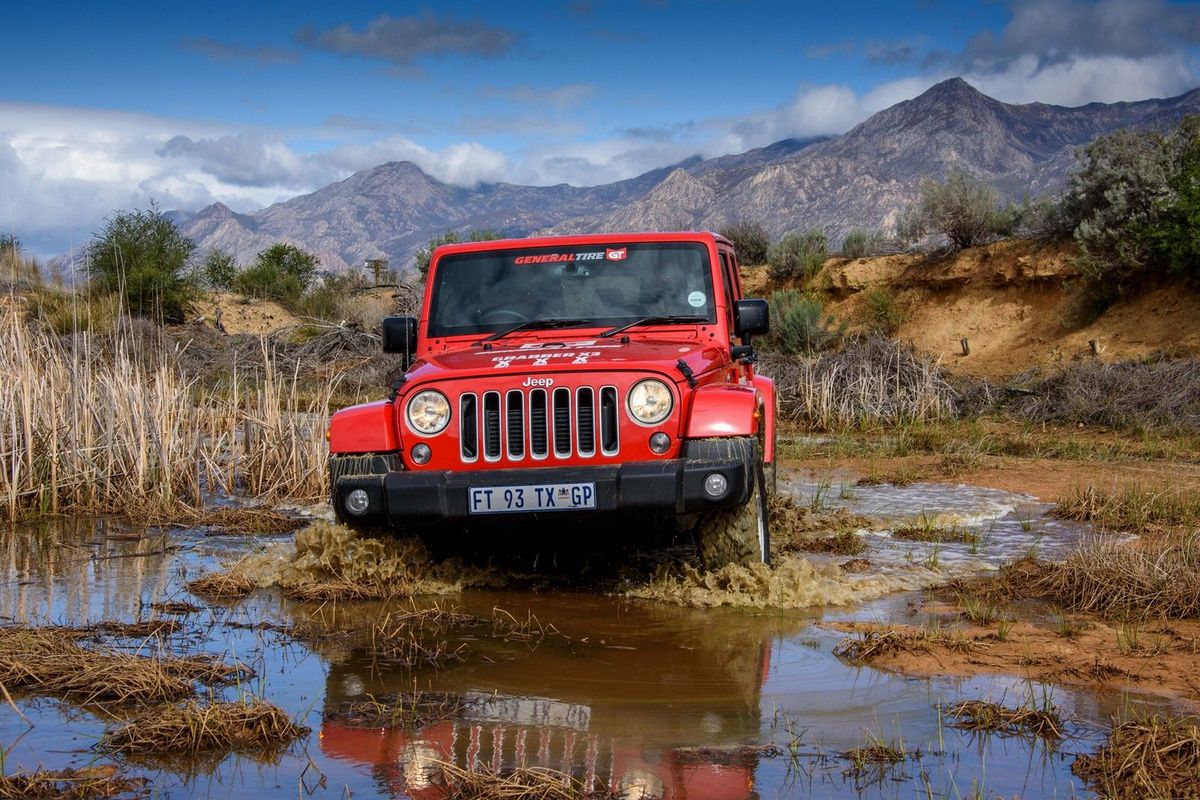
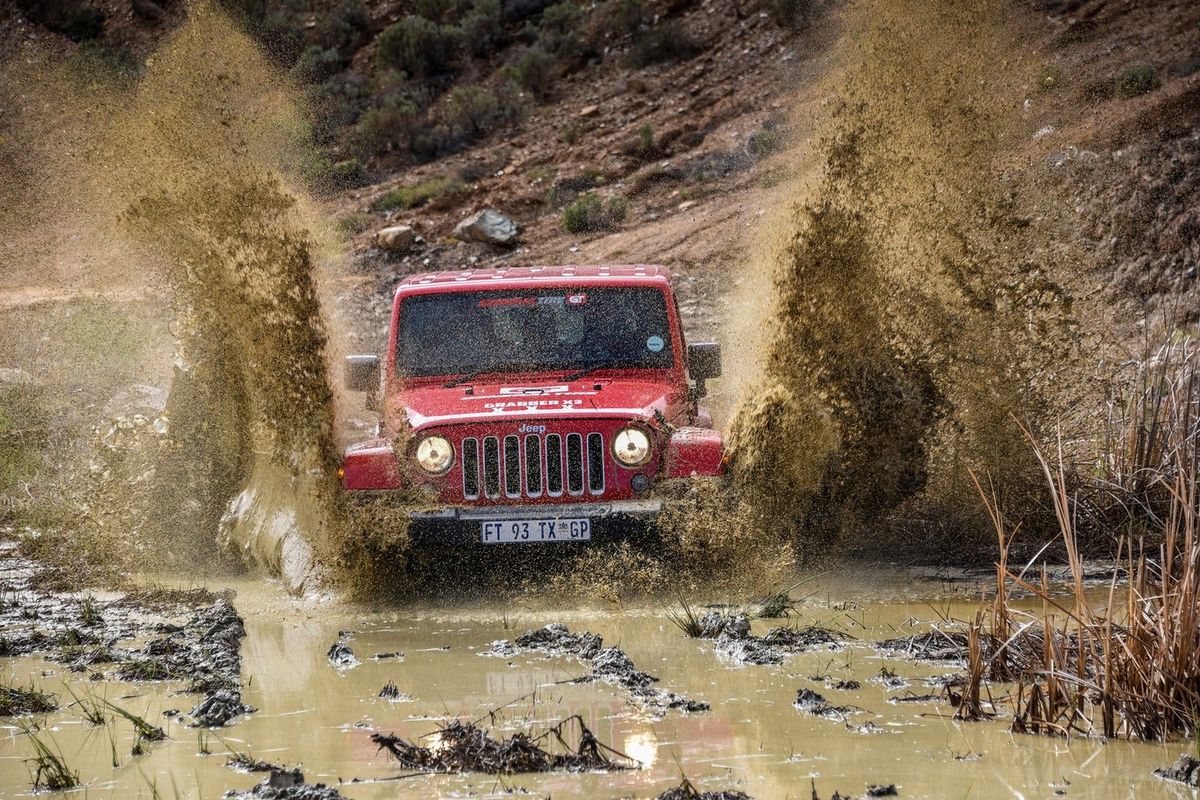
The fun-loving Wranglers, donning the X3s, made short work of everything thrown at them, including a serious mud bath, mangled rut-strewn stretches, a rock garden, some seriously steep and uneven ascents and descents, and plenty of deep sand.
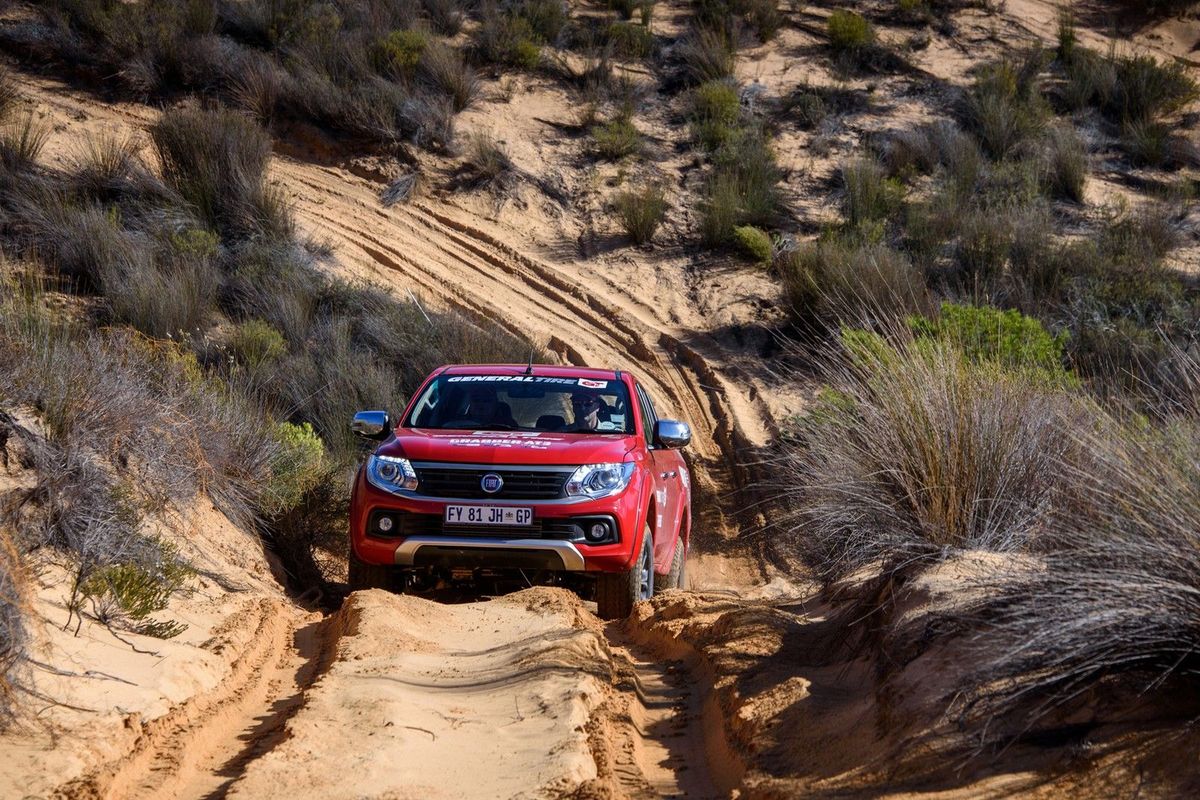
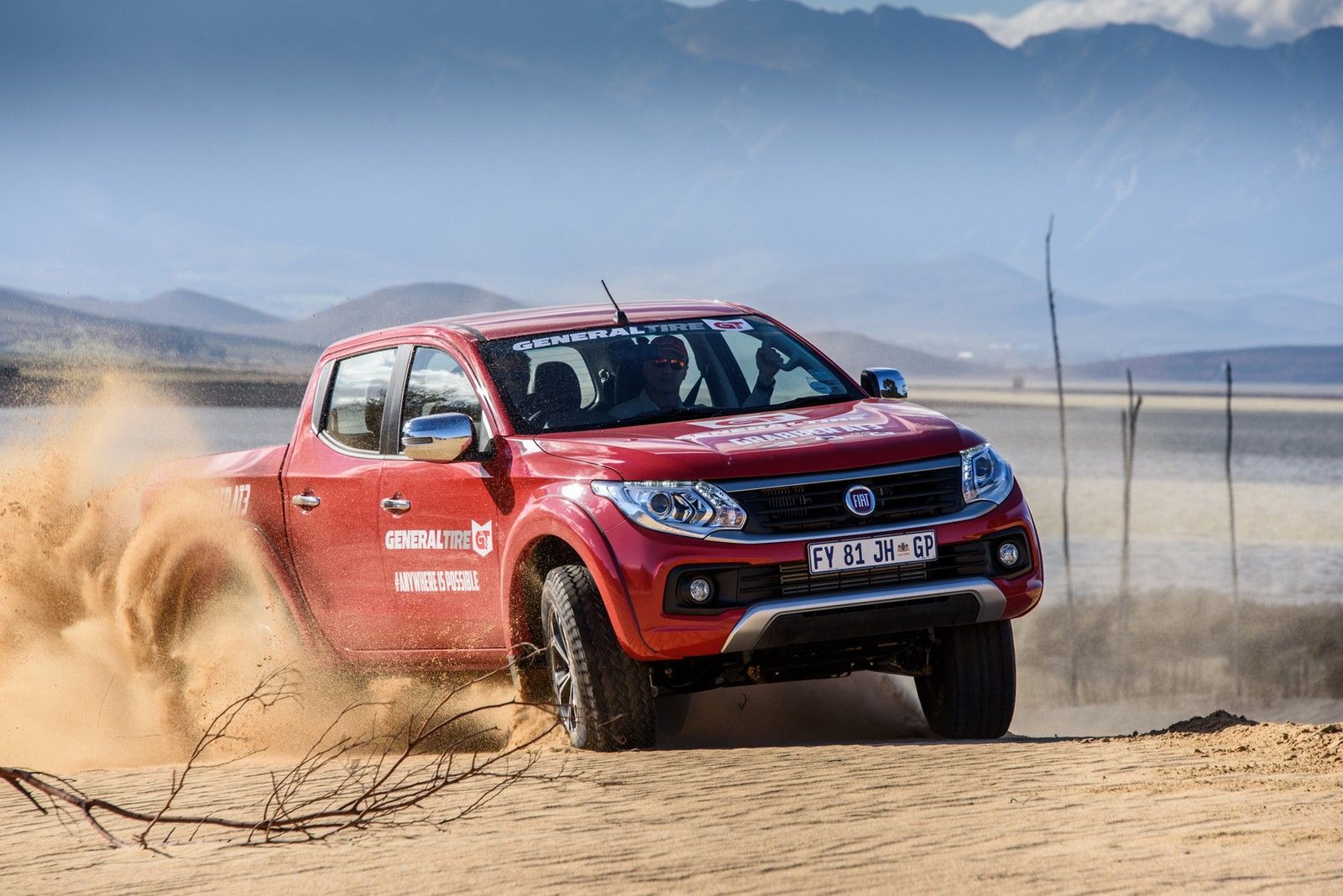
In the pleasingly capable and comfortable Fullbacks we snaked through an undulating series of twisty sand sections in low-range, never getting stuck and never requiring much more than half-throttle to roar our way through the trickier bits.
The AT3s and X3s – aptly paired with the Fullbacks and Jeeps respectively – proved to be up to the task of every challenge laid before them, living up to their “anywhere is possible” tagline. Much to General Tire’s relief, and in true testament to the hardiness of the tyres, there were no punctures (or rim pop-offs) suffered on any of the 10 vehicles throughout the day, even after more than a few moments of, shall we say, particularly enthusiastic testing of their capabilities (because motoring journalists will be motoring journalists).
Mercedes-AMG Project One Teased for Frankfurt [Video]
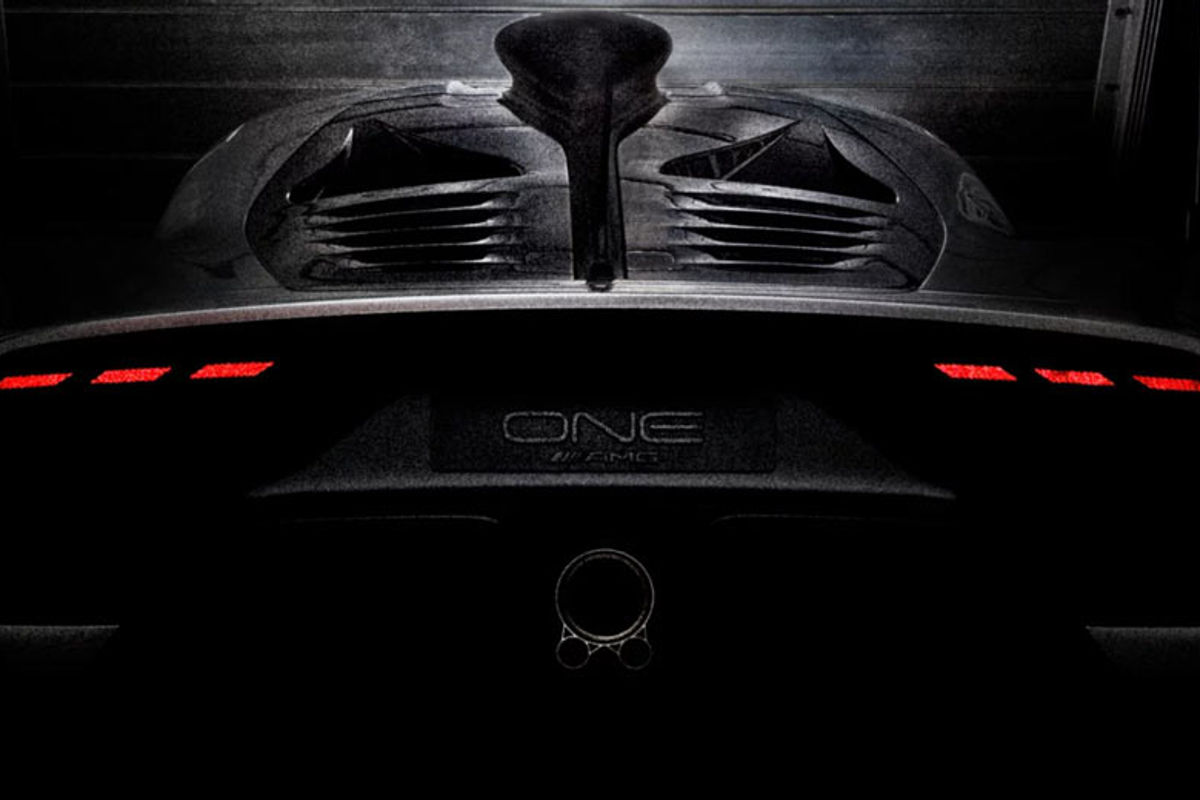
It's likely to be the fastest and most powerful vehicle displayed at the 2017 Frankfurt Motor Show. Ahead of its debut this week, Mercedes-AMG has revealed the rear-end of Project One and it looks menacing…
It's called the Mercedes-AMG Project One and it's essentially a "Formula One road car". It'll feature a hybrid powertrain comprising an F1-derived, turbocharged 1.6-litre V6 engine from the championship-winning WO7 Hybrid, coupled with a “purely electric and wheel-selective front axle drive concept”. The engine will idle at 4 000 rpm and will redline at an eye-watering 13 500 rpm. According to reports, the engine will be good for at least 50 000 km before needing a rebuild, which is probably alright, seeing as most hypercars do so little mileage.
The engine will work in conjunction with 2 electric motors. The first 80 kW electric motor is tasked with keeping the turbocharger on the boil at all times while the second 120 kW motor is linked directly to the crankshaft. An additional 2 electric motors at the front axle will allow for pure electric driving with a range up to 24 km on electric power alone. The Project One hypercar will develop more than 746 kW and will make use of a single clutch 8-speed transmission to lay power to the road. Top speed is estimated at 350 kph.
Only 275 units will be built and all of them have been spoken for. We will be attending the Frankfurt Motor Show this week so look for information as the show unfolds.
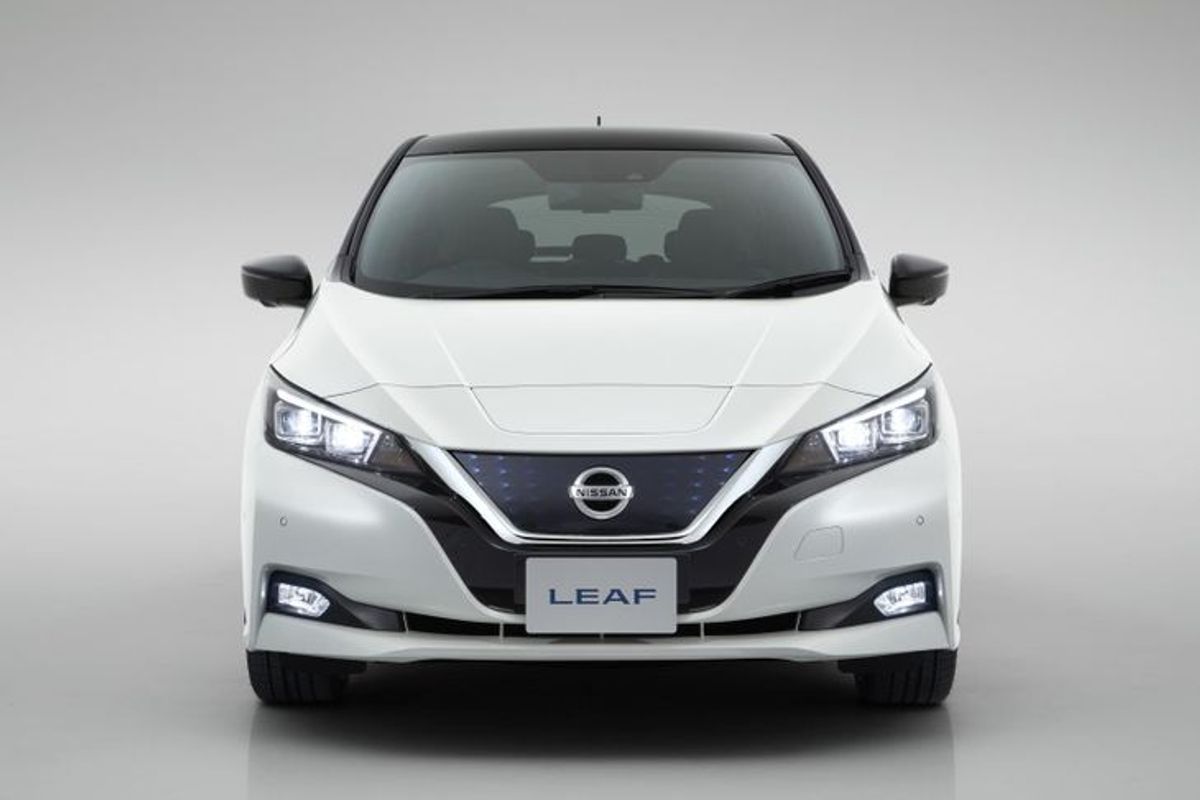
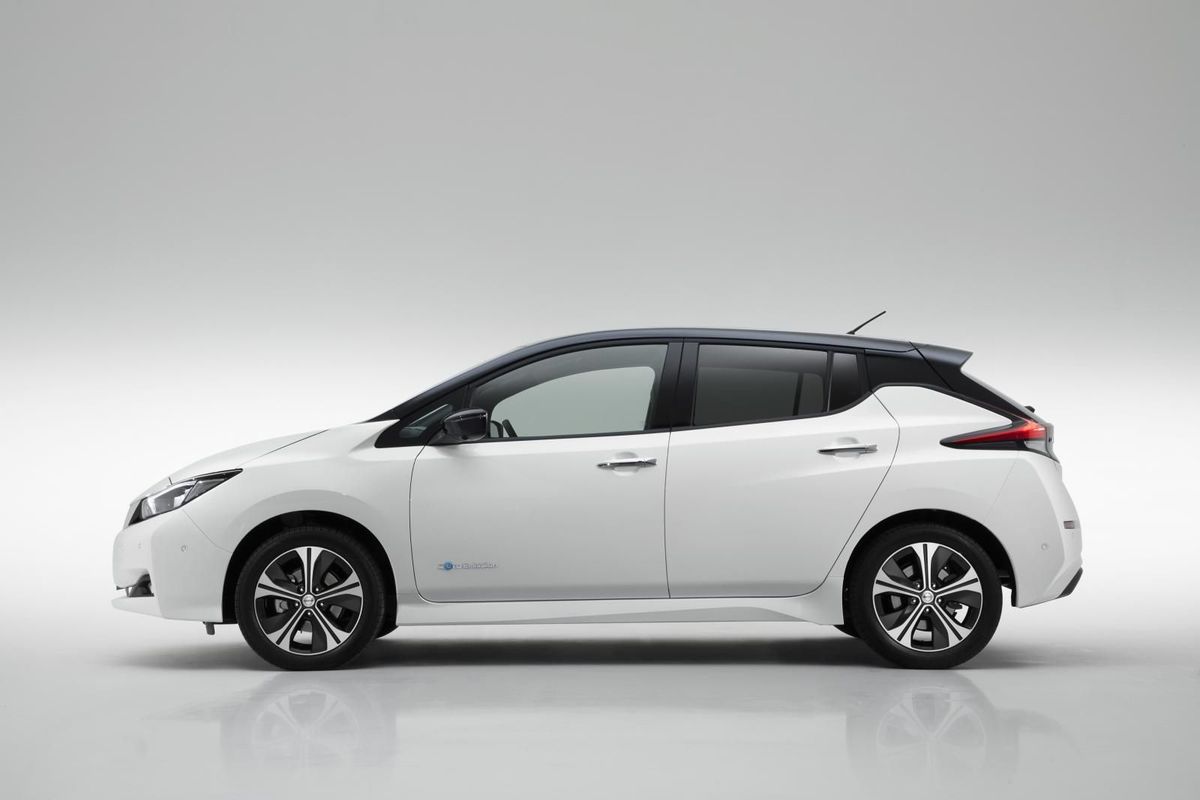
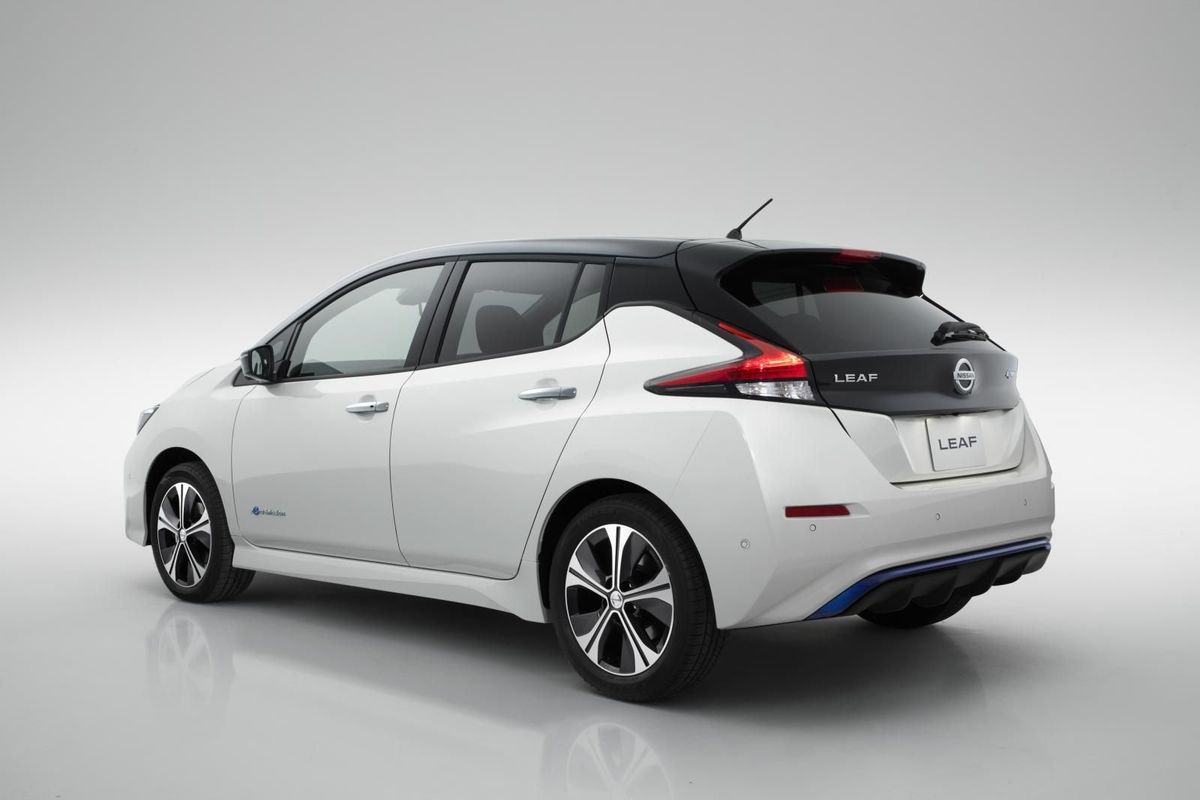
The new, second-generation Nissan Leaf Electric Vehicle (EV) has been introduced in Japan and will be sold in over 60 markets worldwide, including South Africa. We attended its global reveal in Tokyo, Japan and got to meet Leaf 2.0.
The zero-emission Nissan Leaf has been introduced in Japan and although the first-generation Leaf didn’t sell particularly well in South Africa, this new model appears to have raised the bar of what of what an electric car can offer.
According to Nissan, the Leaf has been reinvented to offer a new design, improved range and advanced technology.
“The new Nissan Leaf drives Nissan Intelligent Mobility, which is the core brand strategy for Nissan’s future. The new Nissan Leaf, with its improved range, combined with the evolution of autonomous drive technology such as ProPILOT Park, and the simple operation of the e-Pedal, strengthens Nissan’s EV leadership as well as the expansion of EVs globally. It also has core strengths that will be embodied by future Nissan models” said Hiroto Saikawa, president and chief executive officer of Nissan.
Electric power
The new zero emission Leaf now has a range of 400 km and offers 110 kW and 320 Nm.
The new Leaf is powered by an electric motor developing 110 kW and 320 Nm of torque in conjunction with a 40 kWh Lithium-ion battery. Nissan says that the new Leaf offers improved acceleration and higher levels of driving enjoyment.
The Leaf now has a range 400 km and can be charged in 8 hours using a 6 kW outlet or alternatively, 16 hours using a 3 kW outlet. Fast charging will rapidly decrease charging times and 80% charge can be achieved in about 40 minutes.
The new Leaf is equipped with ProPILOT autonomous drive technology used for single-lane highway driving as well as ProPILOT Park. When activated, ProPILOT Park will control steering, acceleration, braking, shift changes and apply the parking brake to guide the vehicle safely into its parking. The Leaf can also parallel park using this system.
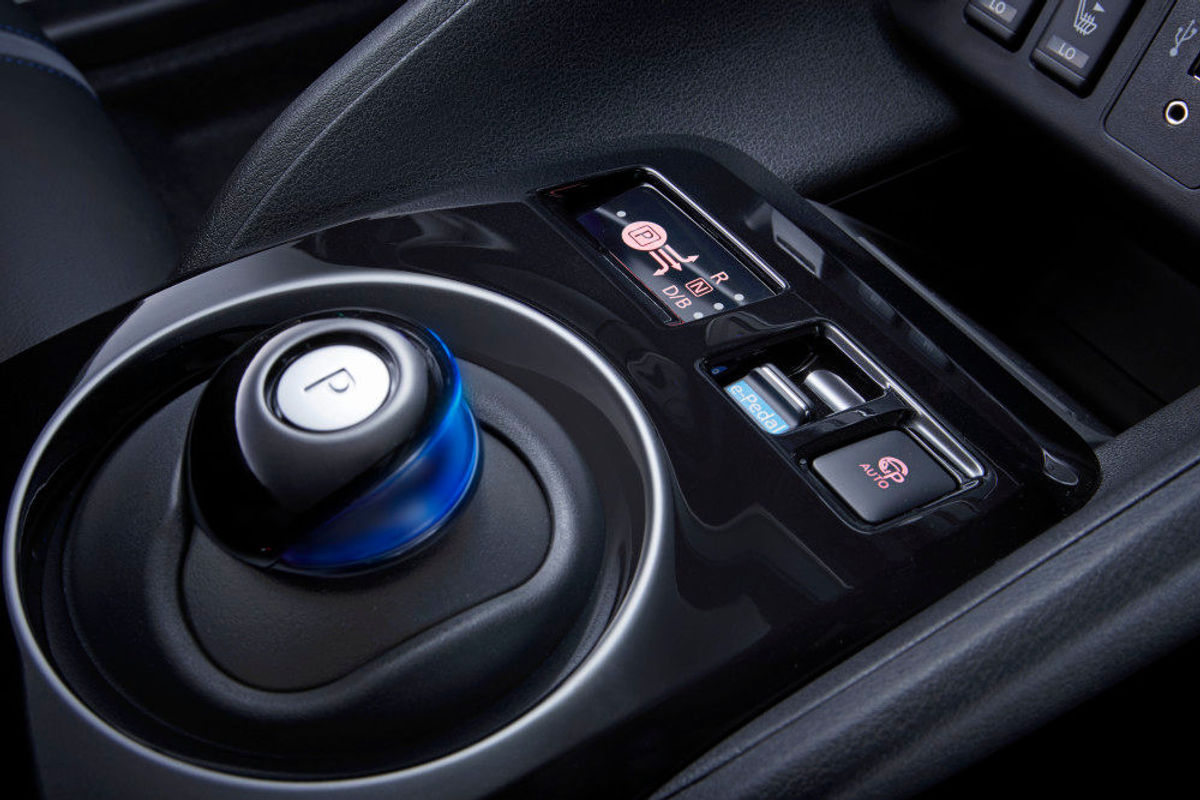
Another cool feature on the new Leaf is what Nissan calls the e-Pedal which is said to transform the way people drive. The e-Pedal allows the driver to start, accelerate, decelerate and stop by either increasing or decreasing the pressure applied to the pedal. So, when no pressure is applied to the pedal, the regenerative and friction brakes kick in automatically to bring the Leaf to a stop. The Leaf can also hold its position on steep inclines until the driver applies pressure to the pedal.
Design details
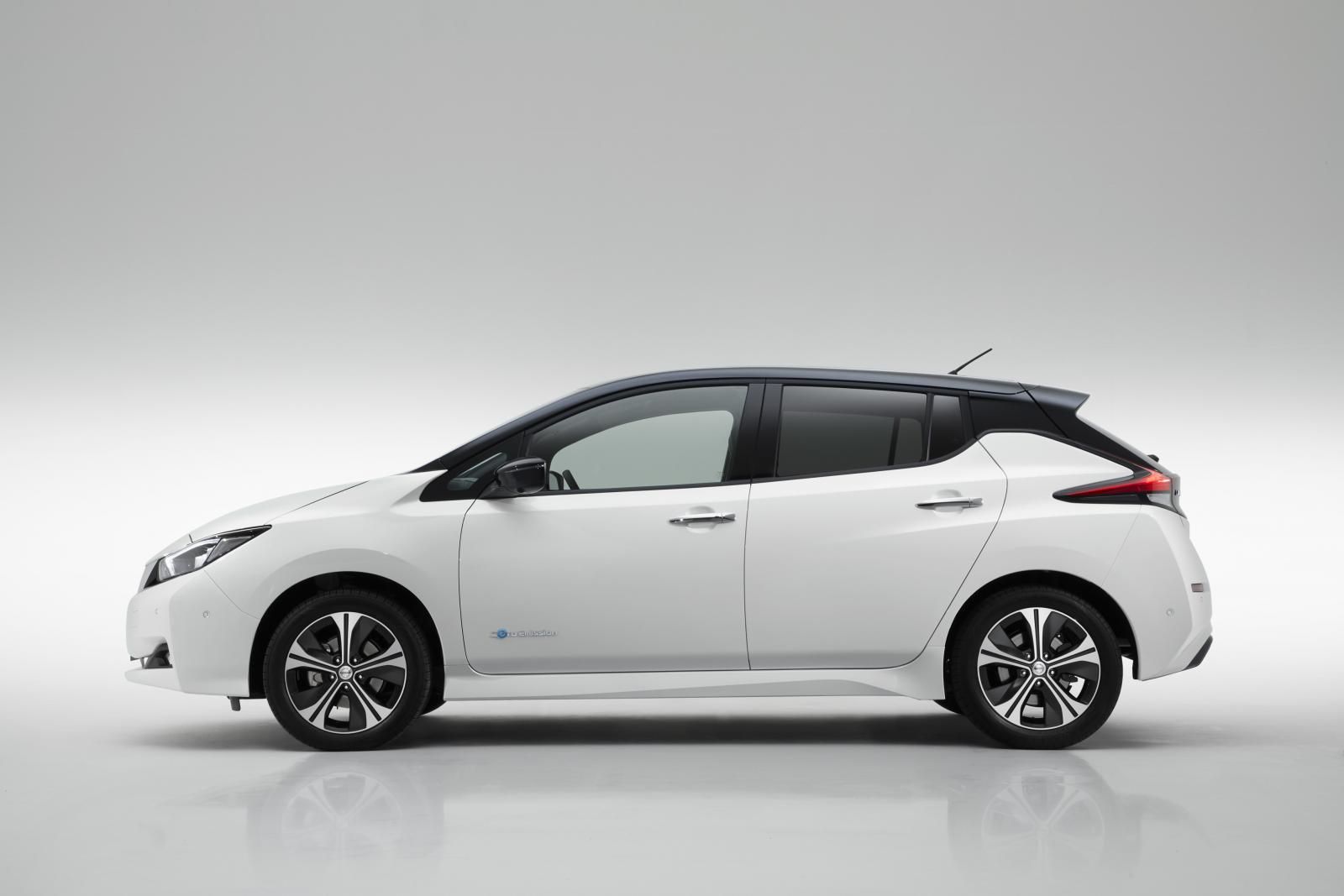
The LEAF has been imbued with a sleeker, more dynamic appearance that will hopefully encourage people to consider it.
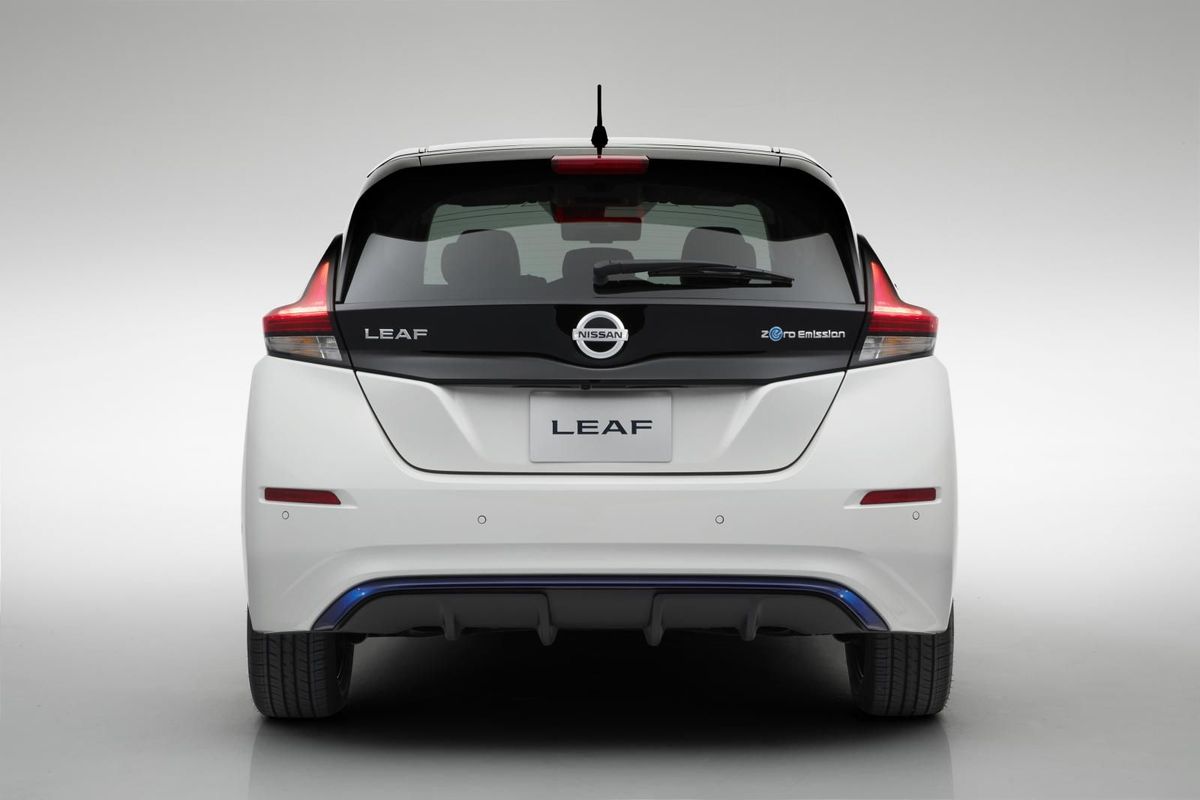
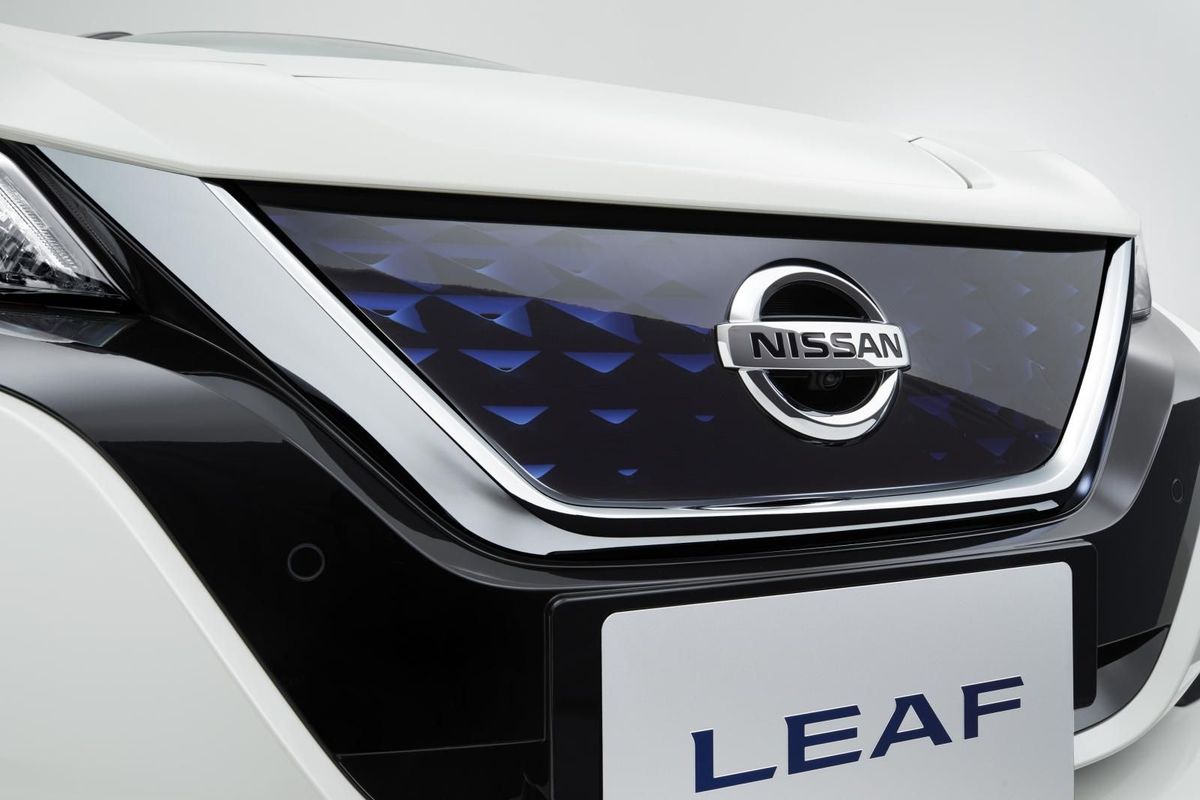
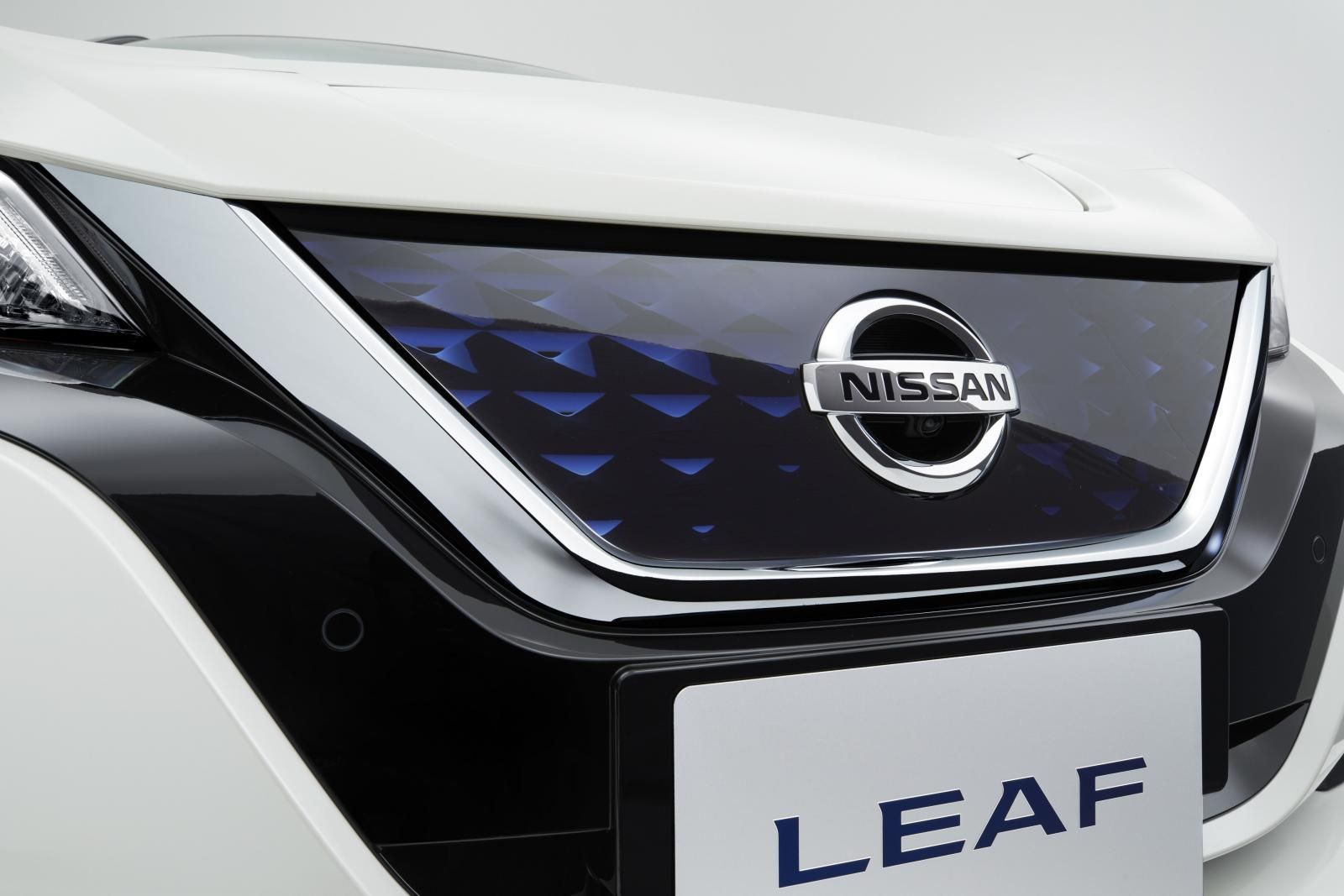
The new Leaf has s a sleeker profile with a sharp look with the intention of evoking “the exhilaration of driving an EV”, according to Nissan. The Leaf is equipped with boomerang-shaped headlights and a flash-surface grille in clear blue. The bumpers mouldings are in blue too, hinting at the Leaf’s electric nature.
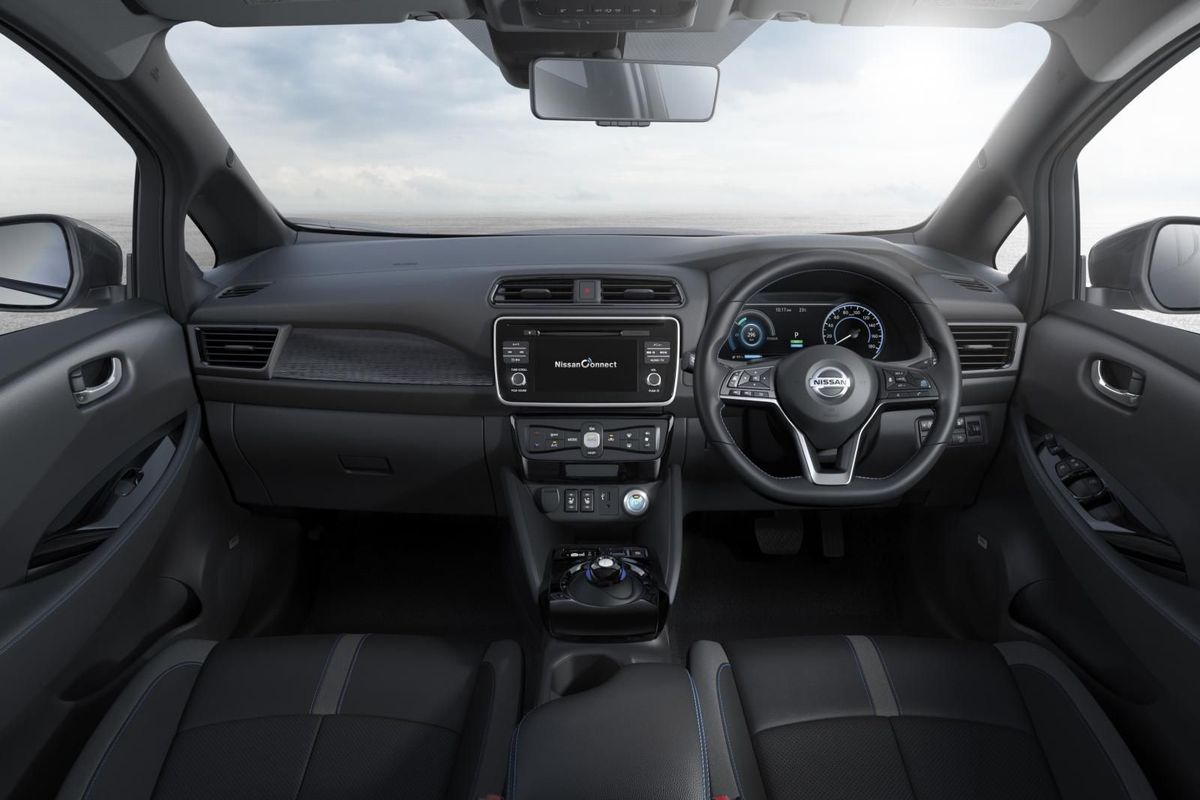
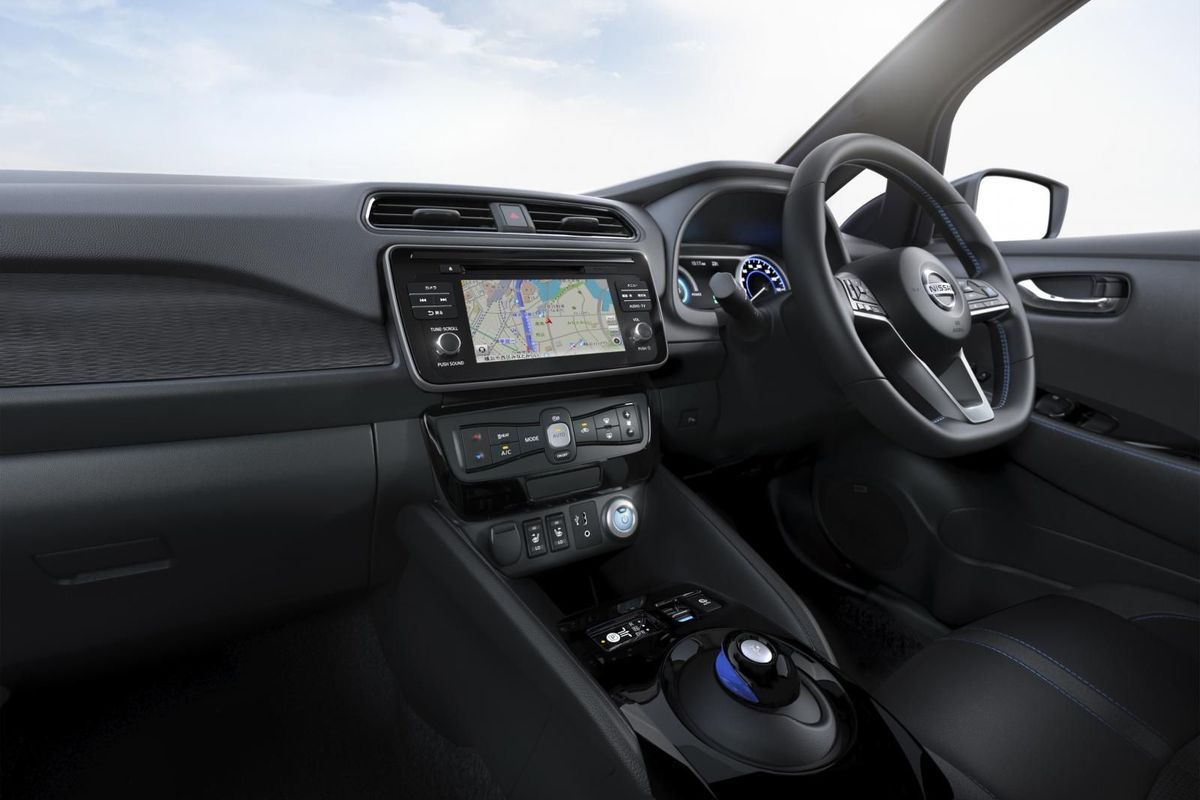
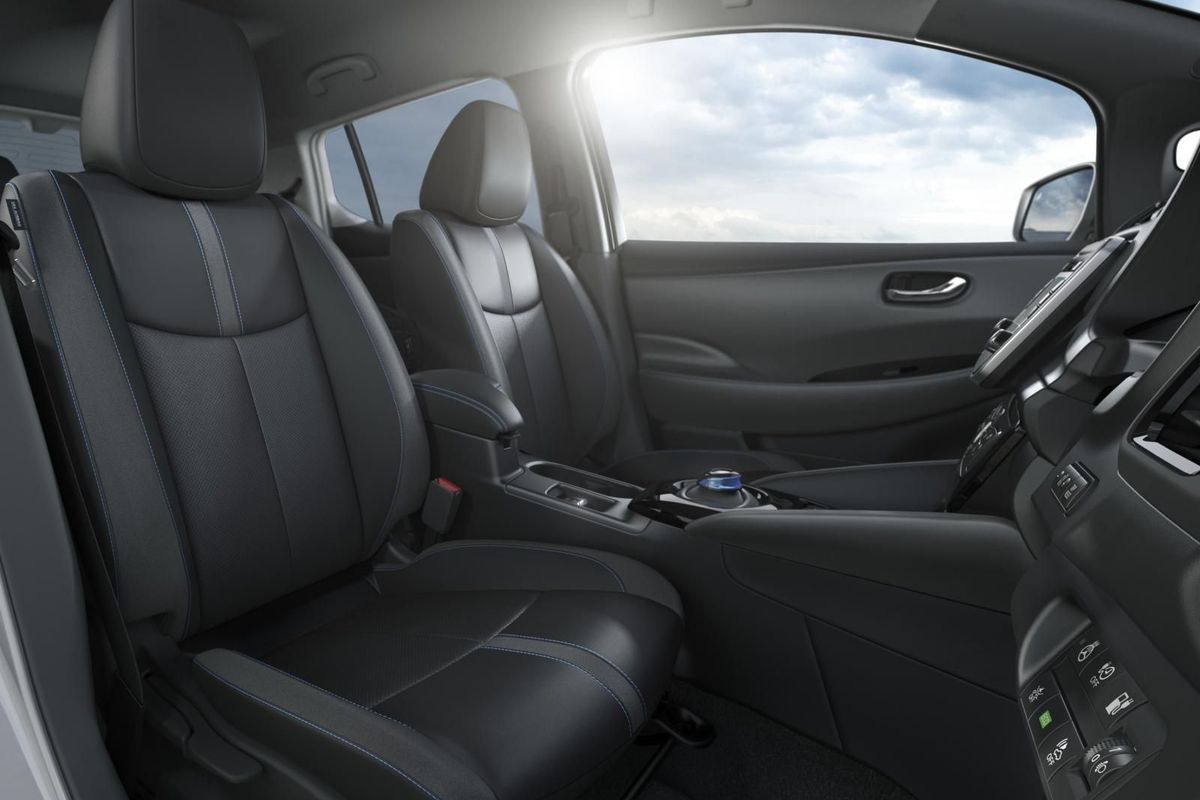
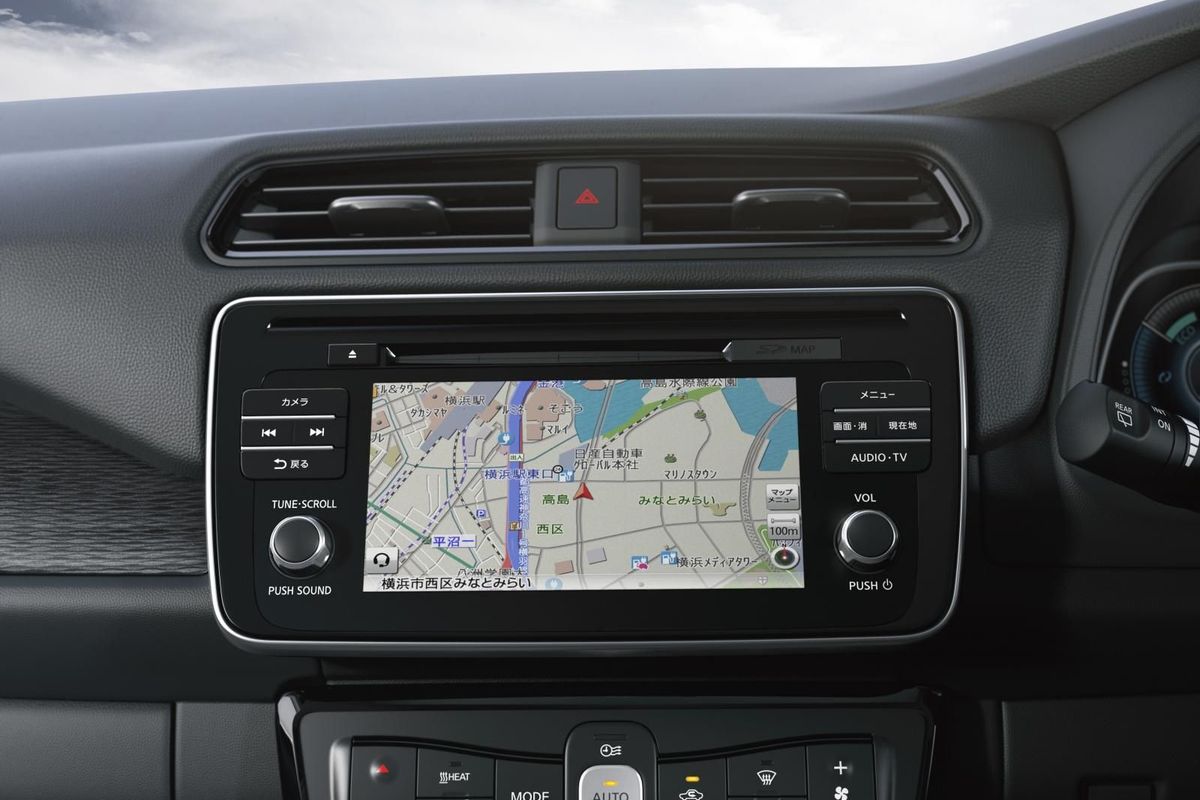
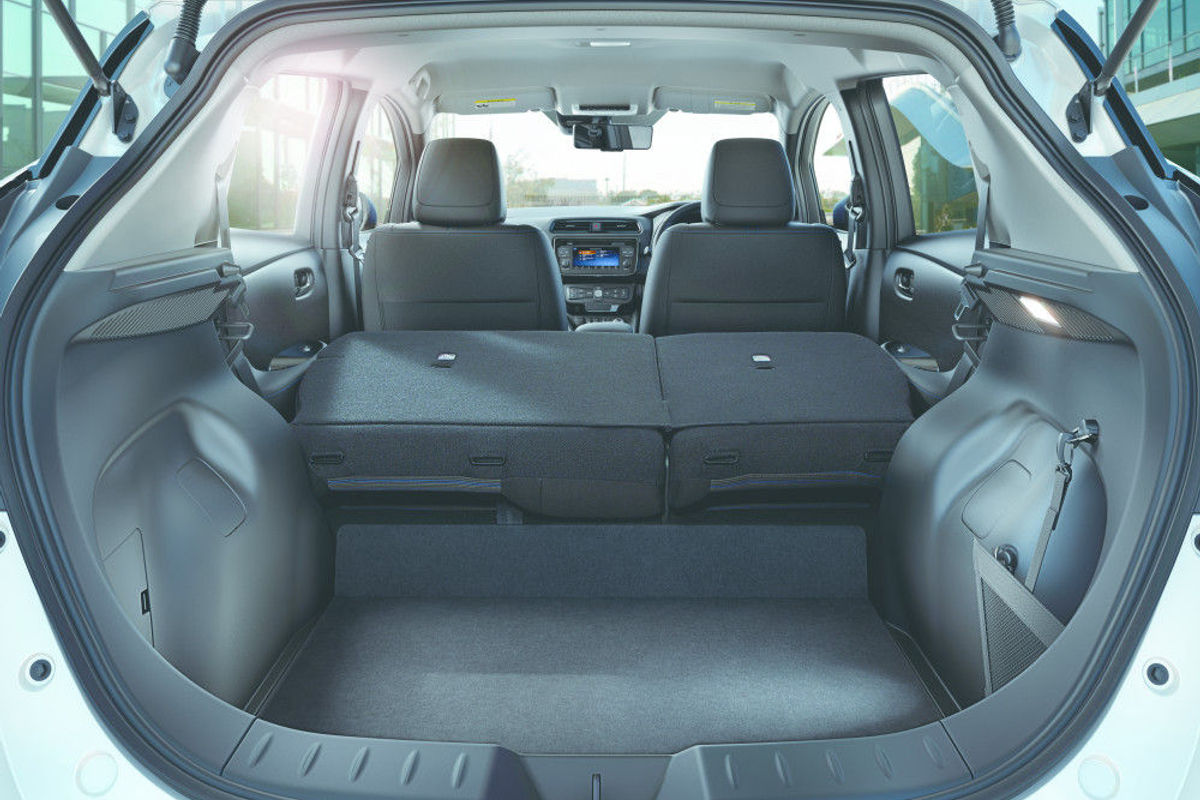
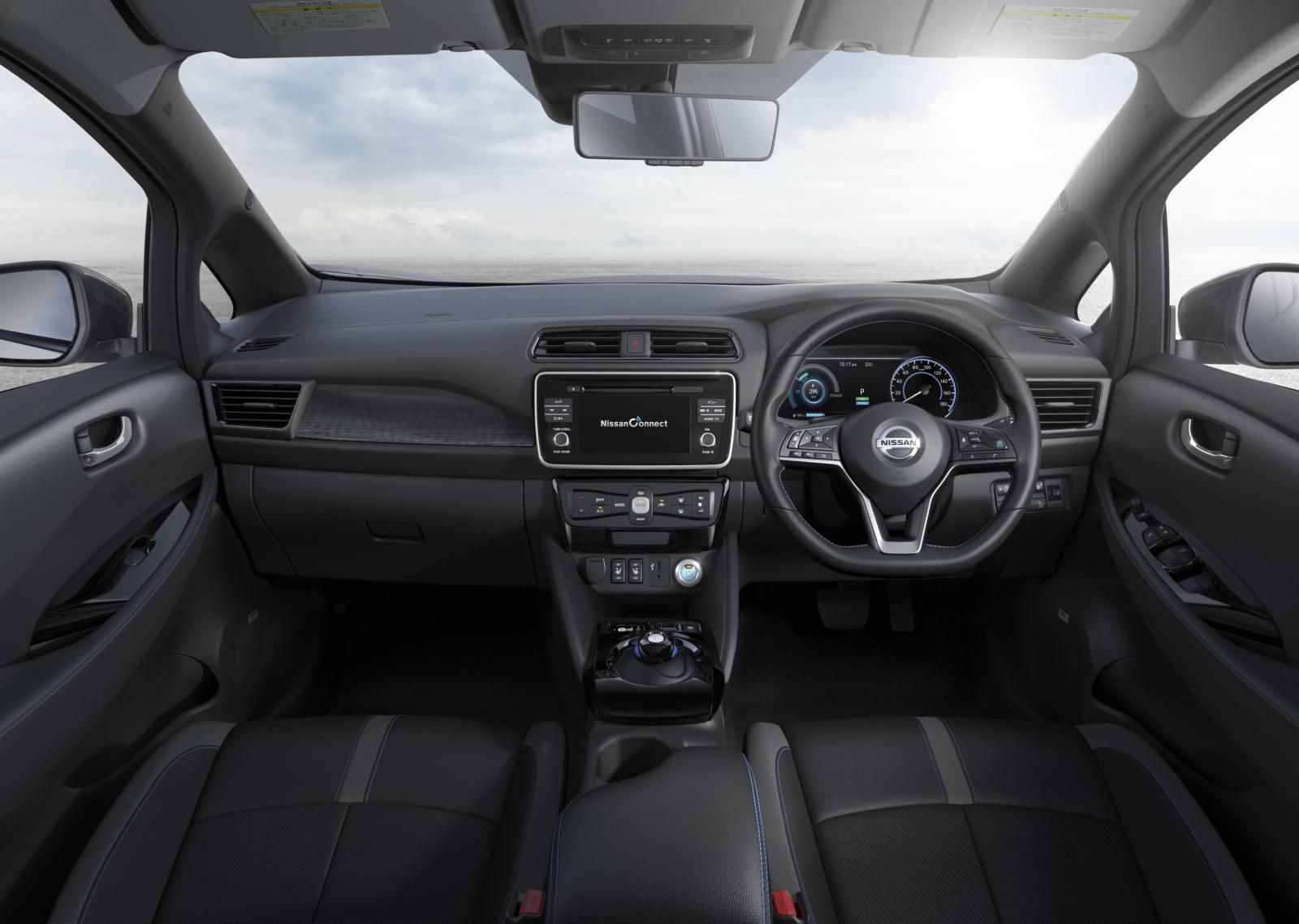
On the inside, the Leaf’s cabin has been redesigned with a focus on the driver and features a front panel that Nissan calls a “gliding wing”. The interior features blue stitching on the seats, dashboard and steering wheel to add vibrance to the cabin. The Leaf is equipped with a 7-inch colour TFT display which highlights features such as audio, navigation, and Safety Shield technology power guage. Apple CarPlay is now offered on the Leaf too.
The new Leaf?'s interior has been completely redesigned to offer increased comfort and aesthetic appeal.
A more powerful version of the Leaf will also be offered, albeit more expensive, in 2018 and is said to offer more excitement and performance over the standard version.
The Nissan Leaf is expected to arrive in South Africa later in 2018. We will keep you updated as soon as local specification and pricing details are revealed.
Nissan Navara vs Ford Ranger (2017) Comparative Review Video Part 2
We put the new Nissan Navara to the test against the new Ford Ranger Fx4! Watch the video to see how these double-cab bakkies fare in Part 2 of our test.
The bakkie market is truly thriving in South Africa and motorists have never had so much choice. The Ranger Fx4 is a new edition to the leisure bakkie market and South Africans had to wait a good while for the new Nissan Navara to arrive in local showrooms, but it is finally here and Nissan is confident that this is the bakkie to set new standards in the segment.
In Part 1 of this head-to-head test, we reviewed the on-road comfort of the Navara and Ranger Fx4 and took a detailed look at the interiors. In Part 2, and with both bakkies loaded with half a ton of water, we set off into the hills of Backsberg Estate to test their 4×4 capability. Watch the video to find out which one of these bakkies performed better in this comparative test.
We couldn't have made this video without the generous help of the people at the beautiful Backsberg Estate. With a top-notch restaurant, wine tasting and cellar store on the property, the winery is leading the way in terms of modern farming practices – it was the first carbon neutral wine farm in South Africa. Visit them at www.backsberg.co.za