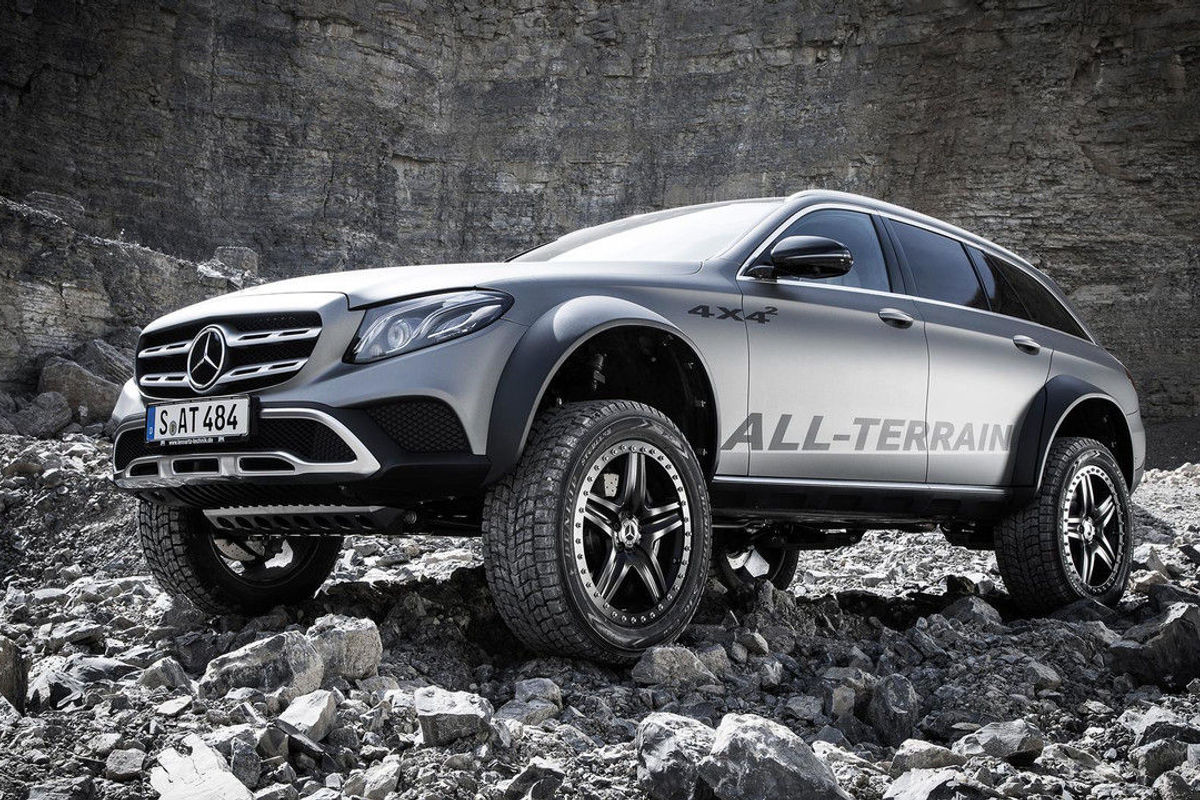
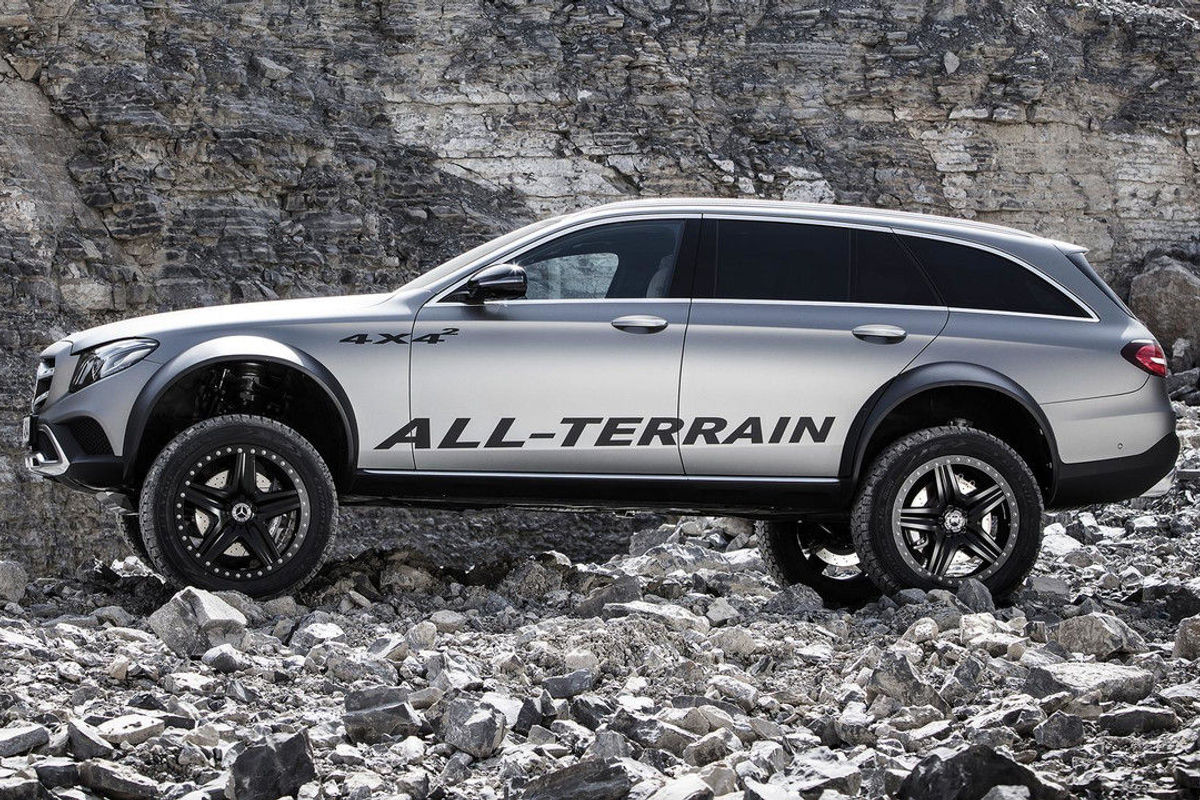
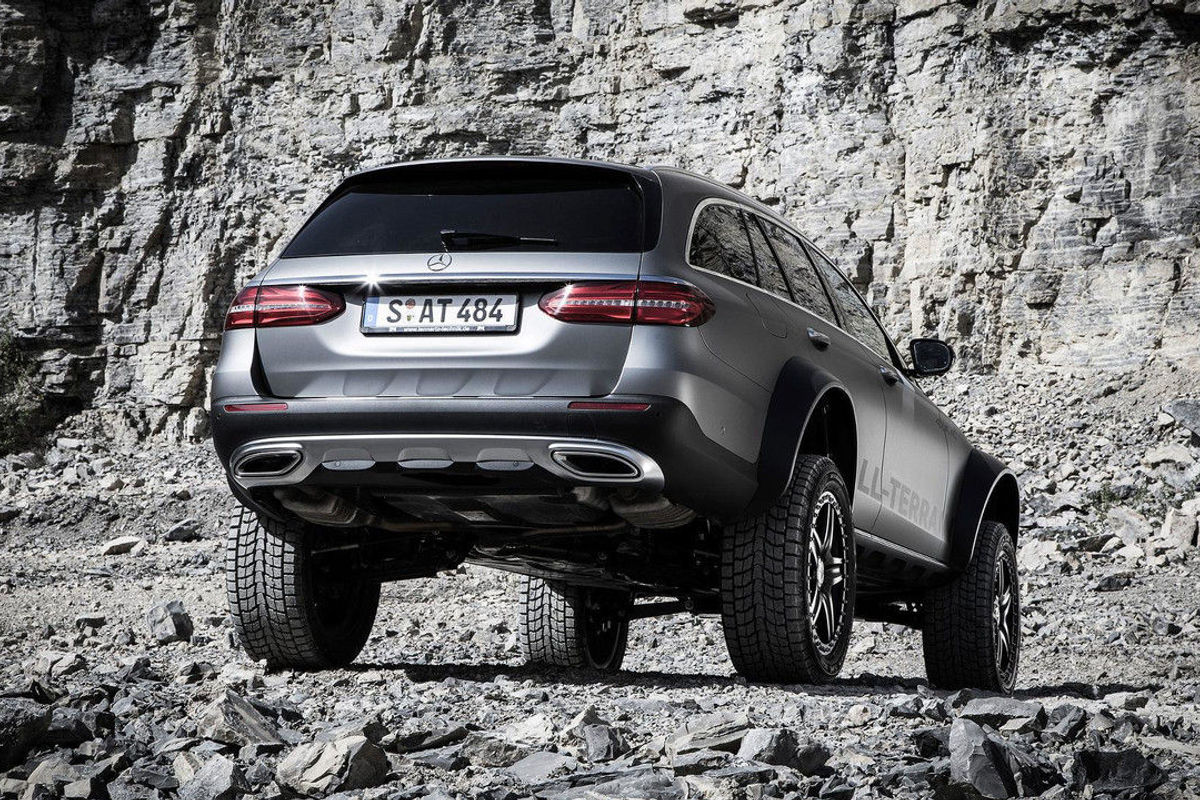
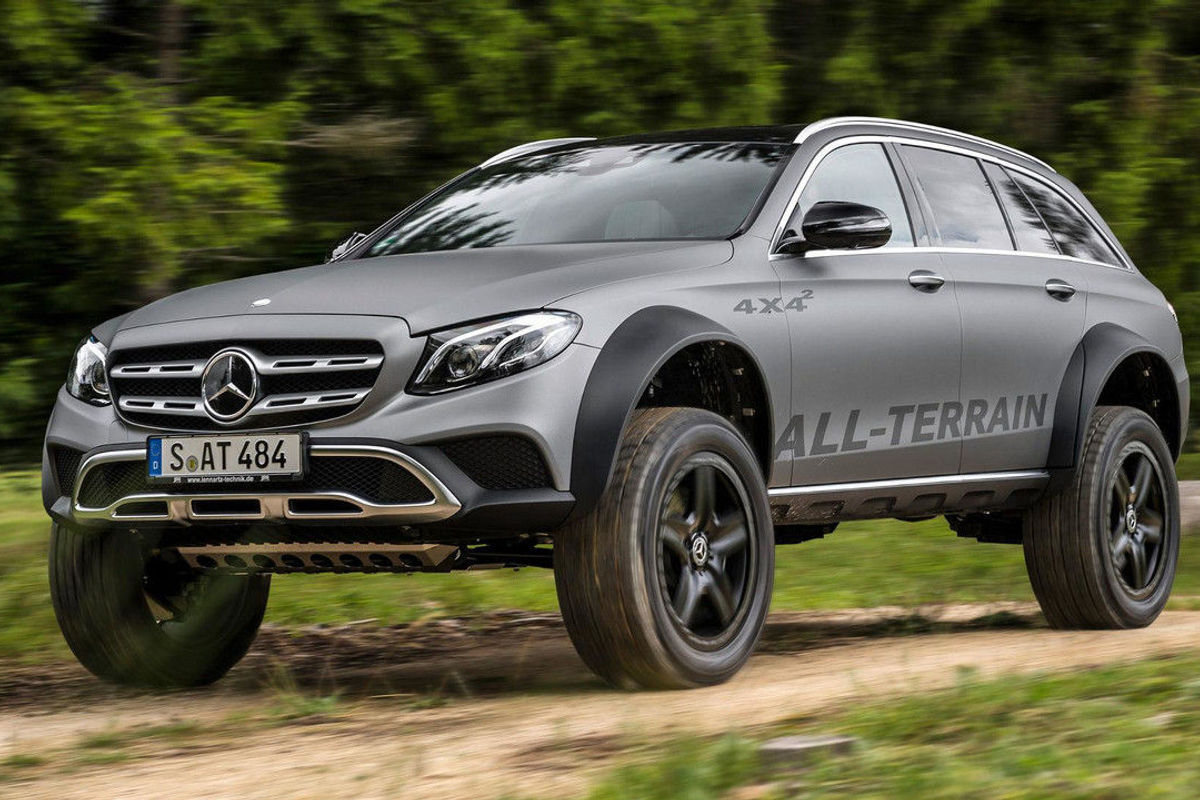
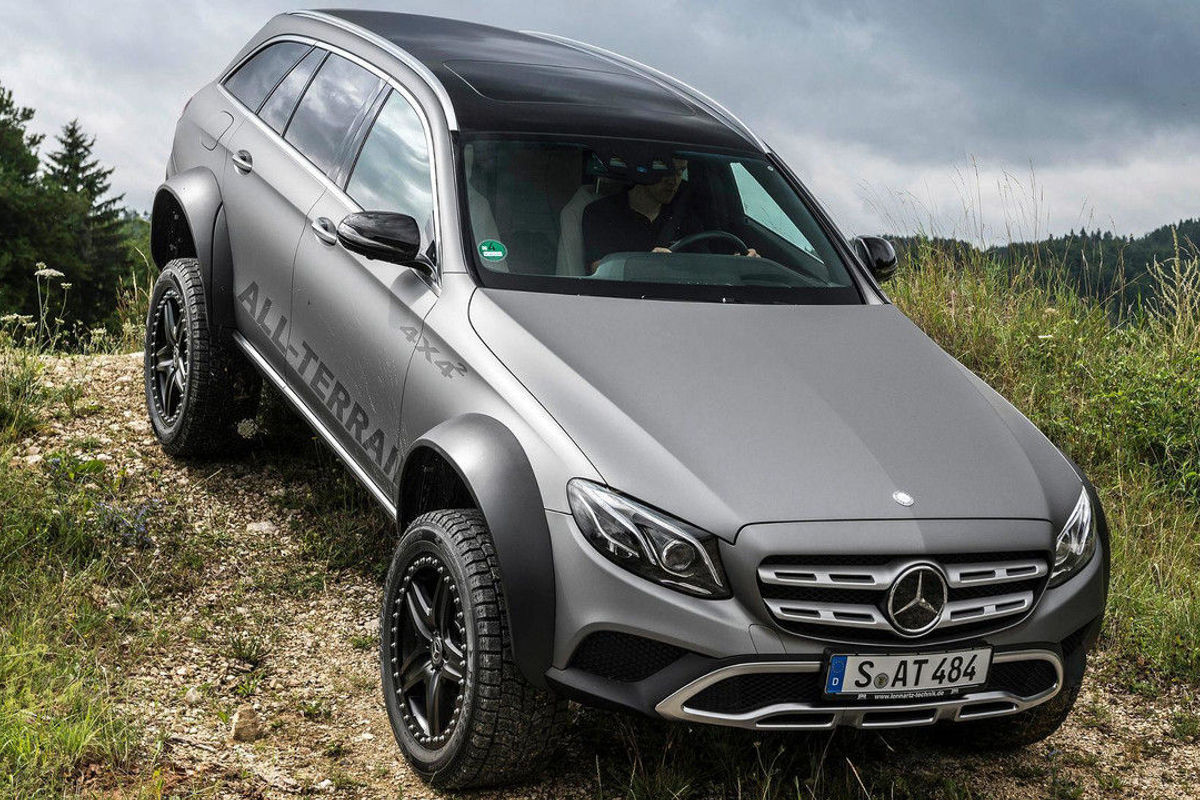
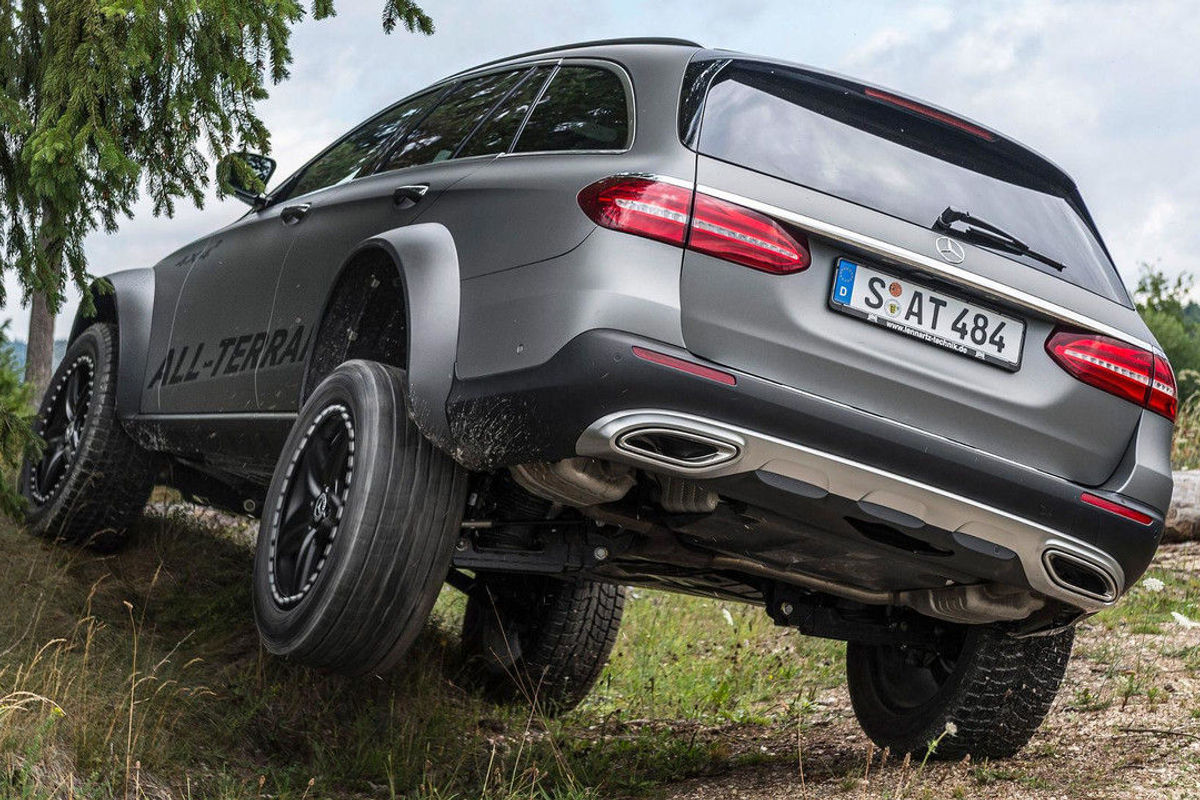
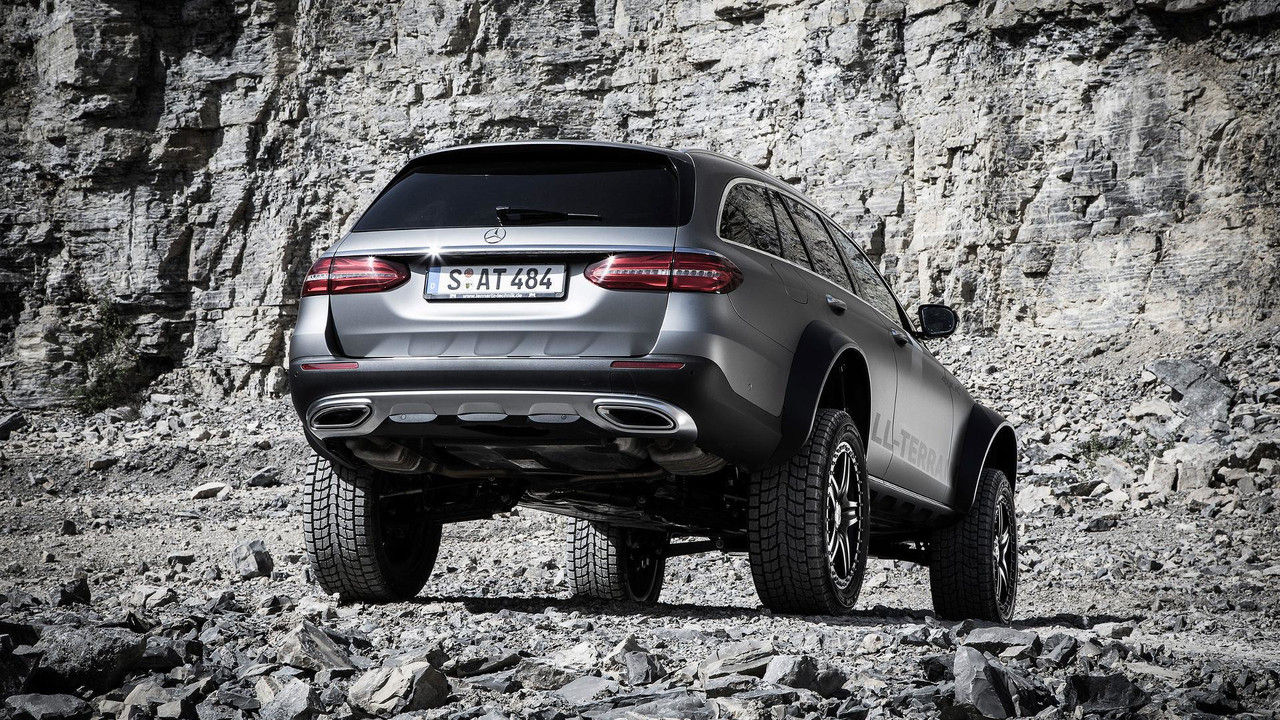
Your eyes do not deceive you, this is not photoshop wizardry. What you see here is the Mercedes-Benz E-Class 4×4² All-Terrain and the Stuttgart-based firm is considering it for production, albeit in limited numbers.
Last year, Mercedes-Benz revealed the E-Class All-Terrain, an E-Class wagon with plastic body cladding, skid plates, all-wheel drive and a 156 mm raised ride height that would rival the likes of the Volvo V90 Cross Country and Audi A6 Allroad.
Then, a Mercedes-Benz engineer by the name of Jürgen Eberle spearheaded a project to create a hardcore E-Class 4×4² All-Terrain version by turning to the Mercedes-AMG G63 6×6 and G500 4×4² for inspiration. Eberle and his team proceeded to raise the ground clearance to nearly 200 mm but then took it a step further by installing the portal axles from the G500 4×4² which resulted in a formidable ground clearance of 420 mm, more than double than that of the original All-Terrain and some 50 mm more than the G-Wagon itself.
Who said a station wagon can't be hardcore? The E-Class 4×4² All-Terrain is as hardcore as they come.
With a wading depth of 500 mm and riding on 20-inch wheels shod with fat 285/50 R20 tyres, Eberle created a luxurious offroad beast. The project took 6 months to complete.
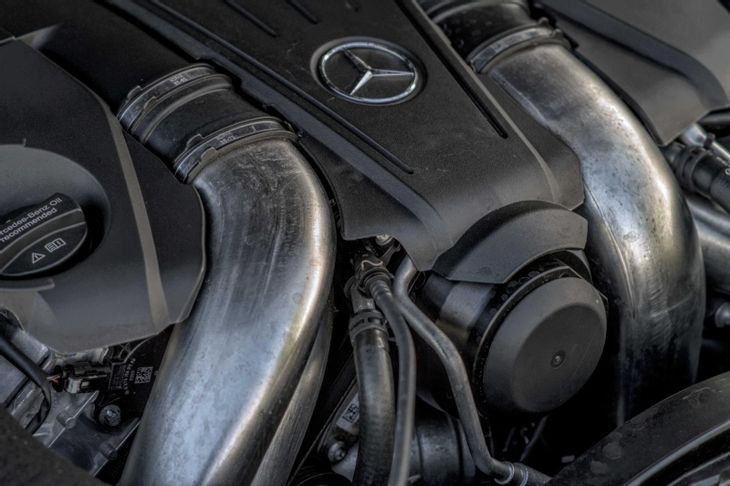
The E-Class 4×4² All-Terrain borrows the 3.5-litre V6 engine from the E400 with outputs of 245 kW and 480 Nm of torque.
Eberle is reportedly confident that the E-Class 4×4² All-Terrain will get the green light for production and if does, it will serve as a more affordable option to the Big 3 G-Wagons, the G63 6×6, G500 4×4² and the G650 Landaulet. Production numbers will be limited, however.
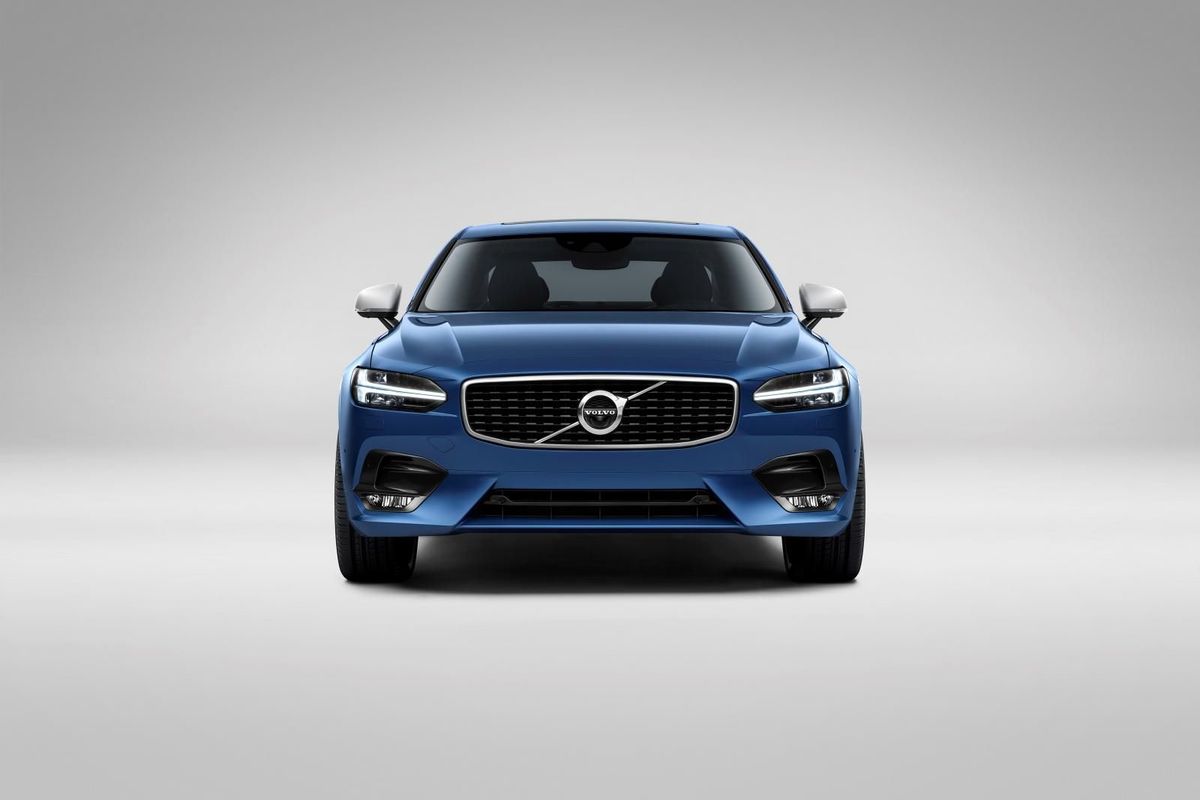
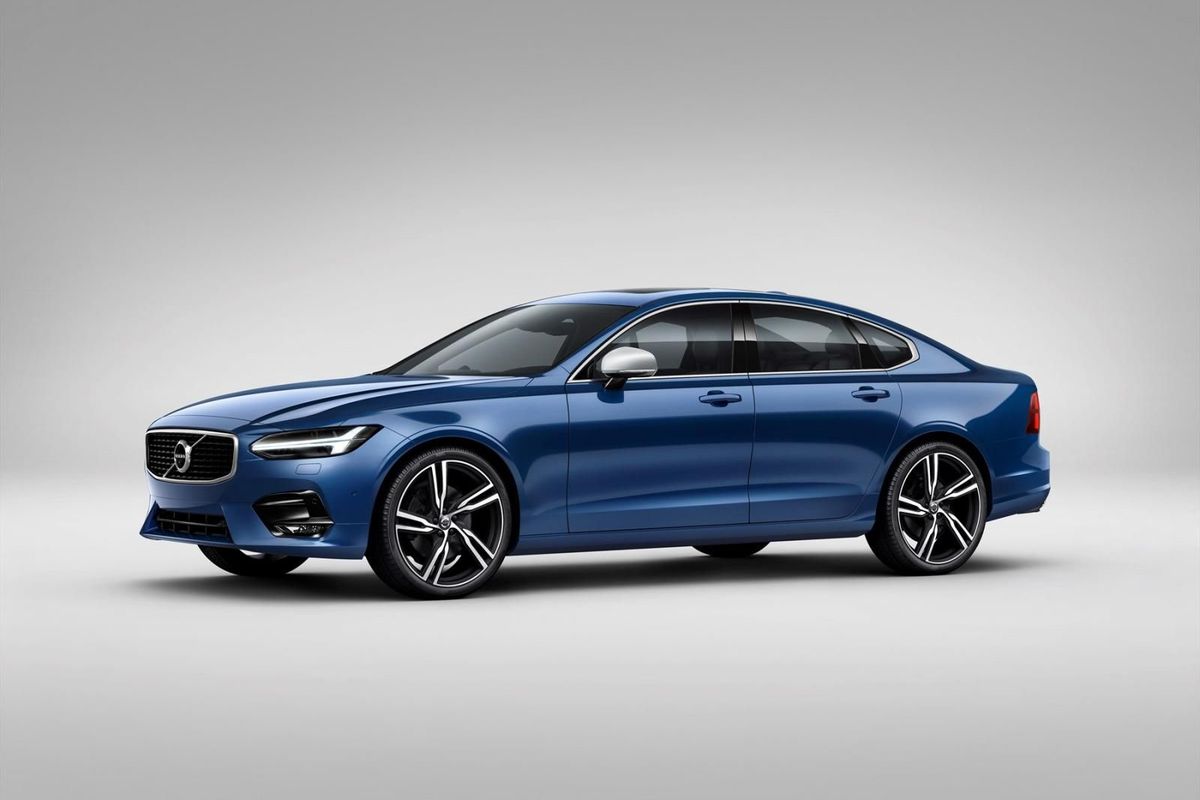
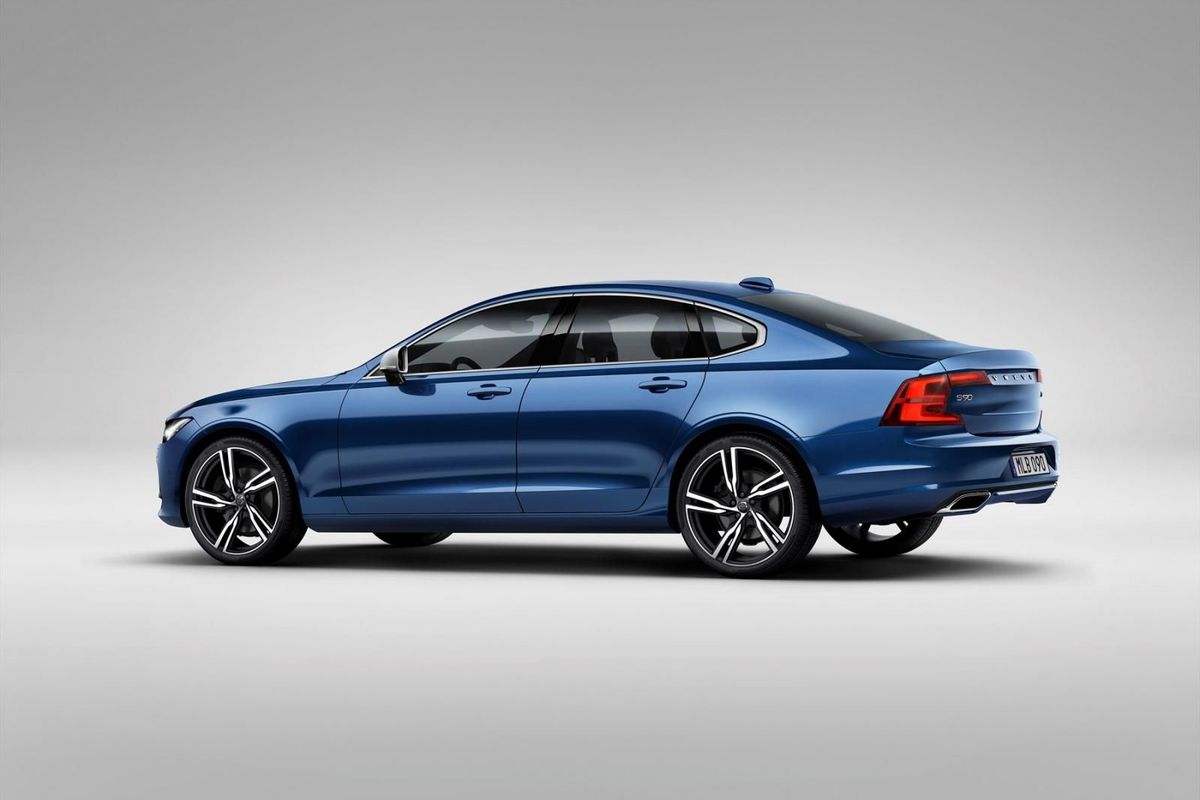
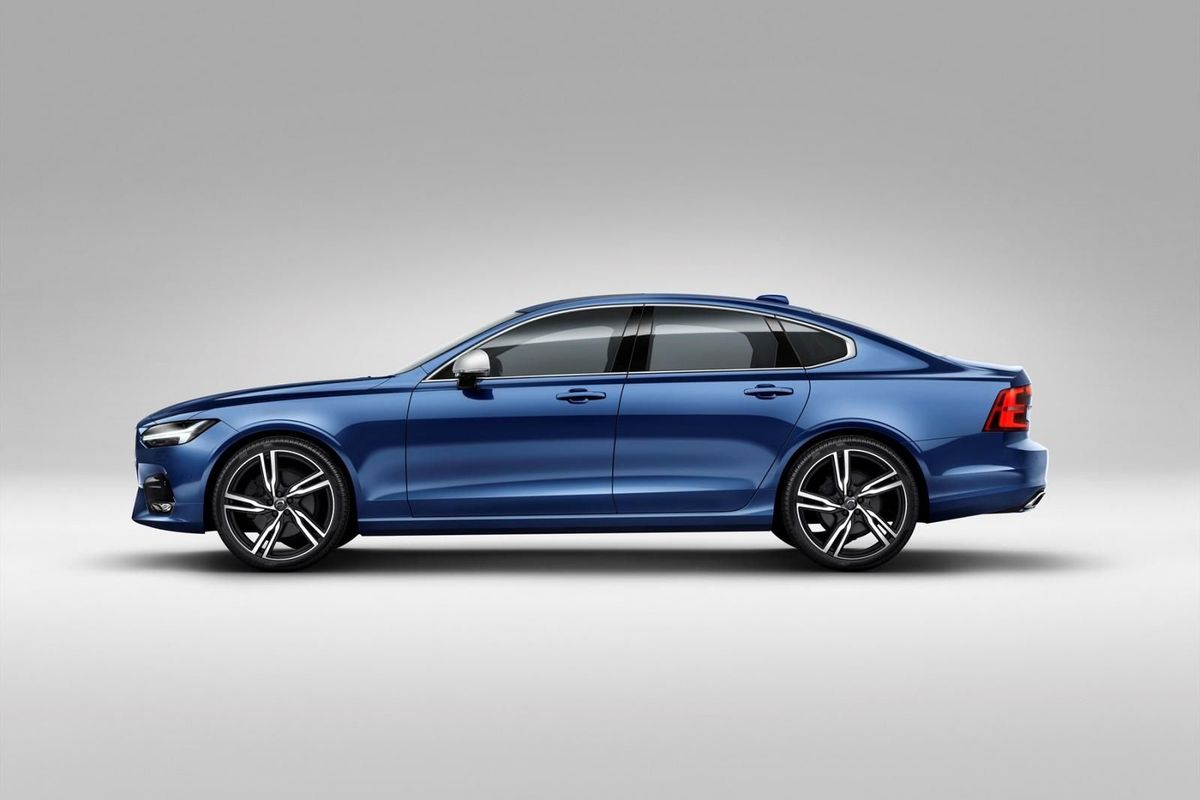
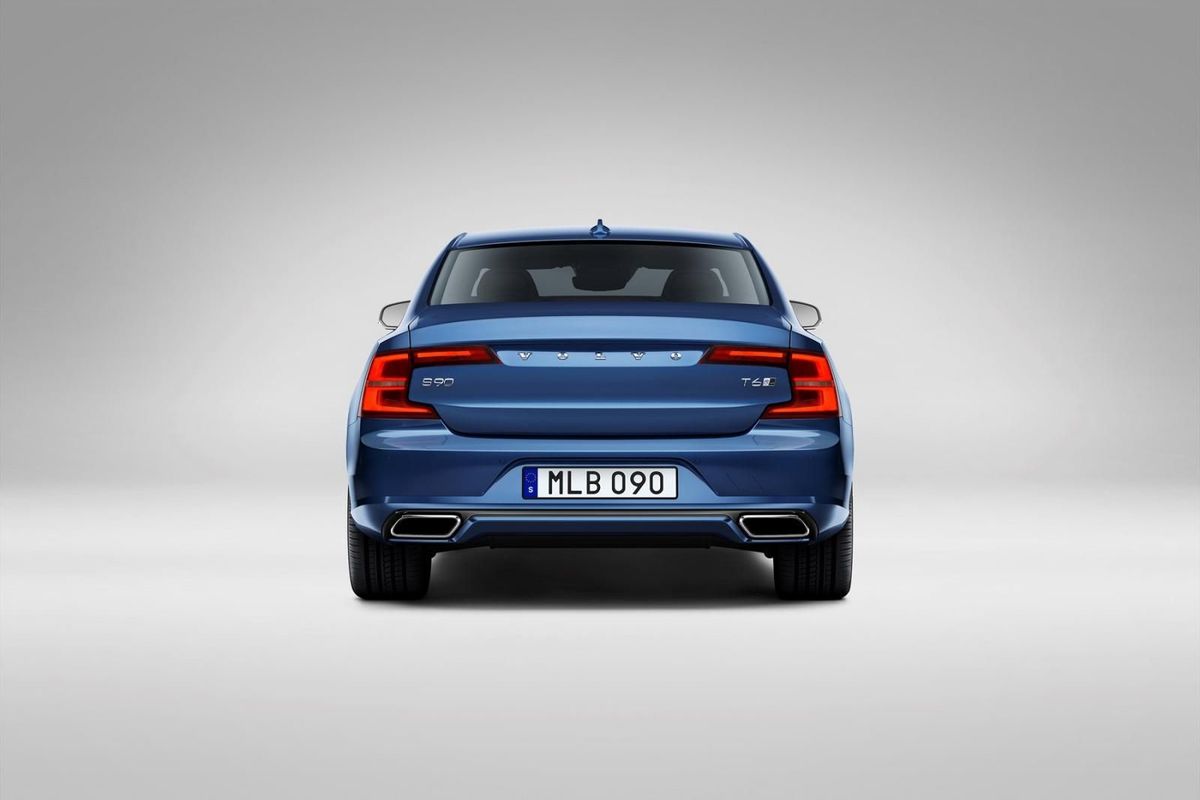
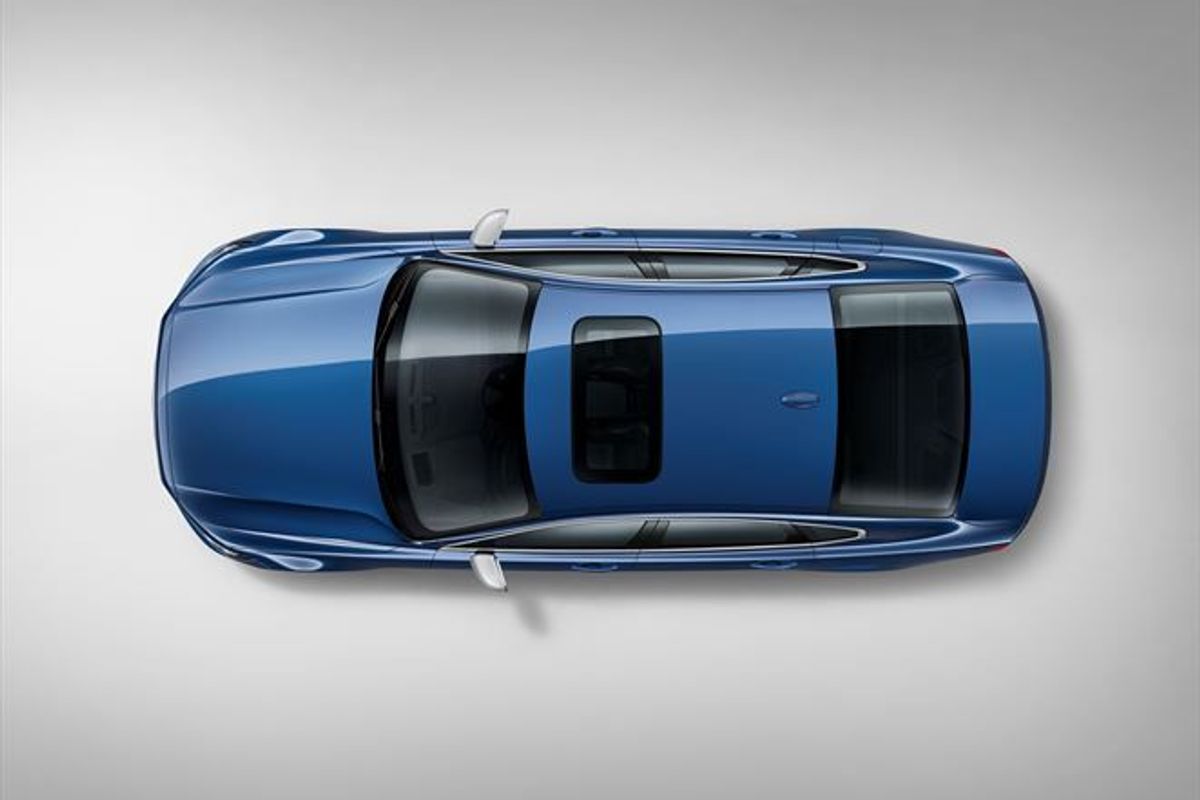
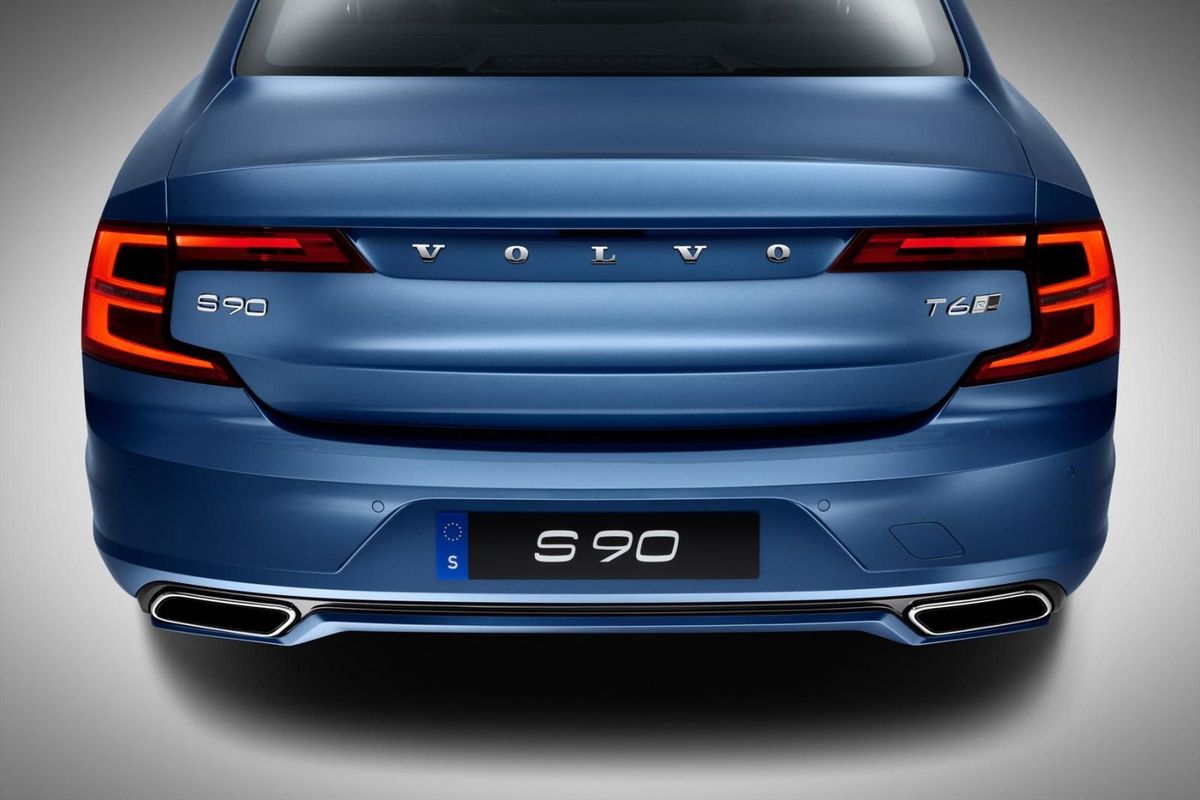
The new Volvo S90 executive sedan launched in South Africa earlier this year and the Gothenburg-based firm has now expanded the local range to include 4 sportier R-Design derivatives. Take a look at what’s on offer…
Competing with the likes of the Mercedes-Benz E-Class, BMW 5-Series and Audi A6, the Swedish Volvo S90 executive sedan offers high levels of comfort, safety, style and performance.
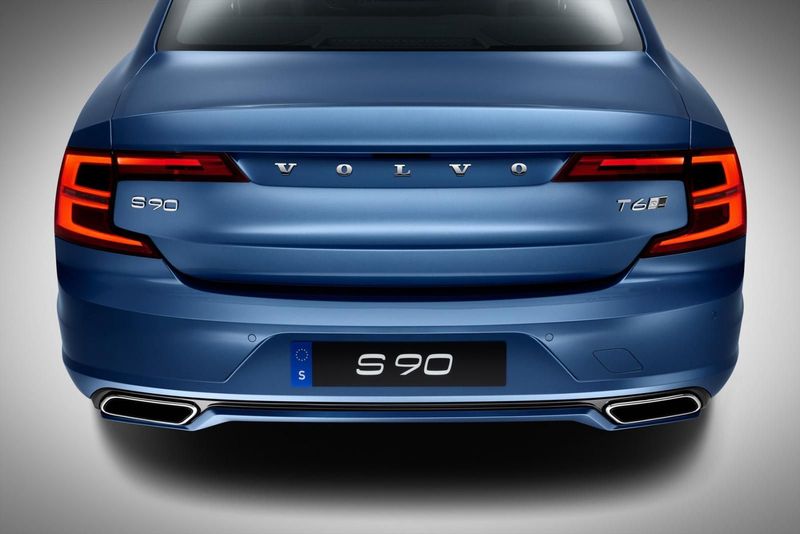
The S90’s appeal has now broadened with the introduction of 4 R-Design derivatives that not only bring edgier styling to the lineup but also offer enhanced dynamic ability.
Engine choice
A total of 4 S90 R-Design derivatives are on offer with 2 petrol and 2 diesel engines available.
There are 2 petrol and 2 diesel engines on offer for the S90 R-Design in both front-wheel drive and all-wheel drive formats. All engines 2.0-litre units and are mated to an 8-speed Geartronic transmission.
The front-wheel drive, diesel powered twin turbo D4 R-Design offers 140 kW and 400 Nm of torque with a claimed fuel consumption figure of 4.4 L/100 km.
The all-wheel drive, twin turbo diesel D5 R-Design has outputs of 173 kW and 480 Nm of torque with a claimed fuel consumption figure of 4.8 L/100 km.
On the petrol front, the turbocharged T5 R-Design with front-wheel drive develops 187 kW and 350 Nm of torque with a claimed fuel consumption figure of 6.5 L/100 km.
The twin turbocharged all-wheel drive T6 R-Design features both a supercharger (for low down torque) and a turbocharger (for power high in the rev range), developing 235 kW and 400 Nm of torque. Fuel consumption for this derivative is rated at 7.2 L/100 km.
The S90 R-Design's chassis has been uprated for sportier driving and features a tauter setup that’s optimised for enhanced dynamics. A double wishbone and coil front suspension and an integral axle with transverse composite leaf spring suspension at the rear supports the dynamic, yet comfortable feel of the S90 R-Design. Air suspension is not offered for R-Design derivatives.
Key design features
The S90 R-Design brings sporty appeal and engaging dynamics to the S90 range.
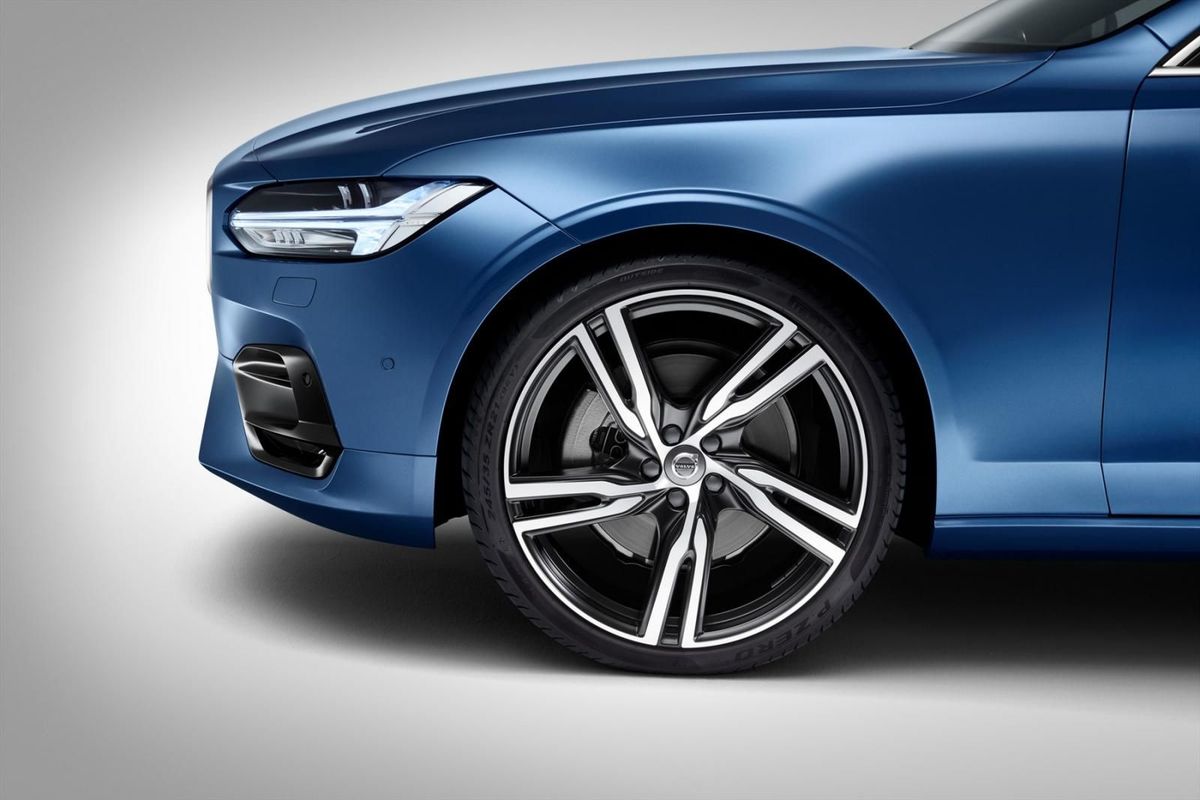
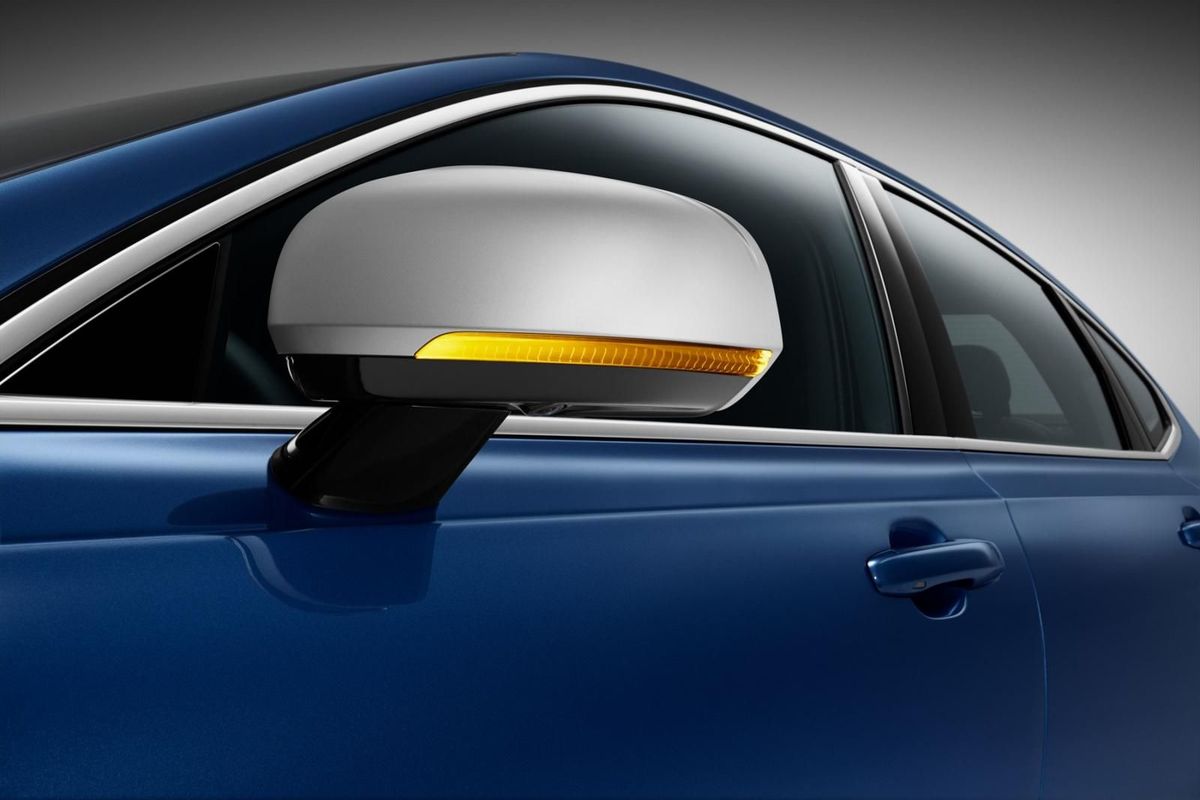
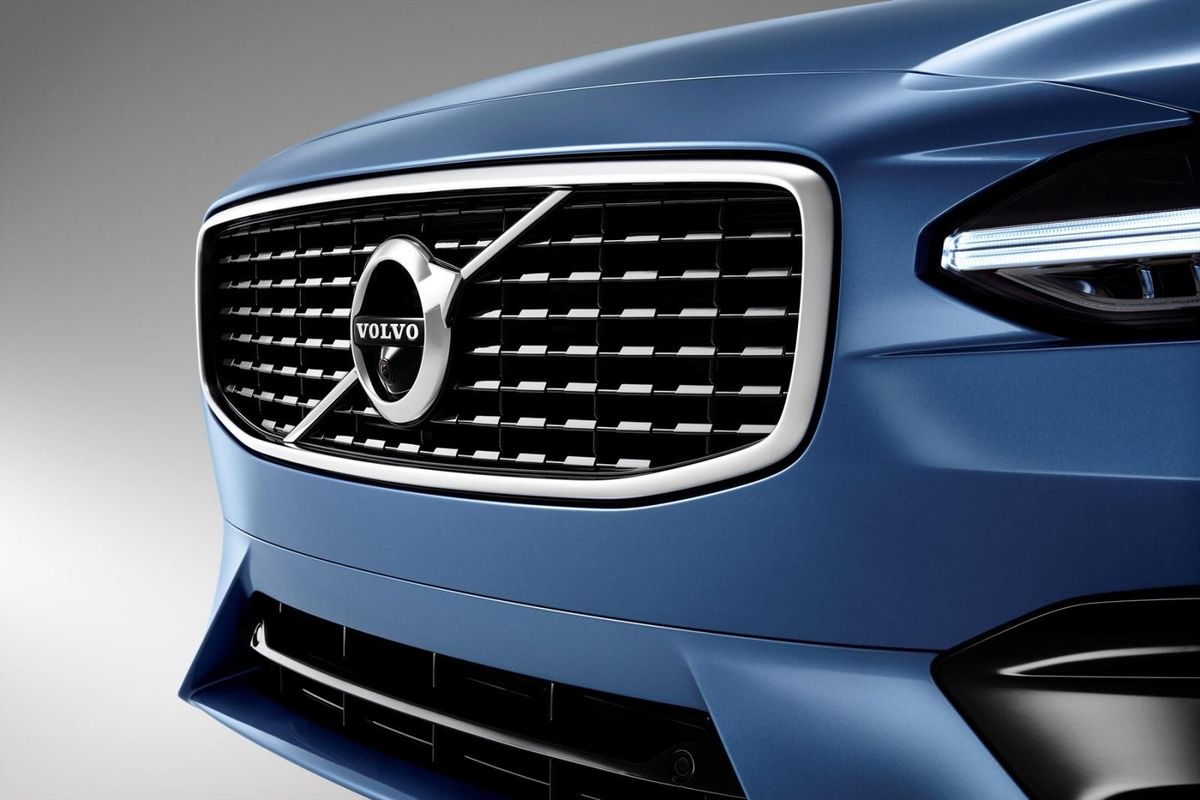
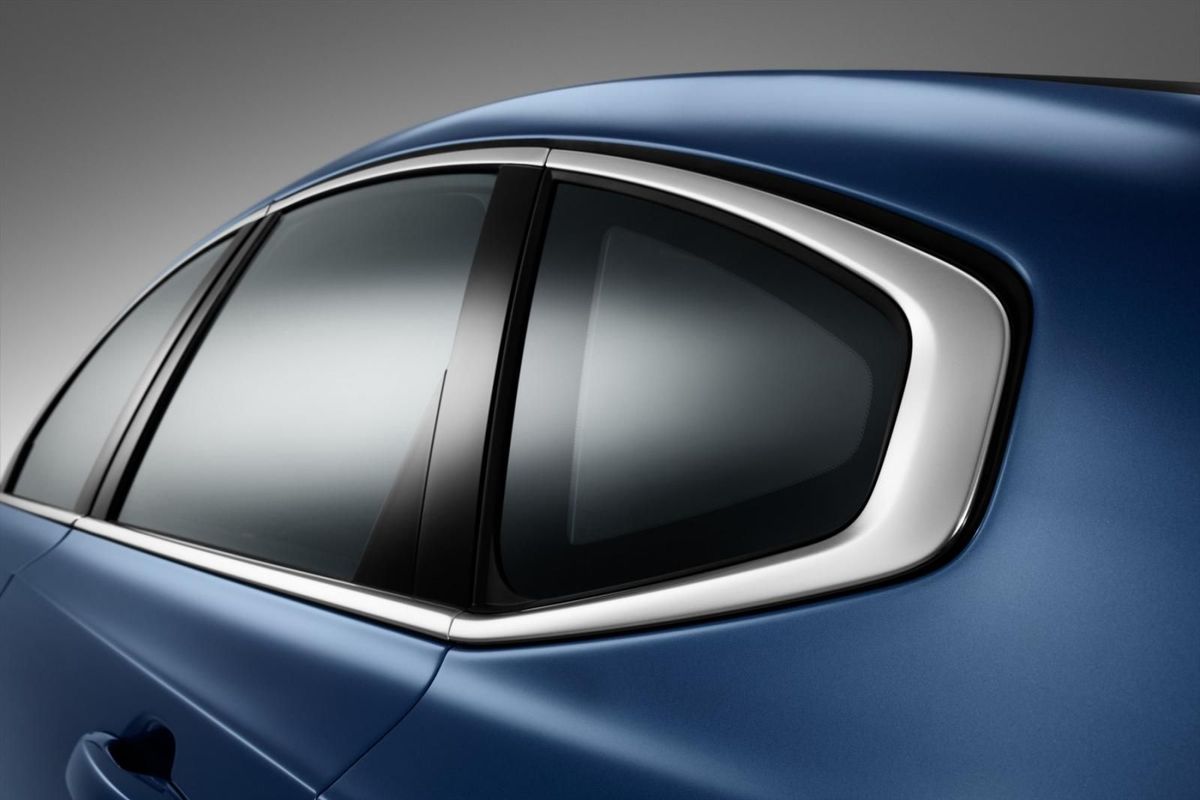
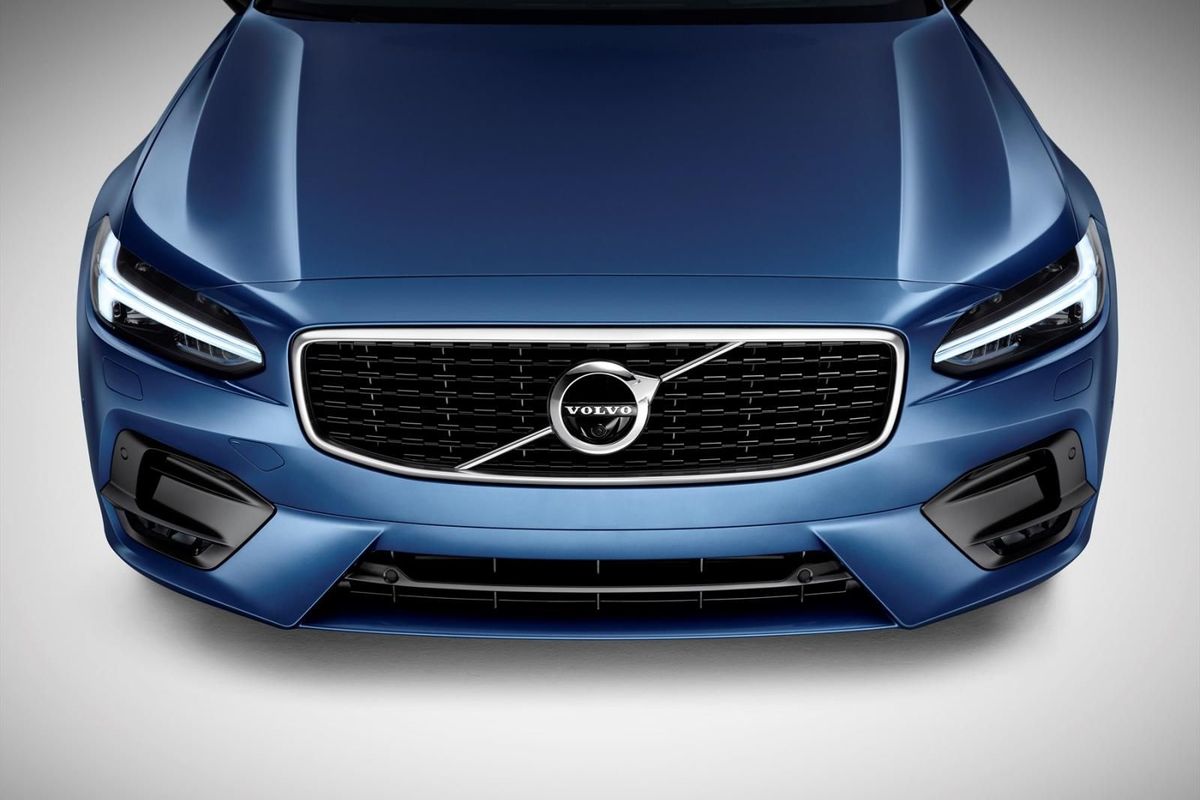
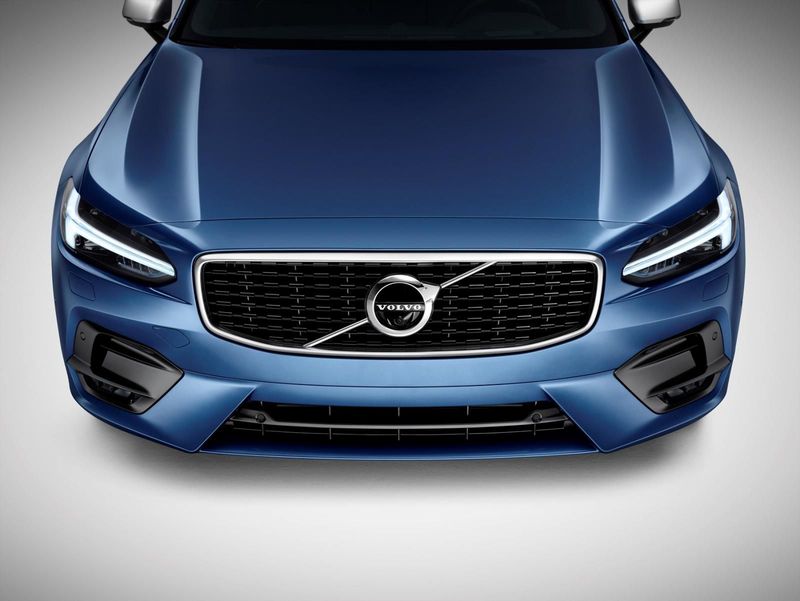
The S90 R-Design is visually distinguishable with a deeper front bumper, pronounced air dams and a new glossy R-Design grille with satin chrome accents. Satin chrome is also found around the windows and the mirror caps are finished in matt silver. The rear end features rhomboid tail pipes embedded in a sporty bumper with a colour-coded diffuser. The S90 R-Design rides on 19-inch alloy wheels as standard while 20- and 21-inch alloys are offered as an option.
Customers can further enhance the R-Design’s exterior appeal by opting for side sills, a chin spoiler for the front bumper, boot spoiler and split-integrated tail pipes.
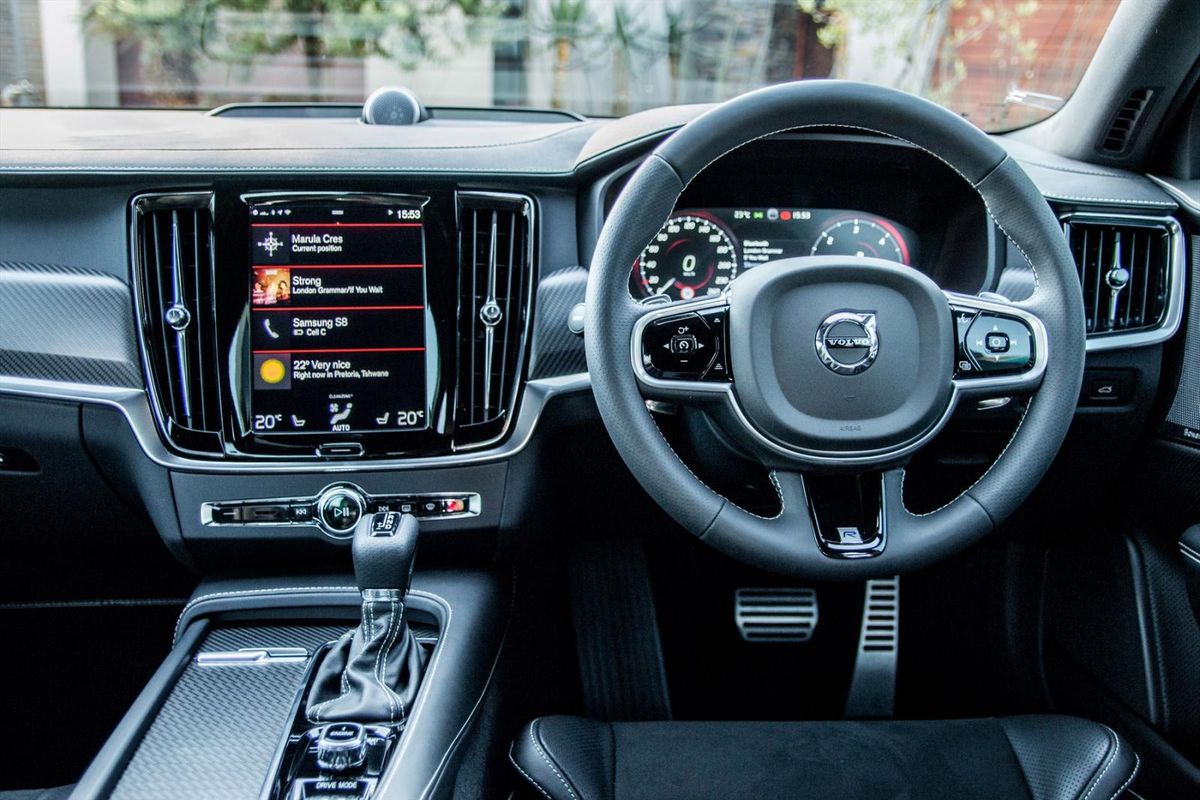
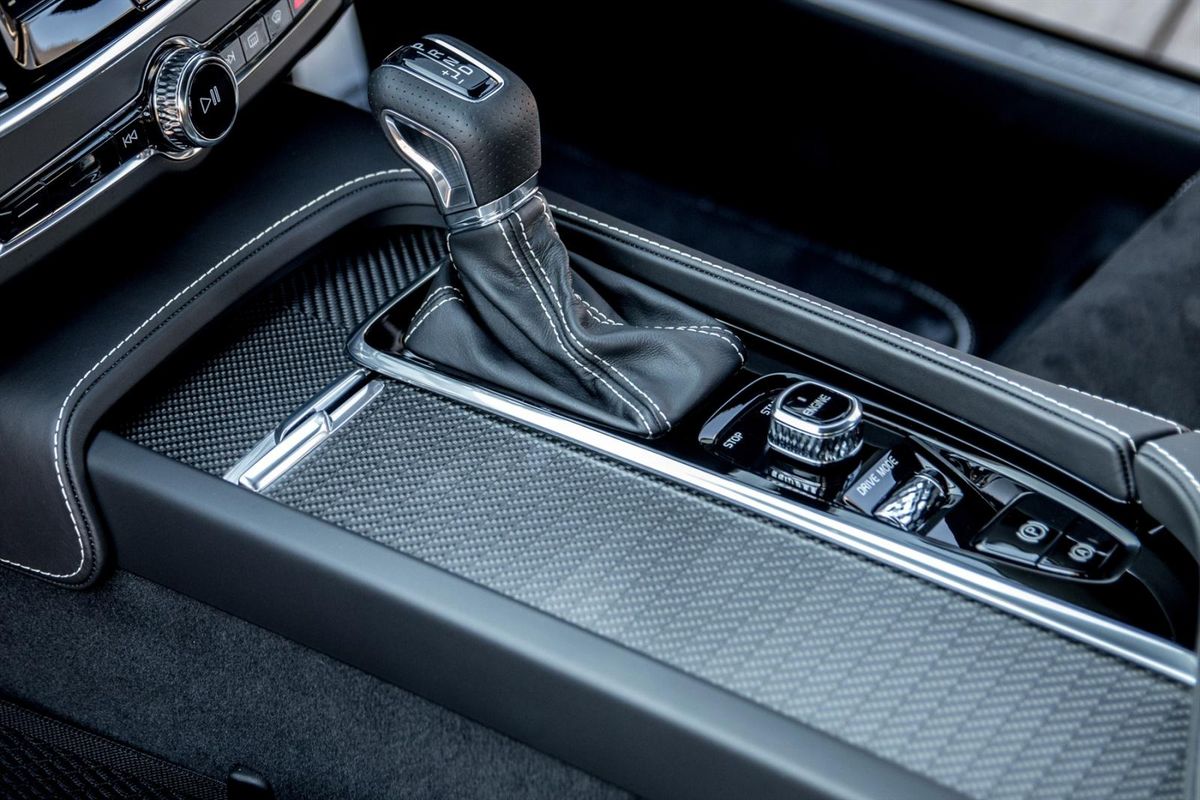
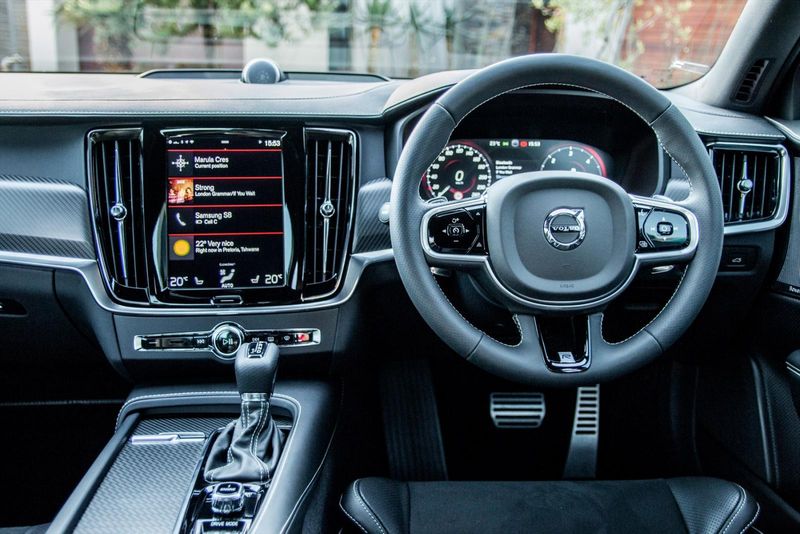
The interior features contoured charcoal sports seats upholstered in Nappa leather. A sports steering wheel with perforated leather inserts and R-Design badge adds a sporty touch as does the aluminium sports pedals and gearshift paddles. The gear lever also features perforated leather with contrasting stitching. R-Design floor mats and door sills are a further reminder that this is no ordinary S90.
A total of 9 exterior colours are offered but Bursting Blue and Passion Red are exclusively available for the S90 R-Design derivatives.
Standard and optional features
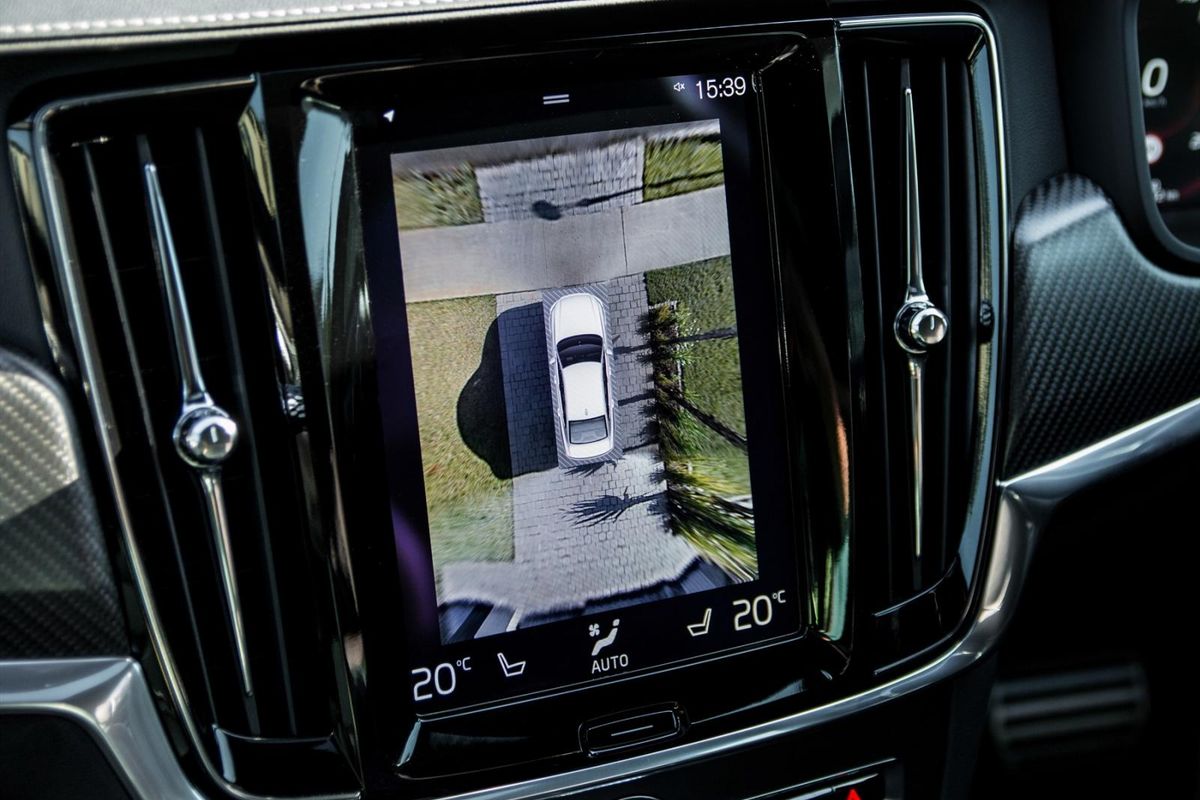
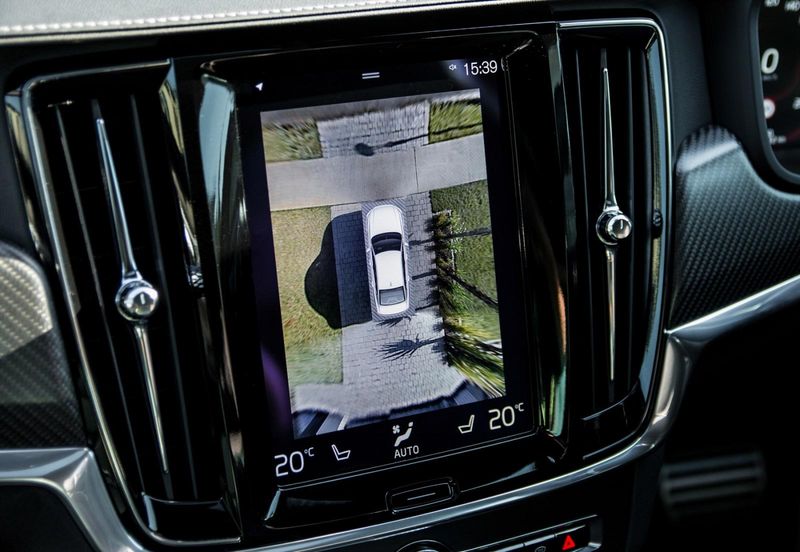
A 9-inch Sensus Connect touchcreen is standard while a 360-degree camera is offered as an option.
Standard features for the Volvo S90 R-Design include ‘Thor’s Hammer’ LED automatic headlights with Active Bending and Active High Beam, LED fog lights with cornering functionality, rear parking sensors, automatic windscreen wipers and laminated electric windows.
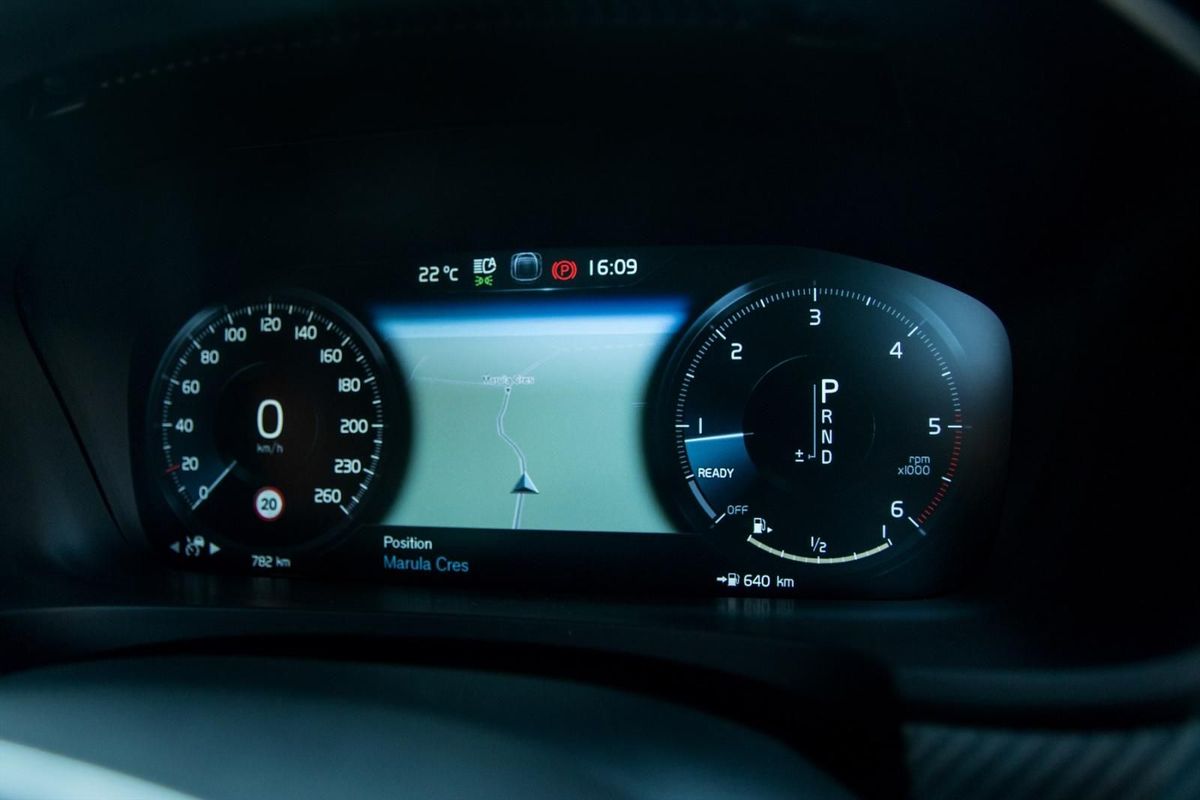
Interior features include a 12.3-inch digital instrument cluster, 9-inch Sensus Connect touchscreen display with navigation and Internet connectivity, automatic dual zone climate control, electric seats with memory function, Drive Mode selector and a 10-speaker high-end sound system with Bluetooth and USB/Aux input.
The S90 R-Design is semi-autonomous with features such Pilot Assist, an extension of the Adaptive Cruise Control, which can control acceleration, braking and steering at speeds up to 130 kph, provided that clear lane markings are present on both side of the vehicle. This feature still requires full attention on behalf of the driver but affords the driver with higher levels of relaxation in traffic jams or on the highway.
The interior of the S90 R-Design is well-sorted with features but a host of optional equipment is available to suit your needs.
Optional features include heated seats, electric-powered tailgate with hand-free access, electric-folding rear seats and headrests, rear window sun blinds, 4-zone automatic climate control, tailored dashboard, graphical head-up display and carbon fibre interior panels.
Customers can also opt for Park Assist Pilot, blind spot information (BLIS), Cross Traffic Alert, smartphone integration with Apple CarPlay and Android Auto, a 360-degree parking camera system and a 19-speaker, Bowers & Wilkins sound system.
Standard safety features include 6 airbags, ABS with EBD, BAS, HAS and ESC. City Safety autonomous emergency braking with forward collision warning and pedestrian, cyclist and large animal detection is also standard. IntelliSafe with run-off-road mitigation, impact-absorbing seats, automatic braking at intersections for oncoming traffic, lane keeping aid, lane departure warning, driver alert control and road sign information is also standard as are ISOFIX child seat mounts.
Volvo S90 R-Design – Price in South Africa
Volvo S90 T5 FWD R-Design Geartronic – R718 300
Volvo S90 D4 FWD R-Design Geartronic – R742 200
Volvo S90 D5 AWD R-Design Geartronic – R822 900
Volvo S90 T6 AWD R-Design Geartronic – R874 600
All derivatives come as standard with Volvo's 5-year/100 000 km maintenance plan and warranty, Tracker Connect and laminated glass.
The results of the annual Ipsos South African Competitive Customer Experience survey are out and once again it is Volkswagen and Audi that occupy the top spots.
Looking at the market overall, it is noteworhty that satisfaction levels continue to rise steadily across the board as South African car dealers improve their sales efforts. On the servicing side, however, the survey shows a static satisfaction graph for passenger vehicles, and a slight dip for LCVs (light commercial vehicles). For the public, though, the most interesting results will be the brands' individual performances. Note, however, that not all brands participate in the Ipsos study.
How does it work? Ipsos measures the purchasing aspect of the customer experience through a telephonic interview that takes place 10 to 35 days after delivery has been taken of a new vehicle, while the customer’s experience with dealer servicing is evaluated in an interview, also 10 to 35 days after a service transaction has taken place.
Sale & Servicing Experience
Audi and Volkswagen received Gold awards in both the sales and servicing survey categories. For both the German brands it is the fifth year in a row that the Gold sales award has been achieved. Audi also received the Gold award for the fifth year for passenger car servicing, while Volkswagen achieved the Gold standard for the second year running in the passenger car servicing category, and for the fourth time in LCV servicing.
So, a dominant performance, then. What about the others? From the brands that participated in the survey, Chevrolet, Mercedes-Benz, Nissan, Opel, Toyota and Volvo received a Silver award in the passenger car purchasing category, while Ford, Honda and Renault received Bronze. Besides VW, 4 other brands also received Gold in the LCV Sales category, namely Chevrolet, Isuzu, Nissan and Toyota. Ford was the only brand to received a Silver award in the LCV purchasing category.
When it comes to servicing, Nissan claimed Gold with Audi and VW in the passenger car category, while Chevrolet, Lexus, Mercedes-Benz, Opel and Toyota qualified for Silver and Honda, Renault and Volvo collected Bronze.
In the LCV servicing category, VW was joined by Chevrolet, Isuzu, Nissan and Toyota while Ford got Silver.
Note that major brands such as BMW, Kia, Hyundai, Land-Rover/Jaguar, Mazda and others do not participate in the Ipsos study.
Tell us what you think of your car, and the people that service it, to help us provide the best buying advice in South Africa. By completing this 10-minute survey, you will have a very real impact on everything we do, from the outcome of Cars.co.za Consumer Awards – powered by WesBank, to new buyer's tools and other insightful content.
Range Rover Velar (2017) International Launch Review
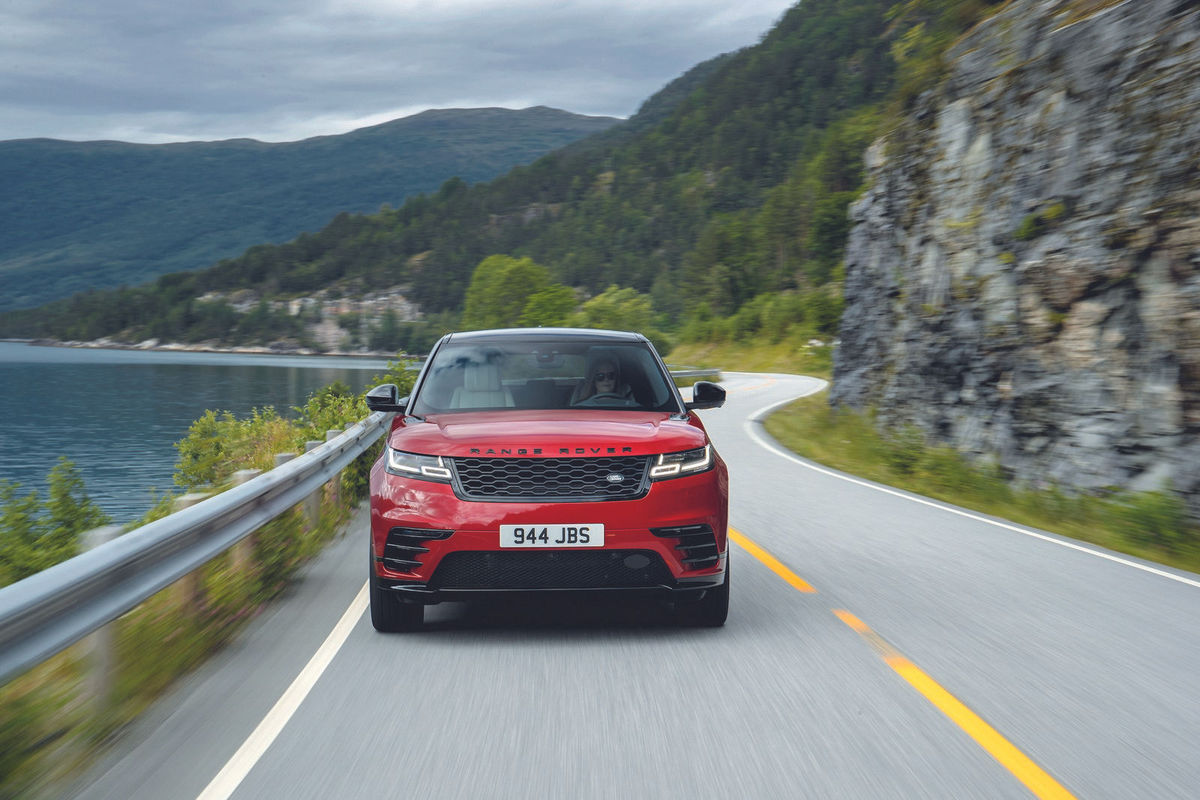
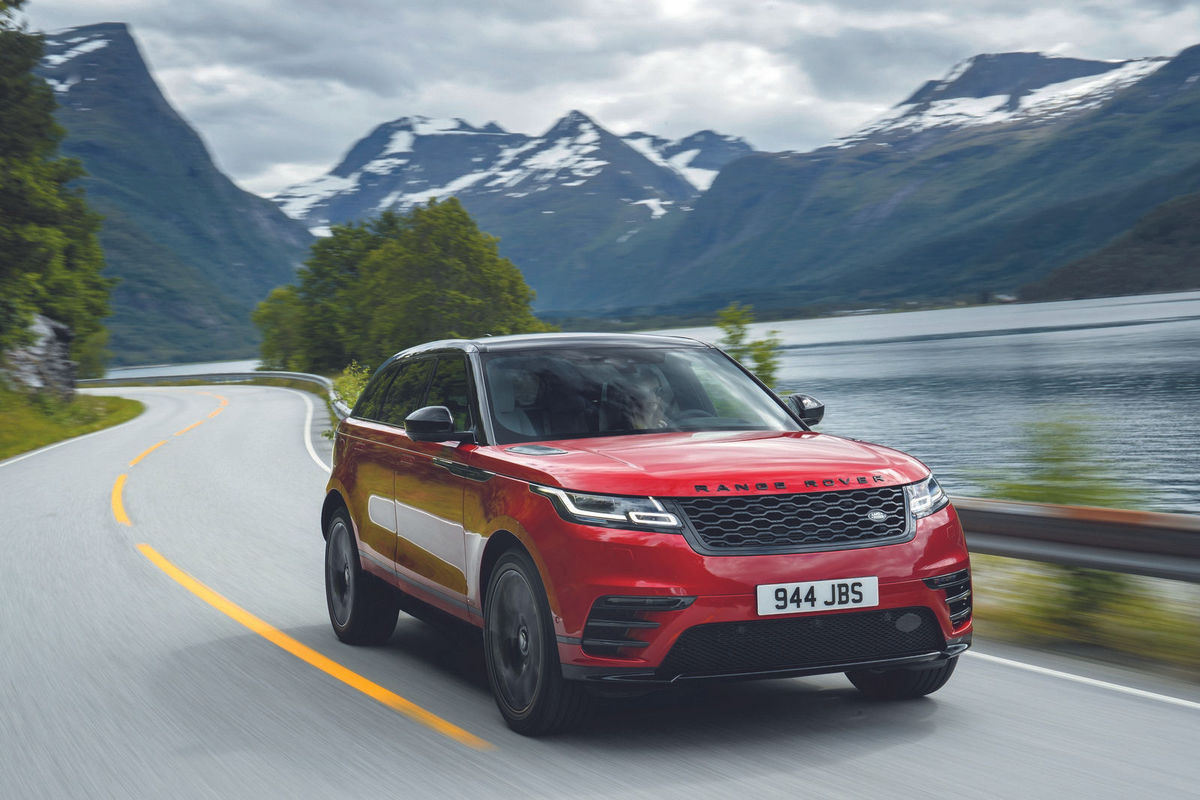
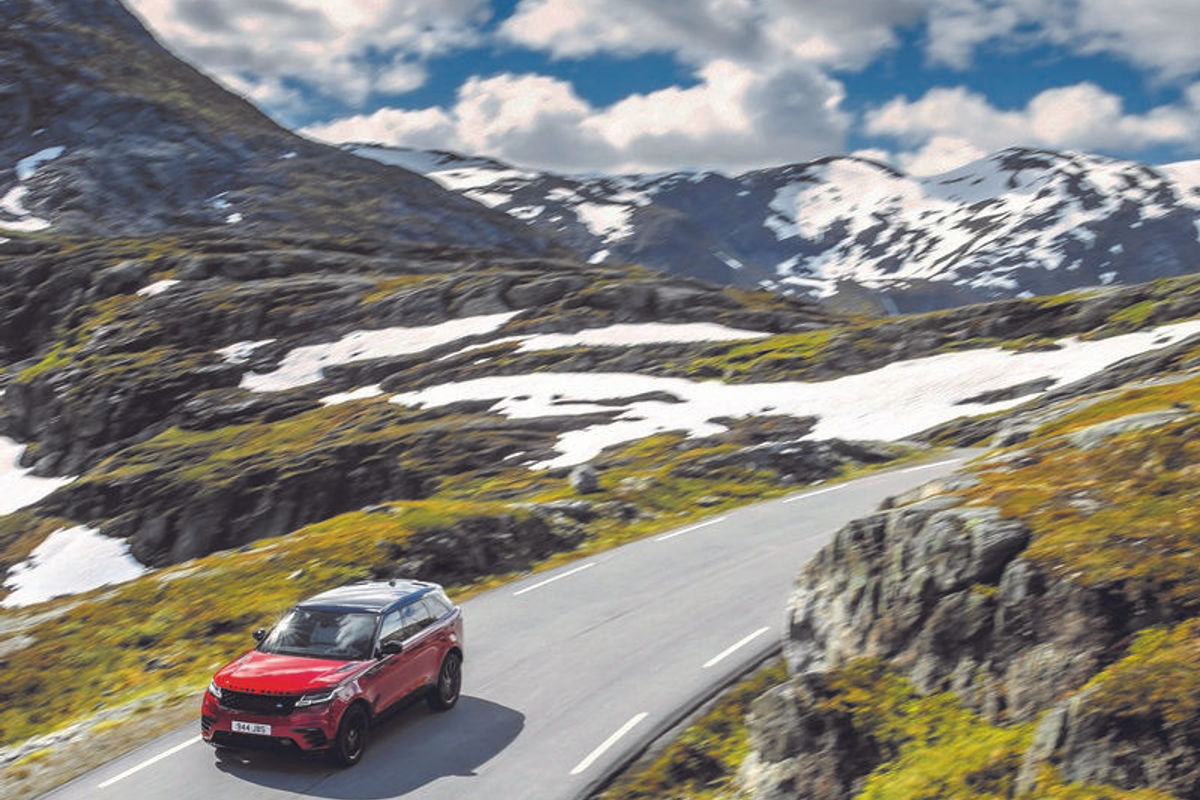
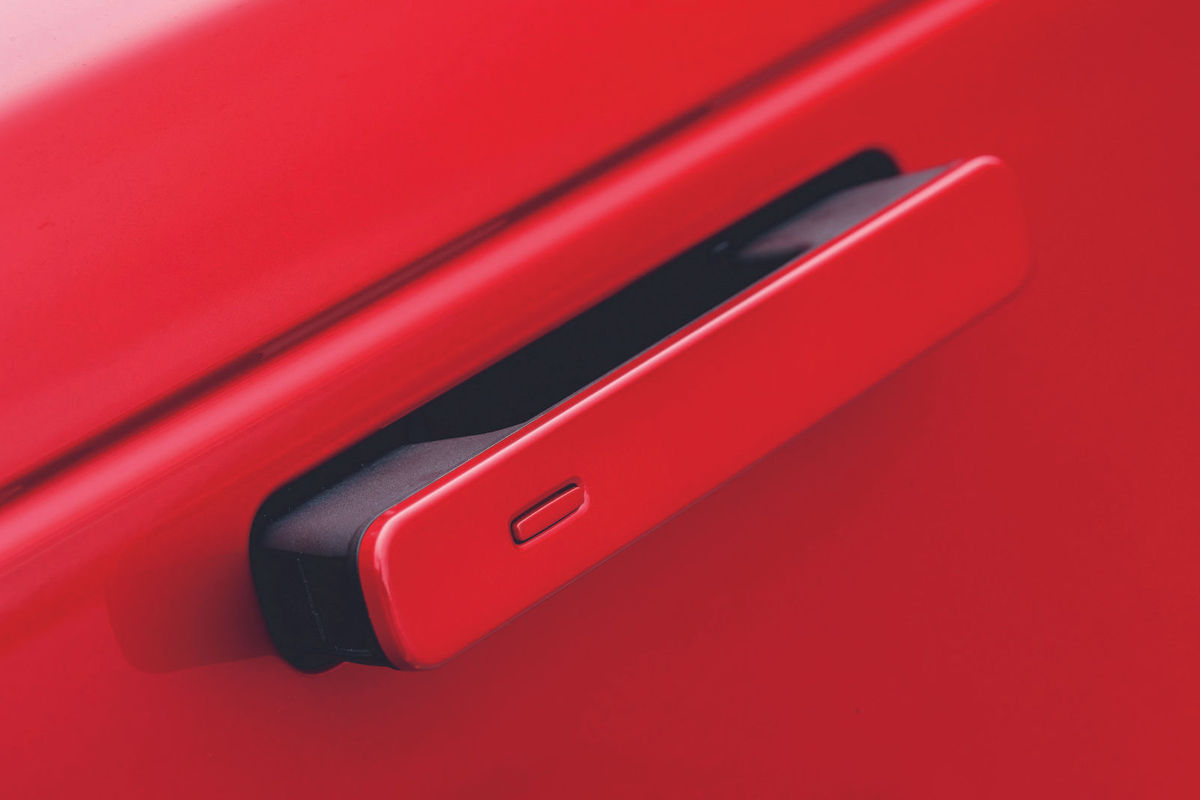
Land Rover calls its new executive SUV – the Velar, which will be launched in South Africa before the end of 2017 (full price list below) – the most road-biased car it has made. So does this rival to the BMW X4, Jaguar F-Pace, Mercedes-Benz GLC Coupe and Porsche Macan still feel like a proper part of the Range Rover family? Matt Prior investigates
What is that nagging feeling? That little suspicion that not everything's quite as clear cut as it should be?
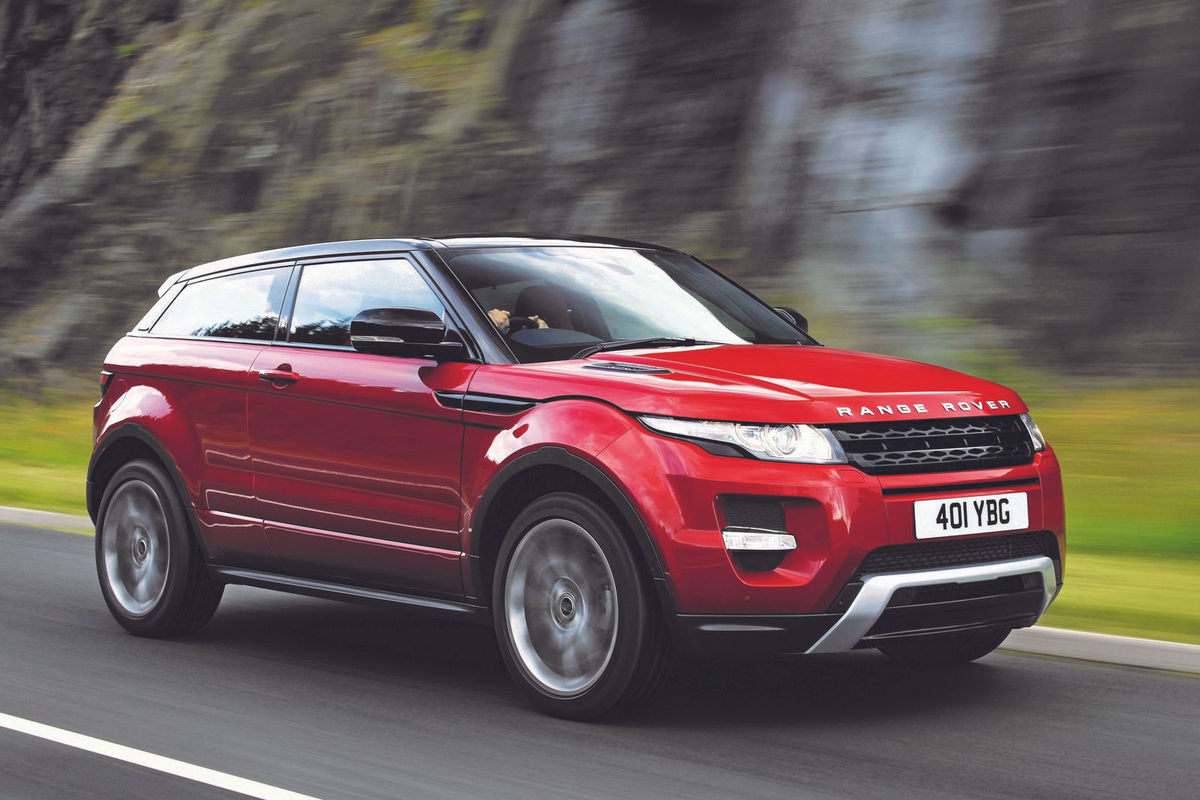
I don’t know. Because, on the face of it, everything up here in this imperious cabin is very straightforward. There was a gap in the Range Rover line-up, see, and it is now filled. The Range Rover range started with the Evoque and then, via a large leap, went to the Range Rover Sport before naturally culminating with the Range Rover. This new Velar sits in that large space between the Evoque and the Sport.
Mechanically, then, this 4.8m-long car is more ‘Sport-minus’ than ‘Evoque-plus’. It’s not as full of fat as the Sport, sure, but it does sit on a longitudinal-engined, aluminium platform – the same one as Jaguar's XE, XF and F-Pace, incidentally – rather than the transverse-engined set-up of the Evoque.
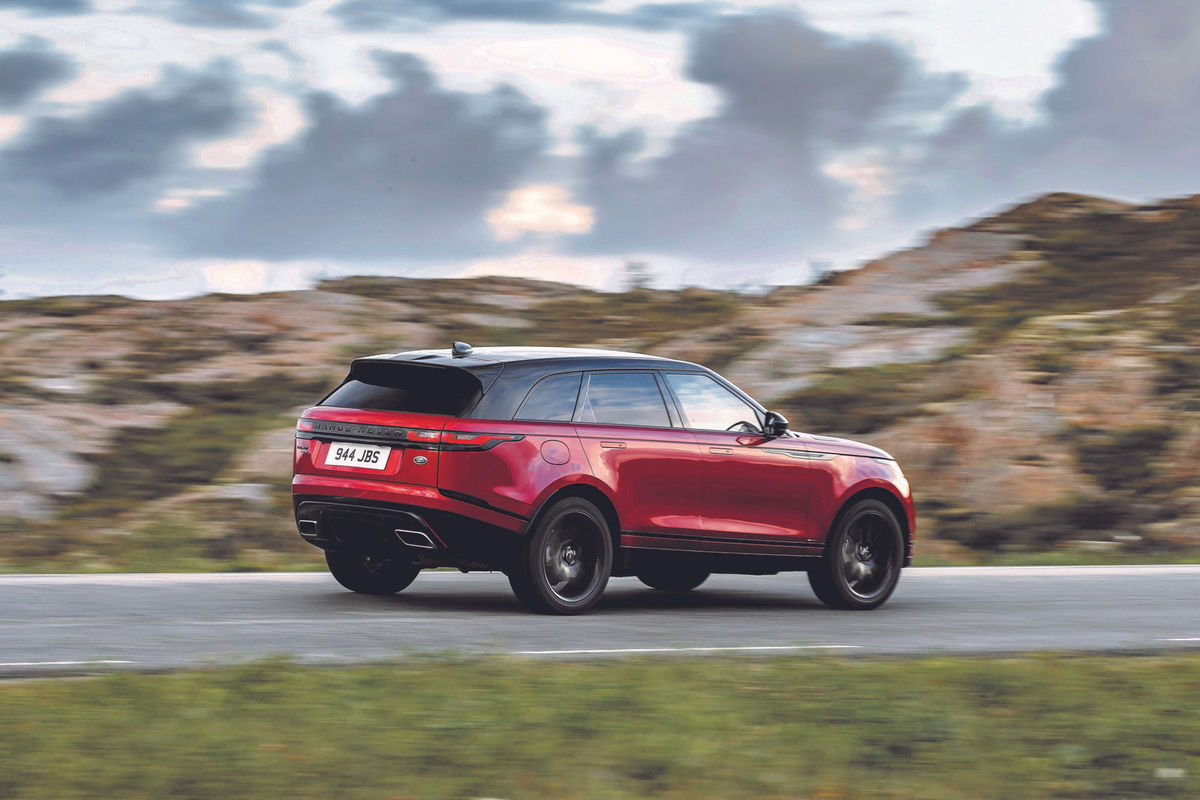
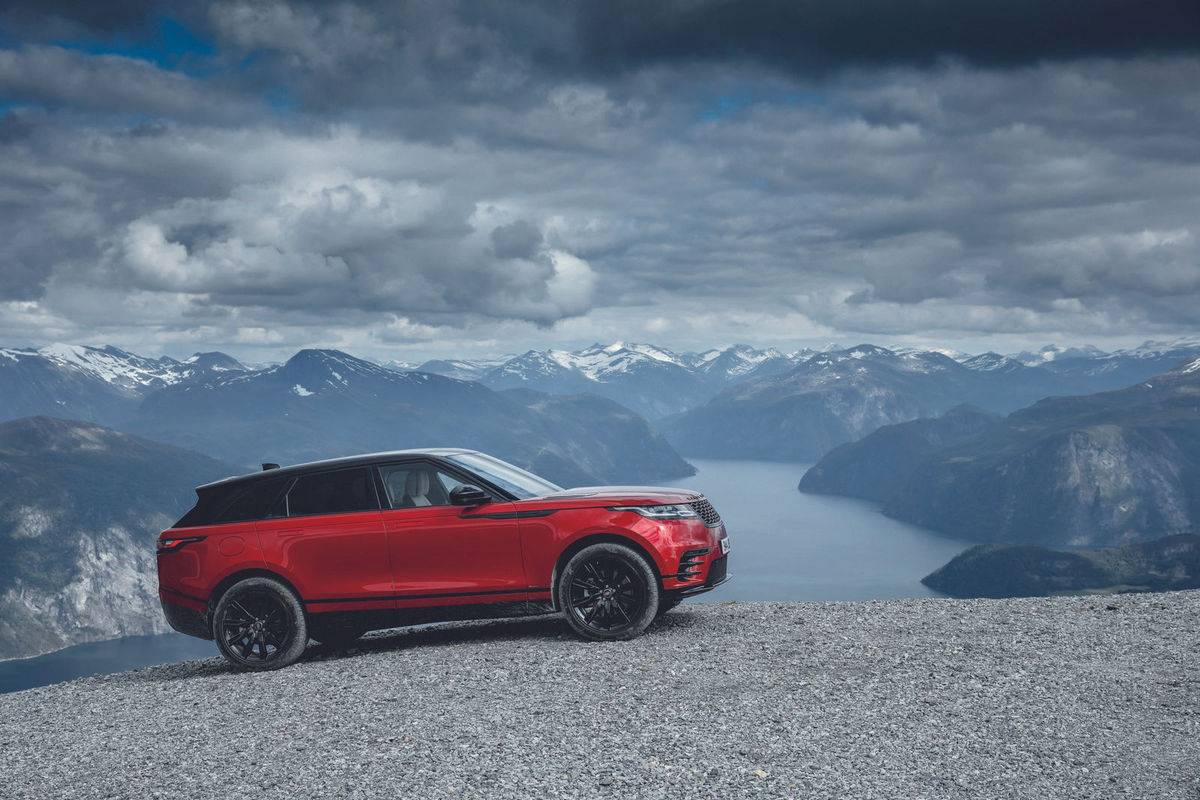
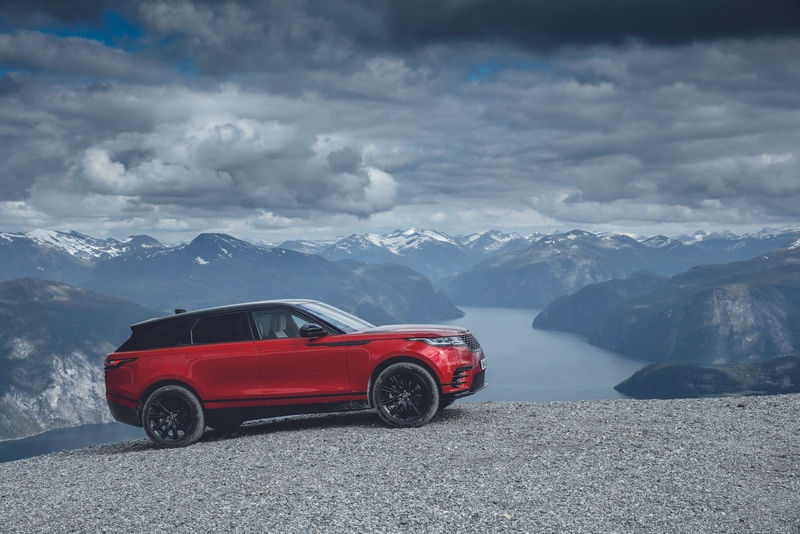
Range Rover's latest player, the Velar, filling the gap between Evoque and Sport, just.
The nitty gritty
The Velar’s chassis contains more aluminium than any of the Jaguars’, mind. It’s bigger than them all, too, and – fairly obviously – it is more off-road focused. But, fundamentally, that’s where it starts.
The Velar, then, ends up with an 81% aluminium body, with some steel under the boot floor, where it doesn’t hurt that it brings the weight distribution rearwards (albeit there’s a composite tailgate to maintain a low centre of gravity), and some magnesium under the bonnet to conversely, lighten the front end. Consequently, the claimed kerb weight for all versions, barring the biggest diesel, is less than 1 900kg.
Heavy use of aluminium has meant that the Velar tips the scales at just under 2-tonnes. In Range Rover terms, that's light.
In the same way that the Jaguar models on this platform have double wishbones at the front and an integral link set-up at the back – which is like multi-link but with additional, lateral-rigidity-increasing components – so too does the Velar. Think of the Velar as a semi-skimmed Range Rover, then, to the Sport’s full fat and the RR’s gold top. (The Evoque is… what? Kinda non-dairy?)
If you want it less figuratively, compared with the Sport, the Velar’s towing limit is 2 500 kg, not 3 500 kg, and it doesn’t get a low-ratio transfer case. Of its six engine options, four are 2.0 four-cylinder engines, the other two V6s; and the four-pots, as standard, get coil springs. Air springing, which Land Rover uses to great effect to increase off-road capability on big models, is standard on V6s and optional on the fours.
Voluptuous interior
Some of those things will inhibit the Velar off road – we’ll come to that – but that might not matter because Land Rover says this is the most dynamically focused Range Rover yet. We’ll come to that too. But first, inside. Where, because it’s a Range Rover, there is a big, lateral slab across the dashboard; a leather-bound butcher’s block that has been a feature item on Range Rovers ever since Rover met BMW.
Now, as then, it’s meant to feel yacht-inspired; broad and powerful, but light and luxurious, a structural horizontal beam with vertical supports running through it. It’s the feature that really established a Range Rover’s interior as one to send postcards home about; one, surely, benchmarked by, among others, Volvo when creating the new XC90.
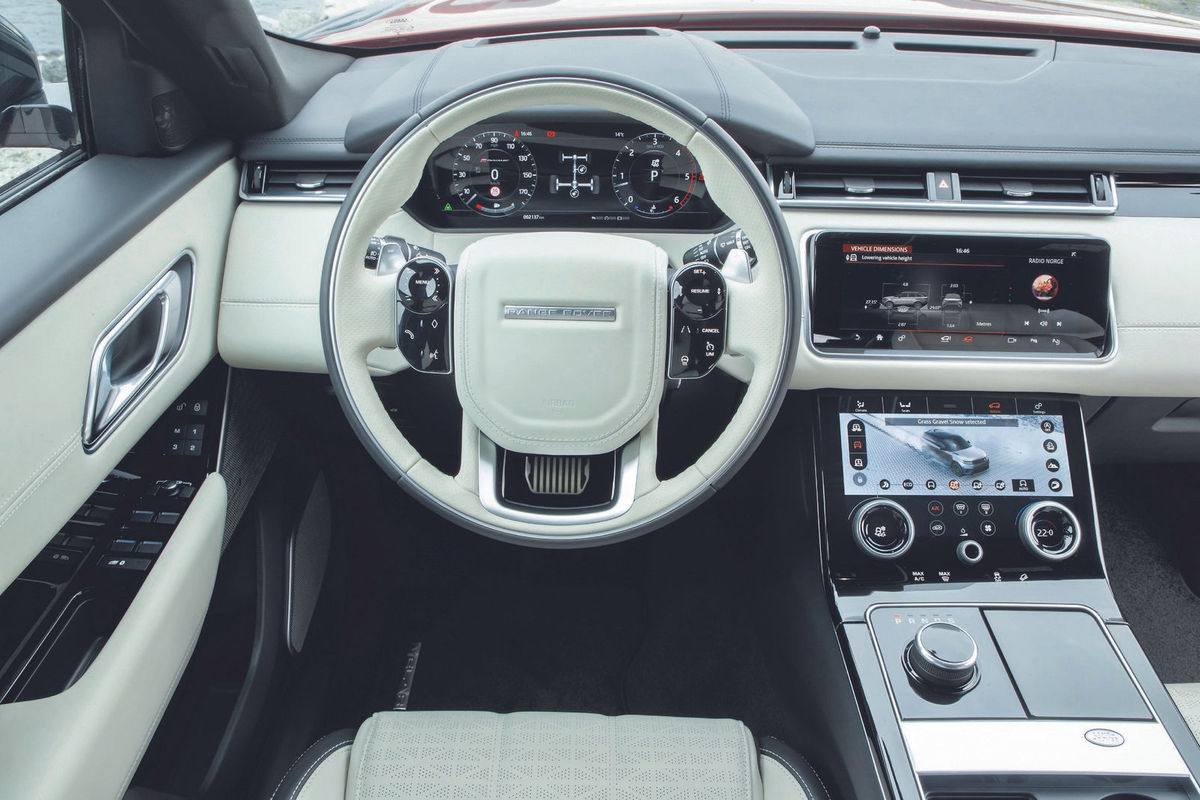
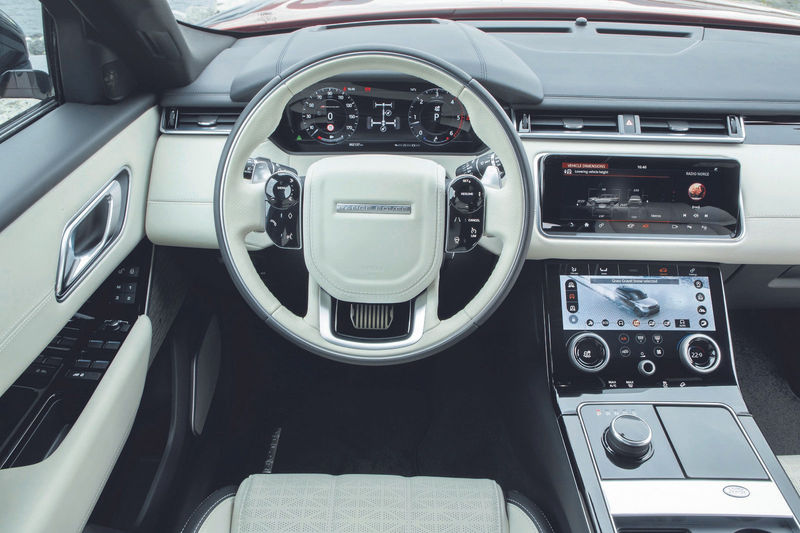
The Velar's interior is a fully digital affair, but for the first time, it's truly as good as the competition.
But there are two things about the addenda surrounding it this time. First is the Velar’s perceived material quality. On the face of it, things are great: the leather is good – Jaguar Land Rover (JLR) talks about using the same high-end stitching and fabrics as top models – but it flatters to deceive in places. Not everything can be leather, and on lower bits of the cabin, there are harder plastics, some scratchy, which seatbelt buckles have already given a hard time.
Some of the metalised plastics don’t convince you well enough that they’re not plastics, aside from providing an authentic, overly harsh glare in bright sunlight. Compared with, say, a Porsche Macan, the Velar is visually a lot more arresting. But while dark, rubbery plastics are boring, they’re not blinding, either.
I’m probably nitpicking, mind. But it strikes me that Volvo does it better. And the XC90, in terms of airiness and finish, is probably the Velar’s closest benchmark. It’s also a car that, like the Velar, has a predominantly touchscreen infotainment system. But here’s point two of note about the Velar: this thing now has a proper one. There is a fully digital instrument panel, with two, large, hi-res touchscreen panels on the dash. Even the steering wheel buttons are digitally highlighted.
And all of it is good. For the first time, I think JLR can turn around and say it has caught up with everybody else. Except? Well, except the lower panel is by your knee. It deals with systems you’ll use less frequently but, honestly, that’s too far away from where you should be looking.
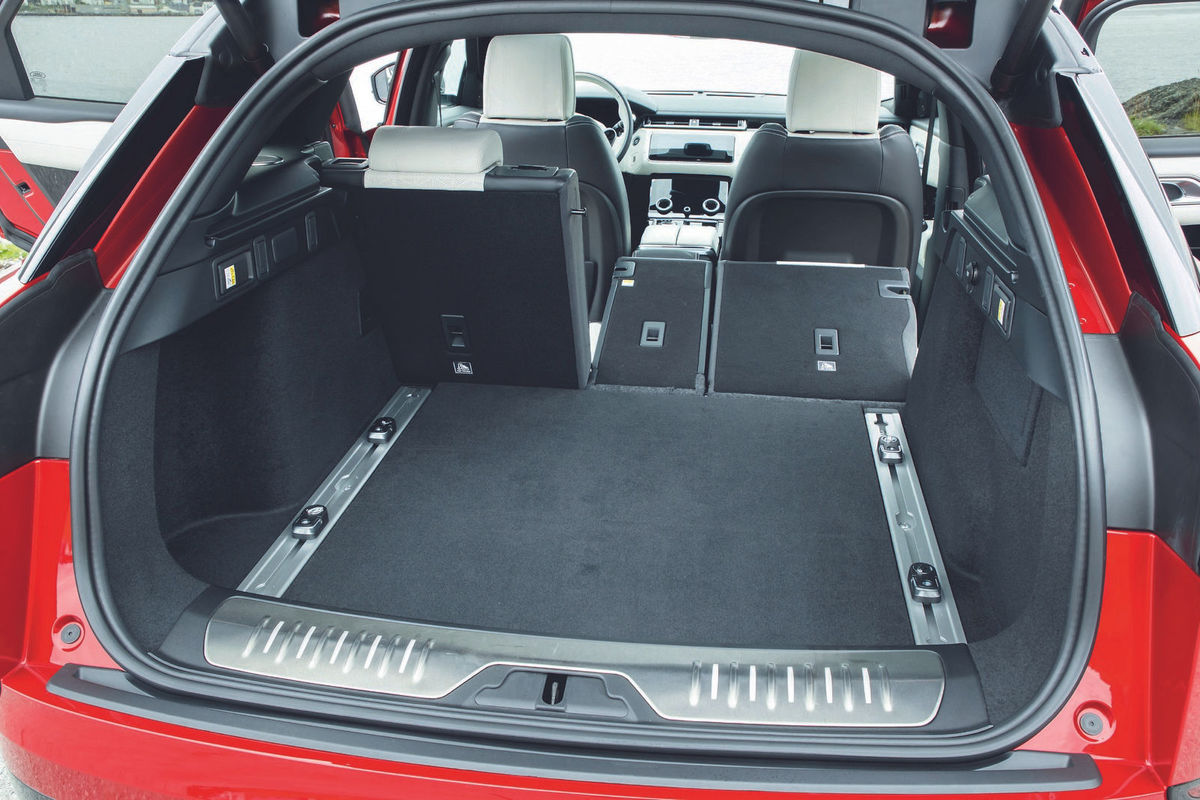
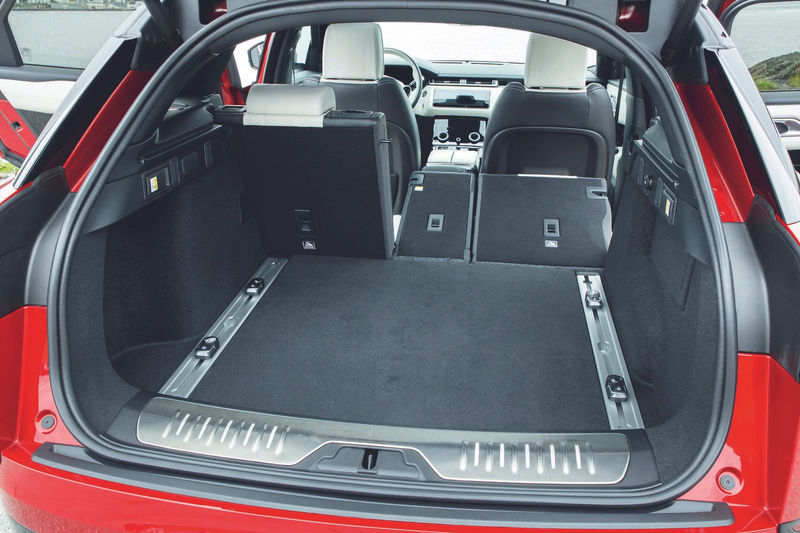
The Velar has a 673-litre boot but spec a full-size spare wheel and you start to lose a few hundred of those.
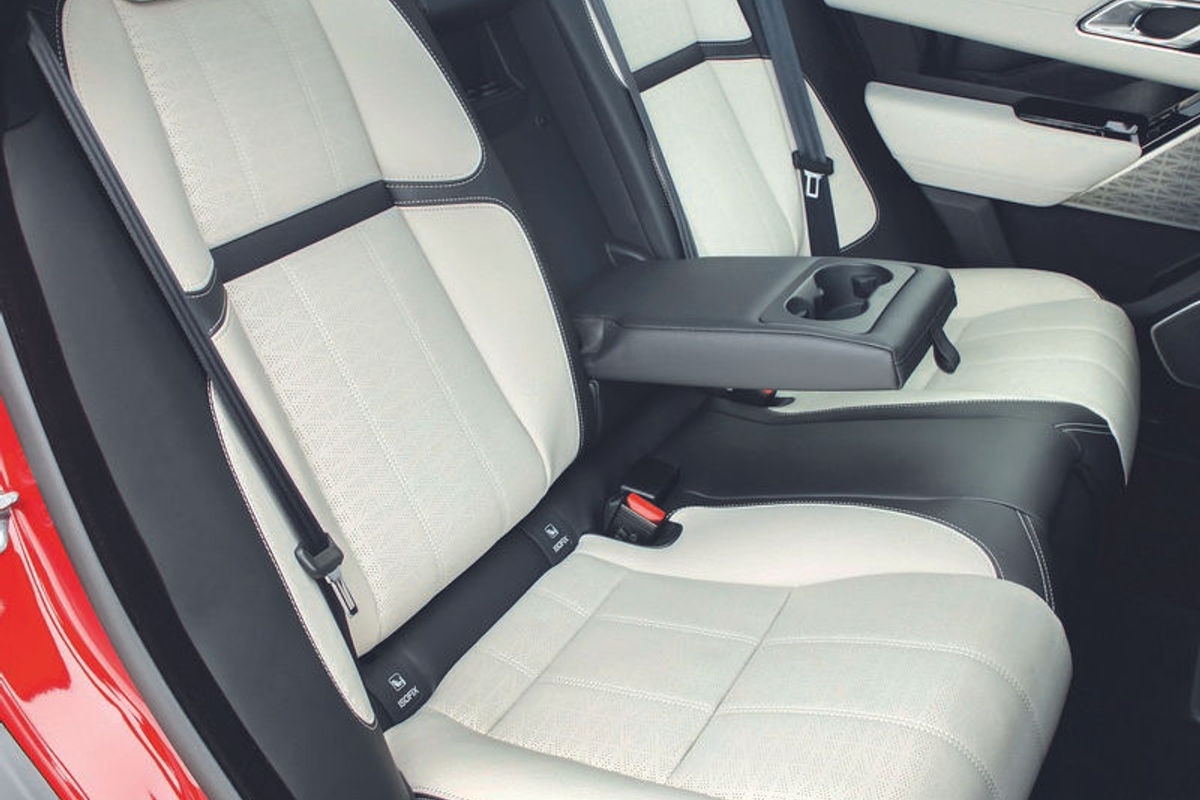
The rest of the interior? Well, it mimics, in its way, the F-Pace, in that it offers a large boot, at the expense of some rear leg room. And there’s nothing wrong with that. There’s loads of room in the front: the seats are big, there are slidey armrests, that sort of thing. I wouldn’t mind if the steering wheel reached a bit closer to me, but it is a good wheel. And there’s enough room in the back. I’m 5ft 10in and could sit behind my own driving position quite comfortably. Besides which, you get quite a lot more boot space this way (673 litres versus a Macan’s 500, if you’re interested). However, as standard, I don’t like the idea of a Range Rover, even a lefull-fat one, having a space- saving rather than full-sized spare. This is an off-roader, after all.
Drivetrains
All models – 132 kW diesel, 177 kW diesel and 221 kW V6 diesel (tested here), plus 184 kW petrol, 221 kW V6 petrol and 280 kW V6 petrol – drive through an eight-speed automatic gearbox. There are two versions of that, depending on the torque they have to cope with.
All models are all-wheel drive, too, but not in the traditional permanent Land Rover sense (nor even the newer Evoque sense). Instead, because the Velar comes from the same fundamentally rear-driven platform as Jaguars, it’s normally a rear-biased car, with a chain drive to transfer torque to the front when it needs it. There’s Land Rover’s Terrain Response system and you can raise the air suspension, but you can’t lock a centre differential, you can’t choose 50/50 power split, and although the electronics might do those for you, it’s their will, not yours. There is, too, the option of a limited- slip rear differential, likely to make it feel keener on the road and give better traction on it.
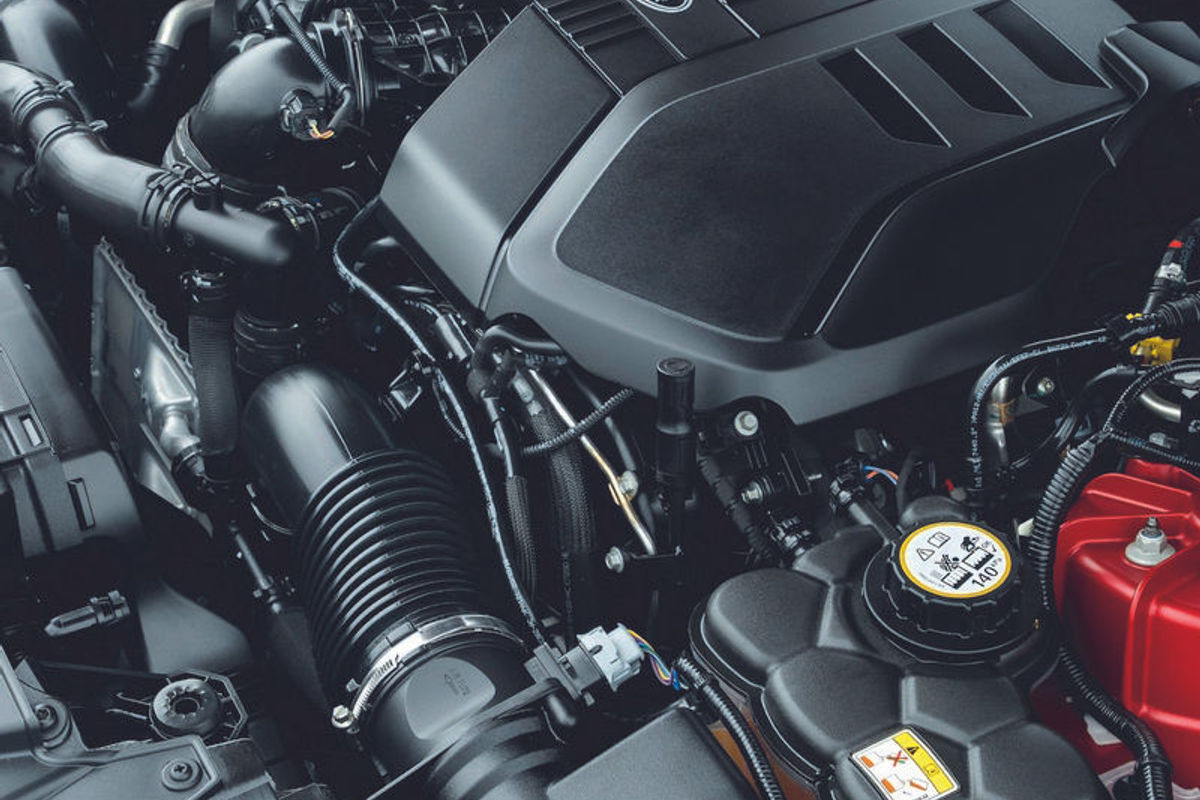
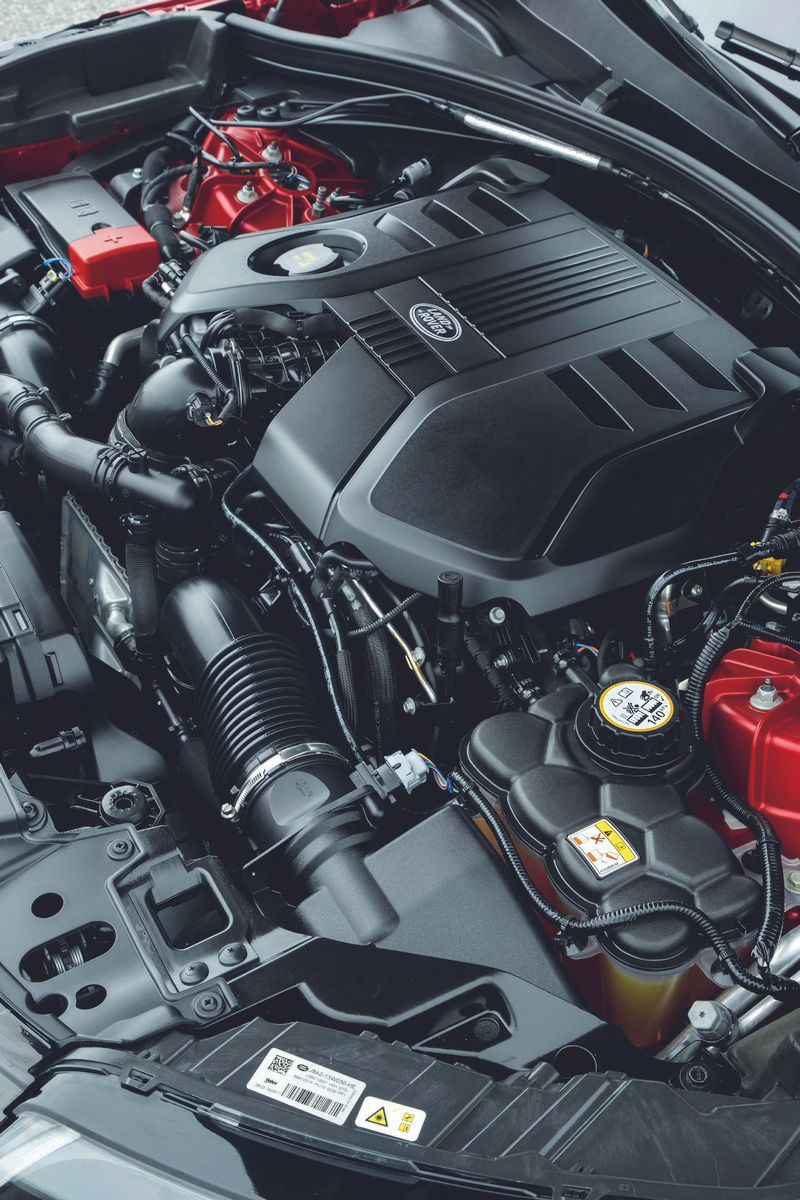
The full range of petrol and diesel Ingenium engines are on offer in the Velar, lots of power and lots torque too.
When it does come to off-road ability, it’s probably whether the Velar’s 2 500kg towing limit is up to Pony Club towing that’s more relevant than the 213 mm (coil springs) or 251 mm (air springs) ground clearance, or the 24 deg approach, 27 deg departure and 20 deg breakover angles. Or the 600 mm (coil) or 650 mm (air) wade depth. Despite no low-ratio ’box, mind, ultimately what limits the Velar off road is what usually limits an off-roader: tyre choice and ground clearances. Plus you might not like to damage the aluminium body.
It's got the look
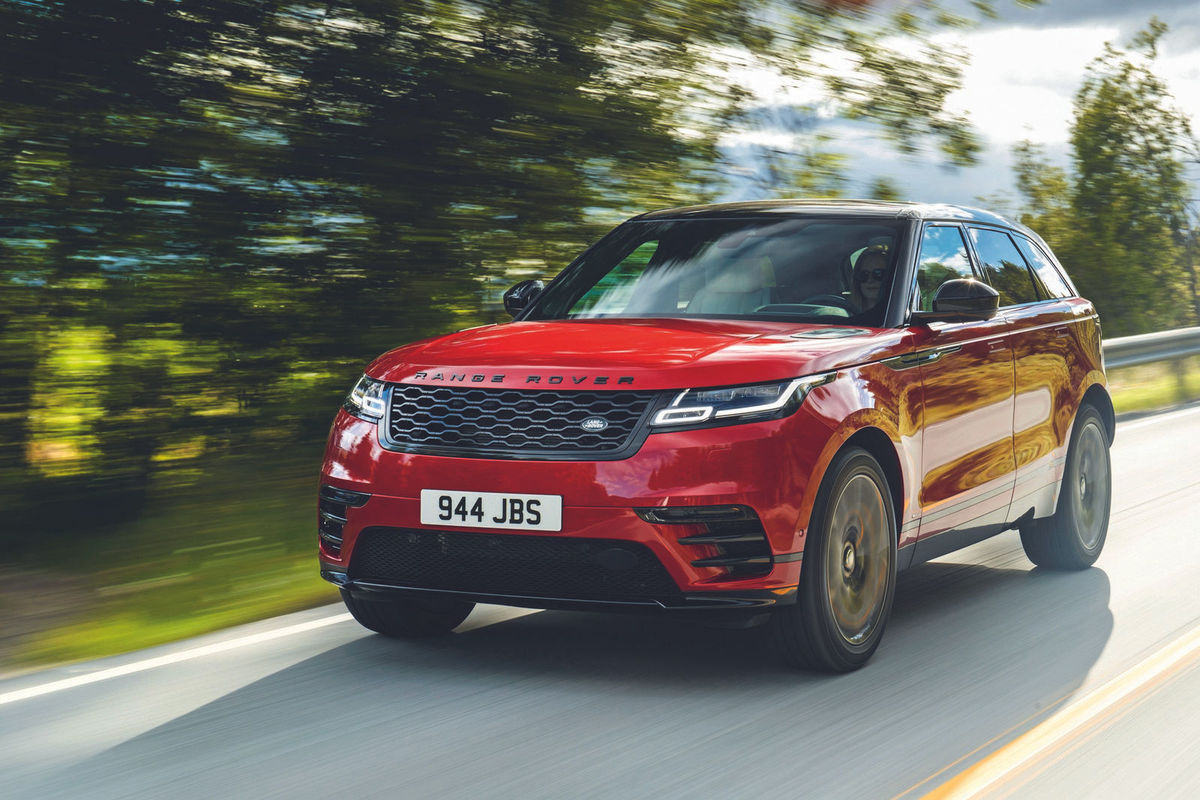
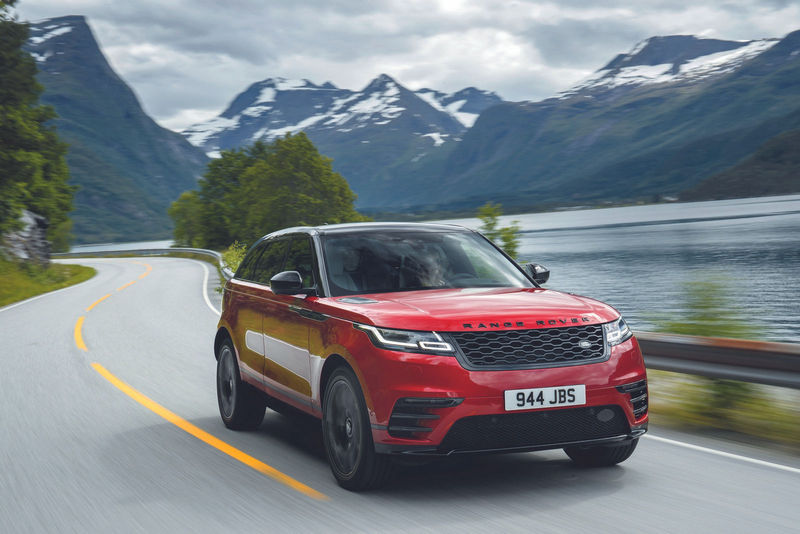
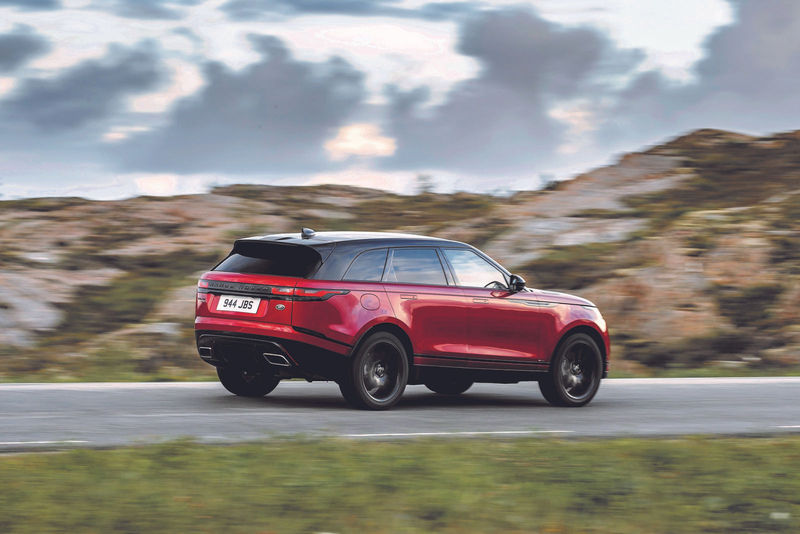
Maybe you thought I wasn’t going to mention it. I don’t always, what with beauty being so subjective. But you can’t not, can you? The Velar looks like the very personification of a concept car, to me. The real thing. Like it just stepped out of a salon. And the finish feels every inch a pucker Range Rover. What an astonishingly good-looking car.
Anyway, as well as being too pretty to damage, the Velar is, I’m told, also the most road-focused Land Rover product yet. So although it’s worth knowing if it’ll get you to your shoot (it will), what’s important is how it goes down the road.
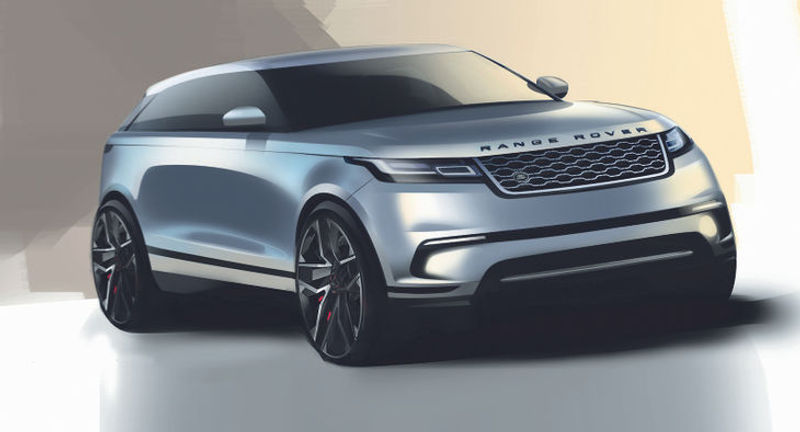
The Velar looks surprisingly similar to the concept sketch, something that happens less than you think.
There’s a notable sense of relief when a JLR engineer asks you whether it feels like a Range Rover, and you say “yes”, because I suppose there was a concern it’d feel too much like a Jaguar. It doesn’t.
Now, a couple of caveats. I’ve only tried two V6s, the higher-powered petrol and the higher-powered diesel, and they both get air springing, which is not available on an F-Pace. So maybe a four-pot on coil springs will be more Jag-ish, but there’s plenty of evidence to think not.
How does it drive?
The idea, despite the suggestion that this is a dynamically adept car for a Land Rover badge, is that it has a level of refinement that nothing with a Leaper on the front will match. I think they’ve done that. Ditto nothing with a Porsche badge matches it; nor with an Audi one. At least, not in Q5 terms, although the Velar’s price is such that you might consider a Q7. And an XC90’s lack of engine refinement removes itself from this conversation too.
But, no, it’s the Velar’s refinement, rather than its agility, that is the more prevalent. The steering is light and easy, and the ride, once you’re up to any kind of speed, nudges lumps and bumps aside comfortably. At low speeds, things aren’t quite so clever, as a result of the 21-inch (or 22-inch on the petrol model I tried) wheels that suit the Velar’s looks so well. What, when you’re moving, is a barely audible thump turns into a proper whack.
There’s some body movement to go with the isolation, inevitably, but that suits what feels like, to me, a car of decent hush. Another caveat: the roads in Norway, spectacular though they make these pictures, offer you no more than 50 mph. And some are abrasive, so there’s some road noise, to the extent that a test in the UK will be essential before a definitive verdict is reached.
No low-range transfer case in the Velar but multiple electronic modes and Terrain Response 2 are expected to compensate somewhat.
But the engine is merely a distant thrum. The gearshift changes smoothly. And Land Rover’s people say that they have put a lot of effort, plus materials and costs, into creating a space that’s more isolated than any of the cars whose basis the Velar shares.
I think that’s important. Look, it’s easy to get a bit tied down in platforms and architectures and whatnot, and it can be quite silly, really. After all, what is any car if not a collection of metals and plastics to a given size? Everyone hangs things from common systems. But it’s important that an SUV with a hefty price tag feels in no way related to a compact executive saloon that's cheaper.
And it doesn’t. At least, in no way does the Velar feel like any other JLR model any more than a Macan or an XC90 feels like another car from their respective ranges or groups. It feels like a Range Rover. Looks like one. Sounds like and is as refined as one. So why the little nagging doubt? The four-star rating that feels solid, but not outstanding.
Final thoughts
One day after driving it, I’m still not sure; for which, reader, I apologise. Perhaps the 80 kph roads were to blame. Perhaps it was some of those interior touches, which make the Velar feel less complete than its design suggests inside. Or, and this is equally likely, that it’s the two models I’ve driven – an R-Dynamic HSE diesel and a 280 kW petrol in First Edition trim, which cost R1.2 million and R1.5 million respectively.
And at that money, for all the glitz, for all the showroom appeal, I’d rather sit myself in the even more refined, even more capable, Range Rover Sport. Style is great and all, but a Range Rover is about substance. There’s enough of it lower down the range. But up here, Range Rover is pushing the boundaries of this platform’s qualities. Yet these are trims and prices to where loads of buyers will flock. I guess they’re paying for less tangible things, and I guess you can’t blame Land Rover for letting them.
Range Rover Velar local pricing
The Range Rover Velar will make landfall in SA during the fourth quarter of 2017. Local pricing has been released and for the first time, our local cars carry the same specification as the equivalent models in the UK. That means everything available there is also available on South African cars. Interestingly, buyers are no longer locked in to buying certain optional features when they upgrade trim levels. This means you can take a base spec Velar and pick exactly what you want in it.
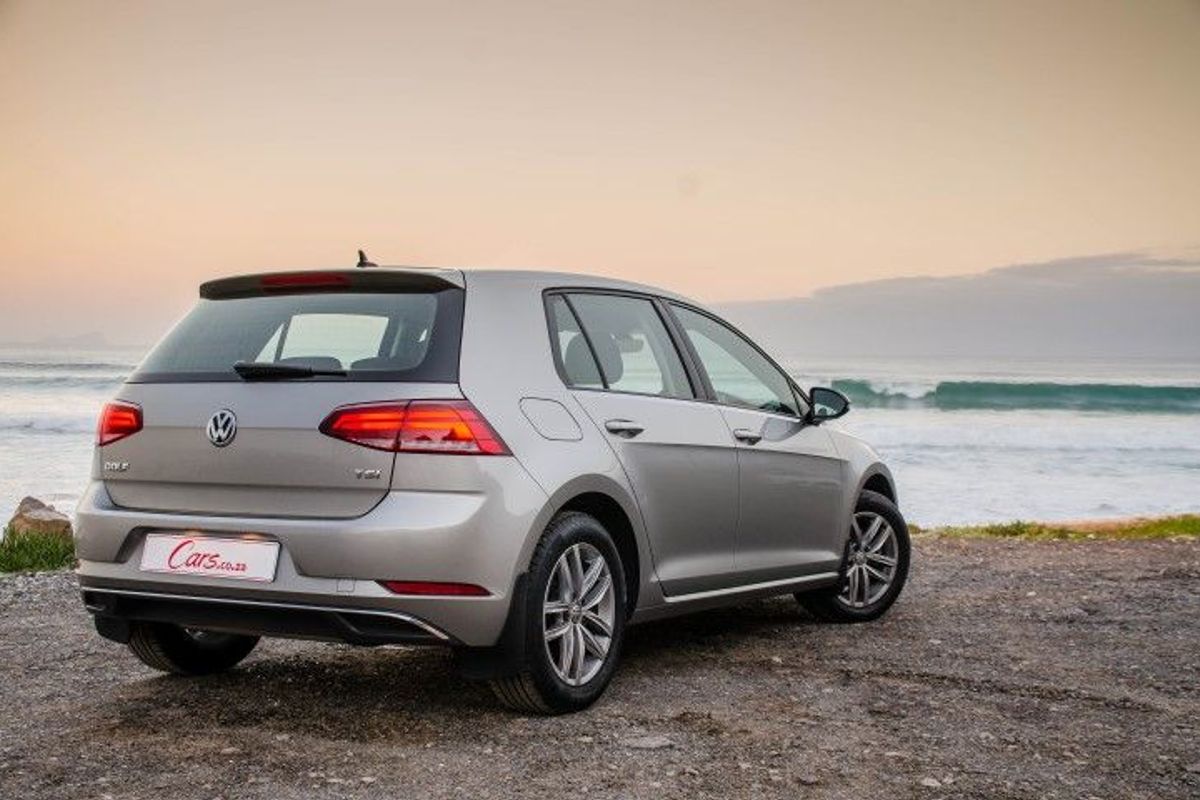
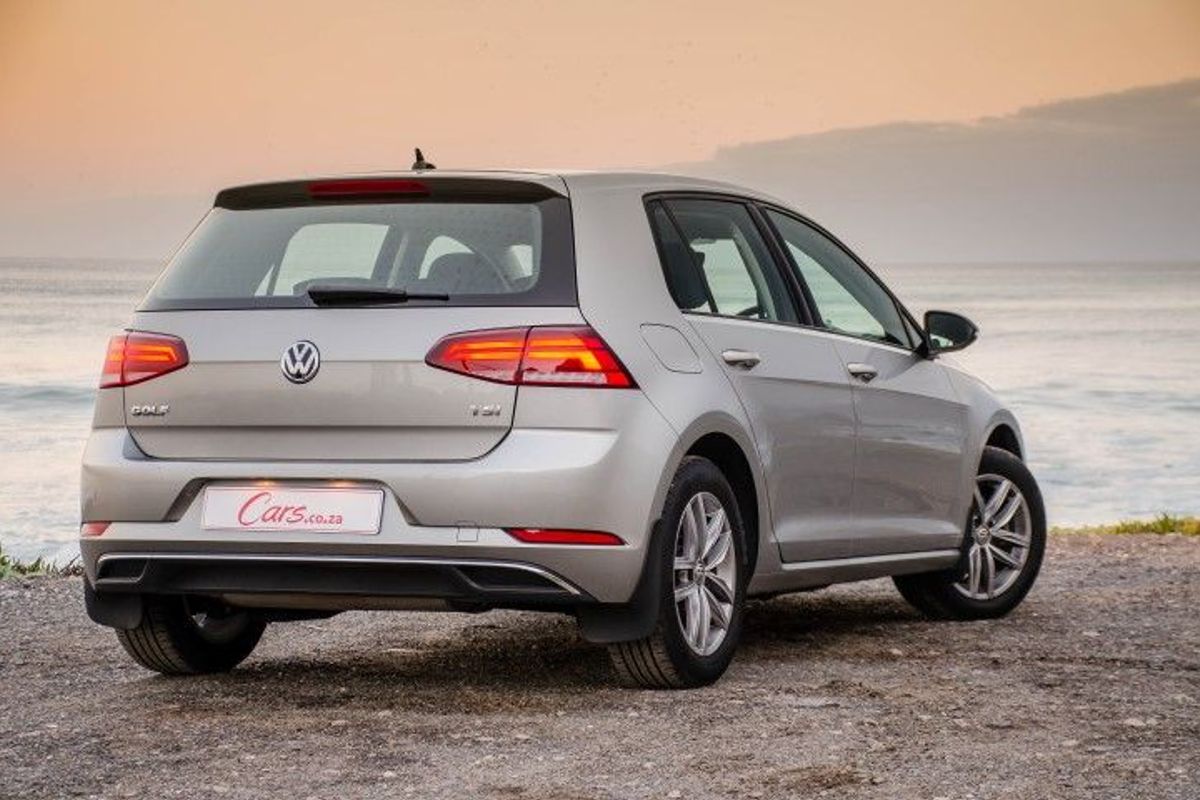
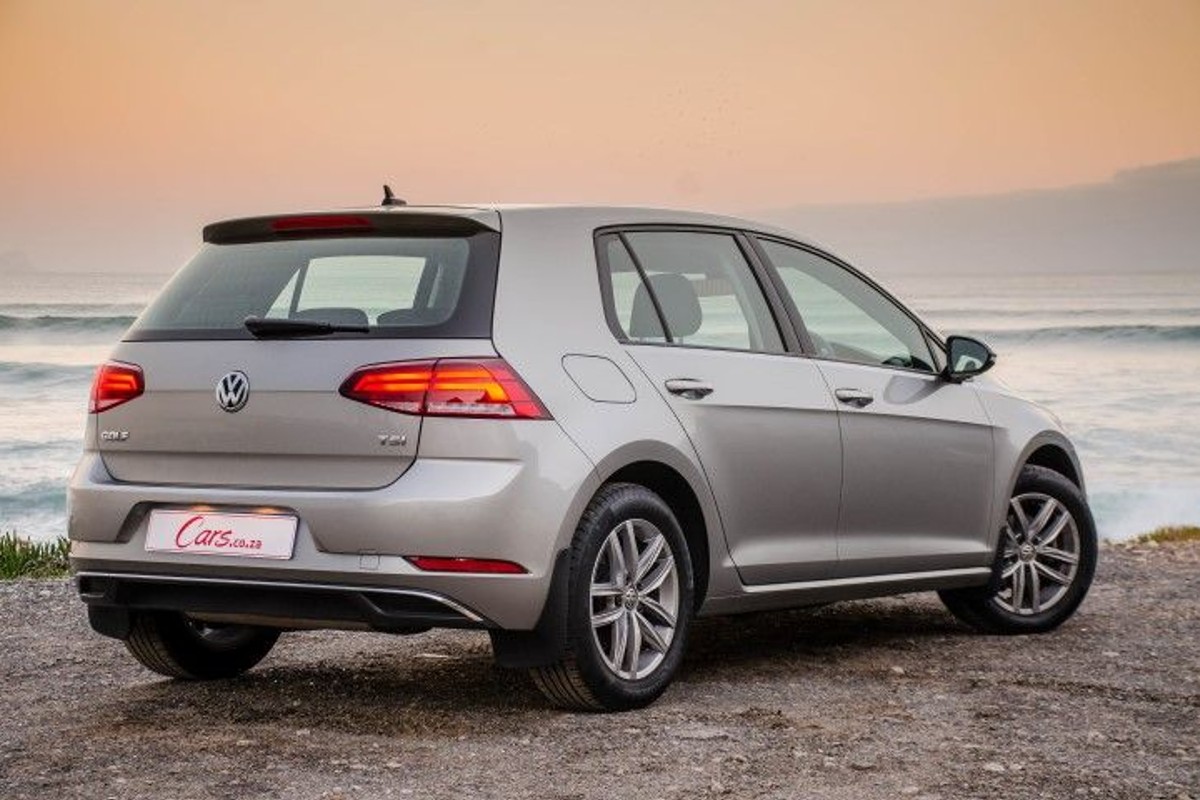
Volkswagen Golf 1.0 TSI Comfortline (2017) Quick Review
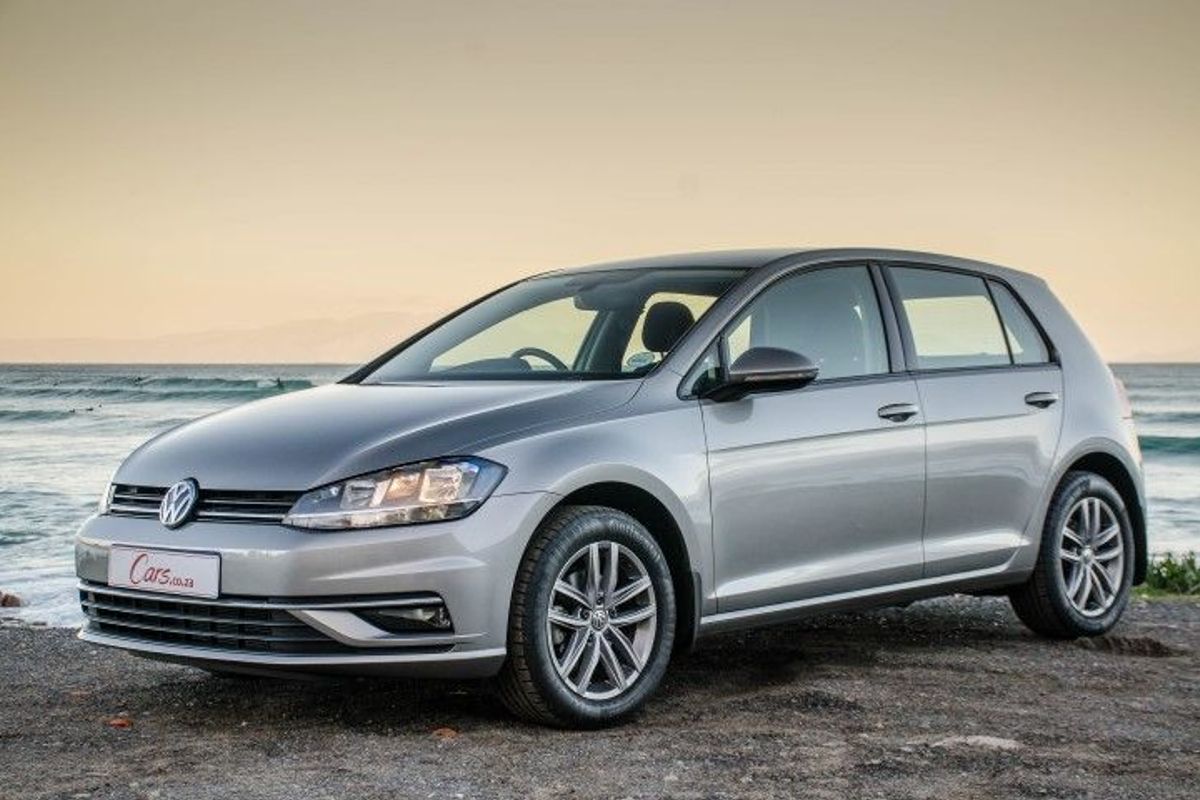
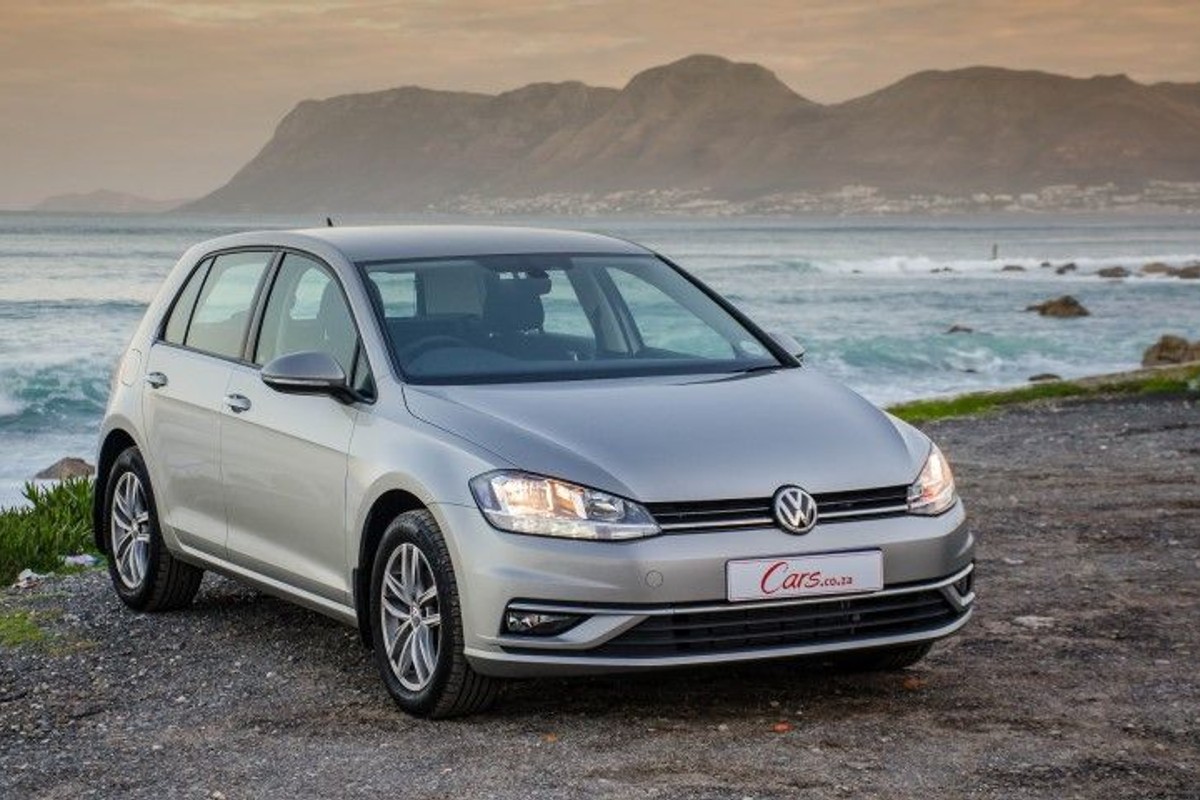
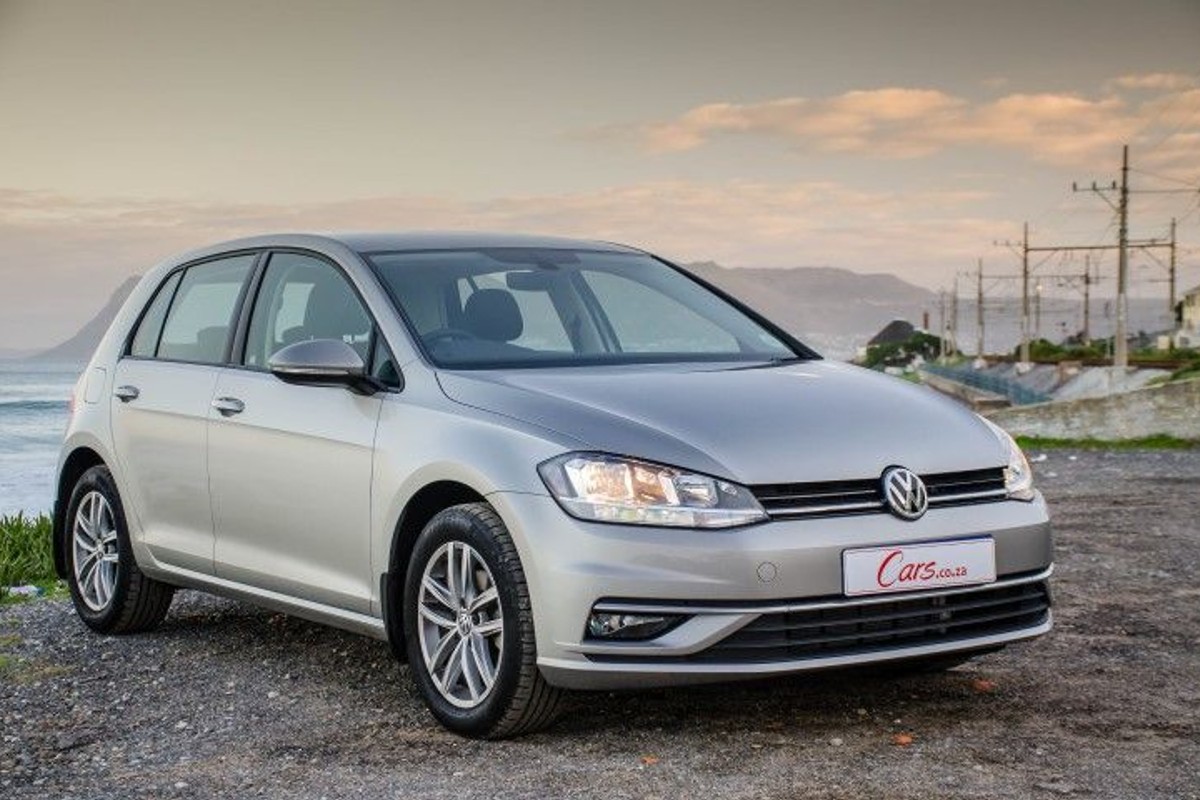
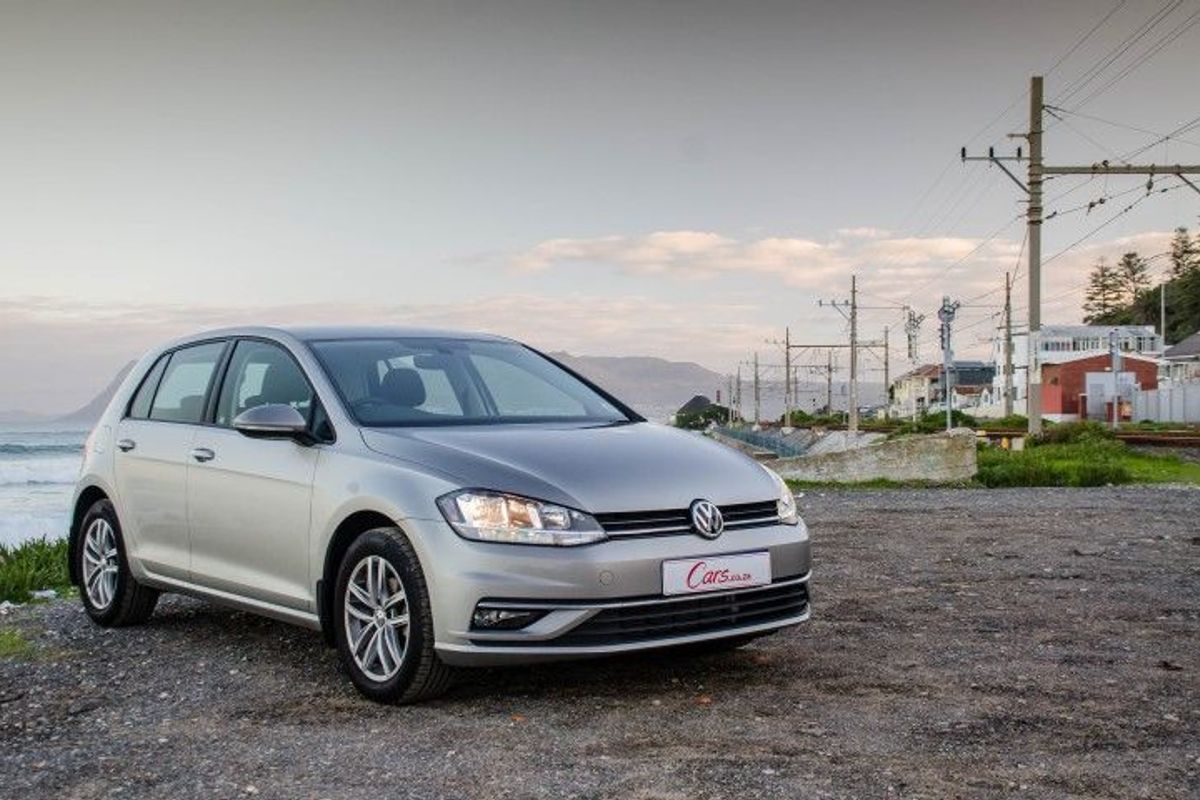
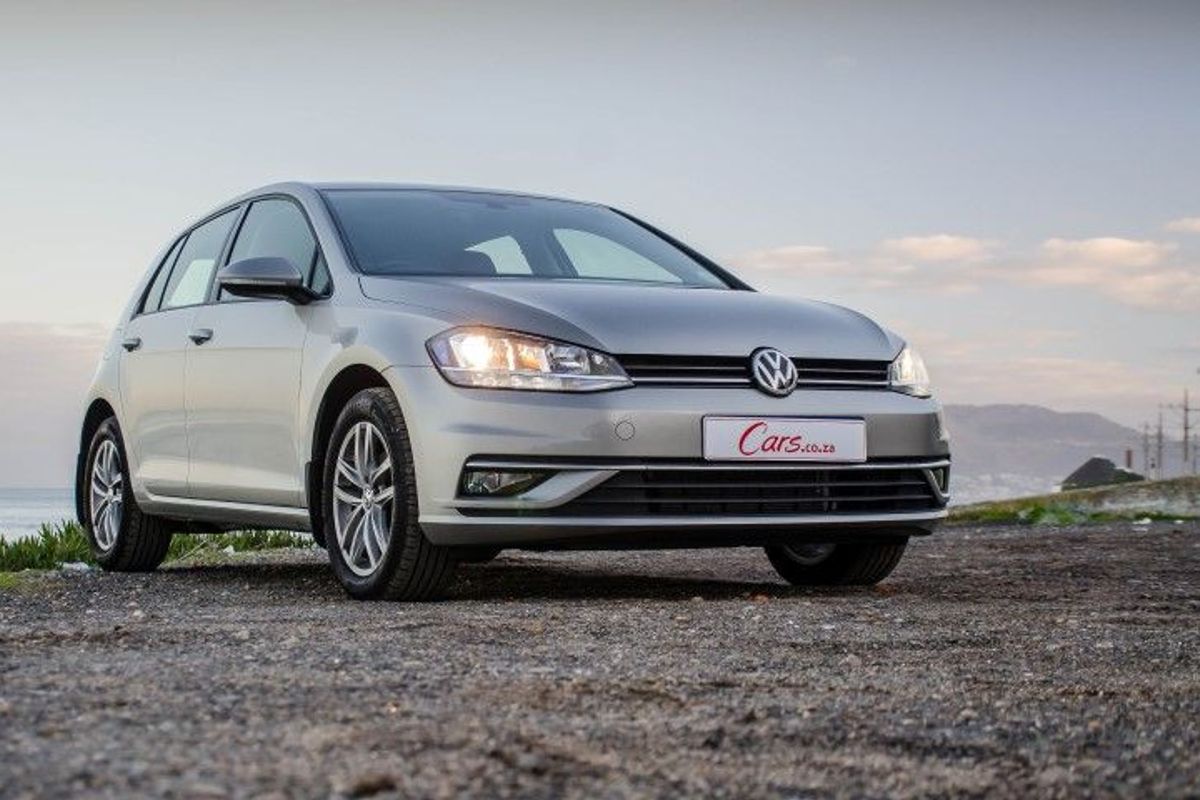
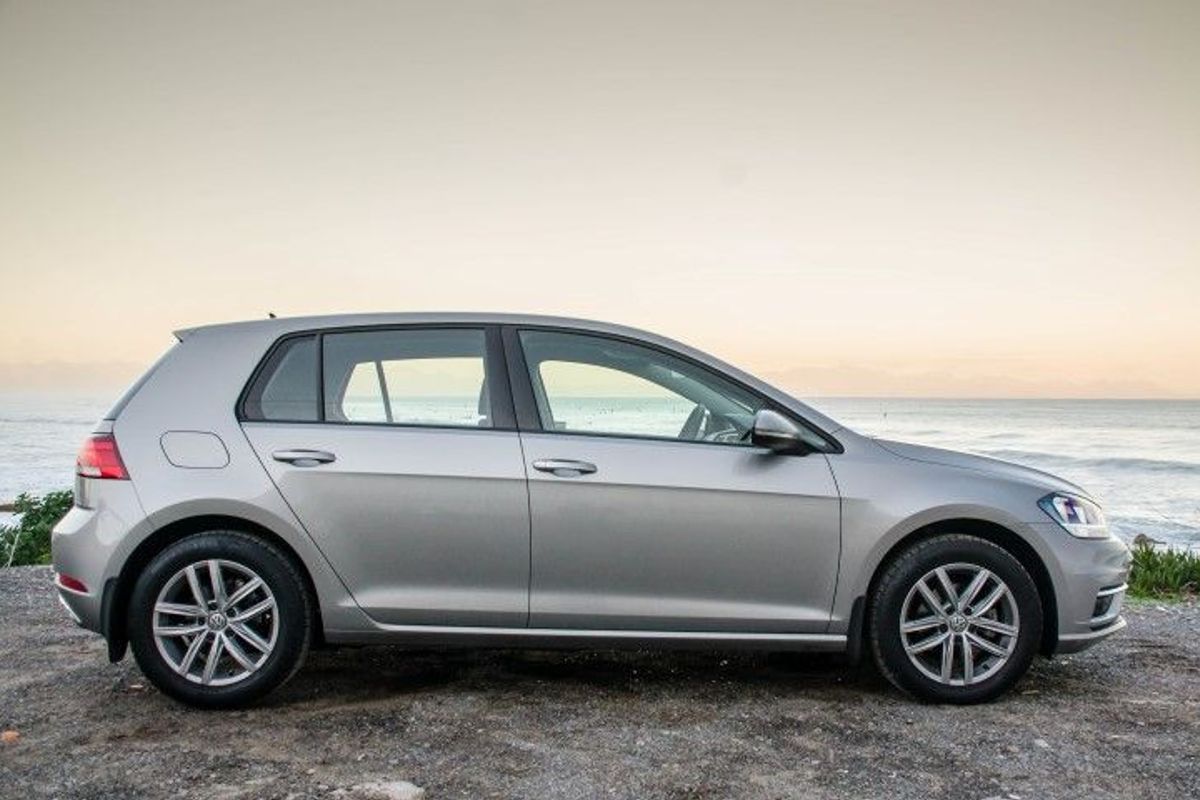
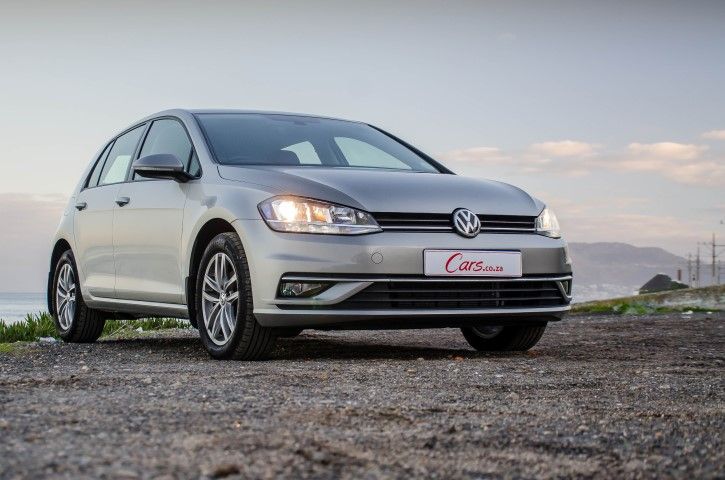
The facelifted Volkswagen Golf (known as the 7.5) is now offered with a 1.0-litre 3-cylinder turbopetrol engine. How does this small-capacity engine perform in a compact hatchback package? And, could the 1.0 TSI Comfortline be all the Golf you'll ever need (if you don't want/can't afford a GTI)?
We like: Lively performance, excellent ride quality, interior build quality
We don’t like: Optional features are pricey, but this Golf is difficult to fault
Alternatives
The cheaper option: Consider the Ford Focus 1.0T Trend, which produces peak outputs 92 kW and 170 Nm of torque. It’s an ageing product (we've already seen what its successor could look like) and it’s not as refined as the Golf. The derivative is competitively priced at R278 900, but its standard specification is only average.
The other German: The Opel Astra 1.0T Enjoy is a solid offering with good standard specification including front and rear park distance control. Like the Golf, its 1.0-litre, 3-cylinder engine performs well with 77 kW and 170 Nm of torque. Pricing for the Astra 1.0T Enjoy starts at R295 800 – it represents good value at this price point.
French flair: Meanwhile, the Renault Megane 84 kW Dynamique is priced at R292 900. It offers good standard specification and its naturally aspirated 1.6-litre engine offers up 84 kW and 156 Nm of torque. It’s not as premium, nor as refined, as the Golf, but considering the level of standard features on offer, it’s worth a test drive.
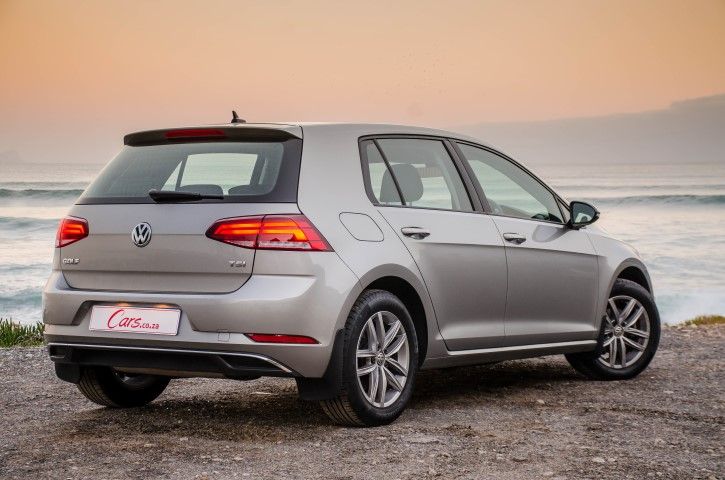
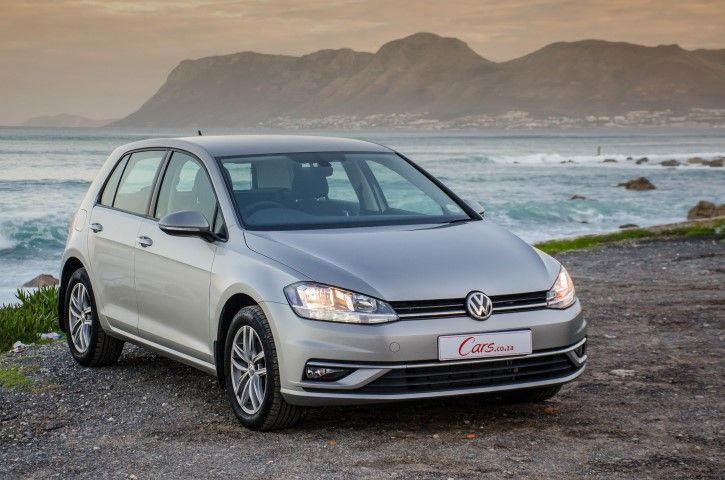
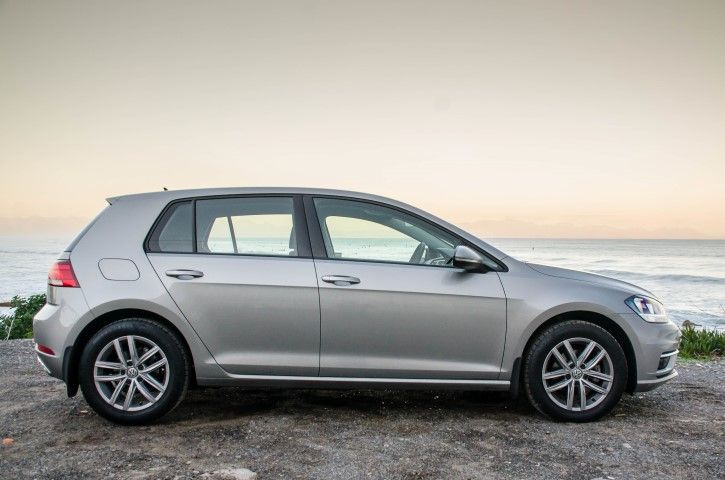
The Volkswagen Golf 7.5 made landfall in South Africa earlier this year and while Golf fans and motoring media focused their attention on latest Golf GTI (and the subsequent arrival of the diesel-powered GTD and Golf R), few took notice of the new 1.0-litre turbopetrol engine on offer. Well, this quick review aims to shed some light on this new Golf offering.
The newcomer's 1.0-litre 3-cylinder turbopetrol engine is the same one found under the bonnet of the recently-tested Polo R-Line and now serves as the powerplant to the entry-level derivative of the updated Golf range, replacing the outgoing 1.2-litre 4-cylinder turbopetrol motor. This new Golf engine is offered with 3 trim options including Trendline, Comfortline and Comfortline R-Line, with all derivatives featuring a 6-speed manual transmission.
The good
Performance and refinement
The performance of the Golf's 1.0-litre turbopetrol engine is to be commended. It's punchy and refined, while returning good fuel consumption figures.
Some buyers might scoff at the thought of a compact (family) hatchback powered by a 3-pot motor, but this engine delivers surprisingly willing performance. It musters 81 kW and 200 Nm of torque, which are more than useful outputs and, significantly, it's (one of, if not) the most refined 1.0-litre 3-cylinder engine(s) we have driven to date and that speaks volumes, as the similarly configured units from Ford and Opel are very good too. The motor is remarkably quiet at startup and only becomes marginally noisier as the revs climb.
A steady foot on the accelerator results in keen acceleration that may embarrass some larger engined-cars. This Golf 1.0TSI is no rocket ship, but it has more than enough shove for robot-to-robot shuffling and it’s equally capable on the highway where overtaking manoeuvres can be conducted comfortably.
The 6-speed manual transmission is smooth in operation and tractability in each gear is good, even in sixth. Overall, we think this 1.0-litre, 3-cylinder engine is a peach and despite its size, it punches well above its weight while also offering a dash of fun to make every drive an entertaining one.
On the flip side, In terms of fuel consumption, Volkswagen claims an average figure of 4.8 L/100 km. The lowest figure we managed was 6.7 L/100 km, which is still impressive.
Ride quality and handling
Ride quality is best-in-class and this Golf is equally capable of tackling corners with poise.
It’s no secret that the Golf offers the best ride quality in its segment (it’s but one reason why the Golf GTI DSG scooped the Premium Hatchback category twice in the Cars.co.za Consumer Awards — powered by WesBank) and this latest iteration is no different. Its ride quality is truly a cut above: it’s how a premium hatchback should ride, smooth, forgiving and supremely comfortable. Shod with 16-inch alloys as standard, the 1.0 TSI Comfortline's suspension isd delightfully pliant, yet that does not mean that the 7.5's cumbersome in the twisties… Allied with a direct, responsive steering with good feedback and positive feel, the Golf's blend of composure and confidence amounts to a near-perfect ride/handling balance.
Interior build quality and features
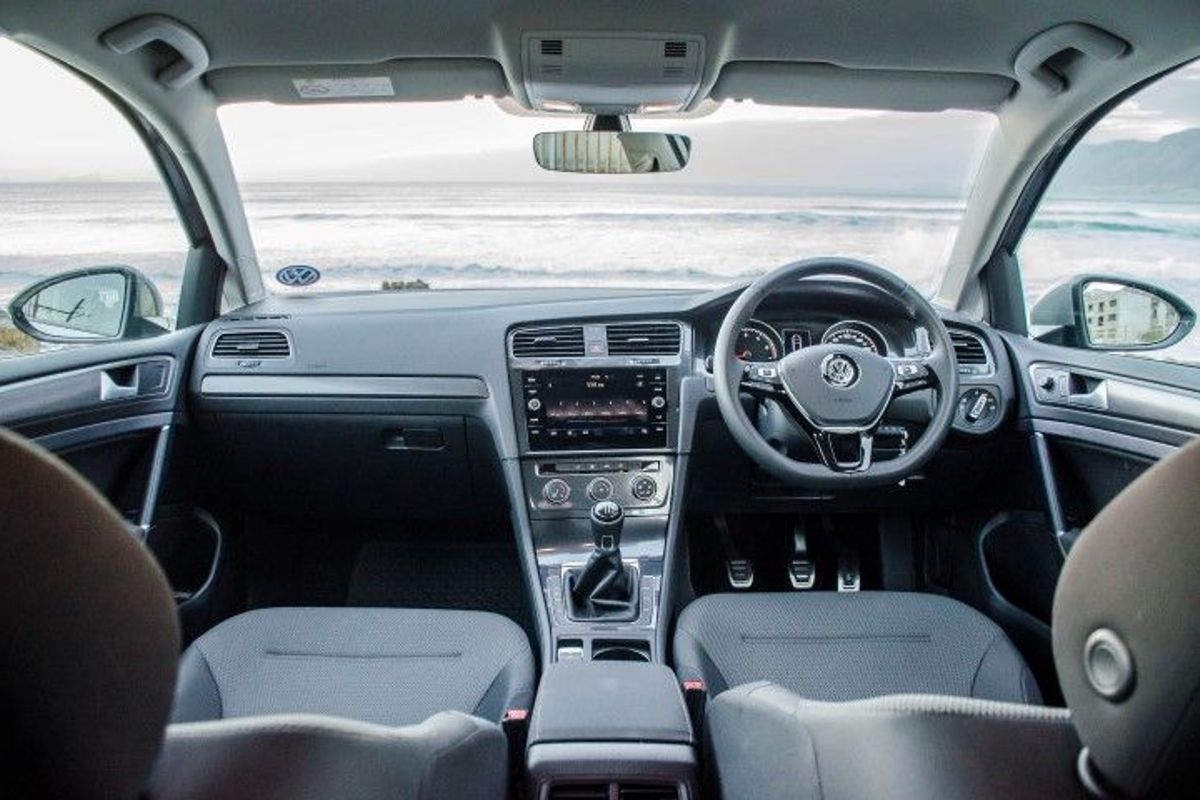
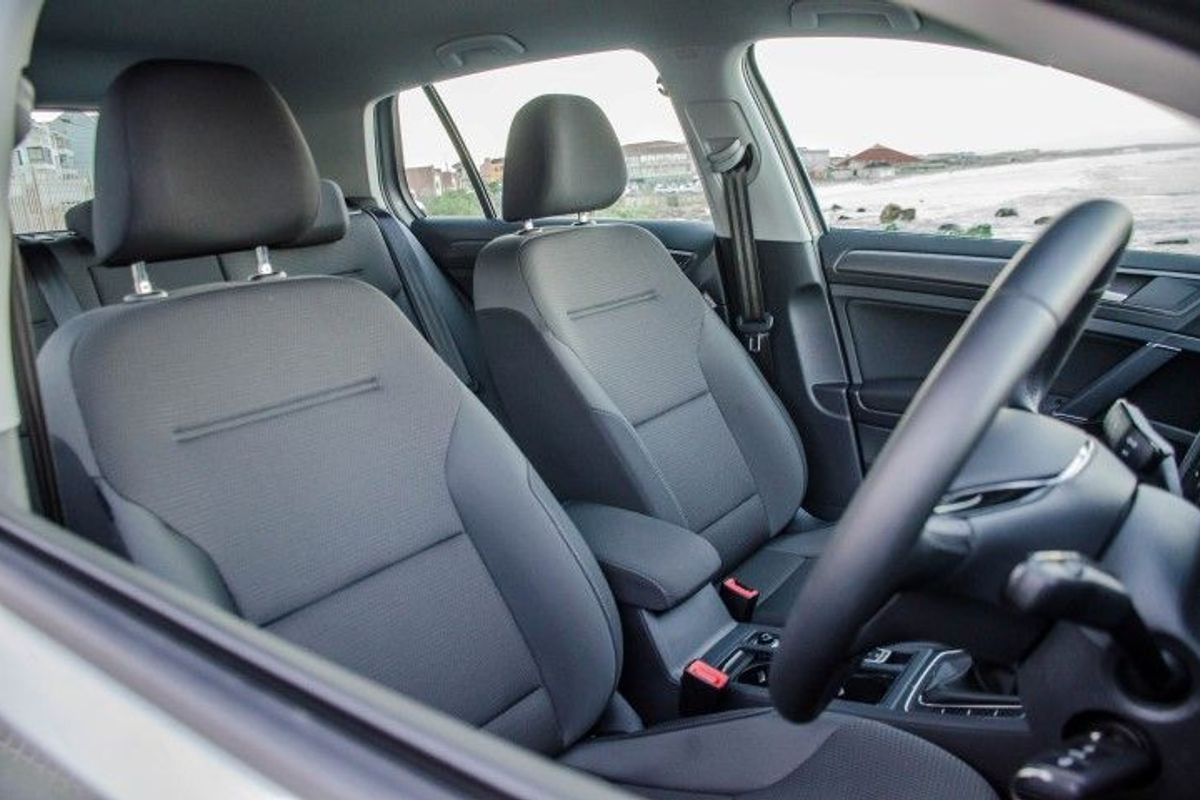
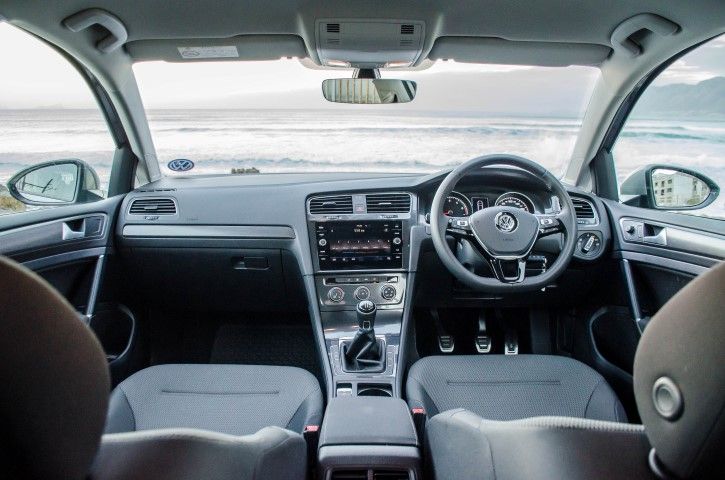
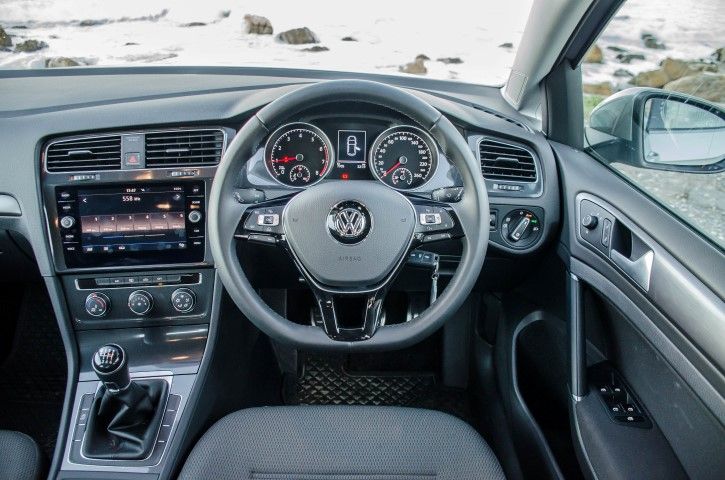
The VW Golf's interior design is well executed and it exudes a premium feel with quality fit and finish.
The good news doesn’t stop there, because the Golf arguably has the best-built interior in its segment too. Overall build quality is excellent and the interior design and tactile quality of the surfaces create a cabin that’s premium in look and feel while providing good levels of comfort for the driver and passengers. It goes without saying: the Golf is a quality product.
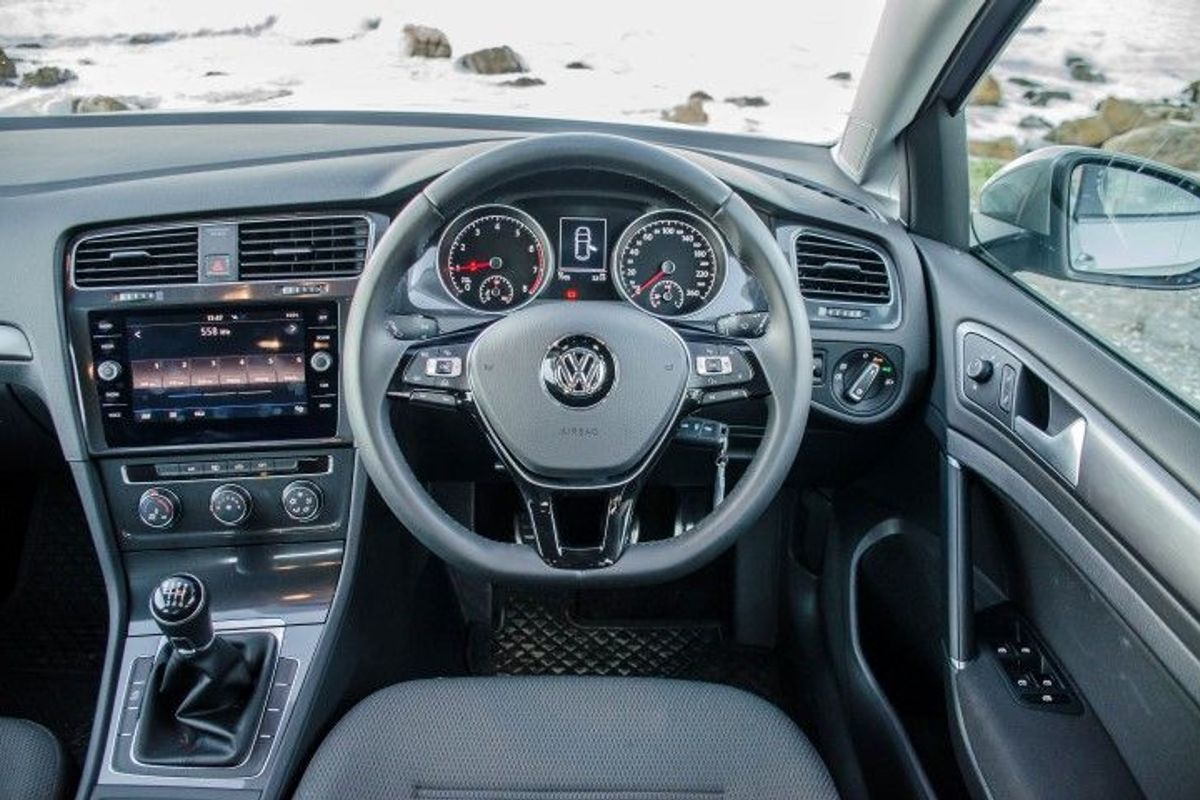
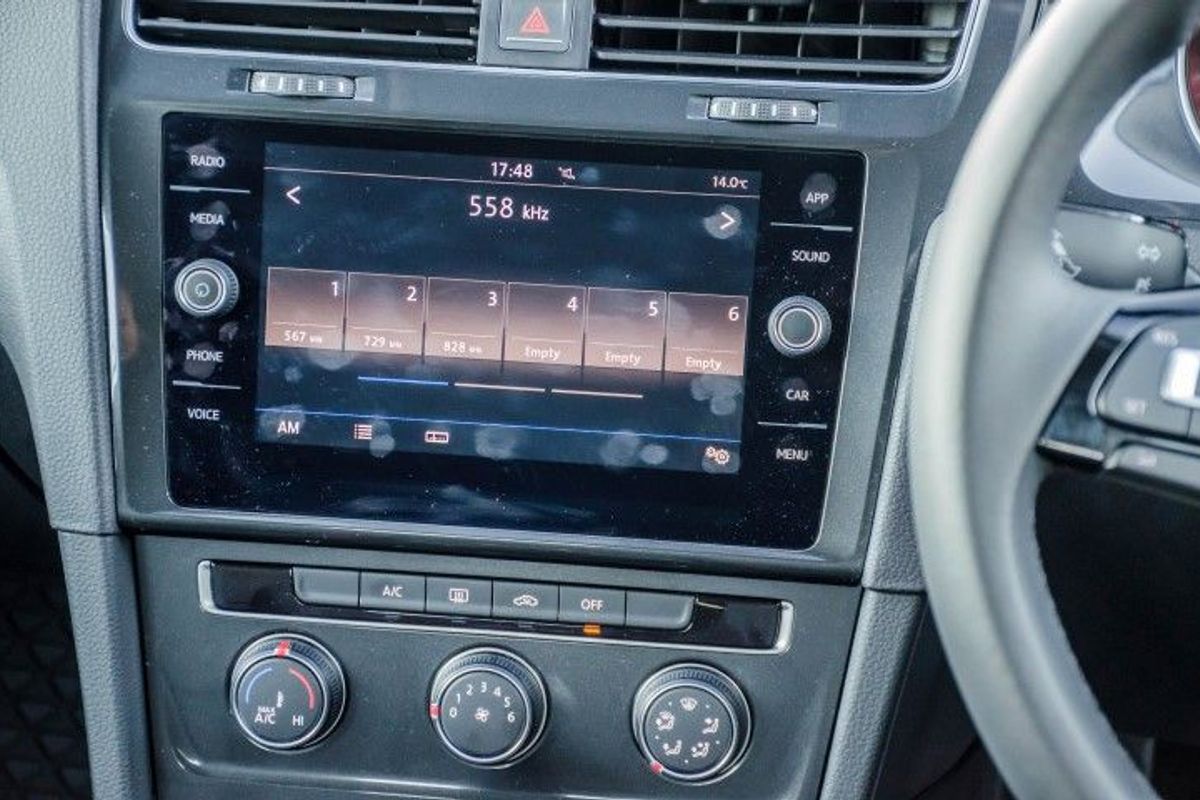
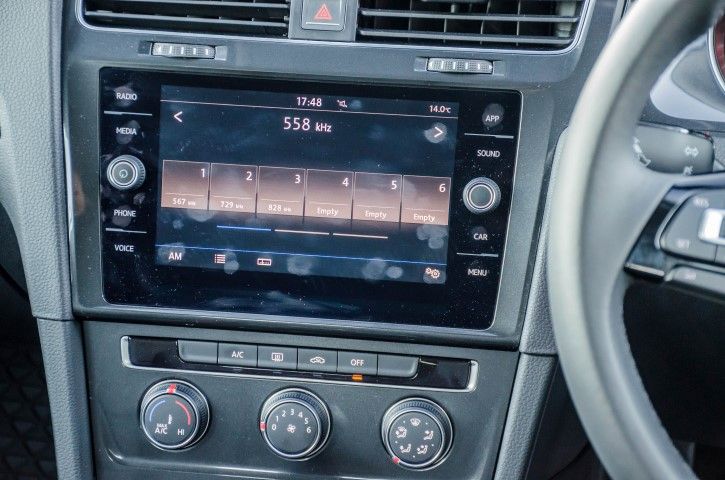
The highlight feature in this test unit is the new larger, optional 8-inch Composition Media touchscreen infotainment system (a 6.5-inch Colour Composition system is standard). It’s a slick unit that’s not only easy to use, but it goes a long way in lifting the premium-ness of the interior and in our opinion, is worth the additional spend (more on this below). It doesn’t offer navigation though, but does have Bluetooth functionality and devices are easily connected and a USB and auxiliary port are standard too.
Interior is on point in this 1.0 TSI Comfortline and the optional 8.0-inch Composition Media infotainment system is well worth the extra outlay.
Other notable standard features on this derivative include cruise control, multifunction steering wheel with rake- and reach adjustment, manual air conditioning, electrically adjustable and heated side mirrors, electric windows and an electric handbrake with hill hold assist.
Safety specification is comprehensive with 7 airbags, ABS with EBD, brake assist and stability control with traction control. ISOFIX child seat mounts are also standard.
Practicality
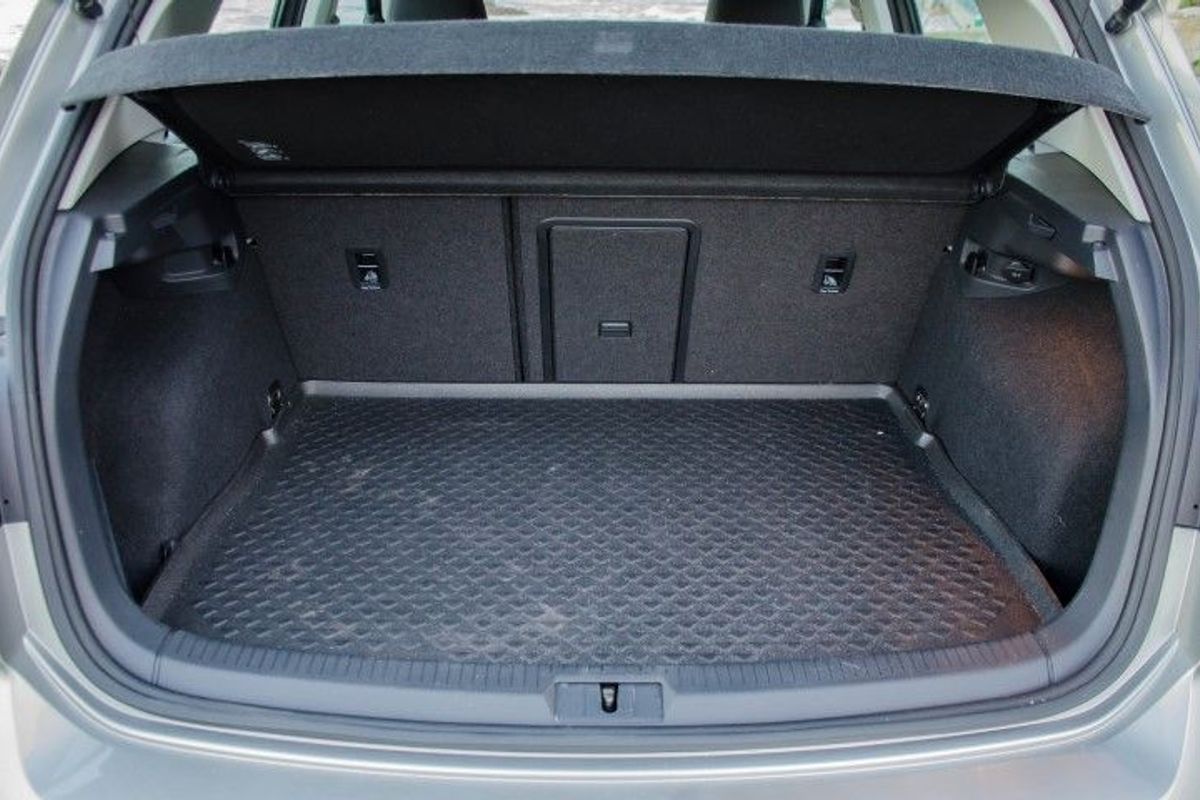
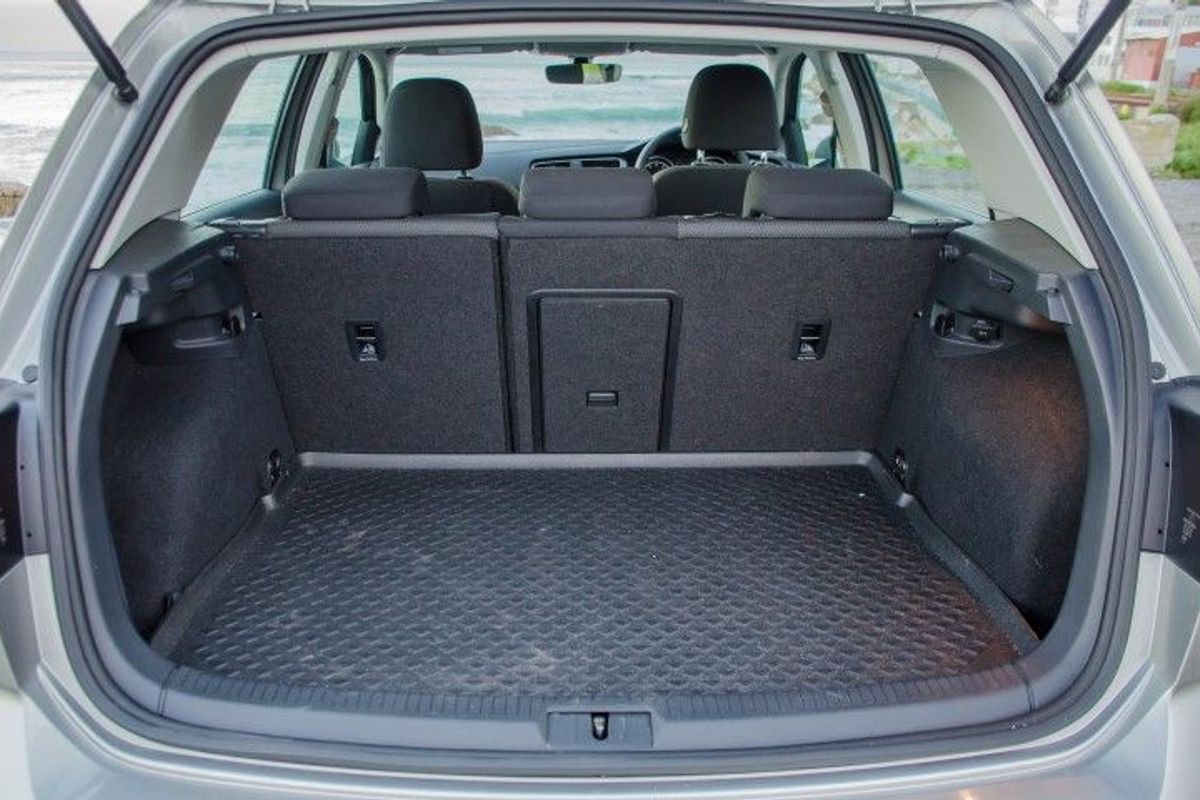
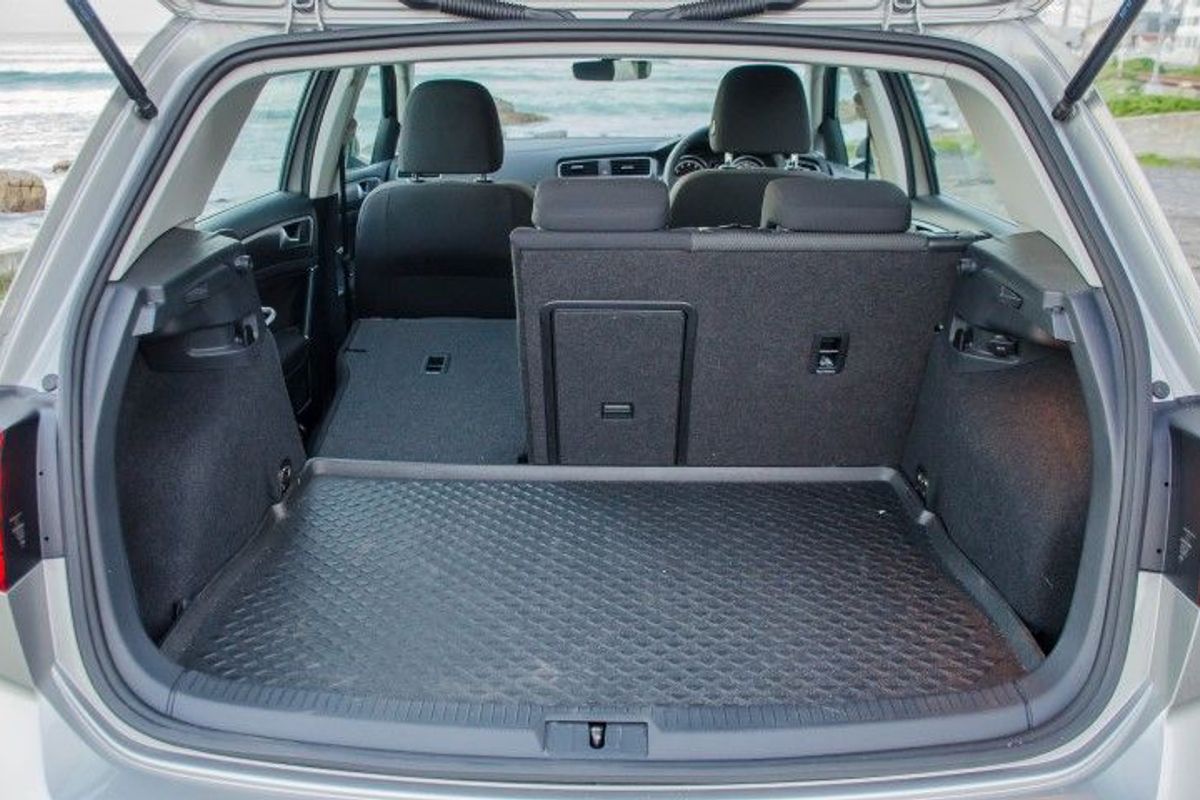
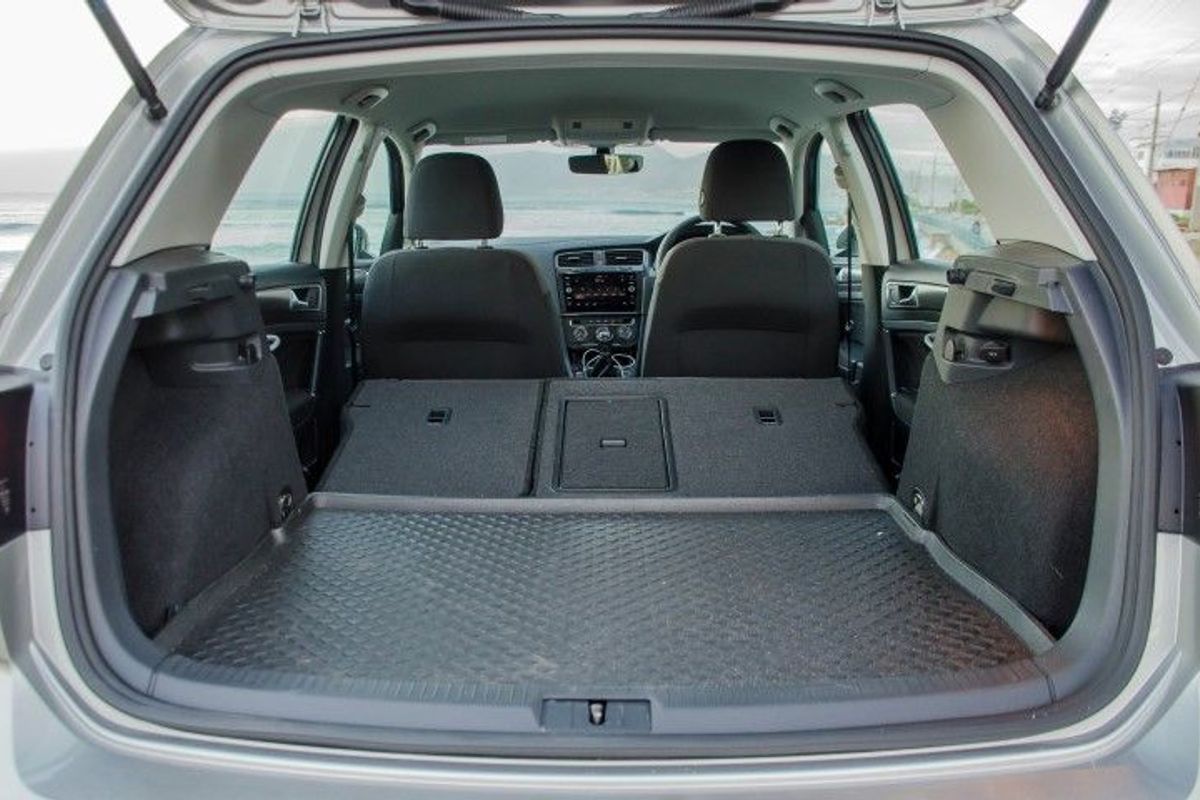
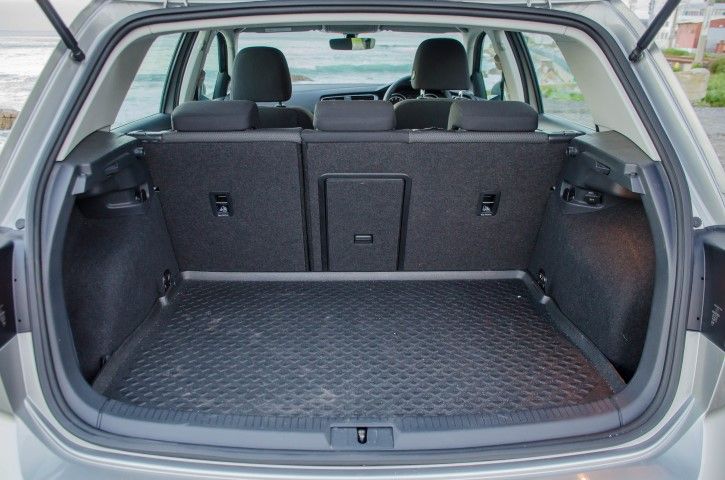
At 380 litres, the luggage bay is big enough for most daily items and 60:40 folding seats adds more space and practicality.
Practicality is another strength of the Golf and with the luggage bay measuring a claimed 380 litres, you should have enough space for daily items such as shopping, travel bags and whatever else you need to cart around. The bay's floor also features a useful, protective grip mat and a full-size spare wheel is included.
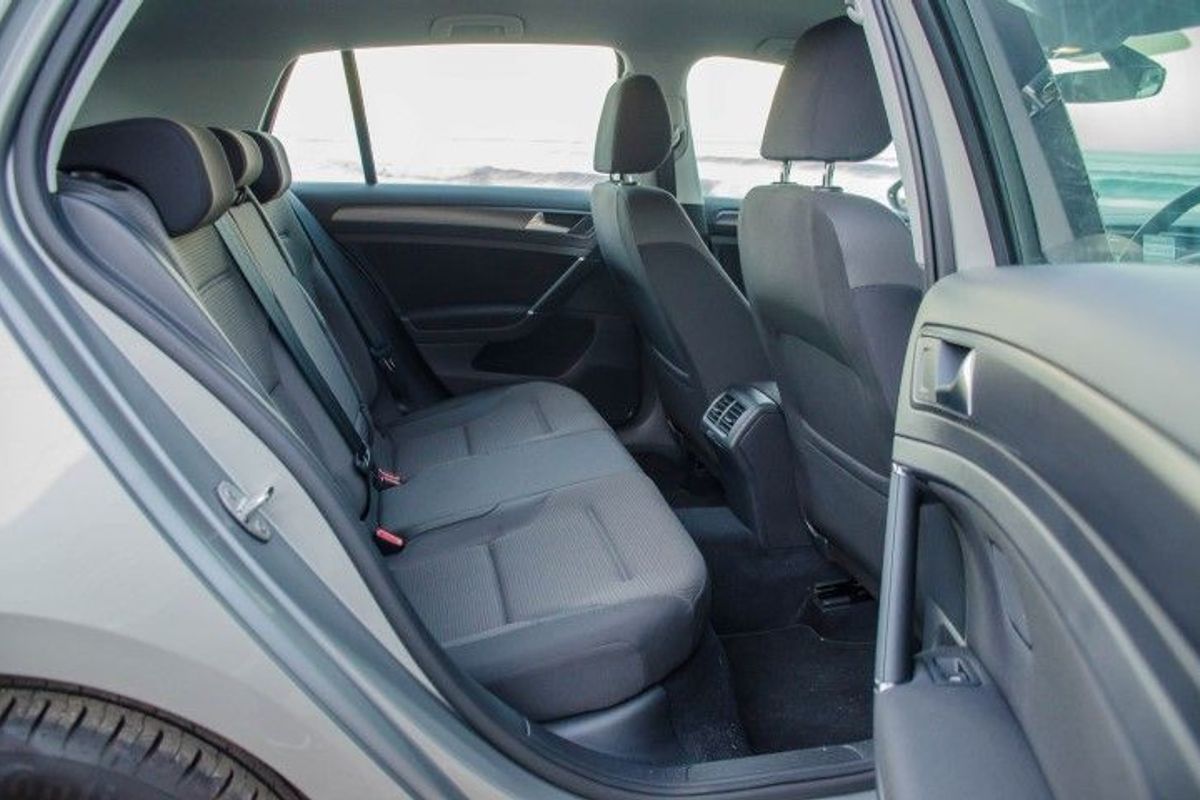
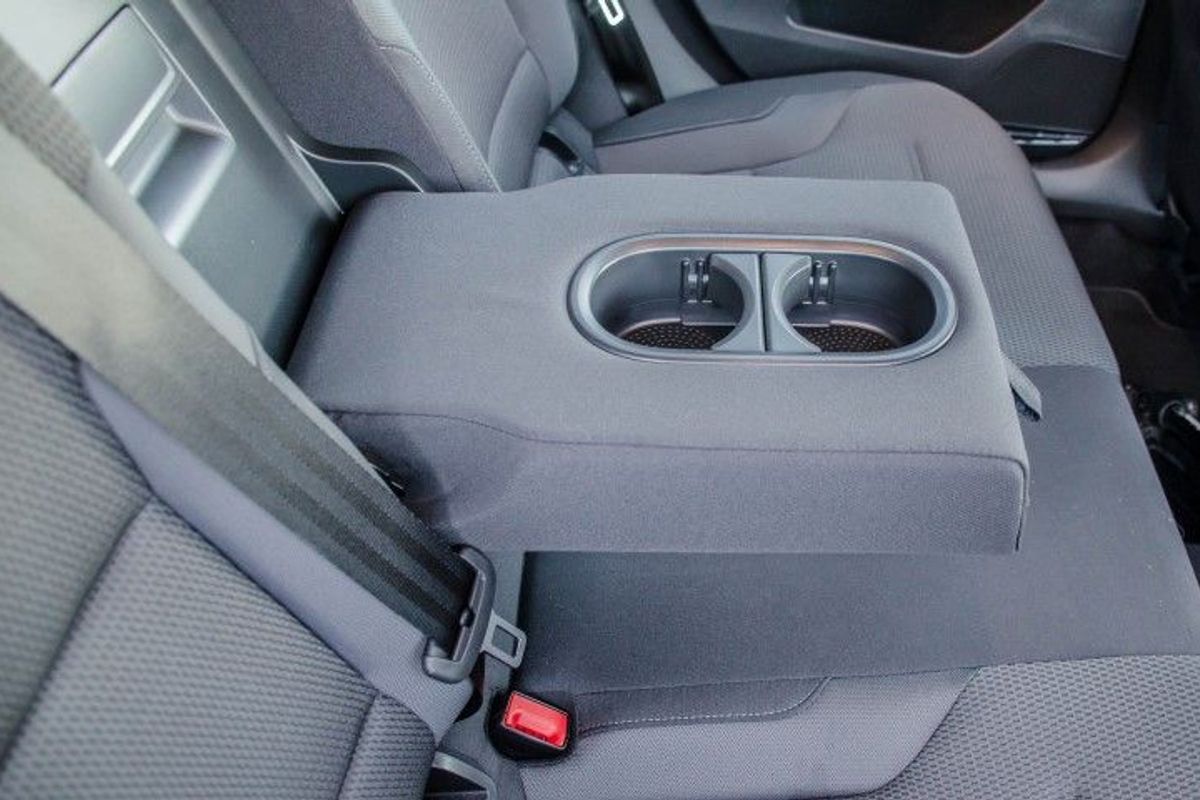
The rear seatback folds flat in a 60:40 configuration to free up more space and occupants can store drinks in the bottle holders in the door mouldings or make use of the two cupholders in the rear central armrest and front centre console. Rear passenger space is adequate with sufficient leg-, head- and shoulder room. The driver also benefits from a height-adjustable seat.
The not so good
Expensive options
There are numerous options on offer, but they can be pricey, so pick your features carefully.
Although the Golf 1.0 TSI Comfortline is difficult to fault overall, we feel that Volkswagen could be more generous in terms of standard specification. Many useful features are offered as optional extras that hike up the overall price of the vehicle.
For example, the recommended 8-inch Composition Media infotainment system is priced at R4 450. If you want navigation and gesture control, you will have to upgrade to the Discover Pro system priced at R20 200. Don’t like those cloth seats? Leather upholstery is priced at R11 850. Climate control air conditioning will cost you R4 950.
We feel that front and rear park distance control should be standard, yet it costs R4 750 while the reverse-view camera is priced at R3 200. The options list is quite extensive and we advise that you choose your options carefully to avoid over capitalising on your purchase.
Price and warranty
This Volkswagen Golf 1.0 TSI Comfortline is priced from R304 200 and is sold with a 3-year/120 000 km warranty and a 5-year/90 000km service plan with service intervals set at 15 000km.
The Golf 1.0TSI Comfortline is worth considering if you want excellent ride comfort and refinement from your hatchback.
Verdict
Unsurprisingly, the Golf remains an accomplished product and the 1.0 TSI Comfortline is a tempting proposition if you are looking for a refined, quality hatchback. It’s a strong performer and its ride quality is unmatched in this segment. It also happens to be quite practical as a city runabout and small families will appreciate its safety credentials and space offering.
Although this Golf 1.0 TSI Comfortline is more expensive than the equivalent Ford Focus and Opel Astra, we think it’s a superior product and should, therefore, be on your shopping list … if not near the top of it. As long as you pick your options carefully, this Golf 1.0 TSI Comfortline won’t disappoint. Indeed, for many consumers this will be "all the Golf they'll ever need".
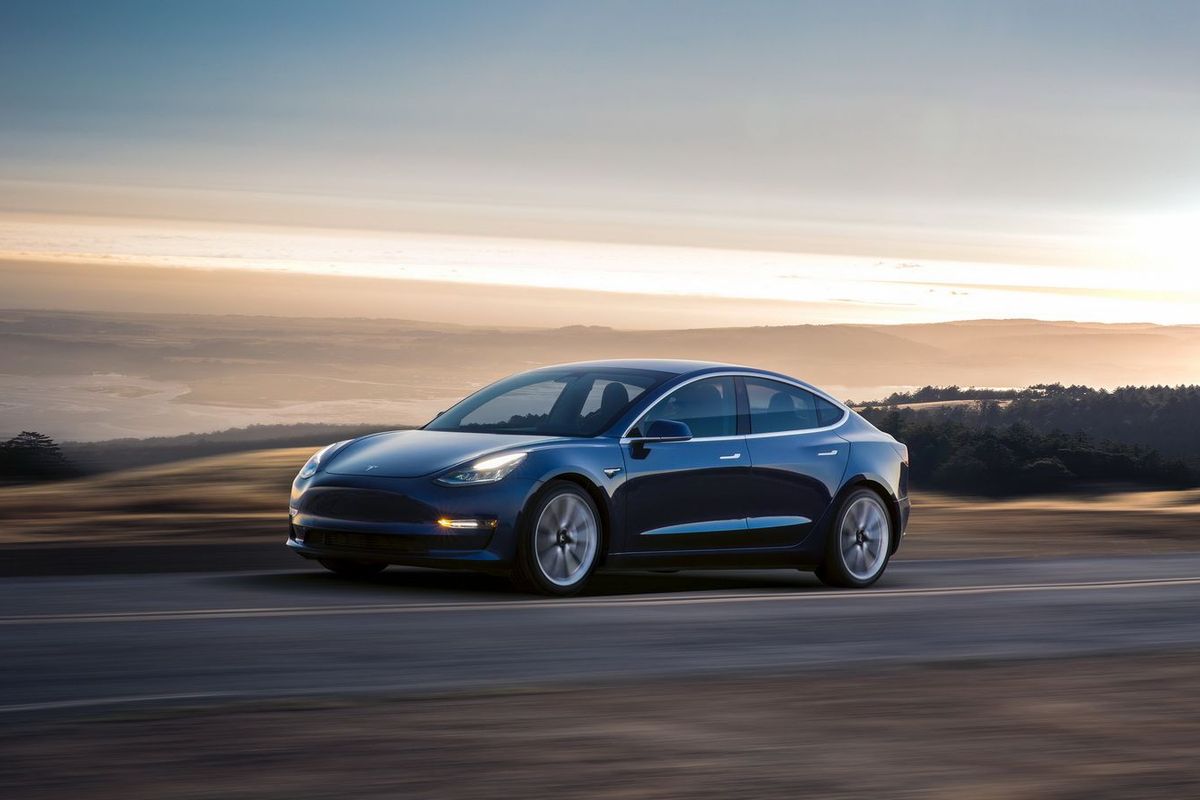
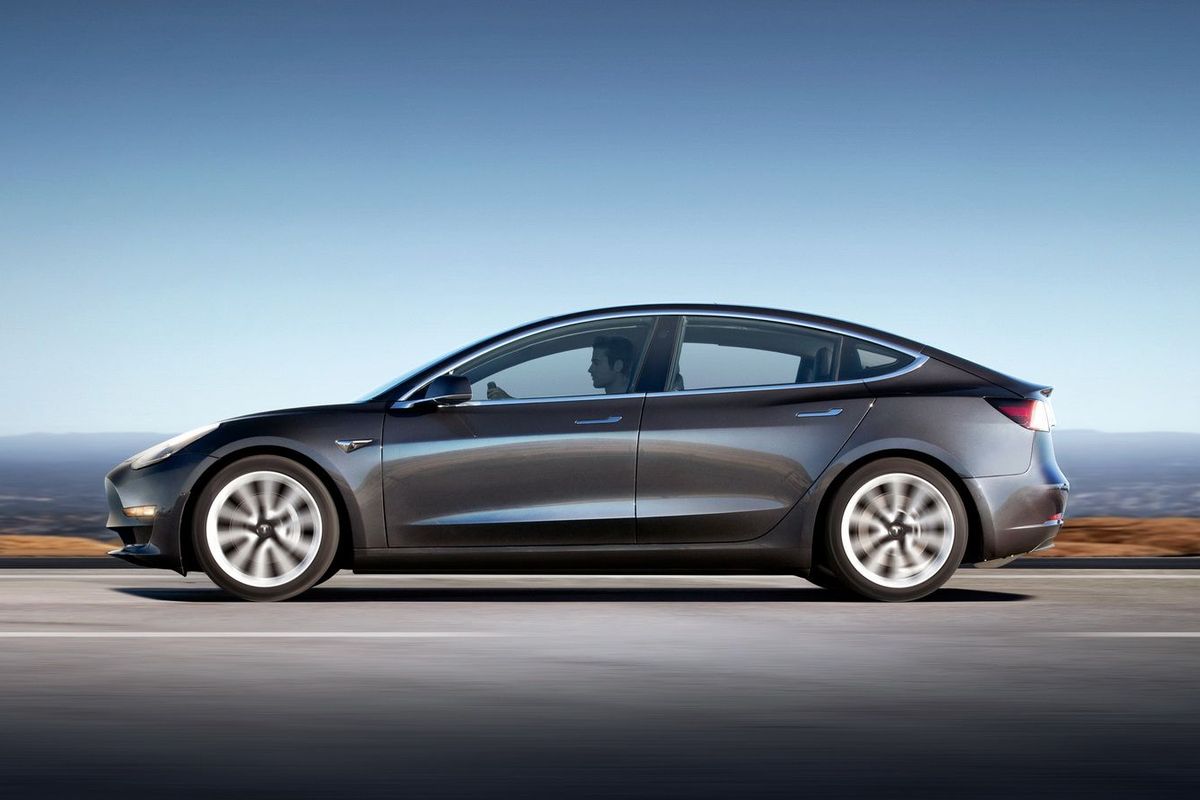
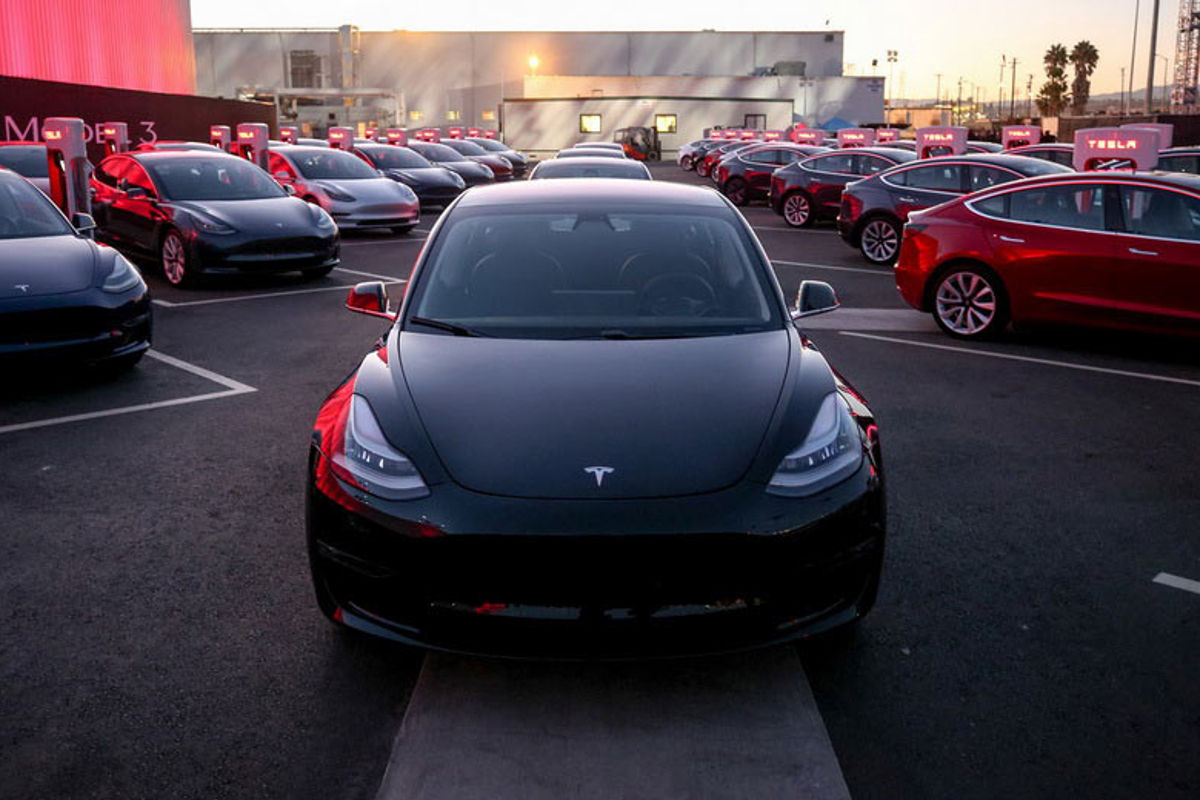
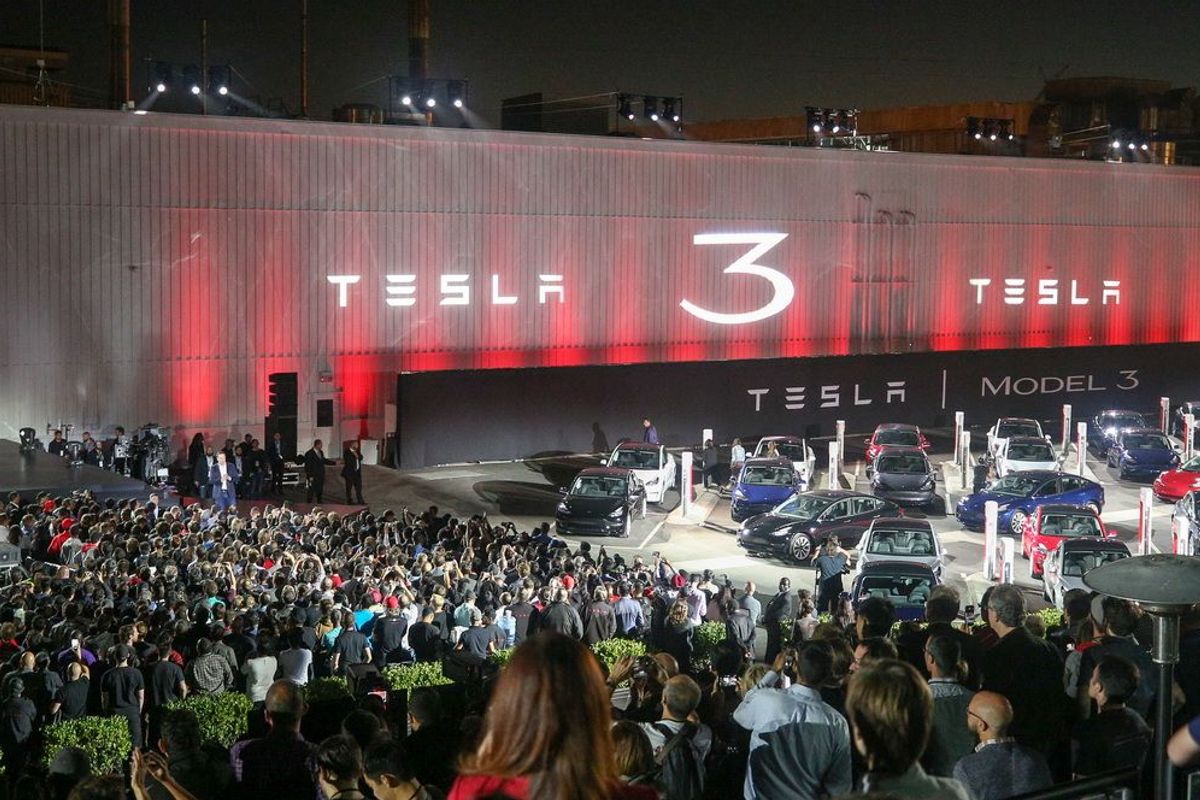
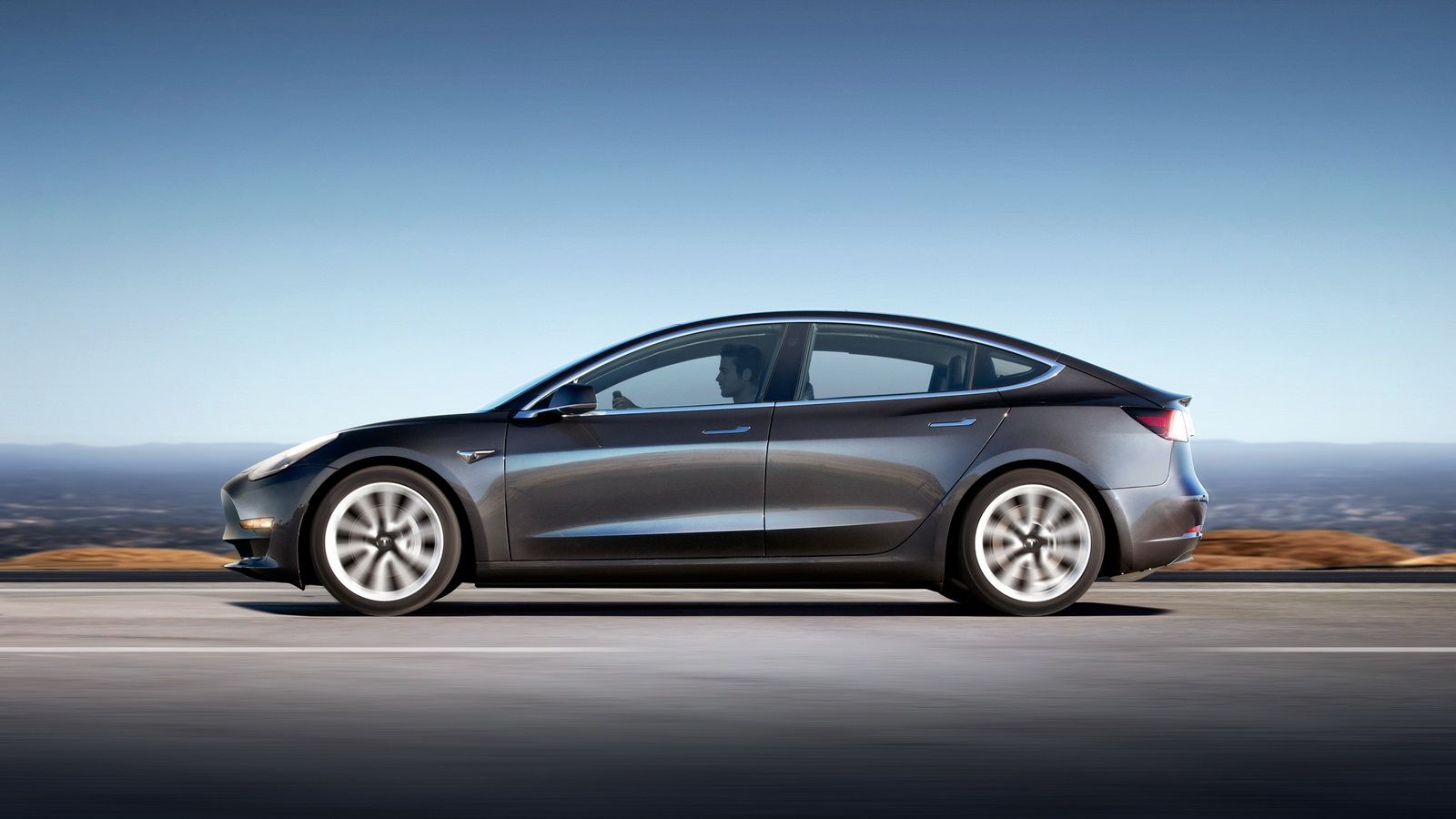
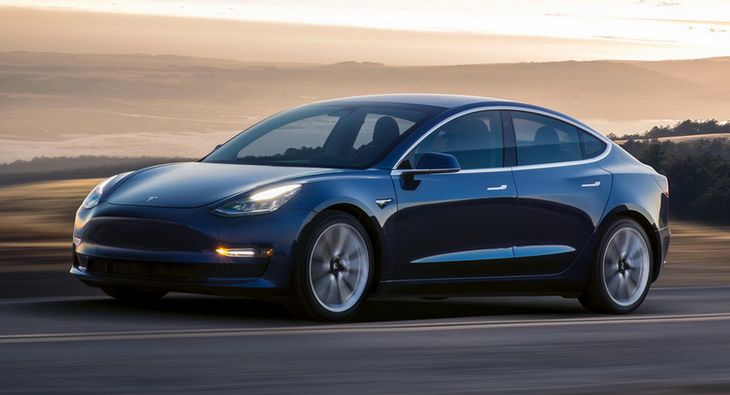
The official launch of Tesla's entry-level Model 3 took place at the tech company's Fremont facility in California at the weekend, where the first 30 customers of the business class EV took delivery of their vehicles.
Production of the Model 3 is expected to ramp up significantly during the remainder of 2017 with the bulk of orders being delivered during the course of 2018 and beyond. Last year, it was reported that Tesla added South Africa to its Model 3 order book and we have reason to believe that the Model 3 will only arrive in South Africa later in 2018 or most likely in 2019.
Watch Tesla CEO, Elon Musk, present the new Model 3 at its launch at the Tesla Fremont facility last week:
Key details
There are 2 derivatives of the battery-powered Model 3 on offer. The standard version offers a range of 354 km and can accelerate from 0 to 100 kph in 5.6 seconds with a top speed of 209 kph. Alternatively, the Long Range model has a range of 498 km with a zero to 100 kph sprint time of 5.1 seconds and a top speed of 225 kph.
As for charging, the standard Model 3 will gain 209 km range from a 30-minute charge using a Tesla Supercharger while a 240V household outlet at 32A will charge at a rate of 48 km per hour. As for the Long Range derivative, 30 minutes on a Tesla Supercharger will yield 274 km while a household outlet will charge at a rate of 60 km per hour.
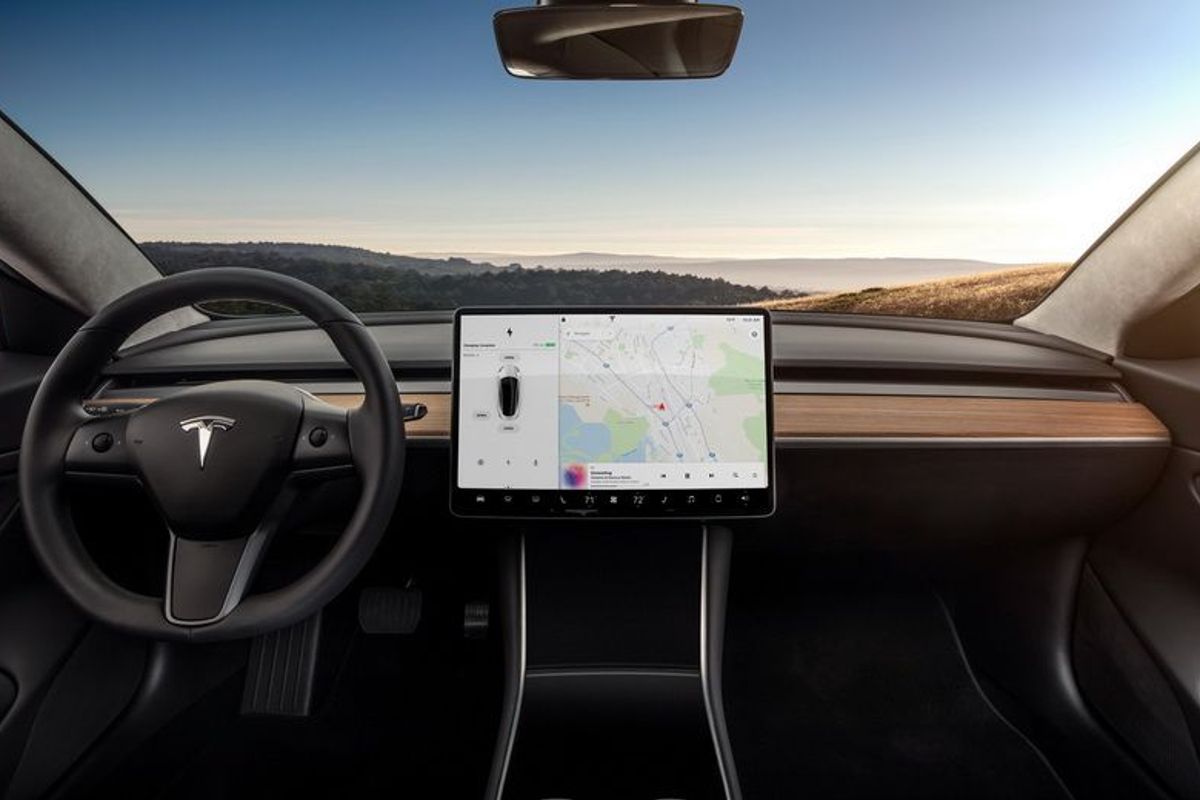
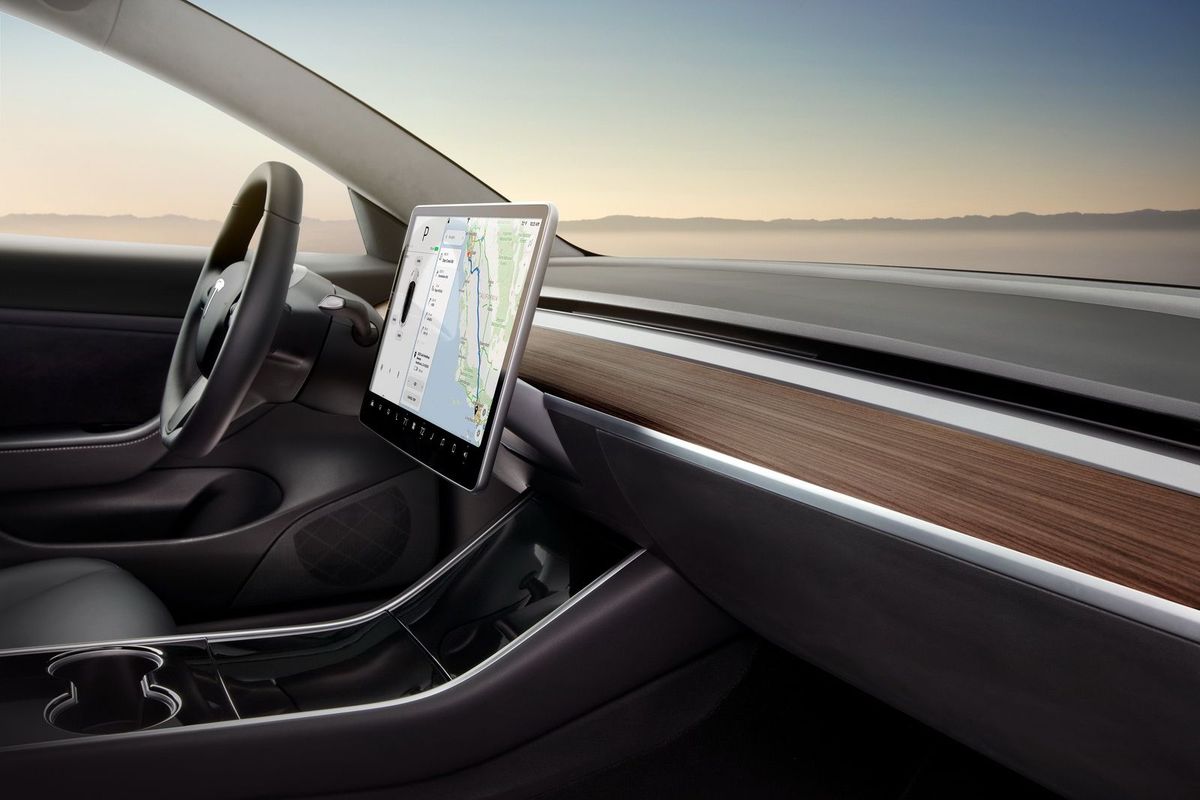
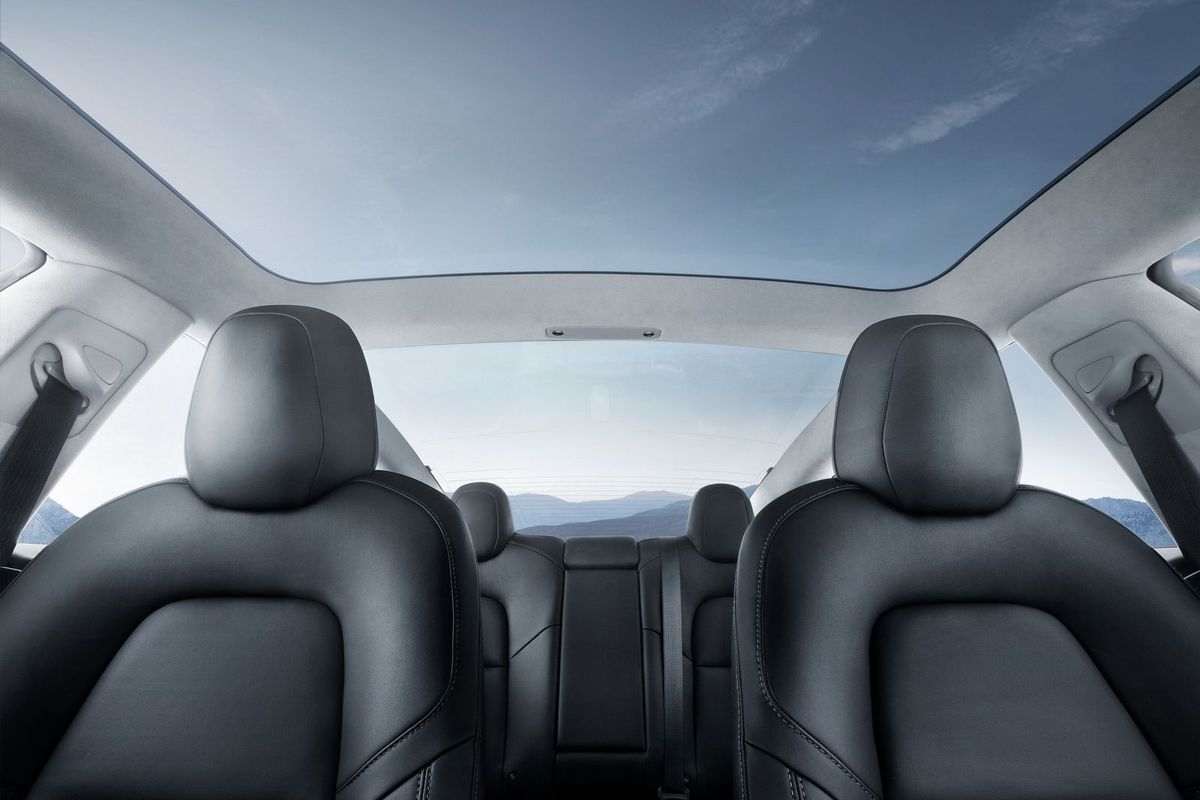
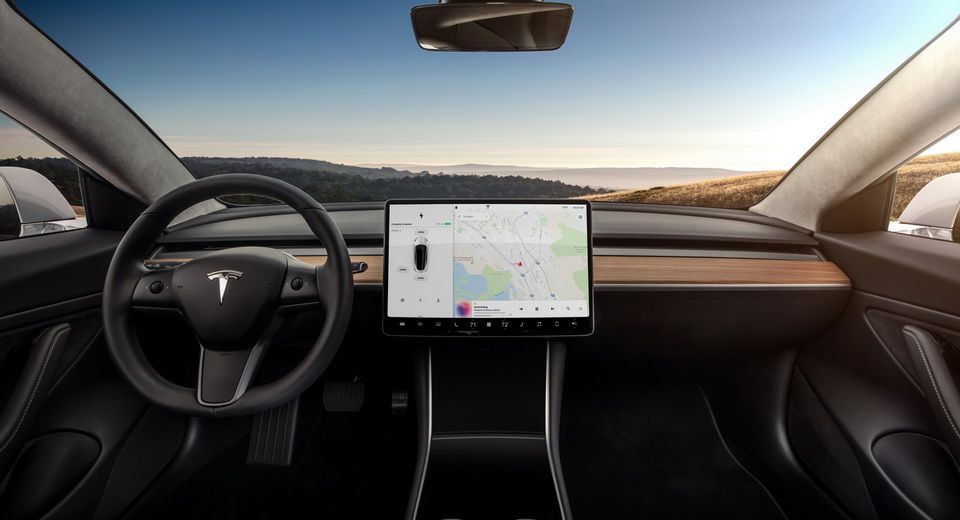
A 15-inch touchscreen display is the main attraction in the Model 3 and controls all the vehicle's functions.
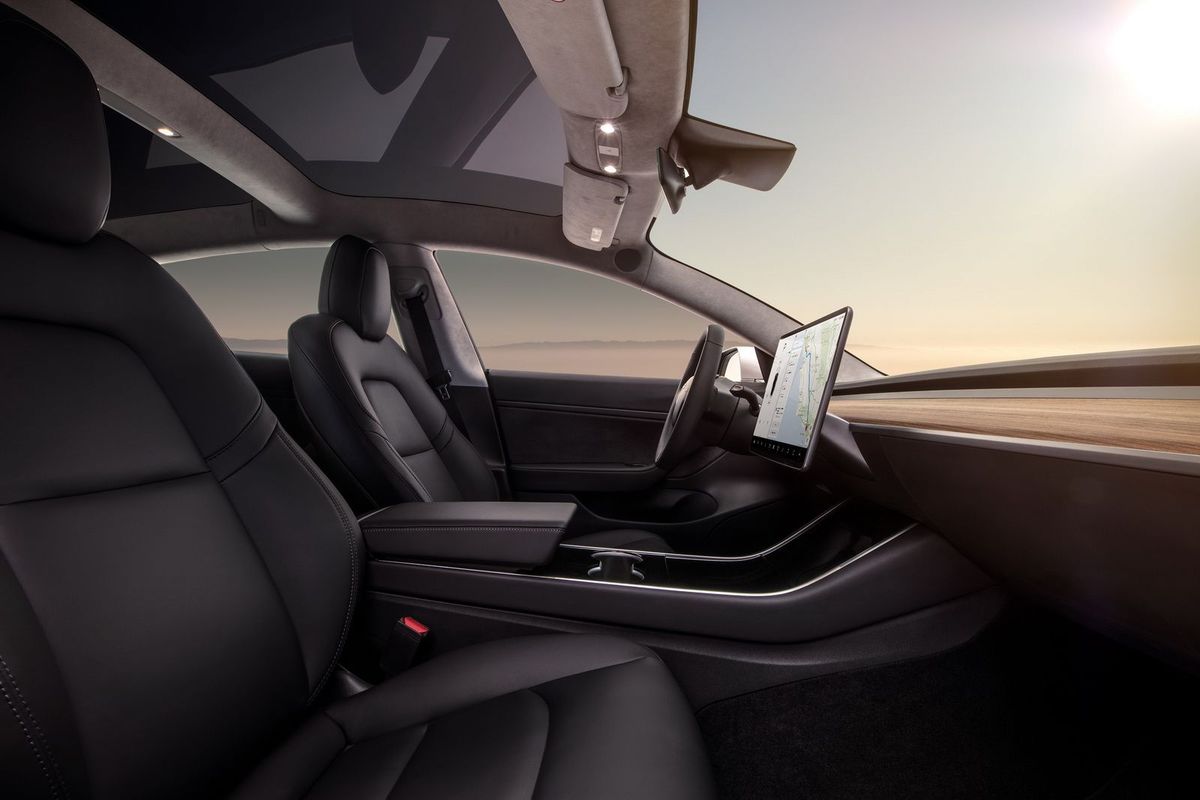
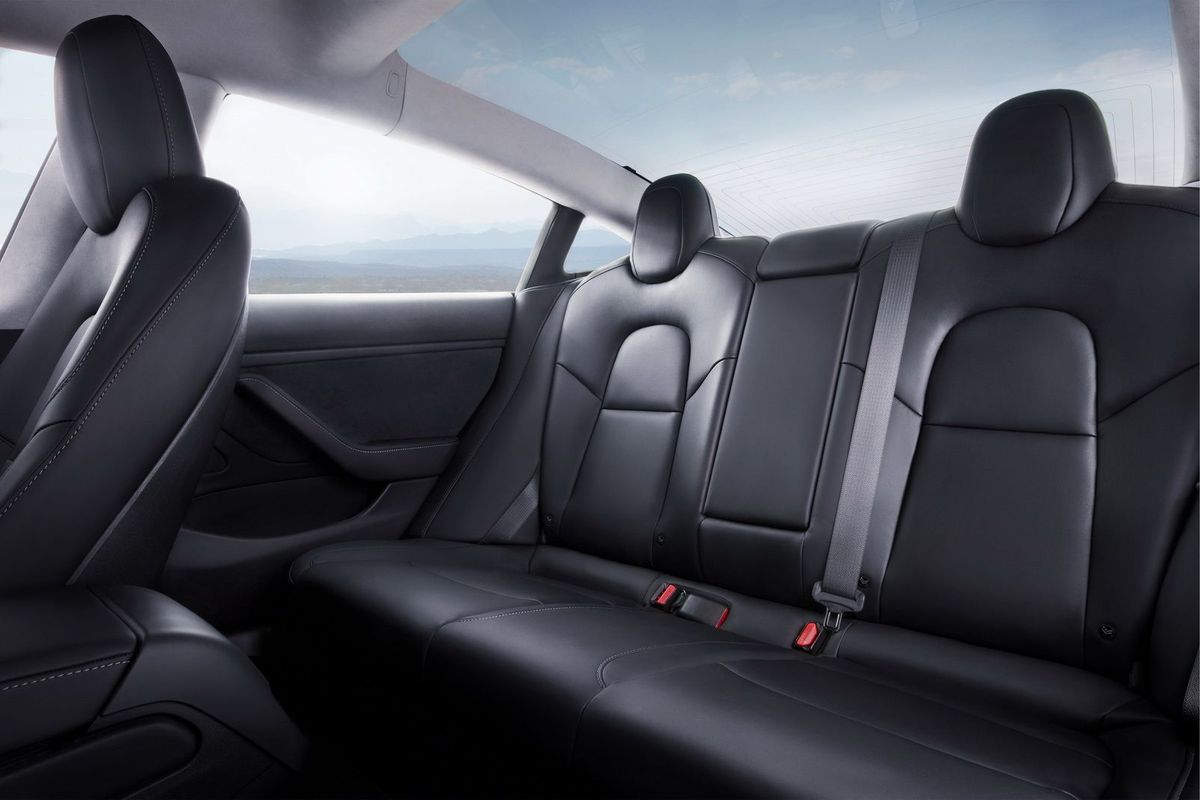
Standard specification for the Model 3 includes a 15-inch touchscreen display, dual-zone climate control and cloth seats. The interior can be further upgraded with an optional Premium Upgrades Package, which adds features such as 12-way electrically adjustable and heated front seats, open pore wood trim, 2 rear USB ports and a premium sound system, to name a few. Each car is equipped with autonomy equipment including 8 cameras, a forward radar and 12 ultrasonic sensors to enable collision avoidance and automatic emergency braking.
Tesla's Autopilot feature is offered as an option and allows the Model 3 to drive itself within a lane, conduct automatic lane changes, transition from one highway to another, exit a freeway and self-park when you reach your destination. Tesla says that more features will be added via software updates and full self-driving capability will be offered in the future.
The Model 3's exact arrival in South Africa is yet to be confirmed, but 2019 is likely.
The Tesla Model 3 rides on 18-inch alloy wheels as standard while 19-inch wheels are offered as an option. A Solid Black exterior colour is standard while other colour options include Midnight Silver Metallic, Deep Blue Metallic, Silver Metallic, Pearl White Multi-Coat and Red Multi-Coat.
To give you an idea of price, the standard Model 3 is selling for $35 000 which equates to about R455 000 while the Model 3 Long Range is priced at $45 000 which is about R585 000.
Tesla’s distribution model for South Africa is yet to be confirmed and considering the vast area that South Africa covers, charging stations for the Model 3 is something that will have to be addressed by the automaker.
We will keep you updated as more information becomes available. Are you excited to see the Tesla Model 3 in South Africa? Share your thoughts with us!
Along with the rise of Tesla, the push for electrification is starting to gather momentum (especially in Europe) as major car manufacturers commit to an electric future. How does this future translate into a South African context and, indeed, has the end date of the car, as we know it, been set? Motoring journalist and regular Cars.co.za contributor, Lance Branquinho, speculates…
With companies such as Tesla spearheading the Electric Vehicle (EV) revolution, having recently launched its new battery-powered Model 3 for the masses, the reality of mainstream electrification appears to be closer than we realise, or is it? Committing to a date is a manner of teasing fate. Humans are always humbled to failure. We try and time the market, and lose money. We attempt to time the traffic and end up becoming it. We then believe policymakers when they say that none of us will be able to buy a new internal combustion car by 2040.
You know the date, it’s trended on Twitter and become a predictive text feature in Google’s search bar. It’s the date by which the British government promises it will make conditions impossible for anybody to buy a new petrol- or diesel-powered passenger vehicle in the United Kingdom.
Mass electrification of cars is said to spell the end of the internal combustion engine by the year 2040, but can you believe it?
Why should we be bothered about 2040? There is a closer date, which is set to alter our driving destiny too, and that's 2025, the year by which Norway wants an electric-vehicle(EV)-only new car market. But Norway is different to us in the one way that Britain isn't: the side of the road we drive on. This is the crucial bit of Britain’s 2040 announcement and one that South African car enthusiasts should consider: a pivotal right-hand-drive (RHD) car market is plotting and legislating against internal combustion cars. What happens in Britain, eventually happens to us too, because the Queen’s island is a lead market for RHD product planning.
Better batteries, but are they good enough?
How realistic is Britain’s 2040 date, really? Two and a bit decades of development has the potential to deliver tremendous yields in innovation and EV battery technology. We understand from recent breakthroughs in chemistry technology, most notably from South Korea, that the lithium battery is due to deliver on its promise of petrol-rivalling energy density, finally matching 400-500km a charge endurance with the performance we know EVs already possess.
The recently launched Tesla Model 3 Long Range derivative has a range of 498 km and can accelerate from 0 to 100 kph in 5.1 seconds.
The issue is that none of these technologies are sufficiently stable for mass production. Building millions of small batteries to power the circuitry of our Smartphones is one thing, but building batteries to move a 2 000 kg four-wheeled appliance across energy-sapping topography, at speed, is a battery draining exercise of vastly more severe scale. Research on production-ready modelling project that next-generation lithium batteries won't be a reality until the early-to-mid 2020s, without a disruption in supply. But that 's without considering any change in the toxic issue that nobody championing Britain’s 2040 vision is willing to discuss: EV’s dirty secret.
An internal combustion engine requires a fixed-amount of energy to construct in the forging and forming of metals, and then it’s done. All its future environmental cost will be the fuel it consumes. With a battery powered EV, it’s not quite the same. Lithium batteries are tragically burdensome on the environment in their sourcing and production. Of all mining techniques, lithium mining is regarded as severe due to most deposits being found in deserts and the extraction technique requires huge amounts of water. To convert the mined material into a battery that can store energy to power your EV, requires an amount of energy, per battery pack, which is calculated as the equivalent of 700 hours of internal-combustion driving emissions.
If you manage to charge your EV solely from renewable energy sources, it all makes a bit more sense, offsetting some of the immense inputs required to produce the battery in the first place. In South Africa, unlike Europe, renewably-sourced electricity is almost an impossibility for bulk usage. Our energy policy appears to be advocating non-renewables, such as coal. If you are not plugging into a wind-, solar- or hydroelectric-powered recharging source, there’s absolutely no point in driving an EV.
Is South Africa too big for EVs?
South Africa's geographical size, EV charging infrastructure and current energy policies pose challenges for an electrically mobile future.
Unless a monumental reversal of South Africa's energy policy happens in the next decade, any attempt to set our local car market on a course for true zero emissions motoring by 2040 will be impossible. Beyond the issue of sourcing electricity from non-renewables, South Africa’s geography and infant infrastructure are key areas of concern. Charging stations are so sparse, that it’s currently impossible to drive an electric car between any of South Africa’s major cities.
Whereas Britain has managed to establish at least 4 500 public charging points, South Africa’s struggling to get from double to triple figures. If infrastructure doesn’t spread, it’s impossible to imagine how South Africans will attempt the trip from Johannesburg to Cape Town or Durban to Port Elizabeth in pure EV cars. The distances are simply too vast and range anxiety will always be too real. To me, this is the fundamental reason why Britain’s 2040 policy will never make sense for South Africa: we need internal combustion fuel onboard, for the inevitable emergency range that is a reality of travelling enormous distances in a country with middling charging infrastructure.
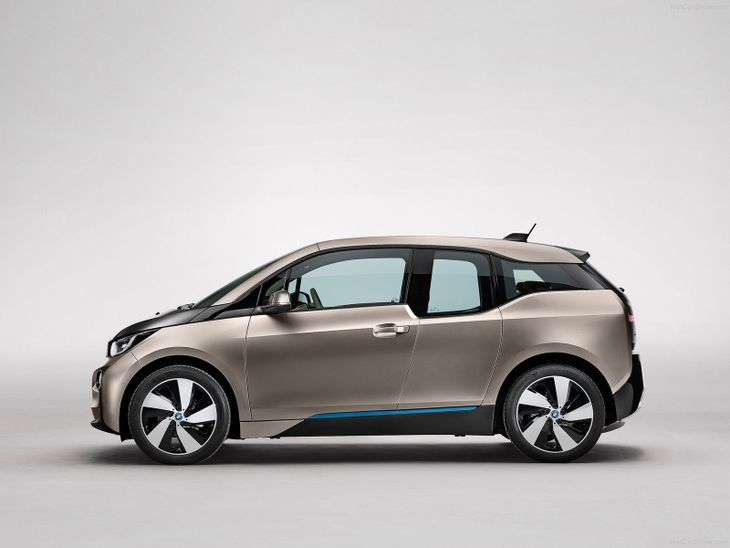
The BMW i3 proves that electric motoring can be fresh and exciting in terms of packaging and driving pleasure.
BMW’s i3 is, to my mind, the definitive South African EV experience. It's a better car than Nissan’s Leaf in every possible way because it was built to be battery powered, retains BMW’s fabled driving dynamics and its ownership appeal is greatly buoyed by the option of carrying emergency fuel onboard, in the case of the Range Extender (REX) derivative. I’d always, without hesitation, recommend an i3 to anyone who is remotely interested, but I’d also never recommend it as anything but a REX. Those few litres of unleaded and having the internal combustion engines in reserve sets the mind fantastically at ease.
Battery cars work in Northern Europe. The high saturation of charging infrastructure and close proximity of towns, all under the cover of a mild to cool climate – makes for ideal EV motoring. South Africa is different. Heat, punishing distances and electricity supply uncertainty all corrode faith in an EV future. A policy setting a date for banning the sale of internal combustion cars at any point in the medium term, will be sheer madness for South Africa.
Where does that leave us?
Electric vehicles are the future, certainly, but our issues are markedly different to those of Europe… the EVs that will ultimately succeed here should be different to the ones Britain hopes will vanquish the requirement for new petrol- or diesel-powered cars by 2040. British drivers might drive on the same side of the road as we do, but we spend a lot more time doing that than they do – and for a nation of drivers who aren’t unfamiliar with 1 000 km journeys when going on vacation, hybrids will do very nicely, thank you very much.
The future is never quite what we expect or predict it to be. In Back to the Future Part 2, dateline 2015, a future of flying cars was presented, but with paper fax communication instead of tablets and Smartphones. No internal-combustion vehicles on sale by 2040? Unless we find a miracle material that’s a lot easier and less harmful to mine than lithium, it's quite unlikely.
The AA has released its forecast for the fuel price movement in August 2017.
The Automobile Association of South Africa has estimated that the fuel price is set to rise by 20 cents a litre for petrol, 31 cents a litre for diesel and a 27 cent hike for illuminating paraffin.
"The increases we expect at the end of July have mainly been driven by the weaker Rand / US dollar exchange rate," the AA says.
"The Rand accounted for about two-thirds of the hike, with a slight uptick in international fuel prices contributing the remainder."
"While the Rand continues its volatile trend, international fuel prices have surged strongly in the past ten days. If this upwards movement continues into August, fuel users can expect further bad news," the AA concludes.
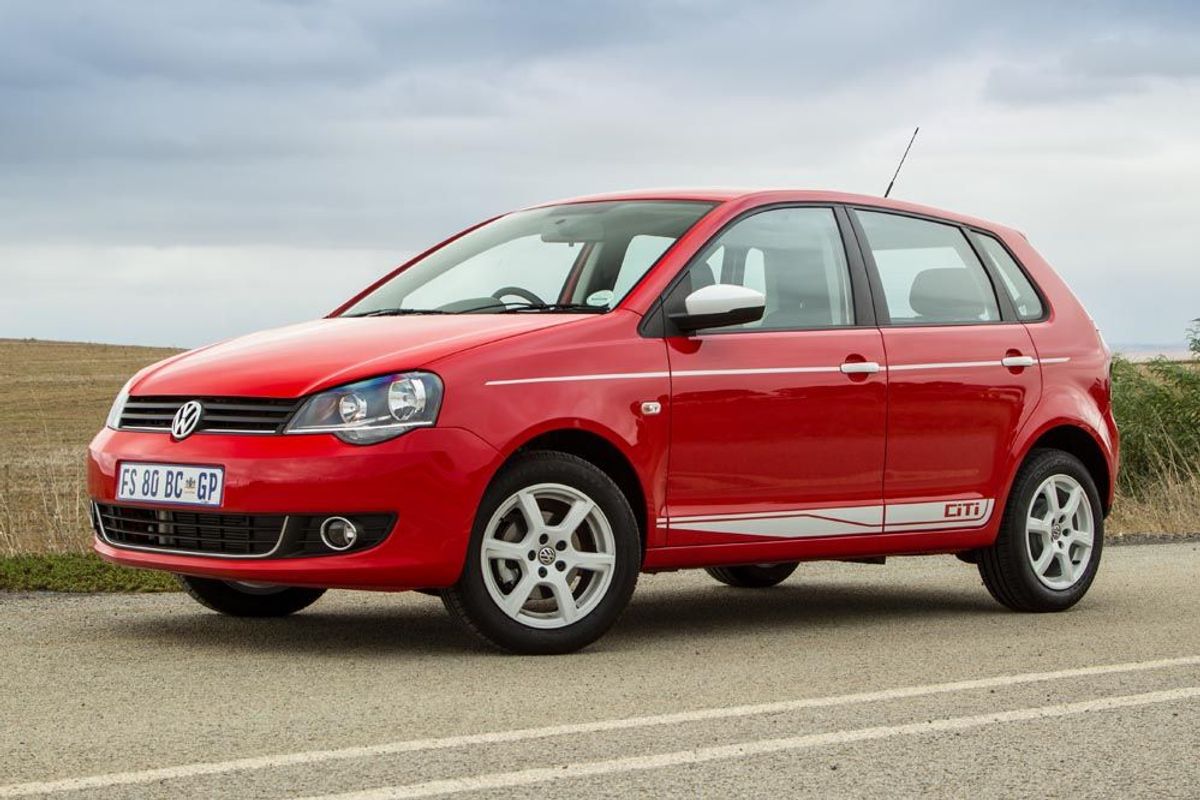
Volkswagen has triggered a wave of nostalgia by producing a limited-edition CitiGolf-inspired Polo Vivo. While it is light-years ahead of the car that inspired it in terms of specification and, yes, it does tug at the heartstrings, can the product offer enough substance to match its retro style?
We like: standout youthful packaging, good build quality, impressive audio system
We don’t like: interior a bit drab, lack of standard front electric windows/service plan
Alternatives:
Get one while you can. Although Chevrolet will soon exit the market as a result of General Motors’ withdrawal from South Africa, the top-of-the-range Spark 1.2 LT represents excellent value. Backed by a 5-year/120 000 km warranty, the Spark has 4 airbags, an audio system with Bluetooth aux and USB ports, a multifunction steering wheel, 15-inch alloys and rear PDC. A service plan is optional.
For crossover appeal. The recently facelifted Renault Sandero Stepway 66 kW Turbo Expression offers something more than humdrum bargain hatch fare. Replete with SUV-like cladding and roof rails, the Renault has 16-inch alloys, front electric windows, stop/start function, brake assist and traction control as well as remote audio control stalk. A 2-year/30 000 km service plan is included.
A surprise package. Although Indian manufacturer Tata’s products once offered marginal quality, the top-spec Bolt 1.2T XT is a revelation. Backed by a 5-year/100 000 km warranty and a 2-year/30 000 km service plan, the spacious Tata has a reasonably perky 1.2-litre turbopetrol engine and comes with nice-to-haves such as climate control and a full-colour touchscreen infotainment system.
A revitalised warhorse. A recent update to the Toyota Etios through the launch of the 1.5 Sprint hatchback sees the Indian-made budget car gain sharper looks and improved materials. It’s powered by a punchy 1.5-litre motor and includes standard features such as 15-inch alloys rims, a Bluetooth audio system and a 2-year/30 000 km service plan.
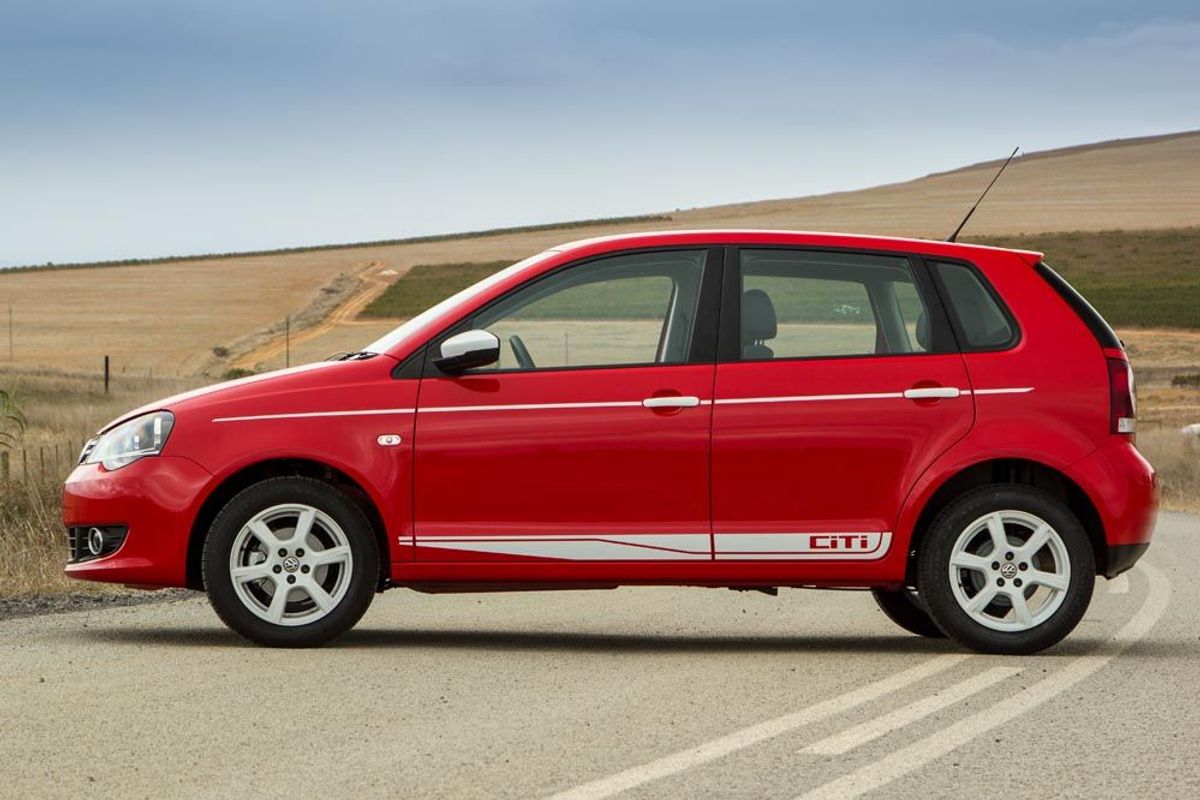
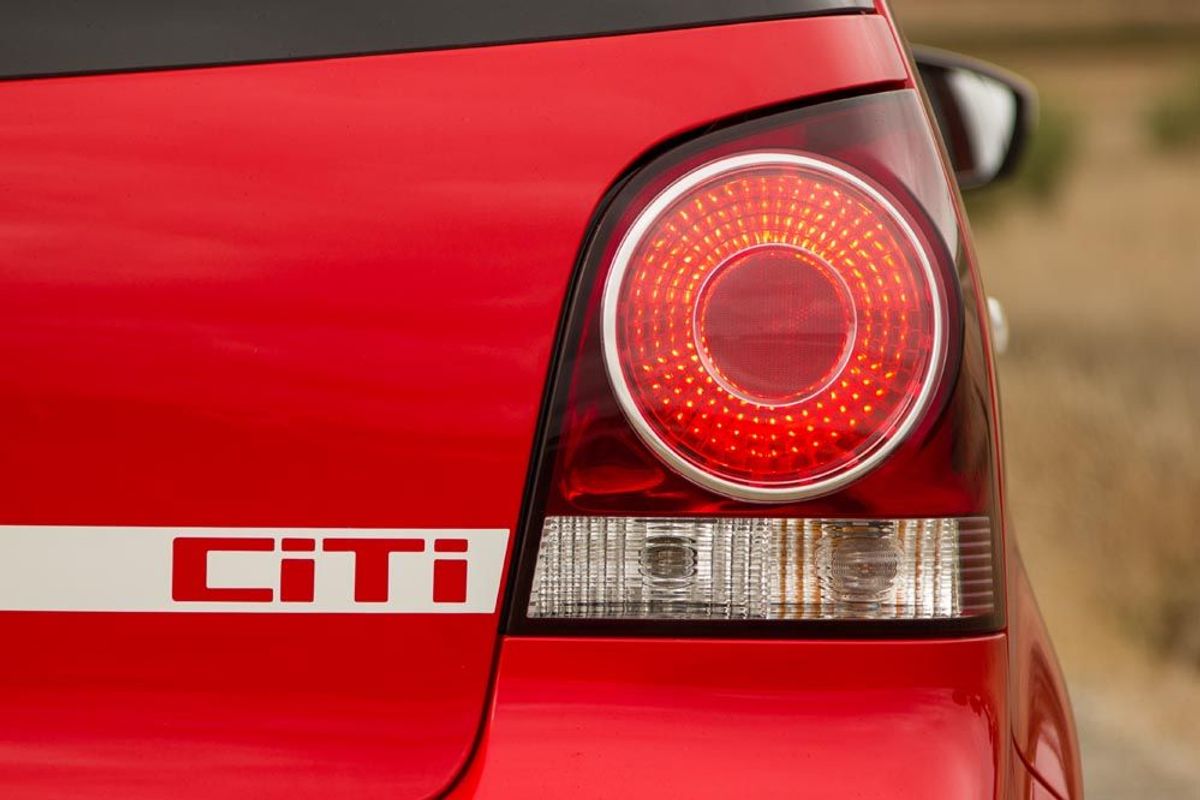
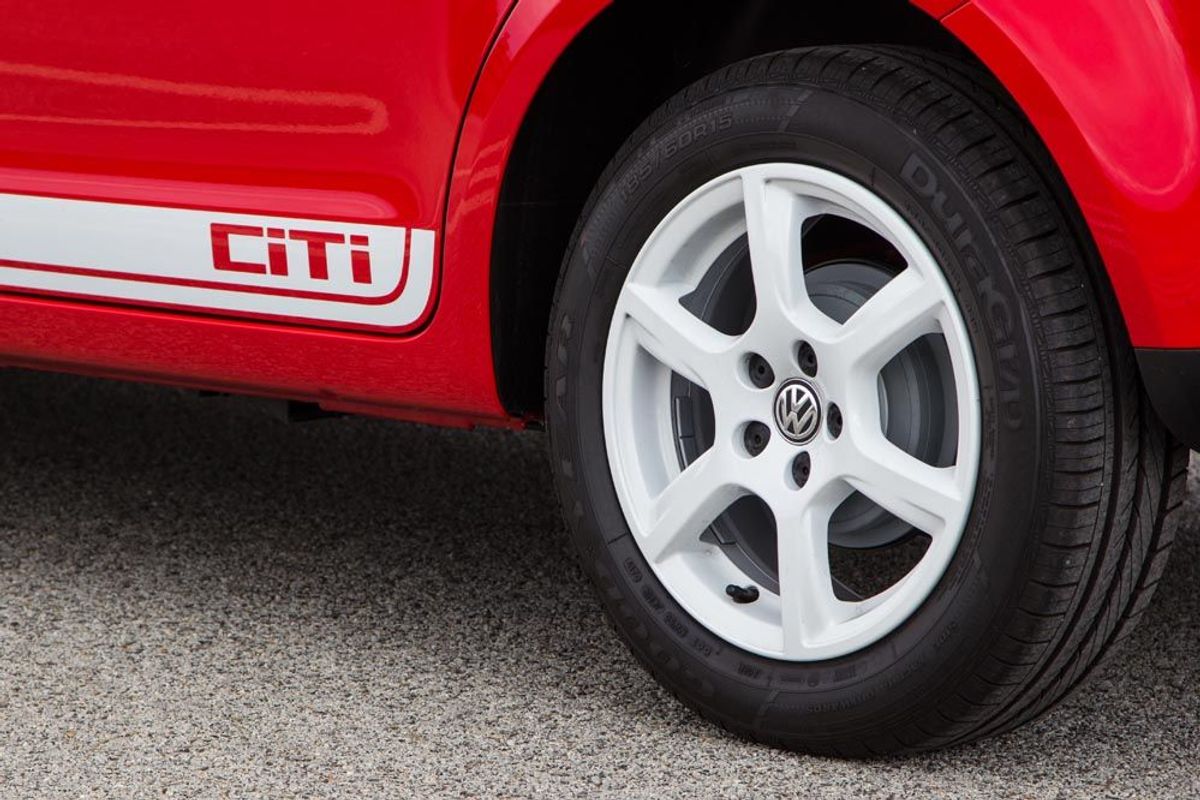
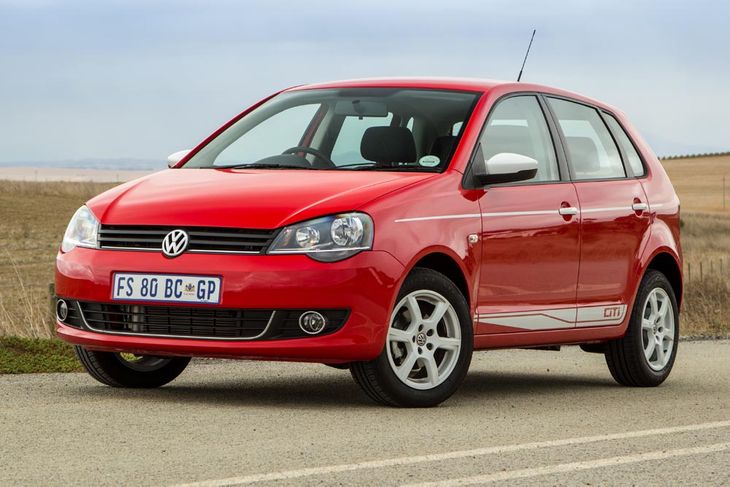
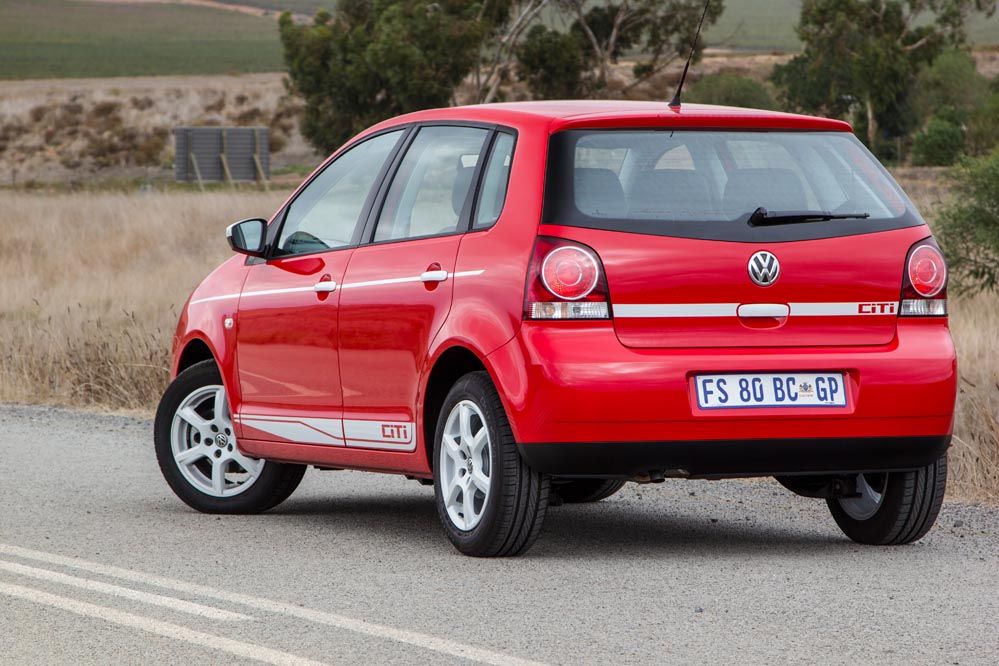
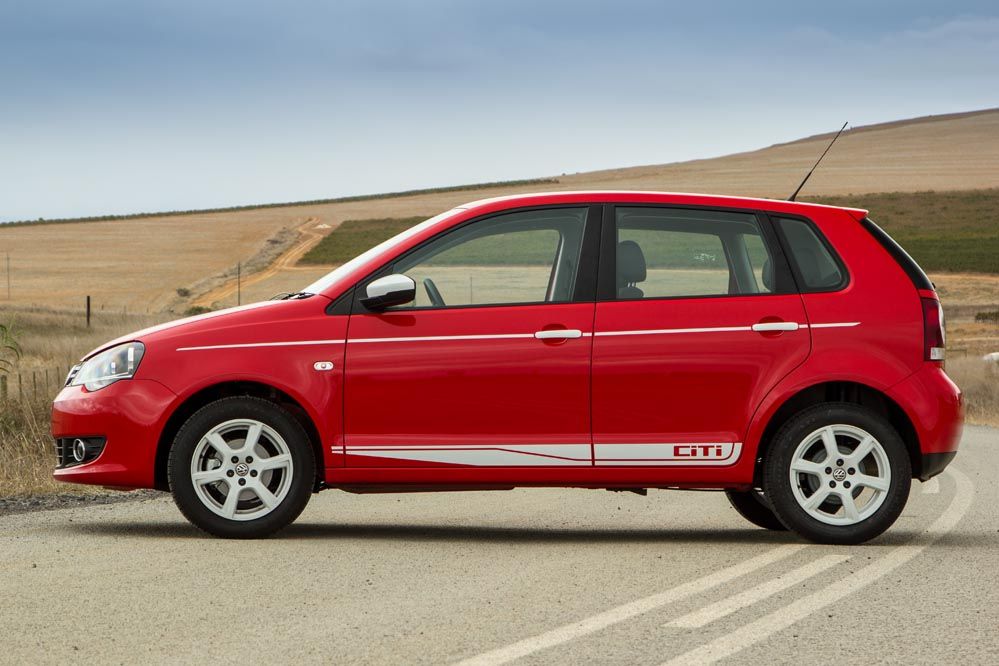
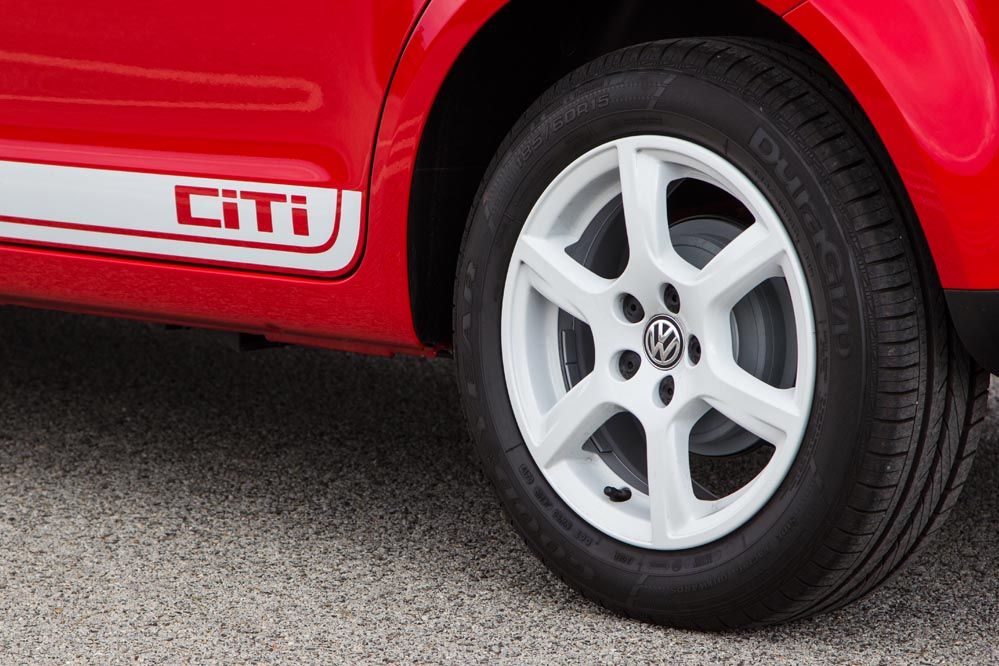
Bold white striping and white-painted 15-inch alloys (along with the optional fog lights) give the CitiVivo cheeky appeal.
What’s new?
Here is where the story begins… In 1984, Volkswagen launched the CitiGolf: a cheeky, no-frills and budget-positioned continuation of the first-generation Volkswagen Golf, which had famously replaced the original Beetle in the Seventies. Production continued until 2009, during which time 377 000 CitiGolfs were produced; the little car, despite its lack of ABS and airbags, achieved cult status in South Africa.
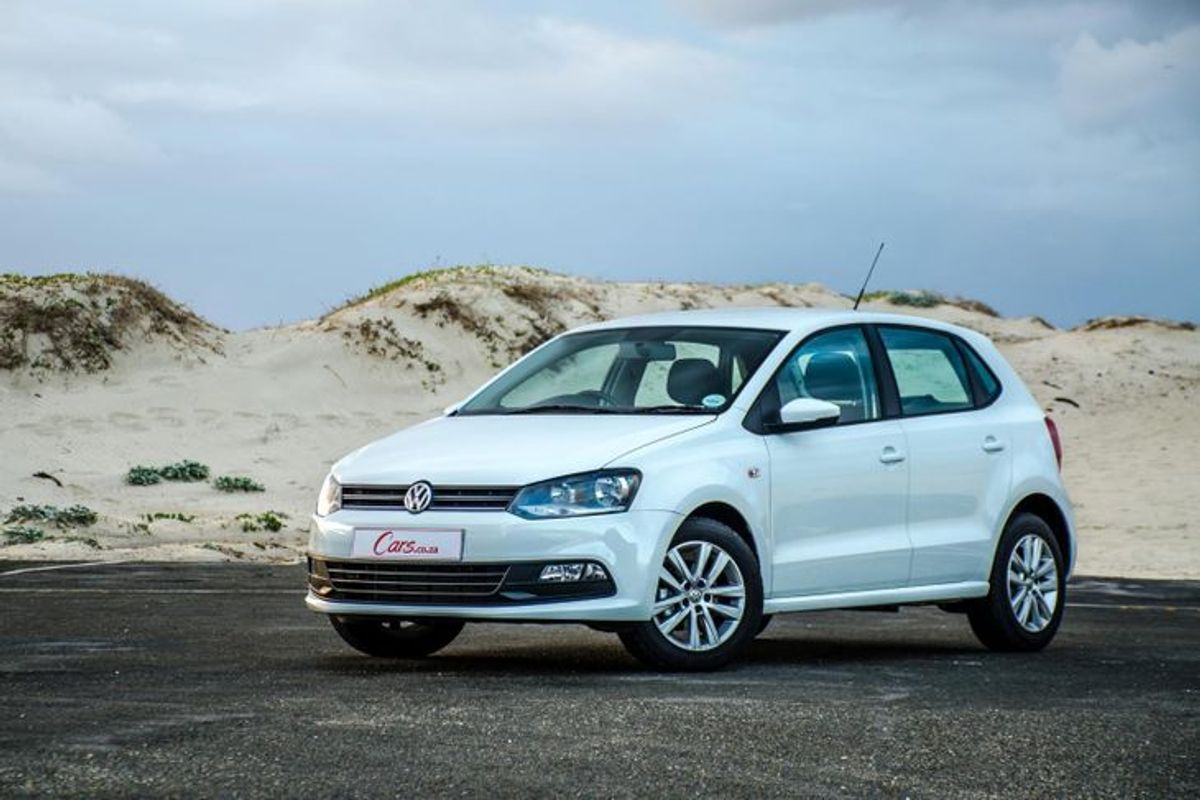
That brings us to the Vivo. Based on the 4th-generation Polo, the Polo Vivo became Volkswagen’s entry-level offering and much like the CitiGolf it replaced, the Vivo has topped the sales charts since 2010. Now, as the automotive market gears up for the introduction of the 6th-generation Polo (and quite possibly, the next generation Vivo), Volkswagen has released a Citi version, which is still fun-loving, but anything but plain.
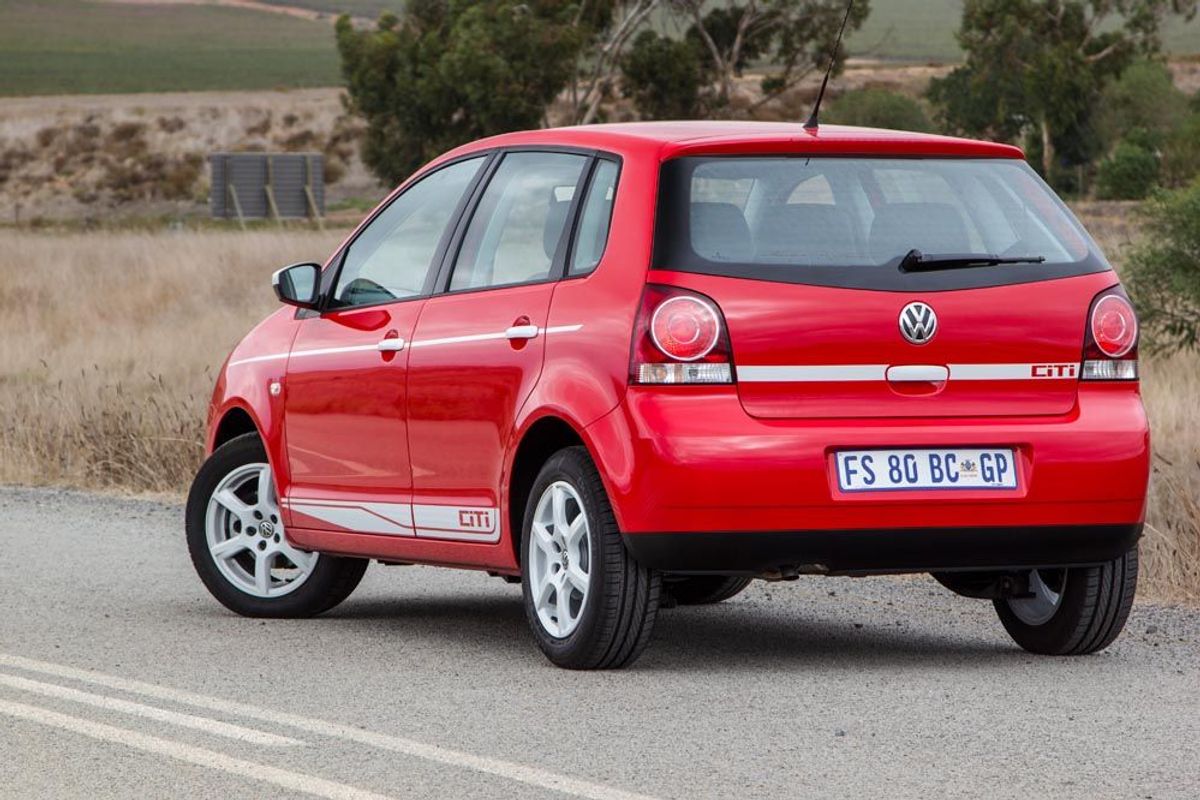
White door and tailgate handles (let alone side-mirror caps) would have been unfathomable in the '84 CitiGolf's heyday.
The good
Youthful, vibrant looks
The Polo Vivo has been around for the best part of a decade; it received an update in 2014 and numerous special editions have been brought to market in the meantime. Yet, despite its advanced age, the Vivo’s exterior design looks zestful, especially in its Flash Red paint finish (which is one of three colours it has been made available in, the others being (unsurprisingly) Cornflower Blue and Sunflower Yellow).
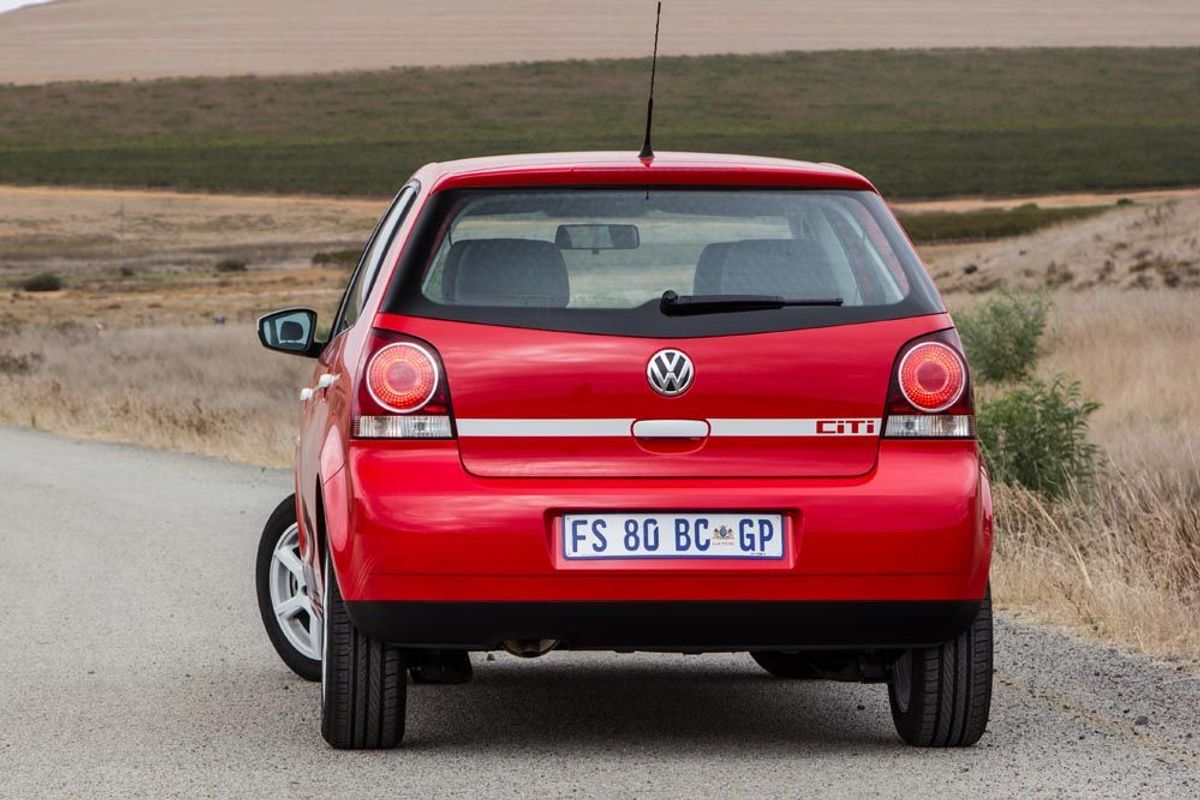
During the CitiVivo’s test tenure we parked it next to its spiritual predecessor (a faded Cornflower Blue CitiGolf) and, to be fair, the latest Citi features a lot more detailing than its predecessor. Like the old car, the CitiVivo has white wheels (but instead of painted steelies a set of 15-inch alloys) and matching branding and striping on its sides and tailgate. However, colour-coded door handles and mirror caps further set the newcomer apart and, suffice to say, the test unit drew many admiring glances. Even though it looks quite unlike a Golf 1, its instantly recognisable as a Citi.
The Vivo is a reinterpretation of the 4th-generation Polo 4 facelift model that debuted more than 10 years ago… believe that!
Good build quality
As a proud product of Volkswagen SA’s Uitenhage assembly plant, the CitiVivo bears the hallmarks of a vehicle that has been honed through running refinements in the production process through the years. This is a car made to a tight cost, but it does not feel cheap… the panel gaps in the bodywork appear to have neat, even widths, the doors shut with reassuring thuds, and the paintwork is consistent and has sufficient lustre.
As for the interior, Volkswagen again exhibits that knack for utilising cost-effective plastics that don’t feel cheap to the touch. The panels fit snugly and seem resistant to emitting rattles, the upholstery, if less than plush, feels hardwearing, but not fibrous or cheaply finished/stitched.
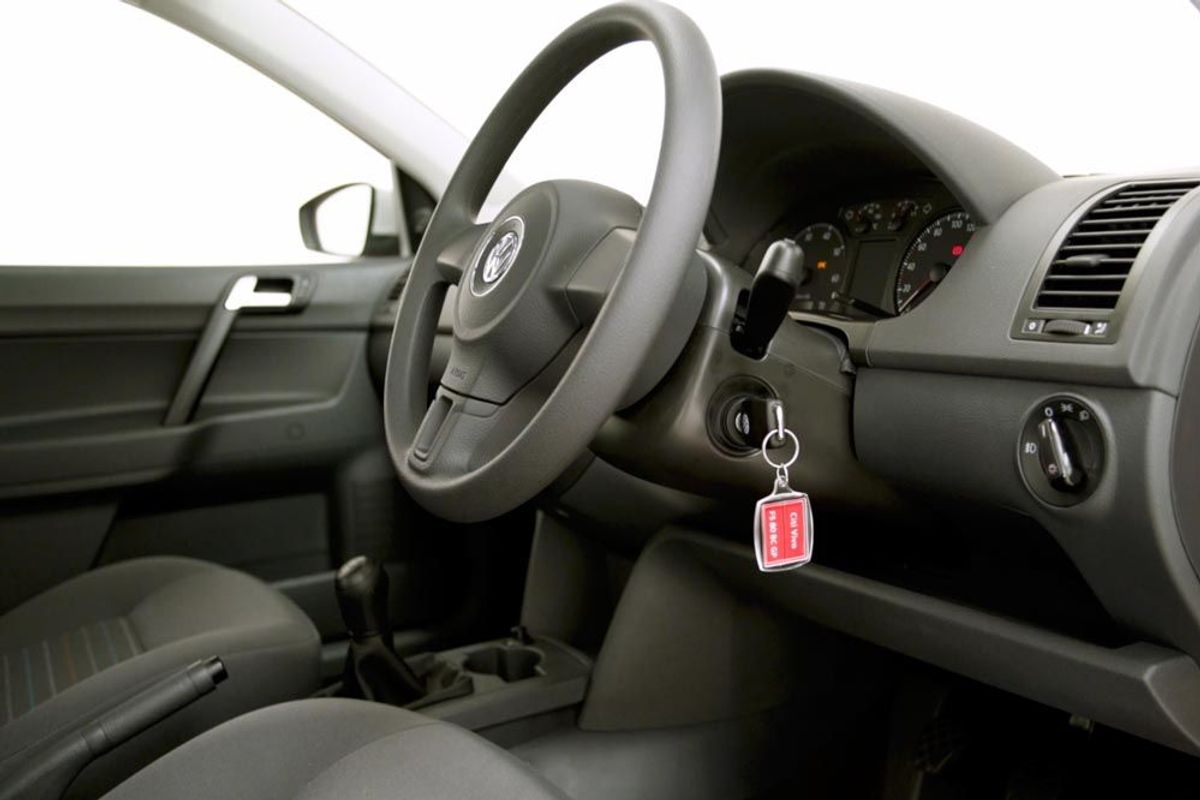
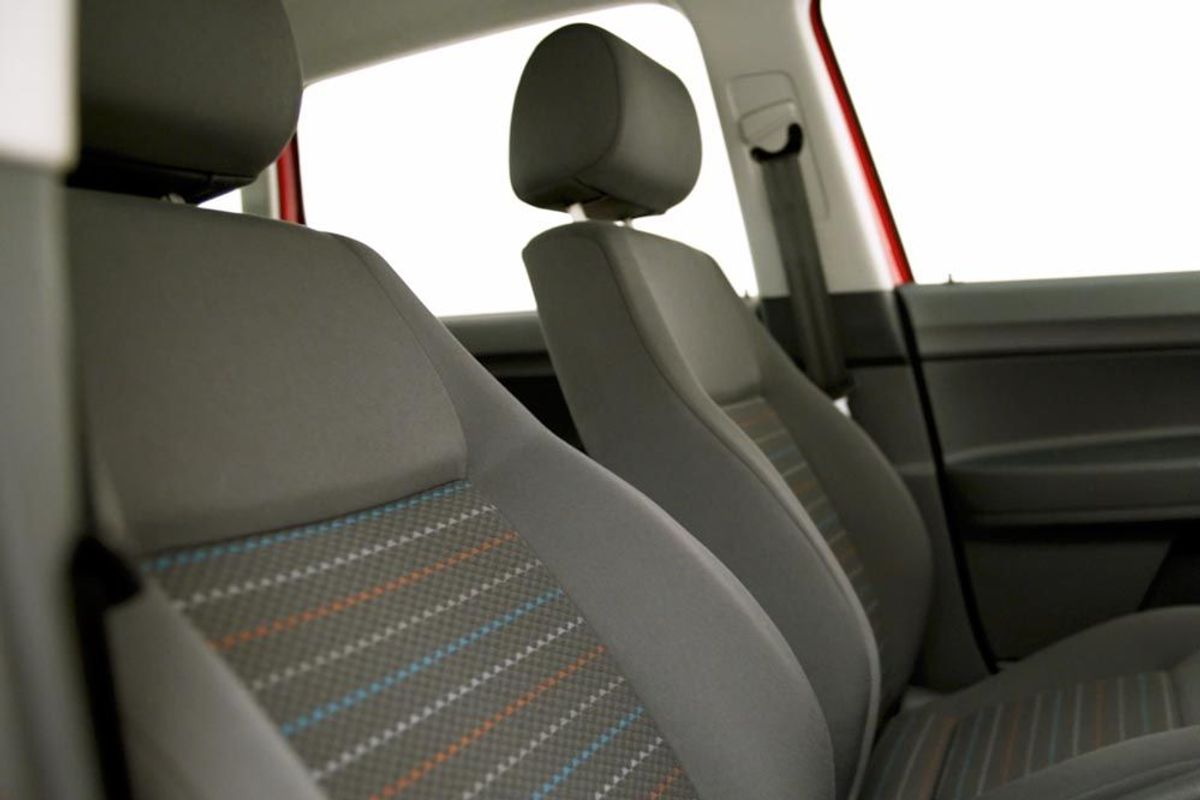
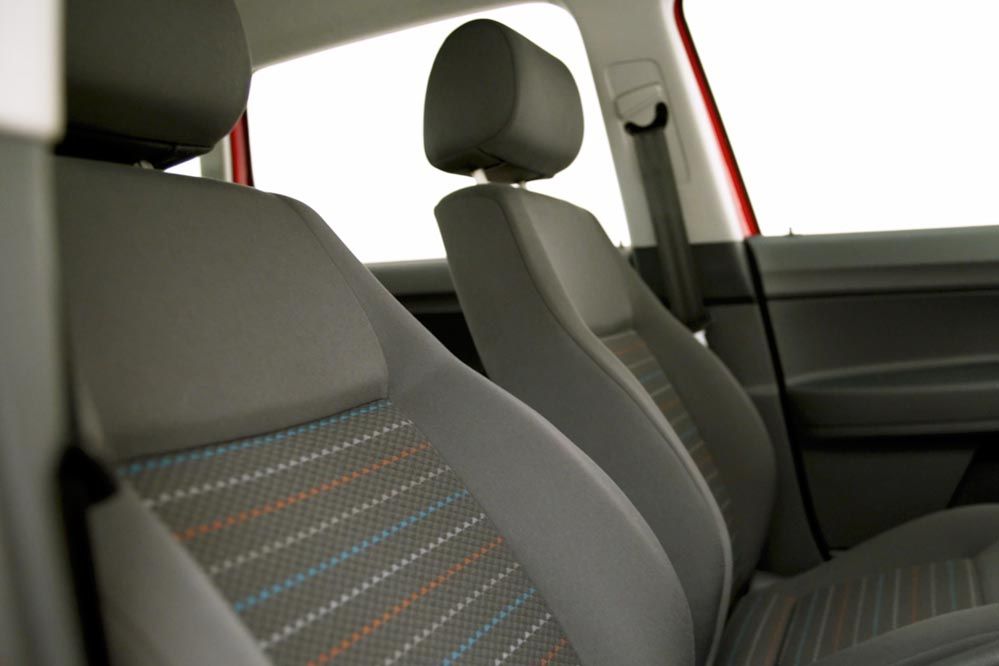
The colourful seat fabric does lift the ambience in the cabin somewhat, but it is a little drab and grey otherwise.
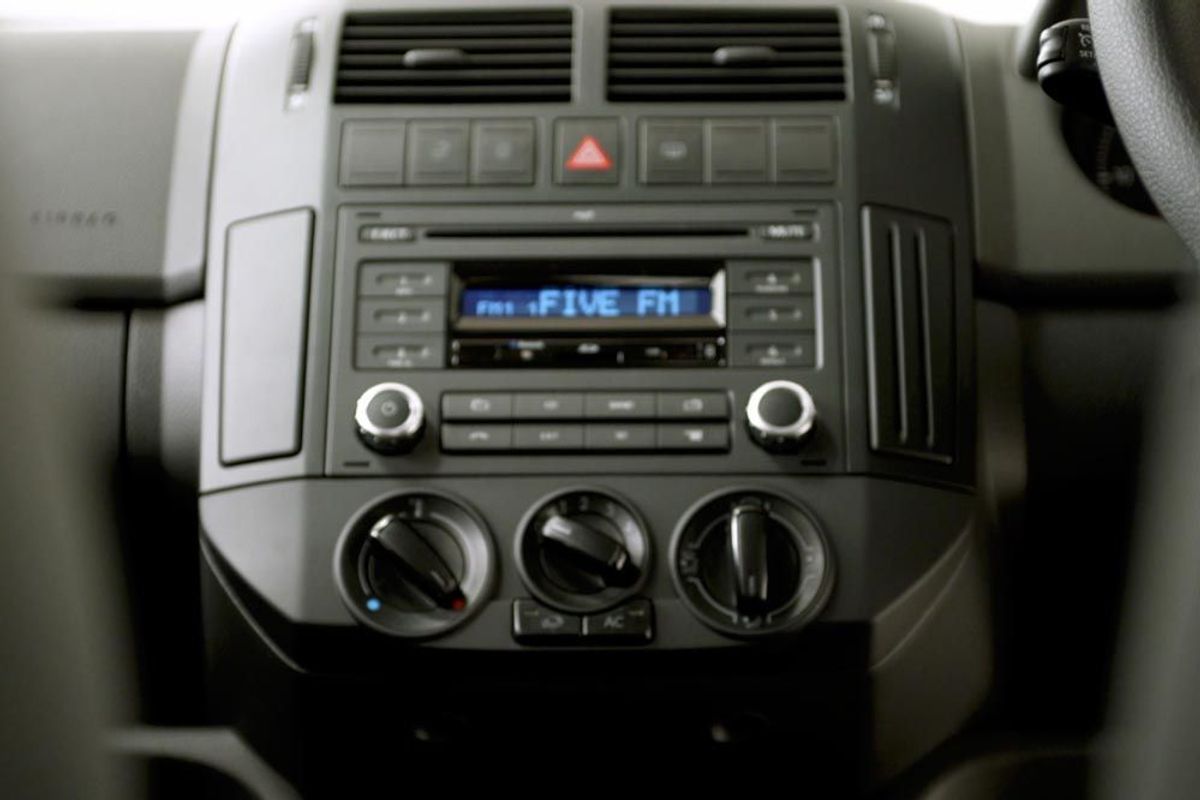
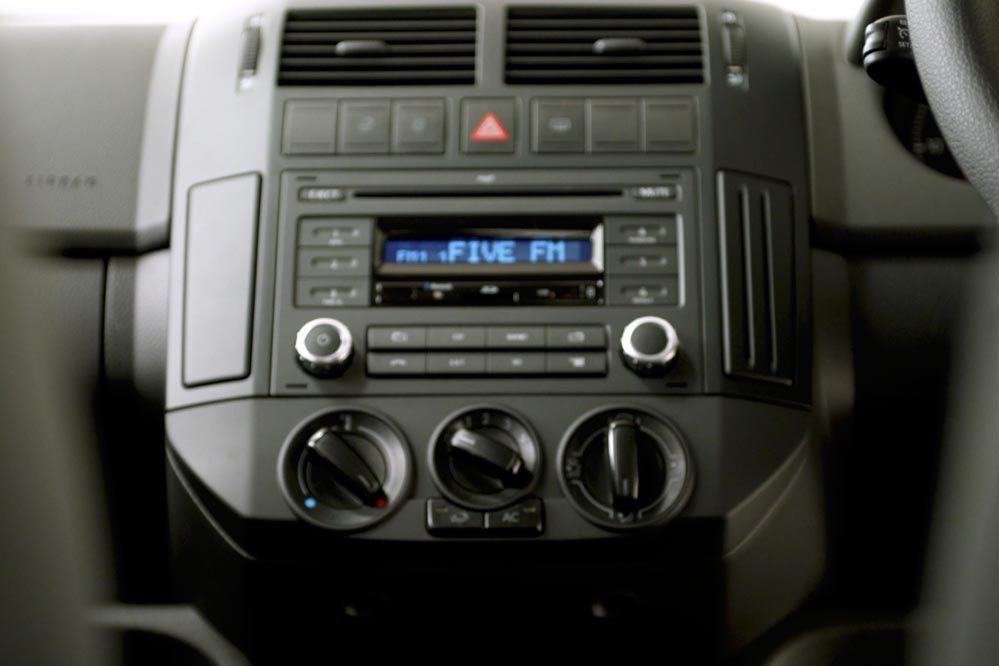
As for the standard interior features, the most impressive aspect of the CitiVivo is undoubtedly its Bluetooth-enabled 4-speaker audio system, which looks anything but retro-fitted (Polos of this generation certainly didn’t feature such a setup). Granted, the audio system is not complemented by satellite audio controls on the steering wheel, but it offers a radio, CD player, USB and SD card inputs, is easy to pair with contemporary smartphones and delivers a reasonably voluminous and clear sound output.
Easy to drive/refined
Of course, those accustomed to the Polo driving experience will know that one of the Volkswagen’s most endearing attributes is its “little big car” driving experience. From the way the wieldly steering wheel places the car accurately, to the ease of modulating the clutch pedal/gear lever and the predictable throttle responses (the motor is not revvy, but feels tractable enough), the CitiVivo has that “just get in and drive the darn thing” manoeuvrability that reassures inexperienced – and delights seasoned drivers – alike.
The 1.4 CitiVivo features drum brakes at the rear wheels, but the ABS-equipped braking system works well.
As expected of a budget car, delivering overtaking acceleration at freeway speeds was not the CitiVivo’s forte, but we admired that the car’s underpinnings (which are obviously not of the most contemporary vintage) delivered a reasonably absorbent ride quality and the ABS-assisted braking system was effective. And, perhaps the drone of the engine was largely drowned out by the machinations of the audio system – as would often be the case, we suspect, but the level of on-road noise wasn’t bothersome to the car's occupants.
The not-so-good
Interior does not match exterior flair
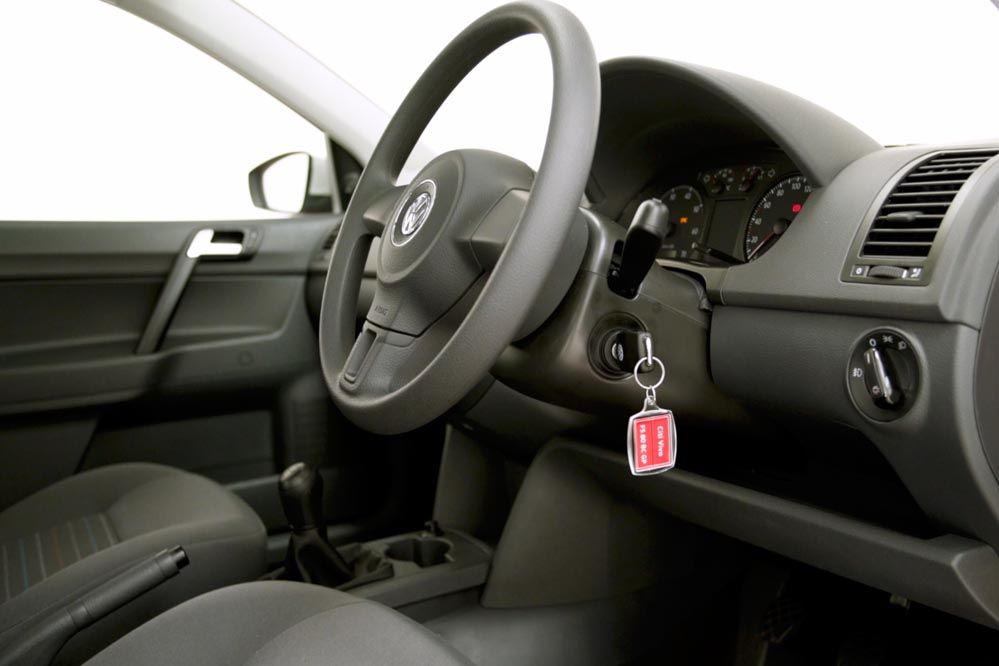
Those who remember the original CitiGolf will attest that its interior was Spartan in the extreme, but now that we’re late into the second decade of the Millennium… and the CitiVivo is an unabashed marketing exercise, after all, some of the testers were left a little disappointed that the test unit’s interior, apart from the neat Silver-Blue-Orange-Gray trim, was unremarkable, even humdrum.
We understand that the CitiVivo is closely based on the entry-level 55 kW Conceptline derivative, and therefore will be pretty basic in terms of its cabin finishes and so-called modern conveniences, but some colour matched floor mats or colour-matched contrast stitching on the fabric areas would have been welcome. Some testers even suggested the addition of a retro golf ball-type gearknob, just to finish things off nicely…
The test unit came optionally equipped with a stalk-operated cruise control function… dual front airbags are fitted as standard.
Middling performance/efficiency
If there are areas in which the 1.4 CitiVivo shows its age (apart from the well-familiar fascia design, which is to be expected), it’s the performance and fuel efficiency of its naturally aspirated 1.4-litre 4-cylinder petrol motor. Ostensibly tuned for optimal reliability and performance on South African-standard fuel, the VW’s engine has a lower peak power output than its 4 rivals mentioned at the head of this review and the second lowest torque output (equal with the Toyota Etios 1.5 Sprint).
Whereas its second-slowest claimed 0-100 kph time in this group (12.9 sec, although there is no stated time for the turbocharged Bolt 1.2 XT) is inconsequential to most buyers, its claimed fuel consumption is second thirstiest (after the Tata) out of the 5 cars. With running costs of major concern to buyers in this segment, many of whom can only just afford to pay their monthly instalments, let alone fuel, insure and maintain their vehicles, every cent saved is a godsend.
The neatly integrated Bluetooth-equipped audio system was the highlight of the 1.4 CitiVivo's cabin.
Basic specification
Before we delve into the extra-cost options on the CitiVivo, it needs to be noted that its remote central-locking key fob (some of its peers have a separate remote control), the intermittent setting on the heated rear screen's wiper and back headrests are nice to have (aircon has been standard in the Polo Vivo range for a number of years) and that despite its age, its claimed luggage capacity is second only to the Sandero’s.
Some of the options included in the package include cruise control (R1 400), smokers package (R250), ultrasonic alarm system (R 1 150, in addition to the stock alarm/immobiliser setup), electric front windows (R1 300) and front fog lights with chrome surrounds (R1 400). Of these options, the first 2 are perhaps surplus to most buyers’ needs, but the rest could benefit the value offering substantially had they been standard, especially considering that the Polo Vivo, unlike some of competitors, does not come standard with a service plan (a 5-year/60 000 km option costs R8 210).
In terms of safety equipment, the 1.4 CitiVivo comes equipped with ABS and dual front airbags, which is only par for the course at this price point, so there is room for improvement there as well.
Price and after-sales support
The Volkswagen Polo 1.4 CitiVivo retails for R178 800 (July 2017), which includes a 3-year/120 000 km warranty.
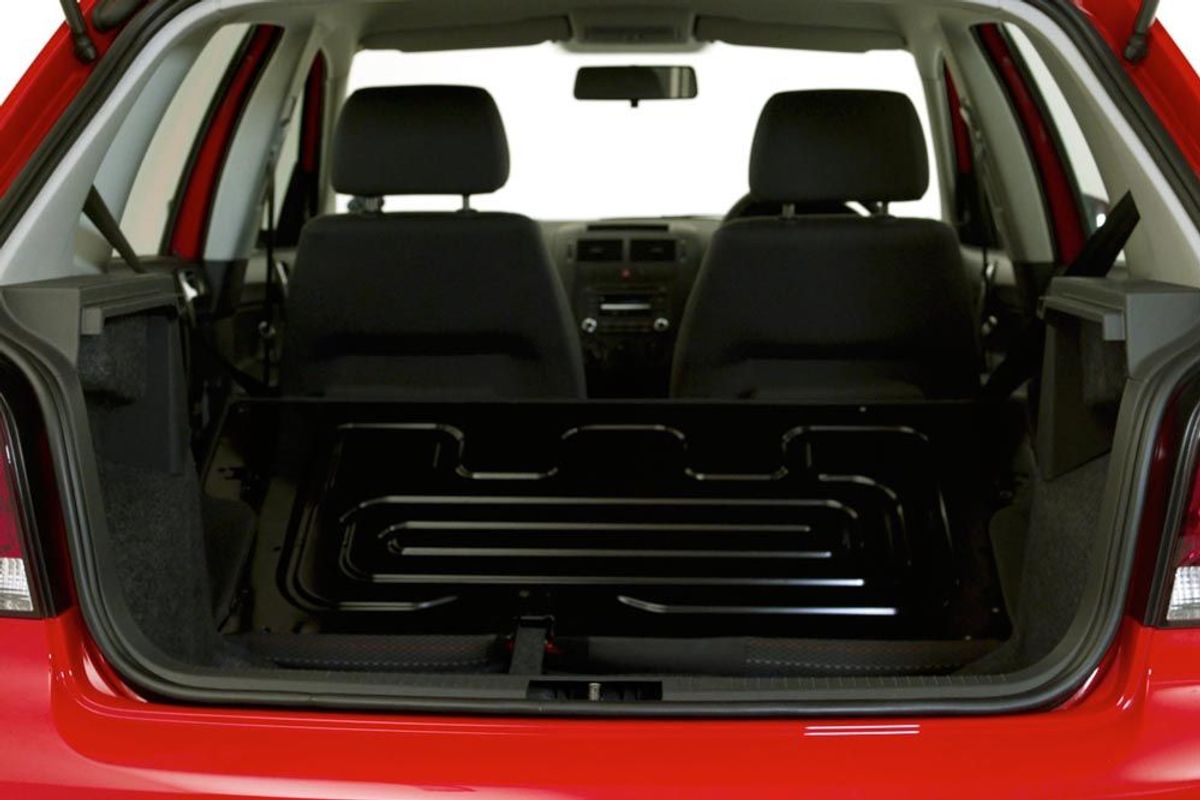
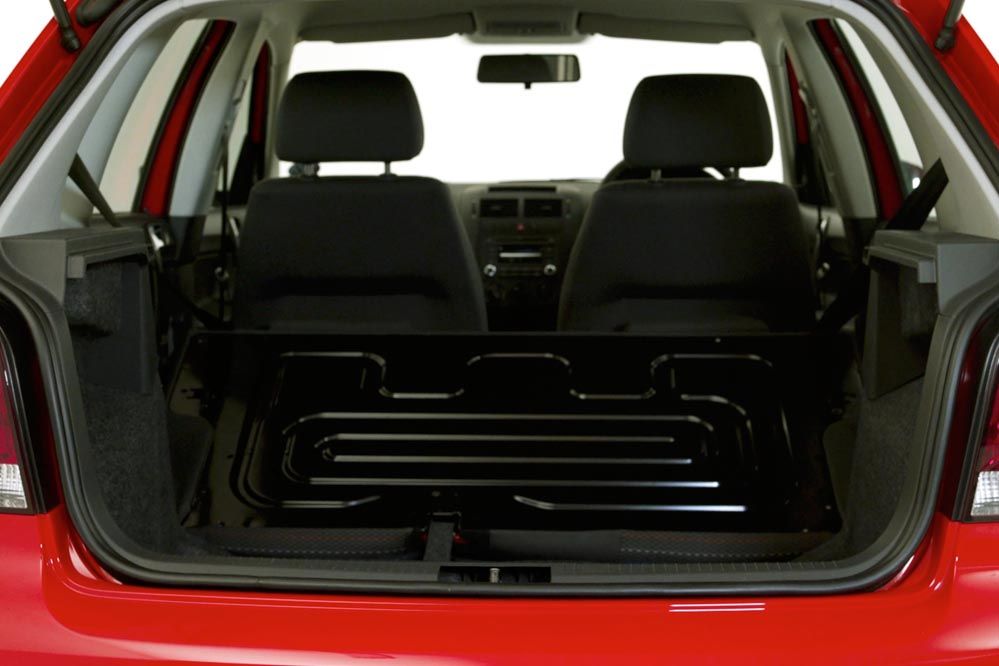
The single-piece backrest is helpful to free up utility space, but the conventional luggage capacity is quite adequate.
Verdict
The fact that the 1.4 CitiVivo feels as young and fun-loving as it does at this late point in its product cycle speaks volumes for the inherent quality and longevity of the product. The car that served as inspiration for this limited edition (only 2 000 units will be produced) is now an anachronism well out of step with 21st-century motoring standards and, alas, a fading memory for many motorists (well, at least this derivative’s specific target market).
Whereas the first CitiGolf was a source of rudimentary, yet reliable transport for cash-strapped first-time buyers, the CitiVivo’s reason for existence is quite different… It simply offers a measure of “bigger car” substance and sophistication at a lower price point than its Polo brother and other B-segment competitors. What the 2 Citis have in common, however, apart from their white striping and grille emblems, is oodles of cheeky charm.
Yet the Polo Vivo – a perennial top-seller in South Africa – cannot afford to rest on its laurels; there is no longer a shortage of credible rivals… some are improved old foes and there are new ones fresh on the scene. For now, what the 1.4 CitiVivo lacks in outright value for money is made up for by sheer substance, build quality, and, of course, a sterling reputation. Indeed, the market performance of the Polo Vivo speaks for itself, but let’s hope that whatever product eventually succeeds this generation Volkswagen budget hatchback will be able to balance quality and price even better.
View our video review of the Volkswagen Polo 1.4 CitiVivo below:
Key Differences: Volkswagen Golf R (2017) 7.0 & 7.5
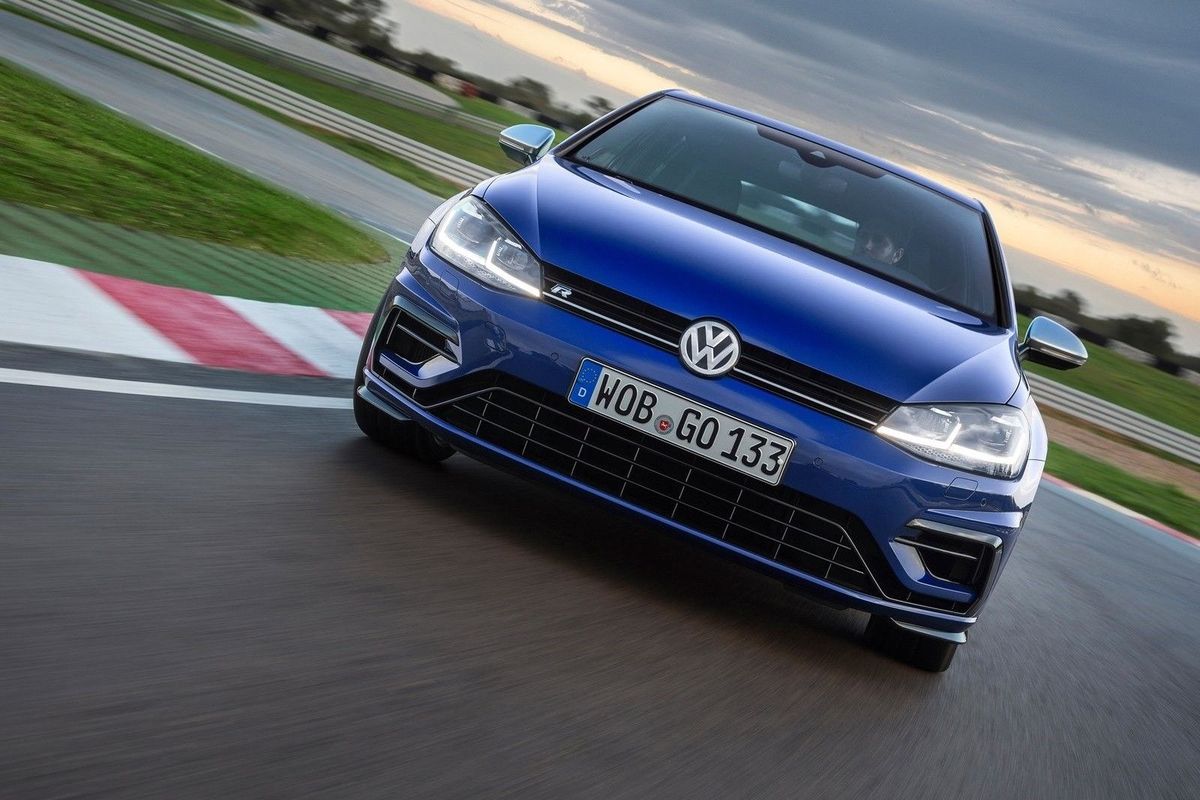
The new 2017 Volkswagen Golf R has arrived on our shores and it's a challenge to spot the differences between this new one and the outgoing version. Therefore, we have compiled a list of the contrasts between the Volkswagen Golf R version 7.0… and version 7.5.
Appearance
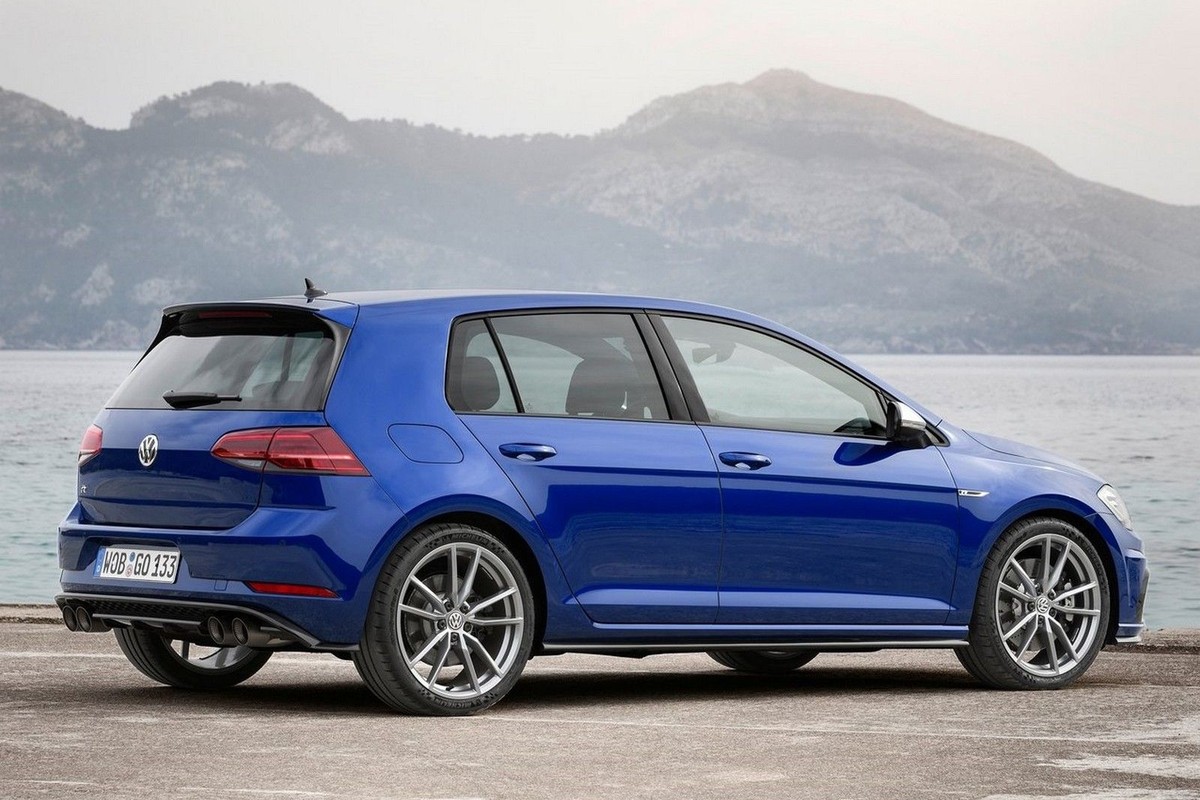
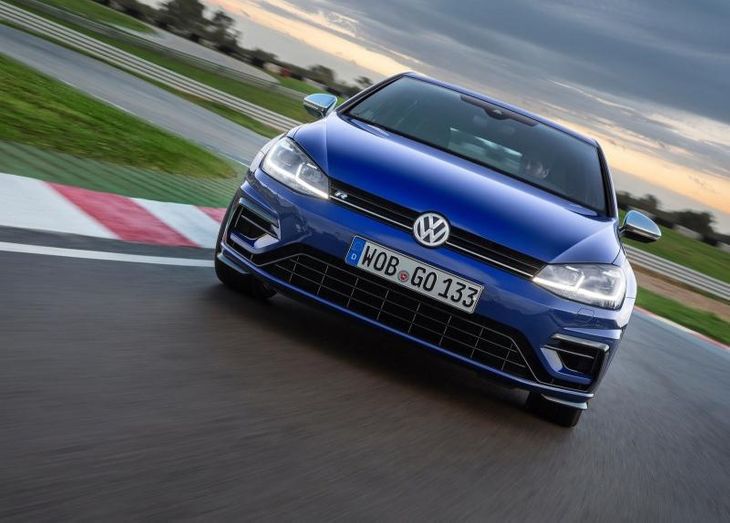
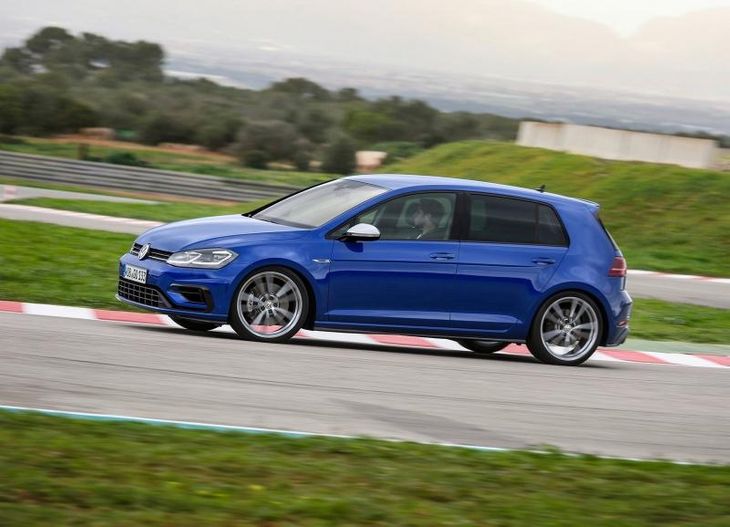
New Volkswagen Golf R (v7.5)
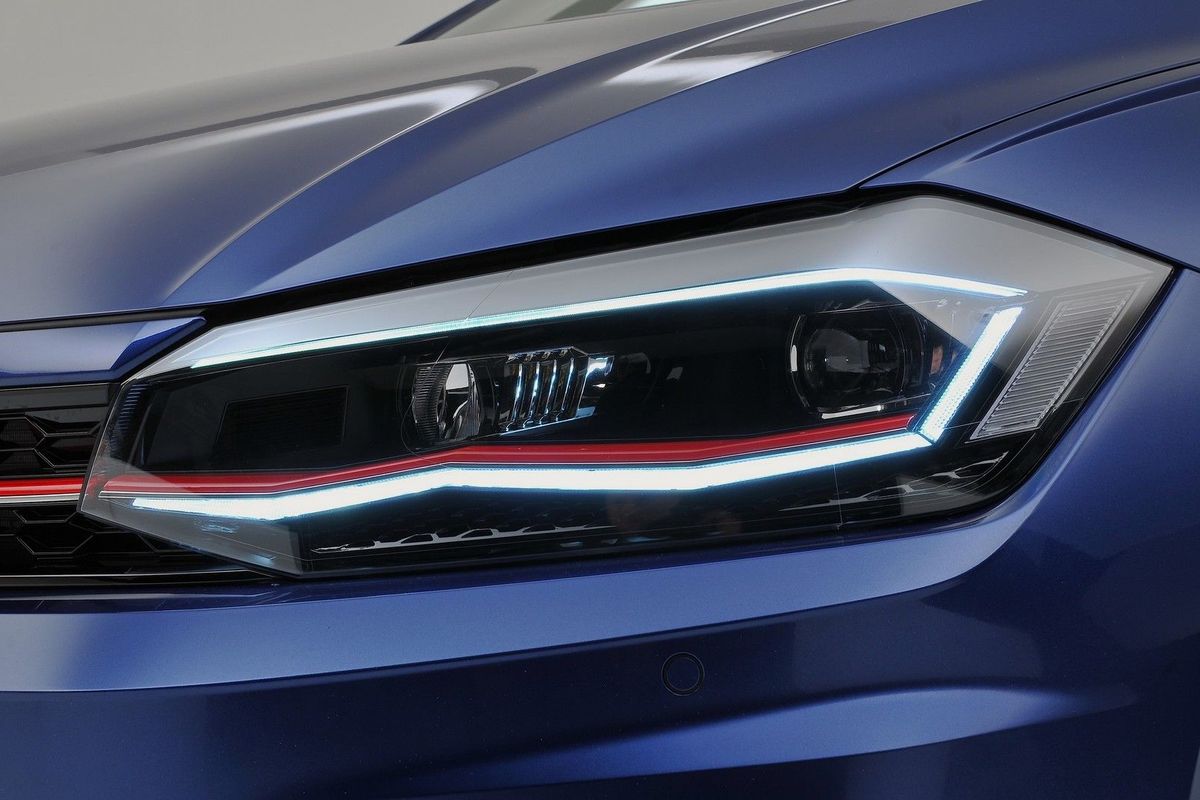
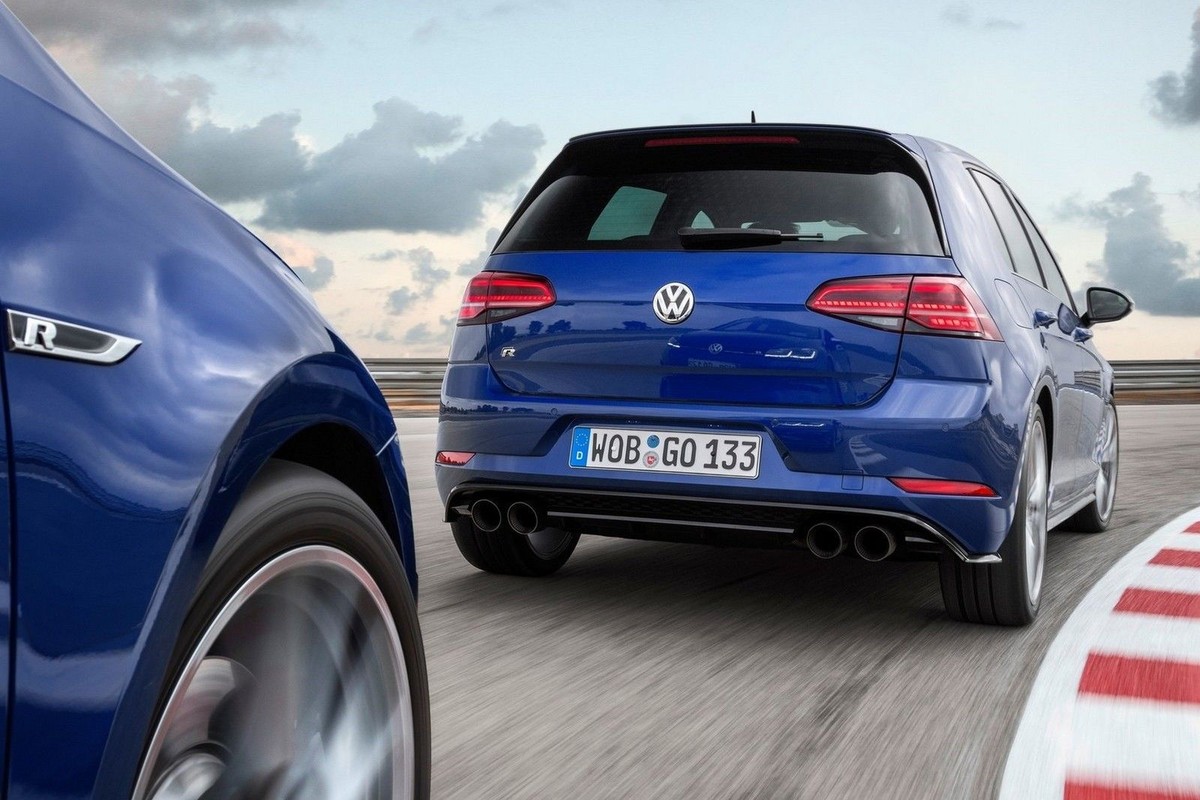
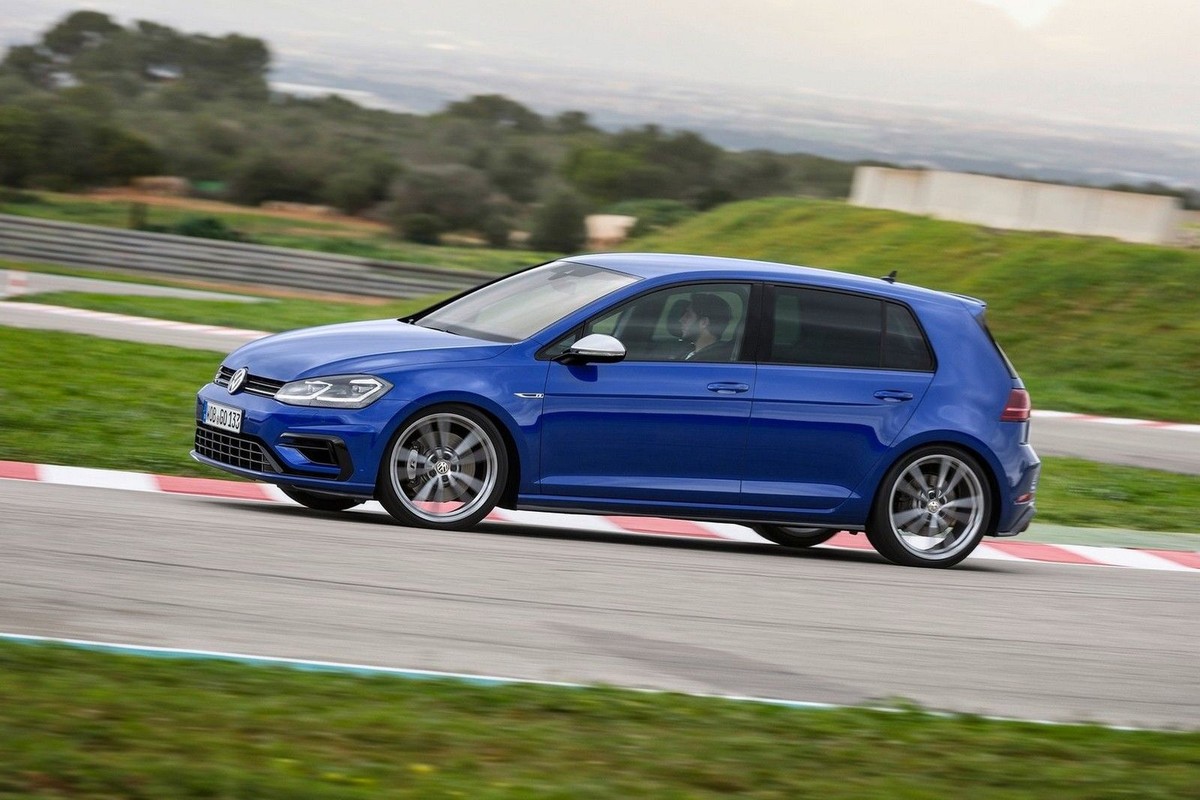
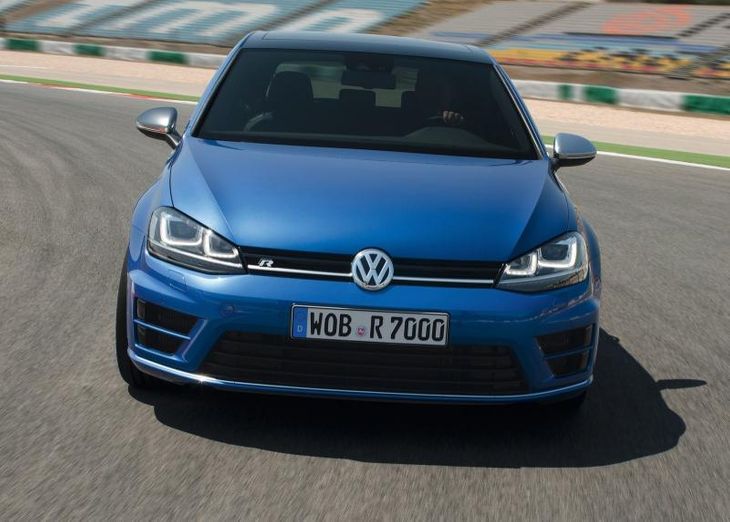
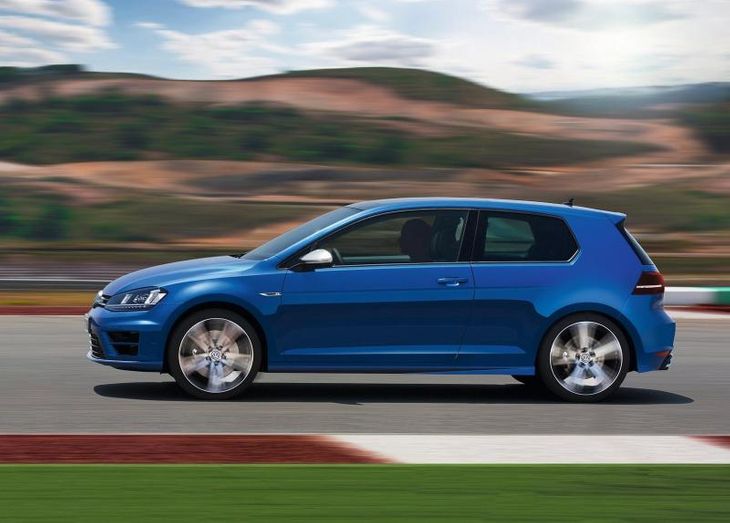
The design differences between the Volkswagen Golf R 7.0 and Golf R 7.5 are minimal, but, as you can see, there are distinct changes at the front. The headlights have been redesigned, there are new alloy-wheel designs and the exhausts have been slightly repositioned.
Previous Volkswagen Golf R (v7.0)
Powertrains
New Volkswagen Golf R 7.5: 213 kW and 380 Nm.
The new Volkswagen Golf R features an updated powertrain. The 2.0-litre 4-cylinder turbocharged motor now produces 213 kW and 380 Nm, with power going to all four wheels via an all-new fast-shifting 7-speed dual clutch transmission. With launch control activated, it'll blitz from 0 to 100 kph in a claimed 4.6 seconds. In comparison, the outgoing model could only muster 206 kW and 380 Nm. It had a 6-speed dual clutch transmission and could reportedly "only" manage the 0-100 kph sprint in a whisker over 5 seconds.
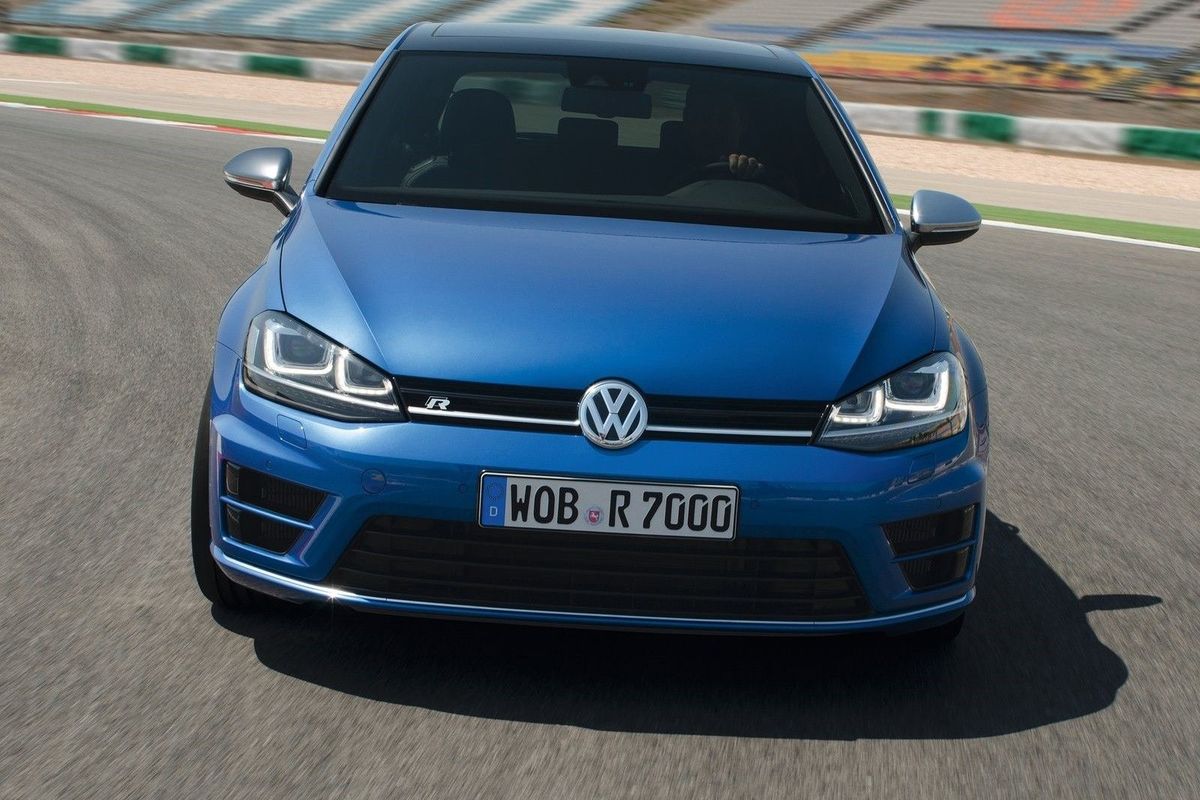
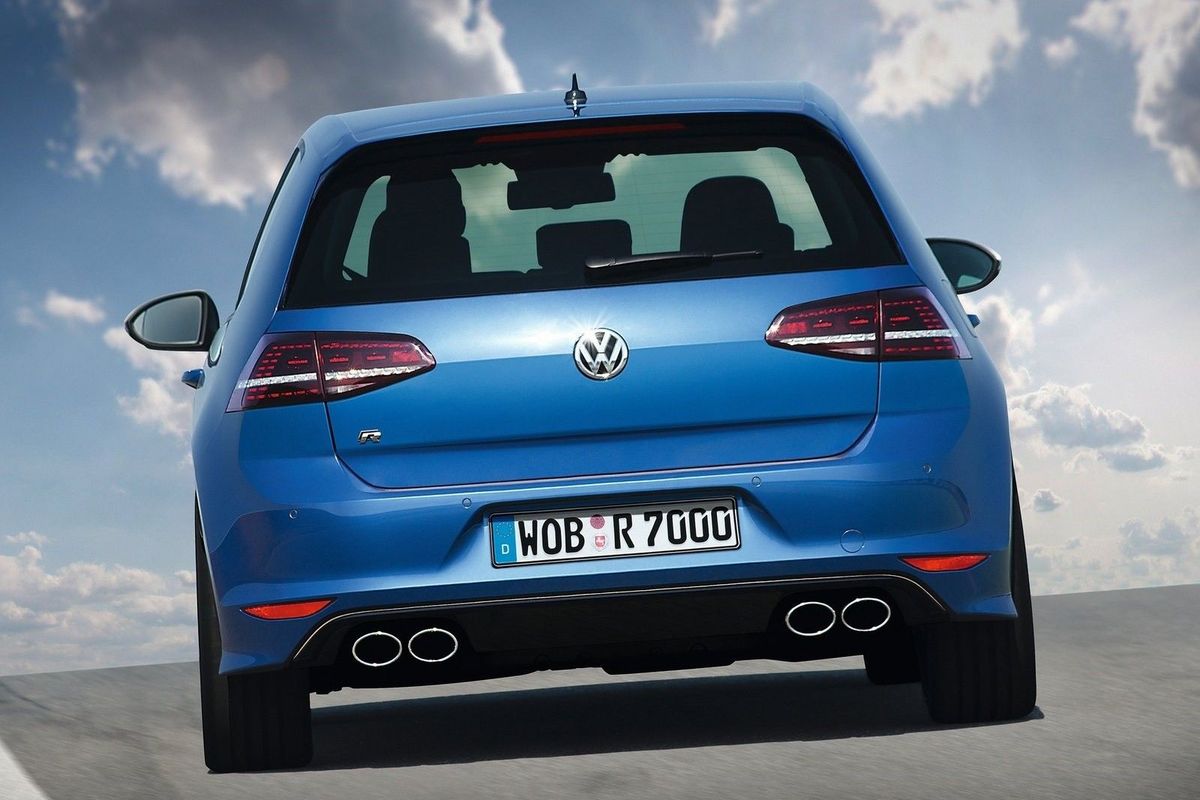
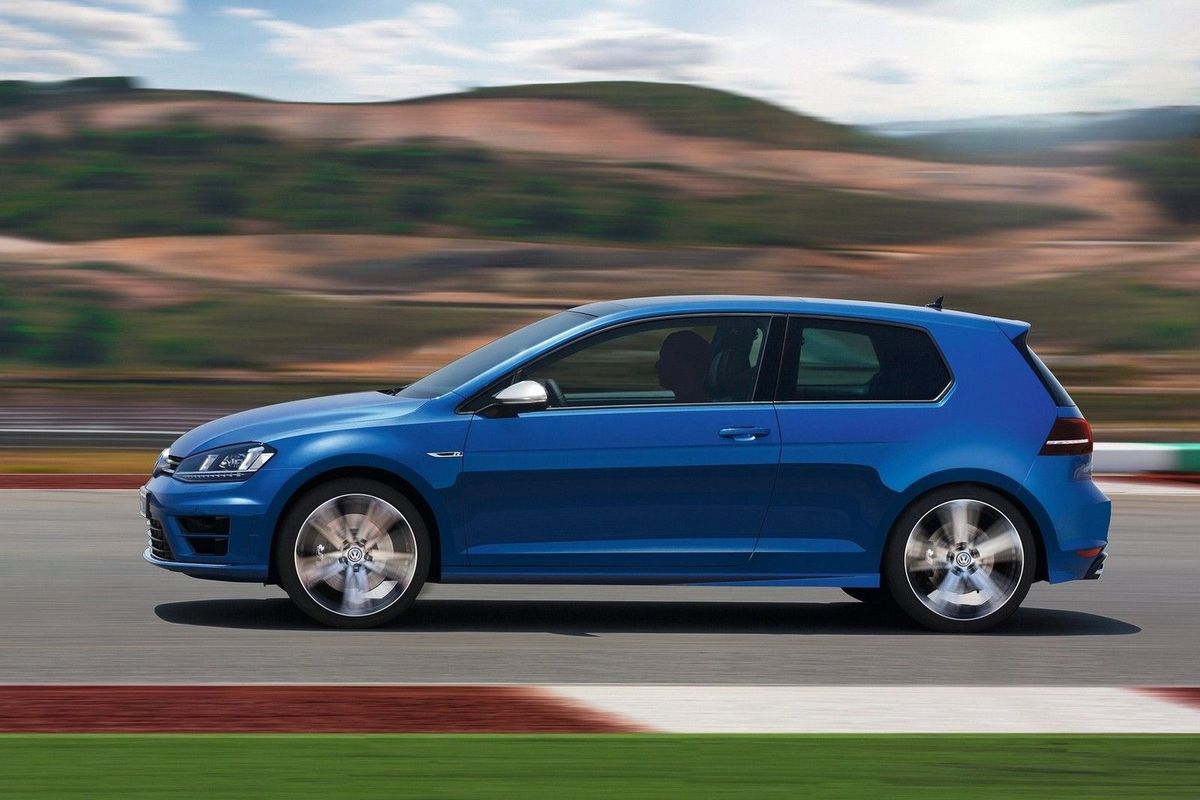
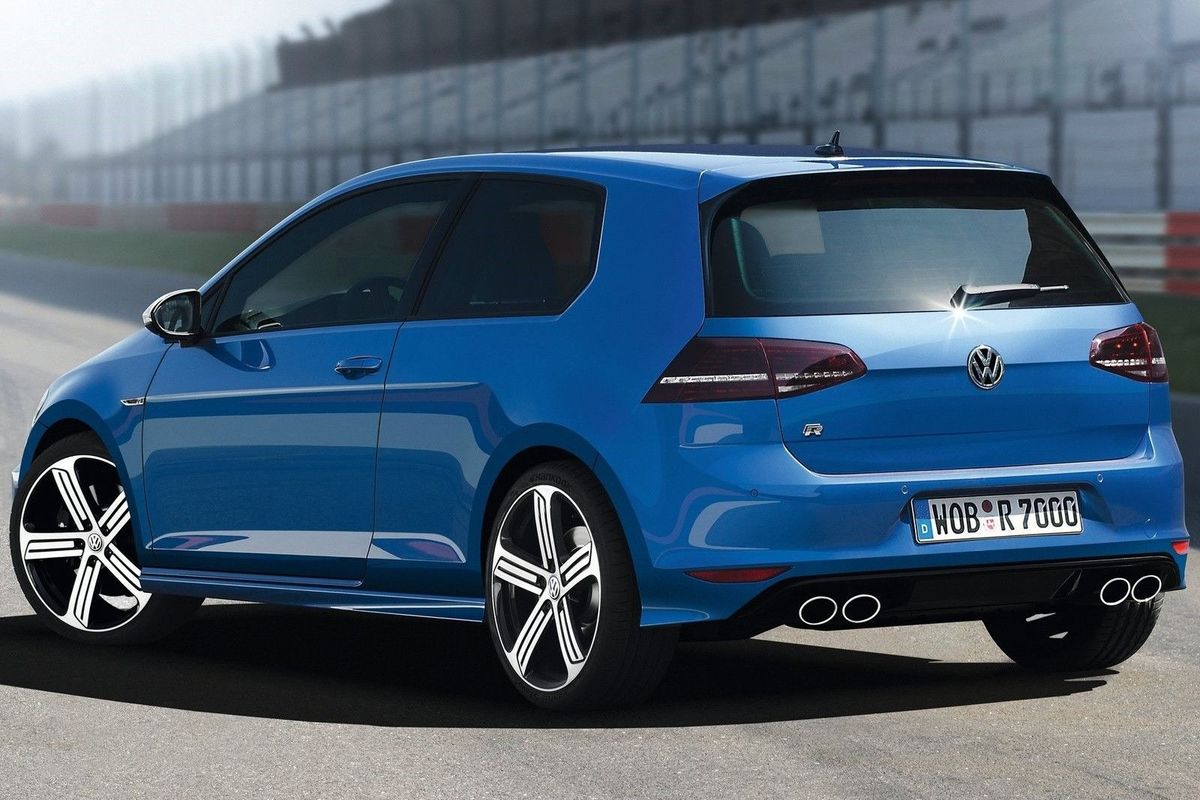
Previous Volkswagen Golf R 7.0: 206 kW and 380 Nm. Note: two-door model pictured and was not on sale in SA.
Interior
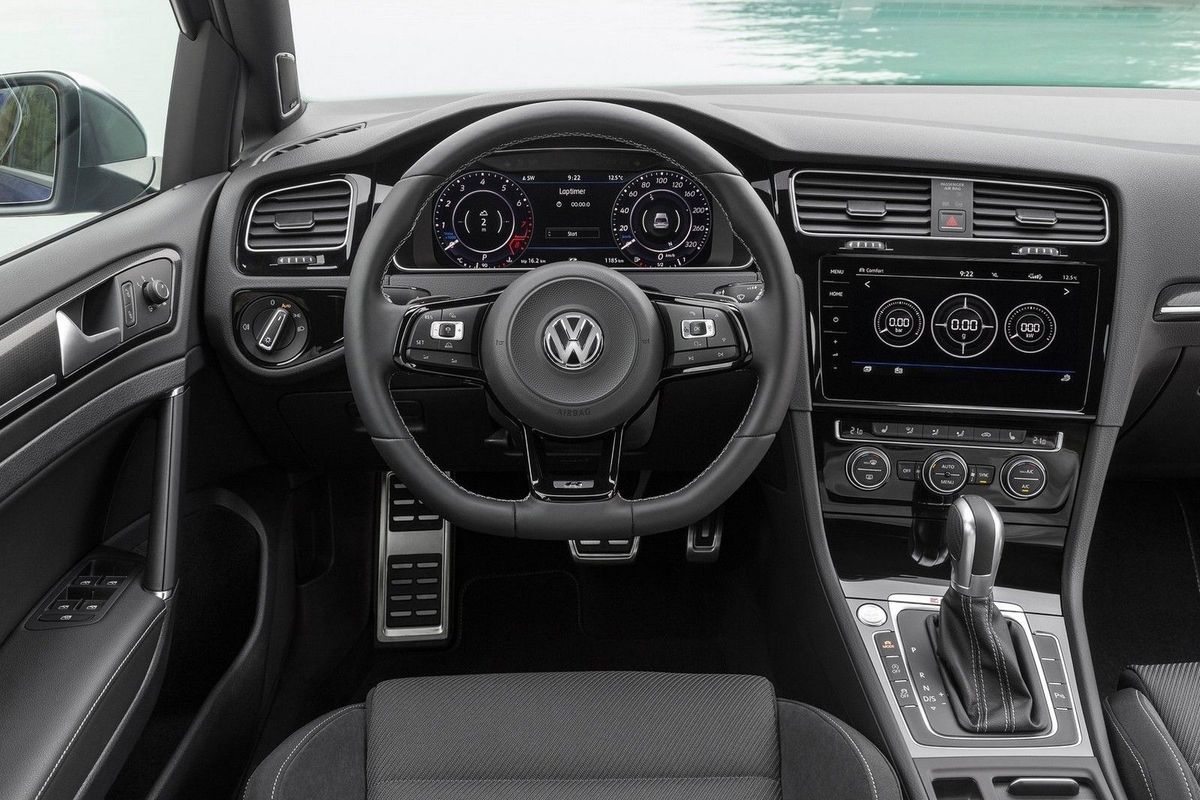
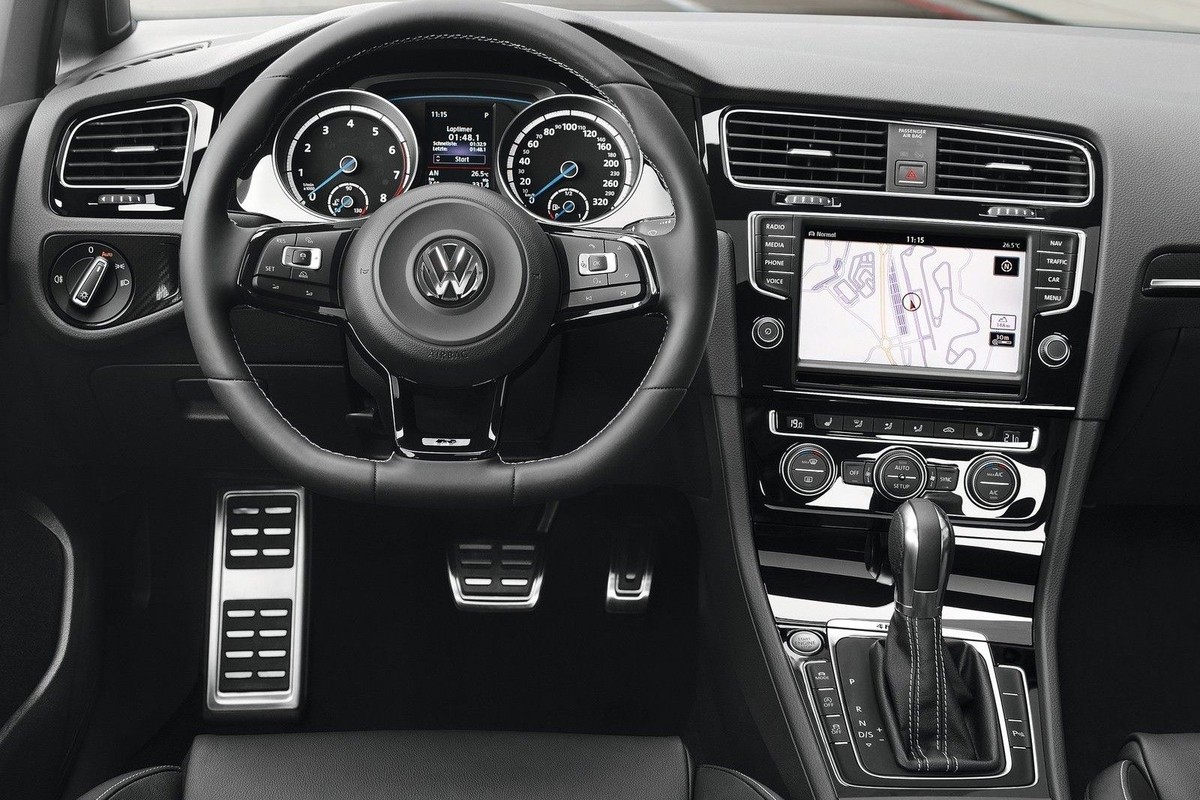
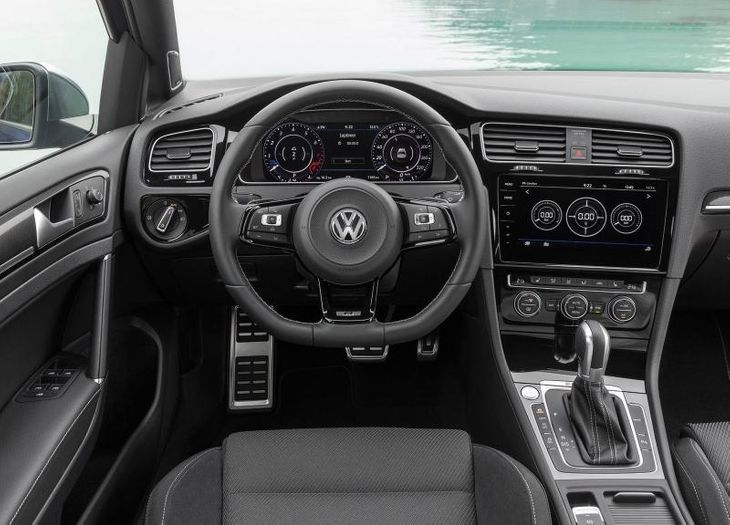
New Volkswagen Golf R 7.5: The cabin's big change is the Active Info Display digital dashboard, which is standard.
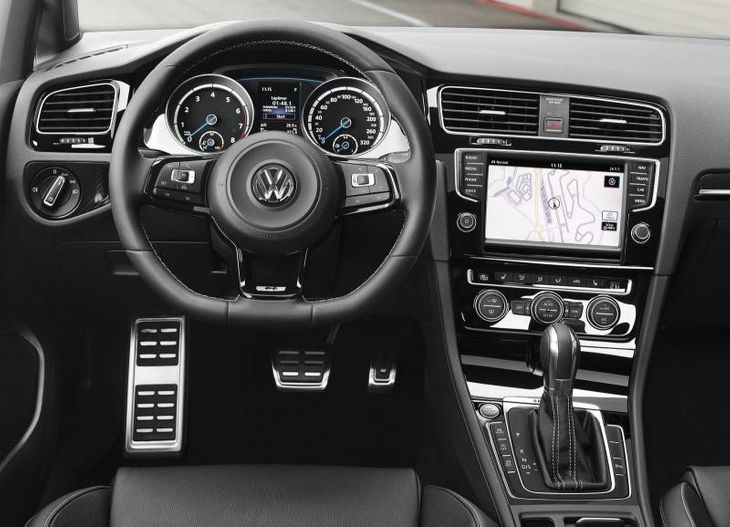
Previous Volkswagen Golf R 7.0: The dashboard of this vehicle only had dual analogue instrument dials.
Connectivity and technology
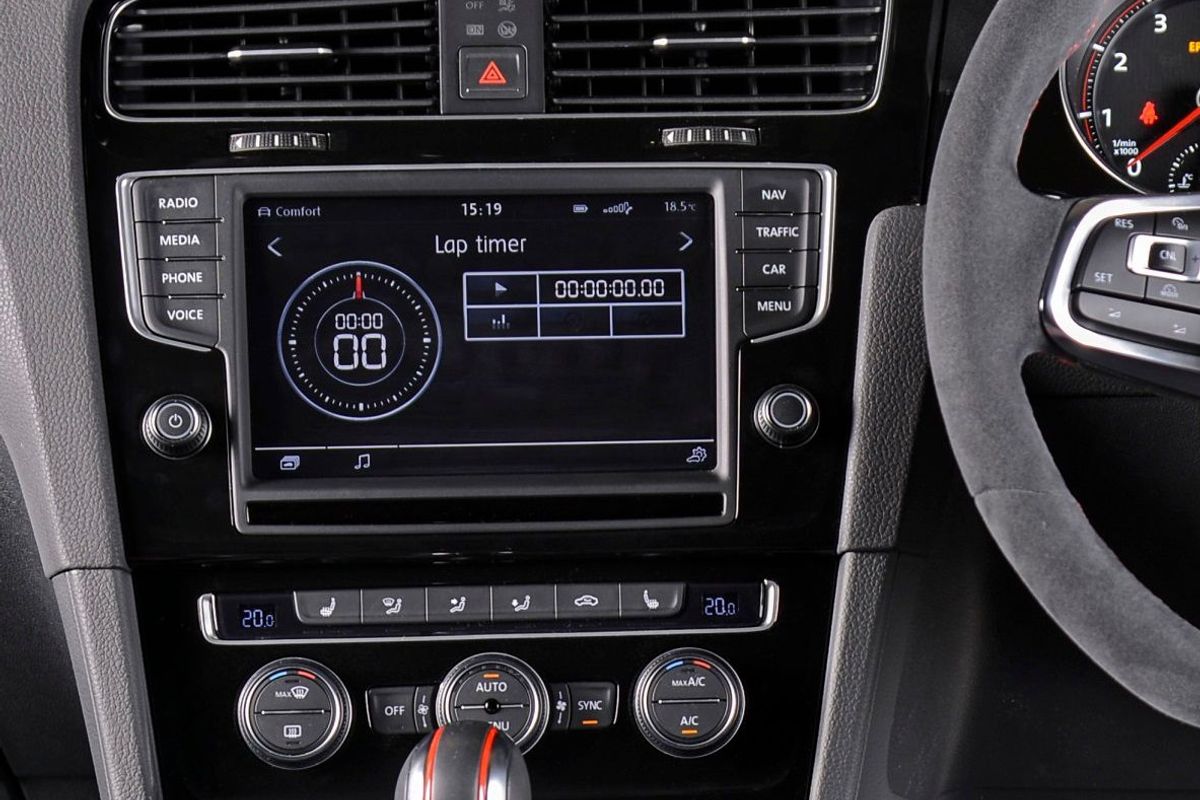
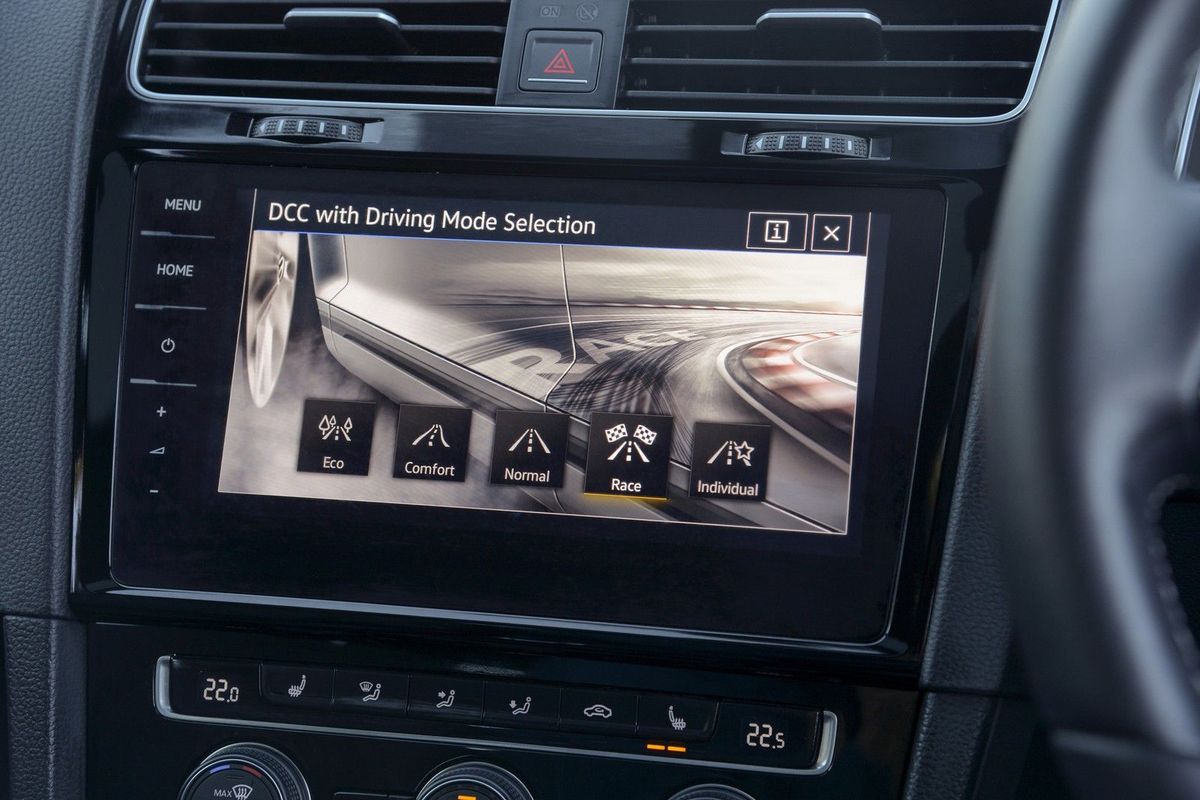
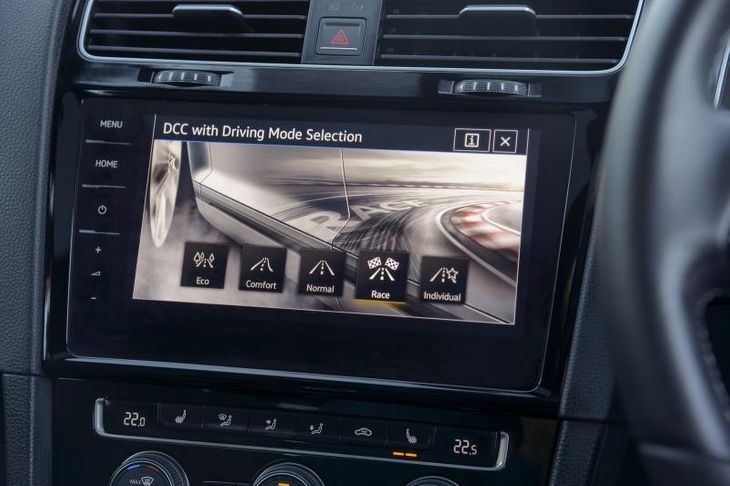
New Volkswagen Golf R 7.5: This 9.5-inch touchscreen boasts some excellent graphics, intuitive menus and the unit fits beautifully into the fascia.
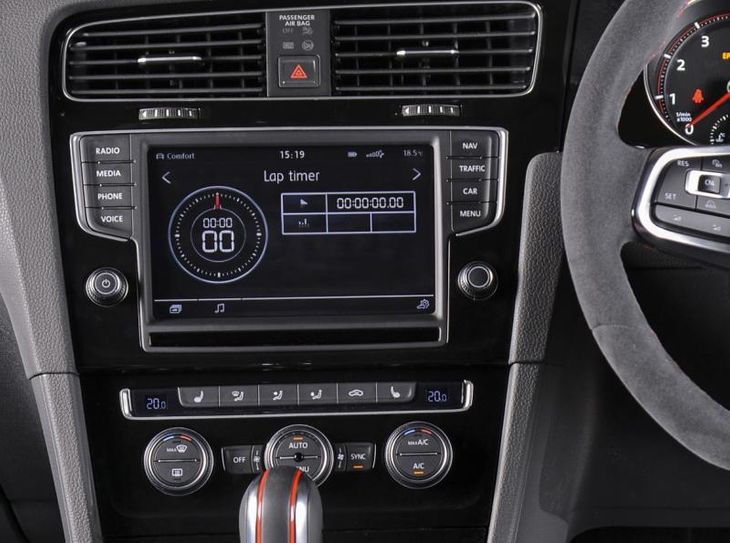
Previous Volkswagen Golf R 7.0: This infotainment screen was crisp and easy to use, but its easily beaten by the newer system.
Summary
The majority of social media reactions to the latest Volkswagen Golf R suggest many users were left frustrated by the lack of major visual differences between the Golf R 7.0 and 7.5. To be fair, however, the majority of the changes have occurred in the newcomer's cabin and under its sheet metal. The 7.5's higher engine outputs and new (7-speed) dual clutch transmission ensure that the new car will be faster than its predecessor… and that, for throngs of Golf R aficionados, should be more than enough to get excited about!