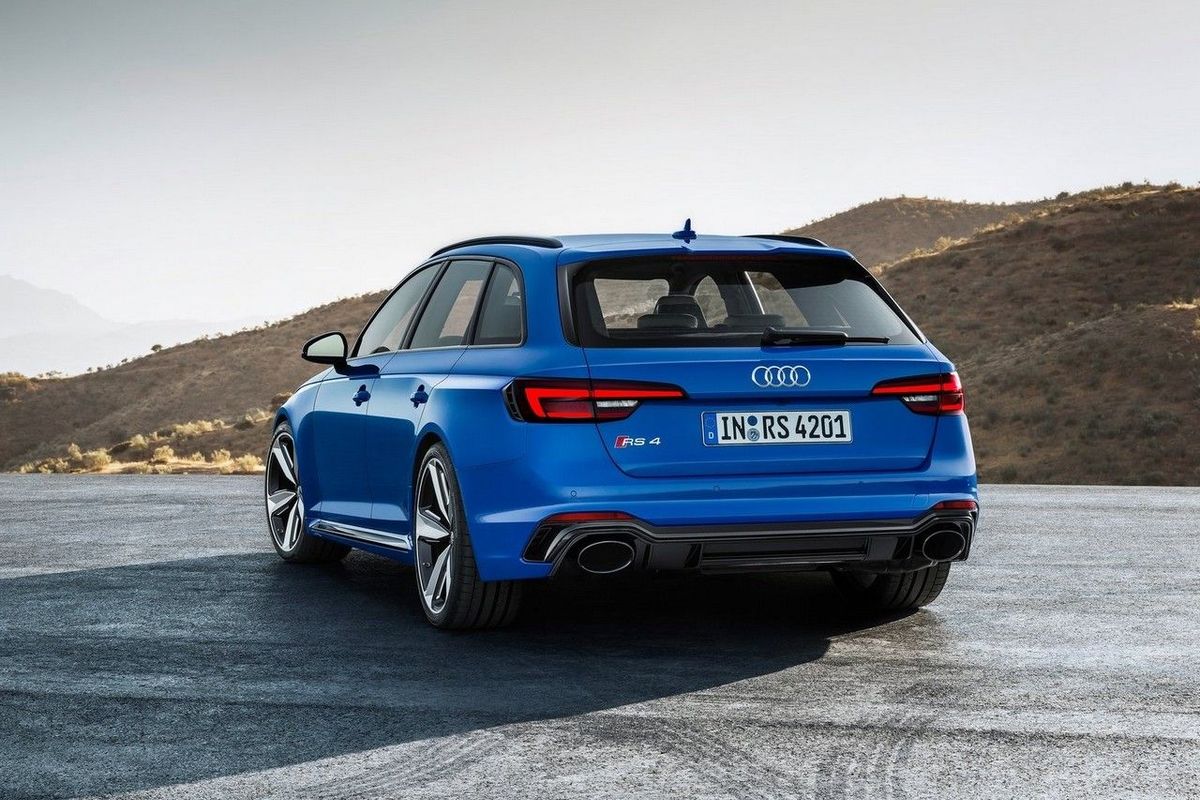
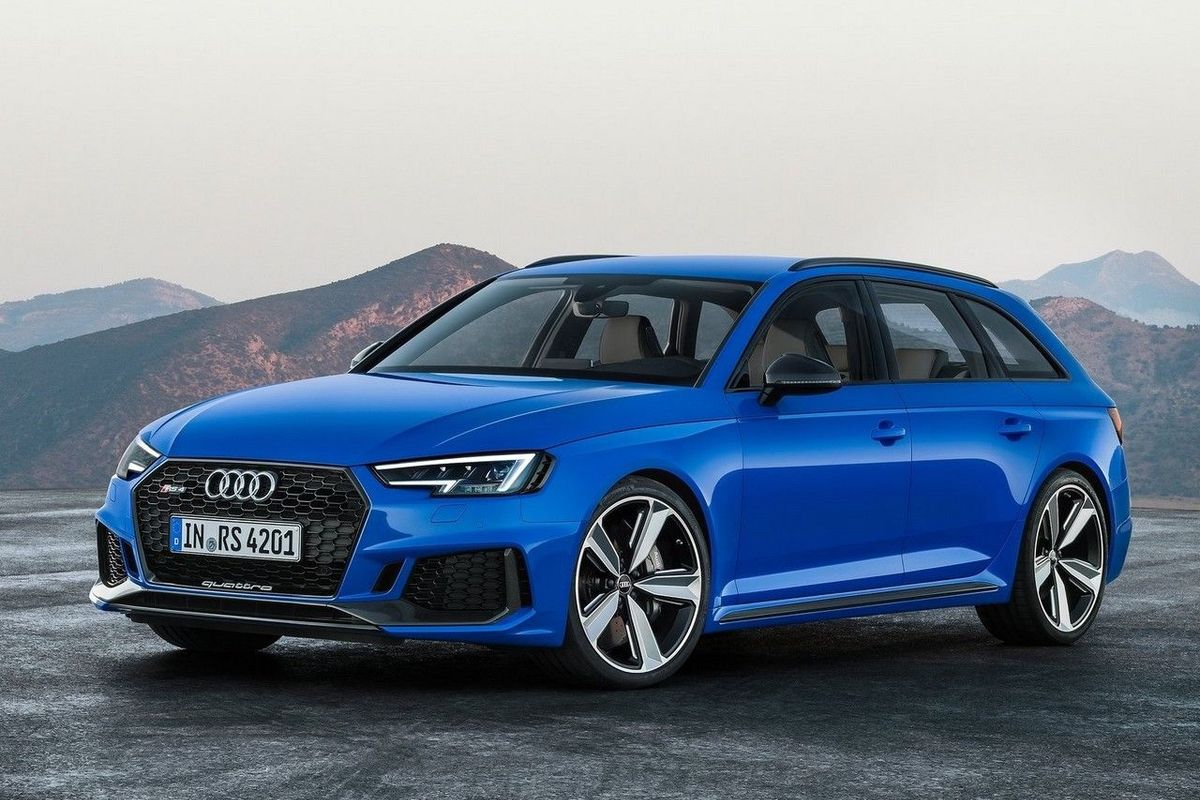
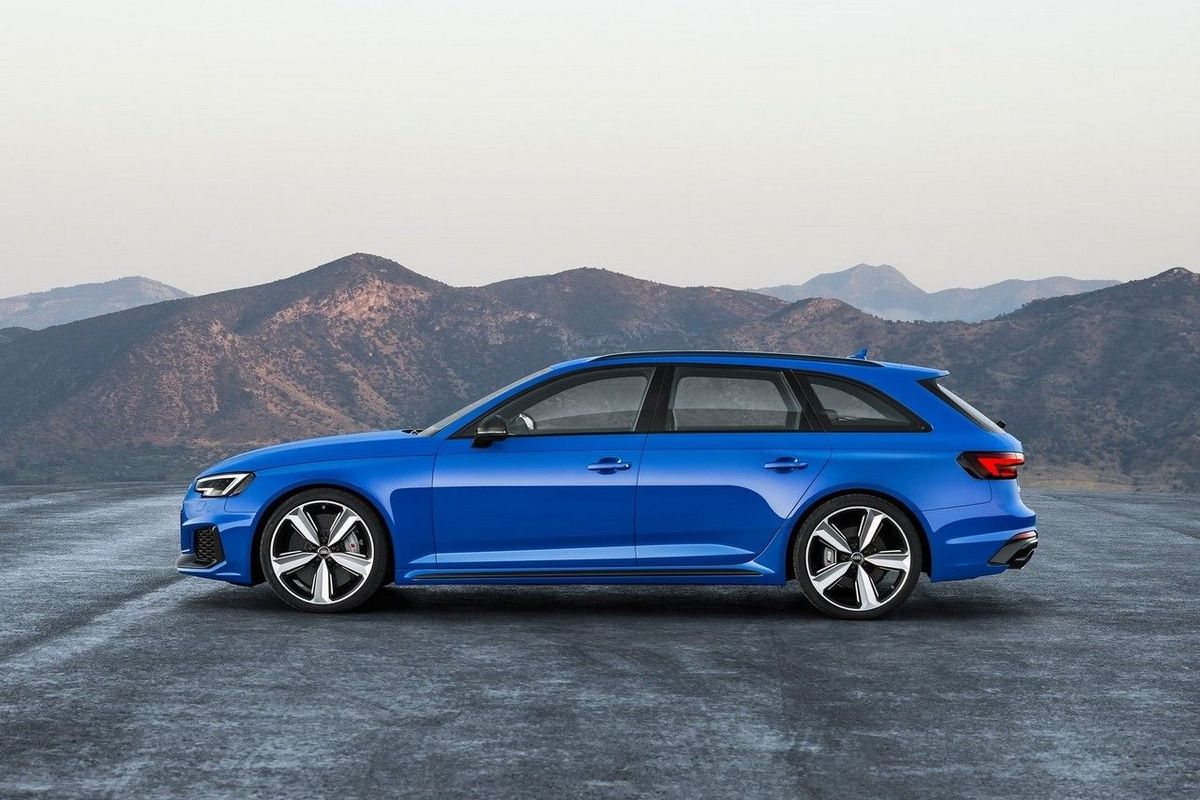
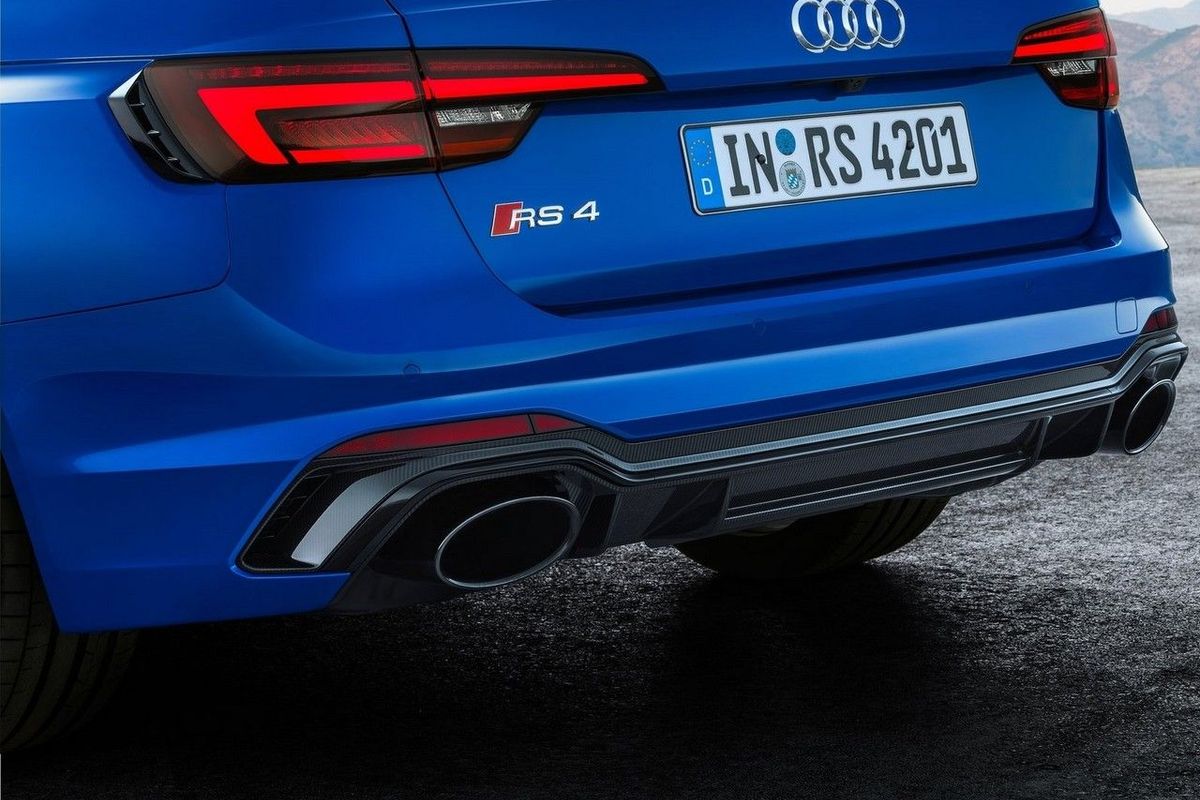
Audi unveiled the all-new RS4 Avant at the 2017 Frankfurt Motor Show and although Audi South Africa says "the model is still under consideration" for the local market, we wouldn't bet against the thunder 'wagon being introduced here in 2018. Now powered by a twin-turbocharged V6 – instead of a throbbing V8 – the RS4 is primed to battle BMW's M3/M4 and the Mercedes-AMG C63…
Downsizing has claimed yet another victim. The lovely V8 in the previous generation Audi RS4 was a marvel both in terms of performance and aural satisfaction, and now it's gone. However, the new Audi RS4 Avant comes to market with a new motor and we're very interested… It's the same engine in the new Audi RS5 and the numbers make for interesting prospects. It's a 2.9 TFSI engine with 331 kW and 600 Nm, with power going to all four wheels through an 8-speed Tiptronic transmission.
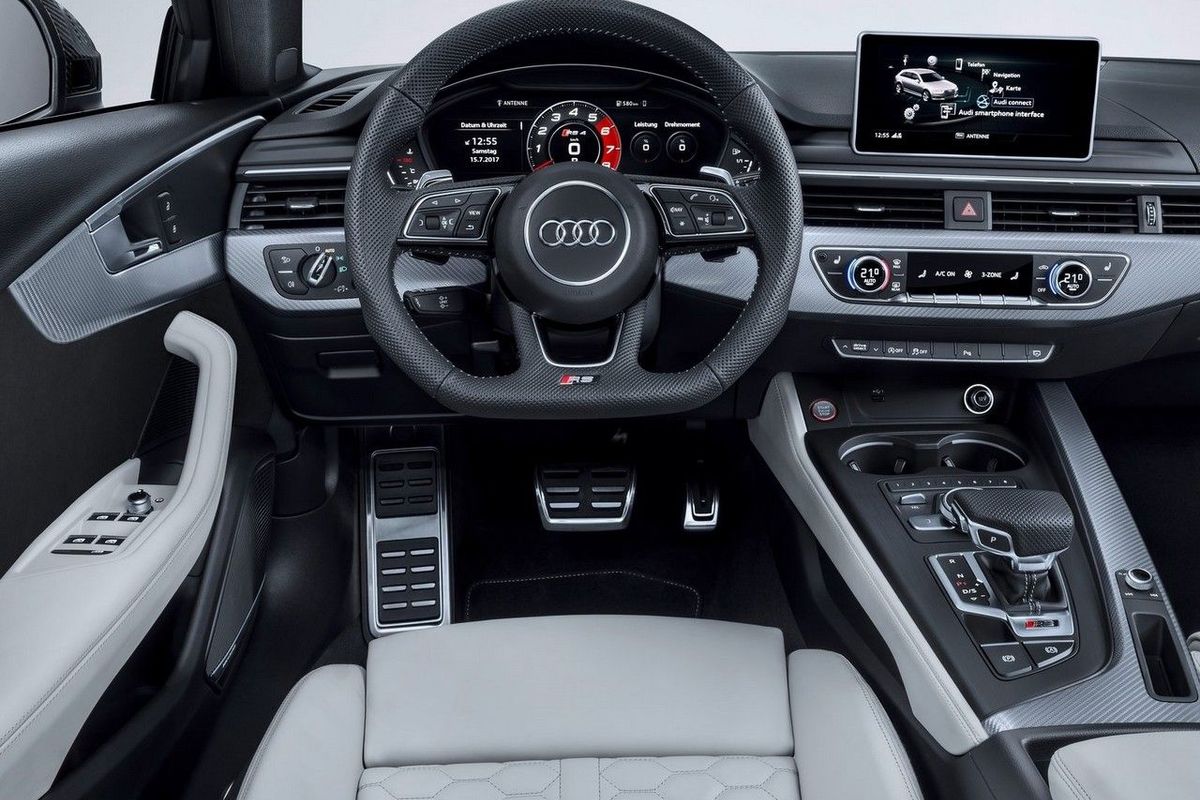
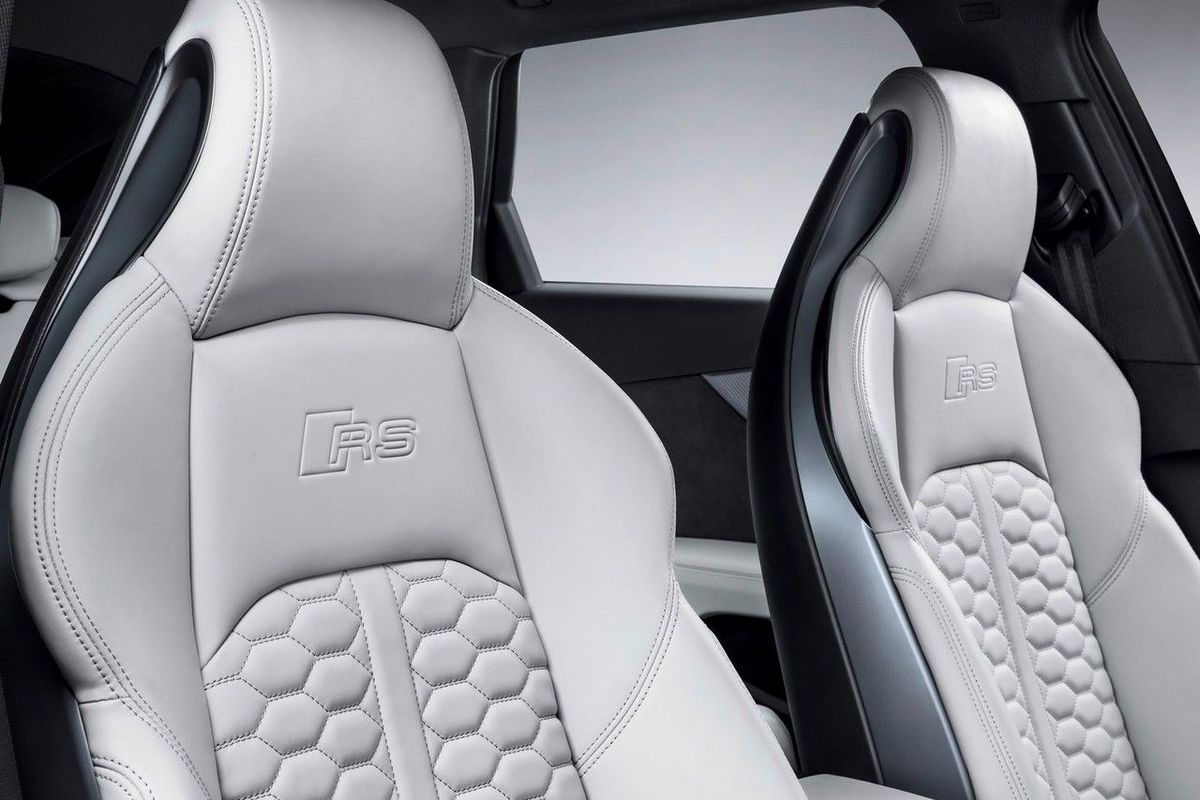
Audi claims that the new RS4 Avant is capable of sprinting from zero to 100 kph in just 4.1 seconds and it'll go onto a limited top speed of 250 kph. If you tick the optional RS dynamic package, the top speed goes up to 280 kph. The big benefits of this V6 twin-turbocharged engine are that it'll be a bit more responsive and that it is more fuel efficient, with Audi Sport claiming a fuel economy figure of 8.8 L/100 km. Inside, it's all hardcore Audi Sport fittings here, with a pretty flat-bottomed steering wheel and extensive use of carbon and aluminium inserts.
"The Audi RS4 Avant is our RS icon with an incomparable history," commented Stephan Winkelmann, Managing Director of Audi Sport GmbH. "In common with all our RS models, it blends immense power output with superlative everyday utility. In China, the Audi RS4 will provide fresh impetus for growth as the only high-performance Avant in its segment."
In terms of the international market, the new Audi RS4 Avant will reach its first customers at the start of 2018 and in South Africa… hopefully not too long thereafter.
Land Rover is reportedly planning on introducing a new vehicle range that will be called "Road Rover", with the first model due to be shown in late 2019.
If rumours ring true, then we may very well see the introduction of the new Land Rover Road Rover come 2019/2020.
Reports indicate that the Road Rover will be an electric crossover and unlike other Land Rover products, it will be more road bias with minimal offroad capability. With a focus on efficient electric mobility, you can expect the Road Rover to adopt sleek proportions to maximise range. After the initial launch of the first Road Rover model, Land Rover will likely introduce other electric Road Rover models as part of an expanding electric vehicle lineup within Land Rover.
The Road Rover will reportedly be built on the same platform as the next-generation Jaguar XJ which means it should be larger than the recently revealed Jaguar I-Pace EV and will likely feature 2 electric motors that would allow for an all-wheel-drive configuration. The Road Rover’s range may be in upwards of 480 km.
The first Road Rover model might make an appearance at the Los Angeles Motor Show in 2019 before going on sale in 2020. Further details are scarce at this point but we will keep you informed as soon as more information becomes available.
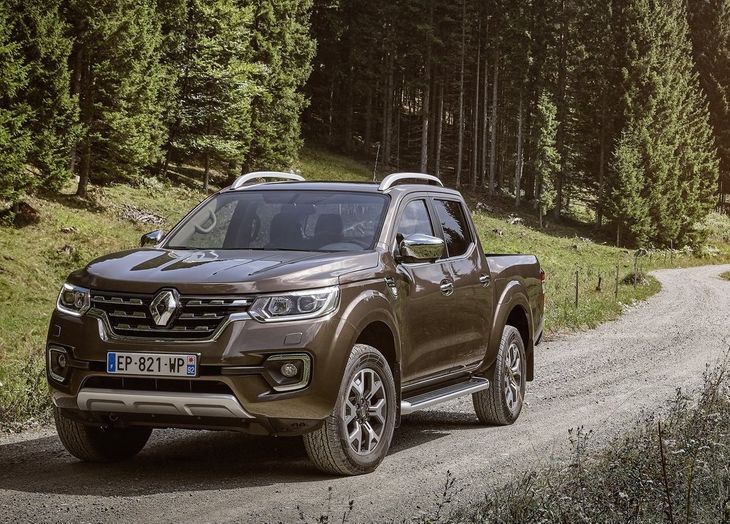
The new Renault Alaskan is coming to South Africa in 2018 and when it arrives it will have to face-off against some stiff competition in the local leisure double cab segment. Take a look at 5 double-cab bakkies that the Renault Alaskan will have to beat…
We have returned from Slovenia where we drove the new Renault Alaskan for the first time. Do yourself a favour and read our Alaskan International First Drive report! We came away quite impressed with the Alaskan, but in South Africa, any new leisure double-cab faces a tough battle against established offerings. Convincing buyers to consider new product over tried-and-tested offerings is perhaps the most difficult challenge for any new bakkie joining the local bakkie fray and with double-cab bakkie prices soaring, the gauntlet is well and truly laid down for the Alaskan.
The Renault Alaskan will join a competitive segment against formidable rivals. Will it succeed?
The Alaskan is powered by a Renault-tuned 2.3-litre twin-turbodiesel engine offering 140 kW and 450 Nm of torque. A 7-speed automatic or 6-speed manual will likely be offered in South Africa and there is a possibility of Renault introducing a 120 kW / 403 Nm version of the same engine too, albeit with only one turbocharger. Pricing and specification is yet to be determined.
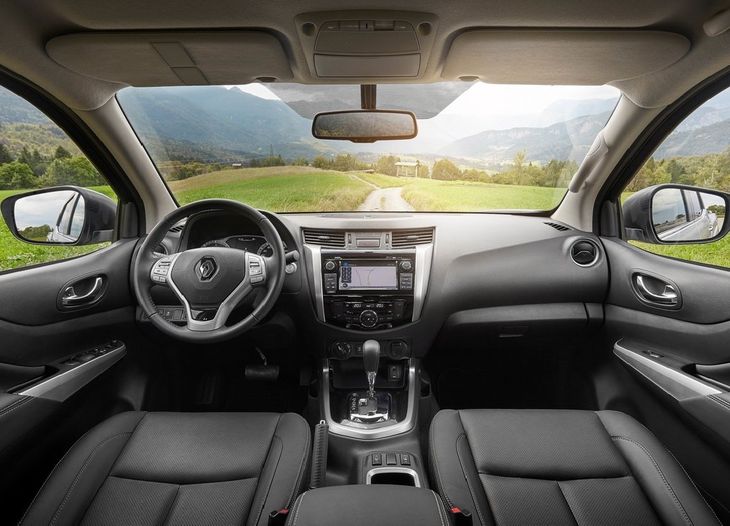
The Alaskan's interior is not only robust and comfortable, it's also well-equipped with useful features.
Here are 5 double-cab bakkies that the Renault Alaskan will have to beat in South Africa when it arrives next year.
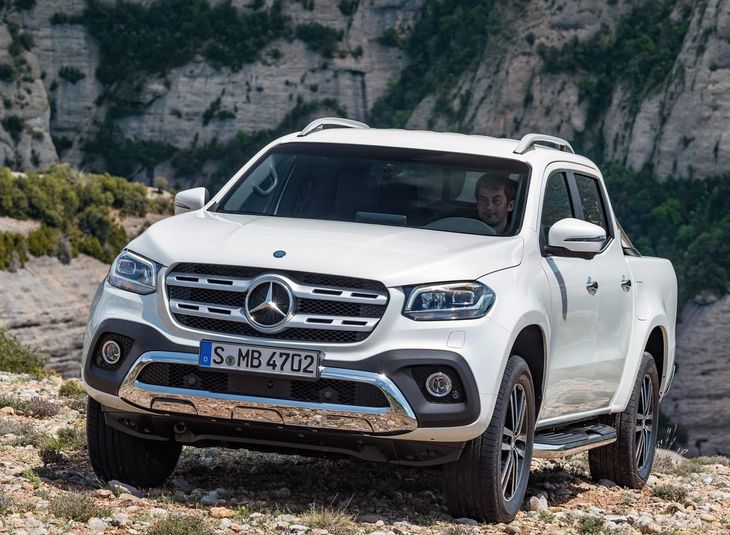
Mercedes-Benz X-Class
The X-Class will bring higher levels of luxury to the bakkie segment, but will buyers be willing to fork out for it? Time will tell.
The production version of the new Mercedes-Benz X-Class was unveiled in Cape Town earlier this year and it already has, to some extent, shattered current perceptions of what a leisure bakkie should and can offer. The X-Class is based on the new Nissan Navara and forthcoming Renault Alaskan and it is expected to arrive in South Africa in 2018.
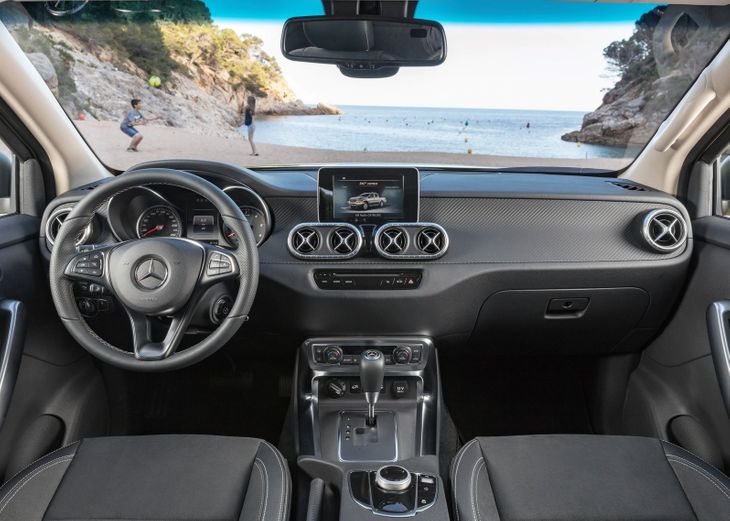
Combining an appealing exterior design with a modern and luxurious interior, the X-Class is perhaps the best example of what the future holds for the leisure double-cab bakkie. Plush surfaces, a comprehensive infotainment system and a range of driver assistance aids, similar to those found in current Mercedes-Benz models, will feature in the new X-Class.
The X-Class interior has distinct Merc styling cues and features found on other products in the brand's portfolio.
The X-Class will be offered with 3 model variants namely Pure, Progressive and Power and will initially be powered by a 2.3-litre turbodiesel engine with 2 output choices on offer. The X220d will generate 120 kW, while the bi-turbo X250d will offer up 140 kW. Furthermore, a 190 kW / 550 Nm V6 turbodiesel engine is expected to join the range later in 2018 in the form of the X350d 4Matic.A 6-speed manual transmission will be standard while a 6-speed automatic will be offered on request for the X250d and X350d 4Matic.
The X-Class is expected to be ambitiously priced and will sit in the premium end of the double-cab bakkie segment. The X-Class, much like the Alaskan, will have an uphill battle trying to win buyers from other estabished offerings, but perhaps the allure of a 3-pointed star on the nose will have more appeal than a French diamond.
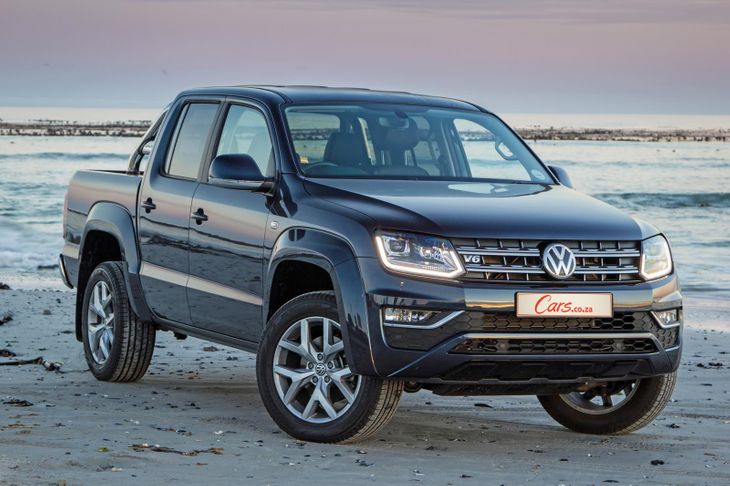
Tha Amarok V6 is currently leading in the premium stakes and it's the most powerful double-cab currently available.
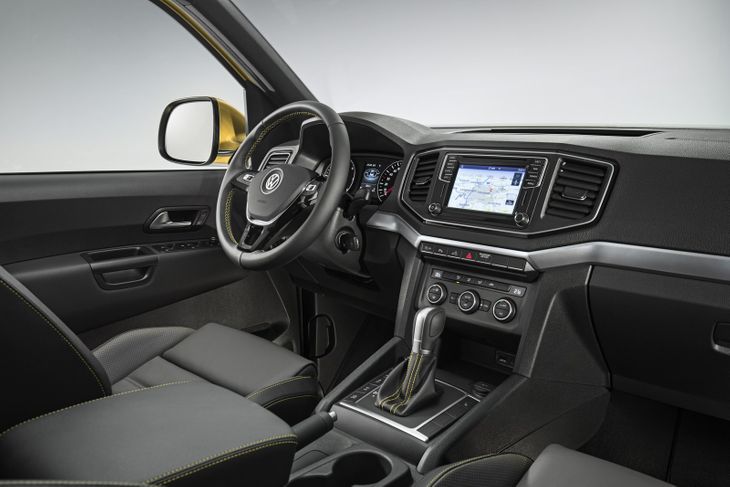
The facelifted Volkswagen Amarok arrived in South Africa earlier this year and apart from its handsomely revised looks, it too features a revised and modern interior closely resembling that of the Touareg SUV, which should resonate well with lifestyle-orientated buyers. Higher-spec versions are fitted with a larger touchscreen infotainment system equipped with the latest satnav software. The Amarok’s interior boasts excellent build quality and comfort not typically associated with a bakkie and it’s new Servotronic power steering system has also improved on-road drivability, making it feel and drive more like an SUV.
A modern, SUV-like interior sets the Amarok apart from most offerings in this segment.
In terms of engines, Volkswagen’s 3.0-litre V6 turbodiesel engine is a highlight in the range and offers 165 kW and 550 Nm of torque with an overboost function that temporarily bumps outputs up to 180 kW and 580 Nm of torque. The familiar 2.0-litre turbodiesel and 2.0-litre bi-turbodiesel engines are on offer too. The Volkswagen Amarok is arguably the most premium double-cab bakkie currently on offer in South Africa. Watch our video review below!
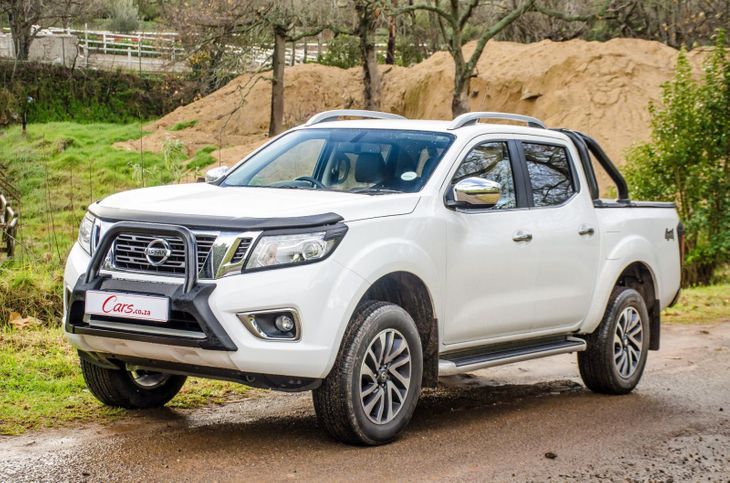
The new Navara is a much-improved product and like the Alaskan, it's 5-link coil suspension differentiates it from the pack.
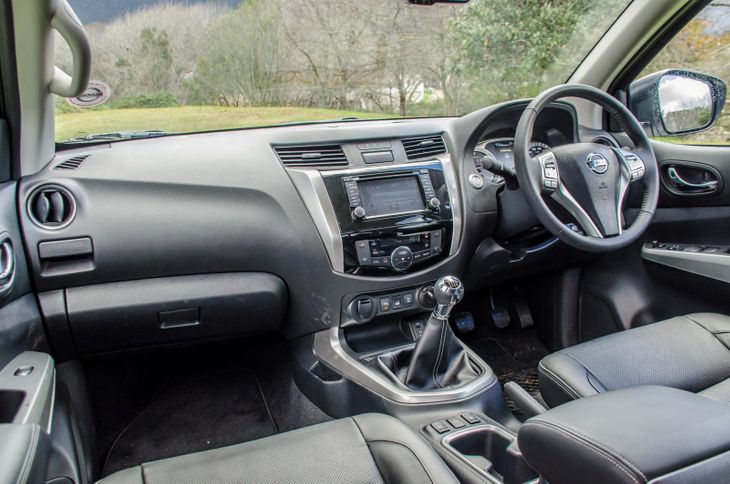
The new Nissan Navara arrived in South Africa in March 2017 with new exterior styling as well as a significantly improved interior design, replete with a touchscreen infotainment system, satnav and a surround view monitor. Perhaps more importantly, the new Navara double cab features a new, independent 5-link coil suspension system that has improved ride quality substantially over its predecessor.
The Alaskan and Navara share a similar interior design, but the Alaskan's infotainment system is better.
The Navara is powered by a new 2.3-litre twin-turbodiesel engine offering 140 kW and 450 Nm of torque. Buyers have a choice of either a 6-speed manual or 7-speed automatic transmission. In the Alaskan, however, engine refinement is better than the Navara thanks to Renault's tuning skills.
The top-spec Navara is generously-equipped and competitively priced against its rivals and even beats them in some respects. The option to equip the Navara with electrically-operated leather seats with a heating function is a real boon in this segment too.
As mentioned earlier, both the Renault Alaskan and Mercedes-Benz X-Class will be built on the Navara’s platform and will therefore inherit many of the Navara’s underpinnings. Nissan’s extensive experience in the double-cab market will no doubt influence the execution of these products, for better or for worse.
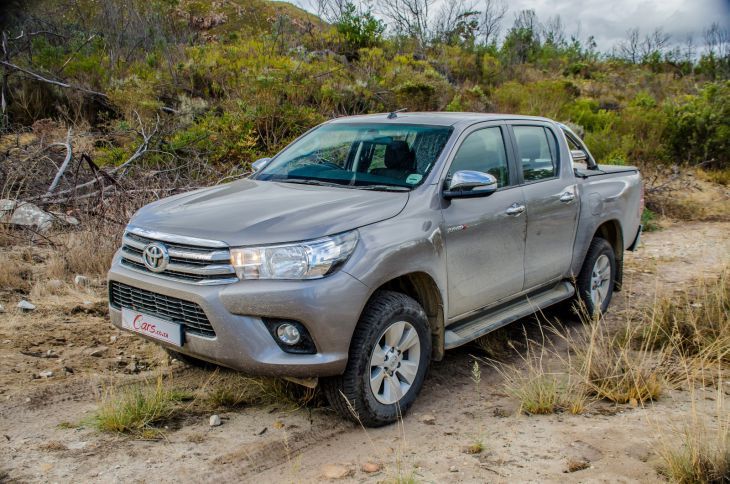
Perhaps not the prettiest bakkie in this company, but the Hilux's capability is unquestionable.
The latest generation of Toyota Hilux has been a runaway success and continues to top the sales charts on a monthly basis. The Hilux 2.8 GD-6 4×4 automatic or manual with 130 kW and 450 Nm will be a formidable rival to the Renault Alaskan. The Hilux offers a refined, smooth ride on tar and it’s equally proficient on gravel.
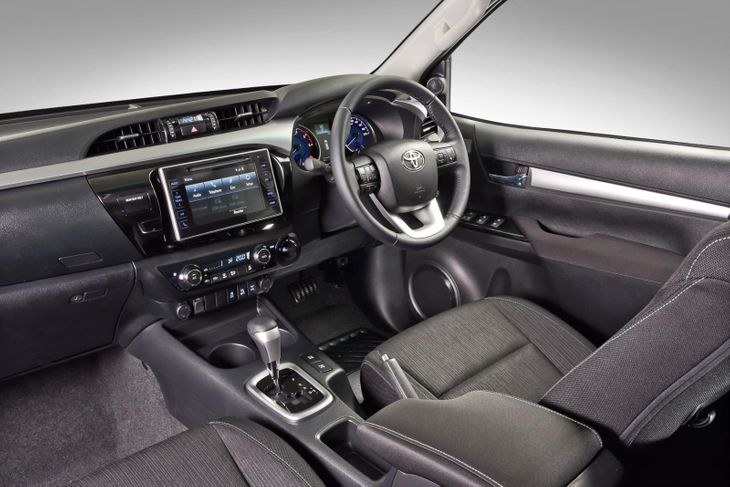
Its cabin is well-stocked with features and the neat instrumentation with its Lexus-like TFT multi-info driver display elevates the Hilux to a more "premium" position. There's also a "floating" tablet-like touchscreen interface for the infotainment system and the general fit and finish of the cabin is right up there with the best of them.
The Hilux offers comfort and modern features with solid interior build quality.
In terms of capability, the Hilux is one of the most versatile offroad bakkies on the market and it’s a major reason why it has sold so well in our market.
The Alaskan is unlikely to outsell its Hilux rival, but it might convince new bakkie buyers who would otherwise simply walk into a Toyota dealership to purchase a Hilux.
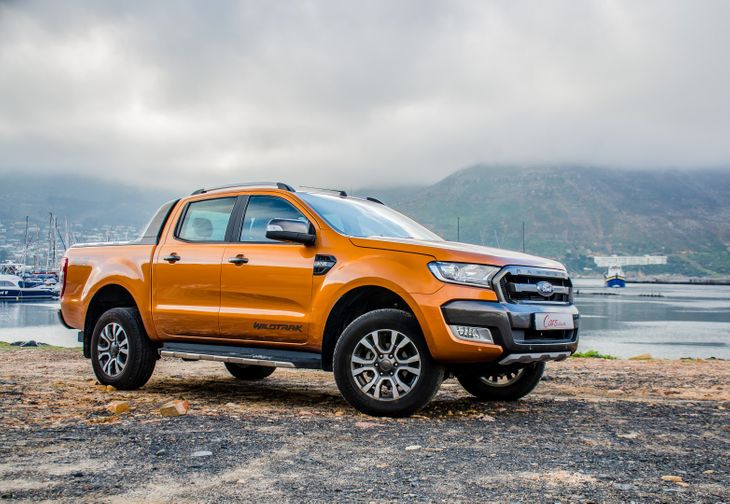
The Ranger Wildtrak is a stylish double-cab bakkie, but so is the Alaskan…
The Ford Ranger, like the Hilux, is an immensely popular vehicle that sells consistently well on the local market. The Ranger Wildtrak in particular has loads of appeal in terms of styling and boasts some impressive in-car technology such as Ford’s SYNC3 infotainment system with integrated navigation. It's arguably the best-looking bakkie on sale in South Africa and the Ranger/Hilux duo represent tough competition for the Renault Alaskan.
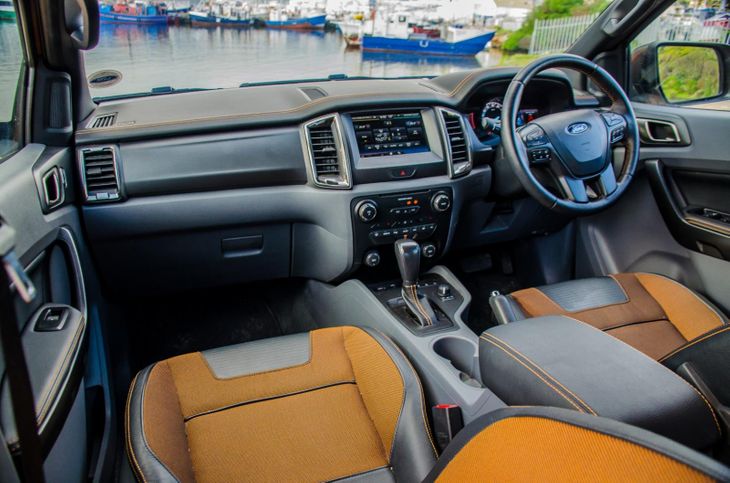
SYNC3 is a major highlight in the Ranger Wildtrak but the Alaskan's interior feels more robust.
The Ranger Wildtrak is powered by Ford’s powerful 3.2-litre turbodiesel engine with a heady 147 kW and 470 Nm of torque on offer. This engine is mated to either a 6-speed manual or 6-speed automatic transmission. However, based on our recent experience with the Alaskan, the Ranger Wildtrak is thirstier than its French rival.
The Wildtrak excels off the beaten track. It has loads of torque and it can surge through the thickest sand or clamber over terrain only suitable for mountain goats. The Wildtrak is smooth and well-mannered on the road irrespective of how much cargo/number of passengers it is transporting. The Wildtrak copes well on gravel roads and manages to deliver a relatively smooth drive in the dirt.
The Alaskan, with its good looks and muscular stance, compares favourably against the Ranger in the style stakes and may very well steal a few sales from would-be Ranger buyers.
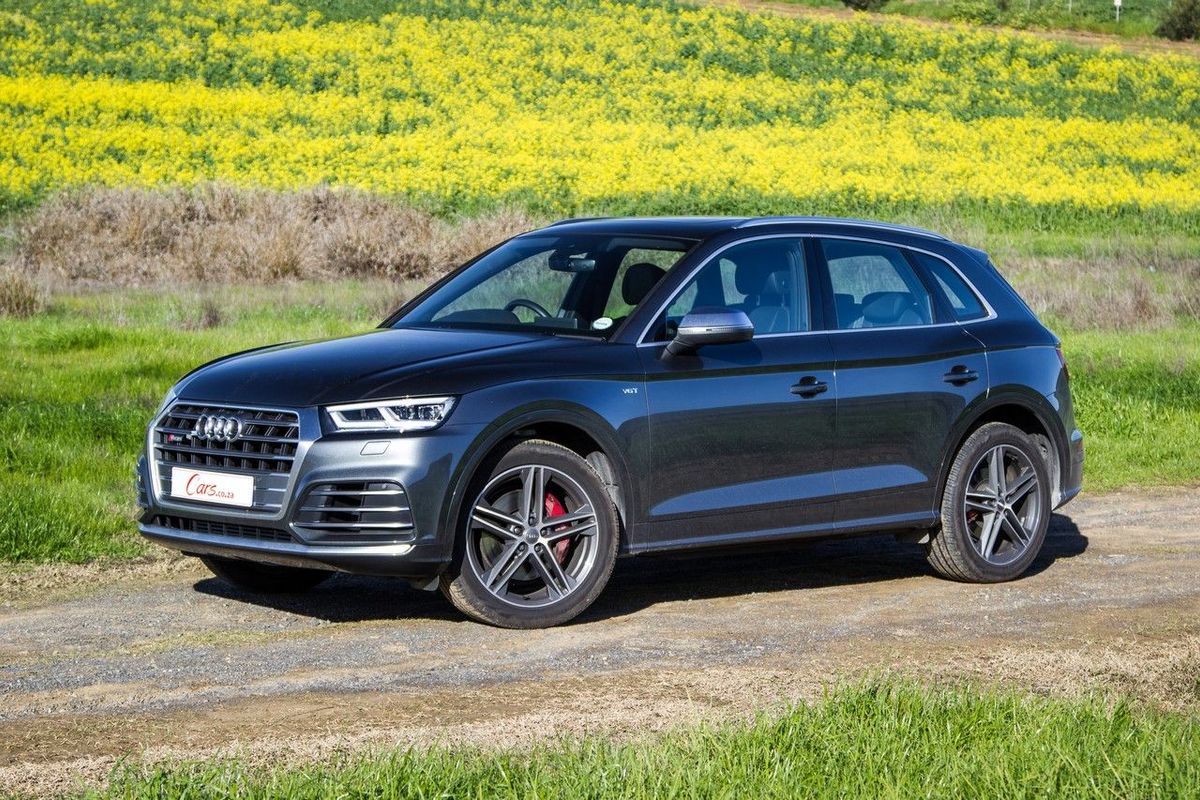
By offering sizzling performance, surprising agility and practical, luxurious cabins, vehicles such as Audi's SQ5, Porsche's Macan and the Mercedes-AMG GLC43 are today's equivalents of '80s performance sedans. We spent a week with Ingolstadt's square-jawed newcomer to figure out whether it sets a new benchmark.
We like: Powerful and refined, rock-solid cabin, grip and agility
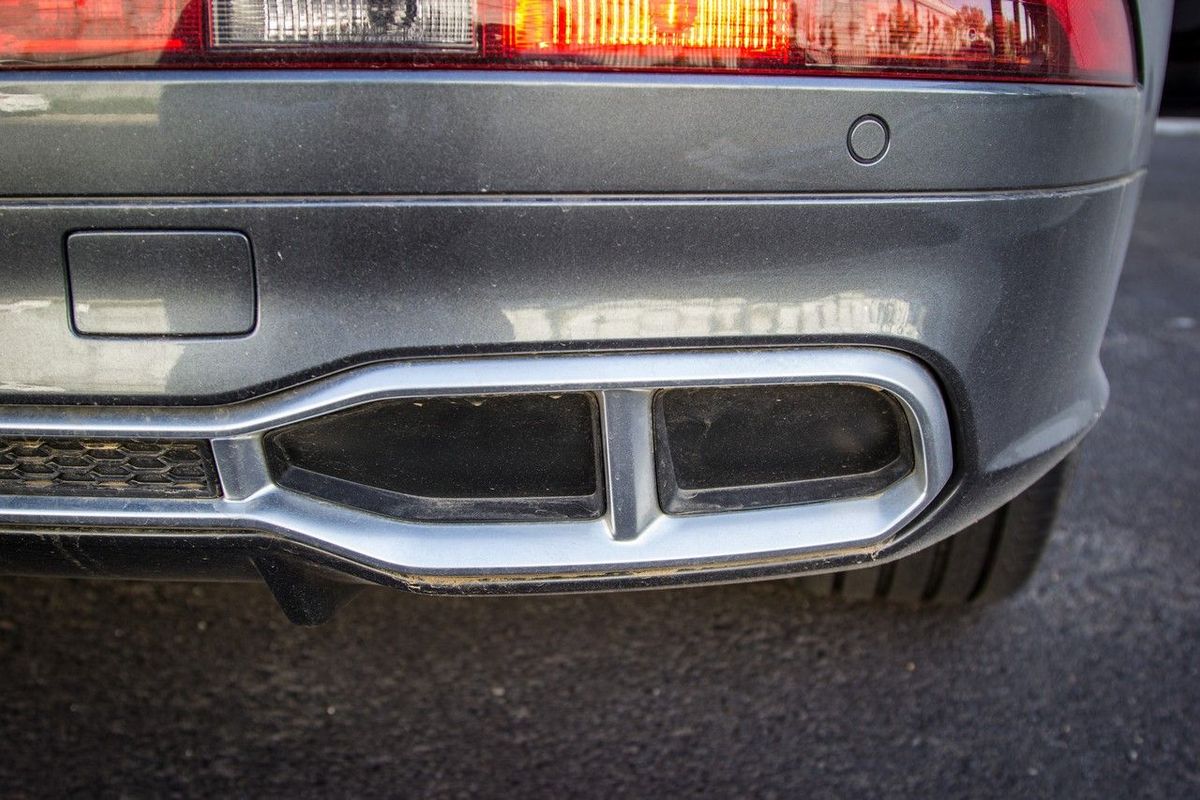
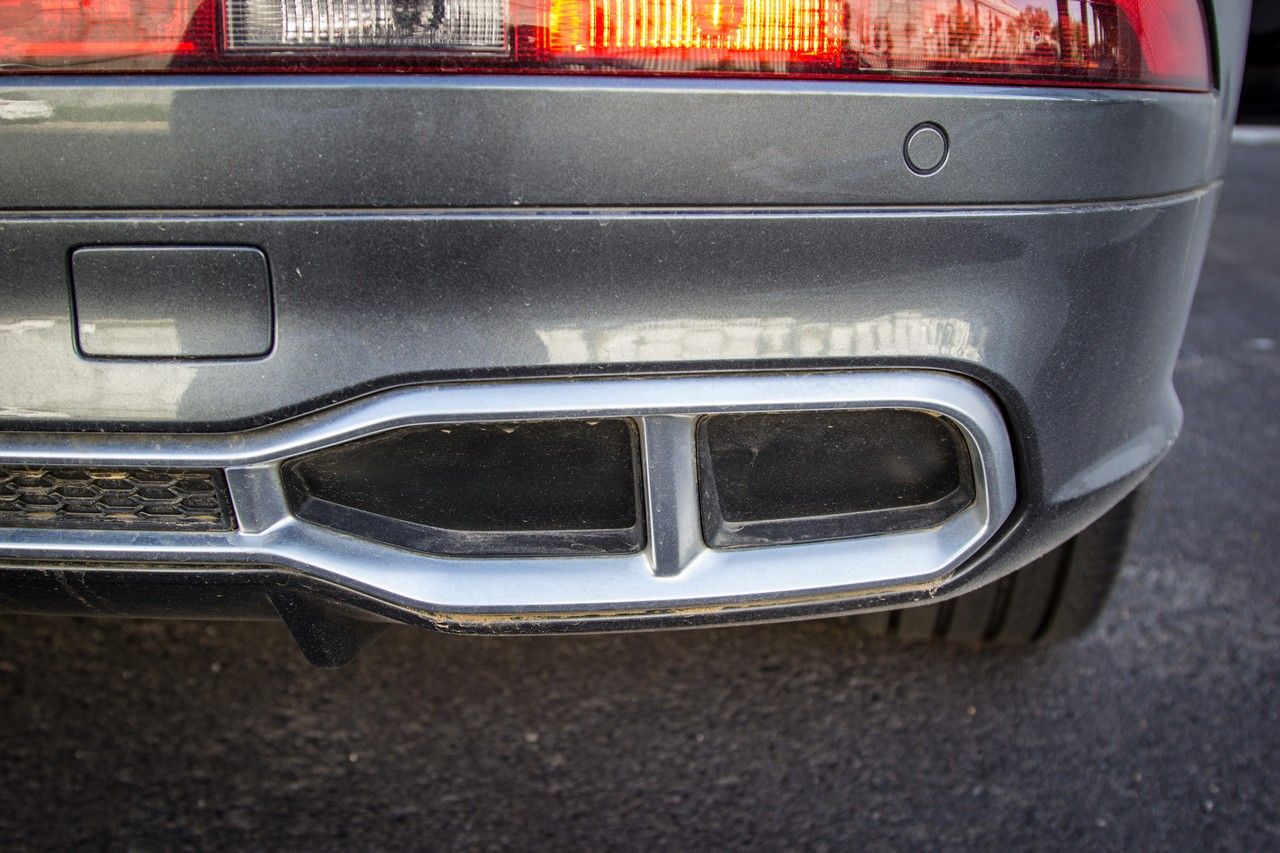
We don’t like: Fake exhaust tips!
Alternatives
For the ultimate badge: The Porsche Macan S may be about R80 000 more expensive when comparing base prices, but if you want what is still perceived as a more exclusive vehicle, you may very well be okay with sacrificing some of the options on the SQ5 and stretching for a more basic Porsche (in terms of features). With similar power but less torque, the Macan still posts comparable performance figures. It's ultimately it not as practically packaged as the SQ5, but is still a very useful – and entertaining – daily runner. A Macan facelift comes next year (2018).
Something faster: The Mercedes-AMG GLC43 4Matic is cheaper and packs a harder punch courtesy of its charismatic 3.0-litre V6 turbopetrol, but it doesn't feel as solid as the SQ5 and Macan. The GLC's underpinnings don't offer as well-balanced a combination of ride refinement and dynamic ability, and inside, it lacks the almost excruciating attention to build quality detail of the Audi.
Fancy your premium SUV to have a high-performance bent? But don't want it too flashy? Audi's SQ5 is for you.
The fragmentation of (what started out as) the SUV segment, which initially exclusively catered for people who placed practicality and rough-road ability at the top of their list of requirements, continues unabated. But the SUV or crossover sales swell can no longer be regarded as a "trend" that will grow in significance in the future. It is the default, most-desired body shape of the moment and that means manufacturers must cater to whatever tastes or requirements there may be, whether it is to go off-road, to make a statement or… go fast in the lap of luxury.
Enter vehicles such as Audi's SQ5… high-performance, premium-badged and super-luxurious crossovers that seem far removed from their SUV ancestors, but very much in tune with the present. If compact crossovers are the most desired modes of personal transport of the masses, these are the halo products that feature at the top of the "when I've made it" wishlists… Could the SQ5 be the most desirable of all?
How does it fare in terms of…
Design & Packaging?
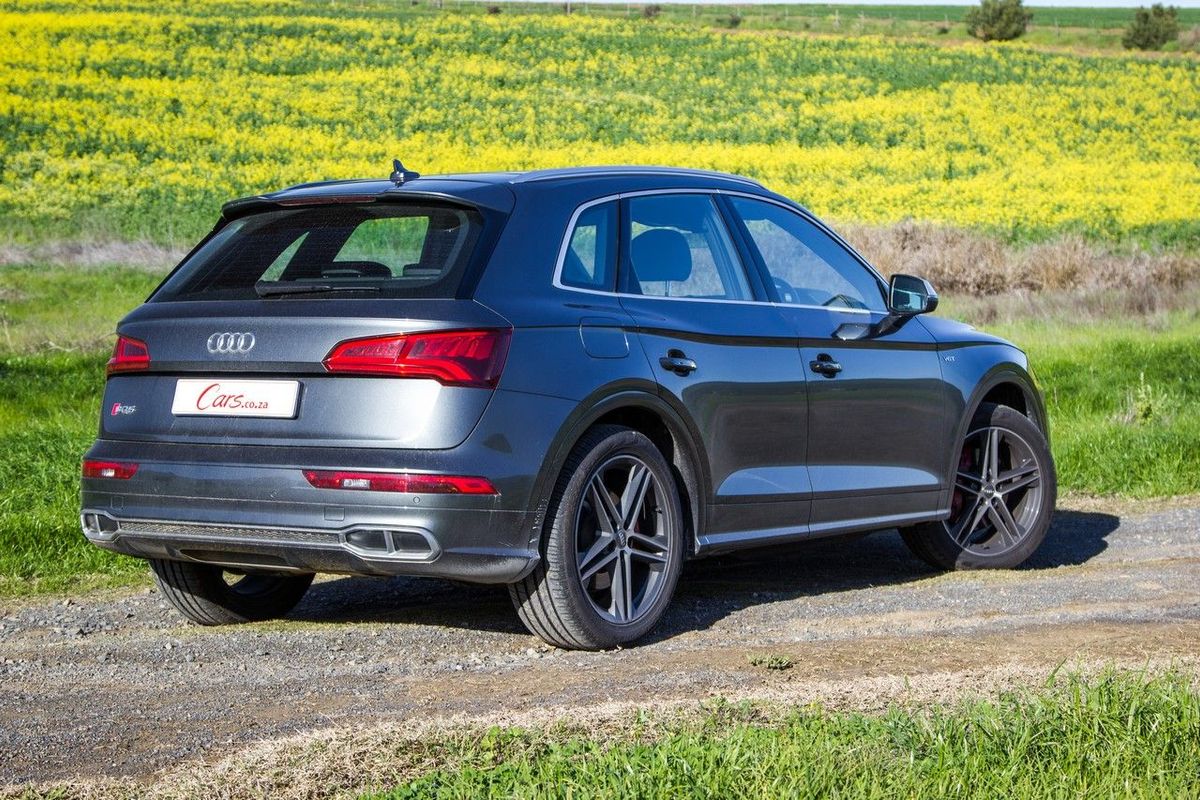
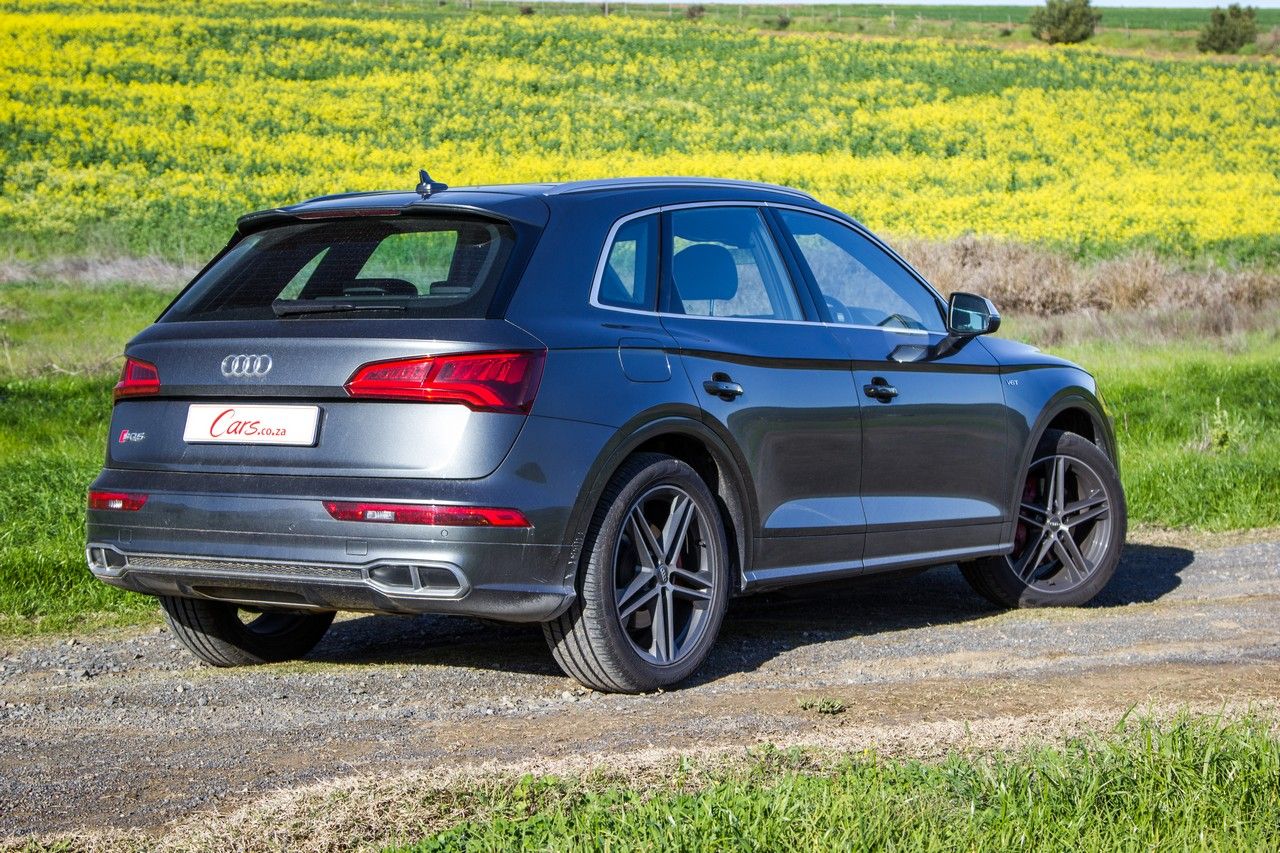
Fake, blanked out exhaust tips on a high-performance machine? No Audi… just no.
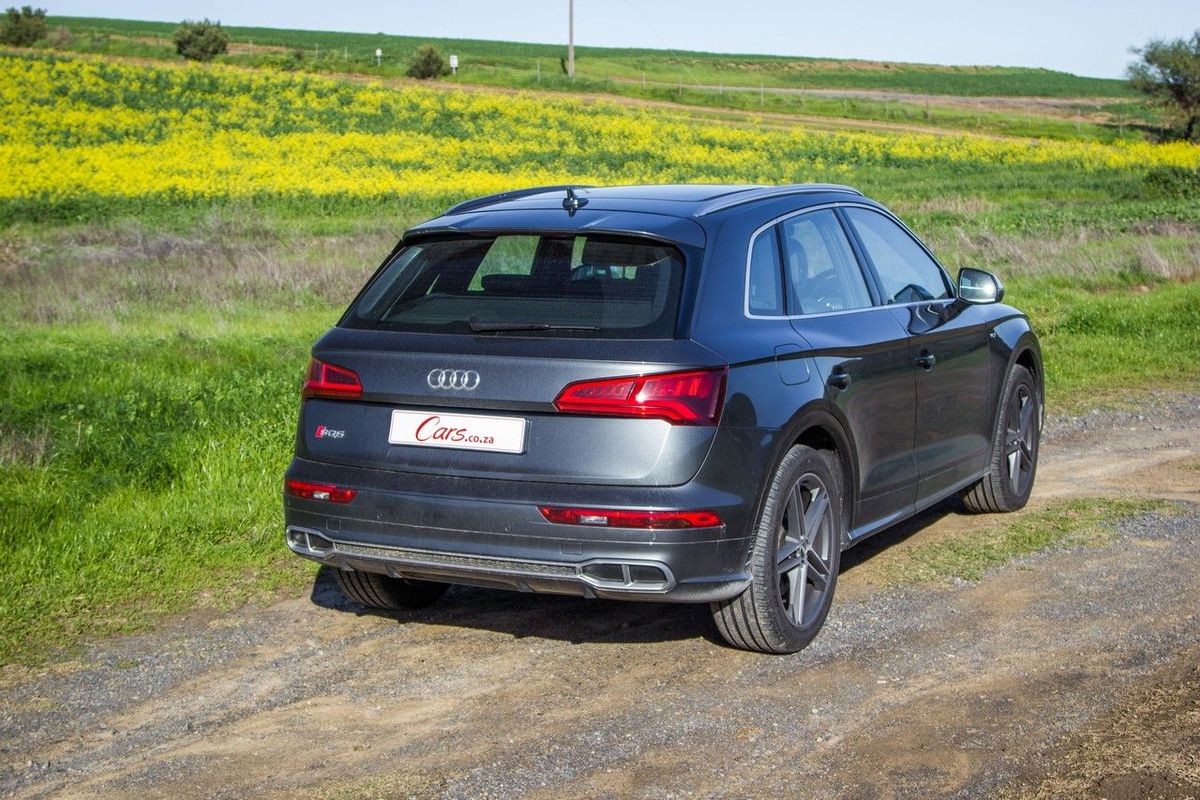
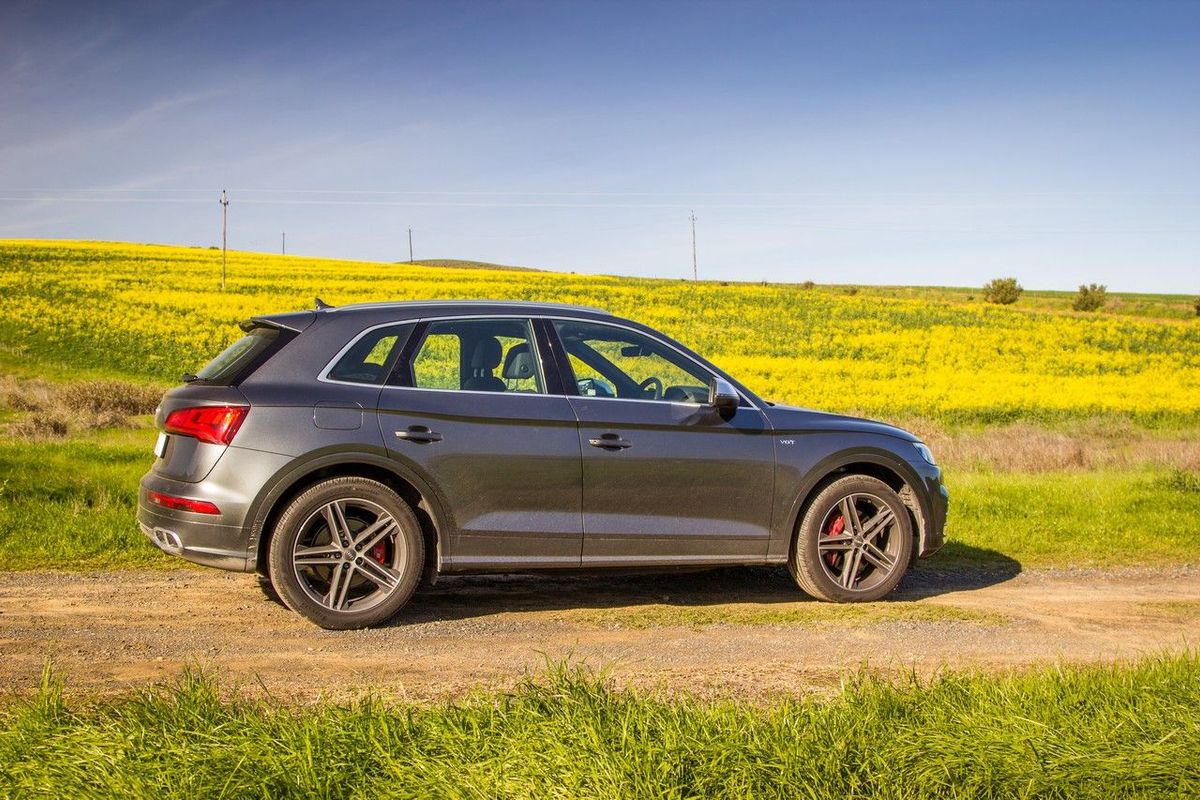
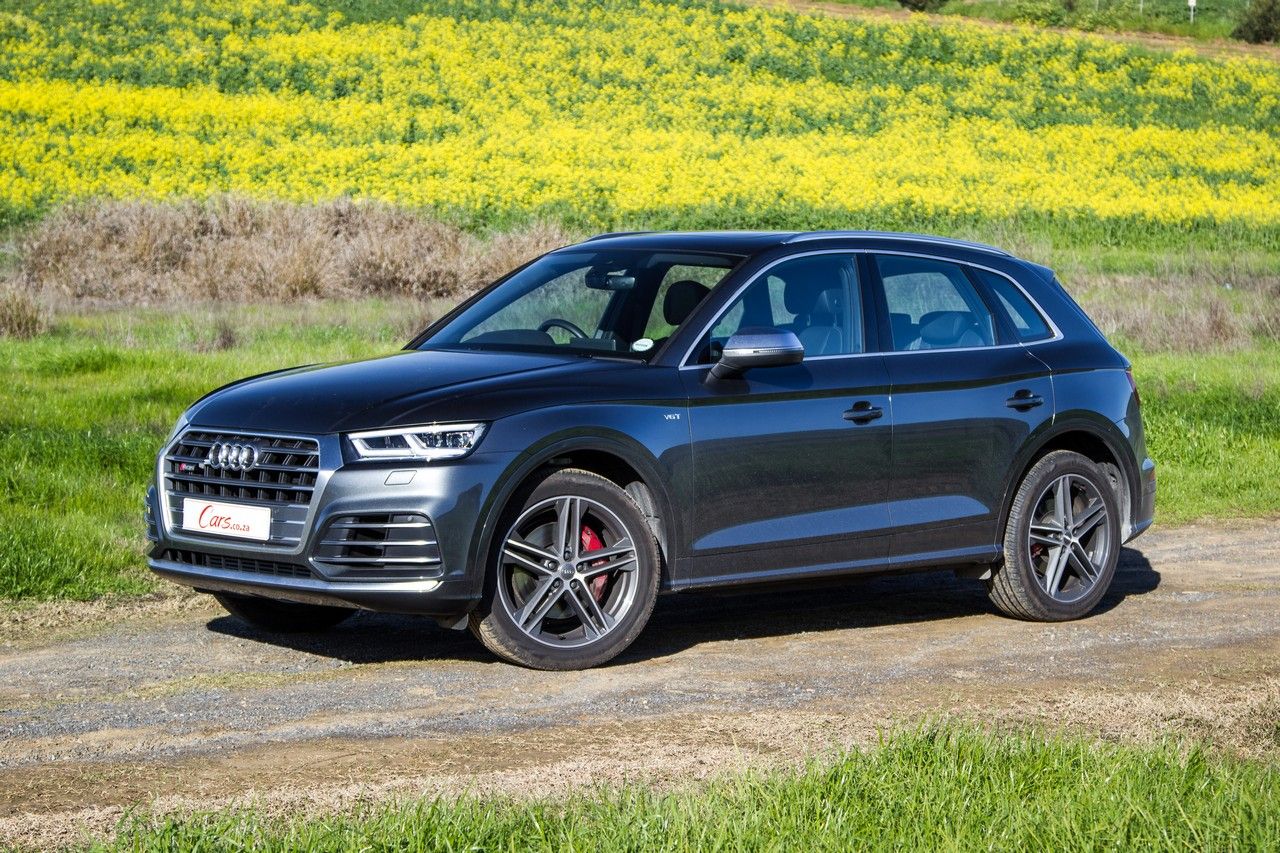
Audi's new Q5 has been criticised (from the moment the very first image emerged) for looking very similar to its predecessor. While the overall design has not moved on significantly, it is a far "edgier" car in its detailing and the differences are highlighted when you park the two generations of vehicles next to one another and make a direct comparison. During its test term, the SQ5, even in a conservative metallic grey paint, attracted a number of positive comments and most onlookers didn't seem to care all that much about its fake exhaust outlets, which were, however, an irritant to our (admittedly petrolheaded) test team.
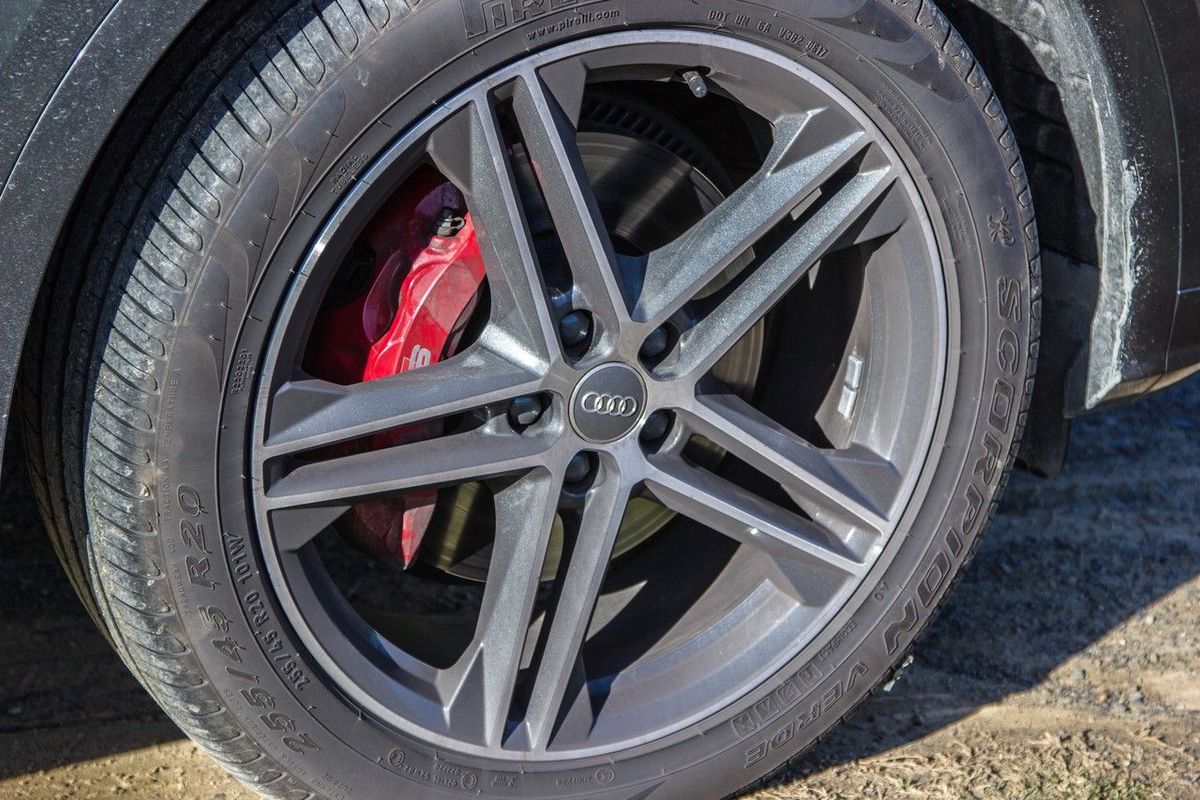
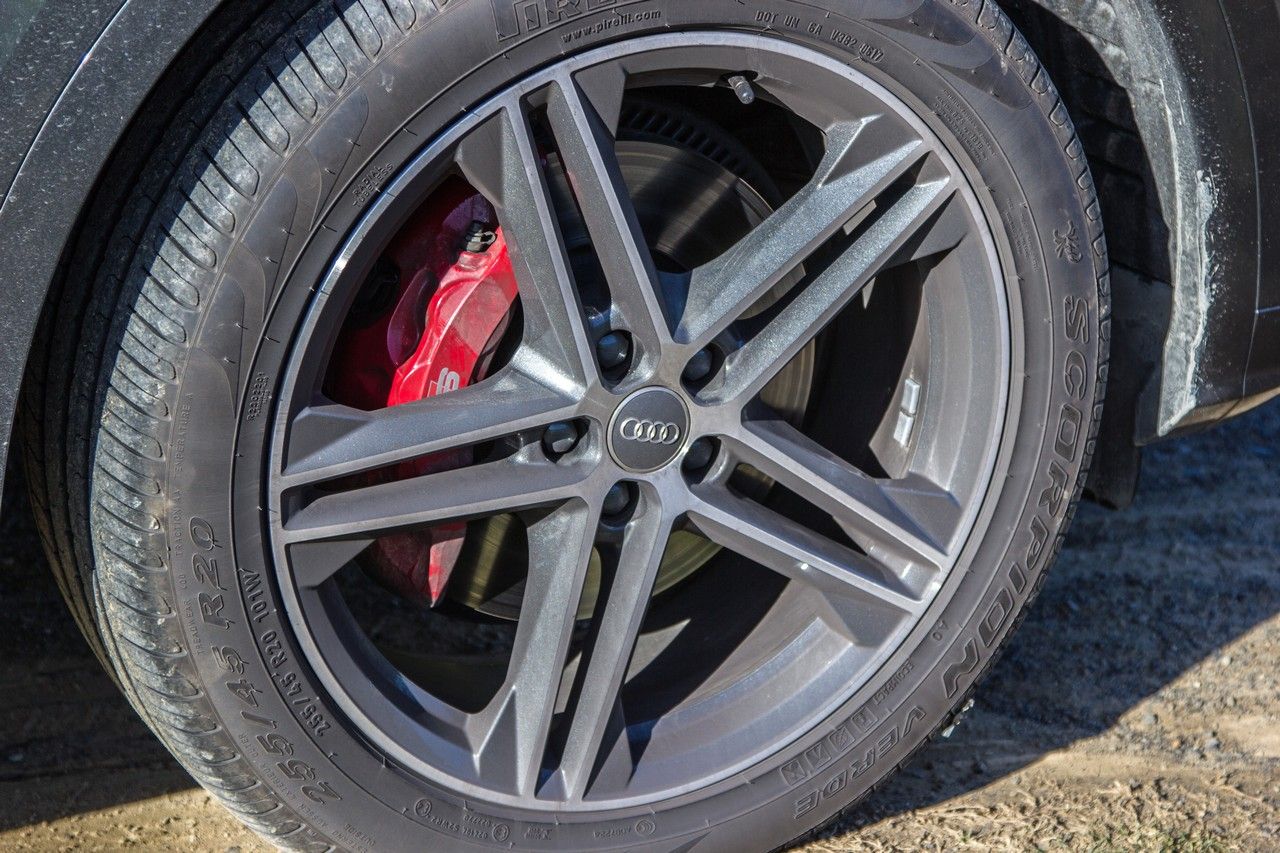
As is to be expected, the über Q5 gets a number of distinguishing features, mostly centred around its more aggressive bumper treatments (front and rear), and striking standard 20-inch alloy wheels. Our test unit also featured an optional sunroof. We think the SQ5's design is quite colour sensitive, and that a brigher hue (or even white), would make it "pop" considerably more. That said, this is not a "shouty" design and, consequently, the SQ5 has considerable Q-car (flying under the radar) appeal.
SQ5 boasts levels of fit and finish, as well as attention to detail that is easily best in class.
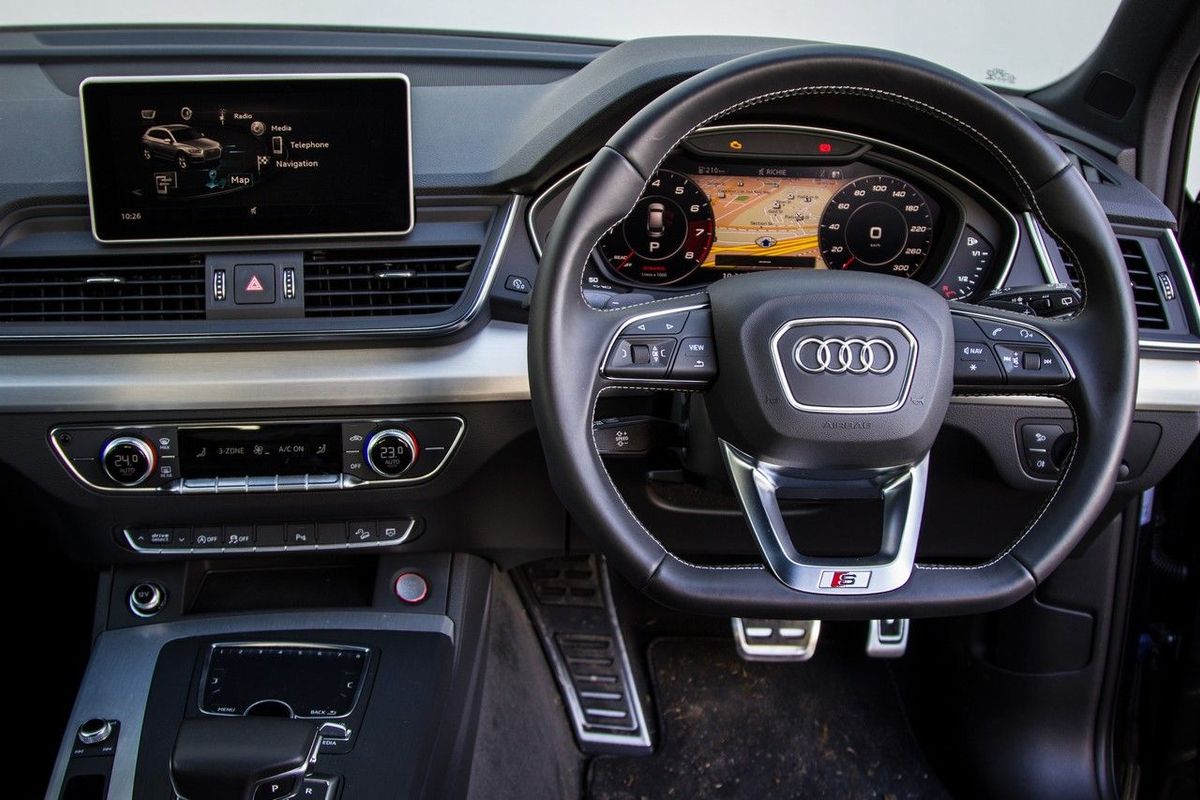
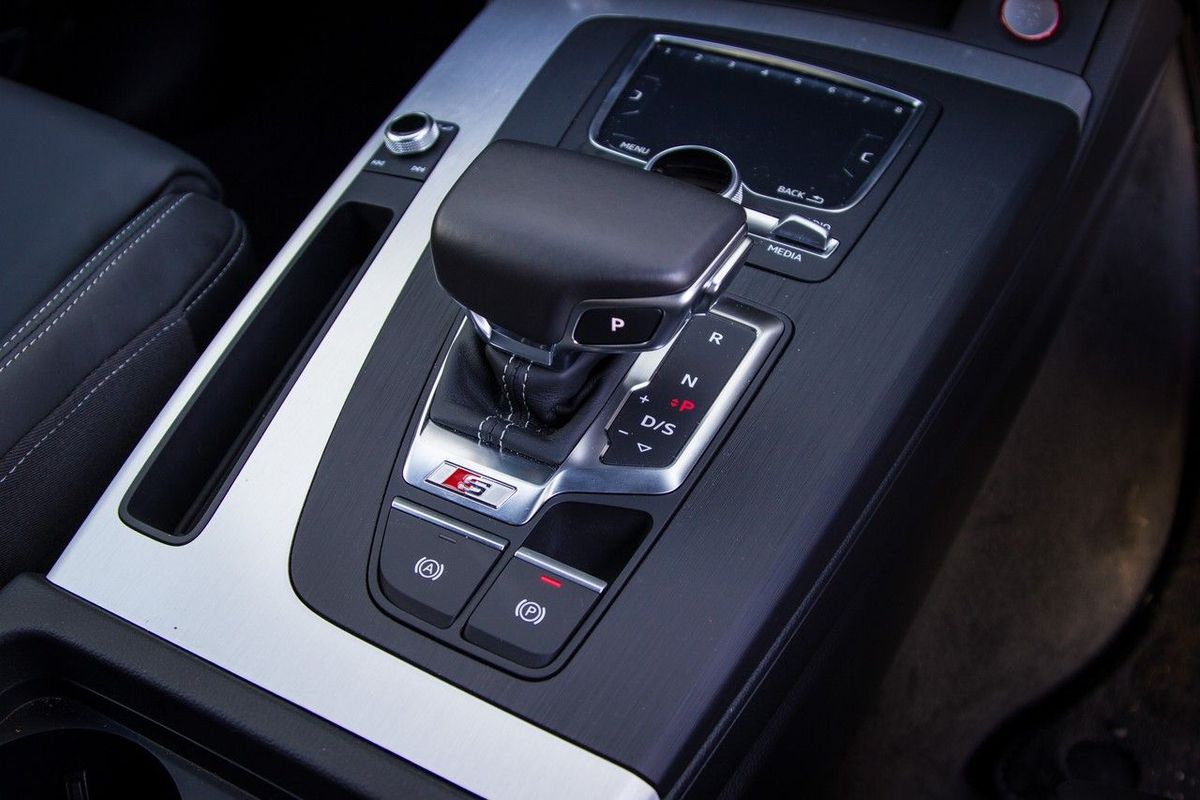
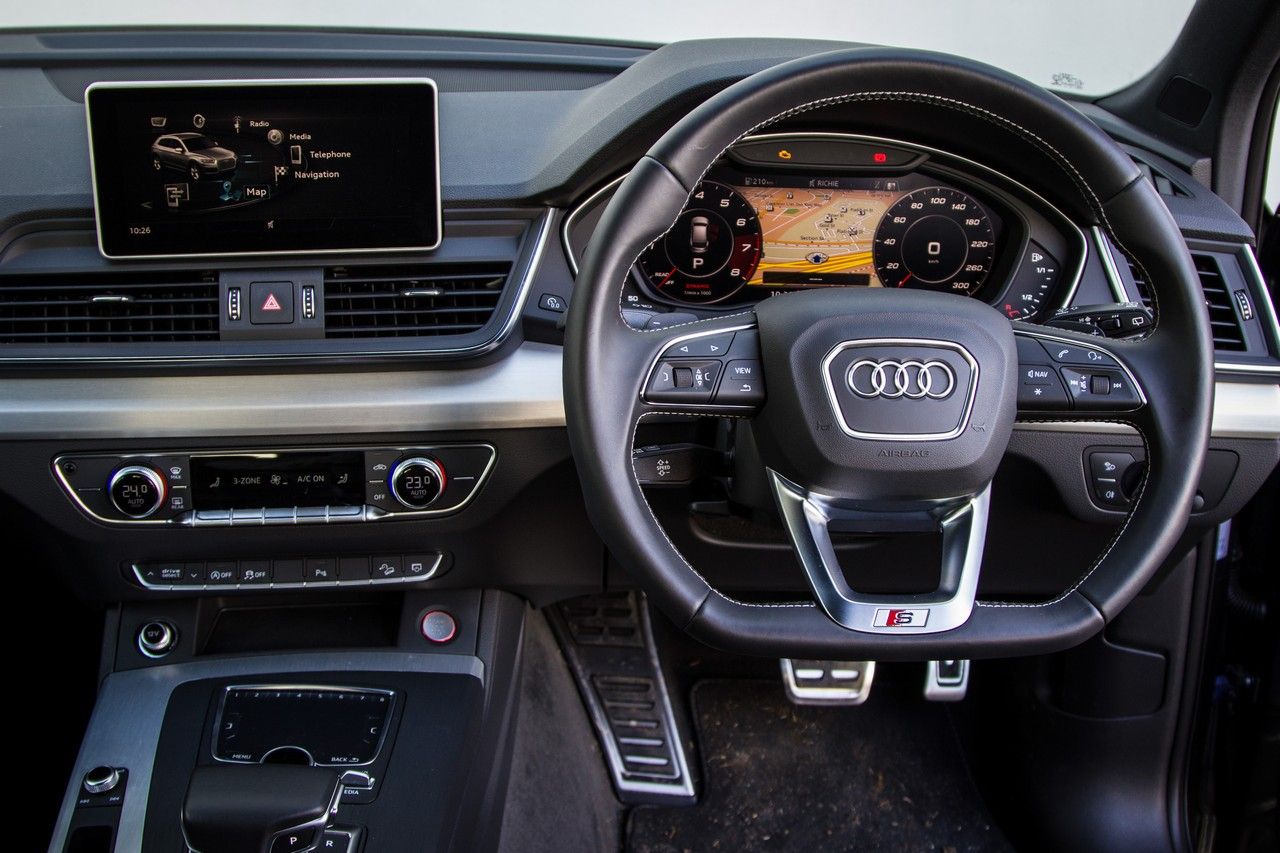
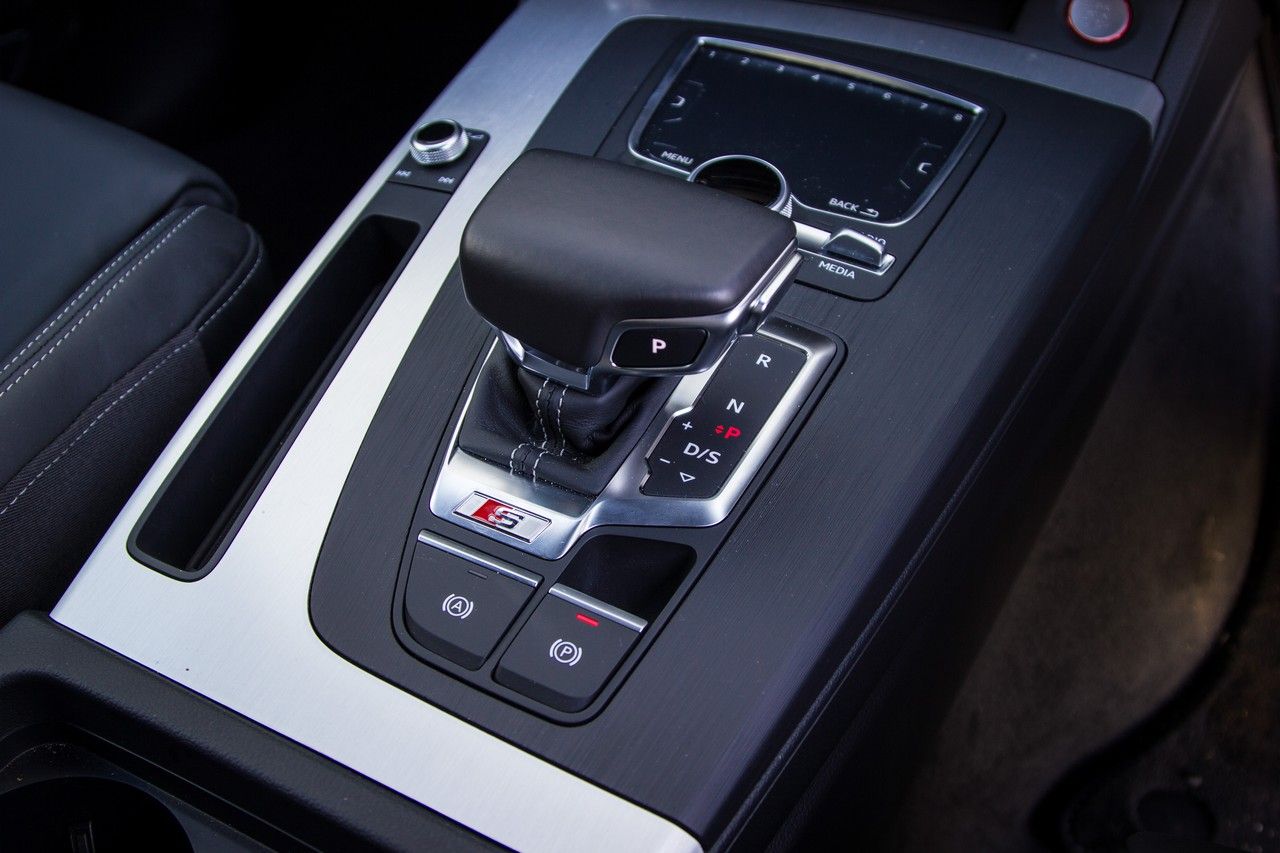
The cabin follows in the tradition of most recent Audis in being very minimalist in appearance, but with build quality and attention to detail that is beyond anything else in this class. There is a reassuring solidity to every button or switch movement, and the satin silver inlays, in particular, are both tasteful and lift the otherwise rather sombre cabin ambience (dominated by grey surfaces). The quilted sports seats are a real highlight, and the T-bar gear selector with its flat top, which doubles as a place to rest your wrist while using the touchpad, is an example of the great attention to detail in this cabin.
There really is no reason for complaint in the front, then, particularly because the SQ5 has the same generous steering rake/reach adjustability, combined with multi-way adjustable driver's seat, that Audis are so admired for. Occupants in the rear of the cabin are also well-catered for, with generous legroom and their own ventilation controls. Our test unit was further fitted with the optional Rear Seat Bench Plus, which affords greater adjustment, including fore/aft sliding to tailor legroom/luggage space as required. In this regard (rear passenger comfort), the SQ5 is considerably better than the Porsche Macan, for example.
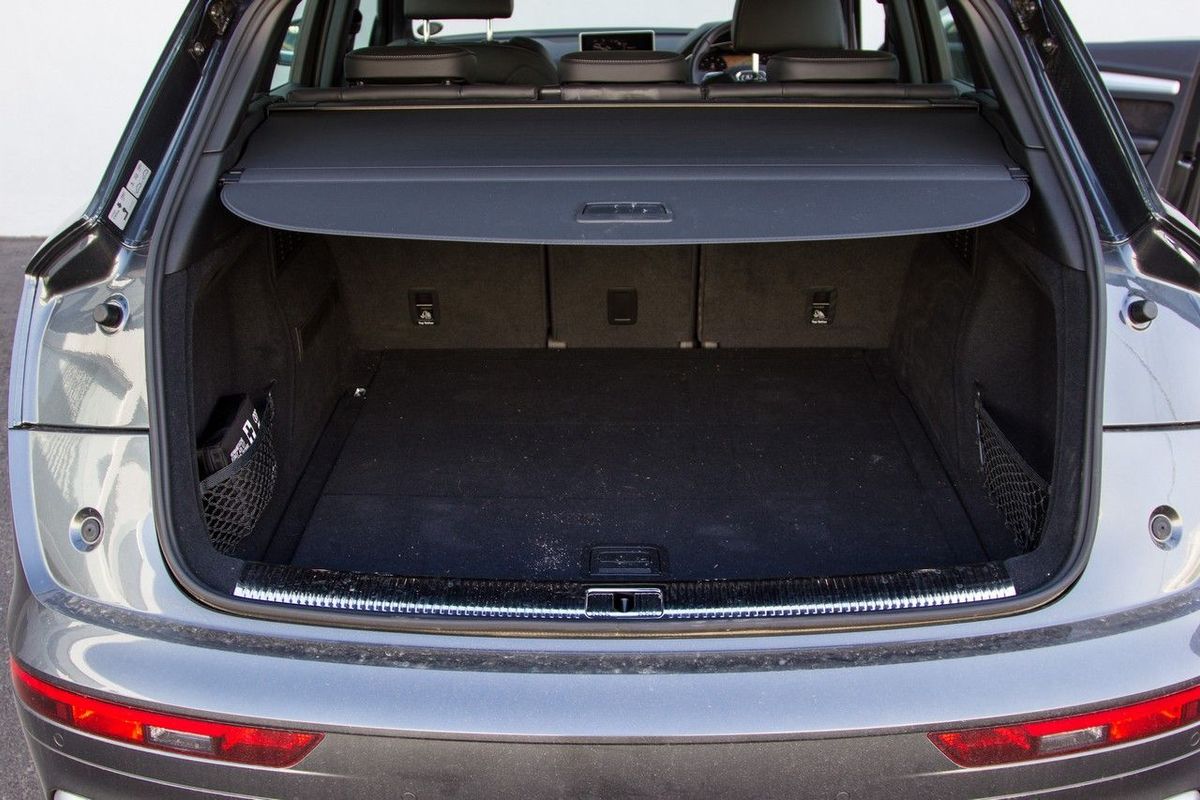
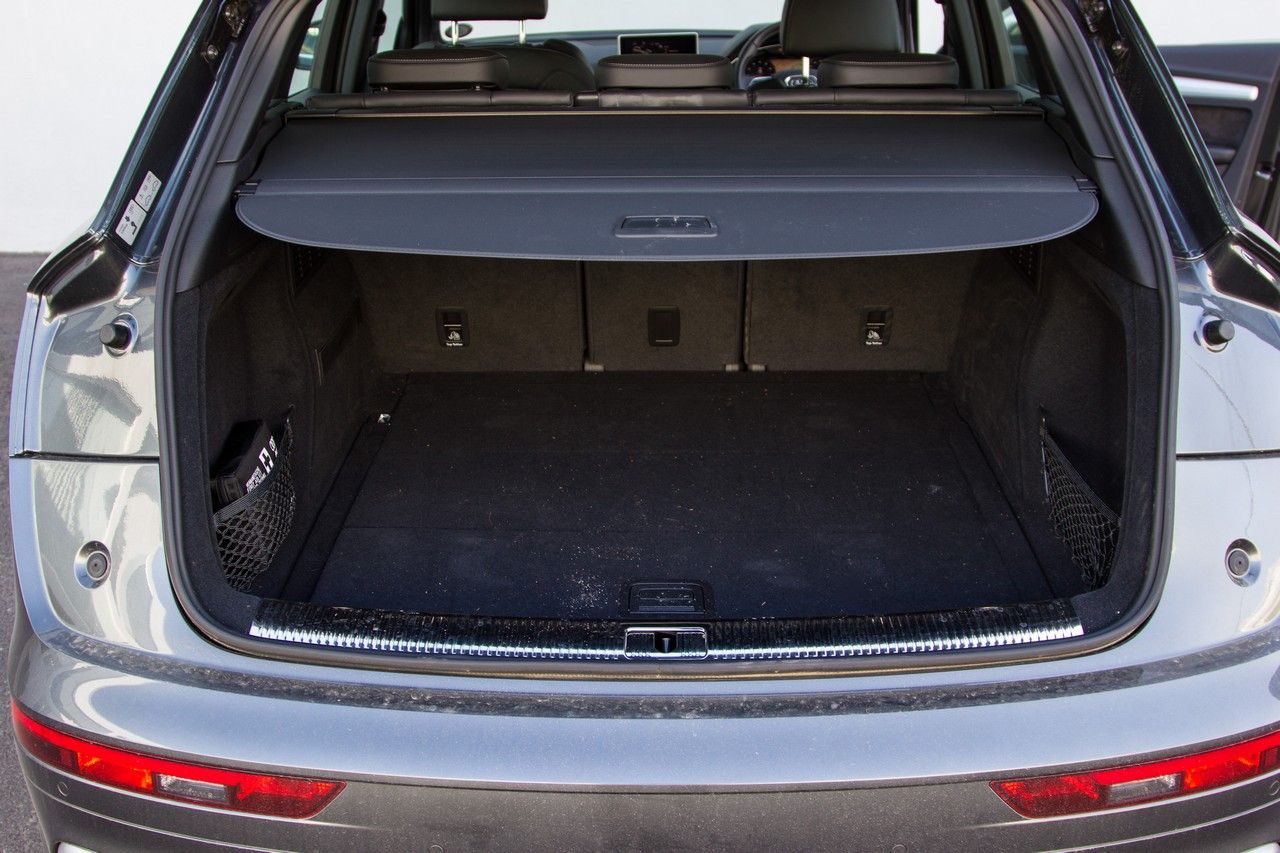
The luggage area is large and rear seats can be folded forward by pulling levers reachable by standing behind the vehicle. Automated tailgate is standard.
The SQ5's boot is rated at 550 litres in volume, which is identical to the GLC and slightly bigger than the Macan. The rear seatbacks can be tipped forward by pulling on conveniently placed levers in the bay and maximum utility space is 1 550 litres, slightly smaller than the Benz, but a bit more than in the Porsche. An electric tailgate is standard. Overall, then, this may be the "fast" Q5, but it's lost none of its practicality.
Performance & Efficiency?
Unlike the first SQ5, which was sold in South Africa exclusively as a turbodiesel derivative, the newcomer is powered by Audi's turbocharged 3.0-litre V6 petrol that delivers 260 kW and 500 Nm of torque. The latter figure may not be as impressive as its predecessor's, but remains very competitive, only being outpunched by the GLC43's powerplant to the extent of 20 Nm. The maximum torque is available from 1 370 to 4 500 rpm, which makes the car feel ever-keen and always responsive. Audi claims a 0-100 kph sprint time of 5.4 seconds, which is slightly slower than the GLC43, but which matches the claim for the Macan S. It's plenty fast enough, and the 8-speed transmission is a good match for it, generally providing decisive and slick shifts.
Eight-speed gearbox is well-matched to the engine's characteristics. Drive modes make a real impact on overall "feel" of the car.
Of course, as you cycle through the various drive modes the car's character changes noticeably, and so does the engine sound. It becomes quite vocal in its sportier modes, which is nice, but traditionalists will lament the fact that much of this sound is "fake". In the default driving mode the engine muted, and you'll marvel at the refinement of it all.
For the record, the engine is remarkably efficient and refined given its performance credentials. Audi claims a combined cycle consumption figure of 8.3 L/100 km, which you'll undoubtedly struggle to match, but, even so, it is significantly more fuel efficient in the real world than its Mercedes-Benz rival. We achieved a figure of around 10.0 L/100 km.
Ride & Handling?
Standard 20-inch wheels do not negatively impact ride quality and composure.
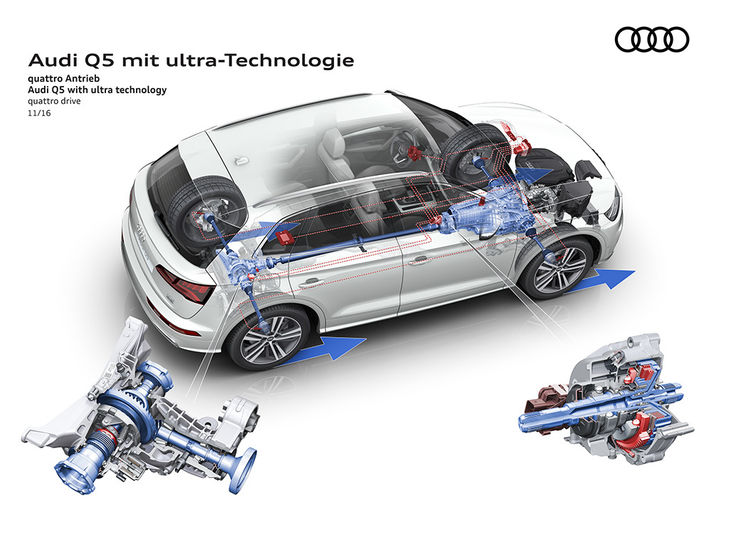
Based on Audi's acclaimed MLB-Evo platform (which also underpins the A4), the Q5 rides with a mix of composure and agility that is quite rare in this segment. Fitted as standard with sports suspension and damping control, the SQ5 possesses downright remarkable ride comfort, especially given its uncompromising footwear. The SQ5 uses a relatively new type of quattro configuration, which is called quattro ultra. One of the main goals with quattro ultra was efficiency, and given the fuel-consumption we achieved during our test, we've got no reason to doubt Audi's claims.
For a high-performance vehicle such as the SQ5, some enthusiasts may be worried that the new system, which favours front-wheel drive operation in no-slip conditions, could be detrimental to dynamic ability. In our experience, however, the system operates so imperceptibly that few would notice the difference.
The SQ5 features quattro ultra, which brings major efficiency gains. It shifts power imperceptibly.
How does it work? Well, although the SQ5 starts off in all-wheel drive mode when pulling away, if no slip is detected it will switch to front-wheel drive. When slip is detected at the front, it will channel power to the rear wheels using two clutches (one behind the gearbox and another in the rear axle). The system also takes into account the drive settings and the manner in which the vehicle is being driven.
Does it all work? Well, in short, the SQ5 is as ruthlessly efficient in the roadholding department as it is in virtually every aspect of its package. Grip levels are high, it turns in well and body control is superb. It is not, however, the most engaging of vehicles to drive fast and the steering feel can be inconsistent in terms of its weighting and is generally devoid of real feedback. Nevertheless, when it comes to this type of fast SUV, we suspect that the ability to cover ground (of various surface quality) fast will rank higher on buyers' lists of requirements than the provision of driving engagement on a challenging ribbon of asphalt.
Pricing and warranty
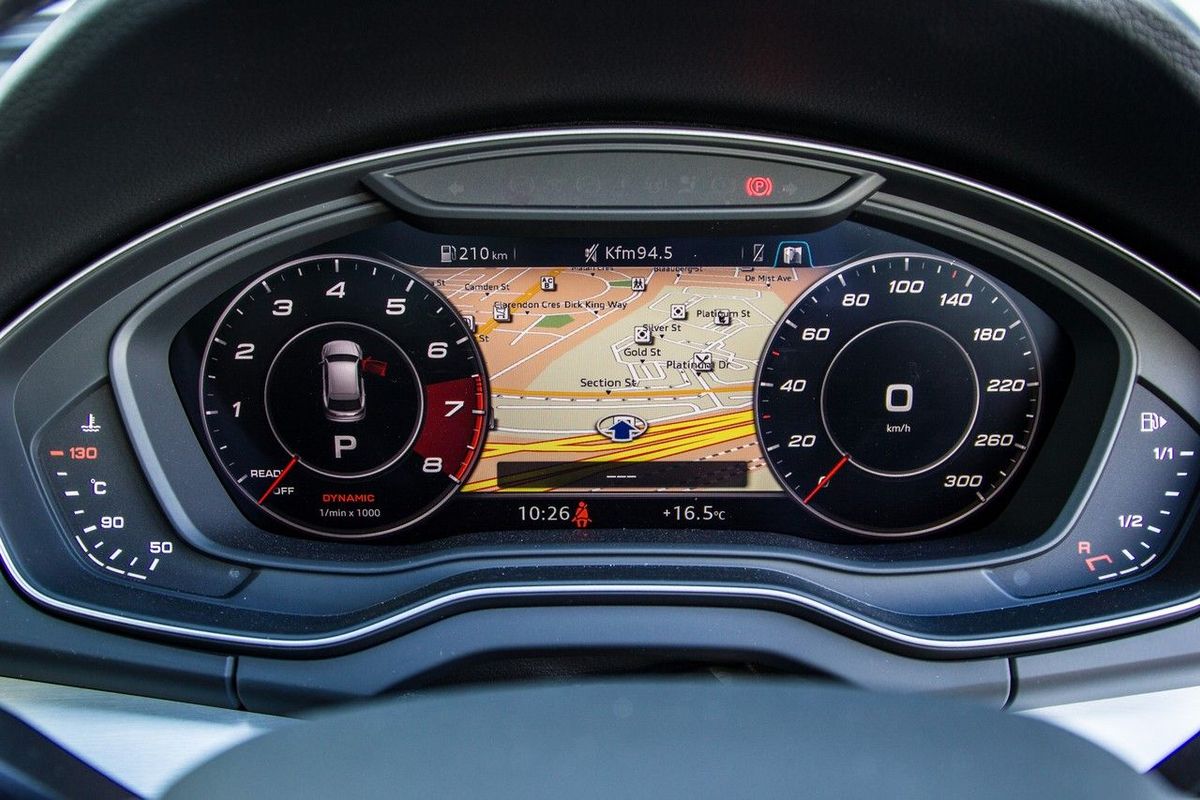
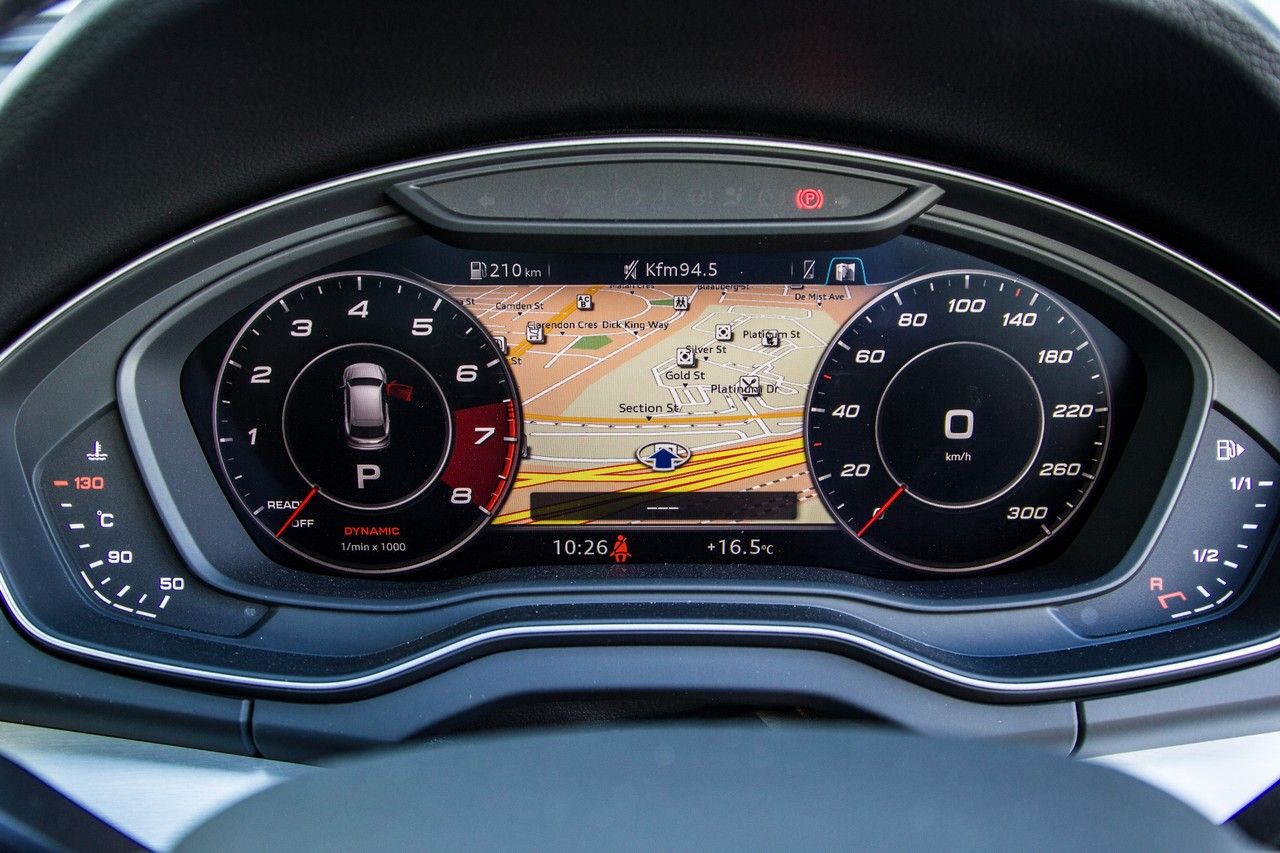
Sadly, the really smart Virtual Cockpit is not standard and costs R7 000 extra. Worth having, though.
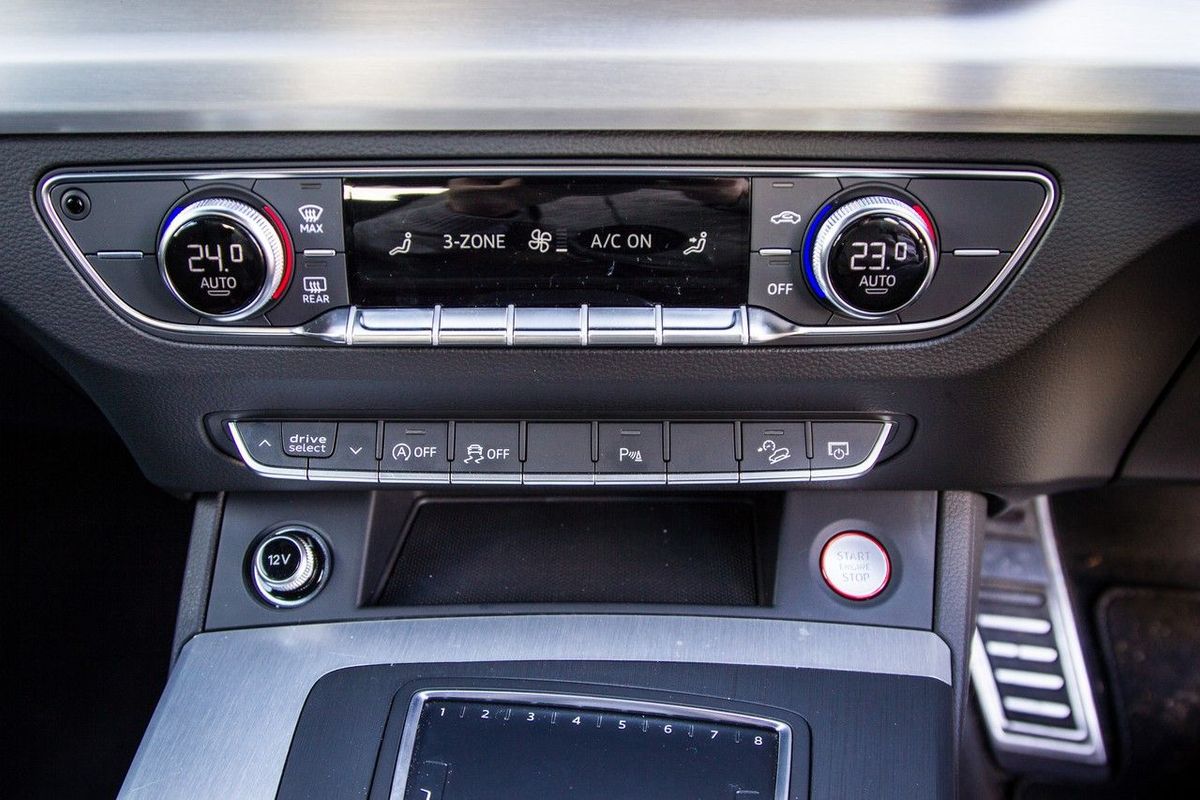
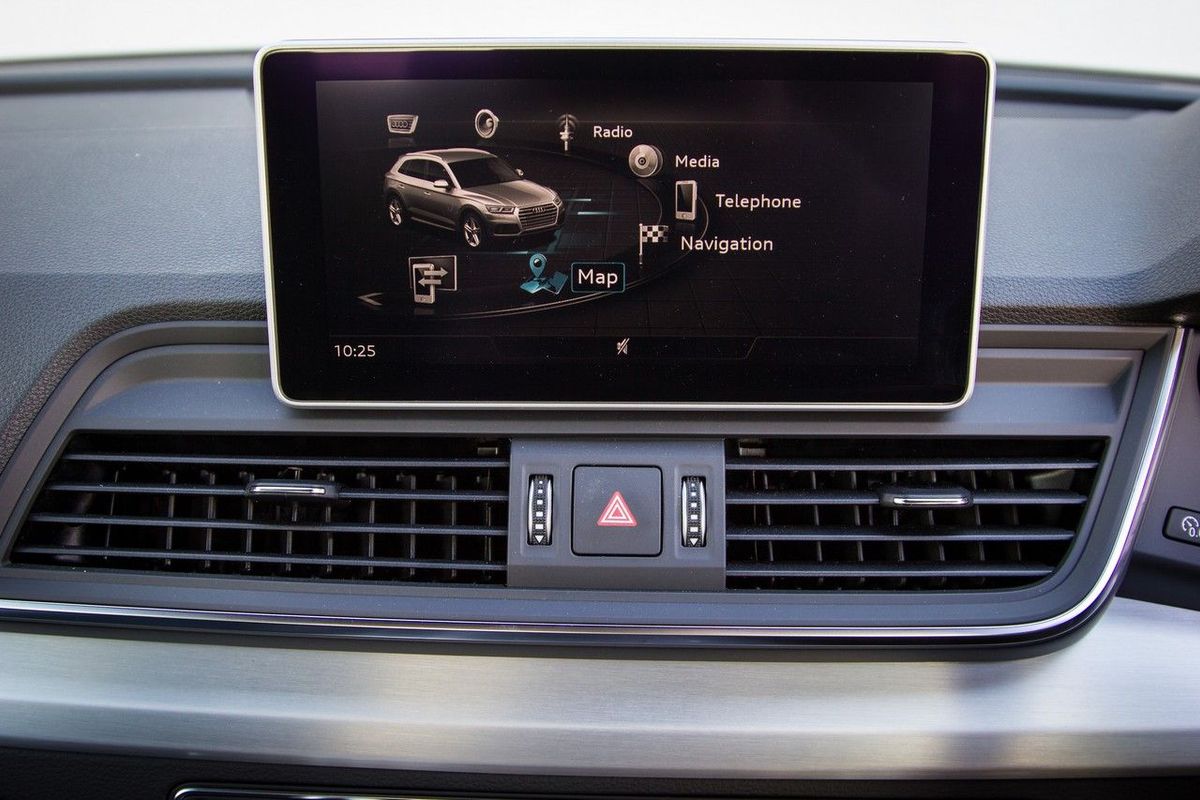
The Audi SQ5 currently (September 2017) sells for R1 044 000 without options. The price includes a 1-year/unlimited km warranty and 5-year/100 000 maintenance plan. As the flagship of the Q5 range, this model is comprehensively specified with niceties such as three-zone climate control, electrically adjustable front seats, park assist (including parking plus), auto lights/wipers, cruise control, automated tailgate, LED head- and taillamps and MMI Navigation Plus with touch input, amongst other items.
Our test unit also featured the following options; panoramic glass sunroof (R19 900), trailer tow hitch (R13 950), Bang&Olufsen sound system (R11 850), virtual cockpit (R7 000), fine nappa leather (R6 960), Matrix LED headlamps (R6 200), Rear seat bench plus (R4 900) and Audi smartphone interface (R4 180). The additional R74 940-worth of options bumps up the price to R1 118 940 as tested.
Verdict
Ruthlessly efficient and excellent at what it does, the SQ5 is arguably the most-complete vehicle of its type.
At this end of the market, and in this niche specifically, there aren't really any bad choices and personal brand preference will largely determine which products buyers will choose. However, ignoring such subjective matters for a moment, we rate the SQ5 as a more refined and better-built offering than the Mercedes-AMG GLC43 4Matic, but the AMG has the edge in terms of practicality and outright performance. The Benz arguably also has the more charismatic engine. Add a number of high-cost options to the SQ5 and Jaguar's slightly bigger F-Pace also comes into play, as well as the Porsche Macan. So, ultimately, the SQ5 appears to straddle a middle ground, mirroring the best capabilities of its cheaper or pricier rivals, but seemingly without any of their (small) flaws.
But, it's almost robotic in the way that it ticks all the boxes. Does this mean the SQ5 lacks the personality or desirability a high-performance flagship should offer? That question brings us back into the realm of subjective matters, and that's something only the individual doing the buying will be able to answer.
The Volkswagen Golf GTI is regarded as the King of the compact hot hatchbacks, but it has become pricey, so much so that it’s out of reach of many consumers. What if there was something cheaper that could offer a comparable ownership experience and most of the performance, but importantly, consume less fuel?
The Golf GTD is similarly styled to its GTI sibling, but it’s powered by a 2.0-litre turbodiesel engine that produces 350 N.m of torque is mated with a 6-speed dual-clutch transmission. Volkswagen claims a brisk 0-100 kph time of 7.4 sec and a claimed fuel consumption of only 5.0 L/100 km. It sounds like the best of both worlds, but is it?
We take to the track with the GTD to see if it has enough GT to make up for the “D” (if you, like most enthusiasts, would prefer to have the “I”). Is this the thinking-person’s GTI, or a piecemeal car?
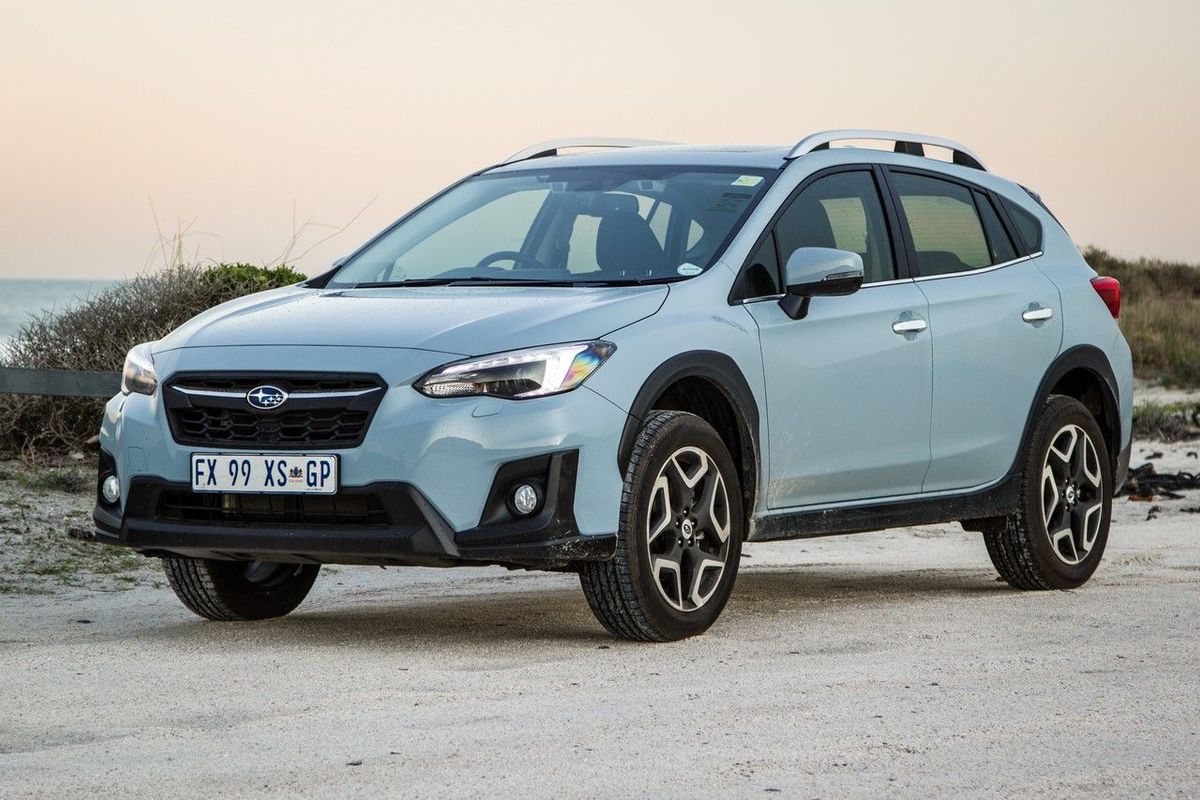
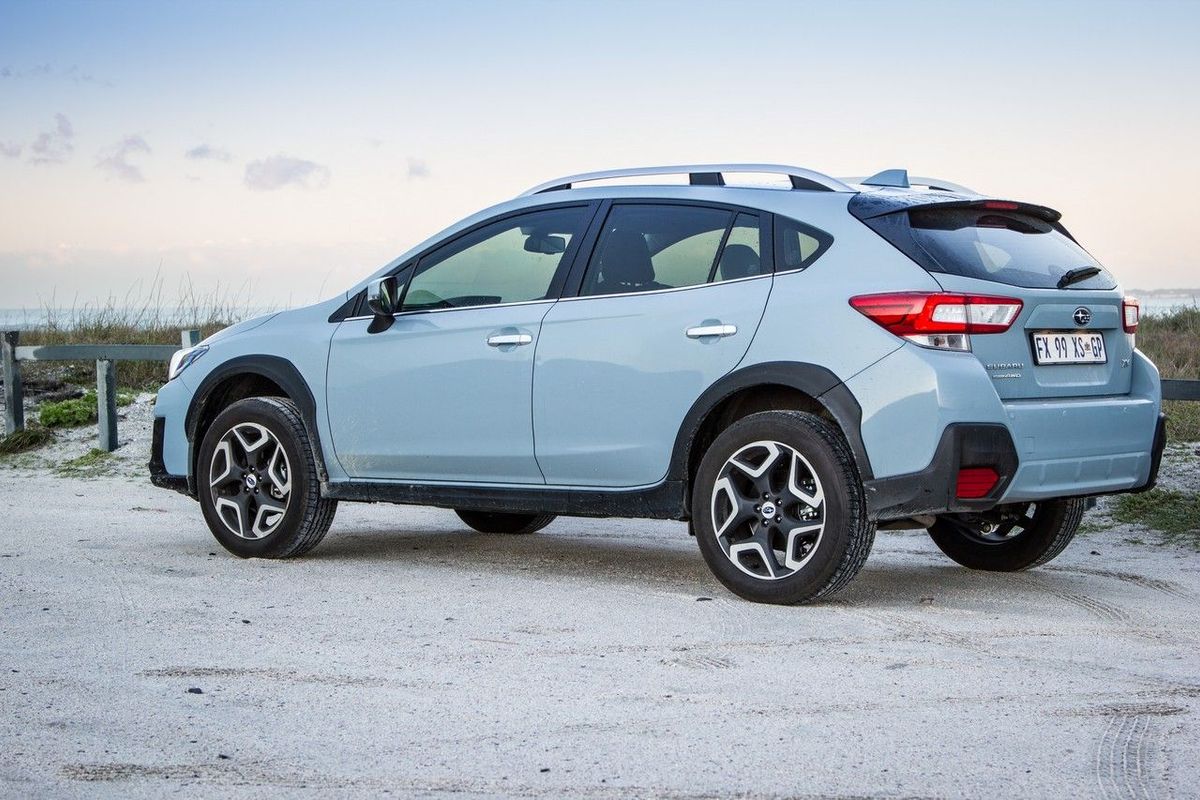
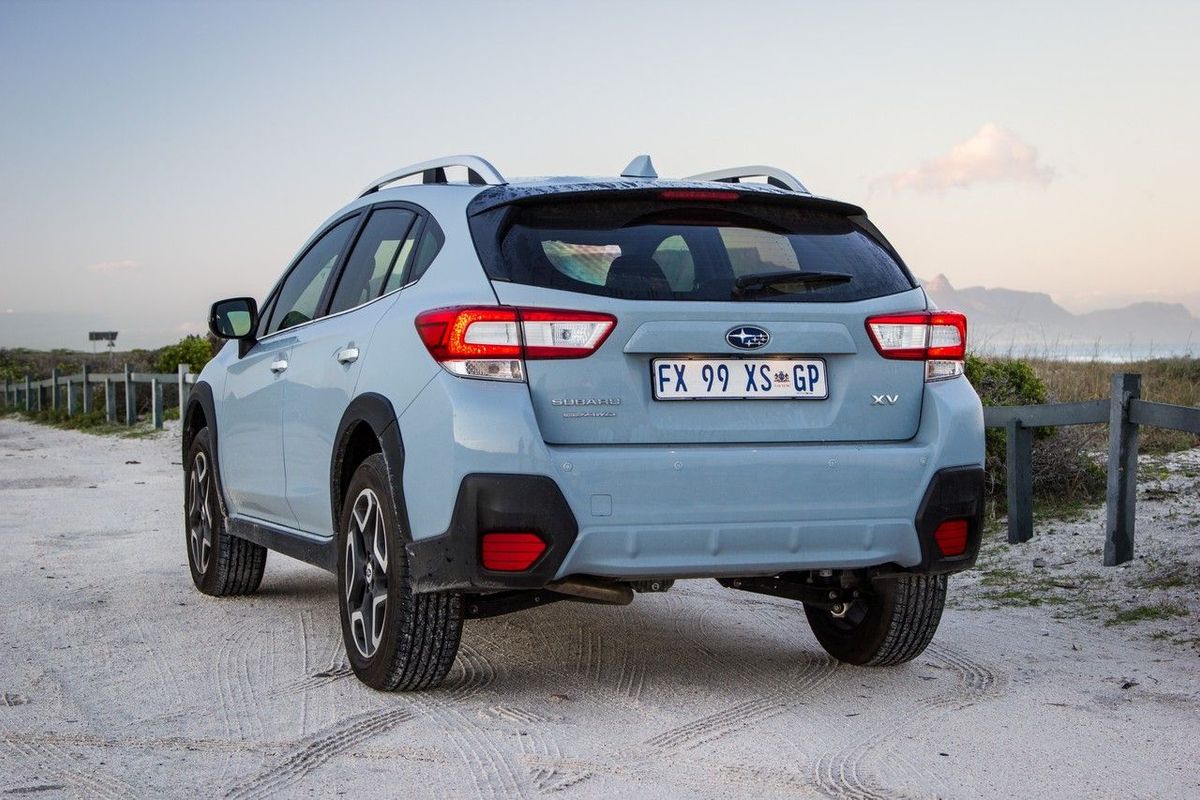
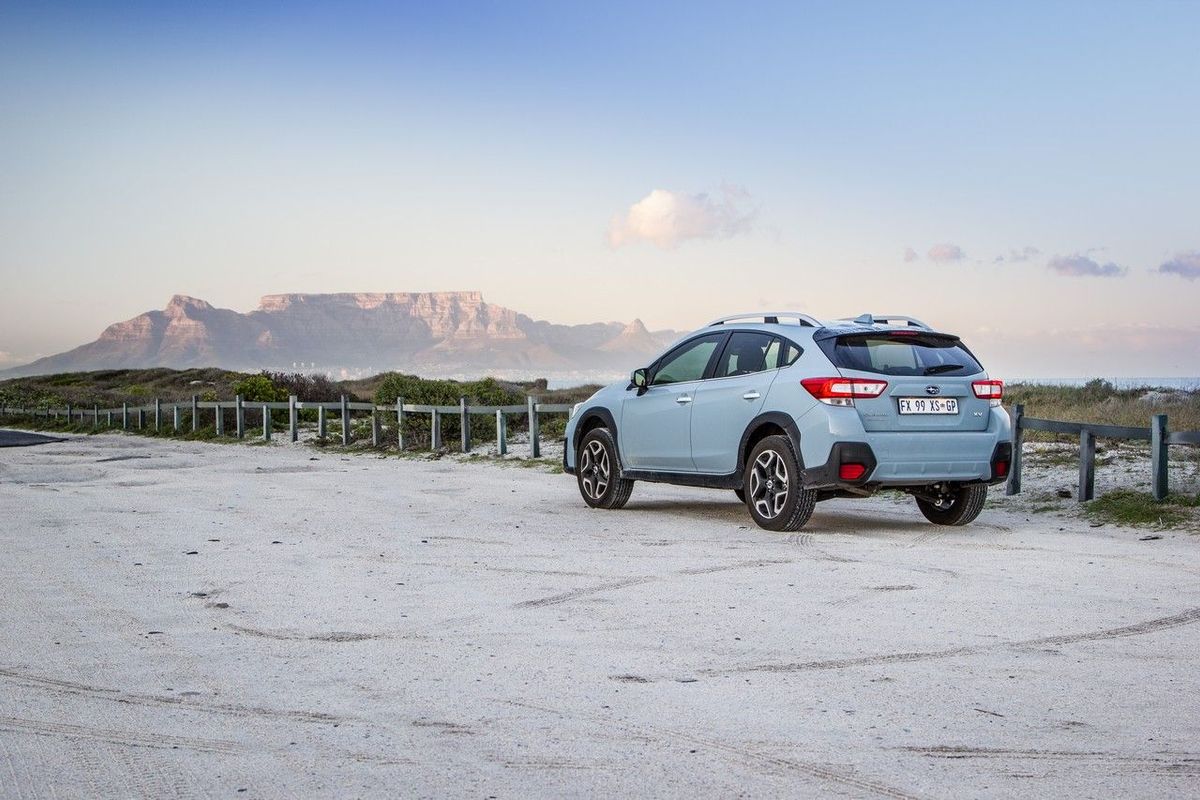
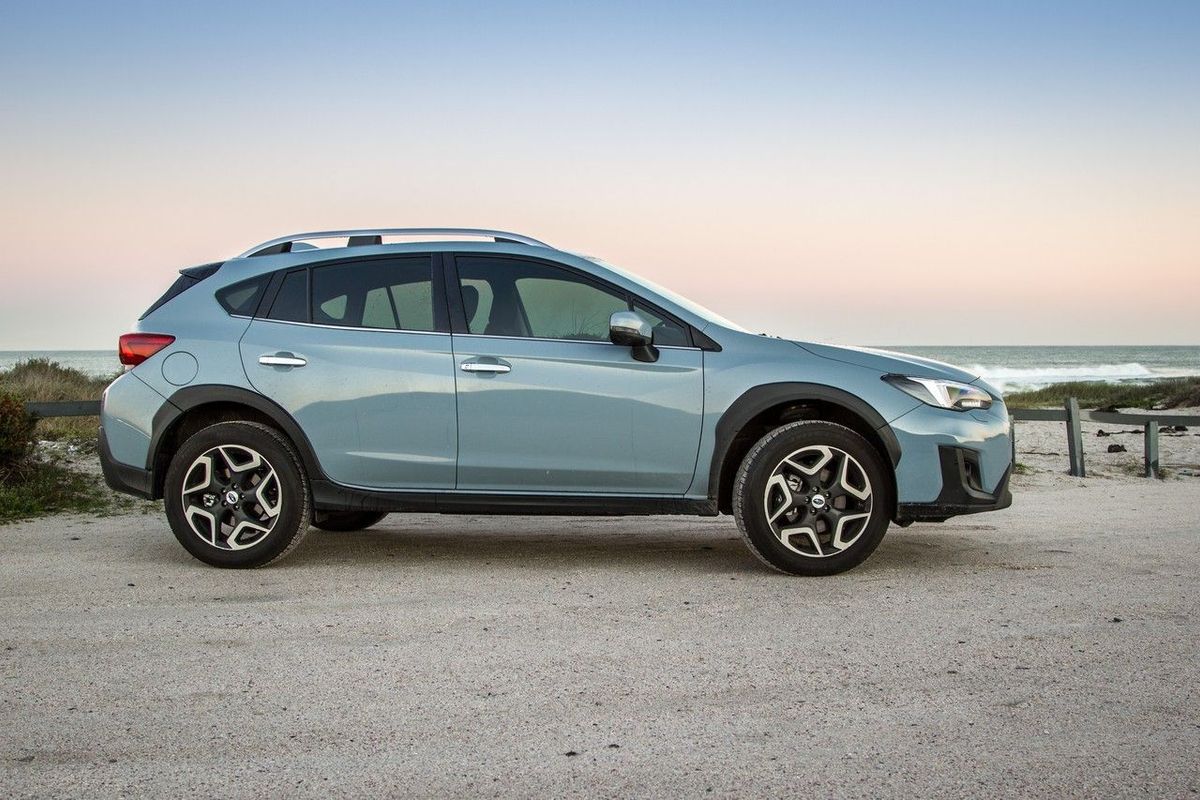
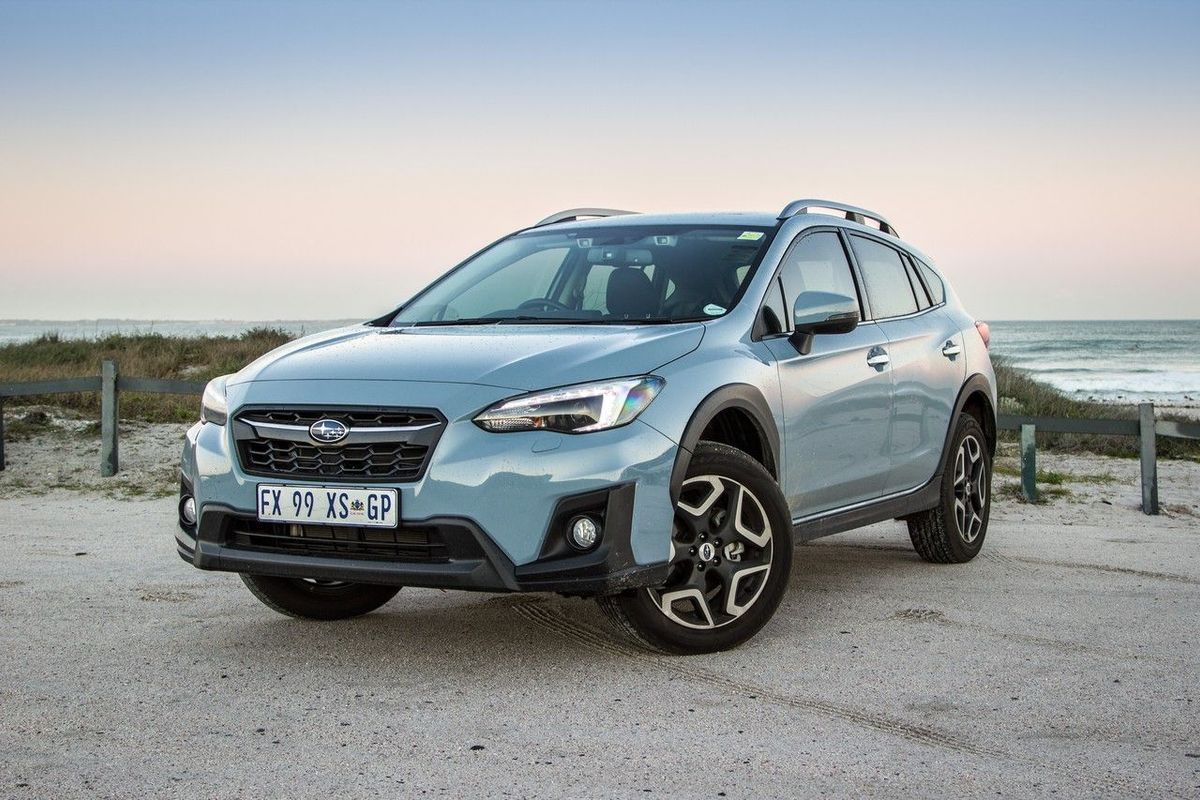
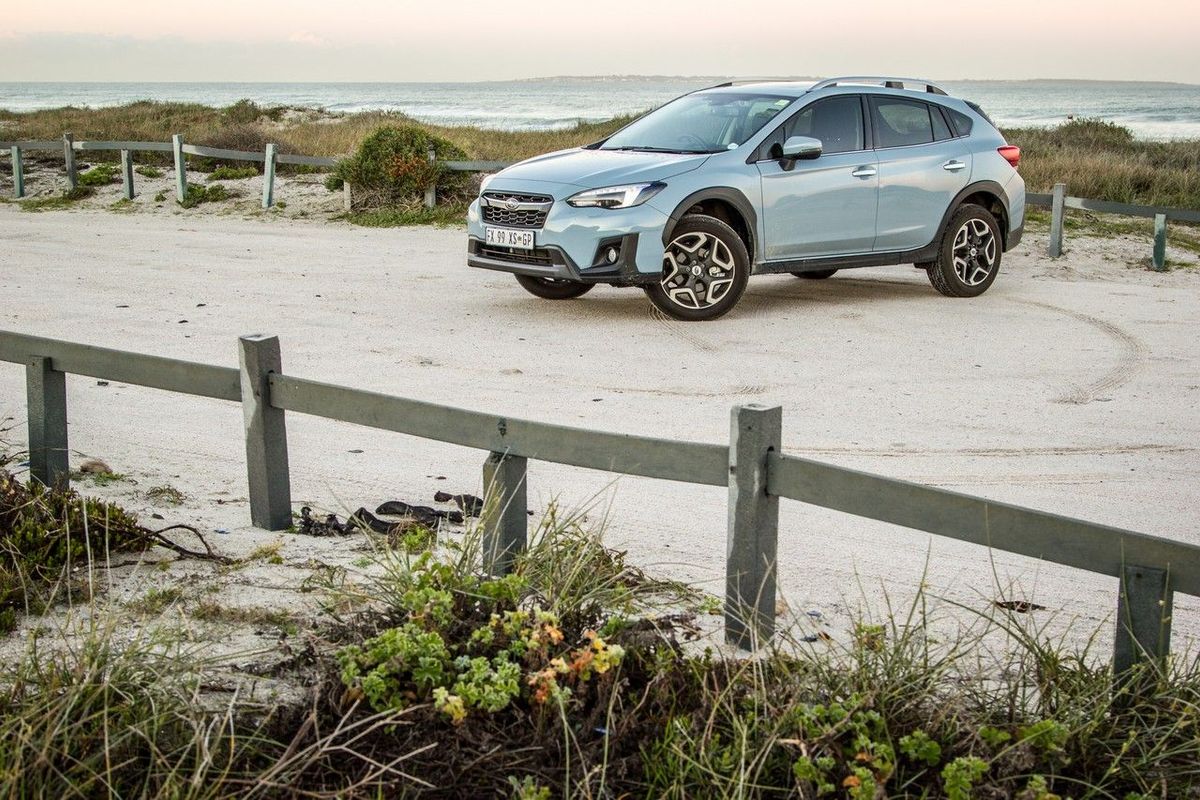
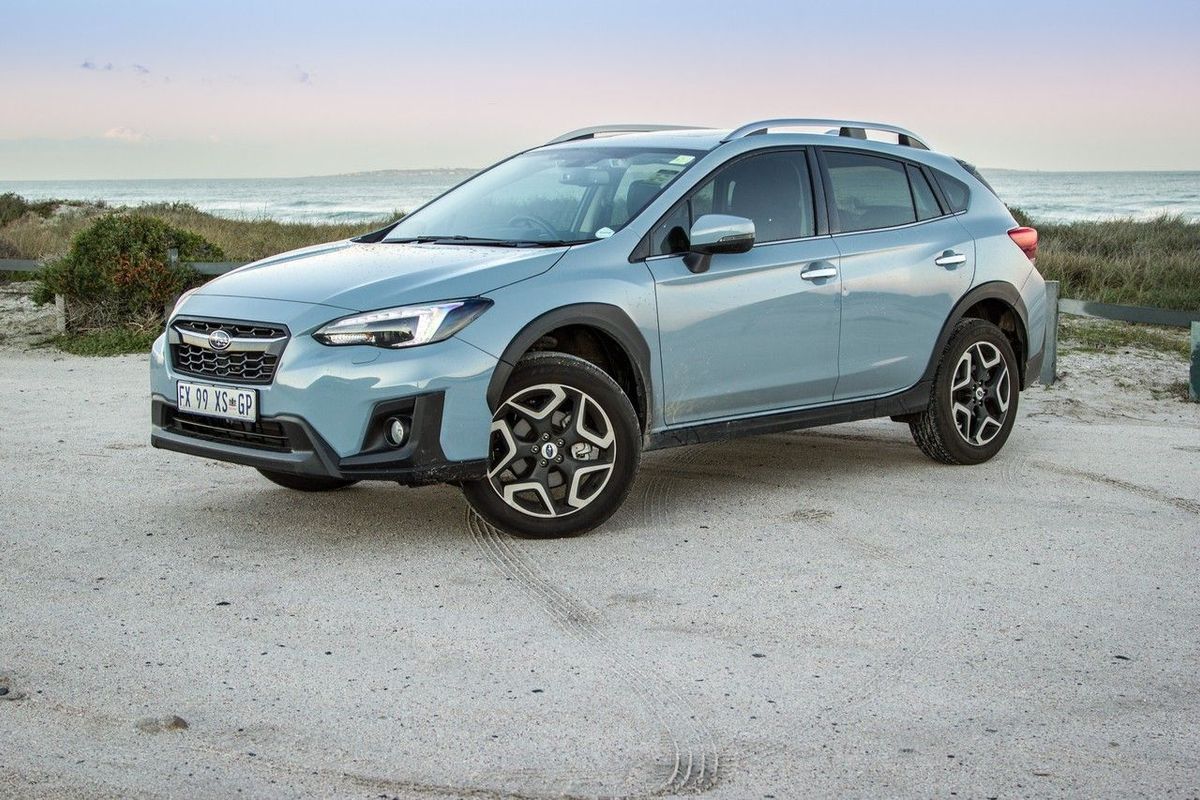
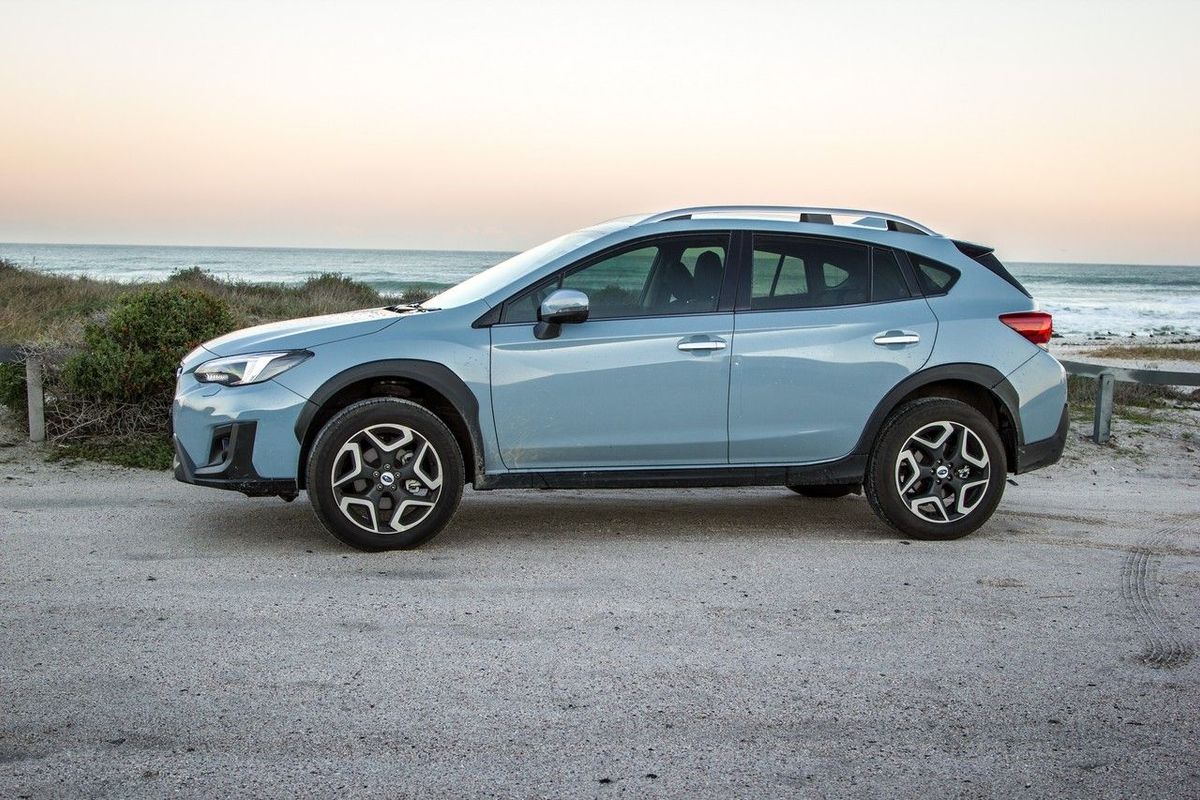
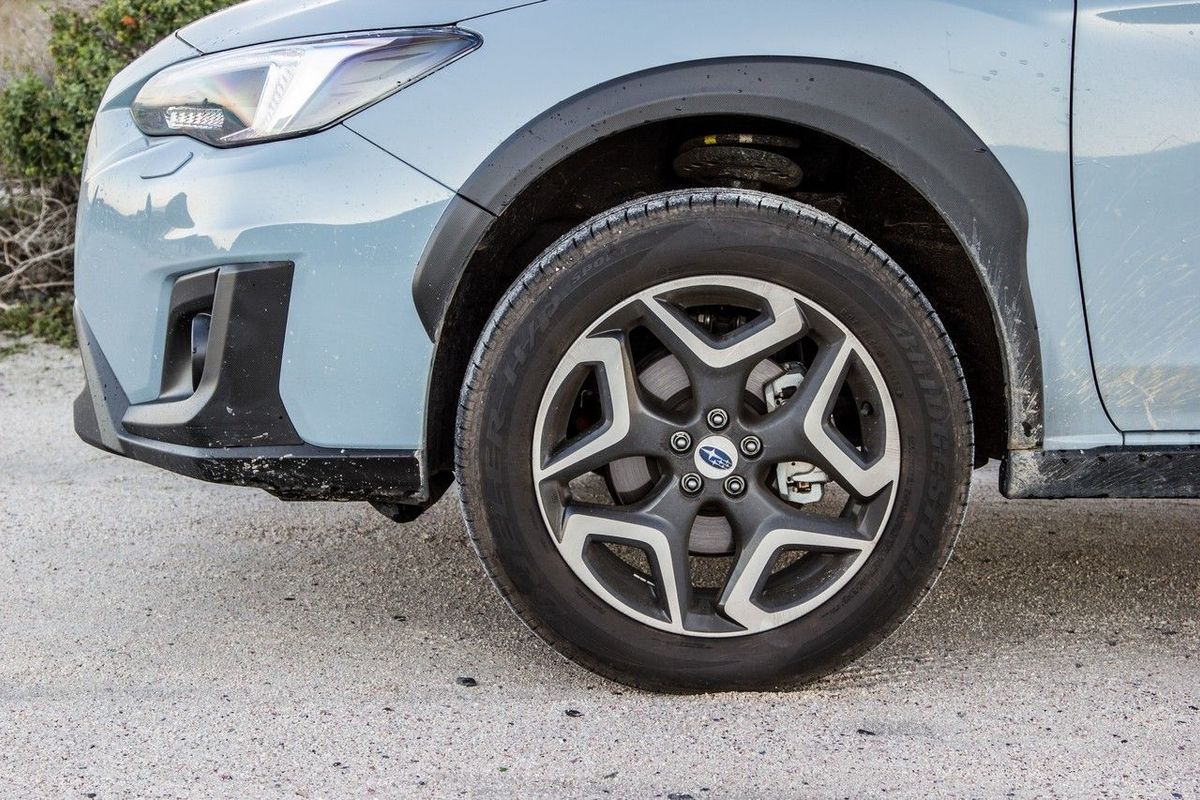
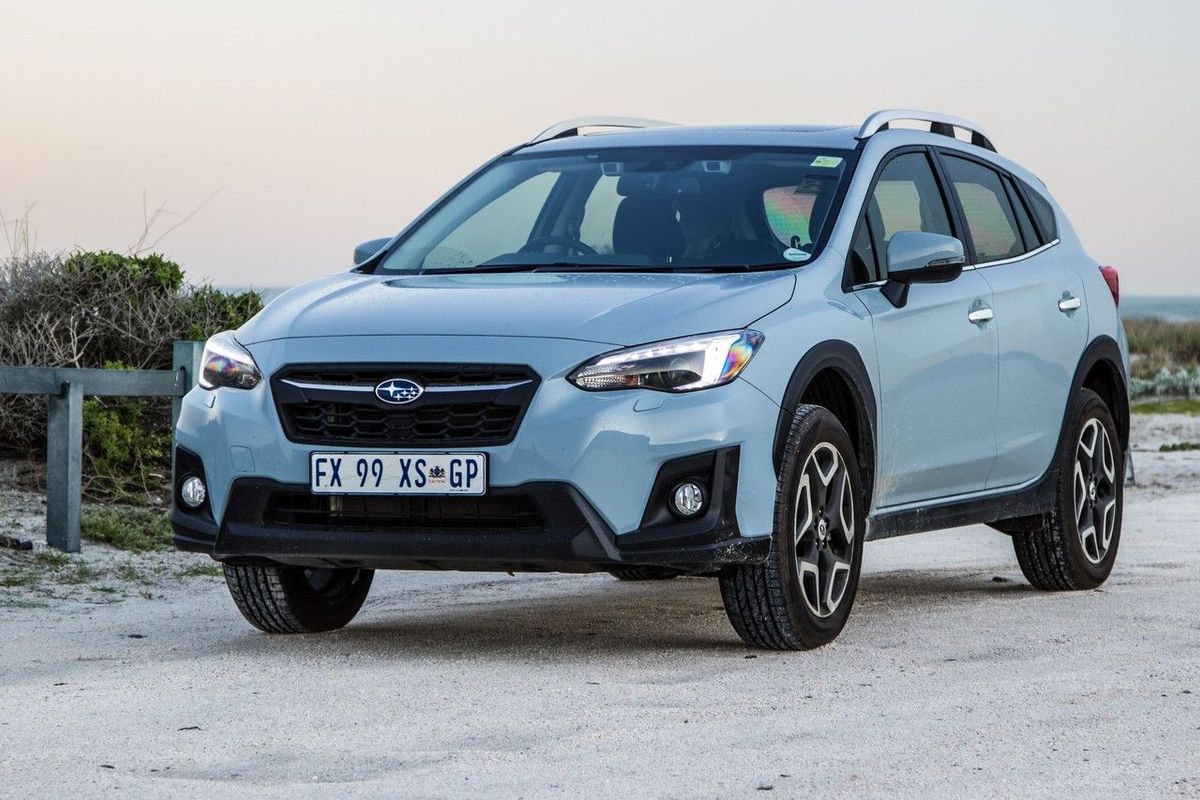
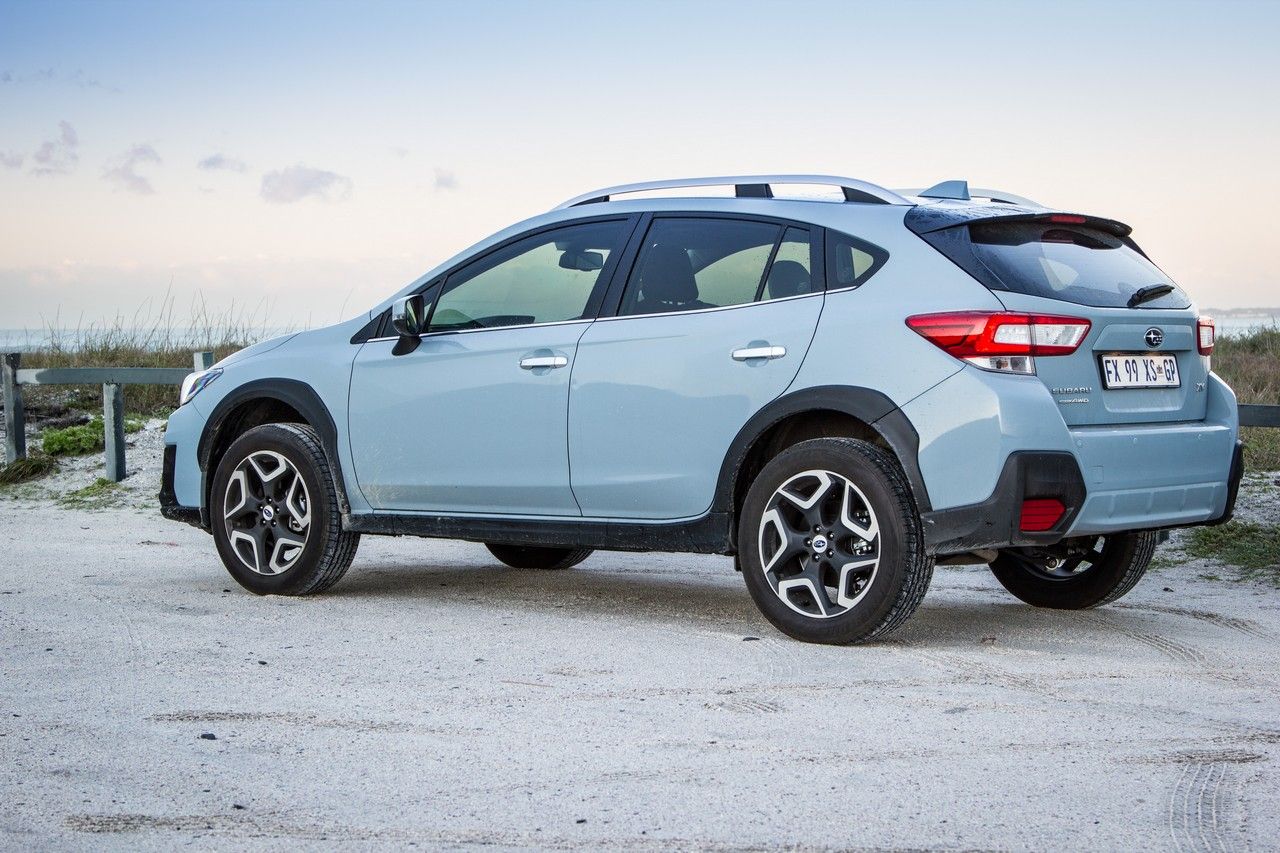
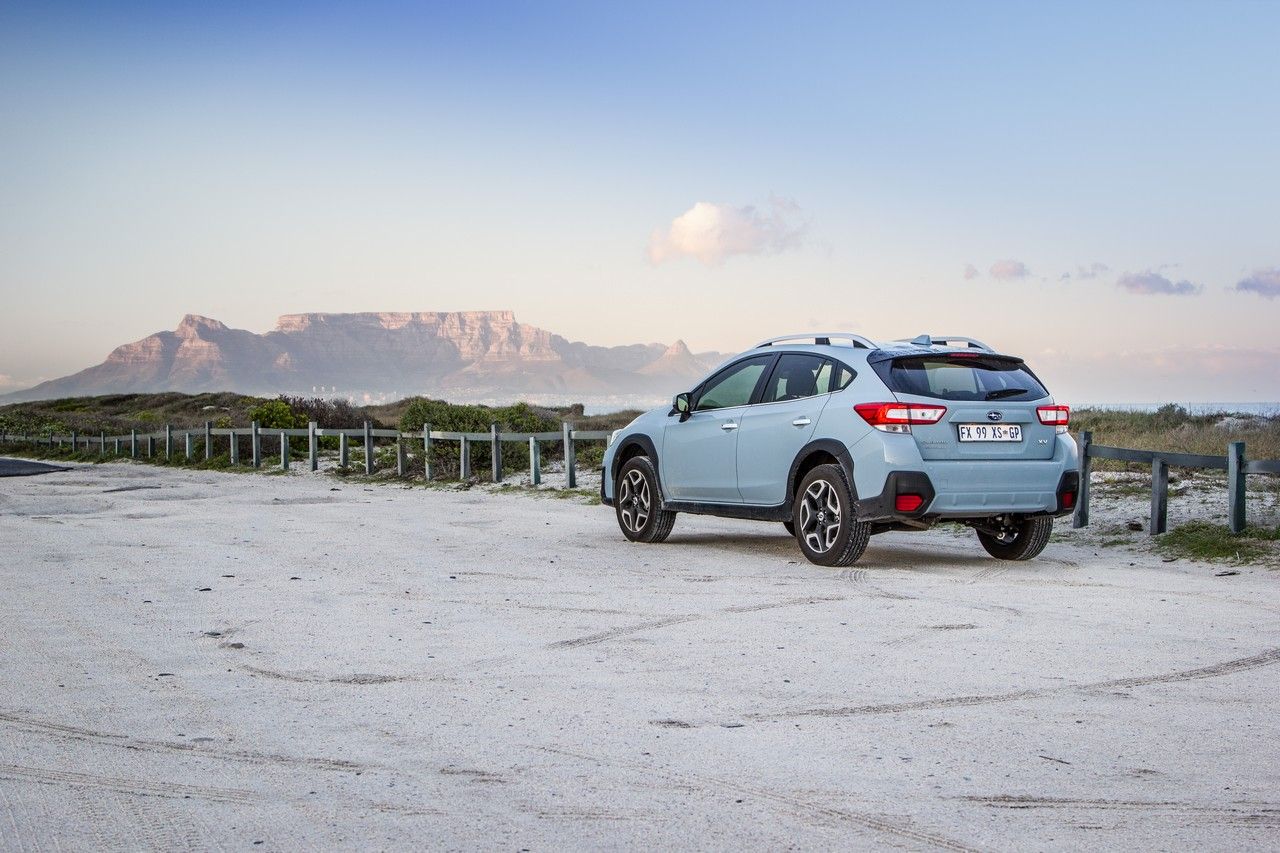
Subaru’s renewed product lineup starts with this XV. Have the great strides taken in terms of modernising the brand by boosting specification, technology and visual appeal turned it into a serious contender? We spent a few weeks with the top-spec model to see what it’s like to live with.
We like: Up-to-date infotainment, ride and build quality.
We don’t like: Relatively small luggage capacity and high loading height.
Alternatives:
For quirky appeal: The Mini Countryman is a relatively new model with desirable looks and engines. It doesn’t ride as well as the Subaru and you’ll need to add at least R100k worth of options to match the spec on the Japanese car.
For Swedish style: The Volvo V40 Cross Country is stylish enough to draw admiring glances on every street. It lacks the worry-free ground clearance to bolt down a dirt road but it has an excellent range of engines.
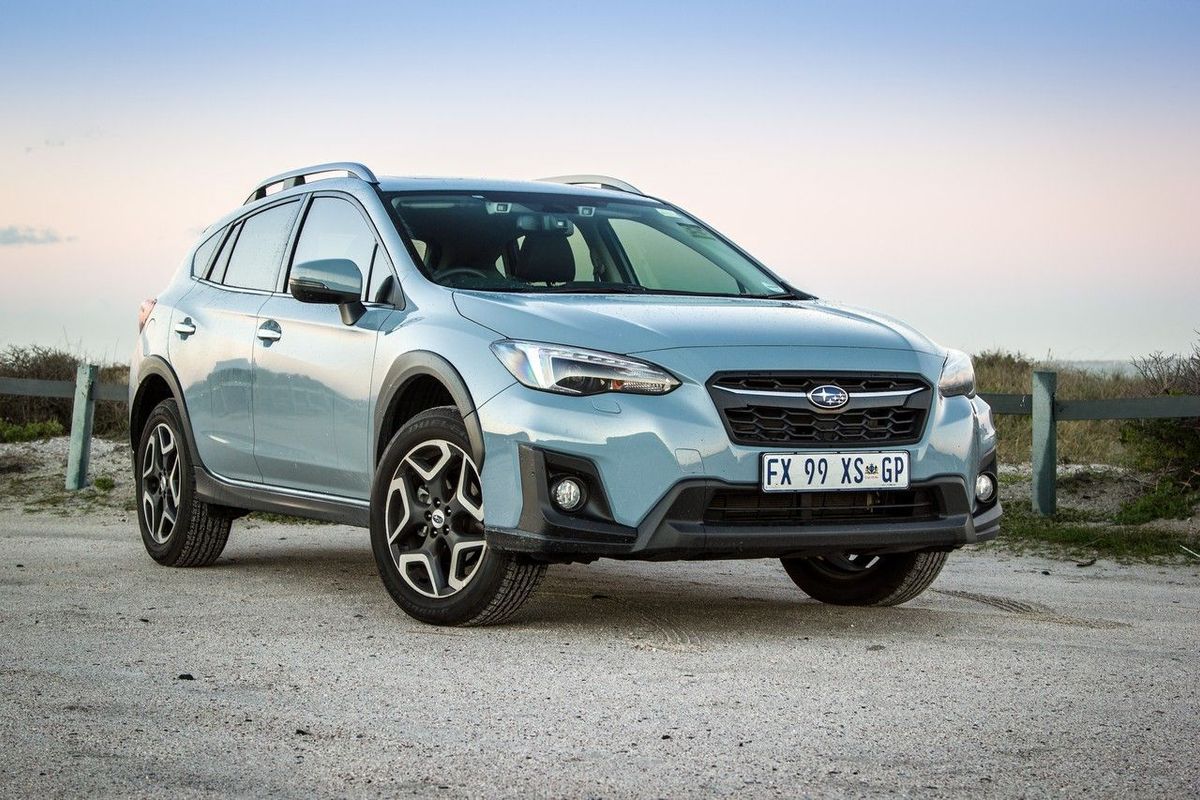
The new XV straddles crossover and premium hatchback segments with impressive upmarket feel and specification.
This is the second generation of the Subaru XV. It’s also the second car to be built on Subaru’s new global platform, first seen on the latest Impreza. Born from a desire to meet burgeoning demand for crossovers, the XV, as with the first-gen model, is a restyled, higher-riding Subaru Impreza hatch. The XV uses a new flat-four petrol engine that’s lighter and more powerful than before, the same weight-reduction tactic has been applied to the CVT gearbox. It now features an off-road mode that adapts its all-wheel-drive and other systems to deal with reduced traction situations more consumately.
How does it fare in terms of…
Ride and handling…
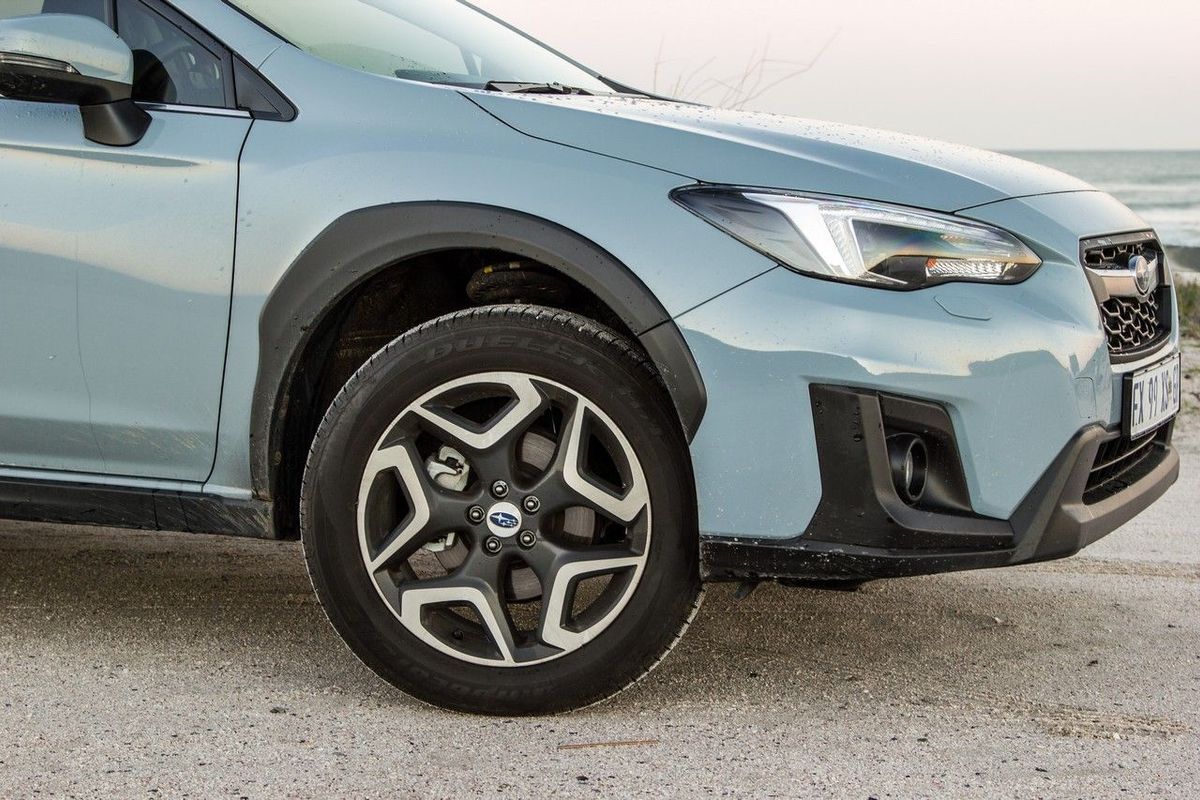
Subaru has always cleverly traded on its motorsport rallying heritage by equipping all of its passenger cars with all-wheel drive. As a result, its vehicles have generally felt sure-footed if a little stodgy and utilitarian. The new XV doesn’t feel like Subarus of old. In addition to being even better planted in faster corners, the new model rides with more sophistication than its predecessors. Even with the substantial 220 mm of ground clearance the XV’s drives more like a hatchback than a crossover.
The XV's new platform makes it feel agile and well-damped. It feels sure-footed on road and gravel.
The new platform aids both comfort and handling. It rides bumps well and corners flat thanks to firm but perfectly damped suspension. It’s the best riding Subaru yet and certainly a match for some of the more premium products out there. It also rides on slightly higher profile tyres, which leads to less thudding and crashing over unavoidable potholes.
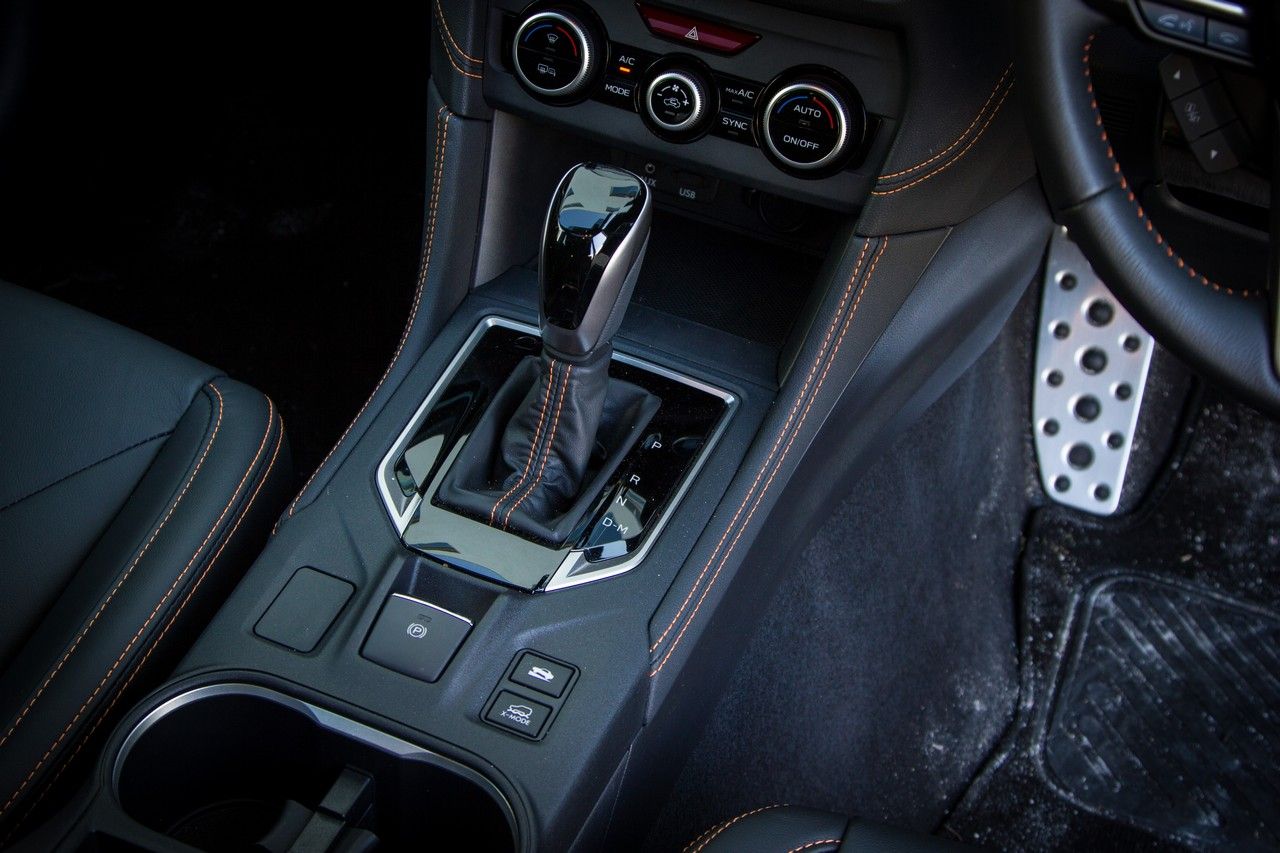
The implementation of Subaru's X-mode, which gives it a bit of off-roading bias, is a unique selling point for the XV. None of its direct competitors offer a real off-road mode complete with hill descent control. Normally, an off-road mode on a crossover is hardly ever going to be used, but if there was one brand on which it’s more likely to get use than any other, it’s a Subaru.
Practicality
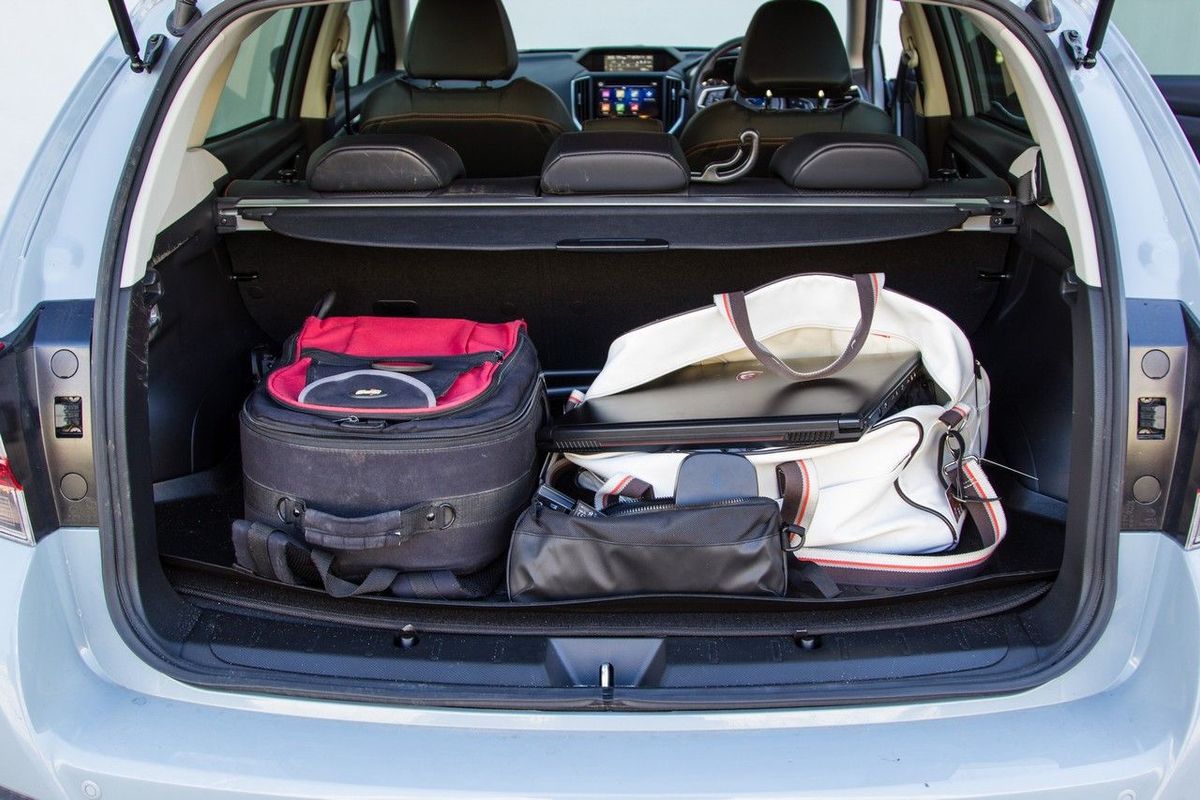
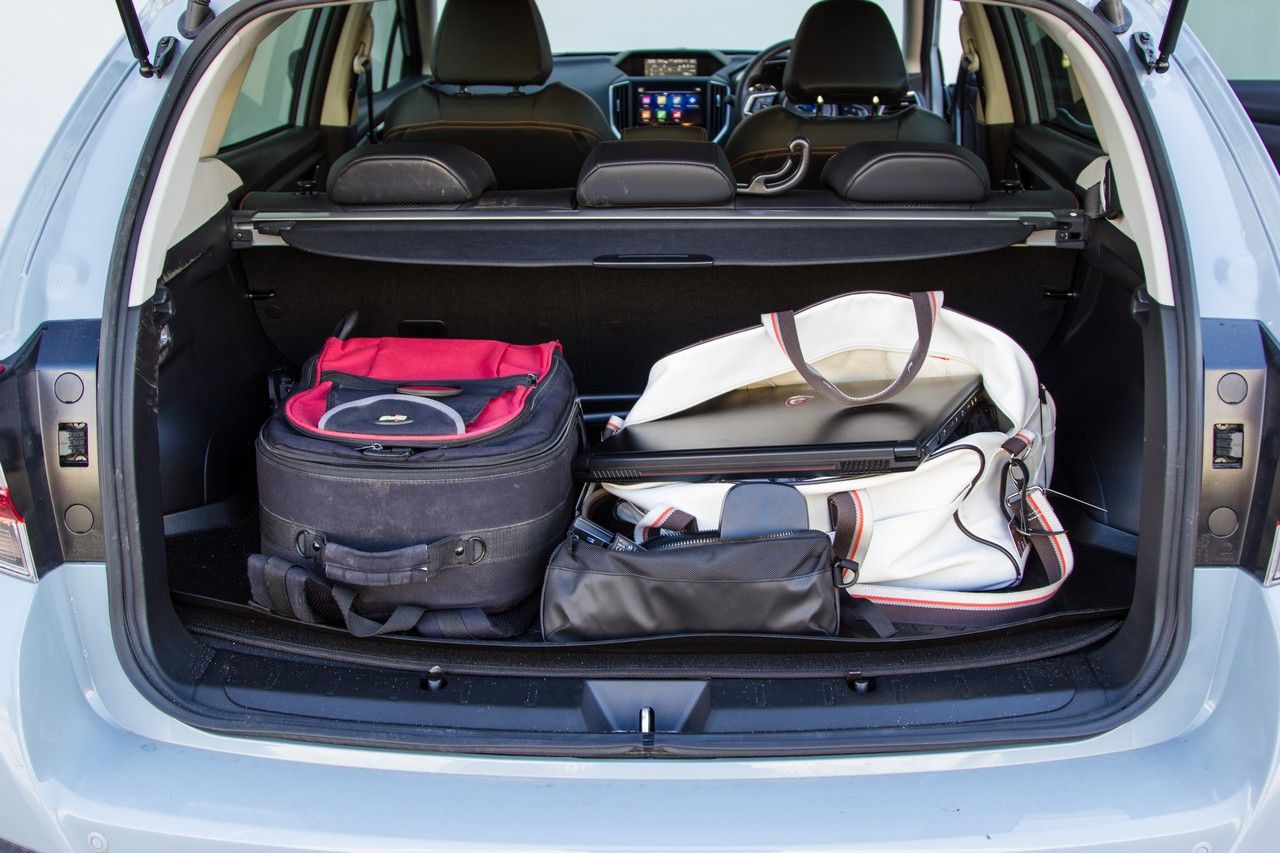
Positioned below the Forester, the XV isn't as large or as practical as its bigger brother. Despite a slight increase in capacity and a wider aperture than before, the boot is probably the XV’s weakest point. Due to the high ground clearance and short rear overhang, the loading height is quite high off the ground, meaning you have to give things a good lift to get them into the boot. It also reduces the amount of space you have to load above the parcel shelf, one of the key benefits of a hatchback. Boot capacity is listed as 310 litres, growing to 1 220 litres with the rear seats folded flat. Thankfully the shape of the boot is particularly square, so it did just managed to pass our usual test of ‘can it fit a large mountain bike whole’.
The boot is only 310 litres big and the loading level is quite high. The rubber floor accessory makes it very dog-friendly.
On the plus side, passenger space is better both front and rear and leather is standard on this top-spec model. There’s plenty of space within the cabin to store cups, bottles, keys and the like. Keyless entry solves having to grapple with shopping bags while digging into your pocket for the key. The roof racks fitted to our model here are also standard on the XV.
Engine performance
Subaru's re-engineered flat-four engine for this XV retains its 2.0-litre capacity and remains naturally aspirated. Power and torque outputs of 115 kW and 196 Nm respectively drive each axle evenly through a CVT gearbox. The new engine is some 12 kg lighter while the gearbox has shed 7.8 kg. The CVT also has a 7-speed manual mode initiated by flicking the paddle shifters behind the steering wheel.
As with all the CVTs we have driven, they work best when driven politely and not hurried. Subaru’s transmission is the best iteration of a CVT we've yet to test, with smooth comfortable acceleration at city speeds. But ask a bit more from the throttle pedal and the continuously non-variable drone whines away masking the sense of acceleration.
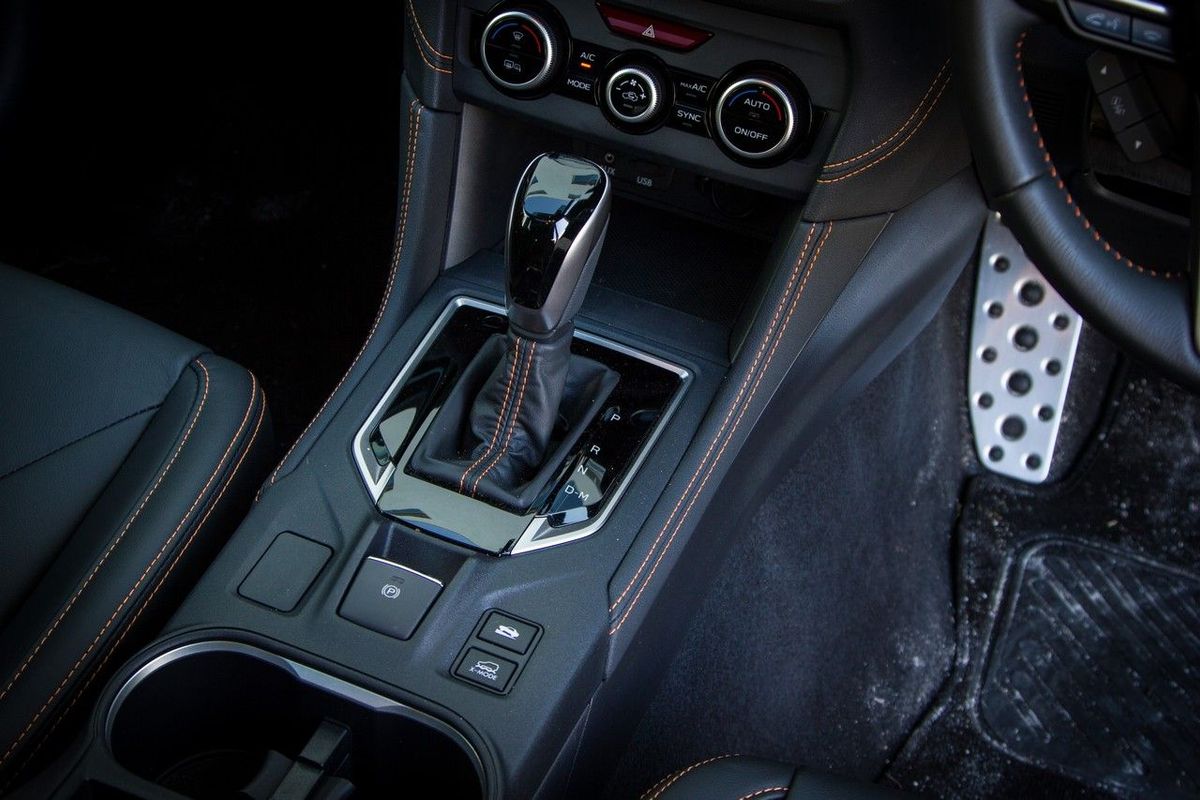
The CVT gearbox has a 7-step manual mode if required. X-mode with hill descent control is also available.
It handles freeway speeds well, although the dearth of immediate torque requires more space and planning to get by. Fuel efficiency has not always been a strong point for Subarus, but this model claims 7.3 L/100 km. Our 2 week and 1 000 km plus worth of mixed mileage returned a pleasing 7.6 L/100 km, around the same as we generally yield from a 2-litre turbodiesel.
Safety and tech
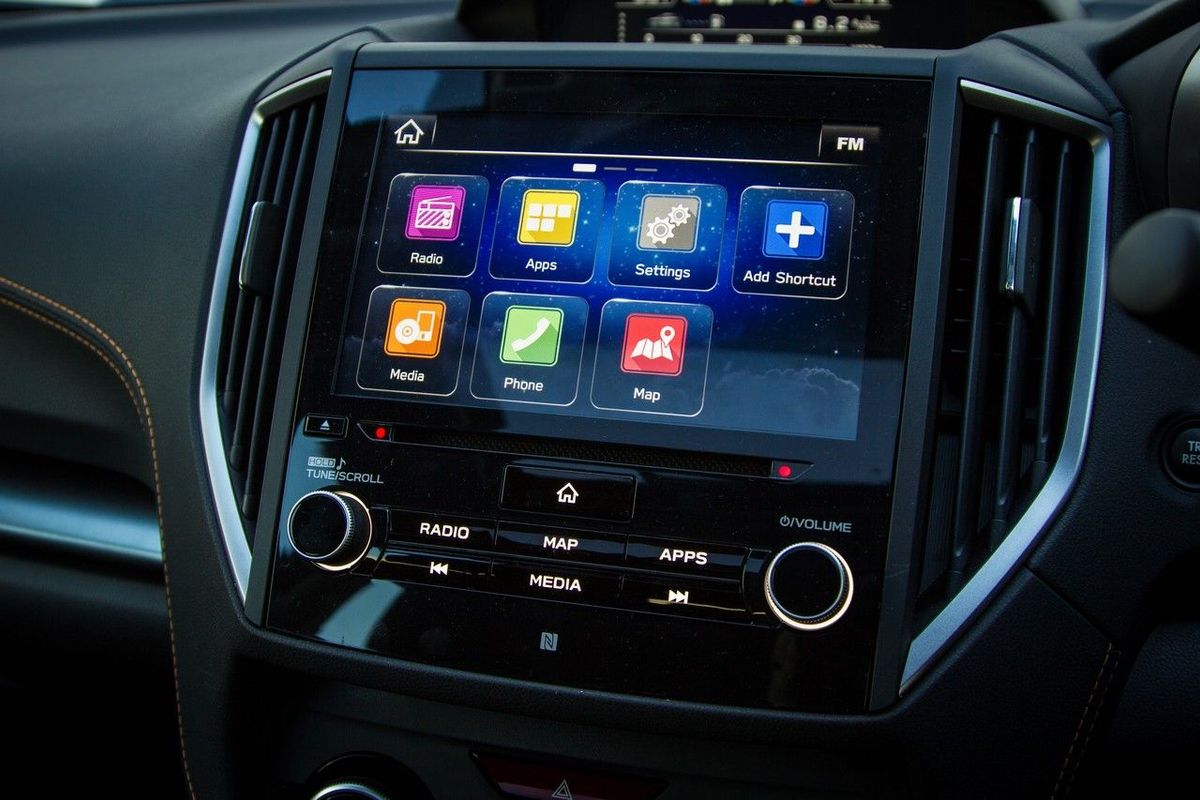
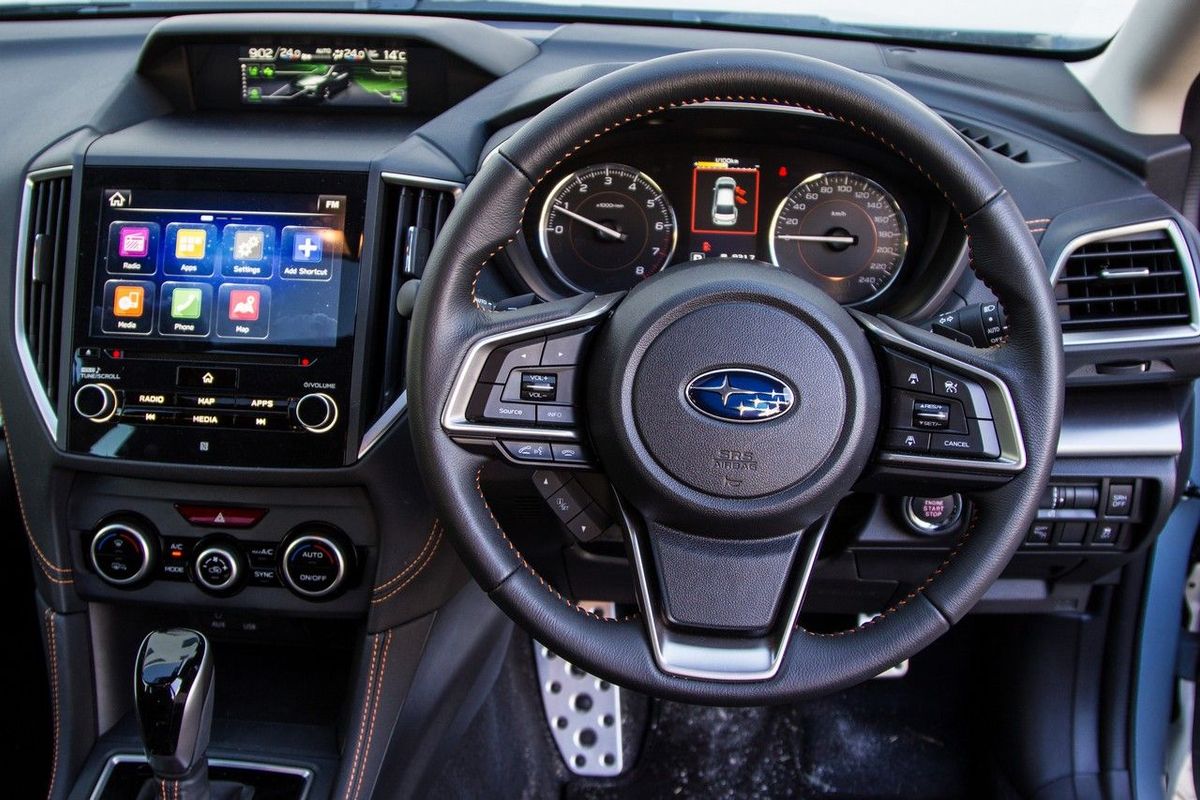
The easiest area to note Subaru’s improvement is in the safety and tech department. Starting with the infotainment system, the 8-inch touchscreen has improved resolution, is more touch-sensitive and processes inputs faster making it more of a pleasure to use. It is Apple Carplay and Android Auto capable and there’s a single USB and auxiliary jack. Navigation is included but with smartphone integration, it's easier to use a bit of data and get traffic alerts too.
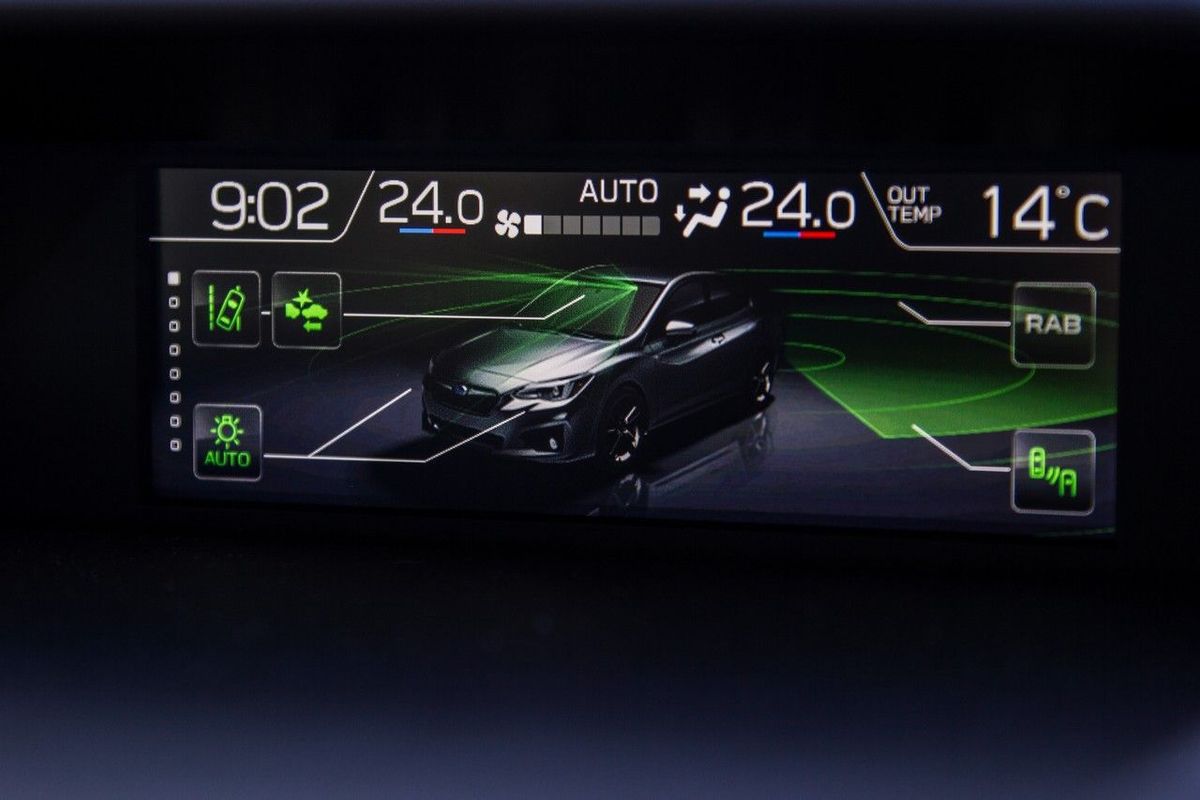
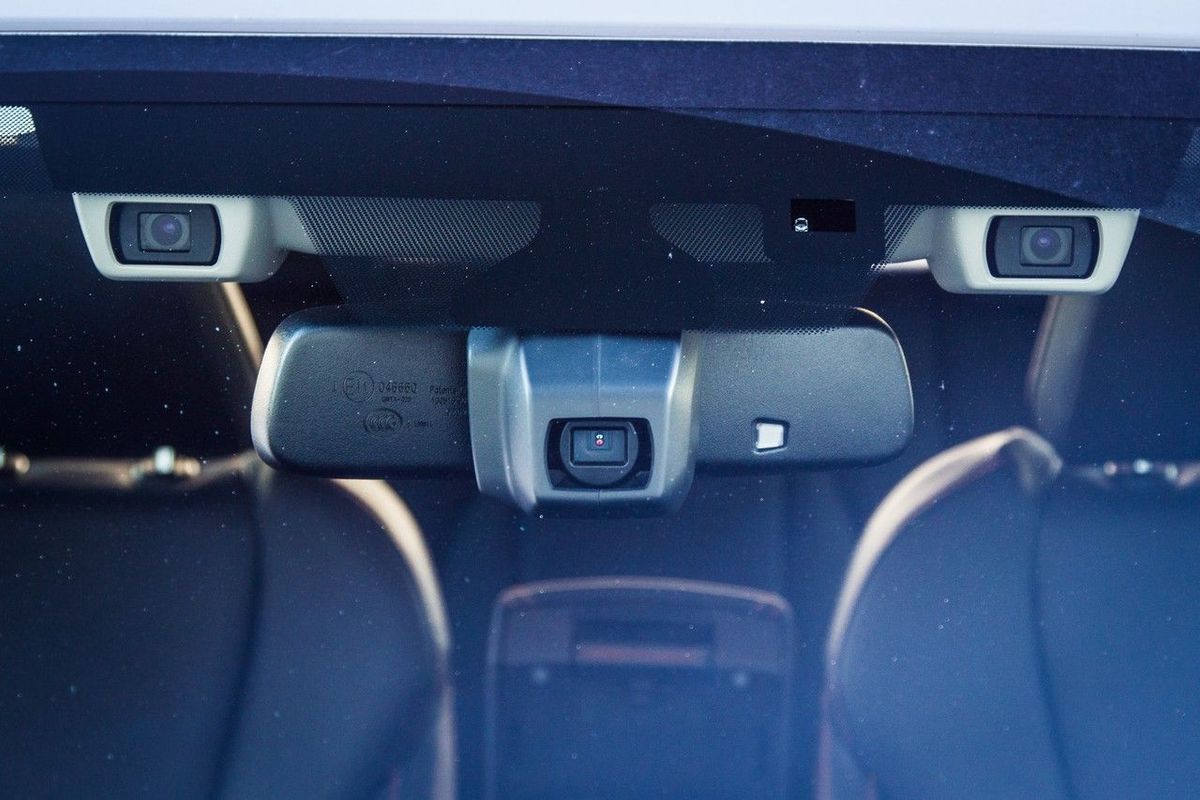
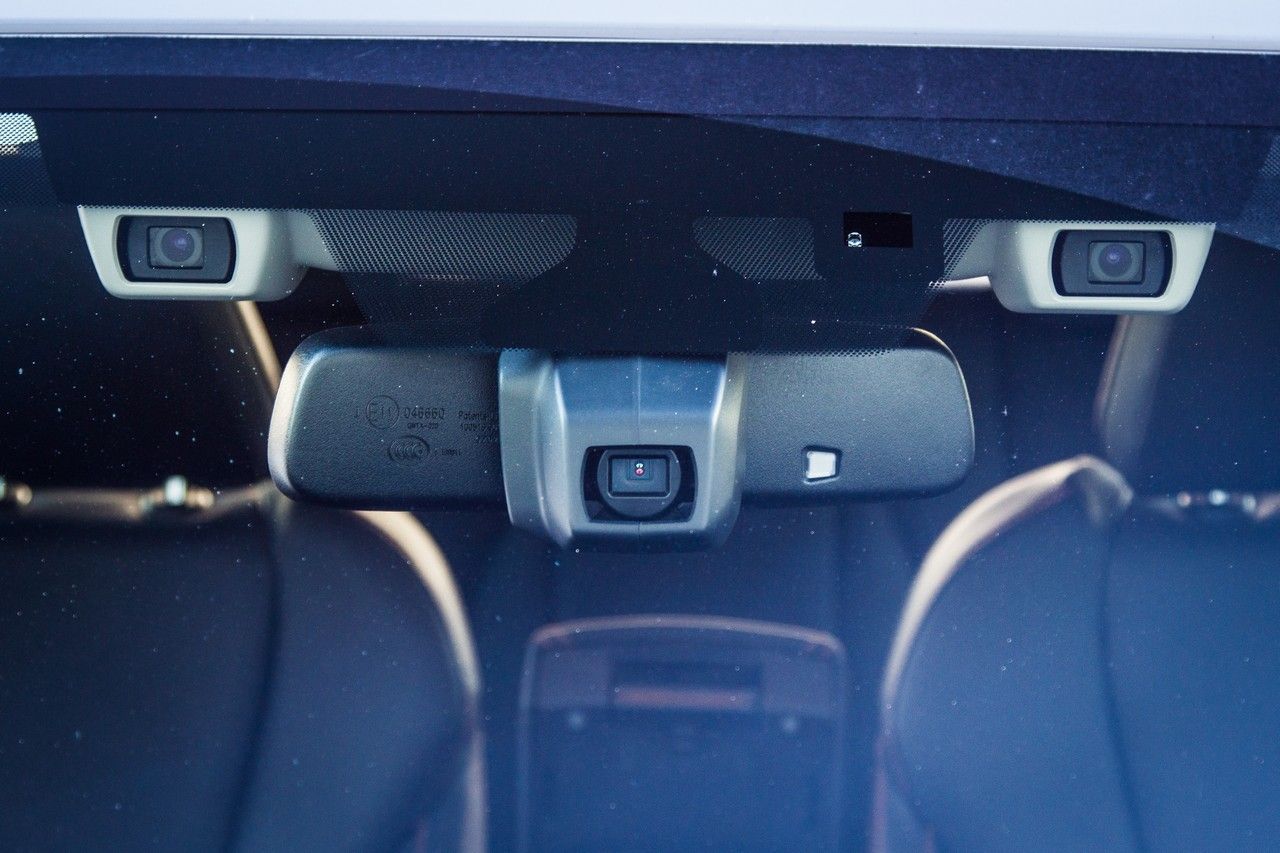
Subaru's Eyesight system uses multiple cameras at the top of the windscreen to reduce the chance of accidents.
The R440k XV’s party piece is that’s it is fully kitted with Subaru’s Eyesight safety pack – an impressive list of driver assistance features that includes turning headlights, high beam assist, blind spot detection, rear cross traffic alert and front and rear parking sensors. Adaptive cruise control, pre-collision braking and lane departure warning.are also standard on the XV, features that are usually optional extras on rival brands.
The XV scored the highest ever rating on the Japanese New Car Assessment Program when it was crash tested. In terms of tech and safety, the XV appears to offer the most specification by some margin at this price point.
Pricing and warranty
Subaru markets itself as a premium offering, but by loading the top-spec ES model with plenty of kit, it's also very good value at just R439 000 (September 2017). It is sold with a 5-year/150 000 km warranty and 3-yer/75 000 km maintenance plan.
Solid build quality, improved infotainment system and a long list of safety features make the XV excellent value for money.
Verdict
With the new XV, Subaru has pushed its crossover into premium territory in terms of ride, build quality, safety and technology. There’s not much that can touch it in terms of standard specification at this price point. The Subaru brand is renowned for its gravel road ability and hard-wearing nature, the XV tows the line with all-wheel-drive and a traction control system that helps it in trickier situations. It feels, however, more like an excellent hatchback that rides and handles with authority.
It could do with a bit more boot space and a lower loading height to deal with an entire family’s luggage, but passenger space has been prioritised for comfort. The engine and gearbox setup is not exactly class-leading in terms of performance stats, but it’s sufficient as an everyday runabout and appears to be quite frugal. The price tag of R430 000 makes it an excellent value for money offering and with Subaru’s reliability and peace of mind track record, it's certainly worth shortlisting.
It's for good reason then that the Subaru XV 2.0i-S ES is in the running for the win in the Premium Hatchback category of the Cars.co.za Consumer Awards – Powered by WesBank.
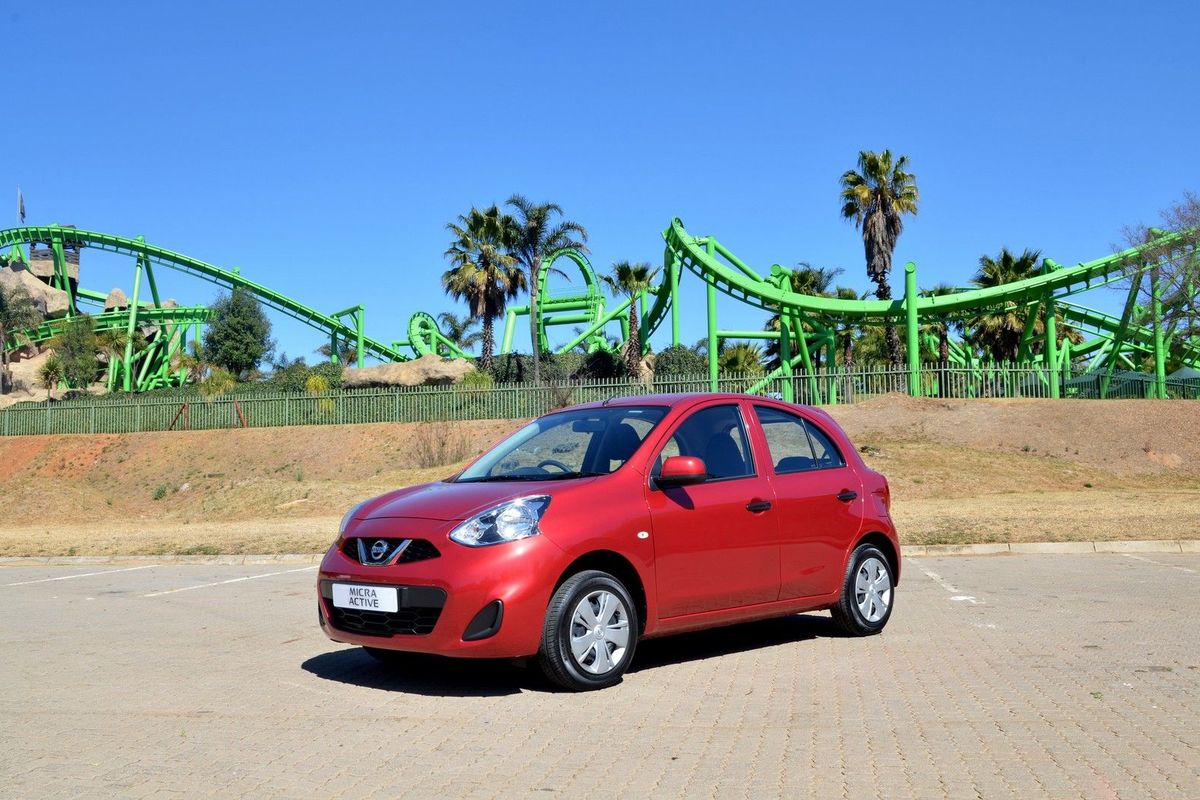
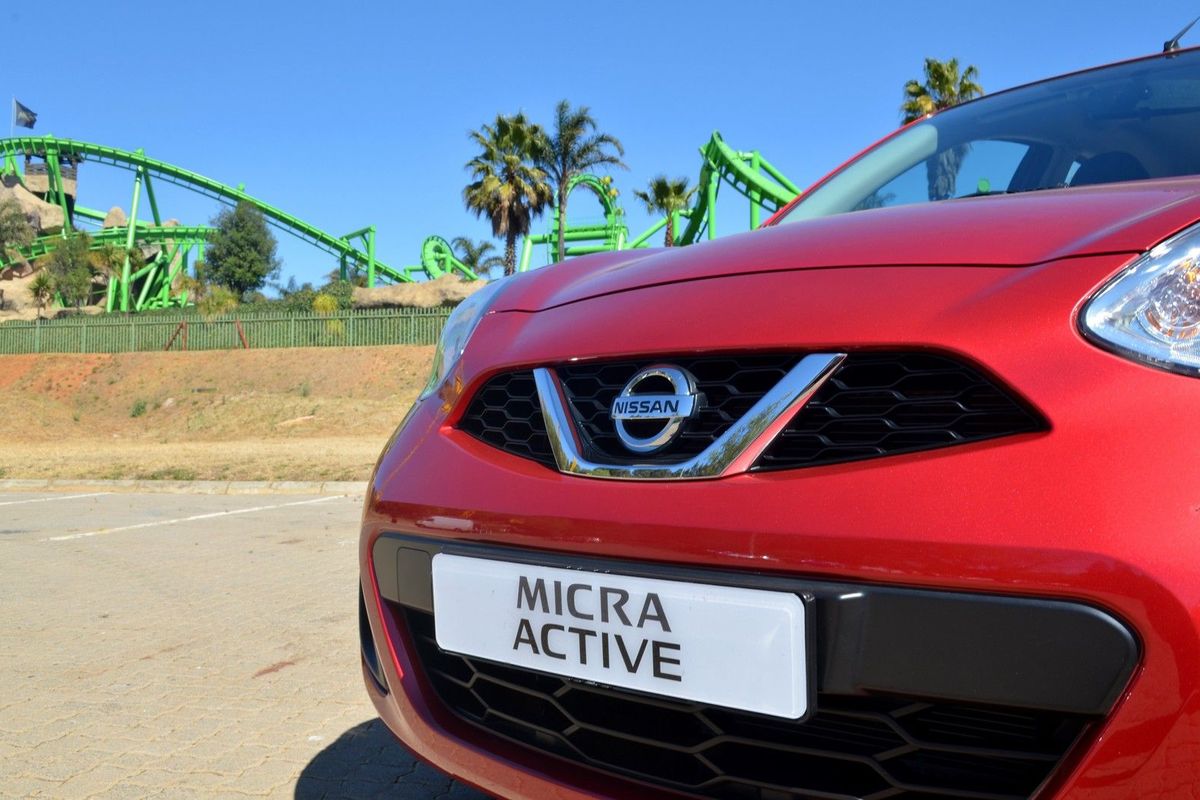
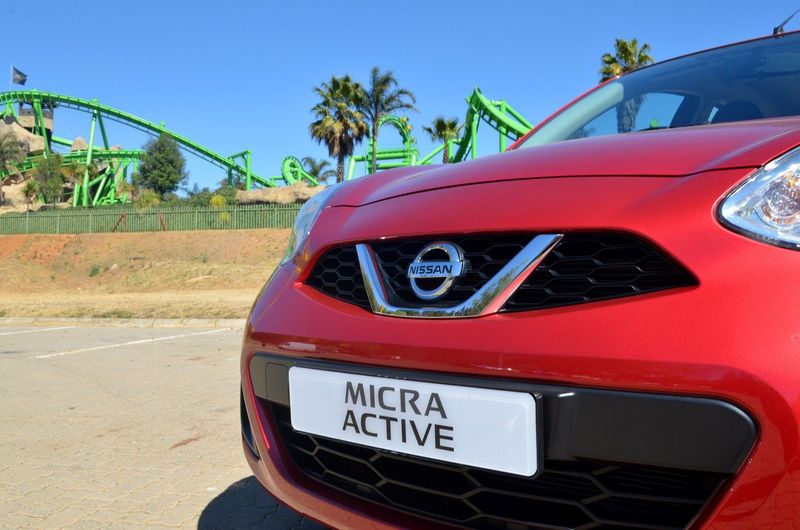
This is not the new Nissan Micra. Rather the Micra Active. Yes it looks awfully familiar, but before you sharpen your pitchforks let me explain.
The (actual) new Nissan Micra, the one that you're waiting for is indeed imminent. You'll have the opportunity of buying one in March, which coincidentally, is its name in many other lands. But where that car will compete with the likes of the Ford Fiesta and VW Polo, this car, the Micra Active will battle the likes of the Figo and Vivo. In short, it relies on the tried and tested formula of reengineering (in this case, in India) the outgoing model with a raft of upgrades, albeit mostly of the aesthetic variety. Wrap that up in a good value prospect and it's hard to ignore the Active for what it is. Pure simple motoring. No fuss. Yes, it still looks like a boiled sweet, but it’s cute and endearing and that is the Japanese way.
The launch Active-ity
Well this is new. We haven't been whisked to the coast to navigate some asphalt spaghetti to fortify the validity of the Micra Active's sporty bodykit. Nor have we roughed it in a wood or desert because someone in a boardroom thought they'd project a rough demeanour onto a most urbane of B segment debutantes. Instead, we're invited to experience the fun side of Micra Active ownership in the parking lot of the Gold Reef City theme park. Here we'd be encouraged to drop the clutch and tango with an array of bollards with the gusto of Ken Block, albeit with the coordination of Mr Bean.
A 1.2-litre naturally aspirated engine lives under the bonnet of the Micra Active.
I personally got to wring the neck of the 1.2-litre engine, wrestling from it the full reserves of 54 kW and twisting from its lungs the 105 Newton metres it said on the brochure. I left black lines on the asphalt to the dismay of our instructor and rendered the air noisy and smoky with burnt offerings of rubber until we were all encouraged to leave. This is where things began to get interesting because, and this is the best kind of shocking, we were unleashed onto the roads of Soweto to take in the sights while getting better reacquainted with the Nissan Micra Active. The route was short but provided enough city and town commute to experience the little car’s handling prowess beyond the gymkhana course. The South West Townships are not exactly flat either, providing a fair challenge for the 1.2-litre mill under the bonnet plus it steers like a peach. It always has. Entry-level?
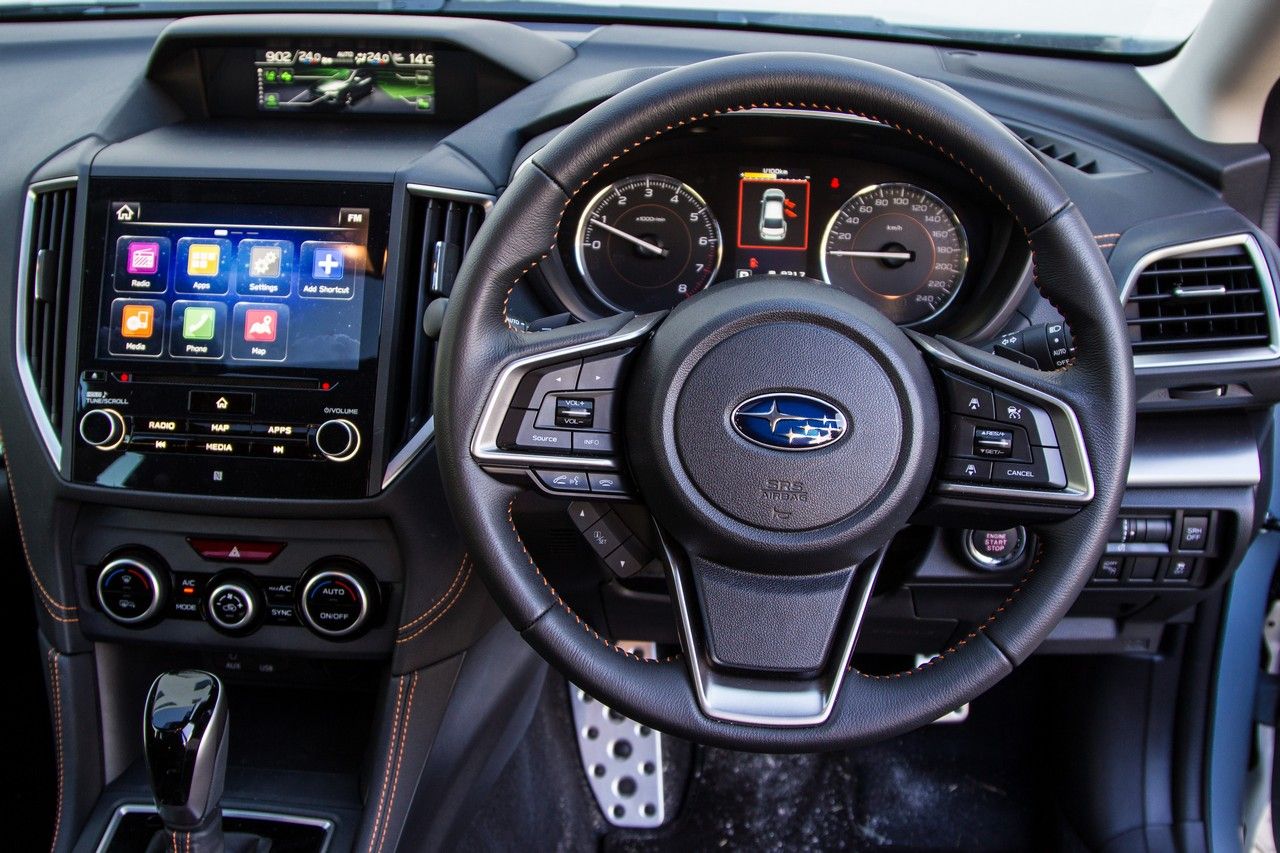
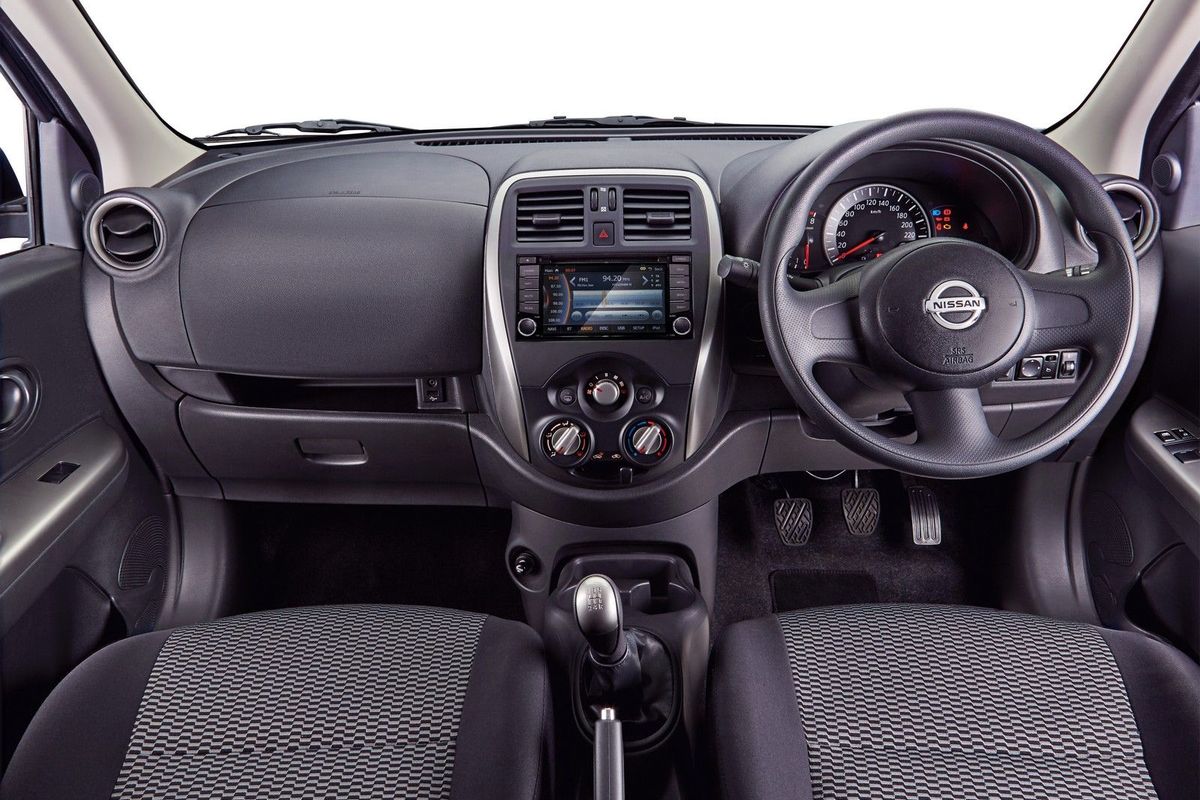
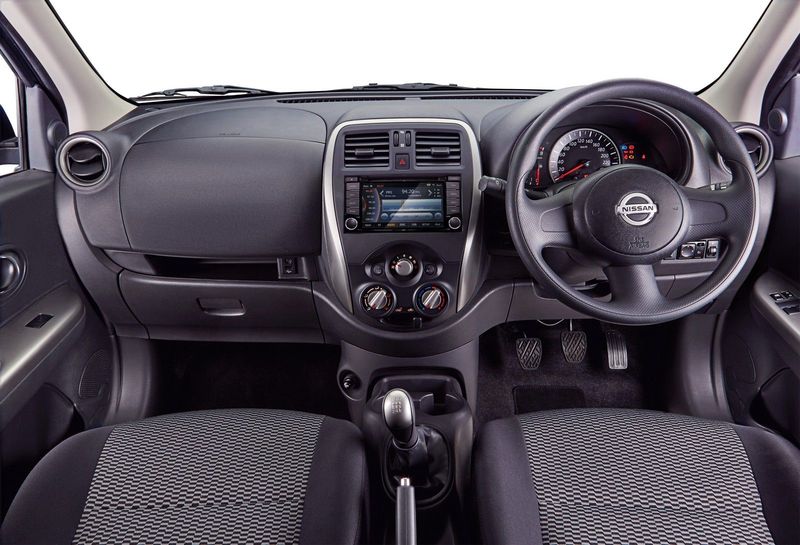
Active feature the touchscreen infotainment system pulled from the Navara.
Don't use the C word
It's cheap. Sorry. Affordable. At R159 900 the Micra Active represents great value for money but refreshingly our hosts didn't insist on drumming this into our heads. Sure, there were gentle (and favourable) reminders of Nissan's respectable warranty and service plan, and we were enlightened with the extended standard spec list, as well as tickled with the options list; two items, specifically a 7-inch touchscreen multimedia audio system and that groovy styling upgrade dubbed the Trendsetter pack, comprising black alloy hoops and a roof spoiler. It's not for everyone, but I wouldn't have it any other way.
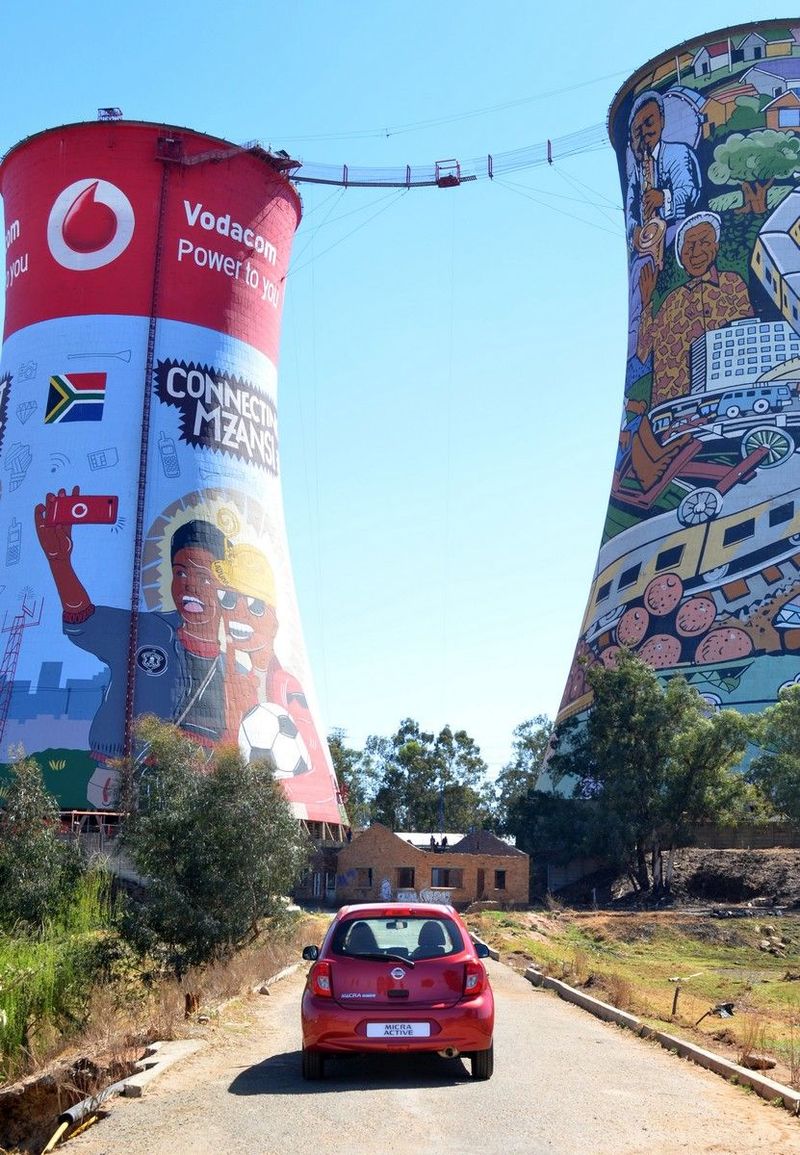
Launch route took us from Soweto through to the bungee jump towers.
The new audio system complete with touchscreen navigation is comparable to the unit in the new Navara and really raises the Micra's game in terms of the living space, especially when it comes to connectivity. Better still you’ll get one gratis if you buy a new Micra Active within its launch window (approx. 3 months). Outside of the launch offer, it will set you back around R8500, as will the bodykit. Bells and whistles aside, the cabin is an ergonomic example of Japanese design and that means functional and serviceable with good tactility throughout.
Verdict
We've seen this formula work at VW, Ford and even Renault with their range of Sanderos. Nissan's take on it is not by any means unique, but get past the back story and the Micra Active is a flawless small car. It could have bigger engines but nobody on our test drive bemoaned the little 1.2 doing service here. Its design is painfully similar to the donor car, but the new stuff is good stuff.
Kitted out with black wheels and roof spoiler, it looks every bit the urban runabout for someone who needs to be very mobile, and takes pride in their appearance. It isn't the new Micra but it's a sharp substitute till that arrives. And when you consider how well equipped it is, well you might not feel the need to upgrade in a hurry. Add to that a 3 year / 90 000km service plan and 6 year / 150 000km warranty and a variety of safety implements such as ABS, EBD and BA, remote central locking and airbags and the Micra Active even delivers on peace of mind too.
Nissan Micra Active 1.2 Visia
Price: R159 900
Power: 54 kW / 105 Nm
Fuel Economy: 5.2 litres per 100km
Service Intervals: 15 000km
Warranty: 6yr/150 000km
Service Plan: 3yr/90 000km
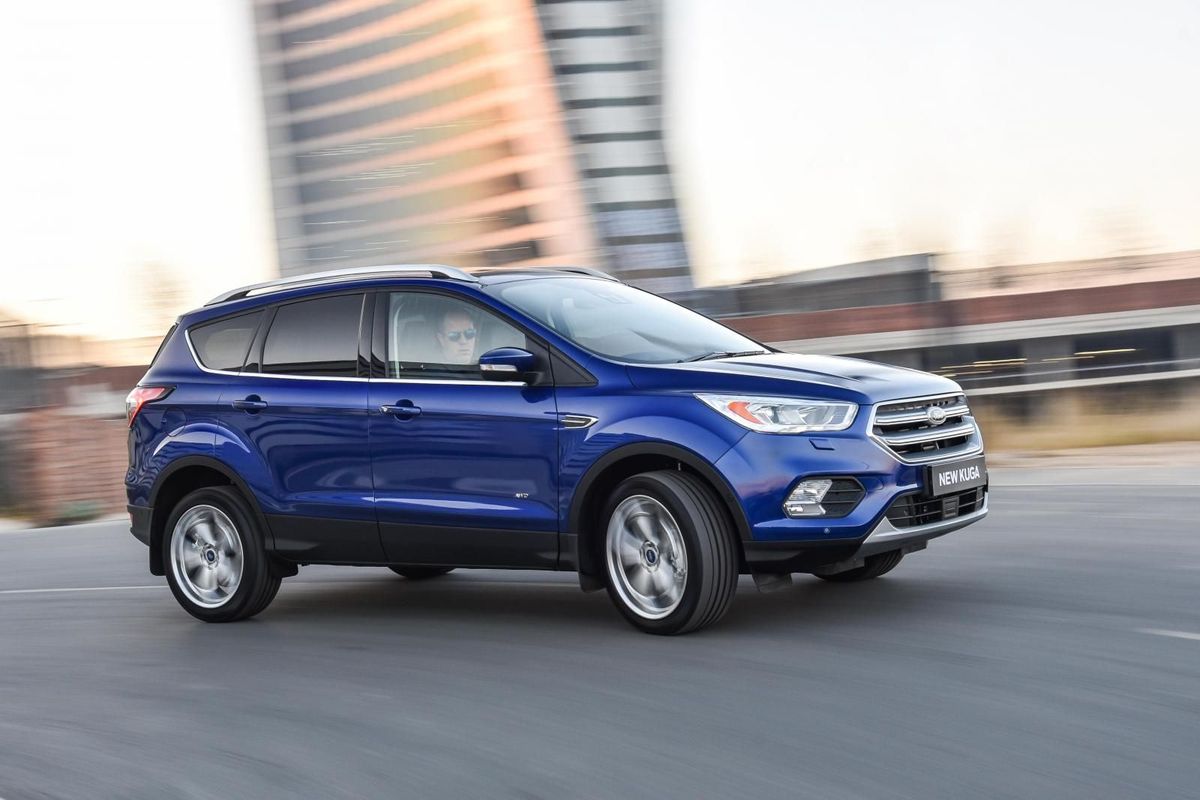
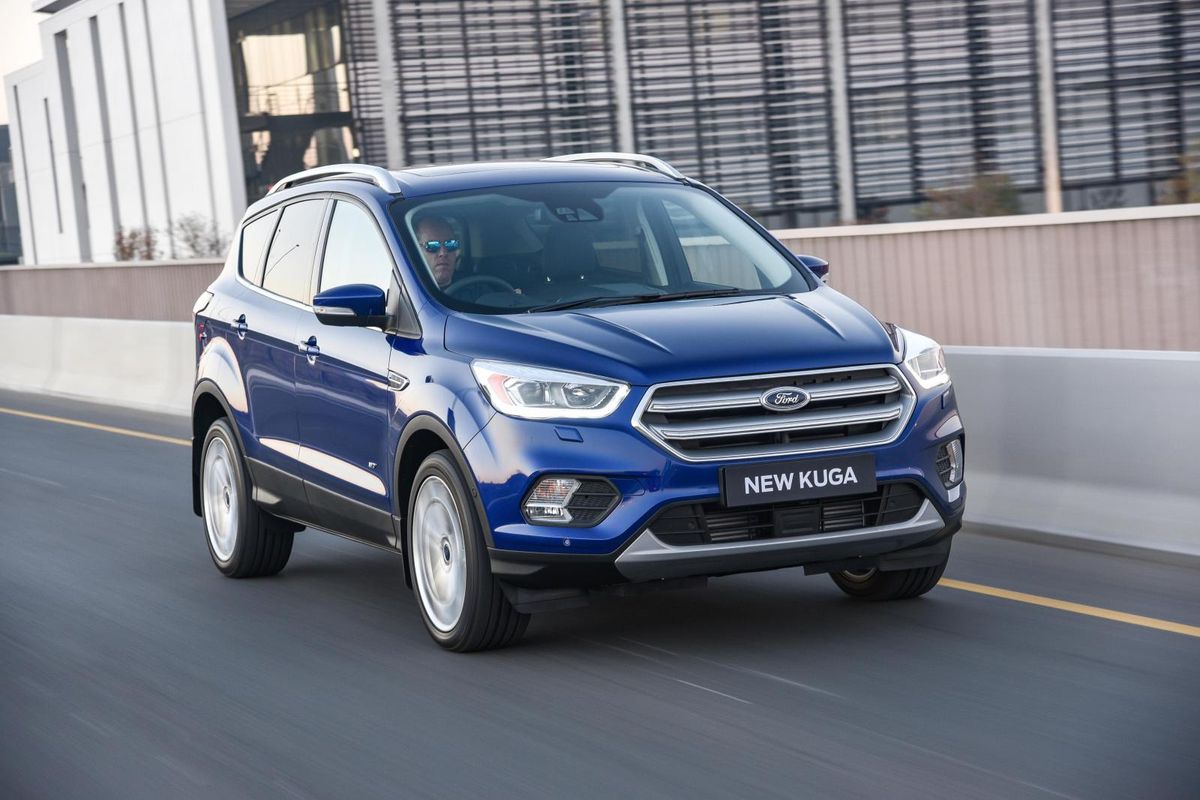
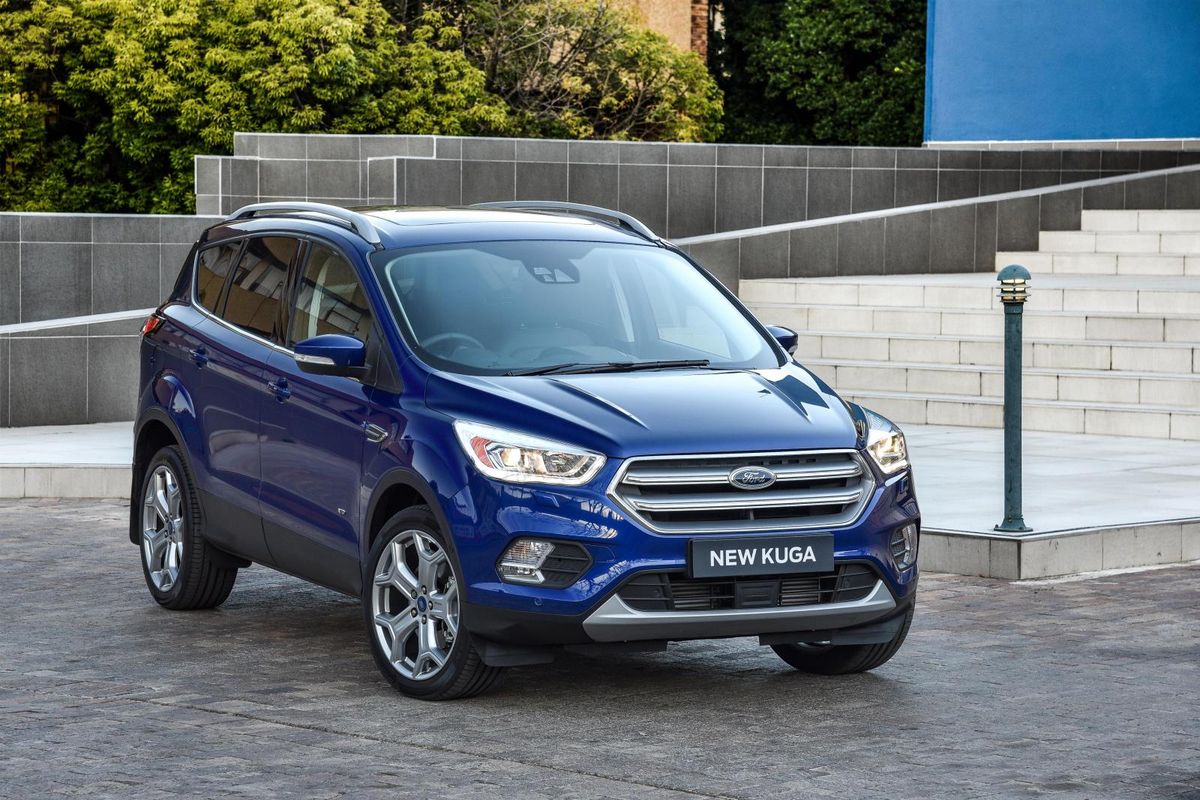
After a troublesome (to say the least) 12 months, the Ford Kuga has returned to the market as a facelifted offering that hopes to avoid and allay the negative public sentiment towards its maligned predecessor.
As crises go, the Ford Kuga fire saga is a major one and, judging by the preceding 48 hours of emotive, sometimes acerbic, twitter conversation we've monitored (in response to the introduction of this facelift model), the proverbial dust has clearly not settled.
In the media conference for the introduction of its updated family car, Ford did not deny the Kuga predicament but focused the firm's message on efforts to improve the brand's overall customer satisfaction in the local market. For the record, more than 90% of affected Kugas have received a phase 1 upgrade, which is a software update to the engine management system. Around 60% of affected cars have had a phase 2 upgrade that includes hardware and software upgrades to the cooling system.
Suffice to say the maligned 1.6-litre Ecoboost engine does not feature in the facelifted model's lineup, but it’s interesting to note that despite the negative publicity, sales of other Ford models do not seem to have been negatively affected. Kuga sales took a hit, but trust in the Ford brand still appears to be strong as the Ranger leads vehicle sales in the first half of 2017. The Blue Oval also plans to invest significant capital in its dealer network in order to improve service delivery, experience and delivery.
The facelift
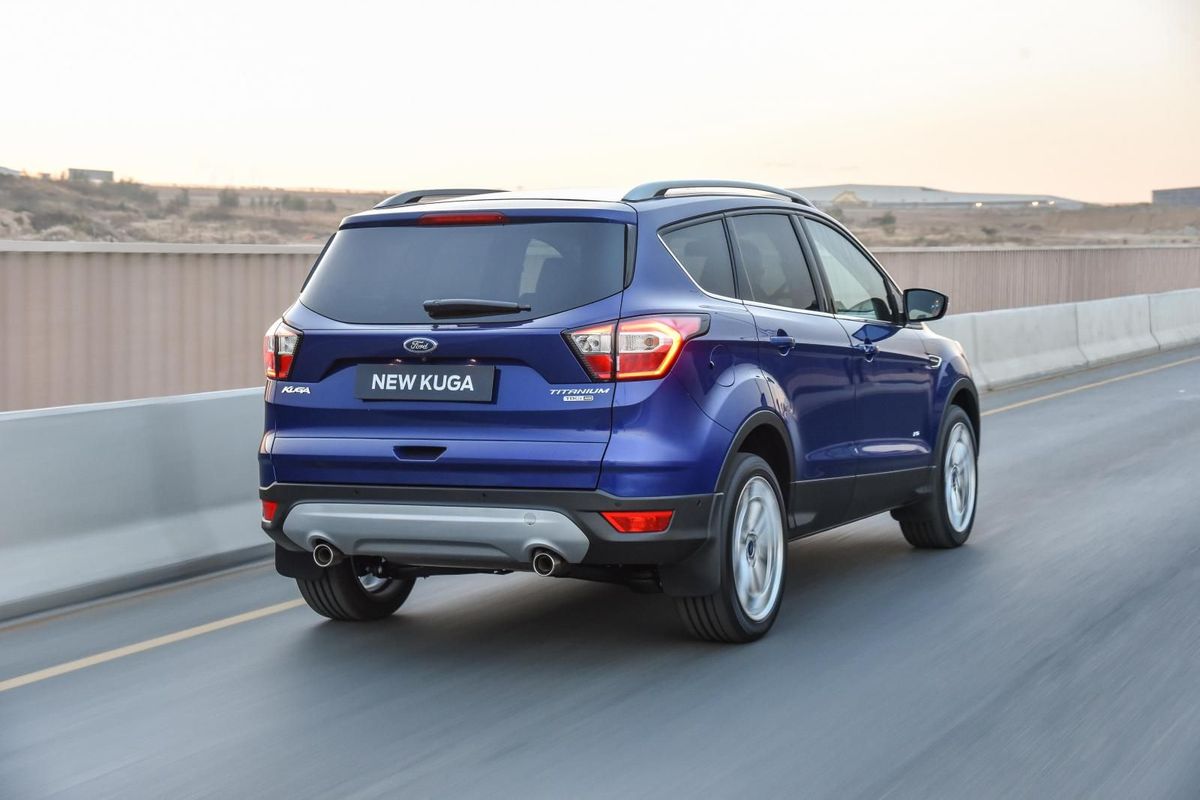
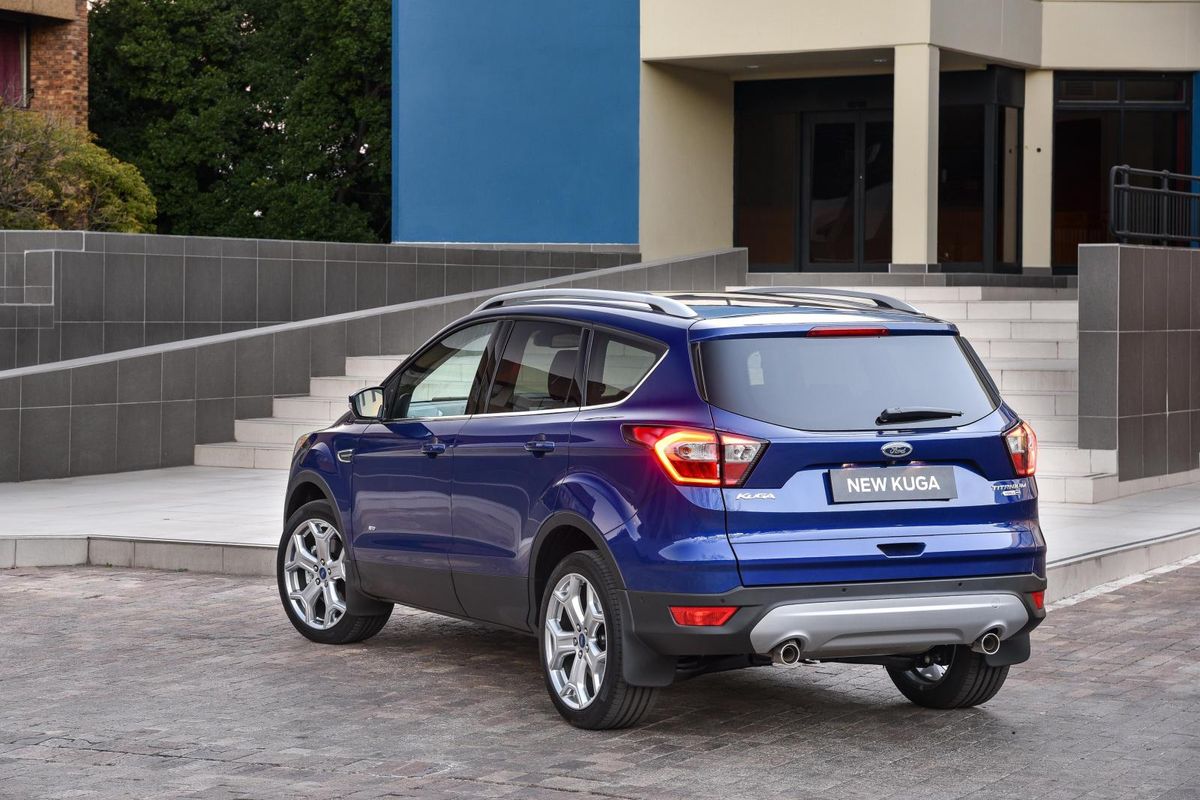
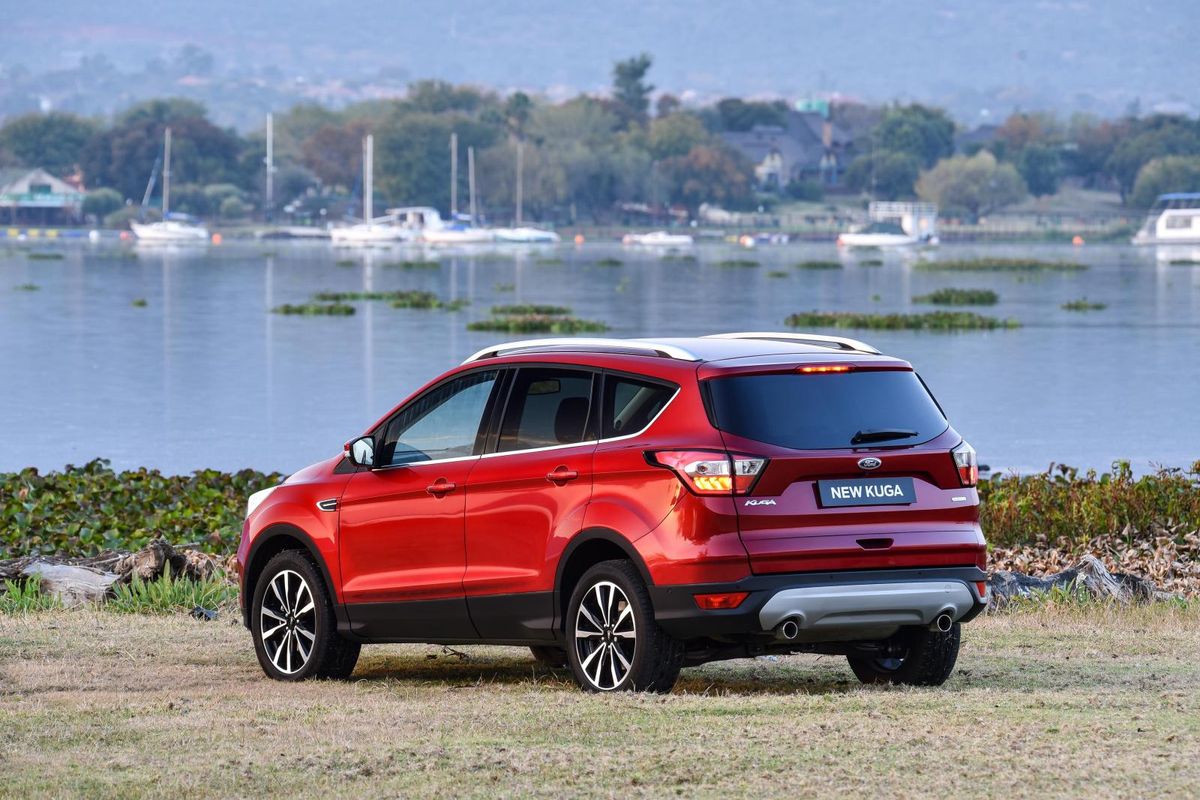
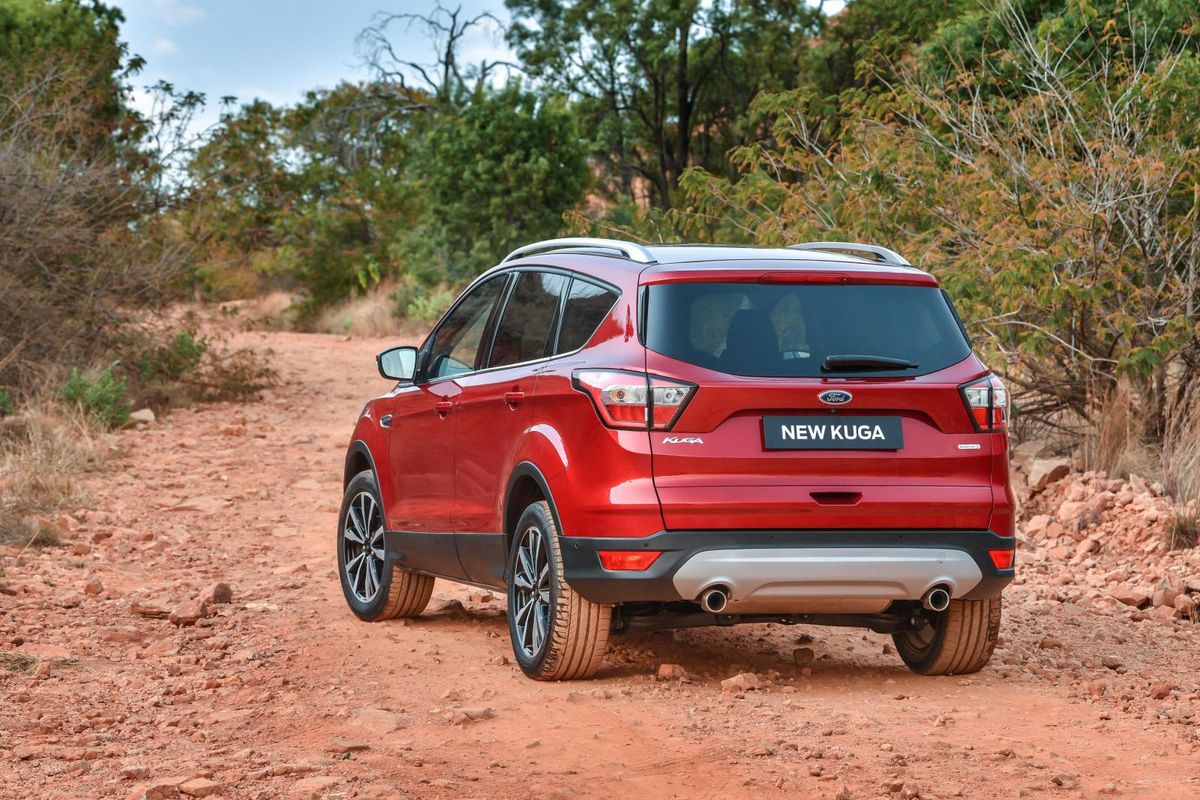
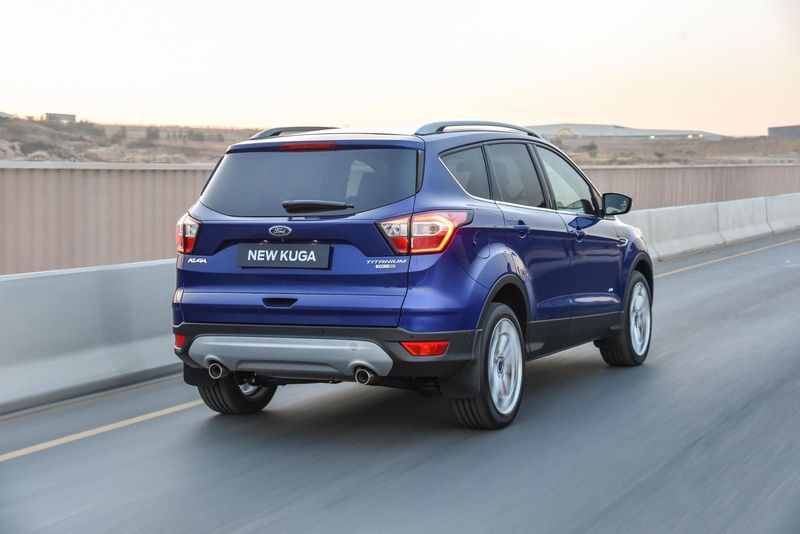
Top spec Titanium model with its black-outlined taillamps shows a strong, muscular design.
As it turns out, facelifted Kugas have been in the country for some time – Ford employed them as courtesy cars for owners affected by the Kuga recall campaign. Now, however, the newcomer's officially available – it’s better priced than before (offers more value for money), plus it appears particularly well-specced on the safety front.
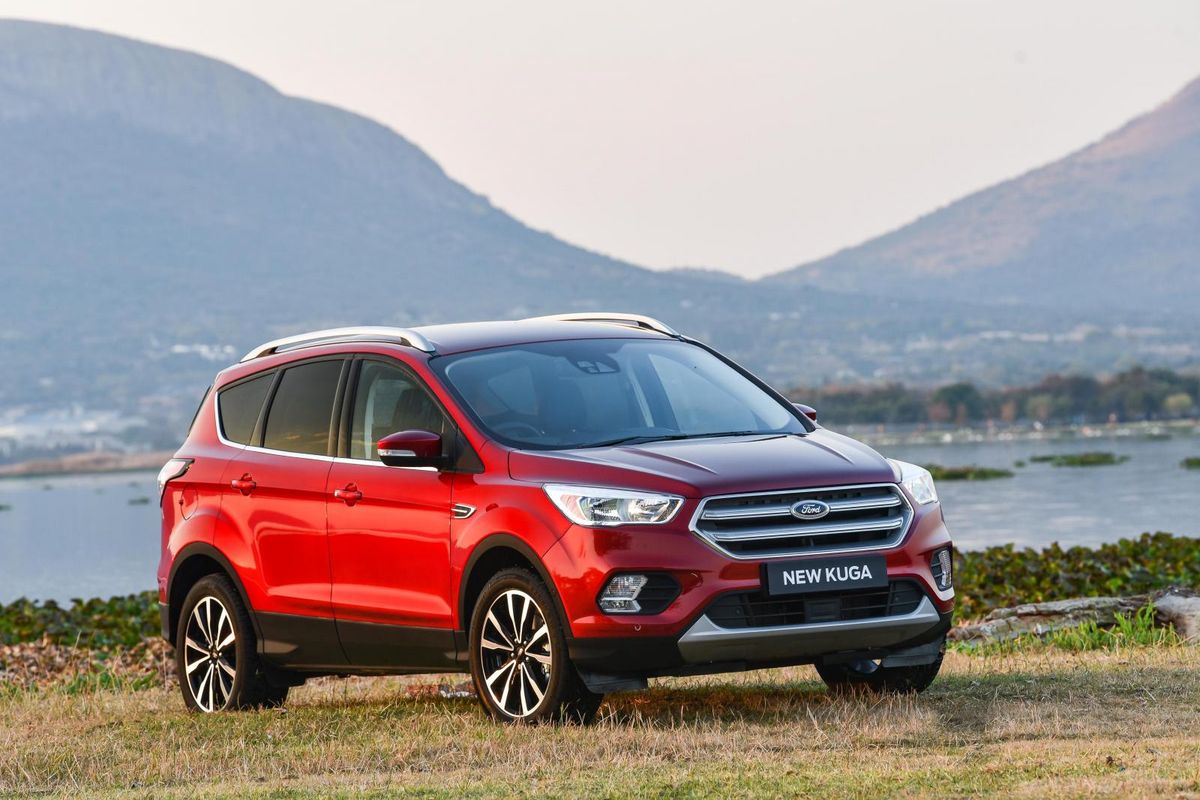
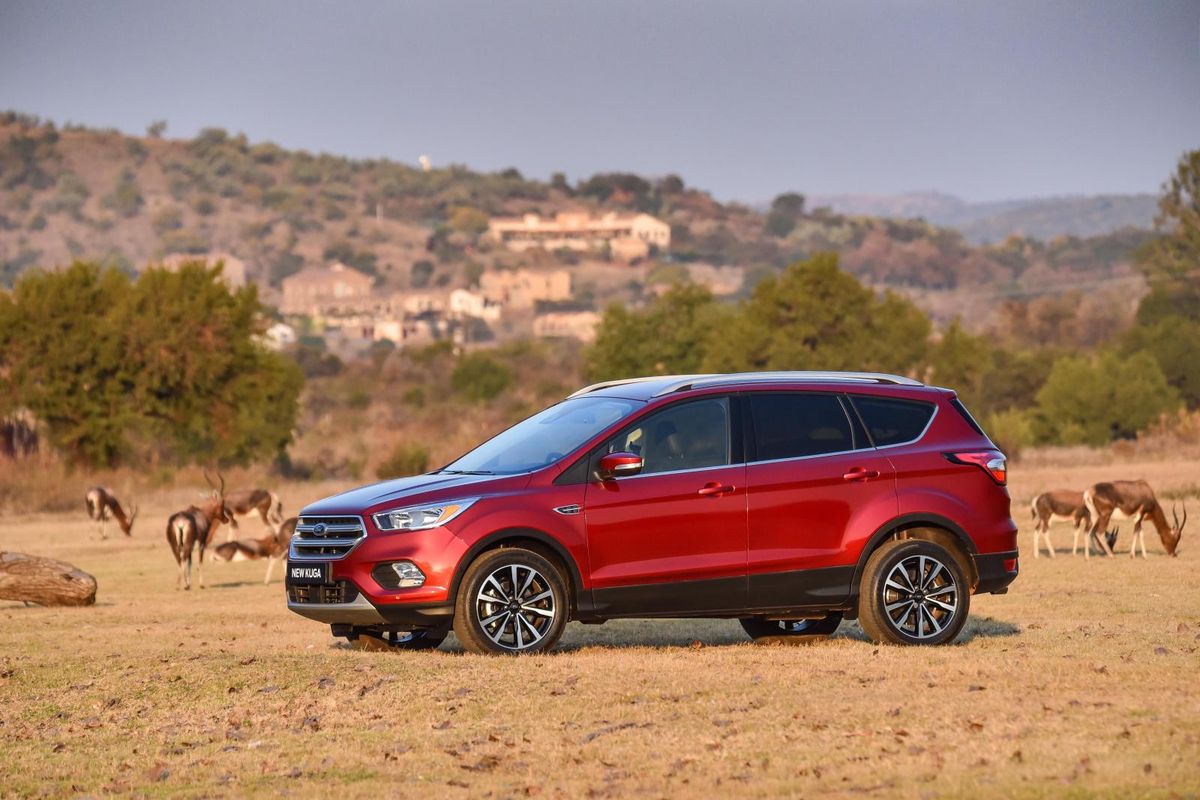
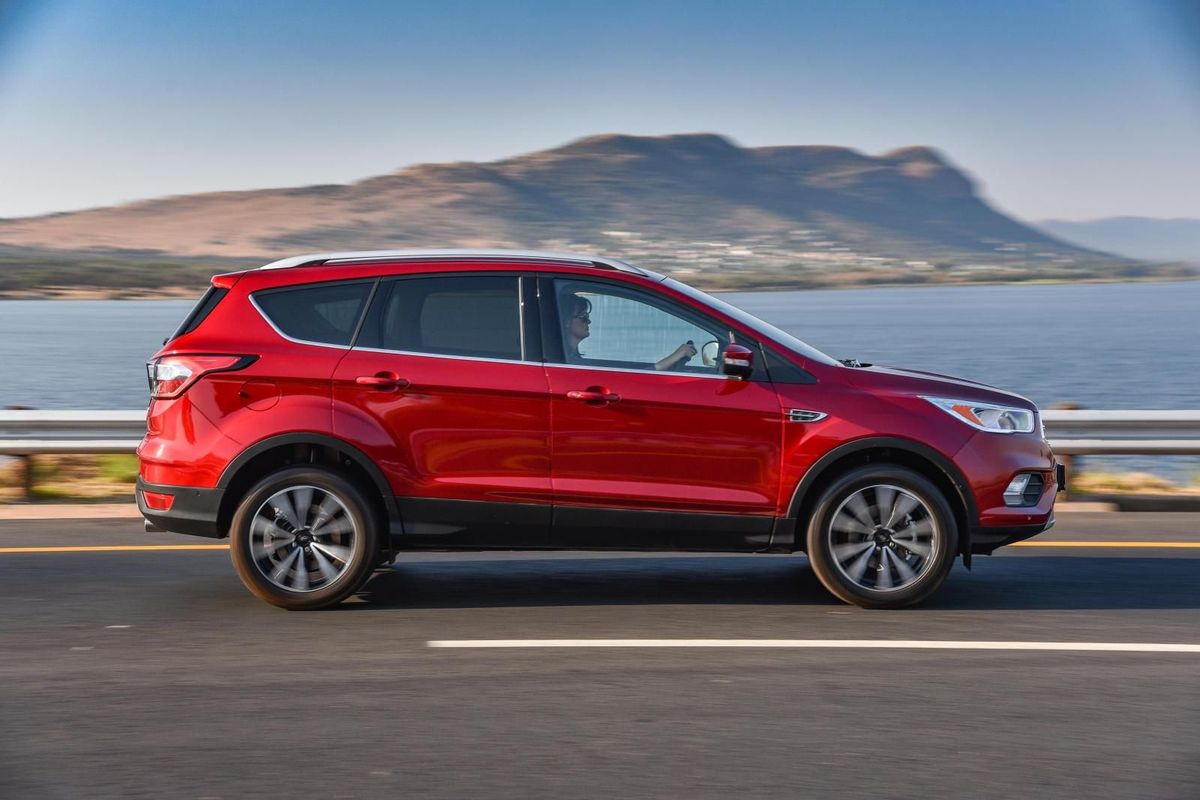
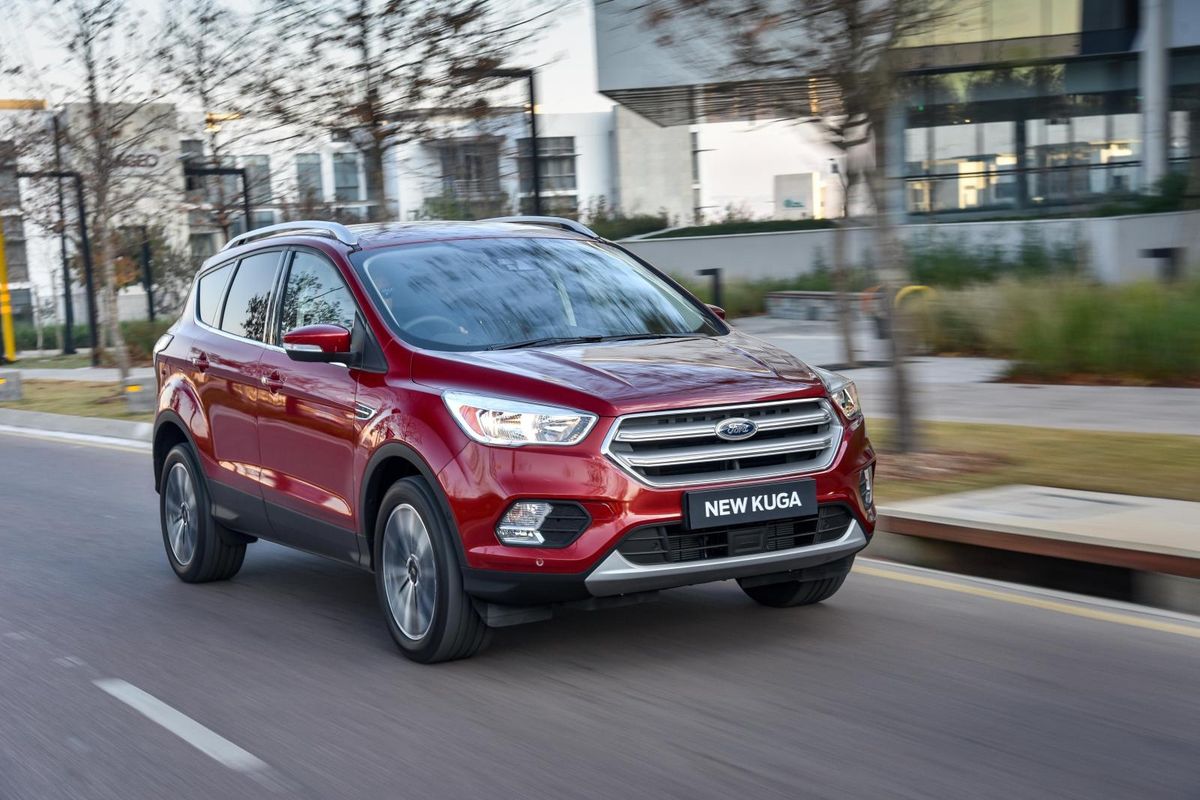
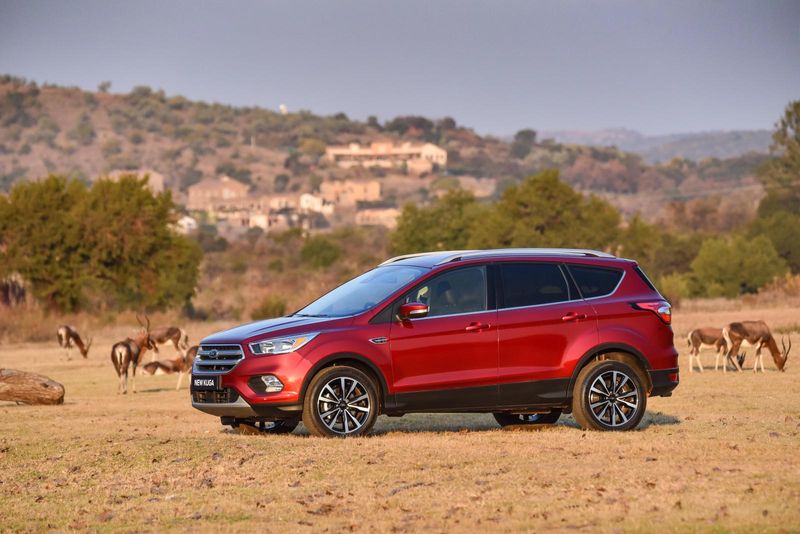
The styling upgrade is quite comprehensive; in line with Ford's new familial design language, the front end features a much sharper, more front-on face with outlined grille and headlights… It’s a handsome (if brutish) look and the rear of the car, where black-outlined tail lights create a very prominent and muscular appearance, mirrors the theme. Overall, it appears to be quite a distinctive contender in a segment that’s already got some stylish competitors in the forms of the Tiguan, Tucson and 3008.
All-turbo lineup
The mid-range Trend model is available in 1.5 turbopetrol and 2.0 turbodiesel guises.
The engine range is an all-turbocharged lineup. It’s in line with its global downsizing trends and all powerplant have been used either in the pre-facelift Kuga, current Focus and the slow-selling Fusion family sedan. The 1.5-litre turbocharged engine is paired with either a 6-speed manual or a 6-speed automatic gearbox and is only available in front-wheel-drive. The outputs are good with the manual models producing 110 kW and 240 Nm and the autos upped to 132 kW and 240 Nm. Our experience with the automatic on the route from East London up to Hogsback at the foot of the Drakensberg revealed that the engine and transmission are well-matched and power delivery is more than adequate, but the claimed fuel consumption figure of 6.2 (manual) and 6.9 L/100 km (auto) is going to take some doing. We averaged 11.0 L/100 km!
Ford also offers a 2.0-litre turbopetrol with 177 kW and 340 Nm of torque, if you feel you need more grunt on long-haul journeys. It’s only available in all-wheel-drive configuration and with a 6-speed auto. Despite market trends, the obvious choice is the 2.0-litre turbodiesel, its 132 kW and 400 Nm are delivered smoothly and with a refined engine note. Fuel consumption is vastly superior to the petrol derivatives with a claimed 5.4 L/100 km. We averaged about 7.5 L/100 km during our 200 km stint.
Inside story
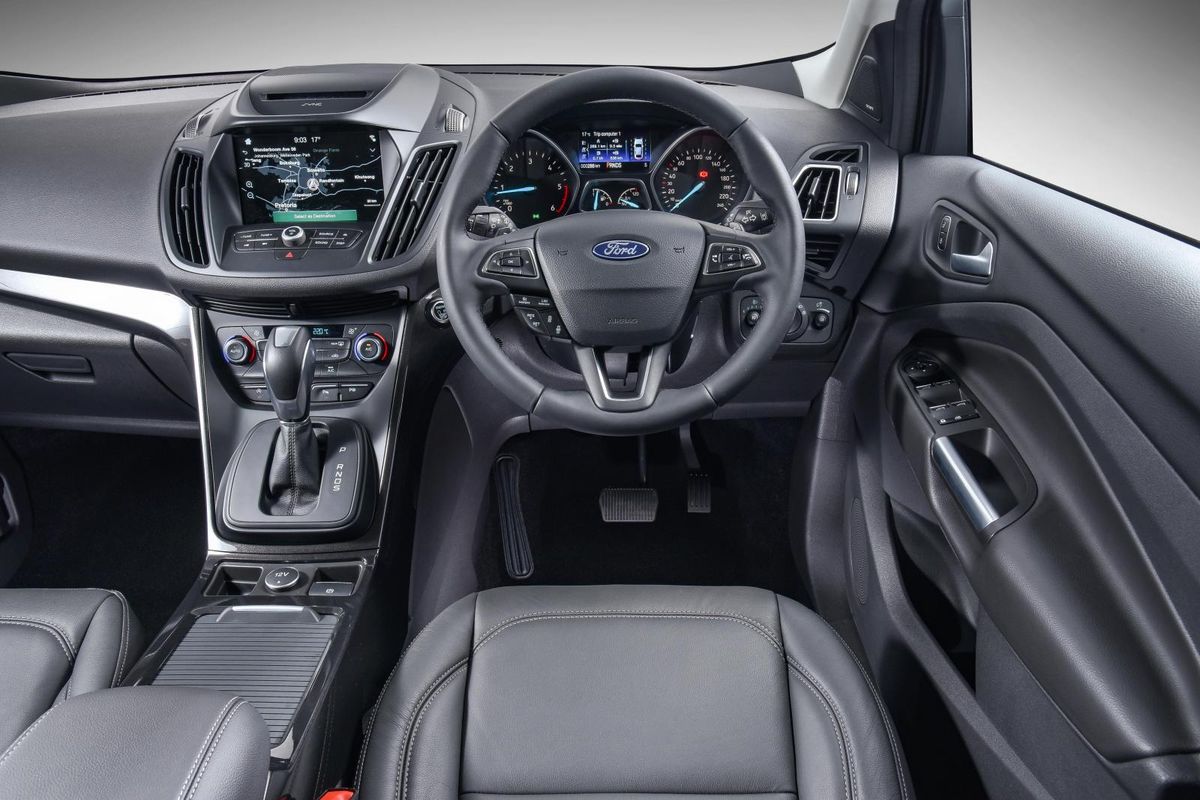
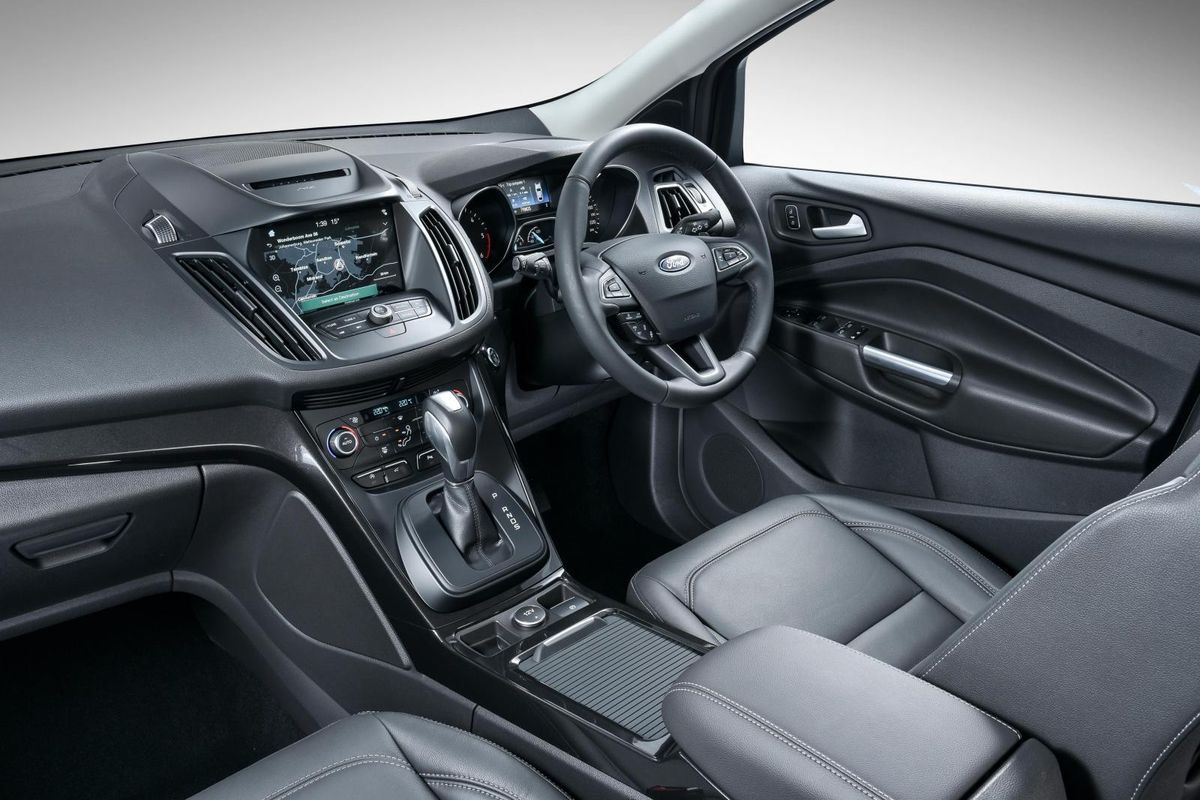
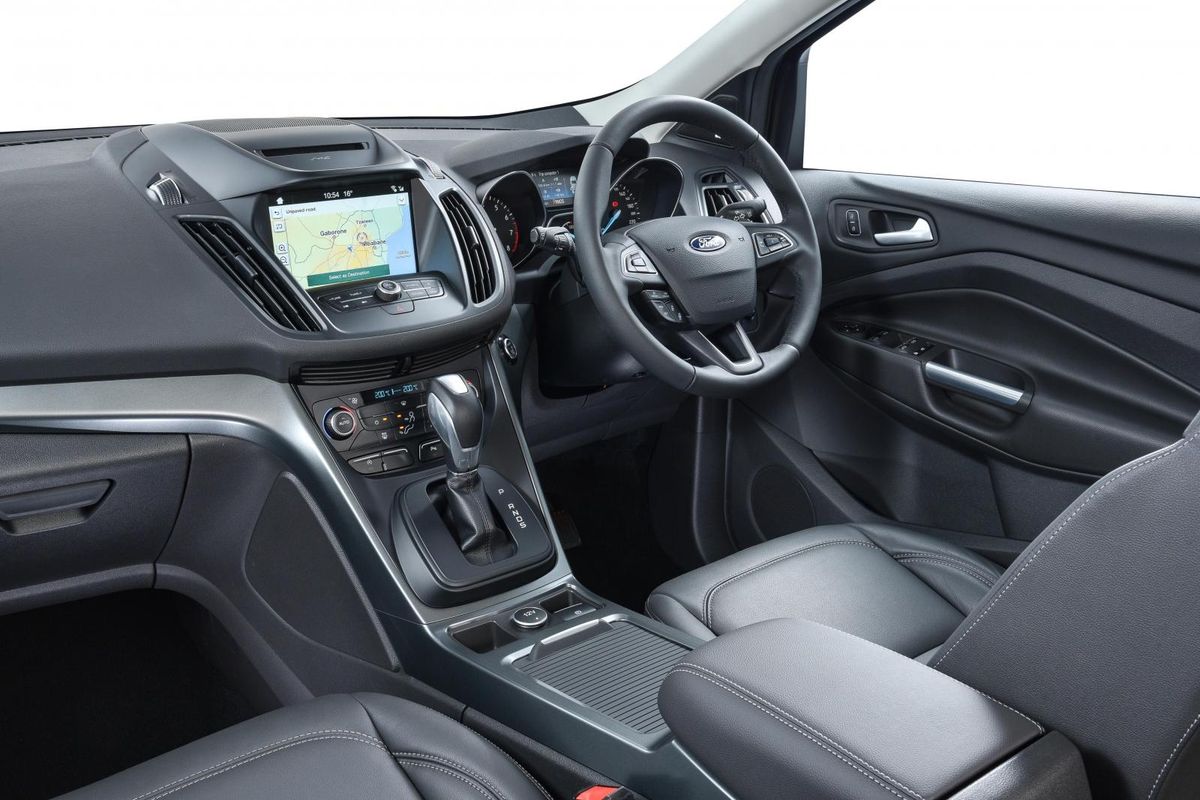
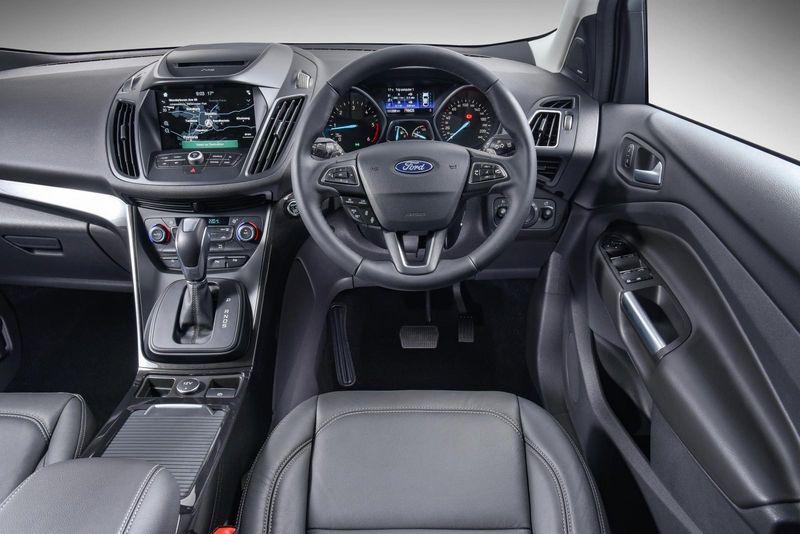
Kuga cabin less full of buttons thanks to Sync3 but also more soft-touch materials in use.
We’ve found that in recent Ford models, a measure of build quality and attention to detail have gone awry… Casual panel gaps and flimsy plastic joins haven’t really engendered a premium feel. The facelifted Kuga addresses some of those issues, however. The cabin is neat and most of the touch surfaces are plush and pliant. Dig a little deeper, however, and the build integrity remains a trifle questionable. The gaps in the interior door panels are quite large and the glovebox seal isn’t exactly tight.
Gripes aside, the seats are very comfortable over long journeys and passenger space is roomy with a pleasingly expansive feel to the design. The luggage bay capacity is in line with segment standards at 456 litres and, with the rear seats folded down, utility space of up to (a claimed) 1 653 litres becomes available.
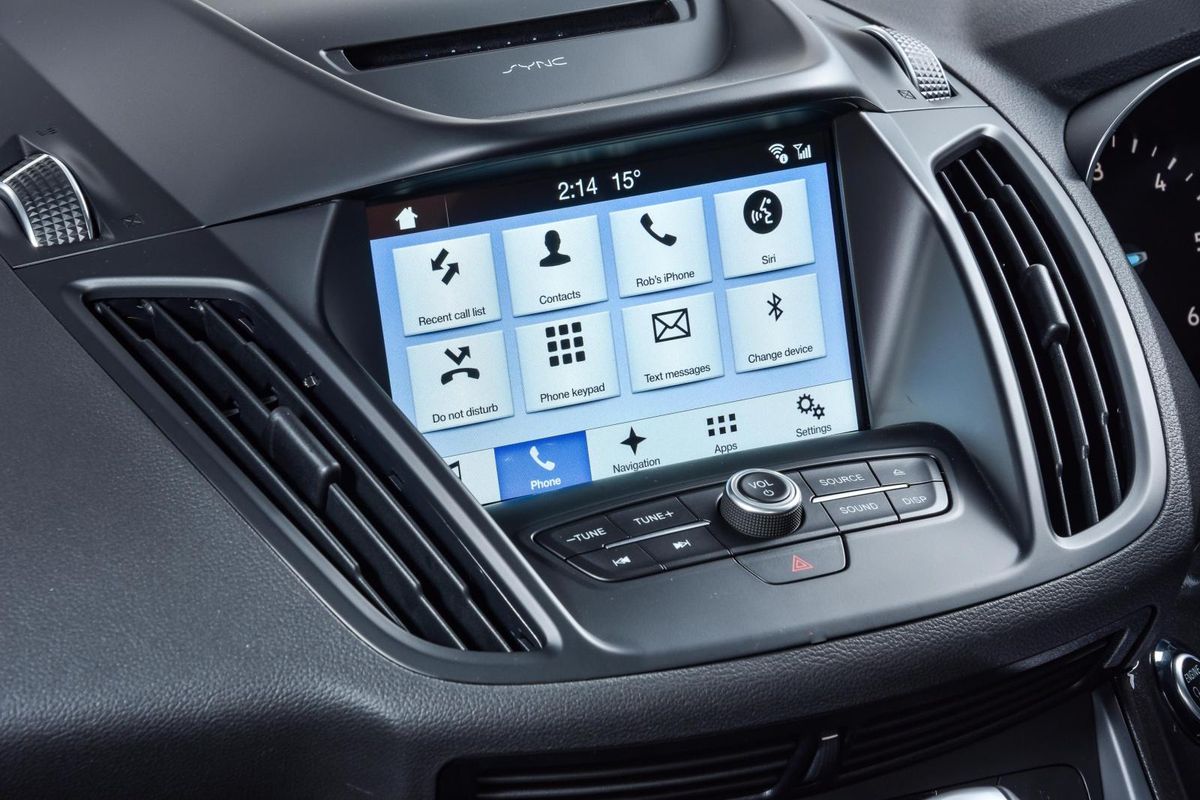
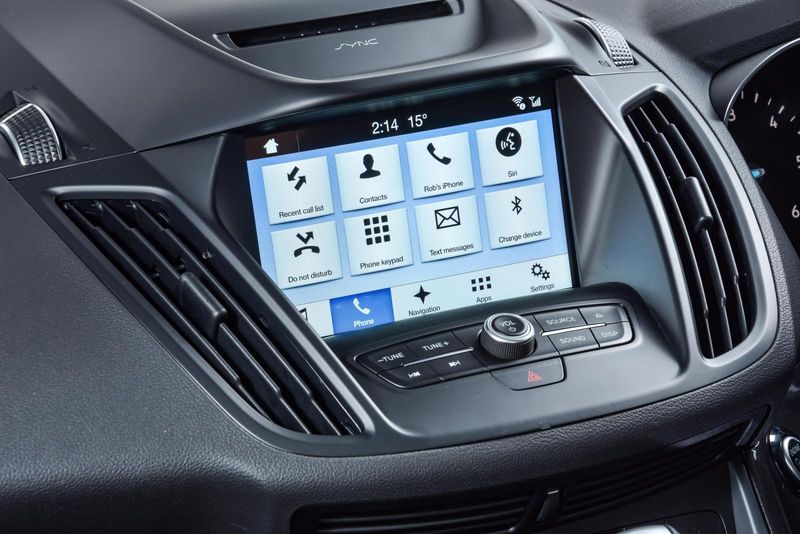
The installation of Sync3 across the range brings the connectedness of the Kuga right up to date: navigation is optionally available, plus Android Auto and Apple Carplay are supported. Sync3 is one of the best touchscreen systems on the market with a simple interface and big buttons that are easy to press when stabbing on the move.
The Sync3 interface is characterised by big buttons; it makes pressing menu options on the move easier.
The drive
The Kuga rides and drives extremely comfortably. The suspension is on the firmer side for an SUV, but it’s supple and soaks bumps up well. It’s not quite as firm nor quite as dynamic as the Mazda CX-5, but as a compromise between comfort and sportiness, it probably strikes a better balance.
Safety
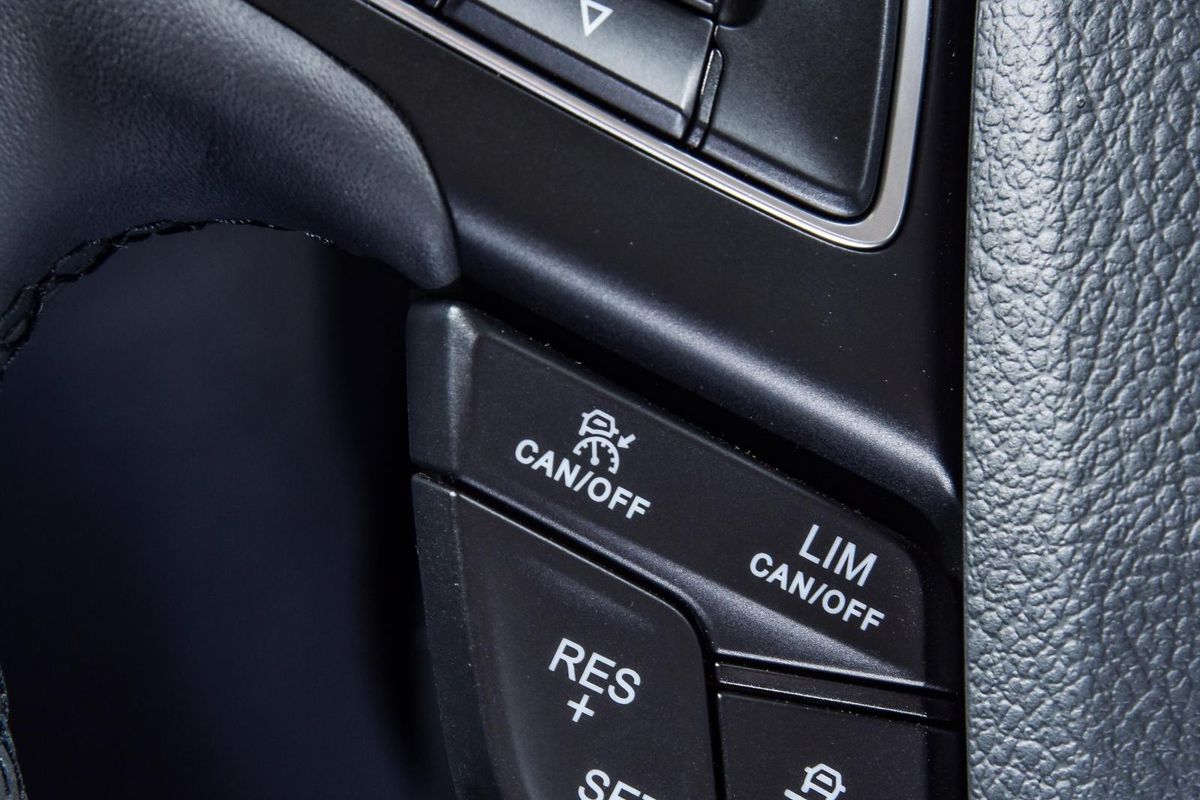
Ford has loaded the Kuga with safety features to a virtually family car/compact SUV class-leading level, especially with regards to those systems that enable motorists to avoid an accident altogether. As standard, the Kuga has ESP with traction control, ABS, EBD, hill start assist and a reverse-view parking camera. What's more, there’s an optional pack that adds kit such as automatic parking, blind spot detection, lane keeping aid, active city stop and adaptive cruise control.
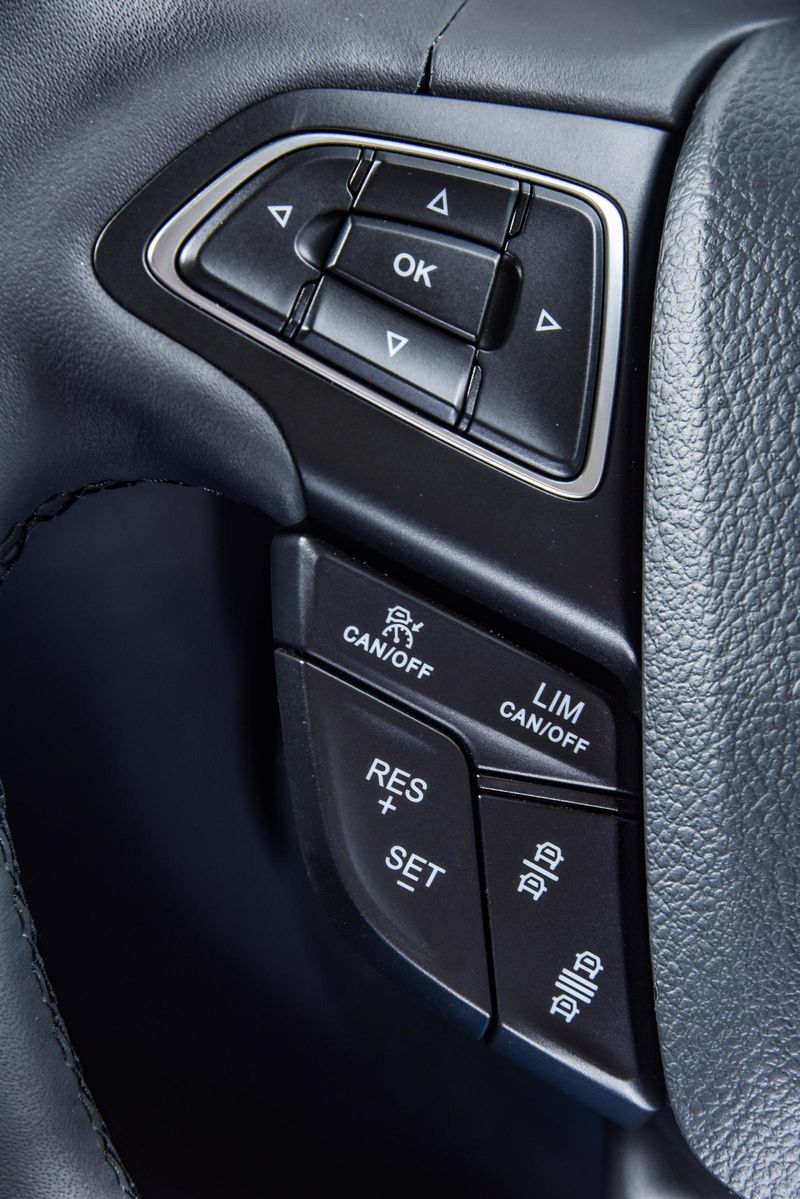
Cruise control buttons, complete with adaptive cruise control settings.
Summary
Putting the Kuga fire sage aside for the moment, in terms of value for money the facelifted Kuga appears to be an excellent offering. In fact, in order to try and entice buyers back to the Kuga, the local subsidiary of the Blue Oval has reduced the asking prices of the derivatives compared with those of the previous model.
Ford certainly isn’t the first brand forced to perform a sudden, wide-ranging recall and, in all likelihood, it won't be the last. In the eyes of many observers and commentators, the aforementioned crisis was handled poorly at times; it has tarnished the brand’s name to such an extent that every tweet about a Kuga seems to be accompanied by a fire-extinguisher-related verbal barb. It appears Ford is going to significant lengths to rectify the situation, but it may be a case of closing the latch after the horse has bolted. It will be interesting to see if this aggressive pricing strategy and new customer-driven approach results in a favourable return for the Kuga – it might.
2017/18 Cars.co.za Consumer Awards powered by WesBank; Semi-Finalists
The semi-finalists for the Cars.co.za Consumer Awards – powered by WesBank, now in its 3rd year, have been announced. The 13 eventual category winners will be selected from this pool of 65 vehicles, which collectively represent some of the best purchasing propositions in the new car market.
In the first round of the Awards (also referred to as the #CarsAwards), the Cars.co.za extended editorial team selected the 5 best cars in each of the 13 categories devised for this year’s programme. Careful attention is paid to the respective categories' "Filters of Eligibility" and the "Pillars of Success" in order to come to a consensus on the identities of the semi-finalists. All vehicles available on the South African market on September 1, 2017, were eligible, not only new products launched in the past 12 months.
To catch up on all the categories and for more information on the CarsAwards programme, visit the micro-site here.
"The debate and agreement by consensus is a core pillar of our programme," says Cars.co.za Consumer Experience Manager, Hannes Oosthuizen. "We debate each eligible vehicle within the context of its category, and will not move on until the entire team is in agreement. This means far deeper interrogation and more exhaustive investigation than is typical in a 'secret vote' set-up."
In the next round, due to take place early in October, the same jury will score each vehicle individually, taking into account the various, different criteria that each category prescribes. The top 3 (finalists) will then be announced next month, and be put through back-to-back testing at Gerotek in Gauteng early in November, by the entire Cars.co.za Consumer Awards – Powered by WesBank, jury. Check out the video of last year's test days below.
Remember, your consumer experience helps pick the eventual winners (as well as the Brand of the Year) of the CarsAwards via the Cars.co.za Ownership Satisfaction Survey, developed in conjunction with Lightstone Consumer. Relevant data collected from the surveys accounts for 50% of the final category scores, and 100% for Brand of the Year.
Here are the semi-finalists in their respective categories
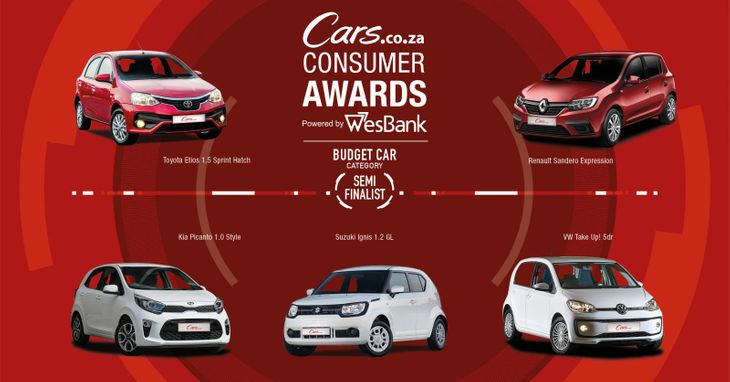
Budget Car (under R175k)
Buying an affordable car doesn’t mean you should compromise on safety, technology and quality. The winner of this category represents as much good car as possible for the asking price. Value is very important, as are low running costs and all such "common sense" considerations. Given the financial pressure that all South African households face, we've only raised the price cap for semi-finalists to R175 000 this year. ABS and dual airbags are must-have safety requirements. The semi-finalists are:
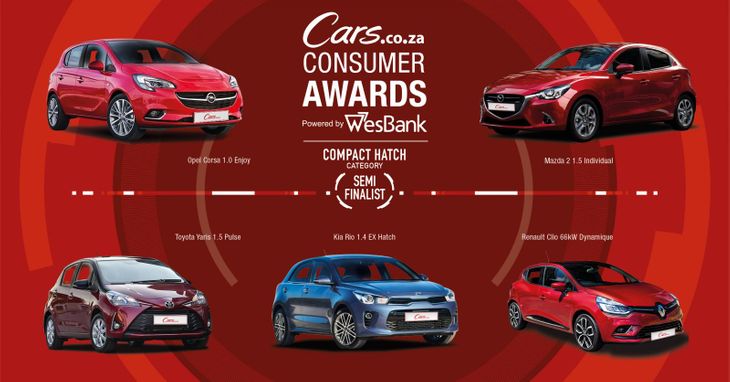
In this extremely competitive category, we’re looking for a balanced offering that is excellent across the board. Cars in this segment must appeal to a very wide audience – from the young professional or family buying up from an entry-level car, to pensioners buying down from something larger and expensive. The winner of this award must truly reflect what is best about modern automotive design and engineering, but present it in a concentrated, reasonably affordable form. The semi-finalists are;
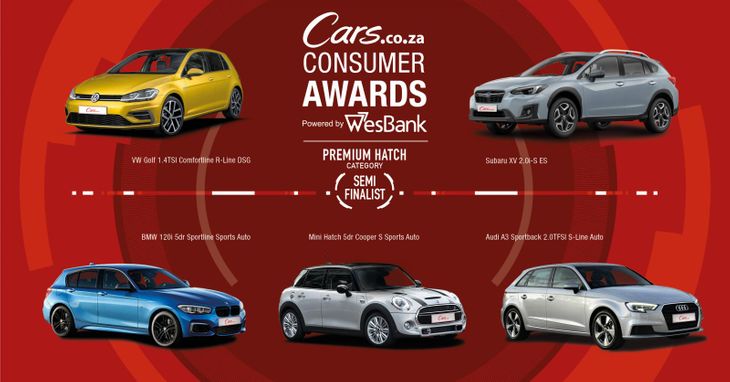
Stylish and sophisticated yet, practical enough for most motoring needs, these are the cars for the upwardly mobile go-getter. The winner in this category must not only offer outstanding quality, refinement, performance and the latest technologies, but also broadcast a message of success and ambition. The semi-finalists are;
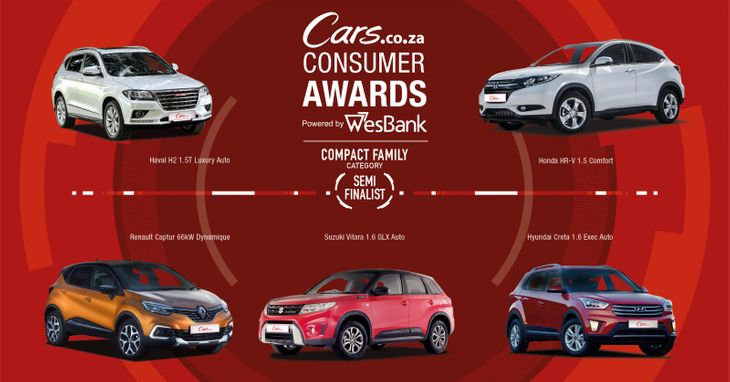
With household budgets stretched to breaking point, the reasonably affordable modern-day family car has to wear many hats – from compact traffic dodger, to spacious school-run specialist and even weekend getaway machine. Practicality and spaciousness are important considerations, but so are safety, technology, fuel efficiency and a modicum of lifestyle flexibility. The semi-finalists in this category are;
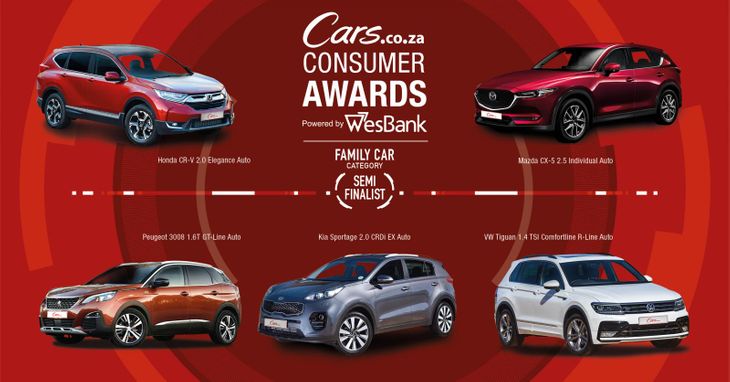
The typical family car fulfils a wide variety of duties and needs to be a practical, safe all-rounder. The winner of this category should be ideal not only for the morning school run, but also the school holiday run to a distant location. In judging this category we’ve placed particular emphasis on interior flexibility, comfort and safety. The semi-finalists are;
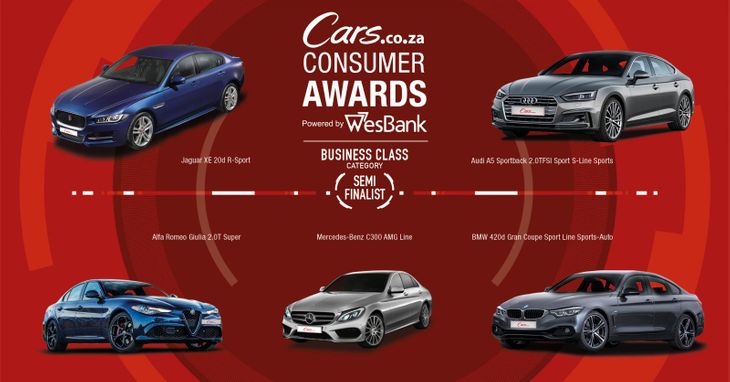
In this category you will find the type of cars that realistic dreams are made off. We’re looking for an aspirational vehicle that will appeal to the image-conscious driver who places a priority on performance, dynamics, technology and design. The target customers have achieved success and want a car that isn’t only a personal reward, but also one which broadcasts their achievements. The semi-finalists are;
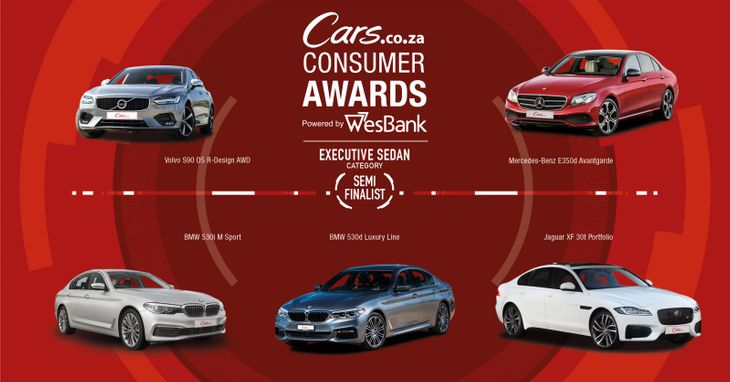
These technological masterpieces represent an enviable blend of First Class luxury and comfort, and Business Class technology and dynamic appeal. Prestige is usually a given in this segment, but we’re also looking for significant technological advancement, yet without compromising the level of comfort and quiet style that these sedans are renowned for. The semi-finalists in this category are;
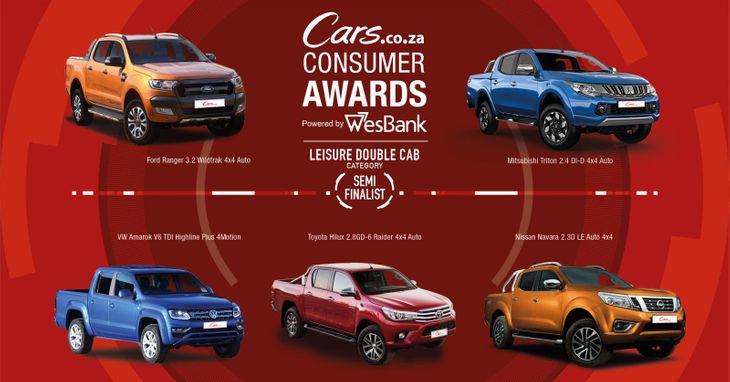
In this immensely popular and fiercely contested category of the market, the search is on for the ultimate all-rounder. From luxurious touring vehicle, to hardcore off-roader, capable carry-all, family do-all and lifestyle activity machine, leisure double-cab bakkies can no longer be too utilitarian and rough around the edges, but should be highly sophisticated offerings. The semi-finalists are;
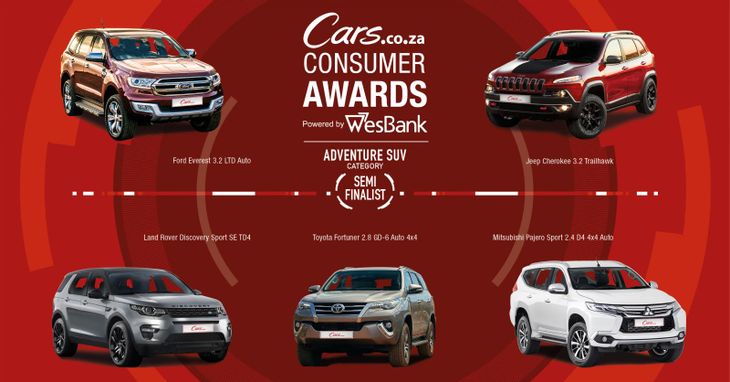
We’re looking for the ultimate recreational vehicle to transport a family and all their holiday and lifestyle gear in comfort to almost any destination, on- or off-road. Off-road ability is emphasised, in combination, with practicality, comfort and long-distance cruising. The semi-finalists are;
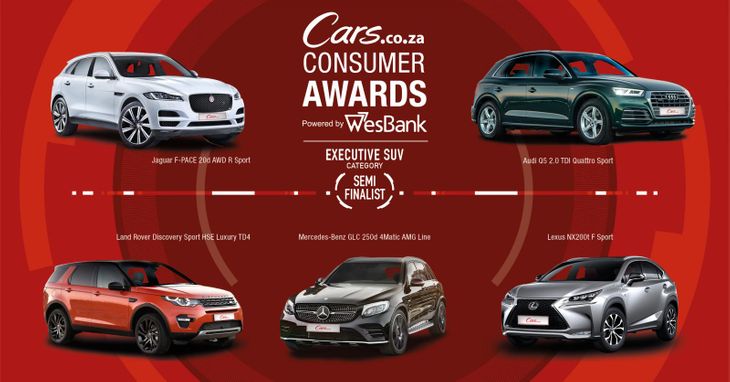
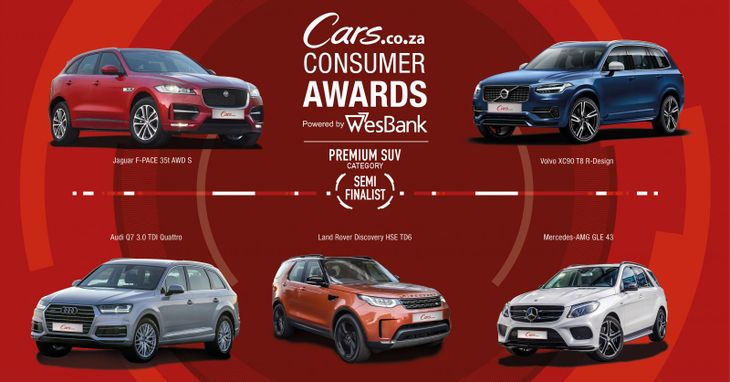
Increasingly regarded as the status symbol to have, most premium brands now offer road-biased SUVs that combine prestige and practicality in a package that is characterised by superior refinement. Drivetrain performance and refined road manners are a priority as is a cabin that features upmarket materials and the most up-to-date technology. The semi-finalists are;
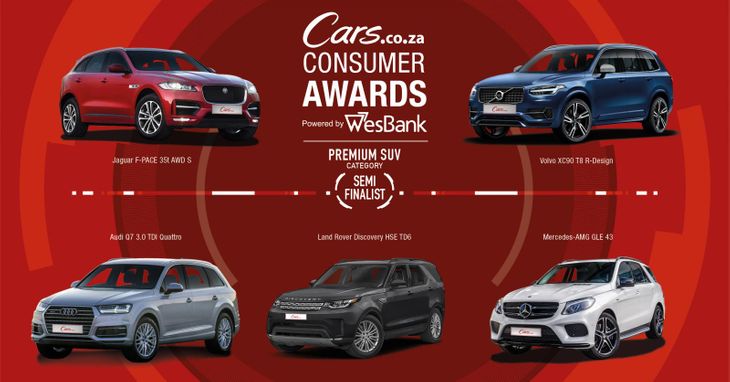
Luxurious SUVs may appeal for irrational and emotional reasons such as kerb appeal and status, but at their core they are some of the most sophisticated and capable vehicles on the market. Blending spaciousness with high-tech off-road equipment, powerful engines, as well as luxuriously trimmed cabins, the prestige-badged premium SUV we are looking for in this category should be tailor-made for image- and practicality obsessed buyers. The semi-finalists are;
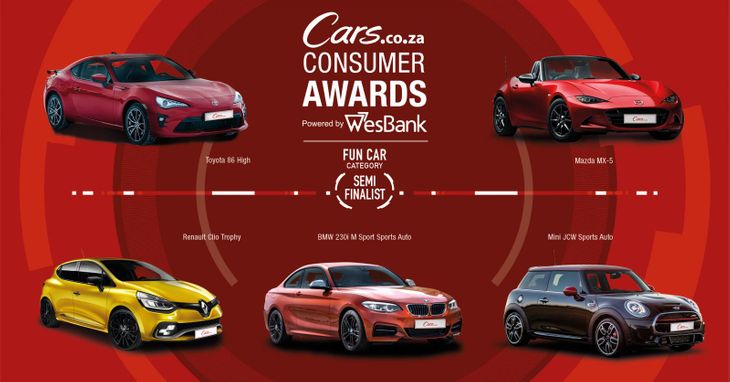
What is it that makes a car "fun" to drive? Is it purely about performance and handling? To a large degree it is, but for this award category we’re looking for a total package that is not priced in fantasy land. This is one for the petrolheads – a car that must leave the die-hard enthusiast smiling after every drive, in the way it looks, handles, sounds and, yes, performs. The semi-finalists are;
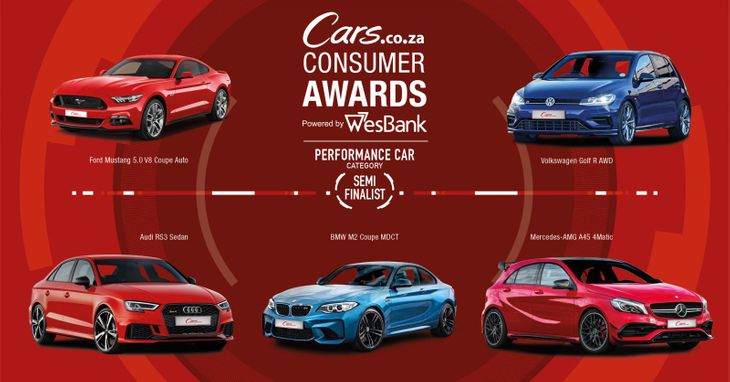
While supercars and other “exotics” are mere fantasies for most, there are cars priced below the magical R1 million mark that offer near-supercar thrills and performance. In this category we are not only looking for sizzling performance, but also driver engagement, whether driven on track or road. The semi-finalists are;
Hillclimb Shootout: Aston Martin Vantage N430 vs BMW M240i vs Jaguar F-Type 400 Sport
In one of our most ambitious video projects yet, we worked with the city of Cape Town to close an incredible road in the farmlands beyond the city. It's always been one of our favourite pieces of tarmac to test cars and now we had it all to ourselves.
We lined up 8 high-performance cars, fired up our very own race-ace Ashley Oldfield and staged three races – this is the third head-to-head featuring the BMW M240i with M Performance Parts, the Jaguar F-Type 400 Sport and Aston Martin Vantage N430.
For a recap of the first race – Fiesta ST200 vs Renault Clio RS Lux, click here
For a recap of the second race – Volkswagen Golf 7.5 GTI vs Toyota 86, click here
In a battle of the rear-driven coupes, we have the outsider in the form of the BMW M240i, with performance parts. The bad boy Jaguar F-Type 400 Sport with its crackling exhaust pipes and dropping looks. Finally, the old-timer is back in the form of the Aston N430 – an enhanced (again) Vantage with a V8 growl that will have the flesh on your arms jumping for joy.
Who will be fastest on the up and down-hillclimb? The result is a lot closer than you'd expect.
Look out for the last video in our #CarsRaceDay series, which will be released exclusively on our YouTube channel over the next few weeks. Subscribe and be the first to see the videos as they drop.