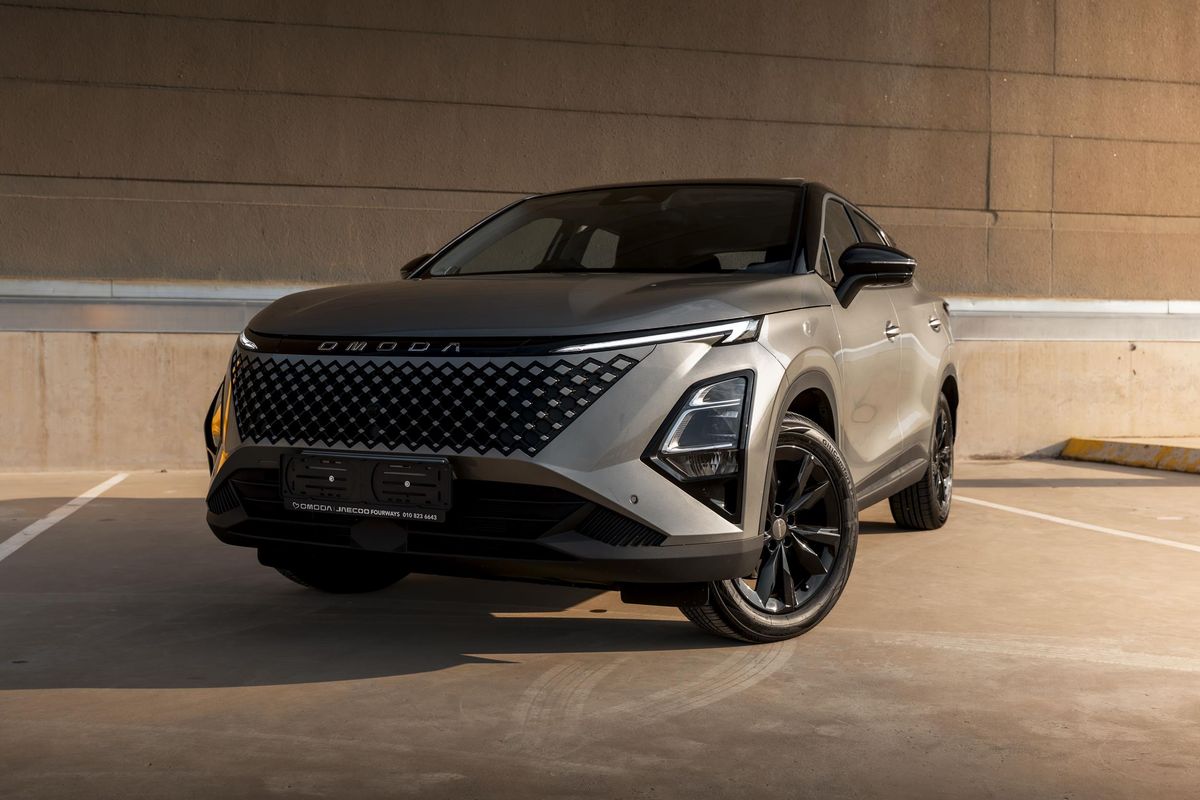
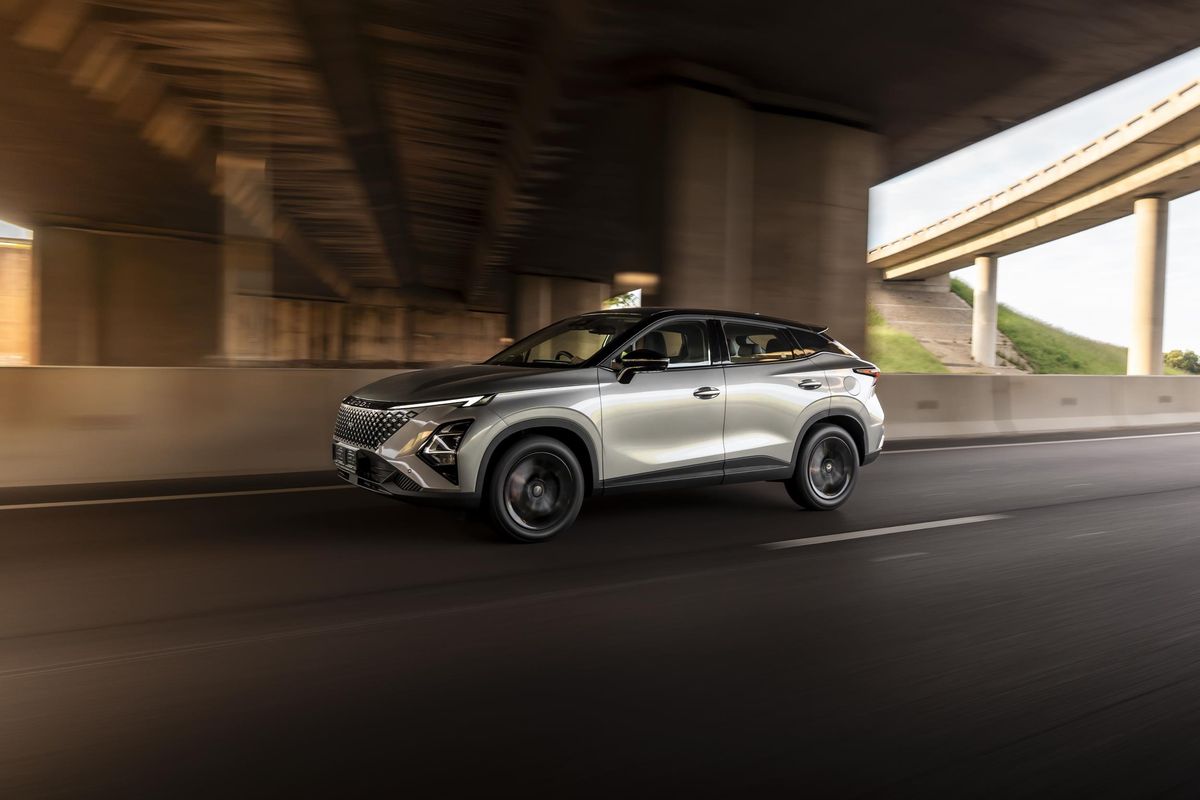
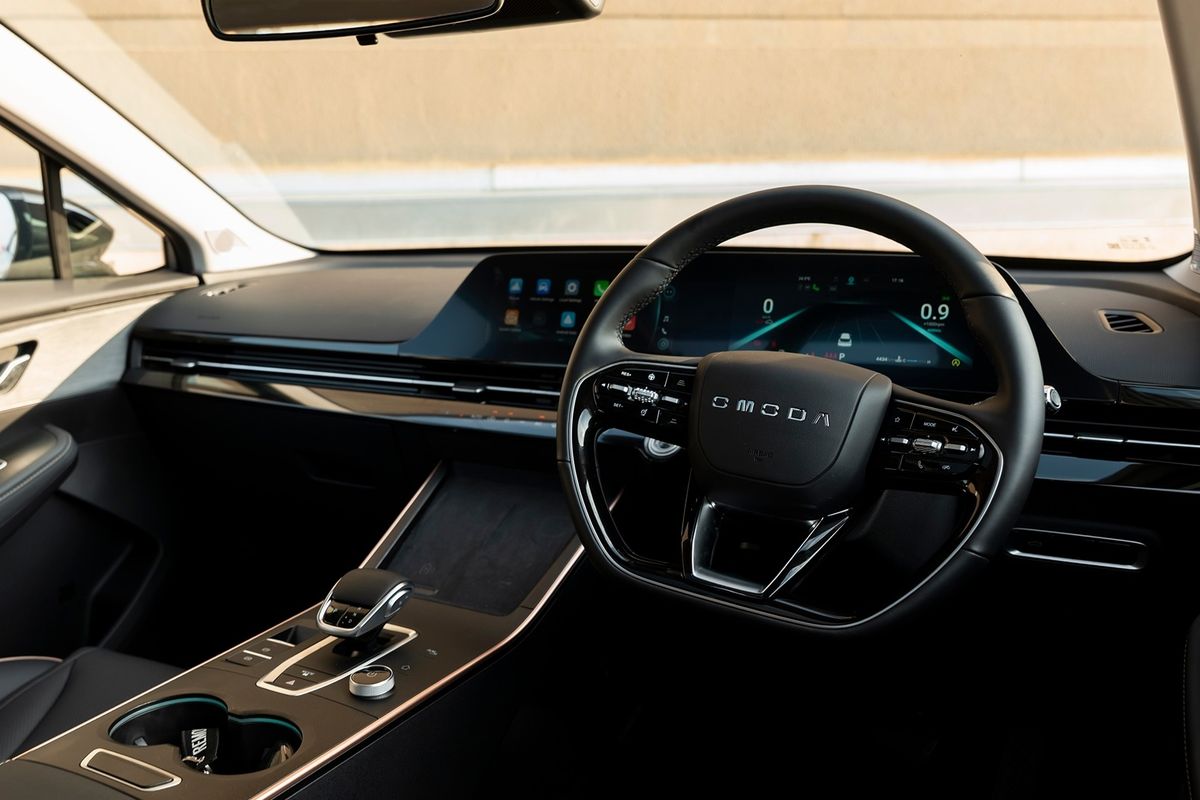
The Omoda C5 X Series has launched in SA bringing a new gearbox, more practicality and a sharper look. Here’s how much you can expect to pay.
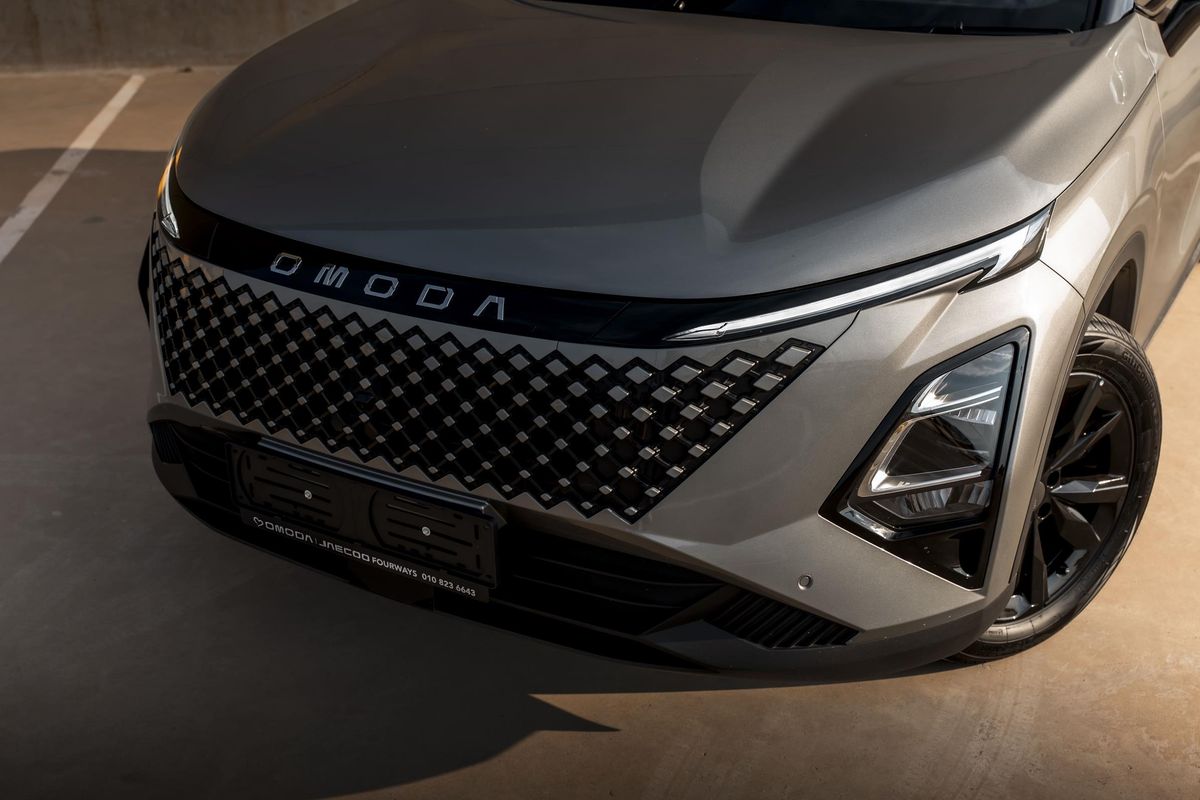
The Omoda C5 X Series is an enhancement of the current popular C5 crossover, featuring updated styling, the addition of a dual-clutch transmission and a rejig of the interior space and packaging.
“With the latest updates to the C5 lineup, we’ve not only enhanced performance and efficiency but also introduced key refinements that elevate the driving experience,” commented Hans Greyling, General Manager for OMODA & JAECOO South Africa.
The biggest change aside from the styling is the addition of a 6-speed dual-clutch transmission which is paired to the 1.5-litre turbocharged 4-cylinder petrol engine. It boasts outputs of 115 kW and 230 Nm, and Omoda claims both performance and economy has been enhanced. The acceleration time is now rated at 9 seconds to 100 kph, while fuel economy is claimed at 7/4 L/100 km.
Another interesting change is the in the rear suspension where the old-tech torsion beam was replaced by a modern multi-link setup which should aid in the comfort and handling stakes.
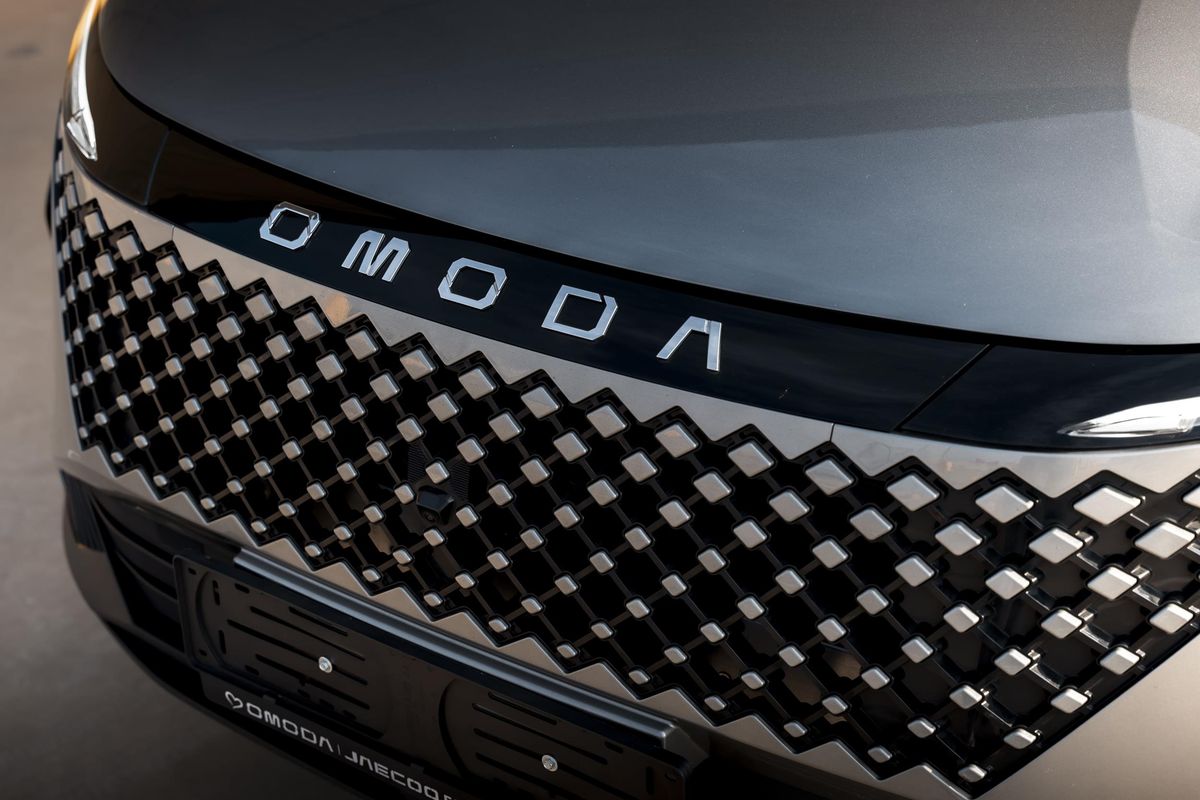
The new-look grille is complemented by black alloy wheels, while cabin gains additional soft-touch materials in the front doors, while the 15W wireless charger has been upgraded to a 50W unit. In a clever use of space, Omoda claims the boot space has been increased from 378 to 442 litres. Fold the rear seats down and you get up to 1 149 litre of capability.
Inside, the C5 benefits from more luxurious soft-touch materials for the driver and front passenger door trim, while the 15-watt wireless charger has been replaced with a 50-watt charger with a ventilation system. However, the most impressive revision is the increased boot space, with the space behind the rear seats increasing from an already generous 378 to 442 litres. With the rear row folded flat, the C5 can swallow up to 1,149 litres of cargo – 74 more litres than the outgoing model.
In terms of standard features, both vehicles come well specced with the higher Elegance X trim gaining driver seat ventilation, wireless charger, an additional 2 speakers taking the total to 8.
How much does the new Omoda C5 X Series cost in South Africa?
The vehicle is sold with a 5-year/150 000 km warranty, 5-year/70 000 km service plan, and the industry-leading 10-year/1-million km engine warranty as part of the standard price.
Trump’s tariffs an unmanageable risk for SA carmakers
For decades, South Africa has benefited enormously from German luxury car brands’ assembly plants. BMW’s Rosslyn and Mercedes-Benz’s East London facilities produce high-margin luxury cars for American buyers. It’s been a terrific business – until now.
From the early 2000s, an American preference for BMW 3 Series and Mercedes-Benz C-Class sedans drove enormous profits for BMW and Mercedes-Benz’s South African operations. It was an excellent example of the benefits of globalisation: South African build costs and American retail price profits.
BMW and Mercedes-Benz also applied German labour environment standards, which meant working in the Rosslyn and East London facilities provided access to notable benefits and upskilling opportunities.
Americans don’t buy hatchbacks but retain a liking for luxury sedans. That’s crucial for the SA-built W206-series C-Class.
America is a high-value market
There’s a lot of noise and panic in naamsa | The Automotive Business Council and Government circles about what American tariffs could do to the South African car industry. Tariff math is simple, but its meaning is a bit more complicated…
America accounts for a very small percentage of South African-built vehicle exports. Last year, it was only 6.5%. But it’s value that matters, not volume. South Africa exports expensive luxury cars to North America – as opposed to, say, budget hatchbacks – which means the per-unit effect is huge. Last year, the total value of South African-built BMW and Mercedes-Benz products for American customers, plus South African automotive components, totalled R35 billion. Vehicles alone were 25 553 units.
South African BMW X3 and Mercedes-Benz C-Class builds will trigger the new 25% tariff on all imported vehicles, eroding their price-competitive sourcing. It’s a minor trade and industrial policy tragedy, as South African-made German luxury cars have developed to an excellent assembly standard, pleasing even the most demanding of American customers.
The Port of East London’s West Quay upgrade began in November 2023 and was completed this April, allowing 2 new-gen automotive vessels to berth simultaneously.
Africa’s luxury automotive leader
For BMW and Mercedes-Benz, it’s an abundantly complex scenario. Rosslyn and East London are some of the oldest German luxury car assembly facilities outside of Europe, and have no rivals in Africa.
Other African automotive zones, such as Morocco and Egypt, don’t have the supply chain to support ultra-luxury builds like X3 or C-Class. Morocco makes more vehicles, but mostly budget Renault and Dacia hatches. In X3 and C-Class, Mzansi builds much higher sophistication and -spec cars for export.
Automotive jobs are among the best manufacturing employment opportunities in South Africa. In the Eastern Cape, especially East London, the economy is hugely dependent on Mercedes-Benz. And, not just for primary manufacturing wage employment and skills development, but also the localised supply chain that Government regulations have developed.
Tough time for suppliers
Also, more than a 3rd of the value of automotive exports to America isn’t cars – it’s components.
The influence of tariffs and reduced US market demand for X3 and C-Class risks not only BMW and Mercedes-Benz line workers, but also local suppliers. Many of these suppliers are family businesses that have heavily invested in processes to attain global standards expected from BMW and Mercedes-Benz.
Car companies work on the expectation of consistent demand. So do their suppliers, who tool and invest to produce enough parts, just in time, for a factory running beyond 85% of its production utilisation.
Building fewer cars is not only unprofitable, it hurts all those specialist suppliers, who have ramped up production to supply parts and now have nowhere to send them. Dead capital and storage costs erode cash flow. These are all nightmare issues that the local motor industry could need to deal with if tariffs attain permanence for the next few months, or surge again, after the 90-day implementation window.
There’s a saying in aviation: to build the aircraft, you need all the parts. It’s the same with vehicles – everything matters. From tonnes of steel to tiny bits of switchgear.
Automotive supports technical training and career development for workers in zones beyond the traditional mining areas.
No winners with these tariffs
For Government, the Department of Trade and Industry and local municipalities with automotive zones, rates and tax revenue compression (because of collapsed production and exports) are a significant risk.
There’s talk of finding “new” or “alternative” markets for South African automotive exports. But naamsa | The Automotive Business Council, Government and car companies will struggle to deliver that. Sourcing is global, but destination markets have established relationships with the regions they buy from.
The success of South African luxury car exports from the early 2000s to mid-2010s was built on 2 very established model lines: BMW 3 Series and Mercedes-Benz C-Class. It created an expectation that nothing could go wrong with South Africa’s high-margin luxury car export business… and now it has.
Finding more markets for Mercedes-Benz’s East London production is wildly complicated because the C-Class is a waning body style as a sedan, unlike BMW’s Rosslyn-built X3, which has stronger cross-market appeal as an executive SUV and one of the Bavarian brand’s top-selling models globally.
America and China are the only real demand markets for compact rear-wheel drive luxury sedans and 25% tariffs on East London-built C-Class variants do nothing to make them competitive. Methodologists and strategists have wildly misunderstood how product evolution influences consumer demand. “Discovering” a new offtake market for vehicle production isn’t the work of a moment…
The Mercedes-Benz plant in East London is one of the precious few technical employers in the Eastern Cape’s Border region.
Are the winners going to be Chinese?
The irony in all of this is that the South African automotive industry, like many others, has been built on tariffs. Government and naamsa | The Automotive Business Council’s current protection for the local industry is a 25% import tariff on all vehicles sourced from outside the EU.
But could that 25% import tariff change soon, as an exchange for lower tariff access to the US market? The question that matters is if other local manufacturers, who aren’t much impacted by the US tariffs because they don’t export there, will support any reciprocal change in US/SA tariffs. Why? For the broader interest of protecting the local automotive industry supply base for all naamsa members.
Lowering import tariffs to regain US market access for German luxury car brands, might risk even lower prices on already threateningly affordable Chinese imports into the South African market. How? If our Government is forced to renegotiate with the US, the Chinese might ask for their South African market import tariff structure to be reset too. So, yeah, it’s a complicated situation. Very, very complicated.
The Mercedes-Benz G-Class Edition Stronger Than The 1980s (yes, that’s really its name) is a limited-run variant celebrating the G-Wagen’s rich heritage. But it’s sadly not for SA…
Heritage styling over modern underpinnings? You have our attention, Stuttgart. Meet the Mercedes-Benz G-Class Edition Stronger Than The 1980s. As you might have guessed from its unnecessarily wordy name (a play on the “Stronger Than Time” G-Class tagline) and that retro-tastic green paint, this limited-run derivative celebrates the Geländewagen’s heritage.
Just 460 units will be built (a nod to the original W460 model code, no doubt), with the German automaker billing it as a “hugely desirable collector’s item”. Unfortunately, this special model is not destined for local roads, with Mercedes-Benz South Africa confirming to Cars.co.za that it’s “not planned” for Mzansi.
Effectively a tribute to the W460-series 280 GE, the G-Class Edition Stronger Than The 1980s – that’s the last time we’ll use its full name, we promise – will be built for global markets in both G500 and G450d form (incidentally, the latter turbodiesel engine derivative recently arrived in Mzansi).
The special retro model will be offered in 3 paint colours, each harking back to the tastes of the 1980s: agave green, cream and Colorado beige. In addition, the indicator lamps are orange, while the bumpers, grille, wheel arches and side-mirror caps are all finished in black, as is the underbody protection.
As standard, the limited-edition G-Class rides on classic 5-spoke light-alloy wheels. The star on the bonnet takes the form of the brand’s historic emblem, featuring “Mercedes-Benz” lettering and the laurel wreath on a blue background. Round back, you’ll find the 1980s-style silver “Mercedes-Benz” script as well as an edition-specific spare-wheel cover.
Other standard items include mud flaps, darkened headlamps, all-terrain tyres and protective grilles for headlamps (though the latter 2 features won’t be offered in all markets). The pictured roof luggage rack is furthermore available as an option.
Inside, the centre panel of each black leather seat is covered with dove-grey fabric that Mercedes-Benz says was “incredibly popular at the time”. The trim moulding of the passenger-grab handle bears “Stronger Than The 1980s” lettering, while the front-door sill panels feature the topography of the famous Schöckl mountain near Graz.
The traditional “Schöckl Proved” badge at the base of the B-pillar has been designed in what the brand calls “a classic 1980s style”, displaying a historical G-Wagen in the matching vehicle colour. Each example furthermore features “1 of 460” lettering on the centre console. Modern features such as a Nappa-leather-trimmed multifunctional steering wheel, a glass sliding sunroof and a Burmester 3D surround-sound system all remain in place.
As a reminder, the G450d employs a 3.0-litre inline-6 turbodiesel motor generating peak outputs of 270 kW and 750 Nm. Thanks to a new mild-hybrid system, an additional 15 kW and 200 Nm are available for short bursts, too. Fitted with a 9-speed automatic transmission (with low-range) as standard, the G450d will complete the 0-100 kph dash in a claimed 5.8 seconds, while maximum speed is limited to 210 kph.
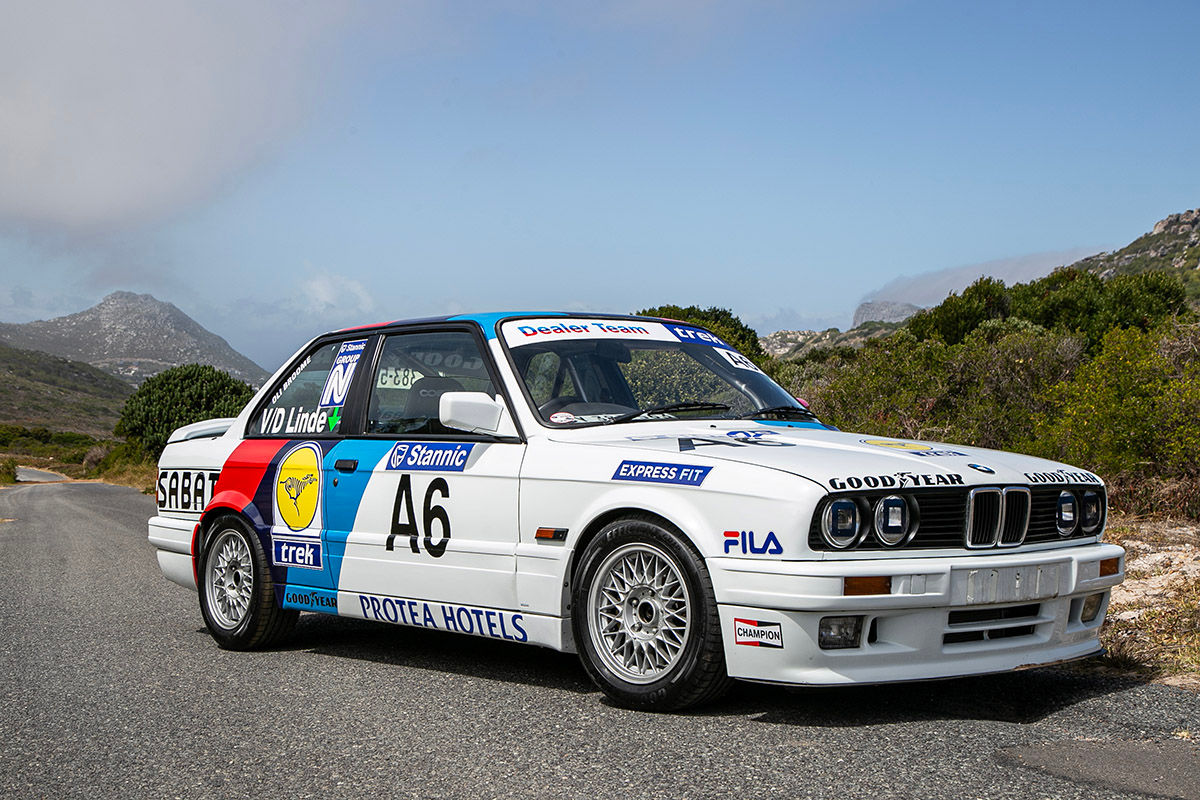
BMW has a rich history in South Africa – the Bavarian brand has produced a few unique-to-Mzansi models and raced almost all of them, most famously the E30-series 325iS. We drive tin-top racing champ Shaun van der Linde’s Group N race car.
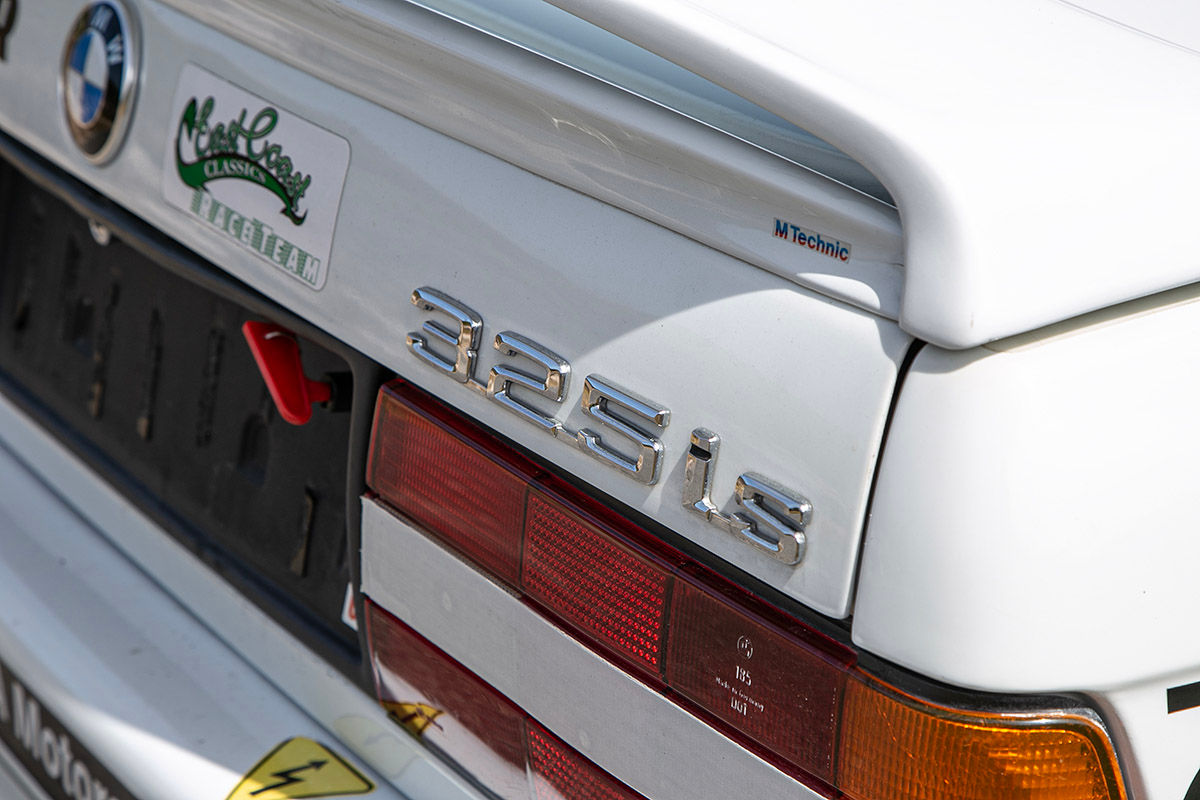
BMW’s E30 3 Series needs little introduction, especially to South African enthusiasts. We’ve produced countless articles and YouTube videos about special South African BMW models such as the E23 745i, E30 333i and the E30 325iS. We’ve even offered a limited-edition 1/18 scale model of the 325iS.
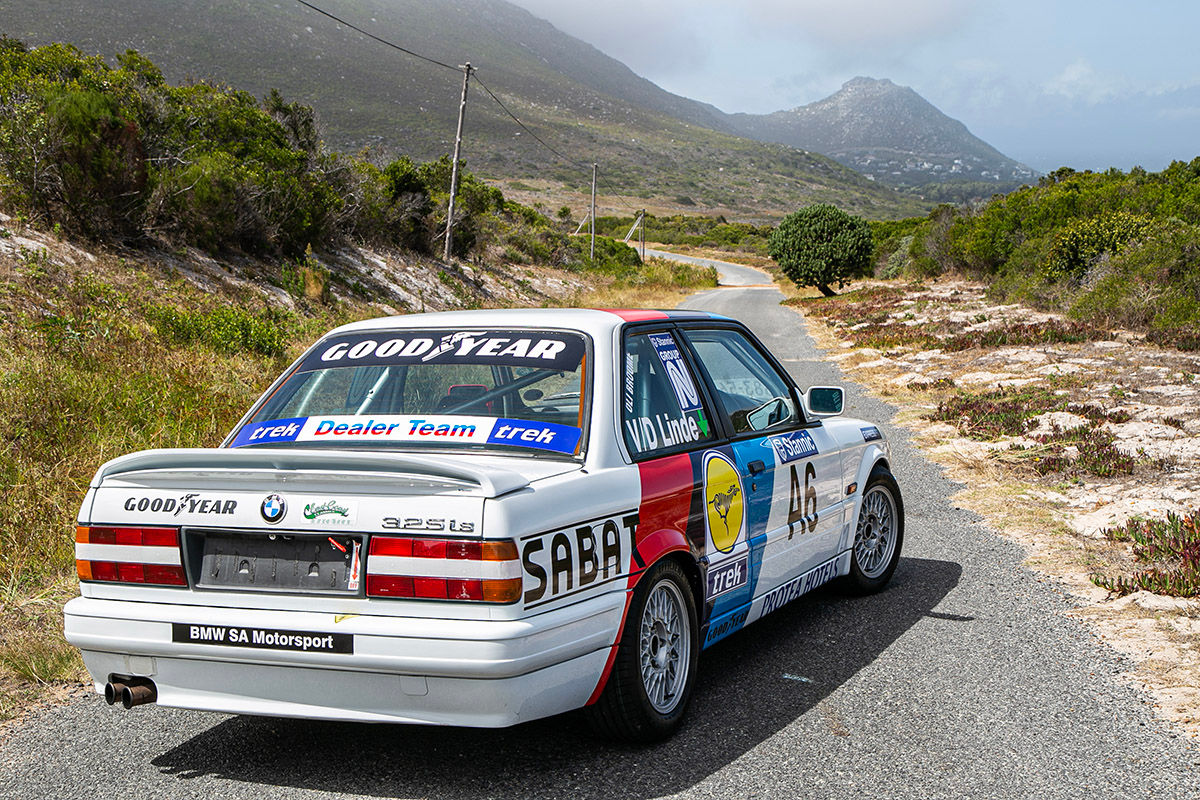
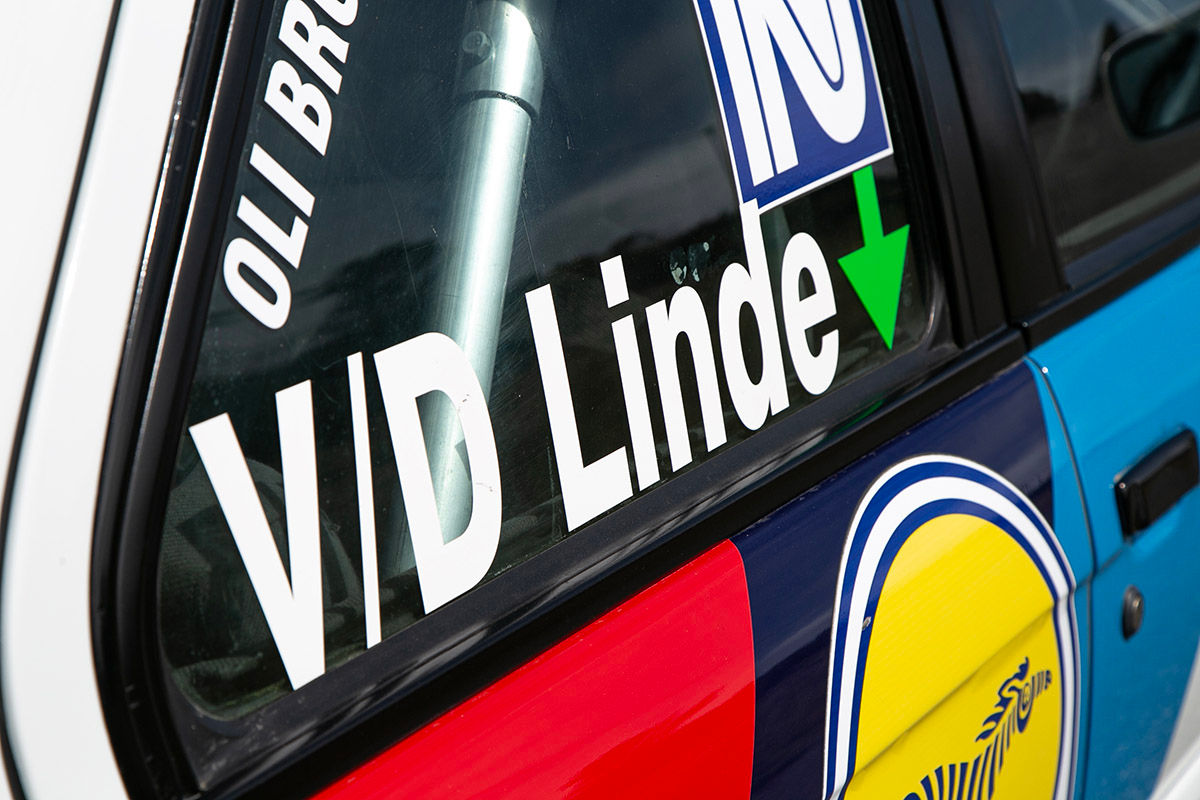
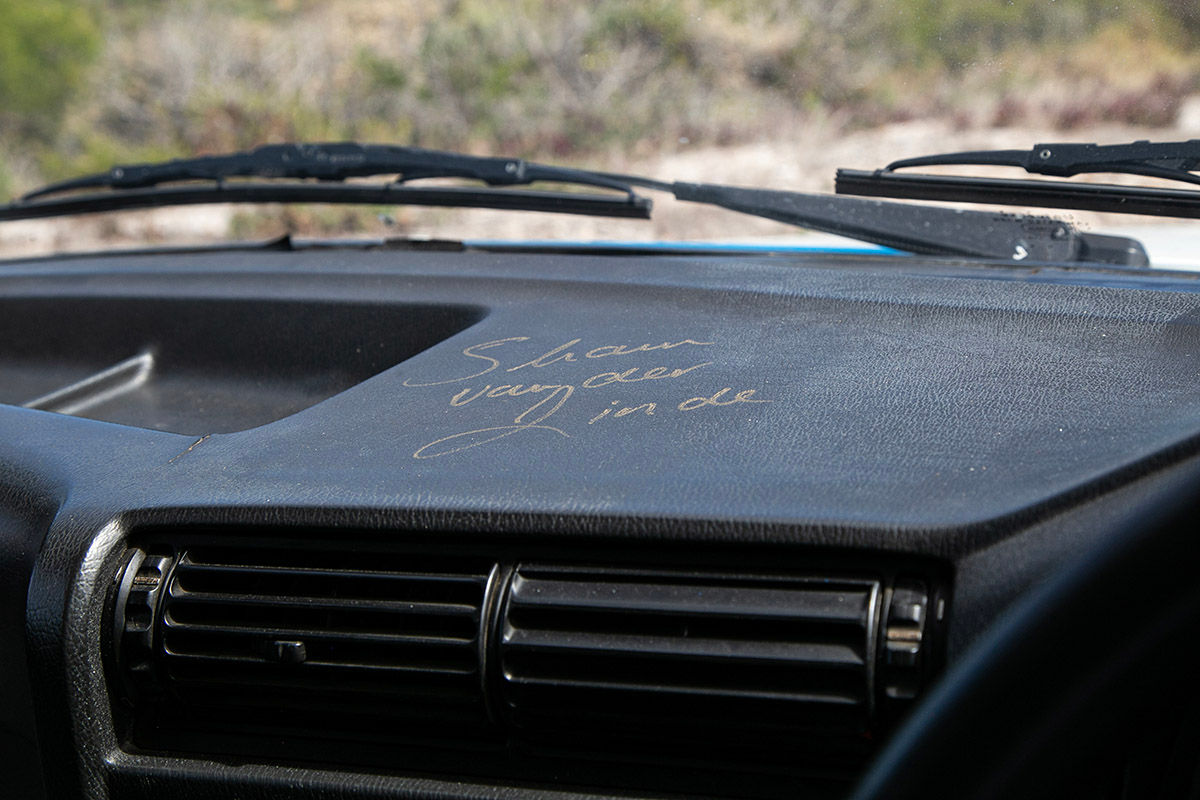
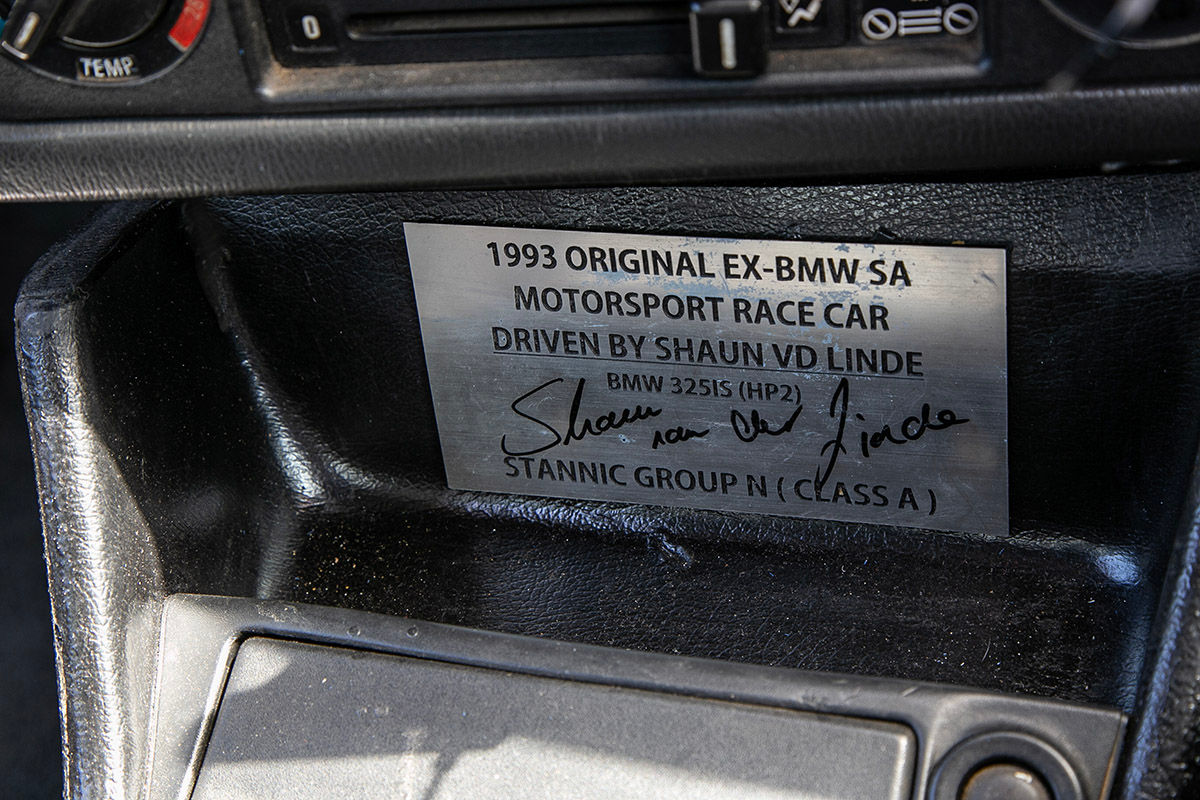
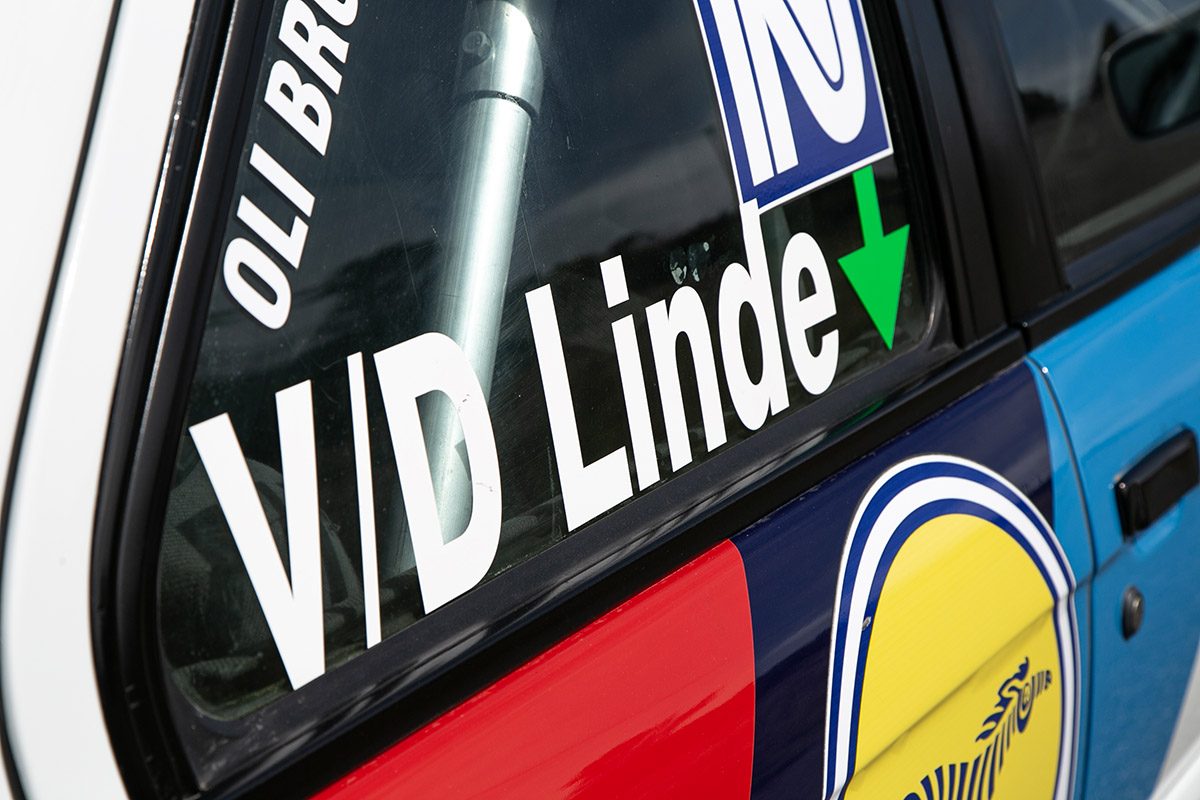
This E30 325iS was raced by 1992 South African Drivers- and 1994 South African Touring Car Champion Shaun van der Linde in that era’s Stannic Group N production-car racing series. For younger readers, Shaun is the father of Kelvin and Sheldon, both of whom are successful international racing drivers.
It is a car that embodies such an important part of South African automotive racing history. That is abundantly clear when you walk up to the car and you see the Protea Hotel, Stannic, Good Year, Trek and all the other sponsors, logos and colours that form part of this BMW E30 3 Series race car’s iconic livery.
Up close with the BMW 325iS race car
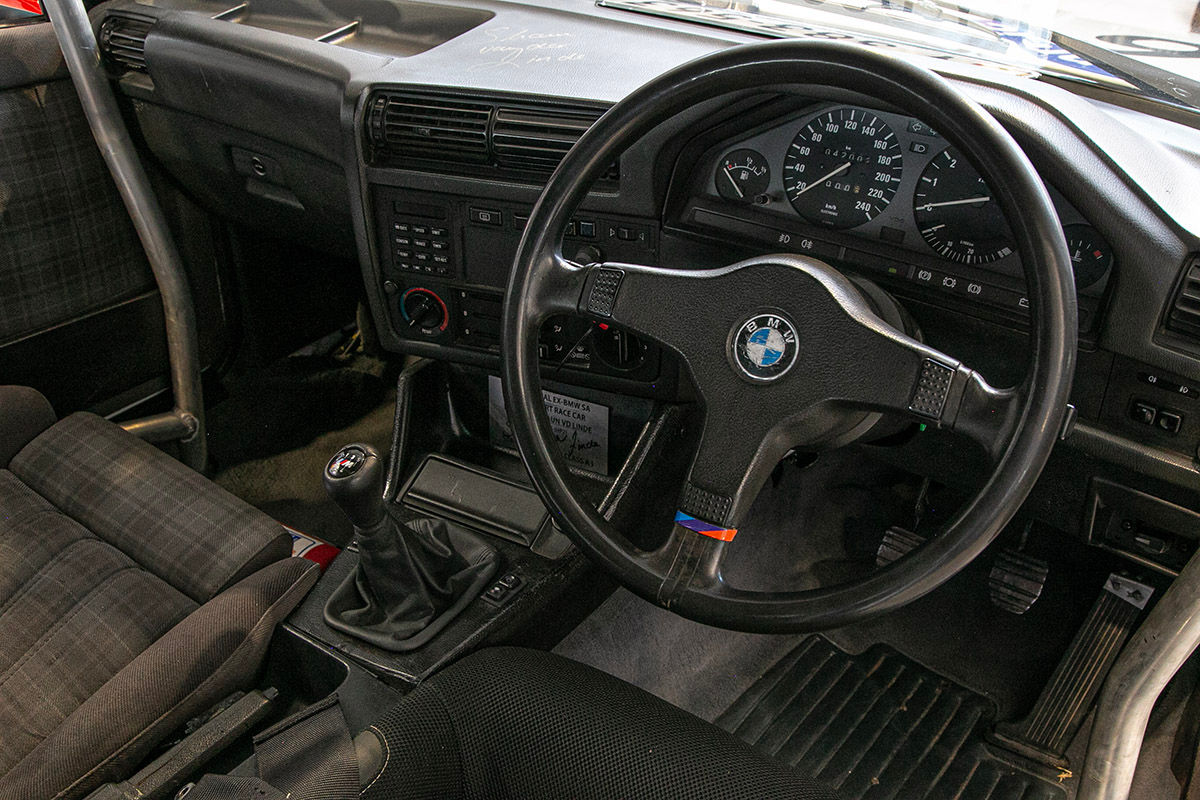
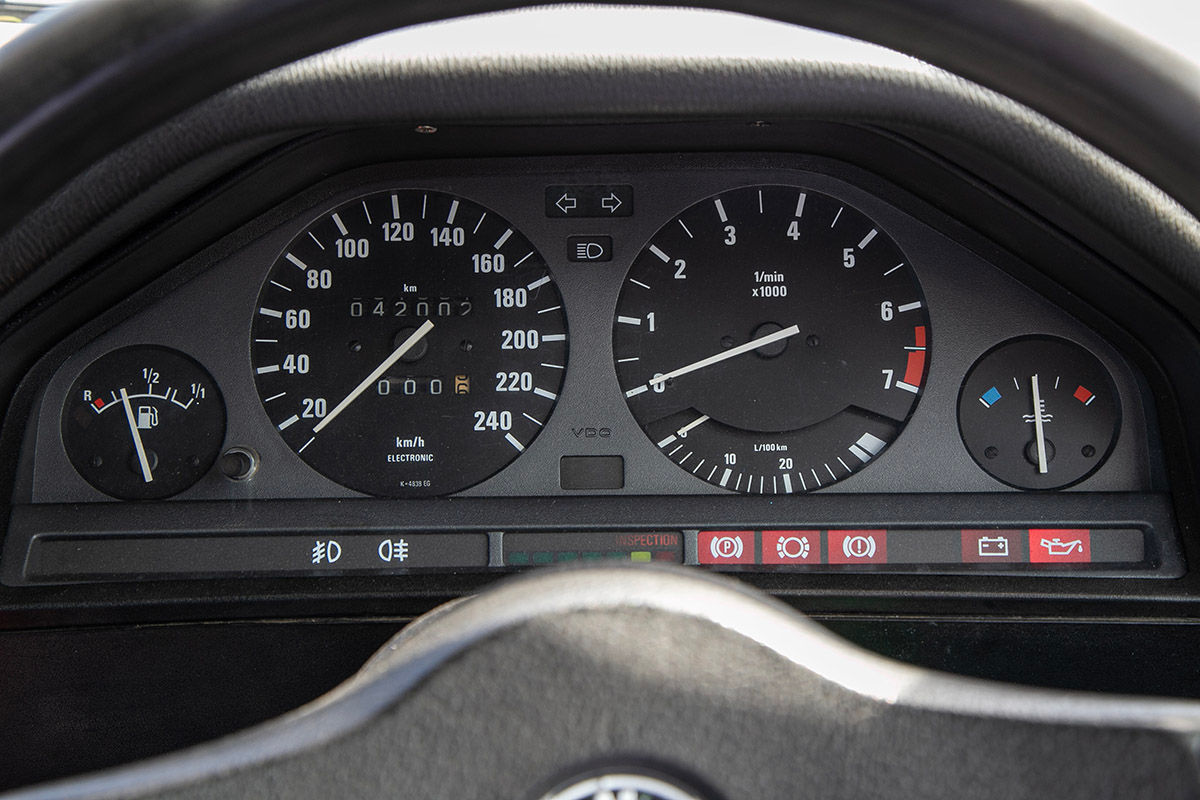
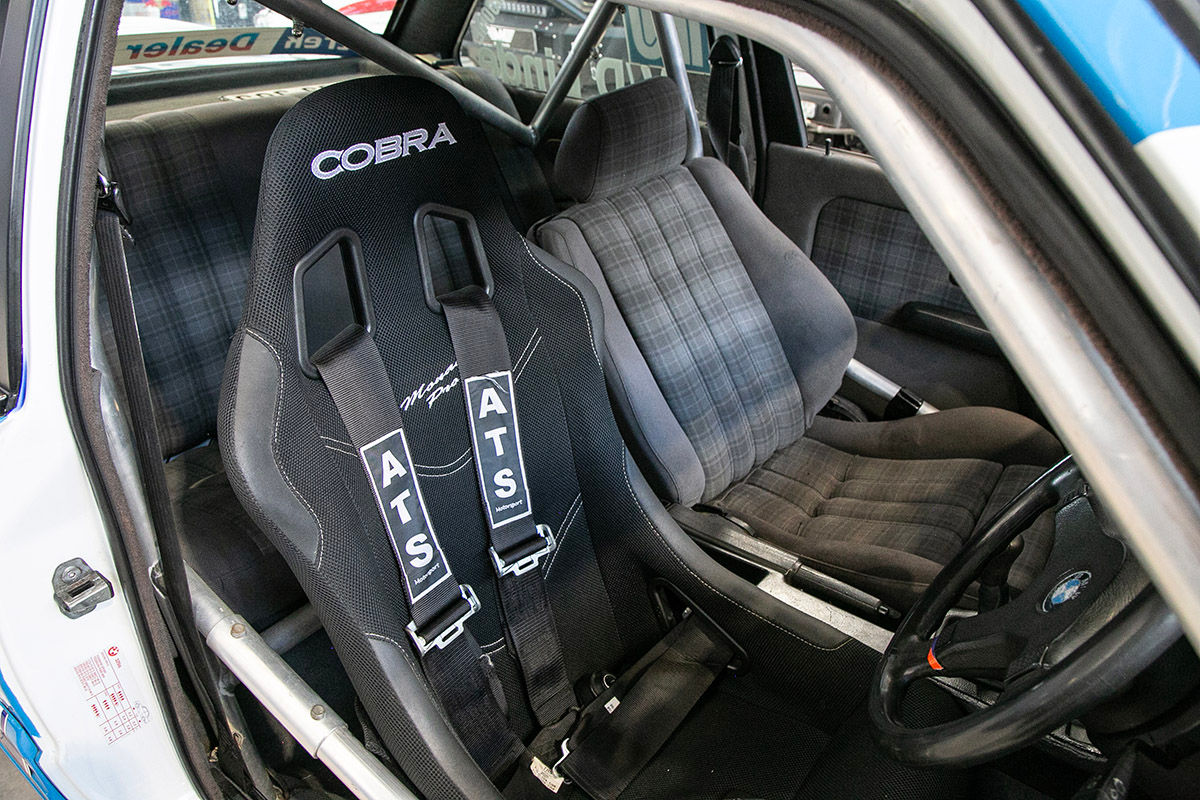
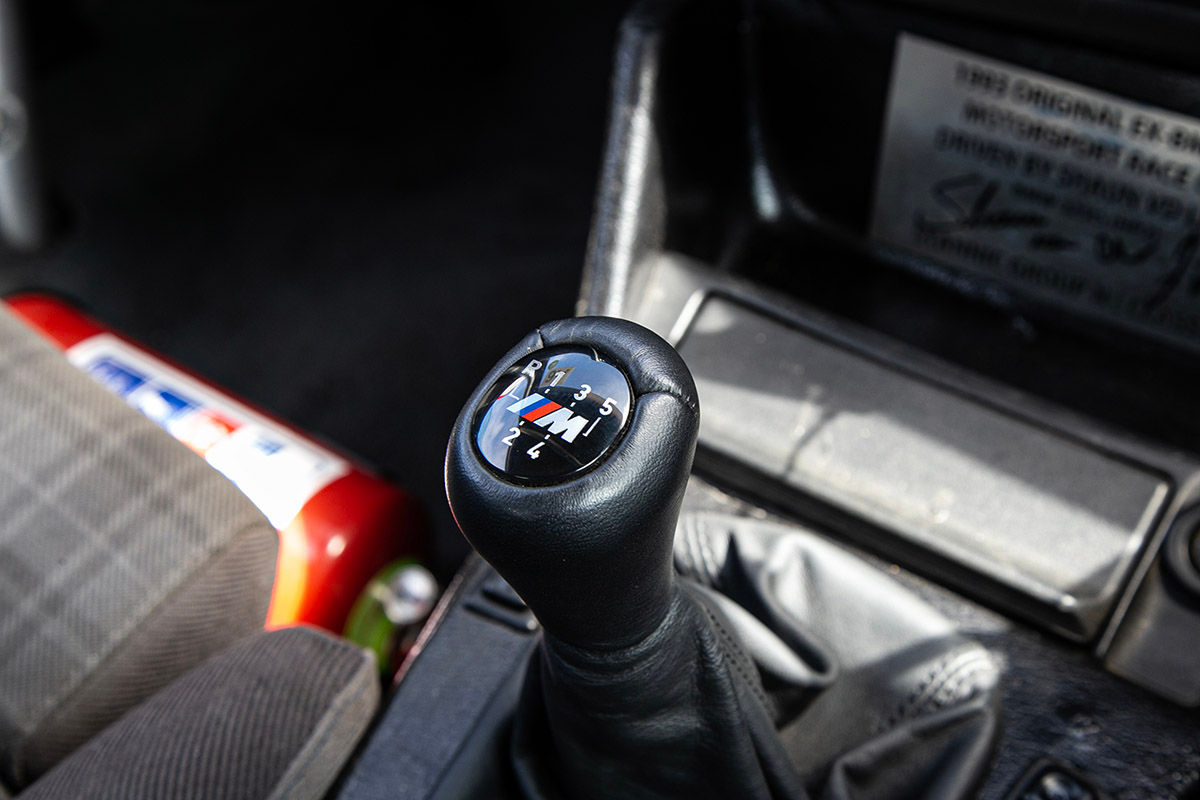
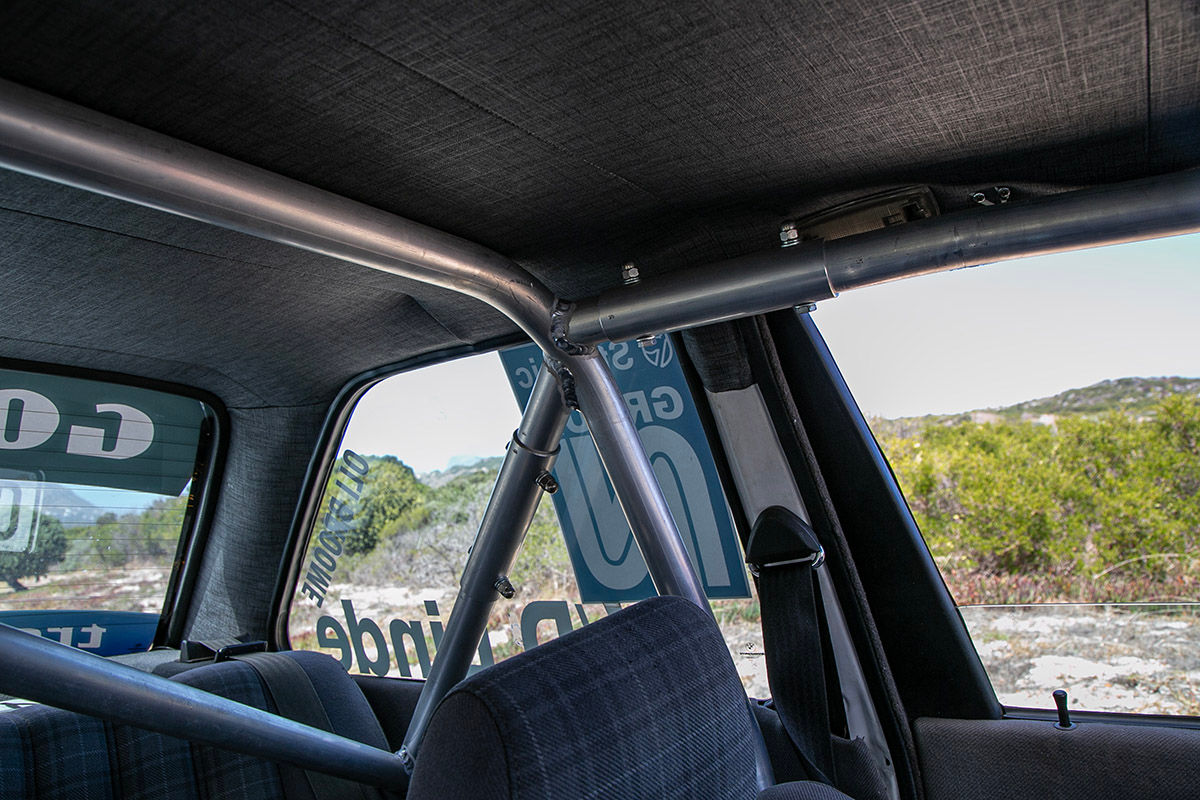
Keep in mind that these machines were closely based on road cars; they were converted to race cars – all done locally. The result is that when you open the door, you find a racing- instead of a driver’s seat, a 4-point harness and a full aluminium roll cage. However, there is still a complete dashboard, gear lever and -boot, as well as all the other buttons you would expect to find on the road car’s slanted fascia.
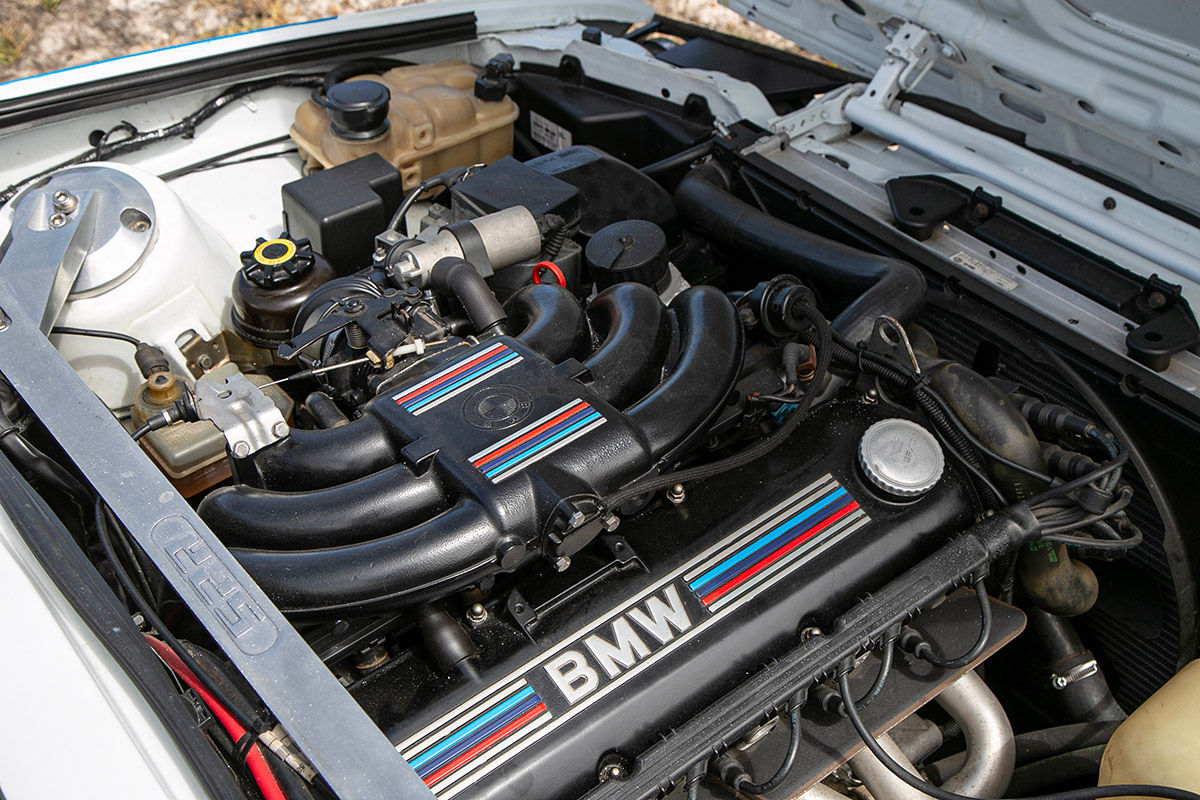
I open the bonnet and revel in the unobstructed view of the 2.7-litre, inline-6-cylinder (with a 12-, not 24-valve configuration) that produced a rather muscular (for the time) 155 kW and 265 Nm. On closer inspection, it’s evident the race car has been lowered, but those wheels were standard on the 325iS.
Specifications
Model: 1993 E30 BMW 325iS EVO II
Engine: 2.7-litre, inline-6 petrol
Power: 155 kW at 5 800 rpm
Torque: 265 Nm at 4 500 rpm
Transmission: 5-speed manual, RWD
Weight: 1 150 kg (approx)
0-100 kph: 7.5 sec (claimed)
Top speed: 226 kph (claimed)
Behind the wheel
This 325iS EVO II is no artefact – it is licensed and road-registered. As the key is handed to me, it takes a while to sink in how truly special this car is, even more so that I will be able to experience it on-road.
As I head onto the road, I carefully make my way through the traffic and finally along Ou Kaapse Weg. Close your eyes, and apart from the louder drivetrain noise and the seat that holds you firmer in place than in the original road car, there is nothing to make you believe that you are driving anything else than a standard BMW 325iS EVO II, which was the final iteration of the range-topping BMW E30 3 Series coupe.
The clutch does engage very quickly the moment you release the leftmost pedal. However, once I’ve shifted through all of the forward gears, it is arguably one of the smoothest race cars I’ve ever driven.
At around 3 000 rpm there is plenty of torque already, and the 6-pot engine, although not “multivalve-like revvy”, is eager and buttery smooth, all of which makes the driving experience an absolute pleasure.
There is an omnipresent burble from that Alpina-fettled inline-6 motor and a deep exhaust note from the twin exhaust pipes, but the soundtrack is not unlike that of the road car. With a few gaps in the traffic, I eagerly plant the long pedal and I can immediately sense there is plenty of performance on offer.
The engine is happy to build up revs progressively, but still there is plenty of torque in the mid-range, allowing you to enjoy a larger piece of the rev range than is sometimes the case with peaky race cars.
It is through the corners that the BMW 325iS EVO II truly impresses, however. You sit low in the car, and compared with modern cars, the pint-sized BMW coupe feels compact and light, whether you are accelerating in a straight line or when a few corners open up in front of you.
The nose eagerly turns into the corners, and even the steering provides enough feedback, especially if you steer slightly away from the ‘wheel’s centre position. I can only imagine what it must have been like to race these cars in the early 90s. Today, there is still a monumental amount of fun to be had behind the wheel – and compared with modern machines, such a level of driving bliss can be had at modest speeds.
Summary
The BMW E30 3 Series offers a simplistic design inside and out, but it has become an absolute timeless design and a highlight from BMW’s late-20th-century model line-up. This car will undoubtedly find a good home once its new owner decides to part with it. Someone who understands BMW South Africa’s racing history and has fond memories of the 325iS’ on-track successes will enjoy this car the most.
Although certain elements of the Bimmer’s drivetrain, such as the clutch, require a bit of attention, once all those issues have been ironed out, this historic BMW 235iS EVO II will only entice and enthral its new owner, whether they’re going to a track day, BMW M-Fest or even on a breakfast run at the weekend.
It is all but guaranteed to be a highlight in whoever’s garage it will find a parking spot in the near future.
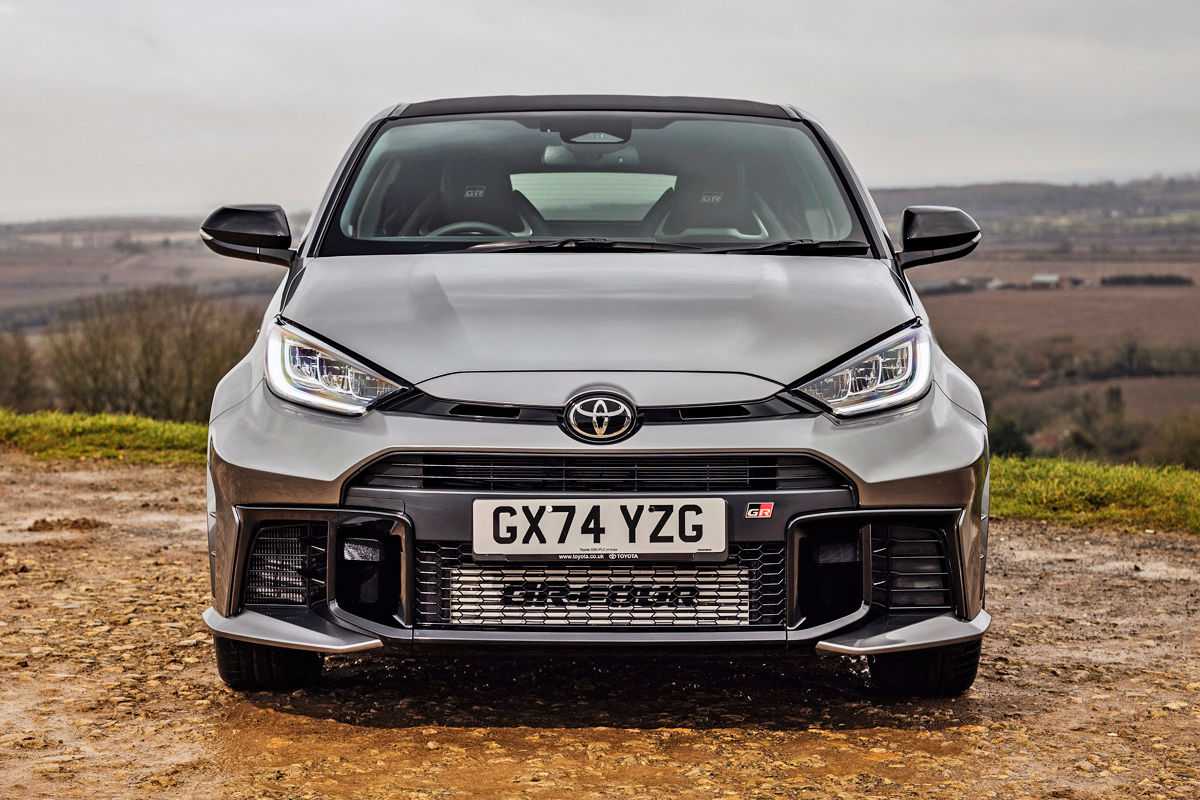
The updated Toyota GR Yaris hot hatch will soon launch in SA, boasting more power and torque as well as the option of an automatic transmission. Here’s what it will cost…
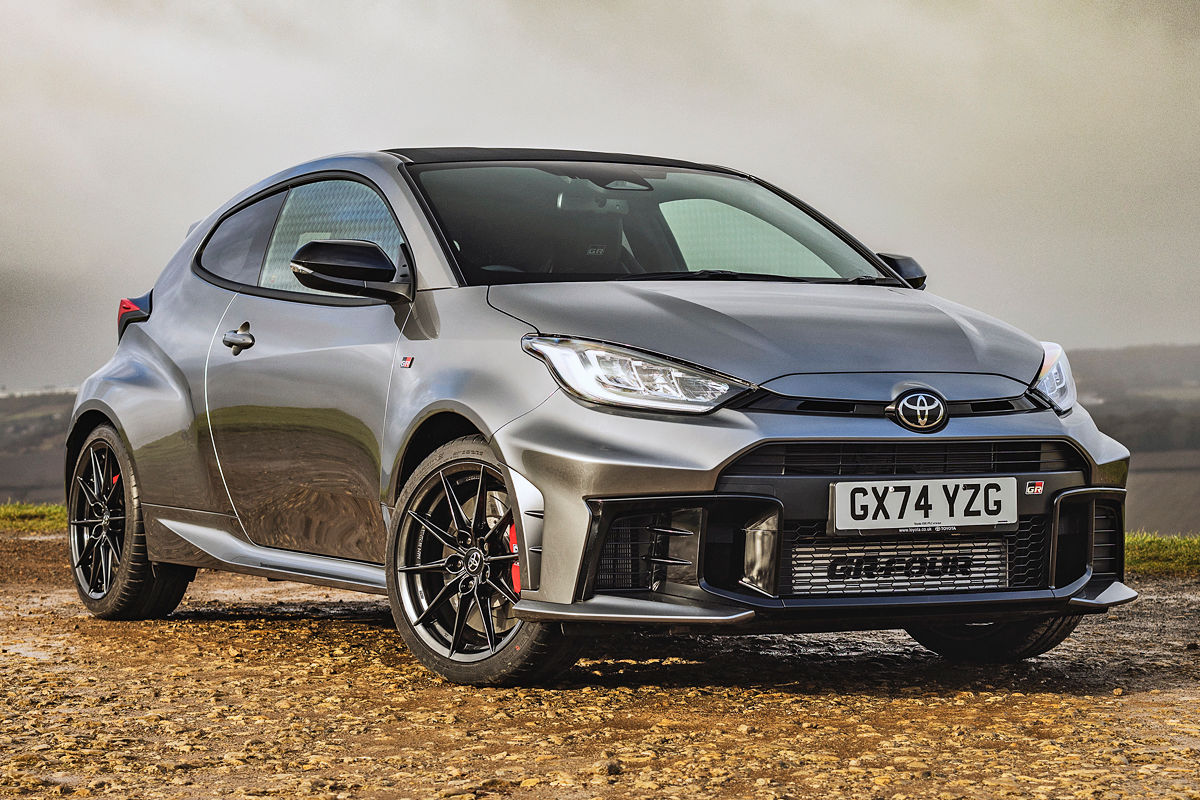
The updated Toyota GR Yaris hot hatch is about the hit the market in South Africa, featuring not only higher outputs than the original but also – for the very first time – the option of an automatic transmission.
Yes, the Japanese firm’s refreshed all-paw hot hatch – which was initially scheduled to arrive in local dealerships in March 2025, so will be ever-so-slightly late to market – will be offered locally in both 2- and 3-pedal form.
The SA-spec GR Yaris will generate 210 kW.
As a reminder, the outgoing GR Yaris launched in SA in mid-2021, before the range was halved to just a single high-spec “Rally” derivative around a year later. The Rally specification is again standard here in Mzansi, though Toyota SA Motors is now offering the option of a torque-converter auto transmission as well.
What sort of pricing are we looking at? Well, according to our information, the updated GR Yaris 1.6T GR-Four Rally 6MT will be priced at R897 400. For the record, that represents a R40 300 increase over the outgoing version (which quietly had its price hiked from R848 600 to R857 100 at the start of April 2025).
Local buyers will be able to choose between a manual ‘box and an auto transmission.
Meanwhile, we can confirm that the new GR Yaris 1.6T GR-Four Rally 8AT will be priced at R925 300, which makes it R27 900 more than its stick-shift sibling. Interestingly, that’s also R4 800 pricier than the manual-equipped 221 kW GR Corolla Circuit (R920 500).
So, what’s changed with the refreshed 3-door GR Yaris? Well, while the outgoing SA-spec version (exclusively equipped with a 6-speed manual gearbox) offered 198 kW and 360 Nm from its turbocharged 1.6-litre, 3-cylinder petrol engine, the updated model boasts peak outputs as high as 210 kW and 400 Nm.
The feisty little 3-pot has been further uprated.
And, of course, buyers can now choose between the manual ‘box (which features an updated clutch system complete with a new dual-mass flywheel) and the “newly developed” 8-speed automatic transmission. Interestingly, the new maximum power figure quoted for South Africa is down on the Japanese-spec model’s 224 kW but up slightly on Europe’s 206 kW tune (with the latter market also having to settle for a slightly lower peak torque of 390 Nm).
Toyota says the self-shifting cog-swapper’s close-ratio gears “make the most of the engine’s power band”, while boasting “world-class” shifting speeds thanks to the use of “highly heat-resistant friction material” in the clutch and “enhancements” to the control software.
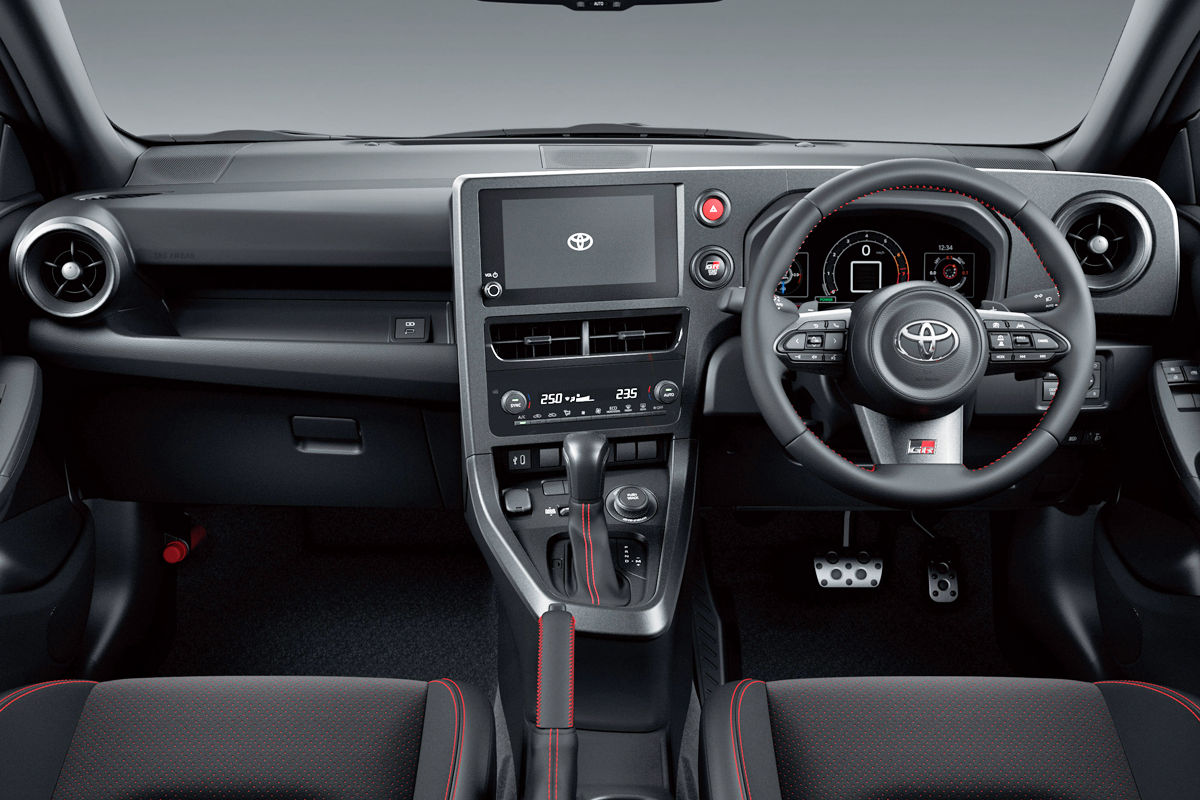
Note the automatic transmission lever (Japanese-spec model pictured).
The claimed 0-100 kph time for the SA-spec derivatives comes in at 5.2 seconds (some 0.3 seconds faster than the outgoing manual model), regardless of transmission. Top speed, meanwhile, is listed as 230 kph. The manual version’s claimed combined fuel consumption is 8.2 L/100 km, while that figure increases to 9.1 L/100 km in the case of the new auto.
According to the Aichi-based automaker, the all-paw hot hatch’s driving position has been lowered by 25 mm, while forward visibility has ostensibly been improved by moving the rearview mirror to the top of the windscreen and lowering the upper edge of the central cluster by 50 mm. Furthermore, the control panel and display have been tilted 15 degrees towards the driver.
Pre-facelift on the left (white) and updated model on the right.
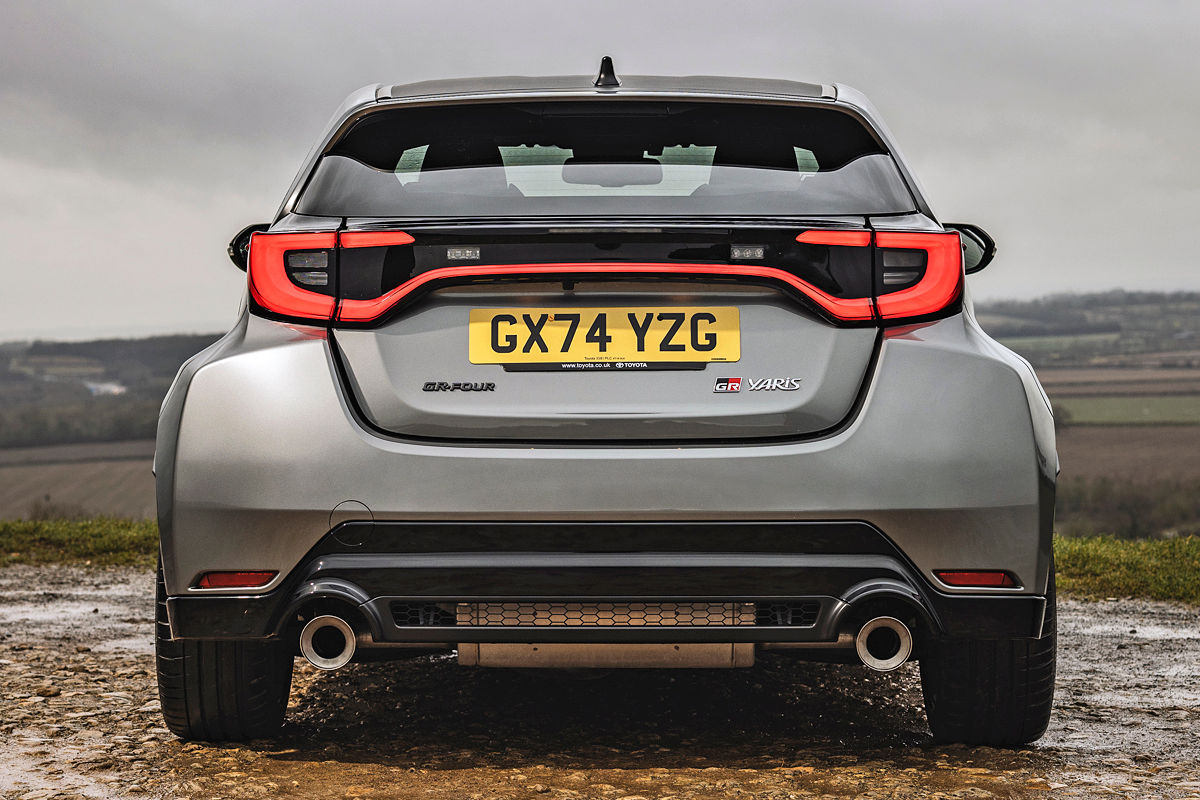
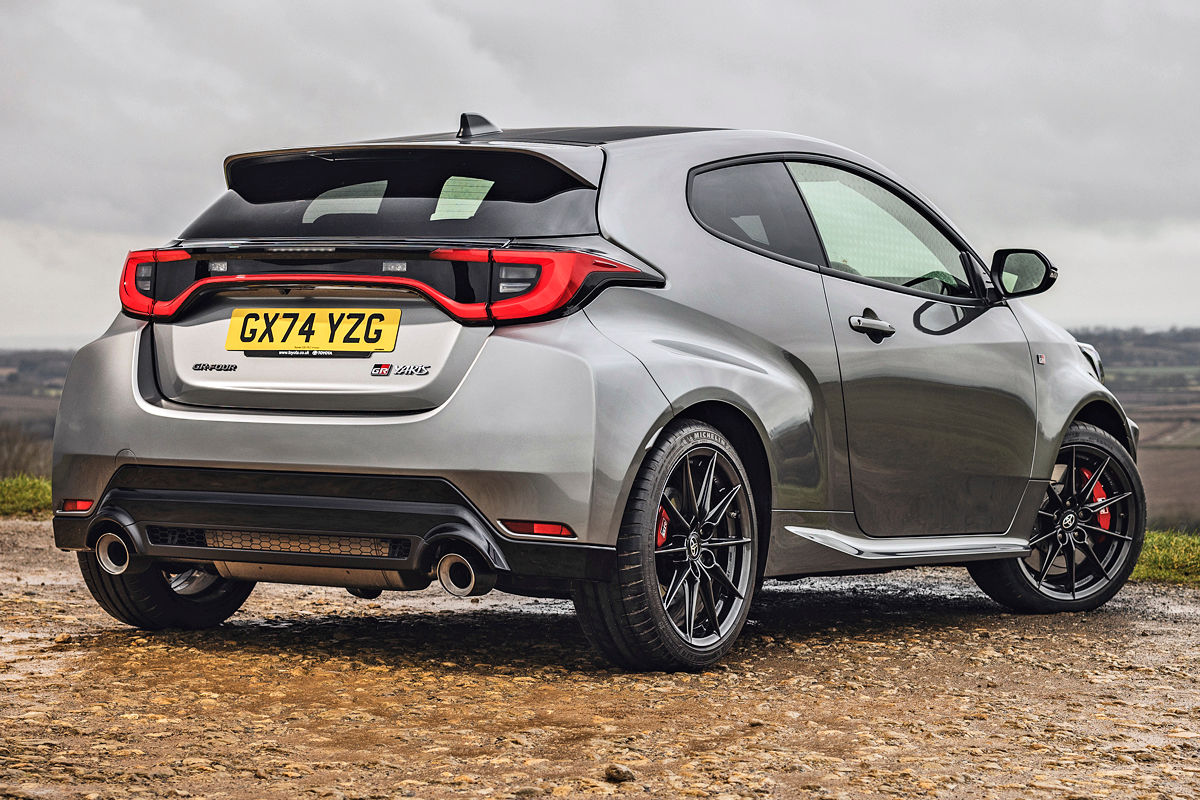
In terms of exterior styling, the updated 3-door model (revealed in January 2024) features revised designs for its lower grille and front bumper, while the rear lower garnish has been tweaked for improved aerodynamics. The taillamps likewise benefit from mild revisions and the high-mounted brake light has been separated from the rear spoiler.
Standard features across the 2-derivative range in South Africa include 18-inch alloy wheels (wrapped in 225/40 R18 tyres), smart entry, LED headlamps (with auto high beams), adaptive cruise control, a reverse-view camera, parking sensors (fore and aft), a 6-speaker sound system, tyre-pressure monitoring, a lane-keeping system, a limited-slip differential, a CFRP roof and a rear spoiler.
In SA, the refreshed GR Yaris will be offered in a choice of 5 hues.
The auto variant, meanwhile, additionally features active noise control, along with “intelligent clearance sonar” plus rear cross traffic alert (including braking). In Mzansi, 5 exterior paint colours will be available: Glacier White, Fierce Red, Platinum White Pearl, Lunar Black and Midnight Grey.
We suspect Toyota SA Motors will again receive only a small allocation of GR Yaris units. For reference, the Japanese company registered just 11 examples of this little hot hatch in Mzansi in 2024, with another 8 units sold locally in 2025’s opening quarter.
How much does the updated Toyota GR Yaris cost in SA?
Toyota GR Yaris 1.6T GR-Four Rally 6MT – R897 400
Toyota GR Yaris 1.6T GR-Four Rally 8AT – R925 300
The prices above include Toyota’s 3-year/100 000 km warranty and a 9-service/90 000 km service plan.
A recent trademark registration by KGM suggests the Korean brand formerly known as SsangYong may well be gearing up for a return to South Africa. Here’s what we know…
Remember SsangYong? Well, these days the Korean brand is known as the “KG Mobility Corporation” (or KGM, for short). And a recent trademark registration suggests a return to South Africa may well be under consideration.
Before we delve into the details, here’s a quick refresher on the firm’s chequered history. Originally established as Dong-A Motor in 1954, the company was renamed “SsangYong Motor” in 1988. In 1997, Daewoo Motors bought a controlling stake in the firm, before China’s SAIC Motor and India’s Mahindra took over in 2004 and 2011, respectively.
KGM’s current-gen Actyon was introduced in 2024.
In 2022, after Mahindra cut funding to SsangYong due to outstanding debt – with the latter thus being forced to file for bankruptcy – the marque was acquired by a South Korean conglomerate called the KG Group. SsangYong was rebranded to KGM the following year (though it’s interesting to note the company is called “KGM SsangYong” in Australia today).
Soon thereafter, in June 2023, the KG Mobility Corporation applied to trademark “KG Mobility” in South Africa. And, by January 2025, the trademark had been officially registered in Mzansi.
The Tivoli dates back to 2015 and was SsangYong’s 1st new model under Mahindra.
The company technically still holds the rights to various familiar SsangYong badges previously used in SA – including Actyon (though this trademark expires in September 2025), Korando, Rexton and Musso – along with Tivoli and Torres (the latter registered locally in April 2023). Interestingly, KGM’s current global line-up comprises these 6 nameplates.
The Tivoli is a small crossover that shares its platform with Mahindra’s XUV300 (and, naturally, the XUV 3XO, too), while the Korando, Actyon, Rexton and Torres (with the latter offered in EV form, too) are all crossovers/SUVs. Finally, the Musso is, of course, a body-on-frame bakkie.
Production of the Q200-series Musso bakkie started back in 2018.
KGM says it’s developing a battery-electric bakkie (codenamed “0100”) as well as fully electric SUVs, all under a partnership with Chinese new-energy vehicle brand BYD. Furthermore, the Korean automaker recently signed an agreement with Chery, announcing that it will “jointly develop mid-to-large SUVs targeting global markets” with this Chinese company, too.
As a reminder, SsangYong entered the South African market around 1995, with Mahindra SA taking over as the brand’s local distributor in 2012. Exactly when SsangYong officially withdrew from Mzansi is unclear, though it was likely sometime between 2017 and 2019.
The Rexton is set to be replaced by a new model (codenamed “SE-10”) jointly developed with Chery.
Of course, as we always point out in such instances, a trademark application is by no means a guarantee the automaker in question will indeed enter the market. But considering KGM has already established a presence in fellow right-hand-drive markets such as the United Kingdom and Australia, this trademark registration is an indication the brand is at least considering expanding into South Africa, too…
Looking for a spacious 7-seater SUV but don’t require serious off-road ability? Let’s examine the 4th-gen Hyundai Santa Fe’s strengths and weaknesses – and see what you can expect to pay for a neat used example…
The Toyota Fortuner has long been the default choice for South African motorists who require a 7-seater SUV. What’s that got to do with the Hyundai Santa Fe, you ask? The absolute dominance of the former saw several highly competent offerings – including the 4th-gen Santa Fe – largely overlooked in Mzansi!
Yes, despite arriving as an utterly compelling package, Hyundai’s unibody Santa Fe found itself competing not only with Toyota’s Prospecton-built stalwart, but other bakkie-based adventure SUVs such as the 2nd-gen Ford Everest, Isuzu’s RJ-series MU-X and Mitsubishi’s 3rd-gen Pajero Sport.
The 4th-gen Santa Fe was unwrapped in early 2018.
With SA buyers seemingly preferring these rugged body-on-frame contenders – which furthermore offered loftier off-road credentials – local sales of the TM-series Santa Fe (which was based on a front-wheel-drive platform) were decidedly slow. For instance, just 177 units were sold across South Africa in the whole of 2023, a figure that fell to a mere 86 units in 2024.
To complicate matters, Hyundai Automotive SA aimed rather high with its Santa Fe, listing premium-badged SUVs such as the Land Rover Discovery Sport, Audi Q5, Volvo XC60 and BMW X3 as direct rivals. As such, the Korean firm’s 7-seater ultimately found itself in something of a “no man’s land” between cheaper bakkie-based offerings and more expensive executive SUVs.
A look at the pre-facelift model’s cabin.
As an aside, it’s worth noting the Santa Fe was Hyundai’s flagship product in Mzansi until September 2021, when the larger and even more expensive Palisade touched down to assume that mantle.
Hyundai Santa Fe model line-up in South Africa
The 4th-gen Santa Fe launched locally late in 2018.
The first official images of the 4th-gen Hyundai Santa Fe were released in February 2018 ahead of this model’s world premiere at the Geneva International Motor Show the very next month.
It wasn’t long before the TM-series Santa Fe arrived in South Africa, hitting the local market in November 2018. It inherited its predecessor’s 2.2-litre, 4-cylinder turbodiesel engine, though upgraded from the old 6-speed automatic transmission to a fresh 8-speed item. At launch, the Santa Fe line-up comprised a trio of derivatives, with only the flagship boasting all-wheel drive:
Santa Fe 2.2D Premium 8AT FWD (142 kW/440 Nm)
Santa Fe 2.2D Executive 8AT FWD (142 kW/440 Nm)
Santa Fe 2.2D Elite 8AT AWD (142 kW/440 Nm)
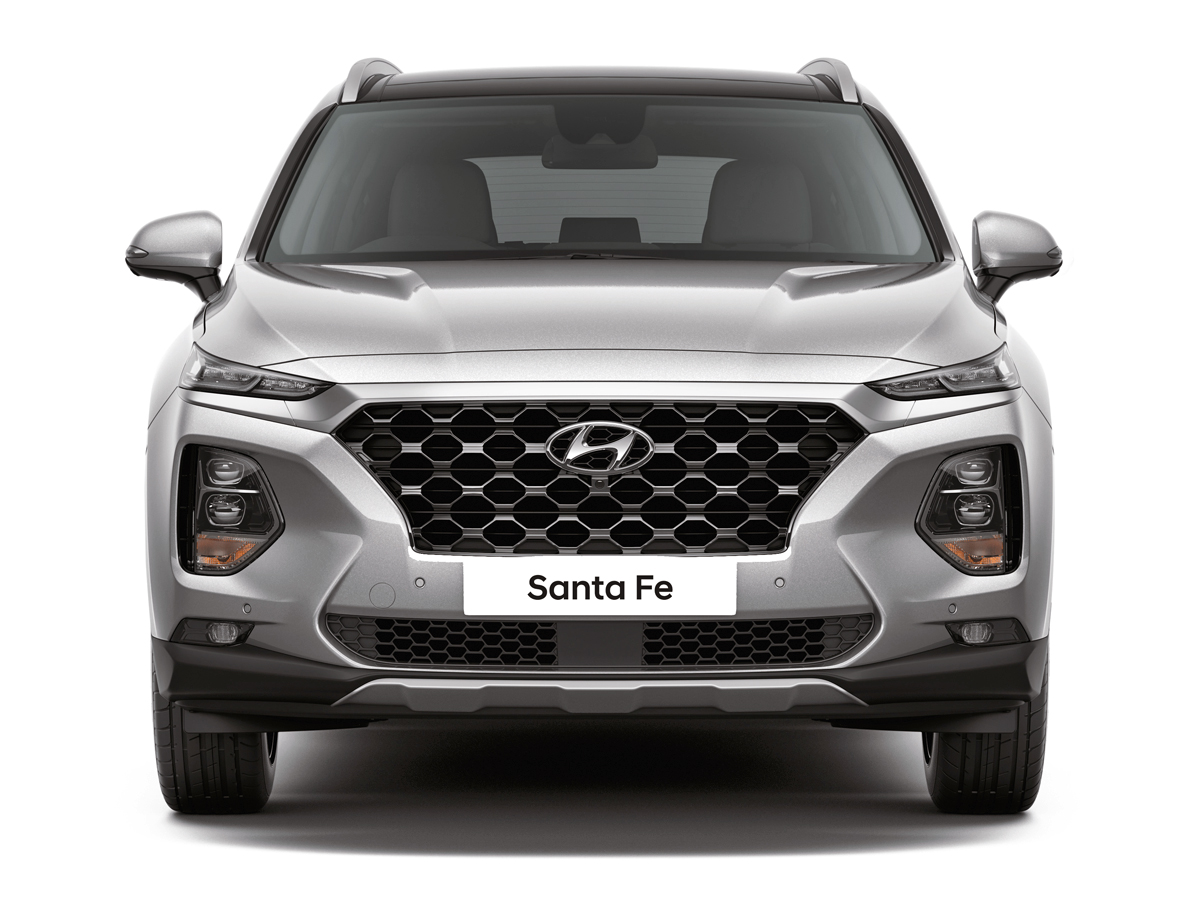
Little changed until April 2021, when the refreshed Santa Fe made local landfall, with Hyundai describing the updated model as more than a “mere facelift”. Indeed, this mid-cycle revision – which saw the local range rationalised to 2 derivatives – included not only more striking styling (largely courtesy of that giant grille) but also platform tweaks and significant mechanical alterations.
Pre-facelift on the left and refreshed version on the right.
For instance, the updated Santa Fe switched to the automaker’s latest “Smartstream” CRDi turbodiesel engine, which featured an aluminium (rather than iron) block, a higher (2 200-bar) injection system and a new turbocharger design. Despite its slightly smaller displacement (2 151 cm3 versus 2 199 cm3) and lower weight, the new motor’s peak outputs increased to 148 kW and 441 Nm.
Santa Fe 2.2D Executive 8DCT FWD (148 kW/441 Nm)
Santa Fe 2.2D Elite 8DCT AWD (148 kW/441 Nm)
In addition, the torque-converter automatic transmission fell away at this point; it was replaced by a “wet” 8-speed dual-clutch transmission operated through new shift-by-wire buttons rather than a traditional lever. Meanwhile, the overhauled cabin boasted a new floating centre-console design, while also upgrading from a 7-inch touchscreen infotainment screen to an 8-inch item.
Several changes were made to the cabin as part of a comprehensive facelift.
Then, for the 2023 model year, the AWD-equipped Elite derivative quietly became available with a raft of additional driver-assistance equipment, including lane-departure warning, lane-follow assist, fatigue detection, driver-attention warning, forward-collision avoidance assist and rear cross-traffic collision avoidance assist.
Local sales of the 4th-gen Santa Fe petered out late in 2024, while Hyundai Automotive SA deliberated on whether or not to introduce the 5th-gen model, which is interestingly not built in turbodiesel form.
What are the Hyundai Santa Fe’s strengths?
Plenty of space back there.
Roomy, versatile interior: The TM-series Santa Fe was larger than its forebear, with much of the extra wheelbase length translating to additional 2nd- and 3rd-row legroom. Access to the final row of pews – which was spacious enough to comfortably accommodate young children – was furthermore simplified by the introduction of a clever “1-touch walk-in” function (at the prod of a button, the 2nd row slid forward and folded out of the way).
With all seats in place, luggage capacity was a modest 130 litres (admittedly slightly more than before), though this figure increased to 547 litres with the 3rd row stowed and a whopping 1 625 litres with the 2nd row also folded down. Interestingly, the facelifted Santa Fe grew 15 mm in length to 4 785 mm, and that helped Hyundai to free up even more 2nd-row legroom – as well as a smidge extra cargo capacity.
The Santa Fe rode with a far higher degree of comfort than bakkie-based SUVs.
Ride quality and refinement: Endowed with a multi-link rear suspension arrangement and dampers clearly tuned for comfort, the Santa Fe offered a commendable ride quality and lofty levels of refinement. The latter quality was particularly evident on the facelifted model, which seemingly benefitted from additional sound insulation.
In short, compared with its bakkie-based rivals, Hyundai’s 7-seater SUV displayed impeccable road manners, easily soaking up road imperfections even when specified with the largest alloy wheels available (20-inch items wrapped in 255/45 R20 tyres in the case of the facelifted Elite).
The turbodiesel engines available offered a pleasing balance of grunt and efficiency.
Oomph and efficiency: While there certainly were noteworthy differences between the pair of 2.2-litre, 4-cylinder turbodiesel engines offered during this Santa Fe’s local lifecycle, both delivered suitable levels of punch. Indeed, peak twisting force was on tap from as low as 1 750 rpm in each case, lending this big SUV a pleasing degree of tractability.
These oil-burning motors were also capable of returning wallet-friendly fuel consumption. For the pre-facelift FWD derivatives, Hyundai claimed a figure of just 7.8 L/100 km, a number that grew to 8.2 L/100 km in the case of the AWD variant. With the new engine rolled out at the mid-cycle update, the South Korean firm listed a claim of 7.9 L/100 km for both the front- and all-wheel-drive derivatives.
A brief aside on another key difference between these 2 engines: the earlier unit used a chain-driven cam, while the newer mill (which had a narrower bore, but longer stroke) switched to a belt. Though the latter was quieter, the belt theoretically had a shorter service life than the chain.
What are the Hyundai Santa Fe’s weaknesses?
Despite the facelifted top-spec version’s drive modes, the 4th-gen Santa Fe was no off-roader.
Lacked bakkie-based rivals’ off-road ability: While the 4th-gen Santa Fe was streets ahead of its bakkie-based competitors in terms of ride comfort, it simply couldn’t match them on the rough stuff. Sure, Hyundai added a trio of “terrain modes” (sand, snow and mud) to the all-paw Elite flagship at the facelift, but this remained a decidedly road-biased SUV.
Still, the Santa Fe was certainly more than capable of handling the average gravel road, with the early version featuring a ground clearance of 185 mm, a figure that fell to 176 mm in the case of the facelifted FWD variant and grew to 206 mm on the refreshed AWD derivative.
The curtain airbags offered only partial protection for 3rd-row occupants.
Limited airbag coverage for 3rd row: Though all versions of the TM-series Hyundai Santa Fe sold in South Africa were equipped with 6 airbags, it’s important to note the curtain airbags did not provide comprehensive coverage for the 3rd row of seats (an issue Hyundai resolved on the 5th-gen model).
In effect, the curtain airbags stopped short of the C-pillars, meaning the rearmost occupants didn’t benefit from full protection. While some coverage is undoubtedly better than none (certain of SA’s budget 7-seaters make do with only dual airbags, after all), it’s not great news for families keen on frequently filling all 7 seats.
Options on the used market are limited.
Not many on the used market: Is this really a weakness? Well, though it’s perhaps it’s a little unfair on the Santa Fe (but also an indication that there’s little else to criticise from a product perspective), a lack of used stock makes it challenging for those shopping for a 2nd-hand example.
Fascinatingly, the 2nd iteration (2 681 units) was by far the most popular Santa Fe in South Africa, before local sales slipped slightly to 1 980 units with the 3rd-gen model. While we don’t have confirmed figures for the TM-series model, we’ve no doubt it failed to match its forebears’ respective volumes.
How much is a used Hyundai Santa Fe in SA?
A lengthy warranty was standard in Mzansi.
Throughout the 4th-gen Santa Fe’s local lifecycle, a 5-year/150 000 km warranty, supplemented by an additional 2-year/50 000 km powertrain warranty, shipped standard. Initially, Hyundai Automotive SA offered a 5-year/90 000 km service plan (with intervals of 15 000 km), though later upgraded to a 6-year/90 000 km arrangement.
At the time of writing, we found fewer than 50 units of the TM-series Hyundai Santa Fe listed on Cars.co.za. Interestingly, the split between FWD and AWD derivatives was almost even (leaning slightly in the favour of the latter), with the Elite the marginally more prevalent trim grade.
At the time of writing, just 50 units were listed on Cars.co.za countrywide.
Indicated mileages varied from just 50 km on a virtually brand-new example to 154 000 km achieved by a 2019 Elite AWD unit. A whopping 88% of listed examples showed under 100 000 km on their respective odometers. Though listings were relatively evenly distributed between model years, the most popular was 2021, which accounted for around 27%.
Below R400 000: Around 14% of TM-series Santa Fe listings were priced below R400 000, most being base Premium derivatives from the opening 2 model years. That said, the most affordable example we found was a 2019 Elite variant (with 83 000 km on the clock) priced at R349 900.
R400 000 to R600 000: Approximately half of all listed 4th-gen Santa Fe units were positioned between these pricing bookends. Interestingly, we found slightly more refreshed models here than pre-facelift versions, with the Executive FWD being the most common variant by a small margin.
R600 000 to R800 000: Accounting for nearly 22%, this pricing bracket featured only facelifted examples (chiefly from the 2023 model year), with an almost even split between the Executive FWD derivative and the Elite AWD variant.
Above R800 000: The final 14% of 4th-gen Santa Fe stock was priced above R800 000. These units were all from the final 2 model years, the majority with mileage well under 15 000 km. The most expensive example we found was a virtually new Elite AWD with 100 km on the clock and priced at R1 049 000.
Which Hyundai Santa Fe derivative should you buy?
The mid-cycle update brought bolder front-end styling.
Since styling is a largely subjective matter, we’ll leave you to decide whether you prefer the more restrained exterior design of the pre-facelift Santa Fe or the bolder look of the updated model. That said, keep in mind there were several under-the-skin differences, too.
While we can’t definitively state which of the 2 engines is more reliable, we’d posit that risk-averse buyers who intend on keeping their vehicle for many, many years might be better served by the earlier chain-driven motor and torque-converter automatic transmission.
The larger screen in the refreshed model.
On the other hand, the newer powertrain in the facelifted Santa Fe was a little gutsier and more efficient, while the updated cabin felt a mite more upmarket. So, with that lengthy warranty in mind, we’d probably point to the facelifted Executive FWD as the most compelling variant for the average buyer, on balance.
Why not the Elite AWD? Well, if your budget allows, we certainly wouldn’t blame you for opting for this flagship variant instead (after all, it gained items such as larger alloys, LED taillamps, a panoramic sunroof, rear-seat alert and a heating-and-ventilation function for the front seats), though we’d argue the all-wheel-drive system would prove largely superfluous for most buyers.
What are some alternatives to the Santa Fe?
Hyundai’s Santa Fe faced varied rivals.
Besides the ladder-frame models and premium-badged SUVs mentioned at the outset of this Buyer’s Guide, what other vehicles competed directly with the 4th-gen Hyundai Santa Fe? Well, local shoppers would certainly also have considered the closely related MQ4-series Kia Sorento.
The Allspace version of the 2nd-gen Volkswagen Tiguan was another compelling 7-seater unibody SUV, though it was somewhat more compact and affordable than the Santa Fe. This German offering was furthermore available with a wide range of powertrains, though keep in mind the turbodiesel engine fell away at the facelift.
Space was not in short supply.
There was also the Mitsubishi Outlander (but both the 3rd- and 4th-gen models were offered exclusively in naturally aspirated petrol form in Mzansi), while the 6th-gen Honda CR-V (another petrol-only affair) that hit local roads towards the end of the Santa Fe’s lifecycle upgraded to 7 seats.
Still, like the latter 2 models, Hyundai’s TM-series Santa Fe was ultimately a low-volume product. Blessed with a practical yet decidedly premium interior as well as gutsy turbodiesel powertrains, it was a real shame this family-friendly model was largely overlooked by South Africans in favour of bakkie-based rivals and smaller premium-badged executive SUVs.
Wrong place, wrong time?
Perhaps the TM-series Hyundai Santa Fe simply found itself in the wrong market at the wrong time – and arguably at the wrong price. Whatever the case, there’s no denying the value this model offers in the used space today.
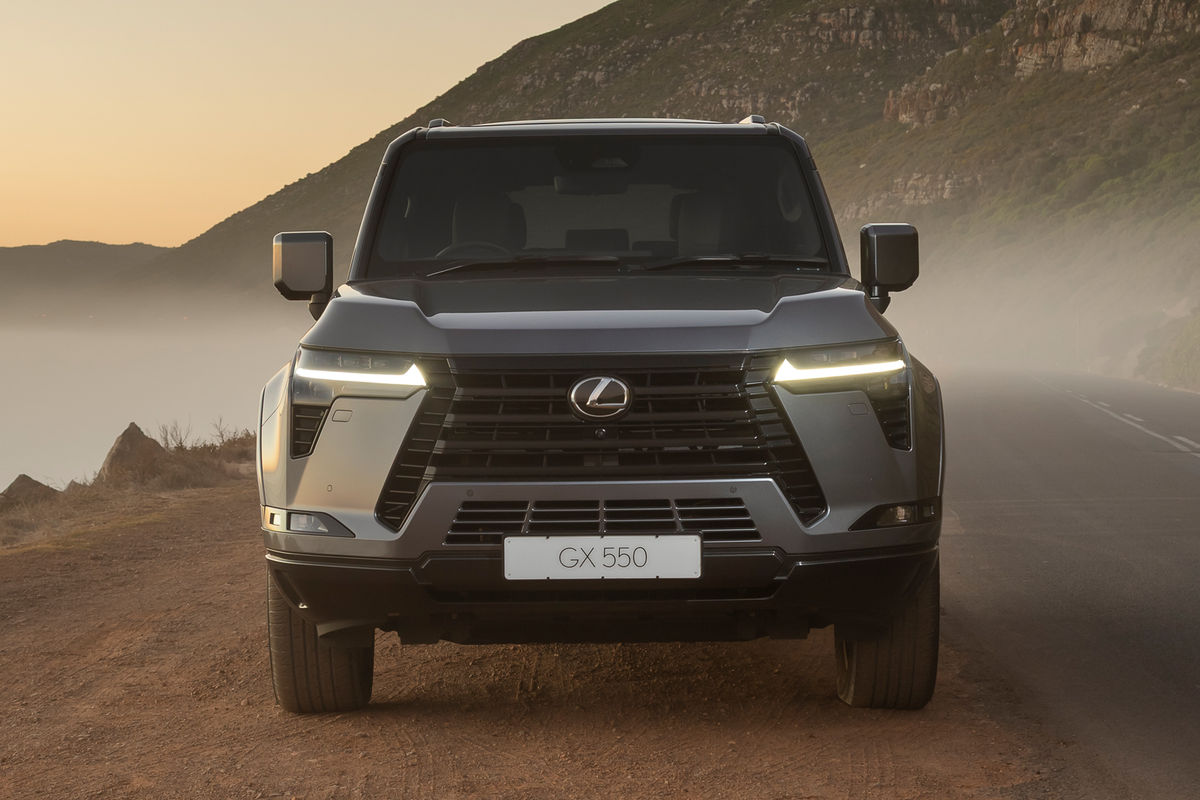
Within a month of going on sale, the Lexus GX has set a local sales record for its brand. Will the new model make a dent in the luxury SUV market and enable Lexus to bolster its position in Mzansi? We attended the GX’s local launch event in the Eastern Cape.
What is a Lexus GX?
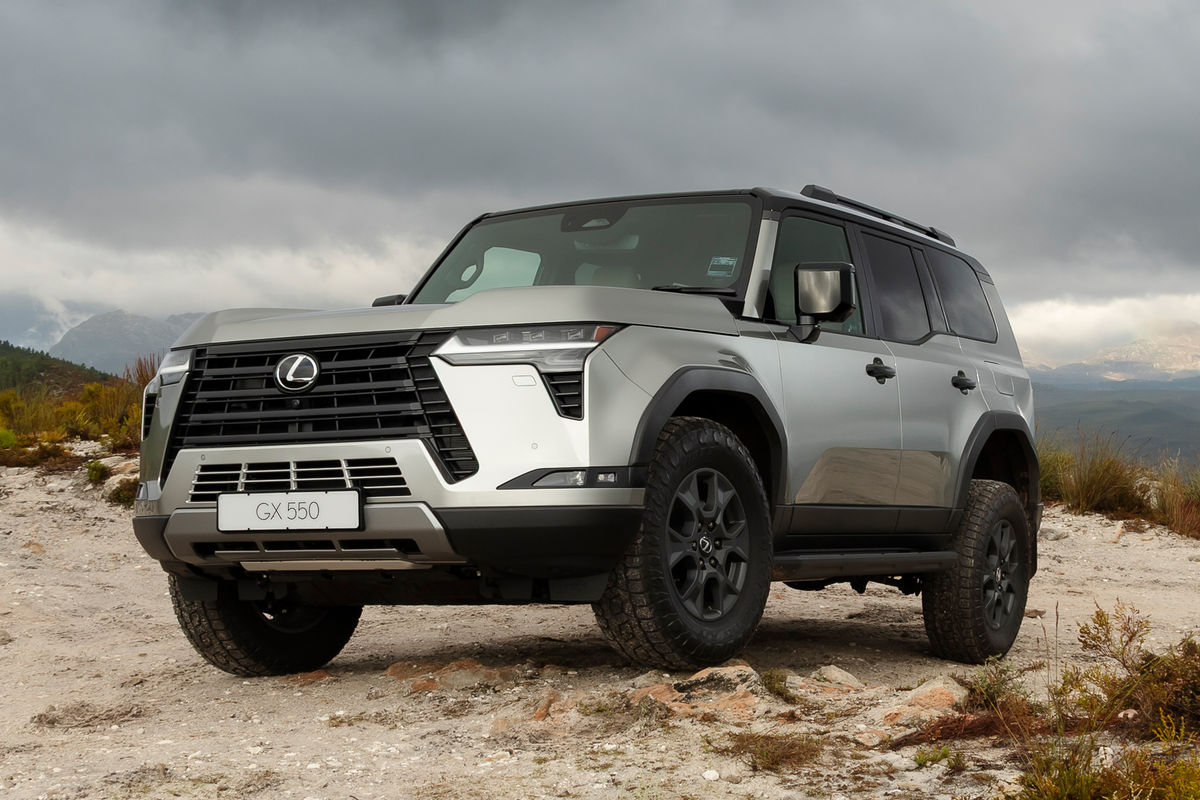
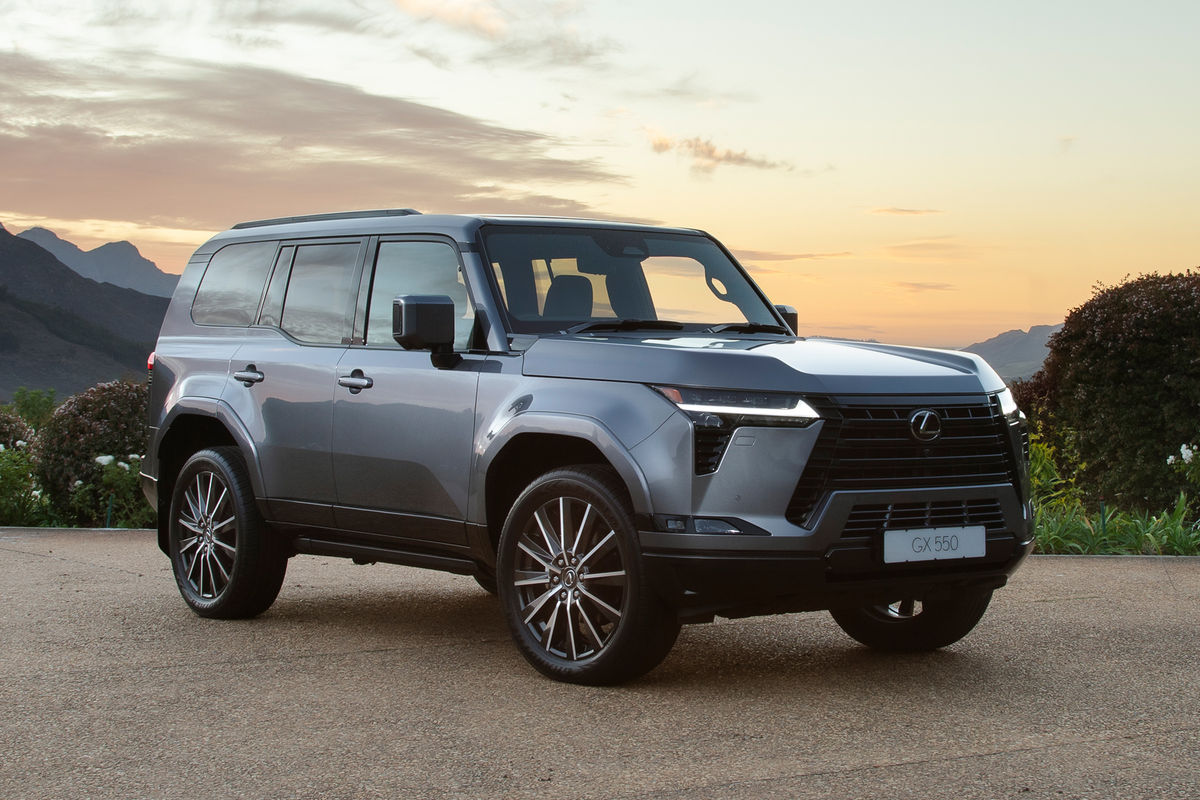
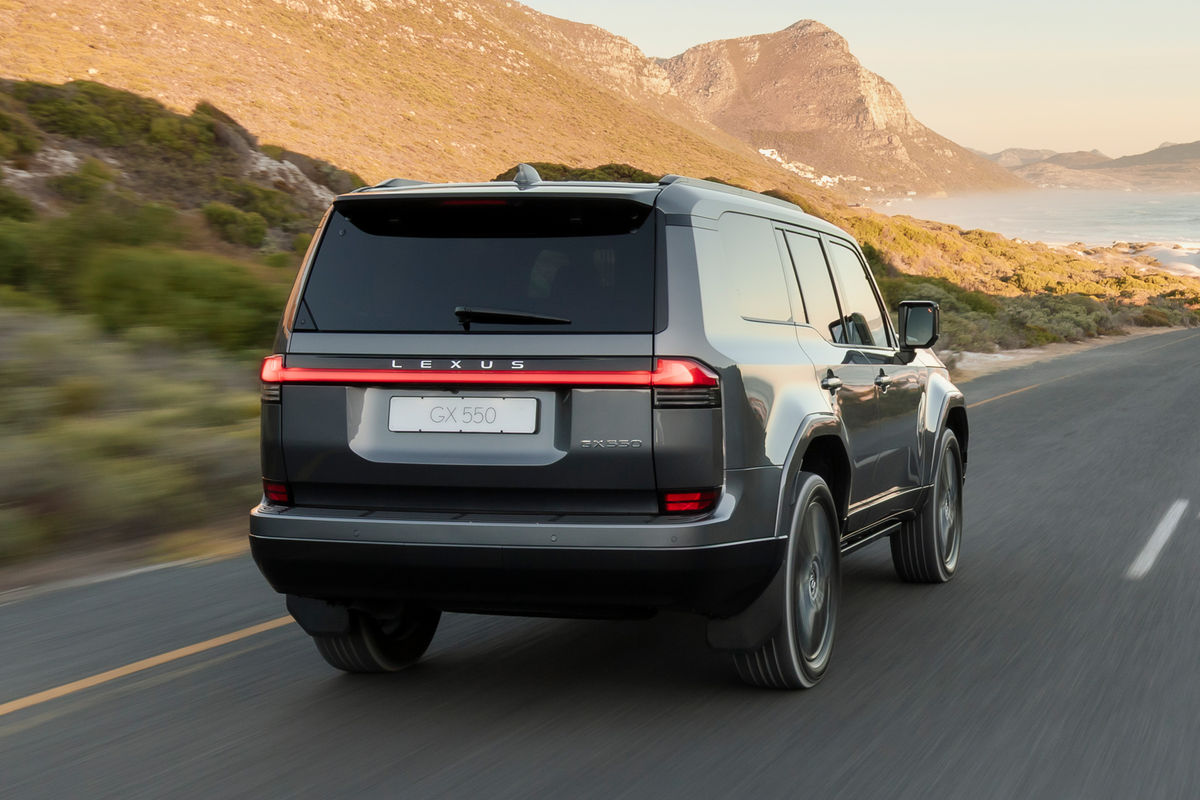
In SE trim, the Lexus GX is one of the best-looking new SUVs in recent memory.
The new Lexus GX shares its platform with the Toyota Land Cruiser Prado, but whereas the Toyota is more utilitarian and built for purpose, the Lexus’ packaging is distinctly more upmarket and luxurious.
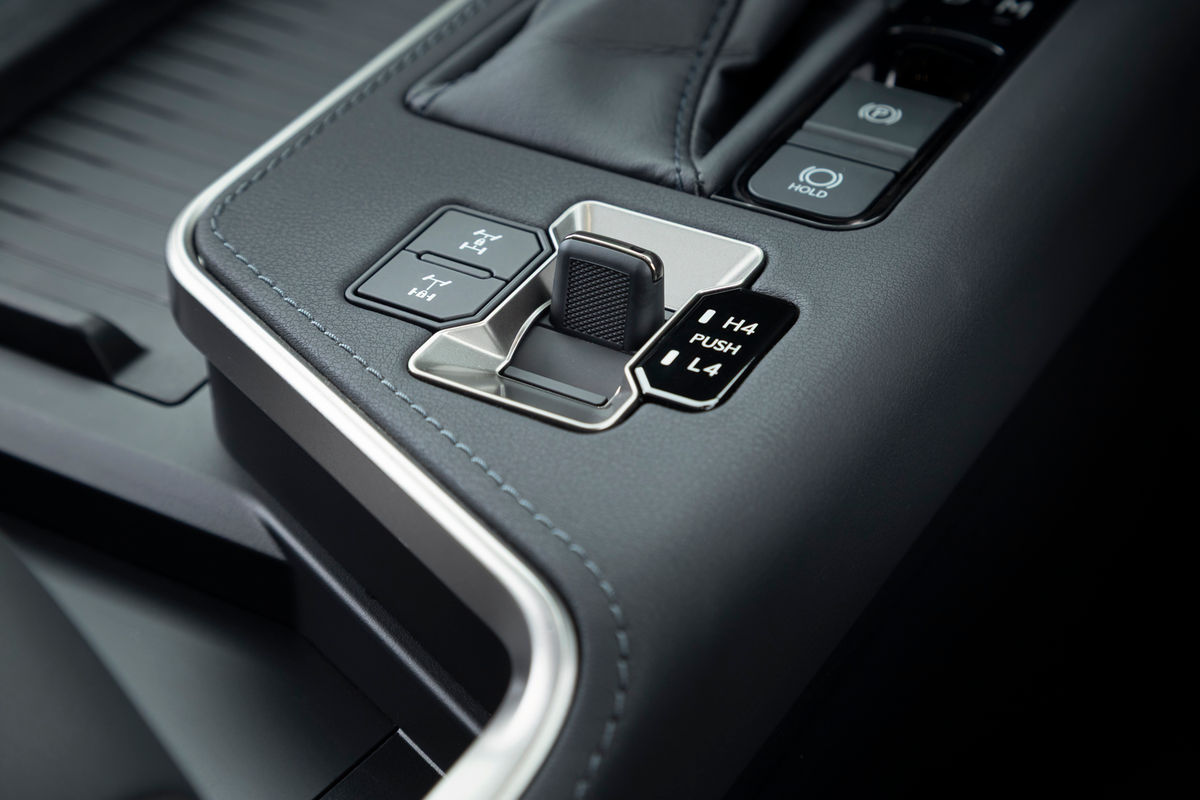
The Lexus GX is a genuine off-roader too, replete with low-range and all the off-road features and technology a modern 4×4 should offer. Given the newcomer’s premium appeal, combined with notable ability on the rough stuff, it’s probably the closest thing in the market to a Land Rover Defender!
One of the key elements that separates the GX from its Prado cousin is the drivetrain. Lexus eschews diesels in favour of turbopetrols and hybrids, and that’s why the GX gets a V6 turbopetrol from the Land Cruiser 300. It also solves the major complaint that the current-gen Prado isn’t particularly gutsy.
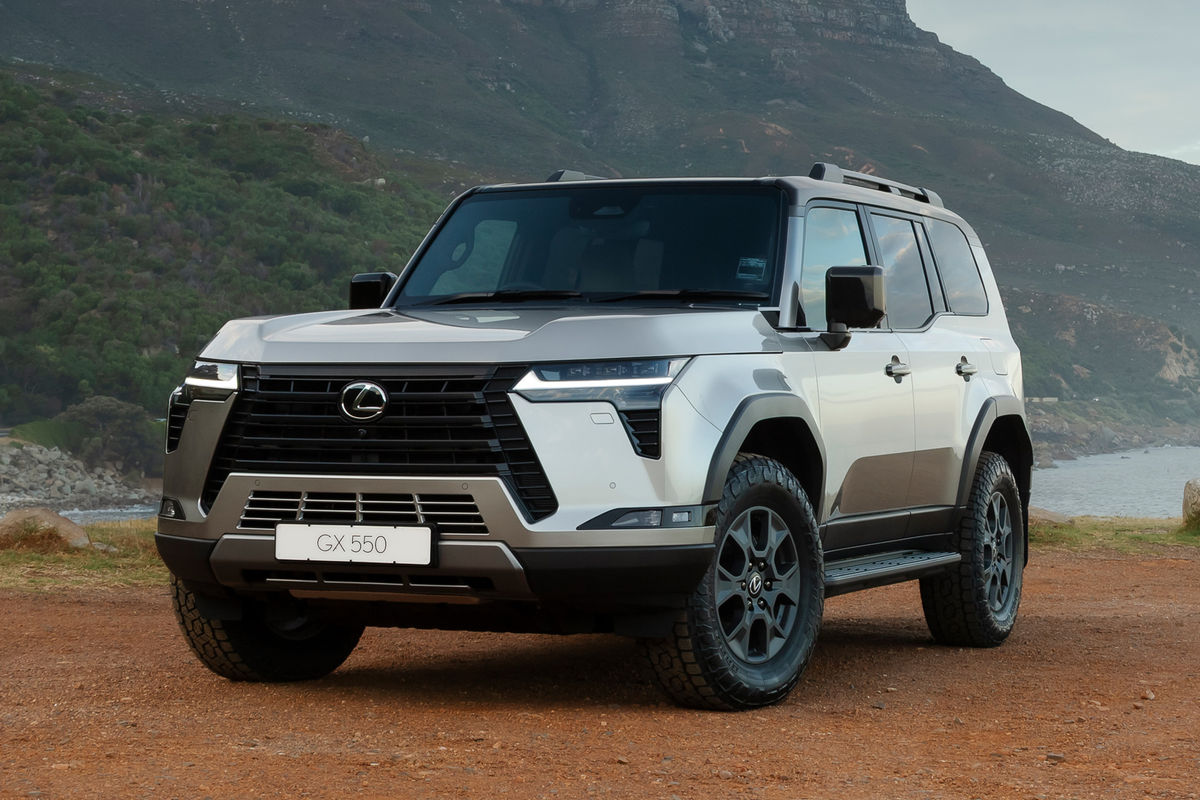
The Overtrail derivative comes with 18-inch wheels and seats only 5 inside.
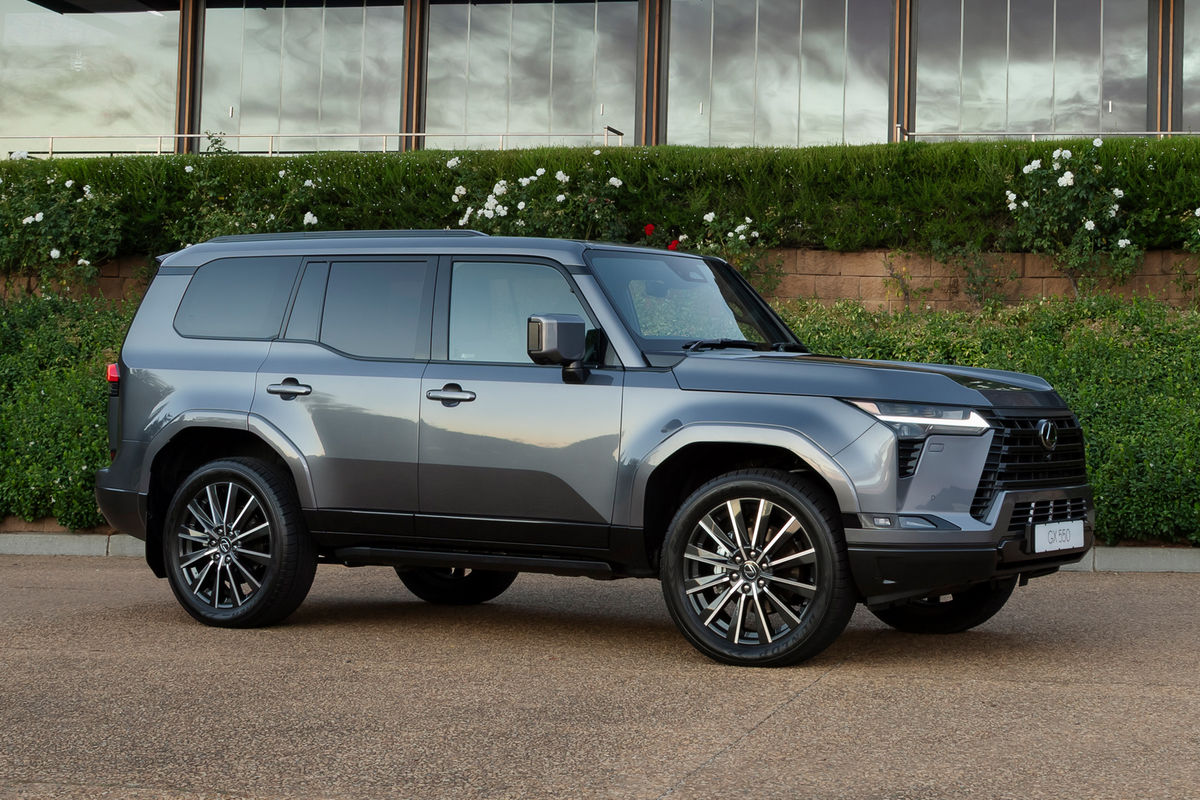
Lexus has launched the GX with a 2-variant lineup, but there is potential for other derivatives to be added to the range in the not-too-distant future. First up is the SE, which is positioned as a more on-road spec Lexus GX, featuring 22-inch wheels and electrically deploying side sills for added kerbside appeal.
It still gets low-range, but doesn’t have the more hardcore off-road features, such as Crawl Mode or Multi-Terrain-Select. It also has a 21-speaker Mark Levinson audio system (the Overtrail: 14 speakers).
The 2nd variant is the Overtrail, which I suspect will prove to be the most popular GX in SA. It has a more rugged appearance (including a beefed-up roof rack and static side sills), while its 18-inch wheels are fitted with off-road tyres. It comes with all the 4×4 tech, including Crawl Mode and Multi-Terrain-Select.
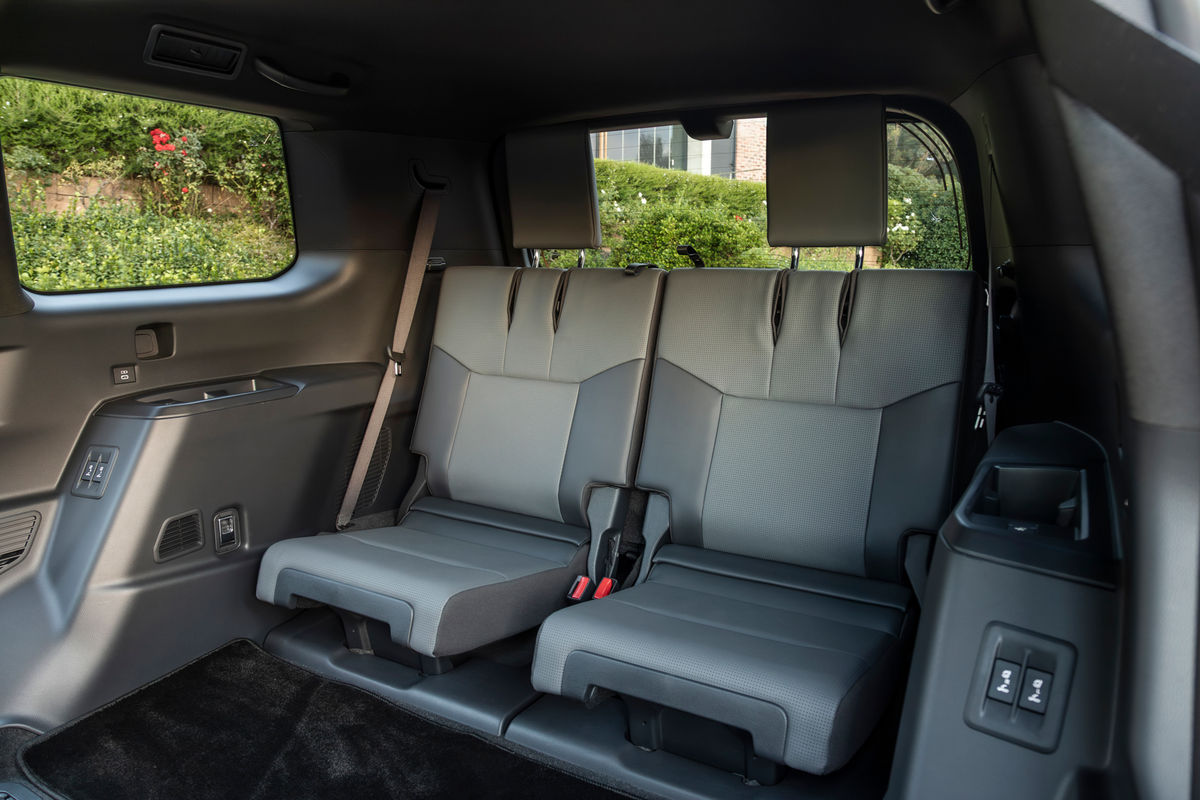
The other major difference between the SE and Overtrail is that the former is a 7-seater, while the latter is a 5-seater.
The GX comes with a 3.5-litre turbopetrol V6. A hybrid variant could be on the way next.
The 3.4-litre V6 turbopetrol wedged under the Lexus GX’s bonnet delivers peak outputs of 260 kW and 650 Nm of torque. It’s a slightly downtuned version of the unit in the Land Cruiser 300, but still essentially the same engine that Toyota uses in its Daker spec Hilux that won this year’s Dakar Rally.
The step-up in power is a nice-to-have; the twin-turbocharged V6 (combined with a 10-speed automatic ‘box) is creamy, plus it delivers pleasing levels of acceleration/in-gear urge to execute quick overtakes. It feels decidedly more premium than the Prado’s turbodiesel and should be well up for the job of towing.
But the extra shove comes at the cost of higher fuel consumption. We found that at freeway speeds, you are likely to return between 11 and 12 L/100 km, but that number will shoot up to 16 L/100 km in town.
The Lexus GX is also limited to an 80-litre fuel tank with no option for a bigger or (30-litre) secondary tank (as its Prado cousin has), which means your range is likely to be about 450 km between fill-ups.
What’s the Lexus GX interior like?
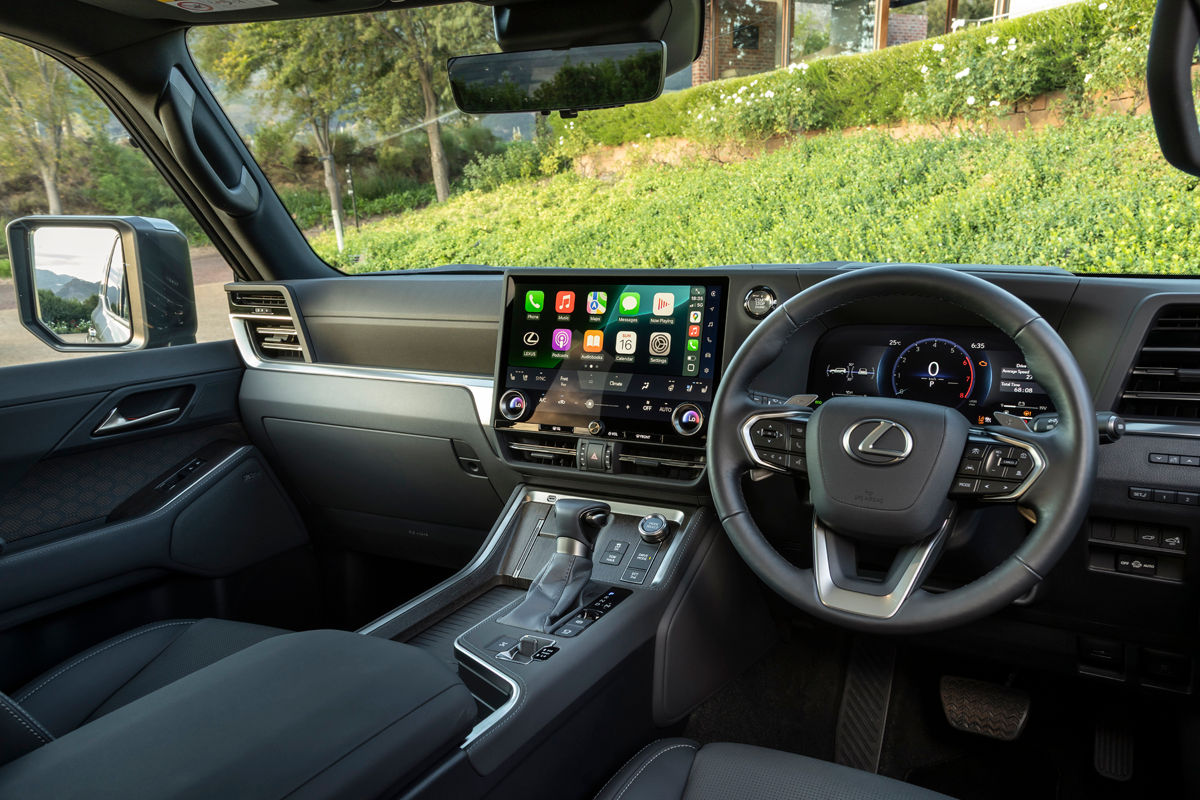
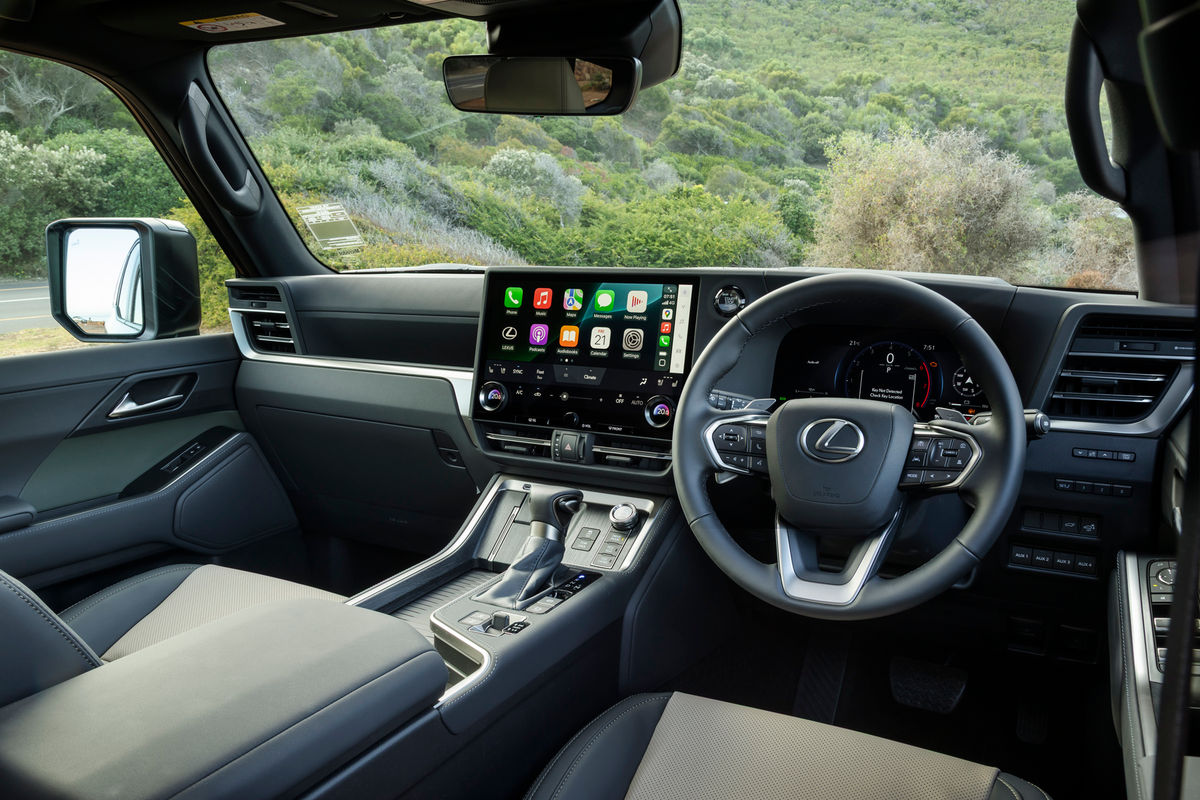
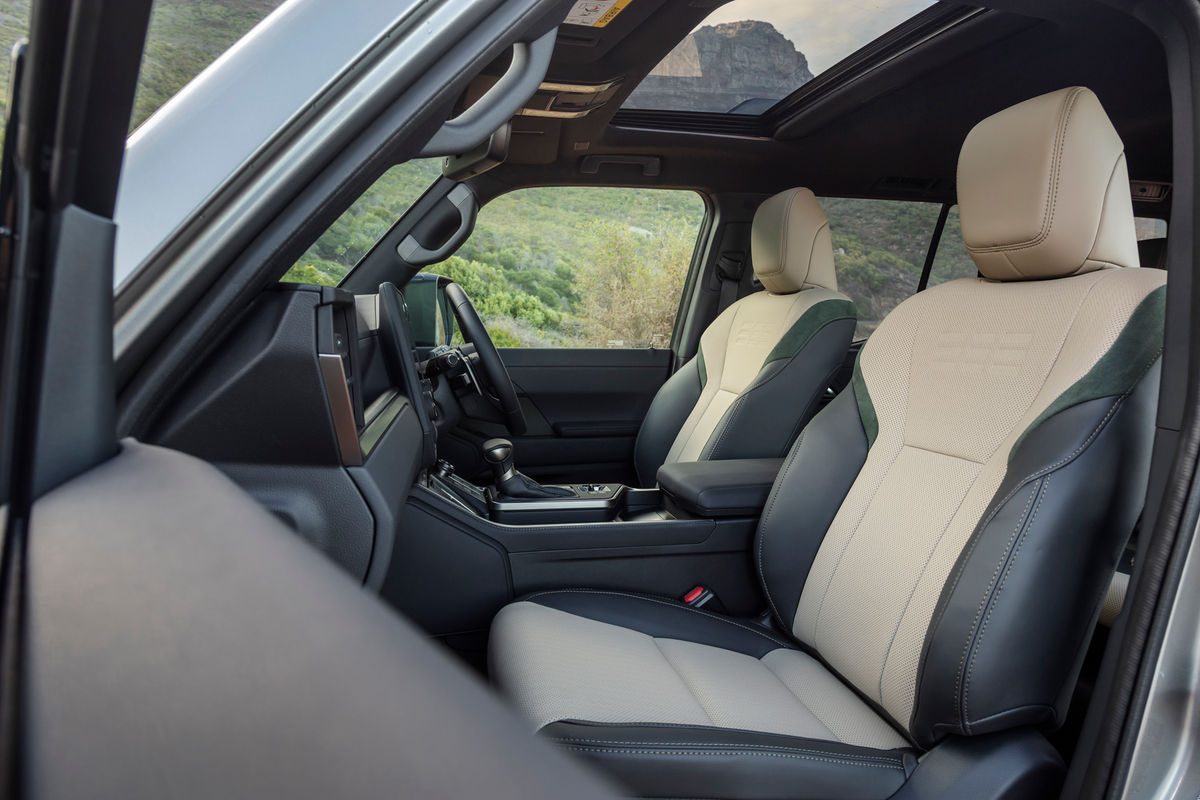
The interior is classy and upmarket, also, because it’s a Lexus, you don’t have to spec any optional extras.
Modern Lexus interiors are a fry cry from the ergonomically-challenged vehicles of just 5 years ago, where the infotainment systems were clunky/difficult to navigate, the screen resolutions were poor, and you had to try to deftly drive a mouse-like controller with your left hand to select any menu option.
The infotainment system in the new Lexus GX is markedly better, but still not the most user-friendly upon first interaction. Thankfully, Apple CarPlay and Android Auto connect easily and utilise the whole screen, which lifts the usability and size of all your connected apps appreciably.
I’m not the biggest fan of the new Toyota/Lexus driver display screen – it confuses me, and I can never seem to access what I want on the display. I much prefer the Land Rover-, Mercedes-Benz-, BMW- and Audi- systems that are highly configurable and let you see exactly what you want on the screen.
SE variants come equipped with a 3rd row of 2 additional seats.
The Lexus system seems to be a set of pre-configured options from which you can choose. I do need to spend some more time with the setup to see if I can figure it out entirely, however.
As for comfort levels, Lexus always delivers high levels of build quality and premium feel. Plus, there are no options: the sticker price gets you everything available. In the SE, the 3rd row of seats fold electrically, while the 2nd row of seats fold manually and have a tumble and turn function for more loading space.
Is the Lexus GX a good 4×4?
The Overtrail model also comes with both a centre and rear diff-lock.
The new Lexus GX was genuinely impressive on the off-road course that we traversed as part of the launch programme. It feels every bit as good as the Prado it’s based on, without any potential drawbacks from being a more luxury-oriented vehicle. Multi-Terrain-Select allows you to program the car for the conditions ahead, such as Mud, Sand, Rocks or Snow. It also features the same anti-roll bar system that can be disconnected (for more axle articulation) and then reconnected (for better on-road stability).
We found the new GX could handle everything put in front of it, just as you’d expect from a fit-for-purpose Toyota product, just with more comfort and luxury that comes with the Lexus badge.
How much does the Lexus GX cost?
Lexus GX 550 Overtrail (5-seater)
R1 766 000
Lexus GX 550 Overtrail Bi-Tone (5-seater)
R1 776 000
Lexus GX 550 SE (7-seater)
R1 829 000
Lexus GX 550 Overtrail Off-Road (5-seater)
R1 867 000
The GX is sold with a 7-year/100 000 km warranty and maintenance plan. Services are 10 000 km apart.
Lexus may finally make inroads into the SA market with the GX.
In its first month of sales, Lexus South Africa managed to ship 63 units of the new GX to its customers. Our records go back to around 2013, and we can’t see any other Lexus model that has sold that well.
It appears that Lexus has found a vehicle that resonates with the South African market, thanks to some great design work and the door that was inadvertently left open by the Toyota Prado’s less powerful engine. I suspect that the Lexus GX may have the folks at Defender looking over their shoulders, too.
We drive the Porsche 911 (930) Turbo – nicknamed “The widowmaker 911” – and its 2 (also air-cooled) successors: the 964 and 993. Most 911s are turbocharged these days, but the 911 Turbo owes much of its mythic status to these visceral sportscars.
Behold the unmistakable sight of widened arches, huge Fuchs wheels and that iconic whaletail… These are the unforgettable characteristics of the original air-cooled 911 Turbo, released 51 years ago in 1974.
Aside from incorporating these (now traditional) cosmetic upgrades over a standard 911, the Turbo set a new performance benchmark in the ’70s – not only for Porsche, but the automotive industry as a whole.
The introduction of the Type-930 911 heralded a new dawn for everyday performance cars, and its Turbo variant – Porsche’s quickest production car at the time – quickly gained a fanatical following. Subsequent iterations of the 911 Turbo may have offered more power and gadgetry, but air-cooled 911 Turbos carry a reputation for being largely unmatched in terms of delivering a memorable driver experience.
Do they live up to that reputation today? Well, we gathered a trio of stunning examples for a test drive in the Winelands to find out.
When the 1st deliveries of the Porsche 911 (930) Turbo began in the spring of 1975, the automotive industry was enduring a challenging time. It was only a year after the OPEC oil crisis, which added to the misery in the stock markets, which were in the midst of a 2-year crash cycle…
But the world had to take notice when Porsche unveiled the original 911 (930) Turbo at the 1974 Paris Motor Show! The 1st forced induction 911 attracted international attention as 1 of the fastest cars of the time; moreover, it was undoubtedly one of the Zuffenhausen-based brand’s most luxurious cars to date.
The idea (at the time) was to produce a limited run of only 1 000 Turbo units, but demand surpassed Porsche’s rather conservative expectations and 2 876 of the first 3.0-litre-engined cars were sold.
It is widely reported that Porsche opted to implement forced-induction technology in the 911 range because its turbocharged flat-12 cylinder engine had proved successful in the 1972 and 1973 Can-Am championships. However, this doesn’t tell the full story – if anything, it merely scratches the surface.
As early as 1969, Porsche had trialled turbocharging on the Type-901 2.0-litre engine, but it paused development after declaring the tech too advanced for series production. After resuming development a few years later, a 3.0-litre flat-6 turbopetrol engine (derived from the Carrera RS) was fitted to the 911.
Porsche 911 (930) Turbo
This black 911 (930) Turbo is powered by the 3.3-litre version of that motor, of which production began in late 1977. It is remarkable how the interior of the 2nd iteration of the 1st air-cooled Porsche 911 Turbo has withstood the test of time – although there are a few rattles, it still feels solid for a car of its age.
Specifications:
Model: 1980 Porsche 911 (930) Turbo
Engine: 3.3-litre flat-6 turbopetrol
Power: 221 kW at 5 500 rpm
Torque: 440 Nm at 4 400 rpm
Transmission: 4-speed manual, RWD
Weight: 1 335 kg
0-100 kph: 5.4 sec (claimed)
Top Speed: 260 kph (claimed)
Luxury items at the time included electric windows, an electric sunroof, aircon and a radio/cassette deck. You can also appreciate the iconic flat dashboard with its lower step, an interior characteristic that has changed little across the 20-year timespan of the air-cooled Porsche 911 Turbo models in this trio.
If you consider that this car was produced in 1980, it still feels incredibly quick by modern standards. Weighing 135 kg less than the 911 (964) Turbo, 0-100 kph is dispatched in a very respectable 5,4 sec. Owing to the 4-speed gearbox on this specific model, each gear is longer than those in the 964 and 993.
Unsurprisingly, the 930’s engine exhibits a significant turbo lag. If peak torque arrives mid-corner (if you misjudge your throttle input when accelerating out of a bend), the car will oversteer quickly and sharply (with a glint in his eye, the car’s owner admitted it happened to him during the previous night’s drive).
Therefore, a 911 (930) Turbo pilot always needs to anticipate the boost from the single turbocharger – it’s a part of a game you will need to play to master the car and its rather eccentric acceleration.
The ferocity of the on-boost acceleration, however, more than makes up for the much-talked-about lag; the 1st-gen 911 Turbo serves up a physical driving experience that modern cars can’t match. Unfettered by the driver aids fitted to later models, the “raw” 930 is the iconic Porsche 911 Turbo, warts and all.
964-series 911 Turbo
Porsche reintroduced the Type-964 911 Turbo in December 1990. Featuring a 930-esque wide-bodied version of the standard 964-series model, Porsche initially opted to tweak the Type 930/68 unit with a larger intercooler rather than develop a new engine, which upped the power slightly to 235 kW.
Specifications:
Model: 1993 Porsche 911 (964) Turbo
Engine: 3.6-litre flat-6 turbopetrol
Power: 265 kW at 5 500 rpm
Torque: 540 Nm at 4 500 rpm
Transmission: 5-speed manual, RWD
Weight: 1 470 kg
0-100 kph: 4.8 sec (claimed)
Top Speed: 280 kph (claimed)
However, the engine size increased to 3.6 litres in the Turbo II (still 964), with most parts based on the new M64/01 engine being used in the rest of the 911 range. The air-cooled M64/50 engine of this 911 Turbo used new pistons, and boost pressure was increased from 0.82 to 0.92 bar by simply placing a stronger spring in the wastegate. As a result, Porsche was able to bump the power up from 235 kW (in the 3.3-litre) to 265 kW, and as such, the 964 doesn’t suffer from quite as much turbo lag as the 930.
You notice the 1st mechanical difference between the 911 (964) Turbo and its predecessor immediately – the slick and direct G50 5-speed ‘box dispenses with the 930’s loose and vague shift sensation.
The seats are electrically adjustable too, and with little effort, I can move into the perfect driving position. With a lower seating position, you immediately feel more in control of the car than in the 911 (930) Turbo.
Of the 3 cars in this group, the 964 has the most supportive seats. Maybe it is because of the originality of the seats (allied with regular use), but the driver sinks far enough into the chair itself, while the side bolsters protrude more than in the other 2 Turbos. The upright window gives you a good view and, as is the case in the 930, the iconic headlights help the driver to direct the car perfectly through corners.
Yes, it does feel a tad more modern than the pioneering 930, but moreover, the steering wheel feeds the driver a good level of information from the road. Turn-in is good, but no, it’s not as crisp as in the 993.
Make no mistake: the 964 is no less challenging to drive than the 930. Also, the twitchy rear-wheel-drive setup means that if you want to drive one of these to its very limit, you’d better be handy at the ‘wheel.
993-series 911 Turbo
Type-993 yielded the final iteration of the air-cooled Porsche 911 Turbo, but it was a game-changer and a technological conqueror. Revealed at the 1996 Geneva Motor Show, this model introduced 4-wheel-drive to the 911 Turbo range for the first time, a drivetrain we experience in the 911 Turbo to this day.
Specifications:
Model: 1996 Porsche 911 (993) Turbo
Engine: 3.6-litre flat-6 turbopetrol
Power: 265 kW at 5 500 rpm
Torque: 540 Nm at 4 500 rpm
Transmission: 5-speed manual, RWD
Weight: 1 470 kg
0-100 kph: 4.8 sec (claimed)
Top Speed: 280 kph (claimed)
Some purists suggest AWD spoils the spirit of the 911 Turbo, but it undoubtedly improves roadholding! Implementing twin low-inertia turbos for the first time, the M64/60 engine gained 35 kW over the 964’s, and because it could send torque to all wheels, the 911 (993) Turbo became a true all-weather supercar.
The yellow car, powered by the more “vigorous” 336 kW engine, also features stiffer suspension and the 993 GT2’s exhaust system. It has noticeably wider exhaust tips and a harsh, raspy and metallic sound as you it barrels through the rev range. This increase in power over the standard 300 kW comes from, inter alia, bigger intercoolers and turbos, while the engine management system has also been modified.
The later 997- and even 996-series 911 Turbos are renowned for their analogue-like driving experiences, but from behind the 911 (993) Turbo’s 4-spoke steering wheel, that feeling is even more pronounced.
First, the 6-speed ‘box has a similar action to the 964’s. It snaps perfectly into each slot. In 1st gear, the rev needle swings into the red so quickly that, in 2nd, I watch the needle closely until it kisses 7 000 rpm.
This upgraded engine makes its sheer performance felt in every gear. With so little turbo-lag, you quickly realise there’s no need to wait for the kick from the engine, as it is available almost immediately – an impressive feat for a 25-year-old car!
As rain begins to fall in the beautiful Winelands region and the road becomes increasingly greasy, the 4-wheel-drive 911 (993) Turbo feels like the best and safest option of the 3 Porsches – or so I thought.
After 20 minutes of marveling at how the 993’s rear wing melts over those fat hips in the side-view mirrors, I pull away from the traffic lights with zeal. I use the best part of 6 000 rpm in 2nd, before hooking into 3rd. Then, for a brief moment, all 4 wheels break traction before I lift off the throttle…
The moral is that despite the aid of 4-wheel drive, the 911 (993) Turbo can still be lethal in the wrong hands. Like its 964 and 930 predecessors, utmost care must be exercised when behind the wheel, especially in low-grip conditions.
Summary
This “tricky at, and even close to, the limit” nature feels anachronistic in an era when most cars have several electronic gizmos (many of which are for safety) and automatic (PDK) is increasingly seen as the obvious choice. Indeed, these air-cooled cars couldn’t be further removed from today’s advanced 911s.
It is sometimes difficult to evaluate each of these air-cooled Porsche 911 Turbos in isolation. But drive them back-to-back, and you quickly realise why the 911 Turbo still sits at the apex of Zuffenhausen’s volume-produced 911 range – and why it (and its S sibling) are the only 911s to bear the Turbo suffix.
Shadowy teaser images of the new MG Cyber X have dropped in China, giving us our first official glimpse of the Chinese-owned British brand’s upcoming boxy SUV…
The new MG Cyber X will soon be revealed, with the Chinese-owned British marque having released the first official teaser images of its upcoming boxy SUV.
Set to arrive as the 2nd model in the SAIC-owned brand’s “Cyber” series – after the fully electric Cyberster, of course – the new Cyber X is expected to be unveiled at Auto Shanghai 2025, which kicks off on 23 April 2025.
MG posted the shadowy teaser images you see here on Chinese social-media platform Weibo, describing the upcoming model as an “urban adventure toy” and suggesting its styling will be “different from any MG you have ever seen”.
Featuring decidedly boxy proportions, the new Cyber X is shown sporting full-width LED bars fore and aft, along with illuminated “MG” badges. Look closely and you’ll see flush door handles and integrated roof rails as well.
While official information is still thin on the ground, Autocar reports that the new Cyber X will ride on parent company SAIC’s new “E3” electric platform, which suggests the newcomer won’t be available with a pure combustion engine.
At this stage, it’s not clear whether the Cyber X will be produced in right-hand-drive, though it’s interesting to note MG’s Weibo posts suggest the new model has been conceived “for young people around the world”.
Towards the end of 2024, MG officially returned to South Africa after an 8-year absence, launching a trio of models for the local market, with yet more planned. The brand kicked off its retail operations in the final few days of 2024, the year in which it celebrated its centenary.
Founded as “Morris Garages” in the United Kingdom in 1924, MG is run by Chinese group SAIC Motor, a state-owned manufacturer that is also responsible for the LDV marque. Officially under the stewardship of the Shanghai-based firm since around 2007, MG began its previous re-entry to South Africa late in 2011, though again exited the local market in 2016.