Most Fuel Efficient Diesel Cars in SA (2025)

We’ve compiled a series of articles dedicated to fuel efficiency because it’s one of the most important criteria to factor into your decision when looking to buy a new car. Here are the most fuel efficient diesel cars currently available in South Africa!

The most fuel efficient diesel cars in South Africa are well worth considering, if you can afford them! With fuel prices consistently on the rise in South Africa, new car buyers will be wise to place increasing emphasis on fuel efficiency when shopping for a new car.

Also see: Most Fuel Efficient Petrol Cars in SA (2025)

A fuel-efficient car will help you save money at the pumps over time and diesel cars are generally considered to be more frugal than their petrol-powered counterparts. The amount of fuel you save while driving will depend on a number of critical factors including your driving style, road conditions and mechanical condition of the car, to name a few. It is also worth noting that the list below is compiled based on manufacturer claimed fuel consumption figures and real-world consumption will vary. 

Prices are accurate as of January 2025.

Most Fuel Efficient Diesel Cars in South Africa

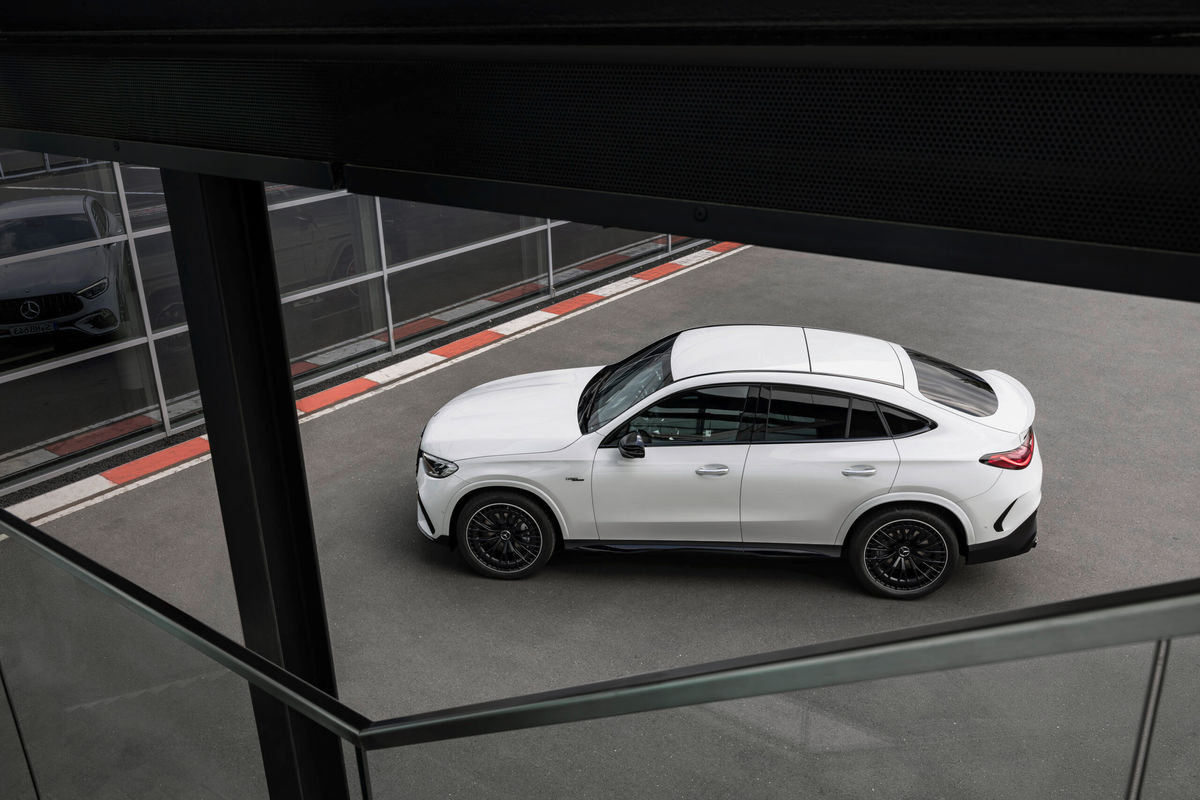
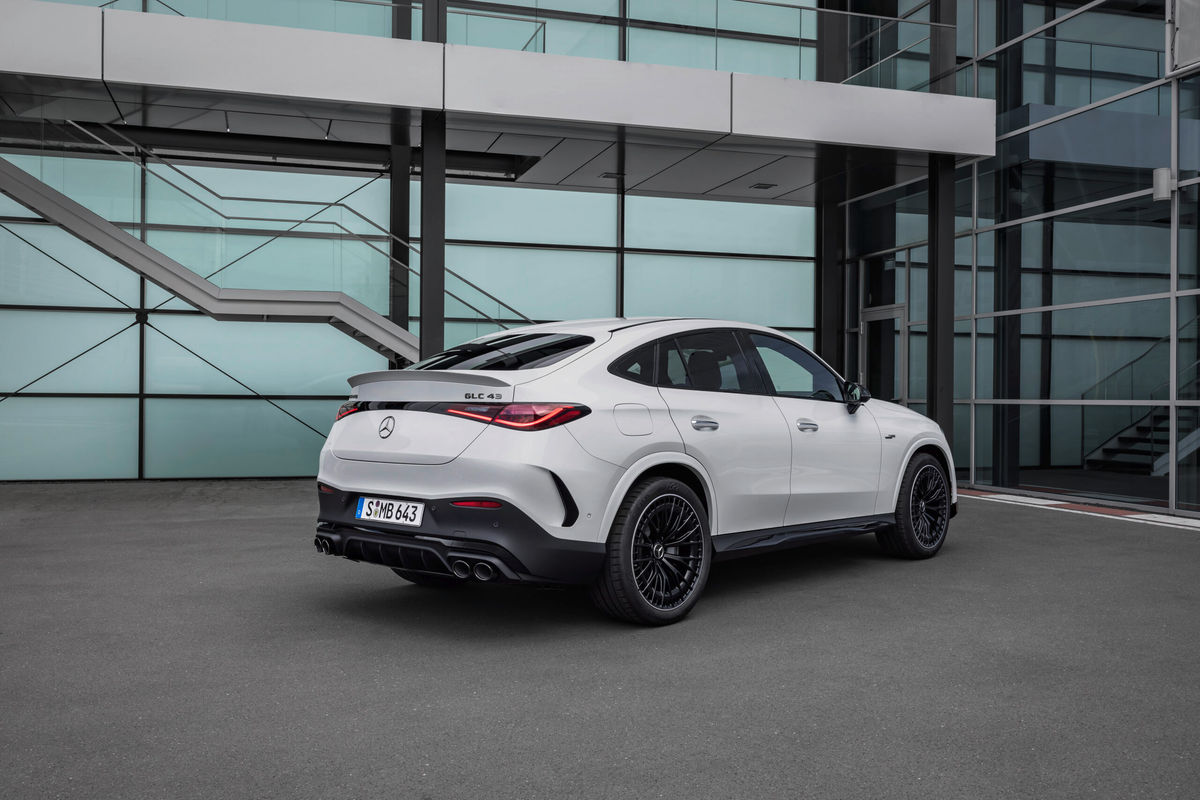
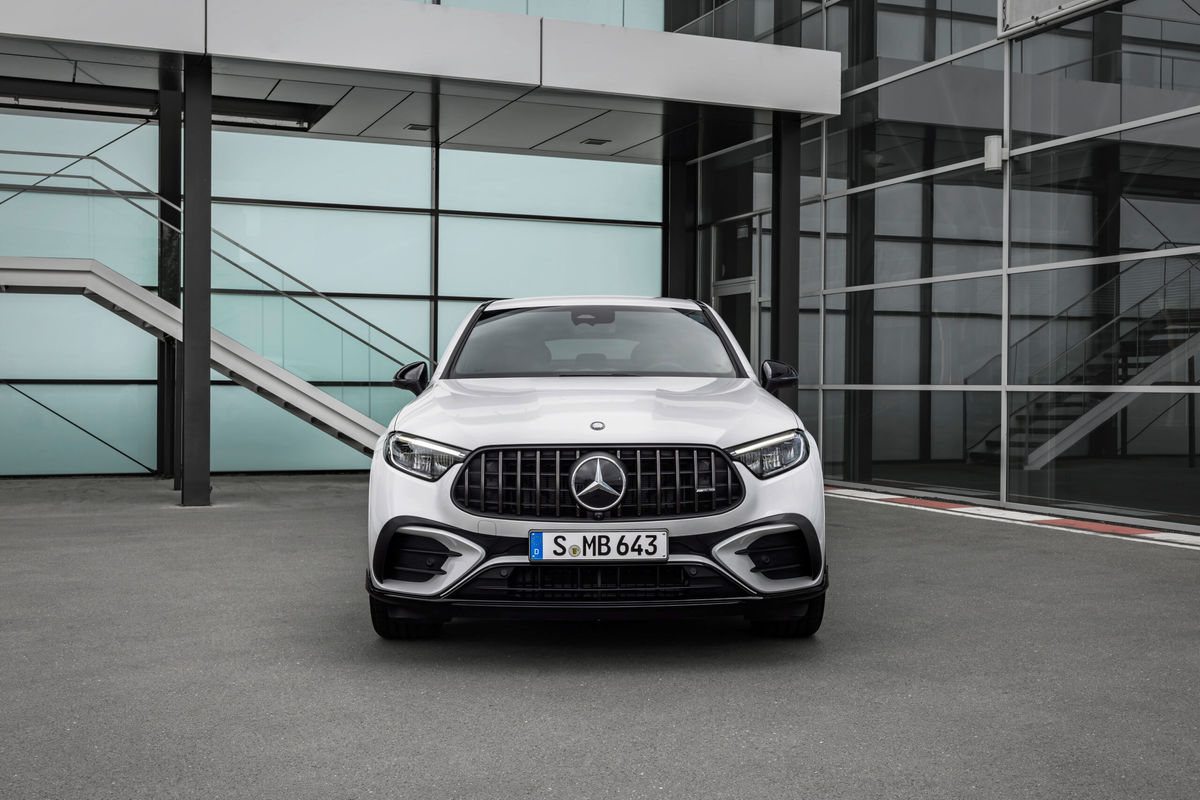
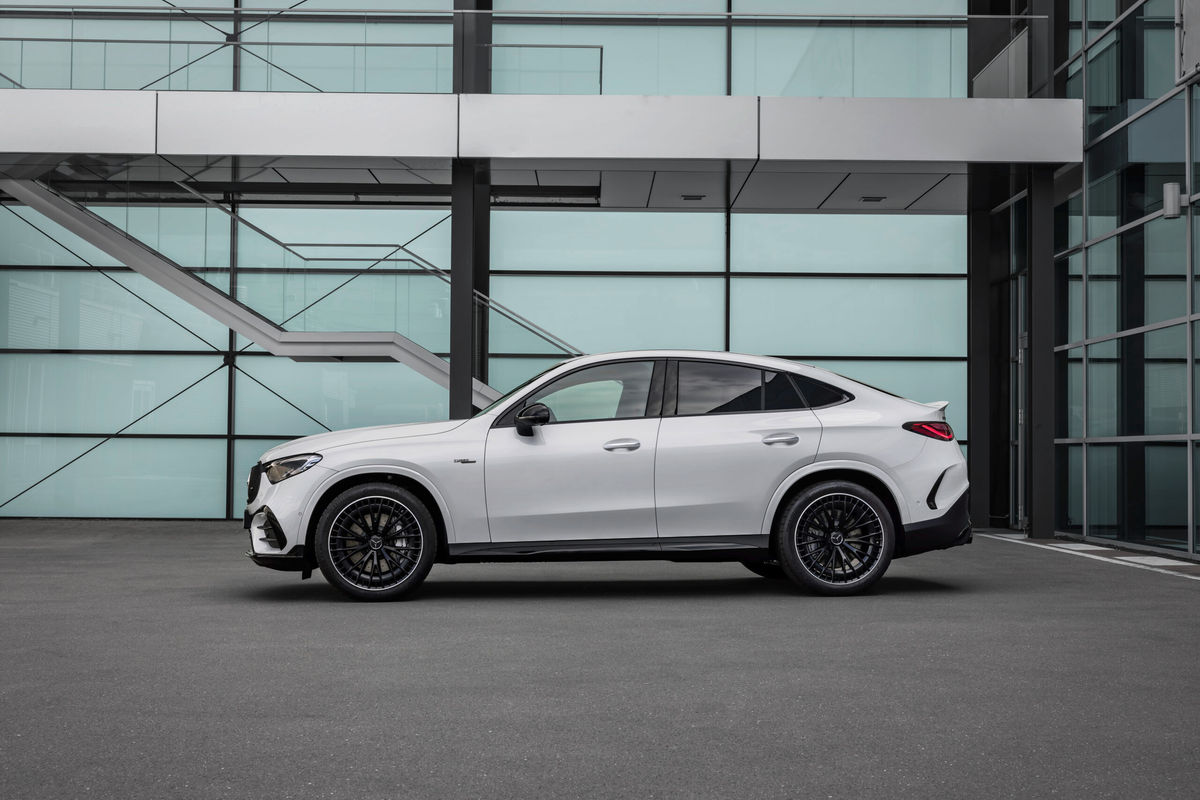
1. Mercedes-Benz CLA 220d – 4.4 L/100km

The Mercedes-Benz CLA received a subtle facelift in 2023 and C220d is powered by a  2.0-litre turbodiesel engine that produces 140 kW and 400 Nm with a fuel efficiency claim of  4.4 L/100km. An 8-speed dual-clutch automatic transmission is standard. The CLA is offered in 2 trim guises including Progressive, priced from R969 256 and the AMG Line from R998 956.

Buy a Mercedes-Benz CLA on Cars.co.za

2. Mercedes-Benz A200d sedan – 4.5 L/100km

Most fuel efficient Diesel cars in SA

The facelifted Mercedes-Benz A200d sedan employs a 2.0-litre turbodiesel engine with 110 kW and 320 Nm and is paired with an 8-speed dual-clutch automatic transmission. Mercedes-Benz claims 4.5 L/100km.

The A200d Progressive sedan is priced from R970 614 while pricing for the A200d AMG Line starts from R1 000 314.

Buy a used Mercedes-Benz A-Class on Cars.co.za

3. Mercedes-Benz C220d – 4.7 L/100km

Mercedes-Benz claims the third position on this list with its 2.0-litre turbodiesel engine proving to be the most efficient, this time applied in the mild-hybrid C-Class sedan with 147 kW and 440 Nm and paired with a 9-speed automatic transmission. This engine is said to return 4.7 L/100km.

Pricing for the Mercedes-Benz C-Class C220d starts from R1 134 587.

Also see: W205 Mercedes-Benz C-Class Sedan (2014-2021) Buyer’s Guide

Buy a Mercedes-Benz C-Class on Cars.co.za

4. BMW 2 Series 218d and 220d – 4.8L/100km

BMW 2 Series

The new BMW 2 Series came to market in 2022 and the diesel-powered 218d and 220d are particularly efficient with BMW claiming 4.8L/100km.

The 2 Series can be had in either Gran coupe or Coupe guise and the 2.0-litre turbocharged 218d offers 110 kW and 350 Nm while the 220d offers 140 kW and 400 Nm. Both engines are paired with an 8-speed automatic transmission.

Pricing for the BMW 2 Series 218d Gran Coupe starts from R745 373 while the 220d Coupe is priced from R905 037.

Buy a BMW 2 Series on Cars.co.za


BMW 420d Coupe – 4.8 L/100km

BMW 4 Series

The BMW 420d Coupe employs the same 140 kW / 400 Nm 2.0-litre turbodiesel engine that’s found in the BMW 2 Series (see above) and it too is paired with an 8-speed automatic transmission. The 4 Series is offered as a Coupe, Gran Coupe or Convertible.

BMW claims a fuel consumption figure of 4.8 L/100km for the 420d Coupe (priced from R1 045 373) while the 420d Gran Coupe (priced from R1 046 044) claims 5 L/100km.

Buy a BMW 4 Series on Cars.co.za

Renault Duster 1.5 DCi Zen Automatic – 4.8 L/100km

Renault Duster

An all-new Renault Duster is due to arrive in South Africa in coming weeks but the outgoing Duster is still listed for sale and the outgoing 1.5-litre turbodiesel engine has long been praised for its excellent fuel consumption and performance credentials. Power outputs for this engine are 80 kW and 250 Nm and Renault claims an impressive 4.8 L/100km when this engine is paired with a 6-speed automatic.

Pricing for the Renault Duster automatic starts from R451 999.

Buy a Renault Duster on Cars.co.za

BMW 3 Series 320d – 4.9 L/100km

BMW 3 Series LCI

An updated BMW 3 Series arrived in South Africa in October 2024 and the diesel-powered 320d delivers 140 kW and 400 Nm from its 2.0-litre turbodiesel engine and is paired with an 8-speed automatic transmission. Note that this engine is also found in the BMW 2 Series and 4 Series (see above).

Pricing for the BMW 3 Series 320d starts from R960 877.

Buy a BMW 3 Series on Cars.co.za

Toyota Prado Arctic Trucks Revealed

With an assortment of offroading goodies fitted, the Toyota Prado Arctic Trucks AT37 looks ready for adventure! This is how you spend your Powerball winnings.

Unlike some aftermarket offroad specialists who simply bolt on larger wheels, the Toyota Prado Arctic Trucks has been substantially upgraded.

The standard suspension has been tossed out in favour of a new 2-way adjustable setup with longer-travel coilovers for the front, while new springs and dampers are fitted to the rear. This enhancement means there’s a suspension lift of 40 cm. These wheels are the biggest talking point, however.

The 17-inch Arctic Trucks wheels are wrapped in BFGoodrich T/A K03 rubber measuring 37-inches. These 37-inch tyres are the reason its called the AT37 and they’re so large, a special wide-body kit needed to be fitted to prevent the wheels from rubbing against the bodywork.

The work hasn’t stopped there as Arctic Trucks has re-engineered the ladder-frame chassis and bodywork, moving the rear axle a little further back and widening the overall track. The increased ground clearance and stability helps keep things comfortable, yet capable.

Mechanically, the powertrain remains the stock off-the-shelf Toyota item, but the speedometer gets a recalibration to account for the larger wheels and suspension. The cabin gets some posh carpeting and AT37 badging, and there are some branded mudflaps and rubberised side steps.

The Toyota Prado Arctic Trucks is just one of many vehicles created by the offroading specialists Arctic Trucks. The company was given massive exposure when TV show Top Gear took some specially-prepared Toyota Hilux Arctic Trucks on a polar adventure back in 2007. Locally, we’ve had the chance to drive both iterations of the Isuzu D-Max Arctic Trucks, and they’re formidable when the tar ends.

Pricing? Well, Arctic Trucks hasn’t yet said how much this little exercise costs, but as a reminder, you’ll need to fork out R1.3 million for the standard Prado.

Want to buy a new or used Toyota Prado? Browse vehicles for sale

Read all the latest Toyota news and reviews

Lexus RZ (2025) Price & Specs

The new Lexus RZ will soon launch as Toyota South Africa Motors’ first fully electric model. Here’s how much this 230 kW battery-powered crossover will cost you…

Toyota South Africa Motors is finally set to join the local fully electric segment with the imminent launch of the Lexus RZ. And we’ve managed to lay our paws on pricing ahead of this battery-powered crossover’s official market debut.

Yes, thanks to the ever-helpful vehicle-information specialists over at duoporta.com, we can confirm the following pricing for the 2 derivatives that are set to comprise the local Lexus RZ line-up: the RZ 450e EX will start at R1 583 100 and the RZ 450e SE will kick off at R1 756 600.

According to information we separately dug up, the higher-spec SE variant will launch first, with the EX expected to follow late in February 2025. From what we understand, only a “handful of units” have been allocated to South Africa owing to “limited global volume supply” (this model was, after all, initially scheduled to launch locally in 2024 after being revealed globally in April 2022).

Sharing much with the Toyota bZ4X, the RZ in “450e” guise features “e-axles” fore and aft, each comprising a motor, gearing and power control unit. This arrangement results in peak system outputs of 230 kW (150 kW from the front motor and 80 kW from the rear item) and 435 Nm, allowing a 0-100 kph sprint in 5.3 seconds and a top speed of 160 kph, according to the Japanese automaker.

The all-wheel-drive Lexus RZ 450e ships with a 96-cell 71.4 kWh lithium-ion battery pack, facilitating a single-charge range of approximately 400 km on the WLTP cycle (or up to an “estimated” 470 km using NEDC testing figures, says Lexus).

The RZ measures 4 805 mm from nose to tail, with a 2 850 mm wheelbase and an overall height of 1 635 mm (the luggage compartment, meanwhile, can handle a claimed 522 litres). That sort of footprint puts the newcomer somewhere between the NX and RX crossovers.

So, what sets the SE trim level apart from the EX grade? Well, standard features for the EX include items such as an electric tailgate (with handsfree operation), LED headlamps (with auto high beams), roof rails, adaptive cruise control, a 14-inch infotainment screen, a 10-speaker audio system, 8-way electrically adjustable front seats, front seat heaters (and ventilation) and 18-inch alloys (wrapped in 235/60 R18 tyres fore and 255/55 R18 rubber aft).

Meanwhile, the SE specification adds features such as an adaptive high-beam function for the LED headlamps, LED foglamps, a “dimmable” panoramic sunroof, 20-inch alloys (shod in 235/50 R20 front tyres and 255/45 R20 rear tyres), rear-seat heating, a 13-speaker Mark Levinson sound system, a head-up display, intelligent park assist and “performance” dampers. Furthermore, while the EX comes with synthetic leather upholstery, the SE upgrades to “Ultrasuede”.

The Lexus RZ will be offered locally in a choice of 5 monotone paint colours (Sonic Quartz, Sonic Chrome, Graphite Black, Sonic Iridium and Atomic Blue) along with Sonic Chrome Bi-Tone and Atomic Blue Bi-Tone. A pair of interior trim options – Hazel and Greyscale – will be available in Mzansi.

How much does the Lexus RZ cost in South Africa?

Lexus RZ 450e EX – R1 583 100

Lexus RZ 450e SE – R1 756 600

The new RZ is covered by a 7-year/105 000 km warranty and a maintenance plan with the same parameters. The battery pack, meanwhile, features a separate 8-year/160 000 km warranty.

Related content

Lexus IS F Sport Mode Black (2025) Price & Specs

New Lexus GX: full SA line-up uncovered

Lexus NX 450h+ PHEV (2024) Price & Specs

2025 Kia Sportage: First Look

The facelifted 2025 Kia Sportage has been revealed and we’re expecting this medium-sized SUV to be touching down on South African shores before the end of 2025.

The 2025 Kia Sportage facelift has been gradually rolled out globally with the US-grade and Korean market derivatives already confirmed, the latter is the car you see here.

The current shape Sportage’s sharp and futuristic looks have served it well, it still retains that fresh feel – not bad for a car that’s three years old. Yes, you read that correctly, this generation of Kia Sportage was launched in South Africa in September 2022.

The Sportage has been well received, with numerous awards (included a coveted #CarsAwards category win) and comfortably nestles in towards the top spot in terms of sales in many markets. However, its time for the facelift and as you can see, the visual updates aren’t too radical.

2025 Kia Sportage design

There’s an upgraded front with restyled LED headlights, new-look bumpers and new LED tail-lamp designs. It appears that quite a few design elements have been taken from the flagship electric car, the Kia EV9. There are new wheel designs, ranging from 17- to 19-inch in size.

2025 Kia Sportage wheel

The cabin gets a makeover too, with some additional sound deadening in the door pillars and panels, as well as digitalisation and tech enhancements in the form of upgraded software for the digital instrument cluster and infotainment screens, and over-the-air updates have been introduced. A head-up display makes its debut on the top-of-the-range derivatives.

There’s a posh-looking steering wheel that looks similar to the one found in the Kia Sportage, augmented reality views integrated into the satnav, built-in dashcam and the mirrors now dip down when you engage reverse gear. Kia has also updated its safety tech, noting the lane-keep assist and autonomous emergency braking have been upgraded.

2025 Kia Sportage interior

In terms of powertrain, the Korean model has ditched the 7-speed dual-clutch transmission in favour of a new 8-speed torqe-converter automatic gearbox for the 1.6-litre turbocharged petrol motor, itself unchanged. We hope the 1.6-litre turbocharged diesel engine is retained as that powertrain is a class example for balancing of performance and economy.

When will the 2025 Kia Sportage come to South Africa?

Kia SA has confirmed the updated Sorento and Carnival range in the first half of 2025, with the Carens and Tasman indicated to arrive from the middle of 2025. There was no mention of the Sportage when we contacted the Korean brand for its 2025 plans at the end of 2024, so we suspect its local arrival will be right at the very end of the year.

Want to purchase a new or used Kia? Browse vehicles for sale

All the latest Kia news and reviews

Mitsubishi Outlander Sport (2025) Price & Specs

The new Mitsubishi Outlander Sport – known as the Xforce in some markets – has touched down in South Africa. Here’s what this fresh-faced crossover will cost you…

The new Mitsubishi Outlander Sport crossover has officially arrived in South Africa, with the local line-up comprising 4 derivatives at launch.

Seemingly replacing the long-in-the-tooth ASX (which has been on the local market since way back in 2011), the new Outlander Sport will be imported from Indonesia. Interestingly, in that country and several others around the world, this model wears instead the “Xforce” badge.

In South Africa, however, it’s known as the Outlander Sport, with pricing starting at R429 990 and running through to R499 990. For comparison, the outgoing ASX had bookends of R409 990 and R494 995.

All derivatives in the Outlander Sport portfolio are powered by a naturally aspirated 1.5-litre, 4-cylinder petrol engine generating 77 kW and 141 Nm (and familiar from the SA-spec Xpander). A continuously variable transmission (CVT) ships standard (so, there’s no manual available), with drive directed exclusively to the front axle. Mitsubishi Motors SA claims a 0-100 kph time of 13.6 seconds and a maximum speed of 175 kph.

Measuring 4 390 mm from nose to tail (with a wheelbase of 2 650 mm), the 5-seater Outlander Sport is around the size of the Toyota Urban Cruiser. Mitsubishi claims a ground clearance of 222 mm, though points out this figure pertains to derivatives fitted with 18-inch alloy wheels.

The GL grade includes items such as LED headlamps, 17-inch alloys, electrically adjustable side mirrors, tilt-and-telescopic steering-column adjustment, remote keyless entry, fabric seat upholstery, 40:20:40-split folding (and reclining) rear seats, manual air conditioning, an 8.0-inch infotainment display, a reverse-view camera, ABS with EBD, electronic stability control, 4 airbags and hill-start assist. Based on the specification sheet we’ve seen, the GLS trim level adds blind-spot warning (with lane-change assist) and rear cross traffic alert.

The Aspire grade, meanwhile, scores 18-inch rims, leather trim for the steering wheel, faux-leather seat upholstery, cruise control, a 12.3-inch infotainment screen, an 8-inch digital instrument cluster, wireless smartphone charging, a drive-mode selector (with normal, wet, gravel and mud settings), an electro-chromatic rearview mirror, side curtain airbags (for a total of 6), rear parking sensors, tyre-pressure monitoring and dual-zone air con.   

Aspire furthermore features ambient cabin lighting, automatic headlamps, front (LED) foglamps, rain-sensing wipers, a handsfree powered tailgate and colour coding for various elements of the front and rear bumpers. Finally, the flagship Exceed is seemingly set apart by its uprated 8-speaker premium sound system from Yamaha.

Mitsubishi Motors SA offers the new Outlander Sport in a choice of 5 exterior paint colours: White Pearl, Blade Silver, Graphite Grey, Red and Energetic Yellow.

What does the Mitsubishi Outlander Sport cost in SA?

Mitsubishi Outlander Sport 1.5 GL CVT – R429 990

Mitsubishi Outlander Sport 1.5 GLS CVT – R449 990

Mitsubishi Outlander Sport 1.5 Aspire CVT – R479 990

Mitsubishi Outlander Sport 1.5 Exceed CVT – R499 990

The prices above include a 5-year/unlimited kilometre warranty and a 3-year/45 000 km service plan (with intervals of 15 000 km).

Related content

Mitsubishi Triton (2025) Launch Review

Mitsubishi SA boss hits out at Chinese brands

Mitsubishi Pajero Sport facelift revealed

Here’s how many VW Polo GTI units were sold in SA in 2024

Just how popular is the Volkswagen Polo GTI in South Africa? Well, here’s a look at the Kariega-built hot hatch’s sales figures for 2024…

Is the Volkswagen Polo GTI the most popular hot hatch in South Africa? Well, the sales figures for 2024 certainly suggest so, indicating that this locally built model (which is one of the few remaining B-segment hot hatches on the market) outsold all other contenders last year.

Before we look specifically at the GTI, it’s worth pointing out that the full VW Polo hatch range dropped 2 rankings on the list of Mzansi’s best-selling cars and crossovers in 2024, ending up in 7th with 12 253 units sold (+4.3%, year on year).

Since Volkswagen Group Africa reports only a total Polo hatch sales figure to industry representative body Naamsa, we asked the German firm to provide us with an idea of the hot-hatch derivative’s share of that tally.

According to VW Group Africa, 1 412 units of the Polo GTI were registered locally in 2024. That translates to an 11.5% slice of the total Polo-hatch pie and sees this flagship derivative rank as South Africa’s best-selling hot hatch, ahead of the Golf 8 GTI (634 units) and Golf 8 R (431 units).

For context, were the Polo GTI to be regarded as a standalone model, it would have squeezed onto the list of South Africa’s top 50 best-selling passenger vehicles of 2024, outselling mainstream nameplates like the Hyundai Creta (1 256 units), Volkswagen T-Roc (1 244 units) and Mazda CX-5 (1 218 units).

As a reminder, the Polo GTI – which is currently priced at R573 300 – employs VW’s ubiquitous turbocharged 2.0-litre, 4-cylinder petrol engine, which here delivers 147 kW and 320 Nm to the front axle via a 6-speed dual-clutch transmission as standard. The obligatory 0-100 kph sprint takes a claimed 6.7 seconds, while top speed is pegged at 238 kph.

Volkswagen’s Kariega facility in the Eastern Cape has been the exclusive manufacturer of the Polo GTI for global markets for some time now, with the plant furthermore having become the sole supplier of the Polo hatchback for European and Asian Pacific markets in July 2024. 

Related content

Still SA’s favourite? VW Golf 8 GTI sales for 2024

SA’s 10 best-selling cars & crossovers in 2024

Top 10: 2024’s winners & losers by market share

Toyota Corolla Cross (2025) Launch Review

Mzansi’s favourite small crossover – and Toyota’s best-selling passenger car – has received a facelift. However, is it enough for the defending champion of the Cars.co.za Awards compact family-car category to fight off increasingly stiff competition?

Toyota South Africa Motors (TSAM) is immensely proud of the Corolla Cross, with good reason. The crossover has breathed new life into the iconic Corolla nameplate, has become a very strong seller (22 000 units of the pre-facelift model were sold last year) and, perhaps most importantly, is locally built.

The Corolla Cross’ success is not only important to TSAM, but also to automotive manufacturing in SA and ongoing efforts to secure this vital industry’s future. With a local content of around 45%, the Corolla Cross doesn’t only put food on the table for Toyota staff, but also workers at numerous parts suppliers.

But wait, there’s more. As the local motor industry attempts to evolve into a hub for manufacturing electrified-, also known as new-energy, vehicles (NEVs), the Corolla Cross Hybrid’s success in the local market is another reason to celebrate. It has helped Toyota secure 67% of South Africa’s NEV market!

That said, the segment is fiercely competitive, with Toyota noting in particular the influx of high-value Chinese offerings. There is simply no time to rest on one’s laurels. And so the 2023/24 CarsAwards programme’s Compact Family Car of the Year has gone under the proverbial knife for a midlife update.

What’s changed on the 2025 Toyota Corolla Cross?

It’s probably better to start with what’s remained the same. There are no mechanical updates – the model’s engine, transmission and suspension configuration are as before. The Toyota Corolla Cross’ derivative line-up has not been changed either – it comprises Xi, XS, XR and GR-Sport trim grades.

The focus of the facelift has been on delivering an enhanced in-car experience. Interestingly, one of the major lessons that Toyota admits it has learned from the Chinese brands (or, perhaps, shifts in consumer behaviour it has noted) is that car buyers increasingly put the “in-car experience” above almost anything else. For that reason, Toyota has genuinely sharpened its small crossover offering in several key areas.

From XS grade and up, there is a new, larger 10-inch touchscreen infotainment system with Android Auto and Apple CarPlay, the latter offering wireless connectivity. Toyota also implemented improved Bluetooth connectivity and a more attractive and intuitive user interface. XR and GR-Sport derivatives, meanwhile, feature a new, 12.3-inch digital instrument cluster, with crisp, clear graphics and personalised themes.

The updated screens are not just for show – the reverse-view camera now provides clearer views and there are customisable view modes to assist drivers when they execute difficult parking manoeuvres. XR and GR-S derivatives are further equipped with a 360-degree panoramic view monitor. 

Other detail changes include the adoption of an electric parking brake and the fitment of USB Type-C ports (including 2 for the rear passengers – a nice touch), as well as a rear-occupant detection system.

While we’re on the topic of the rear of the cabin, passengers in the back will undoubtedly also appreciate the new reclining backrests. Another first for the Corolla Cross is a hands-free tailgate release function (you can open the hatch by swiping your foot beneath the rear bumper) for XR and GR-S derivatives.

Subtle, but tasteful design revisions

The most noticeable change with the new Corolla Cross can be found at the front end. Here the car gets a new grille design (a type of painted honeycomb finish) that makes the Toyota look more modern.

The headlights, too, have been redesigned and have sequential turn signals (on XR and GR-S variants). Also unique to those 2 derivatives are Bi-Beam LED lamps and crystal-like LED daytime running lights. Not as obvious a change, but a neat tweak nonetheless: the rear lights also boast a refreshed design.

Was the update worthwhile? Yes, I think the new front-end treatment works. The previous car’s big black grille almost looked like Mr. Potato Head’s moustache. It is worth noting, however, that the GR-S does NOT get the new face. I also really like some of the colours, particularly Brass Gold and Oxide Bronze.

Inside, sharp-eyed visitors to Toyota’s new vehicle showroom will notice a few tweaks to the Corolla Cross beyond the new tech. There is now real stitching on the instrument panel and console lid, high-quality floor carpets with a heel pad and newly designed seat trims that feature dark brown accents.

As before, Black and Terra Rosa interior trim colours are offered, and I have a soft spot for the latter!

What’s the 2025 Toyota Corolla Cross like to drive?

As before, there are 2 drivetrain options to choose from: a 1.8-litre naturally aspirated- (103 kW/173 Nm) or 1.8-litre hybrid (92 kW/142 Nm) 4-cylinder petrol engine, both in conjunction with a continuously variable automatic transmission (CVT).

Provided you can afford either, your choice between the 2 will depend on whether you want optimised efficiency or not. The hybrid, with a claimed average consumption of 4.3 L/100 km, is considerably more miserly than its non-hybrid equivalent (6.8 L/100 km). It is worth noting, however, that realistically both figures are likely to be higher than stated, but more so in the case of the naturally aspirated variants.

Behind the ‘wheel, and ignoring the in-car improvements, there is not much to report here. The Corolla Cross doesn’t offer punchy performance, but it does a fine job in a sound compact family car package.

The drone of the powertrain under full acceleration (without audible gear changes – because there aren’t any) is a consequence of the way a CVT operates and, yes, it can become a bit tiresome, but the CVT does facilitate good fuel economy (and operates more smoothly) if you adopt a restrained driving style.

On a particularly hot day in Gauteng, I was impressed with the Toyota Corolla Cross’ air-conditioning system (dual-zone from XS and up), non-intrusive active safety systems and general ride comfort.

I was less impressed with the seat comfort, however. I could never quite get comfortable, because there isn’t enough lateral support – and too much of a pronounced bulge in the centre of the backrest. 

Rear occupant space is very good and the reclining backrest, ventilation outlets and USB ports will be appreciated on long family trips. The load bay is nicely sized, with a claimed luggage capacity of 440L.

How much does the 2025 Toyota Corolla Cross cost in SA?

Corolla Cross 1.8 XiR414 800
Corolla Cross 1.8 XSR452 200
Corolla Cross 1.8 XS HybridR494 400
Corolla Cross 1.8 XRR501 500
Corolla Cross 1.8 GR-S (GR-Sport)R518 200
Corolla Cross 1.8 Hybrid XRR545 200
Corolla Cross 1.8 Hybrid GR SportR561 700

2025 Toyota Corolla Cross variants come standard with a 6-services/90 000 km service plan and a 3-year/100 000 km warranty. HEV models carry an 8-year warranty on the hybrid battery. Customers can purchase additional service/maintenance/warranty extensions via the Toyota dealer network.

New Toyota Corolla Cross Specs & Prices in South Africa

Summary

The 2025 Toyota Corolla Cross competes in a densely populated market segment, with not only a handful of high-value offerings from China (particularly the Haval Jolion, Toyota says), but also from established brands such as Volkswagen (T-Cross), Hyundai (Creta) and Kia (Seltos). 

With the high popularity of the Corolla Cross Hybrid, the Jolion Pro Hybrid has been identified as a key rival of Toyota’s compact family car. The Jolion Pro’s strengths include significantly more power, a few more “nice-to-have” features (including a sunroof and heated/ventilated seats) and a lower price. It is thirstier, however, its ride quality is not quite as resolved as the Toyota’s, plus its luggage area is smaller.

See also: Jacob Moshokoa’s video review of the updated Haval Jolion Pro

Following the latest update, the Corolla Cross’s specification is no longer lagging quite as badly and, in some instances, it has features that even the Jolion Pro doesn’t offer (hands-free tailgate operation, for example). It is more economical than the Haval, rides better, and has more luggage space.

And then, of course, you have to factor in that the Corolla Cross is a Toyota and what that means. If you consider that the Aichi-based brand has about 220 dealers and a reputation for good service, reliability and resale value, “plenty of peace of mind” comes part and parcel with the purchase, doesn’t it?

Find a new/used Toyota Corolla Cross listed for sale on Cars.co.za
Related content:

Widebody Toyota Hilux Legend 55 confirmed for SA!

More powerful Toyota Fortuner GR-S confirmed for SA

Chery climbs! SA’s new-vehicle sales for December 2024

The zero-cost trick Toyota is missing with Fortuner

#CarsAwards Comparison Video: New Toyota Prado vs Ford Everest vs Land Rover Discovery

In this #CarsAwards video, judge David Taylor takes a closer look at the 3 finalists in the Adventure SUV category ahead of the winner announcement in February 2025. Watch the video!

The 2025 Cars.co.za Awards, sponsored by Absa, is in full swing! 39 finalists have been selected and thoroughly tested by our 20 judges. Represented in 13 categories across a wide spectrum of pricing and segments, the Cars.co.za Awards are by far the most comprehensive car awards in South Africa.

While the winners in each category will be announced at our Gala Awards Evening on the 28th of February 2025, we filmed 13 comparison tests across our categories with 4 motoring journalists.

In this film, David Taylor tackles the Adventure SUV Category, where the finalists include the new Toyota Land Cruiser Prado 2.8GD VX-R, Ford Everest 3.0TD Wildtrak and the Land Rover Defender 110 D350 X-Dynamic HSE.

While we wait for the winner to be announced, David Taylor conducts an in-depth test of all 3 cars back-to-back at the Gerotek Test Facility, and gives some perspective on which one he would take home. In this video he looks at engines, practicality and basic offroading. 

See all 2025 #CarsAwards – Sponsored by Absa – finalists here

Buy a car on Cars.co.za

Still SA’s favourite? VW Golf 8 GTI sales for 2024 revealed

Is the Volkswagen Golf 8 GTI still South Africa’s most popular C-segment hot hatch? Here’s how many were registered in 2024 – as well as how many Golf 8 R units were sold…

Though not quite as popular locally as the 7th iteration (which reached nearly 15 000 units in total), is the Volkswagen Golf 8 GTI still the best-selling C-segment hot hatch in South Africa?

Well, based on Naamsa figures alone, it’s impossible to be completely certain since Volkswagen Group Africa reports only a combined Golf 8 number – comprising GTI and R sales – to the industry representative body. Still, based on our calculations, that combined tally for 2024 came to 1 065 units (interestingly up 12.2%, year on year), with 124 of those representing sales to government.

So, we asked VW Group Africa to provide last year’s sales split between the front-wheel-drive GTI and the all-paw R – and the company very kindly obliged. Predictably, the GTI finished ahead of its more powerful sibling, though not by as much as you much have expected.

According to the Wolfsburg-based automaker’s local division, 634 units of the Golf 8 GTI (currently priced from R836 700) were registered in 2024. That translates to a monthly average of around 53 units and represents 59.5% of 8th-generation Golf sales last year. Meanwhile, the Golf 8 R (currently starting at R996 700) ended 2024 on 431 units, meaning it was likely Mzansi’s 2nd best-selling C-segment hot hatch behind the GTI.

For the record, the Golf 8.5 GTI – the facelifted version of the hot hatch revealed in January 2024 – has technically not yet been confirmed for South Africa, with Martina Biene, Chairperson and Managing Director of VW Group Africa, earlier telling Cars.co.za that the country’s current fuel quality stands in the way of its arrival on local soil.

What about the local sales performances other C-segment hot hatches in 2024? Well, based on figures reported to Naamsa, we know the Hyundai i30 N finished the year on 56 units, while the Toyota GR Corolla came in at 42 units and the Renault Mégane RS 300 Trophy at 25 units.

Hyundai i30 N rear three-quarter

Somewhat frustratingly, sales figures are simply not available for the few other contenders still operating in this space. For instance, since the BMW Group and Mercedes-Benz unfortunately don’t consistently report sales statistics to Naamsa, we don’t know how many M135, Mercedes-AMG A35 hatch and Mercedes-AMG A45 S units were sold.

In addition, Audi reports only a total figure for its A3 Sportback range, so the exact sales performances of the S3 and RS3 hot hatches are unclear. However, since the A3 Sportback total for 2024 came to 596 units (likely dominated by non-performance derivatives), we can safely assume neither of these Audi Sport variants matched their VW cousins in pure volume terms.

Audi-RS3

Similarly, Honda lists only a single figure for its overall Civic range, which came to 110 units in 2024. That tally includes both the Civic Type R hot hatch (which we’re assuming accounted for only a small percentage of that total) and the Civic RS sedan.

Related content

SA’s favourites in 2024: 10 best-selling cars & crossovers

Top 10 brands: 2024’s winners & losers by market share

SA’s single-digit sellers: cars hardly anyone bought in 2024

Porsche 911 Targa vs 911 Carrera 3.2 Targa: Classic Comparison

The 911 Targa occupies a small niche within Porsche’s line-up. Should more buyers consider this slightly quirky cabrio/coupe offering? We take a classic Carrera 3.2 Targa and the modern-day 992 Targa 4 for a coastal drive outside of beautiful Cape Town.   

IMAGES: Peet Mocke

The 911 Targa is one of the rarer variants in the Zuffenhausen-based firm’s range: enthusiasts either like or dislike it, which can’t be said of the other models! Surely a Carrera S or -GT3 isn’t as polarising? However, it can also be argued that a 911 Targa derivative represents the best between what a standard Carrera coupe and a standard Carrera convertible offers. The best of both worlds, then?

In terms of the roof, the 911 Targa represents a halfway point between being a coupe and a convertible. You can still enjoy fresh-air motoring, but at the same, it is less “windy” than in a full convertible.

Porsche 911 Targa 4's iconic B-pillar

Porsche’s Targa history has been well documented. We’ve seen examples of the Porsche 911 Targa since the earliest of times with its soft rear window. That transformed into what can be viewed as a large sunroof in the 993-, 996- and 997-series 911s. With the arrival of the 991 and now the current 992, the beautiful U-shaped metal bar returned with a fixed rear window and a fully automatic system.

The classic: G-series 911 Carrera 3.2 Targa

The owner of this Targa has had more than 10 classic, air-cooled Porsche 911s through his garage. He now owns 3, including this Targa, which he also uses several times a week. It is a true “daily driver”. 

Specifications:

  • Model: Porsche 911 Carrera 3.2 Targa (G-series) 
  • Engine: 3.2-litre, flat-6, petrol
  • Power: 152 kW at 5 900 rpm 
  • Torque: 264 Nm at 4 800 rpm 
  • Transmission: 5-speed manual
  • Weight: 1 210 kg
  • 0-97 kph: 6.3 seconds (claimed)
  • Top Speed: ± 240 kph
Porsche 911 Carrera 3.2 Targa (G-series) leads a modern-day Porsche 911 Targa 4

Setting the alarm clock for just after 06:00, we all meet up just over an hour later next to the road outside Gordon’s Bay, around 45 km east of Cape Town. This coastal road is known as one of the most scenic routes in South Africa with a perfect ribbon of tarmac – a great place to enjoy these cars.

Thanks to its whale-tale, this red Targa looks much more purposeful than those units without it. If you prefer the more simple lines of the 911, you will undoubtedly rather select one without the large wing! 

Porsche 911 Carrera 3.2 Targa (G-series) cabin

We decide to start the photography a little later and first enjoy the crisp morning air, the light traffic and the scenery. Clarence Drive is a single-lane, flowing road that hugs the coastline. However, with a rock face on the one side and a low, man-built rock wall on the other, you must keep your enthusiasm at bay behind the wheel of a car. We opt to keep the removable top on for now, which allows us to have a normal conversation in the cabin although there is certainly some more wind noise than in an equivalent coupe.

Even with more than 172 000 km on the odo, this 915-gearbox still feels good. As long as you don’t rush the gearbox (why would you, anyway?) the gears change with relative ease between the five speeds, while some gears are closer to one another in the horizontal shift action than others.

Wilhelm Lutjeharms drives the Porsche 911 Carrera 3.2 Targa (G-series)

You can cruise at low engine speeds of 2 000 to 3 000 rpm, and even with light throttle inputs, there is sufficient torque to accelerate in a spirited manner. The 911 Targa feels compact and, as expected, low to the ground, just like a proper sports car should.

I drop a couple of gears and press the accelerator pedal a little harder, the revs climb quickly and, with notable haste, the rev needle swings past 5 000 and 6 000 rpm. It is during these bursts of acceleration and also during braking that I’m reminded that the Carrer 3.2 Targa only tips the scales at about 1 210 kg.

After a while, I start to feel more confident behind the ‘wheel and enjoy every moment that the free-revving engine sends the needle around the clock. When you start to push on, you do realise there is some scuttle shake, but that’s also to be expected. I almost want to say you are more aware of it in a cabriolet because the parts that indicate scuttle shake are further behind you and also stowed away.

Porsche 911 Carrera 3.2 Targa (G-series) engine bay

The Carrera 3.2 Targa makes up for it, though. Lift the targa top and then fold it up. You can either store it behind the seats or place it in the luggage compartment in the front – where it is more safely stowed and movement is also more limited – depending on what else you have in this compartment, of course.

With the roof down and picking up speed past 100 kph, the wind buffeting is very limited. There is some wind noise of course, but just enough fresh air is blowing through the cabin, while the owner and I can still keep our conversation going. Approach high speeds and it starts to become more difficult.

In a straight line, but especially when the road twists and turns, the steering wheel is communicative and you can sense precisely what the front axle is up to. Fitted with the small (215/60 R15 in front and 195/65 R15 at the rear on this car) wheels and tyre combination, the 911 Targa also rides very pliantly. Turn-in is as good as you would expect, while there is limited body roll, similar to any other 911 of the era.

Porsche 911 Carrera 3.2 Targa (G-series) instrument cluster

The owner shares some thoughts about 911s and his Targa: “I’ve had this car for the past 9 years. Ideally, I would have liked to have a coupe, a Targa and a cabriolet, but I sadly sold a very neat G50 Cabriolet a few years ago. I found the Targa to have a little more headroom than a coupe, although this matters little to me. My love for Porsche stems from my first car, which was an oval-window Volkswagen Beetle.” 

The Carrera 3.2 Targa’s narrow body and small footprint elevate the experience behind the wheel even further. The upright front lights indicate where the corners are, while the rear axle is not far behind you. The slope of the bonnet also means there is no obstruction to your view out in front of you.

Porsche 911 Carrera 3.2 Targa (G-series) trails a modern Porsche 911 Targa 4

The fact that the steering column is not adjustable has never really bothered me. The distance between the ‘wheel and the gear lever is spot on, so all you have to do is move your seat. The pedals are offset to the left, but you quickly get used to it. Once you’ve adjusted your legs, the seating position is lovely.

The modern alternative: 992-series 911 Targa 4

Step into the 992-series Porsche 911 Targa and it is evident you’ve made a near 4-decade jump in terms of technology. Whereas the Carrera 3.2 looks compact and focused (mainly because of the wing), the 992 is notably larger, but is smooth in its elegant design, partially also owing to the Carrera Exclusive Design wheels painted in the exterior colour (Aventurine Green Metallic) of the car, an optional extra.

Specifications:

  • Model: 992.1 Porsche 911 Targa 4
  • Engine: 3.0-litre, flat-6, turbopetrol
  • Power: 283 kW at 6 500 rpm 
  • Torque: 450 Nm at 1 950 – 5 000 rpm 
  • Transmission: 8-speed automatic (PDK)
  • Weight: 1 730 kg
  • 0-100 kph: 4.4 seconds (claimed)
  • Top Speed: 289 kph
Porsche 911 Targa 4, followed by a Porsche 911 Carrera 3.2 Targa (G-series)

This modern, suave design continues in the cabin. Any owner of a 992-series 911 variant will feel quite at home. What I especially appreciate with the specification of this model, is the relative lack of driver and driving options. No exhaust button and no rotary dial on the steering wheel. There is a sport button and a damper button – that is it. This is, after all, a Targa 4, which means it does offer all-wheel drive.

Another visual highlight in the cabin is the wood panel that runs across from the passenger side, just below the dashboard, to the right-hand side of the cabin. Another 2, minor options, are the Porsche crest on the headrests and the truffle brown seatbelts. Needless to say, it is a classy cabin. 

As expected, you sit satisfyingly low in the car, while the range of adjustment on the seat and steering column makes it a cinch to personalise your driving position.

Porsche 911 Targa 4 interior

Start the engine and there’s still that typically raw, flat-6 sound and an all-too-obvious woosh from the turbo. If you pay close attention, you hear how the latter’s whistle changes relative to accelerator inputs. 

I head out and quickly the PDK ‘box selects the highest gear as we cruise along for some final pictures. As I lean on the long pedal, the level of torque is instantly impressive – it allows the car to linearly pick up speed without fanfare. Peak torque (450 Nm) is, after all, developed from an impressively low 1 950 rpm. This scenario can immediately be changed by simply pulling the left steering-wheel-mounted paddle.

The gearbox reacts immediately, and within a moment, it’s shifted down 3 or 4 gears. Press the throttle and the engine reacts with a combination of power and torque, having you wonder for a moment if this Targa 4 is really any heavier than a standard Carrera. Even though the road is slightly wet, there is no wheelspin (perhaps thanks to the all-wheel-drive system), but even Porsche’s rear-wheel-drive 911 derivatives offer an immense level of grip – the all-wheel-drive system just takes it up a notch.

It’s a unique experience as the rear of the car squats and propels you out of those corners. At times, (most times) it doesn’t feel like a 1 730 kg car and you can trust the grip and performance.

Wilhelm Lutjeharms drives a Porsche 911 Targa 4

Even though the peak power output (283 kW) is developed at 6 500 rpm, you can let the rev needle run all the way to the 7 500 rpm redline, urging you to make full use of what the 3.0-litre flat-6 has to offer.

The brakes, meanwhile, are strong with good feedback through the pedal, while the additional ratio in the transmission has little effect on the car’s outright capability, only keeping revs low when you relax on the open road… but now the gears come in quick succession. The steering ratio is fast and the steering feel, in terms of feedback, is less compared to the classic, as you would expect, but nonetheless satisfying.

I know the owner of the 992-series 911 Targa has owned several air-cooled and modern- classic 911s, one of them of which is a rather neat SC, since 1997. But this was the first new 911 in his collection.

“When I saw this 992 Targa it ‘spoke to me’. The design is just perfect, even when the roof is down. I don’t like a convertible and in the Targa, you feel a bit more ensconced. It is like having a large sunroof.

Porsche 911 Targa 4 instrument cluster

“After acquiring the car earlier this year, I recently attended one of the best driving events in South Africa: the Cape 1000. It is a beautiful multi-day, 1 600-km drive along the Western Cape’s best and prettiest mountain passes. It was the perfect car for the event.” See also: We drive the first-ever Cape 1000!

Without stating the obvious, it is clear that this car will be used regularly for the foreseeable future.

The 8th-gen 911 Targa takes Porsche’s iconic sportscar to the next level in terms of offering compelling performance in conjunction with an al fresco experience. It still drives like a modern 911 (and thus feels charmingly familiar), but offers the latest technology in a package that’s hard to beat, particularly if you consider the performance on offer at this price point. This car instils immense confidence in its driver.

Porsche 911 Targa 4 fascia

Summary

As with the coupe versions, the 911 Targa is a recipe that Porsche has perfected since the first Targa’s introduction in September 1965.

This latest model ticks so many boxes, but I can understand why many enthusiasts would opt for the G-series Carrera 3.2 Targa. It’s more basic, more involving to drive, much slower but, at times, more fun. It will also need more maintenance to keep on the road, but for some of us, that is part of the experience. 

In both cases, you get a driving experience that is very close to that of a coupe, but nearly everything that a convertible offers – it represents a very desirable middle ground. Yes, it’s hard to fault a Targa!

Find a new or used Porsche 911 listed for sale on Cars.co.za
Find exclusive car-themed merchandise at the SentiMETAL Shop

Related content:

Porsche 911 (930) Turbo vs (996) GT3: Classic Comparison

Porsche 911 Turbo SE ‘flat nose’: Classic Drive

Martini Racing 911 Carrera RSR tribute: Classic Drive

SA-built Porsche 911 ‘Safari’: Classic Drive

Porsche 911 (993) GT2: Classic Drive

Porsche 356 vs Porsche 912: Classic Comparison

Porsche 911 Targa ‘Edition 50 Years’ (2022) Launch Review

Porsche 911 GT3 (2022) Launch Review

Porsche 911 GTS (2021) Launch Review

Porsche 911 Turbo S (2020) Launch Review