Best Second-Hand Bakkies to Buy in South Africa

If you are looking for the best second-hand bakkies in South Africa, Cars.co.za has the best bakkie for you! 

Bakkies remain one of the most popular body shapes in South Africa and Cars.co.za has a large selection of the best second-hand bakkies available in South Africa

Bakkies are often used as workhorses and they generally live hard lives as they are required to carry heavy loads. However, not all bakkies are used for what they are built for and many bakkies are used as leisure vehicles that serve as practical solutions for 4×4 adventures or travelling offroad to destinations far and wide.

When it comes to buying the best second-hand bakkie in South Africa, the trick is to find the bakkie that’s in the best condition possible with the lowest mileage and at the best price within your particular budget. 

Cars.co.za’s Used Car Search Tool allows you to search for cars based on your specific criteria to find the best second-hand bakkies quickly and easily. Our new “Quick Search” functionality allows you to simply type in the name of the car you are looking for, taking you directly to the relevant stock for sale!

More so, you can browse cars according to Price or Monthly Payment to suit your budget and you can search cars for sale by selecting the large Body Type tiles which will refine your search based on the kind of bakkie you are looking for whether it be a Double Cab, Extended Cab, Single Cab or Dropside. 

Here are some of the best second-hand bakkies you can buy in South Africa! 

Best Second-Hand Bakkies South Africa

 best second-hand bakkies

Toyota Hilux 

The Toyota Hilux is by far the most popular bakkie in South Africa and demand for the Hilux in the used car market is strong!

Cars.co.za currently has over 2 700 used Toyota Hilux bakkies to choose from! 

Buy a used Toyota Hilux on Cars.co.za 

 best second-hand bakkies

Ford Ranger 

The Ford Ranger is the Hilux’s main rival and the Ranger single-cab is considered to be the most popular choice for local buyers. 

Cars.co.za currently has over 3 900 used Ford Ranger bakkies to choose from! 

Buy a Ford Ranger on Cars.co.za 

Isuzu D-Max

 best second-hand bakkies

Isuzu is one of South Africa’s most trusted bakkie brands with a solid reputation for making reliable bakkies and you can’t really go wrong with a D-Max. 

Cars.co.za currently has over 1 900 used Isuzu bakkies to choose from so you’re spoilt for choice! 

Buy a used Isuzu D-Max on Cars.co.za 

Volkswagen Amarok 

The Volkswagen Amarok has a strong following in South Africa with a strong dealership footprint across the country. 

Cars.co.za currently has over 770 used Volkswagen Amarok bakkies for sale! 

Buy a used Volkswagen Amarok on Cars.co.za 

Nissan Navara 

 best second-hand bakkies
(Photo by Cornel van Heerden) www.cornelvanheerden.com

The Nissan Navara is a popular choice as a workhorse or leisure vehicle and Cars.co.za currently has over 500 used examples to peruse. 

Buy a Nissan Navara on Cars.co.za 

Chinese brand Dongfeng launches in SA with small EV

Chinese brand Dongfeng has officially announced its entry into South Africa’s passenger-vehicle market, unveiling the fully electric Box at a local launch event…

It’s official: Dongfeng is the latest Chinese automotive brand to hit South Africa, displaying the first product that will be sold locally – the fully electric Box – at a launch event in Gauteng. As we understand it, retail operations are scheduled to commence relatively early in 2025.

While the Dongfeng marque technically already has a minor presence in the local market’s heavy-truck segment, this announcement marks the Chinese state-owned firm’s entry into Mzansi’s passenger-vehicle space.

Dongfeng’s first passenger-car product in SA will be the Box EV.

Set to be distributed locally by a company called “E Auto Motor”, Dongfeng will to kick off its SA operations with the Box, a fully electric compact hatchback that’s a little smaller than the BYD Dolphin. Known as the “Nammi 01” in its domestic market of China, the Dongfeng Box measures 4 030 mm long and has a wheelbase of 2 660 mm.

Equipped with a 42.3 kWh lithium iron phosphate battery pack, the little EV has a range of about 430 km, according to the Wuhan-based automaker. The front-mounted electric motor generates 70 kW and 160 Nm, while top speed is pegged at 140 kph. Pricing for this model has yet to be confirmed, but we’d speculate it could launch as one of the market’s most affordable EVs.

The fully electric Box features frameless windows.

Dongfeng furthermore confirmed plans to launch 2 more products in South Africa in 2025. Though the automaker didn’t reveal exactly which models it would bring next year, it’s perhaps worth noting that – in addition to the Box – only the 007 (an electric sedan) has thus far been engineered for right-hand drive.

A yet-to-be-revealed electric SUV bearing the “S32” internal designation is also expected to be developed in right-hooker guise. We’ll update this article should more official information on Dongfeng’s local operations be released…

Related content

It’s official: MG Motor is returning to South Africa

Leapmotor coming to SA: what we know so far

Opinion: The Zeitgeist is Chinese – it just is…

BMW Z4 M Coupe: Classic Drive

If you long for a car powered by BMW’s iconic S54 inline-6-cylinder engine, but can’t quite make your finances stretch to an (E46) M3, then there is a suitable alternative, the rather brilliant, and more affordable, (E86) Z4 M Coupe.

Let’s start with a summary of the current M-car “modern classic” market. If you are shopping for a BMW M car that was produced during the past 25 years, there is a staggering number of variants to choose from. However, seeing as we live in a BMW-loving country, the values of most of these cars have increased substantially over the past few years. Some of them are now simply priced beyond reach!

Expect to pay R500 000 for a good BMW E46 M3 and budget closer to R750 000 (or more) to acquire one of the best examples in South Africa. But where should you look if you want a more affordable M product, at least in terms of the initial outlay of the purchase price, if we leave maintenance aside?

See also: Modern Classic: BMW E46 M3 Buyer’s Guide

Your next M car?

May I suggest you take a closer look at the BMW (E86) Z4 M Coupe and (E85) Z4 M Roadster? These are arguably the most affordable full-fat BMW M products you can purchase, particularly so in the case of the roadster. It won’t stay that way forever, and the Coupe, in particular, is already trending upwards.

At the time of writing, there were a few attractive examples available online: one 2007 and two 2009 Z4 M Coupes with between 99 000 and 120 000 km on the clock, priced from R328k to R369k. If you want to look for (and are prepared to wait) for a perfect example, you’ll need to stump up a bit more than that.

The current owner of this Sepang Bronze example, which he bought from the Mother City Car Company, has had 3 other BMWs in his life and, perhaps unsurprisingly, the previous one was the Z4 M Roadster.

A particularly attractive feature of the Z4 M Coupe is the fact that it’s a proper sportscar. Much to my relief, it’s neither an SUV, nor a sedan, but a low-slung, long-nosed and stubby-tailed coupe.

Underneath the bonnet is the naturally aspirated (non-turbo) 3.2-litre inline-6-cylinder S54 engine, the same unit as found in the E46 M3. This begs the question, surely this should be a more exciting M car – seeing as it is lighter and more “focused” than the M3, which is a derivative of the 3 Series sedan?

Specifications:

  • Model: BMW Z4 M Coupe
  • Engine: 3.2-litre, inline-6, petrol
  • Power: 252 kW at 7 900 rpm 
  • Torque: 365 Nm at 4 900 rpm 
  • Transmission: 6-speed manual
  • Weight: 1 495 kg
  • 0-100 kph: 5.0 seconds 
  • Top Speed: 250 kph

Behind the ‘wheel of the BMW Z4 M Coupe

The afternoon sun and the Sepang Bronze finish work wonders for this era of BMW design. Although not directly designed by the once controversial, now revered Chris Bangle but rather by Jan Hettler, the former was in charge of the BMW design team at the time. There are creases and slashes (“flame surfacing”, in Bangle-speak) along the flanks of the coupe; it is unmistakably a mid-2000s BMW.

At the back, you’ve got a short overhang with a quartet of exhaust pipes that protrude from a pair of subtle cutouts at the bottom of the rear bumper, which, in M specification, looks suitably muscular.

The BMW Z4 M Coupe’s nose section might look slightly too long when you walk up to the car, but when you get into the car it doesn’t feel as long – your feet are in line with the wheels. The cabin is another highlight from a decade and a half ago. There is no infotainment screen, just analogue dials and a gorgeous slab of aluminium with the climate control- and audio system controls in the centre.

Nowadays, touchscreens dominate car fascias, but in the Z4 M Coupe, there are no features that draw your attention away from the driving experience; the seats are fairly supportive, the ‘wheel is not as thick-rimmed as in modern BMWs and, to my left, is a stubby gear lever with relatively short throws.

Twist the key and the engine awakens with an immediate gruff sound. If you cruise along at 2 000 or 3 000 rpm, you will already get the sense that this is a rather focused sportscar. Depending on what you are used to, the ride is on the firm side, but it’s not too harsh to make it impossible to live with every day.

At all times the car feels planted and solid. However, when you start to push on, the naughty side – the lively handling traits we associate with BMW M cars from this era – becomes evident. On poor surfaces, the traction control light will flicker regularly as this stiff, powerful sportscar tries to put its power down.

However, the electronic nanny isn’t overly intrusive – thankfully the system allows slight movements of the rear axle before it intervenes. That trait allows you to truly enjoy the car close to the limit.

Past 5 000 and 6 000 rpm, on the way to the 7 500 rpm red line, the engine is at its best and the full 252 kW can be felt and enjoyed. Help the gear shifts along with some throttle blipping on the way down the ‘box and you will smooth out the process. The brakes on this specific car might need a little attention, but even so, the brake pedal is extremely sensitive and this truly inspires confidence when pushing on.

The nicely weighted and direct steering is another highlight, but at times it feels like you are driving from the seat of your pants because you’re so close to the ground and rear axle. Not that it’s a bad thing…

Summary

Because it features arguably one of the best M engines from the Noughties in a package that is focused enough to be enjoyed on a weekend blast, but still usable enough to drive every day (even when you are running errands), it is hard to fault the BMW Z4 M Coupe. It is undoubtedly a modern classic. 

This Bimmer is not only special in terms of its design; it also offers a compelling driving experience – at times, you’ll beam from ear to ear when piloting this Bavarian machine. I’ve realised that you don’t need to stretch to E46 M3 money to own one of the best M engines from the 21st century. What a winner!

Search for a new or used BMW Z4 on Cars.co.za

Find exclusive car-themed merchandise at the SentiMETAL Shop

Related content:

Is this the neatest BMW 333i of all?

Driving the BMW 333i – Ciro meets his Heroes (Video)

Classic Drive: BMW 325iS “Gusheshe” & 333i

Mzansi’s love for BMW M cars – BMW Group SA Chronicles (Ep 6)

The story behind BMW’s iconic TV adverts + BMW SA exports – BMW Group SA Chronicles (Ep 5)

BMW 333i and 325iS – Legendary SA-only 3 Series models – BMW Group SA Chronicles (Ep 4)

The M1-engined 745i – BMW Group SA Chronicles (Ep 3)

How BMW’s SA race cars were born – BMW Group SA Chronicles (Ep 2)

Celebrating 50 years of BMW in SA – BMW Group SA Chronicles (Ep 1)

Mahindra XUV 3XO Panel Van (2024) Price & Specs

The Mahindra XUV 3XO Panel Van has quietly hit SA, pitched as an alternative to a half-tonne bakkie. And, rather unusually, it’s slightly more affordable than its predecessor…

The Mahindra XUV 3XO Panel Van has quietly joined the Indian automaker’s light-commercial vehicle (LCV) range in South Africa, priced slightly below its predecessor.

Based on the recently launched XUV 3XO crossover, the panel-van derivative – which we suspect is converted locally either at Mahindra’s special fitment centre near Kempton Park or at its soon-to-be-replaced assembly facility in KwaZulu-Natal – sees the local line-up swell to 9 variants.

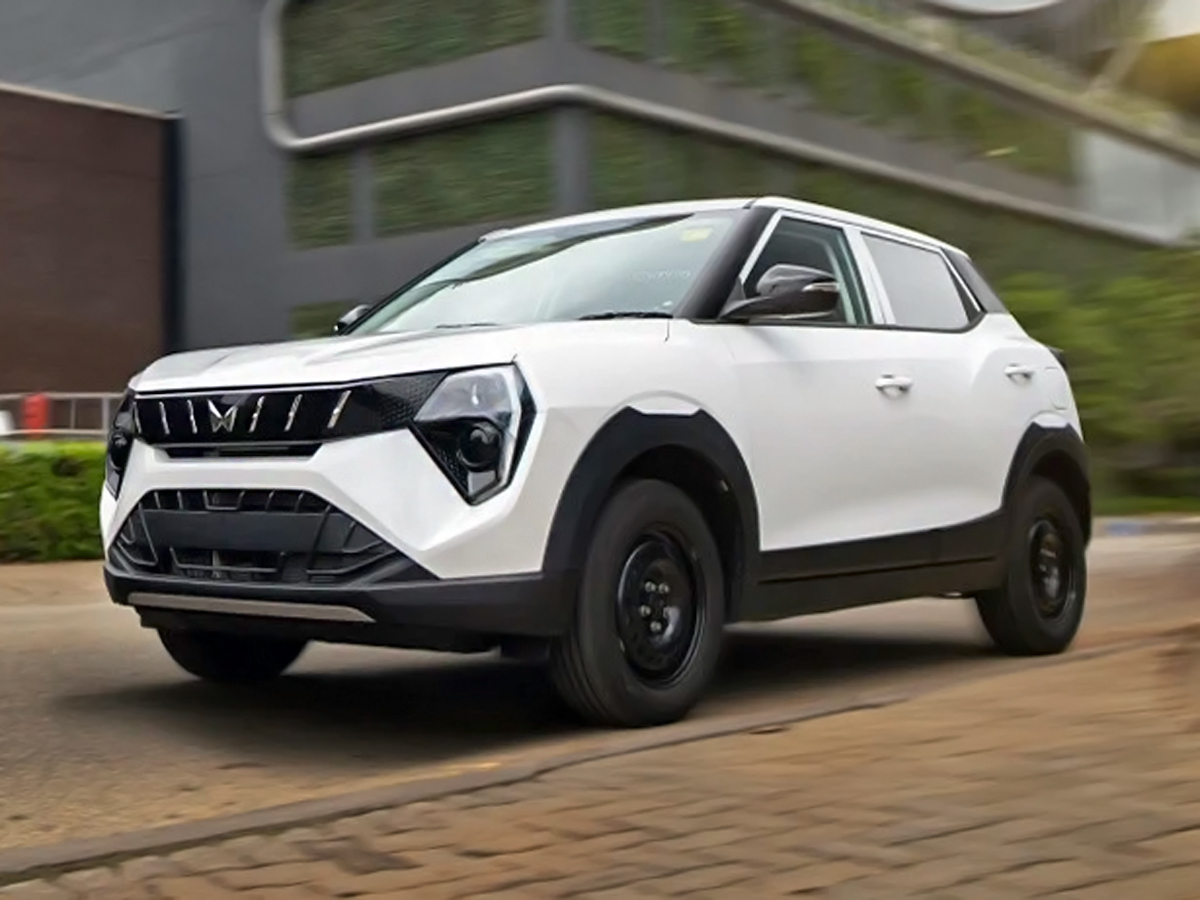
The XUV 3XO Panel Van is pitched as an alternative to a half-tonne bakkie.

From what we understand, the new 2-seater XUV 3XO 1.2T MX1 Panel Van is priced at R296 999, making it R6 000 more affordable than the XUV300-based version it replaces (which had last been priced at R302 999). It thus slots neatly into the middle of the broader XUV 3XO portfolio.

Pitched at would-be buyers of a half-tonne bakkie (a segment that fizzled out locally with the demise of the Nissan NP200 earlier this year), the XUV 3XO Panel Van employs the same turbocharged 1.2-litre, 3-cylinder petrol engine as the rest of the range, here sending 82 kW and 200 Nm to the front axle via a 6-speed manual gearbox.

Note the steel wheels and blanked-off front-foglamp apertures.

While Mahindra SA has yet to release official specifications for its newest LCV derivative, we believe it will feature the relatively modest “MX1” trim level. Based on our information, this workhorse variant will do without items such as an infotainment system (simply replaced by a black plastic panel), steering-wheel buttons, front foglamps and a rear wiper, while riding on 16-inch steel wheels.

Still, we believe staples such as air conditioning, electric windows and electronic stability control (not to mention airbags) remain standard. Of course, Mahindra SA has also ditched the rear bench and fitted a flat load floor, while furthermore adding a metal safety barrier to separate the passenger- and load areas.

The rear windows and screen feature an opaque film.

The rear side windows and rear screen also gain mesh barriers along with an opaque film, with the latter likely applied to keep the load bay’s contents from prying eyes. Unfortunately, we have yet to unearth an official payload capacity for this model, though its predecessor’s figure was around 320 kg.

Interestingly, while its forebear wore the “Xprez” badge (which was also used on the KUV-based version a few years back), it seems this moniker may fall away for the XUV 3XO iteration – despite being shown in early images (as below). Though its official name is not yet confirmed, we’ve subsequently seen an example that does not feature this badging.

These early marketing images show the newcomer with the “Xprez” badge.

The Mahindra XUV 3XO Panel Van joins a surprisingly crowded segment of converted passenger vehicles, counting the likes of the Hyundai Grand i10 Cargo (R249 500 for the 1.0 and R289 900 for the 1.2), Renault Triber 1.0 Express (R266 999), Kia Picanto 1.0 LX Runner (R284 900 for the manual and R302 900 for the auto), Kia Sonet 1.5 LS Runner (R 319 995), Hyundai Venue 1.2 Premium Cargo (R321 500) and Renault Kiger 1.0 Turbo Express (R334 999) as its rivals.

How much does Mahindra’s XUV 3XO Panel Van cost in SA?

Mahindra XUV 3XO 1.2T MX1 Panel Van – R296 999

The price above includes Mahindra’s 5-year/150 000 km warranty and a 3-year/55 000 km service plan.

Related content

Could Mahindra’s new bakkie be assembled in SA?

Mahindra XUV 3XO off to strong start in Mzansi

New XUV 3XO Review: the best budget car right now?

F87 BMW M2 (2016-2022) Buyer’s Guide

The F87-gen BMW M2 was one of the best M cars of the modern era, but does it make a compelling used buy? Let’s examine this sportscar’s strengths and weaknesses, and see what you can expect to pay for a clean example…

Despite debuting a fresh nameplate, the F87 BMW M2 was, in many ways, a throwback to somewhat simpler times. Endowed with a short wheelbase, a front-sited inline-6-cylinder engine and rear-wheel drive, this Leipzig-built 2-door sportscar was billed as a spiritual successor to everything from the 2002 Turbo to the not-for-Mzansi E30-gen M3 and the limited-run E82 1 Series M Coupe.

Slotting in below the increasingly complex M3 sedan (F80) and M4 coupe (F82) as the entry point to the BMW M GmbH line-up, the pleasingly compact M2 endeared itself to enthusiasts by offering more accessibility, simplicity and indeed driving purity than its larger, arguably less-characterful siblings.

Is this one of the best M cars of the modern era? Undoubtedly.

Based on the F22-gen 2 Series, the original M2 was effectively an M235i coupe fitted with a healthy selection of go-faster bits pulled from deep within the M parts bin. Indeed, the baby M car borrowed various elements of its suspension, steering and braking systems from the M4, while the Competition- and CS-badged models even pilfered the larger coupe’s powertrain.  

The F87 BMW M2 was on the market in Mzansi for about 6 years. The 2nd-gen model (G87) replaced it locally in mid-2023, though the F87 technically exited the market at some point in the prior year.

F87 BMW M2 model line-up in South Africa

The F87 M2 arrived in South Africa in the 2nd quarter of 2016.

Revealed in October 2015, the BMW M2 touched down in South Africa in April 2016, with a starting price of R799 105. At launch, the local range comprised a pair of derivatives differentiated only by their cog swappers. There was a 6-speed manual gearbox, as well as a 7-speed dual-clutch transmission, with the latter commanding a premium of around R50k. 

  • M2 Coupe 6MT (272 kW/500 Nm)
  • M2 Coupe 7M-DCT (272 kW/500 Nm)

The turbocharged 3.0-litre inline-6 motor generated 272 kW between 5 800 and 6 000 rpm, while the peak twisting force of 500 Nm (on overboost, up from 465 Nm) was on tap from 1 300 to 4 500 rpm.

According to BMW, the manual M2 could complete the 0-100 kph sprint in 4.5 sec, while the self-shifting derivative was 2-tenths quicker to the mark. Top speed was limited to 250 kph in either case.

Only 20 units of the M2 Edition Black Shadow came to SA.

In April 2018, local order books for the M2 Edition Black Shadow opened, with just 20 examples set aside for South Africa. Exclusively available in a Sapphire Black metallic hue, this limited-edition variant came fitted with black 19-inch forged light alloy wheels and featured a carbon finish for the side-mirror caps and rear diffuser, as well as black-chrome trim for the dual tailpipes.

At the Festival of Motoring in late-August 2018, BMW Group South Africa debuted the M2 Competition, which replaced the standard M2 outright. The Competition-badged newcomer ditched the original model’s single-turbo N55 motor for a version of the twin-turbo S55 unit from the M4.

In M2 Competition guise, this inline-6 engine offered 302 kW (from 5 250 to 7 000 rpm) and 550 Nm (between 2 350 and 5 200 rpm), while the optional M Driver’s Package raised the top speed to 280 kph.

The M2 Competition replaced the original M2 in Mzansi in the 3rd quarter of 2018.
  • M2 Competition Coupe 6MT (302 kW/550 Nm)
  • M2 Competition Coupe 7M-DCT (302 kW/550 Nm)

The M2 Competition was available in both 6-speed manual and 7-speed dual-clutch automatic guises, with respective 0-100 kph sprint times of 4.4- and 4.2 sec. BMW added a carbon-fibre reinforced plastic (CFRP) strut under the bonnet, while the steering system and stability control (including the active M differential) were reconfigured and larger brakes were adopted. In addition to the requisite exterior design updates, BMW made a few tweaks to the cabin, while various new options were rolled out.

Towards the end of 2020, the limited-production M2 CS arrived, assuming its position above the M2 Competition and following a similar recipe to the M3 and M4 derivatives bearing the same suffix. Just 30 units of the variant were allocated to South Africa, with 2 added to the press fleet and the remaining 28 going under the hammer at a dedicated auction event attended by BMW Group SA’s top clients.

Only 30 examples of the M2 CS were set aside for SA.
  • M2 CS Coupe 6MT (331 kW/550 Nm)
  • M2 CS Coupe 7M-DCT (331 kW/550 Nm)

In the M2 CS, the further-fettled S55 motor developed 331 kW and 550 Nm – peak outputs that matched those of the outgoing F82-gen M4 Competition. As such, the manual model’s 0-100 kph sprint time improved to a claimed 4.2 sec, with the dual-clutch derivative requiring just 4.0 sec to hit 3 figures from a standstill. With the M Driver’s Package fitted as standard, the top speed was governed to 280 kph.

The M2 CS featured a CFRP bonnet (complete with a menacing central air vent) and a CFRP roof, along with a model-specific front splitter, Gurney spoiler lip and rear diffuser, as well as adaptive suspension. Inside, this special model employed bucket-style M Sport seats familiar from the M4 CS and finished in a combination of Merino leather and Alcantara with red contrast stitching.

What are the F87 BMW M2’s strengths?

The N55 used in the original M2.

Terrific powertrain(s): The original M2 was one of the last models to use the N55 engine – and what a swansong it had. Arguably more characterful than the S55 mill that replaced it, the N55B30T0 motor borrowed its pistons and crankshaft main bearing shells from the M4 powerplant and utilised high-performance spark plugs with a loftier heat rating. Technical details aside, this potent single-turbo unit was a wonderfully tractable, free-revving engine that also delivered a memorable inline-6 soundtrack.

So, why did the Munich-based automaker ditch the N55 and instead employ a version of the M4’s S55 in the M2 Competition and M2 CS? Well, rumours suggest it simply would have been too costly to re-engineer the N55 to meet Europe’s then-approaching WLTP emissions standards, prompting BMW to pivot to the newer (and thus potentially more environmentally friendly) S55.

The M2 was one of the final models to use the N55 single-turbo inline-6 motor.

In the M2 Competition, this twin-turbo engine offered an extra 30 kW and 50 Nm over the standard M2 and borrowed its cooling system – comprising a central radiator, 2 side radiators and an additional engine oil cooler – from the M4 Competition Package. So, the hottest 2 Series finally gained a bona fide M engine, even if its soundtrack wasn’t quite as stirring as before. In addition, owing to the new engine, the Competition-badged model felt a little more like an M4 and less like the original M2…

Rear-wheel-drive dynamics: Where Audi Sport and Mercedes-AMG offered all-paw hot hatches (the RS3 Sportback and A45), BMW opted for a rear-driven sportscar with a, frankly, fabulous chassis. As a result, the M2 was far more of a driver’s car than its Neckarsulm- and Affalterbach-developed counterparts, offering precise handling, agility and – ultimately – immense driver involvement.

RIP, rear tyres.

Though there’s some debate about whether the original M2 or the more powerful M2 Competition was twitchier at the limit, it’s worth keeping in mind both the selected traction settings and the condition of the road surface played a considerable role in any degree of tail-happiness on display. In short, though, either version could be provoked into a tyre-eroding slide.

Surprisingly well equipped: Since German automakers typically offer lengthy lists of options, it was perhaps surprising that the M2 came so well equipped from the factory. In fact, at launch, the only notable paid extras were a glass sunroof, rear parking sensors, a reverse-view camera and an upgraded infotainment system. The latter featured navigation and was made standard on the M2 Competition, which was furthermore available with optional M Sport brakes.

What are the F87 BMW M2’s weaknesses?

The M2’s cabin looked a little, well, ordinary.

Somewhat staid cabin: Considering the M2’s status as an M-badged machine, there’s an argument to be made that its cabin was somewhat staid. Indeed, little more than a smattering of carbon trim and Alcantara, along with subtle blue contrast stitching on the sports seats, set the interior apart from that of an ordinary 2 Series coupe.

Still, the M2 Competition gained a bit more visual flair courtesy of items such as a red start/stop button and M stripes woven into the seatbelts, while the CS featured yet more Alcantara, a carbon-fibre centre console, CFRP door pulls and bucket seats from the M4 CS (complete with red contrast stitching).

The inside of the M2 CS was far racier.

Fairly stiff ride: Yes, it may seem a little unfair to criticise a full-blown sportscar for its less-than-stellar ride comfort, but the M2’s short wheelbase, inherently firm suspension setup and 35-profile 19-inch tyres did it few favours in this department. Still, we should emphasise that a somewhat jarring ride on poorly finished tarmac is more a quibble than an out-and-out weakness. Also, keep in mind the M2 CS upgraded to adaptive dampers, ostensibly improving the ride quality in the aptly named “Comfort” mode.

Miscellaneous potential issues: So, what potential problems should you look out for when shopping for a used F87 BMW M2? Well, though the N55 engine is regarded as reasonably reliable (provided that it is fastidiously maintained), these motors have been known to leak oil (often courtesy of aging gaskets around the oil pan and oil-filter housing), while some have suffered from failed water pumps and malfunctioning high-pressure fuel pumps.

The S55 had a reputation for spinning its crank hub.

The S55 powerplant in the M2 Competition and M2 CS, meanwhile, gained a reputation for a potential crank-hub issue – though, as we pointed out in our F82 M4 Buyer’s Guide, the failure rate is likely nowhere near as high as some on the internet would have you believe. The positive crankcase ventilation (PCV) valve system used in both the N55 and S55 has also been known to fail.

How much is a used F87 BMW M2 in SA?

The F87 M2 was available with optional M Performance parts.

In South Africa, all 3 versions of the F87-gen M2 shipped standard with BMW’s 5-year/100 000 km Motorplan (maintenance plan). As always, we’d strongly recommend considering only vehicles that have a full, verifiable maintenance history – and simply walking away from those that don’t.

Approximately 55% of the F87 BMW M2s listed on Cars.co.za at the time of writing were Competition-badged examples, while we discovered just a single M2 CS and a lone manual-equipped derivative (in this case, a 2018 M2 Competition). The highest indicated mileage we saw was just 85 000 km.

  • Below R700 000: About a quarter of listed F87 M2s were priced below R700 000 – but only just (all examples here had an asking price in the region of R699 000). We found only vehicles from the opening 2 model years in this space.
  • From R700 000 to R900 000: This pricing bracket housed nearly half of all listed F87 models, with the Competition derivative most prevalent. Model years ranged from 2017 to 2021, while we also found a couple of modified M2s (which we’d recommend avoiding) and the lone manual variant on the market.
  • R900 000 and up: Beyond the R900k mark, we saw almost exclusively Competition derivatives, along with the single CS on offer and a 2017 M2 seemingly fitted with every conceivable AC Schnitzer accoutrement. The most expensive example we discovered was the aforementioned 2021 M2 CS, which had just 1 700 km on the clock and was priced at a heady R1 749 950.

Which F87 BMW M2 derivative should I buy?

M2 CS derivatives are unsurprisingly hard to find.

Unless your budget allows, we can probably rule out the M2 CS. Since just 30 were brought into Mzansi, they rarely come onto the used market and, when they do, they command a significant premium. You’re likewise unlikely to find an example equipped with a manual gearbox, so it’s largely a case of choosing between the dual-clutch versions of the original M2 and the M2 Competition.

Since the respective engines in these 2 models lend them distinctly different characters, we’d suggest driving an example of each to determine exactly where your preference lies. Also, keep in mind that the M2 Competition – though perhaps a compelling middle ground between the other 2 derivatives available – will cost more than the regular M2, so your budget may well decide for you.

Does the M2 Competition represent a compelling middle ground?

Finally, here’s our requisite caveat about purchasing a 2nd-hand performance car: bear in mind that models such as the BMW M2 tend to be driven hard, which makes evidence of regular and fastidious maintenance all the more important. It’s a classic case of “buyer beware”.

What else might I consider instead of a BMW M2?

The F87 M2 technically didn’t face direct sportscar rivals from Audi and Mercedes.

During the M2’s tenure in South Africa’s new-vehicle market, potential buyers had a few alternatives from which to choose. The Porsche 718 Cayman – initially offered in 4-pot form before Zuffenhausen swiftly switched back to a horizontally opposed 6-cylinder engine – was certainly a tempting option, though was considerably pricier than the M2.

There was also the 4-cylinder Mercedes-AMG A45 (in W176- and W177-gen form), as well as the 5-cylinder Audi RS3 Sportback (in 8V- and 8Y-series guise), but these were high-powered hot hatches rather than hardcore sportscars. The most potent versions of the since-discontinued Audi TT Mk3, too, couldn’t match the M2’s dynamic prowess.

A future modern classic? We think so.

The A90-gen Toyota GR Supra (developed alongside the G29 Z4 roadster) was another interesting competitor, as was the B58-powered BMW M240i. While this M Performance version of the F22-gen 2 Series represented a more comfortable everyday proposition than the M2, it lacked the dynamic sparkle and visual gravitas of a full-fat M car. In short, the M240i was more a quick coupe than a sportscar.

That latter description, however, certainly applied to the M2. There’s little doubt the F87 BMW M2 remains one of the very best M cars in recent memory. Though it’s too early to roll out the “modern classic” or “collector’s item” labels, these are designations this baby M will almost unquestionably receive in time.

Looking for a used BMW M2 to buy?

Find one on Cars.co.za!

Looking to sell your car? You can sell it to our dealer network here

New Haval H7 for South Africa: what to expect

The new Haval H7 is set to launch in South Africa in January 2025. Here’s a closer look at what we can expect, including likely powertrain options for the local market…

GWM South Africa plans to kick off the New Year with the launch of the new Haval H7, which is scheduled to hit the local market in January 2025 (having earlier been tipped for a 2024 arrival). So, what can we expect from this newcomer?

Well, though this SUV wears the “Big Dog” nameplate in its domestic market of China, it will be badged as the H7 here in Mzansi. This is despite GWM having earlier applied to protect the “Haval Dargo” moniker (another export name for this model) in South Africa, a trademark that was officially registered as recently as March 2024.

The new H7 is known as the “Big Dog” in China.

GWM first mentioned the H7 at its “Brand Renewal Conference” in February 2024. Then, during an interview conducted in Cars.co.za’s custom-built podcast booth at Naamsa’s South African Auto Week 2024 in Cape Town in October 2024, Desmond Els, Sales Director at GWM SA, confirmed the “H7 is on its way and will be introduced in Q1 [2025]”.

Now the Chinese firm’s local division has commenced a social-media teaser campaign for its latest boxy SUV, while also adding a dedicated H7 page to its website (with the latter confirming a local market launch is planned for January 2025).

The new H7 is scheduled to hit the local market in 2025’s opening month.

Featuring a unibody configuration, the 2nd-generation Haval H7 (the first having never made it to local shores) measures 4 705 mm from nose to tail, with a wheelbase of 2 810 mm. That makes it some 52 mm longer than the closely related H6, a facelifted version of which is expected to arrive in South Africa in the 2nd quarter of 2025.

What sort of powertrains can we expect? Well, based on information released by GWM SA earlier in the year, we believe the H7 will offer a similar engine line-up to that of the H6. As such, we anticipate the H7 will be available with the automaker’s familiar turbocharged 2.0-litre, 4-cylinder petrol engine.

Unlike the larger Tank 300 and Haval H9, the H7 is a unibody vehicle.

In the current SA-spec H6, this 2.0-litre motor generates 150 kW and 320 Nm, though these peak outputs rise to 175 kW and 385 Nm in the Chinese-spec “Big Dog”. The latter furthermore upgrades from the former’s 7-speed dual-clutch transmission to a 9-speed item.

In addition, a hybrid option at some point seems exceedingly likely considering GWM SA currently offers a dual-powered version of each of its other nameplates (bar the Ora, which is fully electric). Again, the H7 HEV could simply inherit the H6 HEV’s powertrain, which combines a turbocharged 1.5-litre, 4-cylinder petrol mill with hybrid gubbins, resulting in total system outputs of 179 kW and 530 Nm.

Here’s a look at the Chinese-spec Big Dog’s interior.

Another option, of course, is a plug-in hybrid (PHEV) powertrain, though this is a configuration not yet offered by GWM SA anywhere in its range – but one that is certainly in the company’s plans. In China, the Big Dog is available in a pair of PHEV configurations (each based on a 1.5-litre petrol unit), offering either 240 kW and 530 Nm (with a single electric motor on the front axle) or 278 kW and 750 Nm (with an electric motor fitted on each axle).

Expect the new H7 to be positioned above the H6, where it will likely serve as Haval’s flagship offering until the scheduled arrival of the larger H9 later in 2025. That said, the newcomer will surely be positioned below the body-on-frame Tank 300, which is incidentally in line to receive a turbodiesel engine in the opening quarter of 2025.

Related content

Facelifted Haval H6 confirmed for Mzansi!

New Haval H9 pencilled in for South Africa

GWM SA says local production is ‘on the cards’

November 2025 – Featured Product

Have you got a special offer that you need the world to see? Use Car Specials to get the message out there. 

Cars.co.za recently optimised its Car Specials by introducing a reworked, less cluttered landing page, refined visuals, a revised call to action, and enhanced app and mobile navigation.

We’ve also increased listing sizes to create further visual impact for your special, adopted bolder images for more visibility, optimised listings for brand and location, and implemented rotation to ensure that your ad receives the same exposure as all other listings within your purchase category.

Current users say our cost-per-lead structure is one of the lowest in the industry and delivers the best quality new-car leads. Remember, you will receive better pricing when you bundle purchases with us.

Contact your Cars.co.za sales representative, email us at [email protected] or call 011 450 2450.

December 2025 – Featured Product

Many people say that Tiktok is a platform for teenagers to practice their dance moves? We say that these people do not understand social media in 2025.  

Tiktok is actively used by more than a 3rd of Mzansi. It is the 2nd largest social media platform after Facebook and larger than Instagram. It has “aged up” dramatically in the last 2 years to reflect a large cross-section of the car-buying public.

Cars.co.za original content reaches over 7 million of these people monthly. The TikTok algorithm rewards great content by spreading it quickly. Cars.co.za content gets attention and Tiktok is central to our strategy of using content to bring leads into your dealership.

Every day, our users see thousands of ads. They drive past billboards, they listen to the radio and they see ads on TV. Do they remember any of them? We don’t think so. We know they do spend time on social media and Cars.co.za content gets attention.  

That is why Cars.co.za is the premier content channel of any business in South Africa.

The journey to help Msanzi find the car that moves them starts with the content we post on TikTok. Cars.co.za is the expert in linking social media to cars to leads. 

Check out our TikTok channel!

October 2025 – Featured Product

With Bolt-on packages, we make sure to scale our service to match the turnover of your dealership.

Add extra cars today by contacting your Cars.co.za sales representative. You can also email us at [email protected] or call 011 450 2450 to list your additional stock on SA’s leading motoring website.

Prefer to keep it light? Consider Indigo!

Cars.co.za recently expanded its product offering to better support small dealers/entrepreneurs.

With Indigo, you can drive your advertising journey with unmatched flexibility and adjust your monthly expenditure to fit your goals and maximise reach!

Please email us at [email protected] or call 011 450 2450 to learn more.

September 2025 – Featured Product

Facebook is actively used by more than half of our country. Cars.co.za original content reaches over 11 million in Mzansi each month.

From De Aar to Johannesburg, from Richards Bay to Somerset West. Facebook is everywhere.  It is used daily – for hours every day. If any brand wants to talk to the whole country, then Facebook is a great place to start.

Why does Cars.co.za create “content”? Anyone with a credit card can put ads on Facebook. Every Facebook user sees these ads every day and scroll straight past them. 

It takes the experience, knowledge and talent of the Cars.co.za team to create a piece of content that makes people stop scrolling and watch.  

Every day, our users see thousands of ads. They drive past billboards, they listen to the radio; they see ads on TV. Do they remember any of them? We don’t think so. Cars.co.za content gets attention. It brings people to our website which brings leads into your dealership.  

That is why Cars.co.za is the premier content channel of any business in South Africa.

The journey to help Msanzi find the car that moves them starts with the content we post on Facebook. Cars.co.za is the expert in linking social media to cars to leads. 

Visit the Cars.co.za Facebook page