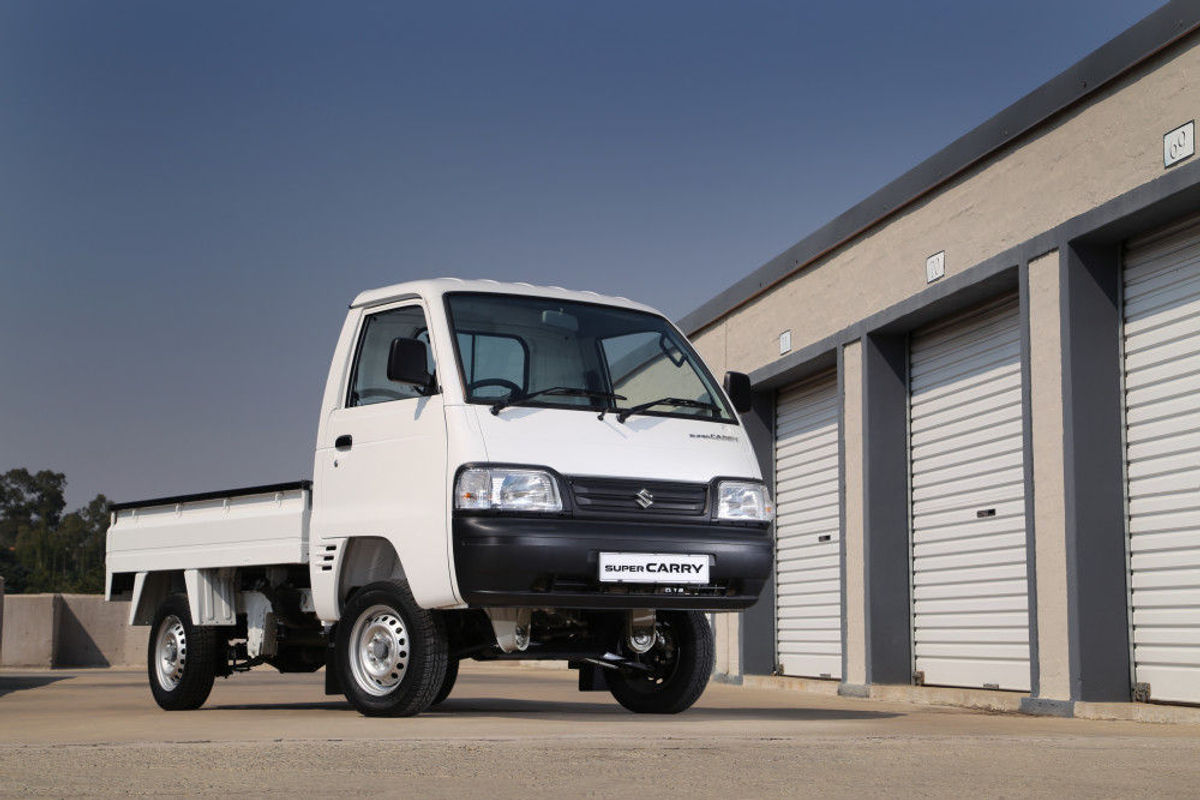
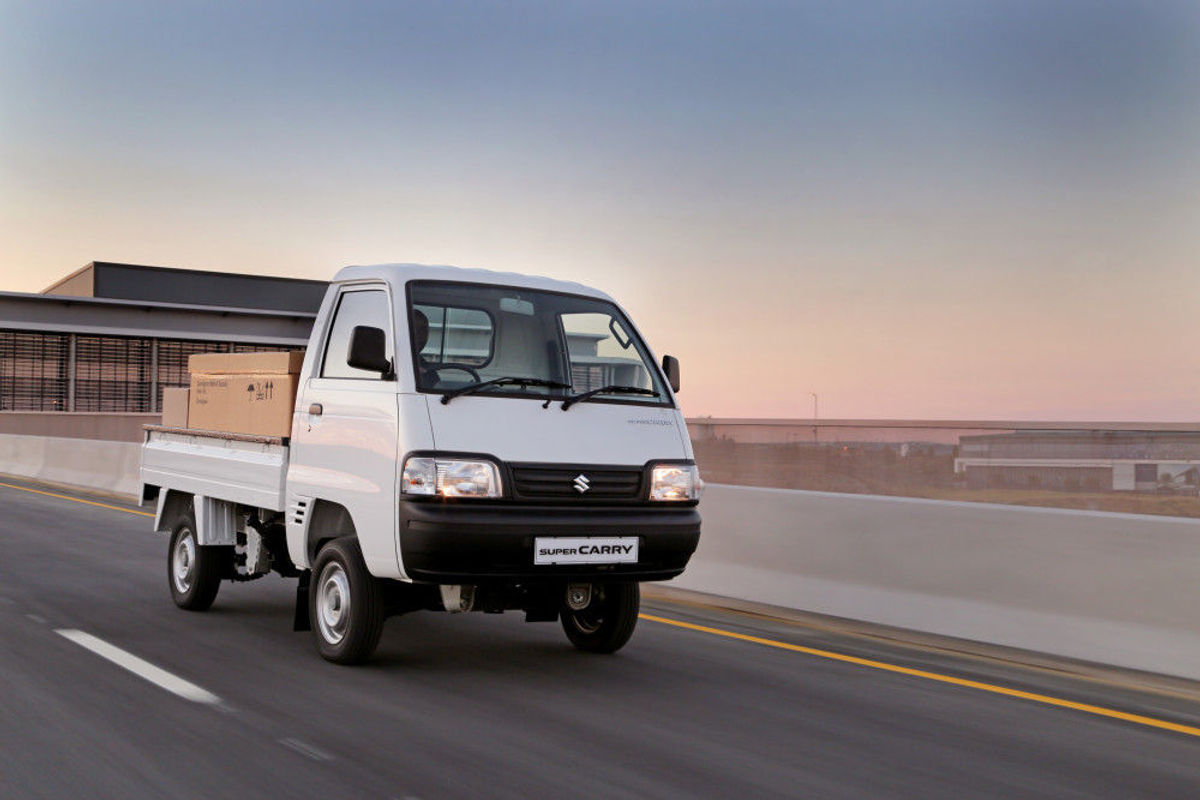
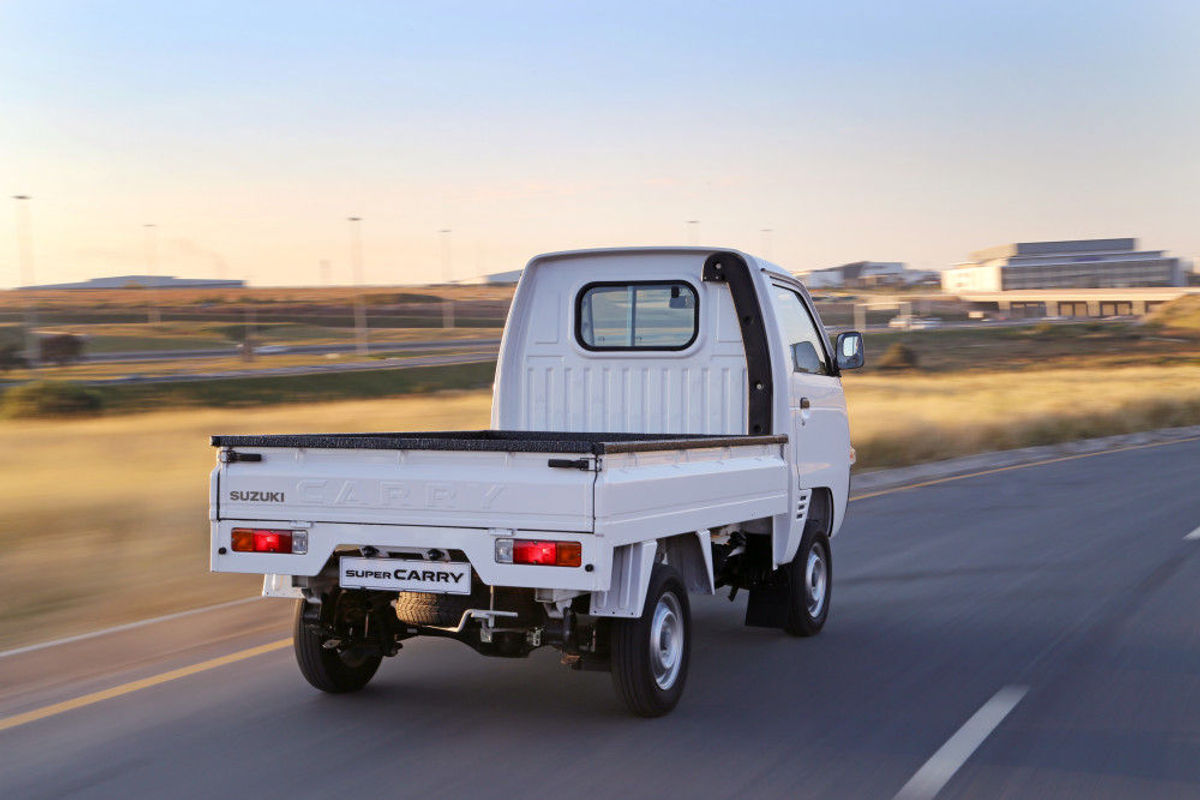
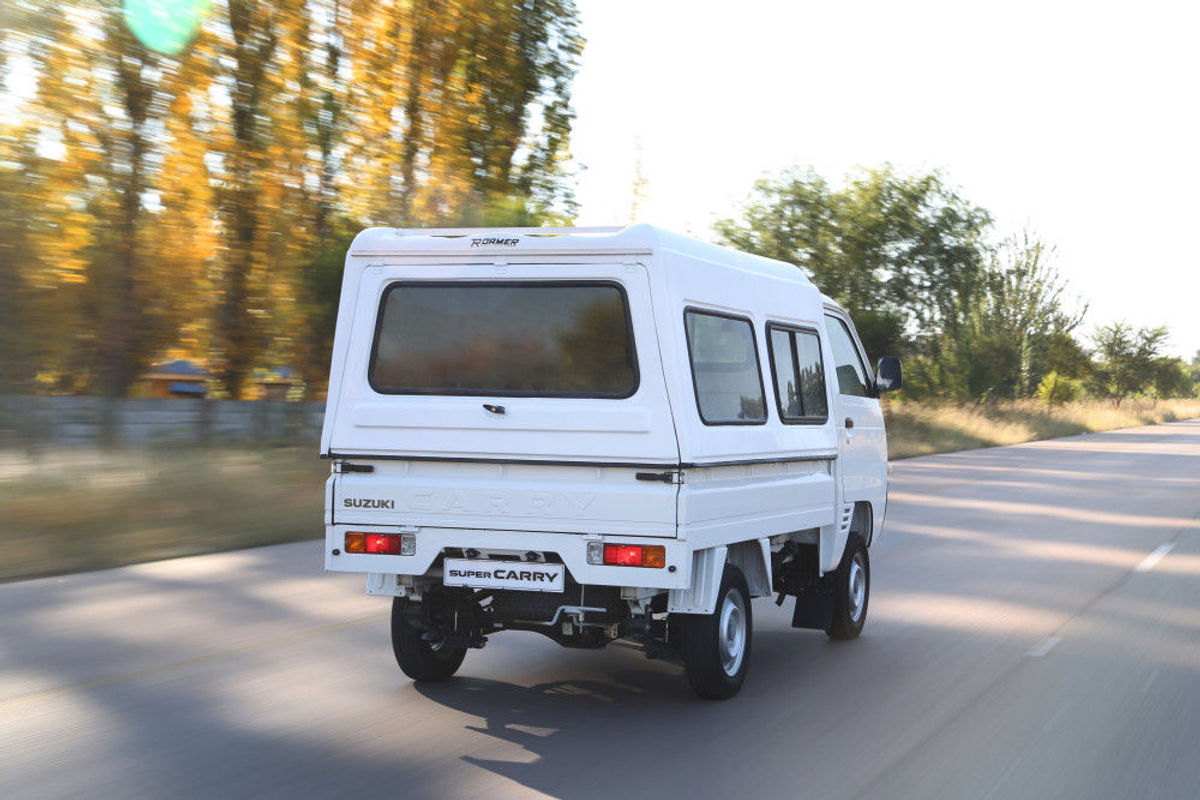
Suzuki Super Carry Bakkie coming to SA in June 2016
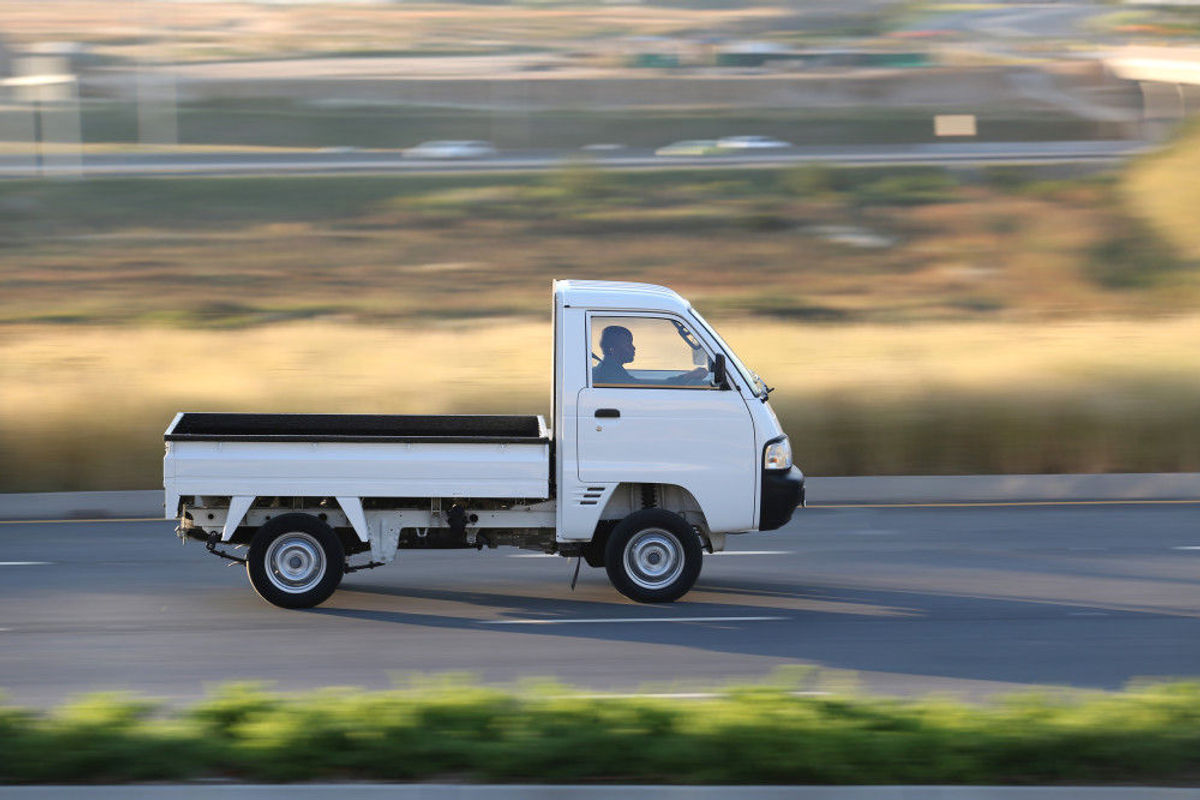
Suzuki South Africa will enter the Light Commercial Vehicle (LCV) segment for the first time with the introduction of the new Super Carry compact bakkie. The Super Carry will arrive at Suzuki dealerships across the country in June 2016.
Suzuki is best known for its reliable passenger cars, with the Swift, Vitara and Jimny being particularly popular in South Africa. Suzuki South Africa is now venturing forth into the Light Commercial Vehicle (LCV) segment and will soon introduce the Super Carry compact bakkie to market in June 2016.
The Super Carry bakkie, now in its 11th generation, has been around since 1961 and has been particularly popular in Japan and other markets. The Super Carry is built in India and South Africa will be the first international market to receive the new model. The Super Carry will appeal to small business owners looking for a capable, affordable and reliable workhorse to ‘carry’ out daily business duties, with the support of Suzuki’s established dealer network.
What does the Super Carry offer?
The Super Carry comes with a payload of 750 kg and features a cab-over design with a large load bay measuring 2.18 x 1.49 metres. The Super Carry also has a ground clearance of 175 mm and a turning circle of 8.6 metres, which makes it capable of manoeuvring in tighter spaces.
The Super Carry can comfortably seat two people and the raised seating position offers increased visibility for the driver.
A 1.2-litre engine with a total of 54 kW and 101 Nm of torque will power the new Super Carry with a 5-speed manual transmission powering the rear wheels.
“We’re delighted to introduce the Suzuki Super Carry to the SA market. It arrives at a time when cost efficiency, affordability and value for money are key requirements for small businesses and entrepreneurs seeking an efficient, versatile and robust utility vehicle” says Charl Grobler, manager of product planning and sales at Suzuki Auto SA.
Suzuki Super Carry price in South Africa
Suzuki Super Carry – R129 900
The price includes a 3-year / 100 000 km warranty.
Is the Adam S, the hottest Adam derivative in Opel’s arsenal, hot and exclusive enough to justify its R330 000 asking price? Let's find out.
We like: Good fun at the price, quirky styling, great standard specification
We don’t like: Some brash stylistic touches in the cabin that won't appeal to all tastes, only 50 units available
Alternatives
For a more mature, practical hot hatch: Peugeot 208 GTI – Peugeot’s little GTI may not be the first choice when you’re browsing this market, but this 3-door hatchback is the most powerful in its segment with 147 kW and 275 Nm from its turbocharged 1.6-litre 4-pot. It’s priced below the Opel Adam S and boasts a more spacious cabin, plus a bigger boot as well as comprehensive specification.
For oodles of boutique appeal: Mini Cooper 3-door hatch – The original boutique fun car, now powered by a 1.5-litre three-cylinder turbo with 100 kW and 220 Nm. It may be down on power, but it’s just as entertaining to drive. It’s not as comprehensively equipped as the Adam S so to match the Opel's spec, you’ll need to fork out a bit more.
For more outright thrills: Abarth 595 – The Abarth 595 is a riot to drive thanks to a race-tuned suspension and a reworked version of the Fiat 1.4-litre turbo motor that's more powerful than that of its German rival. It may cost a bit more than the Opel Adam S, but it feels more engaging and is a more unique, exclusive proposition.
We’ve evaluated the entire lineup of Opel's boutique compact car range and suffice to say that we are impressed with the Adam. However, seeing that the asking price for a hot hatchback has inflated considerably (you’ll find yourself forking out more than R400 000 to get into a new example), the "junior hatchback" segment deserves a closer look. If you're looking for small car offering zesty performance for less than "hot hatch" money, the Adam S appears to be a good example.
How does it fare in terms of…
… Kerb Appeal?
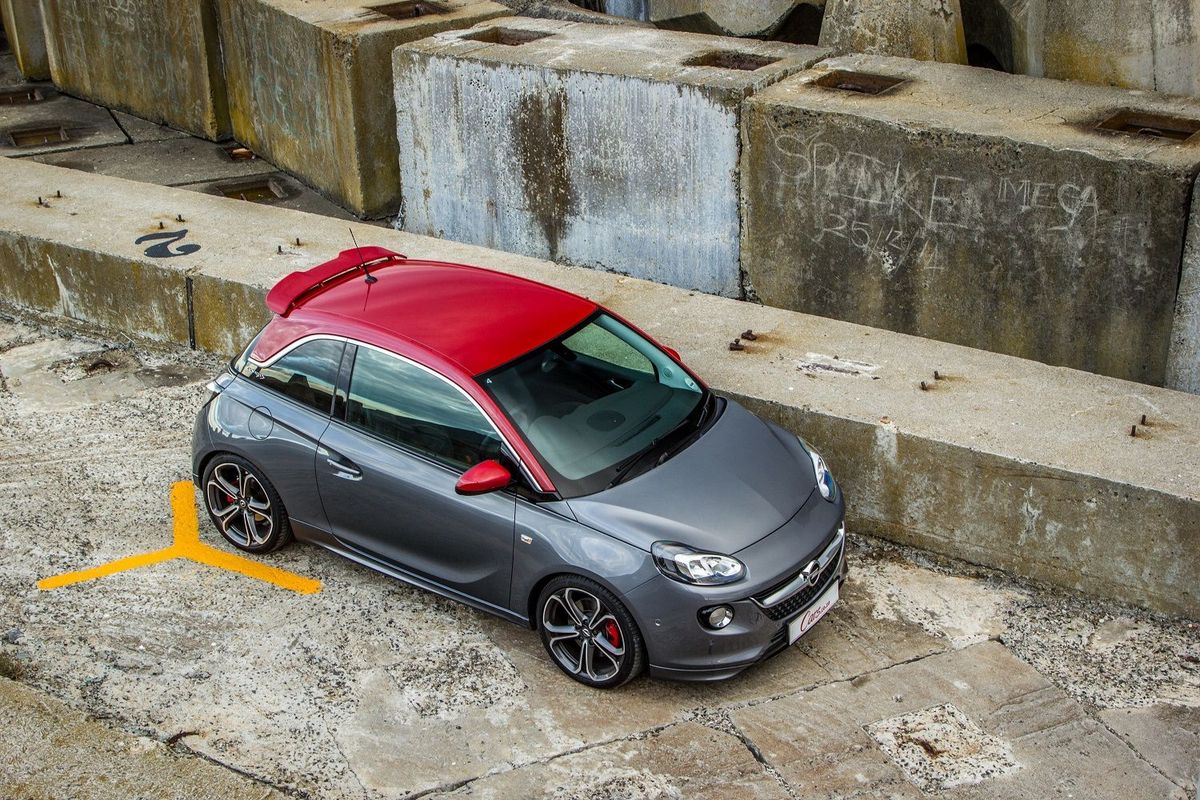
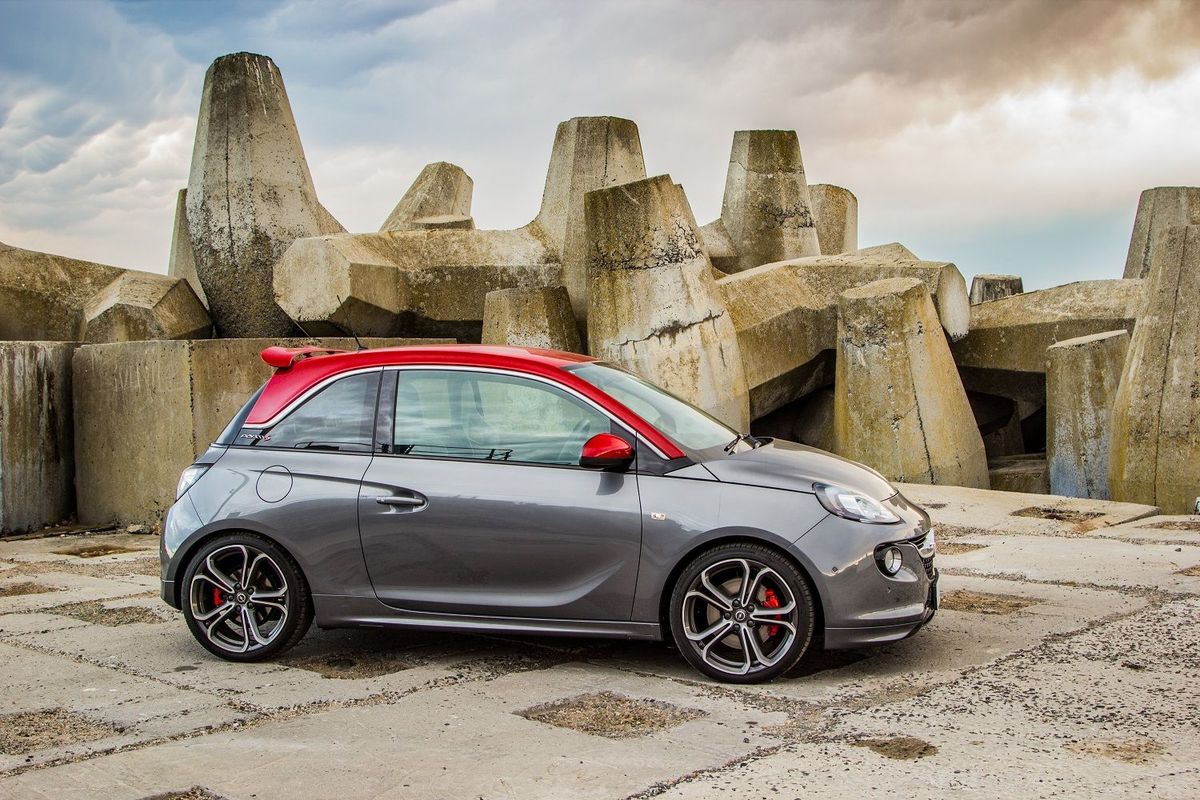
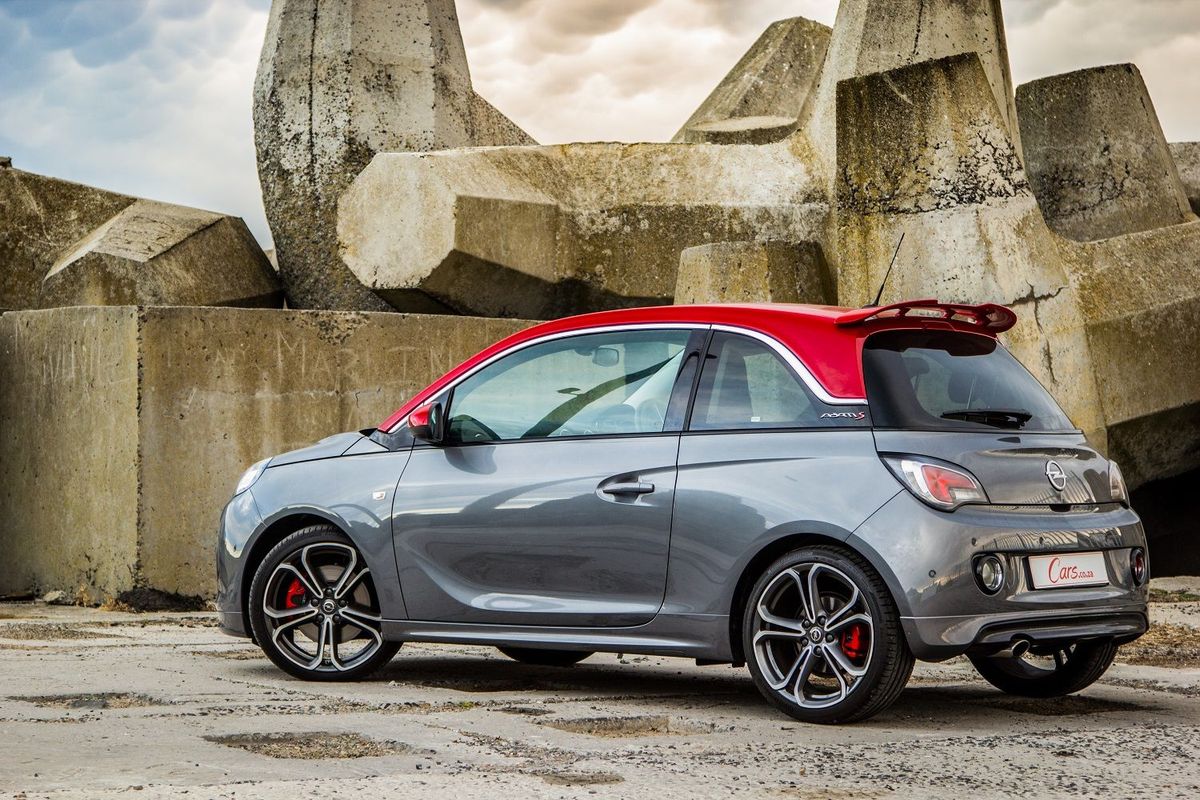
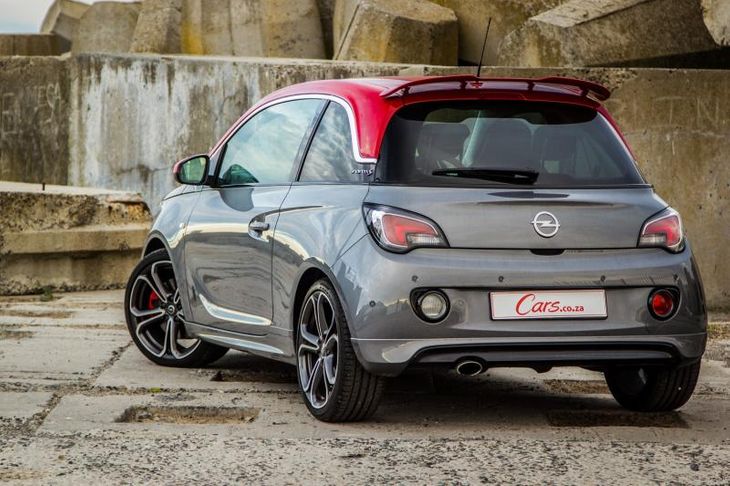
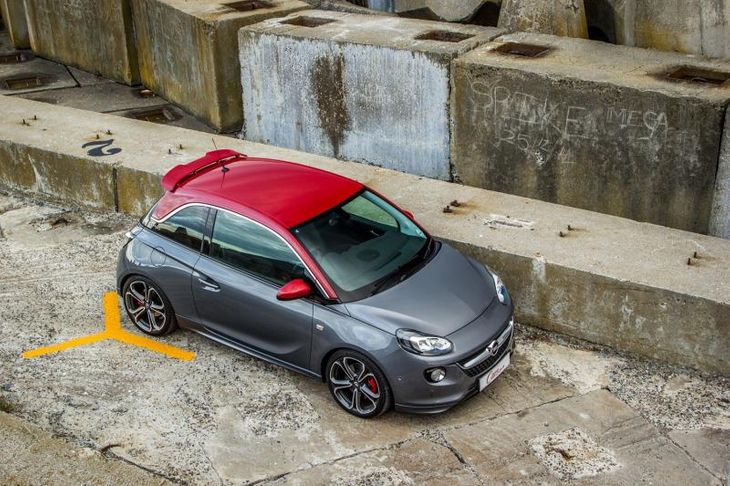
There’s no mistaking the Opel Adam S for its lesser siblings. It’s only available in three colour combinations; one of which is the gunmetal grey and red combo that you see here. Opel has added a more attention-grabbing body kit, bolted on some 18-inch alloy wheels (as well as a purposeful-looking roof spoiler) and made the Adam's oval exhaust end poke out the rear valance. It may scream boy racer, but we don’t think it’s that tacky.
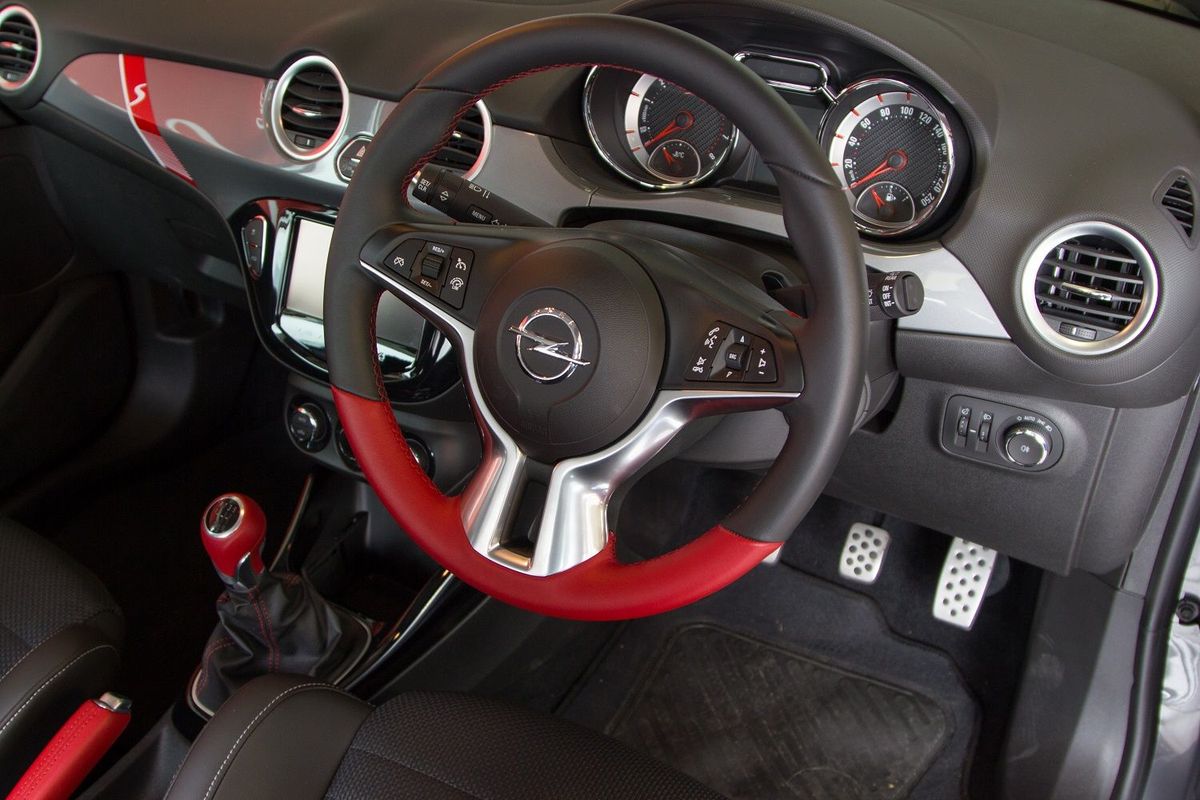
A similar treatment has been applied to the cabin. The shapely Recaro sports seats grip front occupants with aplomb and there are splashes of red on the steering wheel, gearknob and handbrake lever. Drilled aluminium pedals and some liberal splashes of S badging around the cabin add to the appeal.
Two-tone paint with red accents and big wheels make the Opel Adam S stand out from lesser Adam models
… Driving Thrills?
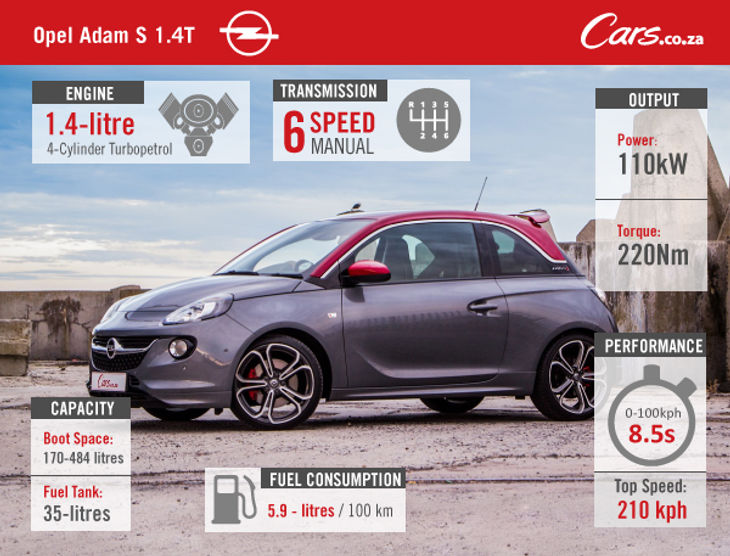
So it has the show, but does it have the go? General Motors' parts bin has a vast array of engines in its arsenal and the 1.4-litre turbocharged four cylinder, which does duty in many GM products, takes pride of place under the Adam S's bonnet. In this application it produces 110 kW and 220 Nm. Those figures may not sound like much, but when you factor in the car's kerb weight of around 1 100 kg, the power-to-weight ratio is pretty good and conducive to an enthusiastic driving experience.
Zero to 100 kph comes up in about 8.5 seconds, but that only tells a small part of the Opel Adam S' story. Real fun is to be had when you coax the S into a series of demanding corners. Thanks to some big brakes from the previous generation Opel Corsa OPC and suspension trickery, the Opel Adam S is a hoot, yet not intimidating to drive fast. There’s a stiffer anti-roll bar and firmer springs at the front, while the rear benefits from a more-rigid torsion beam rear axle.
What does this all mean in the real world? When you sit snugly in those Recaro seats, the driving position makes you feel as if you’re part of the car. The engine loves being revved hard, but you’ll find there’s generally enough torque on tap to negate the need for constant downshifting. However, the buzzy noise emitted by the motor is so addictive that you'll probably find it irresistable to perform extra downshifts anyway and, if you listen carefully, you’ll hear a soft sututu from the turbo wastegate as you come off the throttle.
The shift action is fairly slick, but the transmission is still afflicted by that "Opel curse" where the first to second shift during hard acceleration is notchy. This Adam offers so much more than just straight-line sprinting, however. You’ll love how this derivative makes you feel as a driving enthusiast… the interactions between the car and the road are transmitted through the steering wheel and the bottom of the driver's seat. You can be doing 70 kph on a winding country road and it’ll still be a thrilling, hands-on experience. If nothing else, the S proves you can enjoy yourself with a modest power output and without breaking the speed limit.
… Specification levels?
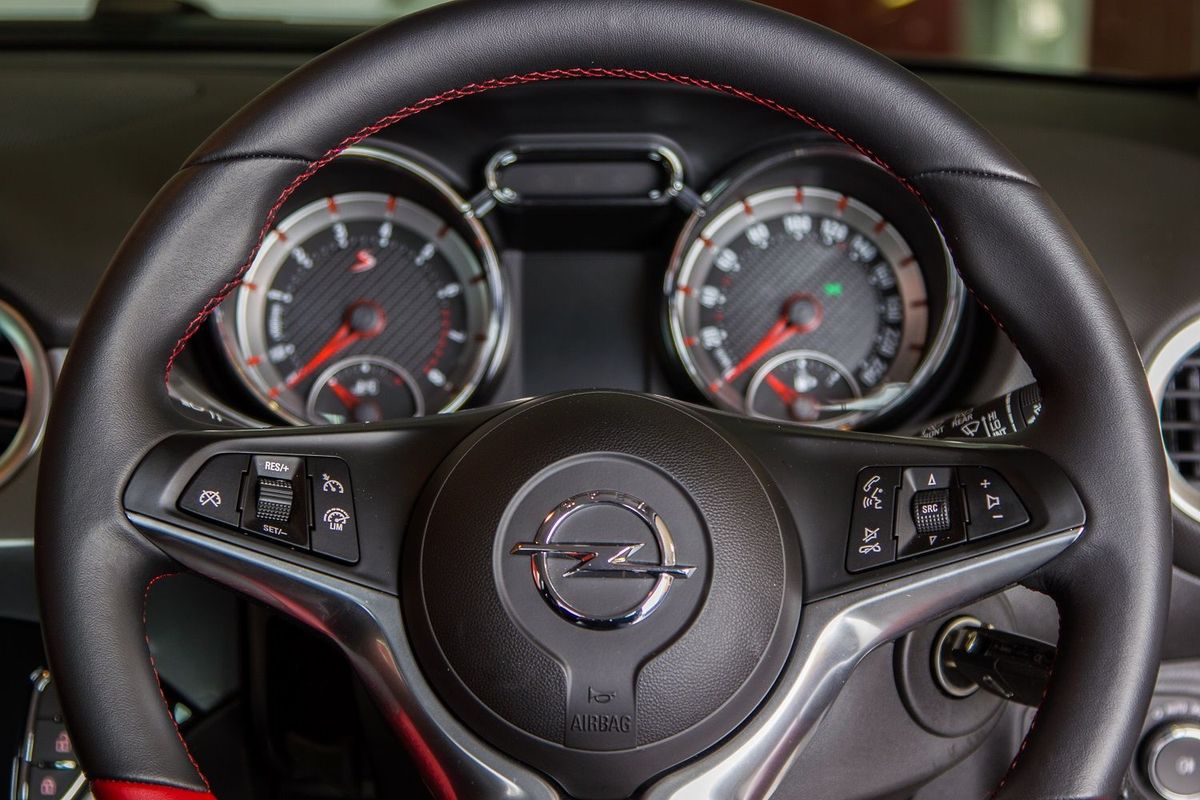
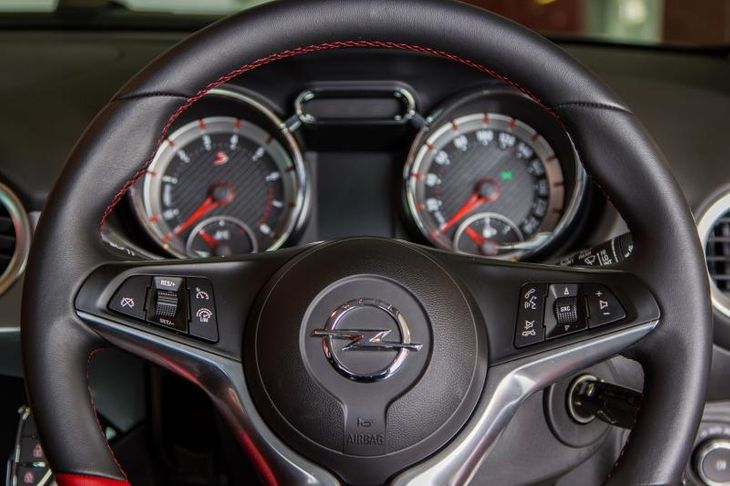
Opel Adam S steering wheel features hands-free communication buttons as well as cruise control with limiter
As the S sits atop of the Adam pile, its specification is generous. The donor car for the Adam S was the Adam Jam Xtreme. This means climate control, cruise control and the rather good Intellilink infotainment system come standard. There’s Bluetooth, USB and auxiliary connectivity too. The Opel Adam S is not shy on safety features either and features blind spot alert, ABS and electronic stability control; the car can even park itself.
… Value for Money?
The Opel Adam S makes a good case for itself when you compare it against its rivals. If you want a faster and bigger car, then the Peugeot 208 GTI looks like a seriously good deal at just over R300 000. However it doesn’t quite have the same "character" and boutique appeal as the Adam S. You can look to Fiat and its Abarth 595 which is more involving to drive, more exclusive, but more expensive.
Finally, there’s the old favourite; the Mini Cooper. It’s the first time a Cooper has been turbocharged and this new 1.5-litre 3-cylinder engine injects some enthusiasm into a model that’s always been overshadowed by its brawnier, yet significantly more expensive, Cooper S sibling. The Cooper is a very desirable proposition, but its down on specification compared with the Opel Adam S.
At R330 000, the Opel Adam S looks like quite the toy, which, to be fair, is exactly what's it is menat to be and judging from the envious glances from 1.0-litre Adam owners, it should have a loyal following. Only 50 will be imported into South Africa, so if a fast little Opel is what you're looking for, this is it.
The Opel Adam S is a nifty little plaything. Its performance, packaging and character justify a R330 000 asking price.
Summary
The Adam S costs a not-insignificant R330 000, but it represents a comprehensively-equipped and potent little car for the money. It’s great fun to drive, but its ride quality’s not overly sporty, meaning you could easily use the Opel for daily commuting. If you want more exclusivity, then it would be advisable to head to your Abarth dealer and if you’re wanting more performance from your boutique hot hatchback, then Peugeot should be your port of call.
Having said that the Opel has loads of character and certainly looks the part. You’ll love how the seats wrap around you and how much fun the car is to drive, regardless of how fast you are travelling. As mentioned earlier, it’s an exclusive package and only 50 will be available in South Africa. There’s no word on when an Corsa OPC will reach our market, so, for the foreseeable future, this is the closest thing you’ll get to a real hot hatch from Opel.
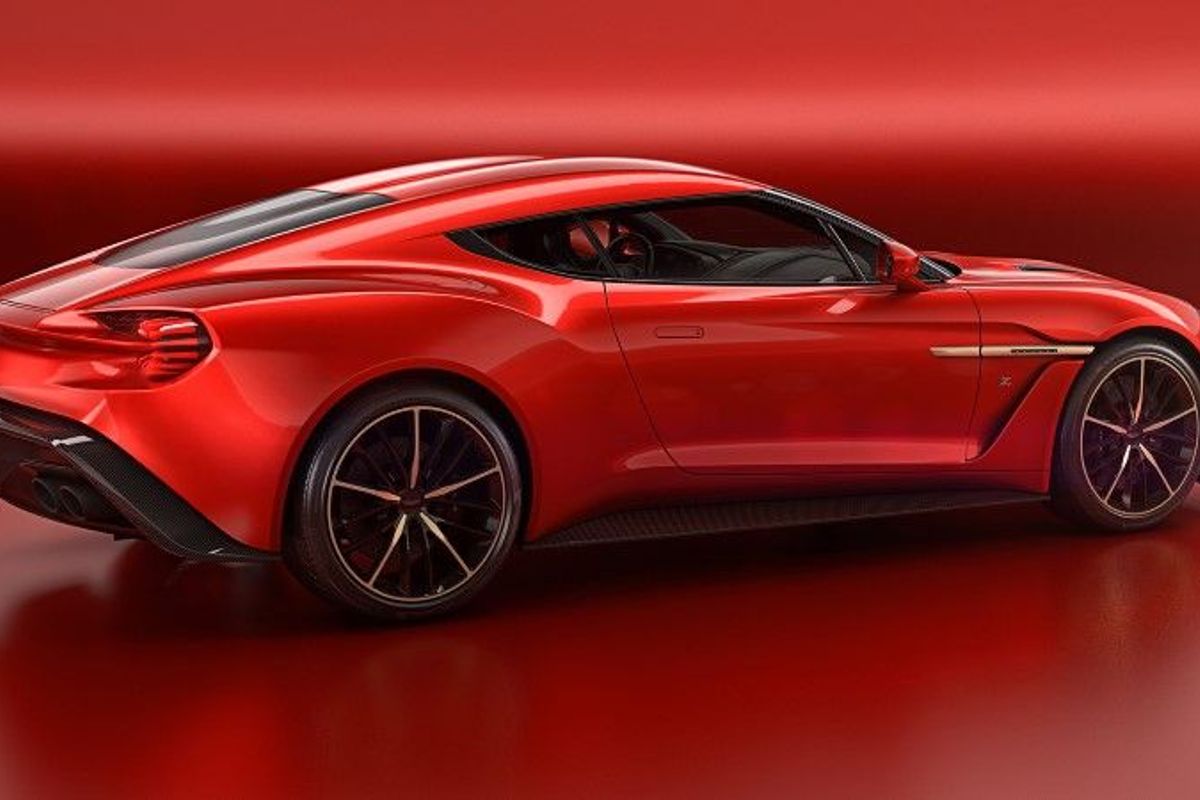
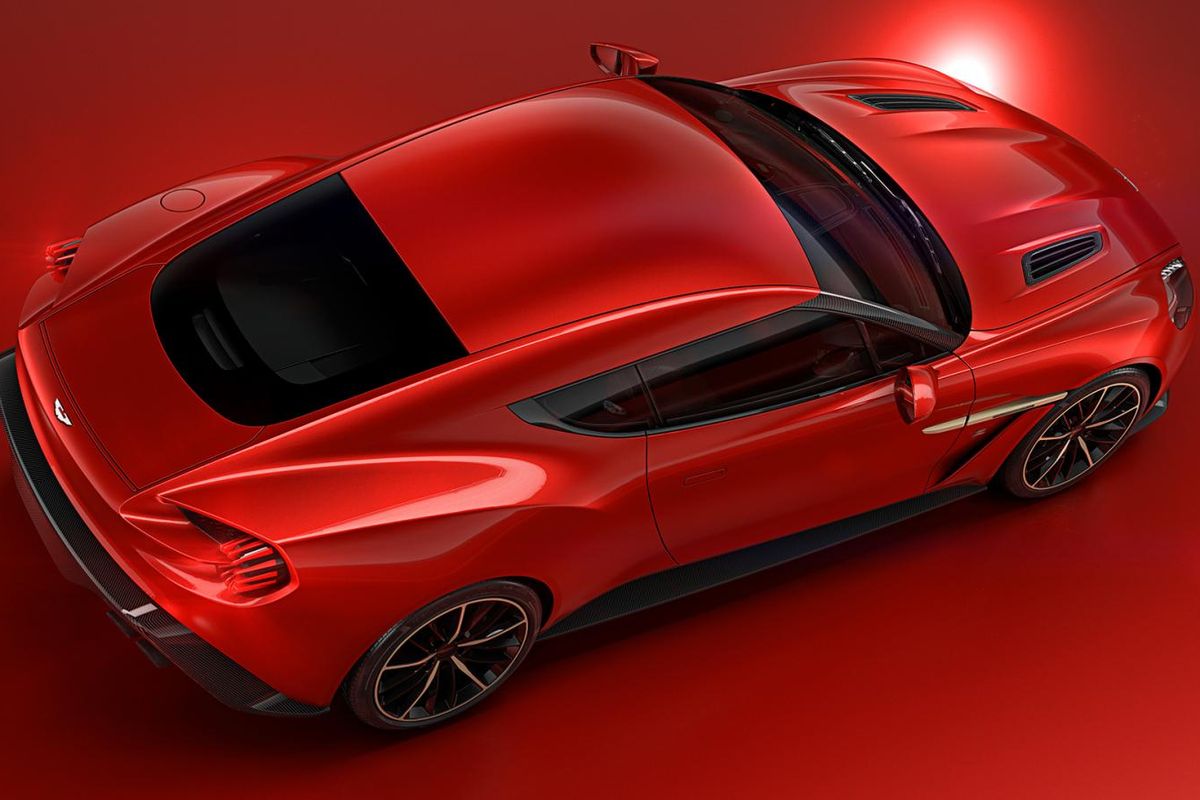
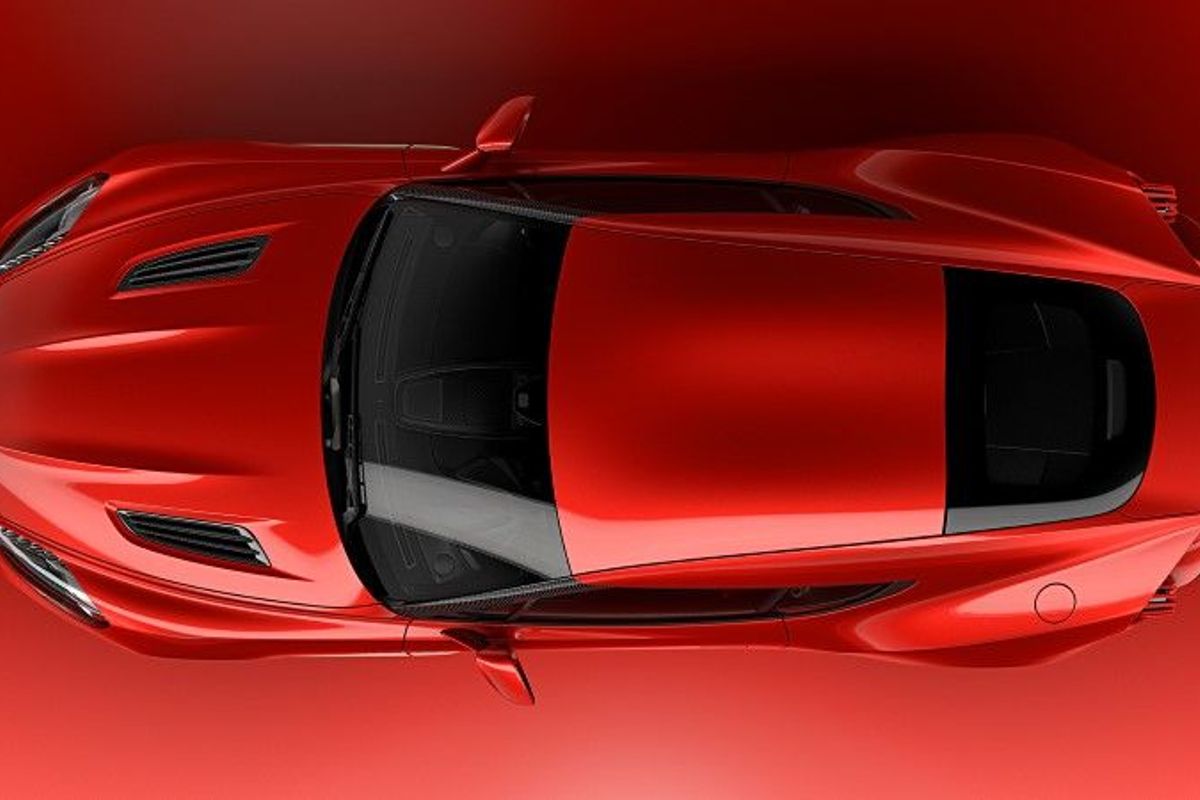
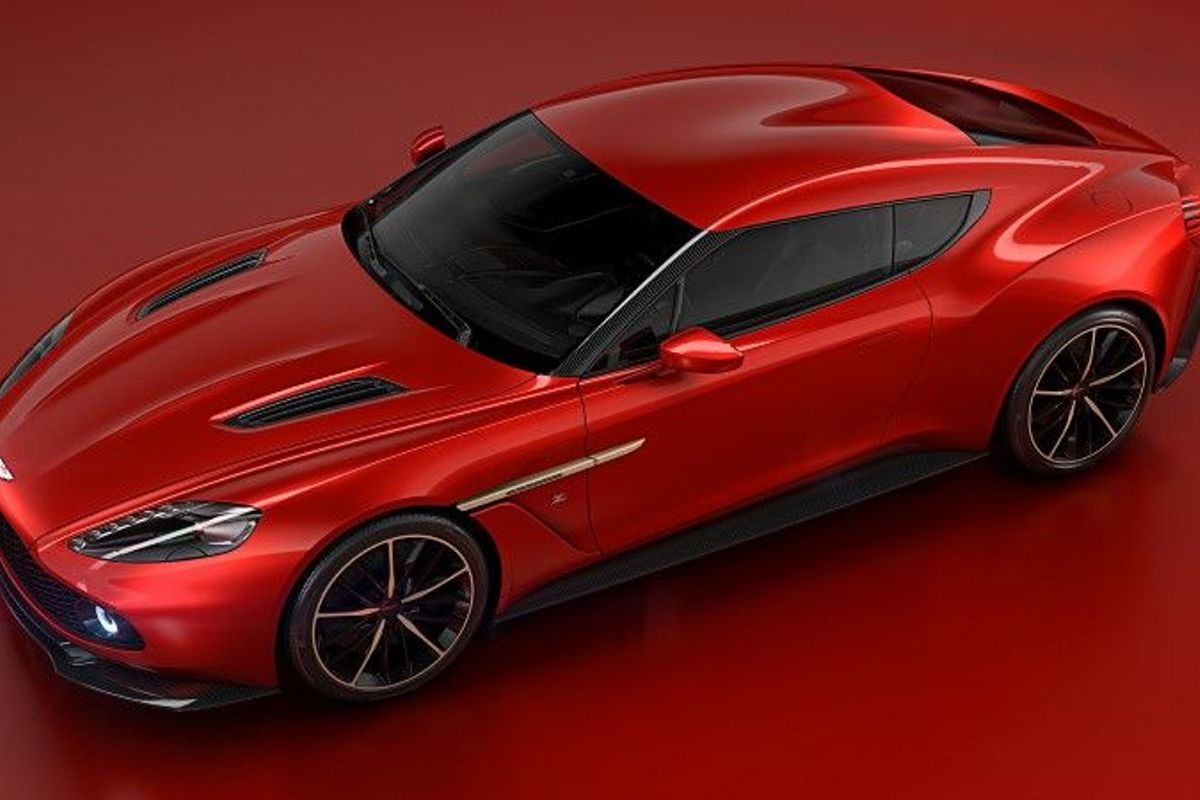
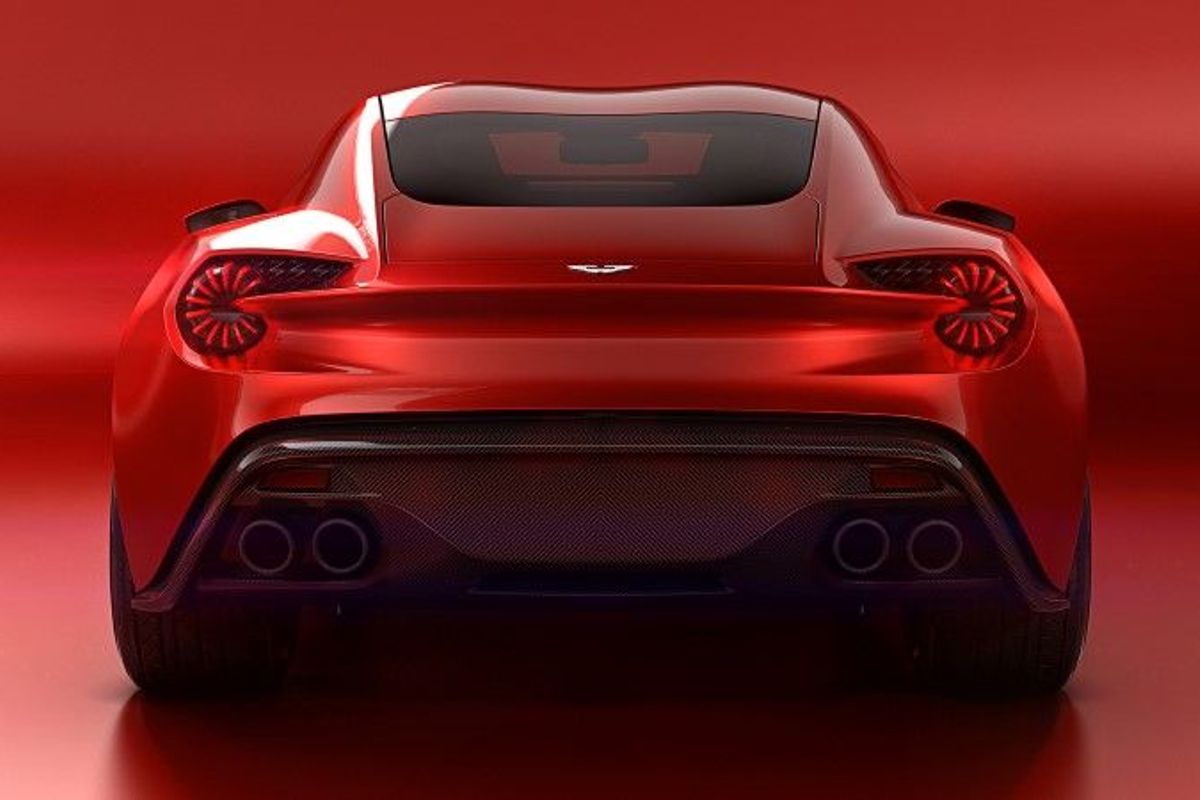
Aston Martin has showcased its Vanquish Zagato concept at the Concorso d'Eleganza Villa d'Este on the banks of Lake Como in Italy this past weekend.
British luxury sportscar marque Aston Martin and Italian design house Zagat, collaborated to create a special Vanquish Zagato concept, which is the fifth car to be produced by the firms' partnership in more than 5 decades.
Aston Martin's chief creative officer Marek Reichman said: "Over the years, we have developed and refined our own design language and we have always gone that little bit further with our special series cars like CC-100, One-77 and Aston Martin Vulcan. The Vanquish Zagato Concept shows how our two companies can come together and push the definition of Aston Martin design."
Design details
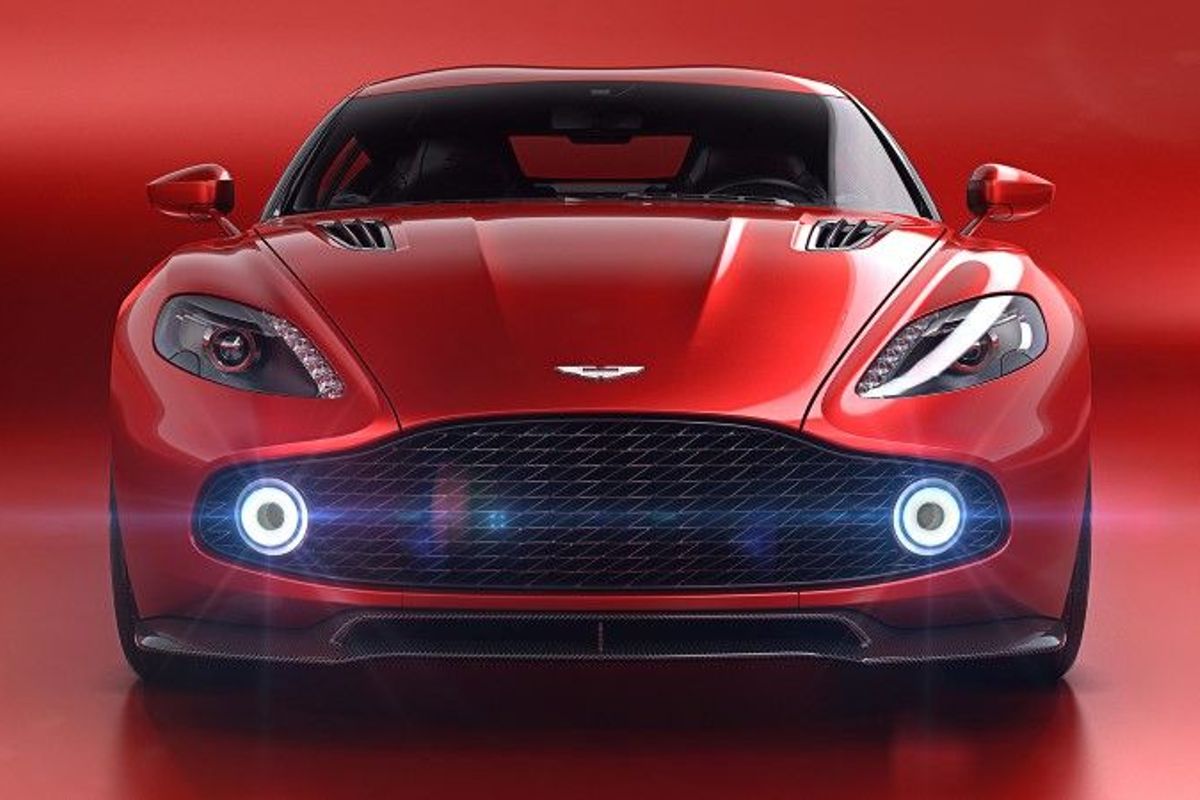
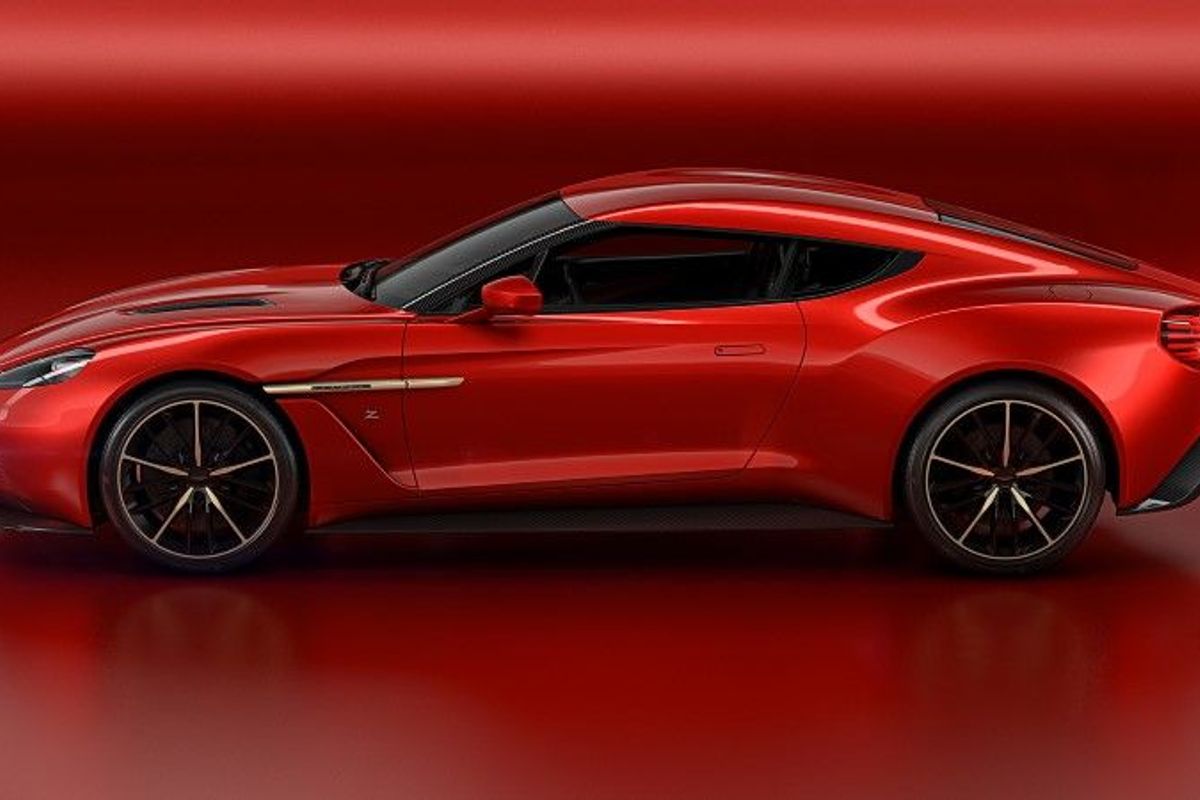
The bodywork of the Aston Martin Vanquish Zagato concept is shaped entirely from carbonfibre and fewer split lines are visible due to the use of large one-piece panels. The round taillight reflectors, which incorporate "bladed" LED technology (also found on the Aston Martin Vulcan), are classic Zagato touches.
There is a retractable rear spoiler as well as a quad-exhaust system, the outlets of which are set in carbonfibre sills. The Vanquish Zagato concept further features a "double-bubble" roof and the wing mirrors are inspired by those of the One-77.
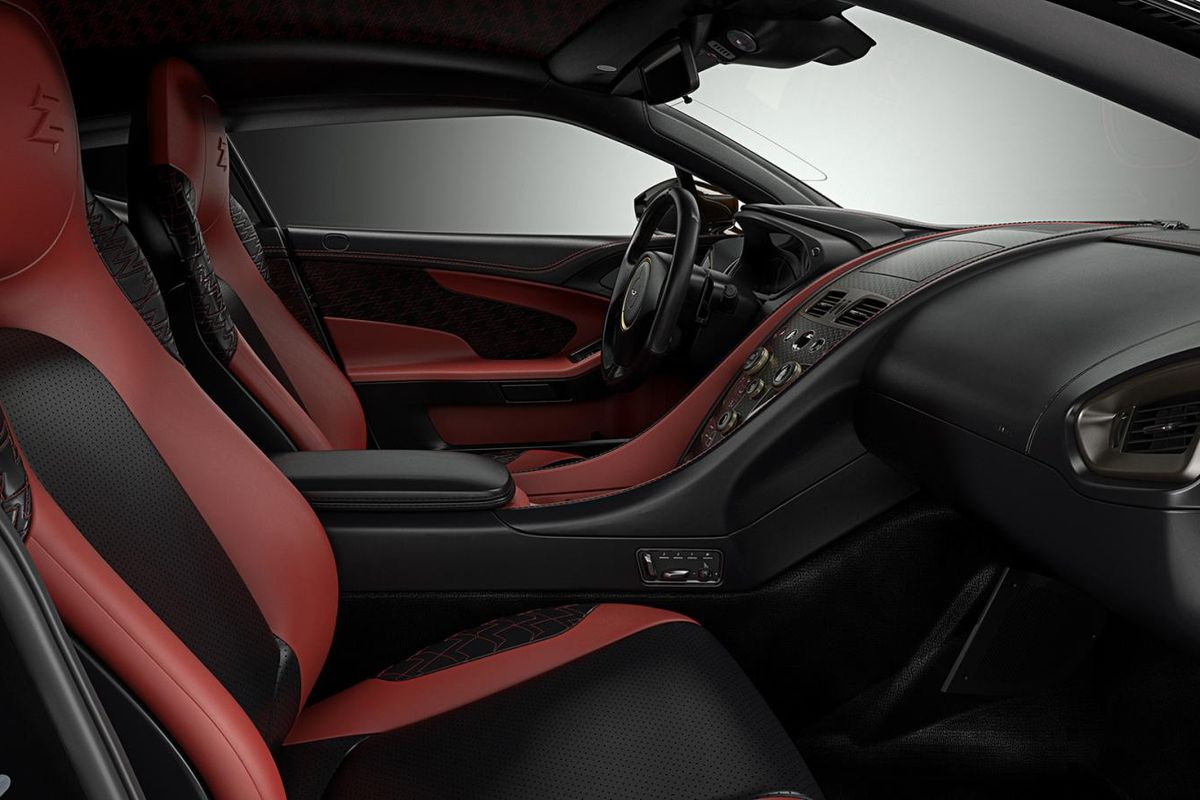
On the inside, the concept features Herringbone carbonfibre combined with anodised bronze and aniline leather on the fascia, vents and dials. A Z-stitch pattern is embroidered on the seats and door sections while the trademark Zagato "Z" is embossed on the headrests and stitched into the centre console.
The Vanquish Zagato concept is powered by a naturally aspirated 6.0-litre V12 engine that has been beefed up to produce peak power of 441 kW.
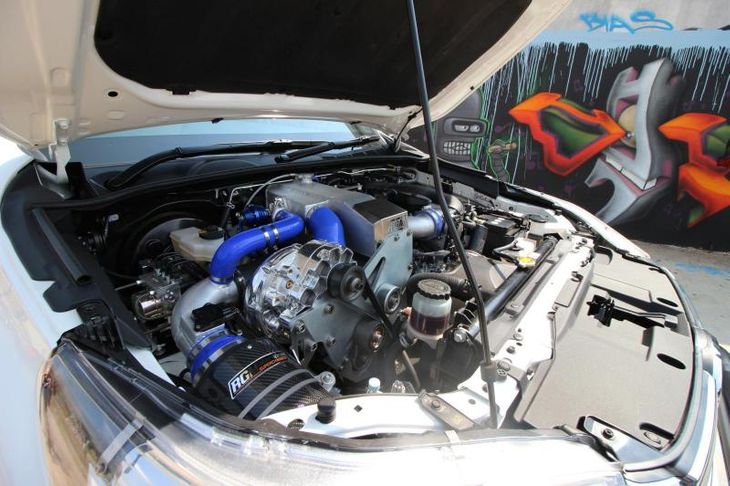
The Toyota Hilux is not known for blistering performance, but this supercharged Hilux double cab produced by local tuning firm, RGMotorsport, offers a lot more go than most bakkies…
The standard Toyota Hilux 4.0 V6 double cab Raider offers 175 kW and 376 Nm of torque and RGMotorsport, a local tuning company based in Johannesburg, got hold of the latest 4.0 V6 Hilux and supercharged it, arguably making it the fastest Hilux on the continent.
The idea of a Hilux with more than 300 kW seems incredible, but not for RGMotorsport.
Compared with the standard model's outputs, this supercharged V6 Hilux offers massive bumps in power, to 327 KW (+ 152 kW) and torque, to 545 Nm (+ 169 Nm). Those are impressive numbers for a bakkie and official acceleration figures were recorded at the Gerotek testing facility near Pretoria.
From standstill, this supercharged V6 Hilux automatic accelerates to 100 kph in only 7.6 seconds before reaching a top speed of 227 kph. Note that Toyota claims a leisurely 9.4 seconds for the standard V6 Hilux.
More impressive, however, is the supercharged Hilux’s in-gear acceleration where it’s capable of accelerating from 80 kph to 160 kph in only 12.2 seconds (10 seconds faster than the standard Hilux 4×2 Lux double cab). Acceleration from 60 to 120 kph takes just 6.0 seconds, which is notably quicker than the standard version’s 9.6 seconds.
The cost to convert a Hilux or Fortuner to this spec starts at about R105 000 and all RGMotorsport conversions come with a 6-month/20 000 km warranty.
Watch the supercharged Toyota Hilux in action below!
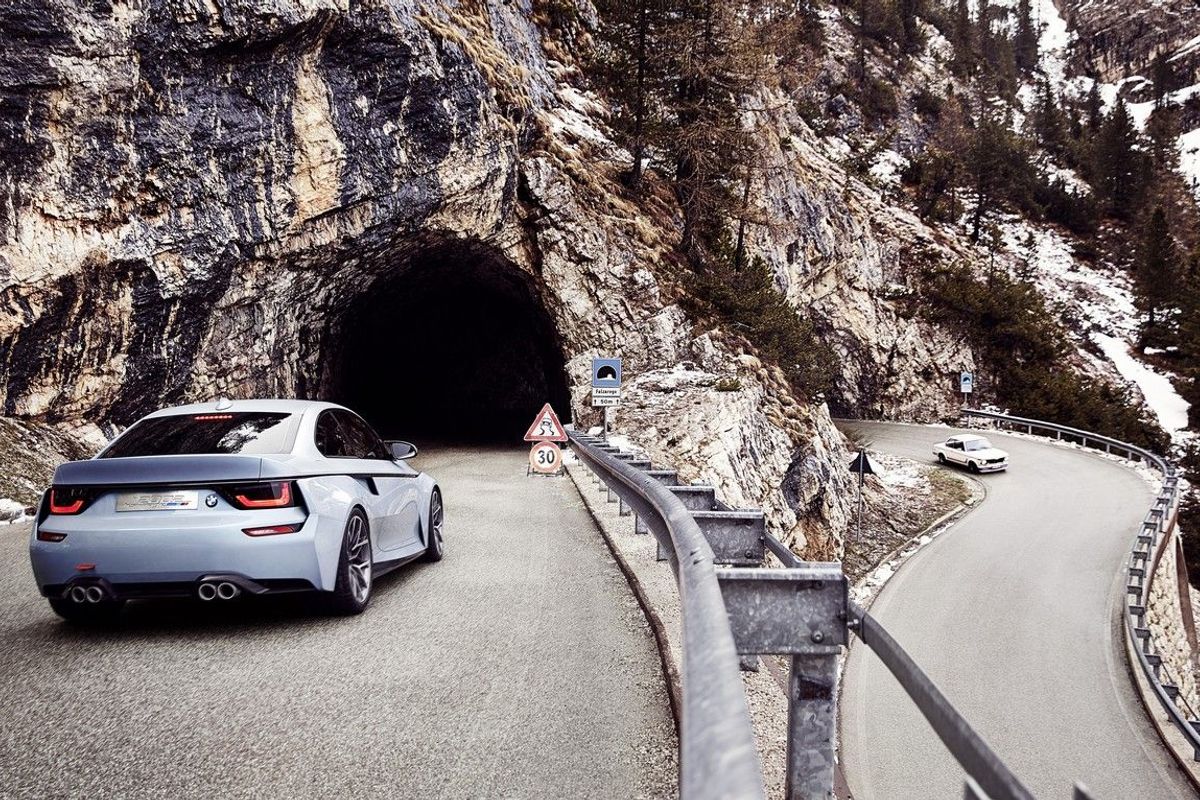
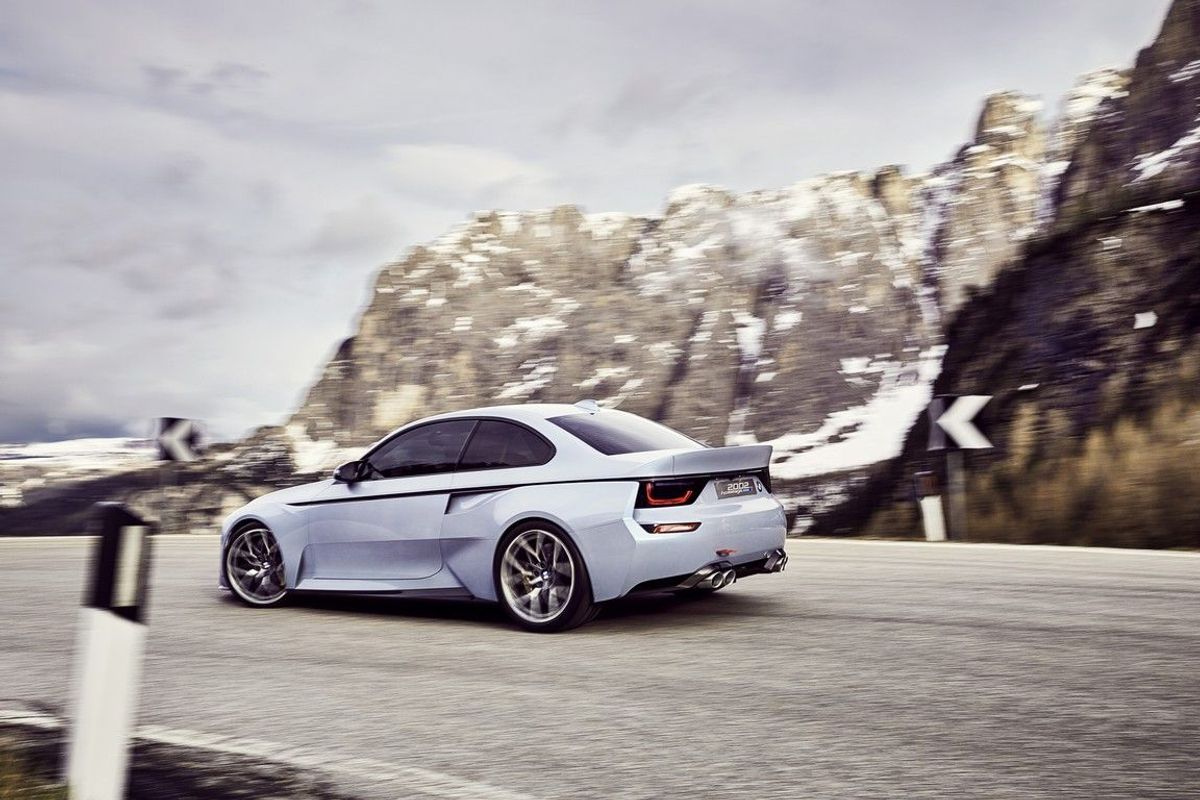
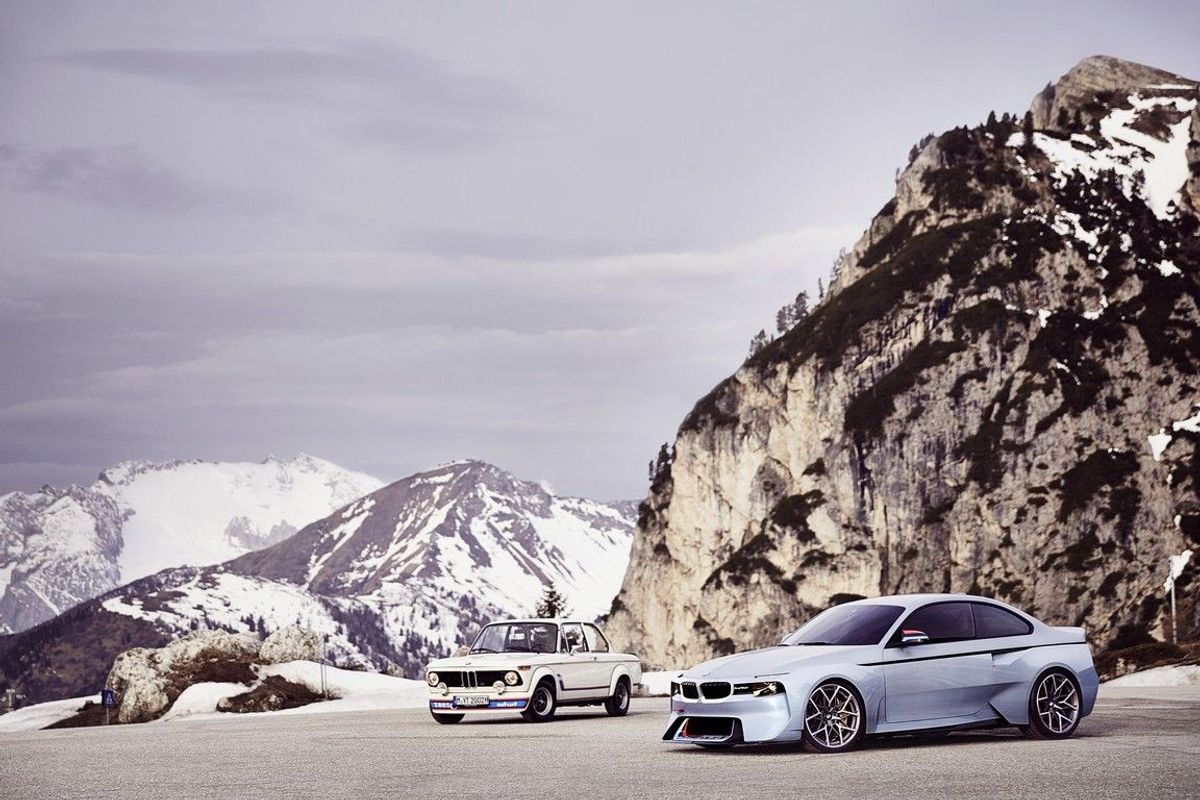
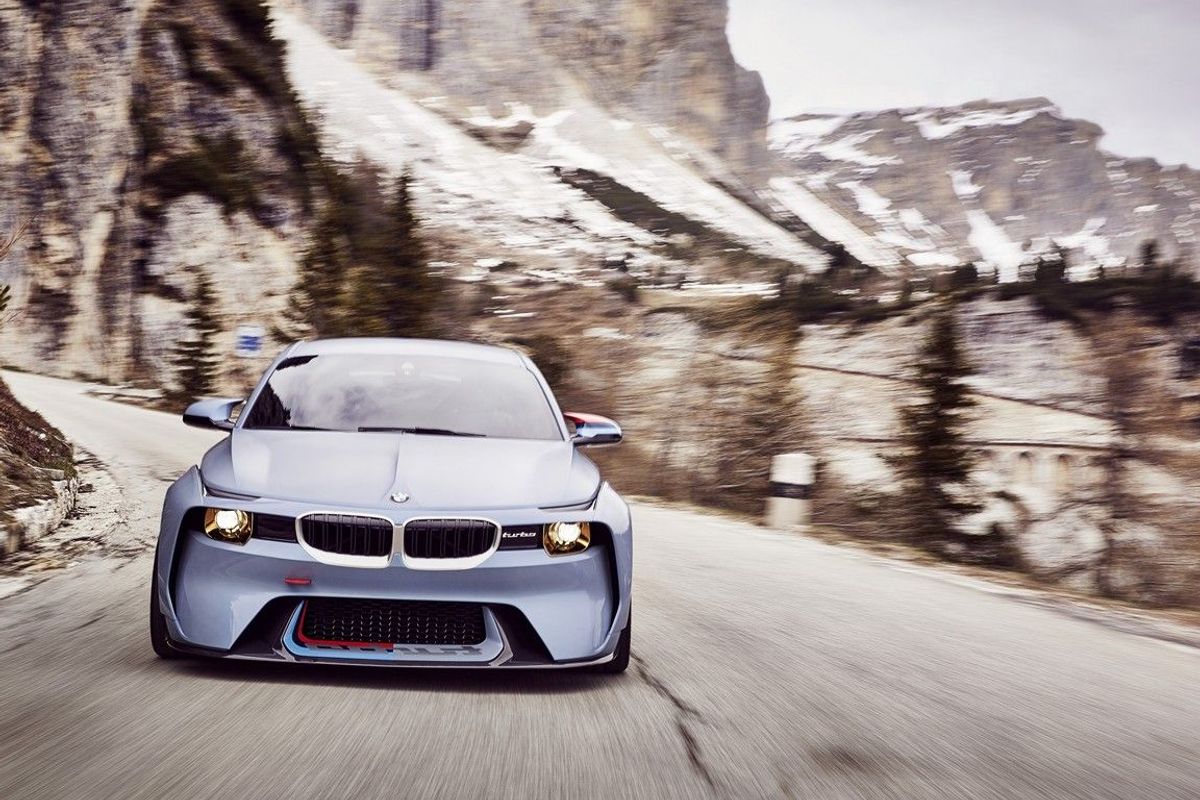
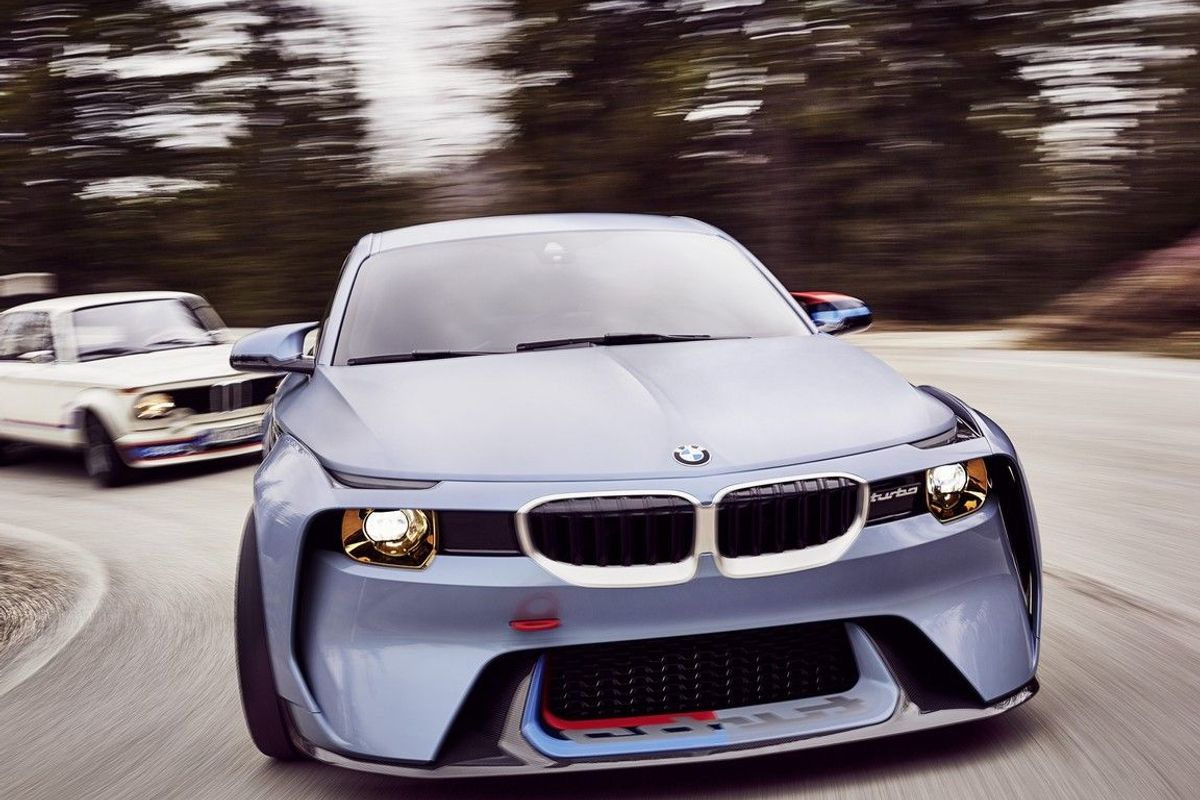
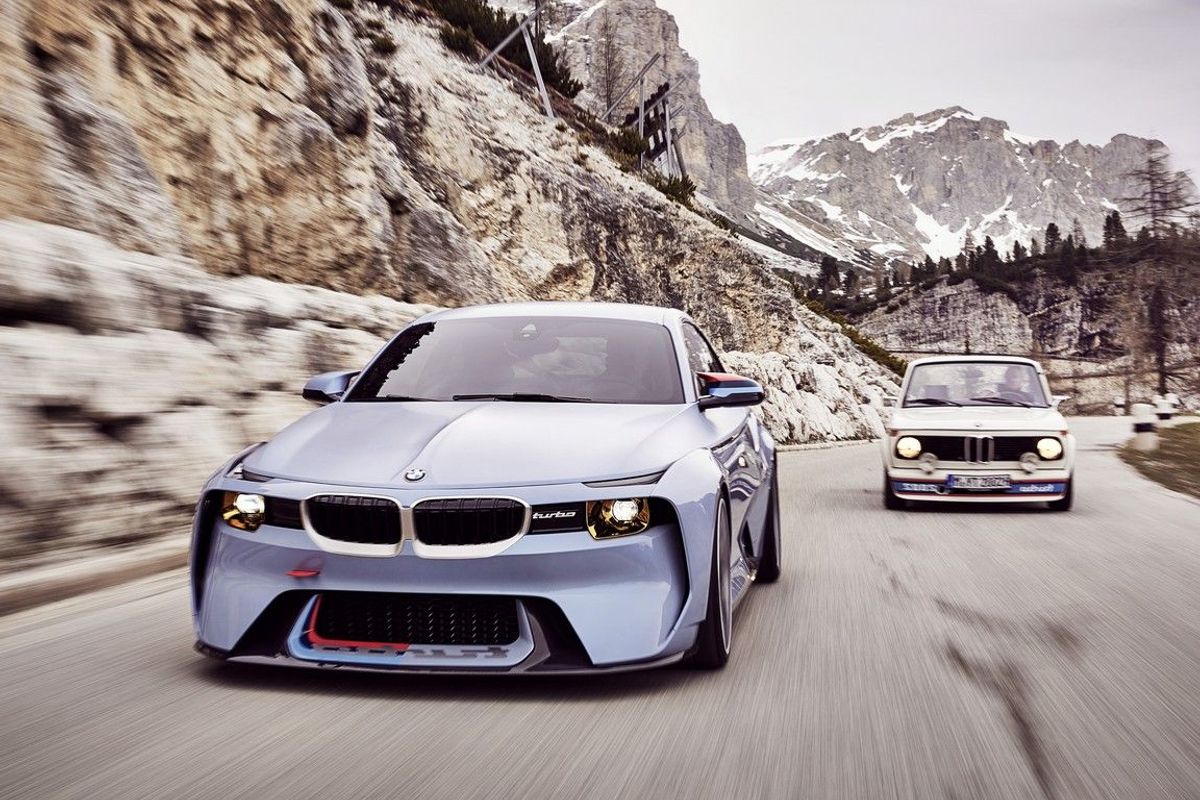
BMW has revealed a very special concept at the Concorso d’Eleganza, the 2002 Hommage. This striking, but fiercely potent little machine, celebrates the 50th anniversary of the debut of the original 02 range.
The original 02 series is considered BMW’s first compact coupe and kicked off a successful era for the German car maker. The 2002 Turbo, on the other hand, was this model range's flagship and harnessed turbo power – the first for a series-production car in Europe. It is this firecracker that is celebrated by the new 2002 Hommage concept.
“The eye-catching design of the BMW 2002 Hommage employs a very dynamic, striking use of forms for its own take on what is, for me, one of the most iconic vehicles in BMW history,” says Karim Habib, Head of Design BMW Automobiles. “At the same time, it encapsulates BMW’s major motor sport triumphs, which were made possible by turbo technology”.
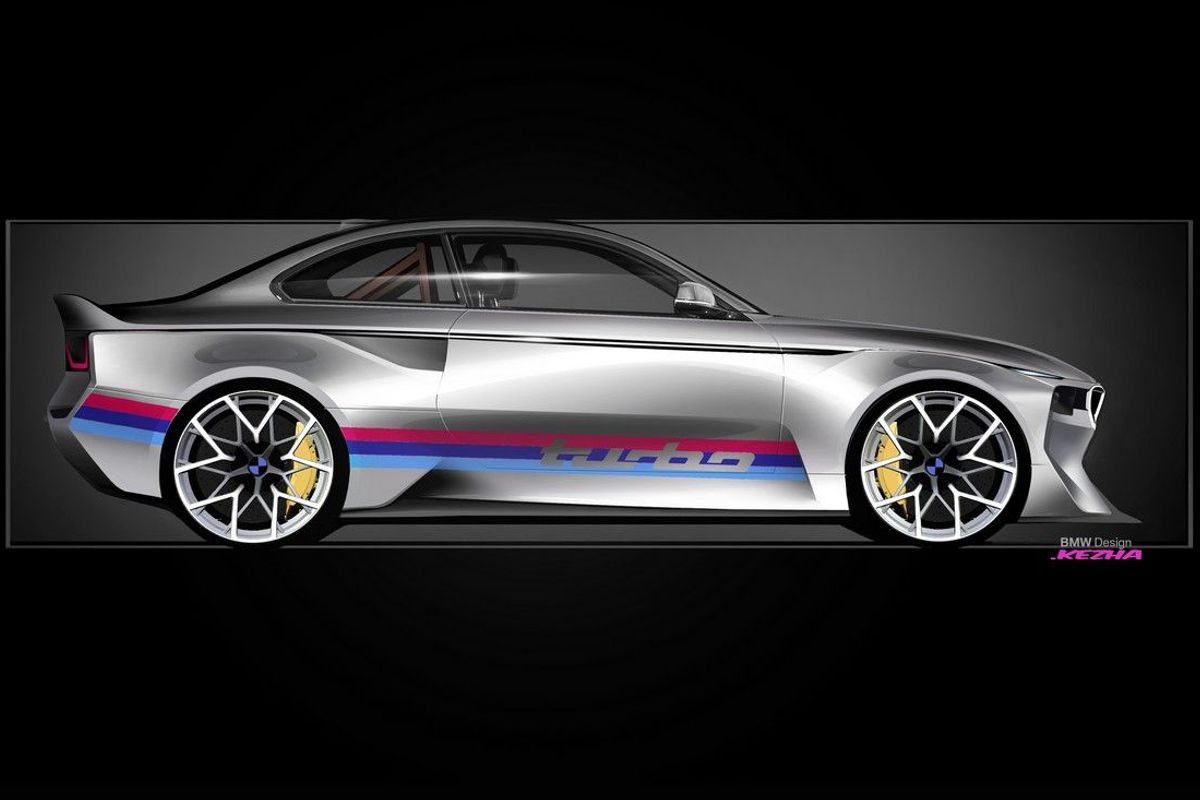
A particularly striking feature of the car’s flanks are the widened wheel arches, which add stature and presence. In the process, they recall the homologated version of the BMW 2002 turbo, which needed broad extensions bolted onto its body to accommodate a significantly wider track. The wheels are 20-inches big and cast from lightweight alloy.
The BMW Motorsport livery of the front apron and its “turbo” lettering in mirror writing casts the mind back to the original decals of the 2002 turbo, as does the exterior mirror cap on the driver’s side.
Much like the Hommage concept from last year, there’s no plan to put this vehicle into production. Hence, there are no engine details at all but we can imagine something like the straight-six 3-litre from the M2 doing a decent job. With the 2002 Hommage concept BMW has once again the Concorso d’Eleganza as a marketing ploy to get people excited about its brand. Job very well done in that regard!
BMW 2002 Hommage Video
Volvo XC90 T8 Twin Engine (2016) First Drive
Volvo adds a plug-in hybrid model to its already solid XC90 line-up. How much of an impact can this plug-in model make, and perhaps more importantly, will it set a trend?
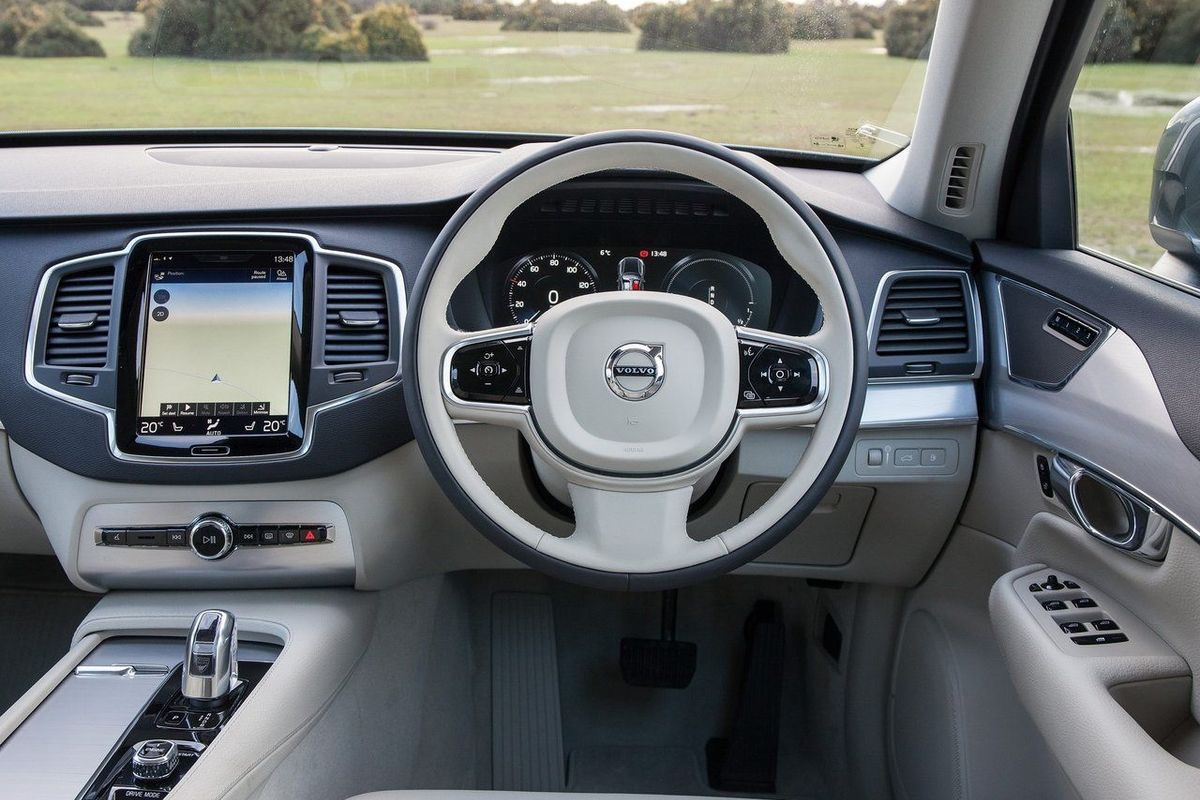
As a team, we at Cars.co.za rate the Volvo XC90 very highly. It's a well-equipped 7-seater SUV, packaged in a svelte, stylish package and is bristling with technology. Furthermore, the Swedish machine undercuts its rivals on price. That's why the XC90 is the Premium SUV of the Year in our Cars.co.za Consumer Awards.
As good as the XC90 is, our testers found that the 2.0-litre turbopetrol and turbodiesel motors had to be worked hard to get the big SUV moving and, as a result, the respective test units' fuel consumption figures suffered. Volvo has addressed this with the introduction of the XC90 T8 Twin Engine derivative, which is the halo model in the range. The theory is simple: the front axle is powered by a traditional petrol engine while the rear makes do with an electric motor. The result is a vehicle that offers all-wheel drive capability, but which can operate on petrol- or electric propulsion, or use a combination of both.
Let’s talk numbers. Up front is a 2.0-litre turbo- and supercharged four-cylinder petrol engine that produces outputs of 235 kW and 400 Nm. The electric motor delivers 65 kW and 240 Nm, and together there’s 300 kW and 640 Nm on tap, which sounds like quite a lot! Power reaches all four wheels through an eight-speed Geartronic automatic transmission. Performance is claimed to be swift, with zero to 100 kph being dispatched in 5.6 seconds. The real number to be interested in is the efficiency claim: the Volvo XC90 T8 is said to be able to sip just 2.1 L/100 km and emit just 49 g/km of CO2.
That claim of 2.1 L/100 km sounded incredibly optimistic, so we put it to the test on a short urban route. Climb in, seatbelt on and turn the engine start knob, and… there's nothing but eerie silence. The dials lit up and that was it. “Right, the car’s on, engage drive and away you go”, were the reassuring words of Volvo’s local PR. With a gentle prod of the accelerator pedal, the Volvo XC90 T8 "slipped its moorings" and set off.
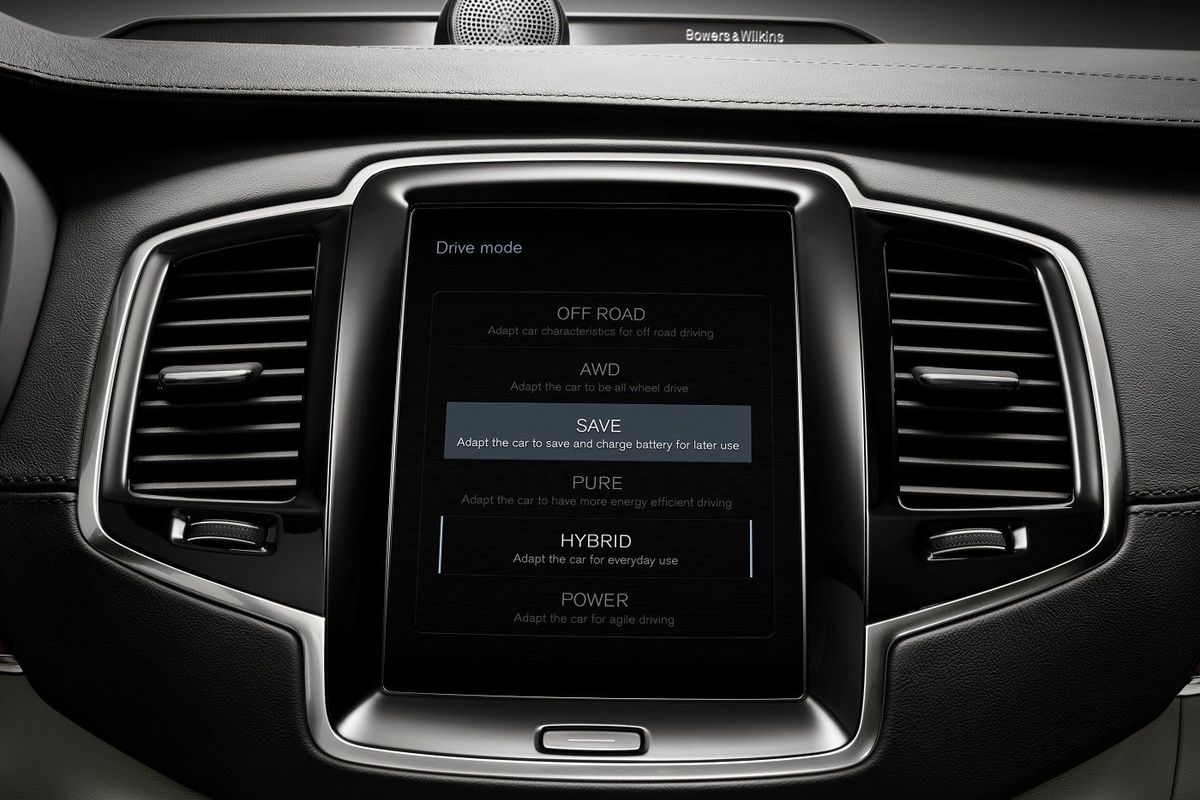
Volvo says that this XC90 can drive 40 km and at speeds up to 125 kph on electric power alone, and given the fact that we did the first 10 km on battery only, it certainly feels believable. Five driving modes are offered; AWD, Pure, Hybrid, Power and Off Road. Pure is electric-only mode, while hybrid is a nice blend of petrol and electric driving. If you select Power mode, both motors work hard in an effort to sling you towards to the horizon briskly.
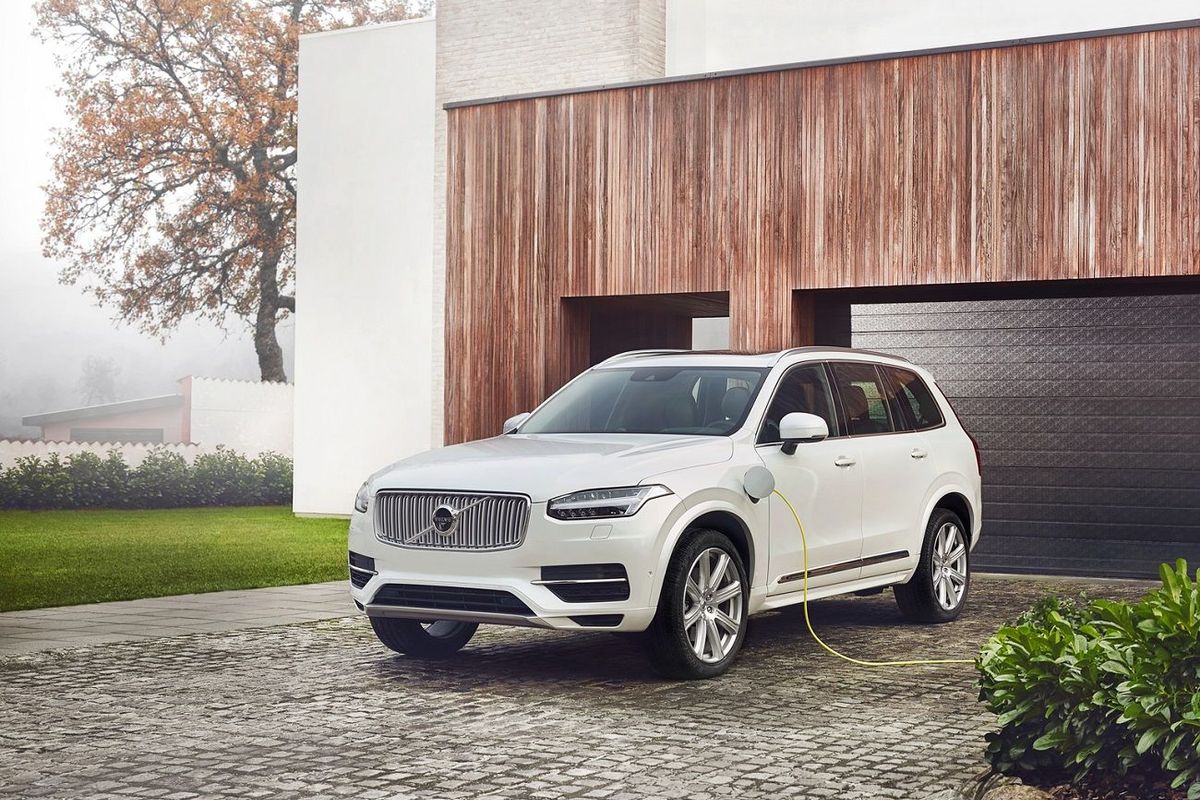
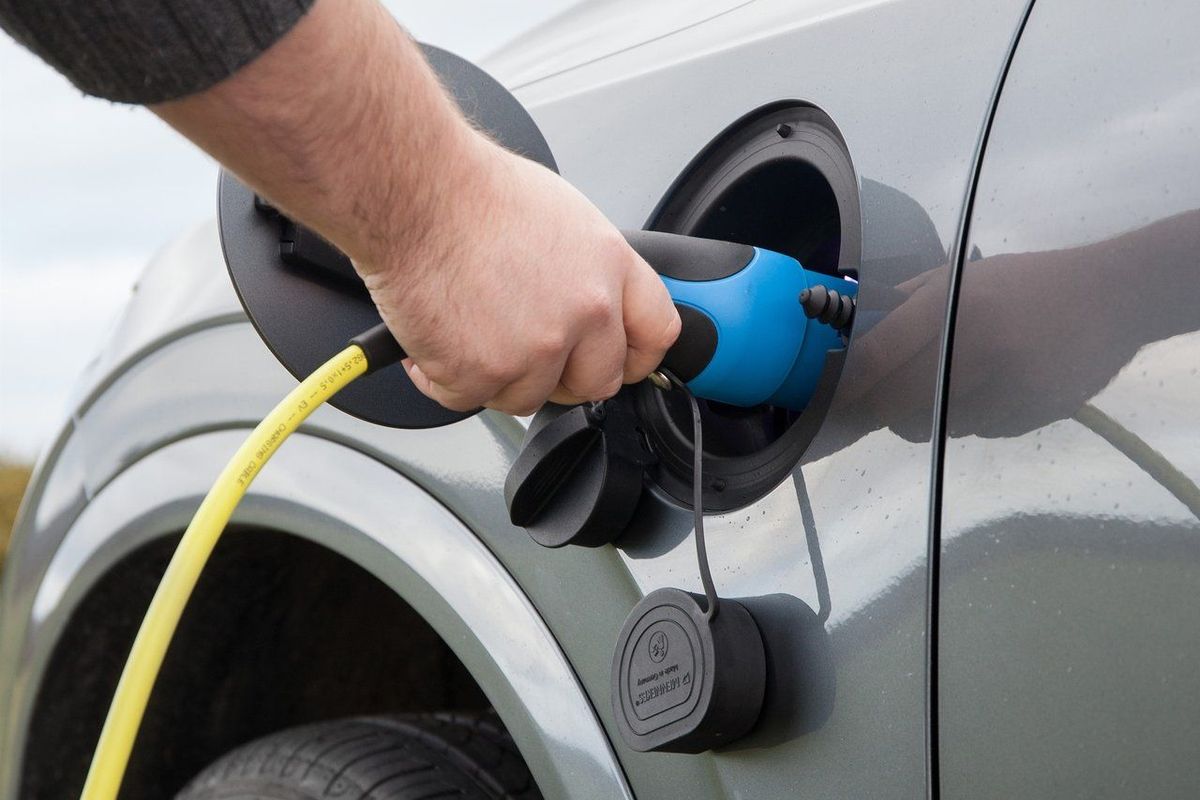
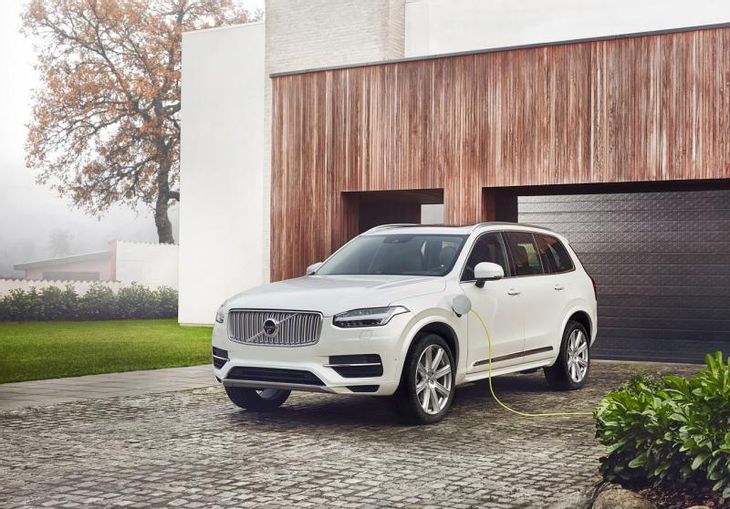
The Volvo XC90 T8 is easy to charge is it does not require a special cable adapter.
The vehicle captures braking energy anyway, but you can force the T8 to harvest more intensely by putting the vehicle into braking mode, which is done by moving the gear selector from Drive into Brake. If you then take your foot off the accelerator, the vehicle starts decelerating without brake pedal inputs.
While most hybrid vehicles have their batteries in the boot, which impacts load space, the Volvo XC90 T8’s batteries have been placed in the area underneath the centre armrest. While this keeps the array safe and isolated from accidents, the real bonus is that the XC90 retains its seven-seat capability.
How to charge?
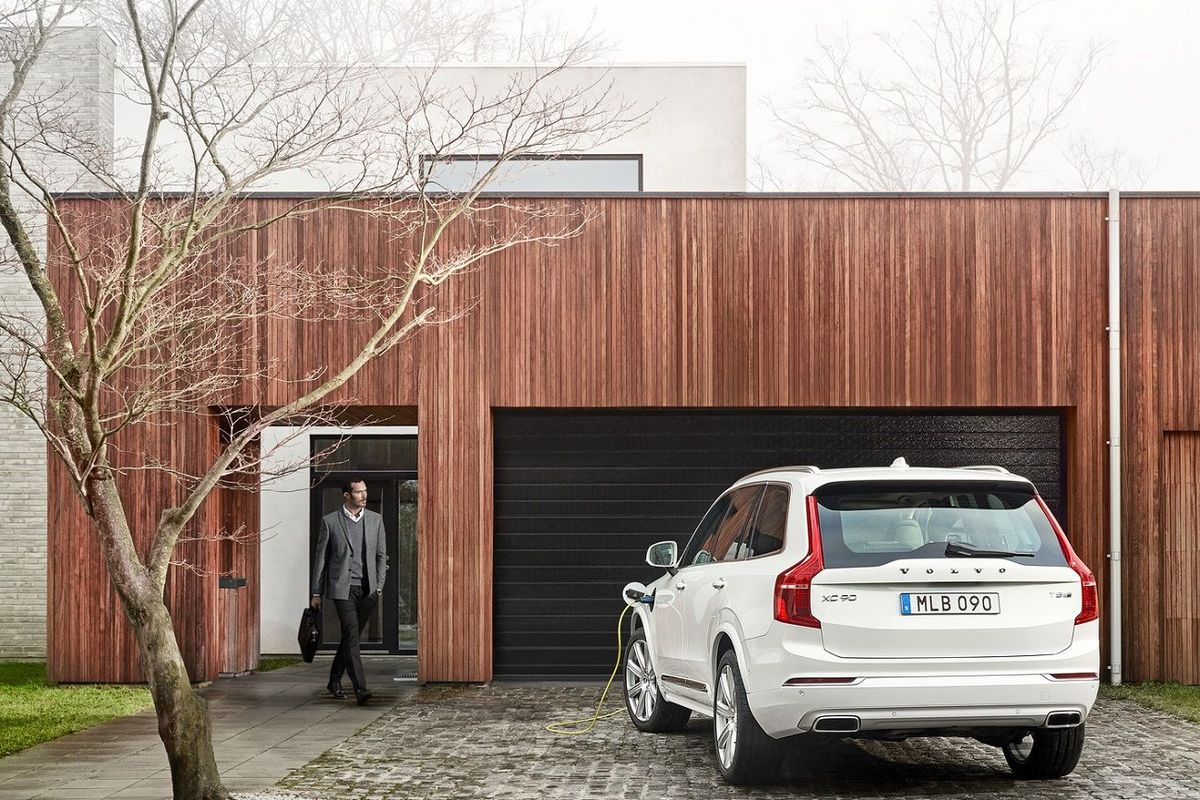
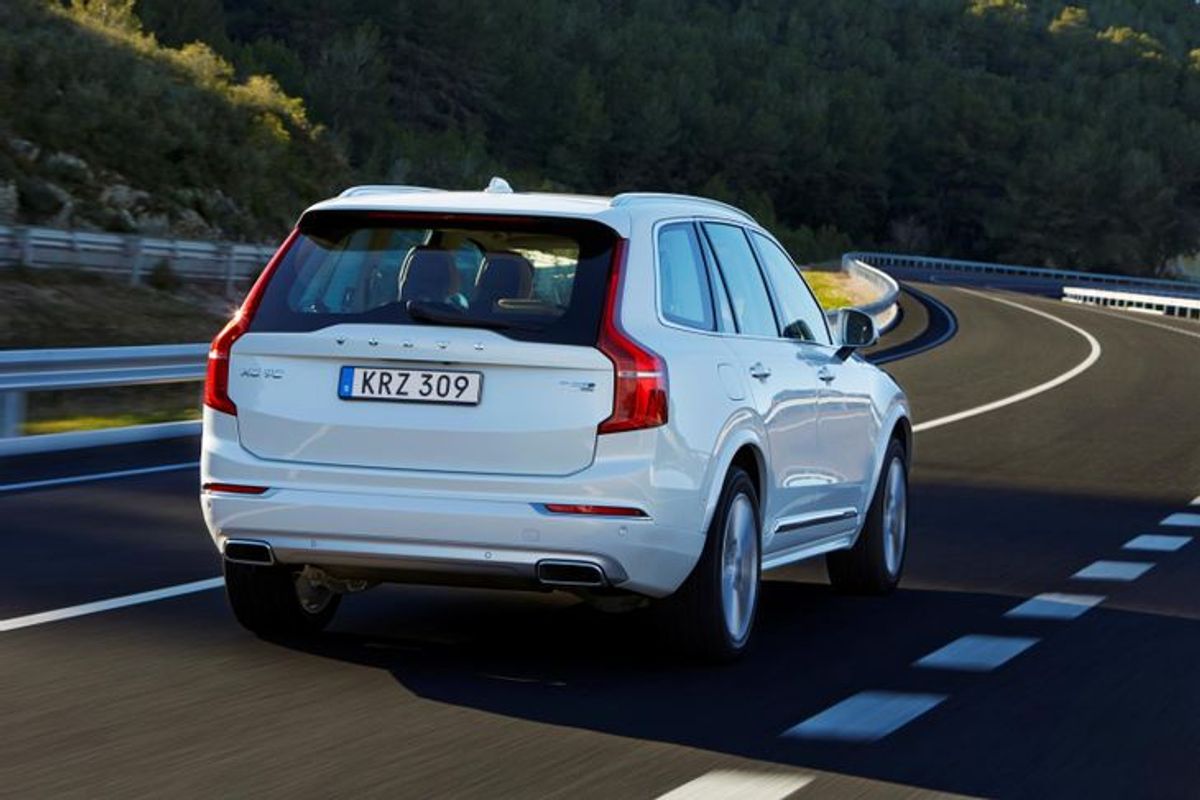
It’ll take a keen eye to spot the differences between a conventional XC90 and this T8 plug-in hybrid version. There’s a tiny T8 Twin Engine badge on the rear and there’s the tell-tale electricity flap on the left flank for the plug-in charger. Speaking of which, the plug-in charging process is dead simple… You do not need a special adaptor fitted to your premises as the process requires just plugging the cable into a two-pin electrical adaptor. A built-in control unit ensures that there’s no overheating or anything untoward. The vehicle will be fully charged in just three hours; it really is idiot proof to charge the Volvo XC90 T8. Cabling is supplied by Volvo and do not fret if you can’t charge your vehicle as you simply revert to full petrol mode.
So, could the XC90 T8 succeed? There’s no faulting the technology in the confines of a city where it seamlessly switches from electric to petrol without any hesitation. The launch route demonstrated that this is a brilliant car in heavy traffic and our fuel consumption figure of 3.9 L/100 km (achieved without too much effort) indicates just how economical this vehicle is. With some real focus (and less heavy-handedness on the accelerator pedal), you can achieve figures of below 3.5 L/100 km.
Our test route was a short urban one and we have further questions that can only be answered after a thorough road test. What is the fuel consumption if you spend the majority of time on the open road… and what's the XC90's performance like with the battery completely drained?
It’s not the first luxury SUV hybrid to go on sale as Lexus has been at this game for quite some time now with its RX450h and Porsche has its Cayenne S e-hybrid, but it's the first plug-in hybrid on the market. Incidentally, BMW is about to join the fray with the X5 xDrive40e. Spec-for-spec, the Volvo XC90 T8 is the most affordable of the lot (of the current crop of SUV hybrids) and offers greater range, as well as more features.
Volvo XC90 T8 Price in South Africa
The T8 engine is available in three specification levels and comes standard with a 5-year/100 000 km warranty, 5-year/ 100 000 km Volvo Plan and Tracker Connect
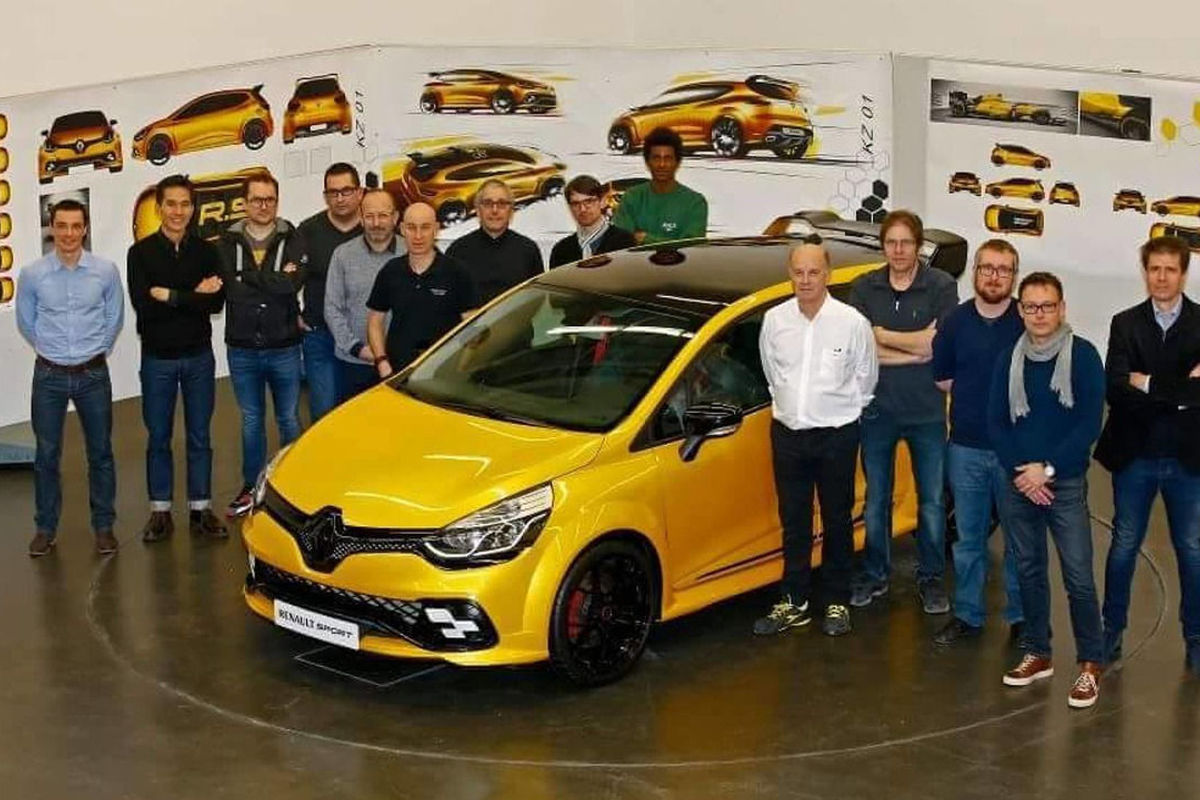
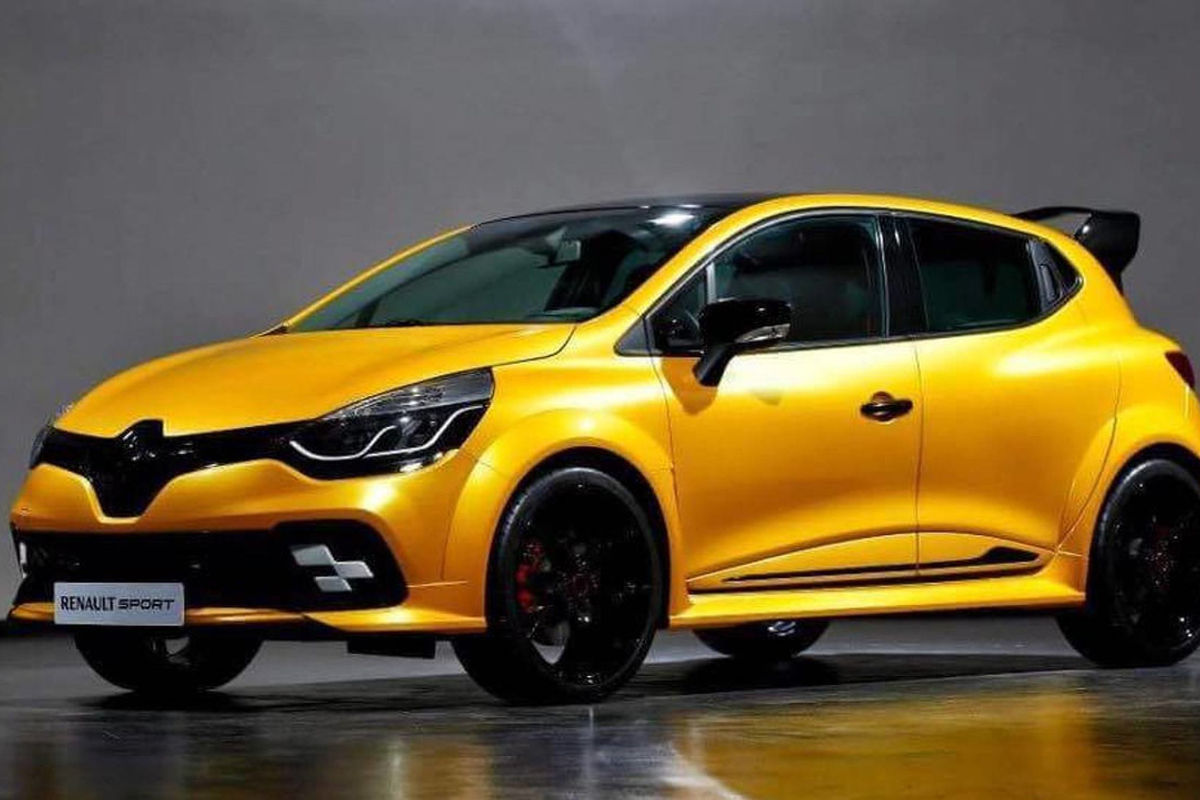
Strong rumours are circulating that Renault's performance division, RenaultSport, is preparing to announce the arrival of the ultimate Clio. We have leaked photos of the new car which insiders are suggesting will boast at least 184kW of firepower.
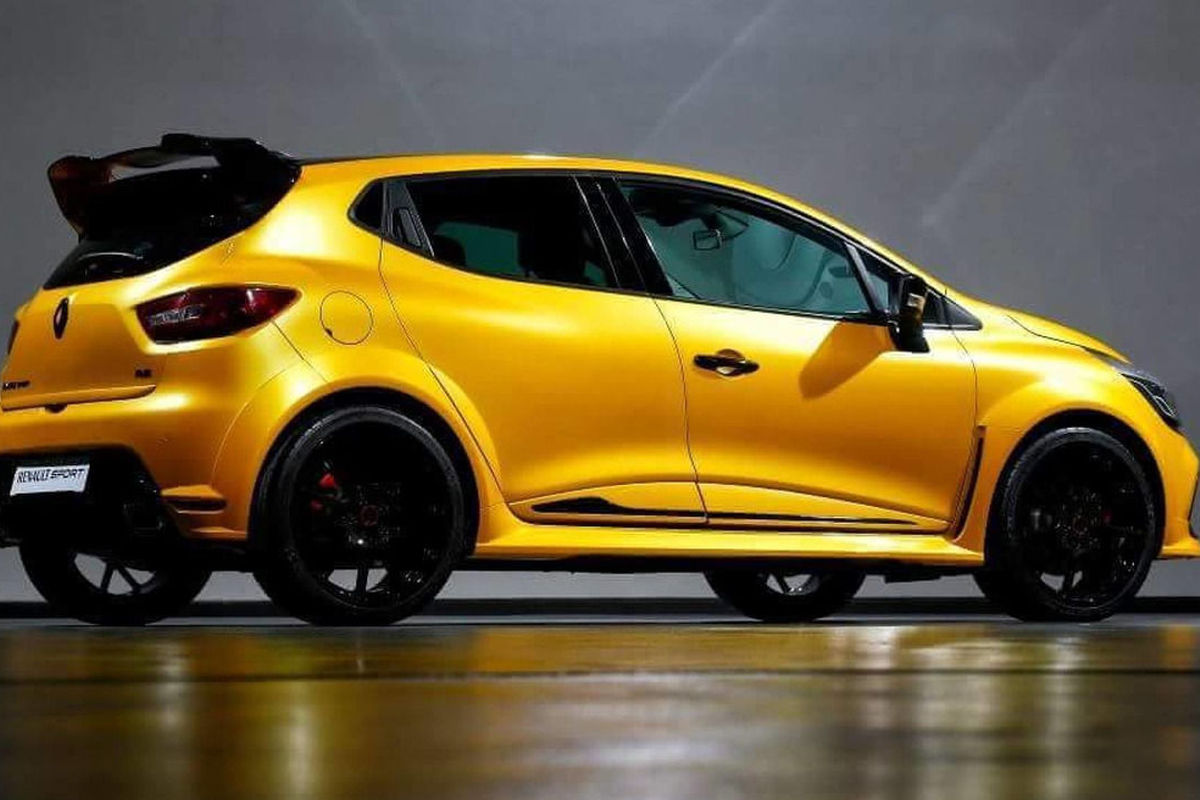
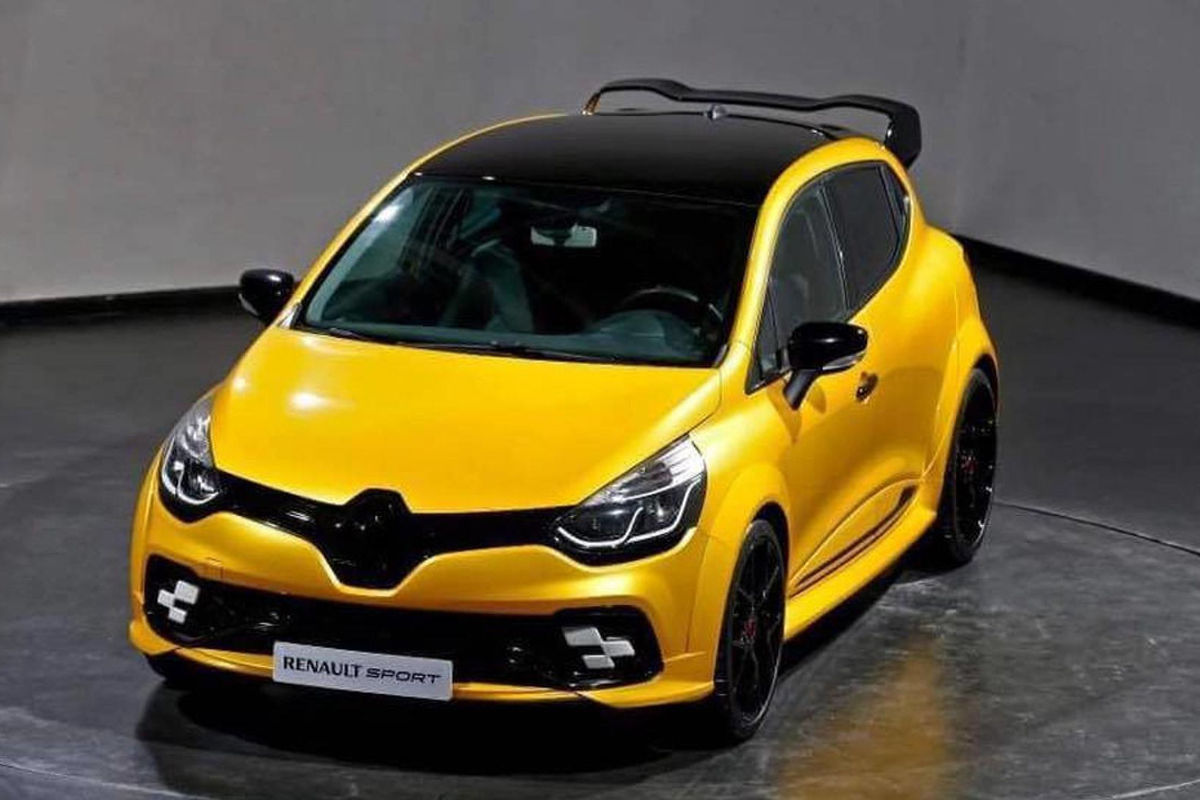
As you can see, this Renault Clio looks significantly more aggressive than the standard performance model. It features a wide body kit and an outrageous rear wing, as well as the trademark yellow RenaultSport paint. The real talking point, however, is the powertrain. Whereas the standard Renault Clio RS pushes out 147kW from a 1.6-litre turbocharged four-cylinder motor, this hotter model has an uncomfirmed 180+ kW… but from what engine?
The first engine rumour is that RenaultSport engineers have managed to squeeze out 186kW from the existing 1.6-litre motor. The second is that the motor from the RenaultSport Megane RS275 Trophy has been transferred into the Clio's engine bay! In terms of transmission, the Renault EDC transmission is potentially at its limit in terms of torque management, so rumours are rife that the six-speed manual 'box from the Megane will make an appearance. If this is the case, RenaultSport enthusiasts will be leaping for joy as they've been lamenting the lack of a manual gearbox and the performance from the six-speed EDC has not been as stellar as hoped.
This new RenaultSport Clio is expected to be unveiled at the Monaco Grand Prix, an event which Renault and RenaultSport use to showcase its cool concepts and forthcoming models. Watch this space, we'll see something official from Renault soon.
Watch the Renault Clio RS200 Cup take on the Peugeot 208 GTI
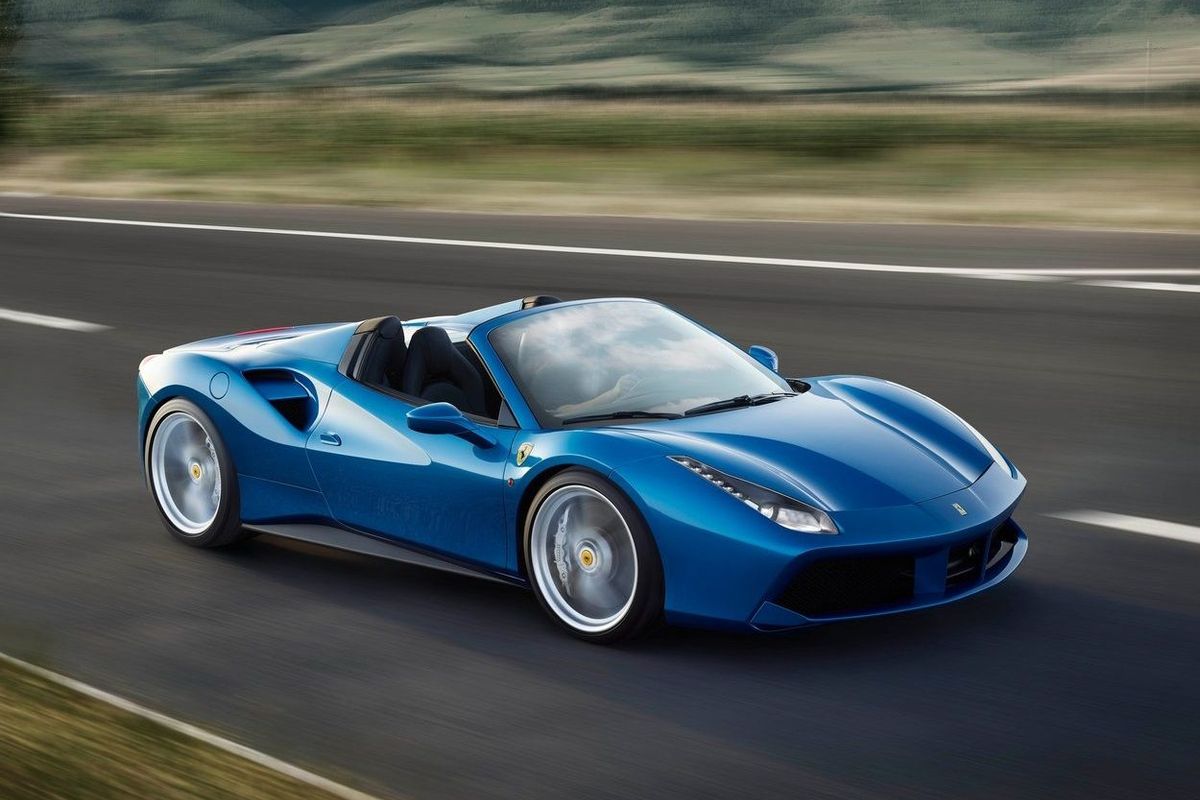
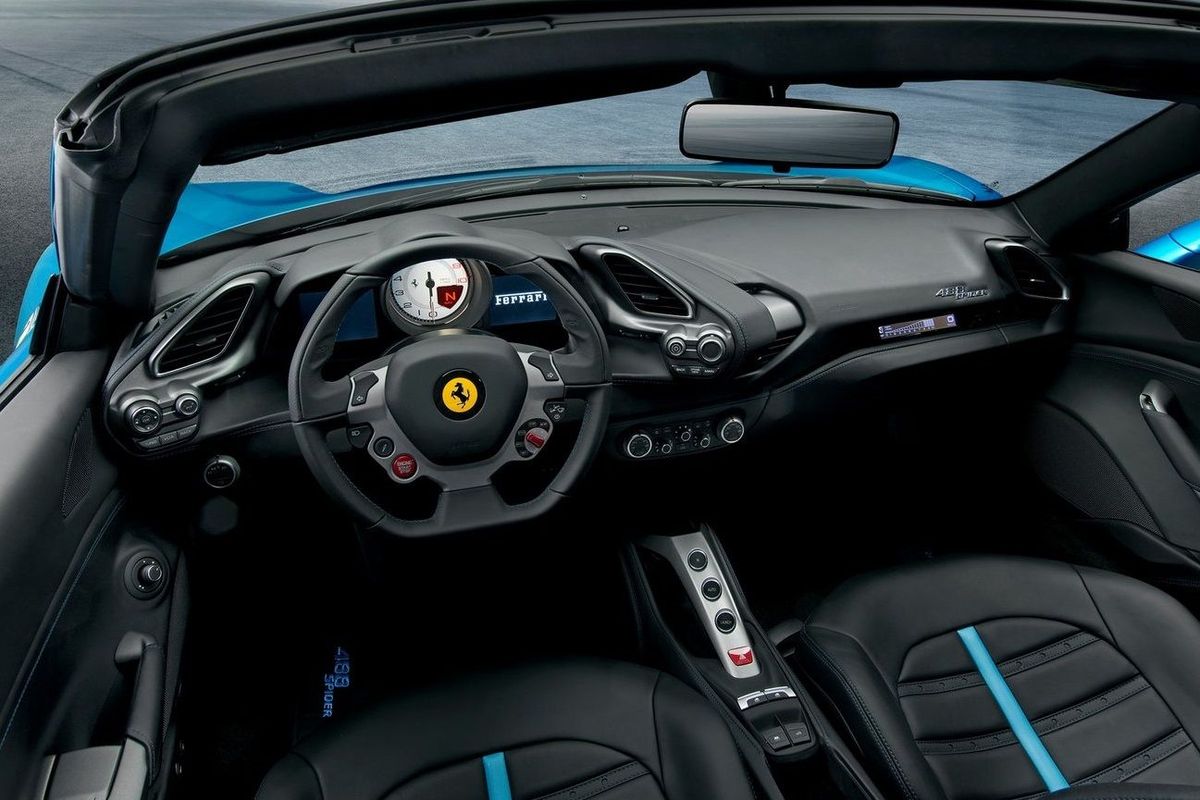
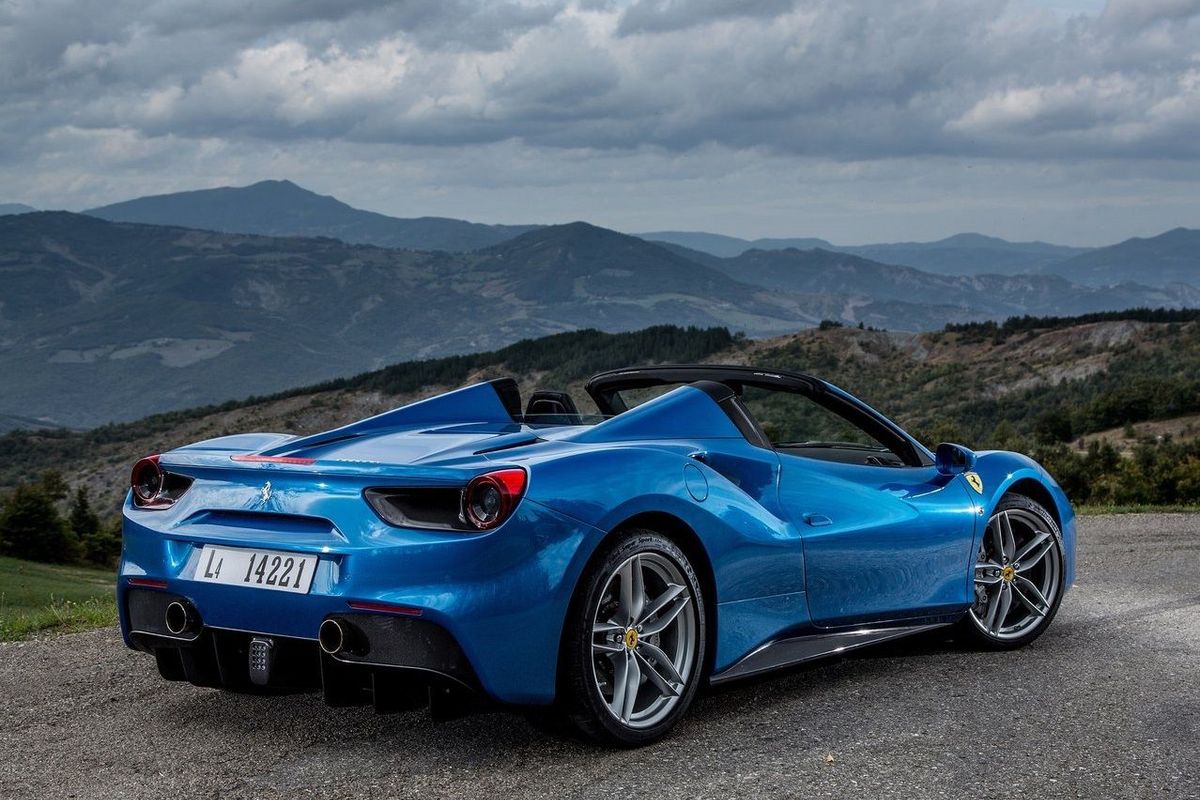
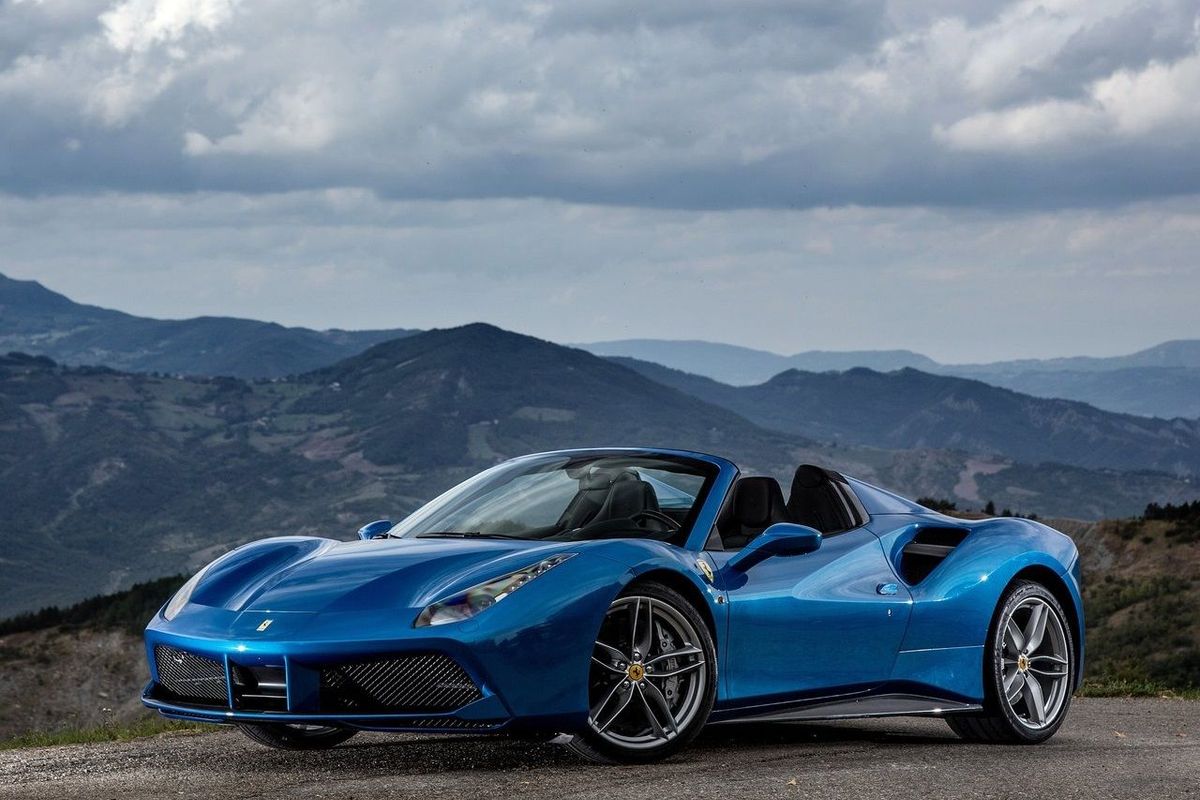
Ferrari 488 Spider Arrives in SA
Ferrari has taken the roof off of its latest performance machine and we got up close and personal with it. What’s special about the Ferrari 488 Spider?
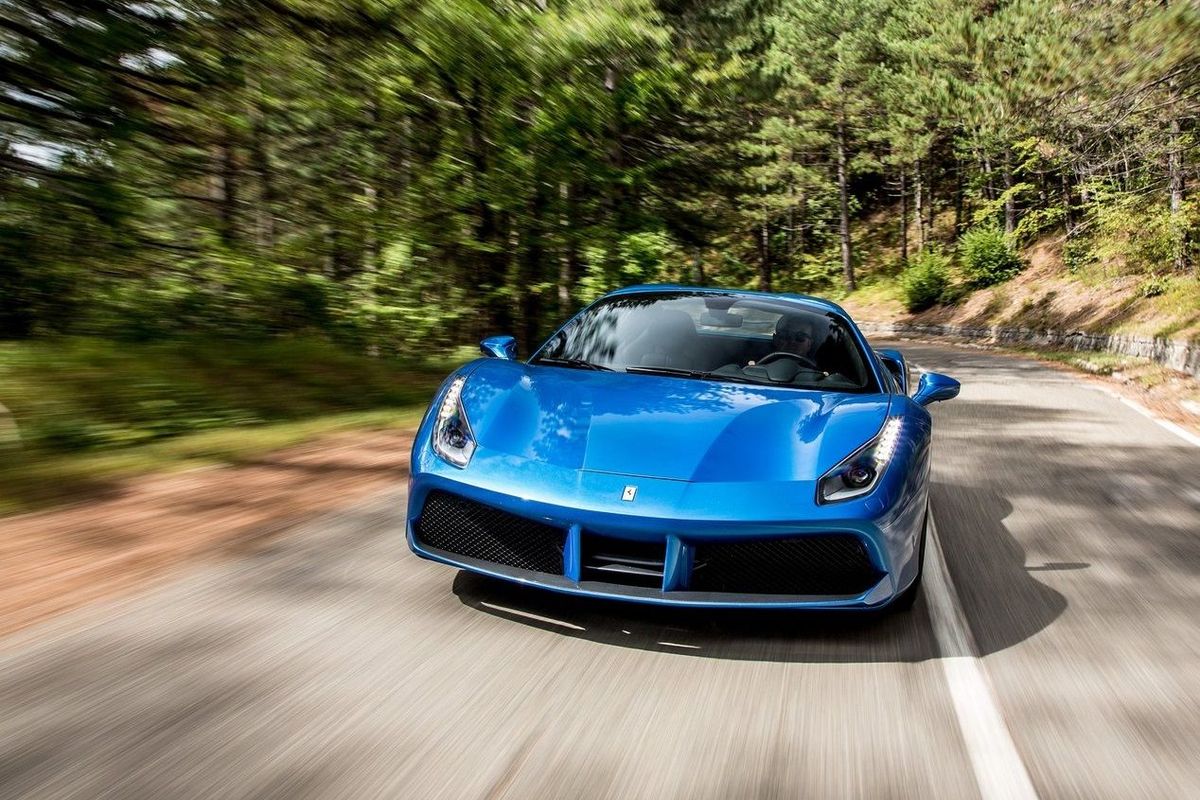
Your R5.5-million gets you one serious performance machine, replete with one of the best views in town. The 488 Spider is powered by the same motor as its coupe sibling: a twin-turbocharged 3.9-litre V8 that produces a massive 492 kW and a meaty 760 Nm of torque.
Turbocharged motor provides all the thrills
Ferrari's previous foray into turbocharging produced the legendary F40 supercar, but, the Maranello-based firm's return to forced induction was not prompted by the pursuit of ultimate outputs (as it may have been in the '80s), but to produce more powerful motors that adhere to ever stricter emission laws. Ferrari has already played in the hybrid KERS space, but that technology is not cheap as indicated by the price of the Ferrari LaFerrari. Turbochargers are the next best thing, which led to the introduction of the California T, the 488 GTB and now, the the 488 Spider.
What does this mean in the real world? The Ferrari 488 Spider is claimed to hurtle from zero to 100 kph in 3 seconds dead, will smash 200 kph in 8.7 seconds and if the road is long enough, will max out at well over 300 kph. To put that in perspective, by the time your family crossover has reached 100 kph, this Ferrari will be a long way down the road with its speedometer reading well over 200 kph!
The utilisation of a turbo – or turbos – has often been accused of dulling the soulful sound of an otherwise sonorous engine, but this is not the case with the 488 Spider. Thanks to the combination of the V8's flat-plane crankshaft and innovative exhaust plumbing, the Ferrari sounds as evocative as any of its siblings. While we didn’t get to drive the car, Scuderia SA duly obliged with some engine revs, which put a smile on everyone's faces.
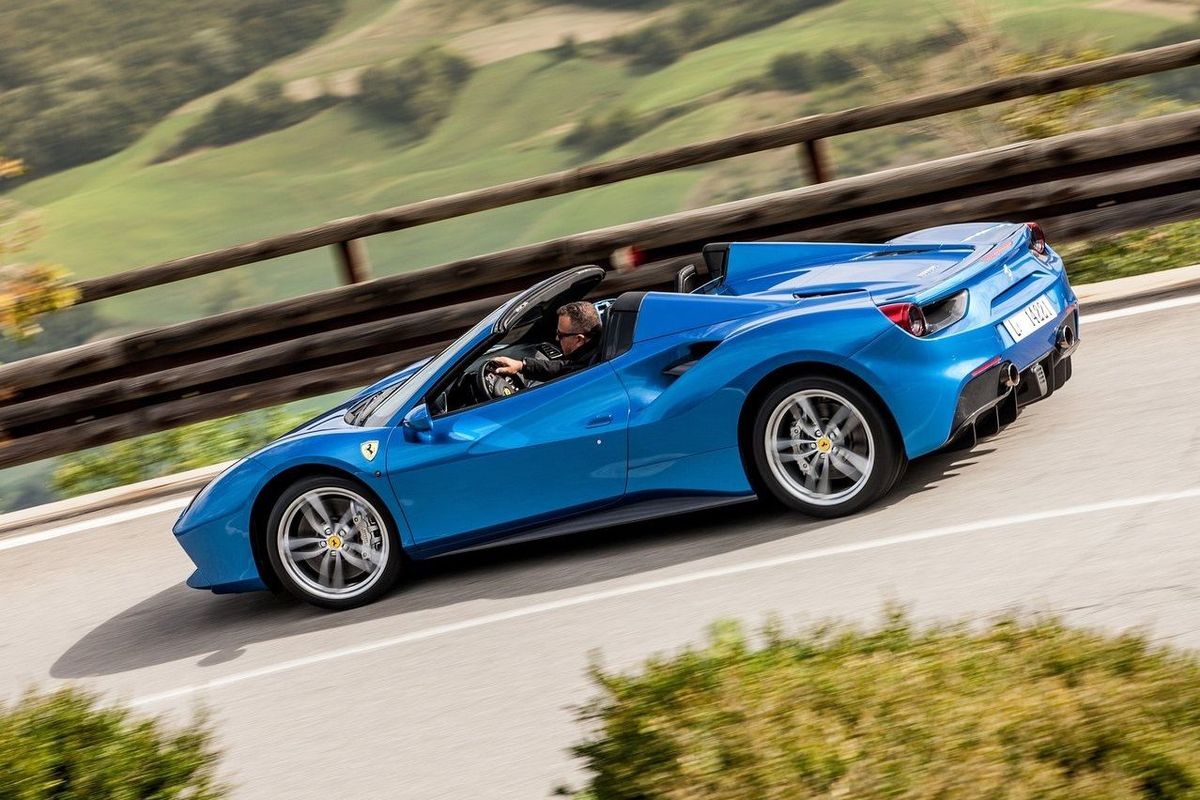
Engine aside, there’s some neat technology that underpins the roof mechanism. In a traditional convertible the roof folds into the boot, but because the Spider is a mid-engined supercar, its compact and light retractable hard top (RHT) folds neatly into the storage area behind the fairings. And, unlike some convertibles whose designs become a bit odd with the roof open, this Ferrari looks equally good top up or down. Ferrari says the RHT can be opened and closed in 14 seconds and Ferrari claim that the roof can be deployed or retracted when the car is moving.
Rivals for the Ferrari 488 Spider
While you may snort: “who on earth can afford that?” at the lofty price tag (R5.5 million), bear in mind that 30 people have already signed up to take delivery Maranello’s latest topless offering from Scuderia South Africa. There are a few rivals that go head-to-head with the Ferrari 488 Spider… British carmaker McLaren can offer you a 650S Spider for similar money and performance. You can also bag a topless version of Lamborghini’s Huracan. Finally, if you wait a bit, a convertible Audi R8 will land in South Africa in 2017.
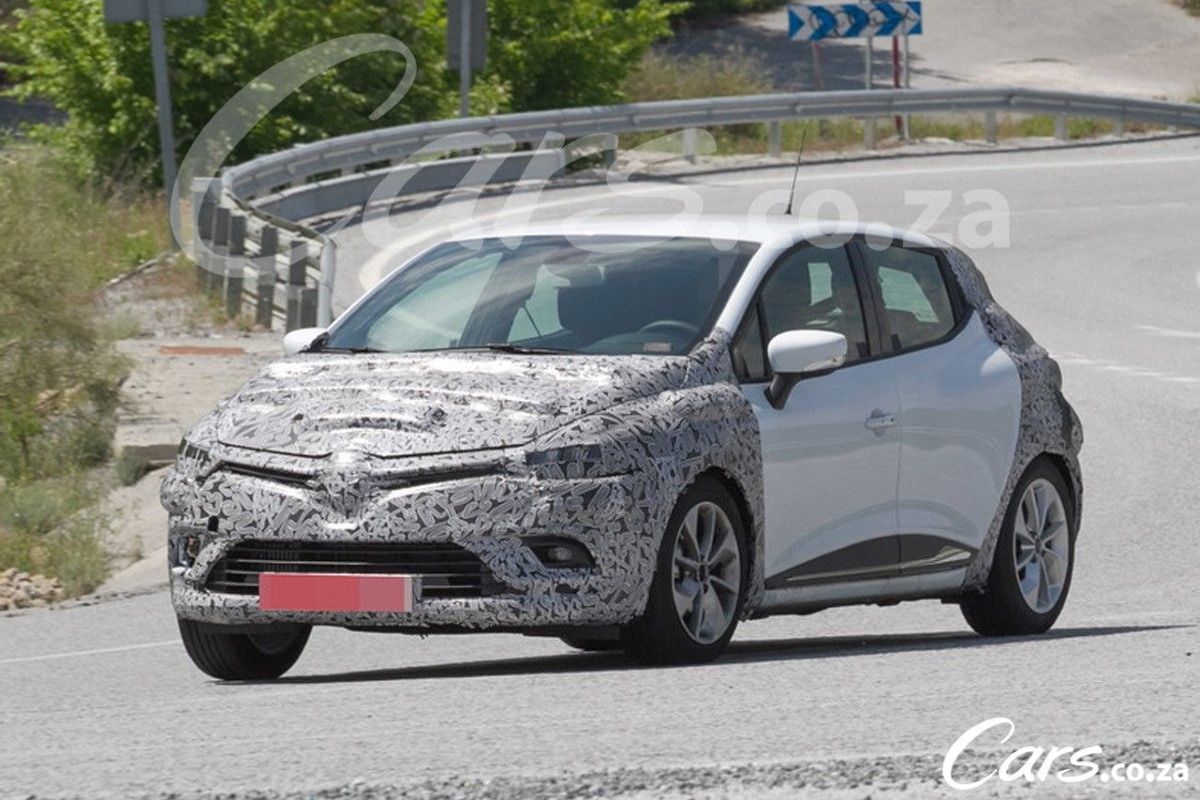
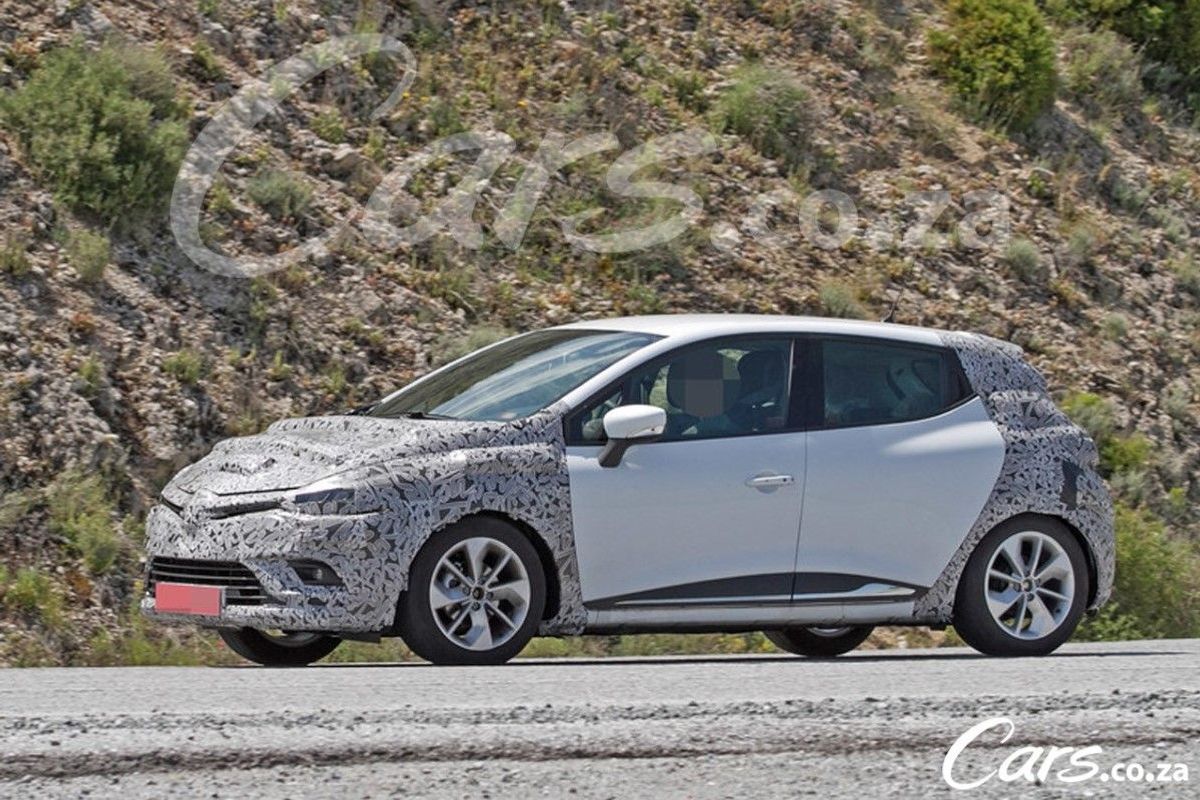
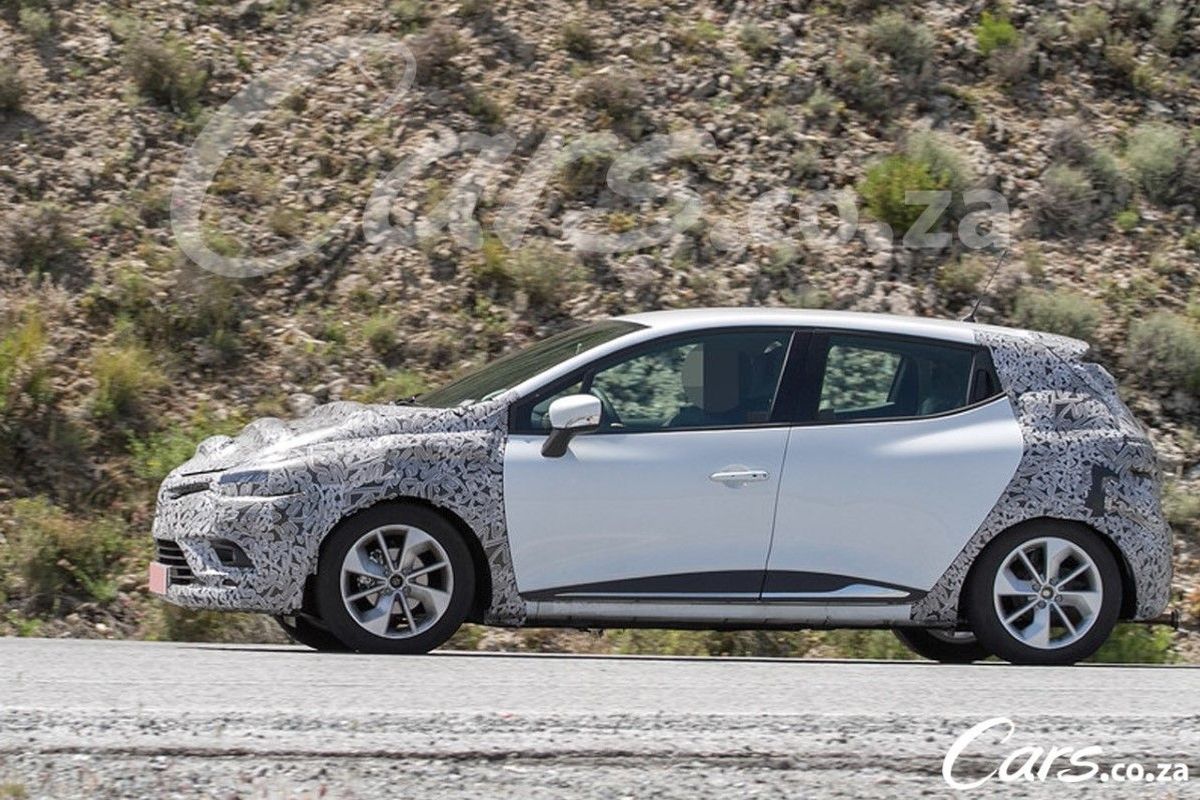
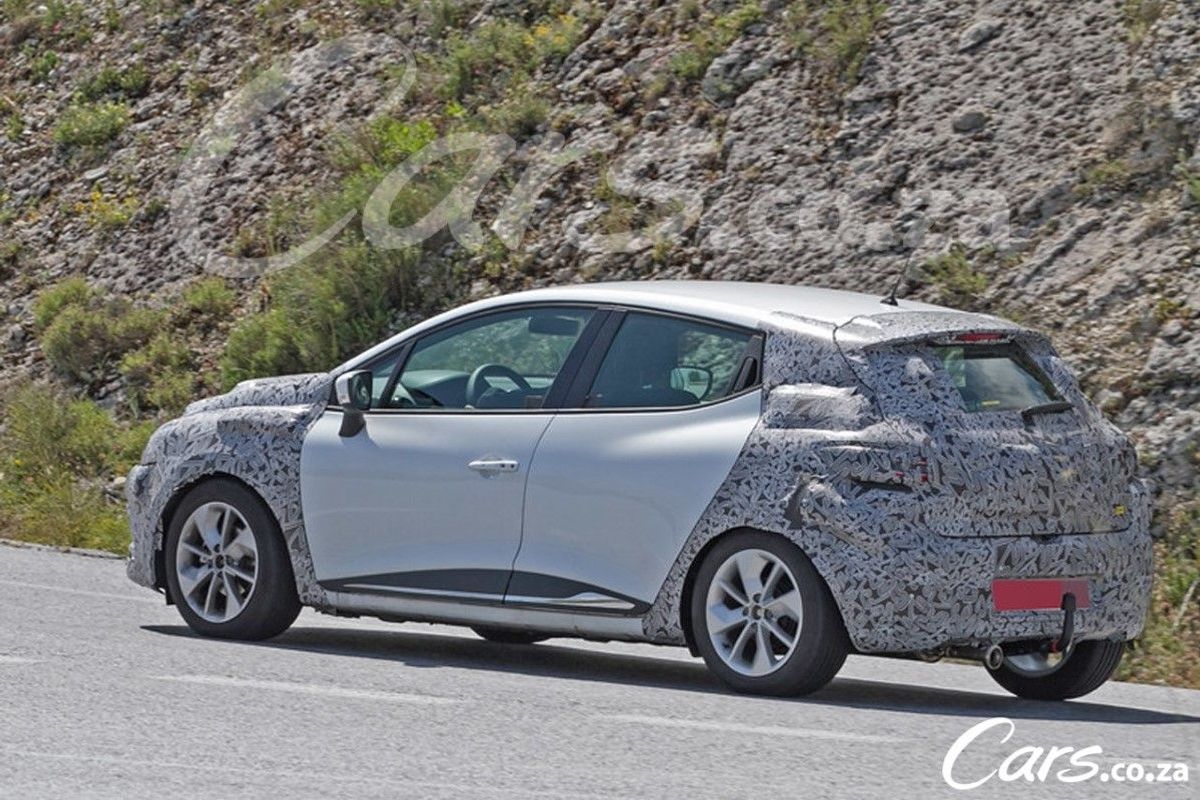
Renault Clio facelift spied, headed for SA in late 2016
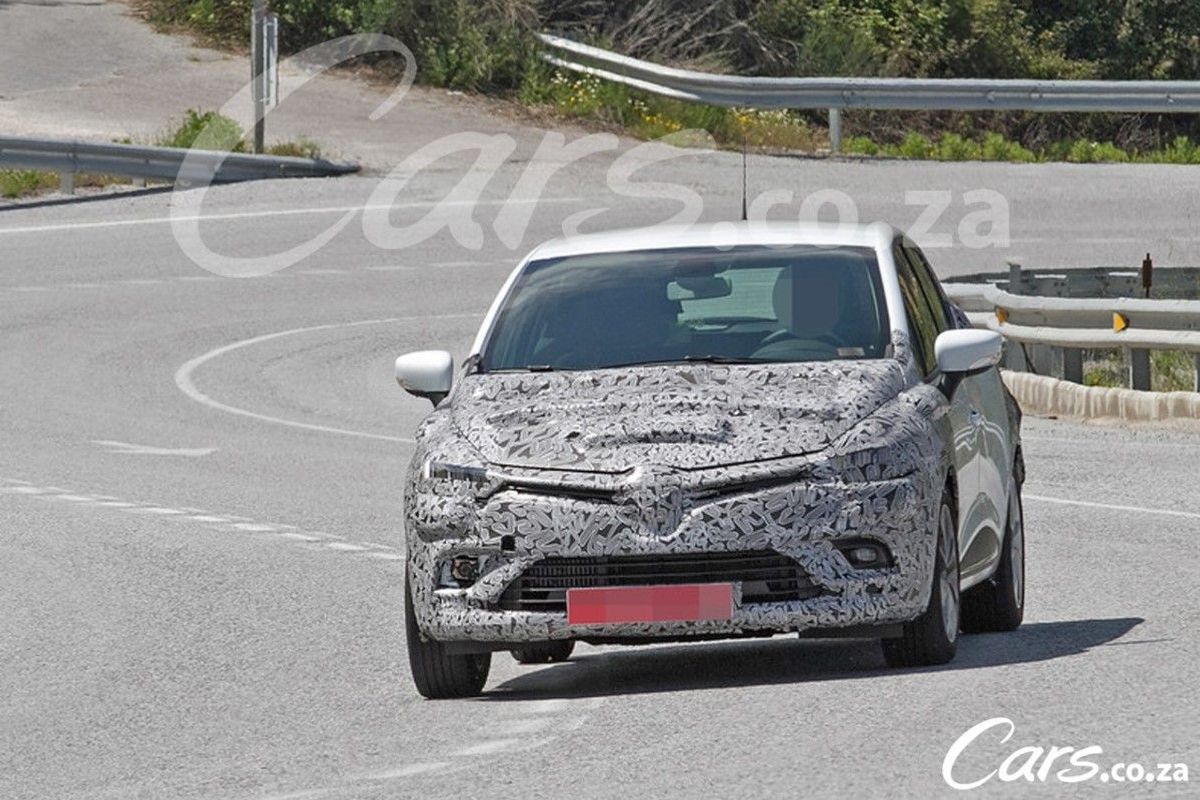
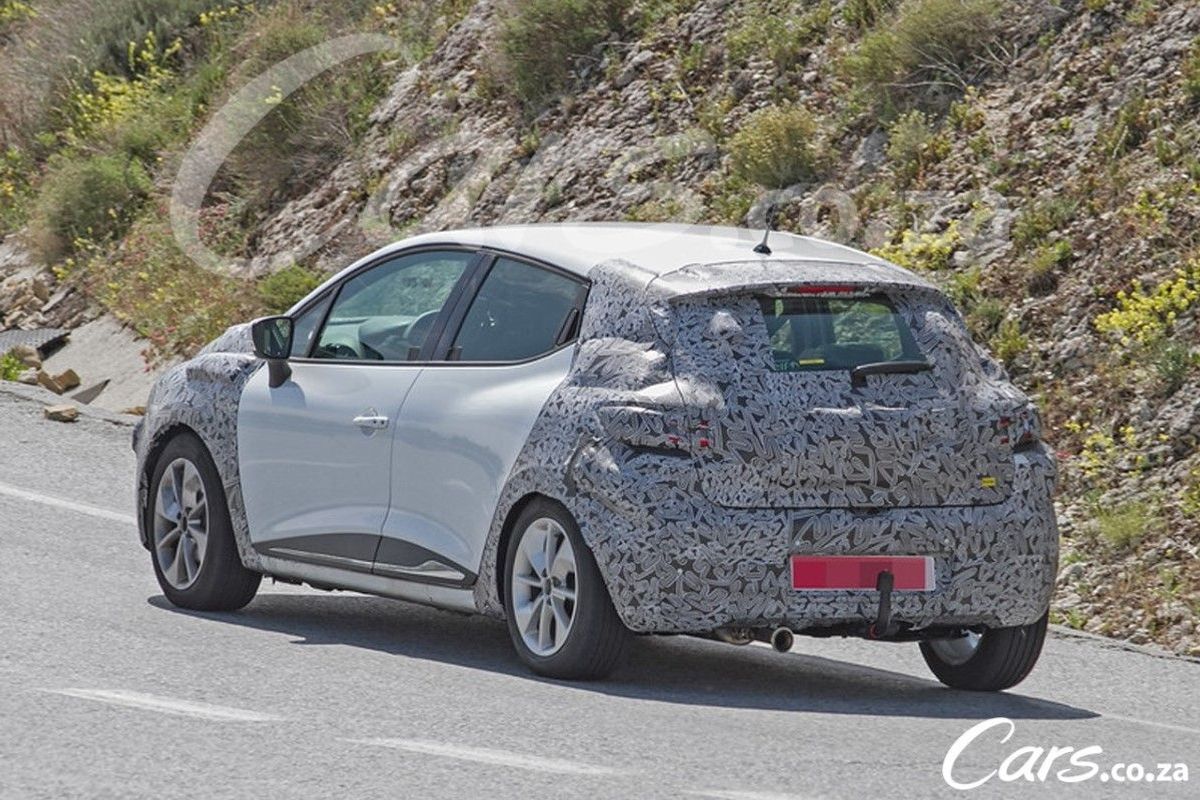
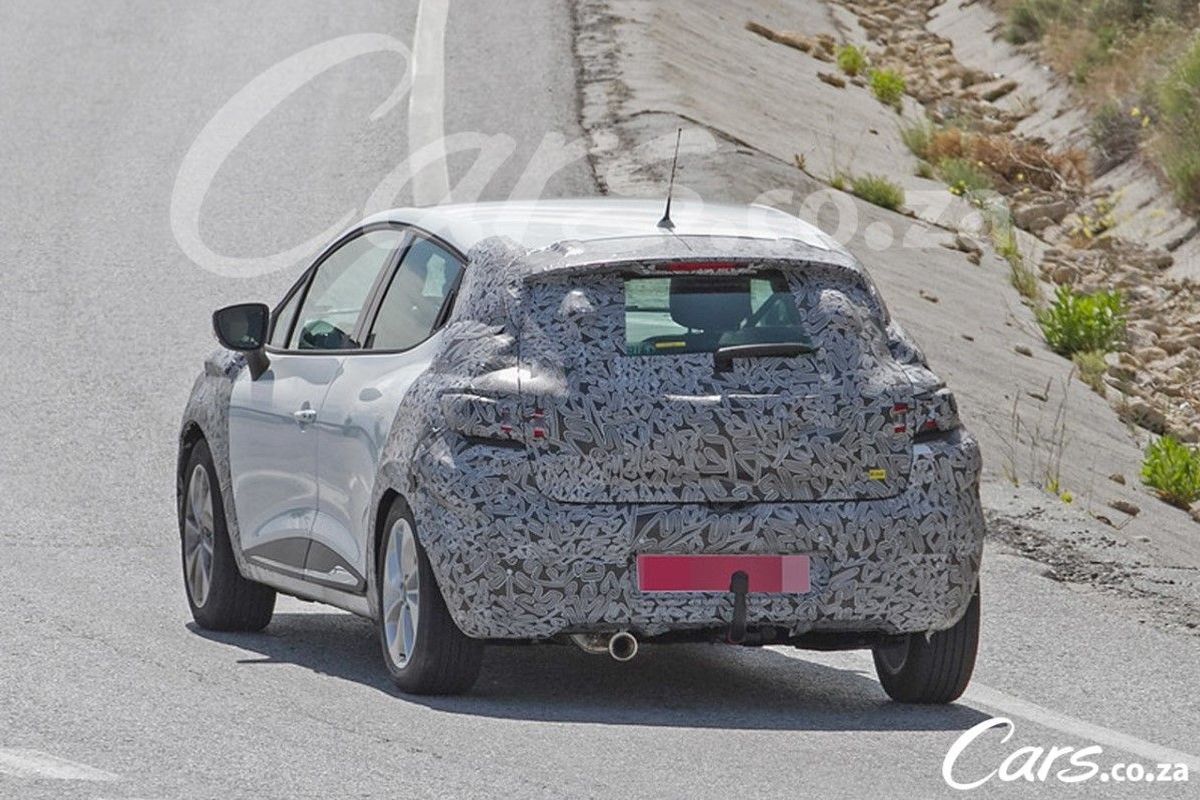
Renault’s fourth-generation Clio has been available in South Africa since 2013 and 4 years since making its Paris Show 2012 debut, the light hatchback's due for a facelift. Renault is working on beautifying the Clio and these spy shots hint at what’s to come from the French firm.
These spy images show a moderately disguised Clio prototype undergoing testing in Europe and it’s clear that Renault’s changes are focused on the small hatchback's front and rear ends. The facelifted Clio is expected to feature re-designed headlights as well as an entirely revised front bumper, which is clearly evident from the images. The back bumper will undergo revisions too and the taillight clusters will, in all likelihood, feature a fresh lighting signature.
2016 is shaping up to be a big year for Renault South Africa, having already launched its all-new Kadjar crossover SUV to market and with the latest Megane due to make landfall in the third quarter of the year.
The facelifted Renault Clio will be shown in the metal at the Paris Motor Show come October before going into production. A local Renault spokesperson confirmed the facelifted Clio could arrive in South Africa before the end of the year. Updates regarding engine changes are still unknown, but we will keep you posted as soon as more details become available.
5 Key Differences Between Old and New Audi A4 (2016)
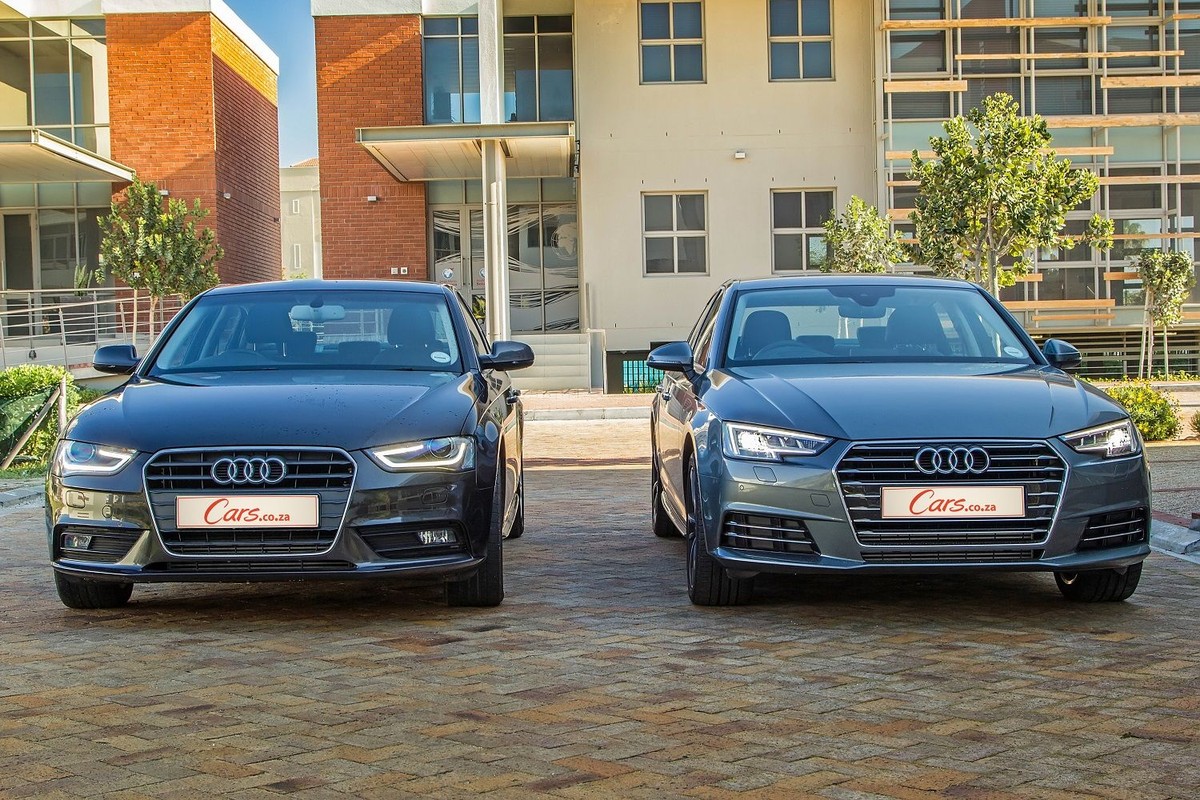
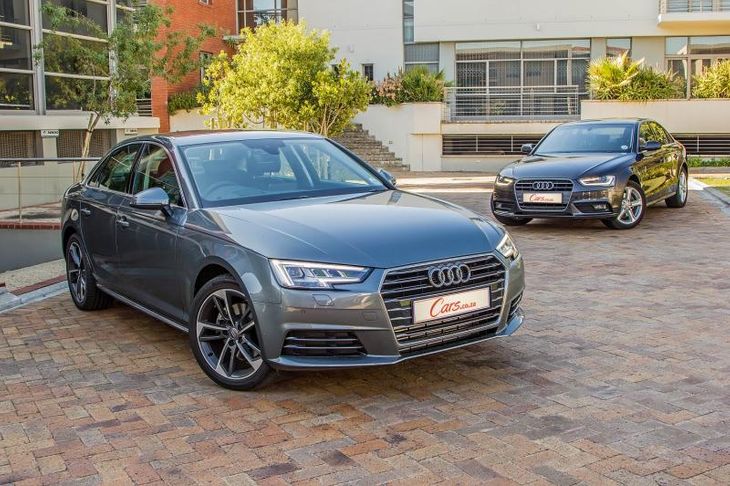
We spent time with the previous generation Audi A4 (B8) while we evaluated the latest Audi A4 (B9). While the two models are not dramatically different in terms of visual appeal, there are numerous technical changes under its sheet metal. Here are five key differences between the two.
Appearance
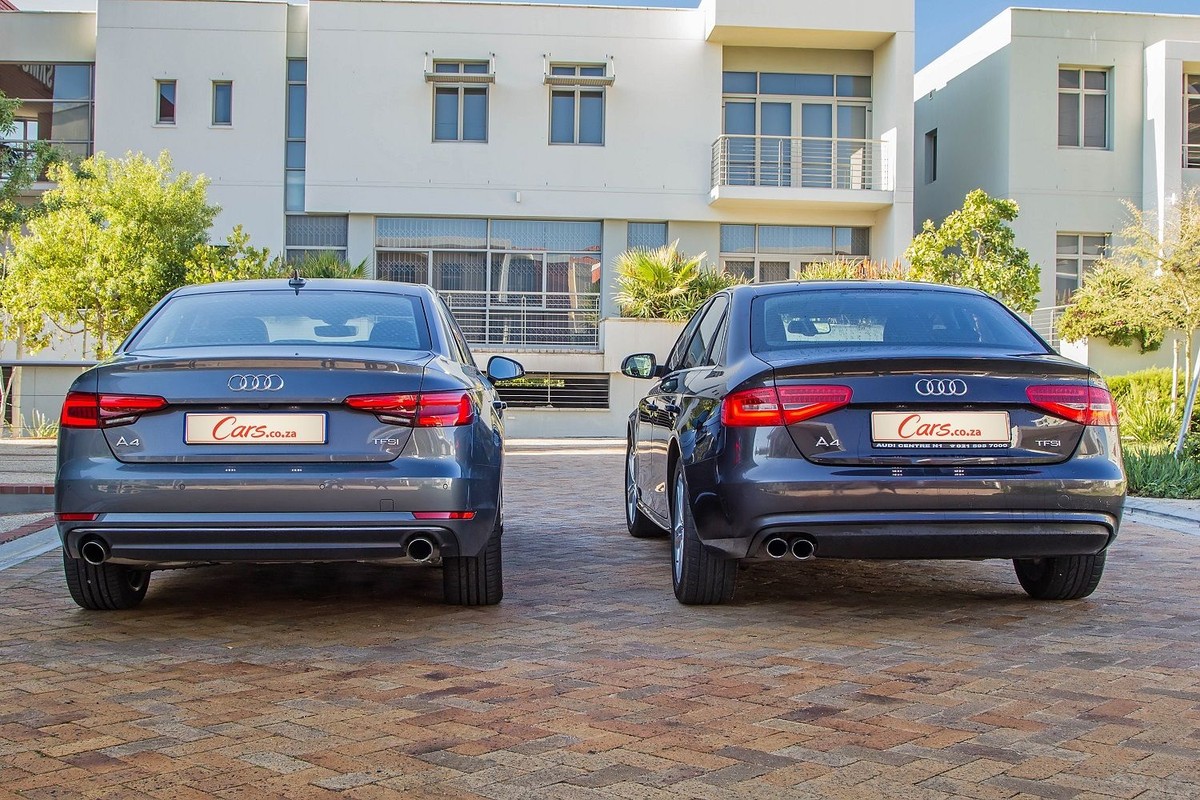
New Audi A4 meets the previous version of the A4. The new model is comparatively sleeker and more modern.
If there is one aspect of Audi sedans that often draws criticism – and the Audi A4 is no exception – it's that they don't look exciting enough. Audi has never pursued a provocative design language and we think the latest incarnation of A4 is exactly what it should be: an evolution of the previous model with enough styling cues to give it a modern and fresh appeal. Of course, you can spec the sporty S-line exterior package for added visual impact, or choose one of 10 alloy wheel designs.
We feel the design of the new Audi A4 is good enough to last a few years…
Mechanical changes
The real changes have occurred under the skin and the new Audi A4 has gone on a diet. Thanks to its lightweight construction, the B9 generation is around 120 kg lighter than its B8 predecessor, as well as more aerodynamic. This, in turn, aids fuel consumption. Despite the crash diet, the newer model is bigger both inside and out, and it feels more refined. The B9 is 25 mm longer and 16 mm wider than the B8, and while those numbers don’t sound like much, they make a difference.
A lot of work has gone into NVH suppression and suspension refinement, making the A4 exceptionally smooth to drive. Meanwhile, thanks to the provision of an electronic front differential and some tweaks to the steering setup, the Audi's dynamic responses haves sharpened up. Depending on the model you pick, an adaptive suspension is a worthwhile option.
Powertrains
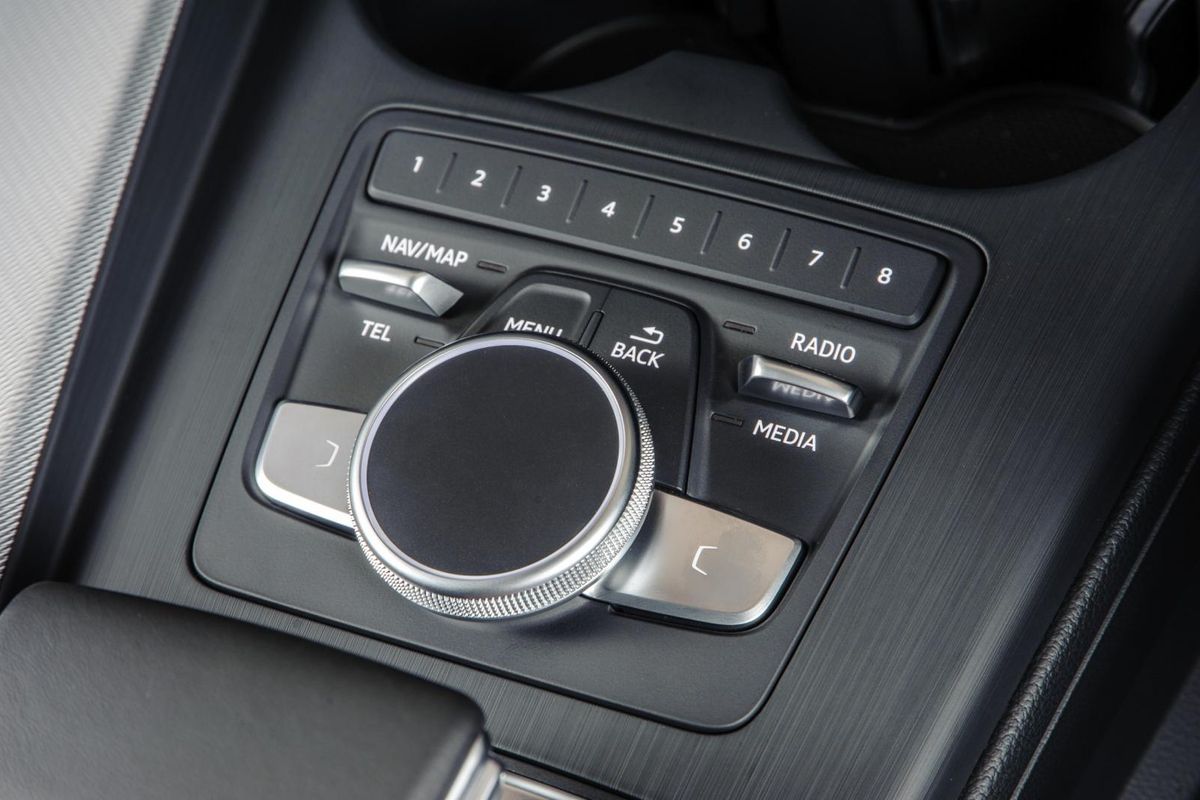
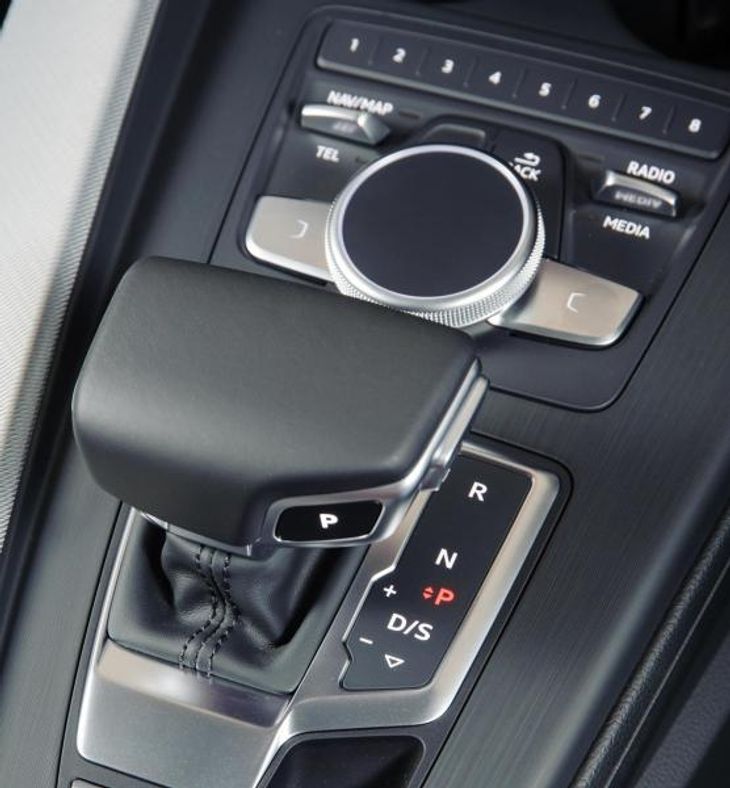
The S-tronic gear selector is also a comfy place to rest your wrist.
The assortment of engines from the Volkswagen Audi Group has made its way into the new A4 and while the powerplants are not all-new units, there are enhancements to make them smoother and more powerful, as well as more fuel efficient.
The range starts with the familiar 1.4-litre turbocharged 4-cylinder unit. In this application, you get 110 kW and 250 Nm, which is acceptable at this level. The 2.0-litre turbocharged 4-pot that produces 140 kW and 320 Nm is the next step up and finally there’s an enhanced version of the 2.0T that puts out 185 kW and 370 Nm, and drives all four wheels through a dual-clutch transmission. For the turbodiesel fans, a 2.0TDI with 140 kW and 320 Nm was recently added to the lineup.
In the B8 generation, A4 derivatives were equipped with old-school Multitronic CVT, S tronic and Tiptronic automatics as well as manual transmissions, but the sharper, quicker S-tronic twin-clutch arrangement is now the sole self-shifting option. You can also have a manual gearbox, but given how good the S-tronic is, the latter is likely to be the most popular choice.
Interior
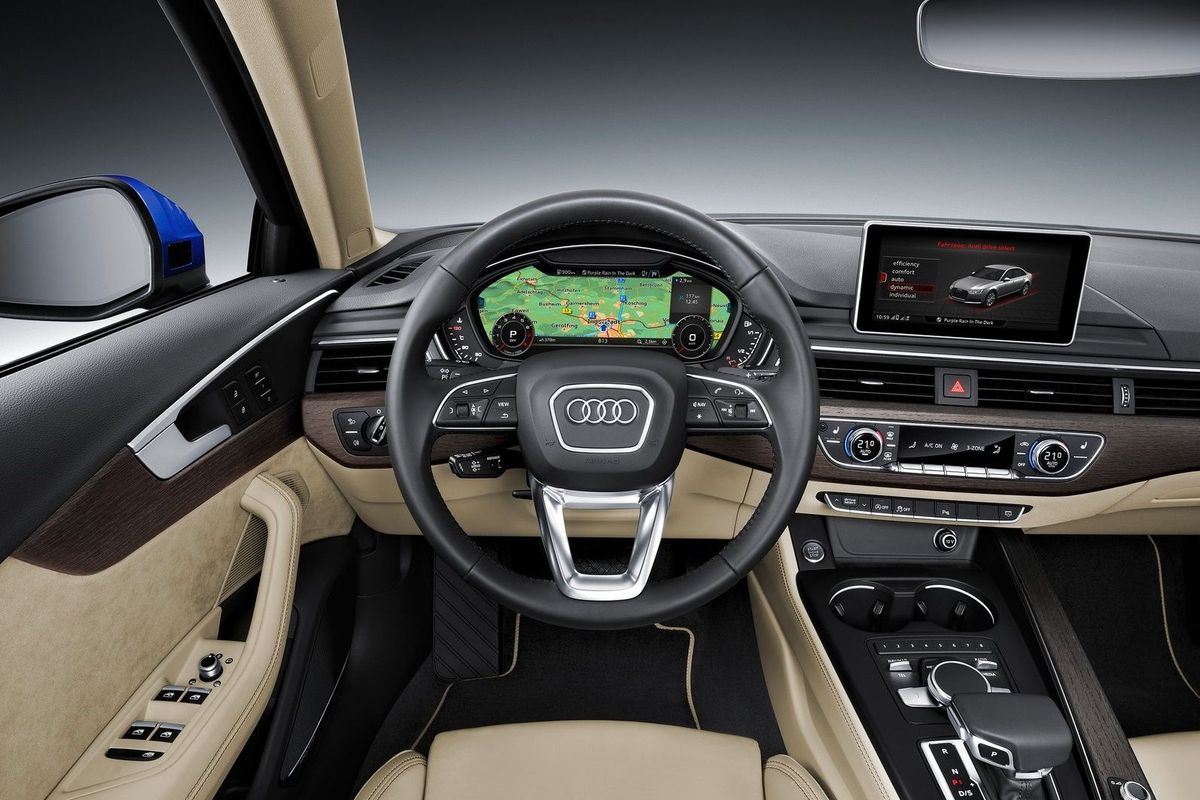
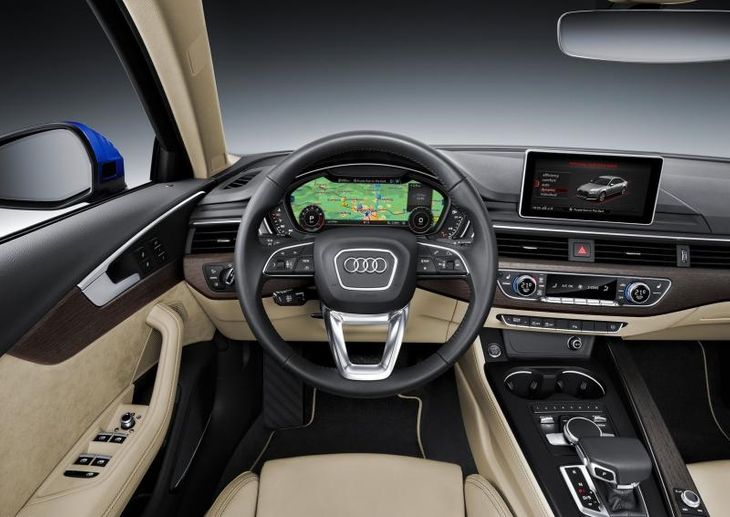
With Virtual Cockpit fitted, the new Audi A4 cabin looks sleek, futuristic and sophisticated.
Audi interiors have always been excellent and the latest A4 is no exception. The cabin feels on par with larger, more premium models, and the intrinsic feel is excellent. While it's an option, Audi’s Virtual Cockpit digital instrument cluster moves the game forward in terms of user experience and outright appeal. It’s a marvel to look at and effortless to use.
From a driver’s point of view, the finer touches are special. The devil’s in the detail and the ability to rest your wrist on the gear selector while using the scrolling wheel for the in-car menu is but one example of what makes this cabin excellent. While it appears minimalist in design, everything you need is conveniently close and the ergonomics are generally good.
Passengers at the rear will enjoy more legroom in the new Audi A4. While the outgoing B8 wasn’t short on rear legroom, taller drivers were inclined to position their seat further back, making the space available to rear occupants a little tight. The new car’s seats have also been redesigned to increase rear passenger kneeroom.
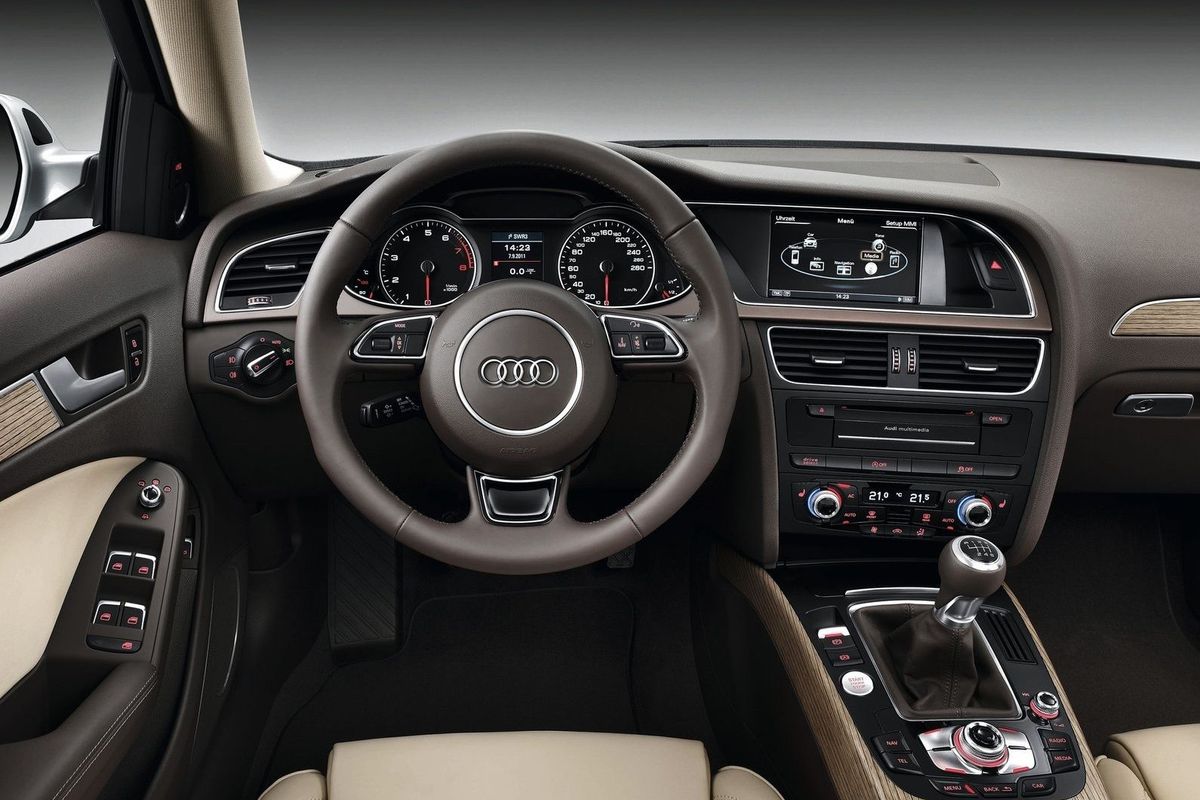
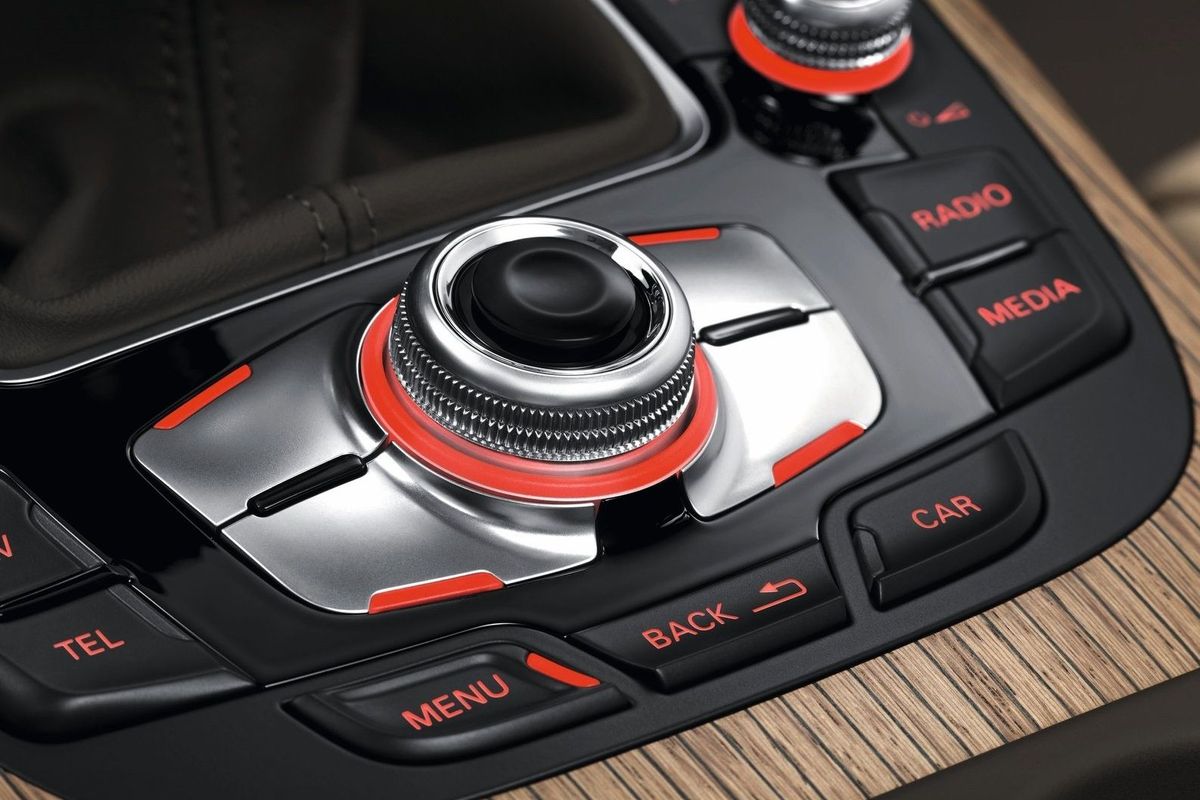
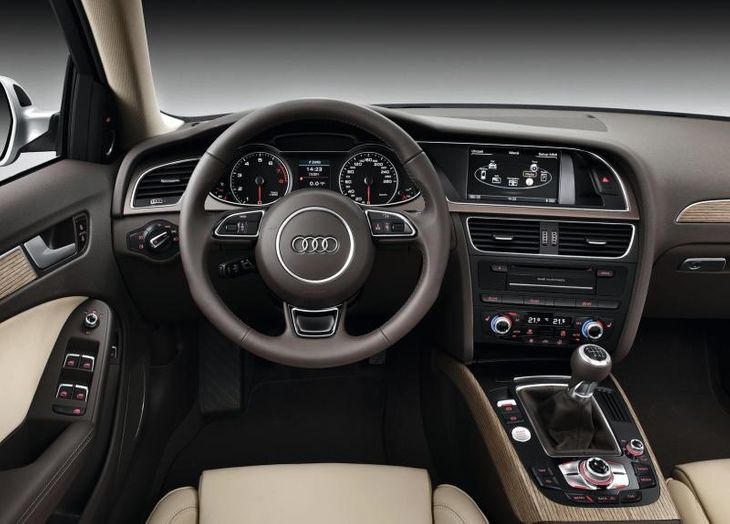
The previous generation Audi A4 had a pleasant interior, but it pales in comparison to the new one.
Connectivity and technology
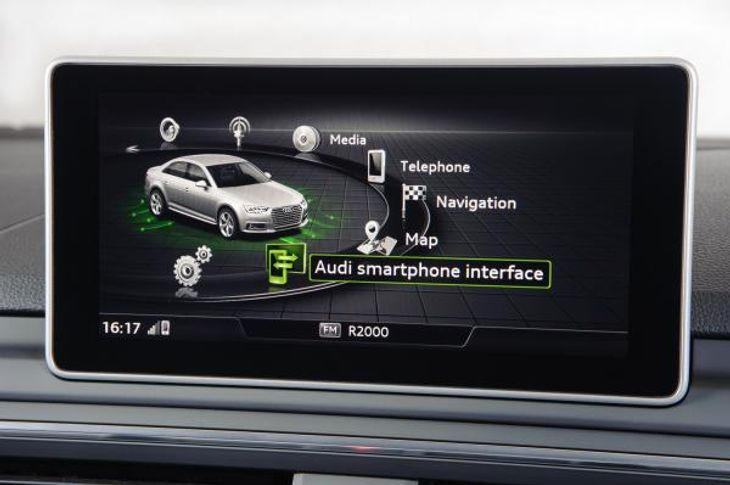
This is an area in which the B9-generation Audi A4 truly shines. While a new generation of consumers embraces the digital era with unparalleled enthusiasm, the need for in-car connectivity and technology has grown immensely. There’s the aforementioned Virtual Cockpit and Audi Connect Services, which enables the car to connect to the Internet via a SIM card. What's more, passengers can connect to a wifi hotspot and the driver gets access to services such as Google Earth.
Audi smartphone interface and connectivity allows internet access and services such as Google Earth.
You can plug your Apple and Android devices into the Audi MMI and for those craving intense audio quality, tick the box marked Bang and Olufsen – an audio system that comes with no fewer than 19 speakers. Another option to consider is the Audi tablet that provides entertainment for the rear passengers, and can be removed from the car and used as a normal tablet. The car features USB and auxiliary input sockets and Bluetooth connectivity as well.
Other technology worth a mention is the Audi Matrix LED healights, auto parking functionality and a head-up display.
Summary
While the new Audi A4 represents a big leap forward for the segment and brand, what's to become of the previous now-discontinued A4? There are plenty to go around on the pre-owned market and if you know where to look, some great bargains can be found. We know of one owner who bagged a 1.8T with some options for R280k and it had 4 000 km on the clock. While the B8's outgunned in a technological battle, it still represents a great purchase thanks to its solid build quality and thorough refinement.