Is the petrol double cab making a comeback?
Petrol-fed leisure double cabs used to rule the bakkie roost, but their prodigious thirst for 95 unleaded – and highly niche applications – greatly diminished their popularity. Now, thanks to plug-in hybrid tech, petrol bakkies are poised to proliferate again.
Over the past 20 years, luxuriously equipped leisure double-cab bakkies have replaced the BMW 3 Series and Mercedes-Benz C-Class as upper-middle-class South African families’ vehicles of choice.
Misunderstood by many, the leisure double cab is amazingly versatile. It combines a reasonably high spec with the ability to get your family to any venue – regardless of road conditions or route profile.
They work – everywhere
Is there no place to park outside Marble in Rosebank? It’s no problem if you drive a double cab; just hop over the kerb! Does the family want to go to an exclusive backcountry 4-star boutique hotel atop a hill, with the only access road being a shale-strewn dual track? A double cab, with its lockable rear differential and (often) 4-wheel drive, will oblige if an access road is a traction disaster…
The point is that double-cab bakkies enable true family adventure journeys. It’s not a marketing fallacy.
There’s the safety factor, too. Striking a pothole at 120 kph in a sedan or crossover can be a terrifying experience with horrible consequences. But in a bakkie? You’ll hear a thud and feel some shake through the cabin, but after making a slight steering correction, your journey will calmly continue. No dramas.

Why are (nearly) all double cabs diesel-powered?
With South Africans willing to spend R1 million+ on double-cab bakkies, product planners are committed to ensuring they have many models to choose from. However, 1 peculiar issue is powertrain diversity.
Nearly all the leisure double cabs in the local market are (turbo)diesel-powered. South Africans prefer the range and balance of economy-to-performance that modern turbodiesel powertrains offer.
See also: 2025 CarsAwards Finalists: Best Leisure Double Cab
But what about PHEVs? This year, turbopetrol engines combined with plug-in hybrid tech will become available in the local bakkie market, which will test the turbodiesel’s status as the peak powertrain.

What top-of-foodchain double cabs used to be
There are precious few petrol options if you want to buy a double-cab bakkie. The Ford Ranger Raptor, Jeep Gladiator, Toyota Land Cruiser 79, and Ineos Grenadier Quartermaster are desperately niche. But a generation ago, most popular double-cab model ranges featured a V6 petrol option.
In the late 2000s, all the core brands obliged with a petrol V6, if you wanted a range-topping double cab with linear power delivery, great overtaking acceleration, and garage-card-depleting fuel consumption.
The 7th-gen Toyota Hilux offered a 4.0-litre V6. So did the 2nd-gen Ford Ranger. And, of the group of petrol-powered V6 double-cabs available in South Africa during the late 2000s, the flagship Nissan Navara variant, with its 198 kW 4.0-litre V6, was the undisputed performance option. Even the brand renowned for its diesel engines, Isuzu, was in on the act with the 3.5-litre V6-powered KB350.
Why petrol double cabs waned in popularity
All these V6-powered double cabs had a very specific target market: drivers who needed bakkies that could easily cruise at high speeds and overtake long trains of slower traffic with confidence.
The idea of a V6 petrol being the apex engine choice appears almost counterintuitive in the current market dominated by turbodiesels.
For many South Africans who like to tow, the preference was (and is) for a naturally aspirated petrol engine with a linear, broad power delivery instead of the narrow powerband of a turbodiesel. That same powertrain characteristic makes petrol engines so much better for challenging sand and dune driving.
PHEVs alleviate the consumption problem
The major drawback of those petrol V6-powered Hilux, Ranger, Navara and KB double-cab derivatives was high fuel consumption and, therefore, reduced range.
If you think range anxiety is “an EV thing”, you’ve never been churning through deep sand tracks in Botswana or Northern Mozambique in a V6 bakkie and seen the fuel-gauge needle falling in real-time (while hoping that there won’t only be diesel at the next rural fuelling point).
At any sensible operating speed, or in low-range sand driving, V6 bakkies were too heavy on fuel. And in stop-start urban traffic, they were equally thirsty. Many of these models delivered true 13-15 L/100 km real-world driving experiences. Cost and range limitations became overwhelming ownership issues.
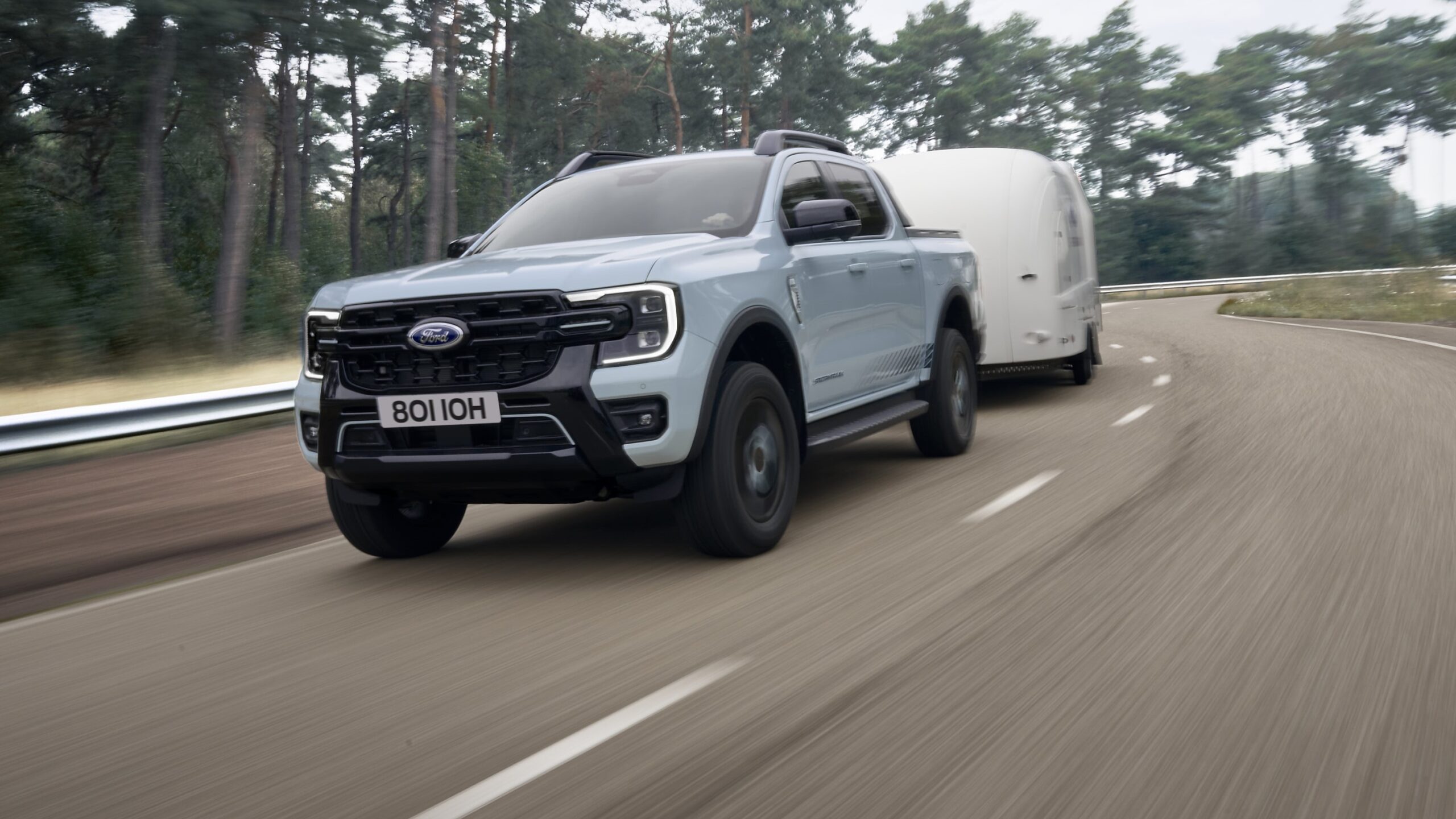
The Ford Ranger PHEV and BYD Shark plug-in hybrid bakkies promise terrific overtaking and sand-driving performance… in conjunction with the benefit of nearly zero fuel consumption on your daily inner-urban commute. These PHEV double cabs are also more viable for overnight home charging because their batteries are about half, or less, the size of conventional electric vehicle (EV) battery packs.

Does China Build Your Dream double cab?
Shenzhen-based Build Your Dreams (BYD) is unquestionably the world’s most exciting car company. It’s legitimately taken on Tesla’s EV dominance in a way no legacy car company has been able to.
South Africans are excitedly awaiting the introduction of the BYD Shark double cab this year. As the brand everyone is talking about, and in the configuration that many South African buyers are most interested in (double cabs), the BYD Shark will be the most interesting new vehicle launch of 2025.
However, double cab bakkies are an incredibly tough market, as the failure of the Mercedes-Benz X-Class proved. BYD isn’t chancing its luck or trying to leverage the brand’s excellent public perception with its first double cab. It has spent a lot of money to overengineer its new bakkie.

The BYD Shark has a secret…
And it’s not the impressive PHEV powertrain, which pairs a 1.5-litre turbopetrol with 29.6 kWh of battery capacity for a peak system output of 320 kW. The real overengineering is hidden from view.
Scrutinise the BYD Shark’s chassis and you’ll notice huge rear longitudinal beams. There’s more material in the Chinese bakkie’s rear section beams than you’d see in a conventional double cab, with the promise of immense, dare we say, Land Cruiser-rivalling chassis toughness and durability.
South African double cabs might spend most of their driving mileage on highways and smooth security estate paving. But they also encounter B-road potholes and adventure routes – severe off-highway road conditions that thoroughly test the integrity of a double cab.
With its market momentum creating all the resources it requires, BYD has spent engineering funds where it matters: on the Shark’s chassis. Double-cab buyers might value luxury appointments such as quilted leather trim and advanced infotainment, but they demand nearly unbreakable chassis integrity/durability.
GWM’s impressive P500 PHEV
The most successful Chinese bakkie brand in South Africa, GWM, has a PHEV option available for its P500 double cab. The Hi4T powertrain promises 110 km of pure electric driving range and features a 37.1 kWh battery pack. The total range potential is 880 km, thanks to the 70-litre fuel tank.
Severe fuel consumption is the GWM P500’s single biggest drawback, but the Hi4T-powered variant, which has admittedly not been confirmed for the South African market (yet), could create a terrific model range upgrade if it arrives in Mzansi. With milder inner-city and urban fuel consumption and powertrain outputs of 300 kW/750 Nm, it’s bound to deliver tremendous highway and sand-driving performance.

How likely is a petrol double-cab revival?
Today (February 2025), the South African new-vehicle market is markedly different to what it was in the late 2000s, when petrol-powered V6 double cabs were still widely available.
The Eskom power crisis has made South Africans some of the world’s most skilled off-grid and semi-independent solar users. And that innovation in how your home, office or industrial building converts rooftop solar to potential vehicle charging has created an exciting opportunity for petrol double cabs to make a big comeback as PHEVs.
The BYD Shark and Ford Ranger PHEV have compact battery packs that can easily be charged at home – without requiring an elaborate garage-charging configuration.
“But their pure-electric ranges are less than 50 km,” you say. Yes, but if your daily commute is less than that – and for many urban-based South Africans it is – a luxurious PHEV double cab could combust very little (or no) fuel on weekdays yet be able to travel long distances (mixed energy driving) on weekends.
It’s a very tempting powertrain offering. Smoother and more economical than any turbodiesel on a close-range daily urban commute. With terrific overtaking and sand-driving performance when required. And with much better-recharging convenience than a pure BEV.
Related content:
Honda, Nissan & Mitsubishi could create an amazing double cab
Why the Kia Tasman looks so different
Will South Africans buy a R1-million Chinese double cab?
Why an Extended Cab is the better bakkie
Mercedes-Benz’s East London plant needs to move beyond C-Class
Is SA’s best double-cab bakkie a BMW?
How will car dealerships survive in the EV era?
Toyota’s diesel drama, forklifts and Japan’s engine testing history