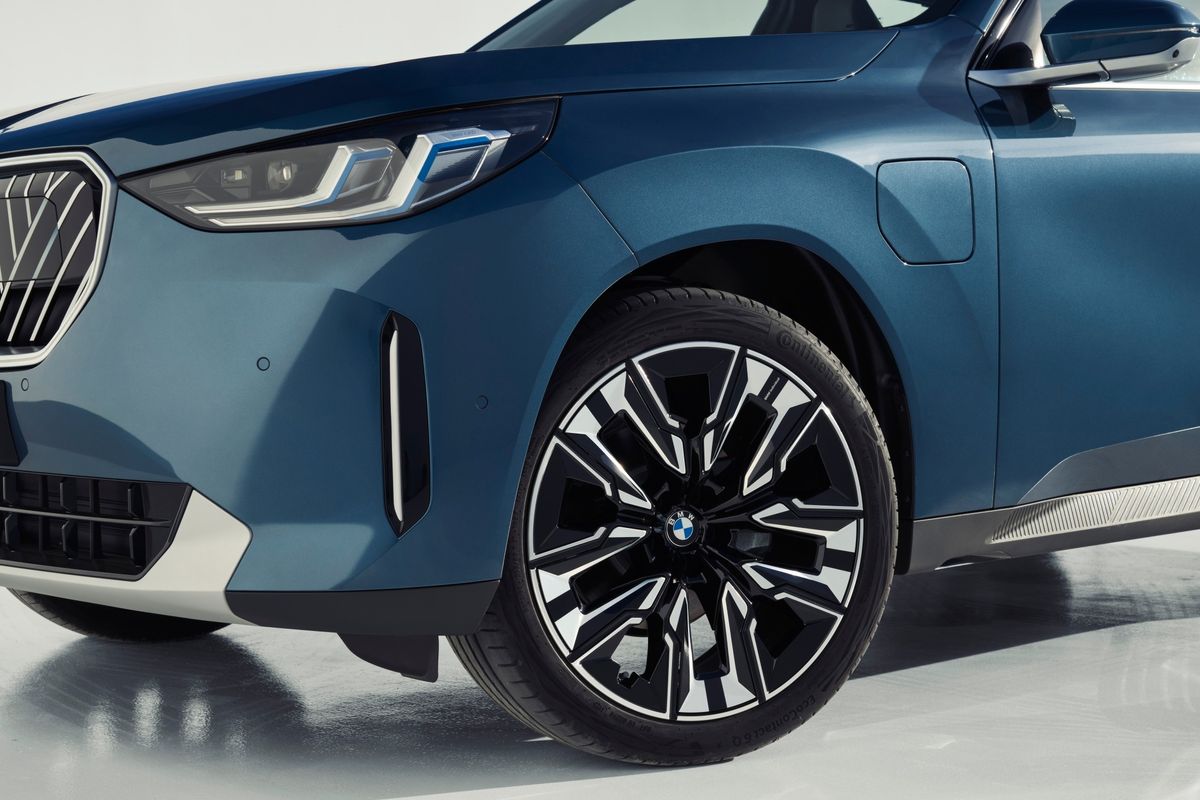
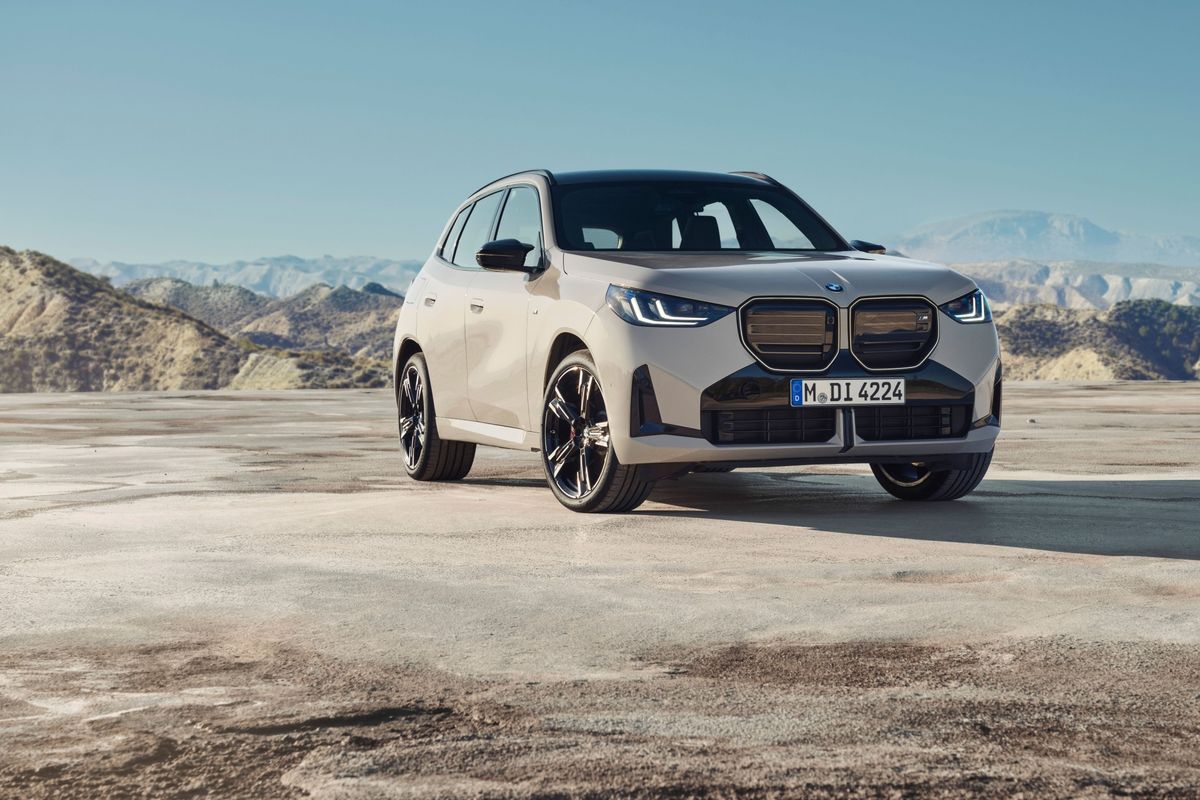
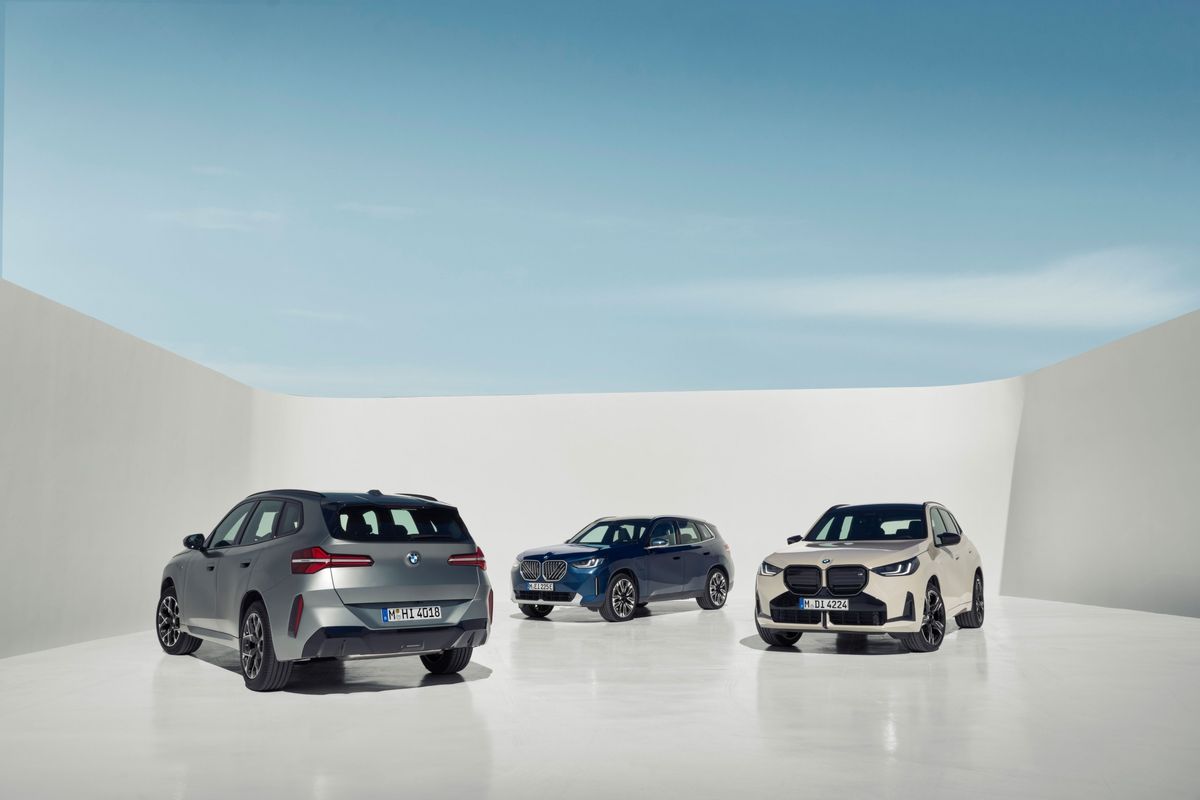
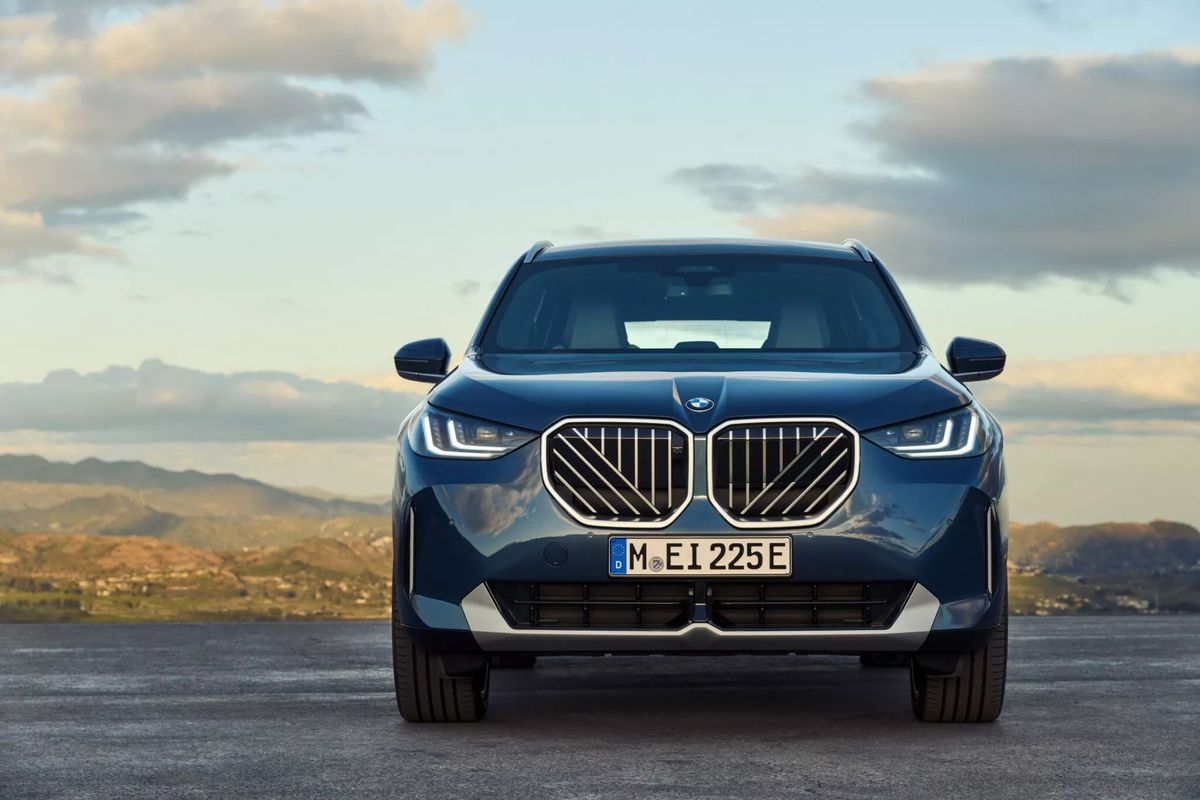
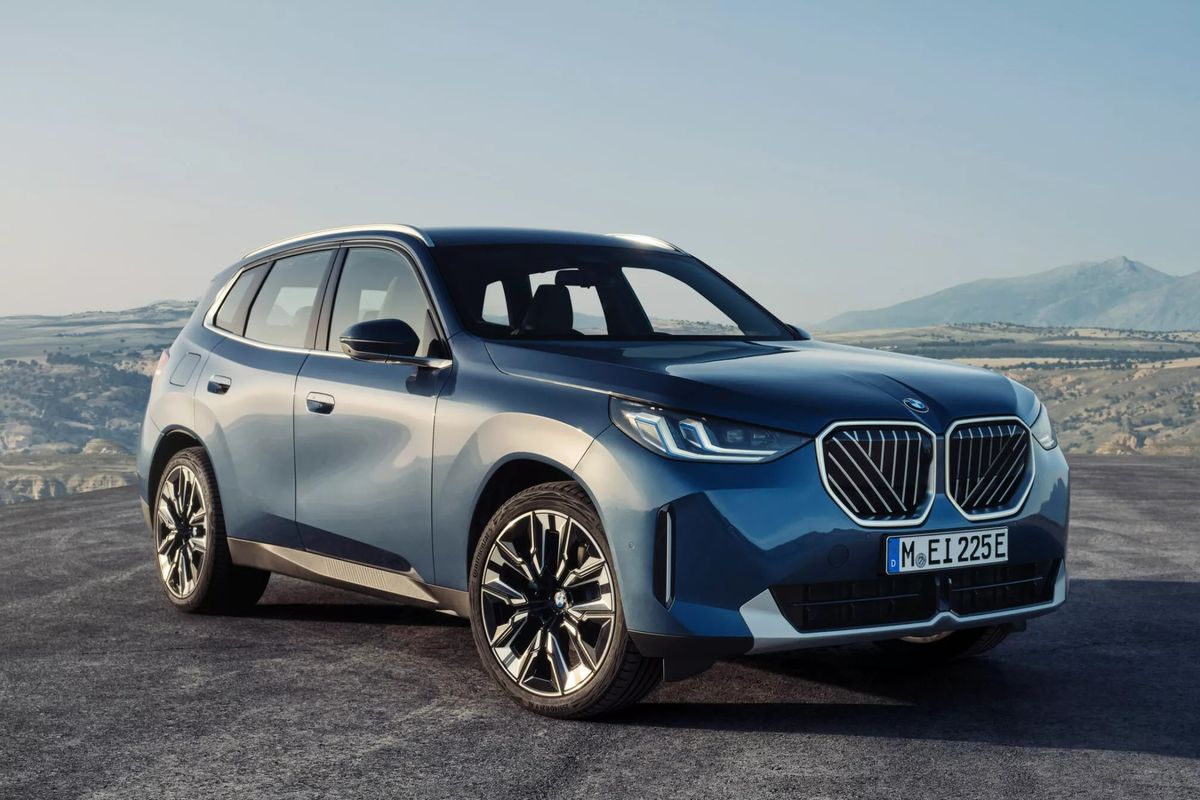
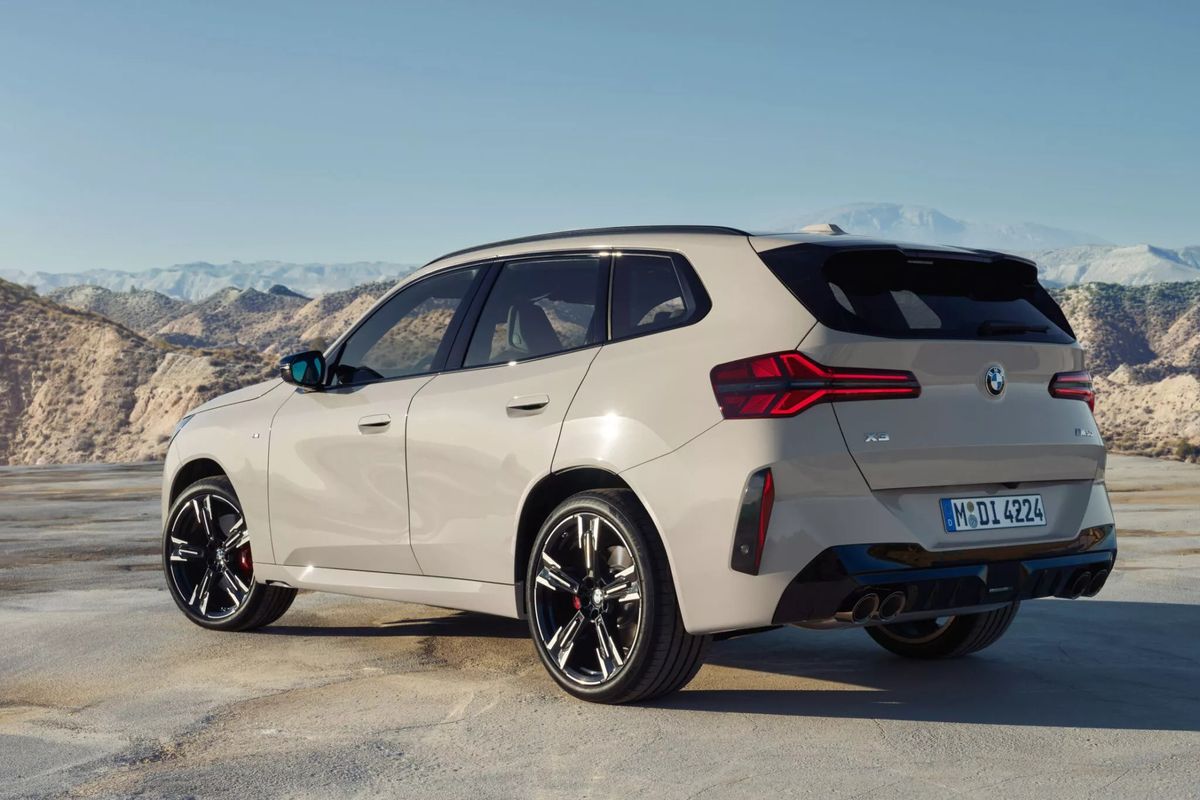
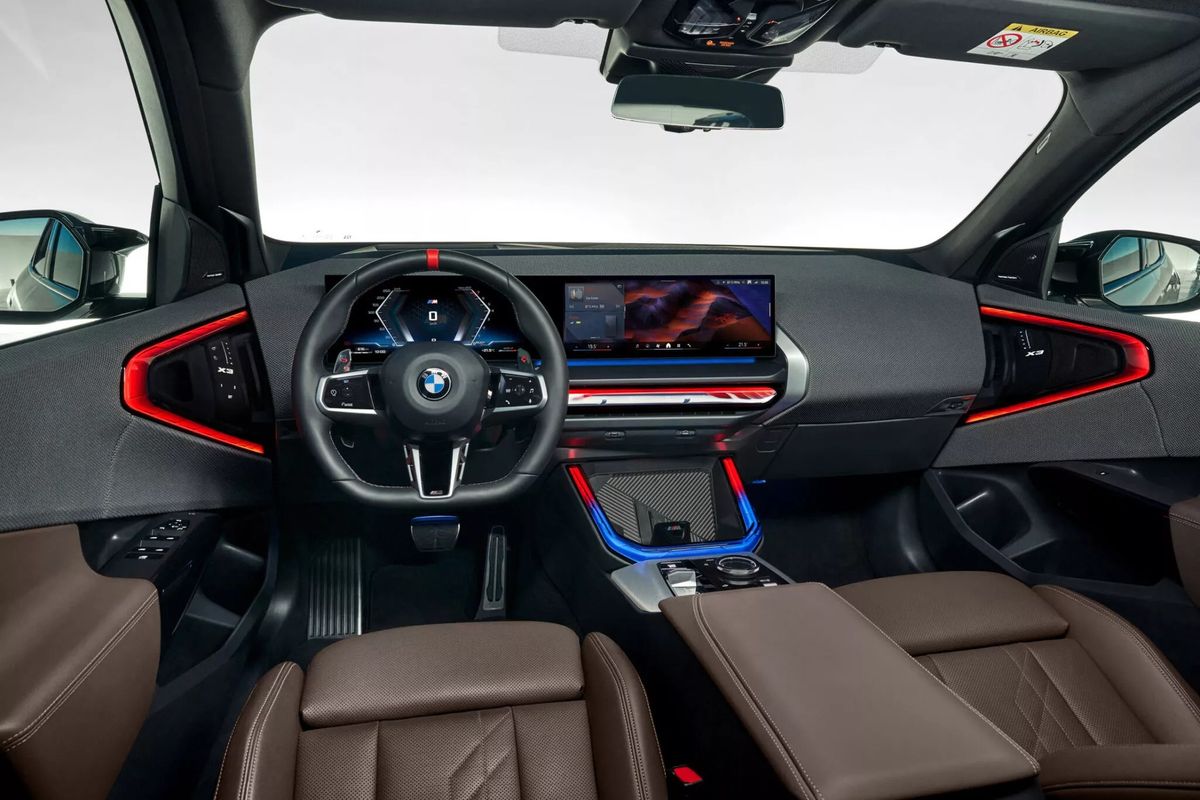
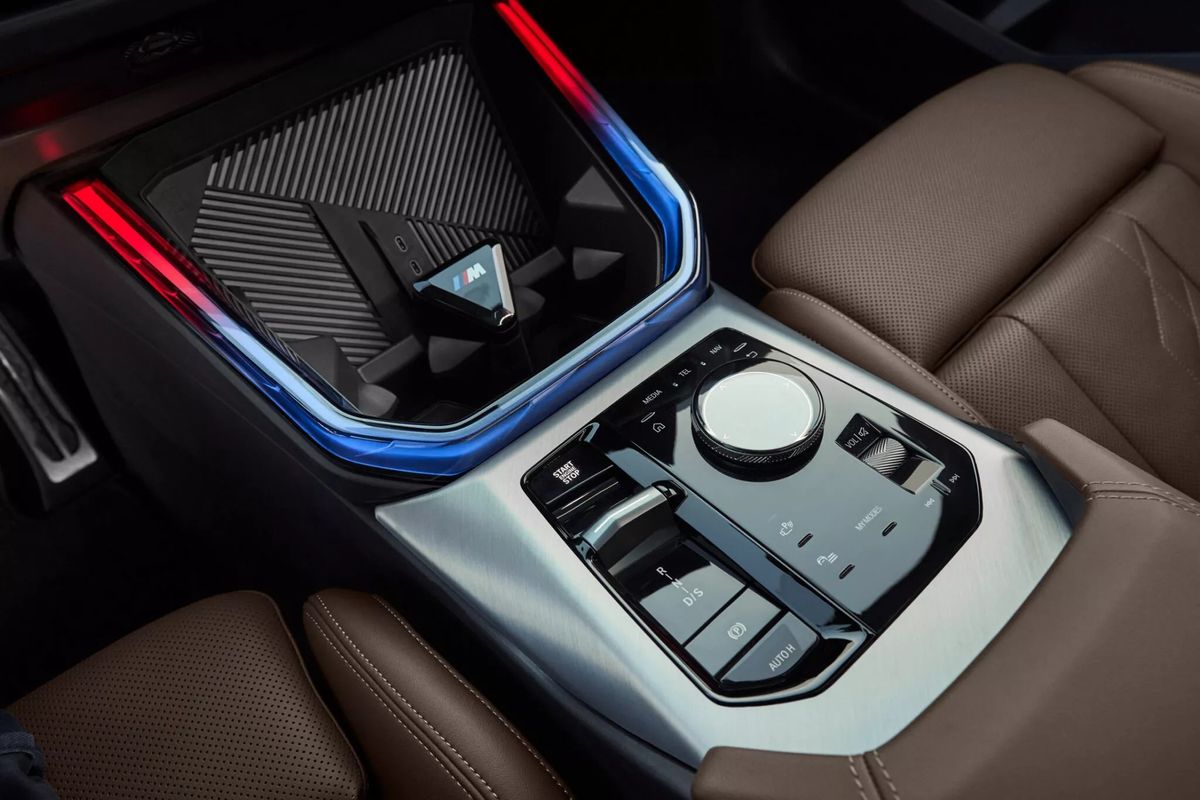
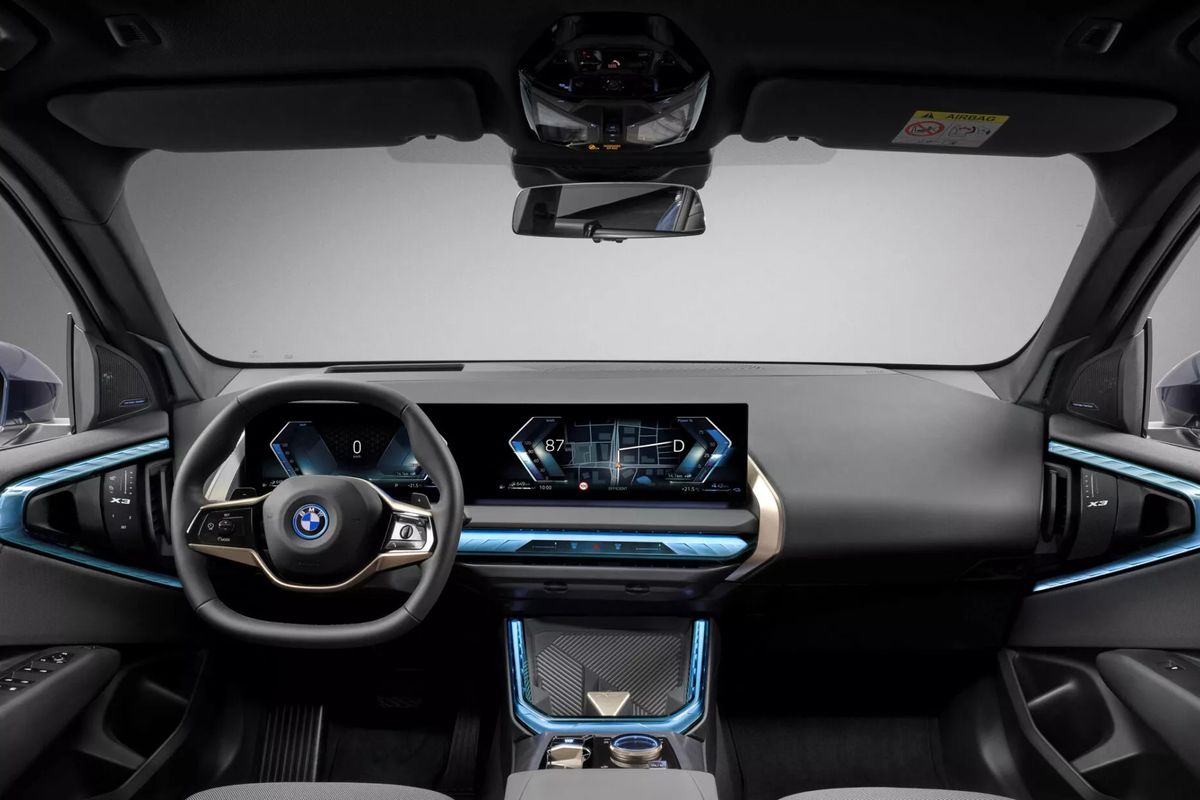
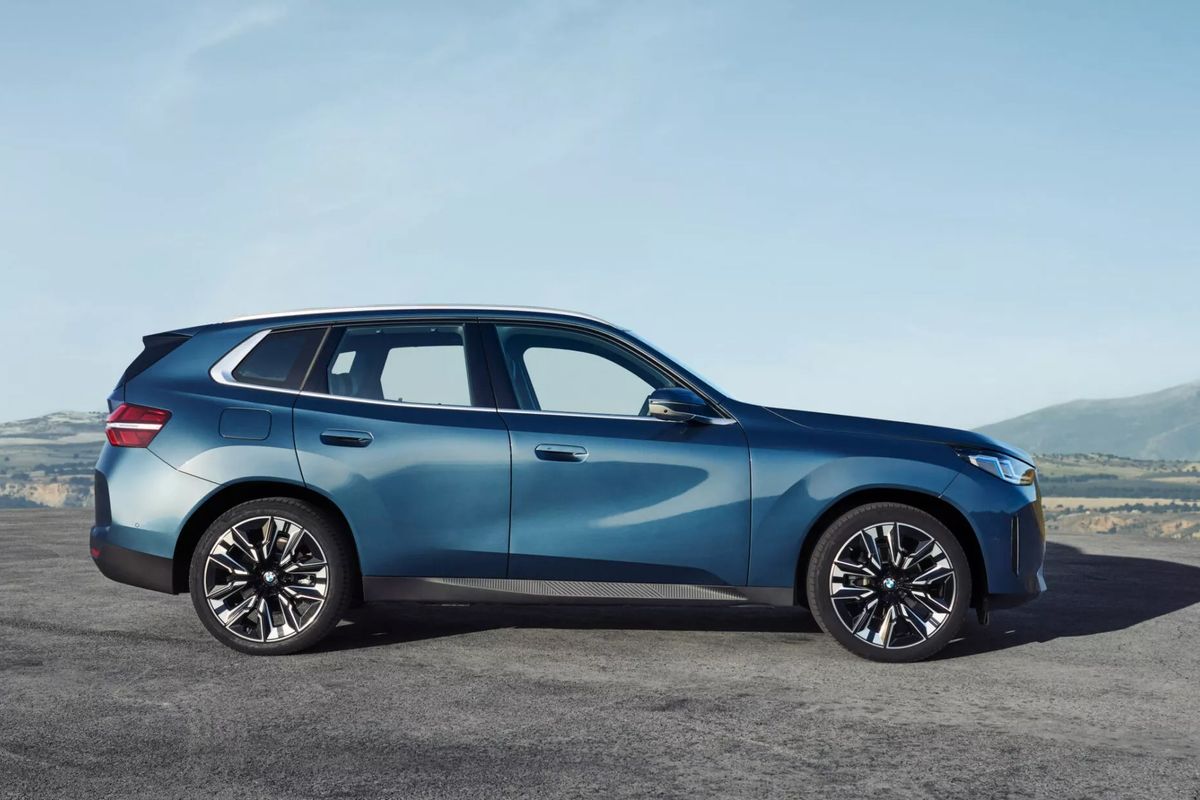
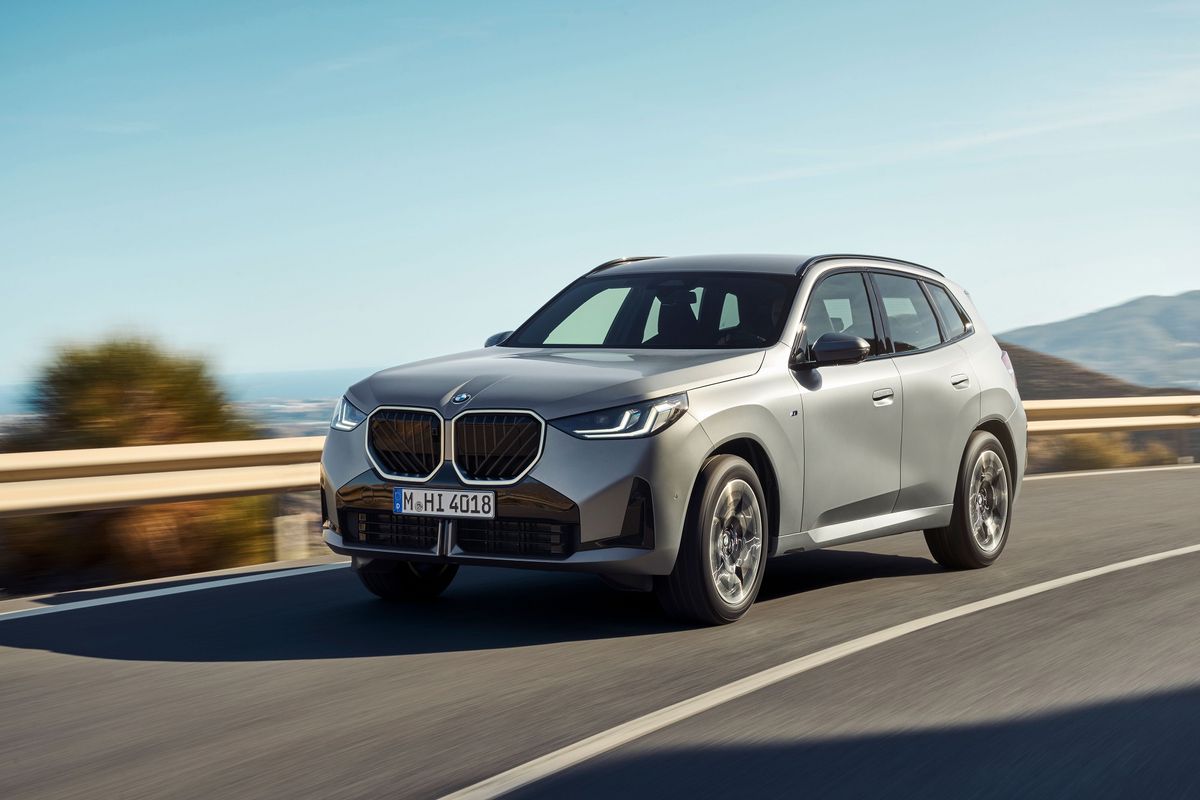
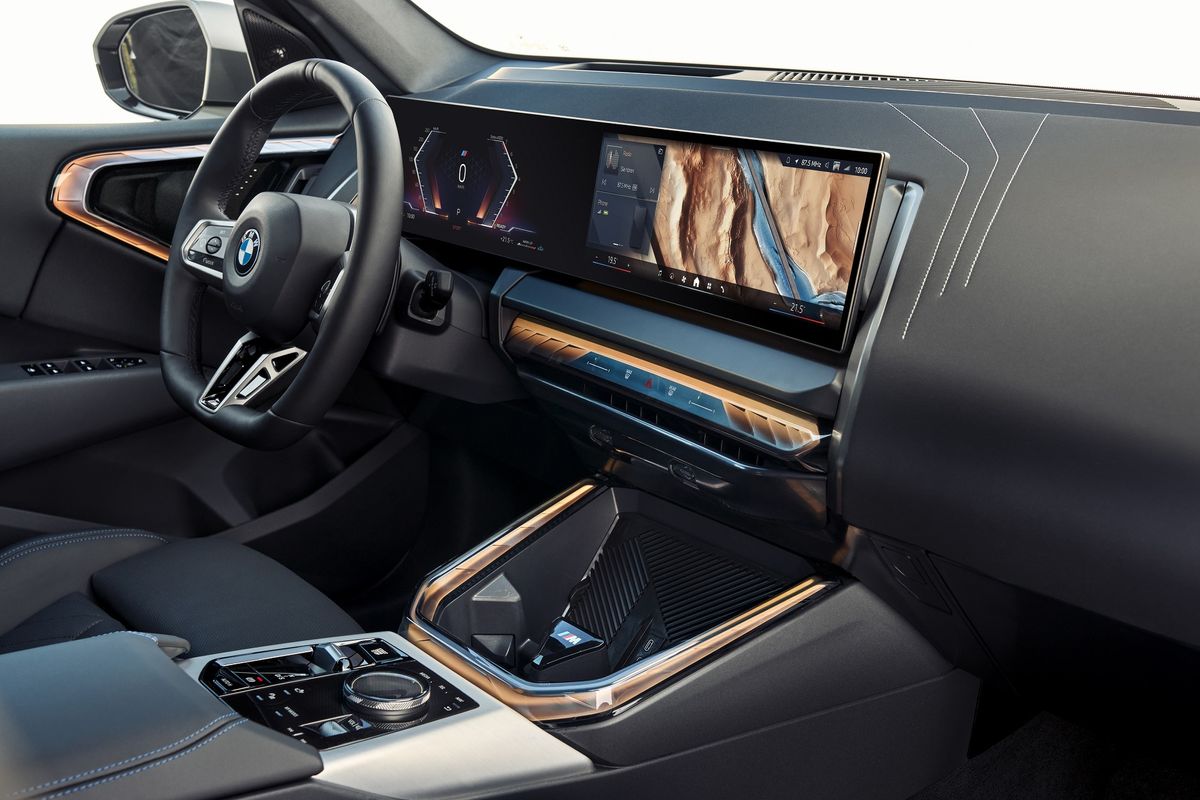
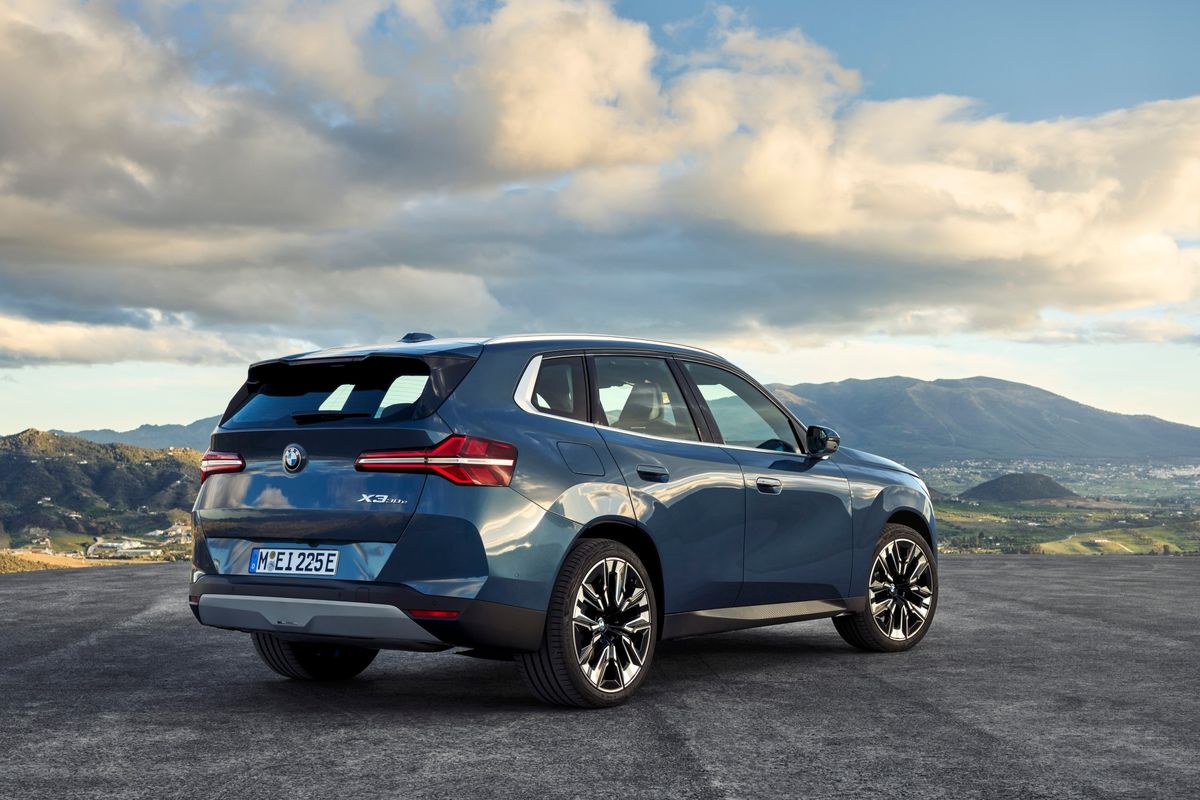
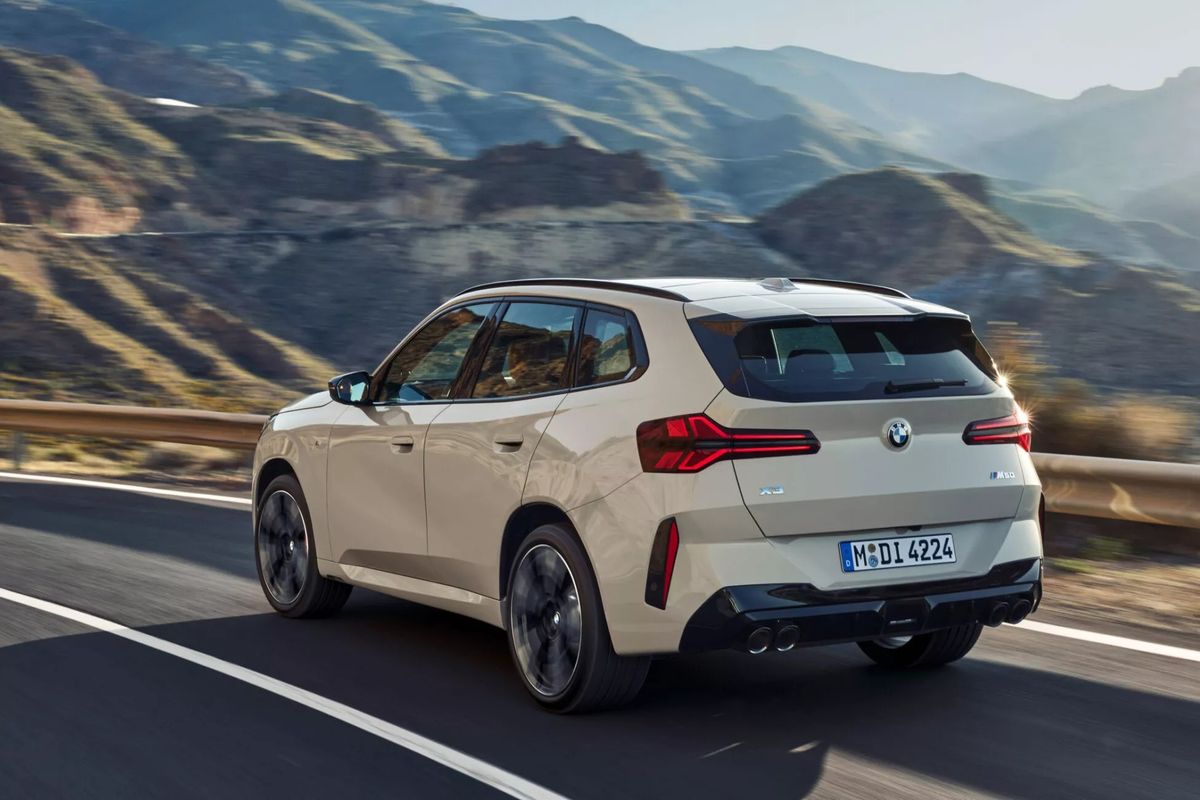
The all-new 2025 BMW X3 is now on sale in South Africa! Take a look at key features and pricing details for the Bavarian marque’s 4th-gen executive SUV.
The 4th-generation X3 is manufactured right here in South Africa, at BMW Group plant in Rosslyn, Pretoria. Interestingly, the plug-in hybrid derivative is manufactured solely in SA for both local consumption and export, while other X3 models are sourced from the US and China.
Engines and Lineup
The all-new 2025 BMW X3 will be sold in a three-model lineup, with a petrol performance flagship, a sensible diesel and a plug-in hybrid. All models will feature all-wheel drive as well as automatic transmissions.
The 20d is likely to be the volume seller and its easy to predict why. The 2.0-litre turbocharged 4-cylinder diesel engine makes 145 kW and 400 Nm, and will be the most frugal of the range, with a claimed consumption figure of 6.2 L/100 km. In terms of acceleration, the 20d is good for a claimed 7.7 seconds to 100 kph.
For the performance-minded customers, the BMW X3 M50 storms in with a 3.0-litre turbocharged 6-cylinder petrol engine that makes 293 kW and 520 Nm. It’ll be the quickest X3, with a claimed 0-100 kph of just 4.6 seconds.
A plug-in hybrid model makes its debut and it designated as the X3 30e xDrive. It’s powered by a 2.0-litre turbocharged petrol engine and an electric motor. Combined, there’s 140 kW from the engine + 135 kW electric boost giving it a total outputs of 220 kW and 450 Nm.
It is said to consume just 1.1 L/100 km and capable of hitting 100 kph in just 6.2 seconds. It’s also capable of a claimed pure electric range of around 85 km.
Options on offer
Options include the Launch package for R40 000, which has things like ambient lighting, panorama glass roof, rear window blinds, tow bar. The Equipment package Professional for R45 000 throws in Live Cockpit Professional, interior camera, Driving Assist Plus and Parking Assist Plus.
Individual options like heated steering wheel (R5 000), M seat belts (R6 000), Personal eSIM (R6 000), heated seats (R7 000), M sports suspension (R12 000), M sport brakes in red or blue (R10 000), Harmon Kardon audio (R16 000), adaptive suspension (R22 000), Driving Assist Professional (R30 000) to name but a few are also available.
How much does the all-new 2025 BMW X3 cost in South Africa?
The all-new 2025 BMW X3 is sold with a 5-year/100 000 km maintenance plan and 2-year/unlimited km warranty. The below prices include VAT and emissions tax.
X3 20d xDrive
R1 136 417
X3 20d xDrive M Sport
R1 186 417
X3 30e xDrive
R1 260 000
X3 30e xDrive M Sport
R1 310 000
X3 M50 xDrive
R1 545 447
The first customer deliveries of the new BMW X3 will commence before the end of 2024.
We love our stats at Cars.co.za and the 0-100 kph benchmark is always a firm favourite. We take a closer look at the fastest-accelerating cars in South Africa for under R500 000. Start your engines…
Unless you’re on an unlimited budget, chances are that you’re looking for value-for-money in your choice of wheels. Car enthusiasts have an inclination towards performance and if you have R500 000 to spend and are looking for the fastest cars to dash to 100 kph, then this list might be of interest to you.
Here are the fastest accelerating new cars for under R500k in South Africa. Note that this list is generated based on manufacturer-claimed performance figures.
Prices are accurate as of February 2025.
Fastest new cars under R500 000 in South Africa
1. BAIC Beijing X55 – 7.8 seconds
The Beijing X55 arrived in South Africa back in 2022 and BAIC claims 7.8 seconds in the sprint to 100 kph making it the thriftiest car you can buy under R500k.
The Beijing X55 gets its motivation from a 1.5-litre turbocharged petrol engine that produces 130 kW and 305 Nm of torque and is offered in conjunction with a 7-speed dual-clutch transmission.
Chery enters the fray with the Tiggo 7 Pro claiming 8 seconds in the dash from zero to 100 kph, just 0.2 seconds behind the Beijing X55.
While the Chery Tiggo 7 Pro is offered with 2 engine options including a 1.5 and 1.6-litre turbopetrol engine, it’s the latter engine that is the most potent with 145 kW and 290 Nm of torque and comes paired with a 7-speed dual-clutch transmission.
The GS3 Emzoom, however, has a punchy a 1.5-litre turbopetrol engine that produces 130 kW and 270 Nm of torque and comes paired with a 7-speed dual-clutch transmission. GAC claims 8 seconds in the sprint from zero to 100 kph and pricing for the GS3 Emzoom starts from R419 900.
An all-new Swift hatchback arrived in South Africa in the last quarter of 2024 but sadly there hasn’t been any confirmation of a new Swift Sport coming to market. Nonetheless, Suzuki South Africa is still offering the outgoing Swift Sport to buyers and it’s a load of fun to drive!
The Swift Sport is powered by a turbocharged 1.4-litre petrol engine that develops 103 kW and 230 Nm of torque and is offered with either a 6-speed manual or 6-speed automatic transmission.
Pricing for the Suzuki Swift Sport starts from R454 900.
The facelifted Opel Corsa came to market in 2024 and its 3-cylinder 1.2-litre turbopetrol engine is quite punchy with outputs of 96 kW and 230 Nm. The Corsa 1.2T automatic is the fastest Corsa you can buy and is equipped with a 6-speed automatic transmission and is priced from R459 900.
The new Peugeot 208, which arrived locally in 2021, cracks the nod on this list with the 208 1.2t Allure automatic and the range-topping 208 1.2T GT automatic claiming 8.8 second in the sprint to 100kph.
A sprightly 1.2-litre turbopetrol engine offers 96 kW and 230 Nm of torque and is paired with a 6-speed automatic transmission. Pricing for the 208 1.2T Allure starts from R448 900 while the 208 1.2T GT is priced from R489 900.
Featuring similar styling cues from the 208 hatchback (see above), the 2008 compact SUV is a stylish offering from the French car firm.
Like its 208 stablemate, the 2008 is powered by the same 1.2-litre turbopetrol engine that produces 96 kW and 230 Nm of torque and comes paired with a 6-speed automatic transmission.
Here’s when the new BYD Shark will go on sale in SA
Launch timing for the new BYD Shark has finally been locked in for South Africa. Here’s when this 320 kW plug-in hybrid bakkie is scheduled to hit the local market…
Back in October 2024, we reported that the new BYD Shark was set to launch in South Africa at some point in 2025. Now, the Chinese brand’s local division has confirmed when this year its plug-in hybrid electric vehicle (PHEV) bakkie is due to hit the local market.
BYD Auto South Africa told Cars.co.za it plans to launch the new Shark in March 2025. That suggests the Shark will beat Ford’s upcoming electrified Ranger (which is technically not yet confirmed for SA, despite the fact it will be built here) to market as Mzansi’s first PHEV bakkie.
Thanks to a peak system-power figure as high as 320 kW, this new double-cab contender – which we believe will adopt the “Shark 6” badge locally, as used in markets such as Australia and New Zealand – will also immediately grab the title of South Africa’s most powerful bakkie from the 292 kW Ford Ranger Raptor.
Interestingly, certain local BYD dealerships have already opened “pre-orders” for the new Shark. From what we understand, initial units are expected to start rolling onto dealership floors towards the end of March 2025. Of course, local pricing has yet to be announced.
As we reported earlier, the Chinese new-energy automaker applied to register the “BYD Shark” trademark in South Africa at the end of January 2024. Revealed in May 2024, the Shark employs a ladder-frame chassis and is the brand’s first attempt at a bakkie. It features independent suspension at each corner (rather than traditional leaf springs at the rear), while the battery pack is integrated into the platform.
The powertrain comprises a turbocharged 1.5-litre, 4-cylinder petrol engine combined with a plug-in hybrid system featuring a 29.6 kWh battery pack and an electric motor on each axle. Peak system outputs stand at 320 kW and 650 Nm (170 kW and 310 Nm up front, and 150 kW and 340 Nm at the rear), while 3 terrain modes are on offer, along with a so-called “virtual” differential lock. For the most part, the petrol engine acts as a generator (to top up the battery) and is only capable of directly driving the front wheels at speeds higher than 70 kph.
BYD claims the Shark can complete the obligatory 0-100 kph sprint in 5.7 seconds, before topping out at 160 kph. According to the Chinese firm, the lithium-iron phosphate battery pack offers an all-electric NEDC range of up to 100 km, which pushes the combined range to a claimed 840 km. BYD says the battery’s state of charge will move from 30 to 80% in approximately 20 minutes when using a 55 kW DC fast charger.
According to the international press material, the 5-seater plug-in bakkie has a payload of 835 kg (with the load bed measuring 1 520 mm by 1 500 mm by 517 mm), a towing capacity of 2 500 kg and a ground clearance (with maximum load) of 210 mm. The listed approach, departure and breakover angles are 31, 19.3 and 30 degrees, respectively.
Measuring 5 457 mm from nose to tail, the BYD Shark – which stands 1 971 mm wide and 1 925 mm tall – is a considerable 107 mm longer than a Ranger double cab, while featuring a 10 mm shorter wheelbase (at 3 260 mm) than that of the Blue Oval brand’s bakkie. Inside, you’ll find a 12.8-inch multimedia rotating screen and a 10.25-inch LCD instrument panel, along with a 12-inch head-up display and wireless smartphone charging.
Currently, BYD markets only fully electric vehicles in South Africa – in the form of the Dolphin, Atto 3 and Seal – though the imminent arrival of the Shark and indeed the Sealion 6 will see the Chinese firm enter the local PHEV space.
Extended- & Pre-Owned Car Warranties: What they cover
If you have ever wondered: “What is car warranty insurance?” and “What would such a warranty cover?” this article, brought to you by Budget Insurance, will help you familiarise yourself with the “other” kind of vehicle insurance you can opt for.
When most consumers think of car insurance, they associate it with policies that offer them financial cover in the event they suffer damage to, or loss of, their vehicle because of an incident, such as a traffic collision, an impact with a person, animal or object, adverse weather conditions, hijacking, theft and fire.
Budget Insurance has various car insurance products that provide cover for those risks, but it also offers extended- and pre-owned car warranties. These warranties are also types of car insurance, but whereas conventional policies cover incidents, “bolt-on” warranties make provision for mechanical breakdowns.
Pre-owned Car Warranty: What does it cover?
The coverage offered by a car warranty can differ from insurer to insurer. Suppose you are wondering what is covered under car warranty insurance for used vehicles. In that case, it’s always a good idea to find out how your insurance provider of choice defines different forms of vehicle warranty coverage.
When you buy a new car from a franchised car dealership, you’ll drive off with a complete warranty on a predefined list of parts. These parts are usually determined by the car’s manufacturer and require you to undertake any replacement or repair work (using original manufacturer parts) at authorised workshops.
If you buy a pre-owned car, however, its manufacturer warranty (limited by years and mileage) could be partially – or entirely – expired. Many people completely forget about this when they buy a pre-owned car, especially if the car is in excellent condition and has no history of major repairs or replacements.
It means that should some — or any — of the vehicle’s mechanical components break down, they could find themselves at the receiving end of a hefty repair bill, with no means to get around until they pay it.
This is where a pre-owned car warranty comes in. It’s a warranty for several of your car’s mechanical components and the exact coverage you’ll get depends on its age, condition, make, model and mileage.
Budget Insurance‘s Auto Drive warranty, for example, is available for a vehicle out of its manufacturer’s warranty that is under 7 years old and has clocked up less than 250 000 km since it was registered.
Auto Drive covers 35 components, including disassembly and reassembly (of the affected area) if required, no cover limit, access to Breakdown Assist and a once-off additional component cover for any part that does not form part of your covered components (based on info available in February 2025).
The Auto Drive Train warranty, in turn, is available for cars older than 7 years (but younger than 14 years) with mileages of under 250 000 km. It includes the other Auto Drive benefits and covers 15 components.
Extended car warranty: What does it cover?
So, what does an extended warranty cover on a car? It helps to understand the core difference between this product and the ones listed above. Simply put, an extended car warranty is an insurance policy you can take out that automatically kicks in once your vehicle’s existing manufacturer warranty runs out.
Like a pre-owned car warranty, the exact coverage you’ll get with an extended car warranty will depend on your car’s make, model and mileage. However, an extended car warranty has much higher cover limits than a pre-owned car warranty – it applies to more car components, some of which have no cover limit.
Budget Insurance‘s Auto Plan extended car warranty, for example, covers 45 components. It’s available for cars younger than 3 years that are still under warranty and have travelled less than 120 000 km.
Exclusions of Extended- & Pre-owned Car Warranties
To get the most value from an extended or pre-owned car warranty, you’ll need to know exactly what each type of warranty includes and excludes. You’ll find that, in many ways, it’s similar to renting a house.
When you enter into a rental agreement and take occupancy of a house, you expect it to be in the same condition as when you saw it. From this point, you and the property owner have certain responsibilities.
The property owner will expect that you will refrain from making any major alterations to the property, maintain a state of cleanliness and take reasonable steps to keep the house in good condition. You will also be expected to make reasonable replacements, such as fitting light bulbs when the old ones fail.
However, should it be deemed that any of the home’s fixtures (such as the plumbing, built-in stove or irrigation system) stopped working because of abuse, neglect, or improper maintenance on your part, the property owner would be unlikely to pay for the repairs. You, the tenant, would be held responsible.
Car warranties work similarly. If any mechanical components stipulated in your policy malfunction or fail, they will be covered (as long as they stop functioning for reasons beyond your control). However, you’ll be expected to repair and replace items that wear out quickly or often, such as tyres and brake pads,
What’s more, you’ll also be expected to keep your vehicle in reasonably good condition by parking it in a cool, dry space and paying immediate attention to any mechanical issue that arises.
Your warranty won’t cover any alterations or modifications you have made to the vehicle. It will not cover you for vandalism-related issues, normal wear and tear or accident damage and repair.
Your primary car insurance can cover these, which is why it’s best to think of warranty coverage as a helpful extra and not as your primary form of protection.
My service plan is expiring – could I extend it?
Whereas a car warranty makes provision for mechanical breakdown claims, a service plan covers the replacement of certain service parts, such as sparkplugs, fuel and oil filters, and sometimes cambelts.
If you’ve bought a new or a recent-model-year used car, you will know most car brands offer a warranty and service plan with their models – those expire after a certain number of years or kilometres driven.
As service plans can range between 1 and 7 years, your new or pre-owned car could still be within its service plan. But if you’d like to keep your vehicle for longer than the duration of its service plan, you can complement this by procuring a car service plan to cover your vehicle when its existing one runs out.
Extended car service plans include services at set intervals, where your car will be thoroughly inspected, minor repairs/replacements will be covered and you’ll be notified if there are issues that need attention.
It can be an invaluable benefit to you as the owner, because it allows you to minimise the risk of major issues developing or to detect them before they become very costly to fix. And, if you sell your car in the future, you’ll be able to show its prospective new owner that you have looked after the car diligently.
Get a car warranty cover from Budget Insurance
You took the first step of responsible car ownership by taking out vehicle insurance when you bought or financed your vehicle. Now, to extend your car’s lifespan and prevent unexpected costs from depleting your funds, consider an extended or pre-owned car warranty and a service plan that suits your budget.
Budget Insurance‘s team is always ready to assist. Contact them on 086 1600 120 or leave your details and they’ll call you back at no expense to you! You can also request an online quote.
The information in this article is provided for informational purposes only and should not be construed as financial, legal, or medical advice.
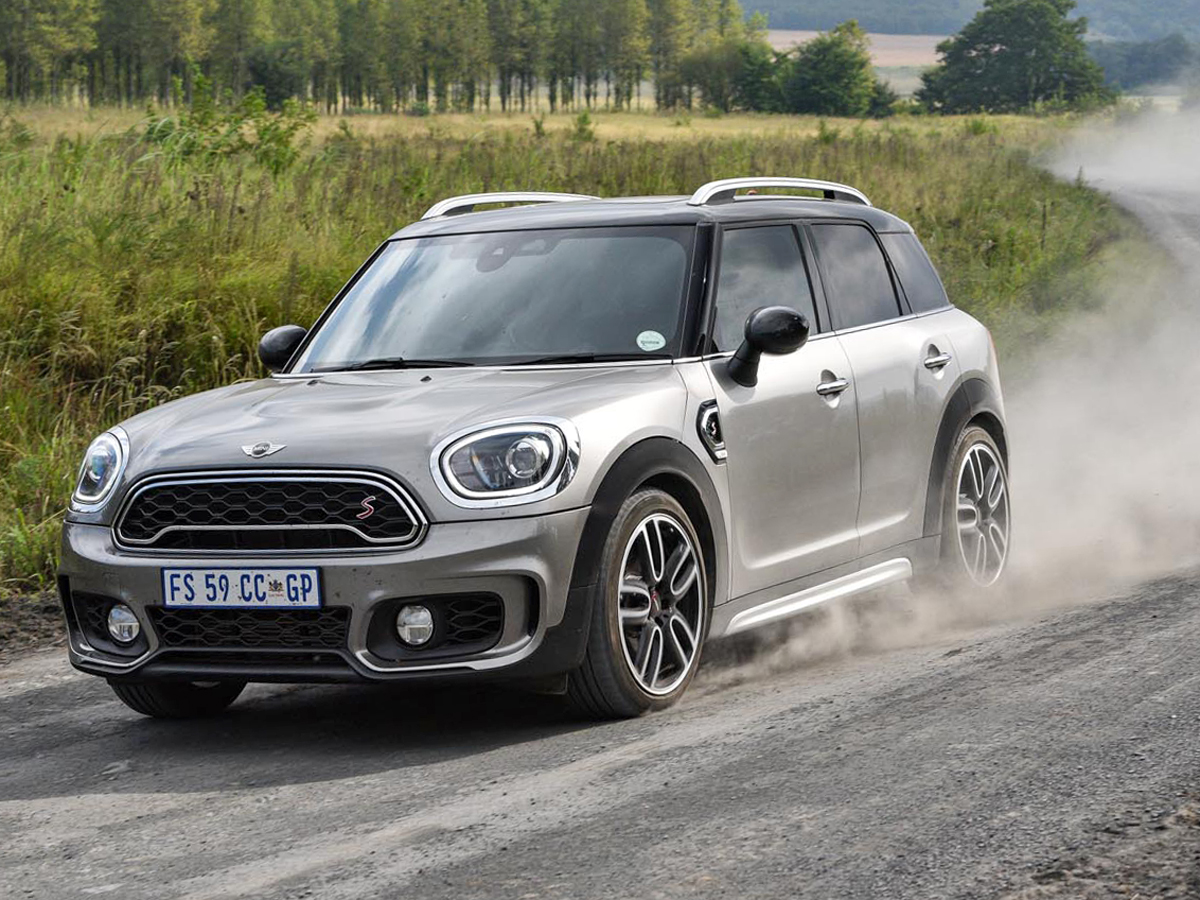
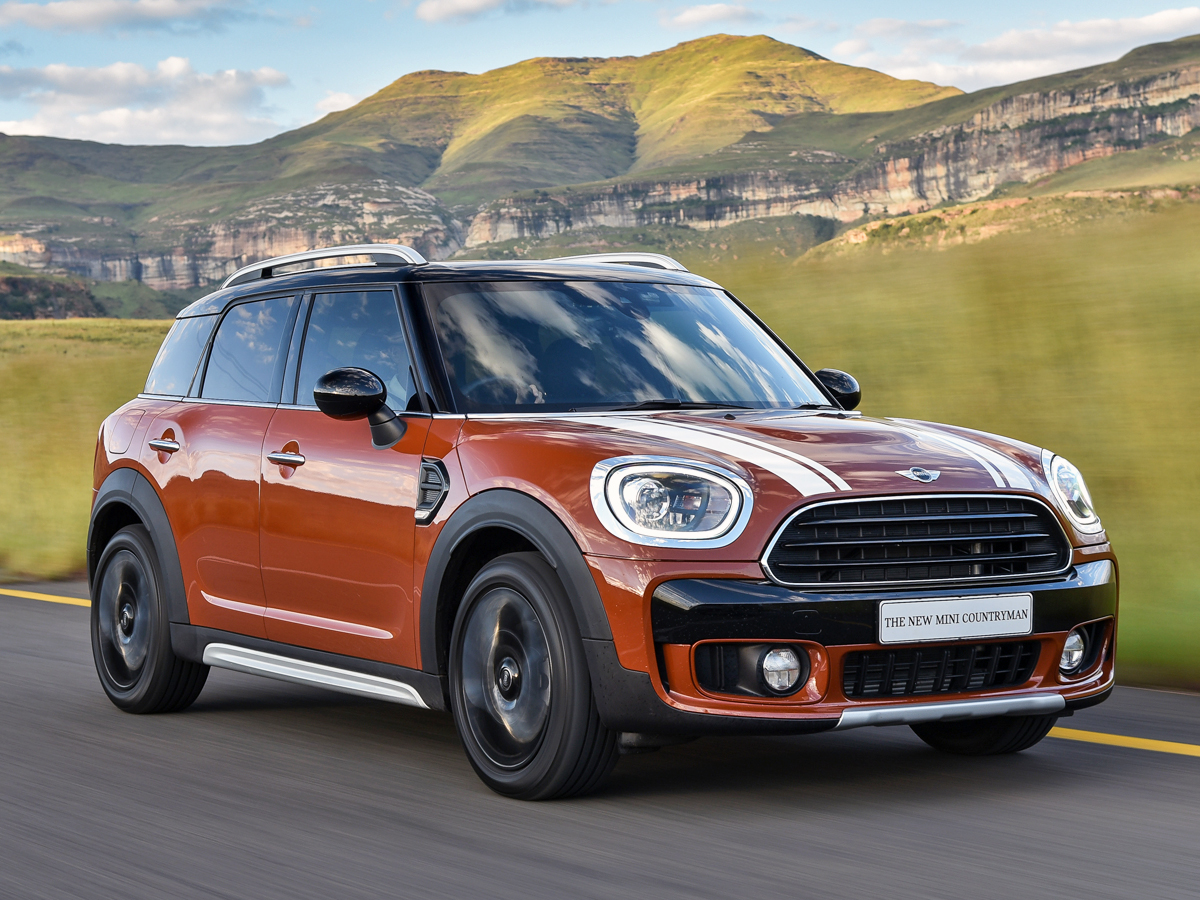
Equal parts charming and practical, there’s plenty to like about the F60-series Mini Countryman. So, should you consider buying a used version of what was at the time the biggest Mini in the range?
When the F60-series Mini Countryman bounded onto the global stage late in 2016, some criticised the compact crossover for its anything-but-mini exterior dimensions, suggesting Sir Alec Issigonis – the celebrated designer of the pint-sized original Mini launched in 1959 – would be rolling in his grave.
But the BMW-owned brand was simply moving with the times, just as it did with the preceding – though slightly more compact – R60-series Countryman back in 2010 (and, for example, just as Porsche did by conceiving the original Cayenne, an SUV that arguably saved the German sportscar brand’s bacon).
At the time, the F60 was the biggest Mini ever.
The Oxford-based automaker’s 2nd attempt at a premium small crossover resulted in what was, at the time, the largest Mini-badged model yet. Despite the outcry online, it was a strategy that worked wonders, with the Countryman serving as the brand’s best-selling nameplate in several major markets.
Built on the BMW Group’s UKL2 platform, the 2nd-gen Countryman shared various oily bits with the likes of the F48-series X1 and F45-gen 2 Series Active Tourer. It was billed as the “most versatile model” in Mini’s then-57-year history, featuring 5 “fully fledged” seats, a “clear increase in space” and even an optional “Picnic Bench” (that folded out of the load bay to provide outdoor seating for 2 people).
The optional “Picnic Bench”.
Despite both the 1st- and 2nd-gen versions of the BMW-built Countryman taking the form of 5-door crossovers, this nameplate was originally used on an entirely different body style.
Indeed, back in the early 1960s, the Austin Mini Countryman (alongside the Morris Mini Traveller) was a 2-door estate car featuring double barn-style rear portals.
F60 Mini Countryman’s SA line-up
The base Cooper derivative at launch.
The F60-series Mini Countryman was revealed online in October 2016 ahead of its official premiere at the Los Angeles Auto Show the following month. By the end of March 2017, the newcomer had arrived in South Africa and was available in front-wheel-drive Cooper and Cooper S derivatives.
Cooper Countryman 1.5 6MT (100 kW/220 Nm)
Cooper Countryman 1.5 6AT (100 kW/220 Nm)
Cooper S Countryman 2.0 6MT (141 kW/280 Nm)
Cooper S Countryman 2.0 8AT (141 kW/280 Nm)
Cooper variants employed the marque’s 1.5-litre, 3-cylinder turbopetrol motor, while Cooper S variants upgraded to a 2.0-litre 4-cylinder engine that likewise benefitted from forced induction. In August 2017, the John Cooper Works (JCW) Countryman slotted in at the summit of the local line-up, drawing its urge from what was – at the time – the most powerful engine ever fitted to a series-production Mini.
The JCW derivative arrived in Mzansi in August 2017.
In the JCW Countryman, the familiar 2.0-litre powerplant churned out 170 kW and 350 Nm, peak outputs there were delivered to all 4 wheels via either a 6-speed manual cog-swapper or an 8-speed automatic transmission. The 0-100 kph sprint took a claimed 6.5 sec regardless of the specified gearbox.
The Cooper D completed the Countryman portfolio around September 2017, offering 110 kW and 330 Nm from its 2.0-litre, 4-cylinder turbodiesel heart. Like the entry-level Cooper, the D-badged version was available with a choice of 6-speed transmissions (manual or auto).
Late in 2019, the JCW variant received a hefty power boost.
In the final quarter of 2019, an updated version of the JCW Countryman – now offered exclusively in 8-speed auto guise – touched down in Mzansi, with its engine significantly uprated to produce 225 kW and 450 Nm. Around the same time, the Cooper and Cooper S switched to a 7-speed dual-clutch gearbox.
The facelifted F60 Countryman then arrived in South Africa in November 2020, sporting refreshed exterior styling (including a distinctive “Union Jack” design in the taillamps) and a smattering of cabin updates. The latter included a new 5-inch instrument cluster sited ahead of the driver, along with a leather-trimmed sports steering wheel and various revised interior surfaces.
The facelifted Countryman; note the “Union Jack” taillights.
At launch, the refreshed range comprised only Cooper and Cooper S derivatives in 7-speed dual-clutch auto guise, while the still-firm ride quality was said to be palpably improved (even though run-flat tyres remained standard). Interestingly, the manual gearbox was thus no longer offered, with the turbodiesel derivative falling away, too. Shortly thereafter, the facelifted JCW Countryman made local landfall.
The final update for the F60 Countryman range in Mzansi came in the form of a special Untamed Edition launched in the 3rd quarter of 2022. Based on the Cooper S derivative, this limited-run variant featured Momentum Grey paintwork (a hue repeated on various exterior trim elements), along with 4 Frozen Bluestone diagonal stripes on the lower section of the doors, model-specific 18-inch alloy wheels and a green-and-blue interior colour scheme.
What are the F60 Mini Countryman’s strengths?
The interior of the pre-facelift Cooper S.
Characterful, high-quality cabin: Modern Minis are known to have some of the most interesting cabin designs on the market and the F60-series Countryman’s cockpit was certainly no exception. Highlights included a circular infotainment screen (a hat-tip to the classic Mini’s signature centre binnacle), vertically positioned air vents and the freestanding digital instrument cluster introduced at the facelift.
Compared with its predecessor, the Countryman’s interior build quality was vastly improved, while the larger exterior dimensions unlocked a whole new level of practicality.
Indeed, this model offered particularly impressive room for rear passengers (for the segment), with the 40:20:40-split rear bench furthermore able to slide fore and aft across 130 mm.
The split rear bench offered a sliding function.
The luggage bay, too, offered plenty of packing space at 450 litres, while an electric tailgate was available. There was also a storage package that included not only a handy variable load floor, but also lashing eyes and tension straps, along with a stainless-steel insert on the loading sill.
Wide range of engines: As detailed above, the 2nd-gen Countryman was available with a wide range of powertrains. That meant there was an engine to suit most tastes, with the 3-cylinder Cooper catering to entry-level buyers and the 4-pot Cooper S providing more than sufficient zip for most requirements.
The 4-cylinder Cooper S engine.
The JCW-badged derivative, of course, appealed to enthusiasts, with the uprated 225-kW version said to reach 100 kph from a standstill in 5.1 seconds – a whopping 1.4 seconds quicker than its 170-kW predecessor. Finally, the Cooper D offered typical turbodiesel economy, sipping a claimed 4.7 L/100 km in auto guise and 4.8 L/100 km in manual form.
As an aside, it’s interesting to note that BMW Group SA planned to offer a plug-in hybrid electric vehicle (PHEV) version of the F60 Countryman from 2018, but for whatever reason (probably a prohibitive asking price) this derivative never arrived. Badged as the Cooper SE Countryman All4, it featured a 1.5-litre, 3-cylinder petrol engine and an electric motor, resulting in peak system outputs of 165 kW and 385 Nm.
Fun to drive? Check.
Enjoyable to drive: As the largest Mini of the era, the F60 Countryman was, obviously, considerably heavier than the standard F56 3-door hatchback, and it stood quite a bit taller, too.
Though that extra weight and height meant the Countryman wasn’t the sharpest Mini to pilot, it nevertheless remained entirely enjoyable to drive quickly. This characteristic was further amplified in models fitted with a zesty powertrain, as was the case with the Cooper S and JCW.
What are the F60 Mini Countryman’s weaknesses?
A look at the pre-facelift JCW Countryman’s cabin.
Condition-based servicing: Though it shipped with a 5-year/100 000 km maintenance plan, the Countryman – just like virtually all models in the BMW stable – featured so-called “condition-based servicing” (CBS) rather than predetermined service intervals. What exactly does this mean?
In short, the vehicle would monitor the condition of various components (including the engine oil) and alert the driver only when the onboard diagnostics system determined a workshop visit was necessary. BMW said this resulted in “lower cost of ownership through the effective extension of service intervals”.
Pay close attention to the frequency of performed maintenance.
Still, there’s an argument to be made that, under certain circumstances at least, these flexible service intervals could be extended a little too far. Therefore, many fastidious BMW and Mini owners opted to slot intermediate oil changes between the CBS recommendations.
So, we’d suggest paying particularly close attention to the service history of any used Countryman you are considering to make sure you’re satisfied with the frequency of the performed routine maintenance.
Miscellaneous potential issues: We should preface this section by pointing out the F60’s engines were all regarded as generally quite reliable (when fastidiously maintained, of course).
With that in mind, what were some of the relatively common complaints with the B38 motor, as used in the entry-level Cooper derivative? Well, since this was a 3-cylinder unit, it was inherently unbalanced and thus prone to transmitting vibrations into the cabin.
The Cooper’s 3-cylinder engine could transmit vibrations into the cabin.
More importantly, it could be afflicted by carbon build-up on the intake valves, an issue that was likewise common to the 2.0-litre B48 motor (used in the Cooper S and JCW). Both engines were known to suffer from oil leaks (usually from the filter housing) and coolant leaks (from the water pump or thermostat).
Meanwhile, the B47 turbodiesel motor was considered a far more robust engine than its N47 forebear, with the latter having a bit of a reputation for snapping timing chains. Still, we have heard of stretched timing chains in the B47, even if such instances seem relatively uncommon.
The F60 Countryman measured 4 299 mm long.
Too big to be a “real” Mini? While we certainly understand why Mini opted to grow the Countryman in its 2nd generation, there was no escaping the fact that this model’s exterior dimensions stood in direct contradiction to the badge affixed to its snout (not to mention the ethos of the Issigonis-designed original). Is this really a problem? Well, that’ll depend on your perspective.
For the record, the F60 Countryman measured 4 299 mm from nose to tail, which made it a considerable 202 mm longer than its predecessor (but still 140 mm shorter than the F48 BMW X1). With an extra 75 mm crammed between its axles, the 2nd-gen Countryman’s wheelbase grew appreciably to 2 670 mm.
How much is a used Mini Countryman in SA?
The entry-level Cooper was the most prevalent derivative on the used market.
When shopping for a 2nd-gen Countryman on the used market, keep in mind some derivatives will be fitted with what were at the time quite pricey optional extras. For instance, adaptive dampers, sports suspension and various alloy-wheel designs were available for an extra cost, as were several packages (each comprising an array of individual items).
Of the F60 Mini Countryman models listed on Cars.co.za at the time of writing, nearly 50% were Cooper derivatives (with the Cooper S accounting for approximately 30% and the JCW the remaining 20%). Fascinatingly, we found just 2 examples of the Cooper D on the market – and zero manual examples.
Around a 5th of all listings were JCW derivatives.
Indicated mileages ranged from 1 000 km to 156 000 km, with the latter figure achieved by a 2019 JCW variant. Just 14% of all models listed showed more than 100 000 km on their respective odometers.
Below R300 000: The few F60 Countryman listings below R300 000 were from the opening 2 model years, with an equal split between Cooper and Cooper S derivatives. The cheapest example we discovered was a 2017 Cooper Countryman with 110 000 km on the clock listed for R239 990.
From R300 000 to R400 000: There was far more choice in this pricing bracket, which included a handful of facelifted models and 1 of the few turbodiesel examples on the market. The Cooper was again most prevalent here, though we even found a couple of pre-facelift JCW units in this space.
From R400 000 to R500 000: About a 3rd of all listings fell between these pricing bookends, though pre-facelift models still dominated here. That said, average mileage was on the low side, with hardly any examples showing more than 75 000 km.
R500 000 and up: A budget of over R500 000 could quite easily put you in a facelifted Countryman with under 30 000 km on the clock. We found late model-year Cooper and Cooper S variants in this space, though JCW derivatives were the most common. The most expensive F60 we unearthed was a 2022 JCW (showing 10 000 km) fitted with several extras and priced at R769 990.
Which Mini Countryman derivative should I buy?
We’d opt for a facelifted Cooper S.
While your budget will play a considerable role in which Countryman derivative you settle on, we’d point to the Cooper S as the sweet spot in the range. More refined than the 3-cylinder Cooper, easier to find than the seldom-spotted Cooper D and better suited to everyday driving than the angrier JCW, the 141 kW Cooper S nevertheless delivered more than enough grunt for most needs.
Judging by our experience scouring the classifieds, you’d probably be limited to a self-shifting example of the Cooper S, though that needn’t be a negative considering both the earlier 8-speed automatic ‘box and the later 7-speed dual-clutch transmission were both pleasingly well-calibrated cog-swappers.
Is the F60 Mini Countryman a smart used buy?
Note the updated instrument cluster in this facelifted Cooper S.
What else could you consider in this segment? Well, the F60 Countryman’s rivals included the slightly smaller Audi Q2 and the related Volkswagen T-Roc, as well as the F39-series BMW X2 and both generations (X156 and H247) of the Mercedes-Benz GLA.
With its similarly retro-inspired roots, the Fiat 500X made for an interesting rival, but it wasn’t quite as premium (nor as pricey) as the Mini. Potential buyers might also have looked at the Volvo XC40, the Mazda CX-30 and even the P24-series Peugeot 2008.
Several other more mainstream (and thus more affordable) offerings were available, too.
Bigger, yes, but thus more practical, too.
Of course, unlike the Countryman, not one of the rivals above was criticised for being “too big”. Ironically, the F60’s increased size was likely the very reason it went on to become one of the marque’s top sellers.
A mite more sensible than its forebear, this model offered buyers new levels of practicality while largely retaining the brand’s inimitable character, both from the standpoint of design (inside and out) and in terms of the driving experience.
In short, the 2nd-gen Mini Countryman grew up – in more ways than one – to help the Oxford-based (and BMW-owned) brand grab a meatier slice of the premium small crossover pie. Besides, parked next to the current U25-gen model, the F60 Mini Countryman now looks downright dainty…
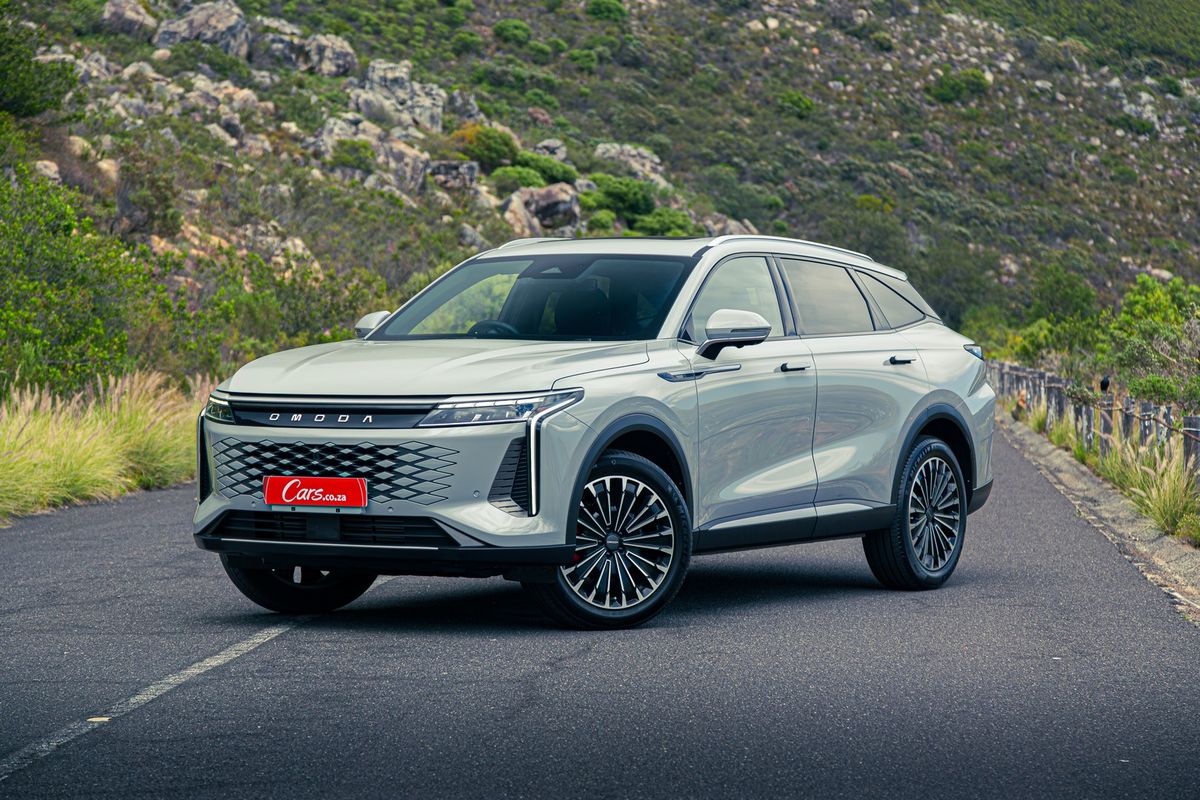
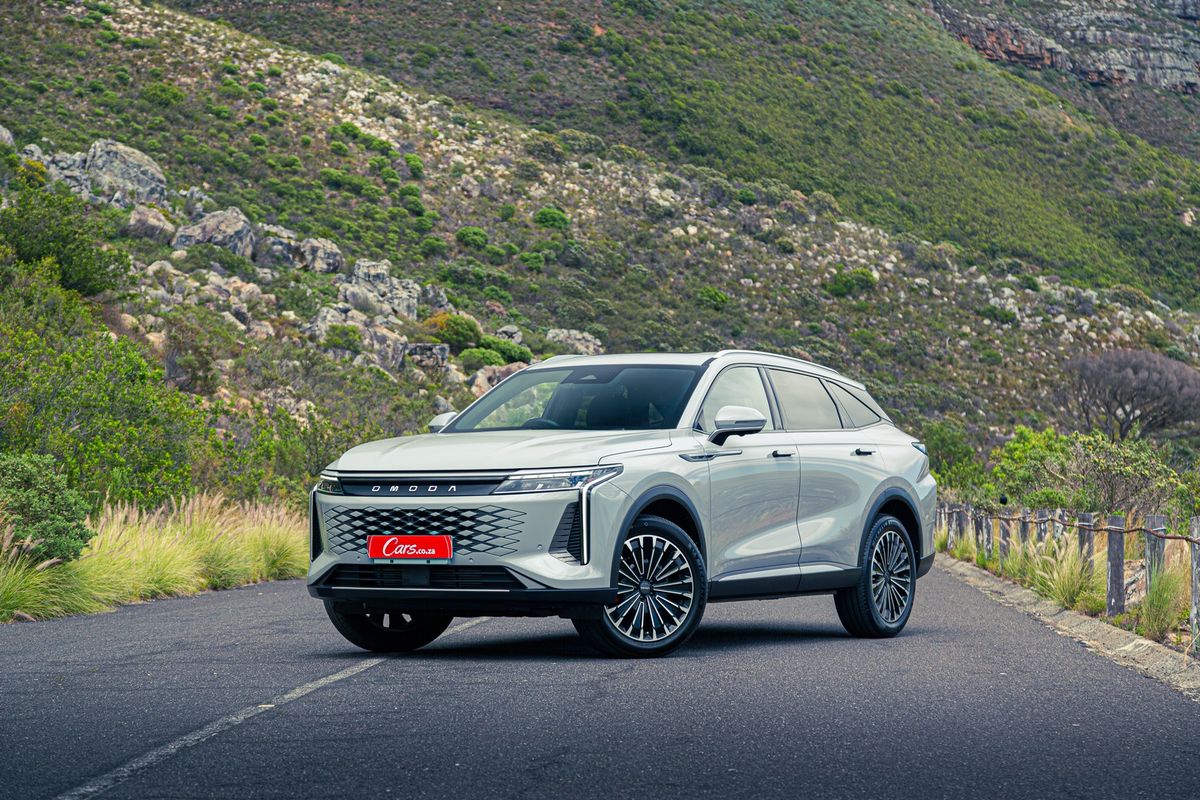
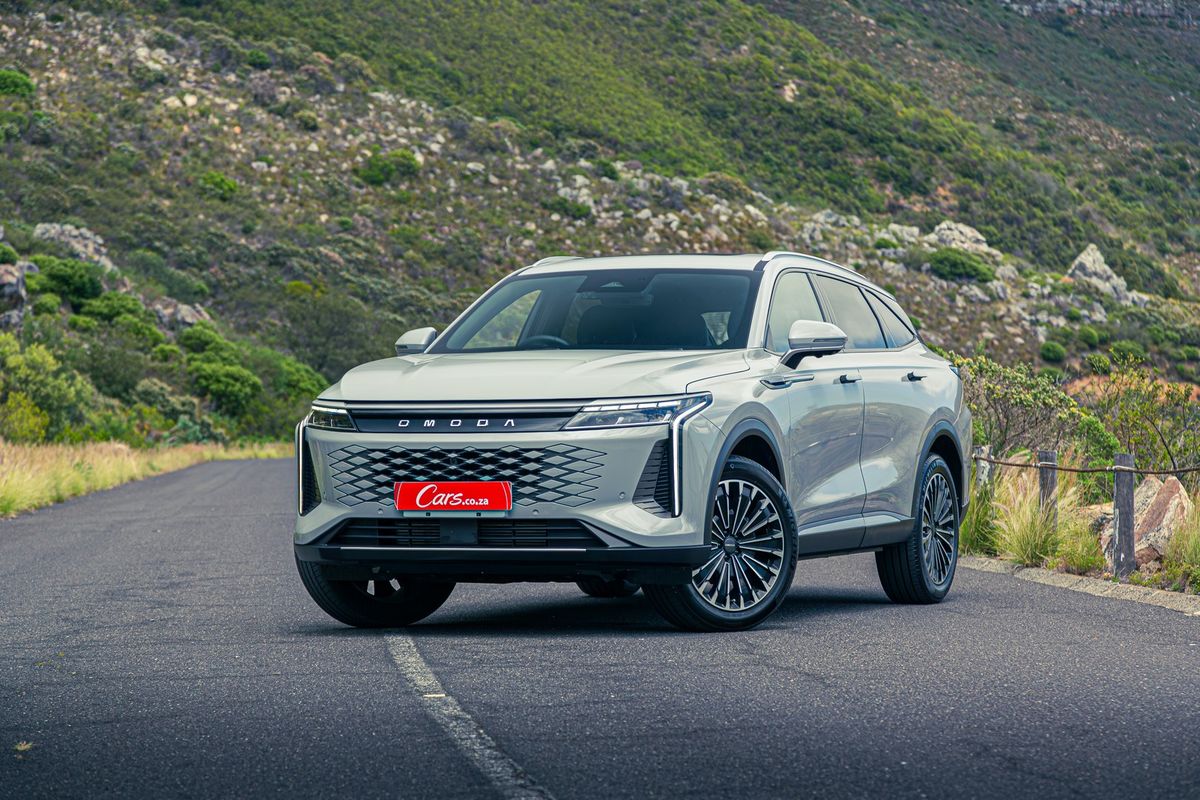
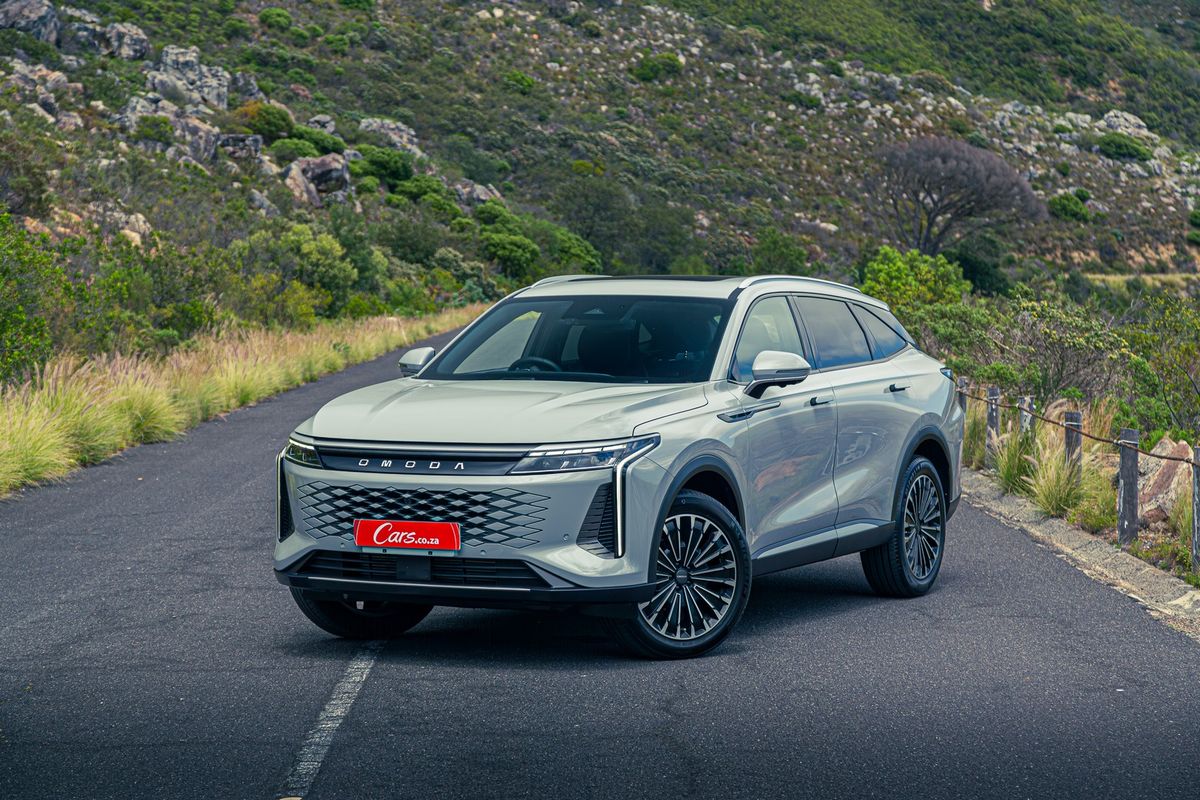
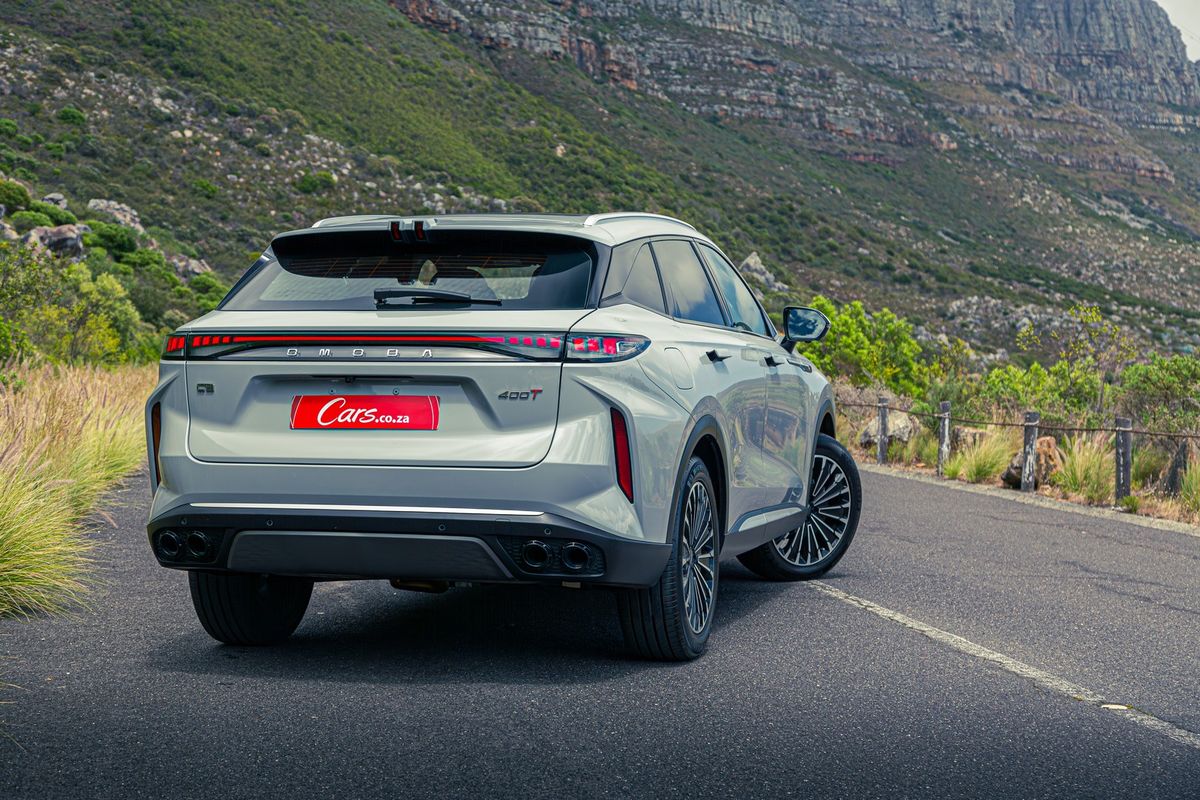
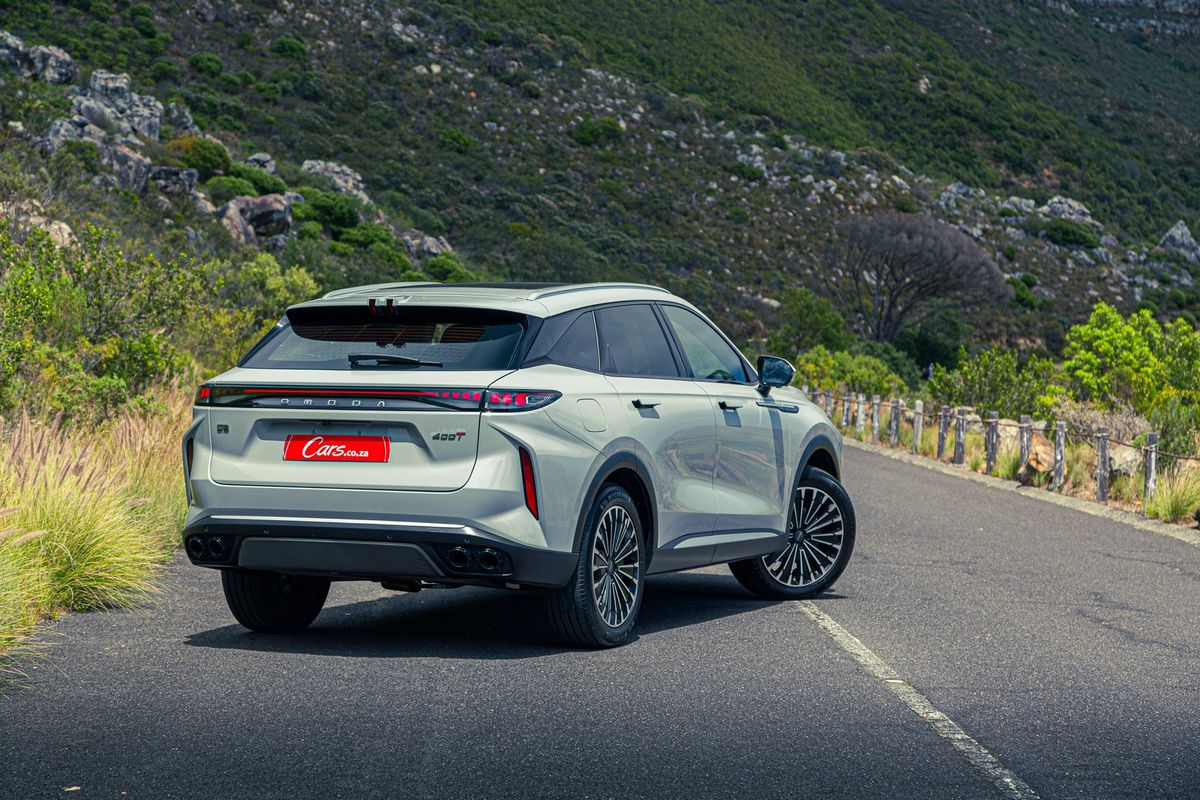
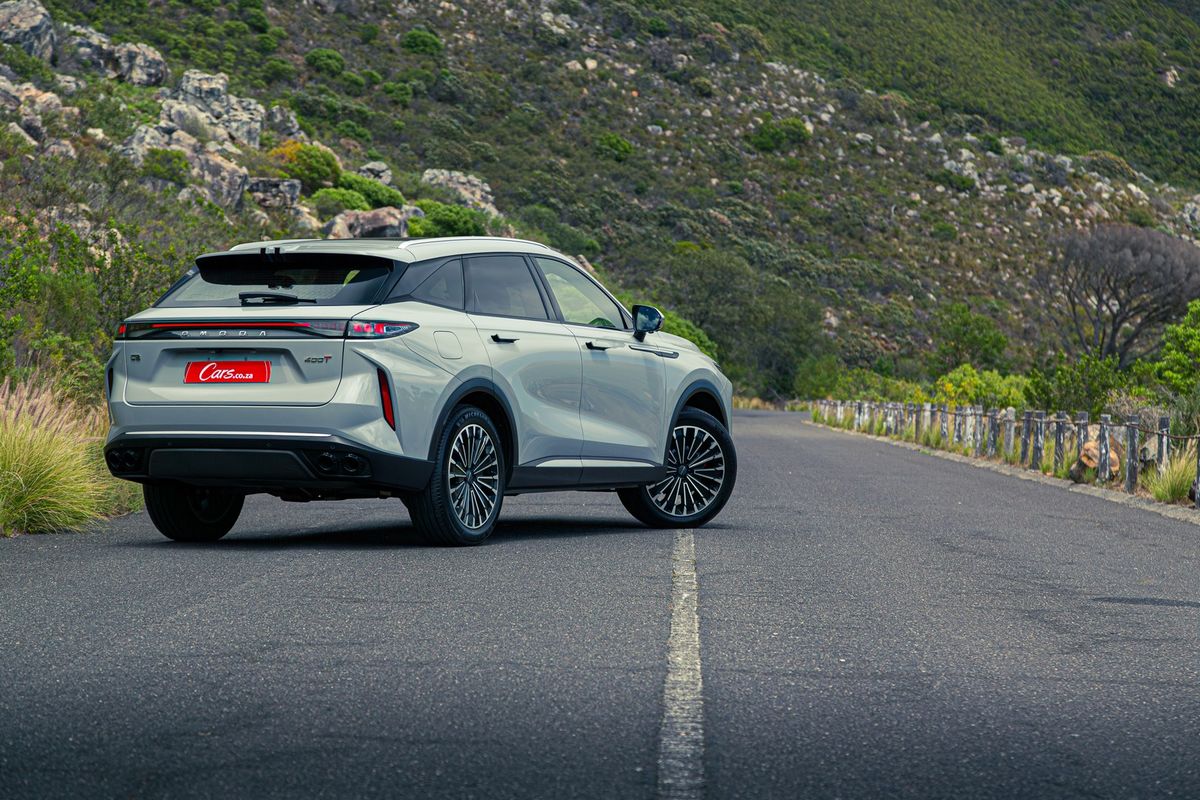
Size-wise, the Omoda C9 – the flagship of the Chery Group’s O&J division – fits into the Executive SUV segment, but price-wise, it competes with top-end family cars. Indeed, the model represents excellent value for money, but does it flatter to deceive?
We like: Comprehensive spec, surprisingly competent on gravel, spaciousness, practicality, on-road refinement.
We don’t like: Overbearing safety tech, some minor quality issues, high fuel consumption.
By offering well-priced vehicles in the small and medium crossover segments, the Chery Group (Chery, Omoda and Jaecoo) has established a substantial foothold in South Africa in a relatively short space of time. Therefore, it’s no surprise that the brands’ line-ups have diversified and pushed upmarket, but will local car buyers also have a healthy appetite for the Chinese giant’s bigger, more premium offerings?
Pity about the quartet of fake exhaust tips – they’re purely there for show.
The C9 is Omoda’s flagship SUV. Priced from a shade under R800k, the Omoda C9 range comprises a pair of derivatives in either front or all-wheel drive guise. The latter (the 2.0TGDI 400T Explore AWD) is specced with additional features, tops the range and is the subject of this review. The C9 is a confident foray into the premium space, where buyers are said to be more brand-conscious than price-sensitive.
Choosing rivals for the C9 is tricky. It’s a larger vehicle than similarly priced family cars and, if you want a vehicle of the C9’s size with similar levels of spec, you must be prepared to pay a substantial premium.
You could also consider a Chery Tiggo 8 Pro Max, which has the same engine (but slightly reduced peak outputs) and a 3rd row of seats. It’s priced more than R100k lower than the C9, so seems a real bargain.
How the Omoda C9 fares in terms of…
Design & Practicality
In an era in which car design has become predictable and formulaic (spurred on by the motor industry’s pursuit of ever-stricter safety-, aerodynamic and -efficiency standards), bold, distinctive designs are few and far between. However, the Omoda C9 does make quite a style statement with its sharp angles and boldly creased sheetmetal. Dare we ask: “Has the Brutalist architectural style crossed over to cars?”
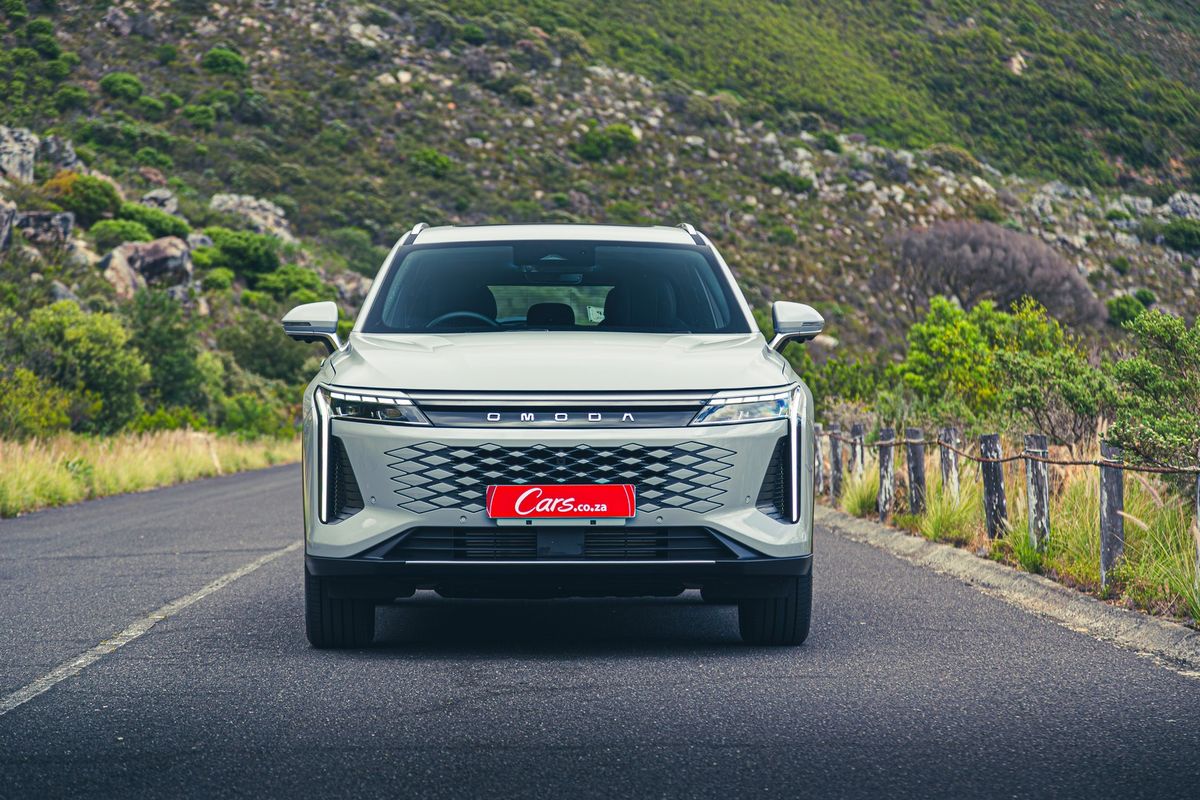
Slim headlamps, vertical LED daytime running lights and a textured grille make quite an imposing statement.
The Omoda C9 is sizeable: 4 775 mm long and 1 920 mm wide, with a 2 800 mm wheelbase. This is not a comparative review, but it is worth noting that the Tiguan and Sportage have wheelbases of 2 676 mm and 2 680 mm. So the C9 is not a medium SUV per se; based on dimensions, it can be categorised as an Executive SUV, such as the Audi Q5, BMW X3, Kia Sorento, Lexus NX and Mercedes-Benz GLC.
Why do we emphasise a technical detail (the length of the Chinese offering’s wheelbase) in particular? It’s because the wheelbase (the measurement between a vehicle’s axles) usually reflects the amount of interior (cabin space) it offers. The longer the wheelbase, the larger and more capacious the rear cabin.
Rear occupants are afforded generous leg- and headroom.
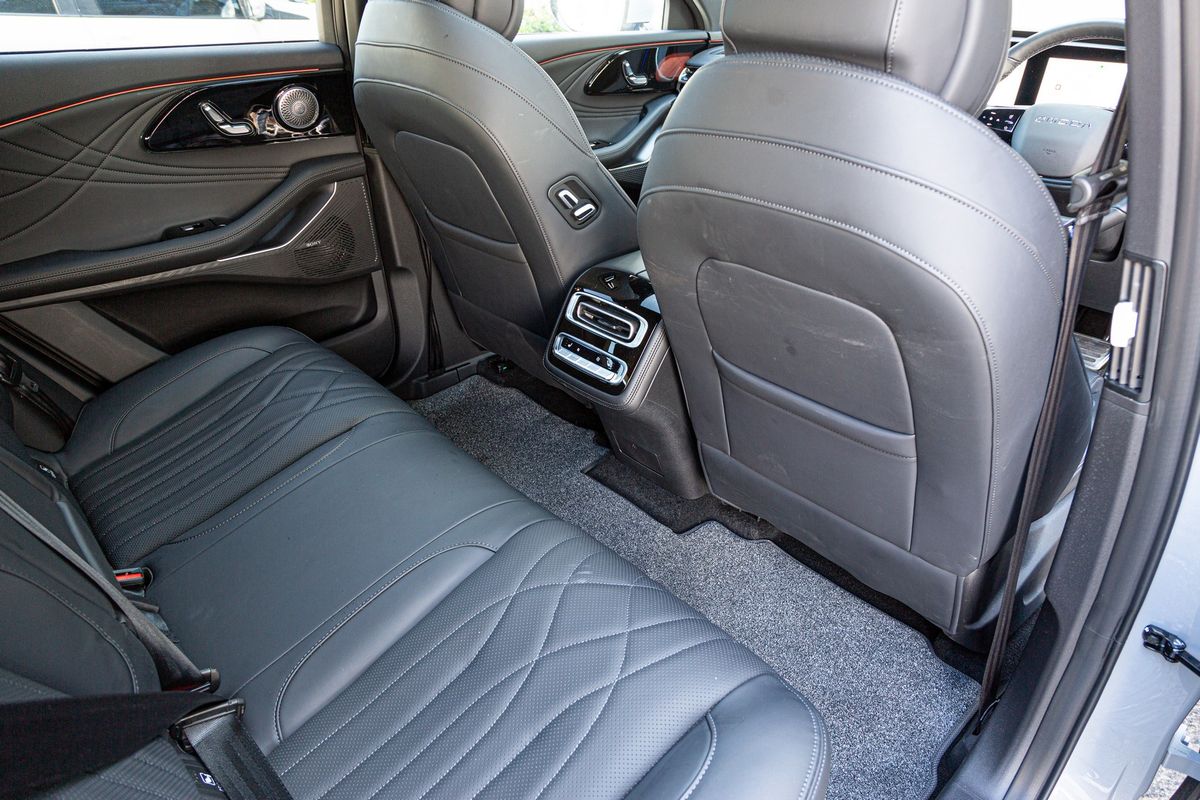
In the 2025 Omoda C9 2.0TGDI 400T Explore AWD, rear passengers benefit from generous amounts of leg- and headroom. For additional comfort and convenience, there’s privacy glass, adjustable and heated rear seats and well-sized door pockets, along with the obligatory USB charging ports.
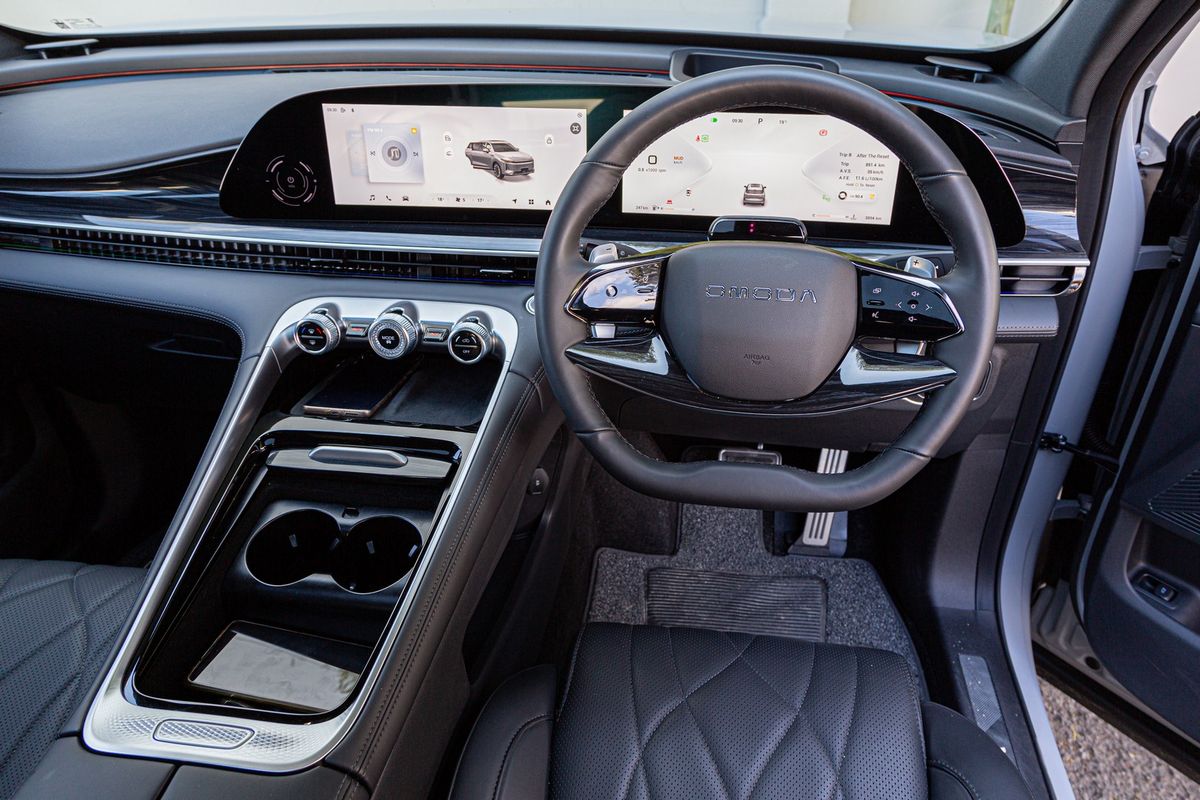
The driver and front passenger are not short-changed, however. The driver has a commanding view of the road (courtesy of a perched seating position) and, based on our initial impressions, the C9’s interior, with grand switchgear and a wide (infotainment and instrument cluster) screen, befits an executive SUV.
The Omoda C9 has magnificent showroom appeal, thanks to its smartly finished and tech-intensive cabin.
The list of standard features is exhaustive. We’re assessing the range-topping AWD here, but even the front-wheel-drive 400T Inspire is generously equipped. At this rather lofty price point, consumers will expect the Omoda C9 to come festooned with high-end features… but they won’t be disappointed.
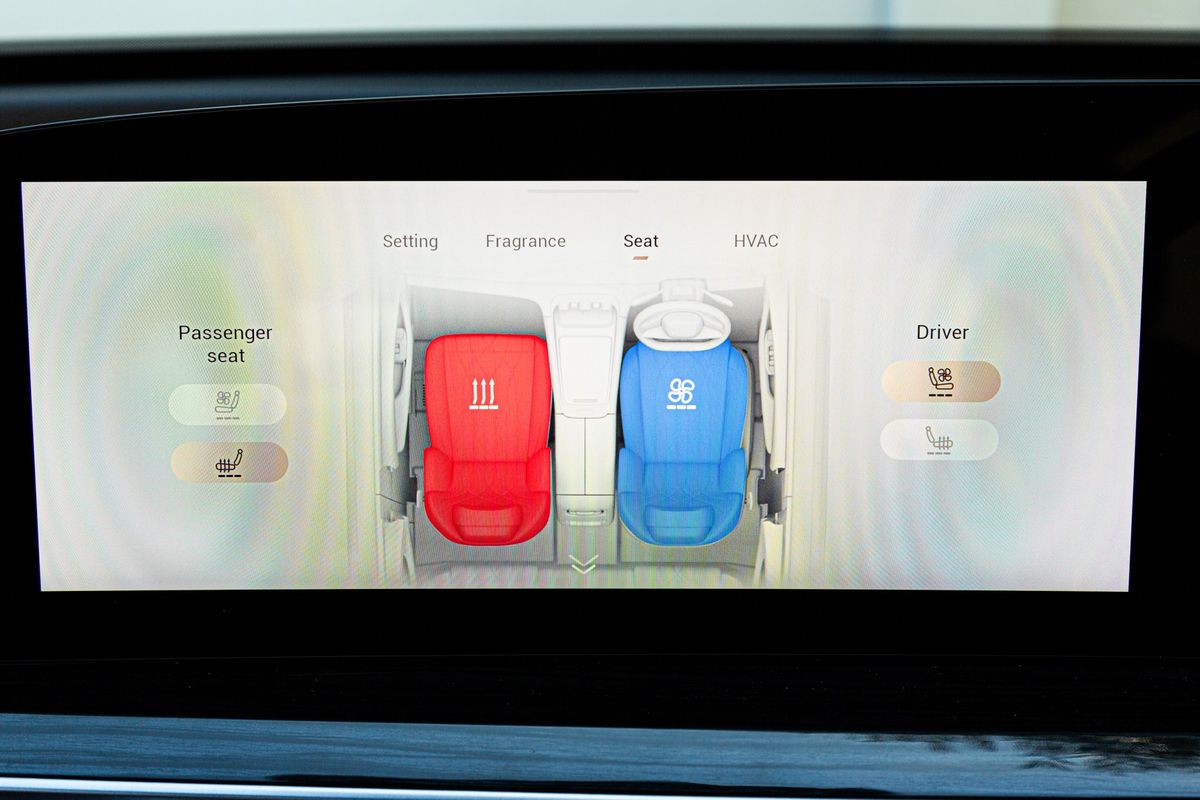
The front seats are electrically adjustable, heated and ventilated and there are settings for the fragrance dispenser.
A panoramic sunroof, electrically adjustable- heated and ventilated seats, leather trim, dual-zone climate control, a heated steering wheel, powered tailgate, multi-colour LED ambient lighting, an 8-speaker Sony audio system, Apple CarPlay/Android Auto and a potent wireless charging pad are all standard. That’s “a lot of toys”, so what do you get extra if you fork out R100k more for the top-spec 400T Explore AWD?
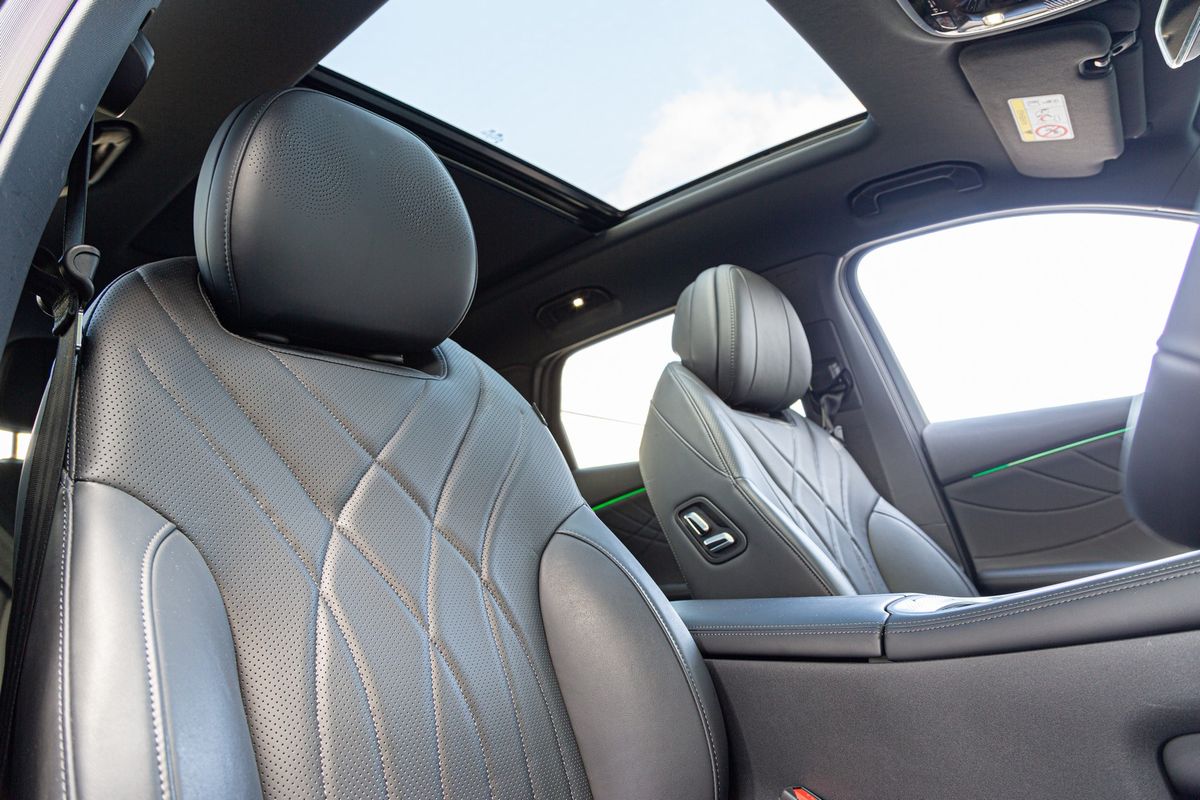
The Omoda C9 features a panoramic roof, beautifully contoured and comfortable seats and much, much more.
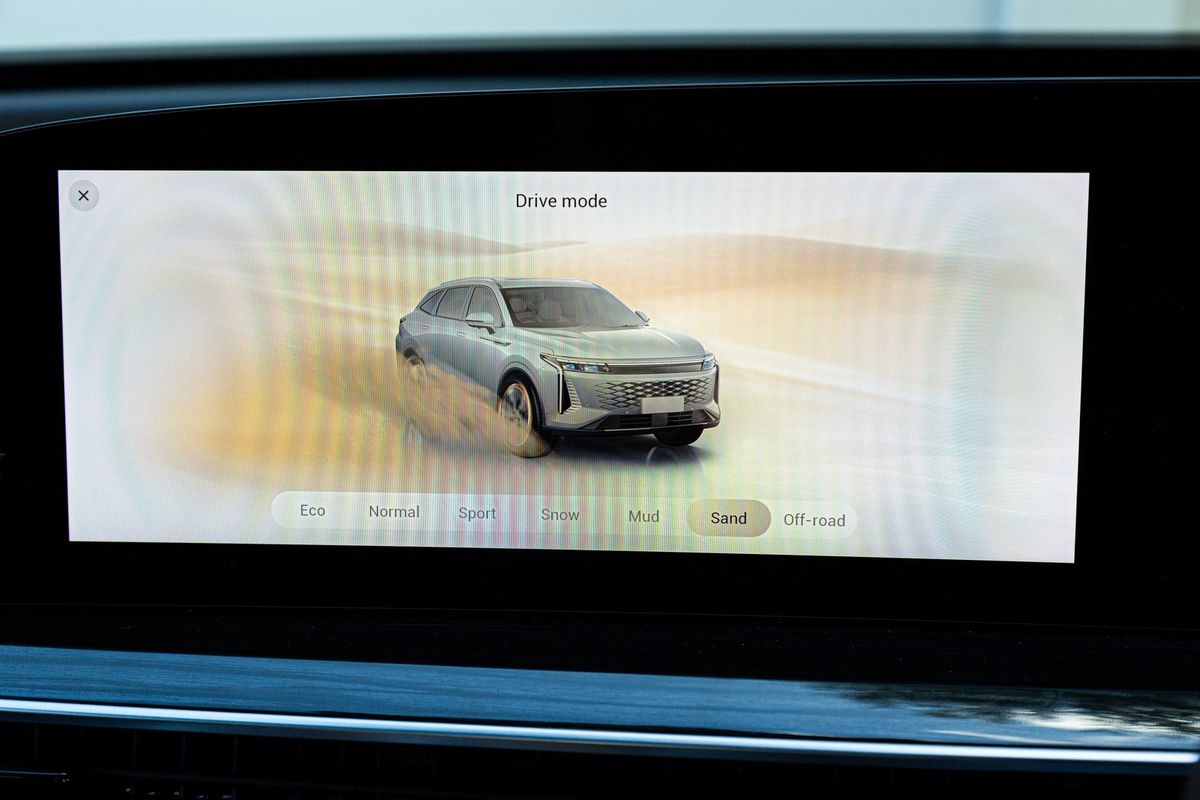
Along with all-wheel drive (and specific off-road drive modes), the flagship gains adaptive suspension, adaptive front lighting, a 12-speaker Sony audio (with speakers in the headrests), opulent Nappa leather trim and a built-in fragrance dispenser – yes, you read that correctly, as you’d find in a BMW 7 Series.
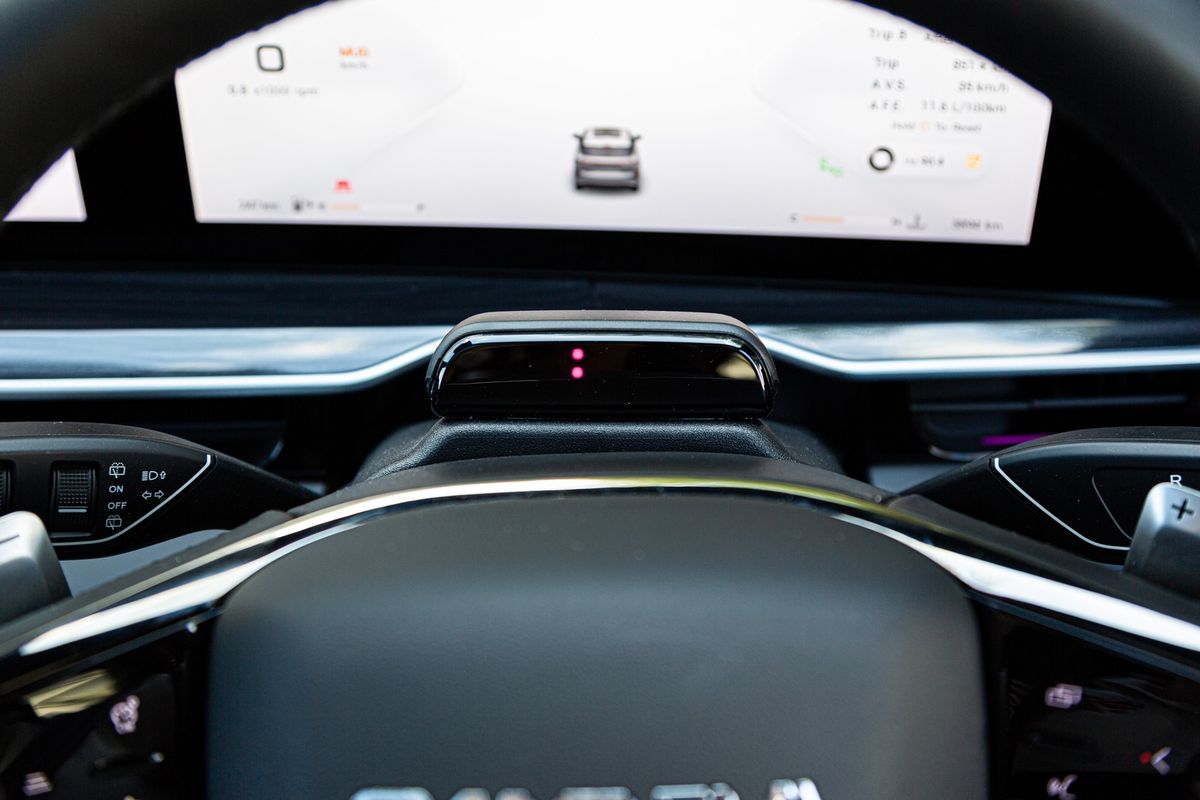
The user experience of the “widescreen” (a 12.3-inch digital instrument cluster flanked by a 12.3-inch infotainment screen) is intuitive and the menu system is reasonably coherent, but the setup feels a bit stale: the graphics quality is not quite as good as in other Chery Group products, such as the Jaecoo J7.
The driver’s view in the Omoda C9.
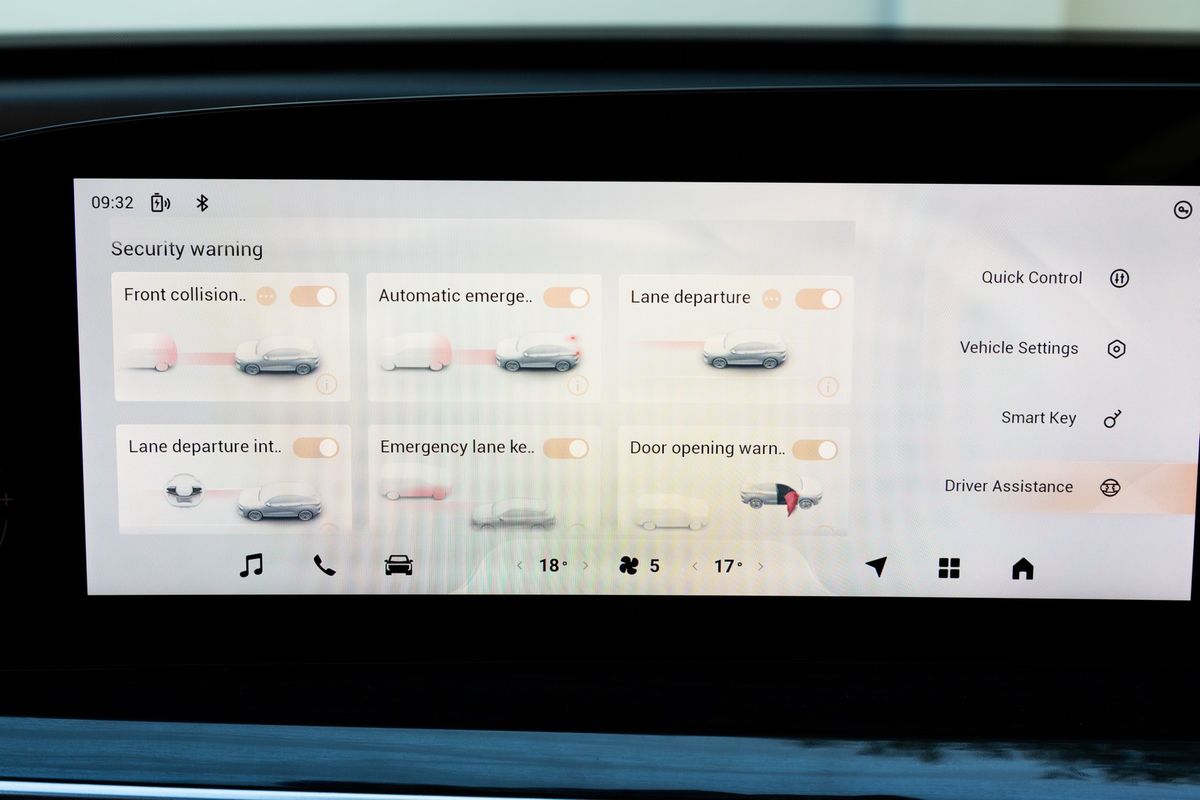
But, like in the Jaecoo J7, of which we did an extended review, some “nannies”, such as the distracted driver monitoring system and the lane-departure warning, which will tug at the ‘wheel if you dare change lanes without indicating, can be overbearing. Thankfully, you can reduce the intensity of those functions.
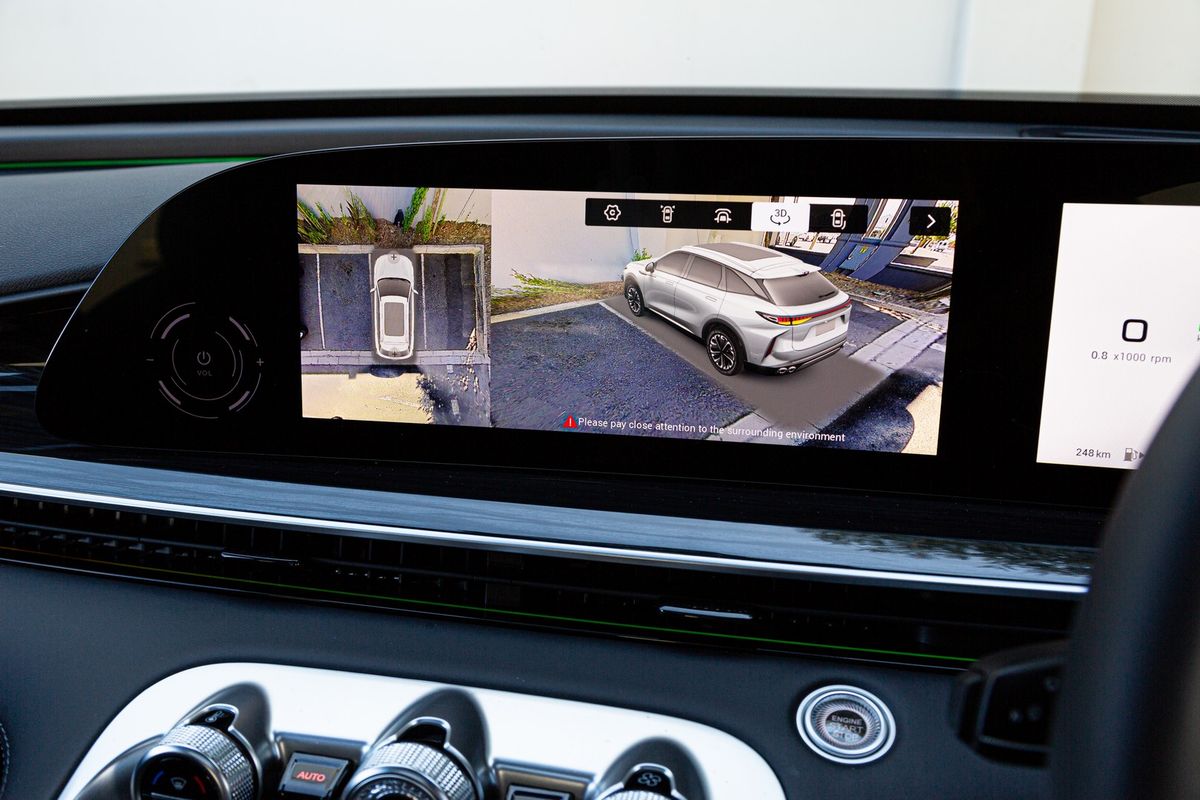
Unsurprisingly, safety tech abounds in the apex Omoda. The C9 is equipped with all the contemporary “must-haves”, including auto emergency braking, but that’s just the start. It has clever, genuinely useful features, such as warning you when you’re about to open a door into the path of approaching vehicles.
The Omoda C9 is equipped with a plethora of high-tech safety systems!
All perfect plain sailing then? Almost. The C9’s build quality/fit-and-finish is a mixed bag. At first glance, the quality is right up there with the segment leaders. The leather stitching, for example, is exceptional.
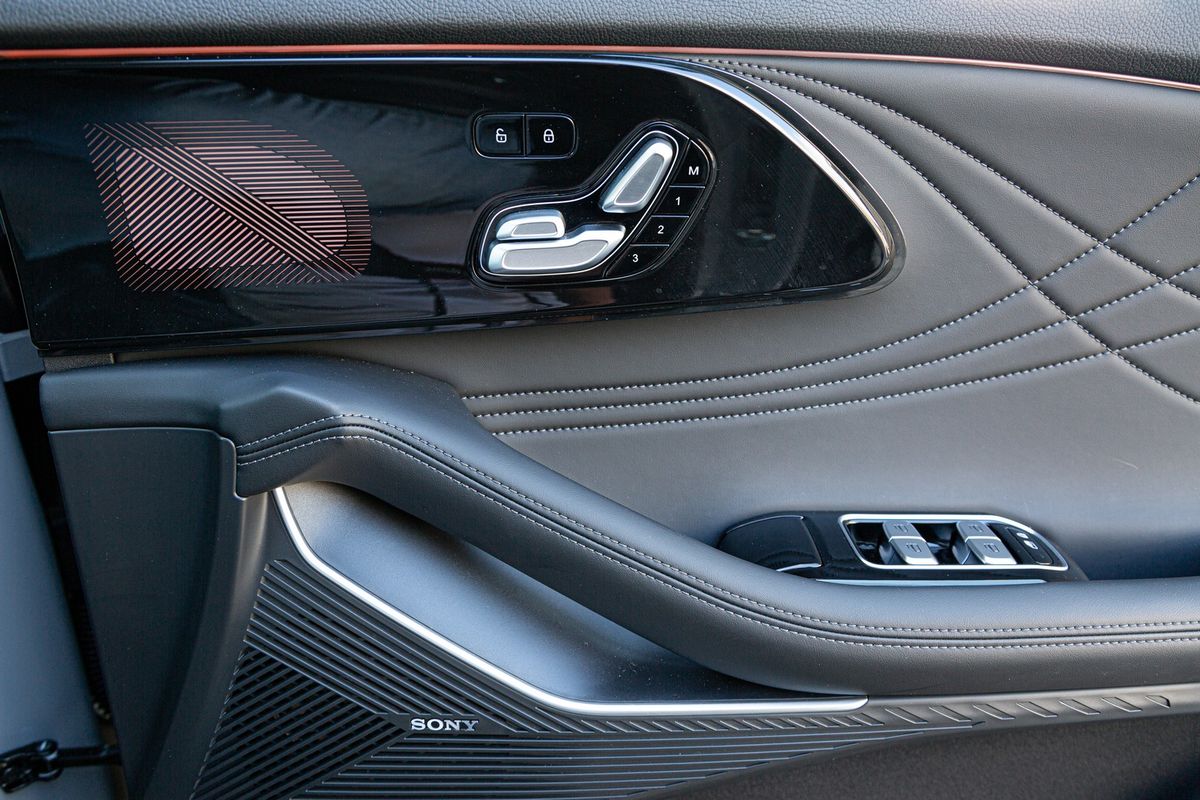
Upon closer inspection, however, some elements, such as the illuminated door panels, feel distinctly un-premium and of a similar standard you’d find in Omoda’s C5 small crossover. But, it isn’t a deal-breaker.
The Sony audio system is impressive, but some of the panels feel marginal compared with the rest of the package.
Performance & Efficiency
The 2025 Omoda C9 is powered by the Chery Group’s 2.0-litre 4-cylinder turbopetrol engine, with 192 kW and 400 Nm distributed to all wheels in this case (remember, the 400T Inspire is front-wheel-driven).
Based on those peak outputs, the Omoda C9 should deliver willing performance… The Chinese brand does not state a 0-100 kph time for the model, but according to our test equipment, the 2.0TGDI 400T Explore AWD (with its sportiest drive mode activated) charged from a standstill to 100 kph in 8.52 sec.
Peak engine outputs of 192 kW and 400 Nm make the Omoda C9 feel quite brisk.
Now while that’s not the quickest in its segment, we must point out that the C9 doesn’t feel like it lacks urge and, not to forget, the Omoda, with a claimed kerb weight of just over 1 800 kg, is no lightweight. That said, a 0-100 kph time is arguably less important than in-gear acceleration and the C9’s overtaking ability, particularly when merging with highway traffic from an onramp, proved more than sufficient.
The secret to its in-gear punch seems to be the 8-speed automatic transmission, which complements the turbopetrol engine’s performance characteristics. What’s more, it’s a conventional torque converter-type ‘box that delivers smoother pullaways and ‘shifts than a dual-clutch unit. There is no jerkiness and/or hesitation when pulling away and every gear shift feels like it gently blends into the next one.
We’d also like to mention that although many Chinese brands’ new products seem to exhibit uneven responses to accelerator-pedal inputs, this C9 felt more accurate and measured in its power delivery.
We suspect that if we drove more conservatively and prioritised Eco mode, the fuel efficiency would improve.
Based on its 65-litre fuel tank capacity and claimed consumption of 8.5 L/100 km, the Omoda C9 has a full-to-empty range of 765 km, but only in theory. While immense progress has been made in terms of fit-and-finish, plus build- and ride quality, this Chery Group product’s fuel economy is still mediocre.
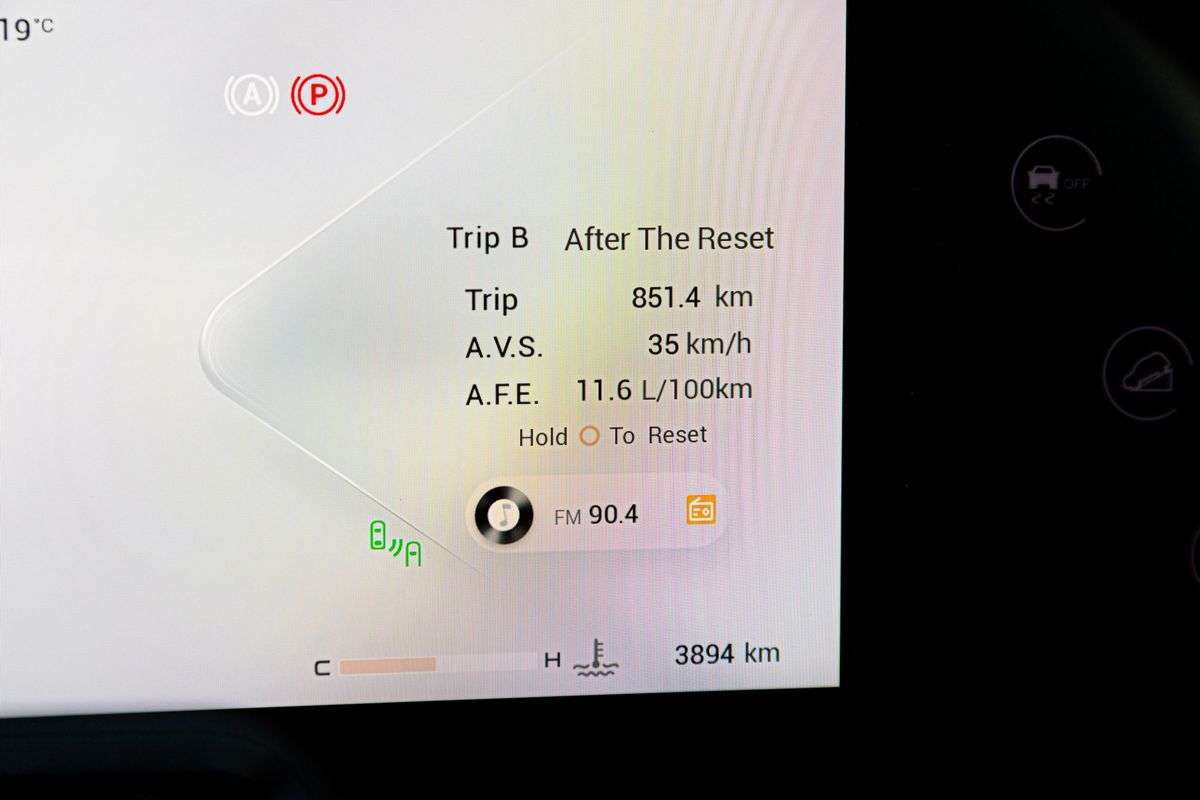
Despite our best efforts (we adopted a conservative driving style whenever we could), after travelling more than 850 km in the Omoda, 11.6 L/100 km was the best indicated return that we could achieve.
That being said, it’s not entirely the powertrain’s fault. The C9 employs permanent all-wheel drive (which can inhibit fuel efficiency – just ask Subaru owners) and the model is a few hundred kilograms heavier than its more efficient rivals, most of which utilise all-wheel drive on a part-time basis. Note that Omoda will introduce a plug-in hybrid C9 derivative in 2025, which is said can travel over 1 000 km on 1 tank.
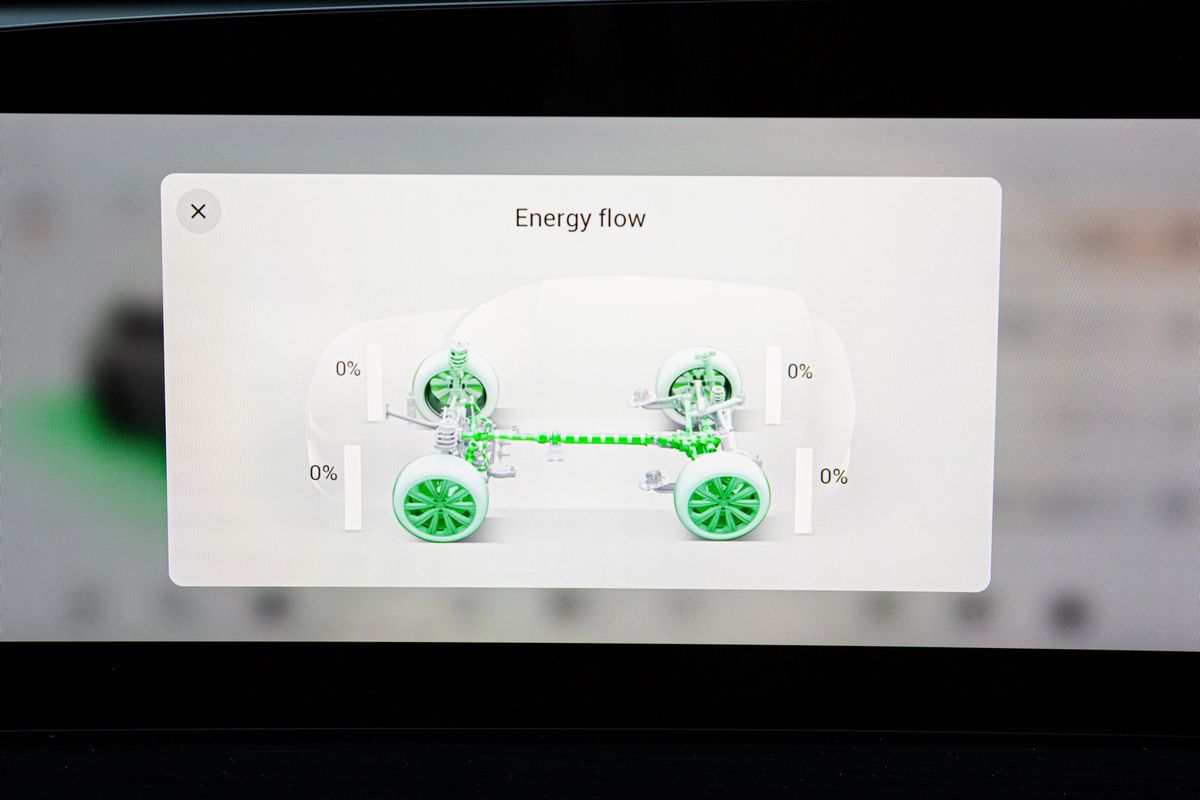
The car’s infotainment system has lots of technical readouts, such as this AWD distribution graphic.
Ride & Handling
What is the 2025 Omoda C9 like to drive? Given its considerable size and on-road presence, the C9 feels like a refined and premium offering. The ride quality is on the firm side, presumably to facilitate a sportier on-road feel, but that applies to most large SUVs – even when they’re not badged as sporty derivatives.
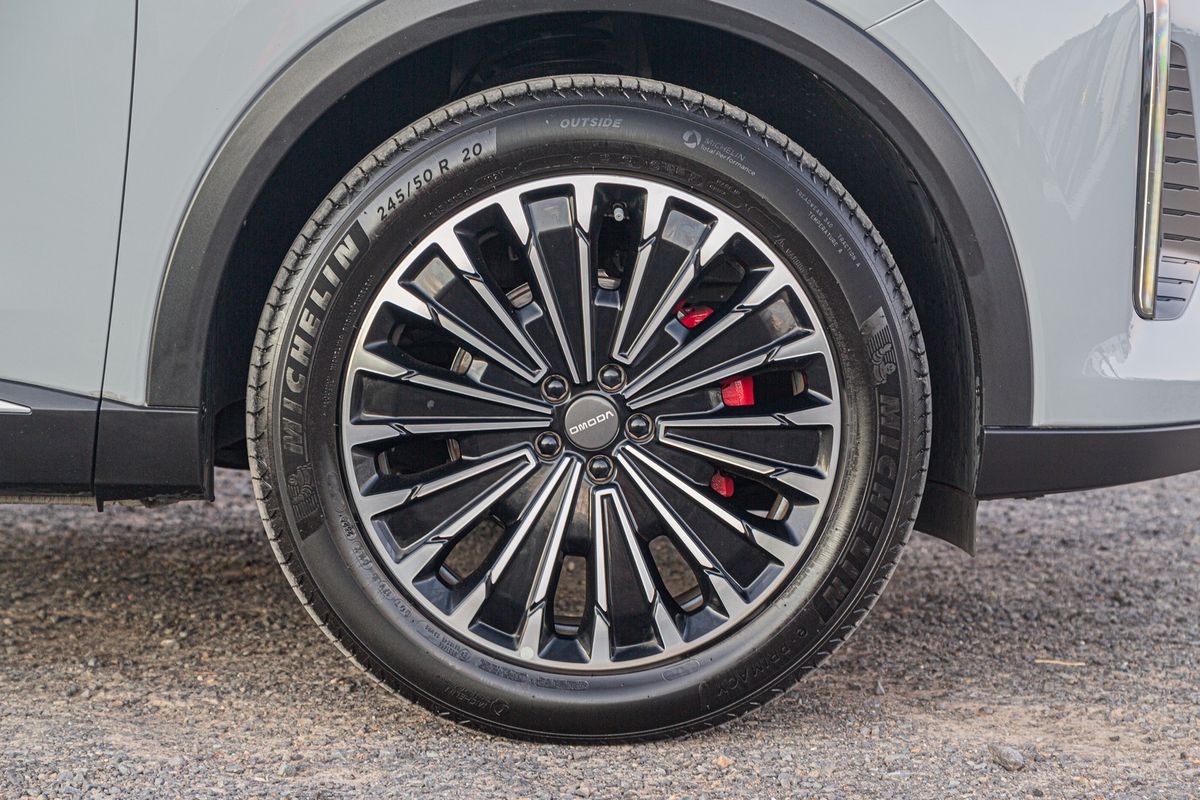
That said, we appreciate that the Omoda’s suspension can soak up most road imperfections. It’s quite a feat, considering the C9 has large (20-inch) alloy wheels. Fortunately, the flagship’s handsome rims are wrapped with reasonably plump 245/50 tyres and Omoda didn’t skimp on the rubber – they’re Michelins!
Furthermore, the C9’s open-road refinement is great – you’ll be impressed by the lack of road noise.
These stylish 20-inch wheels are wrapped in expensive Michelin rubber.
Given the C9’s sophisticated underpinnings, minimal body roll and well-balanced ride quality, one would hope it would have an engaging steering setup, but the multifunction ‘wheel feels just a bit too light to wield for a vehicle of this stature, even after you select a sportier drive mode, which adds artificial heft. You miss that big-car “meatiness”, even if executing tight parking manoeuvres requires little effort.
And, on the open road, you have to make constant micro-adjustments to keep the C9 tracking straight –or just do what we did: use the car’s adaptive cruise control with steering assist, which is less tiring.
Pick a mode, any mode
With an all-wheel drivetrain and a selection of off-road modes to play with, we would be remiss if we didn’t drive the C9 on a gravel road – at a brisk pace – to see how well it holds up. The Omoda’s all-paw setup is sound; when there was a loss of traction (minimal), the stability control gently reined things in.
Granted, the author was rather enthusiastic (he required more from the C9 on gravel than most owners would), but it was reassuring to feel the all-wheel drive (AWD) system work its magic. AWD is best suited for the snowy and icy months in Europe, but in the domestic context, it’s a nice-to-have safety feature.
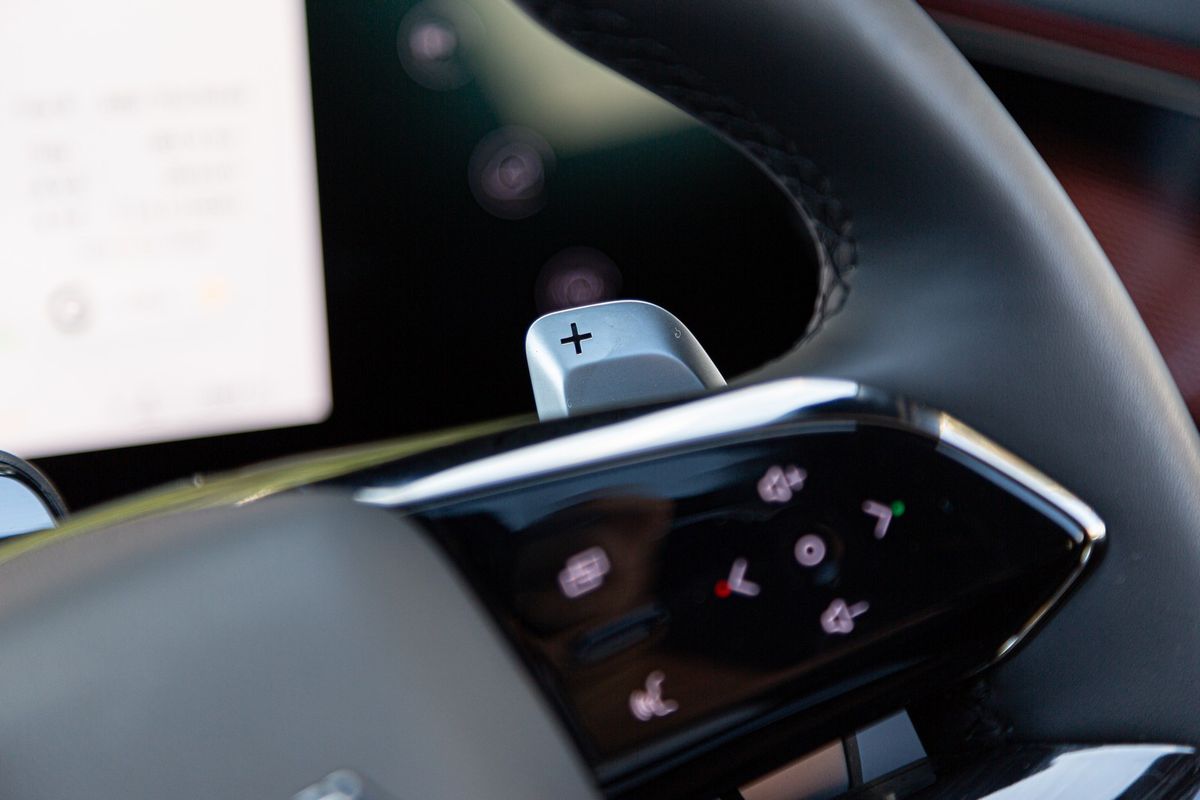
It’s also worth mentioning the gearshift paddles located behind the steering wheel: not only do they add a premium touch – they feel substantial to operate. They sort of symbolise an “ultimate level of control”.
Mechanical feeling gear-shift paddles are a nice touch, but the transmission shifts quite sensibly on its own.
Price and After-Sales Support
The 2025 Omoda C9 2.0TGDI 400T Explore AWD costs R885 900 (February 2025), which includes a 7-year/200 000 km warranty, a 10-year/1 000 000 km engine warranty (for the vehicle’s 1st owner), as well as a 7-year/100 000 km service plan. The Chery Group has truly sweetened the deal on this newcomer: its warranty and service plan are significantly longer and more comprehensive than those of its rivals.
Verdict
The C9 is proof that the Chery Group has listened to criticism – and raised its game!
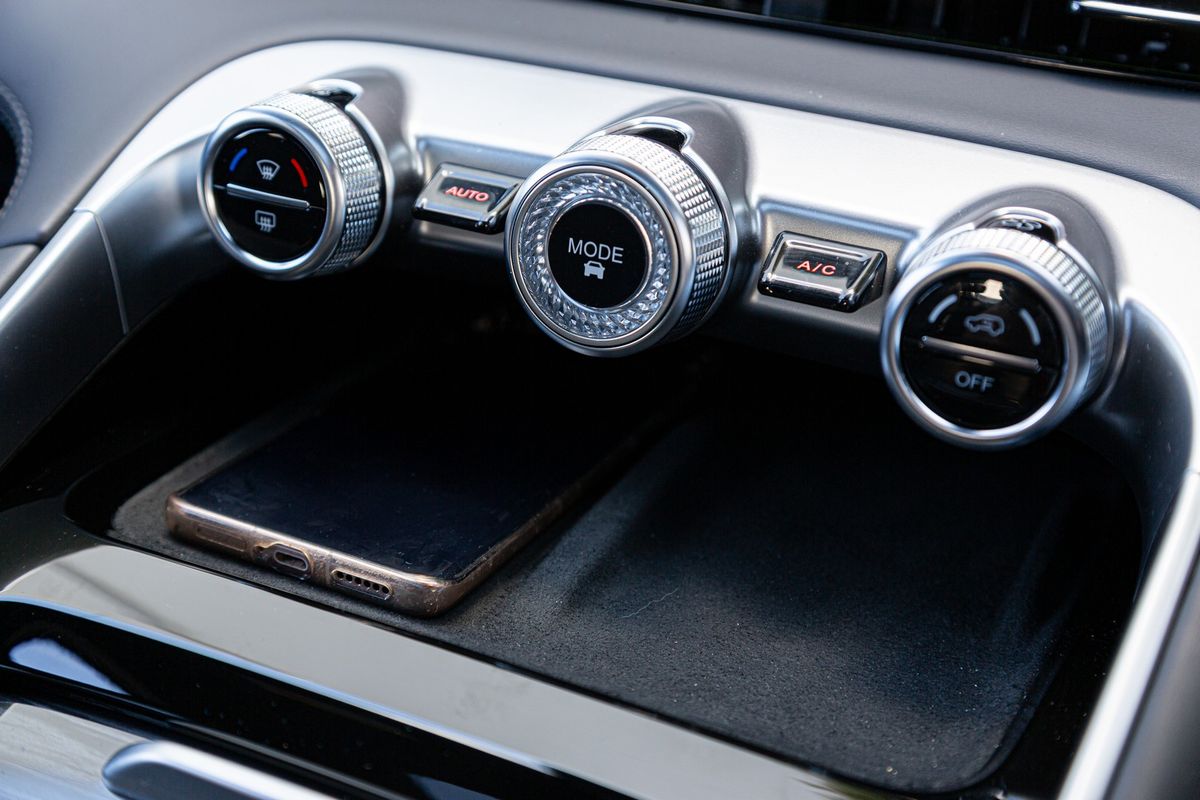
The Chery Group’s efforts to elevate Omoda into a premium brand are subtle – and effective. Whereas the C5 seems fancy, its C9 sibling is plush: From the ‘Benz-like seat adjustment controls on the doors, to the Range Rover-style door handles that retract into the bodywork once locked – we get the impression that Omoda has implemented its learnings from premium players into this value-packed family SUV.
You can’t forget the outrageous equipment and features list either. A fragrance dispenser and speakers in the headrests? Those are high-ticket items commonly found in models such as the BMW 7 Series or Mercedes-Benz S-Class and yet, they’re standard on this “family SUV” that costs under R1 million.
Few models will be able to match the value offering (and spaciousness at the price) of the Omoda C9.
We’ve reviewed numerous Chinese brands’ models, but the Omoda C9 illustrates the ability that one of several fledgling brands has to move upmarket quickly and decisively. Most of our criticisms of Chery Group products’ powertrains have been addressed and the C9 is oh-so-close to being excellent. Given the C9’s talents, it may not take long for Chinese brands to dominate the Executive SUV market too.
Volkswagen Indaba 2025: What new cars are coming to SA?
Volkswagen Group Africa this week held its annual Volkswagen Indaba at its Kariega production facility in Uitenhage, Eastern Cape, where the German firm provided industry updates and insights and revealed its product plan for 2025, including progress on its forthcoming Entry A0 SUV which will be locally produced at Kariega. See the details below!
It’s only fitting that Volkswagen Indaba 2025 took place in the engine room of Volkswagen Group Africa’s production facility in Kariega where media and industry representatives, including NAAMSA, convened to receive industry insight and product information for the year ahead and beyond.
It’s going to be a busy year for Volkswagen Group Africa as the German firm intends to expand its local product offering while also growing its market share in a challenging and complex trading environment. Just last month, Volkswagen lost its long-held second-place sales position to Suzuki South Africa, evidence of a rapidly changing marketplace that’s proving to be hugely competitive for legacy brands such as Volkswagen.
In 2024, the firm achieved an all-time production record with a total of 167 084 units rolling off the line. Despite this success, Volkswagen Group Africa’s passenger car business shrunk by 2.8% in 2024, but with an exciting and varied mix of new products joining its lineup in 2025, the firm is setting itself up for growth and continued success in the local market and abroad.
Let’s take a peek at the new vehicles coming from Volkswagen Group Africa!
New Entry A0 SUV to be built at Kariega
This teaser image was released in 2024, hinting at the expected design of the new Entry A0 SUV.
The Kariega production facility is the sole production site for the Polo, Polo GTI and the Polo Vivo with a third, small SUV model, expected to go into production in 2027.
As reported in 2024, the design and development of this new small SUV has been led by Volkswagen in Brazil and it will carry the “Tera” nameplate in that market and will also be produced at the firm’s Taubaté factory. The new Volkswagen Tera is due to be fully revealed in Brazil in early March 2025. Interestingly, the model name to be used in the South African context has yet to be decided upon and Volkswagen Group Africa has confirmed that the naming convention for the new model will take place in March 2025.
A sizable investment of R4-billion into Volkswagen’s Kariega production facility was announced in 2024. Plant upgrades are already underway in preparation for full-scale local production of this new small SUV in 2027.
The Kariega facility will produce the new A0 Entry SUV.
The new A0 SUV to come from Volkswagen Group Africa will be produced alongside the Polo, Polo GTI and Polo Vivo and will serve to fill production volume at Kariega as demand for the Polo is expected to wane in European export markets as Electric Vehicle (EV) uptake increases. The new SUV, however, will not be sold on the Old Continent but will rather serve South Africa and Africa at large where demand for Internal Combustion Engine (ICE) remains strong.
Volkswagen Group South Africa did share new details regarding the model’s design but the information is under embargo and we are therefore not in a position to divulge any information at this point in time but more details will be revealed when the Tera SUV is shown in March 2025.
The new SUV is based on the current Polo platform and will slot in below the firm’s T-Cross compact SUV and will complement Volkswagen’s current SUV lineup which also includes the Taigo, T-Roc, Tiguan and Touareg. Powertrain details will be confirmed in due course and we’ll keep you updated.
Volkswagen Polo Vivo Edition 15 coming in Q3 2025
Volkswagen Group Africa is celebrating 15 years of the Polo Vivo in 2025 and to commemorate the milestone, Volkswagen will introduce the Edition 15 Polo Vivo in the third quarter of 2025.
Production of the Volkswagen Polo Vivo Edition 15 will be limited to only 1 500 units and will ride on unique wheels and will be easily identified by its Edition 15 decals seen along the lower side skirts and on the right bonnet lip. Exact specification and pricing details will be confirmed closer to its launch.
Volkswagen Golf fans will soon see the Golf 8.5 1.4 TSI in local showrooms featuring the familiar 110 kW / 250 Nm turbocharged 1.4-litre, 4-cylinder petrol engine which will be exclusively paired with an 8-speed automatic transmission. A total of 4 trim grades will be available to customers including Life, Life+, R-Line and R-Line+.
Volkswagen also revealed pricing details ahead of the model’s arrival which is as follows:
VW Golf 1.4 TSI 110 kW Life – R580 900
VW Golf 1.4 TSI 110 kW Life+ – R604 500
VW Golf 1.4 TSI 110 kW R-Line – R660 000
VW Golf 1.4 TSI 110 kW R-Line+ – R688 100
Volkswagen Group Africa has yet to announce warranty and service/maintenance plan details for this model.
The facelifted T-Cross arrived in South Africa towards the end of 2024 and Volkswagen Group Africa has now confirmed pricing details for the 6 derivatives available to customers. The facelifted T-Cross is powered by VW’s turbocharged 1.0-litre, 3-cylinder petrol motor offering either 70 kW and 175 Nm or 85 kW and 200 Nm. Buyers can choose from a 5-speed manual gearbox or a 7-speed dual-clutch gearbox.
A total of 4 trim lines are available including Base, Life, Style and R-Line.
The 7-seater Tayron is expected in August / September 2025 and will serve as a replacement for the outgoing Tiguan Allspace.
When it arrives, powertrains are likely to mirror what’s offered for the new Tiguan which includes a 1.4 and 2.0-litre turbopetrol engine as well as a 2.0-litre turbodiesel engine. Specification and pricing will be revealed closer to launch.
Volkswagen Polo GTI Black Style coming in Q3 2025
Volkswagen will introduce a special edition Polo GTI Black Style in the third quarter of 2025. While its 2.0-litre turbocharged petrol engine with 147 kW and 320 Nm remains, the Polo GTI Black Style gains additional black exterior details to embolden its look such as black alloy wheels, black rear diffuser and black and red badging, to name a few, to distinguish it from the standard Polo GTI.
Pricing will be confirmed closer to its arrival later in 2025.
On the commercial side, Volkswagen Commercial announced the forthcoming introduction of a budget delivery vehicle based on the Polo Vivo. The vehicle name has yet to be finalised but the unit on display at Volkswagen Indaba 2025 carried the Vivo Xpress moniker.
This segment has seen tremendous growth in the last 3 years and Volkswagen will look to capitalise on the opportunity while broadening its product offering.
The Xpress is expected to launch in the second quarter of 2025 and will likely be powered by Volkswagens 1.4-litre petrol engine with 55 kW and 130 Nm and paired with a 5-speed manual transmission.
2025 will see the new Transport range reach South Africa which will include the Kombi, Crew Bus and Panel Van while the Transporter Double-Cab is expected to follow in 2026.
Furthermore, depending on application, the Transporter will be offered in both short- and long-wheelbase guise. A total of 3 2.0-litre turbodiesel engines will power the range with power ranging from 81 kW, 110kW and 125 kW.
Pricing and specifications will be communicated closer to launch.
Facelifted Volkswagen Crafter coming in the first half of 2025
The Crafter has received a facelift and when it arrives later in 2025 it will be more versatile to serve a wide range of needs. The Crafter enjoys great success in South Africa and the model celebrates its 50th anniversary in 2025.
The Crafter 35 will be offered in both short and long-wheelbase form and will be powered by a 130 kW 2.0-litre bi-turbocharged turbodiesel engine. The Crafter 50, however, will feature a 120 kW 2.0-litre bi-turbocharged engine and will be paired with an 8-speed automatic transmission for the first time. The cabin of the Crafter has also received a notable upgrade, now featuring a larger infotainment screen, a digital instrument cluster and enhanced safety features.
Pricing and specification details will be confirmed closer to launch.
The electric Volkswagen ID Buzz is confirmed for a local introduction in the second quarter of 2025. Combining futuristic and retro-inspired looks, the ID Buzz should be available in both long-wheelbase and short-wheelbase derivatives, and customers can choose from both single motor or twin-motor setups, the latter offering all-wheel drive. The introduction of the passenger bus follows what appears to be a successful trial period where DHL used a number of commercial ID Buzz vehicles for deliveries.
Pricing and specifications details will be confirmed closer to launch.
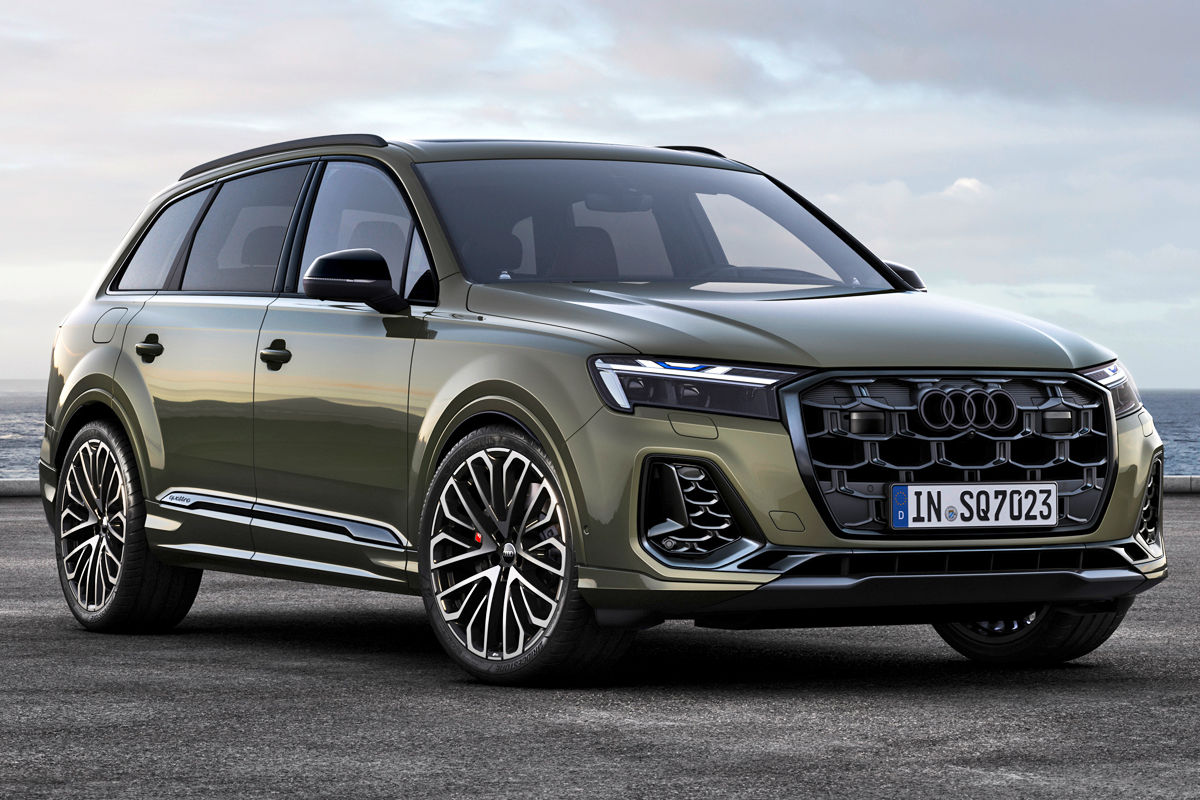
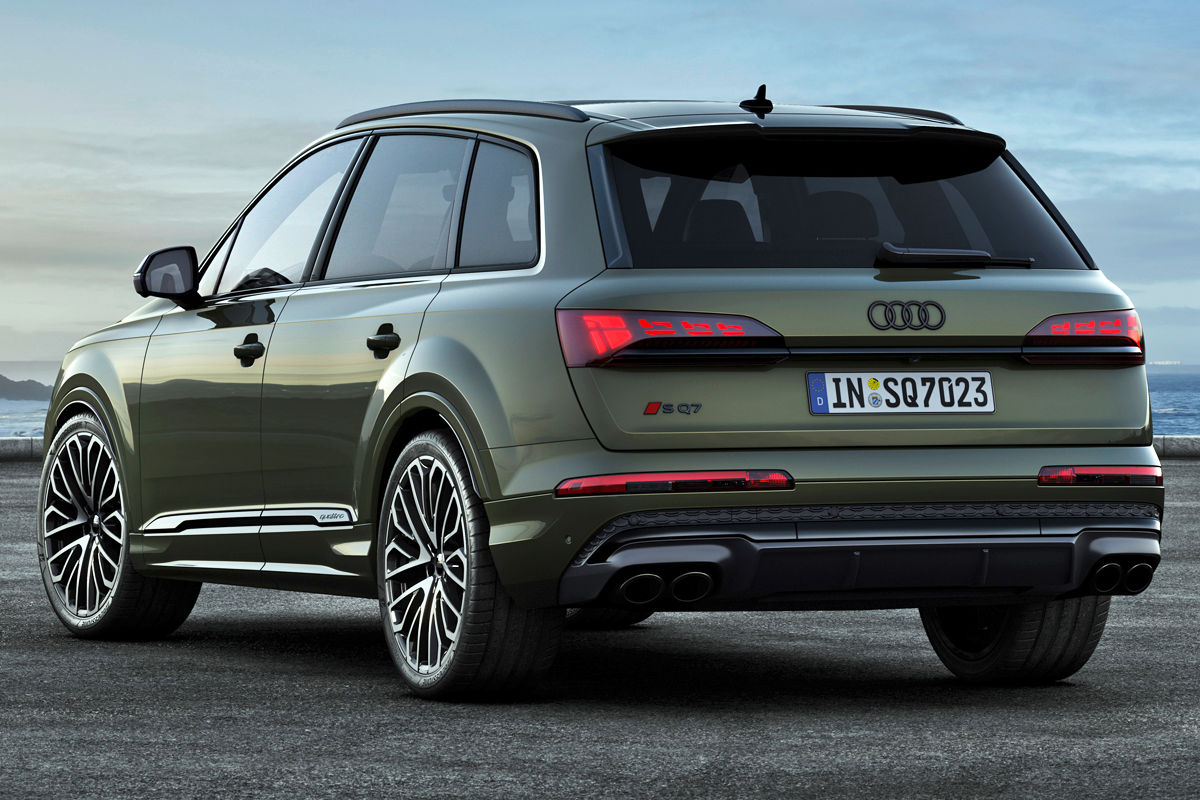
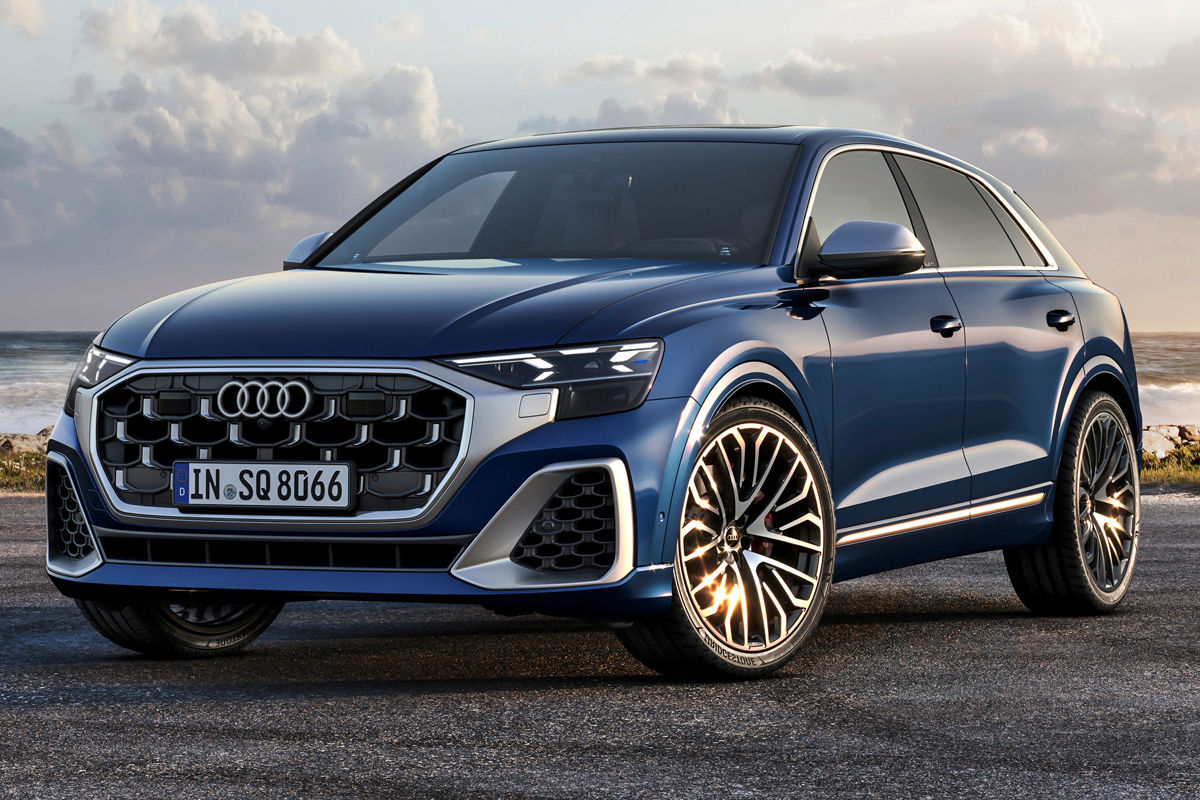
Audi SQ7 and SQ8 (2025) Price & Specs
The facelifted Audi SQ7 and SQ8 will soon launch in South Africa, each switching from a V8 turbodiesel engine to a twin-turbo V8 petrol motor. Here’s what they cost…
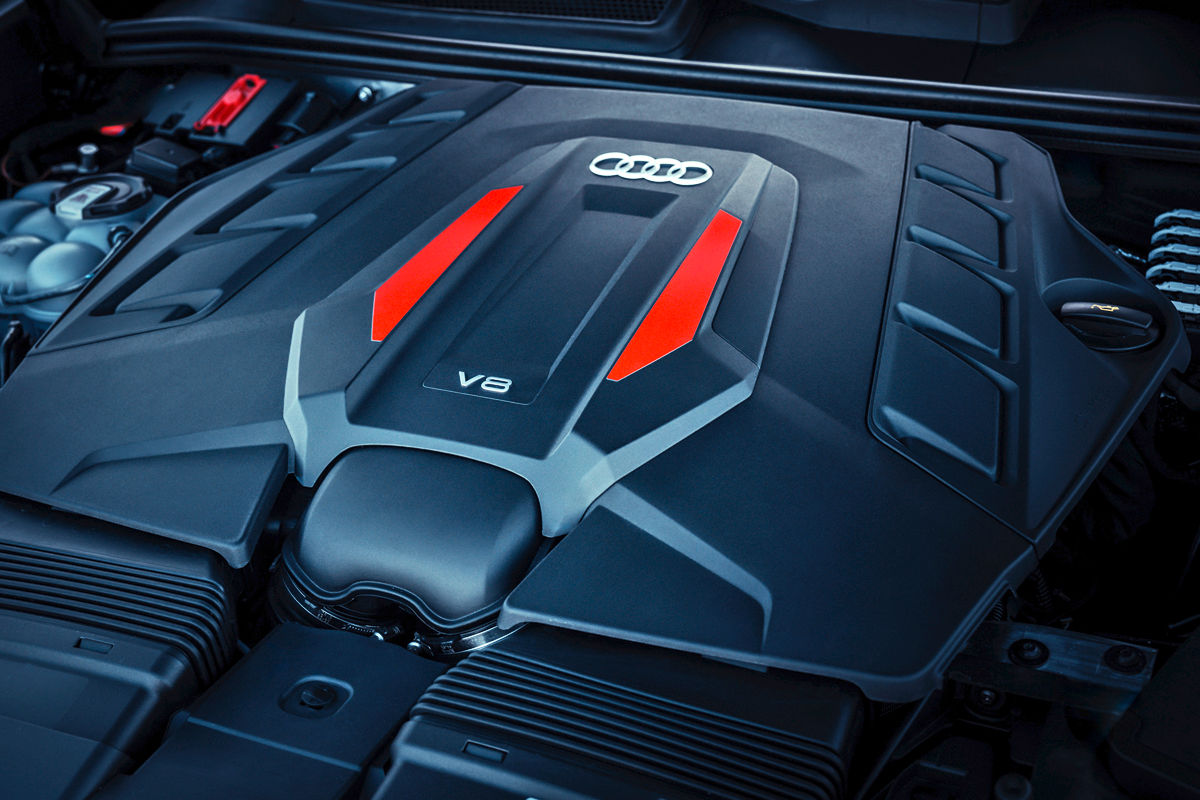
The facelifted Audi SQ7 and SQ8 are just about to hit the market in South Africa. The big news? The old V8 TDI engine has made way for the Volkswagen Group’s familiar twin-turbo 4.0-litre V8 petrol motor.
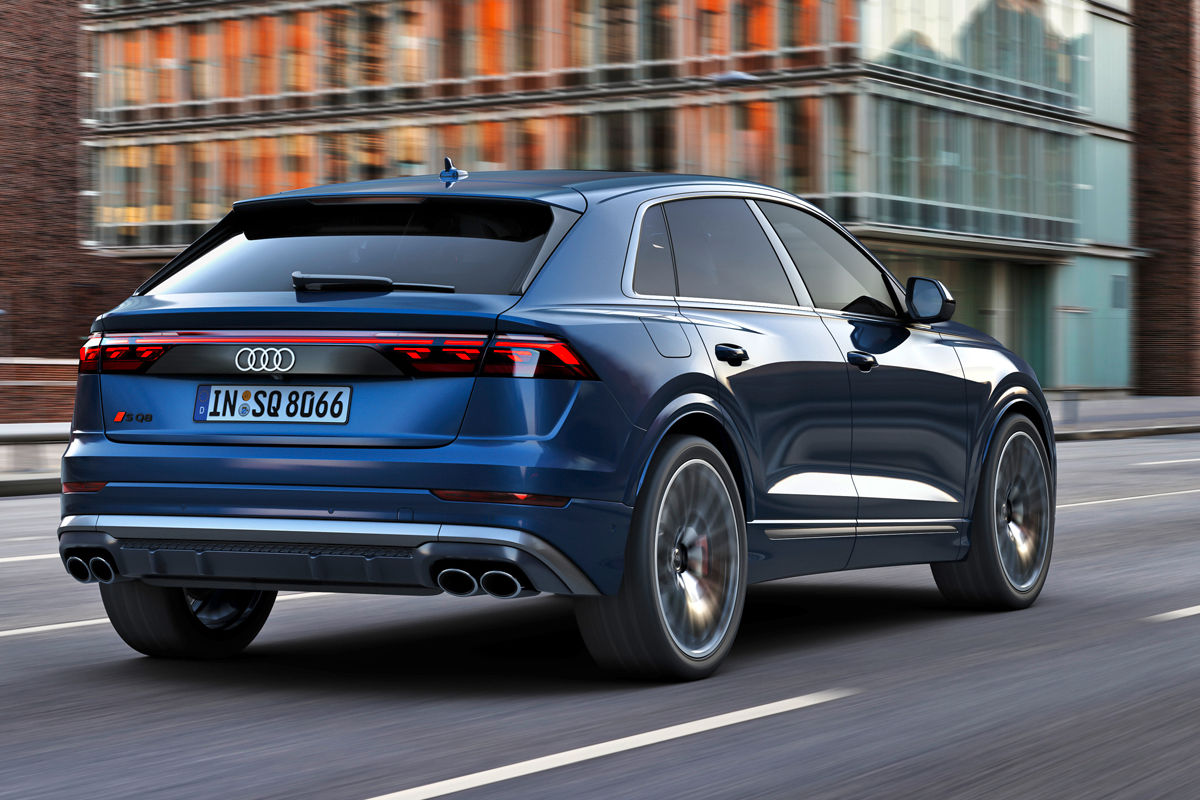
In addition, both the SQ7 and SQ8 are now available locally in Black Edition guise, which adds the Ingolstadt-based automaker’s Black Styling Package Plus along with black side-mirror caps, a black grille surround and privacy glazing for the rear windows.
The SQ8 TFSI pictured in Black Edition guise.
So, how much do these updated derivatives cost? Well, the Audi SQ7 TFSI kicks off at R2 540 500, while specifying this variant in Black Edition form adds R34 000 to the price (taking it to R2 574 500). Meanwhile, the Audi SQ8 TFSI starts at R2 640 500, with the Black Edition version coming in from R2 675 500 (R35 000 up).
As a reminder, the 4.0-litre turbodiesel unit employed by the pre-facelift SQ7 and SQ8 offered peak outputs of 310 kW and 900 Nm. The TFSI-badged V8 petrol engine in the refreshed derivatives, meanwhile, sends 373 kW and 770 Nm to all 4 wheels via an 8-speed automatic transmission.
This is the SQ7 TFSI in standard form (that is, without the Black Edition trimmings).
With that extra power (and despite the torque deficit), the claimed 0-100 kph sprint time improves from 4.8 seconds to just 4.1 seconds, while top speed remains capped at 250 kph. Of course, the switch away from diesel means the facelifted SQ7 and SQ8 aren’t nearly as efficient as before, with the claimed combined fuel consumption coming in at 11.9 L/100 km.
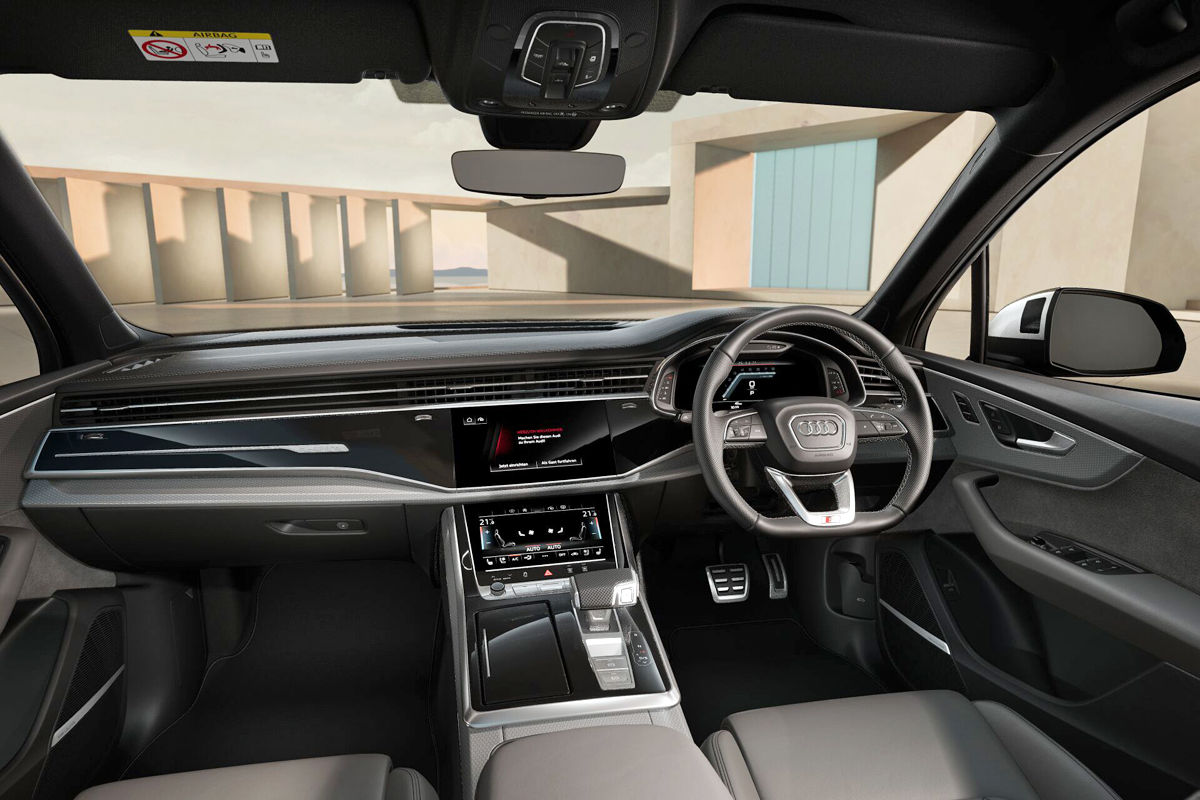
Standard kit for the SQ7 includes items such as 22-inch alloy wheels, adaptive air suspension sport, adaptive cruise control, all-wheel steering, a surround-view camera system, HD matrix LED headlamps (with Audi laser lights), Audi virtual cockpit plus, a Bang & Olufsen 3D premium audio system, a panoramic glass roof, Valcona leather upholstery, front-seat heaters and plenty more. The SQ8, meanwhile, upgrades to 23-inch wheels.
How much do the Audi SQ7 and SQ8 cost in SA?
Audi SQ7 TFSI – R2 540 500
Audi SQ7 TFSI Black Edition – R2 574 500
Audi SQ8 TFSI – R2 640 500
Audi SQ8 TFSI Black Edition – R2 675 500
The prices above include Audi’s 1-year/unlimited kilometre warranty and a 5-year/100 000 km maintenance plan.
Volkswagen plans to launch the Golf 8.5 1.4 TSI in South Africa early in Q2 2025. Here’s what the standard hatch – which will also be available in R-Line guise – will cost you…
In October 2024, Volkswagen Group Africa – which last offered a non-performance version of the Golf back in the 7th generation – unexpectedly announced plans to launch the Golf 8.5 1.4 TSI in South Africa. Now, well ahead of this model’s scheduled arrival early in the 2nd quarter of 2025, pricing has been revealed.
The German firm made the announcement at its Volkswagen Indaba 2025 event at the Kariega plant in the Eastern Cape, where it confirmed the facelifted Golf would be available in a quartet of grades: Life, Life+, R-Line and R-Line+.
This is the R-Line specification (UK model pictured).
All 4 derivatives will be powered by the Wolfsburg-based automaker’s familiar turbocharged 1.4-litre, 4-cylinder petrol engine, which will send 110 kW and 250 Nm to the front axle via an 8-speed automatic transmission. So, no manual gearbox will be available locally.
So, how much will it cost? Well, VW Group Africa says the Golf 1.4 TSI 110 kW Life will be priced from R580 900, with the Life+ (featuring a little more standard kit) coming in from R604 500. Meanwhile, the Golf 1.4 TSI 110 kW R-Line will start at R660 000, while upgrading to R-Line+ will push the price to R688 100.
This is the standard (non-R-Line) version, as sold in the UK.
According to VW Group Africa, the Life grade will come with “Eco” LED headlamps, Wireless App Connect, cruise control, a 10-inch digital instrument cluster, a 12.9-inch infotainment screen, a 6-speaker audio system, 10-colour ambient lighting and 16-inch “Norfolk” alloy wheels. The Life+ derivative will add driver profile selection, a reverse-view camera, 30-colour ambient lighting and “Art Velours” sports comfort seats.
Meanwhile, the R-Line derivative is set to upgrade to R-Line style bumpers, 17-inch “Coventry” alloys, a heated steering wheel (with paddle shifters), progressive steering, sports suspension, 3-zone climate control (including rear controls), keyless entry, R-Line seats (with integrated headrest), a park assist system and LED “Plus” headlamps.
A look at the R-Line front-bumper design.
Finally, the R-Line+ grade will boast IQ Matrix LED headlights, active high beam, an illuminated VW logo up front, a power-adjustable driver’s seat, heated-and-ventilated front seats, “Vienna” leather seats (with “R-Line” logo up fron), brushed stainless-steel pedals and 18-inch “Leeds” alloy wheels.
The Golf 1.4 TSI’s imminent return to the local market (which has shifted away from C-segment hatchbacks in favour of similarly sized crossovers over the past few years) is an interesting development considering VW Group Africa initially launched only the high-performance GTI and R derivatives of the Golf 8.
A look at the UK-spec cabin of the base model.
Still, with the Golf 8.5 GTI and R still technically not confirmed for Mzansi (Martina Biene, Chairperson and Managing Director of VW Group Africa, earlier told Cars.co.za the country’s fuel quality stood in the way of the facelifted GTI’s arrival on local soil), perhaps the Golf 8.5 1.4 TSI will serve as a stopgap of sorts.
As a reminder, the pre-facelift Golf 8 GTI still on the local market is currently priced at R853 400, with the Golf 8 R now starting at R1 016 600.
How much will the VW Golf 8.5 1.4 TSI cost in SA?
VW Golf 1.4 TSI 110 kW Life – R580 900
VW Golf 1.4 TSI 110 kW Life+ – R604 500
VW Golf 1.4 TSI 110 kW R-Line – R660 000
VW Golf 1.4 TSI 110 kW R-Line+ – R688 100
Volkswagen Group Africa has yet to announce warranty and service/maintenance plan details for this model.
How well is Jetour selling in SA? The latest sales figures
Chinese brand Jetour has quietly started reporting model sales to Naamsa. Here’s how many vehicles the newcomer sold in South Africa in January 2025…
Late in September 2024, Chinese brand Jetour debuted in South Africa, kicking off its local operations with the launch of the Dashing and X70 Plus crossovers. Now, a few short months later, the Chery Holding Group subsidiary has started reporting model sales figures to Naamsa, beginning with January 2025.
So, exactly how well is this 7-year-old Wuhu-based brand selling in Mzansi right now? Well, Jetour reported a total of 451 sales in South Africa in the opening month of 2025. With 261 units, the Dashing accounted for 57.9% of Jetour’s tally for the month, while the X70 Plus contributed 190 units.
For the record, 418 units of Jetour’s total sales were registered through its dealership channel, with the remaining 33 units listed as “single” registrations (that is, vehicles kept and licensed by the automaker for its own use).
Jetour’s 451-unit effort saw it rank 15th on the list of South Africa’s best-selling automakers in January, behind fellow Chery subsidiary Omoda & Jaecoo (743 units) but ahead of Mercedes-Benz (with a Naamsa-estimated 414 units), Stellantis (384 units) and Mazda (269 units). In the passenger-vehicle segment (so, excluding commercial vehicles), meanwhile, Jetour ranked 14th, claiming a 1.3% share of this space.
According to Jetour – which is owned by the Chery Group but describes itself as an “independent brand” – it has now sold more than 2 000 new vehicles in SA. The company says it is “committed to further expansion and growth in South Africa”, with plans to introduce additional models, grow its dealer network and “strengthen its footprint” across the country.
From what we understand, the local introduction of the Jetour T2 is planned for the 2nd quarter of 2025, while the Jetour T1 also appears to be on the cards, though seems likely to arrive only towards the end of the year.
As a reminder, the local Dashing line-up comprises 2 derivatives, each powered by a turbocharged 1.5-litre, 4-cylinder petrol engine sending 115 kW and 230 Nm to the front wheels via a 6-speed dual-clutch transmission. Pricing starts at R439 900 (figures correct in early February 2025).
The X70 Plus portfolio (not to be confused with Proton’s X70 range) likewise features a pair of variants, each powered by the same 4-cylinder petrol engine used in the Dashing. This 7-seater crossover kicks off at R454 900 (February 2025).