SA passenger-car sales: Toyota grabs 4 spots in January 2025’s top 10
The Suzuki Swift soared to the top of SA’s passenger-vehicle standings in January 2025, while Toyota grabbed 4 spots in the top 10. Here are Mzansi’s best-selling cars and crossovers…
While Suzuki hogged the headlines for leapfrogging Volkswagen Group Africa in January 2025 (with the Swift furthermore ranking as South Africa’s best-selling vehicle overall), Toyota again dominated the passenger-vehicle space, accounting for as many as 4 of the top 10 best-selling cars and crossovers in 2025’s opening month.
As a reminder, Mzansi’s new passenger-vehicle market was again largely to thank for the overall industry’s year-on-year growth in January, with sales in this segment increasing 18.3% year on year to 29 181 units (a whopping 19.2% of which came courtesy of the rental channel).
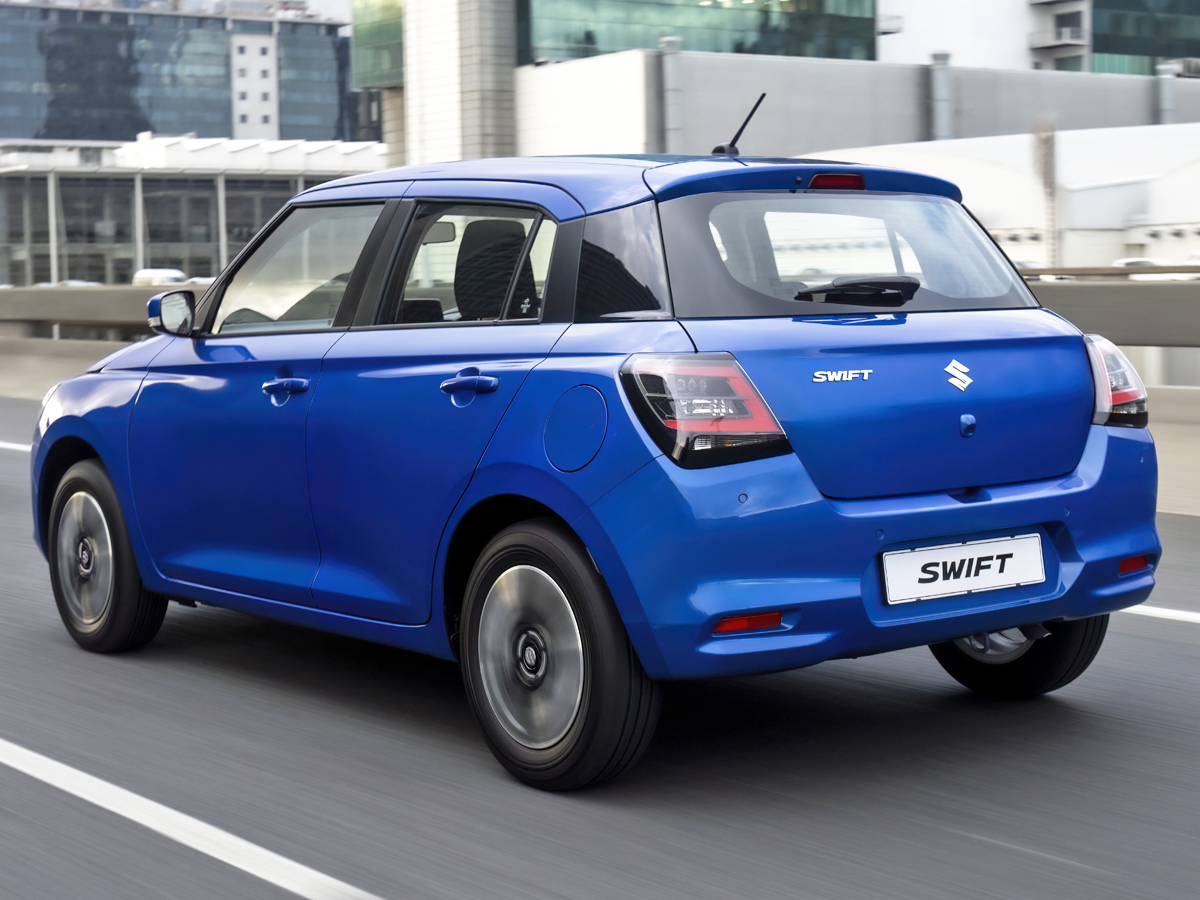
Suzuki’s Swift was SA’s top-selling passenger car (and best-selling vehicle overall) in January.
The Suzuki Swift put in its best performance yet to finish the month on 2 628 units, some 46.4% of which represented sales to the vehicle-rental industry. That meant the Volkswagen Polo Vivo (2 549 units) had to settle for an unfamiliar 2nd place in January, with the Kariega-built hatchback – which was SA’s best-selling passenger car in 2024 – ending 79 units off the pace.
Meanwhile, the Toyota Starlet – which is based on the Baleno (406 units) and built by Suzuki in India – climbed 3 places to complete the podium, with 2 180 units registered, 1 250 (or 57.3%) of which were sales via the rental channel. That saw the Prospecton-produced Toyota Corolla Cross slip 2 positions to 4th, with sales falling slightly to 1 226 units (likely due to the recent changeover to the facelifted version).
The Toyota Starlet made it onto the podium in the opening month of 2025.
The Hyundai Grand i10 retained 5th place in January, with 1 163 units of this Indian-built model sold. Note this figure excludes the 49 Cargo-badged panel-van units Hyundai furthermore registered in the light-commercial vehicle space last month. The Chinese-made Chery Tiggo 4 Pro (1 122 units) moved up 2 places to 6th, with the Haval Jolion (1 099 units) holding steady in 7th.
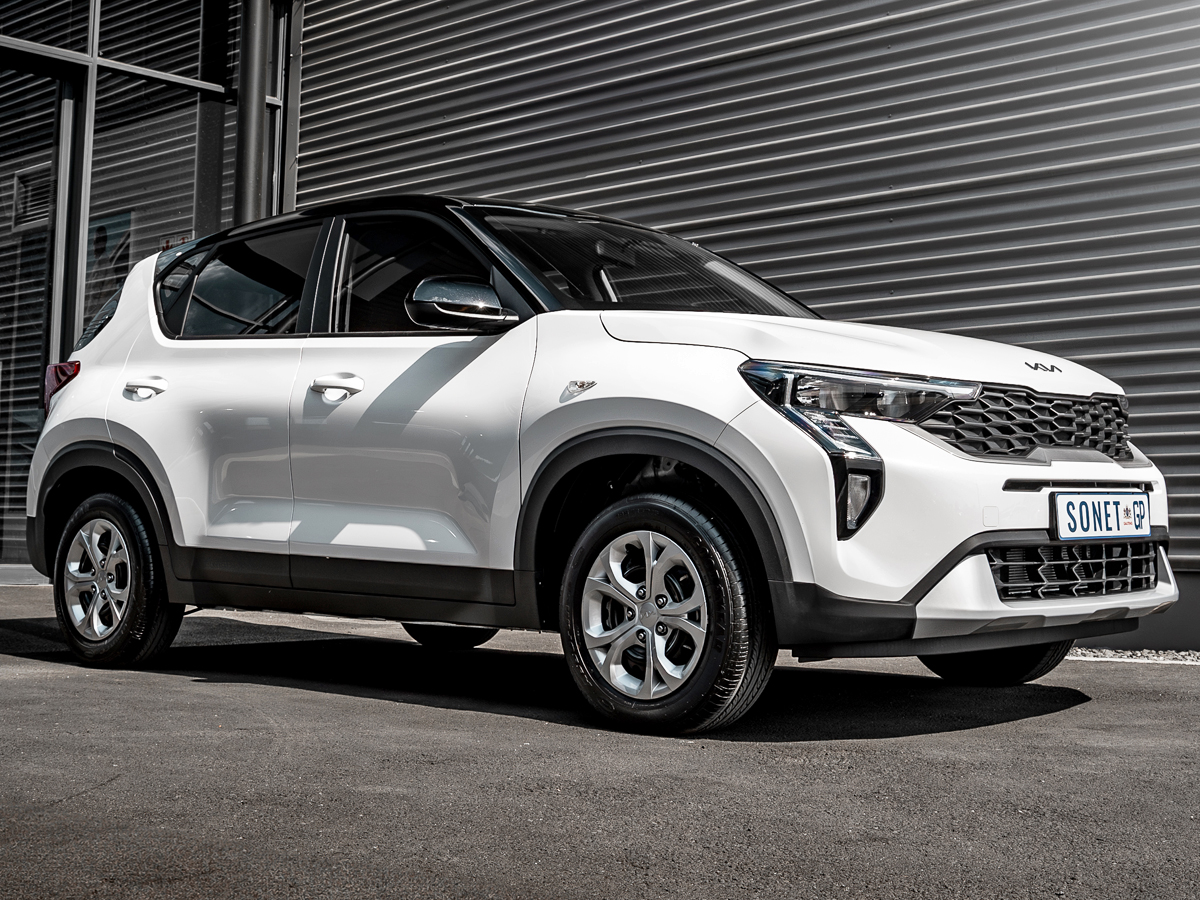
The next 2 spots were occupied by Toyota-badged models: the Toyota Starlet Cross (1 050 units) breached the 4-figure mark to return to the top 10 and snaffle 8th, finishing ahead of the Toyota Urban Cruiser (890 units) in 9th. Finally, the Kia Sonet (830 units) retained 10th to round out the table.
Kia’s Sonet retained 10th place in January 2025.
For the record, the Suzuki Fronx on which the Starlet Cross is based managed 771 units in January, while the Grand Vitara alongside which the Urban Cruiser was developed ended on 209 registrations.
SA’s 10 best-selling passenger vehicles in January 2025
SA crowned a new best-selling vehicle in January 2025!
South Africa’s new-vehicle market crowned a fresh best-selling vehicle overall in January 2025, with this hatchback beating both Toyota’s Hilux and VW’s Polo Vivo…
In January 2025, Suzuki Auto SA leapfrogged Volkswagen Group Africa for only the 2nd time in history, grabbing the runner-up place behind Toyota. And, in the process, South Africa crowned a new best-selling vehicle for the month.
Yes, the Suzuki Swift finished January 2025 – the local market’s 4th straight month of year-on-year growth – on a hefty 2 628 units, seeing it beat perennial front runners and locally manufactured favourites, the Toyota Hilux (2 557 units) and the Volkswagen Polo Vivo (2 549 units).
According to our records, that’s easily the Swift nameplate’s best effort ever in South Africa and indeed the first time this imported hatchback has breached the 2 000-unit mark in a single month. It beats the model’s 1 925-unit haul of June 2022, when it also briefly wore the crown of SA’s top-selling vehicle (in the absence of the Hilux, which tumbled down the sales charts thanks to the KwaZulu-Natal flooding that shuttered the Prospecton plant).
With a considerable 19.2% of January’s sales in the new-passenger vehicle segment coming courtesy of the vehicle-rental channel, it’s perhaps no surprise the Swift enjoyed exceedingly strong support from this part of the market. In the end, as many as 1 219 examples of the hatchback were registered as sales to the rental industry, translating to a whopping 46.4% of the Swift’s record total.
As a reminder, the new-generation Swift hatchback hit the local market in the final quarter of 2024. The range comprises 5 derivatives, all powered by Suzuki’s latest naturally aspirated 1.2-litre, 3-cylinder petrol engine (Z12E), which drives the front wheels via either a 5-speed manual gearbox or a continuously variable transmission (CVT).
Pricing currently runs from R219 900 to R284 900, excluding the Swift Sport (which is based on the previous-gen model and is imported from Japan). The Swift – the mainstream derivatives of which are sourced from Maruti Suzuki’s Manesar facility in India – finished 3rd on the list of South Africa’s best-selling passenger vehicles in 2024, placing behind the Polo Vivo and Toyota Corolla Cross.
Triton inches forward: SA’s best-selling bakkies in January 2025
The new Mitsubishi Triton has started what could be a gradual climb up the list of South Africa’s best-selling bakkies. Here are the sales figures for January 2025…
In January 2025, South Africa’s new-vehicle market grew 10.4% year on year to 46 398 units. The passenger-vehicle segment again powered this overall industry growth, while sales in the light-commercial vehicle (LCV) space dropped 9.1% year on year to 9 901 units.
So, what happened on the list of SA’s best- and worst-selling bakkies in January 2025? Well, the Toyota Hilux – which again ranked as Mzansi’s most popular vehicle in 2024 and will later this year become available in Legend 55 guise – picked up right where it left off, ending the opening month of 2025 on 2 557 units (172 of which were sales via the vehicle-rental channel).
Toyota’s Hilux led the charge again in January.
Though that’s 12.6% down on December’s effort, it was still more than enough to keep the Prospecton-built stalwart well ahead of the 2nd-placed Ford Ranger. The Blue Oval brand’s Silverton-made bakkie – which took the title of SA’s best-selling double-cab bakkie last year – saw its total registrations fall 3.4% month on month to 1 858 units.
In contrast, local sales of the Isuzu D-Max – which is in line to receive a facelift at some point this year – increased 30.1% compared with December’s performance, seeing the Struandale-produced model finish on 1 413 units and thus comfortably remain in 3rd position. Interestingly, 241 of those registrations represented sales to government.
Meanwhile, the KwaZulu-Natal-assembled Mahindra Pik Up retained 4th place, enjoying its best month since June 2024, with registrations surging 105.4% month on month to 801 units (admittedly off December’s relatively low base). The Japanese-made Toyota Land Cruiser 79 (531 units) breached the 500-unit mark for the first time in recent memory, keeping its place inside the top 5 in the process.
Though sales of the Nissan Navara decreased marginally month on month to 298 units, the Rosslyn-built contender climbed a ranking to 6th, forcing the Silverton-produced Volkswagen Amarok (233 units) down a place to 7th. The GWM P-Series (101 units) only just cracked 3 figures – the Chinese bakkie is likely in a runout phase ahead of the imminent launch of the P300 – but nonetheless managed to cling to 8th.
Nissan’s Navara moved up to 6th in the opening month of the year.
What about the Mitsubishi Triton? Well, the Japanese bakkie – which moved into a new generation locally in November 2024 – climbed a spot to 9th, finishing January 2025 on 75 units. The Triton has now ranked inside the top 10 for 3 straight months, having entered the table with the launch of the latest generation. Finally, the GWM Steed (74 units) returned to close out the top 10.
Best of the rest in January 2025: bakkies outside top 10
Peugeot’s Landtrek dropped out of the top 10 in January.
What about the bakkies that didn’t make the top 10 in January 2025? Well, the JAC T-Series – the Chinese firm unfortunately reported only a combined figure for its T6, T8 and T9 line-ups, so we technically can’t rank these nameplates individually – managed 102 units.
Next came the Mahindra Bolero and Peugeot Landtrek (the latter slipping from the 9th place it held in December), each ending January 2025 on 53 units. With local stock dwindling, the discontinued Nissan NP200 came in on just 7 units, followed by the Jeep Gladiator on 4 units.
10 best-selling bakkies in South Africa for January 2025
Suzuki leapfrogs VW Group! SA’s new-car sales in January 2025
January 2025 was the SA new-vehicle market’s 4th straight month of year-on-year growth. Here’s your overview, including a few significant changes on the list of Mzansi’s best-selling automakers…
South Africa’s new-vehicle market kicked off the year by recording its 4th straight month of growth, with local registrations increasing 10.4% year-on-year to 46 398 units in January 2025. Furthermore, it’s worth noting that figure represents a 12.9% improvement over December 2024’s tally, too.
Pointing out that the “positive momentum” of the final quarter of 2024 continued into the opening month of 2025, Naamsa CEO Mikel Mabasa said he was “absolutely confident that an improved economic outlook, coupled with higher business and consumer sentiment, [would] support the new vehicle market in 2025”. There was positive news in the export segment, too, where sales increased 29.7% year on year to 25 348 units in January 2025.
But back to local sales. According to the industry representative body, 81.4% of the total reported industry figure of 46 398 units in January 2025 represented dealer sales, while a considerable 14.8% were sales to the vehicle-rental industry, 2.2% to industry corporate fleets and 1.6% to government.
As has been the case over the past few months, SA’s new passenger-vehicle market was largely to thank for the broader industry’s year-on-year growth in January, increasing 18.3% to 29 181 units (a whopping 19.2% of which came courtesy of the rental channel). Meanwhile, the new light-commercial vehicle (LCV) segment slid 9.1% year on year to 9 901 units.
Meanwhile, Brandon Cohen, Chairperson of the National Automobile Dealers Association (NADA), described the market’s performance as a “most welcome surprise for the industry”, pointing to the passenger-car segment’s particularly “bullish” effort.
“This positive trend builds on the momentum from the last quarter of last year, with the rental industry once again playing a major role, accounting for 14.8% of the total market and 19.1% of the car market,” said Cohen, before applauding the growth in the export segment, which he called “the lifeblood of several local manufacturers”.
Though Lebo Gaoaketse, Head of Marketing and Communication at WesBank, welcomed the sales uptick, he said January 2025’s performance should be considered in “context”.
“Although 10.4% growth doesn’t reflect WesBank’s slow growth forecast, it is important to note a number of impacting factors in this unusual sales month. Firstly, January volumes are traditionally boosted by lower December numbers as buyers delay purchase decisions into the new year. Secondly, last year’s sales had started off slowly and January 2024 sales were 3.8% down, providing a lower base from which to compare year-on-year performance this month,” he explained.
Gaoaketse said January sales were impacted by “varying reporting processes” by the manufacturers in December. While the last month of 2024 saw sales increase 2.5% year on year, some of these transactions would otherwise have been reported as January sales, he suggested. Consequently, the 2 months should be “considered together to get a meaningful view of the market’s true performance”.
New-vehicle sales summary for January 2025
Aggregate new-vehicle sales of 46 398 units increased by 10.4% (4 375 units) compared to January 2024.
New passenger-vehicle sales of 34 530 units increased by 18.3% (5 349 units) compared to January 2024.
New light-commercial vehicle sales of 9 901 units decreased by 9.1% (993 units) compared to January 2024.
Export sales of 25 348 units increased by 29.7% (5 803 units) compared to January 2024.
10 best-selling automakers in SA in January 2025
Mahindra broke into the top 10 in January 2025.
Toyota started 2025 right where it ended 2024: at the very top of the pile. In fact, the Japanese firm’s local division registered as many as 12 152 units in January 2025, its highest tally since October 2023. As a reminder, Toyota held a 24.9% share of the total market in 2024, with nearly 130 000 new vehicles sold.
The big news, however, was the fact Suzuki leapfrogged the Volkswagen Group, grabbing 2nd place from its German rival (a feat it has once before achieved, back in April 2024). In the end, Suzuki completed January 2025 on 6 399 units (incidentally also its best effort since October 2023), finishing the month some 723 sales ahead of the VW Group (5 676 units, including the Audi brand).
Meanwhile, Hyundai (2 760 units) held steady in 4th place and Ford (2 467 units) remained in 5th position, while Chinese firms Chery (1 913 units) and GWM (1 756 units) likewise retained 6th and 7th spot, respectively. Isuzu (1 733 units) climbed a ranking to 8th, while Mahindra (1 463 units) broke into the top 10 with what we believe was its highest total yet, taking 9th in the process. Finally, Kia (1 428 units) fell a place to 10th.
That meant there was no space in the top 10 for Renault (1 409 units), with the French firm having to settle for 11th, ahead of the BMW Group (with a Naamsa-estimated 1 184 units). Nissan (1 162 units) found itself down in 13th, followed by Omoda & Jaecoo (743 units) in 14th and Jetour (451 units) – another Chinese brand now reporting sales figures to Naamsa – in 15th.
1. Toyota – 12 152 units
2. Suzuki – 6 399 units
3. Volkswagen Group – 5 676 units
4. Hyundai – 2 760 units
5. Ford – 2 467 units
6. Chery – 1 913 units
7. GWM – 1 756 units
8. Isuzu – 1 733 units
9. Mahindra – 1 463 units
10. Kia – 1 428 units
Sales outlook in South Africa in 2025
So, how does Naamsa see the rest of 2025 playing out? Well, Mabasa says “the positive start to the year, marked by higher new-vehicle sales, a further interest-rate cut of 25 basis points during the month, and well-controlled inflation, along with promising prospects for a significantly improved domestic economic outlook, all contribute to a sense of optimism as we embark on 2025”.
“The possibility of further interest-rate cuts by the central bank in 2025 would not only enhance vehicle affordability but also foster a revival in business and consumer sentiment. The South African Reserve Bank projects a notable improvement in the country’s GDP growth rate of 1.5% for 2025, with some commentators even projecting even more optimistic figures of around 2%,” Mabasa adds.
In terms of new-vehicle exports, Mabasa says this segment “showed promising growth in January 2025 compared to the same month in 2024”.
“The anticipated relaxation of monetary policy in South Africa’s primary export markets is expected to sustain this momentum in the short- to medium term. However, the trajectory of trade policies under the new US administration remains uncertain. It’s worth noting that the success and magnitude of US tariffs could have significant spillover effects on South Africa and other markets, potentially leading to increased export revenues and inflation,” he explains.
Meanwhile, NADA’s Cohen says “although we are obviously delighted at the strong performance of the overall market, particularly in the passenger-car segment and the recent small drop in interest rates, several challenges remain for the motor trade”.
“Affordability continues to be a concern as the cost of living rises, compounded by a 4th successive fuel-price hike, electricity increases and the looming possibility of further load-shedding. Additionally, there is the threat of tariffs and a freeze on funding from the United States,” Cohen warned.
Still, he says “there are also positive developments” on the horizon. “We are hopeful about potential announcements during the President’s State of the Nation Address (SONA) and a possible 4th interest-rate decrease in March (if the current inflationary forces remain in line). Taking all this into consideration, it has been a promising start to the year for the retail motor industry. Only time will tell whether we can build on this momentum as the year progresses,” concludes Cohen.
WesBank’s Gaoaketse likewise points to “affordability” as a “key consideration for consumer purchase decisions”, though says additional interest-rate reductions could play a significant role during the remainder of 2025.
“Further expected [interest-rate] cuts during the year will slowly begin to address new-vehicle affordability and renew business and consumer confidence. However, constrained household budgets will continue to remain vigilant of spend despite lower inflationary pressures overall,” says Gaoaketse.
Pricing scoop! Here’s what the upcoming flagship Toyota Fortuner GR-Sport – boasting extra power and torque – will cost when it launches in South Africa in March 2025…
Late in 2024, Toyota South Africa Motors finally announced the Fortuner GR-Sport for the local market, before displaying the upgraded ladder-frame SUV at the 2025 State of the Motor Industry (SOMI) address in Gauteng in January. Now, ahead of this 165 kW derivative’s official market launch, Cars.co.za can confirm pricing.
Billed as a “performance-orientated variant”, the Fortuner GR-Sport (or “GR-S” for short) is scheduled to reach local dealers in March 2025. However, after a little digging, we’ve managed to unearth this range-topping derivative’s expected price tag a little early.
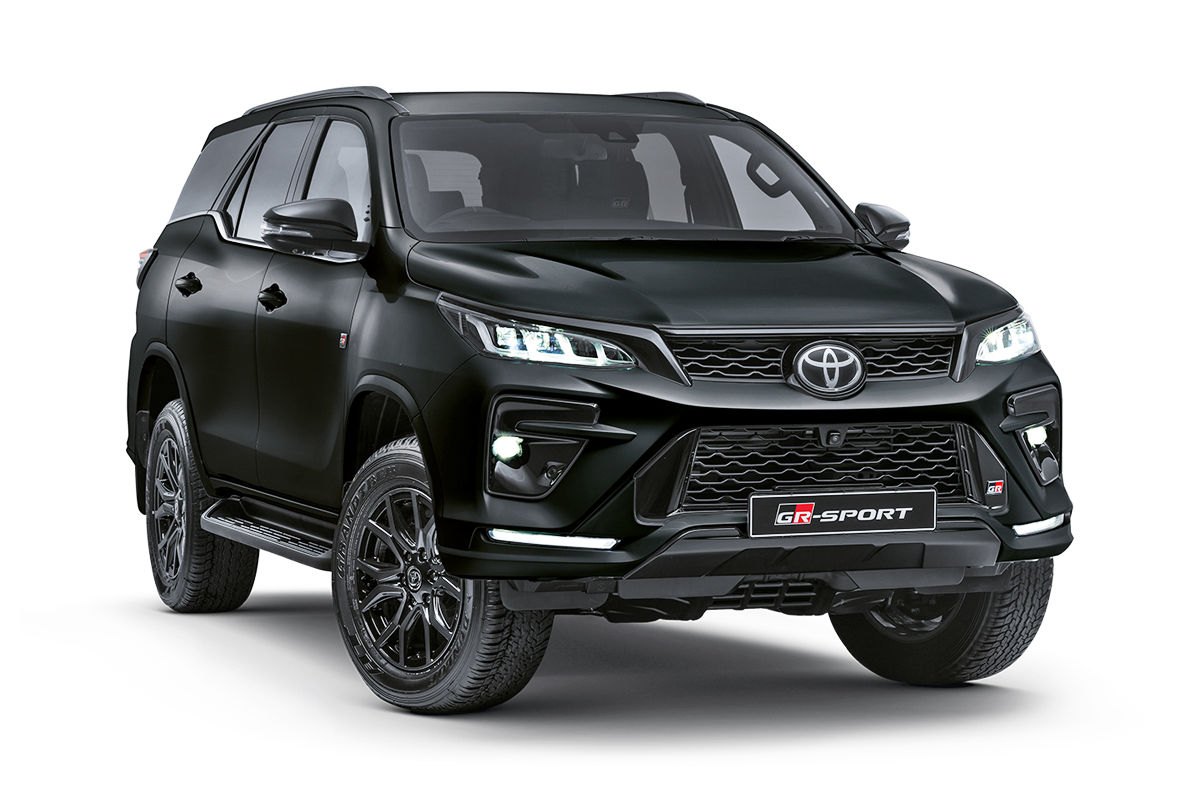
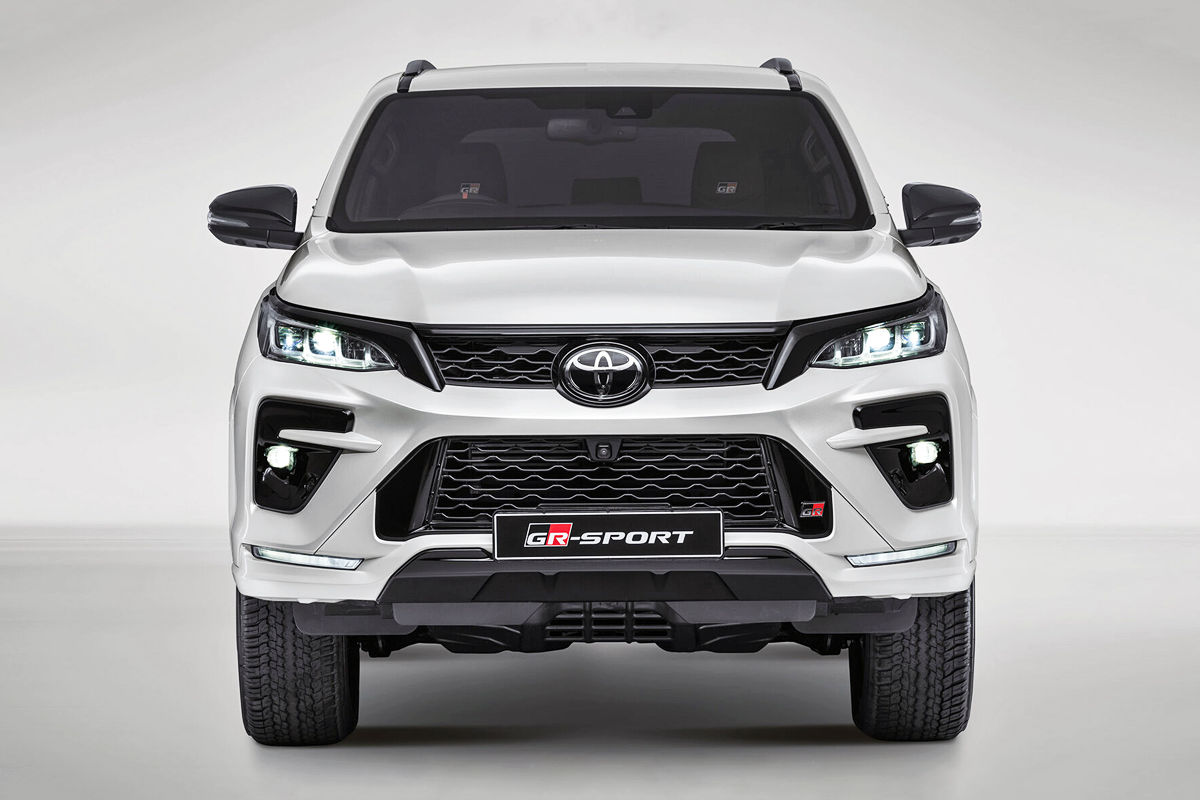
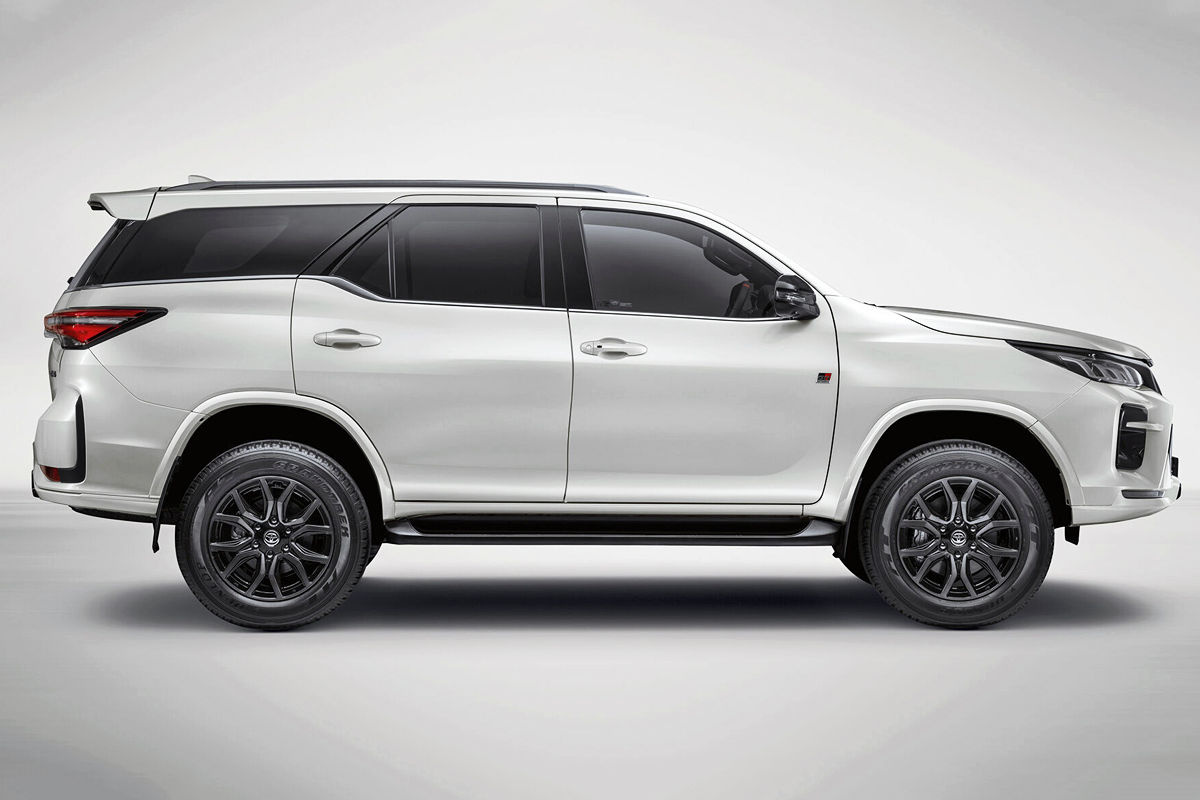
Paint colour choices for the Fortuner GR-Sport will be limited to white and black.
According to our information, the Toyota Fortuner GR-Sport – which will arrive as the 12th derivative in the popular local Fortuner line-up – will be priced at R999 000. Based on current pricing (at the start of February 2025), that makes it R37 200 more expensive than the previous range-topper, the Fortuner 2.8 GD-6 48V 4×4 VX (R961 800).
Interestingly, the Fortuner GR-Sport is furthermore precisely the same price as the Hilux GR-Sport. Like its GR-branded bakkie sibling, this SUV employs an uprated version of the Japanese firm’s familiar 2.8-litre, 4-cylinder turbodiesel engine, with its peak outputs hiked from the standard 150 kW and 500 Nm to a meatier 165 kW and 550 Nm.
Spot the difference: standard Fortuner on the left and GR-Sport on the right.
Drive is delivered to all 4 wheels via a 6-speed automatic transmission as standard. Though the Fortuner GR-Sport – which will be built at Toyota’s Prospecton facility in KwaZulu-Natal, like all SA-spec Fortuner derivatives – misses out on the widebody Hilux GR-Sport’s increased track width, it does gain a “GR-tuned suspension” set-up featuring monotube shock absorbers (ostensibly delivering “improved on- and off-road capabilities”).
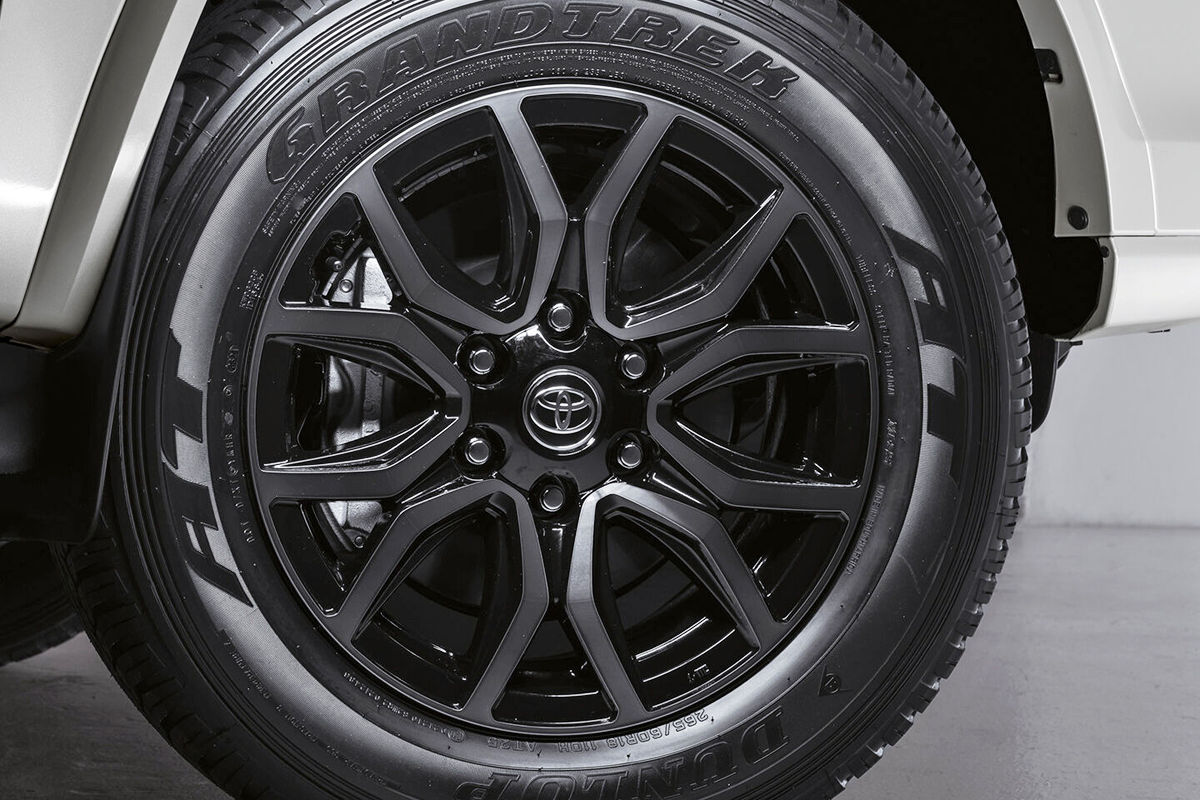
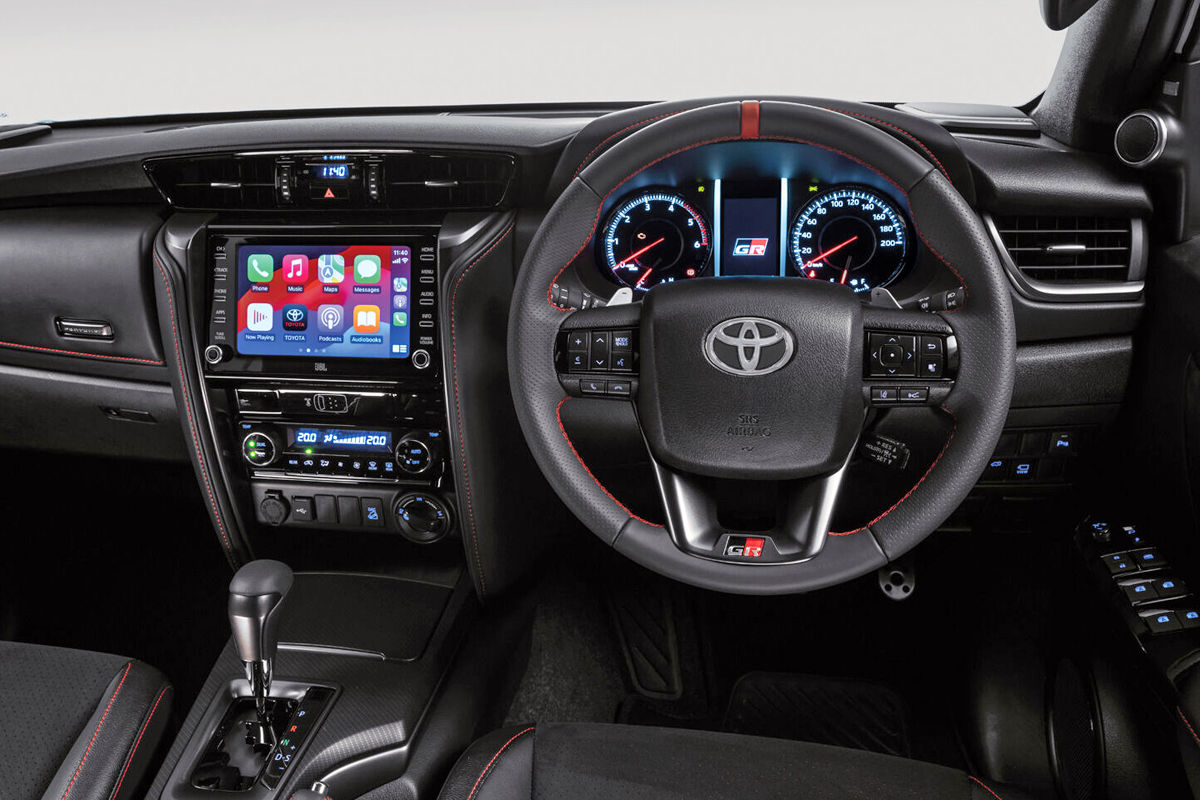
Meanwhile, derivative-specific exterior styling elements include a redesigned lower front bumper, black side-mirror caps and 18-inch black alloys (wrapped in 265/60 R18 tyres, the same size used by all variants in the local Fortuner line-up). The cabin gains alloy sports pedals, carbon-effect centre-console trim and perforated suede/leather sports seats featuring red stitching, with the latter treatment also applied to the steering wheel, which furthermore gains a red centre marker.
A look at the SA-spec model’s cabin.
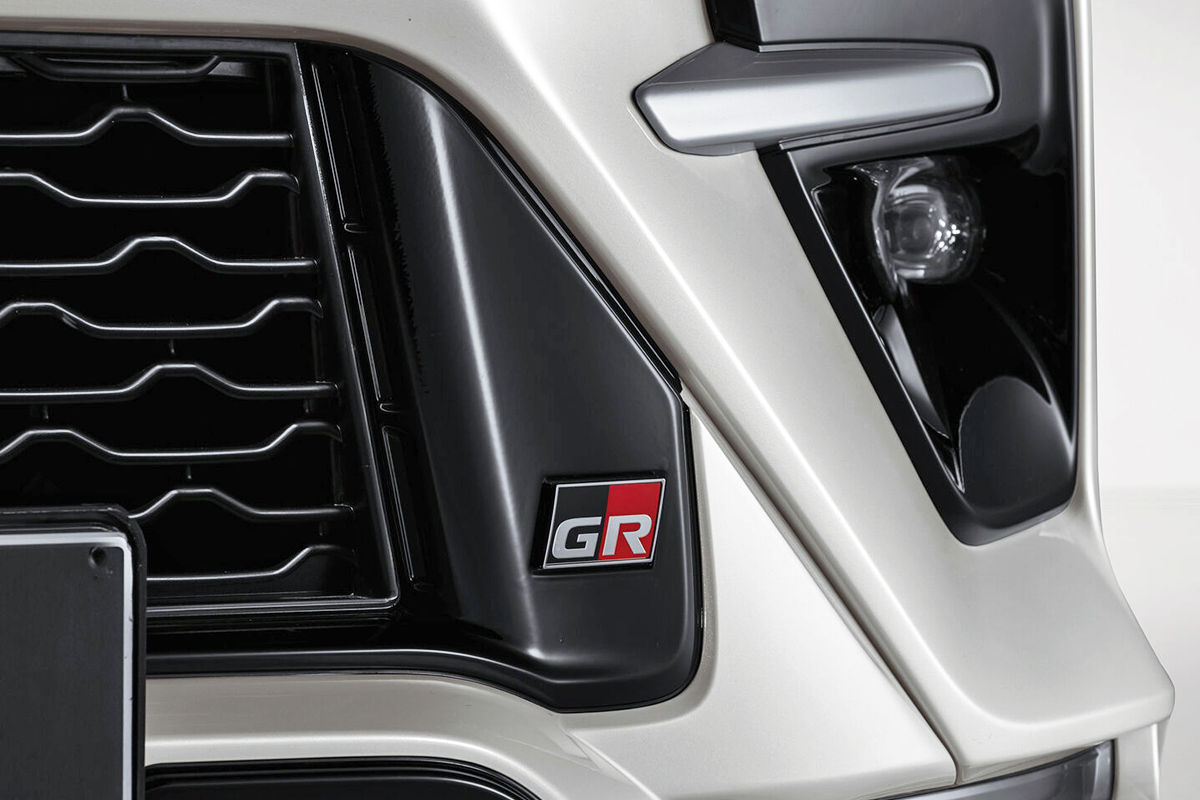
From what we can tell, the SA-spec Fortuner GR-S – which will be available only in white or black – forgoes the red brake callipers employed by overseas versions. However, it does sport the requisite smattering of GR badges (on the grille, front doors and tailgate) along with yet more branding inside, including on the steering wheel, centre console and front head rests (plus as part of the instrument-cluster graphics).
As a reminder, the current Fortuner portfolio comprises 11 derivatives, 3 of which employ a 2.4-litre turbodiesel engine. The remaining 8 variants use the aforementioned 150 kW version of the 2.8 GD-6 powerplant, with 4 of those furthermore gaining a 48 V mild-hybrid system. In 2024, Toyota SA Motors sold as many as 10 666 units of the Fortuner, seeing it rank 8th on the list of Mzansi’s best-selling passenger vehicles (enough to take the title of SA’s top-selling ladder-frame SUV).
How much will the Toyota Fortuner GR-S cost in SA?
Toyota Fortuner 2.8 GD-6 4×4 6AT GR-Sport – R999 000
The price above includes Toyota’s standard 3-year/100 000 km warranty and a 9-service/90 000 km service plan.
The ZS, HS and Cyberster models spearhead now Chinese-owned MG’s relaunch in South Africa. Ciro De Siena drove MG’s 2 crossover offerings and shares his thoughts.
Morris Garages (MG) was founded in 1924, in what must have been, I imagine, a decidedly damp garage somewhere in Britain, while it probably rained outside relentlessly.
Driven by the desire to rather spend time indoors, Cecil Kimber began building cars in earnest. And so, MG was born. Up until the early 2000s, it achieved moderate success both in the UK and some other markets with various not-too-terrible runabouts, as well as cheap ‘n’ cheerful sportscars and roadsters.
However, after the Japanese brands entered the UK and European market with cars that both functioned properly and were reliable, MG soon found itself floundering and the entire brand was sold to SAIC, the Shanghai Automotive Industry Corporation – now the world’s 7th largest automotive manufacturer.
SAIC set about restructuring and redeveloping the brand into a company which is now gaining serious ground in Asian markets, the UK, Australia and, to a lesser extent, Europe.
The product strategy? Crossovers, crossovers and more crossovers. Today, MG is renowned for offering affordable, reliable and relatively premium compact SUVs such as the ZS and HS. Indeed, on a recent trip to Thailand, I saw so many MG ZSs that I thought there were about 5 of them just going around in circles.
Indeed, under SAIC’s stewardship, MG has become the 11th biggest- and fastest-growing car brand in Britain, where it sold over 81 000 cars in 2024, many of which must have been what we know as the ZS and HS models. For context, that number is about a 5th of South Africa’s entire passenger car market.
That brings us neatly to the 3 models that MG SA has launched in the local market. Local motoring journos were invited to drive the MG ZS and HS in the Western Cape and herewith are my impressions.
Up front, MG SA has made a bold move by including a 7-year/200 000 km warranty with the ZS, HS and Cyberster models. This is a strong warranty and competes favourably with legacy brands such as VW and Toyota, which continue to offer 3-year warranties (even if they’re extendable “at point of purchase”).
Curiously, GWM SA (the distributor of the P-Series bakkie and custodian of the Haval, Ora and Tank sub-brands) recently announced an extended 7-year/200 000 km warranty on almost all of its new vehicles, up from the 5-year/150 000 km offered since the company arrived back on the local scene in 2012.
One wonders if whispers of MG’s imminent announcement encouraged this move…
With prices beginning at a very reasonable R289 900, the base-spec MG ZS is known as the Comfort, while the R309 900 Luxury variant is the only other trim level in the range, at least at the time of launch.
You can have any ‘box as long as it’s a four-speed automatic – yup, no manuals are available. This probably won’t bother 95% of buyers as the MG ZS is very much a commuter vehicle.
Power is provided by an engine, unsurprisingly. The ZR utilises a naturally aspirated 1.5-litre 4-cylinder petrol motor with outputs of 84 kW and 150 Nm. This compares favourably to say, the Fronx, for which Suzuki claims peak figures of 77 kW and 138 Nm, also from a 1.5-litre naturally aspirated 4-pot.
On our launch route, which took in highway driving, country roads and even some rutted gravel, the MG ZS felt eager, well, at least until we hit some steep inclines… Then the 4-speed automatic made its voice heard and the engine felt strained and, at the time, with just a driver, passenger and no luggage on board.
The MG ZS delivers workmanlike performance at best and, with that realisation, my thoughts turned to motorists in Gauteng, where the thinner air robs naturally aspirated (non-turbocharged) motors of about 17% of the power that they generate at sea level. I fear that, when the MG ZS is fully loaded, its driver will have to have to really “put foot” on inclines or, more critically, when executing overtaking manoeuvres.
If you are on the Highveld and considering the MG ZS, I would recommend a lengthy test drive to find out whether the car offers adequate power for your needs.
The MG ZS’s suspension setup is firm although not overly so, and the only element of the ride quality that bothered me was the tyre roar; it feels as though a bit of extra sound insulation in the wheel wells would have resulted in a more premium feel to the driving experience, especially at highway speeds.
To its credit, MG has succeeded in mapping the throttle correctly for South African requirements and -driving parameters. While the car does leap on initial throttle input and which requires some familiarisation, in all other driving situations, the ZS’ throttle is responsive and easy to modulate.
This is a refreshing change from what our team has experienced with other Chinese brands’ new models. It’s a bit long to go into here, but simply put, as Chinese cities are heavily congested and highway speed limits are low, OEMs in that country map cars’ throttle responses for dense traffic and fuel efficiency.
The interior of the MG ZS feels built to a price, which, of course, it is. Some of the panels and trims are a bit plasticky and the infotainment system’s touchscreen (with Android Auto and Apple Carplay) is a bit small, but overall, the cabin feels sufficiently modern and built to a high enough standard for our market.
A nice touch is a height-adjustable driver’s seat, with rake- as well as reach adjustment for the steering column – a couple of features that are often missing in this segment of the market.
Exterior styling is subjective, but I feel MG has struck a pleasing balance between sportiness and general road presence. Given this new compact family car’s high-quality metallic finish, from the outside at least, the newcomer looks like it’s well worth its sticker price, a feeling which is 50/50 once you climb inside.
However, when you remind yourself of the MG’s list price, as a new-car offering, the ZS makes complete sense. If it retailed for R50 000 more, I’d say it would not be worth it and advise you to look elsewhere.
However, with an asking price of R290k, a high level of standard spec and the peace of mind of a 7-year warranty, I would say the MG ZS is worth a look if your budget and desires are in this ballpark.
It feels and looks premium enough to warrant attention from onlookers and to make the buyer feel like they’re getting their money’s worth.
How much does the MG ZS cost in South Africa?
MG ZS 1.5 Comfort 4AT
R289 900
MG ZS 1.5 Luxury 4AT
R309 900
Prices (in January 2025) include a 7-year/200 000 km warranty and a 5-year/60 000 km service plan.
After driving the MG ZS first, the larger, family-car-sized MG HS proved a truly wonderful surprise. I was immediately impressed by the Chinese medium SUV’s ride quality, the quality of interior materials, the modern fascia layout, the comfortable seats, the generous rear legroom and decent luggage capacity.
There’s a real feeling of solidity here: from the sensation of opening/closing the doors, and the feel of the imitation leather (you don’t even get genuine leather as standard in a Mercedes-Benz E-Class or BMW X5 these days, so don’t expect to find it here), to the touch a feel of the dash, carpeting and roof liner.
A giant dual-screen “skateboard” dominates the dash – a design feature that seems to have become the go-to configuration (to package the instrument cluster and infotainment system) for virtually every car interior designer on the planet. Graphics are crisp and some serious thought has gone into ease of use.
Much like in the MG HS’ Haval and Chery counterparts, there are precious few buttons on the dash, but I found it easy to control the climate settings, something that can be frustrating in other brands’ vehicles.
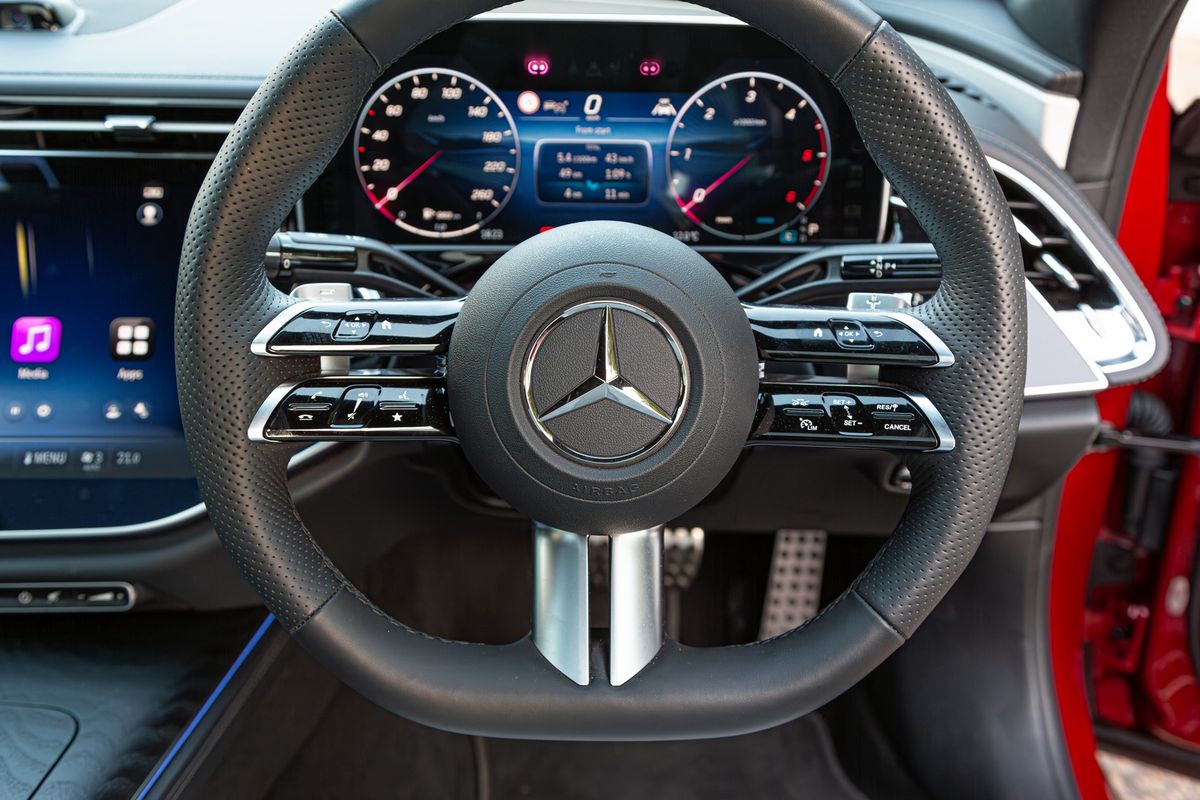
The multifunction steering wheel does, however, house all the buttons your heart might desire, making controlling various onboard functions, such as the trip computer and audio system, a breeze.
The driver’s seat is 6-way electrically adjustable (replete with electric lumbar support), while the passenger seat is 4-way electrically adjustable.
The amount of rear legroom available in the MG HS is so generous that I first thought it was an optical illusion. The load-bay capacity, meanwhile, is comparable to those of the MG HS’ rivals, while the rear seats fold and split in a 60/40 fashion and ISOfix child-seat mounts are fitted as standard.
But what truly stands out about the MG HS is its overall ride quality, which strikes a remarkable balance between comfort and sportiness; the newcomer’s suspension setup is reasonably supple when it needs to be but then, in the twisties, the HS corners in an impressively flat manner. The MG is so accomplished in that regard, you’d be forgiven for thinking you were in a German sports SUV costing 3 times as much.
There is virtually no road noise or wind noise to speak of, which I feel makes the MG HS more than a very comfortable daily driver – it is also bound to be an effortless long-distance tourer.
What’s more, the MG HS comes equipped with numerous standard safety features. It has 7 airbags as standard, including an innovative new airbag that pops out of the centre bin between the front seats. The MG representatives were very proud to announce that the HS was awarded a full 5 stars in the stringent EuroNCAP assessment programme, something not many Chinese manufacturers have achieved.
And then we get to the model’s pricing. The 4-variant range begins with the 1.5T Comfort, priced at R499 900. Again, there are no manuals available, but the MG HS eschews the 4-speed auto from its smaller ZS sibling for a conventional 7-speed auto – a good old-fashioned “slush-box”, which I certainly prefer.
The other trim level with this drivetrain is Luxury, which offers more standard features than the Comfort and is priced at R534 000. This brings us to the 2.0T Comfort and -Luxury variants, which are priced at R629 900 and R665 900 respectively and utilise a 9-speed automatic transmission.
While the 1.5-litre 4-cylinder turbopetrol (1.5T) offers 125 kW/275 Nm, the larger 2.0-litre 4-cylinder turbopetrol motor (2.0T) offers a very healthy 170 kW/370 Nm, which is knocking on Golf GTI territory.
For all that extra oomph you do, however, pay a penalty in the form of increased consumption; MG claims an average fuel consumption of 6.9 L/100 km for the 1.5T- and 8.6 L/100 km for the 2.0T variants.
Unfortunately, I did not get to drive either of the 2.0T variants. However, I did feel the smaller motor provided sufficient power and torque for most driving needs, including reasonable overtaking ability. However, if you are looking to tow with your vehicle, the larger engine might be a better choice.
How much does the MG HS cost in South Africa?
MG HS 1.5T Comfort 7DCT
R499 900
MG HS 1.5T Luxury 7DCT
R534 900
MG HS 2.0T Comfort 9AT
R629 900
MG HS 2.0T Luxury 9AT
R665 900
Prices (in January 2025) include a 7-year/200 000 km warranty and a 5-year/90 000 km service plan.
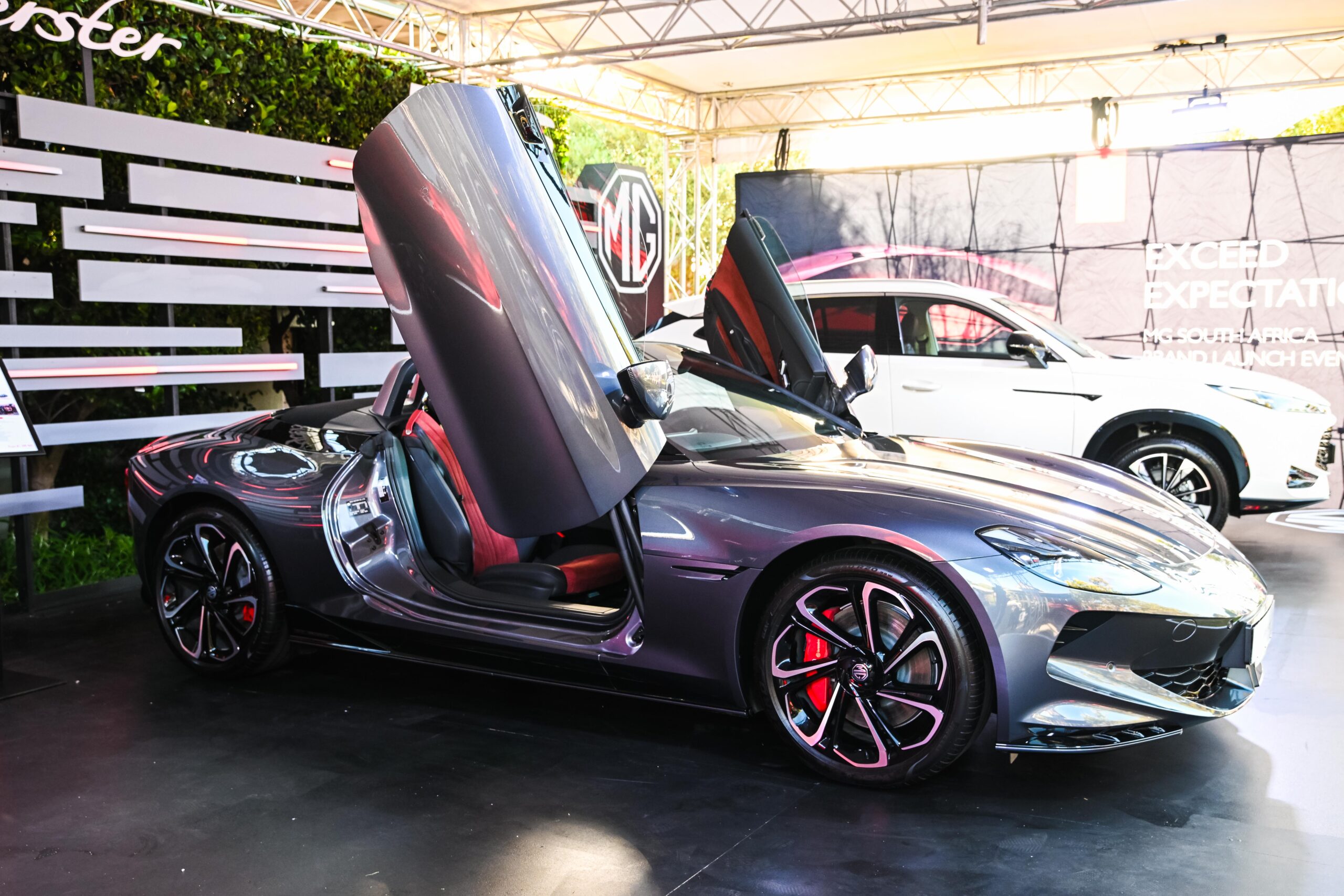
MG’s electric roadster was there and, gosh, it looked good. I am very much hoping we get to drive it soon at Cars.co.za, as with a claimed 0-100 kph time of 3.2 sec, thanks to dual motors producing a whopping 375 kW and 725 Nm, there’s not much out there that could compete with it in a traffic-light shootout.
The interior of the Cyberster looks and feels particularly impressive, with ultra-modern and rather clever design traits. And, of course, the scissor doors are a real highlight – they add to the model’s drama.
It is a properly interesting looking car, quite radical in its presence and a very interesting proposition, being the only fully-electric 2-door sportscar in South Africa. Priced at R1 399 999, I can’t wait to get my hands on the MG Cyberster! Look out for a full video review on our platforms soon.
How much does the MG Cyberster cost in SA?
MG Cyberster
R1 399 900
The stated price includes a 7-year/200 000 km warranty and a 5-year/100 000 km maintenance plan.
With aggressive pricing and a very strong warranty, MG is back with a bang in South Africa with the ZS, HS and Cyberster. With no fewer than 6 Chinese brands set to launch in Mzansi in 2024, the consumer will be truly spoilt for choice, and the legacy brands have another Chinese-based headache to deal with.
While the ZS, in my opinion, offers just enough to be competitive at its price point, it’s not as convincing as the newer HS, which is certainly bound to give just about everything on the market a run for its money.
When you consider an all-new Volkswagen Tiguan, with its comparatively asthmatic 1.4-litre turbopetrol engine and a similar spec to the MG HS’ Luxury trim grade will set you back around R900 000 (watch our 2024/25 Cars.co.za Awards Family Car category comparison video), even the very top-of-the-range 2.0T Luxury derivative, at R655 900, feels better built, is more powerful, and seems a bargain by comparison.
MG will no doubt claw some market share in the short term, with especially the ZS and HS. What’s more, with more models on the way, including well-priced EVs that are selling up a storm in other markets, the MG brand is almost certainly set to become a mainstay of the South African motoring landscape.
The demand for executive sedans may be dwindling, but the 6th-gen Mercedes-Benz E-Class is undoubtedly a frontrunner in what is now a niche in the new vehicle market. The turbodiesel-powered E220d AMG Line illustrates that point rather well…
We like: Exquisite ride quality, highly efficient powertrain, classy and upmarket cabin.
We don’t like: Conservative image, overload of onboard tech, pricey options quickly add up.
Considering that the vast majority of new-car buyers now favour crossovers and SUVs, you’d be forgiven for thinking that the era of premium (business-, executive- and 1st-class) sedans is well and truly over; the composition of luxury automotive brands’ products certainly reflect that fact: Mercedes-Benz SA’s SUVs outnumber their sedan siblings 10 to 7, while Q- and X models dominate Audi and BMW’s line-ups.
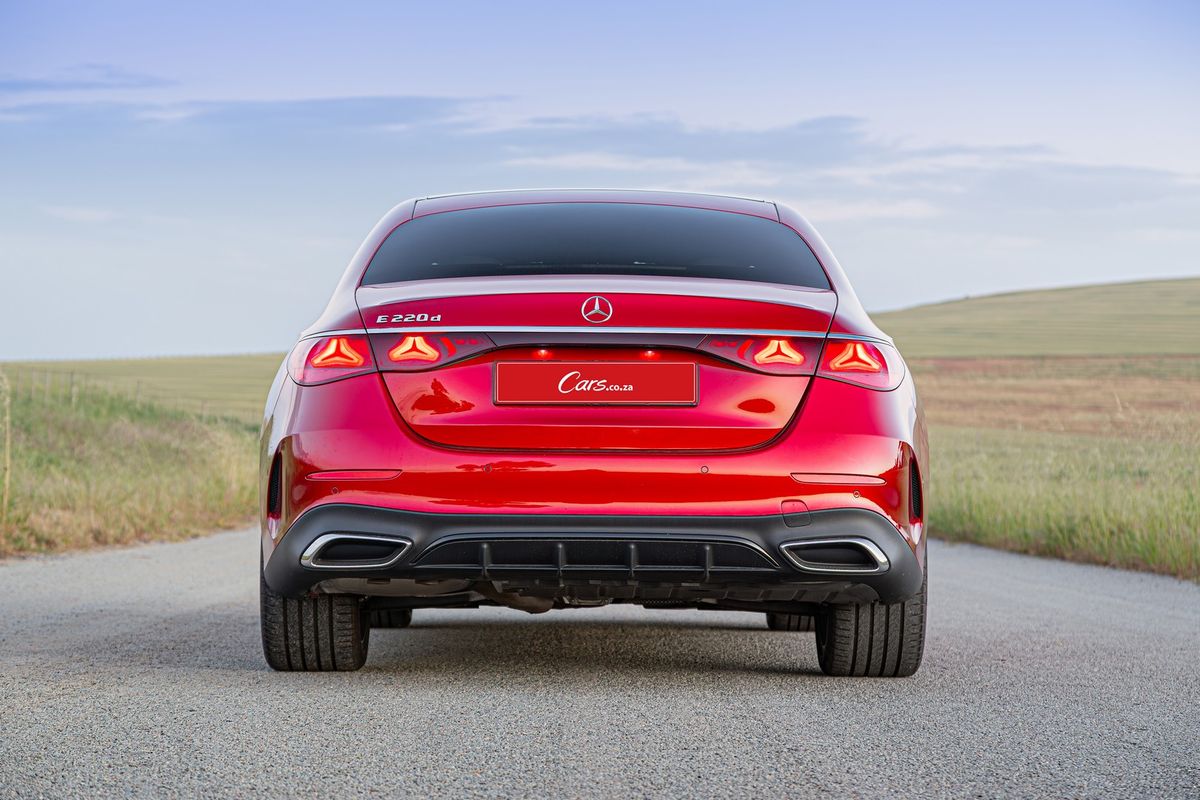
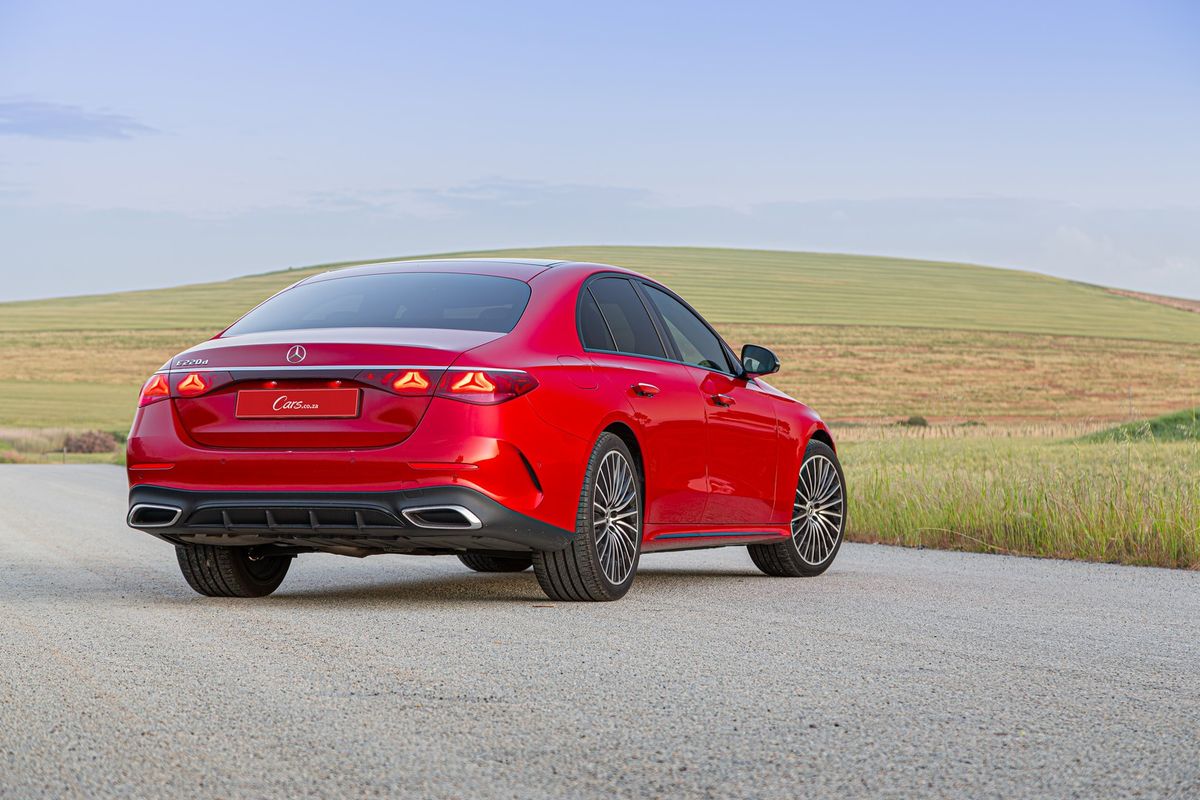
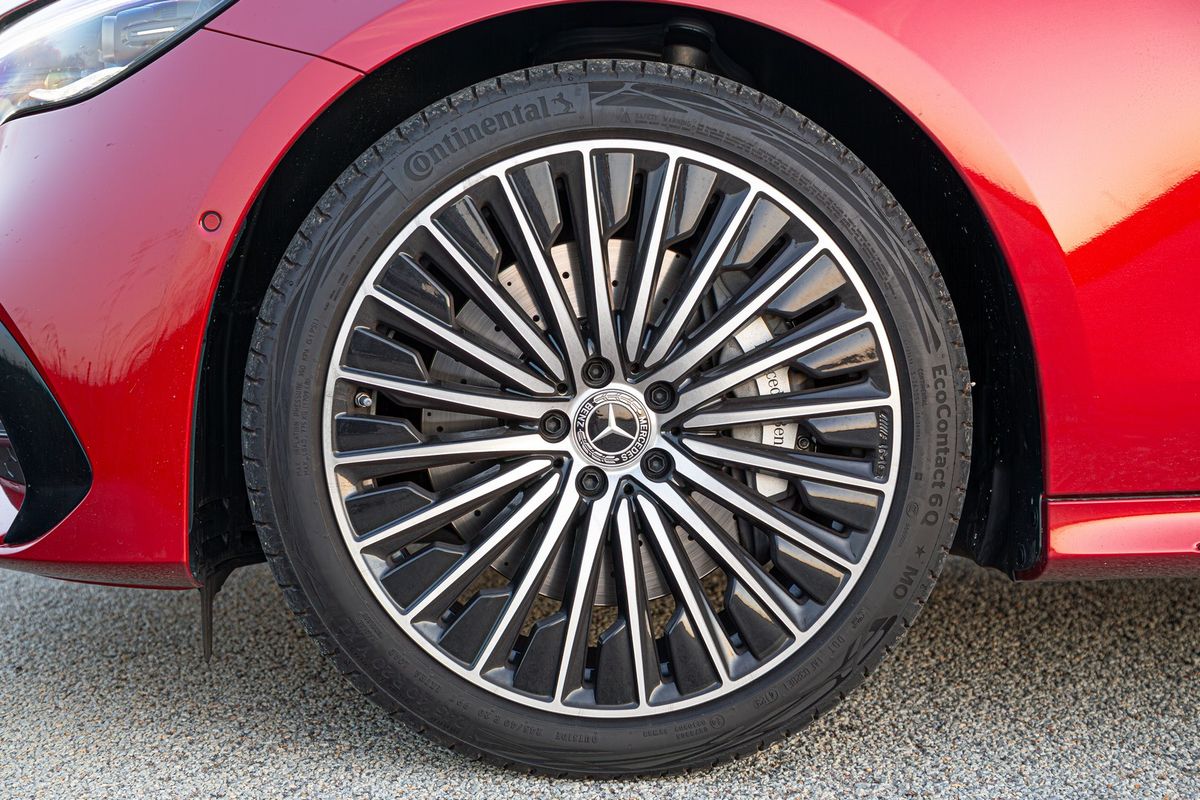
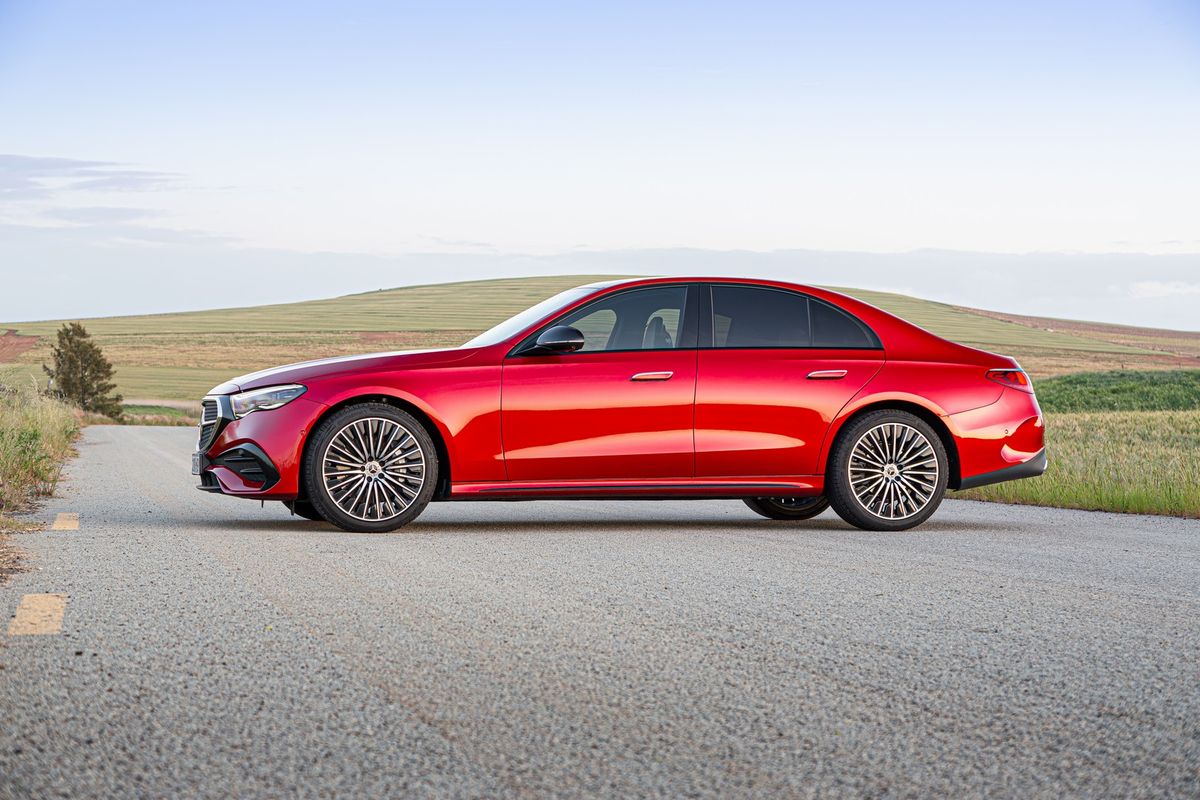
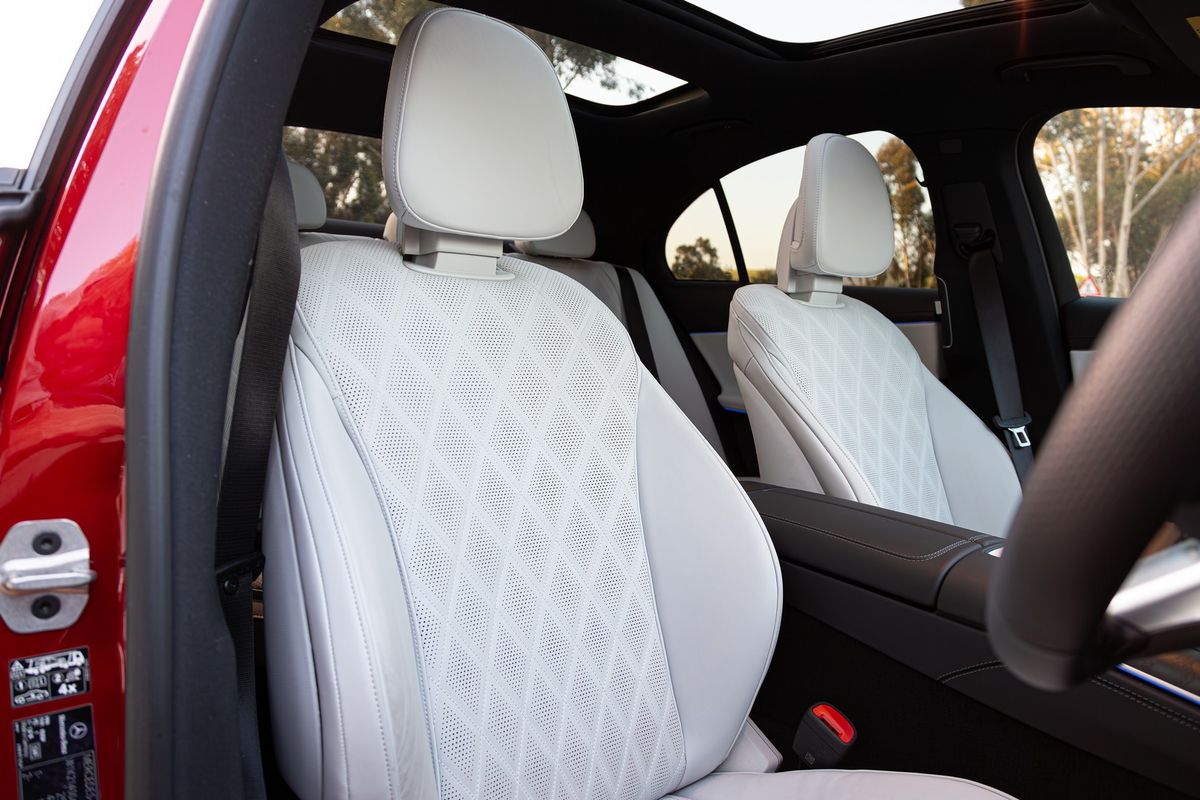
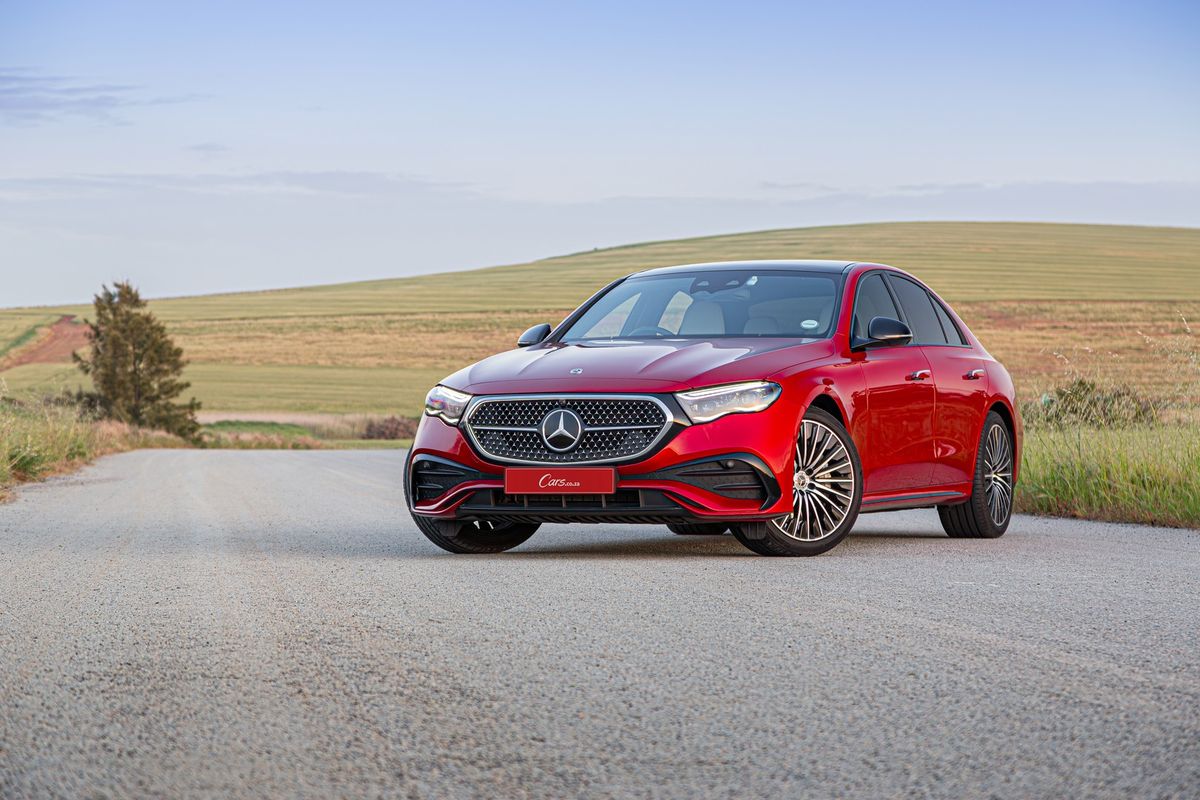
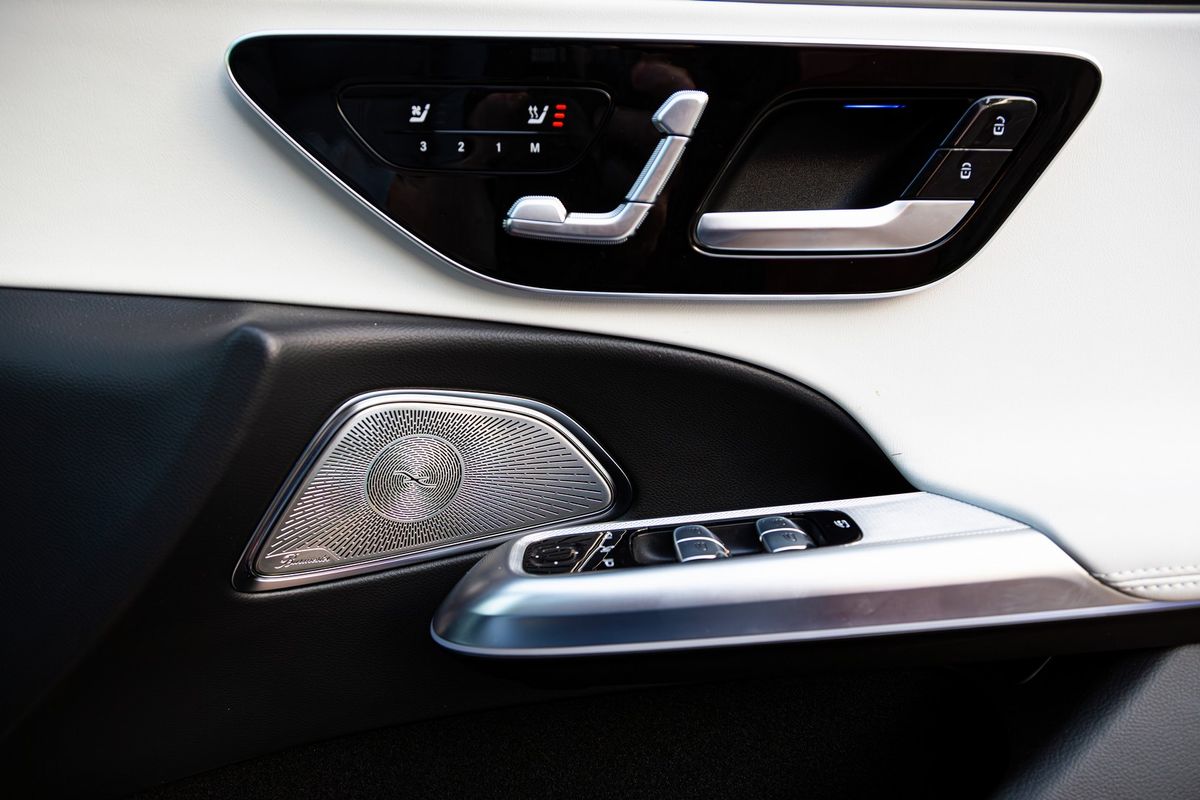
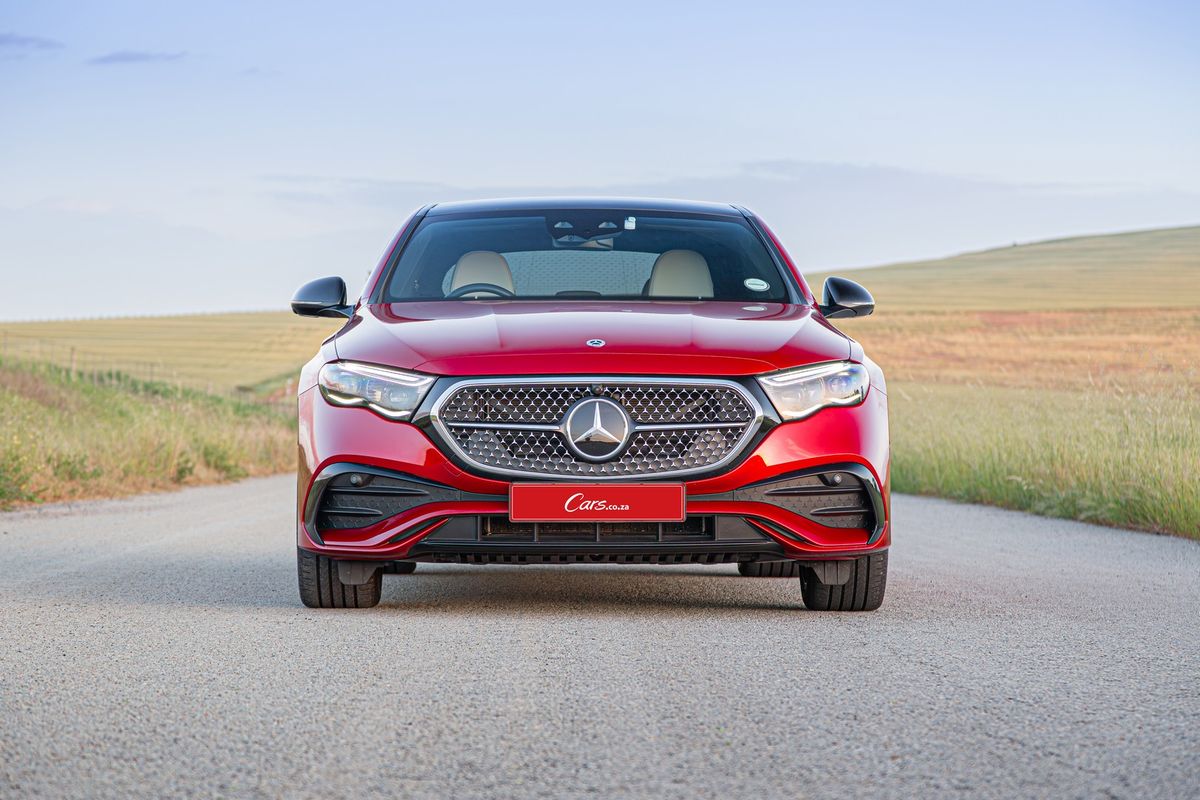
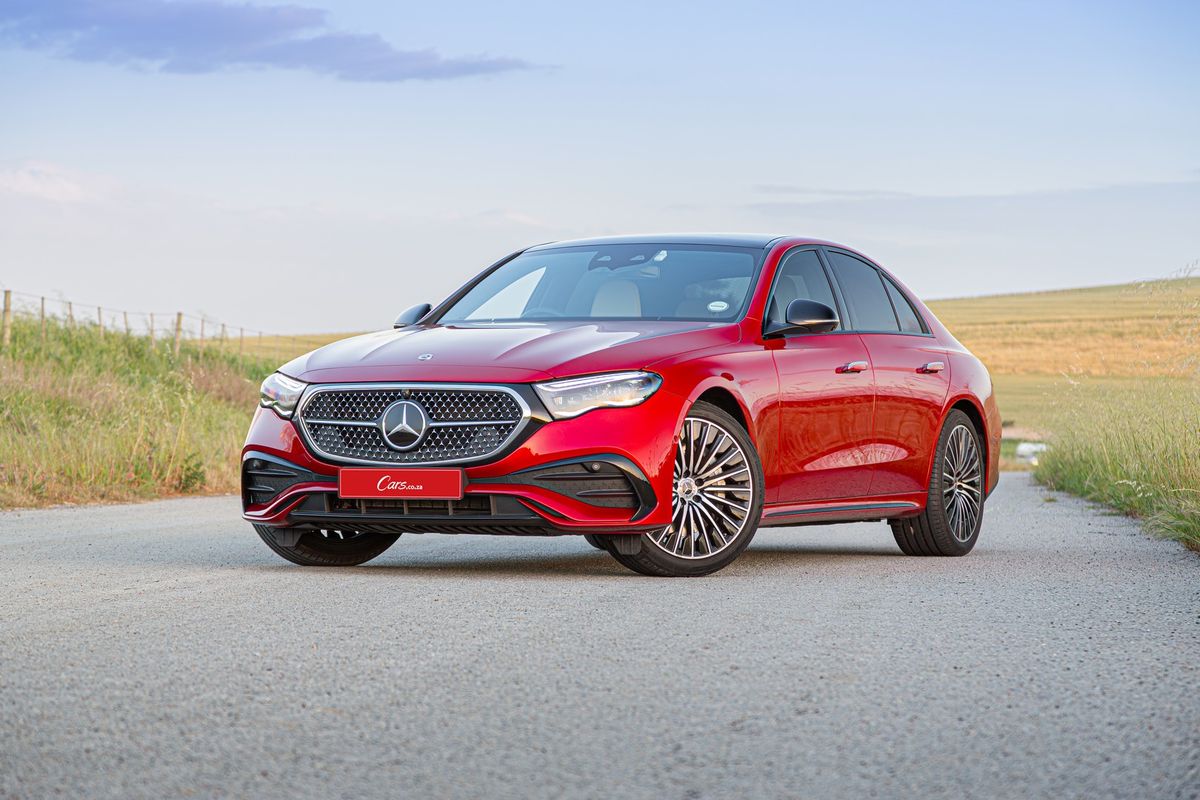
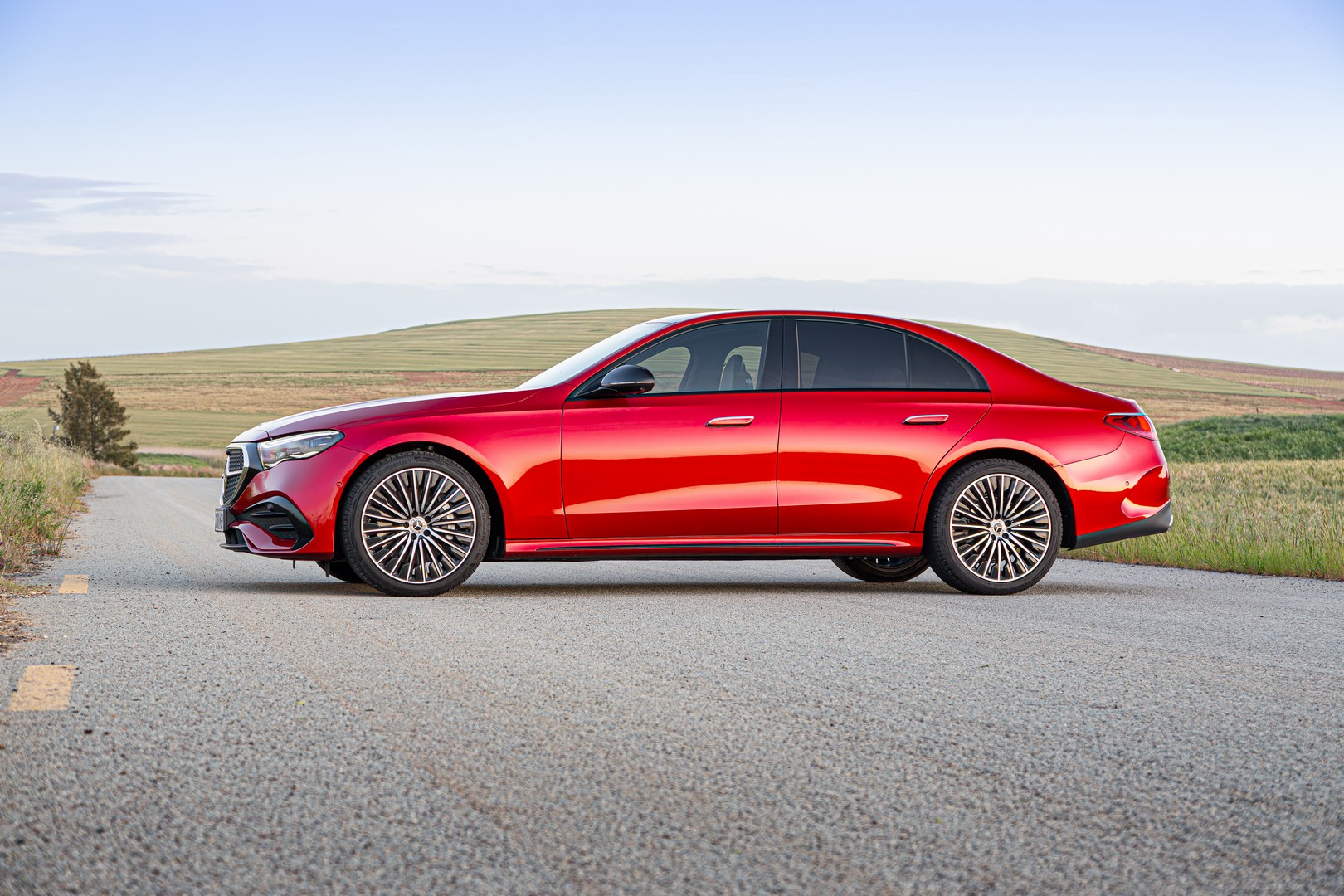
A vibrant red exterior finish, white leather and AMG wheels add up to quite the visual statement!
That said, there’s still a small, stubborn portion of buyers that will insist on nothing other than a plush and comfortable executive sedan. Let’s not forget the commercial aspect: a compact sedan will get you to your destination, but when you fork out for an Uber Black, you want to be ferried in a prestige vehicle!
This 6th-gen (W214) Mercedes-Benz E-Class’ exterior design incorporates some novel – and intricate – styling cues. The Sindelfingen-based brand is renowned for derivative designs (it tends to adhere to its design language strictly: models tend to look like smaller versions of the products directly above them).
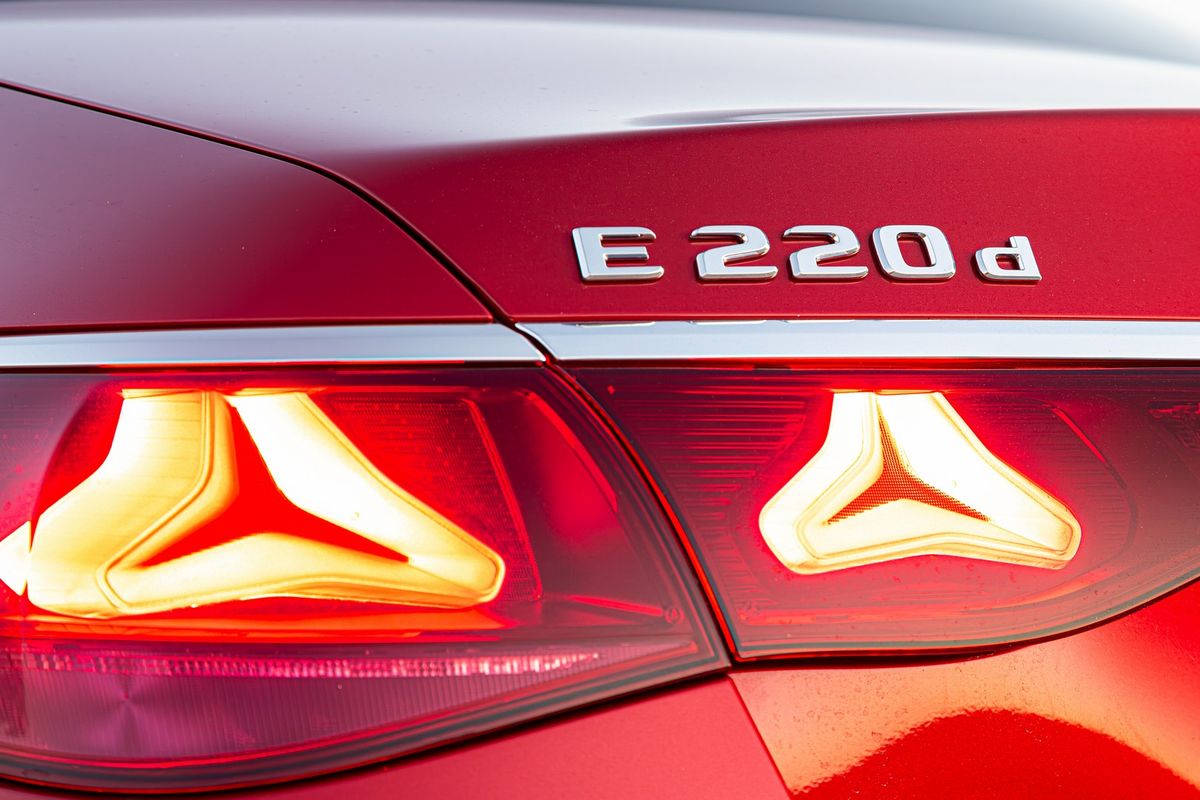
But the W214, though not outlandish, looks sufficiently distinctive to its ‘Benz sedan siblings, plus it’s endowed with lovely design details, such as the Three-pointed Stars embedded in the LED tail lights.
What are the rivals to the E-Class, then? With just a handful of premium sedans left, we’ve narrowed down the alternatives to the BMW 5 Series and Audi A6. Not long ago, you could also consider the Lexus GS, Volvo S90 and Jaguar XF, but they have been discontinued and/or superseded by SUV models.
The Mercedes-Benz E-Class is available in 2.0-litre 4-cylinder turbopetrol and -diesel guises. The petrol-fed E200 (150 kW/320 Nm) kicks off the range, but its turbodiesel sibling is the subject of this review.
Note the LED taillamp clusters with the integrated Three-pointed Stars.
The turbodiesel engine delivers 145 kW/440 Nm and it’s supplemented by a 48V mild-hybrid system that takes the power up (briefly) to 162 kW. With our test equipment hooked up and the sportiest drive mode engaged, the E220d produced a 0-100 kph time of 7.42 sec (fractionally quicker than Benz’s claim).
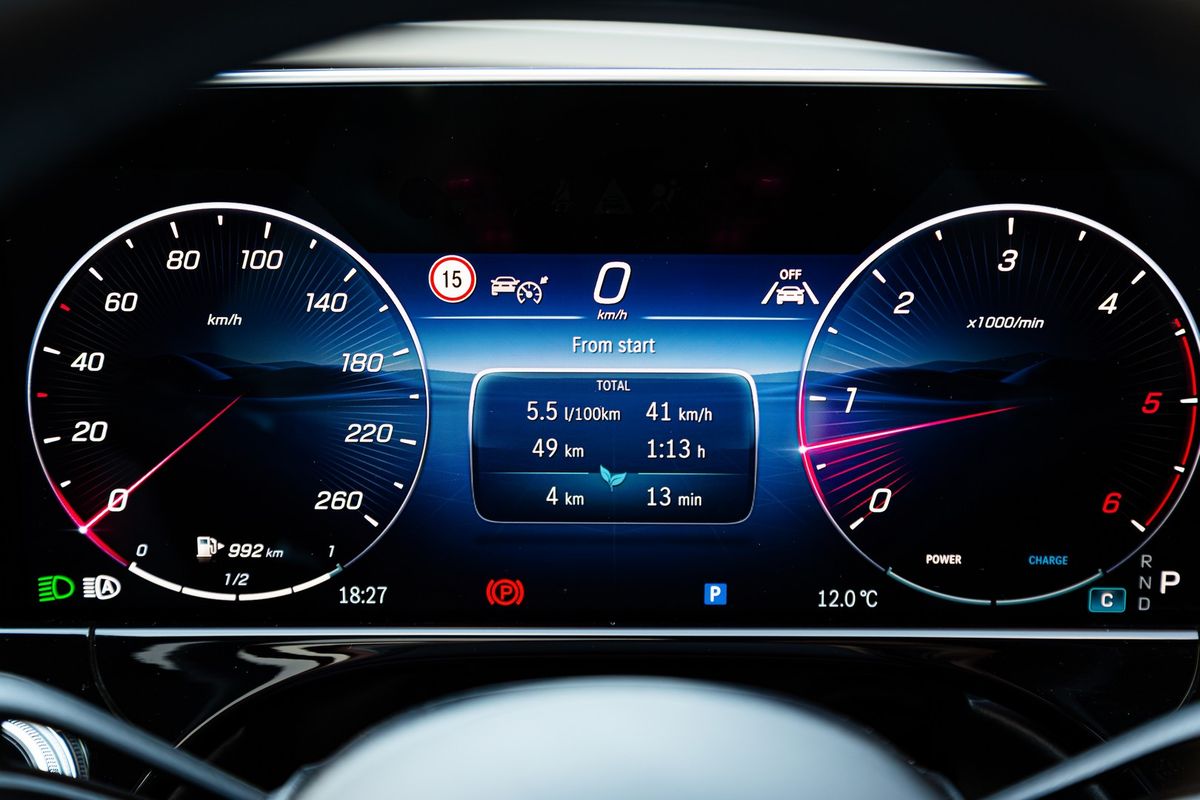
Granted, turbodiesel engines have been lambasted abroad for emitting more harmful gases than their petrol counterparts, but you cannot ignore the exceptional fuel efficiency of modern “oil burners”. This E-Class variant could, in theory, travel 1 320 km on a single (66-litre) tank, but that doesn’t sound too far-fetched. After testing the E220d, which arrived with a full tank, for 2 weeks, we had clocked up over 900 km, but despite several stints of enthusiastic driving, it still indicated 250 km worth of range by the end.
With more open-road driving, you’ll see this number dip under 5 L/100 km.
Some of our industry colleagues have reported incredible fuel-efficiency figures for this variant (numbers in the low 4 L/100 km range, particularly when driving on the open road). However, according to our test on our dedicated fuel-economy route, which admittedly has an urban bias, the E220d returned 5.5 L/100 km, which is a touch higher than Mercedes-Benz’s claimed figure (5.0 L/100 km), but still impressive.
The E220d balances economy and performance beautifully.
The 9-speed automatic transmission shifts very smoothly almost all of the time and the ‘box seems well-calibrated with the mild-hybrid powertrain. However, with 9 ratios to shuffle through, the E220d can hesitate if you suddenly demand full acceleration, because the car’s computer takes a moment to work out which gear to select to deliver full thrust, along with summoning EQ boost from the 48V system.
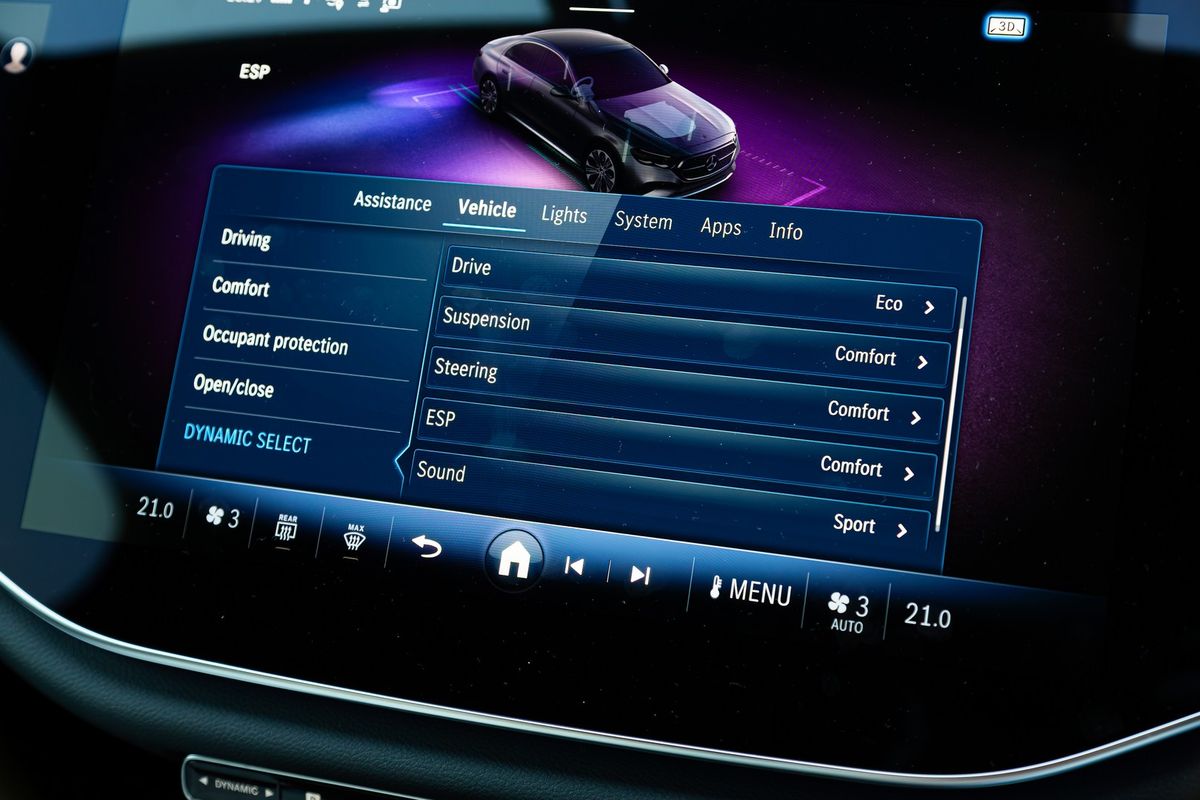
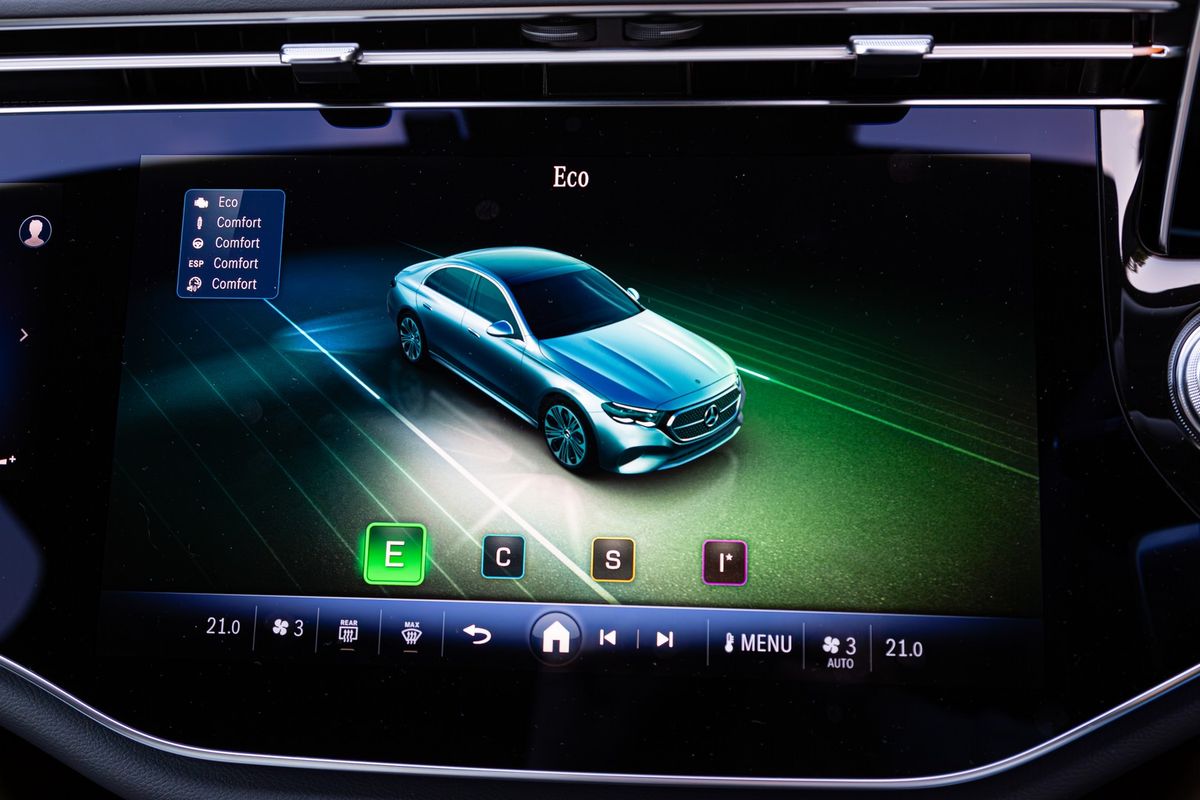
The E220d offers 3 drive modes, plus the chance to configure powertrain settings individually.
And, the ‘Benz’s 48V mild-hybrid system is highly effective. The start/stop is barely noticeable – delayed restarts (where the engine takes just a millisecond too long to get going again) have been eliminated. It’s instantaneous, and there’s more than enough electric power to facilitate pullaways for a few seconds.
The electric assistance benefits economy because accelerating from a standstill would otherwise use a lot of fuel. It also helps to keep the turbocharger spooled up (thereby mitigating lag) and the instrument cluster indicates when that extra shove, which benefits overtaking ability, is being sent to the wheels.
Practicality and Features
The Mercedes-Benz (W214) E-Class has a smart-looking cabin and, given the space and comfort it offers its occupants, the E220d is one of those vehicles that prompts the question: “Do I want to drive or shall I be chauffeured?” Irrespective of your decision, you’re going to experience refinement galore.
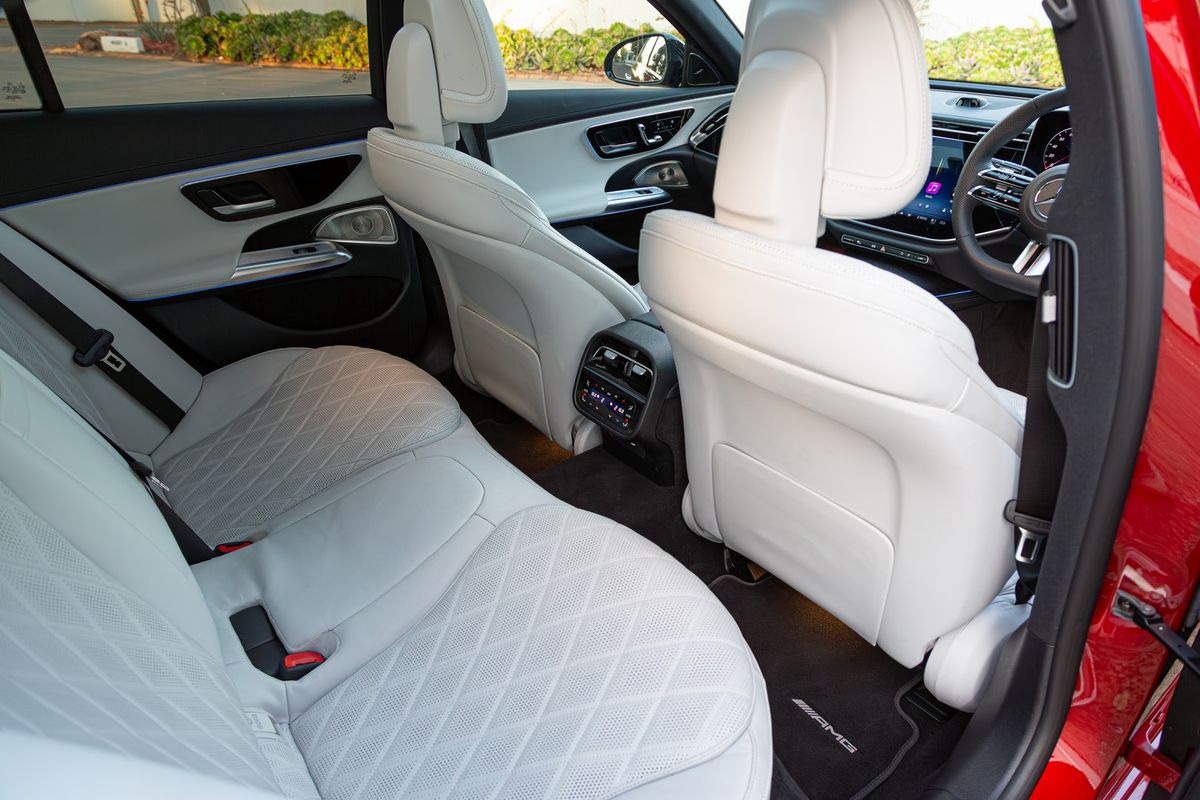
Rear passengers are afforded ample leg- and headroom, and benefit from individual climate controls, as well as USB-C charging ports. When it comes to luggage space, the E-Class’ boot is said to have a 540-litre capacity, which is a fraction more than those of the equivalent BMW 5 Series and Audi A6 models.
There is no shortage of rear occupant space in the E220d.
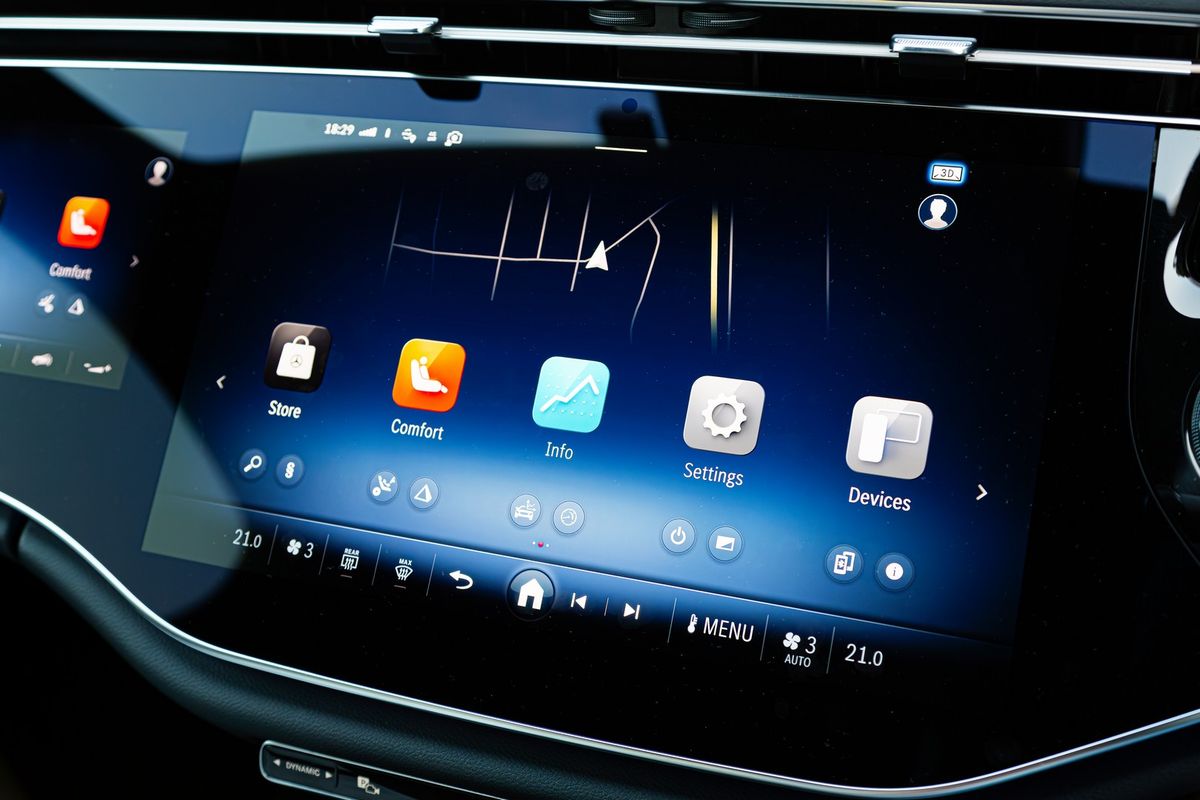
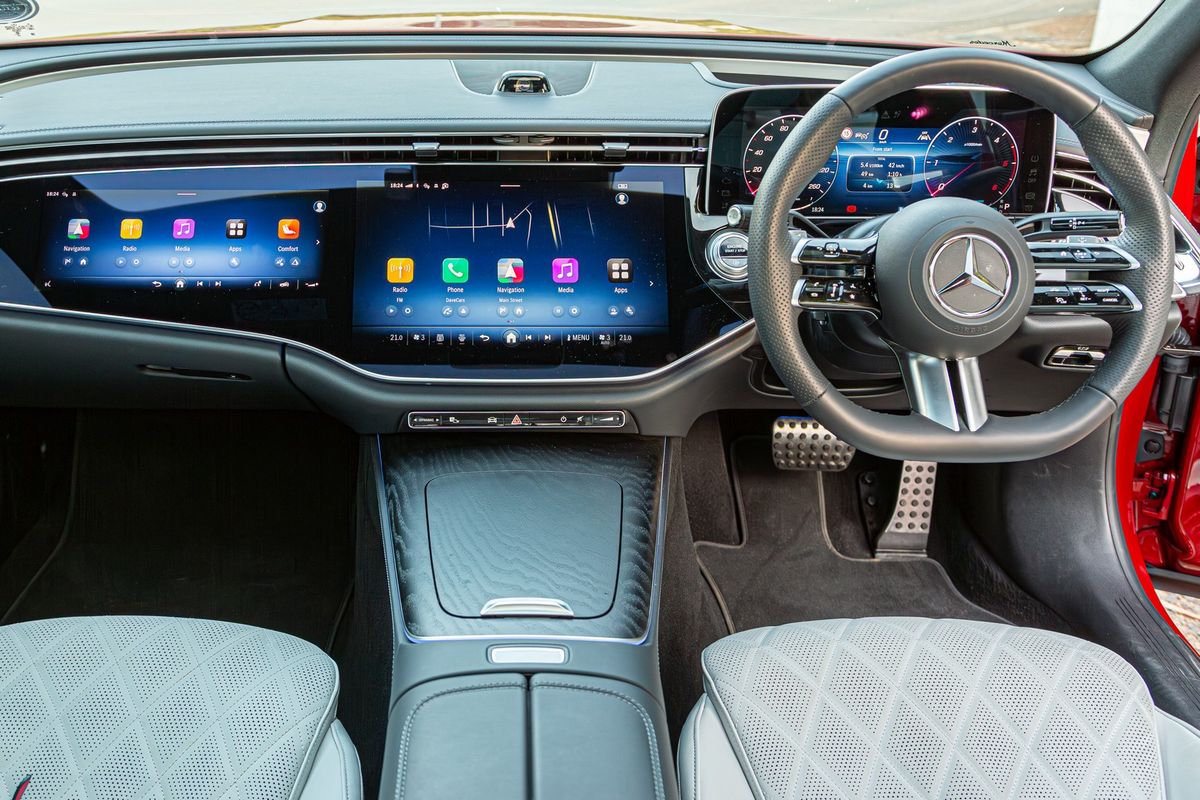
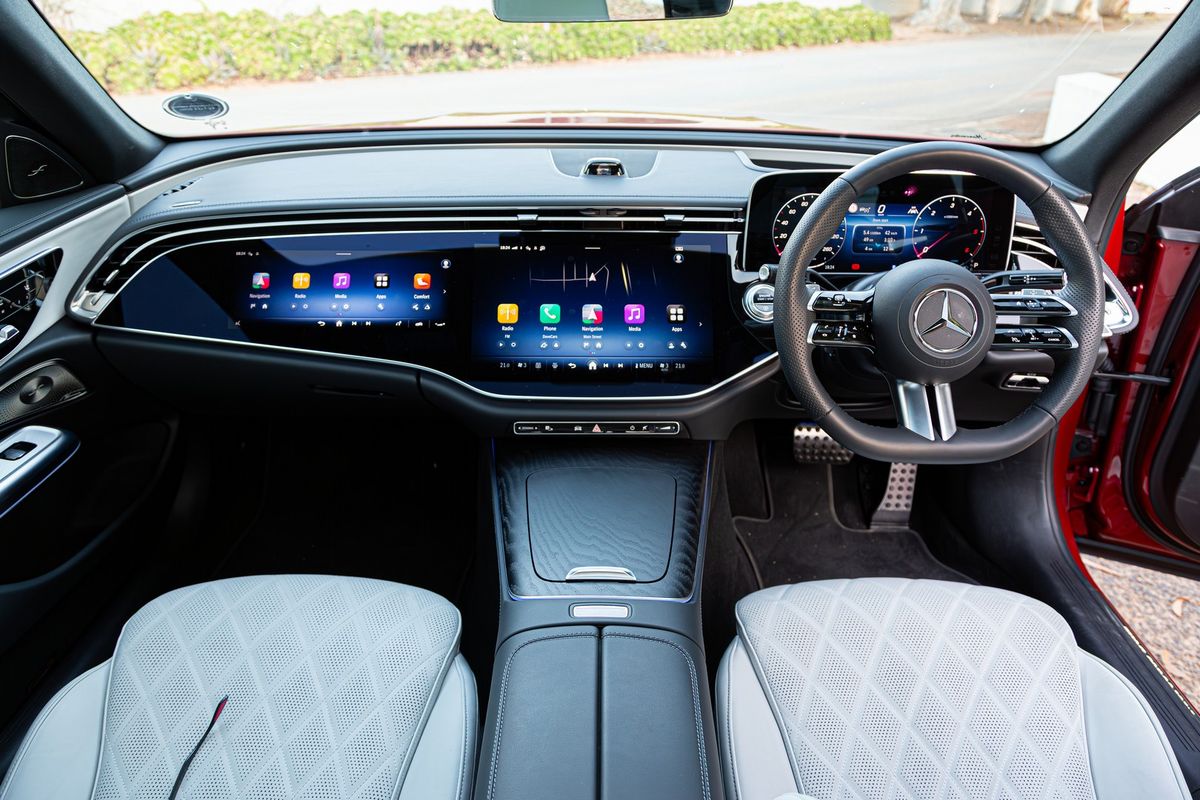
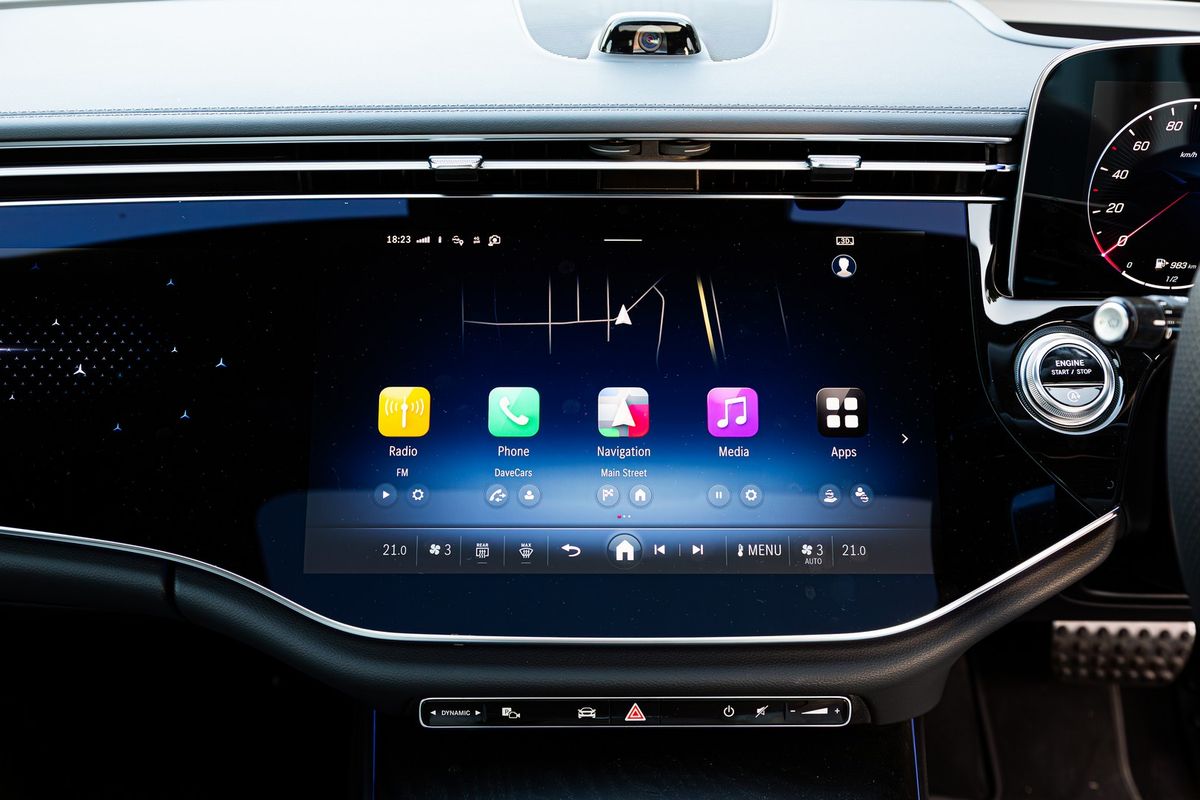
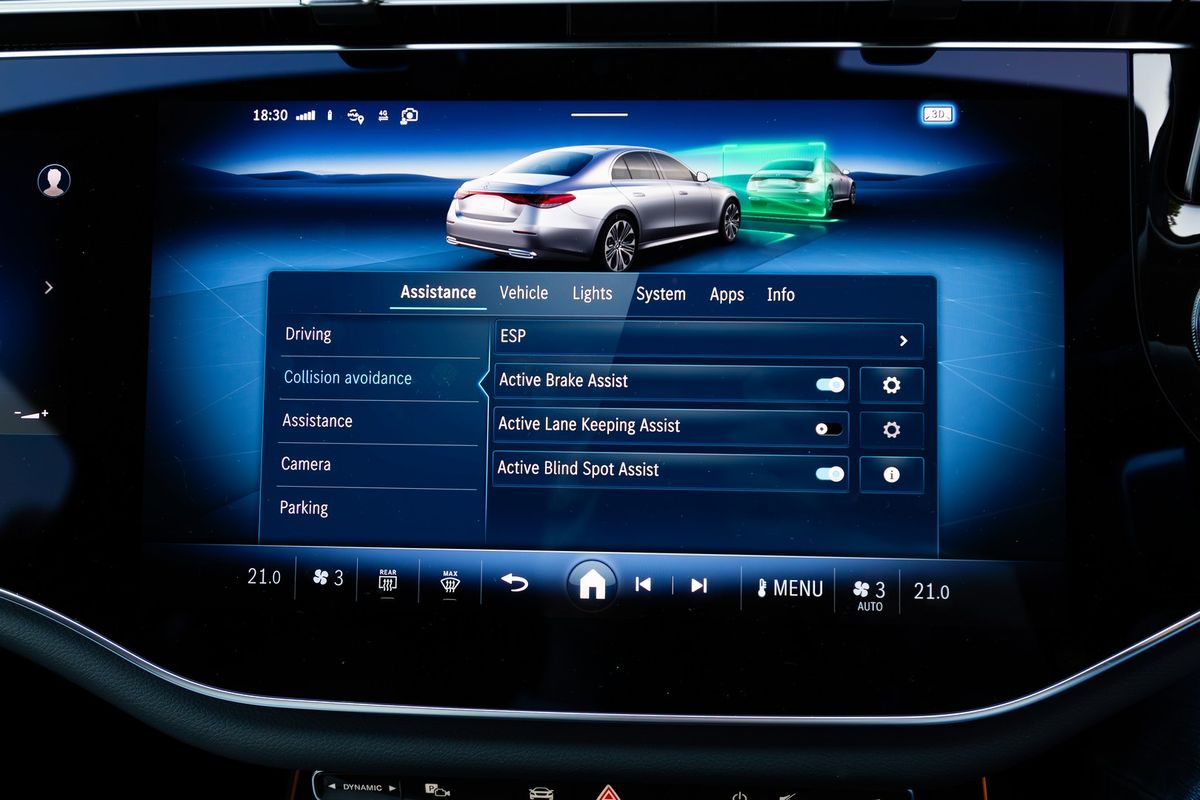
The E220d cabin exudes a futuristic look and feel. We suspect it may be a bit intimidating to the typical E-Class buyer (a more mature and less tech-savvy person who will find the array of screens and icons offputting). Our test unit had the optional MBUX Superscreen, which spans about 2 thirds of the fascia.
When you have to fork out R1.5m to acquire a new executive sedan, you’d (rightly) expect its cabin to deliver plushness and superior levels of fit and finish. Well, the E-Class ticks those boxes, which is a welcome contrast to other recent high-end Mercedes-Benz models that have, um, marginal finishes.
How many screens does one need? Yes.
When we used Mercedes-Benz SA’s online configurator to mimic the specification of our test unit as closely as possible, we worked out that the E220d AMG Line, as we tested it, was fitted with options to the value of almost R600k, which would give it a total price of almost R2 million! This may sound crazy, but remember the W214’s GLE SUV equivalent starts from R1.9 million and, while that model offers a bit more space and performance, you’d still have to option that up to the same level. Where would that end?
Indeed, numerous options were ticked on the E220d AMG Line we tested and we’re grateful Mercedes-Benz SA decided to go all-out – how else would we be able to test all the unique and high-end features? But we did ask ourselves: “Are all of these options worth it?” Some, like the 3D effect instrument cluster and illuminated grille, are a bit gimmicky… and don’t befit something as stately as an E-Class, do they?
The selfie camera is located on the top of the dashboard.
One of the features we simply don’t understand is the E-Class’ selfie camera (for front occupants). We assume this could be for online meetings, but in our opinion, the last thing we want to do while driving is join a Zoom/Teams conference call! But, by all means, tick the boxes for the Burmester audio, ventilated seats, and engineering pack, that’s the rear-wheel steering and air suspension (more about that later).
It so happens that the E-Class is reasonably specified as is: nice-to-have features such as smartphone integration, wireless charger, heated front seats, and adaptive high-beam are standard. By the way, the Mercedes-Benz online shop will do its best to match your configurator spec with a car that’s already in stock, thus negating potential shipping delays that may occur if you customise a car extensively. Neat.
Our vehicle came specced with the Premium Plus Package, but you can individually option some of these items.
Sedans may have fallen out of fashion, but in their most elevated guises, they offer far more involving and resolved driving experiences than their favoured high-riding (and relatively ponderous) SUV peers. The W214 E-Class is no exception in this regard and, while dynamism isn’t a core focus of the package, the ‘Benz’s suspension tune and rear-wheel-drive setup make it a reasonably engaging car to pilot.
Drivers who spend a lot of time on the road will appreciate just how comfort-oriented the E-Class is. Few cars can crush kilometres and long hours (with the driver and passengers still feeling reasonably fresh by the end of the journey) quite like the E220d. Wind-, engine- and road noise are efficiently suppressed.
These wheels look sensational
Our test unit was specified with what Mercedes-Benz terms the Engineering Pack, which includes air suspension and rear-wheel steering. While they’re marketed as comfort- and manoeuvrability-enhancing features, they also made our E-Class float along beautifully – few cars at this price point ride this well.
AMG Line trim includes sensational-looking 20-inch alloy wheels wrapped in 245/40 R low-profile tyres –the only thing that would enhance the ride quality is opting for a smaller tyre wrapped in thicker rubber.
The capacitive controls on the steering wheel are still mildly annoying.
The other principal benefit of rear-wheel steering is that the sizeable E-Class doesn’t tantamount to a cumbersome cruise liner when you’re trying to parallel park the vehicle. The rear wheels can turn a few degrees in the opposite direction, which allows the E220d to execute tighter turns.
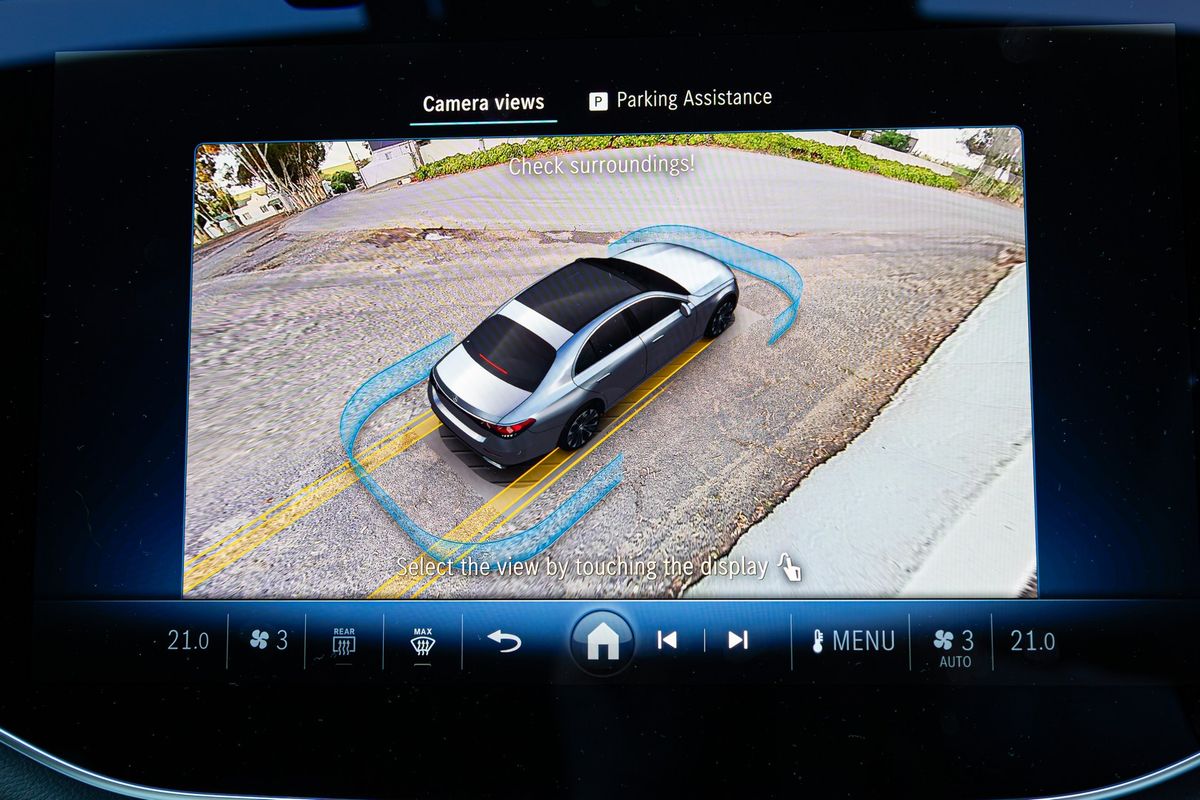
That said, the array of cameras and sensors fitted to the car negates most of the stress associated with parking, in any case. Once up to speed, the rear wheels turn in the same direction as the front wheels; in that scenario, the system optimises both the ‘Benz’s agility and body-roll suppression.
Excellent 360-degree cameras make tricky parking manoeuvres much less stressful.
Price and After-sales support
The Mercedes-Benz E-Class E220d AMG Line costs R1 541 260 (January 2025). That price excludes options but includes a 2-year/unlimited km warranty and a 5-year/100 000 km maintenance plan.
The E220d is an exceptional offering, but has the market moved on from high-end sedans?
Mercedes-Benz is well aware that the executive sedan segment is past its prime, but the well-resolved 6th-gen E-Class is nonetheless an exceptional offering. It may not be as engaging to drive as its Bavarian rival – the 5 Series – but dynamic handling ability is hardly a prerequisite for success in this segment.
Yes, our test unit was loaded with a dazzling array of screens and tech, which is all a bit intimidating. However, if you look past the gizmos and take the ‘Benz for a drive, you’ll find a particularly refined, efficient and luxurious sedan beneath it all. Compared with the brand’s more popular SUVs, such as the GLE, the humble E-Class quietly starts to look like great value. Oh, and in a final plaudit for the E220d’s stellar powertrain, we conclude this review with: “Long live the modern turbodiesel engine, long live!”
SA’s best-selling double-cab bakkie of 2024 revealed!
Which double-cab bakkie was South Africa’s best seller in 2024? Well, we have the dual-cab sales figures as well as those for single- and extended-cab 1-tonne bakkies…
You’ve likely already seen our list of South Africa’s best-selling bakkies overall for 2024. But what happens when we break down the figures by body style? Well, that’s exactly what we’re going to do here, allowing us to crown Mzansi’s most popular double-cab bakkie for 2024.
Let’s dive right into the sales statistics. According to figures kindly supplied by Lightstone Auto, the Ford Ranger retained the title of SA’s best-selling double-cab bakkie last year, with 20 078 units sold. By our maths, that represents 78.6% of the nameplate’s overall total for 2024 (and, according to the Blue Oval brand, a 33.4% share of the dual-cab segment).
Ford says as many as 1 930 units of the Raptor were sold in SA in 2024.
Fascinatingly, Ford says that double-cab figure includes a considerable 1 930 units of the Raptor (which is imported from Thailand rather than built alongside the other Ranger derivatives at the local Silverton plant), meaning this 292 kW performance bakkie outsold Ford’s entire single-cab portfolio.
The Toyota Hilux – which will later in 2025 be offered in widebody Legend 55 guise – thus had to settle for 2nd place in South Africa’s double-cab rankings, with 15 322 units registered last year. Based on our calculations, dual-cab sales comprised 46.9% of the Prospecton-built bakkie’s overall tally for 2024.
As expected, the Isuzu D-Max – which looks set to benefit from a facelift (and perhaps even a new engine option) this year – completed the double-cab top-3 last year, with the Struandale-made bakkie ending on 7 965 units. That works out to 42.0% of the D-Max’s overall figure for 2024.
Lightstone Auto’s figures furthermore showed that all other 1-tonne double-cab bakkie derivatives – excluding the Ranger, Hilux and D-Max, that is – collectively managed 16 681 units in 2024.
SA’s top-selling single- and extended-cabs in 2024
Toyota’s Hilux topped SA’s single-cab sales charts in 2024.
What happened in the single-cab space? Well, the Toyota Hilux was again South Africa’s best-selling 1-tonne single cab last year, with 12 161 units registered. The Isuzu D-Max single cab snatched 2nd place with 9 037 units, while the 2-door version of the KwaZulu-Natal-assembled Mahindra Pik Up completed the single-cab top 3, with 6 610 units sold. The Ranger single cab, meanwhile, finished the year on just 1 702 units.
The Toyota Hilux reigned supreme in the extended-cab segment in 2024, too, finishing the year on 5 161 units. Next came the Ford Ranger (3 772 units), followed by the Isuzu D-Max (1 971). For the record, these are the only 3 bakkies offered locally in this so-called “cab-and-a-half” body style.
As a reminder, the Hilux remained SA’s best-selling bakkie overall (so, all 3 body styles combined) last year, despite sales falling 12.6% year to year to 32 656 units. The Ranger took 2nd place, improving 3.8% year on year to 25 553 units. That meant the D-Max again completed the podium, with its registrations growing 0.1% to 18 973 units.
Updated Toyota GR Yaris for SA: more power and auto ‘box
The updated Toyota GR Yaris is scheduled to launch in South Africa in March 2025, arriving with more power and torque as well as an automatic transmission…
Toyota South Africa Motors has confirmed that an updated version of the Toyota GR Yaris is scheduled to launch locally in March 2025. The big news? The Japanese firm’s small hot hatch gains even more power and torque, along with an 8-speed automatic torque-converter transmission.
At its recent 2025 State of the Motor Industry (SOMI) address in Gauteng, Toyota SA Motors announced plans to introduce the revised GR Yaris before the end of Q1 2025. As a reminder, the current GR Yaris launched locally in mid-2021, before the range was halved to just a single high-spec “Rally” derivative around a year later.
While the outgoing SA-spec version of the all-paw hot hatch is equipped with a 6-speed manual gearbox and offers 198 kW and 360 Nm from its turbocharged 1.6-litre, 3-cylinder petrol engine, the updated version boasts peak outputs as high as 210 kW and 400 Nm – and switches to a “newly developed” 8-speed automatic transmission.
Interestingly, that maximum power figure is down on the Japanese-spec model’s 224 kW but up slightly on Europe’s 206 kW tune. It’s not yet confirmed whether Toyota SA Motors will retain the option of a manual cog-swapper in the revised GR Yaris line-up or opt for an auto-only approach, though we’ve heard rumblings the 3-pedal version will fall away locally.
Toyota says the new self-shifting ‘box’s close-ratio gears “make the most of the engine’s power band”, while the transmission boasts “world-class” shifting speeds thanks to the use of “highly heat-resistant friction material” in the clutch and “enhancements” to the control software. The company has yet to reveal a claimed 0-100 kph time, but it will undoubtedly beat the current manual version’s 5.5 seconds.
According to the Aichi-based automaker, the all-paw hot hatch’s driving position has been lowered by 25 mm, while forward visibility has ostensibly been improved by moving the rearview mirror to the top of the windscreen and lowering the upper edge of the central cluster by 50 mm. Furthermore, the control panel and display have been tilted 15 degrees towards the driver.
In terms of exterior styling, the updated 3-door model (revealed in January 2024) features revised designs for its lower grille and front bumper, while the rear lower garnish has been tweaked for improved aerodynamics. The taillamps likewise benefit from mild revisions and the high-mounted brake light has been separated from the rear spoiler.
Local pricing for the updated model has yet to be confirmed, though it’s worth keeping in mind the outgoing GR Yaris 1.6T GR-Four Rally comes in at R848 600. We suspect Toyota SA Motors will again receive only a small allocation; in 2024, for reference, the company registered just 11 examples of the GR Yaris in Mzansi.
Are you looking for the cheapest Compact SUVs available in South Africa with a budget under R300k?
Do you have up to R300 000 to spend on one of South Africa’s cheapest compact SUVs?
The demand for affordable compact SUVs is surging in South Africa and car manufacturers are meeting that demand with a flurry of new products, giving consumers lots of choice across a broad price range.
Times are tough and many consumers will be eagerly eyeing out the lower end of the compact SUV market for an affordable and compact urban runabout. This list, therefore, focuses on the cheapest compact SUVs available for under R300k. Let’s take a look at what’s available!
Pricing is accurate as of January 2025.
Cheapest Compact SUVs under R300k in South Africa
1. Nissan Magnite – From R246 200
An updated Nissan Magnite came to market in November 2024. Two engines are offered including a naturally aspirated 1.0-litre petrol engine with 53 kW and 96 Nm of torque and a more powerful 1.0-litre, 3-cylinder turbopetrol engine delivering 74 kW and 152 Nm of torque when paired with a CVT or 160 Nm in conjunction with a 5-speed manual transmission.
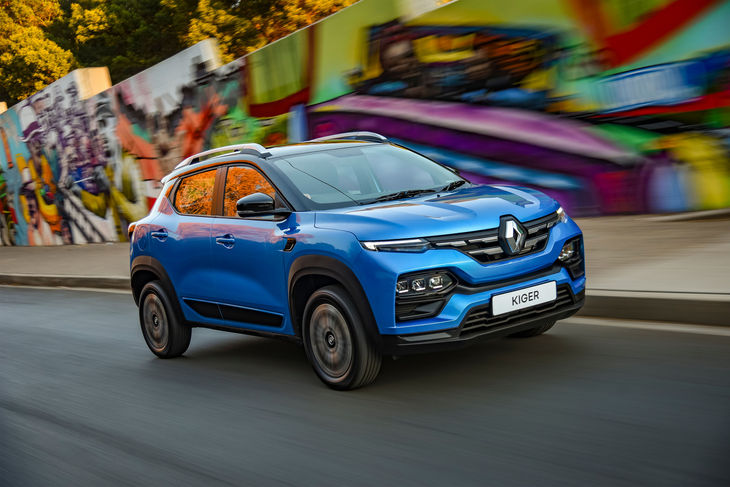
The new Renault Kiger is one of the cheapest compact SUVs you can buy right now and is offered with 2 engine choices including a naturally-aspirated 1.0-litre, 3-cylinder engine with 52 kW and 96 Nm as well as a more powerful turbocharged 1.0-litre, 3-cylinder engine with 74 kW and 160 Nm. A 5-speed manual transmission and a CVT are available for both engines.
The Mahindra XUV 3XO features a bold design and is powered by the firm’s mStallion turbocharged petrol 1.2-litre motor with 82 kW and 200 Nm on offer and paired with either a 6-speed manual or 6-speed automatic transmission. The XUV 3XO is available in base MX2 time, mid-spec MX3 guise or in range-topping AX5 (and AX5L) or AX7L guise.
Citroen has introduced the new C3 to market to woo local buyers and the C3 comes fitted with a naturally aspirated 1.2-litre petrol engine with 61 kW and 115 Nm of torque and is paired with a 5-speed manual transmission.
A turbocharged C3 is also available from R299 900 and is offered with a 3-cylinder 1.2-litre turbocharged petrol engine with 81 kW and 205 Nm in conjunction with a 6-speed automatic transmission.
The newcomer is powered by a naturally aspirated 1.2-litre 4-cylinder petrol that produces 61 kW and 114 Nm and comes paired with either a 5-speed manual transmission or a 5-speed automated manual transmission (AMT). Trim grades include the base Premium, mid-spec Elite and top-spec Elite derivatives.
The Chery Tiggo 4 Pro is proving to be quite popular in this segment and buyers shopping with a budget under R300k can consider the Tiggo 4 Pro LiT derivative. The Chery Tiggo 4 Pro range is powered by a 1.5-litre petrol engine with 83 kW and 138 Nm. Power goes to the front wheels via a 5-speed manual gearbox.
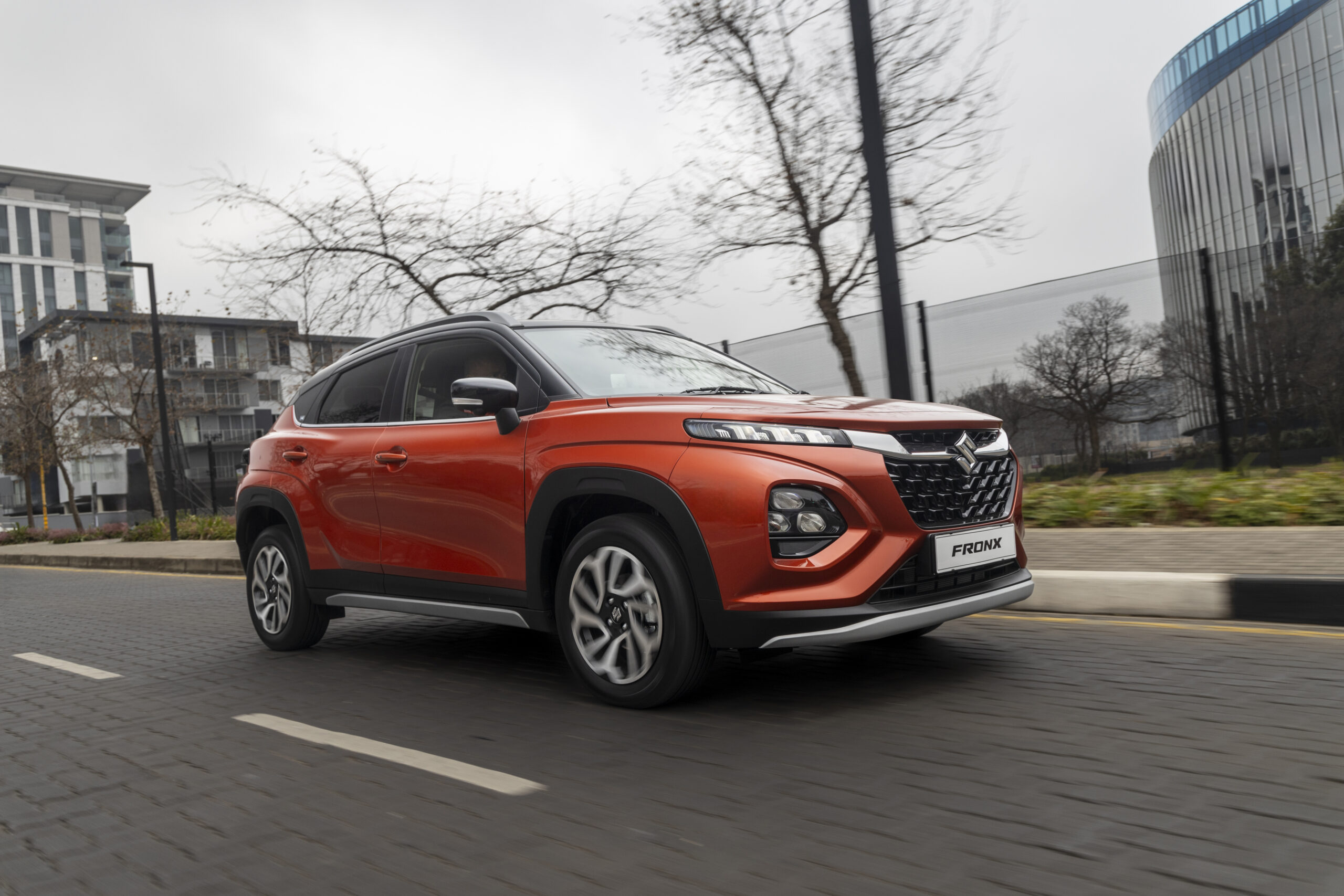
Suzuki recently introduced its new Fronx crossover to the market to complement its growing range of affordable cars. The Fronx is powered by a naturally-aspirated 1.5-litre petrol engine with 77 kW and 138 Nm of torque and can be had with either a 5-speed manual or 4-speed automatic transmission in either GL or range-topping GLX guise.