Renault has revealed its new KWID in India, a compact crossover that will compete in a segment that is likely to see significant growth in the coming years. The KWID will initially be offered in India later in the year and then make its way to other markets around the world – South African availability is still to be confirmed, but probably likely.
The KWID bears the name of a concept shown at the 2014 Delhi Motor Show and is the first car to be built on the brand’s new CMF-A platform. The KWID adopts the look of a hatchback along with crossover elements such as increased ride height and plastic body cladding. According to Renault, the KWID marries style, innovative features and affordability.
Small, Efficient Engine for KWID
The Renault KWID is powered by a small 0.8-litre petrol engine mated to a 5-speed manual transmission which Renault believes makes it “extremely well positioned in terms of fuel consumption.”
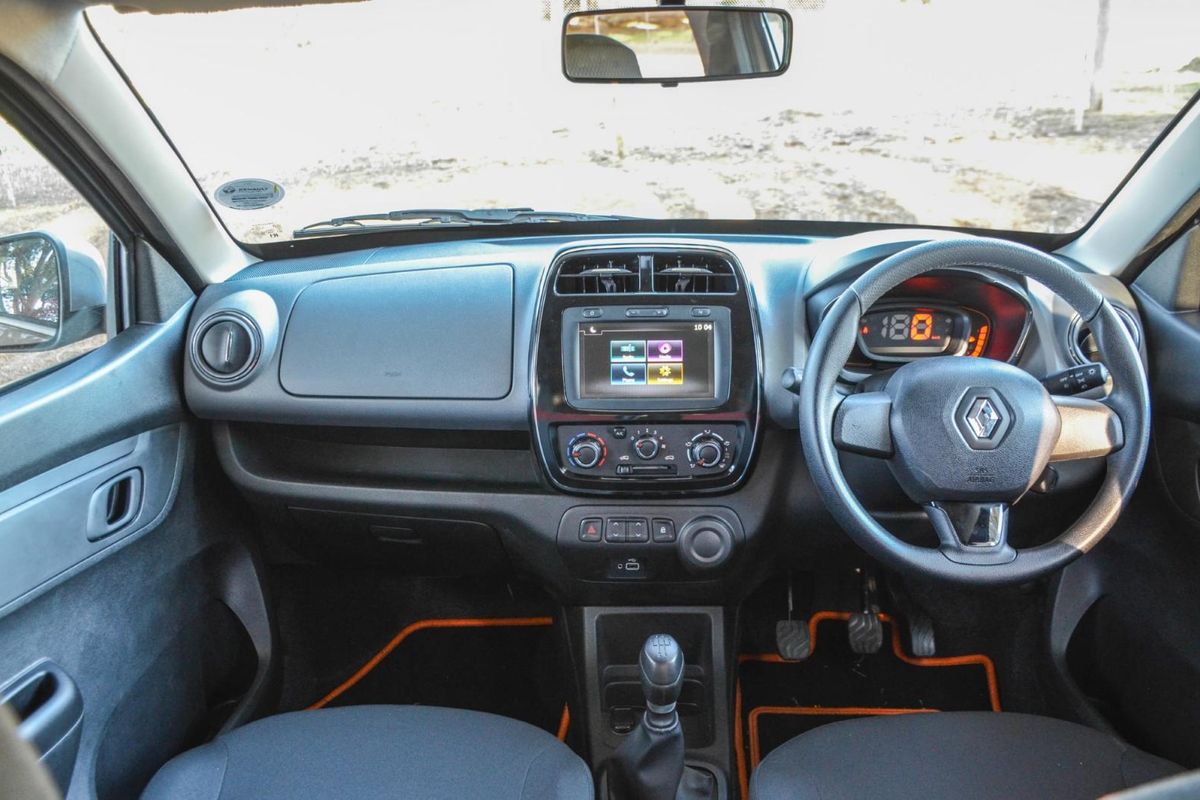
Inside, the KWID features a digital instrument cluster, chrome air vents and a MediaNAV system which offers a radio, Bluetooth and navigation via a 7-inch touchscreen.
Jeep Renegade (2015) First Drive
The Jeep Renegade is the American brands B-segment crossover and we attended the local launch of it in Johannesburg this week.
Designed by Jeep, made in Italy is the slogan that first catches my eye during the presentation of the 2015 Jeep Renegade. It sounds like a strange combination, but its the result of the Chrysler/Dodge/Jeep tie in with Italian automotive giants Fiat, who own Alfa Romeo and Ferrari. The result of such a collaboration is product that offers the hard and rugged appeal, with a few Italian touches here and there.
Design of the new Renegade
This is very much the case for the new Jeep Renegade. Theres no mistaking this vehicle for any other brand. With its trademark headlights, slotted grille and distinct boxy shape, the design is Jeep through and through. What I enjoyed most about the design is how it pays tribute to the World War II Willys Jeep and the Jeep brand through the use of subtle touches across the product.
The X motif on the rear lights is not too dissimilar to the jerry can logo, while theres a Jeep logo on the edge of the windscreen. Further inspection of the vehicle resulted in spotting an abominable snowman on a window, a topopgraphical map at the bottom of the centrally-mounted storage binnacle and mud splashes which form the redline on the rev counter.
As far as design goes, its a visually striking vehicle especially when paired with some of the impact colours such as red, burnt orange and yellow. Throw in some big and chunky black alloys and youve got a recipe for a vehicle dripping in street cred.
Only one engine for now
Being a Jeep, youd expect a hearty V6 forged in the fires of Detroit but this is where the Italians come in. Gone are the days when there was no replacement for displacement. Times are achanging and the best bang for buck comes in the form of small capacity turbo mills. In this case, power comes from a 1.4-litre turbocharged four-cylinder engine with 103 kW and 230 Nm. Fuel economy is claimed at 6.3L/100km.
The model, which goes on sale immediately is a front-wheel drive manual, with automatic and all-wheel drive derivatives to follow later in the year. Theres also talk of an entry-level naturally-aspirated 1.6 model.
Ride and handling
How does it drive? Well, the rides good and the car is able to keep itself together when youre pressing on. Whats perhaps most useful is the 175mm of ground clearance, which makes pavement crawling super easy and also gives you the option to tackle mild offroad scenarios.
Jeep was keen for us to sample its new urban baby SUV in a unique environment and we found ourselves at a makeshift offroad track next to the old Johannesburg Park Station. Despite the lack of any offroad systems, the front-wheel drive Jeep Renegade acquitted itself well on the gravel inclines and undulations. For the amount of offroading an average family would do, this is more than fine and the forthcoming all-wheel drive model will have to offer some serious bundu bashing ability to justify itself.
A couple of highway drives highlighted how refined the Jeep Renegade is. NVH is low and there were times I had to turn down the radio to hear if the engine was still running. Its that quiet!
Specification and features
Being a Jeep, specification errs on the side of generous. Theres a leather-wrapped steering wheel with audio controls, with fabric seats (leather is an option), dual zone air conditioning, rear parking sensors, UConnect infotainment with 5-inch screen (6.5-inch option with two USB ports), six speakers and two 12V power sockets dotted around the cabin. Option packs give you access to an array of extra safety features and improved audio systems.
Speaking of safety, theres lots of tech thrown in. Theres a tyre pressure monitoring system, ISOFIX child seat mounts, six airbags, panic brake assist, lane departure warning, cruise control as well as an electronic parking brake.
Naturally, theres a whole host of accessories to customise and make your Renegade unique. Mopar is the groups customisation arm and theres a huge range of stickers, different alloy wheels as well as numerous styles of load-carrying boxes to choose from. At the launch there was a Renegade that had been kitted out with a mountain bike rack as well as a canoe rack.
Quick summary
Whats not to like? Well theres that price tag. Jeep claims its playing in the B-segment space, which puts it squarely against the likes of the similarly specced 1.2-litre Renault Captur which retails for R280 000. The Jeep Renegades B-segment competition are all substantially cheaper, but feel less premium, so there is a business case for it. Also, I hope my launch unit was an exception to the rule, but the plastic surrounding the A-pillar was coming loose as was the plastic surrounding the steering wheel.
Overall though, the Jeep Renegade is a damn good-looking baby SUV which is jammed with specification and is a good drive. Its surprisingly good for light offroad applications too. Comparisons between this and forthcoming Fiat 500X are inevitable and in reality, there will be very little to separate them mechanically.
Jeep Renegade Price in South Africa
This specific Jeep is the Renegade 1.4L Limited and that goes for R375 990. You do get a lot of spec for your money, as well as a three-year/100 000km warranty and class/leading 6 year/100 000km maintenance plan.
2015 Jaguar Simola Hillclimb – Highlights
The scene at the 2015 Jaguar Simola Hillclimb was electric. The pits roared to life as a fine selection of classic cars, road cars and modified race cars lined up to do battle up Simola’s renowned hill in a bid to set the fastest time possible. More than 12 000 spectators dotted the Simola hillsides to catch a glimpse of machinery going full-tilt in a show of power, screeching tyres and thumping engines. This was a car lovers paradise.
Range Rover Sport SVR and Jaguar XE Shown
Apart from all the racing action taking place at the Jaguar Simola Hillclimb, the event also presented the perfect opportunity for Jaguar Land Rover to present new and exciting products directly to the public. The new Range Rover Sport SVR wowed spectators with its supercharged 5.0-litre V8 petrol engine offering 405 kW and 680 Nm. The SVR is the most powerful Land Rover ever made and is capable of accelerating to 100 kph in 4.7 seconds before reaching a top speed of 260 kph with the help of a 8-speed ZF automatic transmission.
Jaguar also showed the new XE sports sedanto the public for the first time, who had a chance to interact with the vehicle in person. Both diesel and petrol derivatives will be offered when the XE is launched later in the year. The top-of-the-range XE S will be powered by a 3.0-litre supercharged V6 petrol engine that puts out 250 kW and 450 Nm of torque which, translates into a 0-100 kph in 5.1 seconds.
Simola Hillclimb Highlights
Although each car brought a level of interest to the spectacle that is the Jaguar Simola Hillclimb, there were cars that simply stood out from the rest. The first of these standout cars was Micheal Forsyth’s AC Cobra Race Car, which was arguably the loudest piece of machinery to hit the tar at Simola while the McLaren MP4-12C driven by Ernst Du Preez was possibly the quietest car to climb the hill. The new Range Rover Sport SVR showed off its power with Peter Lindenberg behind the wheel, which was impressive to watch as it launched off the line at blistering pace.
A Lamborghini Aventador is always a special sight and this specimen was spectacularly fast off the line with Greg Parton rocketing the supercar up the hill. Kyalami owner and Porsche South Africa CEO, Toby Venter, fired up his 911 GT2 race car which was insanely quick from take-off, leaving the crowd cheering in awe. There was also a good-looking 1972 Porsche Carrera 964 RS4 in Martini colours which put on a good show. The 2014 Simola HillClimb ‘King of the Hill’ winner, Franco Scribante took to the course once more in his Chevron B19 and managed to take the class win in a time of 41.891 seconds as well as fourth overall.
Desmond Gutzeit was the man to watch as he revved up his Nissan GT-R R32. Desmond Gudzeit and sons, Shane and Jade, were racing hard all weekend providing thrilling entertainment for the crowds. In the final run to determine the King of the Hill, Desmond Gudzeit had a perfect start off the line and went on to smash a new Simola Hillclimb record of 40.148 seconds.
Ashley Oldfield Wins Media Challenge
Cars.co.za motoring journalist and road test editor, Ashley Oldfield competed in the Jaguar Simola Hillclimb in a Jaguar XF as part of the media challenge. At the start of the practice sessions, Ashley was achieving times in the region of 59 seconds and steadily improved after every session, eventually achieving a best time of 54.4 seconds. The media competitors were judged on the basis of a ‘Performance Index’ which meant that drivers needed to consistently match or improve on their previous lap times. In the end, Ashley came out on top to secure the win. This is not the first time Ashley has taken top spot, as he also won on the media challenge at the 2011 Simola Hillclimb event.
Here are some of Ashley’s thoughts from this years event, “The Jaguar Simola Hillclimb is only a club event but judging by the seriousness with which the drivers take it and the incredible machinery on show you would think it’s the halo motorsport event on the South African calendar. The crowds can get extremely close to the cars, smell the rubber and get drenched in tyre smoke. The event gets a little bit better every year but it’s a shame it only comes around once a year, it would be awesome to have a series of hillclimbs around the country. We wait in hope.”
Ashley was up against Stuart Grant from Classic and Performance Car Africa, Jesse Adams from Star Motoring, Mark Jones from TheCitizen and Dieter Losskarn from GQ Magazine. Cars.co.za would like to congratulate Ashley on his achievement at the 2015 Jaguar Simola Hillclimb and we look forward to seeing Ashley racing up the hill again next year.
Jaguar Simola HillClimb – King of the Hill Results
Jaguar took the opportunity to tear the drapes off its new XE model at its self-named Simola Hillclimb over the weekend (14-17 May 2015). Whilst the Jaguar XE was only a static reveal, the new Range Rover Sport SVR was let loose to ravage the 1.9km Hillclimb. Both cars were seen for the first time in SA as Jaguar Land Rover made the most of the excitement around the Simola Hillclimb.
Jaguar XE at the Hillclimb
The Jaguar XE is a very important vehicle for the British marque as it will finally go head to head again with the BMW 3-Series, Merc C-Class and the Audi A4 to name just a few. Jag has dropped the X-Type name that previously competed in the segment and is leading with XE. There was much hype around the unveiling of the XE at the Hillclimb as Marius Roberts and Marc Lottering revealed details on the new model in a light-hearted manner. I was unable to see a thing as the crowd gathered so I had to wait for the car to make a parade run up the hill to get a good gander at it. To start with, it looks like a slightly smaller XF, which is a good looking car but I feel Jaguar could have done a bit more to make the XE look a little different from its bigger brother. Surely Jaguar doesnt want to fall into the ‘Russian Doll’ or cookie cutter scenario that has befallen a few other manufacturers lately.
South Africa will get access to all the three engines available in the XE globally. There are diesel and petrol models to choose from with the diesel being an all-new Ingeniumversion that can be ordered in auto or manual. It delivers 132 kW and 430 Nm and claims 5L/100km in the fuel economy stakes. The familiar 2-Litre petrol is available with 177 kW and 340 Nm. Then, at the top of the range, and set to compete with the likes of the BMW 335i and Audi S4, Jaguar has added a supercharged V6 with 250 kW and 450 Nm. That should be a worthy competitor in the segment.
Range Rover Sport SVR as fast as an F-Type
Fans of insane SUVs will remember our Cars.co.za video where we drag raced a Supercharged Range Rover against a crazy BMW X5 M50d. BMW has since launched the new X5 M in SA and now Range Rover has an adequate challenger in the form of the Nurburgring record-holding Range Rover Sport SVR. Unbelievably the monster SVR was able to climb the Simola Hillclimb in a similar time to the Jaguar F-Type V6 – both cars completed the Hillclimb in the mid-49s range with expert drivers behind the wheel. Theres still a few months until the launch of the Range Rover Sport SVR but judging by the amount of attention the mighty SUV garnered at the Hillclimb, the SVR will be a massive hit with its 405 kW and 680 Nm of torque, not to mention the unbelievable acceleration that takes the SUV from 0-100kph in 4.7 seconds.
Jaguar Land Rover looks like its in for a big year having already launched the Land Rover Discovery Sport. The Jaguar XE, new XF and the Range Rover Sport SVR are still to hit SA soon.
GWM Steed 6 2.0 SX (2015) Review
It’s a fact, South Africans love bakkies and they sell by the thousands in Mzansi. For relatively new manufacturers competing in this segment, business is tough, something GWM knows all too well. Bakkie buyers are generally hell-bent on acquiring popular models such as the Ford Ranger, Toyota Hilux and to a lesser degree, the Isuzu KB, making it exceedingly difficult for alternative brands to get that foot-in. With the introduction of the new Steed 6 Double Cab, GWM aims to turn the tide on its competitors, but is it good enough to succeed? I spent a week behind the wheel of the Steed 6 2.0VGT SX in bright Fashionable Orange to see if has the guts to take on the heavyweights.
Upmarket Styling
Positioned as an upmarket leisure vehicle, the Steed 6 looks the part, inside and out. Its presence is felt with its large louvered chrome grille, LED driving lamps, flared wheel arches filled with 16-inch alloy wheels and an overall length of 5,345 metres. That said, the Steed 6 is big and bold enough to command respect on the road.
Inside, you are met with a spacious, modern-looking cabin thats well kitted out with features. Comfy cloth seats welcome you in and the interior layout is rather smart and doesnt feel tacky. A nice touch is the leather covered instrument binnacle and a leather wrapped steering wheel with mounted controls. The steering wheel is, however, only rake adjustable.
How does it drive?
Powering the Steed 6 is a four cylinder 2.0-litre diesel engine that generates 105 kW and 305 Nm of torque through a 6-speed manual transmission. Although slightly under-powered when compared to its competitors, these figures still do a good job of lugging all 1 816 kg of metal about town.
As you would expect from a bakkie, the engine roars to life in an agricultural fashion but once on the move, the Steed 6 comes alive and has sufficient grunt to execute overtaking manoeuvres with relative ease. Initially the gear shift felt annoyingly stubborn in selecting the correct gear, but once I got used to the ruggedness of it all, driving the Steed 6 became somewhat easier and I started enjoying the feel.
Having that sixth gear makes highway cruising pleasant as the engine never feels excessively laboured. It helps with saving some fuel too and GWM claims 8.6-litres / 100km on the combined cycle, but you can expect a figure in the region 10.5-litres / 100 km.
The Steed 6 has a payload rating of 625 kg but without a heavy load in the back, the suspension can feel quite bouncy, but even so, the ride quality is acceptable. I did notice a fair amount of wind and road noise entering the cabin at higher speeds, which was mildly disappointing. This is a 4×2 model so hardcore off-road enthusiasts will have to look elsewhere, but there is a standard Eaton rear diff-lock that kicks in automatically when needed. This endows the Steed 6 with good traction on poor gravel (at low speeds).
Big On Features
Buyers with a family in mind will be happy to know that the Steed 6 2.0 SX doesnt skimp on safety and comes fitted with dual front airbags, ABS with EBD and ISOfix seat mounts in the back, too.
Other standard items include a neat audio system with USB/Aux support as well as Bluetooth, rear park assist, climate control and electric windows all-round. Another nice touch is a driver’s seat that is height-adjustable
GWM Steed 6 Price in South Africa
The GWM Steed 6 SX on test here is priced at R299 900. The price includes a 5-year/100 000 km warranty, 10-year/unlimited km Anti-corrosion warranty and 2-year/unlimited km roadside assistance. A service plan is offered as an option with service intervals every 10 000 km.
Verdict
The GWM Steed 6 SX is an offering that simply cant be ignored when shopping for a 4×2 Double Cab bakkie. For your money, you are getting a capable and modern bakkie that comes packed to the hilt with features. The Steed 6 is by no means perfect but its better than you think and does a good job of undercutting its competitors by a significant margin and represents excellent value for money.
We Like: Modern interior, long feature list, striking styling, price
We Dislike: Stubborn gearshift, bouncy ride
Also look at: Ford Ranger, Toyota Hilux, Isuzu KB, Foton Tunland, Mazda BT-50
Following on the Cars.co.za team’s photographing of two nearly undisguised prototypesin Johannesburg two months ago, Ford has now released official images and initial details of its very important new Figo model. It’s likely to arrive in South Africa in the fourth quarter of this year.
New Ford Figo Improved
For the newcomer, Ford has paid particular attention to improving efficiency, refinement and style, while also adding some big-car technologies to the cabin.
“The Ford Figo has been a remarkable success story in South Africa since it was launched in 2010,” says Tracey Delate, General Marketing Manager at Ford Motor Company of Southern Africa. Even in 2014, in the twilight of its career, the Figo managed to achieve a 15% market share.
“The all-new Figo builds on that legacy by combining sophisticated contemporary styling, a whole new range of Ford’s trend-setting technologies such as Ford’s SYNC integrated multimedia and connectivity system, as well as a modern and welcoming cabin that offers more space and improved safety,” Delate states.
As our spy photographs suggested, the Figo will be offered as both a five-door hatchback and four-door sedan. This development, as well as confirmation that a wider variety of trim options will be offered, means the local model range will grow when the Figo is launched. Ford has also confirmed that petrol and diesel models will be offered, as well as manual and automatic transmissions.
Besides the new exterior design that makes the Figo look more upmarket and sophisticated, the interior is also completely new. Ford promises a marked step-up in terms of spaciousness and perceived quality.
Depending on the model, some very impressive features will be added, including a new device-docking station that serves as the driver’s connection point to the world of mobility, Bluetooth with Voice Activation, the programmable MyKey function, as well as electronic automatic temperature control.
All models have at least dual front airbags (some will offer side airbags, too), and ABS. An electronic stability programme (ESP) and Hill Launch Assist will also feature on top derivatives.
Cars.co.za Journo To Take On Knysna Hillclimb
Cars.co.za journalist Ashley Oldfield will be taking part in the 2015 Jaguar Simola Hillclimb this weekend in a Jaguar XF sedan. He’ll be taking on other members of the motoring media in the annual race up the hill event in Knysna.
Knysna Hillclimb Details
The event takes place at the Simola Golf and Country Estate and will see an assortment of modern, classic and highly-tuned race cars hurtle up the hill. Jaguar SA is also fielding a number of entries such as the 405 kW supercharged V8 Jaguar F-Type R coupe. It was recently in the news for breaking the production vehicle land speed record. This vehicle will be driven by Dawie Olivier, National Aftersales Manager at Jaguar Land Rover SA.
A second V8 Jaguar F-Type R coupe will be driven by Barry Ingle from the Jaguar Experience driving academy, while the internal project car, a 2003 Jaguar XJR aptly named The Beast, will be driven by Rory Beattie, Jaguar Land Rover SA’s Customer Service director. The Range Rover Sport SVR and Jaguar XE will also make an appearance with multiple racing champion Peter Lindenberg taking the mighty SVR up the hill.
As for Ashley Oldfield, he’ll be taking on Stuart Grant from Classic and Performance Car Africa, Jesse Adams from The Star Motoring, Mark Jones (The Citizen), and Dieter Losskarn from GQ Magazine.
Video
To give you some idea of the Hillclimb route, watch this video from the 2012 event:
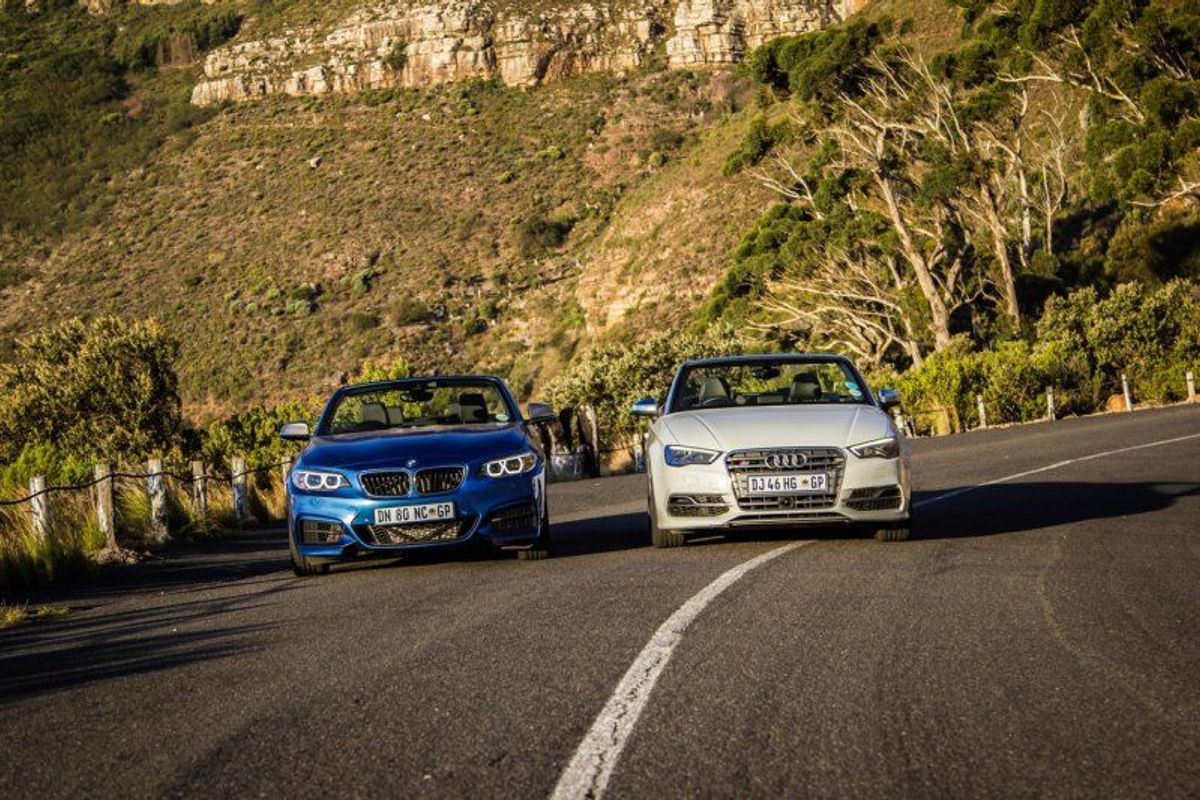
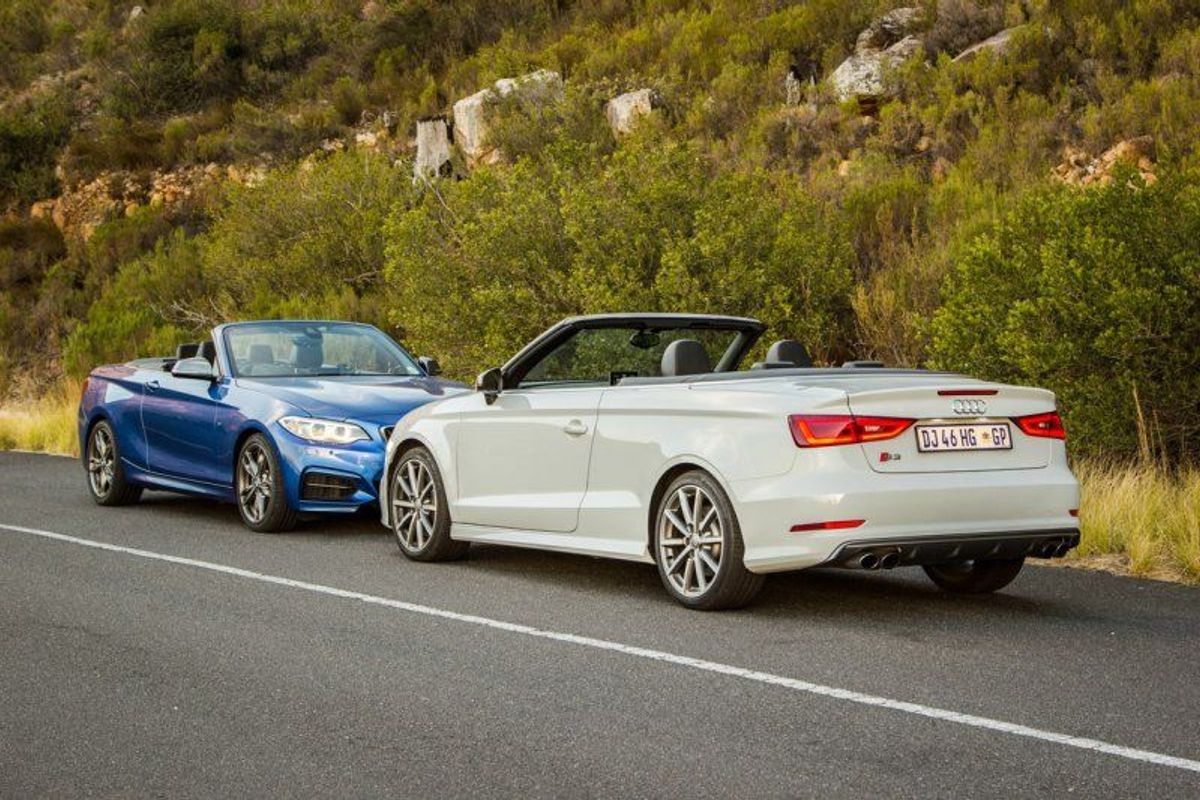
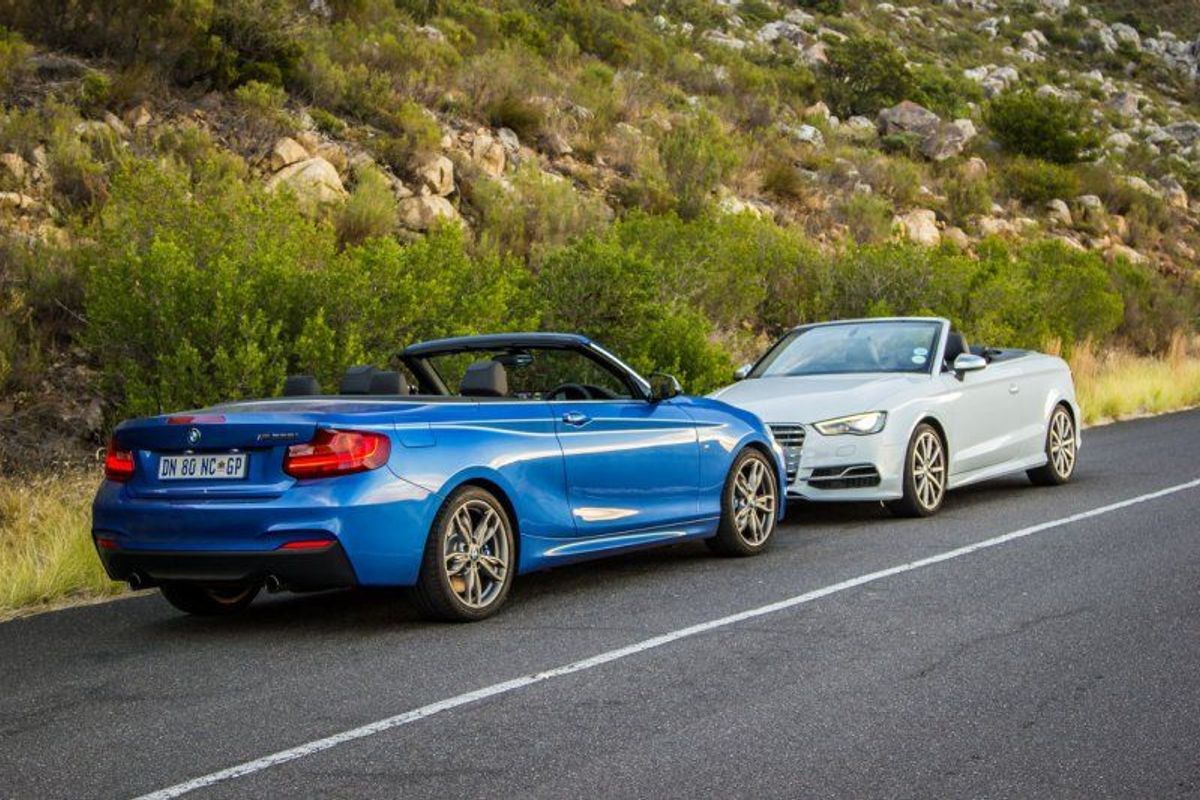
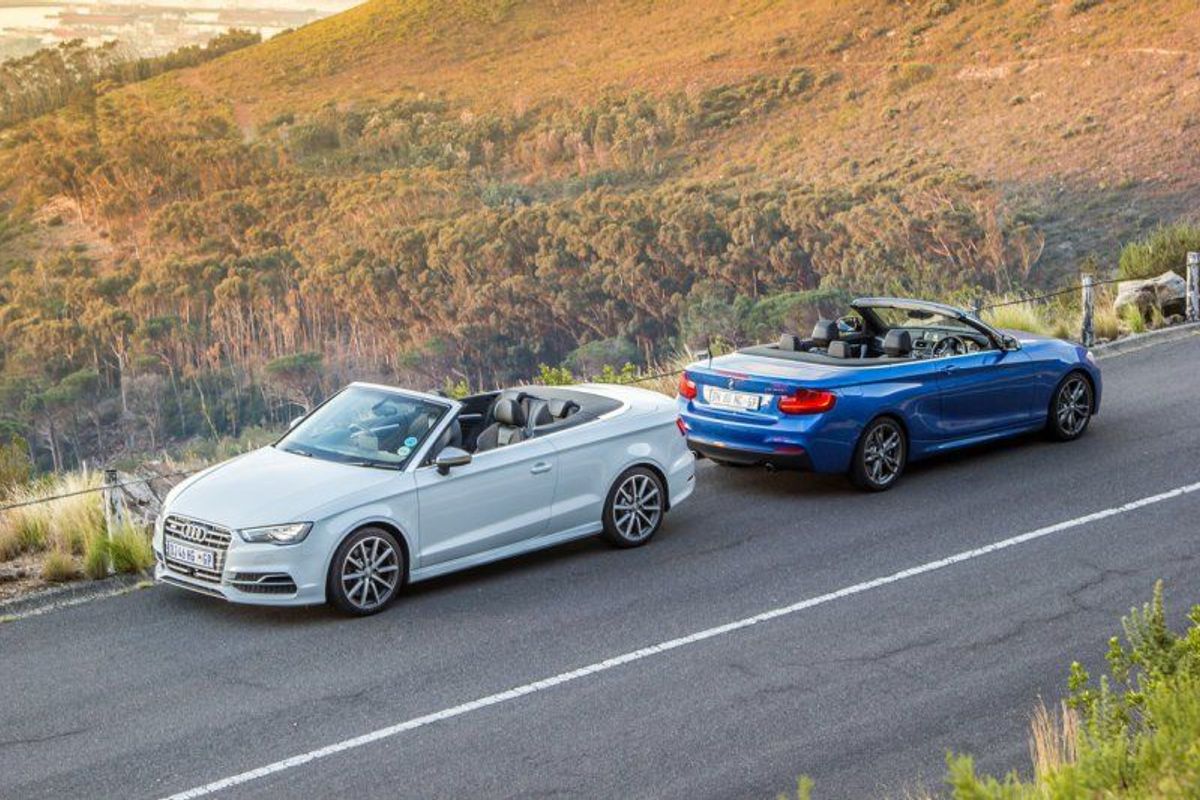
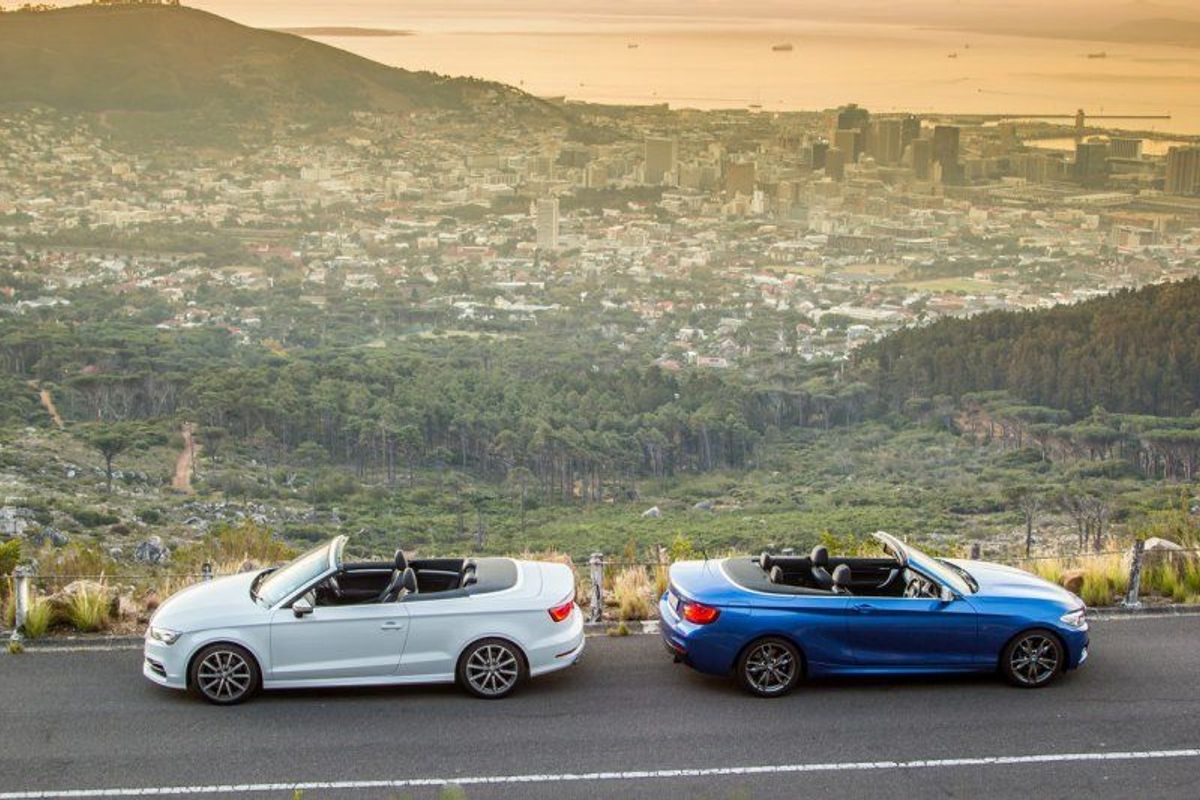
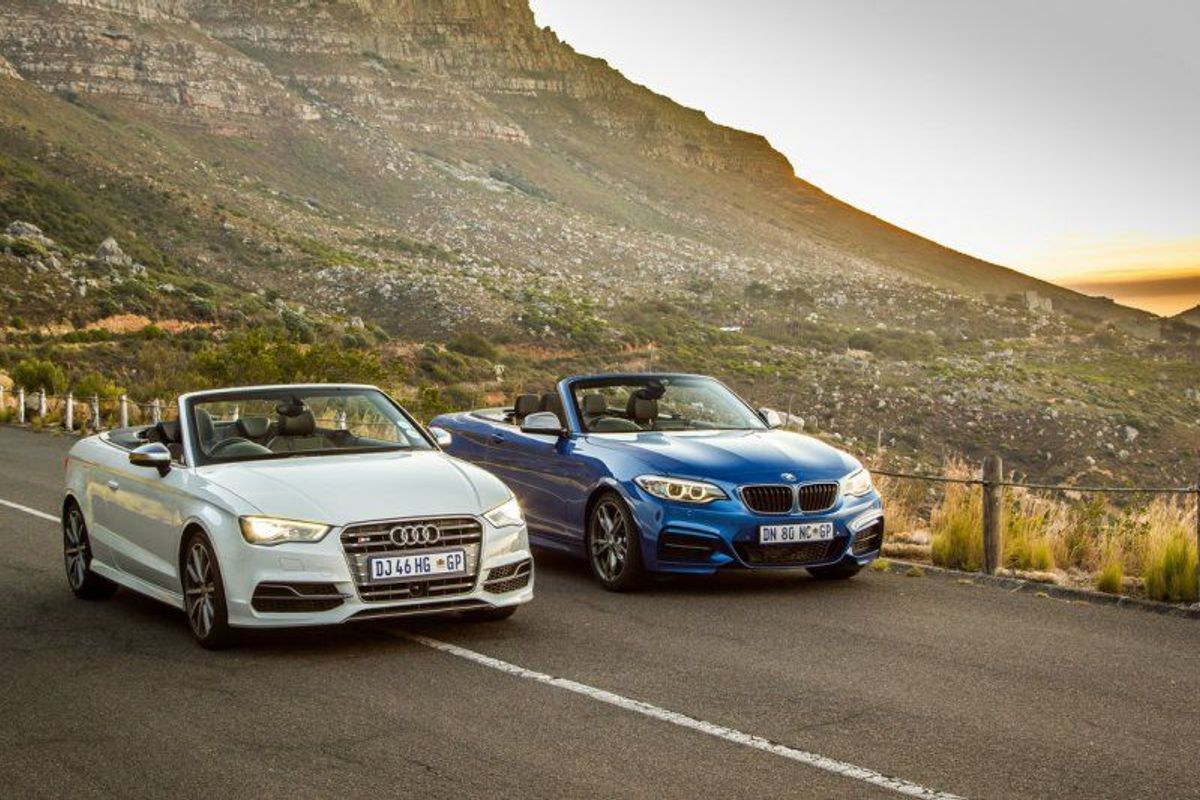
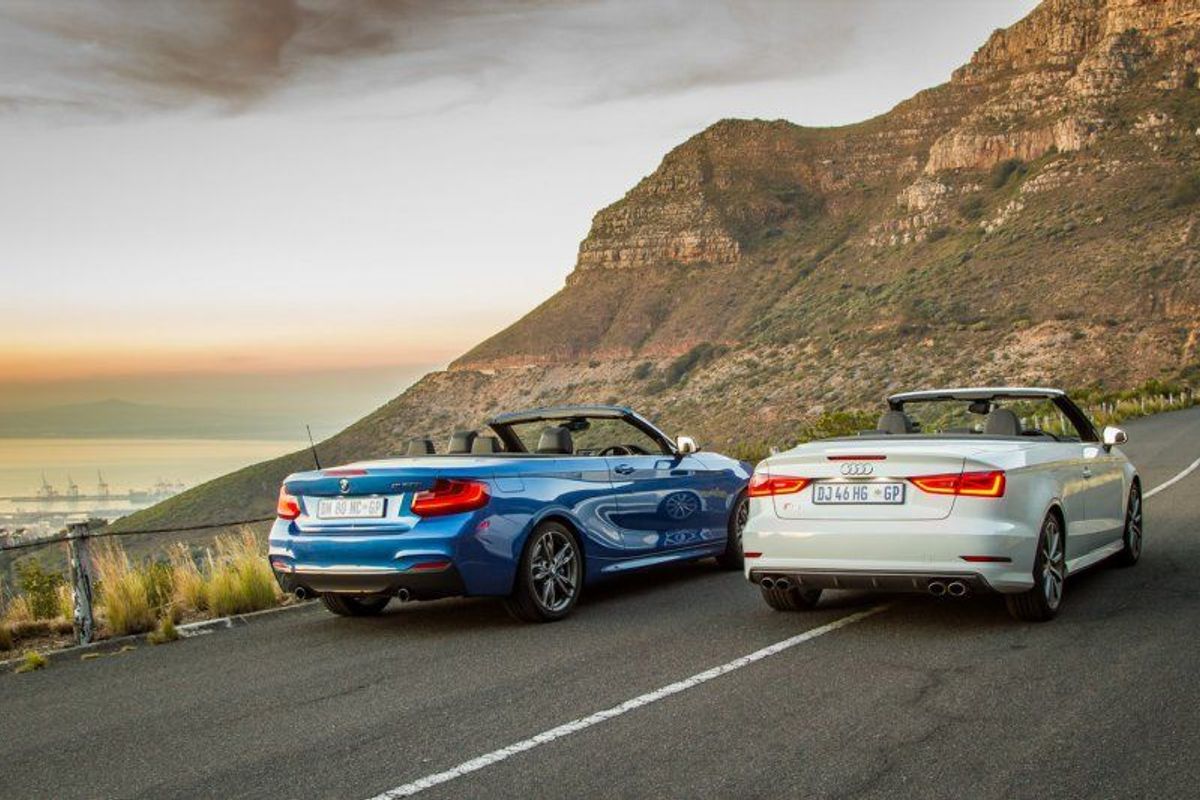
Audi S3 Convertible vs BMW M235i Convertible
Audi vs BMW is a common comparison, with buyers and road testers having been comparing the two German marques for decades. Normally though, its in the sedan market where the two battle each other for honours. Today its a little different as weve got a pair of drop tops at our disposal and the top of the range models at that.
Where should you spend your money if youre looking to expose yourself to the great outdoor experience of wind in the hair driving and boulevard cruising? We pitted two of the newest vehicles in the segment head to head and discovered an interesting result was on the cards.
The roof, the roof, the roof .
Drop-top driving is all about the getting the roof down as quickly as possible when the conditions are favourable. On the other hand, getting the roof back up as quickly as possible if you happen to run into some inclement weather is also important.
A video posted by Cars.co.za (@carssouthafrica) on
The side by side roof race was won by the Audi as our video shows, but the BMW was only a mere second behind. Audi claims its roof lowers in just 17 seconds and can be dropped or retracted whilst on the move at speeds of up to 50kph. The BMW claims 20 seconds for its roof and these mechanical acrobatics can be done at speeds of up to 50kph. Both cars use a cloth style roof to keep the weight down. Boot space in both cars is decent with the roof up or down and will easily swallow a short weekends worth of luggage.
Back seats?
Both the Audi and BMW have back seats, but its a cramped place to sit in either. However, it’s the BMW which definitely has more room for legs. The Audi has almost nothing on offer in the way of rear legroom so if you intend on putting passengers in the back, they best be adept at some form of yoga.
Interior
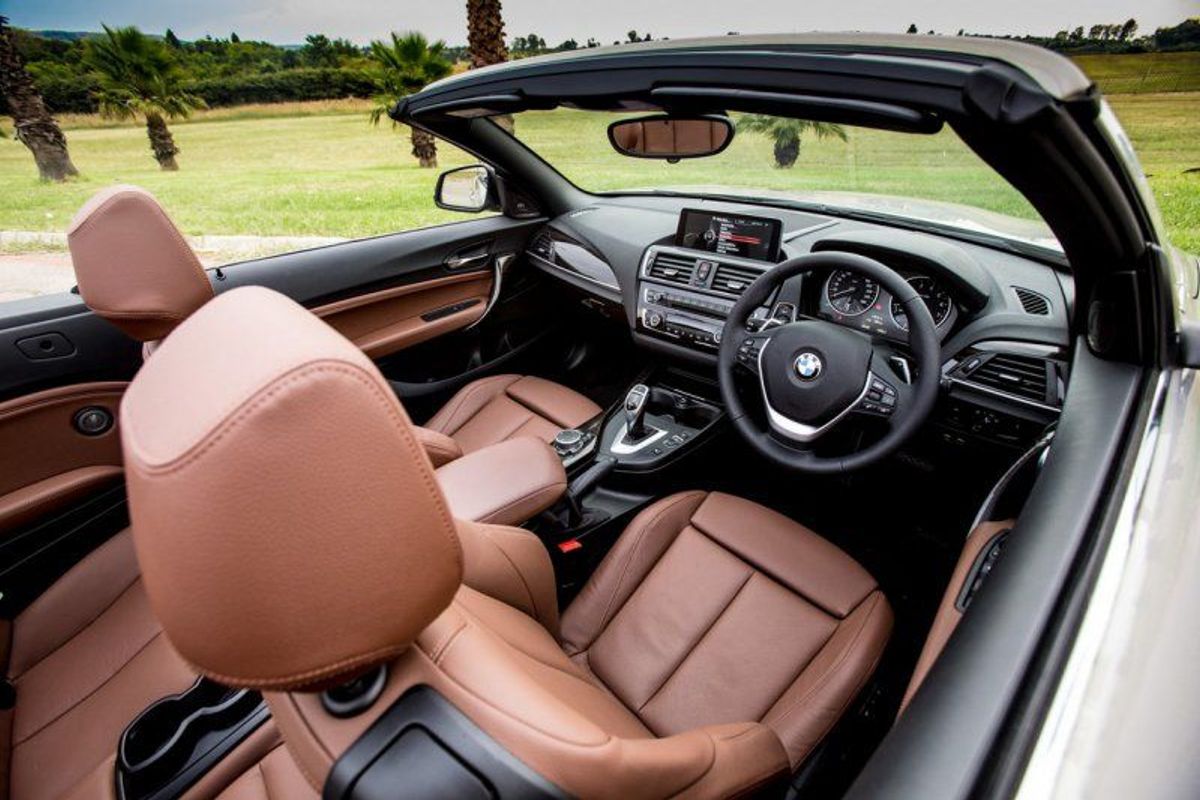
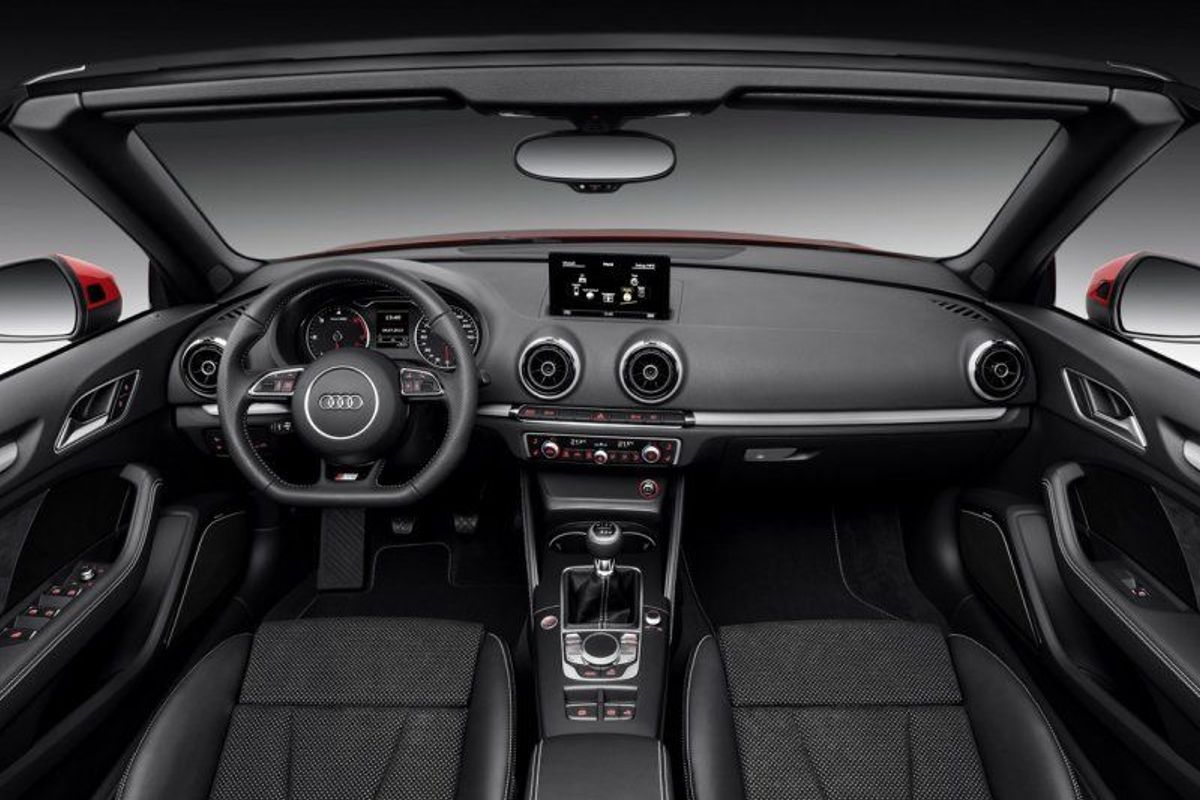
Germans build interiors brilliantly and both cars are extremely well put together and exude a premium feel and aroma yes, they even smell expensive. Turn up the speed with the roof up and the BMW is noisier inside, with wind noise and a slight shake from the window and roof seals definitely more noticeable than in the Audi that feels torsionally more rigid. Neither are a match for their hardtop counterparts in this department, but thats something you just have to live with in a convertible. Theres loads of options to choose from on both brands’ spec sheets so theres no real point in comparing spec for spec here, just know that if you tick all the boxes you can add close to 50% onto your cars base price.
Vocal Engines
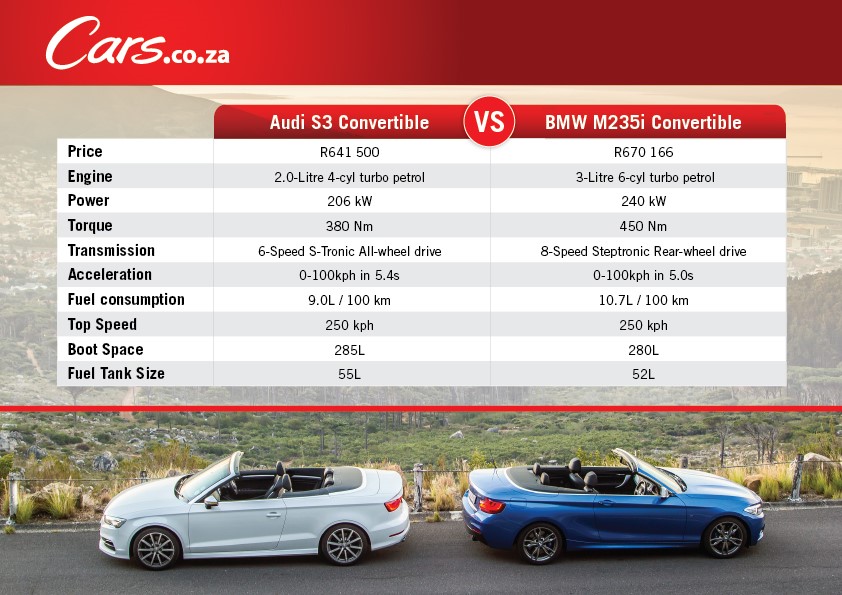
The two powertrains on display here are both petrol, both turbocharged and both put out similar amounts of grin-inspiring power. The Audi uses a 2-Litre, four-cylinder unit to churn out 206 kW and 380 Nm of torque. The BMW goes the straight-six route with a 3-Litre capable of developing 240 kW and 450 Nm. The BMW howls nicely in the upper echelons of the rev range, making for an inspiring soundtrack to listen to with the roof down on a great road. The Audi has more of a deep bass induction thrum to it and relies on the S-tronic gearshift pop to inspire the aural senses.
The BMW is certainly the faster of the two thanks to its kilowatt advantage, but neither is slow and will get the blood flowing the second you go near the throttle. Both use dual-clutch gearboxes to good effect and have the option of paddle-shifters if you want to manually get involved with shifting duties. When testing the gearboxes back to back its the Audi box that feels ever so slightly faster. Its more willing to shift down aggressively.
The open (top) road
Out on the sweeping curves of a mountain pass or the tight sinewy twists of a coastal tour road, or even on the boulevard cruise of a seaside city, convertibles will turn heads. For the driver though it can be uncomfortable as the lack of a key structural element (the roof) makes things difficult for engineers to get around. Here the Audi wins hands down, with the S3 Convertible doing a much better job of staying plush when the road gets jittery. Theres also less crashing noises when you have to deal with the holes and craters in our roads.
Out on the sweeping, faster roads the S3 Convertible feels nimbler and easier to drive. The BMW on the other hand is a bumpy ride and demands your full attention and skillset, especially when nearing the limit. It can become quite tiresome as an everyday driver, but for the enthusiast who knows how to properly exploit a rear-wheel car, it’s very enjoyable.
Verdict
The Audi feels the better built and more rewarding of the two convertibles to drive. Its the complete package as far as a convertible goes and the one I kept grabbing the keys of to go out and drive. The BMW M235i Convertible is the faster car and has more space for people, but it lacks in the ride quality department and it really doesn’t deal with uneven tarmac as well as the Audi. It also happens that the S3 Cabriolet is R30k cheaper than the BMW M235i Cabriolet at base price.
S3 Convertible vs M235i Convertible Quick Specs
Plans for Porsche-owned Kyalami Announced
“Everyone has a story about the old Kyalami”, said Porsche South Africa CEO Toby Venter. He’s right, and every motorsport fan in South Africa will happily share an anecdote or two about Gauteng’s premier racing circuit. Now, almost a year after the auction in which Porsche snapped up the track for R205-million, the German sportscar brand has announced what exactly it plans to do with the facility.
Porsche SA Saves Kyalami
I can remember live-streaming the auction on my laptop and praying that the entire complex wasn’t going to land up becoming Tuscan-style housing and shopping malls. Suddenly a phone bid came through from an unknown purchaser and the deal was done. Later it was revealed that Porsche SA CEO Toby Venter had become the new owner and the elation both in our office and the motoring community went through the roof.
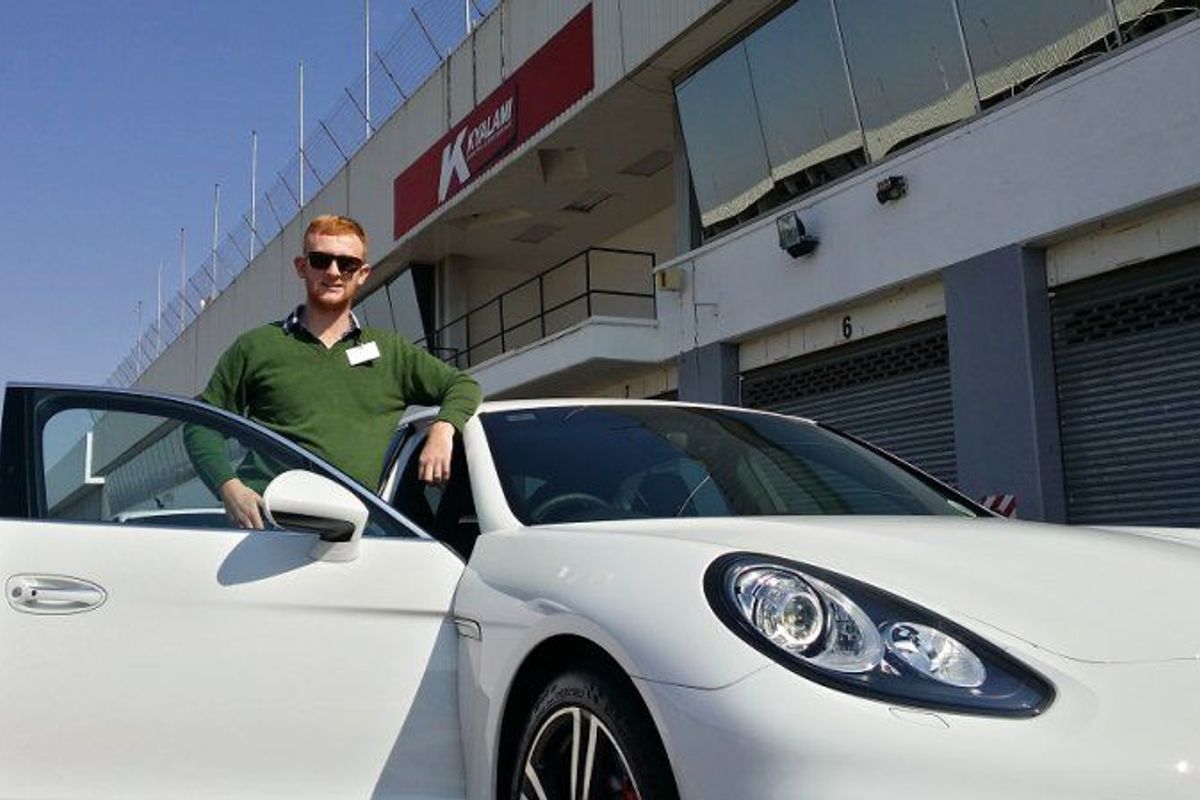
Fast forward to May 2015 and Porsche SA invited us to celebrate one last lap of the track in a Panamera Turbo and to highlight its plans for Kyalami. I thought a simple nip and tuck would be all that’s needed to restore the circuit to its former glory, but in reality the entire complex has decayed quite badly and there’s substantial work to be done. Being Porsche, things have to be done properly and that meant getting Charlie Whiting (FIA Safety Delegate) to South Africa, to share his thoughts. Considering his background and involvement with Formula One, there’s no better person to offer safety advice.
Everything Except F1
The aim is to bring the track up to FIA Grade 2 status, which is essentially everything and anything this side of F1. Given the current state of F1, both in the boardrooms and on the track, I don’t think people are too bothered. Personally, I’m very excited by the potential to have Porsche 919 Le Mans cars and an international field of Porsche GT3 Supercup racers taking to our track. Could you imagine camping at Kyalami overnight for an endurance event? It sounds terrific and you can begin to understand the vision that Porsche SA CEO Toby Venter is trying to carry out.
Track Changes
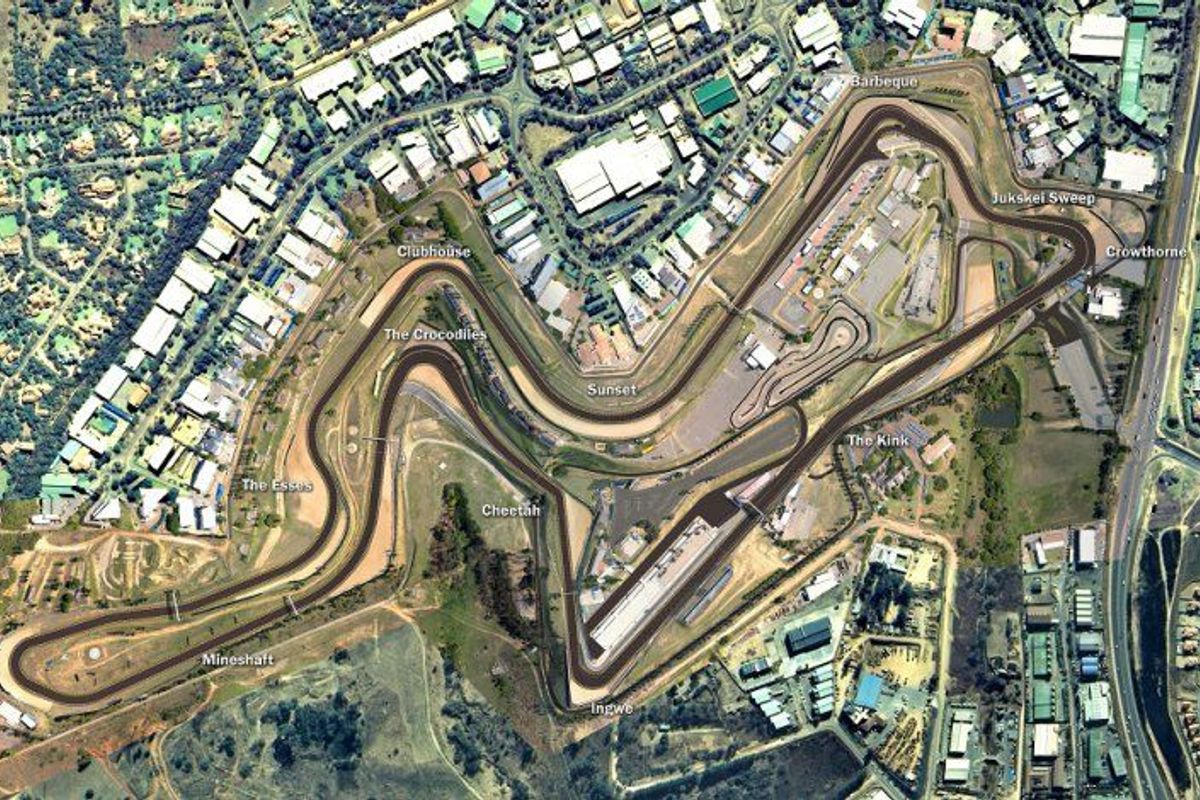
There’s a lot that needs doing at Kyalami, both in terms of infrastructure and the track itself. The tarmac has been there since the early 1990’s and needs to be resurfaced to international spec. The design will be altered to include a longer main straight with turn one being reduced in angle and extending further, resulting in a straight of around 900 metres. With the changes, the track is being lengthened by around 280 metres and the aims are to increase speeds as well as provide more overtaking opportunities.
There’ll be a new turn 2 which will be a tight-apexed left hand corner with a series of subsequent bends which will eventually rejoin the current layout at turn 4. Turn 12, commonly known as the Bowl, has been tweaked too. Finally, safety features such as FIA-spec Armco barriers and greater runoff areas will be installed. Some of the corners have been renamed with the Crocodiles, Cheetah and Ingwe making an introduction. Fans of the original Kyalami will be pleased to hear the name Barbeque making a comeback at the new turn 5. Perhaps most importantly, the elevation changes on the track will continue and it’s this factor that makes the circuit legendary. Just think of the famous Eau Rouge corner at Spa and you’ll see what I’m getting at.
Infrastructure Changes
The rest of the facility will be substantially upgraded too, with a new double lane circuit underpass to allow race transporter trucks to get to the pits being constructed. The old pits by the karting track will be upgraded to a secondary pit complex, ideal for smaller events and local racing categories which would run in support of an international event. Parking areas will be resurfaced and proper bays will be designated. Facilities like ablution blocks are also being taken care of.
It is the fan who will likely benefit the most from the facelifted Kyalami. Those eyesore bomas which obstructed racing action will be knocked down and spectator areas will be created. These areas will be in all-new positions and will be excellent vantage points on race days. For non-racing events, the exhibition and conference facilities will also be substantially jazzed up. There’s also the chance to have advanced driving schools, regardless of brand, making their way to the track
If all goes according to plan, we’ll see the new Kyalami open its doors in early September 2015 and the upgrades will cost approximately R100-million. I can’t wait!
*Look out for our last lap video as well as a 3D simulation of the new layout coming soon*
Audi TT Clubsport Turbo has 441 kW (Video)
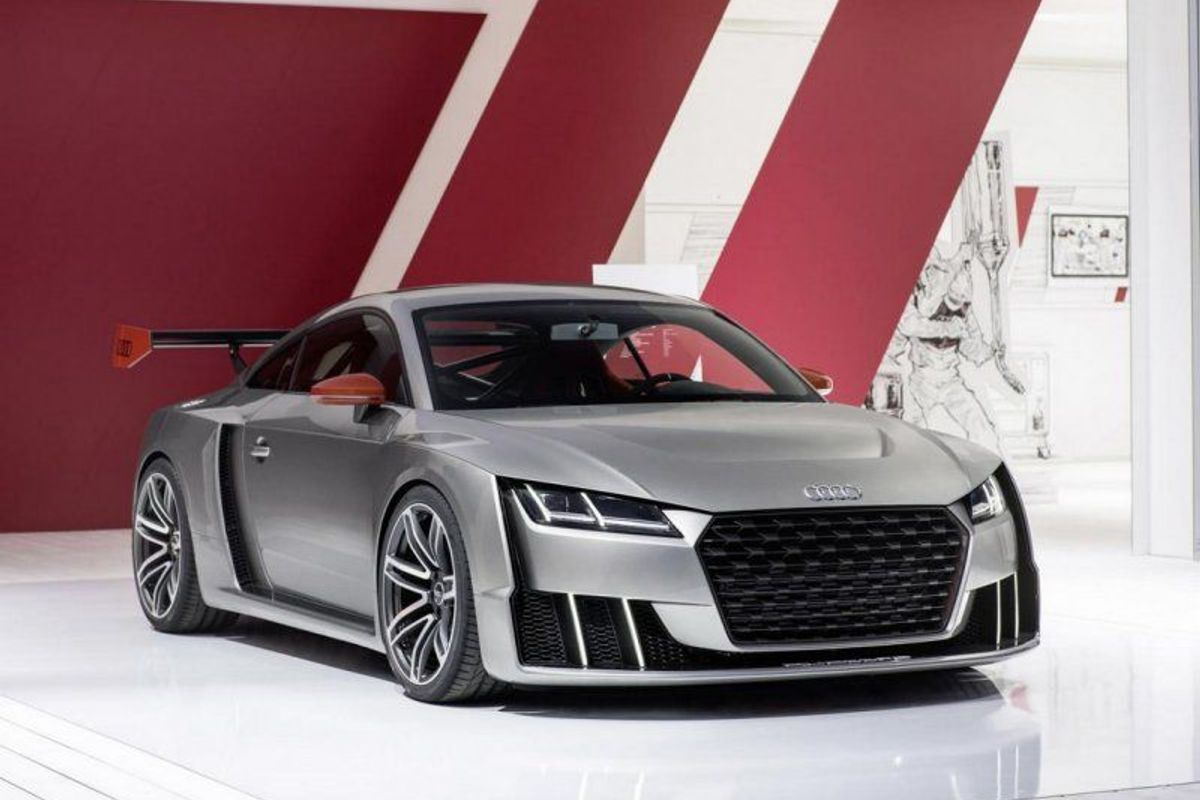
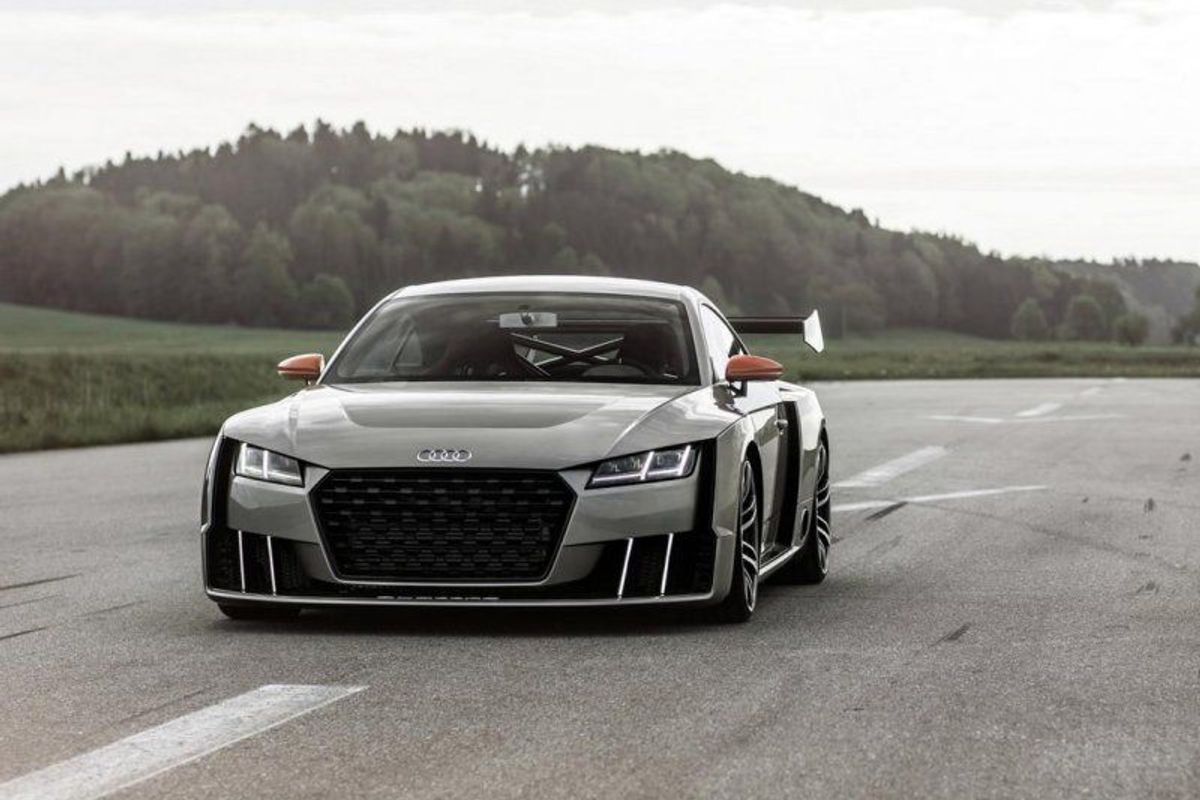
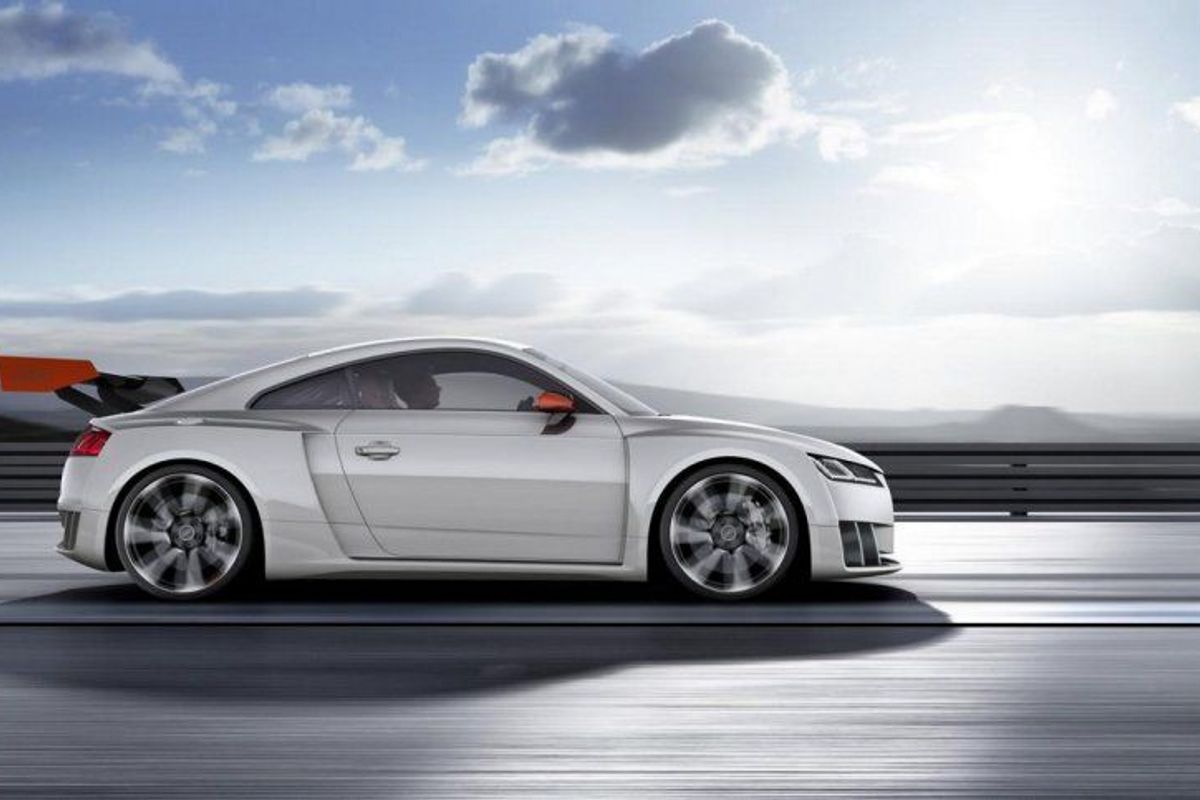
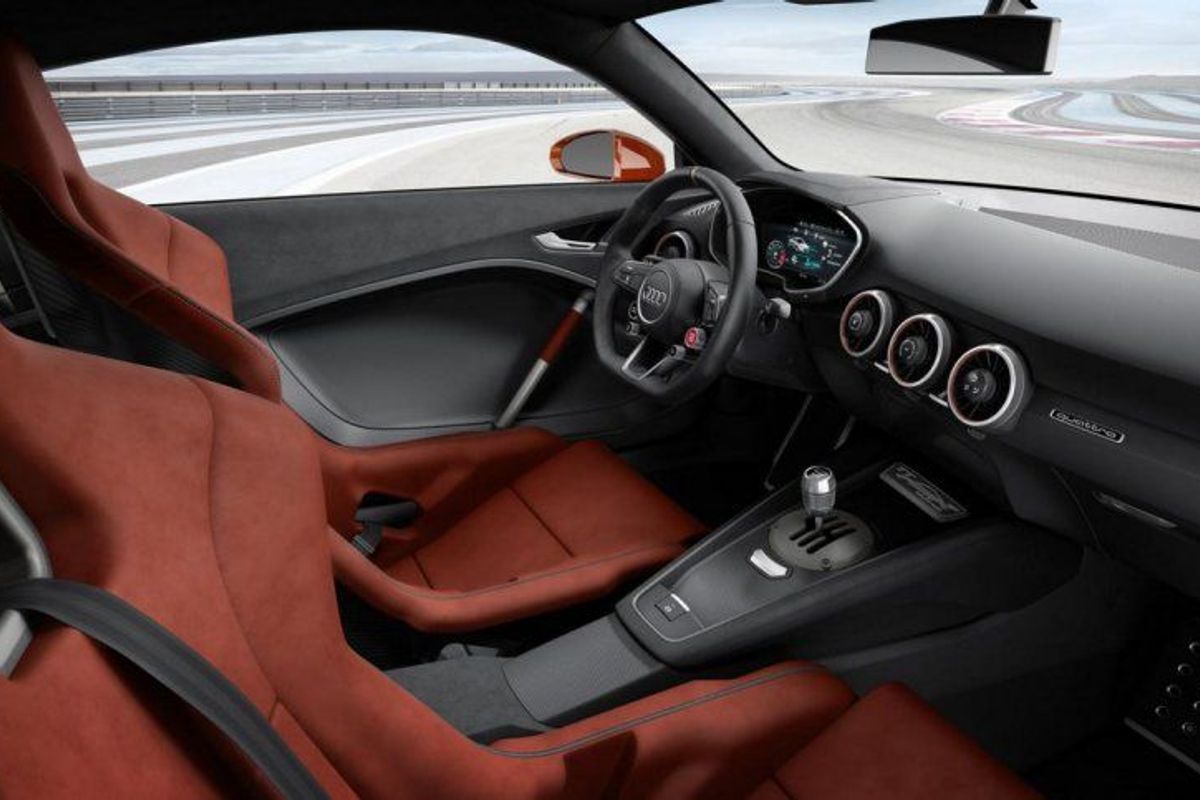
Heading to the Worthersee show later this month (May 2015) is this Audi TT Clubsport Turbo. It features Audis innovative electric turbocharger technology but is mostly about making sure the VW and Audi lovers get a suitable concept to be excited about.
Audi TT Clubsport Details
Electric turbocharging is a smart solution to eradicating turbo lag at low RPM. When there is not enough exhaust gas to spin the turbocharger adequately, it calls on the cars secondary electric compressor to provide boost. This allows instant boost and engineers can focus on ensuring high power and high revs from the power unit.
Prof. Dr. Ulrich Hackenberg, Audi Board Member for Technical Development. In our TDI engines, we are close to production readiness with this technology. We are now presenting it in a TFSI here too, we are the first automaker in the world to do this. For our fans at Wörthersee, we have packaged the electric biturbo in a very sporty show car.
The Audi TT Clubsport Turbo makes use of the 2.5-Litre, five-cylinder unit complete with two turbos that enable a massive power output of 441 kW and 650 Nm of torque. Better yet the power unit is hooked up to a six-speed manual gearbox. Zero to 100kph takes just 3.6 seconds and will roar on to a top speed of 310kph.
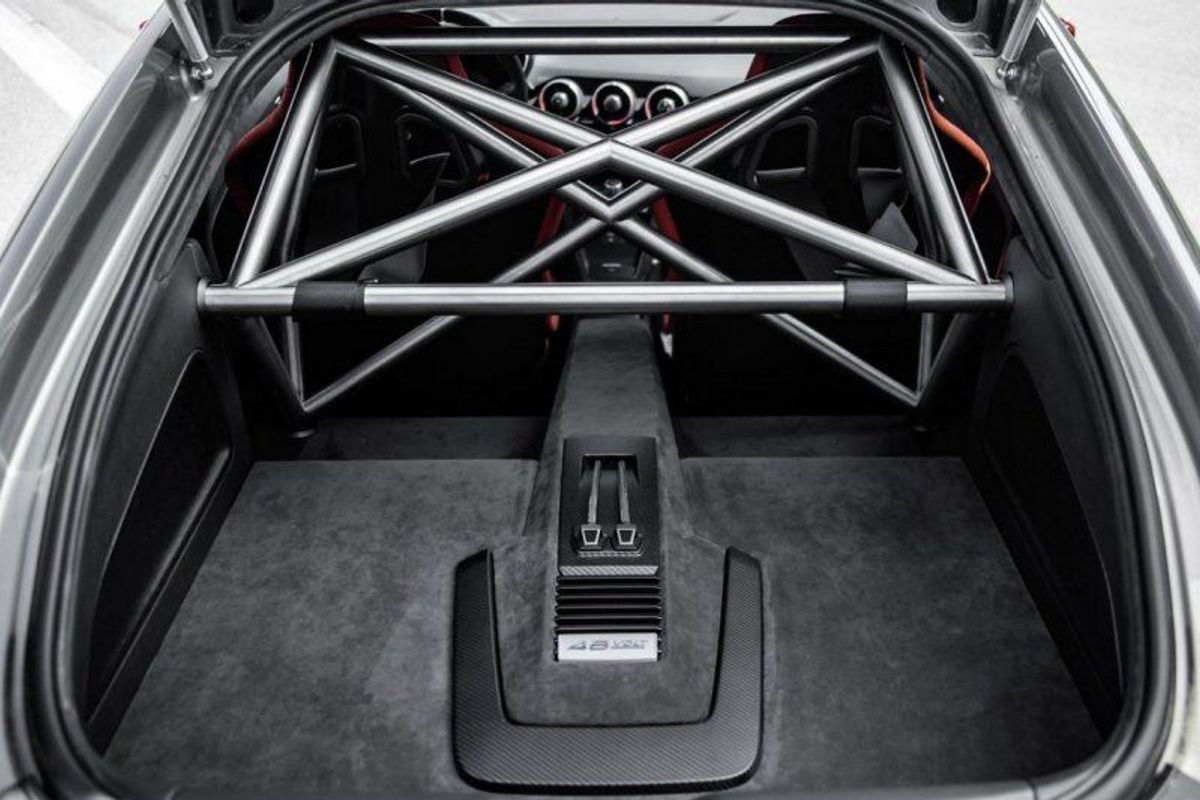
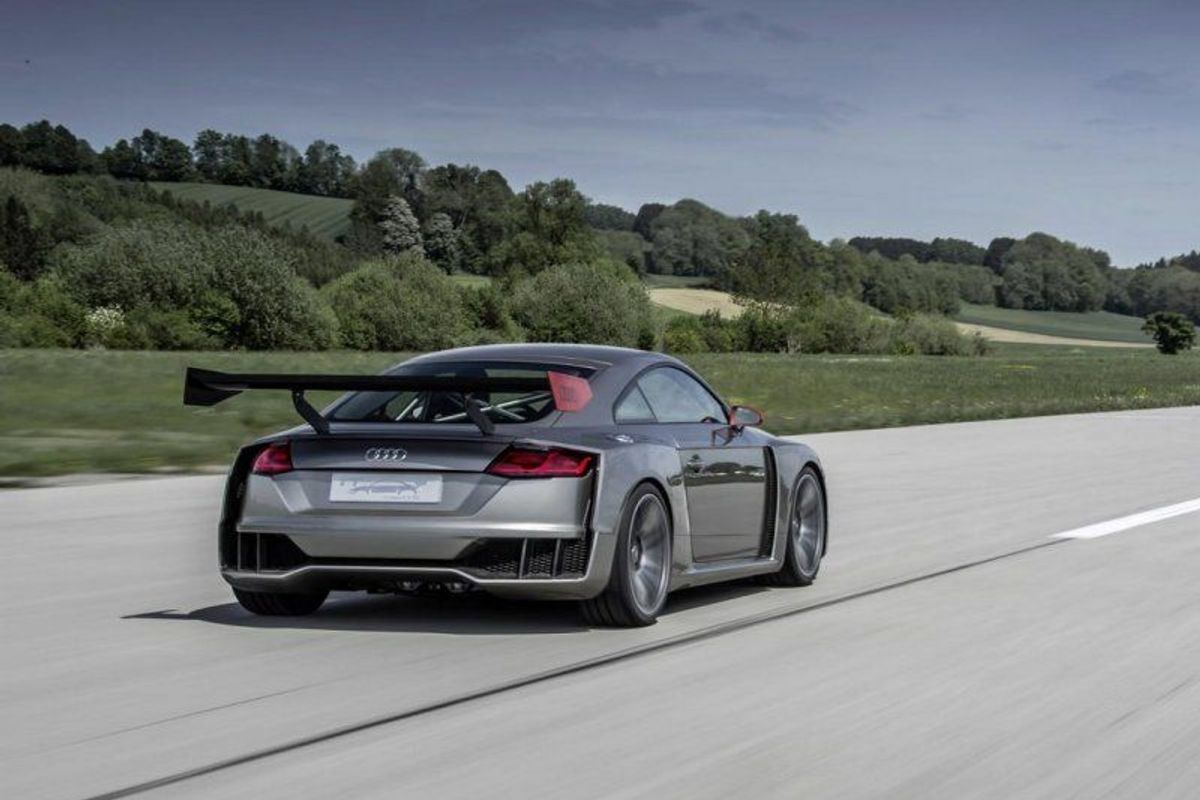
The design takes an Audi TT to an extreme. The fenders of the show car painted in the exterior colour Ferro Titanium are open at the front and rear. Air from the cars slipstream flows through them to cool the brakes. The manually adjustable rear wing is a development from the Audi Sport TT Cup with which the brand very recently launched a dedicated race series. It is now 20 cm wider, and the side flaps were given a new geometry. The wing consists of carbon-fibre reinforced polymer (CFRF) as do all other add-on parts: the air inlets and the large splitter at the front, the side panels and side sill trims as well as the diffuser at the rear whose lateral segments reference the motif of the air inlets.
Its unlikely Audi will unveil its TTRS performance model with the five-cylinder turbo unit under the hood. More than likely it will be redeveloped version of the 2-Litre turbo that sits in the Golf R and current TT.