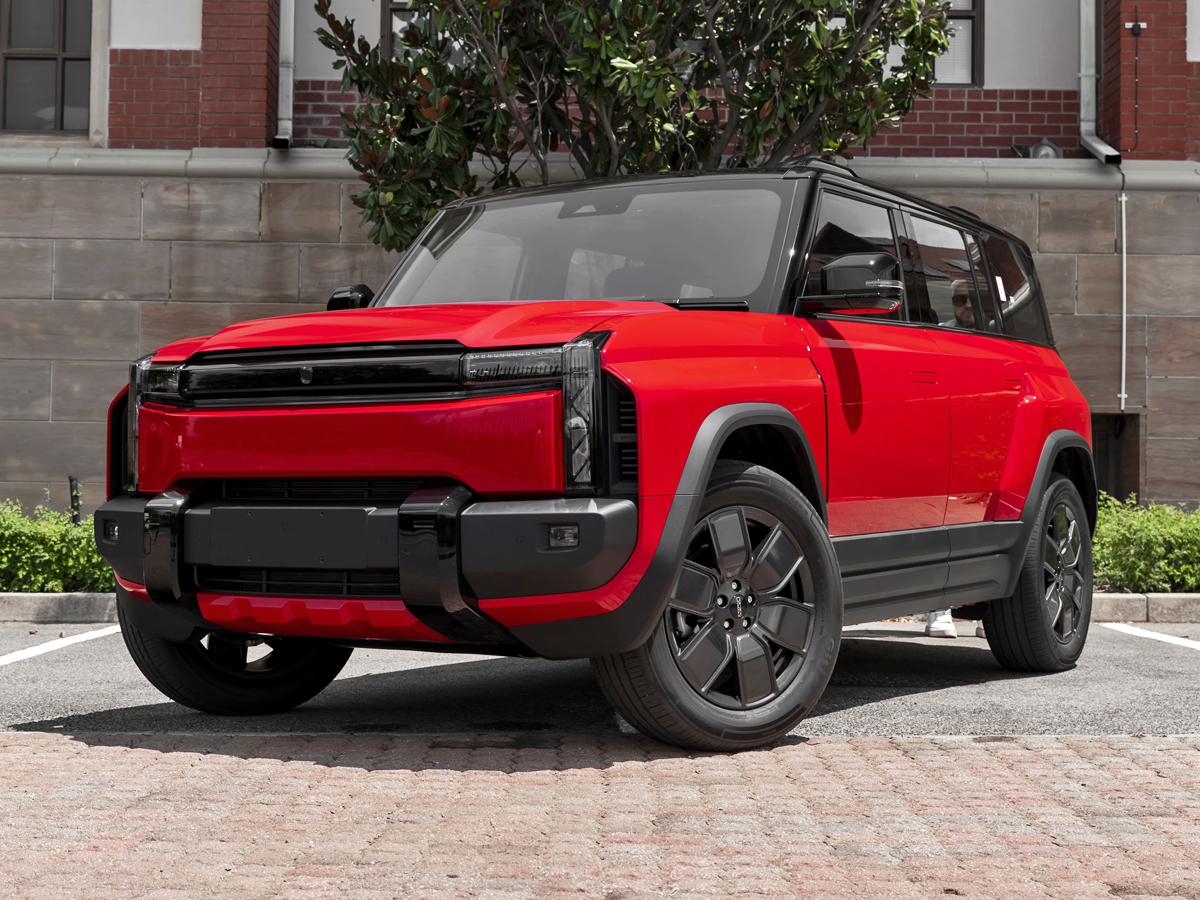
The electric Range Rover has been revealed and locked in for South Africa. Here’s how much you can expect to pay.
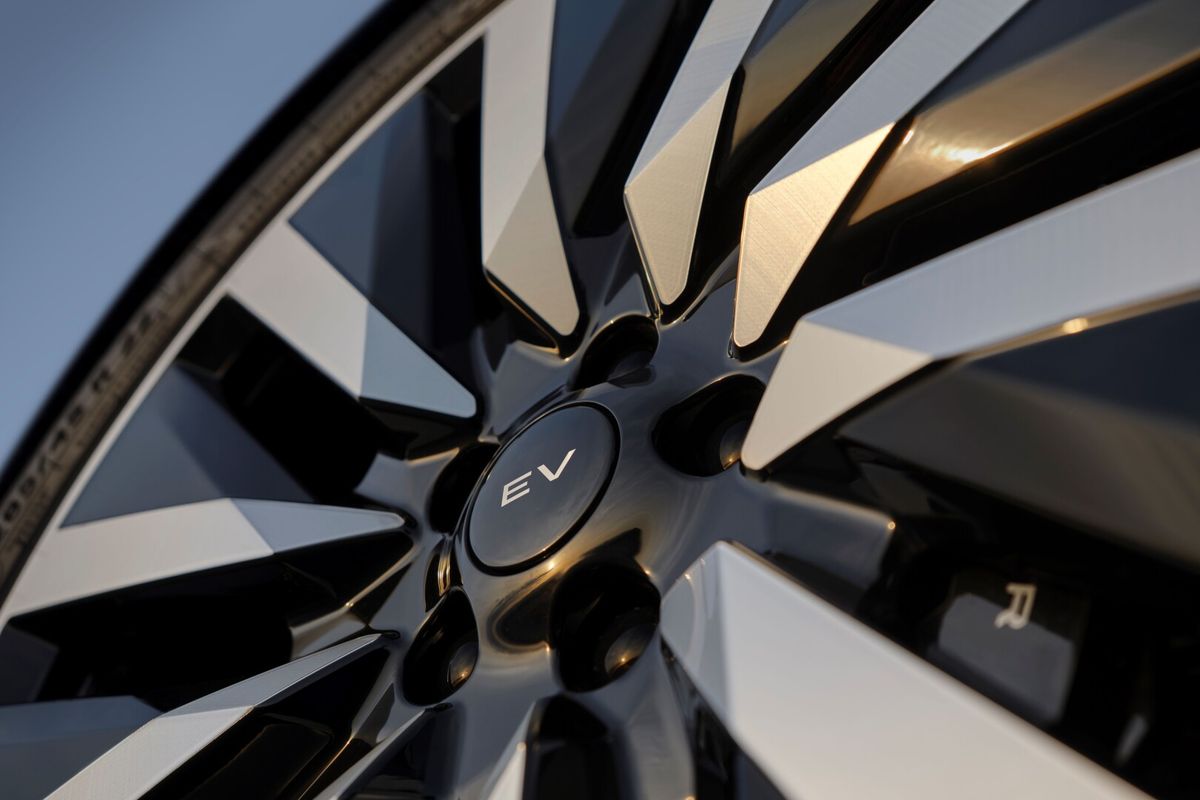
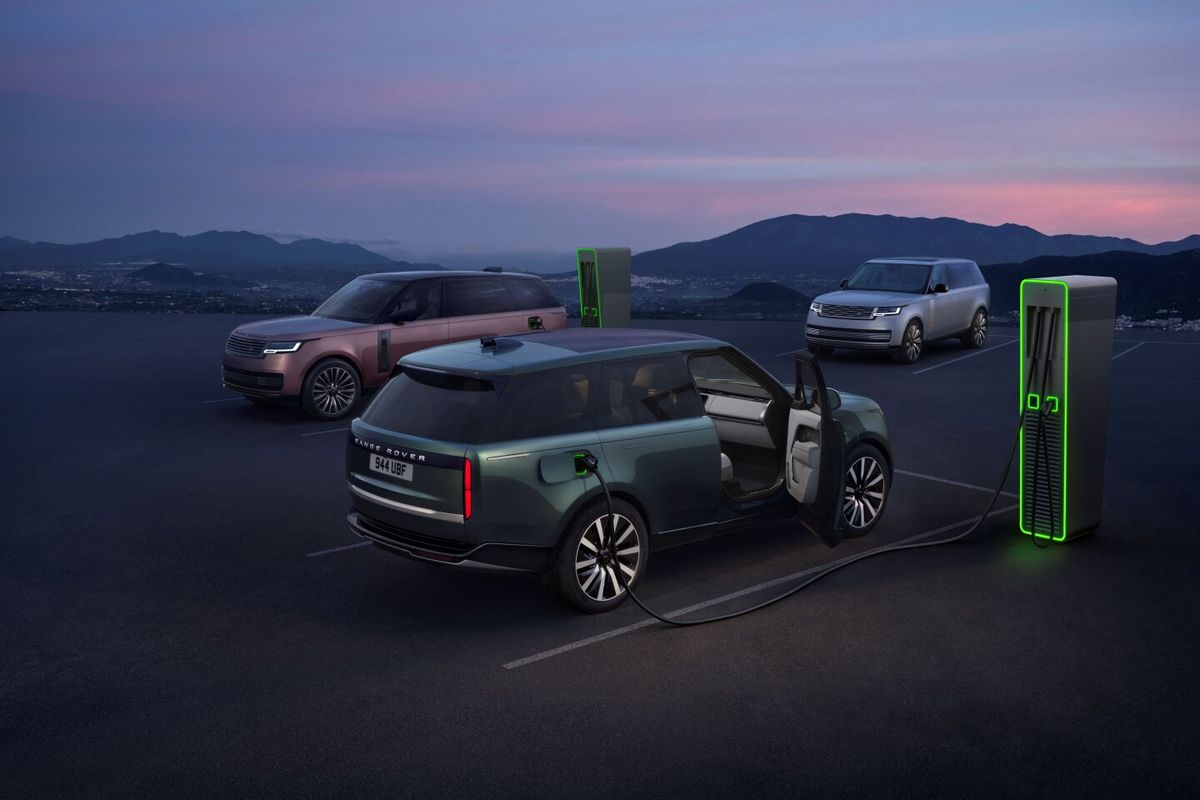
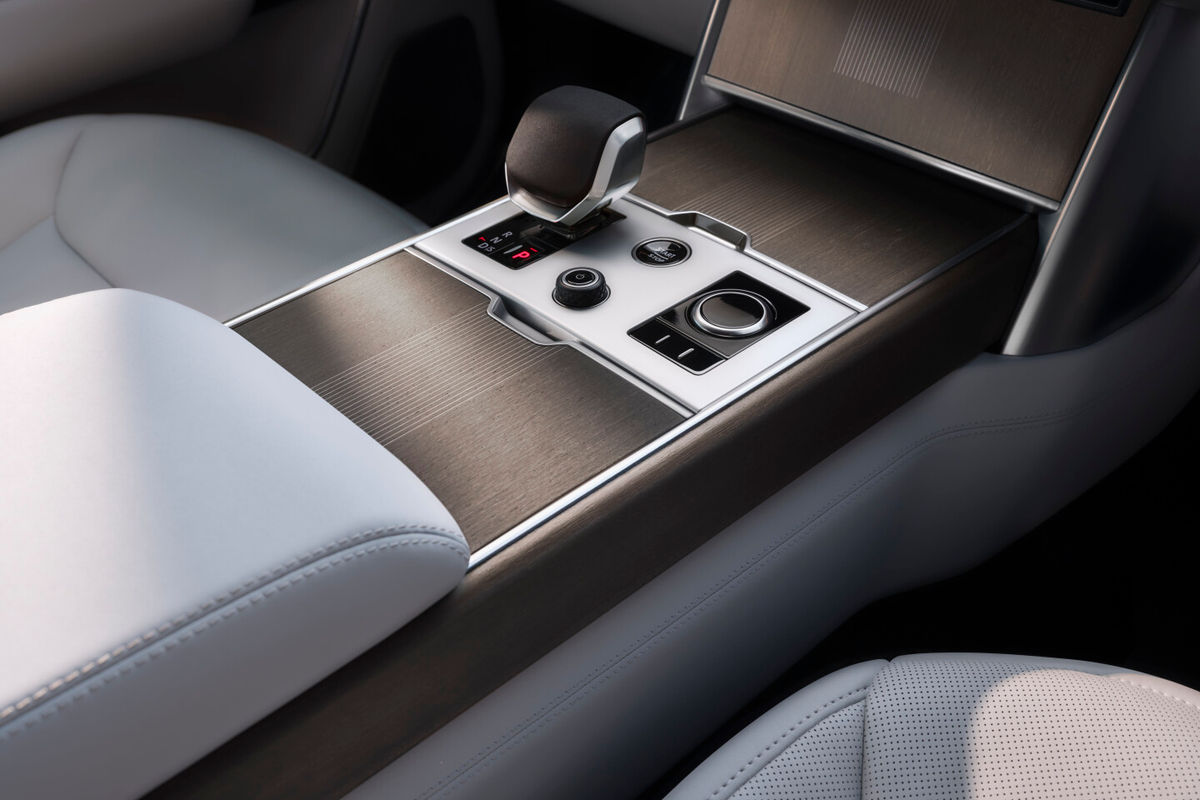
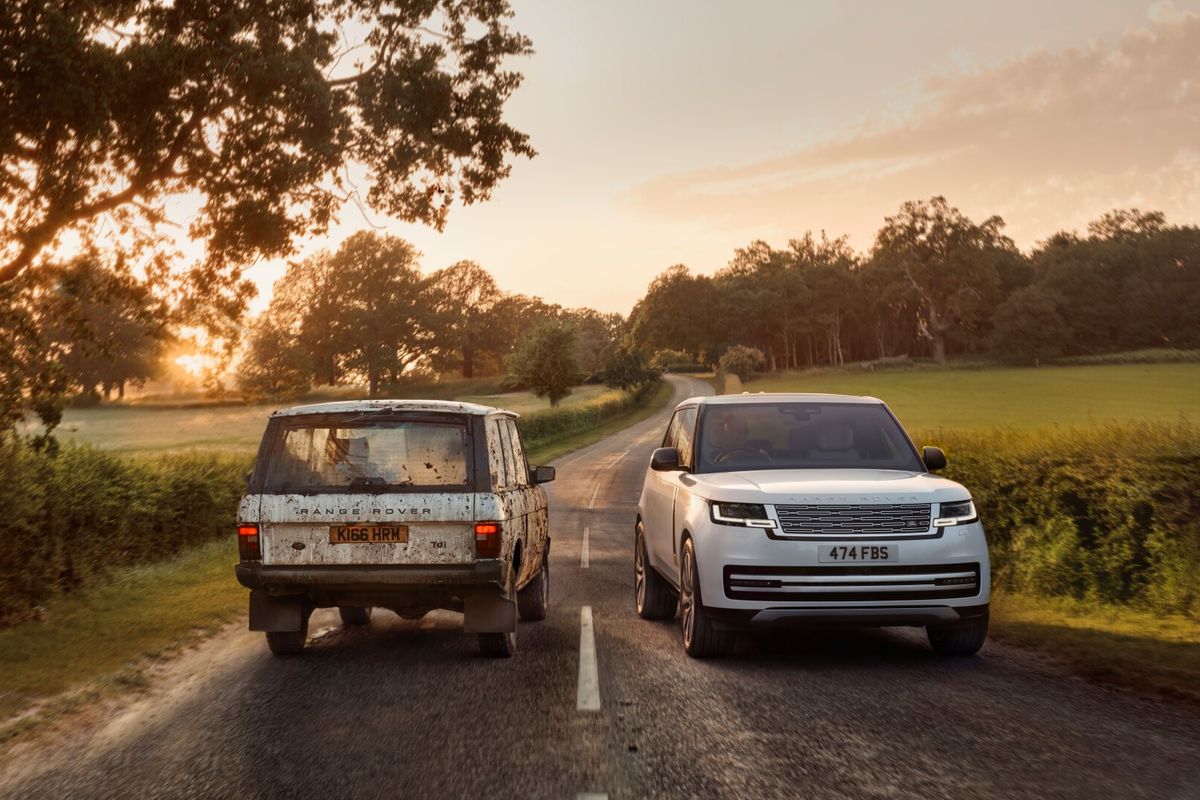
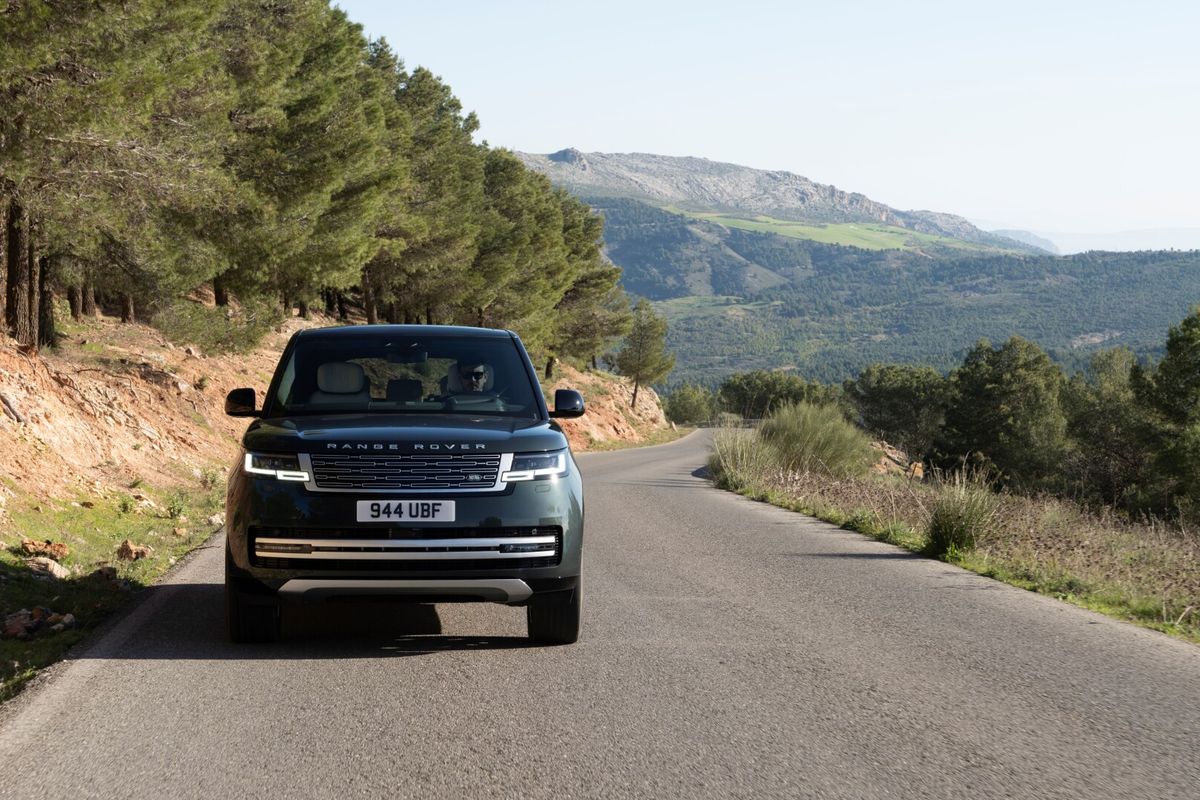
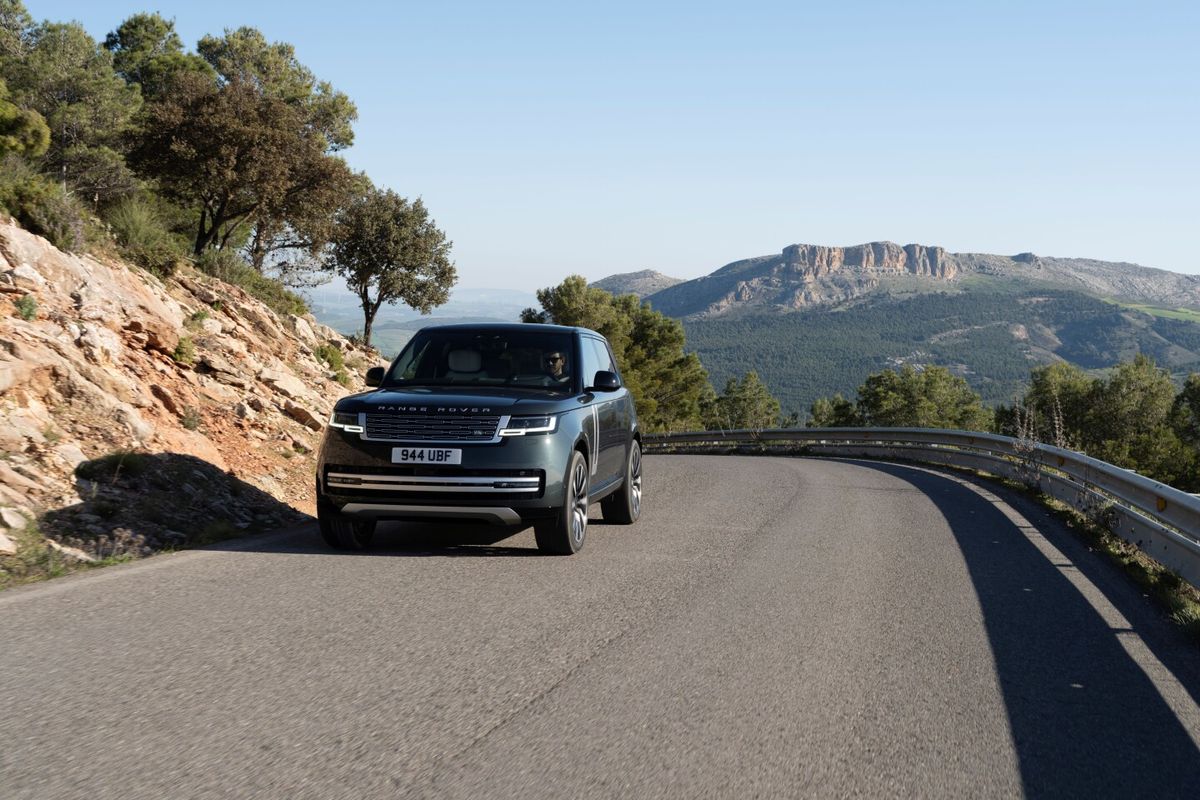
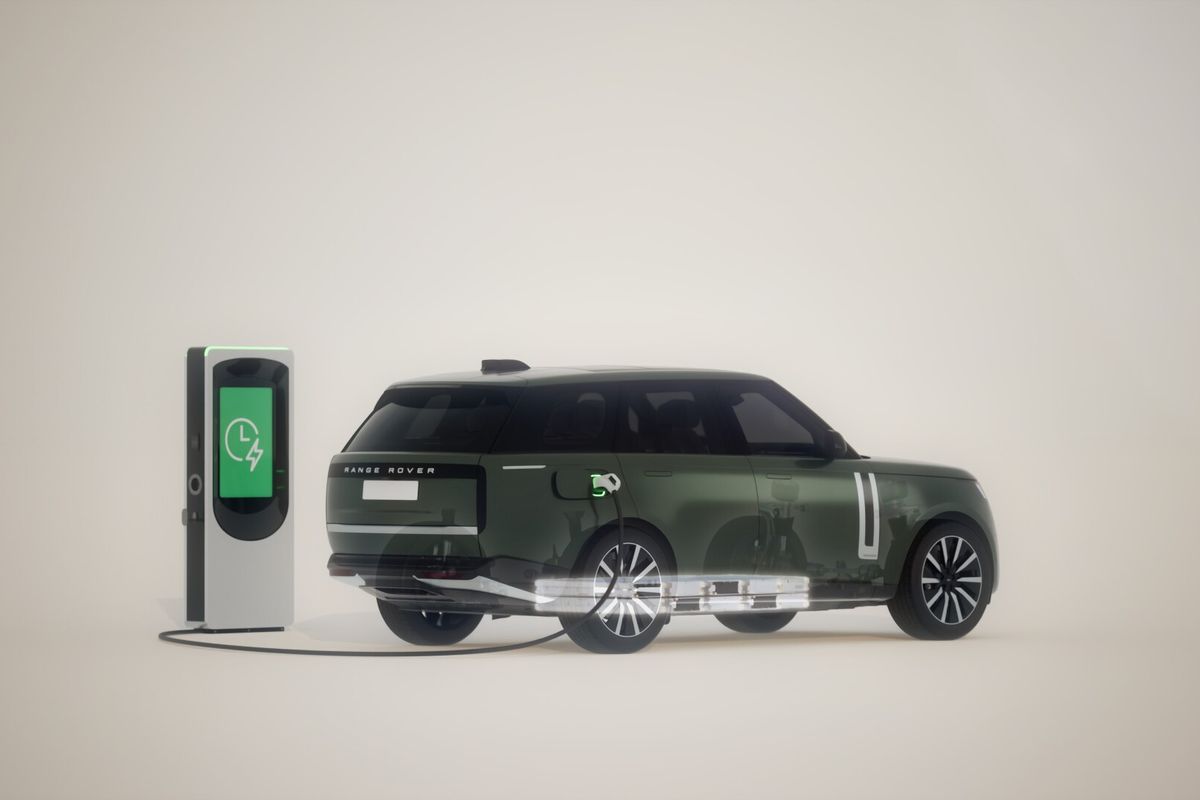
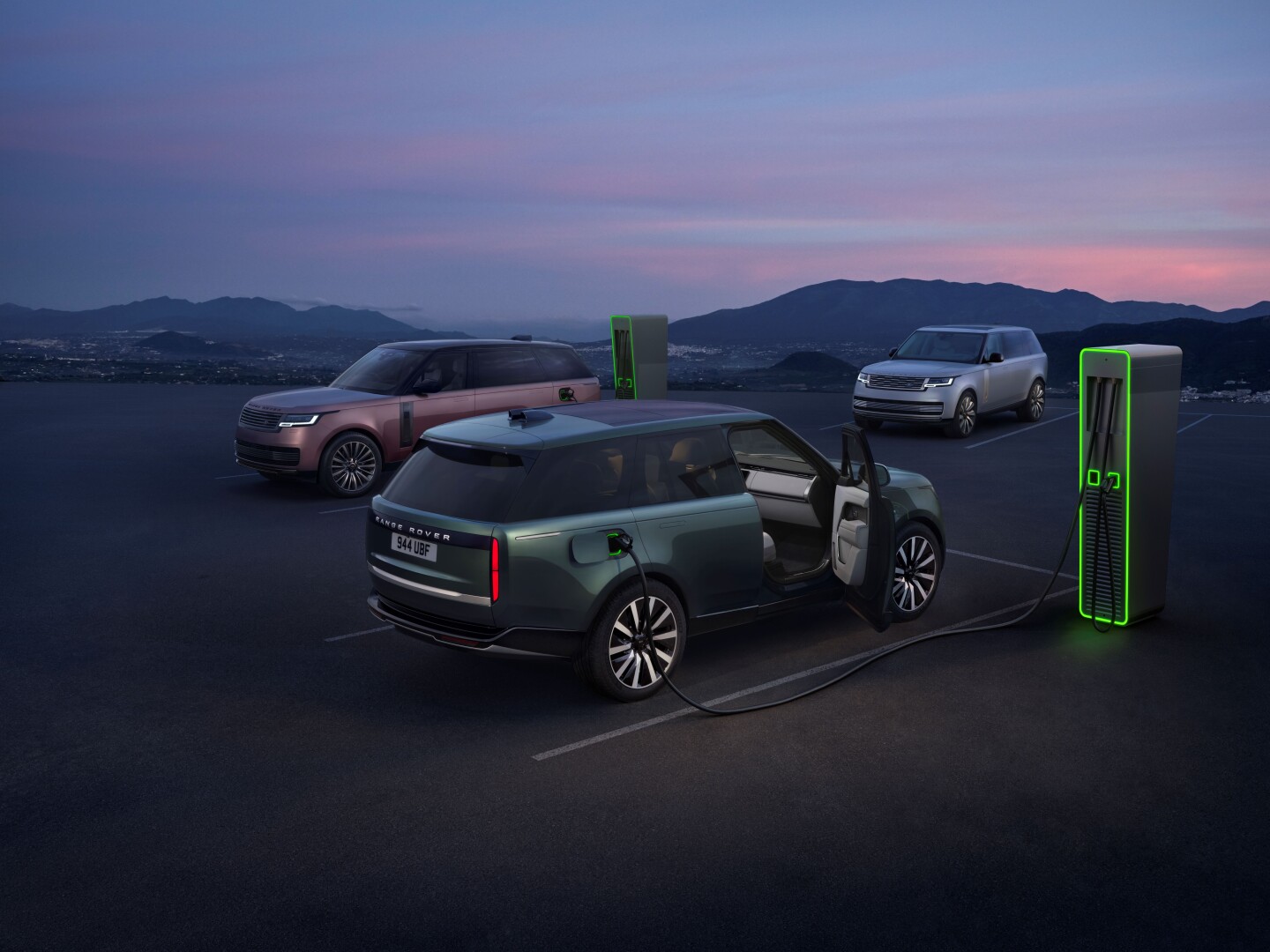
Here’s your first look at the all-electric Range Rover, which is the first time a battery-electric setup has been used for the luxury SUV brand.
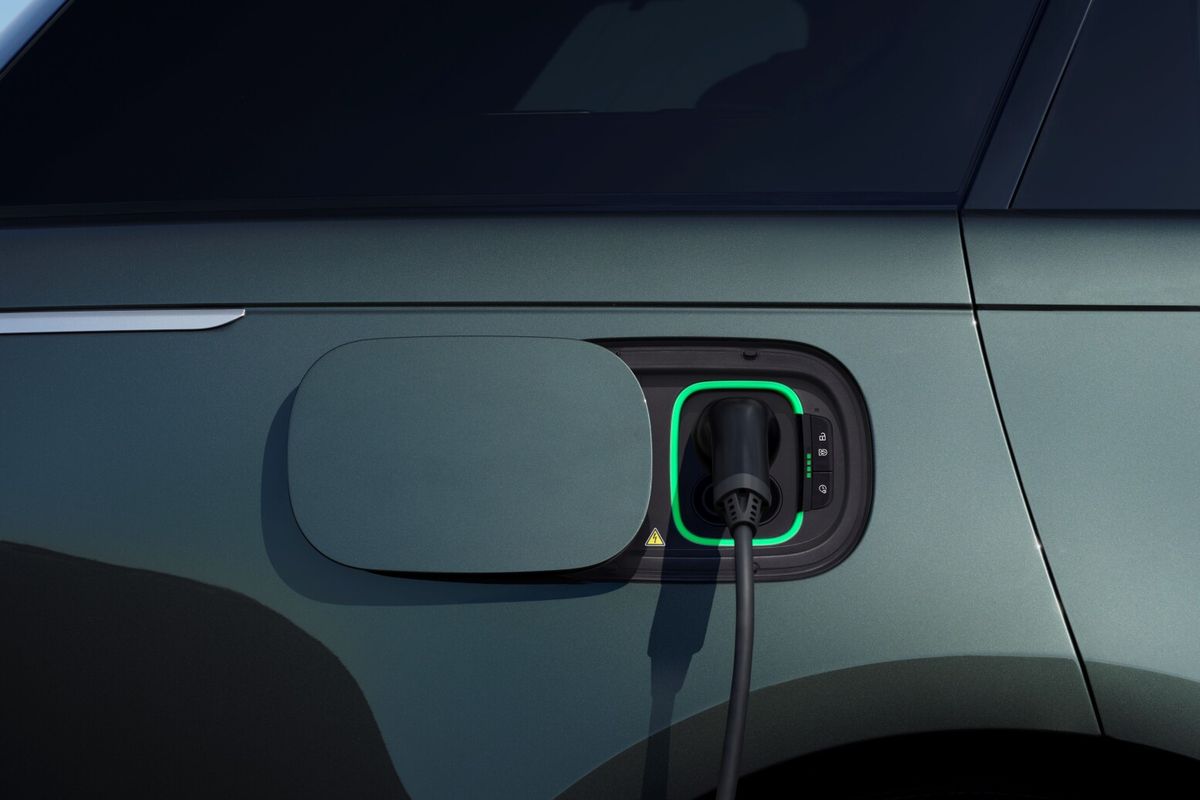
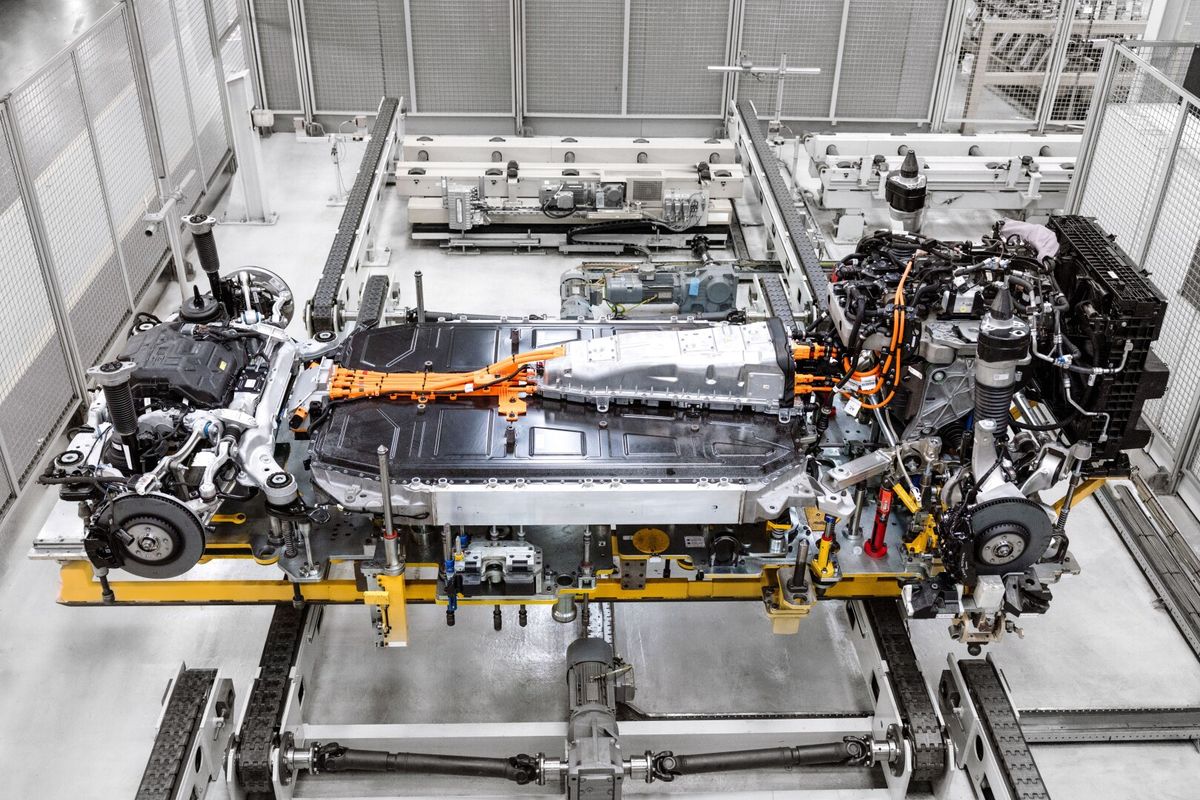
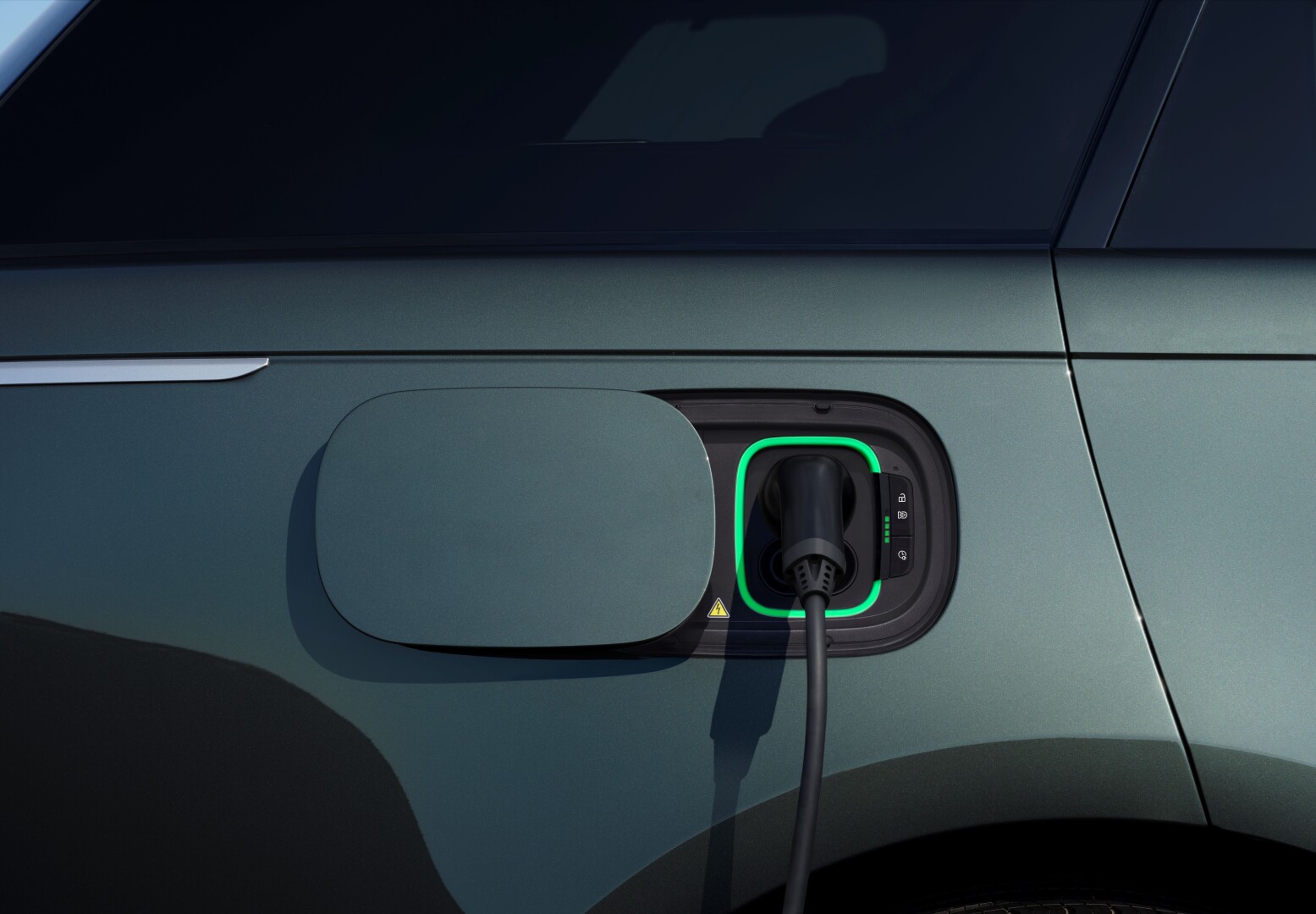
Underneath that typically sleek and imposing bodywork lies a brand-new all-electric 800V architecture, a 118.5 kWh lithium-ion battery pack and a motor on each axle. The twin permanent magnet motors make a total of 404 kW and 850 Nm, giving it a claimed 0-100 kph time of 4.3 seconds. The range claim of 598 km is based on the WLTP cycle and the vehicle can be charged at speeds of up to 350 kW, meaning 10-80% can be completed in around 22 minutes.
Customers are able to stay connected to this Range Rover via a new app which allows functionality like activating the climate control, cabin purification and checking the range status. The Range Rover EV has completed over 1.5 million km of real-world testing in extreme temperature variations and there are a number of innovations, with the brand claiming over 300 parent applications filed for this vehicle.
How much does the electric Range Rover cost in South Africa?
The order books have opened and Range Rover South Africa will be offering the battery-electric luxury SUV in a choice of either long- or short-wheelbase body styles. Customers can opt for HSE, Autobiography, SV, SV Ultra, SV Black trims. Naturally, there will also be a First Edition. For customers wanting that personalised touch, well Range Rover Bespoke beckons!
The BEV Range Rover will come with an 8-year or 160 000-kilometre warranty.
What performance figures does the Range Rover Electric deliver?
The Range Rover Electric features twin electric motors generating a combined 404 kW of power and 850 Nm of torque. It accelerates from 0 to 100 km/h in just 4.3 seconds and has an 80 to 120 km/h overtaking time of 2.7 seconds.
How much does the Range Rover Electric cost in South Africa?
The Range Rover Electric lineup in South Africa is available in both Short Wheelbase (SWB) and Long Wheelbase (LWB) configurations:
Range Rover SWB EV550 HSE: Starts from R3,916,800
Range Rover LWB EV550 SV Ultra: Tops the range at R6,035,000
What is the driving range and battery capacity of the electric Range Rover?
Powered by a 118.5 kWh usable battery pack, the Range Rover Electric achieves a claimed WLTP driving range of up to 598 km, with real-world range estimated at around 535 km on a single charge.
How fast does the Range Rover Electric charge?
Built on an 800V electrical architecture supporting up to 350 kW DC fast charging, the battery can replenish from 10% to 80% in approximately 22 minutes. A quick 10-minute DC fast-charge adds up to 220 km of driving range.
Does the electric Range Rover maintain its off-road and towing capabilities?
Yes, it retains full Land Rover capability with an all-wheel-drive system, a maximum wading depth of up to 900 mm, Terrain Response with single-pedal off-road drive modes, and a towing capacity of up to 2,500 kg. It also includes an 8-year / 160,000 km battery warranty.
New Subaru Outback will launch in SA before year-end
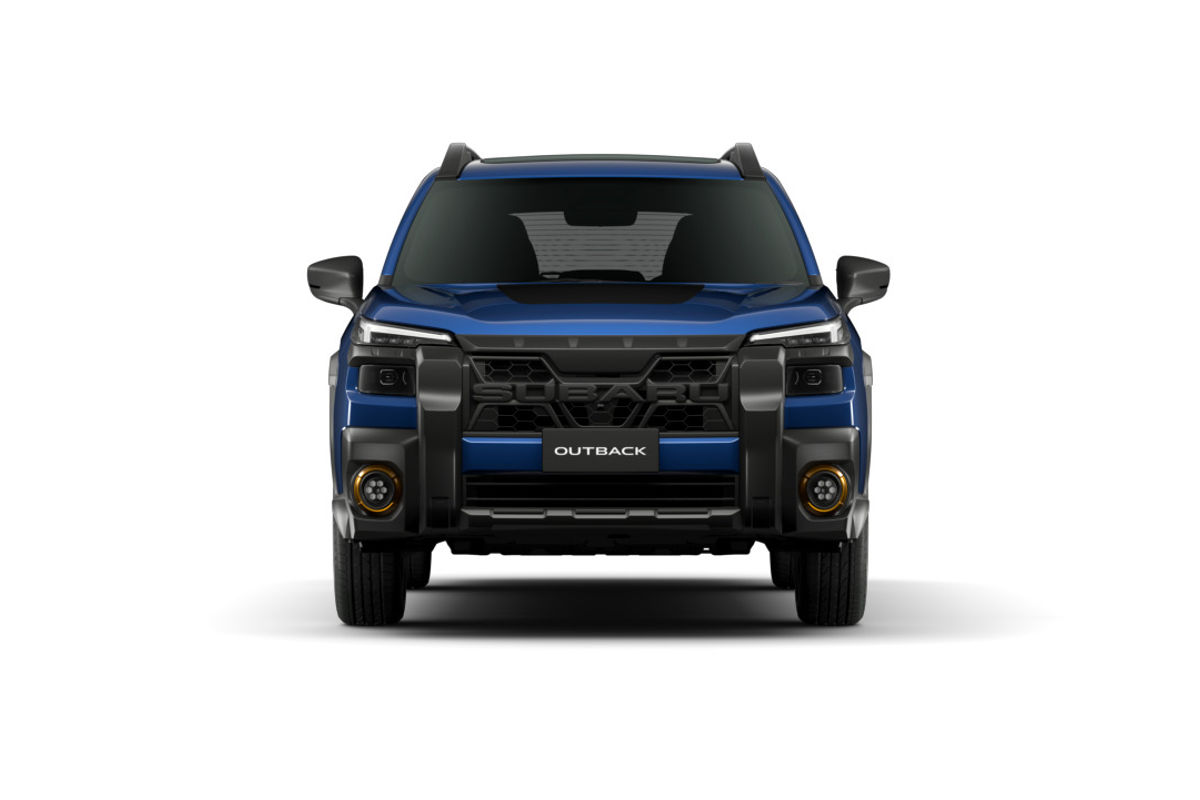
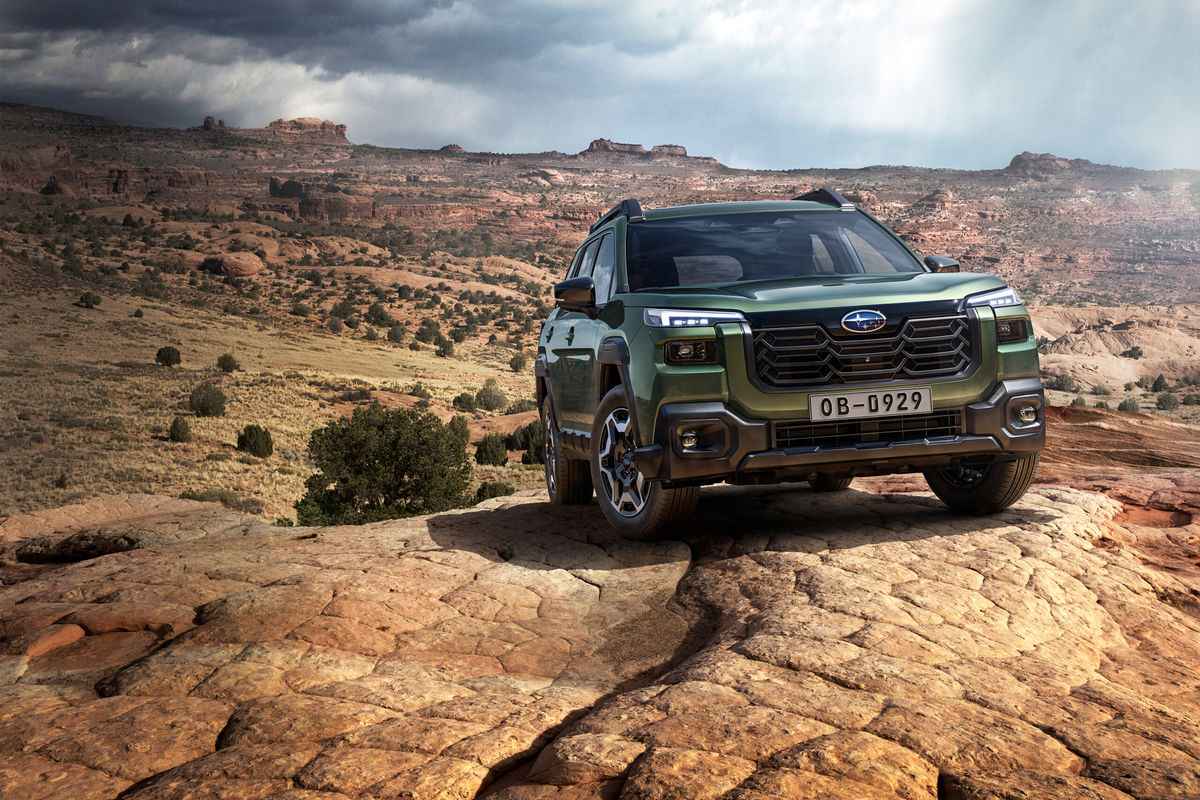
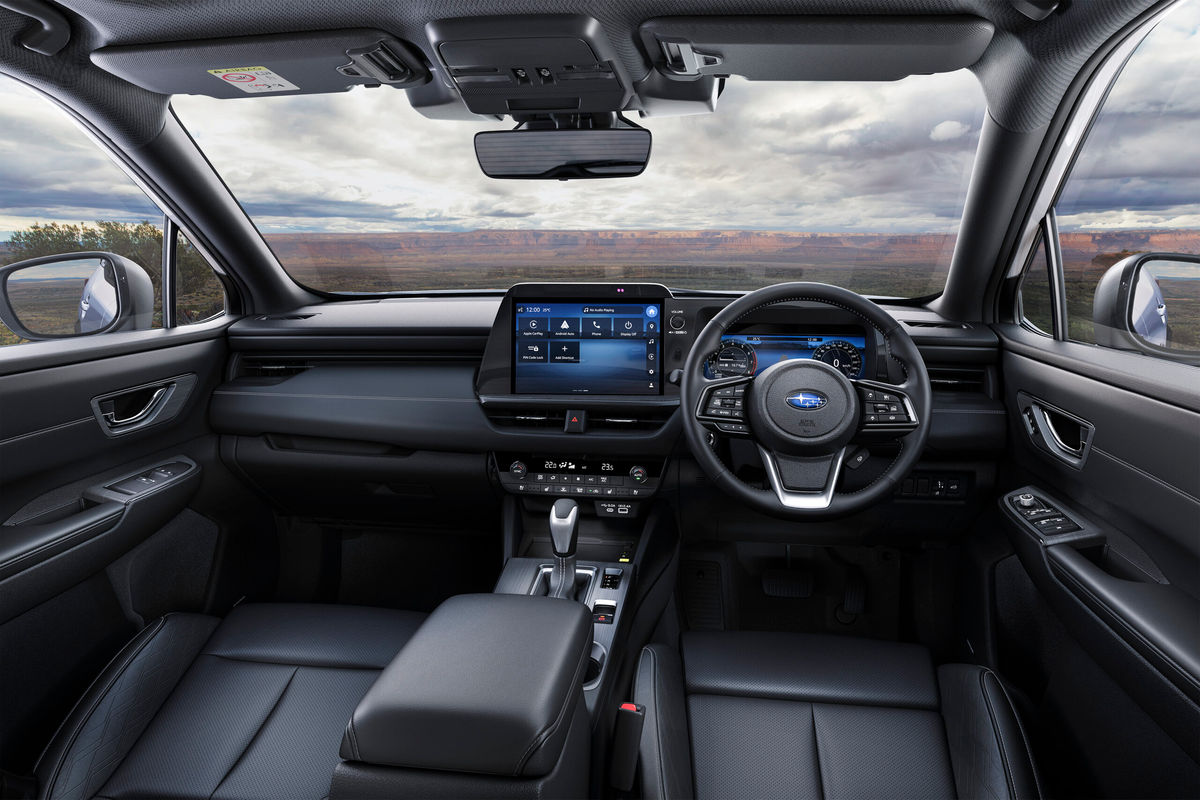
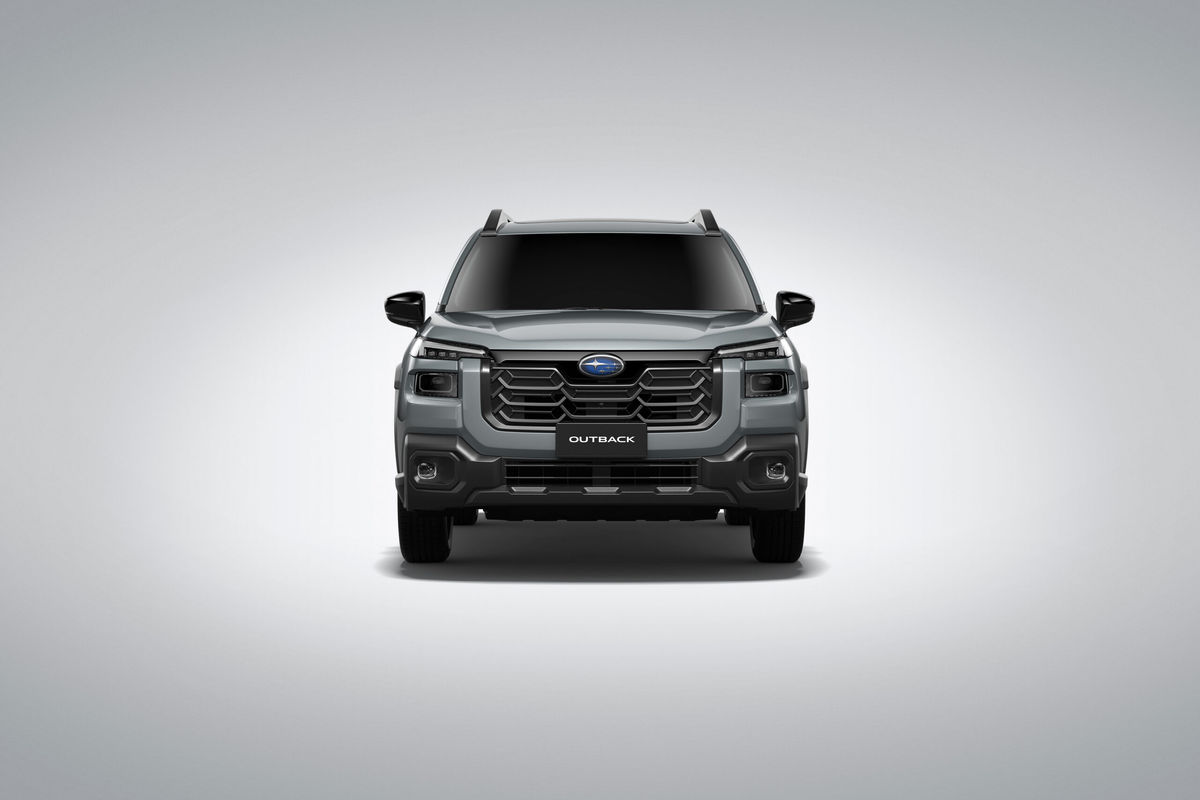
The 7th-generation new Subaru Outback is confirmed for launch in South Africa towards the end of this year. Here’s what you can expect.
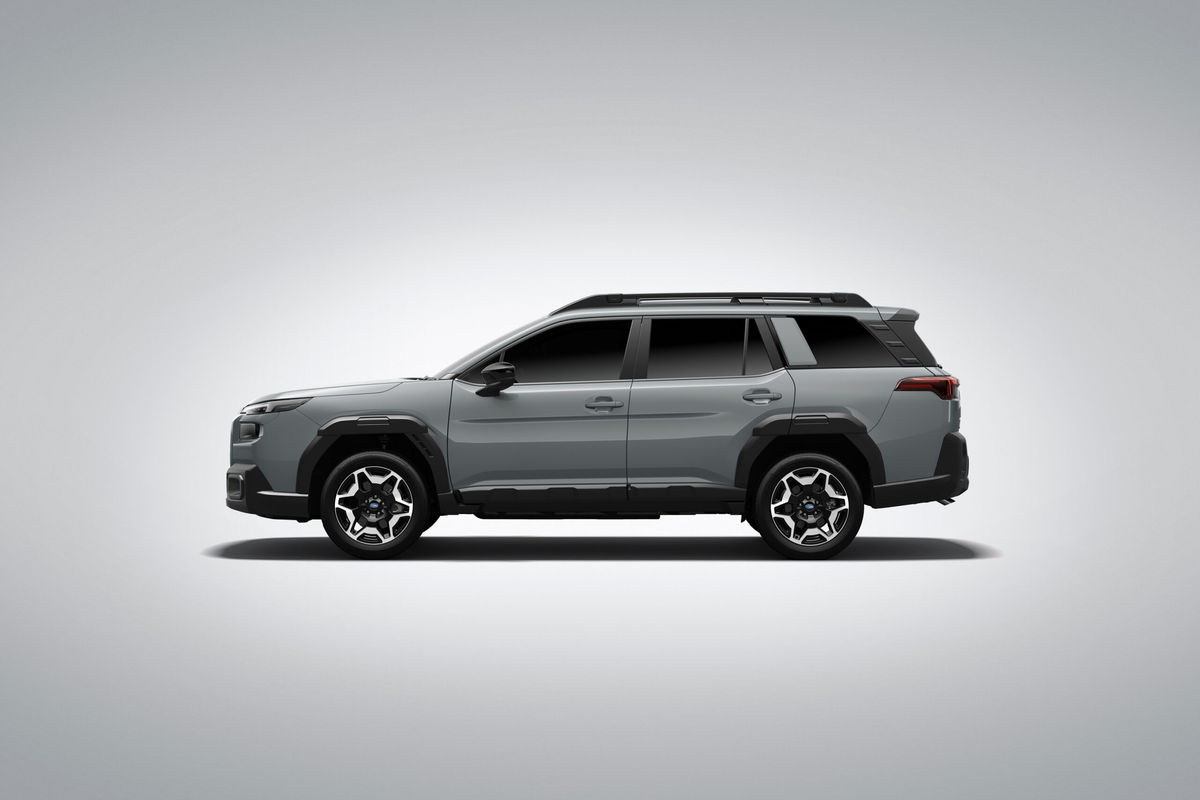
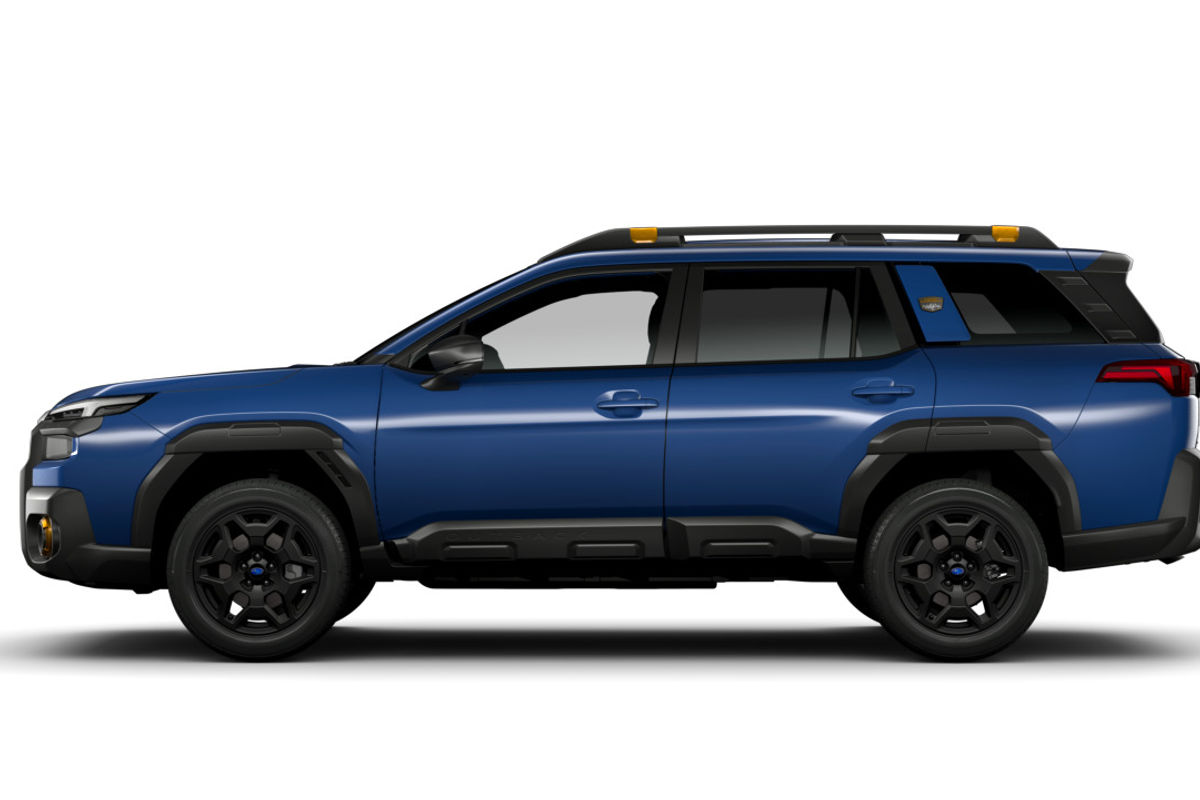
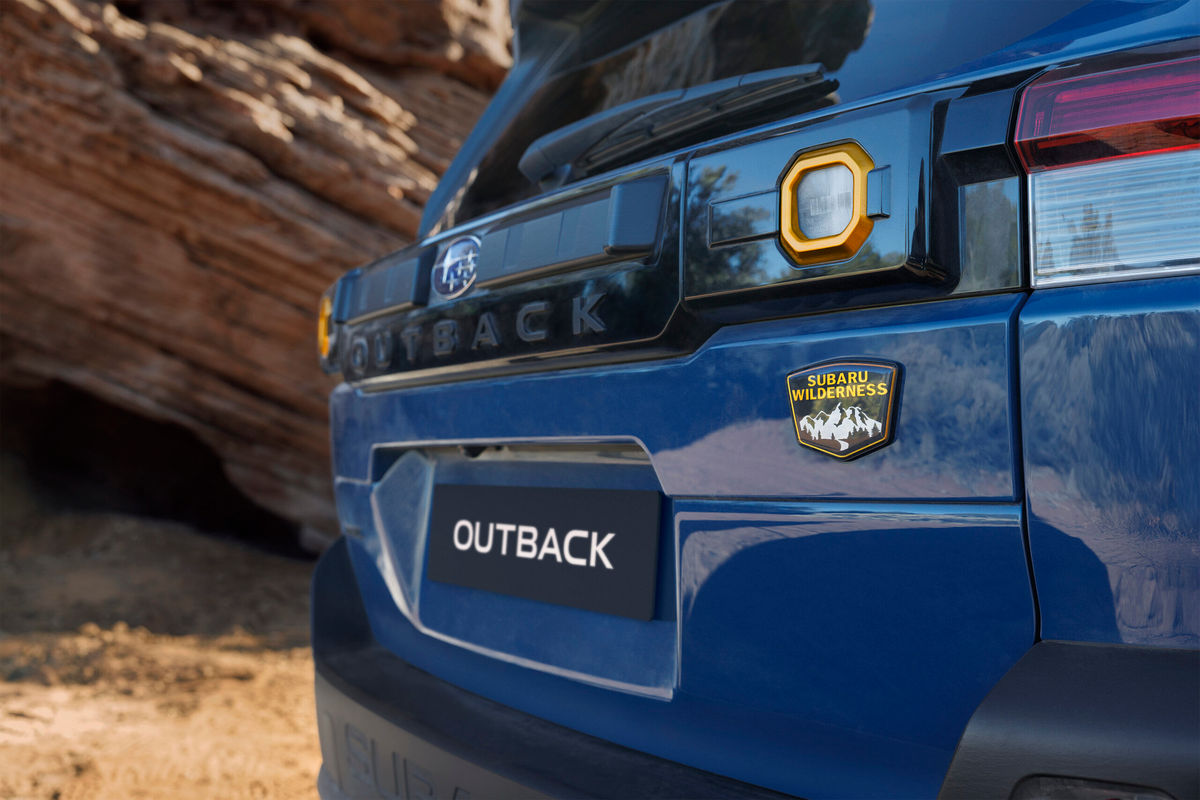
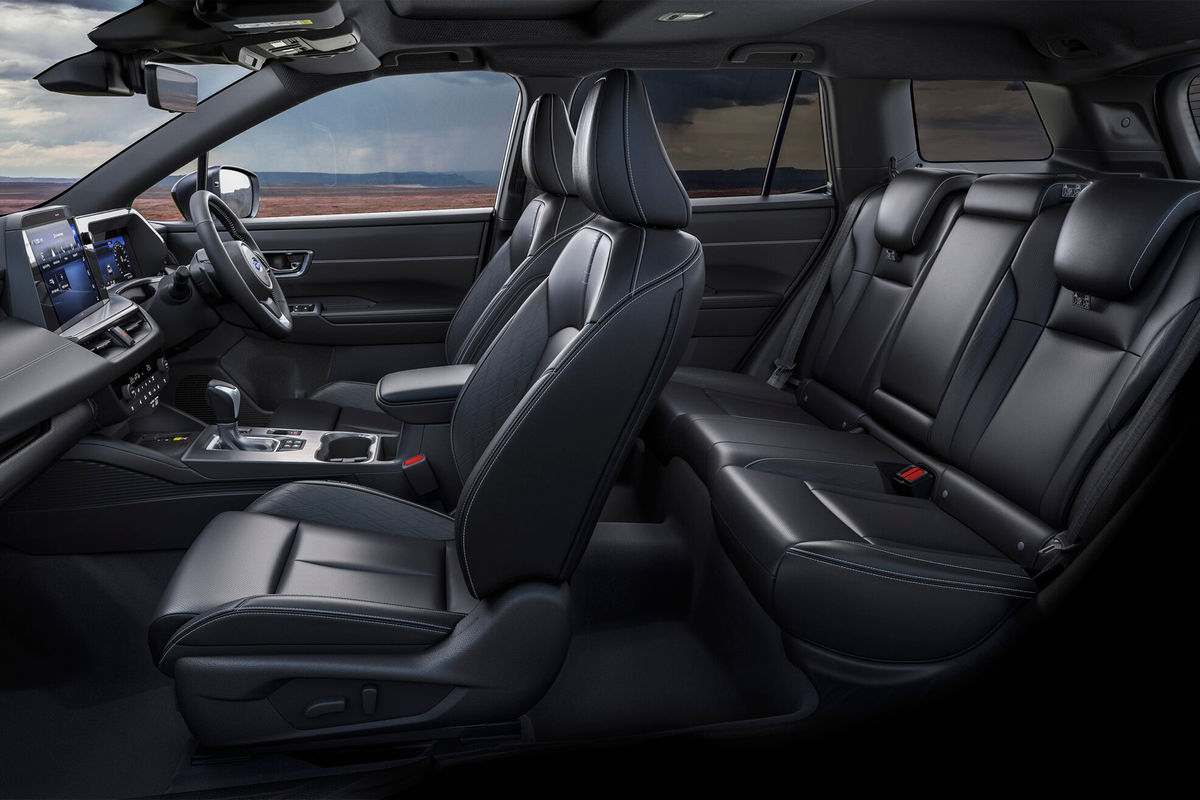
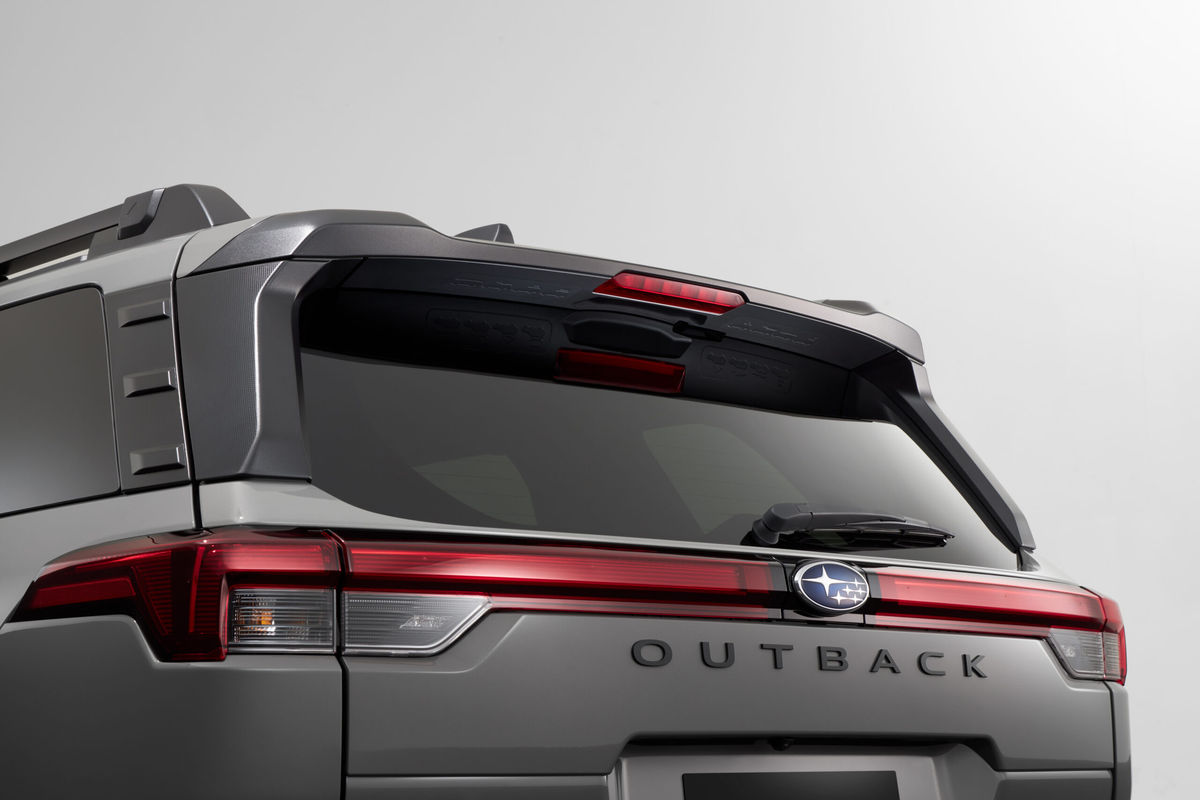
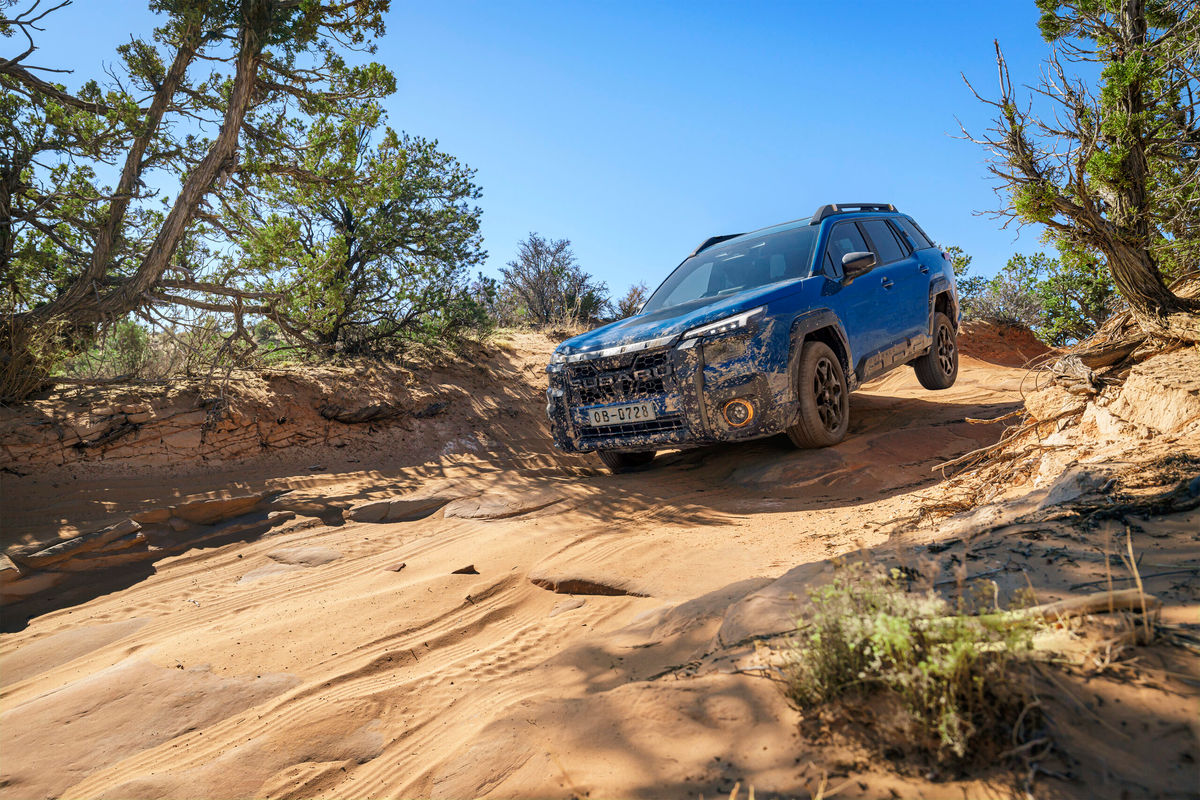
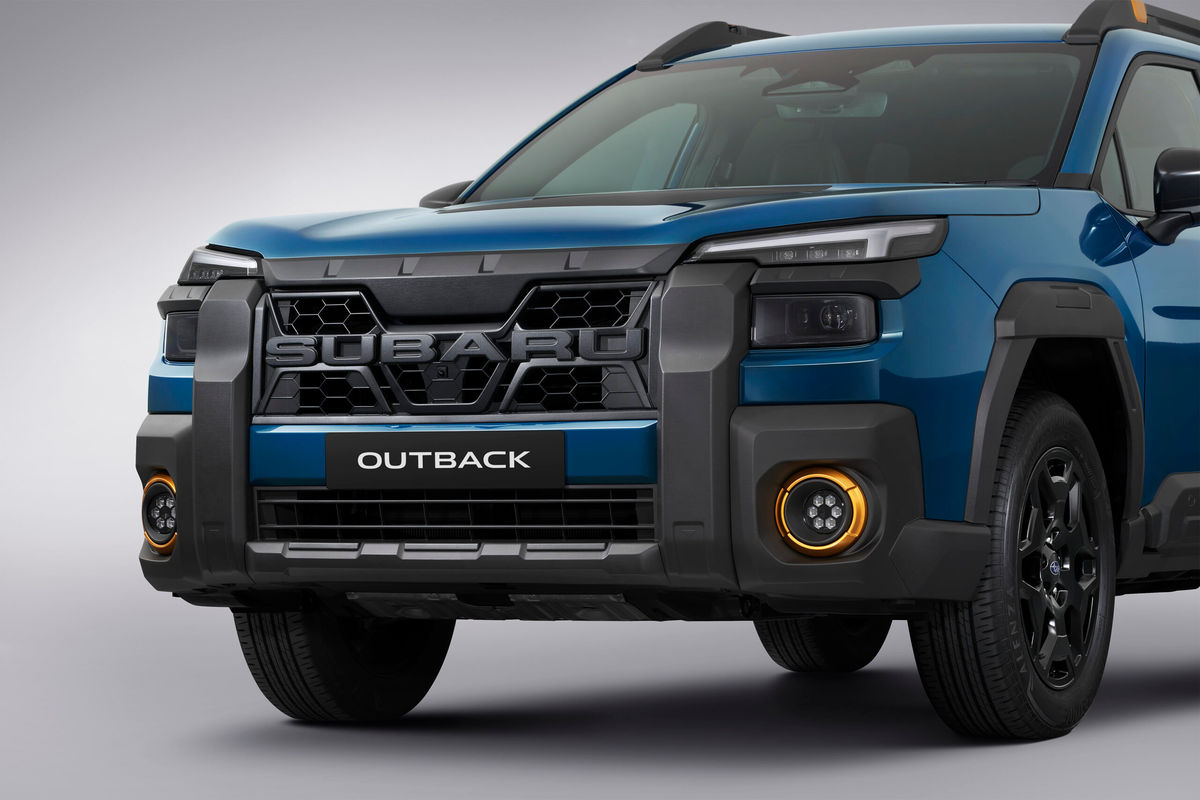
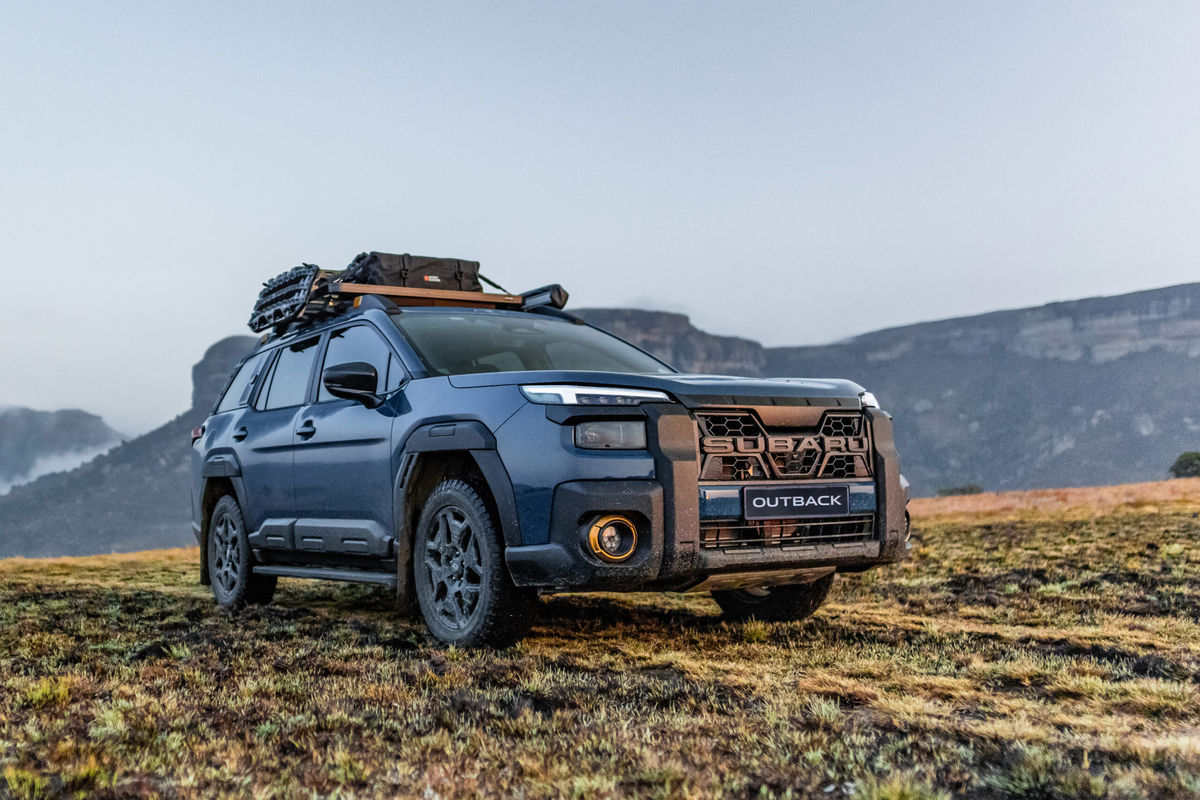
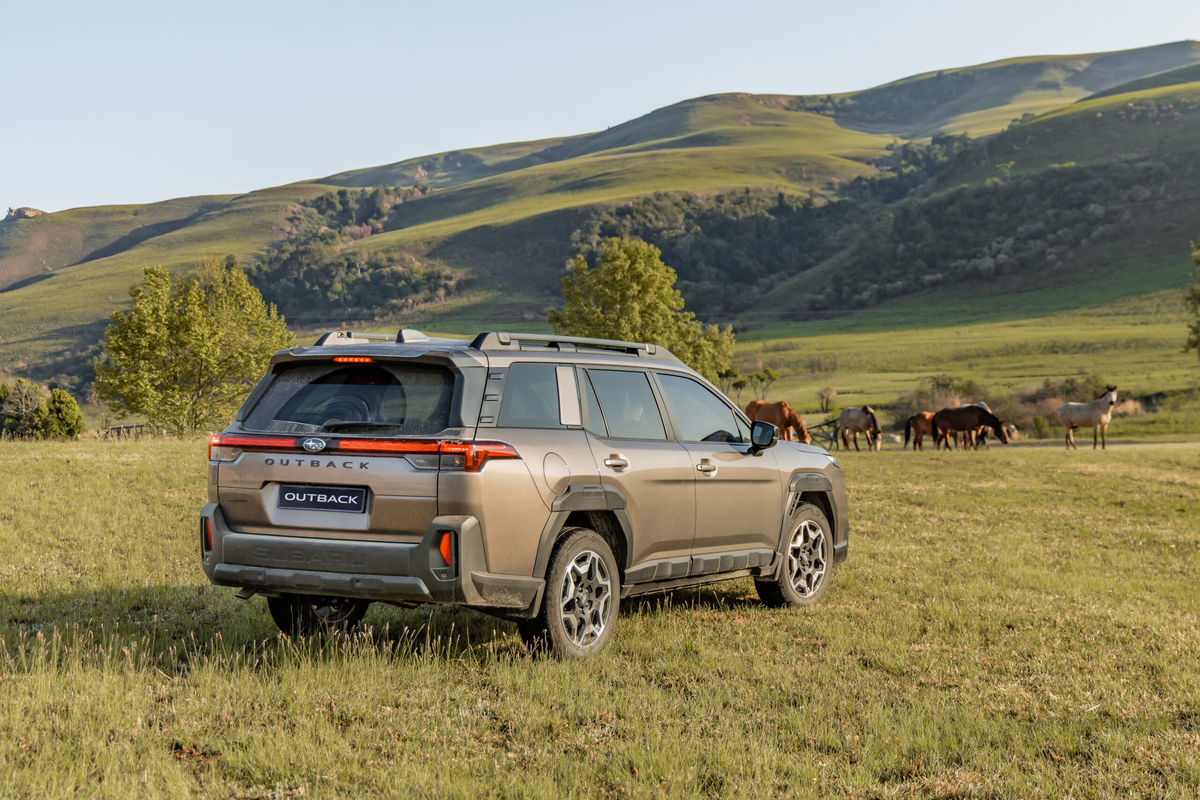
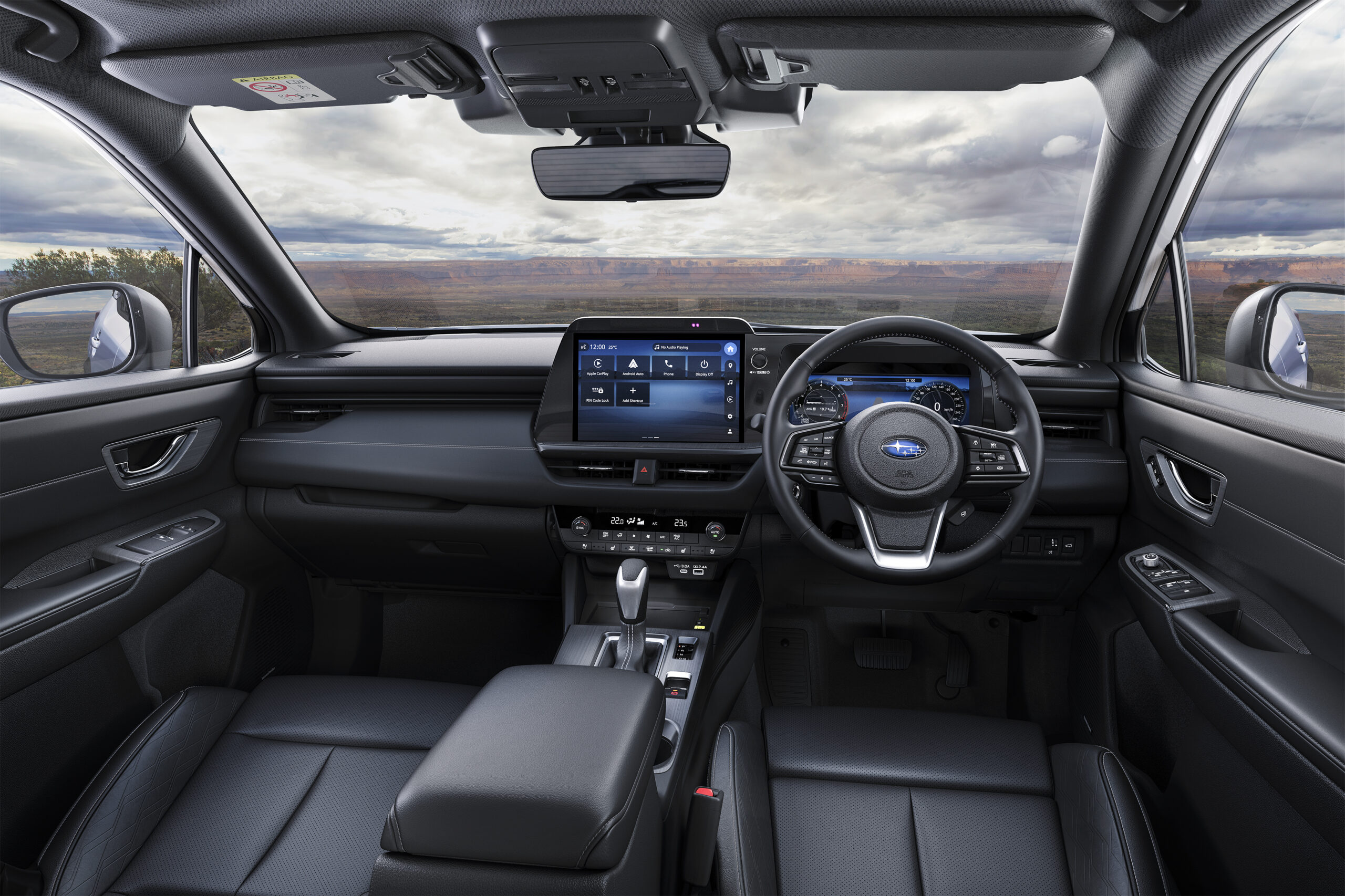
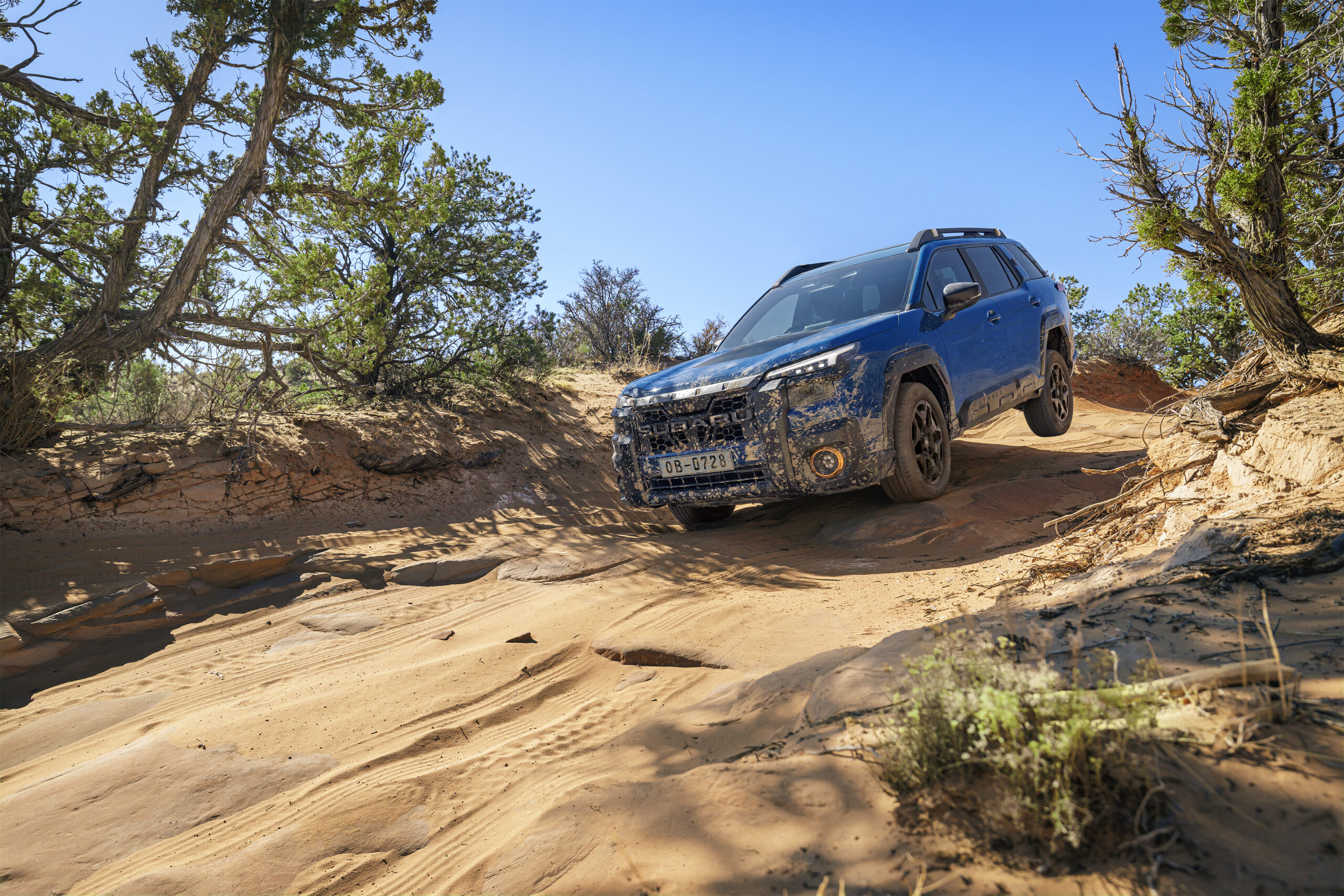
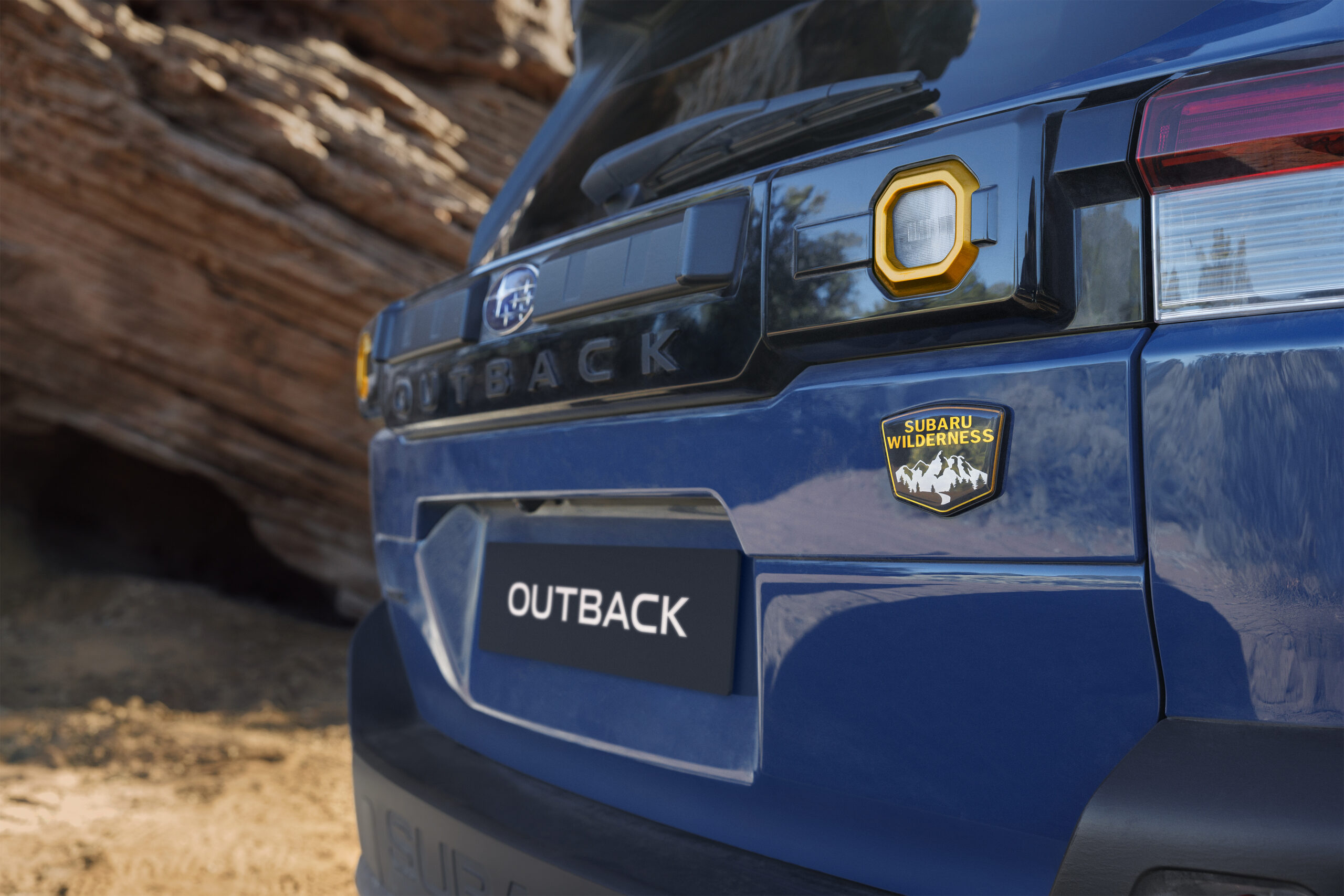
Subaru fans can celebrate as Subaru Southern Africa has confirmed the new 7th-generation Outback will be coming to our market later this year. As a reminder, its essentially a raised spacious station wagon which has offroad capabilities. For the first time, the Wilderness trim is confirmed for our market.
The new Subaru Outback is offered with a choice of two derivatives. Kicking off the range will be the 2.5 Premium featuring a naturally-aspirated 2.5-litre horizontally-opposed Boxer petrol engine. This makes 137 kW and 254 Nm. Next up is the 2.4 Wilderness with its turbocharged 2.4-litre petrol engine making 194 kW and 382 Nm. Both engines have Subaru’s Lineartronic continuously variable transmission and symmetrical all-wheel drive.
The standard Outback Premium is focused on daily practicality and comfort, whereas the Wilderness-equipped Outbacks are all about those offroad trails. Essentially, the Wilderness trim is for the more adventurous souls and it adds X-Mode, additional ground clearance, offroad cladding and all-terrain tyres.
When is the new Subaru Outback coming to South Africa?
The 7th-generation Subaru Outback is confirmed to launch later in 2026 and the Japanese brand has confirmed that it will come standard with the new 5-year/105 000 km maintenance plan as well as 5-year/150 000 km vehicle warranty. Customers have the option to extend the plan out to 7-year/150 000 km.
More information, local specifications and pricing will be confirmed closer to the launch date.
What is the price of the Subaru Outback in South Africa?
As of April 2026, the Subaru Outback range starts at R839,000 for the 2.5i Field ES. The flagship 2.4 XT turbo variant is priced at approximately R999,000.
What engine options are available for the Outback?
The South African lineup includes two Boxer engines: a 2.5-litre naturally aspirated engine producing 138 kW and 245 Nm, and a more powerful 2.4-litre turbocharged engine delivering 183 kW and 350 Nm.
What is the fuel consumption of the Subaru Outback?
The 2.5-litre models have a claimed combined fuel consumption of 7.3 L/100 km, while the high-performance 2.4 XT turbo model averages around 9.0 L/100 km.
What warranty and maintenance plan comes with the Outback?
Subaru South Africa provides a 5-year/150,000 km warranty and a 3-year/75,000 km maintenance plan as standard, with options to extend the maintenance cover further.
What are the key safety features in the new Outback?
The Outback is equipped with EyeSight® Driver Assist Technology, which includes Pre-Collision Braking, Adaptive Cruise Control, and Lane Keep Assist. It also features a Driver Monitoring System (DMS) and 213 mm of ground clearance for off-road safety.
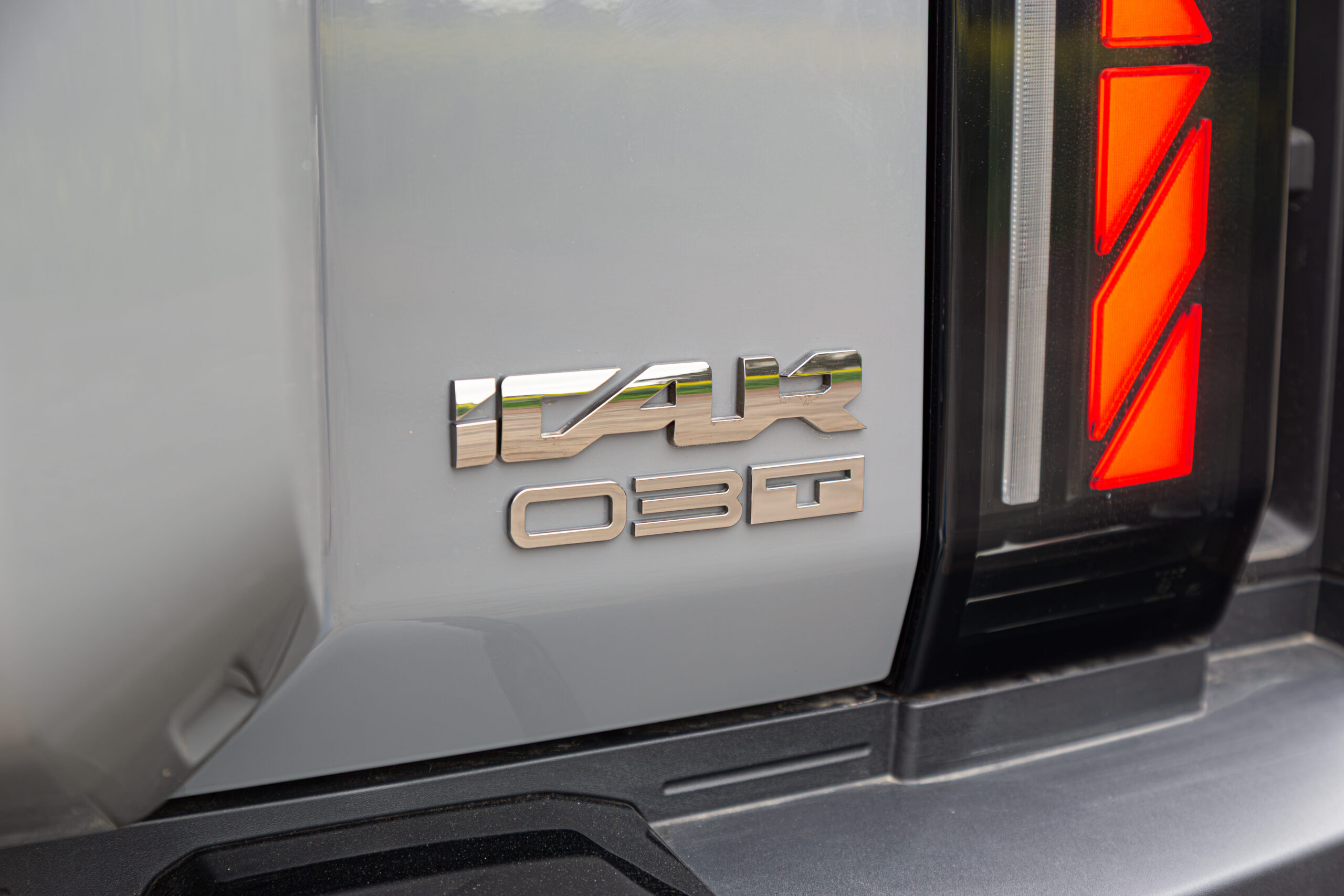
iCaur 03T (2026) Review
The iCaur 03T is one of 2 box-shaped EVs offered by the newcomer brand. Priced aggressively and surprisingly quick, the 03T could be one of 2026’s coolest cars.
We like: Futuristic styling; energetic performance; novelty factor.
We don’t like: Not the most efficient EV; too much reliance on the touchscreen for all functionality; feels a bit dated in comparison to the newer V23.
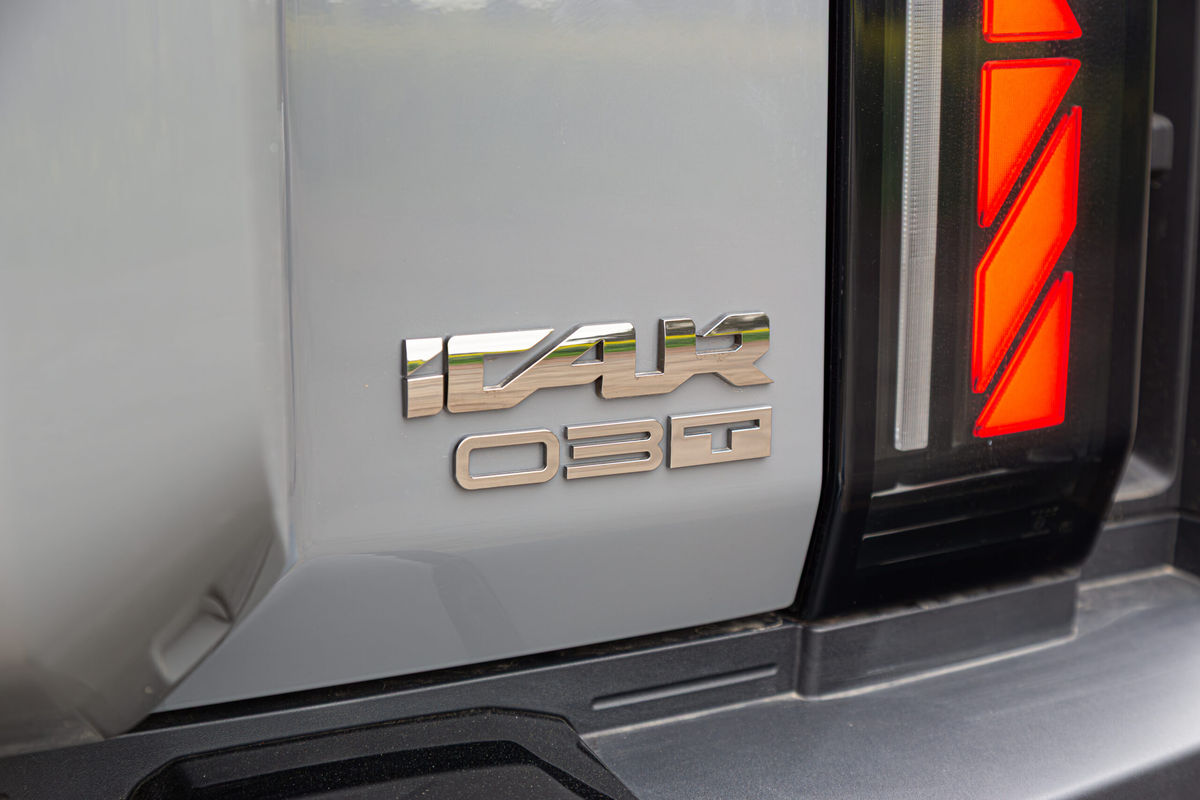
iCaur is a new-energy, quirky brand from the Chery Group. Pronounced ‘iCar’ but spelt like that to avoid a trademark from a certain tech company which prefixes all of its products with ‘i’, the brand launched in South Africa in 2026 with 2 products: the 03T and the V23. The brand will be launching the larger V27 and expanding the 03T range before the end of 2026.
The 03T has had a challenging gestation. Initially badged as the Jaecoo J6 for the export market and with a few homologation units already in South Africa, the decision was taken to revert to its China iCaur brand. We had a preview drive of the J6 in China back in 2024 and, as a reminder, both Omoda and Jaecoo are brands for the export market. iCaur formally launched in South Africa earlier this year.
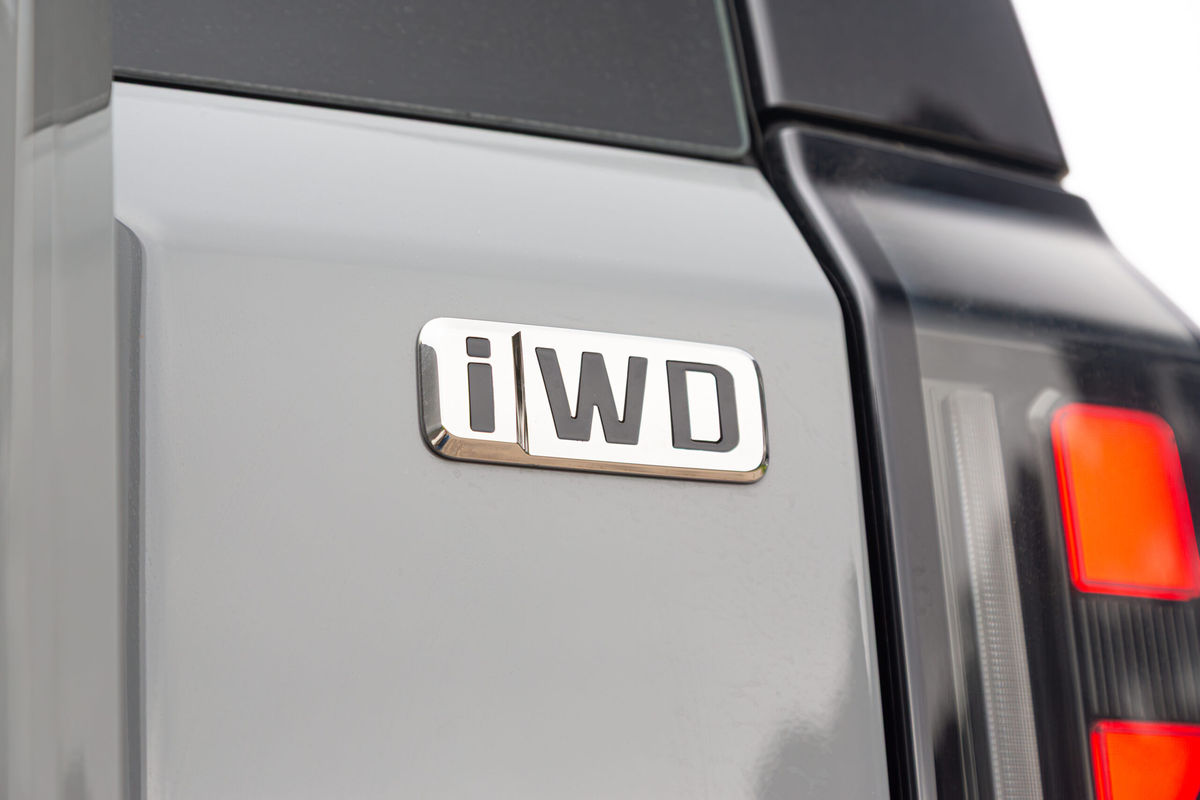
The 03T range comprises 2 derivatives: a single-motor 2WD and a twin-motor iWD (tested here). The price difference between the 2 is R60 000, with the range starting from R639 900 (price correct as of September 2026). For the iWD’s premium, you’re getting a fractionally larger battery, significantly more pace and some additional features.
Given its unique design and all-electric powertrain, rivals for the 03T are a challenge to button down. At this price point, the Chinese brands are obvious rivals and things like the BYD Atto 3 and Geely E5 come to mind. But, both these competitors don’t have the performance to match up to the iCaur.
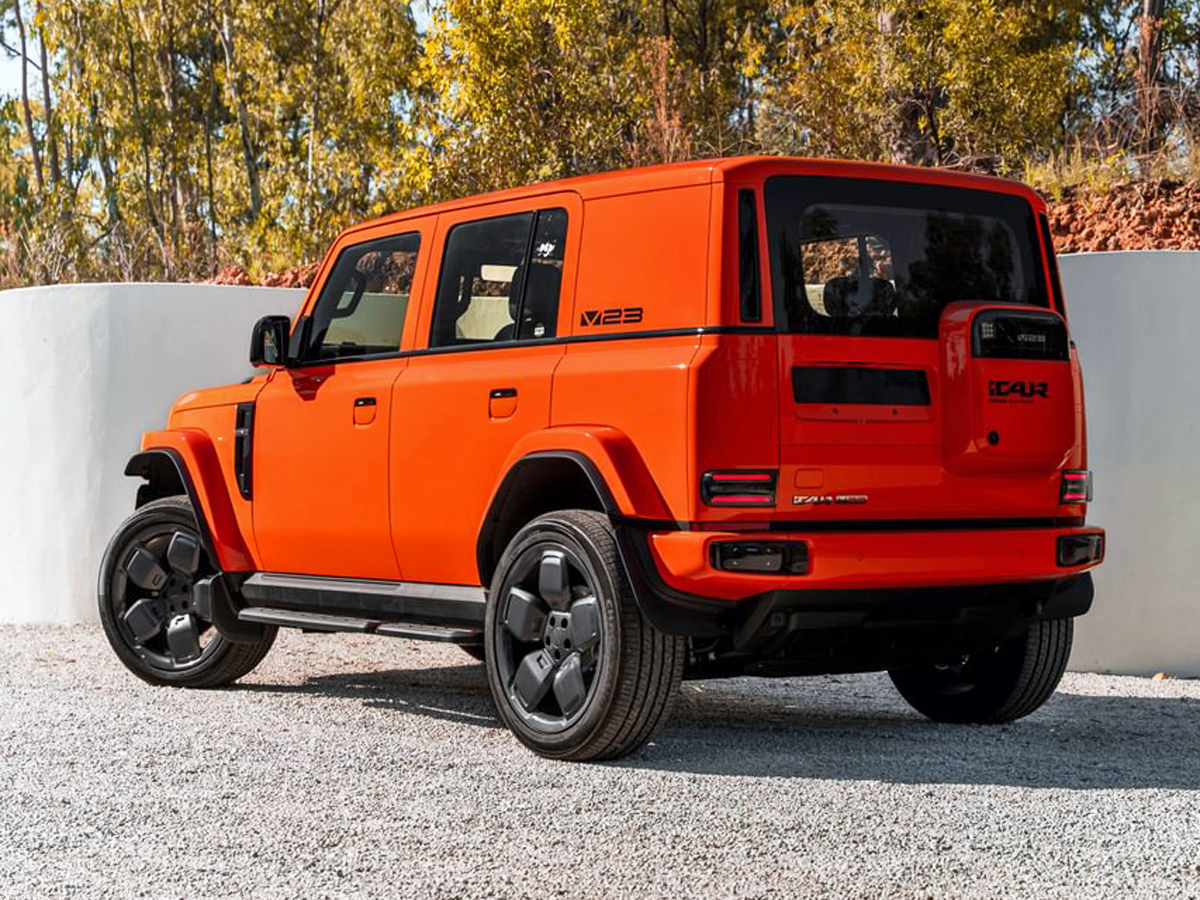
While this article is not a comparison piece, it’s difficult to ignore the sibling rivalry; the newer iCaur V23 offers a similar experience for a bit less money. In terms of legacy offerings, the closest rival is the single-motor Mini Aceman, but that offers less performance at a significant premium.
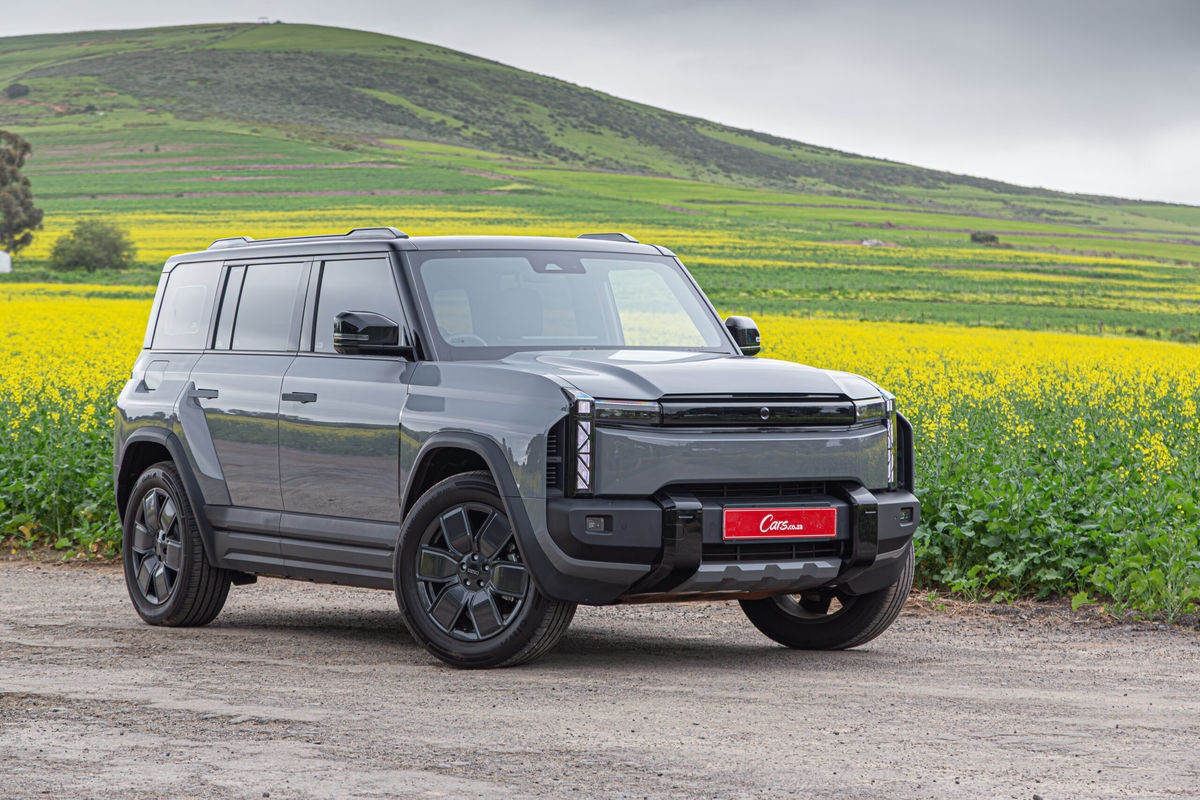
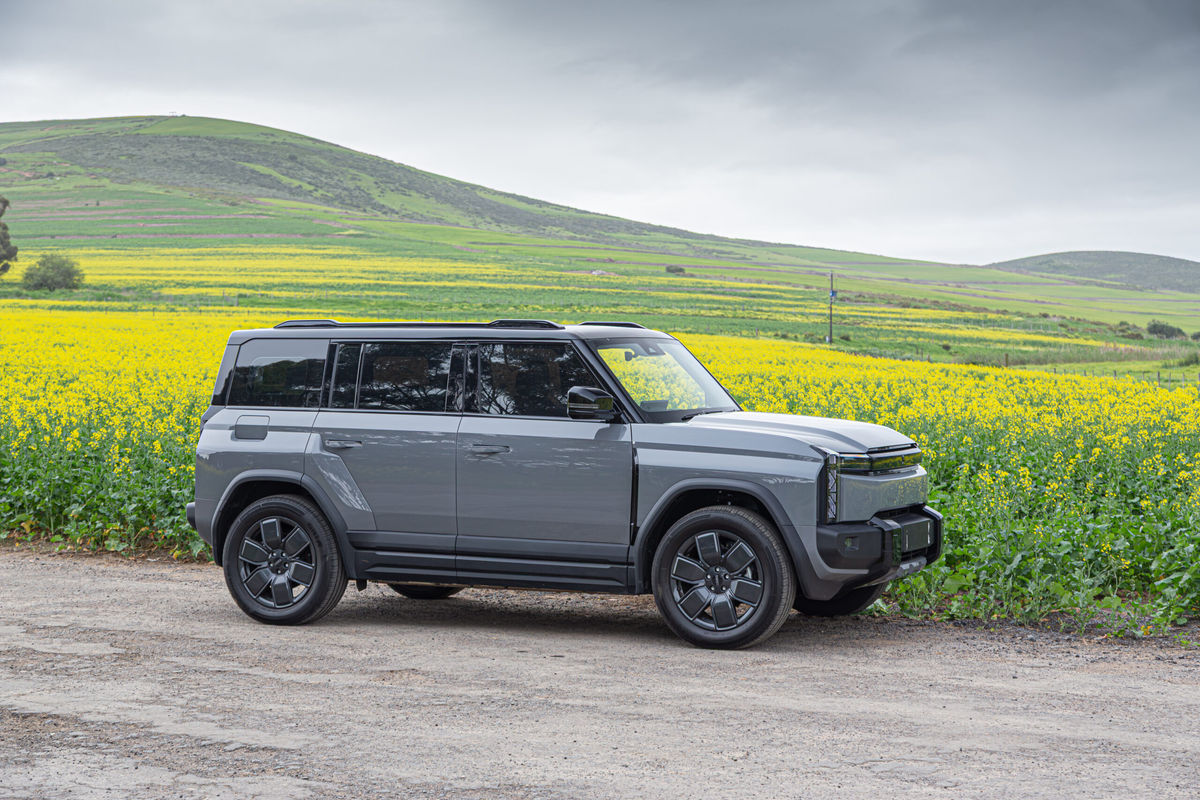
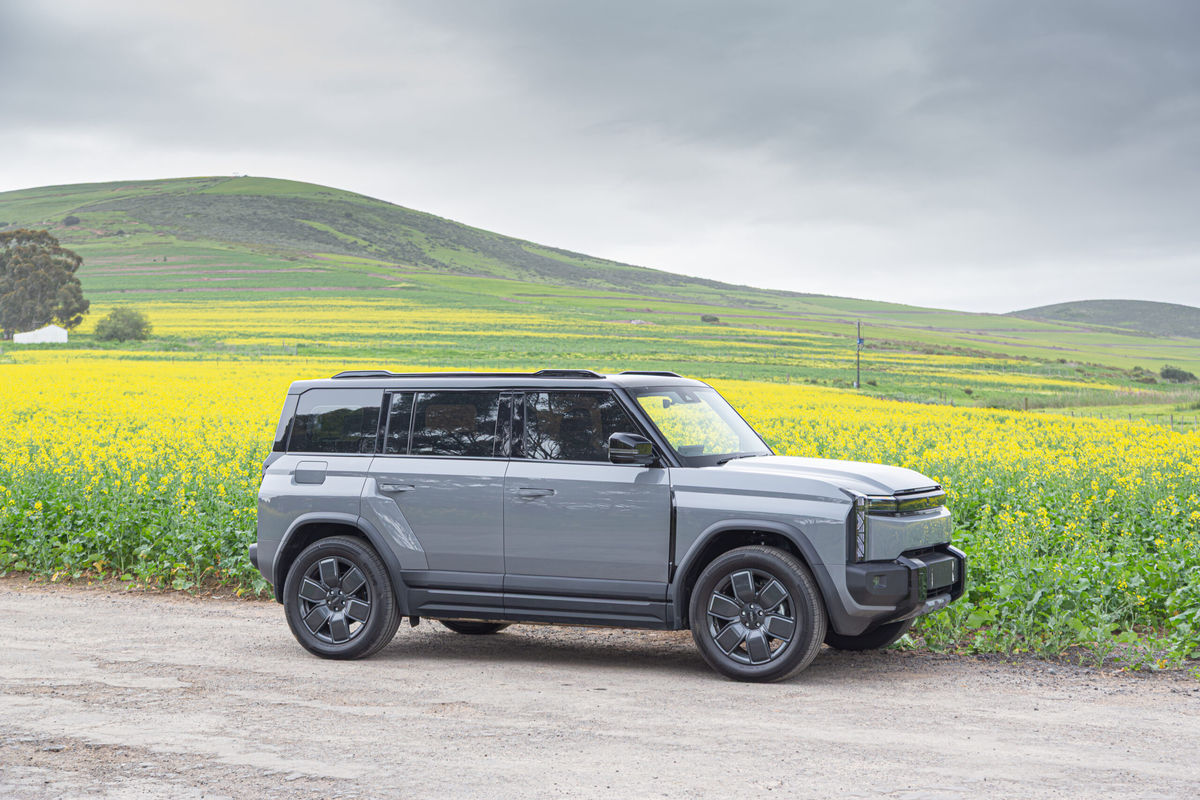
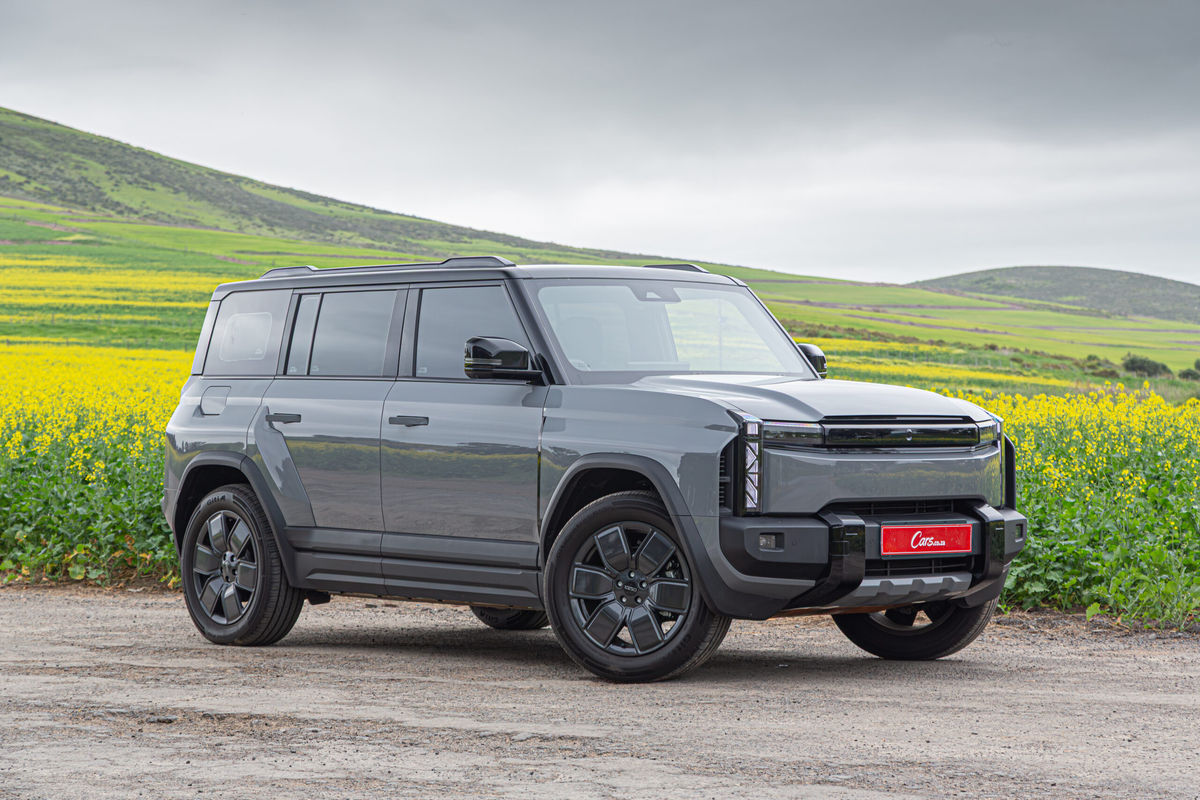
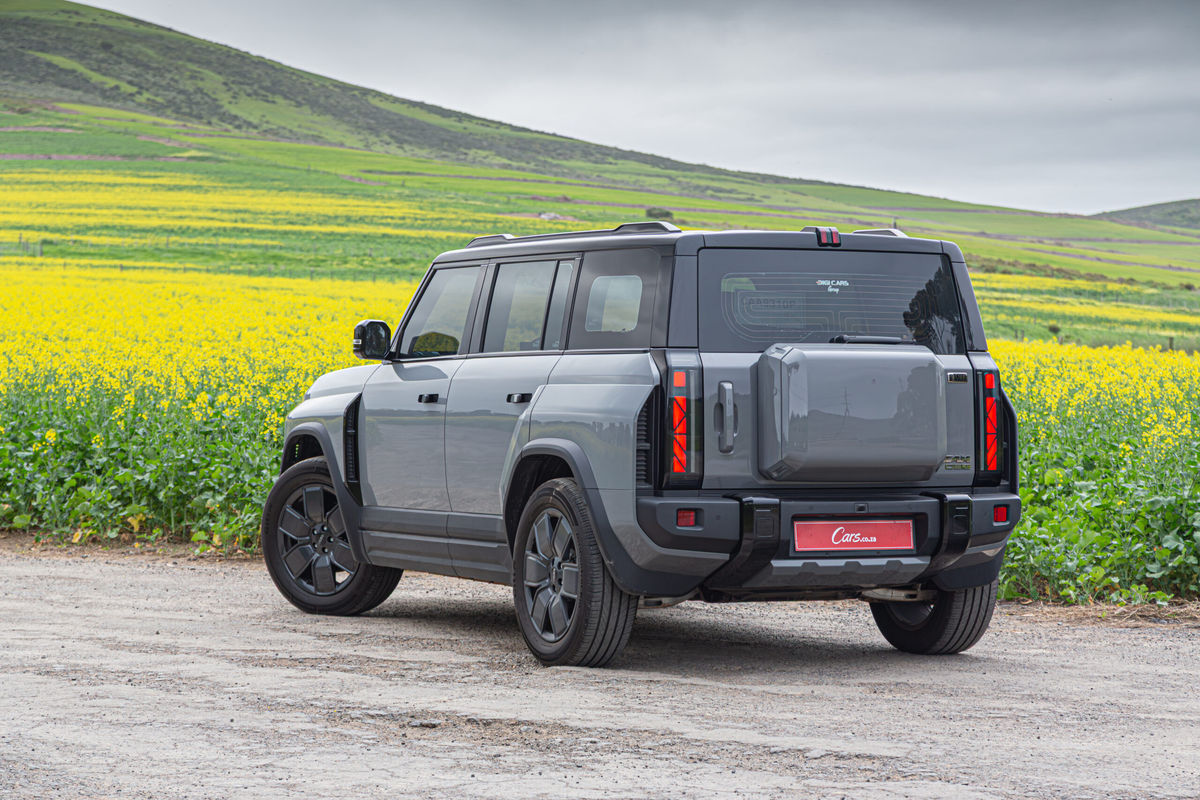
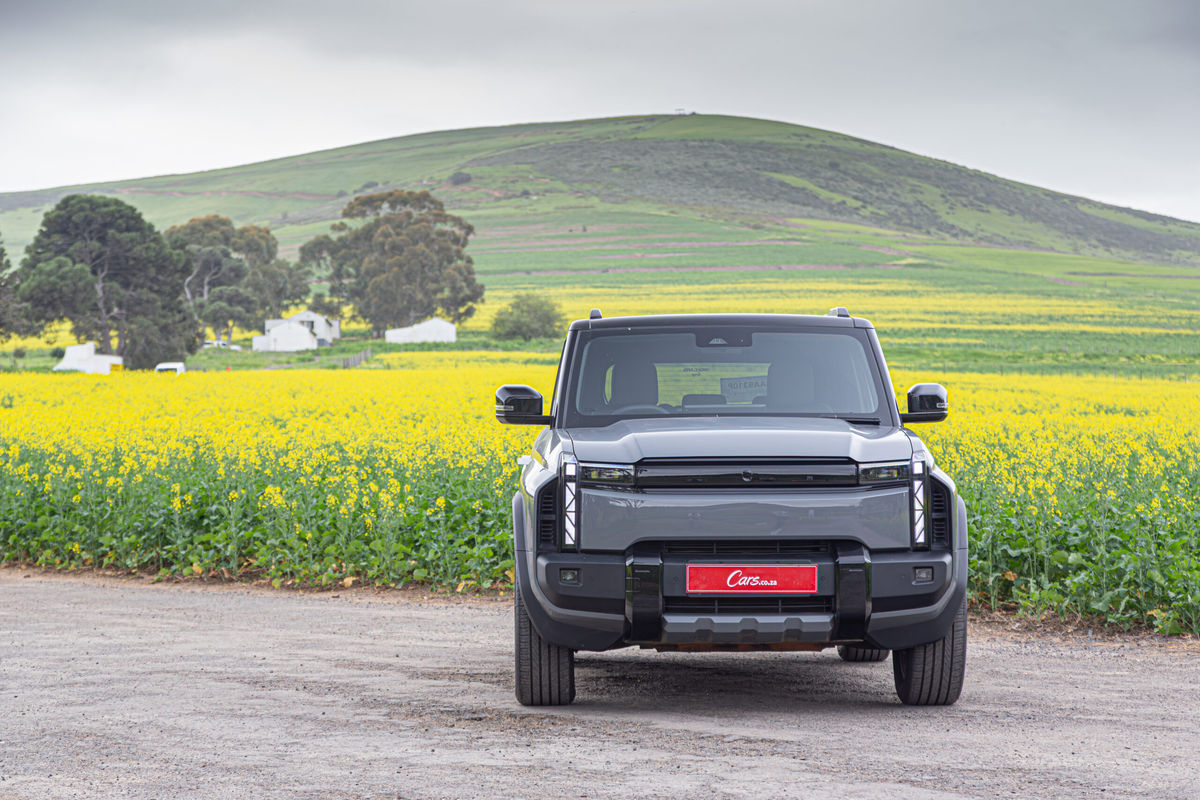
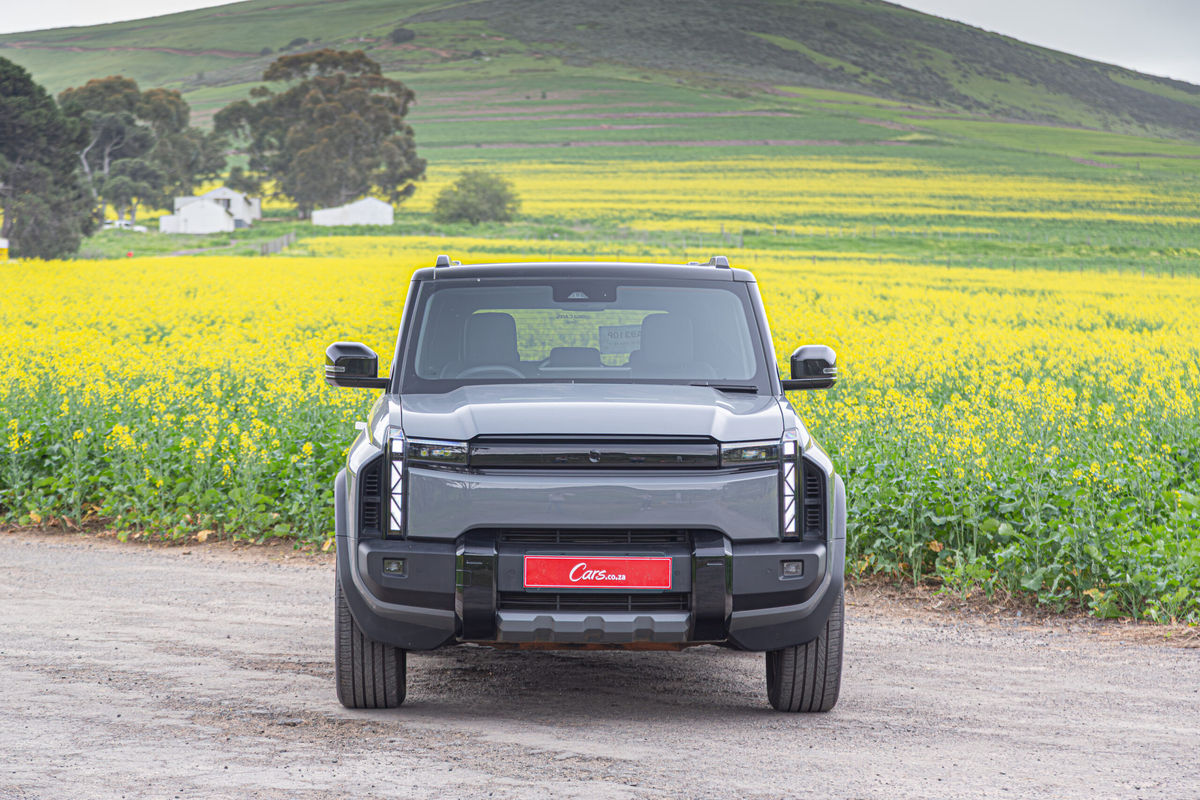
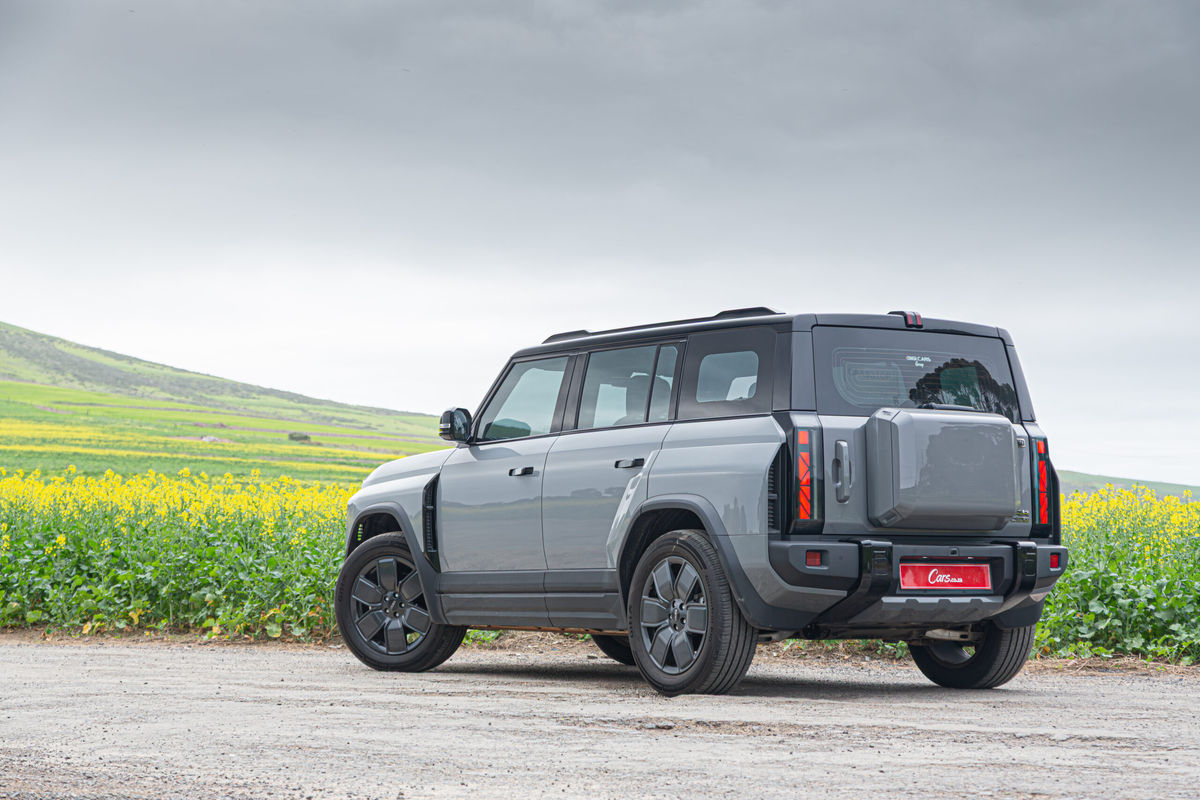
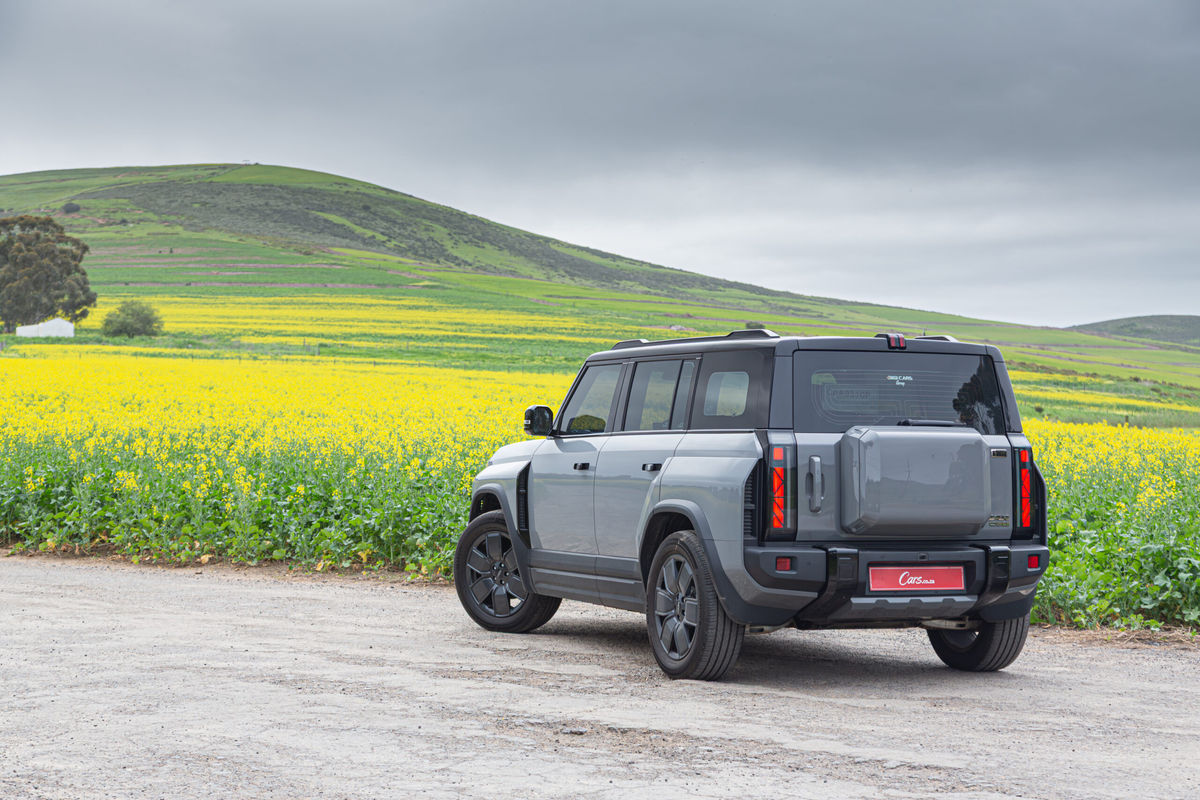
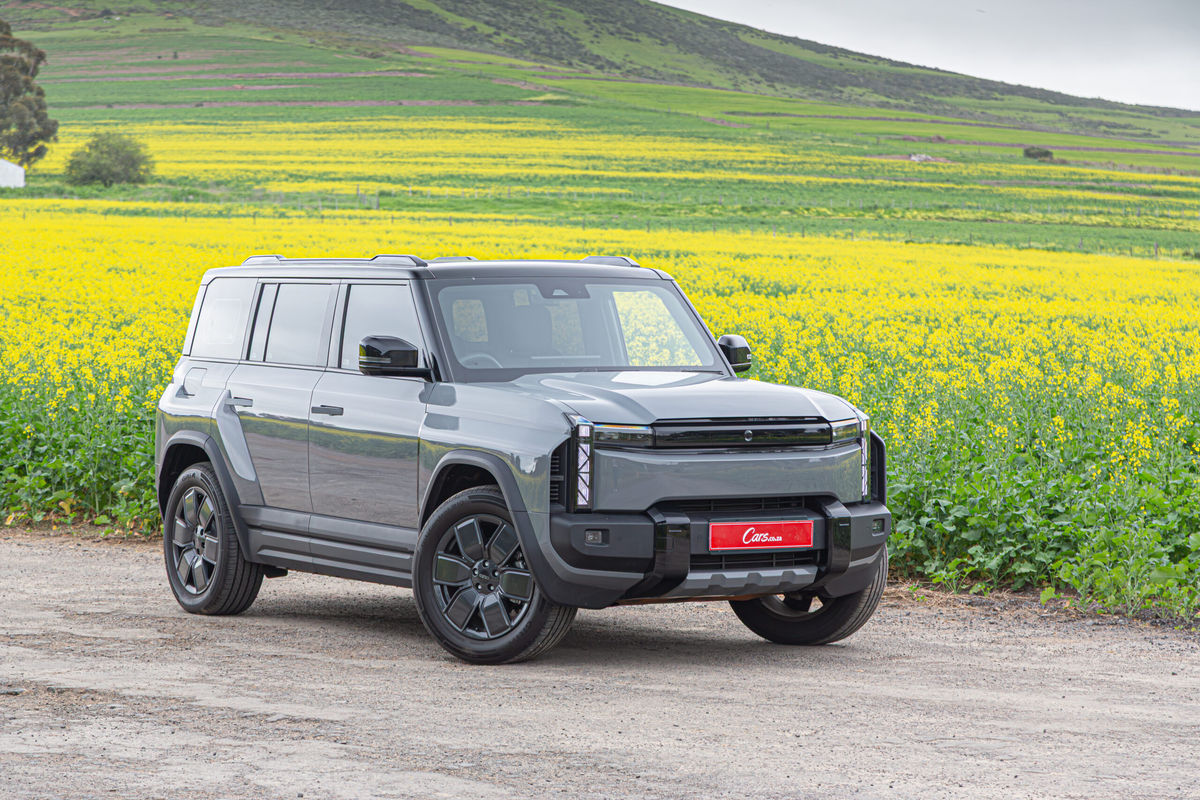
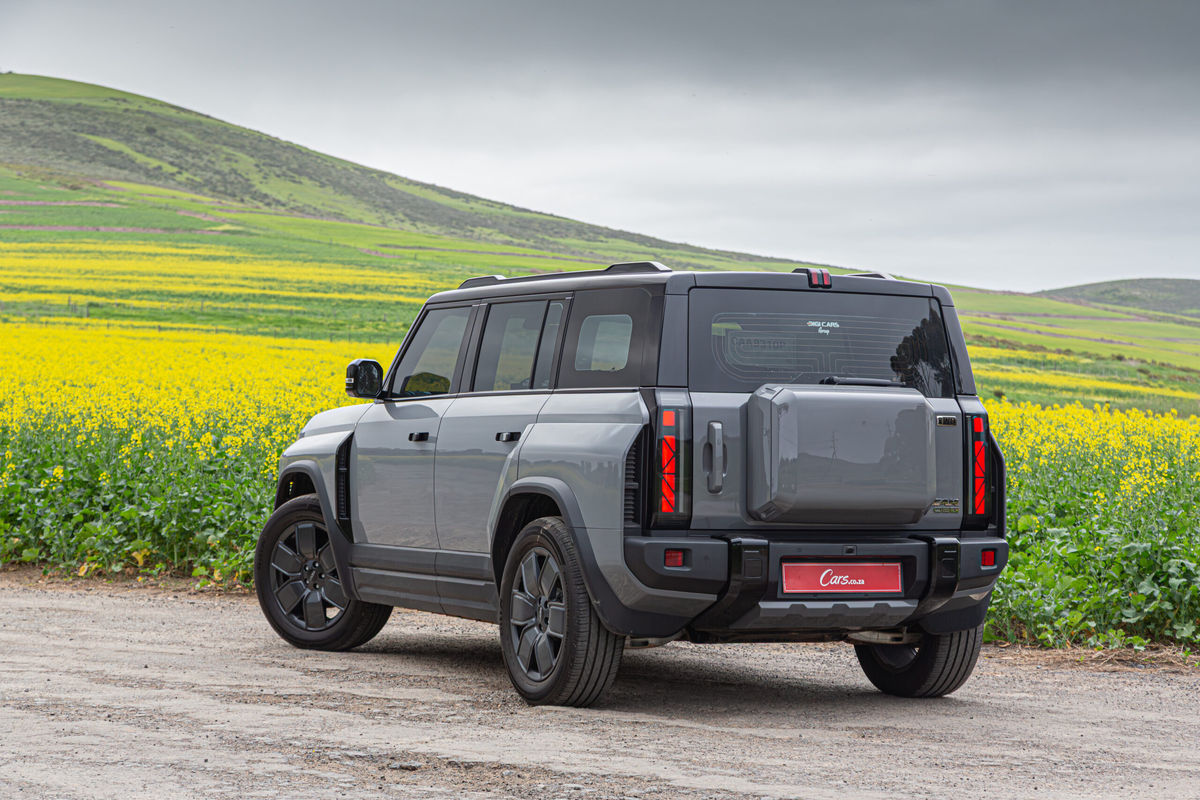
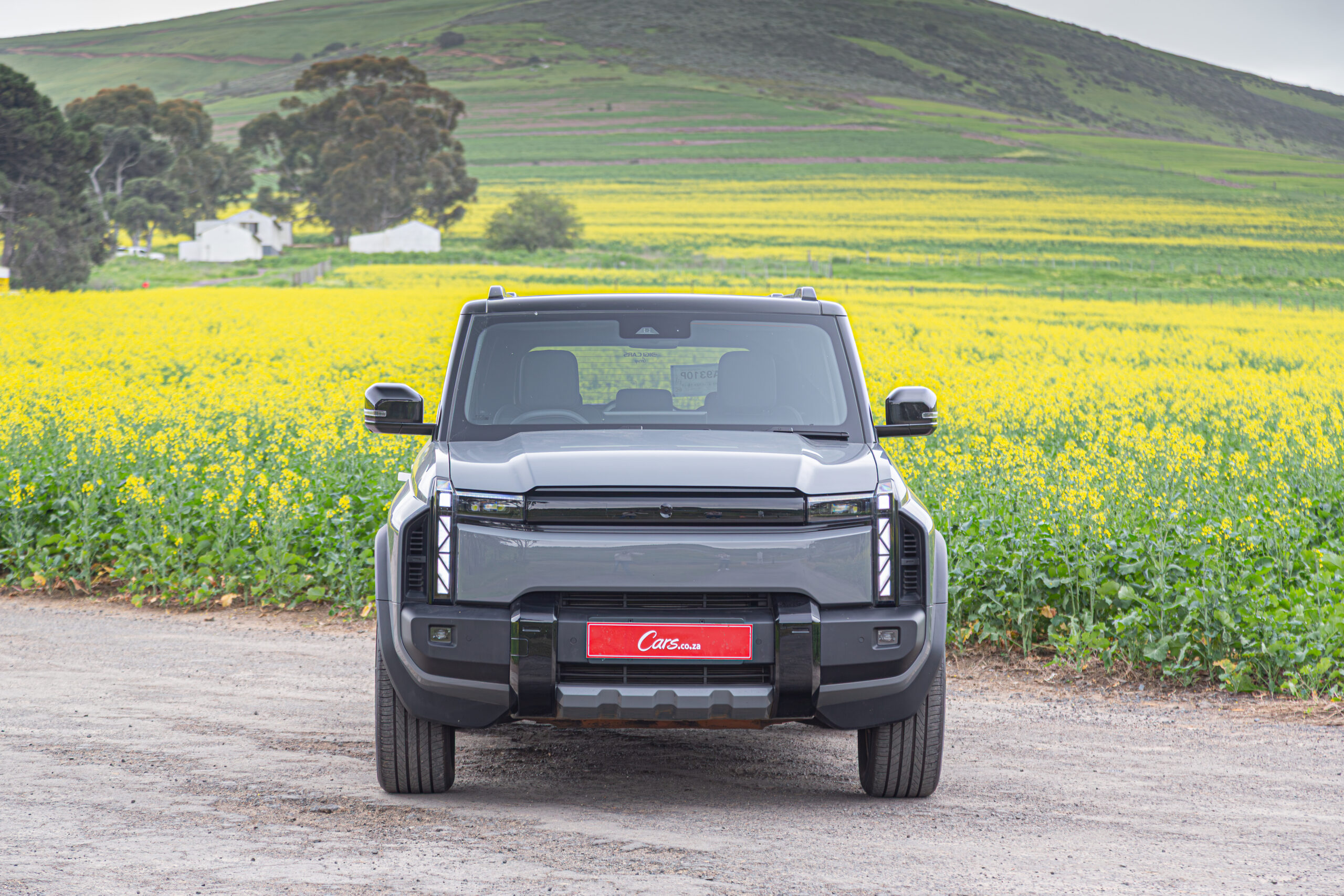
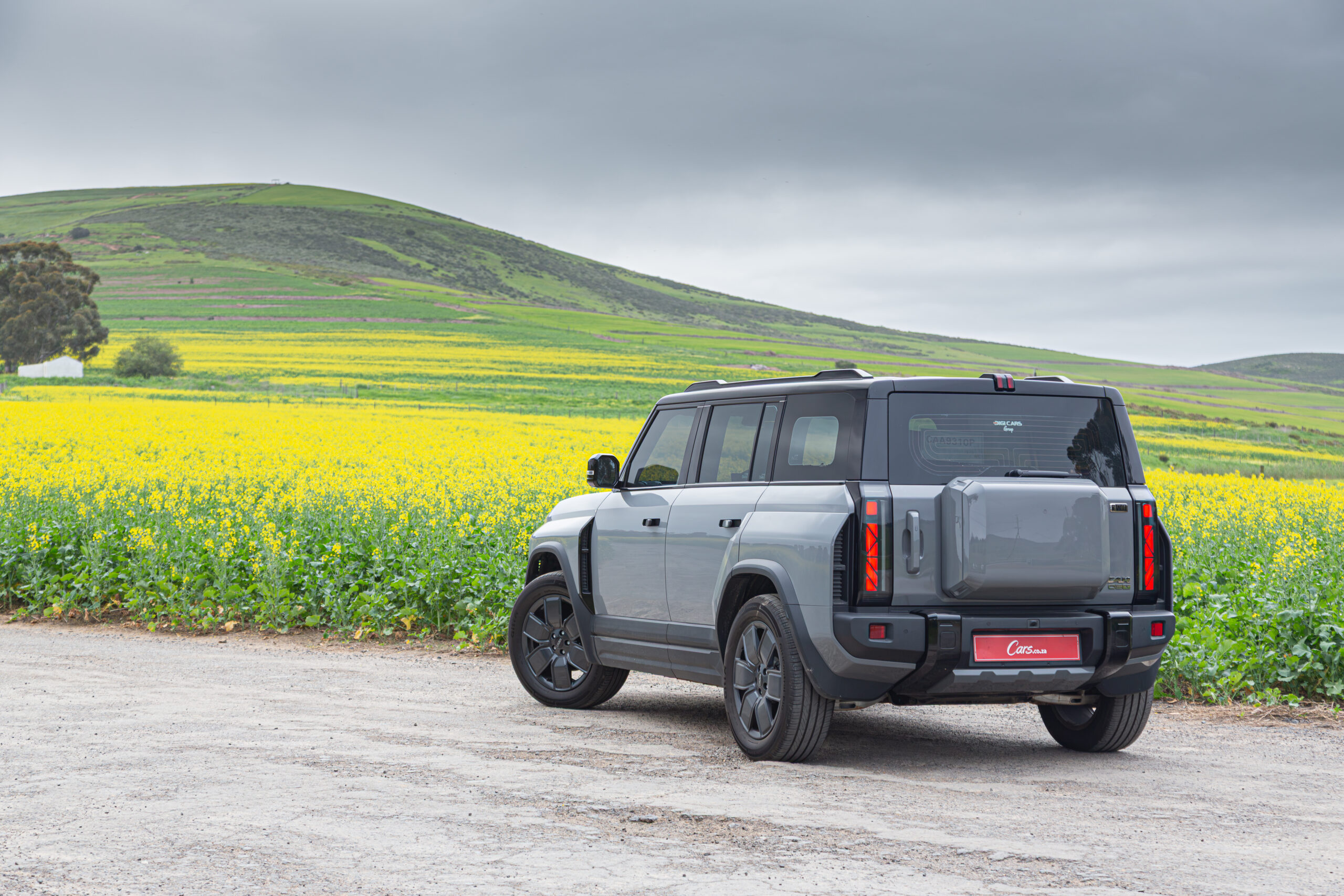
With a design that’s best described as a great blend of retro nostalgia and futurism, the iCaur 03T will turn heads irrespective of colour. Even in this stealthy battleship grey spec (which contrasted nicely with the seasonal canola blooms), there was no escaping the attention of other road users. What’s not to like, as the iCaur brand surfs the trendy wave of box-shaped faux off-roaders…
The 03T does manage to carve its own path, however. We especially like the narrow daytime running lights at the front and similarly styled tail lamps. Unlock the car, or charge it, and you’re treated to a light show. We don’t think that novelty will wear off too soon…
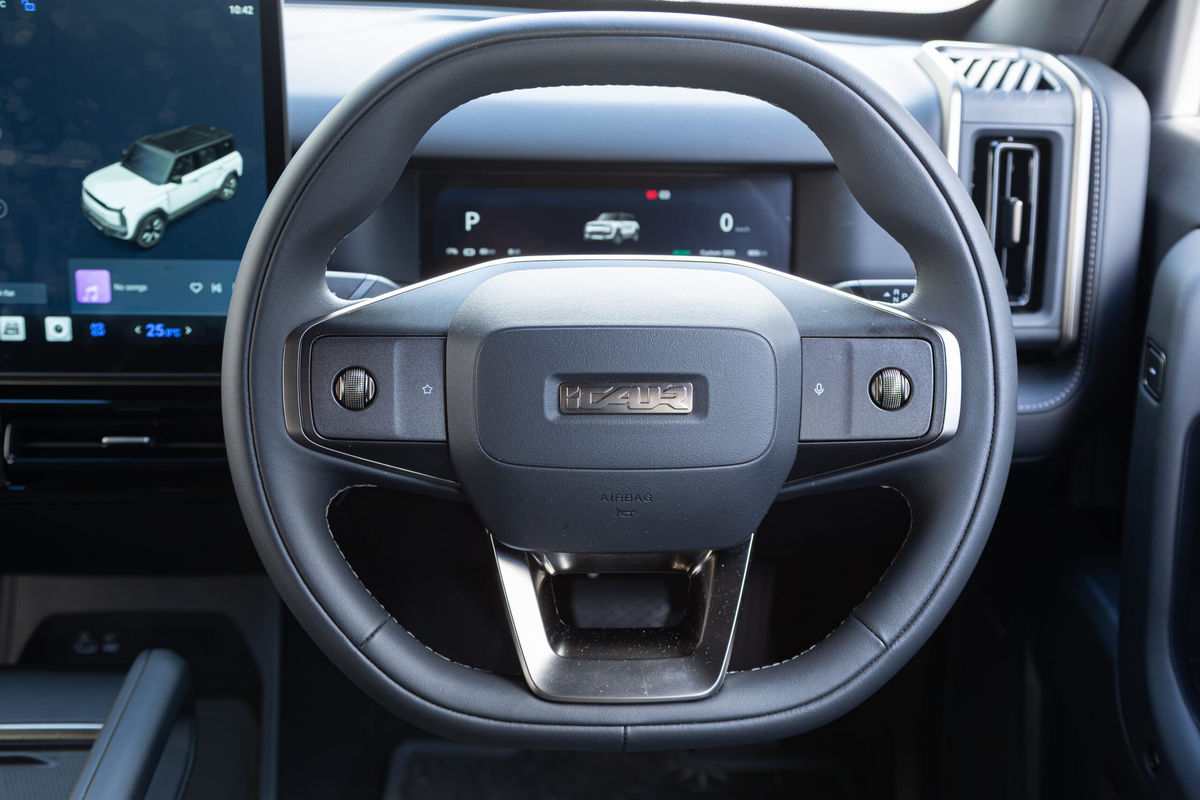
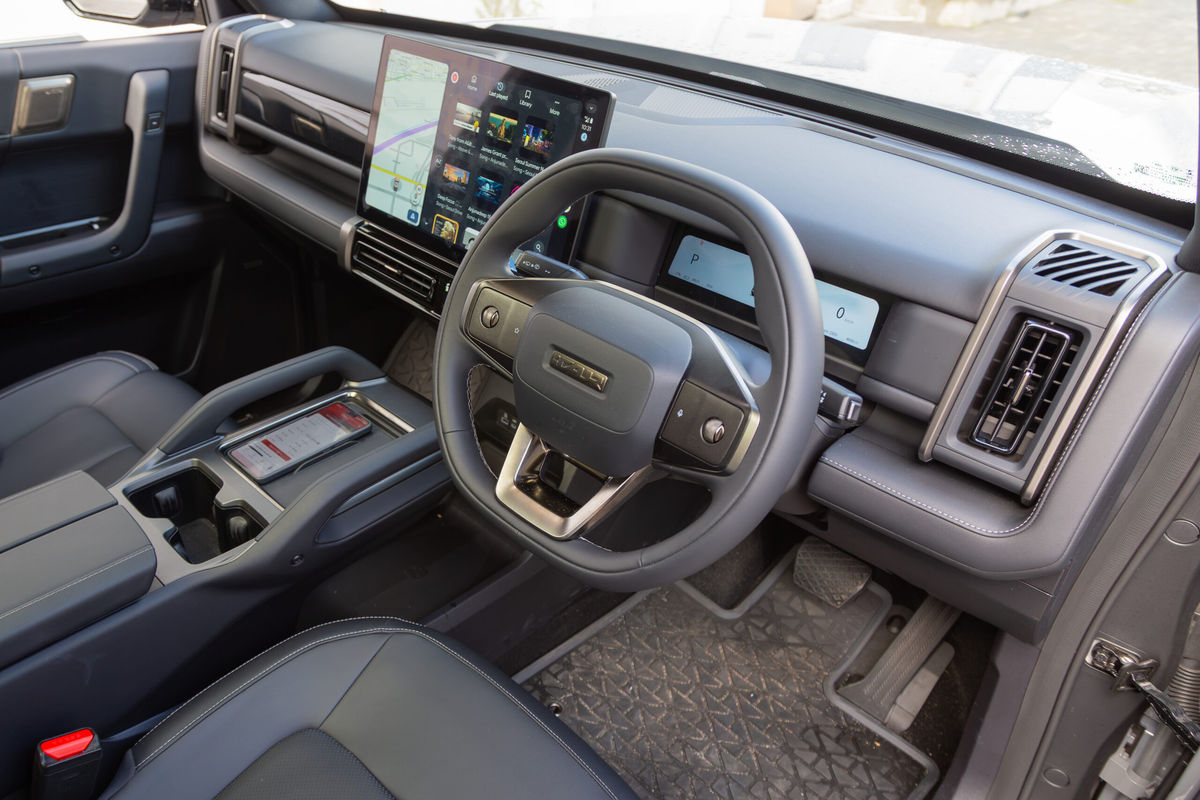
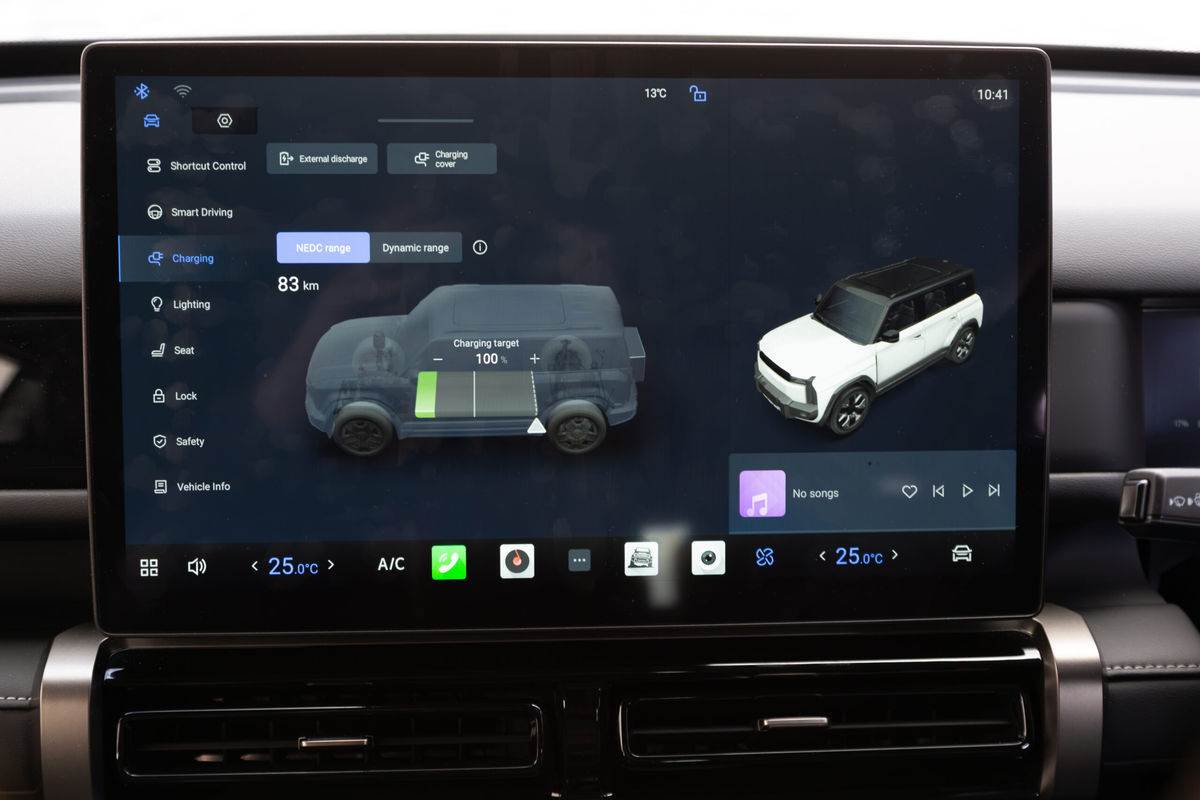
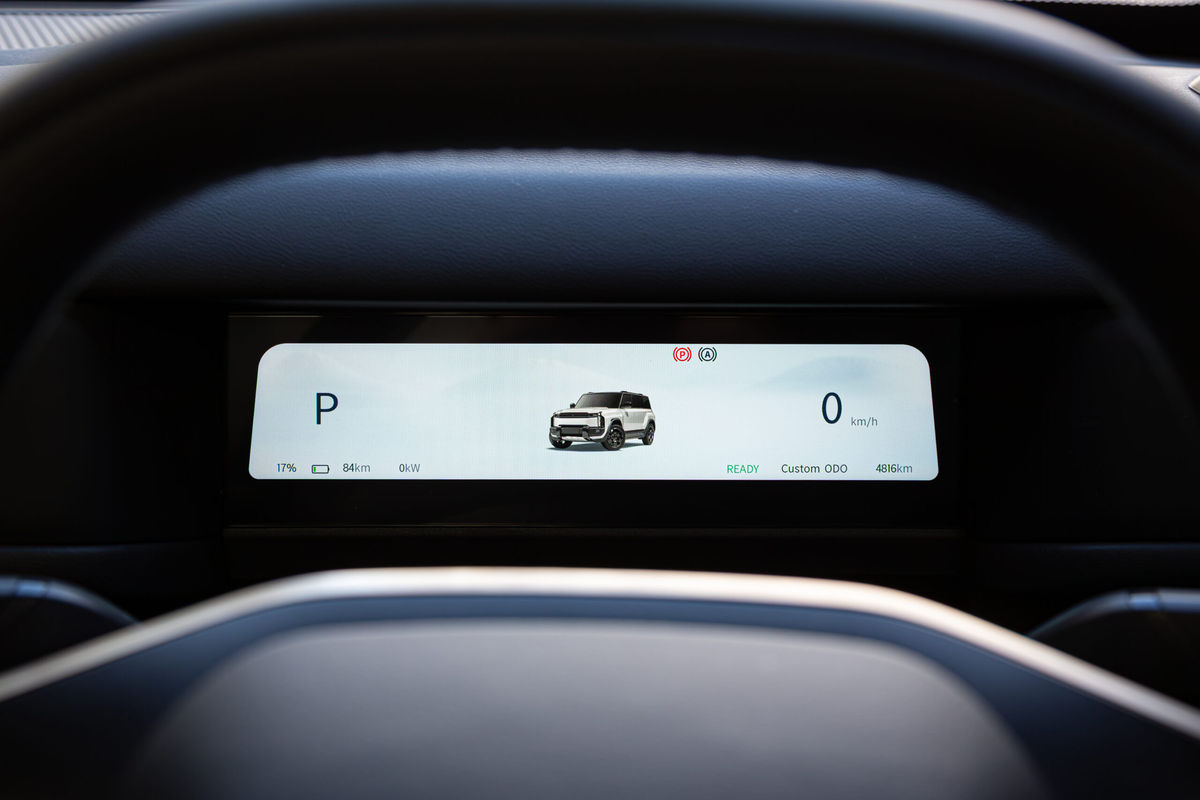
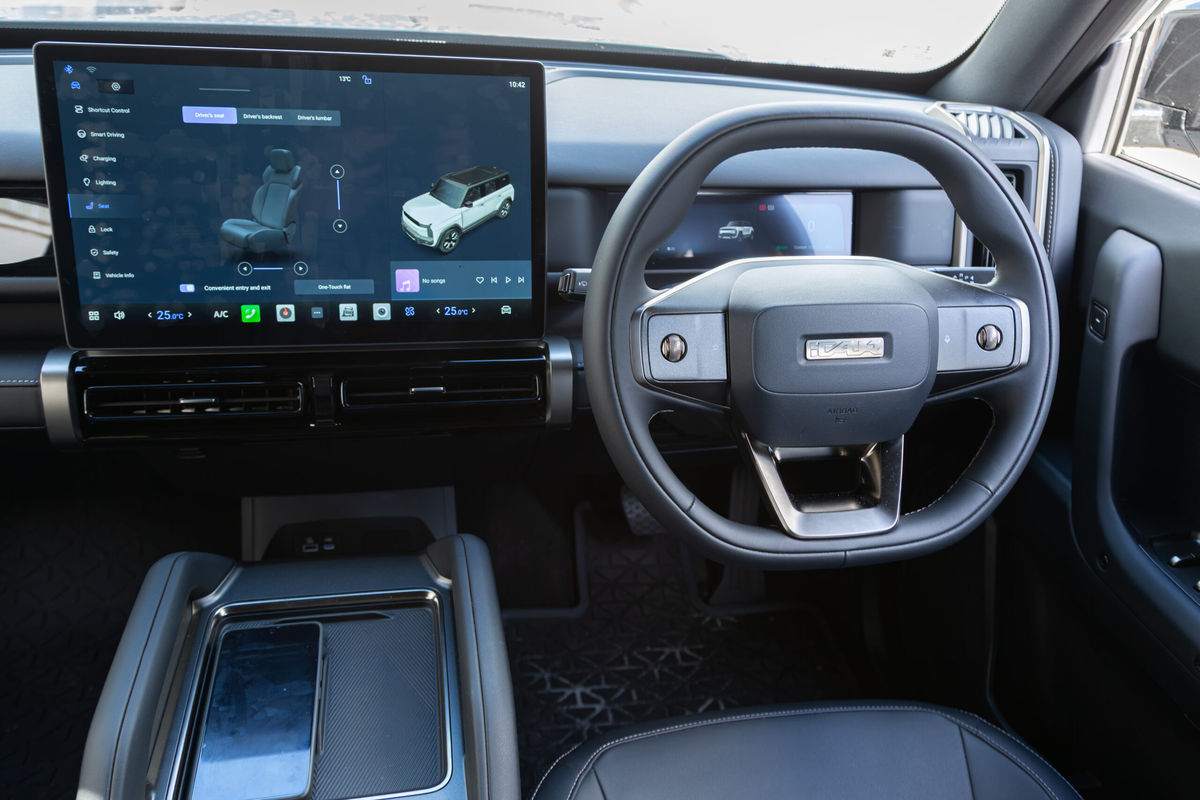
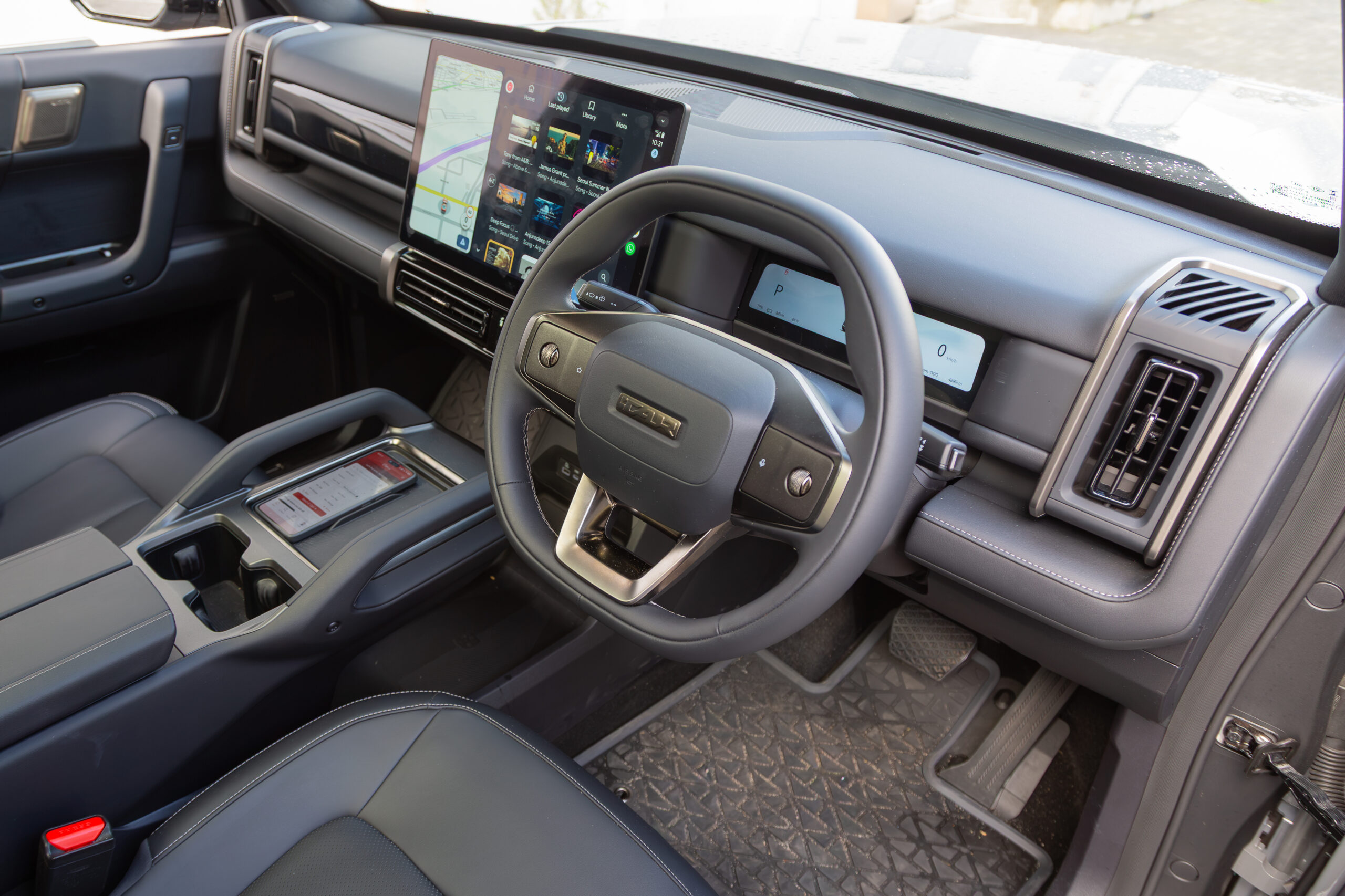
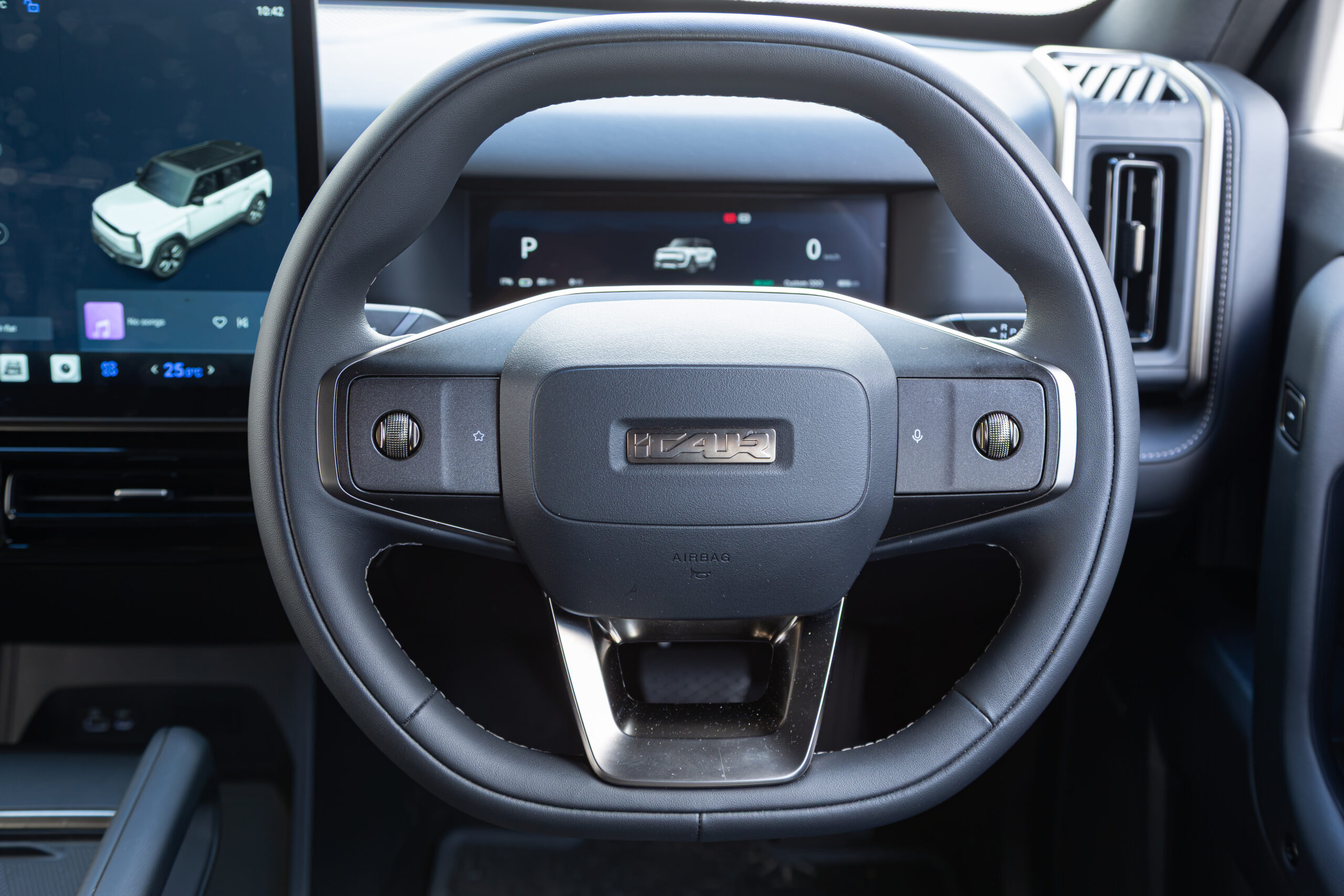
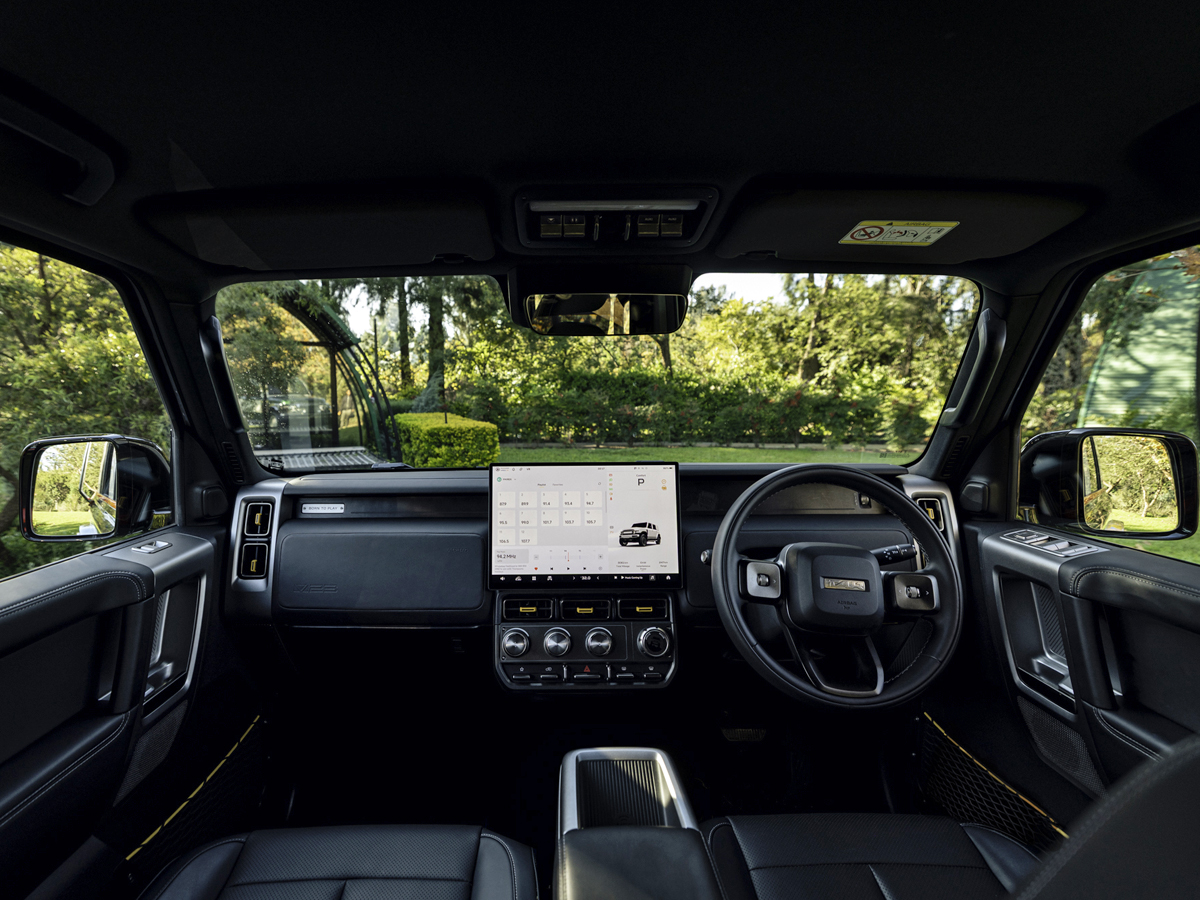
Step inside and, while the large infotainment screen will immediately catch your attention, we think the plush-looking and -feeling materials are the bigger drawcard. If there’s one aspect the newcomer brands from the East have managed to nail, it’s offering a visually sophisticated and tactile cabin environment.
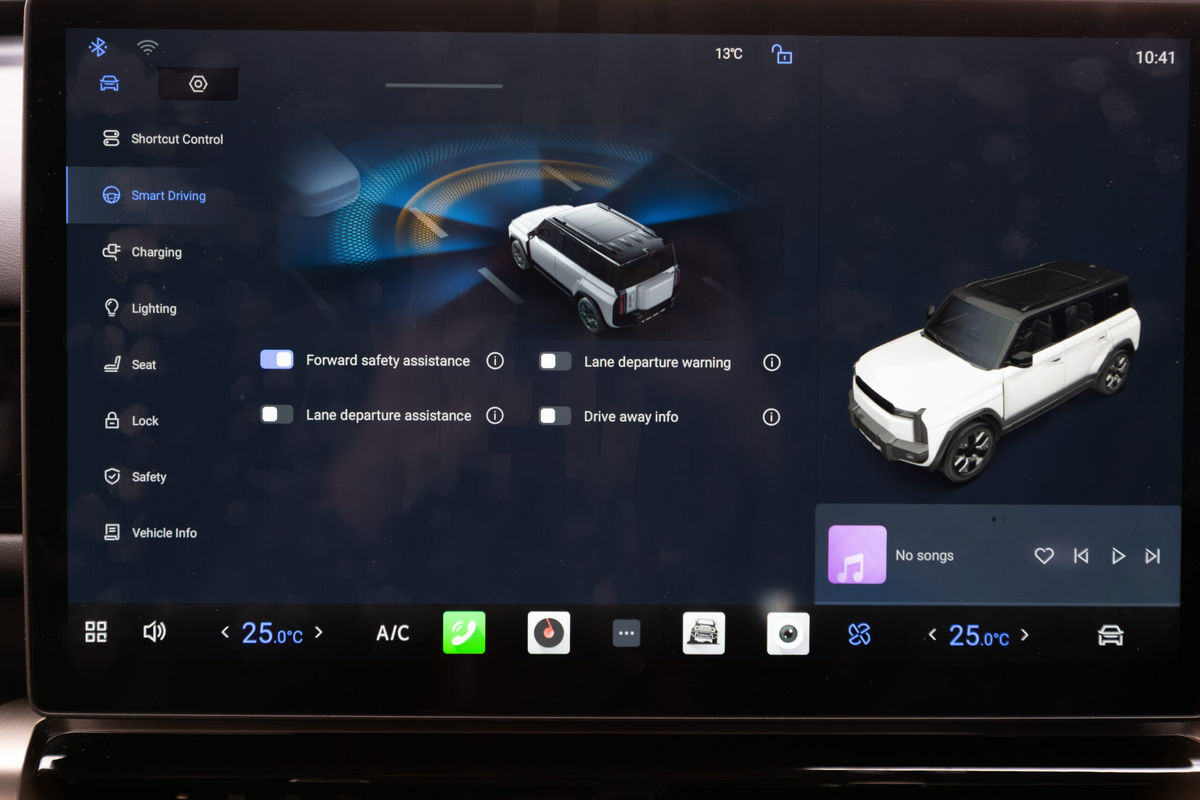
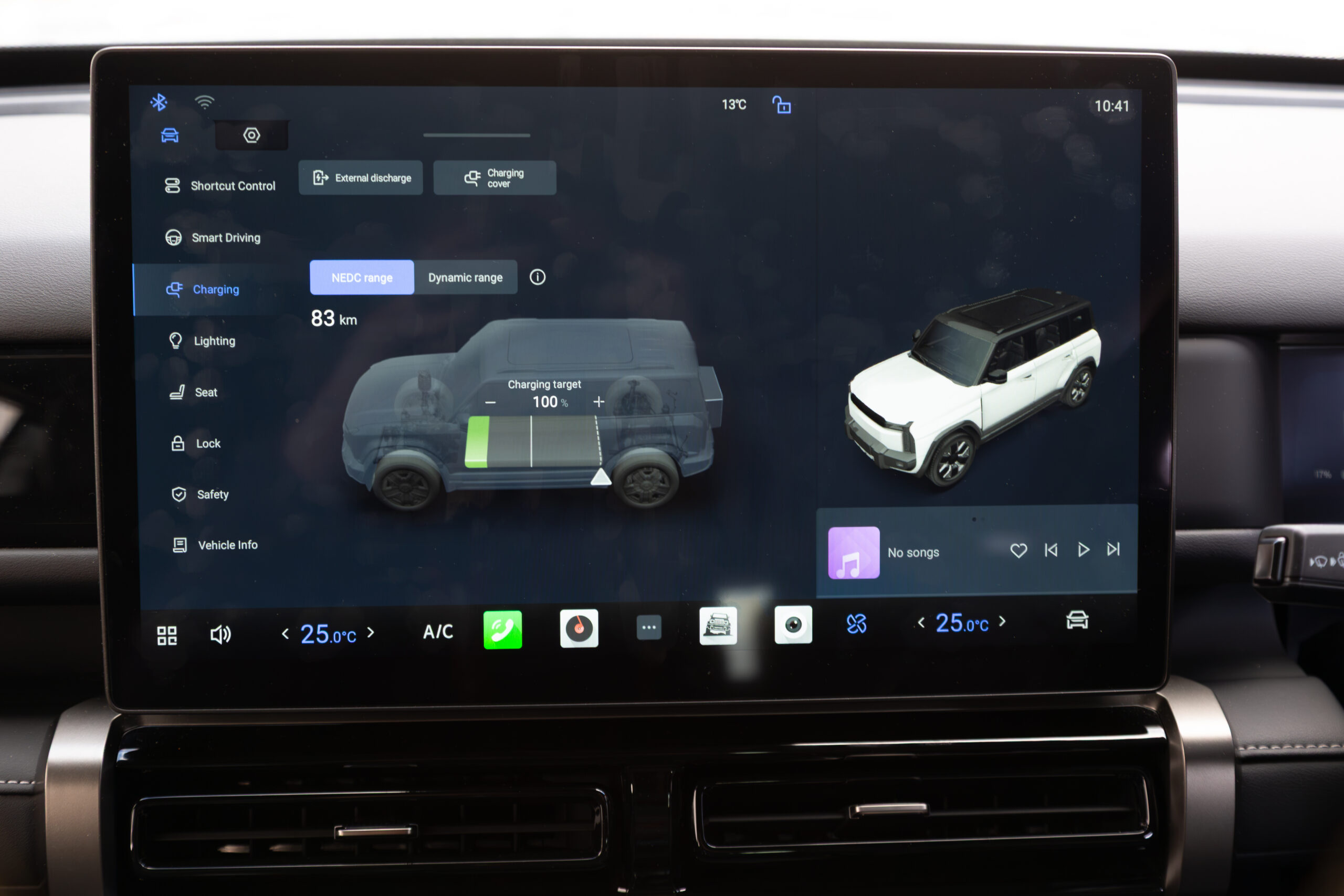
It’s not all good news, however. While we appreciated the responsiveness of the large central screen, we feel it lags behind its Chery Group siblings in terms of graphics and resolution. Our test car schedule saw overlaps between the iCaur 03T and V23 (which is on extended test), and the latter car’s infotainment screen is higher quality.
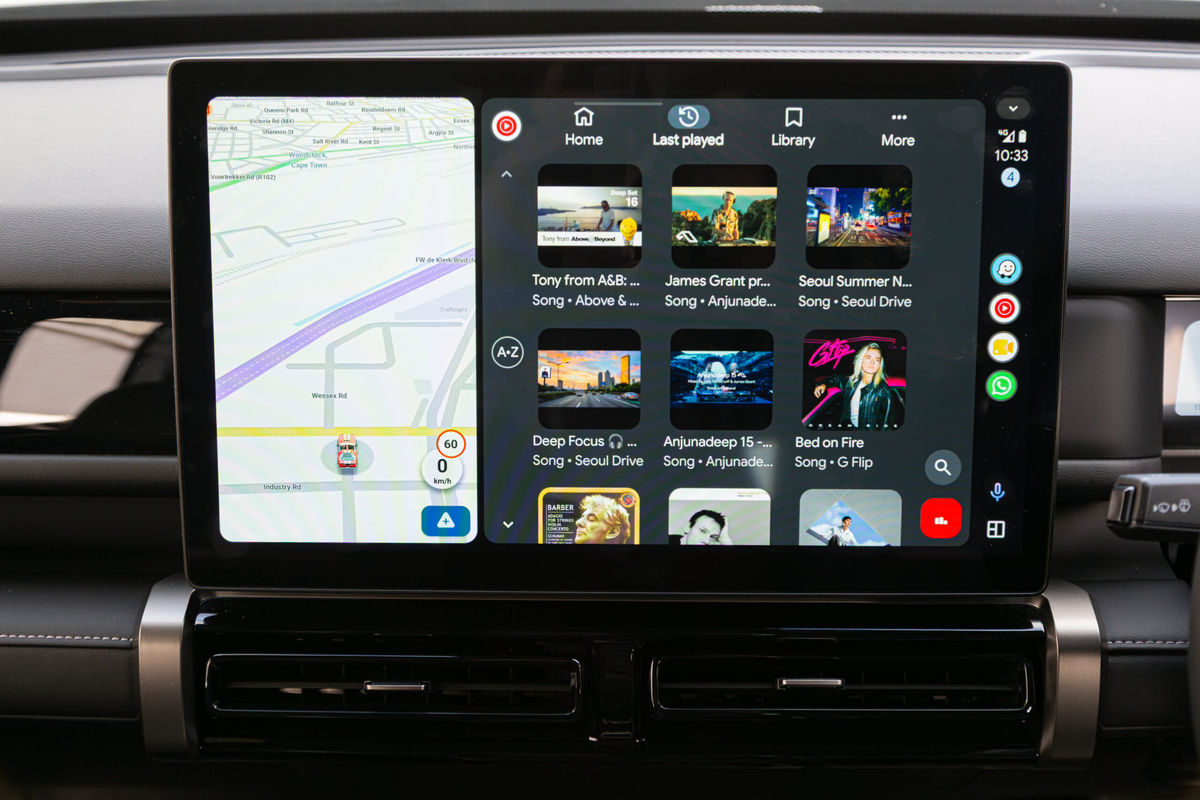
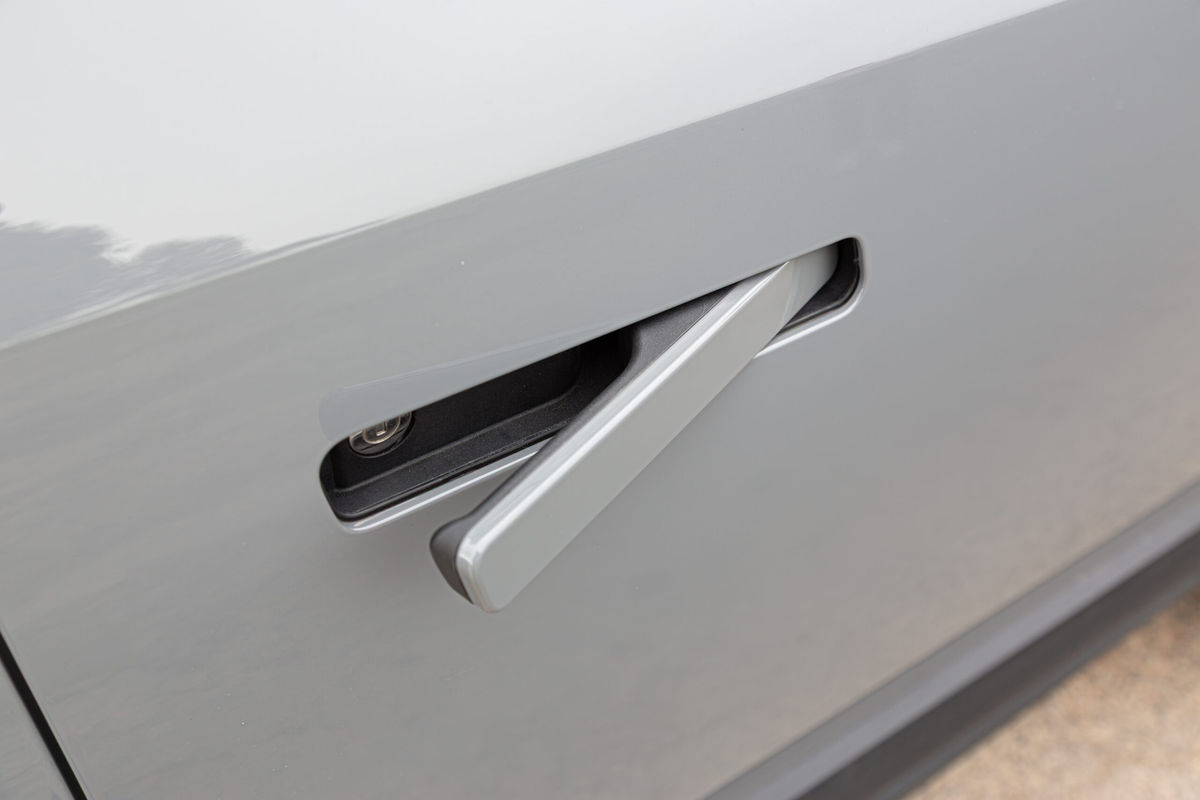
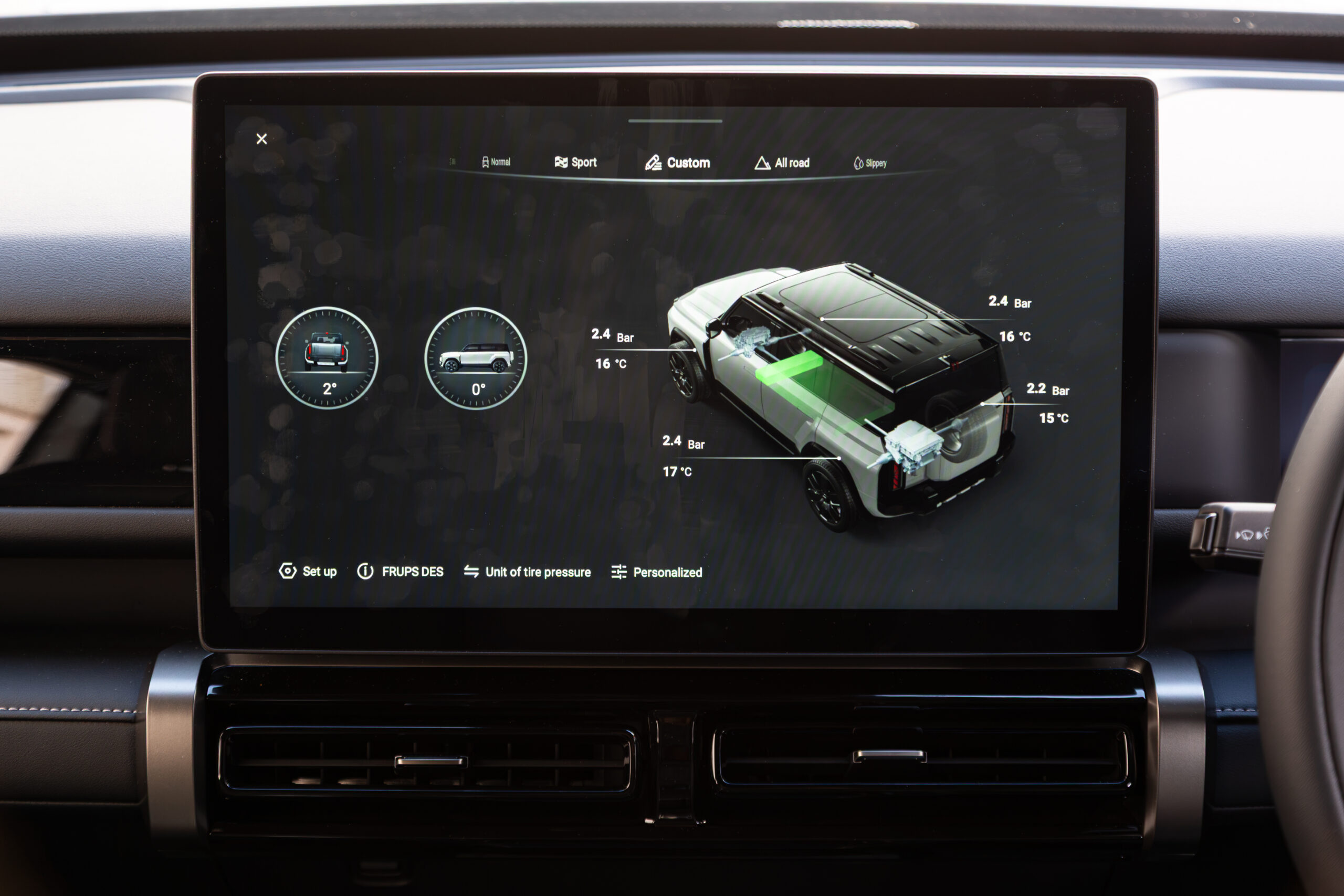
Then there are the ergonomics… Effectively, the 03T’s infotainment screen controls nearly everything. This tech-forward approach is great in theory, but in practice it results in frustration. For example, you adjust the side mirrors or open the glovebox via the screen. Granted, you don’t use those constantly, but even the door handles feature an electronically-controlled button (see below).
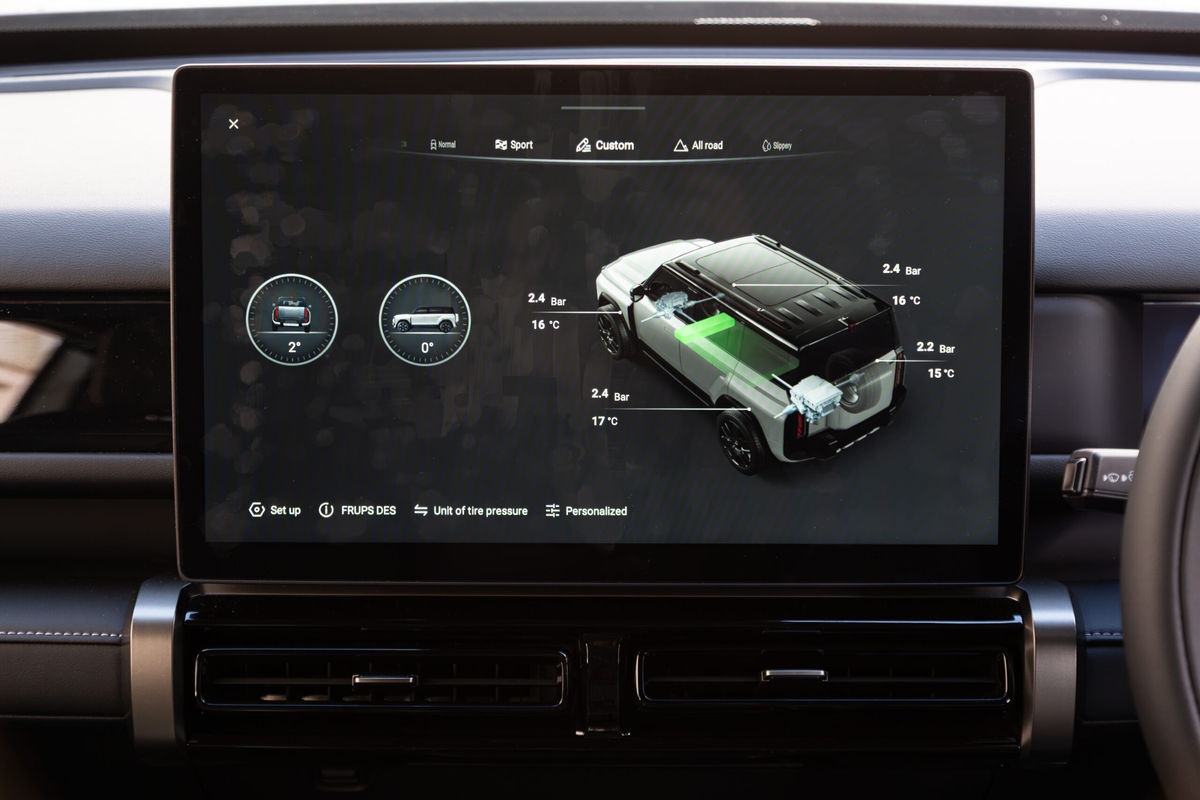
There is an emergency mechanical release discretely located at the bottom for those who fear being trapped in their vehicle. We’d guess you’d eventually get used to the setup, but it’s not without its annoying quirks. We did love the graphics and customisation of the 9 driving modes, though.
Why the charging flap is motorised is anyone’s guess. There’s really no need for it, as we can’t recall a petrol filler cap doing this.
Speaking of charging, the vehicle accepts a maximum of 6.6 kW AC power, while DC public charging is capped at 85 kW. The battery can be loaded from 10-80% in around 30 minutes using one of the high-speed chargers.
For those of you who enjoy the great outdoors, the 03T offers vehicle-to-load (V2L) outputs of 3.3 kW, which is enough to run some lights, an induction stove and a coffee machine for a few hours.
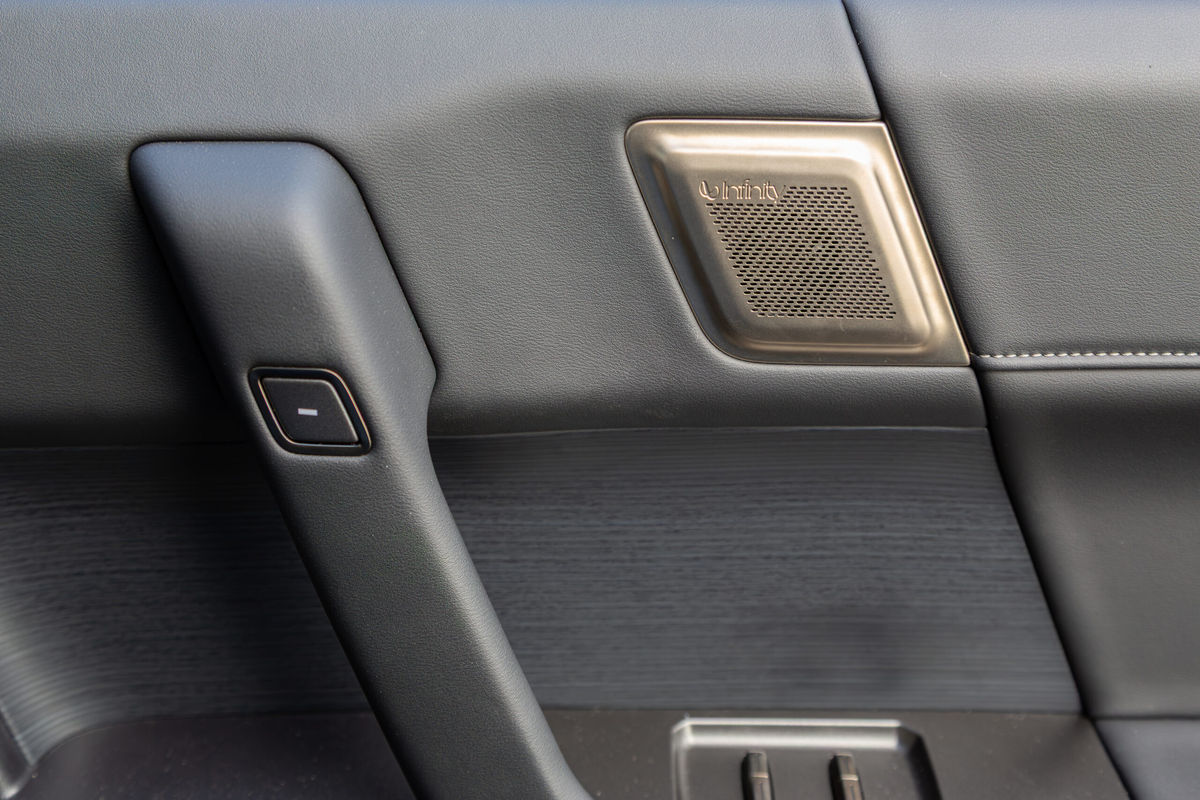
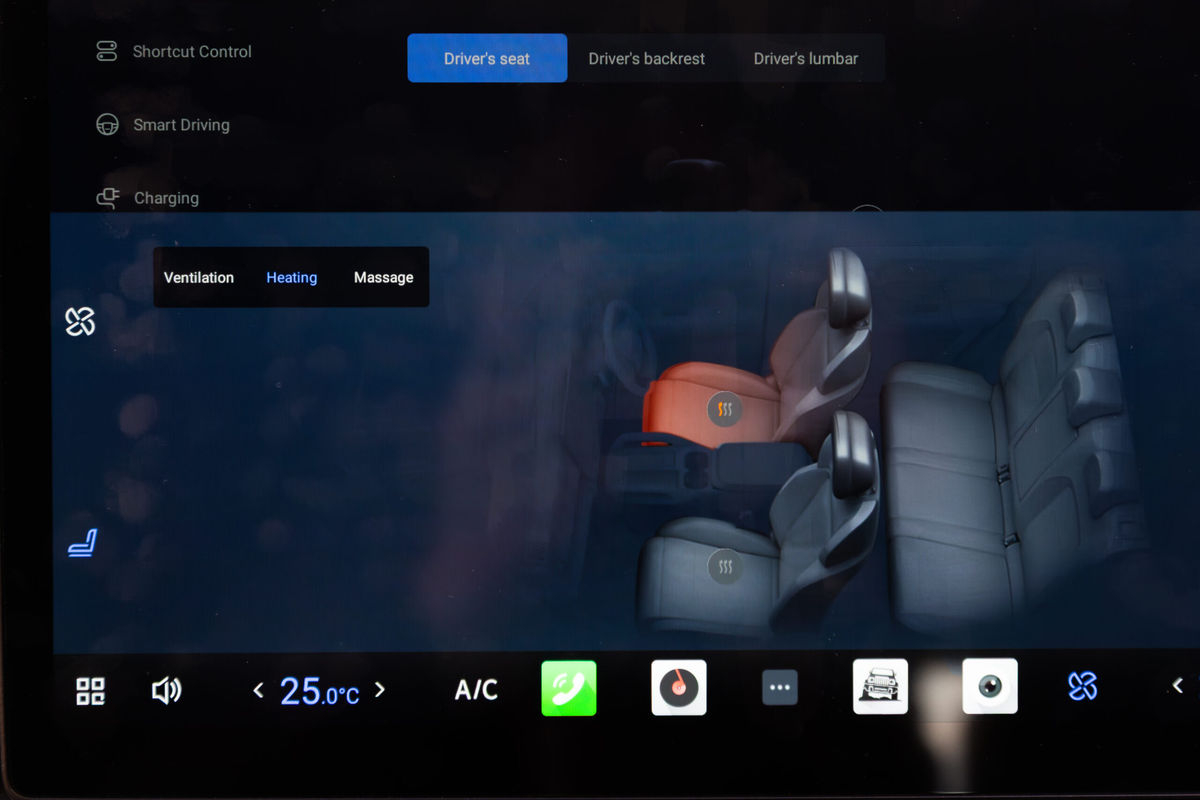
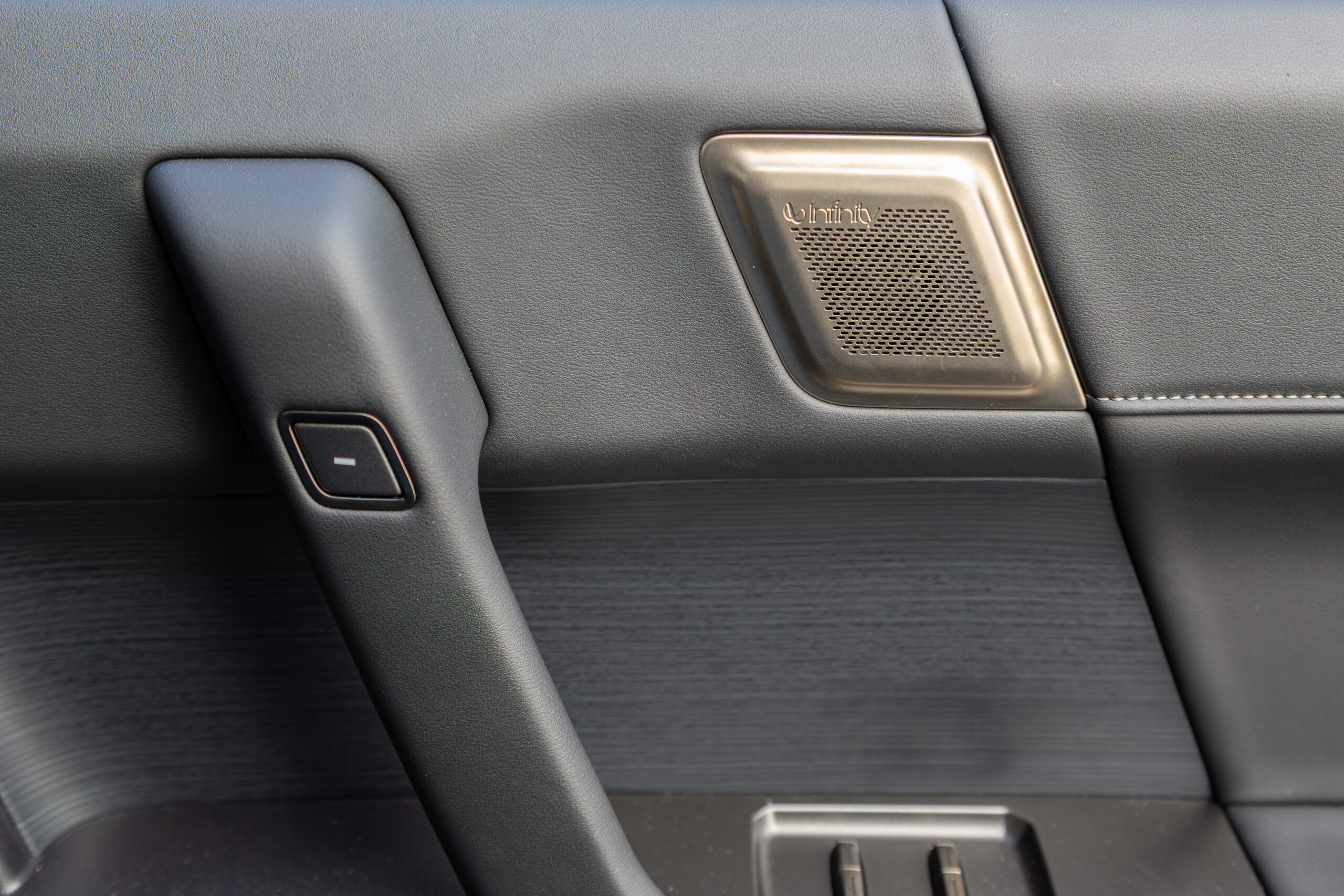
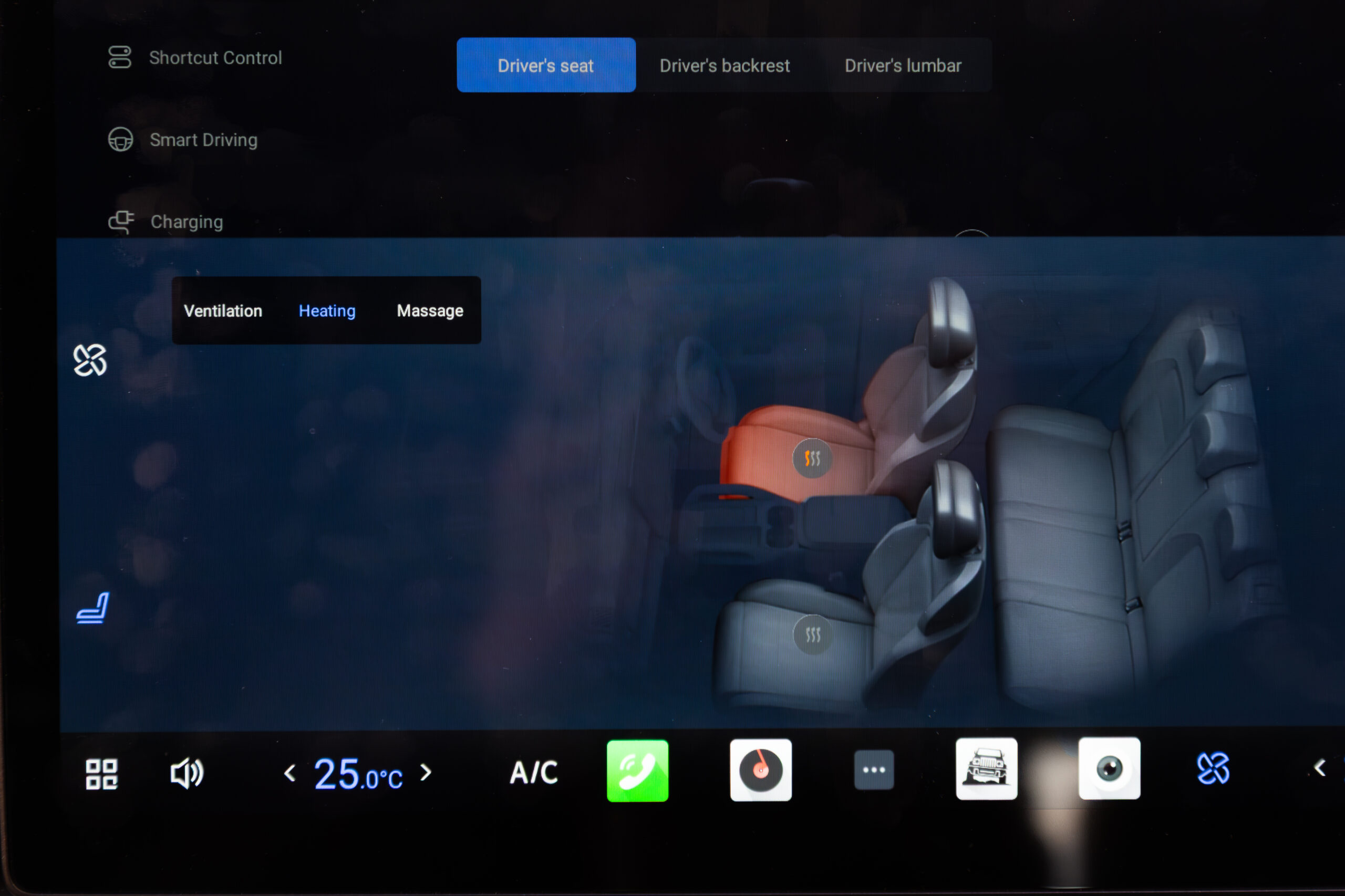
The level of standard equipment is deeply impressive at this price point and it’s worth paying the additional money for the higher-spec trim. Not only do you get a much quicker vehicle, but the massage functionality and higher-quality audio system from Infinity justify that expense. The vehicle also features heated and ventilated front seats.
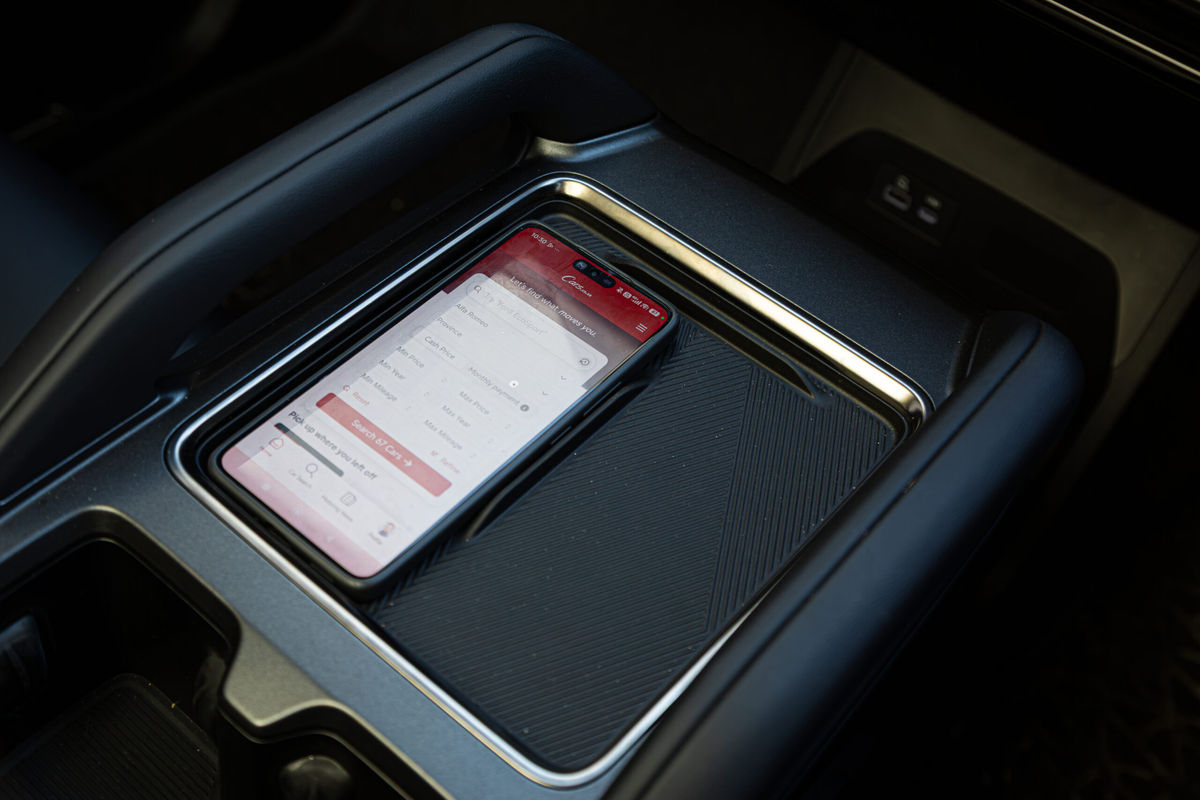
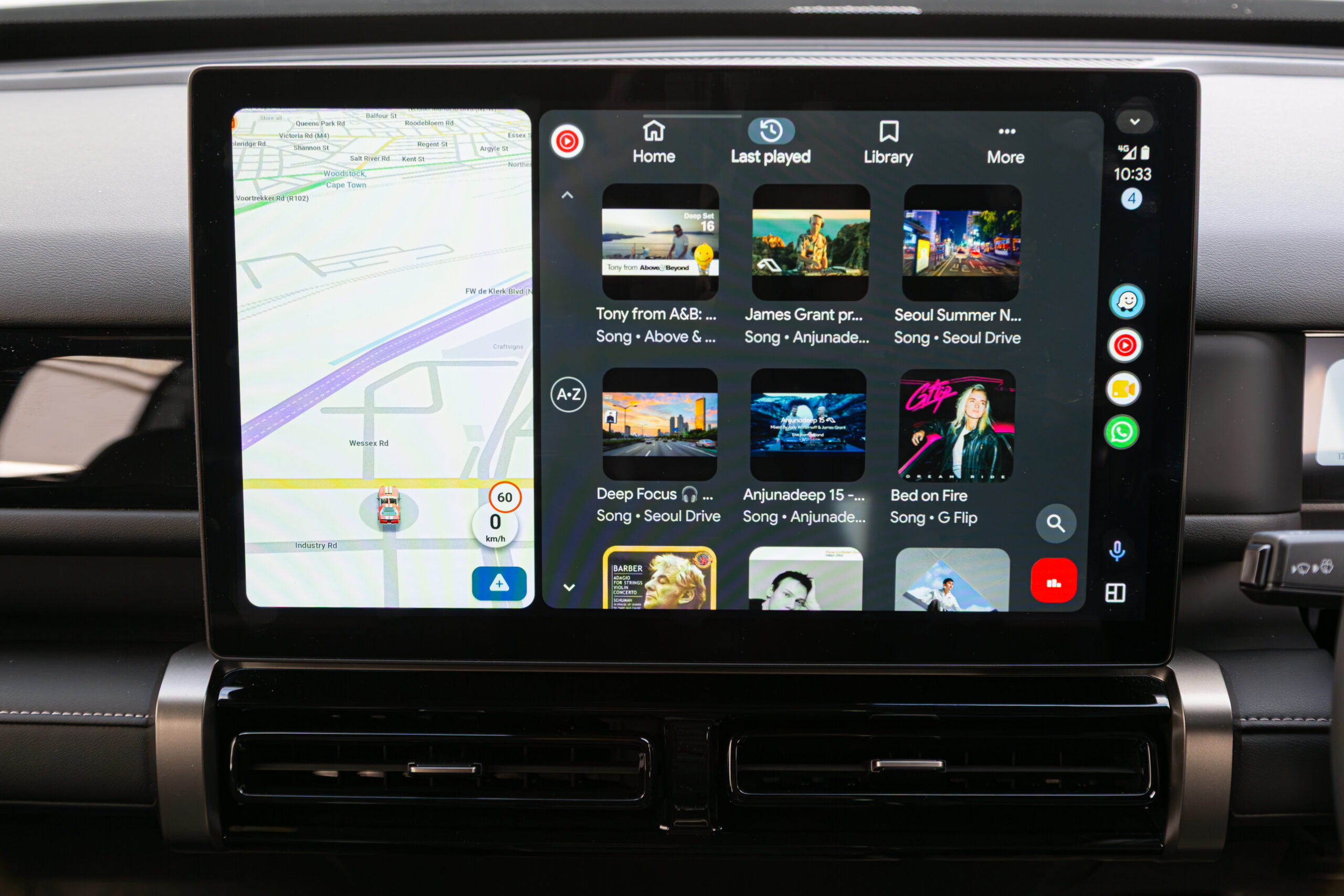
Wireless Android Auto/Apple CarPlay is included, as are numerous USB ports and a powerful wireless phone charger. While it’s easy to be dazzled by all the tech and gadgetry, iCaur has not skimped on the safety technology, either, with a comprehensive ADAS suite offered. As a reminder, this encompasses things like autonomous emergency braking, lane-keeping assist and so on.
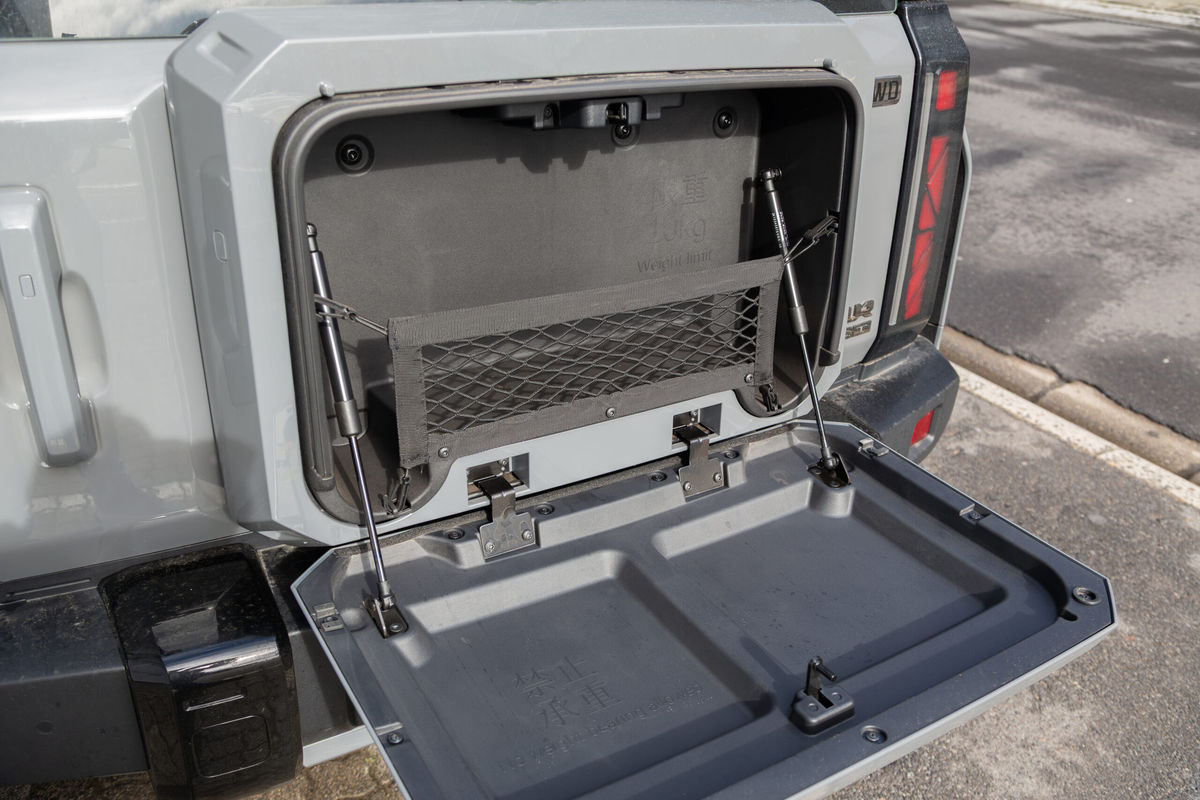
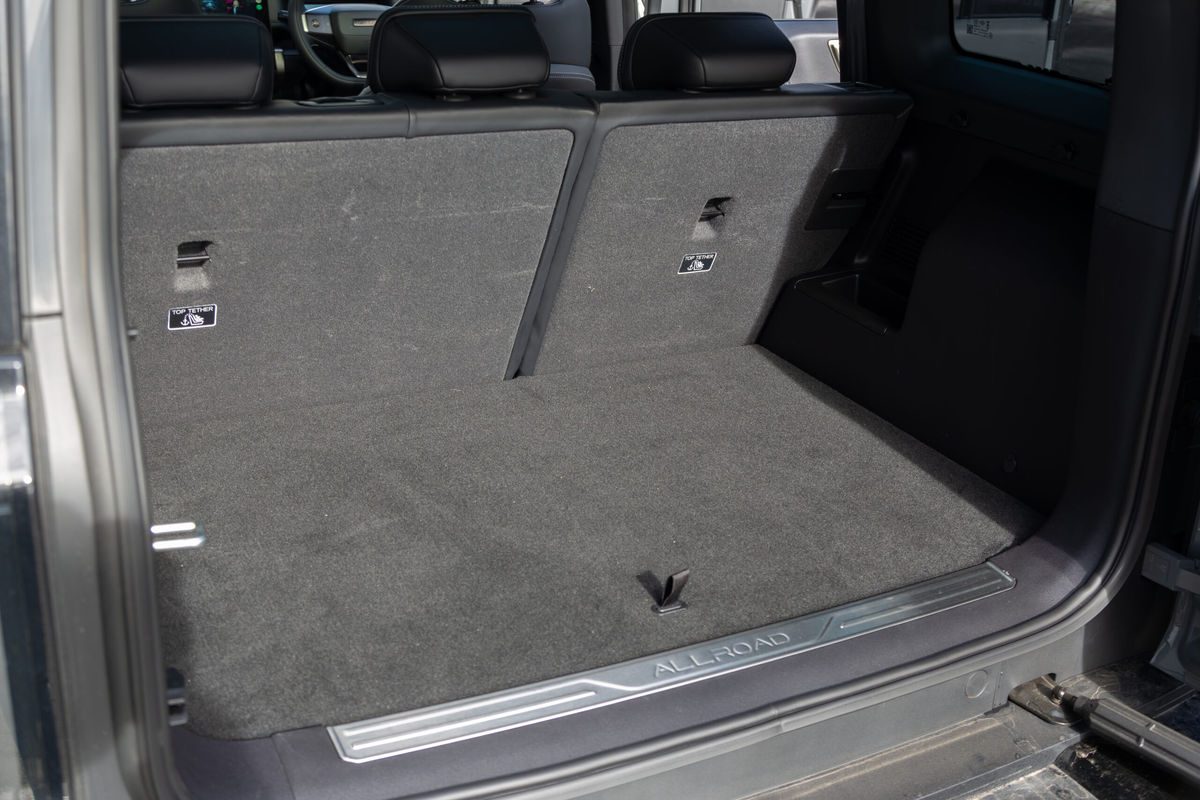
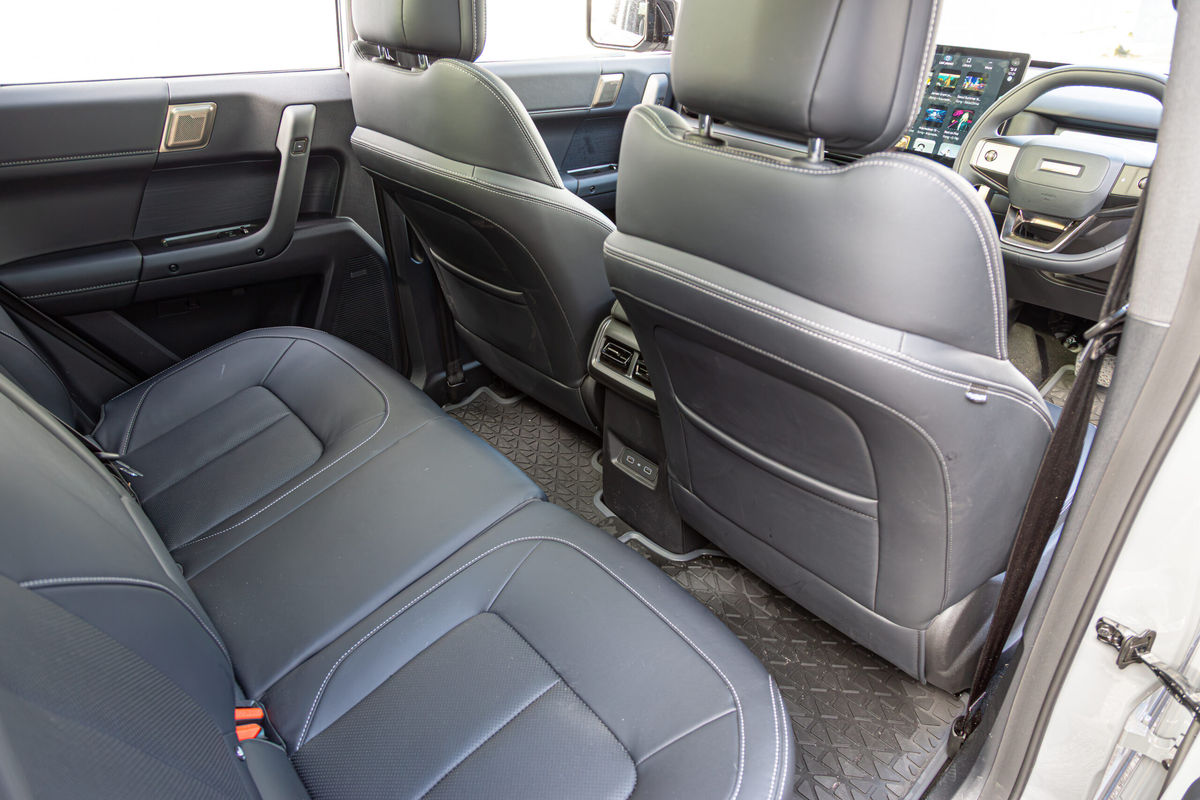
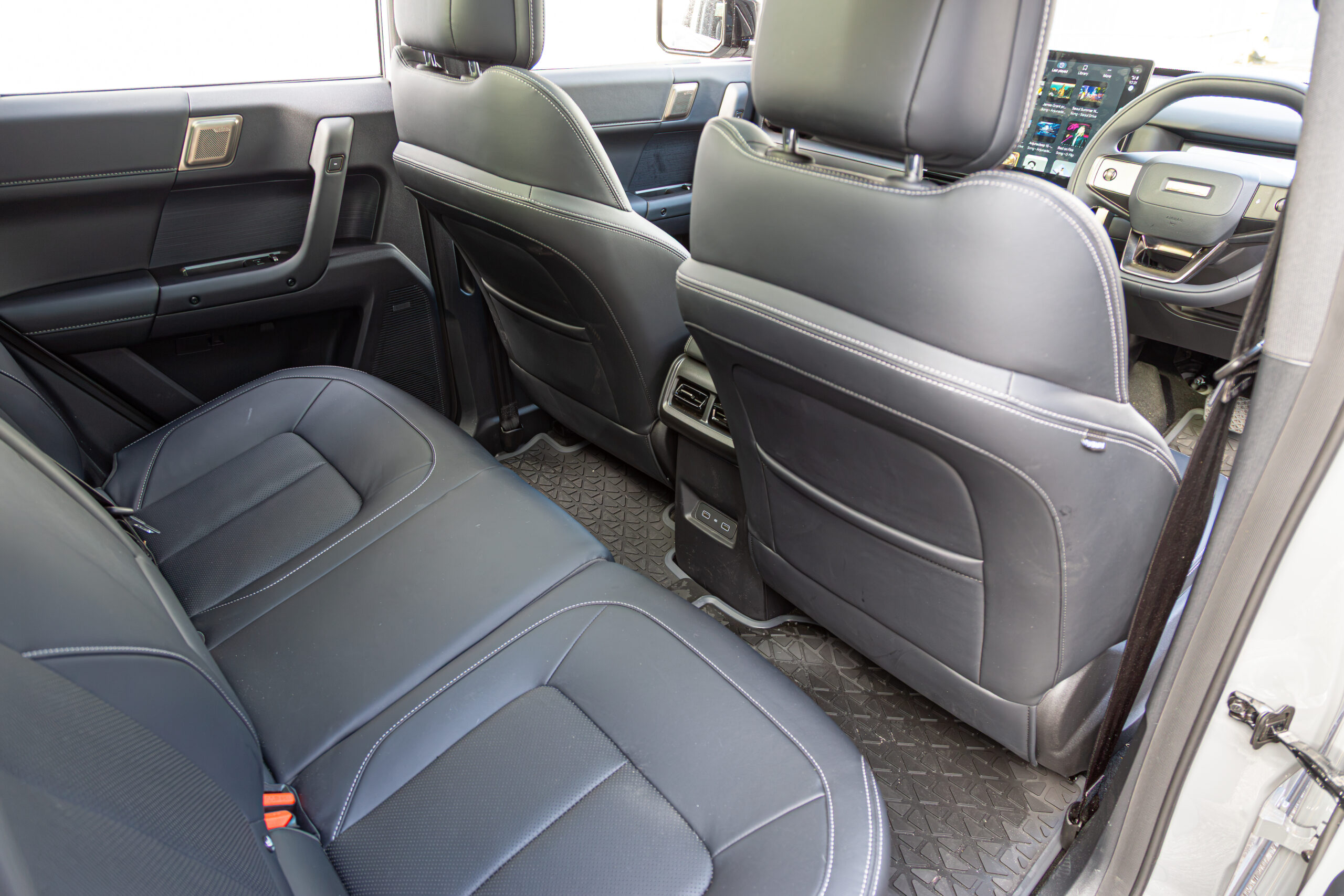
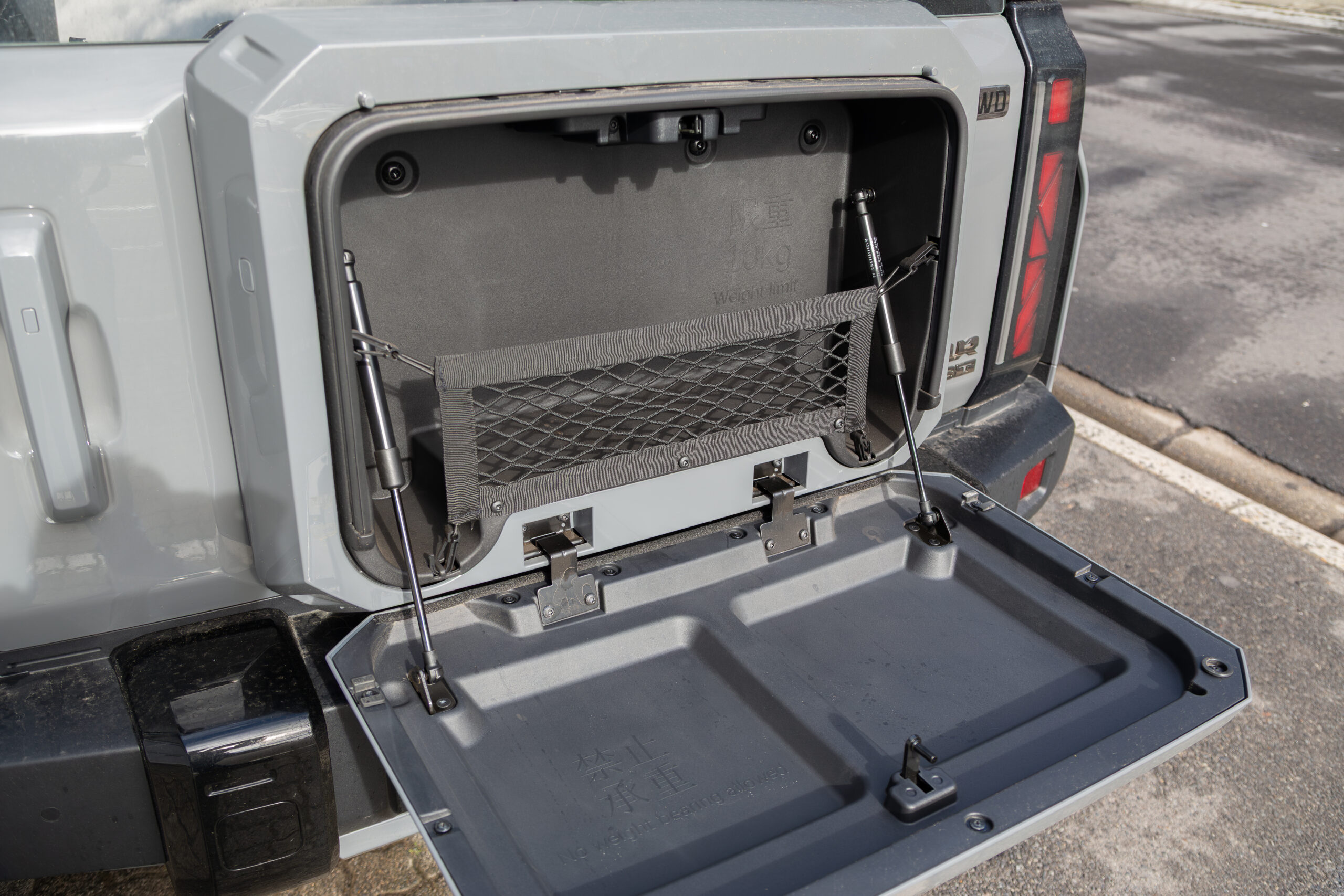
Despite its cute and compact proportions, there’s more space inside than you’d imagine. With a wheelbase stretching beyond 2 700 mm, rear legroom is generous, even for taller folk. A pair of USB ports to charge your devices is a great touch. The boot space isn’t the longest nor the deepest, but if you need extra carrying capacity, you can fold the rear seats down or use the cute storage bin on the rear door. There’s no spare wheel or luggage cover, unfortunately.
Performance & Efficiency
There are two powertrains to choose from: a single motor driving the front wheels, or a dual-motor setup providing all-wheel drive. The latter is the model tested here.
The outputs are high for what we’d deem an urban runabout; 205 kW and 385 Nm give it credible straight-line performance. With our testing kit activated and the sportiest of modes engaged, the 03T bolted to 100 kph in 6.3 seconds, besting its claim by 0.2 seconds. It has a top speed of 150 kph.
As is the case with all electric cars, even if they’re not set up or marketed as performance vehicles, they still provide eager and hesitation-free straight-line acceleration. The 03T, in its most conservative battery-saving mode, still effortlessly passes slower traffic.
By now you might think there’s a catch, and there is: efficiency. The 69.77 kWh lithium-iron phosphate battery offers a claimed range of 436 km based on the NEDC test cycle. In reality, you’re likely to get around 375 km depending on your driving style and whether you’re frequently traversing highways or slower roads.
The culprit is the aerodynamics; those blocky looks won’t slip through the air as easily as more sleeker vehicles. Given the advancement in public charging stations in the metropolitan areas, range anxiety isn’t likely to rear its head, however.
Longer trips will require some planning, though, but we reckon if you’re considering the purchase of an EV, you’ve likely done your research to see if it suits your lifestyle.
If you like the look of the 03T but you’re concerned about range anxiety, it may be worth waiting for the range-extender powertrain 03T, which will be in showrooms before the end of 2026.
Ride, Handling & Comfort
When it comes to dynamics, the iCaur 03T generally excels. The car’s height and proportions mean you sit quite high and therefore have excellent visibility. Thanks to its modern suspension setup, the 03T balances comfort, pliancy and dynamics. Like the majority of electric cars, the battery is located between the axles and as low down as possible, which aids the centre of gravity. The 03T may look top heavy, yet it’s anything but. Plus, it manages to hide its near 2-ton kerb weight acceptably well.
In an urban scenario, the vehicle is easy to place on the road and the drive is whisper quiet. iCaur has done good work in keeping road and wind noise low. The steering can be adjusted in terms of resistance and weighting, which helps with engagement and, while it’s not marketed as sporty, can be driven more enthusiastically than usual.
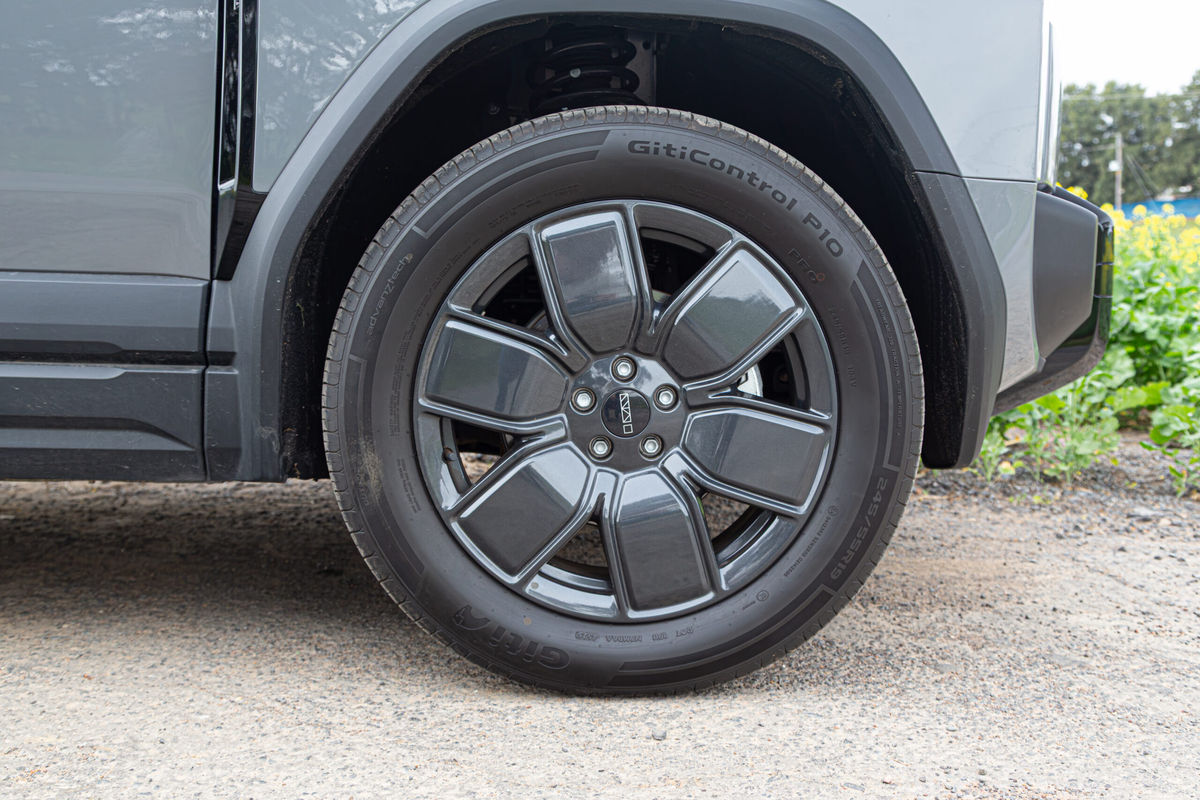
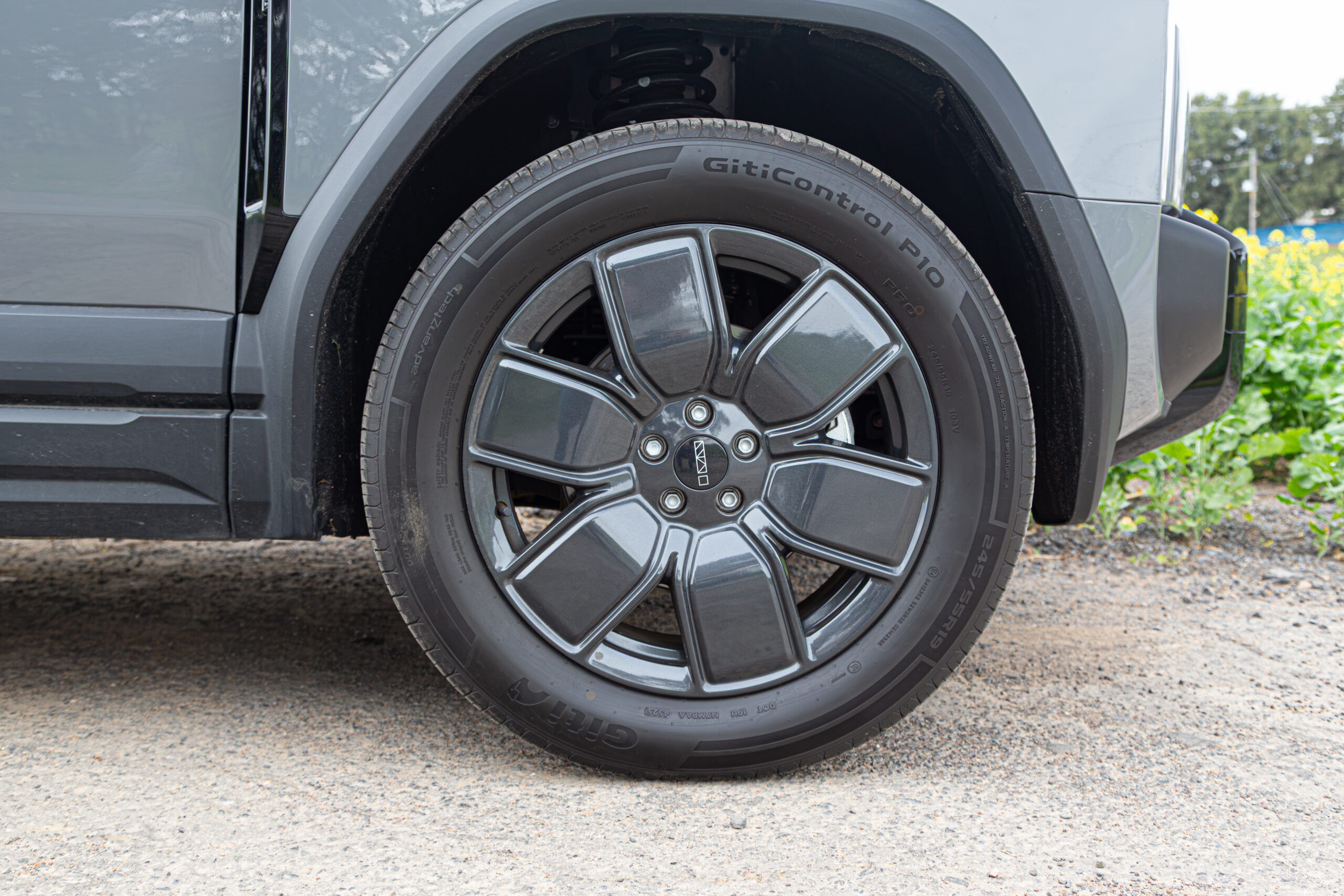
If you take gravel-roading more seriously than most, you’ll appreciate the 225 mm of ground clearance and additional off-road modes offered by the higher-spec 03T. The vehicle rides on 19-inch alloy wheels wrapped in plump 245/55 tyres. There is a tyre-repair kit if things go awry.
Price & After-sales support
03T models are supported by an 8-year/200 000 km vehicle warranty, an 8-year/160 000 km battery warranty and a 5-year/100 000 km service plan. Customers will also receive roadside assistance for 8 years/200 000 km
iCaur 03T 2WD
R639 900
iCaur 03T iWD
R699 900
All pricing correct in September 2026.
Verdict
As far as head-turning and interesting vehicles go, the iCaur 03T is right up there. Very few vehicles attract this much attention and the novelty factor is through the roof. Onlookers were genuinely curious, which is no mean feat in a market saturated with new vehicles.
The 03T’s value, futuristic styling, rear passenger space, standard levels of equipment, practicality and blistering performance are enough to bring attention and sales to this newcomer brand. However, when you consider its retro-styled V23 sibling has superior ergonomics and a newer infotainment system at a cheaper price, the clever money goes there. Family arguments are never pleasant, are they?
What is the price of the iCaur 03T in South Africa?
The fully electric iCaur 03T is available in two variants in South Africa. The entry-level iCaur 03T 2WD (RWD) is priced from R639 900, while the range-topping iCaur 03T iWD (AWD) is priced from R699 900.
What is the driving range of the iCaur 03T?
The 2WD model offers a single-charge range of up to 501 km (CLTC), while the dual-motor iWD variant features a 69.8 kWh battery pack delivering a single-charge range of up to 436 km.
How long does it take to charge the iCaur 03T?
When connected to a compatible DC fast charger, both the 2WD and iWD versions of the iCaur 03T can charge from 30% to 80% in approximately 30 minutes.
What performance figures does the iCaur 03T deliver?
The single-motor 2WD model produces 135 kW and 220 Nm of torque. The dual-motor iWD derivative steps up performance significantly, delivering a combined 205 kW and 385 Nm of torque, sprinting from 0 to 100 km/h in just 6.5 seconds.
What warranty and service plan come standard with the iCaur 03T?
Both models include an 8-year / 200 000 km vehicle warranty, an 8-year / 160 000 km battery warranty for the first owner, and a 5-year / 100 000 km service plan.
Here’s how many units iCaur has sold in SA so far
How has iCaur been received in South Africa so far? Well, the Chinese brand’s local division has released sales figures for its opening 3 months on the market…
iCaur releases SA sales figures
V23 accounts for 76% of sales
V27 next on the menu for SA?
Chery Group sub-brand iCaur has released sales figures for its opening 3 months in South Africa, revealing how many units of the fully electric V23 and 03T have been registered in Mzansi thus far.
Though the Chinese marque doesn’t (yet?) report sales figures to industry-representative body Naamsa, it has now released some basic sales details. As a reminder, iCaur officially joined the local market late in May 2026, offering the battery-powered V23 and 03T (with the V27 likely to arrive next).
According to iCaur’s local division, the brand registered 160 units in June 2026, its first full month on the market. The company says that figure rose to 243 units in July, before increasing further to 252 units in August. That puts its running total (at the end of August 2026) at 655 units.
Interestingly, the V23 has done the bulk of the heavy lifting for the brand, with the company saying this model accounted for “approximately 76% of its total for the year to date”. That suggests iCaur registered 496 units of the V23 and 159 units of the 03T over the past 3 months.
The local V23 line-up comprises a pair of retro-styled, fully electric derivatives. The V23 RWD is priced at R519 900, while the V23 AWD costs a considerable R150 000 more at R669 900. The rear-driven variant offers peak outputs of 100 kW and 180 Nm from a single electric motor, resulting in a claimed 0-100 kph time of 11.0 seconds (and a top speed of 140 kph). The V23 RWD employs a 59.93 kWh battery pack offering a listed NEDC range of 360 km.
Meanwhile, the all-paw V23 derivative adds a 2nd electric motor (meaning there’s one on each axle), pushing maximum system outputs to 155 kW and 292 Nm. That, in turn, sees the claimed 0-100 kph time drop to 7.5 seconds, while top speed remains 140 kph. A larger, 81.8 kWh battery pack offers a listed NEDC range of 430 km.
What about the likewise unibody 03T range? Well, that line-up also comprises 2 derivatives: the 03T RWD priced at R639 900 and 03T AWD positioned some R60 000 higher, at R699 900. The rear-wheel-drive variant features a single electric motor, which offers 135 kW and 220 Nm. Drawing its urge from a 65.69 kWh battery pack, this motor facilitates a 0-100 kph sprint in a claimed 10.5 seconds and a maximum speed of 150 kph. iCaur lists an “NEDC-estimated” single-charge range of 431 km.
The all-paw derivative features an additional electric motor (on the front axle), which sees total system outputs rise to 205 kW and 385 Nm. Equipped with a slightly larger 69.77 kWh battery pack (offering 436 km of likewise “NEDC-estimated” range), this variant takes a claimed 6.5 seconds to reach 3 figures from standstill.
Frequently Asked Questions (FAQ)
Q: How many vehicles has iCaur sold in South Africa since its local launch?
A: Over its first three full months on the South African market (June to August 2026), iCaur registered a cumulative total of 655 units across its electric vehicle line-up.
Q: Which iCaur model is the most popular in South Africa?
A: The retro-styled iCaur V23 is the brand’s best-selling vehicle in SA, accounting for approximately 76% of total sales (496 units), while the 03T accounts for the remaining 24% (159 units).
Q: What are the prices and specifications for the iCaur V23 and 03T electric vehicles in SA?
A: The V23 range starts at R519 900 for the RWD (100 kW/180 Nm; 360 km NEDC range) and R669 900 for the AWD (155 kW/292 Nm; 430 km range). The 03T is priced from R639 900 for the RWD (135 kW/220 Nm; 431 km range) to R699 900 for the AWD (205 kW/385 Nm; 436 km range).
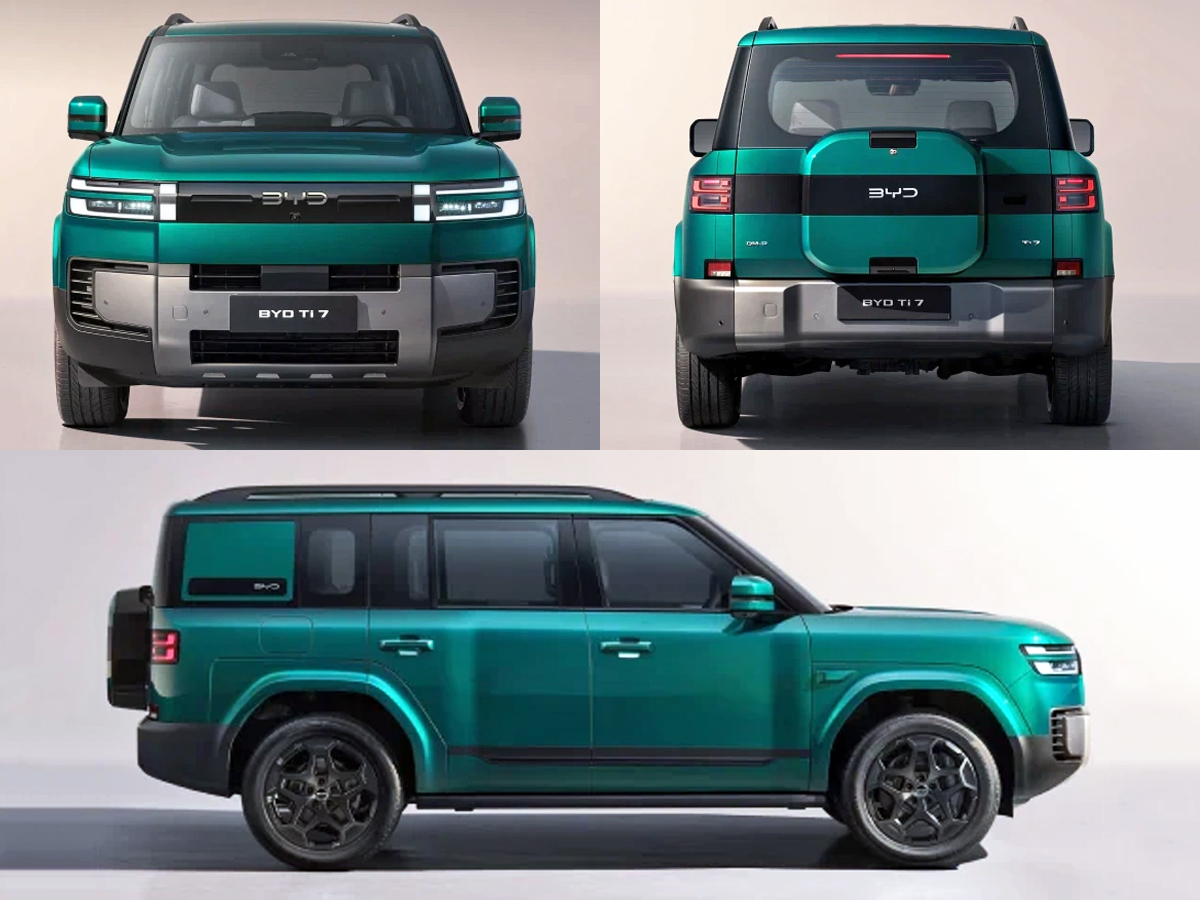
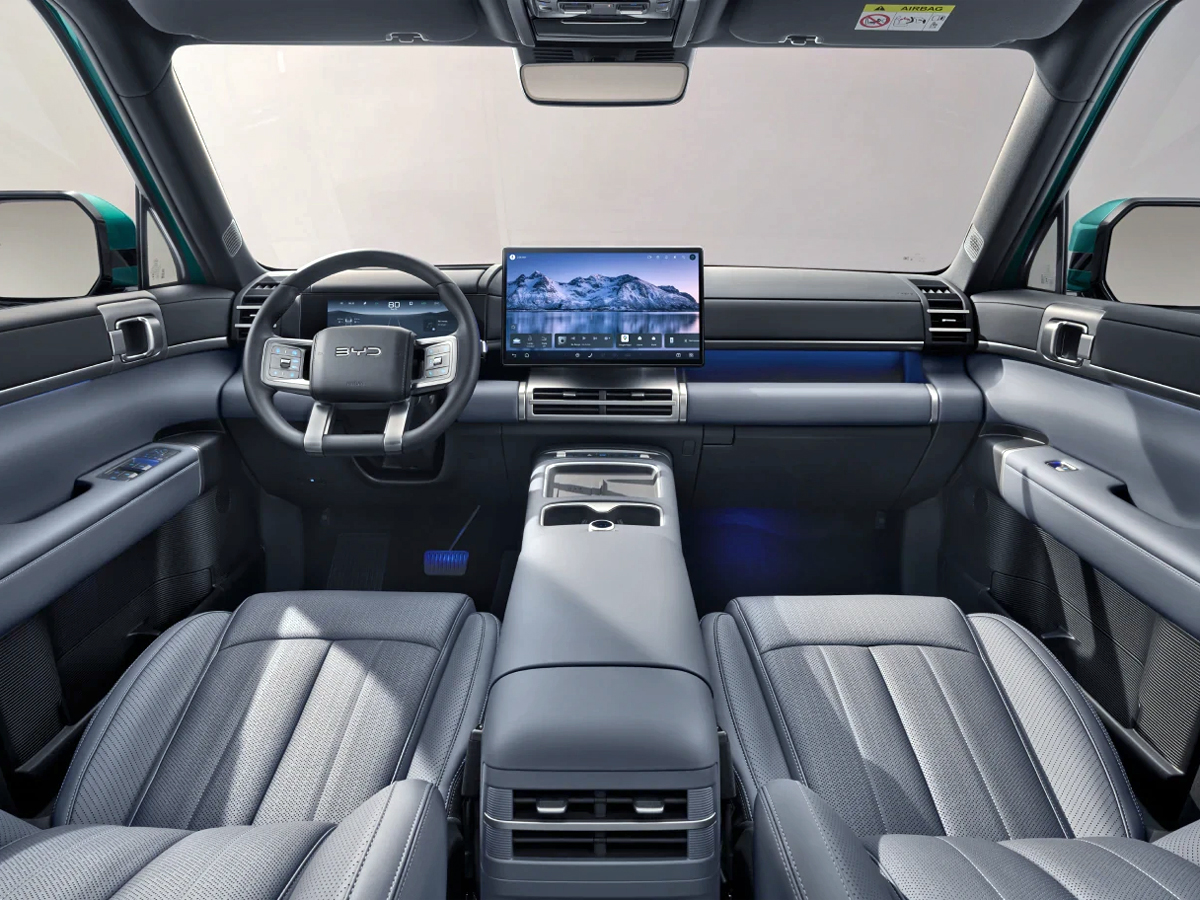
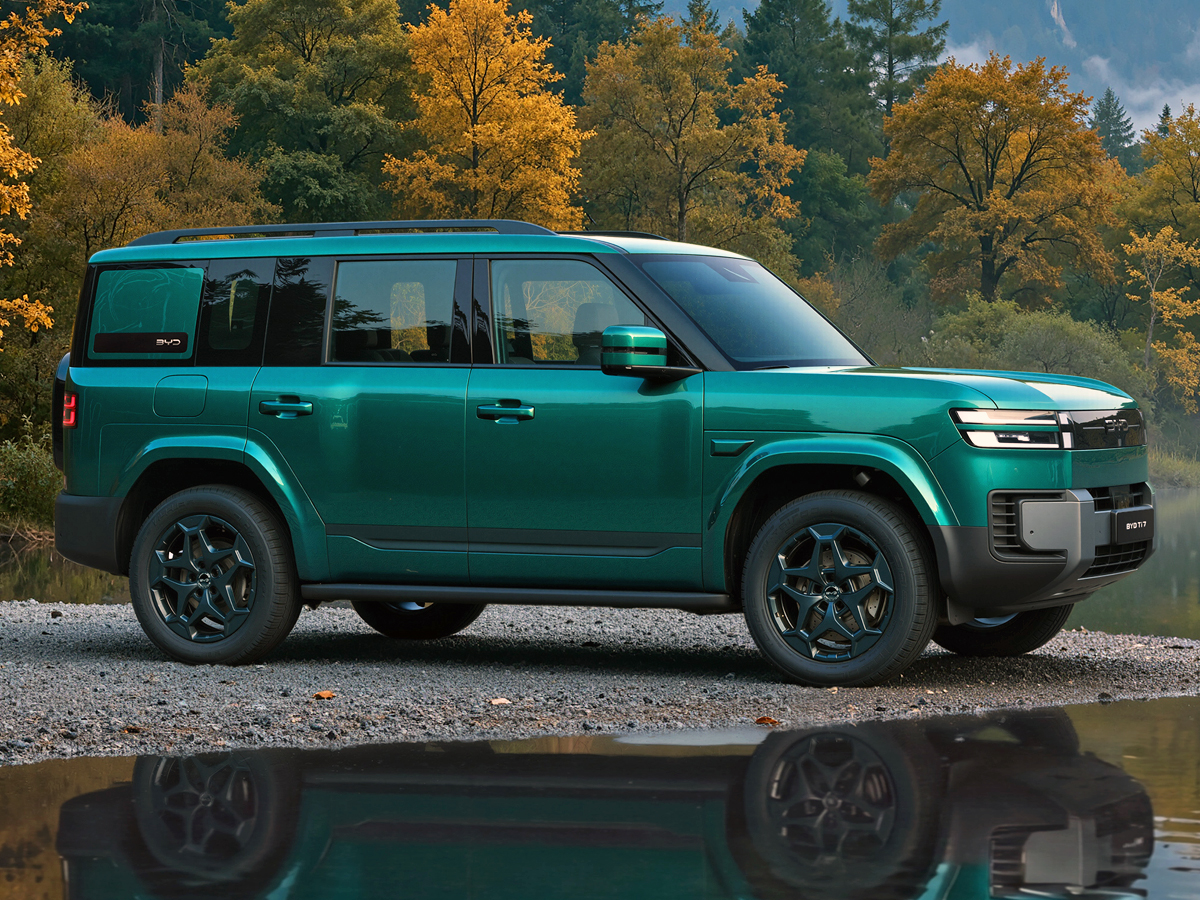
Several dealerships around South Africa have confirmed the new BYD Ti 7 is “coming soon”. Here’s what we know about the Chinese brand’s boxy 7-seater PHEV…
Local dealers say Ti 7 is “coming soon”
Powertrain details not yet confirmed
SA exec says it would be a “great fit”
The new BYD Ti 7 will seemingly launch in South Africa in the near future, with several dealerships around the country suggesting the Shenzhen-based new-energy vehicle (NEV) automaker’s boxy 7-seater model is “coming soon” to local roads.
As a reminder, Cars.co.za reported in May 2026 that the Chinese brand had filed to trademark the “Ti 7” badge in Mzansi. Then, in August 2026, BYD Auto SA confirmed to us the Ti 7 was officially “under evaluation“, with the brand’s local commercial director suggesting it “would be a great fit for our market”.
Now a number of official BYD dealers around the country have posted on their respective websites and social-media pages that the new Ti 7 is “coming soon”, with some adding that pre-orders have also opened. That said, local pricing details have yet to be released.
For the record, the export version detailed for fellow right-hand-drive market the United Kingdom measures 5 146 mm from front to back, making it some 128 mm longer than Land Rover’s Defender 110. The vehicle features 3 rows of seating, along with what the Chinese brand describes as a “generous load space”.
In the UK, the Ti 7 will feature BYD’s so-called “Dual Mode Performance” (DM-p) plug-in hybrid powertrain. In that country, the system includes a pair of electric motors (one on each axle), a turbocharged 1.5-litre petrol engine and a 35.6 kWh (gross) battery pack. The brand claims peak power of 300 kW and a 0-100 kph time of 4.8 seconds.
However, a dealership in South Africa has listed slightly different specifications, claiming the SA-spec version will boast total system power of 360 kW, along with a half-second slower claimed 0-100 kph sprint time of 5.3 seconds.
The dealer in question furthermore suggests the SA-spec Ti 7’s PHEV powertrain will feature a smaller 26.6 kWh battery pack. Interestingly, these details match those of the left-hand-drive version already on the market in places like Saudi Arabia.
More info as we have it…
Frequently Asked Questions (FAQ)
Q: Is the new BYD Ti 7 coming to South Africa?
A: Yes, official local BYD dealerships have indicated that the boxy 7-seater PHEV is “coming soon” to South Africa, following trademark filings and official evaluation by BYD Auto SA.
Q: What are the key specifications and powertrain details of the SA-spec BYD Ti 7?
A: Local dealership listings indicate the SA-spec Ti 7 will feature a 1.5-litre turbo-petrol plug-in hybrid (PHEV) powertrain producing a total system output of 360 kW, a 26.6 kWh Blade battery and a 0–100 km/h acceleration time of 5.3 seconds.
Q: How big is the BYD Ti 7 compared to other off-road SUVs?
A: In international markets, the BYD Ti 7 measures up to 5 146 mm long with a 2 920 mm wheelbase, making it around 128 mm longer than a Land Rover Defender 110 while offering three rows of seating.
5 most affordable dual-clutch vehicles in SA (2026)
Prefer your automatic transmission with a pair of clutches? These are the 5 most affordable dual-clutch vehicles currently on South Africa’s new-car market…
South Africa’s new-vehicle market features a few different flavours of automatic transmission, including the automated manual gearbox, the continuously variable transmission and the traditional torque-converter cog-swapper. But what if you prefer twin clutches? Well, these are the 5 most affordable dual-clutch vehicles available right now.
As a reminder, in a dual-clutch transmission (DCT), one clutch manages even-numbered gears and the other takes care of odd-numbered cogs. The result is the potential for palpably quicker shift times, since the next gear can effectively be “pre-selected”.
For the record, the list of South Africa’s 5 most affordable dual-clutch vehicles right now is dominated by Chinese vehicles, although an Indian automaker grabs first place. Note that all pricing shown here is correct in September 2026.
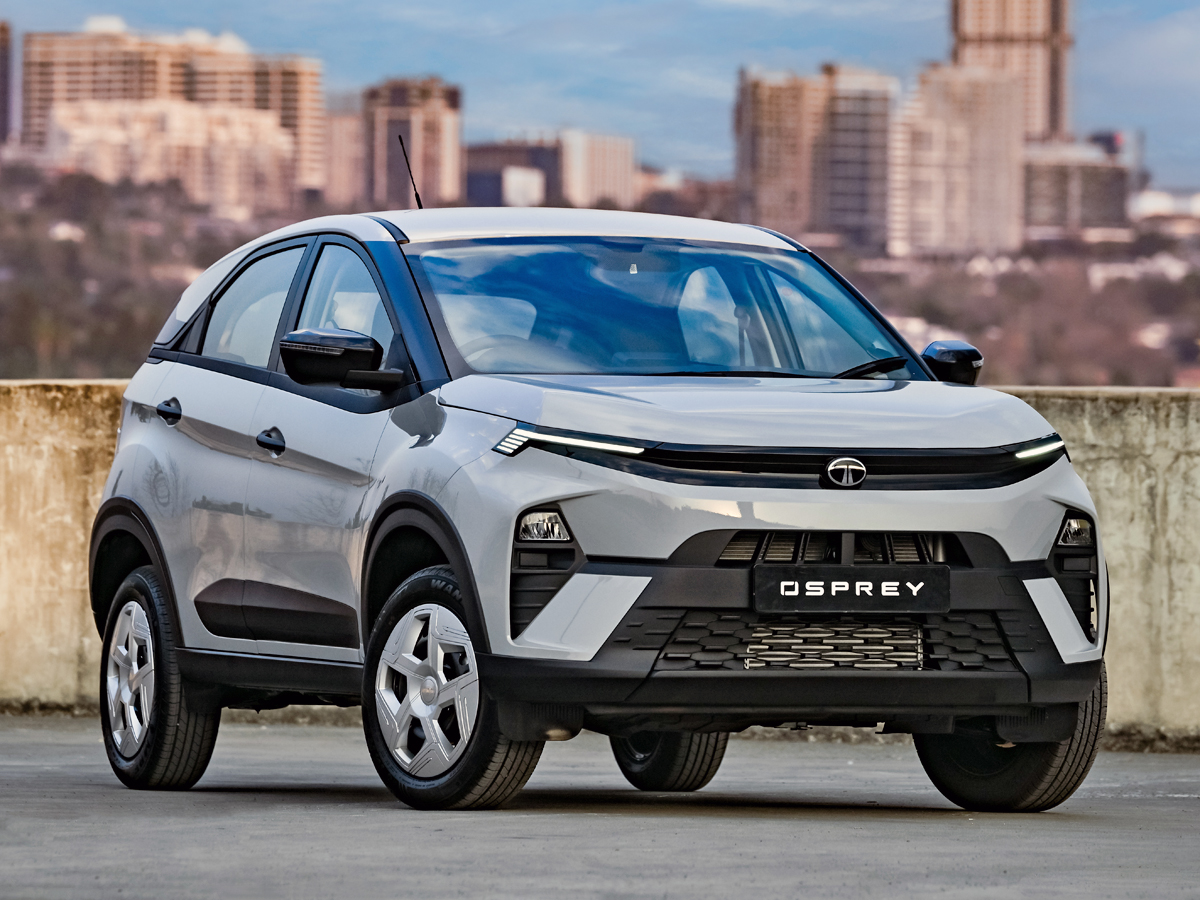
1. Tata Osprey 1.2T Smart+ 7DCT – from R279 900
Launched in September 2026, the 4-strong Tata Osprey range features a trio of dual-clutch derivatives. The Smart+ variant is the most affordable, though each employs the Indian brand’s turbocharged 1.2-litre, 3-cylinder petrol engine, which delivers 88 kW and 170 Nm to the front wheels.
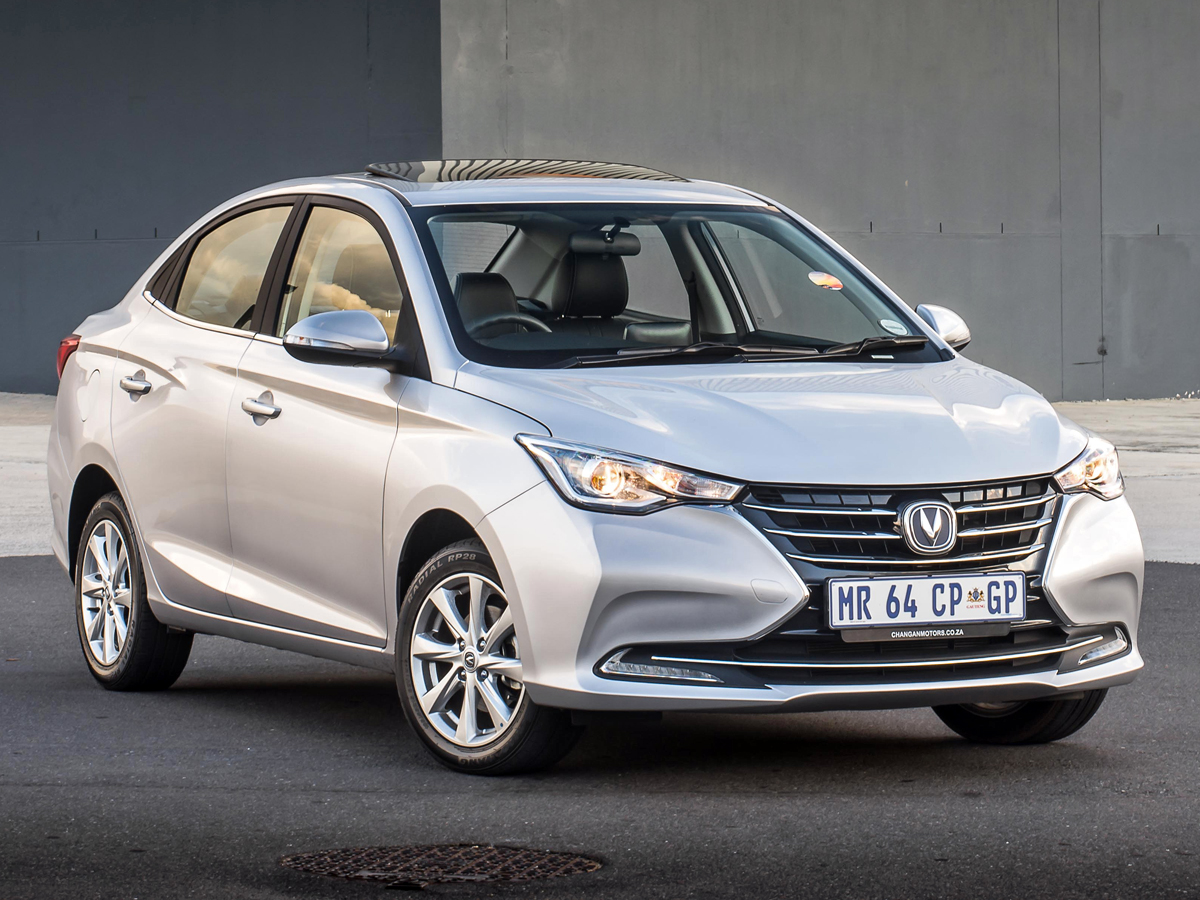
Changan’s Alsvin 1.5 CE is South Africa’s 2nd most affordable DCT right now. This budget sedan – the only instance of this body style in the top 5 – employs a naturally aspirated 1.5-litre, 4-cylinder petrol engine, which delivers 78 kW and 145 Nm to the front axle through a 5-speed dual-clutch gearbox.
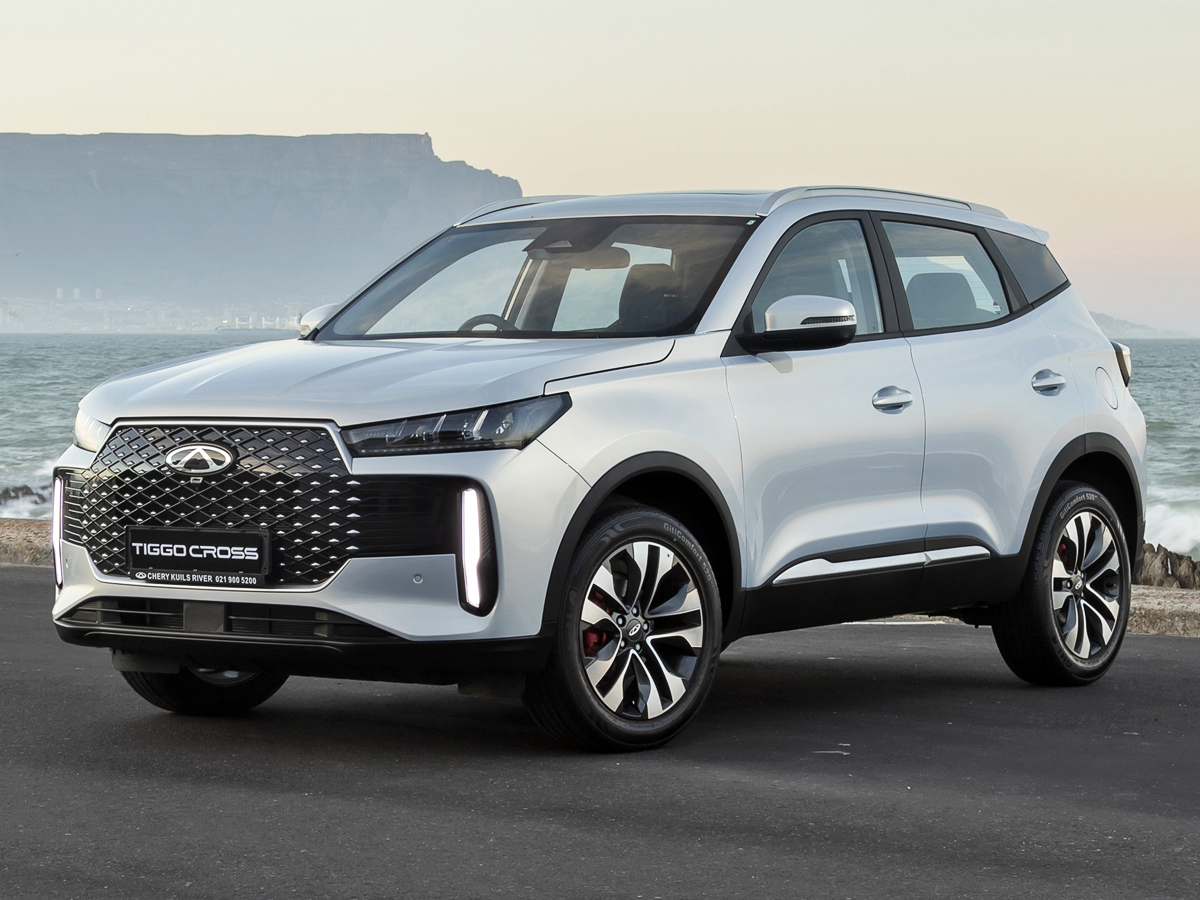
3=. Chery Tiggo Cross 1.5T ME 6DCT – from R359 900
While the atmospheric engine in Chery’s entry-level Tiggo Cross LiT can be specified with a CVT, the turbocharged 1.5-litre, 4-cylinder petrol motor in the “ME” (that’s “Million Edition“) derivative instead features a 6-speed dual-clutch transmission. For the record, this forced-induction mill makes 108 kW and 210 Nm.
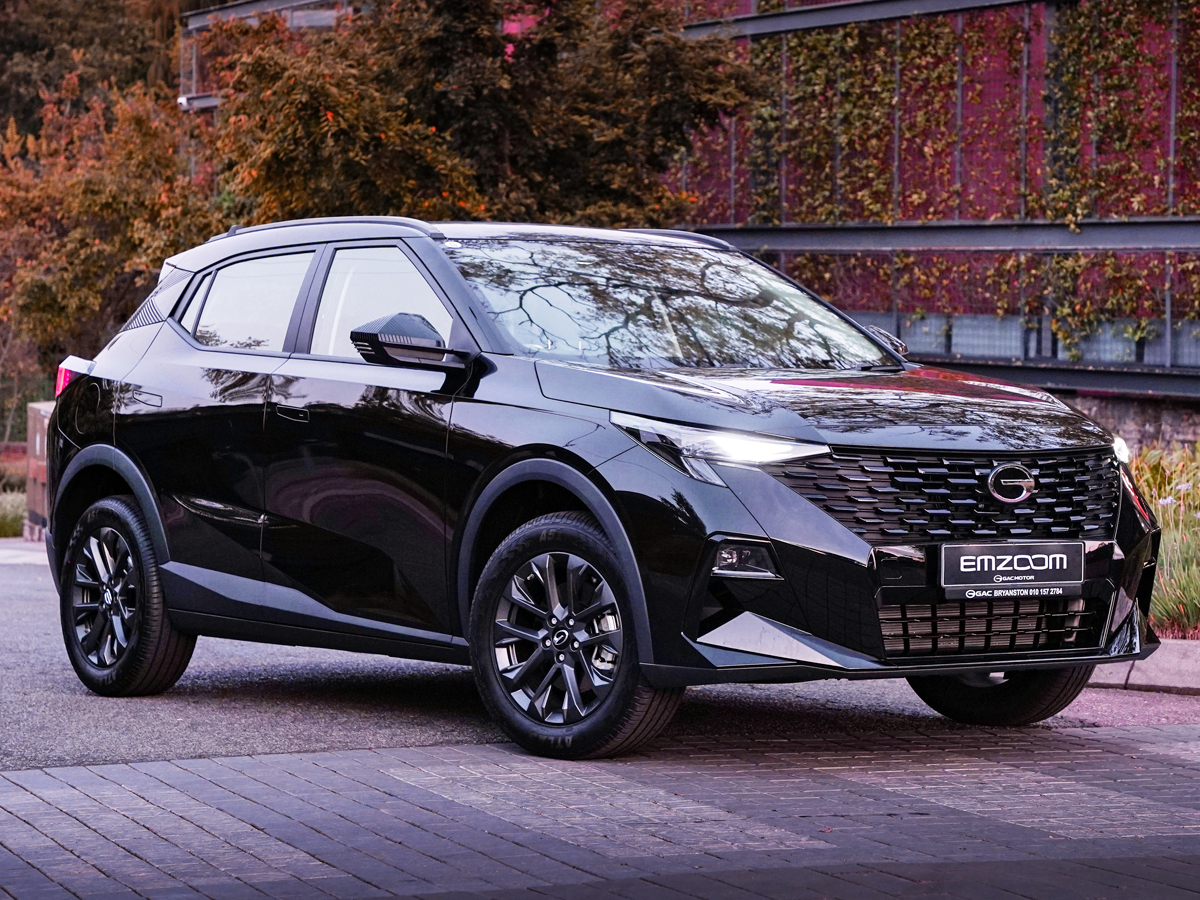
GAC’s GS3 Emzoom 1.5T Nova ties for 3rd place on the list of Mzansi’s most affordable dual-clutch models. This derivative features a 7-speed DCT driving the front wheels. A turbocharged 1.5-litre, 4-cylinder offers peak outputs of 130 kW and 270 Nm.
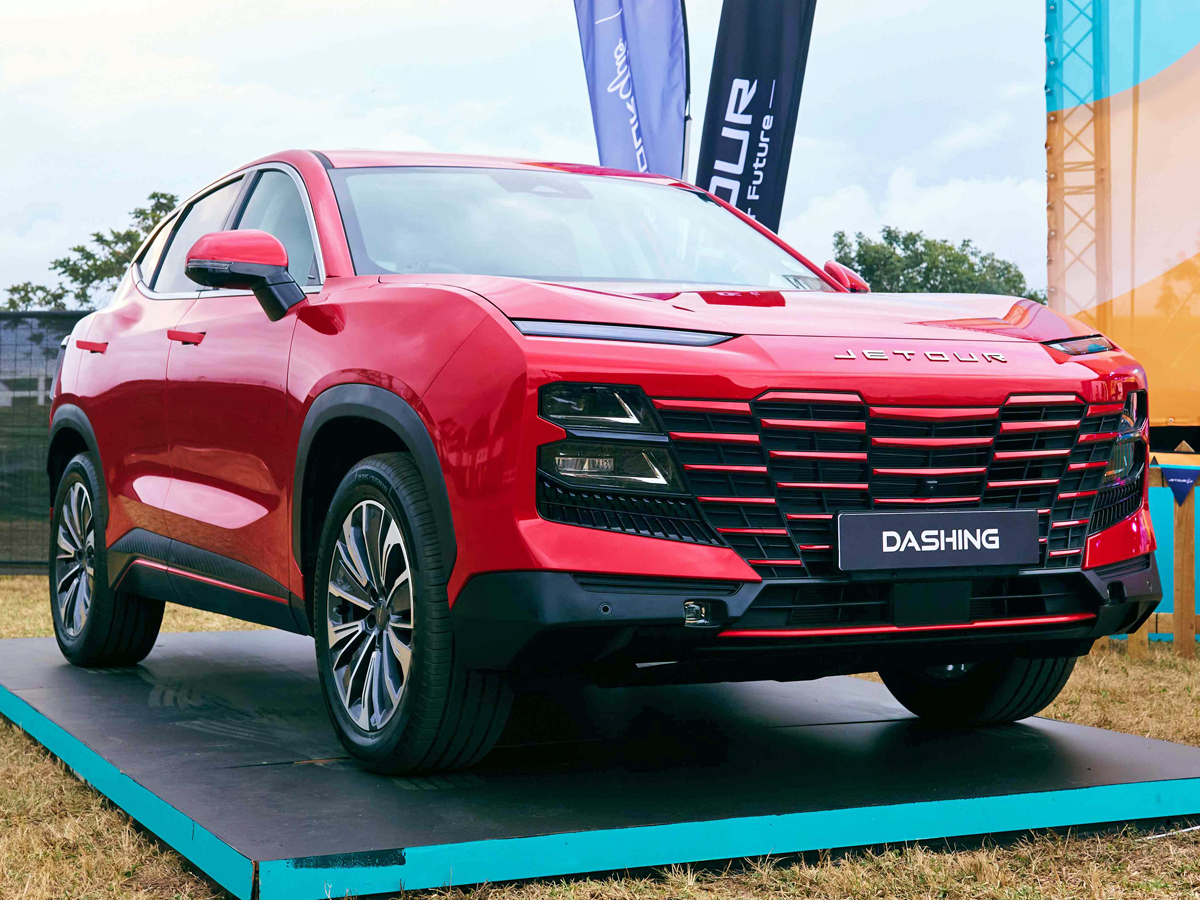
Refreshed in July 2026, the Jetour Dashing range has since quietly gained a 3rd derivative. Interestingly, this new base Core variant – which ties for 3rd place on this list – features a 108 kW/230 Nm turbocharged 1.5-litre, 4-cylinder petrol engine mated to a 6-speed dual-clutch transmission, while the Prestige and Prime derivatives have higher outputs of 125 kW and 270 Nm (and switch to a 7-speed DCT).
Q: What is the most affordable dual-clutch transmission (DCT) vehicle in South Africa?
A: The Tata Osprey 1.2T Smart+ 7DCT is currently the most affordable dual-clutch vehicle in South Africa, starting at R279 900.
Q: Which vehicles make up the top 5 most affordable dual-clutch models in SA?
A: As of September 2026, the 5 most affordable DCT models are the Tata Osprey 1.2T Smart+ 7DCT (R279 900), Changan Alsvin 1.5 CE 5DCT (R289 900), Chery Tiggo Cross 1.5T ME 6DCT (R359 900), GAC GS3 Emzoom 1.5T Nova 7DCT (R359 900) and Jetour Dashing 1.5T Core 6DCT (R359 900).
Q: How does a dual-clutch transmission work compared to conventional automatics?
A: A dual-clutch transmission (DCT) utilises two separate clutches — one controlling even-numbered gears and the other managing odd-numbered gears. This layout allows the next gear to be pre-selected for significantly quicker shift times compared to standard torque-converter or CVT automatics.
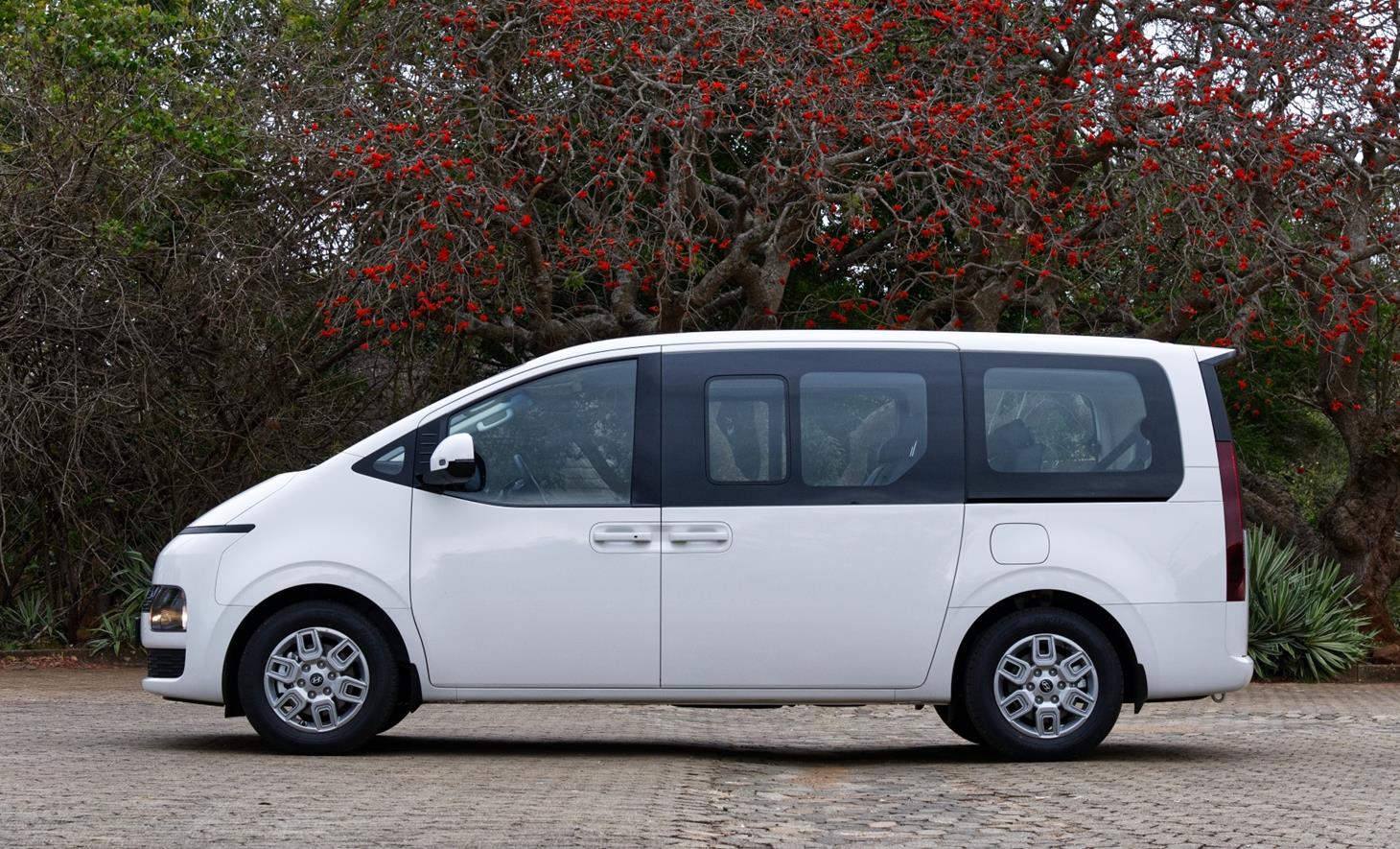
The Hyundai Staria facelift has gone on sale in South Africa. We take a look at what’s changed and find out what it’s like to drive.
The Hyundai Staria facelift has quietly arrived in South Africa, bringing with it a subtle visual upgrade, additional standard specification and a rejigged line-up.
Since its debut back in 2021, the Staria has sold in impressive numbers across its bus, panel van and Multicab body styles. With over 7 600 units retailed to date, Hyundai South Africa has introduced some worthwhile updates.
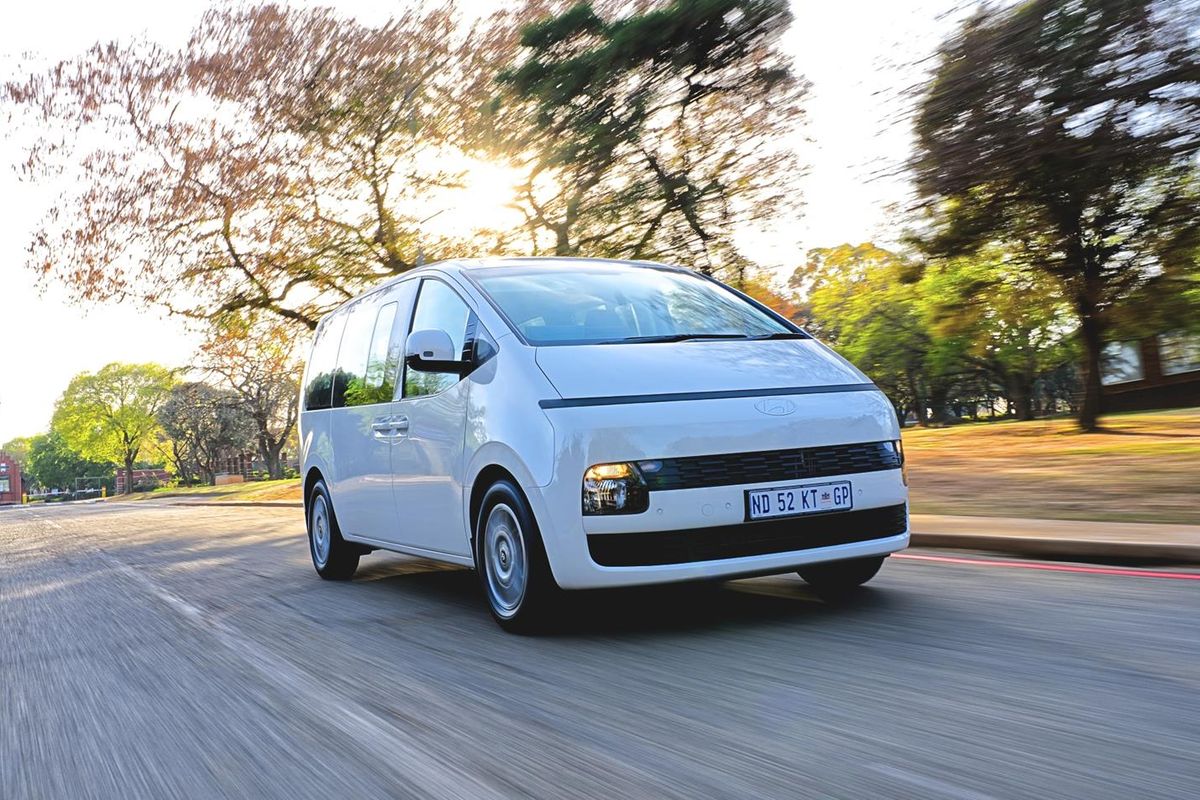
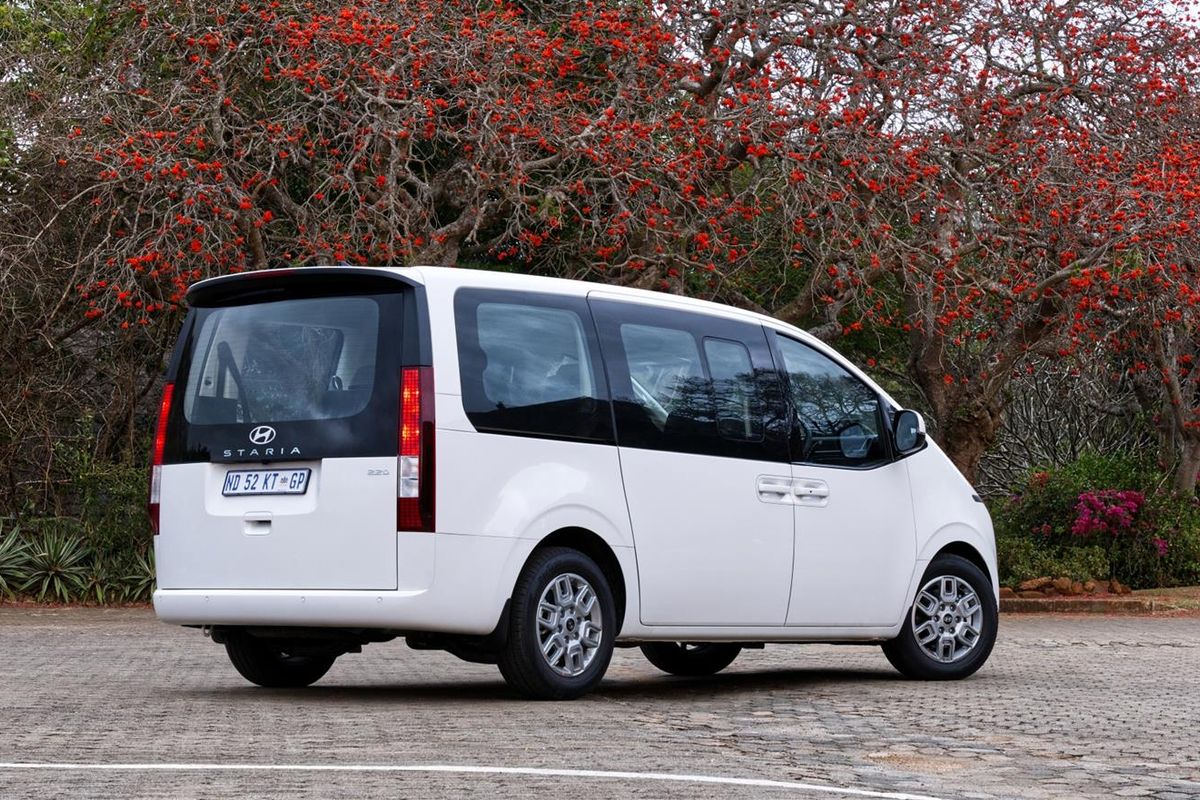
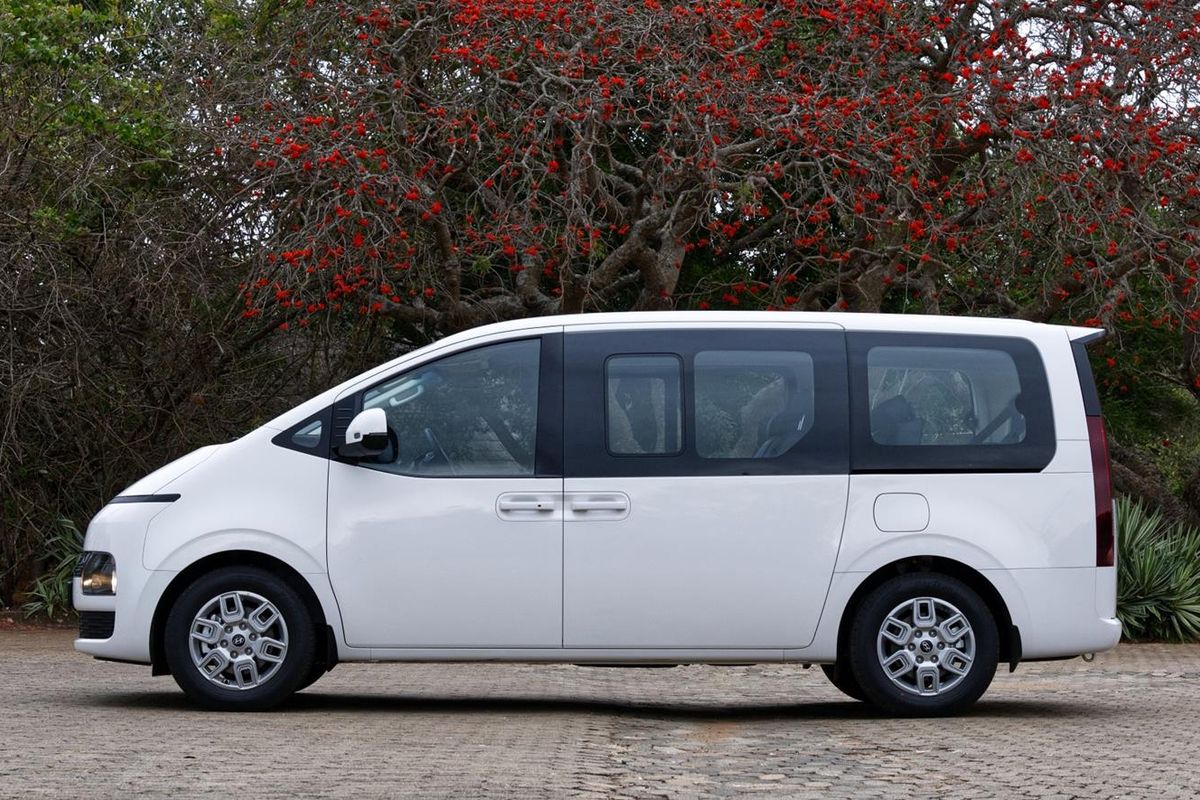
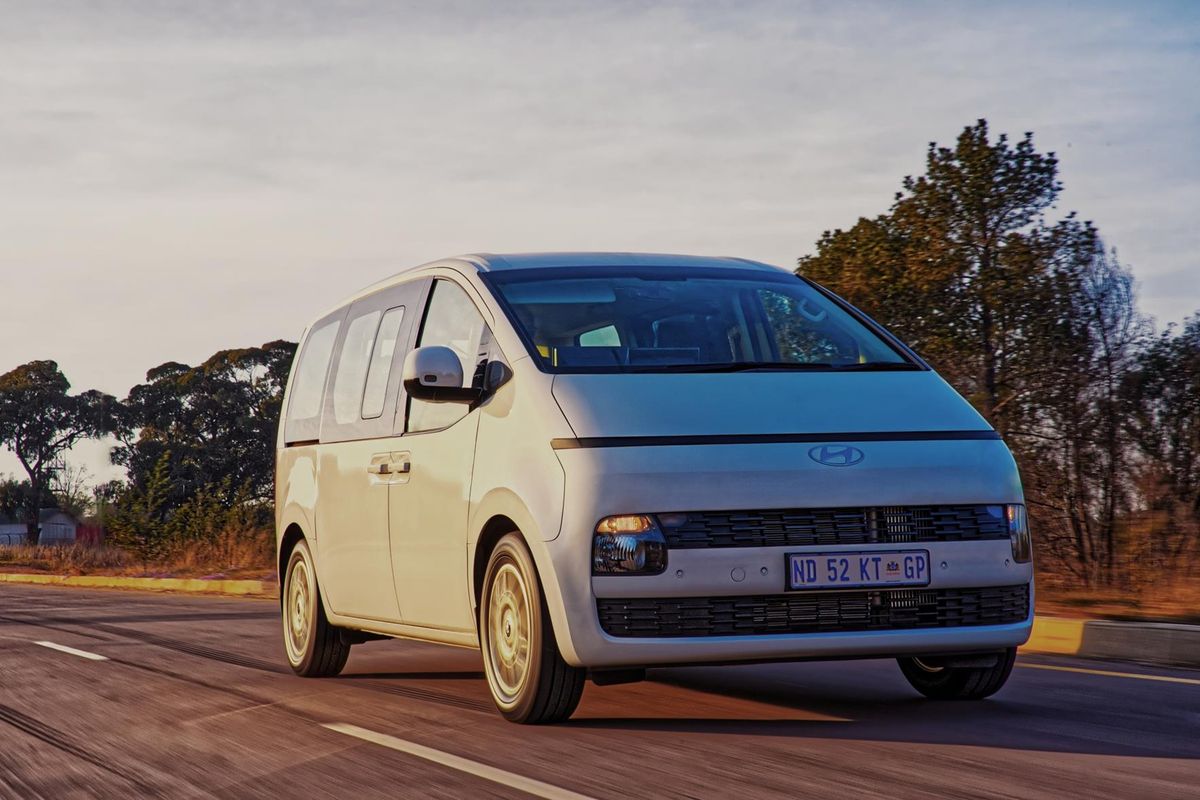
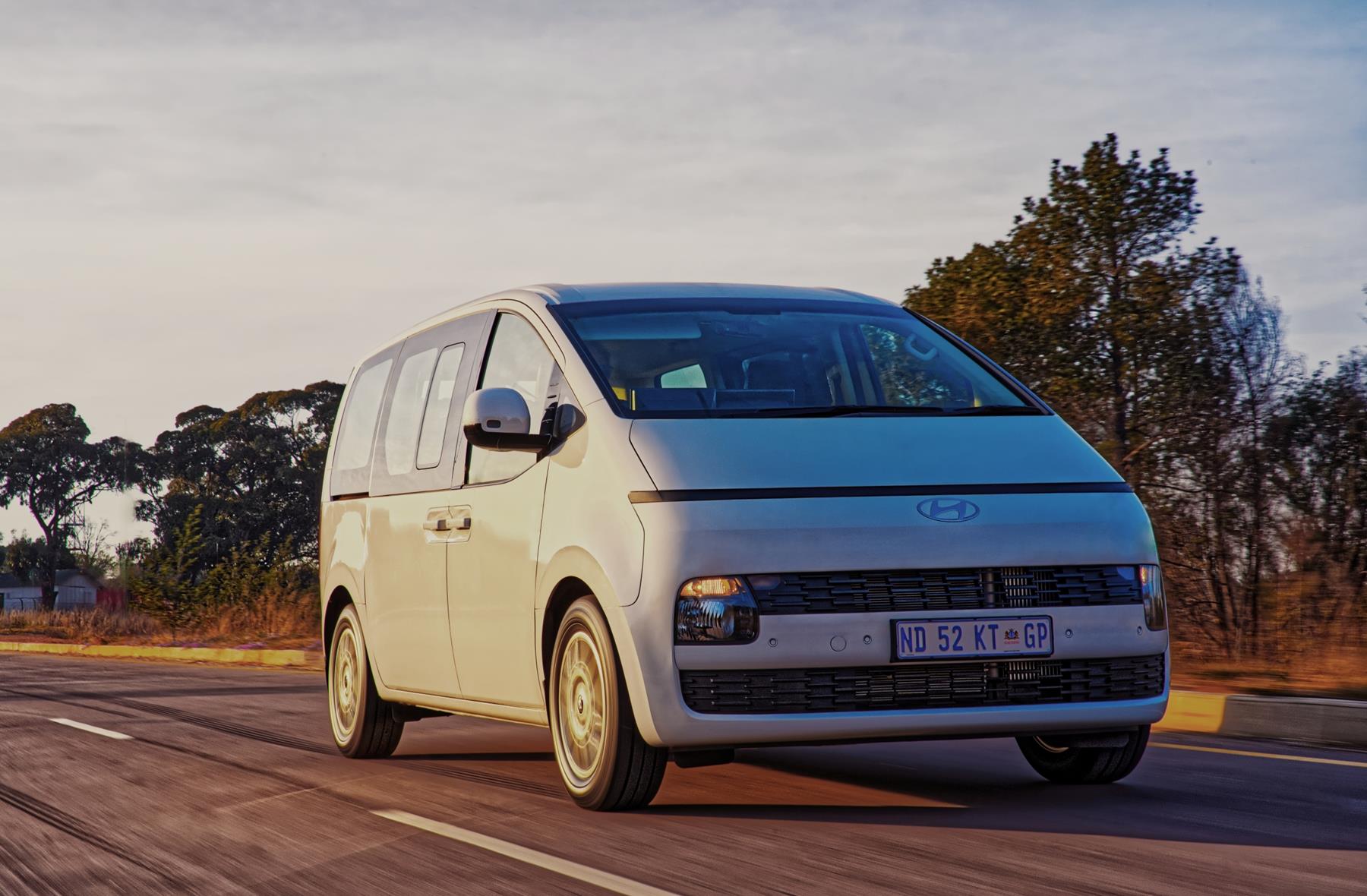
The Hyundai Staria facelift is more a gentle evolution than revolution. At the front, the grille has been slightly revised, there are new tail lamp designs and updated wheels ranging from 17 to 18 inches, depending on derivative.
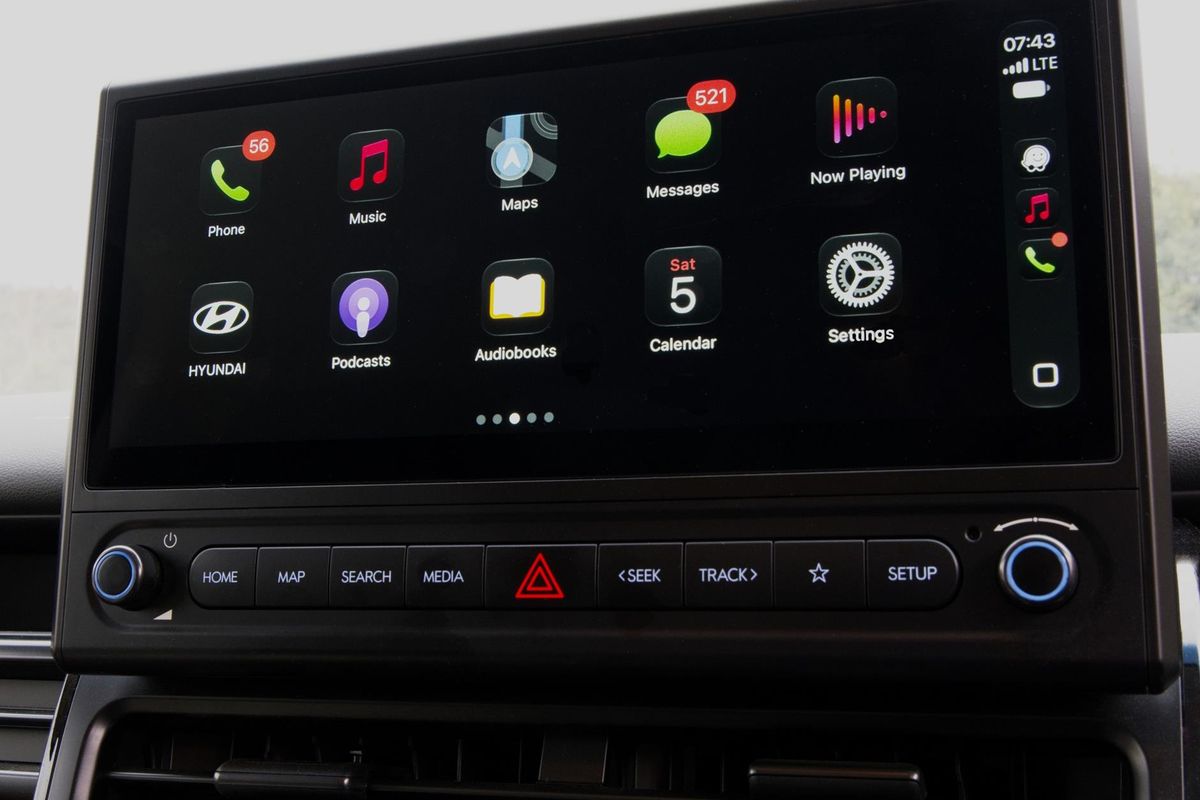
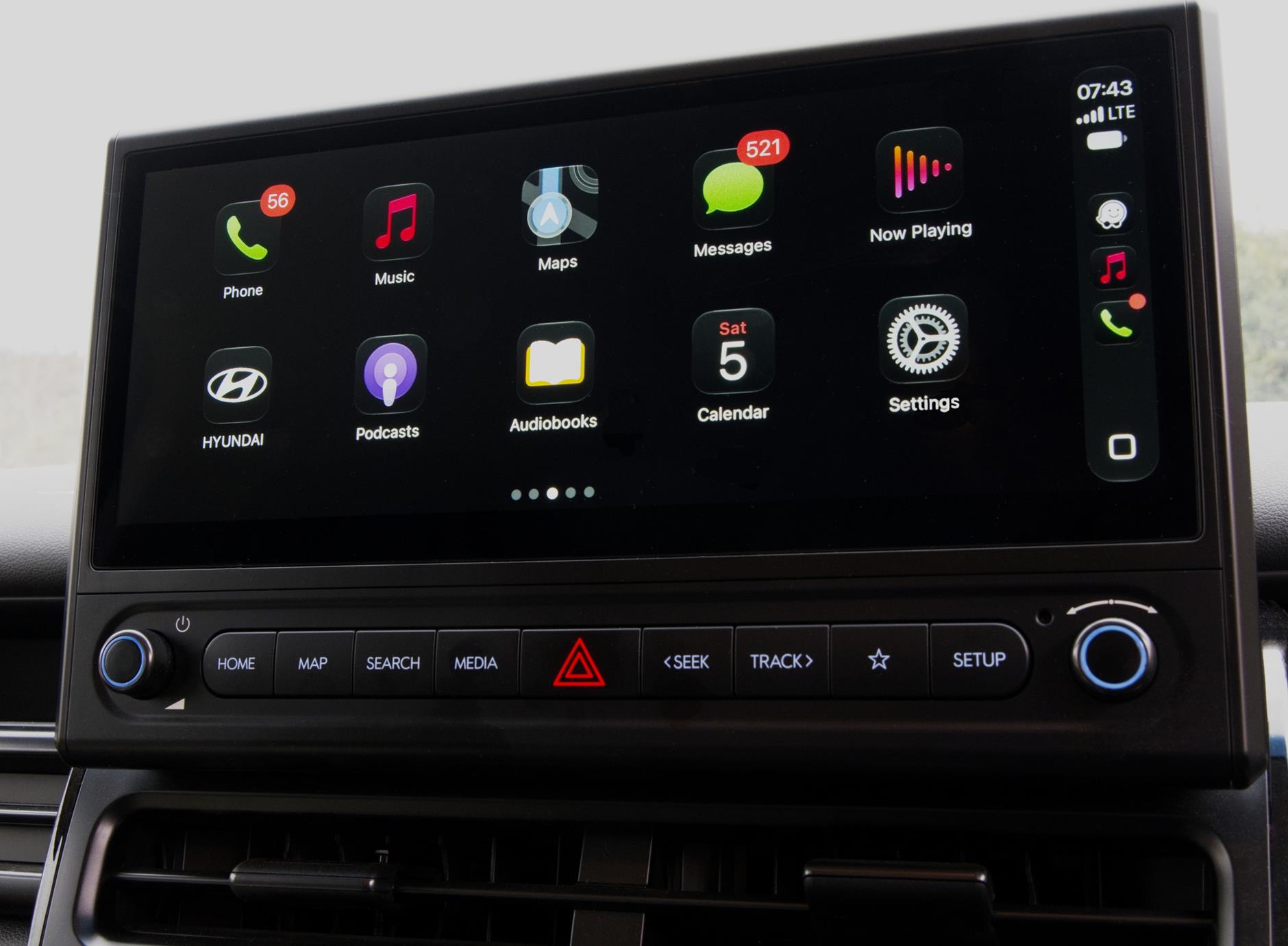
Climb inside and the cabin features a new ,larger 12.3-infotainment screen featuring wireless Android Auto/Apple CarPlay, there’s a new drive-by-wire gear selector and some of the higher-spec grades now get driving modes. There’s a raft of USB charging ports for all passengers. There’s also a new-look multi-function steering wheel.
The 2.2-litre turbocharged diesel engine and 8-speed automatic transmission are on duty. In this iteration, the engine produces 130 kW and 430 Nm, and power goes to the front wheels. As before, the Staria is available in both 9-seater and 11-seater configurations.
What is the Staria like to drive?
The high seating position gives a commanding view, while large windows create a spacious, airy feel. The cabin features a minimalist digital cluster and a column-based drive selector opens up the front facia even more in comparison to the predecessor.
The diesel engine retains that typical clatter, but performs well, especially when asked to overtake slower traffic on the national highway. While we don’t deem it necessary, the steering-wheel gear shifters are a nice to have, as are the driving modes. Given the price of diesel, we left the car in its most frugal Eco setting.
When it comes to ride quality and refinement, the Staria shares a unibody setup with its SUV siblings and, as a result, has impressive on-road manners and low noise levels. Its long wheelbase, generous tyre sidewalls and compliant suspension easily absorb road imperfections to deliver a comfortable, smooth ride. Like the pre-facelift model, this updated Staria delivers a far more premium ride than the H1 van which preceded it.
How much does the Hyundai Staria facelift cost in South Africa?
The vehicle is sold with a 7-year/200 000 km warranty and 7-year/150 000 km of roadside-assistance cover. The Luxury derivative has a 7-year/105 000 km service plan, while the Executive and Elite trims have a 6-year/90 000 km service plan.
Old model
Pricing
New model
Pricing
Staria 2.2 3-seat Panel van
R699 900
Staria 2.2 3seat PANELVAN
R719 900
Staria 2.2 6-seat Multicab
Discontinued
Staria 2.2 9-seat Executive Bus AT
R939 900
Staria 2.2 9seat Executive Bus AT
R959 900
Staria 2.2 11-seat Executive Bus AT
R949 900
Staria 2.2 11S Executive Bus AT
R969 900
Staria 2.2 9-seat Elite bus AT
R1 079 900
Staria 2.2 9seat Elite bus AT
R1 099 900
Staria 2.2 9-seat Luxury bus AT
R1 299 900
Staria 2.2 9seat Luxury bus AT
R1 324 900
All pricing correct in September 2026
Summary
The updated Staria is a great case of, if it’s not broken, don’t fix it. As the 4th bestselling MPV in South Africa, this newer model introduces some subtle changes to keep it relevant, while not dramatically increasing the price. It should continue to attract a loyal set of buyers.
What engine powers the Hyundai Staria in South Africa?
The Hyundai Staria range in South Africa is powered by a 2.2-litre 4-cylinder turbodiesel engine producing 130 kW of power and 430 Nm of torque. Power is delivered to the front wheels via an 8-speed automatic transmission.
What seating configurations are available in the Hyundai Staria lineup?
The Hyundai Staria offers multiple seating and body choices in South Africa:
3-Seater Panel Van: Tailored for commercial cargo transport.
9-Seater Bus: Available in Executive, Elite, and flagship Luxury trims for family or VIP passenger transport.
11-Seater Bus: Available in Executive trim for maximum passenger capacity.
How much does the Hyundai Staria cost in South Africa?
The Hyundai Staria range is priced as follows:
Staria 2.2 Panel Van (3-Seater): R719 900
Staria 2.2 Executive Bus (9-Seater AT): R959 900
Staria 2.2 Executive Bus (11-Seater AT): R969 900
Staria 2.2 Elite Bus (9-Seater AT): R1 099 900
Staria 2.2 Luxury Bus (9-Seater AT): R1 324 900
What is the fuel consumption of the Hyundai Staria 2.2D?
The Hyundai Staria has a claimed average combined fuel consumption of approximately 8.0 to 8.7 litres per 100 km depending on vehicle load and driving conditions.
What warranty and service plan come standard with the Hyundai Staria?
All Hyundai Staria models come standard with Hyundai’s signature 7-year/200 000 km manufacturer warranty alongside 7 years or 150 000 km of roadside assistance. Service coverage includes a 6-year/90 000 km service plan for Executive and Elite models (7-year/105 000 km for the Luxury variant), with service intervals set every 15 000 km.
GWM SA eyeing new 4.0-litre V8 for 2027
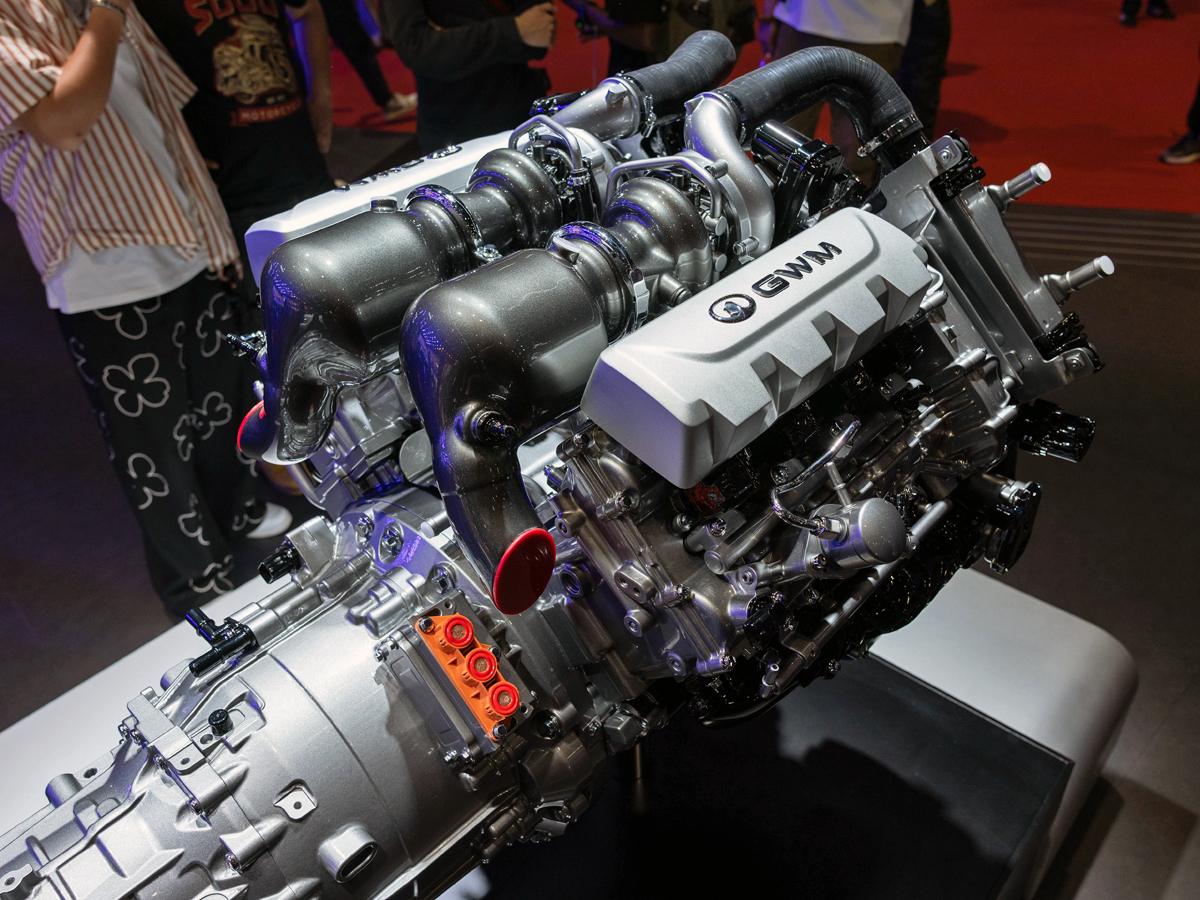
The head of GWM South Africa has confirmed that the Chinese brand’s local division is aiming to launch the new 4.0-litre V8 powertrain by the end of 2027…
New 4.0 V8 engine pencilled in for SA
GWM SA aiming for late-2027 launch
Tank 700 seems most likely candidate
The man at the helm of GWM South Africa has confirmed to Cars.co.za that the Chinese brand is “fighting” to launch its new 4.0-litre V8 powertrain in Mzansi before the end of 2027.
Conrad Groenewald, Chief Operating Officer of GWM South Africa, made the comments during a wide-ranging interview on the Cars.co.za BizCars podcast ahead of DealerCon 2026.
“We’ve developed and built a 4.0-litre V8 powertrain. So, while everyone’s going ‘new-energy vehicles’, GWM is saying: ‘we’re doing that, plus we’re giving you a 4.0-litre V8’. We’re fighting to get that in the market by the end of next year [2027],” he told us.
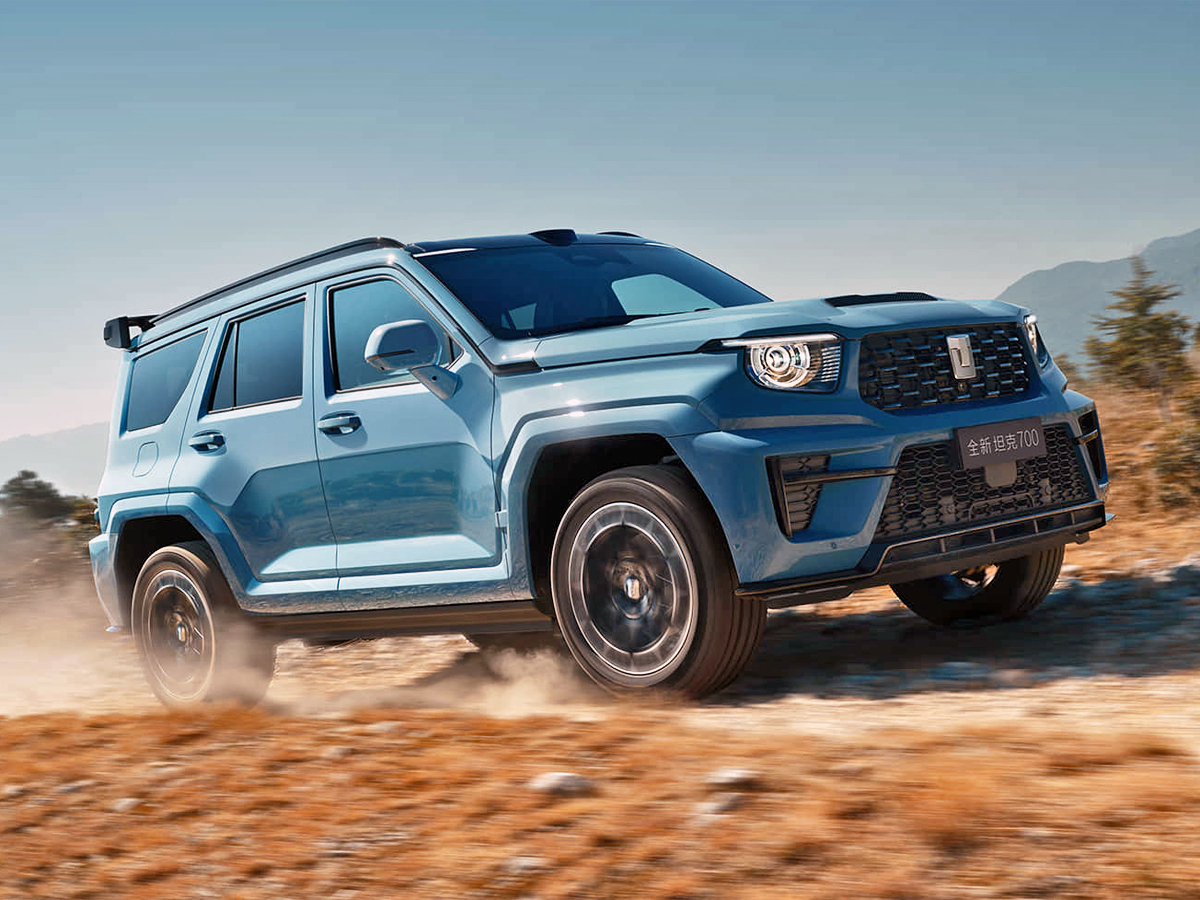
While Groenewald didn’t reveal which model would be powered by the new V8, GWM’s global chairman, Jack Wei, confirmed at the 2026 Beijing Auto Show in April that the Tank 700 was in line to adopt a newly developed 8-cylinder motor.
“In the future, the Tank 700 will also use a V8 engine. The supercar uses a high-performance V8, while the Tank 700 uses a normal V8,” Wei was quoted as saying in GWM Australia & New Zealand’s press material, suggesting the engine in question is distinct from the plug-in hybrid version unveiled at Auto Shanghai 2025.
“This is completely opposite to the current environment or trend in China; it does not fit the Chinese market. We developed this V8 to meet the needs of more global users, in markets such as Australia and New Zealand,” Wei added, making specific reference to these right-hand-drive countries.
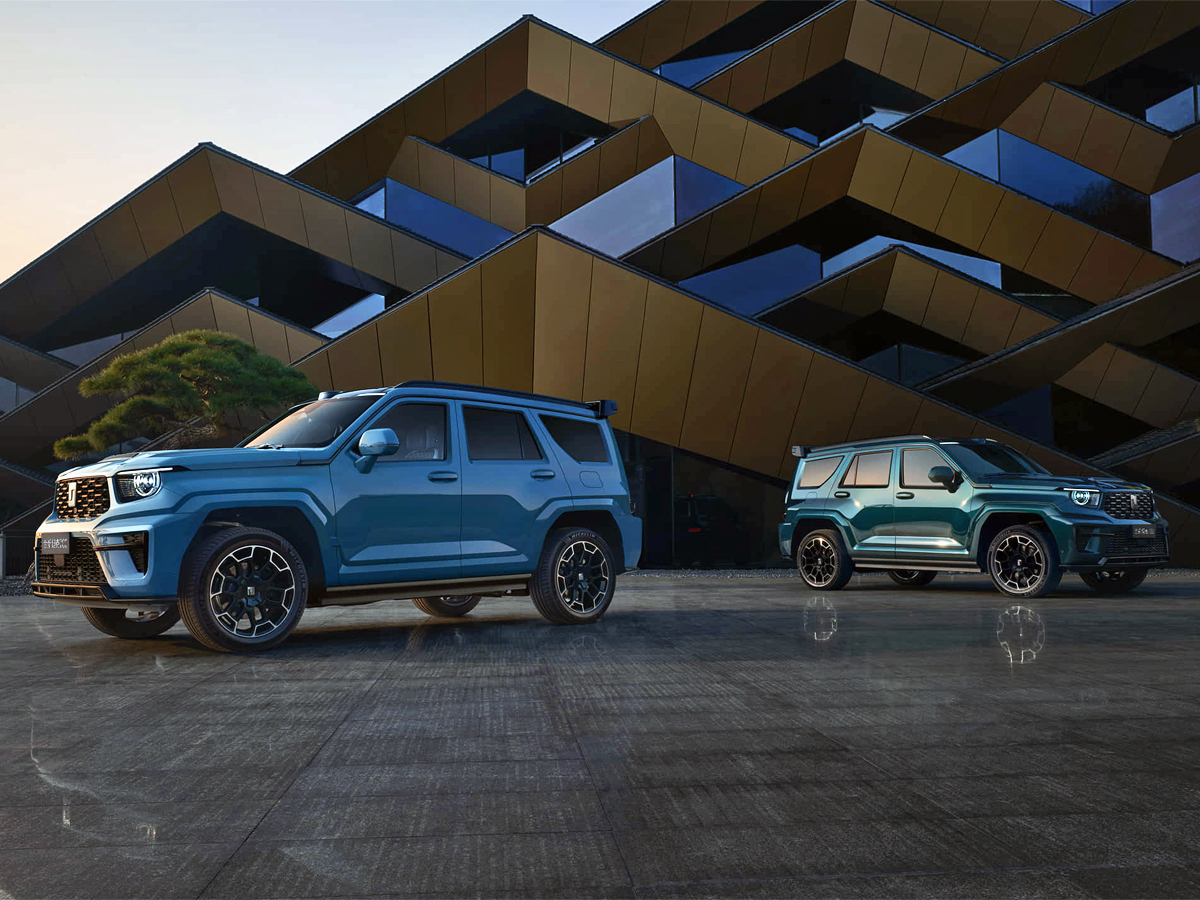
Groenewald earlier confirmed that GWM SA planned to expand its off-road-focused Tank range over the coming months, with the Tank 400 and aforementioned Tank 700 ladder-frame SUVs already locked in – and the upcoming Tank 800 under consideration as well.
In production since 2024, the Tank 700 measures 5 105 mm from bow to stern, making it a considerable 280 mm longer than the Mercedes-Benz G450d. It’s also 27 mm lengthier than the Tank 500 (and it’s worth keeping in mind the latter seats 7 occupants, while the Tank 700 is a strict 5-seater).
Interestingly, Groenewald furthermore revealed to Cars.co.za that, as part of GWM South Africa’s broader powertrain strategy, the company also planned to offer diesel hybrid technology locally at some point in 2027.
“The beauty of GWM is that we haven’t got an isolated view on just plug-in hybrids or EVs. We’ve [also] invested in diesel technology,” he said, making reference to the 3.0-litre turbodiesel engines being added to both the P500 and Tank 500 ranges.
“Then we’re heavily investing in diesel hybrid technology, which will be coming to South Africa by next year [2027]. So, we’re gearing up to give consumers a choice of products,” he said.
Frequently Asked Questions (FAQ)
Q: Is GWM bringing a 4.0-litre V8 engine to South Africa?
A: Yes, GWM South Africa’s Chief Operating Officer has confirmed to Cars.co.za that the brand is targeting a late-2027 local launch for its newly developed 4.0-litre V8 powertrain.
Q: Which vehicle model is expected to feature GWM’s new 4.0-litre V8 engine?
A: The flagship Tank 700 ladder-frame SUV is the most likely candidate to receive the new 4.0-litre V8 motor for right-hand-drive export markets, as confirmed by GWM’s global chairman.
Q: What other new powertrain technologies is GWM planning to introduce in South Africa?
A: Alongside its V8 plans, GWM SA is expanding its local line-up with 3.0-litre turbodiesel engines for the P500 and Tank 500 ranges, and plans to introduce diesel hybrid technology to South Africa in 2027, too.
The Hyundai Creta facelift has touched down in South Africa, bringing a new-look face, turbocharged N Line flagship and rationalised line-up. We take it for a quick drive.
Hyundai is the 4th bestselling passenger car brand in South Africa, a fact the Korean giant gently reminded us of at the media launch of its revised Creta. The brand hasn’t had much to talk about over the past 2 years, other than the local debut of the flagship Santa Fe hybrid.
In fact, this author’s last Hyundai event was back in 2024 for the special-edition Creta with matte paint. With the local arrival of both the updated Creta and Staria, Hyundai South Africa has embarked on a new-product offensive that will also include a new-generation Venue before the end of 2026 and the debut of the new Stargazer in early 2027.
What’s new?
The new-look Hyundai Creta facelift has been substantially overhauled, both inside and out. The biggest talking point is its front design, which adopts a lighting layout from the Alcazar, Santa Fe and, to a degree, the compact Exter.
The range has been rejigged, with 2 derivatives from the pre-facelift era falling away. Impressively, the Premium IVT derivative comes in at R45 000 less than the previous model, which is great for affordability. There’s a new flagship, too, in the form of a sporty-looking 1.5T N Line DCT that sees the return of turbocharged petrol power to the Creta line-up.
The N Line model gets some sporty touches in the form of 18-inch alloy wheels, subtle N Line badging, roof-mounted rear spoiler and twin exhausts, while the cabin gets some red stitching, sport seats, panoramic sunroof and gearshift paddles on the steering wheel. A Bose audio system is a pleasant premium touch at this price point.
In terms of powertrain, the naturally aspirated 1.5-litre petrol makes 84 kW and 144 Nm, driving the front wheels via a continuously variable transmission. The N Line Creta’s 1.5-litre turbocharged petrol engine makes 118 kW and 253 Nm, which reaches the front wheels via a 7-speed dual-clutch transmission.
What is the Hyundai Creta N Line like to drive?
We don’t know who decided to make compact and sensible city SUVs sporty, but we’re glad these products exist because they make the commute a bit more involving and lively. Granted, you’re not going to set speed records in this vehicle, but for point-to-point theatrics? Highly amusing.
The N Line model features various driving modes, but even in its default setting, the Creta feels eager. In-gear acceleration to triple-digit speeds is effortless and engagement via the steering-wheel paddles will put a smile on your dial. It’s no Suzuki Swift Sport, but in an era where grin-inducing vehicles are a rarity and reserved for millionaires, its great to see a brand trying to put some fun back into its products.
Given its sporty aspirations and the larger wheels, the N Line rides a little stiffer than its non-sporty counterpart. However, we feel the trade-off for a more dynamic driving experience is worth it.
Value is excellent, too, with very few tech, comfort and convenience features missing. Standout items include wireless Apple CarPlay/Android Auto, a full ADAS suite, plenty of USB charging ports both front and rear, as well as a panoramic sunroof.
How much does the Hyundai Creta facelift cost in South Africa?
The new Hyundai Creta is sold with a 7-year/200 000 km manufacturer’s warranty, 4-year/60 000 km service plan as well as 7-year/150 000 km roadside assistance.
Hyundai South Africa will be busy over the next year as it launches multiple vehicles across segments. Given our country’s affordability crisis, well-equipped and good-to-drive compact SUVs are the market’s sweet spot and vehicles like the Creta are Hyundai’s bread-and-butter. We’re keen to put the new Creta N Line through a full road test to see if the go matches the very impressive show.
What engine options power the Hyundai Creta in South Africa?
The Hyundai Creta range is offered in South Africa with two powertrain options: an entry-level naturally aspirated 1.5-litre petrol engine delivering 84 kW and 144 Nm paired with a CVT, and a flagship 1.5-litre turbocharged petrol engine in the N Line model producing 118 kW and 253 Nm mated to a 7-speed dual-clutch transmission (DCT).
How much does the Hyundai Creta cost in South Africa?
The Hyundai Creta lineup is structured into two main derivatives:
Hyundai Creta 1.5 Premium CVT: Priced from R434 900
Hyundai Creta 1.5T N Line DCT: Priced from R569 900
What features are included on the flagship Creta N Line?
The sportier N Line derivative features derivative-specific front and rear bumpers, twin exhaust pipes, 18-inch alloy wheels, a panoramic sunroof, a 360-degree camera system, N Line badging, and a full suite of Advanced Driver Assistance Systems (ADAS).
What is the fuel consumption of the Hyundai Creta?
The naturally aspirated 1.5-litre Premium CVT model features a claimed average combined fuel consumption of approximately 6.3 litres/100 km.
What warranty and service plan come standard with the Hyundai Creta?
All new Hyundai Creta models sold in South Africa include Hyundai’s signature 7-year/200 000 km manufacturer warranty, a 4-year/60 000 km service plan and 7-year/150 000 km roadside assistance.
New Renault Niagara double-cab bakkie revealed
The new Renault Niagara double-cab bakkie has finally been fully revealed, though there’s no mention of right-hand-drive production. Here’s what we know so far…
New Niagara revealed for Latin America
Payload capacity comes in at 654 kg
No talk of right-hand-drive production
Almost 3 years after the concept was unveiled, the new Renault Niagara double-cab bakkie has been fully revealed in production form – though the French brand has made it clear the unibody newcomer has been developed specifically for Latin American markets.
That, of course, suggests right-hand-drive production is unlikely (for the time being, anyway). Indeed, Renault mentions a trio of “main target markets” for the Niagara – Brazil, Argentina and Colombia – while also stating the bakkie will be exported to “a number of other Latin American countries at a later date”.
Seemingly offered exclusively in double-cab form, the Niagara is expected to replace the long-in-the-tooth Duster-based Oroch that also didn’t ever make it to South Africa. In Latin America, it will thus compete with the likes of the Fiat Toro, Ford Maverick and Ram Rampage, and perhaps even the (likely more compact but likewise box-fresh) Volkswagen Tukan.
So, we probably won’t be seeing the new Niagara on South African roads anytime soon, even though (as Cars.co.zareported in May 2024) the French automaker has indeed applied to trademark the “Niagara” badge here in Mzansi.
Still, it’s worth taking a closer look at Renault’s new unibody bakkie, which measures 4 942 mm long in 4×4 form (or some 30 mm shorter in 4×2 guise) and has a wheelbase of 2 956 mm. For reference, that makes it a considerable 408 mm shorter from snout to rump than the ladder-frame Ford Ranger double cab.
Based on the brand’s RGMP platform and seemingly related to the SA-bound Boreal crossover, the Niagara will be produced at the Santa Isabel plant in Córdoba, Argentina. It features a multi-link rear suspension set-up (as opposed to leaf springs) and has a payload capacity of 654 kg. In the 4×4 version, ground clearance comes in at 233 mm, while approach and departure angles are both 22.1 degrees.
Initially, the Niagara will be offered with a turbocharged 1.3-litre direct-injection petrol engine, delivering peak outputs of 116 kW and 270 Nm. This motor will be paired with either a 6-speed manual or dual-clutch automatic transmission with the same number of cogs. Interestingly, Renault says the platform is set up to accommodate a hybrid powertrain “at a later date”.
Inside, the 5-seater Niagara double cab offers a 10.1-inch touchscreen (running Renault’s latest “OpenR Link” multimedia system, complete with integrated Google services), a 10.2-inch digital instrument cluster, a reclining rear bench and a raft of advanced driver assistance system (ADAS) functions.
Frequently Asked Questions (FAQ)
Q: Will the new Renault Niagara double-cab bakkie be sold in South Africa?
A: It is unlikely to launch in South Africa anytime soon, as Renault developed the Niagara specifically for Latin American markets (such as Brazil, Argentina, and Colombia) with no current announcement regarding right-hand-drive production.
Q: What are the dimensions, platform and payload specs of the Renault Niagara?
A: Built on Renault’s RGMP unibody platform, the Niagara measures 4 942 mm in length (4×4) with a 2 956 mm wheelbase. It features a multi-link rear suspension, a 654 kg payload capacity, 233 mm of ground clearance (4×4) and 22.1-degree approach and departure angles.
Q: What engine and transmission options power the new Renault Niagara?
A: At launch, the Niagara is powered by a 1.3-litre turbocharged direct-injection petrol engine producing 116 kW and 270 Nm, paired with either a 6-speed manual or 6-speed dual-clutch automatic transmission. A hybrid powertrain option is expected at a later date.