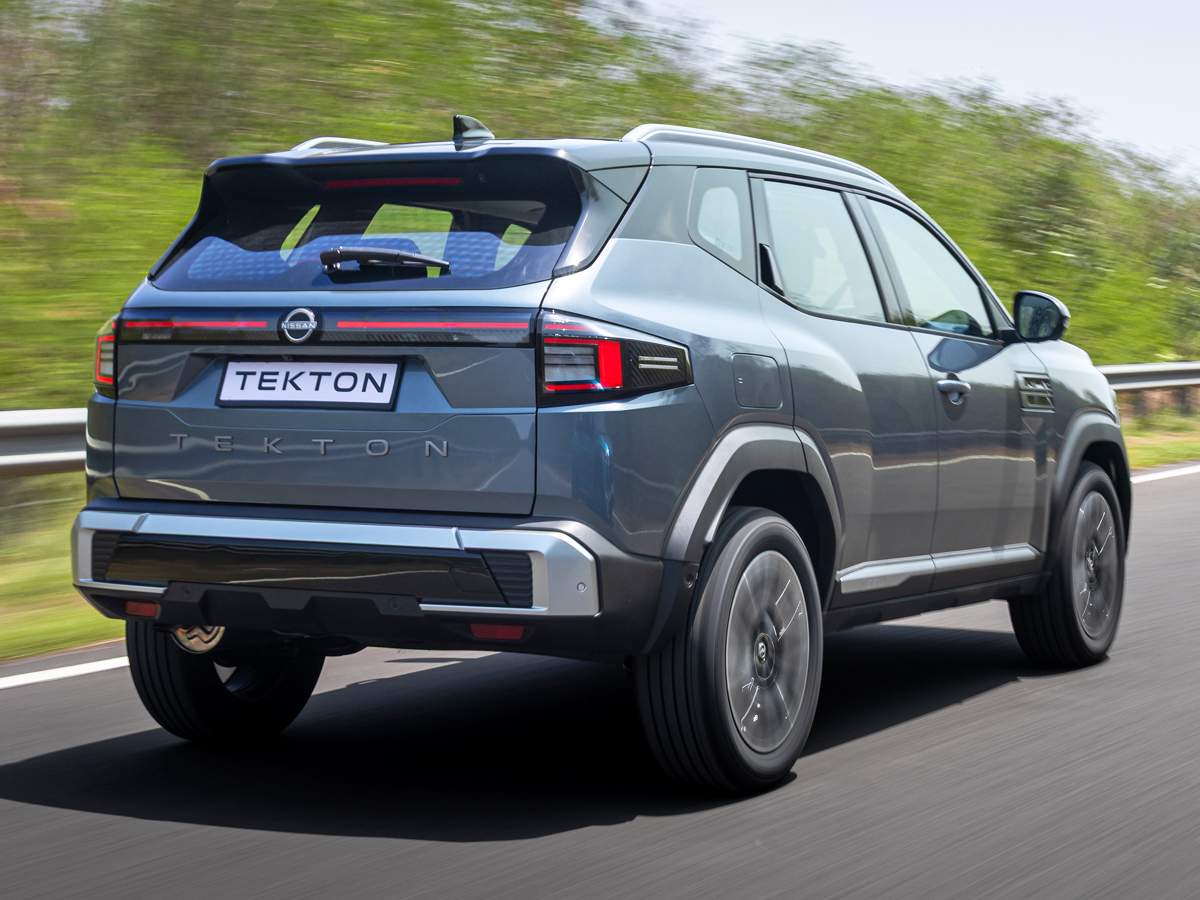
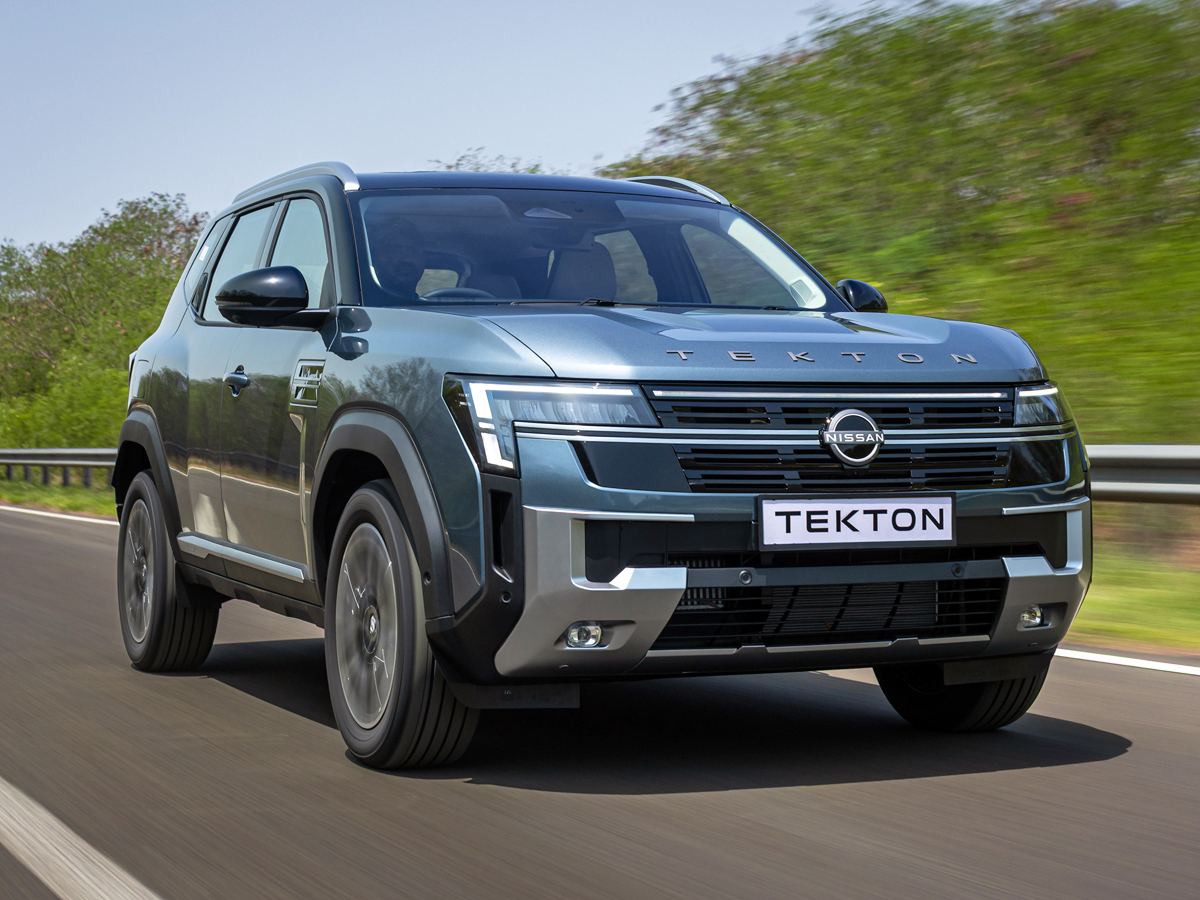
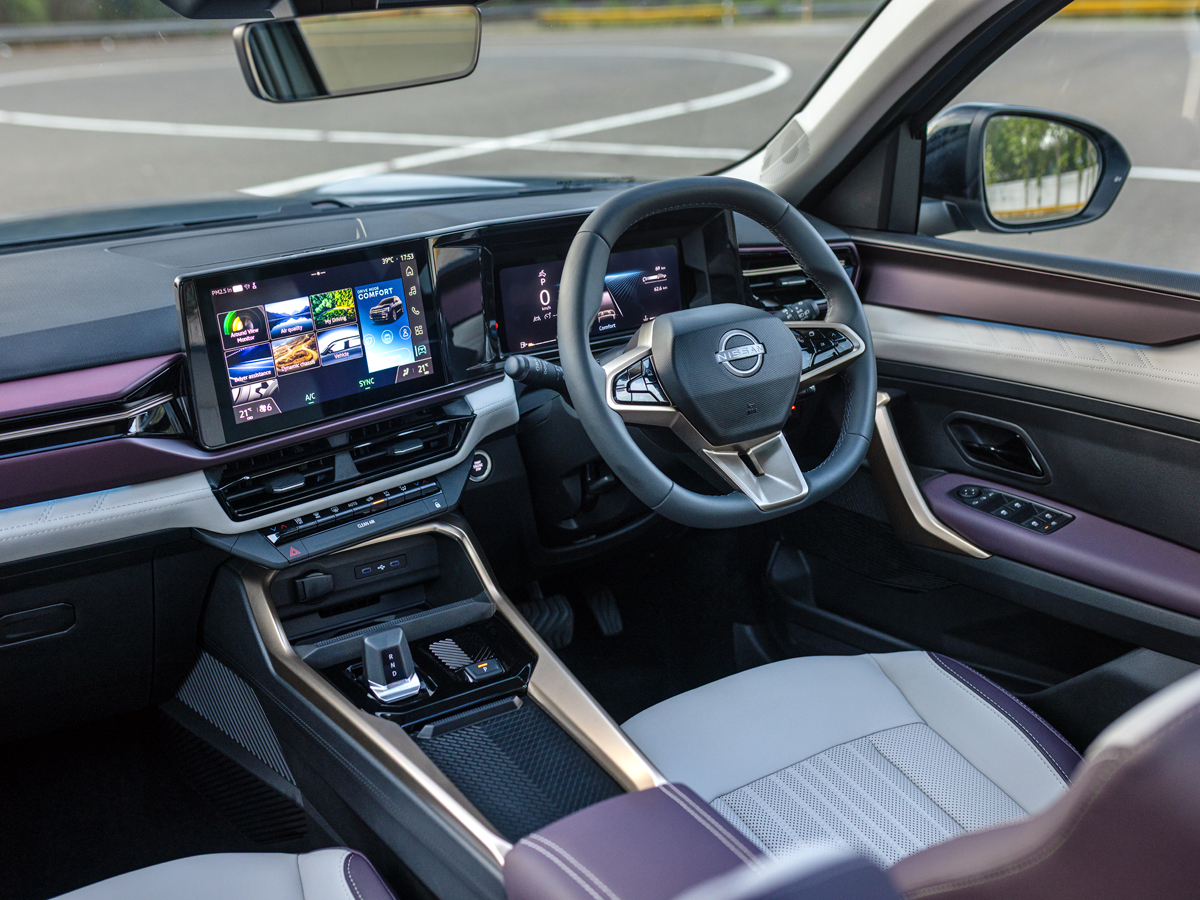
The new Nissan Tekton has arrived in South Africa, based on the Renault Duster and slotting between the Magnite and X-Trail. Here’s what the newcomer costs…
Duster-based Tekton arrives in SA
5 derivatives available from launch
Base variant employs 1.0T and 6MT
All other derivatives use 1.3T 6DCT
The new Nissan Tekton has touched down in South Africa, positioned between the Japanese brand’s Magnite and X-Trail. If the newcomer’s general proportions look decidedly familiar, that’s because it’s based squarely on the Renault Duster.
Riding on the Renault-Nissan-Mitsubishi Alliance’s CMF-B platform, the new Tekton (revealed as recently as July 2026) is built alongside the Duster in India. As a reminder, Renault SA recently switched from the Romanian-built Duster to the far more affordable Chennai-made version.
Like the Duster, the new Tekton – which effectively arrives as a long-awaited though far more competitively priced replacement for the locally discontinued Qashqai – employs a 2 657 mm wheelbase. Measuring 4 349 mm from front to back, Nissan’s crossover is 3 mm longer than the Renault-badged version. Ground clearance is listed as 212 mm, while luggage space is a claimed 518 litres (up to the parcel shelf).
At launch in South Africa, the local Tekton line-up comprises 5 derivatives, with pricing running from R339 999 to R529 999 (for the record, the 6-strong Duster portfolio ranges from R339 999 to R499 999). It’s worth noting that the J12-series Qashqai that was axed in mid-2024 had been pricing bookends as lofty as R568 200 and R670 600.
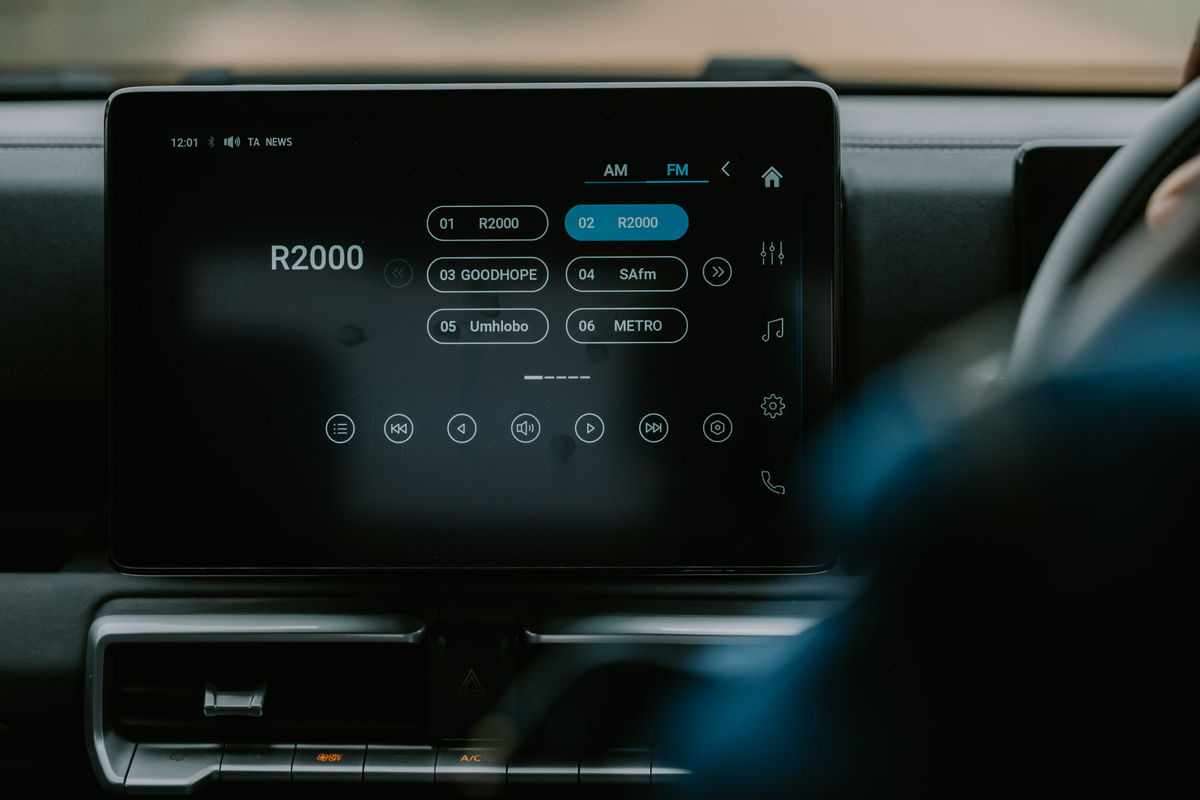
The new range kicks off with the Tekton 1.0T Visia 6MT (wearing the “T160” badge), priced from R339 999 and thus overlapping with top-spec versions of the Magnite. This entry-level derivative employs a turbocharged 1.0-litre, 3-cylinder petrol mill that delivers 74 kW and 160 Nm to the front wheels via a 6-speed manual gearbox (with a claimed consumption of 5.9 L/100 km). It makes do with 17-inch steel wheels, rear drum brakes and black-and-grey fabric upholstery, but does score a 10.1-inch touchscreen, a reverse-view camera, electronic stability control and 6 airbags.
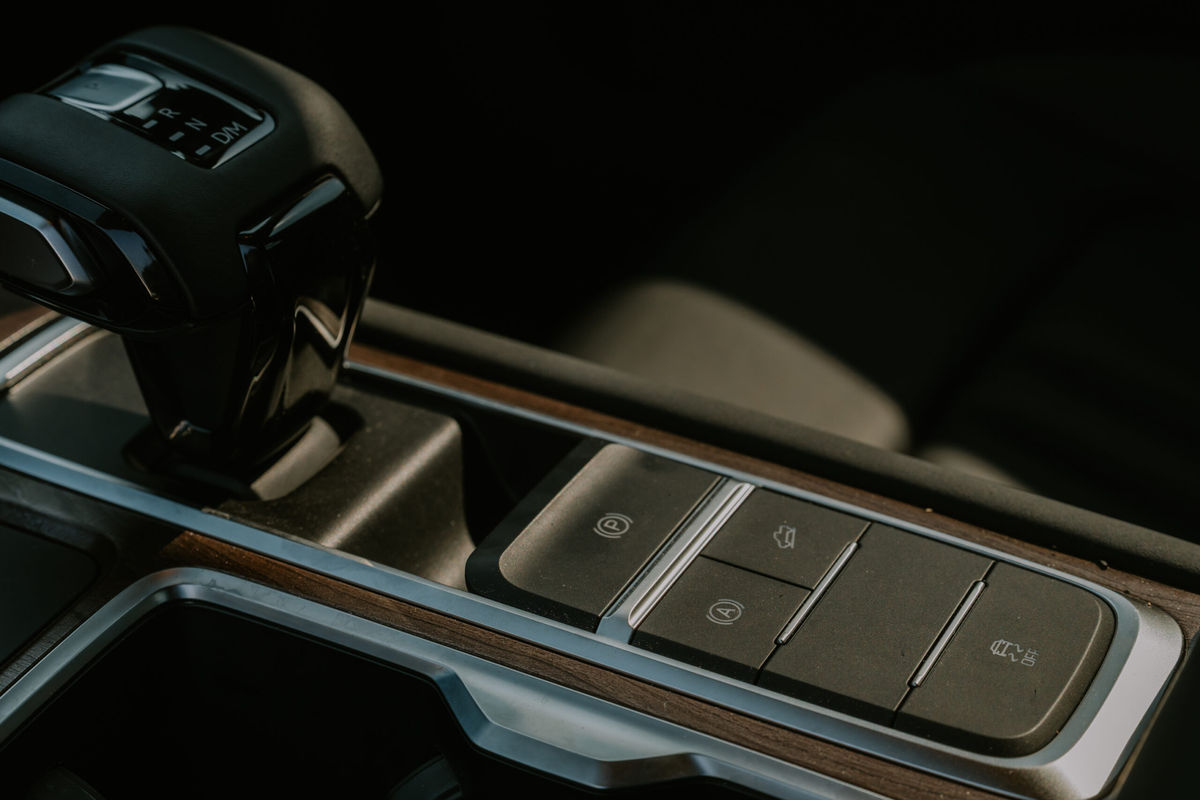
The Tekton 1.3T Visia 6DCT (R399 999) is next, switching to a turbocharged 1.3-litre, 4-cylinder petrol motor (badged as the “T260”) that offers 115 kW and 260 Nm to the front axle through a 6-speed dual-clutch transmission as standard. This variant gains features such as cruise control, paddle shifters and an electric parking brake with an auto-hold function (plus discs rather than drums at the rear). Claimed fuel economy comes in at 6.3 L/100 km.
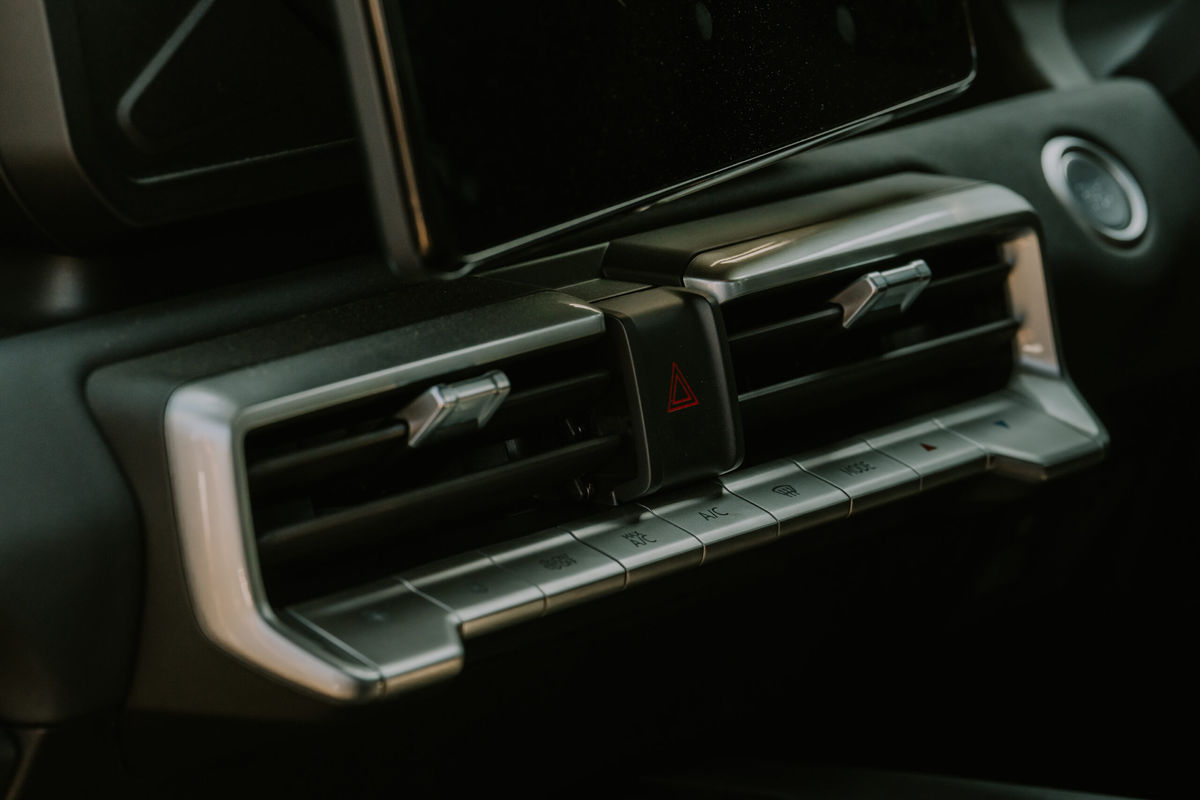
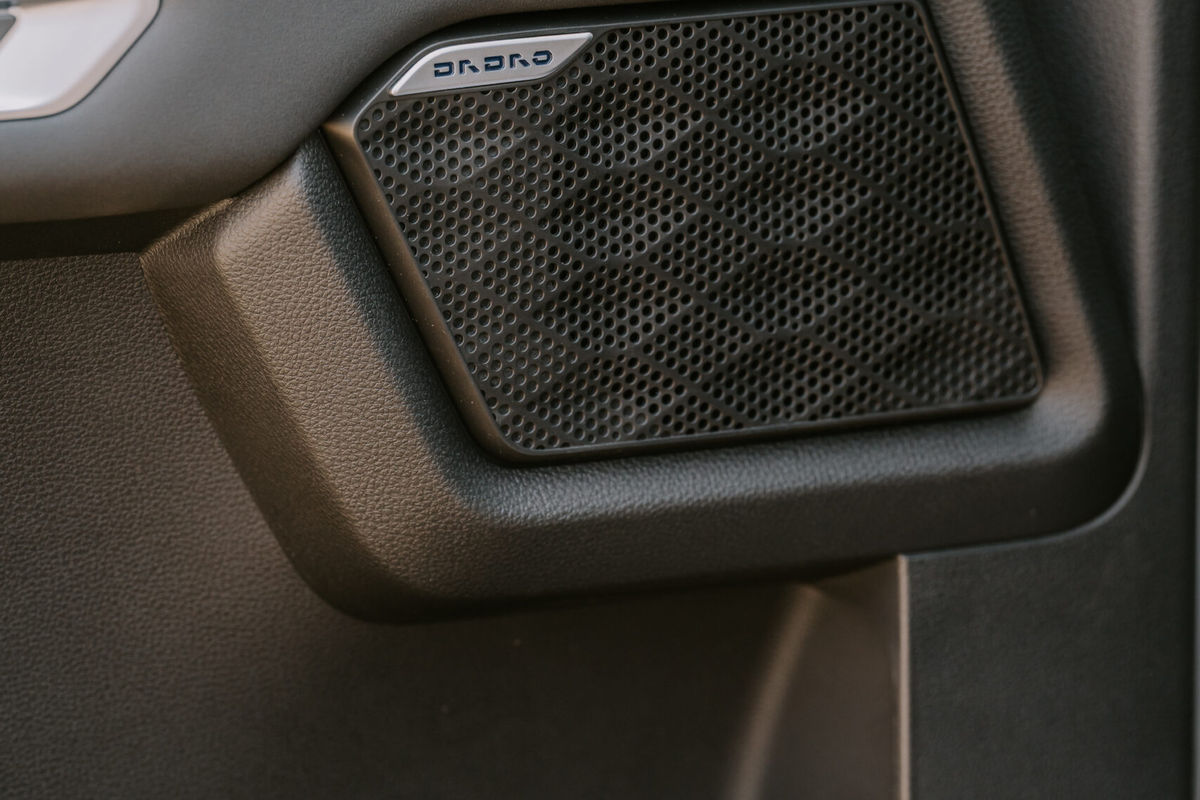
The Tekton 1.3T Acenta 6DCT slots into the middle of the portfolio, priced from R459 999. This trim level upgrades to 18-inch alloy wheels, a panoramic sunroof, push-button start, dual-zone automatic air conditioning (as opposed to manual air con), a larger instrument cluster (measuring 10 inches as opposed to 7), wireless smartphone charging, a multi-view camera system, 2 tweeters (for the 4-speaker sound system) and blue-and-black “semi-PVC” upholstery.
Meanwhile, the Tekton 1.3T Tekna 6DCT comes in at R499 999, gaining full-PVC upholstery (in a navy-blue-and-black combination), a powered driver’s seat, front-seat ventilation, rain-sensing wipers, 48-colour ambient lighting and a raft of advanced driver-assistance system (ADAS) features. Finally, the Tekton 1.3T Tekna+ 6DCT tops the range at R529 999, set apart by its powered tailgate, black roof and beige-and-burgundy cabin colour scheme.
What does the new Nissan Tekton cost in SA?
DERIVATIVE
PRICE
Tekton 1.0T Visia 6MT
R339 999
Tekton 1.3T Visia 6DCT
R399 999
Tekton 1.3T Acenta 6DCT
R459 999
Tekton 1.3T Tekna 6DCT
R499 999
Tekton 1.3T Tekna+ 6DCT
R529 999
The prices above include Nissan’s 6-year/150 000 km warranty and a 4-year/60 000 km service plan.
Frequently Asked Questions (FAQ)
Q: What does the new Nissan Tekton cost in South Africa?
A: Pricing for the Nissan Tekton range starts at R339 999 for the 1.0T Visia 6MT and goes up to R529 999 for the flagship 1.3T Tekna+ 6DCT.
Q: What platform and engines power the Nissan Tekton?
A: Built on the Renault-Nissan-Mitsubishi Alliance’s CMF-B platform (shared with the Renault Duster), the Tekton offers a 1.0-litre 3-cylinder turbopetrol (74 kW/160 Nm) mated to a 6-speed manual, or a 1.3-litre 4-cylinder turbopetrol (116 kW/260 Nm) paired with a 6-speed dual-clutch transmission (6DCT).
Q: Where does the Tekton slot in Nissan’s local line-up?
A: The Tekton replaces the discontinued Qashqai as a competitively priced crossover slotting between the entry-level Magnite and the larger X-Trail.
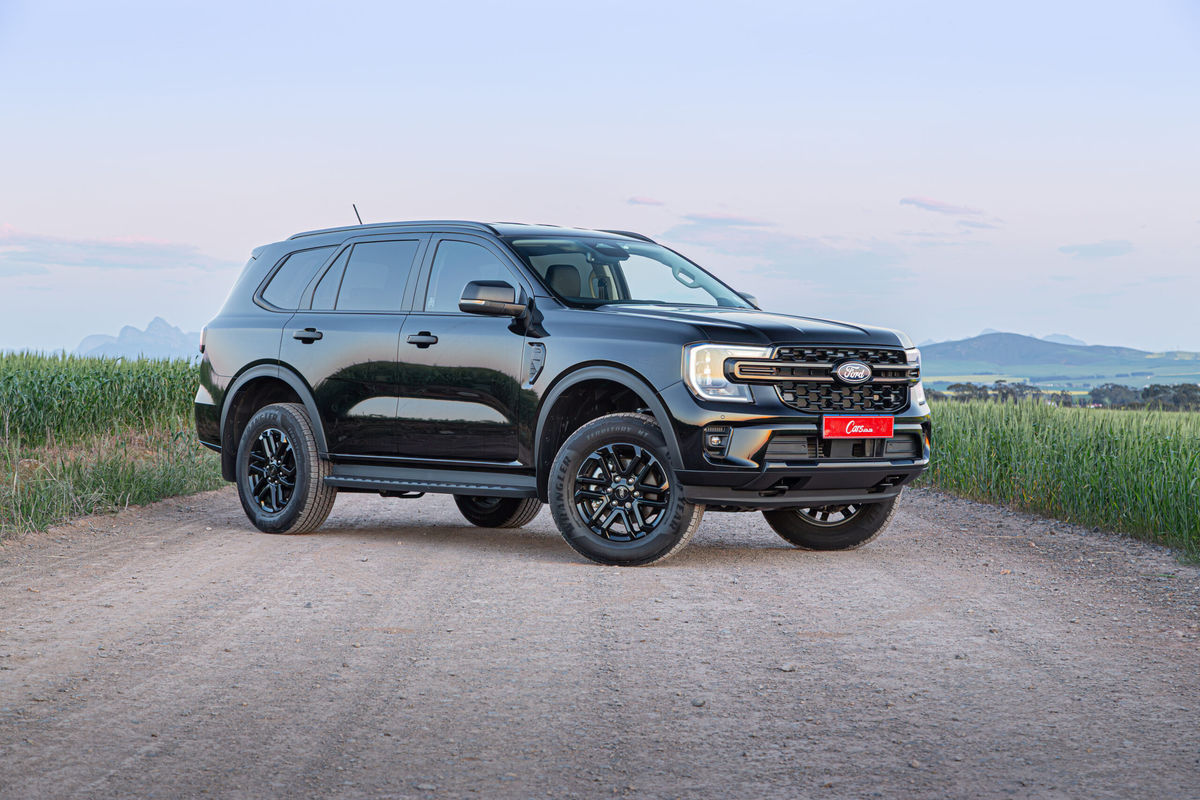
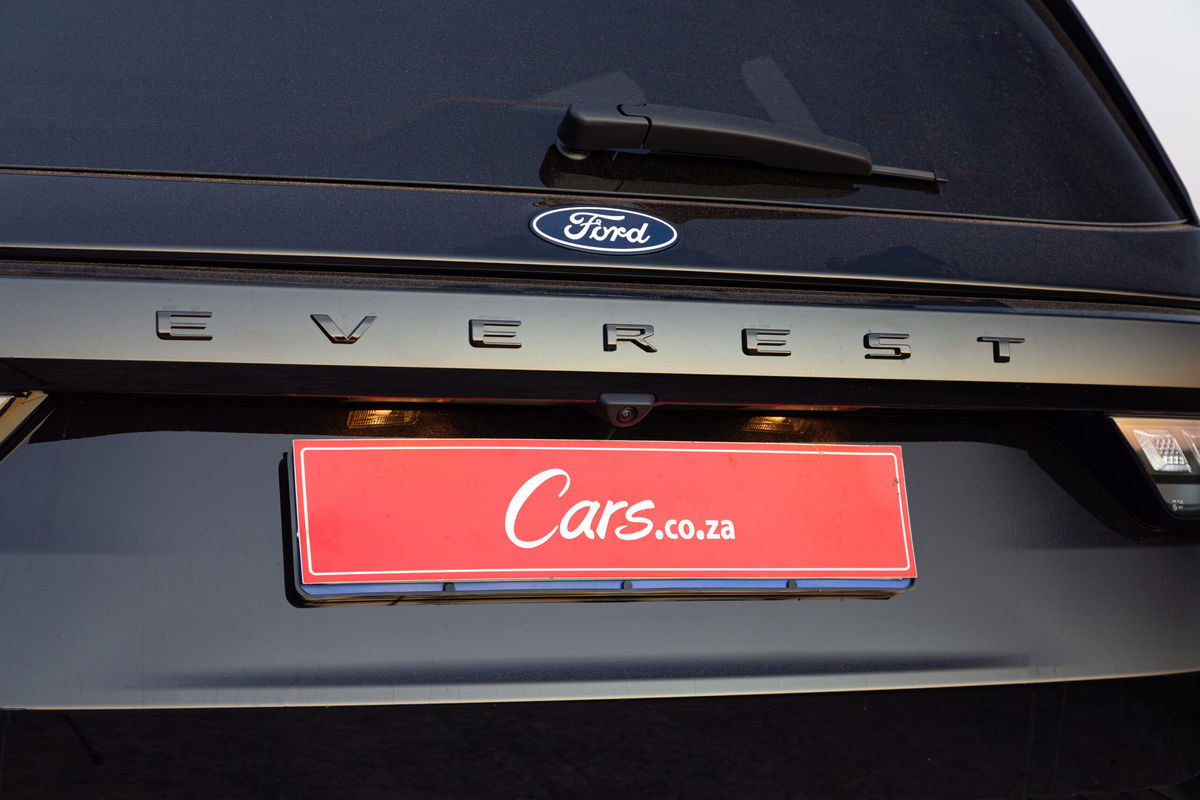
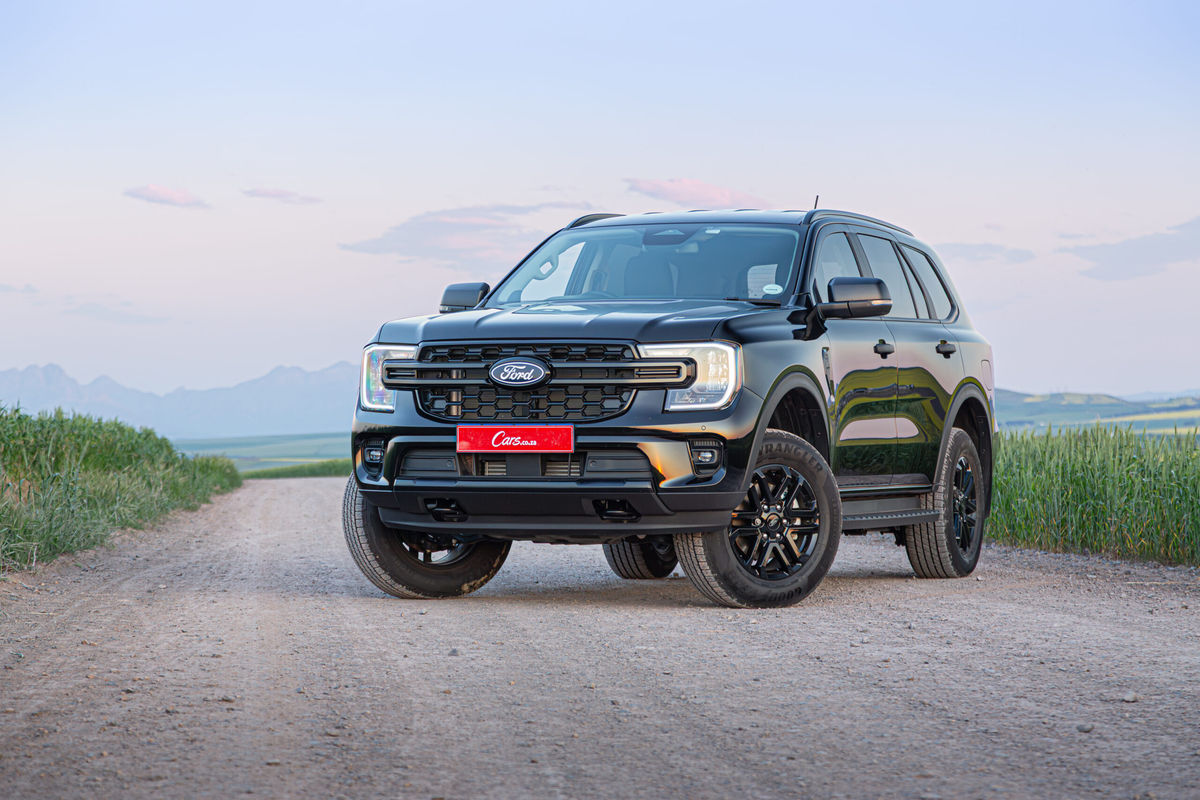
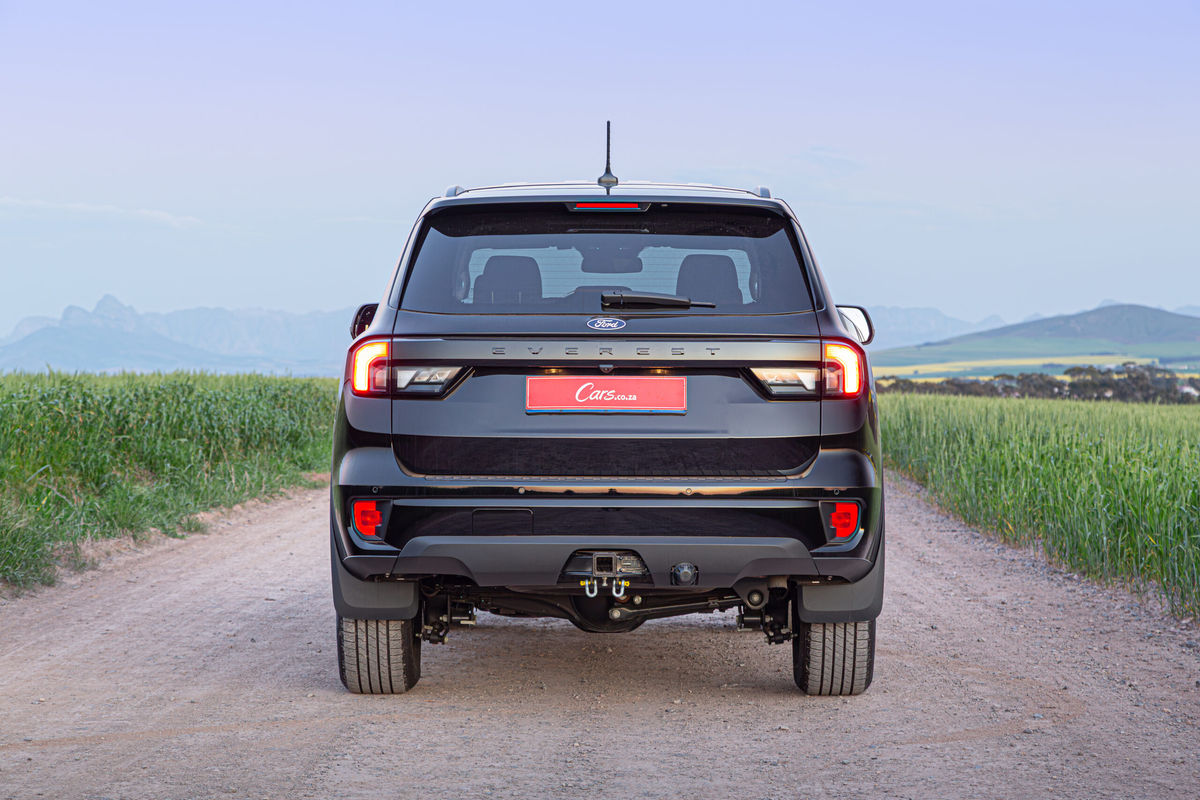
The Ford Everest 2.0 SiT is the new entry-level derivative for the Blue Oval’s 3-row family SUV, coming to market comfortably under R1 million. We take the Active 4×4 for an extended test drive.
We like: Efficient and refined powertrain; impressive value for money; off-road talents aplenty; practicality.
We don’t like: Not the quickest; gearbox arguably has too many ratios.
The Ford Everest 2.0 SiT is the new entry point into the Blue Oval’s 3-row, bakkie-based SUV family. The entire Everest range was facelifted earlier this year, with the line-up reshuffled. The XLT derivative fell away and the 2.0-litre biturbo-diesel powertrain was discontinued after wet belt longevity issues. In its place is the updated 2.0-litre single-turbodiesel which uses a chain, which should be more resilient in the long run.
The new 2.0 SiT Active lowers the starting price by a considerable R128 000. It always puts a smile on our faces when newer models are priced lower than their outgoing derivatives.
What else is new on the facelifted model? Well, visually it’s just the big, new-look Ford logo on the front, with major changes having been made to the specification (it’s been enhanced) and, of course, the engine line-up.
When it comes to traditional rivals, the Everest goes up against the Isuzu MU-X and Toyota Fortuner.
Given the changes to the engine line-up, it seems the logical place to start this assessment. We’ll miss the grunt of the 2.0-litre biturbo, but the single-turbo setup is commendable in other ways. Yes, it may be down on power with only 125 kW/405 Nm in comparison to the outgoing model’s 154 kW/500 Nm, but this new-gen engine feels sufficiently sprightly, plus it’s quieter and, dare we say it, a touch smoother than the BiT.
A technical deep dive into this upgraded engine turned up an interesting quote from Pritika Maharaj, the Ranger, Everest and Raptor Chief Engineer at Ford Motor Company Australia. “The 2.0-litre turbo is our most responsive diesel yet. We’ve upgraded the fuel system, so we’ve got new fuel injectors and a new fuel pump, and we’ve moved from the wet belt to a chain drive,” Maharaj said. Ford has also added new pistons and there’s a recalibration on both the engine and transmission.
So, while it’s smoother and quieter, what do the testing figures say? Ford Motor Company Southern Africa doesn’t quote performance figures, but our data logger recorded a 12.08-second run to 100 kph. As a frame of reference, the biturbo Everest Sport ran 9.85 seconds to 100 kph back in 2023. Yes, the new model is notably slower, but in day-to-day driving, it doesn’t feel sluggish.
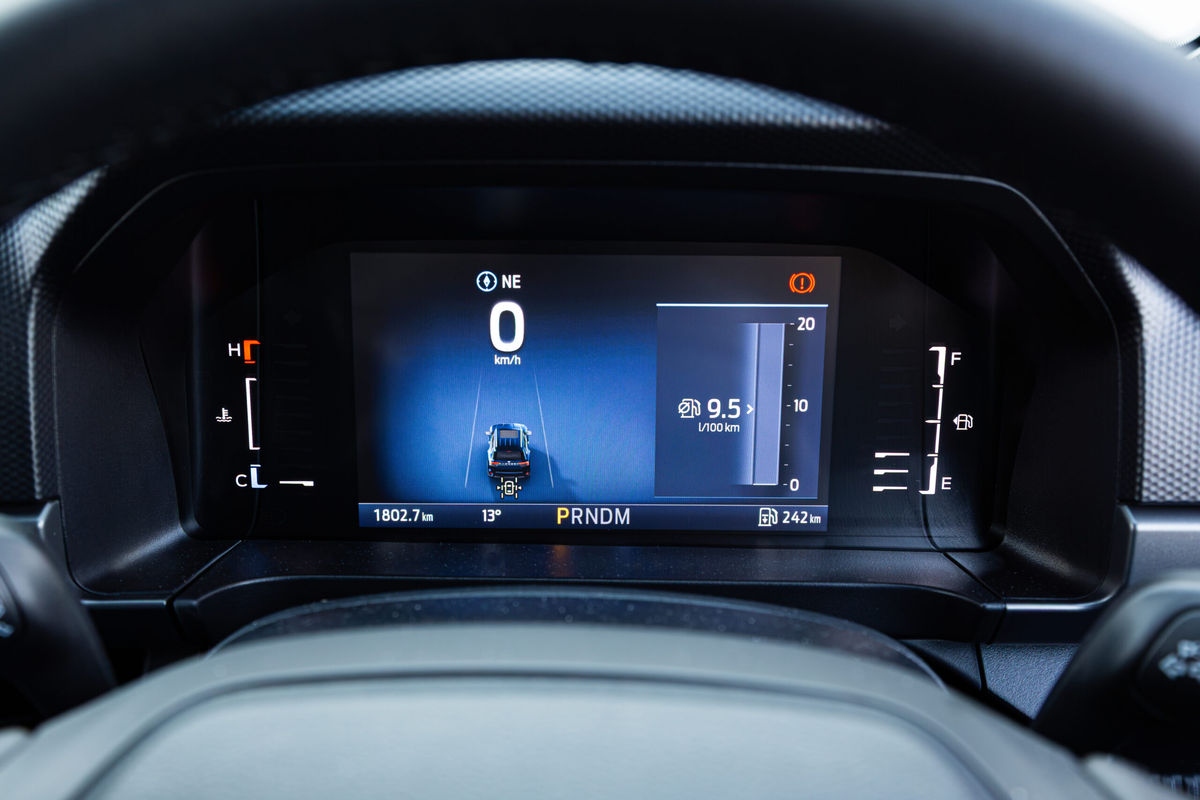
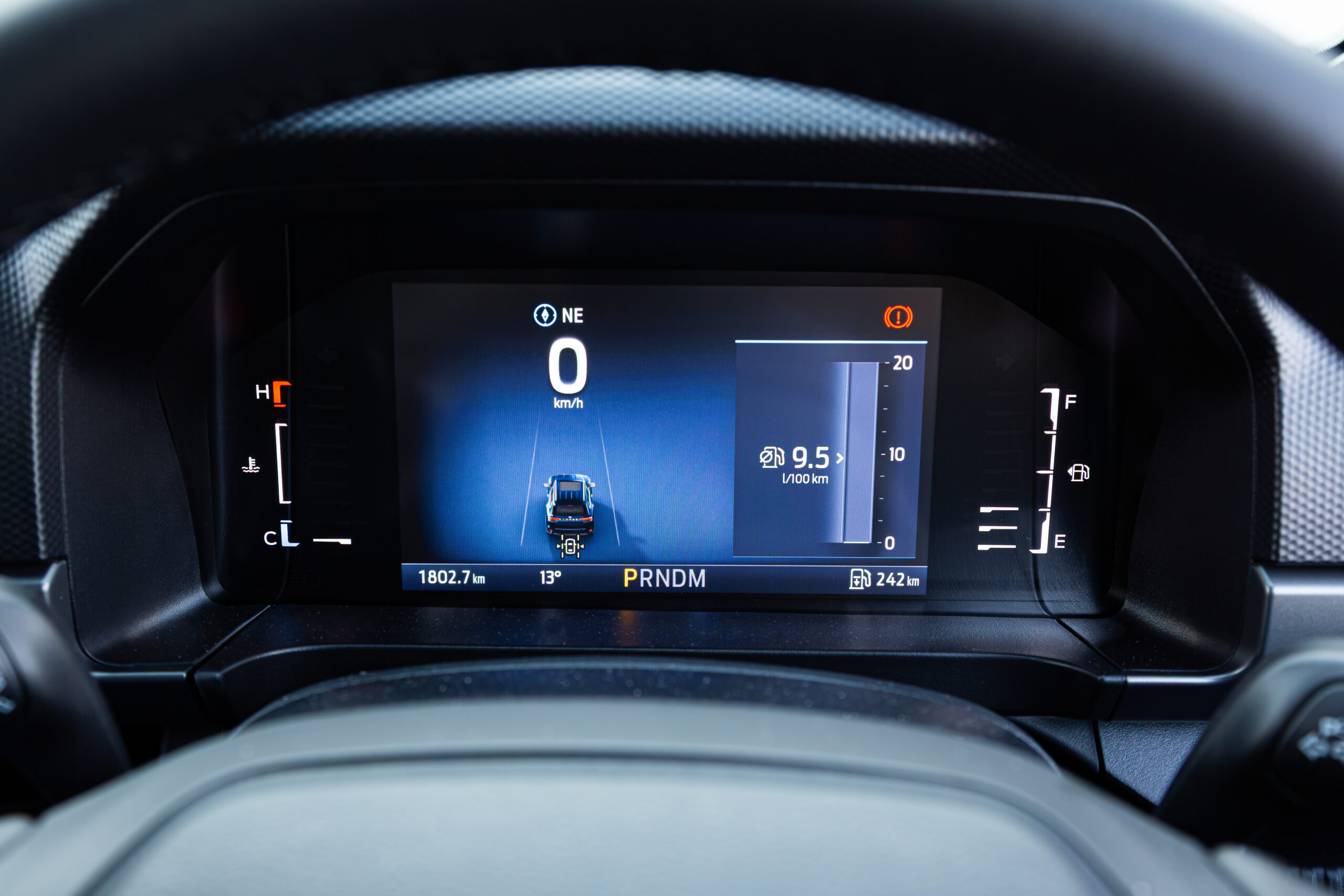
Where this powertrain truly shines is in the economy department. While we were some way off Ford’s optimistic claim of 7.9 L/100 km, we managed a respectable 9.5 L/100 km in mixed-use scenarios. We reckon that extended open-road adventures will see that figure drop to 8.0 L/100 km. An 80-litre fuel tank gives the Everest a claimed range of over 1 000 km.
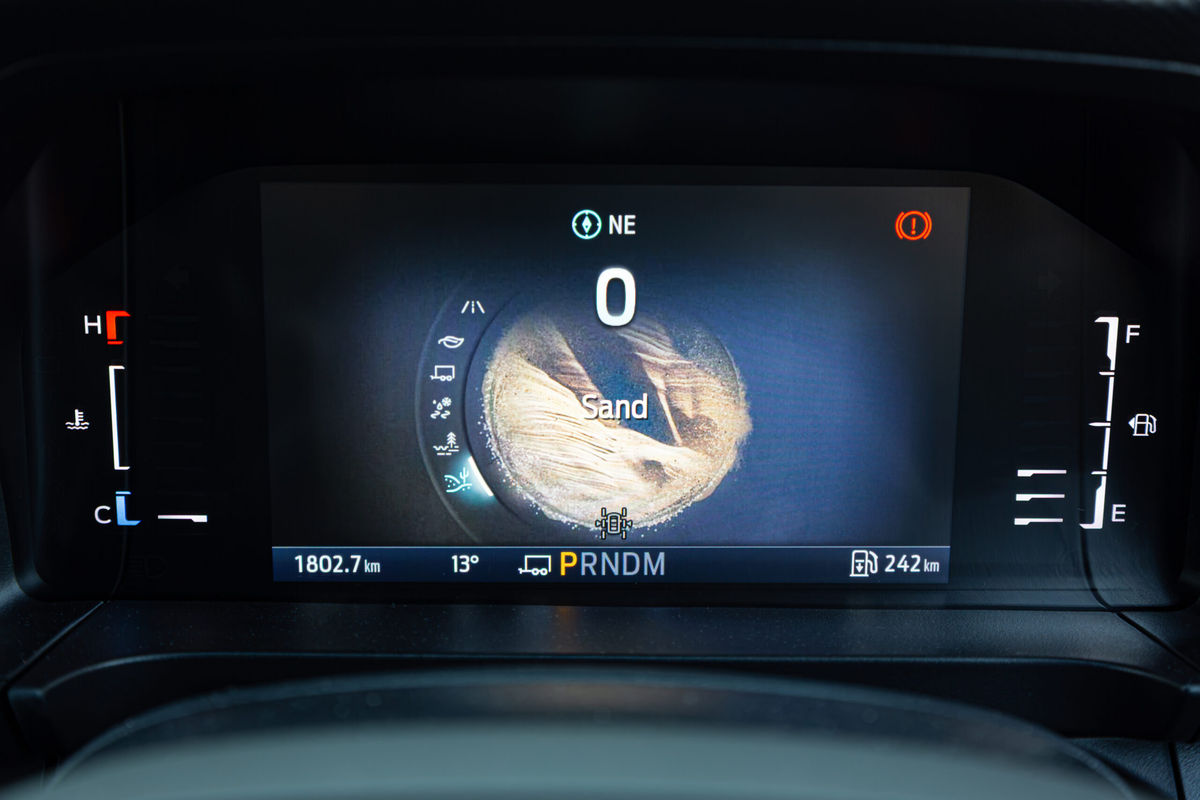
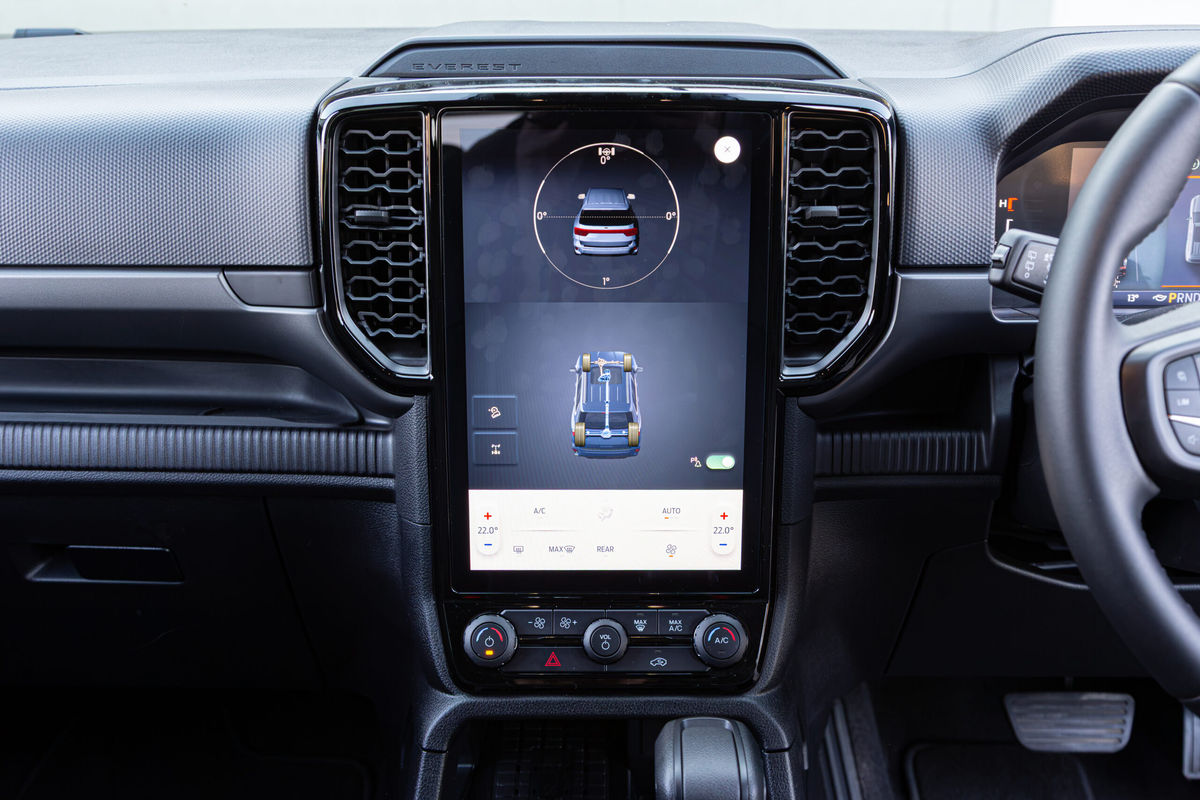
The vehicle features the usual fare of driving modes like normal and eco, and a bevy of off-road and towing settings remove complexity from off-tar excursions. In our minds, normal mode is generally good enough for 99% of scenarios. Downsides?
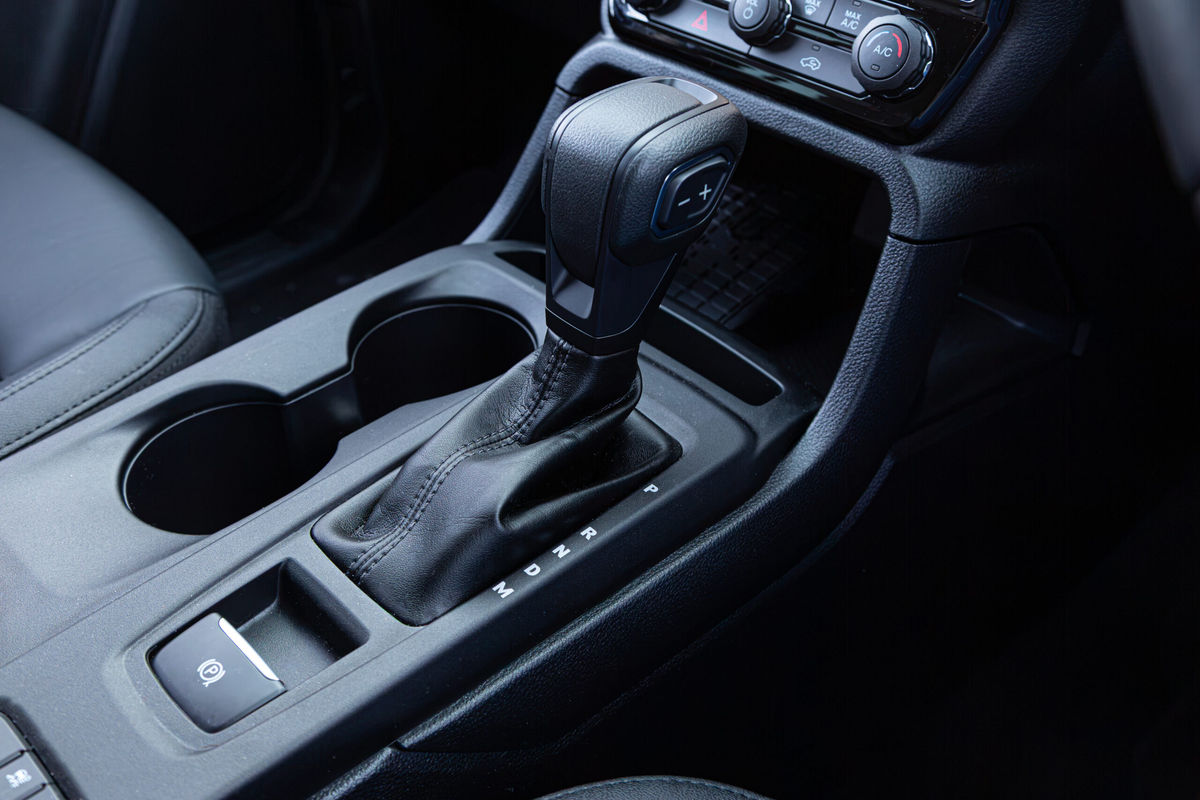
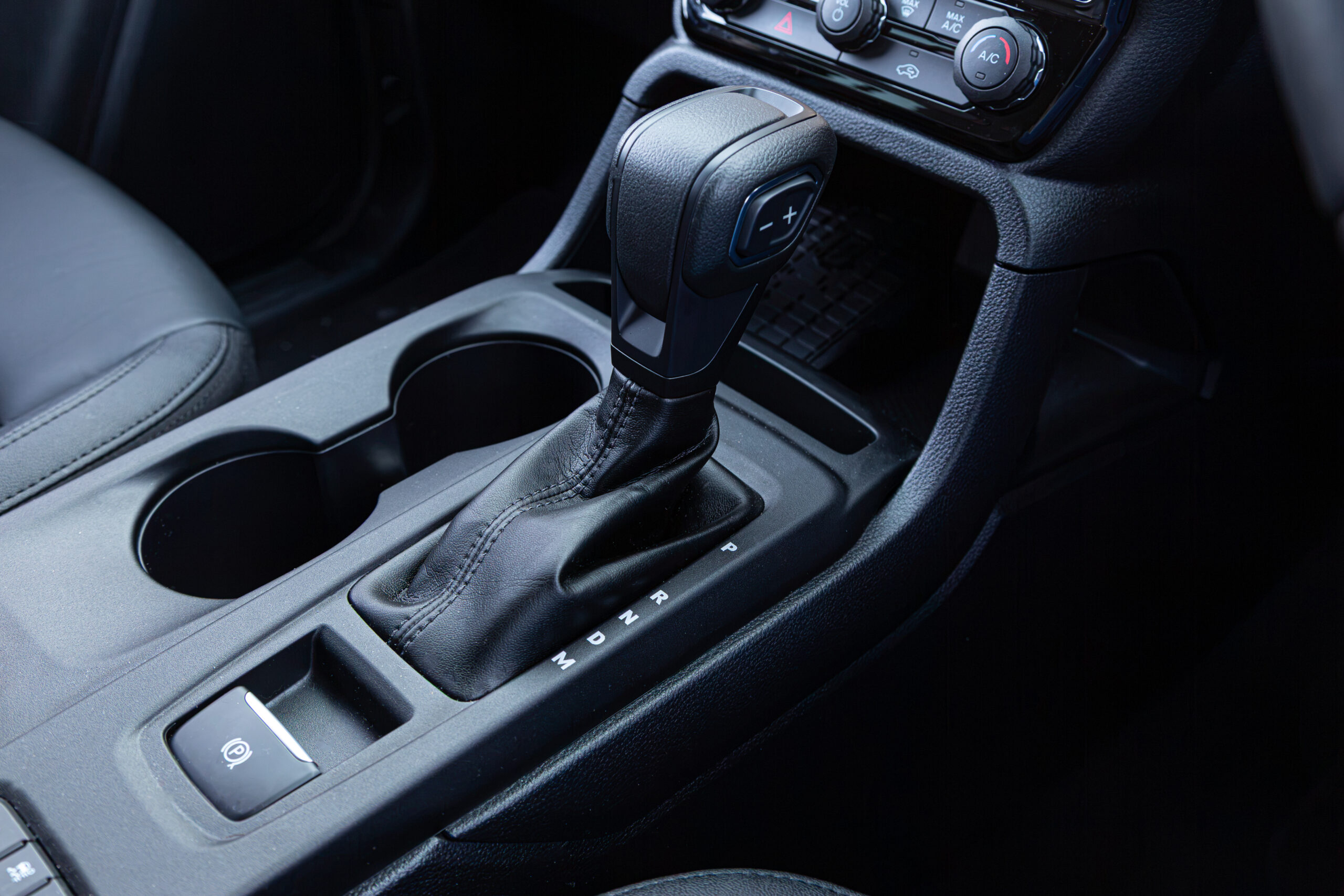
While not specific to this Everest, we still maintain there are a couple too many ratios in Ford’s 10-speed automatic transmission and the car’s forward progression can be interrupted when it has to change down multiple cogs. However, the ‘box has its advantages; it keeps the engine in the optimum powerband, which helps with economy and towing. Speaking of towing, Ford claims a 3.5-ton rating, but we think you should go for the more muscular V6 diesel if you’re doing this regularly.
Design & Packaging
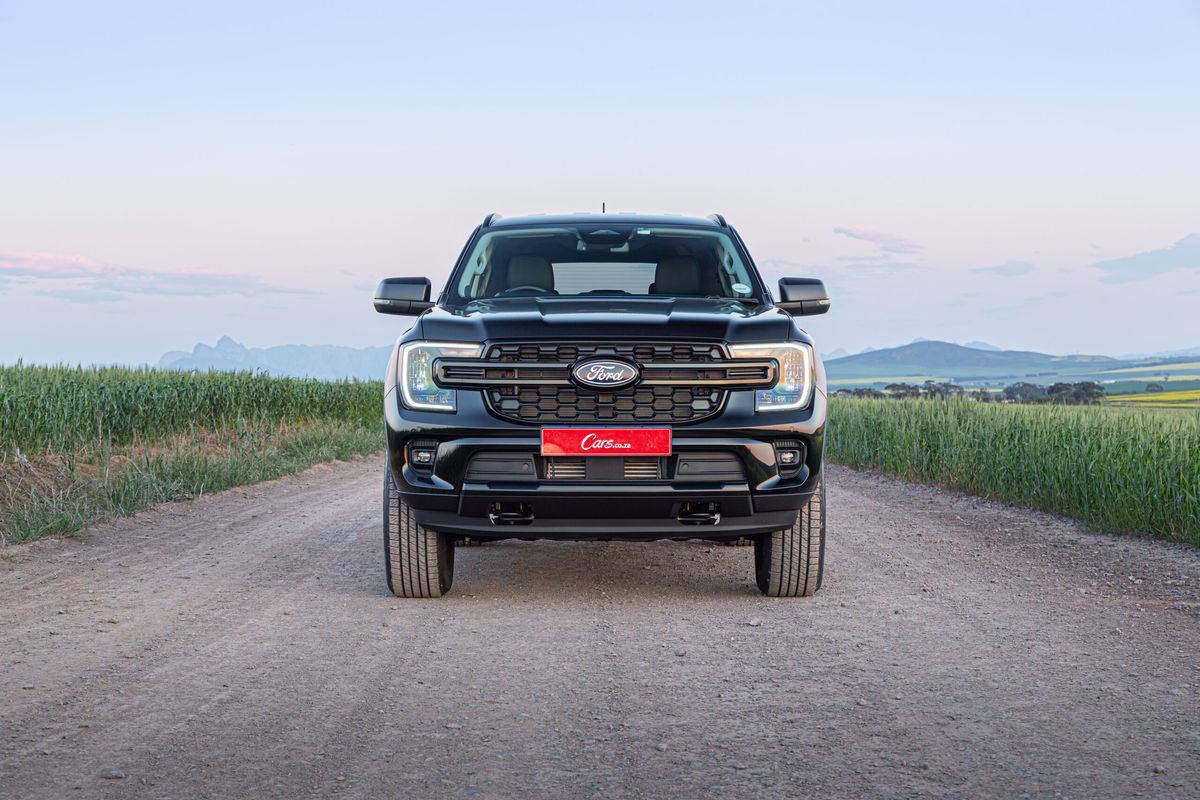
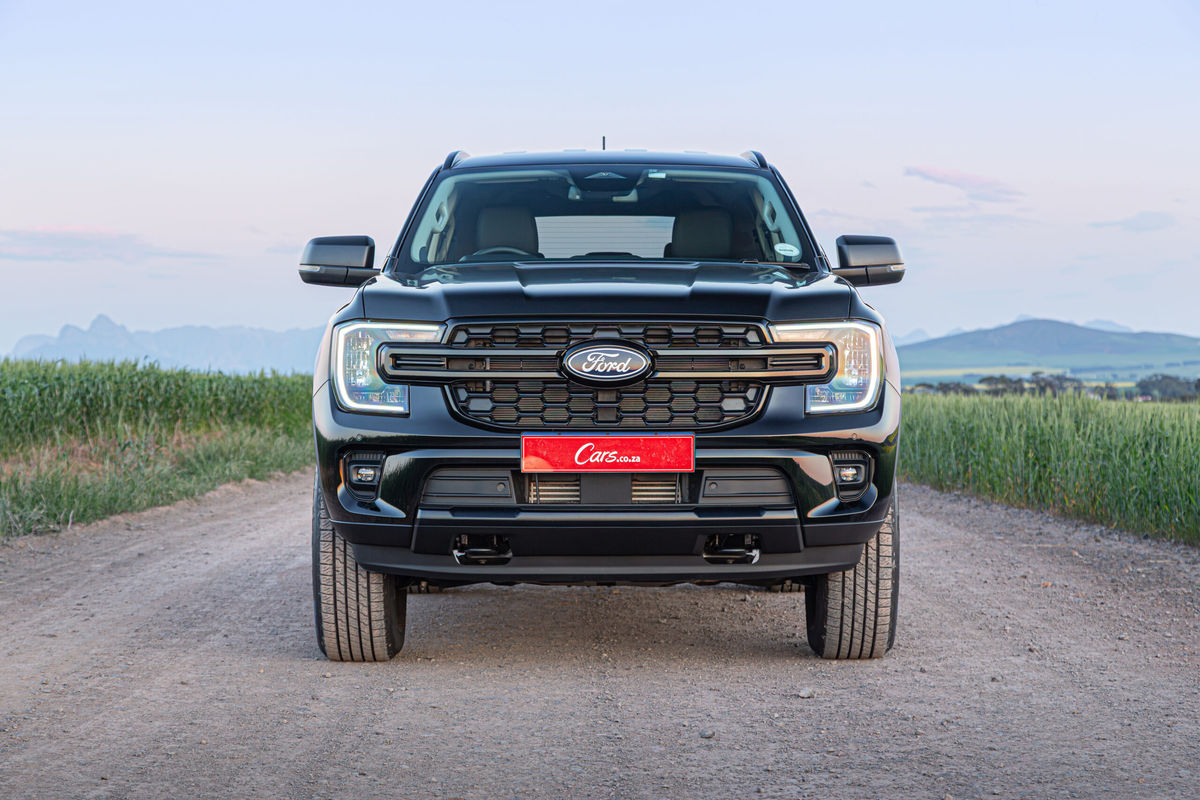
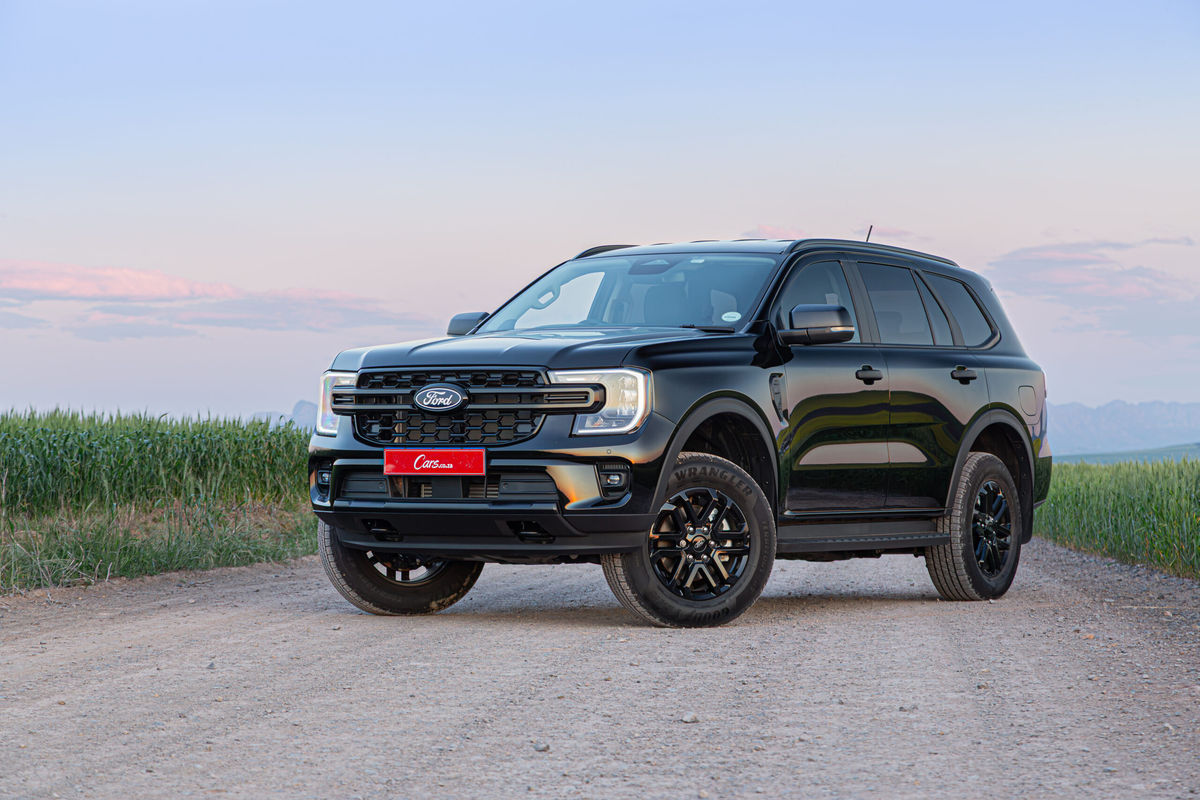
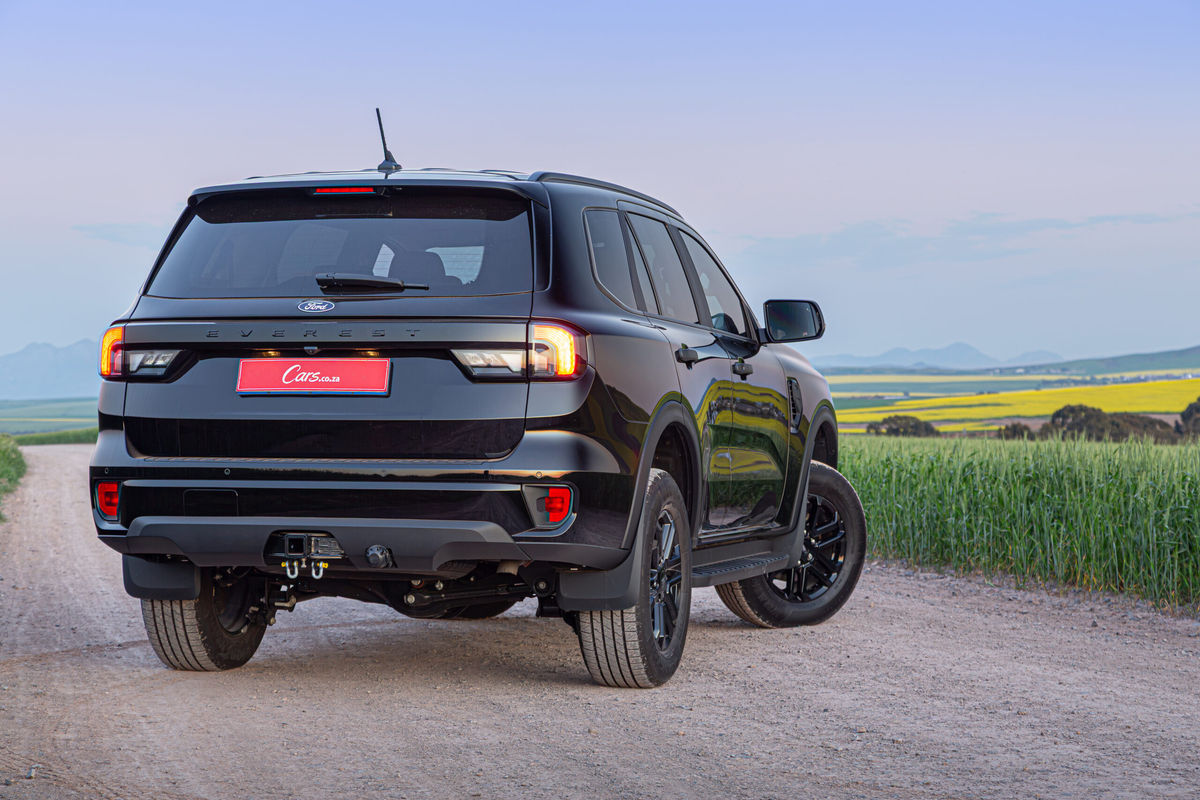
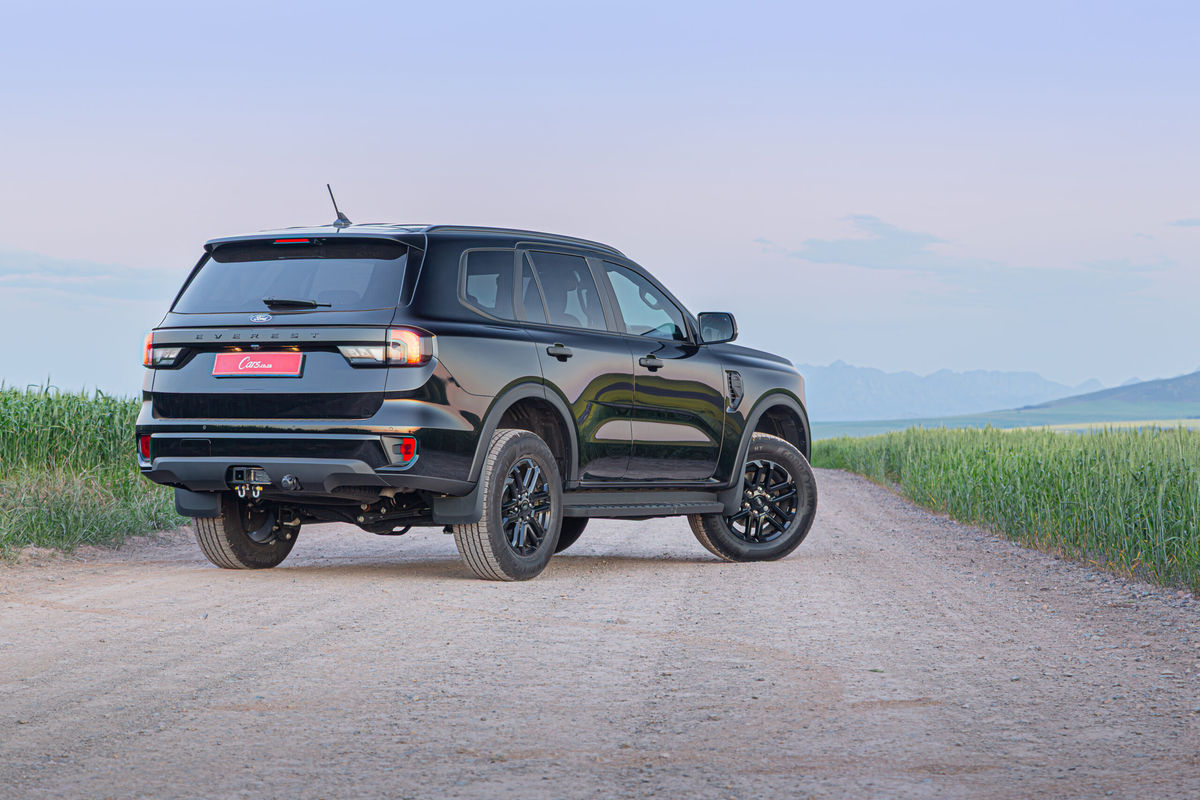
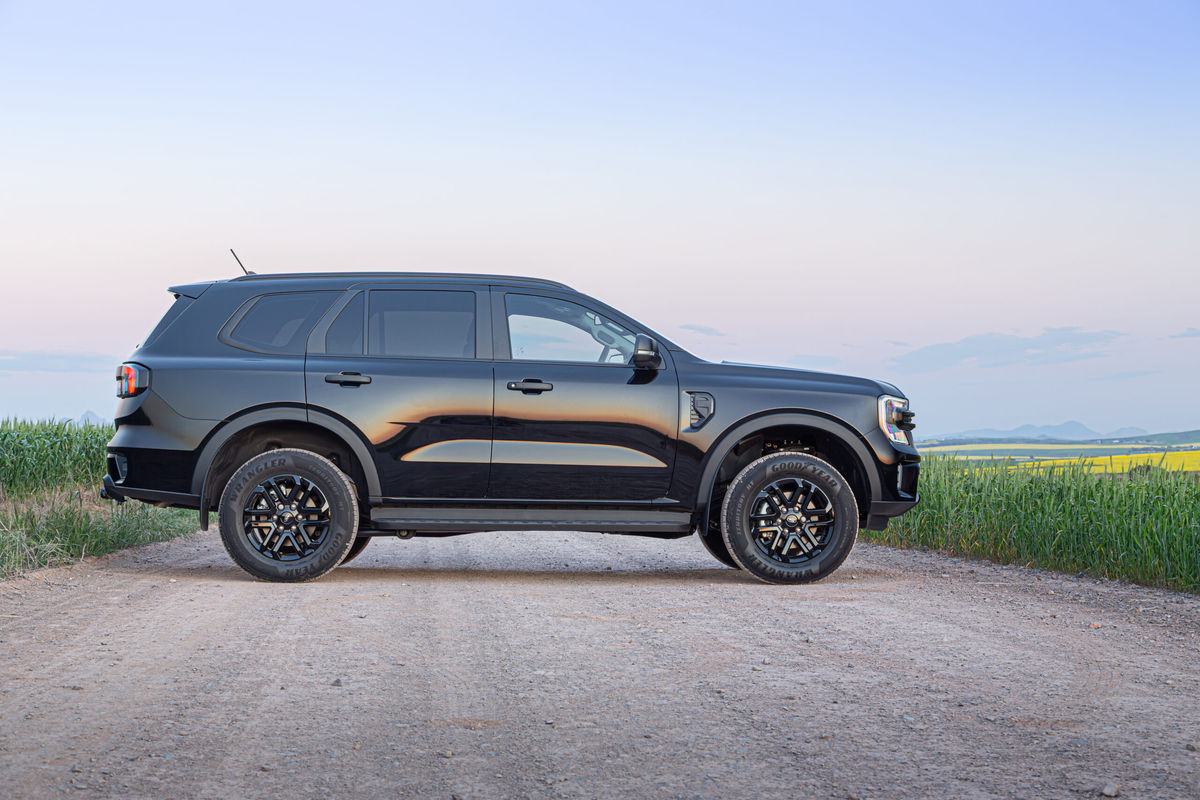
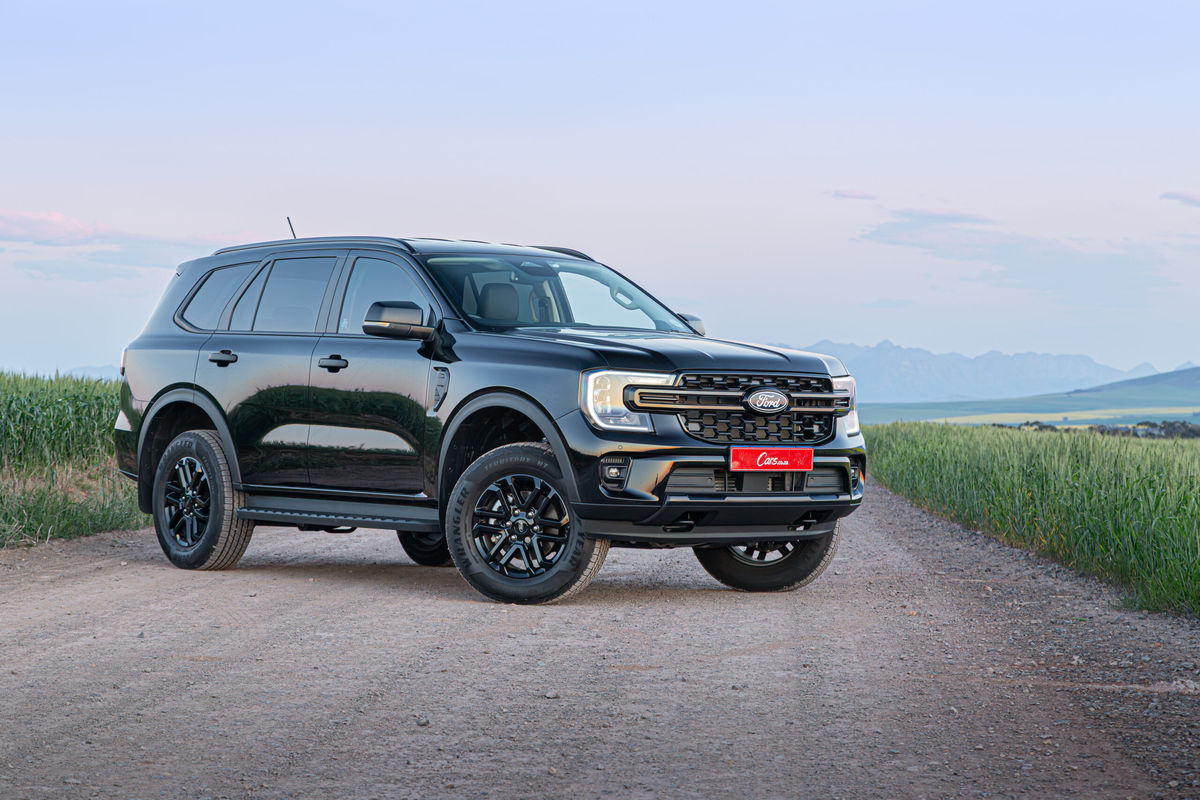
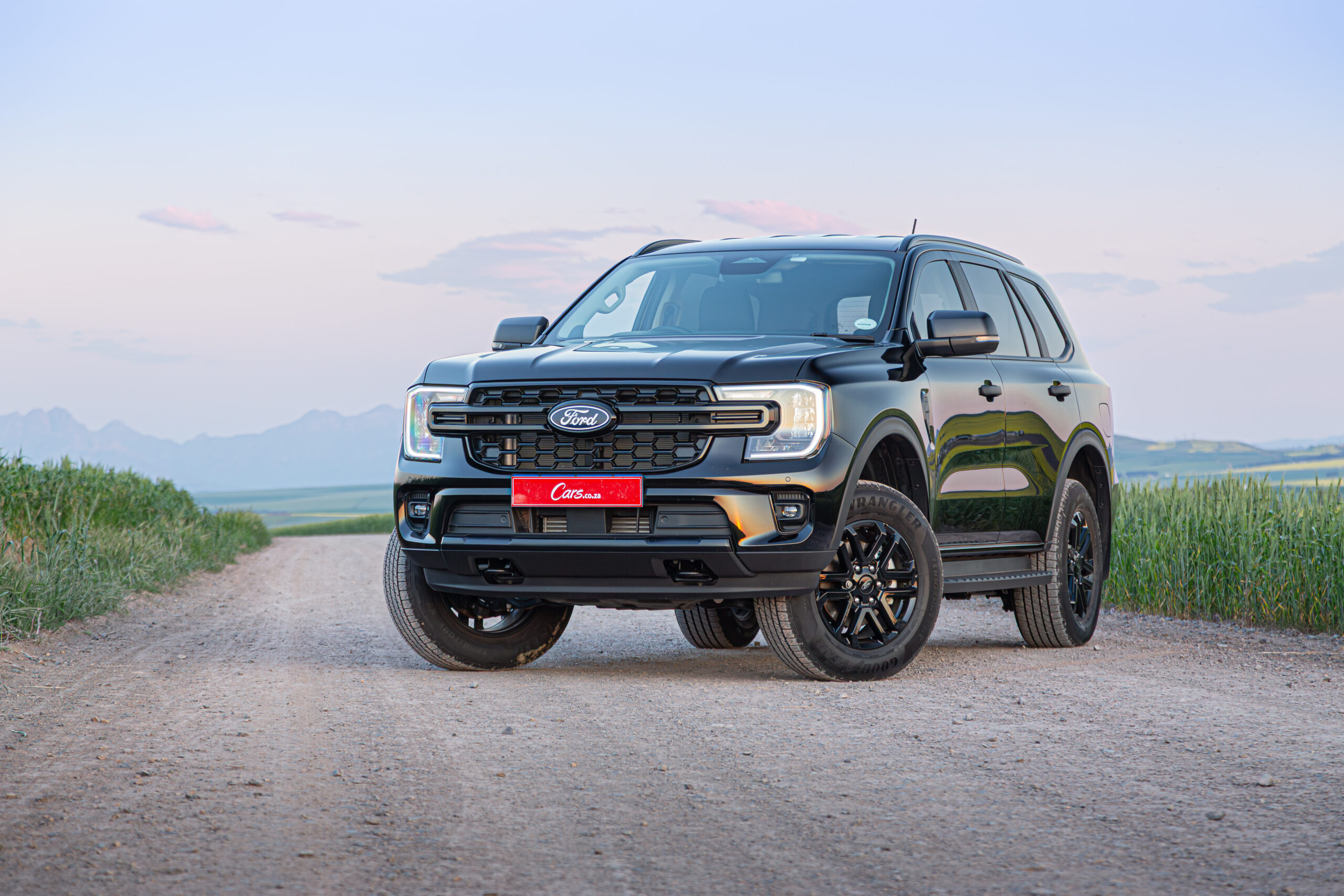
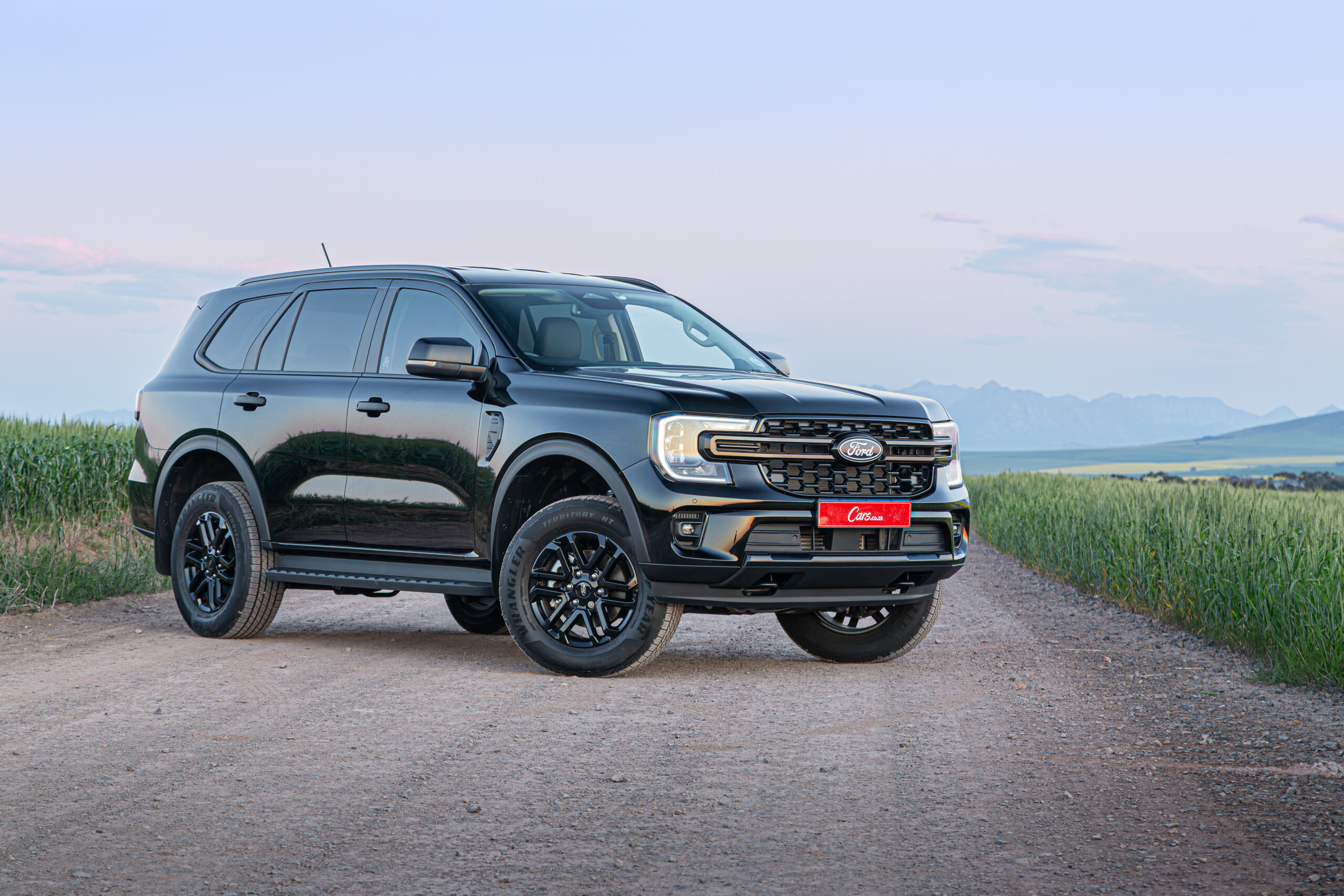
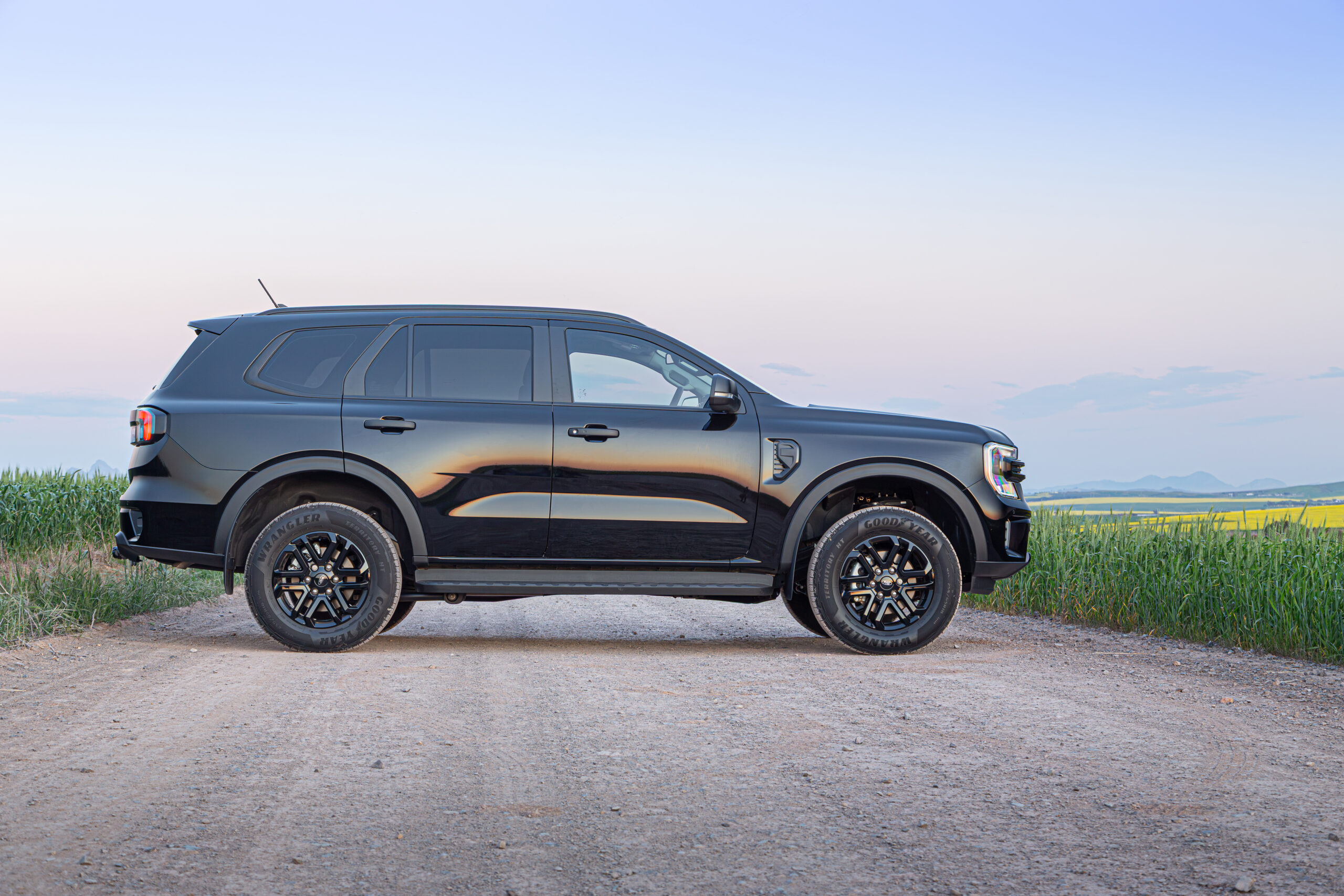
The Ford Everest is one of the more handsome offerings in this segment and, while this generation first made its debut back in September 2022, the design hasn’t aged excessively. The mild facelift retains the big, bold face, of course, replete with the C-clamp-shaped headlights. The colour palette is limited for this Active trim: 2 whites, 2 silvers and the Absolute Black you see here.
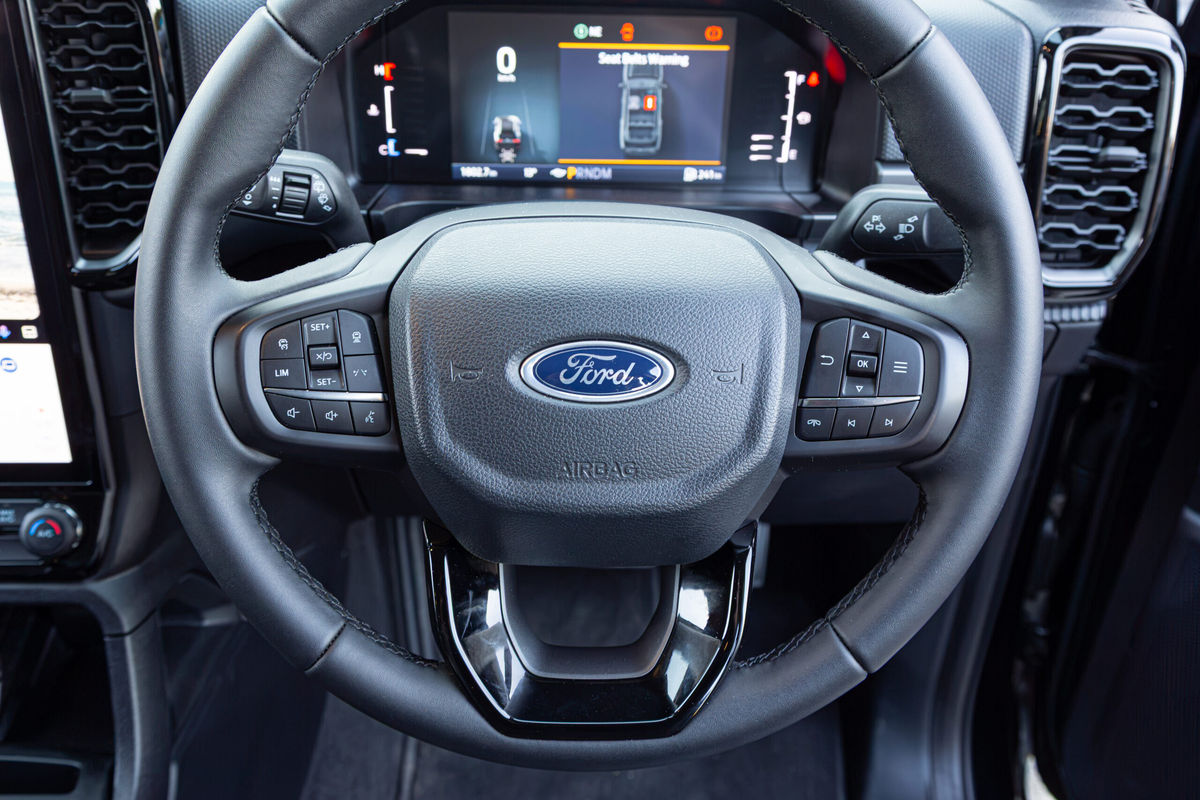
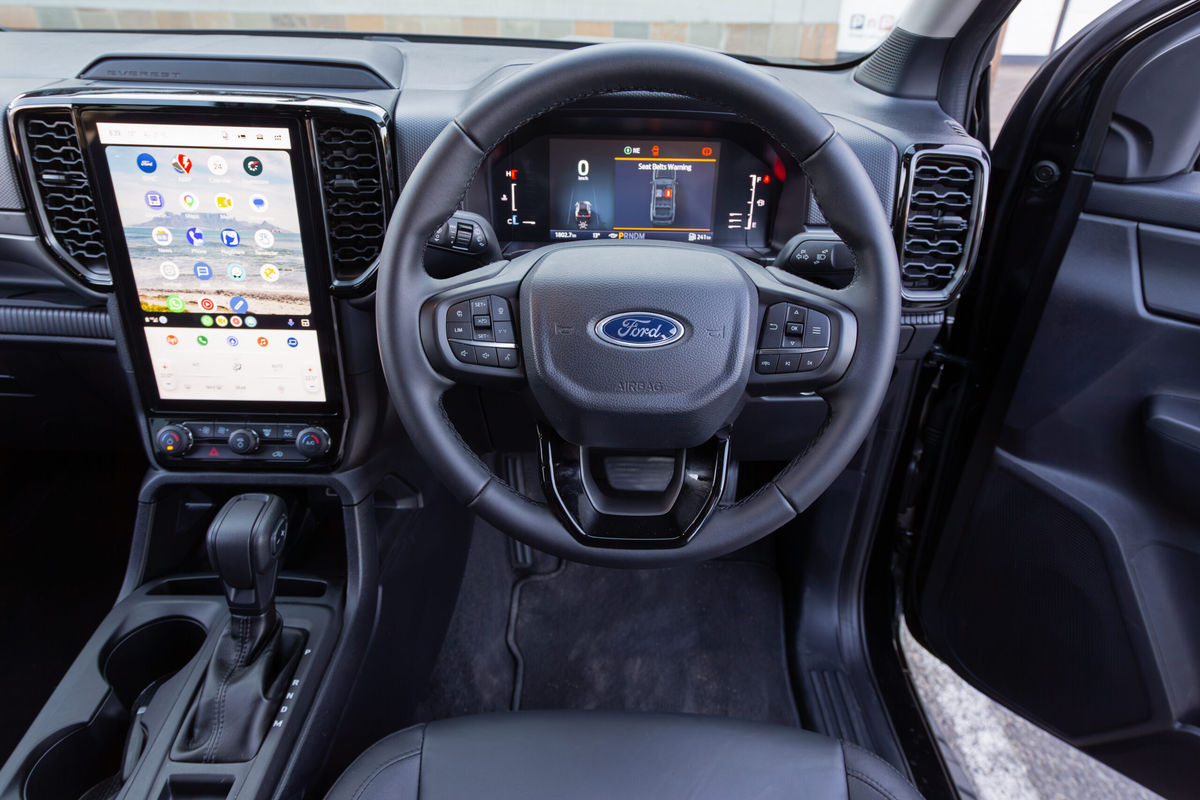
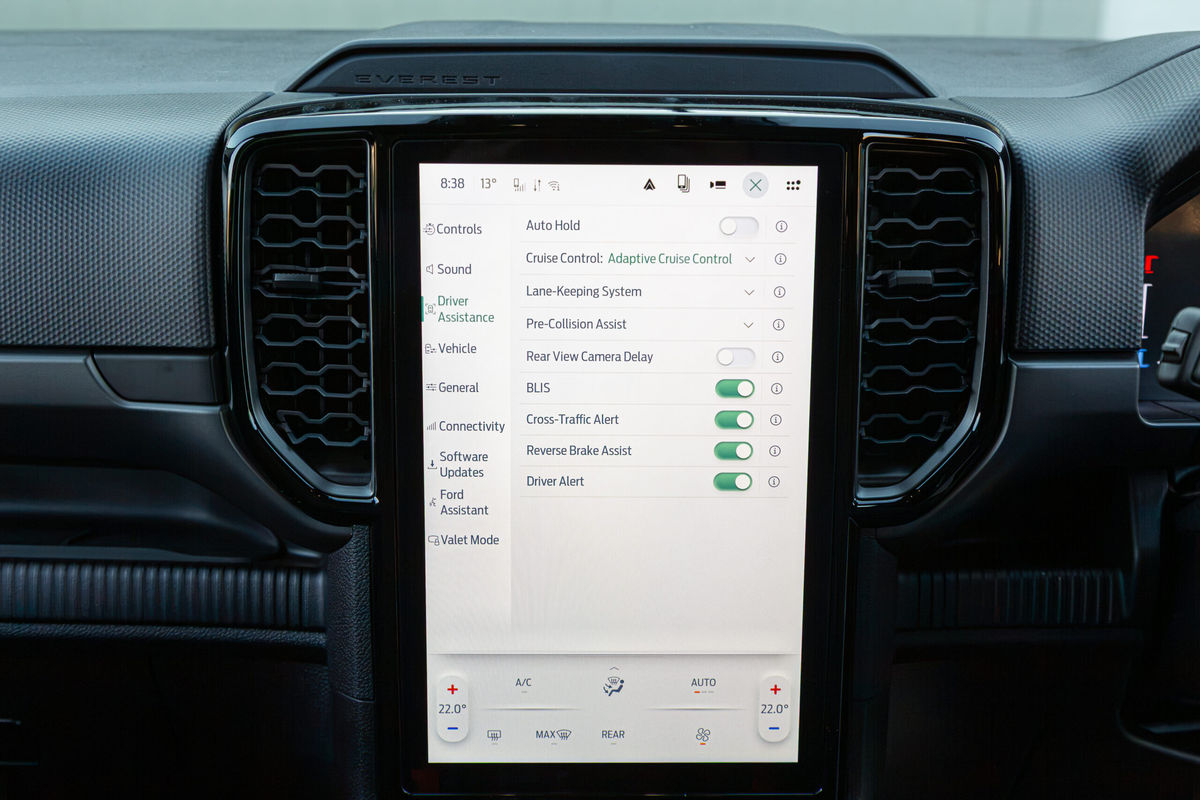
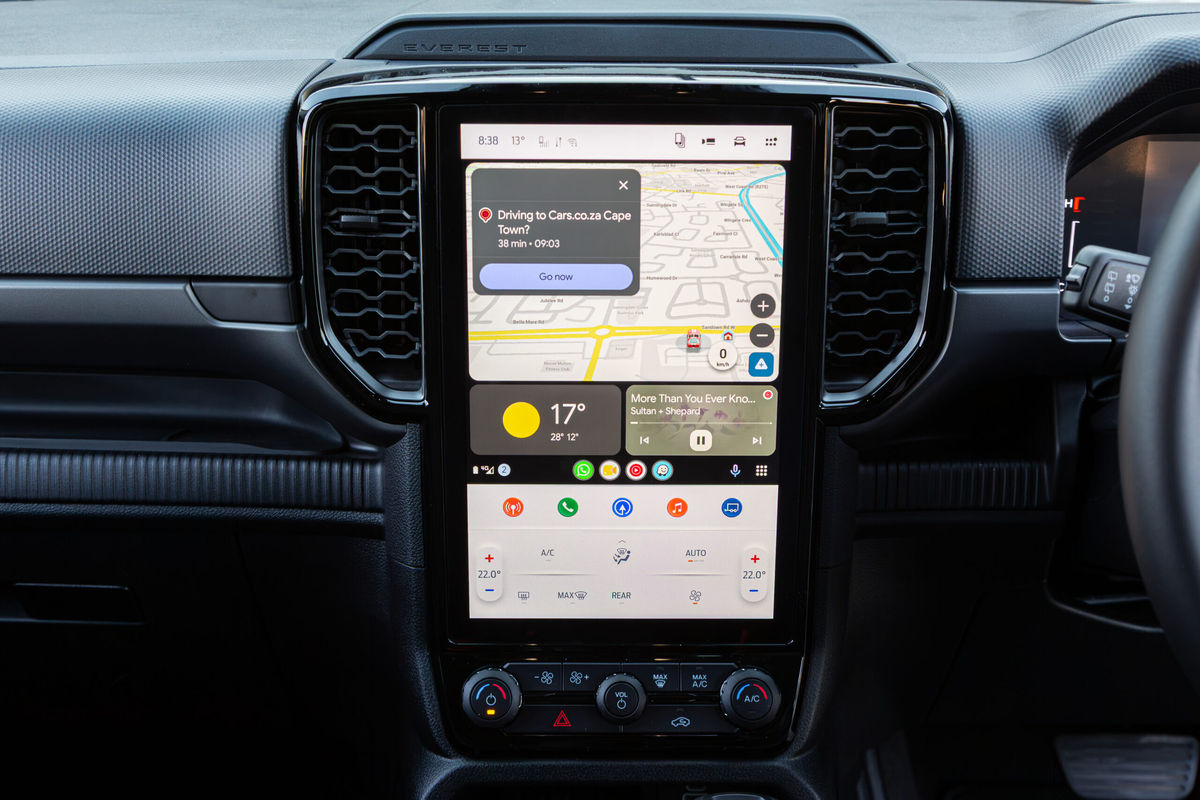
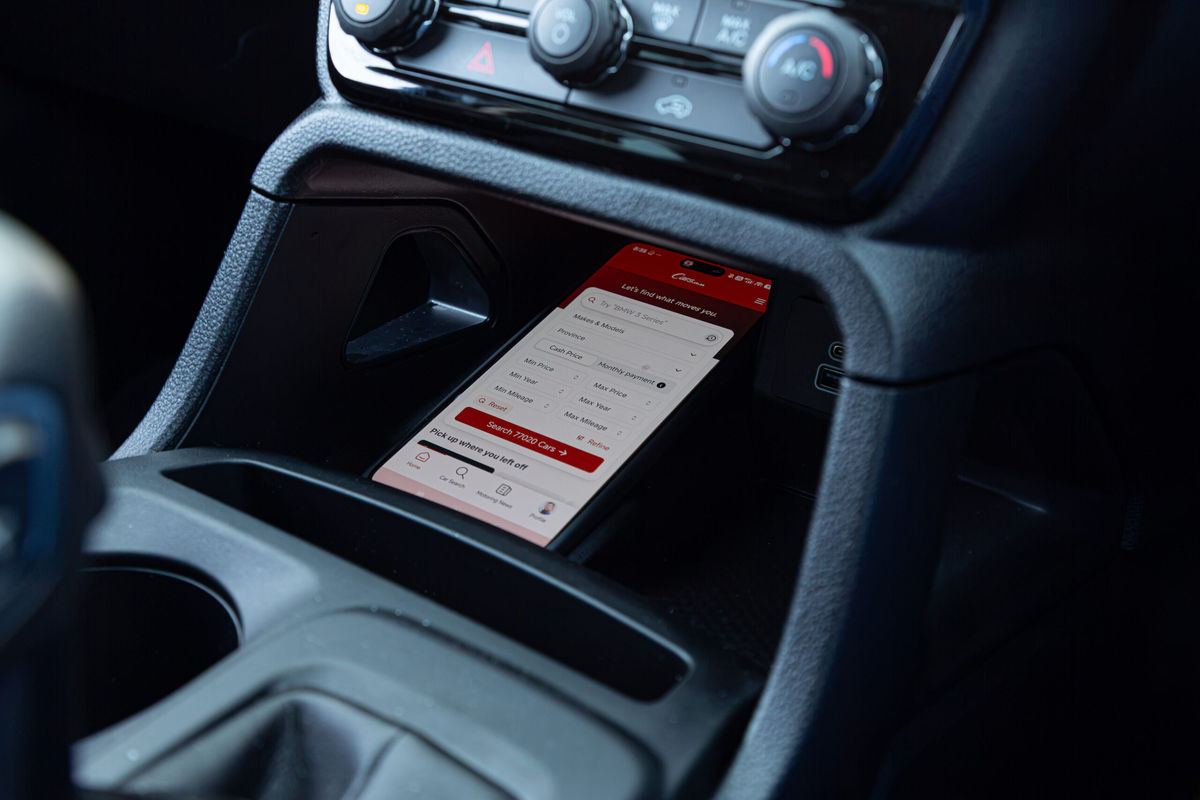
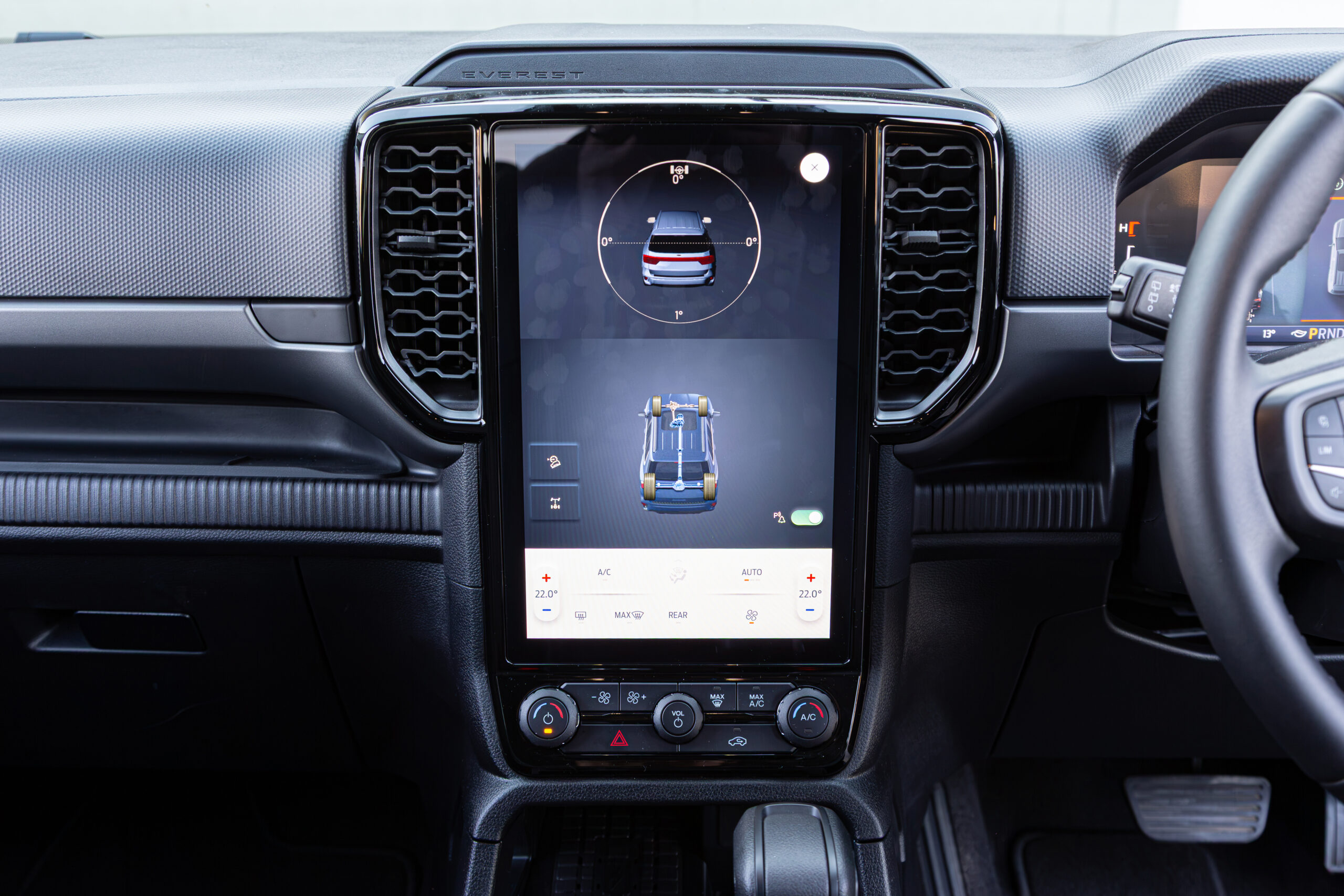
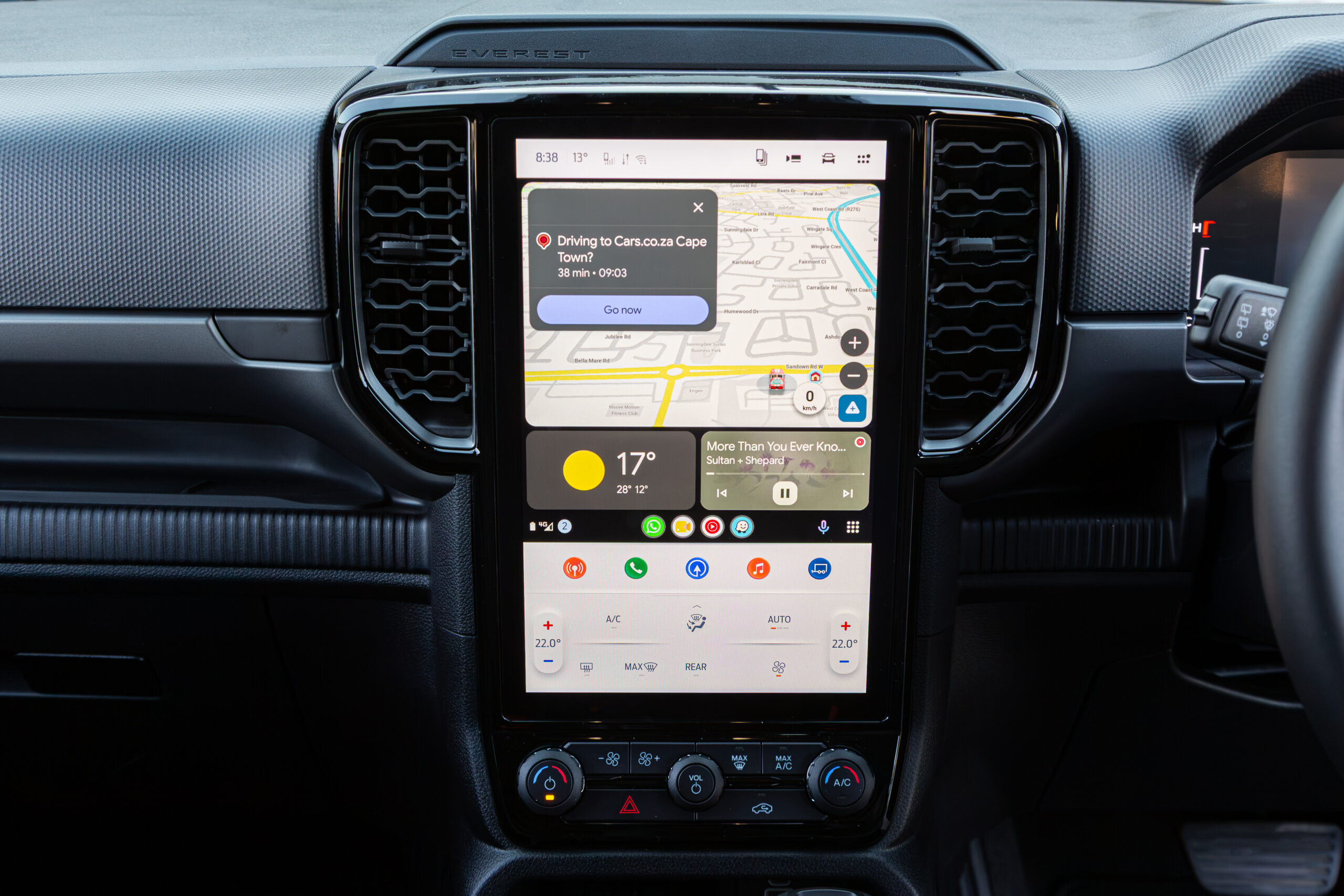
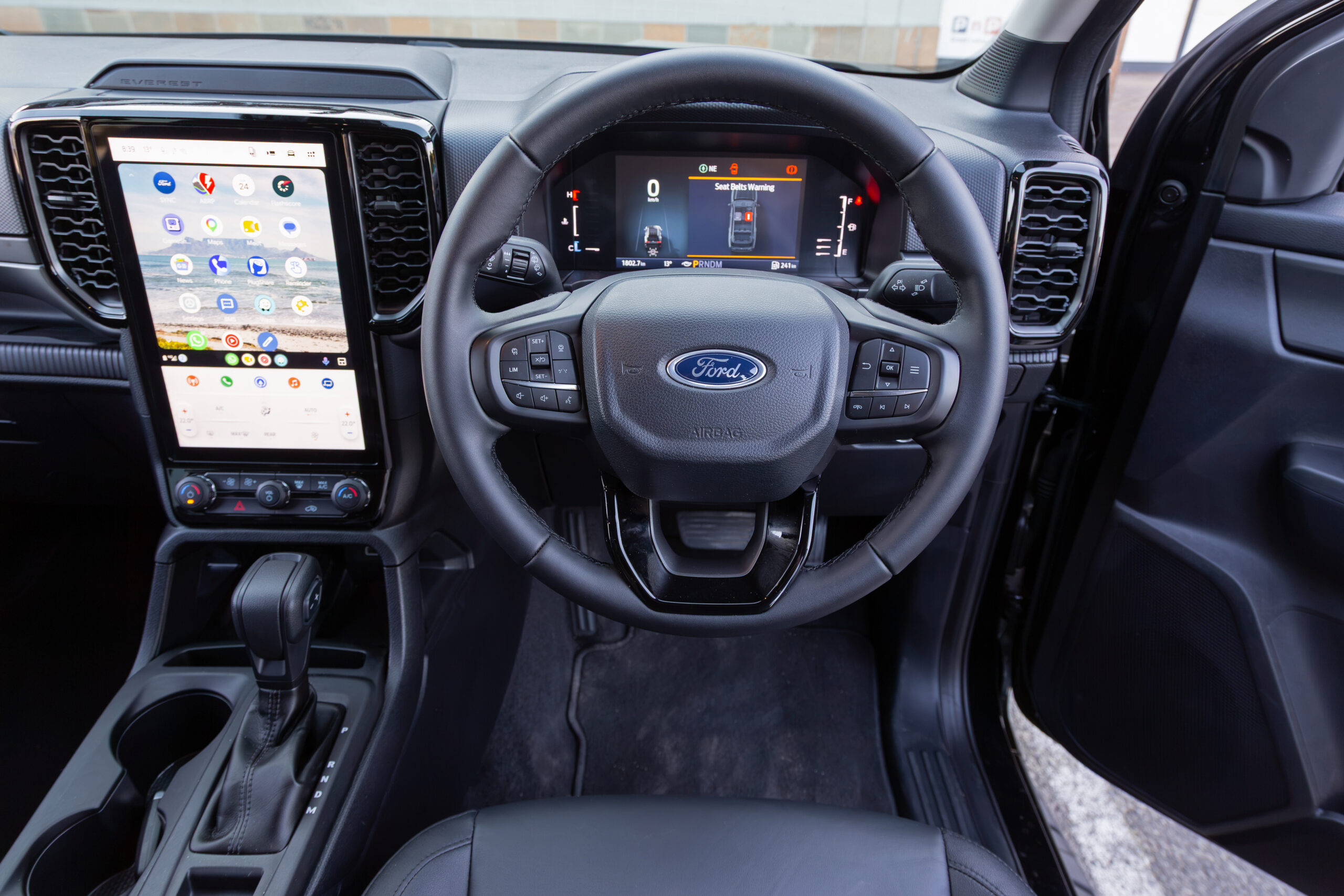
The Active may be the entry-level model in the Everest family, but it feels adequately equipped. Included are auto LED headlights, smart keyless entry with push-button start, 8-way power adjustment for the driver’s seat (the passenger has 4-way manual adjustment), 12-inch portrait infotainment screen with wireless Apple CarPlay/Android Auto, USB-A, USB-C, wireless device charging, digital instrument cluster as well as FordPass app connectivity. We love how effortlessly our devices paired to the vehicle; simply connect via Bluetooth and the car does the rest.
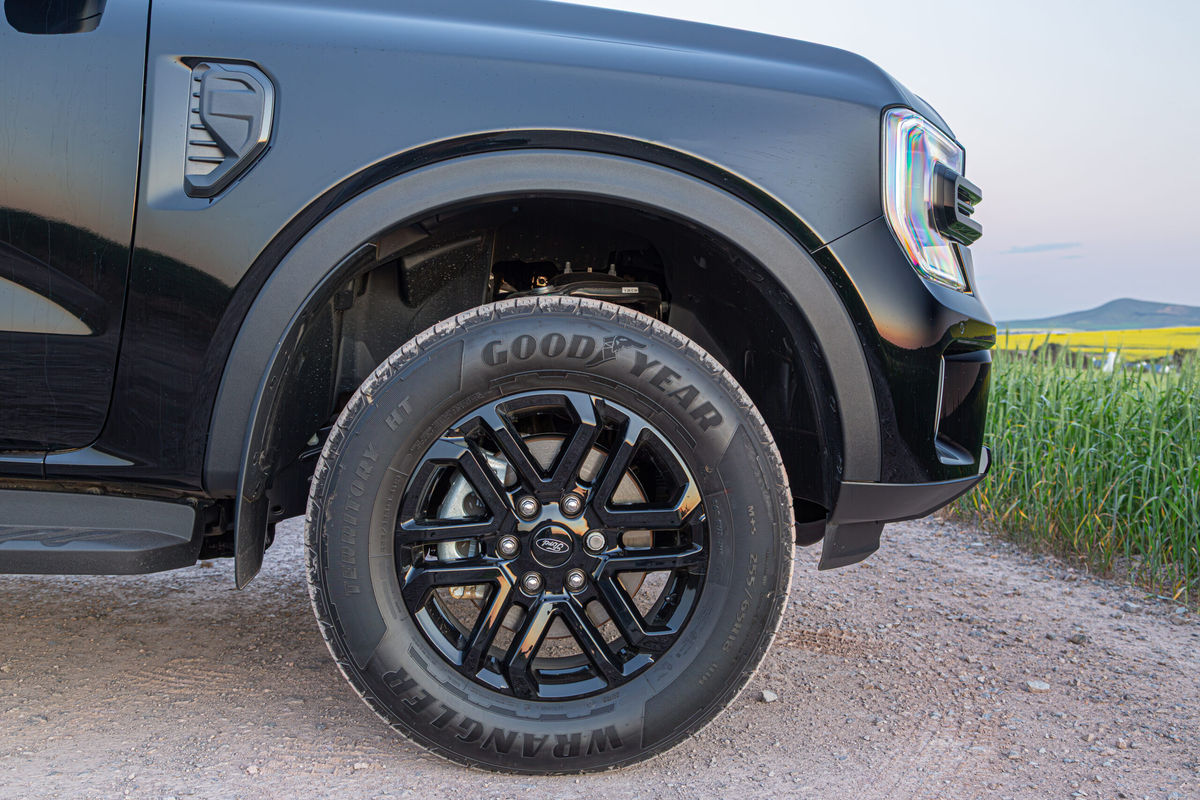
It gets even better as the safety level is to a high standard, with 6 airbags, adaptive cruise control, lane centering, blind-spot monitoring, stability control, front/rear parking sensors and reverse-parking camera are included. There are 2 optional extras available: mood lighting (R850) and 18-inch alloy tyres wrapped in all-terrain rubber (R1 850), the latter of which we’d recommend given our poor roads.
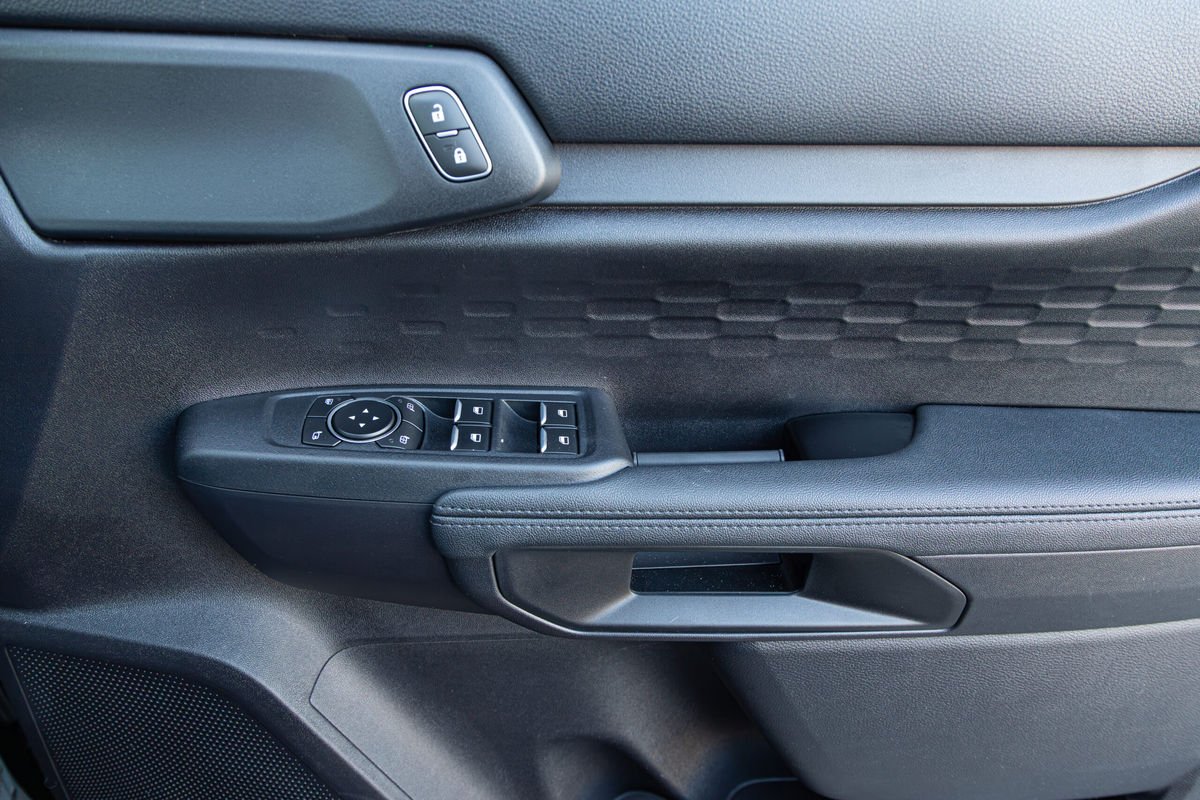
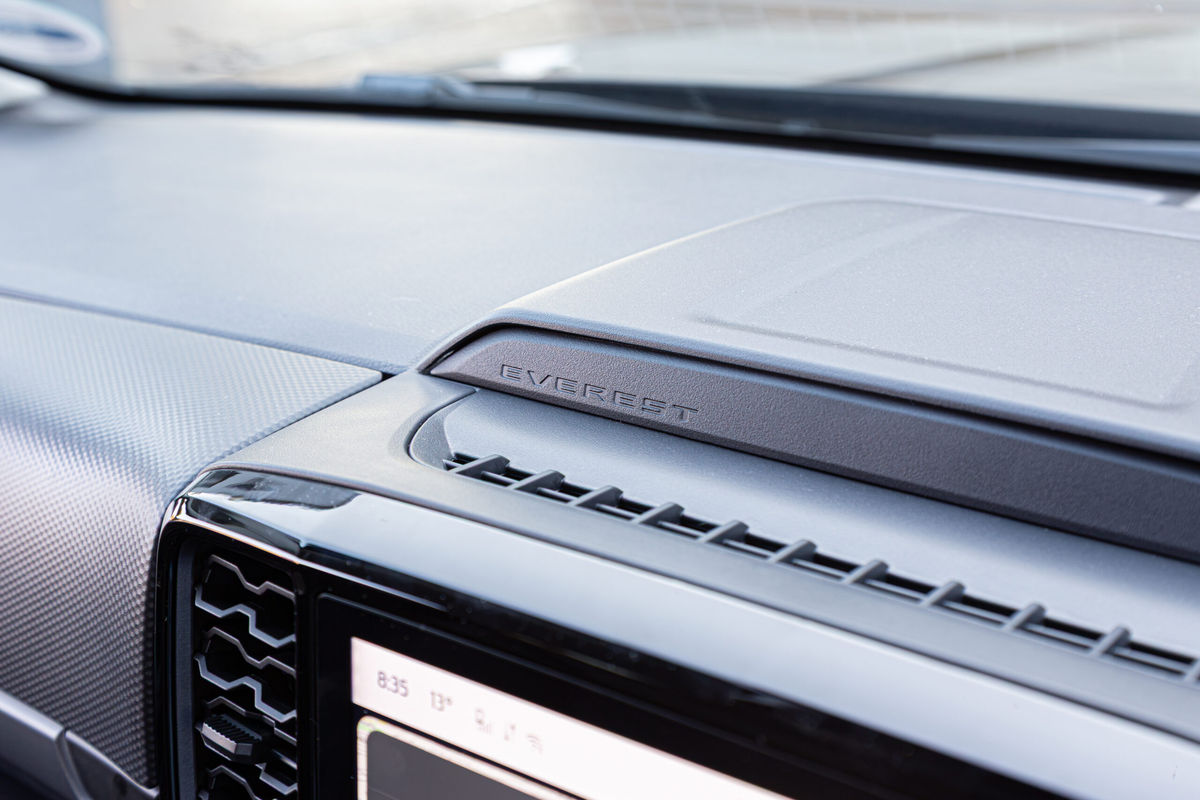
Materials used in the cabin look premium while feeling reasonably durable to the touch. We can see Ford really wants its Everest to look and feel upmarket without sacrificing its utilitarian functionality.
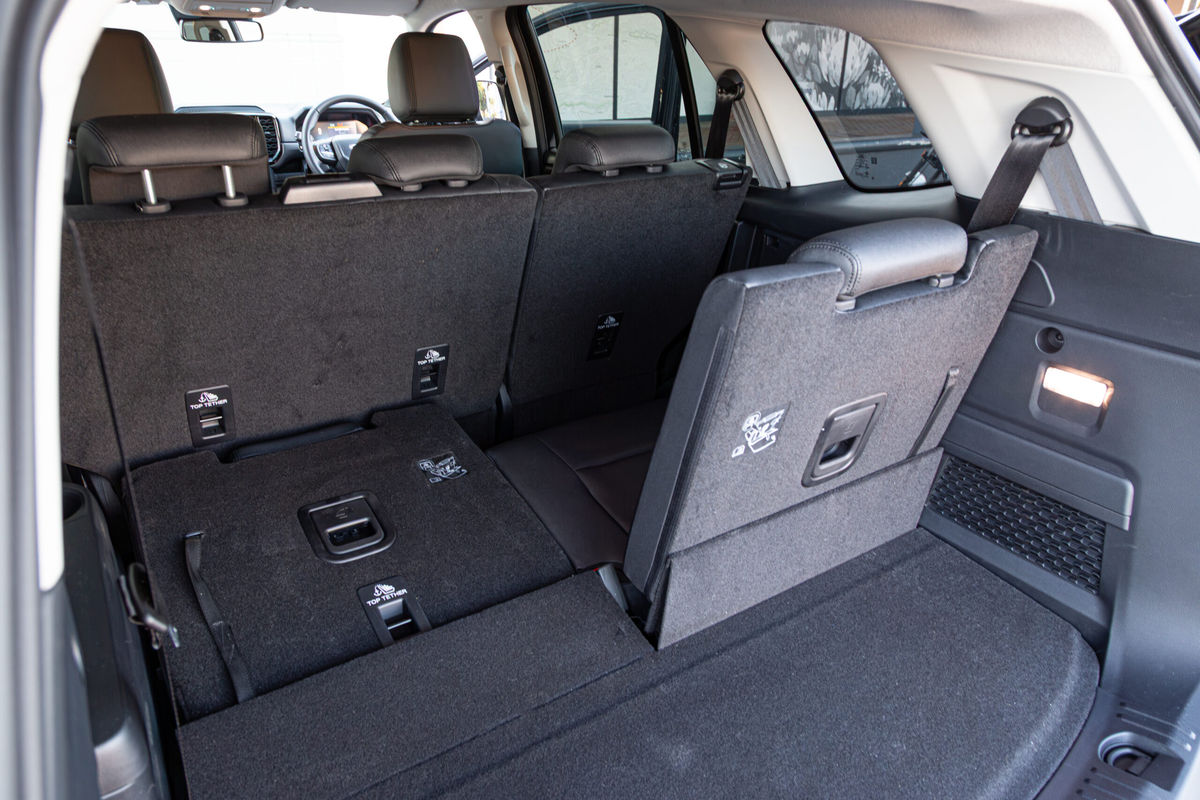
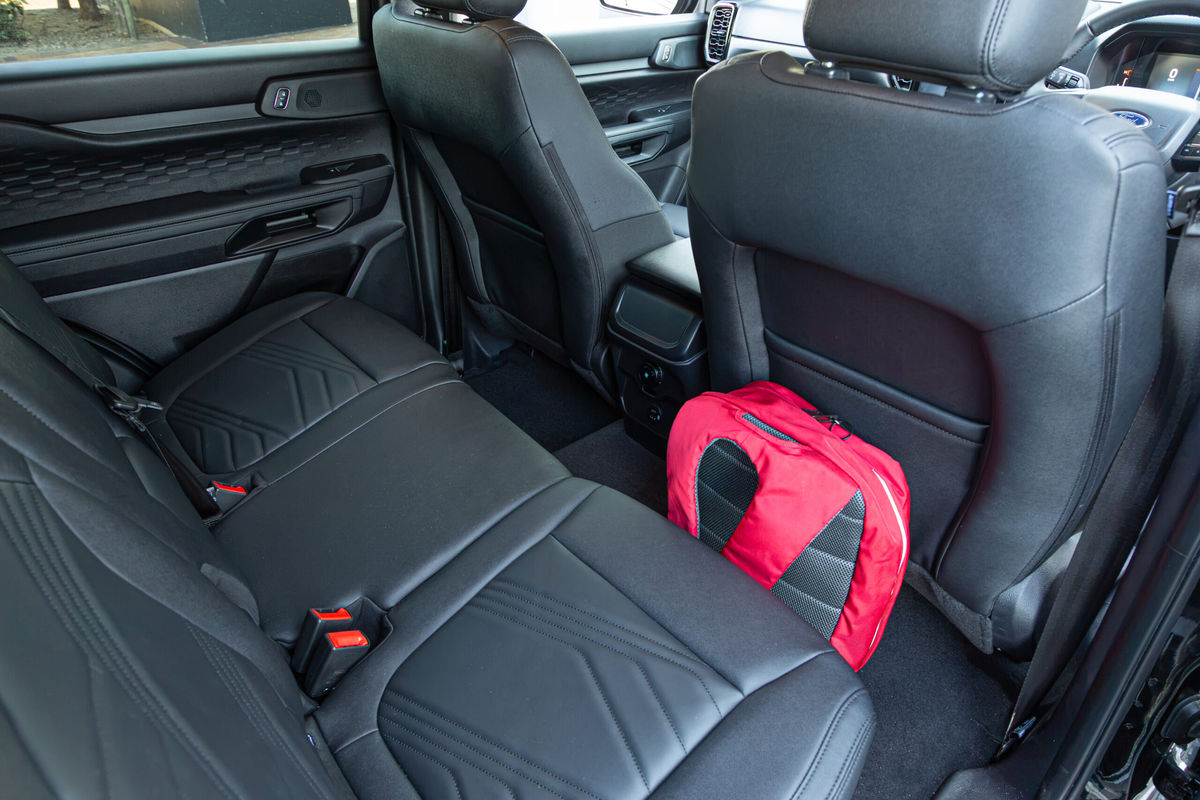
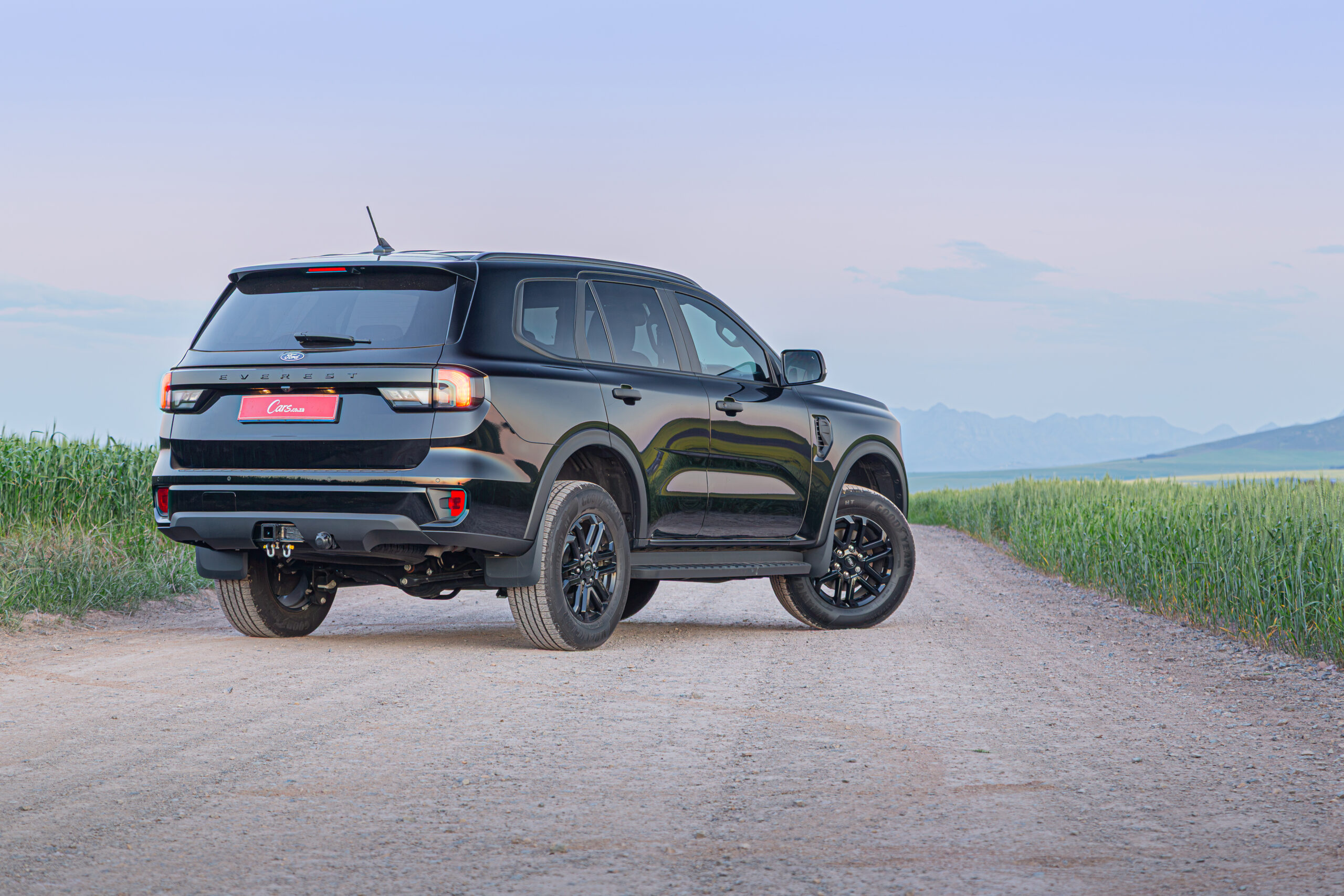
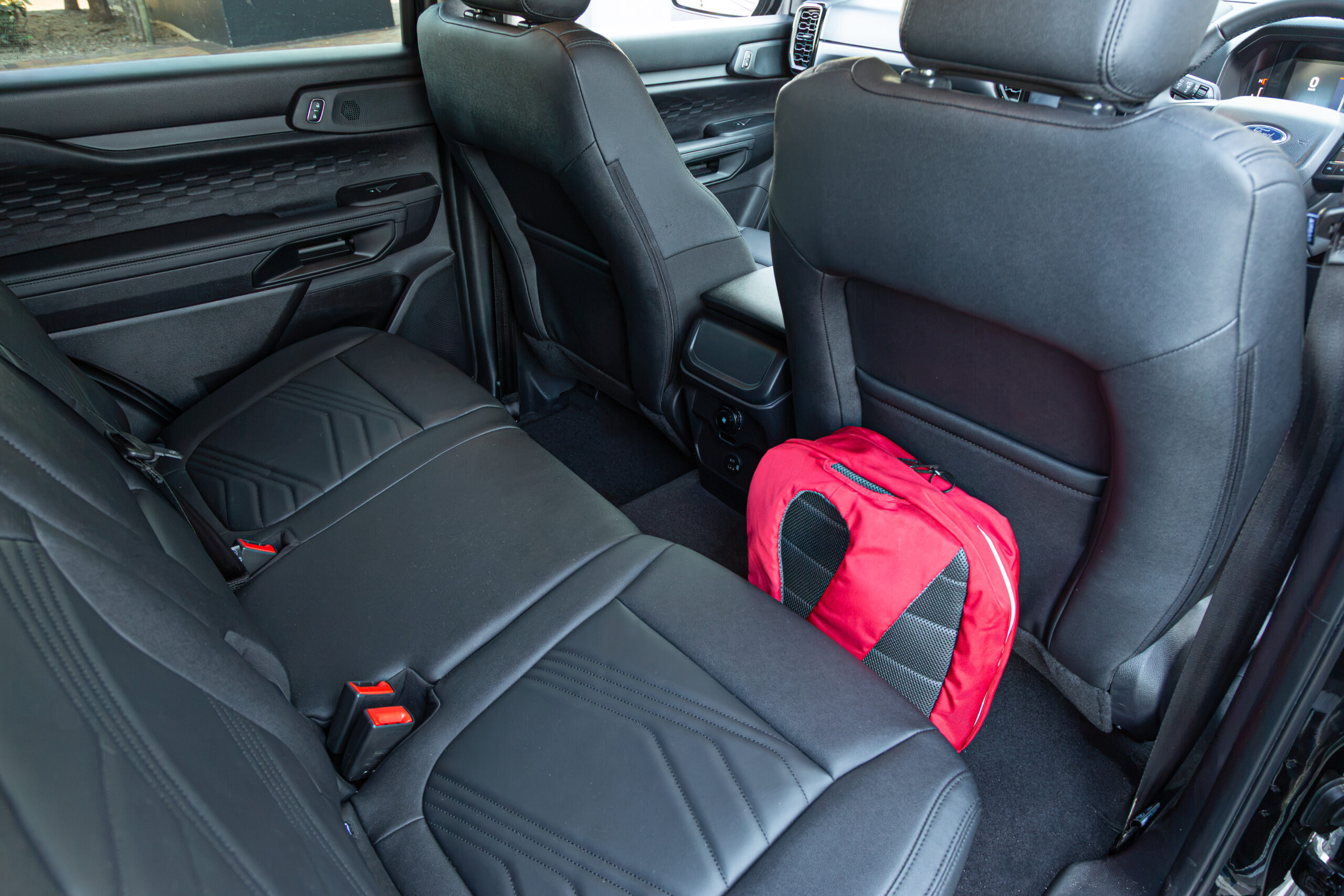
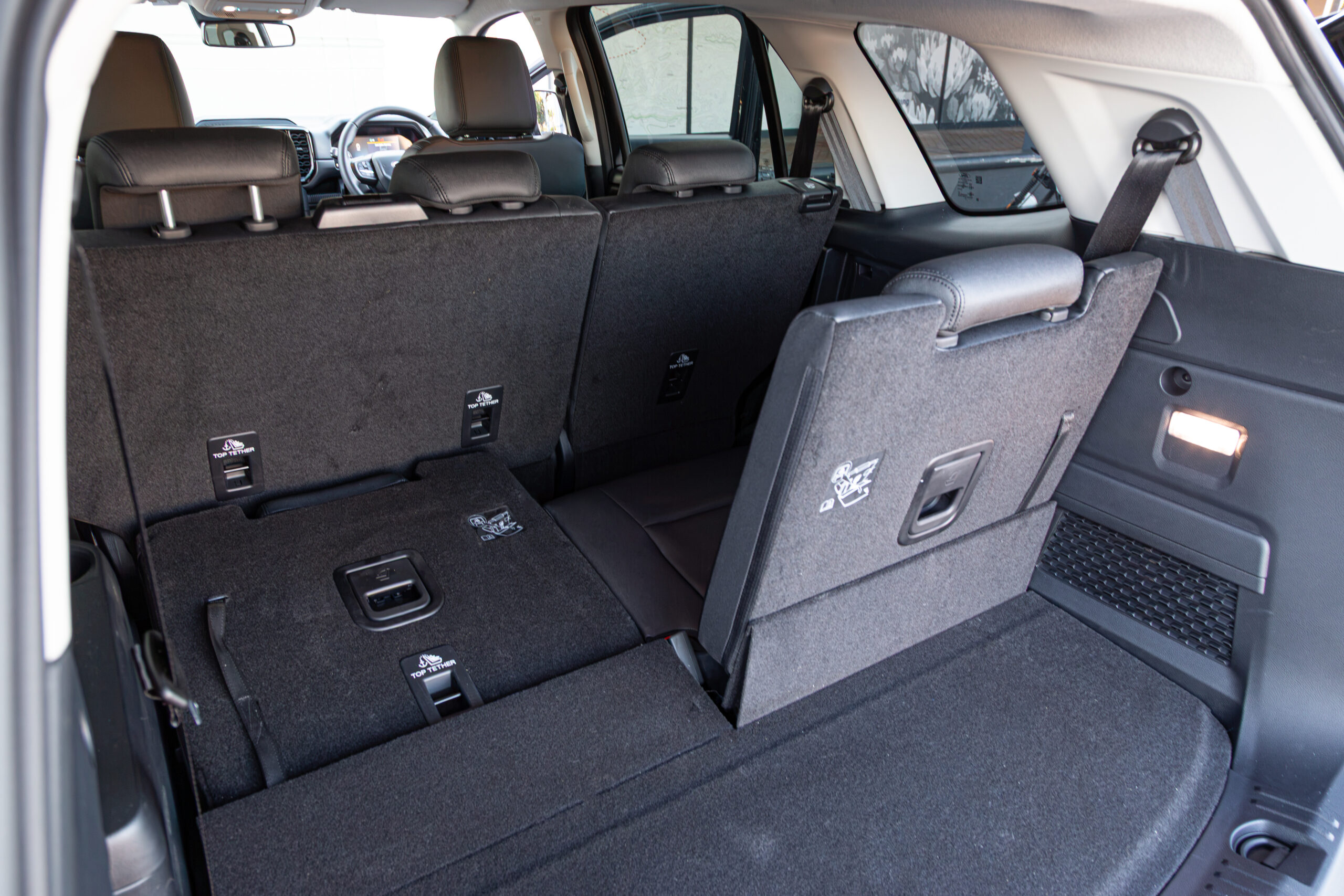
With one of the longest wheelbases in its class at 2 900 mm, the Everest offers excellent space for the 2nd row of passengers. They get USB charging ports as well as ventilation controls. While like most 7-seaters, the 3rd row is cramped for adults, little humans will sit comfortably. Most of the Cars.co.za testing team’s use-case scenario is generally to stow the 3rd row and utilise the enormous cargo area.
Ride, Handling & Comfort
When it comes to on-road dynamics, 7-seater bakkie-based SUVs aren’t known for refinement, sacrificing on-road comfort for off-road capabilities like axle articulation. Despite this engineering choice, the Everest manages to overcome its primitive architecture by offering a mature and comfortable ride.
The suspension makes light work of crushing bumps and the levels of comfort can’t be matched by its rivals. This is a vehicle which will happily eat up a few hundred kilometres with its occupants arriving relatively fresh.
The main reason behind the popularity of the likes of the Fortuner, Everest and so on is their do-it-all capabilities. These vehicles are expected to do the school run during the week, swallowing all the bags and kids, and then crush an off-road course while fully laden on the way to the family holiday home. Comfort, style, tech-laden and rough-roading talent in one total package sounds like an impossible ask, but this segment proves it can be done.
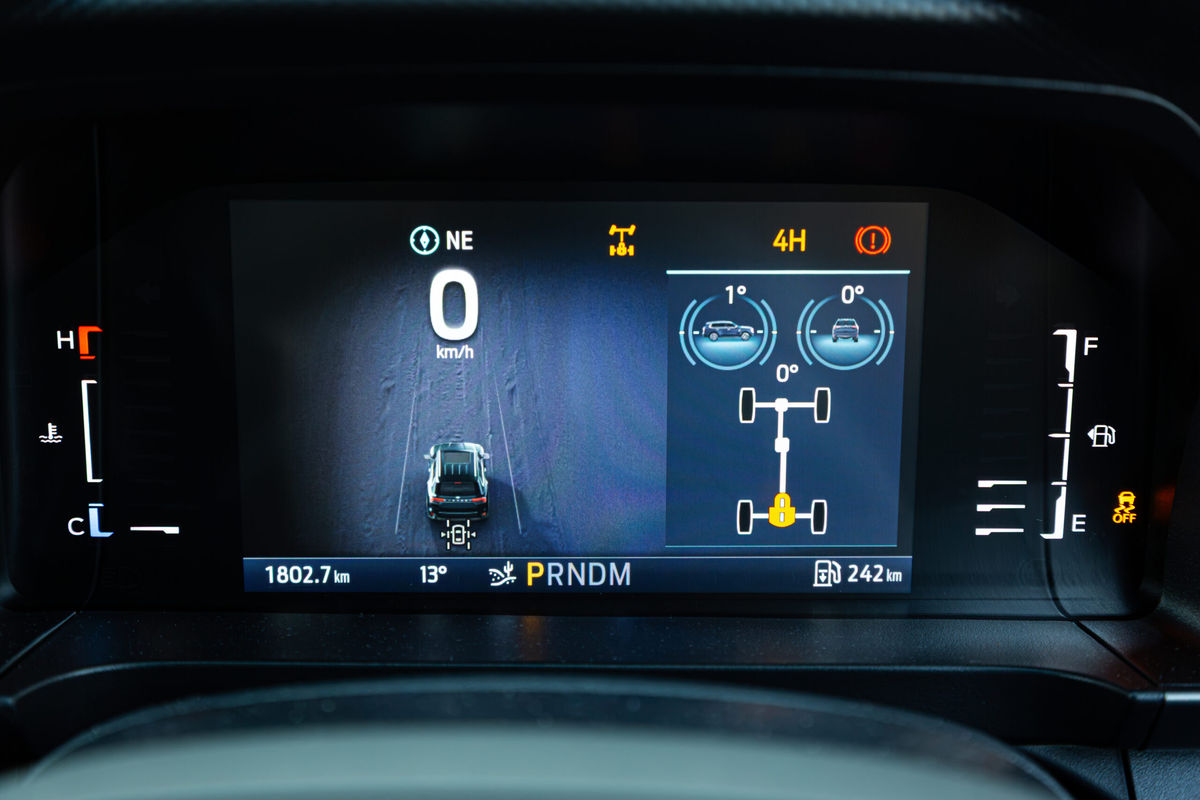
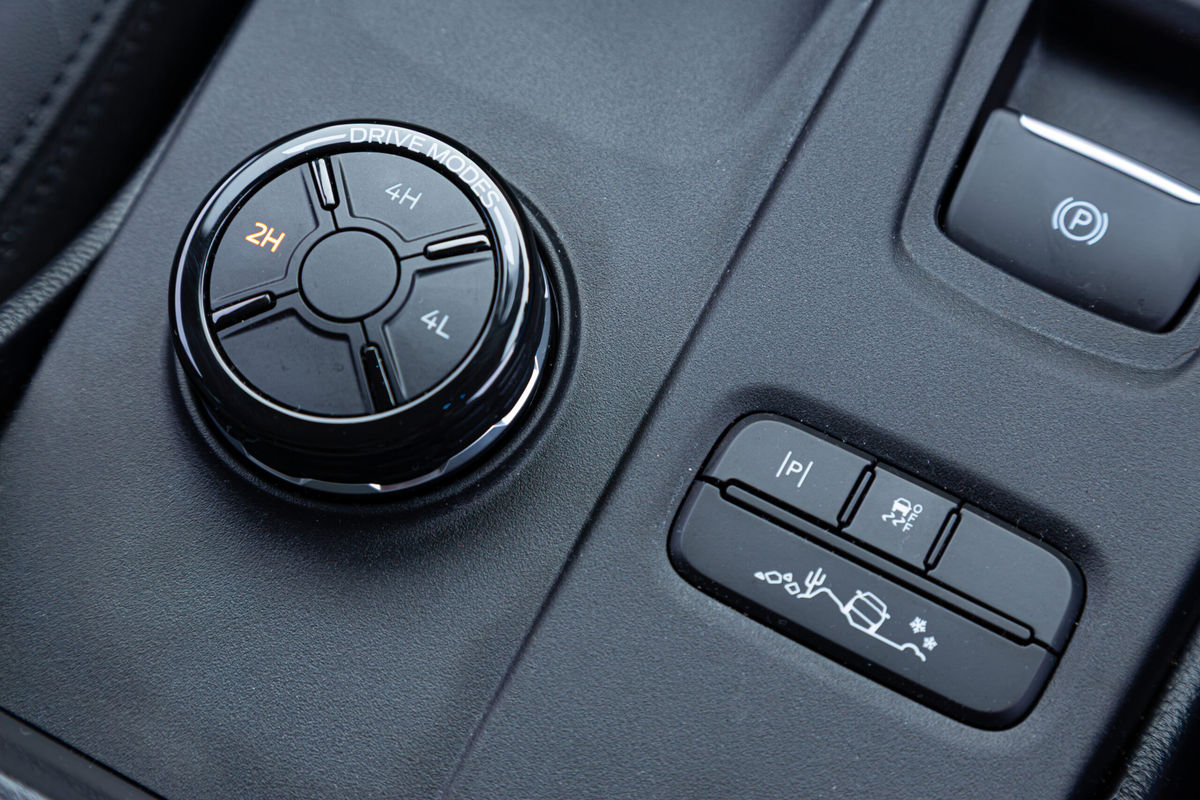
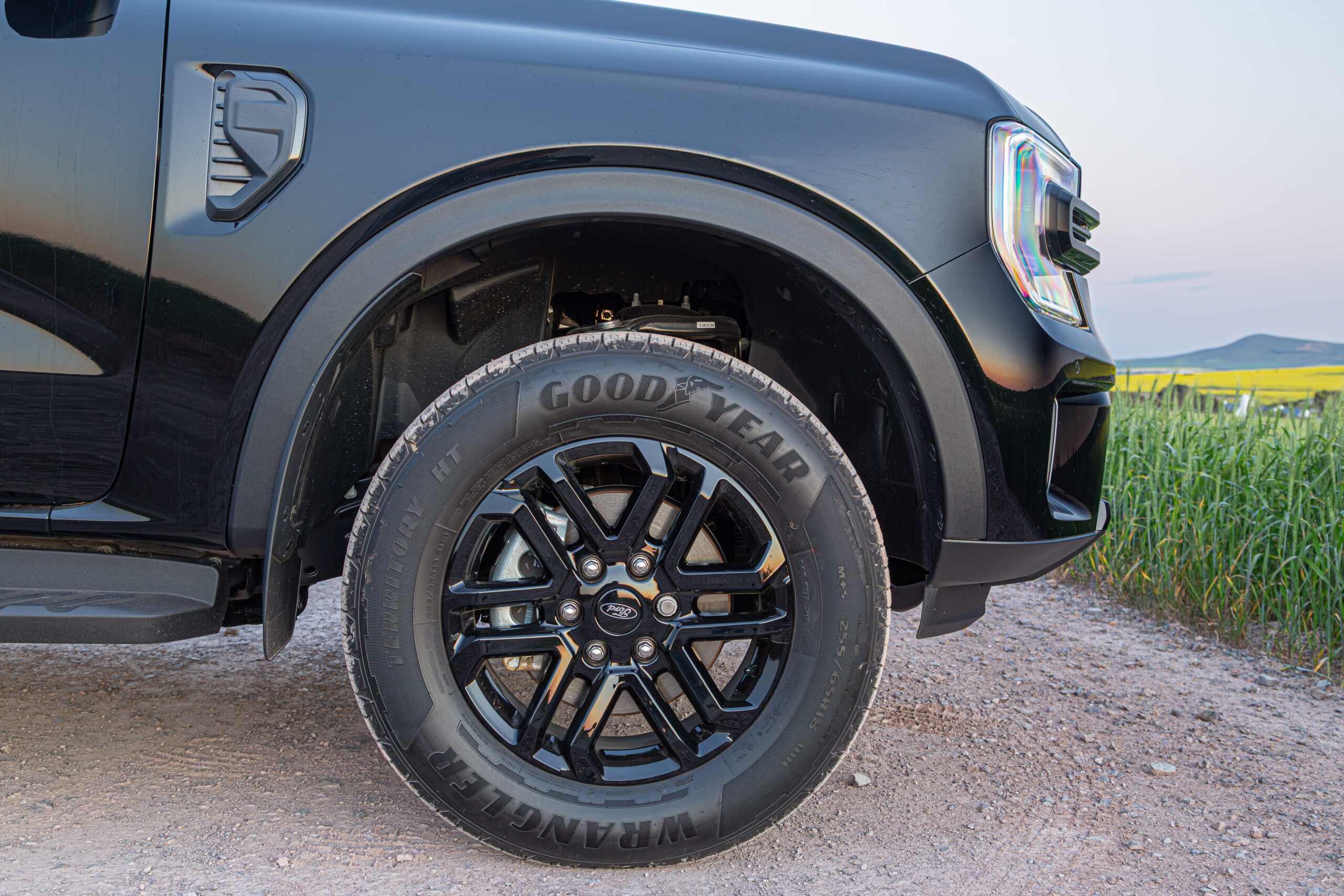
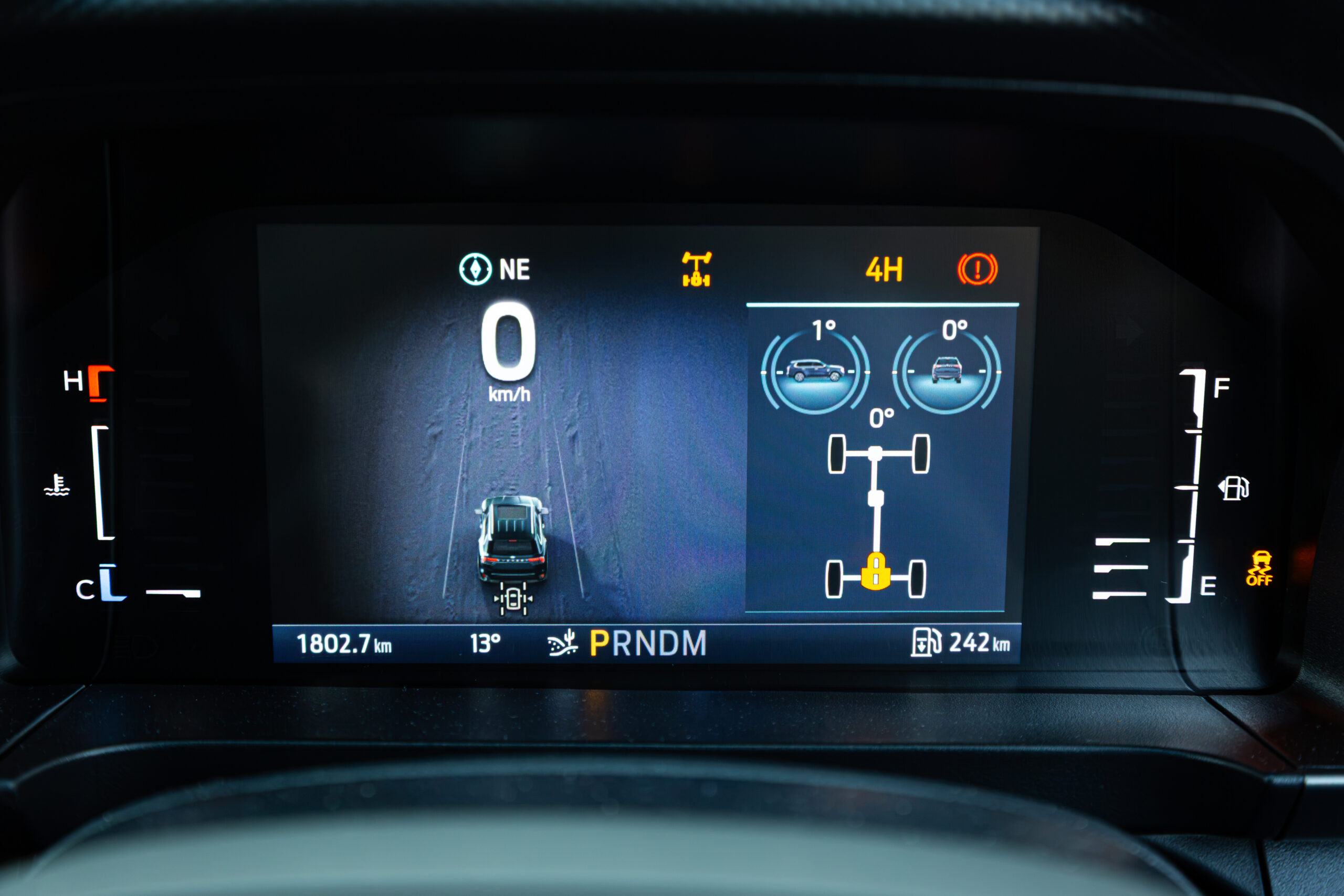
Our test unit was the Active 4×4, which adds underbody protection, a locking rear differential, low-range transfer case, and additional drive modes (mud/ruts and sand). With 220 mm of ground clearance, hill-descent control and excellent approach/departure angles, the Everest Active can go many places.
If you really want to venture away from civilisation, then look to the Everest Tremor which should go on sale before the end of 2026. As for us, the most off-roading we did was the gravel road to the photoshoot location, taking care not to get the vehicle too dusty…
How much does the updated Ford Everest cost in South Africa?
Coming in more than R100 000 cheaper than the pre-facelift model puts the Ford Everest 2.0 SiT in a very good starting position. This is then enhanced by a well thought-out and practical cabin, high levels of standard features and impressive off-road capability.
The Ford Everest was already an award-winning offering (with a few trophies from us) and this value-added update underlines just how complete this package is. Unless you’re towing or craving V6 shove, the Active is possibly all the Everest you’d need.
What engine options power the Ford Everest lineup in South Africa?
The Ford Everest is powered by two main turbodiesel engines in South Africa: a 2.0-litre single-turbo diesel engine producing 125 kW and 405 Nm in entry-level models, and a flagship 3.0-litre V6 turbodiesel delivering 184 kW and 600 Nm on higher trims. Both engines are paired with a 10-speed automatic transmission.
How much does the Ford Everest cost in South Africa?
Pricing for the Ford Everest range is structured across four main trim levels:
Everest Active (2.0L SiT 4×2 / 4×4): Starts from R825 000
Everest Sport (3.0L V6 4WD): Starts from R1 149 000
Everest Wildtrak (3.0L V6 4WD): Starts from R1 244 000
Everest Platinum (3.0L V6 4WD): Starts from R1 340 000
What is the towing capacity of the Ford Everest?
The Ford Everest offers a maximum braked towing capacity of up to 3,500 kg (3.5 tonnes) across its 4×4 and 4WD derivatives, making it ideal for towing heavy caravans, boats, or horse boxes.
Is the Ford Everest a 7-seater SUV?
Yes, the Ford Everest comes standard with a 7-seat cabin layout featuring three rows of seats, complete with power-folding third-row seating on selected high-spec models like the Wildtrak and Platinum.
What warranty and service plan options apply to the Ford Everest in SA?
The Ford Everest includes a 4-year / 120,000 km manufacturer warranty, 4-year / unlimited kilometre roadside assistance, and a 5-year / unlimited kilometre corrosion warranty. In line with Right-to-Repair regulations, optional Ford Protect service and maintenance plans (up to 8 years / 150,000 km) can be purchased separately.
All you need to know before buying your 1st car in South Africa (plus our 6 favourites)
An ideal first car must be easy to drive, cheap to insure and simple to repair. Before deciding between a manual or an automatic, here’s everything you need to consider before buying a learner car.
Learning to drive is an exciting rite of passage, but for a learner driver and their parents alike, it can also feel overwhelming. Beyond understanding road signs and traffic rules, choosing the right car is the final step in building confidence behind the wheel.
Certain vehicles are simply far more forgiving than others. Here is what to look for, plus we rank the 6 best learner cars in South Africa right now.
What makes a great learner car?
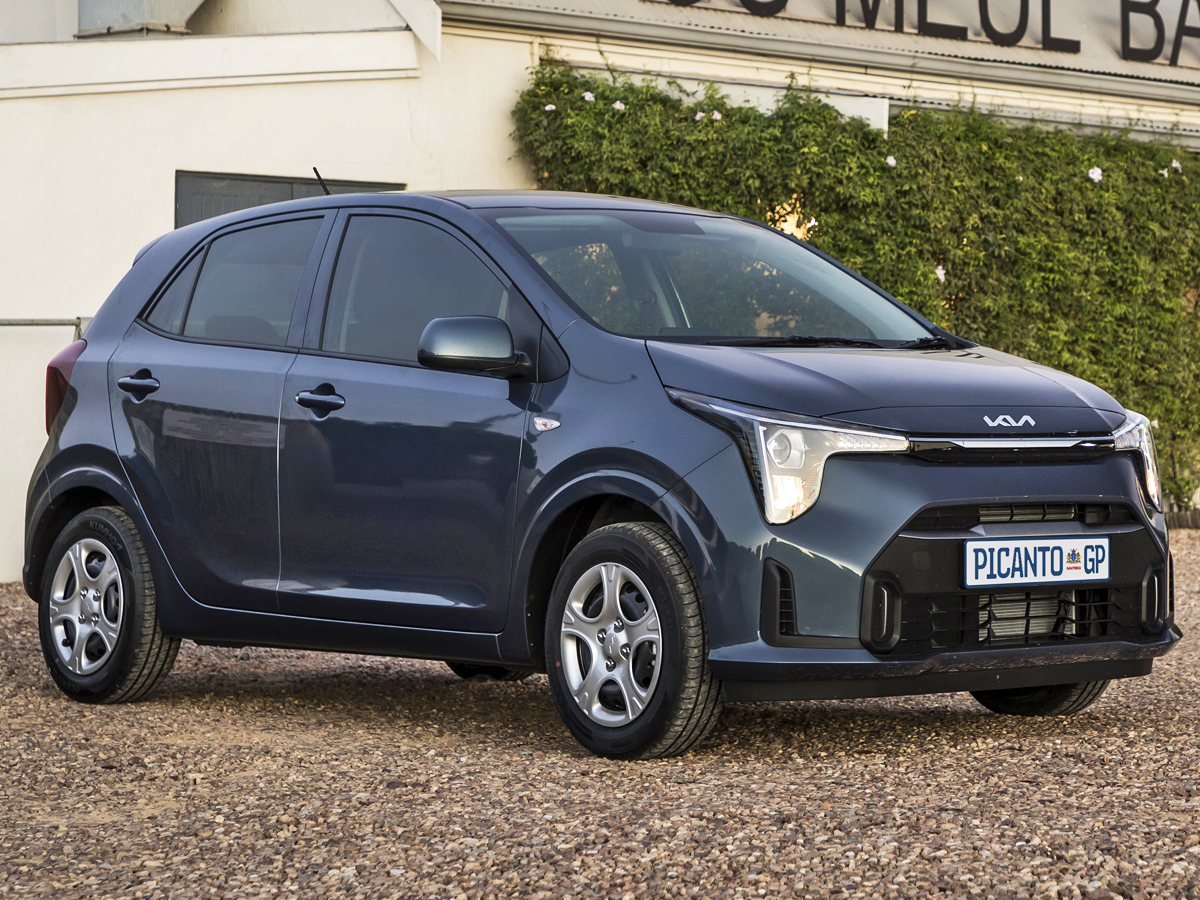
The Kia Picanto is a great first car: it’s easy to place on the road and has light, fuss-free controls.
Learners have somewhat different needs than large families, high-performance or off-road enthusiasts. A good learner car should be easy to see out of, easy to manoeuvre and forgiving when the driver gets something slightly wrong. Light controls, predictable pedal response and a compact footprint all help.
Even before setting off, good all-round visibility is essential. A commanding view of the road provides better situational awareness, whether you’re negotiating a multi-lane intersection or parallel parking. While many driving schools opt for cheap hatchbacks, a higher-riding compact crossover offers a more commanding view of the road and surrounding traffic.
In terms of visibility, a compact crossover is a great choice.
Just as important is how easy the controls are to master. Compact cars with tractable, easy-to-modulate engines are generally more forgiving with the proviso that, in the cases of manual-equipped versions, their clutch uptake is gentle and predictable.
Because the clutch is likely to bear considerable abuse from novices struggling with hill starts or attempting to hold the car on an incline, you want a model with easily obtainable and affordable spare parts. This is one reason to favour models with strong local parts and dealer networks.
Next up is safety. As learners discover the nuances of cornering and braking grip, the possibility of a loss of control must be minimised. Cue anti-lock brakes and vehicle stability control as must-haves.
When buying a learner car, factor in all the costs, including potential repair work.
Finally, there’s the cost of insurance to factor in. Repair costs, theft risk and the availability of parts can all influence insurance premiums, which is another reason to favour a car with a strong local support network.
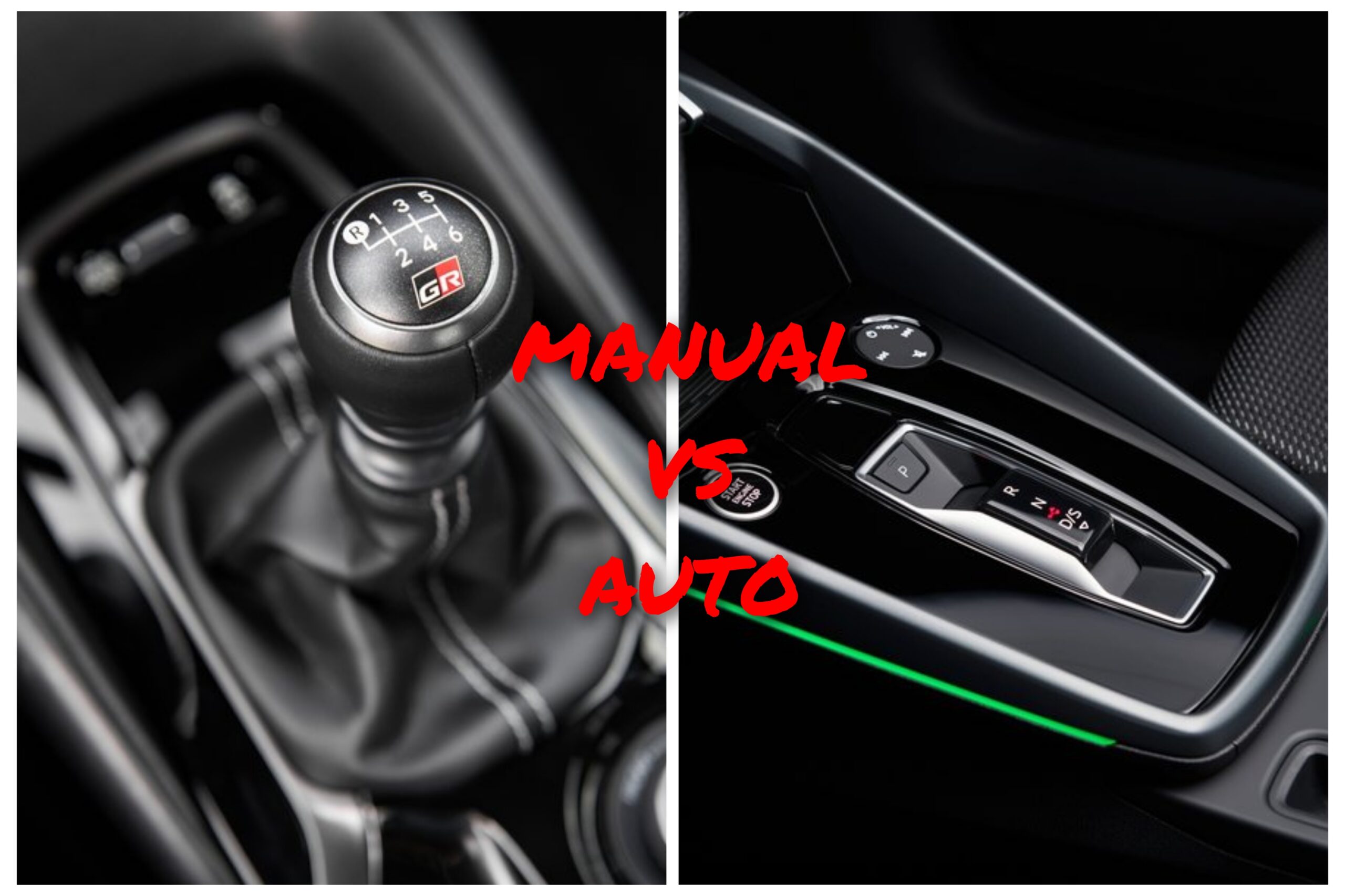
Manual vs auto for a learner driver: The South African licence dilemma
Understanding how, why and when a clutch is used in a manual car can be intimidating if there’s already an overload of other information that the learner driver has to absorb. The alternative is to learn and complete your K53 driving test in a car equipped with an automatic transmission.
While it might be tempting to complete the driving test in an automatic car, there are implications to your driving licence.
However, this convenience is actually short-term relief that sets you up for long-term pain. Should you pass in an automatic, your Code B driver’s licence will be issued with a restriction code limiting you to automatic vehicles. If you then happen to be involved in an accident while driving a manual car later in life, you will be driving it outside of your licence conditions, triggering insurance and legal complications.
For most learners, it’s therefore worth mastering a manual if you can manage it. Also consider that if you pass in a manual car, you’re legally qualified to drive an automatic.
Best cars for a learner driver in South Africa: Manual & automatic options
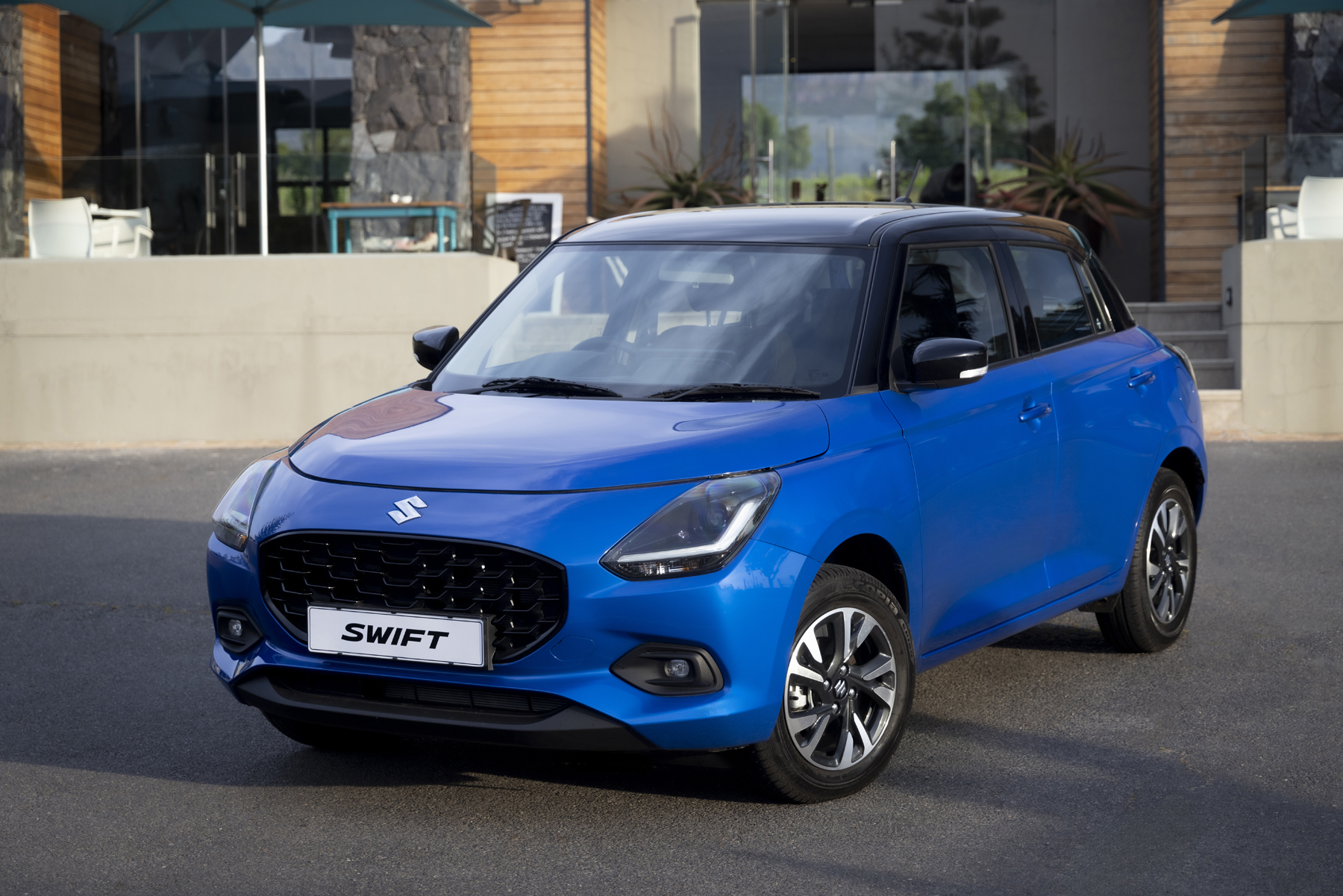
The Suzuki Swift is a firm favourite of the Cars.co.za team, and for good reason: it’s easy to drive, comfortable, affordable and reliable.
If you still don’t like manual transmission-equipped cars, or sit in left-leg-punishing traffic for hours each day, the smart play is to complete your driving test in a manual car but buy an automatic afterwards. These are great options to consider:
Total cost of ownership: Insurance, maintenance & dents for novice drivers
Even when shopping for cars suited to learner drivers, the aftersales considerations are much the same as they are for a more experienced owner.
Maintenance and insurance are essentials on any vehicle. If the car will mainly be used for learning, you may also want to consider scratch-and-dent cover. Also, owing to their inexperience, first-time owners under 25 tend to be charged slightly higher insurance rates than older drivers. Lower-category vehicles can go some way towards alleviating these premiums.
It’s important to test drive all of the options before making a decision.
If you’re buying new, test drive two or three of the models listed above back-to-back to get a real-world feel. Pay specific attention to blind-spot visibility and how the pedals feel underfoot.
And if you’re buying used as a first-time driver, insist on a full service history.
Getting your hands on the right – and most forgiving – learner car is great, but a mechanically sound one is non-negotiable.
Frequently Asked Questions (FAQ)
Q: What are the key qualities to look for when choosing a learner car?
A: A great learner car should be easy to see out of, simple to manoeuvre, and forgiving, featuring light controls, predictable pedal response, a compact footprint, and essential safety features like anti-lock brakes and stability control.
Q: What are the licence implications of passing your driving test in an automatic car in South Africa?
A: Passing your test in an automatic vehicle results in a restricted Code B driver’s licence that limits you strictly to automatic cars, meaning driving a manual vehicle afterwards creates legal and insurance complications.
Q: What is the price range for the Suzuki Swift 1.2 in South Africa?
A: The Suzuki Swift 1.2 (GL/GLX) is priced between R228 900 and R296 900 (pricing correct as of September 2026).
Kia files mysterious ‘Sonet Max’ trademark in SA
Kia has filed to trademark the “Sonet Max” badge in South Africa, leading to speculation the brand might be preparing to offer its small crossover in 2 sizes…
New “Sonet Max” trademark filing unearthed
Is a larger Sonet being planned for Mzansi?
Kia has not yet released any official details
Cars.co.za has discovered that Kia recently filed a trademark application for the “Sonet Max” badge in South Africa, leading us to speculate that the South Korean firm might have plans to offer its small crossover in 2 distinct sizes.
We can confirm that, as recently as 14 September 2026, Kia’s head office in Seoul applied to trademark the “Kia Sonet Max” name in South Africa. After some digging, we discovered that the company submitted similar filings in Peru, Sri Lanka and Paraguay around the same time.
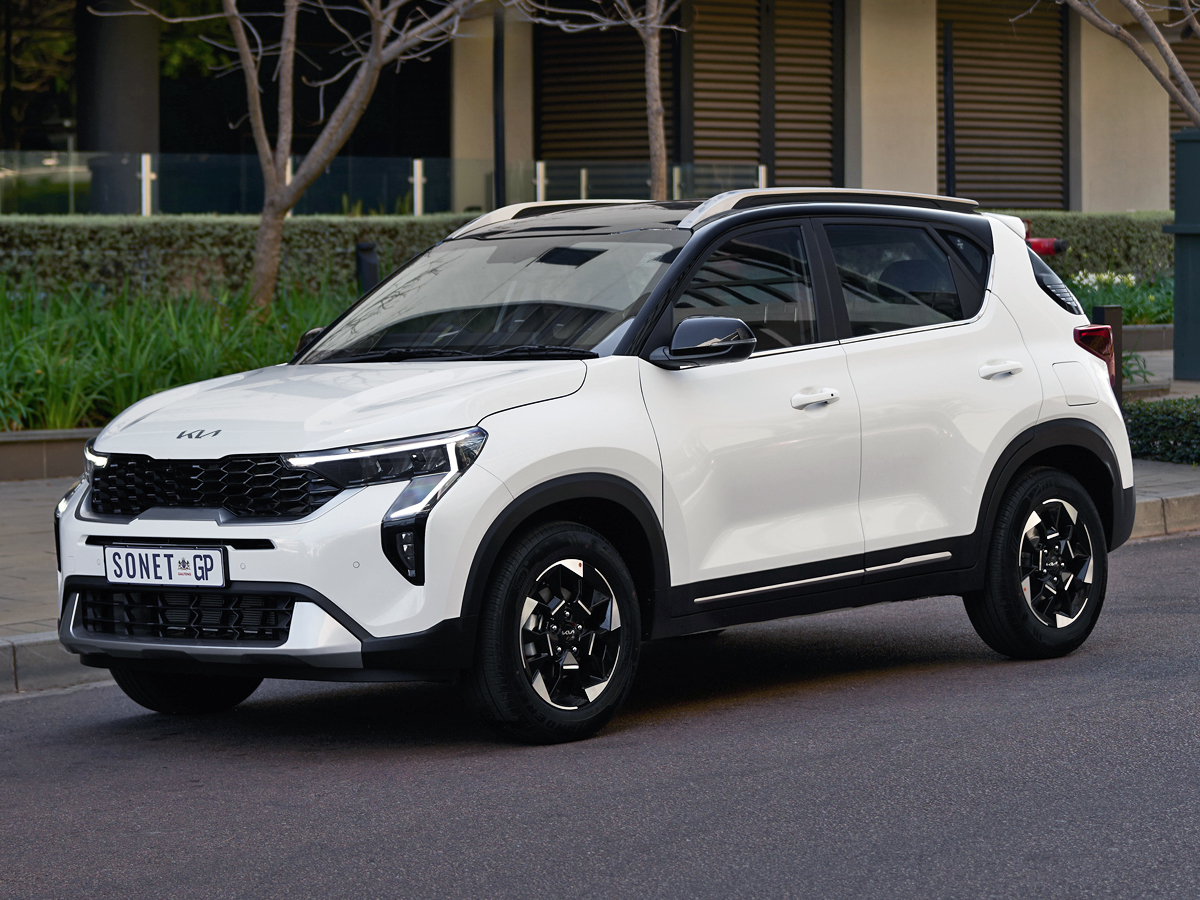
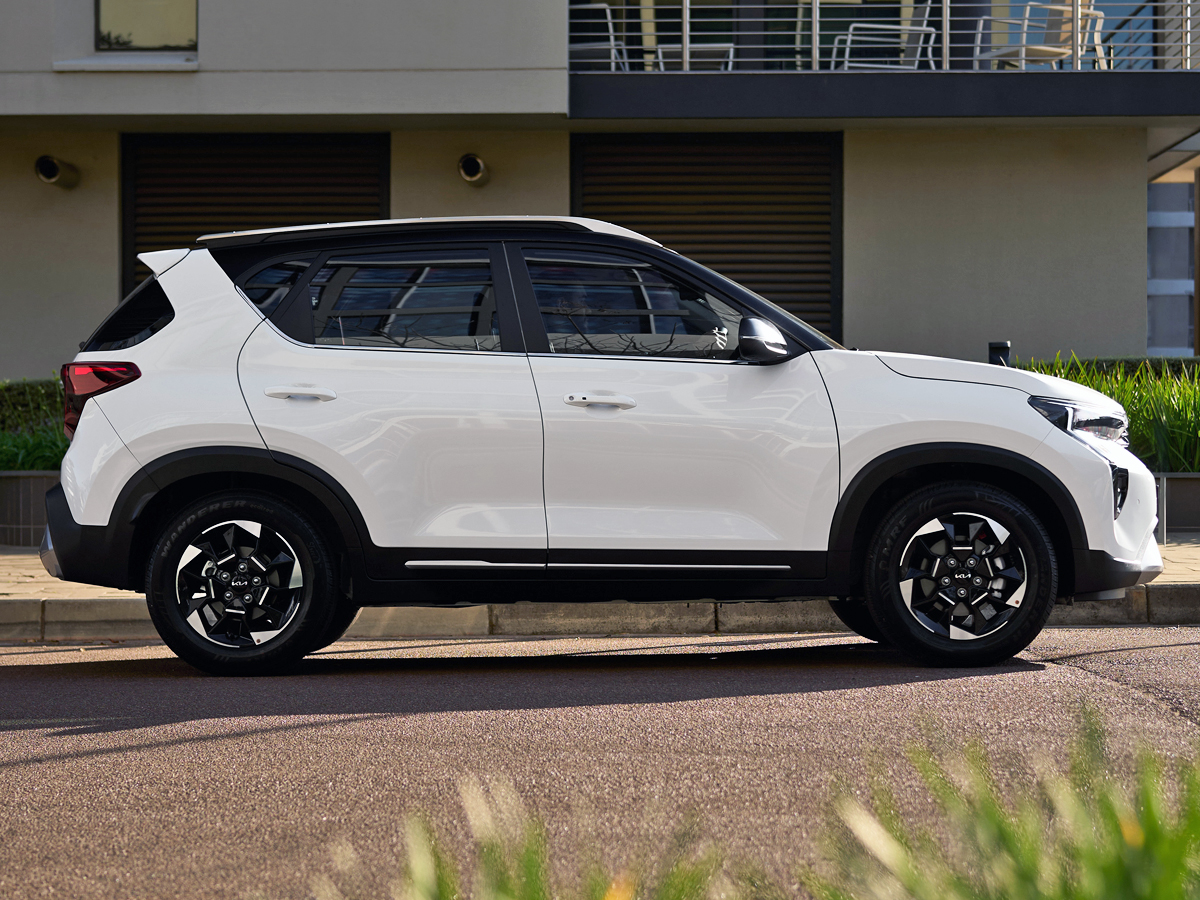
The Sonet has been sold in SA since 2021.
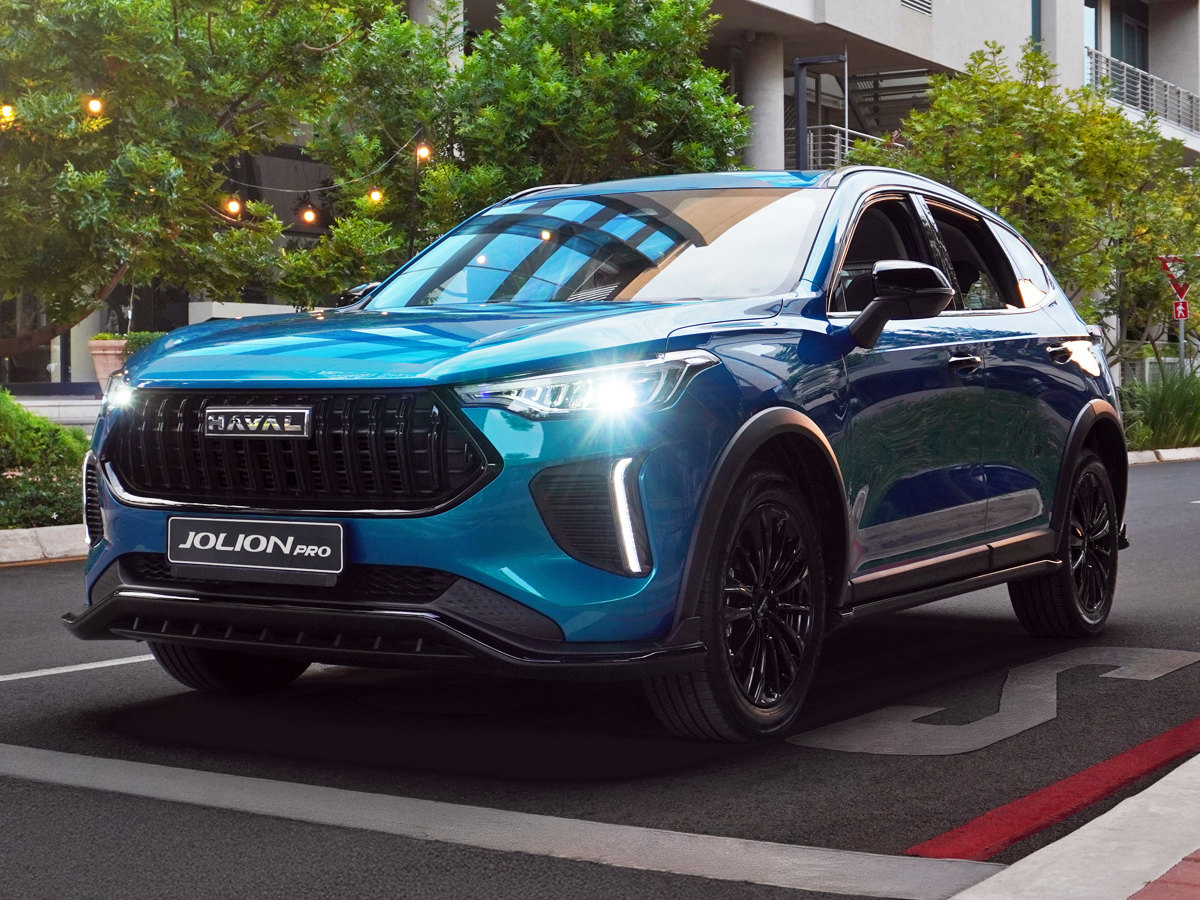
While no official details have yet been released (it would be far too early for Kia’s local division to comment), it’s worth noting the “Max” suffix is a naming convention often used denote a slightly larger version of a particular product. For instance, GWM will soon introduce the Haval Jolion Max, slotting this model above the standard Jolion.
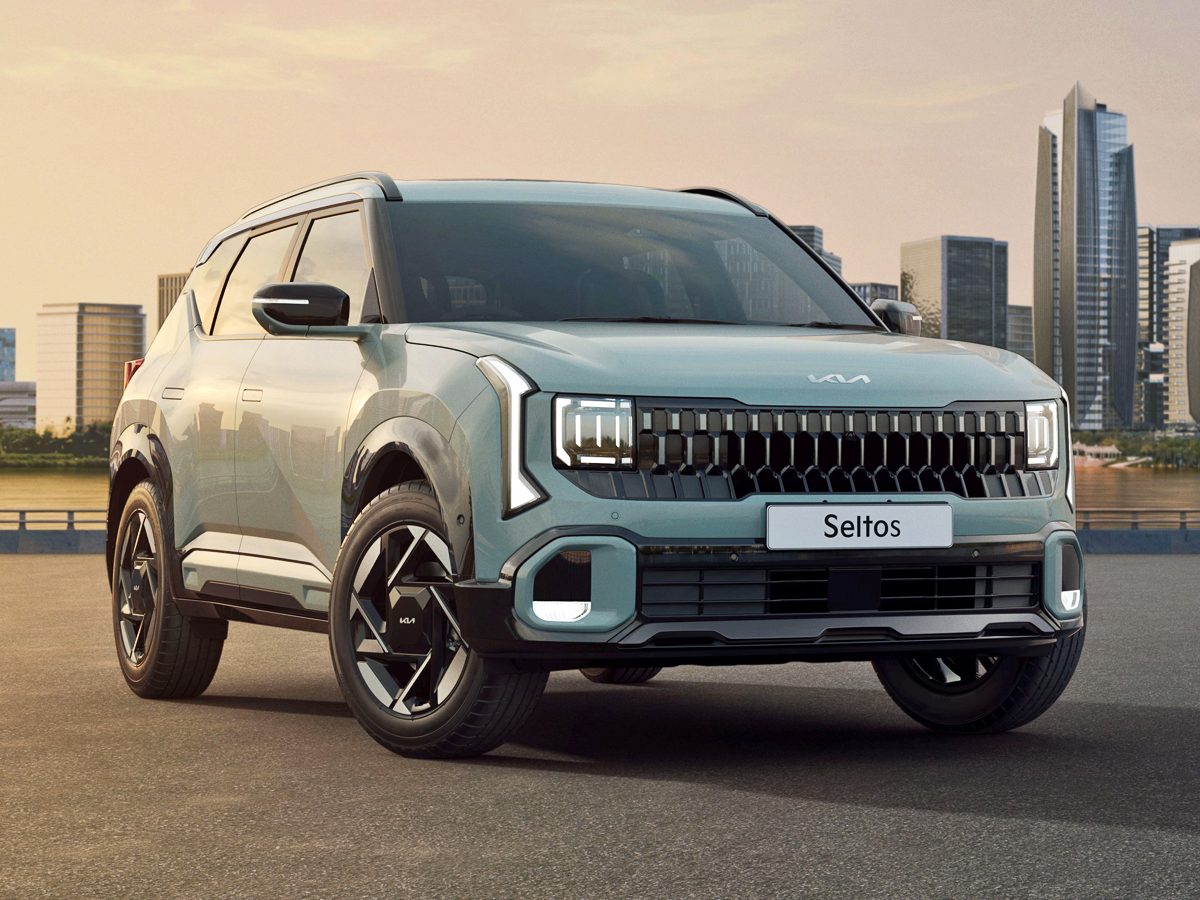
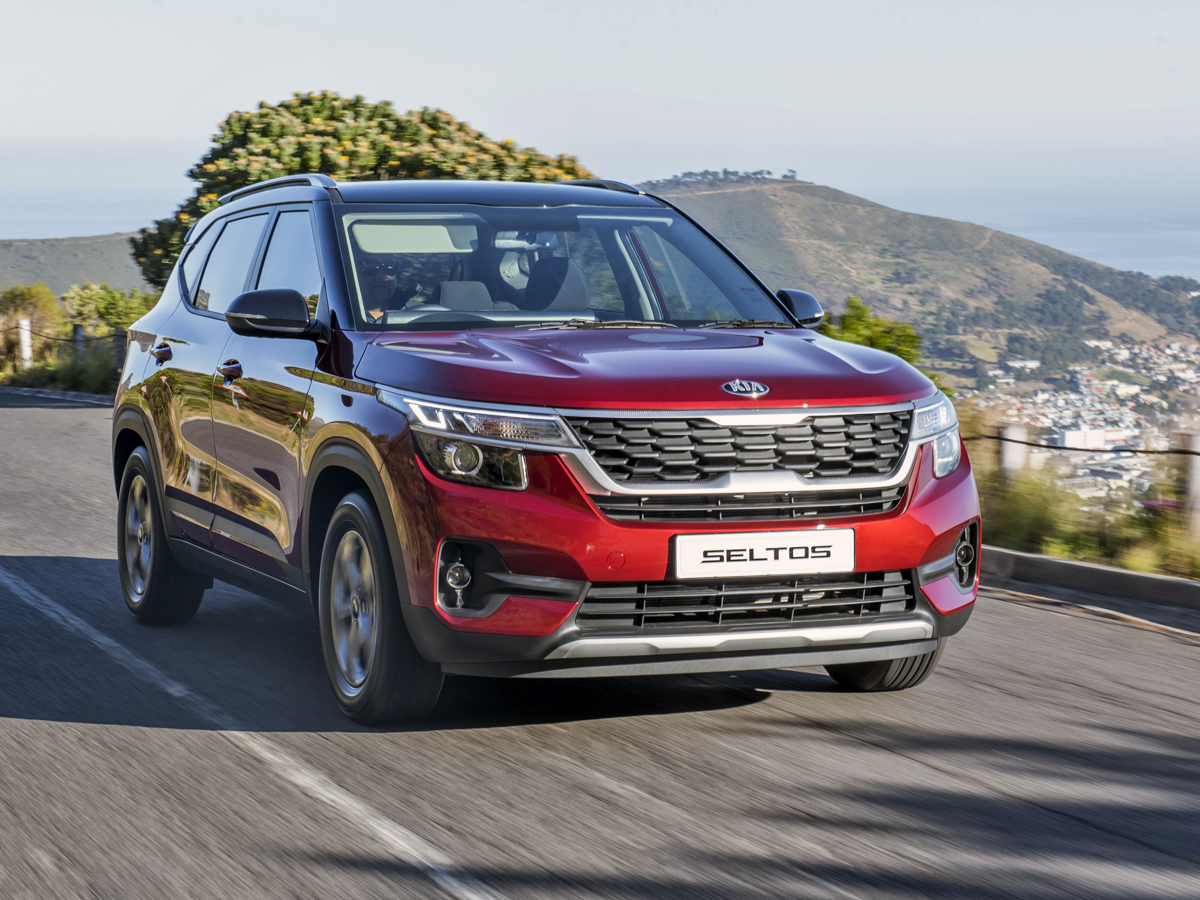
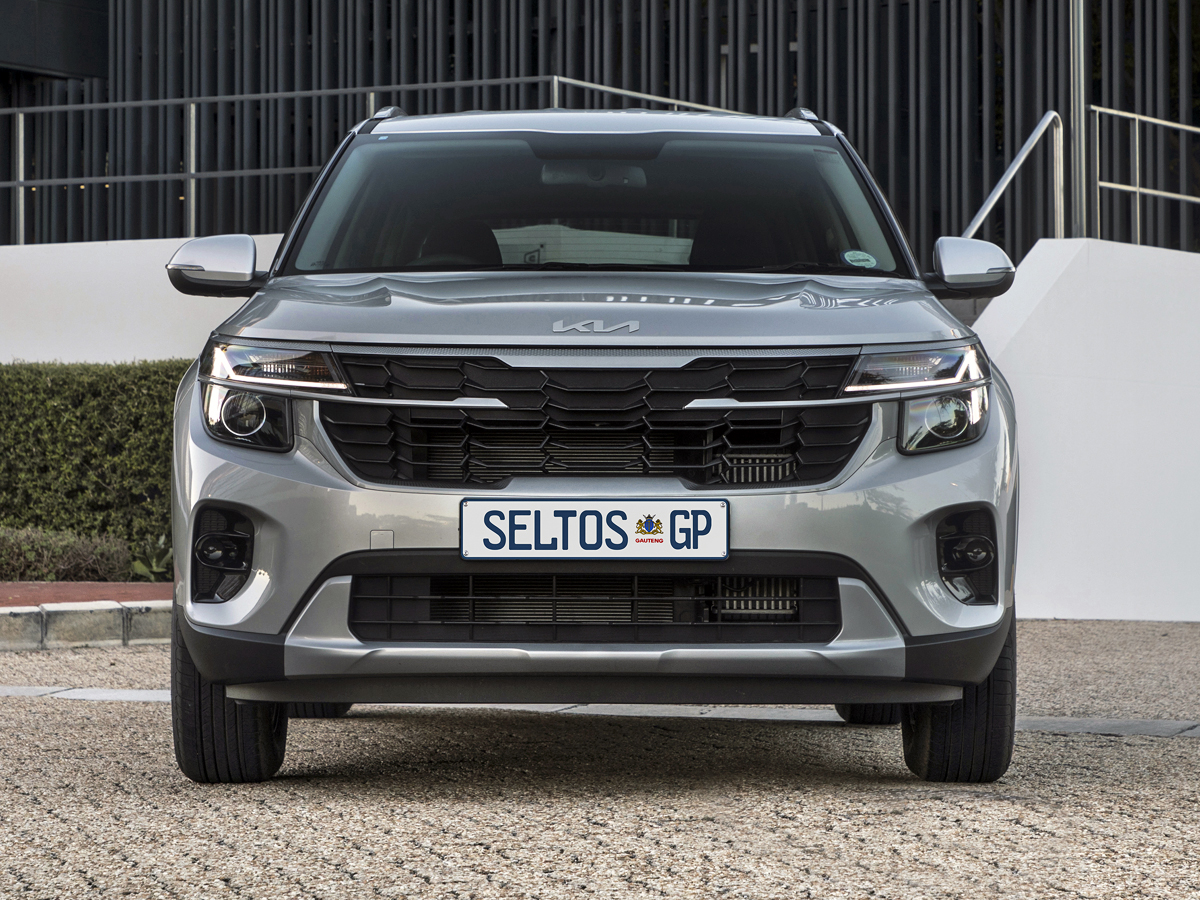
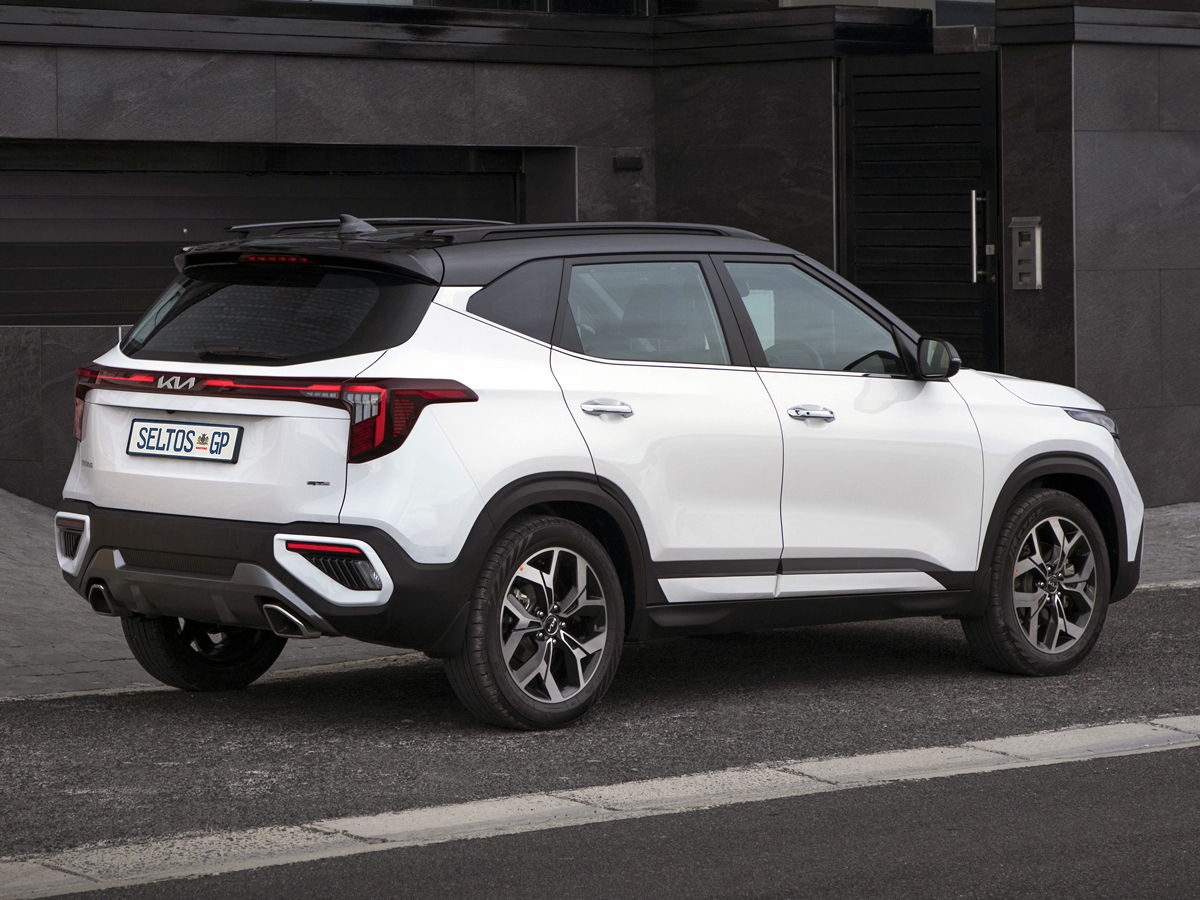
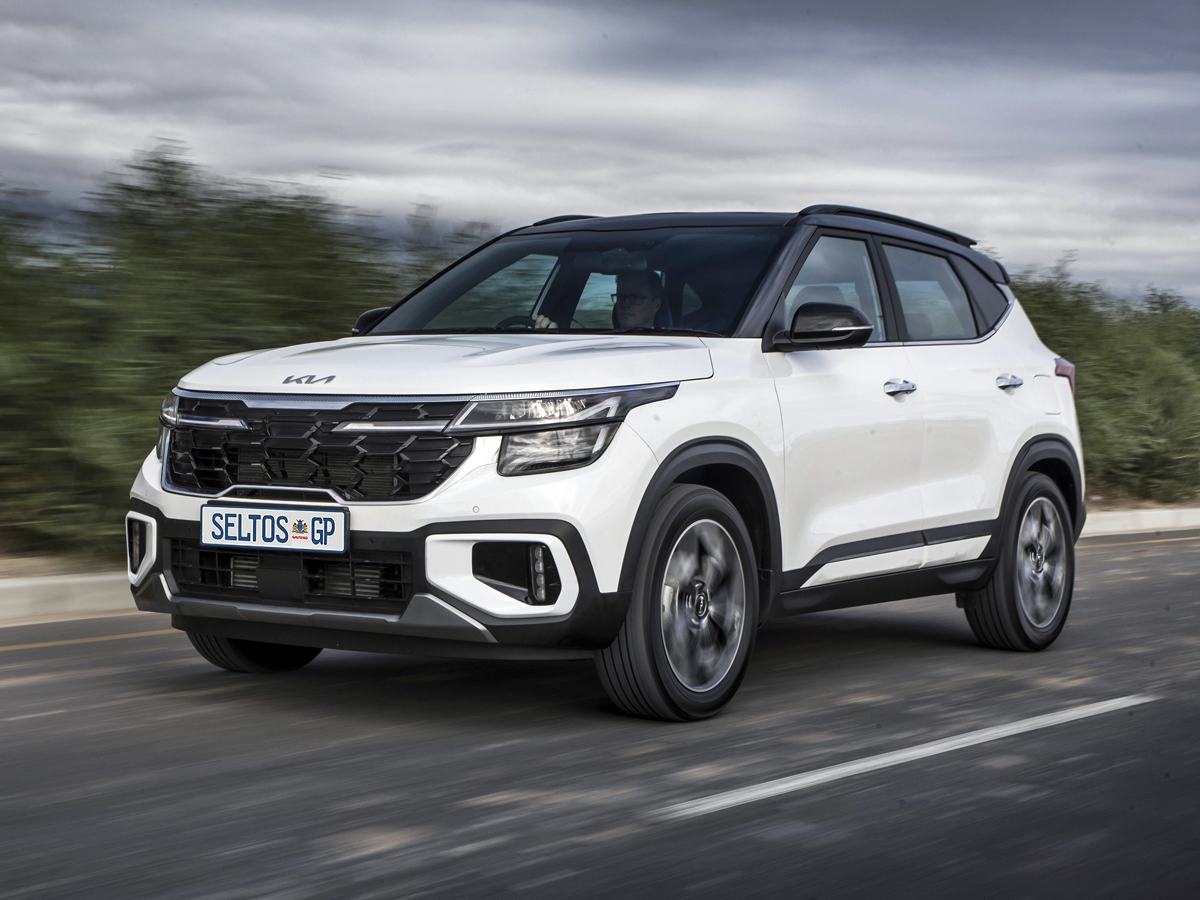
As such, we’d speculate that Kia South Africa might have plans to offer a somewhat bigger version of the Sonet crossover. Considering the recently introduced SP3-series Seltos is significantly larger than its predecessor, there is now theoretically space to accommodate such a model between the existing Sonet and the new Seltos.
The new Seltos is larger than the model it replaced, potentially opening up space above the Sonet.
So, how might this all play out? Well, reports out of India – where the QY-series Sonet has been in production since 2020, arriving in SA the following year – suggest the 2nd-generation model is due to launch in 2027. Set to switch to the automaker’s latest K1 platform, the upcoming new Sonet could potentially be larger than the current model.
As such, there could be an opportunity for the current Sonet to soldier on in South Africa as a so-called “prolonged-lifecycle vehicle” (a strategy Kia SA at least considered with the Seltos), with the 2nd-generation version – likely featuring a longer wheelbase to unlock extra rear legroom – then free to adopt the new “Sonet Max” badge.
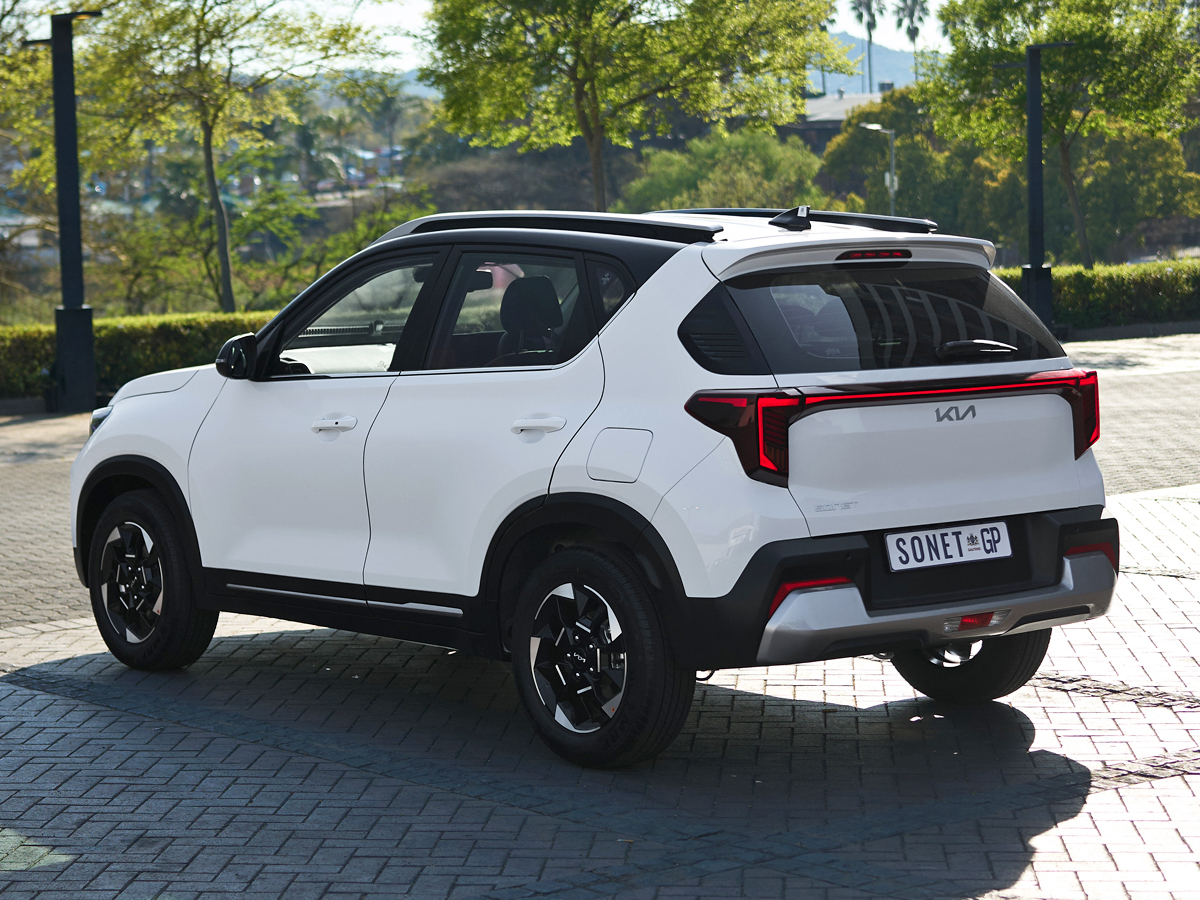
The 2nd-gen Sonet is likely to be a little larger than the current model.
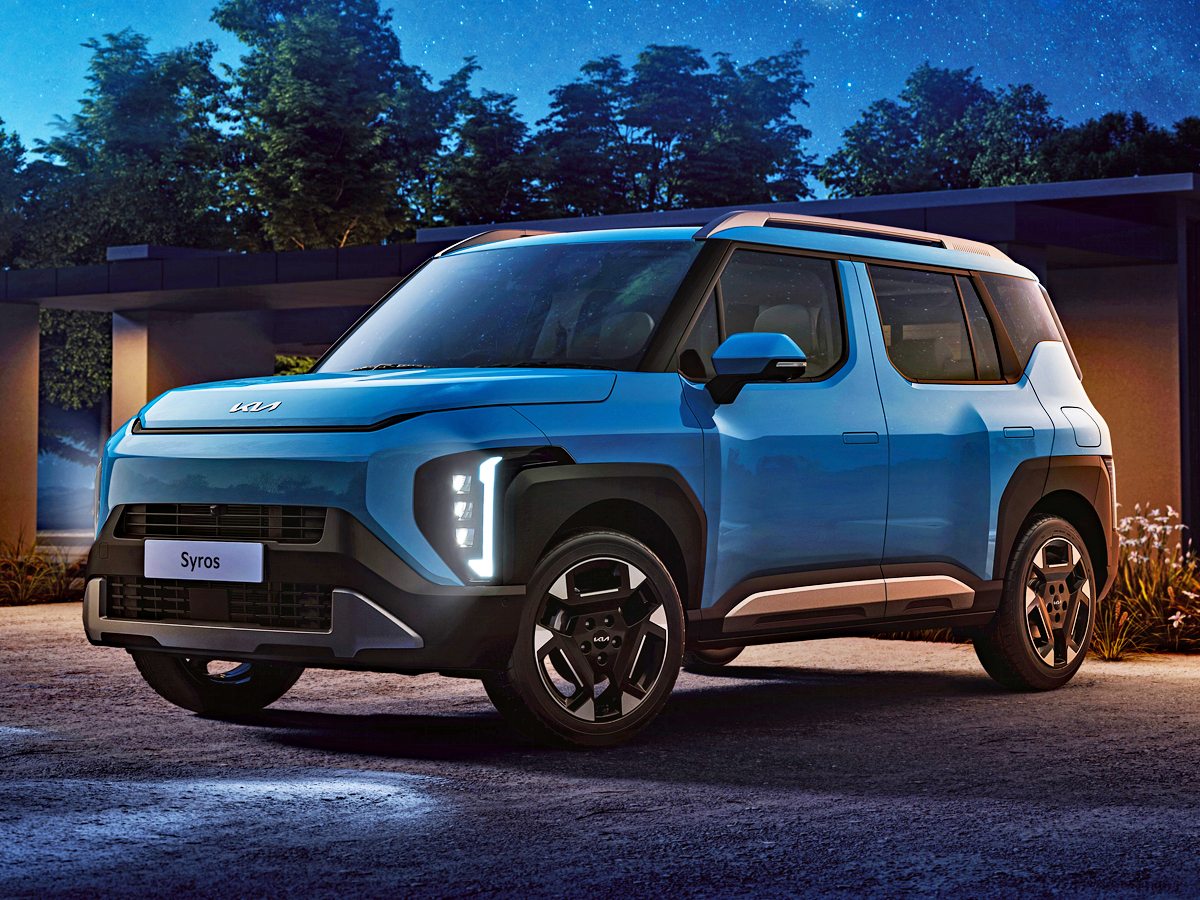
Still, it’s worth keeping in mind Kia also has plans to launch the new Syros in South Africa, with our latest information suggesting a local arrival is scheduled for the middle of 2027. The Syros is similar in size to the Sonet, being only slightly wider and taller (though its 2 550 mm wheelbase is some 50 mm longer).
Since the Syros is set to be positioned above the current-generation Sonet, there’s also the outside possibility that Kia might badge it as the “Sonet Max” in South Africa (in an attempt to leverage the power of the Sonet name locally). Still, we’d say this theory is the less likely of the two we’ve put forward here.
The Syros has been pencilled in for South Africa, too.
Of course, Kia could have another plan entirely (interestingly, the brand once sold a 7-seater version of the Sonet in Indonesia, though it was discontinued in 2022). In addition, we should point out that a trademark application is by no means a guarantee that the automaker will use the badge in question. Indeed, Kia holds the local rights to numerous other nameplates it has yet to employ in South Africa.
As a reminder, the current Sonet range in Mzansi comprises 7 derivatives (excluding a pair of panel-van variants), with pricing running from R299 995 to R484 995. The brand’s local division recently rejigged the line-up, dropping the turbocharged 1.0-litre petrol engine and leaving all derivatives to employ the naturally aspirated 1.5-litre petrol motor.
The Sonet has served as Kia SA’s best seller over the past few years.
The Sonet is easily Kia SA’s best-selling model, with 6 601 units (excluding panel-van derivatives registered in the light-commercial vehicle segment) sold in Mzansi over the opening 8 months of 2026. It was also comfortably the brand’s top seller in 2025, with 10 671 units registered.
Frequently Asked Questions (FAQ)
Q: What is the “Kia Sonet Max” trademark filing in South Africa?
A: According to Cars.co.za, on 14 September 2026, Kia’s head office in Seoul applied to trademark the “Kia Sonet Max” name in South Africa and other international markets, sparking speculation about a larger crossover variant.
Q: Why might Kia introduce a larger “Sonet Max” model in South Africa?
A: With the 2nd-generation Seltos growing significantly in size, a gap has opened up between the current Sonet and the new Seltos. A “Sonet Max” could potentially accommodate a larger, next-generation Sonet.
Q: Is the Kia Sonet Max confirmed for release in South Africa?
A: No, Kia has not yet officially confirmed any product details. A trademark application reserves the nameplate rights but does not guarantee the badge will be used on a production model.
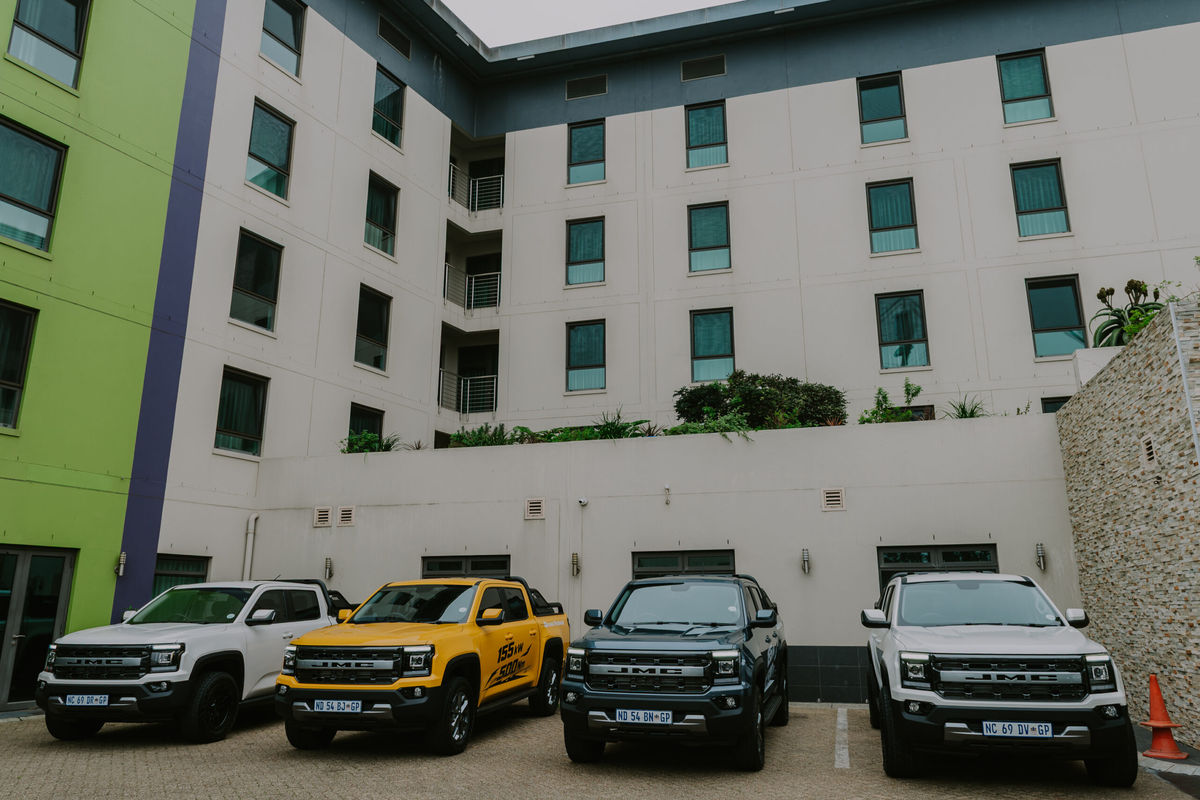
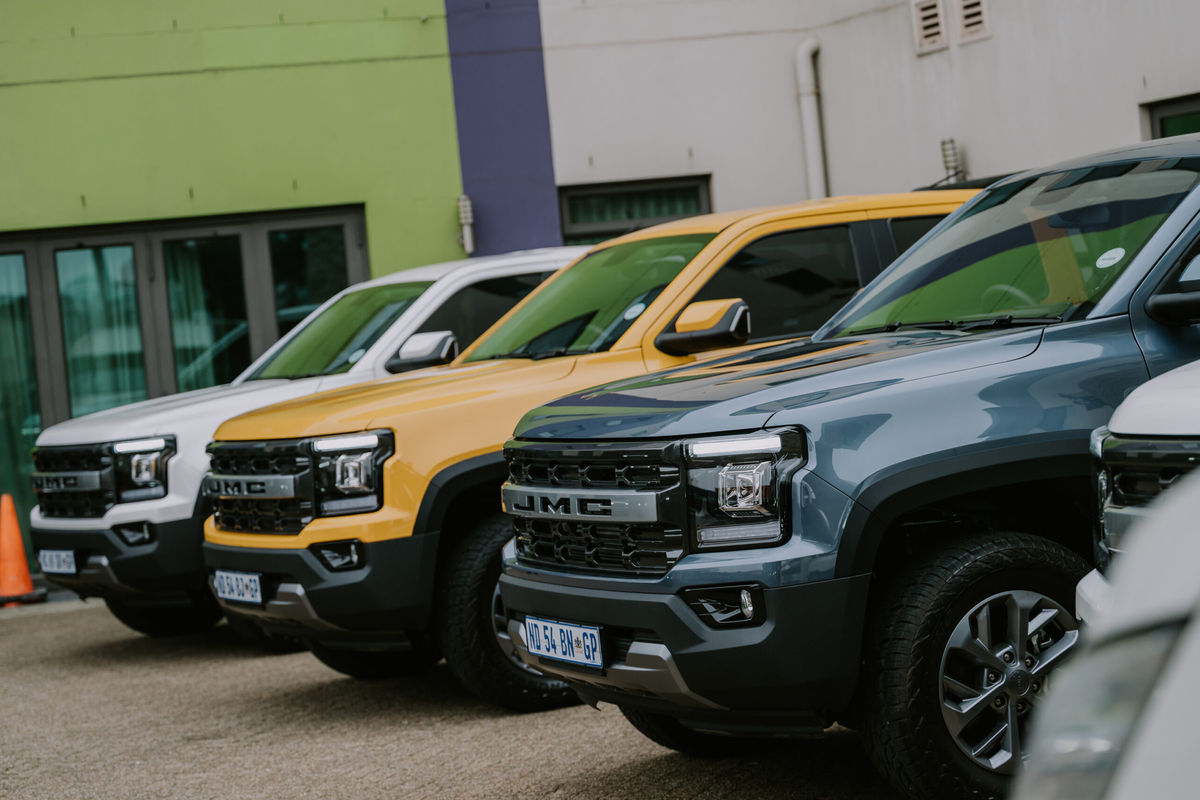
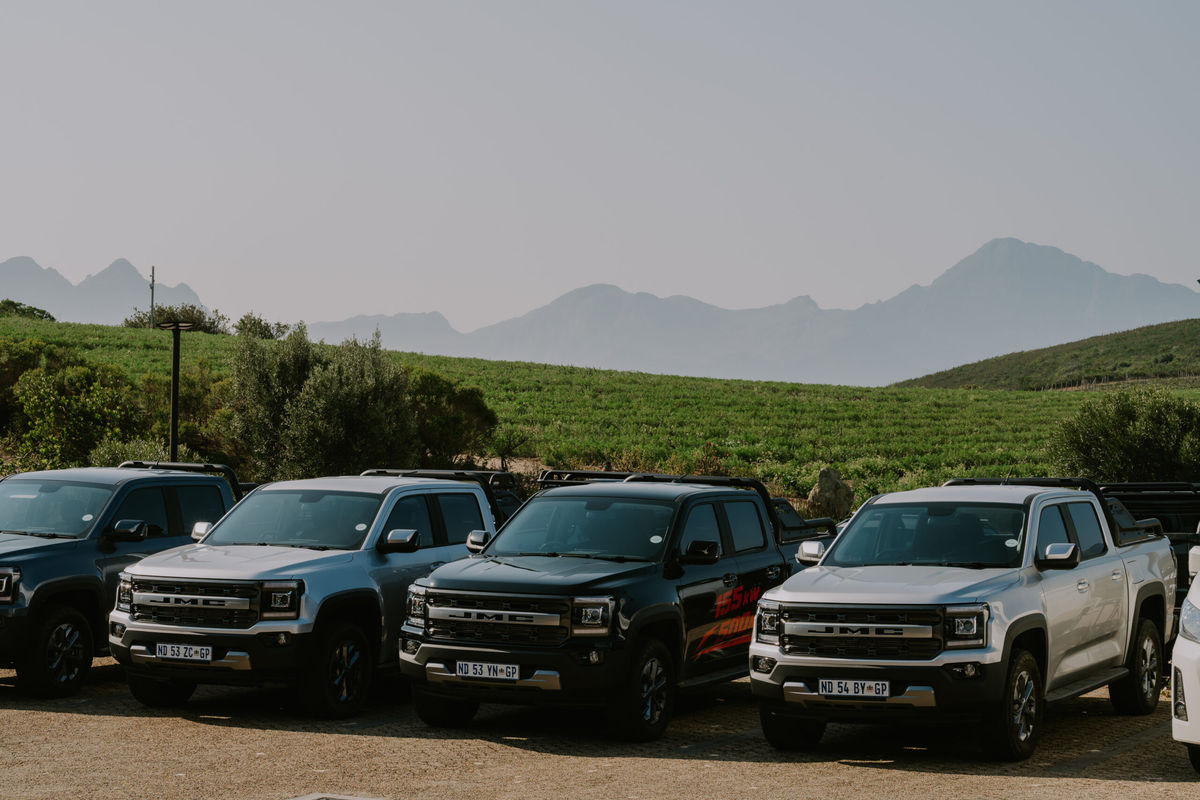
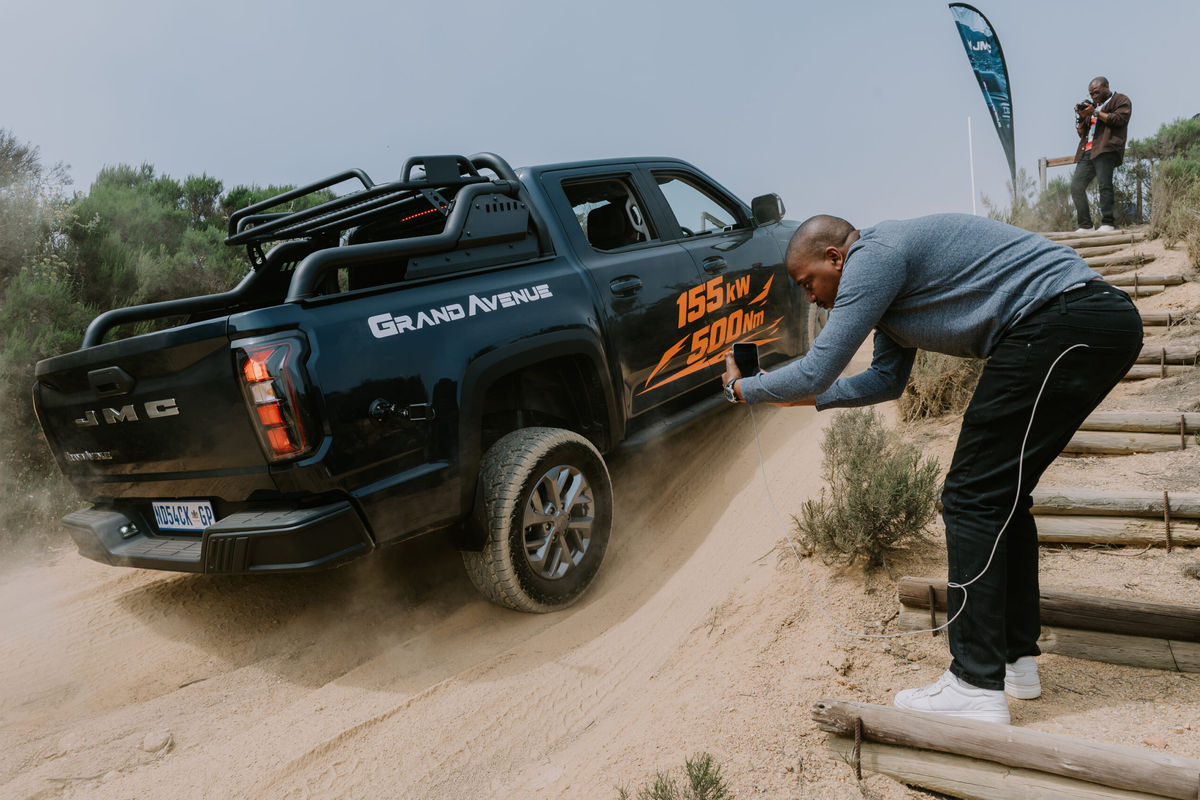
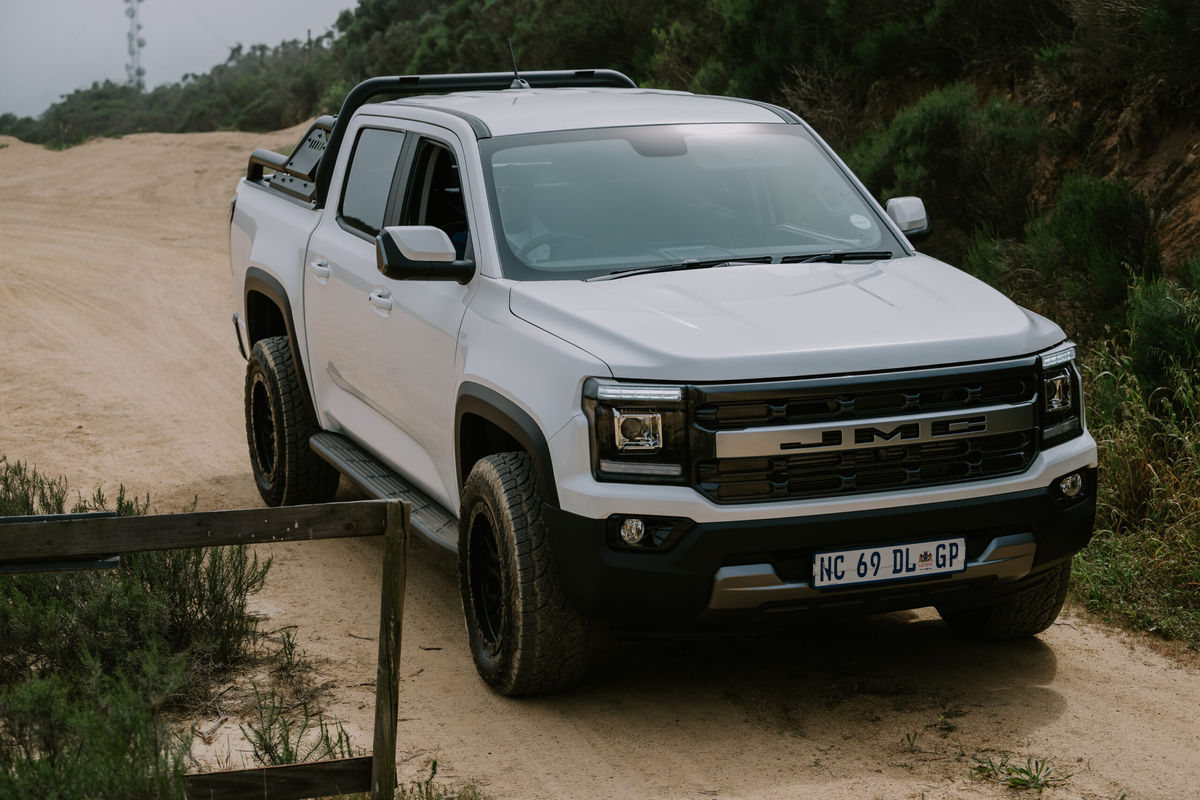
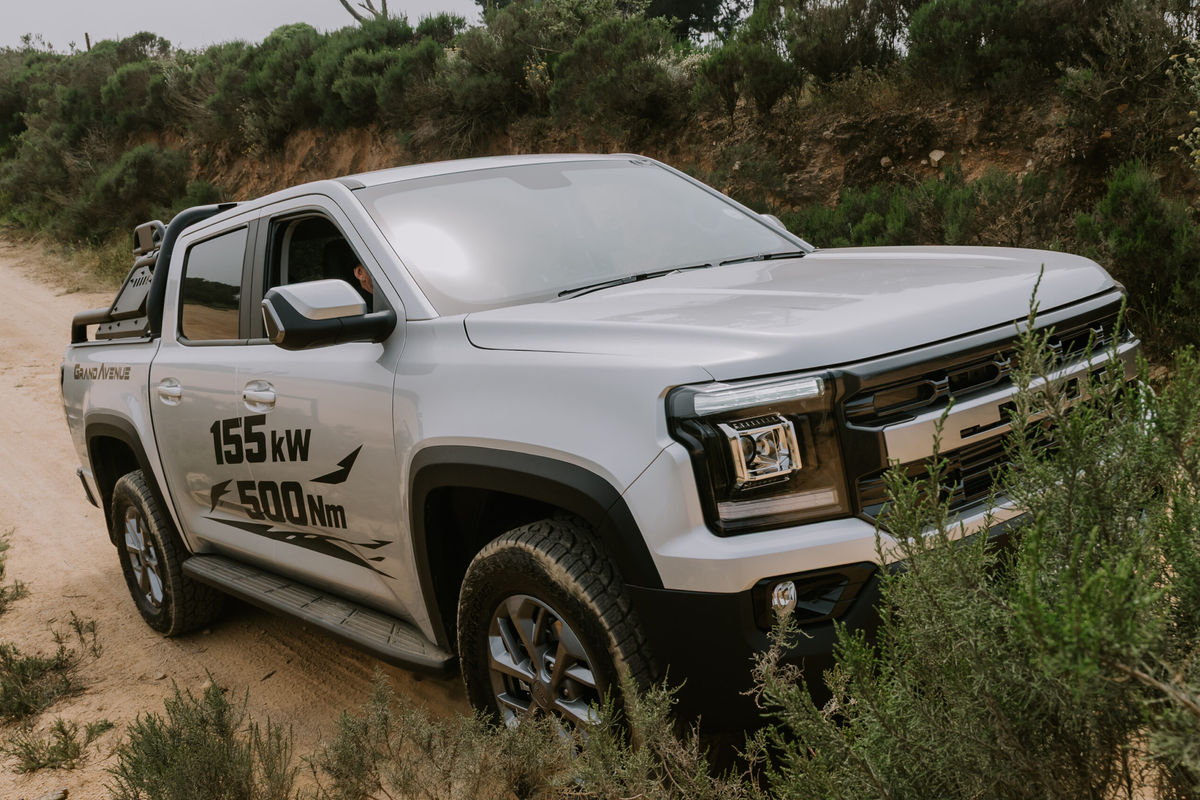
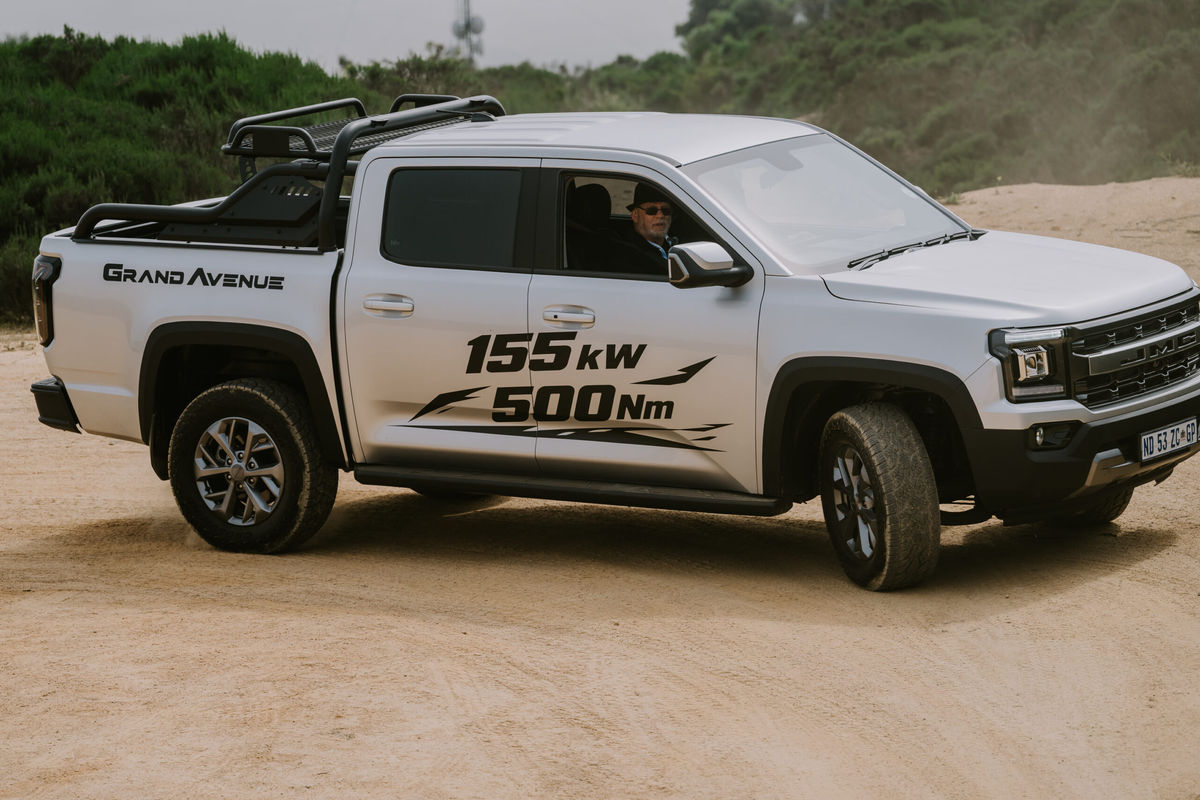
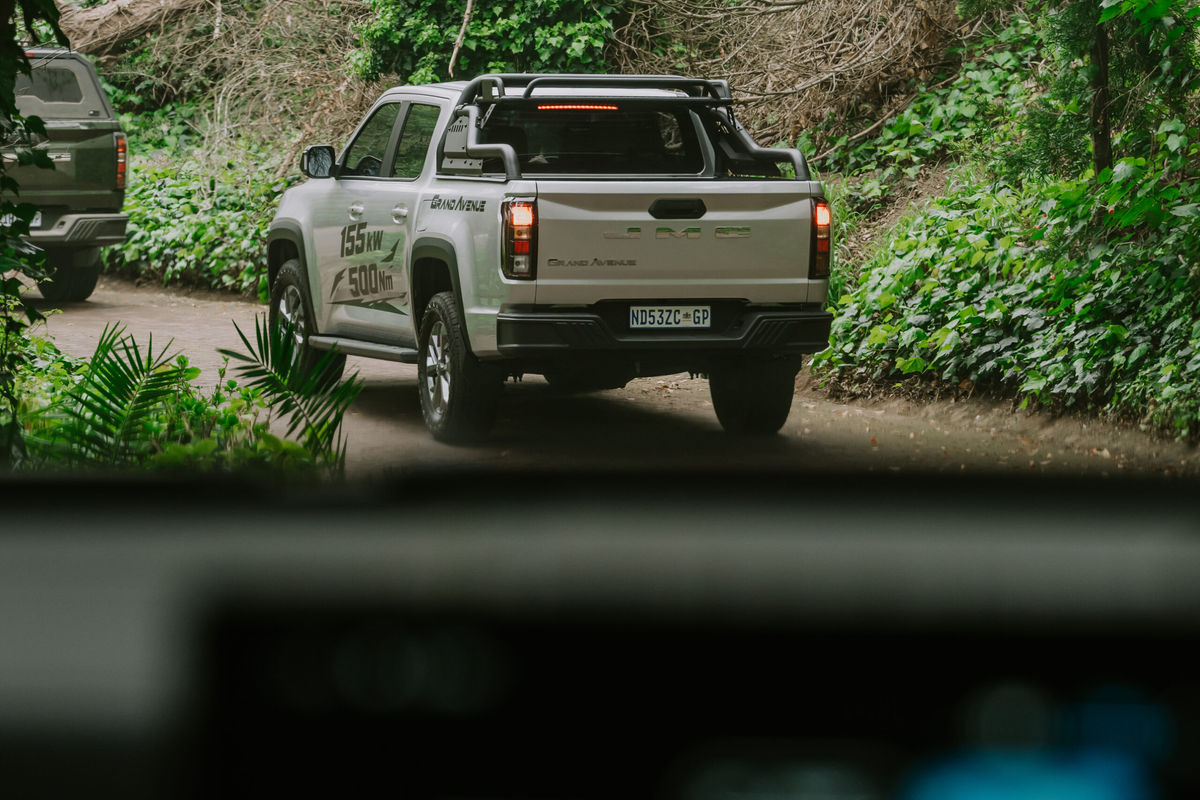
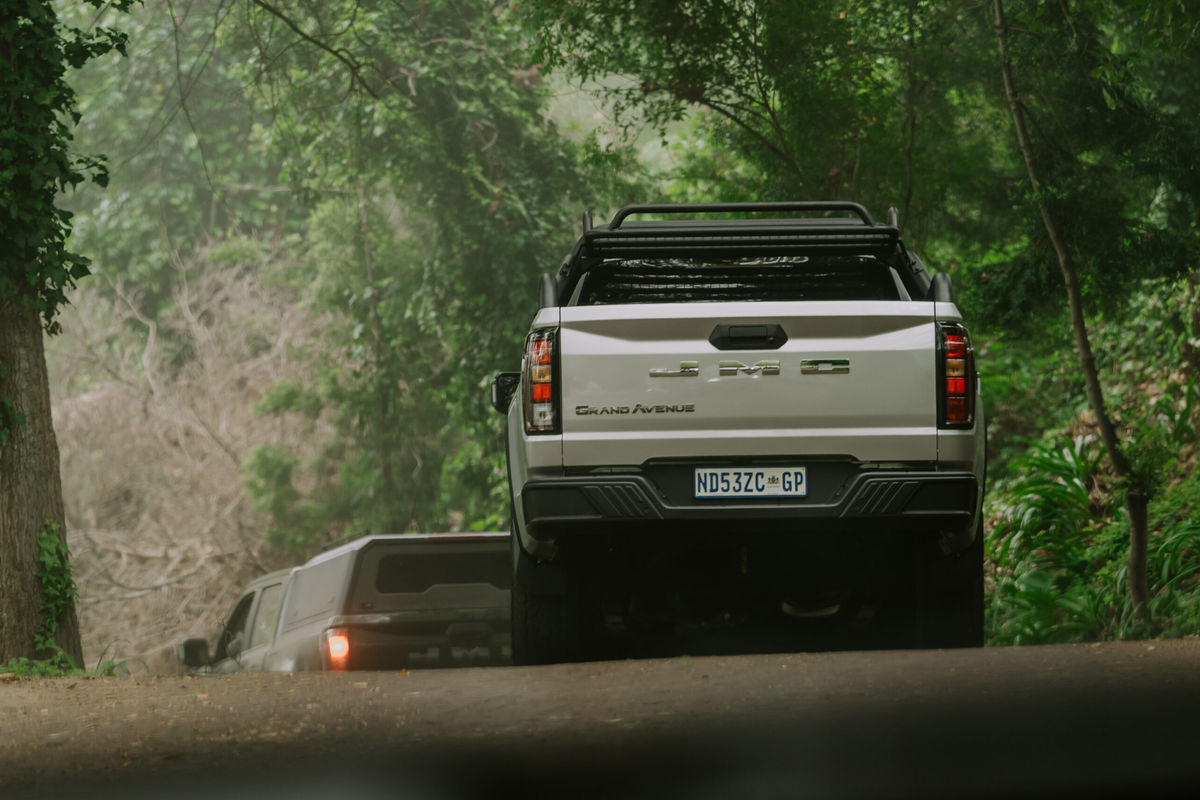
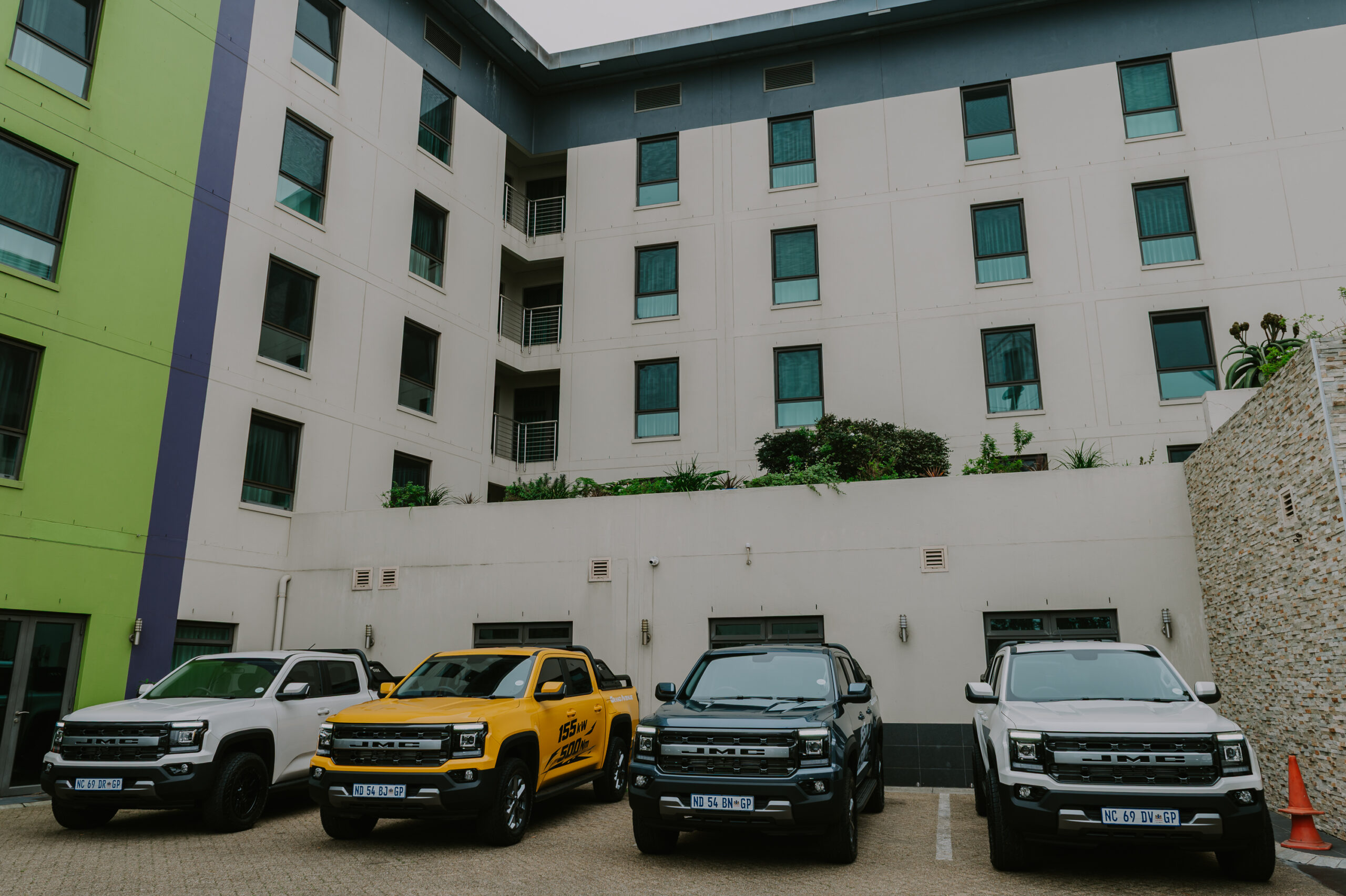
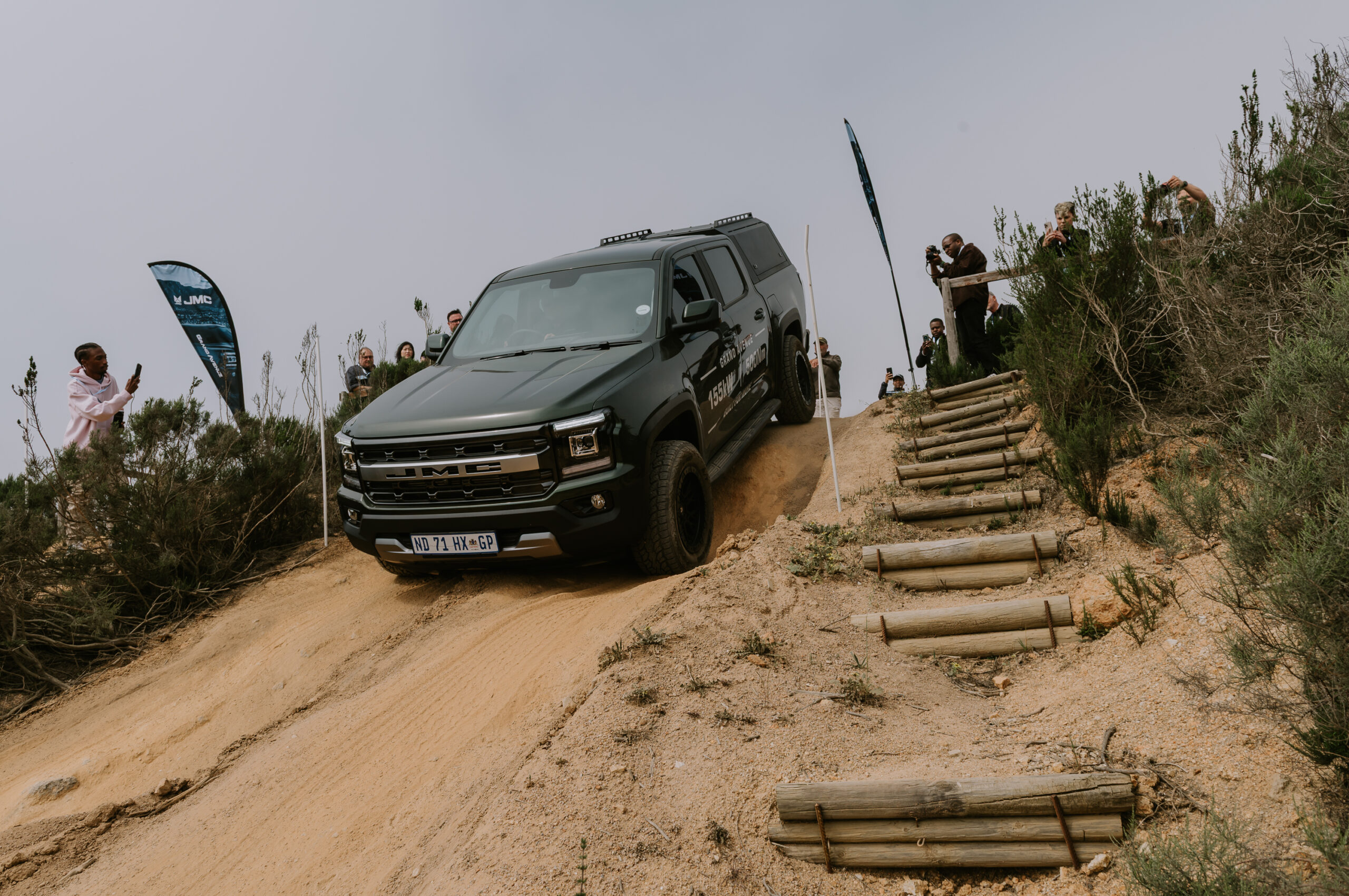
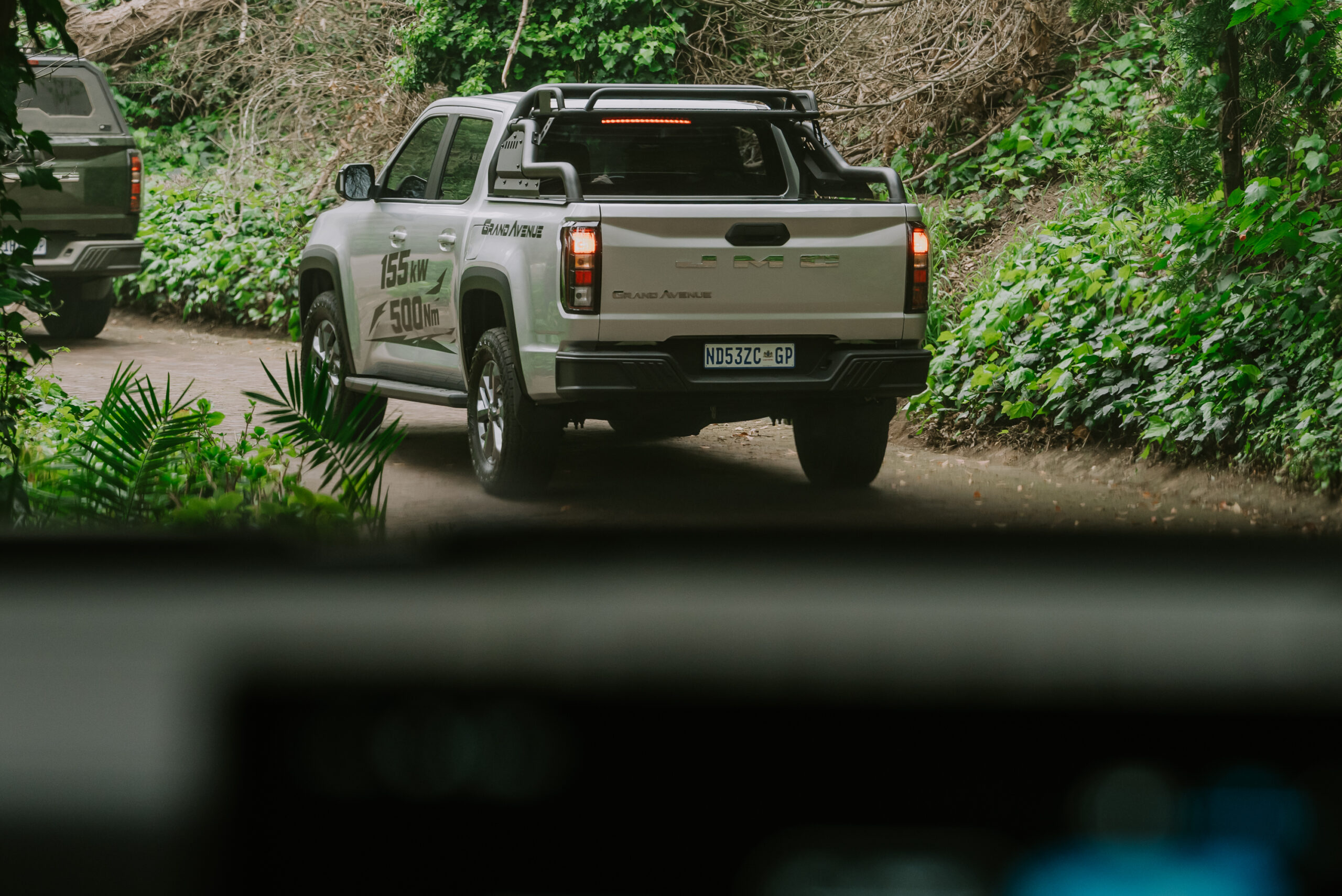
JMC has come out guns blazing with the launch of its Grand Avenue bakkie, which impresses not only in performance and efficiency, but most importantly, pricing. We drove it at the local media launch.
Right off the bat, the pricing demands attention. Starting at R529 900 for the 4×2 and topping out at just R579 900 for the 4×4, the JMC Grand Avenue radically undercuts every direct rival in South Africa. Distributed by Salvador Caetano South Africa – the network behind GAC Motor – this giant double-cab looks poised to throw the entire lifestyle bakkie segment into disarray.
How JMC managed to deliver an automatic, feature-packed double-cab at this price point was the central puzzle at the local launch. In a market where top-tier lifestyle bakkies routinely breach the R1-million mark, a sub-R600k flagship feels almost too good to be true. Naturally, we set off on our launch route with one primary mission: find the Achilles’ heel that explains the price tag.
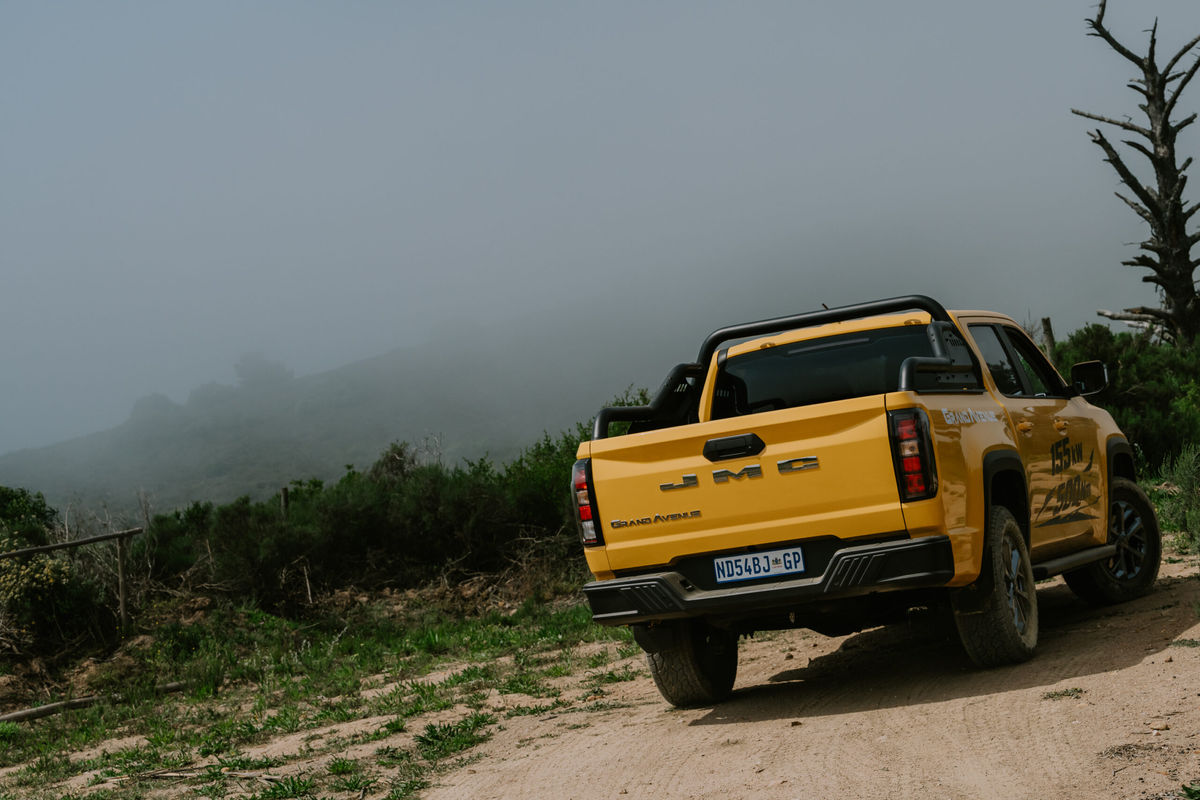
The JMC Grand Avenue certainly does not look cheap…
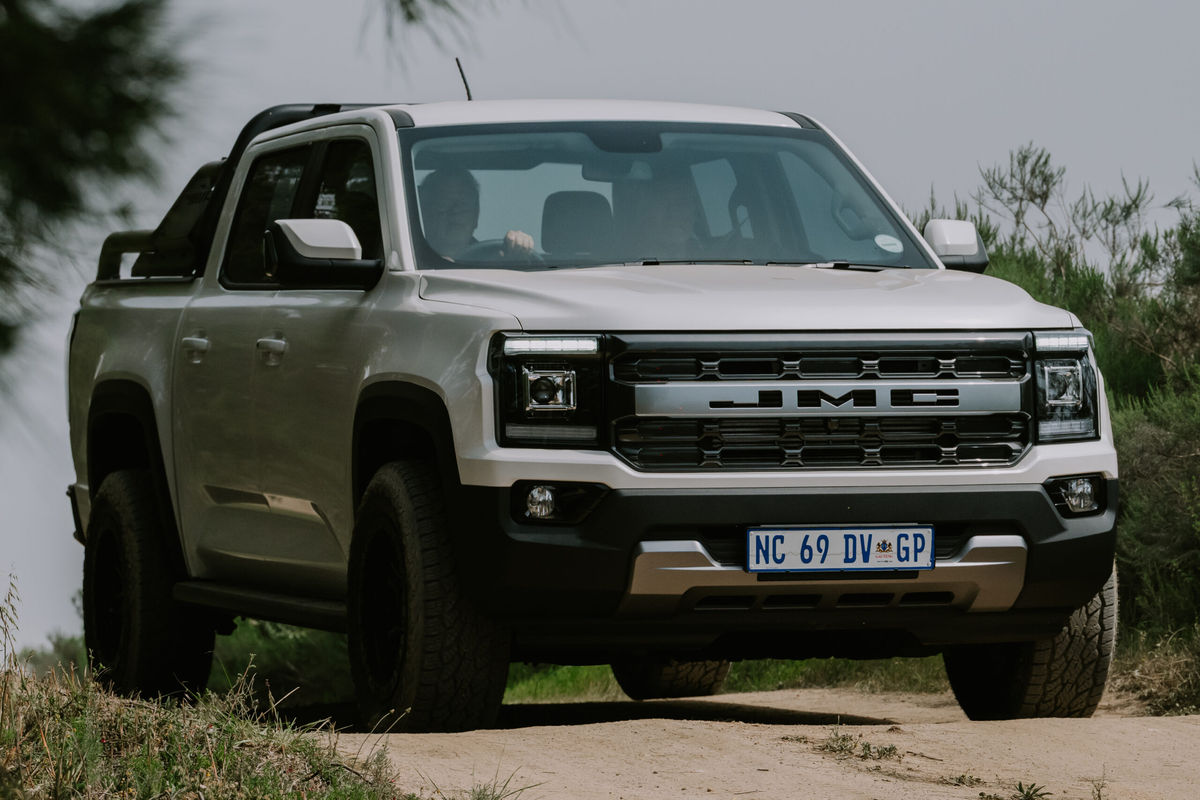
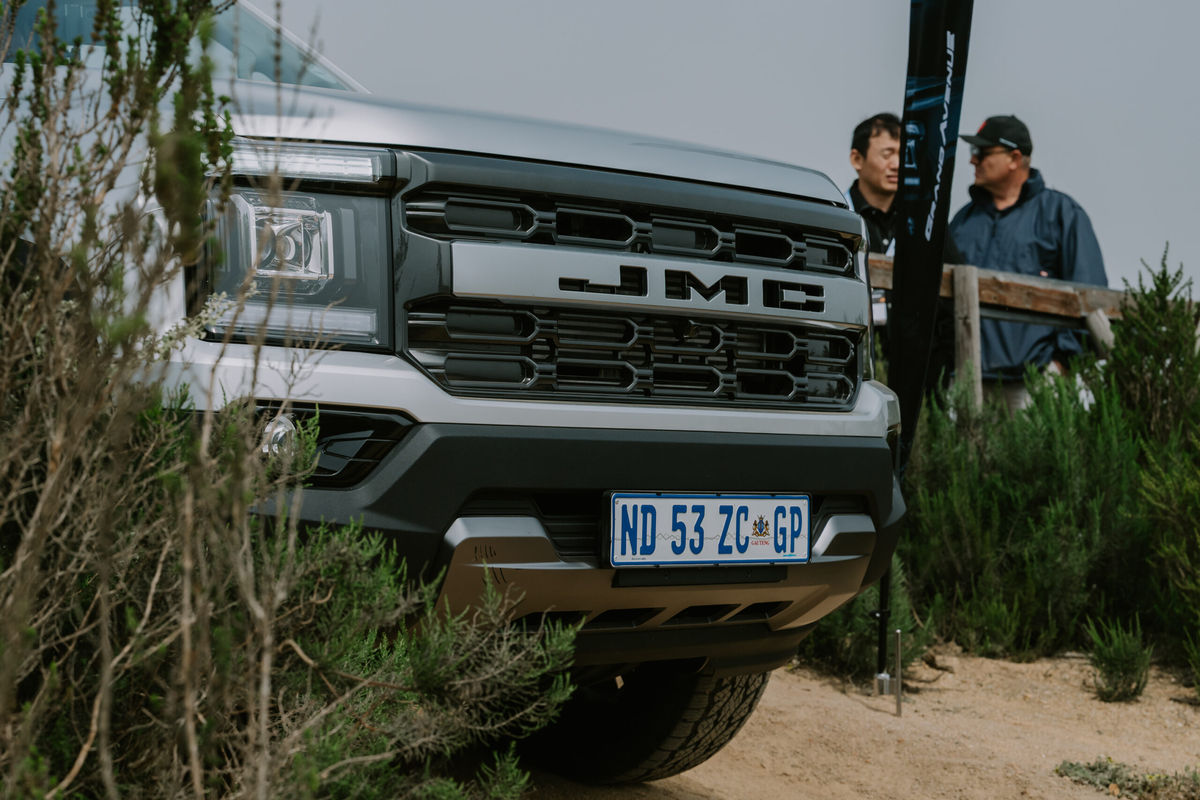
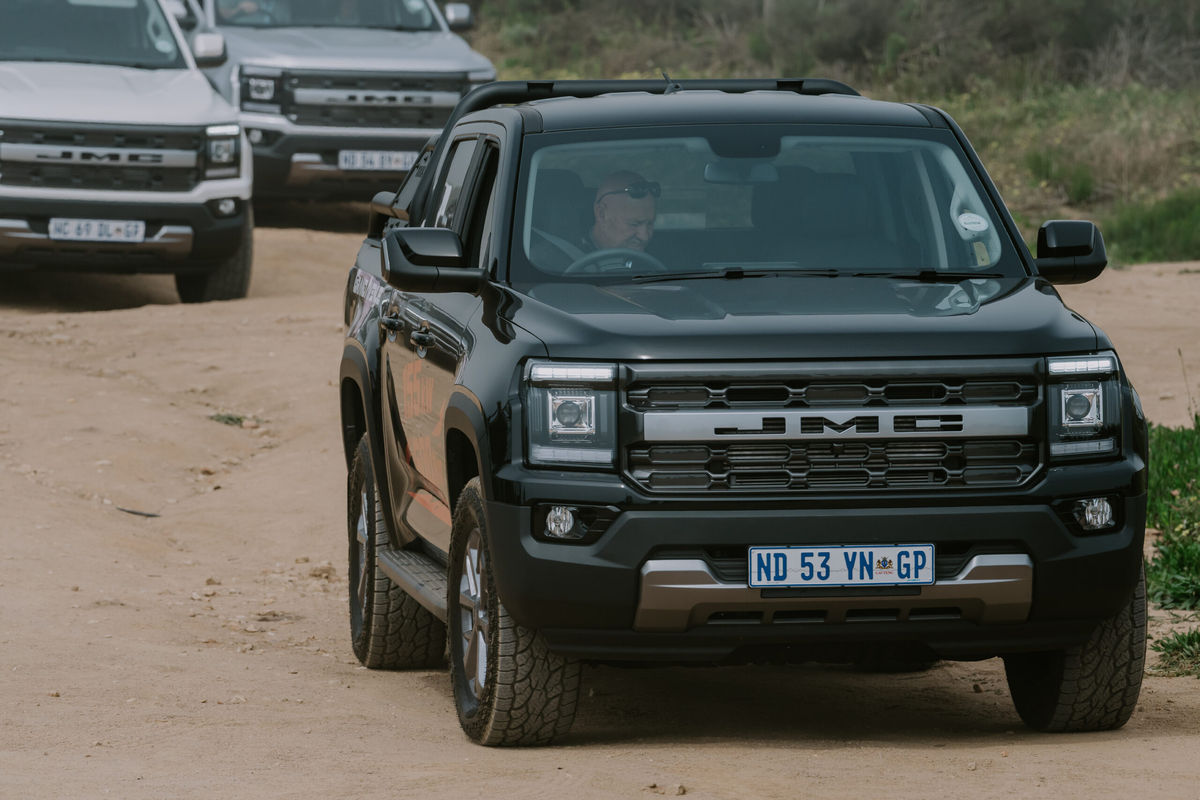
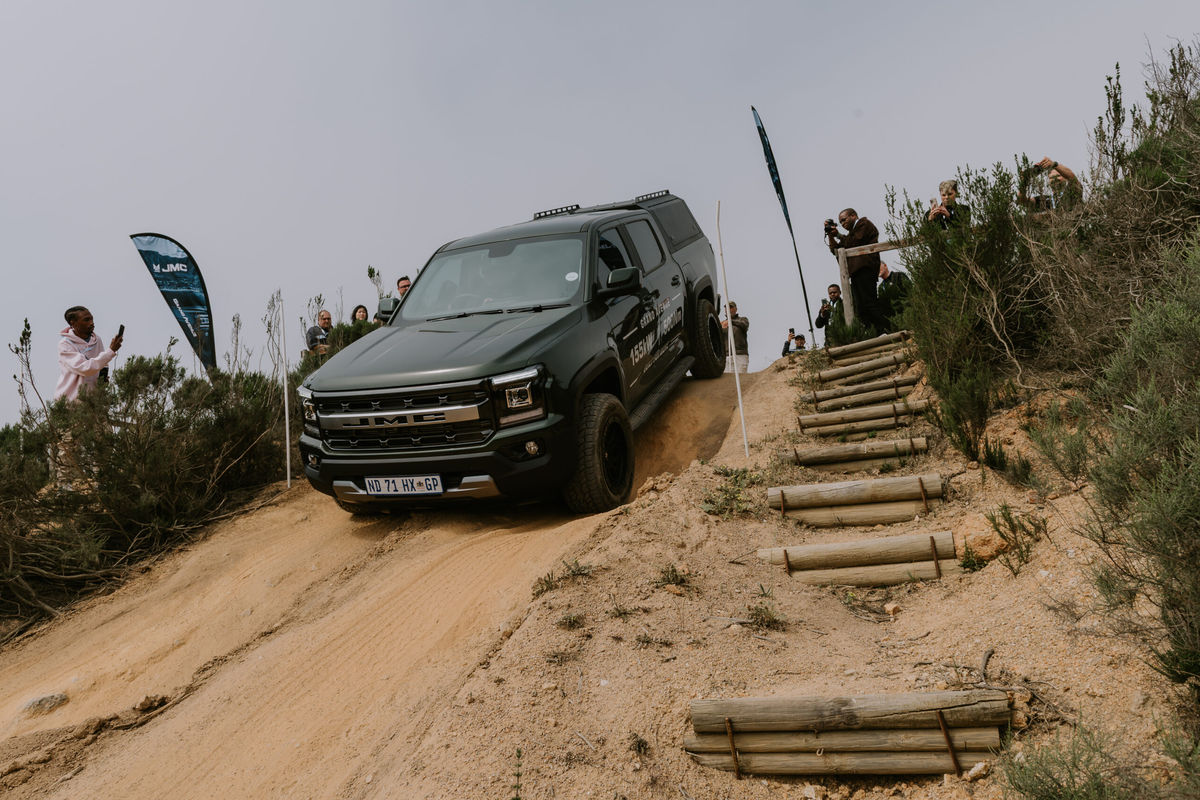
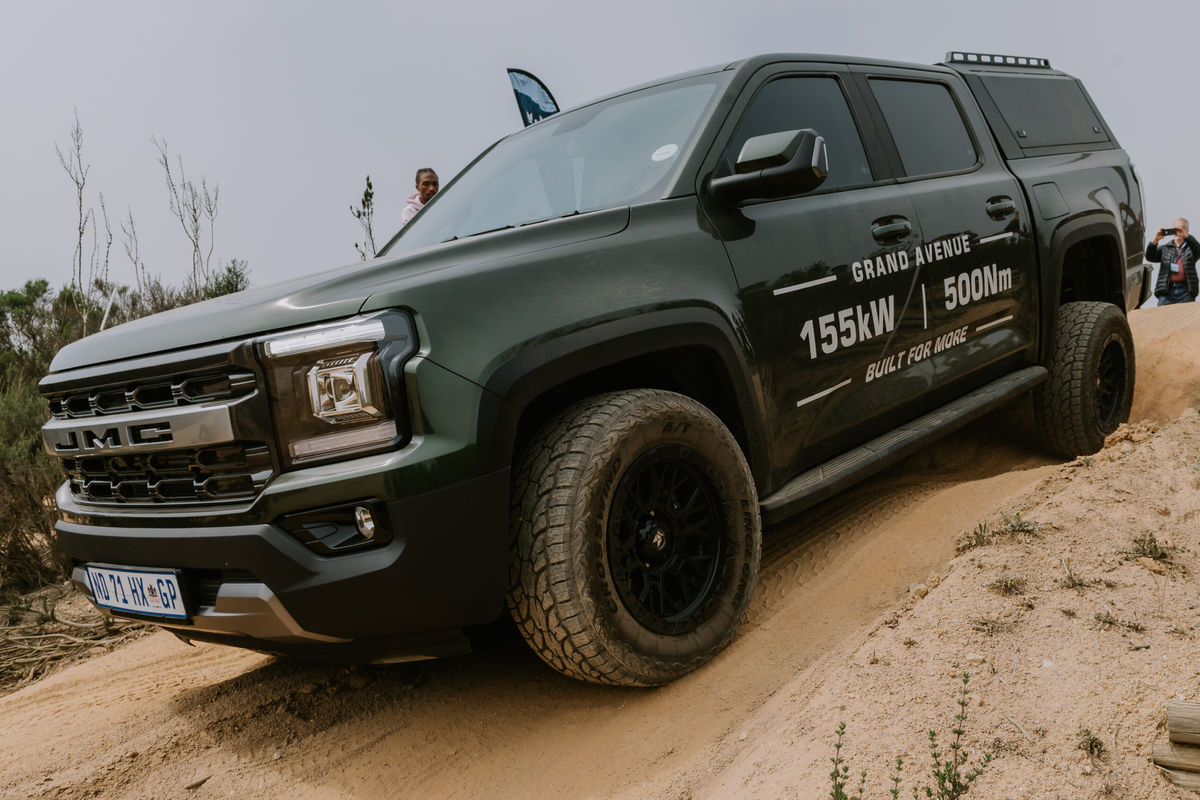
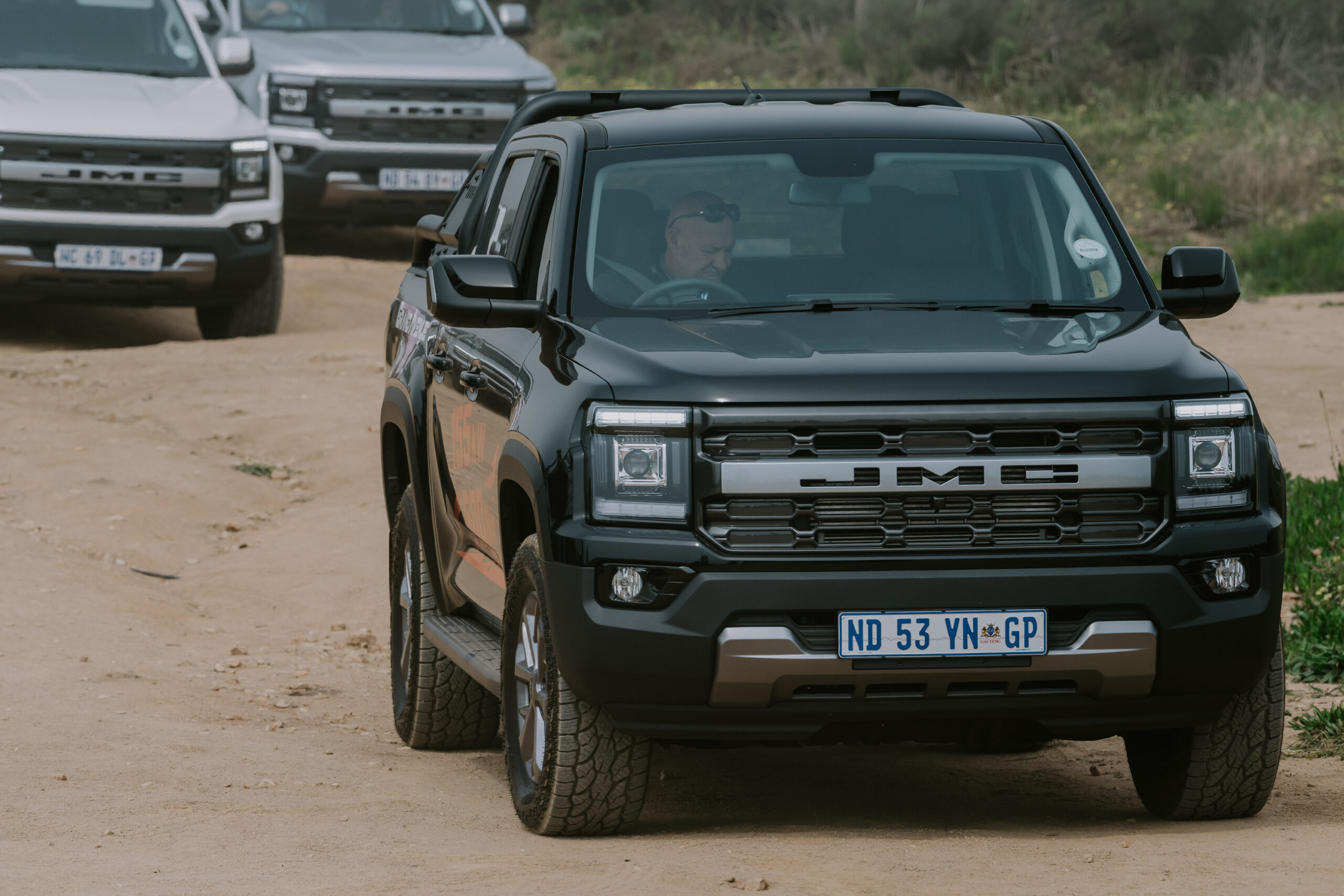
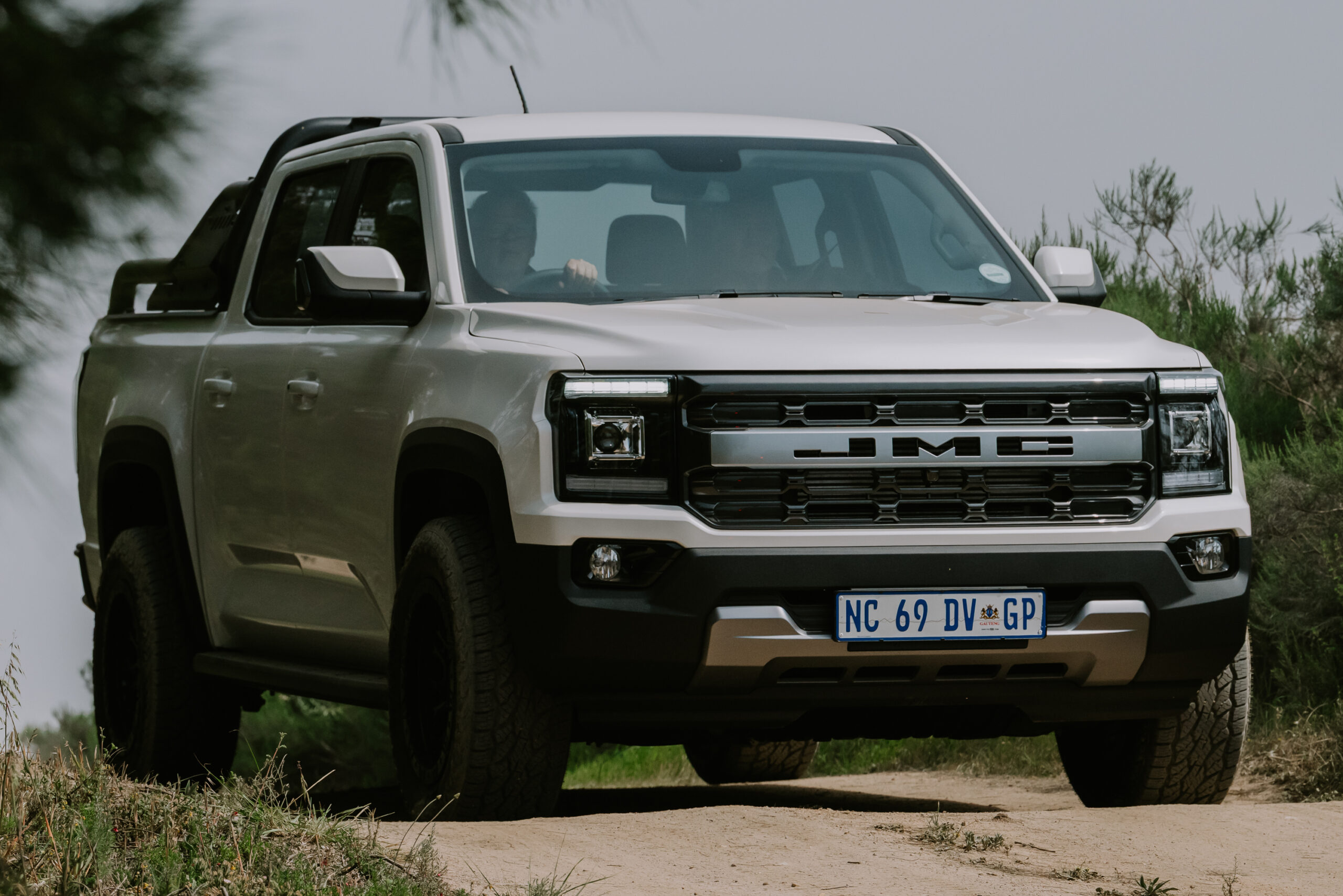
The Grand Avenue looks very American in its design, something we feel South Africans will appreciate. The boxy front grille with massive JMC lettering is a nice touch and the LED lighting on the top of the headlights finishes off the design well. Overall, the newcomer has a commanding presence, the kind you’d move out of the way for should you see it in your rear-view mirror.
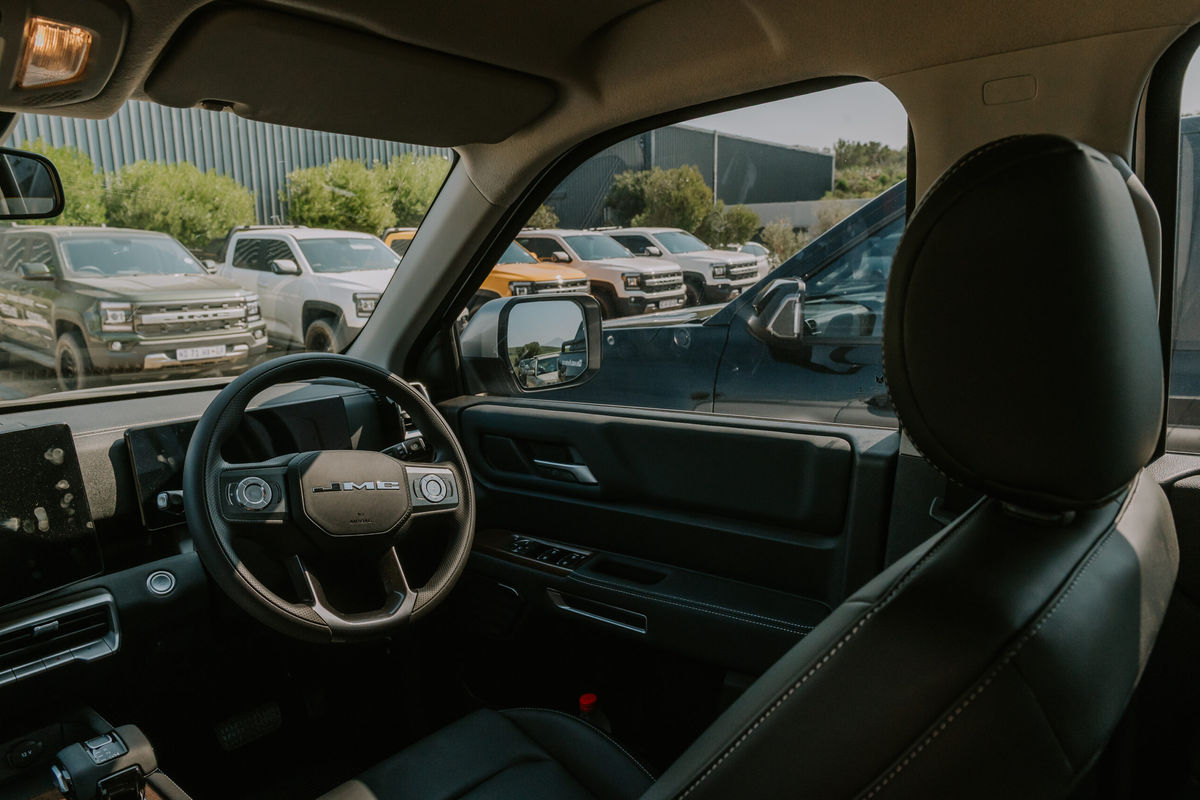
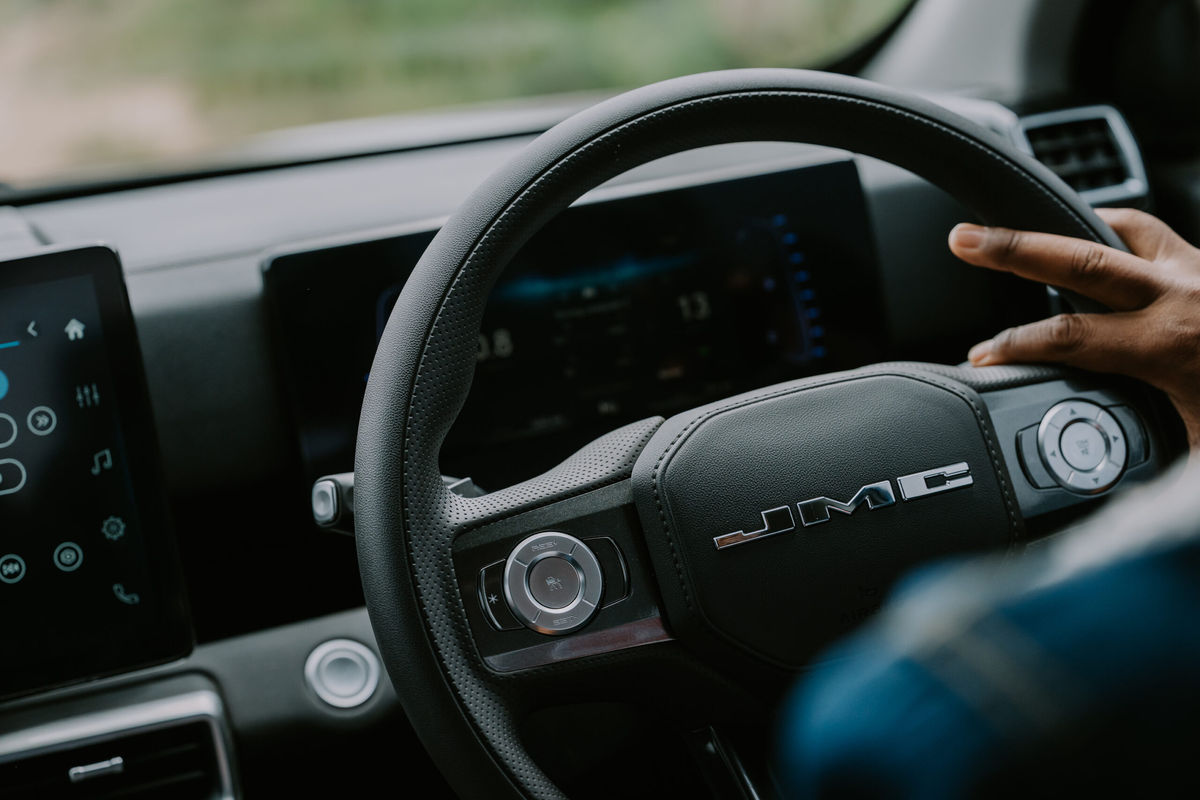
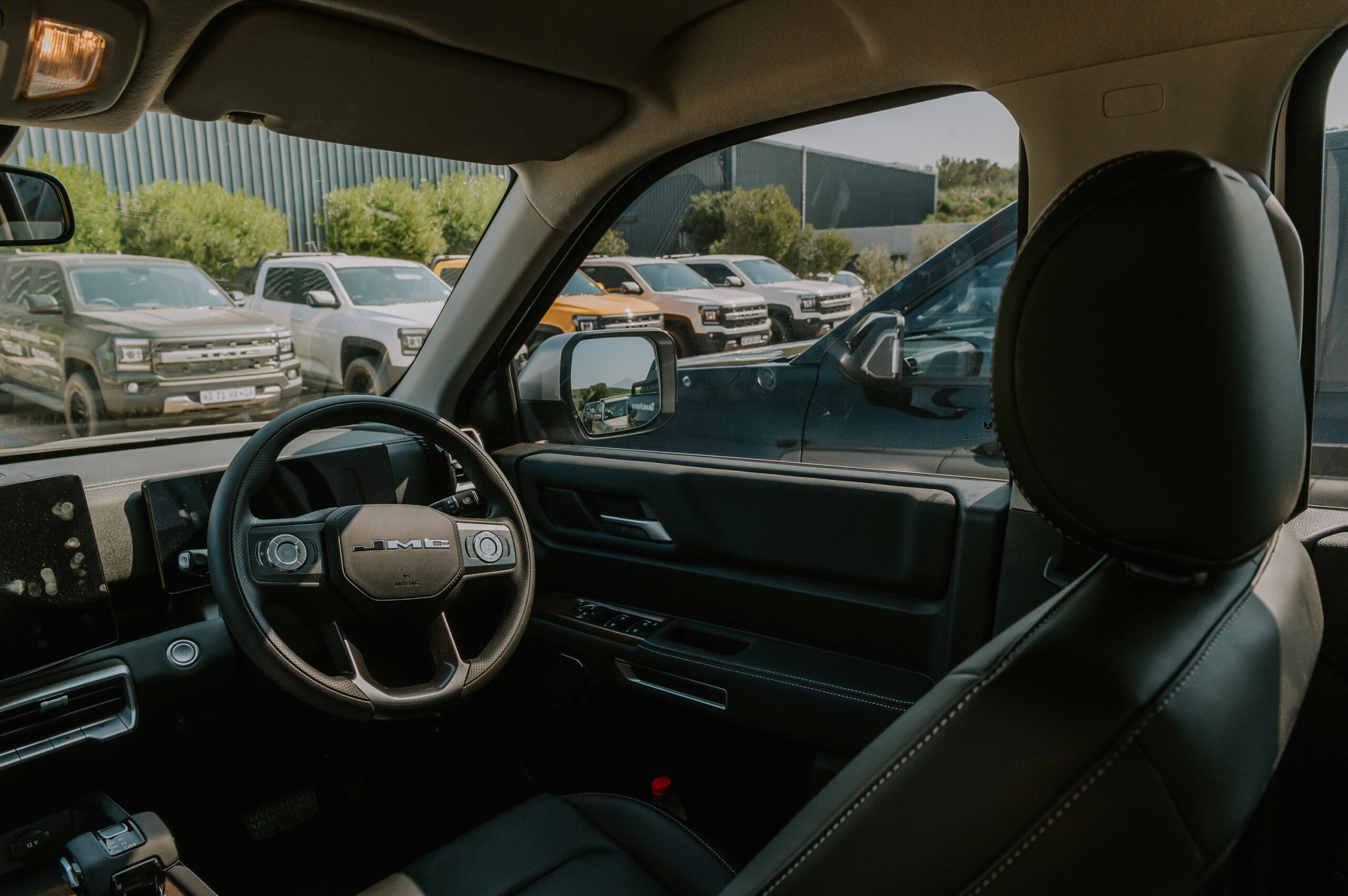
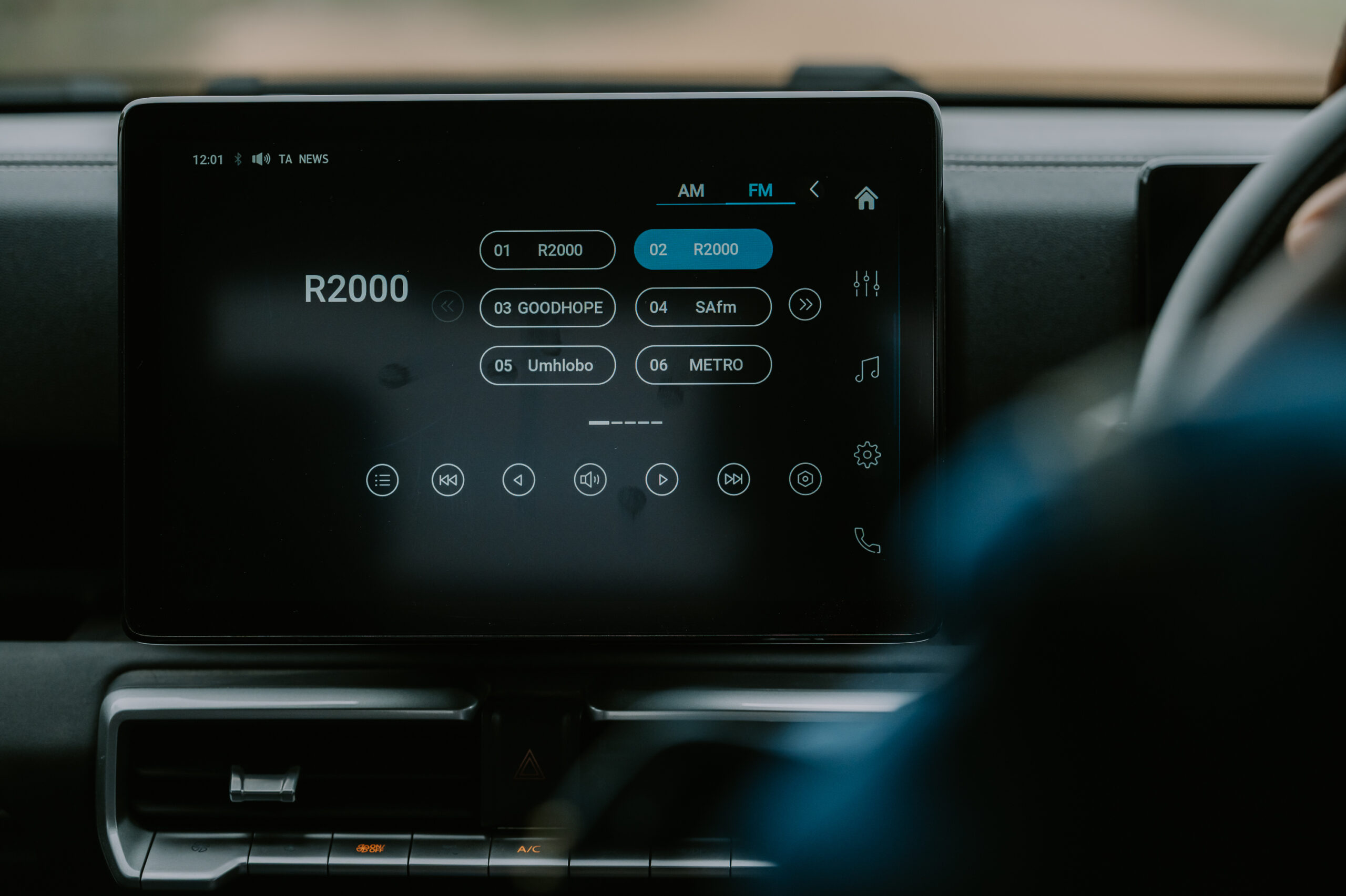
Step inside and you’re welcomed by a neat cabin with the central focus being a 12-inch infotainment screen that you can tilt sideways to avoid glare.
Like so many new Chinese vehicles, the materials feel durable and nicely finished. The cockpit offers an appealing mix of soft-touch plastics and even some wood trim to add to the luxurious nature of the bakkie. Some scratchier plastics feature on the door cards, but considering the price tag, that’s hardly a criticism.
What’s most impressive about the interior is the sheer amount of rear knee room. Double-cab bakkies are often surprisingly cramped in the 2nd row, but not the Grand Avenue – it’s a proper family vehicle in terms of seating comfort.
What’s under the bonnet?
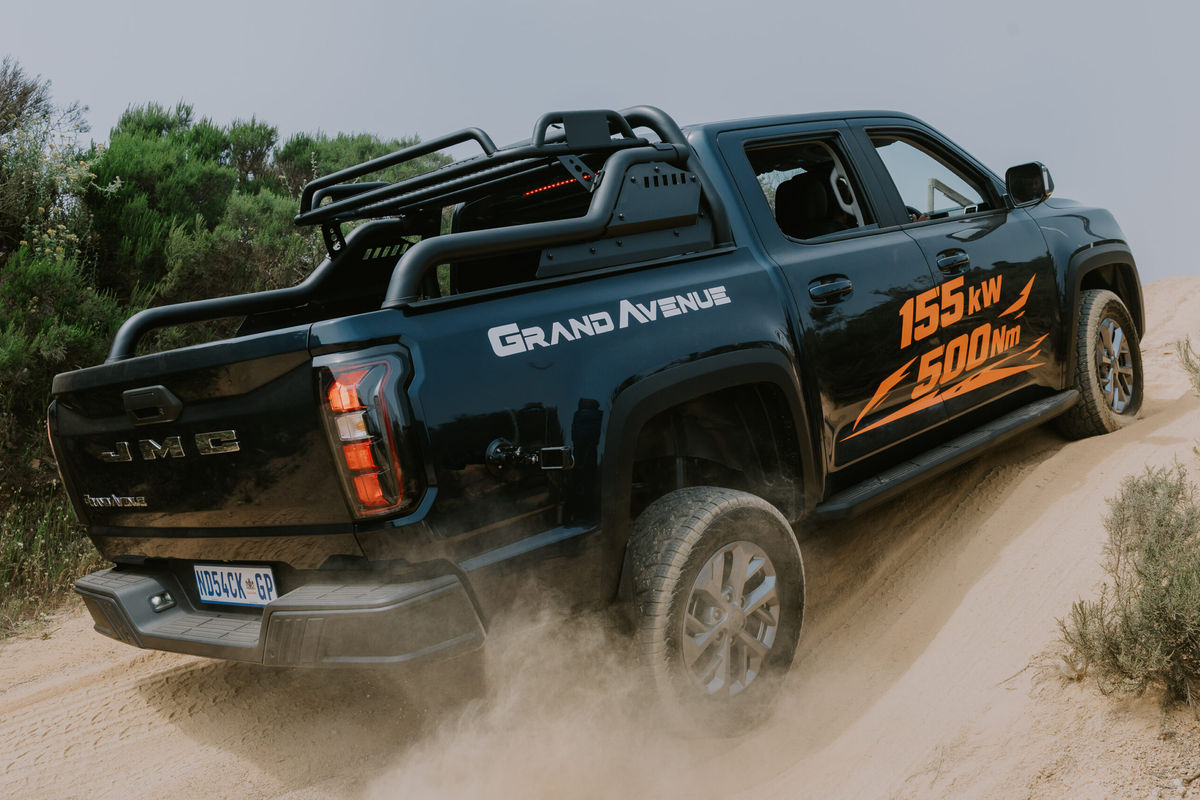
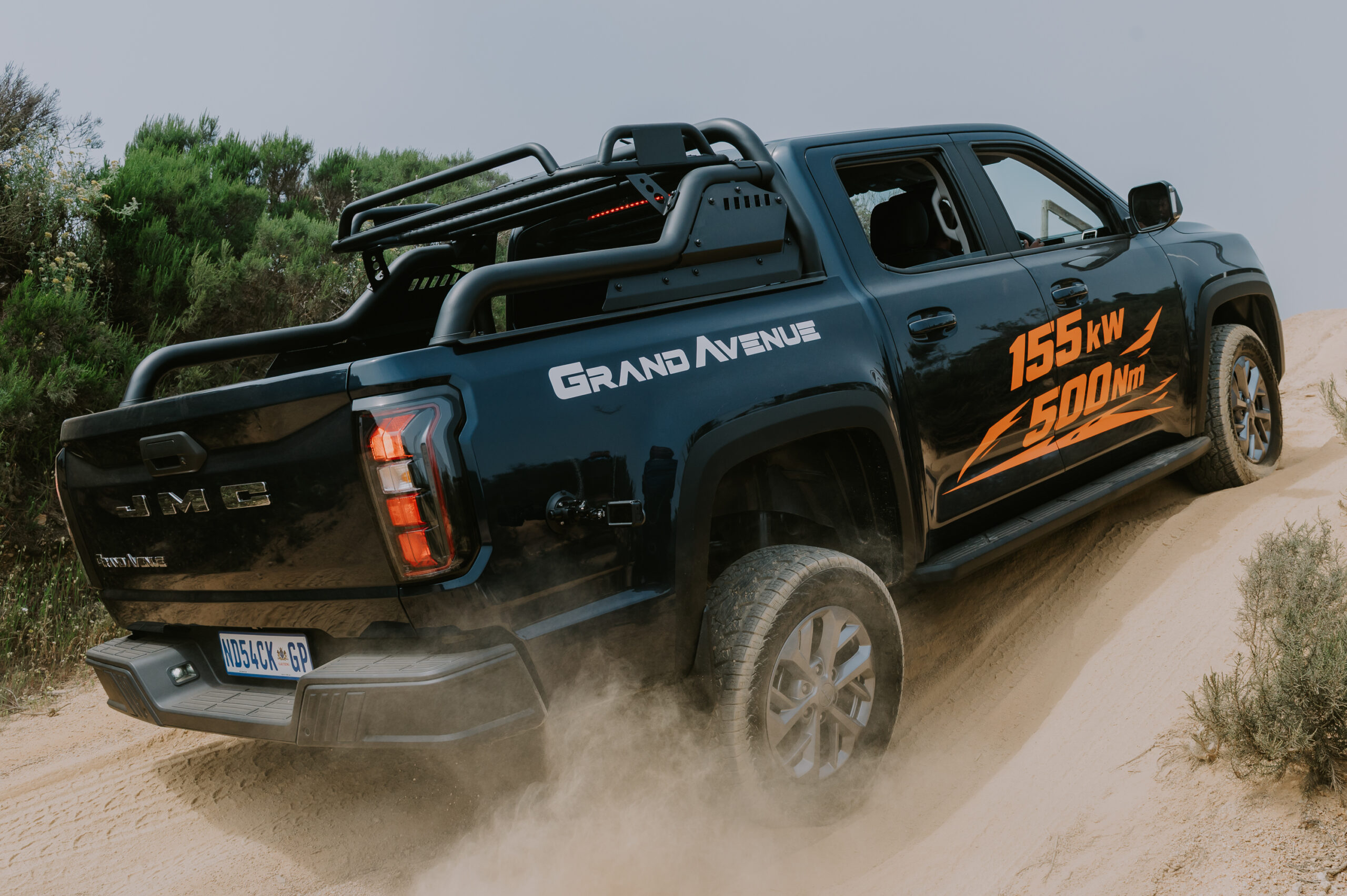
Powering this big bakkie is a 2.5-litre, 4-cylinder turbodiesel producing an impressive 155 kW and 500 Nm of torque. An 8-speed ZF automatic is the only transmission offered and the combination makes for enthusiastic performance.
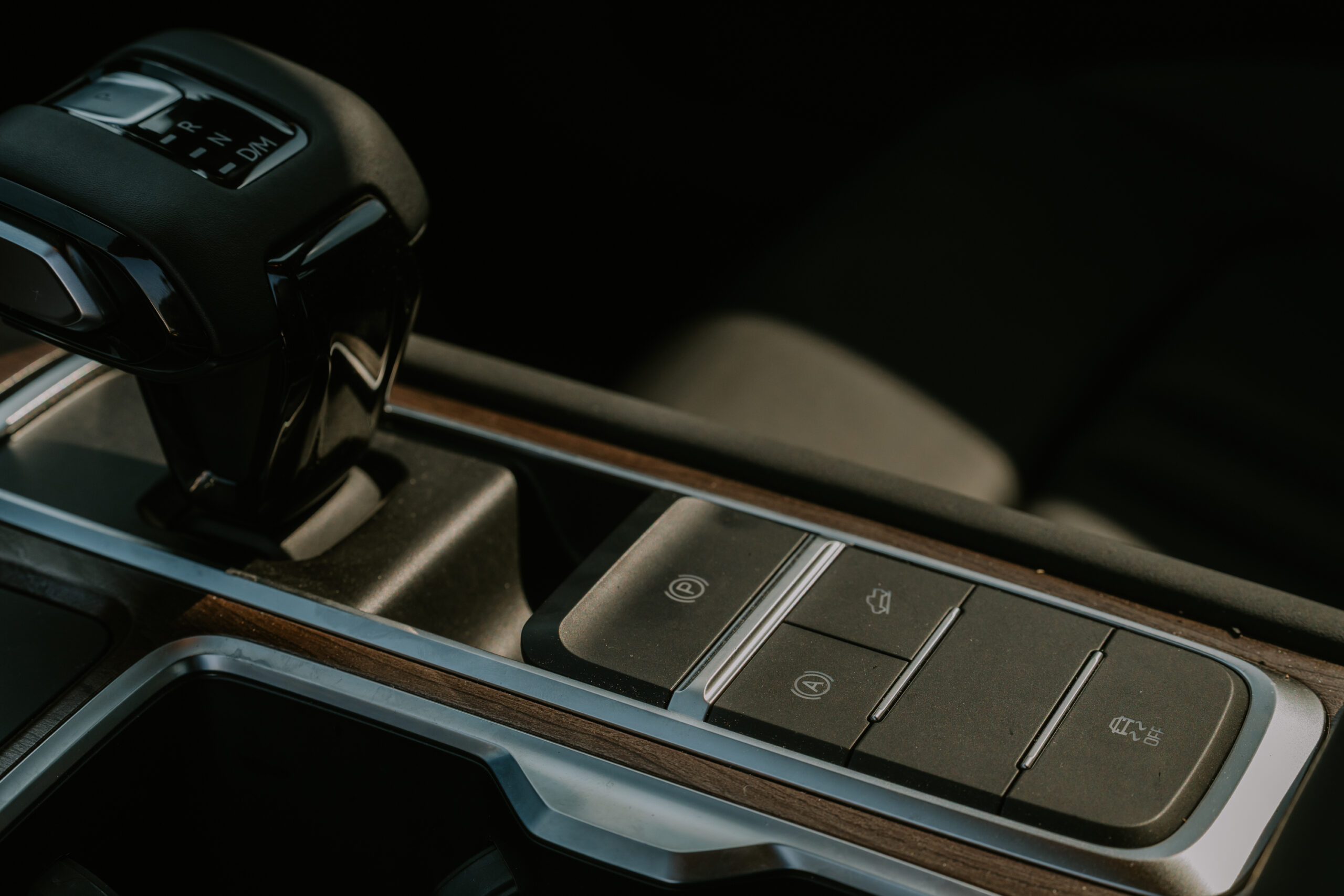
As mentioned, JMC offers a 4×2 and a 4×4, with the latter using a proven BorgWarner system incorporating a rear locking differential. To select various modes such as 2WD, 4WD and low range, a nifty switch is available, giving you access to the modes with ease.
Can it really off-road with the best of them?
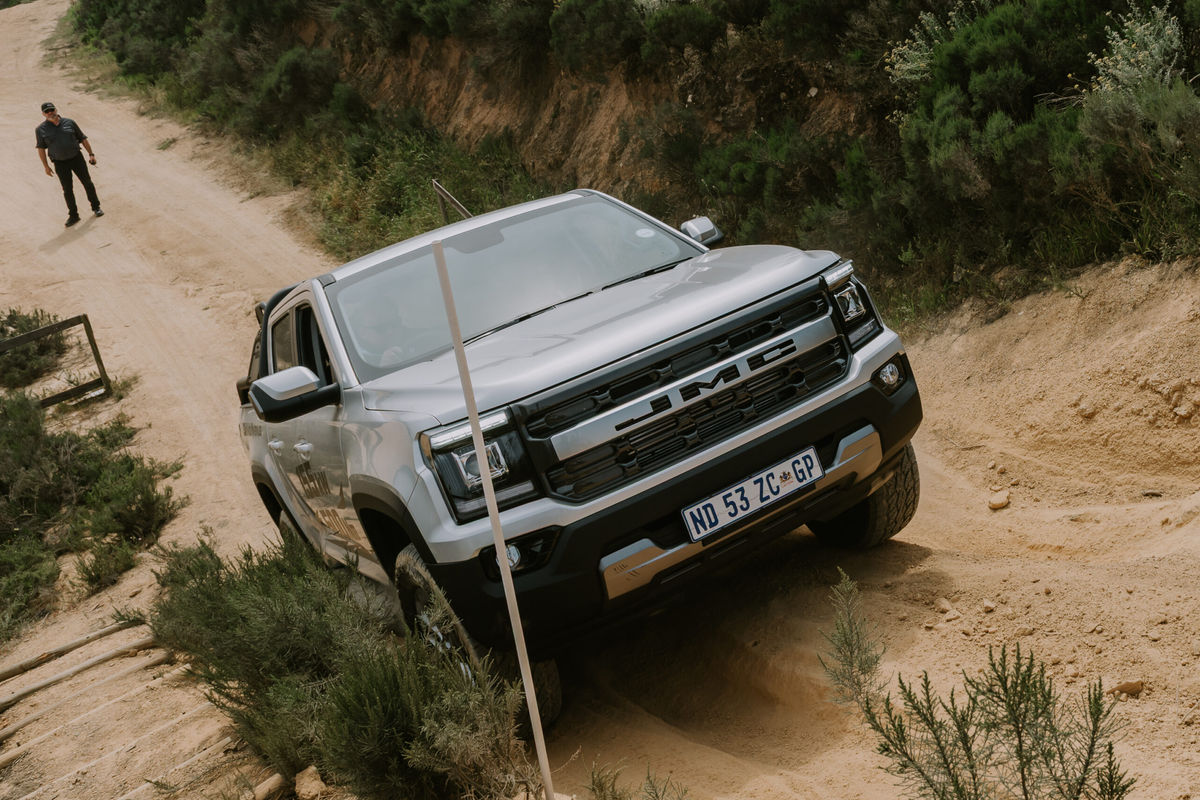
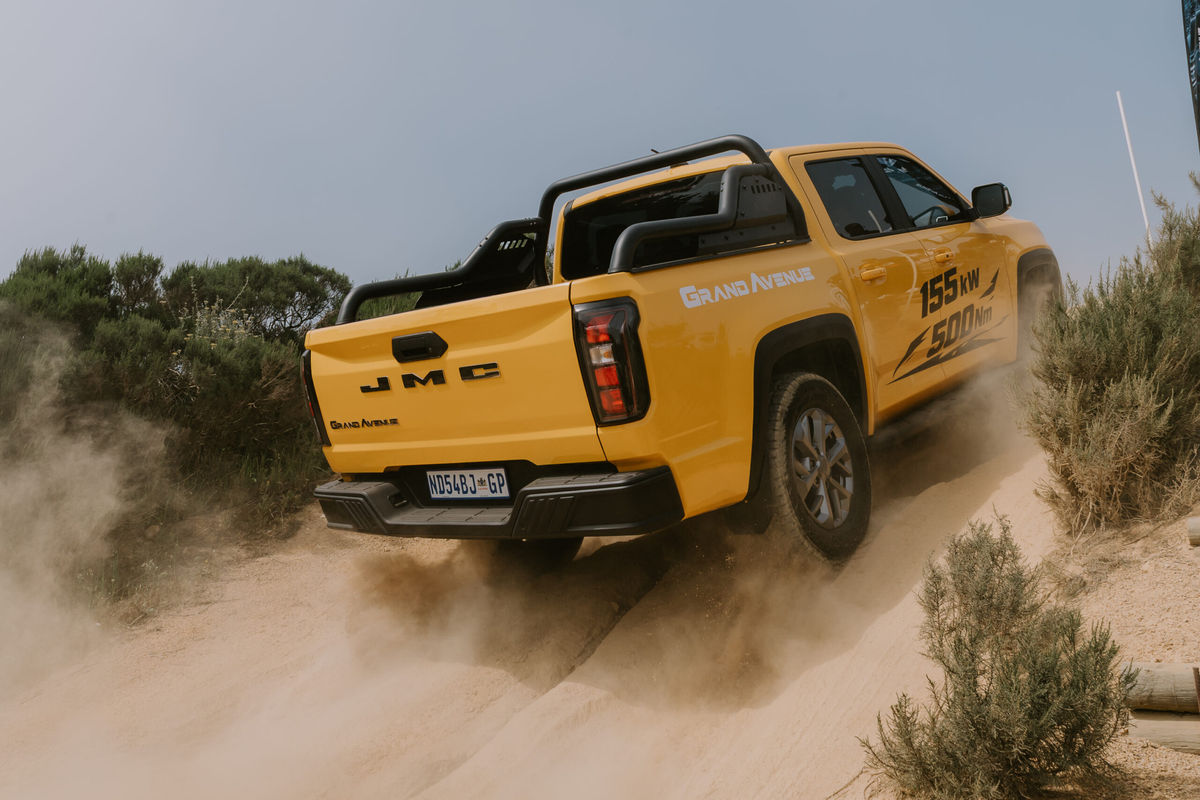
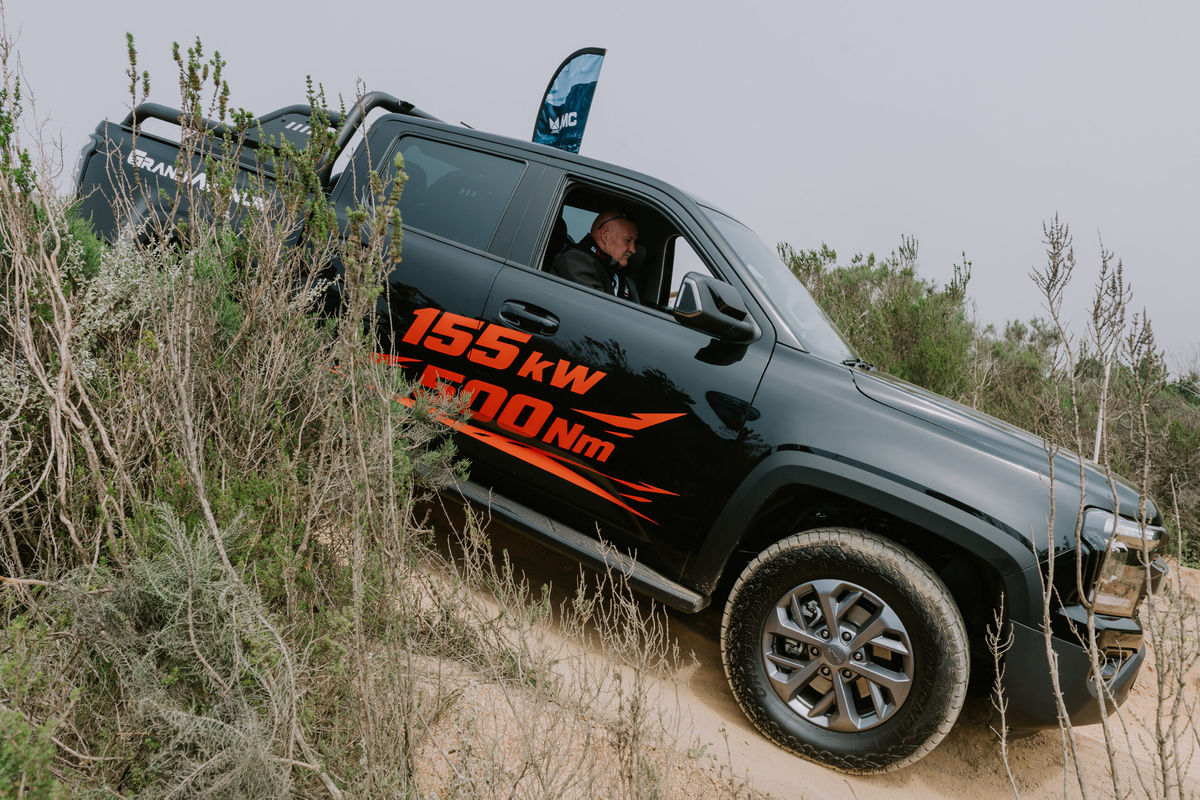
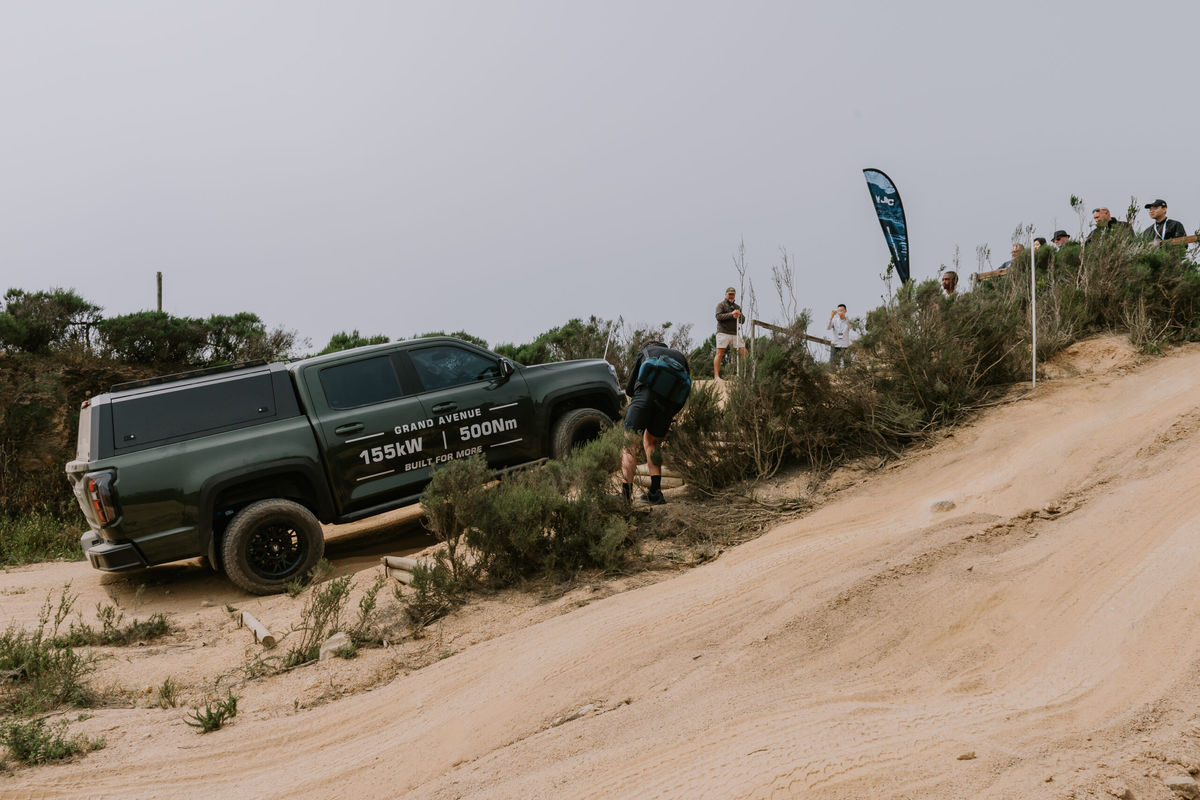
To prove its new bakkie’s off-road capabilities, JMC incorporated a small 4×4 track into the launch route that included steep inclines and declines. Along the latter, we used hill-descent control, which worked very well.
The inclines, meanwhile, allowed us to experience torque-vectoring and how the diff sends power to the wheels with the most traction. By applying a constant throttle input, we easily got up the inclines, again proving that the Grand Avenue can indeed handle rough stuff.
With an approach angle of 30 degrees, ground clearance of 245 mm and wading capabilities of 800 mm, the Grand Avenue has what it takes to compete with the legacy brands.
However, as accomplished as it was off the beaten track, most lifestyle-bakkie owners simply use their cars to commute, so where the Grand Avenue needed to please us the most was on tarmac.
How does it drive on-road?
When the surface is smooth, this JMC is comfortable. Add some corrugations, however, and the suspension can start to struggle. Harsh bumps can send shockwaves into the cabin, which is something we’re used to “old-school” bakkies doing, especially when there’s no load on the back. It’s here where the JMC’s low price starts to be felt, but it’s certainly not so bad as to be a deal-breaker.
What will make consumers very happy is the fuel consumption. We averaged 8.6 L/100km during our drive, which is excellent for a large bakkie.
Is the Grand Avenue too good to be true?
The value proposition of the JMC Grand Avenue remains staggering. From its massive proportions and punchy 155 kW drivetrain to a generous standard specification list, this bakkie feels like it should cost at least R100 000 more than its asking price. Throw in a comprehensive 5-year/200 000 km warranty and 5-year/100 000 km service plan, and the ownership peace of mind is undeniable.
While unladen ride stiffness reveals where costs were saved, the Grand Avenue delivers where it counts most. For buyers priced out of the legacy brands’ inflated price lists, JMC has delivered a capable, commanding and affordable alternative. Expect to see plenty of them on South African roads very soon.
Frequently Asked Questions (FAQ)
Q: How much does the JMC Grand Avenue cost in South Africa?
A: The JMC Grand Avenue starts at R529 900 for the 4×2 model and tops out at R579 900 for the 4×4 derivative, undercutting direct competitors in the local lifestyle bakkie segment.
Q: What engine and transmission power the JMC Grand Avenue?
A: The Grand Avenue is powered by a 2.5-litre, 4-cylinder turbodiesel engine producing 155 kW and 500 Nm of torque, paired with an 8-speed ZF automatic transmission.
Q: What are the off-road specifications for the JMC Grand Avenue 4×4?
A: The JMC Grand Avenue 4×4 features a BorgWarner 4WD system with a rear locking differential, an approach angle of 30 degrees, ground clearance of 245 mm, and a wading depth of 800 mm.
Q: What fuel consumption can you expect from the JMC Grand Avenue?
A: During launch driving tests, the JMC Grand Avenue achieved an average real-world fuel consumption figure of 8.6 L/100 km.
Q: What warranty and service plan come standard with the JMC Grand Avenue?
A: The JMC Grand Avenue includes a 5-year/200 000 km warranty and a 5-year/100 000 km service plan as standard.
Does the upcoming JAC T9 PHEV really need 360 kW?
The new JAC T9 PHEV promises better performance than a Ford Ranger Raptor. But is 360 kW in a double-cab perhaps too much of a good thing?
There was a time when 200 kW seemed like an impossible power threshold for a double-cab bakkie. But the final version of the first-generation Amarok 3.0 V6 turbodiesel changed that assumption in late 2020. VW brought a true double-cab bakkie with 200 kW and usable payload to market and proved it could be done.
Six years later, South African double-cab bakkie buyers now have a choice of extraordinarily powerful models, nearly all of them Chinese. And none of them turbodiesel. It’s telling how much the Chinese brands are influencing the local bakkie market.
BYD’s Shark 6, launched in 2025, shattered expectations of how much acceleration and highway overtaking power a South African buyer could have in a double-cab. With a peak power output of 350 kW, the Shark 6 offers performance unimaginable to bakkie buyers only a few years ago.
However, the Shark 6 will no longer be South Africa’s brawniest bakkie. Enter the JAC T9 PHEV… Its stats are startling: 360 kW and 674 Nm of torque.
Let’s look at what those numbers mean in a real-world application and how they compare to rivals’ outputs.
Where the T9 fits into the range
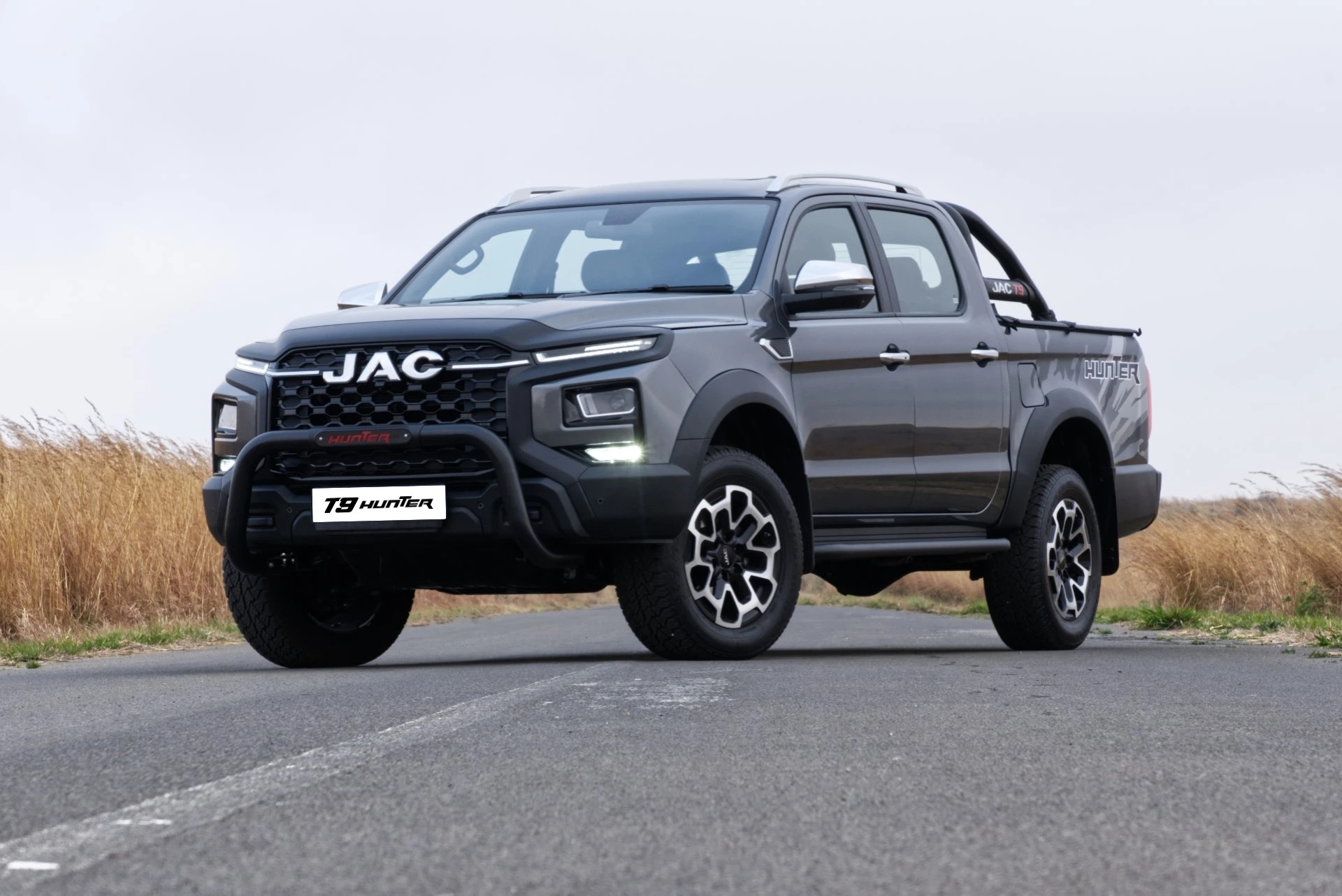
JAC’s PHEV bakkie has more than double the power of this turbodiesel version.
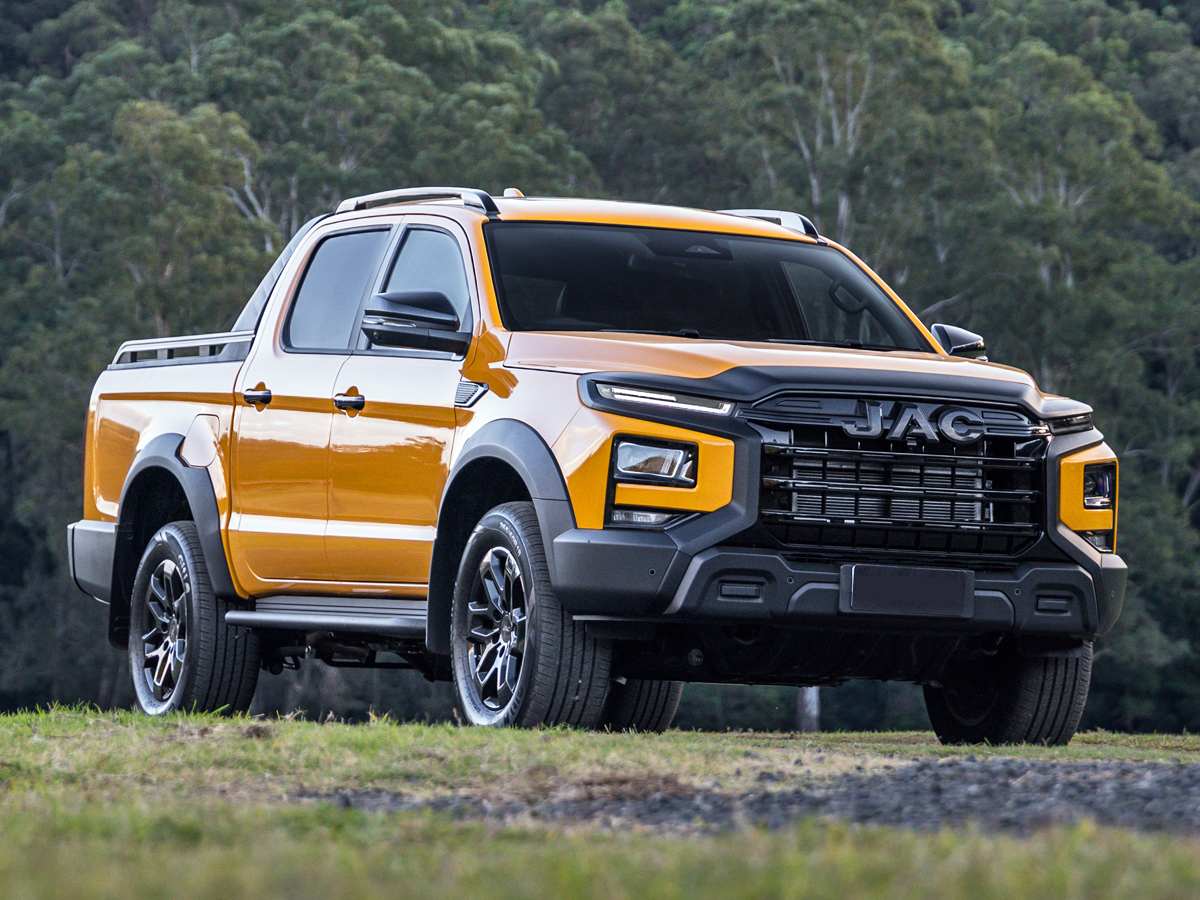
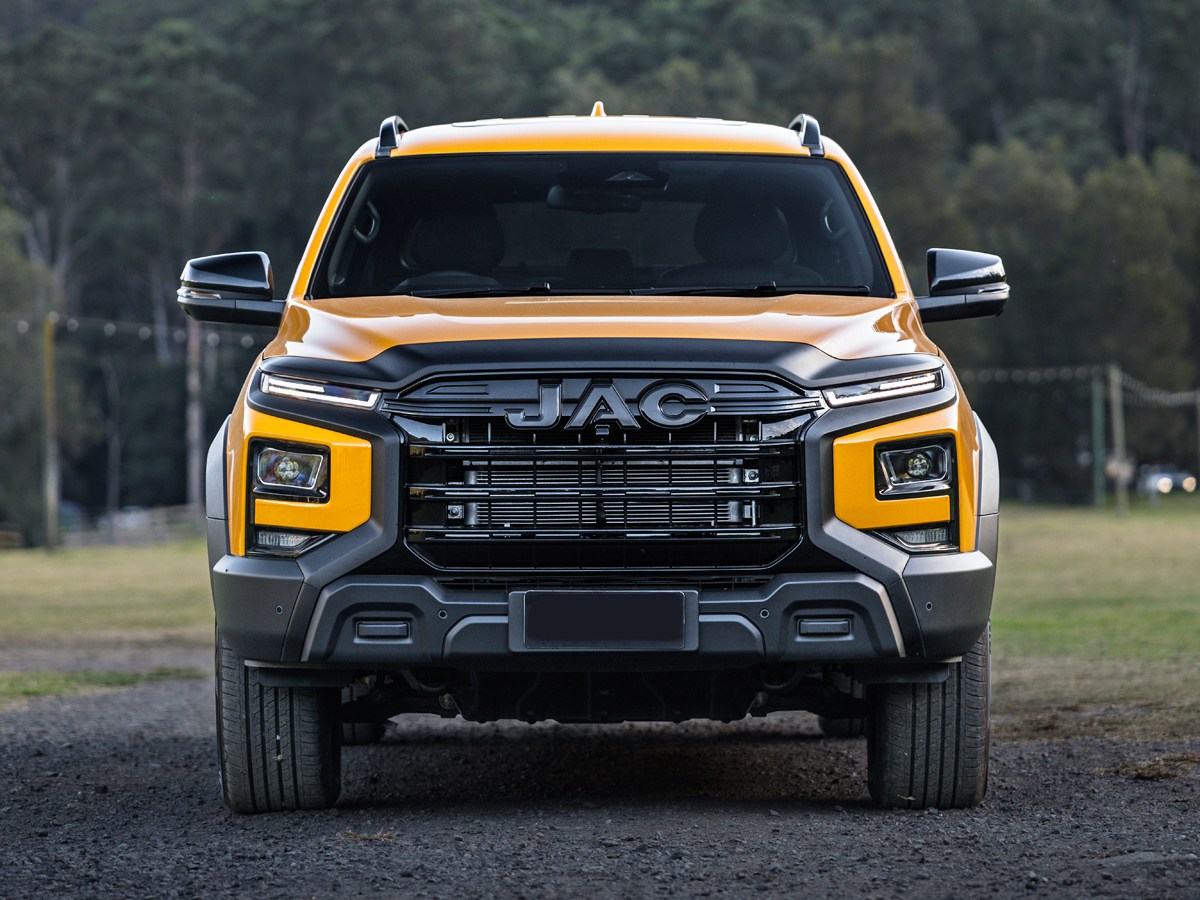
JAC’s bakkies aren’t necessarily well known as leisure double cabs. The brand has mostly served fleet and utility buyers rather than competing with adventure-grade Hilux and Ranger derivatives. But JAC’s T9 series looks set to change that. It features JAC’s most luxurious cabin as well as multi-link rear suspension, prioritising unladen ride comfort and enhanced stability on corrugated dirt roads.
Like most Chinese vehicles, the JAC T9 PHEV has a selection of standard features that are a lot more generous than you’d find in legacy rivals. The PHEV, meanwhile, also offers some much-needed ergonomic upgrades over diesel-powered T9 versions.
Setting a comfortable driving position in a bakkie can be challenging due to the shallow floor. This is compounded by a number of bakkies not offering depth adjustment on the steering column. One such bakkie is the T9 range, except on the PHEV, which tilts and telescopes. That’s a welcome upgrade.
It’s heavy but it still has a decent payload rating
A more adjustable steering position means large South African bakkie drivers can get comfier in the PHEV.
Like the BYD Shark 6, the JAC T9 PHEV is heavy. At 2 512 kg, the performance potential of 360 kW will always feel a little blunted, but not by much. Do the power-to-weight math and it works out to 143 kW/tonne. That’s impressive, especially compared to a Ford Ranger Raptor, which delivers 120 kW/tonne.
Thankfully, unlike many Chinese PHEVs, the JAC T9 PHEV doesn’t have a remarkably low payload. Despite the weight of its large battery pack, it does retain an entirely usable carrying capacity of 915 kg. In fact, it can take a heavier load than the Ford Ranger Raptor (by some 187 kg).
What’s interesting about the JAC T9 PHEV’s payload rating is that it’s possible despite the multi-link rear suspension instead of a leaf-sprung live axle. Some clever linkage engineering must have been applied to the bakkie’s rear to allow it to balance ride comfort and carrying capacity.
Towing is impressive, too, with a braked capacity of 3 500 kg. That’s on par with the best standard-driving-licence Ford and Toyota bakkies on sale in South Africa.
But what about the JAC T9 PHEV’s battery setup?
The T9 PHEV has a 31.2 kWh lithium-iron phosphate battery pack. That should be good for 100 km of real-world driving range, or enough for most urban-dwelling bakkie owners.
Lithium-iron phosphate is also best for durability, especially compared to nickel-based lithium-ion powertrain batteries. It sacrifices outright recharging speed for battery cell integrity. That means there’s little apparent risk of the JAC’s battery pack suffering long-term degradation.
It has more gears than BYD’s bakkie
JAC’s PHEV bakkie has 4 forward gears. BYD has 1.
The JAC T9 diesels feature an eight-speed automatic transmission from renowned German supplier ZF. The PHEV has a different setup, however. Drive from the 2.0-litre turbopetrol engine and the two electric motors are managed by a 4-speed hybrid automatic transmission. That’s half the gears of the T9 turbodiesel, but a lot more than the single-gear setup you get in the BYD Shark 6.
It should mean much better off-road ability, too. One of the BYD Shark 6’s evident weaknesses is the single-gear drivetrain. This setup is geared for highway driving but can’t provide the ratio needed for high-torque, slow-wheel-rotation exercises. And that is what technical off-road driving is all about.
Does the SA market really want or need a 360 kW body-on-frame family vehicle?
If AMG has been selling heavy, extremely powerful large SUVs for many years, why can’t a body-on-frame bakkie have more than 300 kW?
If there are questions about a 360 kW body-on-frame family vehicle, what about Toyota’s Land Cruiser 300 HEV? Or the Mercedes-AMG G63? These legacy-brand SUVs are also heavy, built on a ladder-frame chassis and very powerful. Both platforms have been proven and refined over several generations, and their suspension setups are as sophisticated as it gets.
When VW brought the 200 kW Amarok 3.0 V6 turbodiesel to market, questions were raised about the platform handling so much power. VW responded by upgrading the rear drums to disc brakes. And besides, the platform had already proven itself.
That said, bakkie buyers should consider the limitations of a body-on-frame layout, especially when there’s 360 kW on tap. Ultimately, the T9 PHEV has a high centre of gravity, relatively slow steering responses and tyres specified for a bakkie.
More power than a Ranger Raptor. But what about the steering and stopping?
The 360 kW peak power output has its benefits, however. It creates a margin of safety when overtaking, because you spend fewer seconds at risk in the oncoming traffic lane. But is the rest of the bakkie upgraded to be in dynamic balance with all that power?
Ford’s Ranger Raptor is a high-performance bakkie with a significantly upgraded structure, suspension and brakes compared to the standard Ranger, which already has one of the most over-engineered bakkie platforms. The BYD Shark 6 also features a beefed-up structure; it has some of the most oversized frame rails on a production bakkie.
What about the T9 PHEV, seeing as it has 3 times the power output of the most powerful T9 turbodiesel. How much more advanced are its braking and suspension components, and actual frame structure? We cannot wait to get our hands on one to answer all these questions.
Is the original Kia Seltos worth a look on the used market? Here’s what you need to know when shopping for a pre-owned version of the South Korean firm’s Indian-built crossover…
Back in late 2019, Kia’s crossover portfolio in South Africa comprised just a pair of models: the Sportage and Sorento (with the hatchback-esque Soul having been discontinued earlier that year). Yes, Kia’s local range was crying out for a sub-Sportage contender. Enter the original Kia Seltos.
Interestingly, the Seltos was the first Kia imported into Mzansi from India, with the Seoul-based company having completed construction of its sprawling Anantapur manufacturing facility just a few months prior to the first shipment’s arrival. The smaller Sonet that followed the Seltos in 2021 was also sourced from this factory.
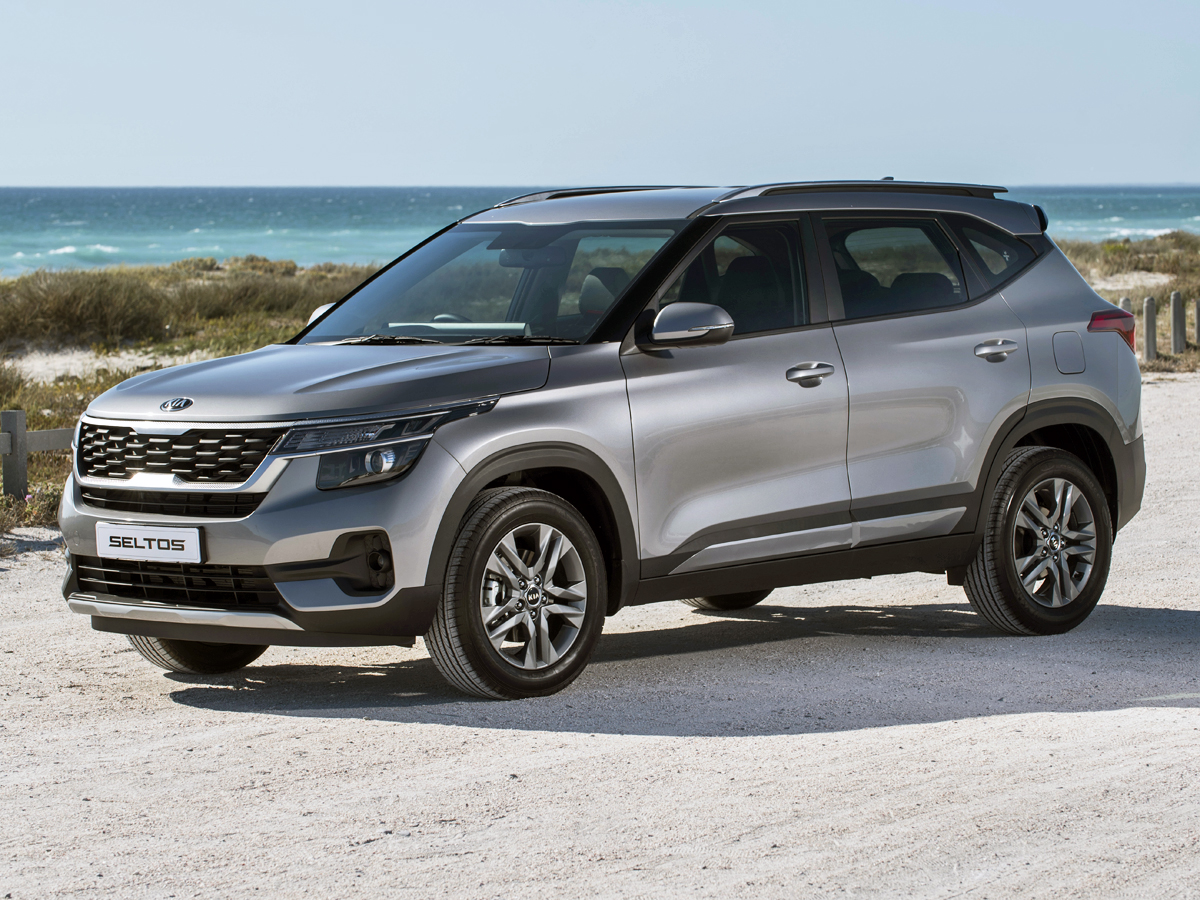
The original Seltos arrived in SA late in 2019.
For the record, the 1st-generation Seltos that was produced in South Korea had an internal designation of “SP2”, while the version made in India was known as the “SP2i” (and the iteration manufactured in China, where it was badged as the KX3, had the codename “SP2c”). The SP2i-series model sold locally was built on the K2 platform that also underpinned the related 2nd-generation Hyundai Creta.
So, just how popular was the Mk1 Kia Seltos in South Africa? Well, this model – which was available locally in front-wheel-drive form only – breached the 3 000-unit barrier in each of its first 2 full years on the local market, before falling back to around 2 500 units in 2022.
The following year, the South Korean firm’s local distributor sold 2 230 units, a figure that dropped further still to 1 652 units in 2024, before bouncing back to 2 409 units in 2025. An additional 1 351 units were registered over the opening half of 2026, shortly before the 2nd-gen model was introduced.
Kia Seltos model line-up in South Africa
SA was the first export market for the Indian-built version.
The SP Concept that previewed the SP2i-series Seltos was unwrapped at India’s Auto Expo in early 2018 (while the SP Signature show car – the concept version of the Korean-made SP2 – was displayed around a year later at the Seoul Motor Show). The SP2i production model was unveiled in India in June 2019.
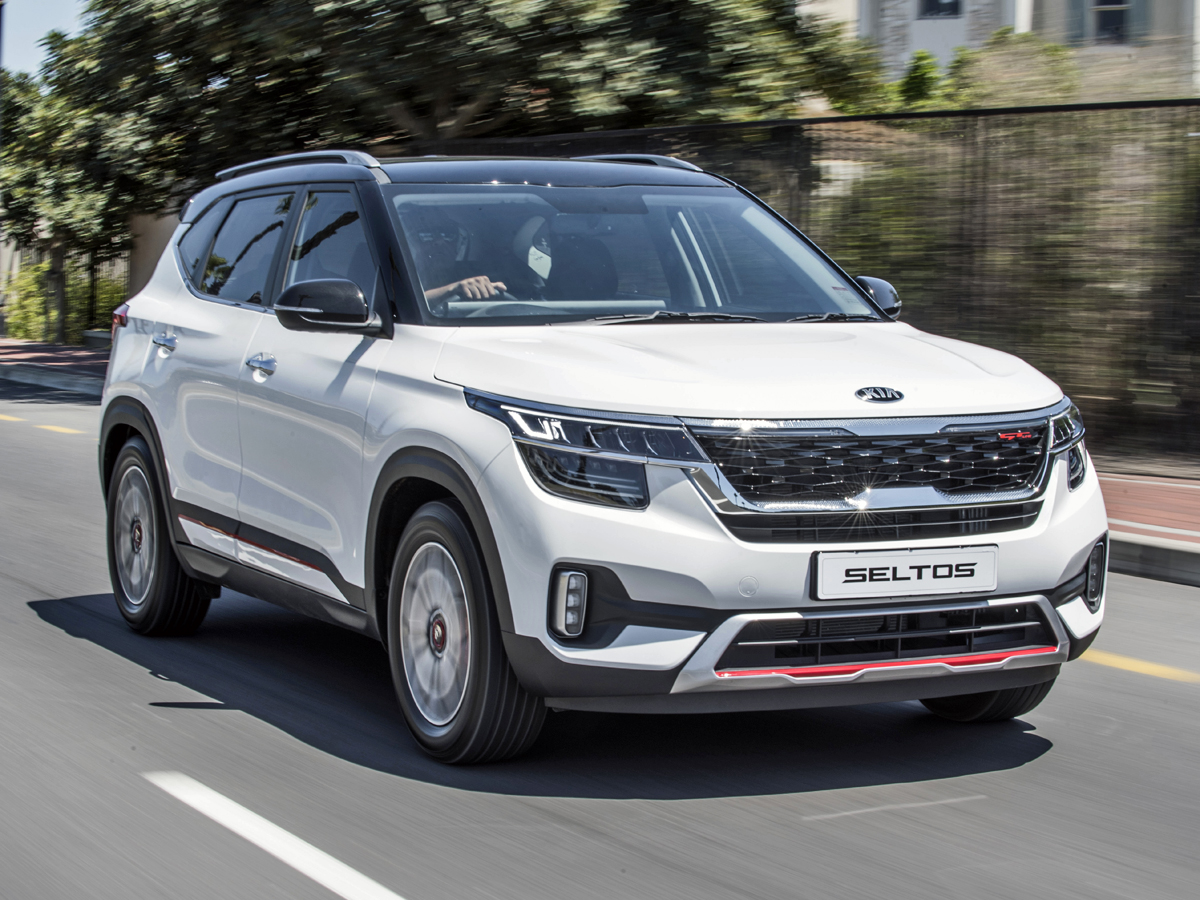
It didn’t take long for the Kia Seltos to reach South African showrooms, with Mzansi serving as the first export market for the Indian-built version. In November 2019, the 4-strong local line-up went on sale, with 3 derivatives powered by a naturally aspirated 1.6-litre petrol engine and the flagship variant featuring a turbocharged 1.4-litre petrol unit.
Seltos 1.6 EX 6MT (90 kW/151 Nm)
Seltos 1.6 EX 6AT (90 kW/151 Nm)
Seltos 1.6 EX+ 6AT (90 kW/151 Nm)
Seltos 1.4 T-GDi GT-Line 7DCT (103 kW/242 Nm)
In July 2020, Kia SA expanded the local line-up with the addition of a trio of turbodiesel derivatives. Available in the EX and EX+ grades, the oil-burning variants each offered peak outputs of 86 kW and 250 Nm courtesy of a 1.5-litre turbodiesel motor. Transmission options included a 6-speed manual gearbox and a torque-converter auto with the same number of cogs.
Seltos 1.5 CRDi EX 6MT (86 kW/250 Nm)
Seltos 1.5 CRDi EX 6AT (86 kW/250 Nm)
Seltos 1.5 CRDi EX+ 6AT (86 kW/250 Nm)
The facelifted SP2i-series Seltos – having grown slightly in length, from 4 315 mm to 4 365 mm – touched down in South Africa in April 2024. The revised crossover sported not only updated exterior styling, a redesigned interior and a new LX grade (resulting in an 8-strong range) but also several changes to its powertrain line-up.
The facelifted model arrived in April 2024.
While the 1.5-litre turbodiesel mill carried over (but from that point it was available only with an automatic cog-swapper), the naturally aspirated 1.6-litre petrol motor was replaced by a likewise atmospheric 1.5-litre 4-pot that featured slightly lower outputs of 84 kW and 144 Nm. A 6-speed manual gearbox was again on offer, although 2-pedal versions switched to a continuously variable transmission (CVT).
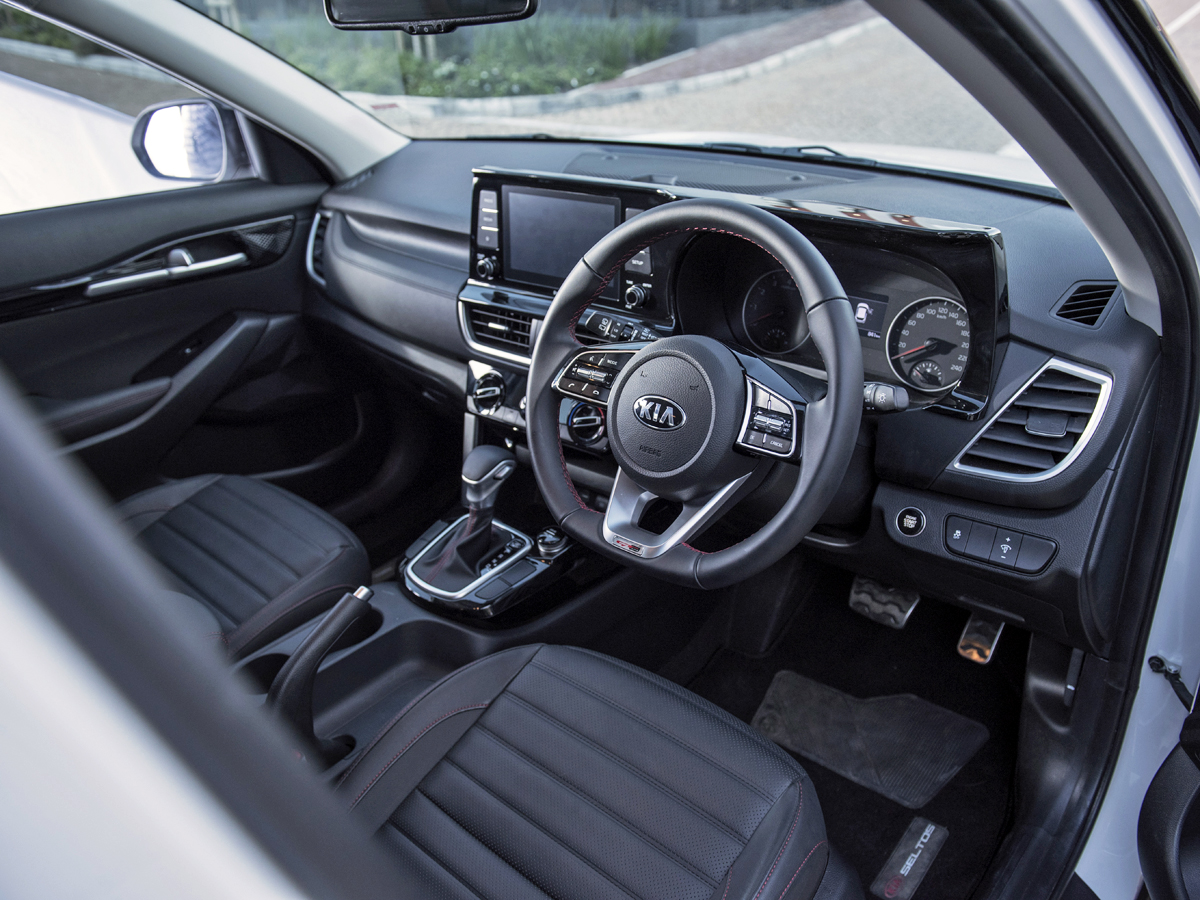
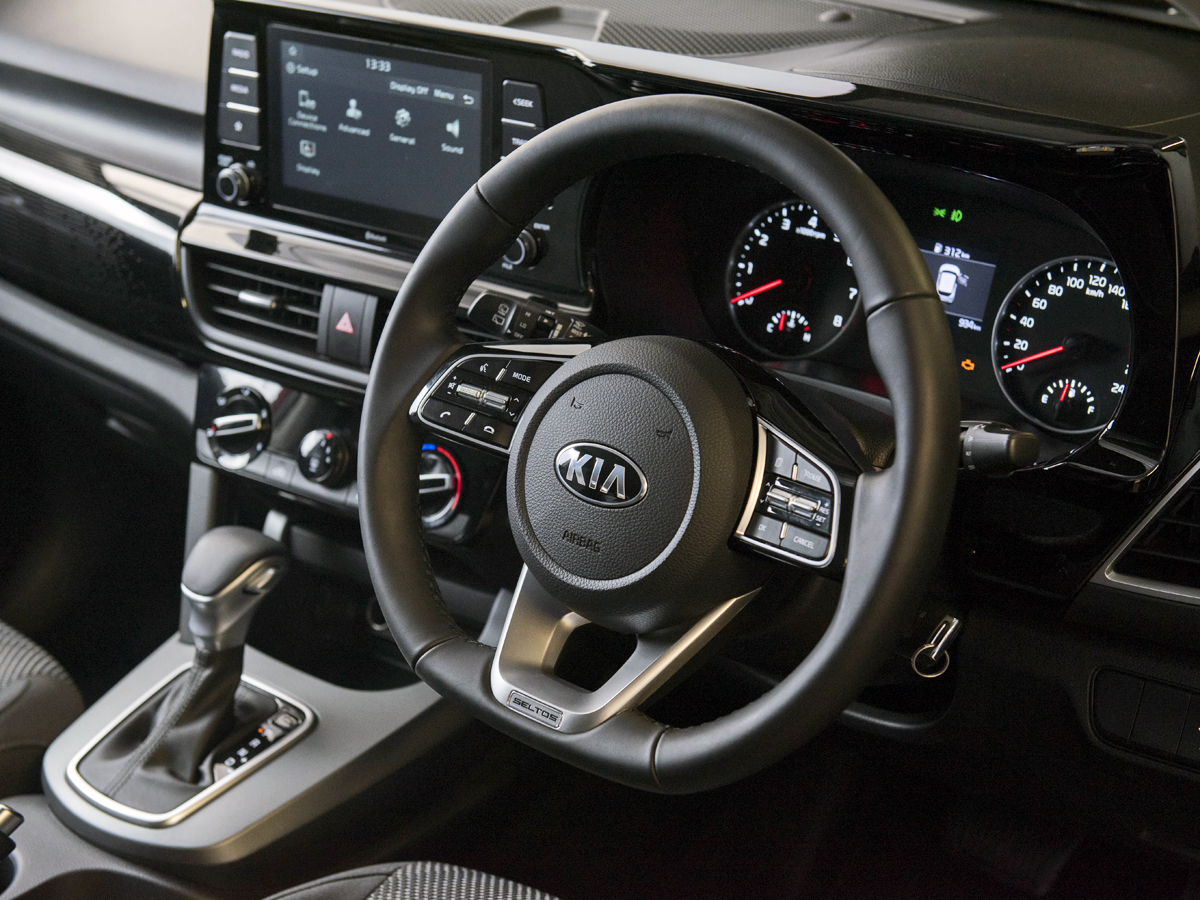
The cabin of the refreshed Seltos (in GT-Line guise).
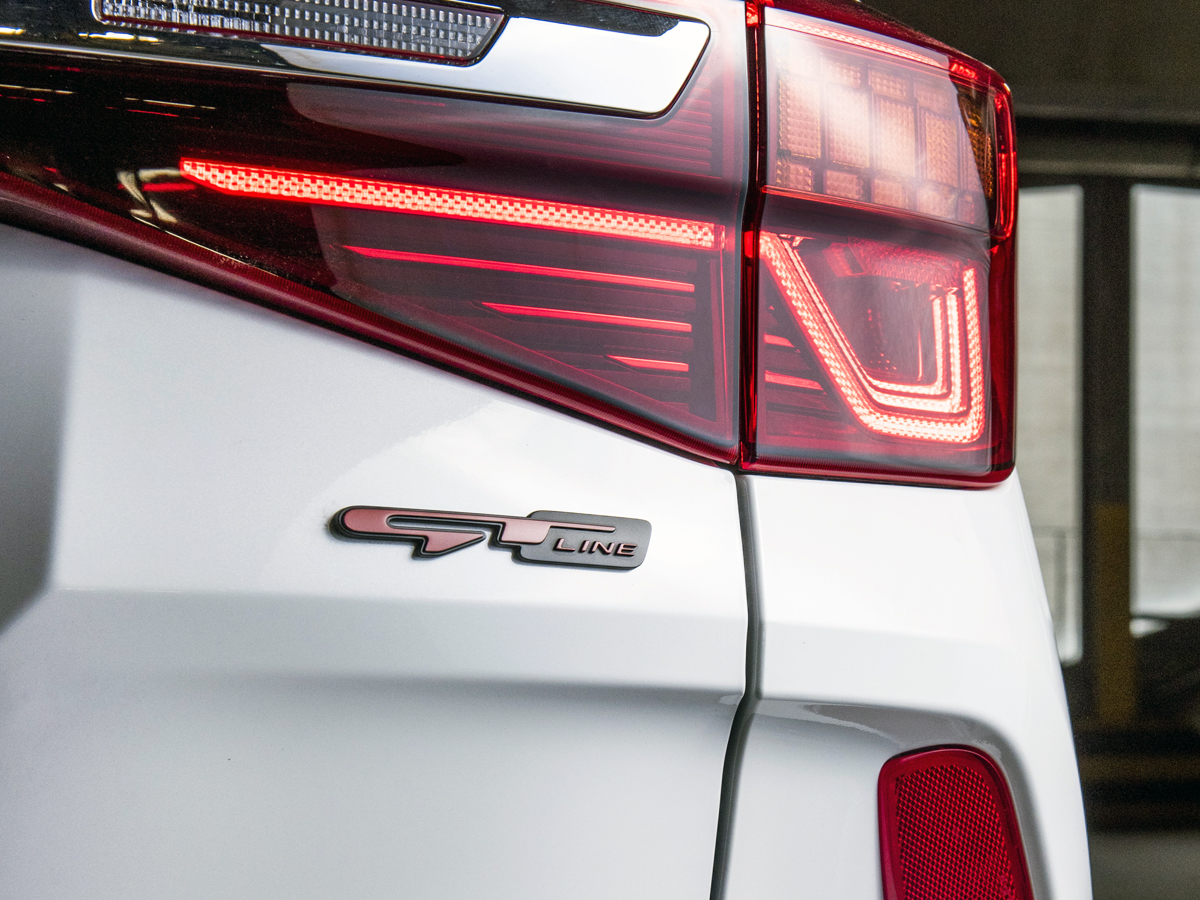
Furthermore, the flagship GT-Line derivative ditched the old 1.4-litre turbopetrol in favour of a 1.5-litre T-GDi motor, again driving the front axle via a 7-speed dual-clutch transmission as standard. This new forced-induction engine out-punched its predecessor on paper, generating 118 kW and 253 Nm.
Seltos 1.5 LX 6MT (84 kW/144 Nm)
Seltos 1.5 LX CVT (84 kW/144 Nm)
Seltos 1.5 CRDi LX 6AT (86 kW/250 Nm)
Seltos 1.5 EX CVT (84 kW/144 Nm)
Seltos 1.5 CRDi EX 6AT (86 kW/250 Nm)
Seltos 1.5 EX+ CVT (84 kW/144 Nm)
Seltos 1.5 CRDi EX+ 6AT (86 kW/250 Nm)
Seltos 1.5 T-GDi GT-Line 7DCT (118 kW/253 Nm)
A year later (in April 2025), the Korean firm’s local division quietly introduced a new entry-level LS grade below the LX, effectively dropping the nameplate’s starting price by a considerable R88 000. The LS derivatives were offered with the naturally aspirated 1.5-litre powerplant and either a 6-speed manual ‘box or a CVT, seeing the range swell to as many as 10 variants.
Seltos 1.5 LS 6MT (84 kW/144 Nm)
Seltos 1.5 LS CVT (84 kW/144 Nm)
The local lifecycle of the SP2i-series Kia Seltos finally ended in August 2026, when the automaker officially introduced the larger, 2nd-generation model. As such, the original Seltos was on the market in Mzansi for nearly 7 years.
What are the Kia Seltos’ strengths?
Powertrain options were plentiful.
Several powertrain options: The Kia Seltos line-up offered a wide range of powertrain options, greatly broadening this model’s appeal. Over the Mk1’s local lifecycle, buyers could choose from a pair of naturally aspirated petrol engines, a pair of turbocharged petrol motors and a frugal turbodiesel mill.
Meanwhile, available transmissions included a 6-speed manual gearbox, a 6-speed torque-converter automatic, a CVT and a 7-speed dual-clutch cog-swapper. In short, the South Korean firm’s local product planners made sure several bases were covered.
In terms of real-world fuel economy (observed during each test vehicle’s review period), we achieved figures of 6.4 L/100 km in the pre-facelift 1.5 CRDi EX+ 6AT, 8.5 L/100 km in the 1.4 T-GDi GT-Line 7DCT and 10.9 L/100 km in the 1.6 EX+ 6AT. We later tested the refreshed 1.5 T-GDi GT-Line 7DCT, with indicated consumption settling on an impressive 7.4 L/100 km.
Generous space in the rear.
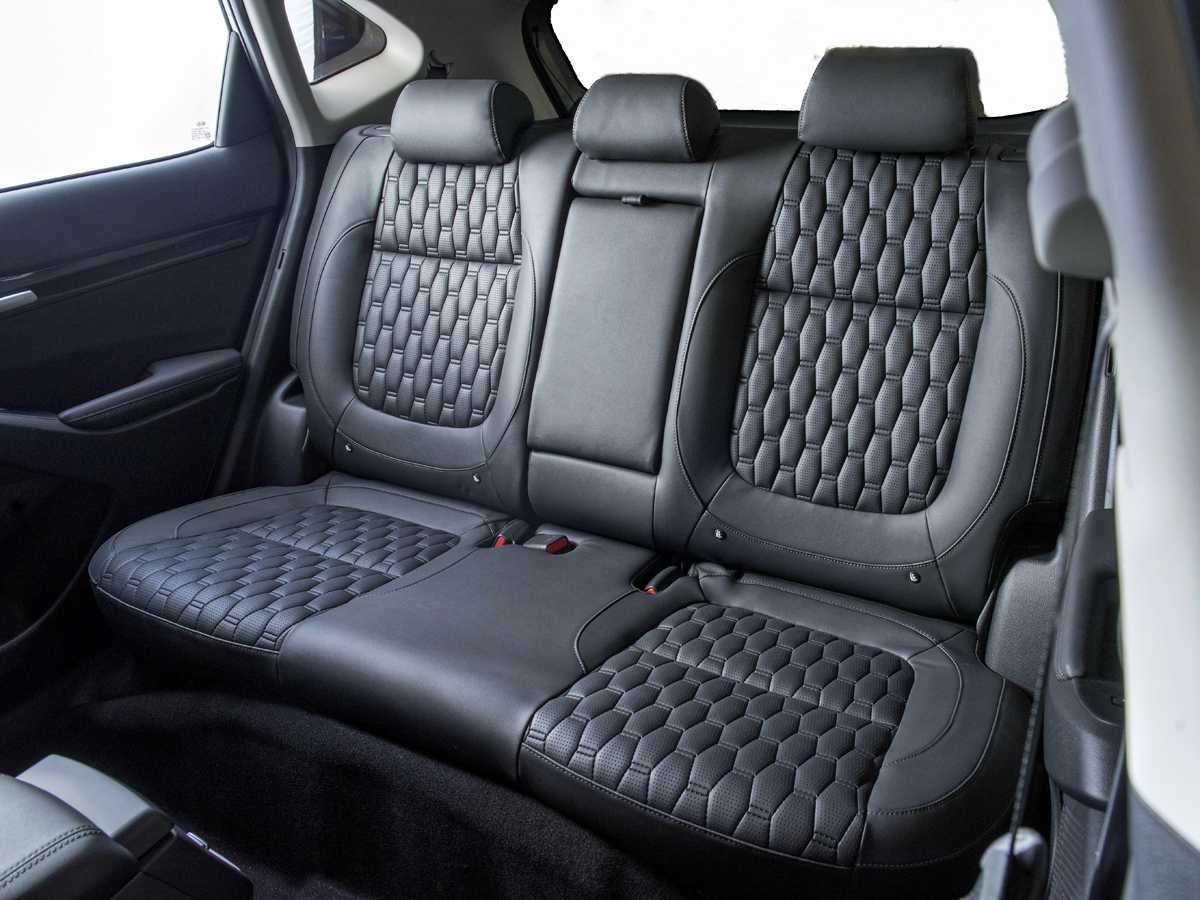
Spacious, practical interior: Courtesy of its 2 610 mm wheelbase and exterior dimensions that were larger than those of its (early) direct rivals, the Seltos offered a particularly roomy cabin. We found the rear bench very comfortable, as even tall passengers were availed sufficient head- and legroom. All derivatives furthermore featured dedicated rear air vents as well as a USB charging port sited behind the central front armrest.
The luggage compartment was likewise capacious, with Kia SA claiming a capacity of 433 litres (the rear bench split in a 60:40-configuration and could fold completely flat, unlocking generous utility space, too). The cargo opening, meanwhile, measured a useful 1 098 mm wide and 816 mm high.
The Seltos benefitted from Kia SA’s long warranty.
Lengthy warranty cover: The original Seltos was covered by what Kia SA at the time described as an “industry-leading” warranty. This aftersales cover included roadside assistance and spanned 5 years, while mileage was unlimited. Of course, that last point – the “unlimited kilometre” parameter – could potentially be particularly beneficial to those who purchase a late model-year SP2i-series Seltos on the used market today.
What are the Kia Seltos’ weaknesses?
The pre-facelift GT-Line’s interior.
Potential issues with the DCT: While we struggled to unearth many local instances of premature failure of the turbopetrol derivatives’ 7-speed dual-clutch transmission, such problems have certainly surfaced in India, the country from which all SA-spec Seltos units were sourced.
In that market, several Seltos owners have reported low-speed judder, jerkiness and hesitation from the DCT (seemingly due to premature degradation of the clutch pack), while transmission temperature warnings aren’t uncommon. This appears most prevalent on the pre-facelift 1.4 T-GDi GT-Line 7DCT, although owners of the refreshed 1.5 T-GDi GT-Line 7DCT apparently weren’t immune.
In short, the Seltos’ dry-clutch design – which relies on airflow rather than oil for cooling – seemingly hasn’t coped well with India’s extreme ambient heat and notorious traffic. So, if you happen to reside in one of the typically warmer parts of South Africa and/or spend plenty of time in bumper-to-bumper traffic, we’d suggest avoiding the DCT.
EX derivatives in the pre-facelift range did without stability control.
Certain variants lacked ESC: In the pre-facelift portfolio, only the EX+ and GT-Line grades included electronic stability control (ESC), meaning the quartet of EX derivatives did without this important piece of safety kit. Thankfully, Kia SA rectified this oversight at the model’s mid-cycle update, with all grades from that point featuring ESC.
On the topic of safety, note that all 1st-generation Seltos derivatives offered in South Africa came standard with ABS (with EBD), 6 airbags (including curtain items), outer-rear ISOfix child-seat anchors, rear parking sensors (at the least; some variants added front items) and a reverse-view camera.
Loads of piano-black plastic.
Fingerprint-magnet piano-black trim: The Seltos featured a shiny piano-black finish around its infotainment system (most obvious in pre-facelift guise) and on parts of the dashboard – as well as on the centre console in GT Line derivatives. This finish proved to be a “fingerprint magnet” – and tended to attract plenty of dust, too – so required constant cleaning to look its best.
How much is a used Seltos in South Africa?
Most examples on the used market feature 2 pedals.
While the SP2i-series Seltos launched locally with a 5-year/90 000 km service plan, keep in mind Kia SA quietly pared back these parameters to 4 years or 60 000 km around April 2025 (seemingly when the entry-level LS grade was introduced).
At the time of writing, about 78% of SP2i-series Kia Seltos units listed on Cars.co.za featured an automatic transmission of some sort, while 62% were powered by a petrol engine.
GT-Line derivatives seem relatively uncommon on the used market.
That said, the single most popular motor was the 1.5 CRDi (38%), closely followed by the naturally aspirated 1.5- (33%) and 1.6-litre (21%) petrol mills. Interestingly, there were very few examples of the turbopetrol motors on offer, with the 1.4 T-GDi comprising just 5% and the 1.5 T-GDi the remaining 3%.
Based on our analysis, 2026 was easily the most popular model year with a whopping 33% of listings, followed by 2021 and 2025 with 15% apiece. Indicated mileage ranged from virtually zero on almost-new 2026 examples to 147 000 km on a 2021 1.5 CRDi EX 6AT.
Below R300 000: Just under a 3rd of all listed SP2i-series Seltos units were priced below R300 000. Predictably, almost all were pre-facelift examples, while most featured the atmospheric 1.6-litre petrol engine. That said, the cheapest Seltos we found was a 2021 1.5 CRDi EX (showing 96 000 km), priced at R159 999.
R300 000 to R400 000: A little over 40% of listings were positioned between R300 000 and R400 000. The naturally aspirated 1.5-litre petrol engine (introduced at the mid-cycle update) was the most prevalent motor in this space, though the turbodiesel mill was also well represented. Most units here were facelifted examples.
R400 000 and up: The final 27% were priced above the R400 000 mark. Interestingly, the 1.5 CRDi powertrain accounted for over half of the models listed in this space. The most expensive SP2i-series Seltos we found was a 2026 1.5 T-GDI GT-Line 7DCT (with 1 800 km on its odometer) listed for a rather optimistic R619 900.
For context on the figures above, note that the 10-strong SP2i-series Seltos range’s pricing bookends at the very end of its local lifecycle in South Africa came in at R379 995 and R626 995.
Which Seltos derivative should I choose?
We’d likely avoid the DCT-equipped derivatives.
Considering the lofty number of engine and transmission options offered across this model’s local lifecycle, identifying a pick of the range – for the general buyer, anyway – is perhaps best done via a process of elimination.
Risk-averse shoppers would do well to avoid the DCT-equipped turbopetrol variants, which remain fairly few and far between on the used market anyway. We’d also advise buyers to steer clear of the pre-facelift EX derivatives, since these lacked ESC.
The pre-facelift EX grade lacked stability control.
While the initial 1.6- and subsequent 1.5-litre naturally aspirated petrol engines delivered honest daily commuting performance at sea level, they could feel somewhat strained at altitude. Therefore, we’d point to the 1.5 CRDi turbodiesel motor – a relatively rare option in this segment – as the powerplant to have.
This oil-burning motor offered plenty of low-down torque (with maximum twisting force on tap from just 1 500 rpm) as well as the potential for impressive fuel economy, particularly on the long road. The 1.5 CRDi EX+ 6AT was arguably the sweet spot in the pre-facelift portfolio, while this engine was available in LX, EX and EX+ guise from the mid-cycle update.
The pre-facelift EX+ was available with the turbodiesel engine.
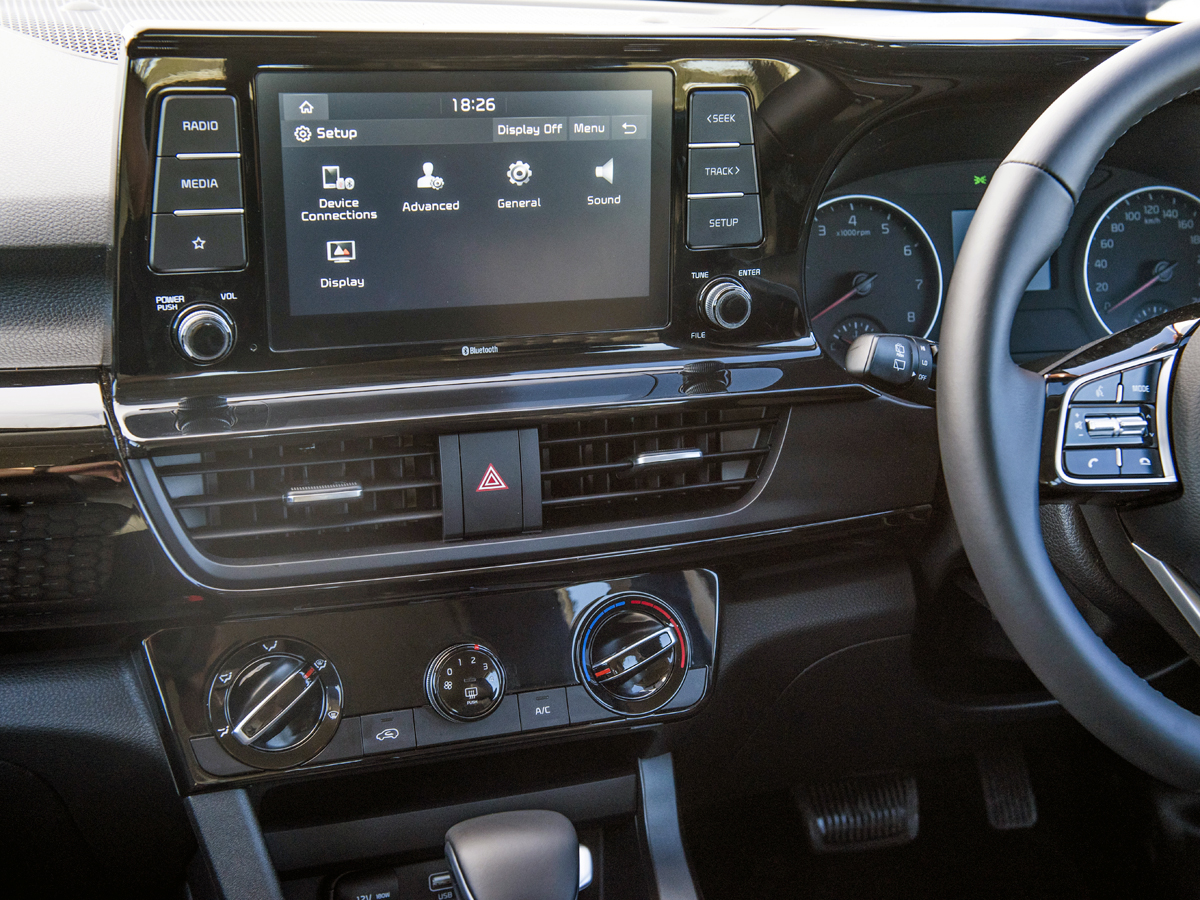
Note that the LX made do with cloth upholstery, manual air-conditioning and an 8.0-inch touchscreen, while the EX added items like hill-start assist control, drive-mode select, front parking sensors, faux-leather upholstery, a 10.25-inch touchscreen, dual-zone automatic air-con and wireless smartphone charging.
The EX+, meanwhile, boasted LED headlamps, LED front foglamps, LED taillamps, sequential indicators, auto-folding side mirrors, a 10.25-inch instrument cluster and mood lighting for the cabin.
What are the alternatives to Kia’s Seltos?
The Seltos debuted in a busy segment.
The original Kia Seltos jumped headfirst into a crowded segment that became only more congested – and indeed more fiercely contested – as time moved on. Still, it was a little larger than most of its early rivals, a lengthy list that included the Ford EcoSport, Renault Duster, Volkswagen T-Cross, Suzuki Vitara and Hyundai Creta.
More and more rivals entered the space over this vehicle’s local lifecycle.
Of course, later in the original Seltos’ stint on the local market, a raft of cut-price Chinese crossovers also entered the space. The biggest sellers here were the likes of the Chery Tiggo 4 Pro (and Tiggo Cross), Omoda C5 and Jaecoo J5, while other options included the GAC GS3 Emzoom and Lepas L4.
Is the Kia Seltos a worthwhile used purchase?
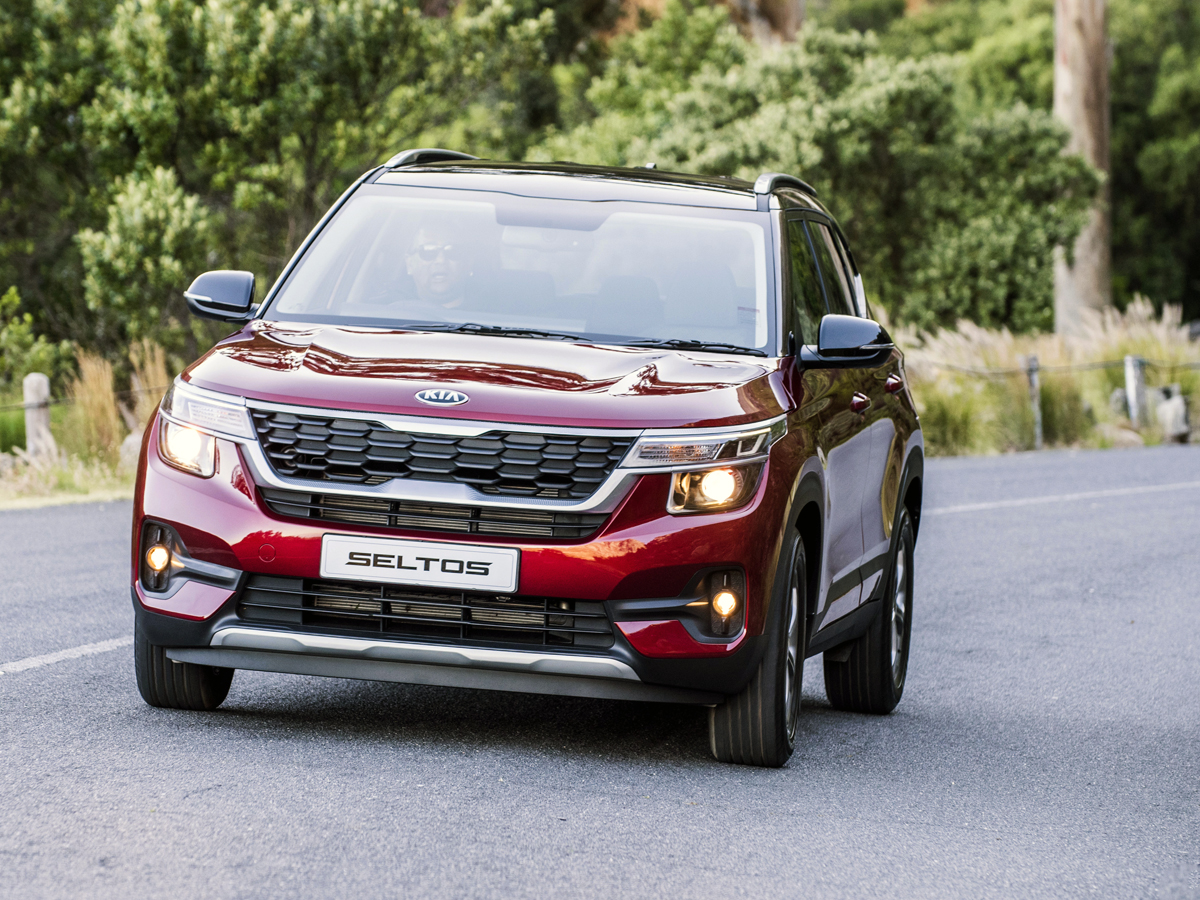
There’s plenty to like about the original Seltos.
So, is the original Kia Seltos worth considering as a used buy? Absolutely. It remains a compelling package with few drawbacks, particularly in turbodiesel guise. Equipped with the 1.5 CRDi engine, the Seltos pairs a spacious, generally well-built cabin with a pleasing blend of low-down punch and open-road efficiency.
Hunt down a well-maintained example with electronic stability control – so, EX+ in pre-facelift form or EX/EX+ (preferably skipping the more modestly specified LX) in updated form – and you’ll have bagged yourself a genuinely versatile family crossover that should serve you well.
Q: Is the original Kia Seltos a good used car buy in South Africa?
A: The 1st-generation (SP2i) Kia Seltos is considered a solid pre-owned choice thanks to its spacious cabin, generous 433-litre boot and long 5-year/unlimited km warranty.
Q: Which Kia Seltos engine derivative is the best option to buy pre-owned?
A: The 1.5 CRDi turbodiesel (86 kW/250 Nm) paired with a 6-speed automatic gearbox is considered the sweet spot in the used line-up due to its strong low-down torque and low fuel consumption (around 6.4 L/100 km).
Q: Which used Kia Seltos models should buyers be cautious of or avoid?
A: Buyers should exercise caution with 7-speed DCT-equipped turbopetrol variants (1.4 T-GDi and 1.5 T-GDi) due to potential clutch pack judder in heavy traffic, as well as pre-facelift EX trim models which lacked Electronic Stability Control (ESC).
GWM Tank 500 3.0TD (2026) Price & Specs
The GWM Tank 500 3.0TD has arrived in South Africa, with the switch to turbodiesel power seeing the large ladder-frame SUV’s starting price drop by nearly R380 000…
Tank 500 now features turbodiesel engine
Trio of 3.0TD derivatives available in SA
Oil-burning mill makes 170 kW & 620 Nm
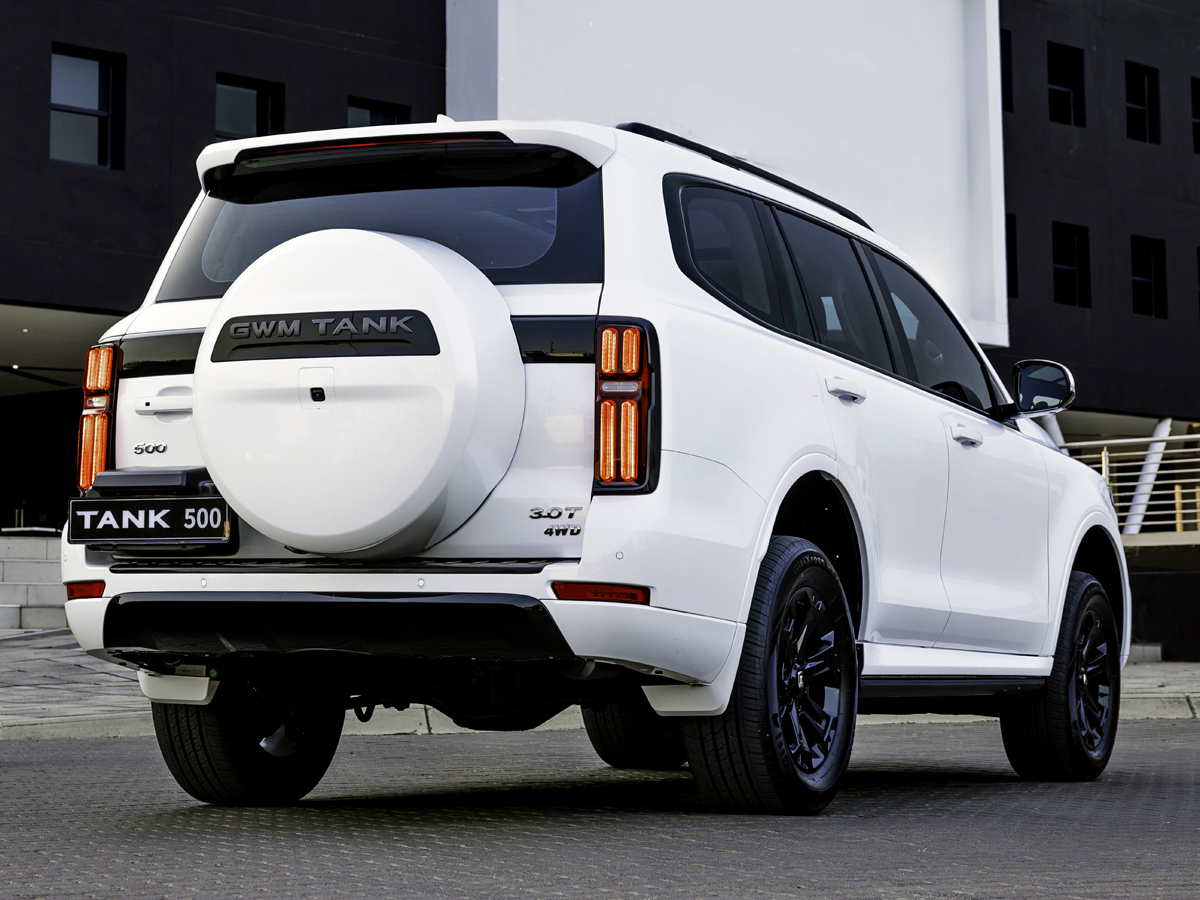
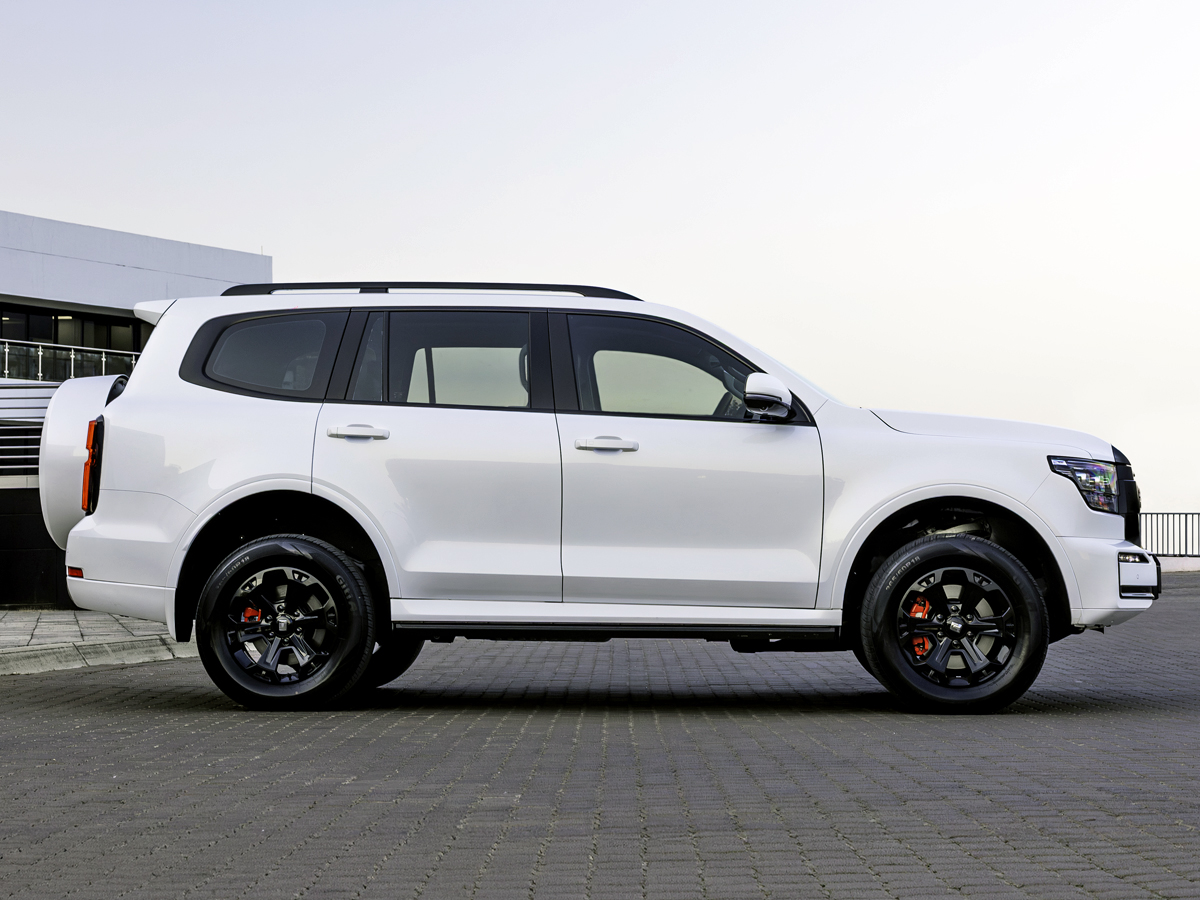
The GWM Tank 500 3.0TD has officially launched in South Africa, dropping the original hybrid-electric vehicle (HEV) powertrain in favour of turbodiesel grunt. At the same time, the revised 7-seater Tank 500 range grows from a single variant to 3 derivatives, each powered by this new 3.0-litre turbodiesel motor.
Yes, GWM SA has seemingly removed the original HEV derivative – which combined a turbocharged 2.0-litre petrol engine with an electric motor and a lithium-ion battery pack, offering peak outputs of 255 kW and 648 Nm – from its website, suggesting this dual-powered variant is no longer available.
As a reminder, the Chinese brand’s new 3.0-litre, 4-cylinder oil-burning engine – which is also now available in the P500 double-cab bakkie – features peak outputs of 170 kW and 620 Nm. The motor is paired with GWM’s in-house developed 9-speed automatic transmission as standard, while braked towing capacity comes in at 3 500 kg.
So, what does the big 7-seater SUV now cost? Well, the new Tank 500 3.0TD Super Luxury 9AT 4×2 is priced at R849 900, which means the entry point to Tank 500 ownership effectively falls a whopping R379 050 (from the outgoing 2.0T HEV Ultra Luxury 9AT 4×4 derivative’s price of R1 228 950).
Meanwhile, the Tank 500 3.0TD Ultra Luxury 9AT 4×4 comes in at R929 900, with the Tank 500 3.0TD Overland 9AT 4×4 topping the local portfolio at R999 900. The Overland grade is seemingly set apart from the Ultra Luxury specification by its 53-litre auxiliary fuel tank, which complements the standard 78-litre item.
The rear-wheel-drive Super Luxury derivative comes standard with features like a sunroof, automatic LED headlamps, 3-zone climate control, a 14.6-inch touchscreen, a 360-degree camera system, a 12.3-inch digital instrument cluster, wireless smartphone charging, a 12-speaker sound system and powered (not to mention heated) front seats.
Upgrading to the Ultra Luxury trim level unlocks features such as power-deployable side steps (as opposed to fixed items), a soft-close function for the tailgate, a head-up display, sound-reactive ambient lighting, Nappa leather upholstery, additional functions for the powered front seats (including ventilation and massaging), 2nd-row seat ventilation, 3rd-row electric adjustment and a panoramic sunroof.
Safety features that are standard across the revised Tank 500 range include 7 airbags, ABS with EBD, electronic stability control, hill-start assist control, hill-descent control, tyre-pressure monitoring and a raft of advanced driver assistance system (ADAS) functions, from adaptive cruise control to lane-departure warning.
What does the GWM Tank 500 3.0TD cost in SA?
DERIVATIVE
PRICE
Tank 500 3.0TD Super Luxury 9AT 4×2
R849 900
Tank 500 3.0TD Ultra Luxury 9AT 4×4
R929 900
Tank 500 3.0TD Overland 9AT 4×4
R999 900
The prices above include a 7-year/200 000 km warranty and a 7-year/75 000 km service plan with intervals of 15 000 km.
Frequently Asked Questions (FAQ)
Q: How much does the new GWM Tank 500 3.0TD cost in South Africa?
A: The GWM Tank 500 3.0TD starts at R849 900 for the Super Luxury 4×2, followed by the Ultra Luxury 4×4 at R929 900, and tops out at R999 900 for the flagship Overland 4×4 derivative.
Q: What engine powers the updated GWM Tank 500 range in SA?
A: The revised Tank 500 is powered by a new 3.0-litre 4-cylinder turbodiesel engine producing 170 kW and 620 Nm of torque, mated to a 9-speed automatic transmission as standard.
Q: How does the pricing of the new Tank 500 3.0TD compare to the outgoing HEV model?
A: Switching to the turbodiesel powertrain sees the starting price drop by nearly R380 000, falling from R1 228 950 for the previous HEV Ultra Luxury 4×4 down to R849 900 for the entry-level Super Luxury 4×2.
The GWM P500 3.0TD has officially launched in South Africa, debuting as the torquiest 4-cylinder turbodiesel bakkie in the country. Here’s what it costs…
3.0-litre turbodiesel engine for GWM’s P500
SA’s torquiest 4-cylinder turbodiesel bakkie
Super Luxury 4×2 & Ultra Luxury 4×4 variants
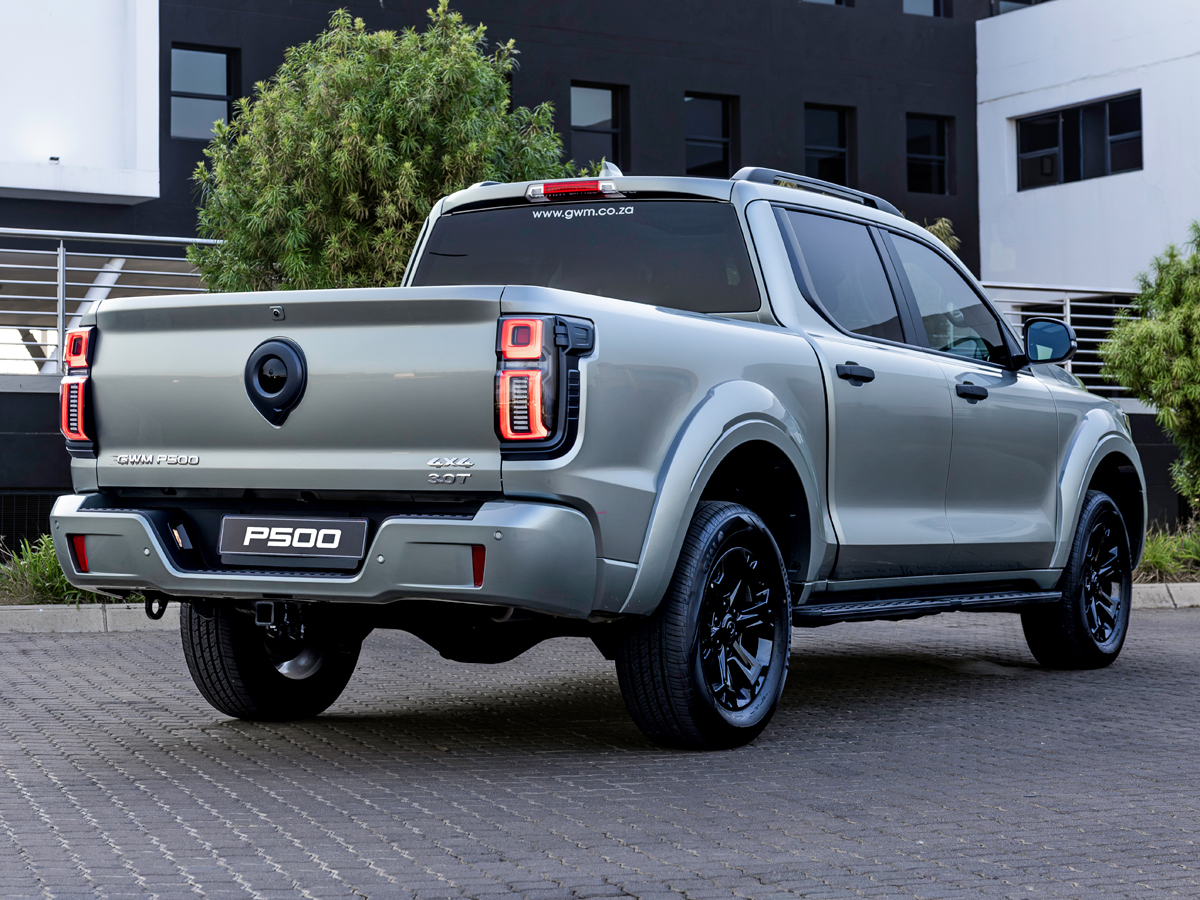
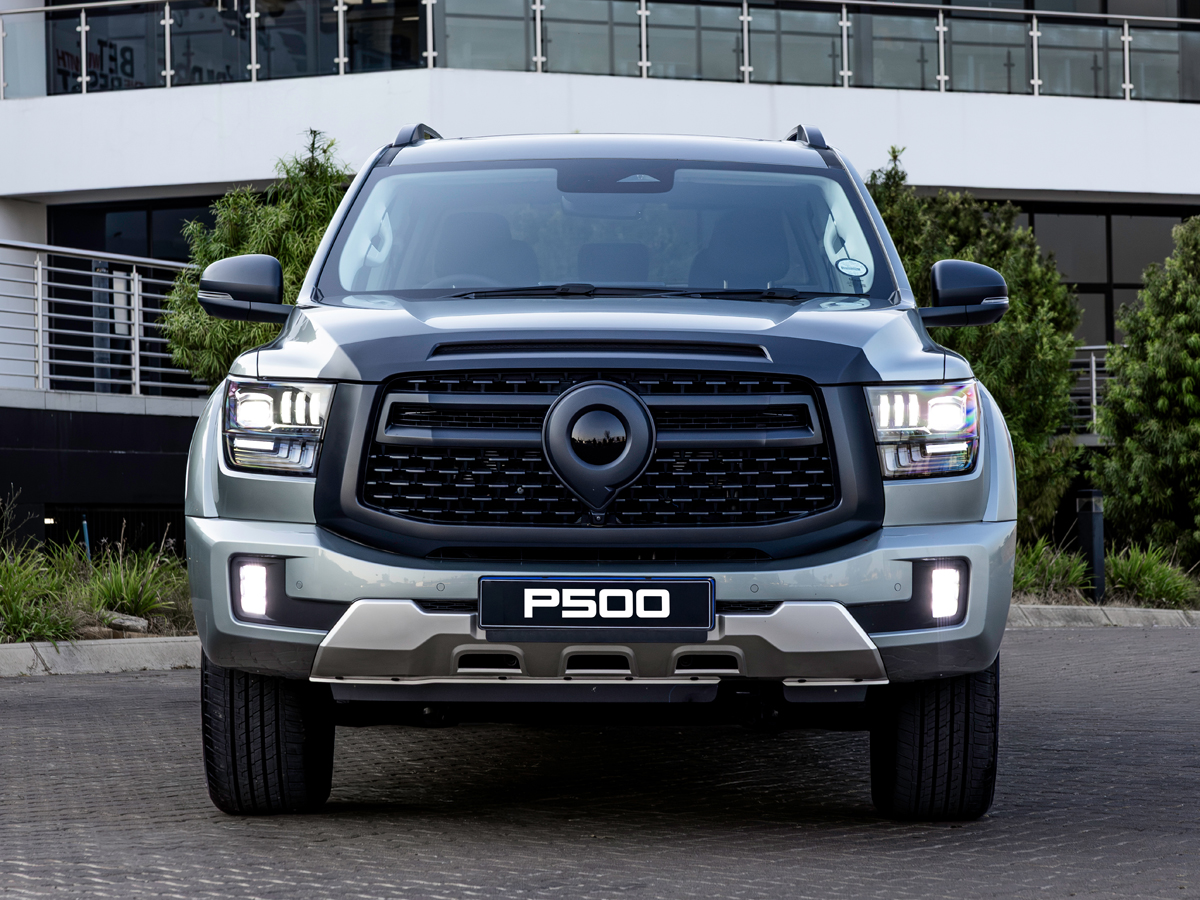
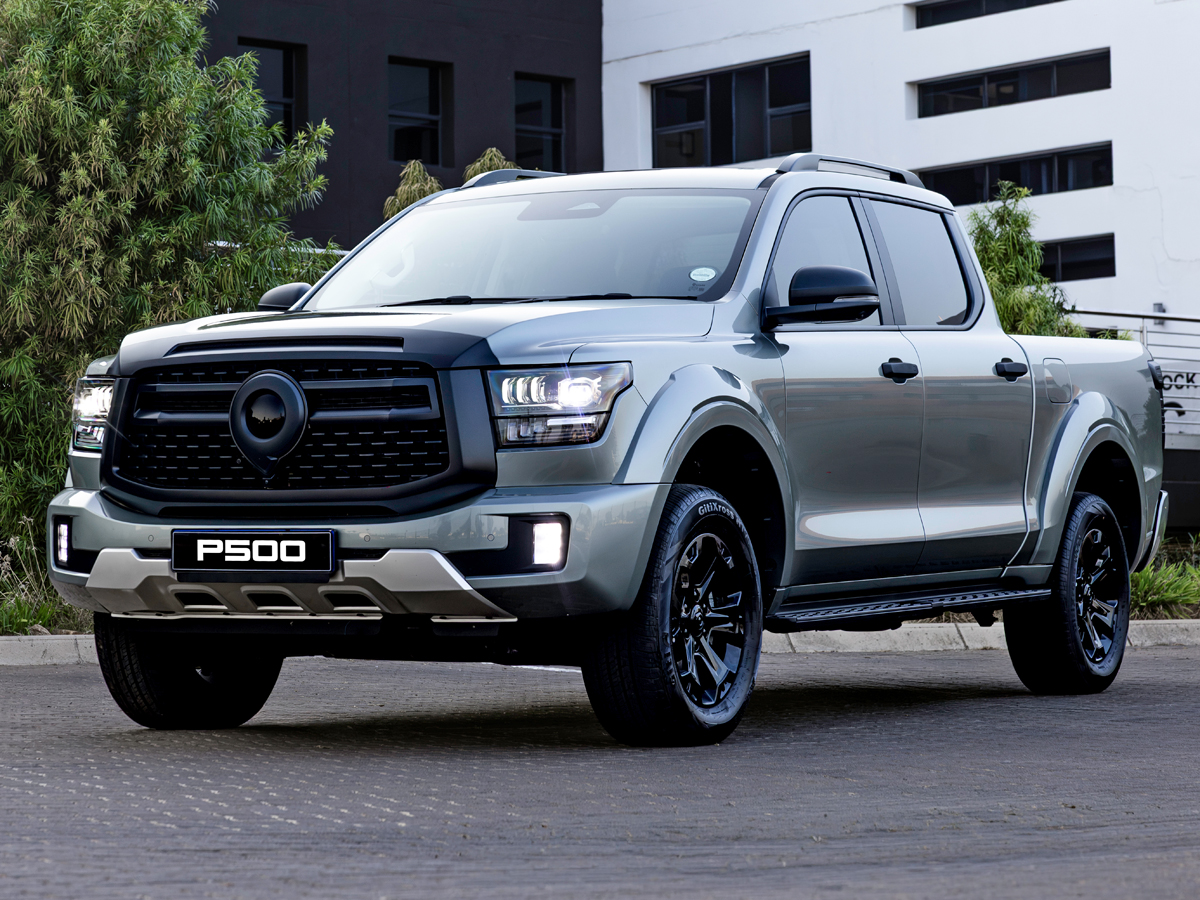
The GWM P500 3.0TD has officially arrived in South Africa, debuting as the torquiest 4-cylinder turbodiesel bakkie in the country. At launch, the Chinese brand is offering 2 double-cab derivatives powered by this new 3.0-litre turbodiesel motor.
Interestingly, the pair of 2.4-litre turbodiesel variants (135 kW/480 Nm) and the 2.0T HEV derivative (255 kW/648 Nm) that were previously offered locally have seemingly been removed from GWM SA’s website. That suggests the 3.0-litre mill is now the only powertrain available in the P500.
GWM’s new P500 3.0TD Super Luxury 9AT 4×2 is priced at R724 900, with the P500 3.0TD Ultra Luxury 9AT 4×4 coming in at R799 900. As a reminder, the P500 2.4TD Luxury 9AT 4×4 had been pegged at R799 900, with the Super Luxury 9AT 4×4 having cost R889 900 and the flagship 2.0T HEV Ultra Luxury 9AT 4×4 listed for R999 900.
The new 3.0-litre, 4-cylinder oil-burning engine boasts peak outputs of 170 kW and 620 Nm, representing respective increases of 35 kW and 140 Nm compared to the 2.4-litre 4-pot. The new motor is paired with GWM’s in-house developed 9-speed automatic transmission as standard.
The P500 3.0TD’s 620 Nm eclipses the peak twisting force of the Isuzu D-Max‘s 3.0TD (450 Nm), Nissan Navara‘s 2.5DDTi (450 Nm), Mitsubishi Triton‘s 2.4DI-D Bi-Turbo (470 Nm), Toyota Hilux‘s 2.8GD-6 (500 Nm) and LDV Terron 9‘s 2.5TD (520 Nm). Its maximum torque even beats that of the Ford Ranger‘s 184 kW 3.0TD V6 (600 Nm), a 6-cylinder mill also used by the Volkswagen Amarok.
Of course, the P500 3.0TD isn’t the torquiest double-cab bakkie overall in South Africa, with that title instead going to the 350 kW BYD Shark 6 Performance, which churns out 700 Nm courtesy of its plug-in hybrid petrol powertrain.
The new P500 3.0TD’s braked towing capacity is listed as 3 500 kg (the same as that of the P500 2.4TD derivatives), while GWM SA’s official specification sheet for the new derivatives unfortunately doesn’t show a payload capacity.
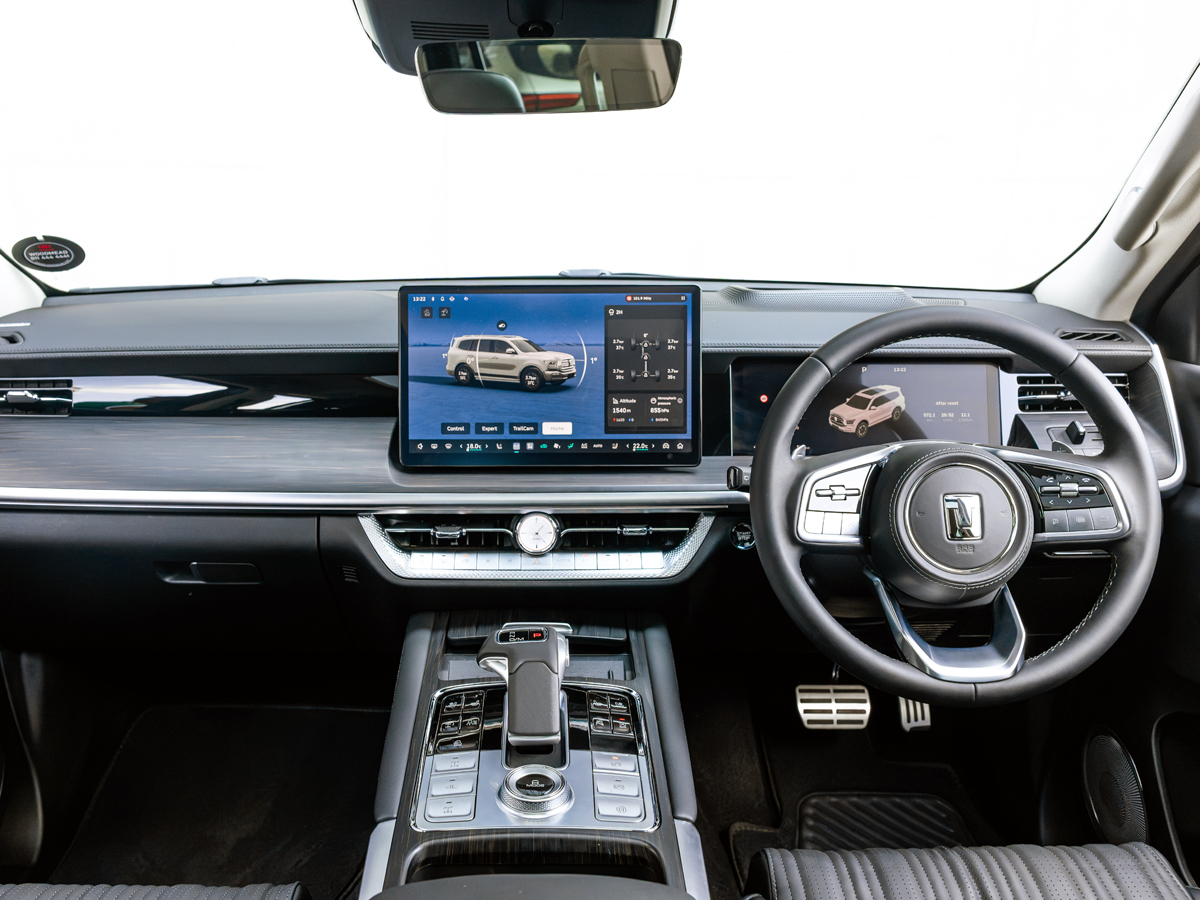
Inside, you’ll find a 14.6-inch touchscreen and a 12.3-inch digital instrument cluster, along with leather seats (synthetic in the Super Luxury and genuine in the Ultra Luxury) offering heating, ventilation and massage functions in the range-topping trim.
The Super Luxury grade includes features like automatic LED headlamps, dual-zone climate control, a 6-speaker sound system, a 360-degree camera system and parking sensors (fore and aft). The Ultra Luxury specification furthermore boasts items such as a panoramic sunroof, a 10-speaker sound system, wireless smartphone charging and a head-up display.
Safety features that are standard across the range include 7 airbags, ABS with EBD, electronic stability control, hill-start assist control, hill-descent control, tyre-pressure monitoring and a raft of advanced driver assistance system (ADAS) functions, from adaptive cruise control to lane-departure warning.
What does the GWM P500 3.0TD cost in SA?
DERIVATIVE
PRICE
P500 3.0TD Super Luxury 9AT 4×2
R724 900
P500 3.0TD Ultra Luxury 9AT 4×4
R799 900
The prices above include a 7-year/200 000 km warranty and a 7-year/75 000 km service plan with intervals of 15 000 km.
Frequently Asked Questions (FAQ)
Q: How much does the new GWM P500 3.0TD cost in South Africa?
A: The GWM P500 3.0TD range starts at R724 900 for the Super Luxury 9AT 4×2, while the flagship Ultra Luxury 9AT 4×4 derivative is priced at R799 900.
Q: What are the performance specifications of the GWM P500 3.0TD engine?
A: The new 3.0-litre 4-cylinder turbodiesel engine develops 170 kW and 620 Nm of torque, mated to a 9-speed automatic transmission. This makes it the torquiest 4-cylinder turbodiesel bakkie on the South African market.
Q: What warranty and service plan come standard with the GWM P500 3.0TD?
A: Both GWM P500 3.0TD derivatives include a 7-year/200 000 km vehicle warranty and a 7-year/75 000 km service plan with 15 000 km service intervals.
GWM still ‘pursuing’ SA production after losing Rosslyn bid
The head of GWM in South Africa says the Chinese brand is still “pursing” local production after losing a bid for Nissan’s Rosslyn plant to the Chery Group…
GWM lost bid for Nissan’s Rosslyn plant to Chery
COO says he still sees “opportunity” for SA facility
Firm “keeping an eye” on SA’s policy developments
GWM South Africa says it’s still “pursuing” local production after losing a bid for Nissan’s Rosslyn factory to fellow Chinese automaker Chery.
In January 2026, Nissan confirmed it had reached an agreement with the Chery Group regarding the sale of the facility, including all land, buildings and associated assets. By July, the Chinese firm had taken ownership of the 60-year-old facility in Gauteng.
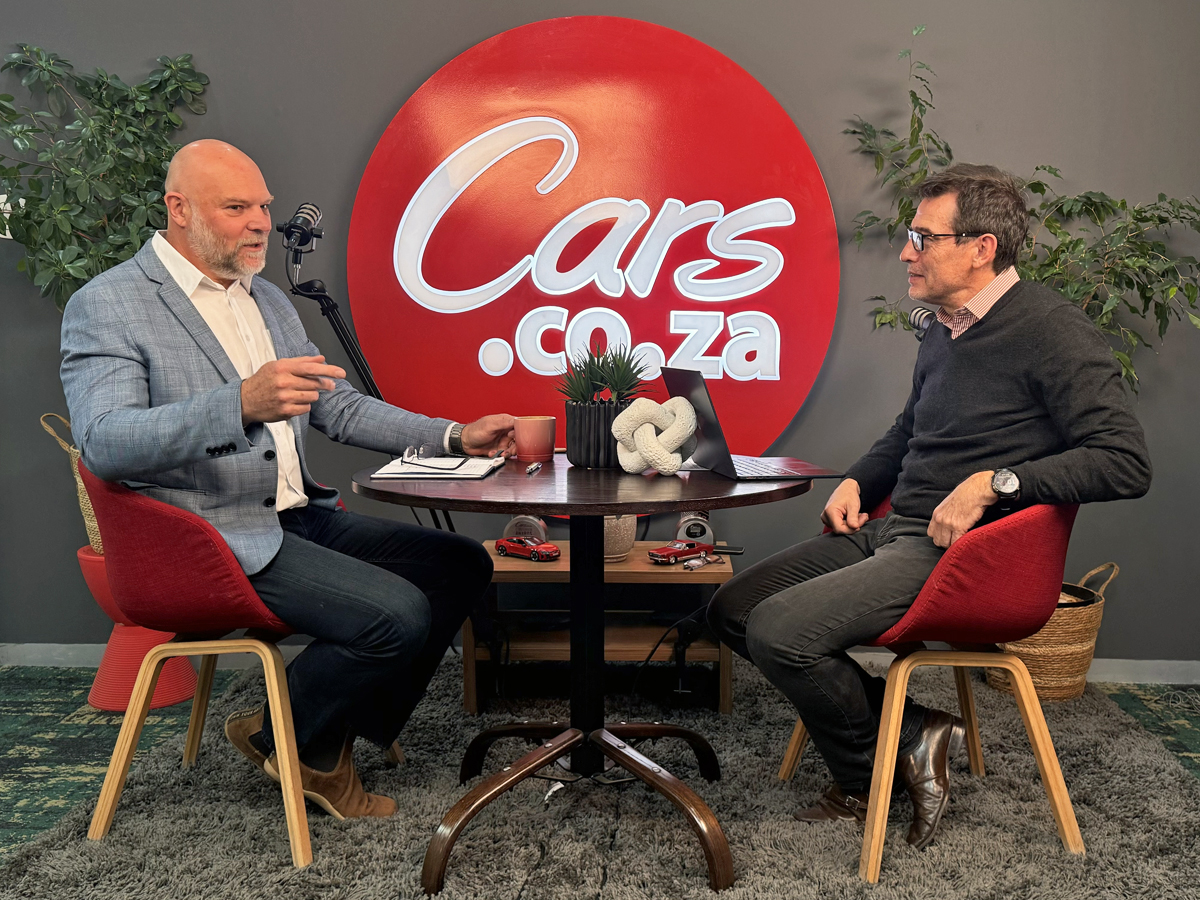
Conrad Groenewald, Chief Operating Officer of GWM South Africa, confirmed during a wide-ranging interview on the Cars.co.za BizCars podcast ahead of DealerCon 2026 that his firm had also been in the running for the Rosslyn facility.
When asked whether local manufacturing was still on GWM SA’s radar, Groenewald – who joined the company in 2022 after spending more than 25 years at Ford – said: “It’s a sad point and it’s a bit of a sour point at the moment”, adding that GWM “did also pitch for the Nissan plant” but “unfortunately lost that to a competitor in the industry”.
The Haval Jolion is GWM’s top seller in SA.
“We’ve got [manufacturing] facilities in South America, we’ve got facilities in Asia, we’ve got facilities in Thailand. South Africa pitched [against] Europe for a manufacturing facility – we unfortunately lost that to Bulgaria,” he added, suggesting “export volume into Europe” was a key consideration in the Baoding-based company’s final investment decision.
“Hopefully with the next round of investment we can be back with the [GWM] board talking about manufacturing facilities at the tip of Africa. It is challenging with APDP [the Automotive Production Development Programme] and MIDP [the Motor Industry Development Programme that preceded APDP] and all of the policies in South Africa,” Groenewald said.
Conrad Groenewald (left) in conversation with Cars.co.za’s Alan Quinn.
“It would have been nice if we could have supported the African market out of South Africa. But I think there’s still opportunity in South Africa for a manufacturing facility. We’re just waiting to see what happens with APDP2 [phase 2 of the programme] and what the update on that policy will be and then the investment opportunity that will unfold from that.
“We’re pursuing it and we’re definitely keeping an eye on the policy and policy development,” Groenewald said, before cautioning that the current cost differences between importing vehicles from China versus building them in South Africa were “marginal”, based on GWM’s recent business plan study.
GWM’s Xushui “smart factory” in China.
“The biggest thing the South African market needs to realise is that the world’s running fully automated plants. The need in South Africa at the moment is for manual plants – for job creation – which does not give you the efficiency of global plants. So, when these policies are being developed, I hope they take that into [account] and that the policies are of such a nature that we can compete with the rest of the world,” he concluded.
In October 2025, Groenewald revealed to Cars.co.za that the Chinese firm’s local division was bidding to build a new model codenamed “EC15”. A year prior, Desmond Els, Sales Director at GWM SA, told us that local production was “definitely a consideration” for the brand, though emphasised that any such plans were then still in their infancy.
Frequently Asked Questions (FAQ)
Q: Did GWM bid for Nissan’s Rosslyn manufacturing plant in South Africa?
A: Yes, GWM South Africa confirmed it pitched for Nissan’s Rosslyn facility, but lost the bid to the Chery Group, which officially took ownership of the plant in July 2026.
Q: Is GWM still considering local vehicle production in South Africa?
A: Yes, GWM SA’s Chief Operating Officer stated to Cars.co.za the company is still pursuing local assembly opportunities and keeping an eye on APDP2 policy developments for future investment rounds.
Q: Why did GWM select Bulgaria over South Africa for its European export facility?
A: South Africa pitched against Bulgaria for a GWM manufacturing facility, but lost seemingly due to export volume logistics into the European market, policy complexities and global plant efficiency factors.