Toyota Retains Crown As Worlds Largest Automaker In 2013

In 2013 Toyota managed to sell more vehicles than any automaker in the world – maintaining its title as the worlds largest automaker title after sales of about 9.98 million cars.

The Japanese automaker reclaimed it the title from General Motors back in 2012 with sales of 9.75 million, beating GM’s global sales by 451 000 units. While in 2013 it was able to increase the sales figure by two percent to 9.98 million units, which include sales of Lexus and Scion models, as well as Daihatsu and Hino trucks.

GM’s sales rose by four percent as it delivered 9.71 million cars, and were followed by Volkswagen which sold 9.7 million units and won’t provide detailed results until March 13.

Toyota originally estimated it would sell more than 10 million cars in 2013, but now the brand predicts 2014 will be the year that will breach the 10-million milestone, making them the first automaker to ever accomplish this.

Setting records in South Africa

Toyota also ended 2013 as South Africa’s best-selling brand, selling a total of 9881 vehicles in December and delivering 126 749 Toyota, Lexus and Hino vehicles to customers throughout the year, representing a total of 19.5% of the overall market.

According to Calvyn Hamman, Senior Vice President of Sales and Marketing at Toyota South Africa Motors, the industry expected a more significant increase in sales, based on the low interest rate environment, the delayed replacement cycle of vehicles after sales peaked in 2006, extremely high levels of new vehicle introductions and retail marketing.

He went on to say that the increase in living costs, spearheaded by the increasing fuel prices and Gauteng toll roads, had a greater influence on the type of vehicle sold, than the overall sales figures.

Of the models that performed well in December was the Hilux, the best-selling vehicle in South Africa at 2659 sales, the Quantum and Ses’fikile taxi at 1041 units and the Fortuner with 849 units sold.

In the entry level segment, the Etios did relatively well and recorded sales of over 1865 units, while the current Corolla retailed over 1077 units in the same month.

“It is the first time in 7 years that we have broken through the 30 000 mark in the medium, heavy and extra heavy commercial vehicle market,” says Hamman.

“We will keep an eye on commercial vehicle sales in the first quarter of 2014 to better understand if the market will stabilise at these numbers, as some analysts believe, or if the market will grow at the same tempo as the country’s gross domestic product growth, as others predict.”

“On the positive side we expect a strong performance from the new Corolla, South Africa’s favourite sedan, and by a number of new vehicle introductions.”


Judging The 2014 Car Of The Year

Veteran motoring journalist Stuart Johnston is a jury member on the Car of The Year panel, and shares his thoughts on the 2014 competition.

Having been involved in the judging of this South African Guild of Motoring Journalists initiative since its inception in 1985, in previous Car Of The Year test days there have  often been  one or two cars that fell off the bus, so to speak, quite early in the two-day test procedure.

Not in 2014. I think the biggest factor in raising standards of excellence across the industry has been the intensity of computer-aided design programmes in producing super-solid chassis platforms to create basic structures that have had most possible flaws identified and eradicated even before the first prototypes are built.

Apart from producing a creak-free “living environment”, a solid chassis structure means that suspension settings can be more compliant to provide that holy grail that chassis engineers seek: a perfect compromise between road grip and comfort.

That for me is the first point of departure in choosing a good car today, mainly because the deteriorating quality of our roads demands both good grip and even better ride compliance. The rest of the car’s attributes can be assessed according to their desired target market, and this enables a juror to justifiably score, say, a Renault Clio ahead of a Jaguar F-Type.

Which car does its intended job best, for its intended market category?

The Car of the Year competition involves all SAGMJ members in the initial judging phase and for the actual finalist selection and testing, this is the job of 30 appointed jurors. And because they are all opinionated professionals, they will have their particular criteria for judging that may well be completely different to mine.

Each jury member has an allocation of 50 points to award, and he or she has to score at least seven of the nine cars, over two days of back-to-back testing on open roads and at the Gerotek testing facility, near Pretoria. The car garnering the most points from all 30 jurors is thus the winner.

My picks for Car of The Year 2014

For the record, this is my take on who should walk off with the award at the traditional  gala function, hosted as usual by Wesbank on February 19.

1.Volkswagen Golf 7 1,4 TSi DSG R293 500.
The most complete car here, it simply oozes confidence in every allotted task. Superb mix of ride and grip unequalled by almost all its competitors. Even on the high speed track at Gerotek, it felt poised and unruffled at 200 km/h.
Volkswagen Golf

2. Audi A3 Sportback 1,4 T FSi Manual R 299 000.
This car nearly took it for me, as essentially it’s a Golf but with different styling. In fact it has an even better ride than the Golf, but I prefer the Golf’s cleaner approach, particularly in the dashboard area, where I found the Audi’s Bauhaus visual minimalism layout fussier to operate. It was close between these two.
Audi A3

3. Renault Clio IV 0,9 Turbo five-door R189 900.
This was the dark-horse in the competition for me. It is extremely well-packaged for a car in this price range with superlative interior style and appointment. The only down-side was just a slight breathlessness in certain cut-and-thrust traffic manoeuvres; otherwise the super-eco small three-cylinder engine is well up to the task.
Renault Clio4

4. Porsche Cayman S Coupe PDK R838 000.
Like its Boxter sibling that won the 2013 title, the Porsche Cayman S is excellence personified. In all sports car-orientated allotted tasks it is the best in its league. So why isn’t it my choice for 2014 COTY? Like last year when I chose the BMW 3 Series ahead of the Boxter, I simply feel it is more demanding of a manufacturer to build an excellent car for the masses. And thus the Golf (and the Audi) achievement is the greater.
Porsche Cayman

5. Jaguar F-Type 3,0 S R999 900.
This was the most exciting car in the competition in terms of its engine note, and its feeling of outright thrust. It’s a barrel of fun, and a very competent car too. But the high-speed course showed up a slight vagueness in steering accuracy  and a reluctance to react to directional changes on the tight handling track. Nevertheless, a towering achievement from Jaguar, in putting the sport back into its sports cars.
Jaguar F-Type

6. Mercedes-Benz A45 AMG R603 667.
I can just hear the groans of the Merc fans. The A45 AMG only sixth? You’ve gotta be kidding! Well, I have criticised the Merc’s lack of suspension compliance since my first launch drive, and over the Gerotek Belgian paving rough road section it was astoundingly poor. On the handling track it was very good, despite its tendency to understeer. Its seven-speed autobox, though, battled to find the right ratios despite urging from the paddle shift. And it has a boring engine note, loud though it is. Other than that, a superb, solid, stylish car, and very, very  fast.
Mercedes-Benz A145

7. Peugeot 208 GTi R263 350.
This car has great, refined performance, and amazing handling prowess for a car in its class. Unfortunately it is too stiff in terms of bump absorption and in build quality terms it is not rigid enough. Also, I battled to get comfortable behind the wheel.
Peugeot 208 GTI

8. Lexus IS 350 F-Sport R571 500.
This car has great exterior styling, so different and bold, and yet such a disappointing interior finish, saddling the owner with plastic qualities on the console that you would expect to find in an old Venture MPV!
Superb handling, great engine note. A worthy finalist, but not a winner. Lexus IS350

9. Volvo D3 2,0 Excel R346 800.
I find  placing the Volvo V40 in last spot a pity, as this is a rock-solid car, the one I would most like to be in an accident with –it was awarded the highest NCAP safety test scoring in history at the time of its launch. But alas, the diesel model was selected for this competition,  whereas the petrol variants are far more exciting. Suspension compliance was disappointing.
Volvo V40

BMW Z4 2.0i SDrive M-Sport Review

The latest BMW Z4 is not entirely new, but like many people who purchase them, it has undergone some cosmetic surgery to look fresher, younger and in this case, prettier actually. I have always had a soft spot for the Z4. It just feels right that BMW should have a car like this in the line-up.

I like that it’s sort of a scaled down supercar. It certainly gets attention, but I feel like it mostly gets attention from people who are very interested in their own biceps. Or handbags. Which is a pity, because the Z4 offers a pure driving experience that, if you’re interested in driving as something other than a way to get around, ticks all the boxes.

Rear-wheel drive, manual gearbox (optional), strictly two seats, a low slung stance and an impossibly long bonnet, housing a peach of an engine in the 2.0 four-banger turbo tested here, or the rather fiery 3.0 straight-six turbo nicked from the 335i. What, fellow enthusiasts, is not to like?

Interior features and specs

My driving position resembles how most people recline in a bath, so the seating design of the Z4 suits me rather well. Again, this offers that supercar feel. The dash presents you with a chunky leather lined steering wheel, which might actually be too thick. But it feels good; challenging. Hitting the start button, a widescreen which was hiding in the dash flips out neatly and becomes the centre point of a curvy, sculpted dash.

Simple dials and switchgear are the order of the day here; there’s much less fuss than in other BMWs. The Z4 really benefits from the latest form of iDrive, with a large jog wheel surrounded by “hot-buttons” for functions you might use most often: Nav and Radio for instance. Visibility out of the cabin is limited, and that bonnet seems never ending. The haunches over the front wheel arches rise just into your vision; every road looks just a bit better through this view.

It does however make the Z4 difficult to park, but BMW’s park assist with what I call the Reggae Radar graphic (green = safe, yellow = you’re getting close, red = stop immediately) does help a lot. It also looks like a Rastafarian’s beanie, which I always find amusing. The roof opens and closes at the touch of a button, and is quite a marvel to behold. When reclining, it looks like a transformer lying down for a nap. When the roof is closed, you might as well be in a fixed-head coupe. The folding hard top has come a long way indeed.

Engine and gearbox

The screen gymnastics mentioned above are accompanied by a lovely burble on start up. You’d be forgiven for thinking there was a much more menacing engine at play here. Those force-fed four cylinders in the BMW Z4 2.oi have been tuned to produce 135 kW and 270 Nm. Not stellar numbers, but crucially peak torque is available from 1 250rpm, up to 4 500rpm, which ensures that you hardly ever feel like there’s not enough oomph available.

0 – 100km/h is a respectable 7.2 seconds (claimed), enough to keep you nipping at the heels of all the hot hatches out there. BMW’s clever 8-speed gearbox does a sterling job of selecting the best ratio for the conditions, and in Sport mode, it will hold quite a high gear to ensure there is max torque and power available to push the car out of a corner when you get back on the throttle.

Drive and handling

The lighter engine up front also has the advantage of reducing the tendency to understeer, or wash wide during cornering, meaning a lighter, nimbler drive, again adding to that feeling of purity of experience. However, I do feel that as the Z4 has grown up and evolved, the driving experience, at least in this model, has increasingly become detached.

BMW knows its market, and most buyers of this model aren’t looking for a white-knuckle driving experience, but rather a refined, sporty car that will enhance what people think of their faces. That said, the ride remains firm and the rear-end occasionally flirts with oversteer more than your average sporty sedan. The layout of the car takes some getting used to, sitting this far back is certainly different. It can be a little intimidating at first, but after a few twisty roads in the BMW Z4 2.0i, you might begin to wonder why all cars aren’t like this.

BMW Z4 2.0i – Facelift changes and upgrades

The latest Z4 benefits from BMW’s Efficient Dynamics program, allowing you to select between various modes which automatically set up the car to make the best of the available power, or the available fuel. EcoPro mode reigns in the car so much, it’s a bit like driving through custard.

The throttle goes numb under your foot and the dials upfront display graphics to help you drive more efficiently. There’s also a reward system at play here, as the system ashows you how many kilometres you’ve added to your range by driving like an octogenarian. Excellent, given the current fuel price. The most noticeable change to the exterior is the Corona Ring headlights, which look fantastic. Clear glass wraps around four stark, bright rings which themselves surround the lamps; these run during the day. It has revitalised the look of the car significantly.

Fitted with the M-Sport package of my particular test unit, the BMW Z4 2.0i drew admiring glances wherever I travelled. It is a striking car, slightly odd looking perhaps, but in a good way. My test unit was in Melbourne Red, which I’d recommend with a black roof. (Incidentally, Melbourne Red was not inspired by sunburnt Australians).

BMW Z4 Conclusion

The smaller engine in the line-up might not look the most attractive to fanboys or enthusiasts, but in the real world it has more than enough power to keep most drivers interested, while returning decent fuel consumption. The exterior and interior mods from the mid-life cycle refresh have brought the interior bang-up to date, and the exterior now looks fresher, and even more sporty.

At nearly R600 000, it is not a cheap exercise though, but is in line with its rivals. It will be interesting to see how this market is impacted by the potential arrival of a Toyota 86/Subaru BRZ convertible. That will be a 2.0, rear-wheel drive with properly good looks.

BMW Z4 SDrive20i price in South Africa

R593 501 – with the base model manual coming in at R540 000.

2014 BMW Z4 SDrive20i Specifications

Engine 2.0 litre turbocharged inline-four petrol
Power 135 kW @ 5 000 rpm
Torque 270 Nm @ 4 500 rpm
Transmission 8-speed automatic
Wheels 18-inch
0-100km/h (Claimed) 7.2 seconds (claimed)
Fuel economy 6.8l/100km (claimed on the combined cycle)

We like:
. Low slung looks, driving position
. New Corona Ring headlights
. updated interior
. impressive small-ish displacement engine

We dislike:
. Price, perhaps BMW could look at a stripped down, more focused version?
. fairly harsh ride over bumpy roads, most likely the run-flats though
. the people who buy them

Also consider:
Mercedes Benz SLK200 AMG Sports Auto
Audi TT 2.0T auto quattro

BMW Z4 SDrive20i M Sport Auto photo gallery

Volkswagen Golf R Evo Concept Planned

A report has suggested that a Volkswagen Golf R Evo concept is in the works and is planned to officially debut at the 2014 Beijing Motor Show.

New driveline and lightweight construction

The report goes on to say that the Volkswagen Evo concept will be “showcasing new driveline and lightweight construction technology that is being considered for inclusion on limited production road cars in the foreseeable future.”

Apparently the Golf R Evo concept will use a turbocharged 2.0-litre four-cylinder engine that has been equipped with new cylinder heads, an improved induction system and various other tweaks. These changes will reportedly enable the engine to produce approximately 276 kW and 449 Nm of torque – an increase of 55 kW and 70 Nm.

As with the standard Golf R (due to land on our shores in February), the concept is said to use a six-speed dual clutch gearbox and electro-mechanical Haldex multi-plate clutch four-wheel drive system.

Besides having extra dynamism, the concept is expected to have a stripped out interior and carbon fibre body panels. As a result, the car could even tip the scales at less than 1 400 kg.

Rumours further suggest that a production variant of the concept is a possibility. More details are expected to emerge as we get closer to the debut of the concept at the Beijing Motor Show.

*Note: Pictured is the VW Golf Design Vision GTI concept

Most Popular Bakkies In South Africa

 If you are looking for a vehicle that can do more than just take you from point A to B, but also be able to transverse a dirt road, cross deserts or simply manoeuvre around South Africa’s worst potholes,here is a top 5 list of the most popular bakkies in South Africa.

1. Toyota Hilux

Toyota Hilux Bakkie

The Toyota Hilux bakkie has been a South African favourite ever since it was introduced back in 1969 and has undergone quite a few facelifts over the years as well as topping the monthly industry new vehicle sales countless times.

The Toyota Hilux is available in three body styles including the Single Cab, Xtra Cab and Double Cab. A wide variety of engine options are available and prices range from R186 700 to R475 900, depending on the model.

The Toyota Hilux also offers a myriad of styling cues developed to enhance the vehicle’s modern design, emphasise its tough underpinnings and keep the vehicle truly appealing.

2. Ford Ranger

Ford Ranger Bakkie

The Ford Ranger is offered in three body styles namely Double, Super and Regular and is available with the choice of two Duratorq TDCi engines and either as a 4X2 or a 4X4.

In 2012, the bakkie picked up the 2013 International Pick-Up Award, where it was praised for its engine line-up, payload capacity, towing capacity, safety and performance both on and off the road. Last year the model also gained two new single cab derivatives powered by Ford’s 3.2-litre diesel, which you can get from R315 200.

3. Isuzu KB

Isuzu KB Bakkie

Down at number three is the tough-as-nails Isuzu KB. Both the single and double cab bakkies remain a popular choice for local buyers, as the vehicle sold 1 260 units in December 2013.

With a towing capacity of more than 3000 kg and engine performance of 380Nm, the latest Isuzu KB model is said to handle anything a South African driver can throw at it including traversing a dirt road to the most remote customer’s factory depot, climbing the Sani Pass into Lesotho or launching a boat into the Vaal River. Read a review of the Isuzu KB here.

Prices for the bakkie range from R229 300 for a single cab to R309 100 for a double cab.

4. Nissan NP200

Nissan NP200 Bakkie

The Nissan NP200 is an affordable and reliable bakkie that is available in three trim levels namely Base, Mid and High. It offers good basic spec, strong build quality and a spacious 800L load bay, coupled with a revised/improved warranty of six years/150 000km as opposed to the original three year/100 000km. The 1.6-litre base version is priced at R123 800 while the 1.6-litre High model retails for R175 800. Read our review of the Nissan NP200 here.

5. Chevrolet Utility

Chevrolet Utility Bakkie

Much further down the pecking order is Chevrolet’s prize fighter, the Utility, which sold relatively well throughout 2013. Not only is it one of the top sellers in the LCV segment, but it’s also Chevrolet’s best-selling vehicle in South Africa.

The Chevrolet Utility is available in three well-equipped models offering both petrol and diesel options. Prices range from R119 900 for the Utility Base model to R142 700 for the Utility Club and R166 500 for the higher spec Utility Sport model. Read our review of the Chevrolet Utility here.

Subaru Legacy 2.5 GT Review

Subaru’s Legacy is regarded as the black sheep of the family and is often overshadowed by its other products like the Forester and WRX. When offered to drive this relatively little known model, David Taylor jumped at the chance.

The Subaru Legacy is the Japanese brand’s attempt at taking on the executive sedan market while retaining those Subaru traits of powerful turbo motor, symmetrical all-wheel drive and great practicality. All those factors sound like a great recipe on paper and the Legacy delivers in most aspects.

Legacy looks and engine

Starting with the looks, my test unit was an evil black which gave it some road presence. It’s not a small car and you feel quite regal from behind the wheel. Some big alloy wheels and twin exhausts give subtle clues about the performance. It’s still a Subaru underneath that businessman’s suit.

There’s an engine sourced from the WRX sports sedan, which should give you some indication of the performance. For the record, the 2.5-litre turbocharged flat-four motor pushes out 195 kW and 350 Nm, so there is some grunt underfoot. Power is driven to all four wheels through a five-speed automatic gearbox.

Driving modes

It all sounds very good, but when it came to the driving I was a little disappointed. Perhaps I was expecting a Subaru WRX in a suit, but in reality the Legacy is more a cruiser than an out-and-out performer. Gear changes are uneventful and at low speeds there’s a slight CVT drone.

However this is rectified by putting the vehicle in #Sport and using the steering wheel-mounted paddles. The car is transformed into a much more hands-on vehicle and it’s a shame the majority of Subaru Legacy owners will never actually try this out for themselves.

There are three driving modes and you can switch between them using the buttons on the steering wheel. There’s Intelligent, Sport and #Sport. Intelligent powers down the engine slightly and is best used if you’re focusing on the fuel economy. Sport tightens things and makes the engine a little more responsive. Finally the #Sport unleashes all the power from the Subaru Legacy engine. You can clearly see the difference between the three thanks to little torque graph readouts on the dashboard.

Ride and refinement

It’s not a bad ride either. With a focus on refinement and comfort, the Legacy loses some of the fabled Subaru precision. Make no mistake though, the Legacy still offers high levels of grip – a comforting feature during a particularly heavy Johannesburg afternoon thunderstorm. While most cars had slowed to a crawl due to the volume of water on the roads, you can be thankful the Legacy will not lose traction. Look, the laws of physics still apply so don’t drive at high speed into a puddle of water.

With #Sport engaged and driving with the paddles, the Legacy GT feels quite brisk but I feel a manual gearbox would unleash even more performance. Given the fact that the car isn’t geared at being a performance-orientated machine, it’s impressive when you demand power from it. I also noted the Legacy was particularly fond of unleaded petrol, with the fuel economy reading almost 12l/100km.

Interior practicality

One brilliant selling point of the Subaru Legacy is its interior practicality. The rear legroom is simply brilliant and Subaru itself says the Legacy has the longest wheelbase in its class. This means the cabin is suitable for four tall adults and while the interior is impressive, the boot is even more so. You could easily fit two golf bags in there and still have room for a few tog bags. The interior does show some hint of performance with some splashes of carbon fiber.

Loaded with specification

It’s clear Subaru has gone for the minimalist approach inside the cabin of the Legacy. Don’t make the mistake of thinking it’s not well equipped because if there’s something Subaru does right, its vehicle specification. The Legacy is marketed as a luxury vehicle and has the majority of the luxury features one would expect when paying close on R500 000.

Leather seats with electronic adjustment and memory function, keyless entry and start, automatic dual zone climate control, cruise control, auto wipers, auto xenon headlamps, USB/Mp3 connectivity, reverse camera, Bluetooth, powerful sound system and a whole host of safety features are fitted as standard to the Subaru Legacy.

Subaru Legacy conclusion

The Subaru Legacy 2.5 GT will never be a best seller in South Africa. At this end of the market, your money will most likely head to a German brand. That said, you can’t help but feel the Legacy does the basics right and that’s about it. It lacks the prestige which its rivals offer in abundance and when you’re behind the wheel, it doesn’t feel like a R500 000 motor vehicle.

If you’re a Subaru fan, then rather get a Subaru Outback which offers higher ground clearance, better economy thanks to an award-winning diesel engine, and more practicality for R10 000 less.

Subaru Legacy 2.5 GT  price in South Africa

The Subaru Legacy 2.5 GT retails for R479 000. Price includes a 3 year / 100 000 km warranty. Also includes 3 year / 75 000 km service plan.

Subaru Legacy 2.5 GT specifications

Engine 2.5 litre turbocharged flat four
Power 195 kW @ 5 600rpm
Torque 350 Nm @ 3 600rpm
Transmission 5-speed automatic
Wheels 18-inch
0-100km/h (Claimed) 6.1 seconds (claimed)
Fuel economy 11.5l/100km (claimed on the combined cycle)

We like:
·   Still a Subaru. Still grips and handles well.
.   Great rear legroom and boot size
.   Deceptively quick

We don’t like:
·    Thirsty
.    Executive sedans aren’t Subaru’s specialty
.    This segment is run by the Germans

Also consider:
Honda Accord
Volkswagen Jetta/Passat
BMW 3-Series
Audi A4
Mercedes-Benz C-Class
Subaru Outback

Subaru Legacy 2.5 GT photo gallery

Photos by Justin Lee from Justin Lee photos

Fiat Completes Chrysler Acquisition

Earlier this month, Fiat announced it would be acquiring the remaining shares of Chrysler owned by the VEBA, and now the brand has said the deal has been completed, making the U.S. unit a wholly-owned subsidiary of the Italian carmaker.

Acquisition of Chrysler

According to one report, on 20 January 2009, Fiat S.p.A. and Chrysler LLC announced their intention to form a global alliance.

Under the terms of the agreement, Fiat would take a 20% stake in Chrysler and gain access to its North American distribution network in exchange for providing Chrysler with technology and platforms to build smaller, more fuel-efficient vehicles in the US and providing reciprocal access to Fiat’s global distribution network

Now coming nearly five years after an alliance was struck, the acquisition gives Fiat the remaining 41.46% of Chrysler they previously didn’t own. Making Chrysler a wholly-owned subsidiary of Fiat.

Neither company has given an official statement about the merger, however Fiat and Chrysler CEO Sergio Marchionne has previously mentioned that “in the life of every major organization and its people, there are defining moments that go down in the history books.”

“The unified ownership structure will now allow us to fully execute our vision of creating a global automaker that is truly unique in terms of mix of experience, perspective and know-how, a solid and open organization that will ensure all employees a challenging and rewarding environment.”

Fiat and Chrysler together make the world’s seventh biggest auto group and the name of the merged company and the choice of location for its headquarters are due to be announced at a board meeting later this month.

Essentially the purchasing of Chrysler by Fiat opens the American market to the Italians. It’s no secret the Fiat group (Alfa Romeo, Ferrari, Lancia) want to make inroads into the United States. They have a flagship product in the Alfa Romeo 4C (pictured here) and will be a great test to see if the Americans are keen on stylish Italian motor vehicles.

IIHS Small Car Crash Results Shocker

The Insurance Institute for Highway Safety announced the car crash results of its 2014 sub-compact segment. These small vehicles have been rated as the worst performing group of any evaluated so far.

Chevrolet Spark comes out top for 2014

Only the Chevrolet Spark achieved an acceptable rating in the Insurance Institute for Highway Safety’s (IIHS) small overlap front crash test out of 11 tested small cars.

The small overlap test replicates what happens when the front corner of a vehicle collides with another vehicle or an object such as a tree or utility pipe. In the test, 25% of a vehicle’s front end on the driver’s side strikes a rigid barrier at 64 km/h.

According to the report, the test is more difficult that the head on-on crashes conducted by the government or the longstanding IIHS moderate lap test because most of the vehicle’s front-end crush zone is bypassed. Which makes it hard for the vehicle to manage crash energy, and as a result causing the occupant compartment to collapse.

“Small, lightweight vehicles have an inherent safety disadvantage. That’s why it’s even more important to choose one with the best occupant protection,” IIHS senior vice president for vehicle research Joe Nolan said in a statement.

“Unfortunately, as a group, mini-cars aren’t performing as well as other vehicle categories in the small overlap crash.”

Even with the Top Safety Pick designation, the Spark still only managed to score an “acceptable” rating. It lost points in the small overlap crash test, an area that proved to be even more shattering for the rest of the segment.

2014 IIHS Small Car Crash Results

IIHS Car Crash Results for 2014

*click image to view in full

Honda Fit/Jazz, Fiat 500 perform poorly

“The two worst performers are the Honda Jazz/Fit and the Fiat 500,” said the IIHS in a statement. “In both cases, intruding structure seriously compromised the driver’s space, and the steering column was pushed back toward the driver.

The dummy’s head barely touched the Fit’s airbag before sliding off and hitting the instrument panel. The Fiat 500?s door tore off, increasingly the likelihood of passenger ejection.

Every sub-compact model tested returned a “marginal” or “poor rating in the structure category, which is the most fundamental element of occupant crash protection. If the structure is compromised during a crash, airbags can be knocked out of position.

All the vehicles except the Spark and the Mazda 2 also earned low ratings for restraints and kinematics. Seven of the 11 were downgraded for allowing too much occupant forward motion during the crash. In those cases, the seatbelt either failed to react soon enough or the dummy’s head missed or slid off the airbag. Side curtain airbag protection in eight of the tested vehicles proved to be insufficient during the small overlap test.

None of the cars were given the “Top Safety Pick Plus” rating because the IIHS now requires frontal crash prevention systems for its highest safety award – an increasingly common safety feature that can prevent or mitigate some kinds of frontal crashes.

IIHS was founded in 1959 by three major insurance associations representing 80 percent of the U.S. auto insurance market. It’s an independent and non-profit organisation which focuses on road safety.

What does this mean for you as a consumer? Check carefully when it comes to safety features and specification. Cars can be replaced, human beings not so much.

IIHS Minicar crash test video

Toyota Land Cruiser Prado Review

The perennially popular Toyota Prado is back and brand spanking new for 2014. It has been my first experience of the model, and having driven its rivals, and cars from within its stable, I was excited to fetch a small stepladder and climb aboard.

It looks good. Big, bold, intimidating, with strong shoulders. My test unit was “liquid bronze” – shiny brown to you and me – and with that giant grill up front, it looked like a boulder with teeth. An angry boulder. With shiny teeth.

2014 Toyota Prado interior and features

The interior is dominated by a massive central stack of aircon vents, a touch screen, aircon control and then a giant knob. And I mean giant. It’s like a microwave timer built for The Hulk. More on this later.

The leather is plush, even the doors on this model are leather lined (standard in the VX). But there are little plastic buttons everywhere, for all sorts of things, borrowed from various models in the Lexus and Toyota range.

That said, it is exceptionally well kitted. Electric seats, heated and cooled, electric steering wheel, SatNav, an impressive sound system, touch screen interface, and a centre screen between the two dials with all the trip and consumption figures you’d wish to know. I don’t know if the execution is as finessed as rivals like the Land Rover Discovery 4, but it is certainly matched for equipment.

Rear-seat party piece

All the seats fold completely flat in the Prado to offer a massive load space, but you’d be forgiven for thinking there isn’t a third row of seats. However, at the touch of a button, two independent seats rise electrically out of the boot, folding cleverly into position to offer decent seating for children and Danny De Vito.

Toyota has been clever about this too, the buttons to control the seats are positioned in the boot, as well as on the interior of the rear wheel arch so that you can control them from either behind or either side of the car. If I was an 8 year old, I would never get tired of this feature. In fact, I’m 28 and I still grinned like a kid every time I showed someone how they work.

Toyota Land Cruiser Prado drive and handling

Turn the key and the hearty quadcam 4.0-litre V6 gently growls to life. Fitted to an automatic 5-speed ‘box, 202 kW and 381 Nm are available, and the Prado can certainly get its hurry on. It drives in Eco mode by default, requiring barely a flex of your big toe to cruise around town. This is very nice. It has a claimed fuel consumption of 11.5 litres/100km. My test unit was averaging 15.5 litres/100km, however that was almost exclusively urban driving. There’s also a 3.0 litre 4-pot turbo diesel, with 120kW and 400 Nm and improved fuel economy available.

But if you’re late for a flight or a cattle sale, then putting your foot down results in acceleration that is slightly disconcerting in a car this size.

Offroad capability of the 2014 Toyota Prado

Toyota is very proud of its offroad heritage and the Prado has been fitted with just about every modern assistance system you could care to think of. The transmission is matched to a full-time four-wheel drive system with a lockable Torsen centre differential and two-speed transfer case.

VX versions additionally feature a rear differential lock and CRAWL control – Toyota’s low-speed off-road cruise-control system. What’s particularly impressive here is all the 4×4 controls are either simple dials or switches – no iron-age levers here. However, there is a good old-fashioned manual handbrake.

Offroad systems on the new Prado

Similar to its key rival, the Toyota Land Cruiser Prado also features adjustable-height air-suspension, as well as KDSS, Toyota’s Kinetic Dynamic Suspension System. This debuted in 2009 but is now fully electronic, helping keep the car stable during cornering by ensuring smoother weight transfer.

And you can feel it. There are two settings, Comfort and Sport. In Comfort, the car feels very much like sitting on one of those gym balls. I found it hilarious, but it is very, very good at dealing with road imperfections. It gives the ride an incredibly refined feel. At a flick of a switch, the system will run in Sport mode, which I preferred. It sharpens up the handling significantly, making the car feel more agile and nimble, and less like a jumping castle I once organised for a friend’s 21st birthday.

That giant Hulk Knob I mentioned earlier is standard on VX models. It controls the Multi-Terrain Select which is an automated terrain response system, now with an added fifth mode to help negotiate a combination rocks and dirt, which has been added to the previous rock, loose rock, mud and sand, and moguls (middelmannetjie) modes.

The system works by regulating engine output and breaking input, and regulates wheel spin by utilising Multi-Terrain ABS, to help scramble over just about everything planet Earth can throw at you.

Cruiser Conclusion

Toyota has brought the Prado right up to date with this generation, and I can’t think of a feature it doesn’t have. While the interior is not was well executed as the Land Rover Discovery, its key rival in almost every aspect, this is a lot of car for your money. I have a feeling the new looks, particular up front are more Pilates Studio chic rather than Gravel Road couture, which might alienate fans of the model. But the Prado remains a handsome Japanese alternative that looks good getting dirty or sparkling in a wine estate’s parking lot.

I hesitate to compare the Prado to anything else as most of the German SUVs are decidedly more road-biased than this and the Disco. While the Disco edges the Toyota Land Cruiser Prado slightly for on-road manners, I think I’d be more willing to take the Prado to the middle of nowhere.

Toyota Land Cruiser Prado pricing in South Africa

The range starts at R642 000 for the base diesel. The model reviewed here was the top of the range petrol V6 VX spec, which retails at R738 200.

2014 Toyota Prado 4.0 V6 VX specifications

Engine 4.0 litre naturally aspirated petrol V6
Power 202 kW @ 5600rpm
Torque 381 Nm @ 4400rpm
Transmission 5-speed automatic
0-100km/h (Claimed) 9.2 seconds (claimed)
Fuel economy 11.5l/100km (claimed on the combined cycle)
As tested 15.5l/100km (majority urban driving)
Co2 emissions 266g/km
Fuel capacity 87 litres (main), 63 litres (reserve)
Approach angle 32 degrees
Departure angle 24 degrees
Towing capacity 2500kg (braked) 750kg (unbraked)

We like:
. Extensive features list
. Easy to operate 4×4 tech and mechanicals
. Extensive offroad assistance systems
. Clever 7-seat seating arrangement

We dislike
. Plasticky feel to some of the switchgear
. Engine note at high revs
. Blingy chrome front grille

Toyota Land Cruiser Prado photo gallery

New Datsun Concept Car To Be Unveiled In Delhi

Datsun has announced plans to introduce a new concept car at the Delhi Auto Expo.

New Datsun Concept Car marks another milestone

The company has released a teaser image and very few details but said the concept was “created to appeal to the new generation of young and optimistic people.”

The sketch reveals the futuristic design of the car. The front gets the same honey-comb grille which is found in the company’s global models, while the side profile and rear styling take on a more modern look.

Datsun went on to say the concept is “distinctive and stylish” and will be a “step forward in terms of product allure in the segment.”

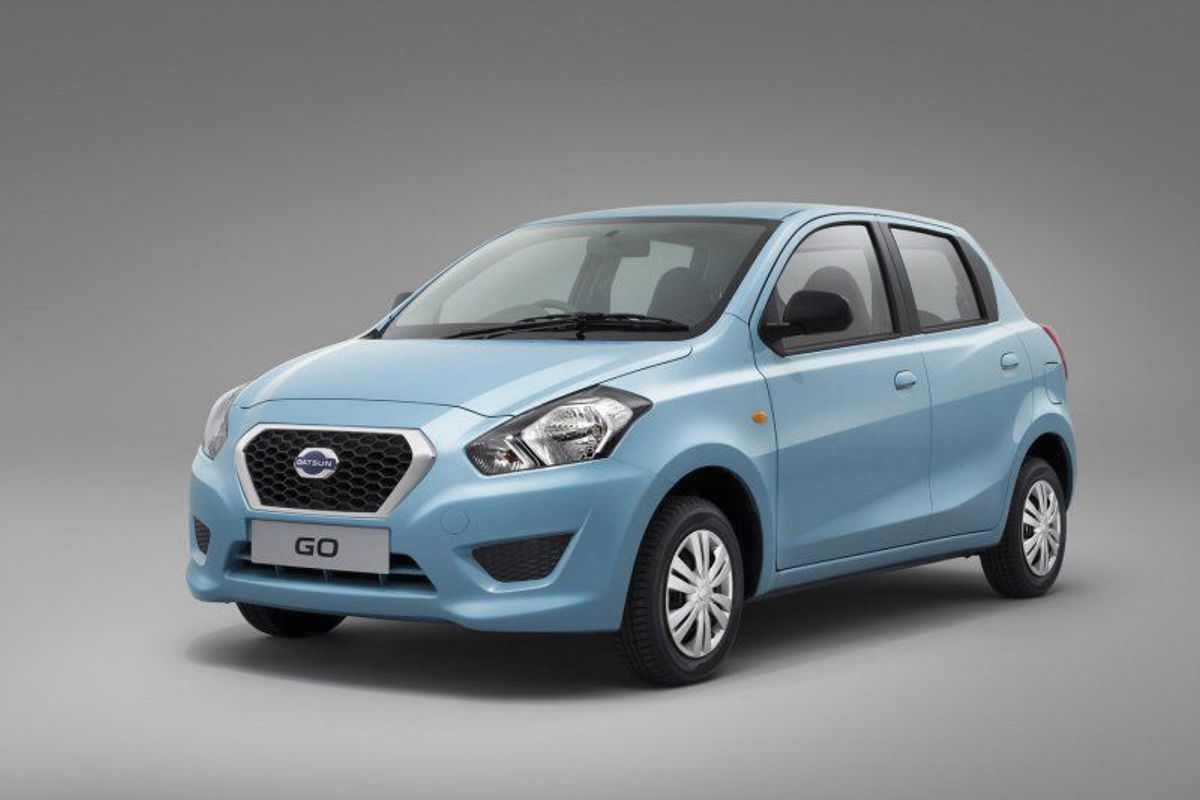
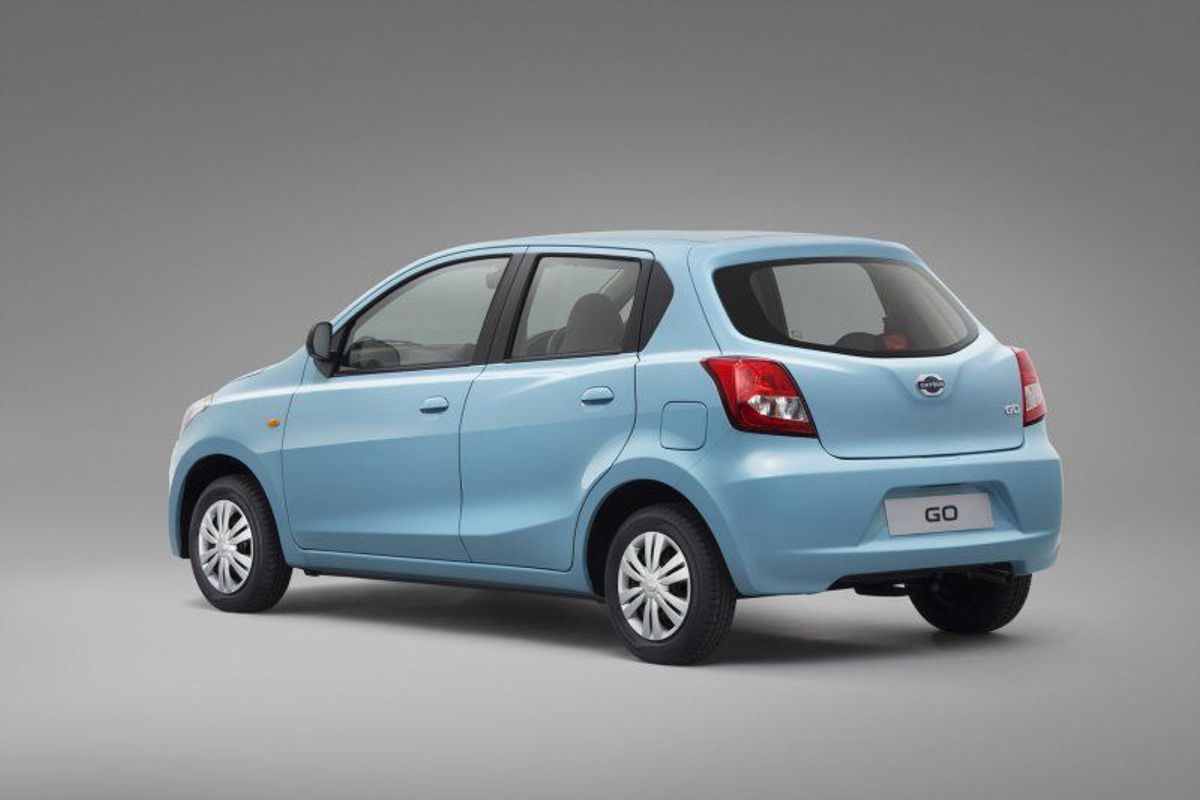
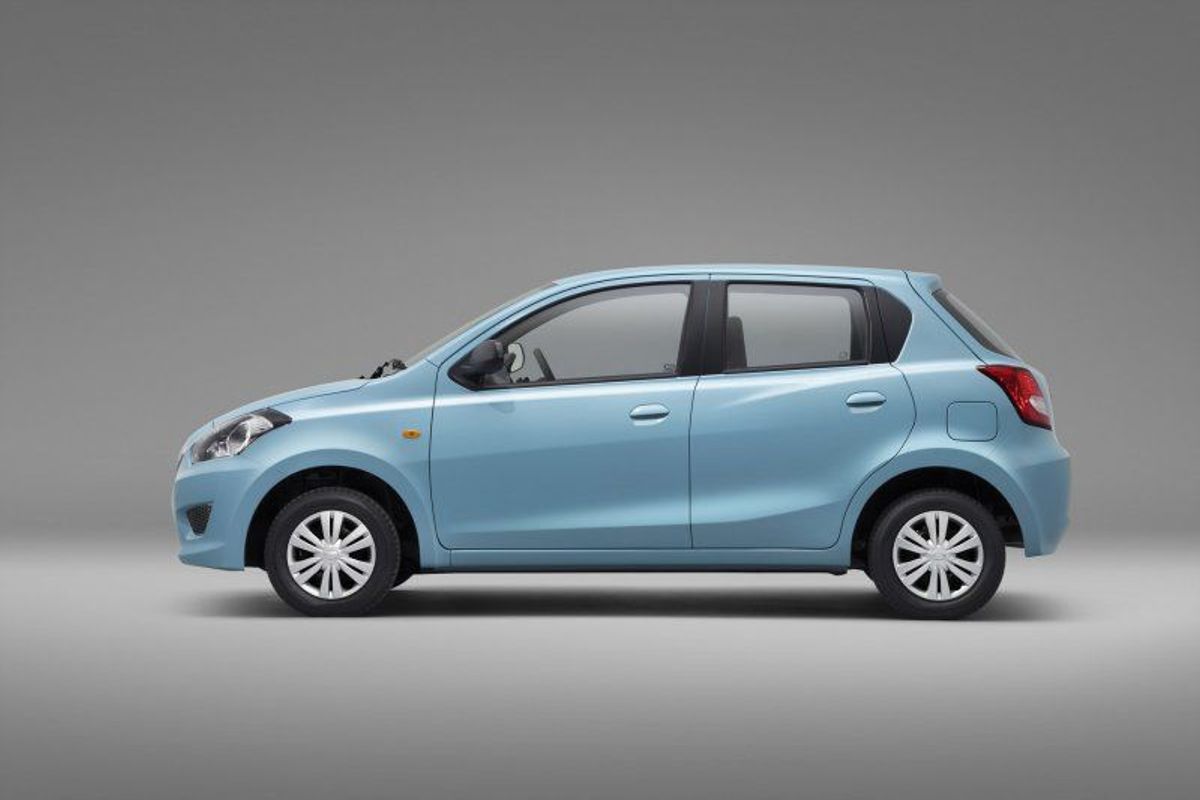
Datsun will also showcase the GO and GO+ as well as two accessorized versions of the GO. The brand confirmed the GO will be the first of many models launched in South Africa which can be expected sometime this year.

The return of the Datsun brand follows a decision made in 2010 to re-introduce the brand as part of the company’s ambitious Nissan Power 88 mid-term plan to achieve 8% of the global market share and operating profit by 2016.

The Delhi Auto Expo kicks off on February 5th, more details on the Datsun Concept Car will be released then. Cars South Africa will be attending the Delhi Auto Expo and will be bringing you exclusive coverage from the show.