At Cars.co.za, we love our website so much that we change it regularly based on the feedback from our 4 million monthly users and 1 800+ dealers. Great design means more viewers to your cars and more leads.
Here’s a quick summary of recent improvements we’ve made to our site to improve its user experience:
Consumer Login
A step towards personalising your vehicle search based on your preferences. Users can now see recently viewed vehicles, create their wishlists, see all the enquiries they’ve submitted and save their searches.
Quick Search
A new, search engine-like feature to help users find vehicles faster and more efficiently.
Search by Monthly Payments
This search option (as shown above) allows potential buyers to filter vehicles based on estimated monthly payments, making it easier for them to find options that fit their budget.
Enhanced Vehicle Images
We’ve increased the size of vehicle images to showcase the details of our listings better.
Whatsapp the Dealer
This feature allows consumers to contact you directly via WhatsApp, streamlining communication and increasing lead conversion rates.
Featured listings
We now offer Featured Listings to give your vehicles more visibility on our platform. Apart from this more prominent placement, these also appear on the homepage of desktop-based users.
Vehicle Variant Database Update
Our comprehensive review ensures greater accuracy and cleaner naming conventions, helping you present your inventory in the best possible light.
Make your listings pop!
Always remember that your listings are your own piece of real estate on our site.
The quality of the images you load and the quality of the description of the vehicle that you provide – these are the things that you control on our site and there is nothing that is more important than these things in the customer journey to providing a lead.
Driving this Festive Season? Here’s What You Need to Know
The 2024 festive season is underway and many South Africans will still be travelling to destinations across Mzansi. Here’s some important information to be aware of before you take to the road!
The Christmas holiday season is upon us and many holidaymakers will be heading out onto South African roads to destinations around the country for rest and relaxation.
More so, traffic volumes on all major routes are also expected to increase over this period and as a road user, it’s your responsibility to ensure that you do what is necessary to get you and your family to your destination safely.
Busy holiday periods are a notoriously dangerous time to be on the road and every year, hundreds and thousands of lives are lost on our roads. With planning and preparation, you needn’t become a statistic…
To help you prepare for your trip, we have compiled a list of holiday tips for you to consider before you depart, along with the necessary emergency numbers should you need them.
Things to do before leaving for holiday
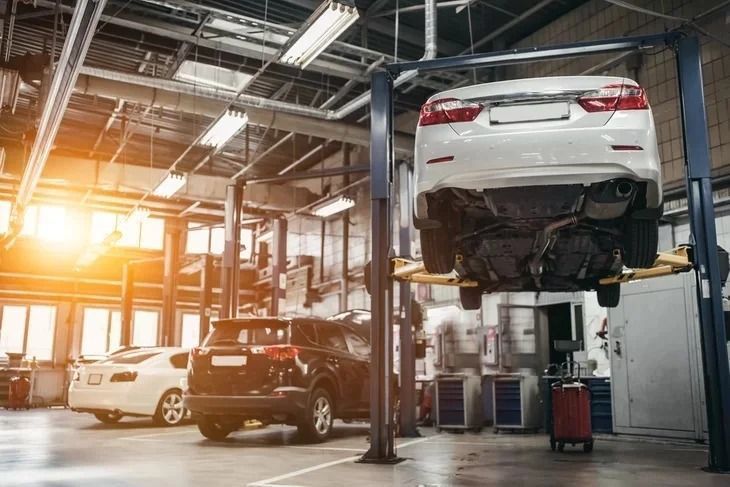
Make sure your car is in full working order before you depart
Check that your brakes, fluid levels and all your lights and indicators are working properly. This is particularly important for older used cars.
Be sure that you have a spare tyre as well as a wheel spanner and car jack in case you need to change a tyre.
Check that all your tyres, including the spare, are inflated correctly and have sufficient tread.
Be sure that all seat-belts and baby-seats are in working order and the correct size.
Have your car serviced if necessary.
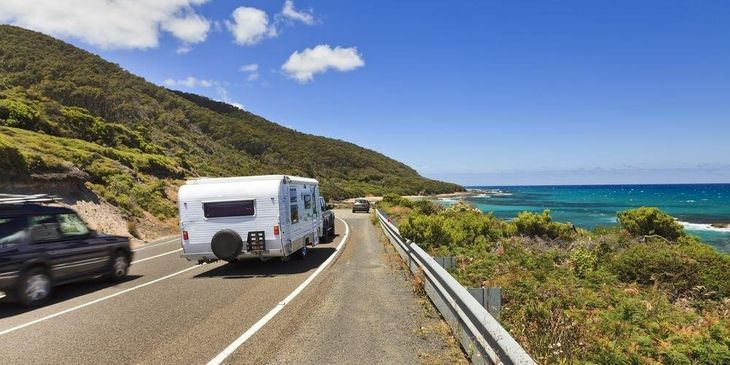
If you are towing a trailer or caravan
Ensure the rearview mirrors on your car are properly adjusted.
Check the tyre pressure of the trailer/caravan’s tyres.
Check that the lights and indicators of the trailer/caravan are working correctly.
Ensure the towbar and the towing equipment is secure.
Plan your route beforehand
Be sure you know exactly where you are going and how to get there. Getting lost can be very dangerous, as well as time-consuming. Use the website Google maps (maps.google.co.za), or conventional maps to check and plan your route.
Make sure you have the necessary cash available for any toll roads and fuel.
Let a friend or loved one know where you are going, what route you are taking and what your estimated time of arrival will be. Also, let your family know when you have arrived at your destination safely.
Plan your stops carefully and book accommodation in advance if required. Getting accommodation en route can be difficult during the peak holiday season.
Check the weather report before you embark on your journey (www.weathersa.co.za).
Take note of potential roadworks along your route and plan accordingly.
2-litre bottle of water (for emergency drinking, or to be used for the car if necessary)
Hand sanitiser
First aid kit
Motor oil
Food (padkos)
A fully-charged cell phone
Cell phone car charger
Traditional map, or GPS navigation system, or both
Emergency triangle and a flashlight
Get your documents in order
Make sure your driver’s license has not expired and that your vehicle license disc is still valid.
If you have an AA membership, make sure it has been renewed.
Check your car insurance policy and be aware of exactly what is covered, what emergency services they provide and what their emergency numbers are.
If you are crossing any borders, make sure your passport or other required documents are up to date and that you have them with you.
Things to consider while on the road
General driving rules
KEEP LEFT, PASS RIGHT.
Do not overload your vehicle.
Don’t drink and drive.
Drive with your headlights on, even in the day.
Obey the speed limit.
Don’t use your cellphone while driving. Always use a hands-free kit or connect your phone via Bluetooth.
Avoid distracted driving including eating while driving etc.
Every person in the car must be wearing a seatbelt.
Avoid fatigue while driving
Take breaks often or every 200 km.
If you are feeling tired, rather find a place to rest and do the trip in multiple phases.
The effects of caffeine and other stimulants used to keep you awake are only temporary. People often feel more tired once the initial effects wear off. Use such stimulants carefully, and remember they are not a substitute for quality rest.
Navigation devices and applications
There are many GPS Navigation systems available to keep you on the right track during your trip.
These navigation systems can also point out places of interest, restaurants along the way and places to rest.
If you have a smartphone, download the Trip Advisor app for travel-related information.
Useful South African emergency numbers
Emergencies
10111
Ambulance
10177
The AA
0861 000 234
National 24-hour emergency
112
Crime Stop
086 001 0111
The Cars.co.za team wishes you a safe and wonderful festive season. Please drive safely and take care on the roads.
See you in 2025!
Pricing! Toyota Land Cruiser 70 Series 2.8 GD-6 to gain manual ‘box
Scoop! Toyota SA Motors will soon add a manual-gearbox version of the 2.8-litre GD-6 4-cylinder powertrain to its Land Cruiser 70 Series line-up. Here’s what you’ll pay…
Back in February 2024, Toyota South Africa Motors updated its long-running Land Cruiser 70 Series range, adding the option of a 2.8-litre turbodiesel engine mated to a 6-speed automatic transmission. Now, Cars.co.za can confirm this 4-cylinder motor will soon become available locally with a 5-speed manual gearbox, too.
From what we understand, this manual-equipped powertrain will be offered in both Land Cruiser 79 single-cab form and Land Cruiser 76 station-wagon guise, expanding the local 70 Series portfolio to 13 derivatives. As an aside, the 4.5-litre V8 turbodiesel’s days appear to be numbered, with this motor no longer available locally in the 76-badged station wagon (but still offered in the Land Cruiser 79 single- and double-cab line-ups).
It seems that though the 2.8-litre (1GD-FTV) engine’s peak power remains 150 kW when specified with the 5-speed manual transmission, maximum torque falls to 450 Nm (from the auto version’s 500 Nm). Moreover, this peak twisting force is on tap over a narrower rev range: between 2 400 and 3 000 rpm in the case of the manual compared to broader bookends of 1 600 and 2 800 rpm for the auto.
So, where will these 2 new 4-pot manual derivatives fit it? Well, according to our information, the Land Cruiser 79 2.8GD-6 5MT single cab will be priced at R887 000, which will see it slot in above the likewise manual-equipped 4.0-litre V6 (R765 500) and 4.2-litre straight-6 (R829 000).
For the record, that represents a saving of R30 100 compared with the Land Cruiser 79 2.8GD-6 6AT single cab (R917 100). The Land Cruiser 79 4.5D-4D V8 LX 5MT single cab (R956 200), meanwhile, looks set to remain the flagship version of the 2-door 70 Series for the time being. Interestingly, the new gearbox option will not be offered (initially, at least) in the double-cab and “Troopy” body styles.
Meanwhile, it’s our understanding that the Land Cruiser 76 2.8GD-6 LX 5MT will be priced from R969 800, likewise making it R30 100 more affordable than the Land Cruiser 76 2.8GD-6 LX 6AT (R999 900). The Land Cruiser 76 4.5D-4D V8 LX 5MT (which had been priced at R1 076 800) is sadly no more, while the Land Cruiser 76 2.8GD-6 VX 6AT (R1 091 400) will ostensibly continue unchanged.
It’s interesting that Toyota has opted for a 5-speed manual gearbox rather than the 6-speeder mated to the same 2.8 GD-6 engine in the Hilux. Still, according to information released by Toyota’s Australian division, the Land Cruiser 70 Series’ new manual cog-swapper is distinct from the version used on other engines in the line-up.
Indeed, the Japanese firm’s representatives Down Under say the transmission “offers unique gear ratios and strengthened components to suit the usage of the Land Cruiser 70 Series”, adding that it was “designed to make the most of the 4-cylinder engine’s higher torque output, with shorter 1st, 2nd and 3rd gears to aid start-off performance, and a longer 5th gear to help improve fuel economy and reduce engine noise when cruising at highway speeds”.
The fresh powertrain option furthermore adopts a new flywheel compatible with a 12-inch clutch, providing what Toyota Australia describes as “excellent clutch-slip resistance”, while a triple synchronisation mechanism has been added for 1st gear to “enhance shifting operability”. The new 3-pedal derivatives also gain a dust seal for the rear-end plate to “prevent ingress of foreign matter” to the release bearing.
How much does Toyota’s Land Cruiser 70 Series cost in SA?
Land Cruiser 79 single cab:
Toyota Land Cruiser 79 4.0 V6 5MT single cab – R765 500
Toyota Land Cruiser 79 4.2D 5MT single cab – R829 000
Toyota Land Cruiser 79 2.8GD-6 5MT single cab – R887 000
Toyota Land Cruiser 79 2.8GD-6 6AT single cab – R917 100
Toyota Land Cruiser 79 4.5D-4D V8 LX 5MT single cab– R956 200
Land Cruiser 79 double cab:
Toyota Land Cruiser 79 4.0 V6 5MT double cab – R864 600
Toyota Land Cruiser 79 4.2D 5MT double cab – R920 800
Toyota Land Cruiser 79 2.8GD-6 6AT double cab – R1 009 000
Toyota Land Cruiser 79 4.5D-4D V8 LX 5MT double cab– R1 039 200
Land Cruiser 78 Troopy:
Toyota Land Cruiser 78 4.2D 5MT – R900 100
Land Cruiser 76 station wagon:
Toyota Land Cruiser 76 2.8GD-6 LX 5MT – R969 800
Toyota Land Cruiser 76 2.8GD-6 LX 6AT – R999 900
Toyota Land Cruiser 76 2.8GD-6 VX 6AT – R1 091 400
The prices above include Toyota’s 3-year/100 000 km warranty, while a service plan is optional (with intervals of 5 000 km in the case of the 4.2-litre motor and 10 000 km for all other engines).
WhatsApp isn’t just popular; it’s a national obsession. Do you have WhatsApp on your phone? Do you know anyone who doesn’t? Consider how ingrained WhatsApp has become in our daily lives.
In 2025, your customers want to “chat”. We do not mean that they want to pick up the phone and talk about the weather – they want to use WhatsApp to communicate.
Increasingly your customers do not want to answer phone calls as they seek to avoid telemarketers. Cars.co.za tracks how many of our users’ calls are answered by dealers. Sometimes as many as 25% of calls go unanswered.
WhatsApp allows your customer to read messages when it is convenient for them and you can reply when it is convenient for you. It is more powerful at creating real customer connections than the telephone. You can share media such as pictures and locations. It is trusted and ad-free.
Connect instantly over WhatsApp with the Cars.co.za WhatsApp service. Our experience shows that this service brings 10% more leads and half our dealers are already on board. Get chatting today.
Looking to take your dealership to the next level? Get ahead of the competition with Cars.co.za Featured Listings, so that your vehicles will be seen first by thousands of potential buyers on our platform.
Be where the action is. Our Featured Listings give your vehicles prime placement in search results, doubling your exposure and increasing your chances of making more sales. Secure your spot today and watch the leads roll in!
Ready to get Featured?
If so, please email us at [email protected] or call 011 450 2450. Don’t miss out on this limited-time opportunity to make your dealership stand out and increase your sales.
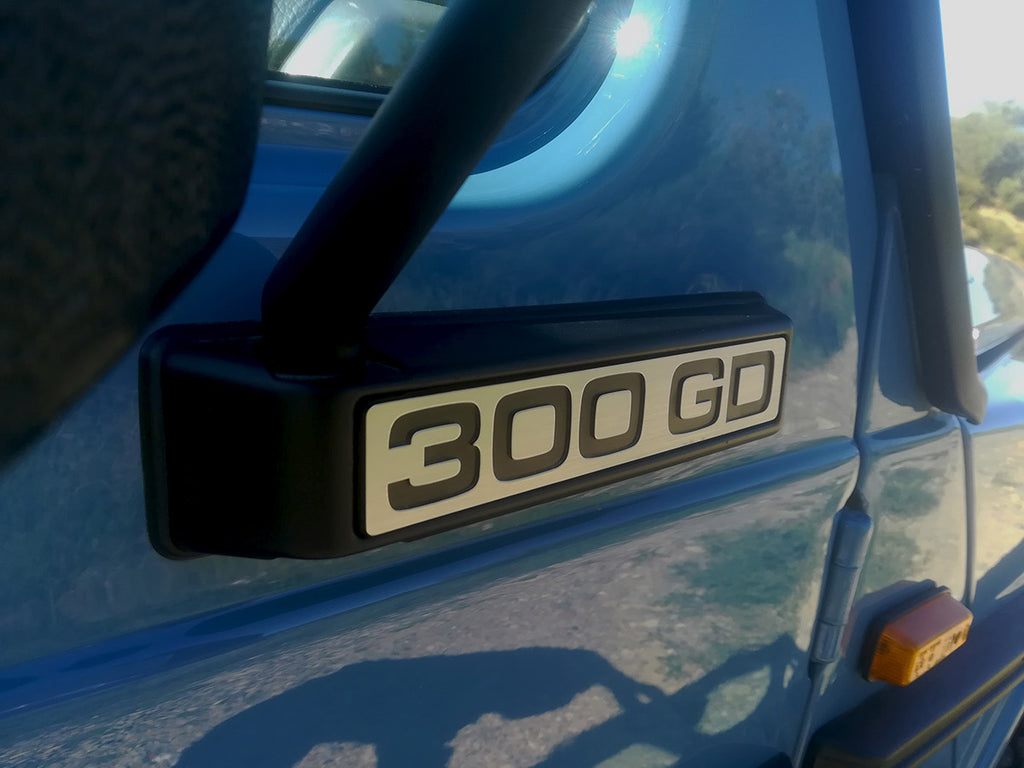
Mercedes-Benz 300 GD Cabriolet: Classic 4×4 Drive
The Mercedes-Benz 300 GD Cabriolet is surely one of the coolest Geländewagens ever built. We take a stunning example for a canter in the European countryside.
There is always excitement in anticipation of a launch event, but ahead of the unveiling of the W463-series G-Class (previously known as the Geländewagen) in 2018, I was particularly enthused. The W463 was an entirely new car from the ground up, and thankfully turbodiesel and AMG variants remained part of the product mix. I was wondering whether it would retain enough of its predecessor’s appeal.
However, there was another reason why I was looking forward to the event. With so much heritage, Mercedes-Benz is renowned for wheeling out suitable classic vehicles during launches and, on occasion, it will make them available for a drive. I was hoping this would be the case with the G-Class as well…
I was in luck. Even though the focus of the launch was obviously on the new vehicle and experiencing it in every possible way while having extended chats with the knowledgeable engineers present, I grabbed the keys to this early 300 GD Cabriolet (W460) and headed off into the countryside for a short drive.
Specifications:
Model: Mercedes-Benz 300 GD Cabriolet 4×4
Engine: 3.0-litre, 5-cylinder, diesel
Power: 66 kW at 4 400 rpm
Torque: 172 Nm at 2 400 rpm
Transmission: 4-speed manual
Weight: 1 765 kg
0-100 km/h: N/A
Top Speed: 127 kph
Production years: 1979–1991
Behind the wheel
Having never experienced a classic Geländewagen, I told myself not to expect a lot, but at the same time, I willed it to be a truly impressive and memorable off-roader, despite it being almost 40 years old. We all love the legendary boxy design – it is, after all, one of the Geländewagen’s trademarks.
The fact that there is no roof in this instance further enhances the driving experience. As you shift (rather quickly) through the manual gearbox – with a fairly slick shift action – you realise that at around 100 to 110 kph there is not much more on offer from the 3.0-litre diesel engine.
That doesn’t matter though, as you have a slight breeze coming through the cabin and the sun bathing your shoulders, face and arms. In truth, you don’t feel the need at any time to drive any faster.
The chequered seat material (with 3 seats in the 2nd row), iconic steel wheels and large, full-size spare bolted to the tailgate are features that contribute to the classic status these 4x4s command today.
Being a Mercedes-Benz Museum car, the 300 GD Cabriolet was in near-perfect condition, front to rear. The smooth running of the 5-cylinder engine, the condition of the cabin and the exterior of the car all underline the meticulous approach the Museum takes with its vehicles.
The steering wheel has been perfectly re-upholstered, but otherwise, the overall condition only serves to prove that the 66 811 km odo reading must be this Geländewagen’s true mileage.
Casting my gaze over the dials reveals a clear, simple analogue setup and, should you want to venture seriously off-road, the front and rear diff locks can be activated by 2 buttons right of the speedometer.
I park the 300 GD on an incline to have a better look at this compact 4×4 cabriolet from a distance. Its design and concept will never age, will it? The fact that you can have such a capable 4×4 and still experience the basics of a cabriolet is truly exceptional.
On my drive back, I enjoyed looking through the upright windscreen and seeing those boxy indicator lights mounted on the far corners of the front fenders – as is still the case with today’s G-Class.
Summary
The 300 GD Cabriolet’s driving experience and design is timeless and this car’s classic status level should be considered the same as its 2- and 4-door siblings, if not even more so.
Needless to say, that evening I browsed the European classified websites in search of a Geländewagen Cabriolet – a true classic off-roader.
The zero-cost trick Toyota is missing with Fortuner
The 3rd-row seats in SA’s top-selling Adventure SUV – the Toyota Fortuner – are for occasional use only and the Japanese brand is hell-bent on retaining their jump-seat configuration, but you CAN remove them to increase luggage or utility space…
Watch Ciro De Siena’s video review of the 2023 Toyota Fortuner:
Therein I argued that in such a model (it could be a hatchback or crossover, a pseudo-van or a ladder-frame chassis SUV) the absence of sufficiently deep footwells for the 3rd row (because it’s located above the rear axle) rendered the vehicle’s lattermost seats near-useless through the inability to provide notable leg- and knee room. And that’s not to mention the impracticality of the inelegant ingress/egress.
Apart from this fundamentally compromised approach to transporting 3rd-row passengers, the mere presence of an additional row of seats (when it’s in use – or not) primarily only serves to deprive so-equipped vehicles of practicality-defining utility space. When their services are not required, pews 6 and 7 still have to be stowed somewhere, there’s no getting around that. So where do they land up?
In most Adventure SUVs, such as the Ford Everest, the 3rd row of seats can fold into the load-bay floor.
In most cases that somewhere is the load-bay floor. Except in the Toyota Fortuner, that is.
Unlike its (also bakkie-based) Adventure SUV counterparts, such as the Ford Everest, Isuzu MU-X and the Mitsubishi Pajero Sport, come holiday time the venerable Toyota’s two 3rd-row jump seats turn into 2 immovable towers of hate for luggage-intensive adventurers – they literally stand in the way of loading sufficient quantities of camping gear, multiple cases of liquid amber goodness, half a dead ox and some tree stumps to roast it over – and presumably, other less essential items such as clothing and toiletries.
In the Toyota Fortuner, the rear jump seats are mounted on either side of the load bay, which reduces practicality.
How many buyers with 2 or 3 children will buy a Fortuner to transport more than 4 or 5 occupants daily – let alone over long distances? Not many, I believe and, the opportunity cost of restricted utility space throughout the year far exceeds the sporadic convenience of being able to transport an additional pair of ride-seekers, should the neighbours’ car conveniently break down minutes before the school bell rings.
Here’s what to do
Every day, YouTube’s servers grimace in anticipation of the latest batch of hack videos by DIY tinkerers – let alone the dreck compiled by crafty clickbaiters and fools with tools – that are about to be dumped on them in the desperate quest to get eyeballs. Of these, the marginally more useful ones are the vids that demonstrate how to remove the Fortuner’s 3rd-row seats, which can incidentally be DIYed with a number 14 socket, a same-sized ring spanner, a mild bout of swearing and no need for an engineering degree.
But here’s the thing. Why should owners have to remove those seats themselves when Toyota can simply do it at the factory or even make some money by charging the same for a 5-seat Fortuner as a 7-seater?
Heck, Toyota SA Motors could even guarantee its franchisees’ workshops a follow-up revenue stream because re-mounting those “jump seats” at a later stage would certainly require another pair of hands, or better yet, expert assistance.
Watch Ciro De Siena’s video review of the 2034 Ford Everest:
Another slightly more laborious alternative would be to change the jump seats’ release mechanism to something a little more user-friendly that requires no tools. Perhaps Toyota will avail that functionality with the next-gen Fortuner model (or offer a 3rd row that folds into the floor) – we can only hope.
Respective vans and proper people carriers built by Toyota’s bakkie-arch rivals Ford and Volkswagen such as the Tourneo and Kombi/Caravelle line-up are equipped with floor-mounted removal mechanisms purposely designed for ease of use demanding little more than few pushes, pulls, tugs and wiggles. (Incidentally, only the Hyundai Staria’s 3rd row can be removed, though not without tools or first disconnecting its seatbelt sensor cables).
Watch Ciro De Siena’s video review of the 2023 Isuzu MU-X 1.9TD:
Changing the bolts that hold the Toyota Fortuner’s jump seats could realise a similar ease of use and more options around their utilisation: in place during Granny’s annual visit and out when it’s time to go and drop that busted washing machine off at the skip.
It’s a best-of-both-worlds solution that, owing to the jump seats’ absence when in disuse, would free up notably more loading capacity in the ageing Fortuner, turning its initial spacial setback into a supremely practical comeback against its newer, feng shui-friendly rivals.
These are the 1 147 vehicles government bought in Nov 2024
Which vehicles were most popular with SA’s government in November 2024? Let’s take a look at the passenger vehicles, bakkies, vans and trucks the state bought last month…
In November 2024, approximately 2.4% of the 48 585 new vehicles registered in South Africa were purchased by the government, according to Naamsa. So, which vehicles were most popular with the state last month?
Well, we’ve sorted through the local sales figures and identified the passenger vehicles, bakkies, vans and trucks bought by government in November. Note, of course, that the likes of the BMW Group and Mercedes-Benz don’t report detailed sales statistics, so these brands unfortunately can’t be included in this exercise.
Government purchased 143 units of the Hilux from Toyota SA Motors in November.
In total, 1 147 new vehicles were purchased by SA’s government last month, says Naamsa. Interestingly, 3 of the top 4 vehicles most popular with government buyers in November were bakkies. Yes, the state procured as many as 352 units of the Struandale-built Isuzu D-Max, along with 143 units of the Prospecton-produced Toyota Hilux and 100 units of the Silverton-made Ford Ranger.
The Indian-sourced Toyota Starlet (188 units), though, was the 2nd most popular model with government last month, while the Toyota Corolla Quest – which, like the Hilux, is manufactured at the Japanese firm’s KwaZulu-Natal plant – completed the top 5 with 43 sales.
Toyota’s Indian-made Starlet was the 2nd most popular model with government buyers last month.
The only other models to reach double figures in terms of sales to the state in November were the Nissan Navara (23 units), Volkswagen Polo Sedan (22 units), Isuzu F-Series (21 units), Ford Transit (20 units) and Hino 300 (18 units).
Government bought 23 examples of the Rosslyn-made Nissan Navara last month.
Next came the Volkswagen Amarok (8 units) and Volkswagen Polo hatch (6 units), followed by the Audi Q5 (5 units), Hino 500 (4 units), Toyota Quantum Bus (4 units), Suzuki Ertiga (3 units), Toyota Corolla Cross (3 units), Toyota Quantum Panel Van (3 units), Toyota Urban Cruiser (3 units), Audi Q5 Sportback (2 units), Ford Everest (2 units), Haval Jolion (2 units), Nissan Magnite (2 units) and Toyota Rumion (2 units).
Finally, 1 example of each of the following nameplates was sold to government last month: Audi A3 Sedan, Audi Q3, GWM P-Series, Hino 700, Mahindra Pik Up, Toyota Corolla Sedan, Toyota Land Cruiser 300, Volkswagen Golf 8, Volkswagen Kombi, Volkswagen Taigo, Volkswagen T-Cross and Volkswagen Tiguan.
The state purchased a single example of the Volkswagen Tiguan in November.
Out of the 1 147 sales to government in November 2024, Toyota (including Hino) was the dominant brand with 463 units, though Isuzu (397 units) wasn’t far behind. Then came the Volkswagen Group (133 units, including Audi), Ford (122 units), Nissan (25 units), GWM (3 units), Suzuki (3 units) and Mahindra (1 unit).
Are you looking for the most affordable automatic double-cab bakkies available in South Africa? Take a look at this list…
The automatic trend is easily understood when you consider that many double-cab bakkies are used for leisure purposes and are often put to use in built-up urban areas where automatic transmissions make driving easier and less stressful.
More than this, towing and venturing into the wild with an automatic transmission is so much easier too, making it a sensible purchase for those with active lifestyles.
Considering the popularity of automatic double-cab bakkies, we have compiled a list of the 5 cheapest automatic double-cab bakkies currently on sale in South Africa.
Prices are accurate as of December 2025.
Here they are…
Cheapest Automatic Double-Cab Bakkies in South Africa
1. Mahindra Pik Up 2.2 CRDe S6 Automatic– From R434 999
In 2021, Mahindra added automatic derivatives to its Pik Up range and the Pik Up S6 4×2 6-speed automatic is the cheapest automatic double-cab bakkie in South Africa. More so, the Pik Up S6 Karoo 4×2 is priced from R466 349 while the Pik Up S6 4×4 automatic is priced from R479 449.
For those looking for higher feature specifications, Mahindra also offers a range of uniquely equipped special edition Pik Up’s such as the Pik Up Karoo Dusk, Karoo Dew, Karoo Dawn and Karoo Storm, all powered by Mahindra’s tried and tested 2.2-litre turbodiesel with 103 kW and 320 Nm of torque.
With a solid axle rear, 17-inch wheels, and all-terrain tyres, the Mahindra bakkie range is great for budget overlanding. For South Africans who want a rugged platform for exploring Namibia for a few weeks.
With 5 double-cab derivatives to choose from, the Tunland G7 2.0 TL is the cheapest automatic double-cab bakkie in the range with a starting price of R469 900. Under the bonnet is a 2.0-litre turbodiesel engine with 120 kW and 390 Nm and paired with a 8-speed automatic transmission.
All Tunland G7s have 210mm of ground clearance, which is average but enough to handle most potholes, ruts, and some rugged dirt roads. The base spec and most affordable Tunland G7 auto rolls on 265/65/17 tyres, which means lots of sidewall and air volume to absorb bumps and pothole strikes without damaging the wheels.
Foton’s Tunland G7 has a decent tow rating of 3000 kg. That’s more than some Chinese double-cab automatic rivals.
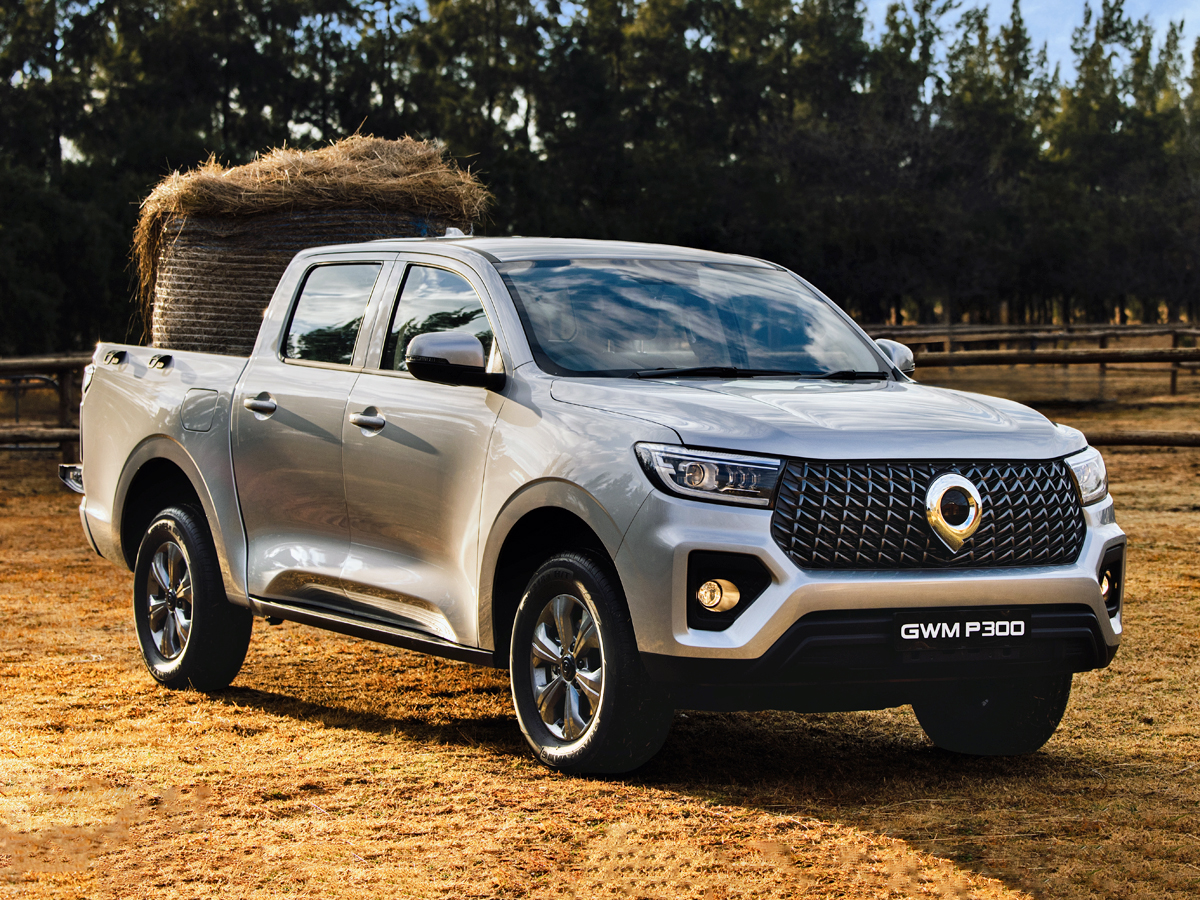
GWM’s P Series has proven to be quite popular in South Africa. These bakkies are some of the best selling models, proving the value that Chinese bakkies can bring to South African buyers who want tech and advanced automatic drivetrains. The bargain version of P Series is the P300 SX range, which targets commercial bakkie buyers, not lifestyle double-cab buyers.
The cheapest automatic double cab P300 SX double-cab auto is listed at R489 950. GWM’s P 300 SX range is powered by a 2.0-litre turbodiesel engine rated at 120 kW and 400 Nm, driving through an 8-speed automatic transmission.
GWM has upgraded its P-Series premium range to an in-house-developed 9-speed automatic, which offers an extra gear but doesn’t quite match the shift pattern smoothness of the proven ZF 8-speed auto. And that is the 8-speed auto used in the P300 SX.
Something to note about the P300 SX double-cab automatic 4×2 is that it has a low tow rating of only 2250 kg.
The LDV T60 range of double-cab bakkies officially arrived in South Africa in May 2024 with the local line-up comprising 10 derivatives at launch.
The T60 is powered by a 2.0-litre turbodiesel engine generating 120 kW and 375 Nm and is paired with a 6-speed automatic transmission.
LDV’s T60 has reasonable rough road capabilities, with 215mm of ground clearance. But the core needs for any bakkie are loadability and towing.
LDV’s most affordable automotive double-cab has a load capacity of 932 kg and is legally rated for two 3000 kg, which is good. But not class-leading, with most of the legacy double-cab automatic bakkies rated to tow a braked load of 3500 kg.
The T9 is powered by JAC’s 2.0-litre 4-cylinder turbodiesel engine that produces peak outputs of 125 kW and 410 Nm and is paired with a shift-by-wire 8-speed ZF automatic transmission.
A global benchmark for automatic transmission excellence, the ZF 8-speed auto is proven. And because it has been used on many luxury SUVs and bakkies in South Africa for more than a decade (Amarok being an example), there’s a lot of aftermarket service experience with the ZF 8-speed.
The T9 doesn’t have an ultra-rugged leaf-sprung rear axle. It uses a semi-independent multi-link rear suspension configuration, which enhances ride quality. But it does sag the rear of the T9 a lot, when fully loaded. Tow capacity is up with class leaders from Ranger and Hilux, at 3500 kg.
Our contributor recently returned from a trip to China with MG, which will return to South Africa next year, where he found the writing very much on the wall – a red wall.
Wait no, not a wall – a wave, a huge crushing red tide full of container ships containing an unrelenting, unapologetic stream of automobiles, each one an attractive improvement on the one that precedes it.
A “ro-ro” (roll-on/roll-off) ship named SAIC Anji Phoenix made its maiden voyage in 2023.
We were recently invited to Zhengzhou, China to look under the bonnet of SAIC Motor’s MG factory. Yes, THAT British brand has made the move from Mr Morris’ Garage to the Chinese mainland and is now receiving its latest lease on life thanks in part to the Chinese government.
You see, SAIC (formerly known as Shanghai Automotive Industry Corporation), is state-owned. In fact, it’s the largest of 4 state-owned vehicle manufacturers in China and enjoys 2 prolific joint ventures with Volkswagen and General Motors respectively. As a result, the scale at which it operates is mega.
On that note, the MG products (still to be disclosed, but sourced from China) we got to sample during the trip, were unveiled to us at a SAIC VW proving ground. Think world-class, high-end test facility – the sort of place where if you had a garden chair and a zoom lens you could feed the entire auto world’s desire for spy shots for the next year or so and make a decent living off your snaps.
Except, this was a highly secure venue and all our photographic equipment including our smartphones) was commandeered for the afternoon. Sorry, dear scrollers, you’ll have to read my description carefully.
This “officious confiscation” wasn’t an unusual experience, especially in the East… many a trip to Japan and South Korea has gone this exact way. If anything, the proving ground was actually quite a liberating venue; it allowed us to legally venture north of South Africa’s highway speeds, before scything through a long left-hander, and ultimately descending into a festival of chicanes and articulating surfaces.
This was a huge improvement over some “test tracks” I’ve experienced in the past, which were little more than bollard-strewn parking lots. Add to that the high-end, robotised manufacturing plant churning out thousands of MGs – each hybridised, electrified or fossil-powered (pick your poison) and you get a clearer understanding of the fierce intent Chinese manufacturers have. Not to mention the sheer scale.
MG recently launched its new HS medium SUV in the Australian market.
We’re living in an era of the relatively short lifespan of the four-wheeled vehicle where, simultaneously, the Chinese government has invested in (and incentivised) its automotive manufacturers to build safe, contemporary vehicles that can proliferate into the world market, and European governments are penalising their very own manufacturers for not being sufficiently environmentally responsible.
The law of averages in China’s favour
Underpinning this is the realisation that there are more collaborative ventures between China and the Western marques than ever before, each one bringing China closer and closer to dominance. What you’re seeing here is the law of averages working considerable favour to China.
The outgoing MG ZS compact family car is offered in ICE and EV guises Down Under...
At some point during the melee that is a typical trip to Shanghai, I had time by myself to sit still and look around. Sipping my coconut milk iced latte (a staple amongst the locals), I was able to survey all 6 lanes of a nearby highway. It was teeming with traffic foreign to my eye.
As a keen car enthusiast, it pains me to admit that out of every 10 cars, I recognised perhaps 2 or 3 models and, even then, it was usually one of Elon Musk’s cars (a Tesla, just in case you possibly didn’t know). The Chinese have truly embraced electrification as a source of mobility. And not just in Shanghai but also in Zhengzhou, which perhaps not too coincidentally, is also home to the iPhone factory.
The new-gen MG ZS is slightly bigger than its predecessor and was launched in hybrid guise in Australia.
But for the most part, the cars occupying all those lanes were locally built. So, sure: Havals and Cherys, Omodas and GWMs, but also an array of badges you wouldn’t recognise. Even familiar Western badges such as Chevy and Buick are the products of joint ventures, but ultimately Chinese in ways that matter.
The Chinese nation is fiercely patriotic when it comes to their whips, and why not? The cars are generally good, and can now challenge the same European and American cars that would at one point have been on a mood board somewhere in the rapidly growing Chinese brands’ respective styling departments.
This is the interior of the new-gen MG3, the Chinese brand’s light hatchback.
And yet, once again, it’s the sheer scale of things that bend your mind here. In a city where the skyscrapers reach for the stratosphere, so does the ambition on display. It’s the numbers that ultimately got me. Millions of cars – in the factories and on the road – destination: everywhere.
As a motoring journalist, my ability to craft an opinion on why you should or shouldn’t buy a Chinese car pales in comparison to what feels like a burst river bank, a deluge of metal that will make its way to showrooms in Mzansi, no matter what. It doesn’t matter what I write.
Will the new Cyberster come to South Africa? It’s certainly a halo model for MG.
But, there’s some good news. I’ve littered this column with it, but let me reiterate: Chinese cars are now, for the most part, good. Some are really good and a few are great. With MG, which will return to South Africa with a clutch of models in 2025, I’m pleased to report it’s shaping up to be more of the latter.