2024 Ford Ranger vs VW Amarok Video – Which one should you buy?
Ford Ranger or Volkswagen Amarok? It’s a question many new double-cab bakkie buyers are faced with. In this video, Ciro De Siena takes a closer look at both cars to help you in your decision-making process. Watch the video!
In the world of modern motoring, a model life of 10 years is an eternity. The Volkswagen Amarok arrived on the global scene over ten years ago and while it was initially derided for its small capacity 2.0-litre engine, over time it garnered respect and proved itself to be the real deal; a proper pick-up/bakkie that is now quite sought after on the used car market in South Africa.
However, with the pivot to electric vehicles draining VW’s R&D budgets, Volkswagen needed some help with the next-generation Amarok if they were to keep the nameplate alive.
And so they turned to Ford, and now the global market has these twin bakkies to choose from, as under the skin the Amarok is identical to the Ford Ranger, employing the chassis and entire drivetrain from the Ranger. Interestingly, both cars are proudly South African, the Ford Ranger is built in the Ford Silverton plant outside Pretoria, which is the only place in the world where the new Amarok is manufactured.
In this video, the result of our team of journalists putting together a massive 6-bakkie shoot-out in 2023, we compare the 2.0 Amarok Style variant to the Ford Ranger XLT. While the Amarok does feature a bit more creature comforts, the reality is that it is over R100,000 more expensive than the Ranger, at least at list price.
So, which one should you buy? We hope this video helps, and we’d love to hear your thoughts in the comments. See you there!
Mazda CX-5 Range To Be Trimmed: No More Manual, Diesel or AWD
South Africa’s popular Mazda CX-5 range will soon be reduced to a trio of FWD derivatives, with both the 2.2-litre turbodiesel engine and 2.5-litre petrol mill set to be axed, along with the manual gearbox…
The Mazda CX-5 range will soon no longer comprise 6 derivatives in South Africa, with the Japanese firm’s local division set to cut the line-up in half, according to Cars.co.za sources. As a reminder, the Mazda3 range was handed a similar treatment in August 2023.
So, the soon-to-be-rationalised CX-5 portfolio – which will also likely gain a smattering of minor updates – will thus number just 3 variants, each powered by the familiar naturally aspirated 2.0-litre, 4-cylinder petrol engine. This 121 kW/213 Nm motor will drive the front wheels via a 6-speed automatic transmission as standard.
The updated Mazda CX-5 range will be auto only and FWD only.
Yes, that means both the CX-5 2.5 AWD Individual (143 kW/258 Nm) and the CX-5 2.2DE AWD Akera (140 kW/450 Nm) – which were positioned at the top of the local range – will soon be put out to pasture. In addition, our information suggests the entry-level CX-5 2.0 Active with its 6-speed manual gearbox will be discontinued, too.
At the same time, the entry point to new CX-5 ownership will rise from outgoing manual model’s R524 600 to R551 000 for the updated CX-5 2.0 Active 6AT. Next up will be the CX-5 2.0 Dynamic 6AT (R586 500), with the CX-5 2.0 Carbon Edition 6AT set to graduate to the summit of the line-up at R664 800.
For the record, the soon-to-depart CX-5 2.5 AWD Individual is currently priced at R742 300, with the CX-5 2.2DE AWD Akera pegged at R778 700. While Mazda Southern Africa hasn’t yet revealed why these derivatives are on the chopping block, it’s worth noting their retirements will afford the CX-60 line-up with a little more breathing room (the CX-60 2.5 Dynamic starts at R739 800 and the CX-60 2.5 AWD Individual at R844 500, with the CX-60 3.3D AWD Takumi sitting at R1 049 200).
Expect a new Platinum Quartz paint colour to become available.
Still, it’s an interesting move considering the CX-5 was easily Mazda SA’s strongest seller in 2023, with a total of 1 369 units registered. The CX-3 was a distant 2nd on 765 units, followed by the Mazda2 (715 units), Mazda3 (251 units), CX-30 (242 units), CX-60 (220 units) and BT-50 (69 units). Of course, it’s worth keeping in mind the CX-60 hit the market only in the 2nd quarter of last year.
In the coming days or weeks, we suspect Mazda Southern Africa will release official information on the subtle updates made to the remaining CX-5 derivatives, as well as confirming the rationalisation of the range. Expect tweaks to the exterior paint colour palette (which will likely gain the new Platinum Quartz hue) and a few minor interior revisions (such as some infotainment upgrades, perhaps).
How much does the Mazda CX-5 cost in South Africa?
Mazda CX-5 2.0 Active 6AT – R551 000
Mazda CX-5 2.0 Dynamic 6AT – R586 500
Mazda CX-5 2.0 Carbon Edition 6AT – R664 800
A 3-year/unlimited kilometre warranty and a service plan of the same duration will likely again ship standard.
Ford has released fresh details on its new Ranger Tremor ahead of its imminent local launch, billing this latest derivative as a “more affordable” alternative to the Wildtrak X. Here’s how much you can expect to pay.
Ford Motor Company of Southern Africa recently confirmed it would further expand its burgeoning bakkie range with the launch of the new Ranger Tremor. Now the Blue Oval brand has released details and pricing for this off-road-ready double-cab derivative, which it bills as a “more affordable” alternative to the Wildtrak X.
That said, the new likewise Silverton-built Ranger Tremor scores all the “enhanced” off-road capabilities of the Wildtrak X, including a full-time 4-wheel-drive system, the so-called “Trail Turn Assist” feature (ostensibly allowing the bakkie to deal with tighter off-road turns) and the self-explanatory Pro Trailer Backup Assist with Trailer Reverse Guidance (which has since been rolled out to the Wildtrak X and Raptor, and will be standard on the upcoming Platinum, too).
The list of standard kit also includes a steel bash plate, steel underbody protection (for the engine, transfer case and fuel tank), 2 front-mounted tow hooks, cast-aluminium side steps and a tubular sports bar. The suspension system features Bilstein position-sensitive dampers along with a 24 mm increase in ground clearance and a 30 mm wider track.
As a reminder, the Ranger Tremor employs Ford’s familiar 2.0-litre, 4-cylinder bi-turbodiesel engine, which delivers 154 kW and 500 Nm to all 4 wheels via a 10-speed automatic transmission as standard. Disc brakes are fitted all round.
So, what else sets the Tremor apart from the XLT on which it’s based? Well, the special model gains a black honeycomb grille (equipped with the same auxiliary LEDs as the Wildtrak X), along with “Bolder Grey” exterior detailing for the areas such as the lower sections of the front bumper, the fender vents, side-mirror caps, exterior door handles, rear bumper and wheel-arch extensions.
The Tremor additionally boasts General Grabber AT3 all-terrain tyres (265/70 R17) with white lettering, wrapped round 17-inch “Asphalt Black” machine-faced alloy wheels. There’s also the requisite “Tremor” badge on the tailgate and fairly subtle “Tremor” decals on the flanks, along with black Ford logos, fore and aft (just like the Wildtrak X and Raptor).
Inside, you’ll find “water-resistant” black vinyl trim, along with with “Tremor” logos embroidered (in orange) on the seatbacks. Vinyl flooring replaces traditional carpets, while roof-mounted auxiliary switches are standard.
As with the Wildtrak X, the Tremor is equipped with the Off-road SYNC Screen featuring a 360-degree camera system, resulting in the ditching of the XLT’s 10.1-inch touchscreen in favour of the 12-inch version. Wireless charging is also standard, along with wireless Apple CarPlay and Android Auto.
The Ranger Tremor will be available in Conquer Grey exterior paint (a hue previously limited to the Raptor) as well as Agate Black, Carbonised Grey, Frozen White, Lucid Red, Blue Lightning and Iconic Silver (the latter replacing Moondust Silver in the Ranger colour palette).
How much does the new Ford Ranger Tremor cost in South Africa?
The price includes a 4-year/120 000 km warranty, a 4-year/unlimited km roadside assistance and a 5-year/unlimited km corrosion warranty. The recommended service interval is 15 000 km or annually, whichever occurs first.
As a reminder, Ford has unbundled its service plans but does optionally offer cover up to 8 years or 135 000 km.
Cars.co.za and Absa aim to reward finalist vehicles with sales
Cars.co.za and Absa expand marketplace for#CarsAwards finalist brands with consumer roadshow
It was recently announced that Cars.co.zaand Absa have partnered to take South Africa’s most authoritative automotive industry awards, the Cars.co.za Consumer Awards– often referred to as #CarsAwards – into a bold and innovative future. For the first time ever, a South African motoring awards programme will seek to actively promote and facilitate sales by taking all 39 finalist vehicles “to the people” with a first-of-its-kind Consumer Awards Roadshow.
The gala event on 29 February will announce the winners in the 13 product categories but will also be the kick-off for the new 4-day Consumer Awards Roadshow in Sandton City Mall from 29 February to 3 March. All 39 vehicles selected as finalists will go on display under one roof, giving over 50 000 visitors per day at the Mall the unique opportunity to inspect and test drive the country’s best cars for themselves. More importantly, dealers representing the finalist brands, and which are taking part in the activation, will be able to sell right there and then, too.
The finalists will be showcased at the mall immediately after the Awards ceremony.
“We’re incredibly excited to be working with Absa – as well as our dealer and OEM partners – to put together this incredible event,” says Amasi Mwela, Managing Director of Cars.co.za. “Our collaboration with Absa reinforces our dedication to providing consumers with a platform that is not just about making informed purchasing decisions but also about delivering a remarkable automotive experience. With this project we give consumers everything they need to make a decision, and connect dealers and consumers in a way never seen before.”
“At Absa we pride ourselves on being a bank that plays a supportive role across the breadth of the automotive industry, with our deep understanding of the sector’s opportunities, enabling us to serve beyond the financial transactions we facilitate,” says Charl Potgieter, Managing Executive: Absa Vehicle and Asset Finance. “We recognise the importance of fostering strong partnerships with like-minded stakeholders and we are thrilled to offer South Africans the Consumer Awards Roadshow, in partnership with Cars.co.za. Our approach is collaborative and this initiative is a key point of alignment between ourselves, innovators and leaders across the automotive value chain to drive positive change for consumers. Together, we can navigate the complexities of today’s market and pave the way for a more sustainable and prosperous future.”
Mall attendees will be able to See, Try and Buy all the vehicles at the mall event.
This Cars.co.za Consumer Awards Roadshow builds on a similar event Cars.co.za hosted at the Mall of Africa in November last year. Following 2 days of intensive testing by 20 respected judges at the Gerotek test facility in Gauteng, all 39 vehicles were driven into the Mall of Africa and put on display. “The success of the Mall of Africa activation laid the foundation of this new Awards Roadshow,” says Mwela. “The video footage shows how consumers appreciated the opportunity to inspect and, most importantly, compare cars at the Mall.”
“We invite new-car dealers, specifically those who represent the finalist brands, to contact us about participating in this unique project,” Mwela concludes. “It would be the perfect opportunity to offer special deals to further entice consumers into one of the finalist vehicles.”
Dealers can make contact with Cars.co.za about the Cars.co.za Consumer Awards Roadshow by emailing [email protected].
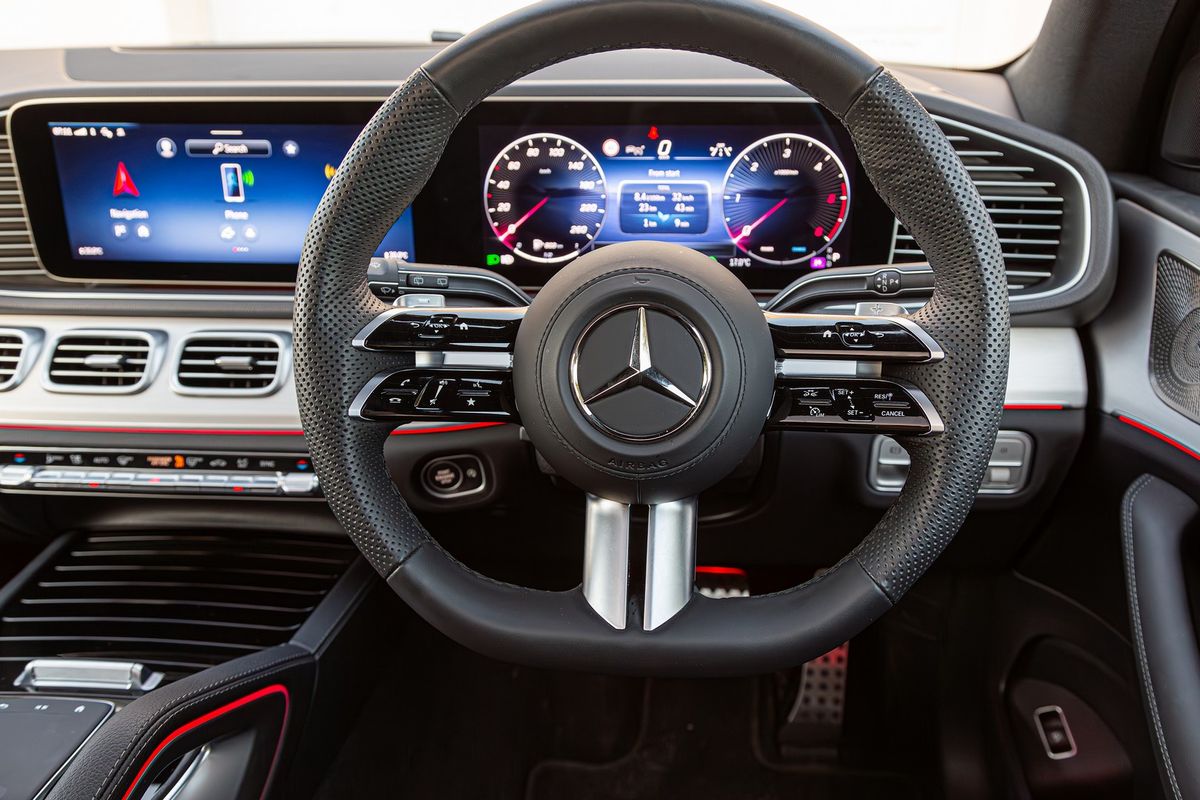
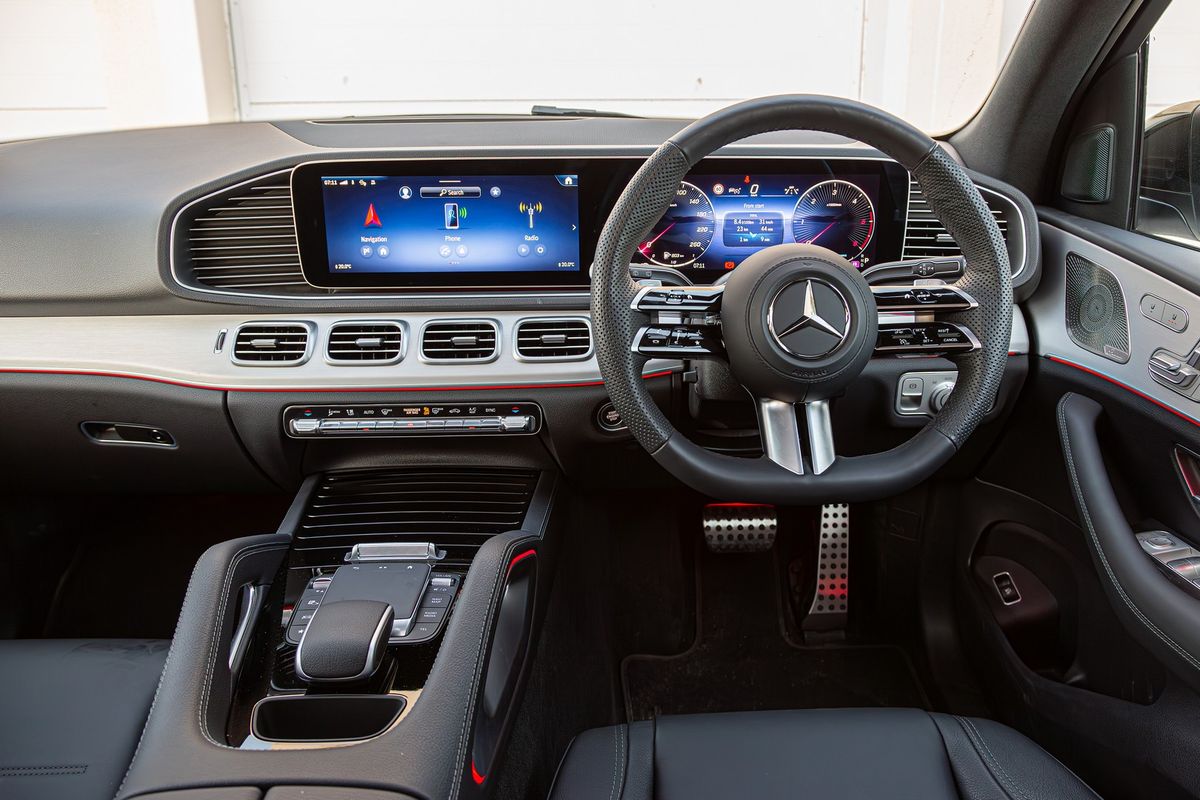
The facelifted Mercedes-Benz GLS range – including the mighty Mercedes-AMG GLS63 – is coming to South Africa this year. Here’s an early look at local pricing…
Judging by Mercedes-Benz SA’s configurator, the GLS400d will fall away, to be replaced by the GLS450d. The latter’s 3.0-litre straight-6 turbodiesel engine – which sends 270 kW and 750 Nm to all 4 wheels – features 48-volt mild-hybrid technology, which adds 15 kW and 200 Nm for brief periods.
In SA, the “standard” GLS will be offered in both 450d and 580 guise.
The GLS450d is priced from R2 175 787 (plus R90 900 should you desire the AMG Line trim), though note that this figure – like the ones below – excludes the cost of a maintenance plan, which the customer “shall be entitled to include in the purchase”, according to Mercedes-Benz SA’s website.
Next up is the GLS580, which kicks off at R2 731 574. This likewise all-wheel-drive derivative’s turbocharged 4.0-litre V8 petrol engine has had its peak outputs hiked from the pre-facelift model’s 360 kW and 700 Nm to 380 kW and 730 Nm. The 8-cylinder unit furthermore features a mild-hybrid system capable of adding 16 kW and 250 Nm for short bursts.
The Mercedes-AMG GLS63 retains its electrified V8 powertrain.
Finally, there’s the refreshed Mercedes-AMG GLS63, which is priced from R4 041 630. Affalterbach’s electrified 4.0-litre V8 again makes 450 kW and 850 Nm, with the integrated starter generator briefly adding 16 kW and 250 Nm. The 0-100 kph sprint is completed in a claimed 4.2 seconds, with top speed electronically limited to 280 kph.
Of course, various equipment packages as well as individual options are available for each of the 3 derivatives above. The Mercedes-AMG GLS63 can additionally be specified with the AMG Night Package for an extra R20 300.
The Mercedes-AMG GLS63 will hit 100 kph from standstill in a claimed 4.2 seconds.
As a reminder, the updated latest Mercedes‑Benz GLS scores a revised grille, along with what the Stuttgart-based firm terms a “visually more prominent” front bumper. Round back, you’ll find updated taillights, while the profile is defined by new light-alloy wheel designs.
Inside, there’s an updated version of the MBUX infotainment system, along with the latest-generation steering wheel (with touch controls on the spokes) and new trim colours.
How much does the facelifted Mercedes-Benz GLS cost in SA?
Mercedes-Benz GLS450d 4Matic – R2 175 787
Mercedes-Benz GLS580 4Matic – R2 731 574
Mercedes-AMG GLS63 4Matic+ – R4 041 630
According to the Mercedes-Benz SA configurator, the prices above include VAT and emissions tax, though exclude the cost of a maintenance plan which the customer “shall be entitled to include in the purchase”. According to duoporta.com, the inclusive prices are R2 321 550, R2 873 237 and R4 239 730, respectively.
The facelifted Mercedes-Maybach GLS600 is headed to South Africa, including in special “Night Series” guise. Here’s how much the latest version of Benz’s most luxurious SUV will cost you…
The facelifted Mercedes-Benz GLS range was revealed in April 2023 and is scheduled to arrive in South Africa later this year. But we’ve already discovered local pricing for the most luxurious version of all: the Mercedes-Maybach GLS600 4Matic.
According to Mercedes-Benz SA’s configurator, the refreshed GLS600 will be priced from R4 341 326 (note this figure excludes the cost of a maintenance plan, which the customer “shall be entitled to include in the purchase”. The inclusive price, according to duoporta.com, is R4 532 941). For the record, the outgoing pre-facelift version was last listed for R3 864 689 (including a motor plan).
The GLS600 specified with the new Night Series package.
In addition, the updated Mercedes-Maybach GLS600 will be available locally with a new “Night Series” package, at the cost of R568 000 (thus pushing the price to R4 909 326, excluding the motor plan). This brings a raft of exterior design elements in dark chrome with rose gold details, along with items like 23-inch 7-spoke light-alloy wheels and a string of upgrades to the already high-end cabin.
Further options for the GLS600 include the a 2-tone paint job (up to R380 000), the Manufaktur leather package (R277 100), various alloy wheel designs (up to R125 000), the “First-Class” rear compartment package (R65 000), a holder for champagne flutes (R41 500), a wood-and-leather finish for the steering wheel (R12 000) and an uprated Burmester 3D surround-sound system (R91 300).
A view from the rear quarters.
As a reminder, the GLS600 is powered by a twin-turbo 4.0-litre V8 petrol engine worth 410 kW and 730 Nm, while a 48-volt mild-hybrid system is capable of delivering an additional 16 kW and 250 Nm for brief periods. Drive is delivered to all 4 corners via Benz’s 9G-Tronic transmission. While the global press site lists a 0-100 kph time of 4.2 seconds, Mercedes-Benz SA has a figure of 4.9 seconds for the GLS600.
The Maybach-badged GLS600 benefits from the same sort of mid-cycle updates as the broader Mercedes-Benz GLS range, gaining items like a new lower grille with chrome surrounds, revised air intakes and fresh wheel designs. Inside, updates include new upholstery options and the latest steering-wheel design.
How much does the Mercedes-Maybach GLS600 cost in SA?
Mercedes-Maybach GLS600 4Matic – R4 341 326
Mercedes-Maybach GLS600 4Matic Night Series – R4 909 326
According to the Mercedes-Benz SA configurator, the prices above include VAT and emissions tax, though exclude the cost of a maintenance plan which the customer “shall be entitled to include in the purchase”.
2023/24 CarsAwards Finalists: Best Family Car in SA
Meet the 3 finalists in the Family Car category of the 2023/24 Cars.co.za Consumer Awards, sponsored by Absa. The winner of this #CarsAwards category will be announced on 29 February 2024.
The 2023/24 Cars.co.za Consumer Awards, sponsored by Absa is the 7th iteration of SA’s definitive consumer-driven automotive awards programme that aims to identify the best new vehicles on sale in Mzansi across 13 categories.
Judges first compiled a list of 65 semi-finalists – then trimmed it to 39 finalists. Following that, all #CarsAwards finalist vehicles were subjected to a rigorous 2-day test at Gerotek at the beginning of November 2023, after which they starred in the Cars.co.za Consumer Awards Roadshow at the Mall of Africa where, for the first time, the public could experience the cars – and meet the judges – in the flesh.
A medium crossover or SUV, which we’ve categorised under “family car” ever since the #CarsAwards programme began in 2015, must perform a wide variety of duties; it needs to be a practical all-rounder. The winner of this category should excel on the school run, but also be able to transport a family to a distant holiday location. In this category, interior flexibility, comfort and, of course, safety are paramount.
This category is guided by both eligibility factors and pillars of success.
Eligibility factors for this category include a list price between R600 000 and R800 000 at the time of semi-finalist voting (September 1, 2023). The following features must be standard: ABS and electronic stability control (ESC), aircon, a minimum of 6 airbags, split-folding rear seats, as well as a service plan.
Pillars of success for this category include powertrain flexibility, fuel economy, space and practicality, design and quality appeal, comfort and safety and in-car entertainment.
Family Cars: CarsAwards Finalists
Chery Tiggo 8 Pro Max 2.0TGDi 390 Executive
Chery recently enhanced the Tiggo 8 Pro Max, which was quite a compelling offering to begin with. The 2.0TGDi 390 Executive represents incredible value for money (considering it has a standard 7-year/90 000 km service plan) because, when it comes to features and comforts, it is comprehensively specced.
A 2.0-litre turbopetrol engine provides plenty of performance and it appears the Chinese carmaker has addressed some of the fuel-economy concerns. Will its keen price point and 3rd row of seats, the latter of which is the exception to the rule in this popular segment, give the Tiggo 8 Pro Max the edge?
The H6 is one of 2 models that have propelled Haval up SA’s new-vehicle sales charts. This is not a run-of-the-milll H6 derivative, however – it’s a self-charging petrol-electric hybrid. The 2.0-litre turbopetrol has been swopped for a 1.5-litre engine with an electric battery and motor. The result is a similar level of performance, but better fuel economy. Ultra Luxury trim includes a dazzling array of features and tech.
The 5th-gen Kia Sportage burst onto the scene with bold and futuristic good looks, but under its shapely sheet metal you’ll find a well-packaged family SUV. Initially offered with petrol engines only, the Sportage range was recently bolstered by the addition of a turbodiesel powerplant, which promises excellent fuel economy. The EX grade includes most of the convenience features expected of a mid-spec derivative.
The winners of the 2023/24 Cars.co.za Consumer Awards, sponsored by Absa (as well as the recipient of the prestigious Brand of the Year title) will be named on 29 February 2024.
Volkswagen Indaba 2024 gave the South African motoring media a preview into the products hitting our roads this year and some insights into the VW business locally.
Hosted at its Kariega assembly plant, the Volkswagen Indaba 2024 was a chance to put a finger on the pulse of all things Volkswagen, get a behind-the-scenes tour of the facility and of course, a chance to see some of the hot new metal set to be introduced to our market.
Before we get stuck into the hot new metal, VWSA will be re-branding to Volkswagen Group Africa, which gives you some idea of the strategy that will be kicking into high gear from 2024. With the European market gradually transitioning to electric vehicles, VGA has had to consider a frightening potential reality; there will be no market for petrol-powered Polo and Polo GTI exports.
Volkswagen Group Africa plant, Kariega, Eastern Cape
As a reminder, over 70% of the vehicles assembled here are destined for foreign markets and the loss of which will be devastating. Hence, the pivot into Africa. The factory contributes significantly to the Eastern Cape economy, with 3 900 direct jobs and around 20 000 jobs in the greater supply chain, and the Kariega facility is now the sole provider for the world’s Polos and Polo GTIs.
SA’s most popular passenger car, the Volkswagen Polo Vivo, will continue on. When asked about a facelift or upgrades, the answer was telling. “Why change a winning formula?”
The good news is that there’ll be a 3rd model joining local production. While it’s still extremely early in the product’s gestation (we don’t even have a name yet) and it will only be going into production in 2026/2027, we do know that it will be an A0-class SUV built on the MQB27 platform and powered by an internal combustion engine. There’s also a chance a small bakkie will be assembled on this platform too, so watch this space.
Volkswagen Indaba 2024 Product Highlights
If you’ve reached this point, thanks for reading! Volkswagen Group Africa has a considerable array of vehicles earmarked for local introduction. While all eyes were on the four vehicles that had been flown in for the event, Volkswagen confirmed that there will be a mild update to the Polo GTI and the Polo sedan will gain turbocharged TSI engines.
Volkswagen ID.4
The electric ID.4 is confirmed for our market. Initially it will be a test fleet with members of the motoring media behind the wheel. Final specifications and pricing structure is still to be confirmed.
The all-new Volkswagen Tiguan made an appearance and while we’re not completely sold on the overall design yet, there’s no denying the new lighting array is bold and striking. Expect to see this vehicle launched early in the 3rd quarter of 2024.
The most popular imported Volkswagen gets its first facelift and in this change, there have been upgrades to the cabin trim and the lighting clusters get enhanced. In showrooms towards the end of the 3rd quarter 2024.
The flagship Volkswagen luxury SUV has been updated and features numerous enhancements both inside and out. It will be hitting the SA market in the 2nd quarter of 2024.
New Audi RS6 Avant GT: Just 1 Unit for South Africa!
Meet the Audi RS6 Avant GT, an extreme new special edition of Ingolstadt’s high-performance wagon. So, is it coming to South Africa? Yes, but we’ll receive just a single unit…
The new Audi RS6 Avant GT has been revealed, sporting bold exterior styling, an upgraded cabin, adjustable coilover suspension and a revised rear differential.
The Ingolstadt-based firm’s local division has already confirmed that the GT-badged special edition is indeed destined for South Africa – though just a single example from the 660-unit production run has been set aside for our market. Keep your eyes open from the 2nd quarter of 2024, when this lone unit is due to make local landfall.
Billed as the “pinnacle of the model series”, the new RS6 Avant GT interestingly employs the same engine tune as the RS6 Avant Performance, which means its twin-turbo 4.0-litre V8 engine sends an unchanged 463 kW and 850 Nm to all 4 corners via an 8-speed automatic transmission.
However, thanks to some fettling from the clever folks at Audi Sport (including some neat weight savings), the claimed 0-100 kph time falls from 3.4 to 3.3 seconds, with 200 kph achieved in a stated 11.5 seconds. In addition, the GT’s top speed increases from that standard 250 kph (or optionally 280 kph) to a heady 305 kph.
So, what else set the RS6 Avant GT apart? Well, the limited-edition model ships standard with the RS ceramic brake system as well as new high-performance Continental Sport Contact 7 tyres (285/30 R22). Moreover, the sport differential sited on the rear axle has been “specially tuned” to place a greater focus on “agility and rear bias” in the angriest driving mode.
Meanwhile, the adjustable coilover suspension lowers the ride height by 10 mm (though buyers can alternatively order the RS sport suspension plus with dynamic ride control or the RS adaptive air suspension). Thanks to a higher spring rate, triple-adjustable dampers and stiffer stabilisers (30% fore and 80% aft), Audi promises the new coilover set-up reduces body roll.
Wondering about that bold exterior makeover? Well, Audi reckons the apprentice project RS6 GTO concept (which itself had the 1989 Audi 90 quattro IMSA GTO racer as its muse) from 2020 served as the inspiration. So, up front, you’ll find grille and air intakes finished in high-gloss black, along with vertical blades in the front apron, a new intake grille and a revised front splitter.
The bonnet and the fenders, meanwhile, have been fashioned from carbon fibre, while air outlets have been positioned behind the 22-inch alloy wheels. In profile, you’ll notice inserts in the side skirts, glossy carbon side-mirror caps and the aforementioned wheels in a model-specific 6-spoke design. Round back, there’s the requisite “RS6 GT” badging in black, along with a “functional” diffuser (with a vertically centred reflector) and a double wing. Interestingly, the roof rails have been entirely removed.
Buyers have the option to choose decals in 2 colours. The first combines Audi Sport’s traditional colours (black, grey and red) with an Arkona White paint finish and high-gloss white wheels. Alternatively, customers can order the decals in black and grey tones, in combination with either Nardo Grey or Mythos Black paint (and wheels in high-gloss black or matte black).
The RS Design Package Plus is standard, with the black interior gaining accents in red and copper. There’s also plenty of “RS6 GT” badging in the cabin (along with the car’s serial number on the centre console), plus new RS bucket seats finished a leather-Dinamica combination. The armrests, dashboard and centre console are upholstered in Dinamica black microfibre.
After visiting the body construction works and painting shop in Neckarsulm, the RS6 Avant GT heads to Böllinger Höfe (where the R8, e-tron GT quattro and RS e-tron GT are produced) for final assembly by 7 “experienced employees” at 3 dedicated stations. The German firm says all GT-specific features are “fitted by hand”.
Is the RS6 Avant GT a swansong of sorts for the C8-generation model? Well, though Audi hasn’t said as much, rumours suggest this nameplate may well go fully electric in the relatively near future…
Suzuki SA’s sales surge: is VW’s 2nd place under threat in 2024?
January 2024 saw Suzuki Auto South Africa finish a mere 287 sales behind Volkswagen Group SA. So, is the German firm’s 2nd position really under threat this year? Let’s examine the figures…
Though South Africa’s new-vehicle industry kicked off 2024 with its 6th consecutive month of year-on-year decline, a certain Japanese automaker continued to buck the trend, putting in its best sales performance yet. Yes, Suzuki Auto South Africa finished January 2024 on a record 5 235 units, a mere 287 registrations behind the 2nd-placed Volkswagen Group (5 522 units).
This impressive haul furthermore represented the 1st time the Hamamatsu-based company’s local division had breached the 5 000-unit mark in a month, besting its previous record of 4 734 registrations achieved back in July 2022. So, while alliance partner Toyota – which has led Mzansi’s new-vehicle market for 44 years on the trot now – remains far out of reach for Suzuki, the VW Group is now seemingly within touching distance.
Will 2024 be the year Suzuki leapfrogs the German company in South Africa? Or was January’s record performance simply an anomaly, perhaps brought about by differing year-end reporting strategies? Let’s take a closer look at the recent sales figures in a bid to find out…
Stepping back: Suzuki Auto SA’s sales figures in 2023
Before we delve into January 2024’s fascinating statistics, let’s take a step back and consider Suzuki Auto SA’s performance across 2023. Last year, the budget-car specialist made 3rd place very much its own, finishing every single month on the final step of the podium and wrapping up the reporting period on 49 438 units (up 4.8% year on year and translating to its highest ever market share of 9.3%).
Volkswagen Group SA, meanwhile, held steady in 2nd place despite its sales dropping 3.4% year on year to 67 456 units. That, in turn, saw the German automaker’s market share slip slightly to 12.7% in 2023. Still, it finished a considerable 18 018 units ahead of Suzuki (down from a 22 623-unit differential in 2022). Of course, we should also keep in mind that VW Group SA’s business extends far further than the local market, with the Kariega-built Polo hatch leading the export charts last year with a whopping 101 468 units.
As an aside, the VW Group’s monthly average in 2023 worked out to 5 621 units, while Suzuki’s came to 4 120 units. So, across last year, as many as 1 501 units separated the 2 automakers each month, on average. Although that’s certainly a smaller gap than we saw in the previous year, Volkswagen’s 2nd position still looked relatively safe.
Just how close was Suzuki to the VW Group in January?
In contrast, January 2024 was anything but comfortable for the Wolfsburg-based company’s local division. In fact, remove any of several variables from the equation and the VW Group would not have kept its nose ahead at all.
For instance, it’s worth keeping in mind that Volkswagen Group SA’s sales figures include both the VW brand and the Audi marque. So, what happens if we exclude Audi registrations (407 units) from January’s figures? Well, on its own, the VW brand managed 5 115 units, which put it 120 sales behind the Suzuki brand.
That said, the VW Group (including Audi) edged Suzuki in the passenger-vehicle segment – that is, excluding light-commercial vehicle (LCV) sales – last month, finishing on 5 130 units compared with the Japanese brand’s 5 019 units. Again, though, pull the Ingolstadt-based firm’s 407 units from that tally and the picture changes.
Did rental and government sales keep VW ahead in January?
It’s also interesting to note that, compared with Suzuki, the VW Group relied far more heavily on sales to the vehicle-rental market last month. In fact, as many as 1 318 units – or 23.9% of the automaker’s total for the month – came via this channel. In contrast, Suzuki’s sales to the rental segment in January came to 748 units, translating to 14.3% of its tally.
A similar though even more pronounced trend emerged when it came to so-called “single registrations” (defined as units the company keeps for its own use, such as staff vehicles, media vehicles and promotional vehicles). Here, the VW Group saw 311 registrations compared with Suzuki’s 6 units. In addition, the German firm sold 152 vehicles to government, while the Japanese brand reported zero sales in this sector.
What about the all-important dealer channel – that is, excluding rental, government and single registrations – which can be considered a strong indicator of private-buyer sentiment in the country? Well, rather fascinatingly, Suzuki (4 481 units) found itself some way ahead in this space, outdoing the VW Group (3 741 units) by as many as 740 sales and setting a new dealer sales record in the process.
Most of Suzuki’s products pulled their weight in January
Drilling down to individual model sales statistics, it’s worth pointing out that the overwhelming majority of Suzuki’s products pulled their weight last month. While the Swift (1 566 units) again led the charge, models such as the Ertiga (657 units), Baleno (625 units), Jimny (445 units), S-Presso (434 units) and Fronx (391 units) all put in exceedingly solid performances.
The Celerio (300 units), Grand Vitara (265 units), Ciaz (128 units), Eeco (121 units) and Dzire (107 units) likewise all managed to crack 3 figures, with only the Super Carry (95 units), XL6 (54 units), Ignis (46 units) and Vitara (a single registration) falling short of that mark.
In contrast, the VW Group relied mostly on the Kariega-built Polo Vivo (2 034 units) and Polo hatchback (1 079 units) siblings, which together accounted for 56.4% of the organisation’s total. Of course, when it comes to Volkswagen’s imported models, there may well still be some supply constraints at play here. Suzuki Auto SA, on the other hand, has seemingly secured a largely free-flowing stream of new vehicles from India (we’ve heard of supply issues only in the case of the Fronx).
How does Suzuki continue to grow in a stifled market?
What’s behind Suzuki Auto SA’s consistent growth? Well, operating in an increasingly price-sensitive local market, the company has shrewdly taken advantage of its mother brand’s large-scale production facilities in fellow right-hand-drive country India, where its Maruti counterpart manufactures massive volumes of budget-friendly compact vehicles.
Today, as many as 14 of the 15 nameplates in Suzuki Auto SA’s broader stable (including the Super Carry and Eeco in the LCV segment) are imported from India. Only the long-in-the-tooth Vitara (which remains the brand’s slowest seller) is sourced from Hungary in Europe, while the low-volume Swift Sport derivative is brought over from the Sagara factory in Japan. In addition, we believe 3-door versions of the Jimny are these days again imported from Japan (with the 5-door variants coming from India).
In short, considering the wide-ranging economic headwinds that continue to batter the already beleaguered South African new-vehicle buyer, Suzuki’s laser-like focus on the budget segments – for the record, its range currently runs from R174 900 to R542 900 (compared with VW’s bookends of R259 400 and R1 723 800, excluding Audi) – means that it’s effectively offering the right cars at the right time … and, crucially, at the right sort of price.
So, will Suzuki pass VW Group SA by the end of 2024?
Right, let’s get down to the question on everyone’s minds: will Suzuki have overtaken the VW Group in Mzansi by the time 2024 is done and dusted? In a market as volatile as ours, making big predictions has become something of a fool’s game. Still, while wiping out last year’s considerable 18 018-unit differential seems like an incredibly steep hill for Suzuki Auto SA to climb, the signs are certainly looking positive for the brand as the gap continues to narrow.
The next couple of months will prove whether or not January 2024’s record performance was a flash in the pan. Does VW have anything up its sleeve? Well, the firm plans to add a mystery 3rd vehicle – some sort of sub-T-Cross crossover – to its Kariega production line, potentially along with a half-tonne bakkie spin-off. But, as it stands, these (still unconfirmed, it should be said) models are a few years away.
Ultimately, if recent history is anything to go by, things may well eventually swing Suzuki’s way. While the German company suffered marginal year-on-year sales declines in 2022 and 2023, its Japanese counterpart grew a whopping 71% and a more subdued 4.8% over the past 2 years, respectively. Should Suzuki continue to buck the market trend as we move deeper into 2024, Mzansi may well have crowned a new runner-up to Toyota by the time December ends. We’ll be watching closely.