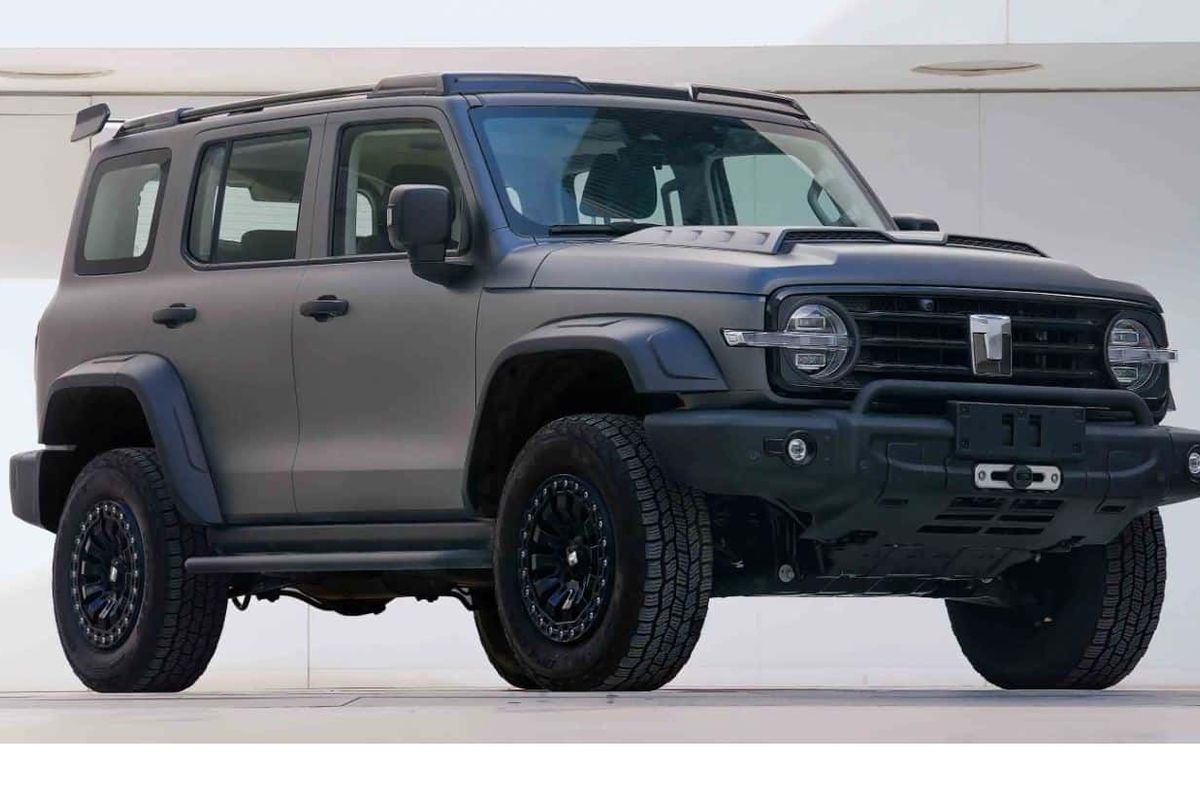
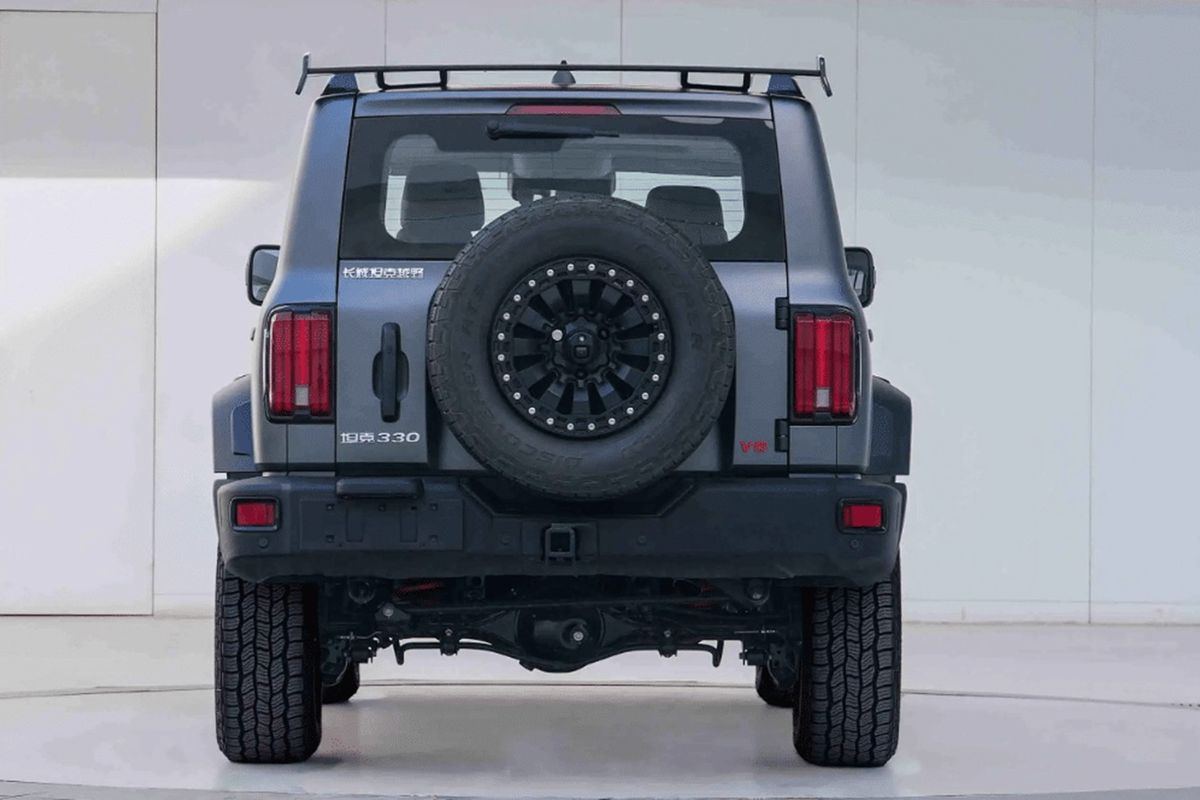
The offroad focused Tank range gets a performance model, armed a petrol turbocharged V6. Here are some early details of the muscular 2024 Tank 330.
Thanks to some images and details from the Chinese Ministry of Industry and Information Technology, the 2024 Tank 330 is all but officially revealed.
The headline act is the addition of a 3.0-litre turbocharged V6 punching out 265 kW and 500 Nm, comfortably outgunning the rest of the Tank range which makes do with 4-cylinder petrols. Mind you, the Tank 300 hybrid does have more torque at 648 Nm. While there are no performance figures yet, we expect the V6-powered Tank 330 to be some way quicker than its brethren.
To separate the Tank 330 from the lesser models, the vehicle comes accessorised with goodies like a body kit and a roof spoiler. We suspect there’ll be special paints for it too.
When will the 2024 Tank 330 come to South Africa?
If you’re hoping to see the 2024 Tank 330 in SA showrooms, hold your horses as its still quite early in the launch process. We’ve yet to see the official specifications and photographs from parent company Great Wall Motors (GWM). We are hoping to see an official reveal at the Beijing Motor Show which takes place in April, and we’ll be in attendance.
As a reminder, the South African lineup has the 2.0-litre turbo with 165 kW and 380 Nm, as well as the hybrid with 255 and 648 Nm. Official sales of these two derivatives are about to commence.
We’re looking forward to driving the new Tank range on SA soil. We’ve already had a preview taste in Australia, where the Tank’s impressive interior and offroad ability shone.
Lexus South Africa has confirmed to Cars.co.za that the RC F coupé and LS sedan are no longer available locally. The LC, too, has vanished, though the company promises it will return soon…
The Lexus stable has lost a couple of steeds, with the Toyota-backed luxury brand confirming to Cars.co.za that the RC F performance coupé and LS luxury sedan are no longer available in South Africa.
At the start of 2024, we noticed that the RC, LS and LC were all missing from the freshly overhauled Lexus SA website. So, we asked the local division whether or not these 3 nameplates had officially exited the Mzansi market.
The LS luxury sedan is no longer offered in South Africa.
Interestingly, while Lexus SA confirmed that the RC and LS were “discontinued at the end of 2023”, the firm’s local division added the LC “will make a reappearance soon with a different derivative”. We’re guessing that will be a hybrid version of this model (likely badged as the LC500h), offered in either coupé or convertible form – or perhaps both.
Prior to the LC’s current sabbatical, the range had included both of the above body styles, with the LC500 coupé starting at R2 515 400 and the LC500 convertible kicking off at R2 666 600. In either case, power came from a naturally aspirated 5.0-litre V8 petrol engine. Peak outputs of 351 kW and 540 Nm were directed to the rear axle via a 10-speed automatic transmission as standard.
The LC is also gone for now, though Lexus SA says this nameplate will be back soon.
Meanwhile, before it quietly exited South Africa, the rear-wheel-drive RC coupé line-up had comprised RC F and RC F Track Edition derivatives, with these likewise atmospheric V8-powered models (351 kW/530 Nm) priced from R1 713 400 and R2 736 200, respectively. The RC nameplate debuted in SA back in 2015, while RC350 and RC200t derivatives were also available during its circa-8-year local lifecycle.
And the LS flagship sedan portfolio, which had competed against the likes of the BMW 7 Series and Mercedes-Benz S-Class? Well, before this rear-driven luxury saloon was axed locally, there was the naturally aspirated 3.5-litre V6 hybrid LS500h (making listed outputs of 264 kW and 350 Nm, and priced from R2 678 900) as well as the LS500 (R2 753 500) and LS500 F Sport (R2 543 600), with the latter 2 offering 310 kW and 600 Nm courtesy of a twin-turbo 3.5-litre V6 petrol mill.
The RC F was powered by a free-breathing 5.0-litre V8 petrol motor.
Tellingly, in 2023, these 3 nameplates were the Lexus brand’s least popular offerings. Just 8 units of the LC were registered in South Africa last year, along with 4 examples of the RC F and a single unit of the LS sedan. The NX was the brand’s strongest seller with 355 units, followed by the RX (153 units), LX (152 units), ES (137 units), UX (90 units) and IS (27 units).
An all-new Ford Mustang may be on its way to Mzansi, but we recently spent 3 months evaluating the 5.0 GT California Special Fastback variant of the outgoing model, mainly to answer 1 question… Is it special enough to become a modern classic?
Unveiled in December 2013 (and entering production a year later), the 6th-gen Ford Mustang was the 1st iteration of the Blue Oval’s muscle car to be produced in right-hand-drive guise, which, of course, made it viable for introduction to the South African market. It was a sales success from the word go, also here in South Africa (from late 2015), where it has consistently been the Republic’s favourite sportscar.
When GM left our market, we lost the chance of getting a new Corvette, but the Mustang is here to stay, baby.
There are plenty of Mustangs on the road, but it never ceased to amaze me how much attention this Ford test unit commanded from fellow road users during its recent 3-month test (sure, it’s a tastefully detailed and sonorous example – but still). It is one of those rare cars that seems universally loved – it elicits thumbs-ups, joyous waves and pointed fingers that are usually reserved for far more exotic machinery.
Indeed, South Africans seem to love the Mustang; previous limited-edition variants, such as the Bullitt and Mach 1, were snapped up eagerly. This 5.0 GT California Special Fastback, of which only 100 have been imported into South Africa, is likely to be high on the wishlist of Mustang fans. At the time of writing this review, 50 new units of the current model were left in stock; 20 of those were California Specials.
But what’s the Ford like to live with, and once you get used to its novelty factor, does it retain appeal?
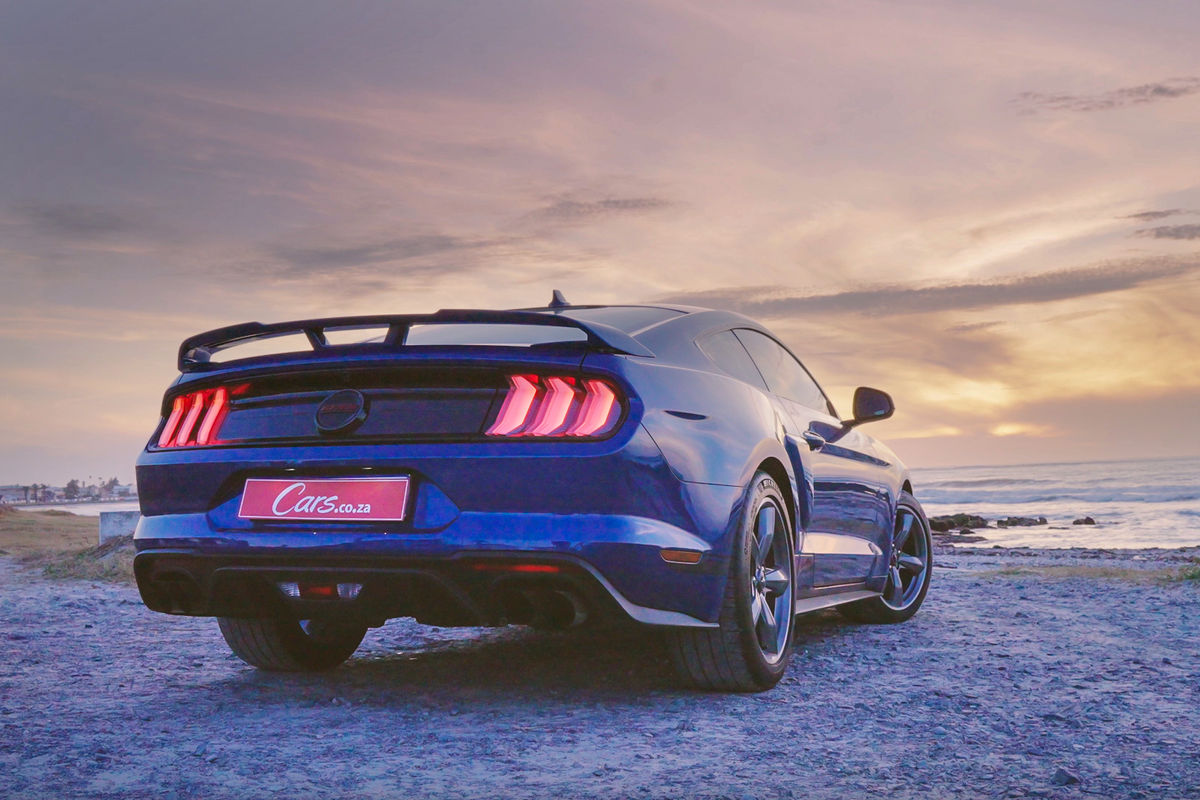
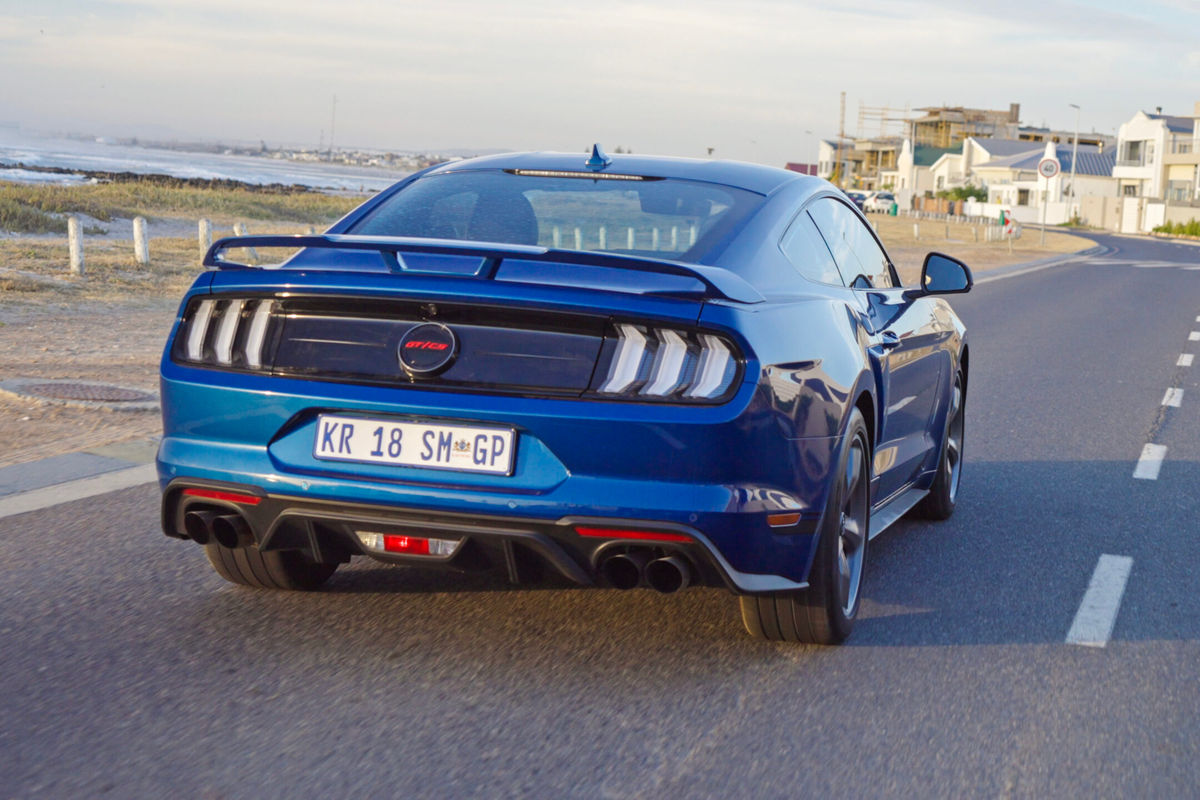
The quad exhaust system and prominent rear wing are part of the GT Performance Package.
What we like about the Mustang 5.0 GT California Special
The Looks
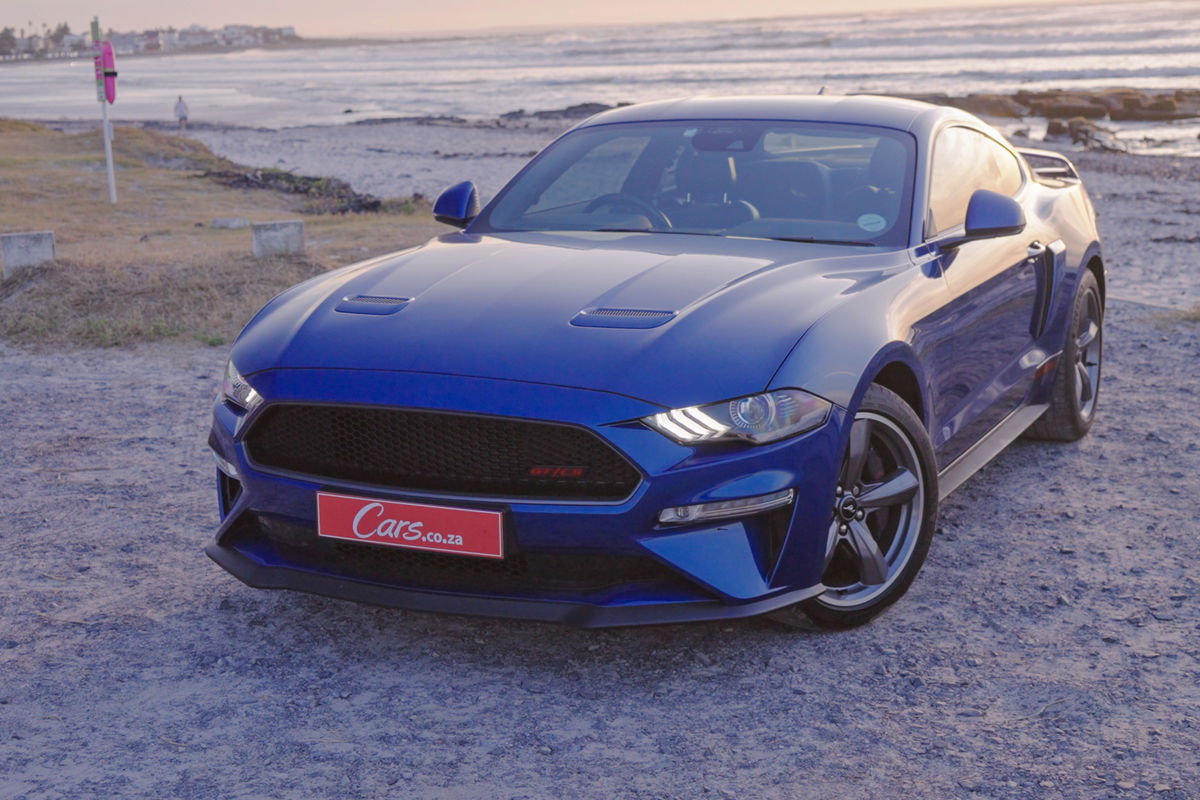
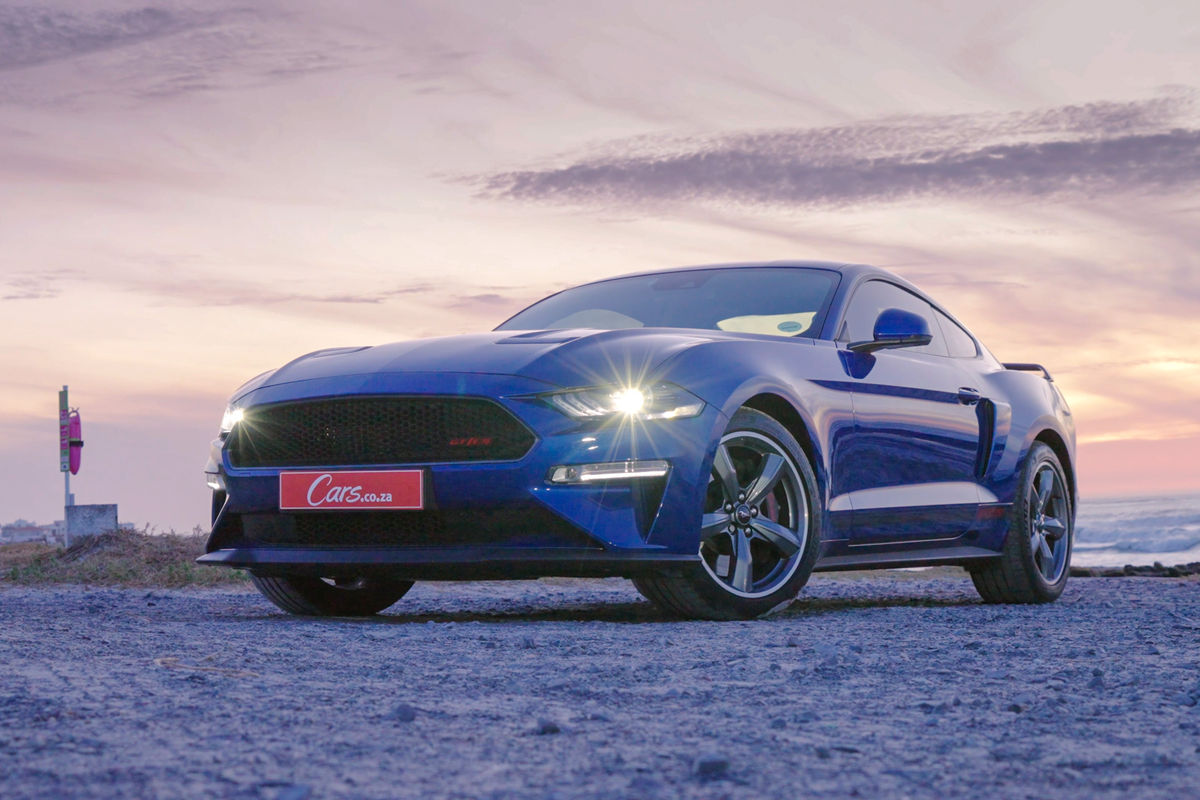
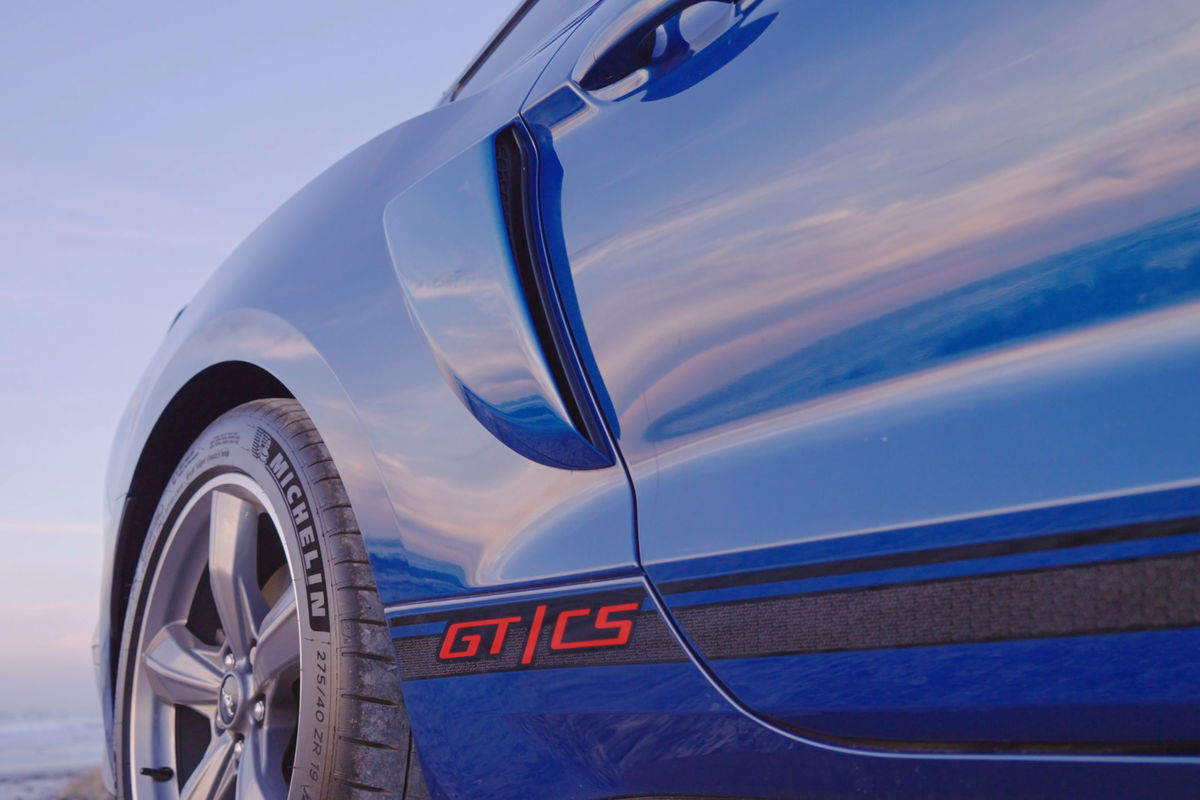
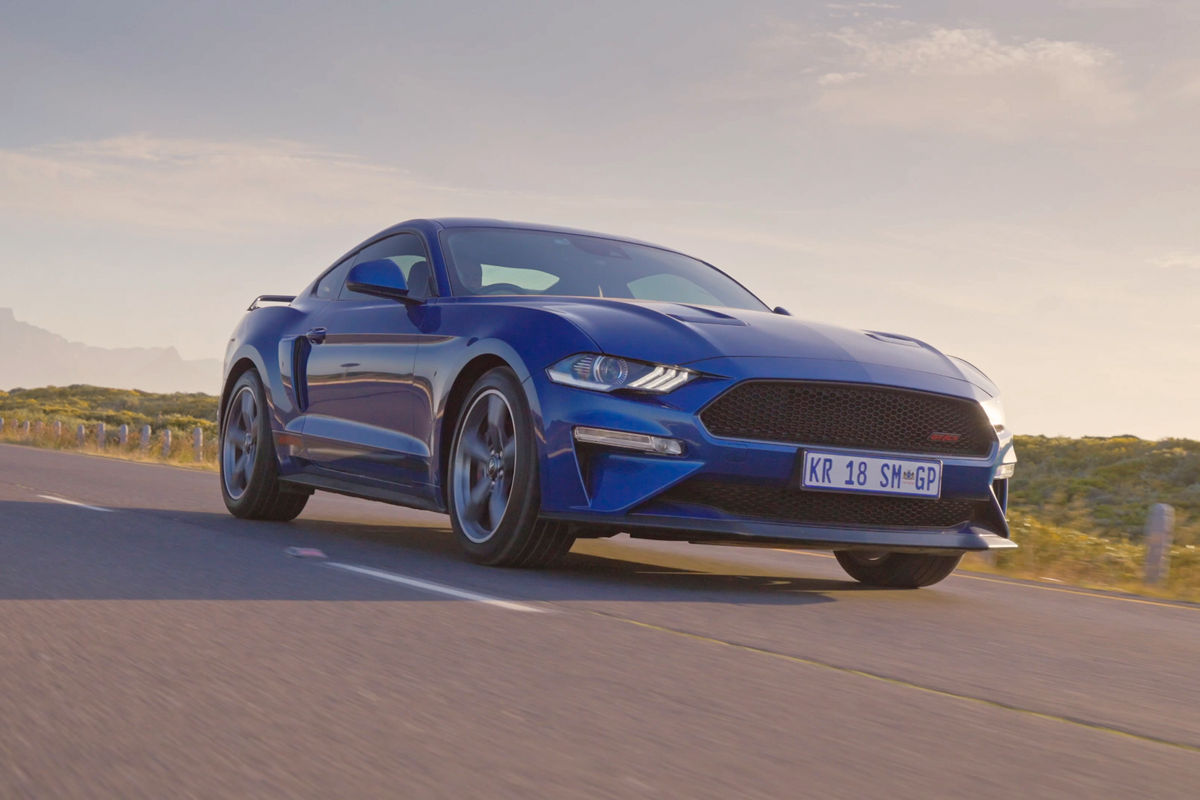
The basic design of the 6th-gen Ford Mustang may be about a decade old, but in California Special trim, it turns heads like few other contemporary cars can. Finished in Atlas Blue paintwork and riding on striking grey 5-spoke 19-inch wheels (that remind us much of those fitted to the Bullitt), the California Special also features numerous visual upgrades to distinguish it from “lesser” Mustangs…
These include a broad, blacked-out honeycomb grille with a small red GT/CS logo, a purposeful front splitter, Shelby-inspired side scoops and a prominent rear wing from the GT Performance Package. At the rear, four 4.5-inch exhaust outlets signal the fitment of an Active Valve performance exhaust system.
The side-scooped California Special looks just distinctive enough to stand out from its standard siblings.
There are no “shouty” go-faster stripes on this Fastback’s bonnet or roof and an absence of extreme aero addenda… in fact, the California Special looks quite stealthy, but suitably “macho” nonetheless.
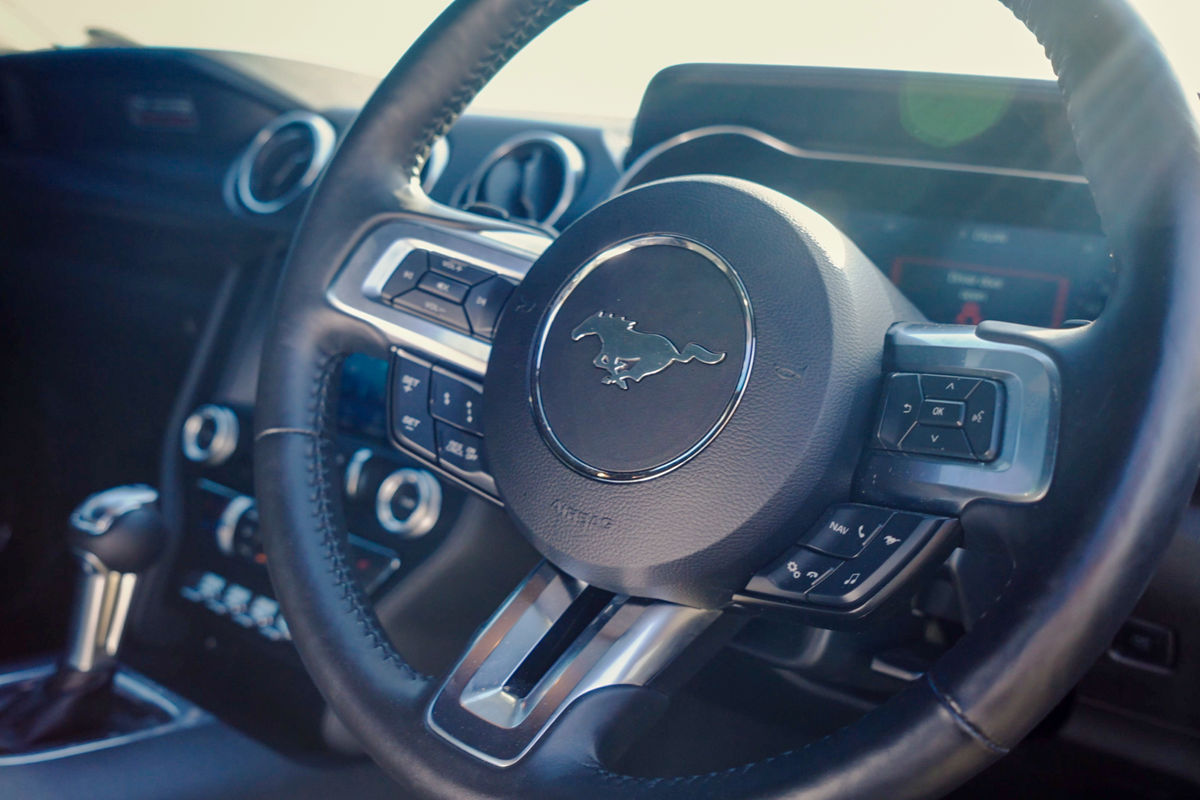
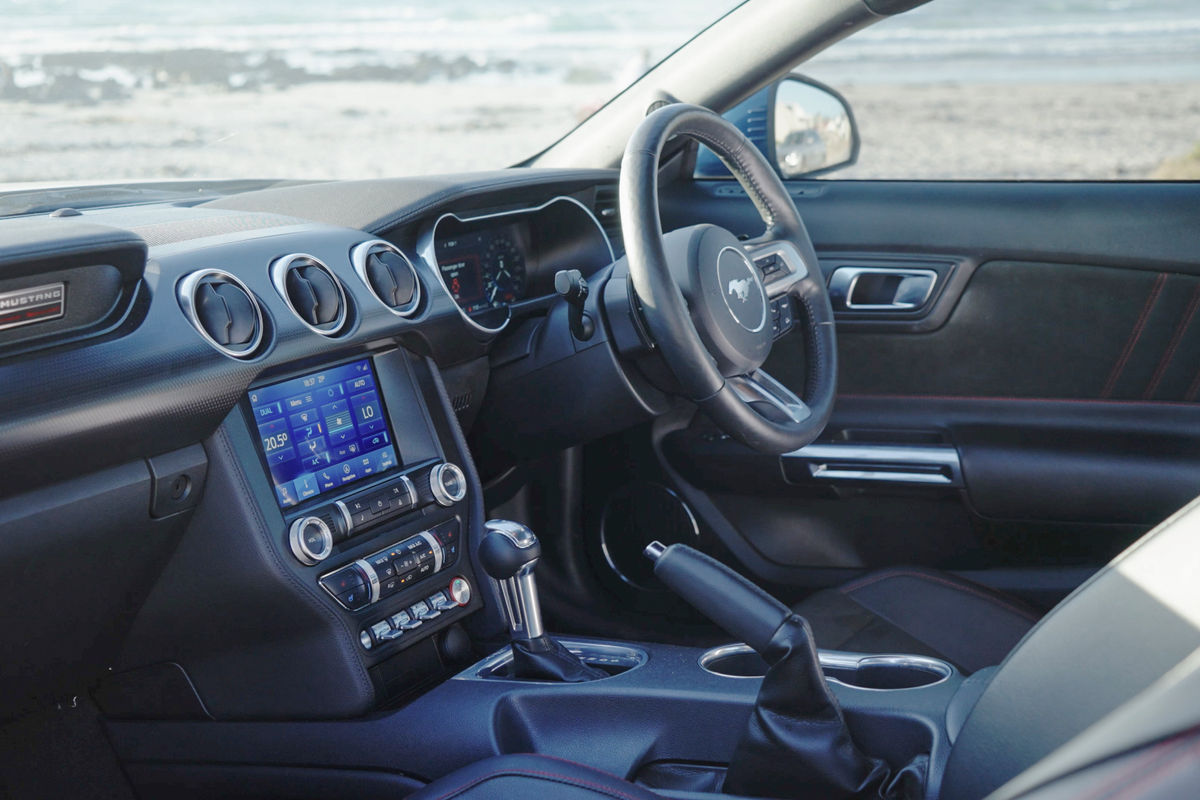
Inside, the changes are not as obvious, although we did appreciate the heated and ventilated front seats, which are partially upholstered in Miko suede – a synthetic material made from recycled polyester. Red stitching and GT/CS badging on the seats and floor mats are specific to this derivative and the fascia is finished in Carbon Hex aluminium trim. A California Special badge on the dashboard is the final touch.
The interior detailing of the California Special is quite subtle, but the heated and ventilated seats are a plus.
If you’ve been in a 6th-gen Ford Mustang, then the rest of the California Special’s cabin will be familiar, with decent build quality (seems better made than the earlier Mustangs we tested) and the Sync3 touchscreen infotainment system with Apple CarPlay and Android Auto. The dashboard design has definitely aged in areas, as is to be expected, but comfort levels are good (more on that later!).
The sound
Under that long bonnet sits the familiar naturally-aspirated “Coyote” 5.0-litre V8 that pumps out 330 kW and 529 Nm of torque. Starting the car is always an event – it barks into life quite loudly before settling into a steady idle. I only found out about the Quiet Start or so-called “Good Neighbour” mode after the fact… It limits the exhaust sound upon start-up, something that my neighbours would have appreciated!
The California Special’s motor is mated exclusively with Ford’s 10-speed automatic transmission and drivers can toggle between several drive modes; they are: Normal, Sport, Track, Drag and Snow/Wet.
The Mustang produces an evocative soundtrack, but a Quiet Start mode is available when discretion is required.
It is important to bear in mind the purpose of the Mustang and, in particular, this California Special’s market positioning. If you’re looking for a sportscar with which to dissect a mountain pass with scalpel-like precision, this is not the car for you. Don’t think of it as a more affordable alternative to models such as the BMW M4 and Jaguar F-Type. It is sufficiently fast, certainly, with a 0-100 kph time of 4.8 seconds and a 250-kph top speed, but delivering precise responses to steering inputs, lively throttle responses and ferocious traction (as the world’s best driving machines do) fall outside of the Mustang’s skill set.
As the name suggests, this is a car for cruising the strip with the windows down, so that you can revel in the burble that emanates from the quad exhaust tips and positively lap up the envious looks from those who ogle your, um, steed. If you mash the accelerator pedal to the floor, however (provided you’re in the right mode), the Mustang will certainly, well, giddy up… and with a mighty roar too, but the transmission is easily flummoxed. If you leave it to its own devices, the ‘box can take too long to find the right gear.
The 5.0 GT California Special Fastback rewards drivers who are willing to learn how to get the most from its package.
Having said all that, if you choose to actuate ‘shifts manually, you may end up sending too much power to the rear wheels, and lose traction – it’s tricky when there are so many gears to choose from! Even though the power is developed fairly high up in the rev range, the California Special is nevertheless a car that can easily break traction on pull-away. No, this is a car that takes time to learn to drive fast, and it rewards a smooth driving style that acknowledges the limitations of vehicle weight, traction and gearing.
If, however, you are interested in a car that looks and sounds great, and offers decent straight-line performance when required, then this Mustang is highly unlikely to disappoint you.
Cruising Comfort
To reiterate, the Mustang is not the sharpest driving tool, even though it features a limited-slip diff and the firm’s MagneRide continuously adjusting damping system. But, for what it lacks in cornering poise, it makes up with a surprisingly comfortable ride quality on just about any surface you’re likely to encounter.
Considering that it’s a well-seasoned sportscar, the California Special delivers a forgiving ride quality.
The fantastic seats help, of course, but the supple ride aids the Mustang’s role as an effective cruiser. We undertook several longer journeys in the test unit, and with 2 occupants (well, and a “compact” 3rd one in the back) on board and a boot full of luggage, the Ford was a very pleasurable mile muncher.
The boot is of a decent size (it has a claimed capacity of 382 litres) and, seeing as the rear seats are pretty much token items (unless used by small kids) you can also stash a few soft bags back there.
Oh, and suffice it to say, the open road flatters the California fuel consumption – around town, you are likely to achieve returns in the region of 18 L/100 km, but if you add some more open-road driving to your journey, you should get it down to around 14 L/100 km. Still, not great, but remember this is a big ol’ V8!
Watch Ciro De Siena and Ashley Oldfield agree to disagree about the California Special
Any Dislikes?
This is one of those cars you either get – or don’t. If the idea of owning a classic American muscle car appeals to you, but you don’t want to forego features such as adaptive cruise control and a potent B&O sound system, you can’t go too wrong with a Mustang, which is a less sophisticated machine (in terms of powertrain tech) than other sportscars – that should bode well for mechanical reliability in the long run.
Plus, if you do intend to cherish your purchase for quite a while, then one of these limited-edition Mustangs could repay you not only in terms of “smiles per mile”, but also financially (to some degree).
If we had to nit-pick, okay, the option of a manual gearbox would have been welcome, seeing as the 10-speed automatic transmission does limit the level of driver involvement such a visceral car could offer.
Because only 100 units of the 5.0 GT California Special will be sold in South Africa, it has guaranteed exclusivity.
Verdict
With a price tag of just over R1.2 million, the 5.0 GT California Special Fastback costs less than R100k more than the standard 5.0 GT Fastback (January 2024)… and we’re confident that the former justifies the extra outlay. Besides the obvious visual enhancements, there is also the matter of exclusivity.
To reiterate, this sportscar is not for everyone, but even the purists on our team (except for Ash) had to agree that there was something deeply charming about a sunset cruise with this Mustang.
Is the California Special a modern classic? Well, find another naturally-aspirated V8 with rear-wheel drive that looks this good for R1.2 million. It is the very antithesis of the template of a modern sportscar: flawed and wonderful in equal measure. And we (well, most of us) miss it. So, that’s probably a “yes”, then.
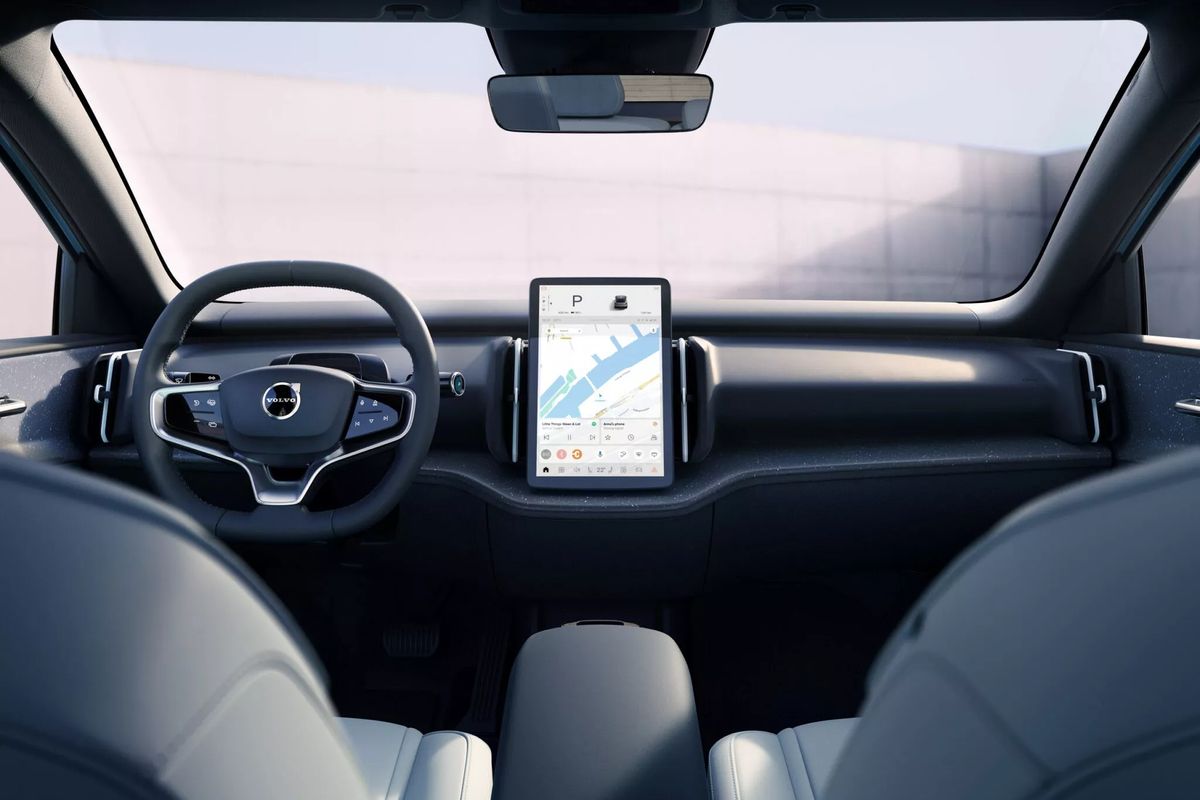
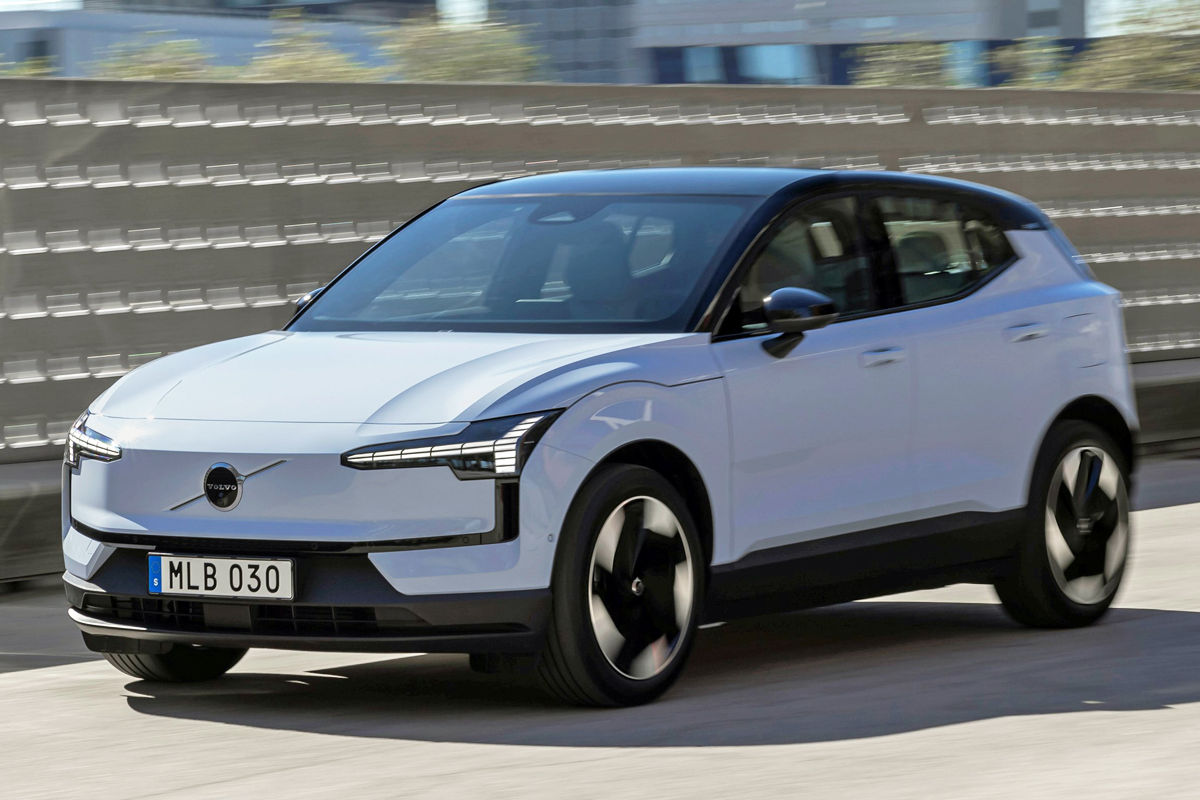
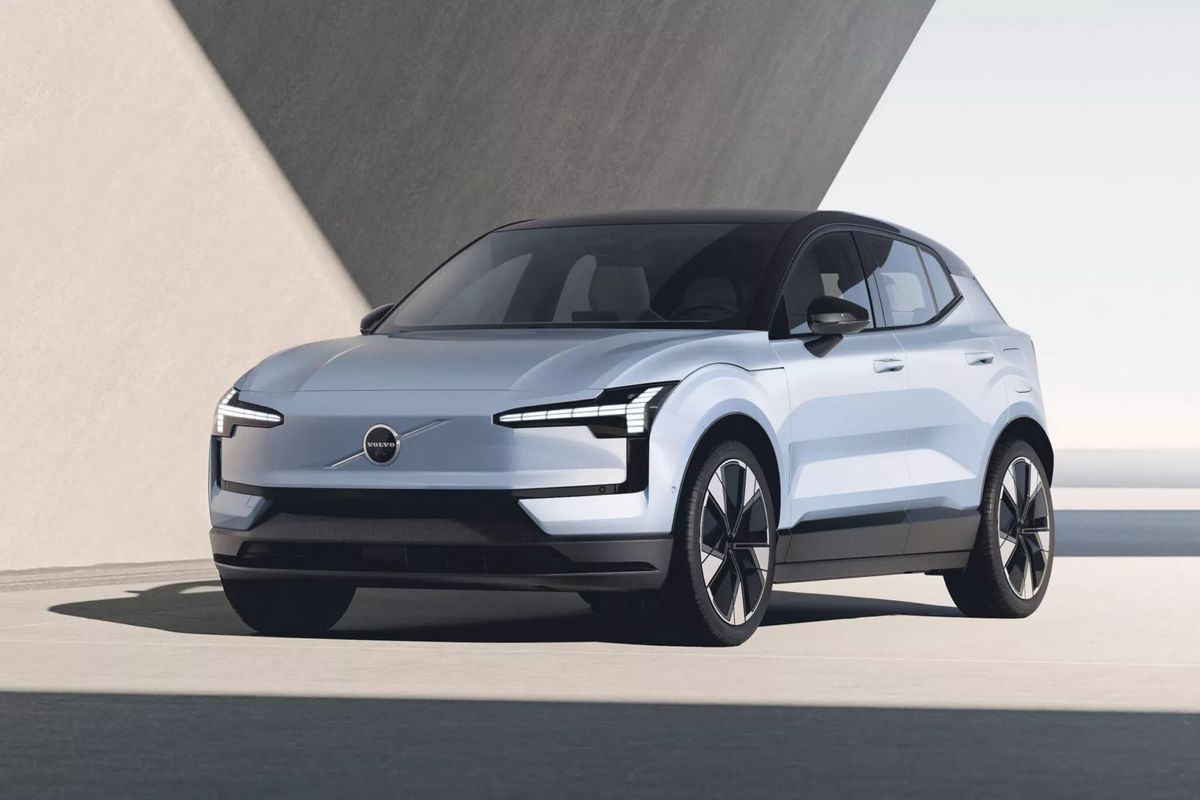
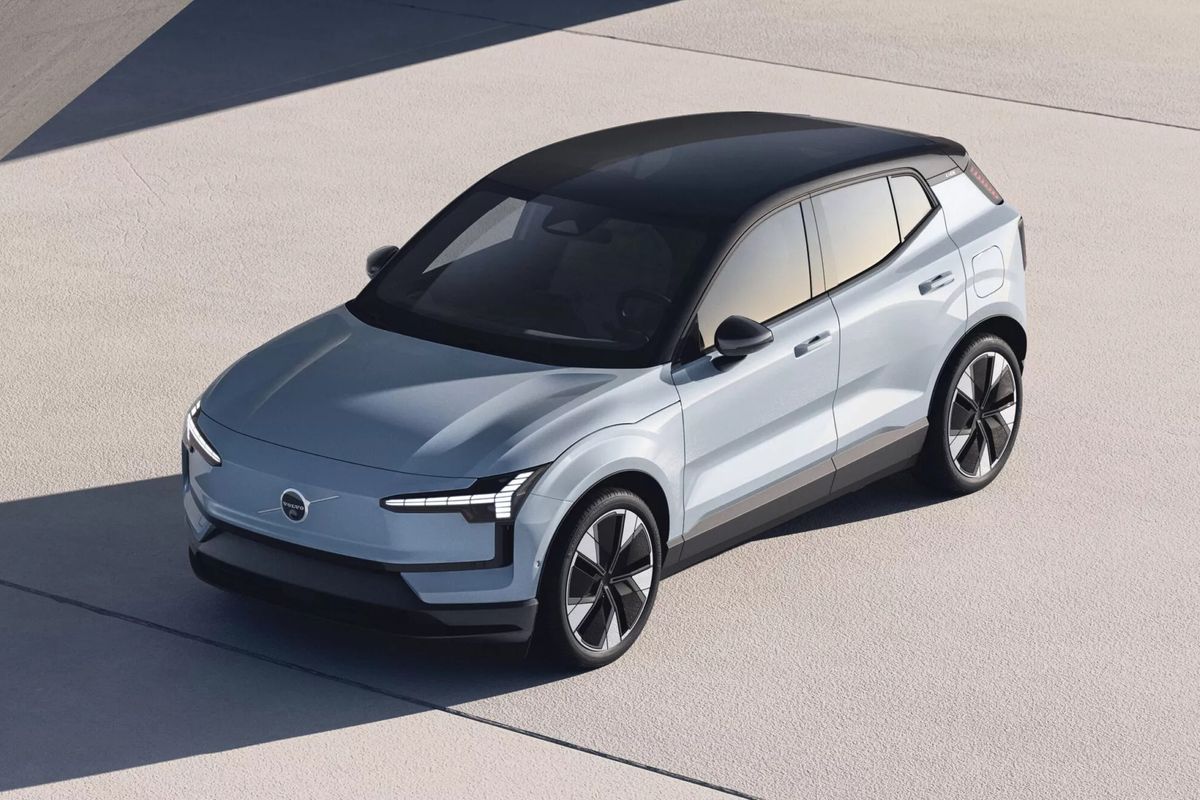
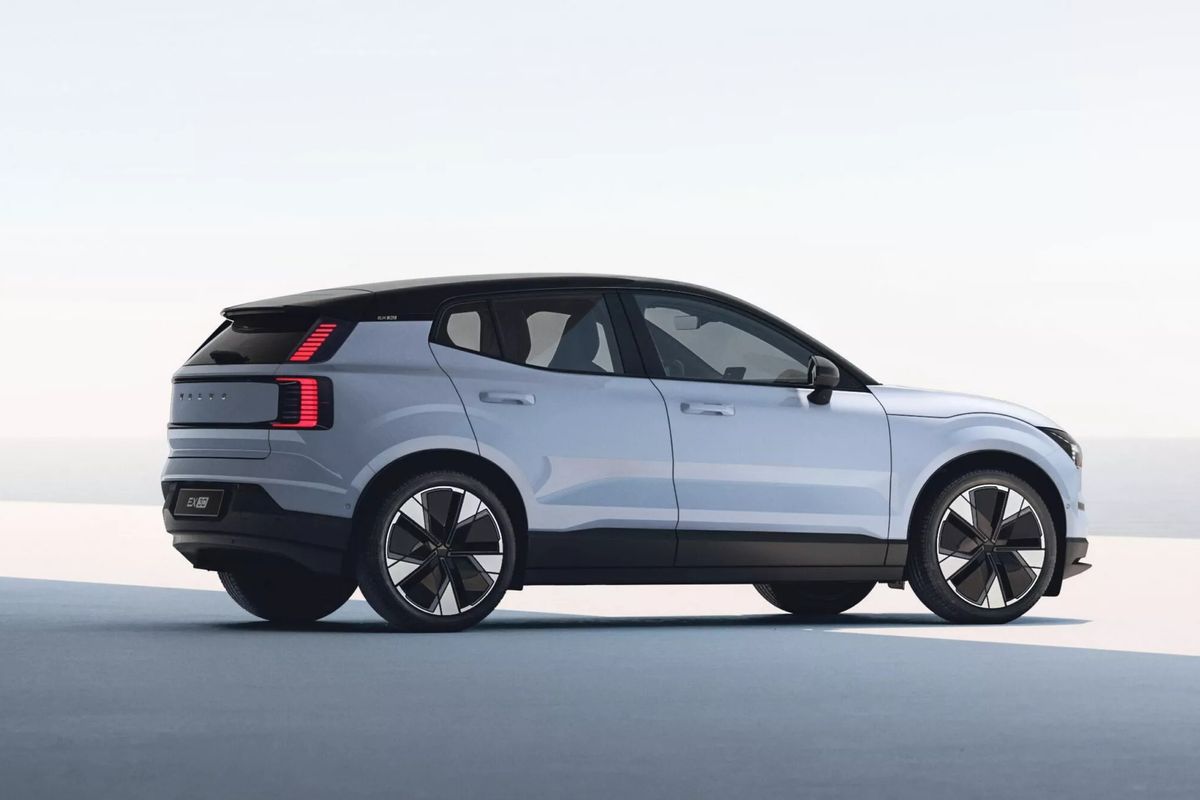
The Volvo EX30 will be launching in South Africa soon. Here’s a detailed look at specifications and pricing of this all-electric compact SUV.
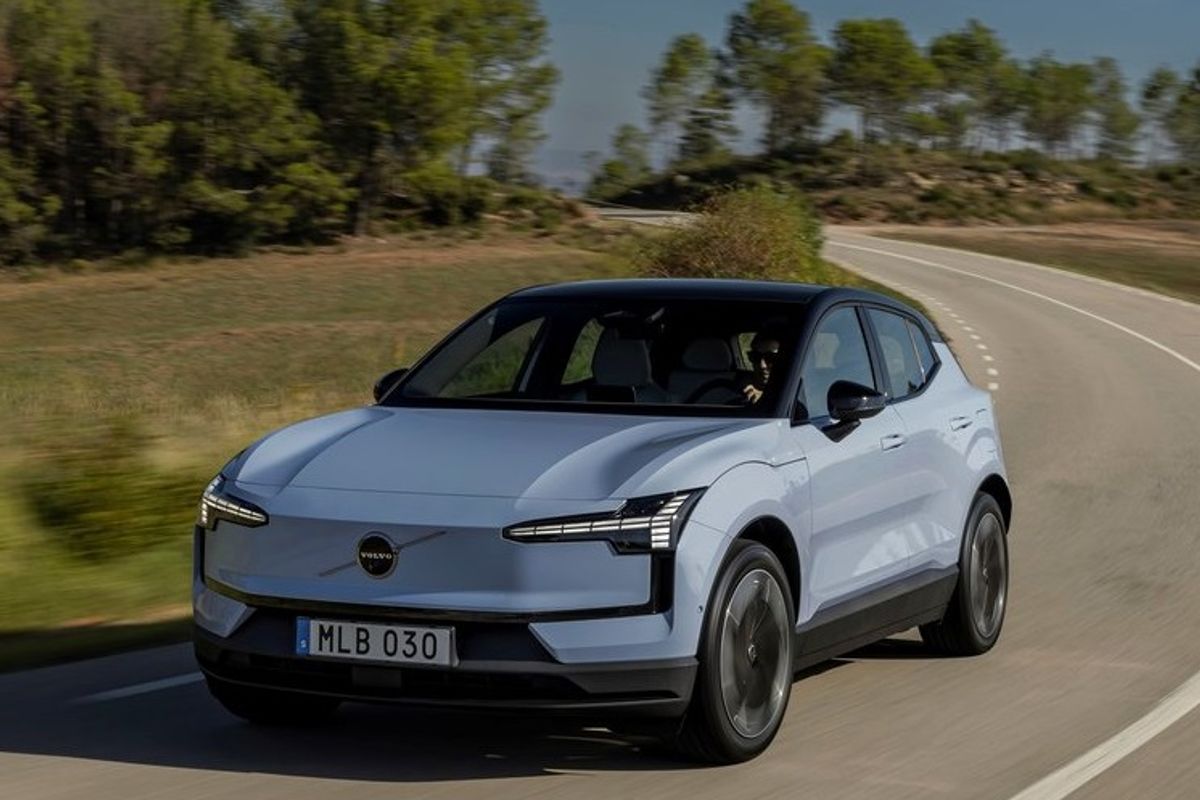
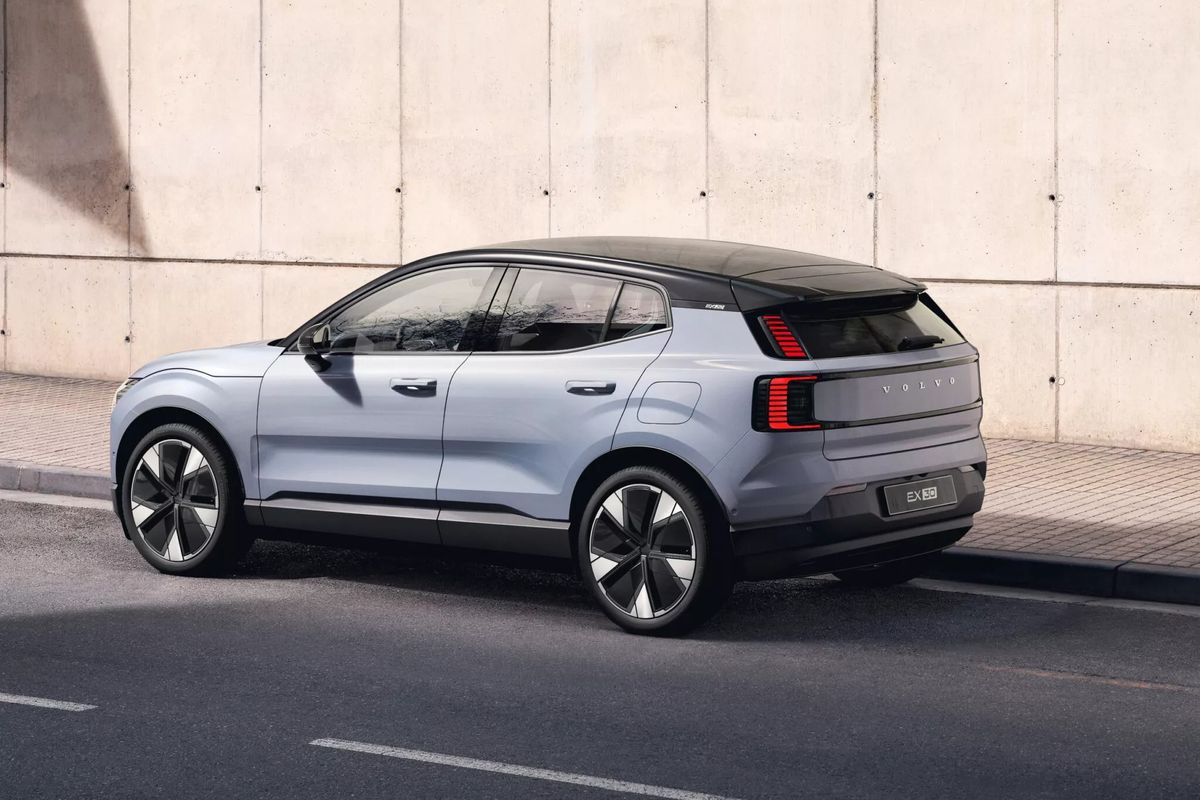
The new Volvo EX30 will be the smallest vehicle from the Swedish carmaker, sitting below the XC40 and C40 crossover. Assembled in China currently and sharing quite a few common elements from the Smart #1 and Zeekr X, the EX30 comes to the South African market in a 5-model lineup.
Powertrain and Performance
The all-electric Volvo EX30 will be sold with single motor and rear-wheel drive and dual-motor, all-wheel drive configurations. The entry-level model features 200 kW and 343 Nm, and it’ll hit 100 kph in 5.7 seconds. Thanks to a lithium-ion phosphate battery with 51 kWh, a range of 343 km is possible based on the WLTP cycle.
You can go for the Single Motor Extended range model that replaces the 54 kWh battery with a 69 kWh unit that increases the performance (down to 5.3 seconds) and a range of 480 km.
EX30 arriving in SA! Image shared on social media by Greg Maruszewski, MD of Volvo Car SA
If you’re wanting some serious performance, then the EX30 Twin Motor Performance should be your port of call. With 315 kW and 543 Nm driving all four wheels, a 0-100 kph of 3.4 seconds is possible. You’ll be penalised for the performance as the additional power, performance and weight reduces the battery range down to 460 km based on the WLTP cycle.
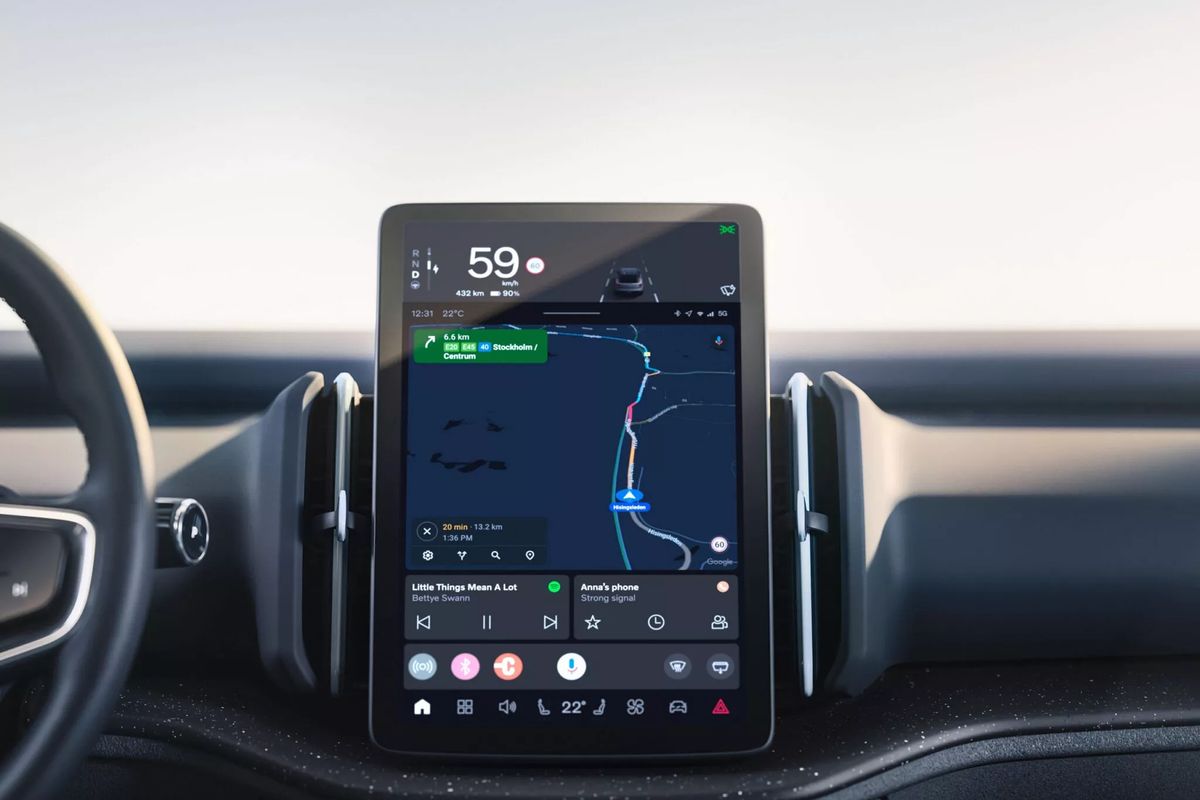
As a reminder, the Volvo EX30 infotainment system is powered by Google
Standard Equipment
Core
18-inch alloy wheels
Adaptive cruise control
Google services
Rearview camera + rear sensors
11 kW Onboard charger
Heatpump
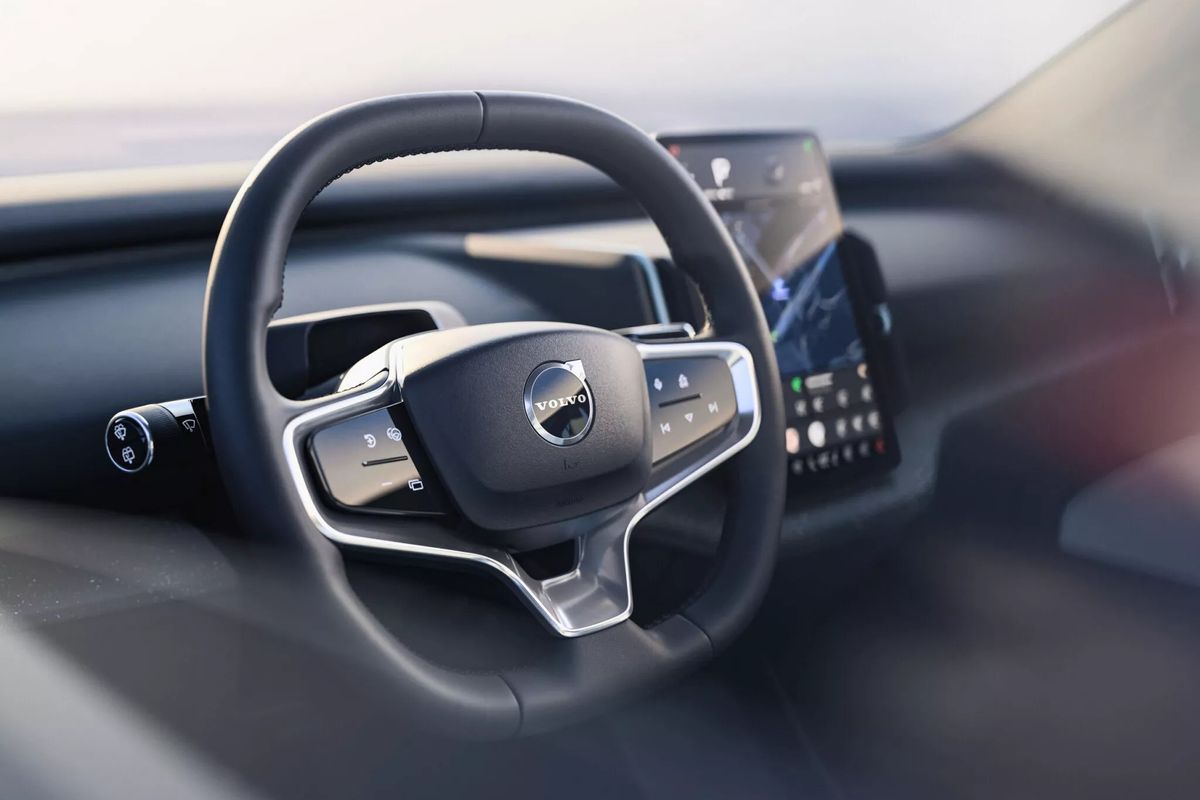
Heated seats and heated steering wheel
Driver profile
Thor signature daytime running lights
LED headlights
2 NFC cards
Volvo Safe Space
Mid Illumination
Plus (the above content plus the following)
19-inch alloy wheels
Harmon Kardon audio
Digital Key
High level illumination
Power operated tailgate
Advanced lighting
Ultrasonic front parking sensors
2-Zone climate control
Pilot Assist
Wireless phone charger
Ultra (the above content plus the following)
20-inch alloy wheels
Fixed panoramic roof
360-degree camera including side sensors
Power seats with memory function
4-way lumbar adjustment
Park Assist Pilot
How much does the Volvo EX30 cost in South Africa?
EX30 Core Single Motor
R775 900
EX30 Plus Single Motor Extended Range
R865 900
EX30 Plus Twin Motor Performance
R935 900
EX30 Ultra Single Motor Extended Range
R965 900
EX30 Ultra Twin Motor Performance
R995 900
The new Volvo EX30 is sold with a 5-year/100 000 km vehicle and 8-year/160 000 km battery warranty.
New GWM Ora 03 GT Video Review – This is the cheapest (and best) EV in South Africa
Ciro De Siena reviews the new GWM Ora 03 GT to find out if this is the EV for the people of Mzansi. Watch the video!
Electric vehicles in South Africa have always been and will likely continue to be expensive and out of reach of the average local motorist for some time.
However, GWM has just become the first manufacturer to break the R700,000 barrier, undercutting its nearest rival, the Mini SE, by nearly R100,000.
Yes for the sum R686 950, you can park a fully electric vehicle in your garage, and the thing is, it’s not like you’ll be compromising on any aspect of your purchase; the Ora 03 offers an impressive range of either 300 or 400km (claimed), a best-in-class EuroNCAP safety rating and a full suite of creature comforts.
In this video, our video journalist Ciro De Siena takes us on a thorough tour of the newcomer, and whether it is worth your attention if you’re in the market for an electric car, or even if you aren’t…
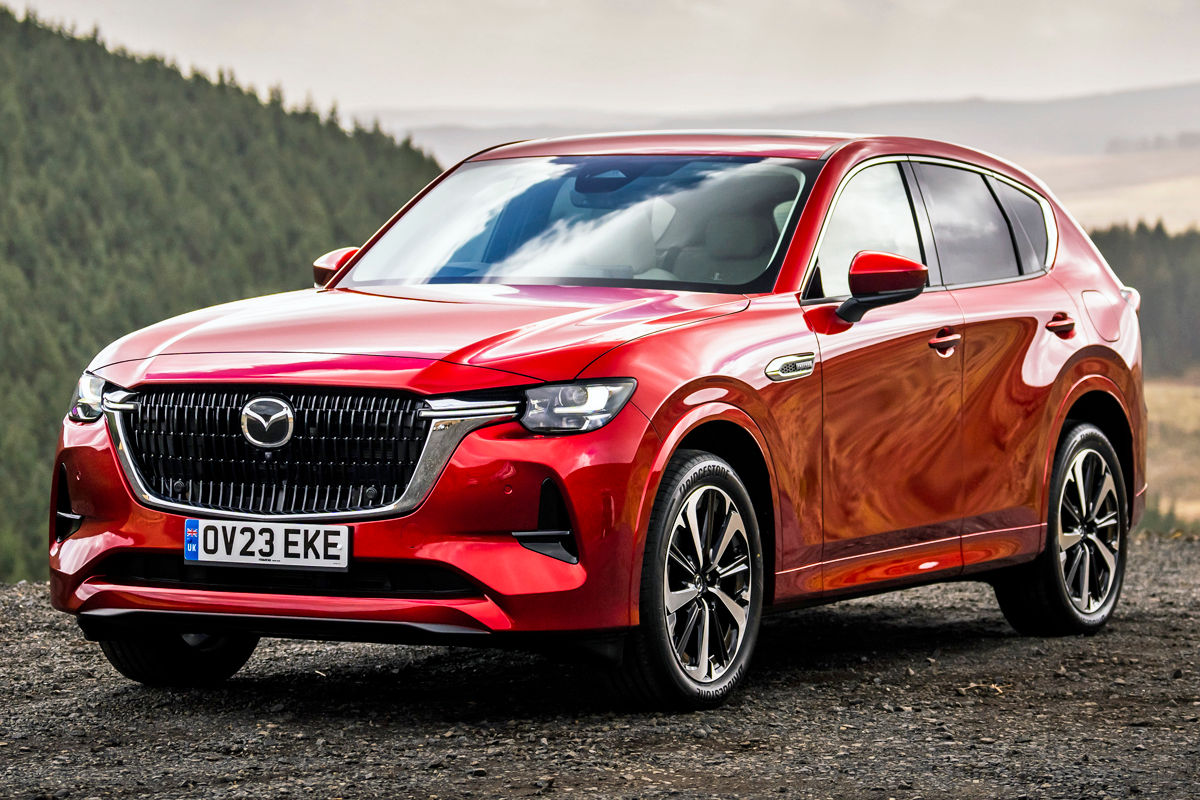
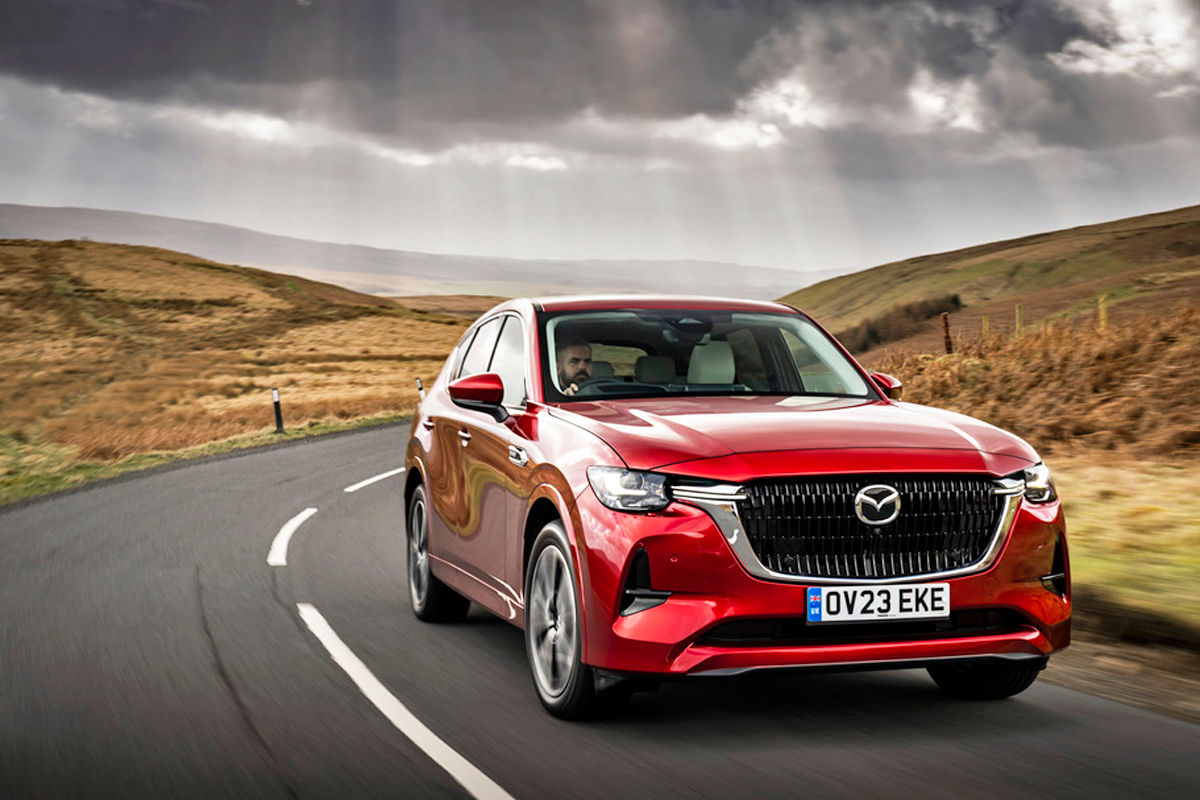
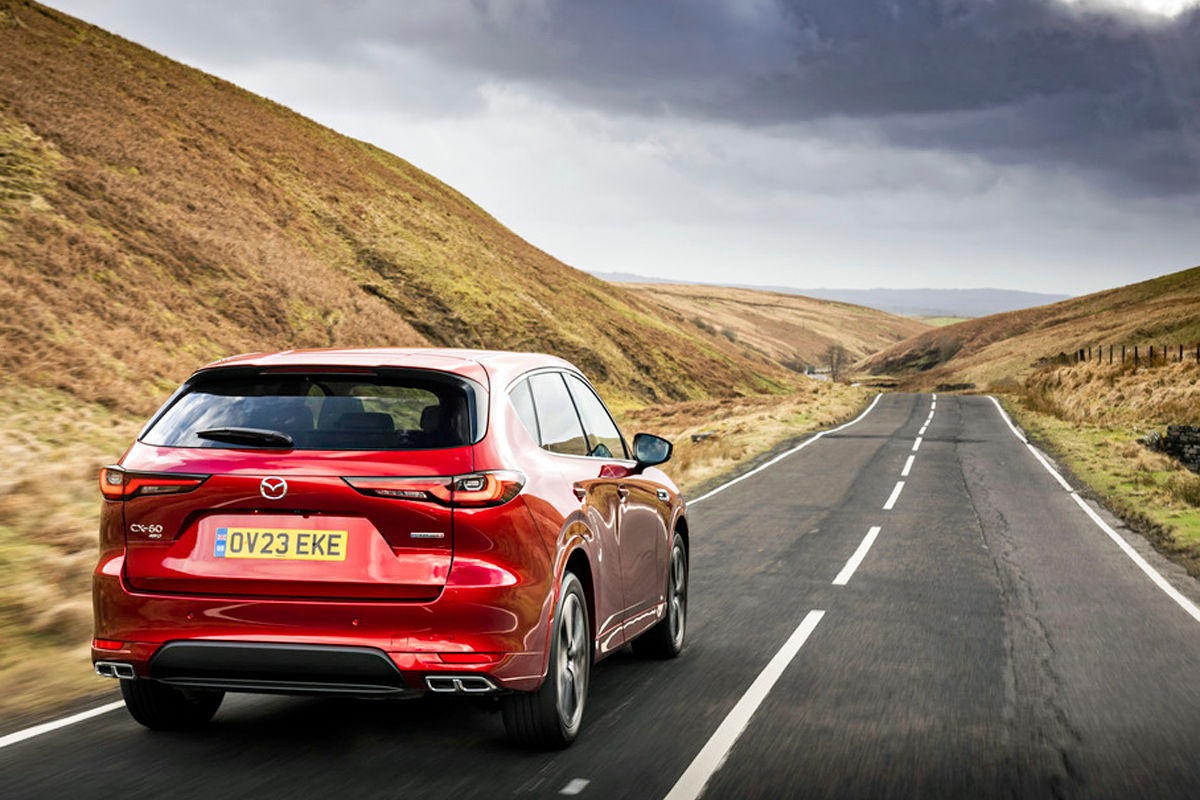
The new Mazda CX-60 3.3 DE Takumi – equipped with a mild-hybrid inline 6-cylinder turbodiesel engine – is heading to SA soon. Meet Mzansi’s first R1-million Mazda…
Fresh details of the new Mazda CX-60 3.3 DE Takumi – including the all-important sticker price – have emerged ahead of the 6-cylinder flagship derivative’s official launch in South Africa, scheduled for March 2024. Yes, we can now confirm that you’re looking at Mzansi’s very first R1-million Mazda…
Mazda Southern Africa’s latest pricelist includes the new CX-60 3.3 DE Takumi and shows that it will cost you a cool R1 049 200 at launch (though the eagle-eyed folks over at duoporta.com were the first to uncover the news). That makes the mild-hybrid straight-6 variant a considerable R204 700 more expensive than the 4-cylinder CX-60 2.5 Individual and thus easily Mazda SA’s priciest derivative yet.
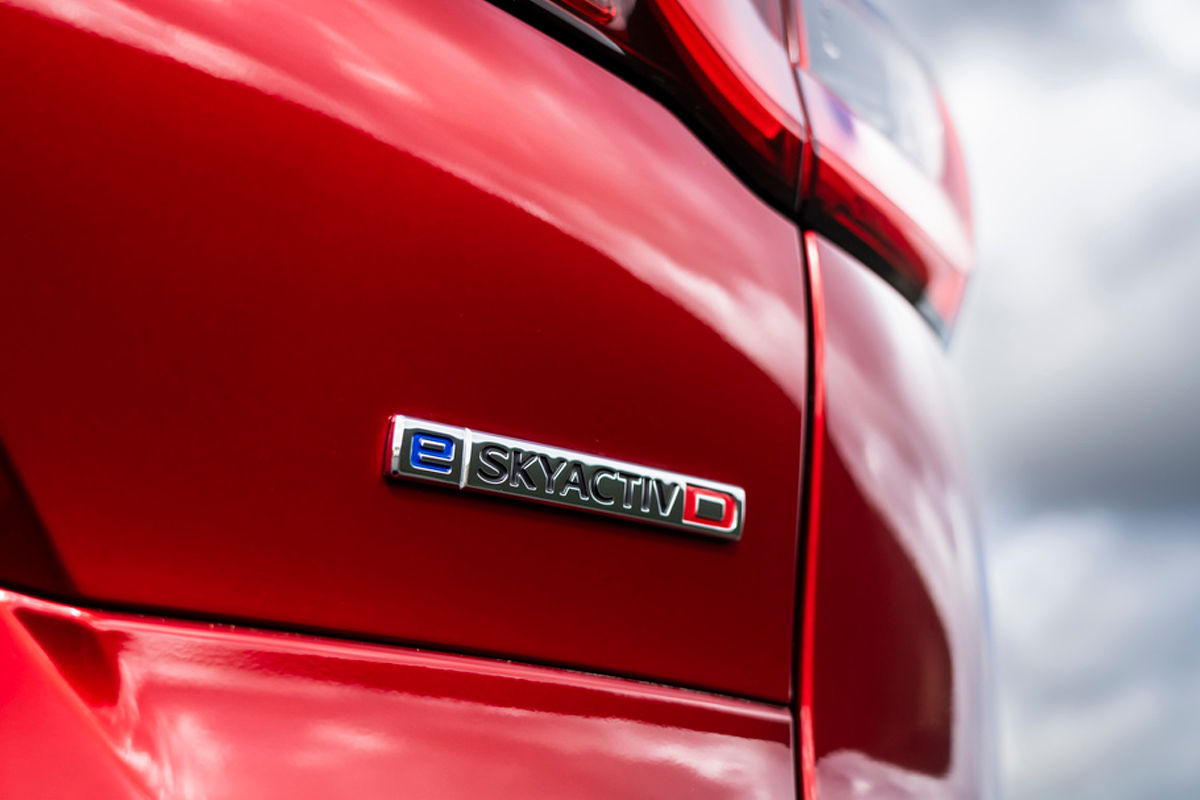
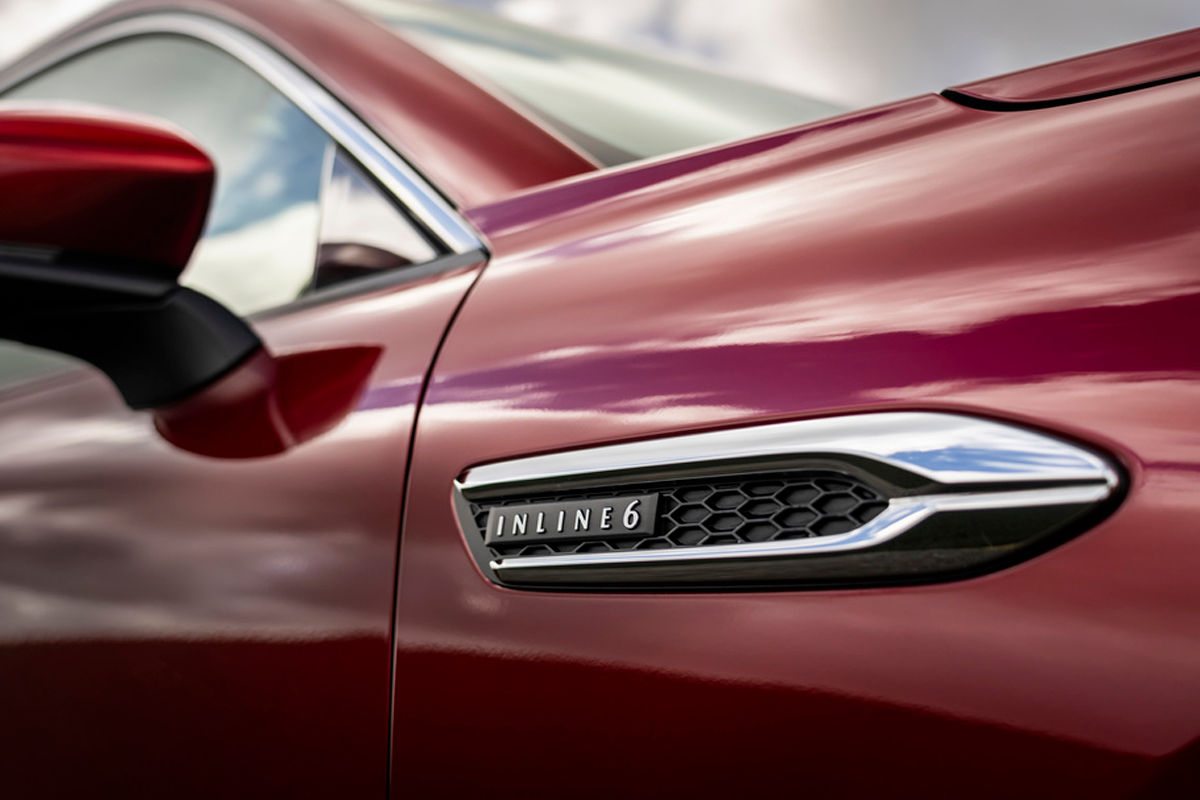
The 3.3-litre inline-6 turbodiesel motor is equipped with 48V mild-hybrid technology and generates peak system outputs of 187 kW and 550 Nm. Drive is directed to all 4 corners via an 8-speed automatic transmission, facilitating a 0-100 kph sprint in a claimed 7.3 seconds and a top speed of 219 kph. The claimed combined fuel economy, meanwhile, is listed as a mere 4.9 L/100 km (with corresponding CO2 emissions of 123 g/km).
The mild-hybrid system includes a 0.33 kWh lithium-ion battery pack and a 12.4 kW/153 Nm electric motor-generator, with the latter integrated into the automatic transmission. The electric motor supports the oil-burning engine at low loads and low engine speeds, while its battery is recharged by the engine as well as via regenerative braking.
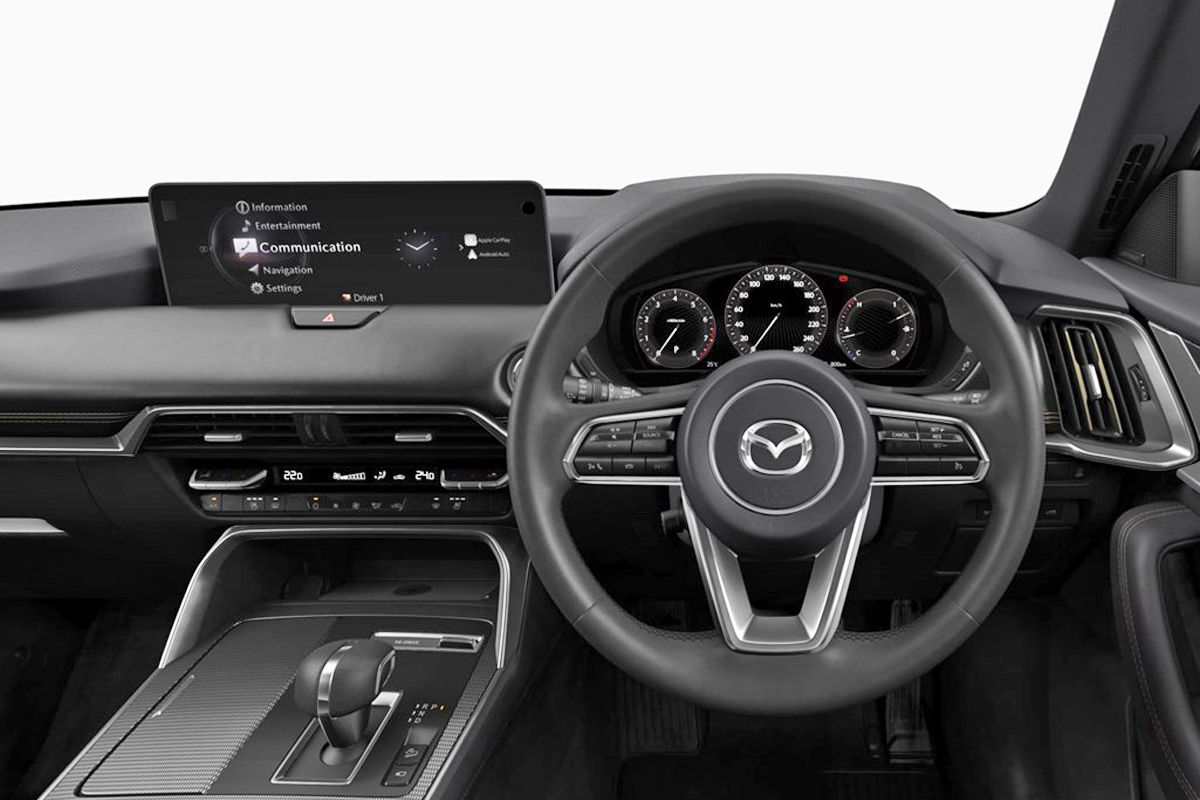
The 5-seater CX-60 3.3 DE Takumi is further set apart by its model-specific front-bumper design, piano black grille and 20-inch black metallic alloy wheels. Inside, you’ll find equipment such as a 12-inch central display, a 12-speaker Bose sound system, black Nappa leather upholstery and electrically adjustable (not to mention heated and ventilated) front seats.
Further standard features (many of which are shared with the CX-60 2.5 Individual) include a panoramic sunroof and a full suite of safety functions, ranging from a 360-degree camera system and adaptive cruise control to adaptive LED headlamps, blind-spot monitoring, rear cross-traffic alert and a lane-keeping system. The CX-60 3.3 DE Takumi further employs parking sensors (fore and aft), 7 airbags and an electrically operated tailgate.
As a reminder, the CX-60 nameplate arrived in South Africa in April 2023, with the 2 derivatives on offer both powered by the Japanese brand’s 141 kW/261 Nm naturally aspirated 2.5-litre, 4-cylinder petrol engine. The imminent touchdown of this new 6-cylinder Takumi model will thus take the CX-60 range to 3 variants.
How much does the Mazda CX-60 cost in South Africa?
Mazda CX-60 2.5 Dynamic AWD – R739 800
Mazda CX-60 2.5 Individual AWD – R844 500
Mazda CX-60 3.3 DE Takumi AWD – R1 049 200
The CX-60 ships standard with a 5-year/unlimited kilometre warranty and a service plan of the same duration.
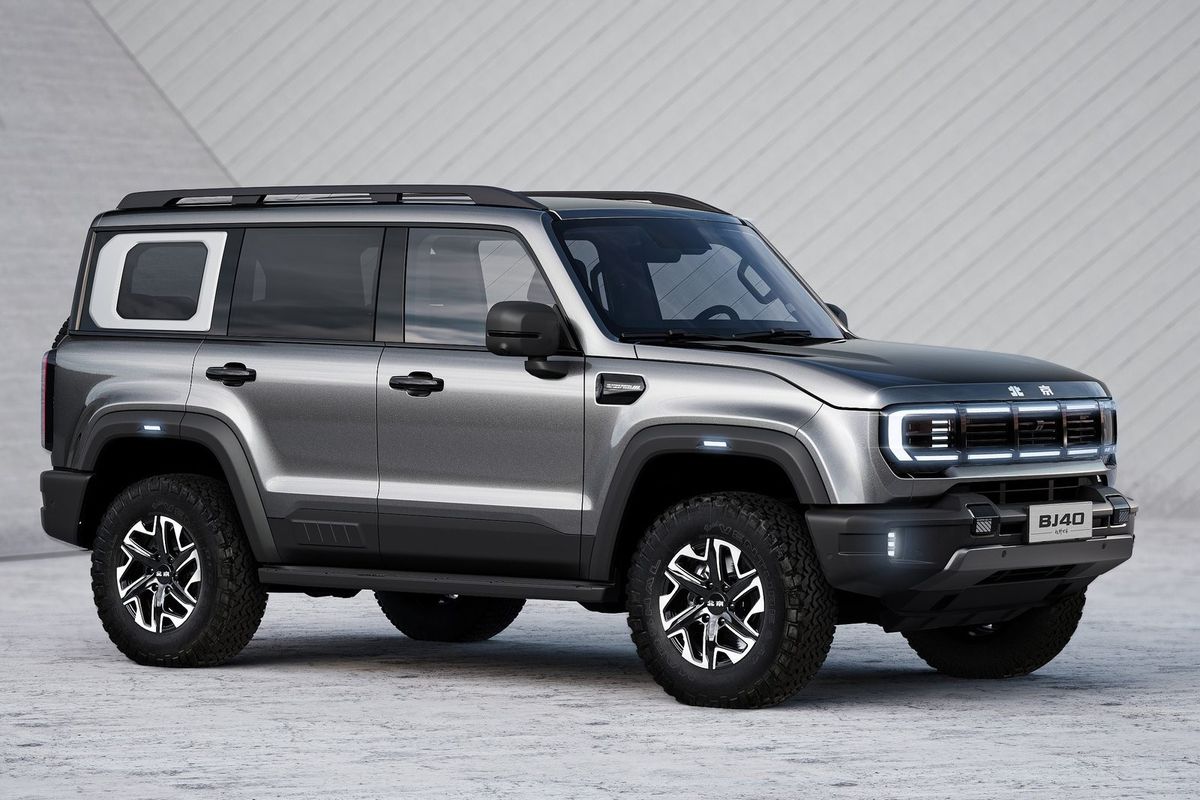
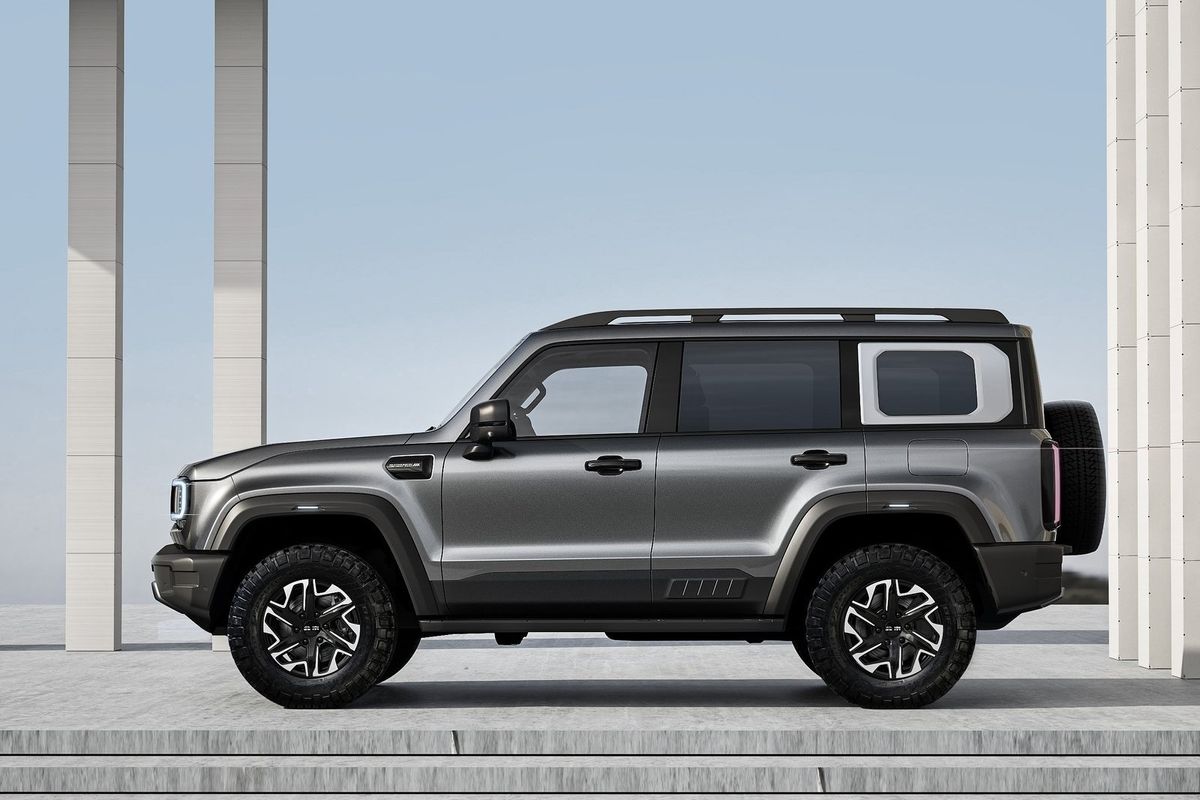
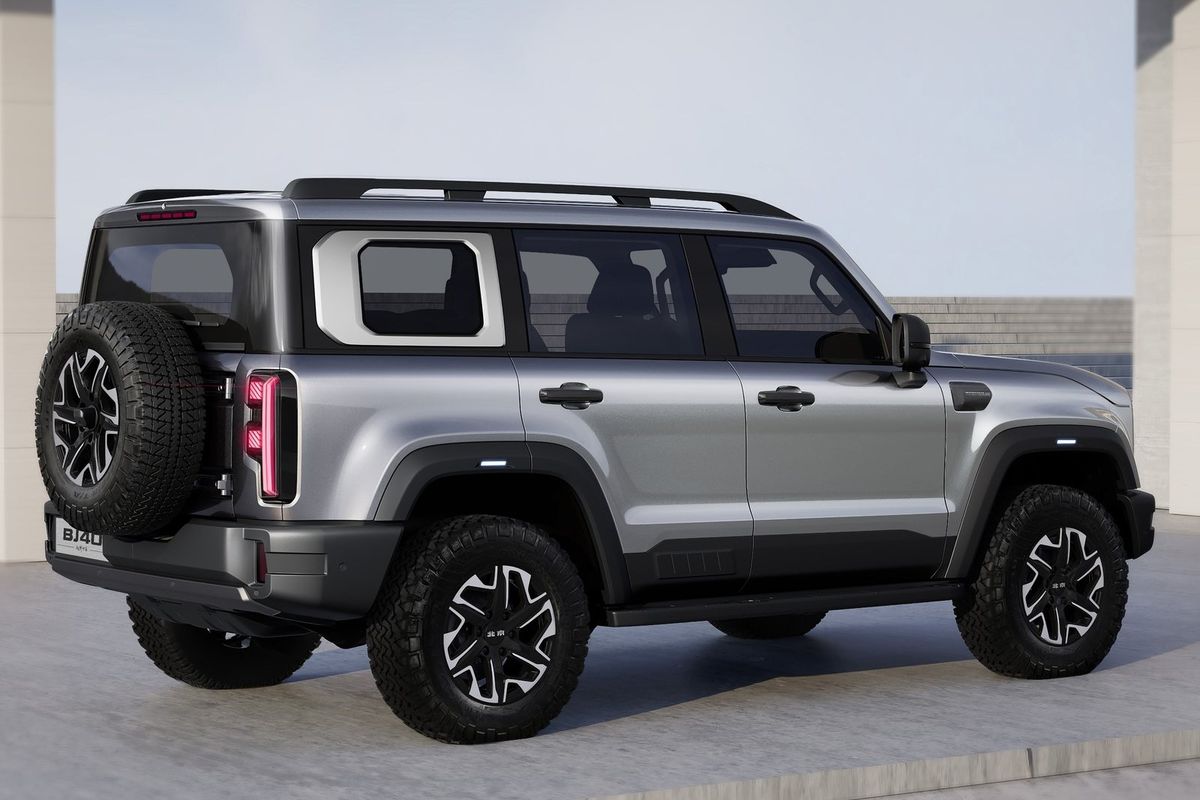
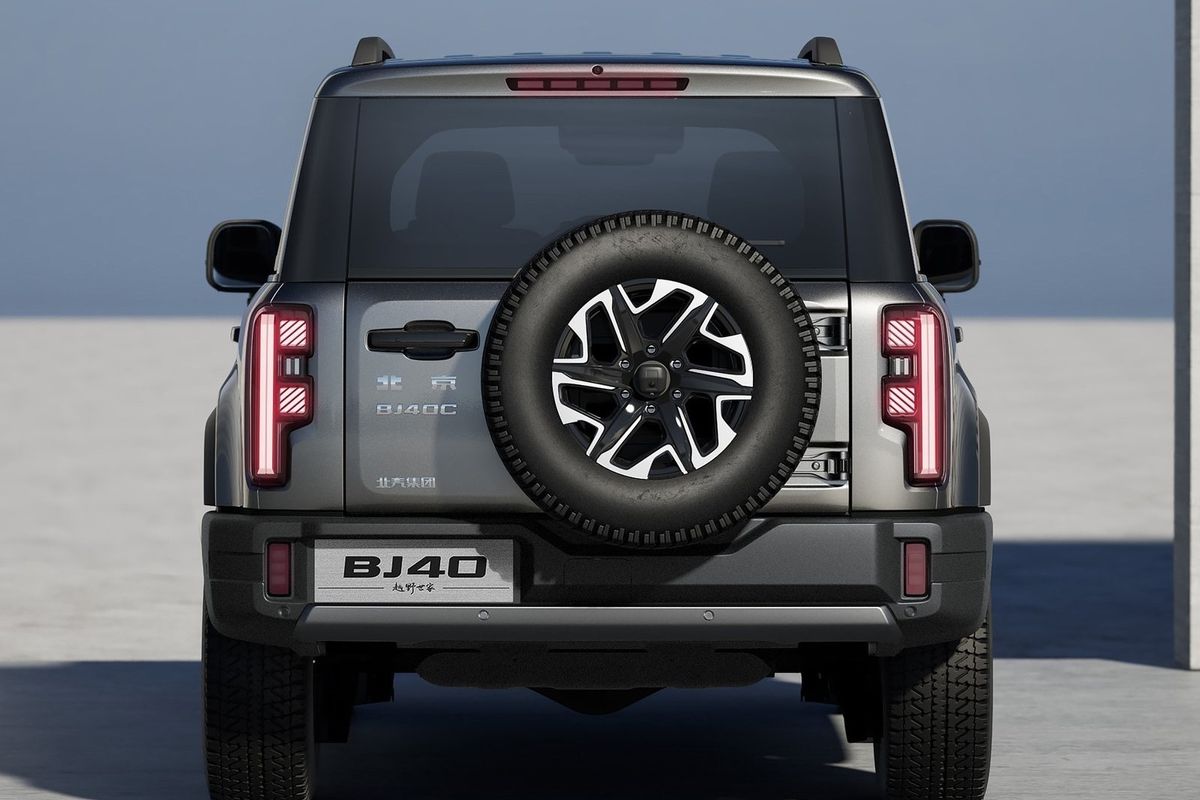
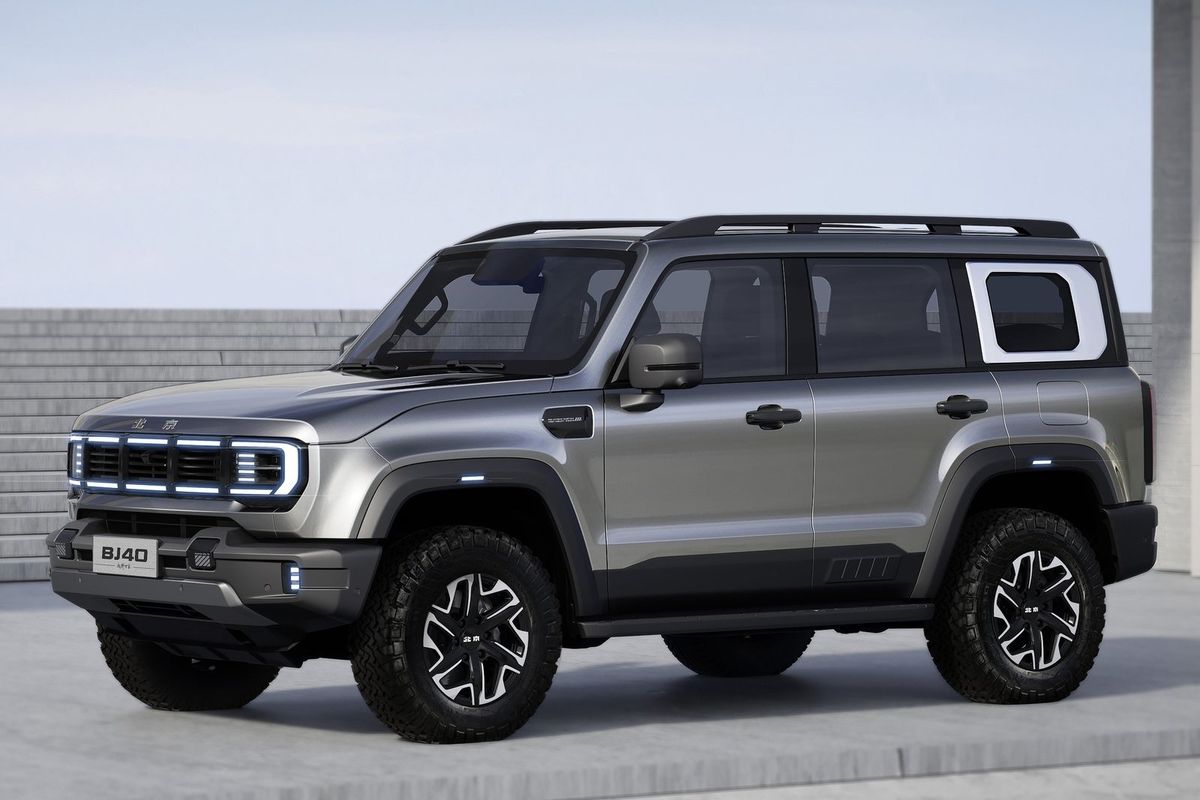
The 2nd-gen BAIC Beijing BJ40 has been launched, bringing modern looks and offroad capabilities to the segment.
Design-wise, the 2nd-gen BAIC Beijing BJ40 loses its Jeep-inspired looks, but now looks suspiciously like the Ford Bronco. Imitation being the most sincerest form of flattery, and all that… Under the skin is a ladderframe chassis (essential for offroad ability) and the vehicle is just under 4.8 metres in length. A wheelbase of 2 760 mm is claimed, meaning there is a degree of interior legroom for adults.
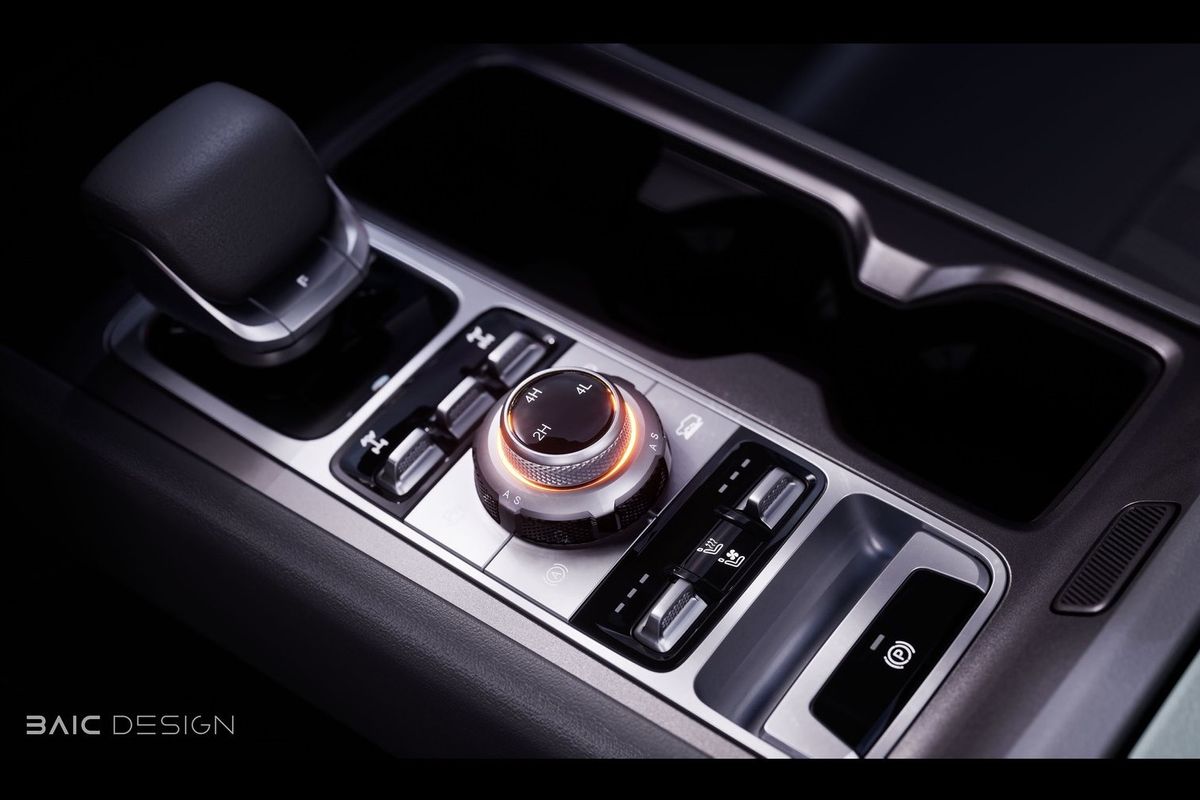
Being an offroader, it needs to have the go to match the show. A ground clearance of 230 mm, wading depth of 750 mm and approach/departure angles of 37 and 31 degrees respectively will surely get the nod of approval from the 4×4 fanatics. A low-range transfer case and offroad driving modes are also included.
The release didn’t mention any engine details other than “various powertrains including petrol, diesel and electric.” We suspect the 2nd-Gen BAIC Beijing BJ40 will use an updated version of a turbocharged 2.0-litre petrol with outputs pushed north of 160 kW and 320 Nm (based on the B40 powertrain).
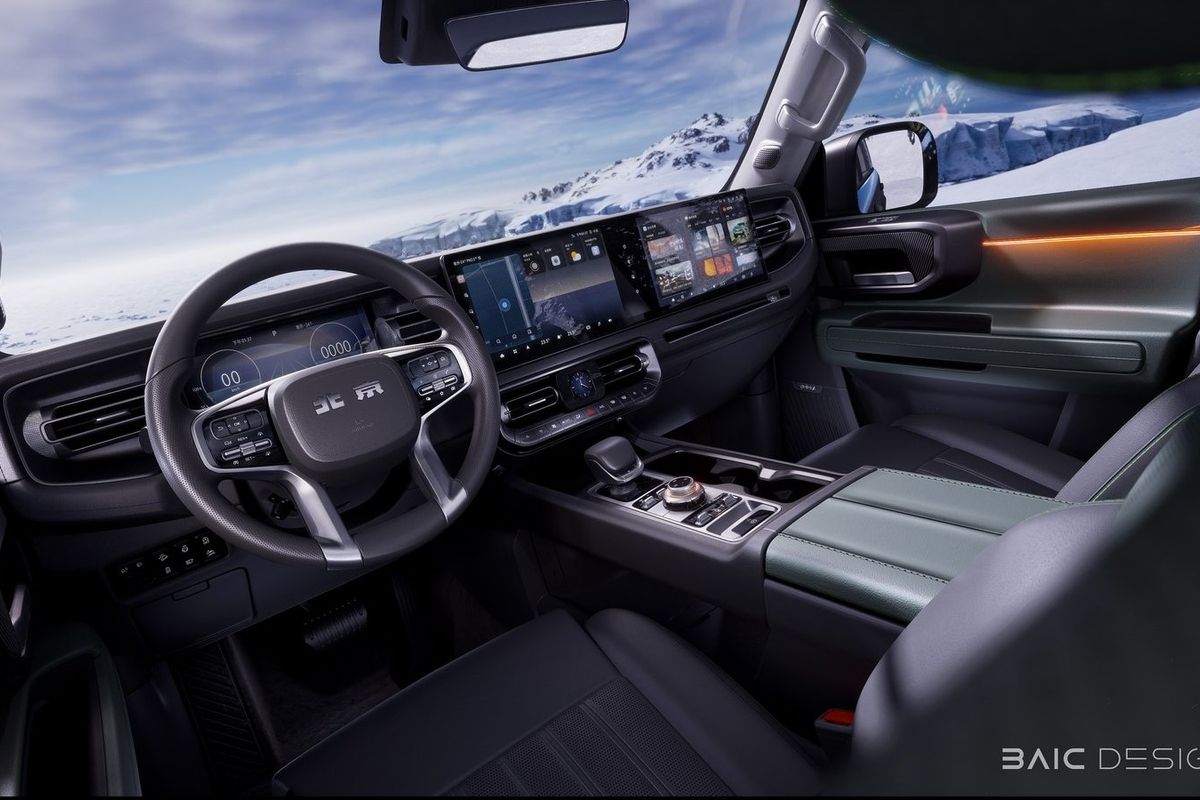
Climb inside and the 2nd-Gen BJ40 is said to introduce warmer and softer-feeling materials, and there are screens galore! Two 12.8-inch screens, along with a 10.25-inch digital cluster dominate the cockpit of the 5-seater offroad SUV.
Will the 2nd-Gen BAIC Beijing BJ40 come to South Africa?
At this stage, BAIC has not confirmed anything. However, it’s interesting to note the brand has a manufacturing facility located in the Eastern Cape, where it assembled an assortment of compact vehicles. We’ve already had a positive experience with its imported X55 SUV and we’re keen to see more from this brand.
5 fascinating facts from SA’s 2023 new-car sales figures
We’ve combed through South Africa’s new-car sales figures for the whole of 2023 and pulled out 5 fascinating bite-sized facts. Here’s what you need to know…
With South Africa’s new-car sales figures for 2023 tallied up, our focus has naturally fallen on the vehicles that led the sales charge. Indeed, we’ve already covered South Africa’s most popular passenger cars as well as examined Mzansi’s best- and worst-selling bakkies. Now, it’s time to turn our attention to a few fascinating morsels of information we’ve extracted from the 2023 figures.
Yes, we’ve combed through SA’s new-car sales statistics (as provided to Naamsa) – with a specific focus on the passenger-vehicle market – and selected 5 interesting titbits that jumped out at us. Let’s take a closer look…
1. Audi RS4 Avant as exclusive as Ferrari 296 GTB
Over the course of 2023, Audi registered 23 examples of its RS4 Avant. Technically, that makes the Ingolstadt-based firm’s 331 kW performance wagon just as exclusive as the Ferrari 296 GTB, which ended the year on the same tally. Interestingly, Ferrari’s R6.8-million V6-powered coupé peaked with 7 registrations in October 2023, while the RS4 Avant’s top effort was 3 units (a number reported in January, February and July). For the record, the Renault Mégane RS 300 Trophy likewise closed 2023 on 23 sales.
2. New Toyota Urban Cruiser took a tumble
In 2022, the previous-generation Toyota Urban Cruiser placed on the passenger-vehicle podium, taking 3rd position overall with a whopping 16 992 units sold. With stock of the old model running dry, the Japanese firm’s local division switched to the new, larger (and consequently somewhat more expensive) Urban Cruiser in the 2nd quarter of 2023. However, the fresh version couldn’t match its predecessor’s almost overnight success, with the nameplate’s total sales thus declining 64.7% year on year to 5 992 units, resulting in a 16th-place finish.
3. Ford Everest almost cracked the top 30
Despite a delay in the arrival of new Ford Everest stock early in the year (and the local line-up expanding only in April), the Blue Oval brand’s adventure SUV finished 2023 on a total of 3 112 units. That was enough to see it take 31st position as the highest-placed Ford passenger vehicle, with the since-discontinued EcoSport ending on 1 365 units, the new-to-SA Puma (which was marketed only in the final 4 months of the year) on 368 units and the outgoing Mustang on 244 units.
4. A single Haval H2 unit was somehow registered new
Remember the Haval H2? Well, this model was discontinued in South Africa way back in the opening quarter of 2021, when the Jolion arrived as its replacement. But somehow the long-since-departed H2 made a brief return to the sales charts in 2023, when a single unit was registered as new somewhere in Mzansi. For the record, the Jolion has proved eminently more successful than its predecessor, finishing 10th on the list of SA’s best-selling passenger vehicles last year with a total of 8 604 registrations.
5. Volkswagen Golf 8 twins almost cracked 1 000 units
Sales of the Volkswagen Golf 8 range – which locally comprises the Golf GTI and Golf R – picked up markedly in the 2nd half of the year, with the hot-hatch twins moving from 303 registrations in H1 to a final tally of 949 units (or an average of 79 sales a month). For the record, March 2023 was the low point (just 16 units were registered), while October represented the peak (149 units). Of course, it’s worth keeping in mind that the all-paw Golf R officially went on sale only at the end of April 2023.
2023/24 CarsAwards Finalists: Best Budget Hatch in SA
Meet the 3 finalists in the Budget Hatch category of the 2023/24 Cars.co.za Consumer Awards, sponsored by Absa! The winner of this #CarsAwards category will be announced on 29 February 2024.
The 2023/24 Cars.co.za Consumer Awards, sponsored by Absa is the 7th iteration of SA’s definitive consumer-driven automotive awards programme that aims to identify the best new vehicles on sale in Mzansi across 13 categories.
Judges first compiled a list of 65 semi-finalists – then trimmed it to 39 finalists. Following that, all #CarsAwards finalist vehicles were subjected to a rigorous 2-day test at Gerotek at the beginning of November 2023, after which they starred in the Cars.co.za Consumer Awards Roadshow at the Mall of Africa where, for the first time, the public could experience the cars – and meet the judges – in the flesh.
In these cash-strapped times, almost everyone is on a tight budget. Does buying an affordable new car therefore mean that you have to compromise on safety, technology and quality? No, not necessarily. The winner of this important #CarsAwards category must represent “as much new car as you can get for your money”. Value for money is important, as are running costs and other “common sense” considerations.
This category is guided by both eligibility factors and pillars of success.
Eligibility factors for this category include a list price between R250 000 and R350 000 at the time of semi-finalist voting (September 1, 2023). What’s more, eligible vehicles in this category must have an anti-lock braking system (ABS), dual front (or more) airbags and a service plan.
Pillars of success for this category include fuel economy, value for money, practicality and brand strength.
Best Budget Hatch in SA: CarsAwards Finalists
Renault Clio 1.0 Turbo Zen
The latest iteration of the Renault Clio took its time to get to South Africa and while some suggest the B-segment hatch segment is no longer that relevant, the Clio (and the other finalists) represent great value. The Clio is powered by a small-yet-punchy turbopetrol engine, boasts a modern cabin and has all the “bells and whistles” considered essential at this price point. Luggage space is surprisingly generous too.
It’s a delight to find a spacious, well-thought-out and generously equipped budget hatchback that doesn’t cost a fortune to buy or own. Although it still utilises the underpinnings of its predecessor, the 2nd-gen Baleno remains one of very few “oversized” small hatchbacks that offer good rear legroom; it’s well-made, suitably comfortable, has a proven, fuel-frugal powertrain and is renowned for its reliability.
While it may be a clone of the Suzuki Baleno, the Starlet has a few tricks up its sleeve, such as Toyota’s renowned after-sales backup, a strong resale proposition and the support of the widest vehicle dealer network in Mzansi. The latest iteration of the model incorporates more obvious aesthetic differences to the Baleno, but the Toyota also impresses with its abundant cabin space, great engine and good value.
The winners of the 2023/24 Cars.co.za Consumer Awards, sponsored by Absa (as well as the recipient of the prestigious Brand of the Year title) will be named on 29 February 2024.
Reports out of China say a 2nd-generation Haval H9 will be revealed in the first quarter of 2024. Here’s what we know about the 7-seater family SUV.
The report from Chinese publication Autohome shared some extensive details about the new model. As a reminder, the first-generation Haval H9 arrived in South Africa back in 2018, priced at a competitive R599 000. While other Haval products enjoyed credible sales, the H9 never really troubled the established 7-seater bakkie-based rivals like the Toyota Fortuner and Ford Everest, and it departed after a few years, despite a facelift being announced in 2021 which never came to SA.
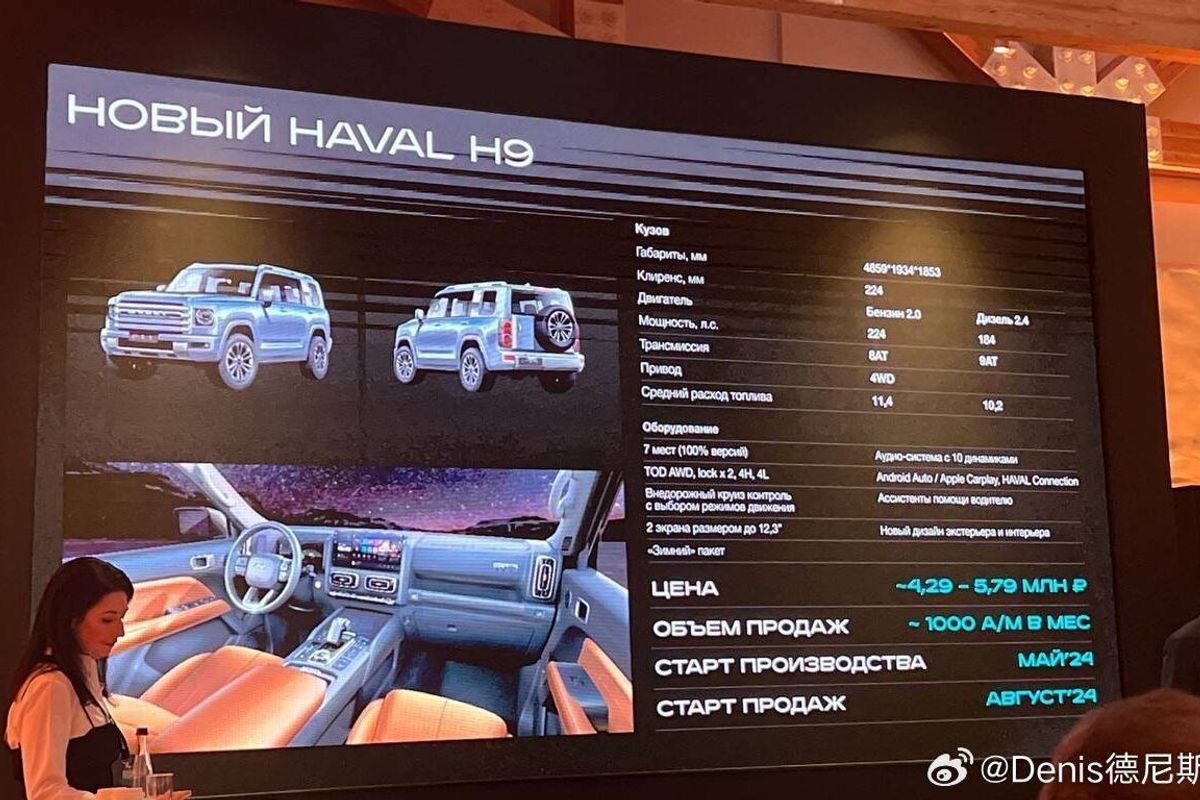
Autohome has shared information on an all-new 2nd-generation Haval H9 that’s in development and going into production as soon as March 2024. The image below was taken at a dealership briefing in Russia that shows some design elements, powertrain information and trim levels. One of the big criticisms of the first-gen H9 was the lack of a diesel engine as the punchy turbocharged petrol engine was on the thirstier side.
The good news is there will be a 2.4-litre turbocharged diesel 2-wheel drive model and a 2.0-litre turbocharged petrol all-wheel drive derivative. Both engines are four-cylinder units and outputs of 137 kW and 180 kW are claimed for the diesel and petrol engines, respectively.
The petrol-powered 4×4 model will have an on-demand all-wheel-drive system complete with front and rear differential locks as well as a low-range transfer case. Offroad modes like Mud, Snow and Sand are expected. The 2nd-generation Haval H9 is expected to be built on a ladder-frame chassis and given the Tank sub-brand’s rising popularity, there should be some overlap in terms of design and interior appointments.
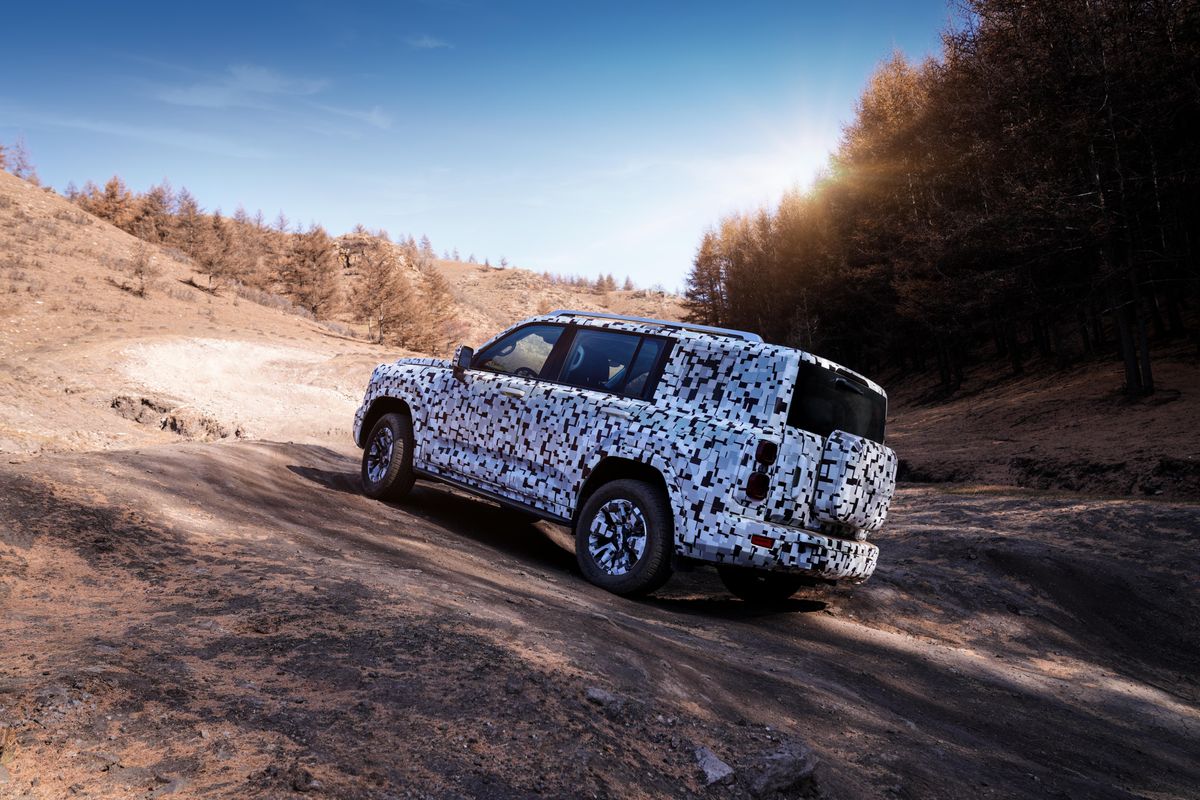
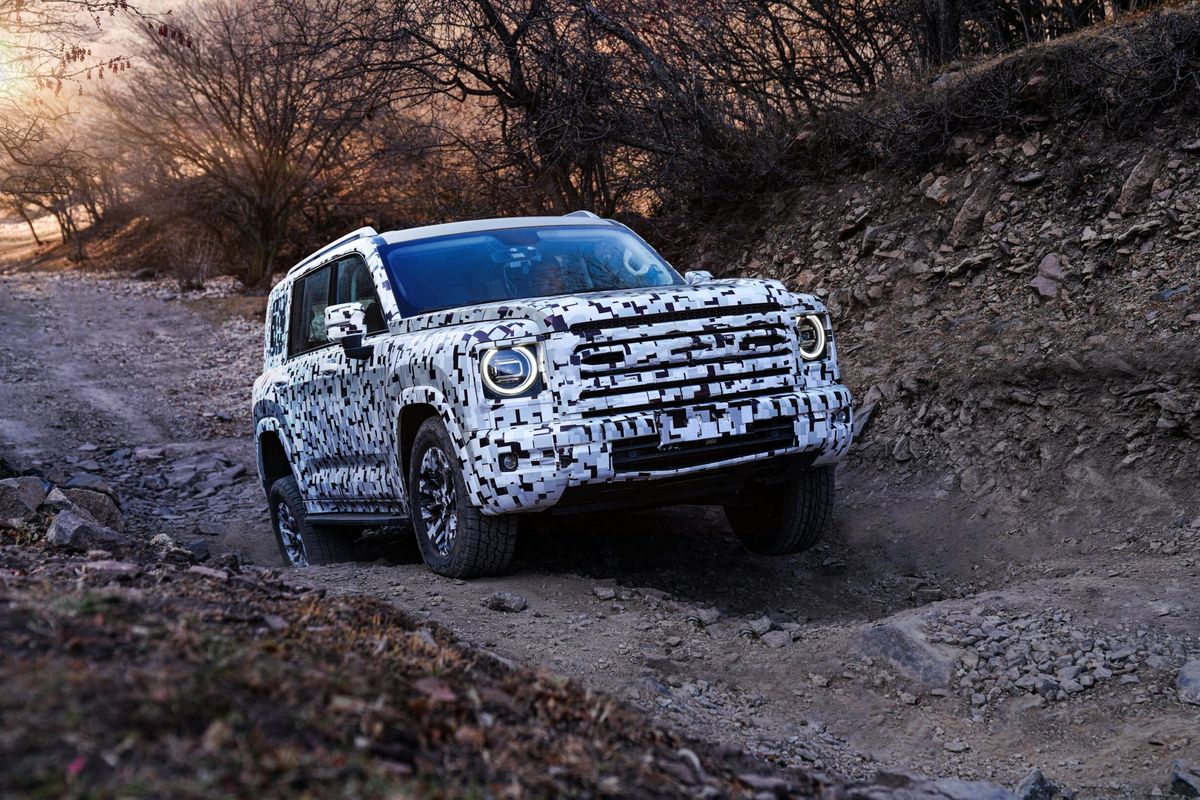
There are no official photographs of the new 2nd-Generation Haval H9 yet. Instead, Autohome has managed to secure some official-looking pictures of a still-camouflaged prototype, showing off some details like the headlights and offroad capabilities.
Will the 2nd-Generation Haval H9 come to South Africa?
At this stage it is too early to confirm anything as there’s no sign of other right-hand drive markets like Australia securing some units for retail. However, given South Africa’s appetite for Haval’s products, we would not be surprised if this new H9 was to arrive in SA showrooms.