20 Years of World Car Awards – Which Brands Have Won the Most Trophies?
With the first round of voting in the 20th edition of the World Car Awards imminent, let’s reflect on the past 2 decades of this prestigious motoring awards programme.
I remember the day when the former (and late) editor of CAR magazine South Africa, John Wright, called all the magazine’s editors into his office (in Pinelands, Cape Town) to share the news that he had been selected as the (then) only South African on the new World Car Awards jury… The World Car Awards was a big deal from the outset, as John was a studious man not easily influenced by smoke and mirrors. He later handed over the jury position to his successor John Bentley, who in turn then passed it on to me.
Mazda’s current-gen MX-5 was named the 2016 World Car of the Year.
So, from around 2007 (if I recall correctly), I have been part of this process, apart from a 2-year break when I joined the other side of the motor industry from 2013 to 2015 (when Cars.co.za content editor Mike Fourie served as South Africa’s World Car Awards judge). These days, however, there are 3 South Africans on the panel: me, Lerato Matebese and Brenwin Naidu (both of whom are #CarsAwards judges).
I looked back at the evolution of this awards programme recently and it was interesting to note how it has kept pace with a rapidly changing industry. In the first year (2004), there was only one winner (Audi’s A6) and I remember us discussing it as a team in Cape Town that more categories would be nice. The very next year, the organising committee added 3 more categories (Performance, Green and Design).
Hyundai design head SangYup Lee was named World Car Awards’ 2023 Person of the Year
These days there are also Luxury, Electric and Urban categories, as well as a Person of the Year. The Awards’ trophies were recently redesigned by none other than Ian Callum, former design chief at JLR.
The brands with the most wins
The brand that won the very first trophy – Audi – is also the brand with the most silverware overall (11 in total). It won the overall (major) trophy twice in the past 20 years.
Audi won the World Performance Car award in the 2022 iteration of the World Car Awards.
Mercedes-Benz has won 9 trophies in total, and the overall trophy once. The third step on the podium is shared by 2 other German brands, BMW and Porsche, with 8 trophies each – the former has also taken the overall spoils once (with the E90-generation 3 Series business class sedan, in 2006).
The 4th-gen Mercedes-Benz C-Class, which was produced in East London, won the 2015 World Car of the Year title.
Another very successful German brand is Volkswagen, which has won 7 times in total but, importantly, has by far the most overall wins (5), the most recent being in 2021, with the ID.4 electric crossover.
Jaguar has had a good run at the Awards, with 6 trophies in total, including 2 overall wins. If you add the 3 trophies from Land Rover/Range Rover, then JLR has indeed been a strong contender throughout!
The VW ID.4 electric crossover, which won the World Car of the Year title in 2021, is heading for Mzansi.
In recent years, the Awards have become dominated, some would say, by the Korean brands Kia and Hyundai, with the latter standing on 6 trophies in total, two of those being overall wins. Kia has three trophies in its cabinet, one being an overall win, with the Telluride luxury off-roader in 2020.
Kia won the World Performance Car title for the first time last year, courtesy of the EV6 GT.
What’s next for the World Car Awards?
The 100-odd international journalists on the World Car Awards panel will cast their ballots in the first round of voting for this year’s Awards during the next few weeks.
The list of eligible vehicles again reflects a rapidly changing marketplace, with a large number of electric vehicles and also Chinese brands. No Chinese brand has ever won a World Car Awards trophy.
What To Buy: 5 Good Used Compact SUVs to Buy Under R200k
If you’re in the market for good used compact SUVs or small crossovers with a budget of R200 000 or less, what are the best options to consider? This article highlights 5 worthwhile used compact SUV models that are listed on Cars.co.za right now!
Compact SUVs (also known as small crossovers or compact family cars) have become hugely popular because they offer enhanced practicality by virtue of their boxy designs and higher ground clearance; they’re near-ideal urban, family-friendly cars that can also traverse dirt roads to far-off destinations.
With new car prices on the rise and household incomes under tremendous pressure, many consumers are finding it difficult to justify a pricey new car purchase. Instead, many car buyers are scouring the used car market in search of a suitable used vehicle.
A major benefit of buying a used car is that you avoid the brunt of depreciation. A new car loses between 9% and 11% of its value the moment it’s driven off the showroom floor and up to 40% of the car’s value is lost in the first 12 months of ownership, according to a report published by the AA.
It stands to reason that buying a used car between 2 and 8 years old is a smart financial choice, provided that you acquire a good used car at the right price.
This article identifies 5 good used compact SUVs/small crossovers to consider buying if you have up to R200 000 to spend. Our list includes models from 2018 to 2024 with mileages of below 75 000 km.
5 Good Used Compact SUVs to consider for under R200 000
Renault Duster Diesel
We Like: Performance, efficiency, practicality, rugged appeal, good ride quality
There’s a reason why so many Renault Dusters are seen on South African roads. The 2018 Renault Duster and indeed its predecessor, particularly the turbodiesel derivative, an excellent choice in the sub-R200k used car range. The Duster has long been praised for its excellent blend of performance and efficiency, as well as its rugged and practical appeal.
The Duster’s 1.5-litre turbodiesel engine is offered in two states of tune (2018-present) with the Duster 4×2 offering 66 kW and 210 Nm of torque while a more powerful derivative offers 80 kW and 250 Nm equipped with an EDC transmission. The Duster AWD derivative, however, produces 80 kW and 260 Nm and is exclusively available with a 6-speed manual transmission.
We Like: Nippy performance, fuel economy, solid build quality, good specification
We Don’t Like: Steering column not reach adjustable, split-folding rear seat only on Glide and N Line
Considered to be a small SUV/compact crossover, the Hyundai Venue came to market in 2019 (it’s a cousin of the Kia Sonet) and, in a short space of time, it has stamped its mark on the local automotive landscape and (in January 2024) one of the most popular compact SUVs on sale in South Africa.
A 1.0-litre, 3-cylinder turbopetrol is found under the bonnet delivering 88 kW and 172 Nm of torque and is paired with either a 6-speed manual or 7-speed dual-clutch transmission. This is certainly the engine to aim for if you are buying a used Hyundai Venue, but the firm also offers a naturally-aspirated 1.2-litre 4-cylinder petrol engine delivering 61 kW and 115 Nm which is paired with a 5-speed manual gearbox.
Note that the Venue is offered in Motion, Fludi and range-topping N Line trim. While used stock under R200k is fairly limited (as few as 7 at the time of writing), it’s worth keeping the Venue on your SUV shopping radar.
We Like: Performance, fuel economy, soft-roading ability
We Don’t Like: Some cheap cabin materials, limited load space,design quirks (side-hinged tailgate)
If you read our highly informative Ford EcoSport (2013-2023) Buyer’s Guide you’ll learn that the outgoing Ecosport is far from being a perfect car, but certain derivatives are well worth considering as a used purchase. With over 10 years in the market, there are numerous examples available, but for this article, we advise that you focus your attention on the turbodiesel-powered Ecosport Ambiente and the Romanian-built EcoSport 1.0T EcoBoost Trend / Titanium (2018-2023).
The 1.5-litre EcoSport turbodiesel is praised for delivering good performance and returns welcome fuel consumption and offers 66 kW and 205 Nm and is paired with a 5-speed manual transmission.
As for the 1.0-litre 3-cylinder turbopetrol (the EcoBoost), it packed some punch with 92 kW and 170 Nm, but note that it’s not as frugal as its turbodiesel-powered counterpart. This engine variant, however, does afford buyers the choice between a 6-speed manual gearbox and a 6-speed automatic transmission.
We Like: Upmarket look and feel, honest performance, fuel economy, good build quality
We Don’t Like: Small load bay, starting to feel its advanced age
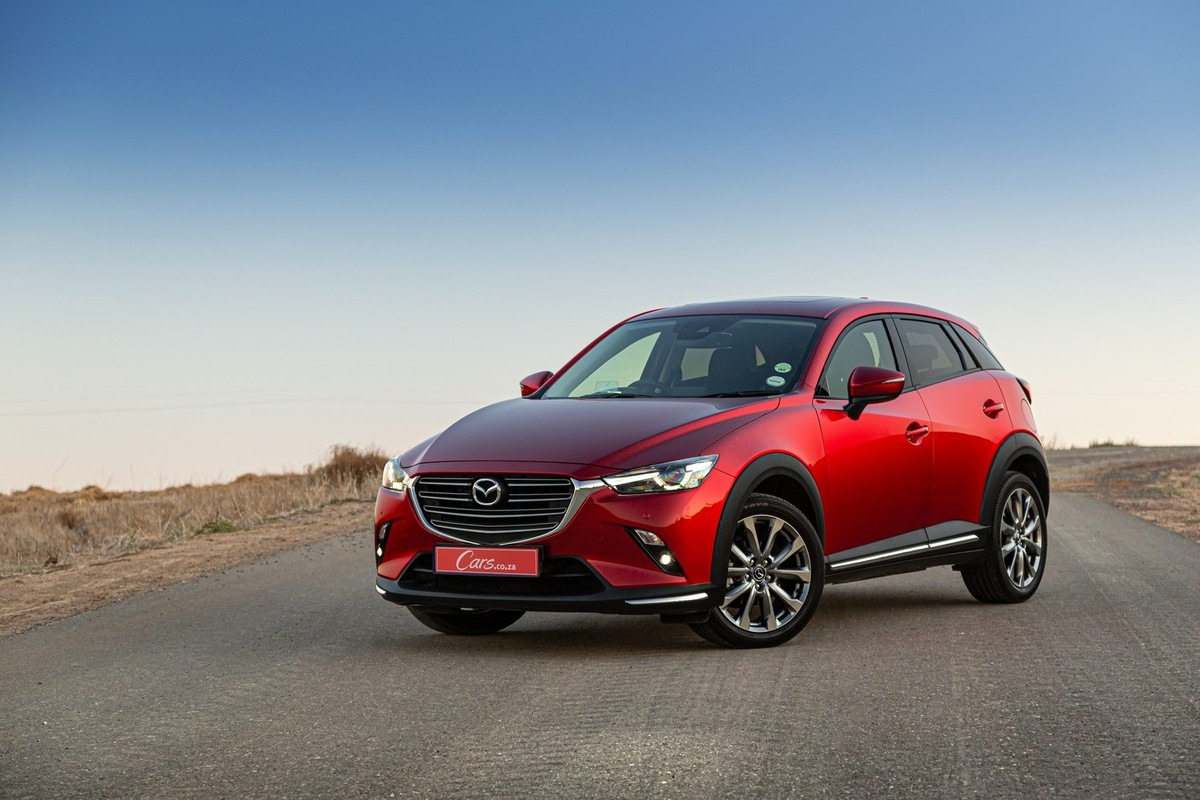
When the Mazda CX-3 arrived around 2015, it stood out from its rivals thanks to svelte styling – inside and out. Now, almost 10 years later and following numerous updates, the CX-3 is ageing relatively well, but it is one of the smaller models in its class because it’s based on the long-serving Mazda2 supermini.
Granted, there aren’t many low mileage examples available under R200k, but they are out there and, if you can get your hands on one, you’re unlikely to be disappointed unless you require generous load-bay capacity. The CX-3 is powered by a naturally-aspirated 2.0-litre petrol engine with peak outputs of 115 kW and 206 Nm of torque and is paired with a 6-speed automatic or 6-speed manual transmission.
We Like: Performance, efficiency, practicality, on-road refinement
We Don’t Like: So-so interior quality, comprehensive maintenance history is a must.
When the new Nissan Qashqai arrived in South Africa relatively recently (in 2022), the Japanese marque’s compact family car moved upmarket, but if you shop carefully to find an example that’s been well maintained, the popular previous-gen Qashqai still represents a worthwhile used car purchase.
The facelifted Qashqai arrived on local soil in 2018 with an improved cabin and enhanced safety features. Its 1.2-litre turbopetrol engine delivers good overall performance with 85 kW and 190 Nm of torque on offer, coupled with a continuously-variable transmission (CVT). The turbodiesel-powered Qashqai with its 81 kW/260 Nm turbodiesel engine and 6-speed manual transmission is also worth considering.
While there are currently only a handful of low-mileage (below 75 000 km) pre-2023 Qashqais on offer under R200k, they represent a good purchasing proposition. Alternatively, consider a much older 1st-gen Qashqai; our handy Buyer’s Guide (2007–14) will assist you in making a sound used car buying decision.
The final figures! SA’s best- and worst-selling bakkies of 2023
We’ve sifted through the sales figures, done some maths and identified South Africa’s best- and worst-selling bakkies of 2023. Here’s where your preferred pick-up placed…
Right, with 2023 now firmly in the rear-view mirror, it’s time to tally up the sales figures and identify South Africa’s best- and worst-selling bakkies for the year. For the record, Mzansi’s light-commercial vehicle segment ended 2023 on 151 499 units, representing an encouraging year-on-year gain of 11.6% (bearing in mind the total market was flat at 532 098 units, just 0.5% up on 2022’s effort).
So, which bakkie was the undisputed sales king of South Africa (no prizes for guessing that one)? And which pick-up was the least popular overall? Well, let’s break down the figures from the past 12 months and answer those very questions and more…
SA’s 5 top-selling bakkies in 2023
More than 37 000 examples of the Toyota Hilux were sold in Mzansi last year.
The order of the top 5 was unchanged compared to 2022, though there were some appreciable sales gains to report. For instance, not only was the Toyota Hilux again South Africa’s best-selling bakkie – not to mention Mzansi’s most popular vehicle overall – but the Japanese stalwart improved its tally 16.1% year on year to a whopping 37 382 units (keep in mind its 2022 performance was somewhat hamstrung by the devastating KwaZulu-Natal floods that saw Prospecton shuttered for a few months).
Meanwhile, the Ford Ranger again took the runner-up position, though sales of the Silverton-manufactured bakkie rocketed 42% year on year to 24 618 units. While that put the Blue Oval brand’s contender a considerable 12 764 units behind the Hilux, it also saw the gap to the 3rd-placed Isuzu D-Max widen to 5 656 units (in 2022, just 280 units separated these bakkies). For the record, the Struandale-made bakkie improved its performance 11.1% year on year to 18 962 units.
And what about the Nissan NP200? Well, sales of South Africa’s only half-tonne bakkie fell 1.1% year on year to 12 721 units. As a reminder, production of the NP200 at Nissan’s Rosslyn facility is due to wrap up in March 2024, with no immediate replacement lined up. Finally, the KwaZulu-Natal-assembled Mahindra Pik Up again completed the top 5, with a virtually unchanged tally of 8 063 units (+0.2%).
Bottom half of the top 10 in 2023
Sales of the Volkswagen Amarok surged 76.6% year on year in 2023.
Despite suffering a 24.2% year-on-year decline to 4 596 units, the Rosslyn-manufactured Nissan Navara managed to retain 6th position. However, the GWM P-Series was right on its tail in 7th position with 4 462 units (+6.7%), climbing a place compared with its 2022 performance.
The Toyota Land Cruiser 79 likewise gained a spot compared with the previous year, with sales of the seemingly evergreen contender growing 13% to 3 975 units. Interestingly, local registrations of the 8th-placed 70 Series bakkie tapered off towards the end of the year, likely due to the fact that the refreshed model – complete with the long-awaited option of the Japanese firm’s familiar 2.8-litre, 4-cylinder (GD-6) turbodiesel engine and a 6-speed automatic transmission – will soon launch in Mzansi.
The most substantial year-on-year improvement was registered by the Volkswagen Amarok – now built by Ford alongside the Ranger – with sales of this model surging 76.6% to 3 348 units. In the process, the Wolfsburg-based firm’s bakkie climbed a spot to ninth overall. The GWM Steed thus had to settle for the final position in the top 10 (down 3 rankings), suffering the largest year-on-year sales decline (falling 74.7%) to finish on just 1 142 units.
5 bakkies at the foot of the 2023 sales charts
The Mazda BT-50 was SA’s slowest-selling bakkie in 2023, with just 69 units registered.
So, what about the bakkies languishing at the foot of the table? Well, each of these slowest-selling models failed to crack 4 figures for the year, though the 11th-placed Mitsubishi Triton at least moved up a spot, with its registrations growing 8.3% year on year to 729 units.
Meanwhile, sales of the Mahindra Bolero declined by a considerable 57% (the local range was rationalised to just a single derivative in 2023) to 349 units, which saw the Indian-built bakkie slip a ranking compared with 2022. Despite a 19.5% drop in local registrations, the Peugeot Landtrek (343 units) retained 13th position.
The Jeep Gladiator – a facelifted version of which is scheduled to touch down in the 2nd half of 2024 – enjoyed year-on-year growth of 73.3% to finish on 208 units (and gain a spot in the process), while registrations of the Mazda BT-50 plummeted 56.1% in 2023, with a mere 69 units sold during the year.
*For the record, we’ve focused on traditional bakkies here, excluding models such as the Hyundai H100, Kia K Series, Volkswagen Transporter Pick Up and Suzuki Super Carry. We were also not able to include the JAC T6, T8 and T9 ranges as the Chinese automaker reported only a combined number (which we tallied up to 647 units).
2023/24 CarsAwards Finalists: Best Entry-Level Hatch in SA
Meet the 3 finalists in the Entry-Level Hatch category of the 2023/24 Cars.co.za Consumer Awards, sponsored by Absa. The winner of this #CarsAwards category will be announced on 29 February 2024.
The 2023/24 Cars.co.za Consumer Awards, sponsored by Absa is the 7th iteration of SA’s definitive consumer-driven automotive awards programme that aims to identify the best new vehicles on sale in Mzansi across 13 categories.
Judges first compiled a list of 65 semi-finalists – then trimmed it to 39 finalists. Following that, all #CarsAwards finalist vehicles were subjected to a rigorous 2-day test at Gerotek at the beginning of November 2023, after which they starred in the Cars.co.za Consumer Awards Roadshow at the Mall of Africa where, for the first time, the public could experience the cars – and meet the judges – in the flesh.
The entry-level hatch segment is highly competitive and, even though budgets are tight and fuel prices keep rising, buying an affordable car doesn’t have to mean that you should compromise on safety, tech and quality. The winner of this category represents “as much good car as possible for the money”.
Value is very important, as are running costs and all other pertinent “common sense” considerations. The price cap for this category is set at R250 000.
This category is guided by both eligibility factors and pillars of success.
Eligibility factors include a list price not exceeding R250 000 at the time of semi-finalist voting (September 1, 2023), an anti-lock braking system (ABS), dual front airbags and a service plan.
Pillars of success for this category include fuel economy, value for money (the standard features the better), practicality and brand strength.
Entry-Level Hatch: CarsAwards Finalists
Renault Kiger 1.0 Zen
Renault SA has shifted its product focus to crossovers, which has seen the Indian-made Kiger achieve remarkable sales success in the new-vehicle market. The keenly-priced Kiger offers attractive crossover-inspired looks, combined with a modern cabin and a healthy dose of practicality. The 1.0 Zen derivative is powered by a 1.0-litre petrol engine that delivers a good balance of performance and economy.
Budget-car specialist Suzuki has 2 finalists in this category, the first of which is the Celerio. It ticks the boxes for a value-for-money model with surprising cabin spaciousness, a relatively long spec list and a fuel-efficient petrol engine. However, could it be positioned too close to its Swift sibling? The Celerio is backed by 2-time #CarsAwards Brand of the Year winner Suzuki SA’s excellent after-sales support.
The Suzuki Swift is the Japanese firm’s most popular model in the new-vehicle market and the brand has notably won the Budget Car category of the #CarsAwards 4 times (3 times with a Swift derivative). Plus, in the 2021/21 programme, the Swift 1.2 GL was named the winner of the Entry-Level Car category.
The Swift is technically a B-segment hatchback (which makes it a more substantial car than most entry-level offerings) and in 1.2 GLX guise, the Swift offers a good spread of standard features while delivering a pleasing driving experience, nippy performance and miserly fuel consumption. The Swift represents excellent value; its 2-year service plan is a plus, but the 5-year/200 000 km warranty is the clincher.
The winners of the 2023/24 Cars.co.za Consumer Awards, sponsored by Absa (as well as the recipient of the prestigious Brand of the Year title) will be named on 29 February 2024.
10 best-selling bakkies in South Africa: December 2023
Bakkie fans, we have the all-important figures! Here’s your monthly look at South Africa’s best- and worst-selling bakkies, this time for December 2023…
In December 2023, South Africa’s new-vehicle market suffered its 5th consecutive year-on-year decline, dropping 3.3% to 40 329 units. The light-commercial vehicle (LCV) segment likewise experienced a fall, with sales in this segment of the market slipping 2.9% year on year to 10 181 units.
So, what happened on the list of South Africa’s best-selling bakkies? Well, though the Prospecton-built Toyota Hilux wasn’t able to breach the 3 000-unit mark this time, it was nevertheless again at the very top of the pile, completing the year with a December total of 2 858 registrations.
The Silverton-made Ford Ranger (1 936 units) and Struandale-manufactured Isuzu D-Max (1 023 units) both likewise saw a month-on-month drop in sales, though managed to retain 2nd and 3rd place, respectively.
Sales of the Rosslyn-produced Nissan NP200 tapered off markedly to 749 units (keep in mind production of SA’s only half-tonne bakkie is scheduled to end in March 2024) but it again took a comfortable 4th position. The KwaZulu-Natal-assembled Mahindra Pik Up (473 units), meanwhile, held steady in 5th.
The Ford-built Volkswagen Amarok (358 units) climbed a place to 6th, forcing the Nissan Navara (337 units) down to 7th position. The GWM P-Series (228 units) stayed in 8th, while the Toyota Land Cruiser 79 (176 units) was again 9th. As a reminder, a refreshed version of the latter – complete with the option of the Japanese firm’s familiar 2.8-litre, 4-cylinder GD-6 turbodiesel engine and an automatic transmission – will soon launch in Mzansi.
Finally, the JAC T-Series – the Chinese automaker unfortunately reports only a combined figure for its T6, T8 and new T9 line-ups – completed the table with 80 registrations.
Best of the rest in December 2023: bakkies outside the top 10
The GWM Steed fell from the top 10 in December 2023.
So, which bakkies didn’t crack the top 10 in December 2023? Well, the GWM Steed was best of the rest with 50 registrations, finishing ahead of the Peugeot Landtrek (31 units). Though the latter model is currently imported from China, local production is due to start in Coega (near Gqeberha in the Eastern Cape) by “early 2026”.
Then came the under-appreciated Mitsubishi Triton (28 units), which slotted in ahead of the Mahindra Bolero (24 units). The Jeep Gladiator (a facelifted version is likely to make local landfall only towards the end of 2024) ended December 2023 on 6 units, while not a single Mazda BT-50 was registered during the month.
10 best-selling bakkies in South Africa for December 2023
SA’s best-selling brands and vehicles in December 2023
South Africa’s new-vehicle market registered its 5th consecutive year-on-year decline in December 2023, closing out the calendar on a negative note. Here’s your overview, including Mzansi’s most popular brands, best-selling vehicles and more…
The figures are (finally) in: December 2023 was the South African new-vehicle industry’s 5th consecutive month of year-on-year decline. Yes, the closing month of the year saw the market register a total of 40 329 units, translating to a 3.3% drop compared with the corresponding month in 2022.
Furthermore, December 2023’s final tally represented a month-on-month fall of 10.5% compared with November 2023’s effort of 45 075 units (though it’s worth keeping in mind there are traditionally fewer trading days in the final month of the year).
Out of the total reported industry sales in December 2023, Naamsa estimated that 35 483 units (or 88%) represented registrations via the dealer channel, while 8.7% were sales to the vehicle-rental industry, 2.2% to government and 1.1% to industry corporate fleets.
In December 2023, Mzansi’s new passenger-vehicle market registered a year-on-year decline of 3.9% to finish on 27 606 units. The light-commercial vehicle segment likewise experienced a marginal drop, ending the month on 10 181 units (2.9% lower than the same month in 2022). As was the case in November, the export market showed some growth, increasing by 1.2% to 26 612 units.
Overall in 2023, SA’s new-vehicle sales increased by only 0.5% year-on-year, with 532 098 units sold across South Africa. Naamsa said it would “likely now take 4 years to recover to the pre-pandemic level of 536 612 units in 2019”. Meanwhile, total exports in 2023 of 396 290 units reflected a 12.7% gain compared with 2022, exceeding the previous record of 387 092 units achieved in 2019, according to Naamsa.
Meanwhile, Brandon Cohen, Chairperson of the National Automobile Dealers’ Association (NADA), said the “reported sales figures for December and January tend to get blurred with the different reporting strategies” of the various manufacturers in terms of reporting cut-off dates.
“So, it is usually best to wait for the end of January when one can combine the December and January figures and divide them by two to get an accurate picture of the end-of-year trends,” suggested Cohen.
“Overall, last year, dealers had to cope with tough market conditions that were, arguably, the toughest since 2007 or even 1998 in terms of economic pressure on consumers. This led to some overstocking, placing importers, distributors, and manufacturers under significant pressure to facilitate stock movement. Consequently, efforts were made to enhance market activity through year-end incentives, ensuring sustained sales momentum,” he added.
New-vehicle sales summary for December 2023
Aggregate new-vehicle sales of 40 329 units decreased by 3.3% (1 392 units) compared to December 2022.
New passenger-vehicle sales of 27 606 units decreased by 3.9% (1 131 units) compared to December 2022.
New light-commercial vehicle sales of 10 181 units decreased by 2.9% (303 units) compared to December 2022.
Export sales of 26 612 units increased by 1.2% (317 units) compared to December 2022.
10 best-selling automakers in SA in December 2023
A strong performance from the i20 helped Hyundai climb back to 4th position.
Yes, Toyota ended the year exactly where it started: right on top. In December 2023, the Japanese giant registered 11 200 units in Mzansi, again finishing miles ahead of the 2nd-placed Volkswagen Group (5 274 units). Once more, Suzuki completed the podium, despite its sales slipping to 3 355 units (23.2% down on November’s showing and its lowest effort of what turned out to be a record year for the brand).
Meanwhile, Hyundai (2 569 units) climbed 2 positions to claim 4th in December, forcing Ford (2 489 units) down to 5th place and Nissan (1 900 units) to 6th. Renault wasn’t far behind in 7th position, with its tally of 1 864 sales seeing it fall just 36 units short of its alliance partner.
China’s Haval (1 480 units) moved up a spot to 8th, while Isuzu suffered a 32% month-on-month decline to end December on 1 434 units (sliding 2 rankings in the process). Finally, Kia again closed out the table, finishing 2023’s ultimate month on 1 415 units.
Outside of the top 10, Chinese firm Chery (1 401 units) again had to settle for 11th position, though was comfortably ahead of the BMW Group (980 units), Indian automaker Mahindra (737 units) and Mercedes-Benz (736 units, by Naamsa’s estimation).
1. Toyota – 11 200 units
2. Volkswagen Group – 5 274 units
3. Suzuki – 3 355 units
4. Hyundai – 2 569 units
5. Ford – 2 489 units
6. Nissan – 1 900 units
7. Renault – 1 864 units
8. Haval – 1 480 units
9. Isuzu – 1 434 units
10. Kia – 1 415 units
10 best-selling vehicles in South Africa in December 2023
The Renault Triber cracked the top 10 last month.
The final month of 2023 saw South Africa’s best-selling vehicle overall again take gold, though this time the Prospecton-produced Toyota Hilux (2 858) was just 410 units ahead of the Kariega-manufactured Volkswagen Polo Vivo (2 448 units), which climbed a spot to 2nd.
That saw the Ford Ranger slip a position to 3rd, with 1 936 registrations last month. The likewise locally built Toyota Corolla Cross (1 932 units) again claimed 4th, though ended up a mere 4 units behind the Silverton-made bakkie.
However, the biggest mover was the Toyota Vitz (1 358 units), with the Suzuki-built budget hatchback (which is currently SA’s cheapest car, bearing a starting price of R169 899 courtesy of a long-running promotion) cracking 4 figures for the first time to grab a strong 5th position. The Toyota Hi-Ace (1 056 units) remained in 6th.
The Struandale-built Isuzu D-Max (1 023 units) fell 2 places to 7th, though just about managed to keep its nose ahead of the Toyota Starlet, which ended December 2023 on 1 013 units, falling a place in the process. The latter Suzuki-built model was the highest-placed imported vehicle overall. The Suzuki Swift (967 units) held steady in 9th, while the Renault Triber (901 units) earned the final place on the list.
What about the vehicles just outside the top 10 in December 2023? Well, the Chery Tiggo 4 Pro (898 units) came exceedingly close to cracking the nod, while the locally manufactured Toyota Fortuner (798 units) finished in 12th. The soon-to-depart Nissan NP200 (749 units) fell from the top 10, while the Hyundai i20 (741 units) and Hyundai Grand i10 (731 units) completed the top 15. There was no place for the Volkswagen Polo hatchback (708 units).
So, what does 2024 hold for South Africa’s new-vehicle market? Well, Naamsa says the pause in interest-rate increases by the South African Reserve Bank during the 2nd half of 2023 “as well as the easing in inflation will continue to provide some support to counter the growing pressures on household incomes”.
“Alongside faster economic growth and moderate inflation, lower interest rates would go a long way to support the new-vehicle market in 2024,” says the industry representative body, adding vehicle exports will likely be supported by a global economy that is “expected to remain weak” and inflation that “is likely to gradually decrease”.
Indeed, Naamsa CEO Mikel Mabasa says he remains “hopeful” that 2024 will deliver a more positive outcome in terms of new-vehicle sales, after the market was not quite able to match the “pre-pandemic levels” of 2019.
Meanwhile, NADA’s Cohen says the outlook for 2024 is “cautiously optimistic, especially going into the 2nd half of the year with expectations that interest rates should come down in the next few months on the back of lower fuel prices and hopefully a gradual decline in inflation”.
“We will be closely monitoring currency exchange rates as these are very fluid due to the global factors affecting them, such as wars, natural disasters and the many general elections pending worldwide in 2024, including right here in South Africa. This year will certainly not be a leisurely ride and will again require resilience and commitment from the dealer network,” concludes Cohen.
VW Golf 8.5 GTI: facelifted hot hatch’s cabin revealed
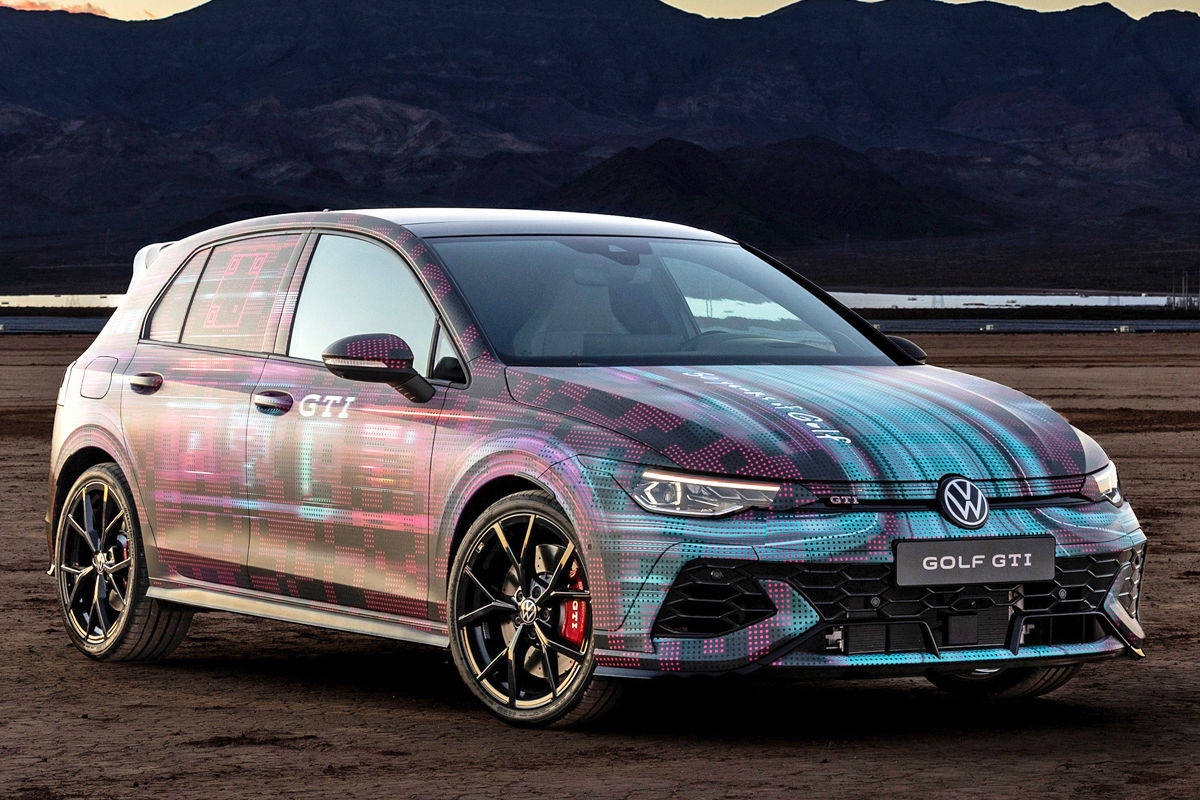
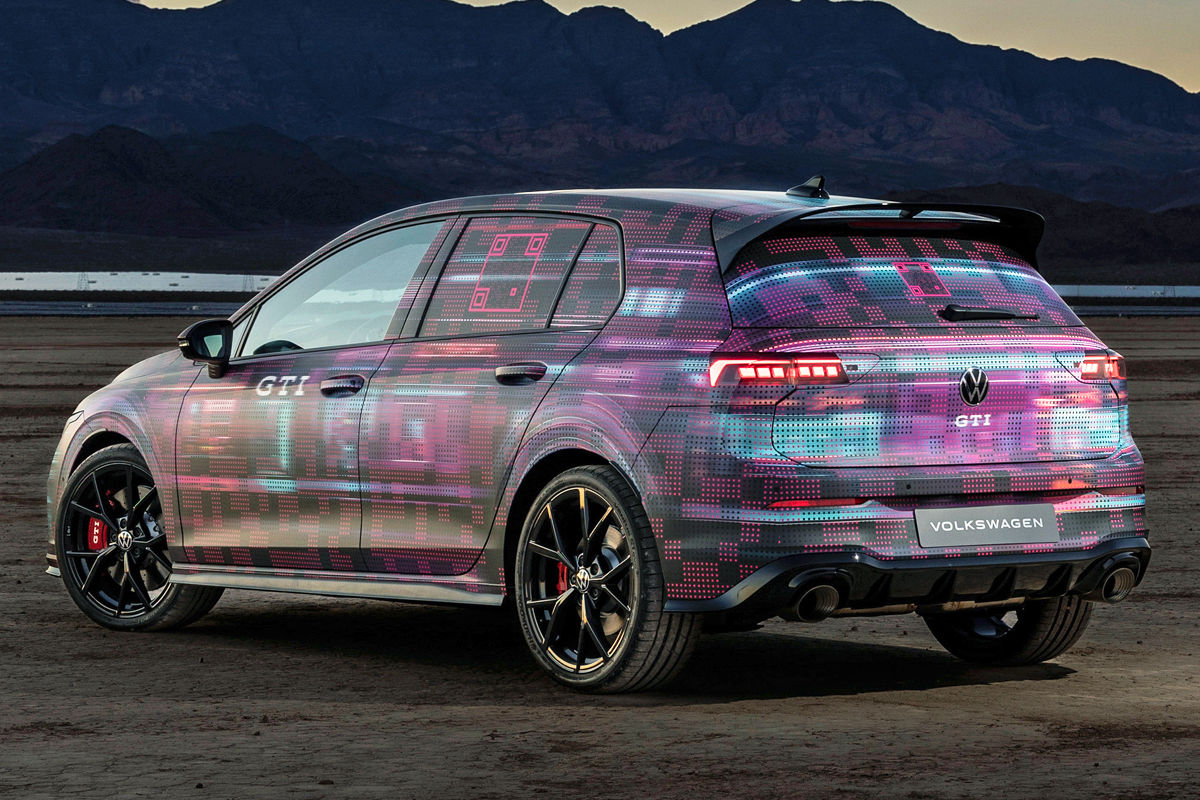
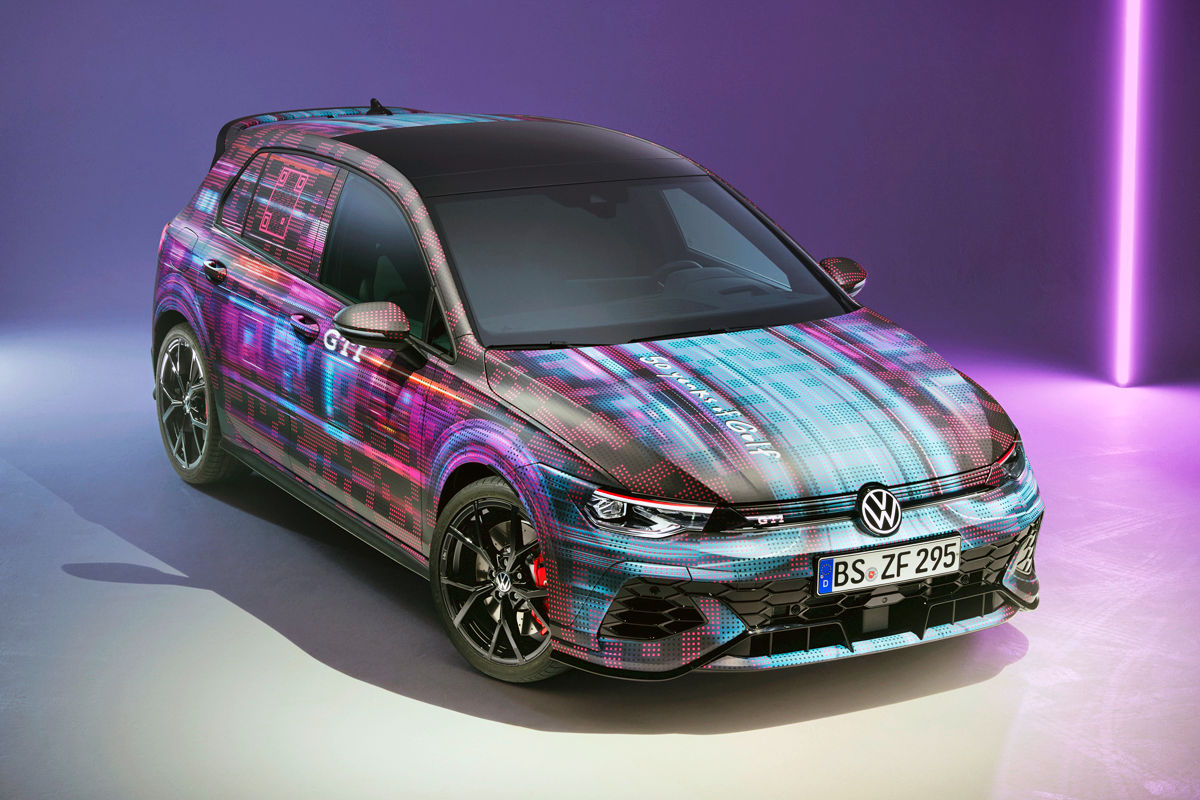
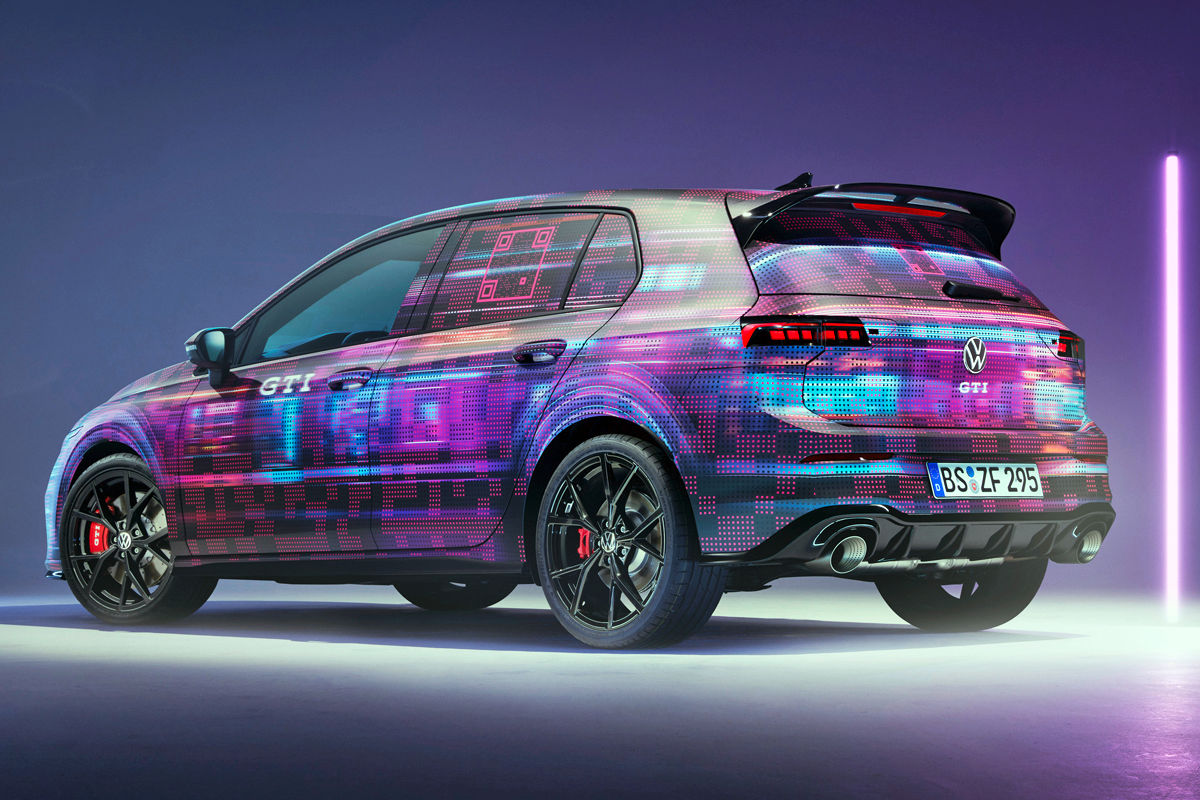
Here’s your first official look at the Volkswagen Golf 8.5 GTI’s revised cabin! The facelifted hot hatch will be fully revealed soon, complete with exterior design tweaks…
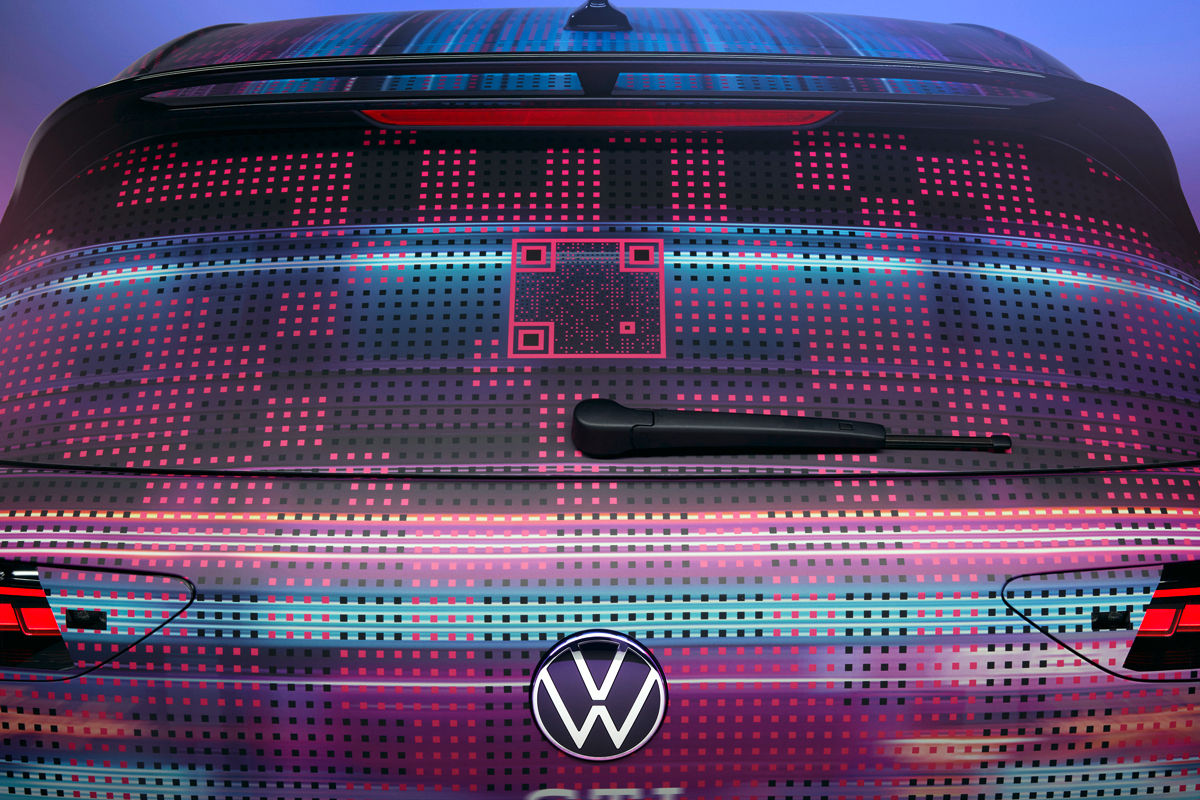
Yes, the Volkswagen Golf 8.5 GTI will soon be fully revealed. But ahead of this official unveiling, the Wolfsburg-based automaker has released a raft of teaser images hinting at the facelifted hot hatch’s updated exterior styling. There are also a couple of shots showing the model’s subtly revised cabin.
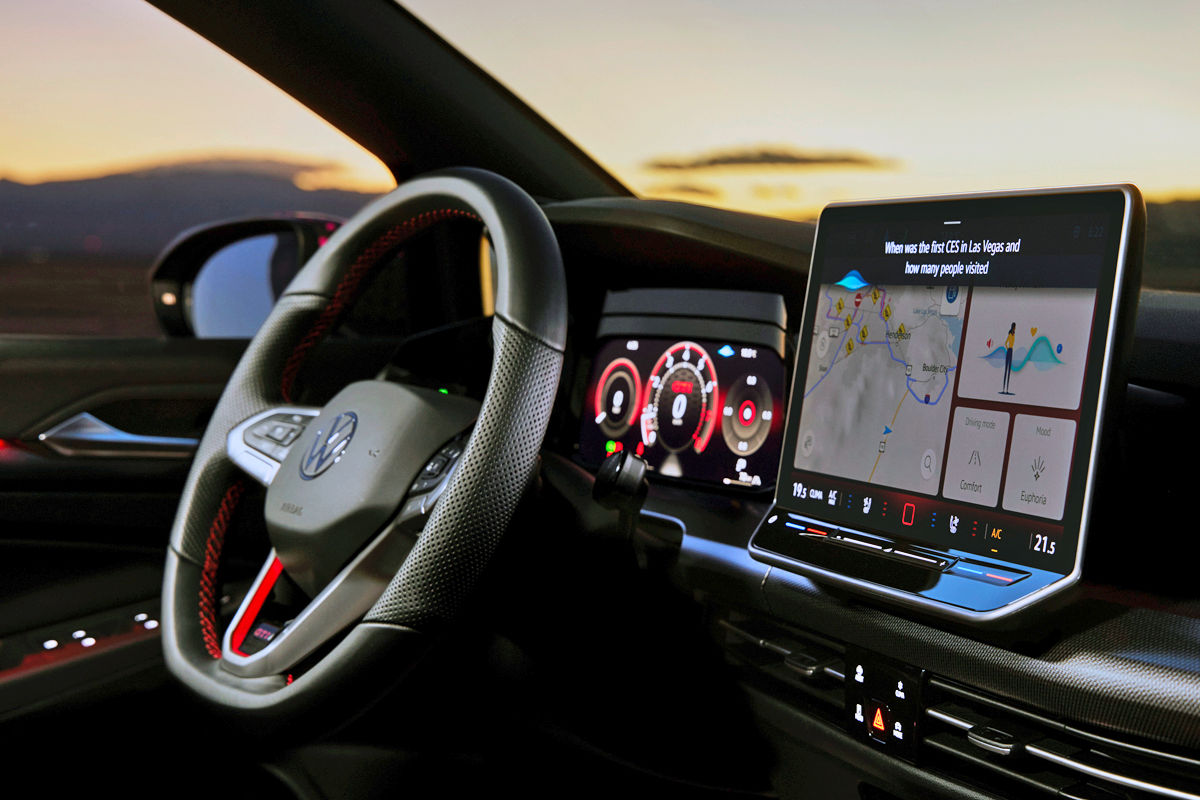
The latter updates are perhaps the most interesting, what with VW boss Thomas Schäfer having earlier admitted many customers didn’t appreciate the fiddly touch controls on the pre-facelift Golf 8 GTI’s steering wheel. So, true to its word, the German firm has used this upcoming mid-cycle update to revert to physical buttons on the tiller.
That said, the official images suggest the Golf 8.5 GTI will stick with the pre-facelift model’s similarly controversial haptic control panel for light and vision functions. In addition, other digitalised controls – including illuminated touch panels and sliders – appear to have been retained. The cabin furthermore gains a new, larger touchscreen system, running software featuring artificial intelligence (AI) chatbot ChatGPT integrated into the voice assistant.
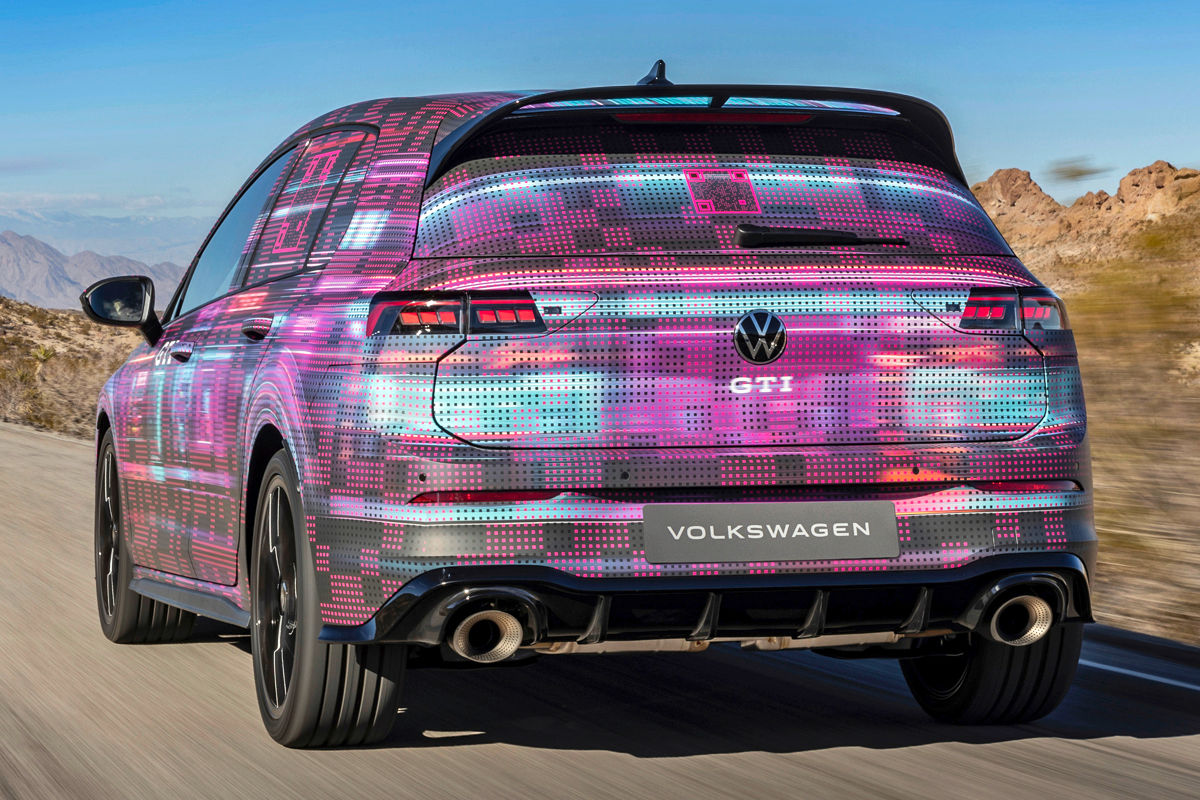
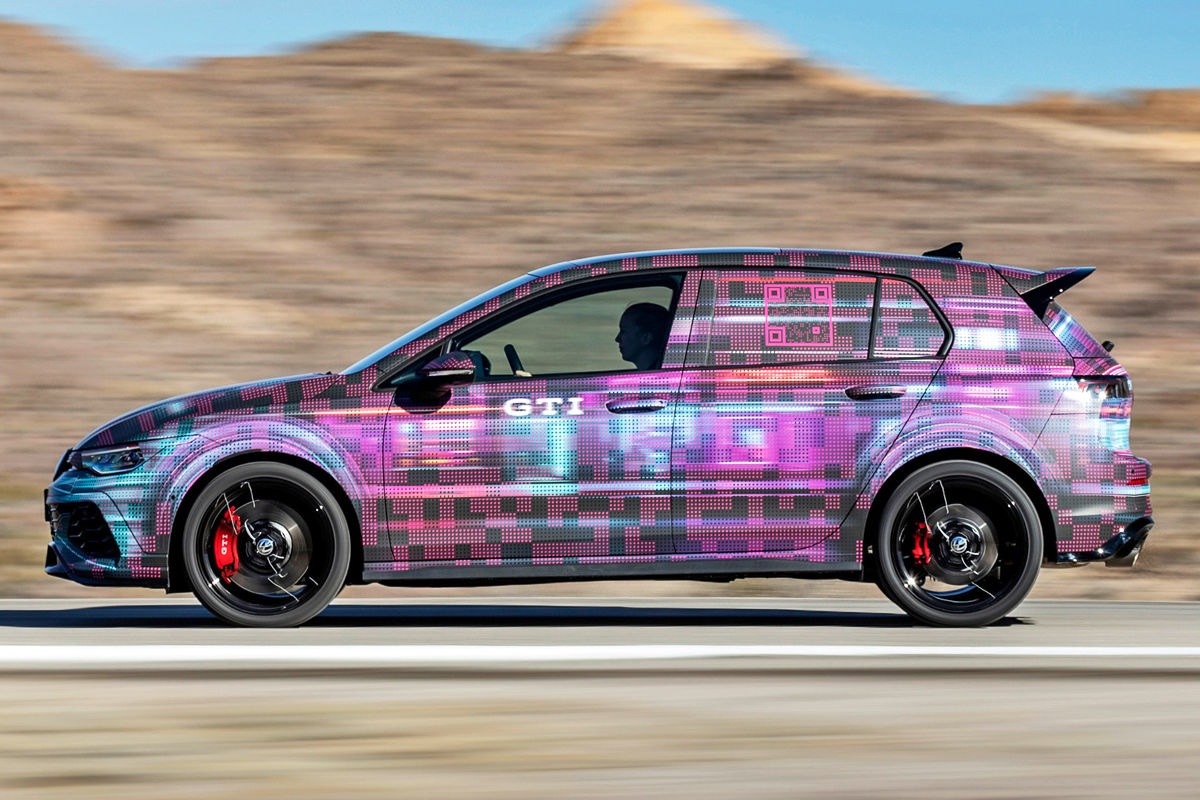
In terms of exterior updates, the camouflaged prototype shown in the teasers suggest the Golf 8.5 GTI will feature revised bumper designs (fore and aft), along with a newly designed grille plus tweaked lighting signatures, front and back.
Volkswagen has yet to release official information on any powertrain upgrades, though the 8.5 generation may well end up being the final combustion-engined Golf GTI. An earlier Autocar report suggested the familiar EA888 turbocharged 2.0-litre, 4-cylinder petrol engine would be “significantly updated for its final years”, with the British publication speculating the hot hatch’s peak outputs could rise from the current 180 kW and 370 Nm to around 195 kW and around 400 Nm.
Such improvements in power and torque would see the front-wheel-drive Golf 8 GTI’s claimed 0-100 kph time fall from the current version’s 6.4 seconds to “below 6.0 seconds”, said Autocar. The 7-speed dual-clutch transmission (branded DSG) seems likely to remain the default choice.
The publication furthermore reported the refreshed Golf 8 GTI would adopt a raft of chassis tweaks, including a stiffer rear-axle carrier (meant to “improve rolling refinement and cornering performance”) and a more advanced version of the Dynamic Chassis Control (DCC) adaptive suspension system, dubbed the “DCC Pro”.
As a reminder, the Golf 8 GTI debuted globally in February 2020, though arrived in South Africa only in September 2021. Look out for the full reveal of the Golf 8.5 GTI in the coming weeks…
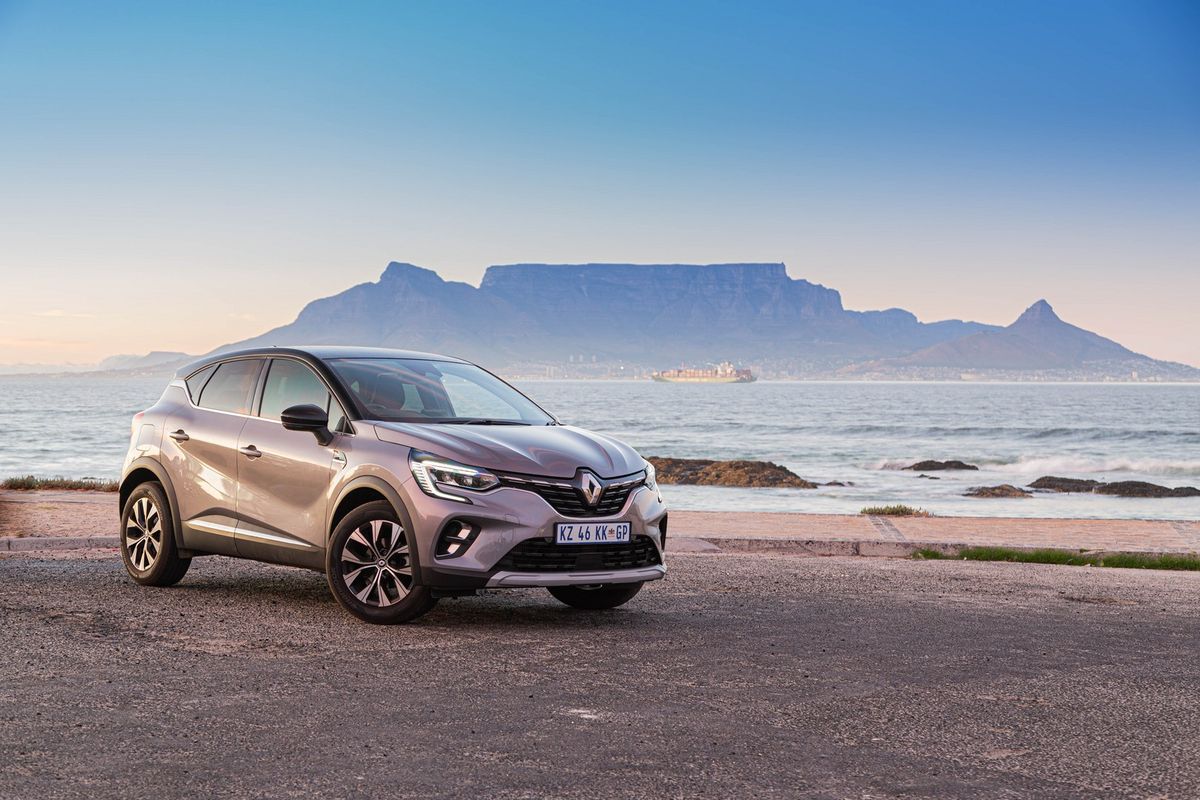
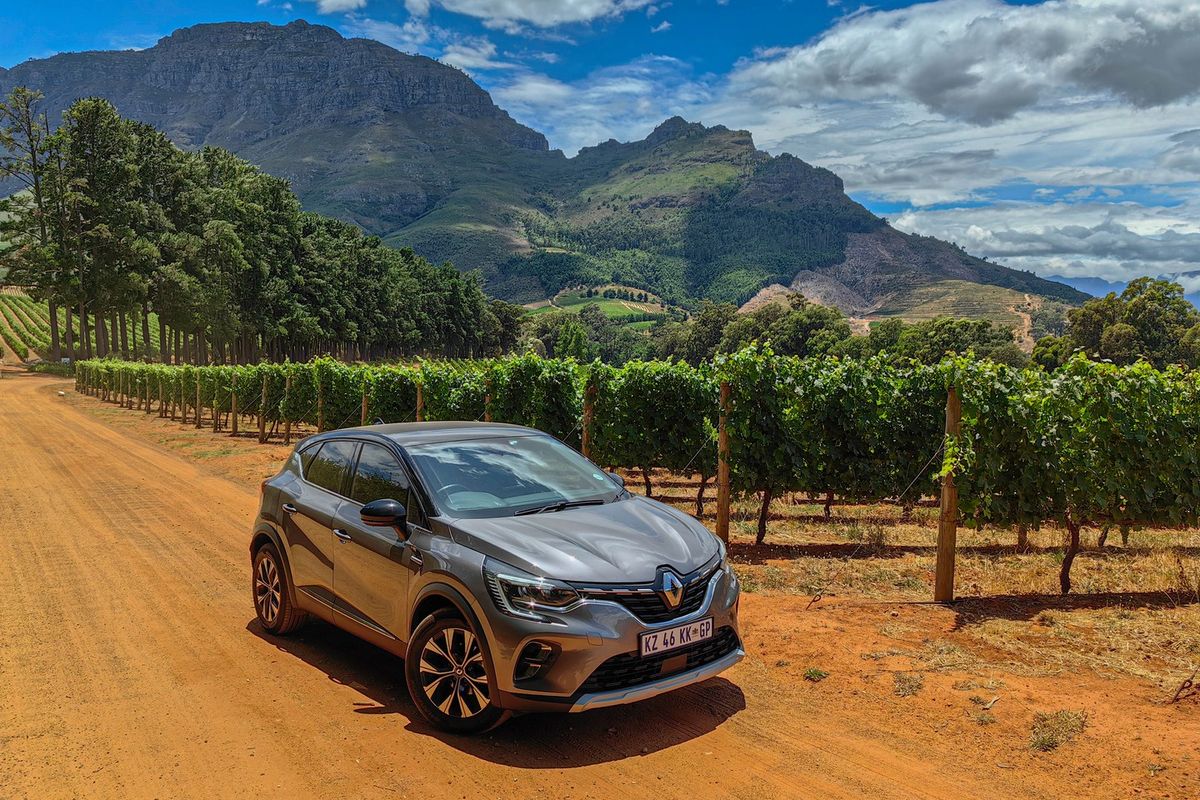
Renault SA’s product lineup may be dominated by Indian-made entry-level cars, but the Captur remains a mainstay of the European market – and well-suited to one of Mzansi’s hottest market segments. We tested the 1.3 Turbo Intens during the festive season.
The best thing about conducting an extended test is that it provides an opportunity to form a more in-depth understanding (and, sometimes, appreciation) of a new model. Our usual 10-14 day tests are quite thorough, but because all testers need to drive test cars during the rest of the year, individuals may not necessarily get enough “seat time” to notice all of a vehicle’s quirks and talents. To get reacquainted with the Captur, the author travelled 1 000 km in the flagship derivative during the end-of-year holiday.
Renault South Africa has overhauled its line-up during the past few years – its product focus has shifted from legacy European-made models to entry-level vehicles sourced from the Indian market. Models such as the Kwid, Kiger and Triber will never be sold in Renault’s home market, while the Clio, Captur, Megane E-Tech, Arkana and Austral, to name but a few examples, are unlikely to be sold on the Subcontinent.
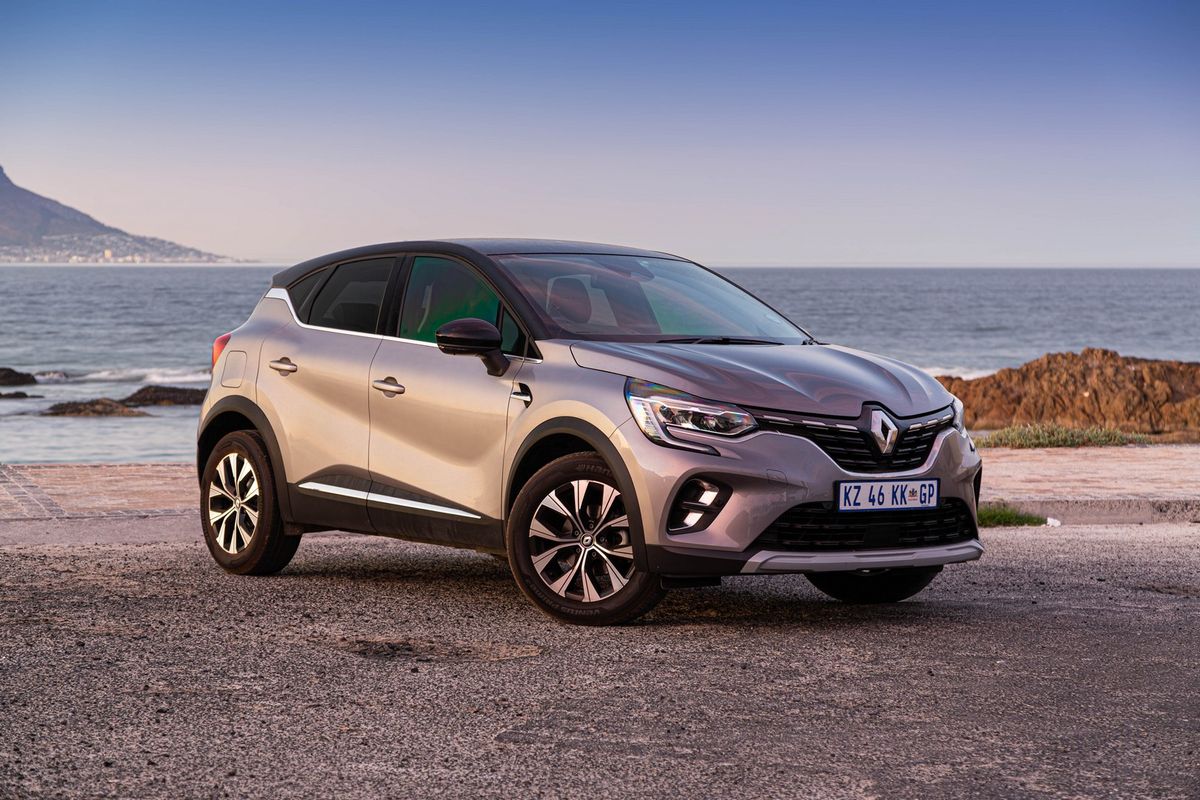
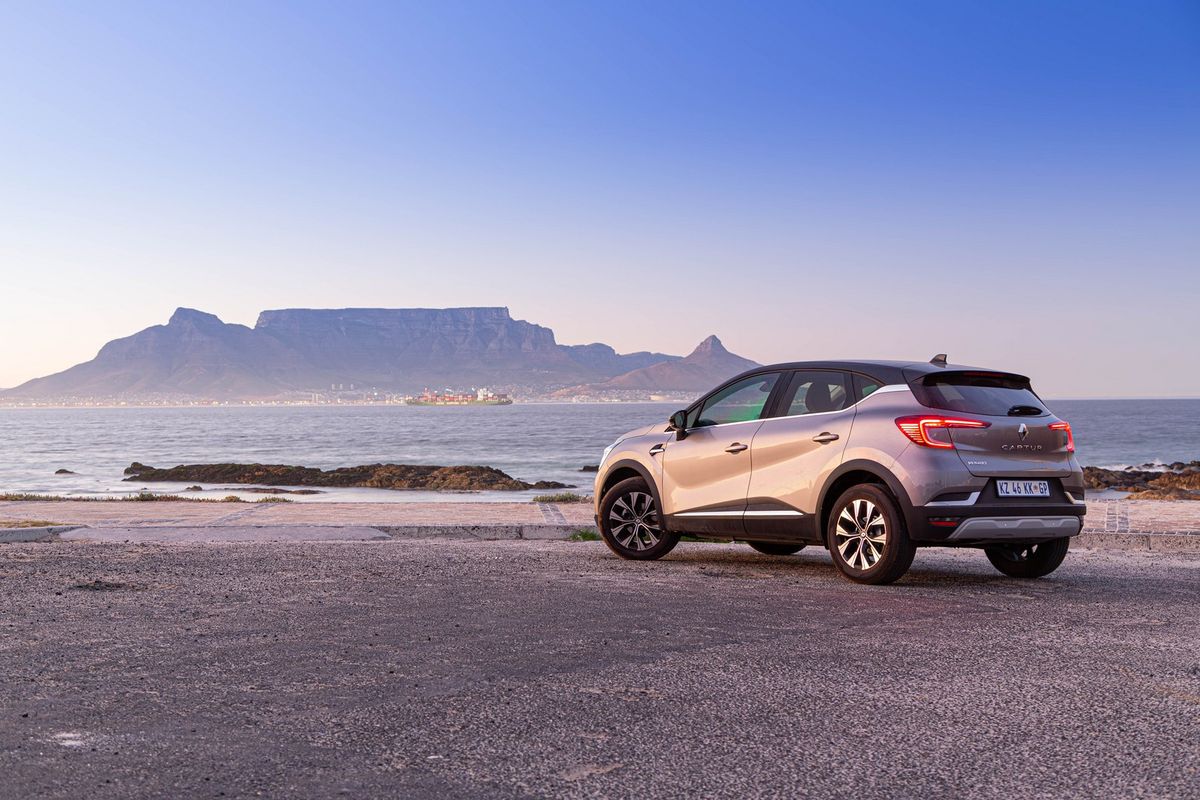
A strong and fresh Eurocentric design
The French brand still offers a couple of European models in South Africa, however: the 5th-gen Clio and its sibling, the 2nd-gen Captur. The latter targets one of the more popular segments: the high-riding small crossover. With the best days of the traditional hatchback well in the past, customers now favour vehicles with more ground clearance and a raised seating position, even if it means they have to sacrifice on-road dynamism. Renault has seemingly nailed the brief – the Captur has sold strongly in Europe.
Our Mercury Silver Renault Captur extended-test unit arrived with almost 14 000 km on the clock; it was a well-run-in vehicle, which allowed us to inspect it for wear and tear. Suffice it to say, if a test vehicle can be in fine condition after 15 000 km of hard testing by car journalists, it bodes well for its durability!
The market has lost interest in hatchbacks like Megane, Focus, Astra etc in favour of high-riding crossovers/SUVs
3 Things To Like about the Renault Captur
Powertrain and Economy
The Renault Captur is powered by a 1.3-litre 4-cylinder turbopetrol engine. The H5Ht powerplant is a proven quantity and has served in various Renault and Nissan products. It even makes an appearance in the W177-series A-Class, so Mercedes-Benz regards the motor as good enough for a premium brand!
The powertrain’s lively performance means the Captur is more satisfying – engaging even – to pilot than it needs to be. Small crossovers are generally quite bland (inert, even) to drive, so the uncomplicated, intuitive experience was refreshing – a welcome bonus. Admittedly, the dual-clutch ‘box can hesitate when pulling away, particularly during the first drive of the day, but once on the move, it shifts smoothly.
What’s more, the lil’ Renault can deliver a surprisingly brisk turn of speed when required. Overtaking urge is relatively abundant, courtesy of a segment-leading 270 Nm of torque that propels the Captur past slower traffic with ease. When we tested it against the clock back in May 2023, it recorded an 8.41-second run from 0 to 100 kph – it bettered its claimed acceleration time (9.6 sec) by some margin.
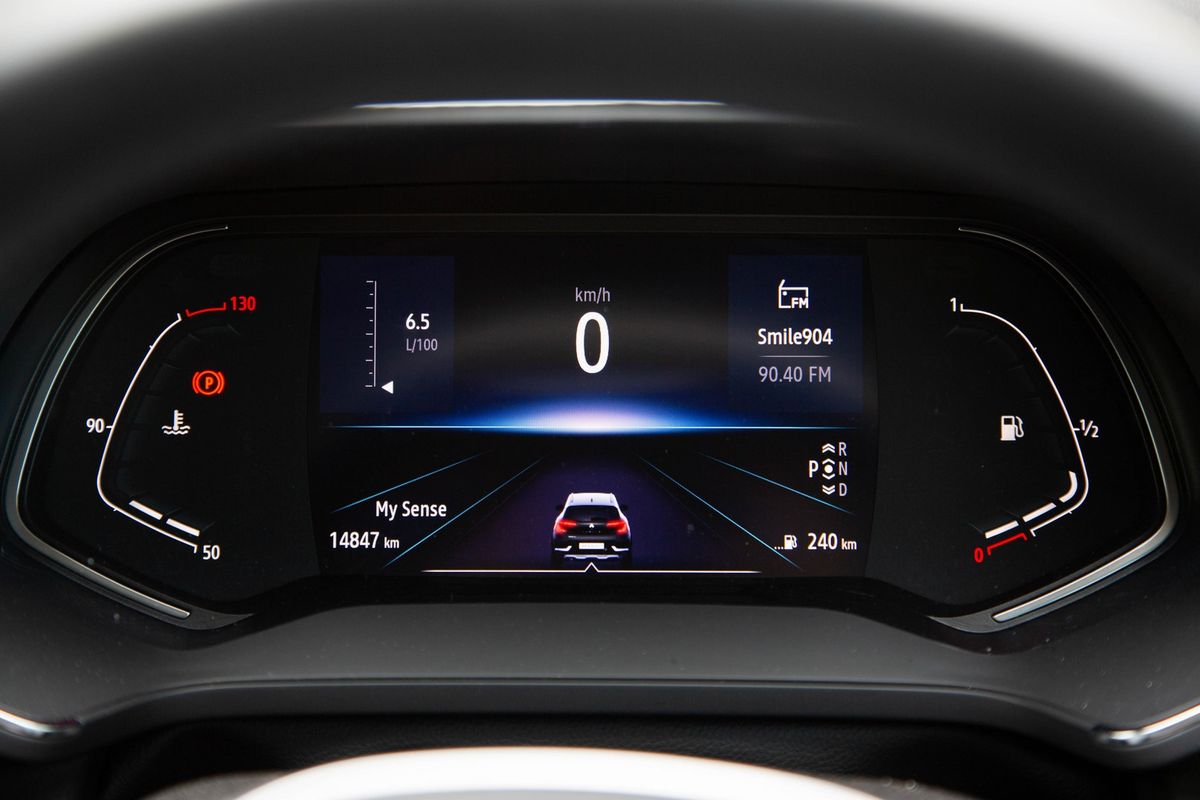
6.5 L /100 km is better than claimed!
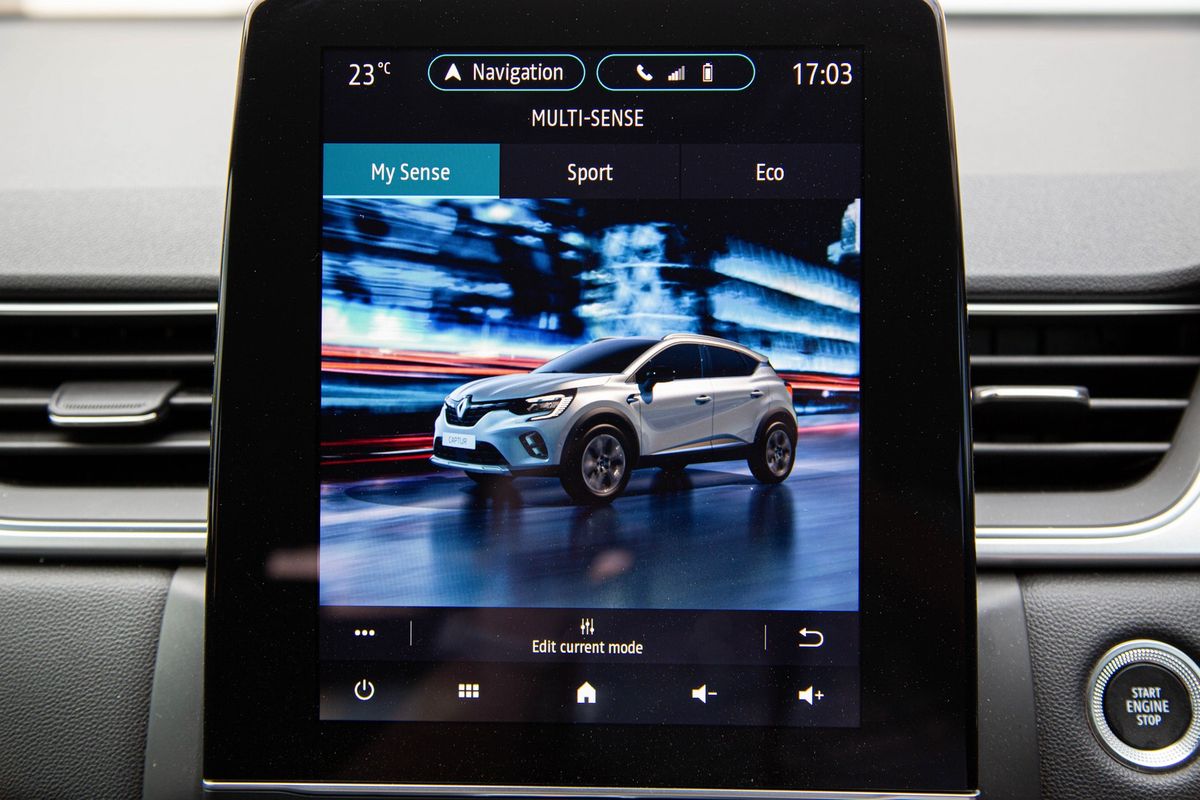
There are 3 drive modes: Normal, Sport and Eco (with matching dashboard themes), but I didn’t feel necessary to toggle between them; Normal can play the performance and thrift games equally well.
The best part? After we had clocked up 1 000 km in the Captur, its indicated average consumption was 6.5 L/100 km, which compares well with those of its rivals and is marginally better than its claimed figure.
Comfort and Practicality
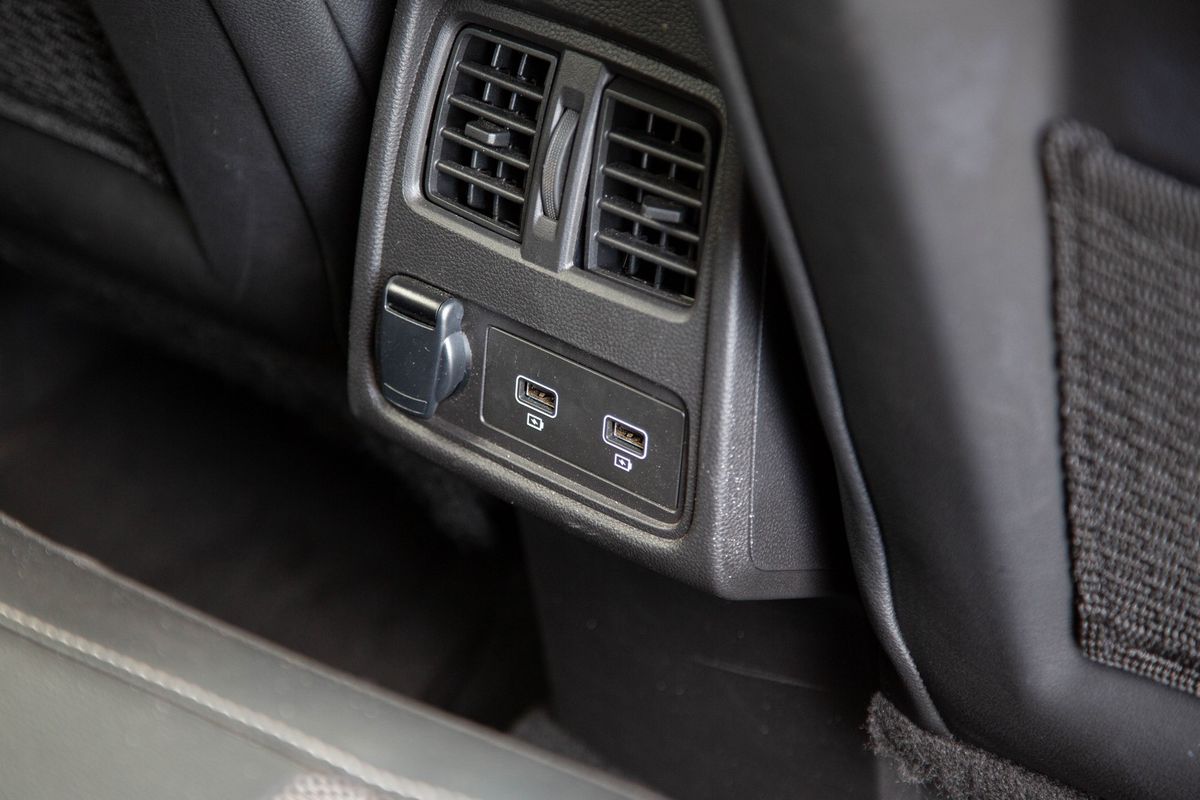
Rear USB ports for passengers should be regarded as compulsory equipment these days
The Captur’s attractive exterior execution (okay, styling is subjective, but at least the Renault’s looks are on trend!) is backed up by a platform that not only delivers admirable on-road refinement with just a smidgeon of dynamic ability – it boasts generous occupant comfort and load-carrying practicality. Rear passengers are well catered for, with enough knee- and headroom for adults, plus the convenience of two USB charging ports. The Captur may look like a small city slicker, but it can cater for families.
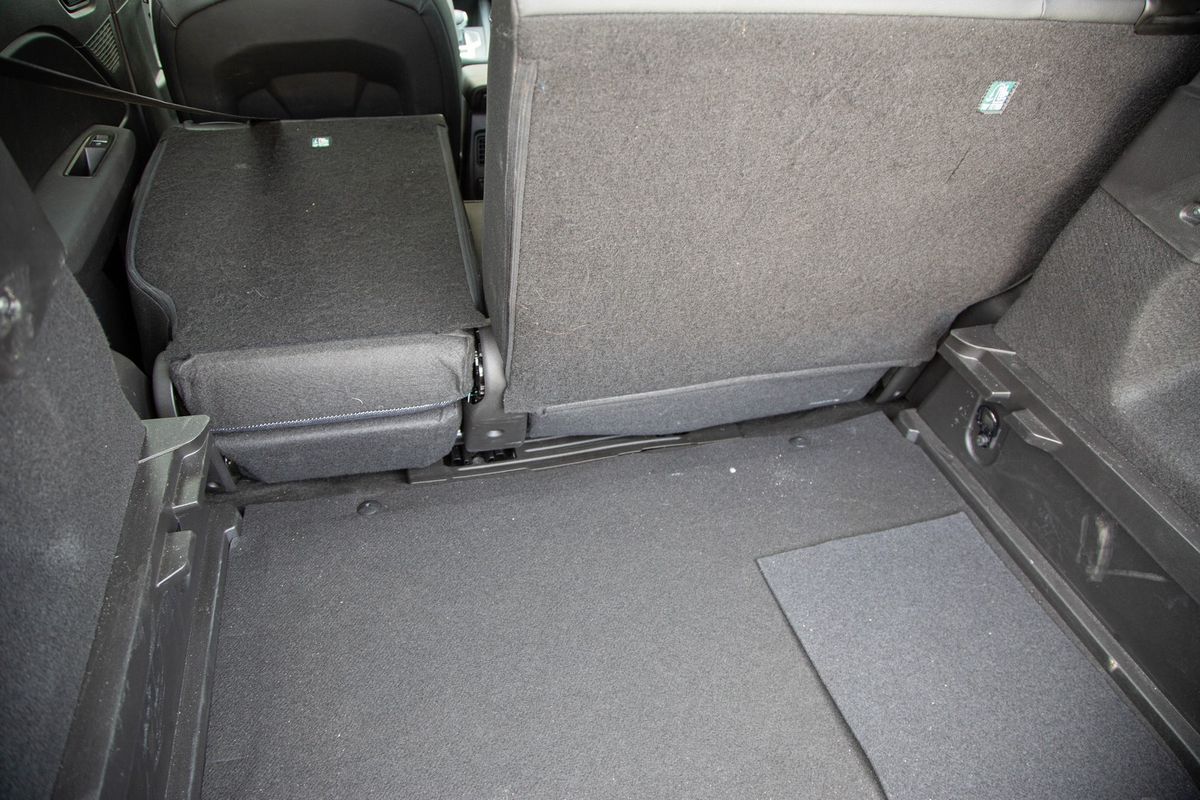
The load bay is, in a word, cavernous, it offers 404 litres of capacity and 1 275 litres of utility space with the rear seats folded down. While that first number is a bit less than its rivals – the Ford Puma (456 L) and Volkswagen Taigo (440 L), the more keenly priced Captur comes with a full-size spare wheel.
The rear seats of the Captur fold in a 60:40 split and the boot offers commendable depth
Safety and Tech Features
The Renault Captur is available in 2 trim levels: Zen and Intens; the extended-test unit was a top-spec derivative. For an extra R20k over the price of the Zen, the Intens comes fitted with additional features such as LED headlamps, a larger infotainment screen, a wireless charger, a heated steering wheel, drive modes and some nicer cabin trim. Which one should you buy? Seeing as this model is an alternative to a premium hatchback, the top-of-the-range 1.3 Intens seems well worth the extra outlay of R20 000.
Captur’s infotainment screen is one of the better in the segment
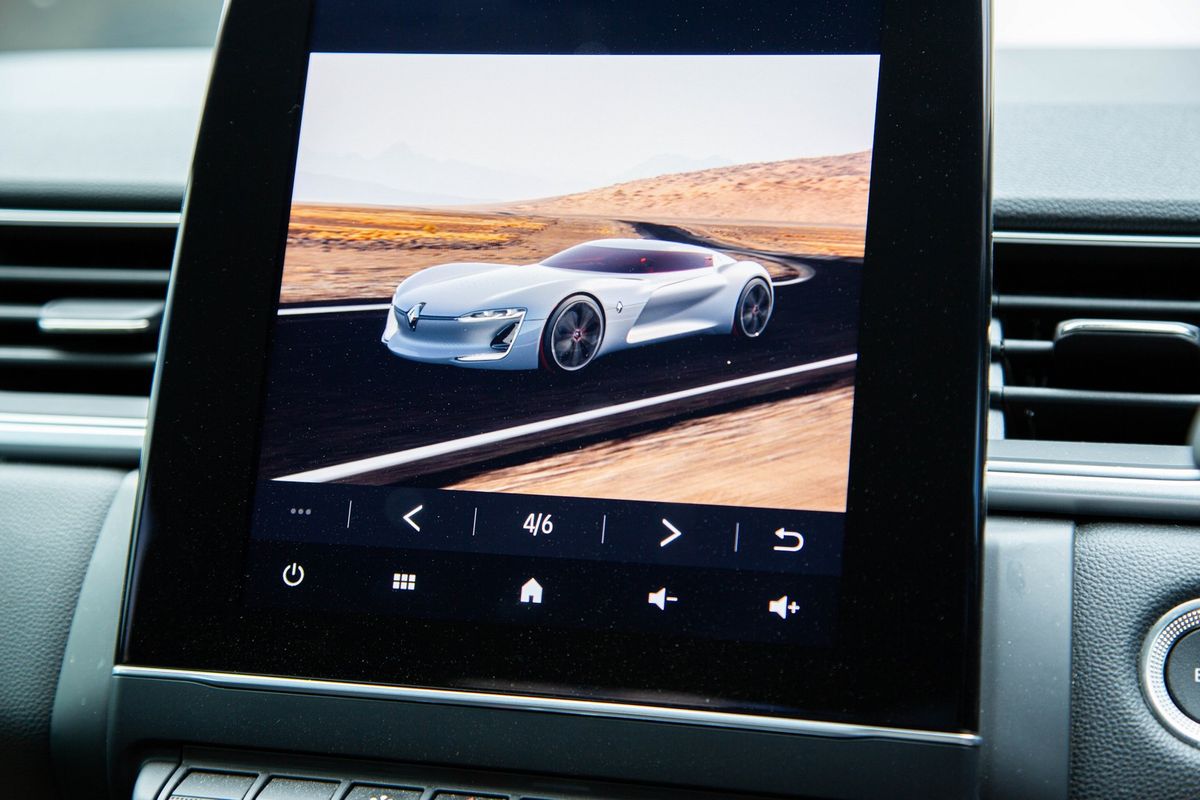
That enlarged touchscreen is a treat. Few cars in this market segment have infotainment displays that look as colourful and crisply rendered as the Captur’s, which also has a delightfully logical menu layout. The onboard navigation incorporates built-in alerts (a polite chirp) for fixed-speed cameras and there are some cute touches, such as letting you choose your icon for the navigation. You could opt for a simple arrow or pick from one of the many outrageous Renault concept cars… I favoured the RS 2027 Vision.
Personalisation touches are plentiful, allowing you to choose your car for the navigation screen
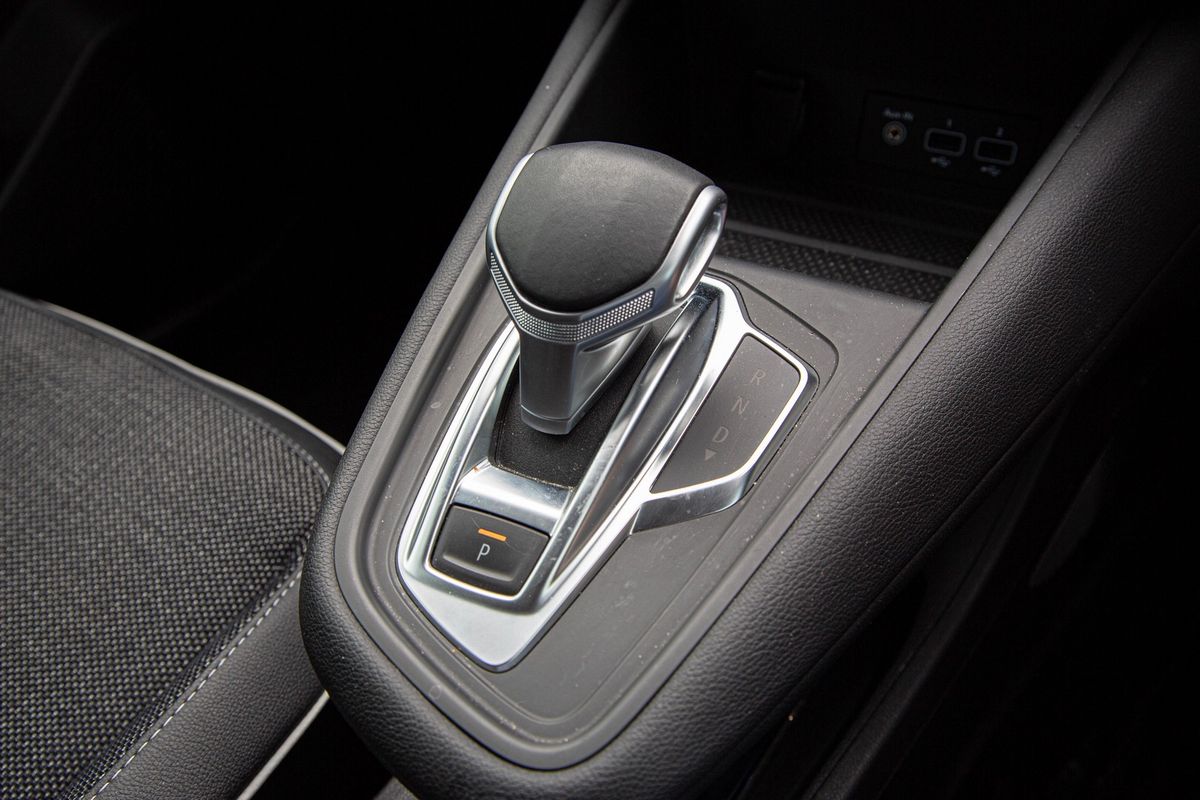
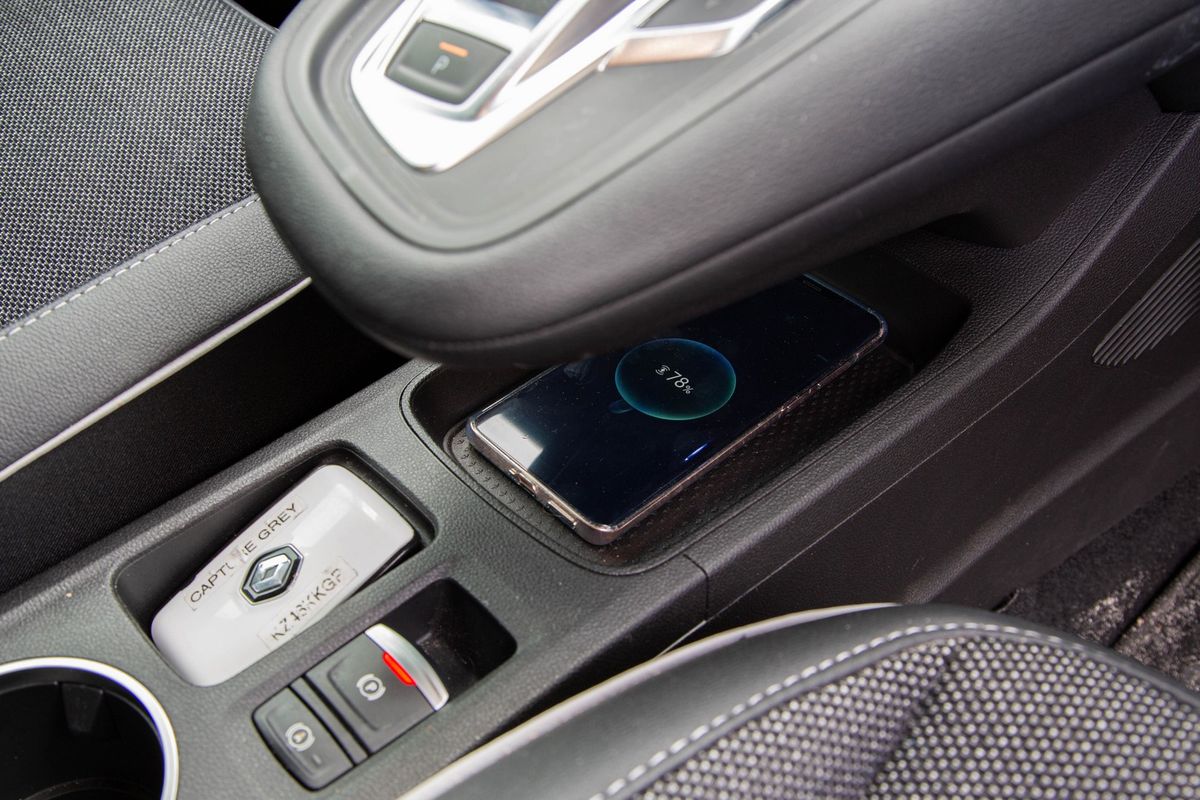
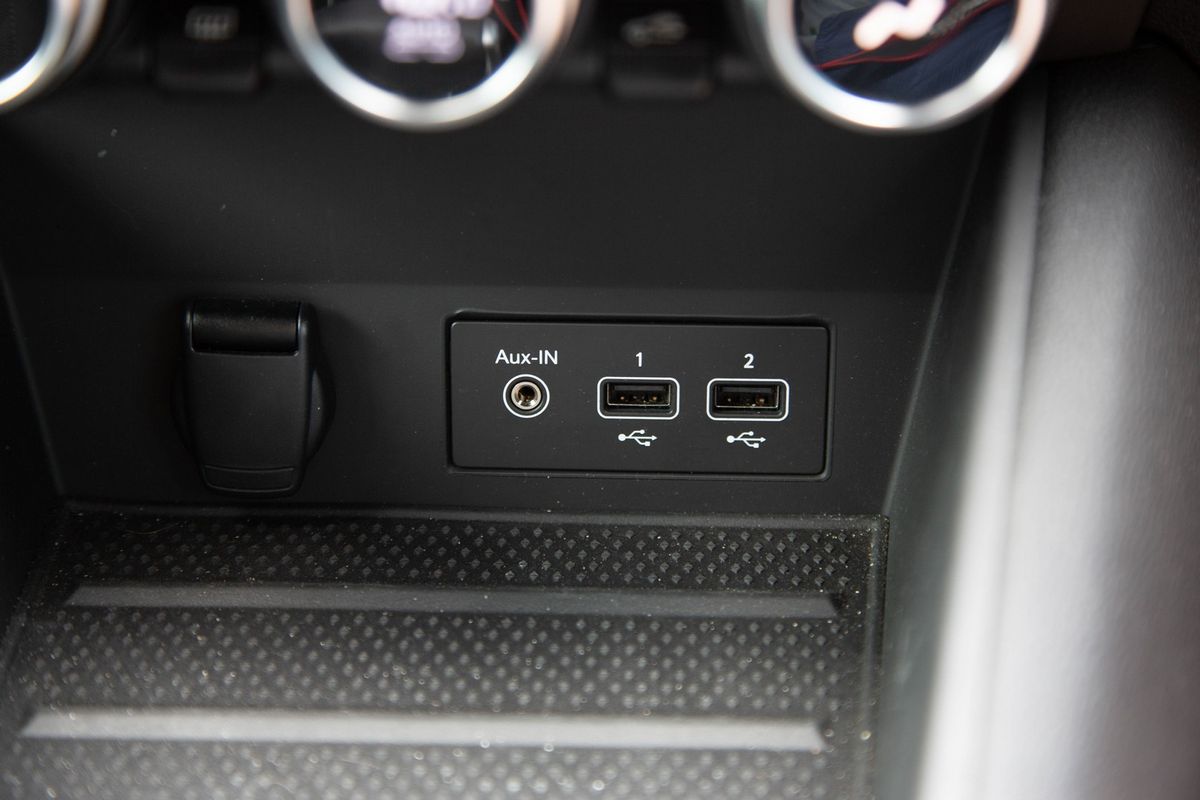
One of our favourite features was the “hidden” wireless charger. Instead of charging your smartphone by placing it in a shallow recess ahead of the transmission lever, you perch it on a cradle located underneath the Captur’s main transmission tunnel and, therefore, well out of sight of prying eyes. Plus, the pad is large enough to accommodate even the largest of devices, such as the iPhone Pro Max. If your phone doesn’t support wireless charging, there are 2 fast-charging USB ports located on the centre console.
Your mobile device nestled out of sight on its wireless charging pad
Dislikes?
We’ve never hesitated to criticise the fitment of cheap-feeling materials in premium-priced cars; given rampant cost-cutting in automotive production (few brands, if any, brands can avoid it), it’s often quite easy to see – and feel – where the interior trim and build quality of new cars have been compromised.
So, while harsh, hard plastics may be quite acceptable in the interiors of Renault’s entry-level models, it would not be “a good look” if the cabin of the Captur – a vehicle priced close to half a million Rand – was awash with plastics and trim pieces of marginal quality. Not only did the extended-test unit’s interior feel outfitted to an acceptable level of quality in most areas… I was impressed by the solidity of the cabin.
It’s not road-biased either, with over 200 mm of clearance
After travelling 15 000 km on South African roads (some of which would have been decidedly potholed, uneven and coarse), the Captur had held up commendably well. Indeed, it did anything but disintegrate, unlike the freshly-baked croissant I had for brunch while writing this piece. That being said, while the interior emitted no rattles and squeaks, the transmission tunnel trim seemed to have worked a bit loose.
This transmission tunnel didn’t feel too connected to the main central console.
Another minor dislike was the silver-coloured dashboard insert, which managed to catch and reflect the sunlight perfectly to dazzle the front passenger. While this only happened during certain times of the day and depended on in which direction we were travelling, my beloved wife made her discomfort known.
Summary
Captur has way more going for it than you’d think and should be on your shortlist if you’re shopping in this segment.
The Renault Captur made a good case for itself during its extended tenure in our test fleet. It happily took on the urban commute (with ease) and effortlessly kept pace with traffic on the national highway. I wish I could have driven it further, but the car’s system began warning us that the 15 000-km service was due.
Small crossovers (compact family cars) will continue to be popular and, fortunately, South African car buyers are spoilt for choice in terms of brands and pricing. The European crew of the Renault Captur, Volkswagen Taigo and Ford Puma should tick the majority of your boxes, but if your budget can’t quite stretch that far (half a million Rand is, after all, a LOT of money for the average family), there are some excellent demo units of larger SUVs available. Also, don’t look past models such as the Haval Jolion and Chery Tiggo 4 Pro – there are good reasons why there are countless of those vehicles on the road!
The Captur is priced from R489 999, with this top-spec derivative listed for R509 999 (January 2024). The vehicle is sold with a 5-year/150 000 km manufacturer warranty and a 3-year/45 000 km service plan. For added peace of mind, Renault’s 5-year warranty is longer than those of most of its rivals…
Fresh spy shots suggest Ford could soon hand its Everest the Wildtrak X treatment, uprating the suspension, adding fresh off-road systems and tweaking the design…
The Ford Everest adventure SUV range could soon expand with the release of a new off-road-capable Wildtrak X derivative, judging by fresh spy shots from Australia.
Yes, the folks over at CarExpert have published intriguing photographs of an Everest prototype – snapped testing on the streets of Melbourne – that appears to share plenty with the Ranger Wildtrak X.
Note the LEDs integrated into the Ranger Wildtrak X’s grille (also seen in the Everest spy shots).
Like its X-badged bakkie sibling, the apparent Everest Wildtrak X sports LEDs integrated into its grille design, along with black alloy wheels shod in all-terrain tyres. More importantly, though, is the fact this unit seems to ride higher than the standard Everest Wildtrak, while perhaps also gaining a wider track.
We’d speculate this freshly spotted uprated Everest is running the same specially tuned Bilstein position-sensitive dampers as the Ranger Wildtrak X, with this long-travel set-up affording the ladder-frame SUV extra ground clearance, too.
We’d expect the Everest Wildtrak X to borrow plenty from the Ranger equivalent.
In addition, the Everest Wildtrak X surely features the same “Trail Turn Assist” system (ostensibly cutting the vehicle’s turning circle by up to 25%) as the equivalent bakkie, along with additional underbody protection and special exterior badging (hastily covered up on the prototype).
So, what could be under the bonnet? Well, we’re not convinced the Blue Oval brand would hand the Everest the full-fat twin-turbo 3.0-litre V6 petrol powertrain from the Ranger Raptor, with the 2.0-litre bi-turbodiesel motor (as employed by the Ranger Wildtrak X) thus surely the most likely candidate.
The cabin of the Everest Wildtrak X will likely mirror that of the Ranger version.
As a reminder, this 4-cylinder oil-burner delivers 150 kW and 500 Nm to all corners – using an on-demand 4-wheel-drive system in the case of the Ranger Wildtrak X – through a 10-speed automatic transmission.
South Africa’s Everest range – which is imported from Thailand, just like the Aussie-spec line-up – currently comprises 6 derivatives, priced from R899 000 to R1 224 900. The aforementioned 2.0-litre engine powers the XLT and Sport variants, while the Wildtrak and Platinum models employ the 3.0-litre V6 turbodiesel mill.
Will we soon see an Everest Wildtrak X slot into that line-up? Time will tell, though we wouldn’t bet against it…
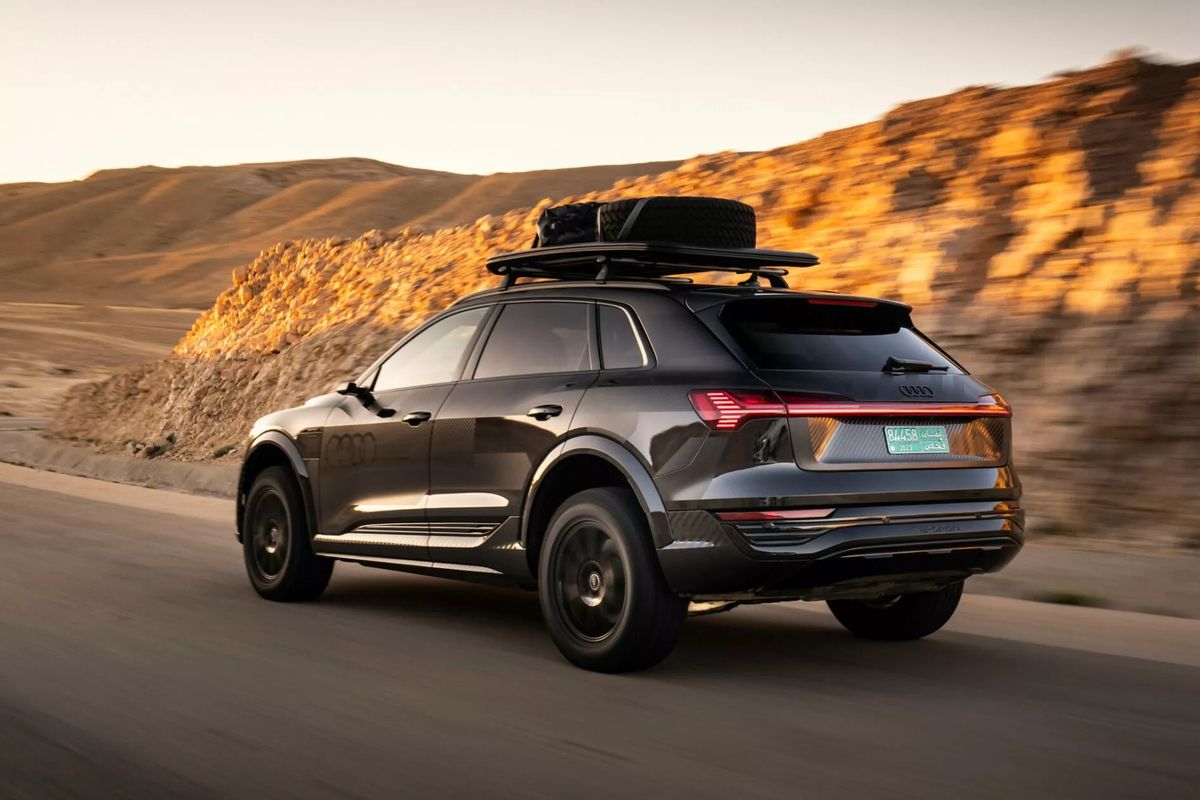
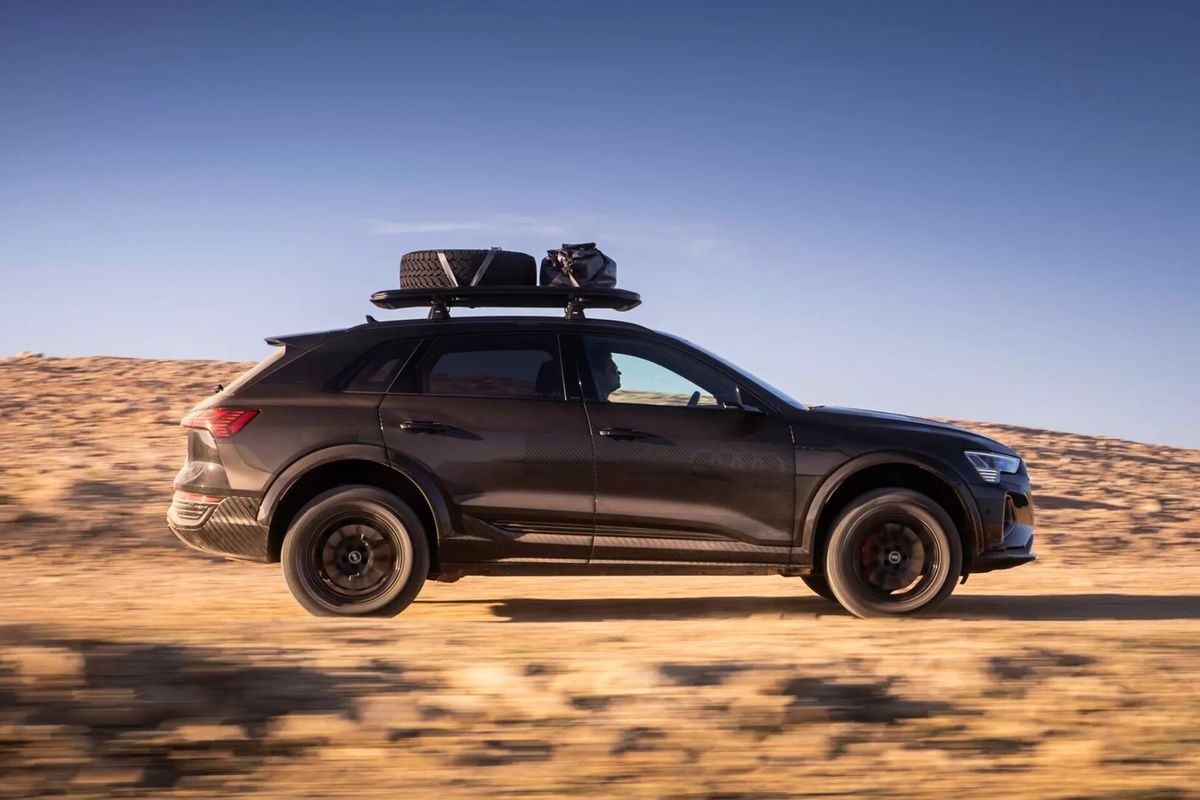
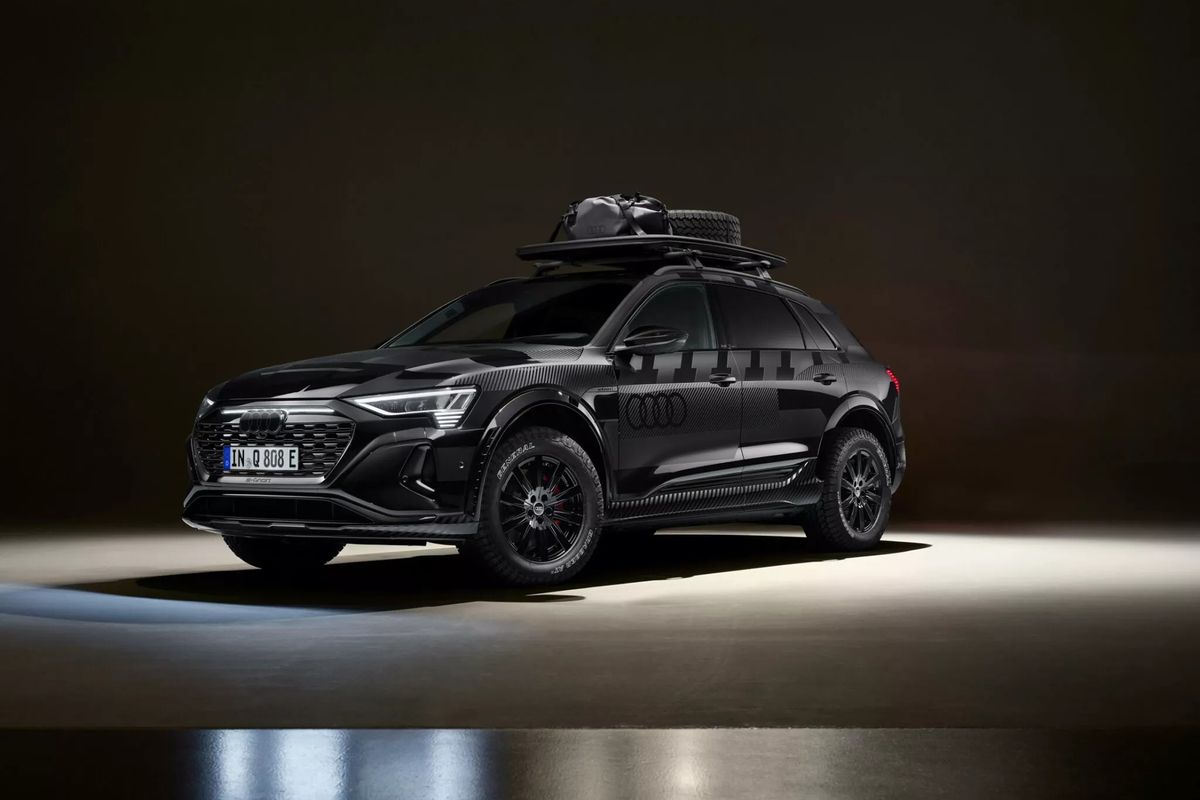
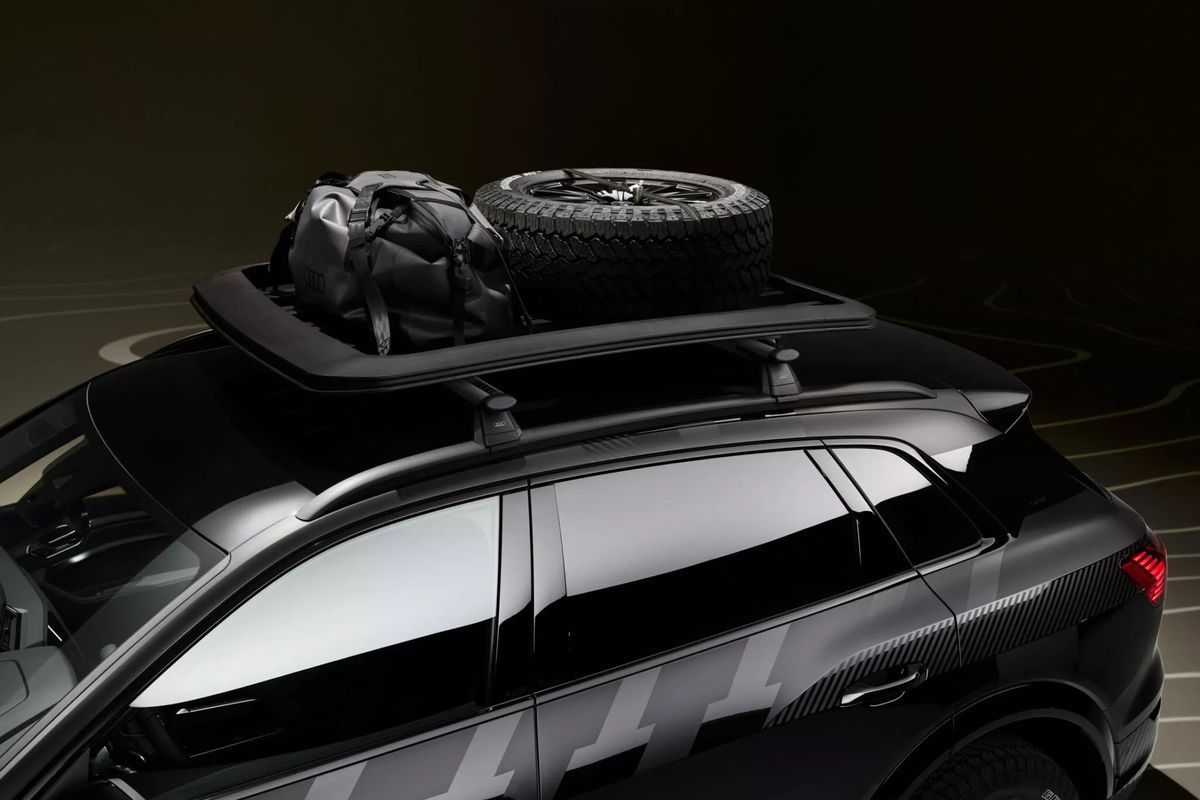
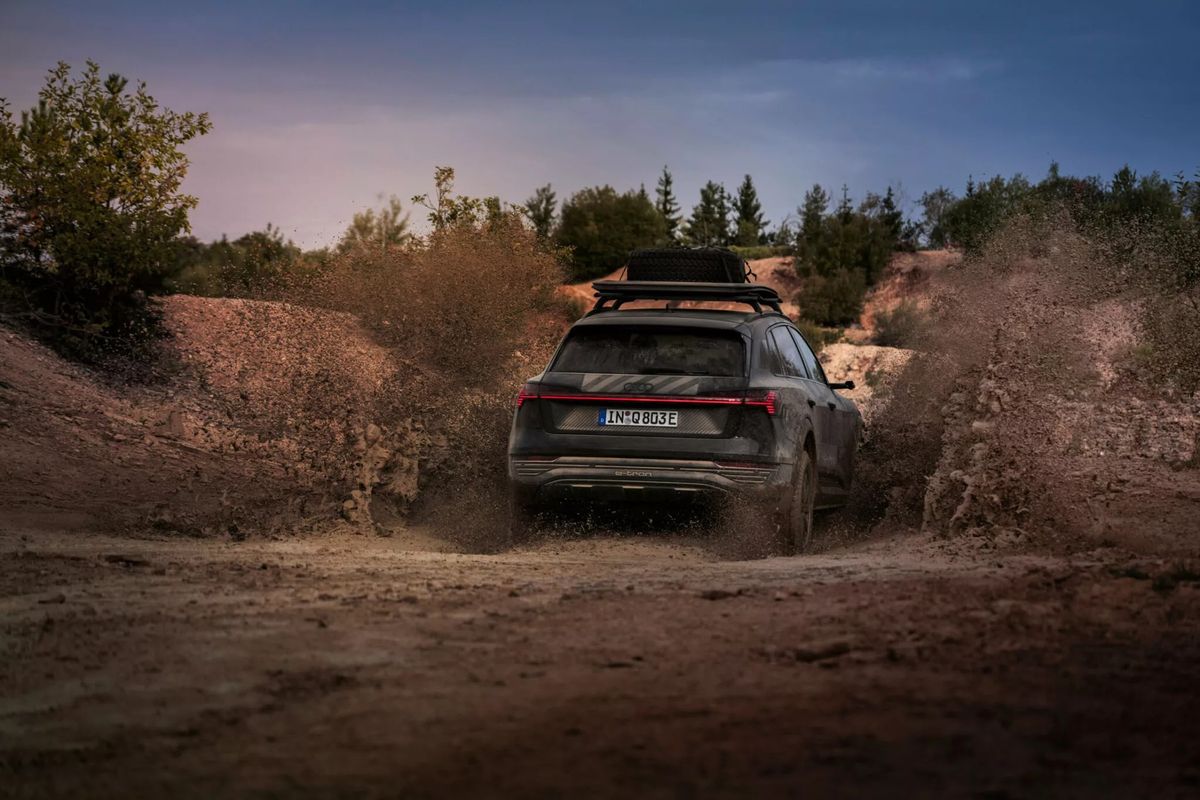
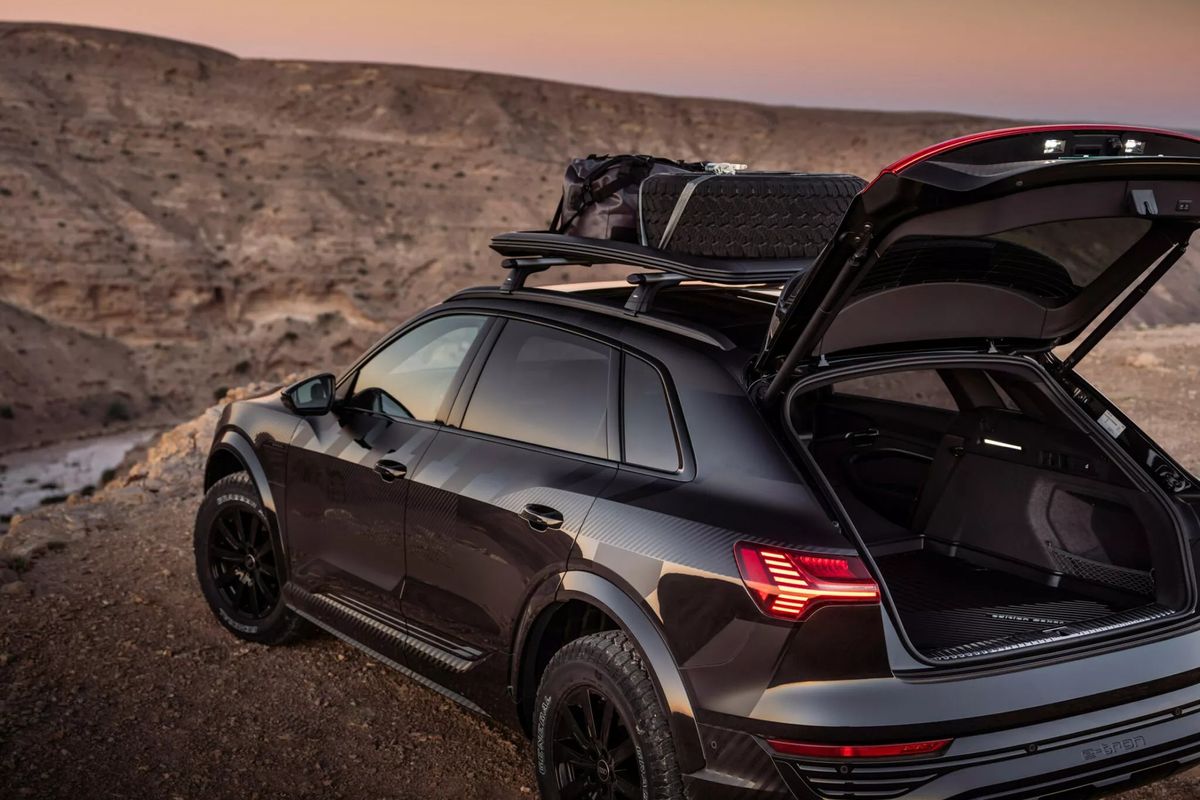
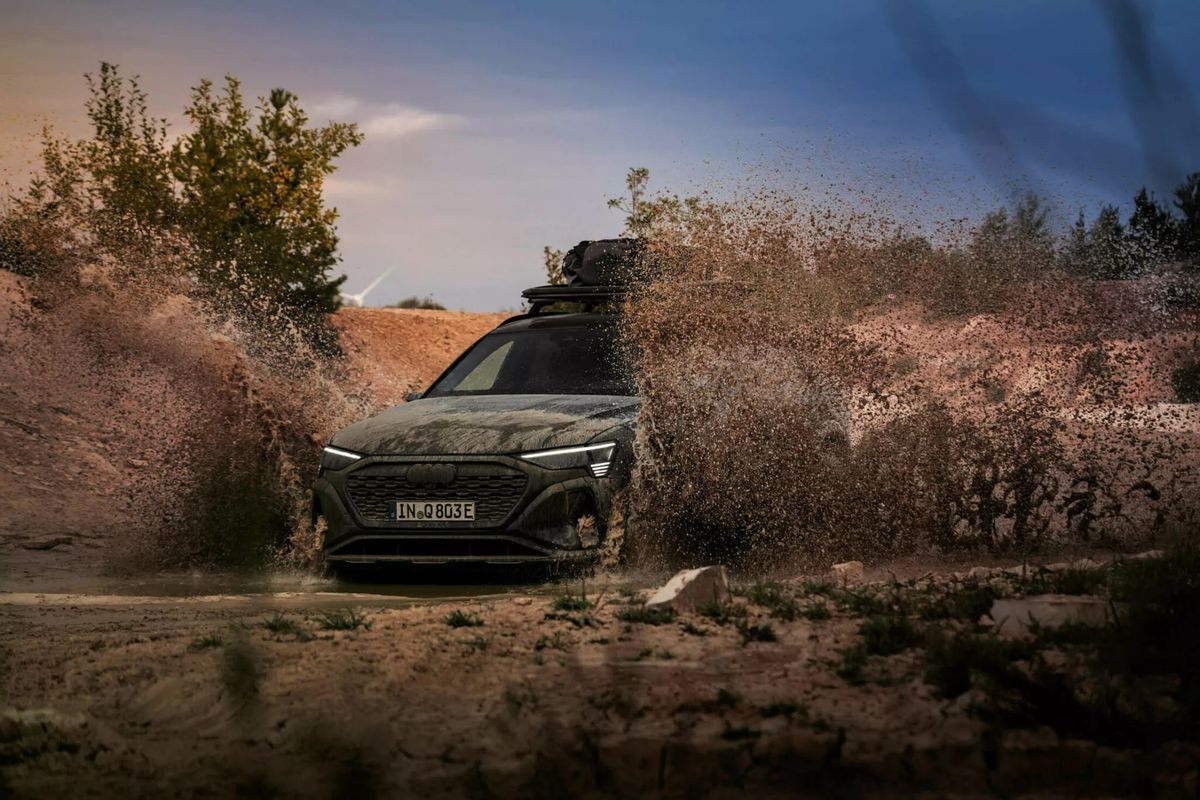
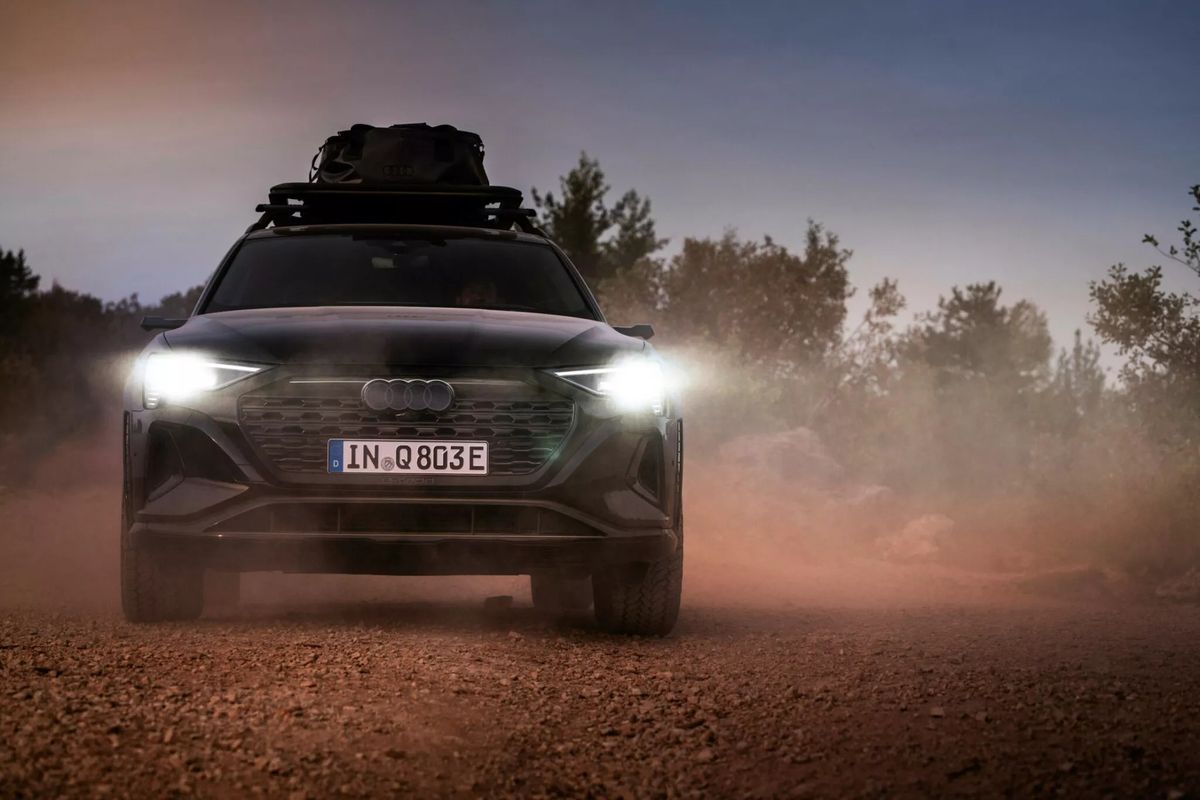
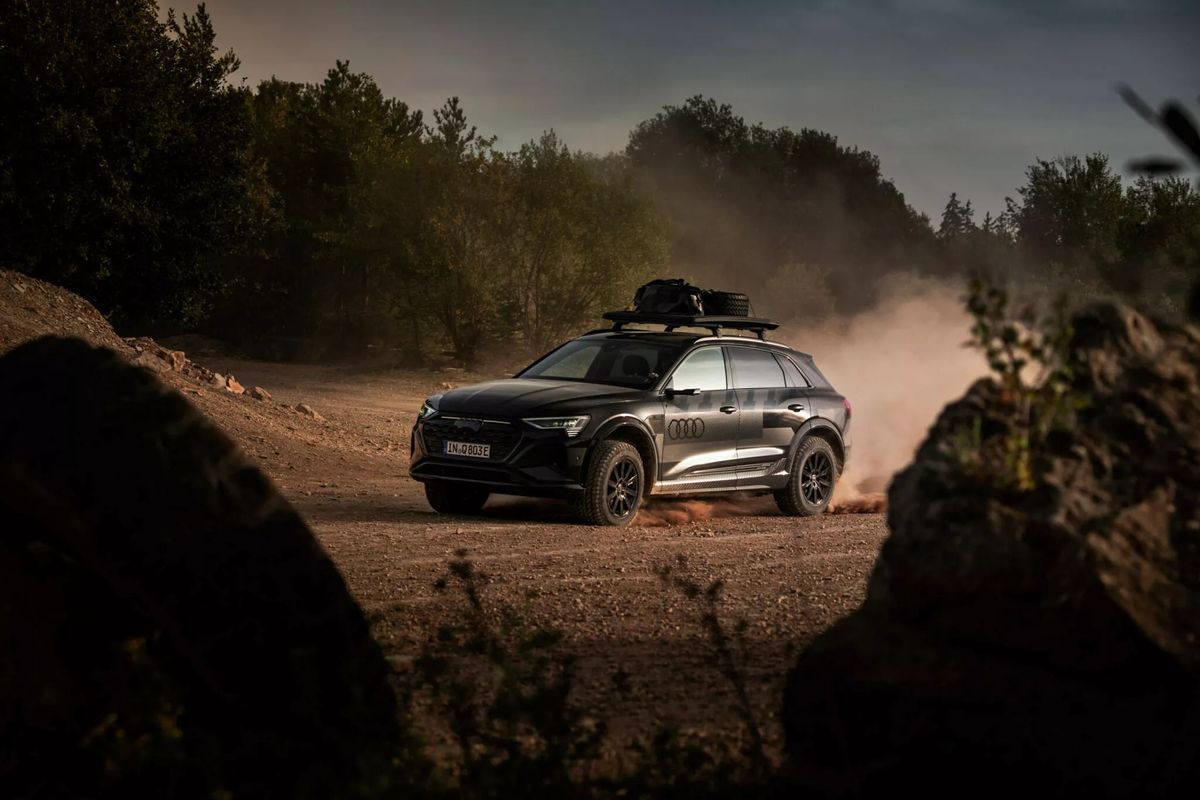
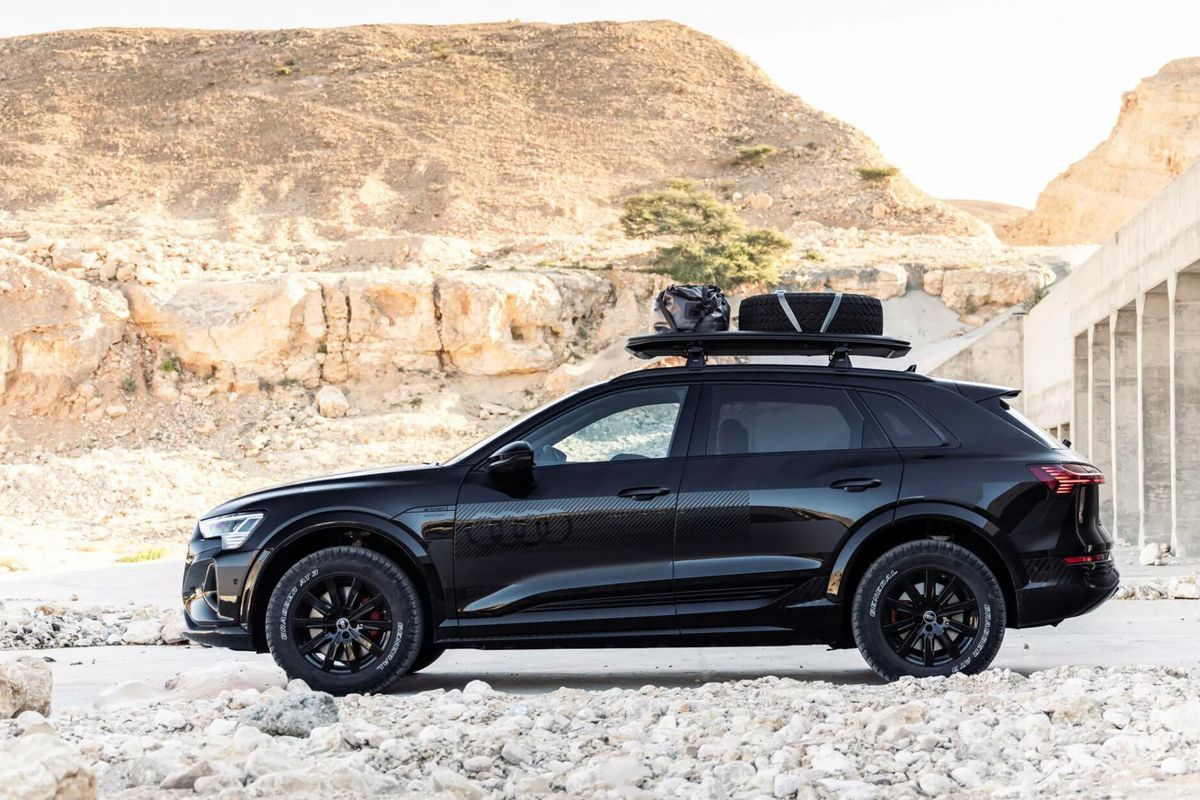
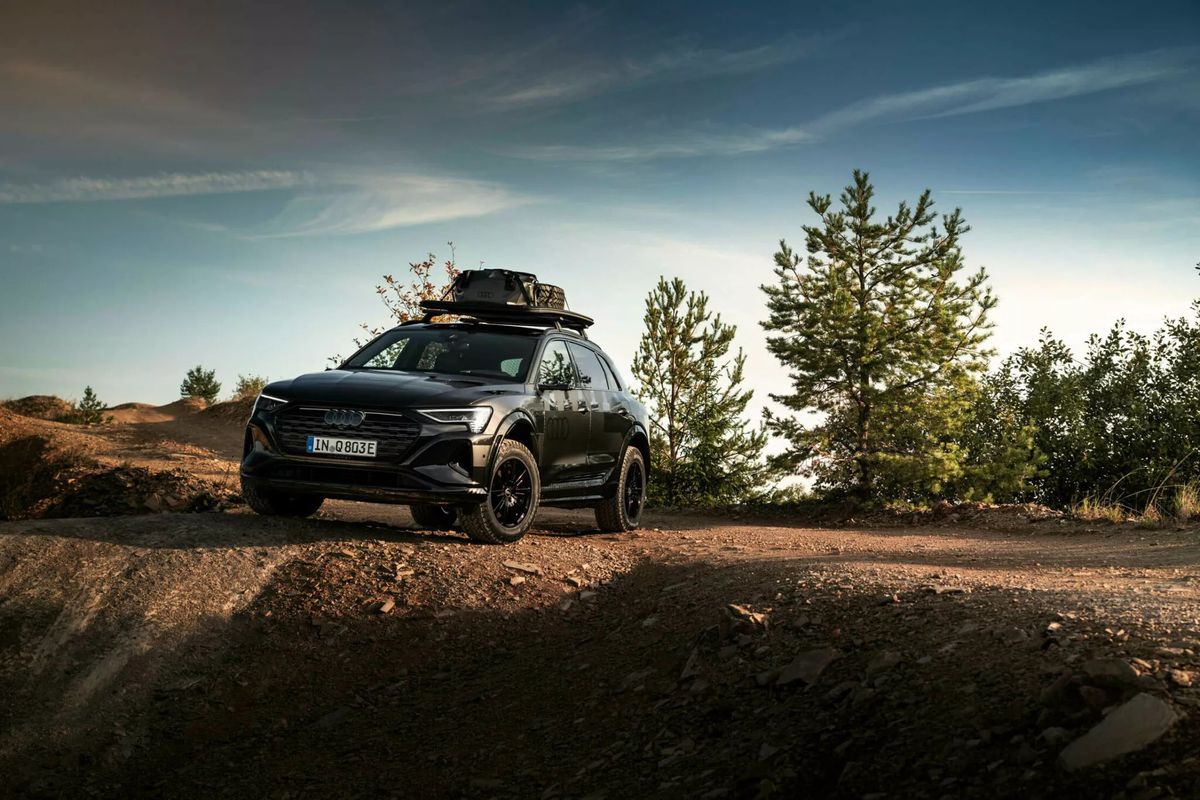
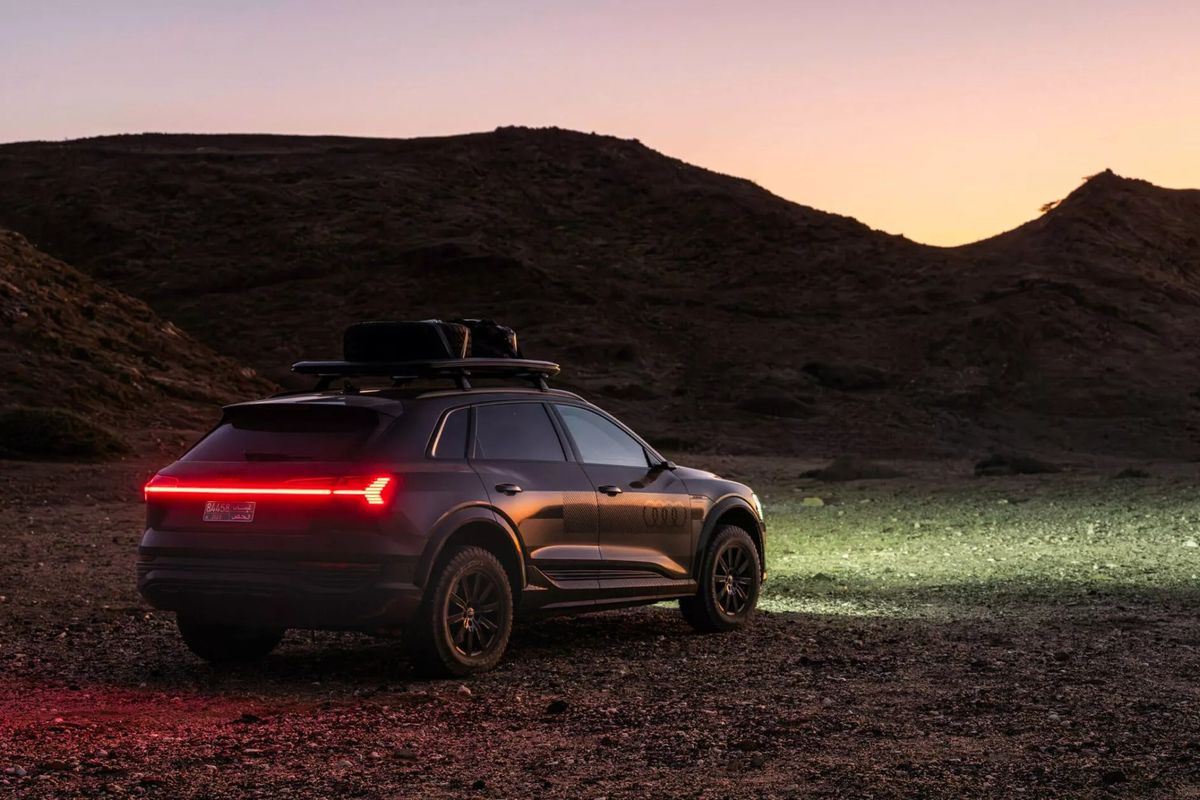
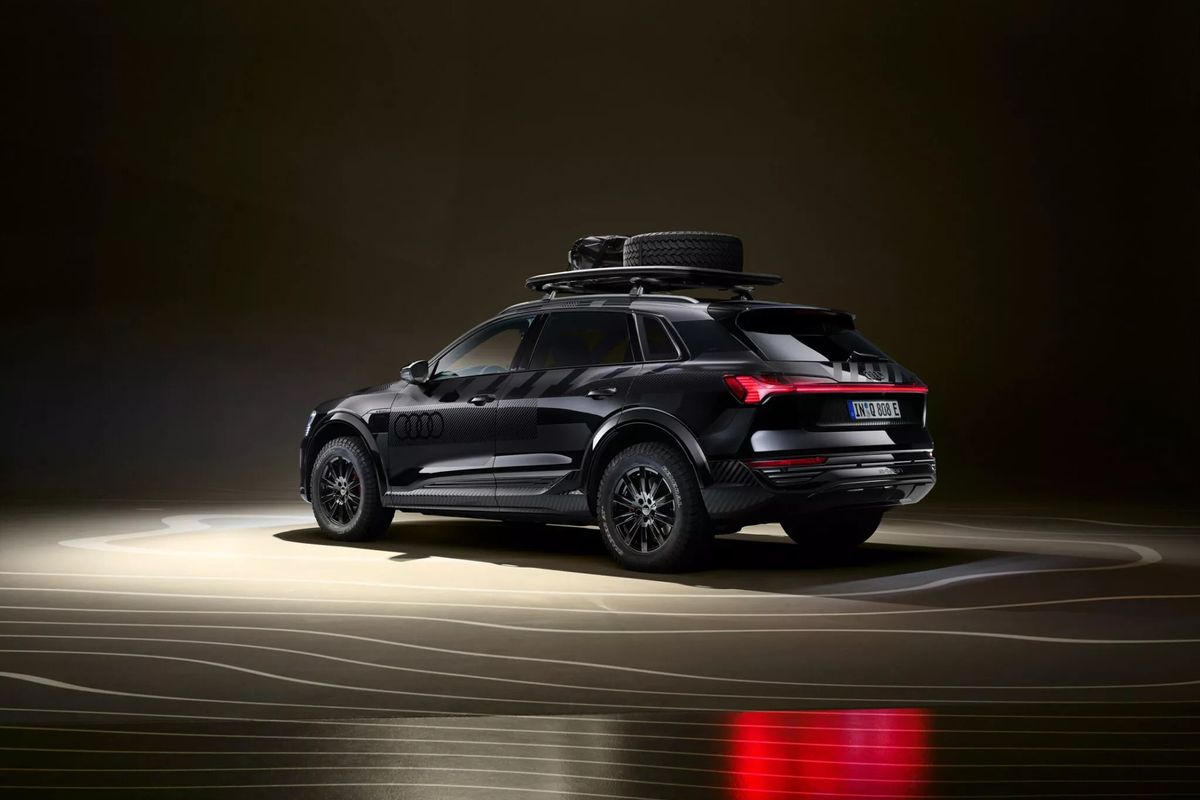
This wild-looking thing is a production model that will be offered by the brand. Meet the Audi Q8 e-tron Dakar Edition.
Something this outrageous is usually a one-off creation from a brand that will have no ambition of building a version for customers to actually buy, however the Audi Q8 e-tron Dakar Edition will be hitting European showrooms.
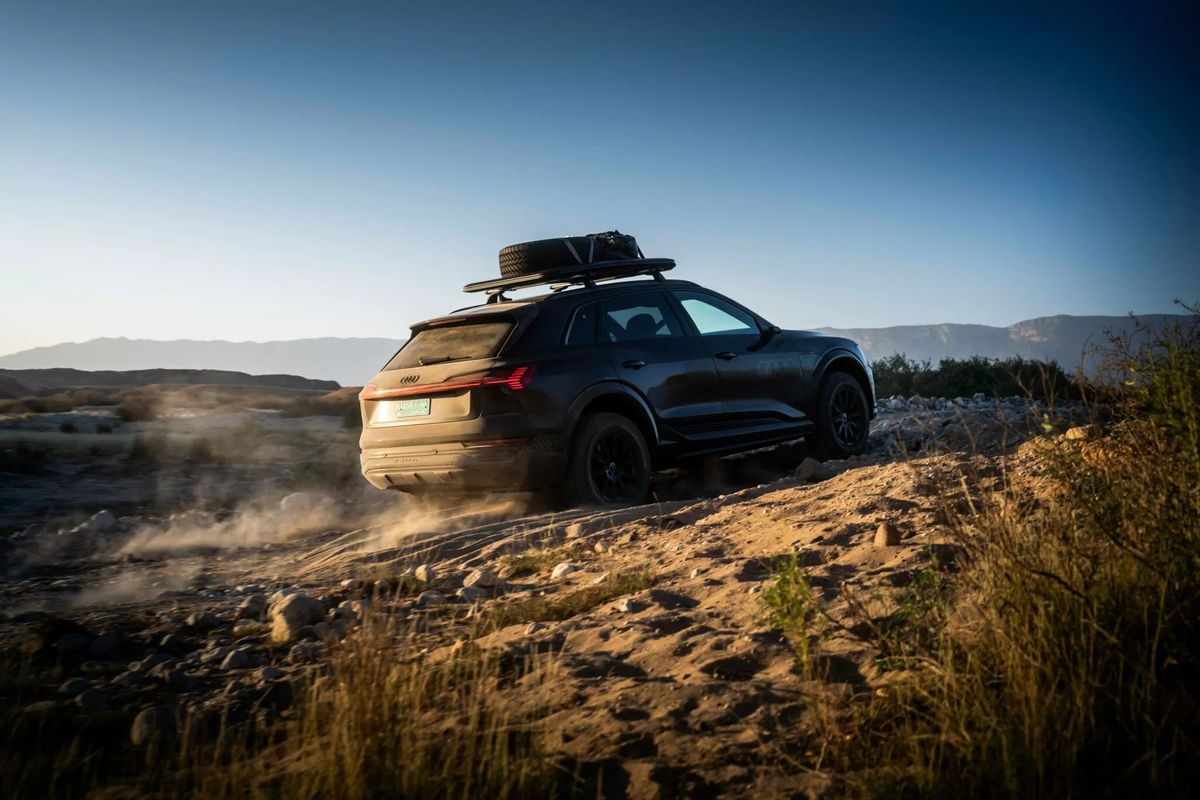
Audi has a stellar history with offroad shenanigans and obviously the first car to come to mind is the 80s era Audi Quattro. Audi would also like to remind everyone of its current RS Q e-tron Dakar racecar that will be taking part in the brutal rally in the dunes of Saudi Arabia.
What you see here is a tribute to its offroad adventuring spirit and unlike most wild and wacky creations, this one you can actually purchase (albeit in Europe – no sign of Audi SA bringing this one in). Priced around €120 000 (R2 500 000) in Germany , the Audi Q8 e-tron Dakar Edition is based on the twin-motor 55 e-tron with 300 kW and 664 Nm. If you have the offroad tyres fitted, expect 0-100 kph to come up in 5.9 seconds (5.8 if you go for the standard rubber).
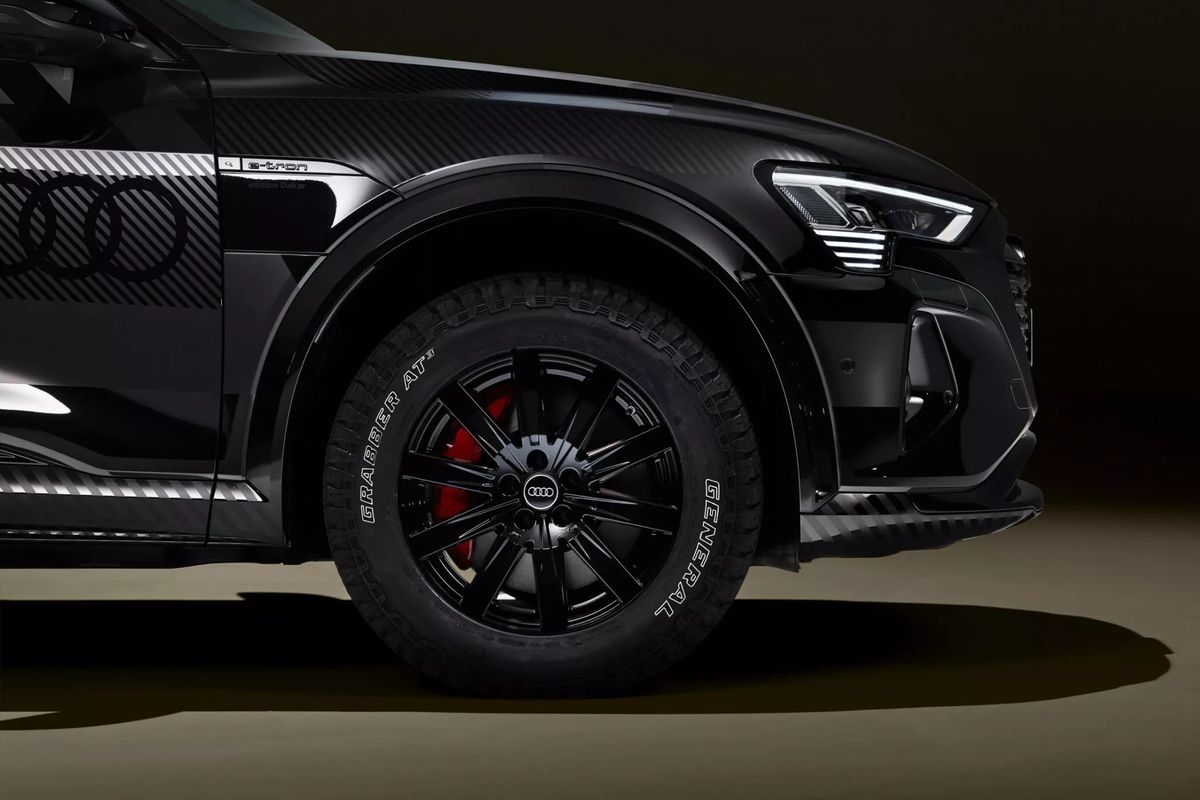
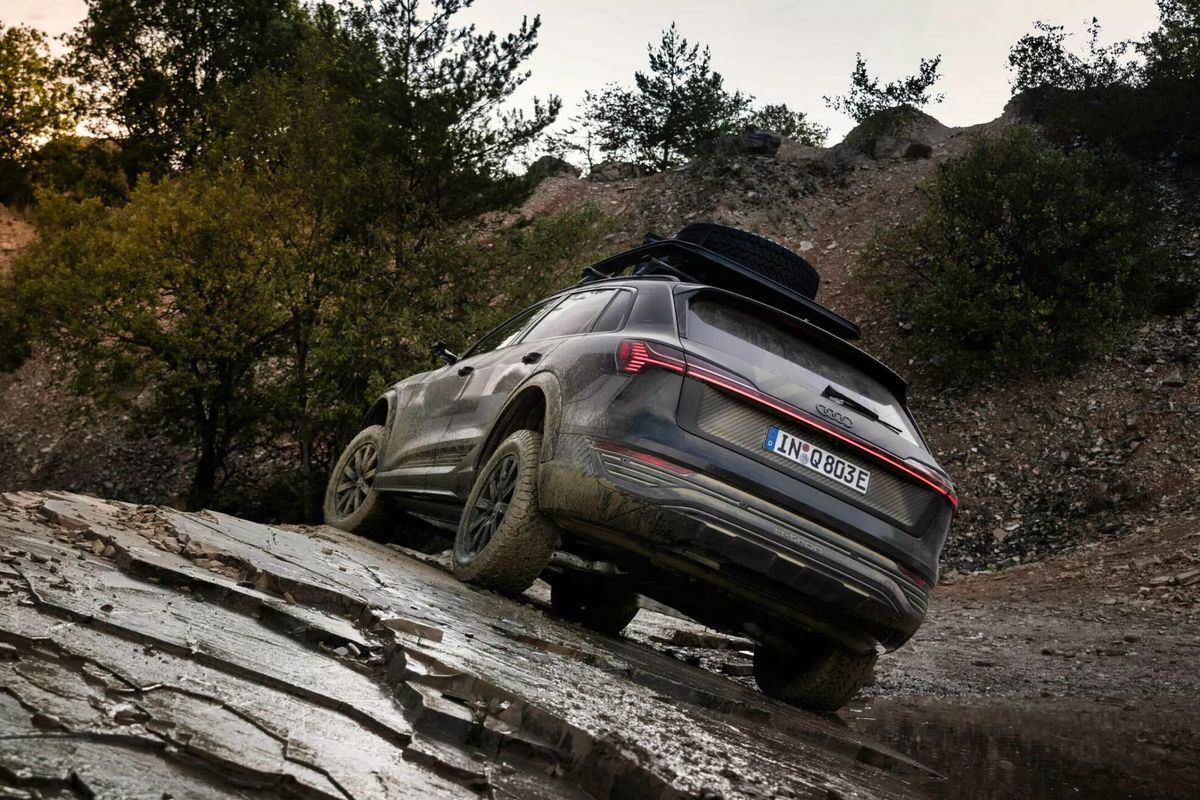
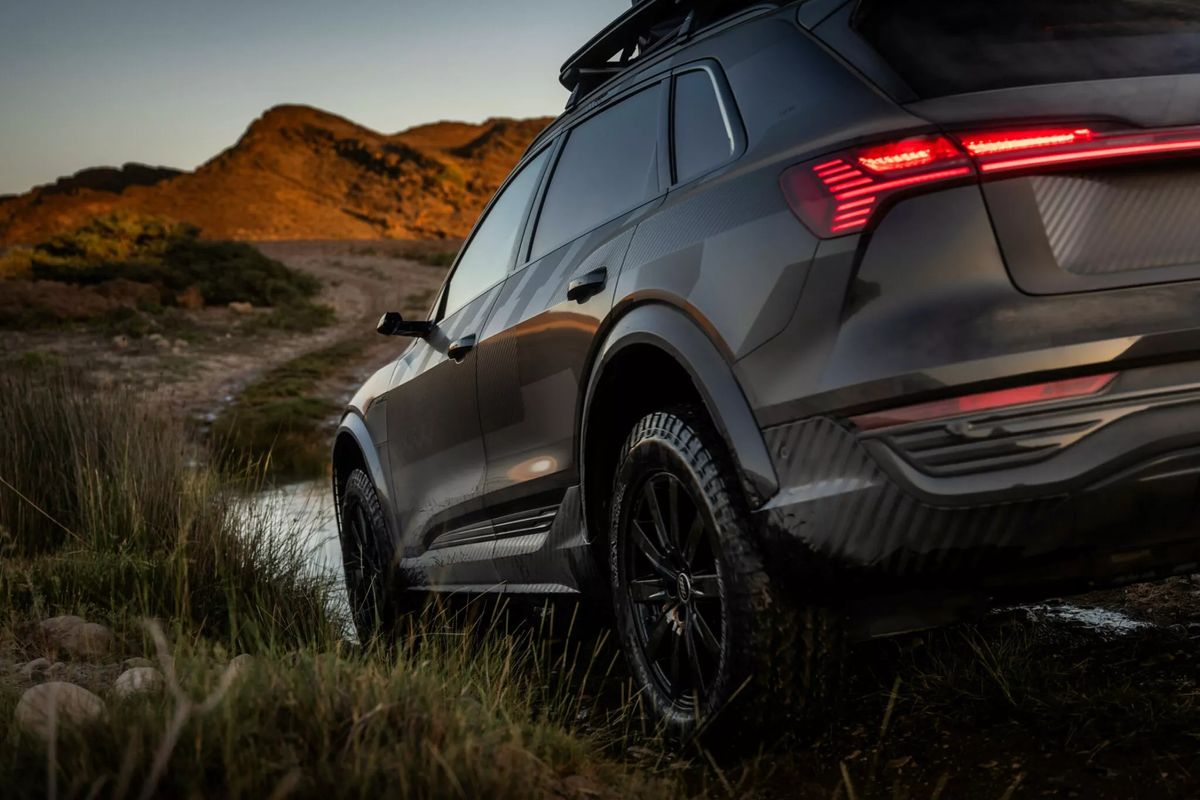
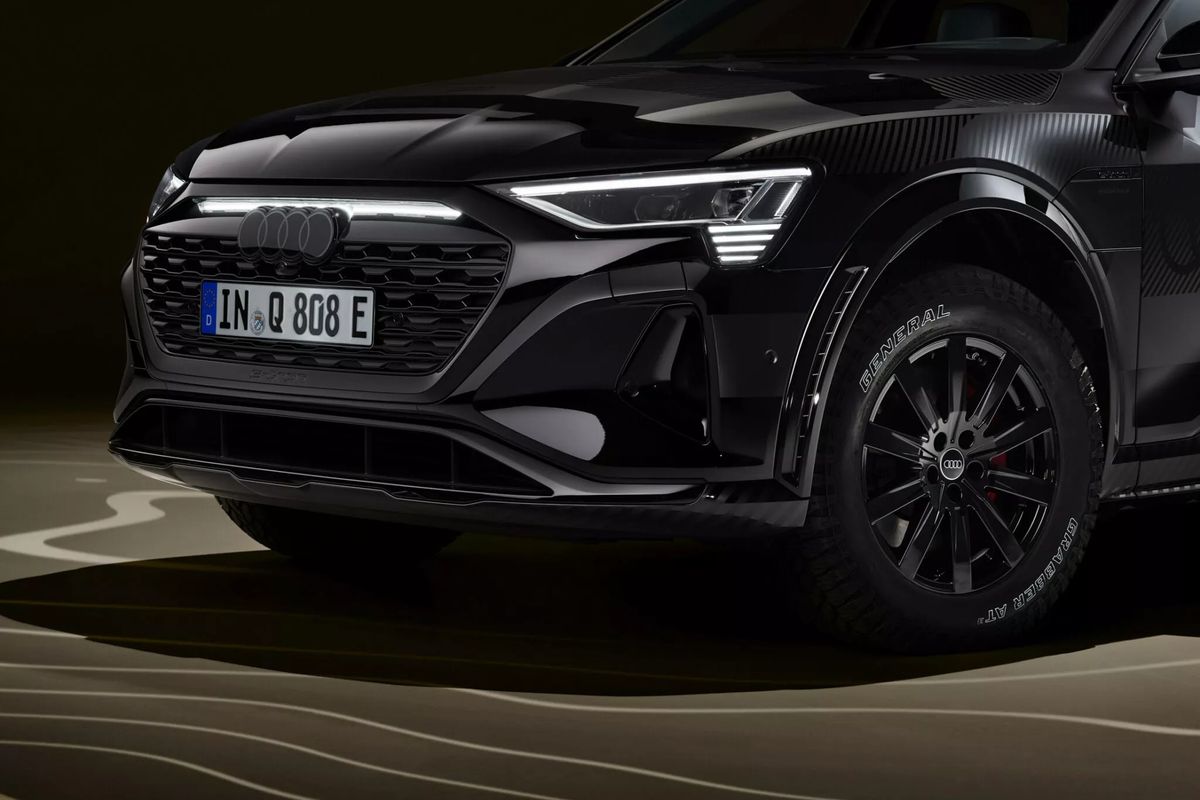
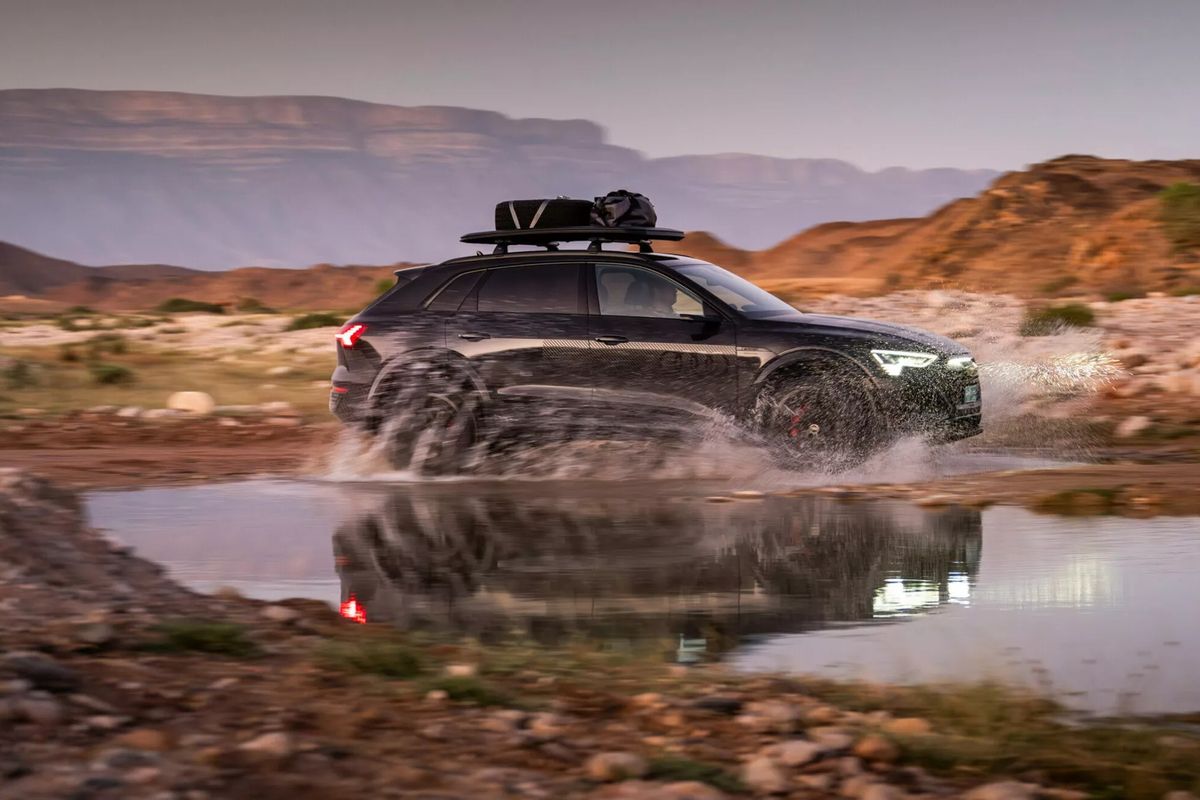
Impressively, Audi supplies both standard road tyres as well as a set of General Grabber AT3 all-terrain tyres. You lose about 50km of total range, but we’d argue these wheels look far more purposeful. They also add 31 mm of additional ground clearance. For the offroad fanatics, this has some genuine ability with approach, departure and breakover angles rated at 20, 26 and 19 degrees respectively. There’s also 300 mm of water wading depth, which is less than half that of something dedicated like a Ford Ranger.
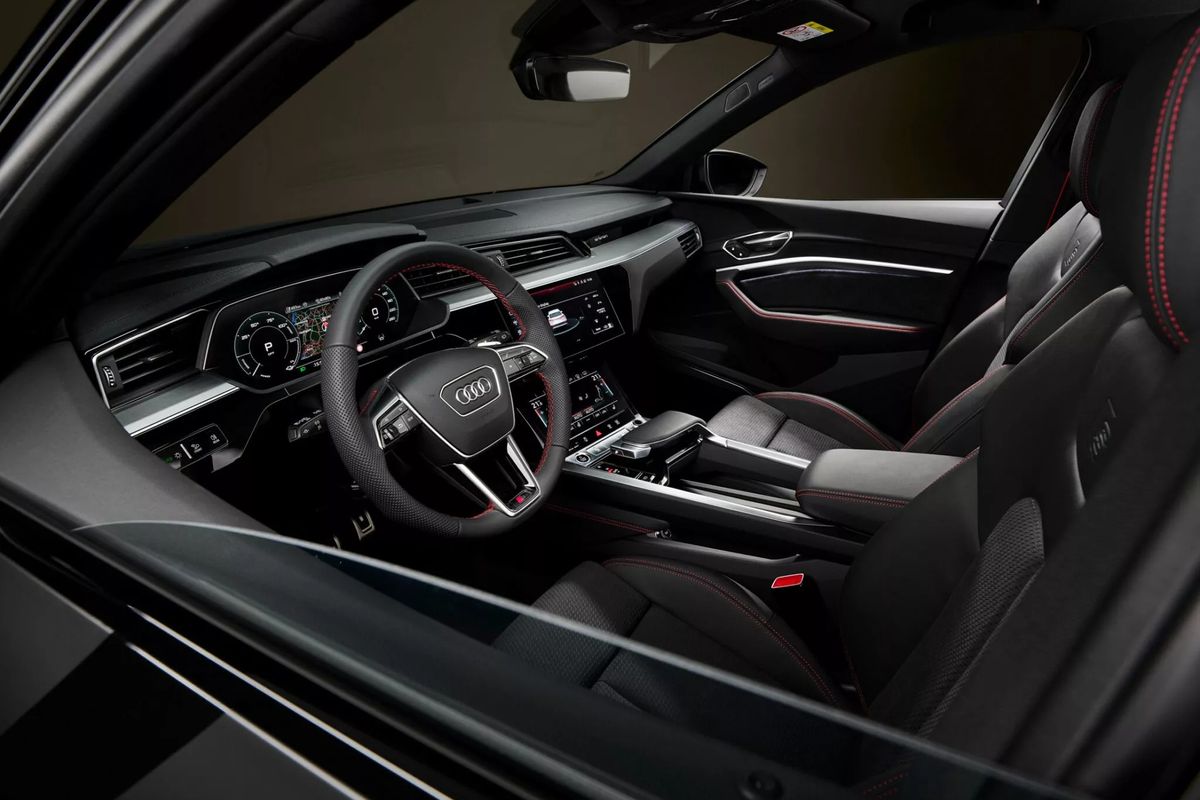
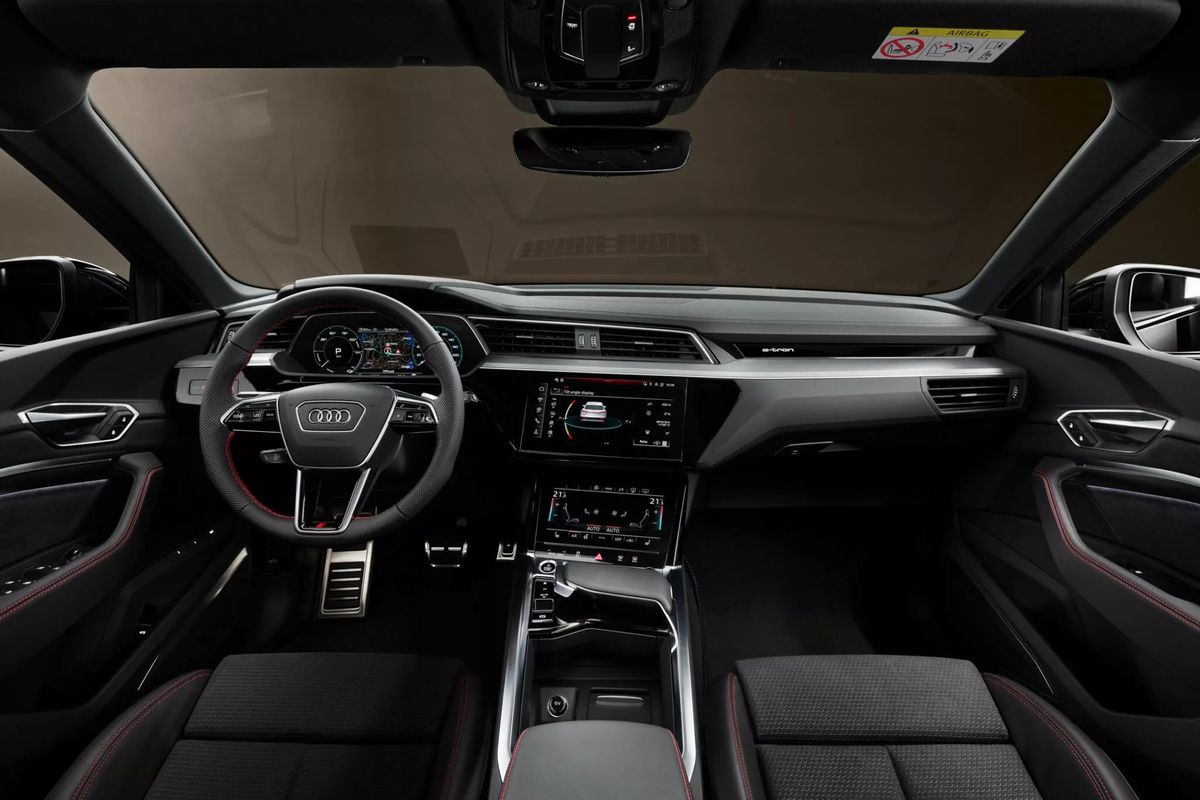
You have to give it to the brand, however. The Audi Q8 e-tron Dakar Edition looks awesome and it’s great to see interesting and fun creations from a typically conservative brand. You can take your pick of one of three colours and there’s a special decal package too. The roof rack is functional and can take 40kg of cargo, and Audi has tweaked the cabin to separate it from lesser Q8 e-tron derivatives.
Both the Audi Q8 e-tron and facelifted Q8 SUV will be arriving in South African showrooms in 2024.