If you’re wanting a slick and modern crossover, you’re spoilt for choice. The Blue Oval’s offering has just touched down at the end of 2023, but here are some of the Ford Puma’s key rivals to consider.
The Ford Puma arrived in South African showrooms towards the end of 2023. We had a quick drive and thought it felt nippy around town. Power comes from a 1.0-litre turbocharged 3-cylinder which makes a healthy 92 kW and 170 Nm, and that’s sent to the front wheels via a 7-speed dual-clutch transmission.
Priced from R569 900 to R613 900, the Ford Puma offers a stylish and modern Eurocentric crossover experience, but it goes up against some stiff competition.
As a reminder, the Puma is sold without a service plan, so don’t forget to factor that into your cost of ownership calculations. If you’re shopping around those price points, there are some interesting vehicles to consider.
The Volkswagen Taigo is also powered by a 3-cylinder turbocharged petrol motor, but can only muster outputs of 85 kW and 200 Nm (vs 92 kW and 170 Nm of the Ford). The Taigo is down on a number of features which are available as options, but counters with a standard service plan.
We like: Easy and engaging to drive, practicality, high-end standard features. We don’t like: Only one powertrain to choose from, some cheap-feeling trim, price premium.
When it comes to a dimension comparison to the Puma, it doesn’t get much closer than the Volkswagen T-Roc. The Veedub does offer a more powerful 1.4-litre turbocharged engine with 110 kW and 250 Nm, but loses out when it comes to standard features and the price of options pushes it above the price of the Puma.
We like: Surprisingly nimble, excellent grip from the 4Motion all-wheel drive, Beats audio system worth forking out extra for. We don’t like: Not as practical as other, similarly-sized crossovers, frustrating switchgear, not particularly fuel-efficient.
The 2nd-gen Renault Captur does so many things right. The 1.3-litre turbo engine is one of the more engaging in the segment, with 113 kW and 270 Nm driving the front wheels via a dual-clutch transmission. The high-spec model has an impressive level of convenience and tech features as standard.
We like: Modern design, interior touch and feel, drivetrain efficiency. We don’t like: A few build-quality irregularities remain.
The stylish Hyundai Kona comes with an assortment of engines, but the one you’re going to want is the 1.6-litre turbocharged 4-cylinder that has 146 kW and 265 Nm, making it the most powerful contender on this Ford Puma rivals list. It comes with a comprehensive 7-year warranty and a long list of standard features, at a price that’s just under the list price of the top-spec Puma.
We like: Bold design, generous standard spec, driving position, good fuel economy, large load bay We don’t like: Unengaging to drive, cramped rear legroom
The Opel Mokka is a seriously stylish offering and thanks to an energetic 1.2-litre turbo with 96 kW, it’s also one of the more engaging drives. The futuristic design is continued inside and the cabin looks and feels premium. However, it’s let down by cramped rear space.
We like: Design, quality, ride and handling, performance and efficiency We don’t like: Cramped rear seats, small load bay, awkward ergonomics
Of course, if you’re wanting ultimate bang-for-buck in one stylish package, then look no further than the Omoda C5 which offers a 1.5-litre turbocharged engine with 115 kW and 230 Nm. There are multiple trim levels on offer and the flagship comes fully equipped at a price that comfortably undercuts the top-spec Puma.
We like: Value for money, list of standard features, futuristic good looks We don’t like: Quirky software, thirsty
Which family SUVs are winning the sales race in SA?
Just how much have the Chinese disrupted the family SUV sales race in South Africa? Let’s take a closer look at year-to-date registrations of medium-sized crossovers or SUVs…
Despite many South African consumers having likely been forced to “buy down” into more affordable new-vehicle segments this year, there’s still plenty of sales action in the family SUV category. So, which models are leading the charge? And just how much have Chinese crossovers disrupted the race?
Before we dive into the sales figures, let’s take a step back and explain exactly what we mean by “family SUV”, for you to better understand which models have been included here. Slotting neatly into the Family Car category of the 7th iteration of the Cars.co.za Consumer Awards (CarsAwards), this type of vehicle is also classed as a medium crossover or SUV.
Larger than the Compact Family Car (think Haval Jolion, Toyota Corolla Cross and Renault Duster), the family SUV is a practical all-rounder. For a vehicle to qualify for inclusion in this feature, it must have at least one foot in the R600 000-to-R800 000 price bracket, which sees premium contenders such as the Rosslyn-built BMW X3 out of the running.
Based on year-to-date sales figures (up to the end of November 2023), it’s interesting to note every single vehicle in the top 10 bar one is manufactured by a brand hailing from Asia – either China, Japan or South Korea. Right, let’s take a closer look…
Chinese crossovers sandwich Volkswagen Tiguan
Over the past few years, the Volkswagen Tiguan – the 3rd generation of which was revealed overseas in September 2023 – has led the sales charge in its segment here in South Africa. However, that’s not been the case in the first 11 months of 2023. Instead, the Haval H6 is way out in front, with its year-to-date tally of 5 032 registrations putting it a healthy 1 867 units ahead of the 2nd-placed Tiguan (3 165 units, including 7-seater Allspace sales).
Of course, the H6 is one of the more affordable nameplates in this space, a fact that has clearly resonated with increasingly cash-strapped local buyers. Haval’s medium-sized crossover contender (also available in GT guise) is offered with an interesting choice of engines – including a turbocharged 2.0-litre petrol motor in 2 states of tune and a turbocharged 1.5-litre hybrid powertrain – though does without a diesel option.
Another Chinese model completes the podium. Despite the updated local range comprising just a pair of turbopetrol derivatives, the 7-seater Chery Tiggo 8 Pro (2 195 units) slots into a commendable 3rd place, though it’s still 970 registrations behind the Tiguan, with a month of 2023 to go.
Tucson takes 4th ahead of CX-5, RAV4 and Sportage
The 4th-generation Hyundai Tucson – which arrived in South Africa in March 2022, complete with distinctive exterior styling – slots into 4th place with 1 767 units (or an average of 161 units a month) registered over the 11-month reporting period. In May 2023, the local range was expanded to include an N Line flagship that combines a turbodiesel engine and all-wheel drive.
The Mazda CX-5 (1 283 units) isn’t too far behind in 5th position, as it continues to play the role of the Japanese automaker’s strongest-selling nameplate locally. Although it’s positioned towards the top of Mazda’s passenger-vehicle range (superseded only by the CX-60), the CX-5 has far outsold the likes of the CX-3 and Mazda2.
Despite the fact the Toyota RAV4 was the world’s best-selling vehicle overall in 2022, it finds itself in a fairly lowly 6th place on the local family SUV list, year to date. So far in 2023, 1 021 units have been registered, though Toyota SA Motors earlier told us it has been grappling with RAV4 “supply constraints”. In addition, base GX models were pulled from the local line-up in 2022, likely to create some breathing space for high-spec versions of the locally built Corolla Cross.
Launching locally in September 2022 in turbopetrol form before turbodiesel derivatives joined the range in May 2023 (with a further line-up tweak in November), the strikingly styled 5th-gen Kia Sportage finds itself in 7th spot, with 863 units sold.
Japanese trio completes the family SUV top 10
Once a decent driver of volume for its manufacturer, the Nissan X-Trail has to be content with 8th position, since only 652 units have been sold around South Africa in the opening 11 months of 2023. The 4th-gen version made local landfall as recently as April 2023 – and hasn’t been quite as popular as its predecessor – so note that this tally includes the outgoing version.
Though it’s easily its maker’s best-selling nameplate year to date, the Subaru Forester (306 units) ranks 9th on the list of SA’s most popular family SUVs. The Forester’s strongest month in 2023 thus far was January, when 46 examples were registered. The new-generation model has already been revealed overseas, though it’s expected to arrive in Mzansi only in the 1st quarter of 2025.
And the final model to crack the top 10? None other than the Honda CR-V, despite just 116 units having been sold. Local registrations hit 22 units last month (the nameplate’s best effort of the year thus far), though we suspect the outgoing model will soon be on runout, ahead of the local launch of the 6th-gen CR-V.
Stellantis models still the left-field choices
What about contenders that didn’t manage to finish inside the top 10? Well, the next 3 nameplates all come from Stellantis-backed brands. Although we’re 11 months deep into 2023, none of these models has yet managed to crack a 3-figure total.
A mere 90 units of the Peugeot 3008 have been sold in South Africa so far this year, with a high of 17 examples in January 2023. Next comes the Citroën C5 Aircross, which finds itself with a tally of just 29 units. Year to date, the C5 Aircross is the French brand’s slowest selling nameplate.
Finally, the Opel Grandland brings up the rear with just 17 units. Of course, we should point out the facelifted version – which ditched the “X” suffix – hit the local market as recently as July 2023, so Opel may have had issues with a lack of stock. That said, not a single unit was registered in 7 of the year’s 11 months so far, making the Grandland its manufacturer’s least popular passenger vehicle locally.
South Africa’s best-selling family SUVs in 2023 so far
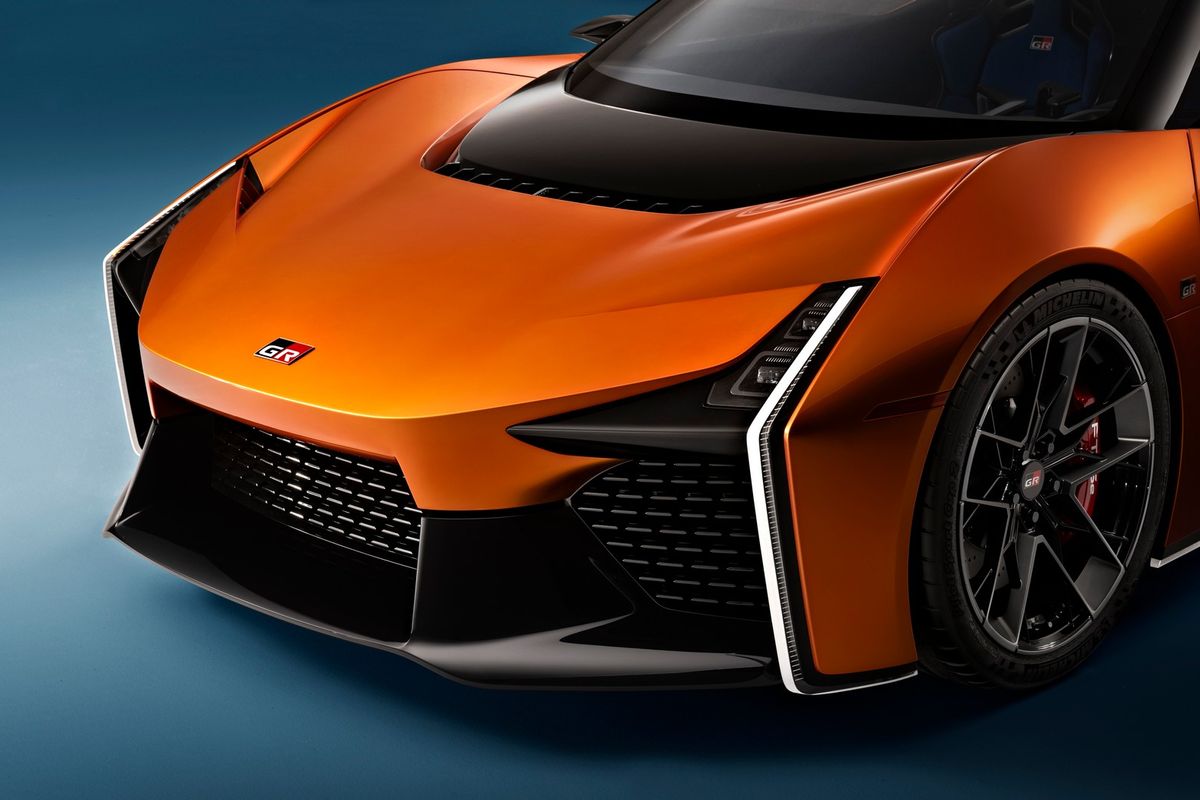
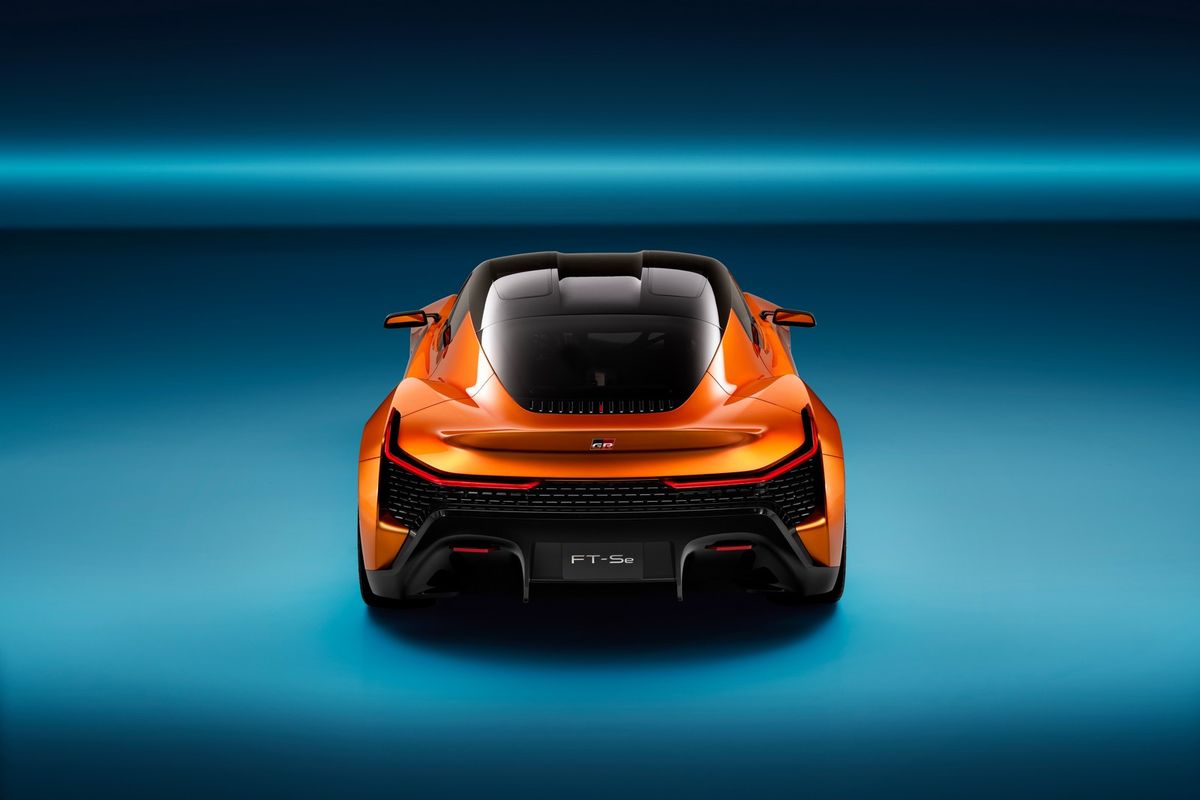
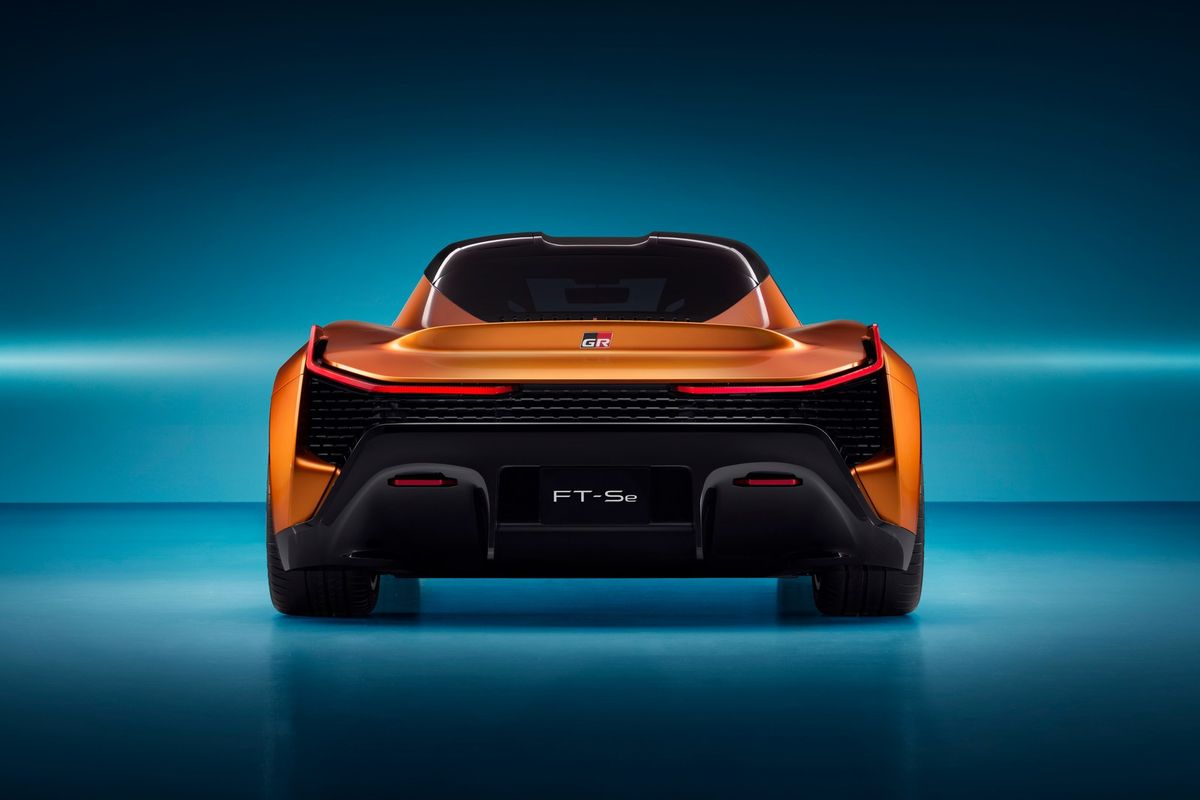
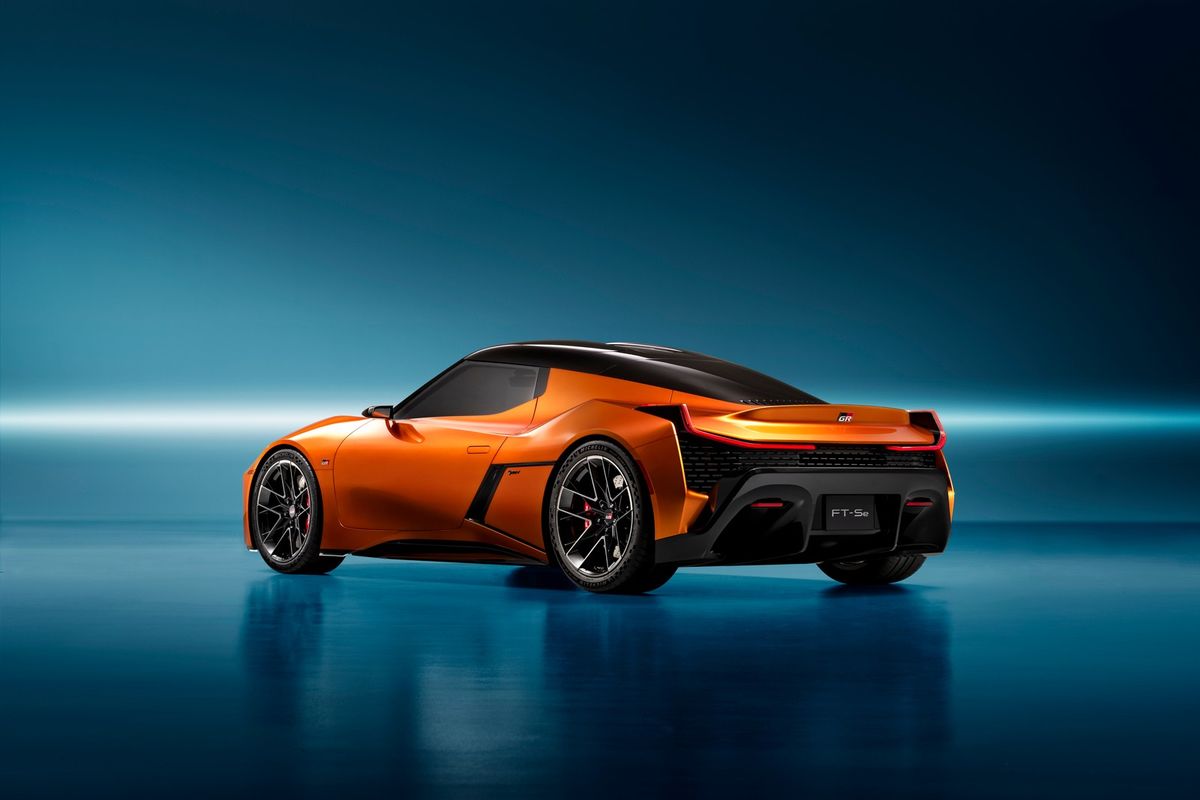
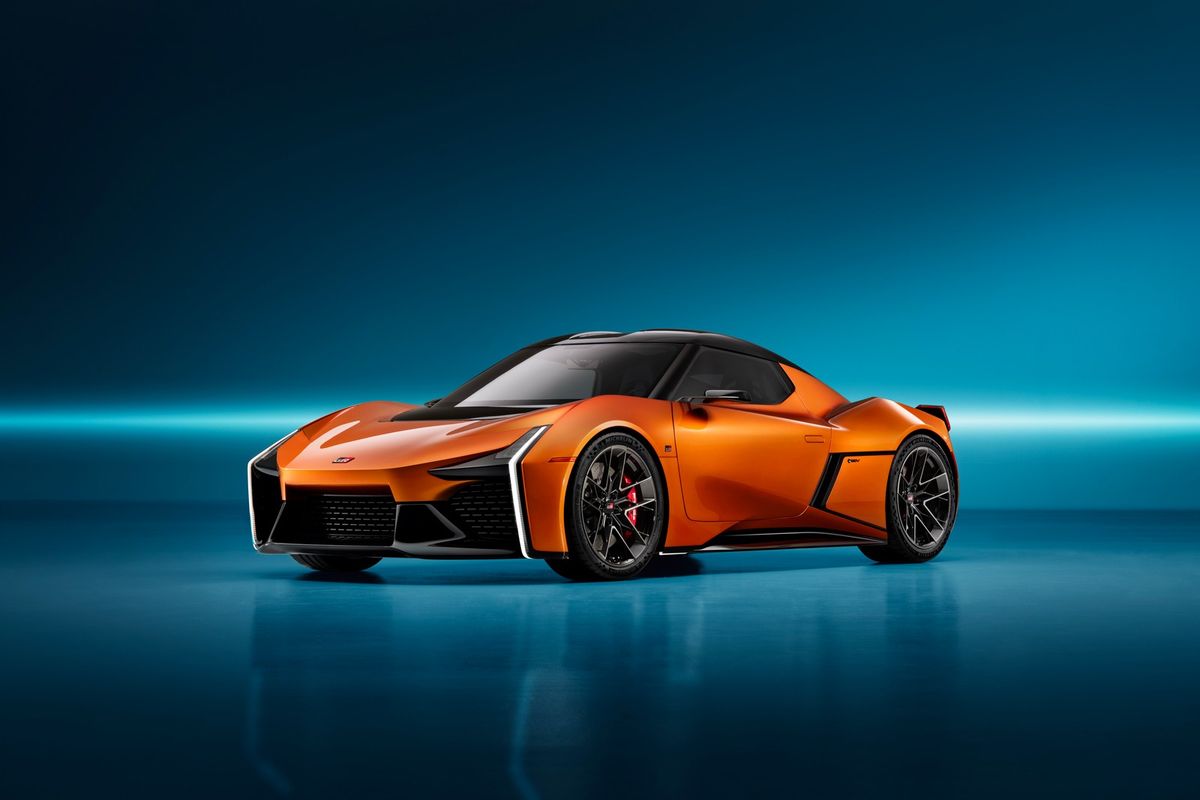
The Toyota FT-Se Concept previews a battery electric two-seater sportscar from the Japanese car maker. Here are some early details.
While its still strictly a concept, the Toyota FT-Se gives a good preview of what Toyota’s Gazoo Racing (GR) is cooking up in the near future. Standing for Future Toyota Sports electric, this concept is claimed to represent high performance in the carbon neutral era.
At just 4 380 mm long and 1 895 mm, this sportscar is not radically different in size in comparison to the current crop of Toyota’s GR performance vehicles. Given its history in making classic sports cars like the Celica, MR2 and Supra, expectations are that the Toyota FT-Se will continue to offer good looks and an enjoyable engaging driving experience.
There’s no word on the powertrain as yet, but we expect it will receive the next-generation battery tech like solid state batteries. Critical will be how the weight is managed, as we all know that EVs are not exactly light on their feet. Toyota has also said there will be continual software updates.
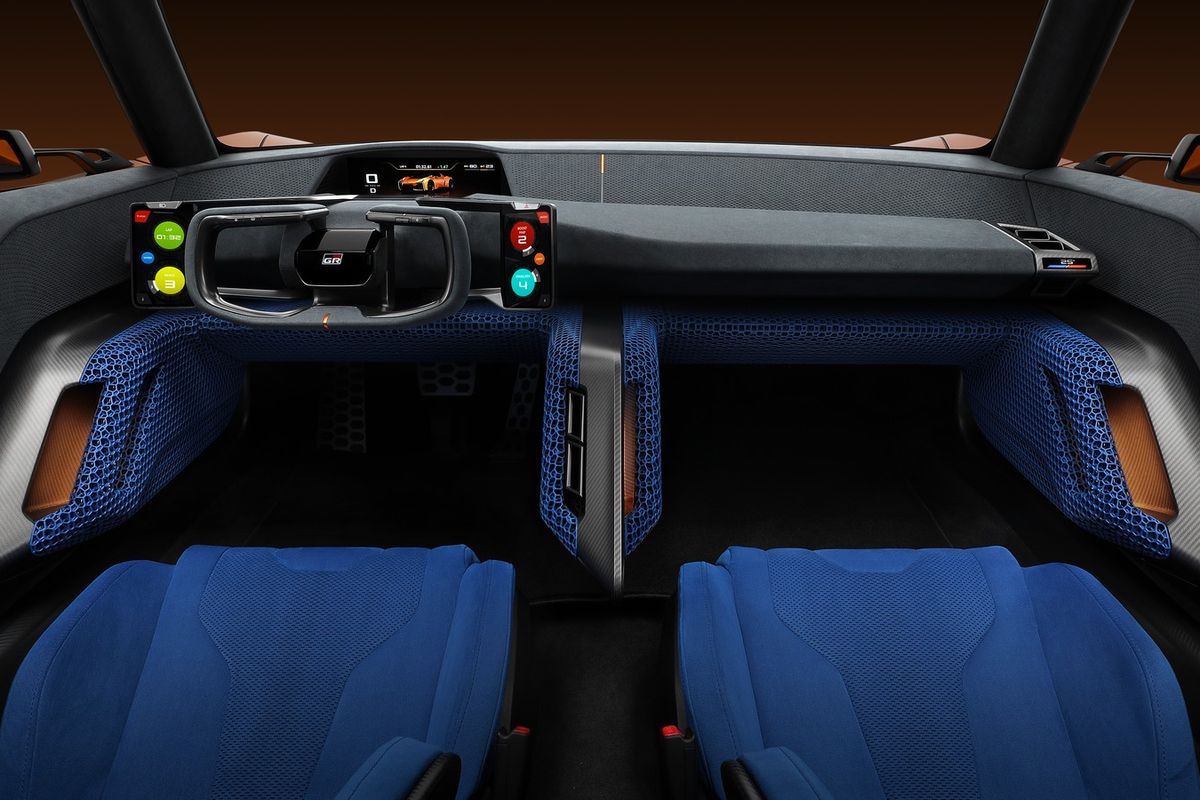
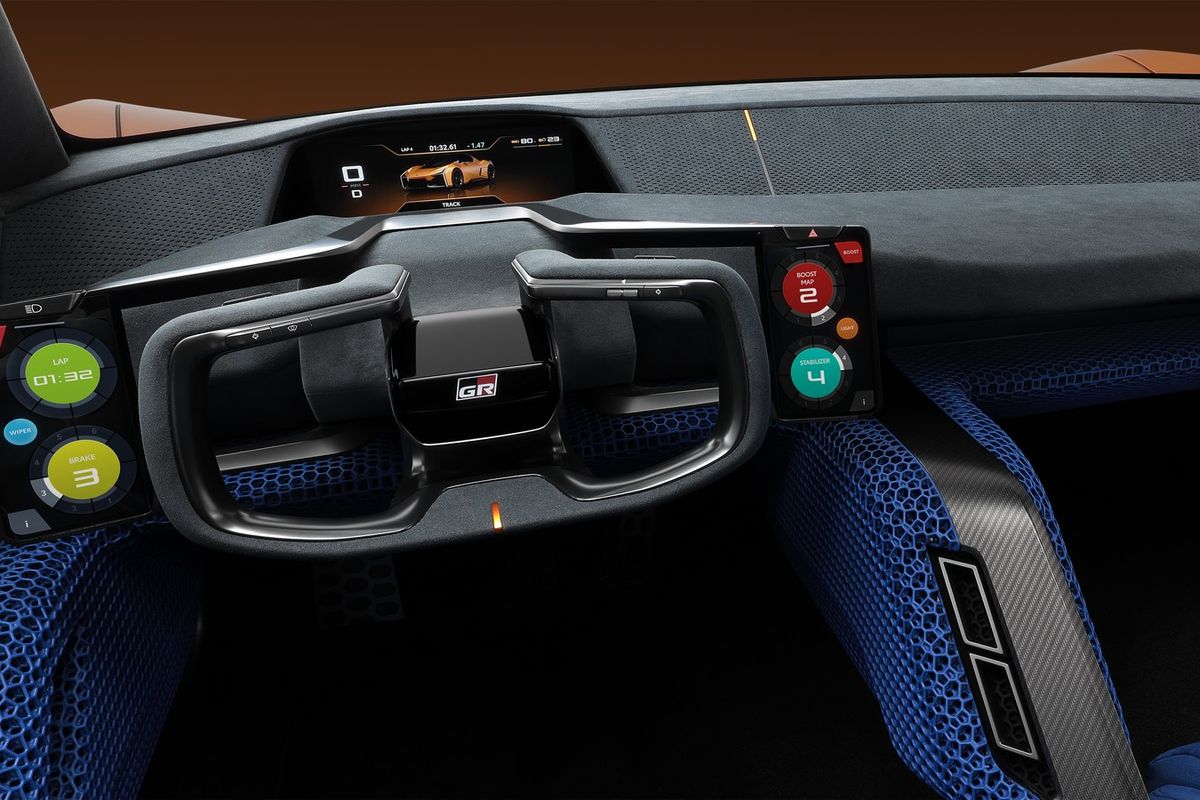
Toyota also released some info and images of the cabin, and the Toyota FT-Se features a next-gen cockpit with minimalist instrumentation. It appears the majority of controls and interfaces are integrated into the steering wheel. Toyota says there are kneepads in the cabin to protect the driver and passenger from G-Forces while driving quickly.
New Toyota Hilux Hybrid 48V: power and torque figures released
Fresh details on the new Toyota Hilux Hybrid 48V – which is set to be built in South Africa – have been released. Here’s a look at the powertrain’s basic specifications, including how much extra oomph is on offer…
Toyota in Europe has released additional information – including initial powertrain details – on the upcoming mild-hybrid Hilux, which is expected to be produced at Prospecton here in South Africa, with a local launch likely at some point in 2024.
Interestingly, the electrified bakkie will be marketed as the “Toyota Hilux Hybrid 48V” on the Old Continent (where it will launch in mid-2024), while the Japanese firm’s Australian division has already confirmed it has no plans to slap the hybrid badge on this derivative.
So, what do we know about the electrified Hilux? Well, in Europe, the mild-hybrid option will be offered only in conjunction with the double-cab body style. The widely used 2.8-litre, 4-cylinder turbodiesel engine (known internally as the GD-6) gains 48V technology, though seemingly only in conjunction with the 6-speed automatic transmission.
The oil-burning engine drives a compact motor generator using a belt system, which in turn charges the lithium battery installed under the rear seats (it is positioned here to “minimise” impact on cabin space, says the automaker). According to Toyota, the 48V battery weighs 7.6 kg and also supplies the vehicle’s 12V system via a new DC-DC converter. The battery is charged during deceleration, effectively regenerating braking energy which would otherwise be lost, while also ostensibly adding braking performance.
When fully charged, the 48V battery is able to deliver up to 12 kW and 65 Nm through the motor generator to the engine, to “enhance acceleration, power and efficiency”, according to the Japanese firm’s European division. Of course, this is in addition to the 4-pot’s standard outputs of 150 kW and 500 Nm. Should these hybrid outputs be available alongside the peak figures of the turbodiesel engine (which Toyota has not confirmed), total system outputs would theoretically stand at 162 kW and 565 Nm.
Toyota says the hybrid components come with no compromise to towing and payload capacities, which remain listed as 3 500 kg and 1 000 kg, respectively (though no kerb-weight figure has yet been shared). In addition, the company claims the Hilux Hybrid 48V is capable of driving through water “up to 700 mm deep” thanks to “waterproofing of the 48V battery and DC-DC converter”, while new “anti-slip and strengthening measures” on the motor generator pulley and belt ensure optimum performance, even when wet.
According to Toyota, the hybrid gubbins deliver “better throttle response and linear acceleration”, particularly from a standstill, while the bakkie also comes with an “enhanced” stop-start system to allow the engine to remain off for longer periods (and deliver a quieter engine restart). An official fuel consumption figure has yet to be released.
Off the beaten path, Toyota claims the Hilux Hybrid 48V’s motor generator power serves up “smoother acceleration when negotiating rough terrain”, while the regenerative braking “supports safer downhill manoeuvring”.
In addition, the updated multi-terrain select system now gives the driver the option of adjusting vehicle stability control (VSC) settings according to the specific driving conditions (using an automatic mode or 1 of 5 pre-set options: dirt, sand, mud, deep snow or rock).
We expect this lightly electrified version of the Hilux (alongside a Fortuner with the same powertrain) to hit the market in South Africa at some point in 2024, after Toyota SA Motors announced such plans in May 2023. Whether Toyota SA Motors will use a “Hybrid 48V” or “MHEV” badges – or whether it will opt for a different moniker altogether – remains to be seen.
To most, the F430 is simply a (relatively) mainstream, mid-engined Ferrari. But when fitted with a 6-speed manual gearbox, the Ferrari F430 suddenly becomes an alluring proposition to the raw petrolhead.
Paging through our favourite magazines or scanning the classifieds can be a great way to pass the time. Novices to this game migrate to modern cars, as finding a limited edition or special version is almost guaranteed, but for a seasoned classifieds-pager that would be too easy.
Older cars with proper pedigree will instead grab their attention. However, sometimes a modern classic with specific details catches your eye. A Ferrari like the F430 we have here is a case in point. Easily overlooked by most, this might be the pick of the standard F430 bunch.
Since Ferrari is unlikely to produce a manual transmission car again, “modern” classic Ferraris equipped with a manual ‘box and earlier models are significant to me and are models that I think will appeal to a large audience, if not now then definitely in the future.
Specifications
Model: 2006 Ferrari F430 manual
Engine: 4.3-litre V8, petrol
Power: 360 kW at 8 500 rpm
Torque: 465 Nm at 5 250 rpm
Transmission: 6-speed manual, RWD
Weight: 1 450 kg
0-100 kph: 4.0 sec (claimed)
Top speed: 315 kph
This isn’t just any Ferrari F430
Of the several Ferrari F430s based in South Africa, only around seven or so are equipped with the manual gearbox. This makes them rarer than the Ferrari 488 Pista in this country! This car has only 25 000 km on the odo and, unsurprisingly, it’s in tip-top condition.
As the setting sun glimmers across the beautiful, yet still modern, lines of the F430, I am struck by how perfectly the car has aged. Whereas the rounded design of the 360 Modena subjectively shows its age, it is as if the F430 strikes a balance between classic and modern, sans an overload of sharp edges, wings and winglets, as is often the case with some modern Ferraris.
The clean lines seem to accentuate the beautiful wedge shape, the mid-engine layout adds just a hint of aggressiveness to its lines. We open the engine cover and marvel at the visually-arresting 4.3-litre V8 power unit, eyes immediately drawn to the red intake manifold on top and the gleaming silencer box placed high up right in the tail, making space for the airflow through the diffuser below the car.
The engine is positioned low in the bay and directly aft of the cabin’s rear window, inches from your head. The engine is a sight to behold: clean and uncluttered, with no wayward cables or pipes in sight. Very much unlike all the plumbing required nowadays to make turbocharged cars go. It focuses your attention on the power unit, always the highlight of the car, as Enzo wanted, but today also with nearly as much focus on the aerodynamics and chassis.
Having driven a 360 Challenge Stradale and 458 Speciale, this is the first time I’ll get behind the wheel of an F430, not to even mention it being a manual as well. I’ve always thought it to be a special car, even more so equipped with this gearbox.
Behind the ‘wheel of the stick-shift F430
The cabin is fairly plain in terms of design and what it offers. All the necessary buttons for the aircon system are there, as well as the plaque below the passenger’s air vent indicating Ferrari’s 28 F1 world titles at the time. But thankfully, there is nothing major to distract you from the driving experience. The doors, roof, seats and most of the cabin are covered with a classy combination of black and red leather.
As is the case with most Ferraris of this time and slightly earlier, most of the rubber buttons are sticky. This is a general complaint of cars from this era, but in such an expensive car as this, it is extra frustrating. While the buttons can be replaced at an eye-watering price, there are fortunately more affordable ways to fix the problem.
The seating position is spot on, the seats comfortable and supportive while the highlight of the cabin is without a doubt the bright gear lever protruding from its traditional base pedestal to the left of my leg.
As a 40-something enthusiast, that polished, open-gate shifter speaks volumes to me; it brings back memories of so many Ferrari posters from my youth; It looks classy, fun-to-use, but oh-so sophisticated.
Even before I start the car I play with the lever, slotting it up and down into gears and find it hard to think that we are unlikely to ever see this piece of automotive art inside a new Ferrari again.
Looking around, there is ample space in the cabin, even some space for a small briefcase, documents or slim bags behind the seats. The yellow rev counter with its redline at 8 500 rpm is a joy in its own right.
Being a right-hand-drive example, the solid metal foot pedals are marginally offset to the left, but that is of little concern as you sub-consciously position your body and legs, making this offset a non-event. Even the passenger has a metal footrest, positioned in such a way that they can brace their feet against it during heavy braking.
Start the engine – and it barks
I twist the key and press the start button to the left of the steering wheel. The engine turns over, barks and settles with a throaty sound. It is not as loud or metallic as the modern units; rather a little softer but still with enough intent to let you know there is something special under that glass engine cover.
As I pull away and slowly shift a few gears, the lightness of the car itself becomes immediately evident. Even at sedate speeds, the car feels eager and I can’t help but be impressed with the perfect damping of the suspension. This road, Malanshoogte, outside Durbanville, is well known and loved by driving enthusiasts. Although some sections are smooth, other areas have bumps and scars in the road. But the F430 rides them all with aplomb. Long-distance cruises won’t be a problem in this car.
As expected, the engine is eager to rev. I short shift at 4 to 5 000 rpm, revelling in the torquey mid-range, reminded that a healthy 3 500 rpm is still available to bank on when you want to. Changing gears slowly is not what this car was built for.
There is little inertia in the engine, so if you don’t engage the next gear quickly, the revs fall too far down the rev range. It challenges you to blip the throttle correctly during each down change. This is obviously a sensation and a level of intimacy with the car that the F1 transmission can simply not offer.
The steering is direct with sufficient feedback through the wheel. As you sit close to the nose of the car, you also feel closer to the tarmac, the fenders over the front wheels being the only parts of the car that you see past the windscreen. Perfectly threading the car through corners is easy and you never have to be too concerned about where the outer extremities of the car are as it is so compact.
Grips levels are comfortably high, while the carbon-ceramic brakes (optional at the time) offer good stopping power. While these early carbon-ceramic units received much bad press, they work perfectly here and I experience no funny sensation through the pedals.
There is no traffic ahead of me, so I start to explore the upper echelons of the Ferrari F430’s rev range. As the rev needle climbs past 6 000 rpm, I start to appreciate, again, the lack of inertia this engine is blessed with and the increasing intensity of the exhaust note.
Pressing the clutch (slightly heavy, but no more than you would expect) and pushing the gear lever forward or pulling back for the next gear brings another chance to experience the power delivery. It is such a direct and fun exercise that you can’t help but switch once or twice too often during a run.
The engine, and thus the car, reacts the moment you press the throttle. There is no tardiness in the drivetrain. The higher the revs, the quicker the drivetrain responds; the analogue rev counter is a visual manifestation of the engine’s grin-inducing talents as the needle swings past the 12 o’clock mark.
The balance of the car is what will stay with me. It’s a 17-year-old supercar, but still has an intoxicating level of all-round performance. It never scares you and isn’t as “silly fast” as modern supercars, yet it provides satisfaction in spades. Depending on your driving skill it will take some practice getting to its grip limits, but I anticipate that it will be more easily achievable than with quite a few modern fast cars. You might need to work harder managing the gearshift, but it will be a fun experience nonetheless.
Collectability factor of the Ferrari F430
Considering that Ferrari built around 15 000 Berlinettas and Spiders, these cars will never be highly collectable, but how many of them were manual? Difficult question, but we know the number was lower than those fitted with the F1 gearbox. It is probably not as few as the claimed 499 Spider 16Ms or the roughly 2 000 Scuderias that were produced, but it can be argued that, of the general coupe models, from a collectability- and certainly a driver-involvement point of view, the manual is the one to have.
After our drive and when the photo shoot is wrapped up, I hand the key back to the owner and ask him his thoughts on what is only the 2nd Ferrari he has owned. He owned a 308 GTS prior.
“I’m not at all interested in a paddle-shift Ferrari. The replacement for the 308 had to be equipped with a manual gearbox,” he said. “While I thoroughly enjoyed my 308, in terms of driving I get more out of the Ferrari F430 thanks to the better performance and its cruising ability when you are not in a rush.”
Summary
In EVO’s Car of the Year shootout (featured in the UK magazine’s January 2006 issue, a Ferrari F430 finished the runner-up out of the 10 contenders and that unit was equipped with the F1 transmission!
The reviewer wrote: “… the Ferrari felt the sharpest, the most agile, the most alive. The F430 is so exhilarating because you’re working so hard. Not all the time, but if you want it to it’ll demand 100% concentration from you, which I think is great for this kind of car’”.
That sums it up. It has all the ingredients of a mid-engined Ferrari with the added spice of a manual ‘box providing an additional level of delight in which you can immerse yourself once behind the ‘wheel.
10 best-selling bakkies in South Africa: November 2023
Bakkie fans, the figures are in! Here’s your monthly look at South Africa’s best- and worst-selling bakkies, this time for November 2023…
In November 2023, South Africa’s new-vehicle industry registered a year-on-year decline of 9.8% to finish on 45 075 units. The light-commercial vehicle (LCV) segment wasn’t spared, though the drop here wasn’t quite as sharp as it was overall, with this part of the market falling 3.9% year on year to 12 941 units.
So, what happened on the list of South Africa’s best-selling bakkies? Well, the Prospecton-produced Toyota Hilux held steady in 1st place, with as many as 3 073 examples registered round Mzansi during November 2023. For the record, that’s the 7th time this year the bakkie has breached the 3 000-unit barrier. Interestingly, however, the Hilux was the only vehicle in the top 10 to experience a month-on-month drop in sales.
Meanwhile, the Ford Ranger retained the runner-up position, though the Silverton-built bakkie closed the gap somewhat to the Hilux, with sales of the Blue Oval brand’s contender increasing 20.6% month on month to 2 234 units. The Struandale-manufactured Isuzu D-Max range (1 662 units) – which will soon gain fresh X-Rider derivatives – similarly improved its showing compared with October 2023, holding steady in 3rd place.
So, the podium was unchanged in November 2023. But what about the rest of the top 10? Well, fascinatingly, there was no real jostling here either, with the Nissan NP200 (1 152 units) – of which production is scheduled to end in March 2024 – and Mahindra Pik Up (606 units) staying in 4th and 5th, respectively. The Rosslyn-built Nissan Navara (402 units) also slightly improved its tally month on month, again ending in 6th.
The Volkswagen Amarok retained 7th place in November.
As was the case in the preceding month, the Volkswagen Amarok (367 unit) – the joint recipient of the 2024 International Pick-up Award with the Ranger alongside which it is built – took 7th ahead of the Chinese-manufactured GWM P-Series (284 units) in 8th. With a refreshed version (complete with 4-cylinder power) set to make local landfall soon, the Toyota Land Cruiser 79 (260 units) retained 9th, while the GWM Steed (105 units) again closed out the table.
Best of the rest in November 2023: bakkies outside top 10
JAC’s T-Series range includes the range-topping T9.
So, which bakkies didn’t make it into the top 10 in November 2023? Well, JAC’s T-badged bakkies (the Chinese automaker unfortunately reports only a combined figure for its T6, T8 and new T9 line-ups) managed 69 registrations, while the Peugeot Landtrek ended the month on 45 registrations. Though the latter model is currently imported from China, local production is due to start in Coega (near Gqeberha in the Eastern Cape) by “early 2026”.
Next came the Mitsubishi Triton (41 units), ahead of the Mahindra Bolero (33 units). Finally, the Mazda BT-50 (7 units) again didn’t manage to crack double figures, while the Jeep Gladiator brought up the rear on 4 registrations. As a reminder, the facelifted Gladiator is scheduled to make local landfall only towards the end of 2024.
Export winners in SA’s bakkie segment in November 2023
The Ford Ranger led the export charge on the bakkie front.
What about the export market? Well, the Ford Ranger pushed ahead in November 2023, with 8 597 units sent overseas. That meant the Toyota Hilux was forced into 2nd position on the export charts, with 6 486 examples shipped off during the month.
The D-Max (612 units), Navara (281 units) and NP200 (20 units) again made up the numbers on the export charts. As has been the case for a number of months now, the official Naamsa report furthermore showed a few imported models being exported from local shores in November 2023, this time in the form of the Mitsubishi Triton (46 units), GWM P-Series (19 units) and GWM Steed (2 units).
10 best-selling bakkies in South Africa for November 2023
SA’s best-selling brands and vehicles in November 2023
South Africa’s new-vehicle sales fell 9.8% year on year in November 2023, with declines in all major segments. Here’s your full overview, including Mzansi’s most popular brands, best-selling vehicles and more…
In November 2023, South Africa’s new-vehicle industry registered a year-on-year drop of 9.8% to finish on 45 075 units. For the record, that made it 4 consecutive months of year-on-year declines, though this was easily the most significant fall of the bunch (and furthermore represented a 0.8% drop compared with October 2023 as well as the biggest loss since the beginning of 2021).
According to the industry representative body – which initially distributed slightly different figures before sending out a correction – the subdued performance of the local market could be at least partly attributed to the return of Stage 6 load-shedding as well as sustained supply-chain disruptions at Transnet.
Out of the total reported industry sales of 45 075 vehicles, Naamsa estimated that 38 224 units (or 84.8%) represented sales via the dealer channel, while 9.5% were sales to the vehicle-rental industry, 3.1% to government and 2.6% to industry corporate fleets.
In November 2023, Mzansi’s new passenger-vehicle market registered a “significant” year-on-year decline of 12.1% to 29 384 units, with car-rental sales accounting for 12.5% (or 3 672 units) of that total. The light-commercial vehicle segment didn’t escape the drop either, finishing the month on 12 941 units (a 3.9% fall compared with the same month in 2022). In fact, only the export market showed growth, increasing by 25.5% to 41 660 units.
Year to date, South Africa’s new-vehicle market (491 967 units) is now a mere 0.6% ahead of the same reporting period in 2022, largely courtesy of the LCV segment. As Naamsa points out, if December’s performance is likewise disappointing, the industry may well miss out on the chance to return to pre-pandemic levels of sales. New-vehicle exports, meanwhile, are up 13.8% year to date, on 370 284 units.
Brandon Cohen, National Chairperson of the National Automobile Dealers’ Association (NADA), expressed concern about the market’s performance in November, saying the “resilience” of motor-vehicle retailers had finally yielded to the pressures of a depressed economic environment.
Cohen attributed the downturn to a confluence of global unrest, political uncertainty, increased load-shedding and logistical challenges, saying “these factors, coupled with rising household costs, have collectively dampened consumer and business confidence”.
“Even with increased interest in long-term leasing and step-payment financial programmes, these incentives failed to attract significant numbers of actual buyers,” Cohen lamented.
Meanwhile, Lebo Gaoaketse, Head of Marketing and Communication at WesBank, pointed out consumers had their 3rd respite from further interest-rate increases in November, though added the general outlook remained for a high interest-rate environment to continue impacting household debt until the middle of next year.
“While this is of some comfort to indebted consumers, the high lending rate combined with high inflation and relatively lower household income, will continue to restrict big-ticket purchases such as new vehicles,”said Gaoaketse.
“Those restricted household incomes and business revenue streams are prioritising an alternative energy solution before a new vehicle purchase. With the return of higher stages of load-shedding during November, sales during December and January could be expected to experience a higher-than-usual wait-and-see approach to purchase decisions.”
New-vehicle sales summary for November 2023
Aggregate new-vehicle sales of 45 075 units decreased by 9.8% (4 911 units) compared to November 2022.
New passenger-vehicle sales of 29 384 units decreased by 12.1% (4 052 units) compared to November 2022.
New light-commercial vehicle sales of 12 941 units decreased by 3.9% (526 units) compared to November 2022.
Export sales of 41 660 units increased by 25.5% (7 801 units) compared to November 2022.
10 best-selling automakers in South Africa in November 2023
The Hilux again crossed the 3 000-unit barrier in November, helping drive Toyota’s dominance.
Another month, another crushingly dominant performance from Toyota. Despite the fact the Japanese giant’s total fell slightly month on month to 11 891 units, it still finished far ahead of the 2nd-placed Volkswagen Group (5 513 units) and 3rd-placed Suzuki (4 368 units) – both of which also registered declines compared to October.
Ford, meanwhile, bucked the market trend to enjoy a month-on-month increase in registrations and finish on 2 910 units, which was enough to see it climb a ranking to 4th. Nissan, too, grew compared with October, with its final tally of 2 779 units seeing it move up a place to 5th.
That meant Hyundai (2 532 units) fell 2 spots to 6th, with Isuzu (2 109 units) holding steady in 7th. Similarly, Renault (1 802 units) remained in 8th position, while Haval (1 556 units) gained a spot to grab 9th, ending just 10 registrations ahead of Kia (1 546 units), which thus fell a place to 10th.
Therefore, Chinese automaker Chery (1 501 units) had to again settle for 11th position, ahead of the BMW Group (with a Naamsa-estimated 1 213 units), Indian manufacturer Mahindra (870 units), Mercedes-Benz (648 units, by Naamsa’s estimation) and Stellantis (467 units).
1. Toyota – 11 891 units
2. Volkswagen Group – 5 513 units
3. Suzuki – 4 368 units
4. Ford – 2 910 units
5. Nissan – 2 779 units
6. Hyundai – 2 532 units
7. Isuzu – 2 109 units
8. Renault – 1 802 units
9. Haval – 1 556 units
10. Kia – 1 546 units
10 best-selling vehicles in South Africa in November 2023
The Hyundai Grand i10 cracked the top 10 at the expense of the SA-built VW Polo hatch.
As you might have guessed, the Toyota Hilux was yet again South Africa’s favourite new vehicle, with 3 073 units registered around the country in November 2023 (that’s the 7th time this year the Prospecton-built bakkie has breached the 3 000-unit mark). Interestingly, the Silverton-produced Ford Ranger climbed 2 places to grab 2nd, with 2 234 units sold during the month.
That saw the Kariega-manufactured Volkswagen Polo Vivo (1 913 units) and likewise locally made Toyota Corolla Cross (1 766 units) slip to 3rd and 4th, respectively, while the Struandale-made Isuzu D-Max (1 662 units) jumped a spot to complete the top 5.
The Toyota Hi-Ace (1 549 units) fell a ranking to 6th, while the Toyota Starlet (1 176 units) remained in 7th and was again Mzansi’s best-selling imported vehicle for the month. Though it’s on borrowed time, the Nissan NP200 (1 152 units) gained 2 places to take 8th, forcing the Indian-built Suzuki Swift (1 117 units) down a place to 9th. Finally, the Hyundai Grand i10 (1 002 units) returned to table to snaffle the final spot.
What about the vehicles just outside the top 10 in November 2023? Well, the Nissan Magnite (997 units) and Chery Tiggo 4 Pro (986 units) again came very close to cracking the table. The Kariega-made Volkswagen Polo hatch (930 units) was booted out of the top 10 to finish in 13th, just ahead of the Toyota Vitz (855 units) and Toyota Fortuner (689 units).
The VW Polo hatch slipped from the top 10 but still led the charge on the export front.
Though it struggled on SA’s new-car market, the Volkswagen Polo hatchback was top of the export charts for the 7th month on the trot, with 10 174 units shipped off in November 2023. Meanwhile, the Ford Ranger (8 597 units) returned to 2nd, pushing the Toyota Hilux (6 486 units) down to 3rd.
As is usually the case, the Isuzu D-Max, Nissan Navara, Toyota Corolla Cross, Toyota Fortuner, Nissan NP200 and Toyota Corolla Quest made up the export numbers. We should point out BMW and Mercedes-Benz did not submit detailed figures, so it’s unclear how many new X3 and C-Class sedan units were exported during the month (but for the record, Naamsa’s estimates for November 2023 stood at 5 100 and 9 940 units, respectively).
1. Volkswagen Polo (hatch) – 10 174 units
2. Ford Ranger – 8 597 units
3. Toyota Hilux – 6 486 units
4. Isuzu D-Max – 612 units
5. Nissan Navara – 281 units
6. Toyota Corolla Cross – 167 units
7. Toyota Fortuner – 51 units
8. Nissan NP200 – 20 units
9. Toyota Corolla Quest – 1 unit
Vehicle-sales outlook in SA in the coming months
So, what’s next for South Africa’s new-vehicle market? Well, Naamsa paints a grim picture, pointing out that “logistical challenges” at the country’s ports and “across the entire freight rail network” are impacting on the new-vehicle production landscape as well as on new-vehicle sales.
“The current challenges will soon have a devastating domino impact on the entire auto value chain. While supply chains are gradually stabilising globally and semi-conductor shortages are anticipated to ease, our erratic logistical challenges will become the single biggest risk for the sector should we not urgently address many of the leadership and systemic structural challenges experienced by Transnet.
“The sector’s productivity relies heavily on infrastructure investment, sustainable energy supply and the revitalisation of SA’s ports, rail and road. A conducive framework is crucial to support these critical elements,” says the organisation.
Meanwhile, Gaoaketse says November saw a “significant increase in applications for used vehicles, which outnumber new-vehicle applications 2-to-1”. This is also reflected in a year-on-year increase of financed vehicles at the bank in favour of used vehicles, WesBank’s ratio now sitting at 1.92 used vehicles financed for every new vehicle.
“Year-on-year increases in deal duration [how long customers hold onto their vehicle] and contract period [the length of the finance agreement with the bank] both indicate a constrictive environment to new-vehicle purchases. This is driven by affordability of instalments in the monthly household budget and the uncertainty of the myriad of socio-political headwinds facing consumers,” says Gaoaketse.
“The consideration will now be whether the new-vehicle market can show any growth at all in 2024, depending on what December sales contribute to the annual volume. But relative to the headwinds that have faced the economy and market this year, volumes hovering towards the mid-40 000 sales mark continue to provide opportunity to consumers, dealers and the brands themselves,” concludes Gaoaketse.
The award-winning Defender continues to be the star in Land Rover’s local line-up and the new 130 variant’s party trick is increased people-carrying capability. Should you buy one? We get to grips with the Land Rover Defender 130 First Edition to find out.
We like: Retains all the Defender party pieces, including luxury, spaciousness and off-road capability.
We don’t like: Awkward styling, ungainly ingress to the 3rd row, a niche too far?
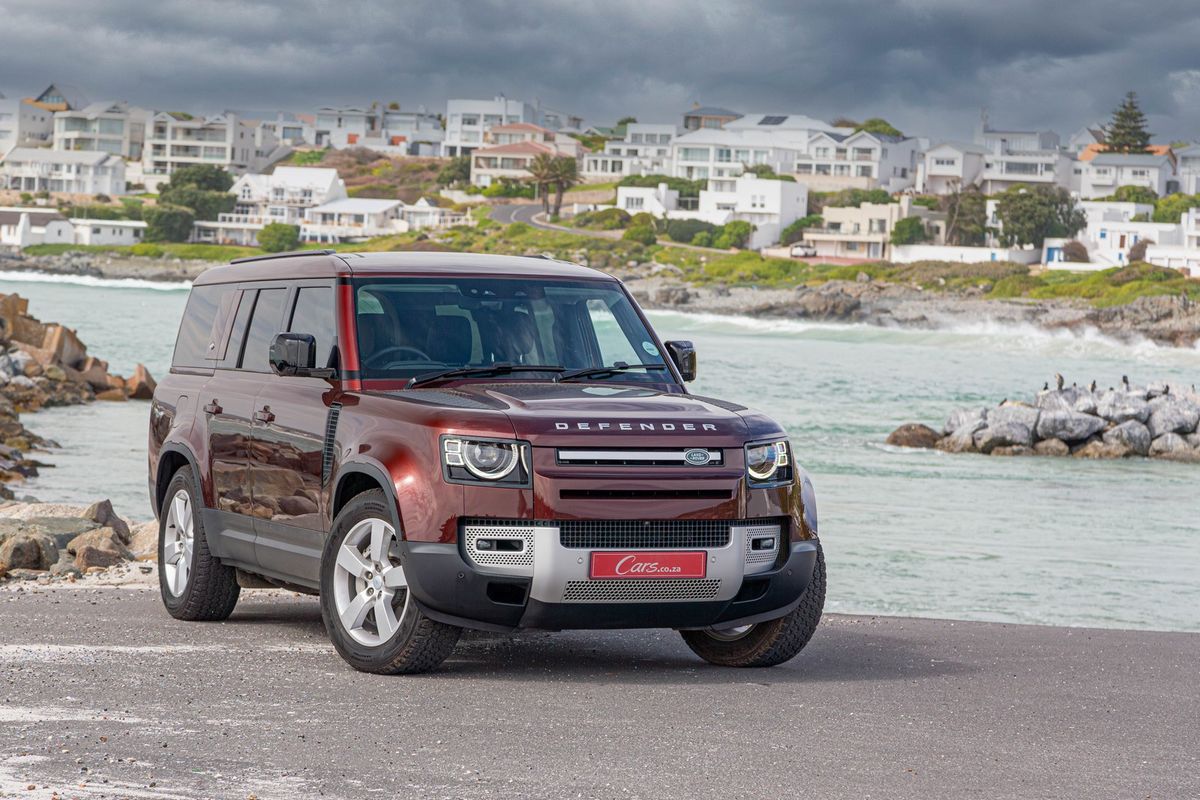
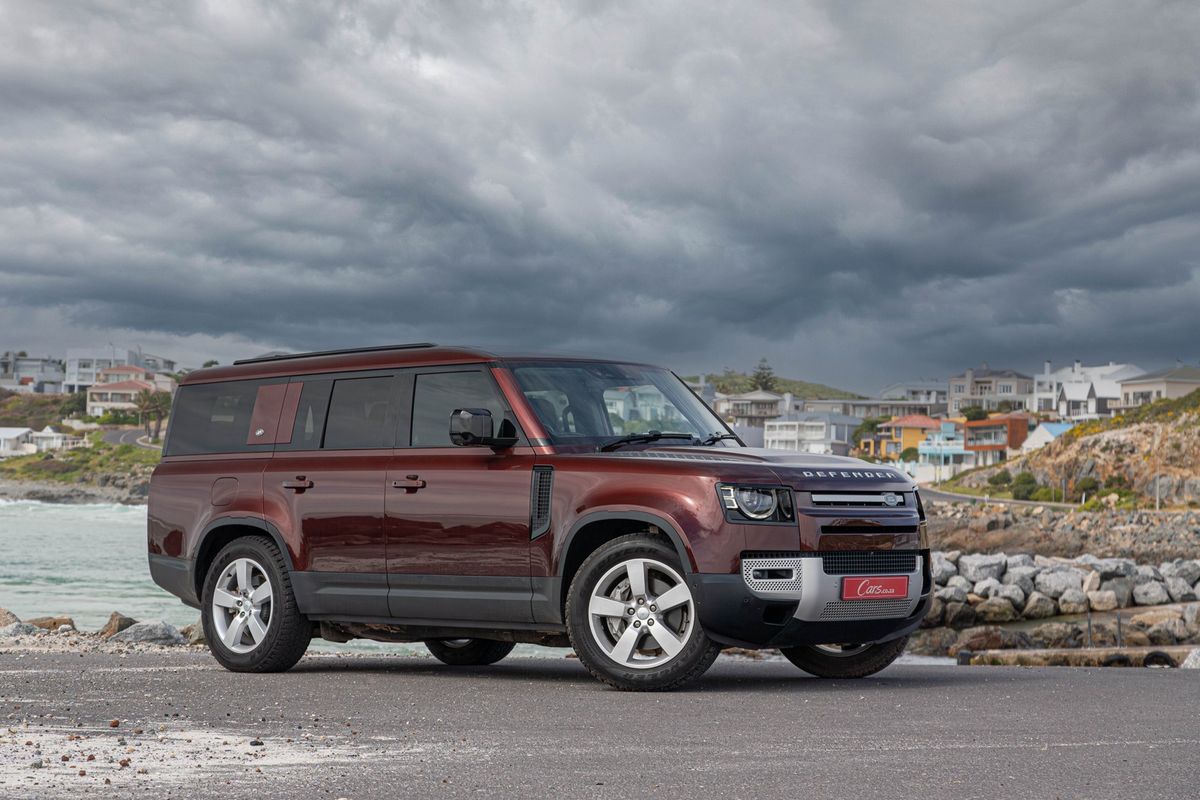
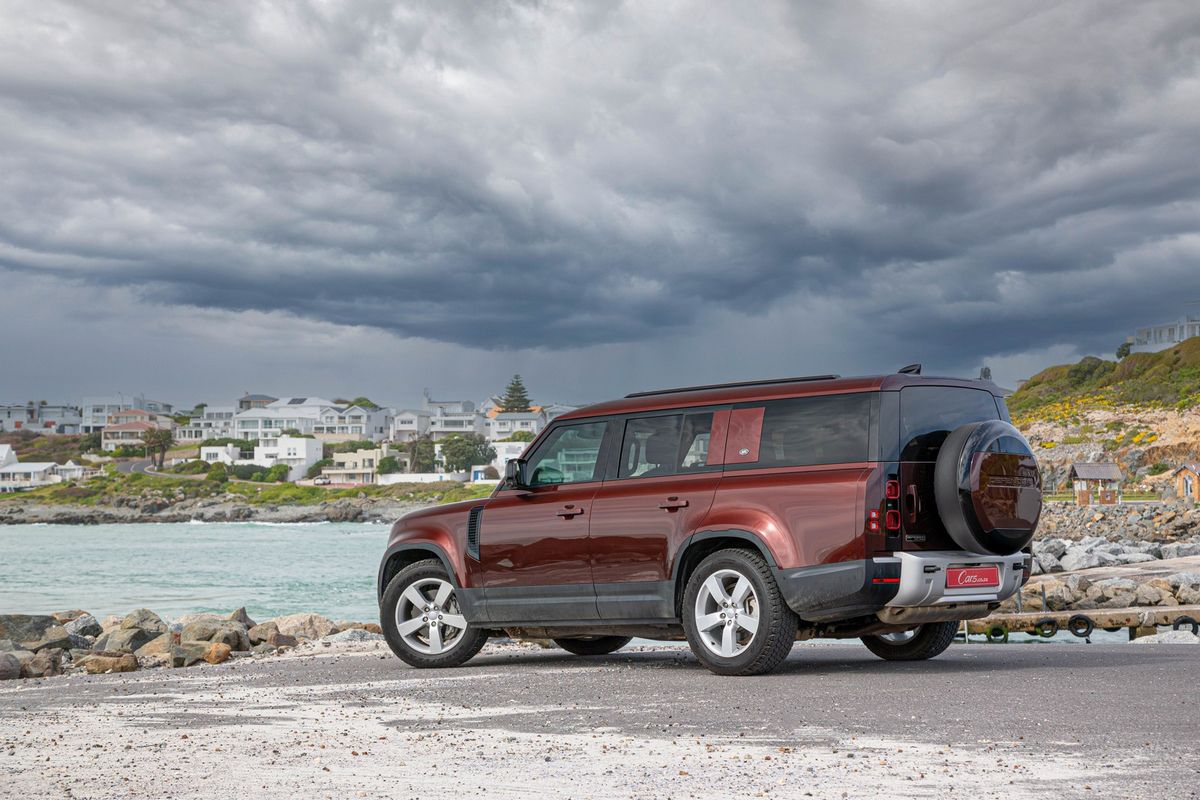
The Land Rover Defender 130 looks a tad awkward, but it’s a spacious contender.
Land Rover’s Defender (the D240 HSE derivative, to be precise) won the Premium SUV category of the 2020/21 #CarsAwards – it is one of several plaudits it has received. However, the model has faced some challenges too. Given the history of the product, the pressure was on to deliver a vehicle that was able to match the legend’s off-road abilities yet retain 21st-century levels of comfort, tech and convenience.
Fortunately for the Solihull-based brand, this Defender has achieved huge sales success around the globe – it comfortably outsells everything else in the Jaguar Land Rover (JLR) stable. But developing a new model from scratch wasn’t a cheap exercise; understandably, JLR wants to leverage the nameplate.
We reviewed the plug-in hybrid (PHEV) version of the Defender earlier in 2023.
The range comprises the short-wheelbase 90, long-wheelbase 110 and now, the even longer 130. All are available with petrol, diesel or plug-in hybrid engines; the model’s even available with a supercharged V8. In future, JLR will also offer a high-performance version, as well as a smaller, more compact variant.
As far as rivals are concerned, the Defender 130 sits in its own niche: There are no other premium SUVs with 8-seat configurations, but the Toyota Land Cruiser 300 3.3D GR-Sport off-roader has 7 seats and, although it doesn’t have the Defender’s on-road refinement, can match the Briton off the beaten track.
If people-moving is your priority and you have R2 million to spend, check out Mercedes-Benz’s V-Class. Or, If you want a 1st-class luxury SUV that can seat 7 people, consider the BMW X7 and Mercedes-Benz GLS. Although they’re similarly priced to the Defender, they’re far less off-road capable, however.
How the Land Rover Defender 130 fares in terms of…
Design and Packaging
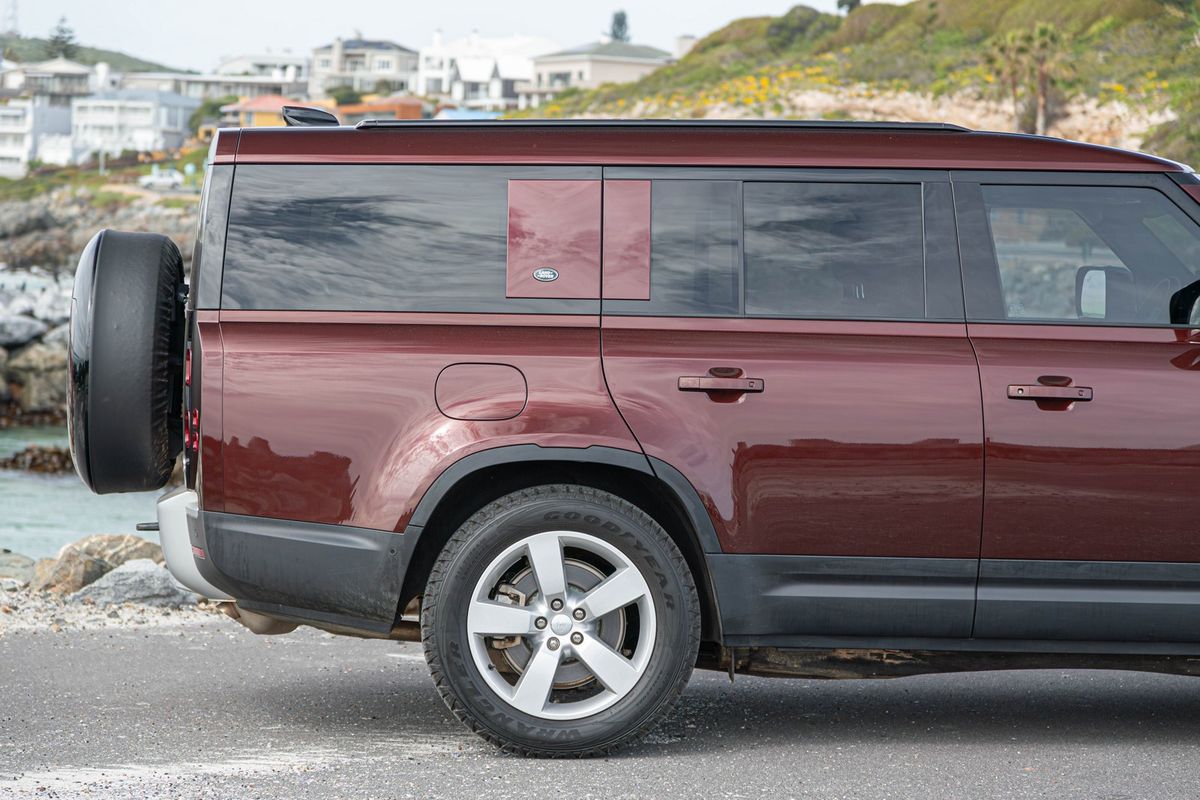
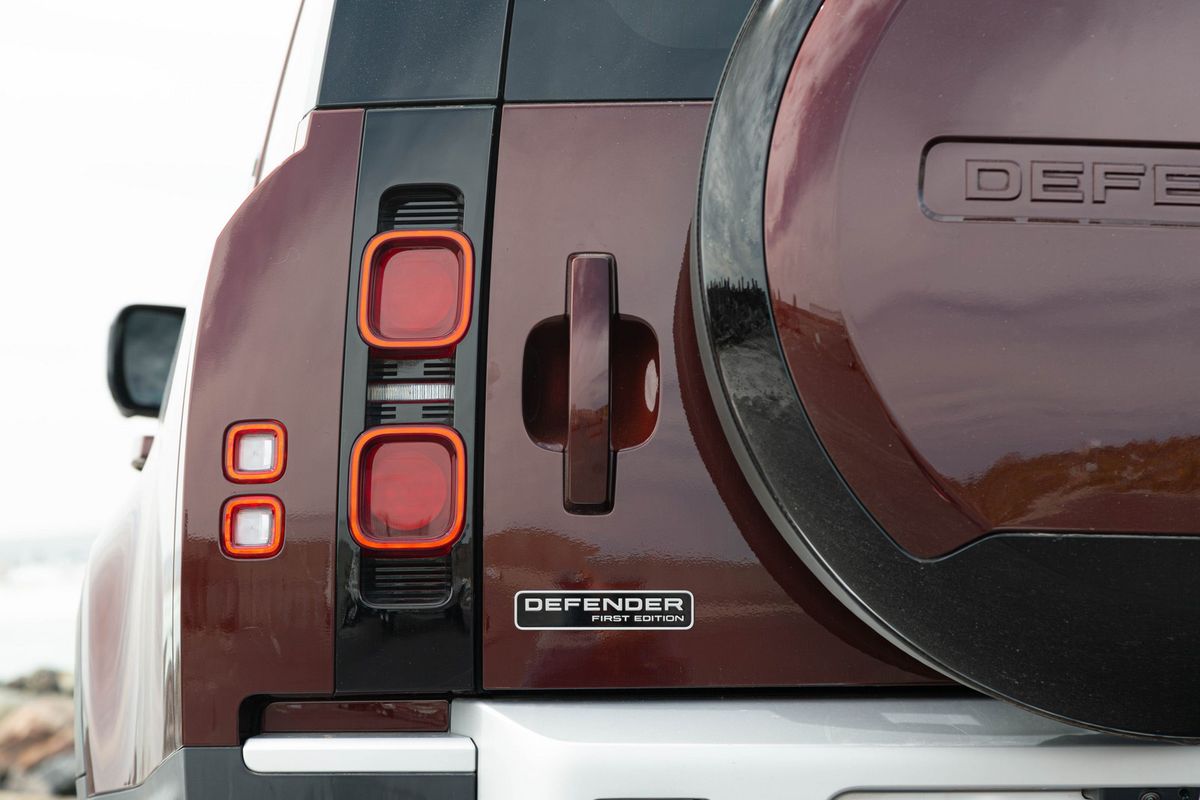
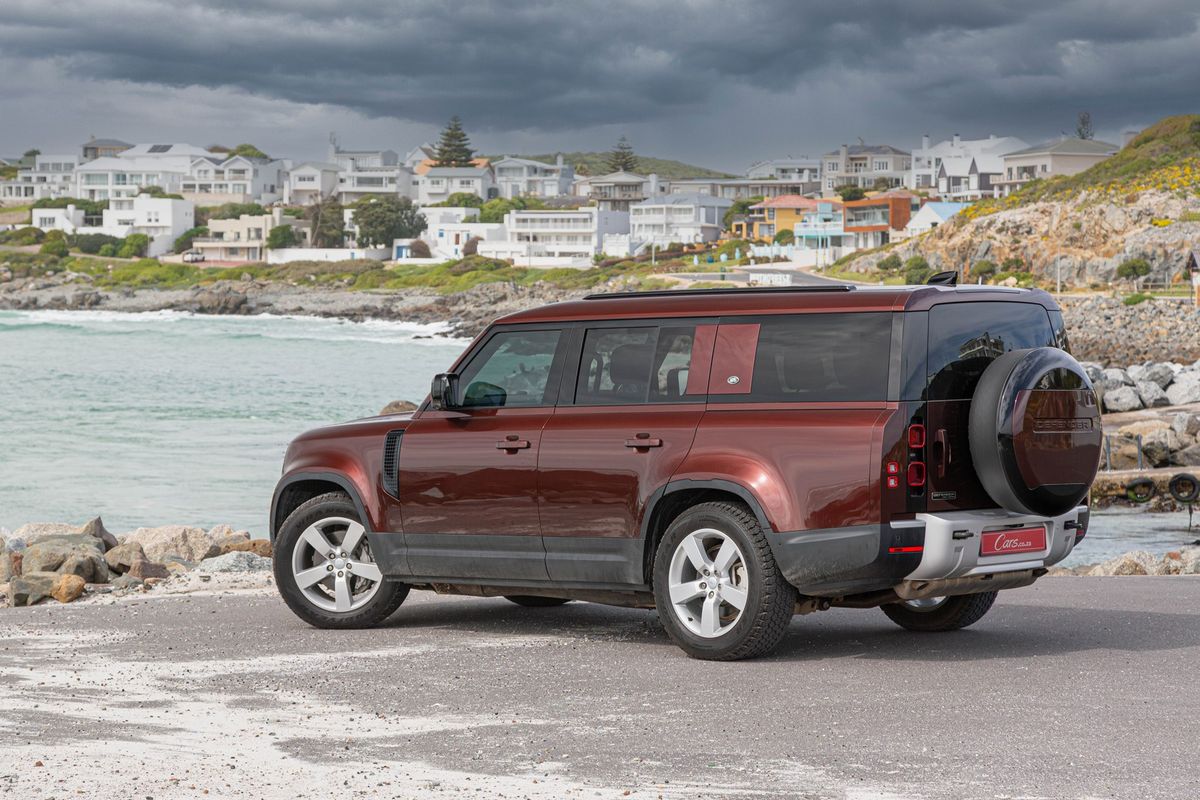
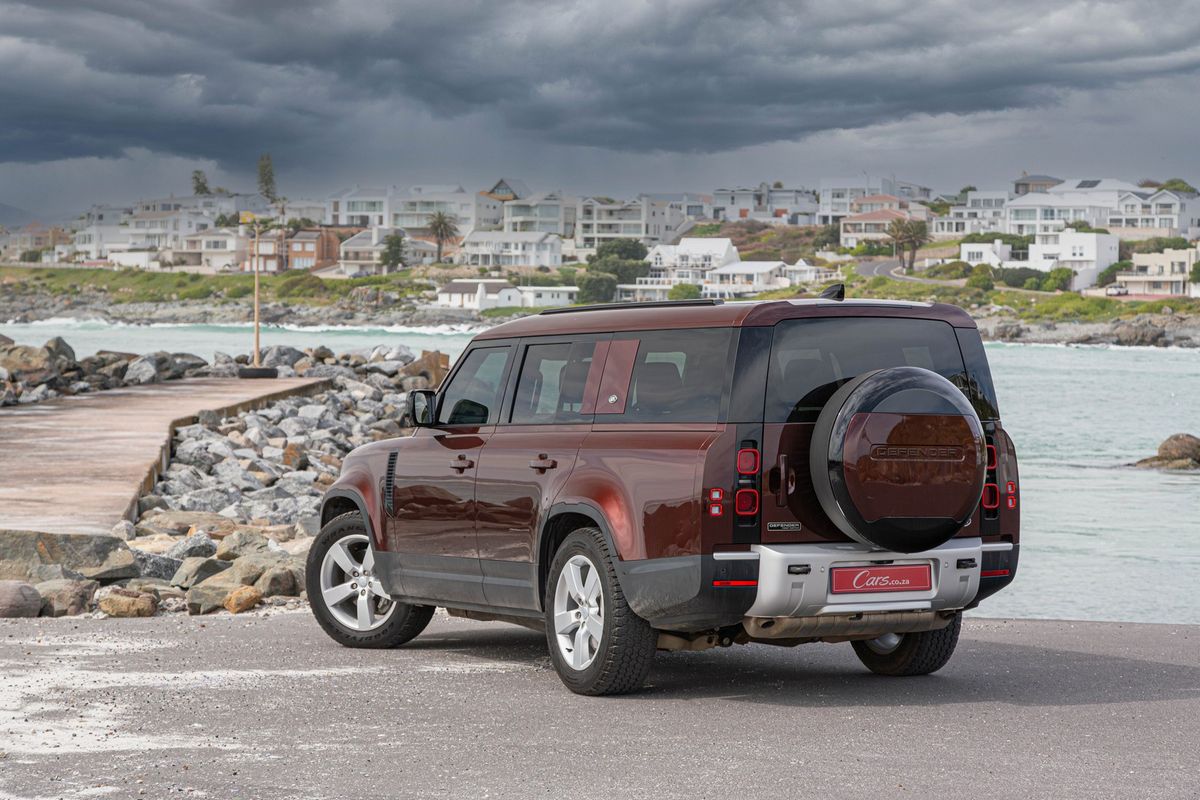
The additional length of the 130 is especially evident in the elongated tail section.
Tested here is the Defender 130 First Edition, which is equipped with additional content such as the Sedona Red paint finish. The main visual difference between the Defender 130 and the rest of the range is its additional length. At almost 5.5 metres in length, the 130 appears slightly awkward or ungainly from the side – some onlookers suggested it resembled a Defender hearse! Interestingly, the wheelbases of the 110 and 130 are identical (just over 3 metres long), which means 2nd-row space isn’t compromised.
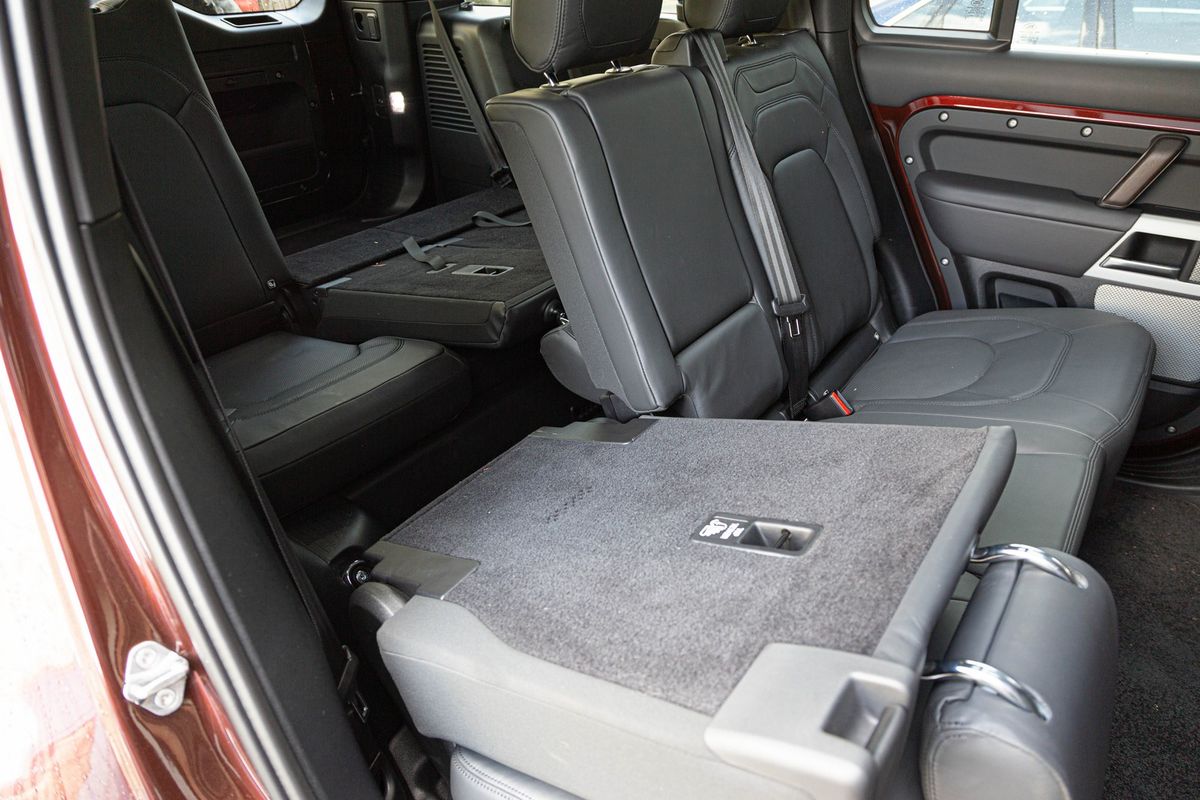
Getting to the third row is a bit undignified!
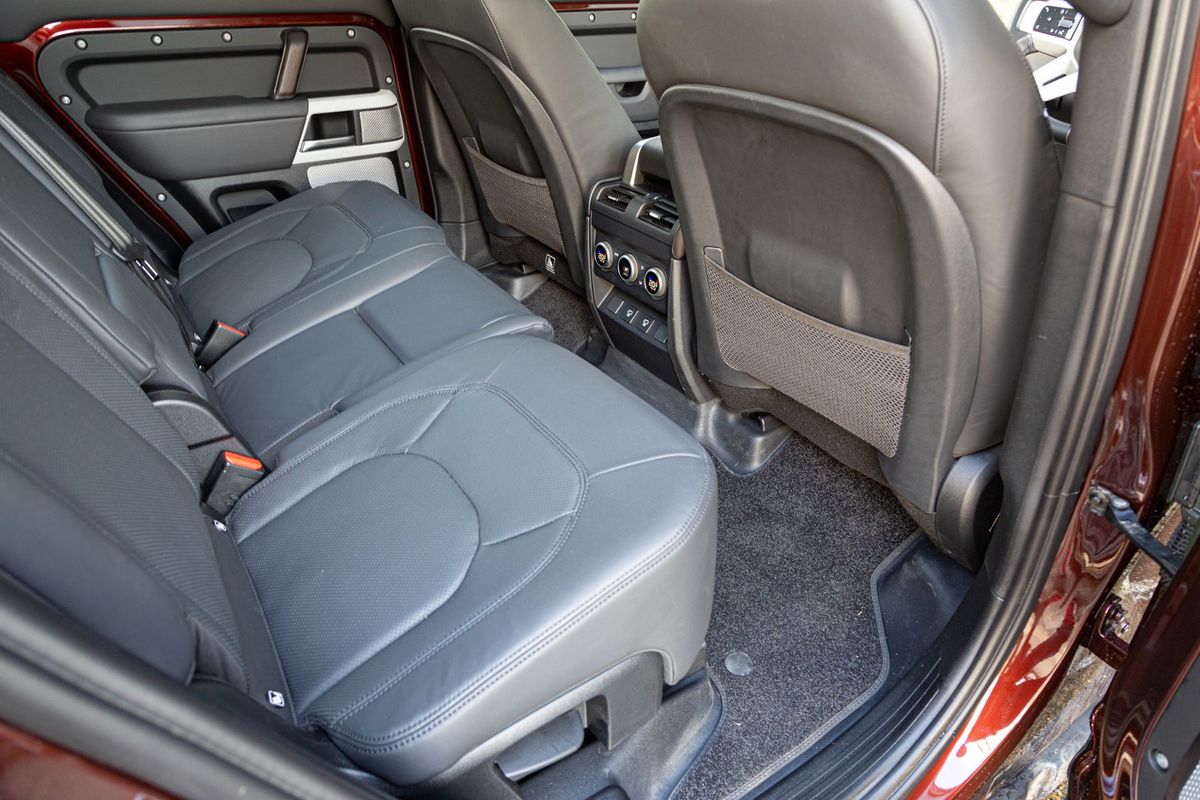
However, compared with a standard 110 derivative, the 130 is a 3-row vehicle (with a 2-3-3 seating configuration). While all occupants are afforded surprisingly generous head- and legroom, access to the last row is awkward and undignified (despite the fact the 2nd row can be folded down and forward).
We were loathe to ask anyone other than children to sit in the Defender 130’s 3rd row… To illustrate our point, the author is 1.91 metres tall and had to perform quite a bit of body contortion to get seated in the back. That said, the Land Rover offers more 3rd-row occupant space than most 3-row Premium SUVs.
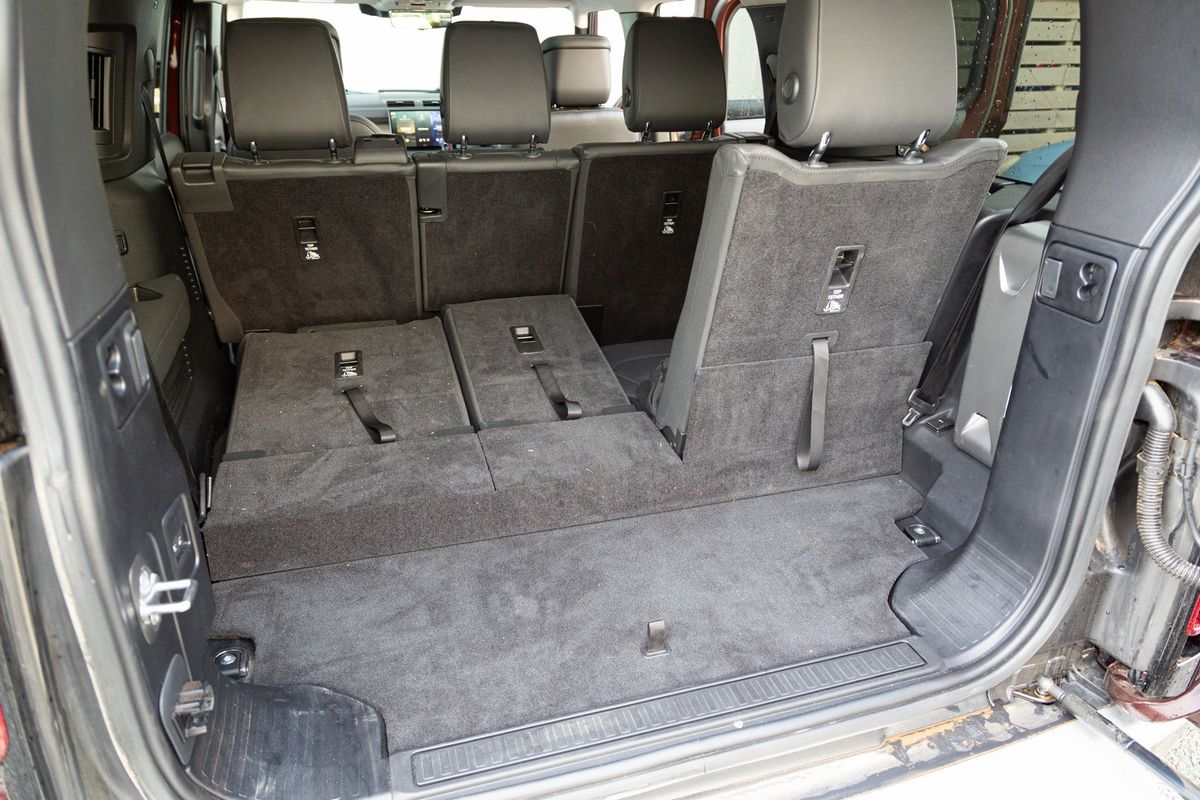
Enough seats for six occupants (including the driver)… with enough space left to transport for a mountain bike.
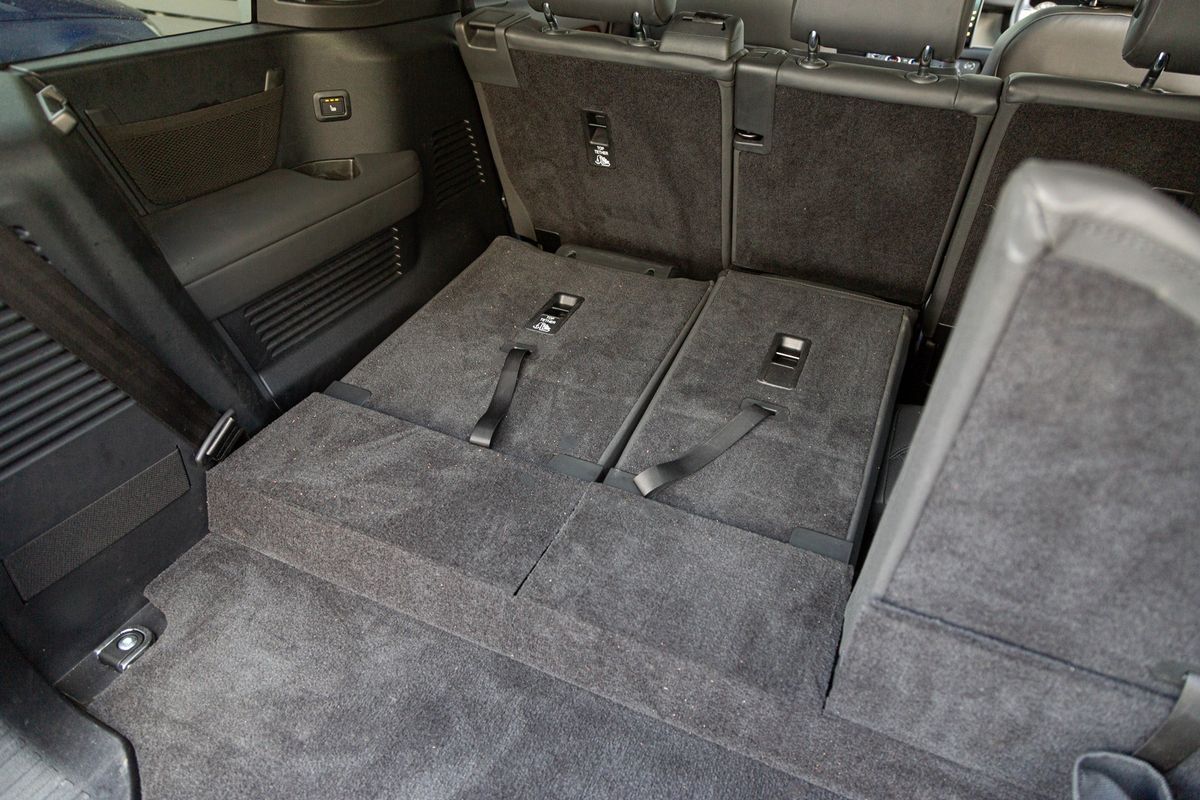
The Defender 130’s main strength is practicality. With as much as 2 291 litres of utility space (with rows 2 and 3 folded down), there’s surely enough capacity for every conceivable item that could go into an SUV.
The seats are split in a 40:20:40 configuration, which enables you to still use certain seats when hauling longer-than-usual items. Plus, even when all seats are in use, the 130 offers reasonable luggage space.
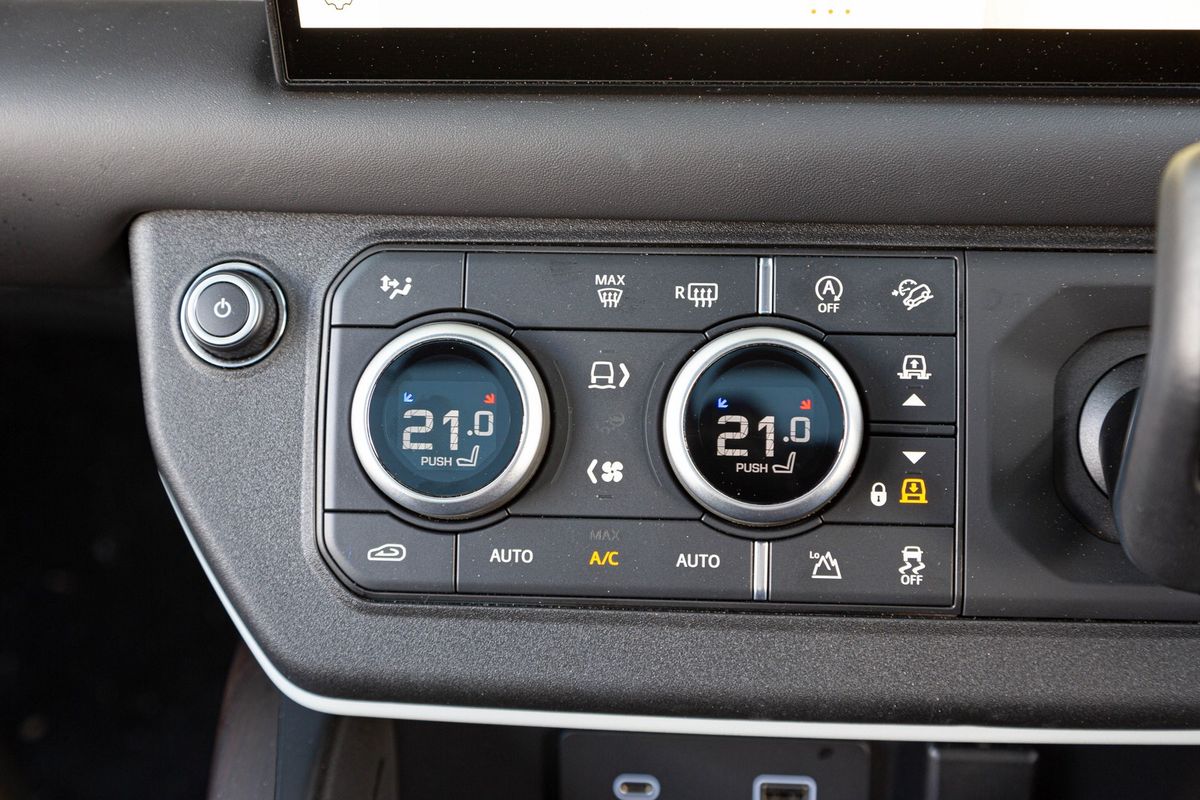
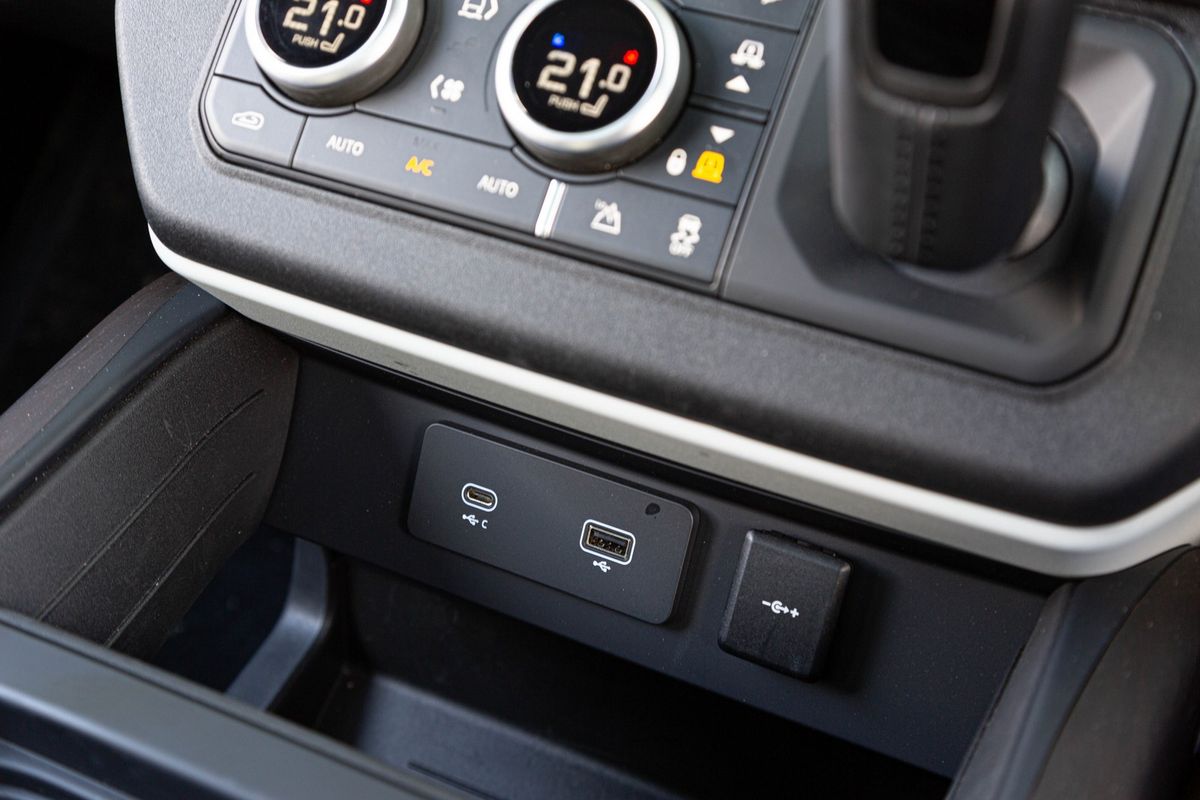
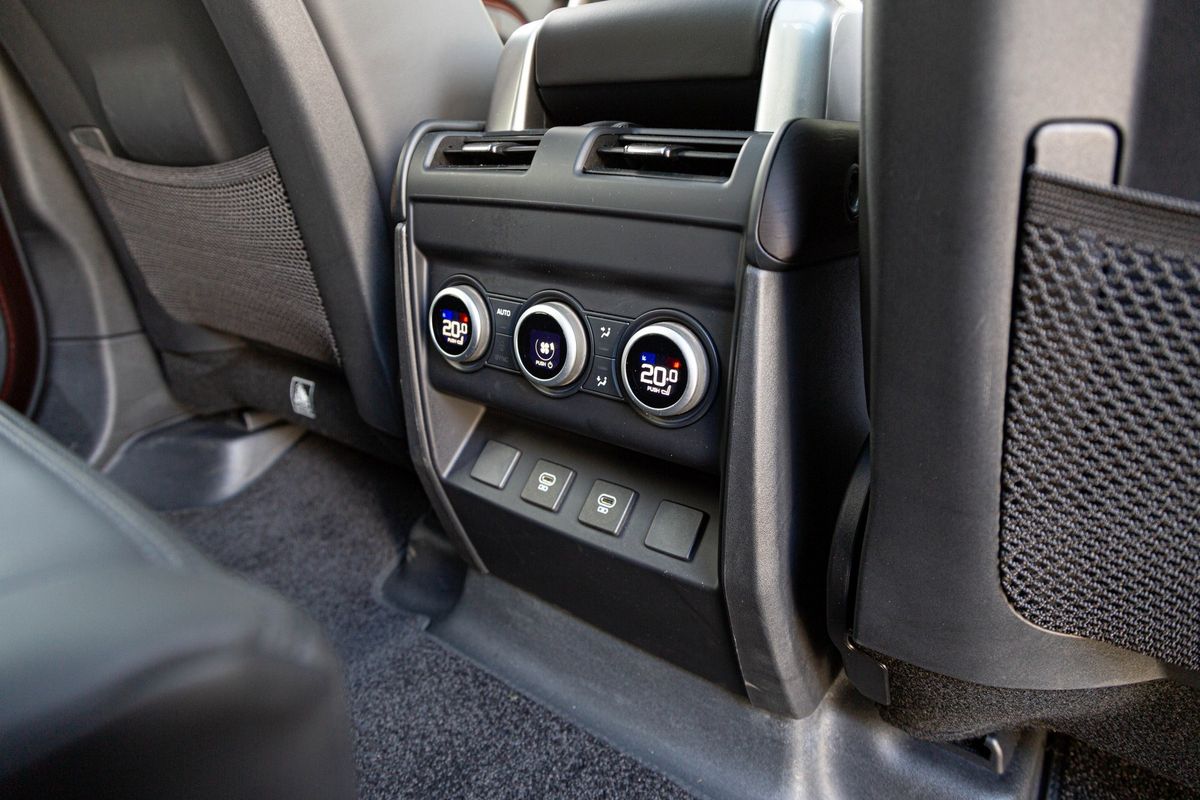
Second- and 3rd-row passengers have their own climate controls, heated seats and USB-C chargers.
Performance and Efficiency
The Defender 130 First Edition is powered by a 3.0-litre 6-cylinder turbodiesel; it’s offered throughout the brand’s Premium SUV range) and, we’d argue, is the best engine for this application. With outputs of 221 kW and 650 Nm, the powerplant provides adequate performance, as well as reasonable economy.
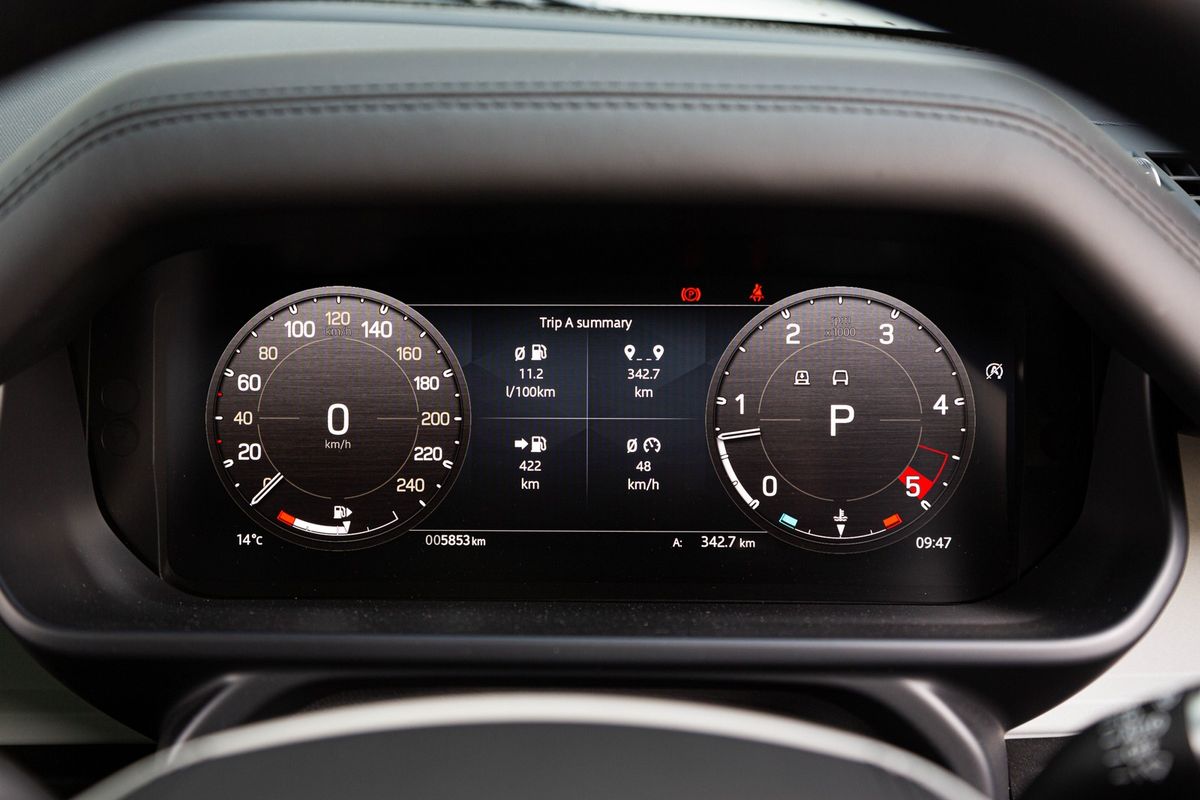
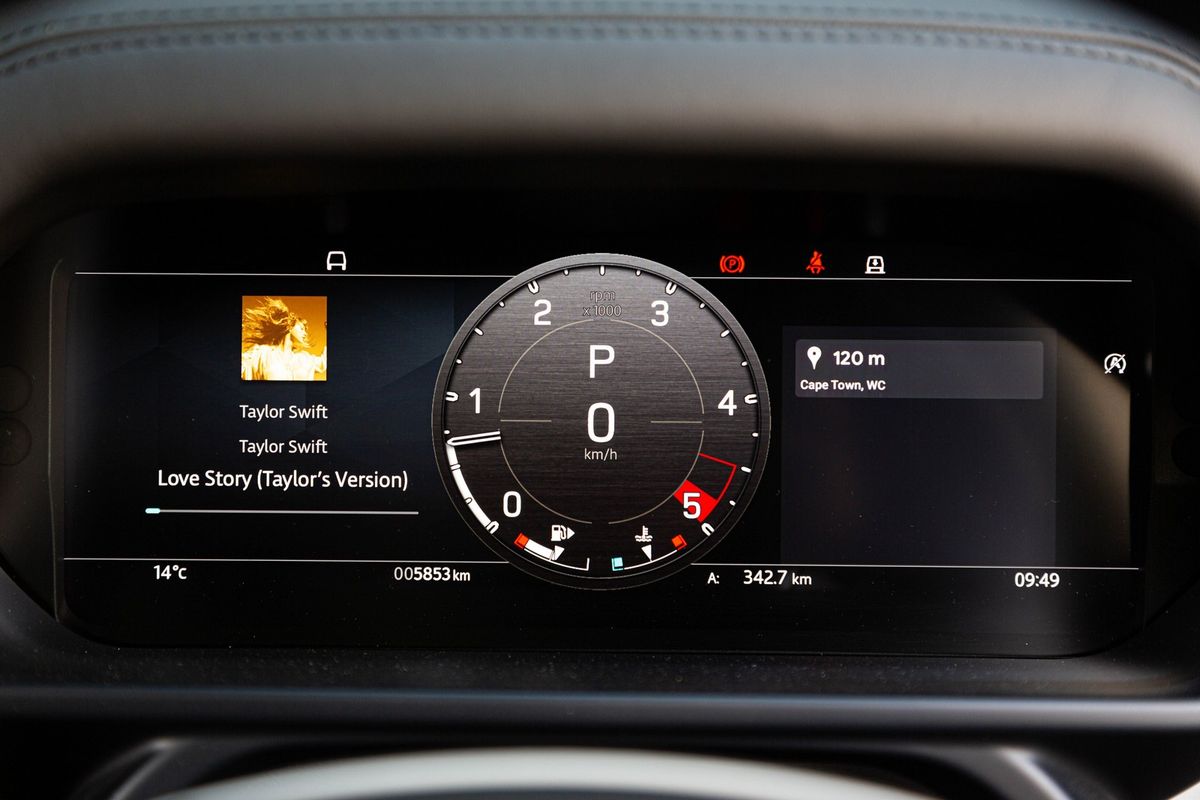
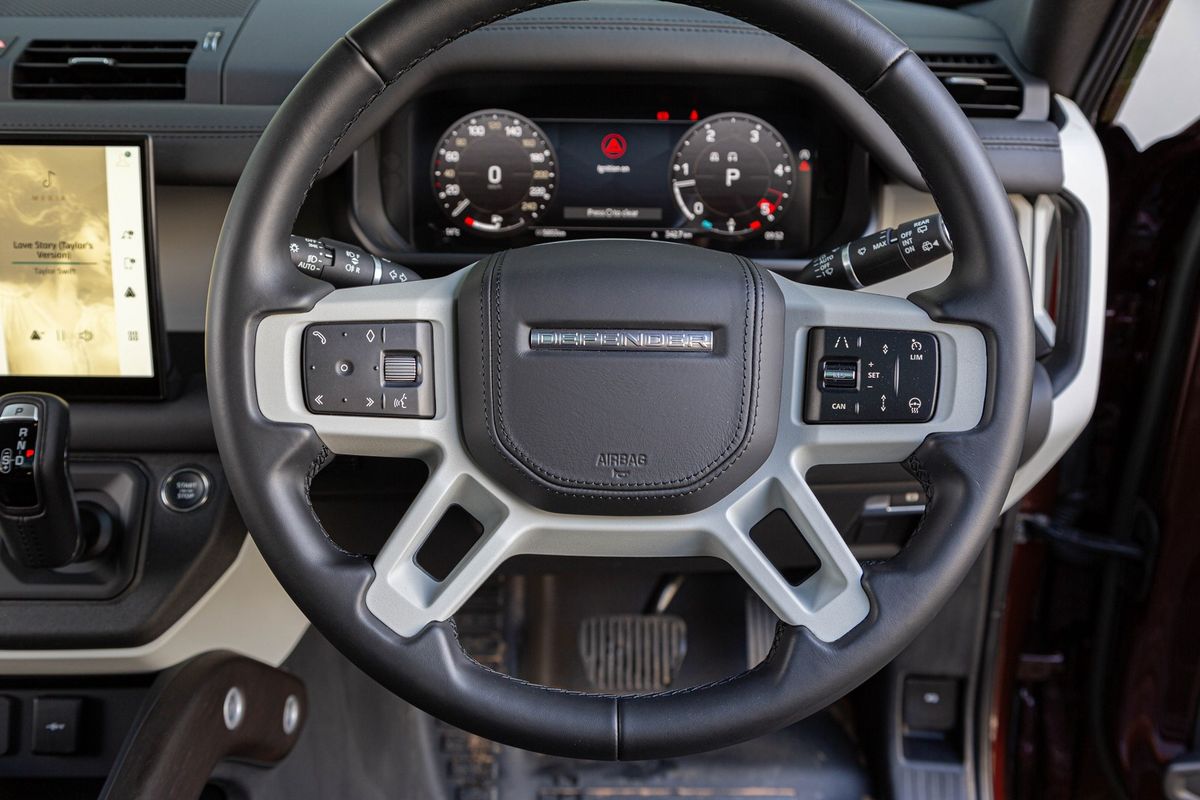
The digital dashboard is customisable (if find the traditional dual-dial setup a trifle passé).
Speaking of performance, when we hooked up our test equipment to the Defender, it dispatched the 0-to-100 kph dash in 7.56 sec, which is very close to the manufacturer’s claim. The Defender 110 with the same engine is said to complete the run 5-tenths quicker, which is to be expected (it’s 240 kg lighter).
From a standstill, the Landy’s acceleration doesn’t feel eager, perhaps due to the 130’s heft, but once up to speed, it offers excellent in-gear shove and effortlessly executes open-road overtaking manoeuvres.
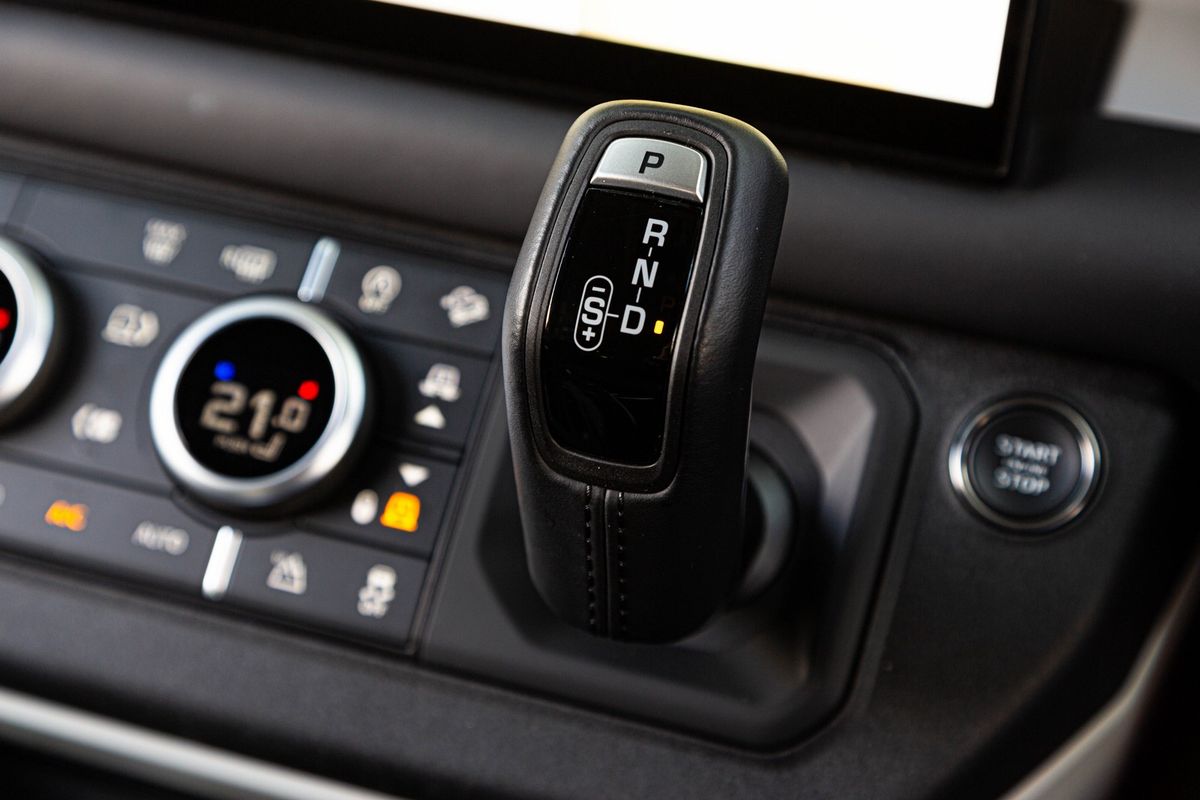
The ZF-sourced 8-speed automatic transmission shifts cogs smoothly and efficiently. There are no shift paddles on the steering wheel, but that’s no loss – the 130 does a fine job of changing gears on its own.
Given it has an 89-litre fuel tank and a claimed fuel consumption figure of 8.2 L/100 km, the Defender’s theoretical range is 1 085 km. During its tenure in our fleet, the test unit indicated a consumption figure of around 11 L/100 km, which wasn’t abysmal, given that it travelled on urban roads most of the time.
Ride and Handling
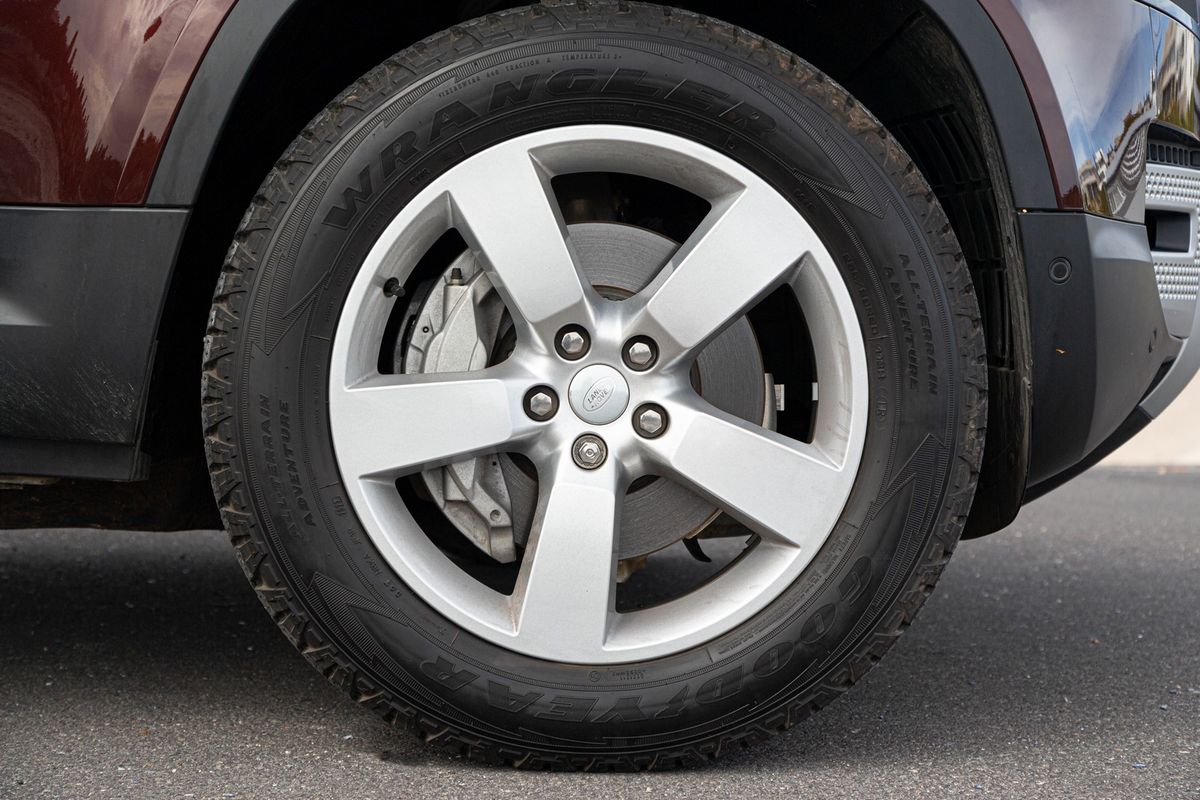
Fat off-road tyres are not a must, but nonetheless useful on SA’s poorly maintained roads.
In terms of handling ability, the Defender 130 is impressively wieldy considering its 2.6-tonne kerb weight and extended dimensions (especially its length). Unlike similarly-sized off-roaders, the Landy doesn’t tend to wallow or wander on the road – its air suspension facilitates good body control and ride comfort.
You may expect an off-road-biased vehicle to feel cumbersome to drive on tar roads, but the Land Rover certainly isn’t. Of course, it has a unibody construction – not a ladder-frame chassis – and we suspect that the same “magic” that makes Range Rovers so lovely to drive on the open road has been applied to this model. If you want a premium SUV that excels at long-distance cruising, the Defender is up there!
Our test unit was fitted with 20-inch alloy wheels wrapped in chunky 255/60 off-road Goodyears, which, unlike some off-road tyres, didn’t generate excess road noise. Or perhaps if there was noise to speak of, the excellent noise/vibration/harshness (NVH) control of the Defender’s cabin dialled it out. We liked the light steering setup, which masked the 130’s size and made it feel far more nimble than we expected.
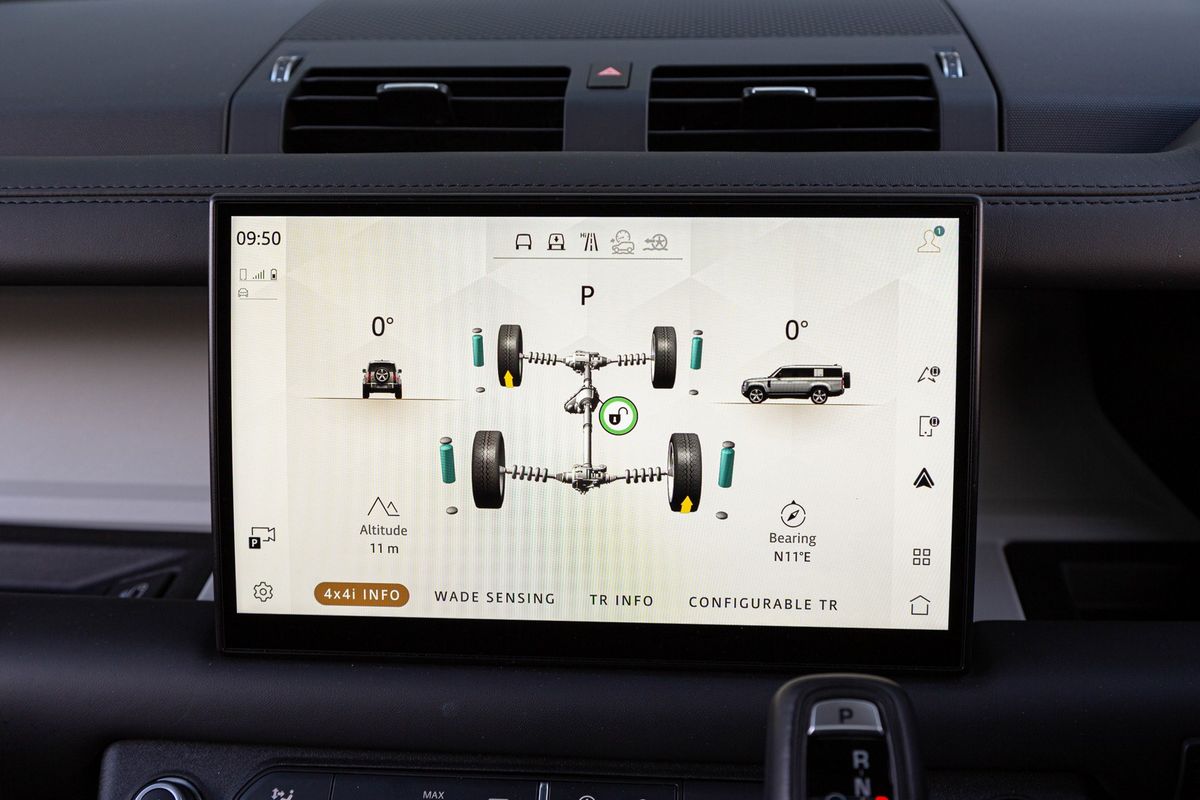
The 4x4i readout is very helpful when the Landy’s traversing decidedly technical off-road routes.
Suffice it to say, the legend of the Defender’s exceptional off-road ability is well-founded, even if the modern iteration of the model offers a much broader 4×4-ing skillset than most buyers of the 130 variant – or any variant – will ever need. Yes, it can traverse some near-impossible terrain, but it’s more likely to be found mounting the pavement of posh shopping malls. Like a Swiss army knife, you may not use all the tools, but it’s reassuring to know they’re there and will be ready whenever you need to utilise them.
With a ground clearance of 290 mm and a wading depth of 900 mm, the Defender is well-equipped to deal with the harshest off-road terrain. You can raise the air suspension to help the vehicle clear big obstacles or lower it to provide easier access to the cabin or load bay. The Terrain Response off-road modes will flatter off-roading novices, but low-range is there to help you get through tricky conditions.
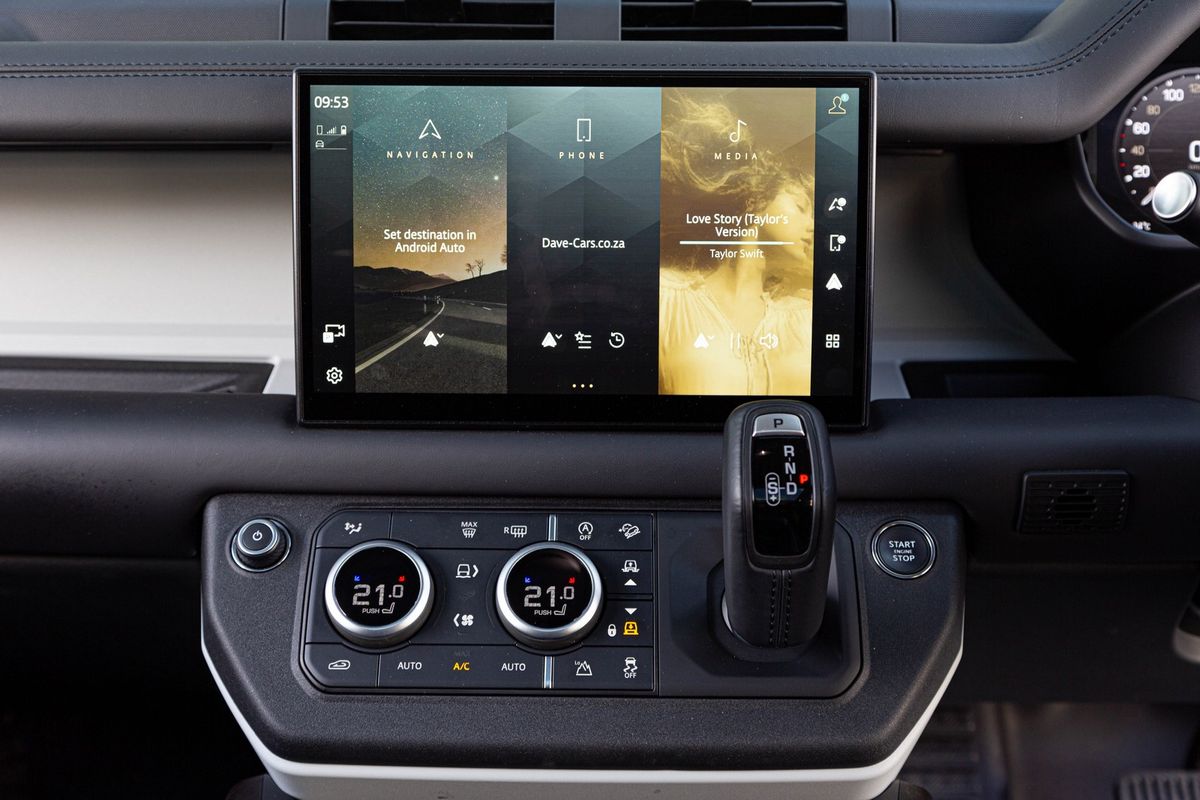
The climate control and off-road settings console looks basic, but it’s intuitive to use.
Comfort and Features
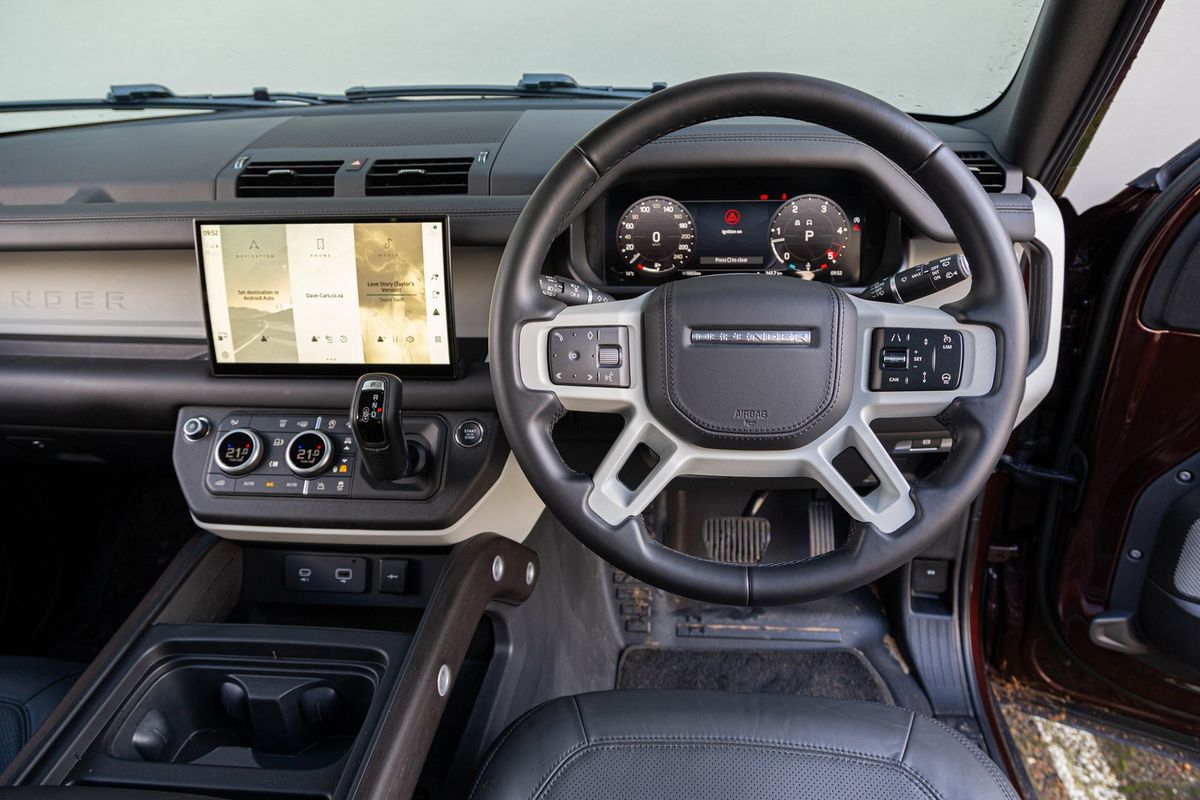
When you climb inside the Defender 130, you’re greeted by a smartly designed cabin that ably balances a rugged look with modern tech conveniences, plus, you’re well catered for in terms of features (as you should be, at this price point). Everything looks and feels solid, and while some plastics (such as the inserts on the steering wheel) feel of marginal quality, we suspect they’re there to add to the utilitarian feel. The seating position is commanding; as you tower above other road users, you feel well in charge.
The Defender 130 First Edition comes equipped with, inter alia, matrix LED headlamps, 4-zone climate control, an upgraded Meridian audio system, dual panoramic sunroofs, as well as privacy glass. For the passengers, there are heated seats all round, as well as padded armrests and USB-C charging ports.
High-tech and rugged cabin.
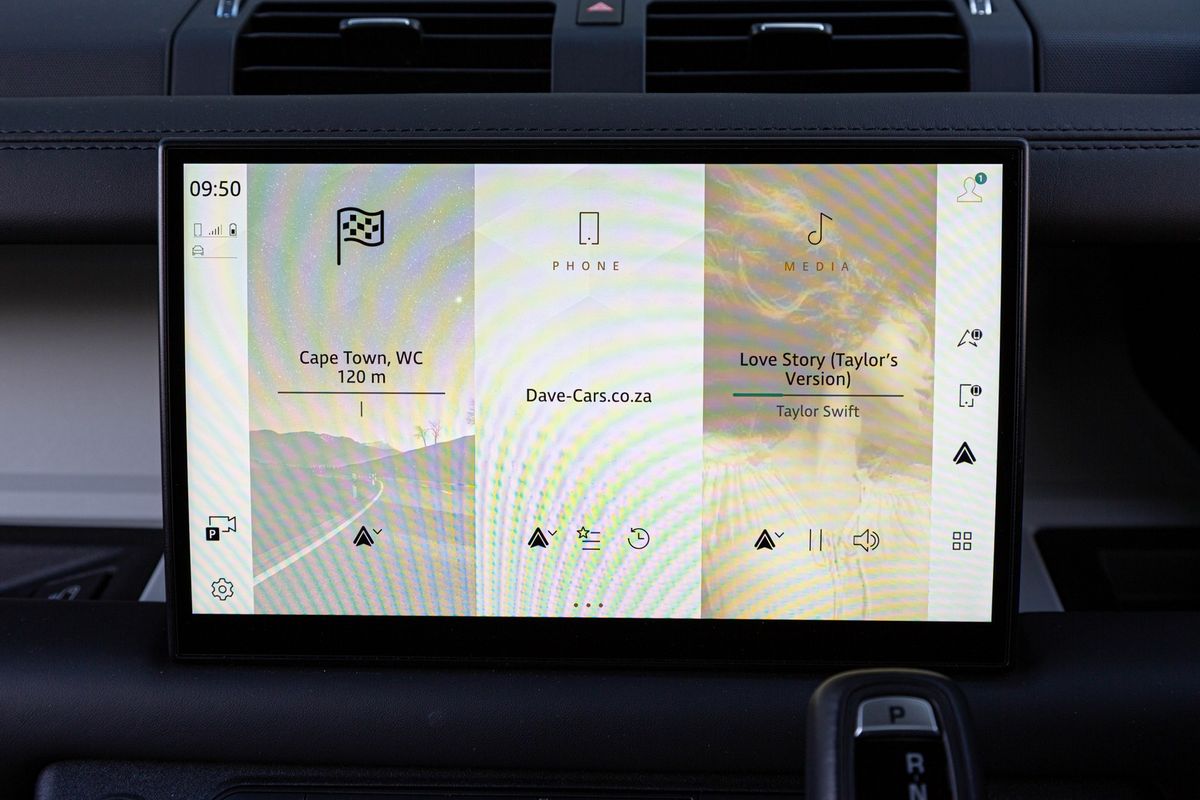
Upfront is a digital instrument cluster (with various display themes to choose from), while the fascia is dominated by the 11.4-inch Pivi Pro infotainment system, which, even more than 3 years after the local launch of the model, still ranks near the best in class: its layout is clean and intuitive, it responds to user inputs quickly (it has its own battery to avoid start-up lag) and supports over-the-air software updates.
The Pivi Pro infotainment system is the best in the business.
Land Rover Defender 130 Price and After-Sales Support
The Defender 130 is sold with a 5-year/100 000 km warranty and 5-year/100 000 km maintenance plan.
Prices range from R1 935 500 to R3 015 700 (November 2023). It appears that the 130 First Editions are sold out, but the closest derivative to that is the Defender 130 D300 X, which retails for R2 102 300.
Verdict
How much demand is there for an 8-seater Land Rover Defender?
Should you buy a Defender 130? While we appreciate Land Rover is leveraging the Defender nameplate and platform to cover as many niches as possible (and recoup some of the model’s R&D costs), the 130 variant doesn’t add much to the package beyond an extra seat and additional luggage cargo space.
Its biggest problem is that the Defender 110, with its all-round appeal, sets a very high bar – no wonder it’s again a finalist in the Premium SUV category of the #CarsAwards. Buy the 130 if you must have 8 seats, but if you don’t, consider a well-optioned 110 with a 7-seat configuration. If you do go the 130 route, be mindful that its overall length may mean that it won’t fit in your regular garage or parking bay.
Toyota Land Cruiser 70 Series: new SA line-up revealed!
The refreshed Toyota Land Cruiser 70 Series is on its way to SA and we’ve unearthed details of the expanded local line-up, which gains the 2.8 GD-6 engine, an auto transmission and a new VX-badged flagship derivative…
The updated Toyota Land Cruiser 70 Series was revealed in August 2023 in Japan, complete with fresh exterior and interior styling. Now, ahead of this revised J70-generation model’s imminent launch in South Africa, Cars.co.za has unearthed fascinating details of the expanded local line-up.
So, what’s new? Well, the refreshed 70 Series range will again comprise Land Cruiser 76 station wagon, Land Cruiser 78 wagon (or “Troopy”) and Land Cruiser 79 (single- and double-cab) bakkie derivatives. However, according to our information, the portfolio will swell from 8 variants to 12, thanks to the addition of the 2.8 GD-6 powertrain.
In Mzansi, 4 derivatives in the Land Cruiser 70 Series range will use the 2.8 GD-6 powertrain.
Available in both the 76 and 79 line-ups (but seemingly not the 78), the 2.8-litre, 4-cylinder turbodiesel – familiar from the Hilux, Fortuner and Land Cruiser Prado line-ups – here generates peak outputs of 150 kW (at 3 400 r/min) and 500 Nm (at 1 600 r/min). Drive is delivered to all 4 wheels via a 6-speed automatic transmission, with the latter option being a first for the 70 Series range.
Our understanding is that the 4.0-litre V6 petrol unit (170 kW/360 Nm), the 4.2-litre straight-6 diesel motor (96 kW/285 Nm) and the 4.5-litre V8 turbodiesel mill (151 kW/430 Nm) will soldier on as part of the local line-up – for the time being, at least. As a reminder, each of these older motors comes standard with a 5-speed manual gearbox.
In total, Toyota SA Motors will offer 4 derivatives featuring the 2.8 GD-6 powertrain. There’s the Land Cruiser 79 2.8 GD-6 6AT single cab, the Land Cruiser 79 2.8 GD-6 6AT double cab, the Land Cruiser 76 2.8 GD-6 6AT station wagon and the Land Cruiser 76 2.8 GD-6 VX 6AT station wagon.
For the first time, the Land Cruiser 70 Series will be available with an automatic transmission.
In addition, we believe all 2.8-litre models will score additional safety equipment, including vehicle stability control, active traction control, brake assist, electronic brake-force distribution, hill-ascent control and down-ascent control. The pair of 4-cylinder station wagons, meanwhile, will furthermore gain cruise control. No word yet on braked towing capacity for the new derivatives.
So, what sets the new VX-badged station wagon model apart from the rest, besides its powertrain? Well, our information suggests the Land Cruiser 76 2.8 GD-6 VX 6AT will boast items such as leather upholstery (featuring “Land Cruiser” embroidery), a new 4-speaker sound system, sound deadening for the door panels, a reverse-view camera, a console fridge and a steel front bumper, the latter complete with a winch.
This is the Aussie-spec GXL, which should be similar to our Land Cruiser 76 2.8 GD-6 VX 6AT.
As before, a service plan will be optional for all Land Cruiser 70 Series derivatives, with intervals of 10 000 km in each case (including for the new powertrain). Toyota’s 3-year/100 000 km warranty will again be standard.
As a reminder, the J70-generation Land Cruiser has been in production for nearly 40 years. It’s currently the oldest “new” vehicle available in South Africa, having been sold here in its current form (more or less) for more than 2 decades. Though Toyota SA Motors has yet to announce a launch date for the revised range, we believe the first units will arrive either late in 2023 or early in 2024. In the meantime, we’ll keep our ears close to the ground for pricing…
Revised Toyota Land Cruiser 70 Series line-up for SA
How to save money on fuel in any car – 10 fuel saving tips that actually work
In this video, we put our Cars.co.za heads together, consulted experts and researched 10 fuel saving tips which Ciro De Siena shares with you here.
We are all feeling the pain at the pumps. It seems that even though the prices of petrol and diesel drop occasionally, the general trend of the price of fuel in South Africa is one way, and that’s higher and higher.
We hope you find this video useful and we’ve love it if you shared it with your friends, family and colleagues.
After all, everyone can benefit from bringing down your car’s running costs!