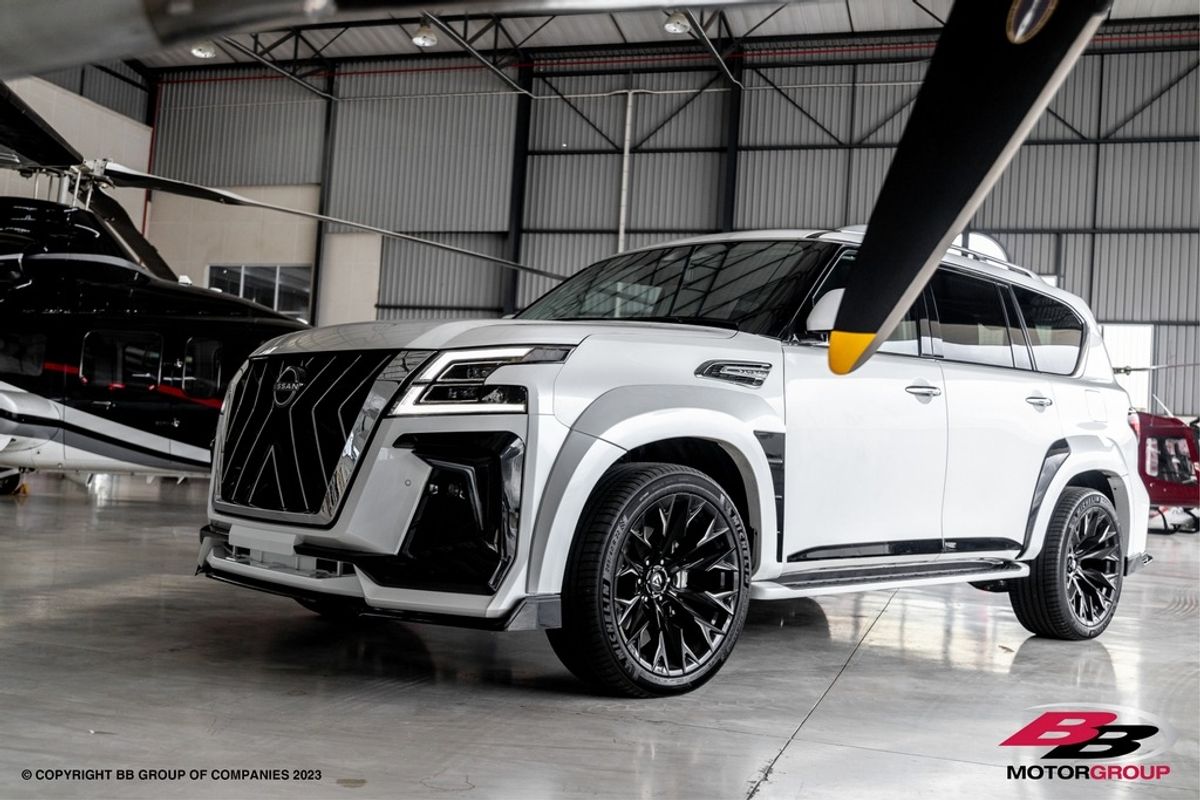
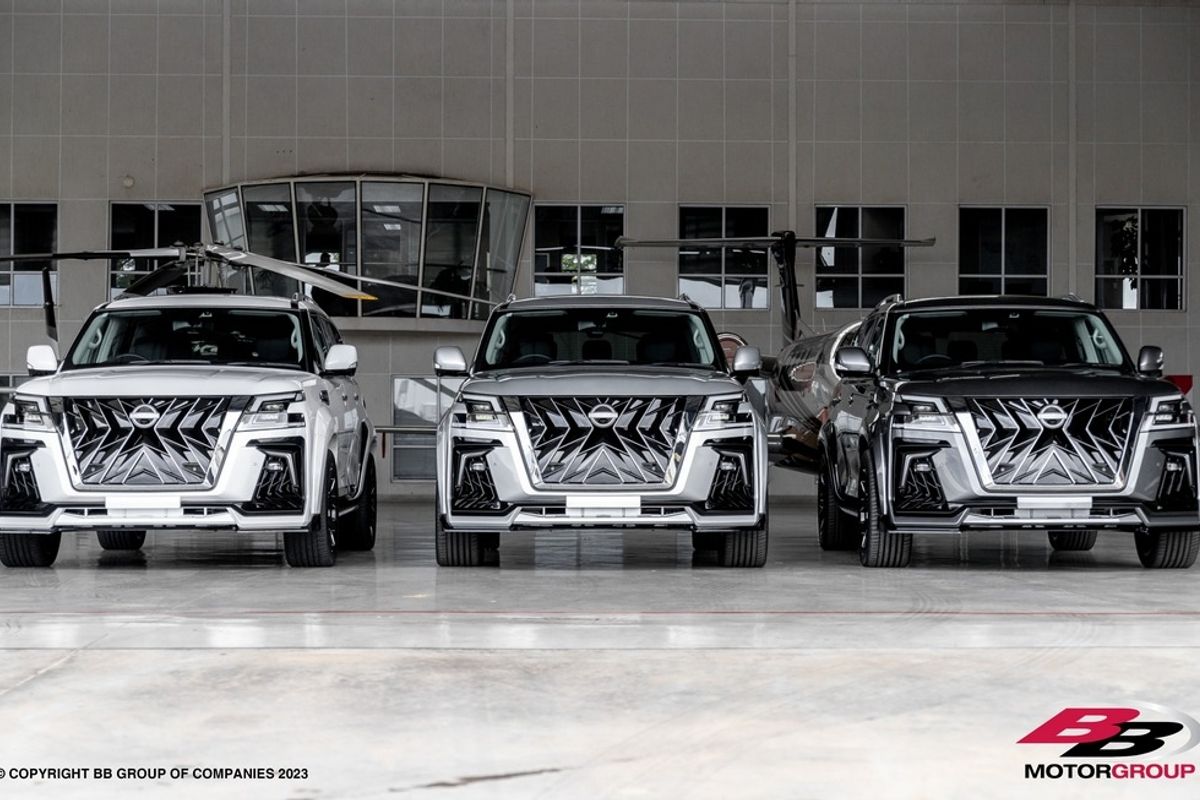
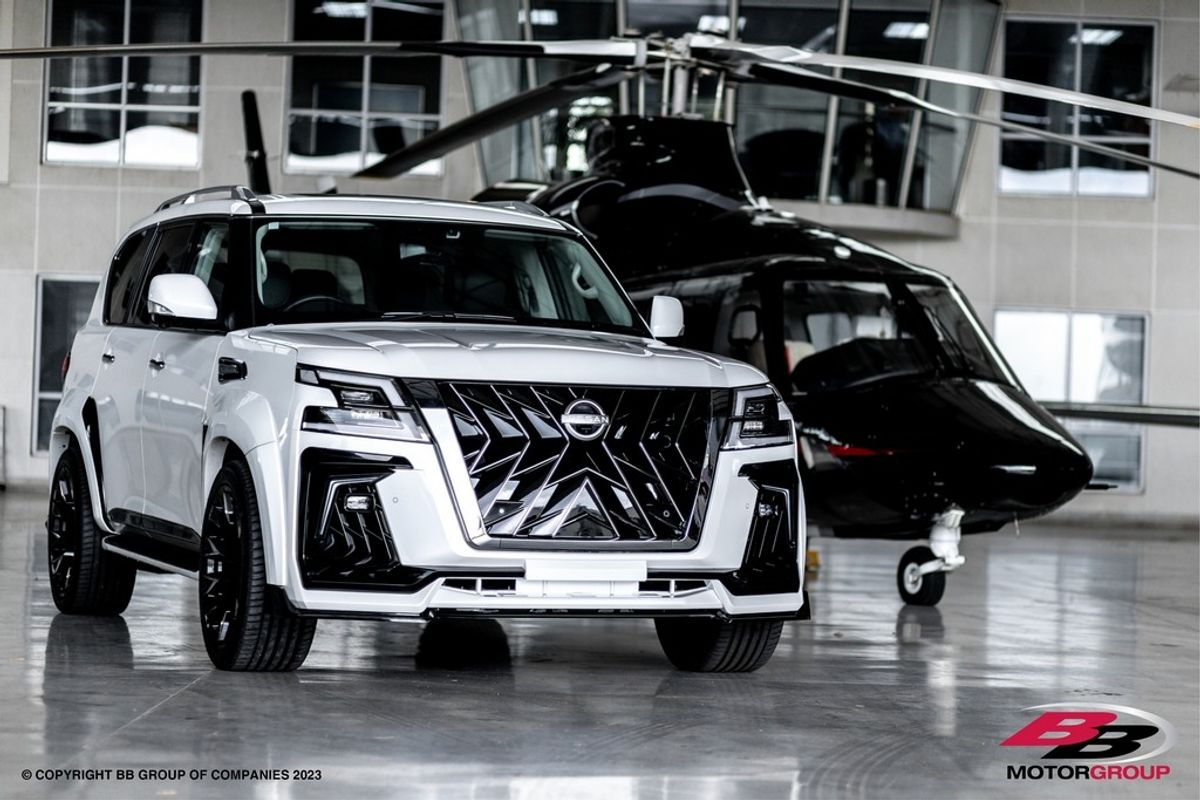
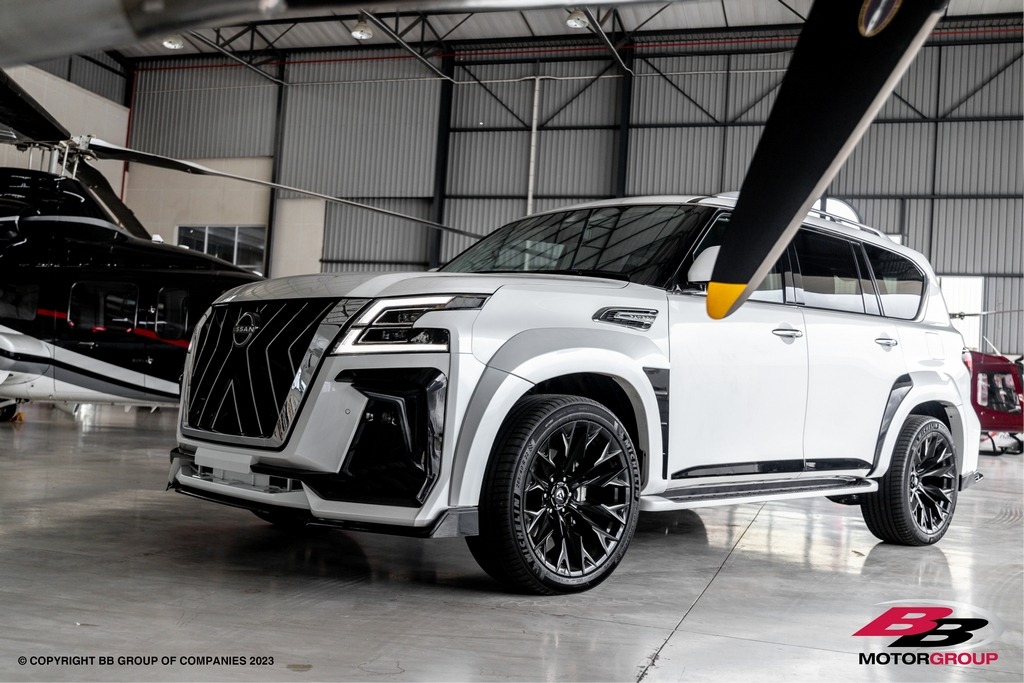
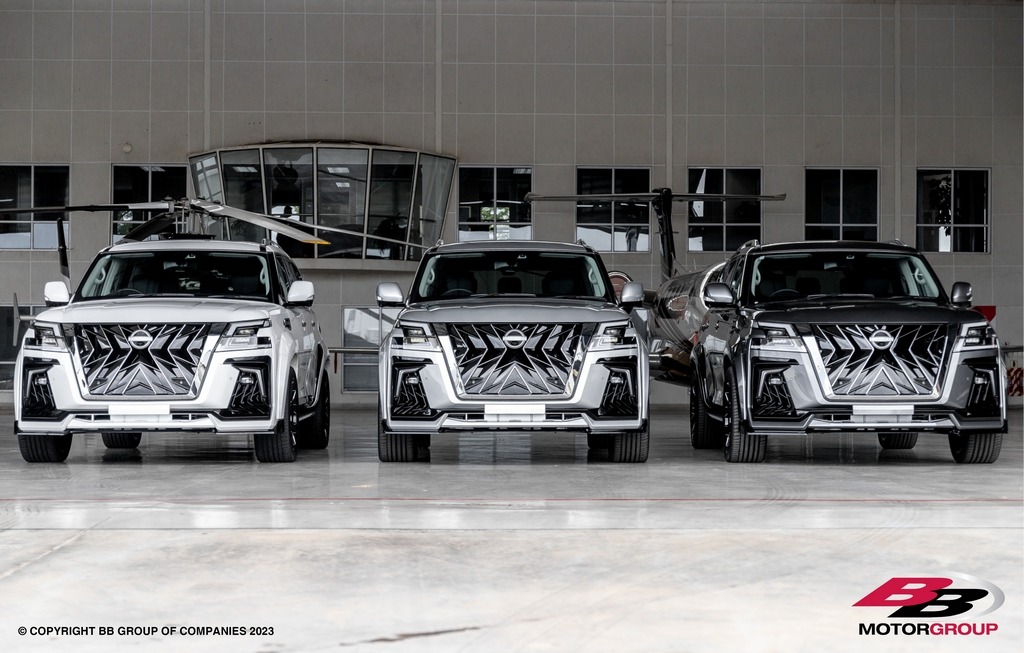
This is the Nissan Patrol Black Hawk and we’ve uncovered specs and pricing. Here’s how much you can expect to pay for this supercharged V8 monster.
The Nissan Patrol Black Hawk is an extreme take on the Patrol luxury SUV. The upgrade comprises a bold and aggressive body kit, large wheels and a healthy power boost. Unlike the Patrol which is offered across the Nissan South Africa network, the Black Hawk is retailed exclusively through the BB Group of dealerships. The Black Hawk retails for R2 200 000, a premium over the standard Patrol which costs R 1 756 900.
Under the bonnet is a 5.6-litre supercharged petrol engine that makes 396 kW and 772 Nm. All that shove goes to all four wheels via a 7-speed automatic transmission. While there’s no official 0-100 kph performance claim, a good frame of reference is the standard Patrol offering up 298 kW and 560 Nm.
The standard car hits 100 kph in around 7 seconds, so you can expect the Black Hawk to be significantly quicker.
Standard features
The Patrol Black Hawk rides on 22-inch wrapped in 285/40 rubber. Inside, passengers are treated to a high-quality Bose audio system, climate control front seats, second row 8-inch entertainment screens with headphones, second row climate control, a powered tailgate, large central infotainment screen, USB/Bluetooth connectivity and smartphone pairing. On-board navigation is included too.
When it comes to safety, the Patrol Black Hawk features intelligent cruise control, 360-degree panoramic camera, forward collision warning, lane departure warning/intervention, blind spot warning/intervention, emergency brake, cross traffic assist and front/rear parking sensors.
For those wanting to take their Black Hawks offroading, the vehicle retains all of the Patrol’s 4×4 capabilities and comes with hill descent control, tyre pressure sensors, intelligent all-mode 4WD with road, sand, rock modes and the vehicle comes with a helical Limited Slip Differential (LSD) and rear differential lock.
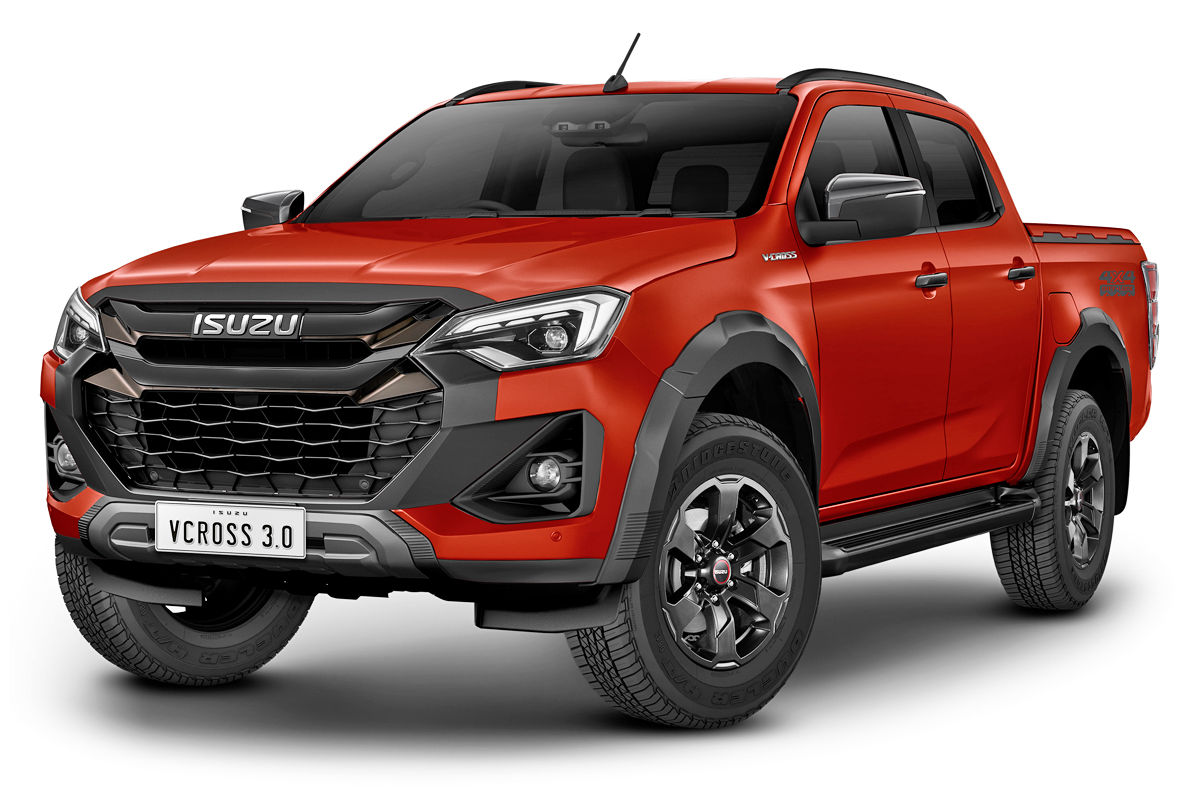
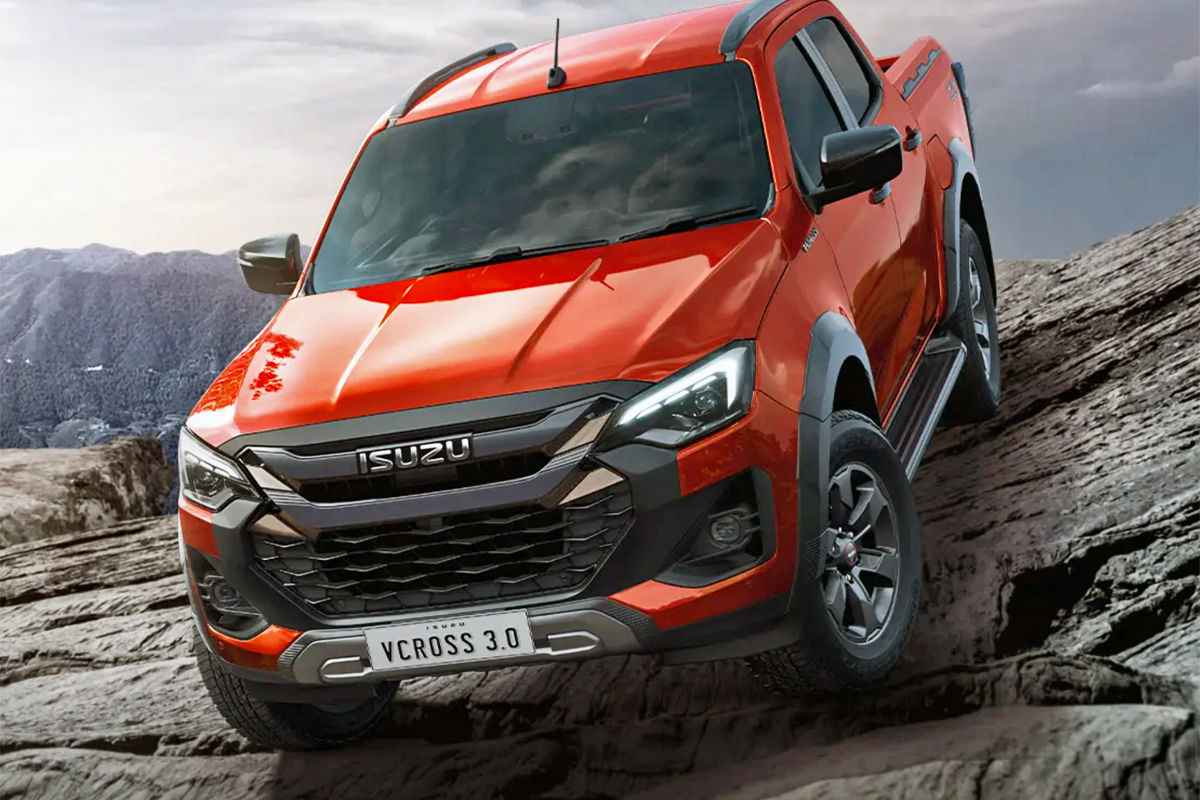
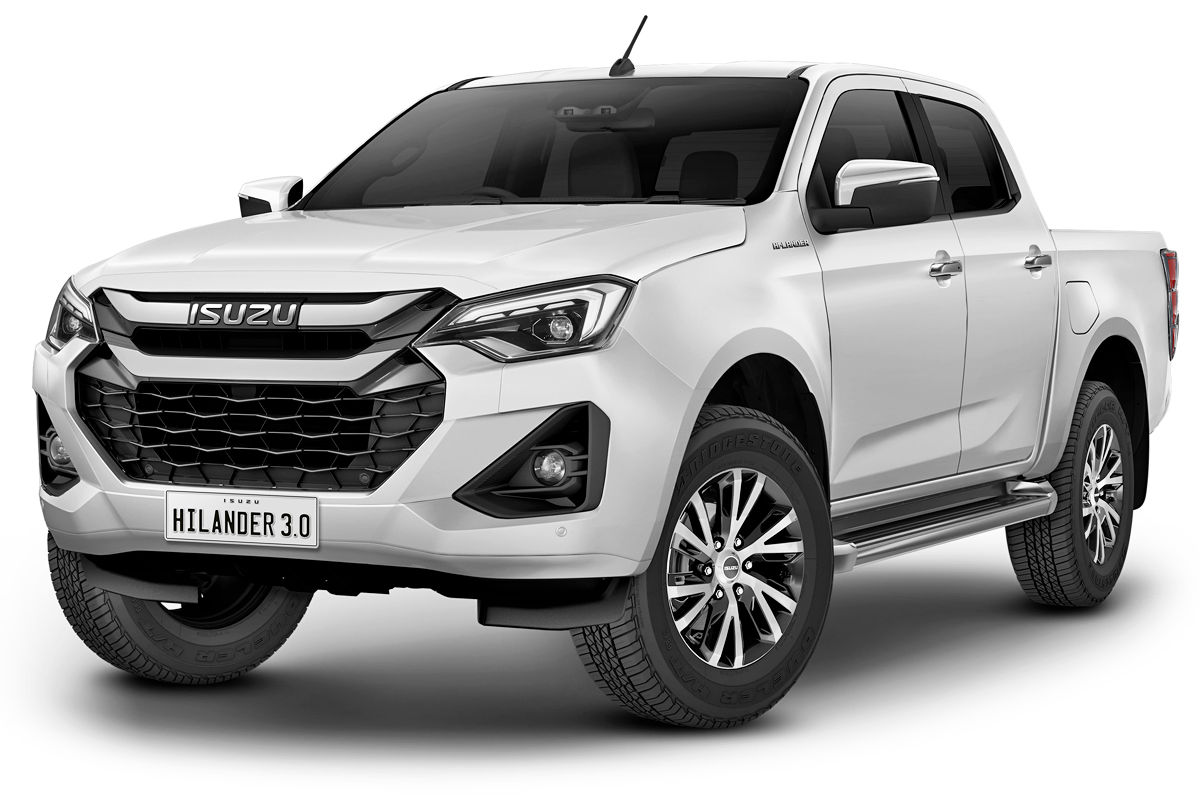
A facelifted version of the Isuzu D-Max has been revealed in Thailand, boasting updated styling, a revised cabin and fresh technology…
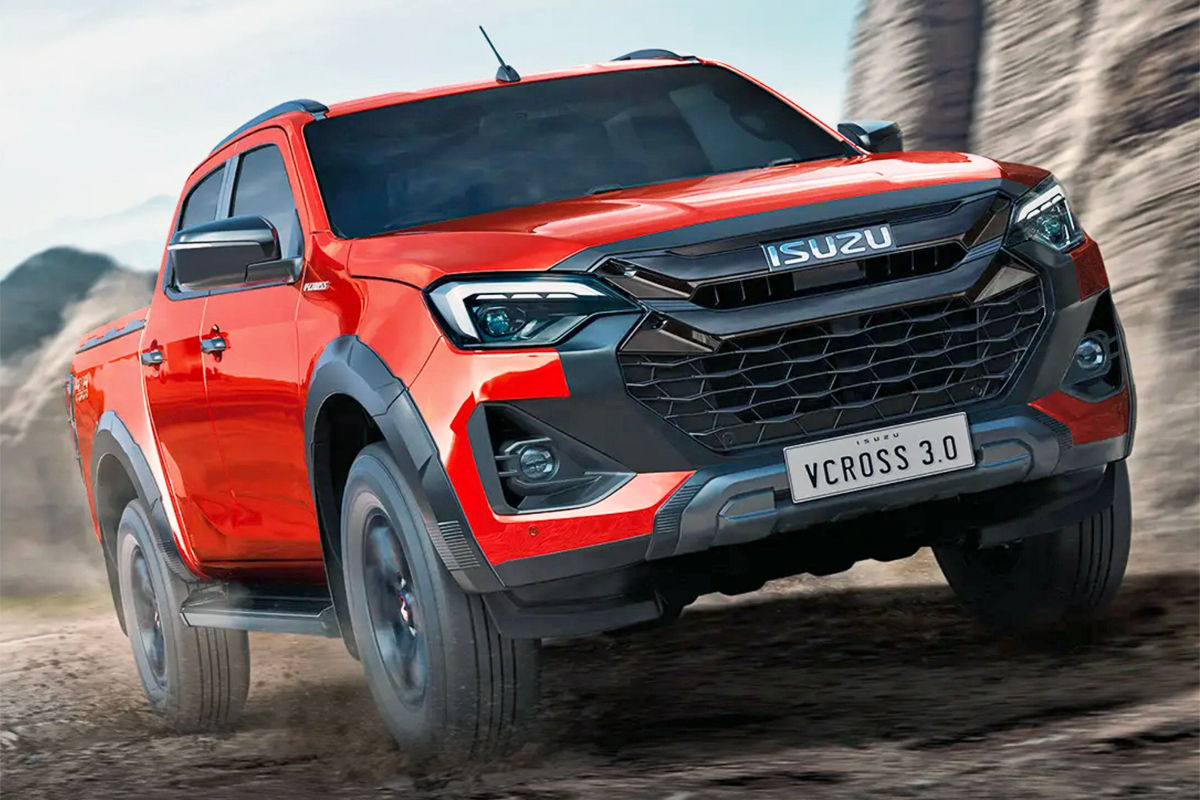
The facelifted Isuzu D-Max has been unveiled in Thailand, with the “significantly improved” version of the Japanese bakkie gaining revised styling, an updated interior and various added features.
Though the RG-generation D-Max launched in South Africa as recently as April 2022 – with production finally commencing at Struandale in the Eastern Cape after a lengthy delay – this model has been available in markets such as Thailand (where it is also built) since late in 2019.
Isuzu’s global division says sales of the updated model will start in Thailand this week before rolling out “gradually across the rest of the globe”. We’ve asked Isuzu Motors South Africa what the plans are for the local market – where the D-Max is the 3rd best-selling bakkie year to date (behind only the likewise locally manufactured Toyota Hilux and Ford Ranger), with 14 813 units – and will update this story once we hear back.
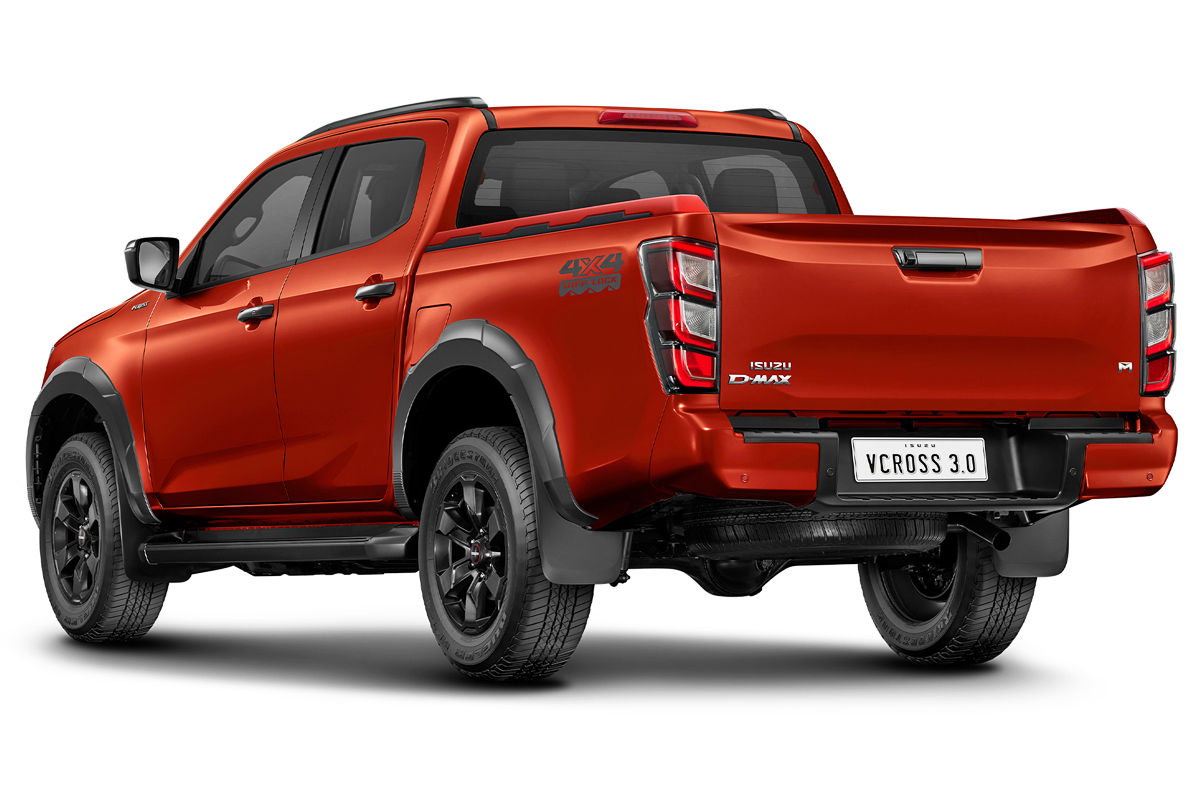
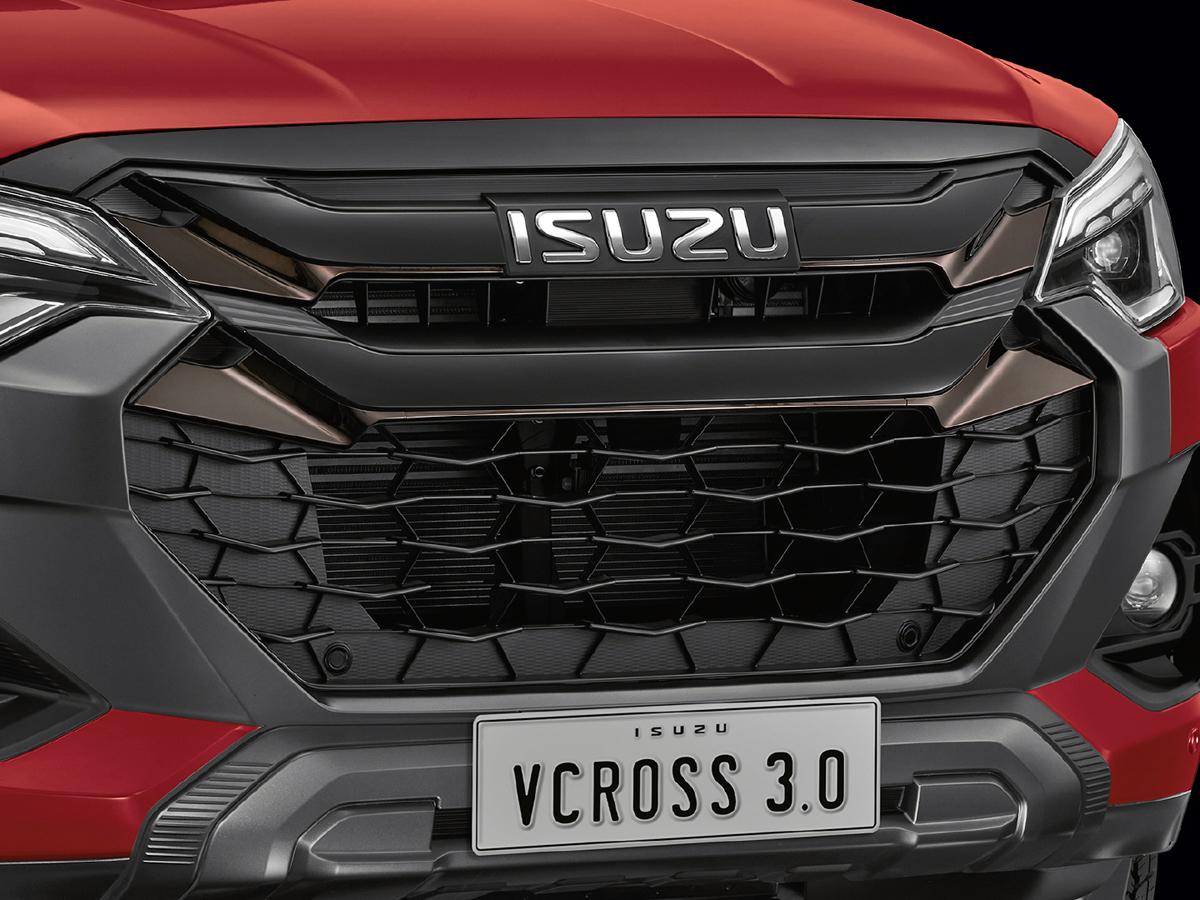
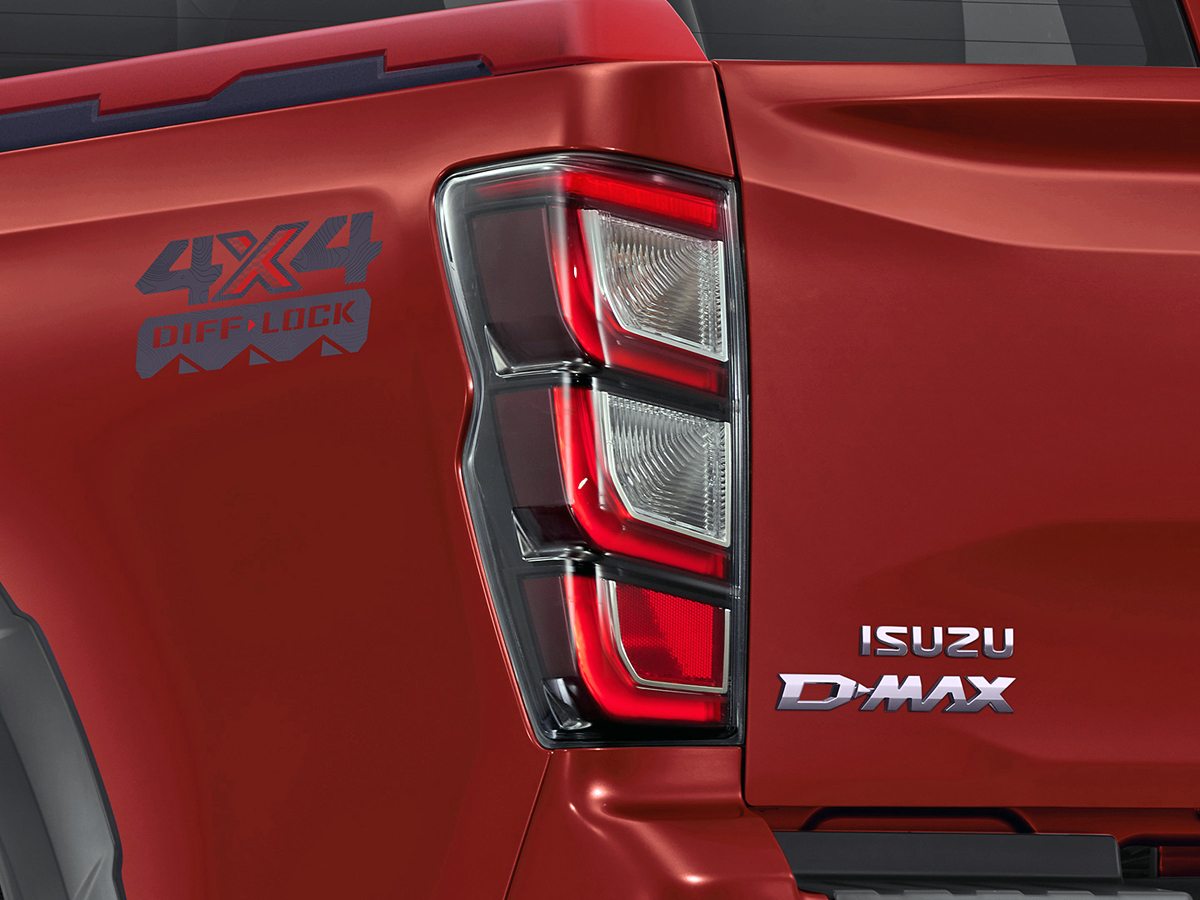
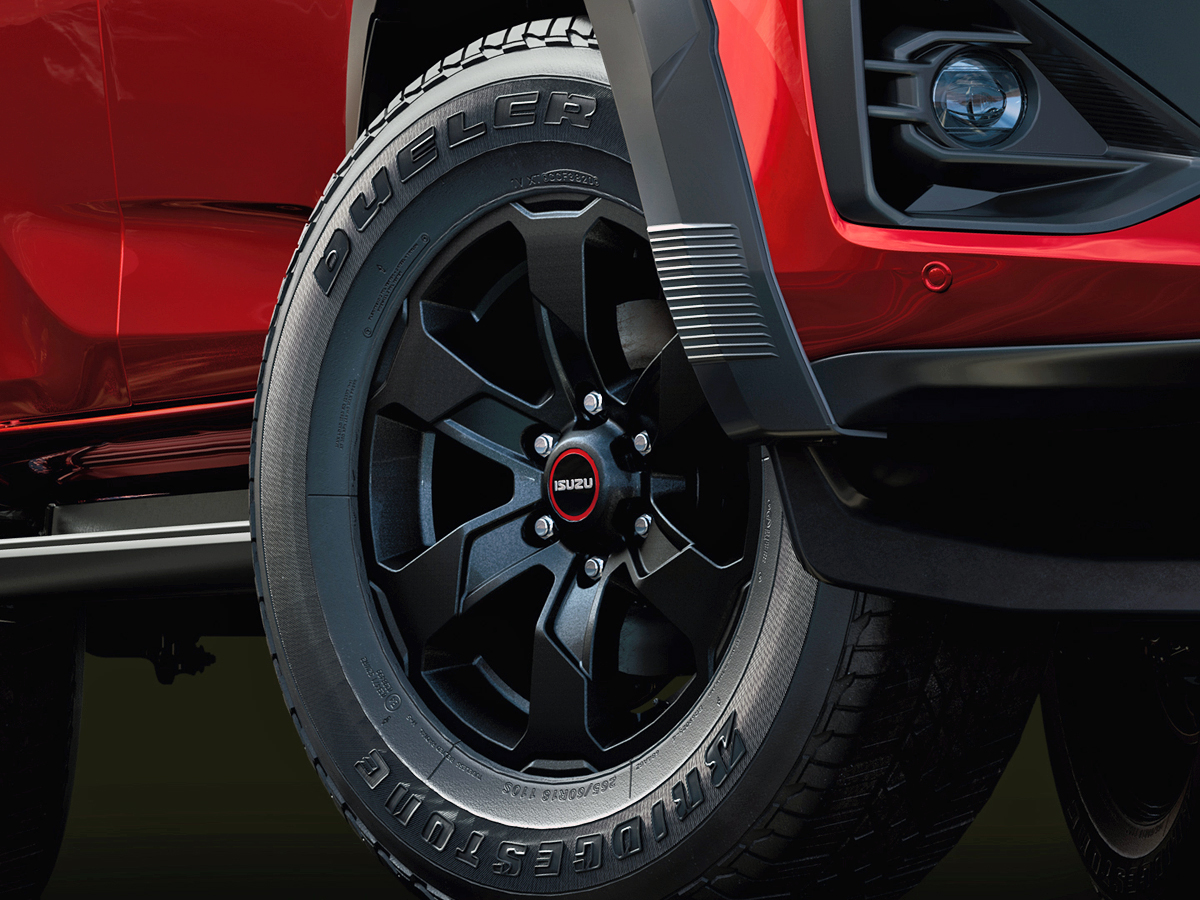
The Thai-spec version scores revised styling up front, including a “power bulge” for the bonnet and a “higher and wider” grille. The headlamps have been redesigned and now feature a new lighting signature, while the taillights gain a 3-level “L-shaped” motif courtesy of LED tubes. New 18-inch alloy wheels debut as well.
The Yokohama-based automaker says the D-Max’s “aerodynamic performance” has been improved, too, thanks to the adoption of new “air curtains” at either end of the front bumper and an enlarger spoiler on the top section of the tailgate.
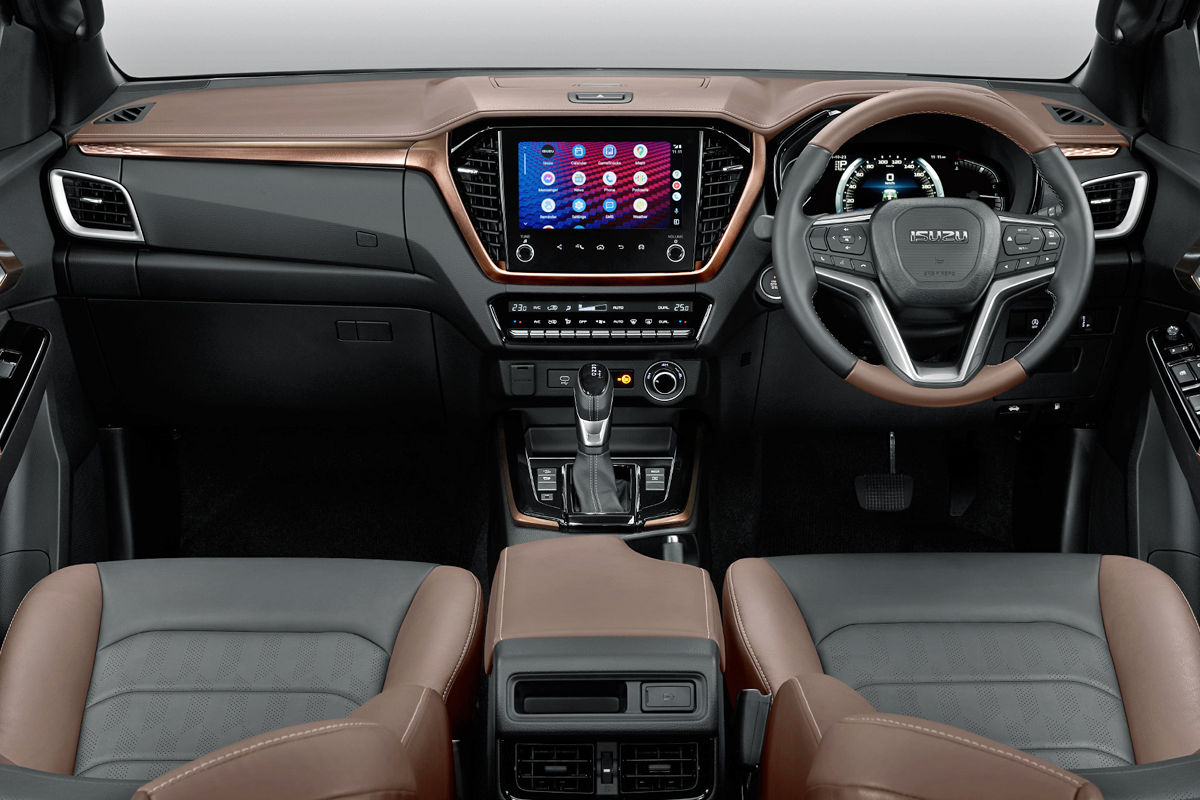
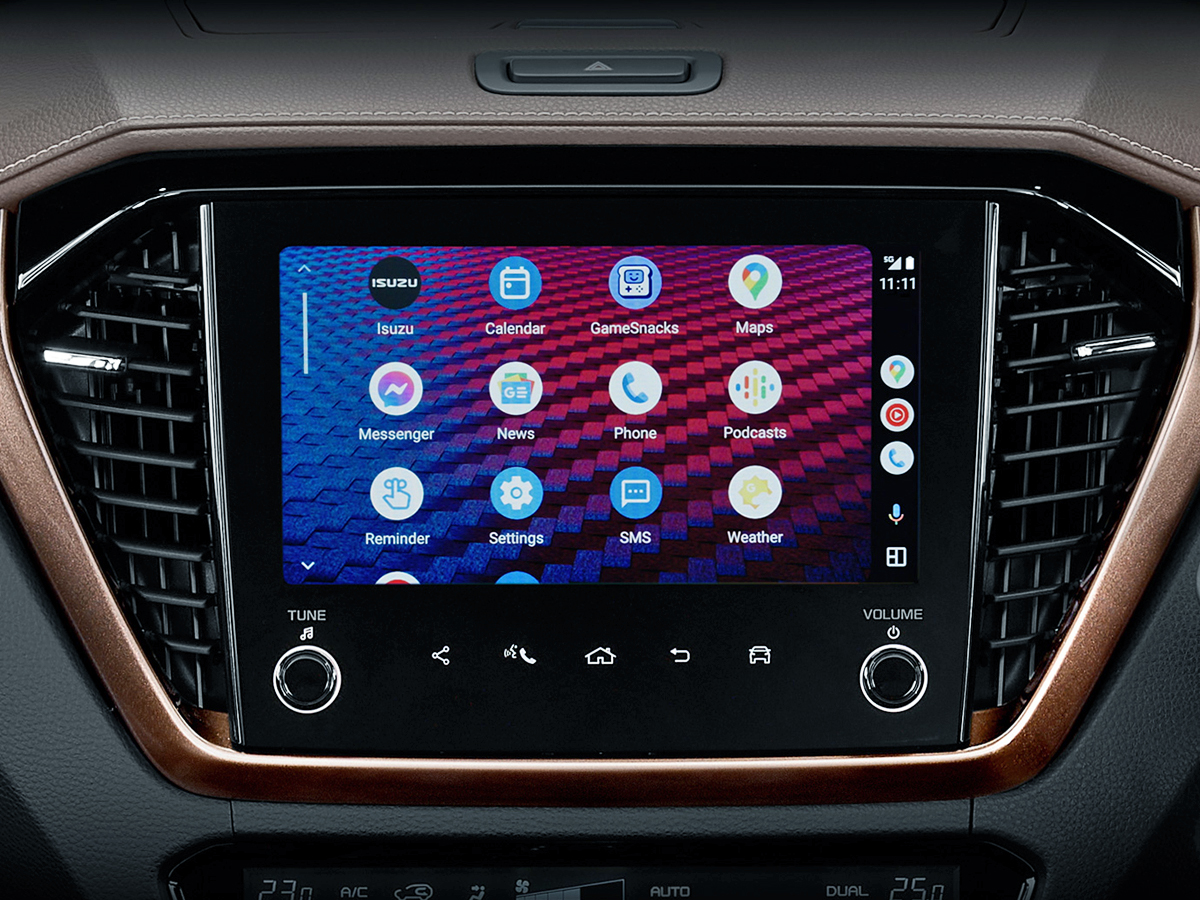
Inside, the instrument cluster has been revised (and enlarged to a diameter of 7 inches), while Isuzu claims the infotainment display features “greater user-friendliness” than before thanks to an updated interface and the addition of a physical volume dial (as opposed to buttons).
In Thailand, the D-Max furthermore upgrades to a new front-facing camera system (complete with a heating element to ensure it remains functional in cold weather) that allows the inclusion of fresh advanced driver assistance features. Isuzu claims it has tweaked the D-Max’s traction-control system, too, while also adding a new “rough terrain mode”.
No changes have been made to the powertrain, so high-spec D-Max derivatives still employ a 3.0-litre, 4-cylinder turbodiesel engine generating 140 kW and 450 Nm. For the record, the D-Max manufactured locally is also available with a 1.9-litre oil-burner, which offers 110 kW and 350 Nm. Transmission options on both engines comprise a 6-speed manual gearbox or an automatic with the same number of cogs.
As an aside, Shinsuke Minami, Isuzu President and COO, confirmed at the reveal of the updated D-Max that the company has plans to build a fully electric bakkie in Thailand.
“Isuzu is actively taking efforts to realise a carbon-neutral society. Going forward, Isuzu plans to produce a BEV (Battery Electric Vehicle) pickup truck in Thailand. Isuzu will first introduce it in Europe and then examine its gradual roll out by meeting the needs of each market, including Thailand,” said Minami-san.
Nissan SA to ‘restructure’ as it seeks NP200 replacement
Nissan South Africa has entered a “formal consultation phase to restructure the business” as it seeks a replacement for the NP200 that will soon go out of production…
With production of the NP200 scheduled to end in March 2024, Nissan South Africa has confirmed it has officially entered a “formal consultation phase to restructure the business”.
In a statement, the Japanese automaker’s local division said though production of the NP200 half-tonne bakkie would end at its Rosslyn plant in the opening quarter of next year, the factory would continue to build the Navara 1-tonne contender, with “model upgrades to come and export destinations set to increase”.
NP200 replacement fell through
Interestingly, the company confirmed it had earlier lined up an “immediate replacement model for NP200”, which was planned to be built on a Renault-Nissan-Mitsubishi Alliance shared platform in Russia.
“However, the geopolitical situation in Russia meant this model was no longer viable due to significantly reduced volumes. In line with our African strategy, securing a 2nd model for production in South Africa is a priority and a study into an alternative vehicle is already progressing,” the statement from Nissan SA read.
“Until our future plans are confirmed, the business will be operating at reduced production volumes and needs to act responsibly to maintain its long-term competitiveness and be ready to secure future opportunities.
“Nissan South Africa has now entered into a formal consultation phase to restructure the business, which could result in a reduction in the number of employees across the company.
“During the consultation phase, we will work with our employees, their representatives and our partners to minimise the impact on our people and investigate other opportunities for them and for the business to ensure a sustainable future for the brand in South Africa.”
The company added it was “focusing on building a strong future for the brand and for our employees in South Africa”.
NP200 debuted way back in 2008
The NP200 arrived on the scene as a replacement for the Nissan 1400 back in 2008. The workhorse bakkie has had the local half-tonne bakkie segment all to itself since the close of 2017, when General Motors quit Mzansi, thus marking the end of the road for the Chevrolet Utility.
As such, the Dacia Logan-based single cab quickly became Nissan SA’s chief volume driver. Over the opening 8 months of 2023, as many as 8 862 examples were registered locally, enough to earn it 4th place on the list of SA’s best-selling bakkies and a top-10 place overall, despite its advanced age. That tally represented a whopping 43.9% of all Nissan sales from the start of January to the end of August 2023.
Wild E30 BMW! E36 M3 3.2L Engine Swop, Stunning widebody E30 built in SA
This BMW E30 creation was completed in just 45 days! With cosmetic upgrades and a special 3.2-litre engine, this local build is impressive.
When Dhesigan Donovan Naicker, owner of VP Racing Fuels South Africa, decided to build an E30 BMW, he wanted it to be special. And miraculously, him and his team turned this car from a shell to what you see here in just 45 days.
Riding on air with a dramatic widebody kits, the custom upgrades were not just aesthetic, they also managed to drop an E36 M3 3.2-litre motor under the bonnet, well, if there was a bonnet.
This is definitely one of the wildest E30s we’ve ever seen and the fact that is proudly built in South Africa is just the cherry on top.
We hope you enjoy this special car and we’d love to know what you think of it in the comments below.
New Subaru WRX vs old WRX – Is Subaru back to its best?
Ciro De Siena owns a classic Subaru WRX and brought it along to see how it compares with the modern 2023 Subaru WRX.
The Subaru WRX is one of the most iconic nameplates globally, but in the recent past, it’s fallen to one side as more powerful hot hatches have been developed to take its place. Subaru also thought its WRX should take on the performance sedan segment against the likes of the Audi A4, BMW 3 Series and the Merc C-Class.
But now, in 2023, the new WRX is back and has a manual gearbox option teamed with a proper exhaust sound. Our resident Subaru WRX owner, Ciro De Siena, brought his WRX Prodrive out to play with the new model. How do the two models, some 20 years apart compare and has Subaru finally got its groove back? Watch and see what he thinks.
SA launch of hardcore Nissan Navara Warrior firms – report
The long-rumoured launch of the hardcore Nissan Navara Warrior in South Africa is all but signed off, according to the head of the company that developed the vehicle…
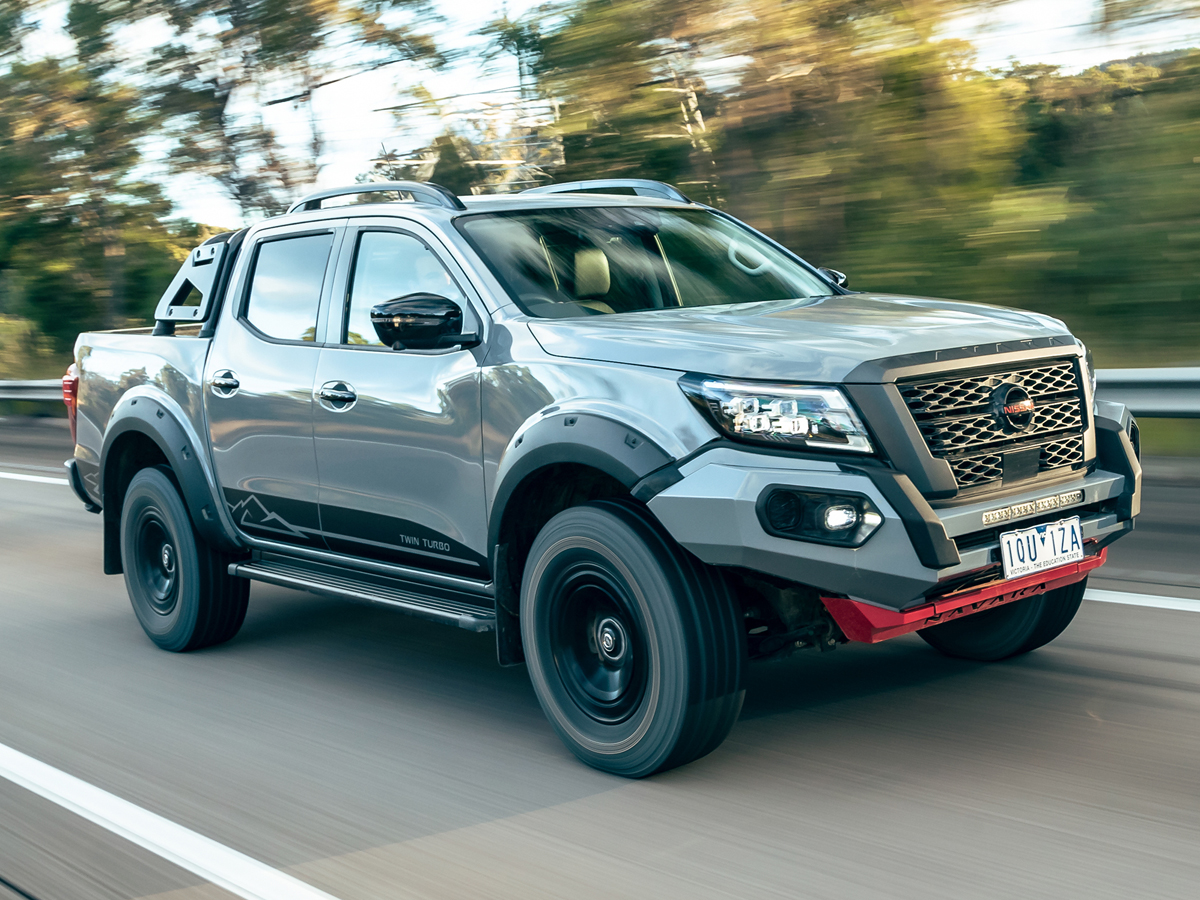
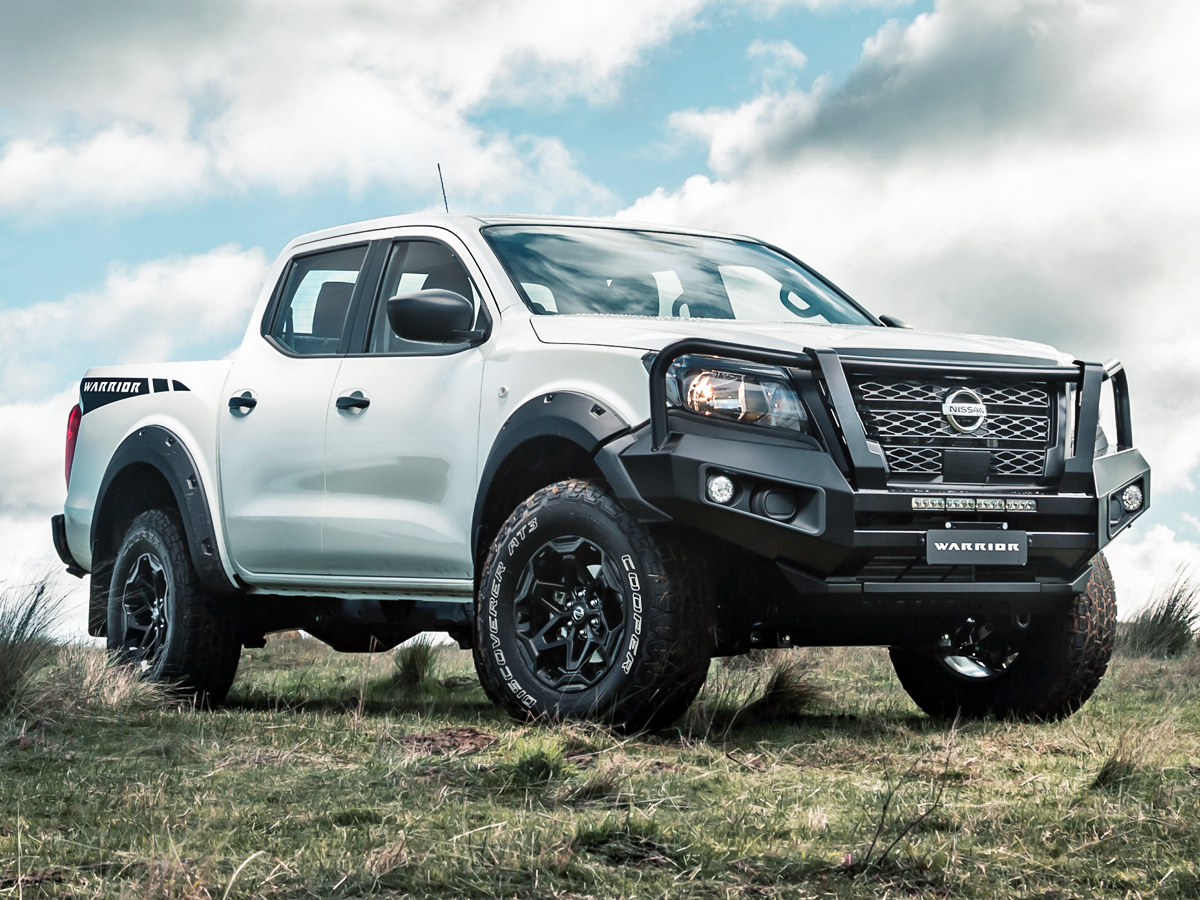
Nissan South Africa is edging closer to launching the Navara Warrior derivative locally, according to the head of the Australian company that helped develop the hardcore flagship version of the double-cab bakkie.
Back in 2021, a Nissan Australia executive revealed Nissan South Africa had “reached out” about the Aussie-specific Navara Warrior model, which is converted by Premcar at its dedicated production facility in Melbourne. Then, in May 2022, the same executive hinted such an “opportunity” was still on the cards.
The Navara Warrior is currently exclusive to the Australian market.
Now, however, Premcar boss Bernie Quinn has revealed to carsales.com.au he has visited South Africa “several times” to discuss opportunities with Nissan SA. He also toured the Rosslyn factory, where the D23-generation Navara is built for Africa.
“The opportunity in South Africa is well down the track. From my personal point of view, it’s going to happen. But are we signed off, contract done and everything? No,” Quinn told the Australian publication.
“I can’t tell you when [production might start] until all that is sorted out,” he said, adding the proposed SA-spec Navara Warrior would likely be converted in South Africa at a new facility.
The Aussie-spec Warrior is based on the Thai-built Navara.
“It won’t be exactly the same car as sold in Australia – it can’t be. It looks exactly the same, but it’s got a different 2.5-litre engine and it’s got a slightly different chassis,” Quinn confirmed.
As a reminder, the Navara built at Rosslyn uses a 2.5-litre, 4-cylinder turbodiesel engine as opposed to the bi-turbo 2.3-litre unit employed in the Thailand-sourced version offered Down Under. Locally, the Navara Warrior would be pitched against the likes of the Toyota Hilux GR Sport and Isuzu D-Max Arctic Trucks AT35.
Nissan also offers a lower-spec Warrior SL in Australia.
So, what makes a Warrior? Well, Premcar currently offers 2 versions in Australia. The top-spec model is based on the Navara Pro-4X but gains added off-road capability in the form of wheel, tyre and suspension enhancements. It also adds a winch-compatible bullbar, Navara-branded bashplate and additional underbody protection, along with a modified towbar and a 100 kg GVM upgrade.
There’s also the lower-spec Navara SL Warrior variant, which ships with less standard kit and not quite as much underbody protection. Should the Navara Warrior be confirmed for South Africa, we’d speculate the Pro-4X would be the most logical choice as a base.
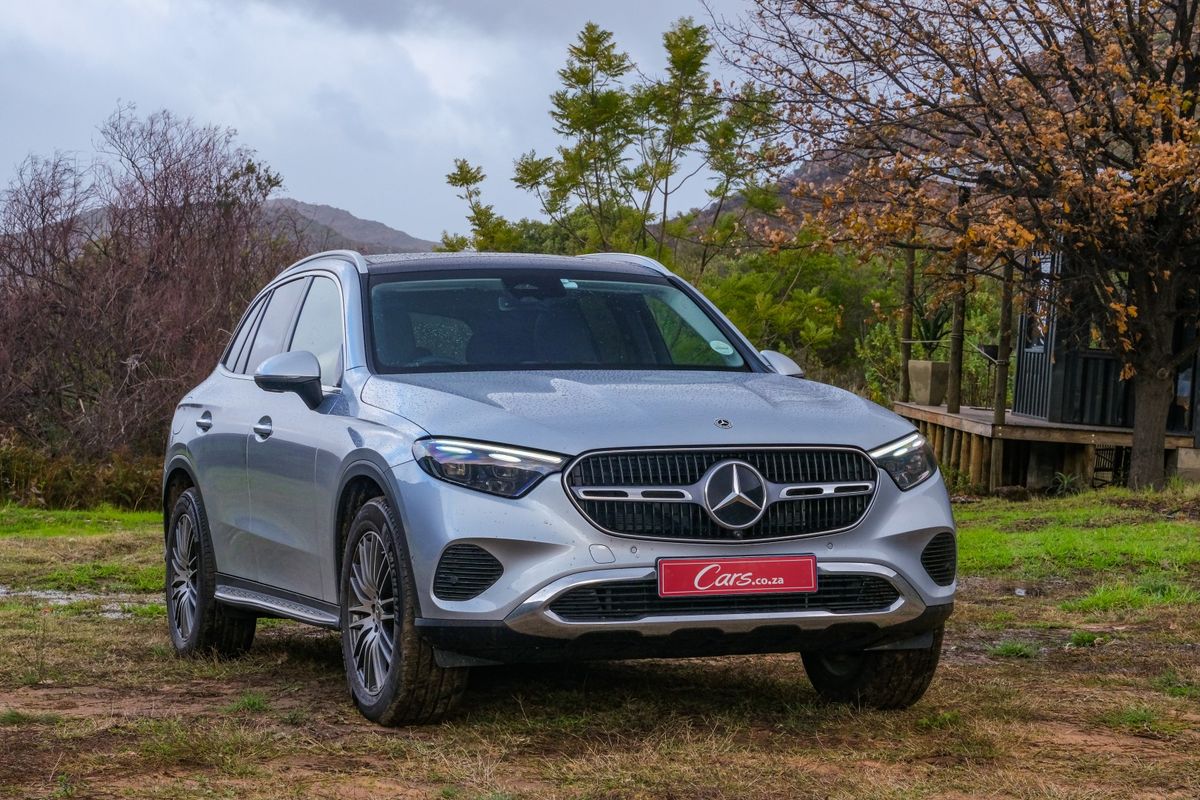
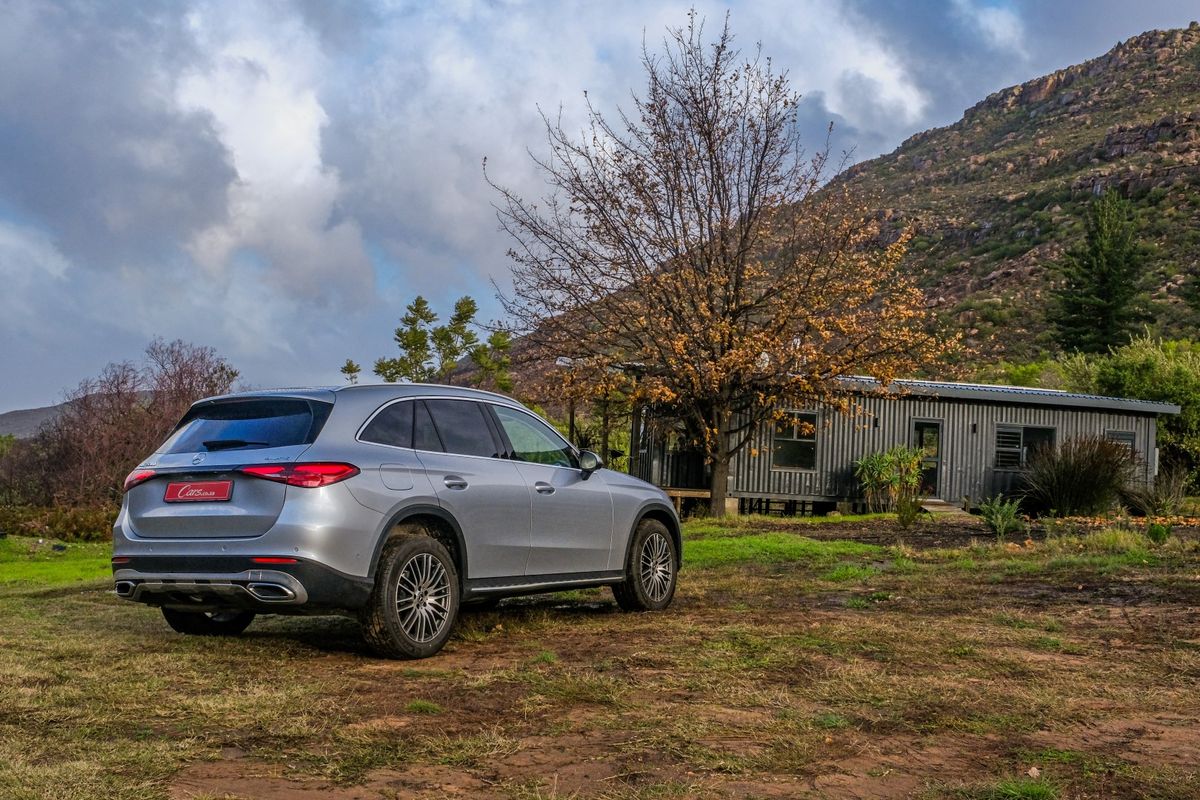
The 2nd-gen Mercedes-Benz GLC recently arrived in Mzansi to lure executive SUV buyers to the Three-pointed Star. We review the turbodiesel-powered 220d 4Matic Avantgarde to determine if the entry-level GLC is worthy of being on your shortlist.
We Like: New tech-forward interior, good overall performance, efficiency, comfort and ride quality
We Don’t Like: Pricey, some questionable interior trim
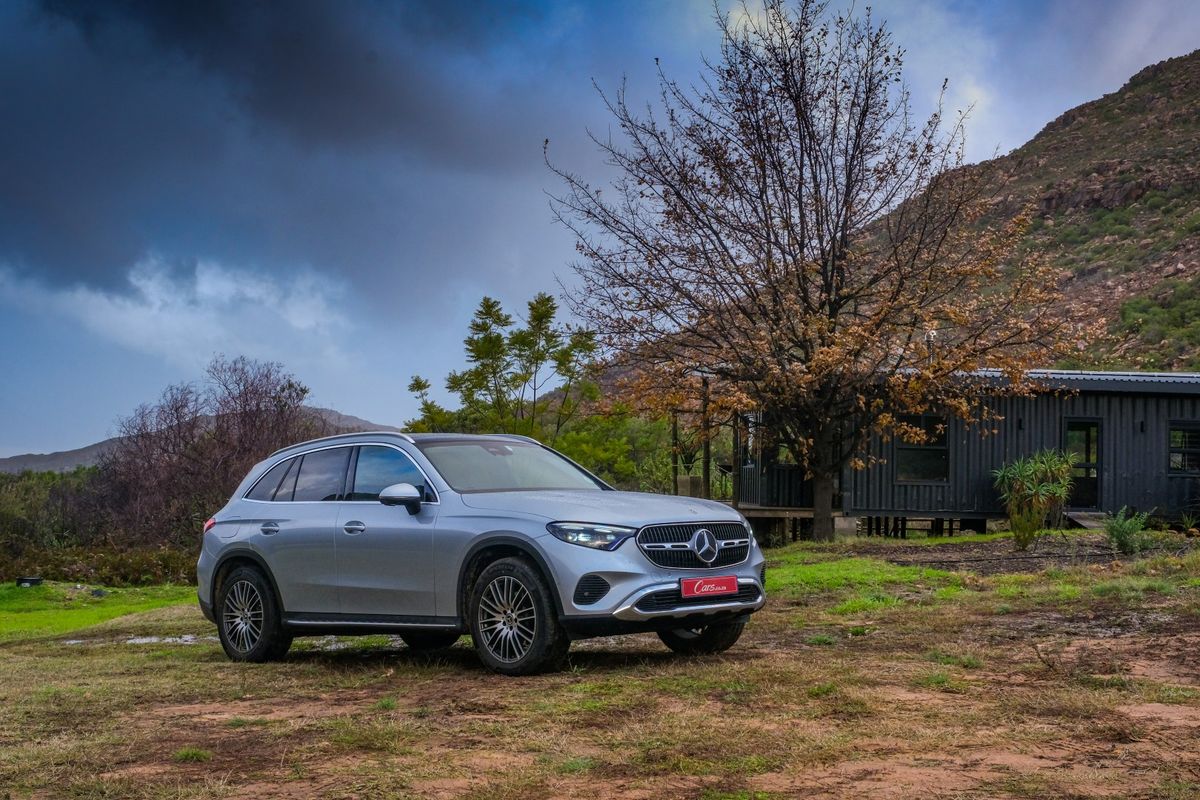
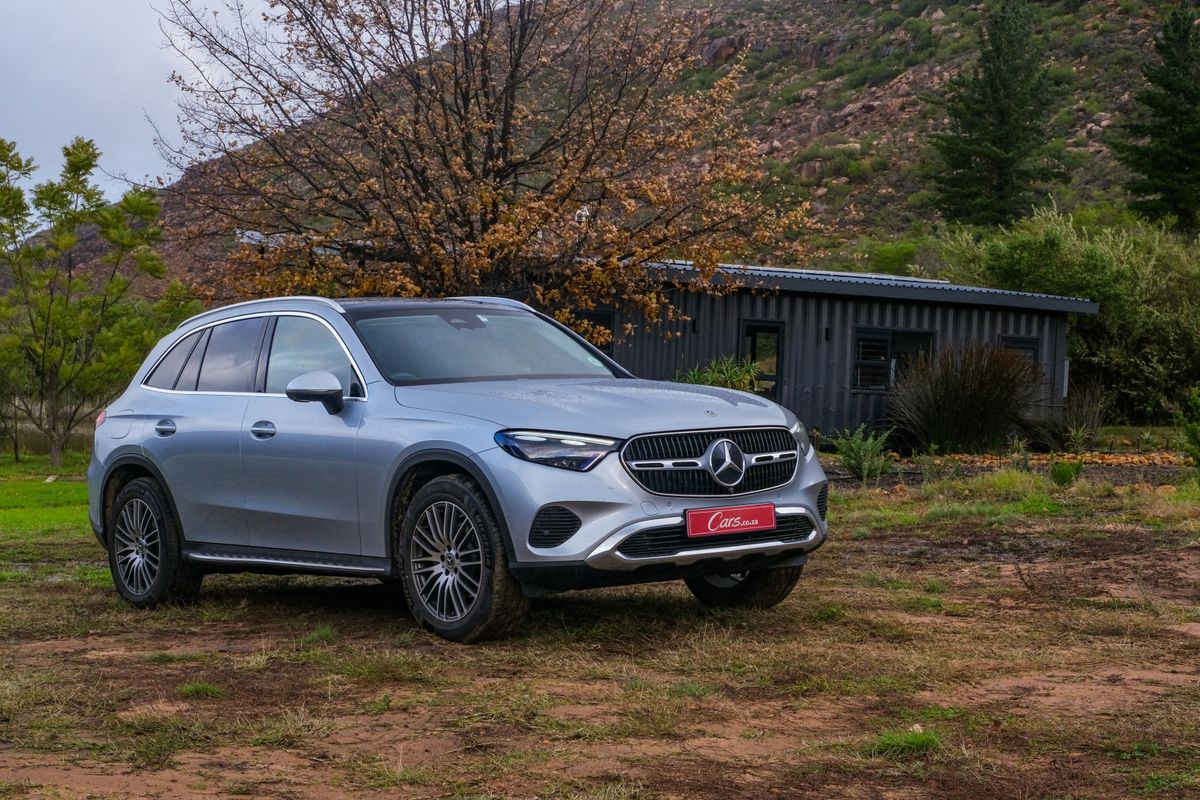
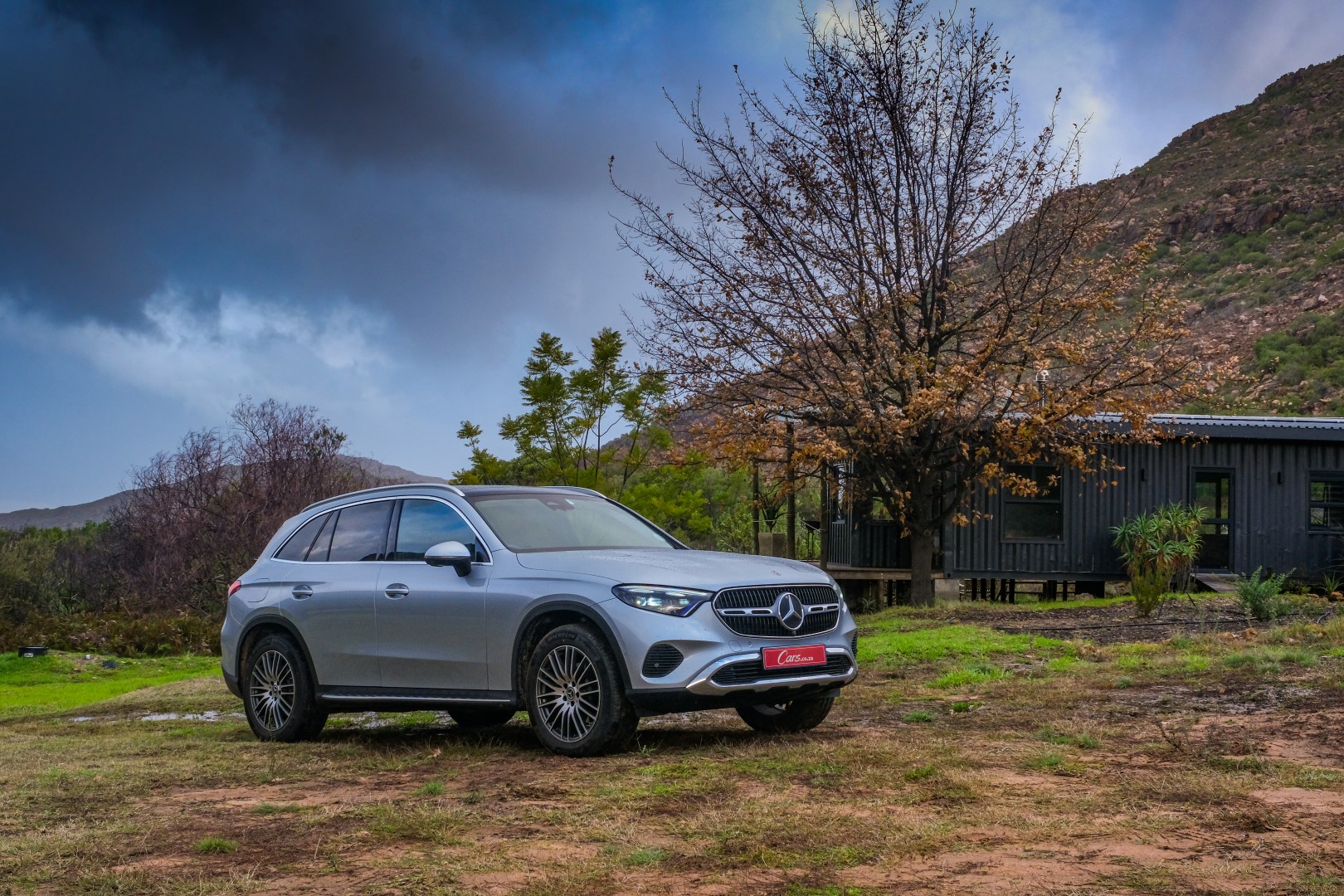
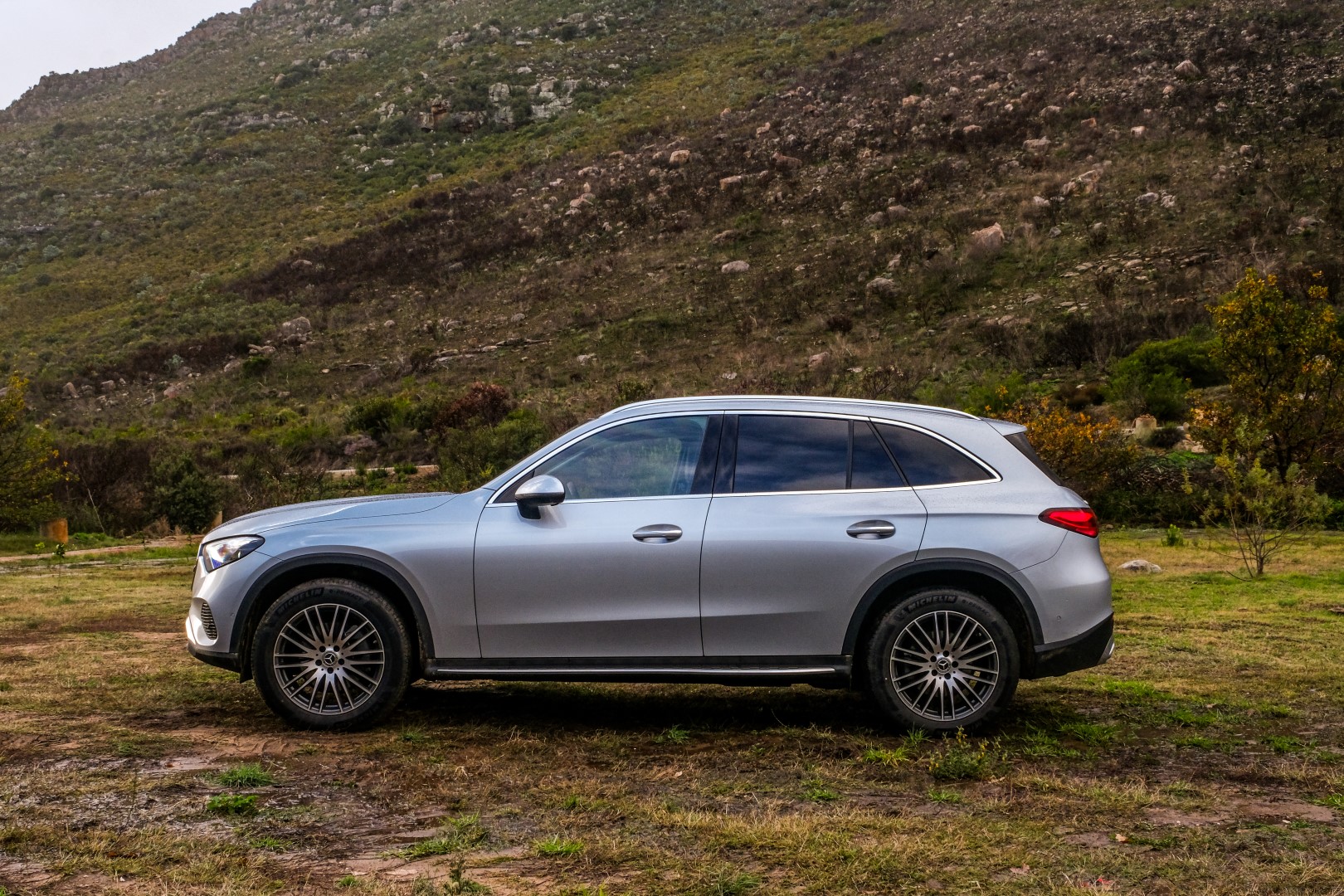
The new GLC, even in its base form, boasts significant kerb appeal.
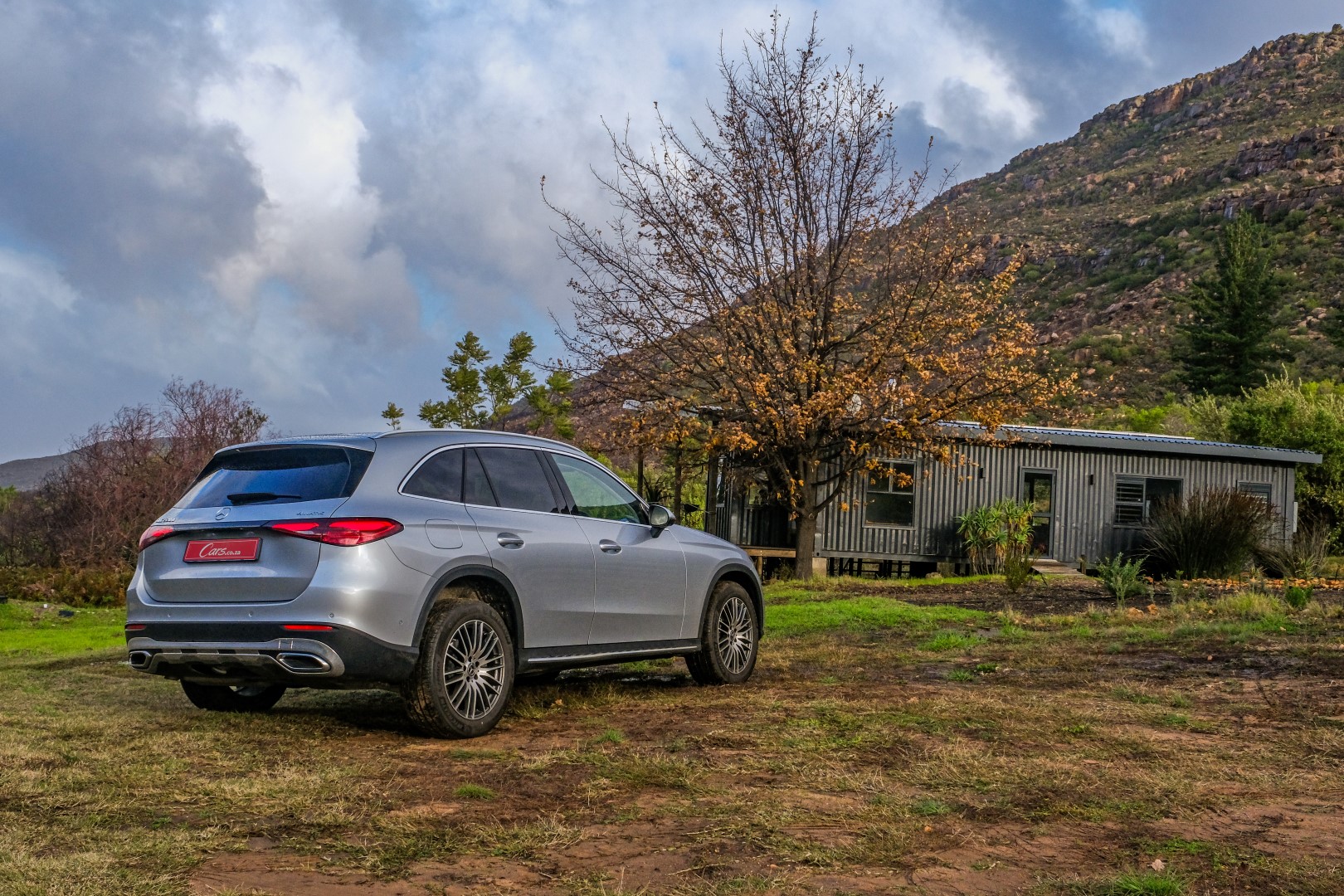
This is the new, 2nd-gen Mercedes-Benz GLC that arrived in South Africa earlier this. The model does battle with the BMW X3, Audi Q5, Volvo XC60 and Range Rover Evoque, to name a few of its key rivals.
Sharing its underpinnings with the locally produced W206-series Mercedes-Benz C-Class, which went on sale in early 2022, the GLC SUV inherits much of the C’s interior technology and architecture while also sharing its 2.0-litre turbodiesel engine with 48V mild hybrid technology with the C220d derivative.
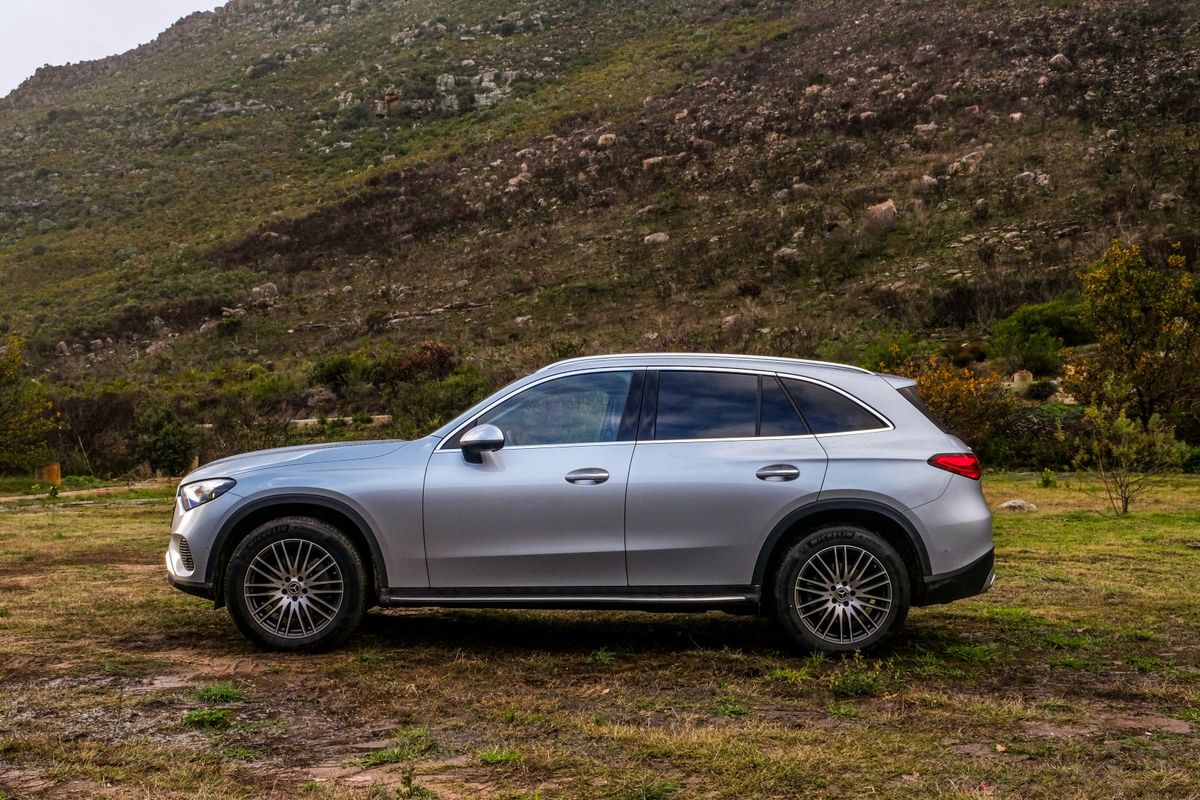
This is the entry-level engine in the GLC range. Buyers can also opt for the more powerful GLC 300d or the petrol-powered GLC300, all with mild-hybrid tech. Furthermore, derivatives are offered in 2 trim lines: Avantgarde (standard – on test here) or AMG Line (if you want to ramp up the GLC’s kerb appeal).
Watch Ashley Oldfield’s video review of the GLC 300d 4Matic AMG Line
The Avantgarde trim of the test unit is distinguished by some chrome detailing (on the lower bumper, for example), a vertically slatted grille and aluminium roof rails. This example rides on optional 19-inch, 10-twin-spoke light alloy wheels (R15 525); 18-inch 5-twin-spoke alloy wheels are fitted as standard.
For this test, we’d drive the GLC up the West Coast to Citrusdal and surrounds to have a weekend away with friends and a 2-year-old toddler – it’d be the perfect opportunity to test the GLC’s family-car skills. Mother Nature, however, had other plans. We had no idea a huge rainstorm was bearing down on us…
How the Mercedes-Benz GLC fares in terms of…
Interior specification & practicality
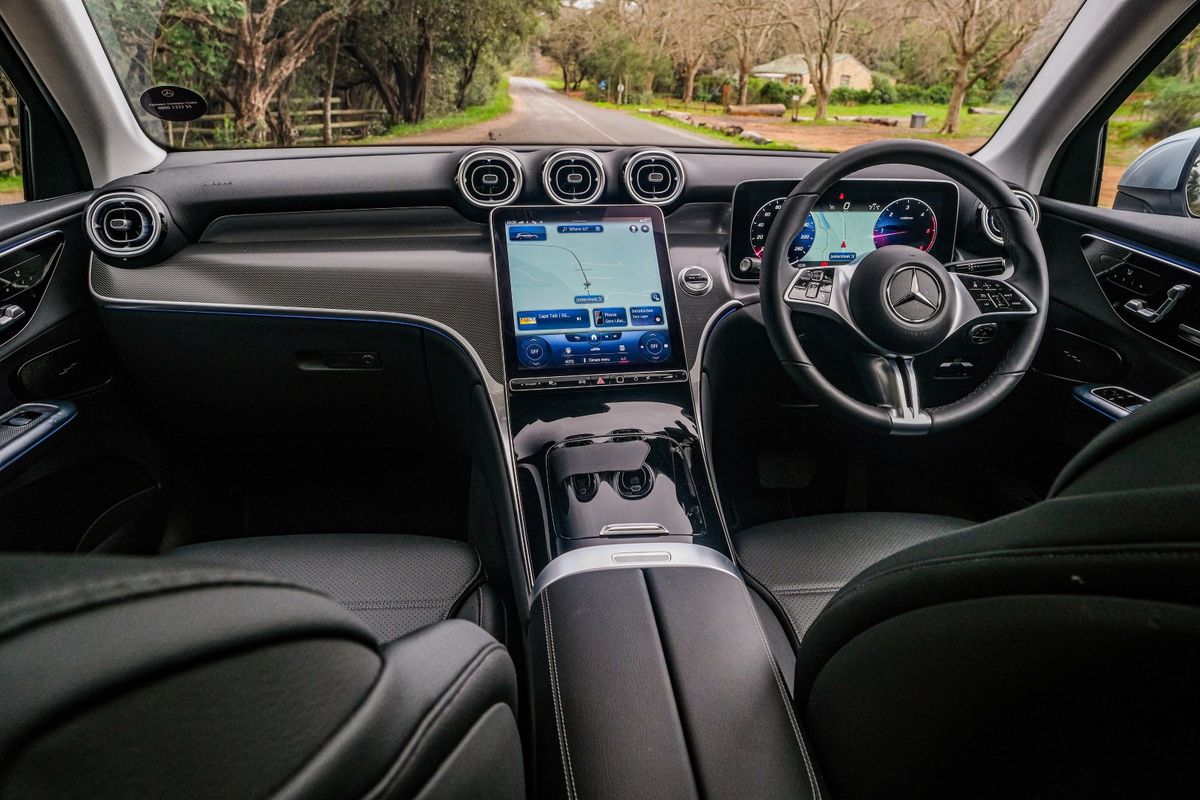
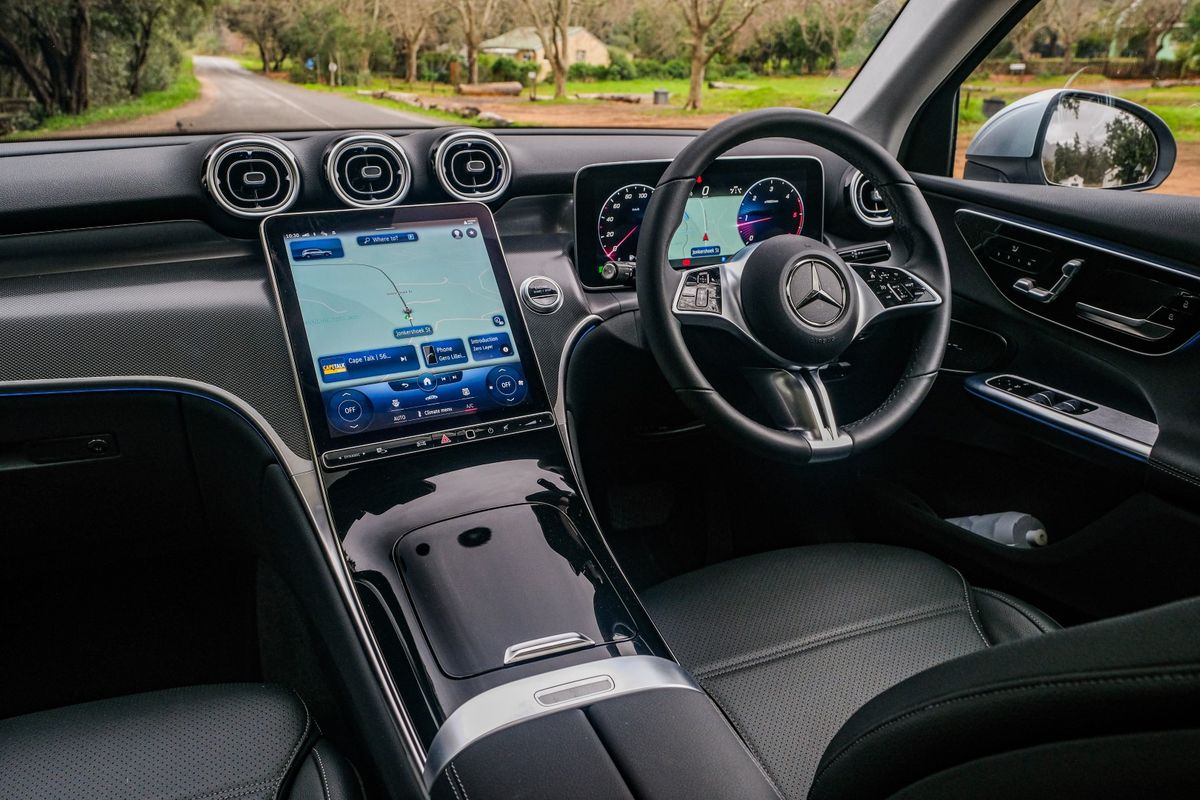
The C-Class cabin makes its way into the GLC with dramatic effect.
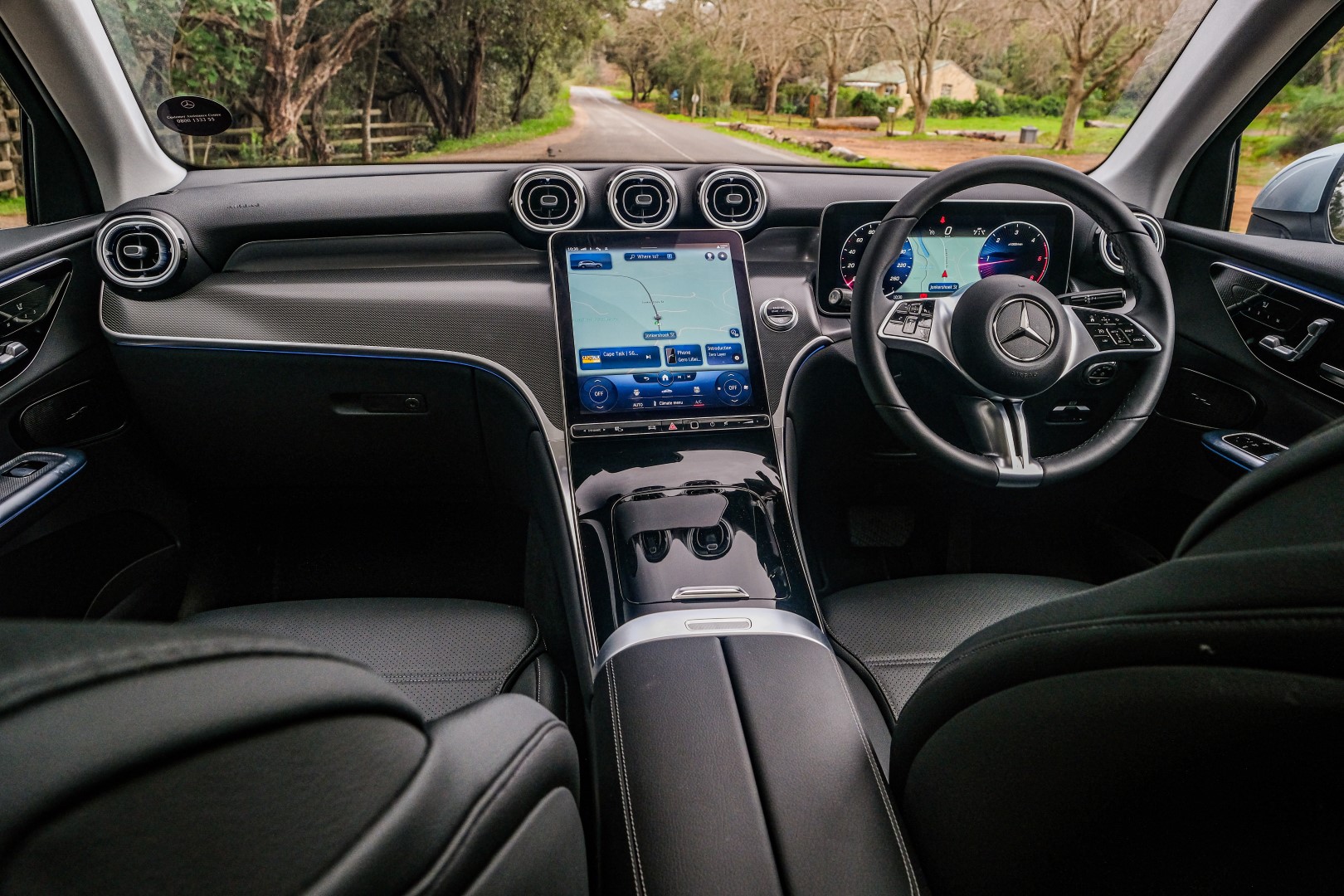
When you first step into the new X254-series Mercedes-Benz GLC, it’s immediately apparent that the SUV’s cabin architecture is lifted straight from the now-familiar C-Class. Fortunately, that’s a good thing!
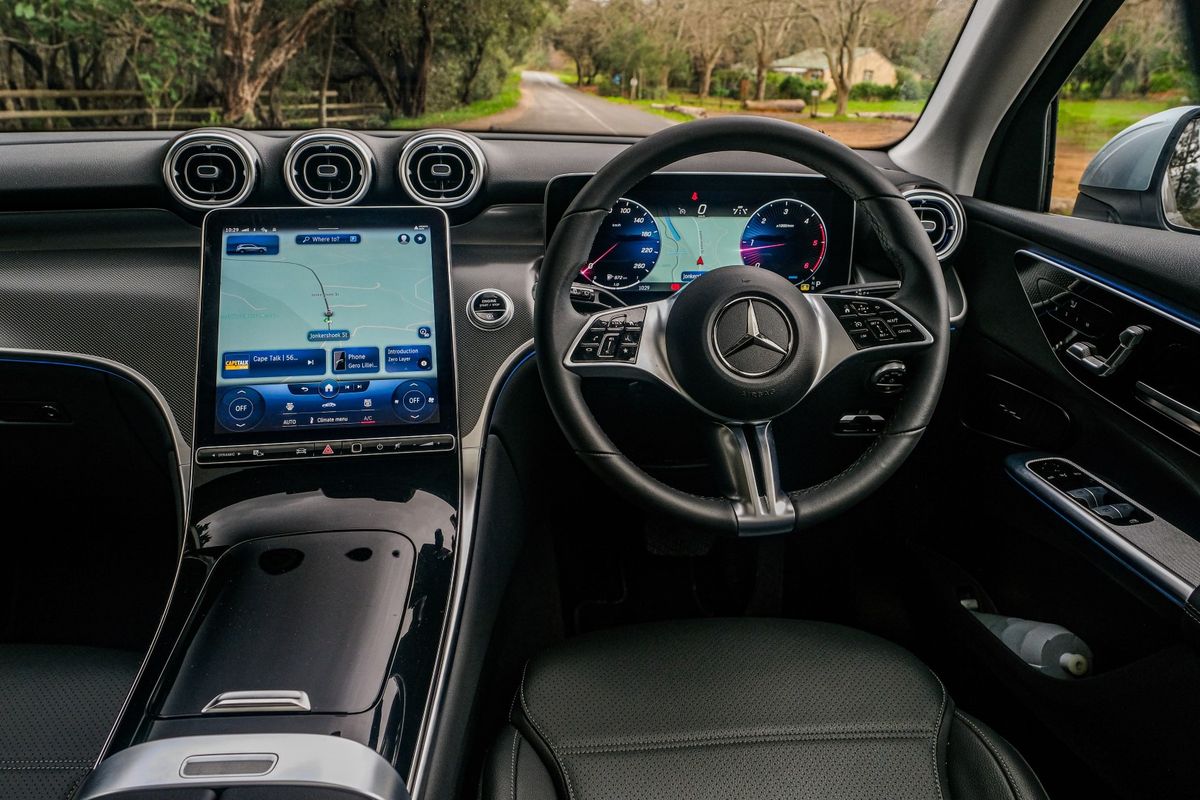
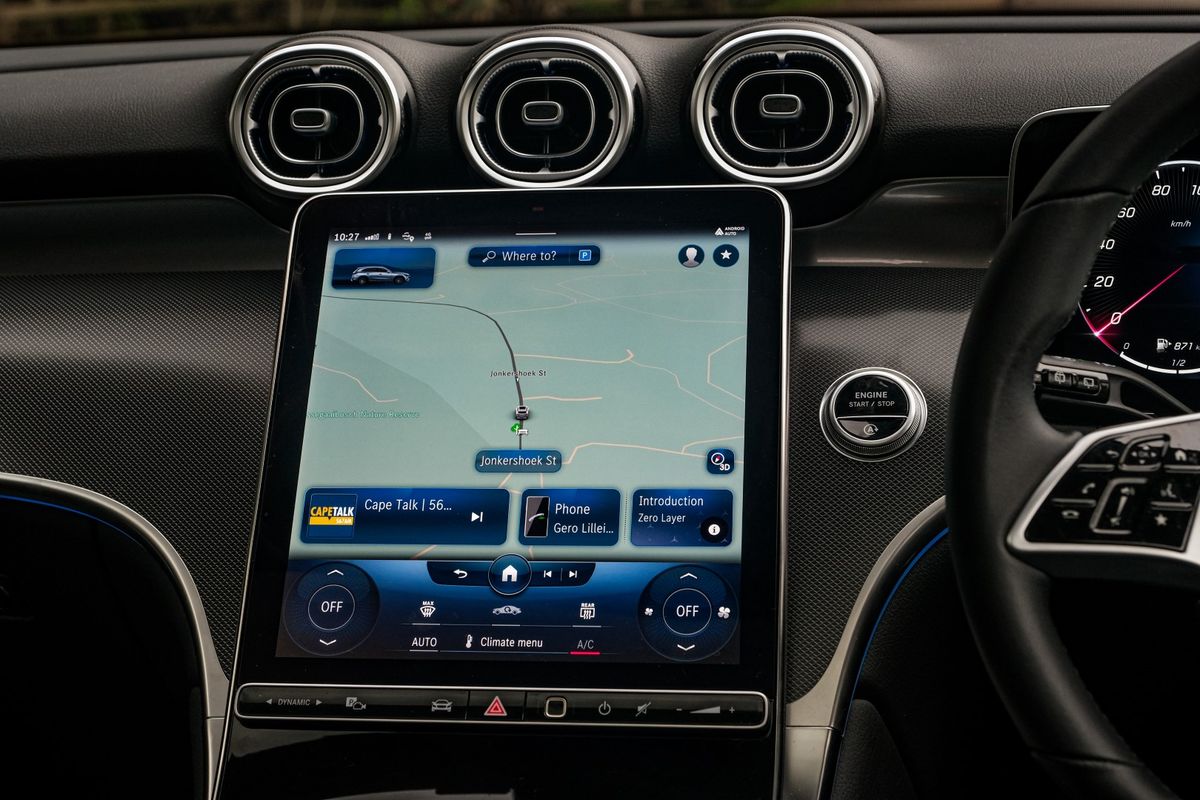
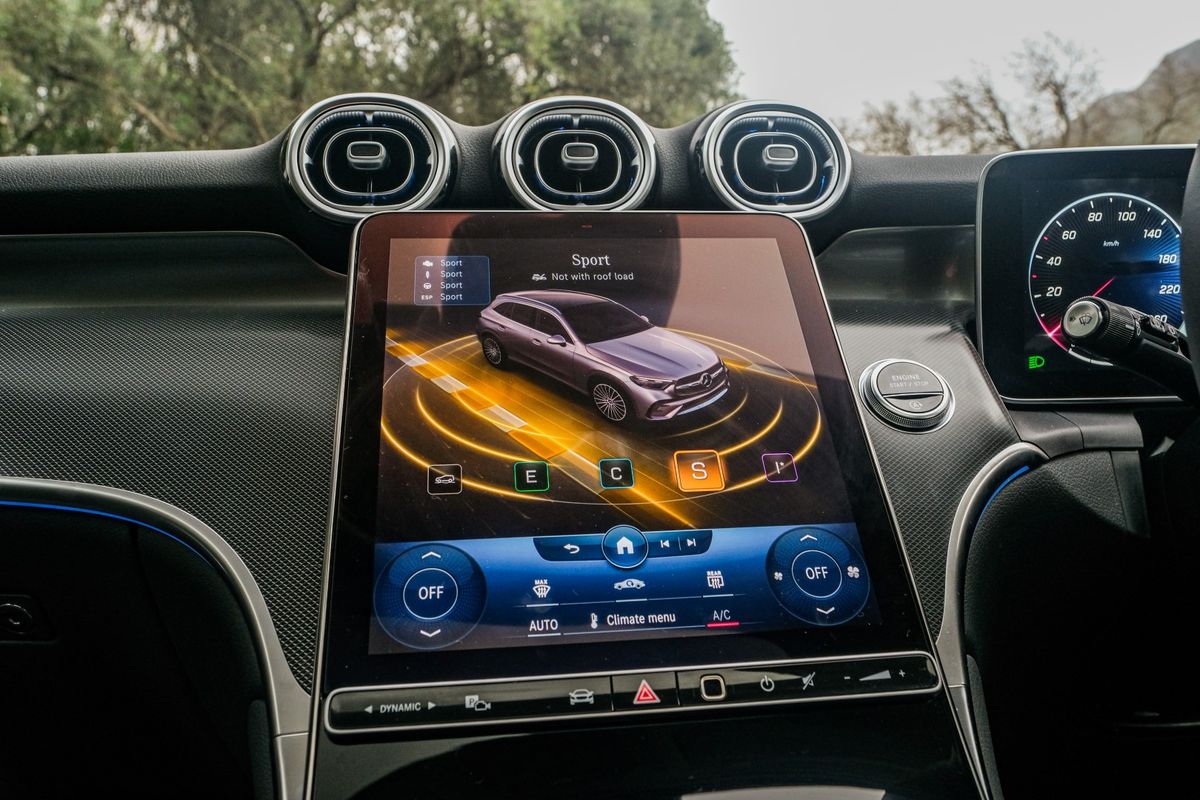
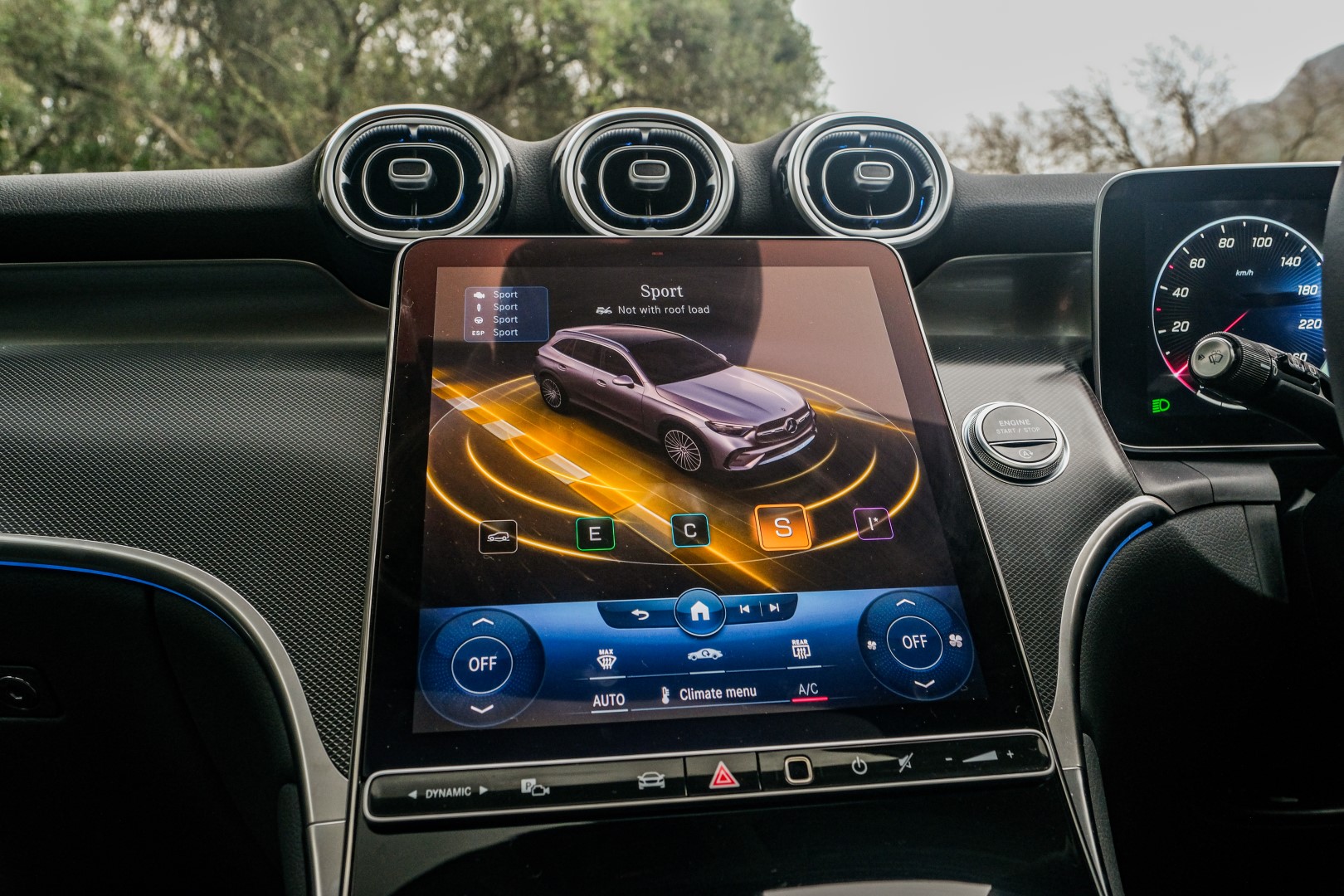
It looks ultra-modern. The interior of the Sindelfingen-based brand’s 2nd-gen executive SUV exhibits a noticeably tech-forward design approach, highlighted by the 11.9-inch portrait-orientated touchscreen equipped with Benz’s latest MBUX operating system. The large and attractive touchscreen interface is intuitive, but you may have to spend some time to fully familiarise yourself with the system’s functionality.
The portrait-style infotainment system is a highlight in the new GLC.
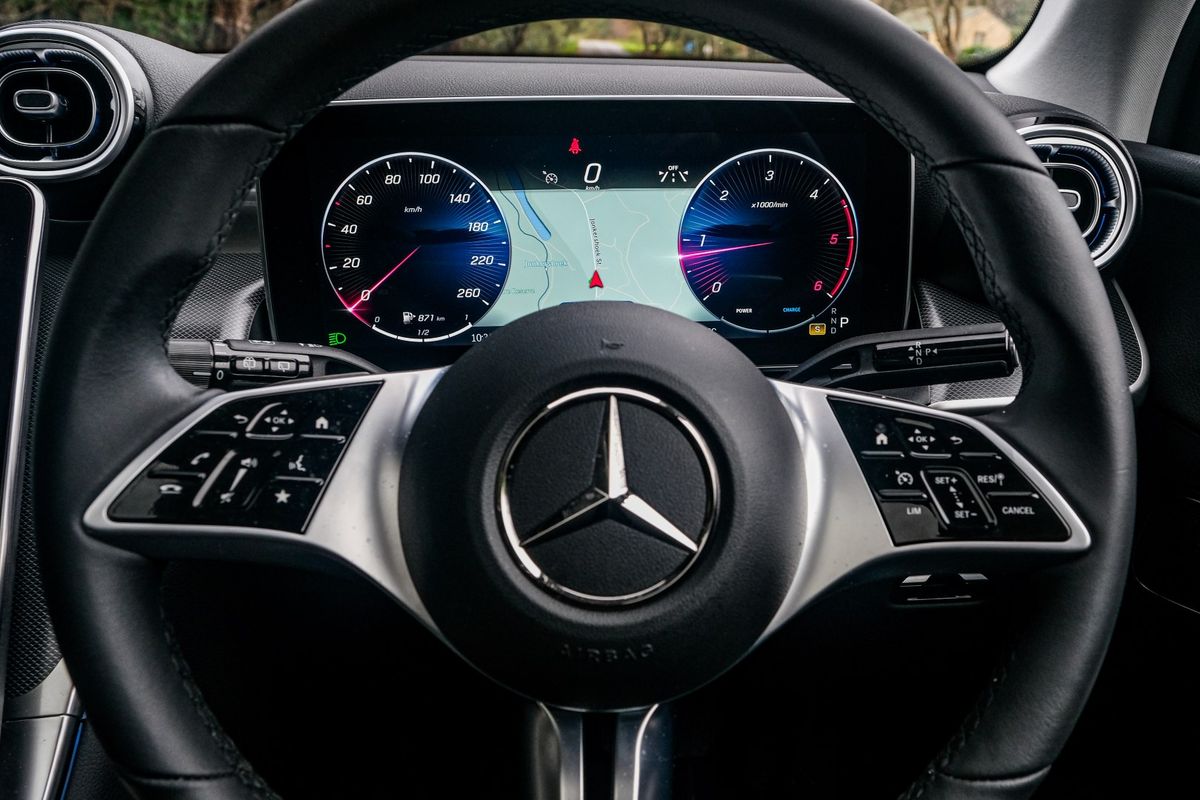
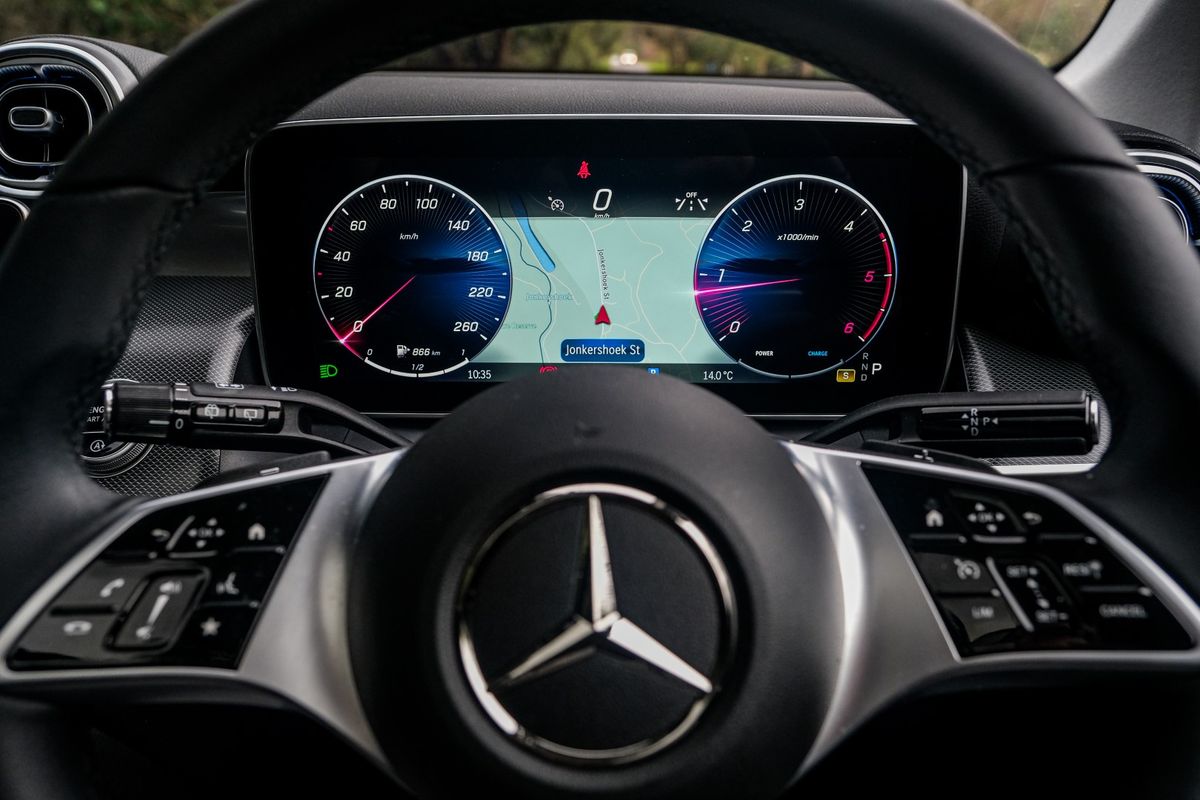
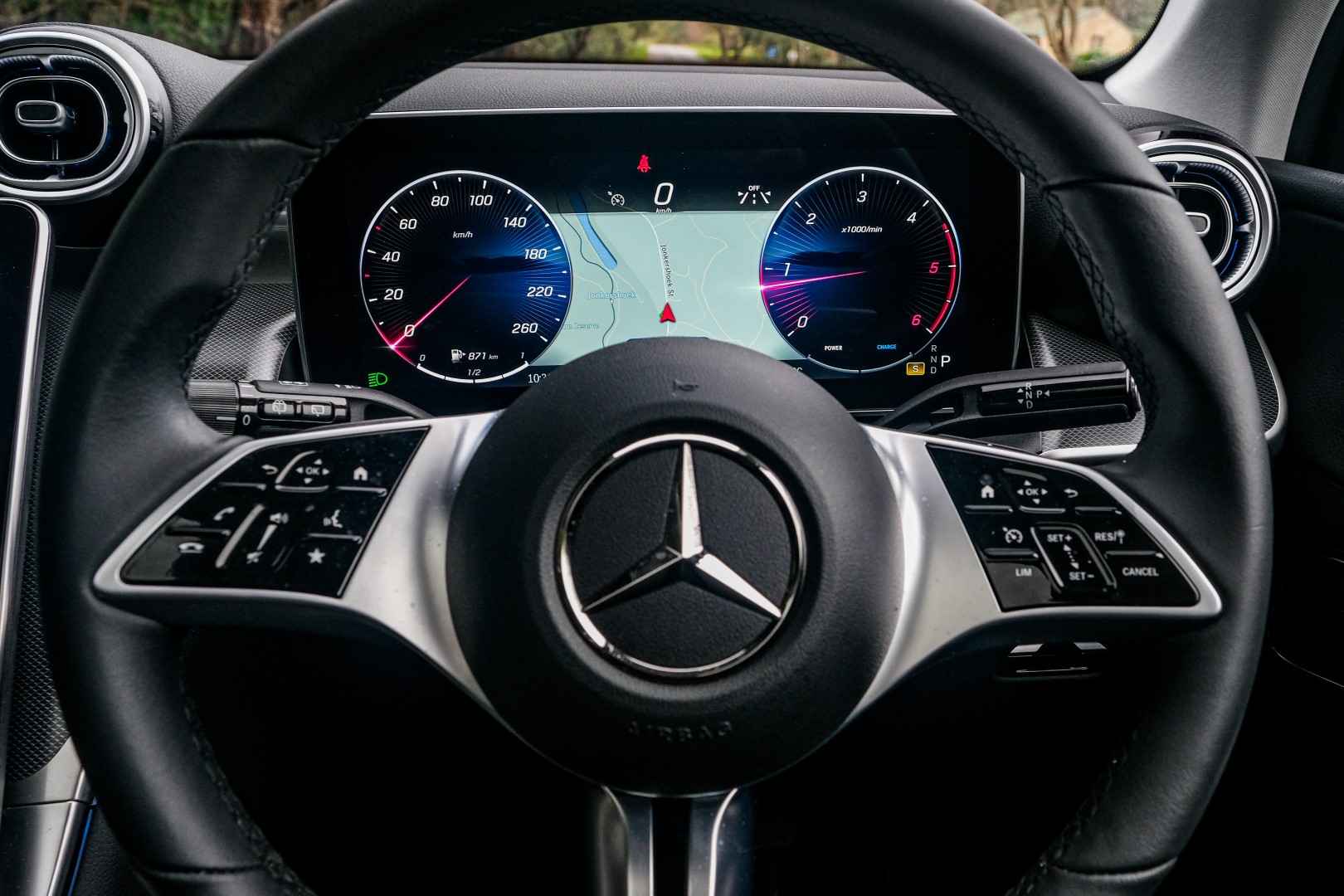
Furthermore, a 12-inch all-digital instrument cluster amplifies the cabin’s tech ambience appreciably. It can be easily configured to display themes to suit your mood (or taste) by using the mounted capacitive-touch controls on the multifunction ‘wheel. These controls, however, are very sensitive (overly so); you can easily activate an option or function inadvertently when you twirl the ‘wheel, which can become tiresome. Perhaps ‘Benz should revert to conventional button controls when it facelifts the model?
The mounted steering controls are easily activated by touch.
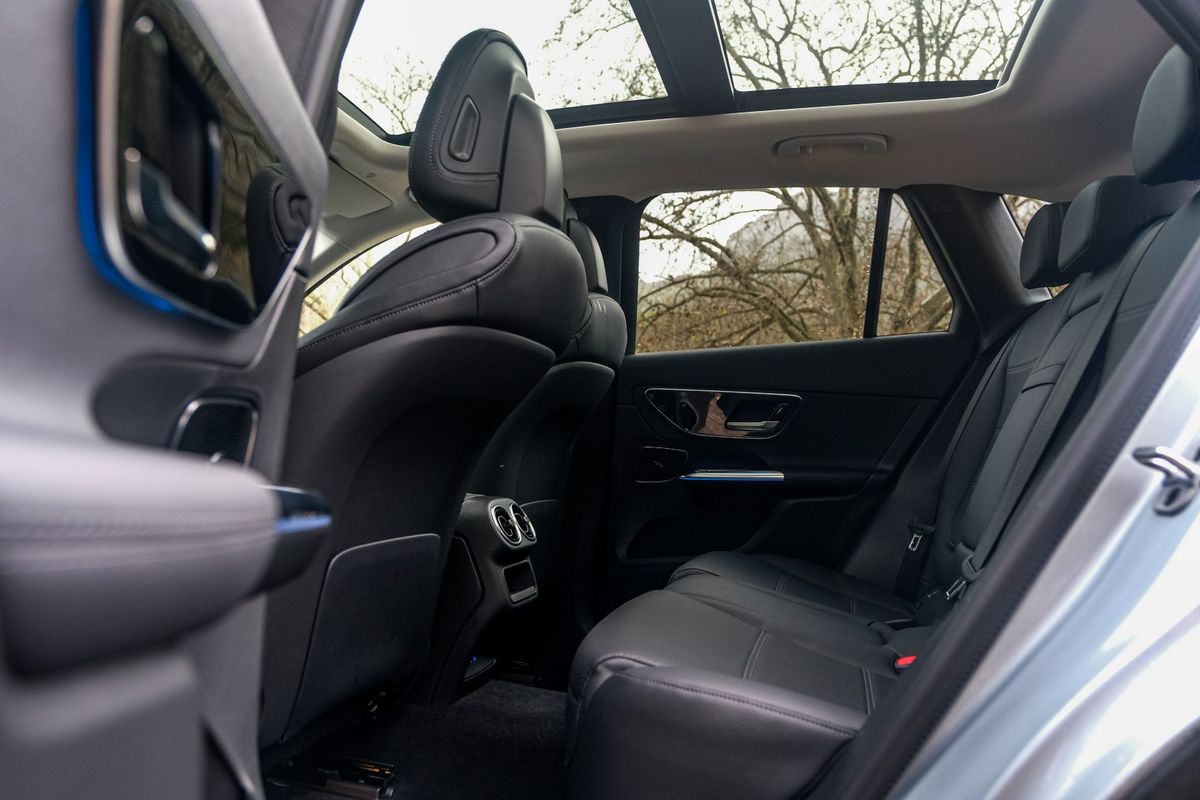
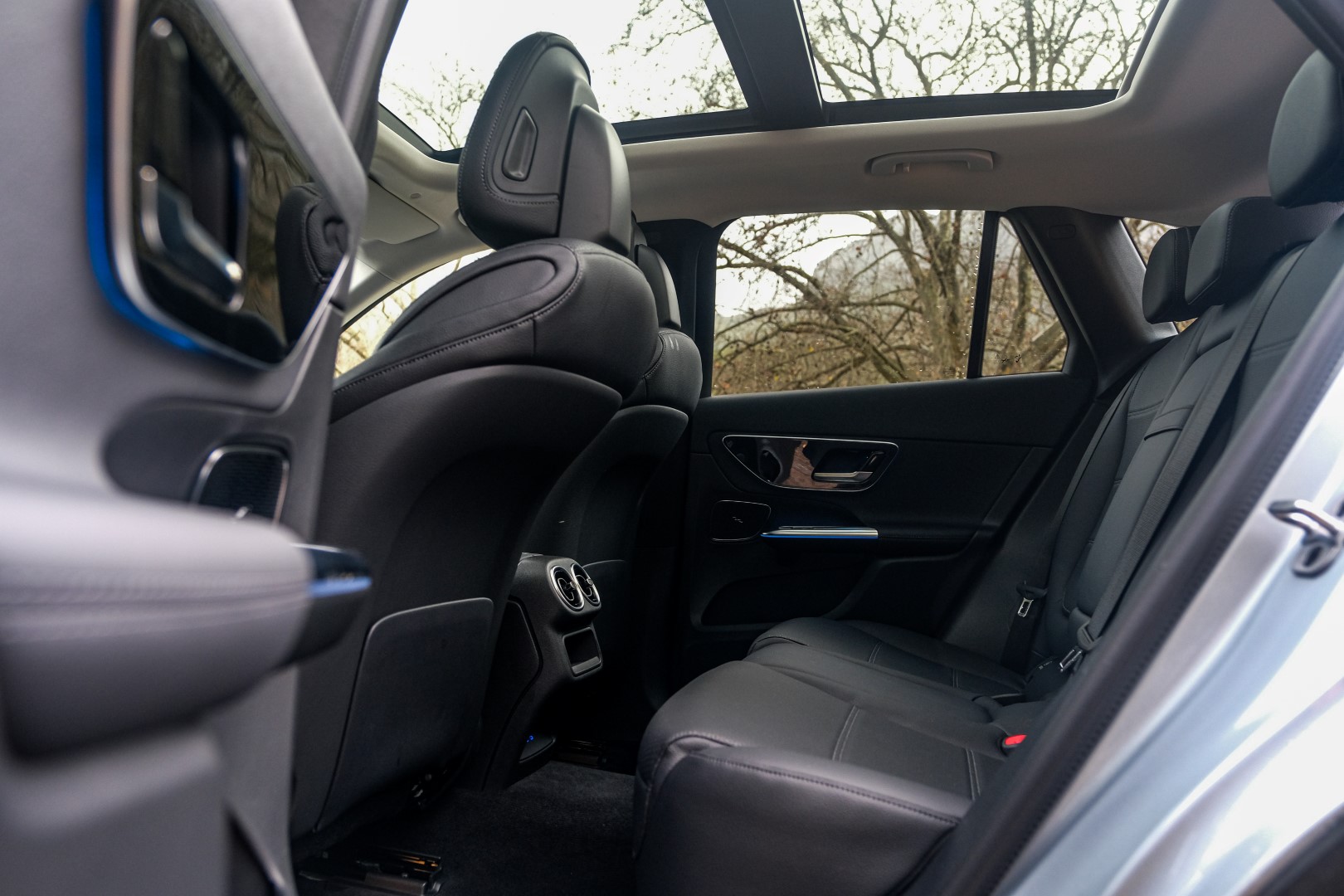
As for the GLC 220d 4Matic Avantgarde’s leather-trimmed front sports seats, we found them to be both cosseting and well-bolstered. Rear passenger space is adequate, with sufficient leg and headroom.
While the GLC’s interior fit-and-finish is generally good, which is to be expected from a contender in this segment, some of the trim elements (particularly in the centre console) are of questionable quality. Upon closer inspection, you’re likely to notice various insubstantial plasticky, albeit pretty-looking, bits of trim.
The driver and front passenger have access to a wireless charger and buyers can opt for the USB Package Plus (R6 210), which provides half a dozen USB-C fast-charging ports throughout the cabin.
Rear leg- and headroom is plentiful in the new GLC.
This test unit was also fitted with a full-length panoramic sunroof (R29 394), which gave the cabin a spacious and airy feel.
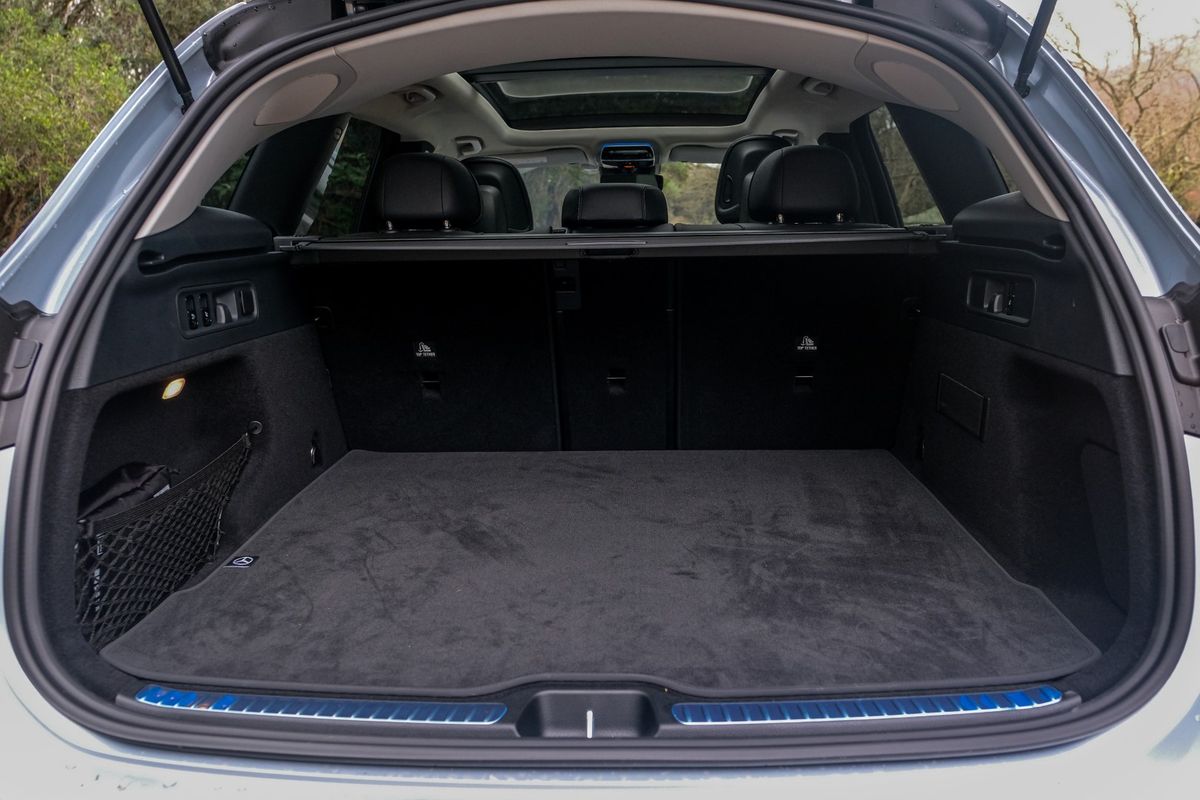
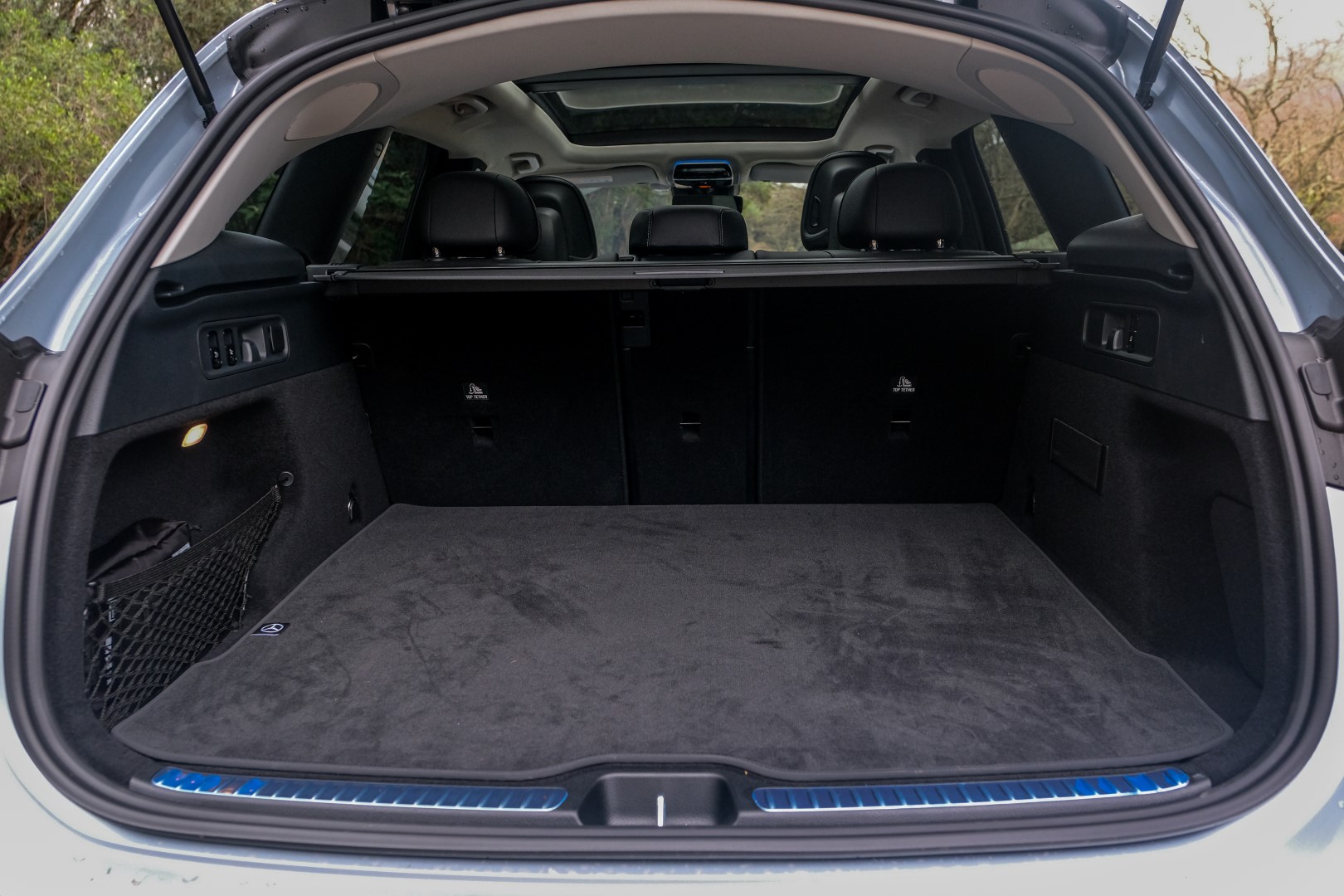
In terms of practicality, we could install the toddler’s car seat at the back without any fuss. The load bay offers 620 litres of capacity, which expands to 1 680 litres with the seatback folded flat. Just note that the bay is quite shallow, so taller or bulkier items will have to be shifted around to achieve an ideal fit.
The load bay is substantial but it’s relatively shallow.
Ride quality and handling ability
When departing from Cape Town, we set course for the Leopard Valley Resort just north of the farming town of Citrusdal. Travelling on this stretch of tarmac gave us a good opportunity to test the Benz’s 48V mild-hybrid powertrain, which delivers total system outputs of 162 kW and 440 Nm of torque.
It’s a refined powertrain – engine noise is very well suppressed with precious little “diesel clatter” audible inside the cabin (especially when travelling on the open road). The refinement is further highlighted by the smooth-shifting 9-speed automatic transmission, which seems well-calibrated with the power unit.
This GLC 220d strikes a good balance between performance and economy.
As far as the test unit’s performance was concerned, the GLC 220d performed admirably, with punchy off-the-line acceleration allied with satisfactory overtaking ability on the freeway. Despite this being the entry point into the GLC range, the 220d 4Matic is anything but underpowered. As it rained during much of our journey, the Benz’s 4Matic all-wheel-drive system provided ample reassuring road-holding.
This test unit was also equipped with Mercedes-Benz’s Engineering Package (R57 753); apart from an absorbent (and driver-adjustable, of course) air-suspension setup, it incorporates rear-axle steering, which is said to improve manoeuvrability at low speeds while enhancing stability and agility at higher speeds. We found the GLC’s steering pleasingly sharp, which is a boon when you feel the need to drive enthusiastically on the odd occasion; the responsive tiller was an unexpected bonus of the package.
Fuel efficiency
Fuel efficiency is one of the GLC 220d’s core strengths.
Mercedes-Benz claims an average fuel consumption of 5.2 L/100 km for this derivative, which sounds ambitious. Yet, we saw indicated returns of 6-6.2 L/100 km, which is very good for a vehicle with a kerb weight of 2 000 kg, not least one that had a full complement of occupants and their luggage on board.
Overall, the Mercedes-Benz 220d 4Matic Avantgarde offers a satisfactory level of performance and economy, but should buyers want – or need – more power for towing, for example, perhaps the 300d 4Matic Avantgarde (with 215 kW and 550 Nm) will be a more attractive, albeit pricier, proposition.
Off-road ability
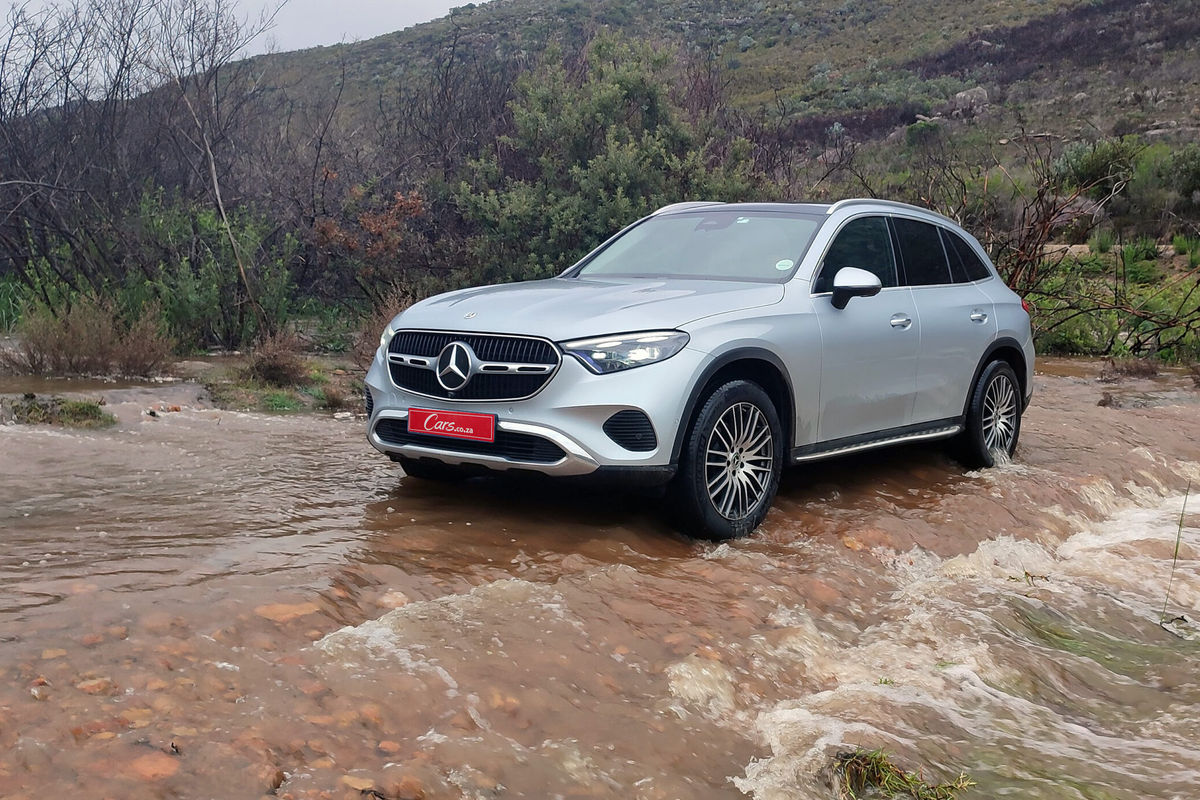
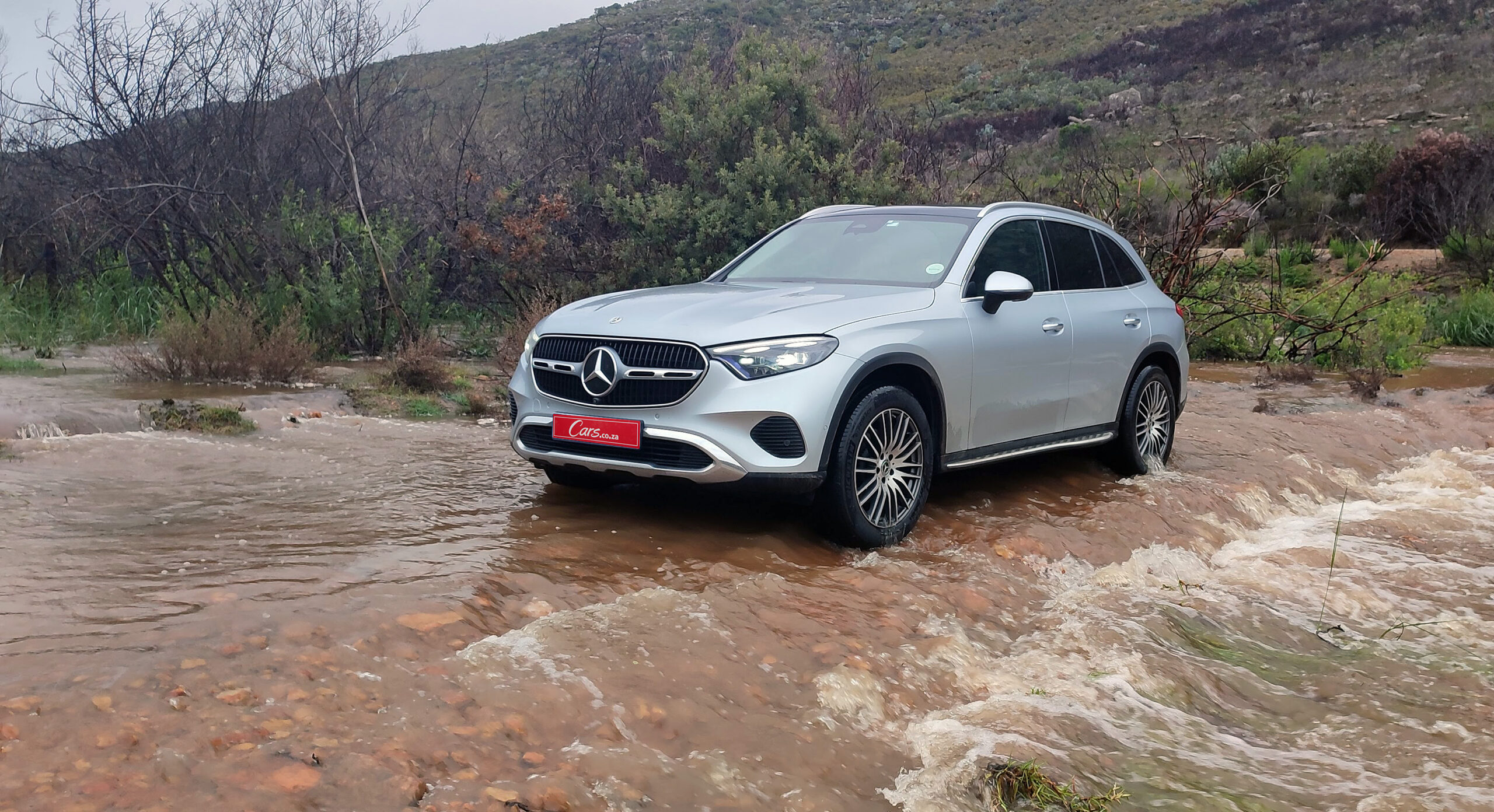
While not ideal for hardcore offroading, the new GLC doesn’t mind getting its paws wet.
Is the 2nd-gen Mercedes-Benz GLC capable of venturing off-road? The short answer is yes, but within reason, of course. Like its rivals, the X254-series model is an executive SUV designed to serve in an urban environment, but it’s capable of doing light off-roading (or “soft-roading”) if needs must.
For those of you who will be traversing rougher terrain in your GLC, Mercedes-Benz does offer an Off-Road Engineering Package (R9 200), which includes underbody protection as well as a suspension lift with an additional 20 mm of clearance; the latter is useful when you are driving over very uneven terrain.
With the weather in the Citrusdal worsening by the hour, we had no choice but to engage in some “mild” offroading in the GLC 220d 4Matic Avantgarde… When we arrived at Leopards Valley, we discovered that the stormwater runoff from the surrounding mountains had flooded the entrance of the resort and, with daylight fading rapidly, we had no choice but to cross the torrent then and there.
While the initial flood crossing posed little challenge for the GLC, an overnight storm – accompanied by heavy rain – resulted in the whole road being washed away, effectively stranding us in Leopard Valley for the weekend.
With no way of getting the GLC 220d 4Matic Avantgarde out of the valley safely, we had to leave the ‘Benz behind until the road was rebuilt, which of course brought our test of the Benz to a swift end…
Pricing and Warranty
The Mercedes Benz GLC 220d 4Matic Avantgarde is priced from R1 227 271 and is sold with a 2-year/unlimited km warranty and a 5-year/100 000 km maintenance plan.
With a few optional extras fitted, our test unit’s price tag came to about R1 377 000.
The new GLC is a compelling proposition, albeit a pricey one.
The 2nd-gen Mercedes-Benz GLC demonstrates that the Three-pointed Star has made notable improvements on the 1st model, particularly in terms of interior execution, onboard technology and overall performance, refinement and efficiency. Even in its base form, the mild-hybrid GLC offers pleasing performance; Mercedes-Benz has done phenomenal work to deliver mild-hybrid powertrains that can – and do – perform, but not at the expense of fuel economy. The GLC 220d is a frugal runner!
While it’s not short on performance, we think that some buyers might want the additional power offered by the GLC300d, but then again, that derivative’s price starts at R1 342 430. Just bear in mind that you will likely have to budget for a few of Benz’s nice-to-have options, which will hike the price even further.
As far as its rivals are concerned, the new-gen GLC is the newest offering in its segment and it’s duly the most modern and desirable executive SUV available from new. The new GLC is considerably more expensive than its direct Audi Q5 and BMW X3 equivalents, for example; however, it is competitively equipped with standard features, which might well convince buyers to fork out the additional moolah.
If your heart is set on the X254-series Mercedes-Benz GLC – provided that you’re able to afford one – you’re unlikely to be disappointed by what the Three-pointed Star’s latest executive SUV has to offer.
Toyota GR Supra (Manual) Review – Is this one of the last great sportscars?
The updated and now manual gearbox Toyota Supra arrived at the same time as our GR Corolla arrived, so we decided to shut down a nearby mountain pass and give the Supra full beans.
Up until fairly recently, you may not have associated Toyota with performance cars, at least not in the last two decades. But seemingly overnight, Toyota has transformed into a brand offering some of the most exciting cars available on the market today.
A quartet of driver-focused cars is now available on the South African market, in the form of the GR Yaris, GR Corolla, GR 86 and GR Supra, the last of which is now available with a manual transmission.
This is a bold move from Toyota this really could be one of the last manual, rear-wheel-drive sportscars ever made. Along with the new ‘box, they’ve significantly bumped the power up too.
Our video journalist, Ciro De Siena, was particularly excited to get his hands on this updated Supra and, for his Christmas and birthday present, we shut down a mountain pass for the day to film this review.
SA’s top 10 automakers: winners & losers in 2023 so far
With 3 quarters of 2023 gone, we’ve crunched the numbers to see which of South Africa’s top 10 automakers grew and which ones shrunk so far this year. Here are the winners and losers…
Year to date at the end of September 2023, South Africa’s new-vehicle industry had grown 2.5% to 401 315 units, a relatively encouraging performance considering the raft of headwinds still facing the local market. So, which of the country’s mainstream automakers grew and which ones endured a dip in sales?
Well, with 3 quarters of the year already behind us, we’ve consolidated the sales figures for South Africa’s 10 best-selling automakers of 2023 thus far, allowing us to compare the latest numbers with those from the corresponding 9-month period in 2022. In short, we’ve effectively identified the winners and losers out of the top 10 companies.
For the record, 5 firms inside the top 10 managed to grow their respective tallies year on year, while 5 saw a decline. Right, here’s your full overview of the performances of the main players in South Africa’s new-vehicle market…
Toyota still top as Suzuki narrows gap to VW
The Hilux accounted for more than a quarter of Toyota sales, year to date.
If you hold even a passing interest in SA’s new-vehicle industry, you won’t be at all surprised to see Toyota – which includes sales from the Lexus and Hino brands – at the very top of the charts. In fact, with a whopping 107 081 registrations over the opening 9 months of the year, the Japanese firm’s local division boasted more than double the number of sales of the 2nd-placed automaker (and an enviable market share of 26.7%).
For the record, Toyota registrations increased 13.5% year on year, though we should keep in mind the company’s 2022 performance was hit hard by the KwaZulu-Natal floods, which scuppered production at Prospecton for months on end. Regardless, Toyota is well on track to securing new-vehicle sales leadership in Mzansi for the 44th consecutive year, with the Hilux leading the charge on 28 341 units (or a little over a quarter of Toyota’s year-to-date total).
The Volkswagen Group (including Audi) placed 2nd, though the German automaker’s tally of 50 074 units represented a 5.8% year-on-year fall. Meanwhile, Suzuki sales (37 235 units) increased 4.2% compared with the same period in 2022, which saw the Hamamatsu-based brand’s local division close the gap somewhat to the VW Group. Year to date, 12 839 units separate the firms (a figure that’s far smaller if we look at sales through the dealer channel only).
Ford climbs as race for 4th place heats up
More than 80% of Ford sales year to date were Ranger units.
Though Hyundai sales were down 12.2% year on year to 24 213 units, the South Korean firm managed to hold on to 4th position. From January to September last year, Hyundai crossed the 3 000-unit barrier as many as 5 fives, a feat it could achieve only once in the corresponding period this year.
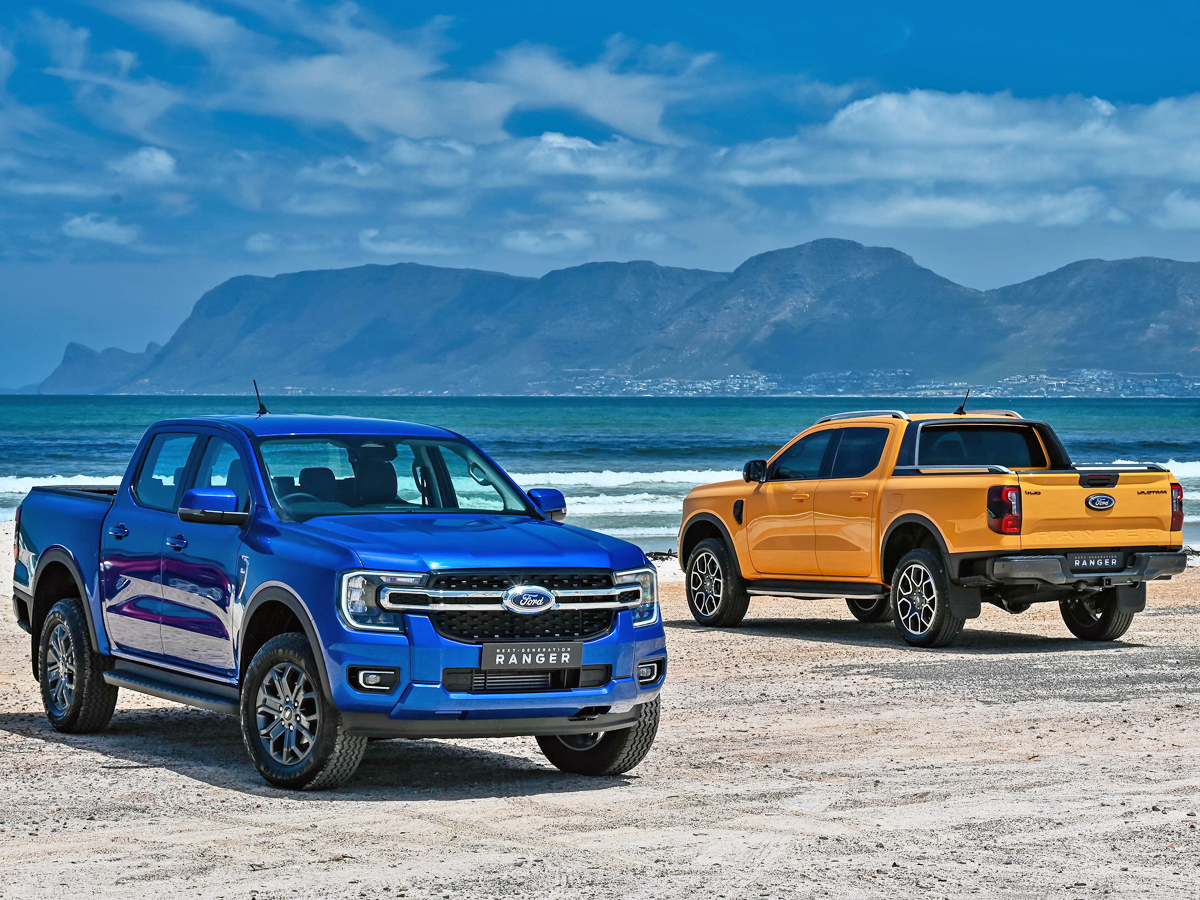
Meanwhile, with a year-to-date total of 22 993 registrations, Ford was just 1 220 units off the pace in 5th. With production of the latest-generation Ranger now fully online, the Blue Oval brand increased its tally 17.4% year on year (the strongest growth in the top 10), which saw it climb 2 rankings from the relatively lowly 7th spot it held in 2022. Fascinatingly, the locally built Ranger accounted for a whopping 80.9% of Ford’s total.
Nissan, meanwhile, dropped out of the top 5 to finish the reporting period in 6th, despite its sales holding relatively steady, year on year. Over the opening 9 months of 2023, the Japanese manufacturer’s local division registered 22 301 vehicles, representing a marginal year-on-year increase of 0.6%. It’s worth noting, of course, the NP200 – a model that accounted for nearly half of Nissan’s volume in 2023 thus far – will be put out to pasture in the 1st quarter of 2024.
Isuzu rises, Haval holds, Renault and Kia fall
Just under half of Haval’s YTD sales (including the GWM brand) came courtesy of the Jolion.
Though Isuzu relies on the Struandale-built D-Max bakkie even more heavily than Ford does on the Ranger (its only other model being the low-volume MU-X), the Japanese brand enjoyed an impressive climb from 10th to 7th place in the opening 9 months of the year. Isuzu’s sales tally increased 15.7% year on year to finish the reporting period on 17 882 units.
In contrast, Renault slipped from 6th to 8th, with its sales performance reflecting a 23.8% year-on-year decline to 16 431 units. That means the French firm’s local division experienced the largest percentage drop in the top 10, with former volume drivers such as the Clio and Captur struggling to match sales of years gone by (the Indian-built Kiger, though, was its top seller with 6 036 units).
Interestingly, though Haval sales slipped 3.8% year on year to 15 479 units, the Chinese automaker – bolstered by 7 005 registrations of the Jolion – retained the 9th place it secured last year. That said, it’s just 952 units behind Renault, year to date. Finally, Kia slid 2 places to 10th, with its total of 14 708 units representing a drop of 15.7% compared with the corresponding period in 2022.
Chery challenging just outside the top 10
Chery finds itself in 11th place, with the the Tiggo 4 pro accounting for 60% of the brand’s sales.
So, what about the automakers that didn’t manage to crack the top 10 over the opening 3 quarters of 2023? Well, Chinese firm Chery found itself in 11th with 12 115 registrations, which put it 2 593 units behind Kia (for the month of July 2023, Chery managed to crack the top 10 – at the expense of Kia – for the 1st time since it starting reporting sales figures to Naamsa).
The BMW Group (including Mini sales) was next on 10 307 units (though this figure includes Naamsa estimates as the German company doesn’t regularly report sales), followed by Indian manufacturer Mahindra (9 131 units) in 13th. Mercedes-Benz was technically 14th with a likewise a Naamsa-estimated tally of 6 271 units, while Stellantis – which distributes the Abarth, Alfa Romeo, Citroën, Fiat, Jeep, Opel and Peugeot brands in SA – rounded out the top 15, some way off the pace on 3 101 units.
South Africa’s 10 best-selling automakers of 2023 so far
Retail, Market & Trade-in Value: How it Affects Your Car Insurance
Understanding the differences between your car’s retail-, market- and trade-in values is key to making informed decisions about vehicle insurance. Ideally, you should strike a balance between keeping within your budget and managing financial risk sufficiently.
PARTNERED CONTENT
Your car’s value is an important factor when it comes to car insurance premiums. If you are like the majority of car owners, you know you need to insure your car, but you’re unsure how much. Should you insure it for its retail, market, or trade-in value? To help you decide, Budget Insurance offers this guide…
What it all means: Retail, market and trade-in value
Retail value represents the price at which a dealer will sell a car to a customer. This value – the highest of the 3 – includes the cost at which the dealer bought the vehicle as well as its markup (profit margin). When this value is applied to cars that were bought from new relatively recently, it assumes a vehicle is in good to excellent condition, with the remainder of its warranty and service/maintenance plan left to run.
The market value, also known as the fair market value, represents the current value for a specific make, model, derivative, year and condition of a car in the open market (such as when you buy/sell it privately). The market value of a car takes into account factors like the car’s age, mileage, condition and demand.
The trade-in value refers to how much a car dealer might offer you for your car when you trade it in for another vehicle. Typically, this is the lowest of the 3 values because the dealer still needs to make a profit when it resells the car. The trade-in value depends on factors such as the condition and mileage of the car. Insuring a vehicle for its trade-in value is a good option if you’re looking to replace your car soon.
Is it better to insure for market, retail or trade-in value?
Suffice it to say that if you choose to insure your car for its retail value, you will pay a higher monthly premium. But, if your vehicle is unrecovered after being stolen or written off in an accident, you’ll receive a higher amount back in a settlement or a replacement vehicle of a similar make, model, year and spec.
If you insure your car for its market value (a benchmark for the price at which such a vehicle may change hands if sold privately), your premium will be relatively lower. Your insurance firm will consider factors such as mileage, condition, and service history in determining your car’s market value. The method of valuing cars is standardised to make it easier for owners to determine what their vehicles are worth.
Trade-in value is what you’ll be offered if you sell your car to a dealer as part of purchasing a vehicle from that business. The monthly premium for insuring your vehicle for its trade-in value is usually lower than when insuring it for retail or market value because the trade-in value is based on the average price that dealers offer for a vehicle such as yours based on the trade’s Auto Dealers’ Guide and market conditions.
What option should I choose based on the value of my car?
The retail value may be the best option if you want to seamlessly return to driving the same car as before with minimal fuss. If you don’t mind getting a car that might not be the same make and model as the one that you bought, but operates as well as your previous one, the market value might be a better choice.
Insuring your vehicle for its trade-in value is suitable if you want to limit your expenditure on car insurance to a minimum, but would like to have more than basic 3rd-party, fire and theft coverage for your vehicle. Owners of older vehicles or small runabouts should also consider the Budget Lite option.
Budget Insurance offers another option, however. You can insure your car for its BetterCar Value, which pays out a minimum of 15% more than the retail value. That means if your car is written off or cannot be recovered after being stolen, you can buy the same model car but 1 year newer – and with lower mileage.
If your car was bought through a finance agreement and you still owe money on the vehicle, consider the repayment details carefully when you take out car insurance. For example, if you pay a high interest rate, you may owe more money on your loan than what your car is worth (usually the case in the early stages of a vehicle-loan term); if you no longer have the car, there may be a shortfall that you owe to the bank.
Comprehensive Car Insurance covers you for accidents, damages, theft, and any 3rd-party claims against you. It’s a great option for customers with new, financed cars. Finally, if you’ve enhanced your car with an upgraded audio system or tow bar, you’ll want to ensure your insurance covers the car and its upgrades. If not, you’ll have to forgo these additions if the insurer replaces or pays out for your vehicle.
Want to know more?
Do you want to learn more about car insurance or review your car insurance requirements with the help of experts? Budget Insurance’s team is always ready to assist; contact them on 086 1600 120 or utilise their online car insurance calculator, which gives you an accurate and budget-friendly quote in minutes.