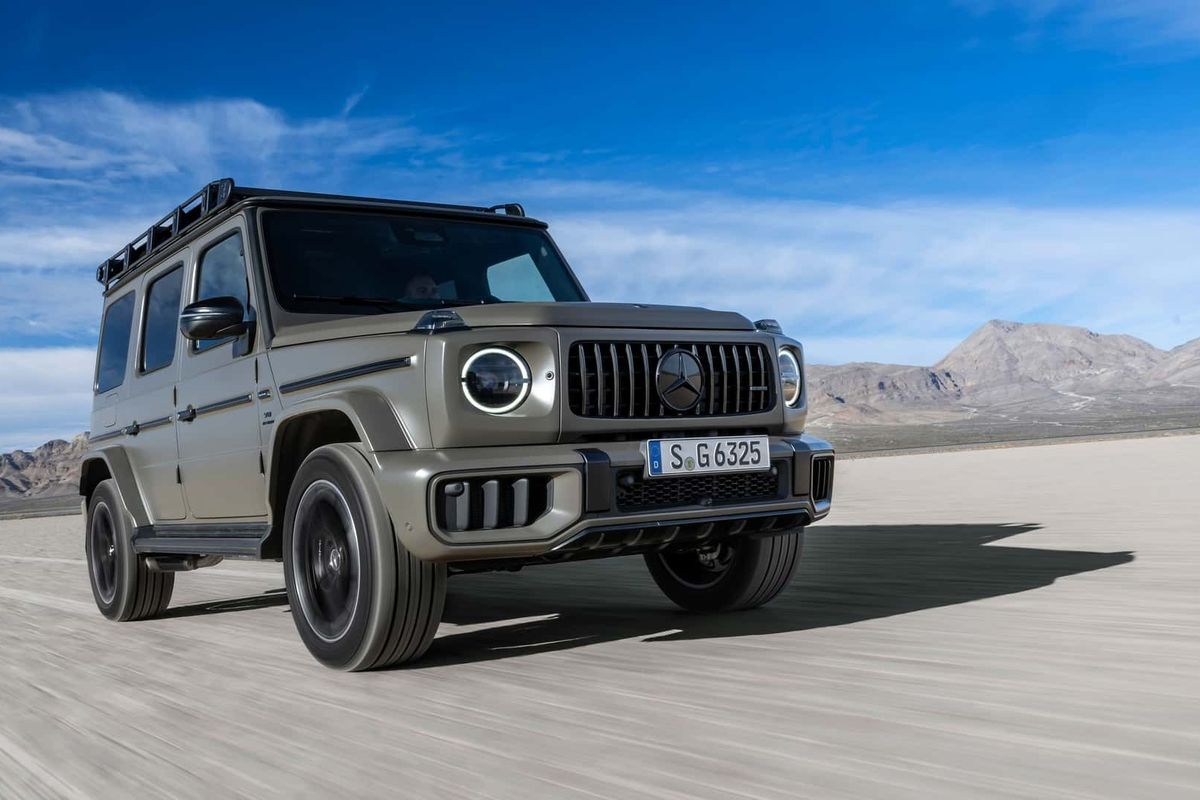
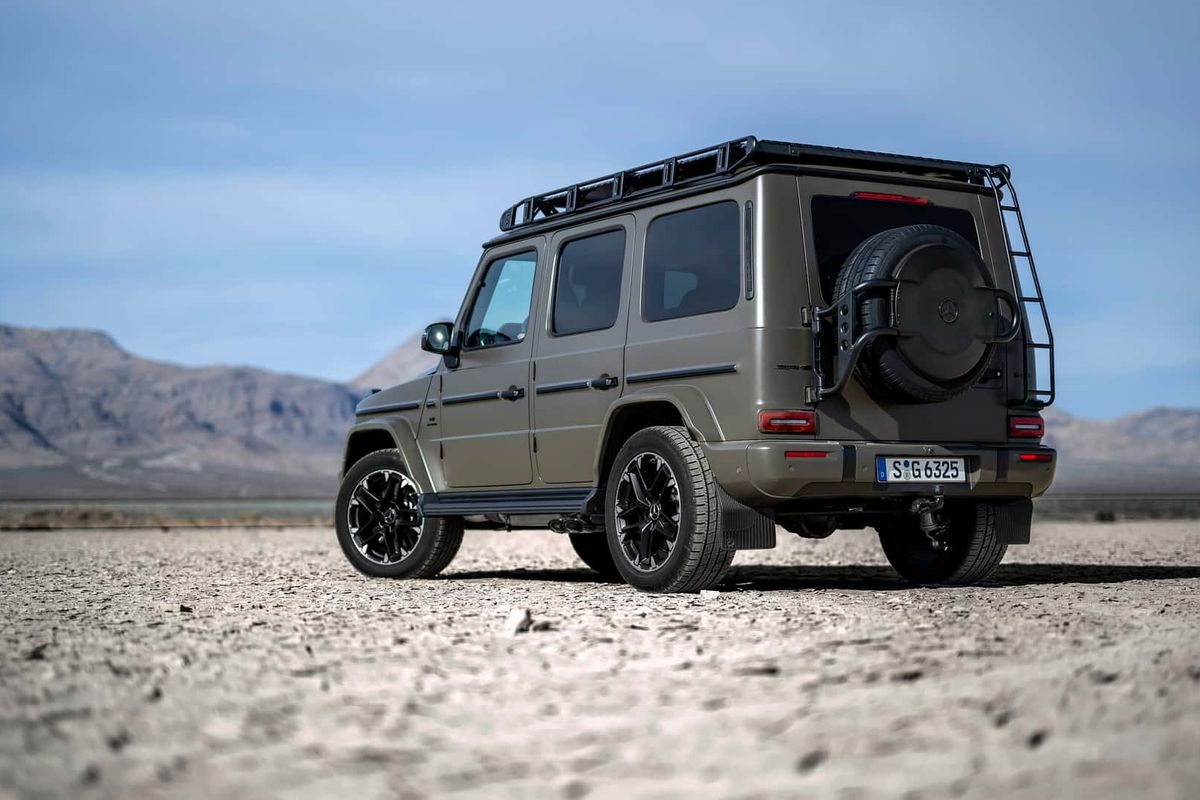
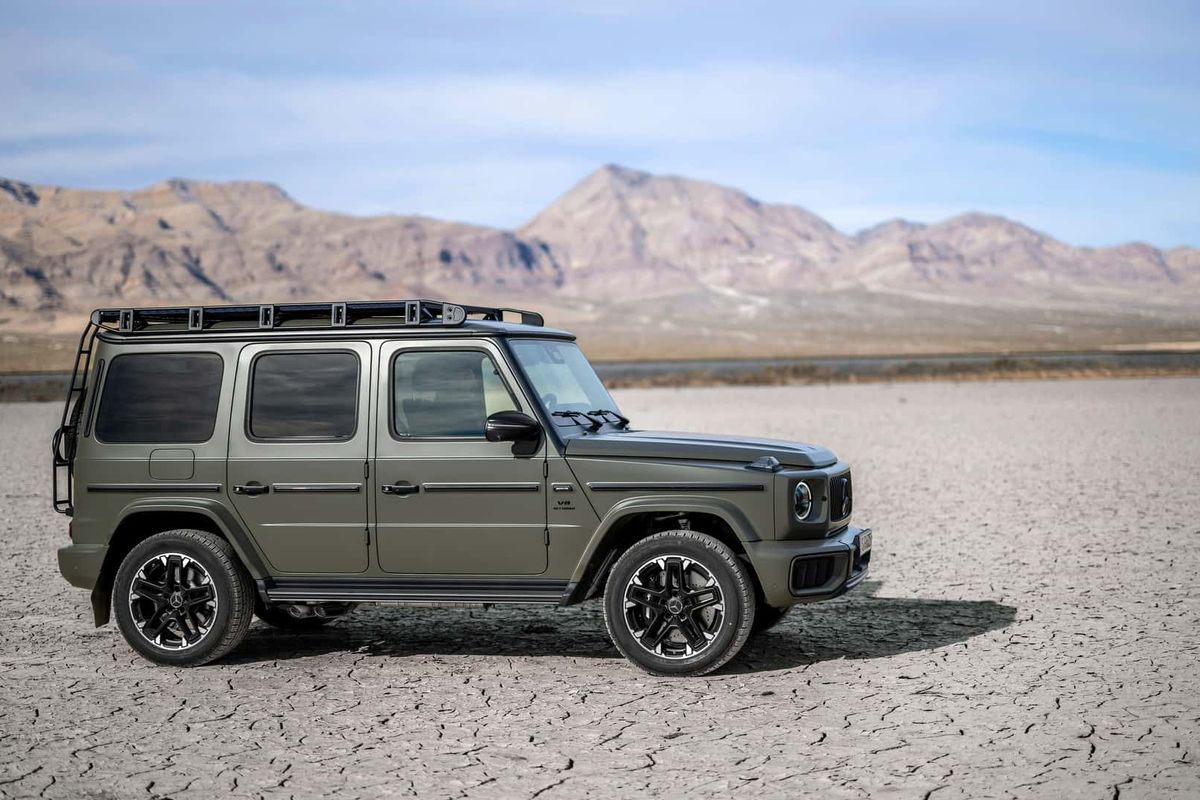
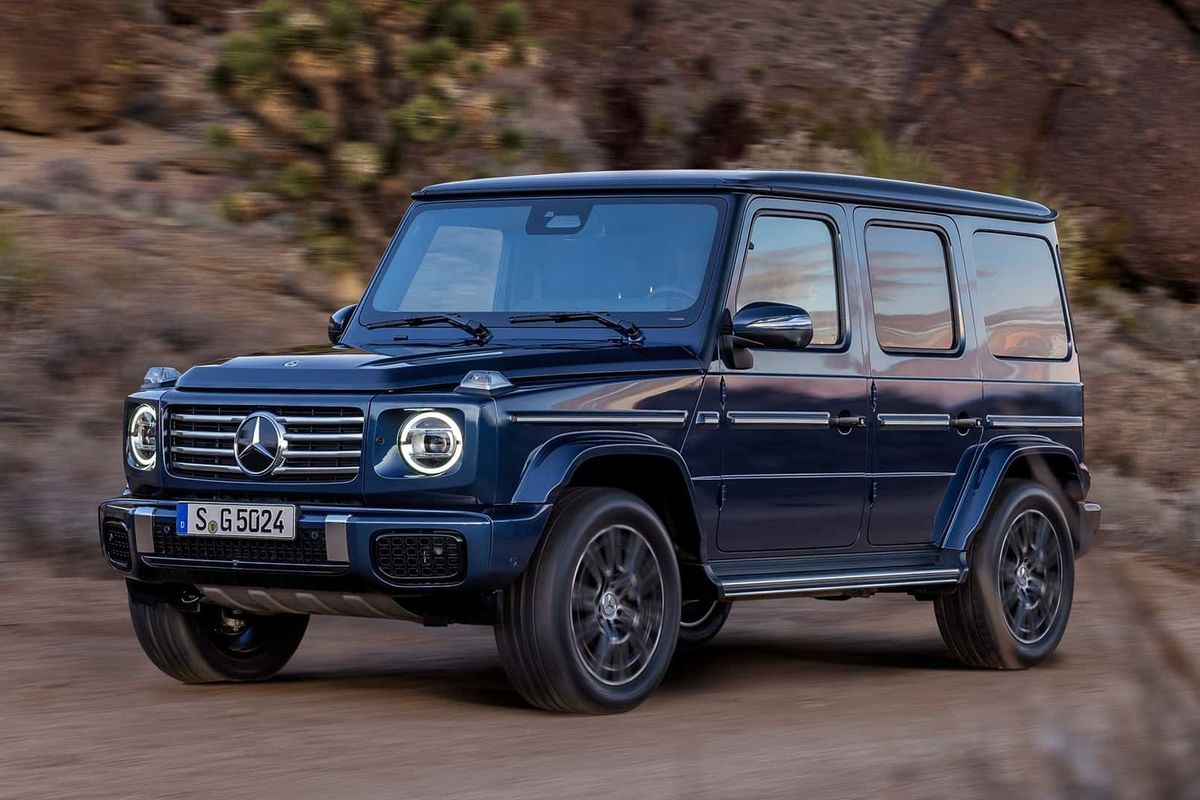
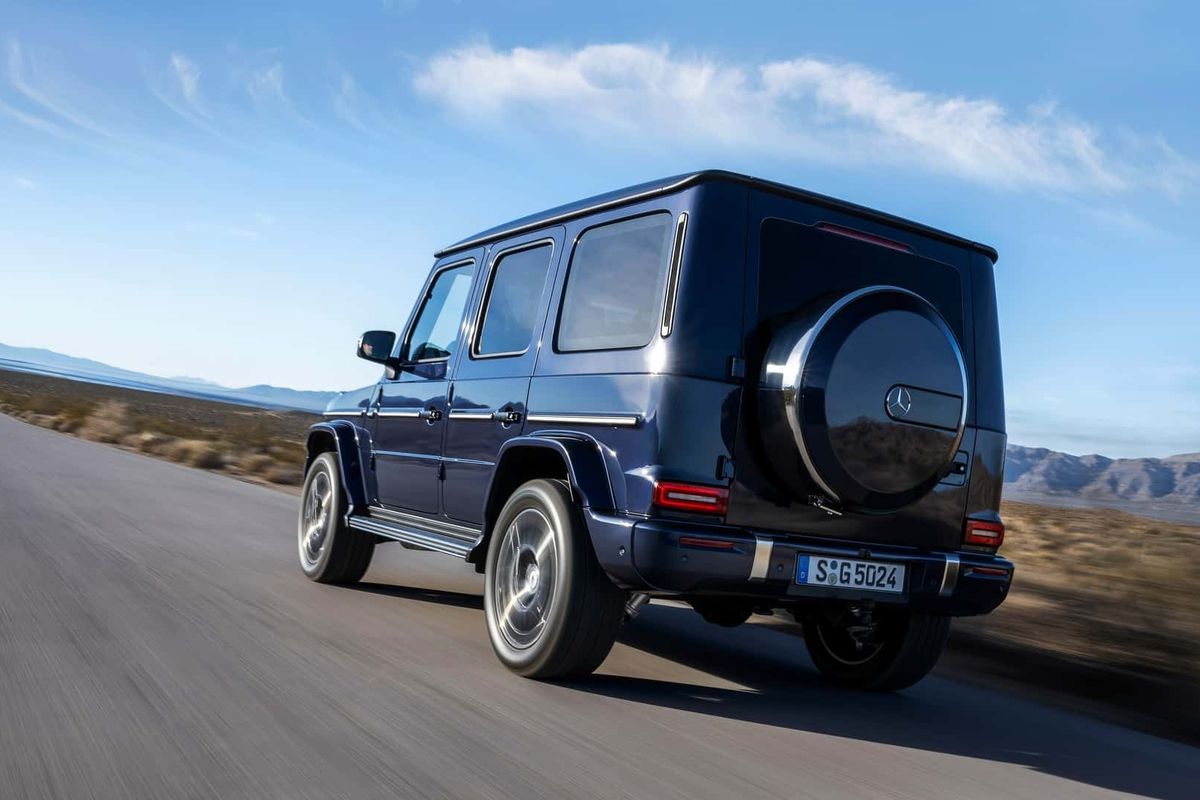
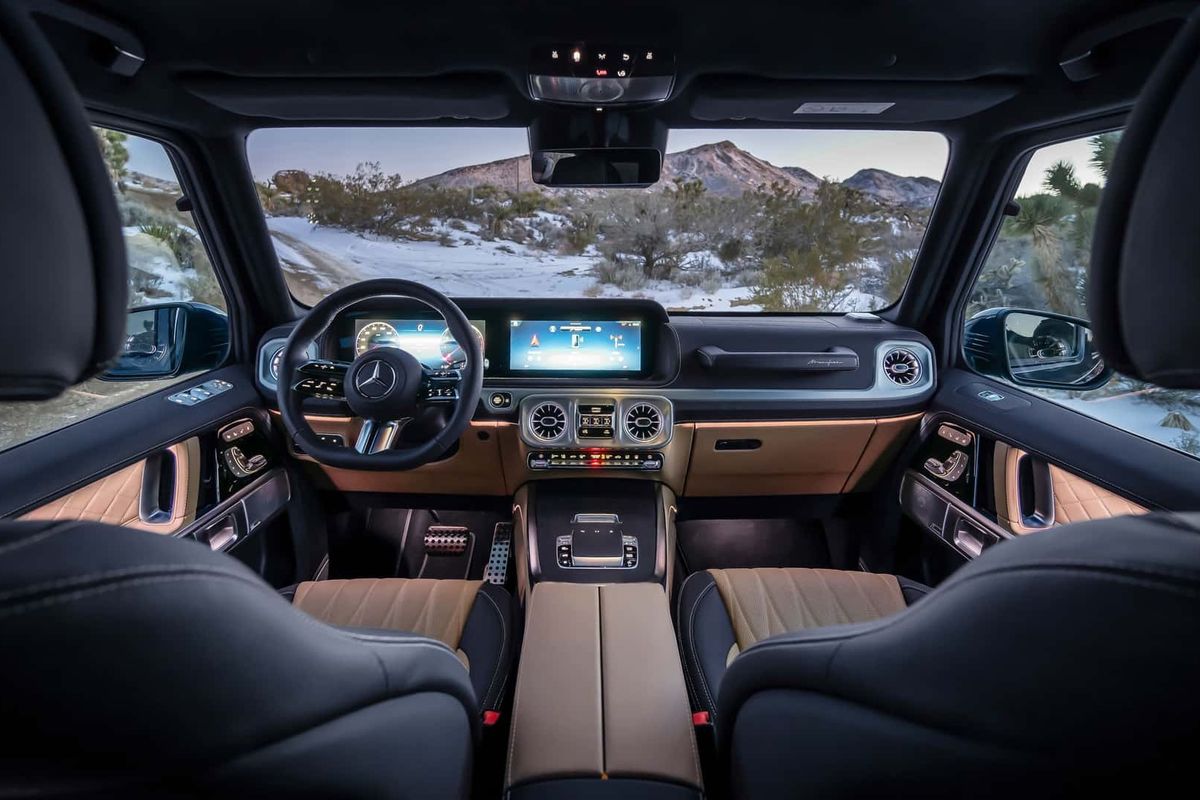
The facelift Mercedes-Benz G-Class has just been revealed and will be arriving in SA by the end of 2024.
The facelift Mercedes-Benz G-Class has received the smallest of changes and it will take a keen eye to spot the differences. There are new paint options, new wheel designs and a new-look front bumper.
The good news is that the 4.0-litre V8 twin-turbocharged petrol engine has been retained, but gains an integrated starter generator hybrid system and outputs of 430 kW and 850 Nm are on offer. It’s still going to be ballistic quick, with a 0-100 kph claimed time of 4.2 seconds.
While all eyes will be on the mighty AMG-fetted G-Class, the diesel-powered G gets an update too. Badged as the G450d (G400d was the outgoing badge), the 3.0-litre turbocharged 6-cylinder diesel now makes 270 kW and 950 Nm, which is quite the increase in comparison to the predecessor’s 243 kW and 700 Nm.
A mild-hybrid system has been introduced to reduce emissions and to provide a temporary power boost. With such increases, performance has increased too and the facelift Mercedes-Benz G-Class is said to sprint to 100 kph in 5.8 seconds, which is six tenths quicker.
All facelift Mercedes-Benz G-Class variants will feature an updated 9-speed automatic transmission. Later this year, we’ll see the reveal of the all-electric EQG.
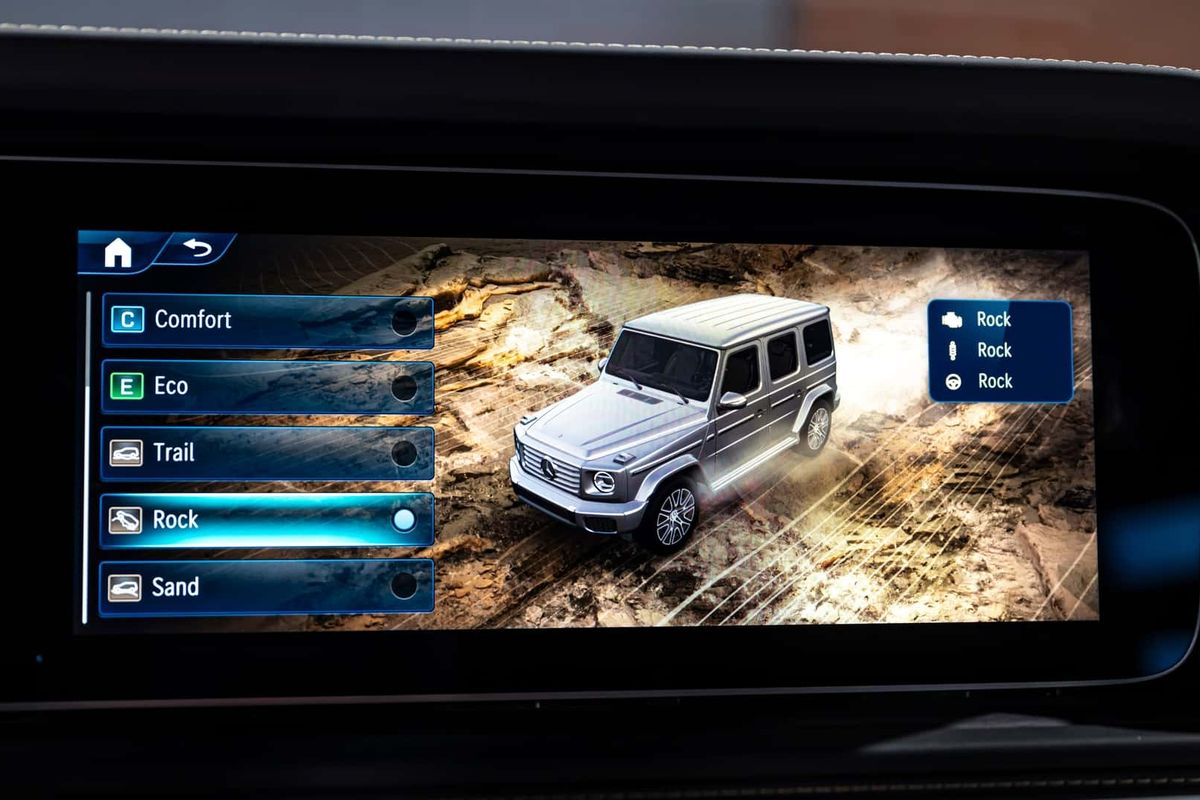
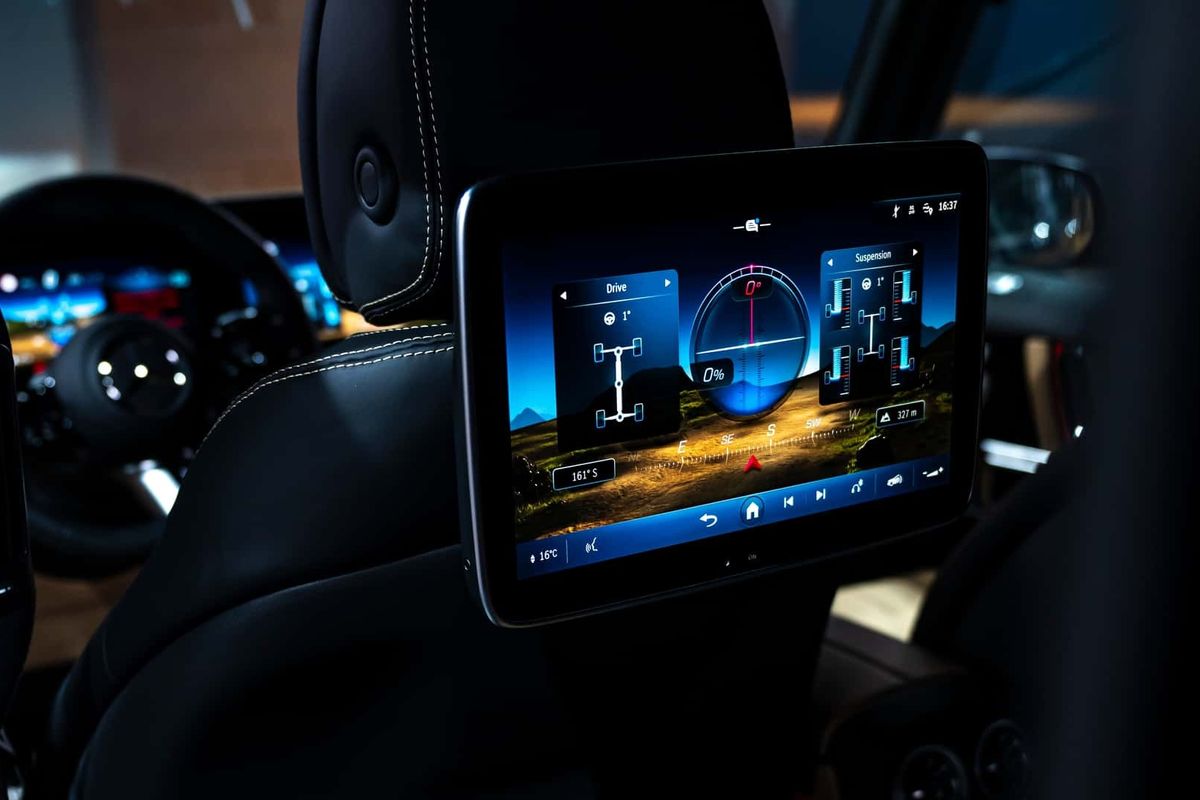
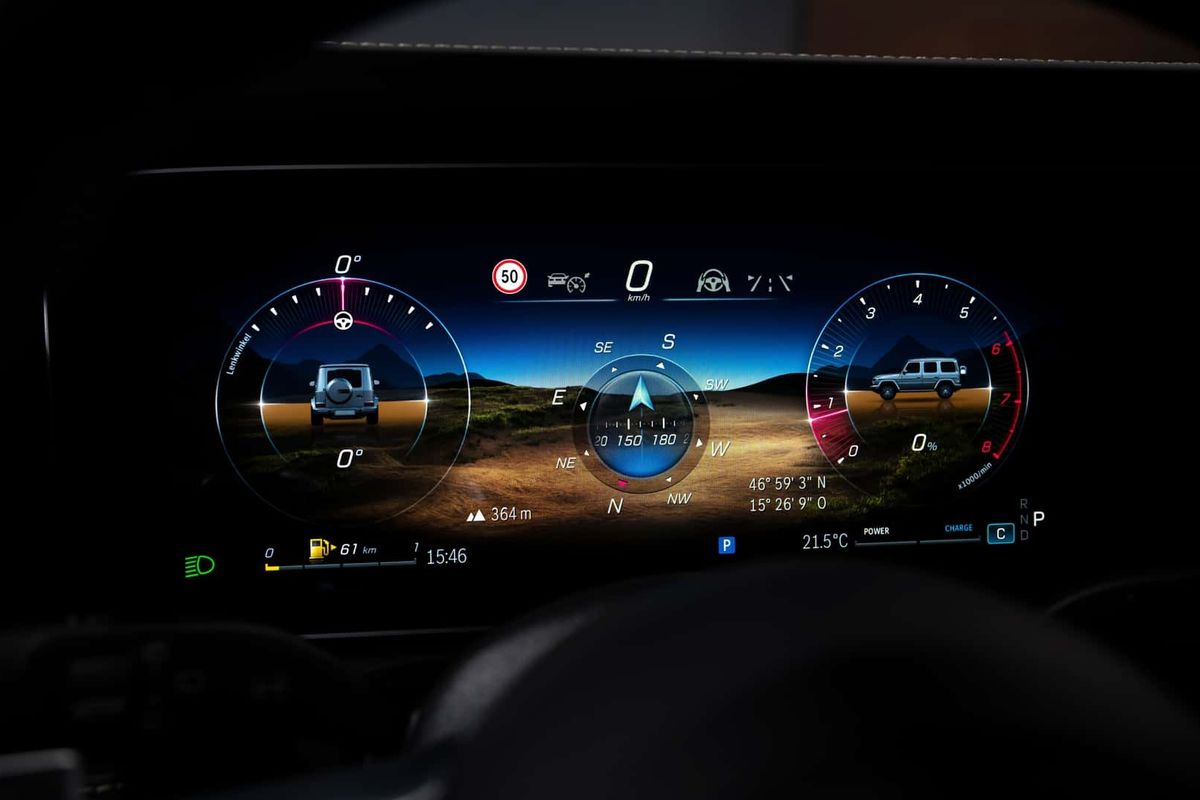
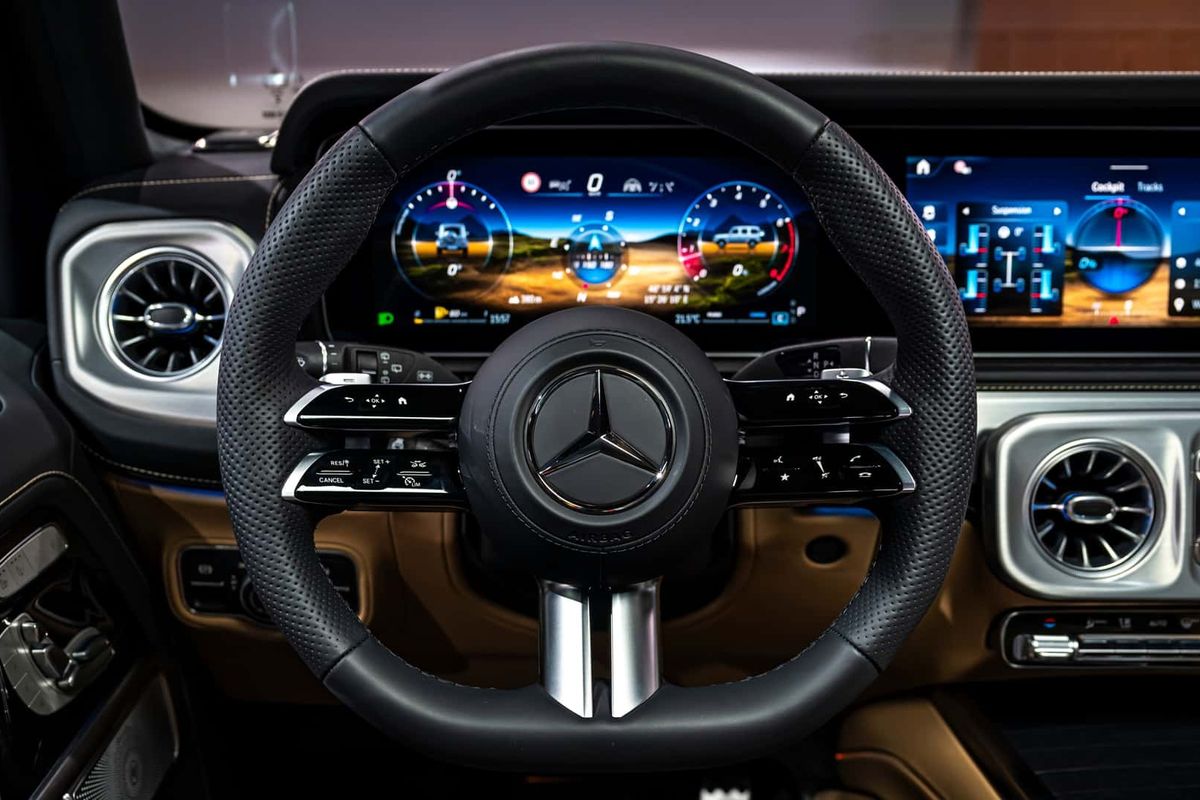
It will still be a supremely capable offroader, with three diff locks, low-range transfer case, 30 and 31 degree approach/departure angles and 270 mm of ground clearance. For 2024, Mercedes-Benz has added some offroad-specific graphics to the car’s MBUX infotainment system.
Facelift Mercedes-Benz G-Class arrival in South Africa?
Mercedes-Benz SA has confirmed the G-Class arrival for our market, with an expected showroom debut planned for December 2024/January 2025. The electric EQG has also been confirmed.
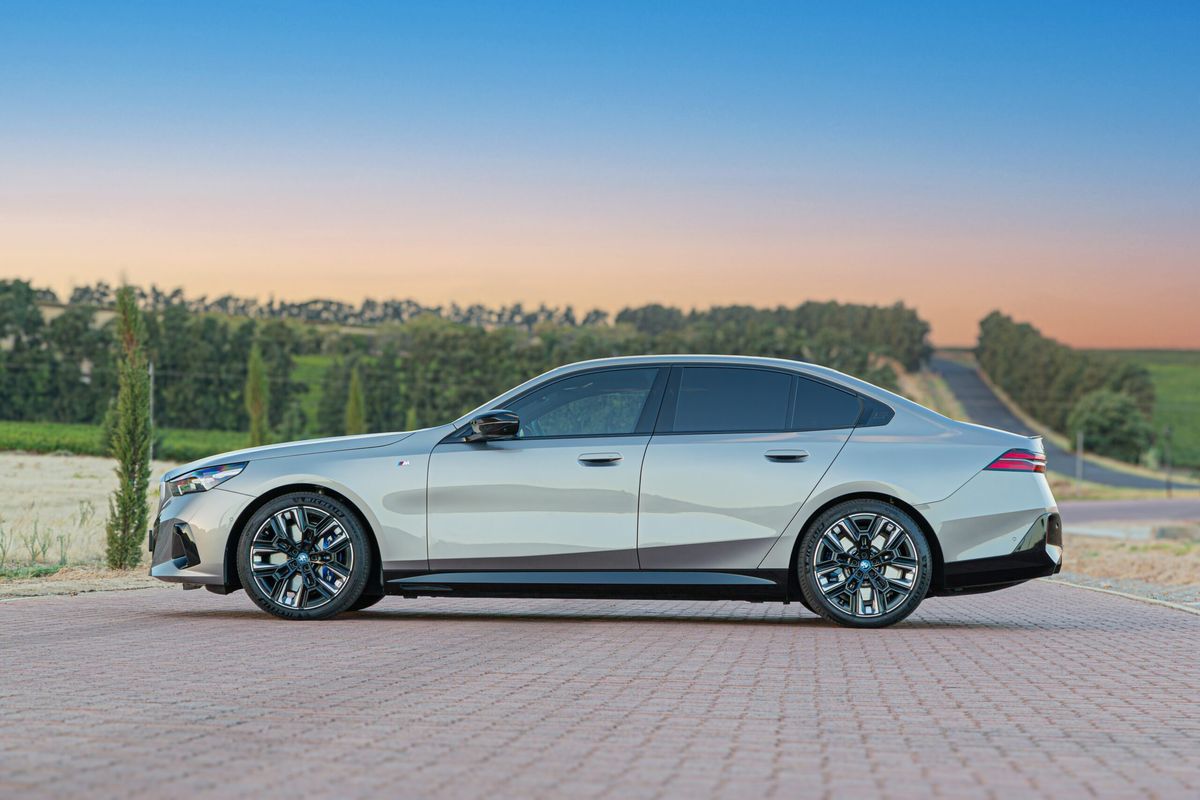
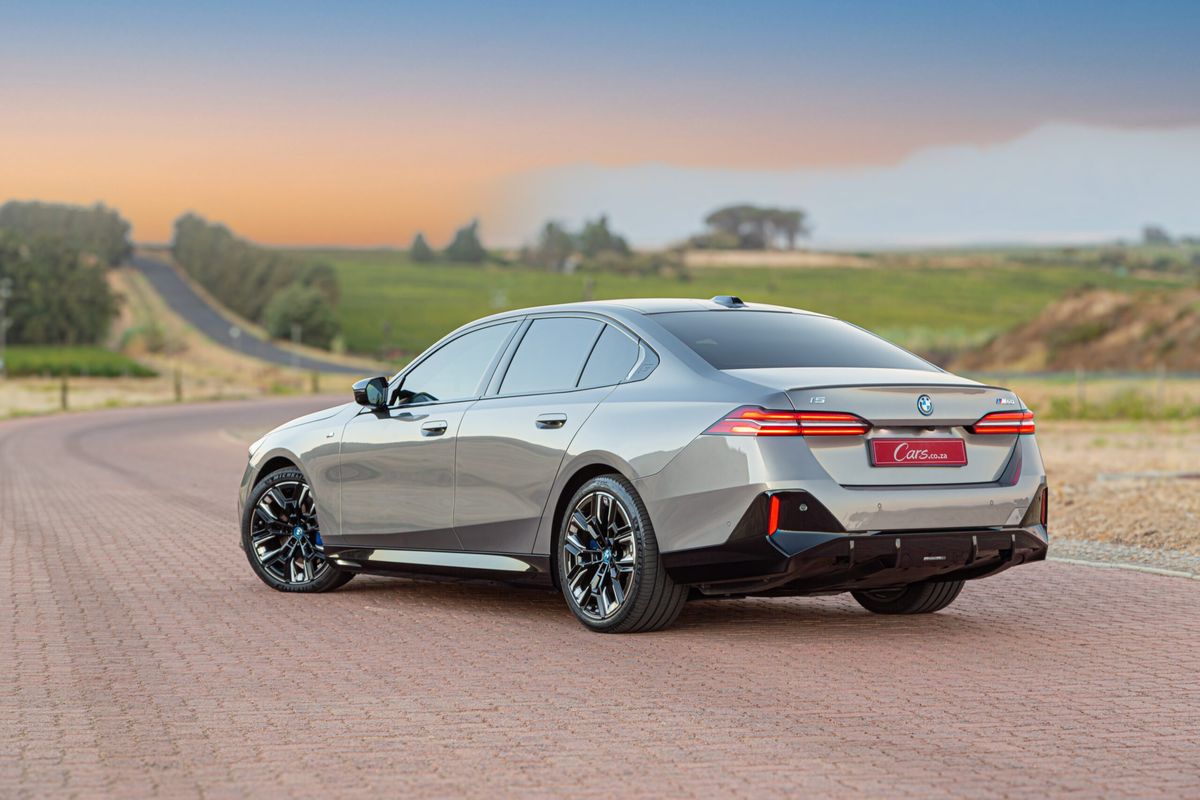
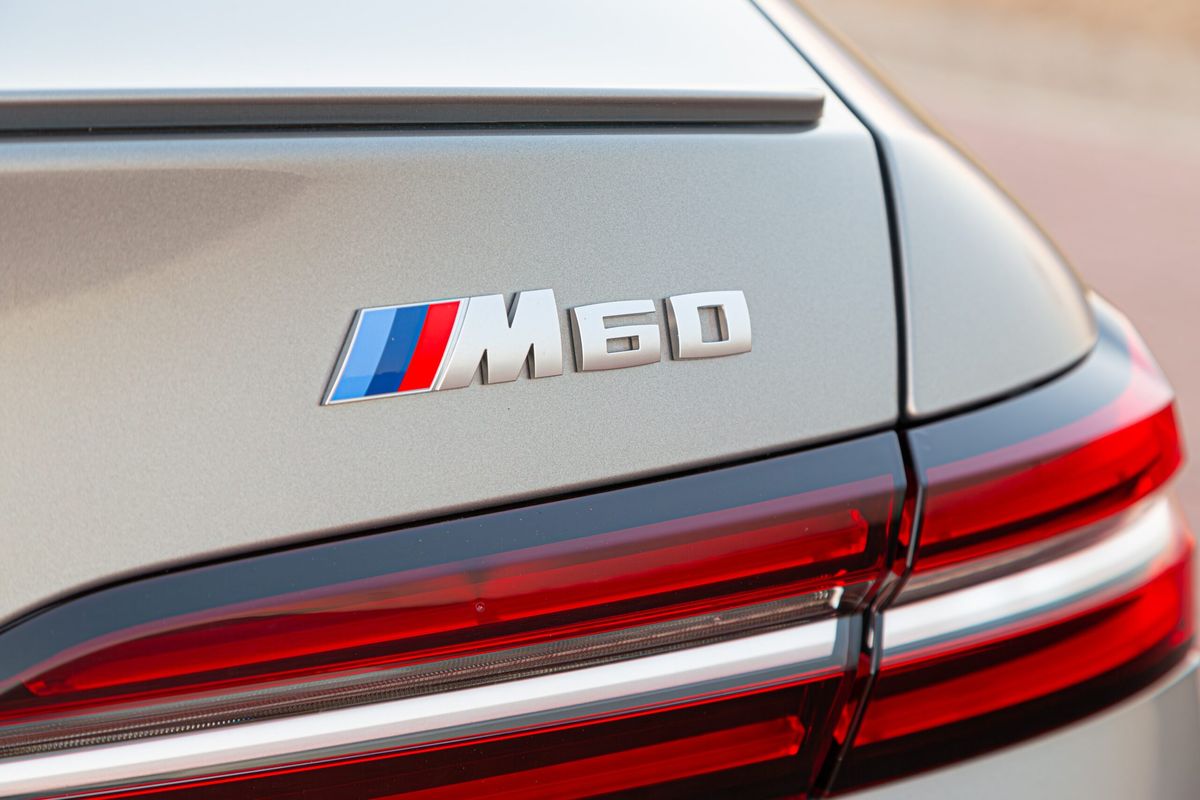
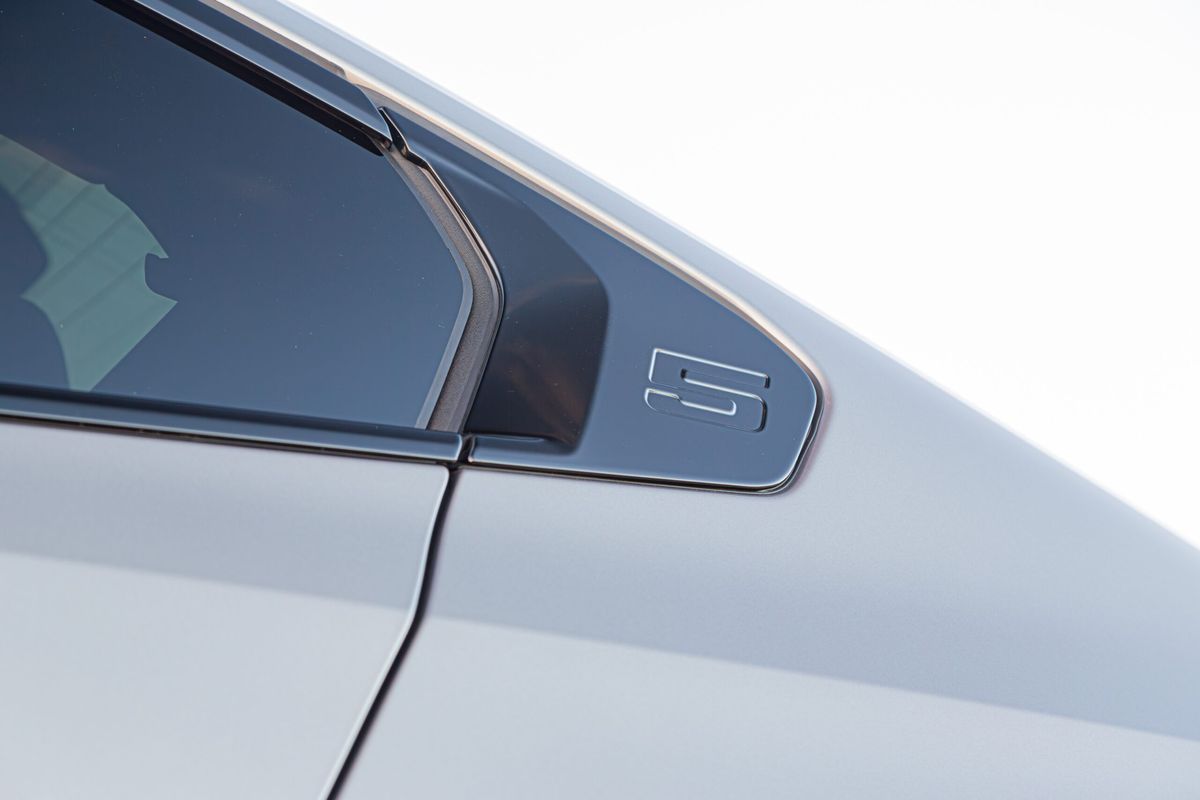
The BMW i5 M60 is positioned at the very top of the 5 Series line-up in South Africa and the M-fettled all-electric executive sedan is such a blast to drive that we cannot help but wonder how the upcoming M5 super sedan could eclipse it…
We like: Stupendous performance, build quality, comfort, tech, rewards frugal driving style with good efficiency
We don’t like: Extremely low undercarriage prone to scraping
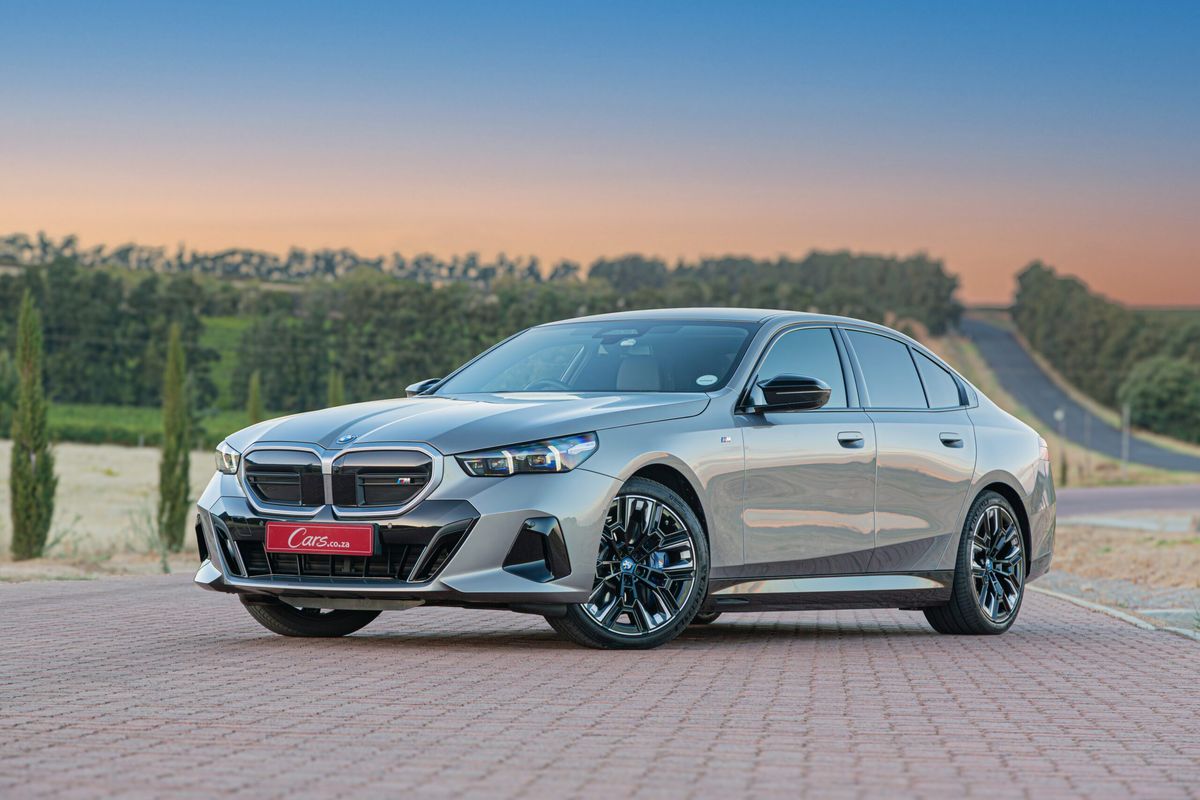
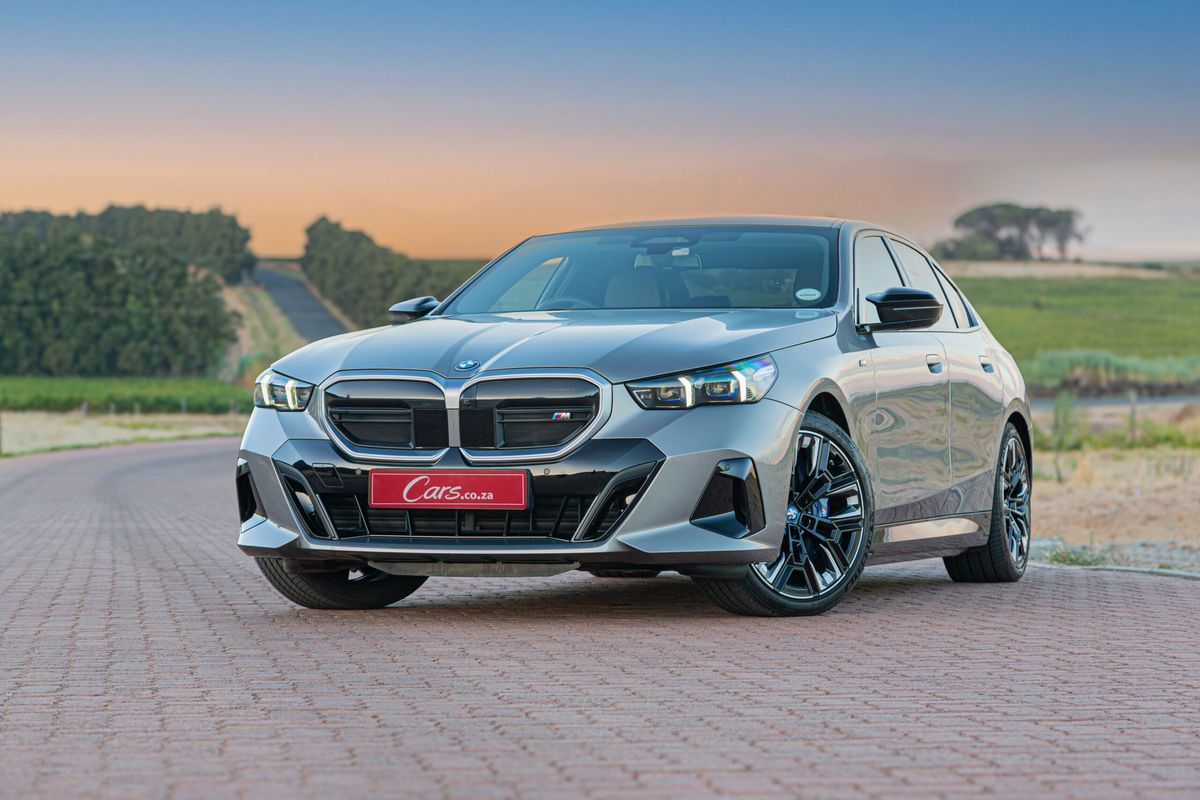
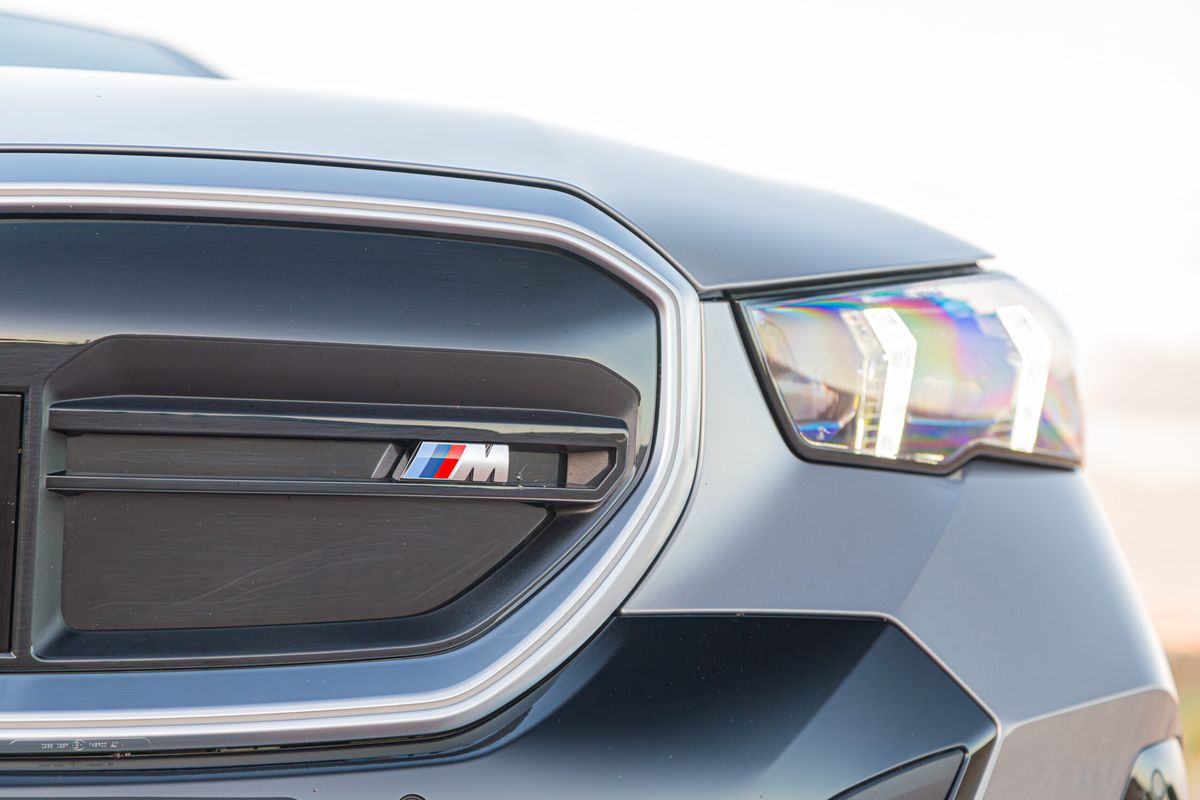
Even though the G60 5 Series’ grille is sizeable, it doesn’t look too big on the BMW i5 M60’s front end.
Where does the BMW i5 fit in?
Having recently taken 2 category wins in the 2023/24 Cars.co.za Consumer Awards, sponsored by Absa (with the iX1 xDrive30 M Sport and iX xDrive40), BMW is arguably “King of the Electric Vehicles” (EVs) in Mzansi’s new-car market. You could argue that its battery-electric models offer the best of what makes EVs appealing, but are also relatively well-priced. BMW’s EV portfolio is also rapidly expanding, but now, for the first time, it has applied its electric knowledge to one of its mainstay models: the iconic 5 Series.
Traditionalists will undoubtedly be concerned… Since the mid-’70s, the 5 Series has offered one of the purest BMW experiences on the SA market: an intoxicating combination of luxury, performance and dynamism (G60 is the 8th-gen model). Can an electrified 5er successfully emulate its predecessors? After all, the previous 5 Series was still the 3rd-best-selling model in the marque’s expansive portfolio!
Although the M60 badge seems to denote an M model, the apex G60-generation M5 is still in the pipeline.
For now, the i5 M60 sits at the summit of the local G60 BMW 5 Series line-up, which consists of only this derivative and the 520d. The all-electric flagship is priced at around R2.2 million, which although dear, is significantly more affordable than any similarly sized and performance-capable luxury sedan. If you want a high-performance 5 Series, this is your only choice until the M5 super sedan (which will be a hybrid) arrives. But, after experiencing the i5 M60, we have to ask: “How much faster do you really want to go?”
The i5 M60 has a suitably slippery profile, allied with a virtually flat underbody.
Design and Features
Isn’t it refreshing when a contemporary BMW design does NOT cause a public outcry? Whereas the styling cues of several of the Munich-based brand’s recent models have courted controversy, the 8th-gen BMW 5 Series is more universally pleasing. That’s not to say it looks bland or piecemeal – the i5 M60 is an eye-catching machine; during its tenure in our test fleet, it swivelled heads wherever we drove it.
The G60 sports a relatively normally-sized grille (even if some traditionalists may scoff at the illuminated outlines of the “double kidneys”), which is in proportion with the sedan’s front end. The car’s chiselled lines are stretched tightly over the big wheels and (bigger in every direction) dimensions. To most of our testers, the i5 M60 looked less “obviously an EV” or deliberately futuristic than a Mercedes-AMG EQE 43.
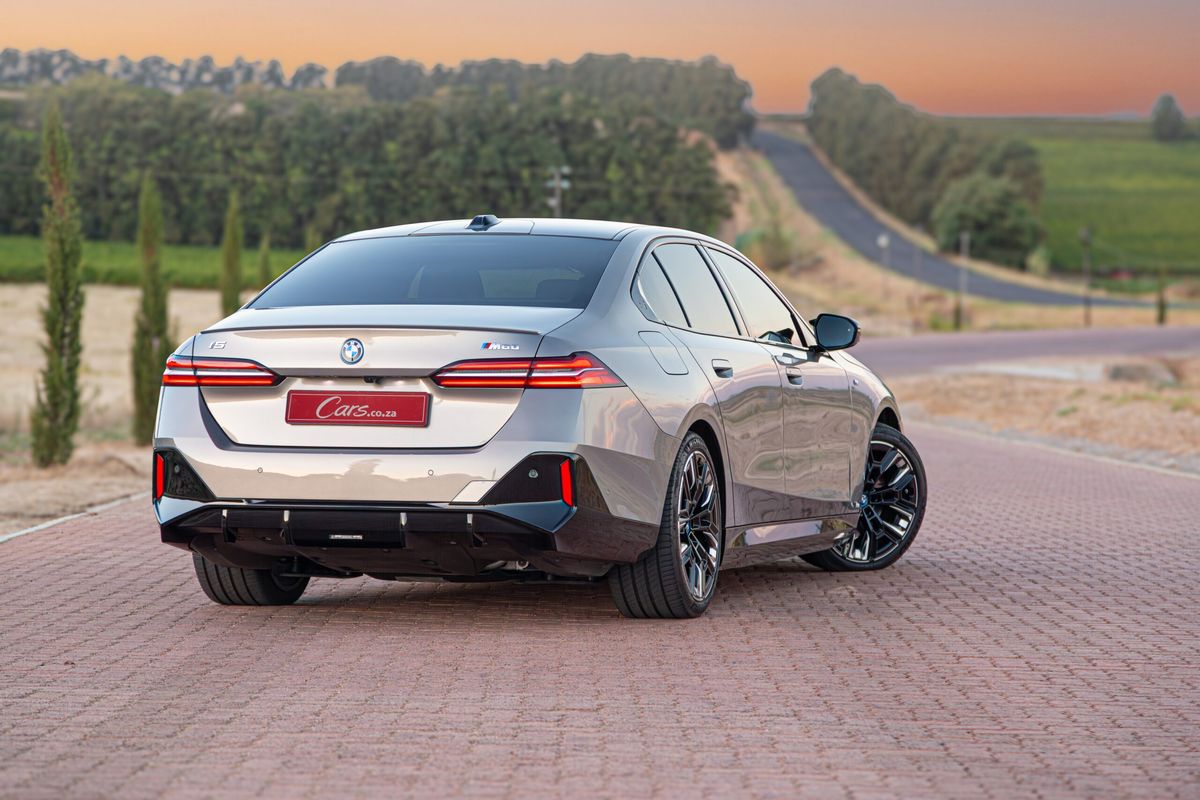
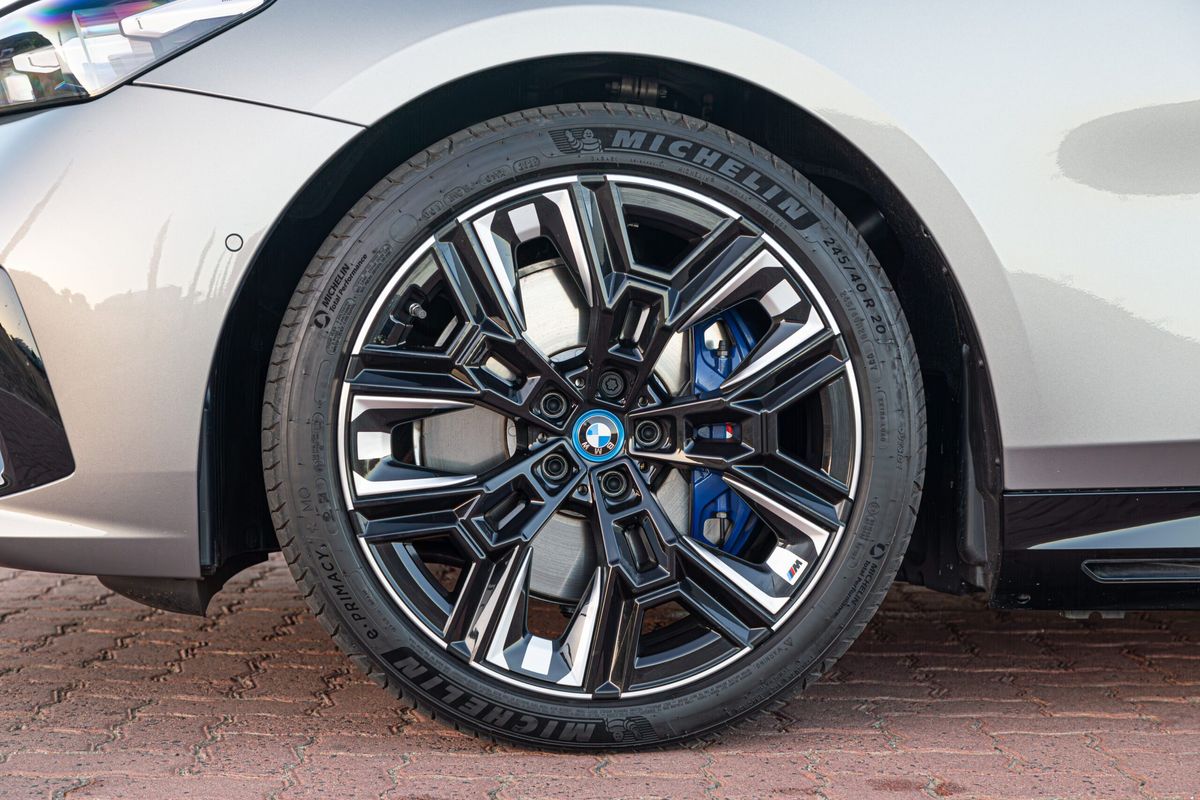
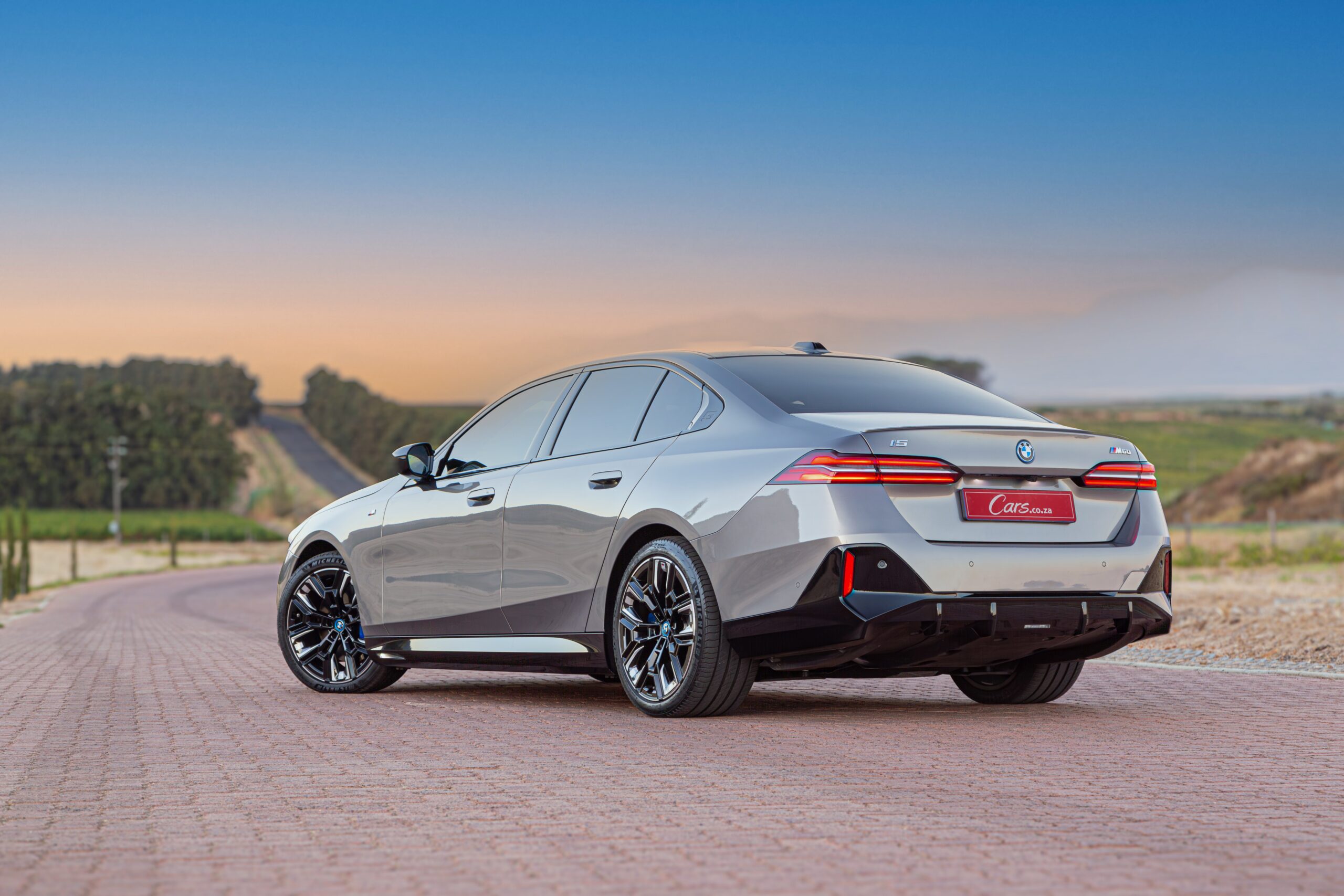
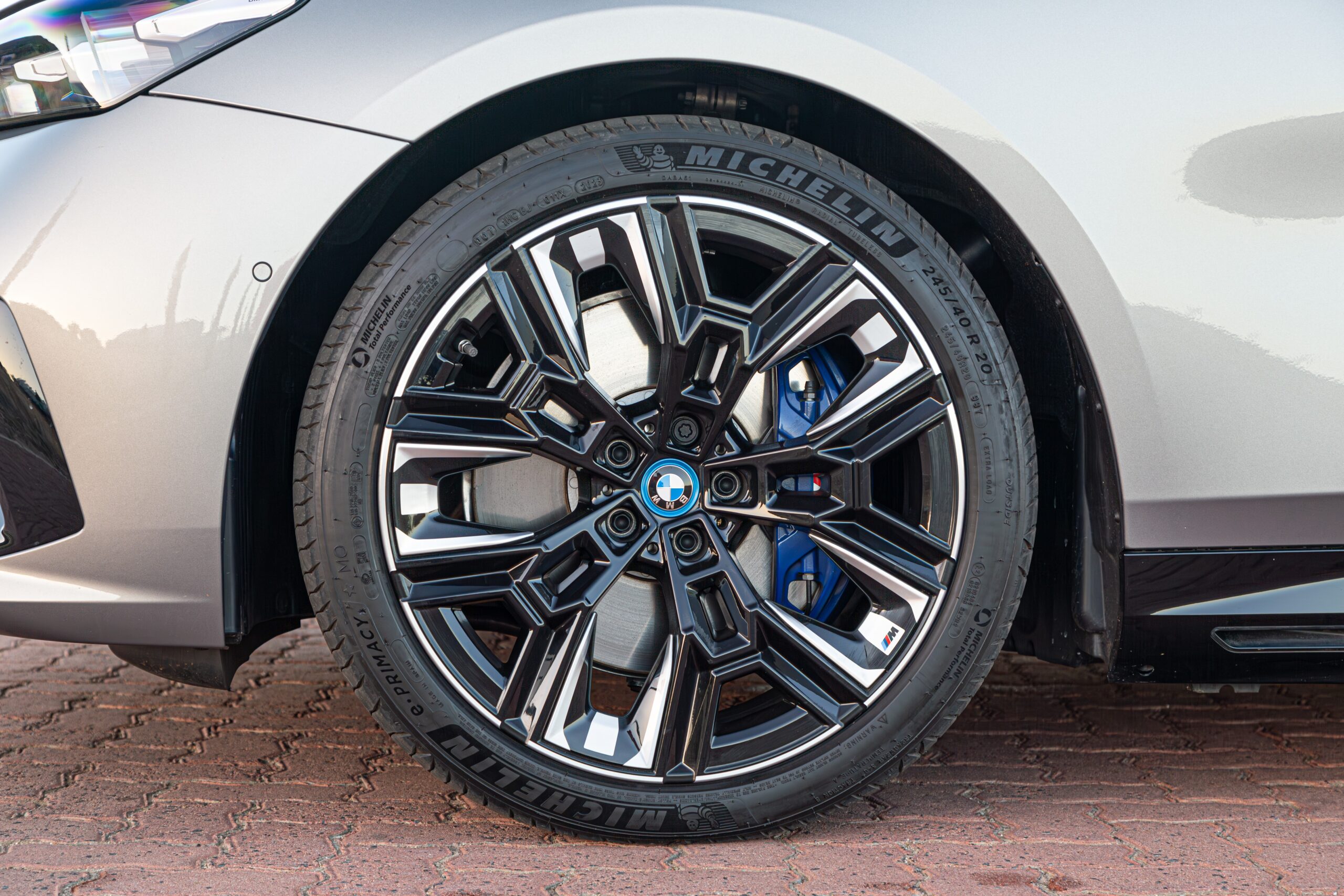
It does, however, resemble an M car, which isn’t a bad thing. The front is lashed with generous helpings of gloss black detailing, while the grille has horizontal slats and an M badge. Various wheel designs are available, but the standard (19-inch) alloys look great. The mirror caps are also finished in gloss black and they complement the substantial rear diffuser. You can spec a small rear spoiler at no extra cost.
With no exhaust ends to integrate, the i5 M60’s diffuser practically spans the width of the rear bumper.
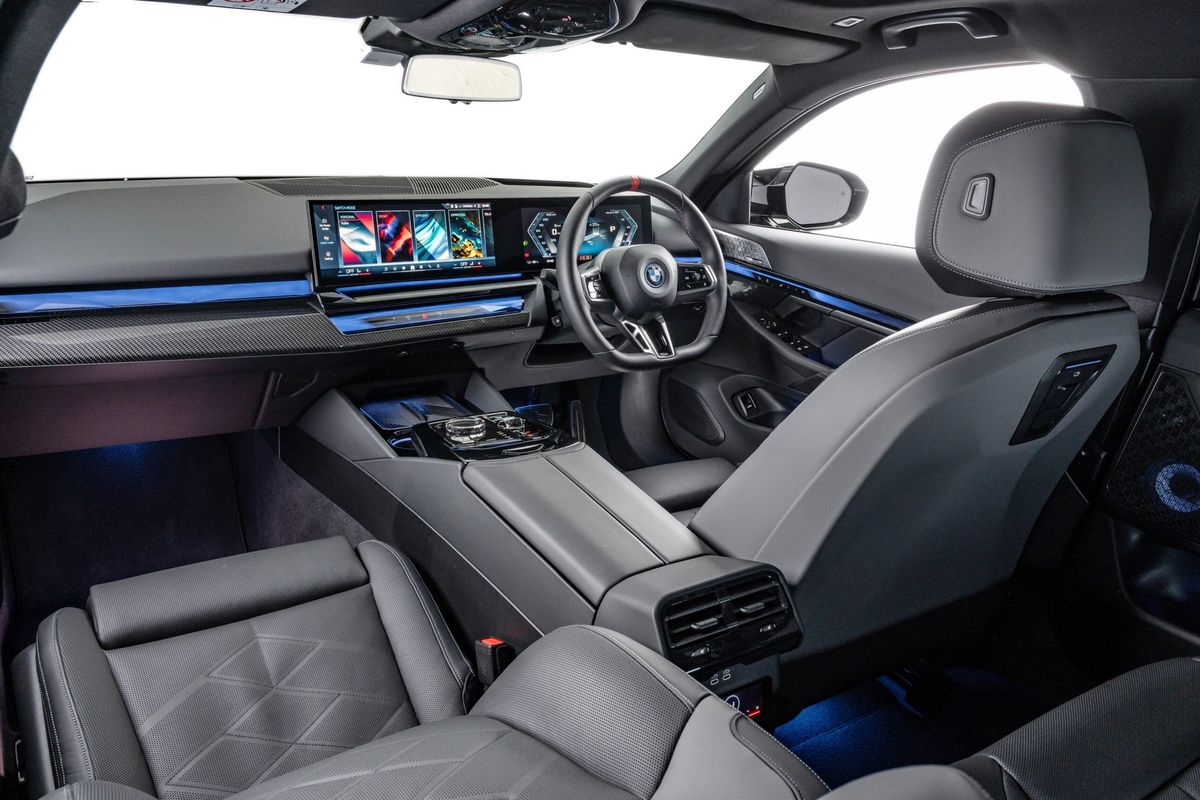
As for the newcomer’s interior, the i5 M60 sports another excellently executed cabin, which underlines the notion that BMW has stolen a march on its rivals in this regard. The perceived quality is superb; there is a feeling of solidity and high quality to the materials, allied with a complete lack of squeaks or rattles from the cabin even when the G60, which rolls on relatively low-profile tyres, traverses poor surfaces.
Comfort levels are class-leading, thanks in no small part to the sedan’s seats, which are trimmed in a plush “leather-like” material (named Veganza – yes, really). When you’re driving enthusiastically, they support your torso in all the right places, but they’re also cossetting enough to make long journeys (or sitting in traffic) a joy. BMW says the G60 is its first model to feature a completely vegan interior – even on the steering wheel. Of course, various trim and seat options are available. The seats on our test unit also featured ventilation/heating and side bolsters that give you a little hug when Sport mode is active.
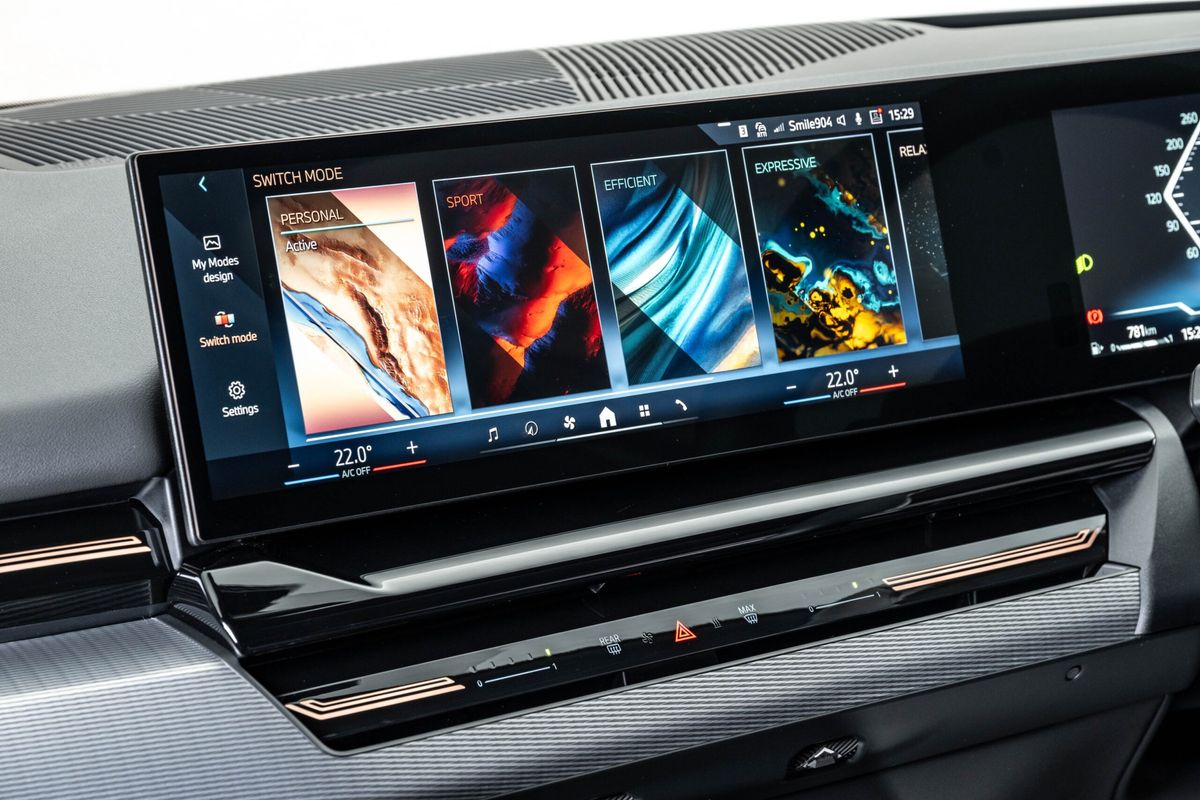
As opposed to its 3 Series sibling, the new 5 Series’ cabin was designed with the expansive screen (and hidden vents) in mind.
Space in the back is generous and aft occupants are afforded a separate digital interface for the climate control system. The i5 M60 needs to accommodate an electric motor at the rear, so we were surprised to find that the executive sedan offers capacious boot space. The claimed luggage capacity is 490 litres, which is more than what is (said to be) offered by the Audi RS e-tron GT and Mercedes-AMG EQE 43.
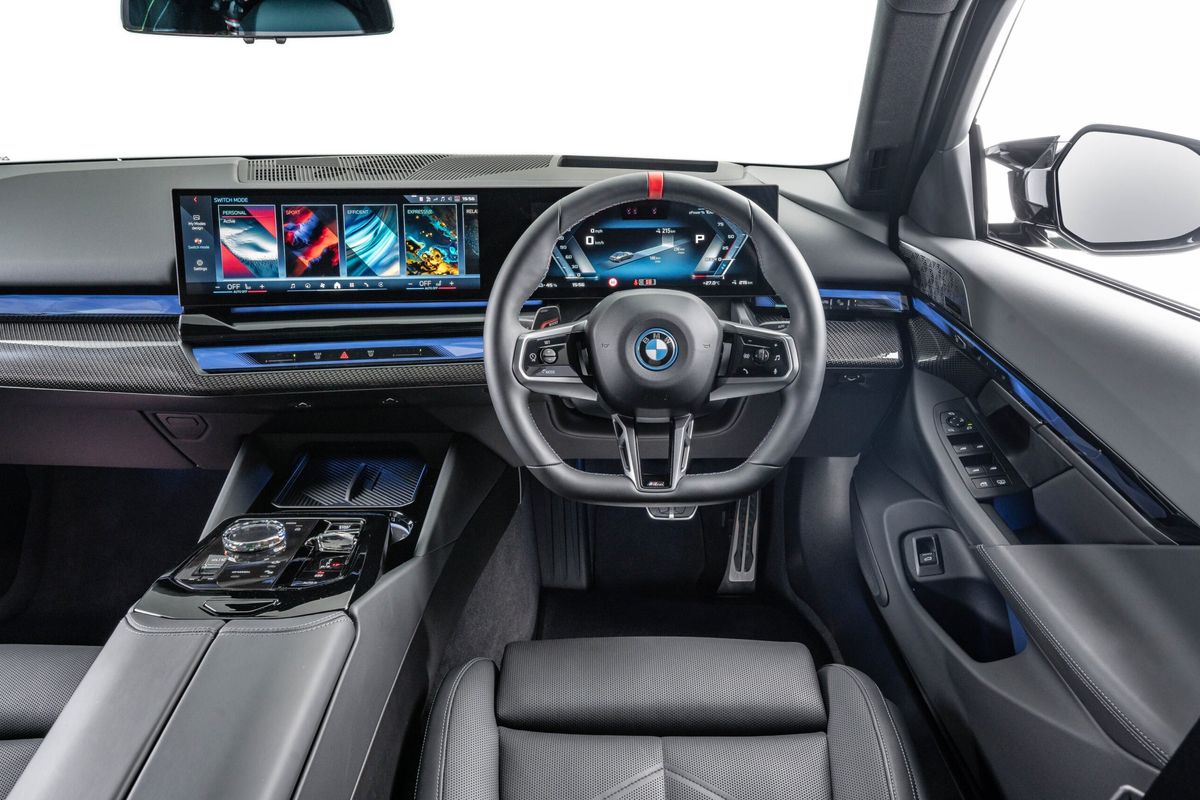
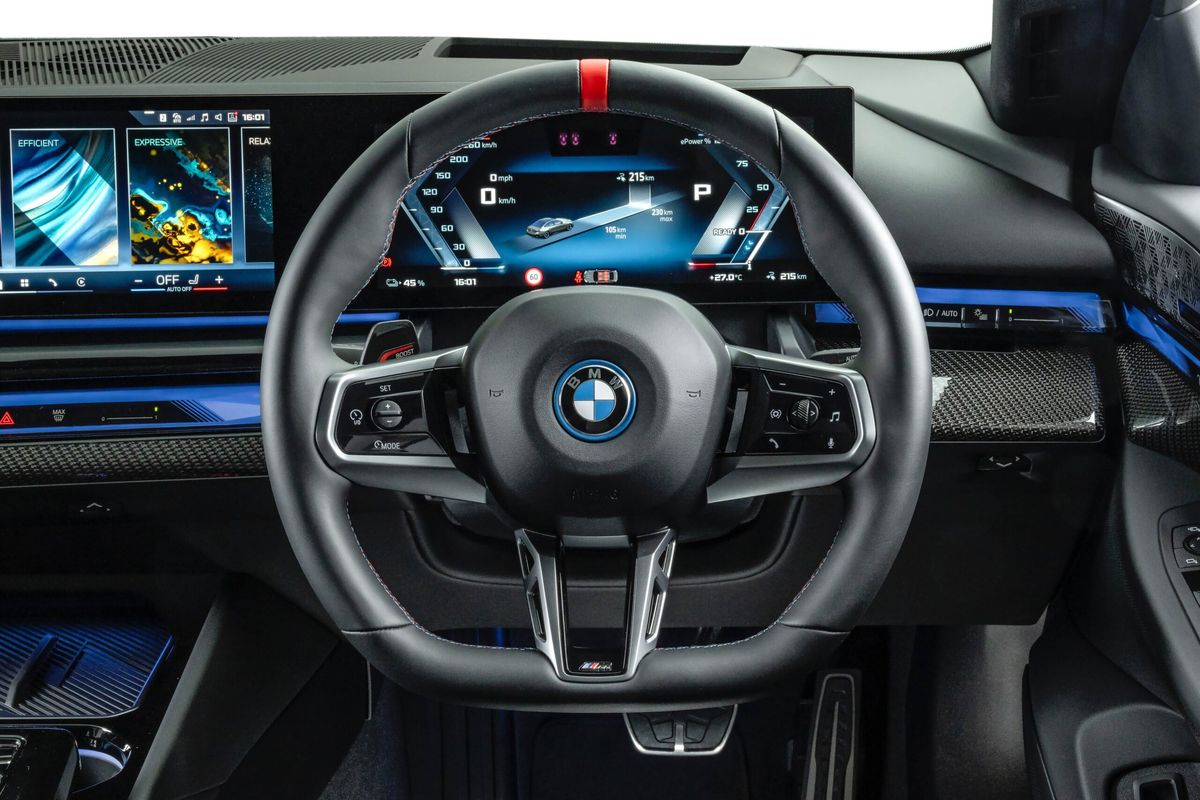
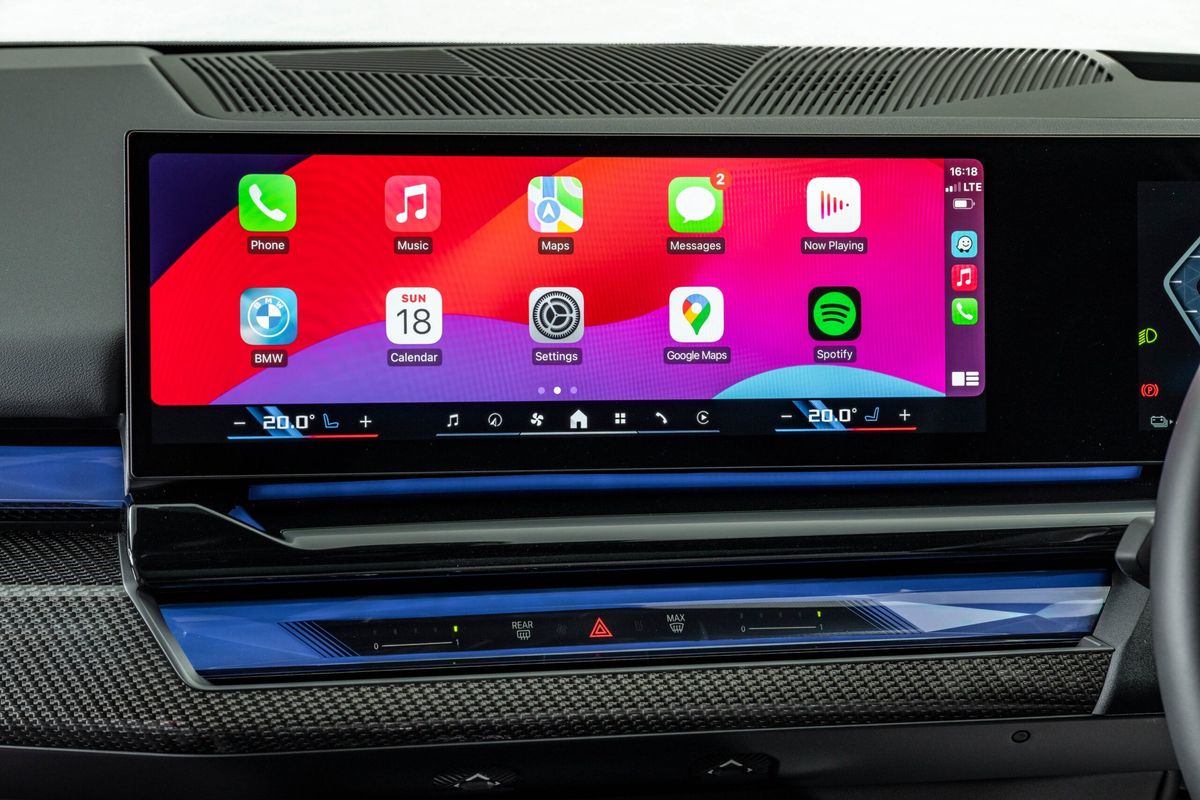
The 5 Series’ cabin is dominated by an expansive, slightly curved digital instrument cluster that flows into the infotainment screen. The graphics are superbly crisp and the menu system is logically structured (you don’t have to divert your gaze from the road long to find a function). Cleverly, the most often-used functions are accessible via physical buttons. Voice- and gesture-control functionality are also included.
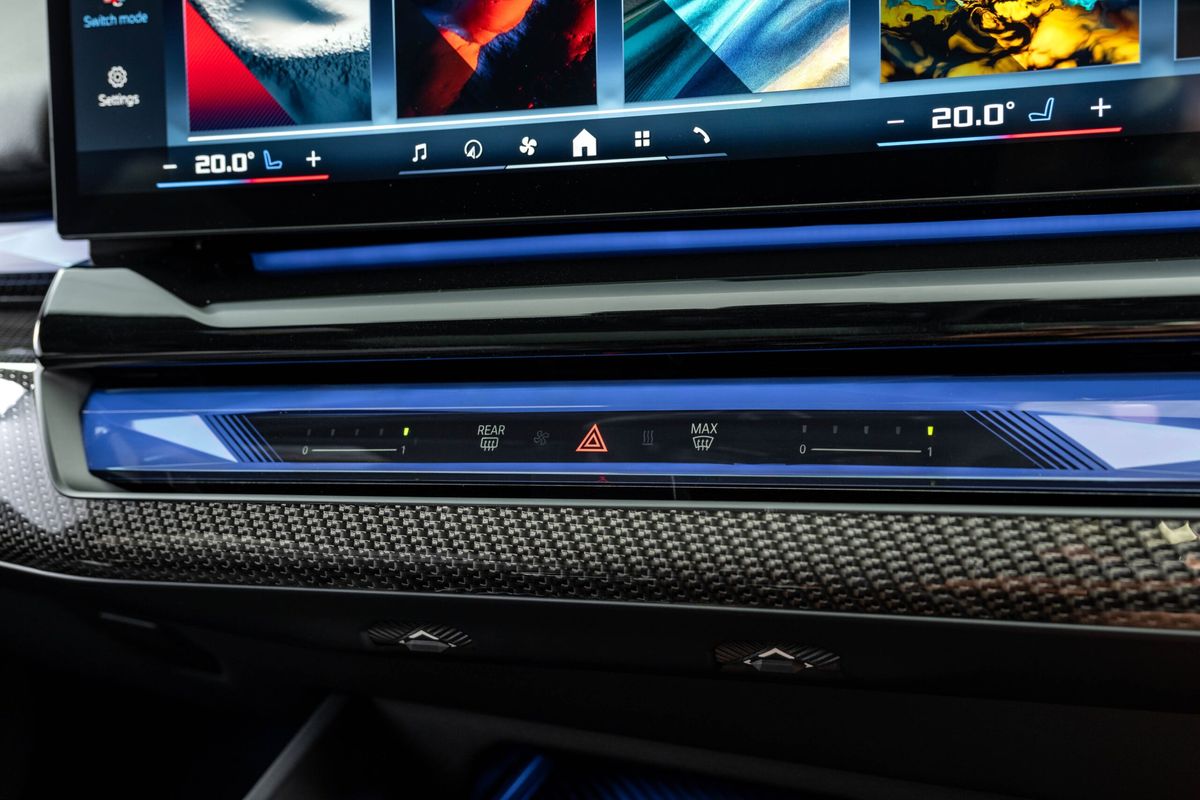
Even though the G60 5 Series has an elaborate digital interface, BMW has not dispensed with physical buttons entirely.
The hidden ventilation outlets are an interesting design feature. They’re located in the space above what BMW calls the “Interaction Bar”. First seen on the G70 7 Series, the crystal-like bar stretches almost the entire width of the cabin and emits visually pleasing lighting (you can set the colour in the infotainment screen), but it is also functional – for example, it will flash in red when you press the hazard button. It also signals a visual warning when it detects you’re about to exit the vehicle into potentially dangerous traffic.
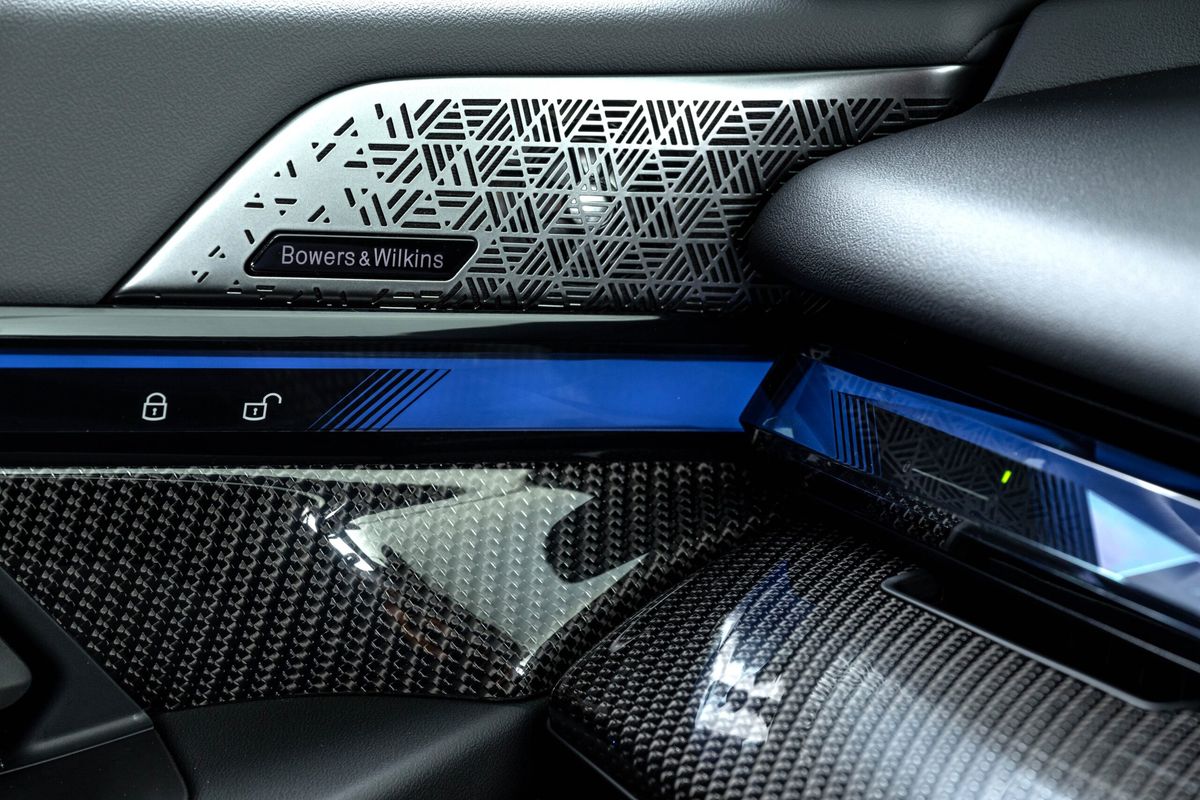
As with most German luxury cars, the i5 M60 has an extensive list of options (not that the derivative’s standard spec isn’t near-comprehensive). To give you a pair of examples: specifying a Bowers & Wilkins surround sound system will cost an extra R15 000 and Active Seat Ventilation is available for R17 000.
The speaker covers of the Bowers & Wilkins surround sound system feature an ornate pattern.
So, there are many, many toys to play with, but what we particularly enjoyed about the i5 M60’s cabin was that it fulfils the fundamental requirements of a luxury sedan appreciably well, but without skimping on build quality, plus it incorporates useful tech that is easily accessible via an intuitive user interface. Young (early adopters) and old (conservative types) will all find the cabin alluring. That’s no mean feat.
Performance and Efficiency
The i50 M60 is powered by a pair of integrated drive units that are positioned on the sedan’s front and rear axles respectively, which explains the test unit’s all-wheel drive (xDrive) designation. The two unit housings each incorporate an electric motor, transmission and electronics and both are very compact.
The motor on the rear axle produces a peak output of 250 kW and the one at the front adds 192 kW, which makes the total power output a thumping 442 kW. Maximum torque is 795 Nm, but up to 820 Nm is available for short periods when you utilise the BMW’s Boost paddle or activate the launch control.
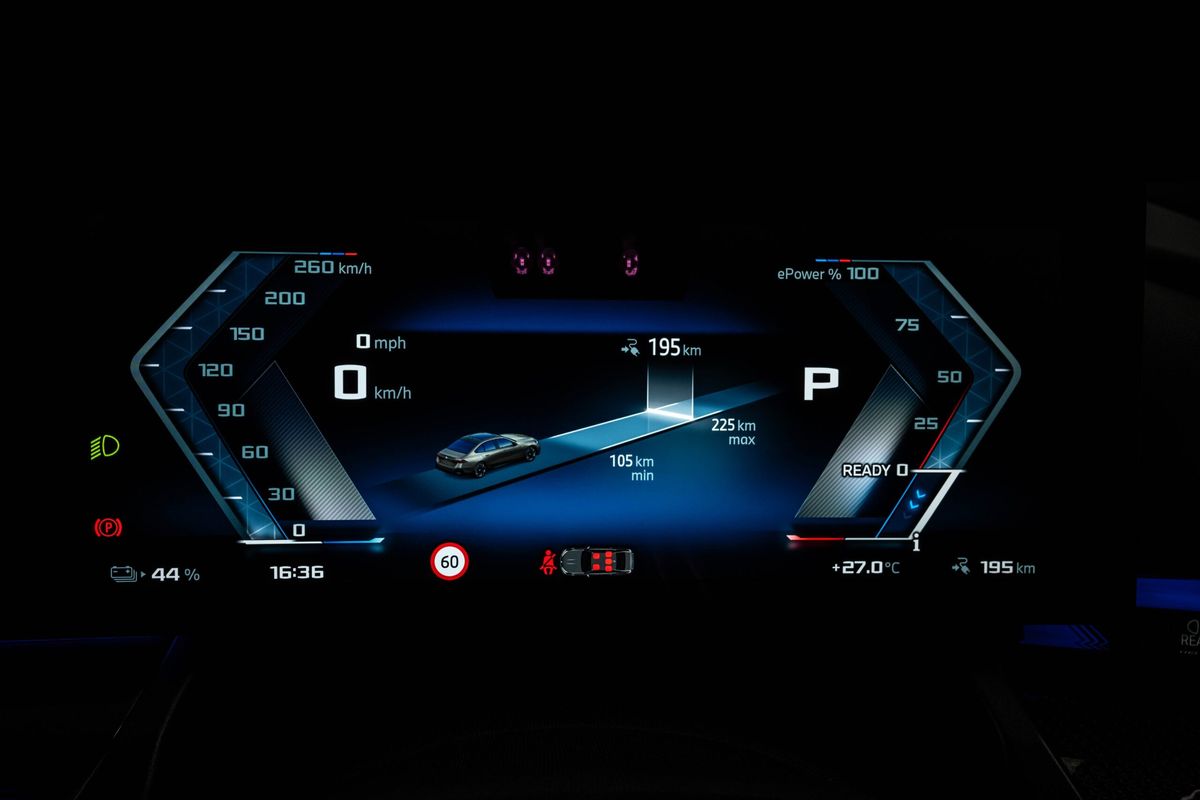
EV owners will be accustomed to seeing a power meter instead of a rev counter on the instrument panel.
These figures make the i50 M60 a good match for the vastly pricier, sportscar-like Audi RS e-tron GT, and while the similarly-priced Mercedes-AMG EQE 43 has more torque, the BMW is (and feels) faster…
BMW claims a 0-100 kph time of 3.8 sec, but that doesn’t quite convey how brutally the i5 M60 can pull away from a standstill. Many EVs accelerate strongly from rest, but they almost all feel like they run out of puff past (let’s say) about 120 kph. The i50 M60, by contrast, always seems to have more grunt on offer.
The sound effects, which were developed in partnership with famous movie soundtrack composer Hans Zimmer, contribute to the sensation of relentless acceleration. For what it’s worth, we achieved a 0-100 kph time of 3.78 sec – even without using launch control! Top speed is electronically limited to 230 kph.
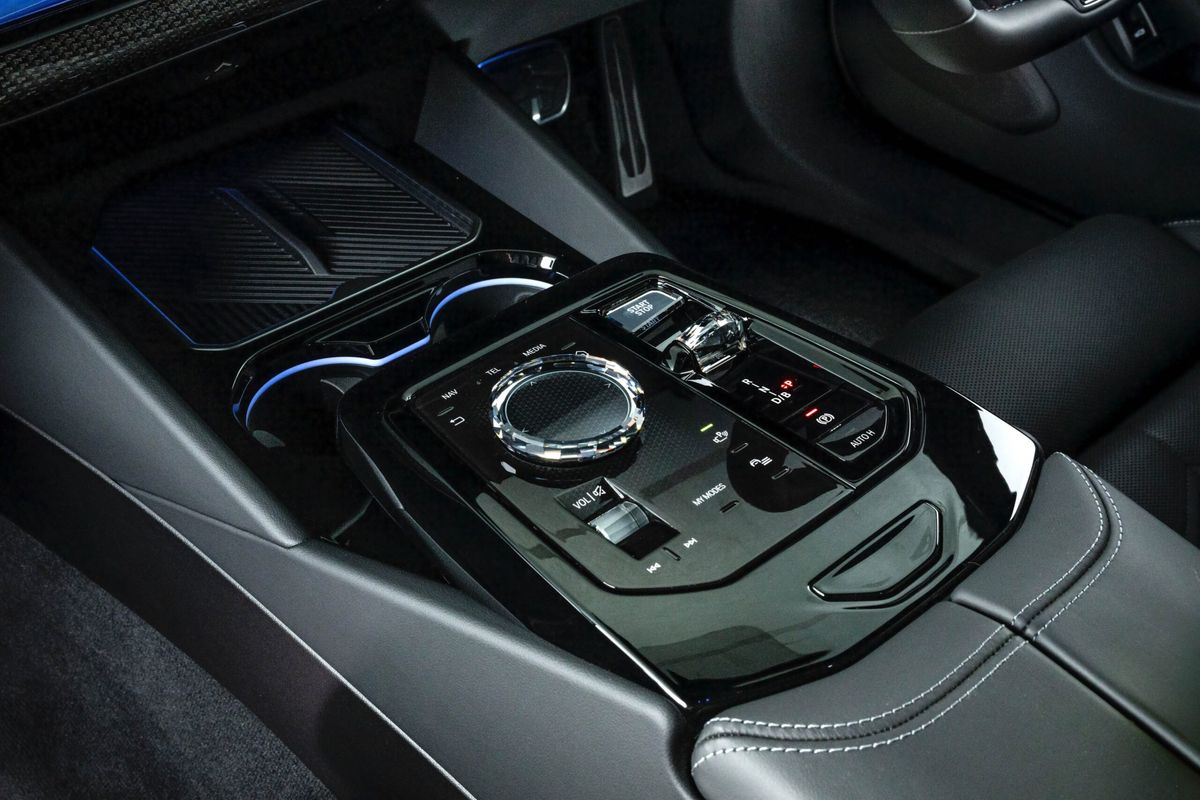
The minimalist centre console has freed up space for the inductive charging pad and increased oddment storing capacity.
The motors draw their energy from a high-density 81.2 kWh battery. Based on the WLTP test cycle, the i50 M60’s maximum range sits somewhere between 455 and 516 km. Average consumption is claimed to be around 20.6 kWh/100 km. While that figure is by no means poor, the extra weight of the 2nd motor housing and the more performance-oriented nature of this derivative does mean that you will get more range out of the more affordable i50 eDrive40, but that version of the i5 is not available in South Africa – yet. It is worth noting the i5 M60’s claimed range beats those of both the RS e-tron GT and EQE 43.
And charging? The battery accepts DC charging of up to 205 kW, but good luck finding such a charging station in your area! Still, you can add significant range surprisingly quickly at one of the more common local “fast” chargers (we used a 70 kWh station). Go for a coffee while it charges for a few minutes and you’ll add 100 km (or so) in a flash! A 22 kW charger will power up the i5 M60 in about 4 and a half hours.
The i5 M60 may not be a fully-fledged M car, but it certainly deserves to wear M badges.
If you misjudge the distance of your journey and find that you have to “limp home” with minimal charge, you can use a function BMW calls “Max Range”. As the name suggests, the function (used in conjunction with the Efficient setting) prioritises range (adding up to 25%), by lowering the maximum speed and sacrificing some luxuries (the climate control is deactivated, for example). It’s useful when you can’t find a charge station or the one on the way home is occupied, faulty… or (sigh) experiencing load shedding.
Another interesting “capability” of the i5 M60 is that it can be utilised for towing trailers (after all, that is not what most EVs are renowned for). BMW claims a maximum (braked) towing capacity of 2 000 kg for this derivative. The RS e-tron GT has no tow rating and the maximum quoted for the EQE 43 is 1 800 kg.
Don’t be fooled by the i5 M60’s sports-sedan body addenda – it is rated to tow trailers up to 2 000 kg (braked).
Ride and Handling
The i5 M60 may wear numerous M badges, but it’s not an M5 (BMW will reveal the range-topping super sedan version of the G60 5 Series soon). So, you may wonder whether the test unit’s M badges are just for show… Do they befit a derivative endowed with true M-car-like characteristics? And, what are such characteristics anyway, considering that the lightest M car (the M2) weighs 1.7 tonnes nowadays?
The issue of weight is particularly pertinent here because this is an all-electric car… and battery-electric vehicles are notoriously heavy. But even at 2.3 tonnes, the i5 M60 is slightly lighter than its main rivals.
Whereas as sporty electric vehicles tend to be stiffly sprung, the i5 M60 has a pliant ride quality.
M car or not, BMW has incorporated its latest chassis tech in the i5 M60. It gets what is called “Adaptive Suspension Professional” as standard. This includes electronically controlled shock absorbers, a lowered suspension (by 8 mm), integral active (four-wheel) steering and a powerful M Sport braking system.
When you’re driving the i5 M60 while any of the car’s more comfort-oriented (or default) modes are engaged, it’s the consummate luxury vehicle, with a level of pliant, supple ride quality that you hardly ever experience in performance-biased vehicles these days. The manner in which the BMW irons out road imperfections is highly impressive – the suspension comprises stroke-dependent dampers all round, allied with rear air springs. When you want the i5 M60 to waft along, it does so very convincingly.
Whether you want to waft to your next destination or carve up corners on your favourite twisty road, the i5 M60 nails the brief.
When you reach your favourite ribbon of asphalt and activate Sport mode, you will immediately feel the i5 M60’s suspension firm up. The car’s heft is ever-apparent, however, so if you spear into corners at high speeds, the tyres tend to squeal a bit earlier than expected, but they cling on and facilitate traction in a manner that beggars belief. The steering – pleasingly weighted and admirably responsive – is superb.
Thanks to its tenacious grip, deft handling and (when required) stupendous acceleration, the i5 M60 will give you a thorough core and neck workout if you drive it “enthusiastically” for a while. Is it an old-school “M-Car” experience? No, but “new school” is kinda cool, too. It’s certainly entertaining to drive, and has more layers to it than most performance EVs, which only seem to succeed at going fast in a straight line.
The i5 M60 offers a cabin ambience and soundscape to suit almost every mood.
If there is one minor issue, it concerns the i5 M60’s ride height. That, coupled with a lengthy wheelbase, reduces the car’s breakover angle, so some ramps and speed bumps need to be negotiated carefully to avoid grounding the underbody. Thankfully, the car’s belly is entirely flat and has a protective cover.
BMW i5 M60 xDrive price and After-sales support
The i5 M60 xDrive costs R2 190 000 (March 2024, before options), which includes a 2-year/unlimited km warranty (plus 8 years/100 000 km for the battery) and a 5-year/100 000 km maintenance plan.
Verdict
The G60 BMW 5 Series combines the ICE and EV segments with much aplomb.
While we finalised this review, it was announced that the BMW 5 Series/i5 won the Luxury Car category of the 2024 World Car Awards – a well-deserved achievement. The i5 M60 is the best electric sedan on the market by some margin. Given its plethora of abilities, the R2.2m asking price seems… reasonable.
The BMW i5 M60 possesses head-turning good looks, offers fantastic comfort and luxury, surprise-and-delight tech and delivers explosive performance, coupled with a surprisingly multi-faceted fast-driving experience. BMW has knocked this one out of the park; the new M5 will have to be brilliant to top this!
A fresh report claims the BMW 4 Series won’t see a 3rd generation, which furthermore suggests the current petrol-powered M4 could be the last…
Will the world see a 3rd-generation BMW 4 Series? Well, if a fresh report is anything to go by, the answer may well turn out to be “no”.
Quoting unnamed sources within the Munich-based automaker, BMWBlog claims the current G22-generation 4 Series coupé is “not expected” to have a direct successor. Though it’s not entirely clear, we suspect this would also apply to the G23-series convertible and the G26-gen gran coupé.
Will the G22-gen 4 Series have a successor?
While the 4 Series nameplate traces its roots back to 2013 when the F32-generation was launched as a 2-door spin-off of the 3 Series family, the current version debuted in 2020 and was facelifted at the start of 2024.
Based on a presumed 7-year lifecycle, that would see the 4 Series put out to pasture around 2027, if the report turns out to be accurate, of course. Interestingly, the publication adds that the supposed decision to let the 4 Series ride off into the sunset could be “reversed”.
So, why would the Bavarian company consider killing off the 4 Series – a nameplate that has seen great sales success, specifically in North America – in the first place? Well, BMWBlog claims the thinking could be twofold: firstly, there’s the broader shift of focus towards fully electric cars; the i4 would, in theory, live on.
Could the G82-gen model be the final petrol-powered M4?
Secondly, there’s the idea that the next-generation 3 Series family – which was previewed by the Vision Neue Klasse concept – will end up covering the space (and indeed taking on a more “coupé-like” shape) currently occupied by the 4 Series.
What does all of this mean for the high-performance M4? Well, since the M-badged flagship is obviously derived from the standard 4 Series, BMWBlog says a next-gen petrol-powered M4 “seems off the table for now”. However, the publication suggests a new M3 sedan remains “under consideration”. Of course, only time will tell…
The Porsche 912 is the often-unloved stepchild of the 911 family, but that notion is fading over time. Should enthusiasts give this variant stronger consideration?
IMAGES: Duwyne Aspeling
The shape of early air-cooled Porsches appeals to most 911 fans. The design – devoid of skirts, extended sills, wings, pronounced inlets or, for that matter, outlets – is eminently classy and elegant.
Today you need relatively deep pockets to purchase a neat classic 911, but there is another option if you seek an enjoyable driver’s car. It comes in the shape of the Porsche 912; however, until a few years ago, it was the “911” that virtually no one was really interested in.
Specifications
Model: 1967 Porsche 912
Engine: 1.6-litre, flat-4 petrol
Power: 67 kW at 5 800 rpm
Torque: 122 Nm at 3 500 rpm
Transmission: 5-speed manual, RWD
Weight: 970 kg
0-100 kph: 11.6 sec (claimed)
Top speed: 192 kph
Porsche 912 debuted in 1965
With only the Porsche 912 in sight and this vast open landscape as a backdrop, you can quickly be transported back to May 1965 when the 912 was launched. The original price was DM 16 250 (compared with the DM 21 900 a 911 demanded), but then again, this lower price was partly justified since the 912 used a modified version of the flat-4-cylinder engine from the 356 Super 90 (updates resulted in peak torque being developed lower in the rev range).
It featured a new 4-speed gearbox (a 5-speed unit was optional), but apart from that, the body, suspension, steering and braking system were taken from the 911. Being fitted with a smaller engine, the 912 also tipped the scales 59 kg less than the 911.
Inside the cabin, the wood-rimmed steering wheel was replaced by a black plastic unit of the same size. The vanity mirror in the sun visor was optional, the gear lever was trimmed in rubber (as opposed to leather) and there were rubber floor mats in LHD models. Even so, at a quick glance, it is difficult to spot the differences between a Porsche 912 and a 911 variant of the same era.
Restoration and details
The bare metal restoration this Porsche 912 received also included a full engine rebuild. I’m shown the thick folder that contains all the details of the restoration. All the bills add up to a significant sum of money. But you would expect that; parts had to be bought and imported and the car was totally stripped.
A document by Porsche confirms that the car’s original colour code was 6603, Golf Blue, and that the interior featured brown leatherette trim. However, when the previous owner restored the car, he decided on a different exterior colour with beautiful red leather seats – a contrast indeed, but a very suitable match. It might not be the original combination, but it looks the part and is very luxurious.
All 912s featured a flat four based on the motor in the last of the Porsche 356s. The 1.6-litre engine was based on the 616/16 powerplant, but was called 616/36 as it featured cast-iron cylinder liners inside a finned alloy jacket as well as light alloy heads and crankcase. The compression ratio was reduced from 9.5 to 9.3:1.
The result was a reduction of around 4 kW compared with the older engine, but whereas it offered a similar torque peak, it was produced lower in the rev range. The addition of a new camshaft, valves and valve gear resulted in a freer-revving engine – such a traditional characteristic of 911s.
However, there were 912s that featured a different engine. In 1976, Porsche exported impact-bumper 912s to the USA fitted with a 2.0-litre flat-6 engine. It was only for a single year and only for that market. If you are after a 1970s Porsche, these are probably the most affordable models on the market.
Behind the wheel
Get inside and you’ll find the seats are so soft that they cushion your posterior and back like no modern Porsche can. Before I set off I need to adjust the seatback’s tilt slightly aft, otherwise my scalp brushes the roof lining.
Again, overall there is little that separates the 912 from a 911 in terms of the cabin configuration. This specific car’s interior is spotless and it is easy to see money has been spent on every part – the interior is in a top-notch condition.
As with 911s, there are five dials behind that thinned-rimmed steering wheel. Being a 1967 model (the invoice date is August 1966) this is one of the first 1967 model-year 912s to be produced).
As a matter of fact, earlier 912s featured only 3 dials in their instrument clusters. The speedometer is marked to 120 mph (192 kph) and the rev counter’s red line is from 6 000 rpm. The former is not that optimistic: period road tests recount impressive true speeds of around 190 kph.
The black steering wheel is large by modern standards, but affords enough leverage to manoeuvre the car at low speeds. In its centre is the soft Porsche crest. The metal strip below the dashboard gives a brighter tint to the otherwise dark dashboard, while the period-correct Becker Europe looks perfectly in place.
I turn the key and with some help of the throttle pedal, the 1.6-litre engine comes alive. As expected, the sound doesn’t remind you of a flat 6, but then again, it shouldn’t. However, when I start to accelerate through the gears, the motor has a distinctly rawer voice than what I recollect of 356 engine notes.
I expected a rather lazy and slow car, but I am pleasantly surprised. The gear lever has a slow and rather vague way of slotting through the gate. But, it only takes a few shifts and a minute or two to figure it out. The dog-leg first is left and down, while 4th and 5th are very close to 2nd and 3rd in the H-pattern.
Although the red line is just after 6 000 rpm, I decide to change before this mark. During the first 3 000 rpm the car does feel slow (as most 911s of this era do), but then it starts picking up speed and the rev needle easily passes through the next 2 000 rpm.
Sure, it is not as rev-happy as comparable 911s of the time, but it gets the job done and I often see 130 kph on the speedo with the car still being able to comfortably increase its speed.
Other than that, the experience from the cabin is pure 911. You have that lovely clear view over the bonnet with the pronounced fenders on each side. It offers a comfortable ride and it feels light on its wheels. Sadly this part of the world offers long open roads, but no challenging mountain passes. I would have loved to experience the 912 threading through a few twisties, as I expect it would deliver a copious number of low-speed thrills right on demand.
The fact that this car is equipped with Fuchs wheels, instead of the standard hub caps with Porsche crests, lends it a further nod towards a 911. Needless to say, if you can’t quite make the financial stretch to an early 911, say a T for example, don’t discount a 912. Apart from the outright performance, which might be less than a 911, the 912 ticks all the boxes of an early 911 – while it is also lighter than its bigger brother. I, for one, would not mind to have one in my garage.
Summary
As automotive writer Jerry Sloniger pointed out at the time: “Acceleration is not the be-all and end-all of motoring. It is a decent index, but road behaviour between 60 kph and 160 kph is far more useful. There the 912 shines”. That is a very accurate description… and it rings true to this very day.
BMW doesn’t make a bakkie, but that doesn’t mean SA’s best double-cab isn’t partly a BMW. The Ineos Grenadier Quartermaster, with its Teutonic powerplant, sets a new benchmark.
The R1-million-plus bakkie market is a fascinating one because it contains ancient designs, such as the Land Cruiser 79, and very sophisticated bakkies, such as the Ford Ranger Raptor. South African buyers in this segment are certainly a mixed crowd, with leisure buyers desiring a safer all-terrain family car (the Amarok and Ranger are good examples), while hardcore off-road work crews need Land Cruisers.
The Ford Ranger Raptor was recently named the 2023/24 #CarsAwards Leisure Double Cab category winner.
For those with a budget of R1-million-plus there are several good choices: Ranger Raptor, Land Cruiser 79 V8, Jeep Gladiator, a fully loaded Amarok or Ranger V6 turbodiesel and top-of-the-range Hiluxes. But the ultimate double-cab bakkie might be a new addition to the market. And one with no brand heritage.
To launch a R1-million-plus double-cab with zero brand equity or lineage is either deeply naive or very committed, and the people who created Ineos Grenadier are mostly the latter – and very little of the former. Backed by a brand that was built from the success of one of Europe’s most profitable chemical companies, the Ineos automotive team lacks neither skill nor business acumen.
But where does the Ineos Grenadier Quartermaster rank in the local hierarchy of R1-million-plus double cabs?
Looks matter to double-cab buyers
Steel wheels, round lights, externally hinged doors and no chrome grille garnish. Perfect.
Design is a great differentiator, but with bakkies, it’s even more important than with passenger cars – and very challenging to do. A bakkie’s ladder-frame platform and load tray structure make it challenging for designers to create much brand identity. For example, unlike an SUV or crossover, you don’t have a big tailgate, rear glass sections or light clusters to style and express brand identity on a double cab.
A double cab’s proportions may be simple, but its design touches don’t have to be, although deviation can be disastrous. Many good bakkies have been undone by the design; Mazda’s 2nd-generation BT-50 and nearly all bakkies ever made by SsangYong are examples of good engineering undone by design.
That brings us to the Quartermaster, where Ineos has created something traditional yet different. The design draws from Land Rover’s original Defender and looks terrific. There are no silly surface creases or pinch lines along the bakkie’s doors or bonnet. Flat surfaces on the body panels and round headlights make the Quartermaster look timeless and purposeful instead of plain or, worse, ridiculous.
The best bakkie cabin… has plenty of buttons
Recaro seats in the rear. More German engineering where you need it most, in a bakkie.
Cabin architecture always follows trends, and that’s a problem for double-cab design teams. Prevailing interior design trends that might work for a new EV, crossover, or luxury SUV won’t work equally well in a double cab. But why?
Well, because you are far more likely to drive across rough terrain in a double-cab 4×4 than a luxury SUV or crossover. And it’s exactly when double-cab bakkies start exploring the terrain types they are marketed to conquer that touchscreen haptics and touchscreen interfacing become annoying.
Bakkie owners love buttons, switches and toggles. When driving along a rural dirt road at speed and scanning for huge potholes, corrugations or cattle grazing (or loitering) on the verges, you want the intuition of reaching and touching a physical control to adjust the volume of the audio system’s playback or manage cabin ventilation. Try to operate a touchscreen on a corrugated gravel road – it’s impossible.
An overreliance on touchscreen functions is a disaster when you are operating a double-cab bakkie in the terrain and conditions it was intended for, and some vaunted brands in the R1-million-plus bakkie market have made the mistake of deleting too many physical controls and replacing them with haptics.
Screen tech meets all the physical buttons, switches, dials and tabs you desire.
The Ineos Grenadier Quartermaster arguably has the best cabin architecture and UX of any bakkie by keeping it old-school without being too analogue and digitally agnostic. The 12.3-inch touchscreen infotainment system pairs seamlessly with Apple CarPlay or Android Auto. However, the combination of touchscreen interfacing and lots of physical toggles, switches, and buttons differentiates the Quartermaster’s UX.
Ineos has done everything with the Quartermaster’s ergonomics and cabin interfaces that modern automotive UX designers tell you NOT to do. Ironically, that makes the Ineos double cab’s interior much more user-friendly than those of its rivals, who have erred in trying to bring passenger-car ergonomics and digitisation to the realm of the double-cab bakkie, where customers either don’t need or want it.
The bakkie with a BMW engine
German engine. German transmission. Unrivalled power- and drivetrain characteristics.
Six-cylinder bakkies hold a lot of appeal in the R1-million-plus double cab market. Toyota supporters, of which there are many, would make a valid argument that 4-cylinder Hilux special edition bakkies, such as the widebody GR Sport III, sell strongly regardless of powertrain configuration… and that’s true. Still, buyers value the cruising performance and overtaking confidence of a 6-cylinder powerplant.
Remember that for the last few years that the 1st-generation Amarok was on the market, nearly all local sales were the V6 version. That’s why the Quartermaster is such a compelling alternative for drivers who want the unique styling of a rugged off-road vehicle supported by tri-locker capability and 6-cylinder engines. And those turbocharged engines are fuelled by either petrol or diesel, which is a big deal.
Ford’s Ranger Raptor is amazing; it offers the best suspension configuration of any local bakkie and unrivalled cruising speed performance, but it’s only available with a 3.0-litre twin-turbopetrol motor. And South African bakkie buyers are predisposed to diesel… It’s the same issue with Jeep Gladiator and its 3.6-litre V6 – it has terrific off-road ability, but very limited cruising range, because of its petrol engine.
Toyota offers the updated Land Cruiser 70 Series bakkies with both Hilux 2.8-litre 4-cylinder- and the legacy 4.5-litre V8 turbodiesel engines. However, none of those are segment leaders in terms of power, torque or powertrain smoothness. The Quartermaster, by contrast, is powered by engines sourced from a company that has probably built more legendary engine designs than any other: BMW.
Some may ask: “But can a BMW engine really be valid in a hardcore off-road bakkie?” The answer is yes, absolutely. Many of the 2.8-litre BMW-powered Defenders built in South Africa during the mid-1990s are still running strong and rank among the most collectable of all Land Rover models.
An inline-6 is ‘unbeatable’
There are several V6 double-cab powertrains. But an I6 is superior to all.
BMW’s 3.0-litre turbodiesel engines are excellent and give the Quartermaster an unrivalled powertrain advantage in the South African market: enough power, great efficiency and unrivalled refinement. It would be difficult to argue that a better diesel engine exists in the R1-million-plus bakkie market.
The fact that Ineos chose to equip the Quartermaster with a ZF 8-speed automatic transmission is a boon to the bakkie’s overall driving experience. The ZF 8-speed ‘box, which is good enough for Rolls-Royce and Range Rover, certainly has the measure of any other double-cab’s automatic transmission.
BMW has always traded on the technical prowess of its inline sixes and, in a market where its rivals have V6s, the Quartermaster will be further differentiated by the smoothness of an inline 6-cylinder motor.
Ever wondered why a 4.5-litre Land Cruiser petrol bakkie is so revered? Simple: its inline-6 engine. There is no other engine configuration that rivals the inherent primary and secondary balance of an inline-6. And Ineos is the only brand marketing such an engine configuration in a South African double cab.
With 183 kW and 550 Nm on tap, the Ineos Grenadier Quartermaster’s 3.0-litre inline-6 turbodiesel is admittedly not the most potent engine in the R1-million-plus double-cab segment, but those outputs are perfectly adequate for executing brisk overtaking manoeuvres at highway speeds.
And, in low-range, 500 Nm will conquer any gradient you dare to steer into. Need better overtaking performance or more power for sand driving? Choose the Quartermaster turbopetrol, with 210 kW.
Indeed, the fantasy double cab does exist
Iconic design meets depth of engineering.
The Quartermaster’s pricing is beyond anything the South African bakkie market has seen before. Where the flagship X-Class triggered debates about “the R1-million-plus bakkie”, the Quartermaster will spark discussions around “the R2-million-plus bakkie”. It is a terrific statement vehicle to own and South Africans have a proven market response to expensive bakkies – and that is to buy, instead of resist.
A decade ago, if you gave bakkie fans an open specification to create their ultimate double-cab bakkie, not even the most ambitious minds would have imagined 3-lockers, legacy Defender styling, and BMW 6-cylinder turbodiesel power. But that happened in a meeting room at Ineos headquarters in 2017.
Seven years later, a British company markets the ultimate double-cab bakkie, powered by an iconic German engine and built in France. Who would have guessed South Africa’s most compelling and exciting double cab would be so… European?
The Quartermaster’s very existence also makes you wonder how Mercedes-Benz got it so wrong with the X-Class, despite having vastly more resources than Ineos for the planning and development of its double cab. Imagine if Ineos applied the Quartermaster approach to something Toyota Hilux-sized!
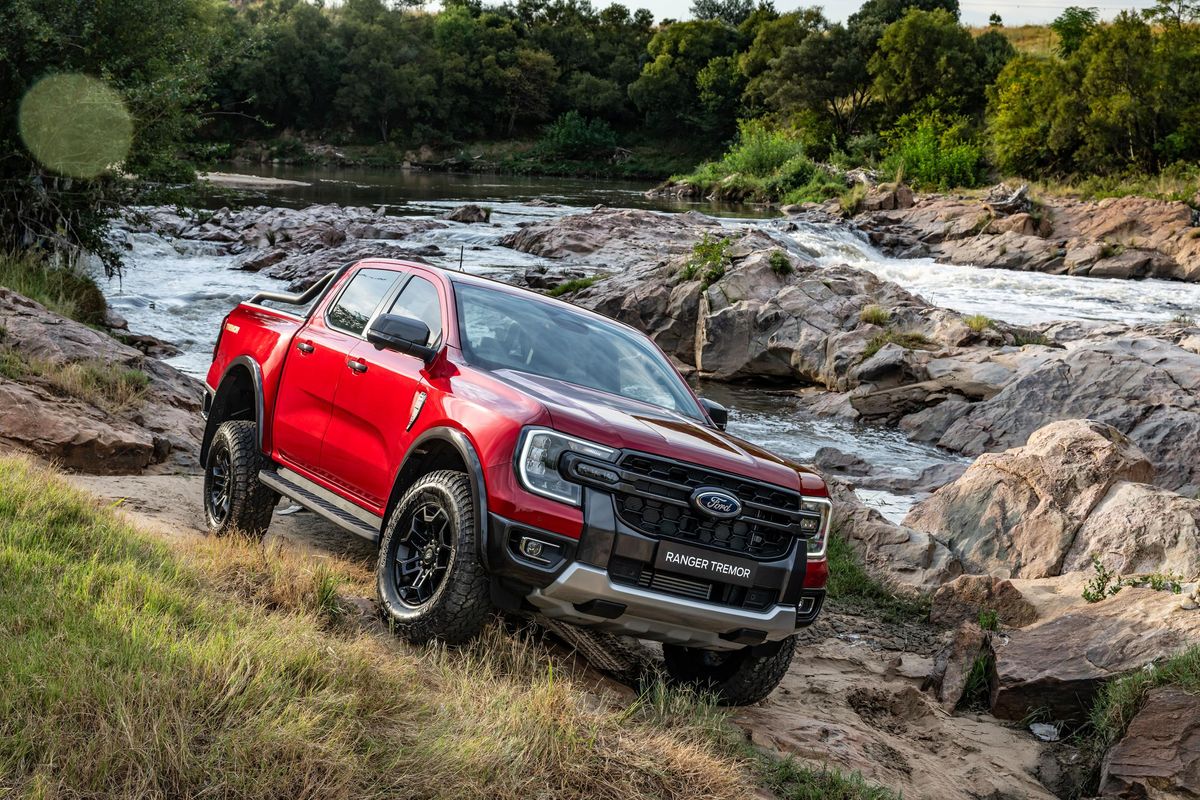
The Ford Ranger Tremor – an attractively packaged and offroad-ready mid-range offering in the Blue Oval’s bakkie line-up – has touched down in South Africa. We recently grabbed the chance to put the newcomer through its paces on a 4×4 trail.
Ford Motor Company of Southern Africa (FMCSA) recently added 2 derivatives to its Ranger line-up; we have already reported on Ranger Platinum, but what you see here is a much more affordable prospect.
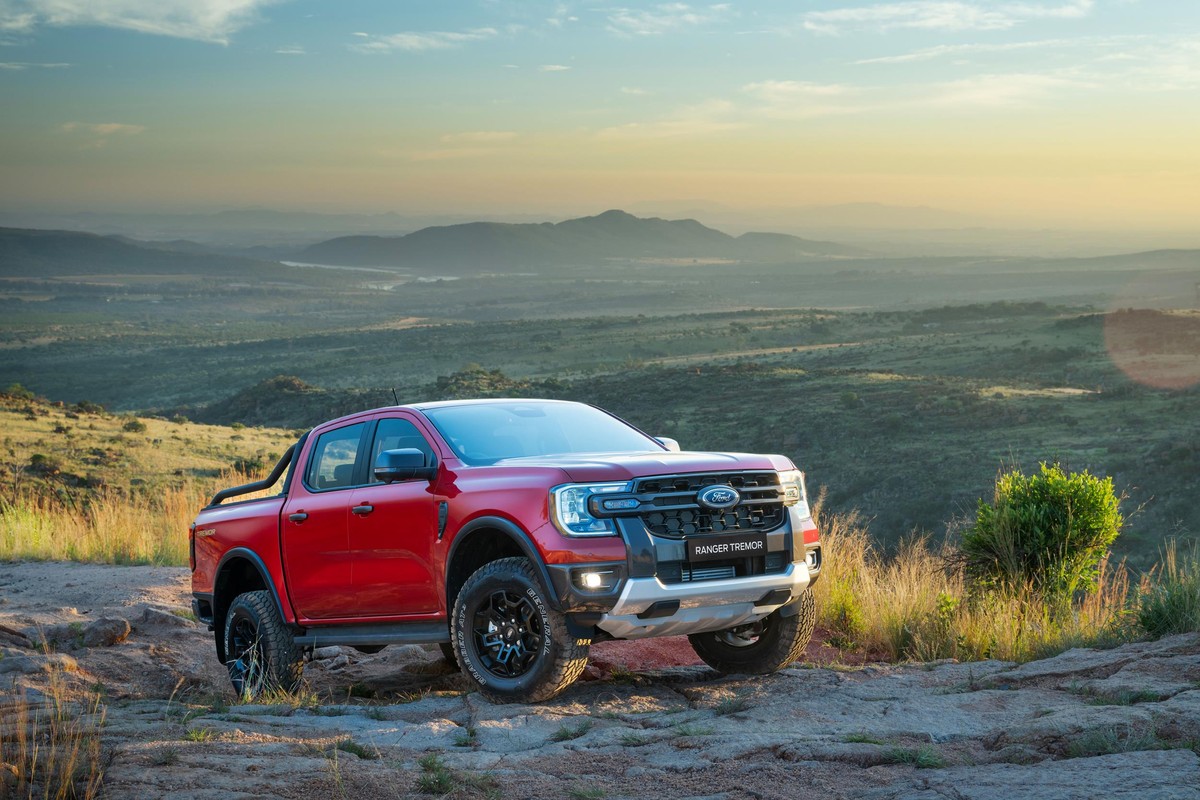
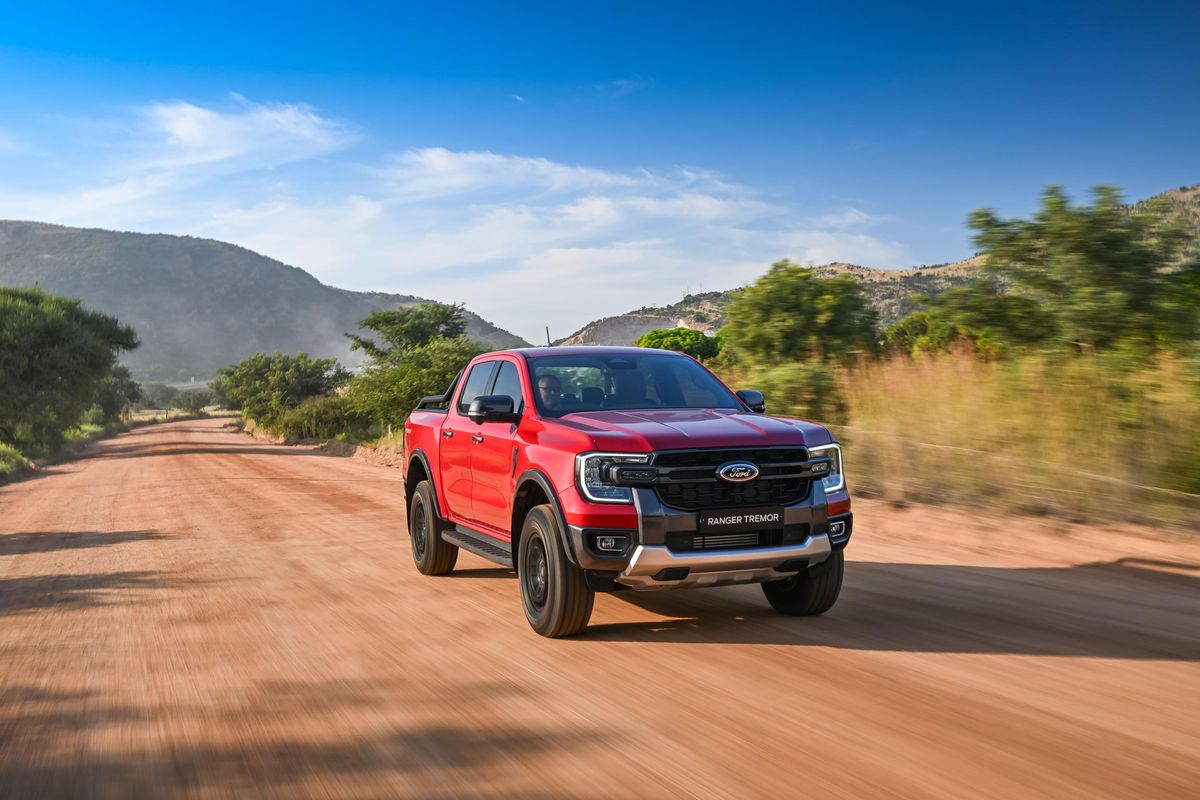
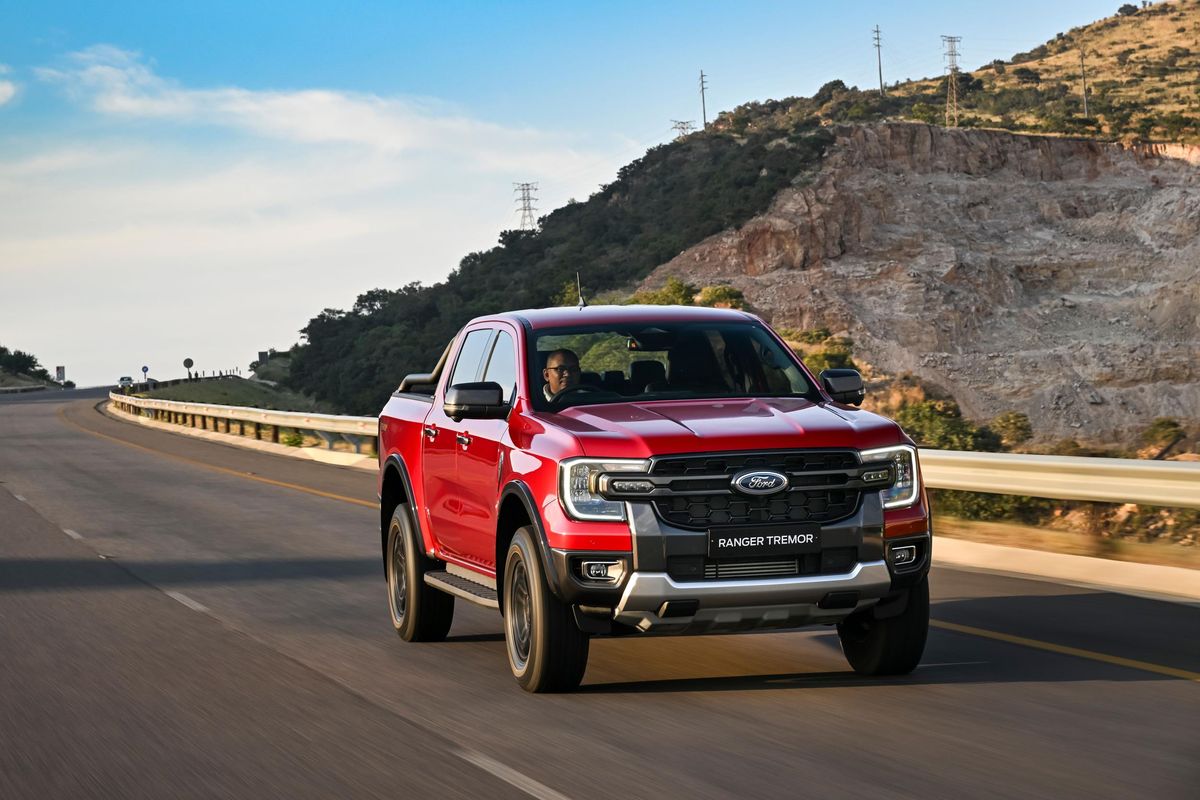
Meet the Ranger Tremor. Just as the Ranger Wildtrak X is a Wildtrak variant aimed at 4x4ing enthusiasts, the Tremor is based on the XLT-grade bakkie, but features additional off-road-oriented enhancements.
What is a Ranger Tremor?
If local off-roading enthusiasts were wondering: “How can I get the best bang-for-buck off-road bakkie without having to breach the R1-million mark?”, well, the Ford Ranger Tremor is the Blue Oval’s answer.
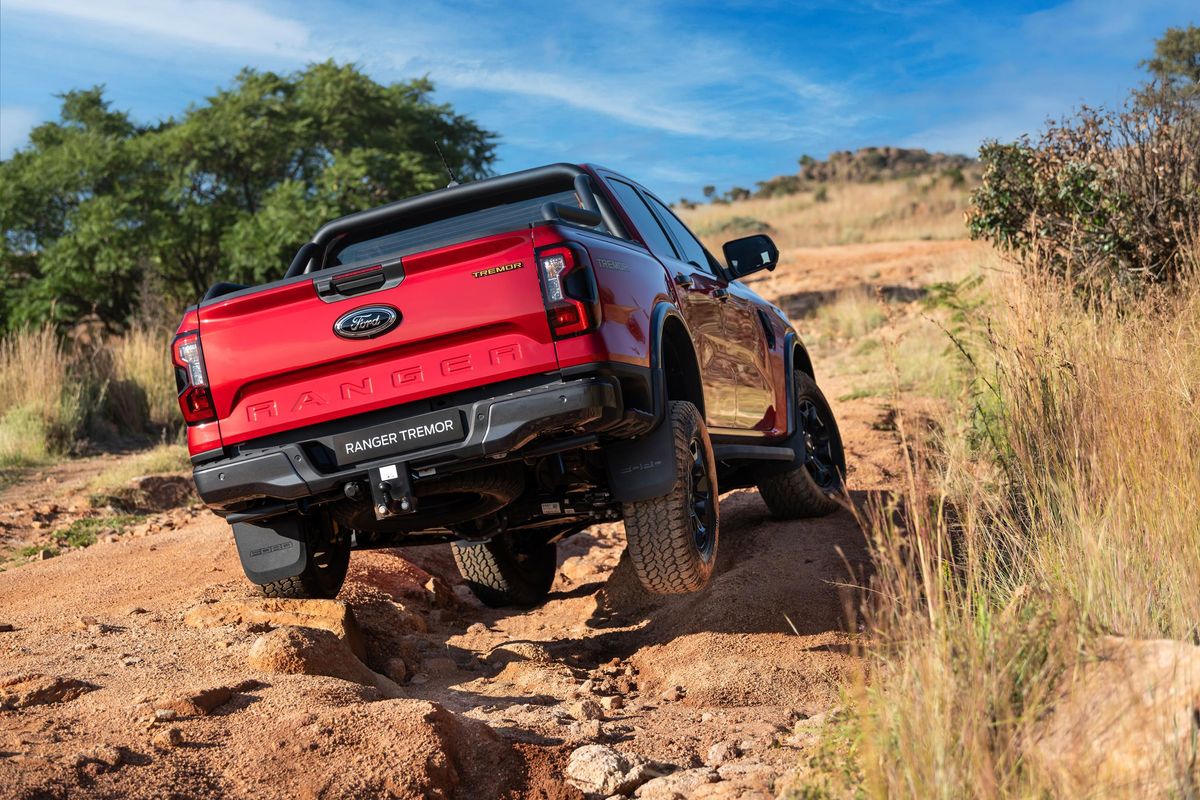
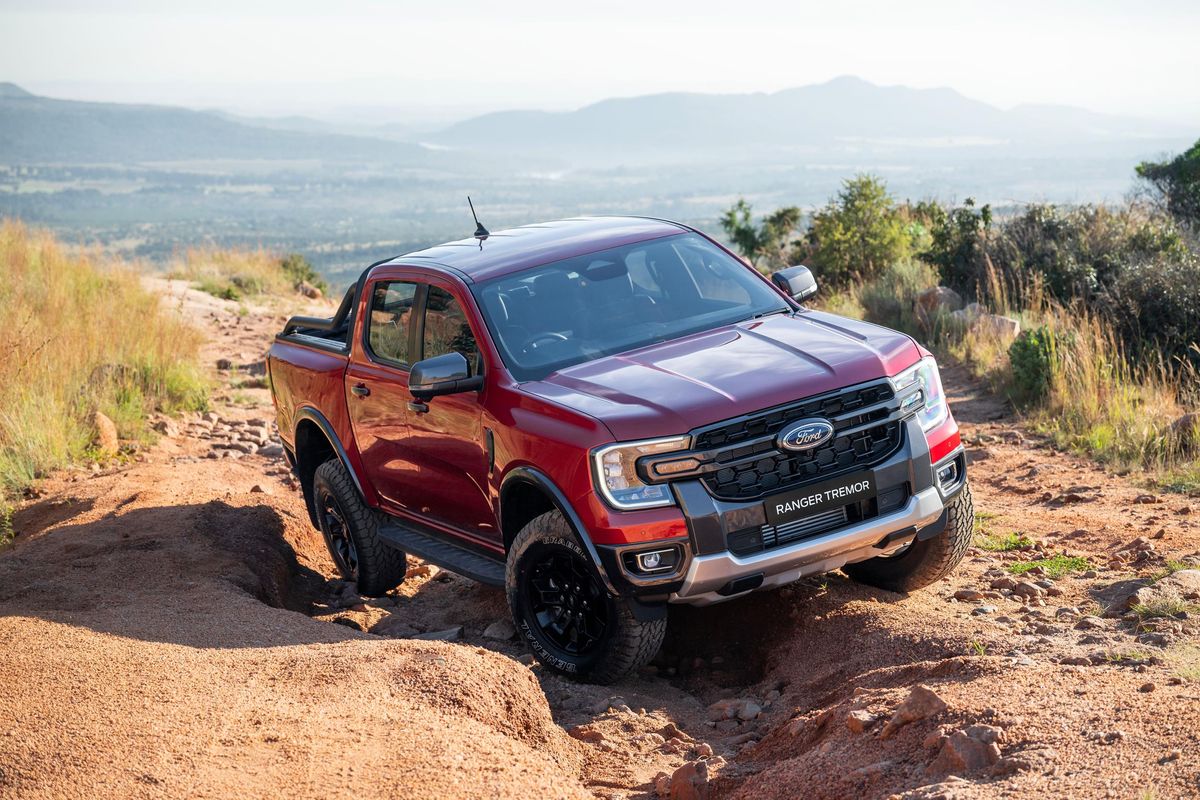
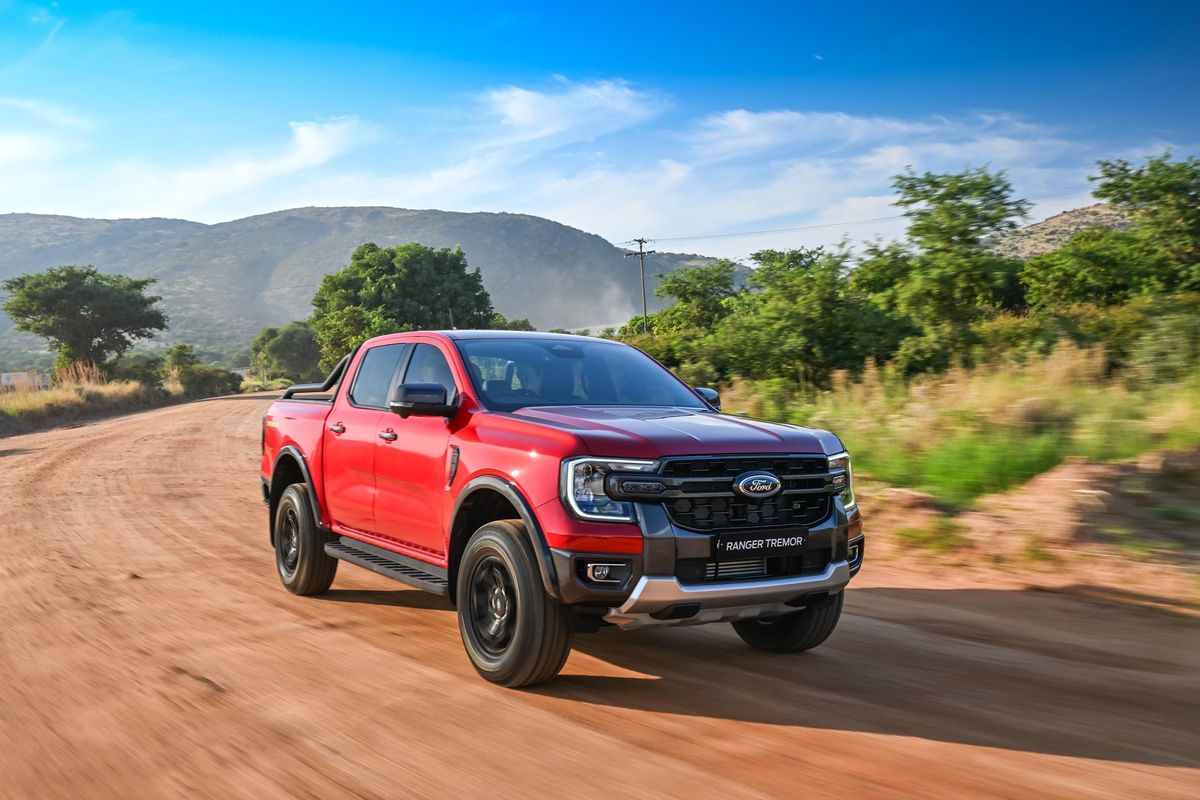
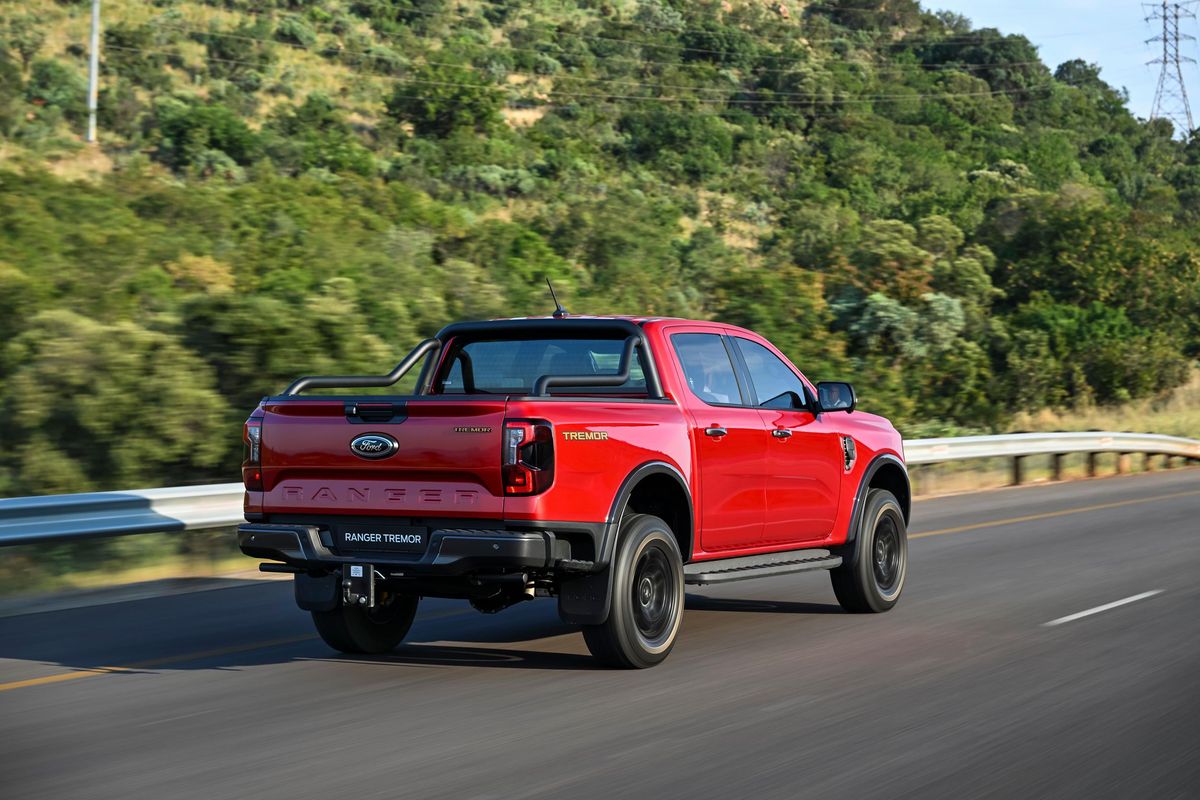
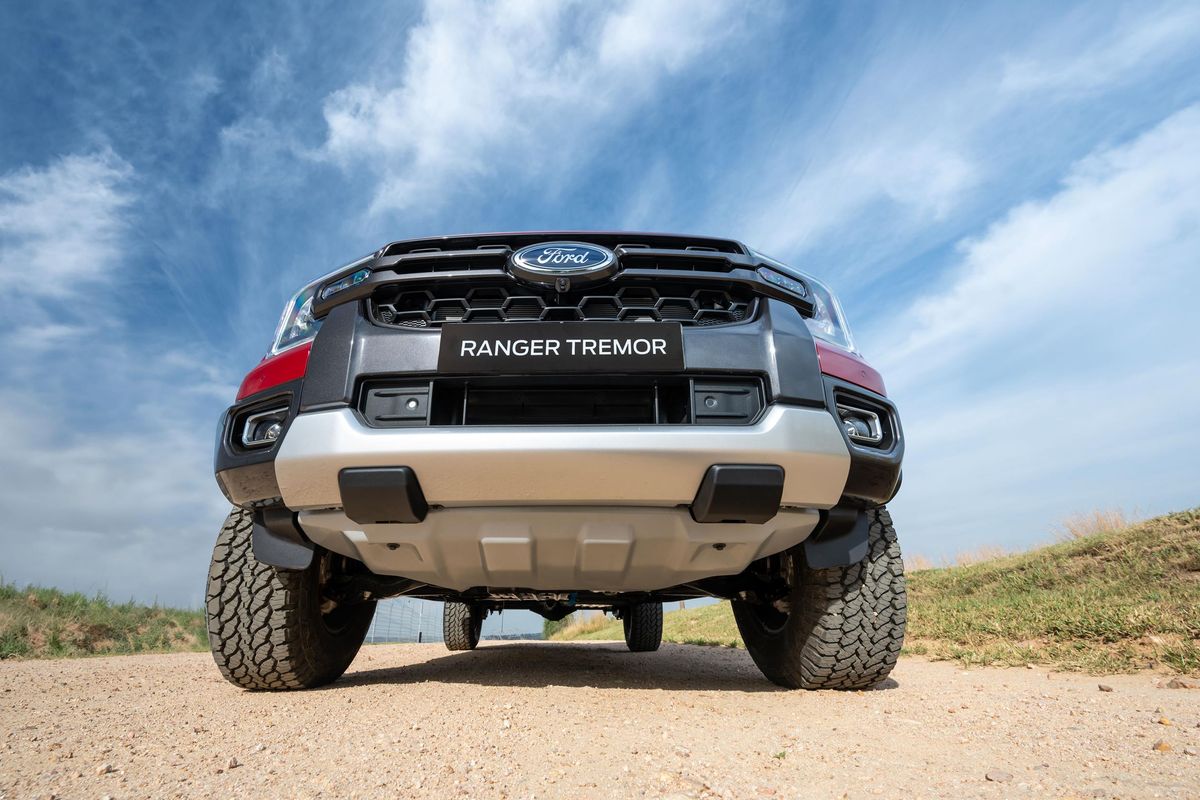
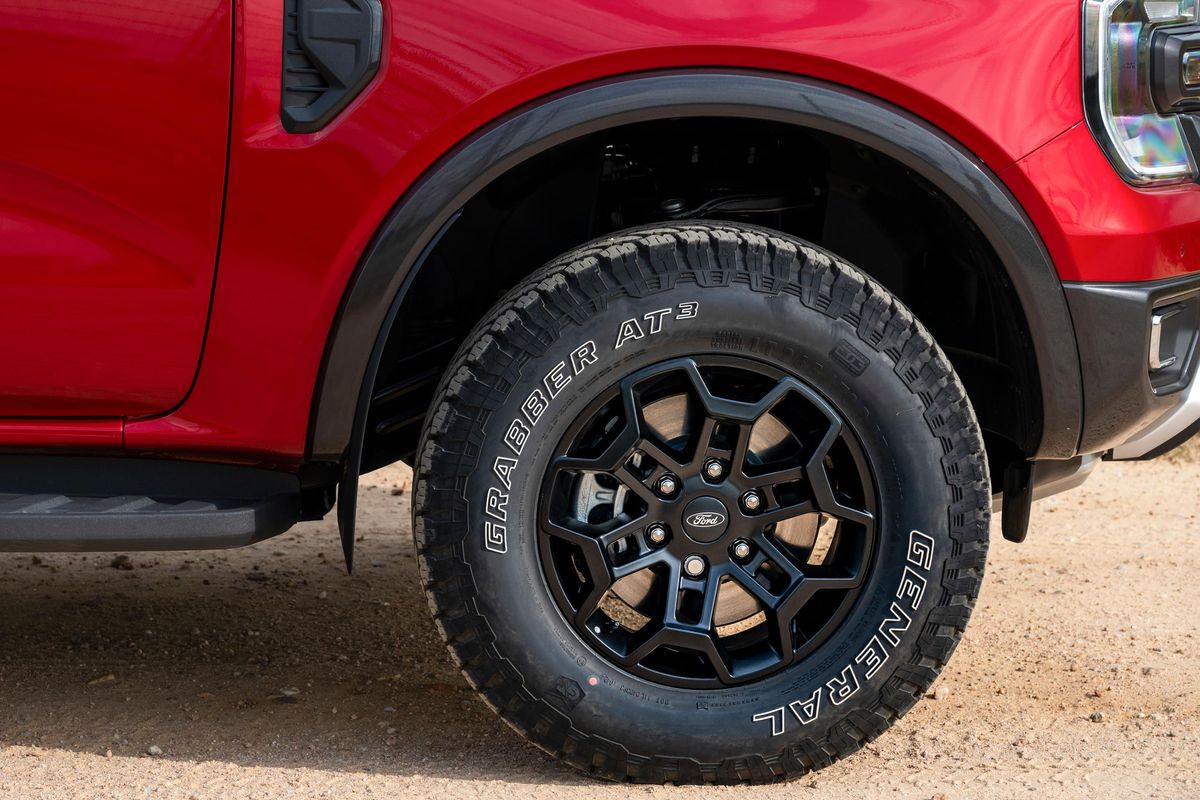
Its appearance is suitably bold. Those black 17-inch alloy wheels (wrapped in 265/40 R17 Grabber AT3 all-terrain tyres) grab your attention, as does the beefier grille with extra lighting. Other notable changes include the tubular sports bar, aluminium side steps, Tremor badges and wider wheel-arch mouldings.
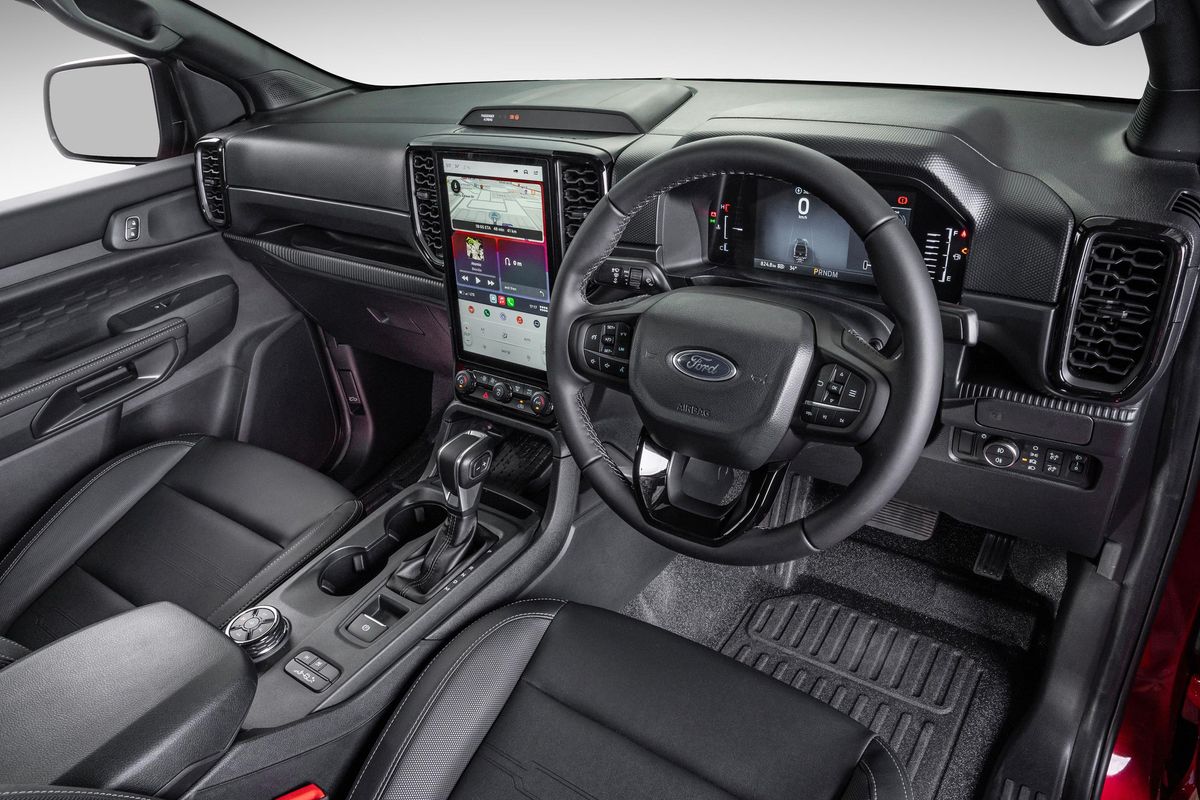
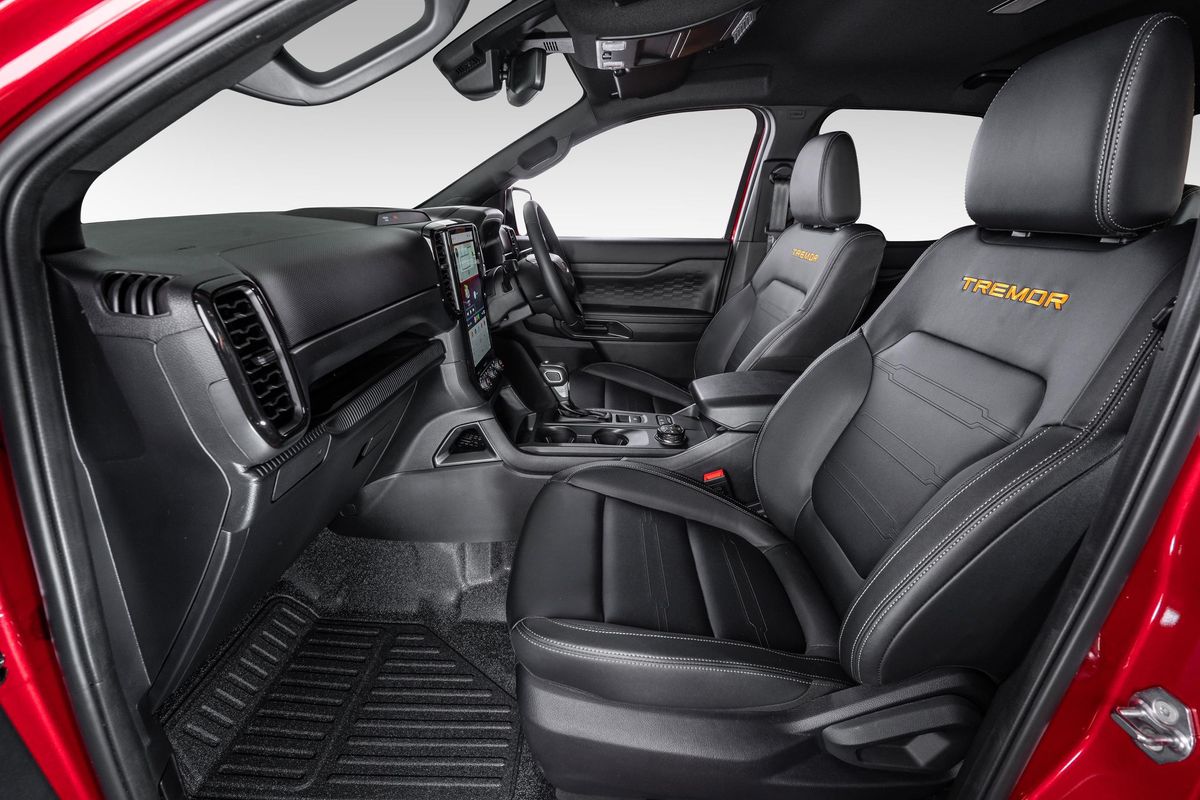
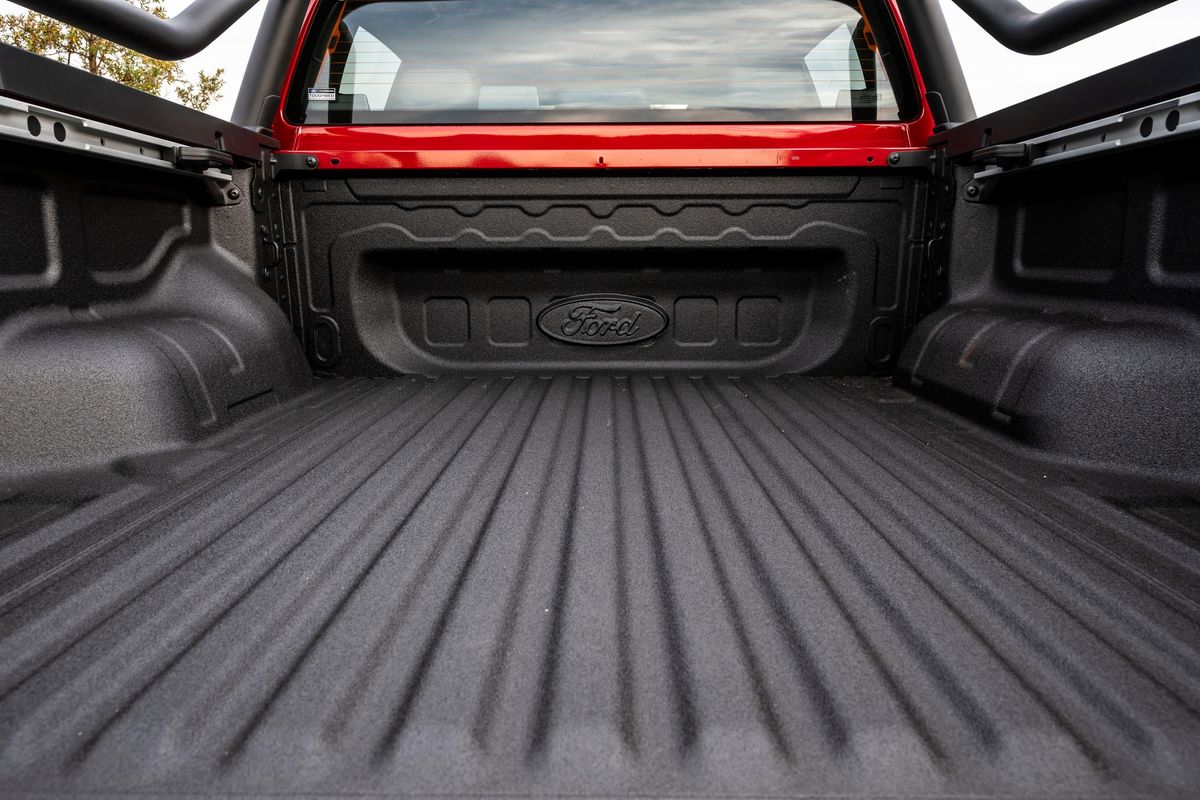
Inside, the Tremor is equipped with the usual T6.2 Ford Ranger fare, such as a digital instrument cluster and a portrait-oriented touchscreen powered by the Blue Oval’s SYNC 4A infotainment system. However, it also comes fitted with a rugged vinyl floor instead of carpet trim, which means you won’t struggle to scrub dirtied footwells clean. Fittingly, the seats are also trimmed in vinyl and feature Tremor badging.
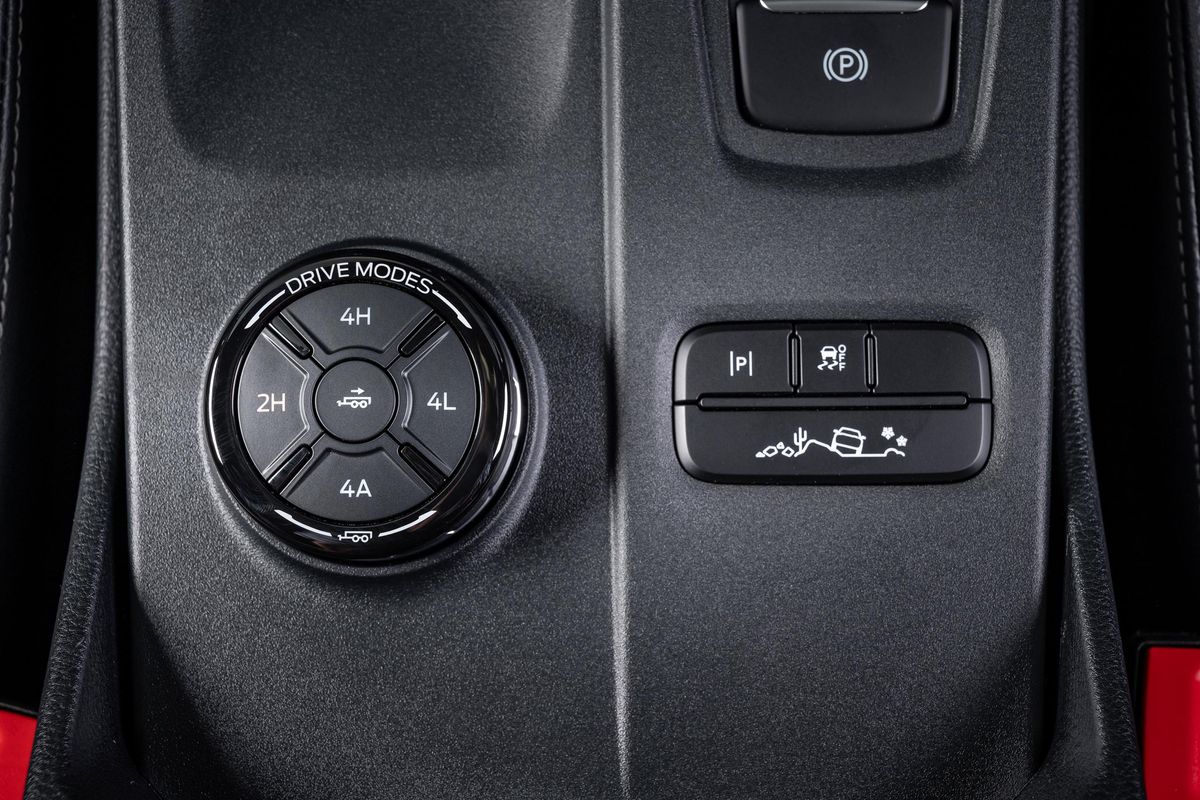
The Tremor’s 154 kW 2.0-litre 4-cylinder bi-turbocharged diesel engine is mated with a 10-speed auto transmission. It directs as much as 500 Nm of torque to all wheels via a full-time 4-wheel-drive system (offering 2High, 4High, 4Low and 4Auto). When required, the diff lock can be activated electronically.
Does it have enough off-roading goodies?
If you want to traverse rough off-road terrain (at considerable speed – if you like), the 3.0T V6 double cab Raptor 4WD is ideal for the task, but let’s face it – the Raptor is priced beyond R1.2 million and even the Wildtrak X costs “more than a bar”. If you, like most of us, can only dream of owning those bakkies, then the Tremor has more than enough hardware and tech to carry it through some challenging terrain.
Apart from its all-terrain tackies, the Tremor is fitted with a steel bash plate, dual front recovery hooks, specially-developed Bilstein dampers, Trail Turn assist and Trail Cruise Control, with Rock Crawl mode added to the already comprehensive drive modes (Normal, Eco, Tow, Slippery, Mud/Ruts, Sand). It sits 30 mm wider and 24 mm higher than a standard Ranger and its ground clearance is raised to 261 mm.
What is the Ranger Tremor like to drive?
FMCSA was eager to showcase the off-road prowess of its newcomer, so we weren’t at all surprised (or disappointed) that the launch route comprised mostly dirt roads and off-road routes. Before we get stuck into the bakkie’s 4×4 capabilities, we’d like to note that the chunky off-road tyres were remarkably quiet. It truly impressed us; in the past, all-terrain tyres have tended to drone and rumble at triple-digit speeds.
Our drive took place at the Grabouw 4×4 trail – a technically challenging course that included some tricky undulations, deep holes and sharp turns. The smart Trail Turn Assist function, which essentially locks the inside wheel to help pivot the vehicle (tighten its turning circle), easily dealt with the latter.
Impressively, during trickier sections of the course, where we would probably have felt compelled to activate 4L (4Low or low range) in some other vehicles, the Tremor made steady progress in 4High. Those Grabber AT3s and the Tremor’s additional ground clearance certainly proved their worth!
Suffice it to say, the Ford Ranger Tremor is one seriously capable vehicle in the right hands. It’s a good thing that FMCSA offers Tremor buyers a free 4×4 driving course if they buy one of these vehicles…
How much does the Ranger Tremor cost in South Africa?
Ford Ranger 2.0 BiTurbo double cab Tremor 4WD
R977 500
The price includes Ford’s 4-year/120 000 km warranty, 4-year/unlimited km roadside assistance and 5-year/unlimited km corrosion warranty. As a reminder, customers can purchase service or maintenance plans valid for up to 8 years or 135 000 km. For example, a 6-year/90 000 km service plan costs an additional R23 959.10 (March 2024). There are various warranty extension options too.
With a price tag of just under R1 million (March 2024), the Ford Ranger Tremor offers reasonably good value for money for 4x4ing enthusiasts who seek a bakkie with considerable off-road capability straight from the factory. If overlanding and adventuring in the untamed wild is your idea of a good time (and it is, perhaps to more outdoorsy people than you think), then this might be the double-cab bakkie for you.
The Tremor’s biturbo engine is willing; its full-time 4-wheel-drive system (with several off-road drive modes to choose from) is laughably user-friendly (even for novices) and, thanks to its raised ride height and deeply grooved plump tyres, the bakkie will clamber over many – if not most – obstacles with ease.
For the average consumer, the normal XLT 4×4 (upon which the Tremor is based) is probably the bakkie all they would ever need, but if you desire a 4×4 double cab with extra attitude (kerb appeal), as well as the off-roading goodies to match the show, this newcomer certainly tugs at the ol’ heartstrings.
The winners in each of the 2024 World Car Awards’ 6 categories – including the recipient of the overall prize – have been announced. Drumroll, please…
The organisers of the 2024 World Car Awards have revealed the winners in each of the competition’s 6 categories, making the announcements in series at the New York International Auto Show.
As a reminder, the World Car Finals (powered by Brembo) boasts a jury of more than 100 highly experienced judges from 29 countries, including Cars.co.za’s very own Hannes Oosthuizen.
Kia’s EV9 secured a double win (including the overall title) at the 2024 World Car Awards.
So, to the winners. The Kia EV9 secured not only the World Electric Vehicle award but also the 2024World Car of the Year title. For the record, this double-win takes Kia’s award total in the competition’s 20-year history to 5, including an overall victory for the Telluride back in 2020.
In the 2024 World Car of the Year category, the EV9 was chosen from an initial entry group of 38 contenders, a list that was whittled down to just 3 finalists – the BYD Seal, Volvo EX30 and, of course, the EV9 itself – about a month ago. In the World Electric Vehicle class, the EV9 triumphed over the BMW i5 and the aforementioned EX30.
What about the other categories? Well, the BMW 5 Series (including the battery-powered i5 mentioned above) beat the Mercedes-Benz E-Class and the electric Mercedes-Benz EQE SUV to the title of World Luxury Car. This represents the 9th award win for the BMW Group in the competition’s 2-decade history.
Fascinatingly, though the BMW M2 coupé and the hybrid-powered BMW XM made the final 3 in the World Performance Car category, that award was instead grabbed by the electric Hyundai Ioniq 5 N, representing the Korean firm’s 7th award. For the record, the Ioniq 6 was a triple winner in 2023, while the Ioniq 5 pulled off the same feat a year prior (both including the overall title in the respective years).
Volvo’s EX30 was named the World Urban Car of the year.
Meanwhile, the World Urban Car gong went to the Volvo EX30, with the Swedish automaker’s smallest SUV seeing off fellow top-3 finalists the electric BYD Dolphin and the hybrid-powered Lexus LBX. The EX30’s victory in this segment was Volvo’s 2nd win in the competition’s history, after the XC60 took the overall title in 2018.
Finally, the Toyota Prius was handed the World Car Design of the Year trophy, beating out the Ford Bronco and Ferrari Purosangue. In this category, a design panel comprising 6 “highly respected world design experts” established the shortlist of recommendations (from an initial list of 70 vehicles) for the jurors’ final vote.
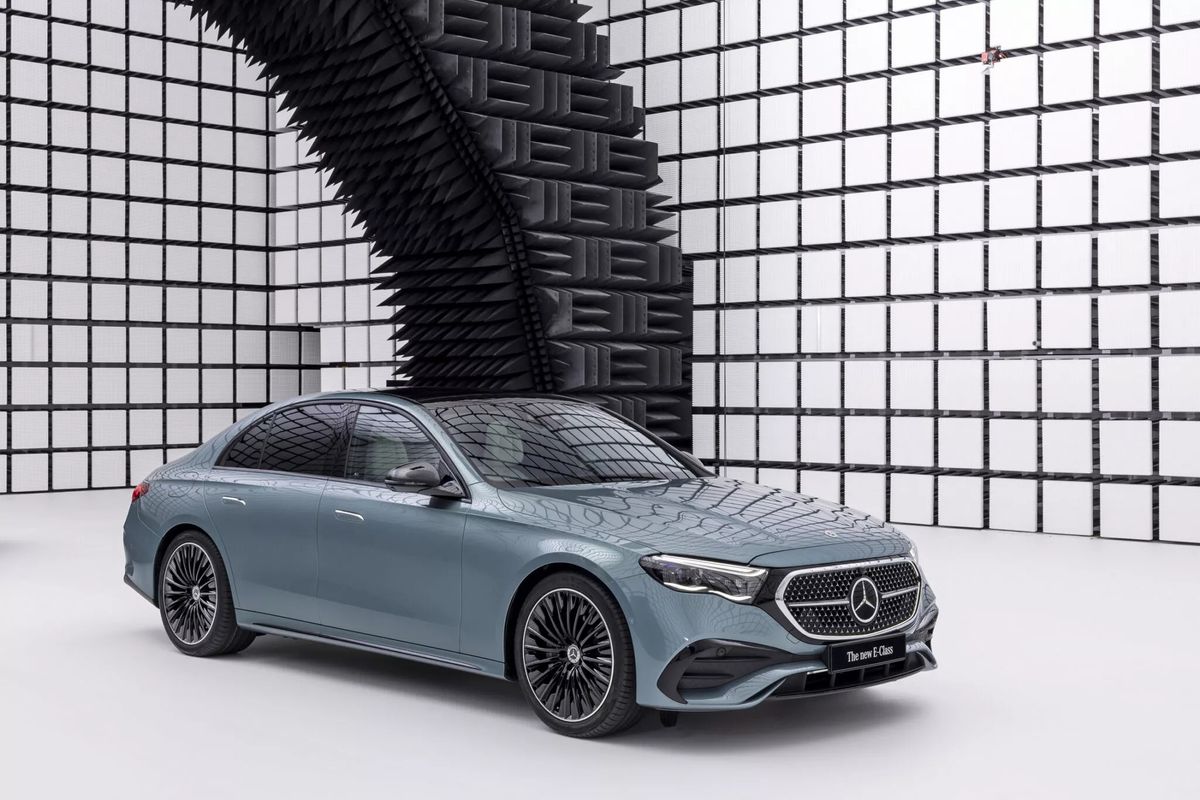
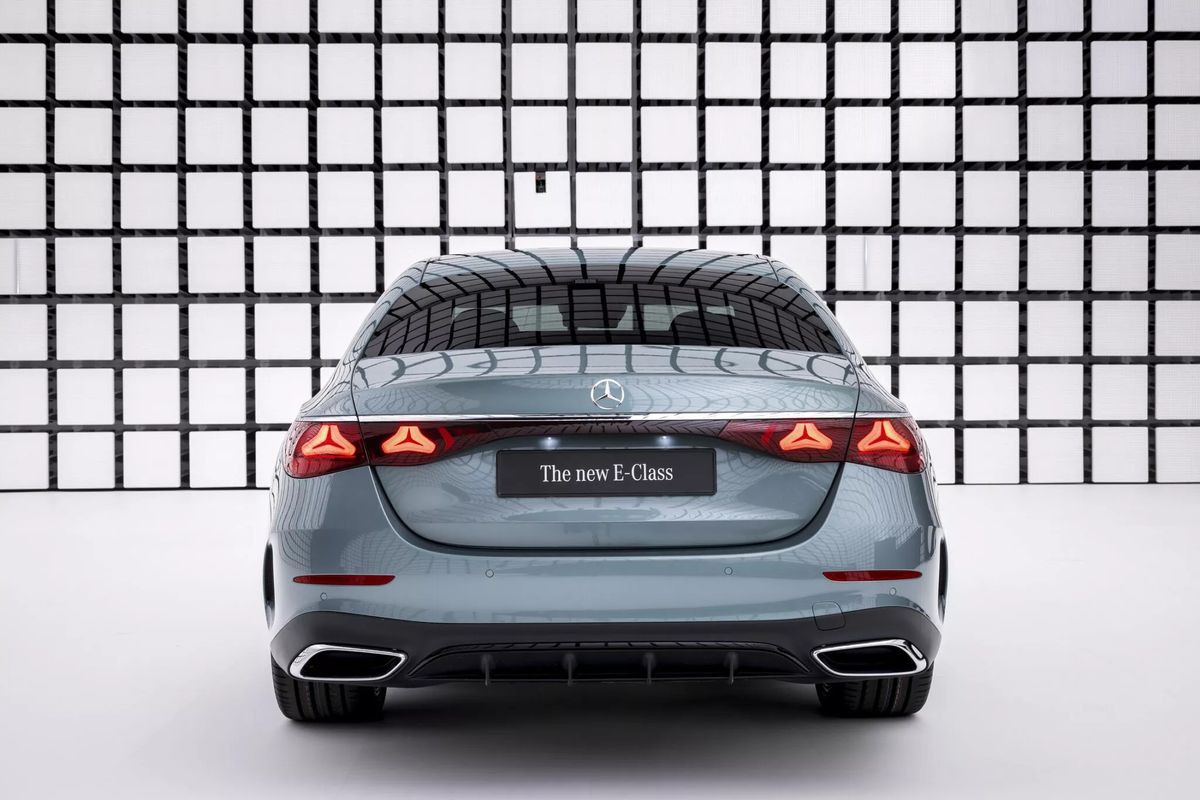
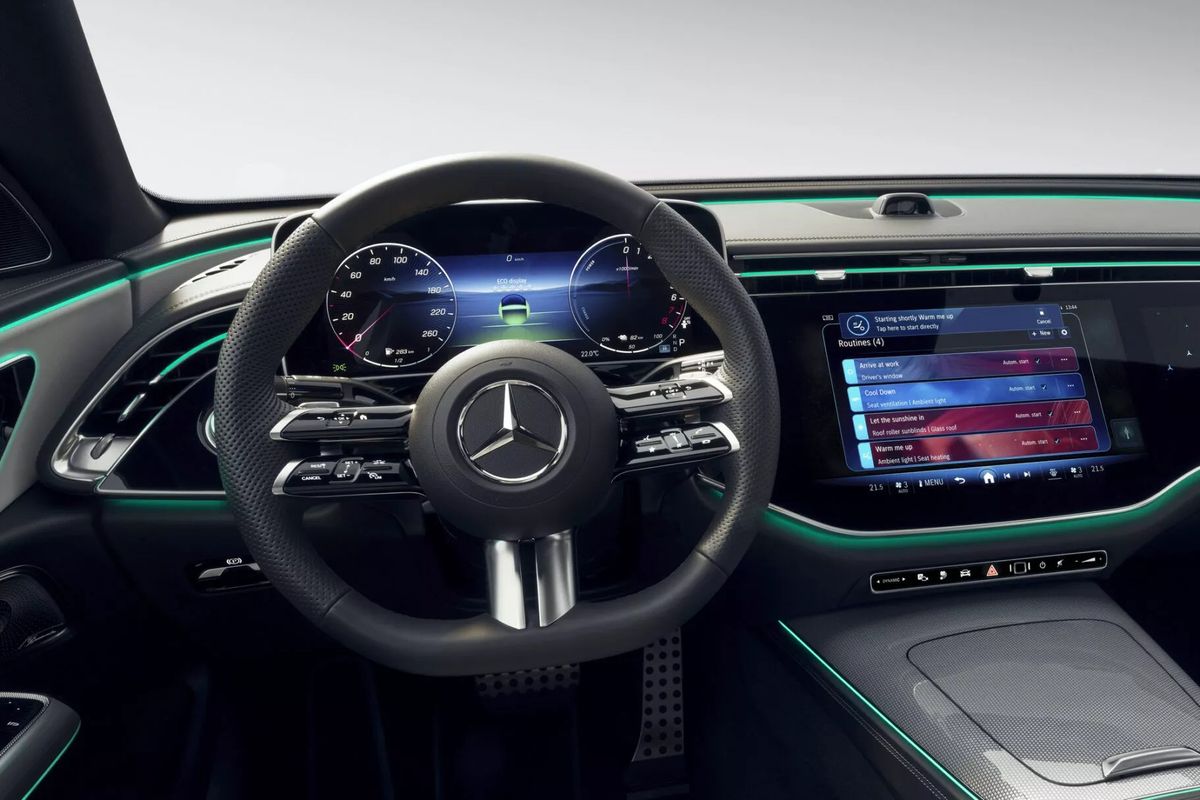
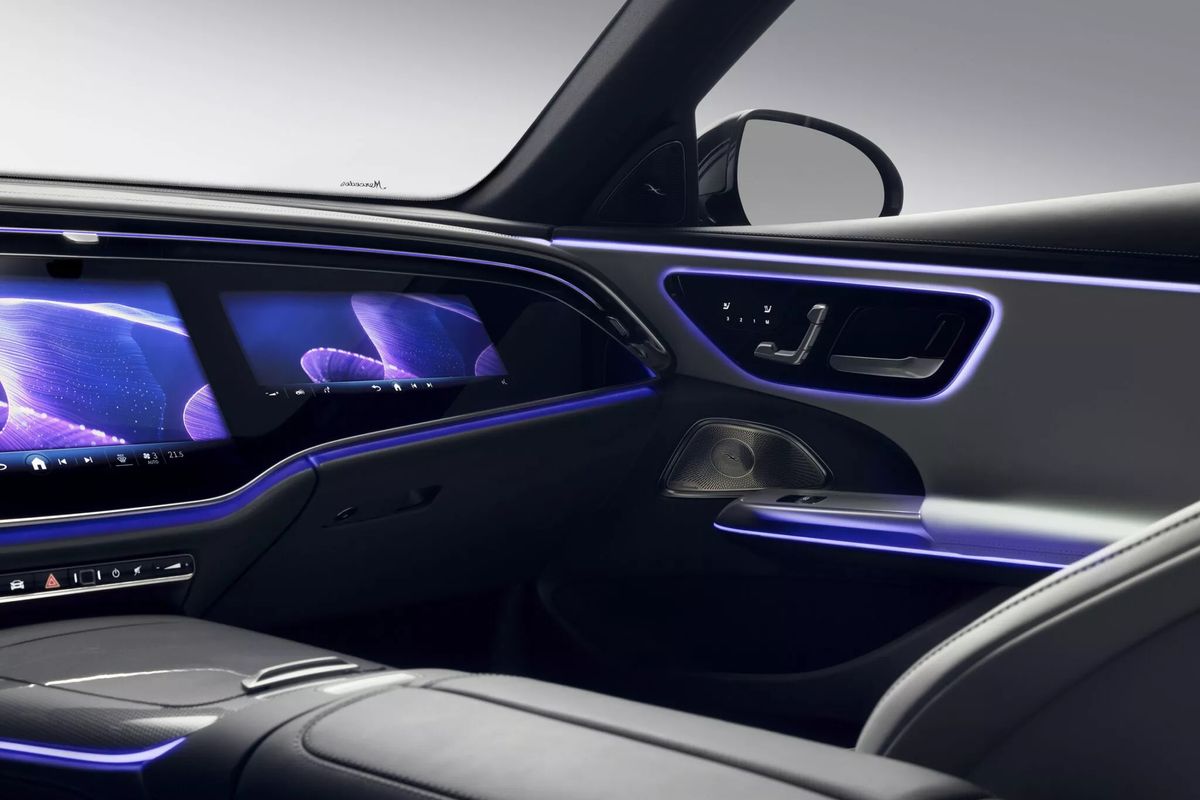
The new-generation Mercedes-Benz E-Class is on its way to South Africa. Here’s how much you will pay for the luxury sedan when it arrives in May 2024.
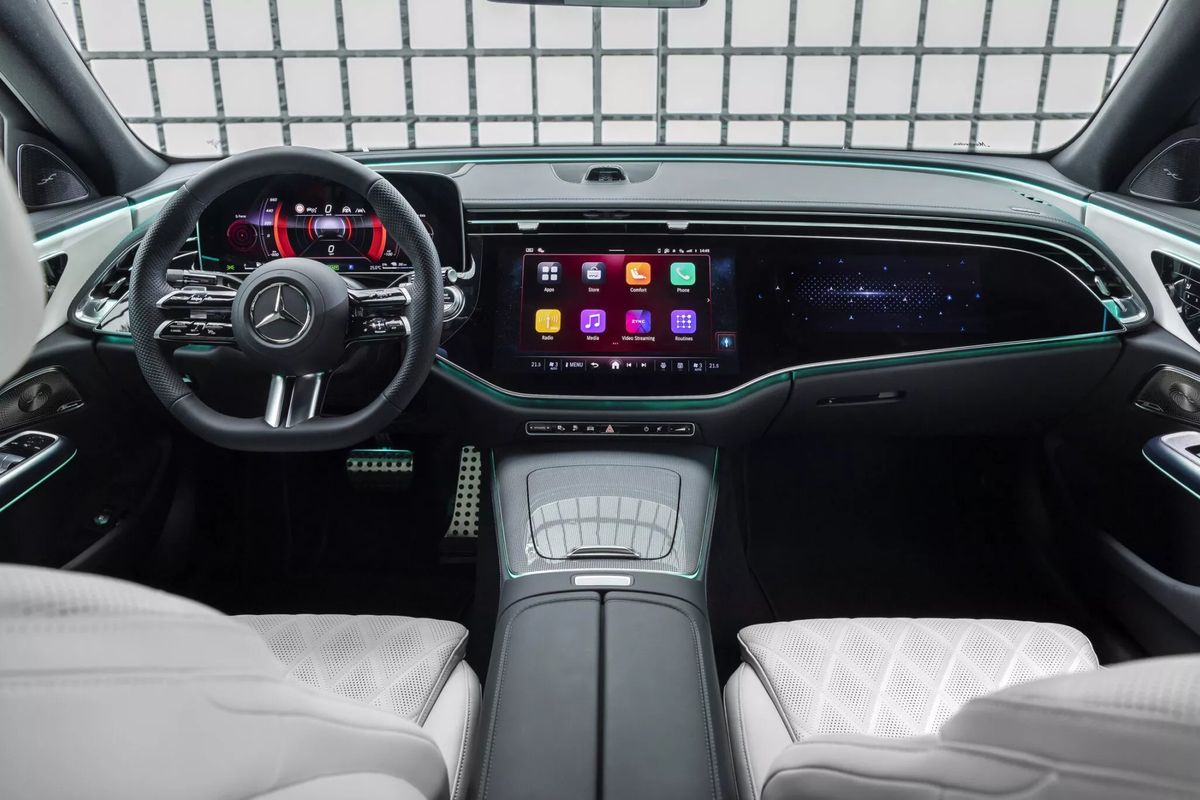
The 6th-generation Mercedes-Benz E-Class will be launching locally in May 2024 and we’ve uncovered pricing for the newcomer. Positioned as an alternative to the BMW 5 Series, the new-gen E-Class features a length extension of 22 mm to further increase cabin space, with the Stuttgart-based brand claiming legroom, kneeroom and elbowroom have grown.
From launch, there will be two engines on offer with both petrol and diesel fans covered. E200 features a 2.0-litre turbocharged petrol engine with 150 kW and 320 Nm, while the E220d has a 2.0-litre turbocharged diesel engine with 145 kW and 440 Nm. Both models are rear-wheel driven with 9-speed automatic gearboxes.
While local specifications are yet to be confirmed, we know that the new Mercedes-Benz E-Class will be offered in either AMG Line or Avantgarde trim, and there’ll be a number of options to configure your E-Class to your heart’s delight.
How much does the new-gen Mercedes-Benz E-Class cost in South Africa?
The new E-Class is sold with a 5-year/100 000 km service and maintenance plan.
The stylish Mercedes-Benz CLE coupe will be launching locally in May 2024 and we’ve uncovered early specifications and pricing.
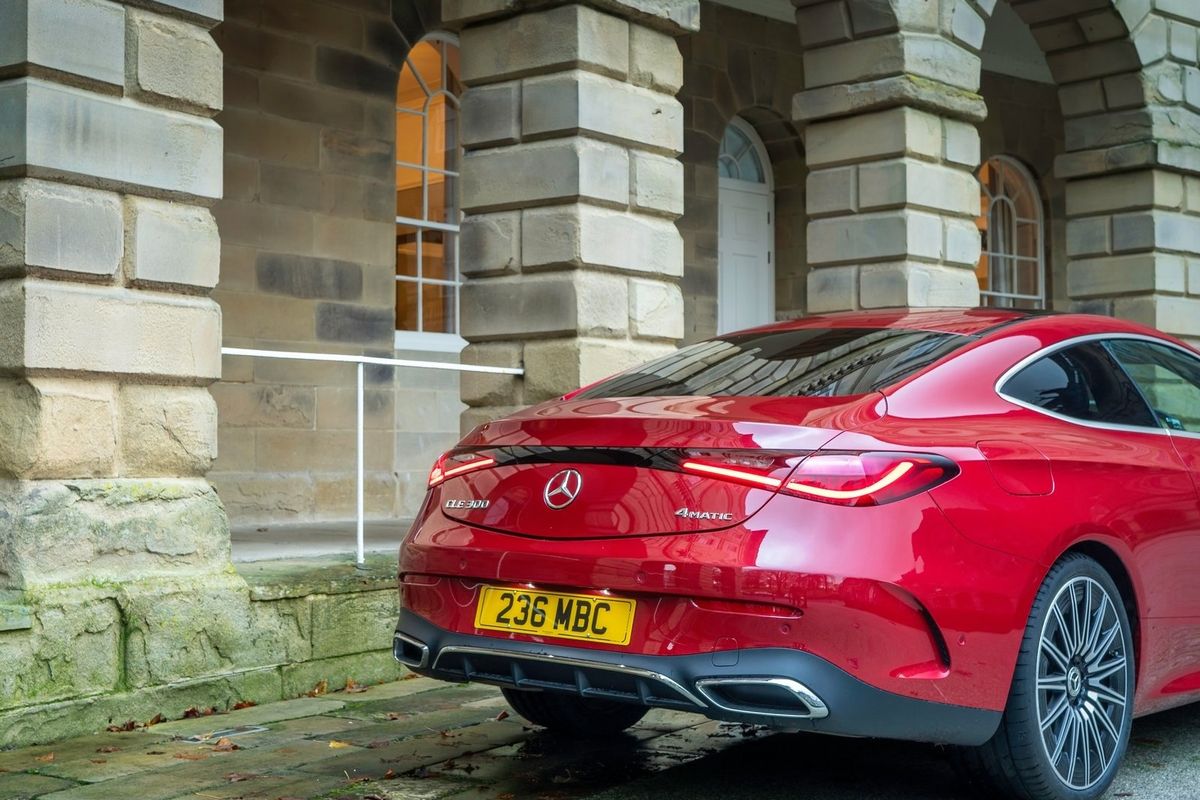
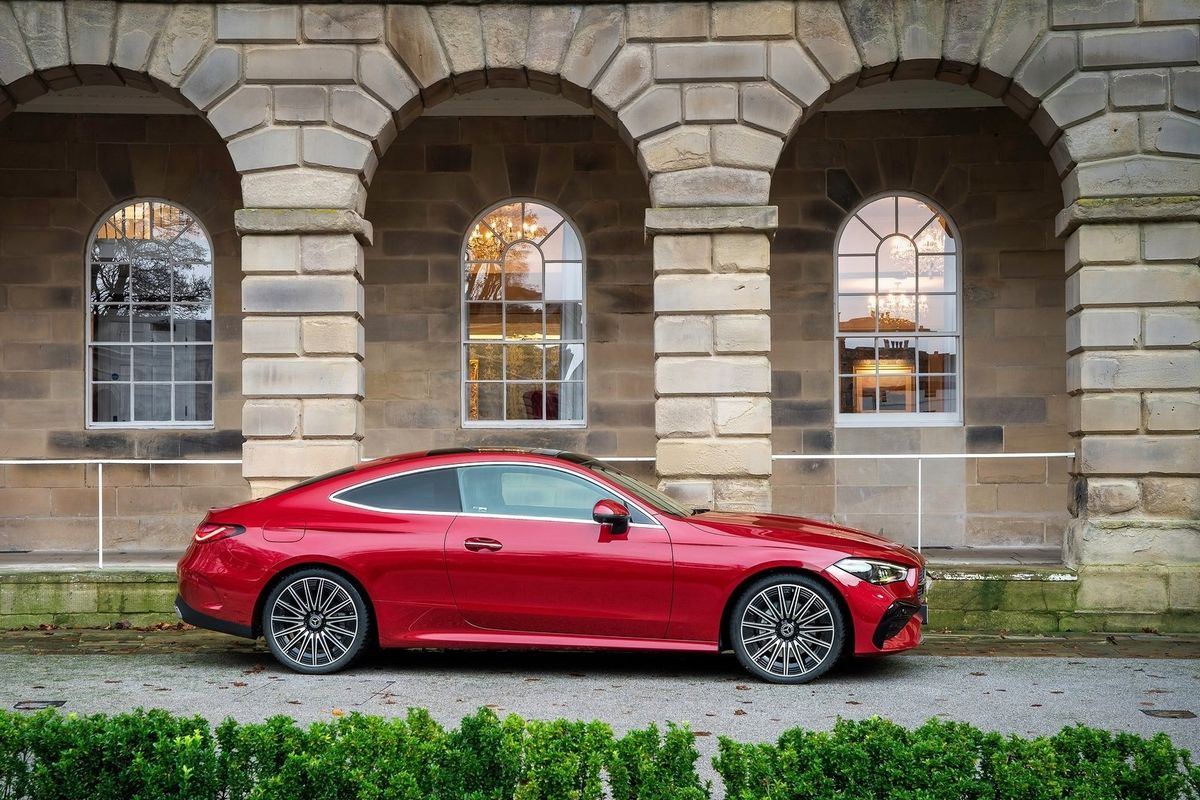
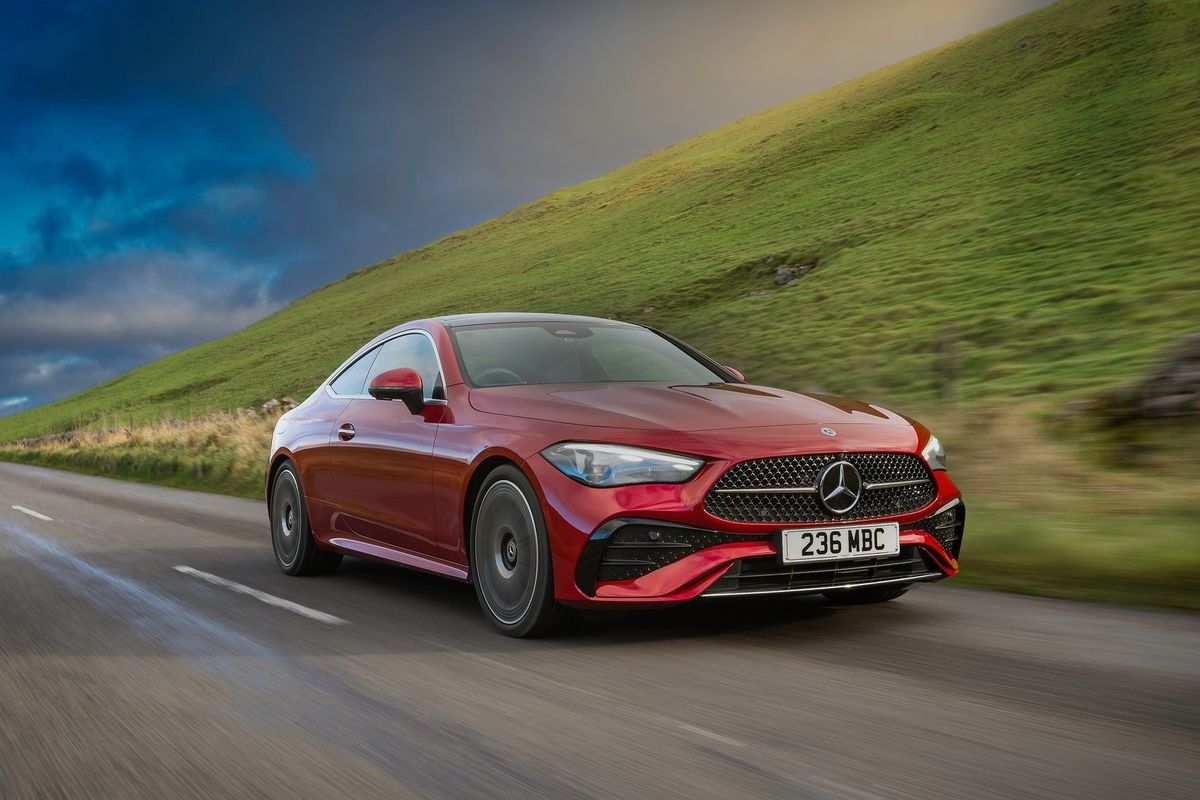
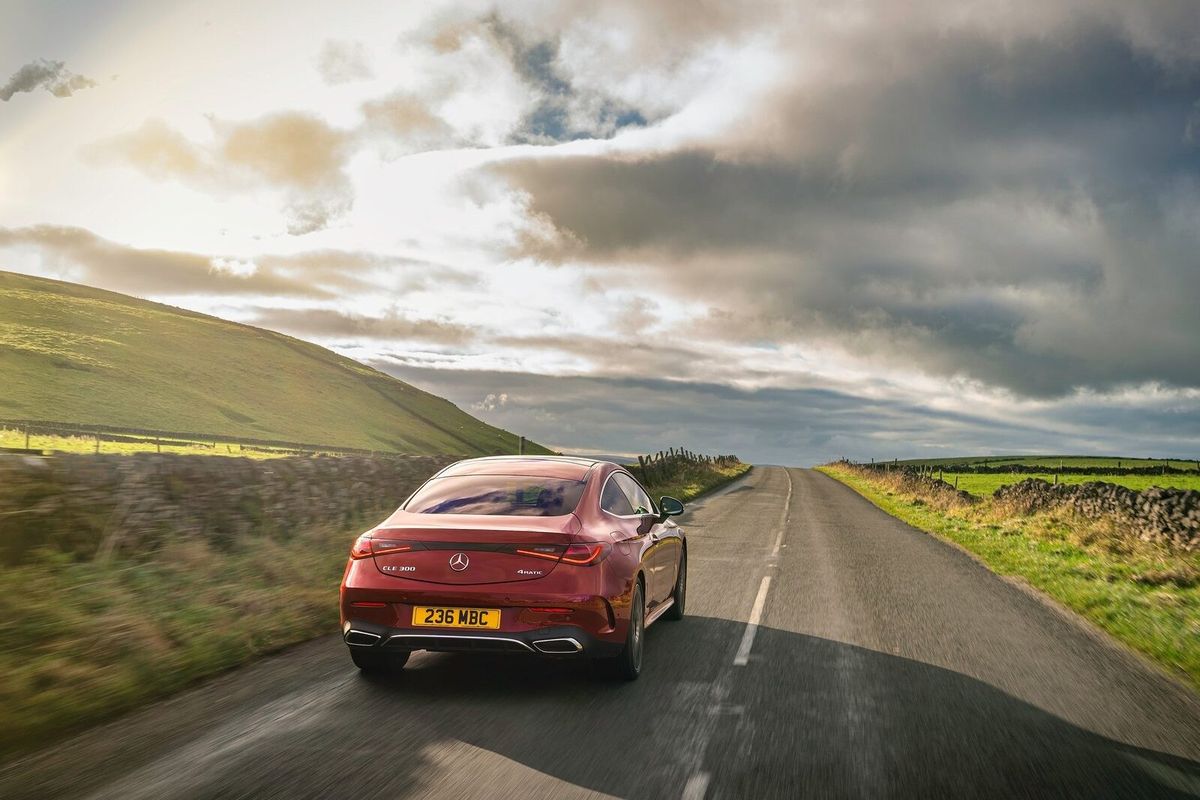
The Mercedes-Benz CLE is the new luxury coupe model from the Stuttgart-based brand. With the C-Class and E-Class falling away, the CLE is the best of both worlds. It’s bigger than the outgoing C-Class, with a 25mm longer wheelbase.
We’ll have two engines to choose from when the vehicle launches in South Africa in May 2024. Kicking off the range is the CLE 200 with a 2.0-litre turbocharged four-cylinder petrol engine which makes 150 kW and 320 Nm. Power goes to the rear wheels via a 9-speed automatic gearbox.
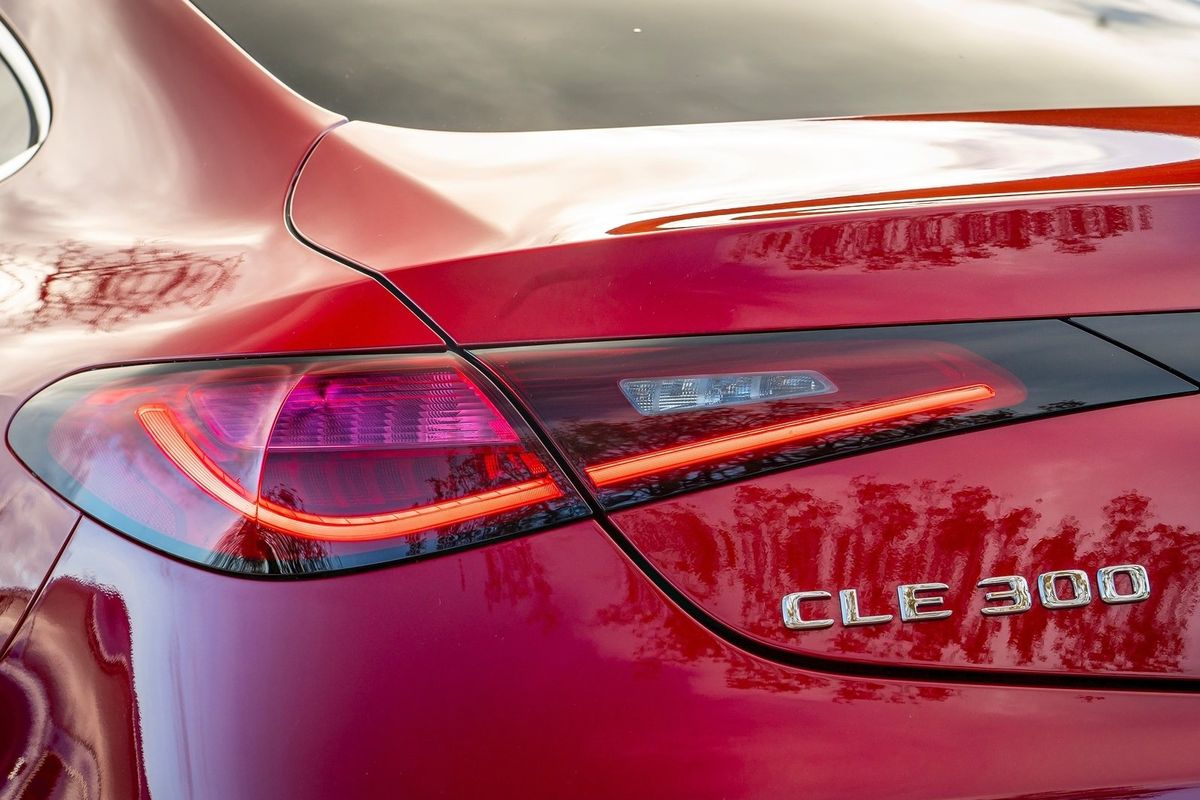
Next up is the CLE 300, which again uses 2.0-litre turbocharged four-cylinder petrol engine, but with higher outputs. Here, there’s 190 kW and 400 Nm, and again the vehicle uses a 9-speed automatic gearbox.
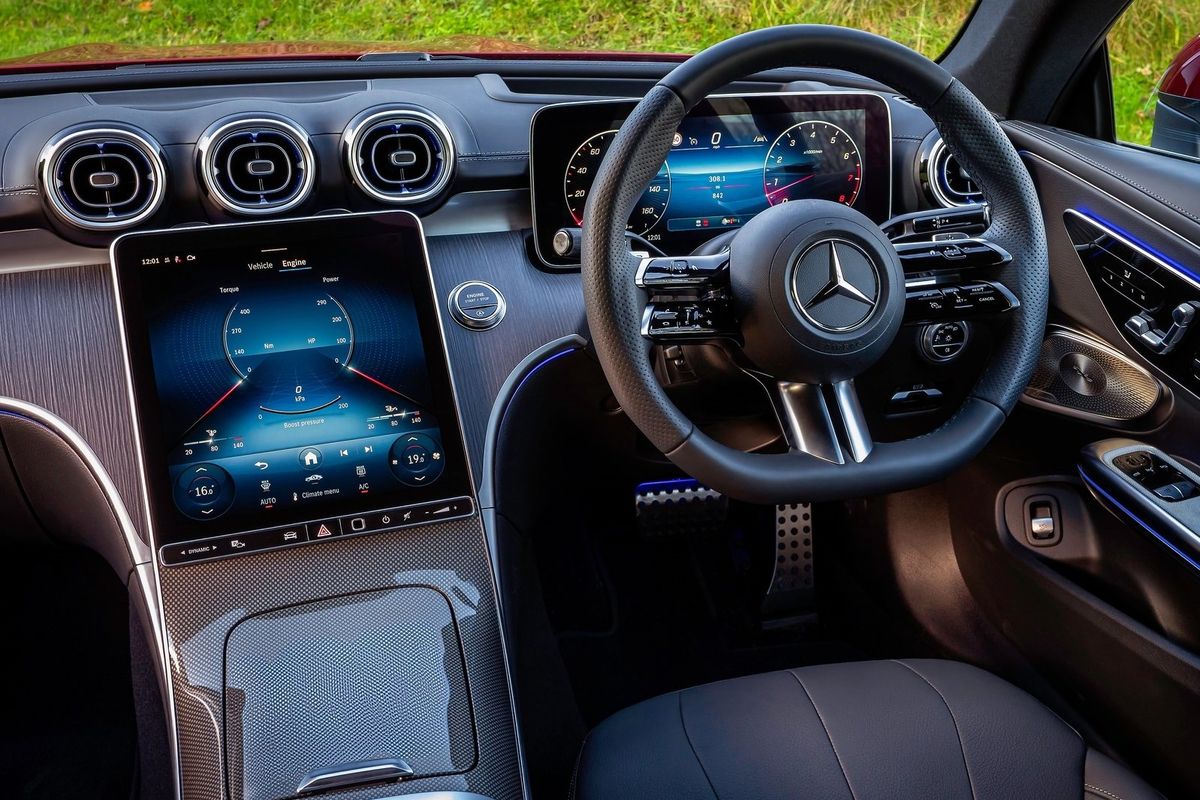
While not all local details are immediately available, we understand the vehicle will be coming standard with the AMG Line trim, so expect a sportier visual look and AMG-specific wheels. Expect the comprehensive MBUX infotainment system as standard too.
We’re expecting the convertible model and some potent AMG and 4Matic-equipped derivatives to follow on later on this year.
How much does the new Mercedes-Benz CLE cost in South Africa?
CLE 200
R1 355 350
CLE 300
R1 430 650
The CLE is sold with a 5-year/100 000 km service and maintenance plan.
Audi RS6 Performance Video Review: The Reason You Shouldn’t Buy a Performance SUV
The Audi RS6 Avant costs over R2 million but offers supercar levels of performance in a spacious wagon design. Is this a worthy alternative to the SUV trend? Jacob Moshokoa put the RS6 Avant to the test, watch the video!
The Audi RS6 Avant is powered by a 4.0-litre V8 bi-turbo engine that offers 445 kW and 850 Nm of torque in this Performance version, which also includes the increased top speed option allowing it to reach 305 kph.
In this Audi RS6 Avant video review, Jacob Moshokoa drives one of his hero cars, comparing it with the previous generation RS6 while considering if the new model is worth the extra money. One of his favourite things about the new Audi RS6 is the sound, which Audi has configured to provide more driving delight than ever before.
Watch the latest review and let us know if you think the RS6 Performance is the best all-round car you can buy today?