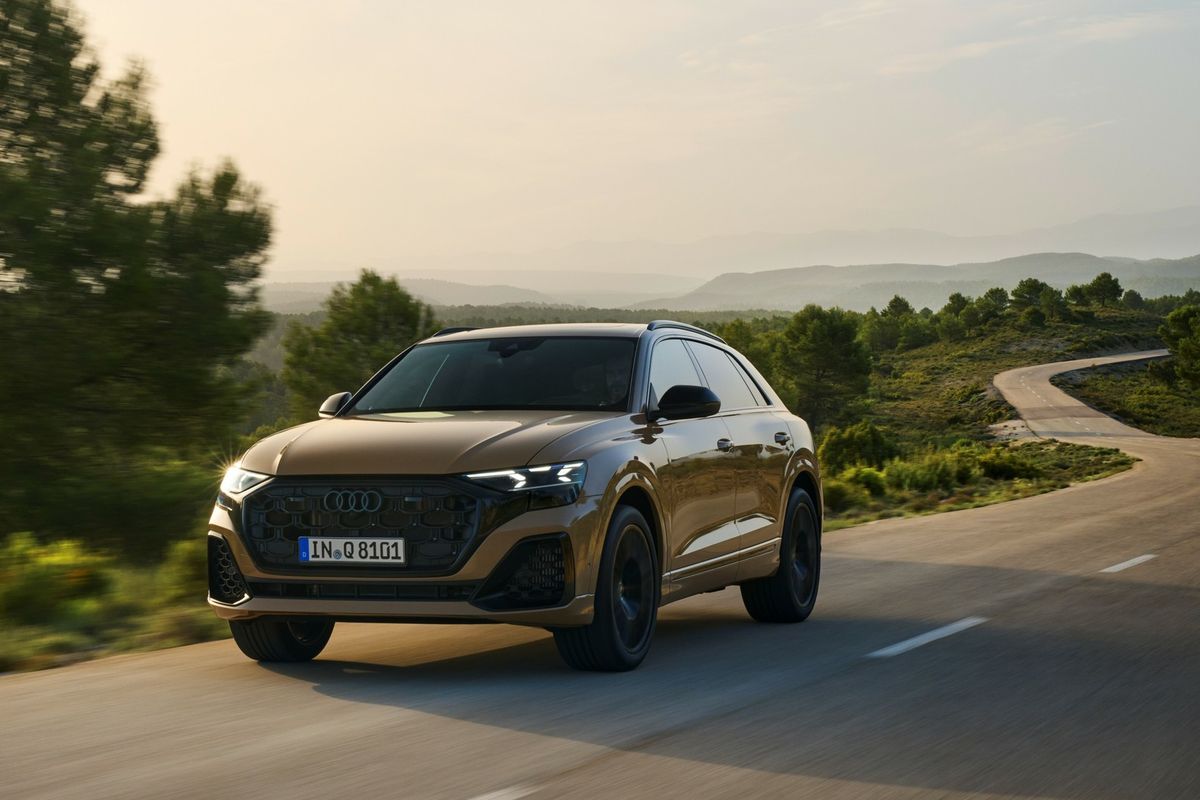
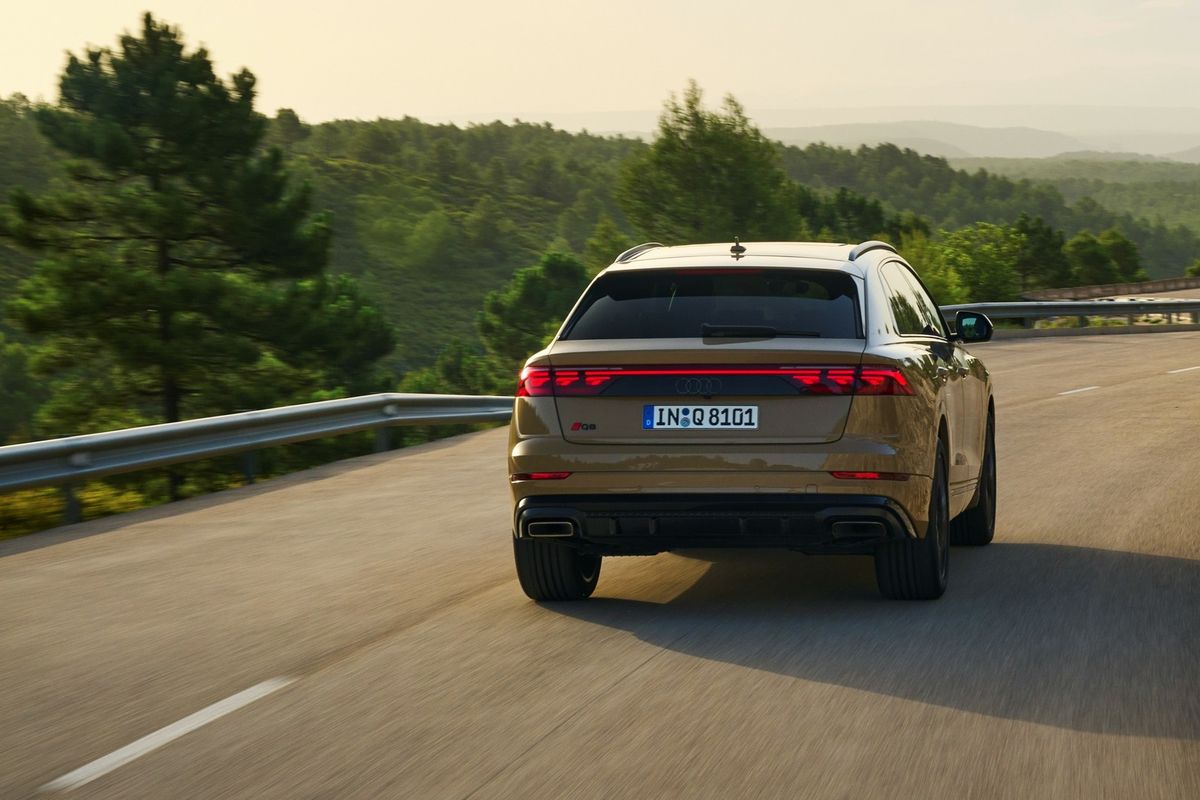
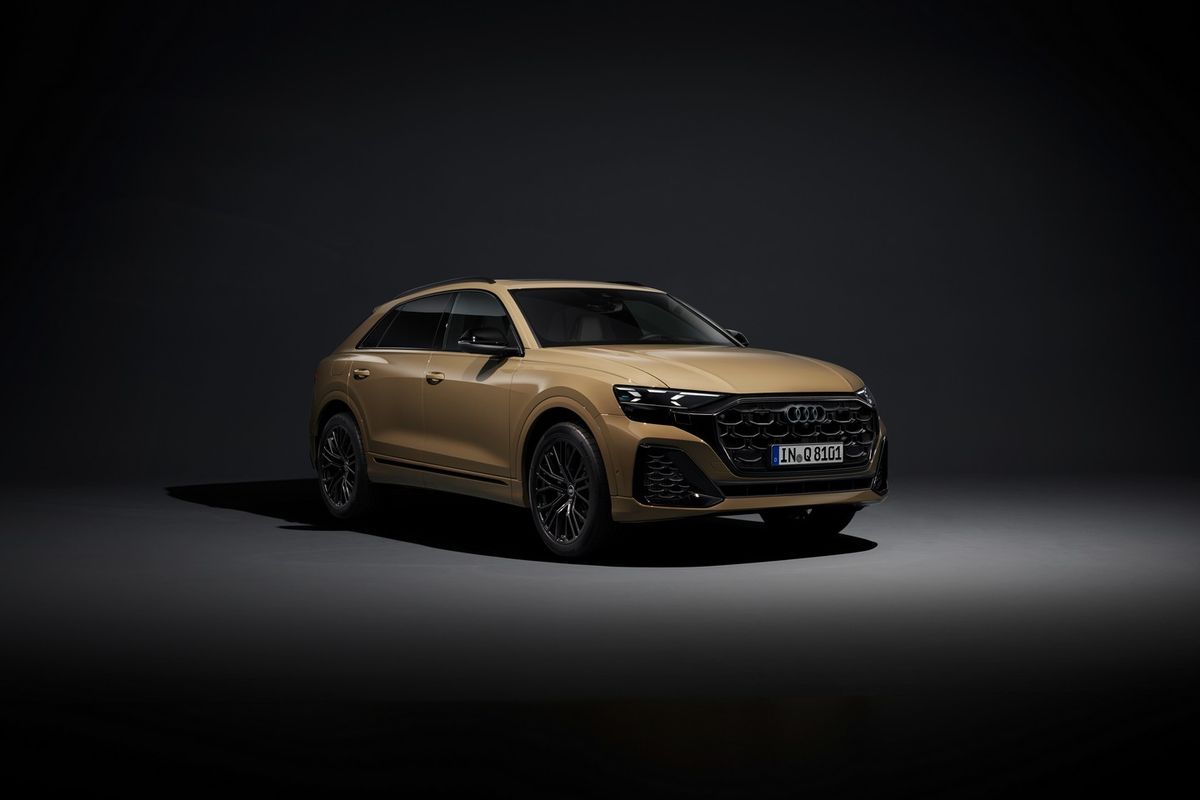
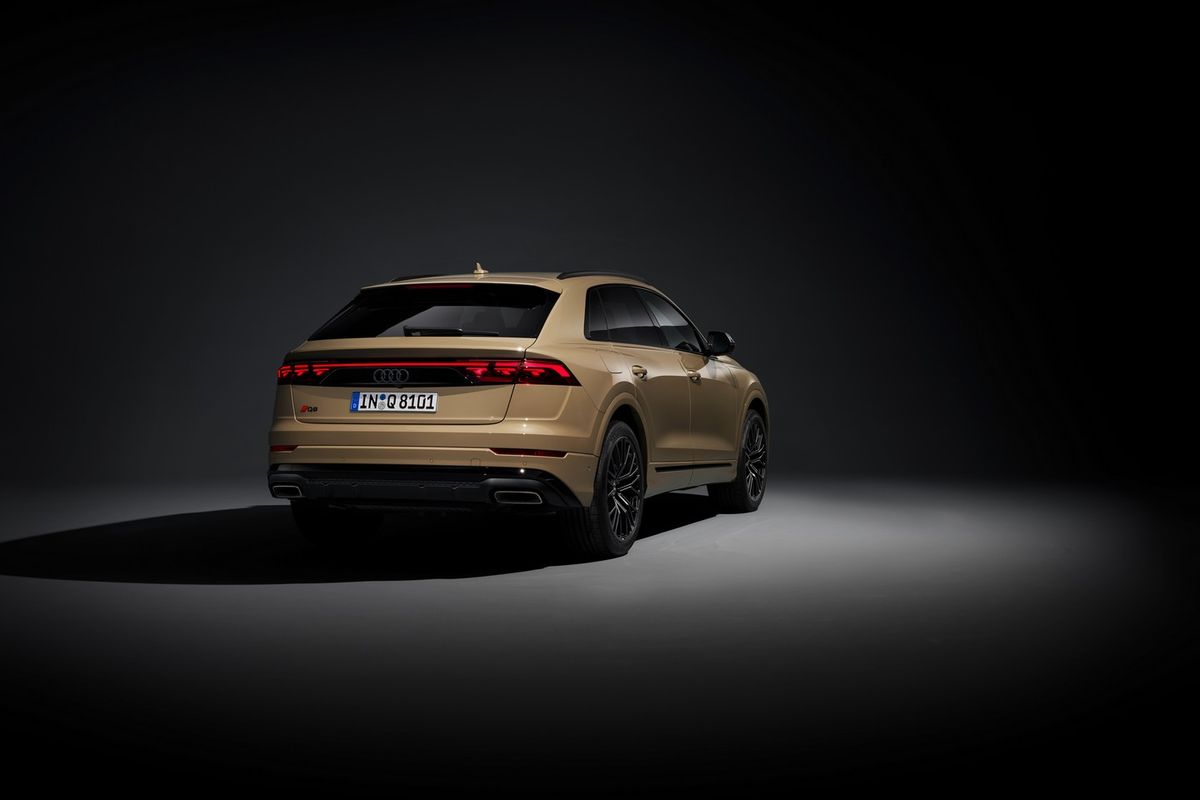
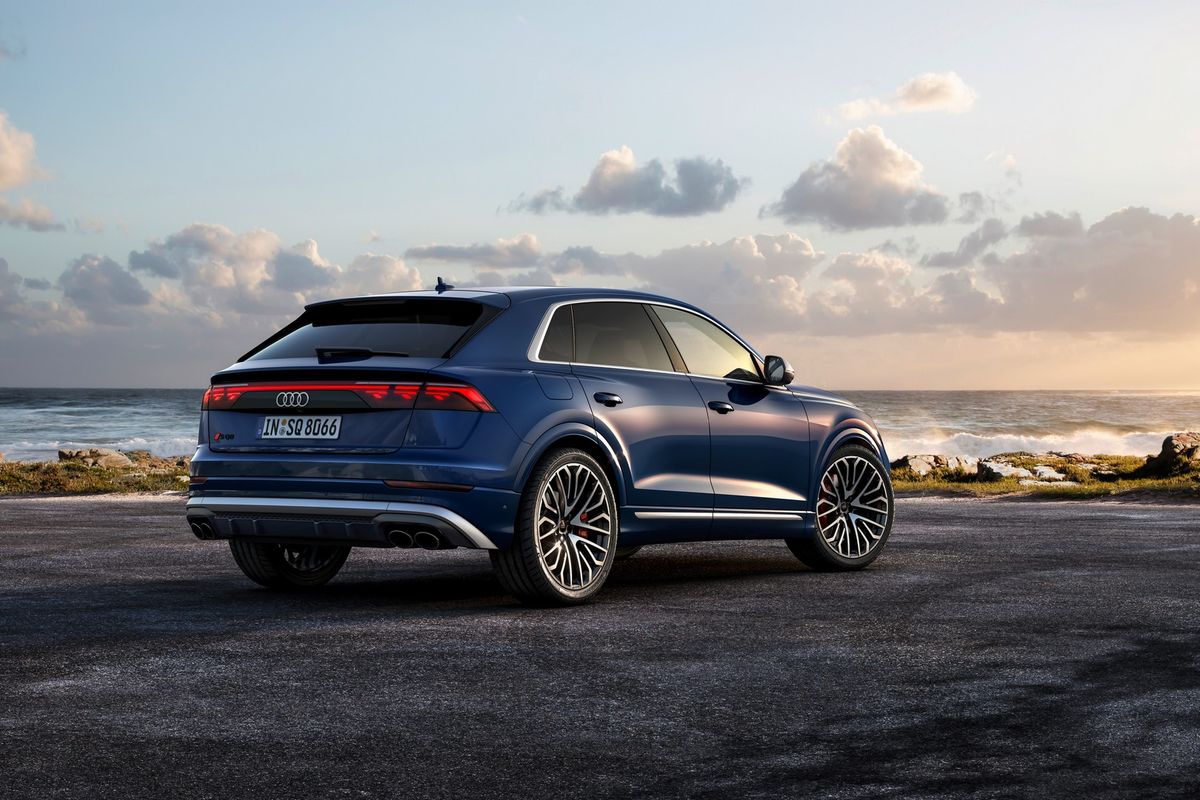
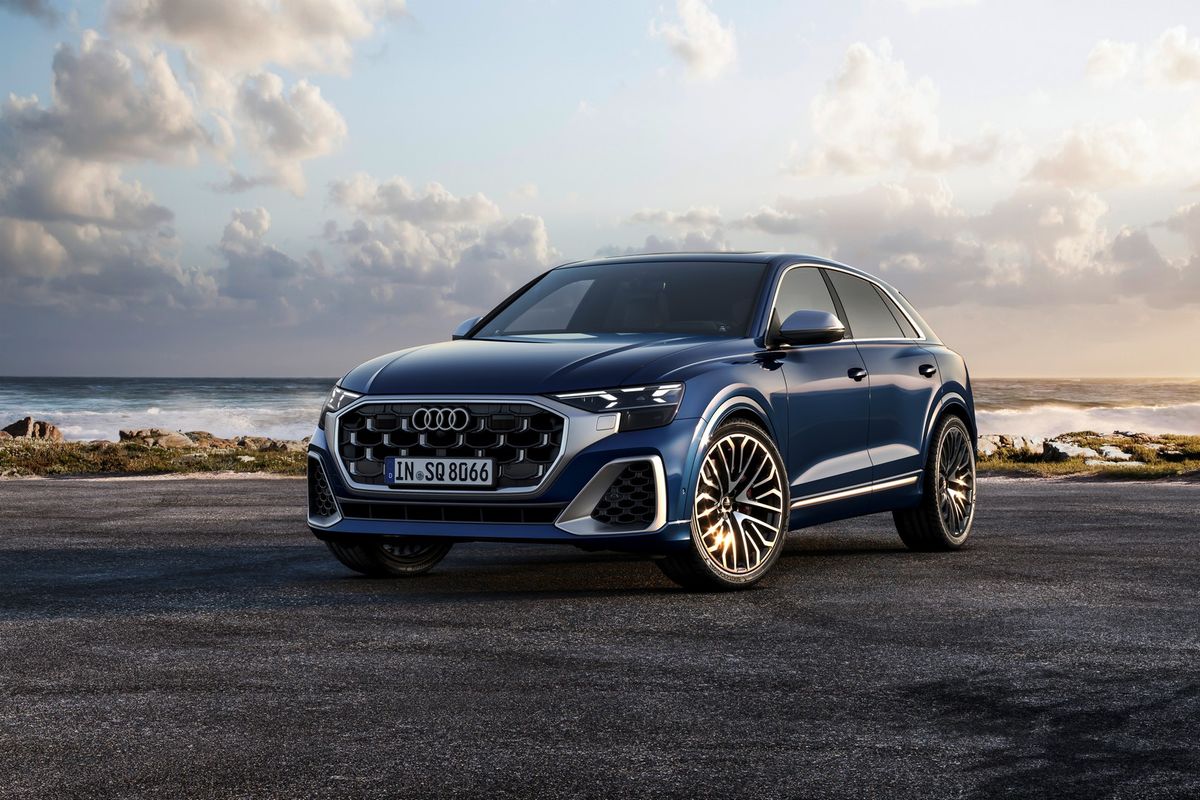
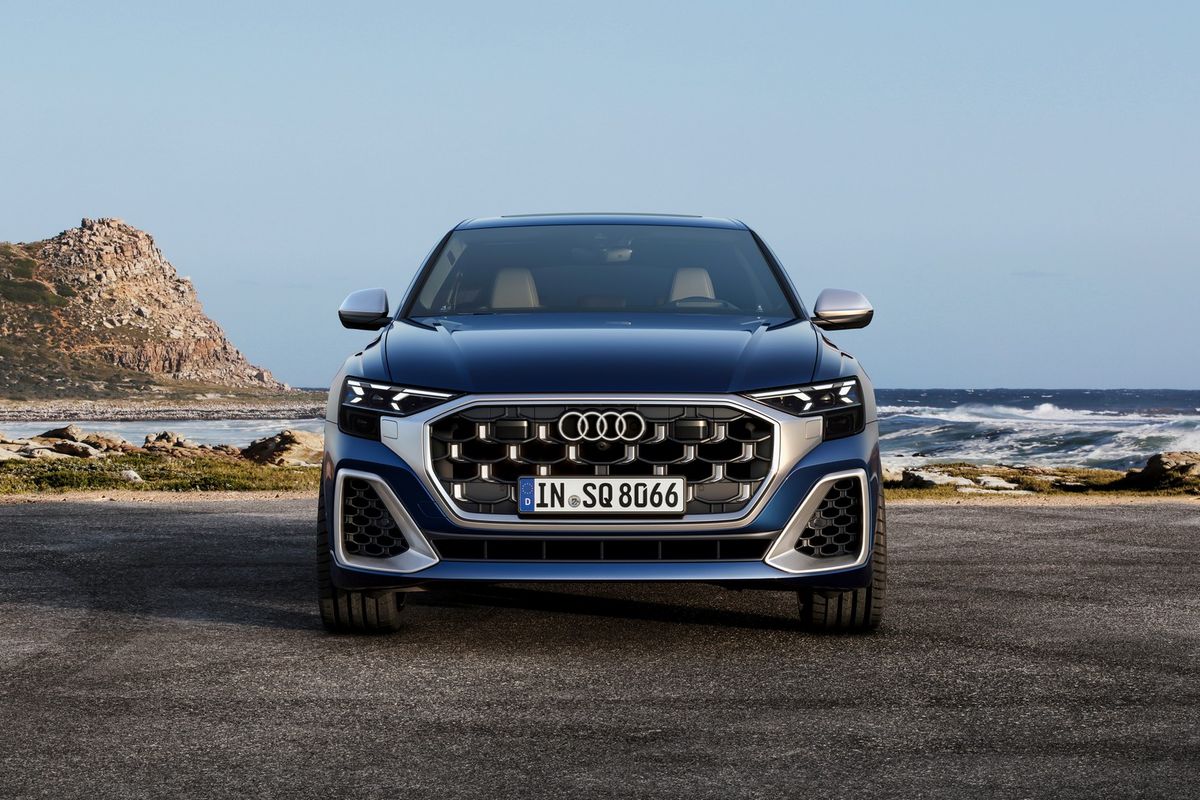
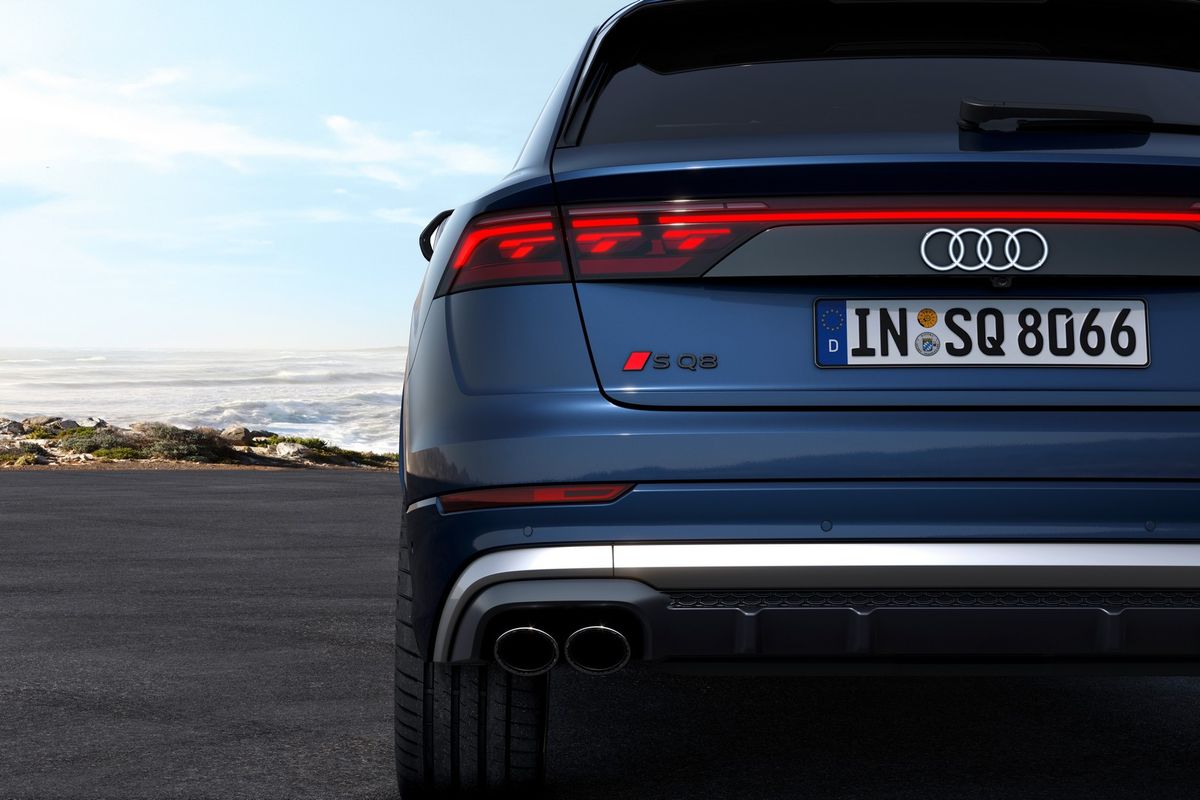
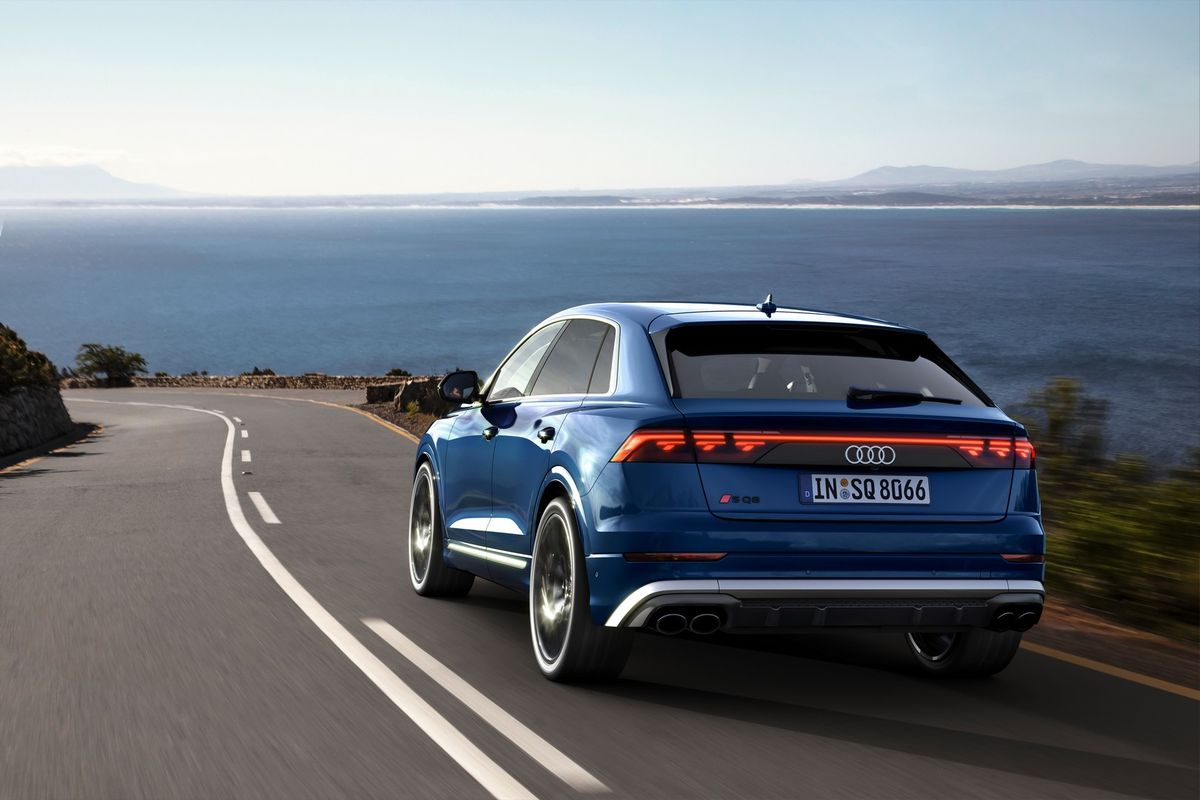
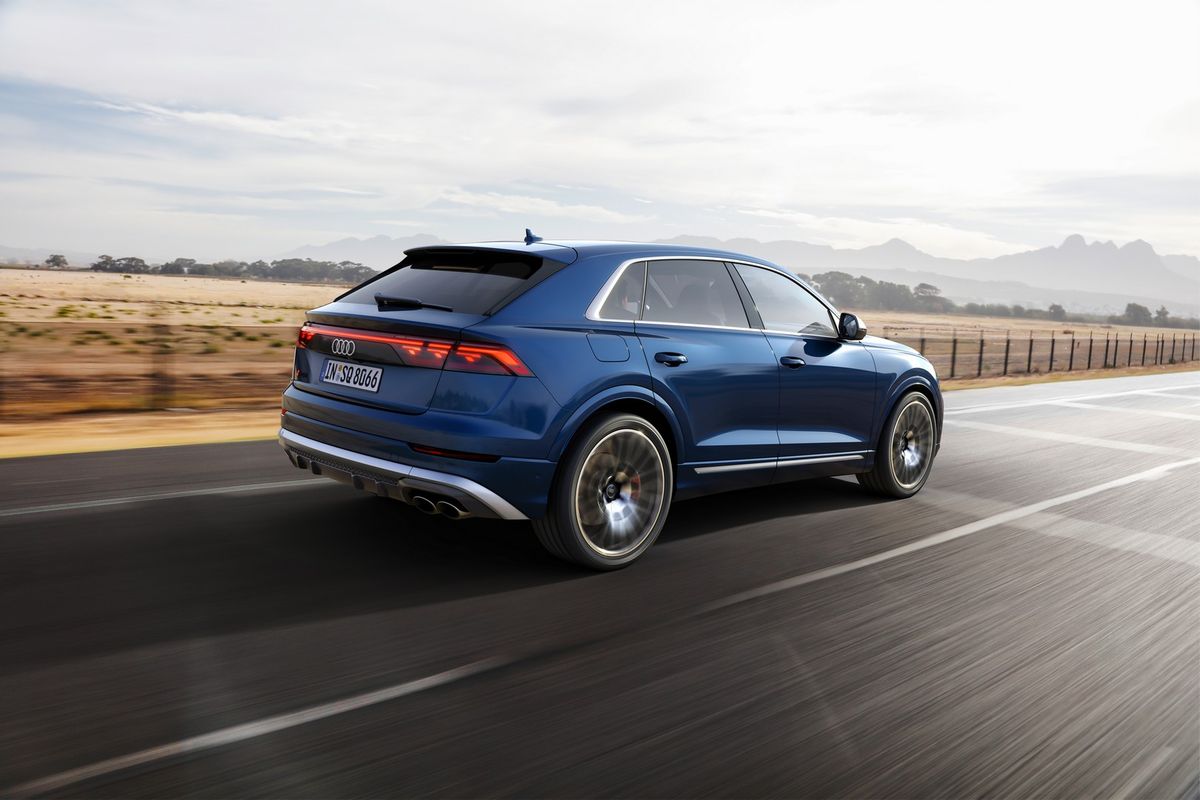
Here’s a first look at the updated Audi Q8 and Audi SQ8 as the Ingolstadt-based brand has announced revisions to the luxury sports SUV.
This is the updated Audi Q8, which brings a number of cosmetic, lighting technology and trim upgrades to market. The Q8 is a coupe SUV and is a rival to the BMW X6 and Mercedes-Benz GLE Coupe. Riding on the MLB Evo platform and built in Bratislava, Slovakia, the 5-seater Audi Q8 has impressed us.
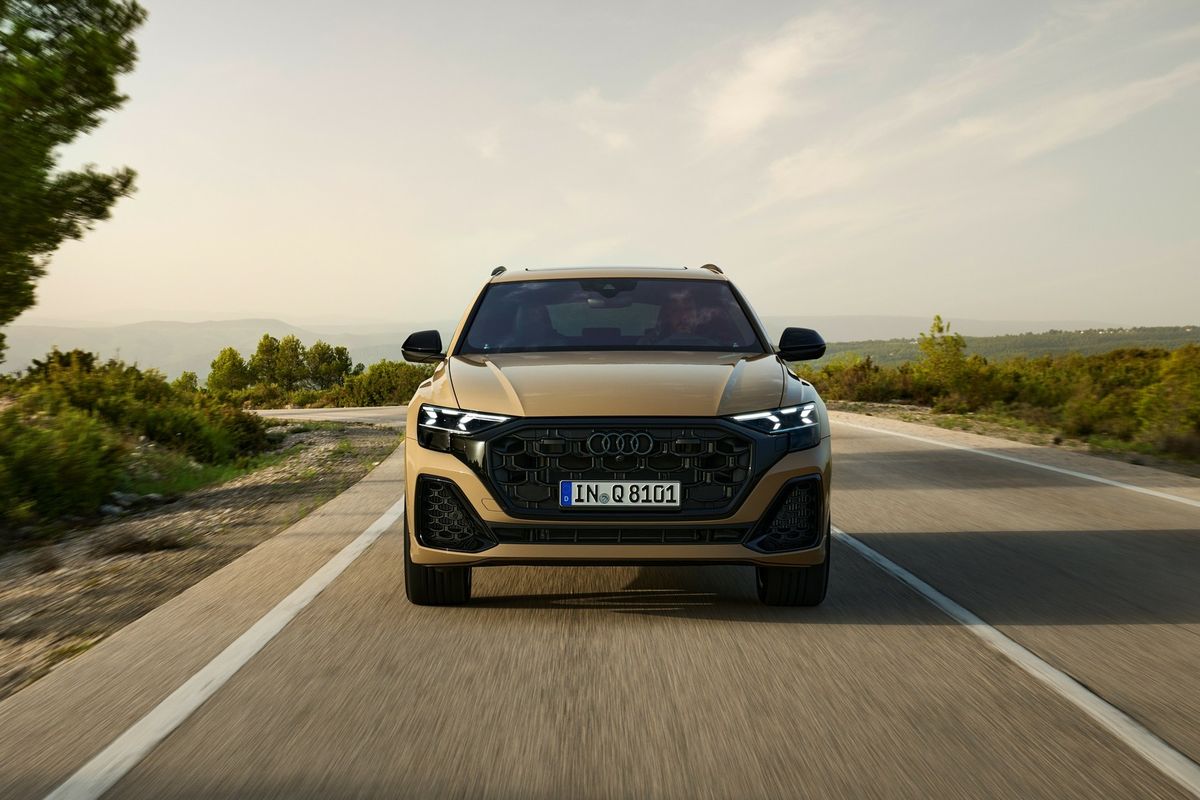
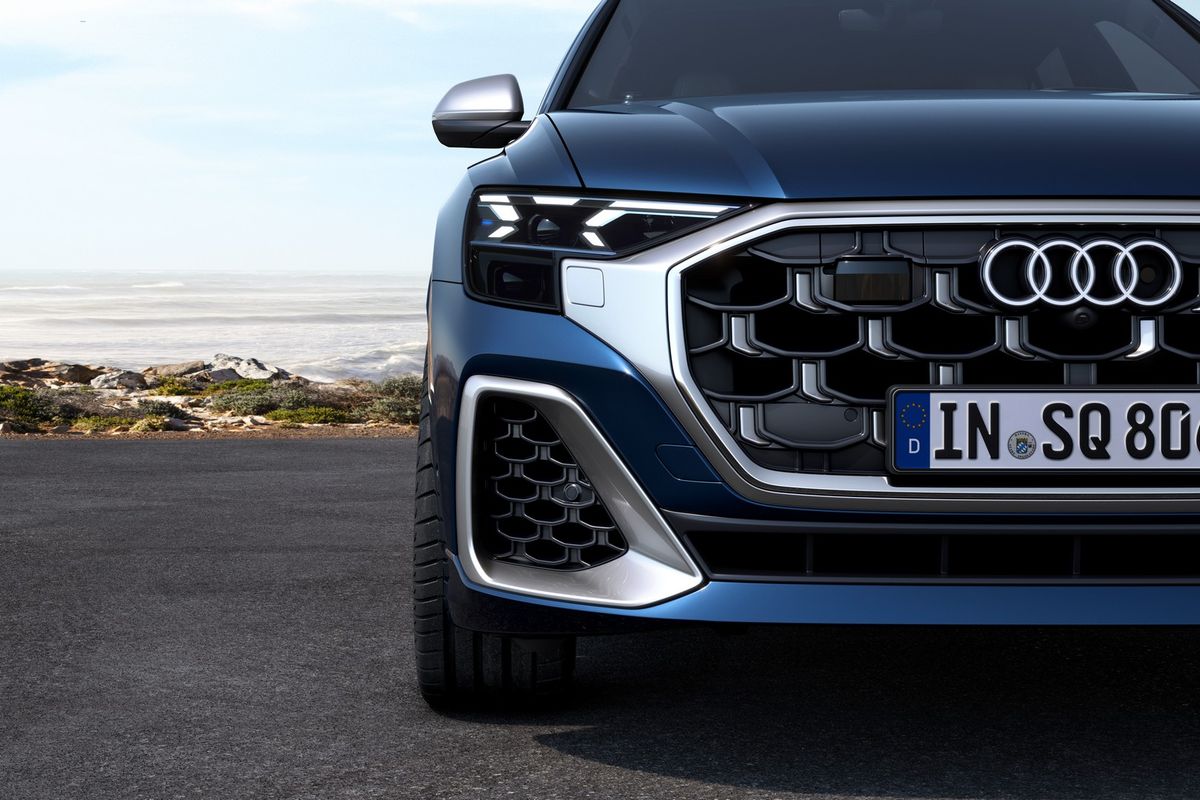
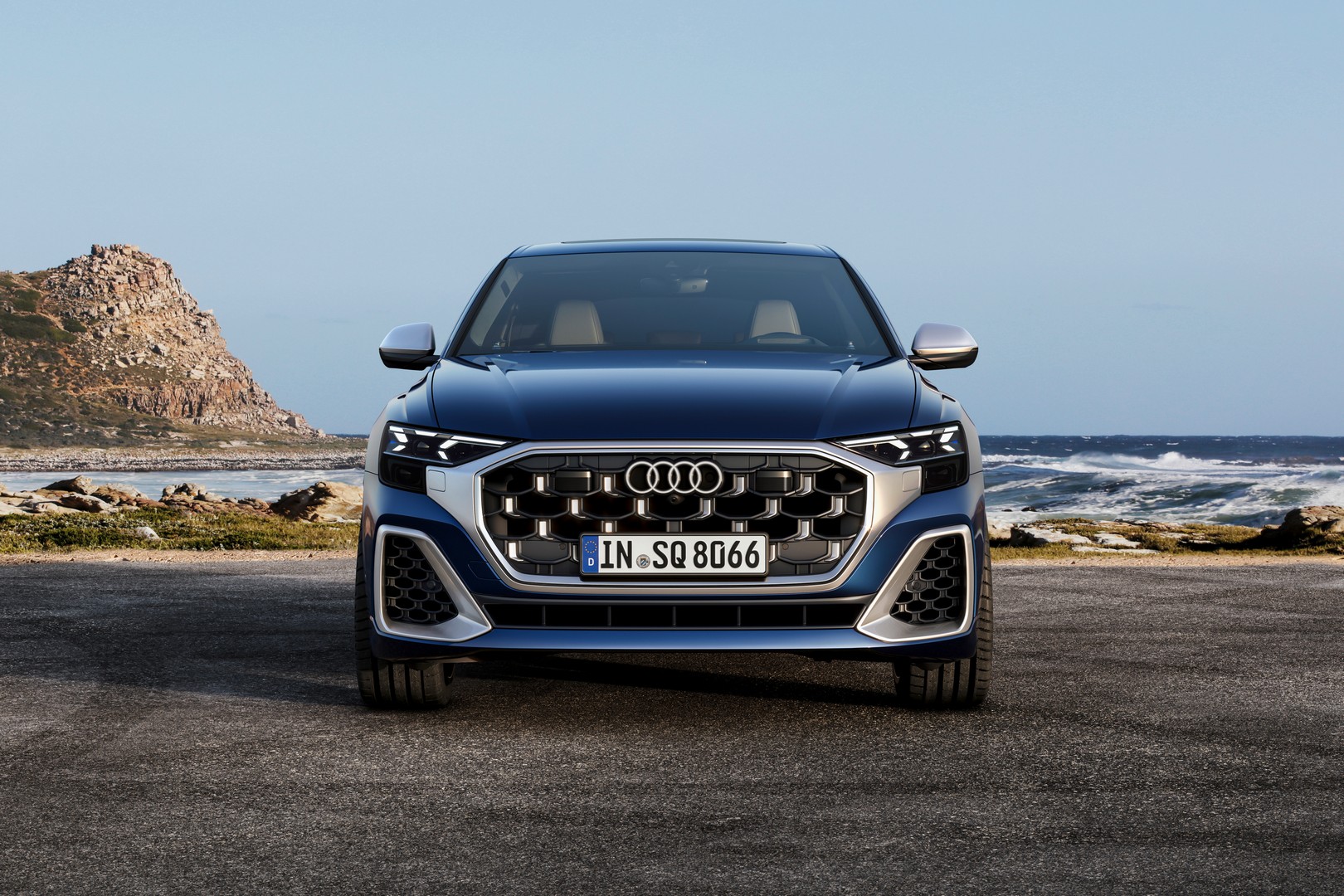
The update you see now comprises some visual enhancements along with trim upgrades and the introduction of a petrol-powered SQ8, which replaces the diesel derivative. Visually, make no mistake, this is an Audi Q8 through-and-through, but you’ll quickly spot the all-new HD Matrix LED headlight setup.
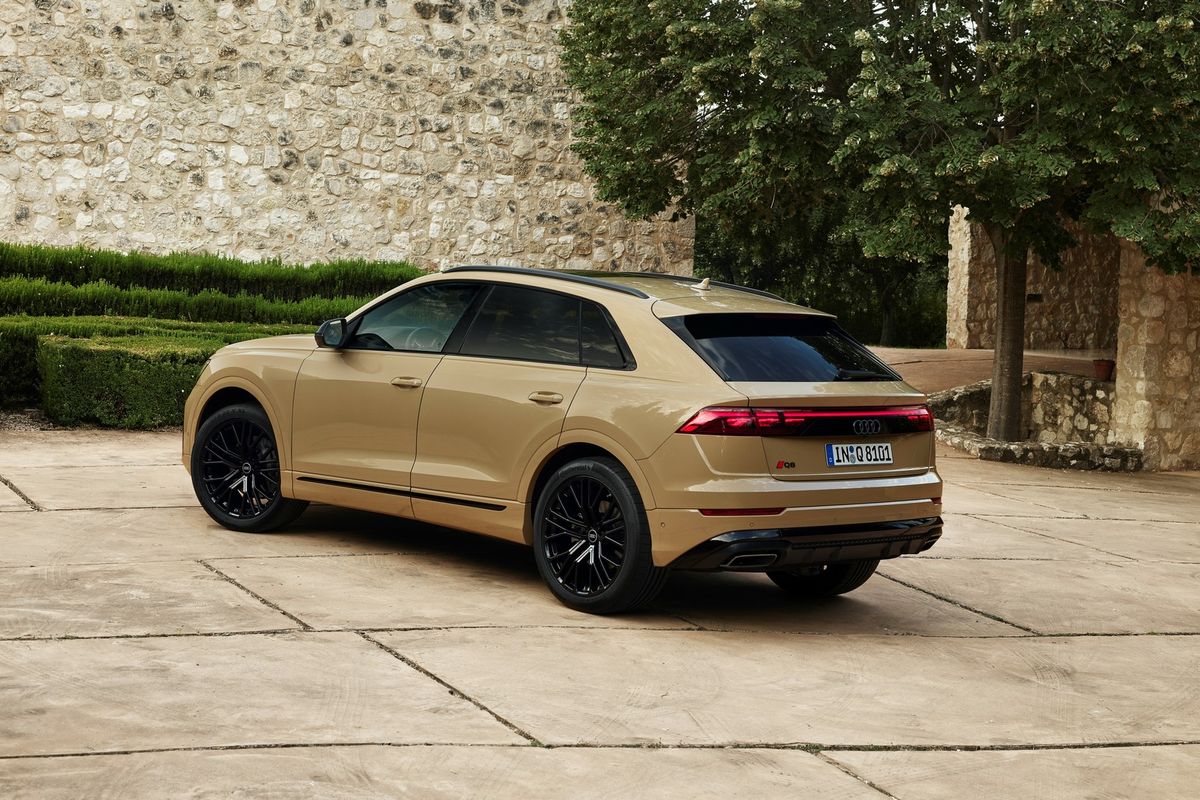
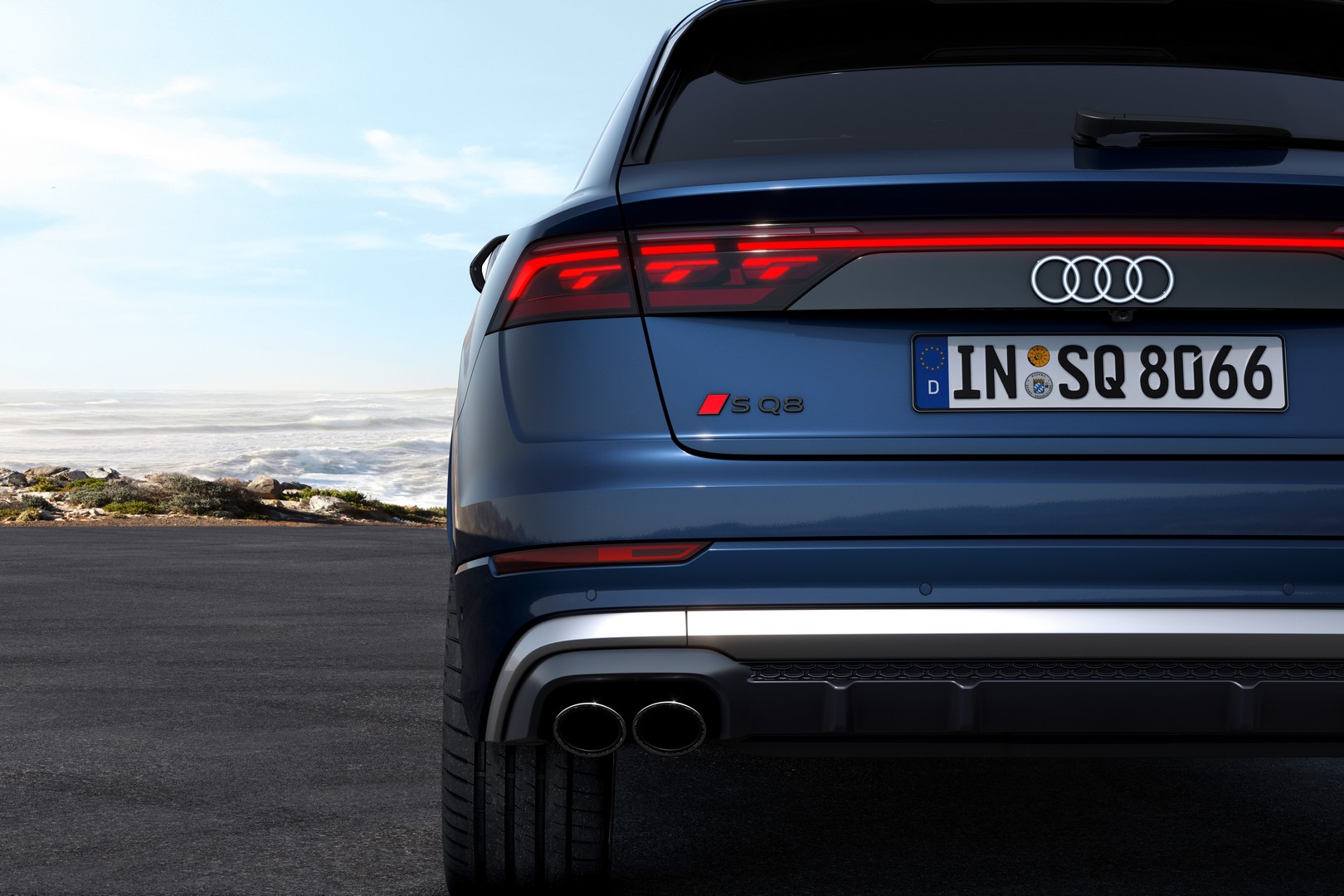
These new headlights feature a laser as an additional high beam, digital daytime running lights and light signatures. At the rear, there are digital OLED lights with four selectable rear light designs. There are also revisions to the air intakes and bumpers. Customers can opt for the S Line, Black and Black Plus optic package to personalise their updated Audi Q8. There are sportier-looking exhaust tips too.
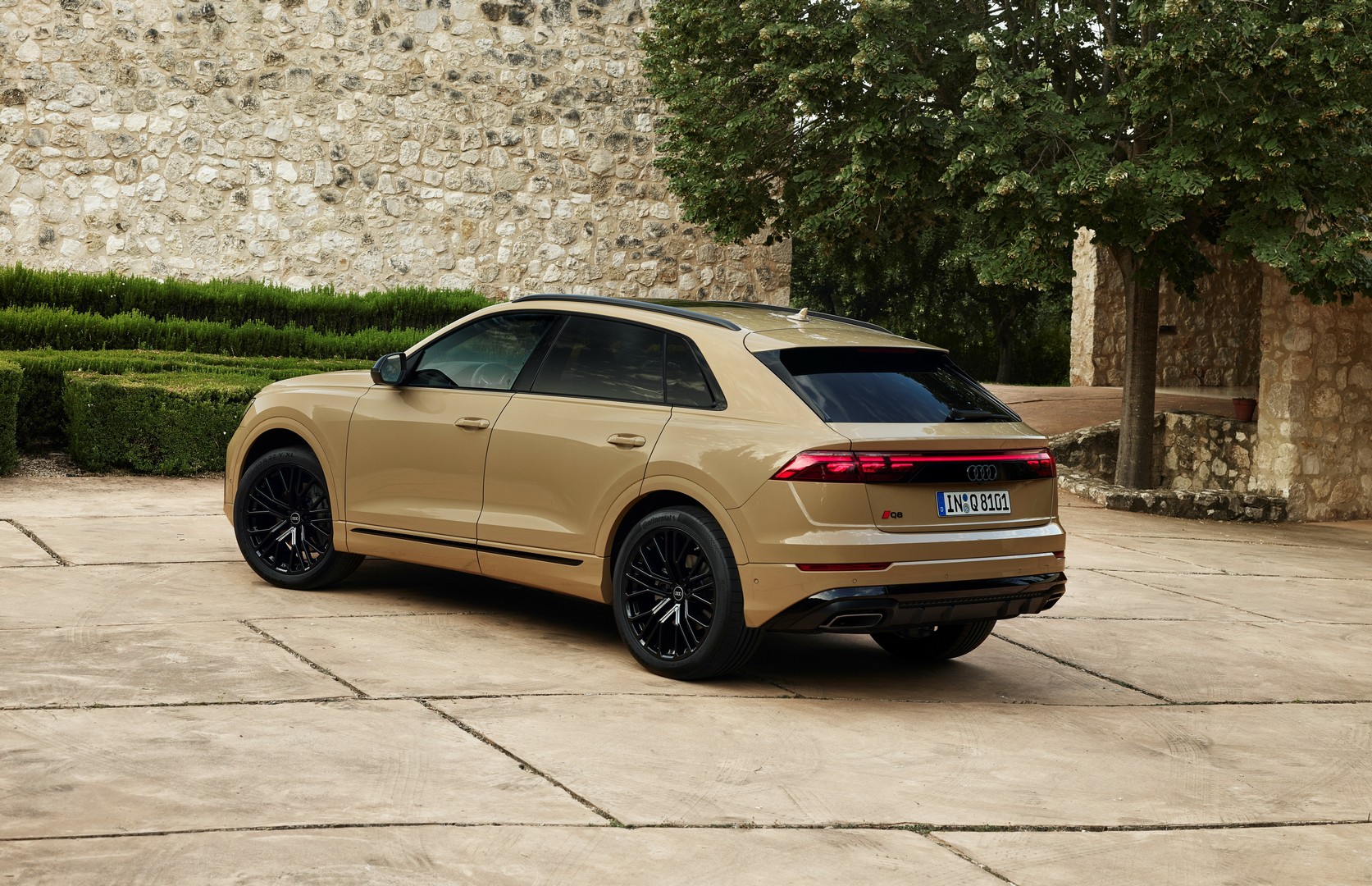
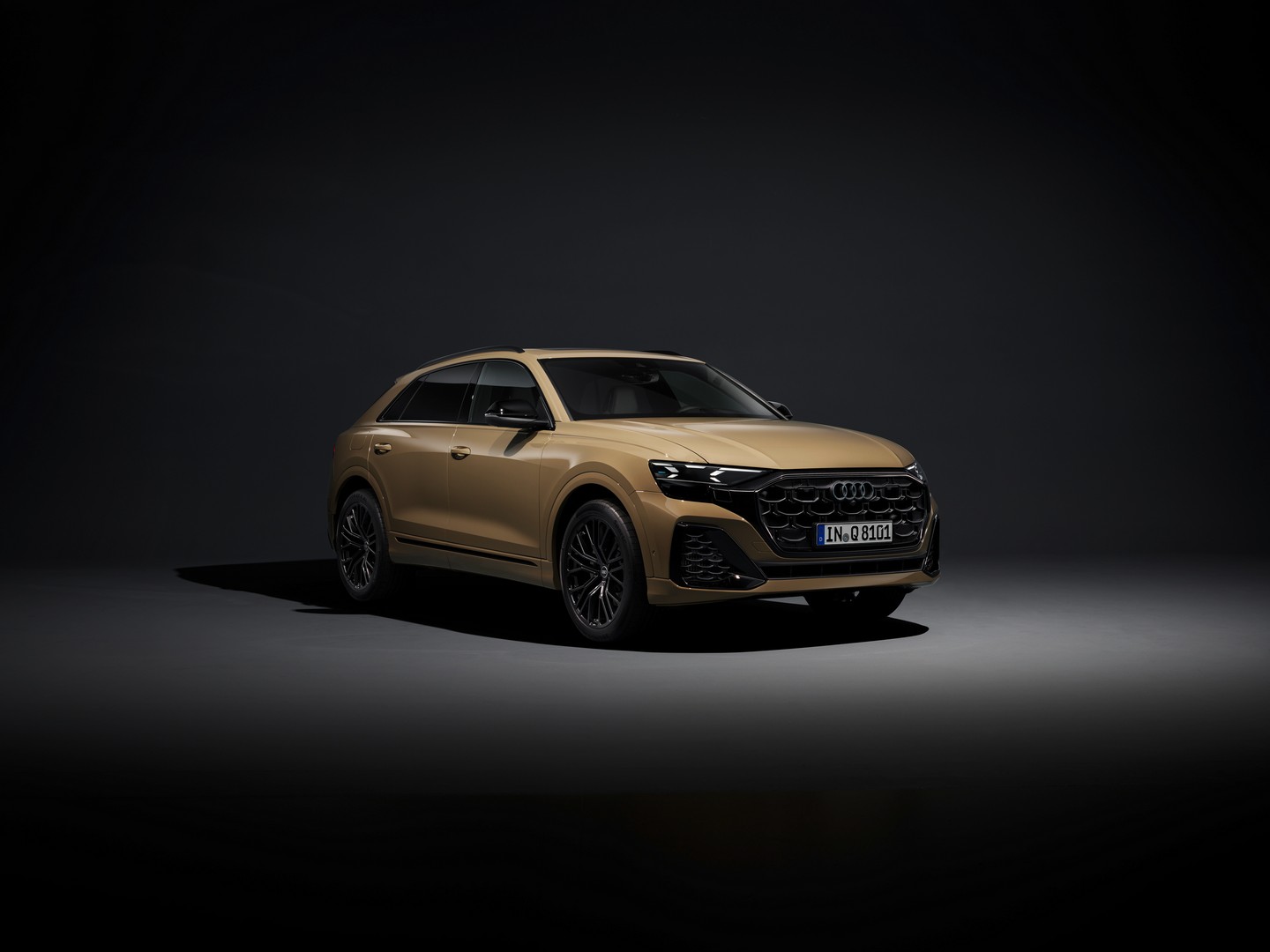
Customers have three new paint colours to choose from, such as the Sakhir Gold you see here, Ascari Blue and Chili Red. There are five new wheel designs with sizes ranging from 21- to 23-inches.
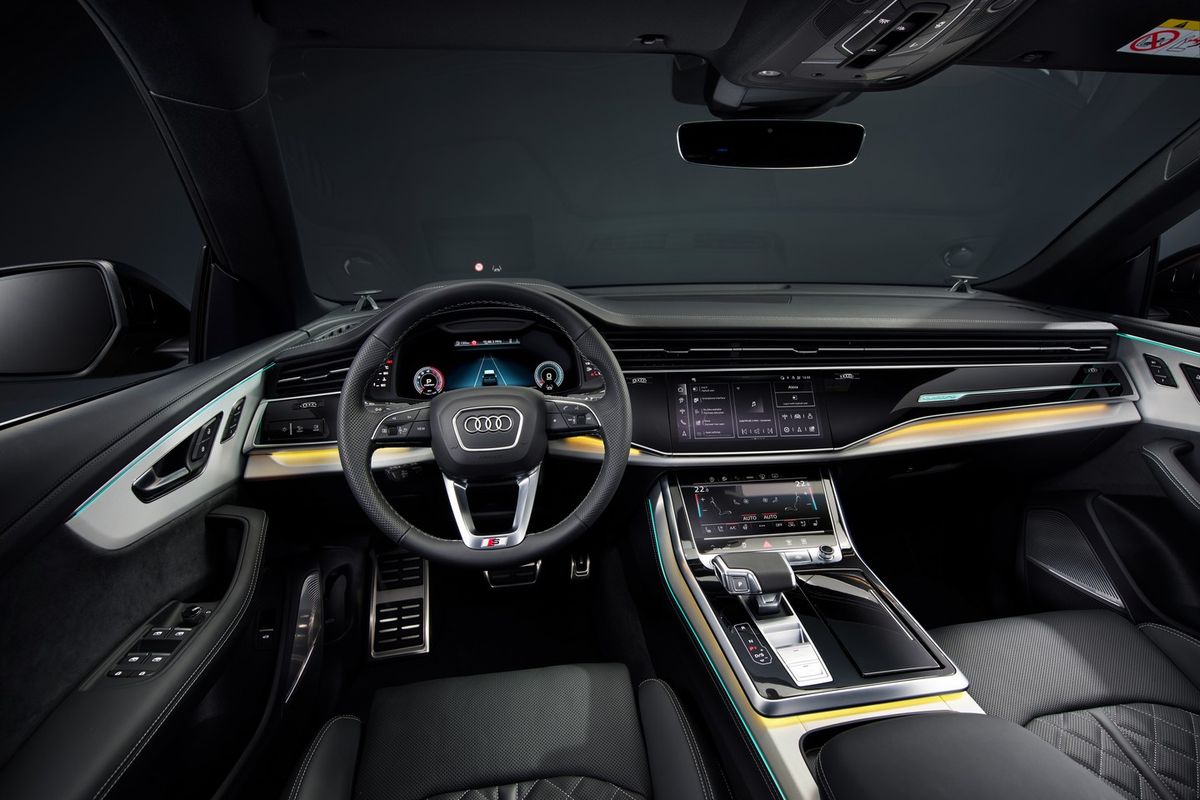
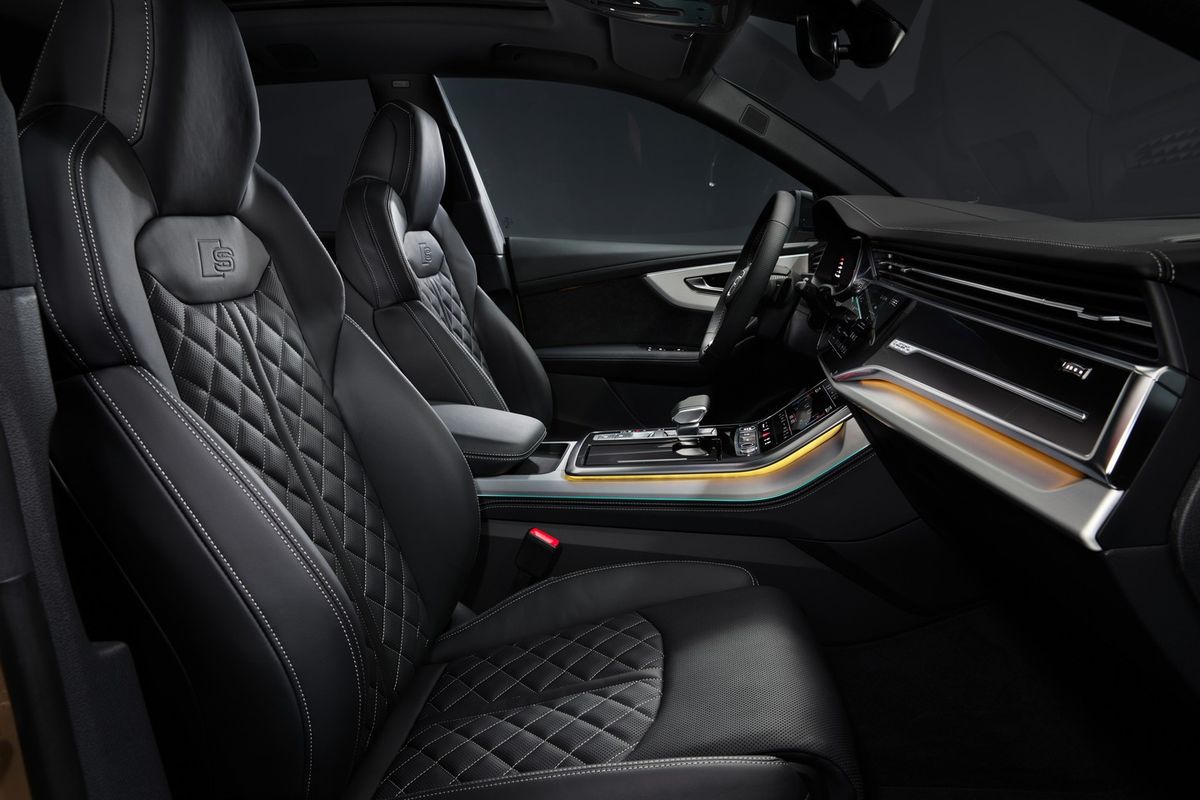
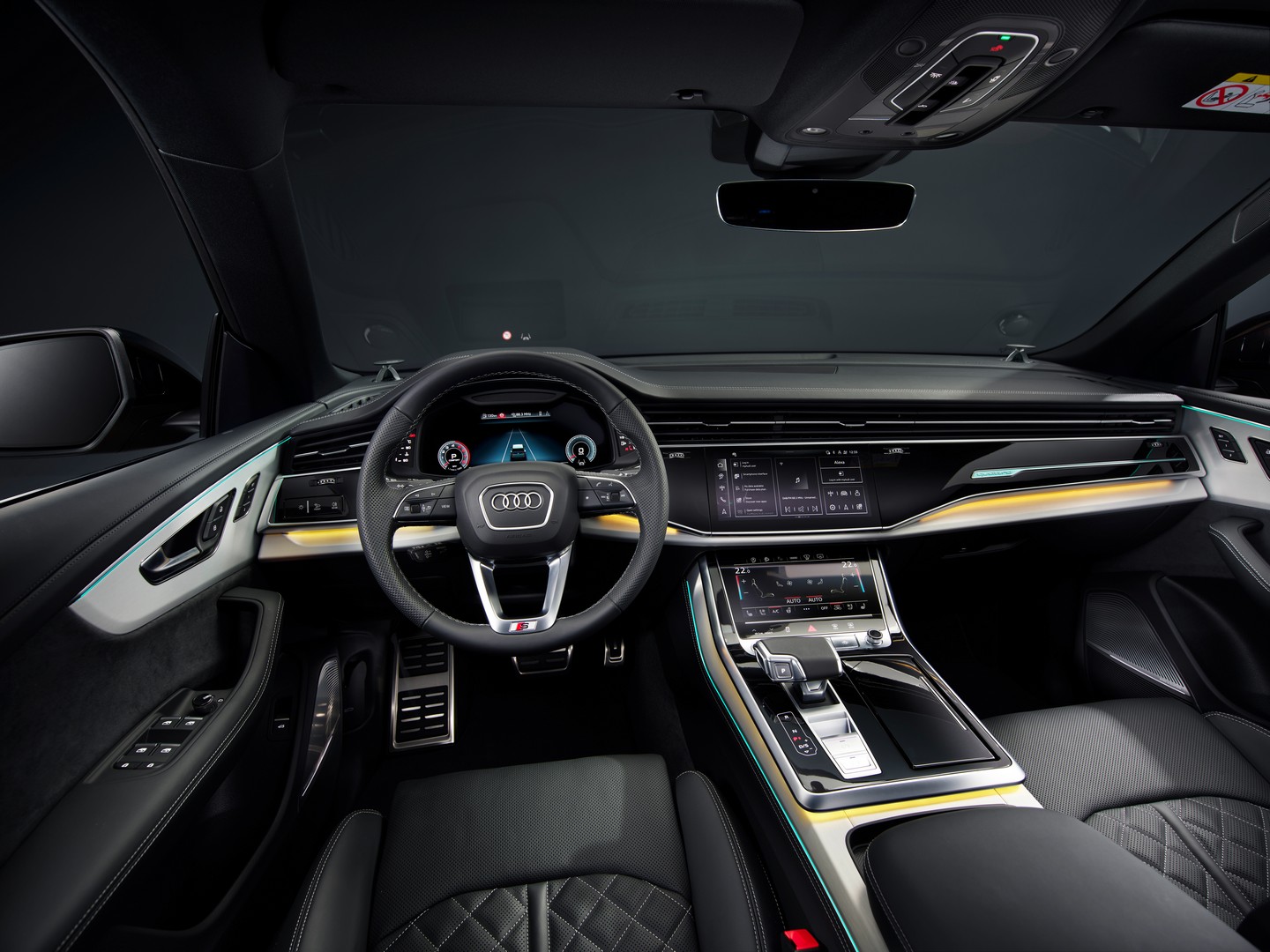
The Audi Q8 has received a digital enhancement too, with access to third-party apps like Spotify now being available through a market-specific app store. Over-the-air updates are also available for the updated Audi Q8. The driver assistance system display has received an upgrade too, with the virtual cockpit now offering road info in full HD.
Audi Q8 and SQ8 Powertrain
The Audi Q8 engine lineup is mostly unchanged, with the headline story being the performance-biased Audi SQ8 ditching diesel power for a rumbling petrol V8. The updated Audi Q8 features adaptive air suspension, with the SQ8 featuring a sportily-tuned air suspension setup. All-wheel steering is standard on the SQ8 and optional for the Q8.
Kicking off the range is the 45 TDI, a 3.0-litre turbocharged V6 with 170 kW and 500 Nm. Audi claims a 0-100 kph time of just 7.1 seconds while consuming around 8.9 L/100 km.
The Audi Q8 50 TDI offers the same V6 diesel engine, but with higher outputs of 210 kW and 600 Nm, giving it a claimed sprint to 100 kph time of just 6.1 seconds. A consumption figure of 8.9 L /100 km is claimed. For the petrol fans, there’s a 3.0-litre V6 with 250 kW and 500 Nm, and that’s good for a 0-100 kph time of just 5.6 seconds while consuming around 12.8 L/100 km on the combined cycle.
Every updated Audi Q8 features an 8-speed automatic transmission which drives all four wheels and a 48V mild-hybrid system which is said to reduce consumption by 0.5 L/100 km.
The big news is the updated Audi SQ8 has switched from diesel power to a 4.0-litre turbocharged V8 petrol with 372 kW and 770 Nm. Thanks to a quick-shifting 8-speed Tiptronic transmission and quattro permanent all-wheel drive, the updated Audi SQ8 is capable of 0-100 kph in just 4.1 seconds.
The Audi SQ8 TFSI ships standard with 21-inch wheels and large 285/45 tyres, with options in 22- and 23-inches.
Static photo,
Colour: Sakhir gold metallic
When will the updated Audi Q8 arrive in South Africa?
Audi global said the updated Audi Q8 launch will take place in September 2023, while Audi South Africa said units will be arriving in SA in the second quarter of 2024. We’ll be test driving the new model at its international driving event in Cape Town in early November.
Did Mercedes-Benz just confirm the demise of the A-Class?
The head of Mercedes-Benz has seemingly confirmed the impending end of the line for the A-Class, saying the brand’s next-gen entry-level range will comprise just 4 models…
Rumours that the Mercedes-Benz A-Class will be axed after its current generation have seemingly been confirmed by none other than the head of the German automaker.
Ola Källenius, Chairman of the Board of Management of Mercedes-Benz Group AG, made some interesting comments at the IAA Mobility 2023 in Munich, talking specifically about the “upcoming family of vehicles that stands at the gateway to the brand”.
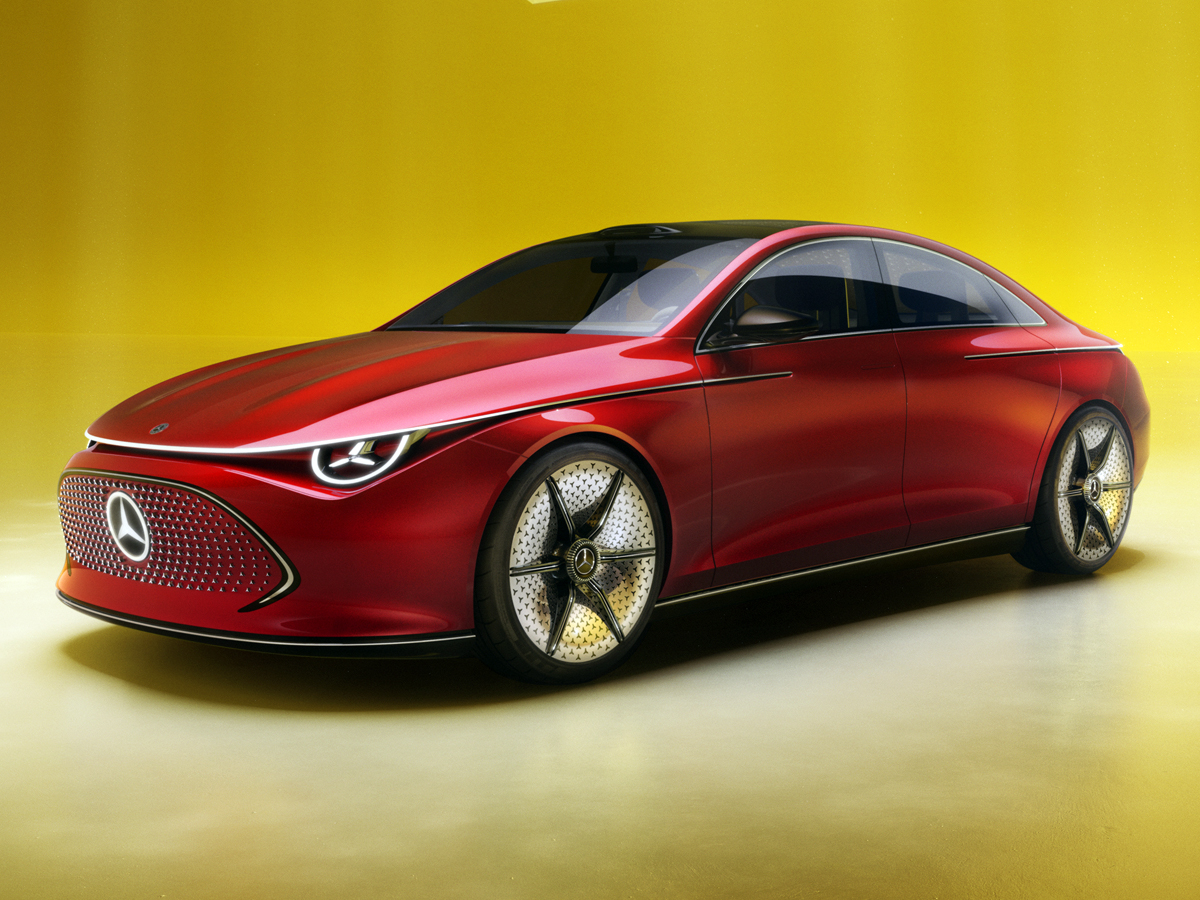
The Stuttgart-based firm revealed its new fully electric Concept CLA Class – featuring an 800-volt electrical architecture and boasting a claimed single-charge range of 750 km – at the show, billing it as a “close-to-production” representation of the future of the brand’s entry-level vehicle line-up. In the press material, Källenius makes the following remark:
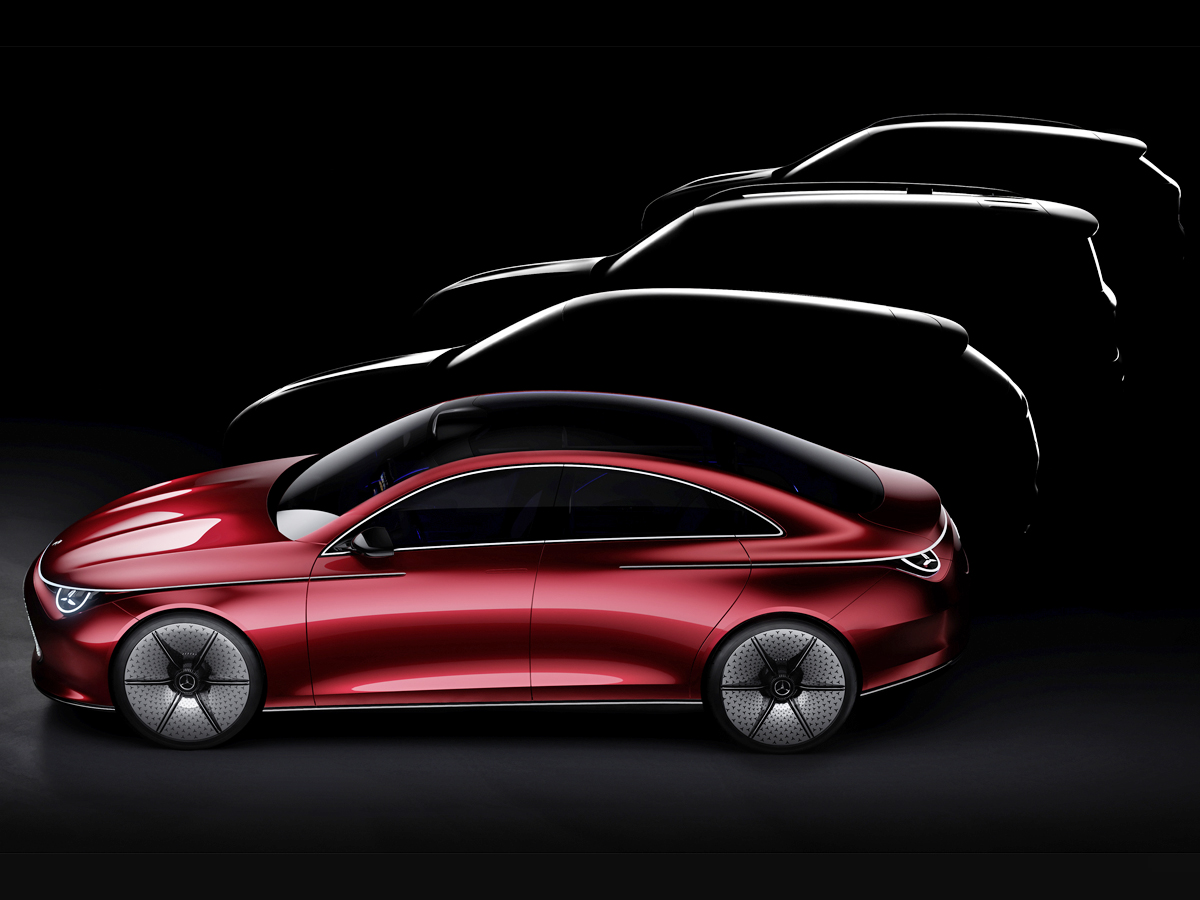
“The Concept CLA Class is the forerunner for an entirely new all-electric segment of entry-level vehicles at Mercedes-Benz. The range will comprise a total of 4 new models – a 4-door coupé, a shooting brake and 2 stunning SUVs – each with significantly elevated product substance.”
Based on that comment, the next-generation range of compact vehicles – each based on the new Mercedes‑Benz Modular Architecture (MMA), which is interestingly described as an “electric-first” rather than electric-only platform – will not include a traditional hatchback or sedan body style, which seemingly sounds the death knell for the A-Class (and indeed the B-Class MPV). Instead, there will be a new CLA, a new CLA Shooting Brake and a pair of SUVs (inheriting the GLA and GLB nameplates, perhaps?).
Last year, Mercedes-Benz confirmed it would “reduce the number of model variants” in its next-generation compact range from 7 to 4 as part of its bid to reposition the brand for higher profitability and increased electrification.
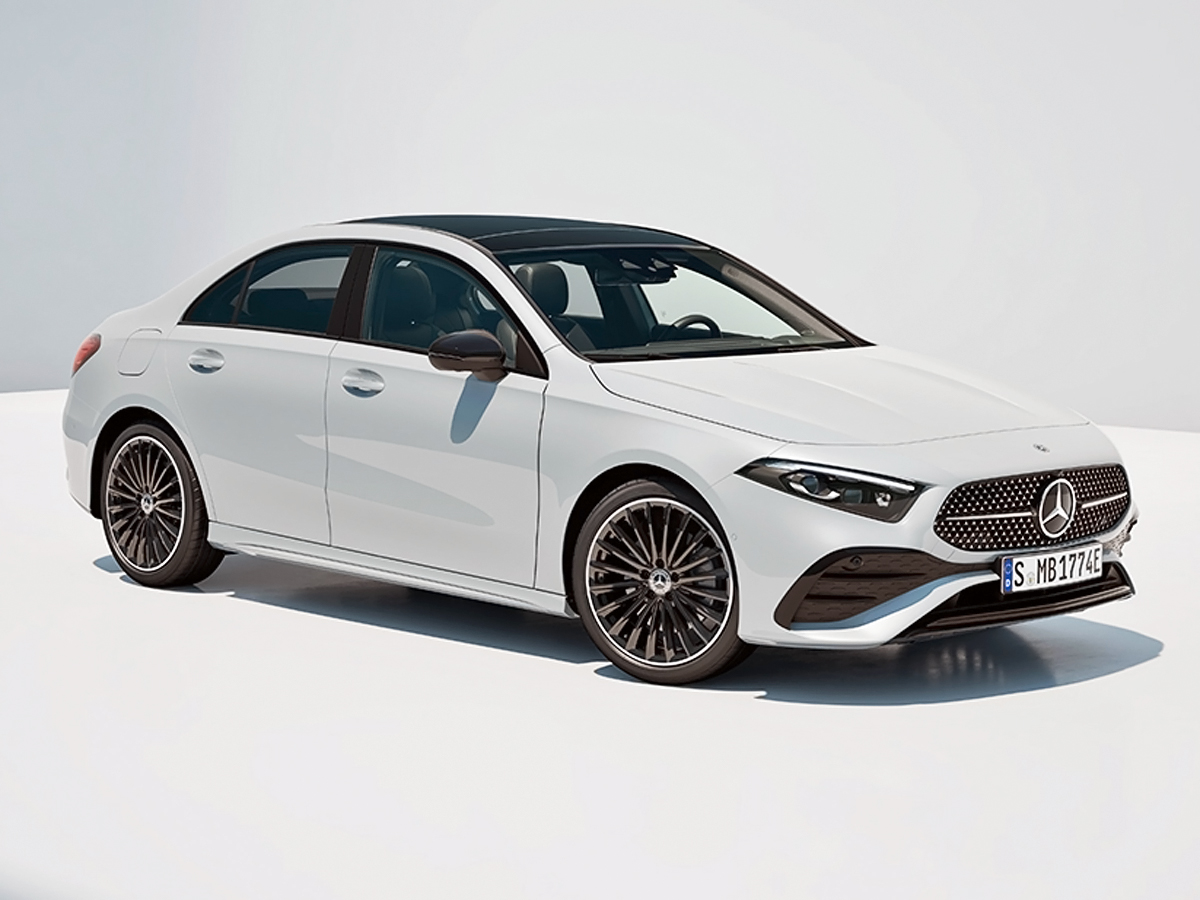
So, it seems the current A-Class – which is offered in both W177 hatchback and V117 sedan guises – will be put out to pasture in the next couple of years, with earlier reports suggesting the lifecycle would end by around 2025. Of course, a facelifted version was unwrapped late in 2022, before arriving in South Africa in mid-2023.
As a reminder, the original A-Class was introduced in 1997 as an MPV-shaped hatchback, before a 2nd-generation model hit the market in 2004. The 3rd iteration – which debuted in 2012 – was entirely re-invented as a more dynamically designed hatchback conceived to battle the likes of the BMW 1 Series and Audi A3. The current 4th take on the A-Class arrived on the global stage in 2018.
NP200 going, Almera gone: where to from here for Nissan SA?
With the NP200 set to be axed in early 2024 and the Almera already gone, Nissan SA’s sales volumes look likely to take a significant hit. So, where to from here for the brand?
Nameplates come and go for all automotive giants, but Nissan South Africa has lost a raft of particularly well-established badges in recent times.
The axe fell frequently in 2022, and with little regard for heritage. The Rosslyn-built NP300 Hardbody was put out to pasture, after more than 2 decades on the market – though it certainly seemed like time. The 370Z, which launched locally back in mid-2009, was likewise scrapped last year (and its replacement, the Nissan Z, swiftly ruled out for our market).
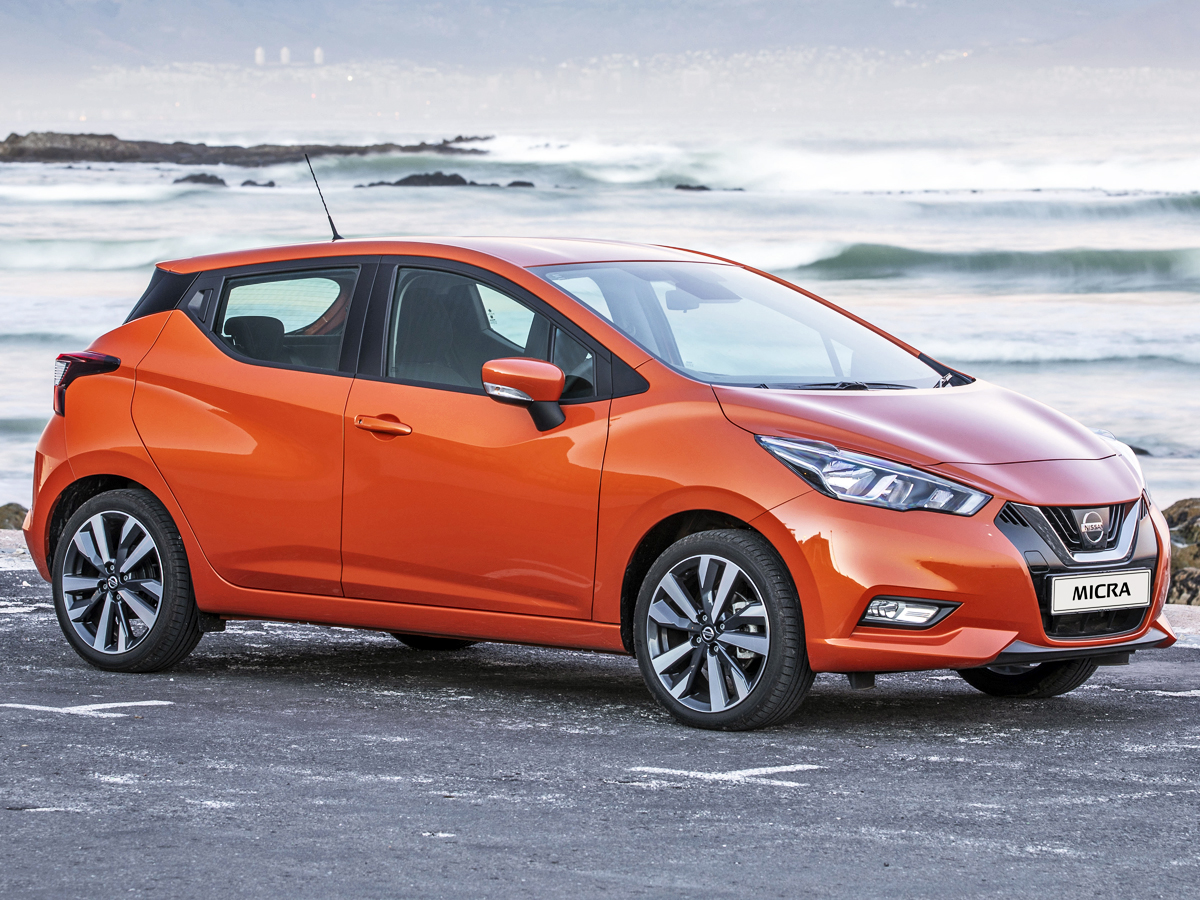
Even the Micra – a moniker with an 18-year history in Mzansi – was removed from the local range in 2022, as was the mighty R35-generation GT-R, which enjoyed 14 years on the South African market. Furthermore, Nissan pulled the plug on the entire Datsun brand globally (again), which saw the Go hatchback and Go+ MPV depart SA.
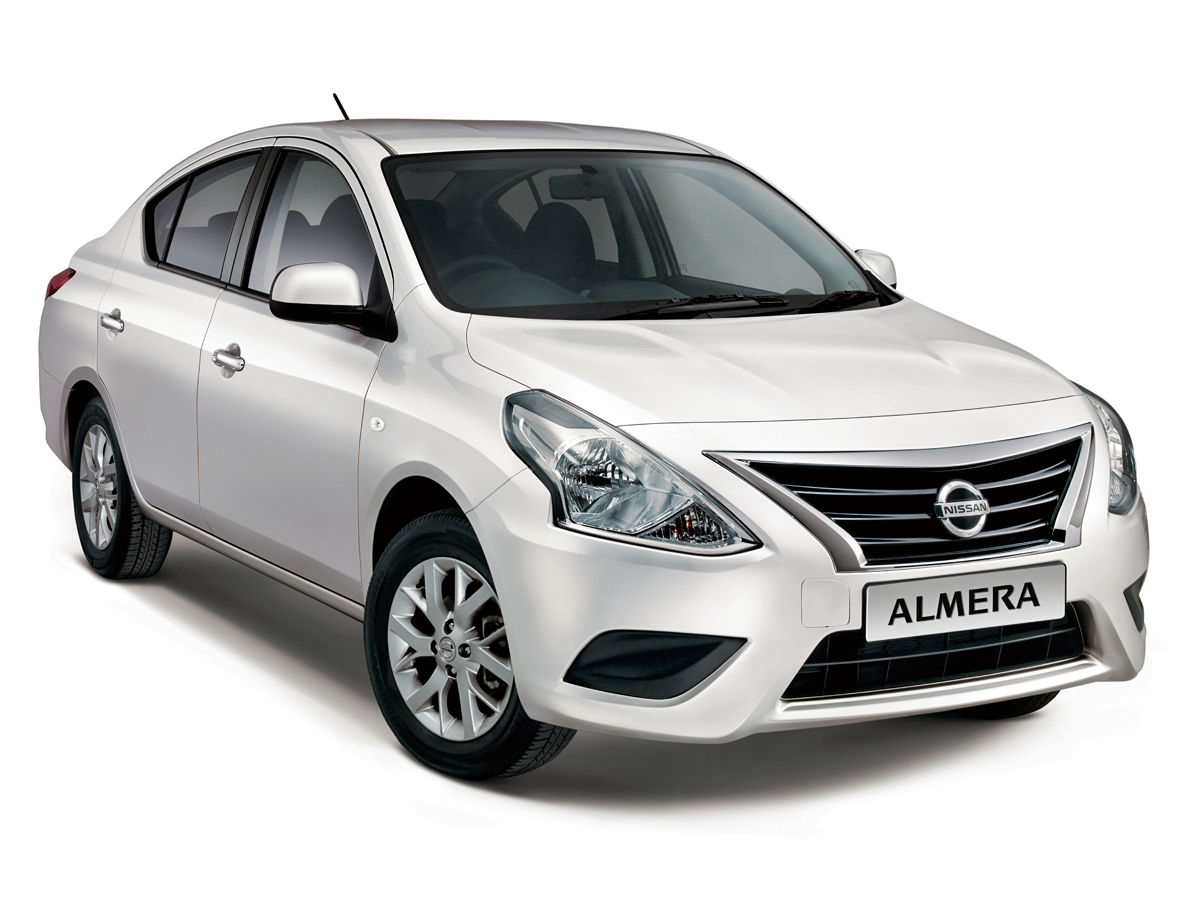
What about 2023? Well, Nissan SA quietly culled the 3rd-generation Almera budget sedan after a 10-year run, while also confirming production of the NP200 half-tonne bakkie is scheduled to wrap up at Rosslyn by March 2024, ending a 16-year lifecycle. So, how much will Nissan miss the Almera? And just how much does it depend on the soon-to-depart NP200? Moreover, what could be in the brand’s future? Let’s take a closer look…
Nissan Almera sold better than you might think
While demand for sedans has plummeted in recent years, the N17-generation Almera frequently made sizeable contributions to Nissan SA’s sales tally, proving particularly popular with rental and fleet buyers. In fact, despite stock already starting to run dry as early as March 2023, the Indian-built Almera ranked as the Japanese firm’s 2nd most-popular passenger vehicle over the opening 8 months of the year.
Yes, with 1 575 units registered year to date, the budget saloon accounted for 7.8% of the brand’s total of 20 171 units over the same period. Of course, this percentage would have been far more significant had Almera sales not tapered markedly from the end of the 1st quarter (as you can see in the graph below), when imports of this model seemingly halted. As an illustration, the Almera made up nearly 27% of Nissan sales in January 2023, thanks in part to strong demand from the rental industry.
Incidentally, the Almera’s discontinuation lined up neatly with Nissan SA’s quiet slip out of the top 5, with the Japanese firm having to settle for 6th position on the brand rankings every month since April 2023 (and dropping to 6th place, year to date, as well).
NP200 has long been Nissan SA’s volume driver
Soon after arriving as a replacement for the Nissan 1400 back in 2008, the NP200 settled in as part of the automotive furniture in South Africa. But that will soon change, as local production is set to cease in the 1st quarter of next year, ending what Nissan terms an “extended lifecycle”.
Of course, the NP200 has had the local half-tonne bakkie segment all to itself since the close of 2017, when General Motors quit Mzansi, thus marking the end of the road for the Chevrolet Utility. As such, the Dacia Logan-based single cab quickly became Nissan SA’s chief volume driver. Year to date, as many as 8 862 examples have been registered locally, enough to earn it 4th place on the list of SA’s best-selling bakkies and a top-10 place overall, despite its advanced age.
That tally represents a whopping 43.9% of all Nissan sales from the start of January to the end of August 2023. With the automaker confirming there is “no immediate replacement model” for the NP200 on the horizon (though adding it is “currently evaluating other alternatives” in line with the ambitions of its “Africa Mid Term plan”), the prospect of losing almost half of its volume virtually overnight must be an incredibly disturbing one for Nissan SA executives. Hopefully, they have something up their sleeves…
For now, much rests on Magnite’s shoulders
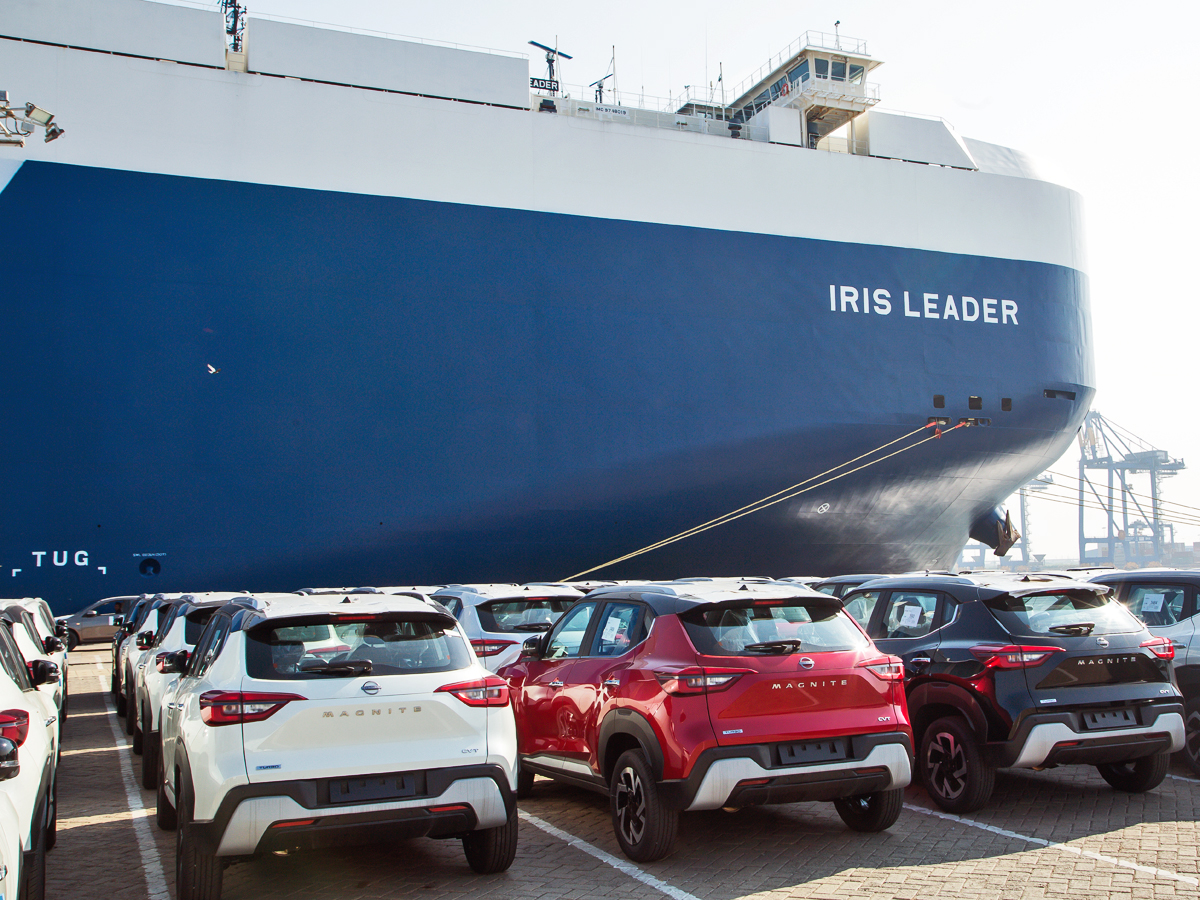
So, are the rest of Nissan’s models doing any heavy lifting? Well, the only other nameplate that has been selling in significant numbers of late is the budget-beating Magnite, which has racked up an impressive 5 461 units, year to date. That translates to a substantial 27.1% of the automaker’s total in this reporting period.
Unless something changes soon, Nissan SA will find itself heavily reliant on the Indian-built Magnite – which, incidentally, was originally meant to be a Datsun – once the NP200 departs, as the firm’s other passenger-vehicle products have underwhelmed on the sales charts. Year to date, the X-Trail contributed just 553 units (comprising both 3rd- and 4th-gen sales), though that’s fascinatingly more than the new Qashqai (417 units). These 2 models’ respective moves upmarket have seemingly come at the cost of volume.
The flagship Y62-generation Patrol (82 units) is obviously positioned as anything but a volume driver, while the Terra (5 units) 7-seater adventure SUV curiously wasn’t ever given a fighting chance to tackle the likes of the Toyota Fortuner and Ford Everest, with just a handful of units imported into South Africa.
What about Navara and the Rosslyn factory?
That, of course, leaves the Navara. Production of the refreshed D23-generation bakkie commenced at Nissan’s Rosslyn factory in mid-2021 – yes, bang in the centre of a global pandemic – after a R3-billion investment a couple of years prior. Workhorse single-cab derivatives were added to the range by October of that year, with these models stepping into the gap ultimately left by the NP300 Hardbody.
While the Navara hasn’t managed to trouble segment sales leaders such as the Toyota Hilux, Ford Ranger and Isuzu D-Max, it has made a mid-table position on the list of SA’s best-selling bakkies very much its own, often trading sales blows with the likes of the GWM P-Series and Toyota Land Cruiser 79 (but being outsold by the Mahindra Pik-Up every month in 2023 so far). Year to date, 3 216 units have been registered, or 15.9% of Nissan’s total.
But with the NP200 soon to be removed from the equation, are Navara volumes sufficient to sustain a factory said to have an annual production capacity of well over 70 000 units? Despite ambitions to ship significant volumes into Africa, Nissan has exported only 3 064 units (including the NP200) year to date, which translates to an average of just 383 units a month. We should point out, however, Nissan SA also ships a small number of disassembled knocked-down (DKD) Navara kits to its operations in Nigeria and Ghana.
Nissan says it remains ‘fully committed’ to South Africa
While the local industry would no doubt welcome the addition of a new vehicle to Nissan’s Rosslyn assembly line (a facility that traces its roots back to the 1960s), we’ve unfortunately heard of no such concrete plans – though we hold out hope. Renault in Latin America, for instance, is said to be working on a new half-tonne pick-up, which is set to be shared with Nissan; perhaps a right-hand-drive version is in the offing?
Incidentally, the next-gen Navara is rumoured to be unveiled in 2024, sharing much with the recently revealed Mitsubishi Triton. Fingers crossed, Rosslyn will soon receive the green light – if it hasn’t already – to build this new model.
For the record, Nissan SA says it “remains fully committed to South Africa and the wider continent as the last frontier of the automotive industry”. It describes the Rosslyn manufacturing plant as the “light-commercial vehicle hub for Africa”, adding the locally produced Navara remains a “core model that will enable Nissan’s ambition across the continent”.
Could India (and Renault) help revive Nissan SA’s fortunes?
But how else could the Japanese firm’s local division claw back some of the sales volume that will inevitably be lost when the NP200 potters off into the sunset? The answer may well be found inside a production facility a bit further afield. Considering a whopping 51.2% of all light vehicles imported into South Africa in 2022 came from India – a country that has transformed itself into a global production hub for budget vehicles – there could be scope for Nissan SA to regrow its market share courtesy of models produced by the South Asian nation.
Though Nissan has a factory in Chennai, the brand is anything but a major player in the Indian market. In fact, it currently offers just a single vehicle in that country: the very same Magnite propping up Nissan SA’s passenger-vehicle line-up. However, there are indications the company will soon start to leverage its recently rejigged alliance with Renault, prompting the Indian-led development and launch of Nissan-badged versions of both the next-generation Duster (likely in both 5- and 7-seater form) and the Triber, and perhaps even a fully electric A-segment car shared with the French firm.
Should they be priced smartly, these proposed newcomers – particularly the Duster-based 5-seater SUV, which would see Nissan SA offer a rival to the likewise Indian-built Hyundai Creta and Kia Seltos – might be just what the Japanese automaker’s SA division needs now that so many of its storied nameplates have been put out to pasture. The only problem is we’re unlikely to see these new vehicles on local roads until well after 2025…
Wheels and tyres. They significantly influence – and hopefully, improve – your vehicle’s appearance, but their effect on performance is often misunderstood. That’s one of the reasons that bakkies with oversized (35-inch) tyres have not thrived in our market.
In automotive product development, there is an established tension between what designers want and what engineers recommend. Designers desire the largest possible wheels because they complement vehicles’ profiles. It’s why luxury SUVs can be specced with 23-inch alloys shod with low-profile tyres.
Engineers don’t love oversized wheels that much. When you roll out of a showroom onto real-world roads, the issue with oversized wheels becomes apparent: they communicate surface imperfections such as erosion ridges, potholes, drainage covers, and many others that SA drivers are familiar with.
Real-world roads are imperfect, and engineers know that suspension systems can only absorb so much bump variance – tyres must absorb the rest. That’s why the ideal real-world wheel and tyre solution, for bakkies especially, is a smallish rim diameter and larger volume tyre (with a wider sidewall). This issue is particularly prevalent in South Africa because pothole strikes at speed pose puncture- and crash risks.
If smaller wheels and larger tyres are better for real-world driveability and ride comfort, why aren’t “balloon tyres” more popular on bakkies? Surely a bakkie rolling on 35-inch tyres would have the comfiest possible ride with the safest cruising stability on poorly maintained roads? Well, not quite.
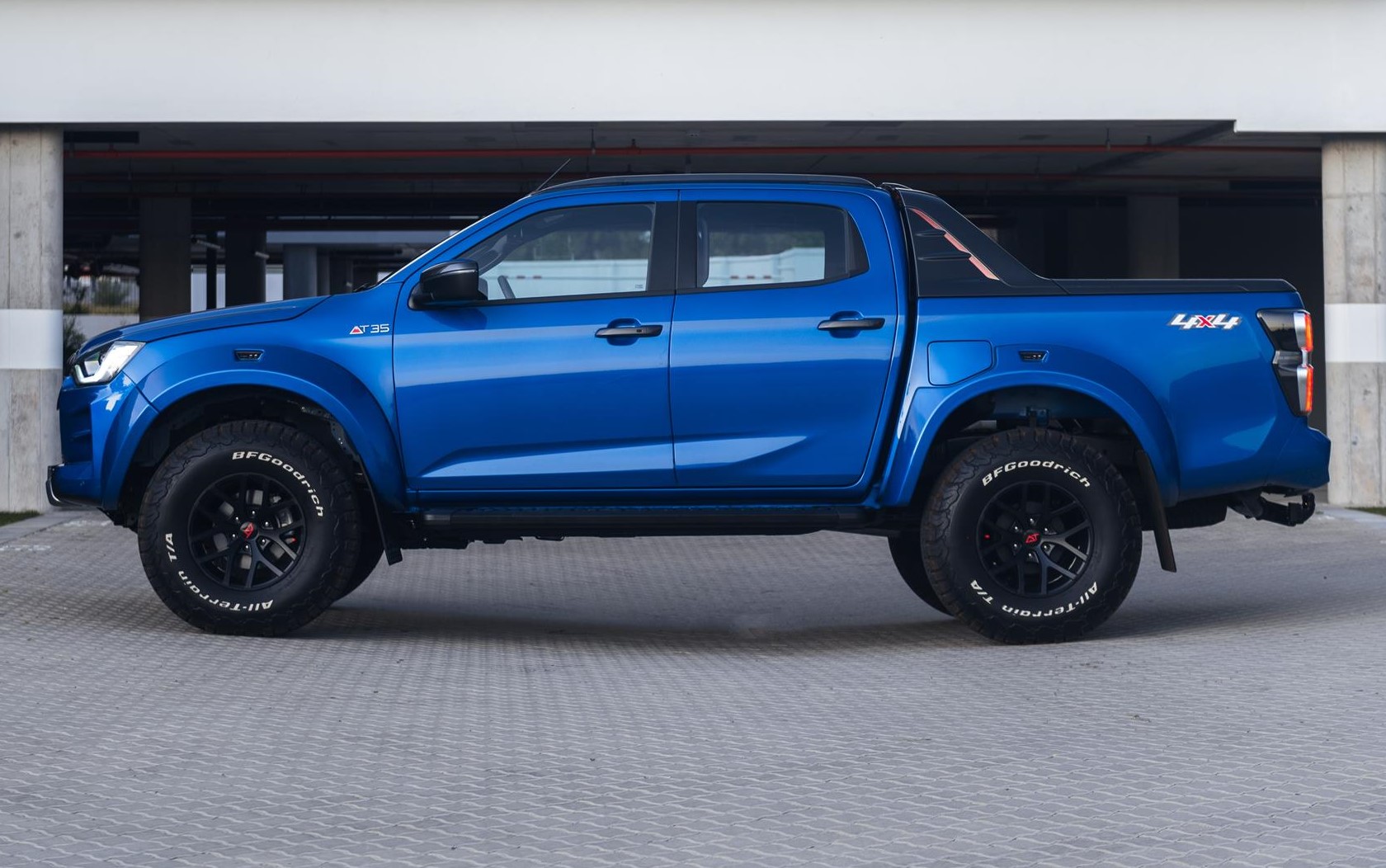
There’s no faulting the AT35 D-Max’s stance or appearance. But bakkies shouldn’t pose without purpose…
‘Balloon’ bakkie tyres look great
The South African bakkie market is so robust that limited-edition double cabs and extreme bakkie editions always trade at a premium, with demand comfortably outstripping supply. But one bakkie configuration has failed in the local market: a double cab fitted with 35-inch tyres.
Isuzu will now sell you a balloon-tyred bakkie with official warranty and service support, assembled with Arctic Trucks parts on the D-Max line in Struandale. But why would Isuzu attempt something that the market leader, Toyota, doesn’t? And how is it that 35-inch tyred bakkies, which look great, aren’t more popular in South Africa – a market where cost isn’t an issue for committed double-cab buyers?
The reason 35-inch tyred bakkies haven’t been successful – at all – is not about how they look, but what they are like to drive…
Huge tyres can be useful for slow-speed off-roading. But everywhere else… Well, they’re a compromise.
The issue with 35-inch bakkie tyres and driveability
If bigger tyres with more air volume are so great at absorbing road texture and allowing drivers to retain control when striking a pothole at speed, what’s the problem with 35-inch tyres?
Any tyre of extreme size is very application-specific. And with 35-inch tyres that application is about low-speed off-road traction, at very low air pressures. At highway cruising speeds and higher inflation pressures, 35-inch tyres aren’t great. They generate a huge amount of noise and have very peculiar self-damping and rebound characteristics, because there’s so much rubber in the sidewall and casing.
Being so much larger, huge tyres also tax a bakkie’s ABS, ESP and driver assistance systems. How “big” is “big” really? The metric width of a 35-inch tyre is about 315 mm.
Think about that for a moment: it’s the width of a hypercar tyre, something you’d find on a Lamborghini Urus, to name but one example. The wider your off-road bakkie tyre is, the more exposed that sidewall becomes to proximity rocks littering a 4×4 trail – just waiting to carve a puncture into your tyre.
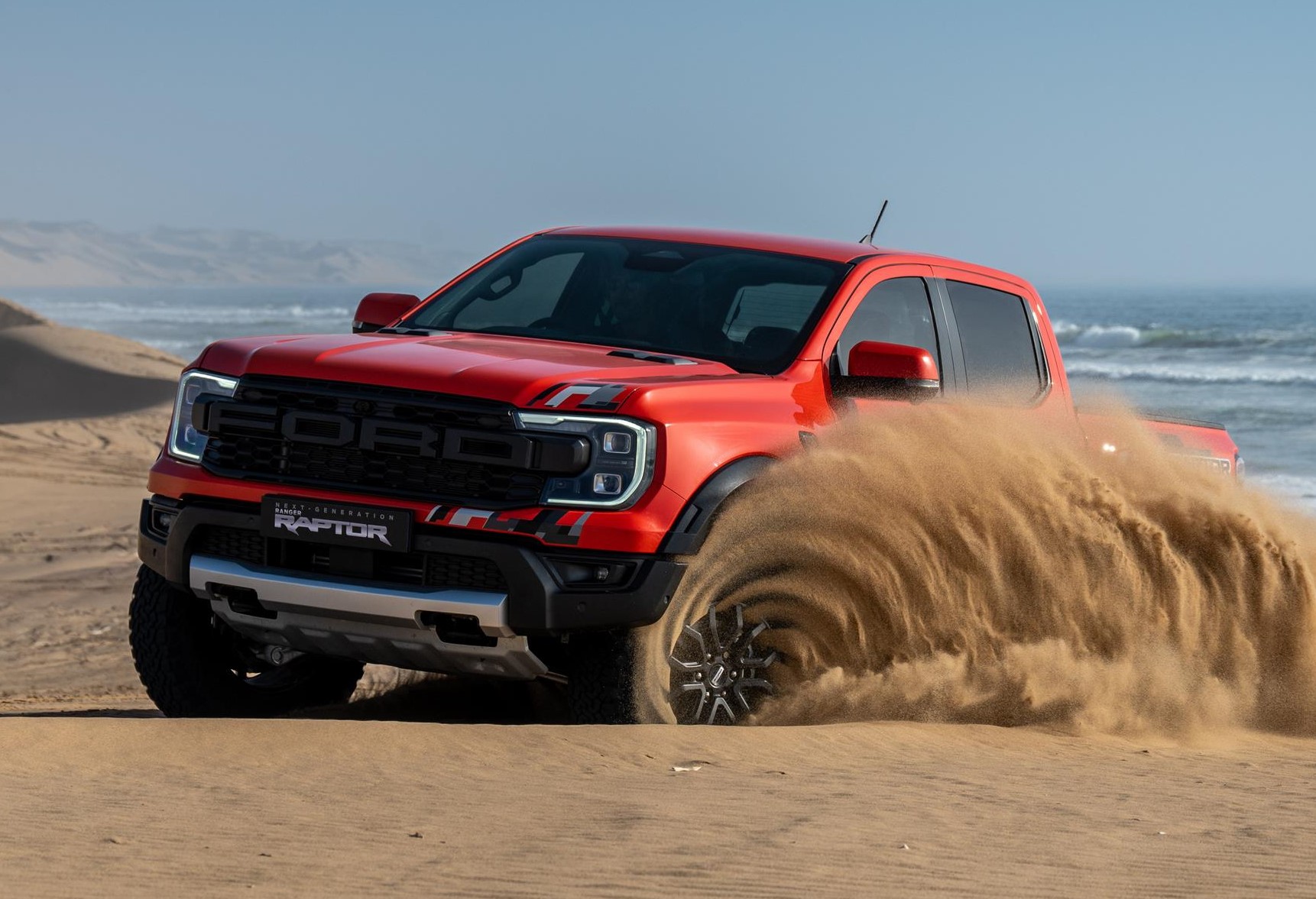
No bakkie can rival the overall ride quality and off-road ability of a Ford Ranger Raptor.
Ranger Raptor proves a point
Ford set a benchmark for double-cab bakkies with extreme off-road ability and confident highway cruising comfort when it launched the Ranger Raptor in 2019. The 1st and 2nd-generation Ranger Raptors are excellent high-speed cruising vehicles, especially on the most dangerous road surfaces South Africans encounter – corrugated dirt roads.
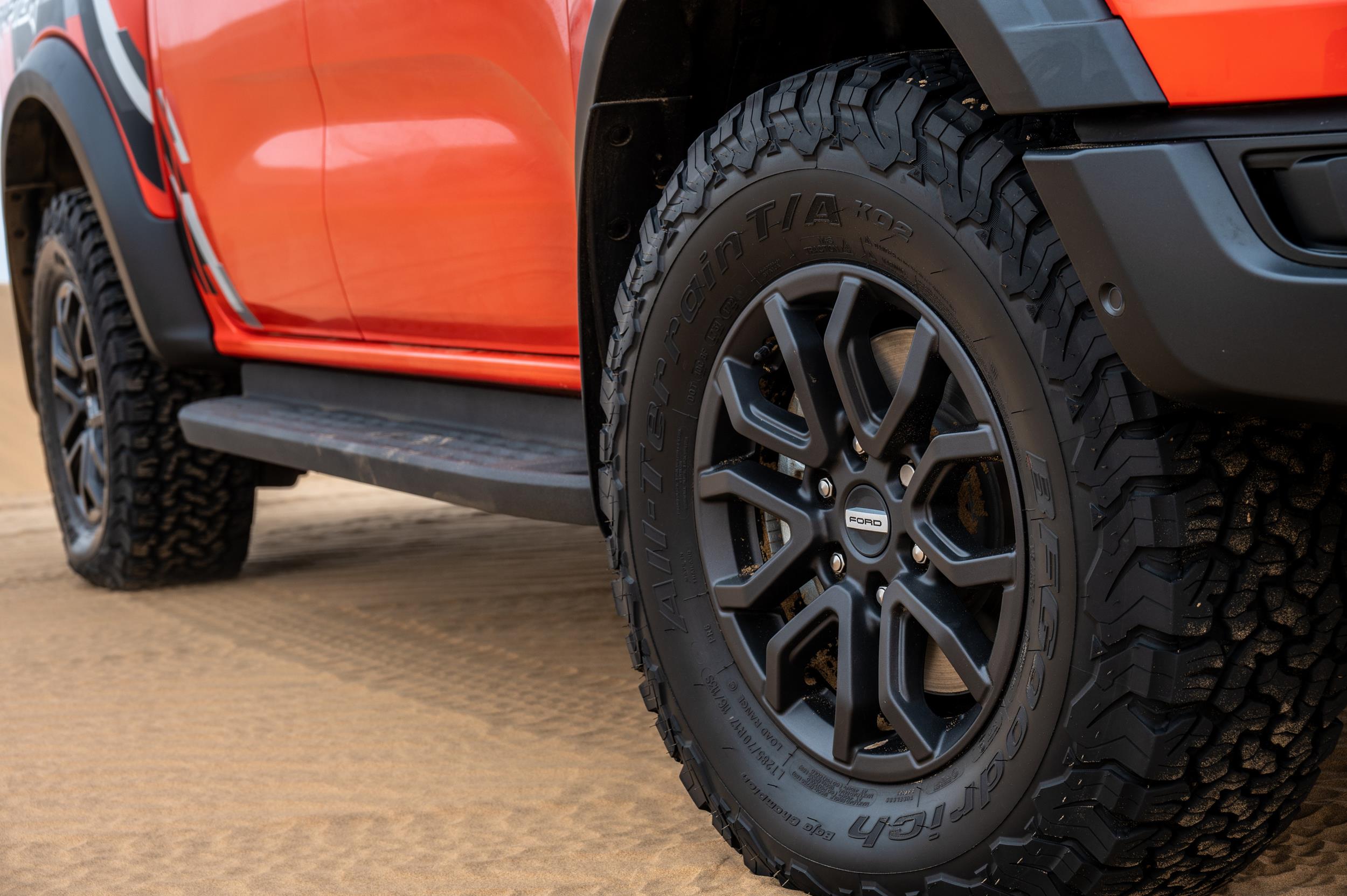
The Ranger Raptor has proven that a 17-inch wheel with a 285/70 profile tyre is the best real-world spec for an “oversized” bakkie tyre; it looks great and works even better. And a “285/70” represents notably less tyre than you’d find on Isuzu’s D-Max AT35, which is fitted with 35×12.50 R17s (USC measurement).
What made the 1st-generation Ranger Raptor so impressive upon release was that its larger-volume tyres were complemented by a very trick suspension. And that’s where most balloon bakkies fail, because standard double-cab suspension systems aren’t designed for 35-inch tyres – specifically at the rear. You can upgrade the dampers, but the suspension configuration and load rating genuinely matter.
Isuzu’s AT35 D-Max rolls huge tyres with enhanced dampers, but its load rating and rear-axle kinematics are unchanged – something Ford altered with 1st- and 2nd-generation Ranger Raptor. The AT35 D-Max has the right wheel size at 17 inches, but the 35-inch tyres overwhelm it. It would be a much better all-terrain Isuzu bakkie if fitted with 285/70 tyres, as is (still) the case with the Ranger Raptor.
Ranger Raptor proves that going larger than 285/70 R17 is pointless.
Why isn’t there a locally built Hilux AT35?
South Africans love bakkies and buy special edition versions without hesitation. But nobody wants to pay R1-million-plus for a bakkie with added visual design drama if it’s worse to drive than its standard sibling.
Toyota is the bakkie benchmark and doesn’t market a factory-built Hilux AT35 in South Africa. The truth is that 35-inch tyre bakkies are too much of a compromise because they generate too much highway speed tyre resonance, tramline too easily and trigger ride quality issues when unladen.
Limited edition double cabs create brand awareness, which is valuable in a highly competitive bakkie market. But the brand-building is pointless when they’re worse to drive. And 35-inch bakkies just aren’t the answer, much like 20- and 21-inch wheels on high-powered double-cabs are also far from ideal.
Isuzu has an entrenched brand legacy in South Africa. The Isuzu D-Max 3.0TD double cab AT35 4×4 is visually dramatic, but it’s not a better bakkie to drive than a standard D-Max V-Cross in all conditions. That’s problematic if you think of what’s on offer in the market for R1-million-plus bakkies, where Ford’s Ranger Raptor is far superior to a D-Max AT35, but costs only R63 480 more (September 2023).
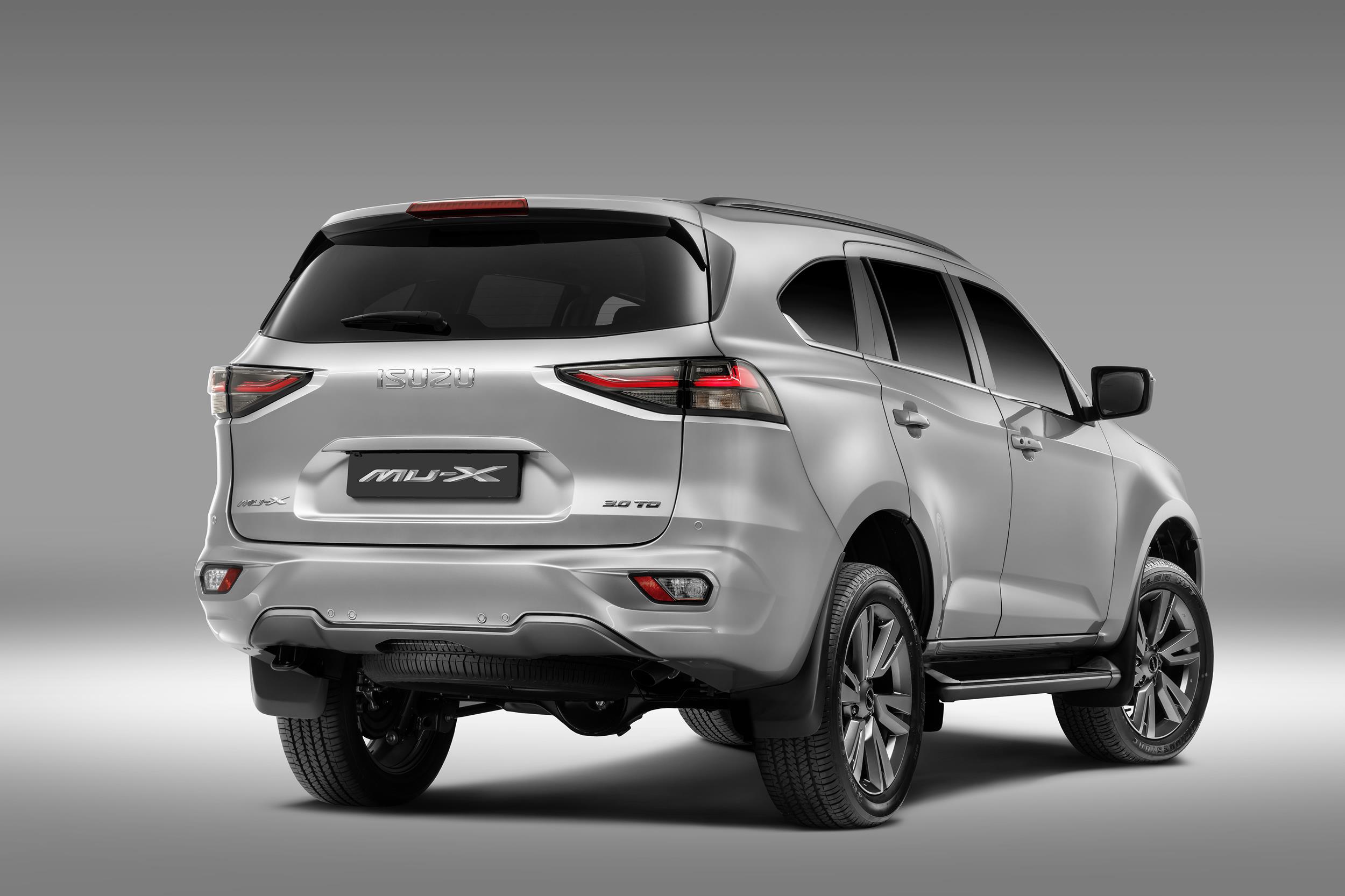
The MU-X’s rear multi-link coil suspension would be a great fit for an extreme edition D-Max.
A MU-X rear-axled D-Max?
The issue with Isuzu’s D-Max AT35 is that it retains a traditional bakkie rear-axle load capacity, supported by live-axle rear suspension and leaf springs. Many people forget that Ford’s Ranger Raptor bakkies have a reduced load capacity (only 640 kg) and a rear-axle set-up borrowed from the Everest.
A conventional bakkie rear suspension with a 970-kg load capacity and 35-inch tyres just doesn’t deliver a great all-terrain bakkie driving experience. Even with upgraded dampers at each wheel corner.
Ford has proven that customers in the market for extreme edition bakkies aren’t bothered by reduced load capacity. Who’s going to be stacking a D-Max AT35 with 970 kg worth of construction sand, scrap metal, or cattle feed? Nobody. And D-Max AT35’s 970-kg load rating comes at the cost of ride quality.
An alternative outcome for Isuzu and its South African halo bakkie aspirations? Imagine a special edition D-Max that rolls on 17-inch wheels, shod with 285/70 tyres, has a load capacity that is reduced from 970 kg to 600 kg and features an MU-X rear axle… Now that bakkie would shine on any and all road surfaces.
How many Suzuki Fronx units were sold in SA last month?
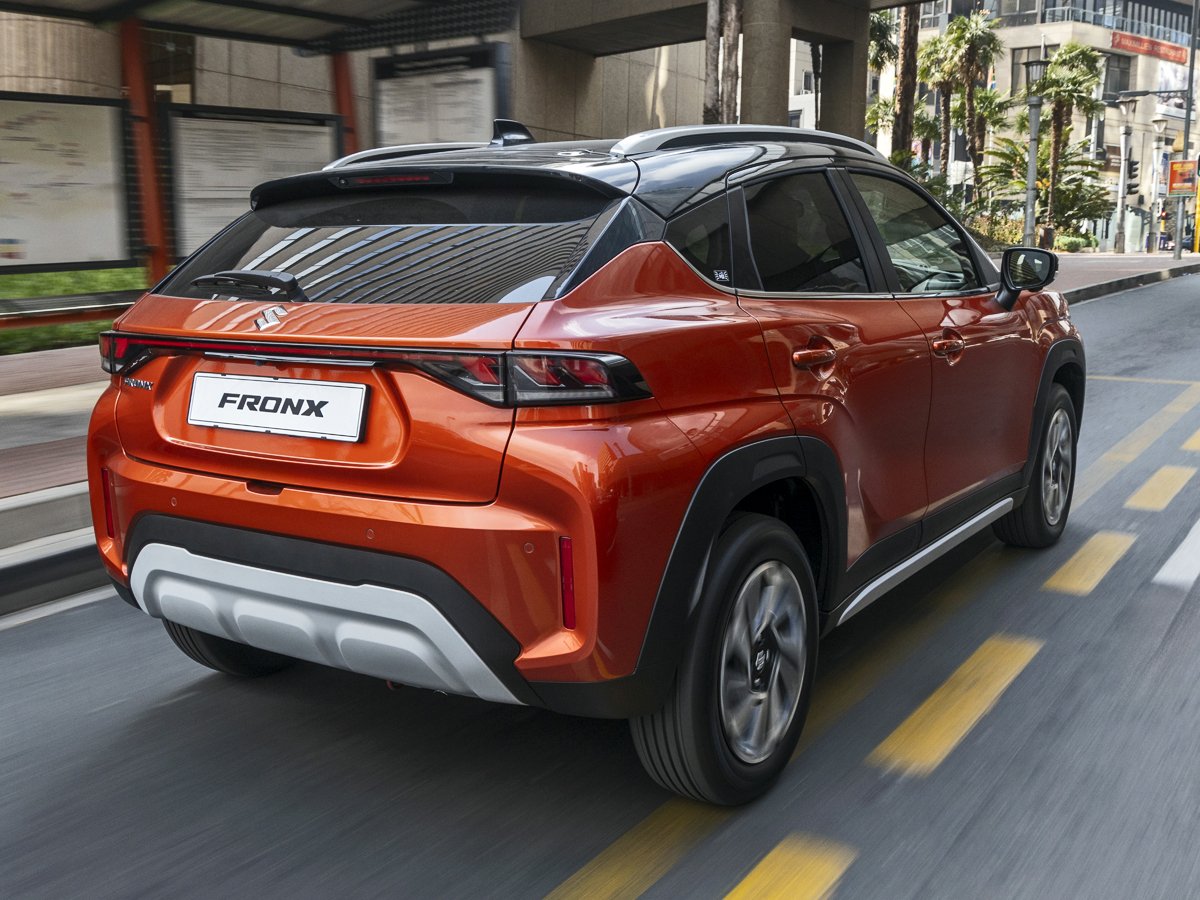
The new Suzuki Fronx hit South Africa halfway through August 2023. Despite being on the market for just 2 weeks, the Baleno-based crossover is off to a strong start…
The new Suzuki Fronx officially went on sale at the Japanese firm’s 100-odd dealerships around South Africa midway through August 2023. So, we were keen to see exactly how many units of the new Baleno-based crossover were registered locally last month.
Well, the Indian-built Fronx is off to a strong start, since as many as 302 examples were sold, despite the fact the newcomer was technically available to buy only for the final 2 weeks of August.
Interestingly, all 302 of those units came via the dealer channel, so the figure isn’t inflated by sales to the rental industry or government (nor by so-called “single” registrations, which comprise vehicles registered by manufacturers for their own use). Based on our conversations with Suzuki dealers, order books weren’t open ahead of time either.
As a reminder, the new Fronx range numbers 4 derivatives, with pricing running from R279 900 to R335 900. All models are powered by the Japanese firm’s familiar naturally aspirated 1.5-litre, 4-cylinder K15B petrol engine, which here generates 77 kW and 138 Nm.
In total, Suzuki Auto SA sold 4 332 new vehicles in August 2023, enough for it to again comfortably take 3rd place on the list of Mzansi’s best-selling automakers. The Swift (1 349 units) was the brand’s strongest seller last month, followed by the S-Presso (481 units), Ertiga (468 units), Baleno (407 units) and Ciaz (338 units).
Next came the new Fronx, which finished ahead of the Grand Vitara (253 units), DZire (207 units), Celerio (148 units), Jimny (121 units), Ignis (47 units), since-discontinued Vitara Brezza (11 units), Vitara (9 units) and new XL6 (6 units). For the record, the latter Ertiga-based 6-seater MPV went on sale locally only in the final week of August.
In addition, Suzuki Auto SA registered 185 units in the light-commercial vehicle space, comprising 136 examples of the Eeco and 49 of the Super Carry.
10 best-selling bakkies in South Africa: August 2023
Bakkie fans, the sales figures are in! Here’s your monthly look at South Africa’s best- and worst-selling bakkies for August 2023…
In August 2023, South Africa’s new-vehicle industry registered a 3.1% year-on-year decline to finish on 45 679 units. Despite this fall, the light-commercial vehicle (LCV) segment saw marginal growth, with registrations here ending on 13 652 units (or 2.7% up compared with the corresponding month in 2022).
So, what happened on the list of South Africa’s best-selling bakkies? Well, for the 2nd month running, there were no changes in position inside the top 10. That meant the locally built Toyota Hilux – which is due to go the mild-hybrid route at some point in 2024 – was again top of the charts in August 2023, though the Japanese bakkie this time managed to cross the 3 000-unit barrier to finish on a heady 3 309 units.
The Silverton-manufactured Ford Ranger likewise gained a few hundred registrations month on month, retaining 2nd place with 2 367 units (or a whopping 86.9% of total Blue Oval sales for August). The Struandale-made Isuzu D-Max (1 632 units) completed the podium. Interestingly, the Japanese firm reportedly plans to launch a fully electric bakkie based on the D-Max in certain markets by 2025.
While Nissan has confirmed the NP200 will go out of production in the opening quarter of 2024, sales of the half-tonne bakkie continue unabated, with the Rosslyn-produced model holding on to 4th position with 1 064 registrations. The locally assembled Mahindra Pik Up (701 units), imported GWM P-Series (567 units) and Rosslyn-built Nissan Navara (481 units) remained in 5th, 6th and 7th, respectively.
The final 3 spots in the top 10 thus again went to the evergreen Toyota Land Cruiser 79 (305 units), the Ford-built Volkswagen Amarok (296 units) and the Chinese-made GWM Steed (83 units).
Best of the rest in August 2023: bakkies outside the top 10
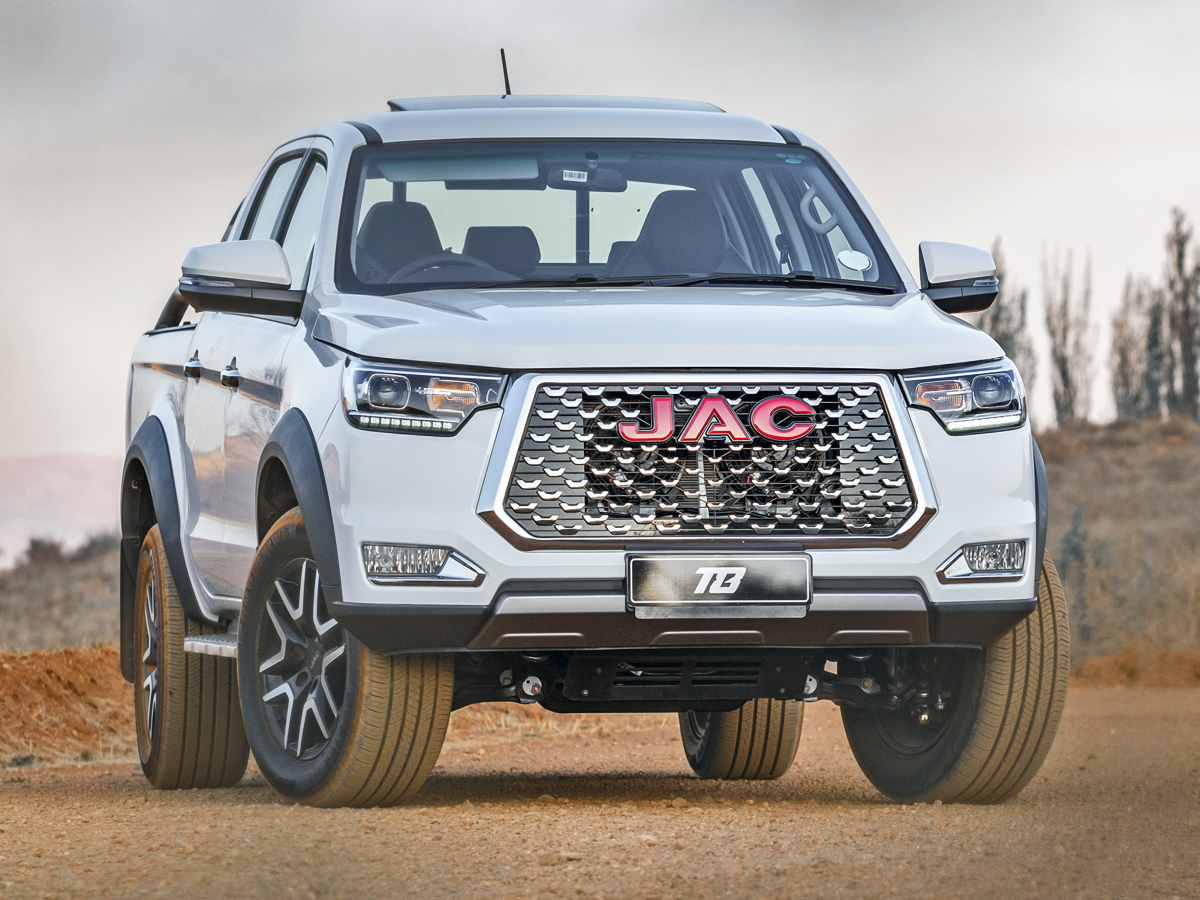
So, what about those bakkies that didn’t manage to break into the top 10 in August 2023? Well, the outgoing Mitsubishi Triton (78 units) was once again the best of the rest, followed by JAC’s T-badged bakkies (the Chinese automaker unfortunately reports only a combined figure for its T6 and recently updated T8 line-ups) with 57 units.
As we pointed out last time, Mahindra SA has quietly rationalised the local Bolero line-up to just a single variant, so the Indian-built bakkie had to settle for only 22 registrations in August 2023. Meanwhile, the Peugeot Landtrek (8 units), Jeep Gladiator (6 units) and Mazda BT-50 (4 units) didn’t manage to crack double figures.
Export winners in the bakkie segment in August 2023
What about the export market? Well, the Silverton-built Ford Ranger (7 166 units, not including VW Amarok units, according to the Blue Oval brand) again finished just ahead of the Prospecton-produced Toyota Hilux (6 863 units) in the export race.
The D-Max (655 units), Navara (208 units) and NP200 (45 units) therefore again made up the numbers on the export charts. As has been the case for several months now, the official Naamsa report furthermore showed a few imported models being exported from local shores in August 2023, this time in the form of the GWM P-Series (37 units), Mitsubishi Triton (33 units) and GWM Steed (1 unit).
10 best-selling bakkies in South Africa for August 2023
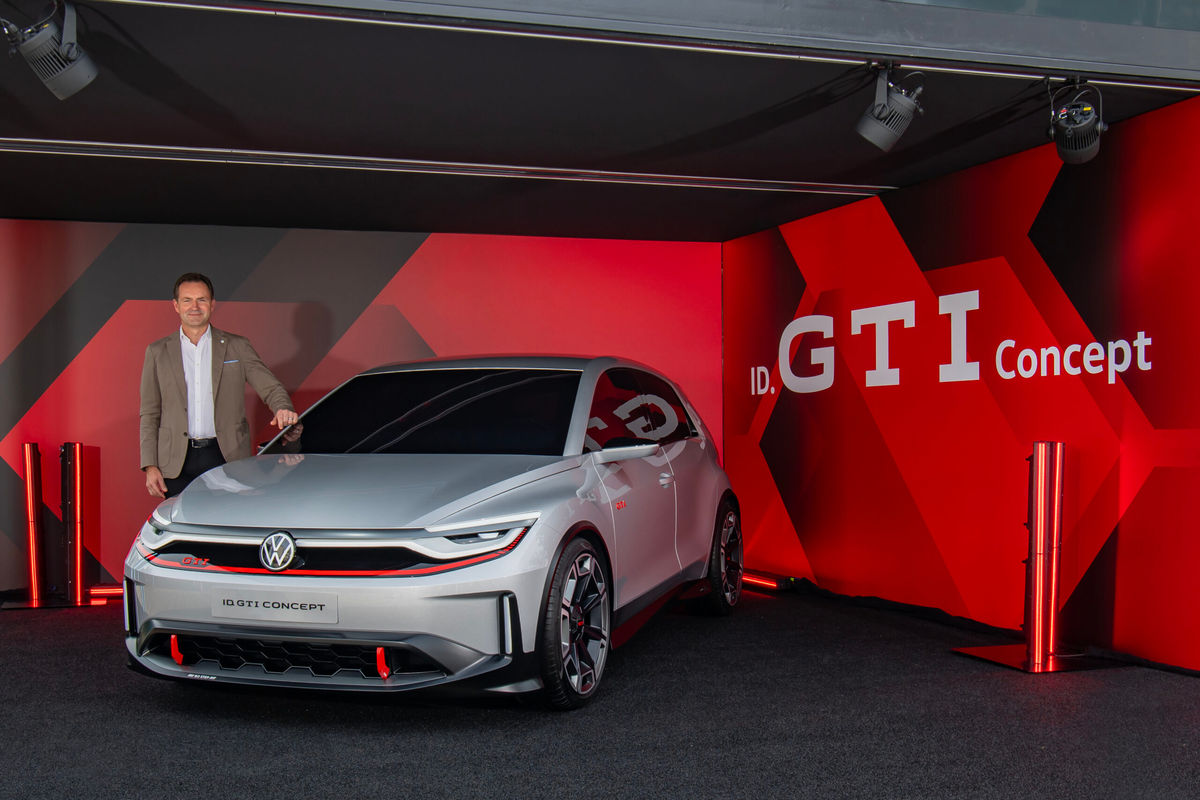
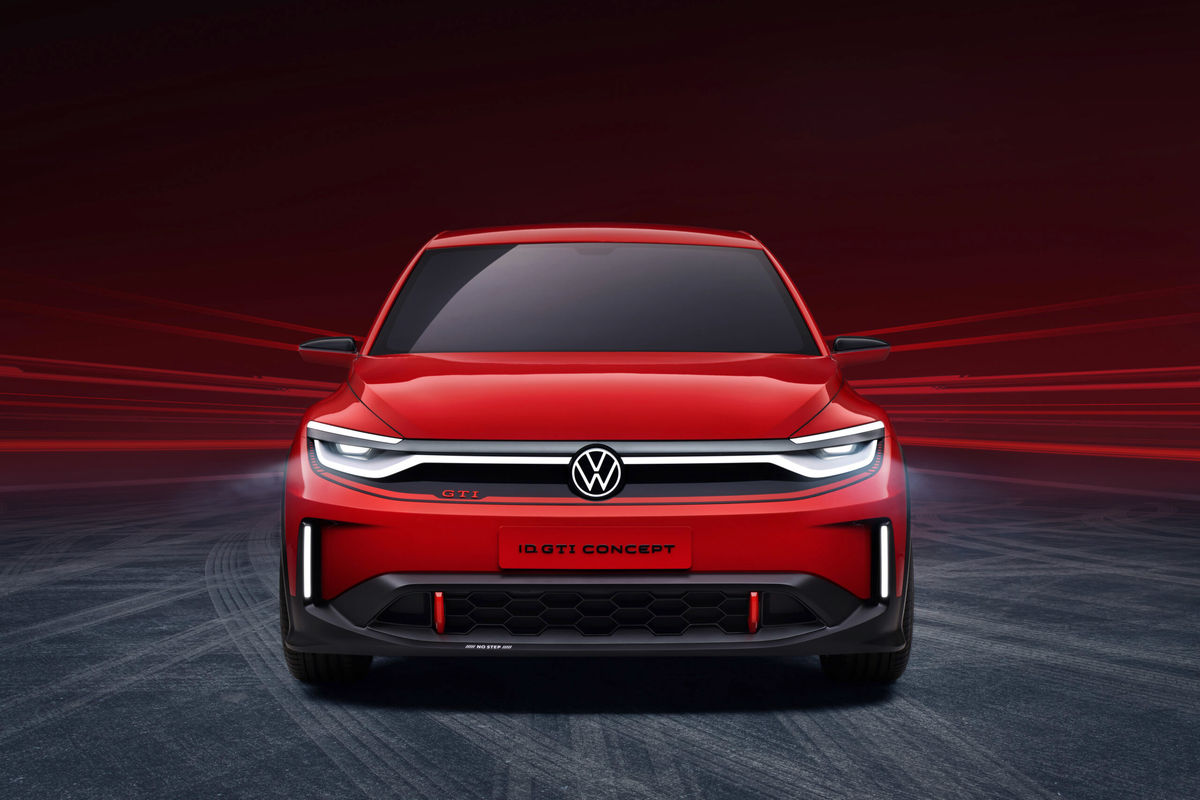
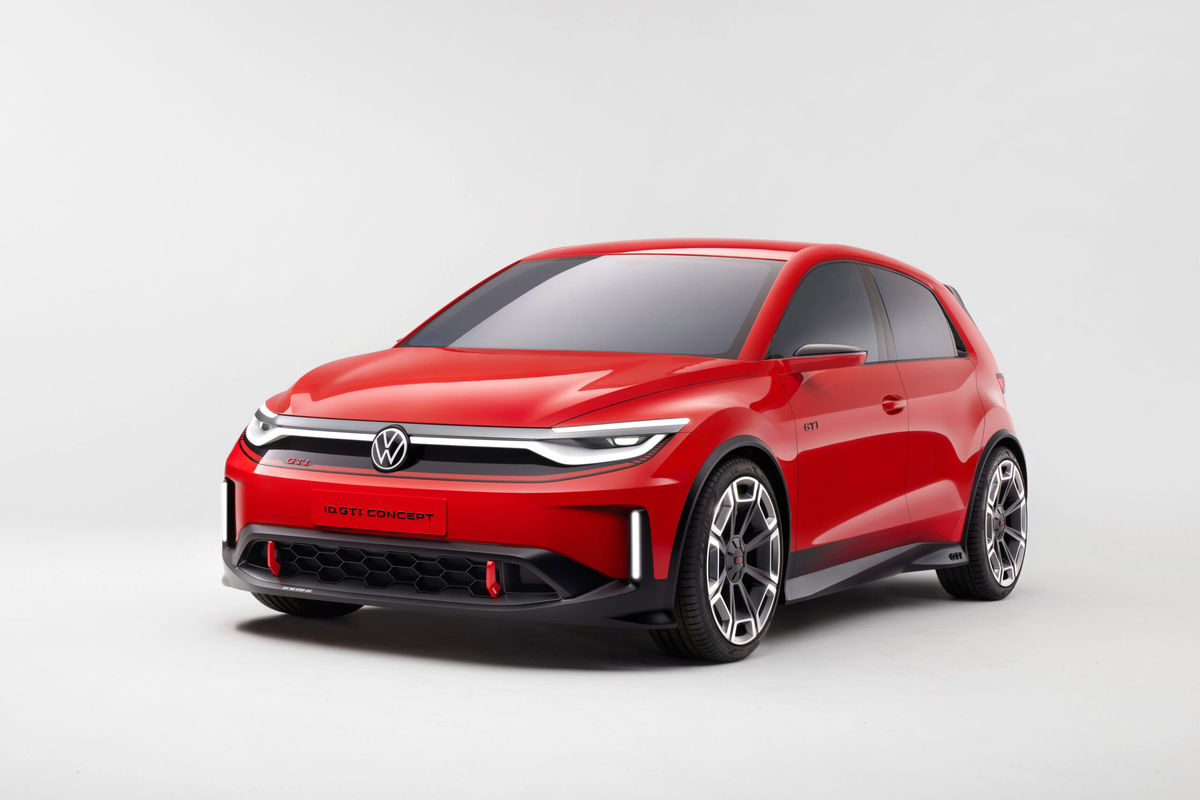
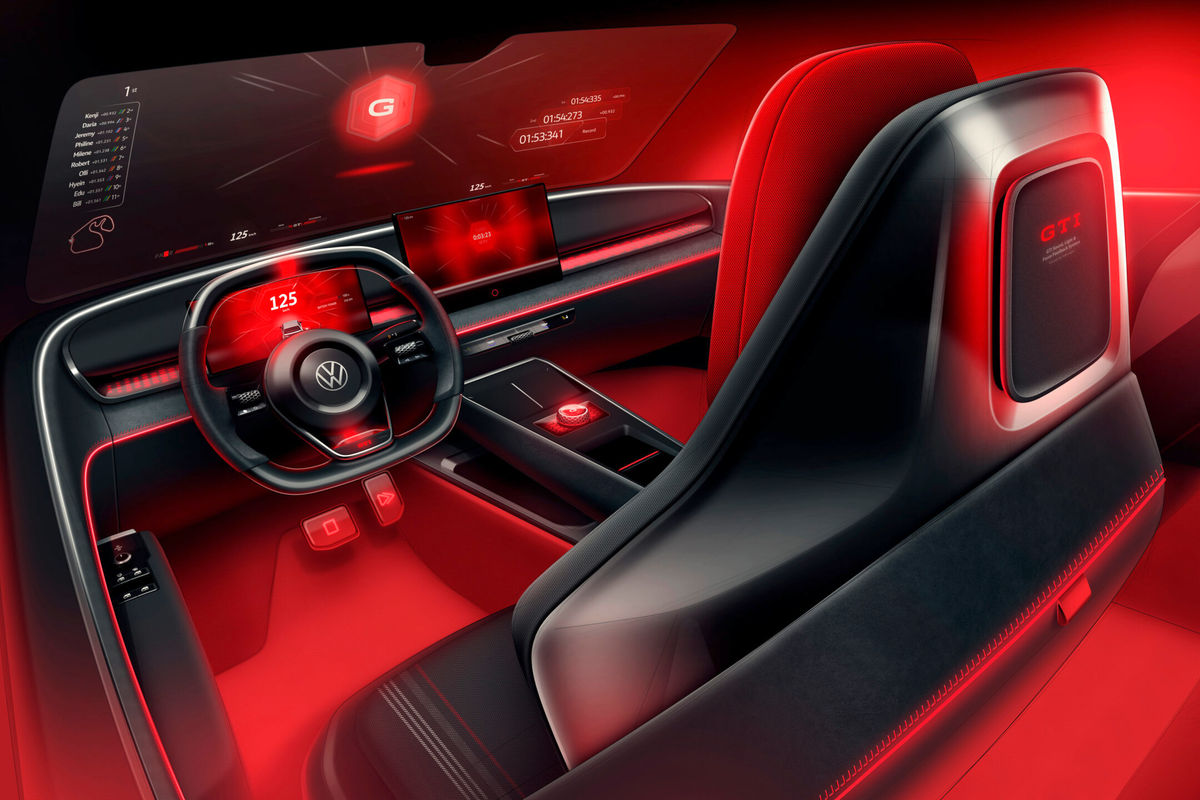
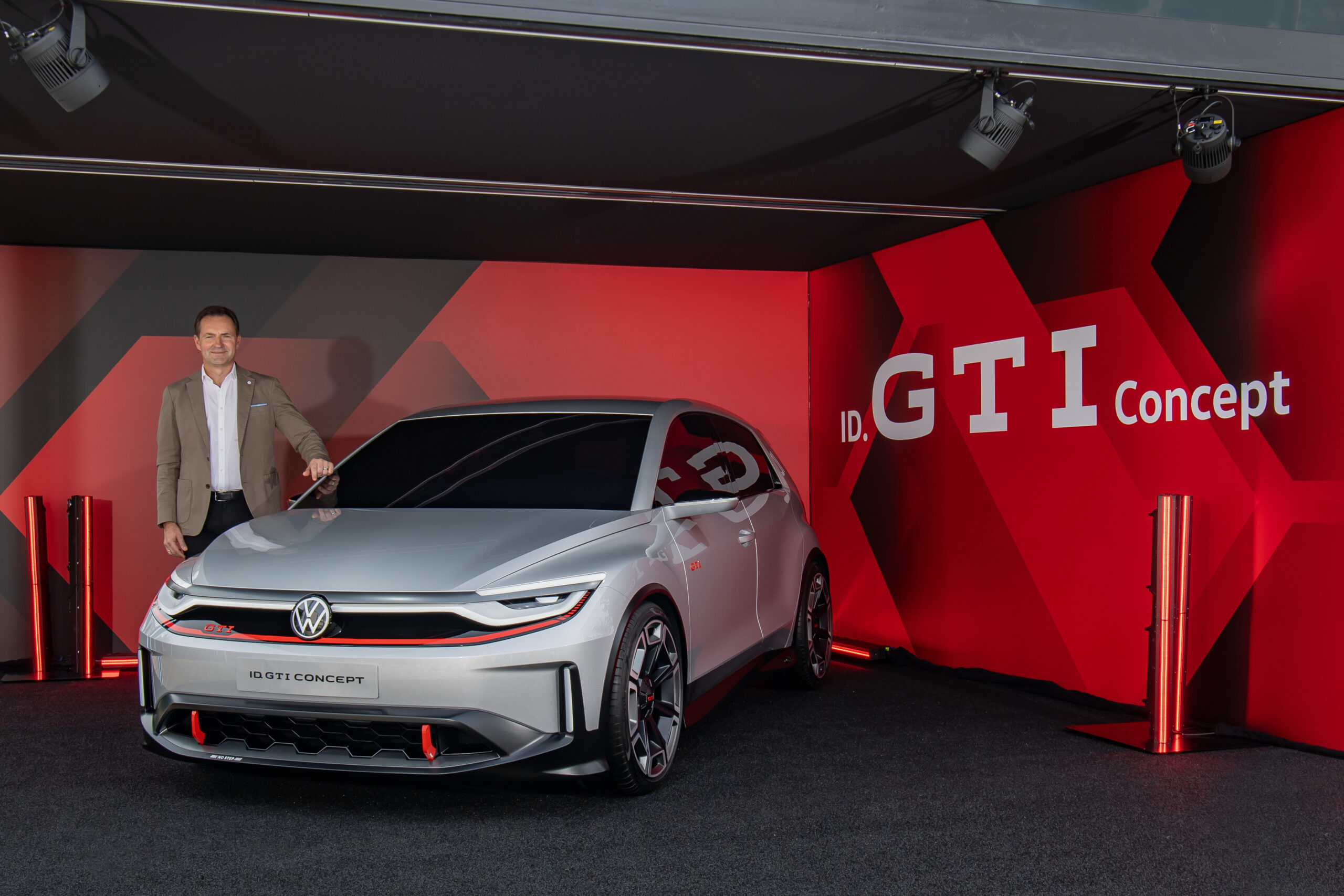
Forty-eight years since the Golf 1 GTI was unveiled in Frankfurt, Volkswagen has rolled out the Polo-sized ID.GTI at the Munich motor show. The ID.2-based concept previews the first all-electric Volkswagen model to wear a GTI badge.
In a way, it’s fitting that Volkswagen chose to apply the hallowed GTI badge to the upcoming ID.2 small hatchback instead of its (also MEB-based) ID.3 premium hatchback model, which is the Golf 8’s battery-electric counterpart… The styling of the ID.2, built on the shortened “MEB Small” platform, draws more inspiration from the Giugiaro-penned Golf 1 and, besides, the concept is peppered with classic GTI cues.
Volskwagen CEO Thomas Schäfer poses with the new ID GTI concept.
Of course, we’re not entirely surprised that the Wolfsburg-based brand teased its first electric GTI offering at the Munich motor show; last month, Cars.co.za reported that Volkswagen had applied to trademark a revised GTI logo (one in which the final letter is replaced with a lightning bolt). Might that new logo appear on the production version of the ID.GTI concept? We would not bet against it.
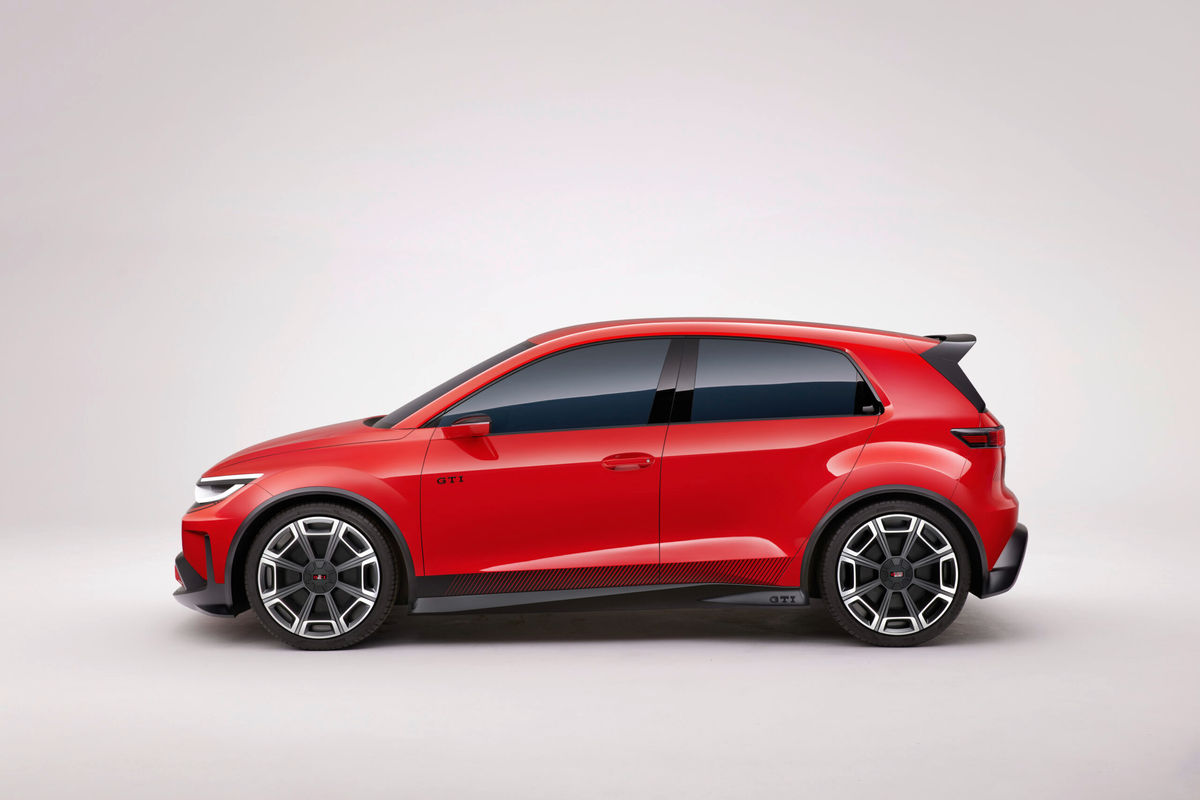
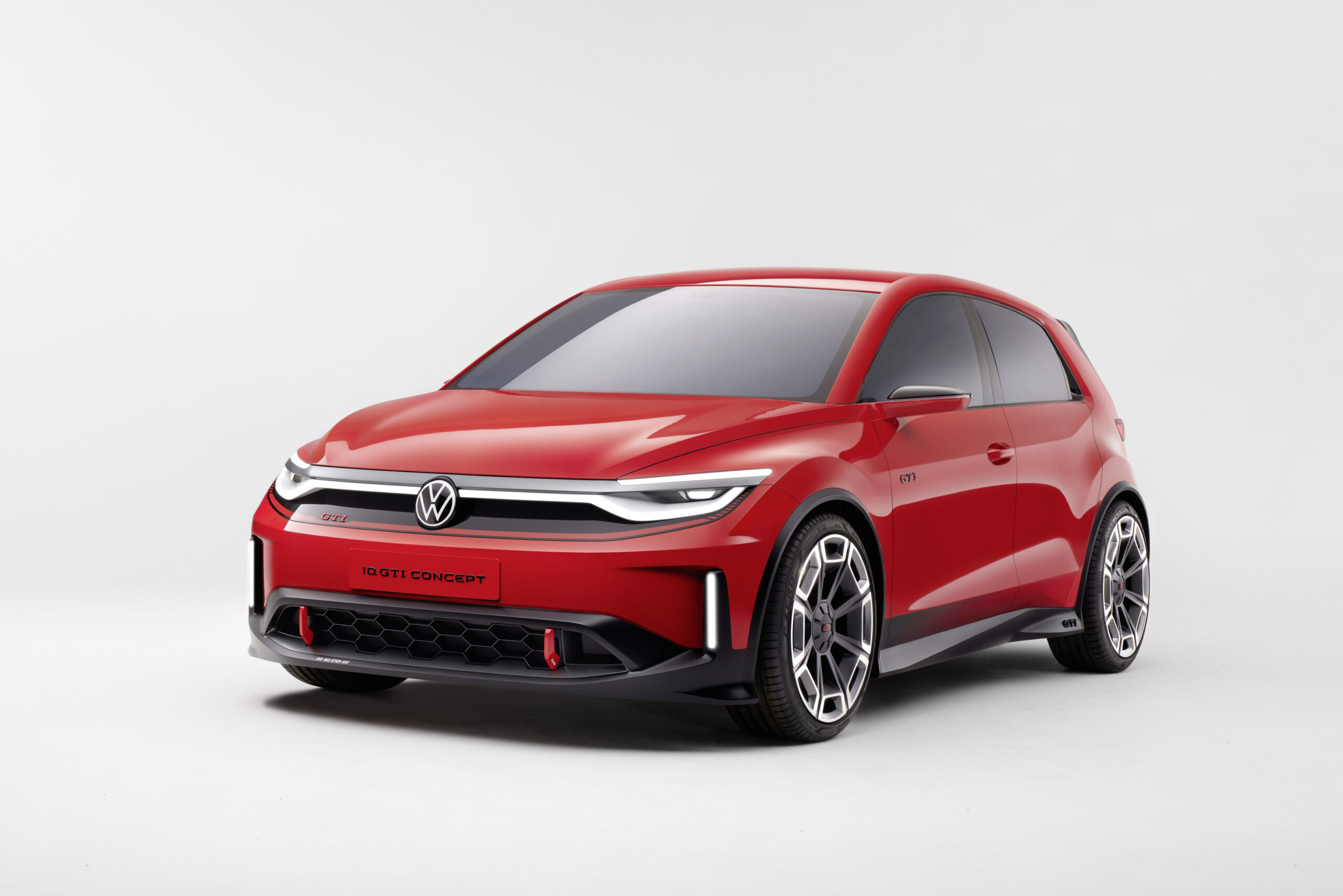
At 4 104 mm in length, 1840 mm in width and 1 499 mm in height, the ID.GTI concept is slightly bigger than the current-gen Polo GTI. Like its ICE counterpart, it is front-wheel-driven and Autocar expects it will be powered by a 168-kW motor, have a 56 kWh battery, be able to zip from 0 to 100 kph in 6.9 sec and compete with models such as the newly-unveiled Mini Cooper Electric and Abarth 500e.
Bear in mind, however, that the production version will only be shown in 2026, so the powertrain specifications – and battery capacity – will probably have been beefed up a little by then…
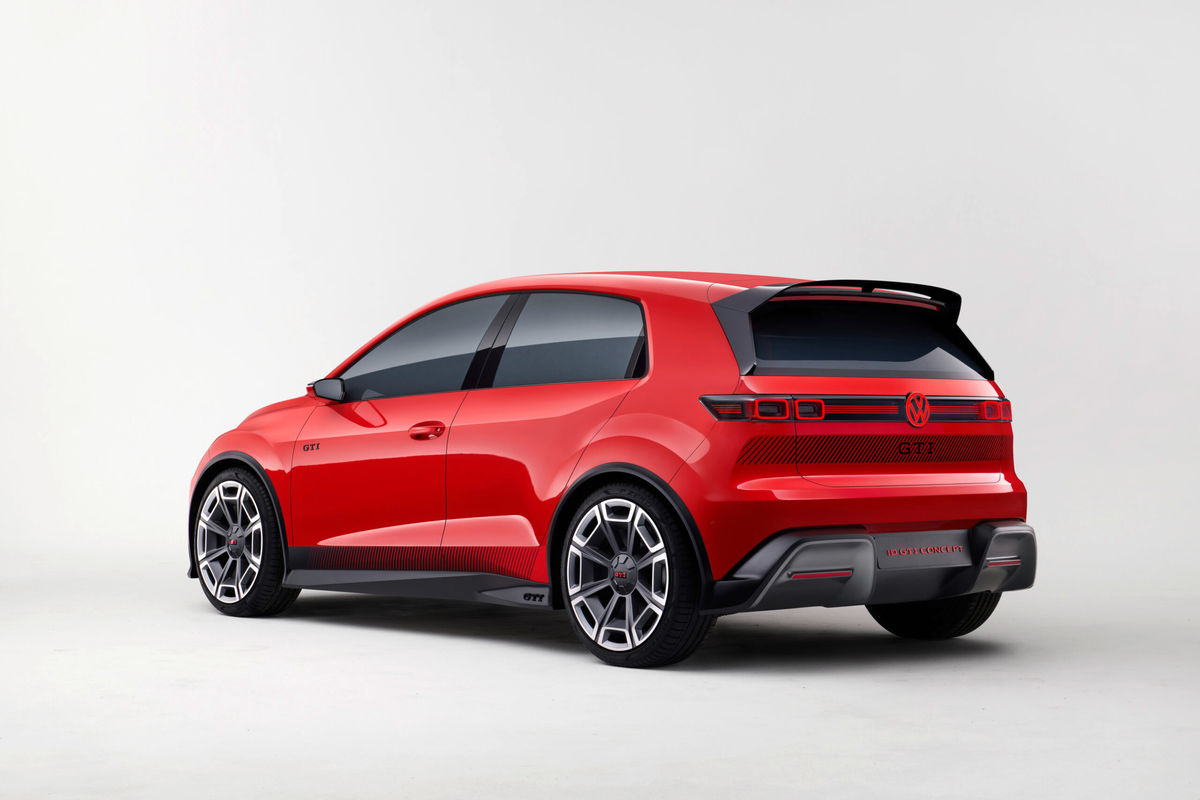
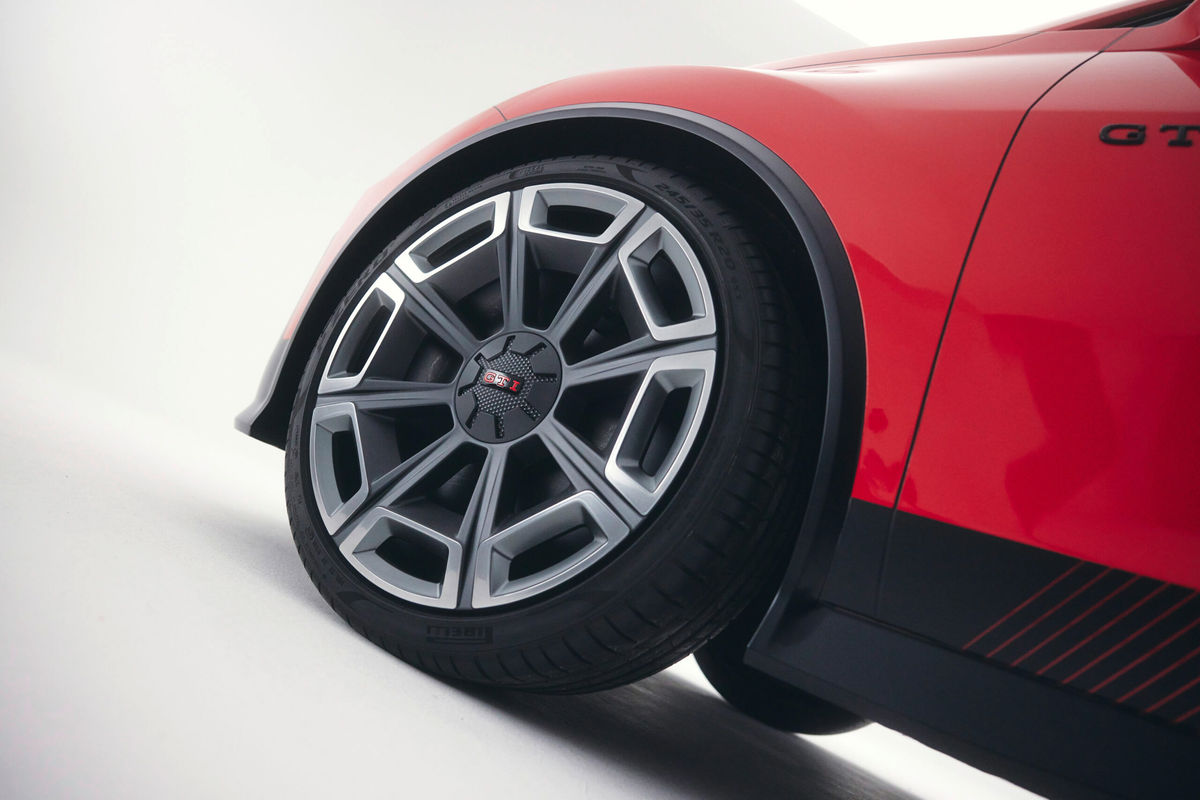
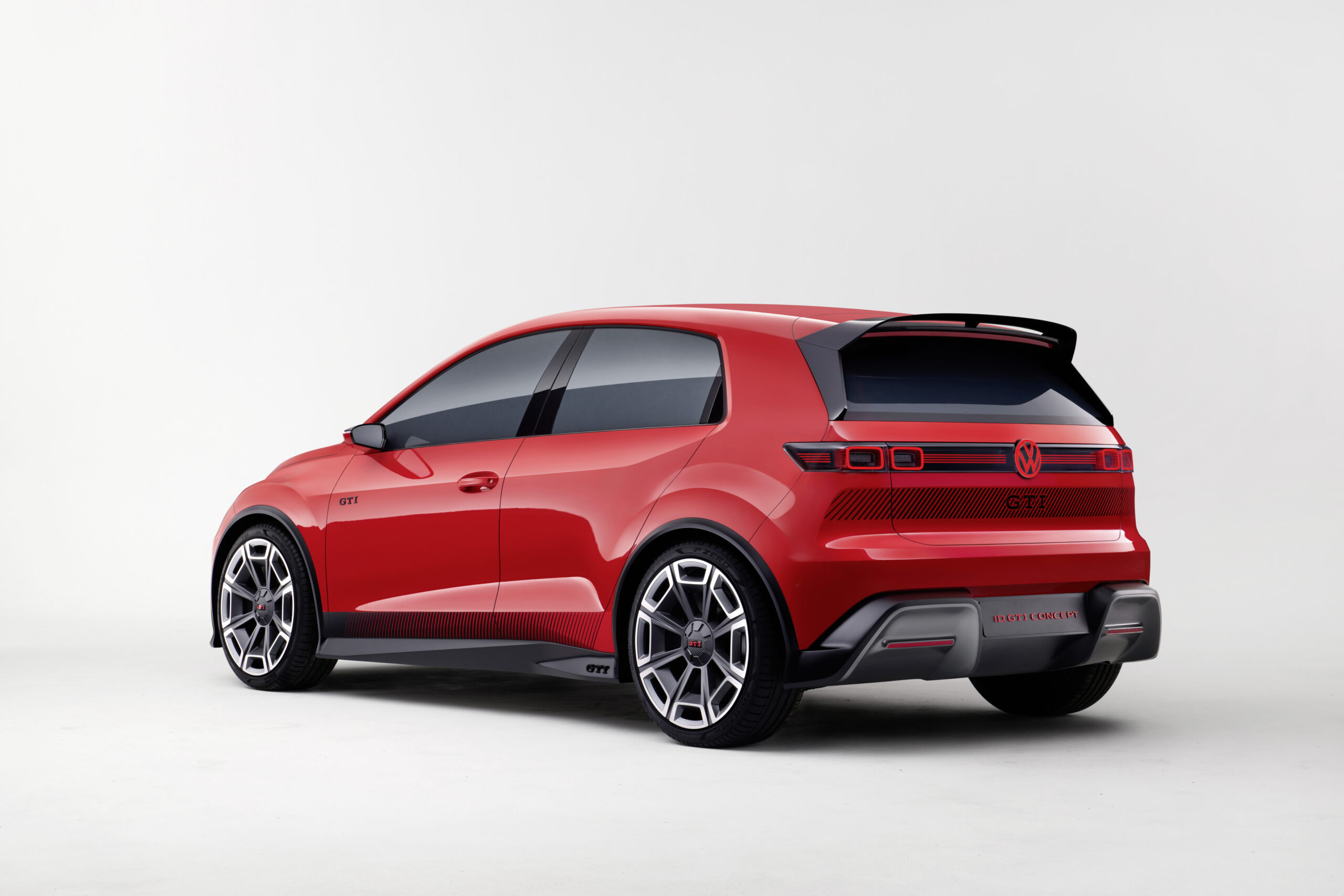
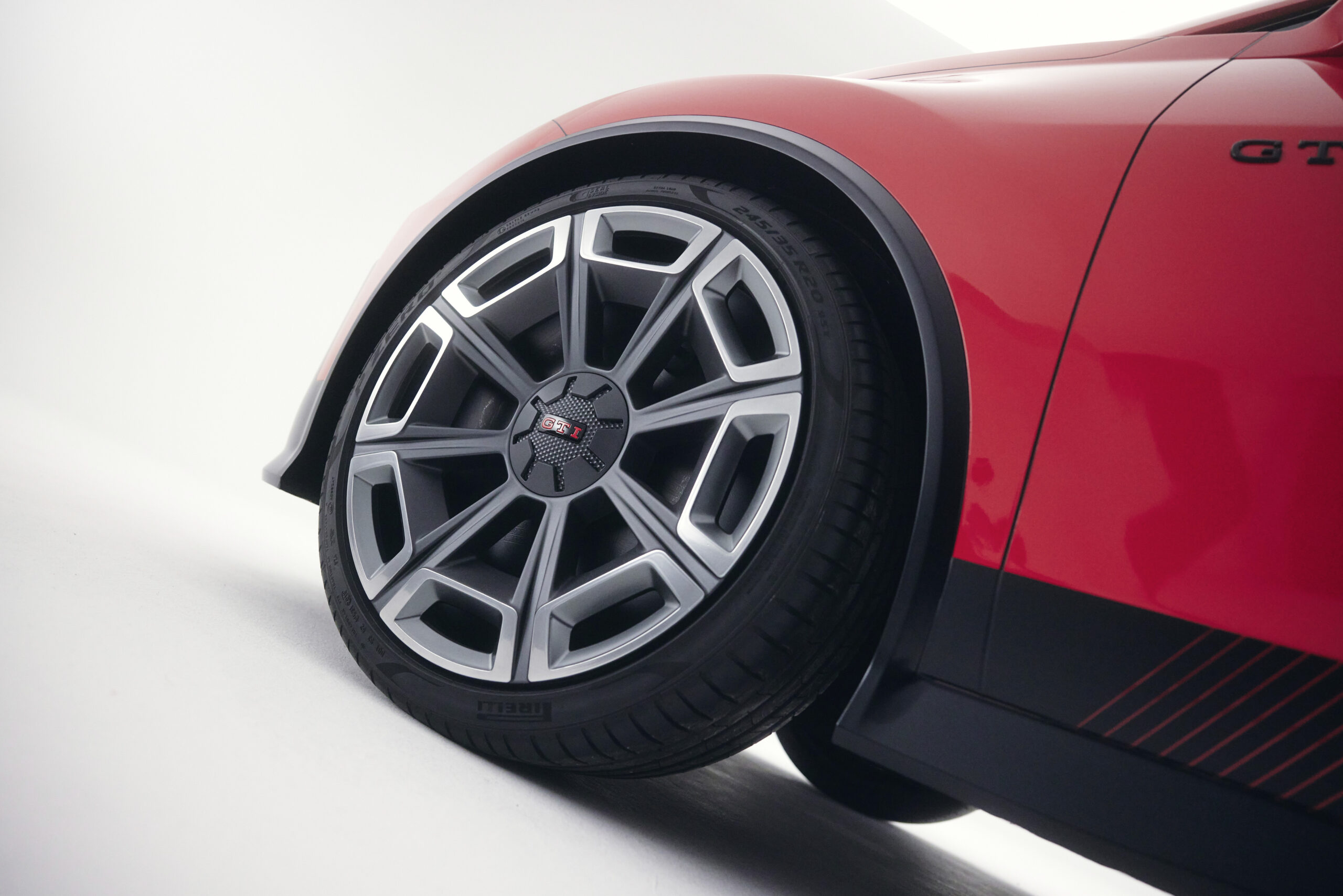
The ID.GTI Concept is undoubtedly a show car – it’s not showroom-ready, which is why it’s adorned with all the go-faster bits; it sits 15 mm lower to the ground than the standard ID2 will, wears 8-spoke, 2-tone 20-inch wheels and decidedly sporty bumpers – the front one, for example, features air curtains, vertical arrays of LED DRLs, an air scoop with honeycomb-pattern black mesh and a pair of red tow hooks.
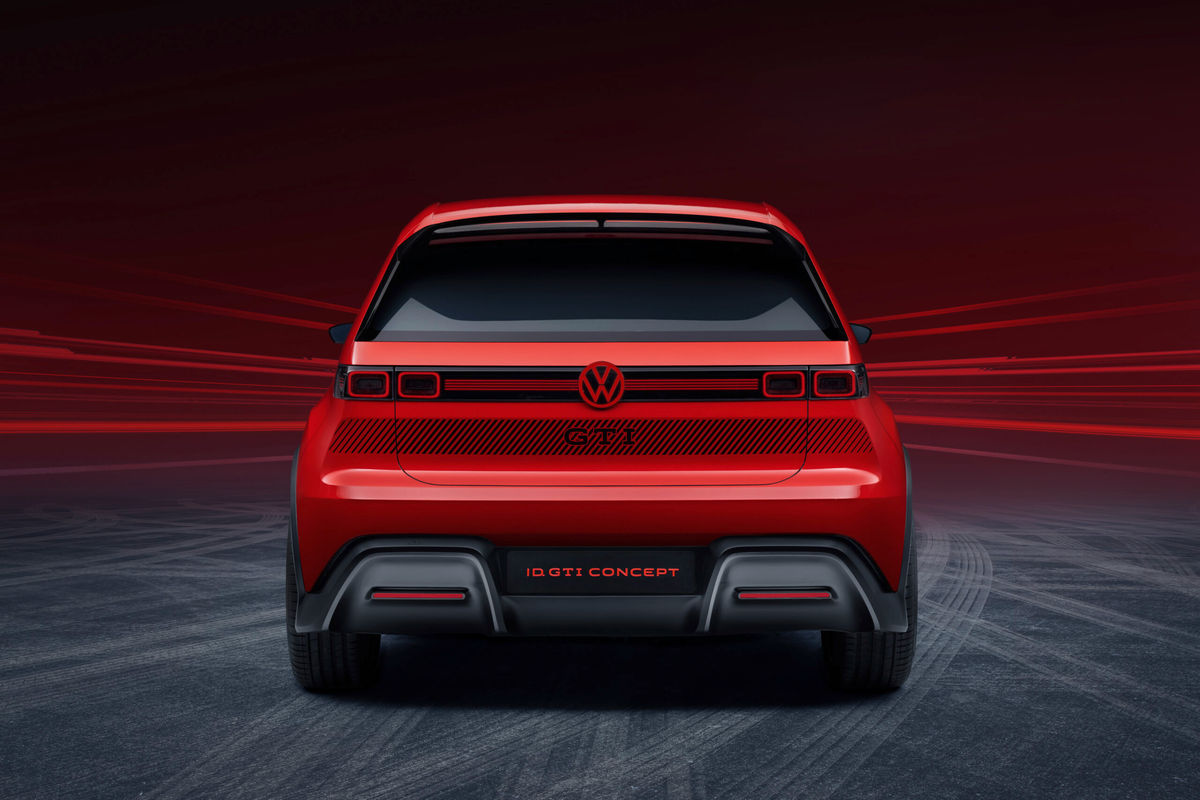
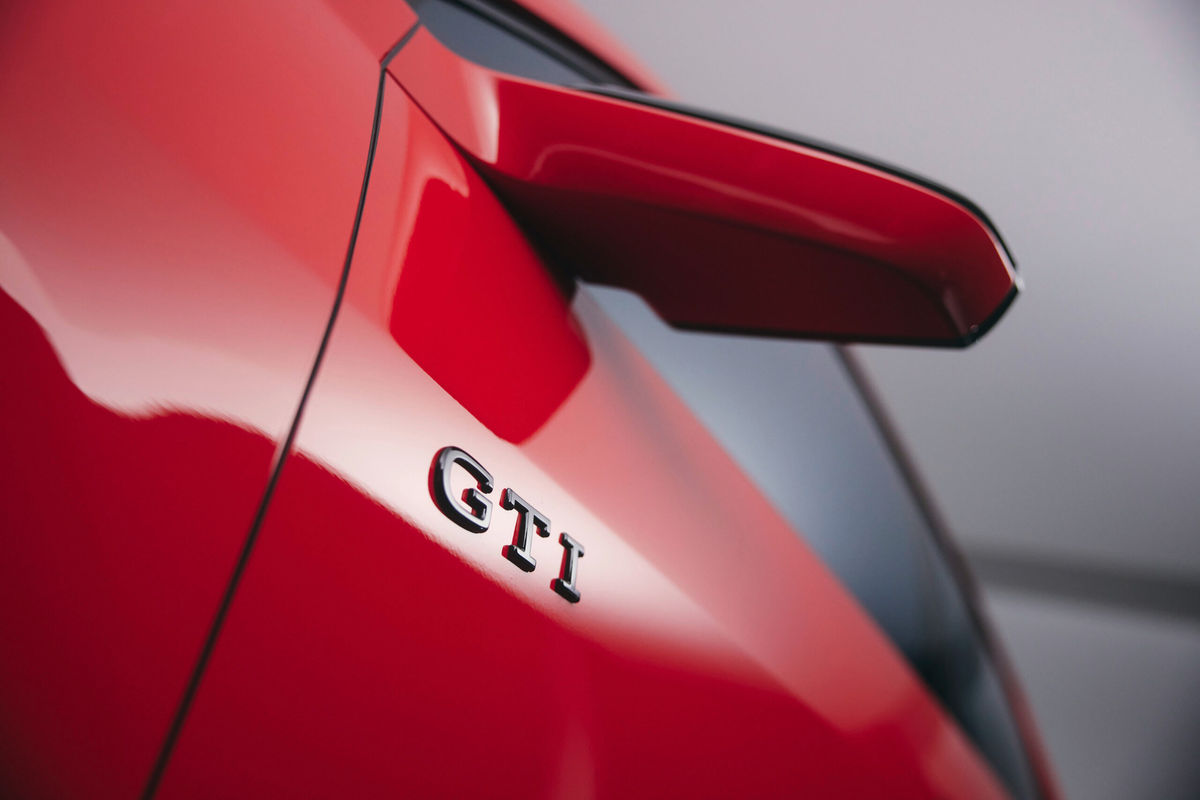
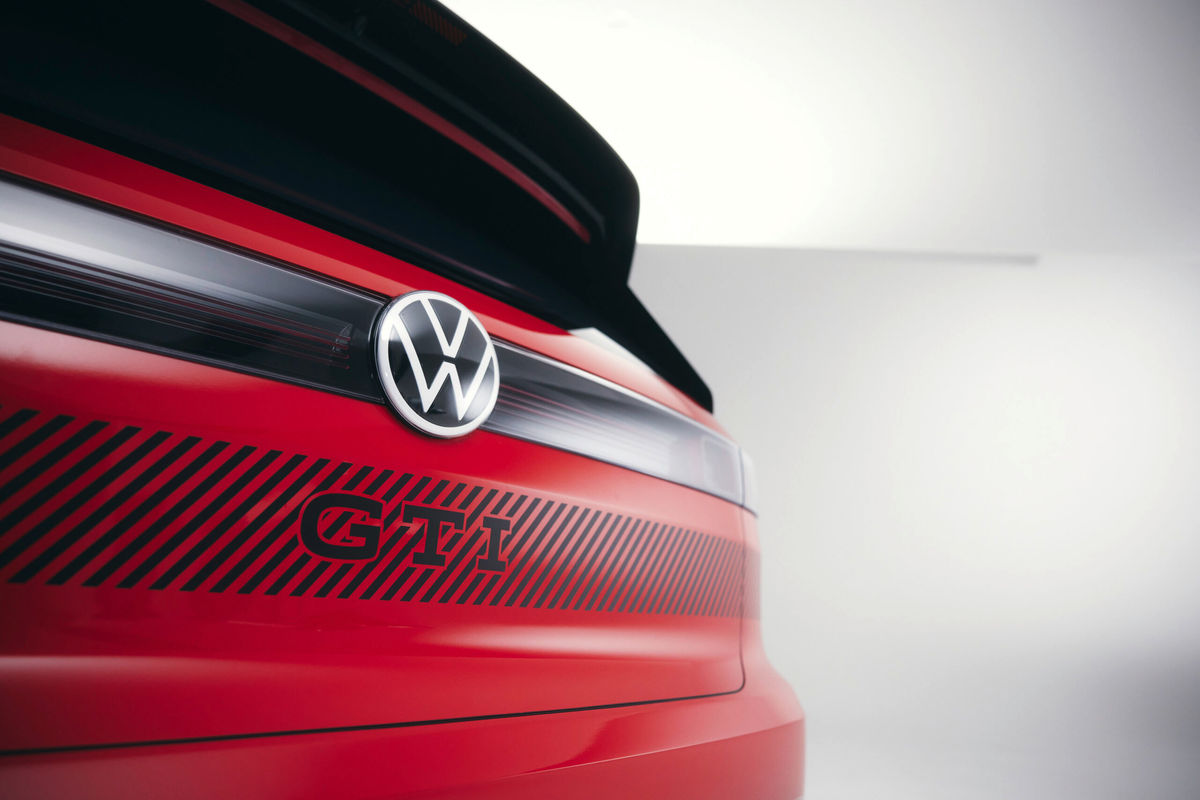
IQ Light Matrix LED headlamps are complemented by an illuminated VW badge at the front, as well as bespoke 3D tail-light graphics and black shading on the lower edges of the doors and on the tailgate. Black wheel-arch cladding and side sills (the latter with embossed feature GTI logos) complete the look.
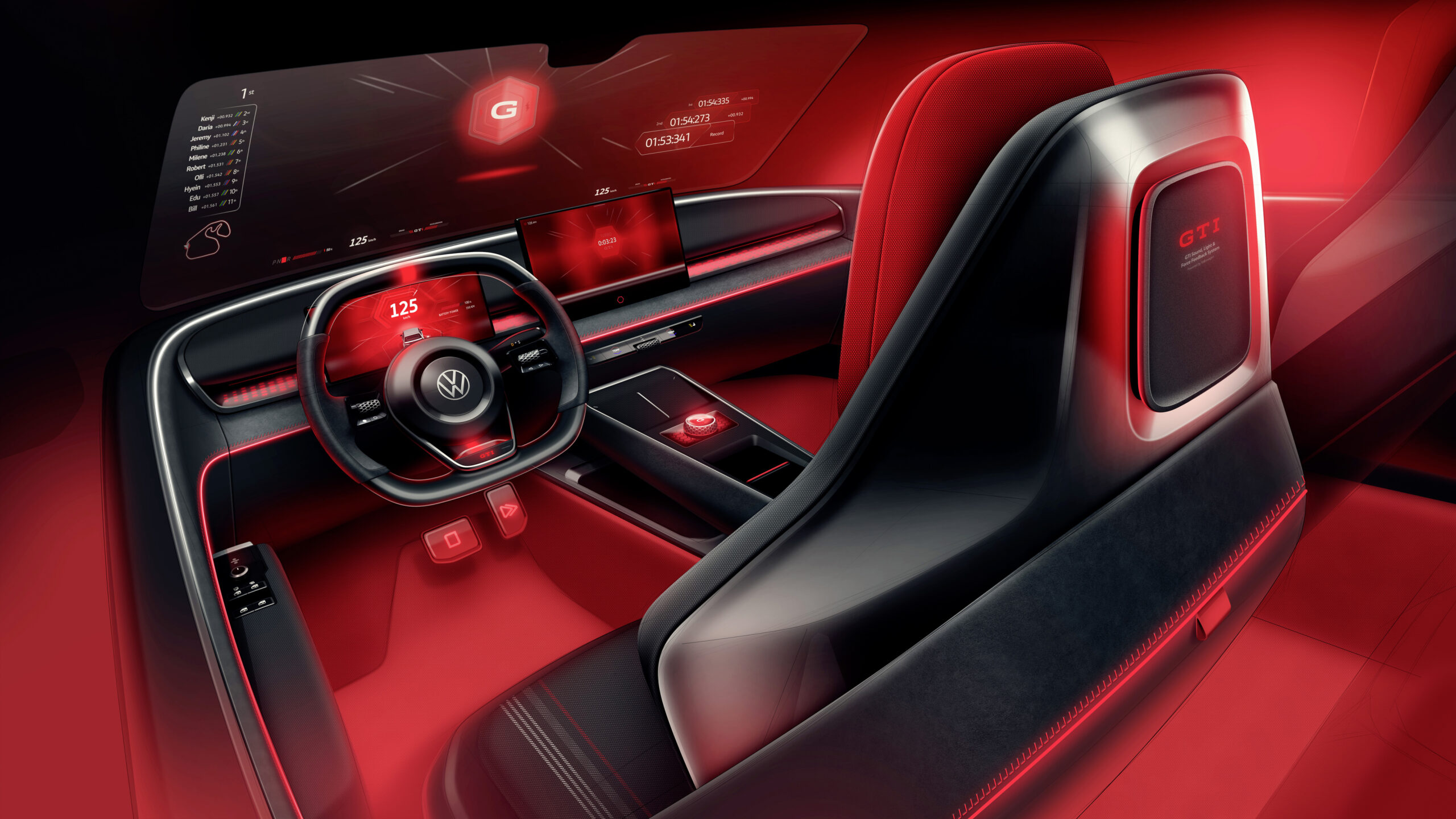
As for the interior, we only have VW’s design sketches to go on, but note original GTI-inspired cues such as a 3-spoke steering wheel with a marker at the 12 o’clock position, striped “Jack-e” seat upholstery and ornate red accents on the dashboard, door trims and centre console; the front seats’ backrests appear to have portrait panels with pulsing LED surrounds, but they’re unlikely to make it to production.
The ID.GTI concept’s 10.9-ich digital instrument cluster can apparently be configured to display old-school dials that closely resemble the gauge cluster of the Golf 1 GTI, a 12.9-inch infotainment touchscreen is fitted and the head-up display projects onto the entirety of the windscreen.
Like the upcoming ID.2, the ID.GTI is said to be deceptively spacious for a small hatchback, with a 490-litre load bay (with up to 1 330 litres of utility space available when the rear seat is folded down) and a 50-litre lockable stowage compartment underneath the rear seat.
Although the roadgoing version of the ID.GTI concept – it might be called the ID.2 GTI – is still some way from arriving in Mzansi (the Wolfsburg-based brand will only begin building the derivative in about 4 years’ time), Volkswagen South Africa is currently preparing to roll out the ID.4 all-electric compact crossover in our market quite soon; we recently drove that model in Poland – read all about it!
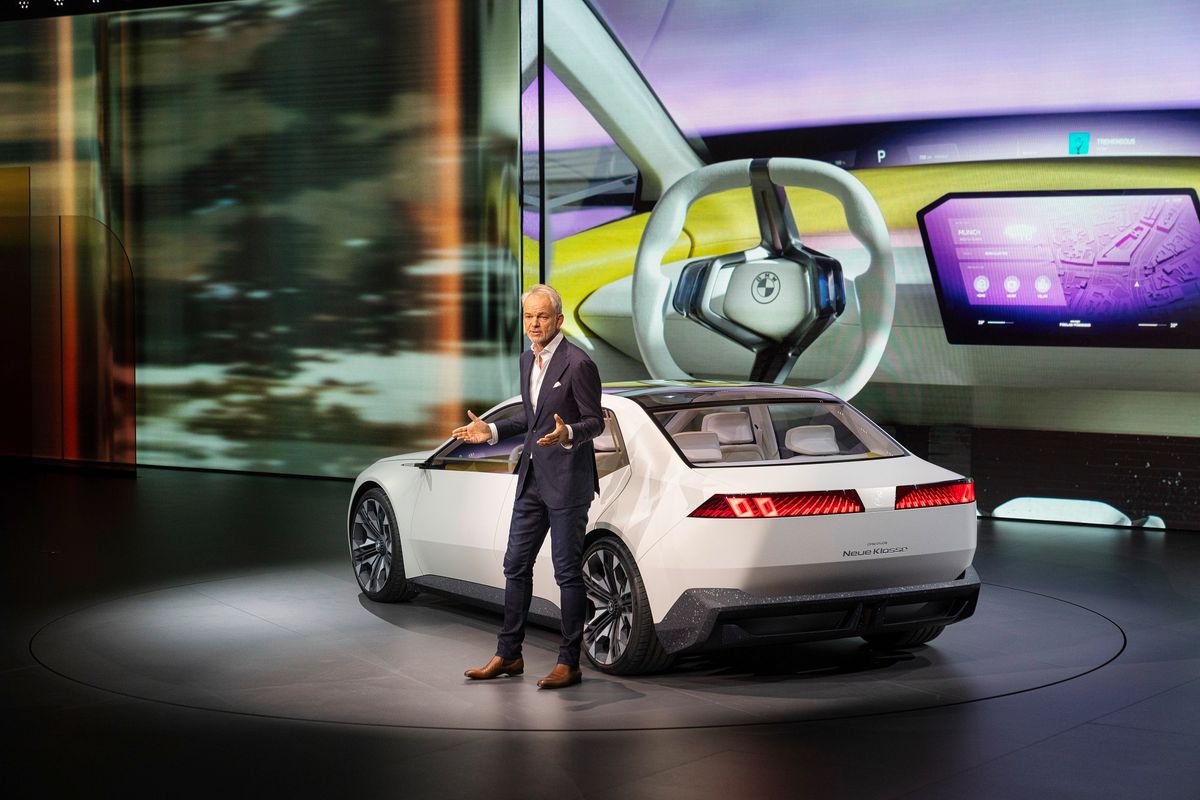
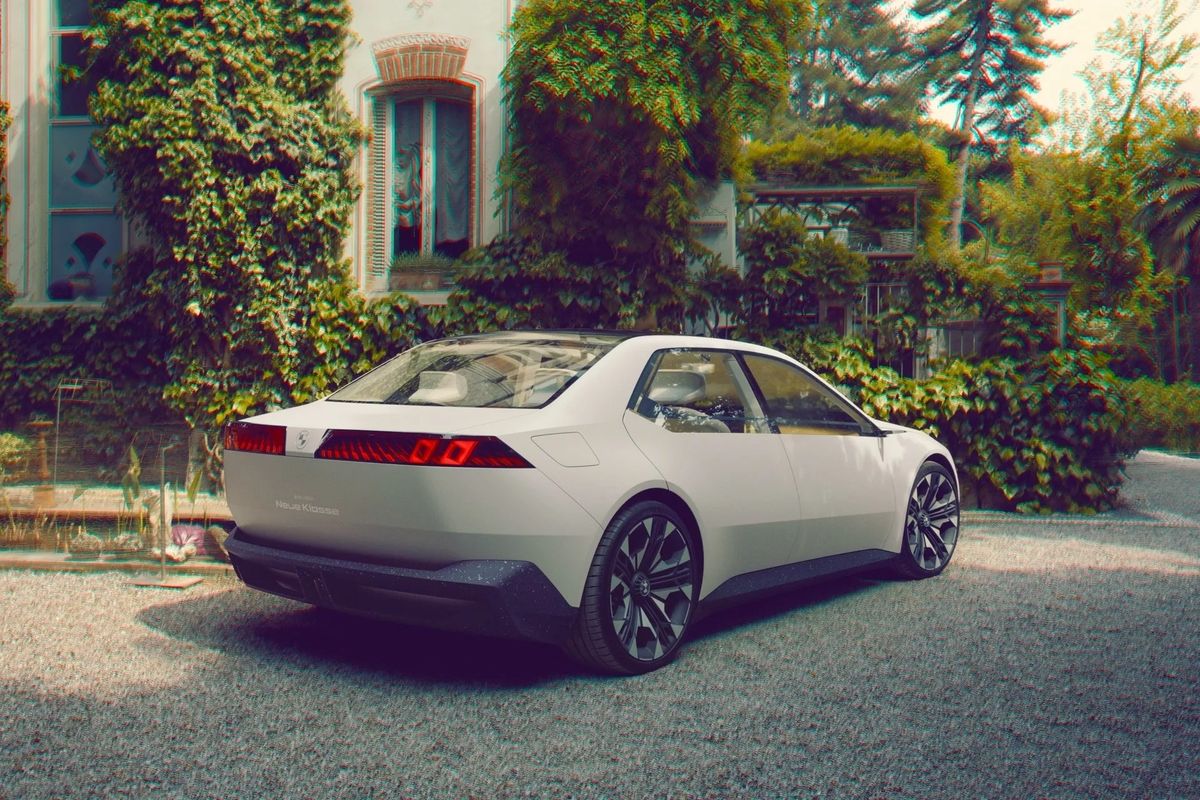
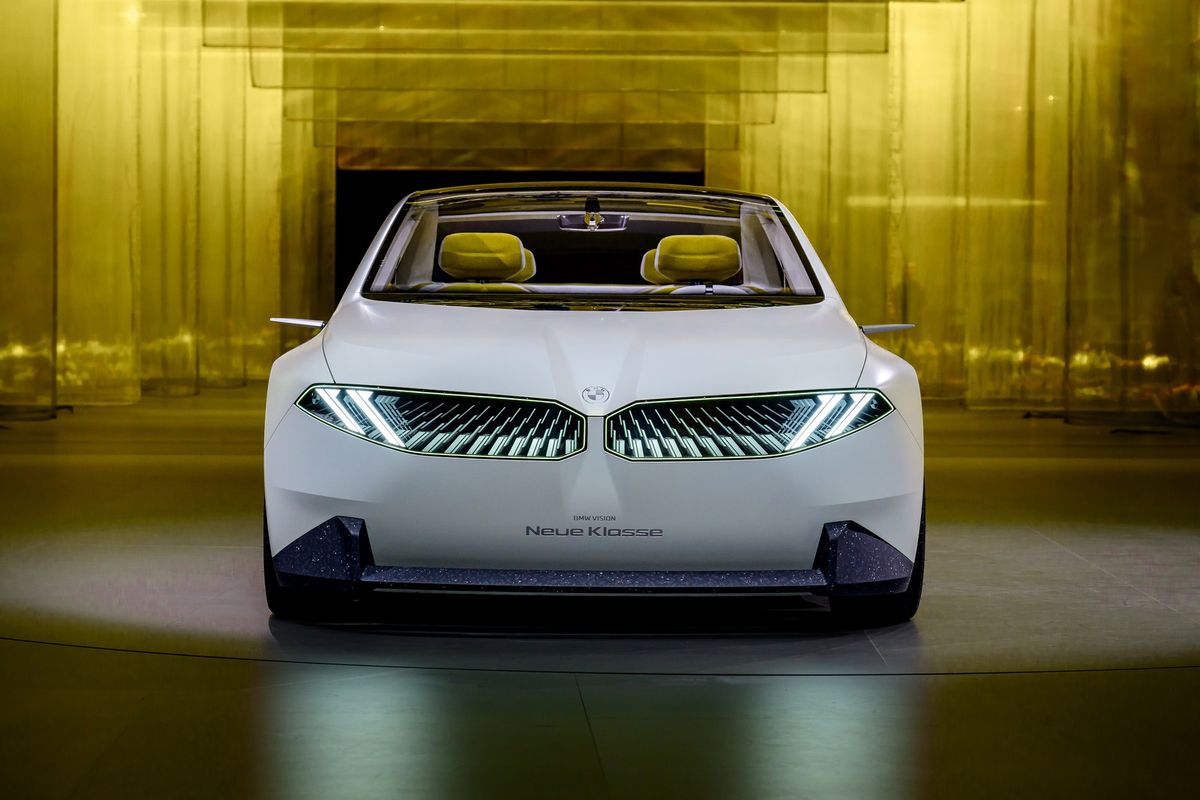
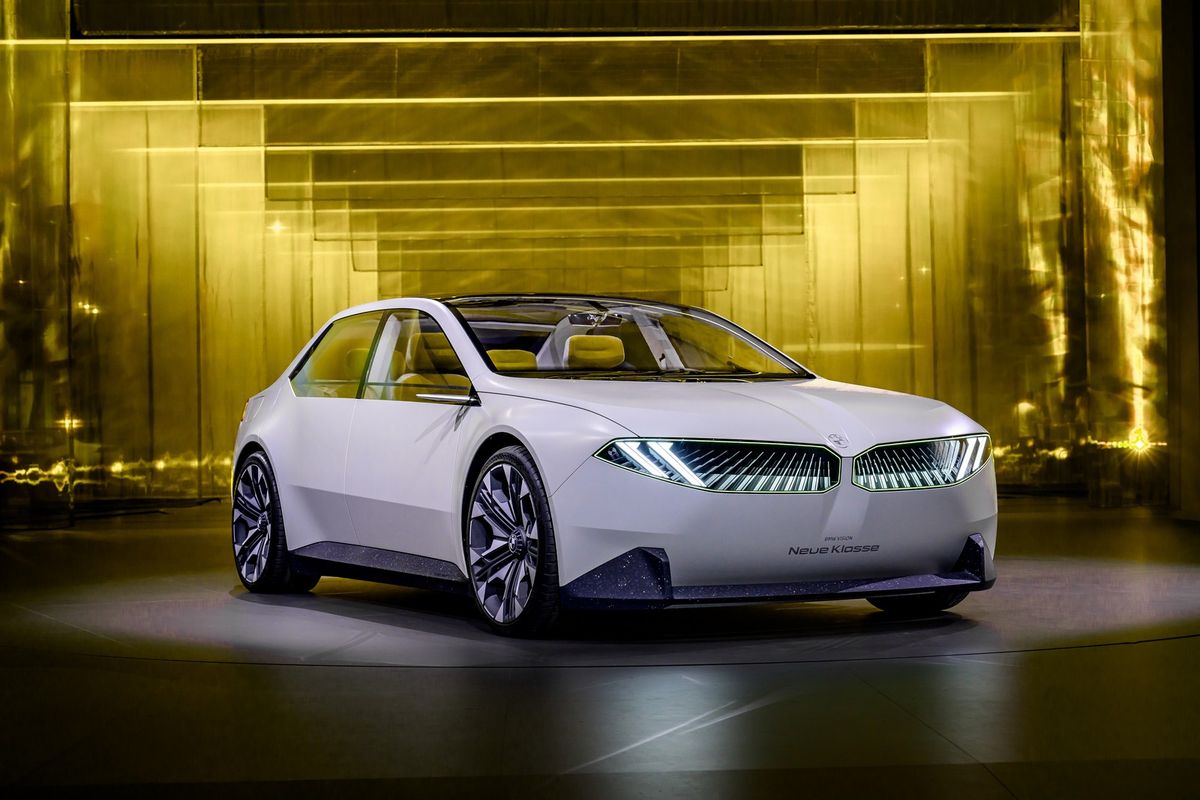
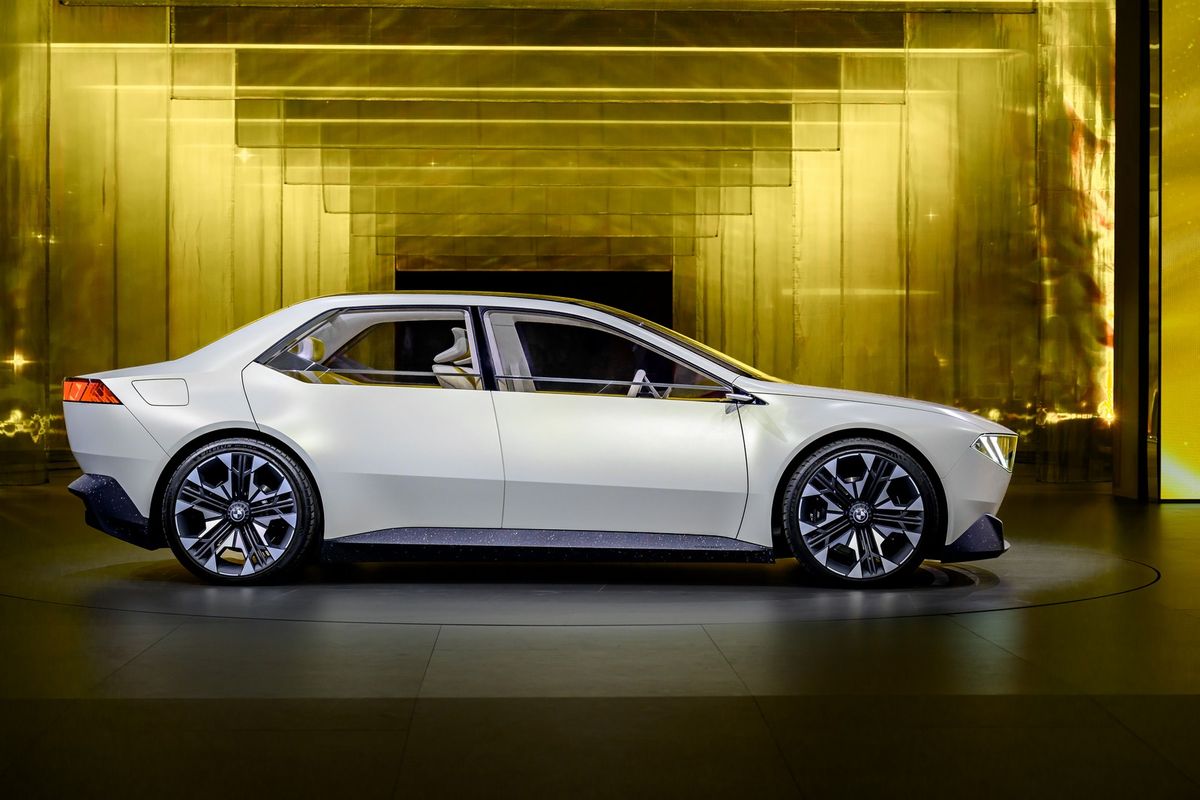
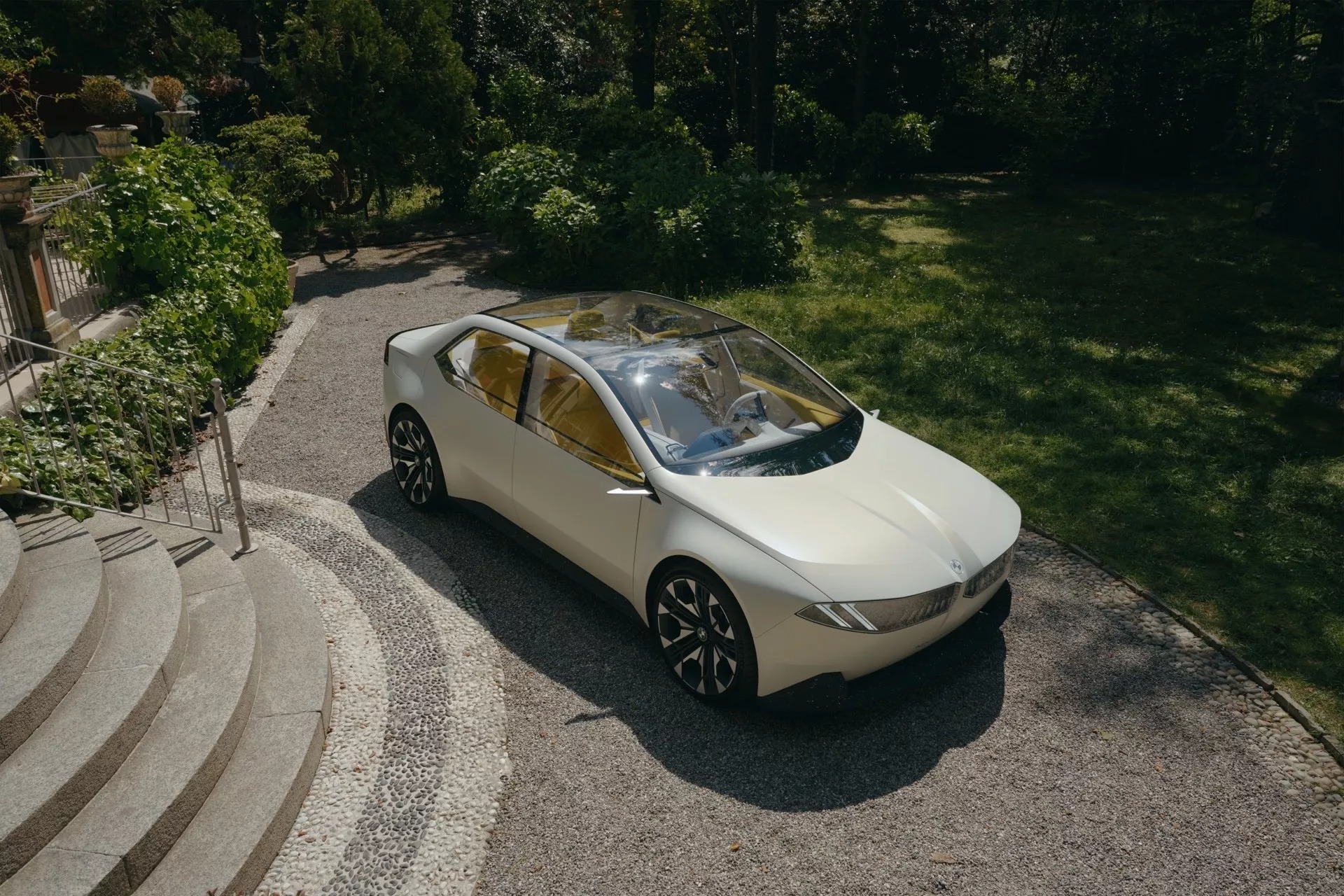
BMW Vision Neue Klasse Concept Previews Next-Gen BMW Vehicles
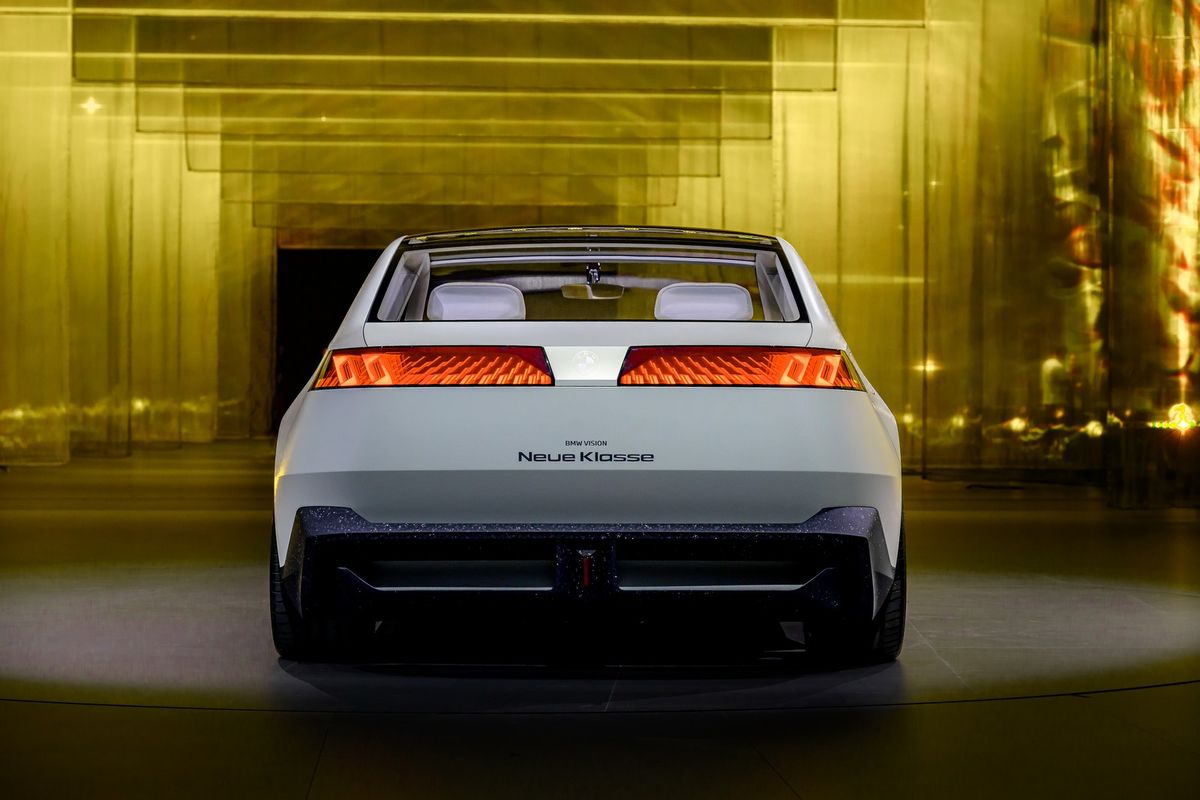
The BMW Vision Neue Klasse Concept gives a good look at what’s in store from 2025 in terms of design, user experience, digitalisation and production.
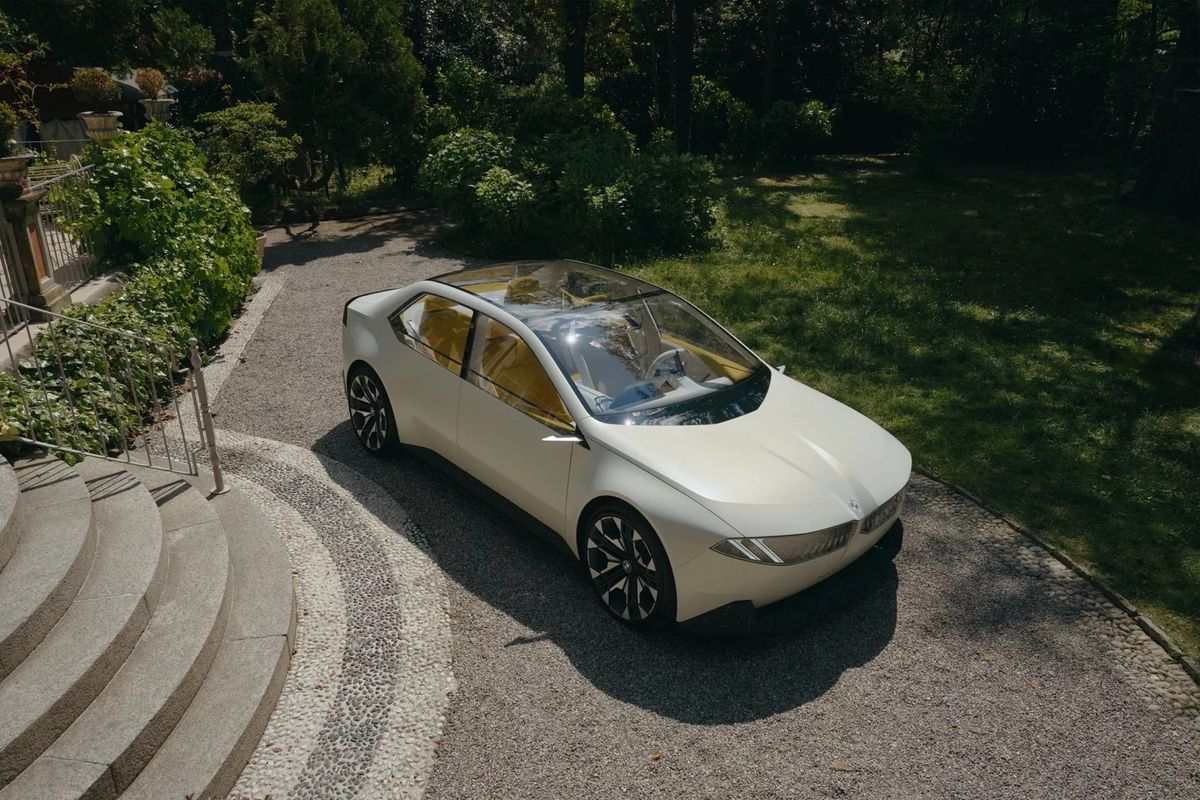
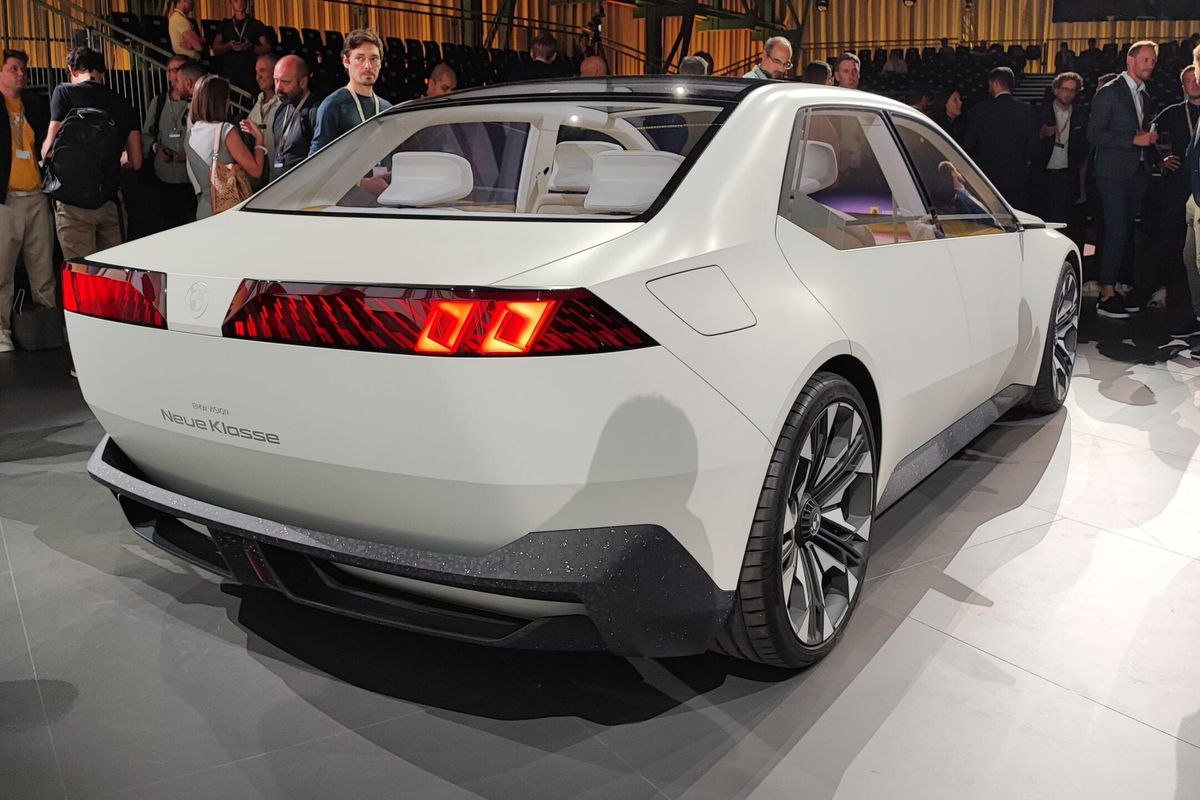
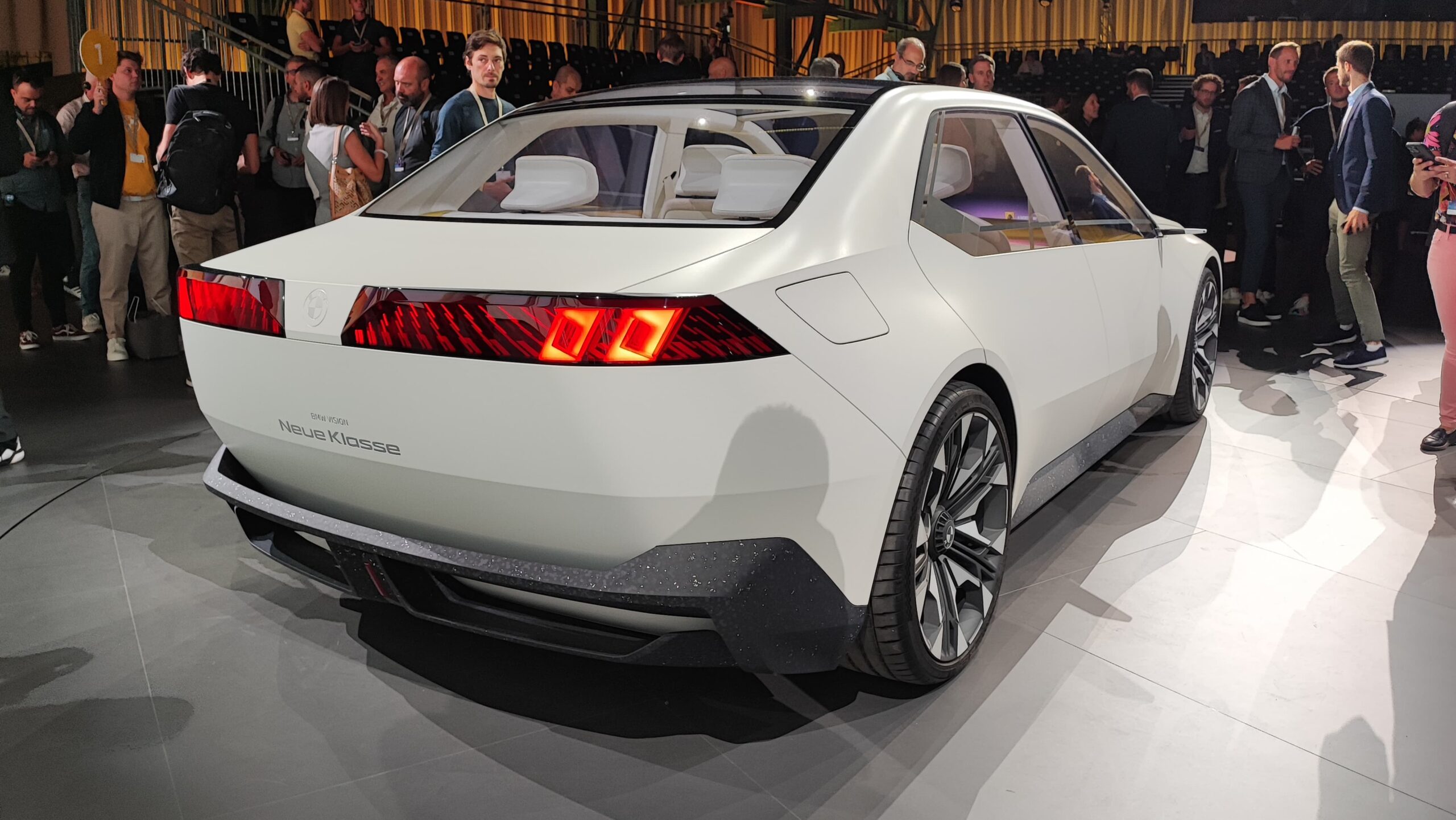
We’ve spent the past few days in Munich, Germany as guests of BMW Group and so far we’ve seen the production versions of the all-new Mini Cooper and Countryman. What you see here is the BMW Vision Neue Klasse Concept which provides a preview of what’s to come from 2025.
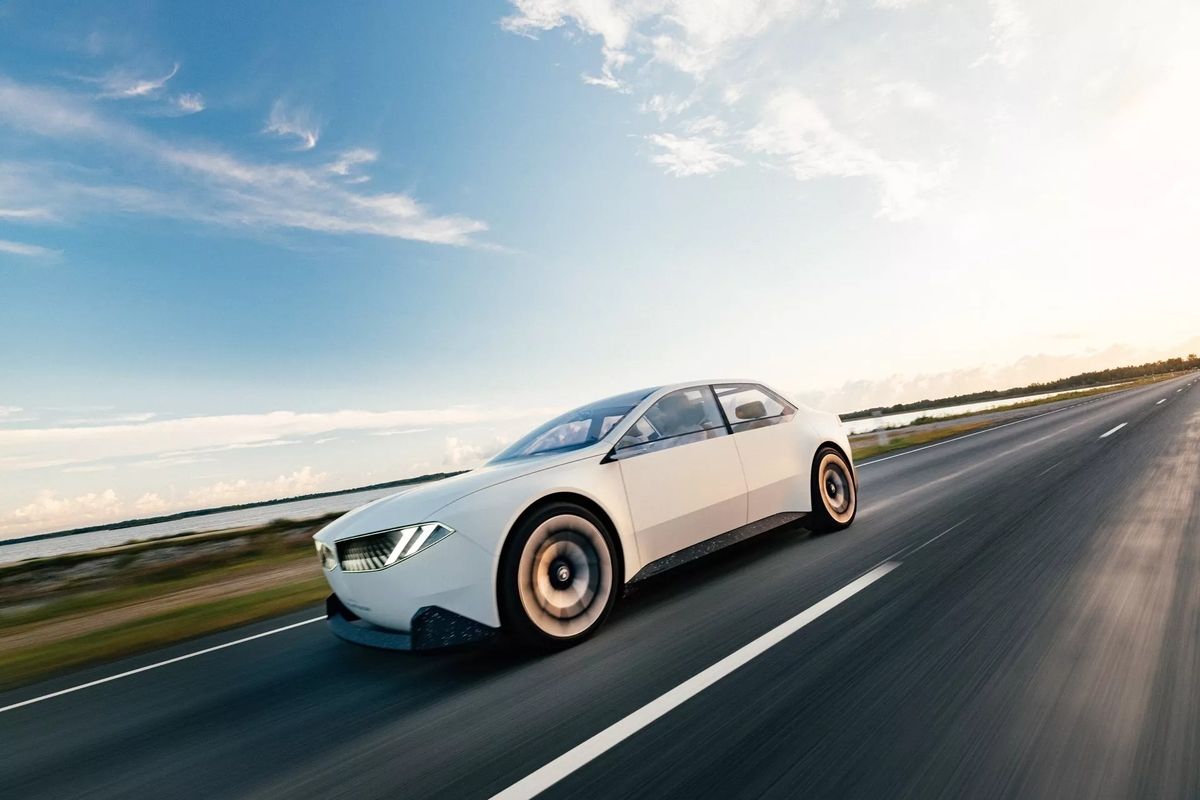
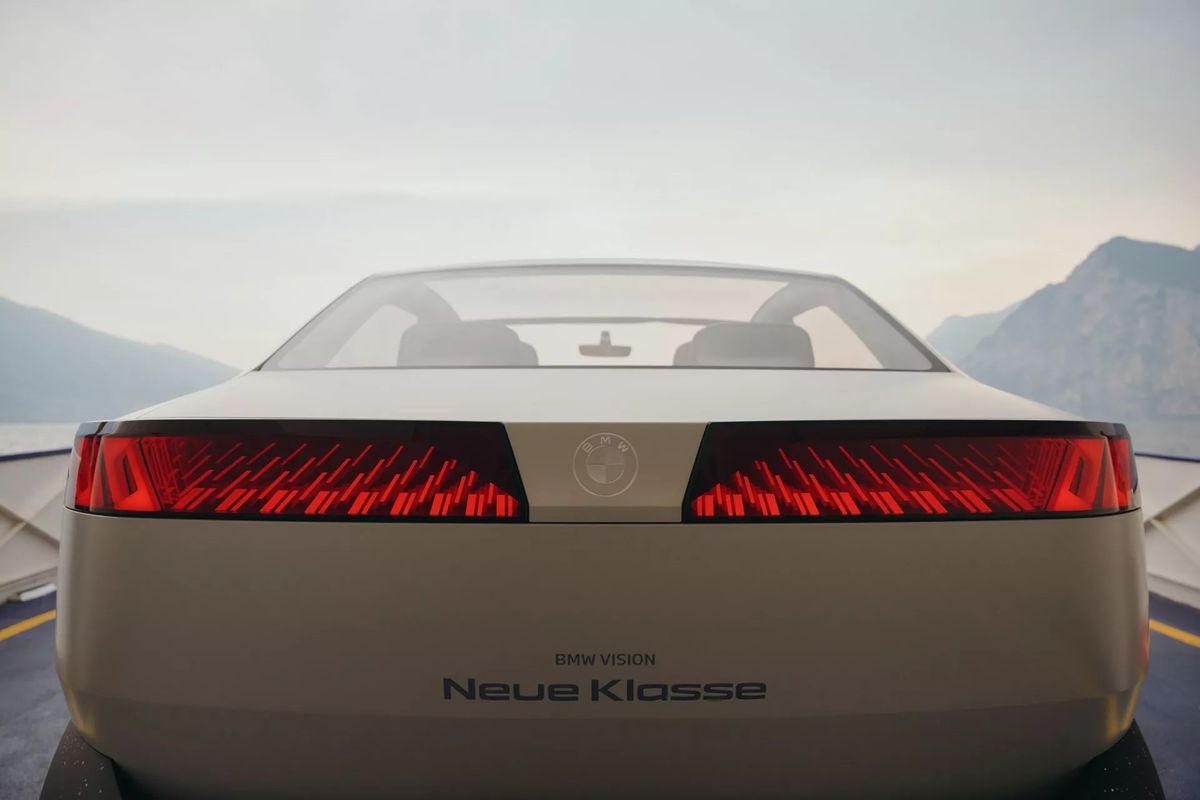
This is not just an exercise in showing where the design team is headed, but rather an overall bigger picture when it comes to architecture, interior interaction and connectivity. The design elements are worth discussing and we love the new shark-nose wedge face. Hopefully that, along with the lighting array are retained for the production version.
Once the crowds diminished, we could get up close to the new concept
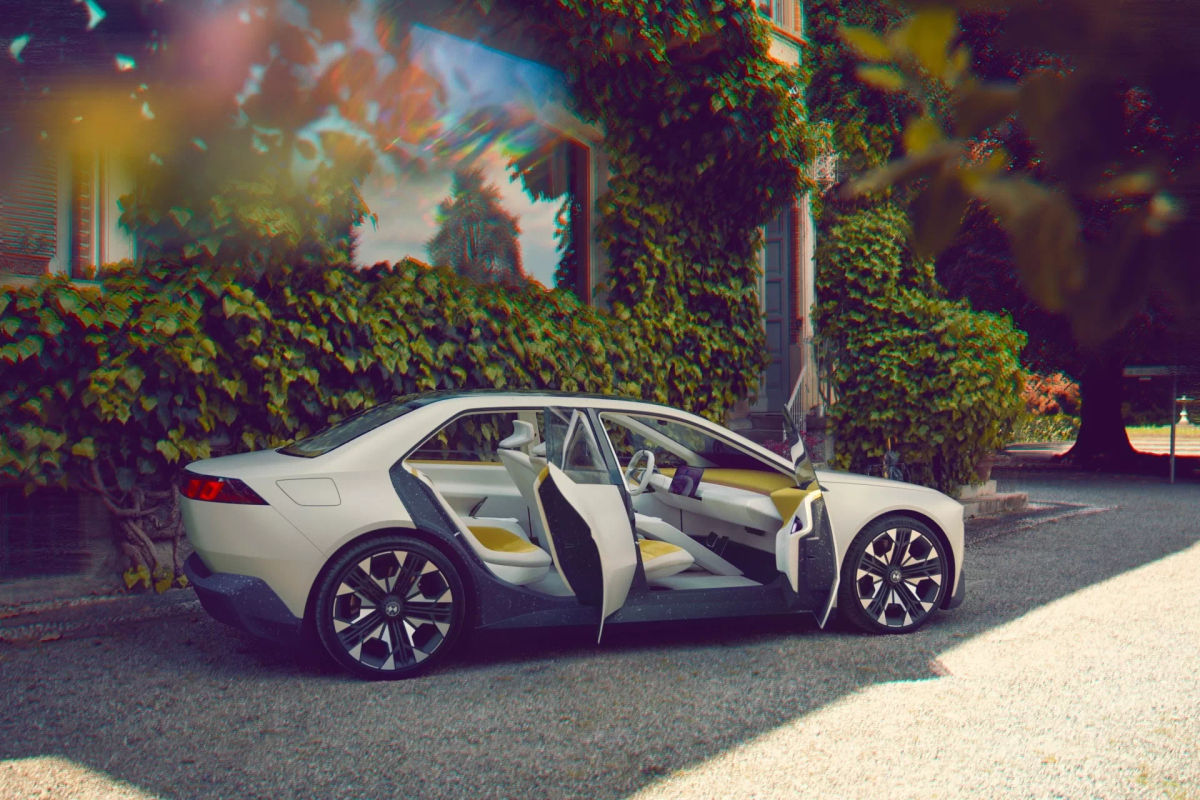
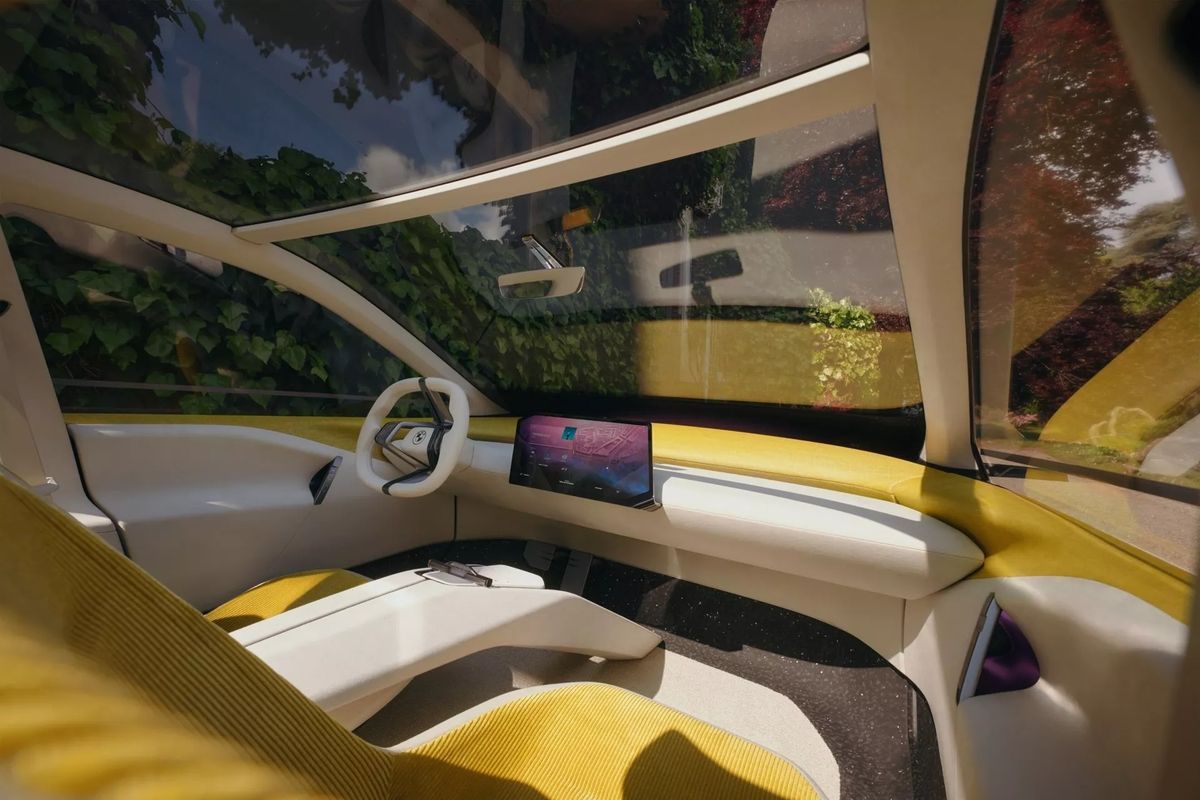
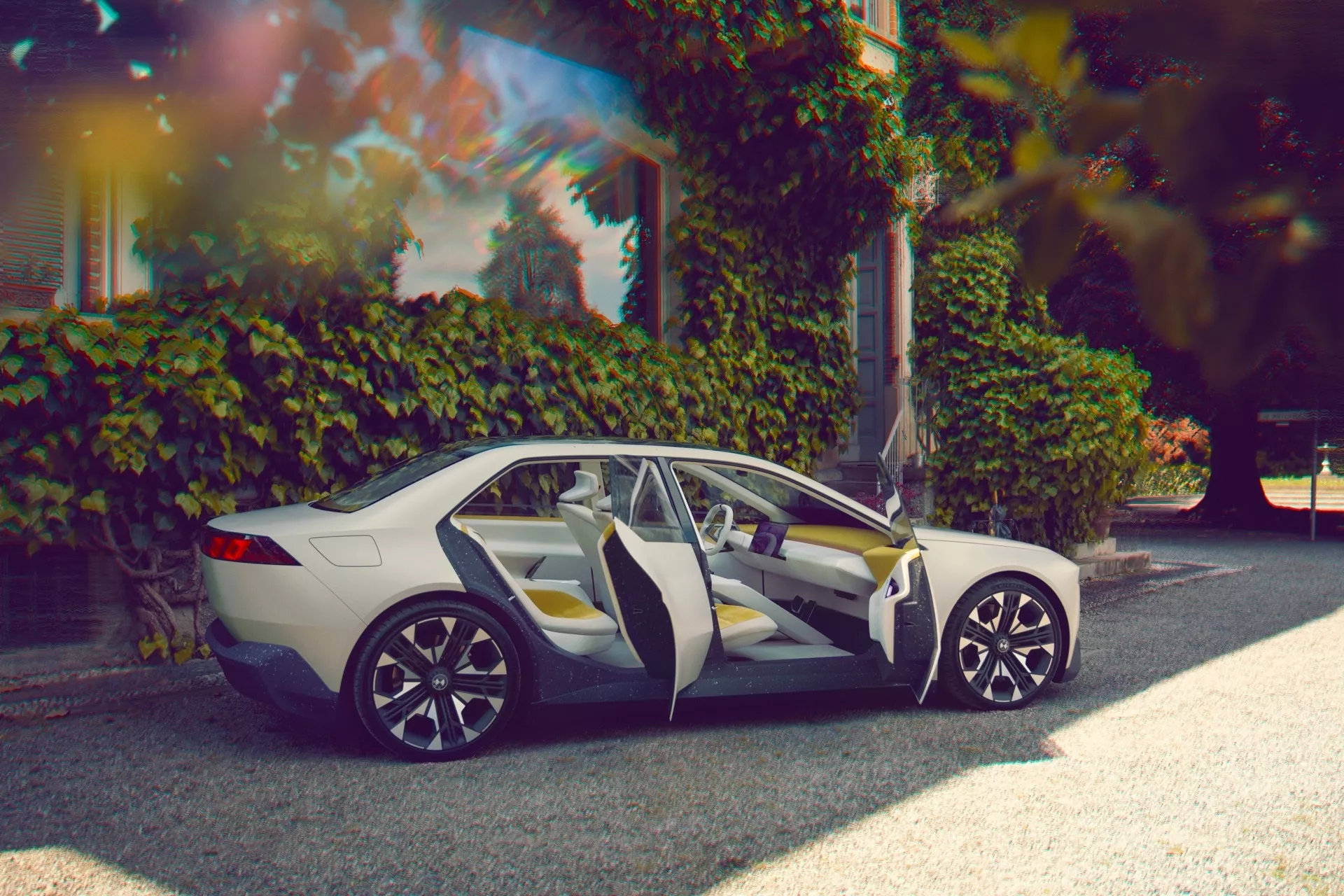
From certain angles, the BMW Vision Neue Klasse Concept looks like a hunkered down hatchback, but it is in fact a sedan, but the side profile feels like its missing something. There are some cool retro style 80s elements which we like.
Neue Klasse isn’t going to be just one vehicle however, with BWM claiming there’ll be six new models to arrive in showrooms between 2025 and 2027. Given the current portfolio, it’s easy to predict the body styles that’ll be offered; sedan, touring, crossover and SUV in various sizes.
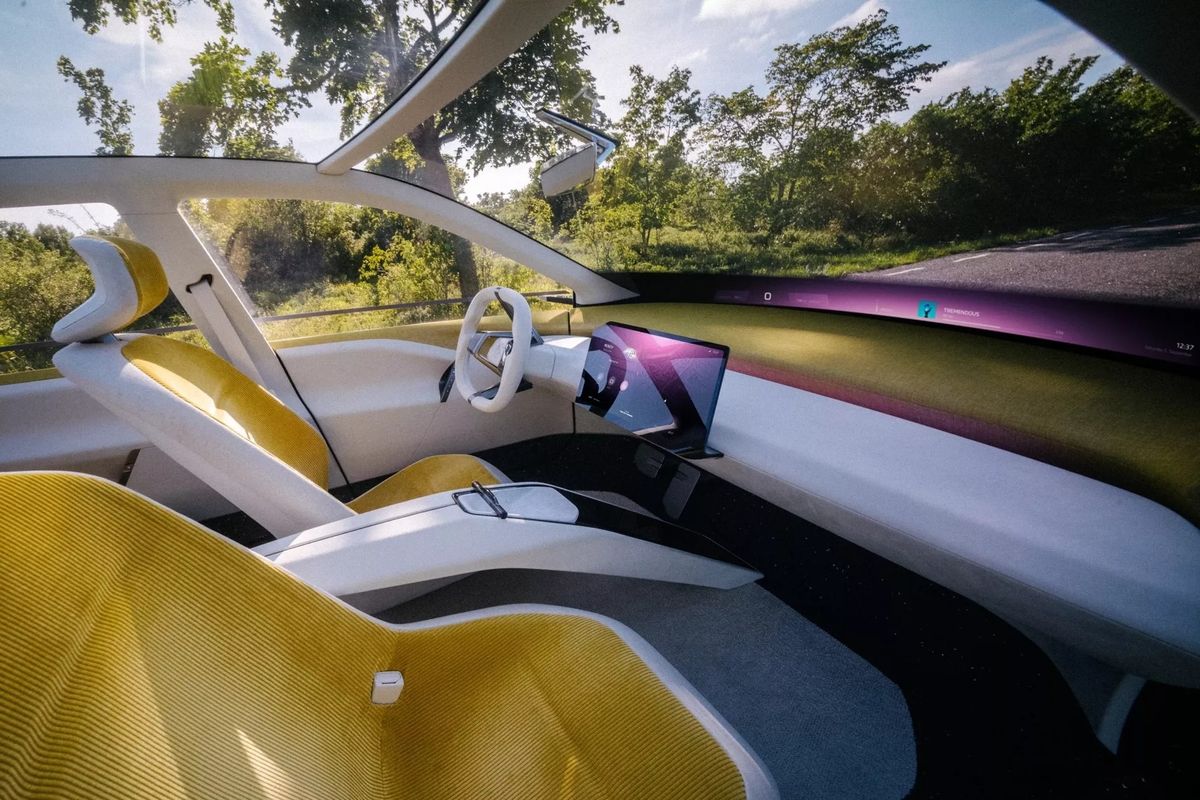
Inside, the cabin looks and feels open and spacious. There’s a distinct lack of buttons and BMW is keen to point out that its next-gen iDrive software will make extensive use of voice control and cellphone-like gestures like swipes and pinches. The new Panoramic Vision makes use of the large windscreen to project information, while a heads-up display features all the critical driving info like navigation, speed etc.
The materials used in the interior will be sourced from a combination of sustainable and recycled sources as part of the BMW Group’s Circular Economy. The BMW Vision Neue Klasse will feature the Group’s 6th-gen electrification technology and new for this powertrain is new battery tech that’s claimed to offer 30% more range, 30% quicker charging times and the new smaller, cylindrical cells sourced from Chinese battery specialists CATL feature 20% higher energy density.
The factory in Debrecen, Hungary will be the first plant to begin production of the BMW Vision Neue Klasse in 2025, with further plants to start building the cars at a later stage.
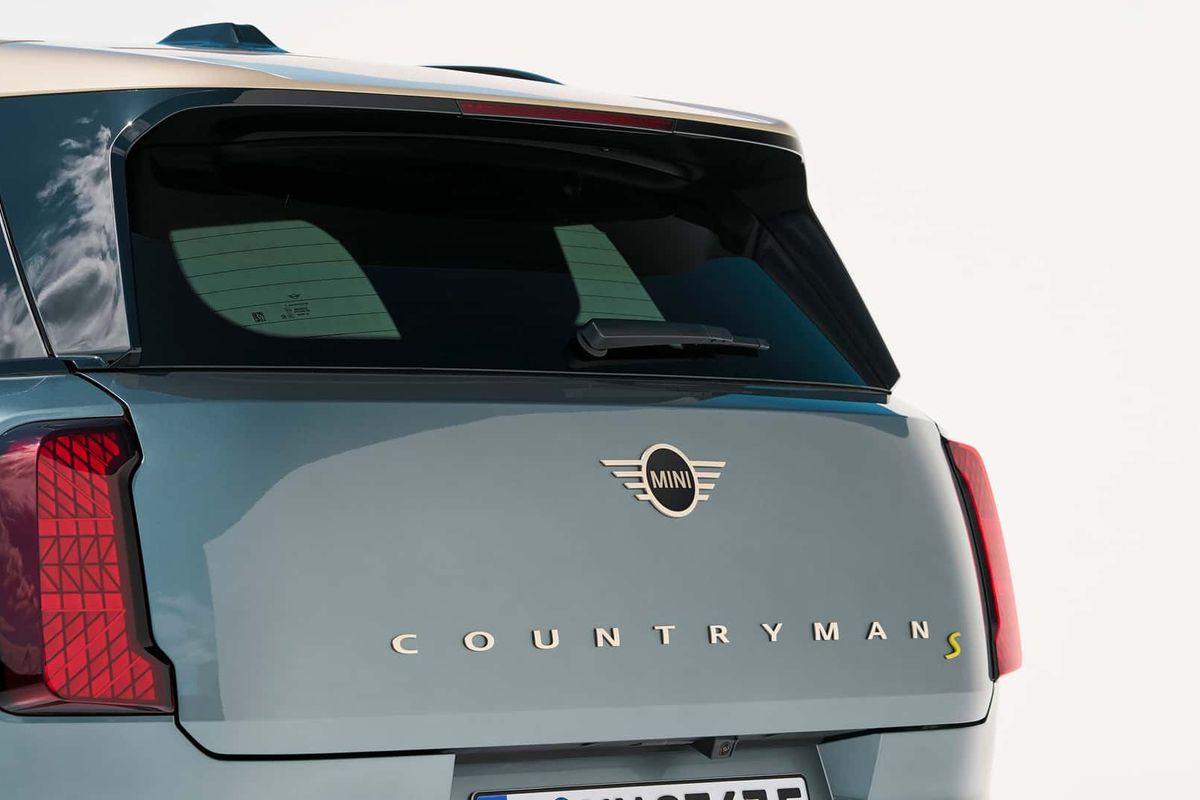
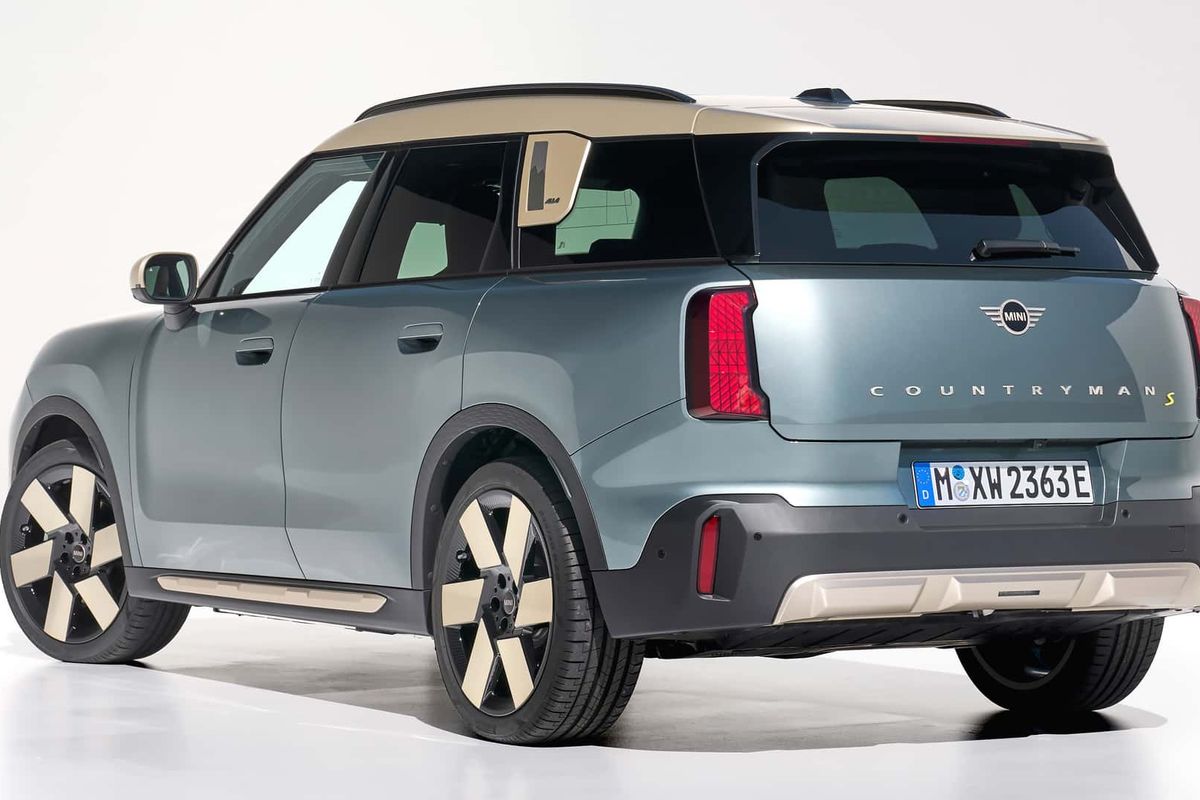
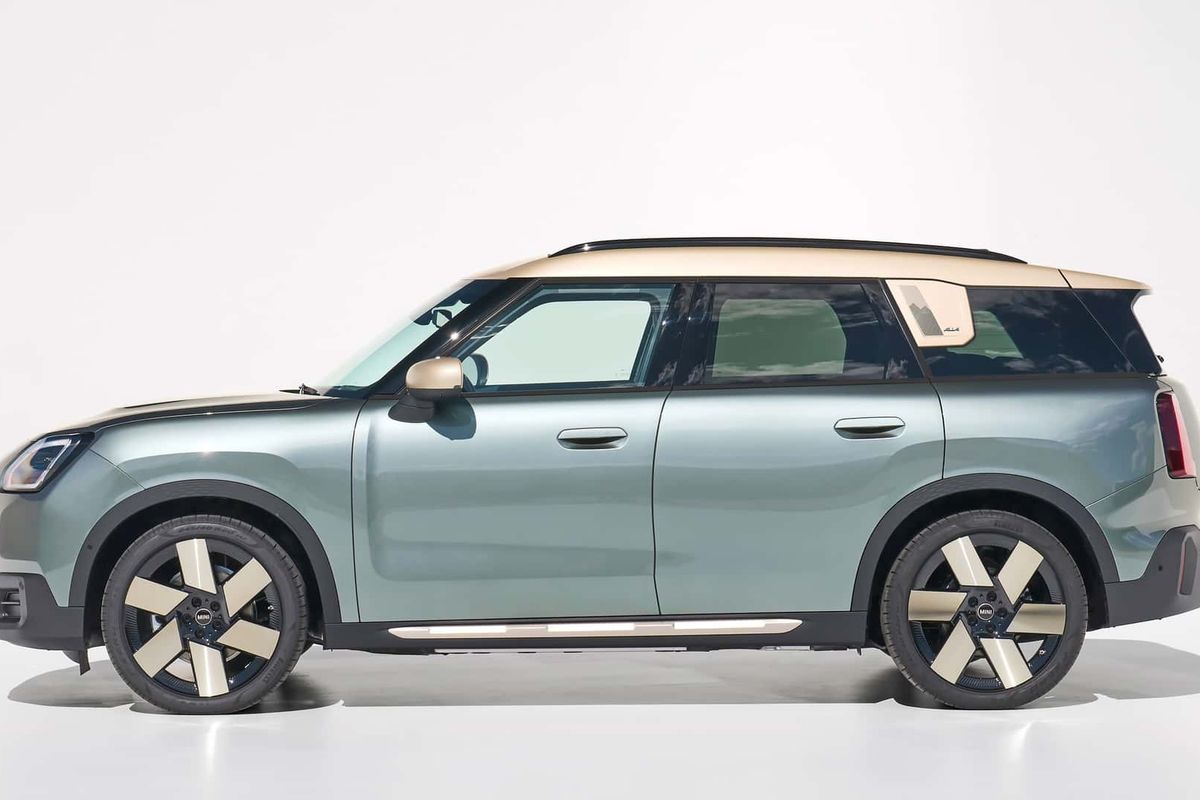
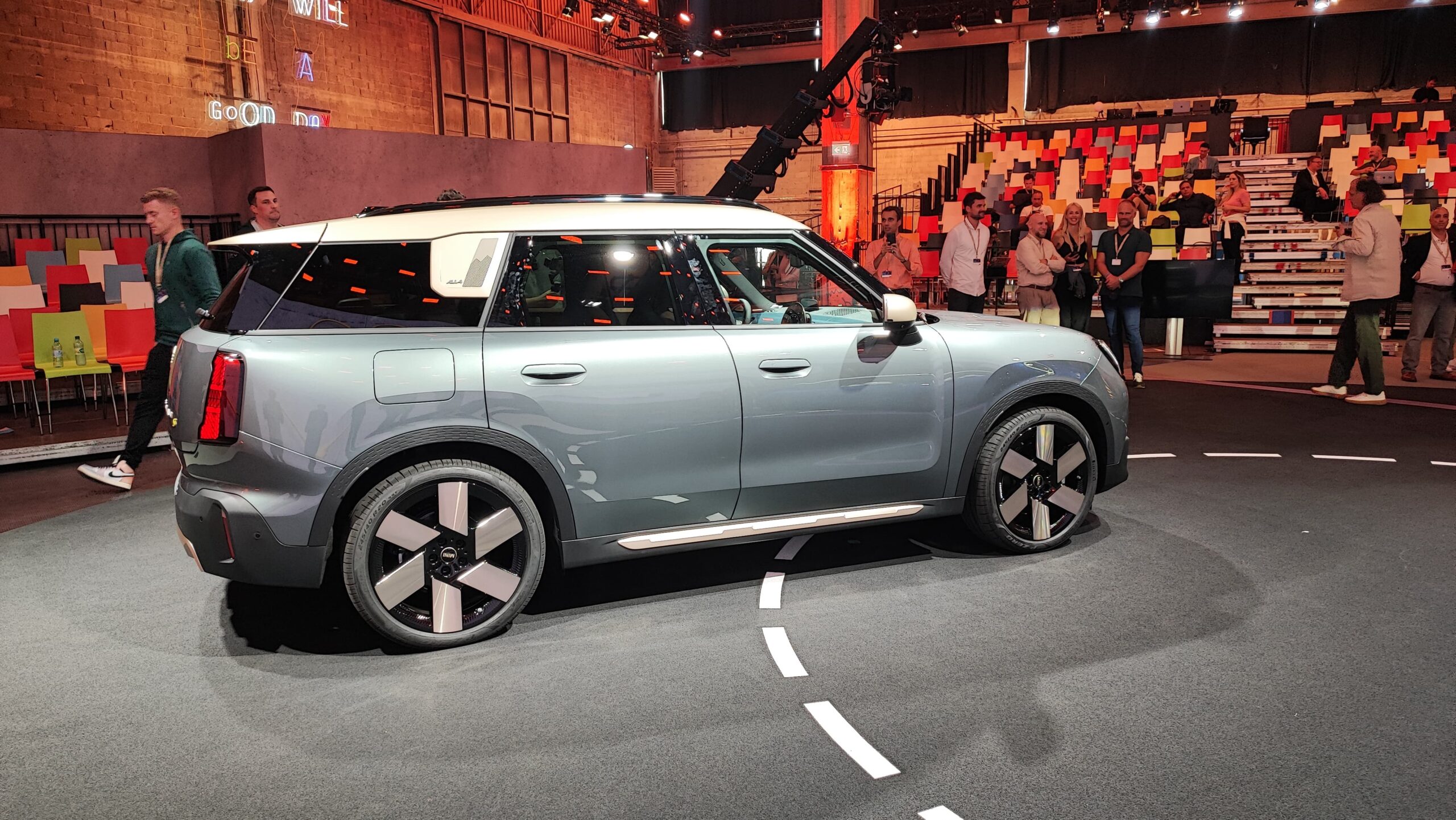
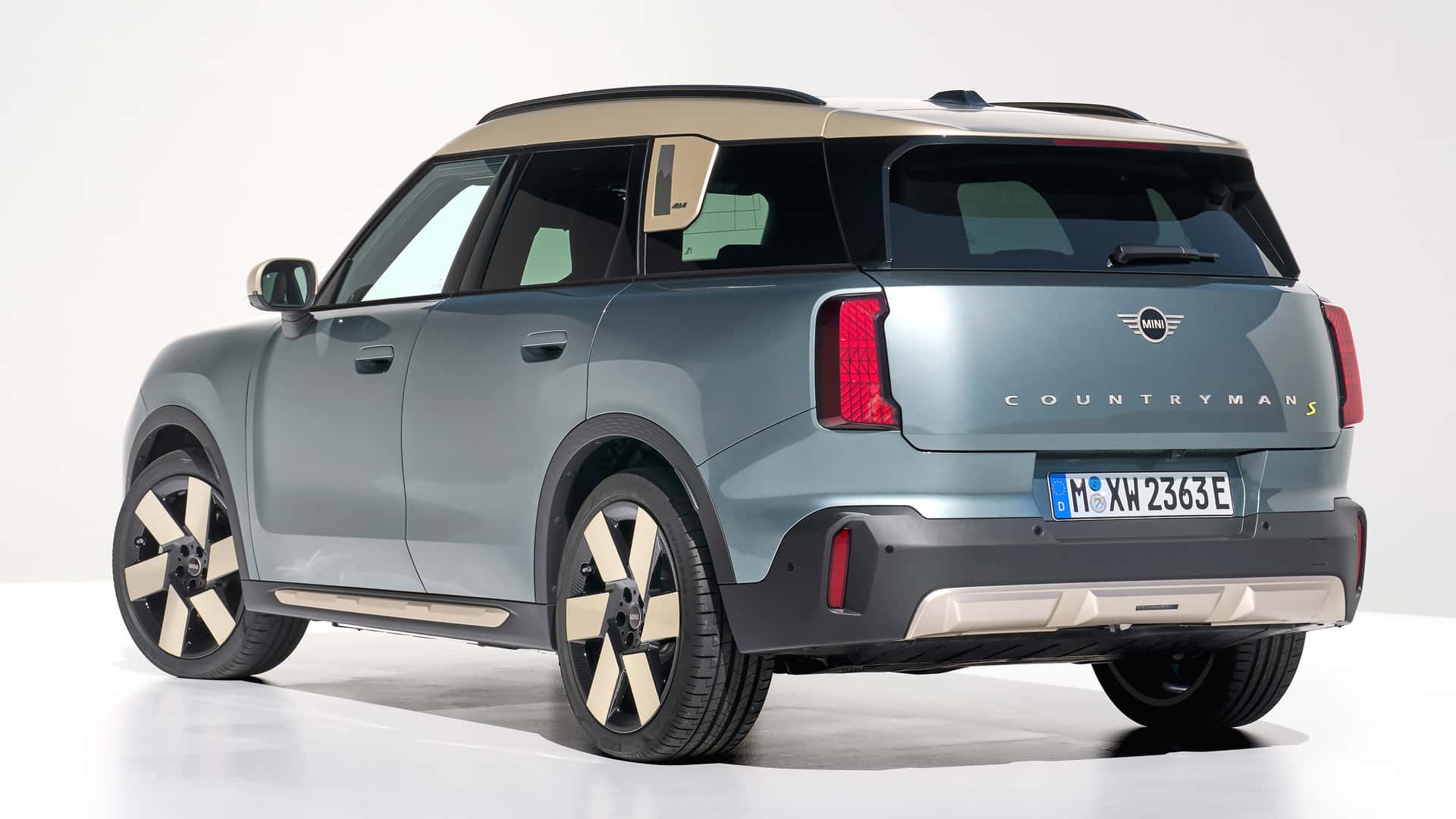
The all-new 2025 Mini Countryman has finally been revealed. With a variety of engines, a larger body and even more tech, this is the biggest and most advanced Mini yet.
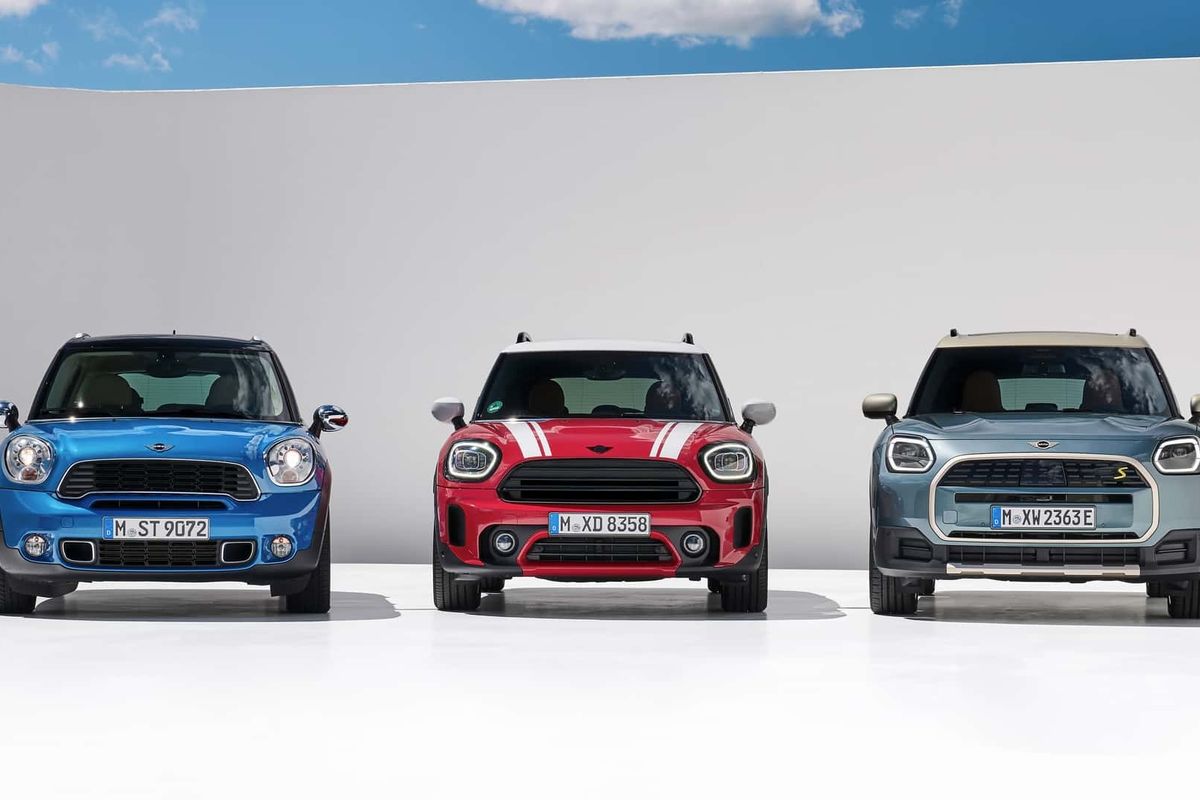
This is the 3rd-generation Mini Countryman – codenamed U25 – and we’re in Munich, Germany for its unveiling. Having revealed the brand-new Mini Cooper on 1 September 2023, the Oxford-based brand then took the opportunity to show us the biggest model in its lineup.
The emphasis is on big; the new Countryman is just over 4.4 metres long and almost 2 metres wide. Mini says the new model is 13 cm longer than its predecessor, which bodes well for cabin space and load-bay capacity. We had the chance to sit inside and it feels deceptively spacious. A good start then, for the family-orientated Mini…
The Mini Countryman on display in Munich, where it was unveiled in electric guise.
Unlike the new Mini Cooper, which has brand-new architecture, the new Countryman makes do with an enhanced and updated version of the Group’s UKL platform. This modular setup also serves as the base for the current-generation BMW X1 and second-generation BMW 2 Series Active Tourer, which is not offered in South Africa. The 2025 Mini Countryman will be assembled at BMW Group’s factory in Leipzig.
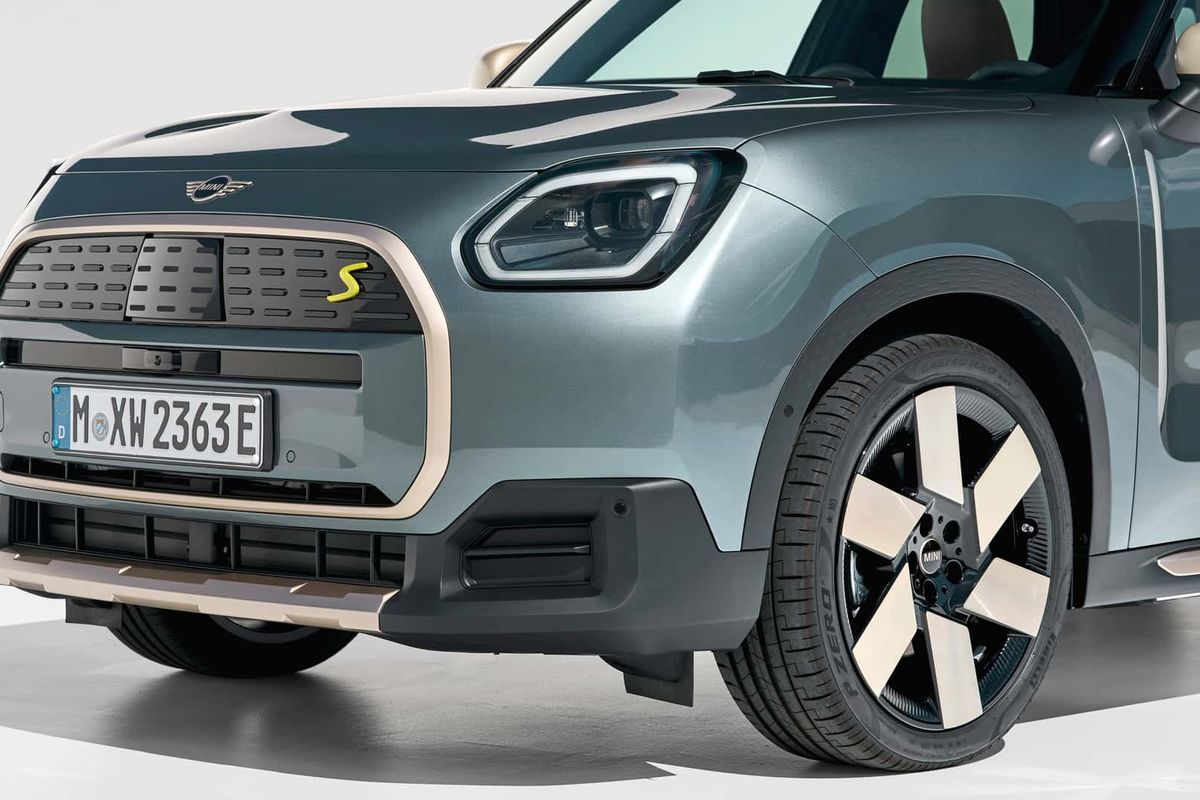
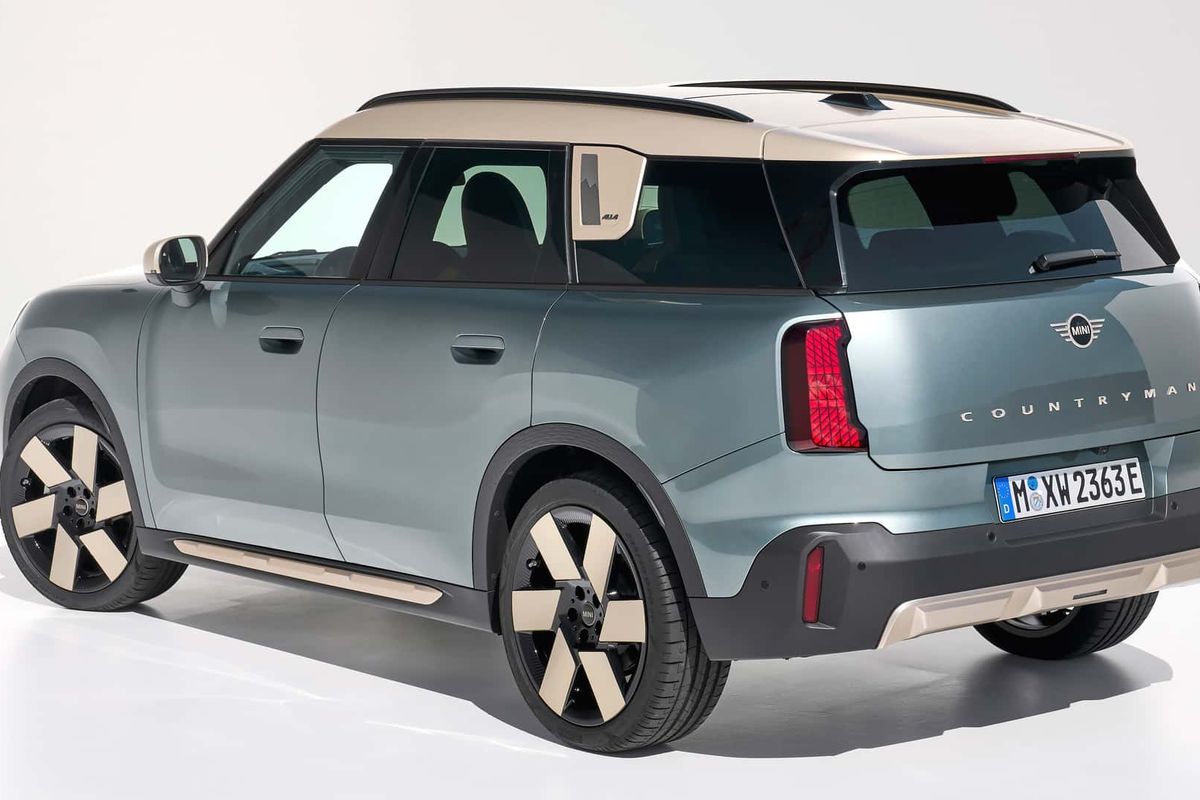
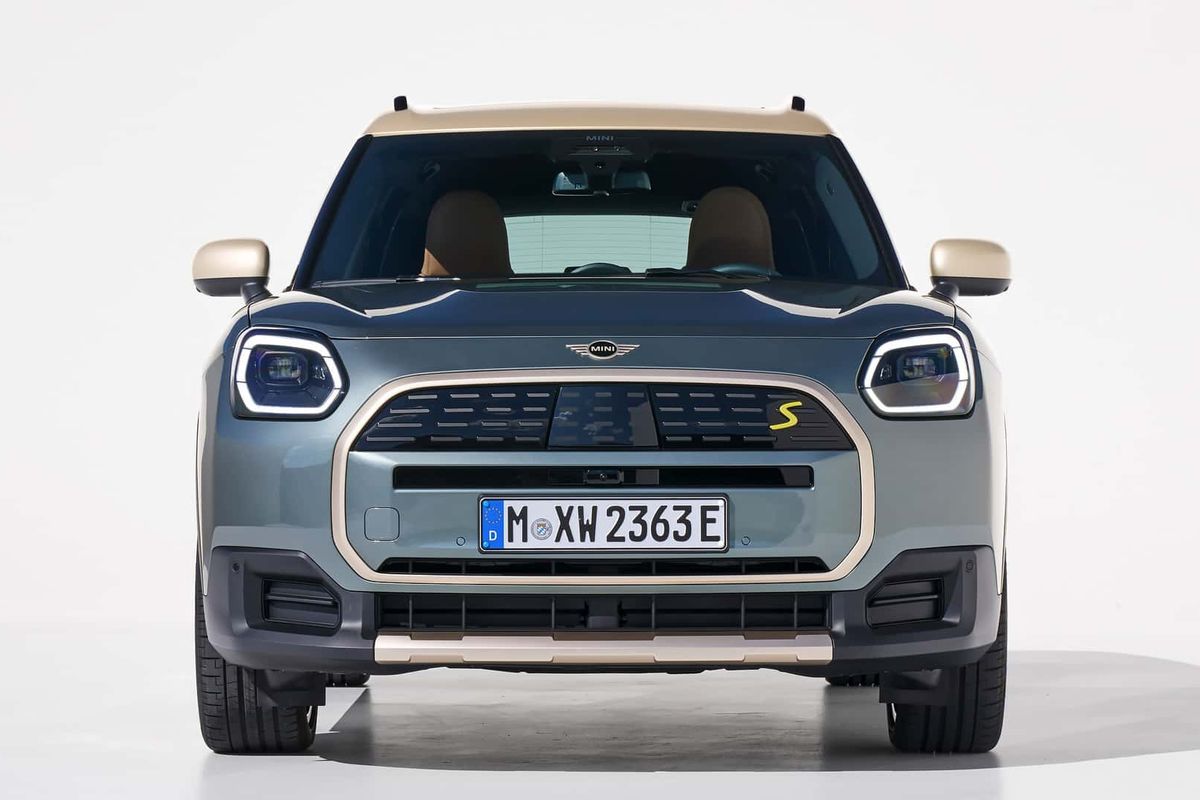
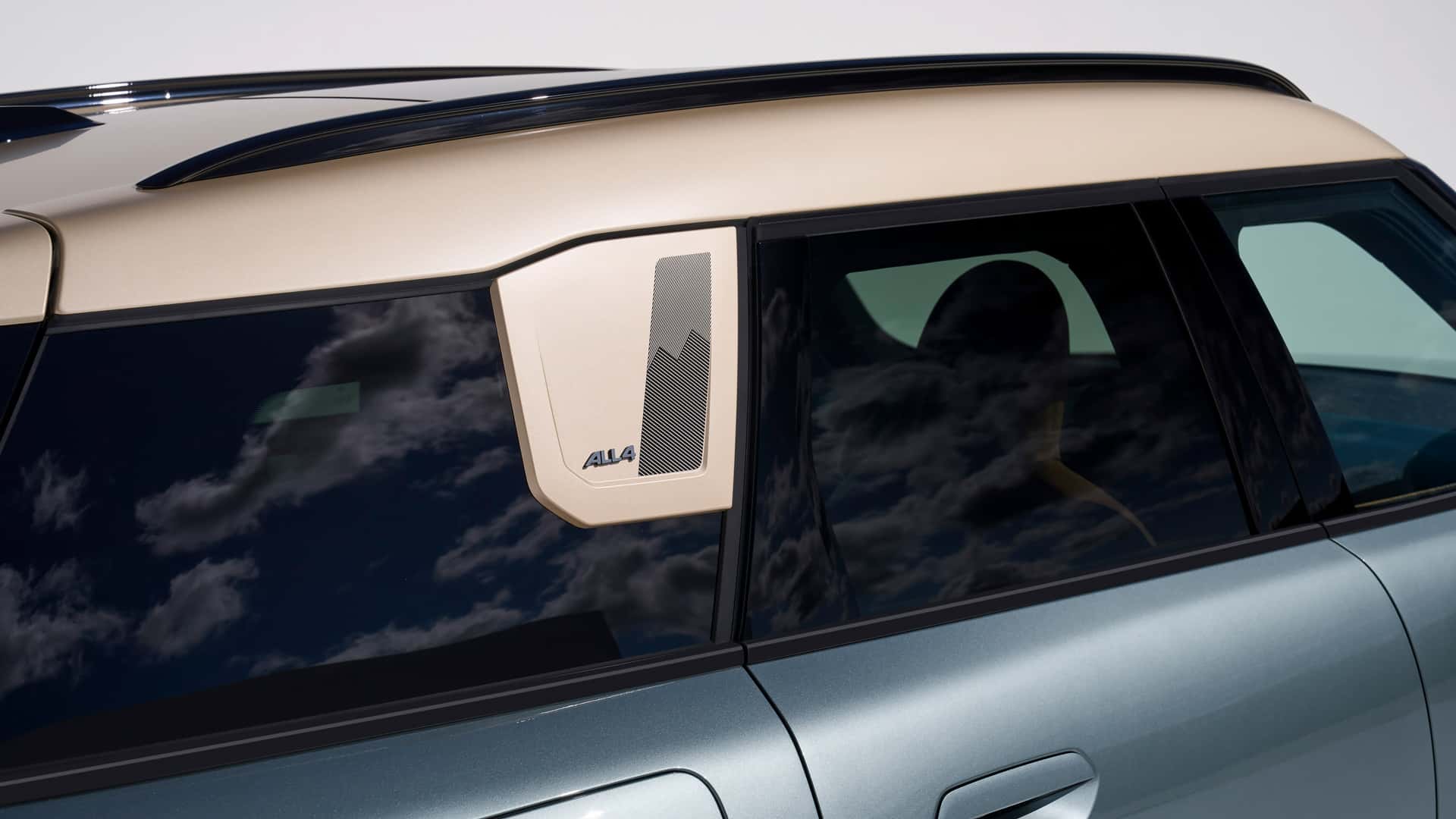
It adopts a striking and futuristic look, and it feels a bit concept-ish. We also feel that it adopts some design elements from the polarising BMW XM; it just seems as if gilt edges are in fashion right now!
Gold embellishments are in season right now!
Powertrains on offer
Right now, Mini only showed us the electric version of the new Countryman. It’s understandable, as the brand will be electric only from 2030, so it wants to put its best foot forward. The good news is that 2030 is still 7 years away and internal combustion power (petrol and diesel) will still be available.
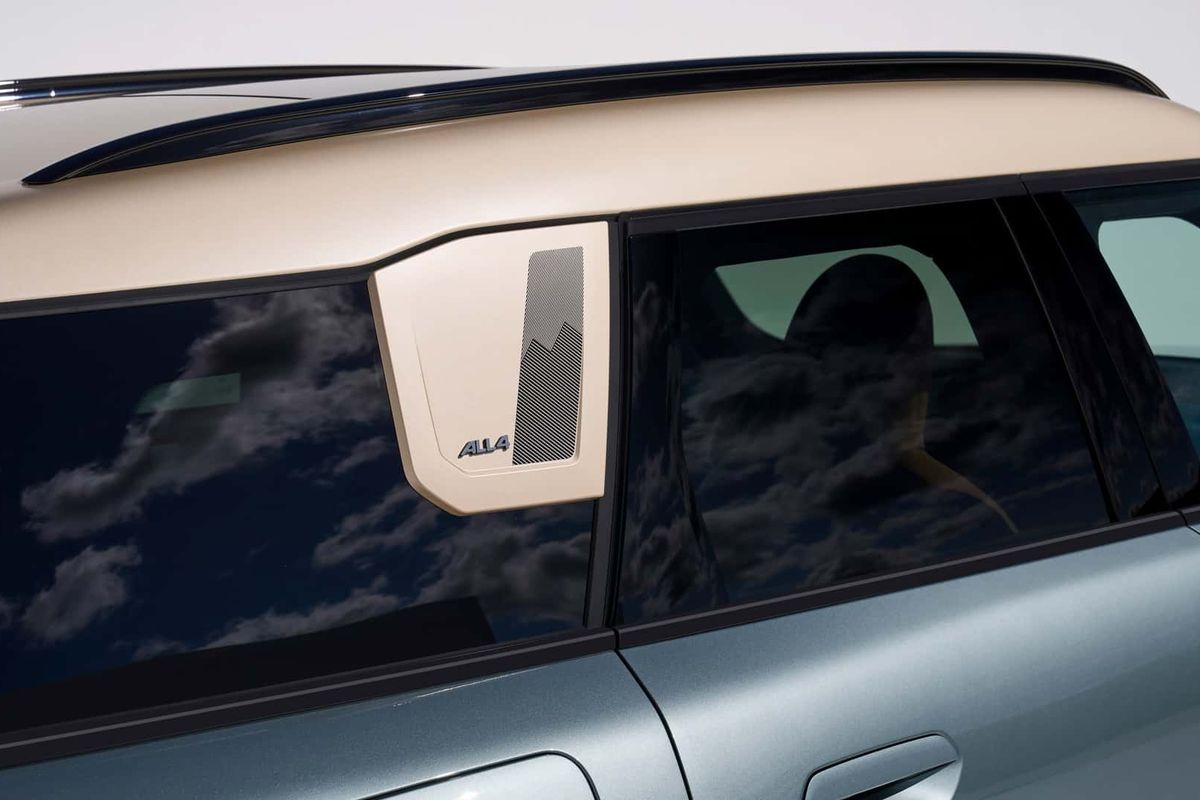
There’ll be two electric Countryman derivatives on offer: Countryman E and Countryman SE All4. The E is front-wheel driven and features a 150 kW/250Nm motor that drives the front wheels. The SE All4, in turn, produces 230 kW and 494 Nm of torque, with a pair of motors on duty to drive all four wheels.
Ranges of 462 km and 433 km are claimed for the E and SE All4 (WLTP cycle), and both make use of a 64.7 kWh battery pack. Performance figures put the new Countryman on the brisk side of things, with stated 0-100 kph times of 8.6 seconds and 5.6 seconds respectively. The new Countryman can accept up to 130 kW of DC fast charging.
2025 Mini Countryman Interior
The new infotainment system makes a favourable first impression.
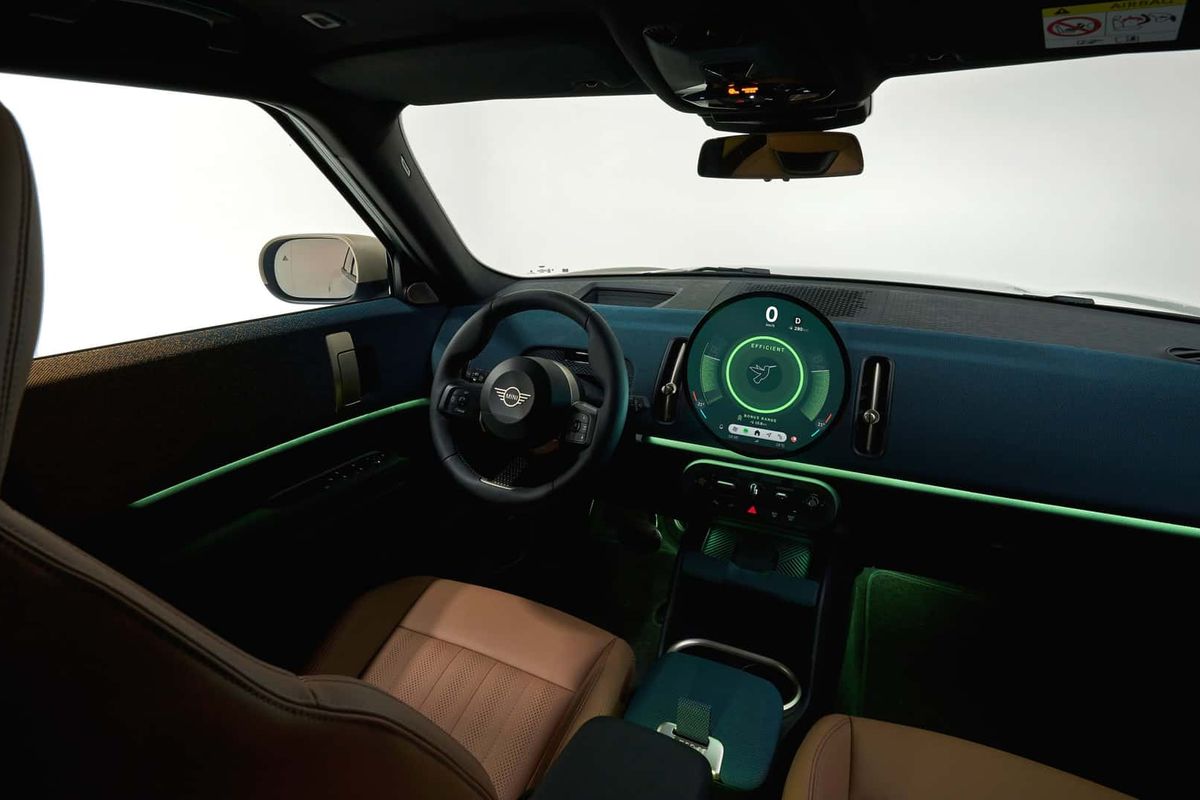
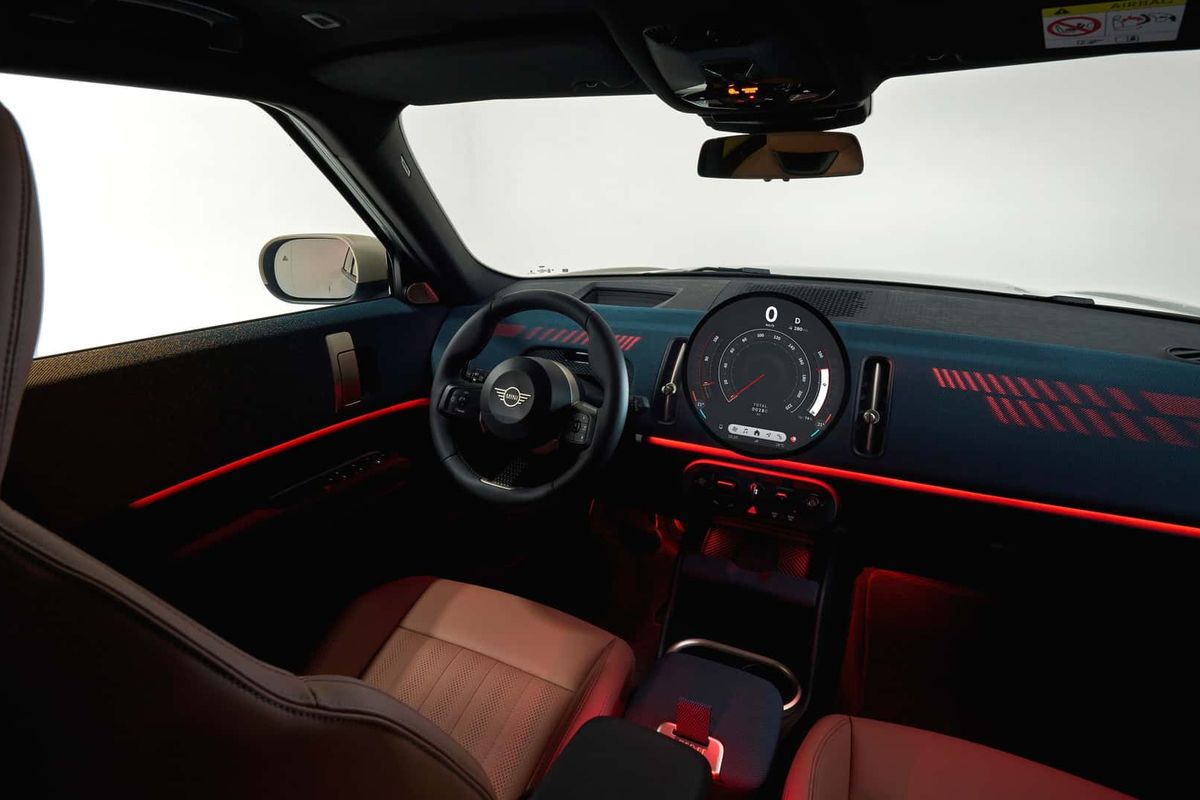
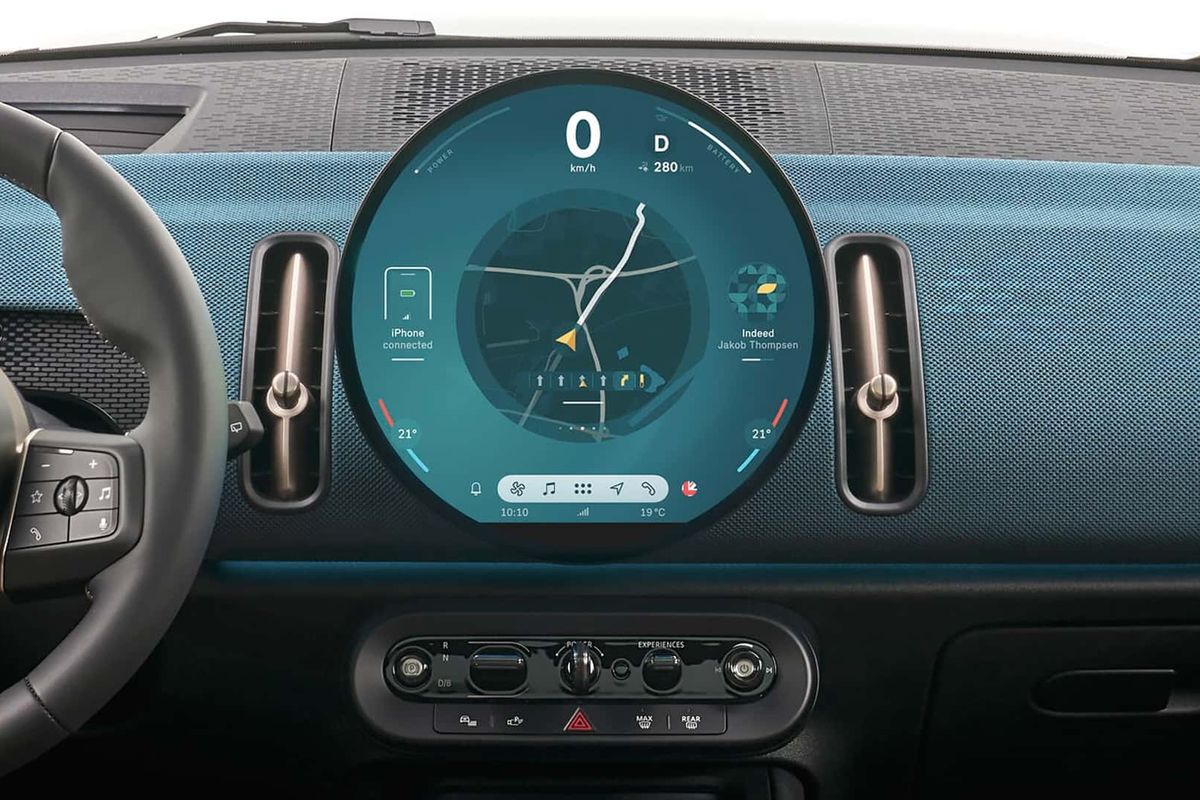
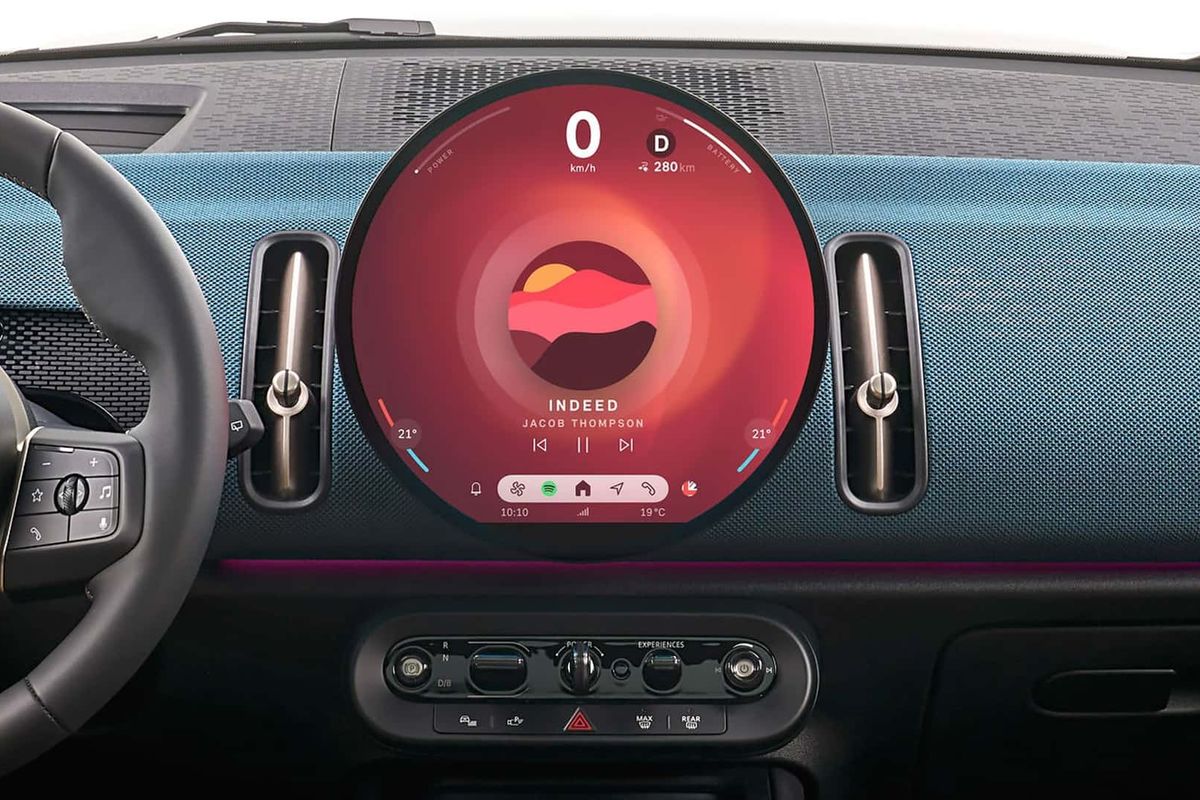
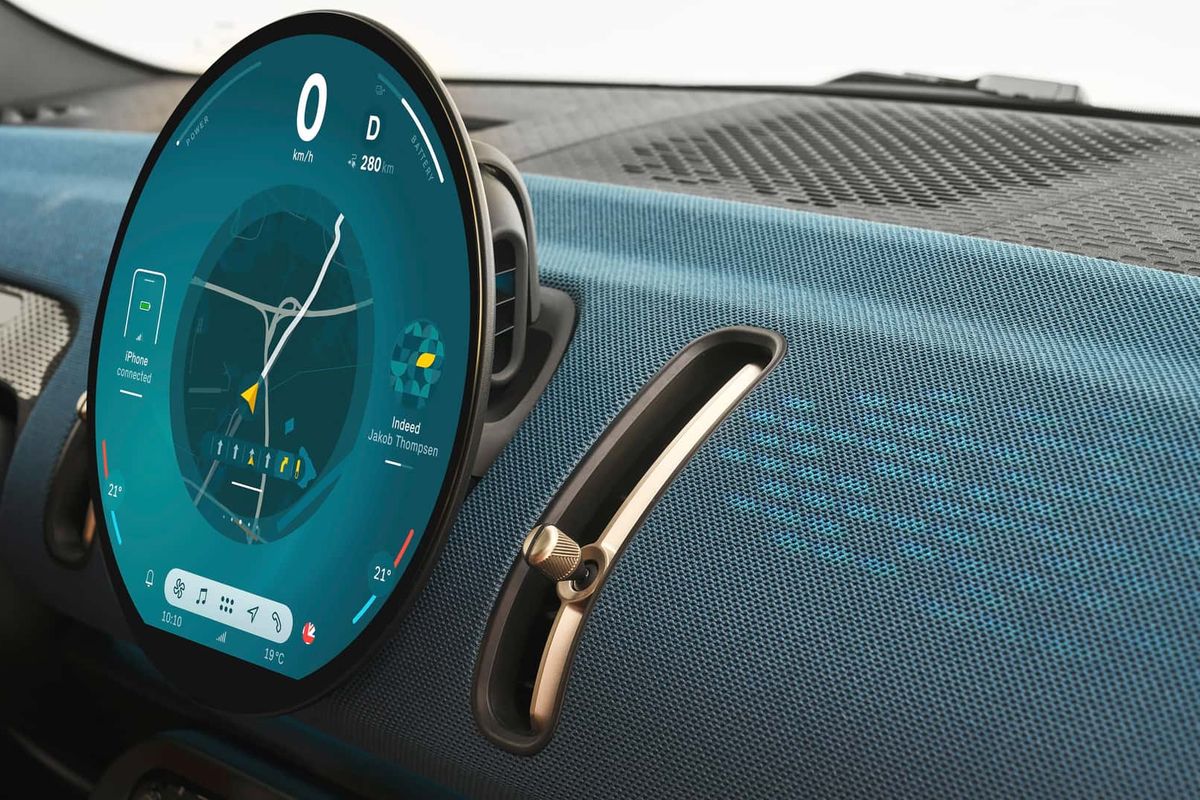
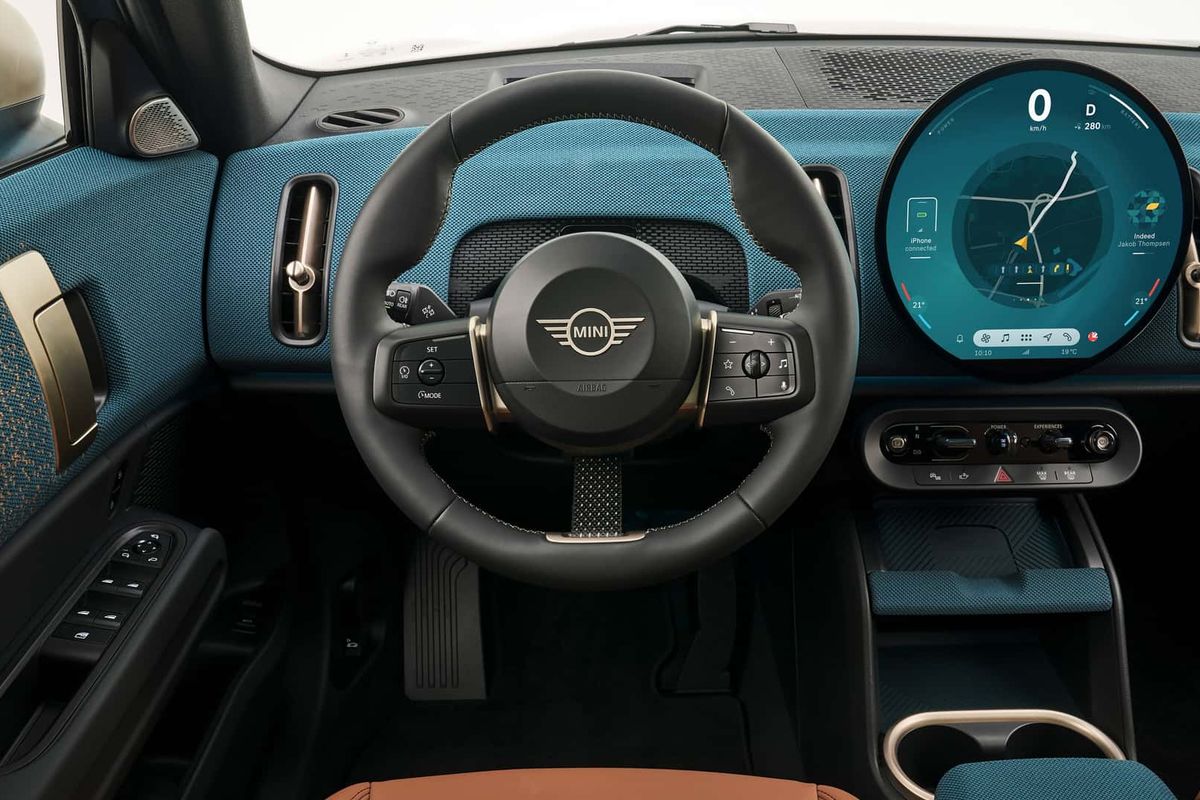
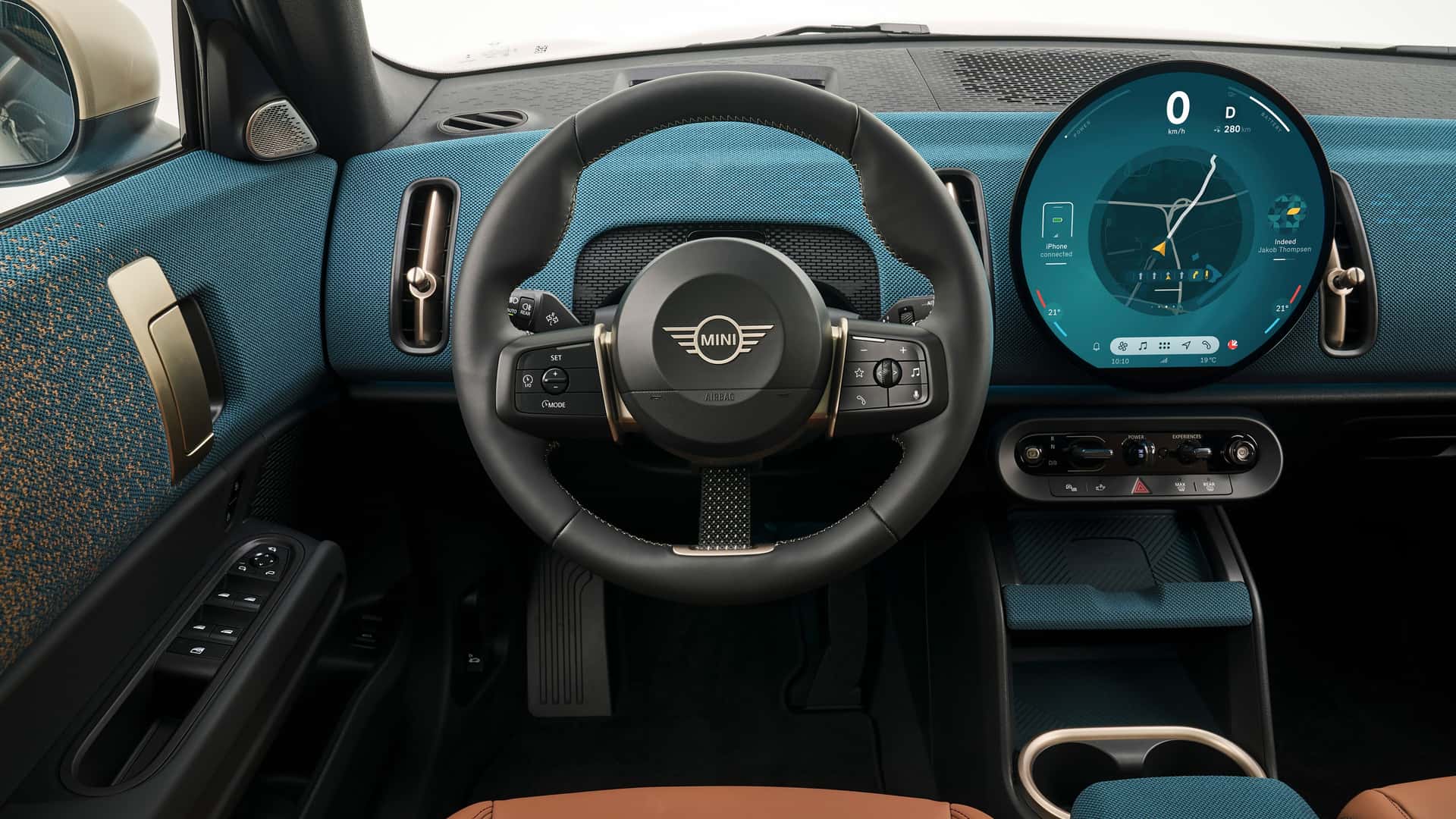
Step inside and you’ll be greeted by an eye-catching dashboard that’s covered in textiles, as well as a central infotainment screen. Mini is known for its circular infotainment unit, but in this new model (and the new Mini Cooper), it just looks better integrated for a sleeker and cleaner look.
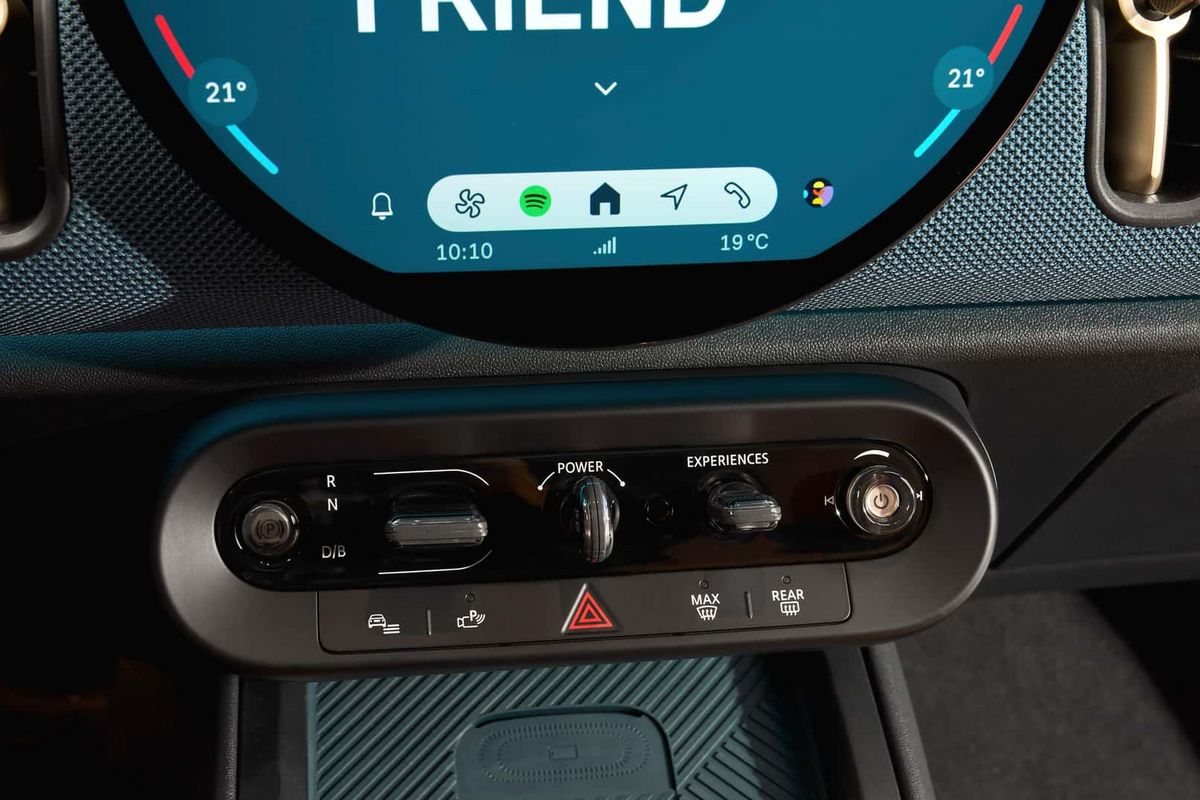
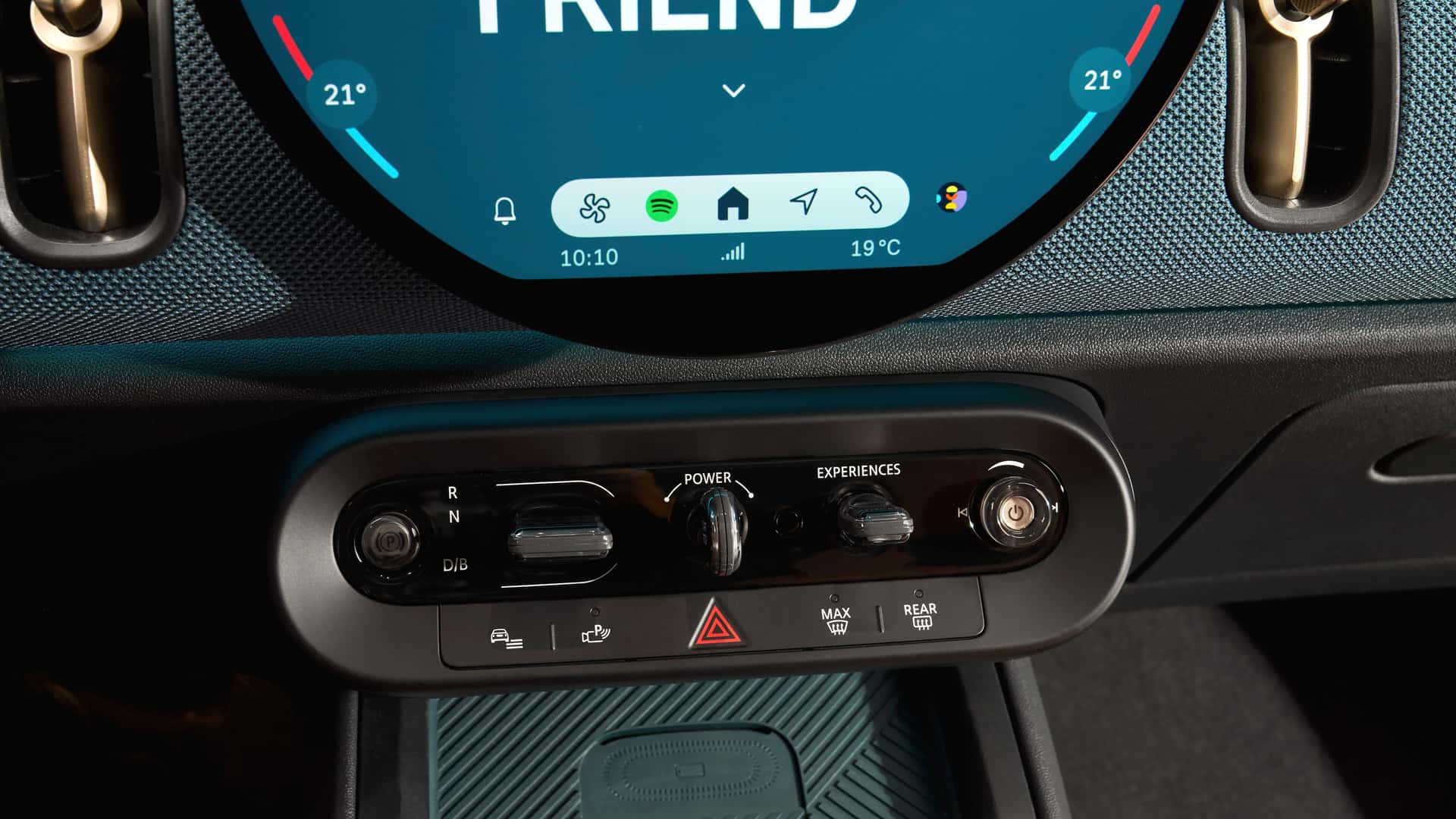
The new system runs BMW Group’s Operating System 9 and boasts a number of advancements such as the Hey Mini digital assistant, which is a cute animated dog, plus many colourful themes and modes. Also of interest is the transmission mode selector, which is built into the fascia to free up knee space.
The new transmission mode selector is integrated into the dashboard.
When is the 2025 Mini Countryman coming to South Africa?
Like the Mini Cooper, the larger Countryman will be arriving in South Africa in April 2024. Pricing, trim levels and engine lineup will be confirmed closer to the time.
South Africa’s new-vehicle sales slipped 3.1% year on year in August 2023. Here’s your comprehensive overview, including SA’s most popular brands, best-selling cars and plenty more…
In August 2023, South Africa’s new-vehicle industry registered a year-on-year decline of 3.1% to finish on 45 679 units, ending a 3-month growth streak. That said, this latest performance represented a 5.3% improvement over July 2023’s tally of 43 389 units.
Industry body Naamsa said this showing served to underline the “ongoing stressed business and consumer environment in the country, given that negative economic considerations still greatly outweigh positive ones”.
Out of the total reported industry sales, Naamsa said an estimated 83.8% represented sales via the dealership channel, while 12.2% were sales to the vehicle-rental industry, 2.8% to industry corporate fleets and 1.2% to government.
At 28 951 units, the new passenger-vehicle market registered a year-on-year drop of 6.7%, despite substantial support from the rental industry (which accounted for 16.2% of sales). Naamsa said this “weak performance” reflected the impact of “rising costs of living and lower disposable income on consumer sentiment and the ability to be active in the new-vehicle market”. Year to date, the passenger-vehicle market (231 112 units) was 3.0% down compared with the opening 8 months of 2022.
As has been the case for the past few months, the light-commercial vehicle segment was one of the few categories to show growth in August 2023, with registrations in this section of the market coming in at 13 652 units, or a marginal gain of 2.7% compared with the corresponding month in 2022. The year-to-date total here was 102 833 units, 19% up on the same reporting period last year.
The LCV segment again showed year-on-year growth in August.
Export sales recorded an encouraging increase of 33.5% year on year, to finish August 2023 on 41 462 units. Vehicle exports over the opening 8 months of the year were 12.4% ahead of the same term in 2022.
Lebo Gaoaketse, Head of Marketing and Communication at WesBank, said new-vehicle sales “stumbled” in August, showing the first potential signs of strain amidst economic headwinds.
“Although August sales experienced their biggest decline in 21 months, this volume is still 5.2% ahead of July sales. In addition, August 2022 sales were amongst the best-performing sales months last year,” pointed out Gaoaketse. “August sales are not poor despite being 3.1% lower than a year ago. They are the 3rd-best performing sales month this year, as were August 2022 sales up to that point.”
Meanwhile, Brandon Cohen, National Chairperson of the National Automobile Dealers’ Association (NADA), said it was clear the local industry could no longer withstand the pressure from increasing interest rates, fuel prices, vehicle costs and a significant decrease in household spending ability.
“The resilience of the South African retail motor industry in 2023 continues to astound us, but we knew there had to be a tipping point, and this is what happened in August,” Cohen said, adding that interest rates represented the “most significant obstacle” to vehicle sales right now.
“When we factor in new-car pricing and the negative impact of a weak rand, we witness a perfect storm of reduced affordability in a market with fewer and fewer cars available in various price brackets.”
New-vehicle sales summary for August 2023
Aggregate new-vehicle sales of 45 679 units decreased by 3.1% (1 476 units) compared to August 2022.
New passenger-vehicle sales of 28 951 units decreased by 6.7% (2 064 units) compared to August 2022.
New light-commercial vehicle sales of 13 652 units increased by 2.7% (363 units) compared to August 2022.
Export sales of 41 462 units increased by 33.5% (10 405 units) compared to August 2022.
10 best-selling automakers in South Africa in August 2023
No surprises at the top of the automaker rankings, with Toyota again way out in front. The Japanese giant added around 1 400 registrations to the previous month’s effort, finishing August 2023 on a heady 12 233 units (or a market share of 26.8%). With 5 972 units, the Volkswagen Group (including the Audi brand) was again 2nd, while Suzuki (4 332 units) completed the podium once more.
Meanwhile, Ford (2 724 units) climbed a place to finish the month in 4th position, forcing Hyundai (2 637 units) down to 5th. This is only the 2nd time this year the Blue Oval brand has placed 4th (the 1st instance coming in April 2023, when the Ranger outsold the Hilux), with the company having to settle for 5th or 6th on all other occasions in 2023.
Nissan (2 377 units) again had to be happy with 6th spot, while Isuzu (2 045 units) moved up a place to grab 7th. That saw Chinese automaker Haval (1 819 units) slip a ranking to 8th, while Renault held steady in 9th with 1 750 sales. Kia (1 550 units) returned to the table to grab the final spot.
That meant Chery – which broke into the top 10 in July at the expense of Kia – had to make do with 11th place in August 2023, though the Chinese firm finished a mere 52 units behind its South Korean foe. Indian automaker Mahindra was again 12th overall, finishing the month on 951 registrations.
1. Toyota – 12 233 units
2. Volkswagen Group – 5 972 units
3. Suzuki – 4 332 units
4. Ford – 2 724 units
5. Hyundai – 2 637 units
6. Nissan – 2 377 units
7. Isuzu – 2 045 units
8. Haval – 1 819 units
9. Renault – 1 750 units
10. Kia – 1 550 units
10 best-selling vehicles in South Africa in August 2023
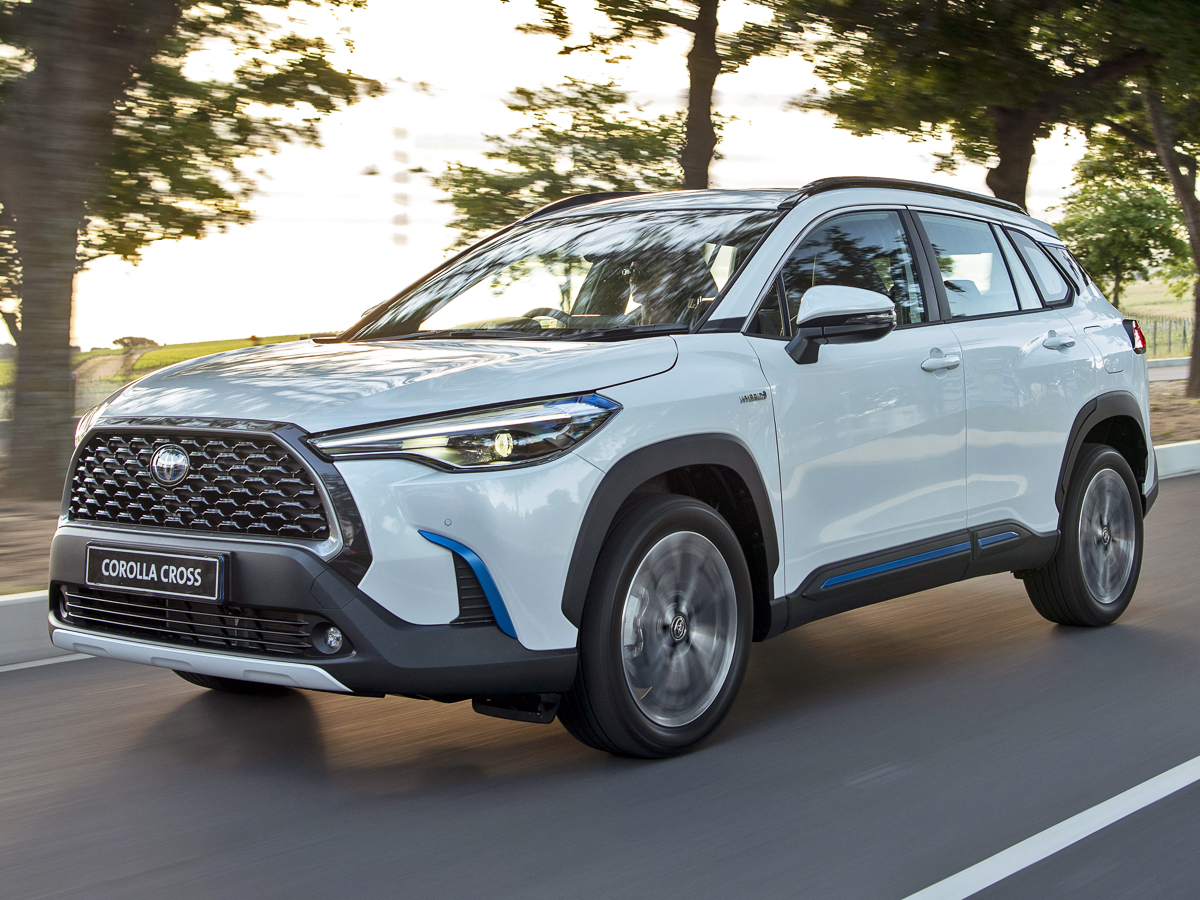
Toyota’s Corolla Cross (seen here in hybrid guise) climbed to 4th in August.
Yes, South Africa’s best-selling vehicle was again the Prospecton-produced Toyota Hilux. In fact, in August 2023, the Japanese bakkie enjoyed as many as 3 309 registrations, the 4th time this year it has crossed the 3 000-unit barrier. The Kariega-built Volkswagen Polo Vivo remained in 2nd place (and was thus SA’s strongest-selling passenger car), ending the month on 2 452 units (974 of which represented sales to the rental industry).
The Silverton-manufactured Ford Ranger (2 367 units) wasn’t far behind in 3rd, driving a strong month for the Dearborn-based firm’s local division. Meanwhile, the locally built Toyota Corolla Cross climbed a spot to 4th, with its 2 130 registrations making it Mzansi’s best-selling crossover for August 2023. The Struandale-produced Isuzu D-Max likewise gained a place month on month, rounding out the top 5 with 1 632 units.
The Toyota Hi-Ace (1 581 units) moved up a position to 6th, with the Indian-sourced Toyota Starlet (1 372 units) also gaining a place to 7th – as well as securing the title of SA’s best-selling imported vehicle for August 2023. The Suzuki Swift (1 349 units) slipped 4 places to 8th, while the locally built Volkswagen Polo hatchback (1 153 units) and Rosslyn-manufactured Nissan NP200 (1 064 units) swapped positions and completed the top 10.
Top 9 vehicles exported from South Africa in August 2023
More than 11 000 units of the VW Polo hatchback were shipped from SA shores in August.
For the 4th consecutive month, the Volkswagen Polo hatchback topped the export charts, with a whopping 11 183 examples shipped off from the Kariega factory in August 2023. The Ford Ranger (7 166 units) and Toyota Hilux (6 863 units), meanwhile, held steady in 2nd and 3rd, respectively, again separated by only a couple of hundred units.
As we’ve come to expect, the Isuzu D-Max, Toyota Fortuner, Nissan Navara, Nissan NP200, Toyota Corolla Cross and Toyota Corolla Quest made up the export numbers. We should, of course, point out BMW and Mercedes-Benz again did not submit detailed figures, so it’s unclear exactly how many new X3 and C-Class sedan units were exported during the month (for the record, though, Naamsa’s estimates for August 2023 stood at 4 800 and 9 728 units, respectively).
1. Volkswagen Polo (hatch) – 11 183 units
2. Ford Ranger – 7 166 units
3. Toyota Hilux – 6 863 units
4. Isuzu D-Max – 655 units
5. Toyota Fortuner – 302 units
6. Toyota Corolla Cross – 245 units
7. Nissan Navara – 208 units
8. Nissan NP200 – 45 units
9. Toyota Corolla Quest – 4 units
Vehicle-sales outlook in SA for remainder of 2023
So, where to from here for South Africa’s new-vehicle market? Well, though Naamsa points to some positive news (including the recent pause on interest-rate hikes, an apparent reduction in daytime load-shedding and the fact inflation is now “firmly falling within the 3-6% target band”), it cautions that energy and logistical constraints “remain binding on the domestic economic growth outlook”, therefore “limiting economic activity and increasing costs”.
“Although the SA Reserve Bank has slightly increased its forecast for South Africa’s GDP growth from 0.3% to 0.4% for 2023, the medium-term outlook for business conditions in the new-vehicle market continues to reflect subdued demand for high-priced items such as vehicles, which correlates with a stagnating domestic economy,” explains the industry body.
In terms of exports, Naamsa points out the “longer-term global economic outlook remains clouded by risks to the inflation trajectory”, along with “ongoing geopolitical tensions and the effects of climate change”. However, it suggests prospects for vehicle-export growth for the balance of the year “remain optimistic on the back of new-model introductions by major exporters in the domestic market”.
WesBank’s Gaoaketse says the broader context of the latest sales performance does “provide some cause for concern”, but being a single month’s effort, it is “not indicative yet” of a trend. “New-vehicle sales have defied the odds in their slow recovery since the pandemic. Given the tough economic conditions, consumers have been under immense budget pressure since 2020. Consequently, 2 major trends impacted car-purchasing behaviour: the pre-owned market boomed in the face of affordability; or consumers held onto their cars for longer rather than upgrading.”
Within this context, Gaoaketse says sales continued to recover after the pandemic, more recently impacted by replacement cycles “finally becoming unavoidable” and the subsequent softening of the pre-owned market – by virtue of lower stock levels and a “lower appetite for inflated prices”.
NADA’s Cohen says if the trend of decreasing inflation continues, the country may have reached the peak of the interest-rate cycle, or “at least there might be no further increases”. Fuel-price increases linked to the rand, though, continue to be an “ongoing concern”. He points out downsizing remains a “significant factor in this current economy”, saying the luxury segment is “under considerable pressure”.
“I believe we need to be realistic. We must acknowledge that the current economic conditions are very challenging, although there is still demand, albeit under pressure. Fortunately, the financial institutions have not ceased funding as they did during the global financial crisis, and mobility remains essential for most South Africans. Therefore, there are generous special offers and other incentives in the market for consumers, while interest rates appear to be stable and unlikely to rise further,” concludes Cohen.