The R1m bakkie decision: New Toyota Hilux vs updated Ford Ranger
The South African bakkie market is witnessing its most anticipated showdown in years. For the past few seasons, the Ford Ranger has enjoyed immense success, but Toyota has now officially responded with its next-generation Hilux.
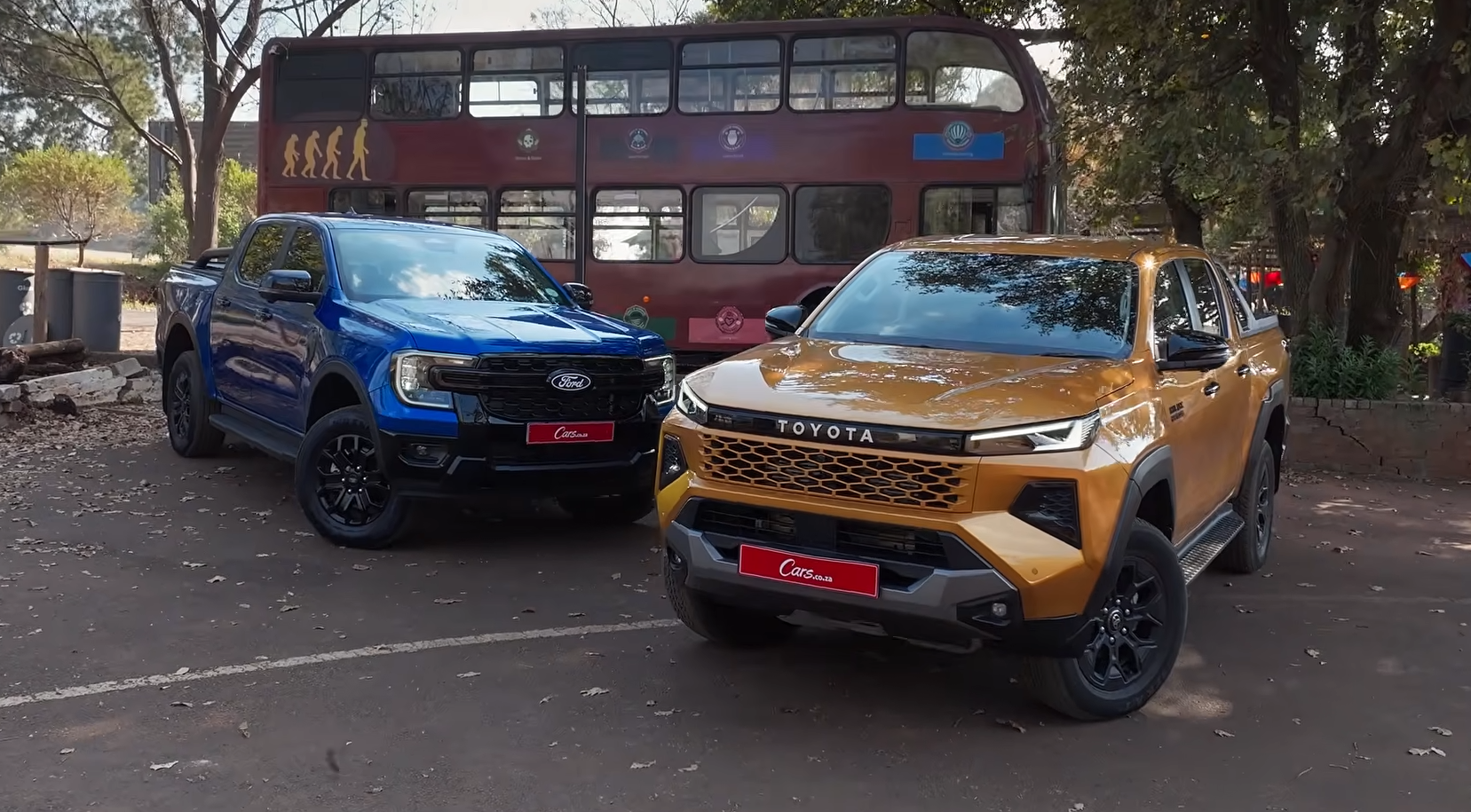
In this comprehensive head-to-head comparison, we evaluate whether the latest changes to South Africa’s favourite bakkie – the Toyota Hilux – are enough to reclaim outright supremacy in the highly competitive double-cab segment against the current leader, Ford’s Ranger. It’s the Hilux 2.8 GD-6 Legend versus Ford’s new Ranger 2.3 EcoBoost Sport – let battle commence!
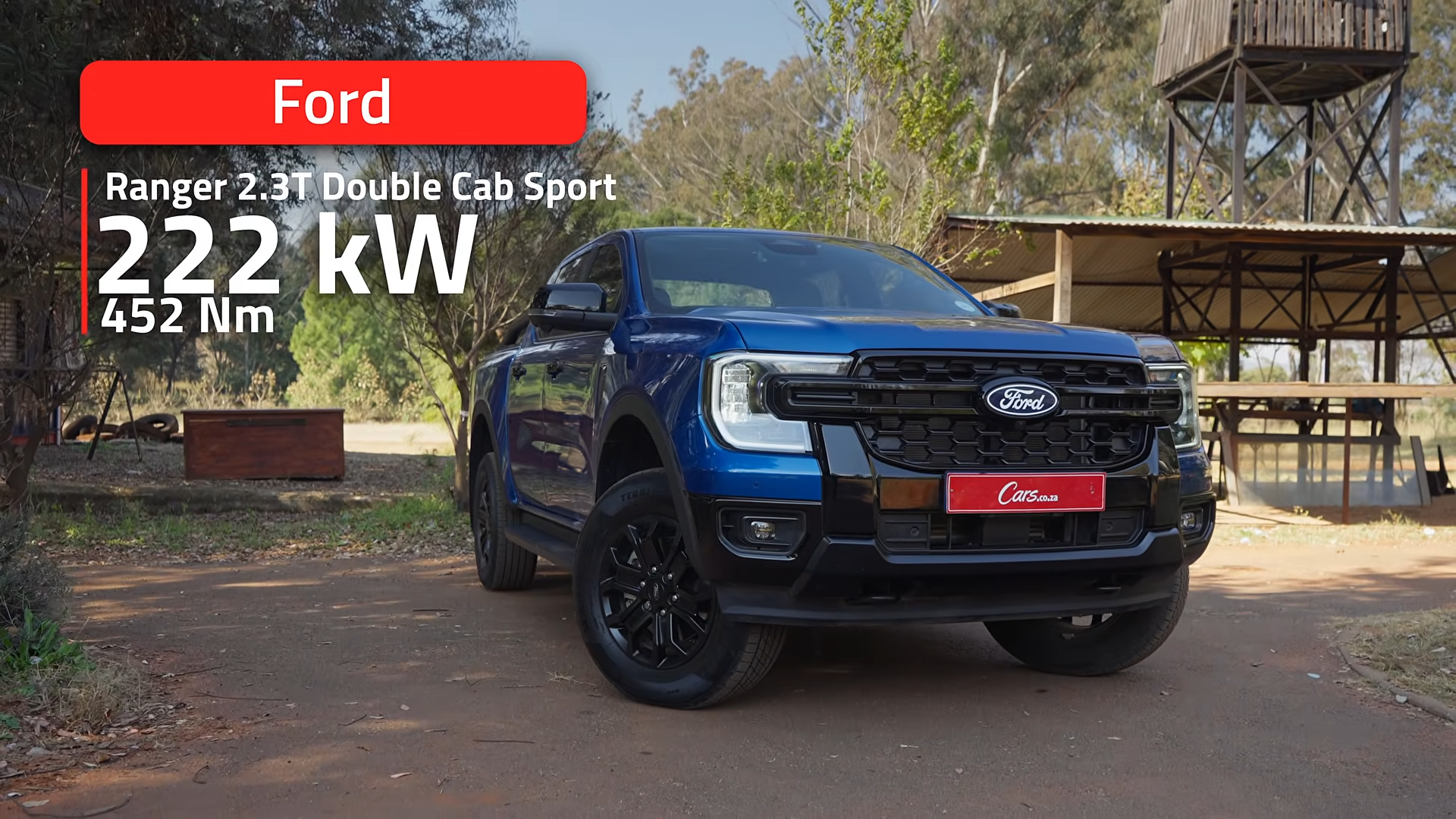
In a surprising twist for a modern double-cab comparison, the two contenders employ completely different powertrain philosophies. The updated Ford Ranger features a 2.3-litre EcoBoost turbocharged petrol engine, which delivers a potent 222 kW and 452 Nm of torque.
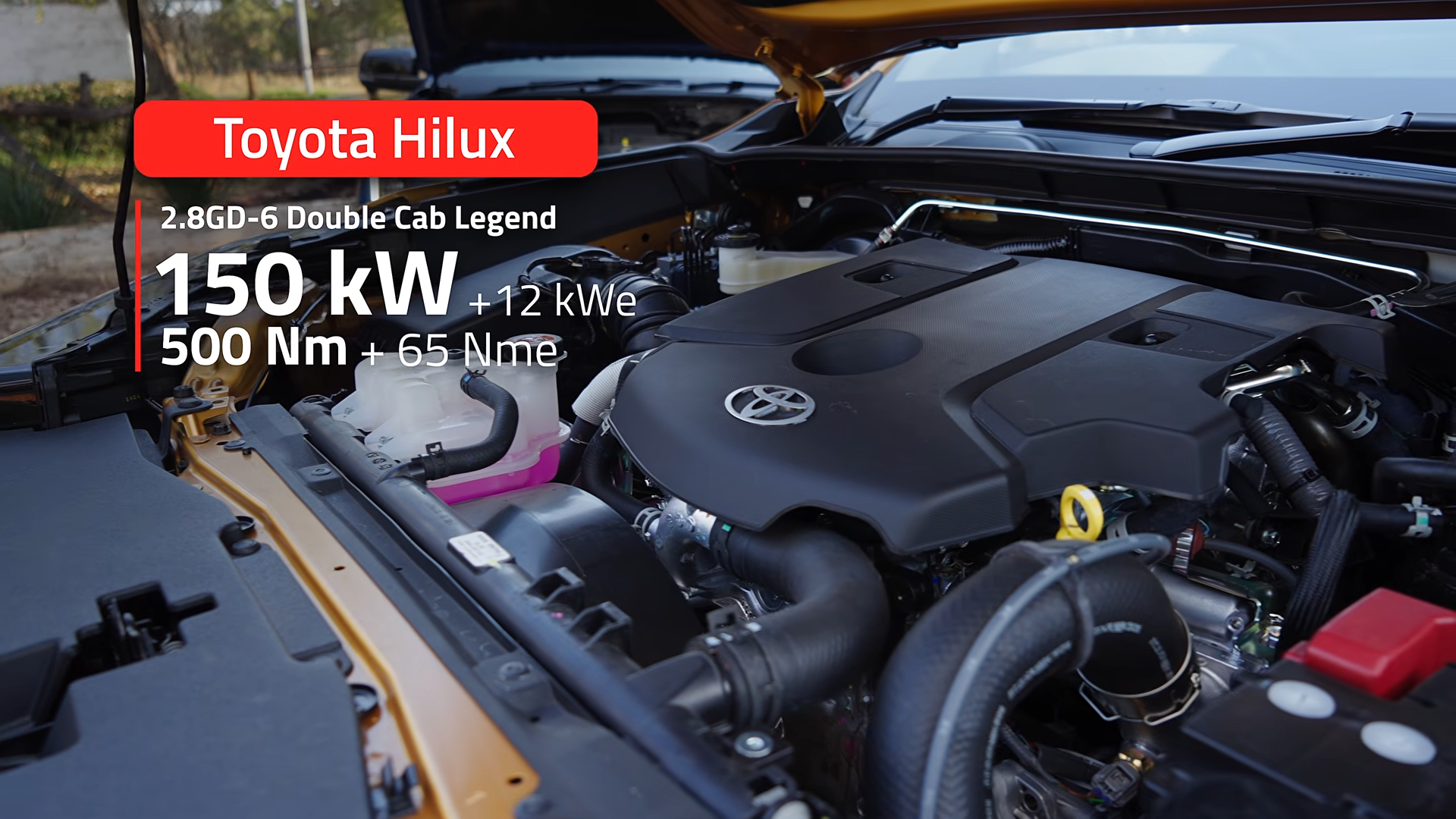
Toyota, by contrast, relies on its familiar and trusted 2.8-litre GD6 turbodiesel engine. However, the top-tier Legend derivative now introduces mild-hybrid assistance to the mix. The diesel engine develops 150 kW and a muscular 500 Nm of torque. While the electric assistance provides a minor supplemental push, the primary benefit remains targeted towards overall efficiency and refinement.
Practicality & load bin usability
When it comes to working capabilities, there are notable deviations between the two packages. Despite utilising a petrol engine, the Ranger boasts a claimed maximum braked towing capacity of 3.5 tonnes, whereas this specific Hilux Legend variant is rated to tow up to 2.8 tonnes. Both bakkies remain closely matched in terms of carrying potential, with payloads hovering around the 970 kg mark.
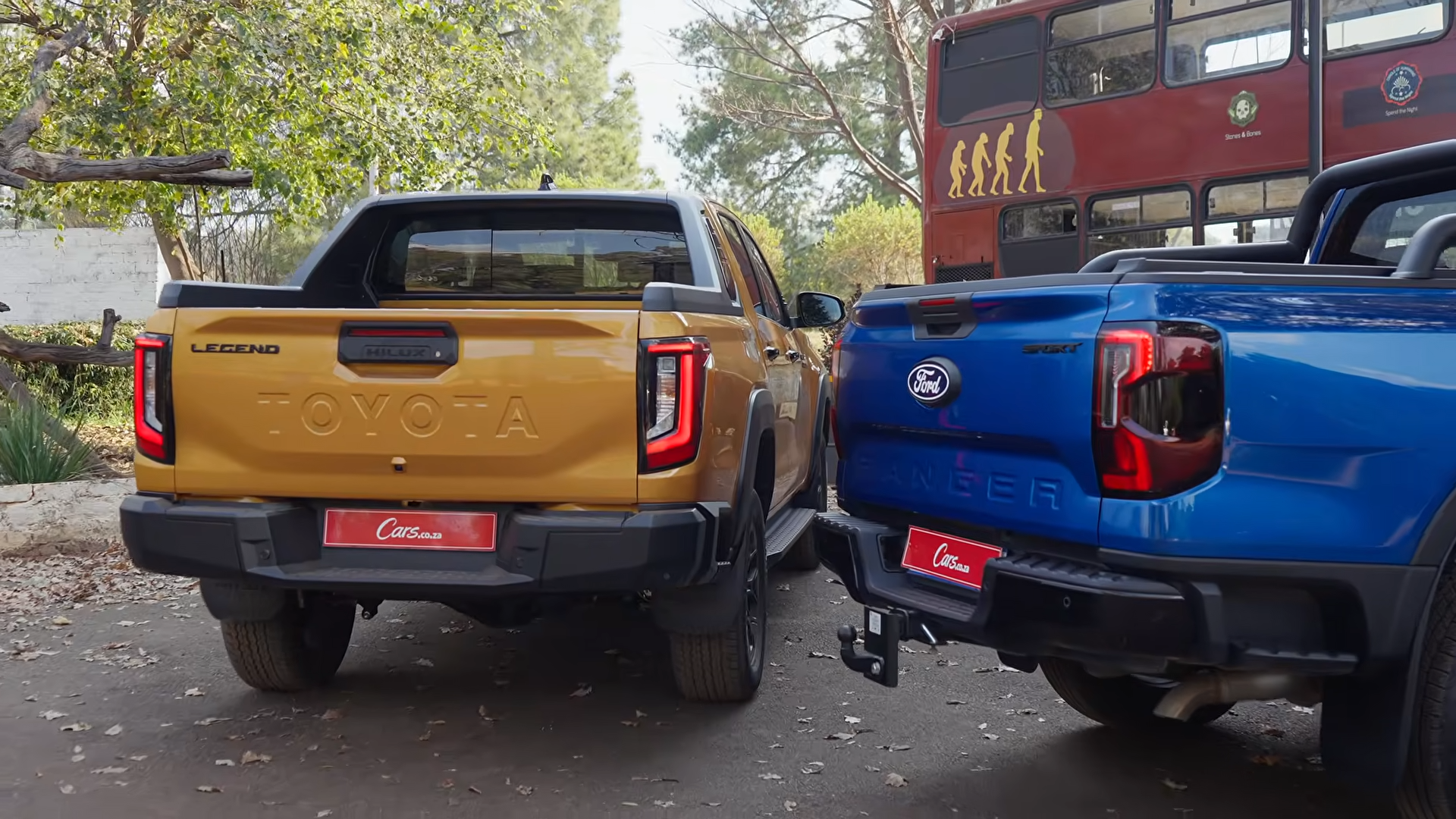
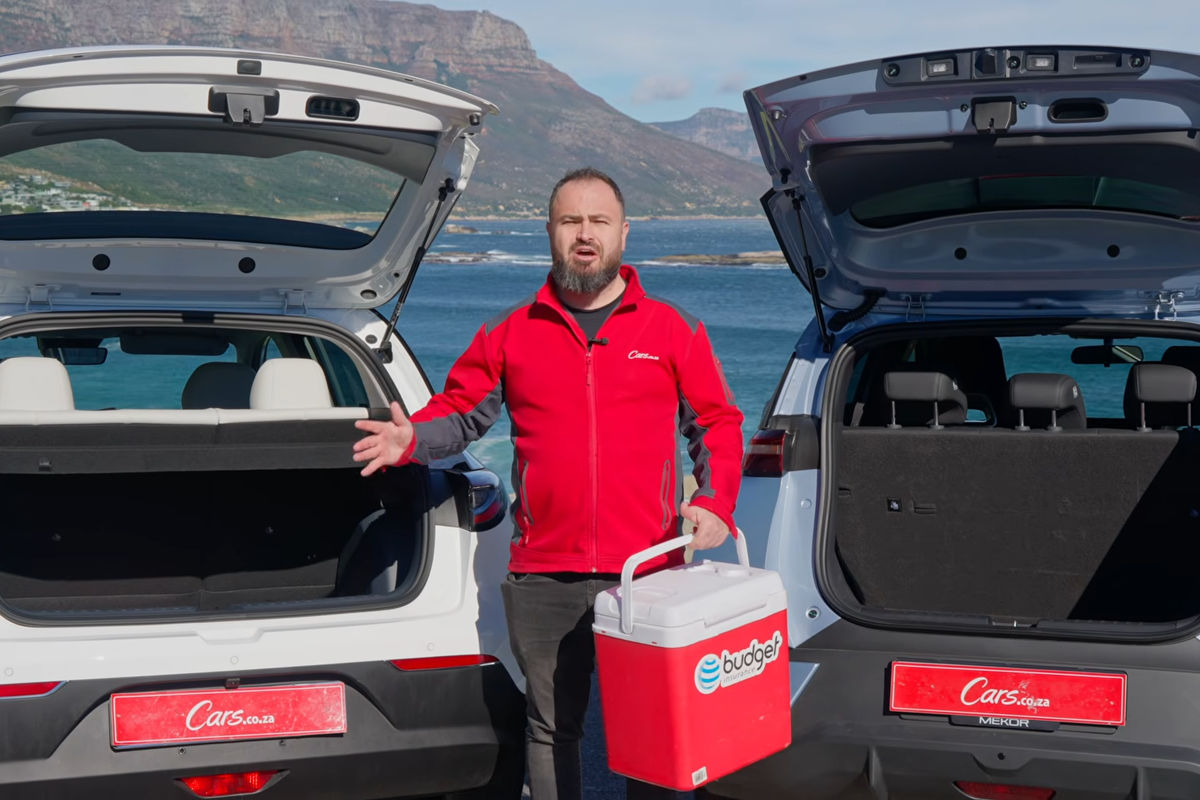
The design of the load beds also highlights differing approaches to everyday usability. The Ranger includes a counterbalanced tailgate that drops smoothly, alongside a standard tow bar and integrated tailgate features like cup holders and clamping points. The Hilux maintains a more traditional, heavy-assisted tailgate structure. Optional extras on both models allow for configurations such as load bin organisers, roller shutters, and specialised power outlets in the back.
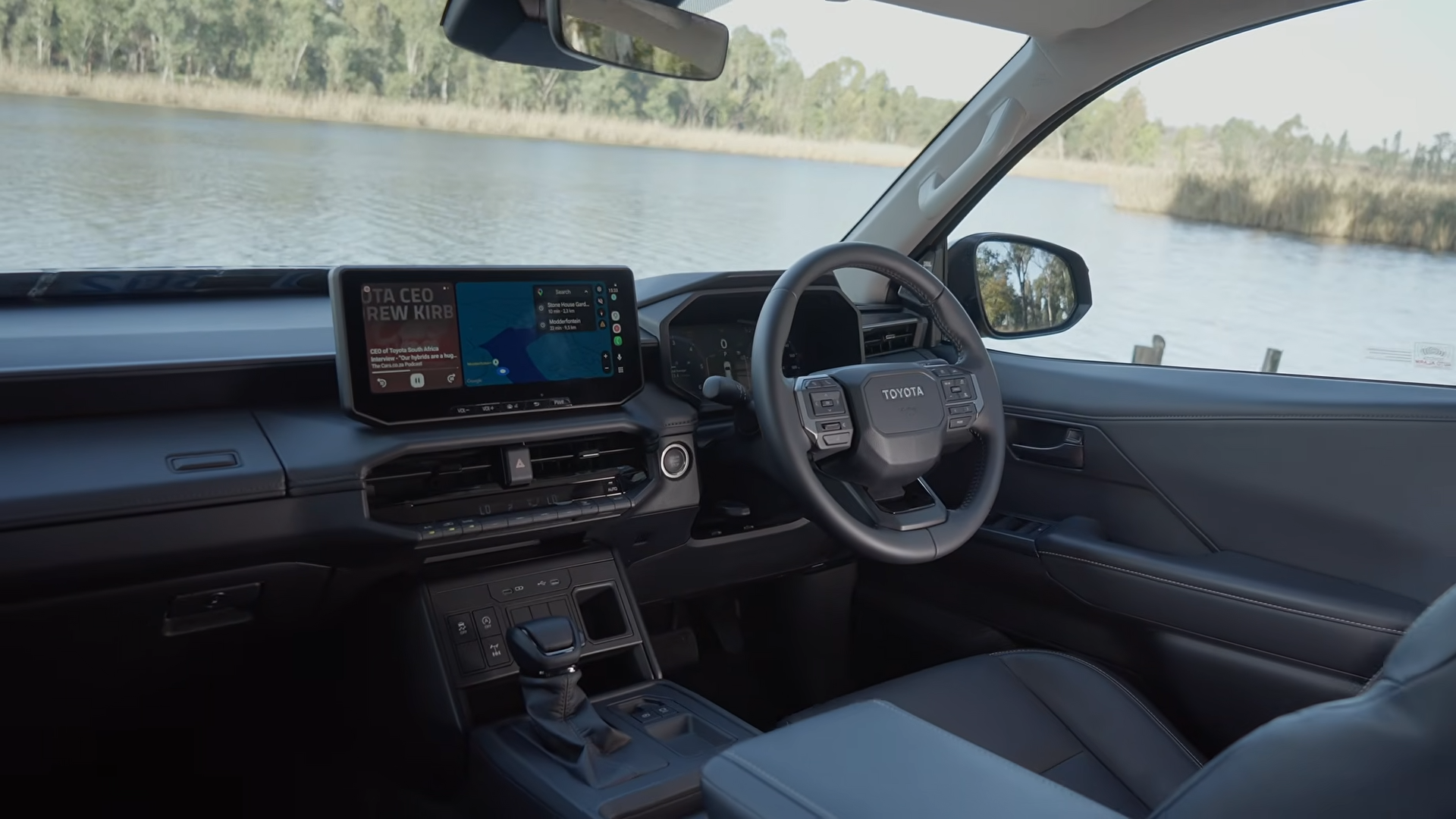
Stepping inside the next-generation Hilux reveals a vastly modernised environment that feels completely current. The Legend model’s cabin incorporates several premium touches, including a newly designed steering wheel, a fully digital instrument cluster with drive-mode animations, soft-touch materials, and a high-resolution touchscreen featuring wireless smartphone integration.
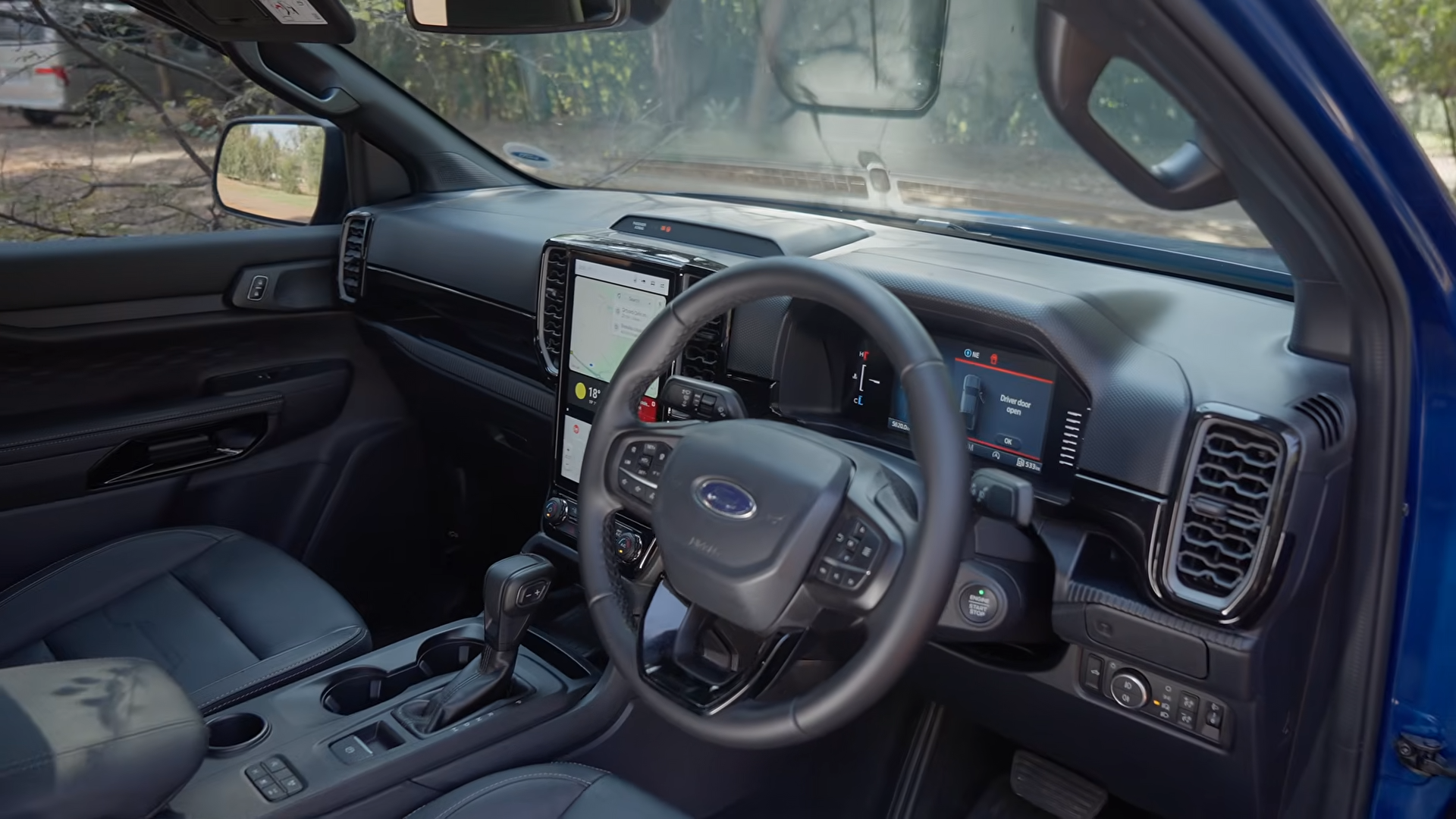
The Ranger counters with its signature vertically oriented portrait touchscreen that dominates the dashboard architecture. This system provides extensive digital connectivity and interface options.
In terms of cabin utility, the Ranger offers dual gloveboxes and dashboard-mounted pop-out cup holders, creating a highly digitalised, car-like atmosphere. Rear passenger accommodation is competitive in both vehicles.
Ride quality & driving experience
The driving evaluation uncovers the core character traits of each bakkie. One of the most significant mechanical departures for the new Hilux is the switch from a traditional hydraulic steering setup to an electrically assisted steering system. This change dramatically lightens low-speed manoeuvring, even if traditionalists might miss the weightier feel of the older model. Refinement has also taken a step forward, with noticeably improved cabin insulation reducing diesel engine noise.
The Ranger continues to set a benchmark for ride comfort in the double-cab segment. Its suspension setup manages sharper road imperfections and tarmac undulations with impressive composure.
Which bakkie ultimately makes the most sense for your lifestyle, your budget, and your long-term ownership goals? Watch the full video review to see how these two heavyweights compare on the road and to find out which double-cab takes the crown.
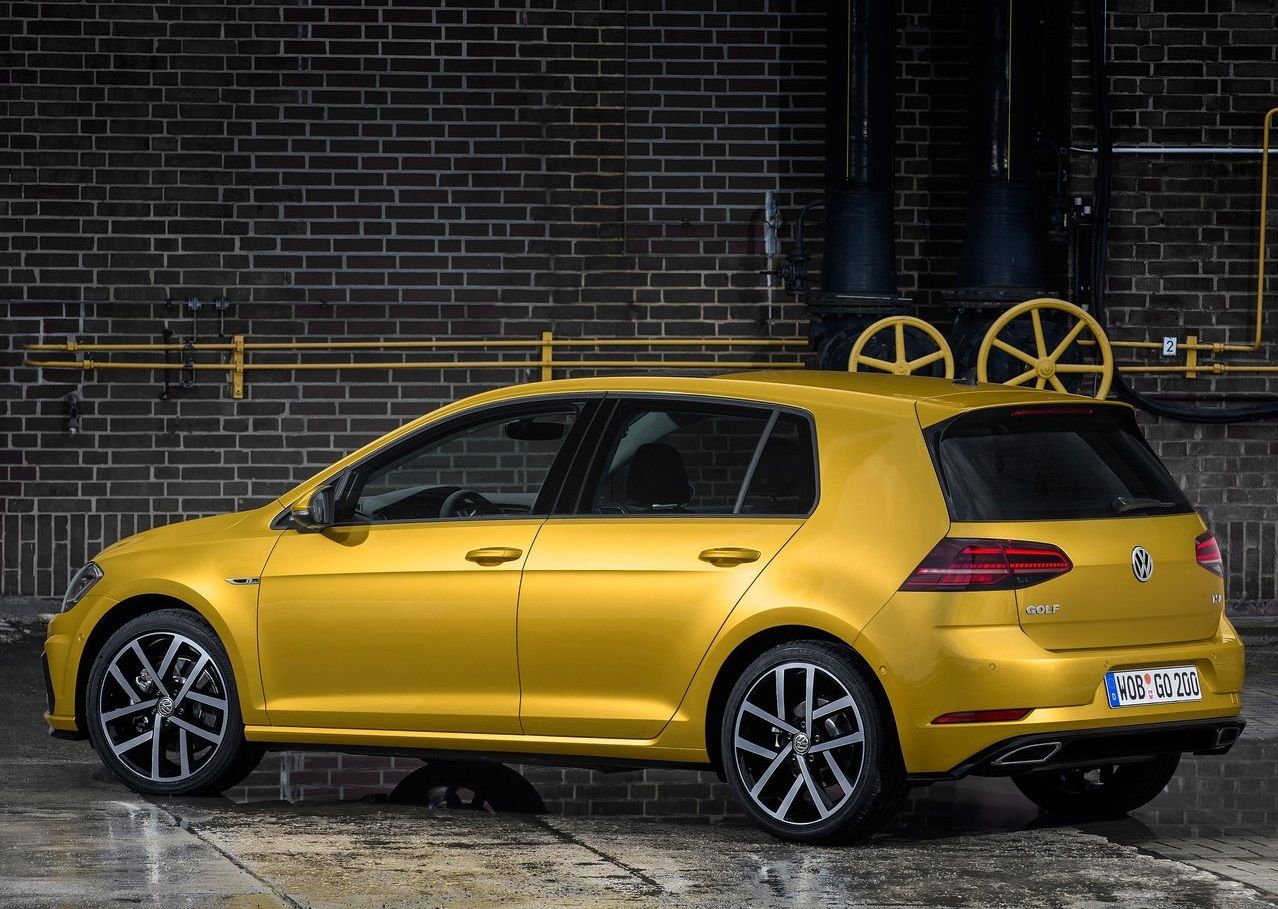
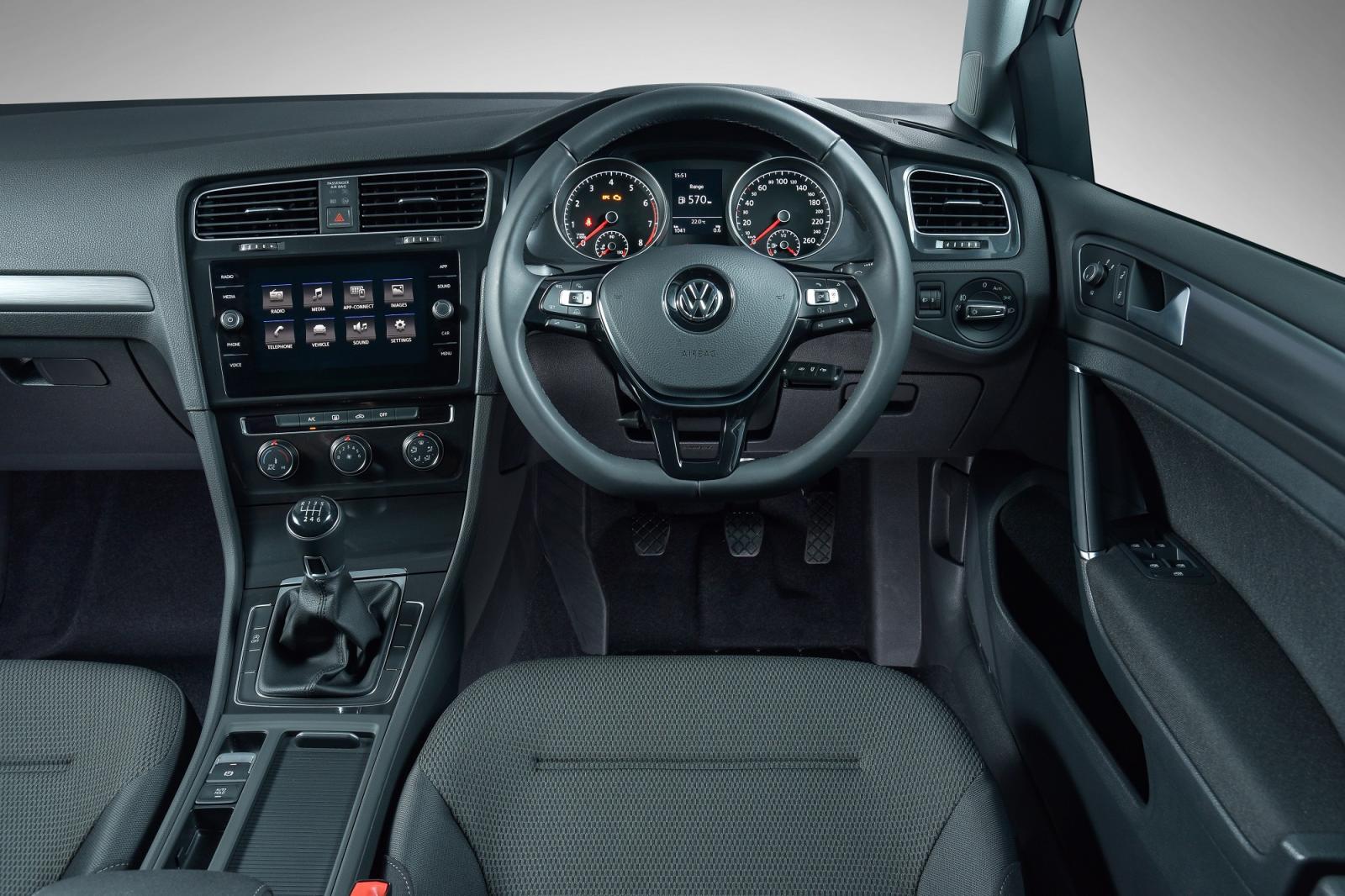
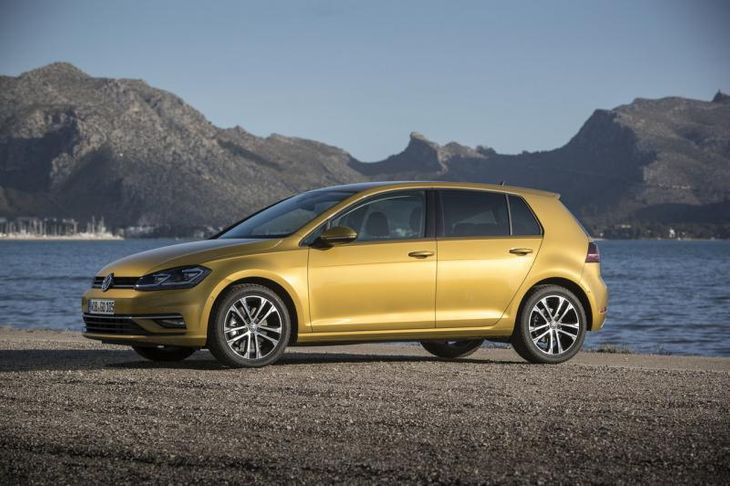
Buying a high-mileage VW Golf 7.5? Here’s what you should look out for
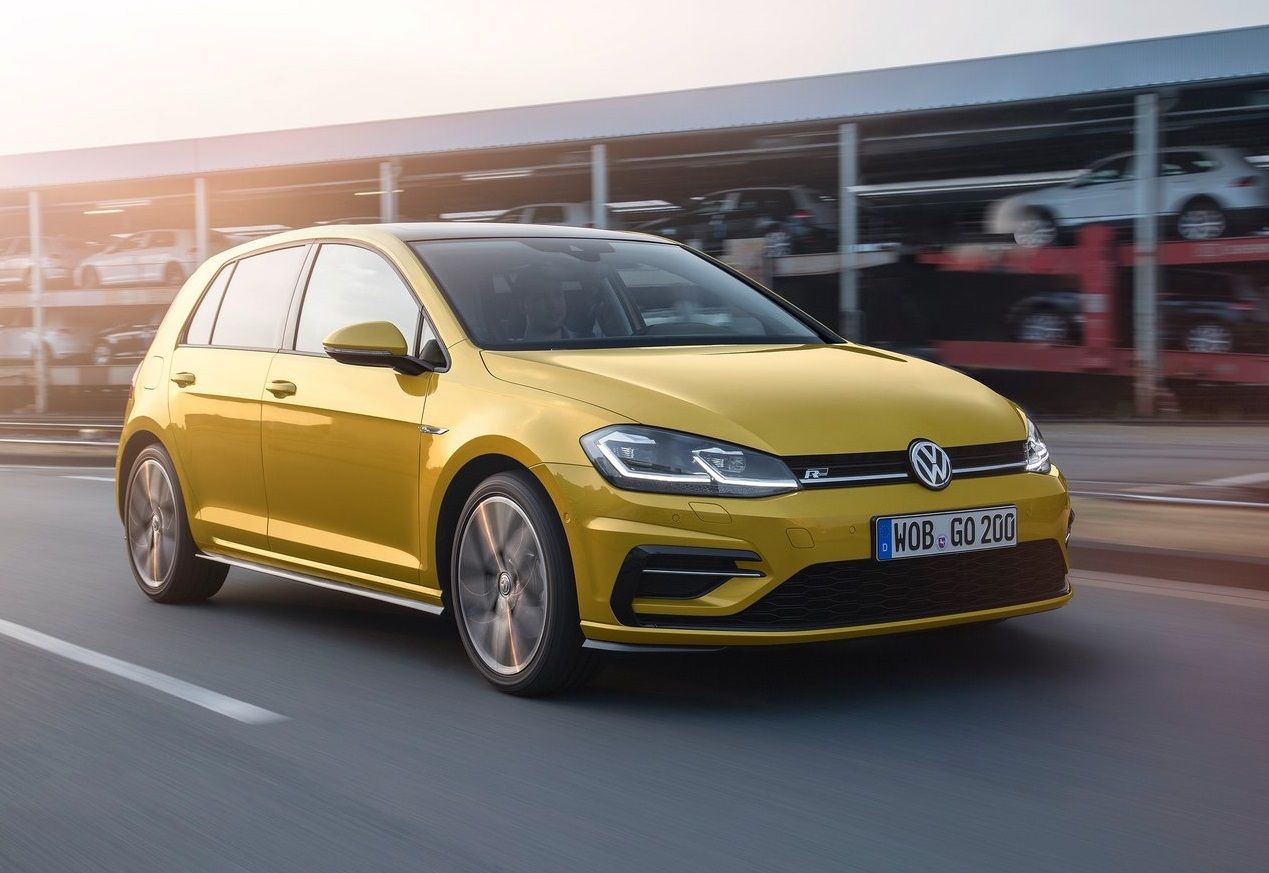
In the final instalment of our series on how to buy a pre-owned vehicle, we put a 2020 VW Golf 7.5 1.4 TSI with just under 100 000 km on the odometer to the ultimate test. We take it to a specialised workshop for a comprehensive diagnostic assessment to reveal exactly what you should look out for before signing on the dotted line.
The Volkswagen Golf 7.5 remains a highly desirable option in the South African used vehicle market. Celebrated for its timeless design, premium cabin architecture and refined driving dynamics, it’s a hatchback that many aspiring buyers track down.
However, when a modern turbocharged car approaches the psychological milestone of 100 000 km, potential owners often feel a sense of trepidation. With factory warranties and service plans typically lapsed, what hidden issues could be lurking beneath that polished exterior?
Before diving into the mechanical complexities, a thorough visual inspection of the Golf is paramount. A pre-owned buyer should always start with the fundamentals, assessing the bodywork for signs of previous accident damage, poor panel alignment or inconsistent paint finishes.
Under the bonnet, initial checks are straightforward but telling. The engine oil condition should be evaluated by pulling the dipstick; dark, black sludge indicates a vehicle that is long overdue for maintenance, whereas a golden-brown hue points to regular oil changes.
Coolant levels must also be checked at the reservoir expansion tank. Volkswagen utilises a specific pinkish-red coolant formulation, and a dropped fluid level is an immediate red flag pointing toward potential cooling system leaks. Finally, battery terminals should be inspected for secure connection, as loose terminals can trigger intermittent starting problems and electrical faults.
The common mechanical pain points on a VW Golf at 100 000 km
While the Golf 1.4 TSI enjoys a solid reputation for reliability, specific wear-and-tear items become critical operational factors as the mileage pushes toward the 6-figure mark.
For the EA211 1.4-litre turbocharged engine, the most critical scheduled maintenance item occurs between 90 000 km and 120 000 km, when the cambelt requires replacement. Neglecting this service can result in catastrophic engine failure. This procedure is a labor-intensive job that can take 4-6 hours to complete properly, although once done, the engine is secure for another long cycle.
Potential buyers should also be vigilant about the following areas:
Water pump and thermostat housing: The plastic cooling system housings on modern Volkswagens can become brittle over time, leading to slow coolant losses.
Intake valve carbon build-up: As a direct-injection powerplant, the TSI engine can suffer from carbon accumulation on the intake valves over extended mileages. If left unchecked, this can lead to rough idling, misfires or visible smoke from the exhaust.
Turbocharger wastegate: Though less frequent, the mechanical linkage for the turbocharger wastegate can occasionally stick, which requires specialised attention.
Suspension and brakes: Standard wearable components like brake discs, pads and suspension bushings generally require replacement or refurbishment by the time a vehicle hits this mileage threshold.
The importance of a full diagnostic scan
A vehicle can feel tight on the road and immaculate from the driver’s seat, yet still hide digital anomalies within its complex electronic architecture. Modern vehicle diagnostics allow technicians to hook up specialised scanning equipment to interface directly with the vehicle’s onboard computers.
This electronic health check interrogates the engine control unit, braking modules and transmission electronics to pull active or historic fault codes. A comprehensive scan can uncover hidden issues that standard test drives miss, such as internal component tolerances reaching their wear thresholds or minor voltage spikes in the locking and central gateway modules.
For any consumer looking to purchase or sell a high-mileage vehicle, booking a comprehensive quality check provides immense peace of mind. It ensures that the buyer is fully aware of the vehicle’s true mechanical state and protects the seller from future comeback claims.
Will Chery’s upcoming SA-built vehicles be cheaper?
The Chery Group plans to start producing new vehicles in South Africa in 2027. But will these SA-built models be cheaper than the imported versions they ultimately replace?
Chery to start production at Rosslyn in H2 2027
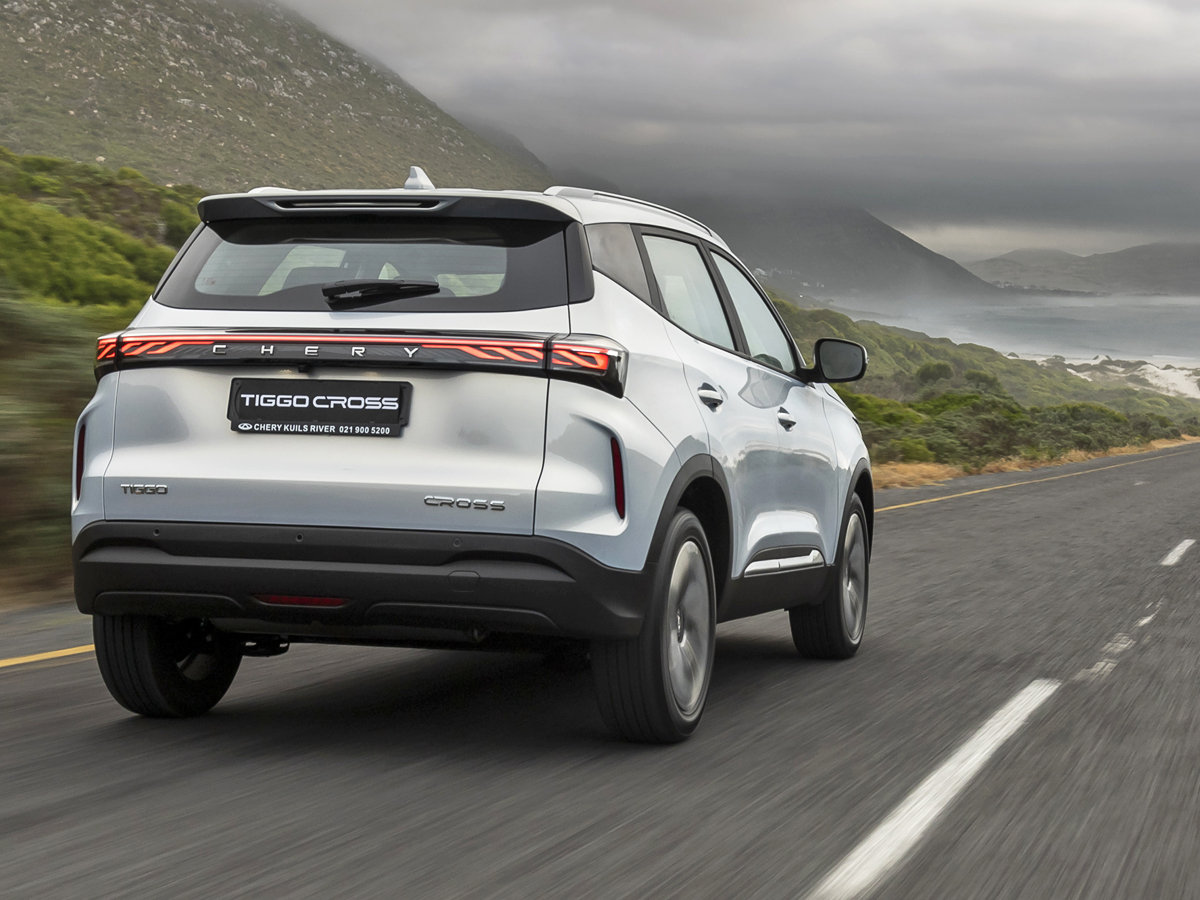
Tiggo 4 Cross likely to be first model off the line
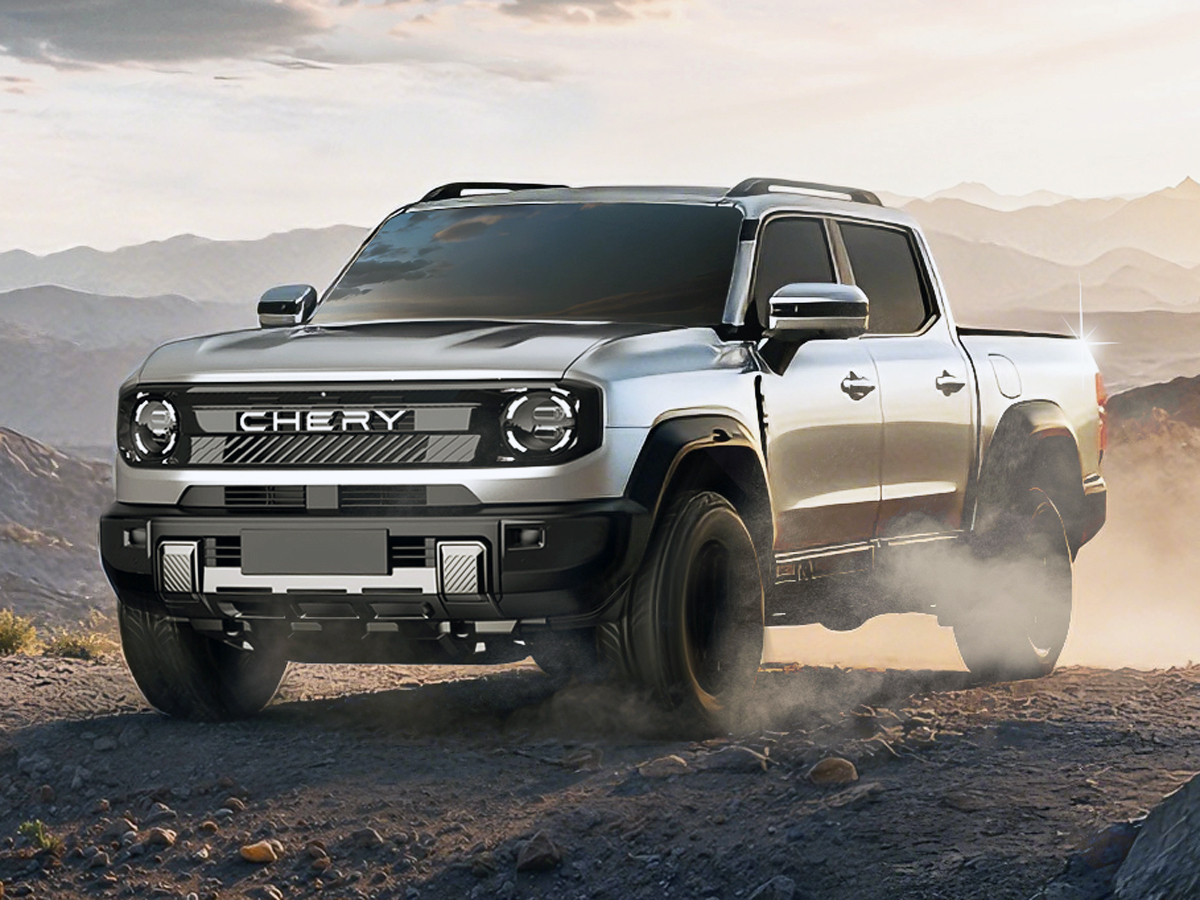
Diesel PHEV bakkie being lined up for 2nd phase
In the 2nd half of 2027, the Chery Group plans to start producing new vehicles at its freshly purchased Rosslyn factory. But will these SA-built models be cheaper than the imported versions they will ultimately replace?
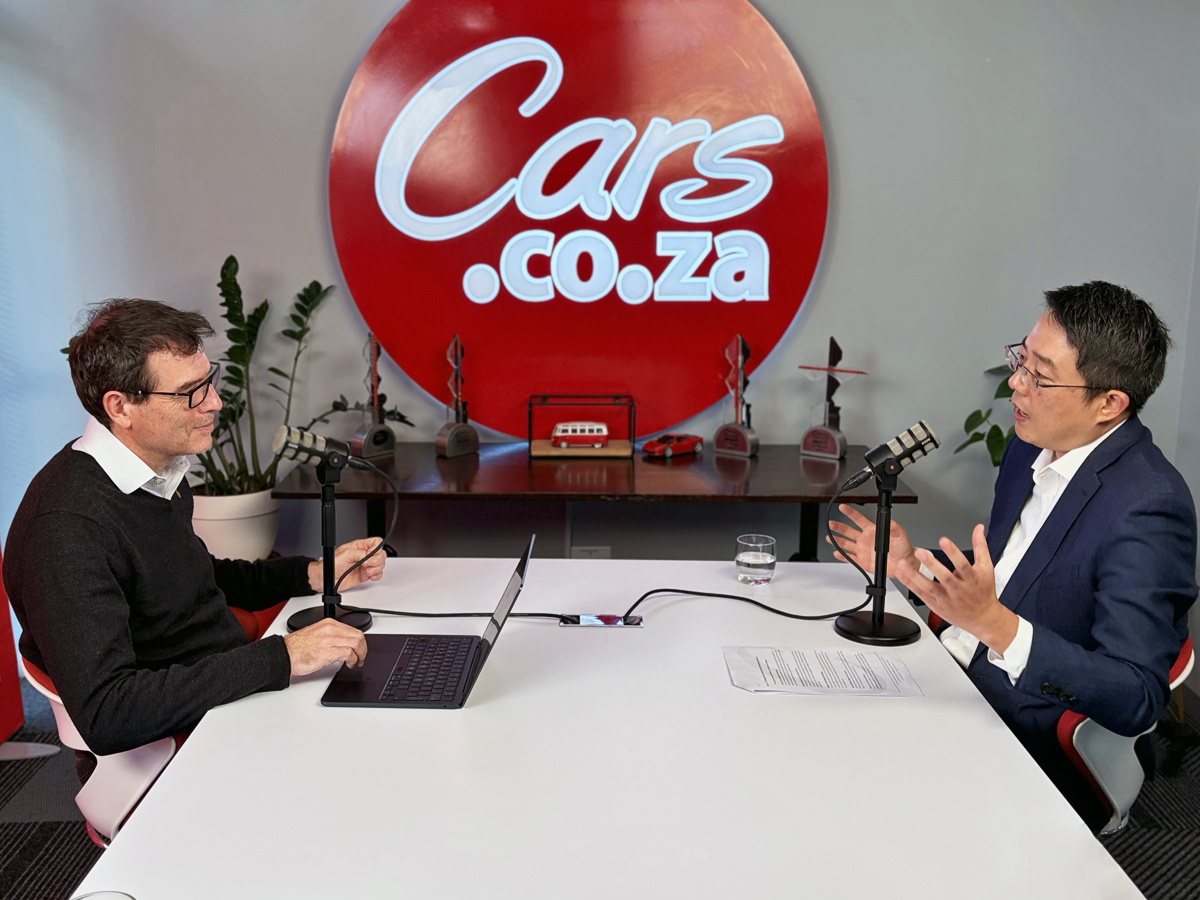
We asked Tony Liu, CEO of the Chery Group in South Africa, that very question during a recent Cars.co.za podcast interview. As a reminder, the Chinese automaker recently acquired the Rosslyn facility from Nissan, a factory in which the Japanese firm had built new vehicles for some 60 years.
Cars.co.za’s Alan Quinn (left) in conversation with Chery’s Tony Liu.
With the facility currently undergoing recommissioning, Chery says it plans to kick off production in the 2nd half of 2027. The Tiggo 4 Cross is expected to be the first model to roll off the line, produced in both petrol and hybrid guise. The company says it aims to produce 15 000 units in the plant’s initial ramp-up phase in the 3rd and 4th quarters of 2027.
“Our biggest seller in South Africa is the Tiggo 4 Cross, which has been number one in the SUV [segment] for quite a few consecutive months. We want the Tiggo 4 Cross, including the ICE [internal combustion engine] and hybrid versions, to be the first production rolled out from our Rosslyn plant,” Liu told us.
The Tiggo 4 Cross is the first Chery model expected to be produced at Rosslyn.
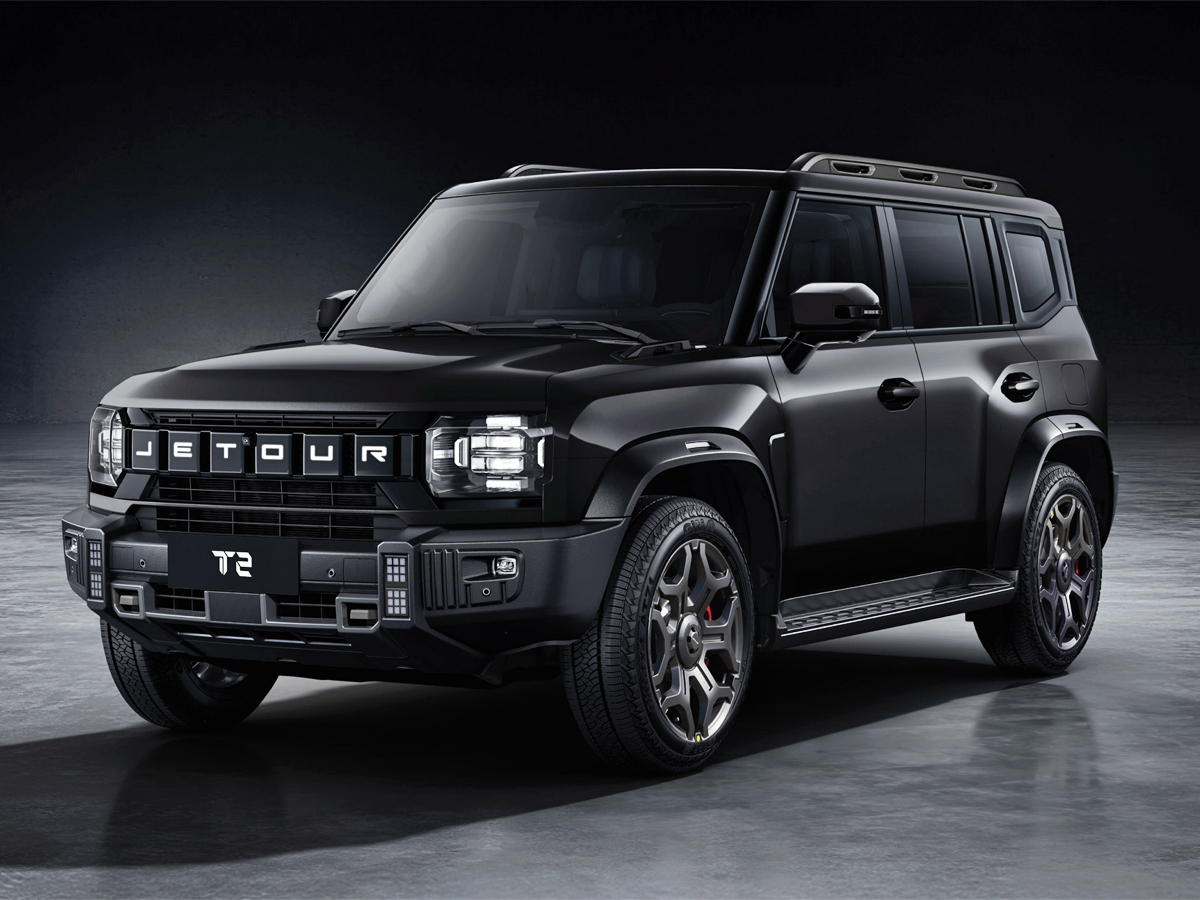
“We also have intentions to bring in the Jetour T2 to be locally produced – in ICE and plug-in hybrid. During the 2nd phase, we’re also planning to bring our KP31 diesel plug-in hybrid bakkie into production in the Rosslyn plant,” the executive added. Additionally, Chery Group sub-division Omoda & Jaecoo earlier announced that its Jaecoo J5 would “form part of the core production line-up”.
So, considering the scale and technology advantages held by Chery’s various factories in its domestic market of China, what are the chances that the upcoming SA-built models will be cheaper than the China-sourced versions that are currently on the market?
Chery plans to produce the Jetour T2 locally, too.
“That is a good question. From a manufacturing cost point of view, I think China does have the advantage globally. In the meantime, we are also looking at the different regions and policies [in play]. South Africa has a number of FTAs [free trade agreements] – we have SADC [Southern African Development Community] in the region that we can export to in the future,” Liu said, while also touching on SA’s trade relationship with Europe.
“So, these are all the things we can leverage in future. In terms of South African cost, yes there are some challenges, but we are looking at how optimise our supply chain, from a logistics point of view, from an internal costing point of view and also from a policy point of view,” he added.
Chery plans to eventually build the production version of the KP31 bakkie in Rosslyn as well.
“I think a very important factor is volume. So, if you ask me whether they’re going to be cheaper? Potentially, yes. Because once we have the volumes and deeply rooted suppliers … there is a possibility to make it very competitive in the South African market,” Liu said.
Frequently Asked Questions (FAQ)
Q: When will the Chery Group begin vehicle manufacturing in South Africa, and which models are planned?
A: The Chery Group plans to start production at its newly acquired Rosslyn facility in the second half of 2027. The first vehicle off the line is expected to be the top-selling Tiggo 4 Cross (in both petrol and hybrid forms), followed by the Jetour T2, the Jaecoo J5 and the KP31 diesel plug-in hybrid bakkie.
Q: Will Chery vehicles built in South Africa be cheaper than the imported Chinese models?
A: Local pricing could potentially be lower and highly competitive, but it depends heavily on production volumes. While manufacturing in China holds a global cost advantage, Chery aims to offset local supply chain and logistics challenges by scaling up production and establishing a deeply rooted network of local suppliers.
Q: What are Chery’s initial production volume targets and export strategies for the Rosslyn plant?
A: Chery is targeting an initial ramp-up phase of 15 000 units across the third and fourth quarters of 2027. Beyond satisfying the South African domestic market, the automaker intends to leverage regional trade policies and free trade agreements, such as the Southern African Development Community (SADC), to export these locally built vehicles into broader African and European markets.
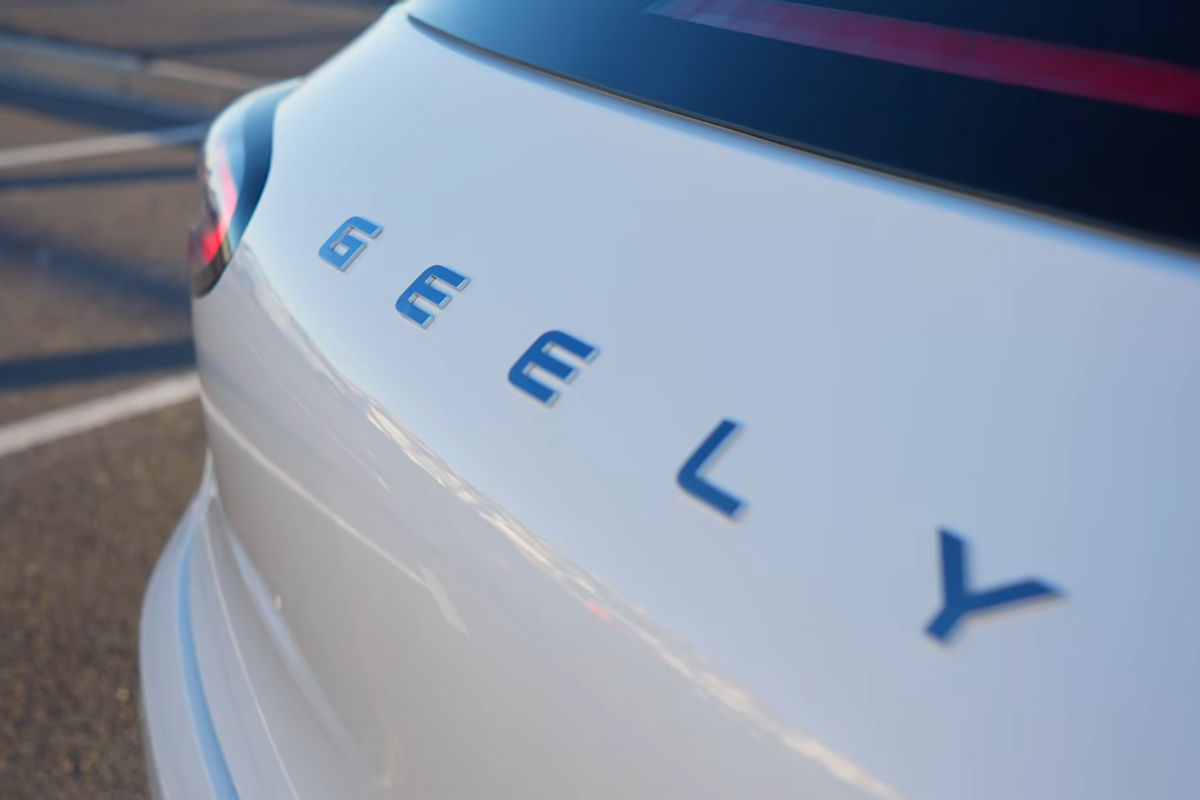
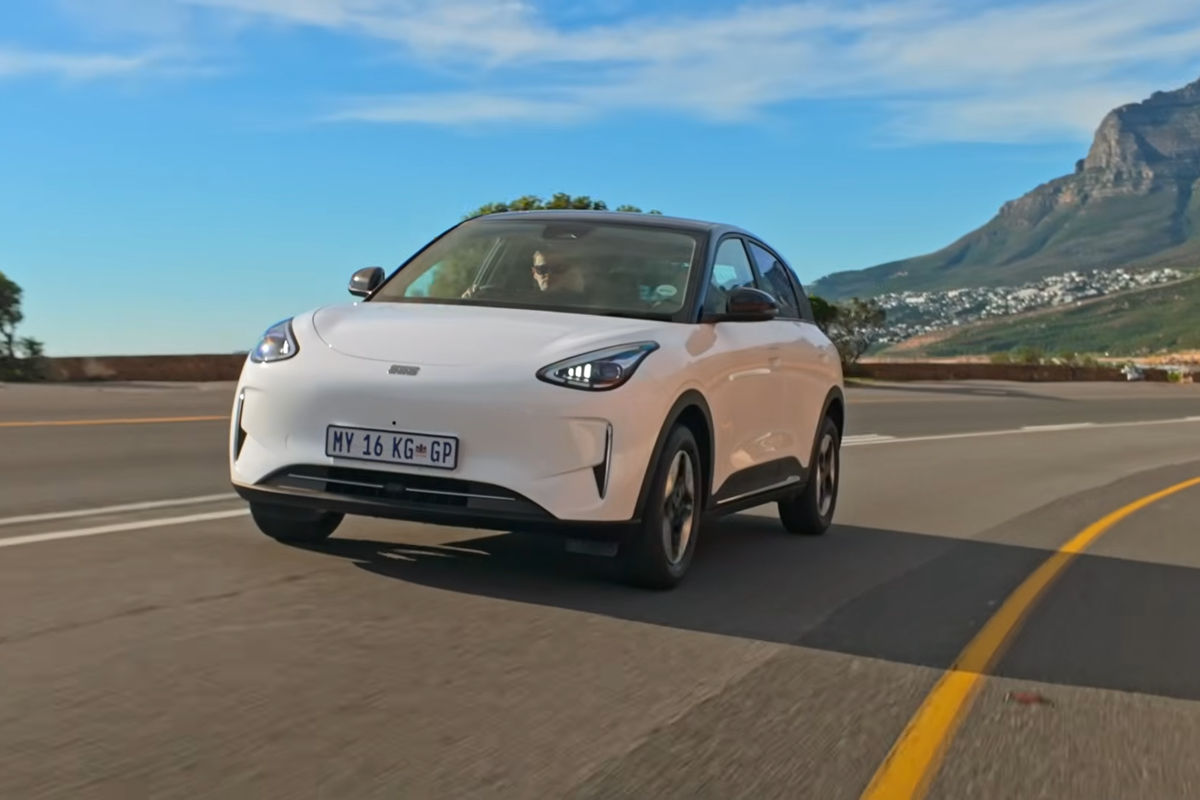
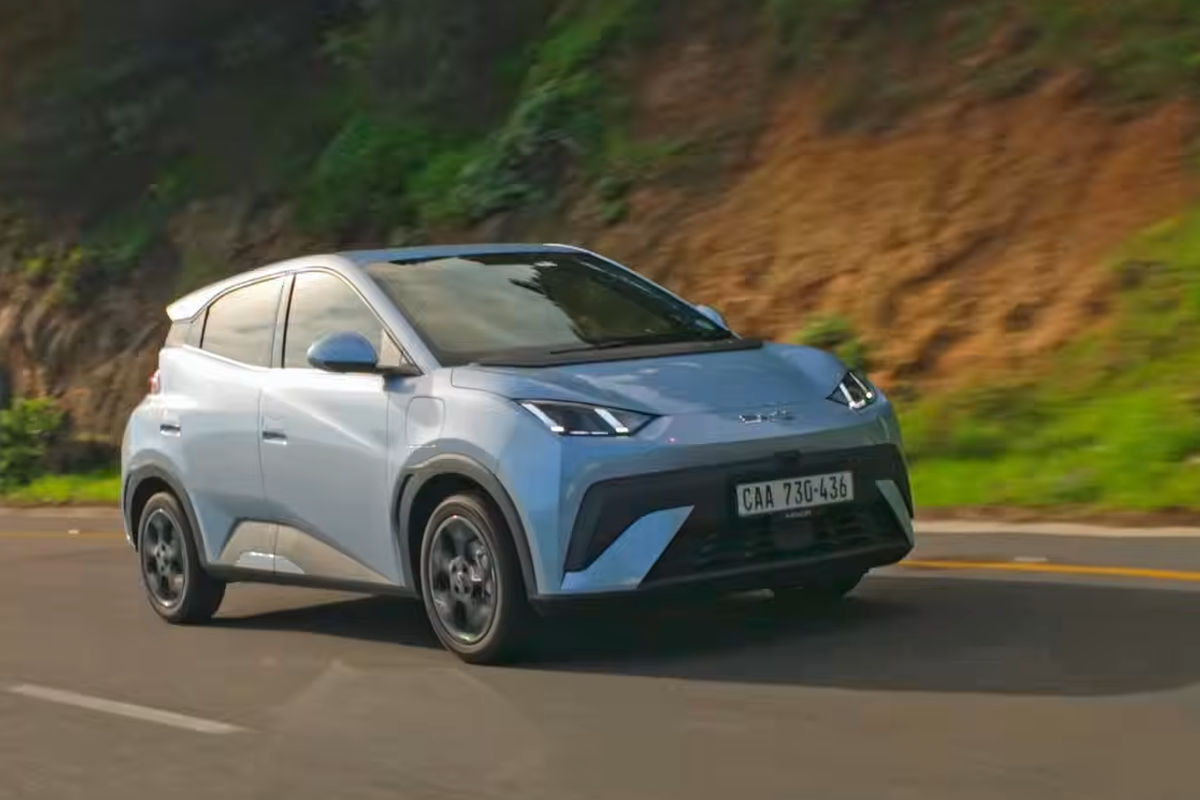
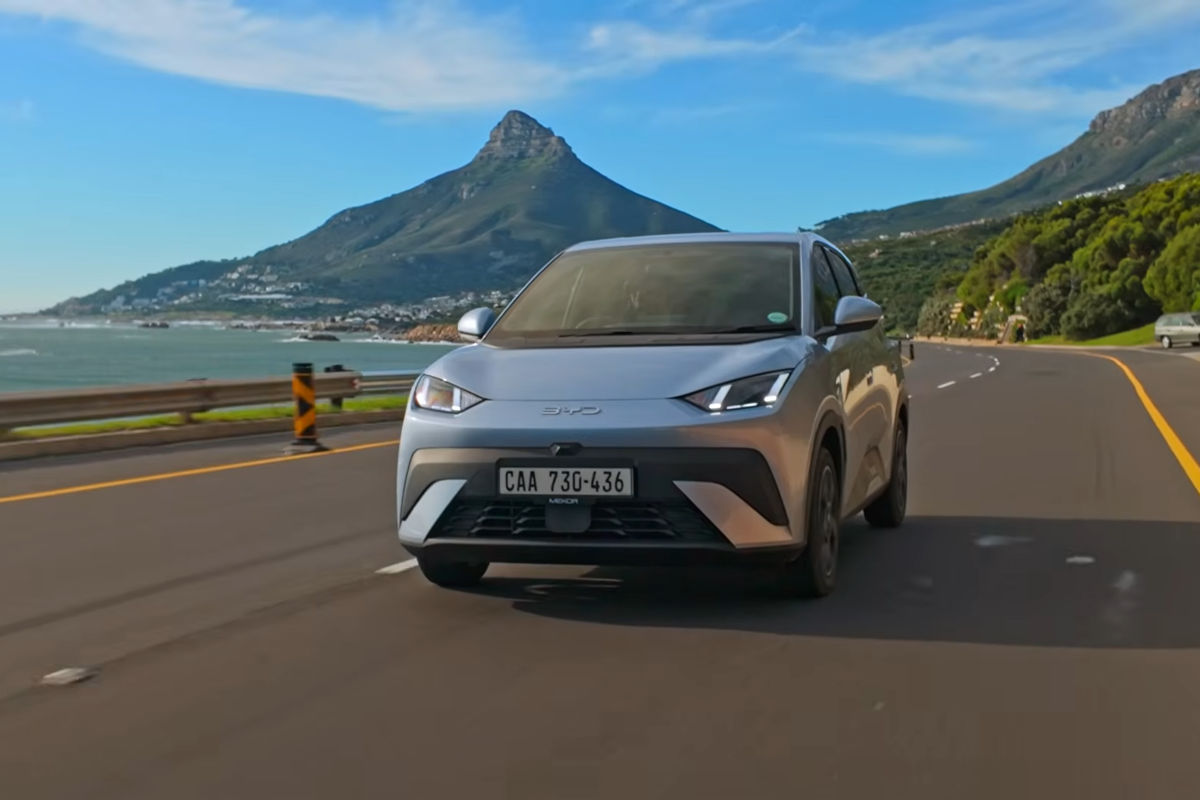
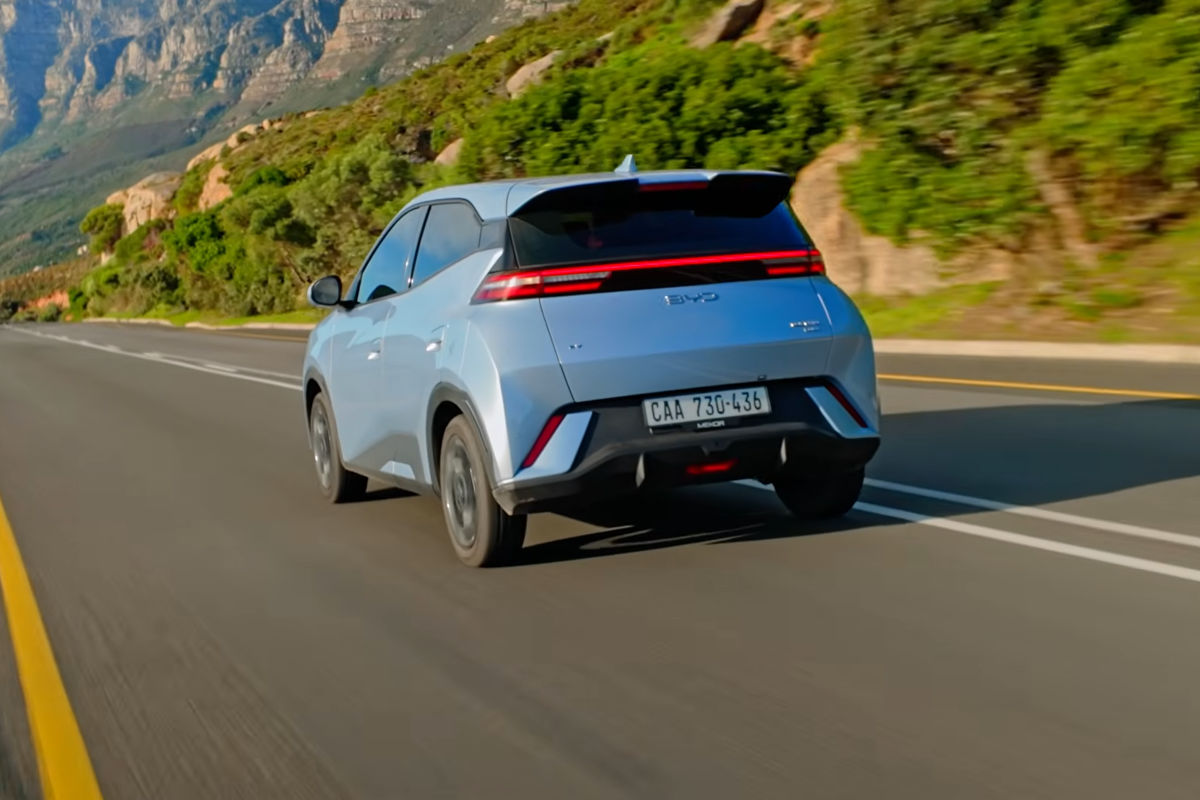
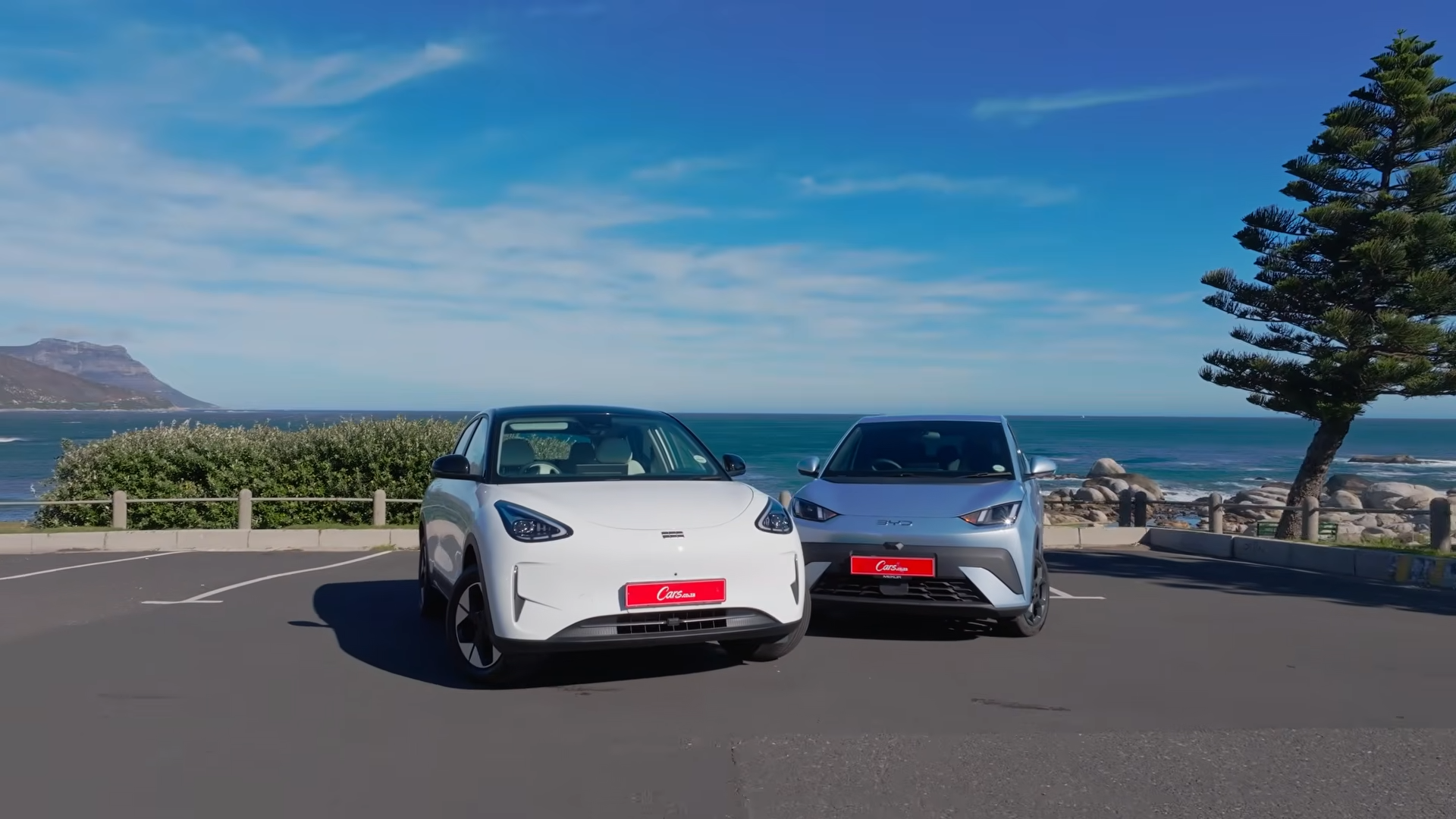
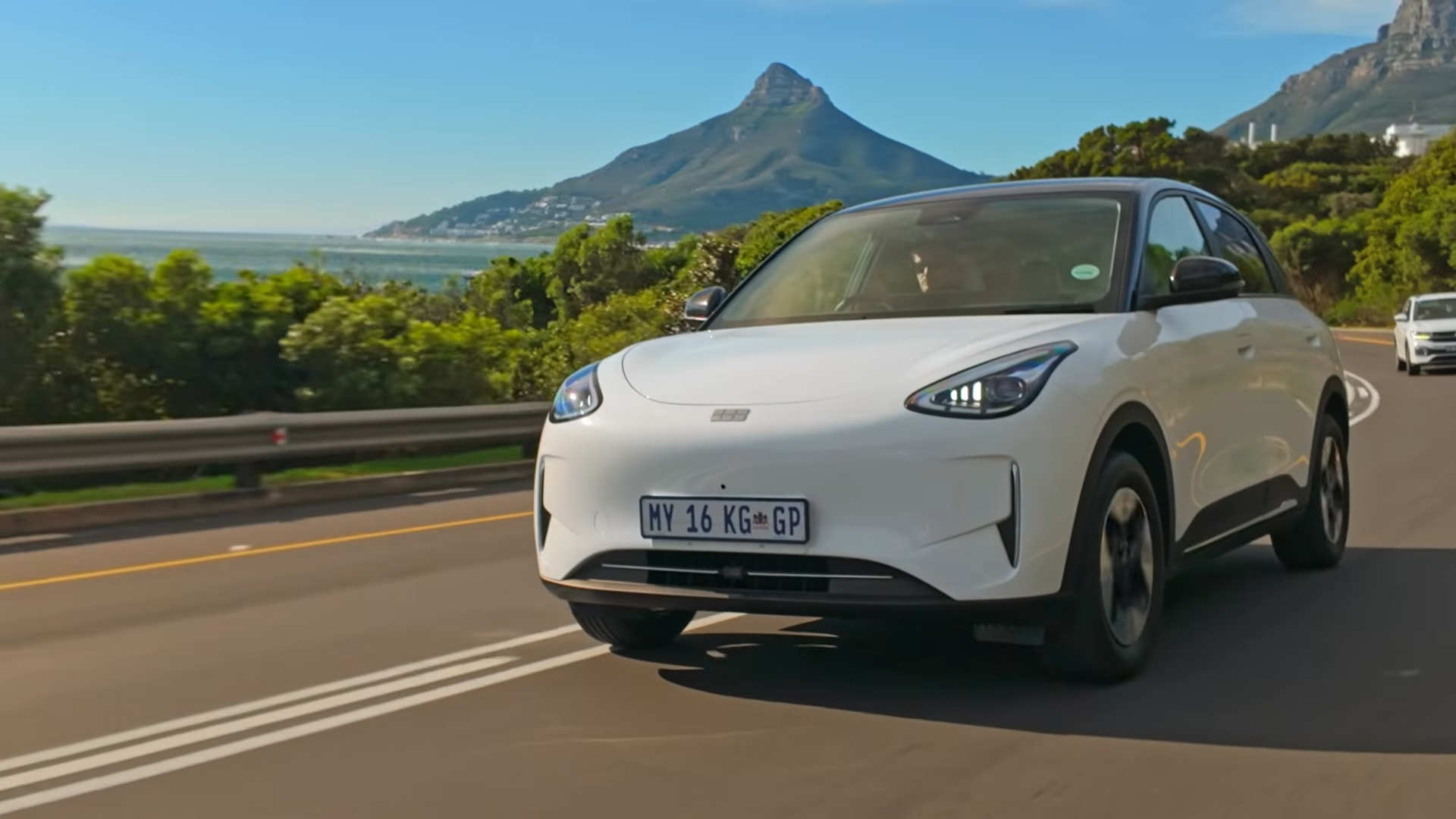
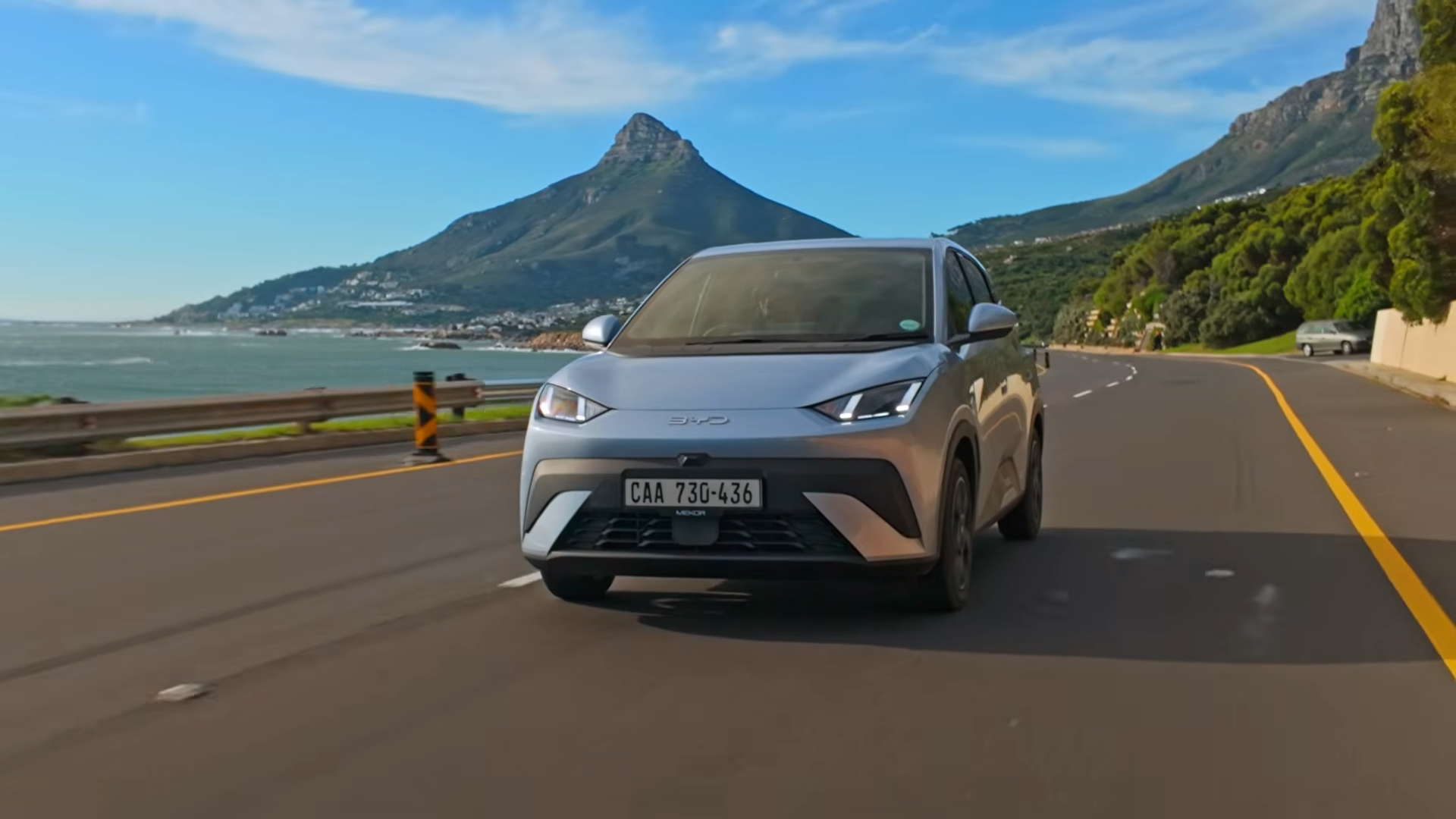
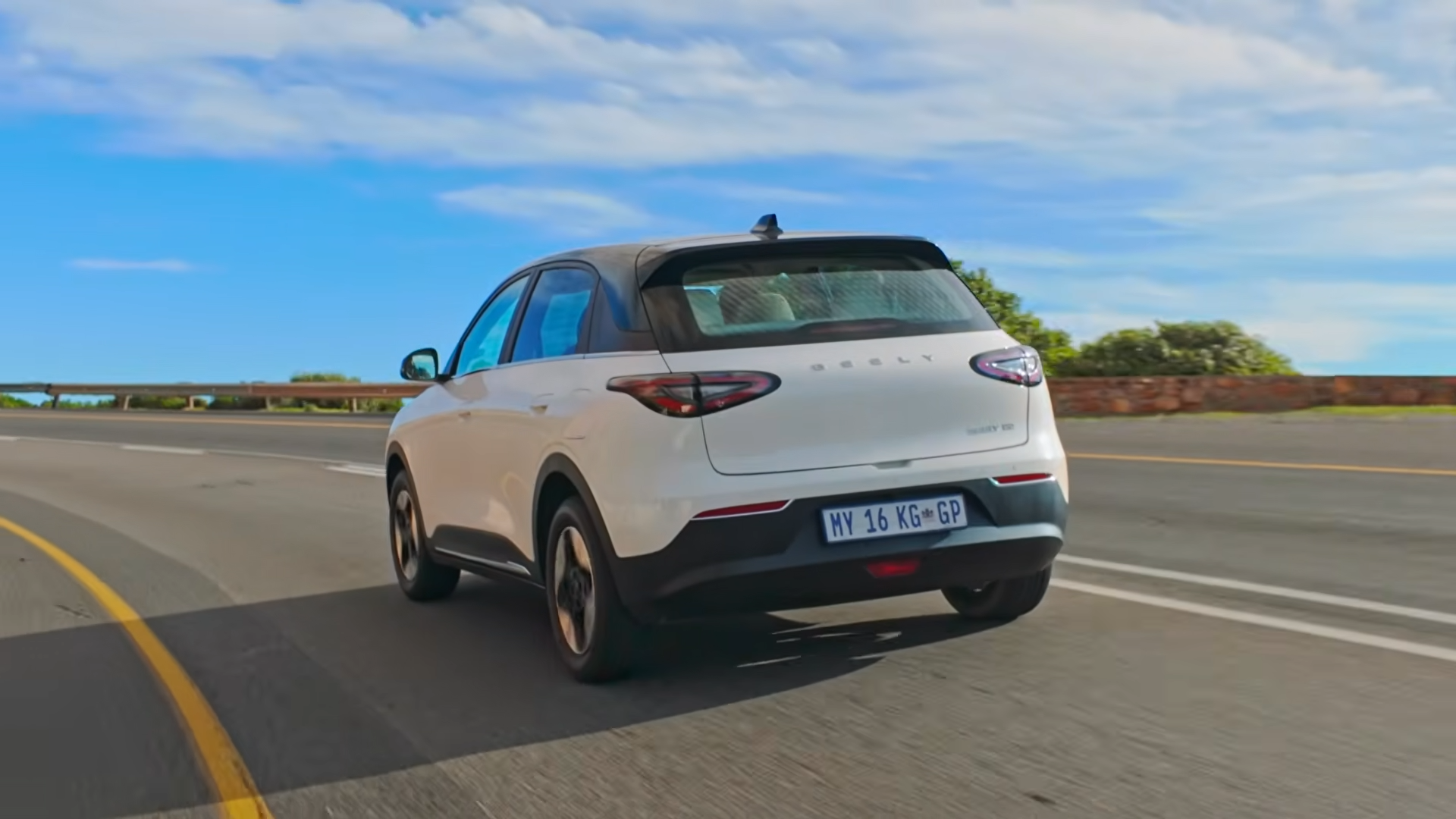
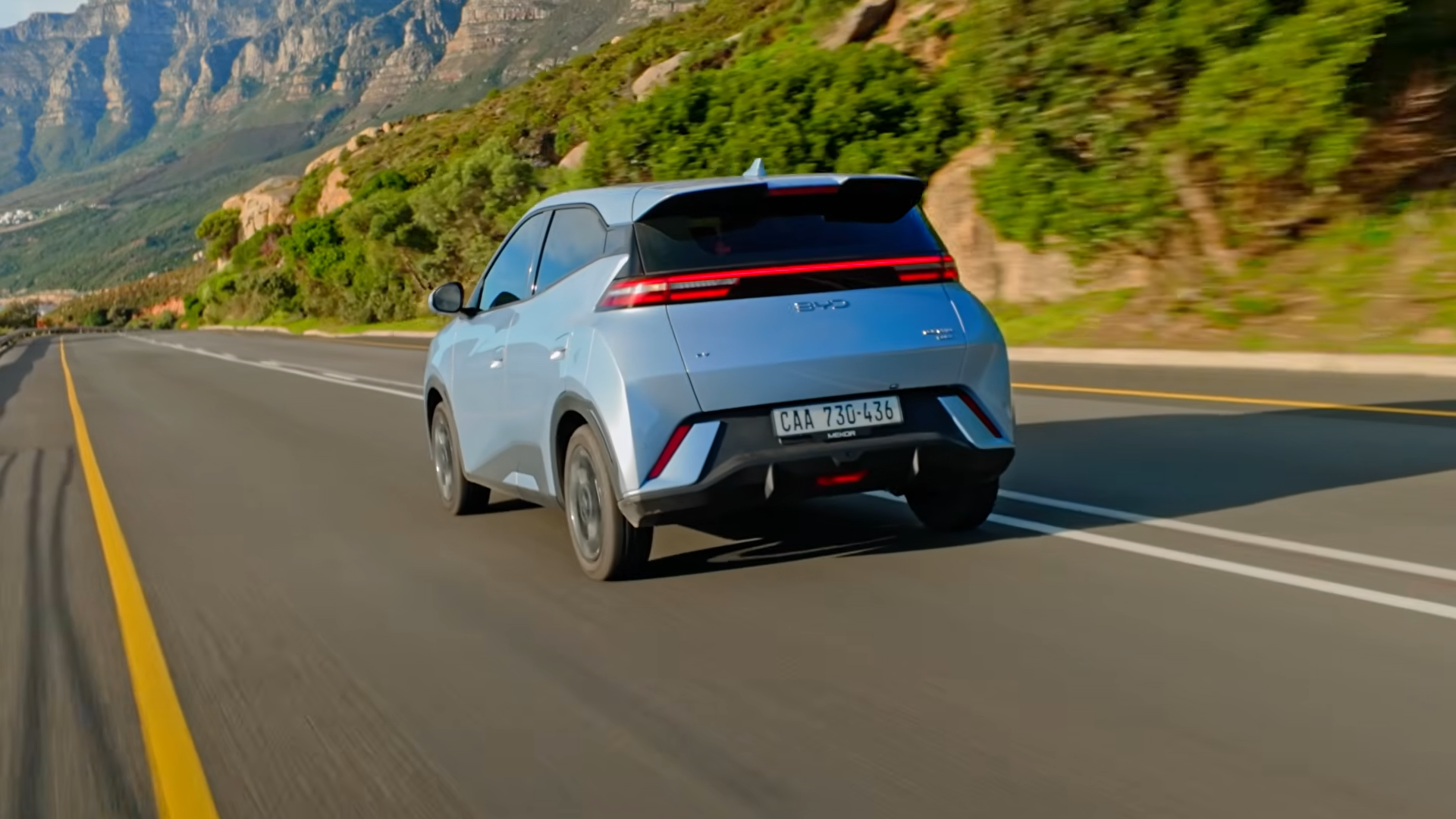
BYD Dolphin Surf vs Geely E2 (2026): Cheapest EV Battle!
The budget EV market in South Africa has evolved rapidly. Where electric mobility was previously reserved for luxury price tags, Chinese OEMs have fundamentally changed the equation. Both the Geely E2 and the BYD Dolphin Surf feature similar efficiency claims and sub-R400 000 price tags. But which of these accessible city hatchbacks offers the superior real-world ownership proposition?
We like: Both offer unbeatable urban running costs compared to petrol or diesel hatchbacks; high levels of interior refinement and cabin tech in the Geely E2; free 7 kW home wallbox charger included with both vehicles.
We don’t like: No spare wheel offered on either model; modest highway overtaking performance in the BYD Dolphin Surf; single-piece folding rear bench on the BYD limits loading versatility.
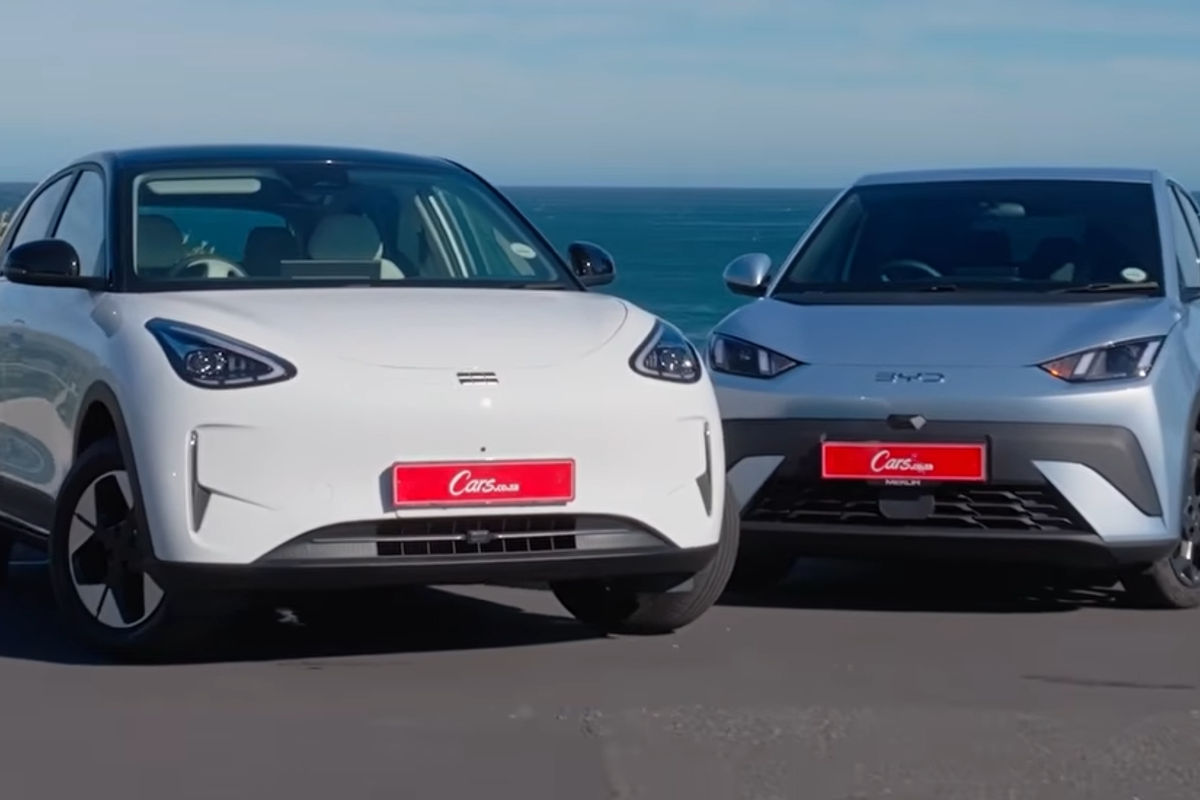
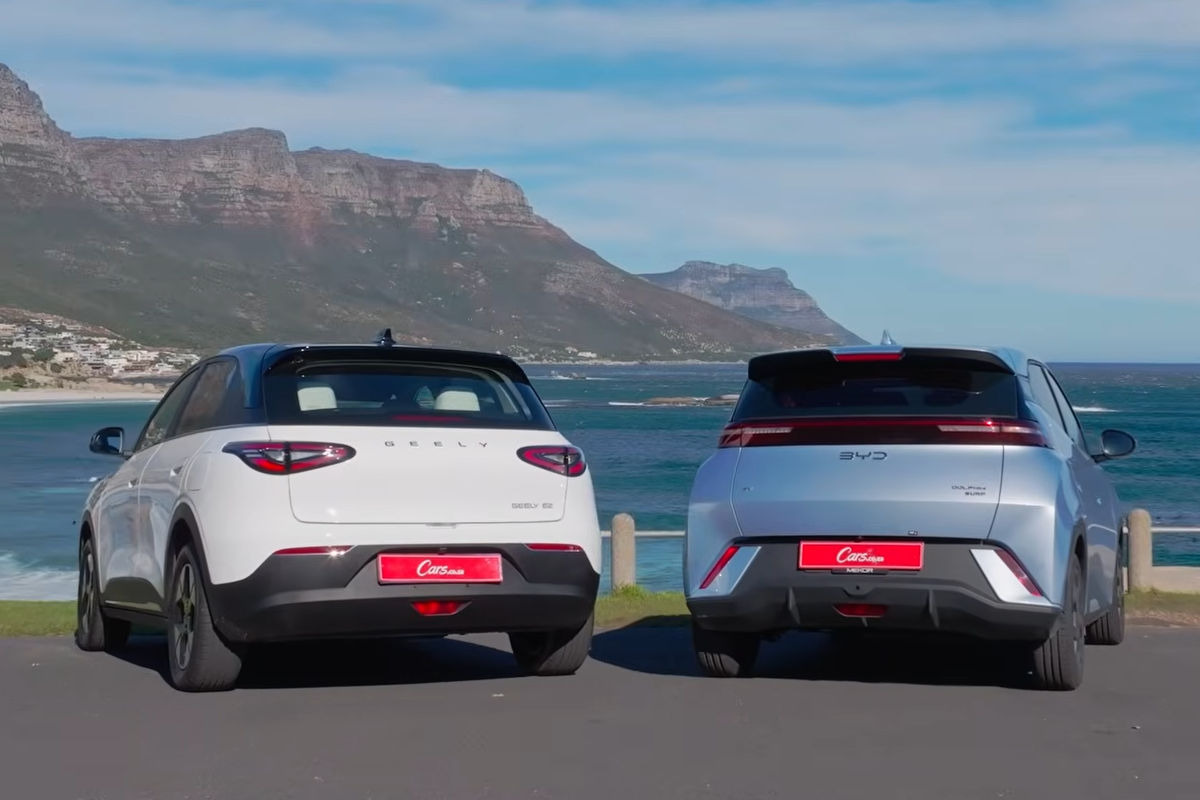
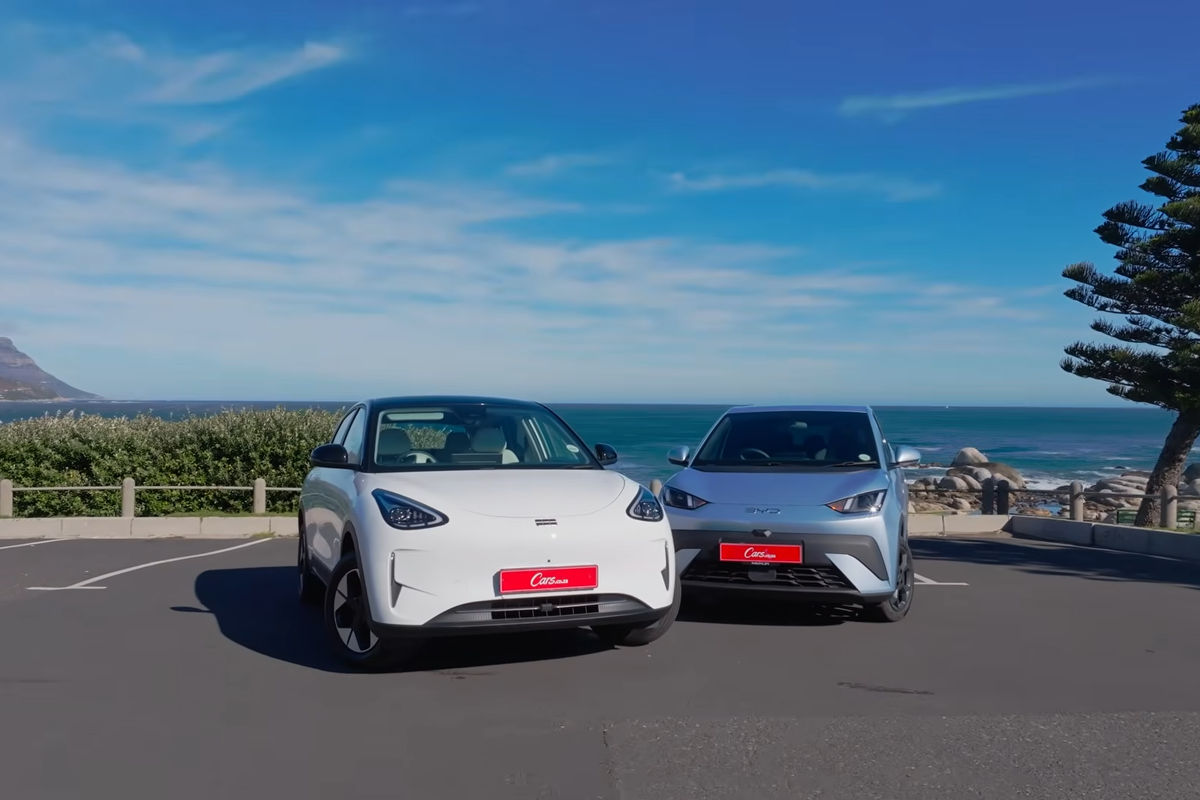
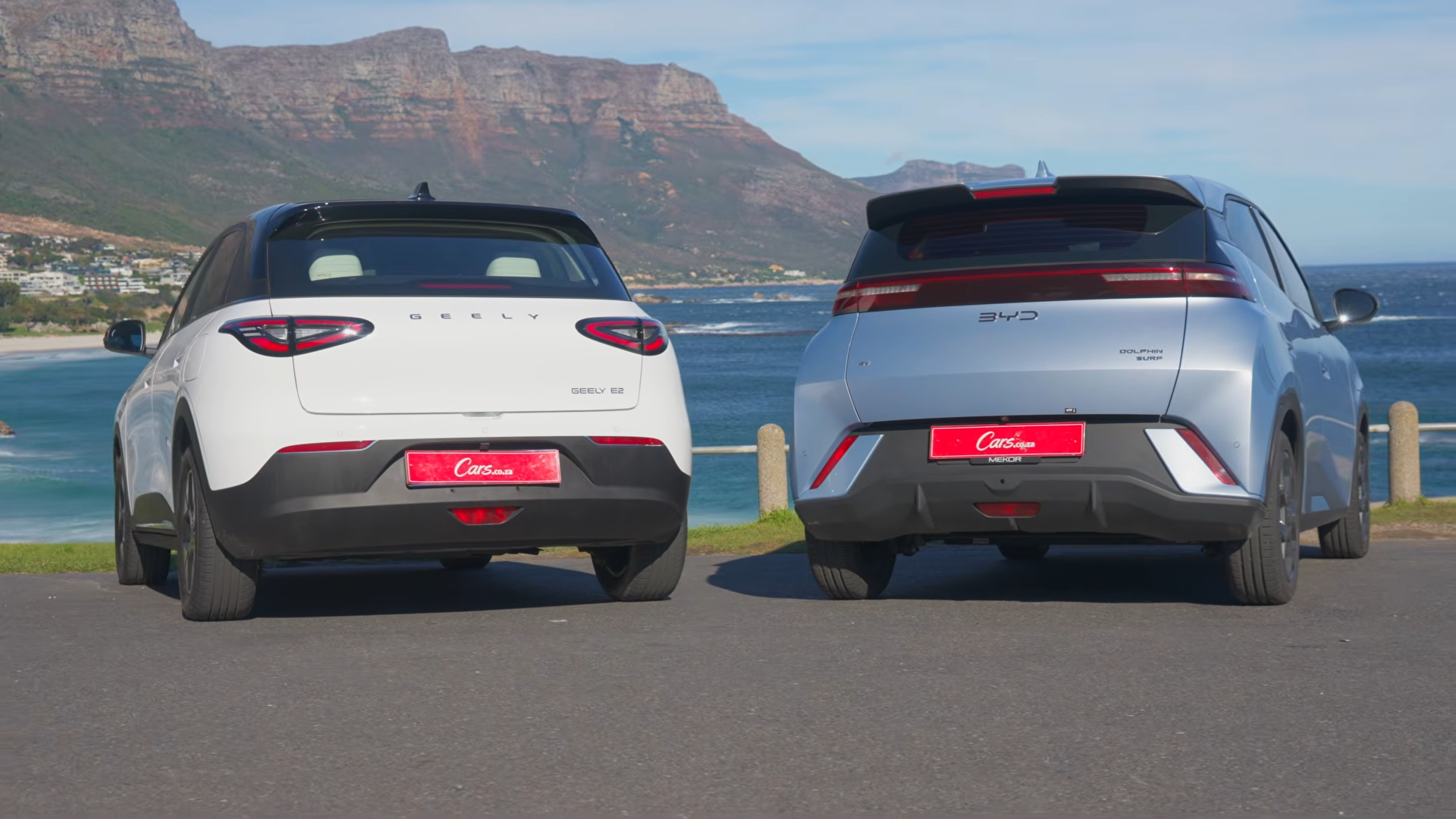
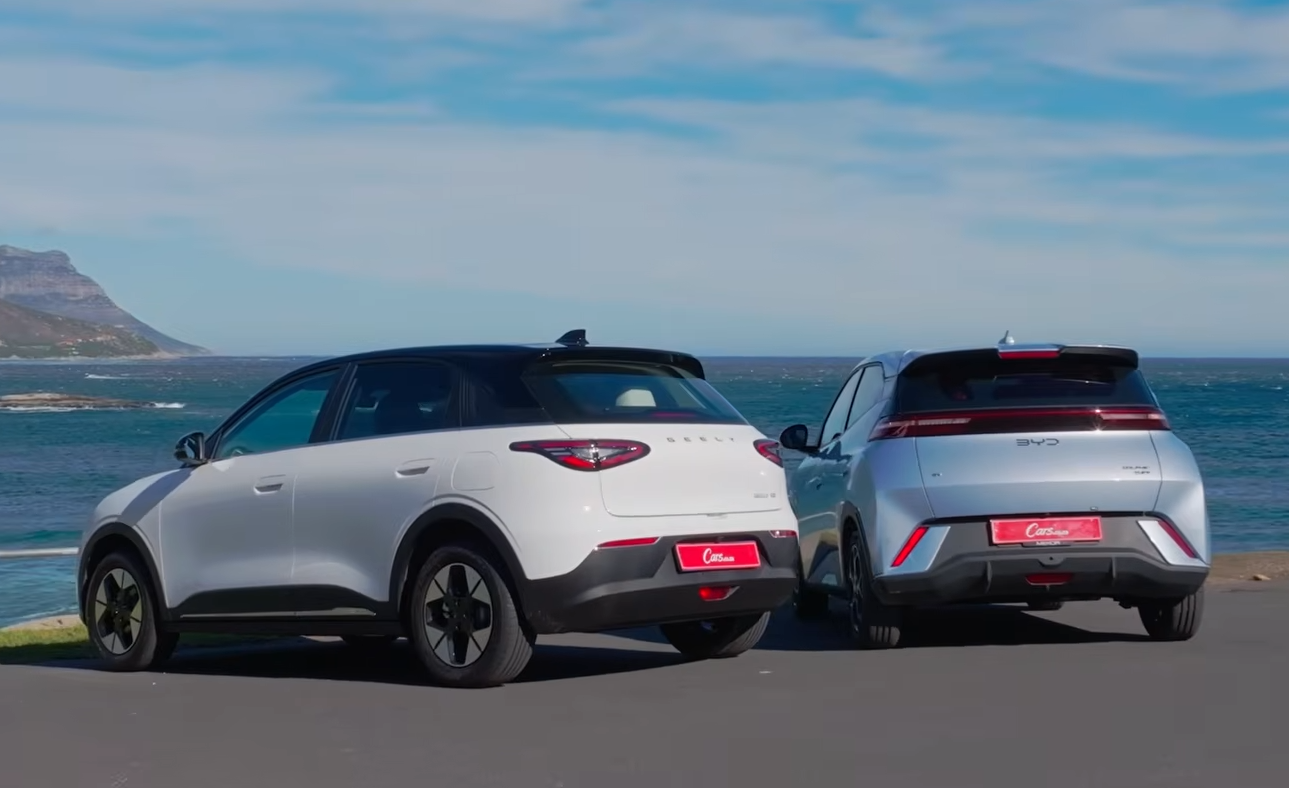
Geely E2 on the left, BYD Dolphin Surf on the right.
For years, full-electric vehicles in South Africa were treated strictly as high-priced luxury novelties, with entry-level barrier costs traditionally kicking off north of R800 000. However, the arrival of budget-focused Chinese offerings has dramatically lowered the price of entry.
The Geely E2 and BYD Dolphin Surf sit right at the coalface of this new accessible wave. Aimed directly at urban commuters, small families, and buyers seeking a cost-effective secondary household runabout, both models deliver practical hatchback dimensions and pure-electric powertrains at price points that directly challenge mainstream petrol-powered rivals such as the Volkswagen Polo.
How the BYD Dolphin Surf & Geely E2 fare in terms of…
Design & Packaging
Although both hatchbacks occupy a similar overall footprint, their proportions and cabin execution differ notably.
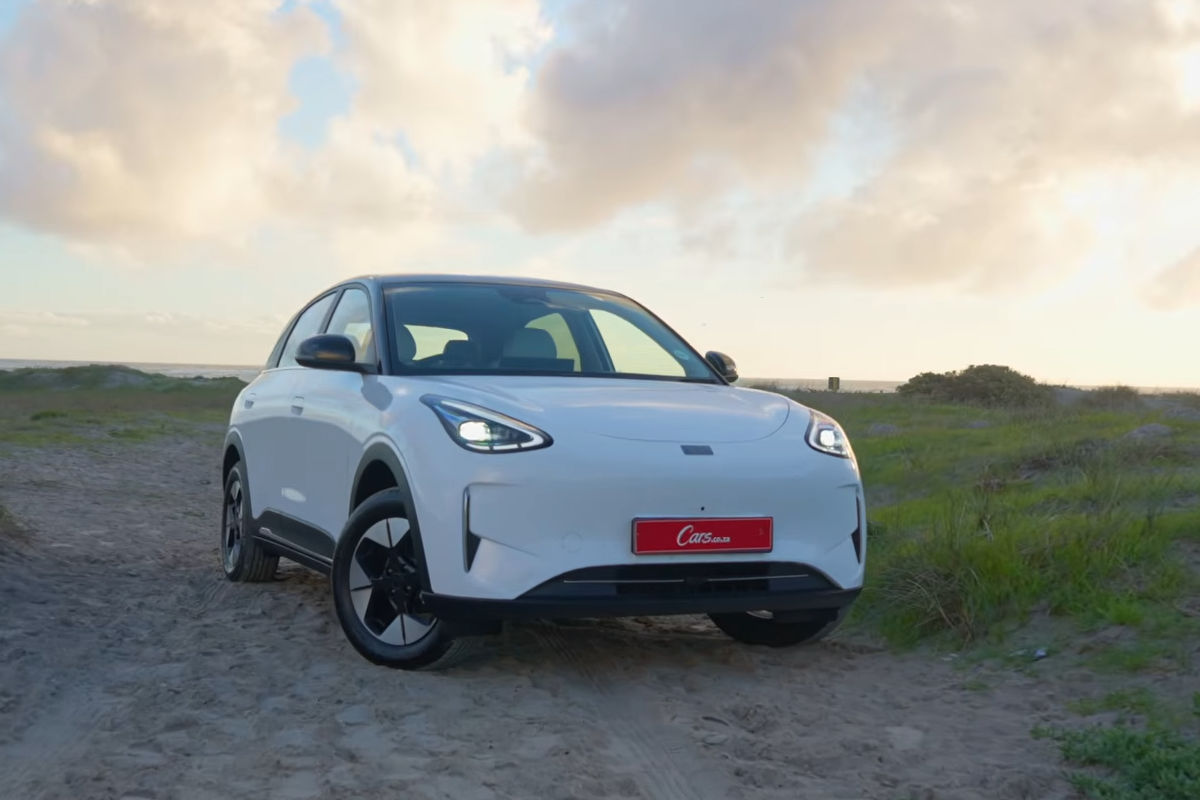
The Geely E2 is distinctly wider than its rival, translating to a noticeable sense of shoulder room, elbow room, and general cabin airiness.
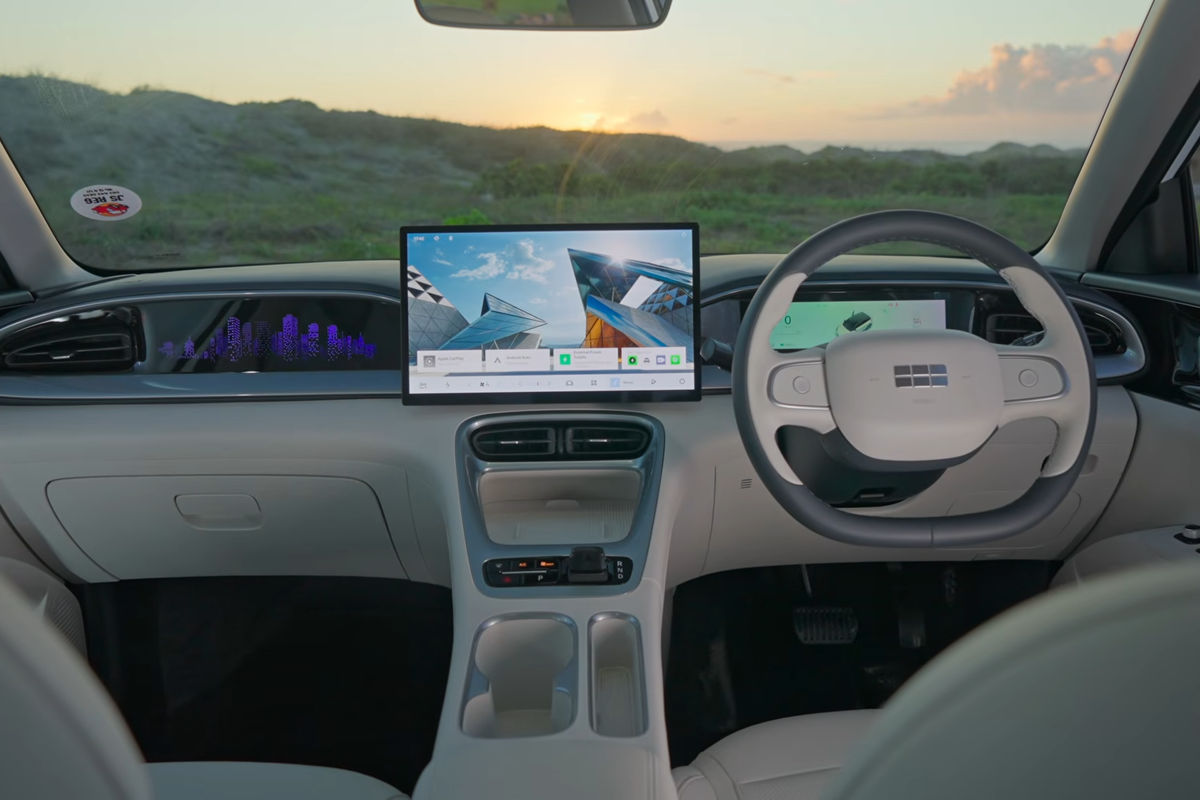
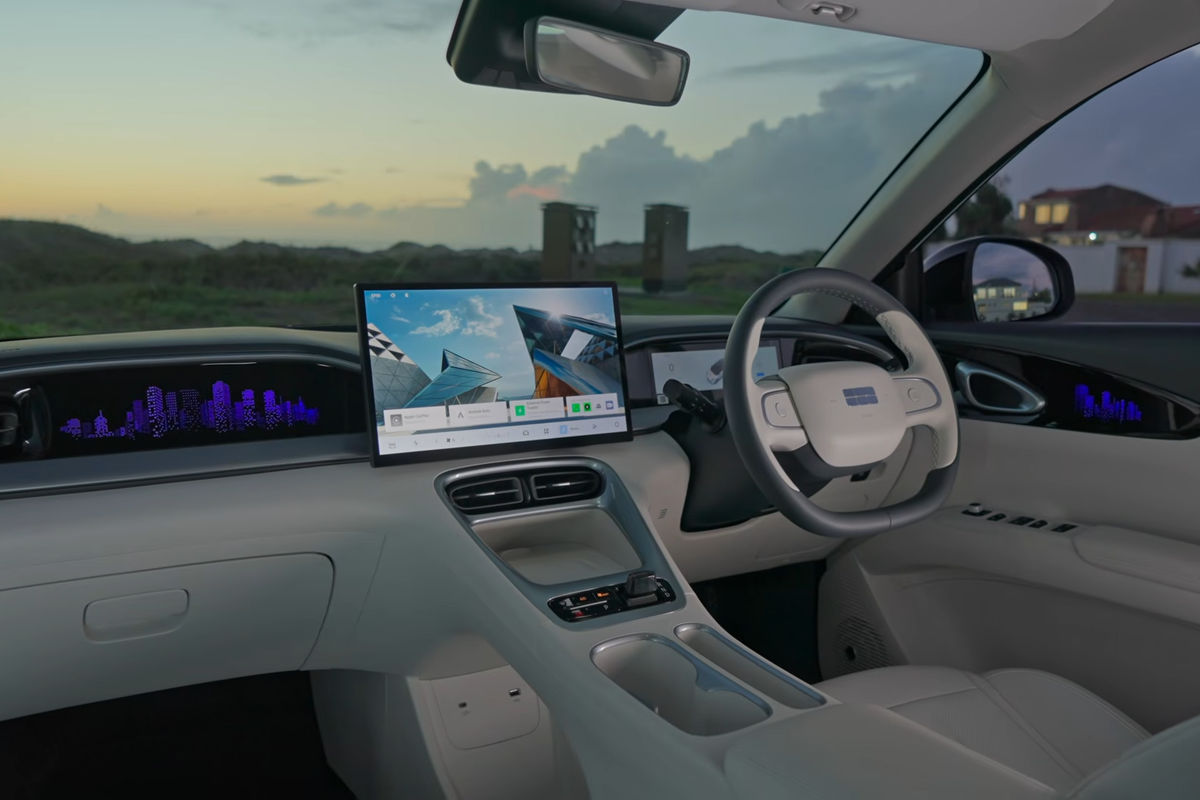
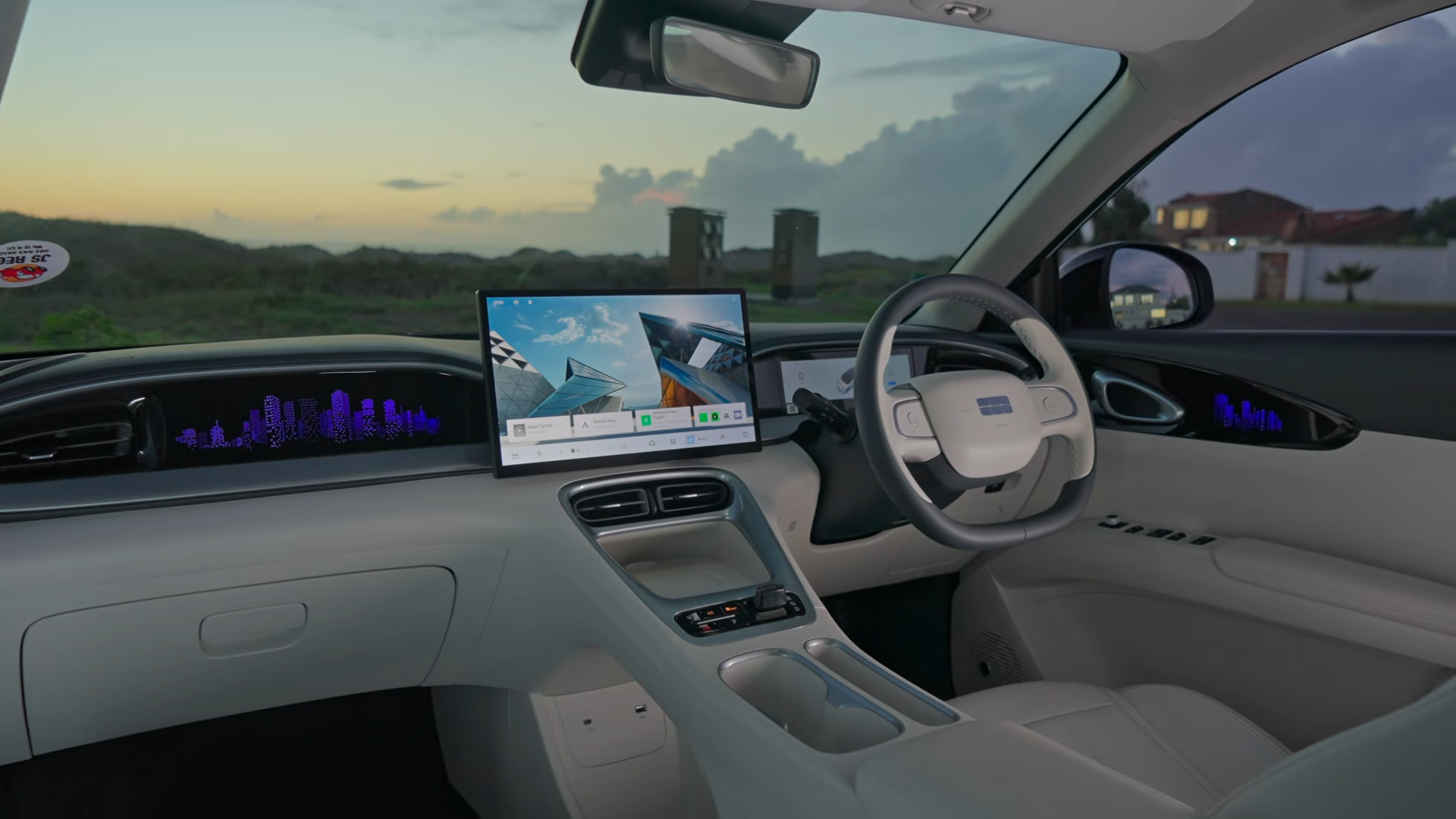
The Geely E2’s interior.
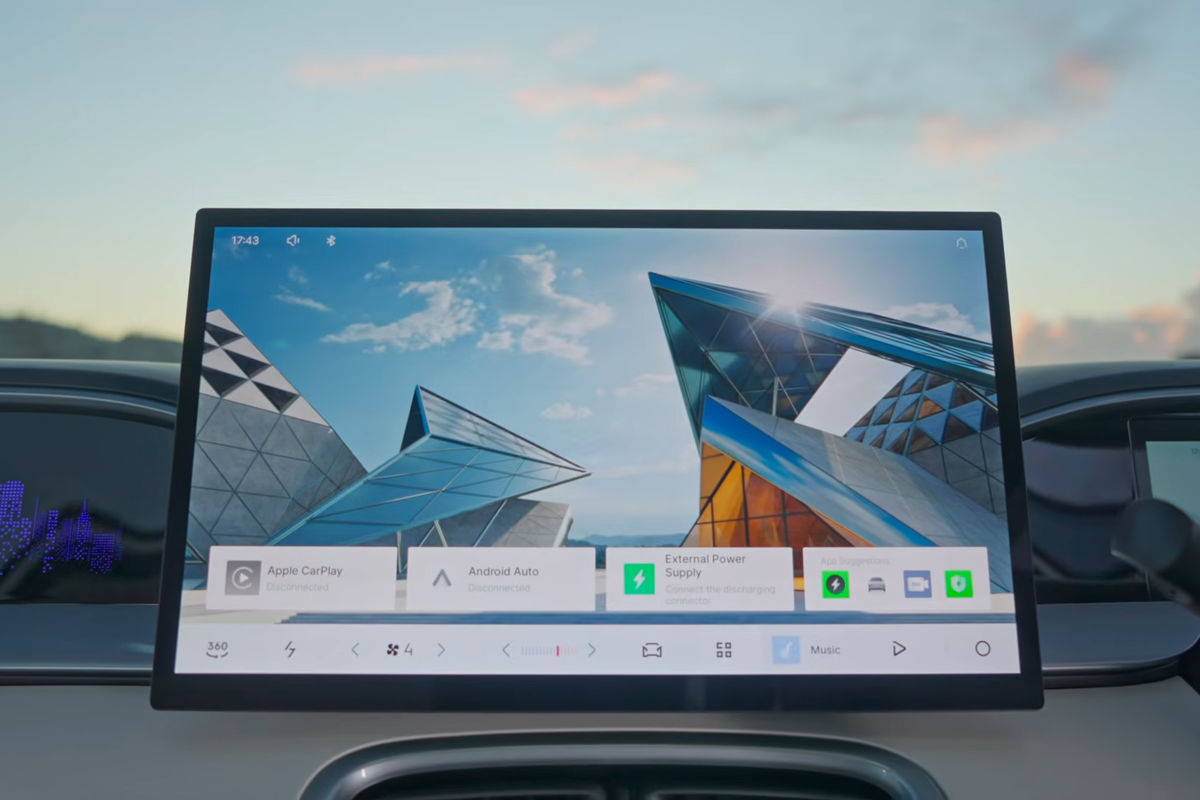
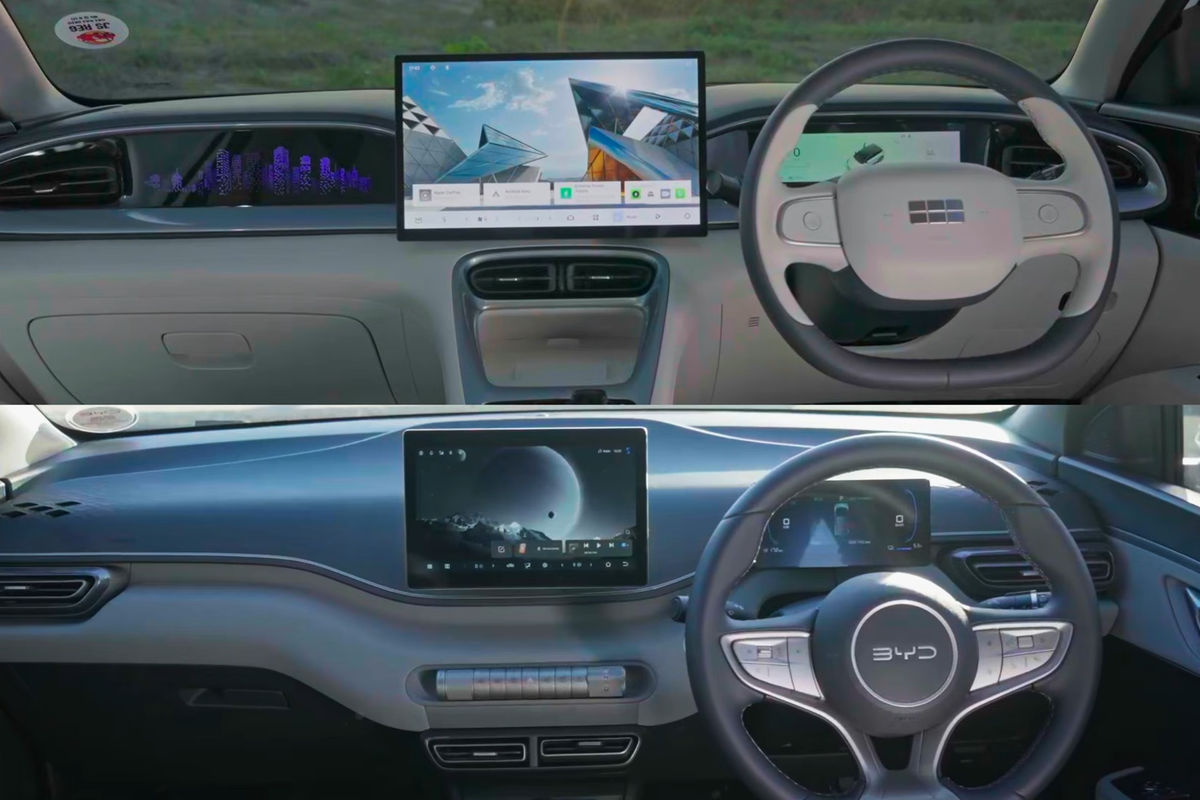
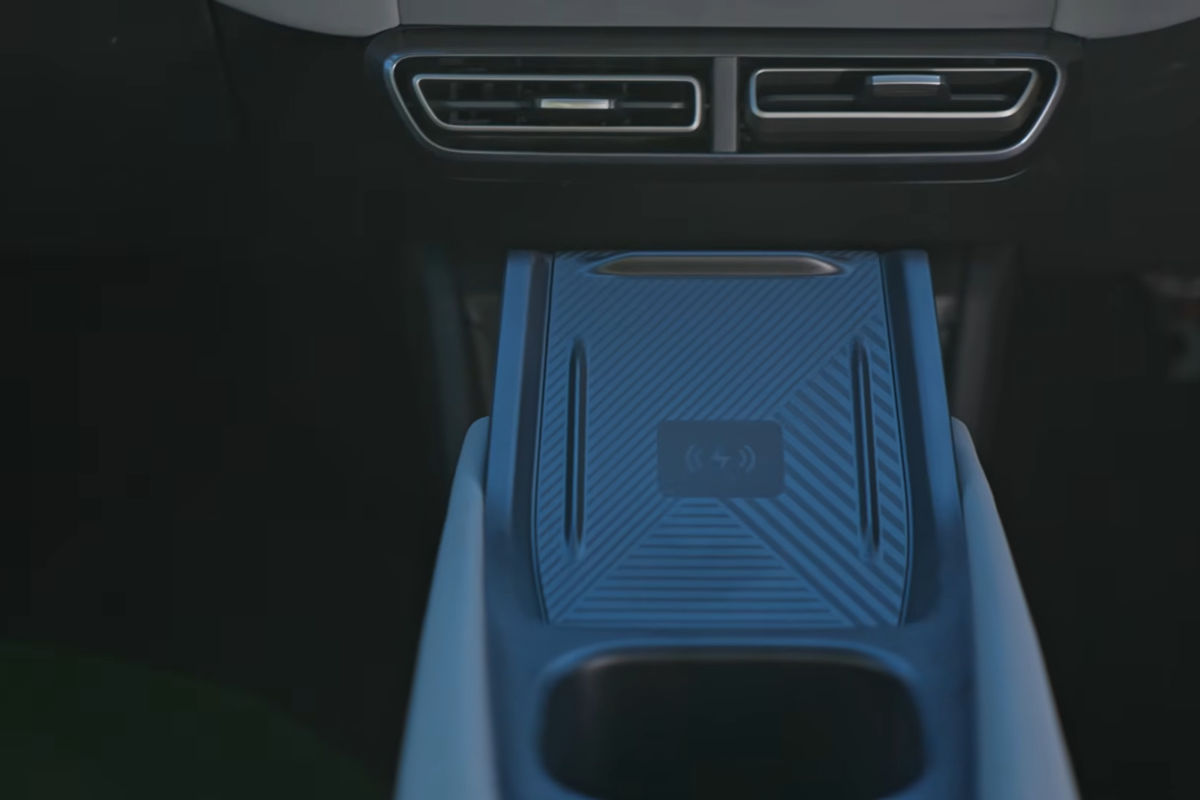
Up front, the Geely’s interior aims high with high-grade synthetic leather, crisp digital displays, a generous infotainment screen, and a responsive top-swipe menu layout. Clever touches include a dedicated wireless charging pad and ambient lighting details embedded into the door and dashboard trims. Practicality is further aided by a generous 325-litre boot and a versatile 60/40 split-folding rear bench.
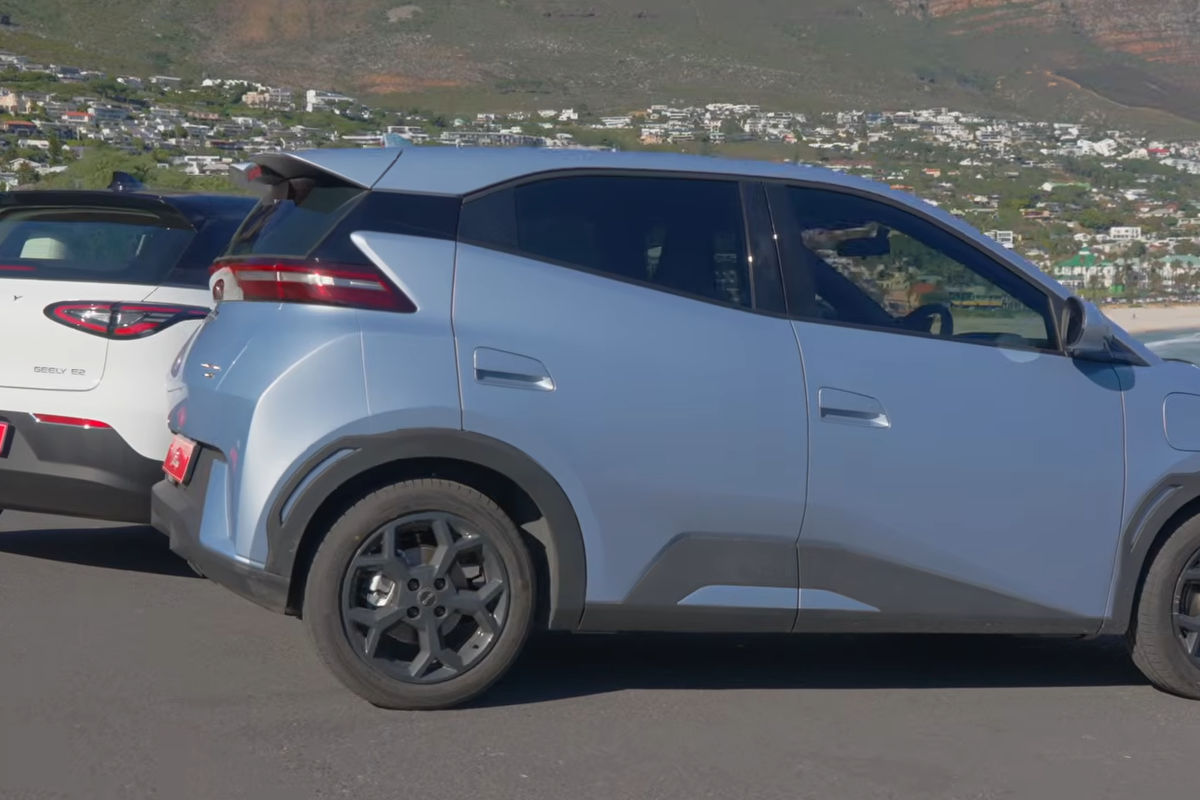
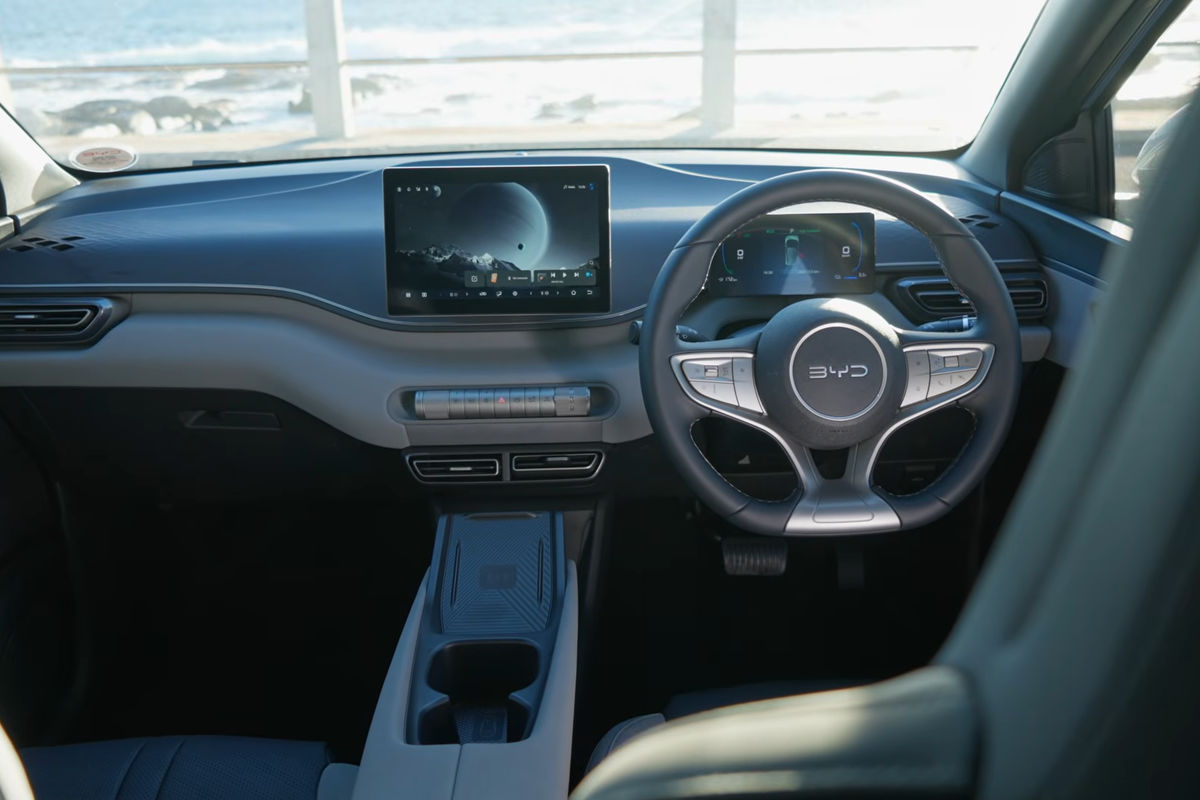
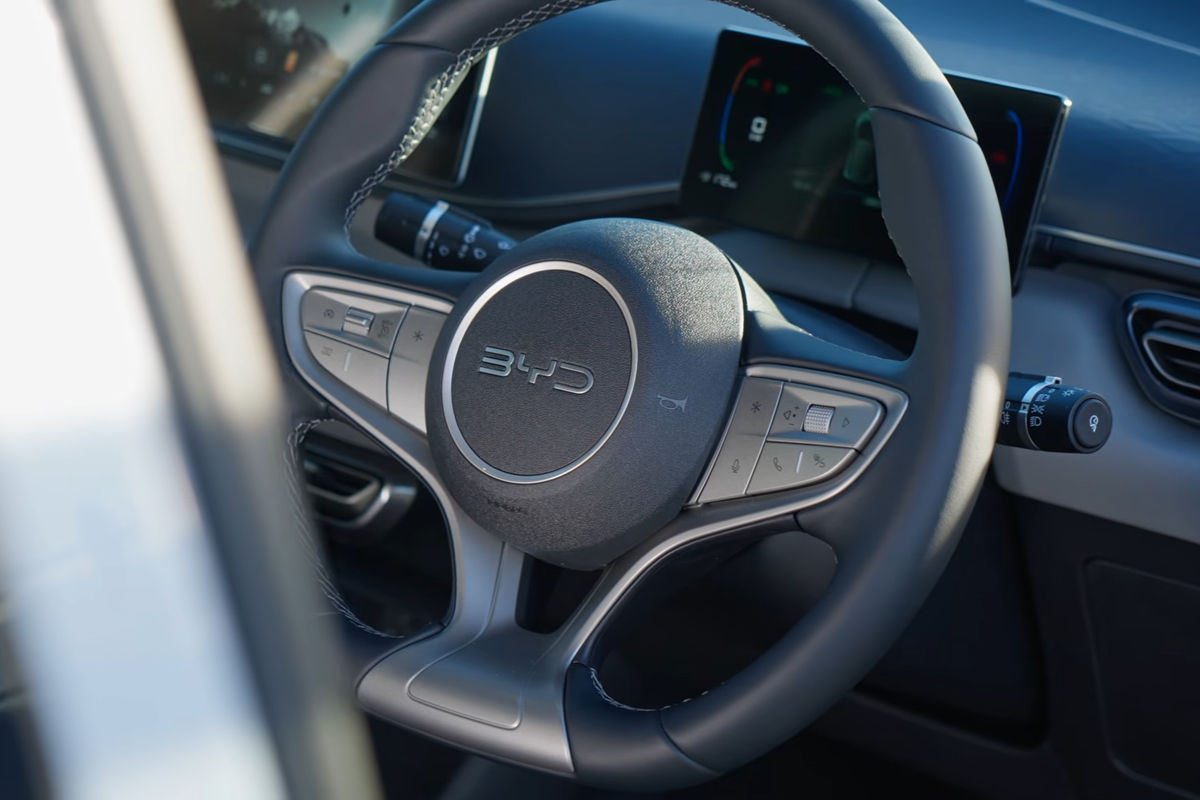
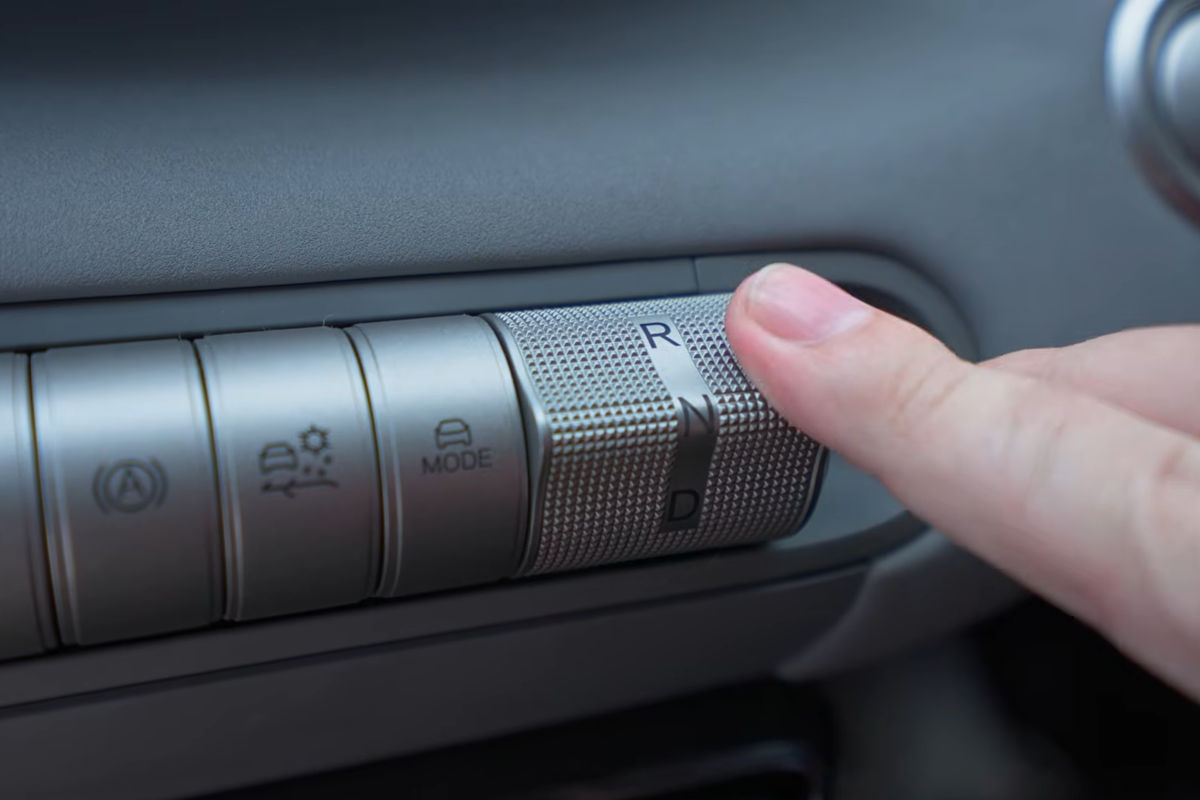
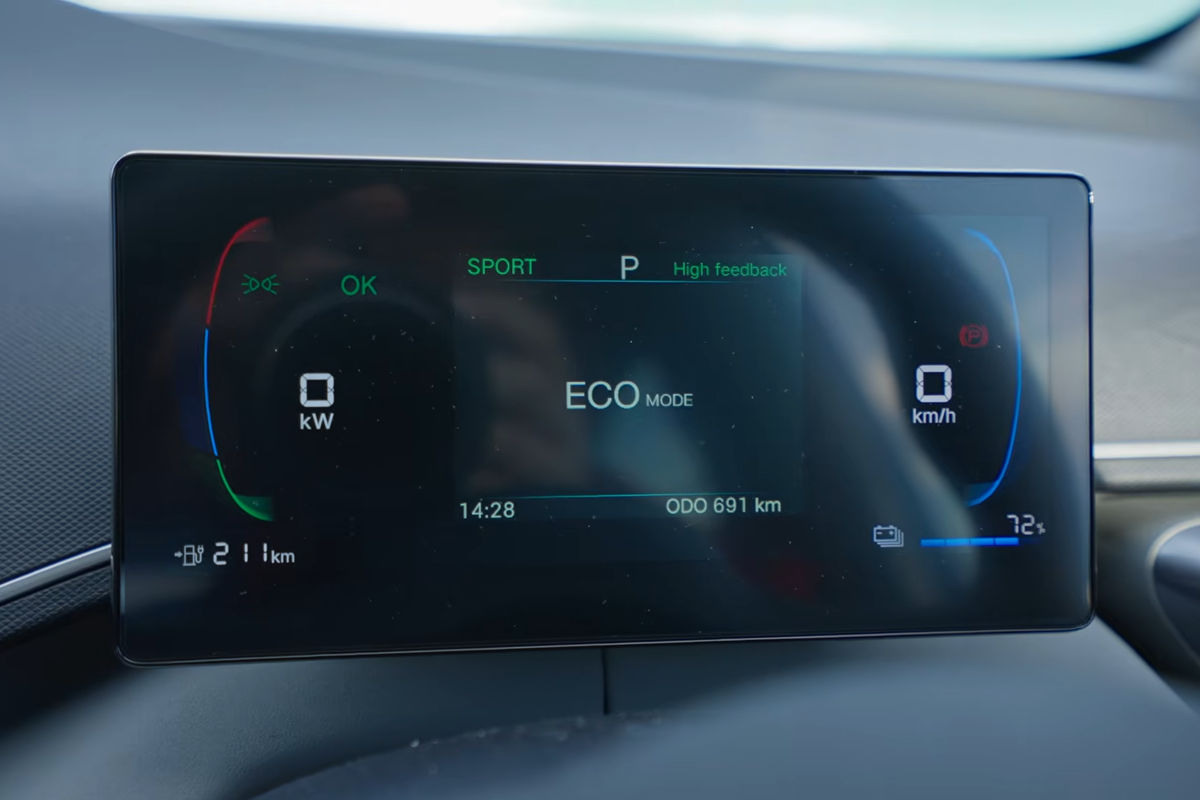
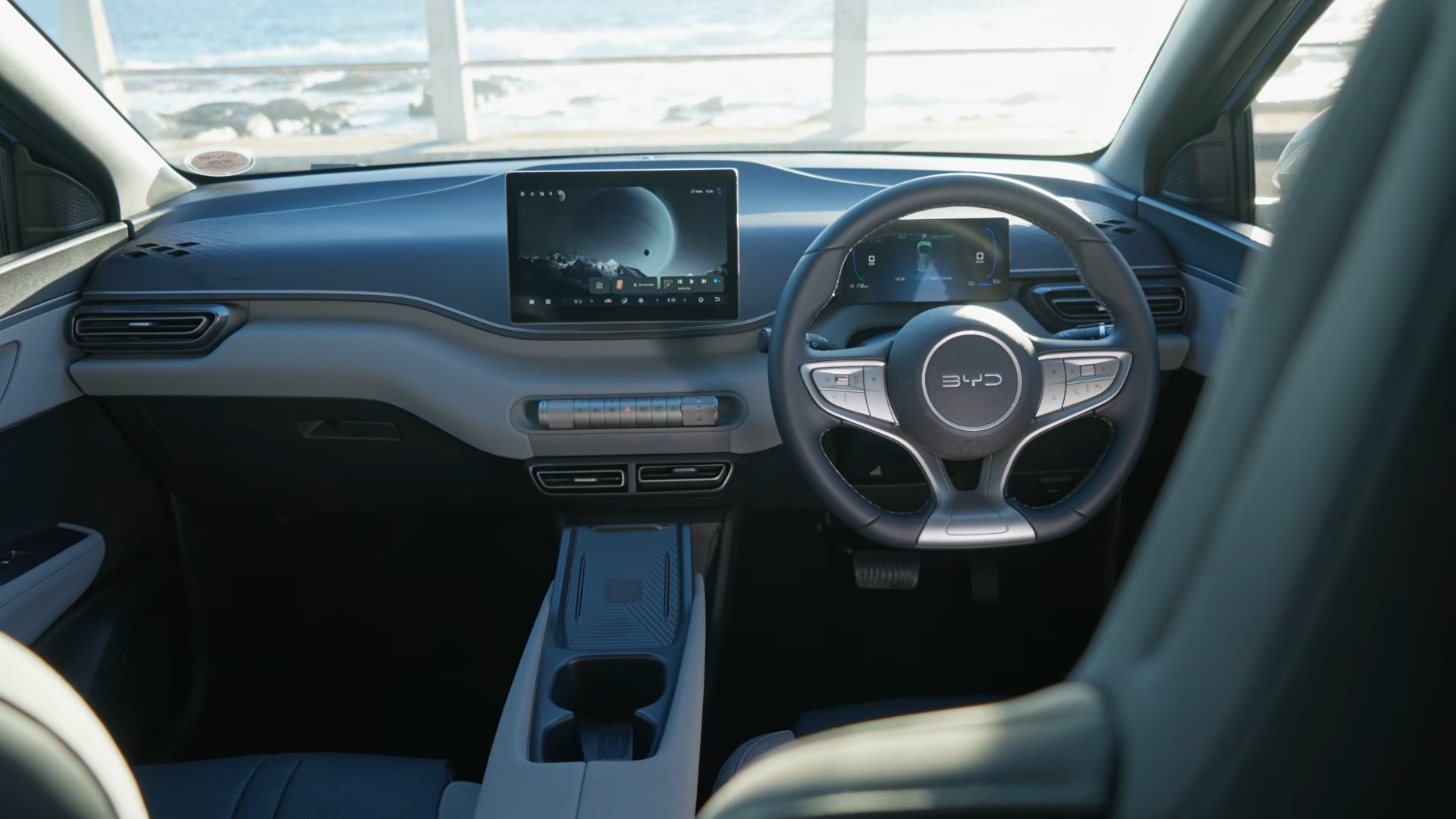
By contrast, the BYD Dolphin Surf adopts a narrower profile, creating a noticeably snugger cabin feel. While the interior remains modern with automated convenience items and a distinct rotary gear selector, the material choices lean more heavily on hard plastics, and the central screen and instrument cluster are smaller.
The BYD Dolphin Surf’s cockpit.
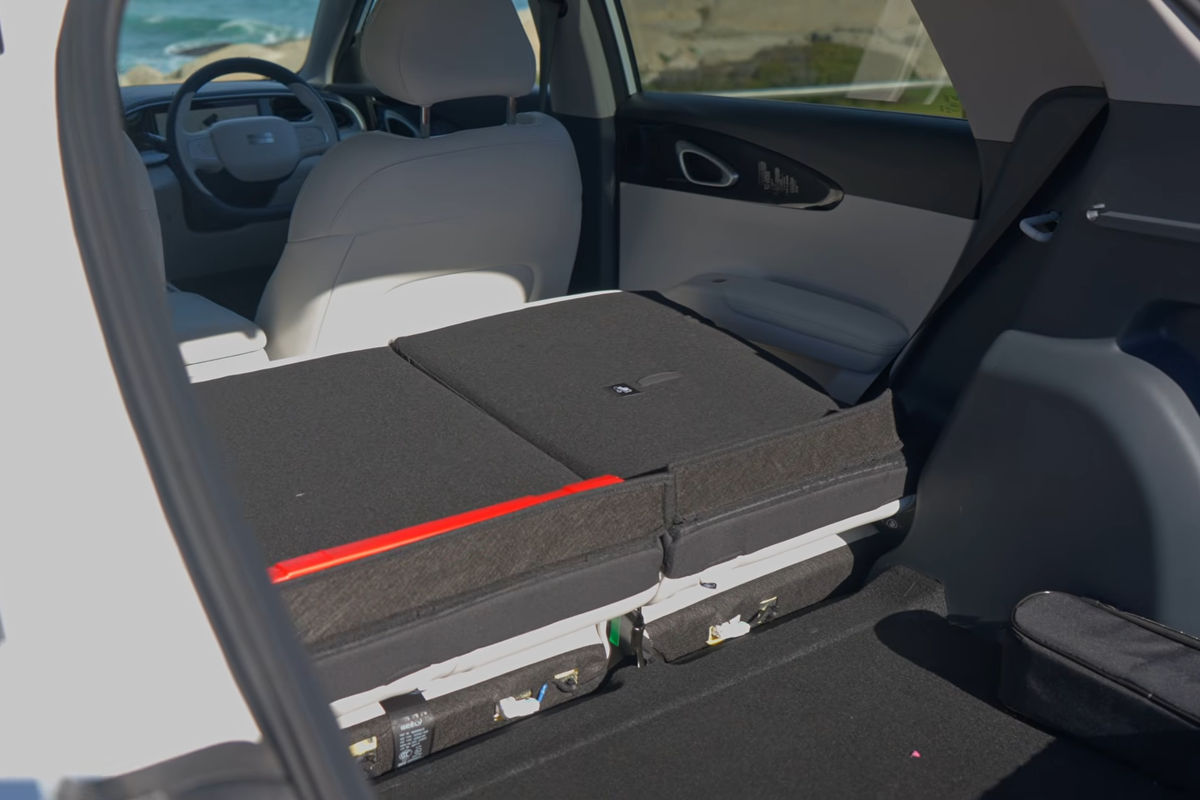
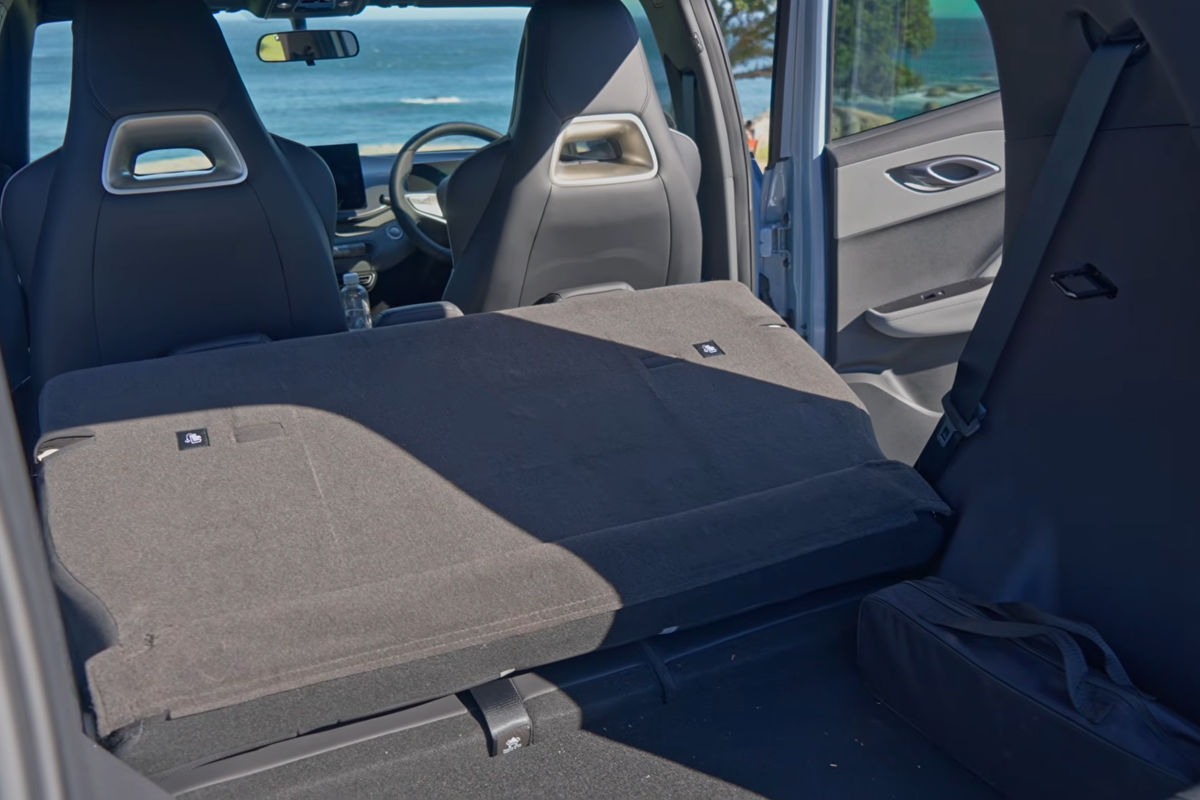
The BYD’s boot space is more limited, too, hindered by a shallow depth profile and a single-piece folding rear seatback. Crucially, neither vehicle accommodates a full-size or space-saver spare wheel beneath the boot floor, relying instead on standard tyre repair kits.
Performance & Efficiency
Electric drivetrains shine in urban stop-start environments, but output figures separate this pair considerably once on the move.
The Geely E2 Apex employs a rear-mounted electric motor delivering 85 kW and 150 Nm of torque. This gives the hatchback crisp off-the-line response and adequate reserves for highway overtaking, covering the 0 to 100 kph sprint in a claimed 11.5 seconds.
The BYD Dolphin Surf Dynamic, driven by a front-mounted motor producing 55 kW and 135 Nm, feels adequately zippy around town but requires more planning when joining fast-flowing traffic or executing open-road passes, reflected in its 15.5-second 0 to 100 kph claim.
Where both contenders align closely is energy efficiency. Operating under urban commuting conditions, both models yield figures between 11.0 kWh/100 km and 12.5 kWh/100 km. With electricity priced at roughly R3.00 per kWh, running costs for either vehicle sit around R36 per 100 km, representing a substantial saving compared to internal-combustion engines.
In terms of charging, both manufacturers bundle a standard 7 kW home AC wallbox charger with the purchase price. Connected to standard home wiring, replenishing the battery from 10% to 80% takes under three hours.
The Geely also features a comprehensive Advanced Driver Assistance System (ADAS) suite, including radar-guided adaptive cruise control and forward collision avoidance, features omitted on the equivalent BYD derivative.
Ride, Handling & Comfort
Despite their position as entry-level urban hatchbacks, both vehicles benefit from the low centre of gravity inherent to electric platform layouts, with heavy battery packs positioned beneath the passenger floor.
The Geely E2 displays impressive levels of NVH (noise, vibration and harshness) control, offering a quiet, refined cabin environment and compliant suspension tuning that absorbs surface imperfections with ease. The low-slung mass keeps body roll well controlled through corners, while switchable drive modes (Eco, Comfort and Sport) allow drivers to sharpen throttle mapping when desired.
The BYD Dolphin Surf feels slightly lighter and nimble on its feet, making it an engaging city runabout through tight suburban turns. However, its suspension setup is marginally firmer over harsh tarmac, and wind- and tyre-noise suppression at double-digit speeds is less isolated than in the Geely.
Price & After-sales support
Both models sit under the R400 000 mark in top-spec trim (with entry-level derivatives starting near R339 000). To ease initial ownership, both OEMs include a 7 kW AC home wallbox unit.
Value-added launch incentives differ: BYD offers a R10 000 cashback on purchase, whereas Geely includes a R7 500 public charging voucher, providing roughly 9 000 km of complimentary driving when using fast-charging public infrastructure.
Verdict
The arrival of the Geely E2 and BYD Dolphin Surf marks a genuine turning point for electric vehicle accessibility in South Africa. Both prove that daily urban commuting can be vastly cheaper without sacrificing essential modern conveniences.
While the BYD brings agile handling and distinct styling to the segment, the Geely E2 counters with superior cabin space, higher interior quality, stronger motor outputs, and a full suite of driver assistance safety tech.
To find out which compact EV we prefer, watch our detailed video review.
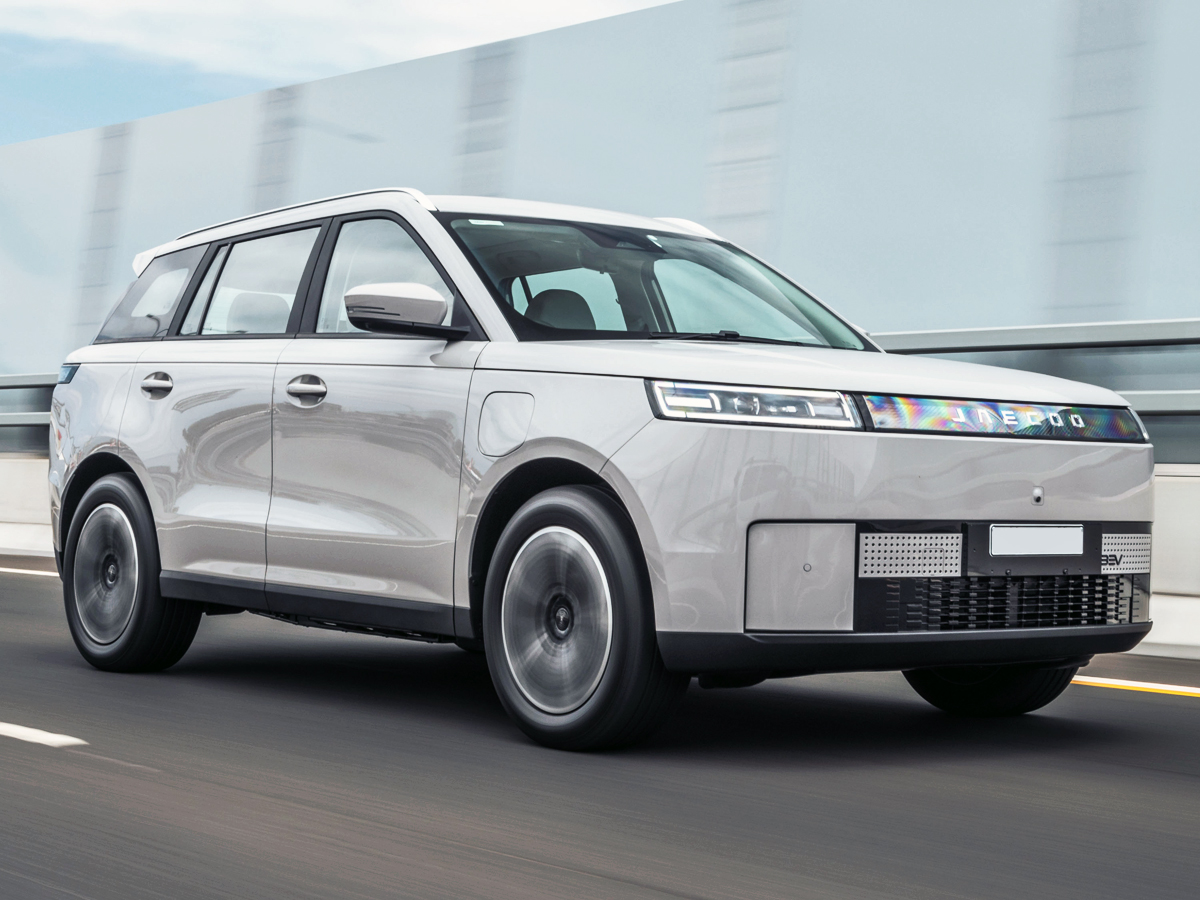
Jaecoo J5 BEV (2026) Price & Specs
Pricing for the new Jaecoo J5 BEV has been released ahead of this fully electric crossover’s official market launch in SA towards the end of August 2026…
J5 BEV to launch in SA by end of August 2026
R70k premium over top-spec J5 1.5T Inferno
Claimed range of 402 km on the WLTP cycle
The new Jaecoo J5 BEV is scheduled to hit the market in South Africa by the end of August 2026. But Omoda & Jaecoo – the dual-brand division falling under the Chery Group – has already released local pricing for this fully electric crossover.
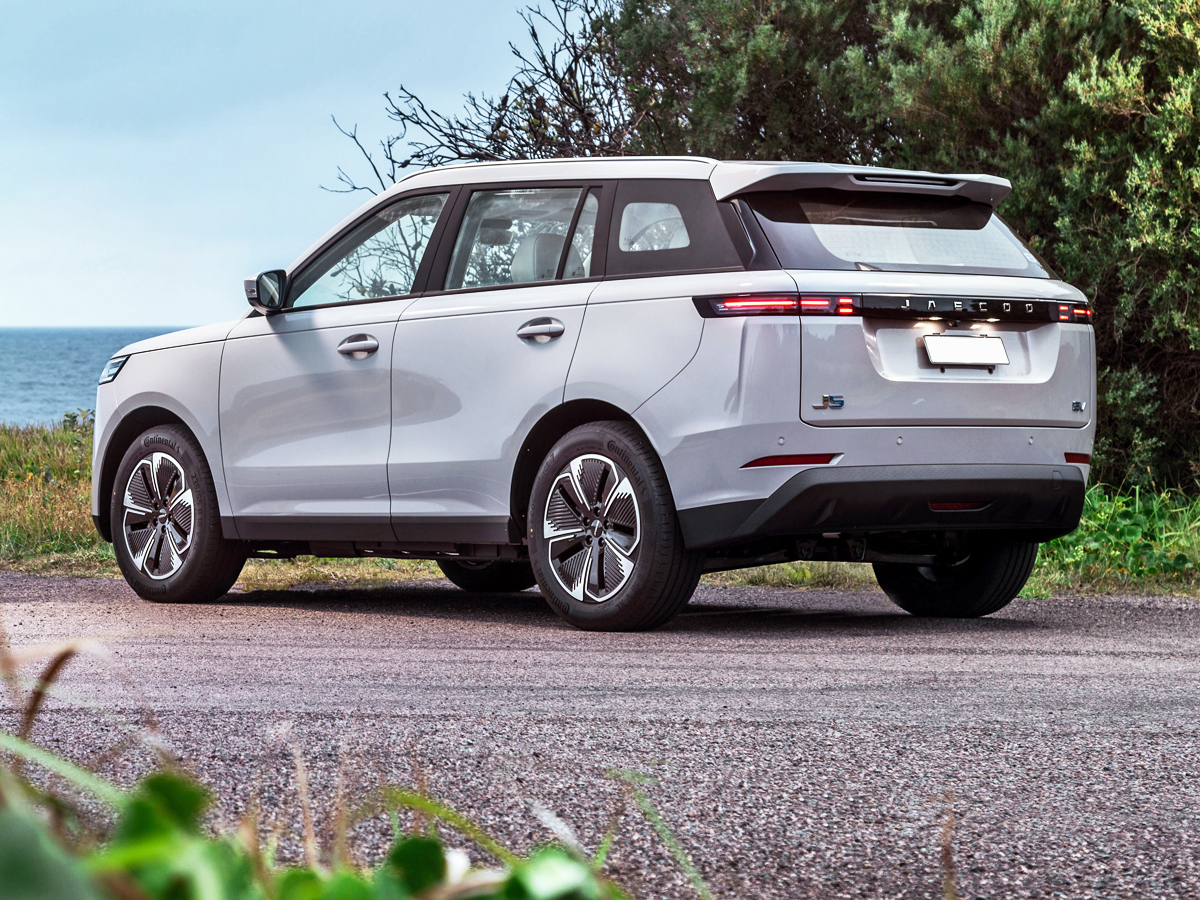
Set to launch as the Jaecoo marque’s first EV in Mzansi, the J5 BEV will be priced from R549 900 (some R70 000 more than the top-spec J5 1.5T Vortex). As things stand, that will see the newcomer tie with the likewise box-fresh GWM Ora 5 BEV Super Luxury for 6th place on the list of SA’s most affordable EVs.
Slotting in above the turbopetrol derivatives (with the J5 HEV expected soon as well), the new Jaecoo J5 BEV employs a single electric motor delivering 155 kW and 288 Nm to the front axle. A 58.9 kWh (net capacity) lithium iron phosphate battery pack offers a claimed range of 402 km on the WLTP cycle.
The Chinese company says the J5 BEV supports 11 kW AC charging, while DC fast-charging speeds range from 80 kW to 130 kW. In addition, vehicle-to-load capability allows the J5 BEV’s battery to supply power to compatible external appliances.
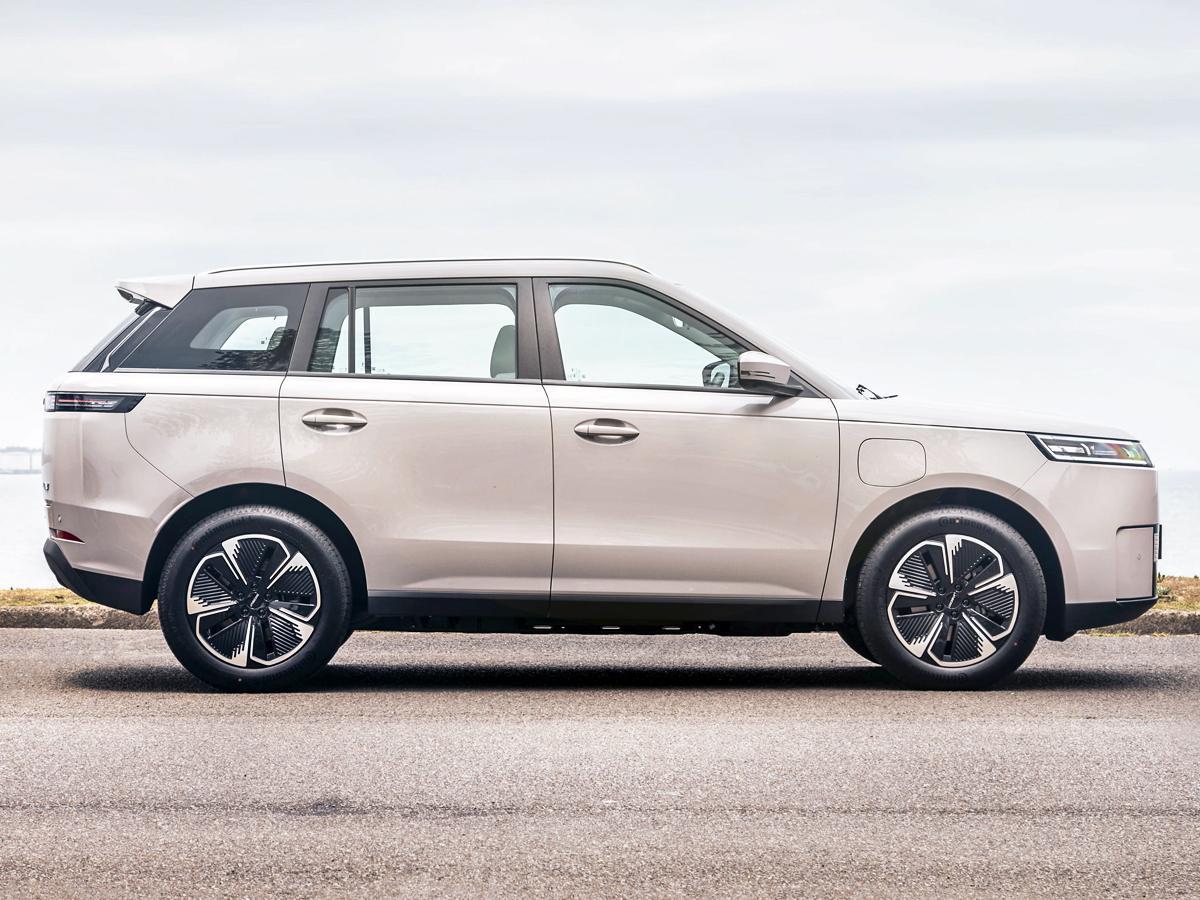
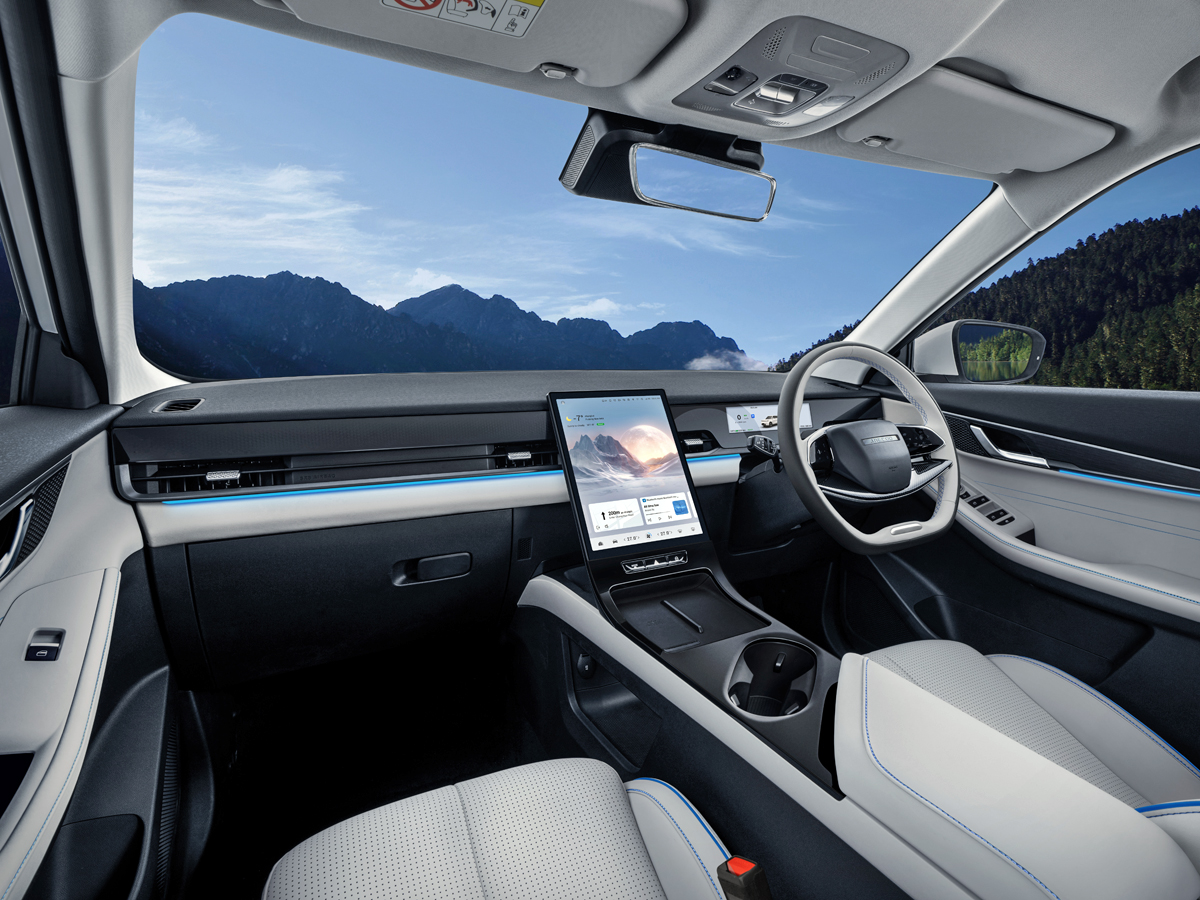
Featuring a model-specific grille design, the new J5 BEV rides on 18-inch alloy wheels and boasts a panoramic moonroof, automatic LED headlamps, roof rails, a powered tailgate, electrically adjustable (and ventilated) front seats, an 8.0-inch digital instrument cluster, a 13.2-inch touchscreen, a 540-degree panoramic camera, a 50-watt wireless smartphone charger and an 8-speaker audio system.
The interior is available in either black or white. Standard safety features include 6 airbags, ABS (with EBD), brake assist, electronic stability control, traction control, roll stability control, hill-start assist, hill-descent control, ISOfix child-seat anchors and a raft of advanced driver assistance system (ADAS) features.
Omoda & Jaecoo says customers who place a pre-order before the official launch will receive an “incentive package valued at more than R50 000”. According to the company, the package will include a R12 000 reduction on the vehicle’s purchase price, some R5 000 in public charging credit and an “EV Starter Kit” ostensibly valued at R30 000.
The latter includes a 7 kW home wallbox charger, a portable “Type-M” charger and a vehicle-to-load accessory that will “enable the vehicle’s battery to power compatible external devices and appliances”. Qualifying pre-order customers will also gain access to the “Jaecoo Cares” ownership programme.
As a reminder, Omoda & Jaecoo announced in early July 2026 that its Jaecoo J5 would “form part of the core production line-up” at the Chery Group’s newly acquired manufacturing plant in Rosslyn, Gauteng. Interestingly, the sub-brand added that the J5 would be produced locally in both internal combustion engine (ICE) form and new-energy vehicle (NEV) guise.
What does the Jaecoo J5 BEV cost in SA?
DERIVATIVE
PRICE
Jaecoo J5 1.5T Core
R339 900
Jaecoo J5 1.5T Vortex
R379 900
Jaecoo J5 1.5T Glacier
R439 900
Jaecoo J5 1.5T Inferno
R479 900
Jaecoo J5 BEV
R549 900
For the ICE derivatives, the prices above include a 5-year/150 000 km vehicle warranty, a 10-year/1-million km engine warranty (for the first owner) and a 5-year/75 000 km service plan. Aftersales details for the new BEV have yet to be confirmed.
Frequently Asked Questions (FAQ)
Q: When will the Jaecoo J5 BEV launch in South Africa, and what is its starting price?
A: The fully electric Jaecoo J5 BEV is officially scheduled to launch in South Africa by the end of August 2026. It will be priced from R549 900, which represents a R70 000 premium over the top-tier, petrol-powered J5 1.5T Inferno derivative.
Q: What are the electric motor and battery specifications of the Jaecoo J5 BEV?
A: The crossover is powered by a single, front-mounted electric motor that sends 155 kW and 288 Nm of torque to the front axle. It features a 58.9 kWh (net capacity) lithium iron phosphate (LFP) battery pack, which delivers a claimed driving range of up to 402 km on the WLTP cycle.
Q: What charging speeds and power capabilities does the Jaecoo J5 BEV support?
A: The J5 BEV supports 11 kW AC home charging and is compatible with DC fast-charging speeds ranging from 80 kW to 130 kW. Additionally, it features Vehicle-to-Load (V2L) capability, allowing owners to use the car’s high-voltage traction battery to power external electric appliances.
Q: What is included in the special Jaecoo J5 BEV pre-order incentive package?
A: Customers who pre-order the J5 BEV ahead of its official launch will receive an incentive package valued at over R50 000. This includes a R12 000 discount on the purchase price, R5 000 in public charging credit, access to the Jaecoo Cares programme and an EV Starter Kit (comprising a 7 kW home wallbox charger, a portable Type-M charger and a V2L adapter).
Toyota confirms R10.4 billion Prospecton investment in SA
Big capital injection is aimed at future-proofing Toyota’s manufacturing operations in South Africa.
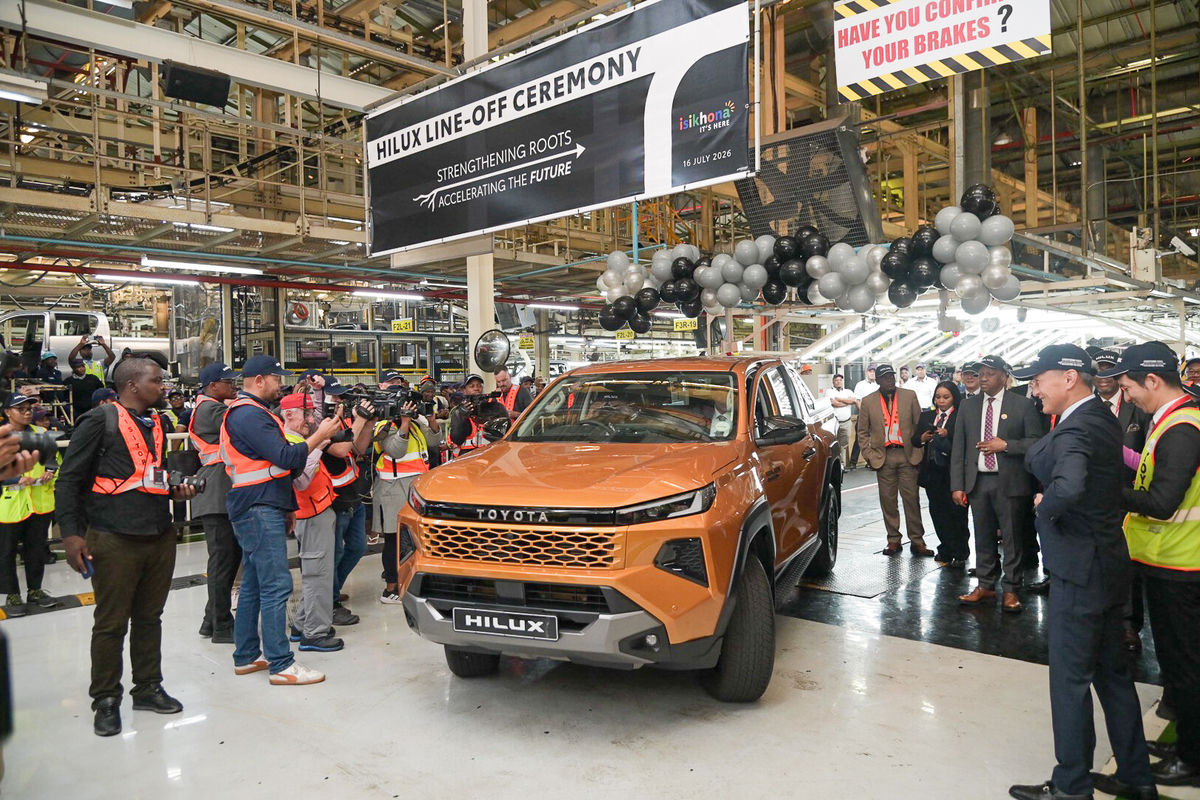
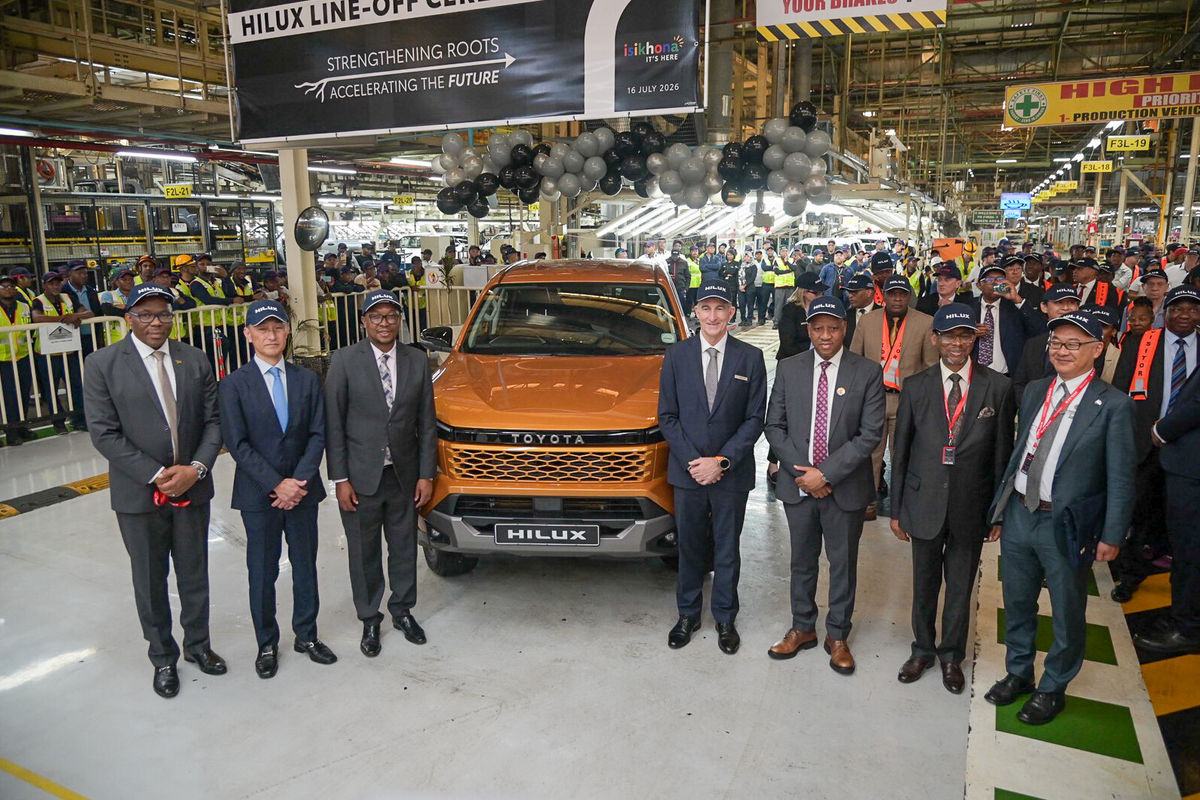
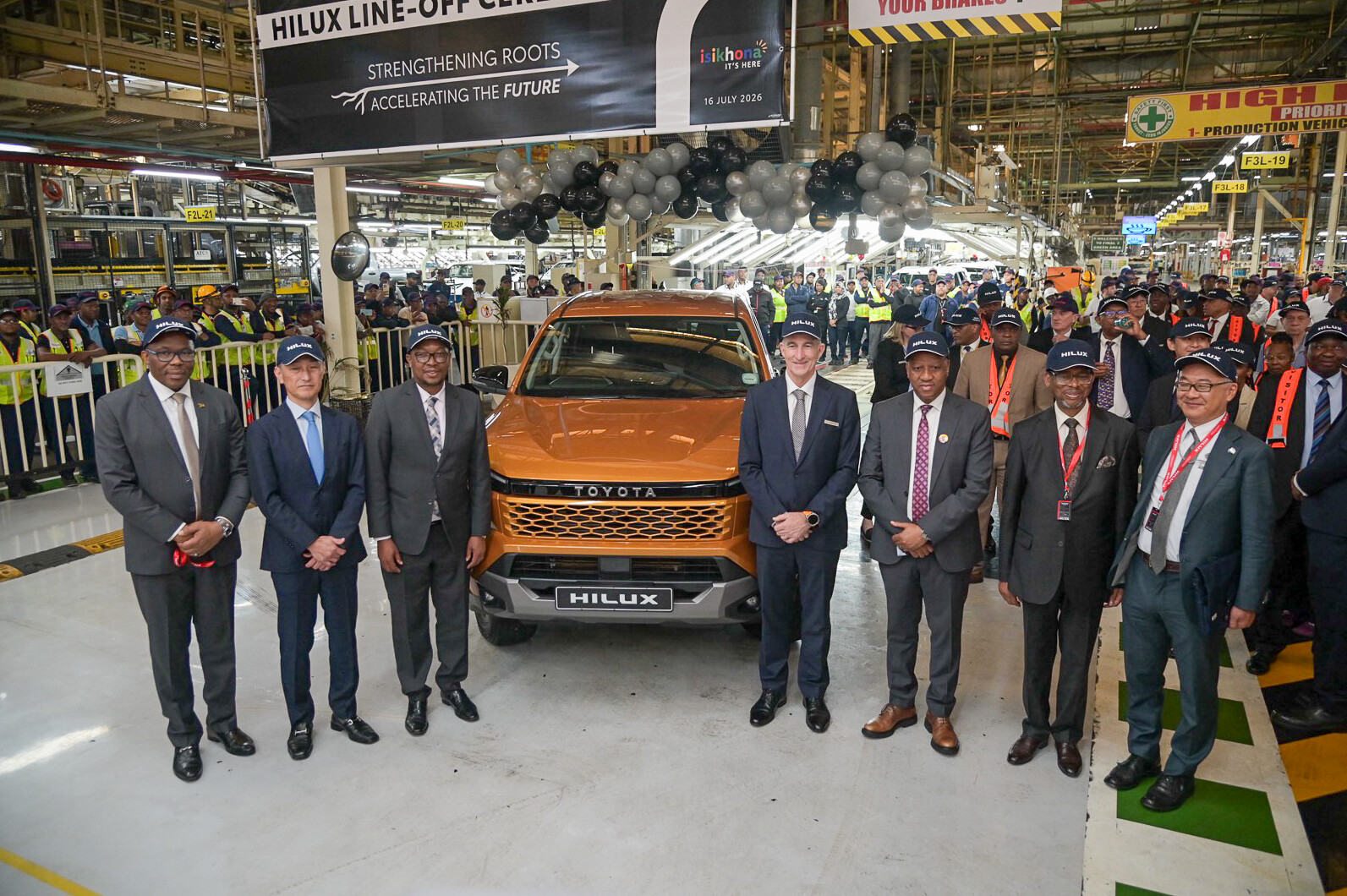
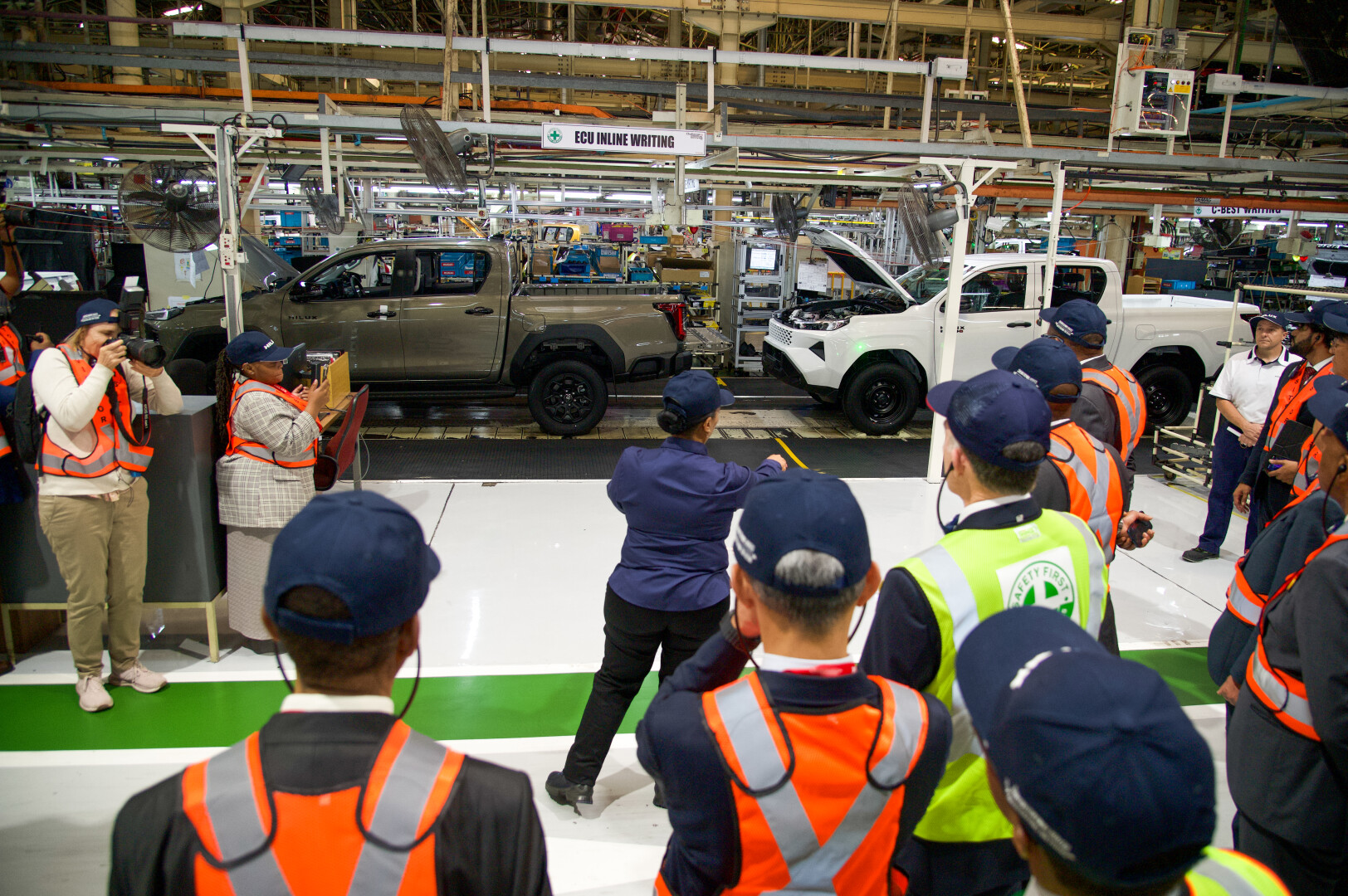
Toyota South Africa Motors (TSAM) has confirmed further investment into KwaZulu-Natal by Toyota. The R10.4 billion announcement was pledged earlier this year, but was formalised at a event held at TSAM’s plant in Prospecton in the second week of July 2026.
The reason behind the large Prospecton investment is to adapt South African vehicle manufacturing to the global market. Most of the brands who assemble cars in South Africa also export to other markets. As other countries shift towards new-energy vehicles, the manufacturing needs to change to support this.
Several OEMs have sounded the alarm. Warning of being left behind in favour of countries which have already adapted to changing market demands. The Toyota Prospecton investment is to help secure the future of South African automotive manufacturing.
‘Enduring confidence in South Africa’
Andrew Kirby, President and CEO of Toyota South Africa Motors, said: “The ninth-generation Hilux is not simply the next Hilux. It is the next chapter in South African manufacturing. Every new generation presents an opportunity to elevate our technology, strengthen our supplier base, deepen localisation, develop our people and improve the competitiveness of our operations. The R10.4 billion investment reflects Toyota’s enduring confidence in South Africa, its people and its manufacturing future.”
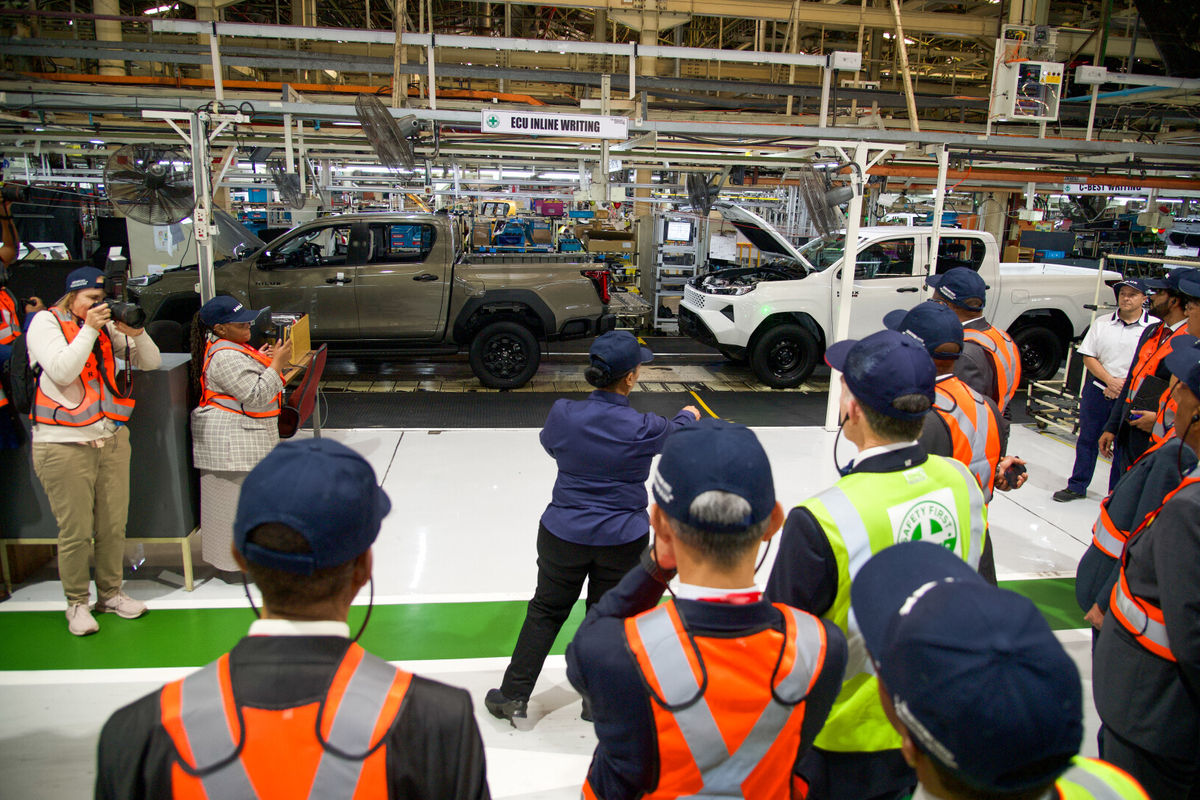
The Toyota Plant at Prospecton, which is the oldest Toyota facility outside of Japan, currently manufactures the Hilux, Fortuner, Corolla Cross, Hiace/Sesfikile minibus as well as Hino Trucks. It employs around 8 500 people depending on shifts and demand, with thousands more employed in the surrounding businesses as part of the supply chain and logistics. The plant has the capability to produce over 200 000 vehicles a year.
Hilux accounts for 101 Tier One suppliers and annual supplier spend exceeding R15 billion. It creates nearly 27 000 jobs across the supplier network and more than 4 300 direct employees at the Prospecton plant.
The investment breakdown:
Toyota has invested a further R7.2 billion in production preparation for the 9th Generation Hilux.Including advanced manufacturing technologies, production equipment and supplier tooling.
Toyota’s supplier partners have also invested an additional R2 billion in their own facilities, tooling and capability development.
A new 29 300m² Toyota Logistics Centre, a state-of-the-art Chassis Frame Coating Facility and a new Chassis Frame Welding Facility, scheduled for completion in June 2027.
The Toyota Prospecton investment is not just Hilux-focused. Resources are also allocated to employee training programmes and skills development. Like the Toyota Manufacturing Academy where the next generation can start their journey in the motor manufacturing industry.
What coverage does the standard Toyota South Africa warranty offer?
The standard manufacturer’s warranty covers all new Toyota vehicles against defects in materials and workmanship for 3 years or 100,000 km from the date of original sale, whichever comes first. It also includes roadside assistance, a 3-year corrosion perforation warranty, and a 12-month battery warranty.
What is the warranty coverage for Toyota Hybrid vehicles in South Africa?
In addition to the standard vehicle warranty, hybrid models in South Africa are backed by an extensive 8-year or 195,000 km warranty covering all Hybrid Synergy Drive (HSD) components, including the high-voltage hybrid battery.
Can I extend my Toyota service plan or vehicle warranty?
Yes. Toyota South Africa offers a Genuine Extended Service Plan that can cover your vehicle up to a maximum of 7 years or 200,000 km. You can also purchase a Toyota Genuine Extended Warranty to extend your vehicle’s mechanical and electrical breakdown cover up to 6 years or 220,000 km.
What is the difference between a Toyota Service Plan and a Maintenance Plan?
A Service Plan covers replacement parts, consumables, and labour for scheduled services at specified mileage intervals. A Maintenance Plan is more comprehensive; it covers everything in the service plan plus the cost of replacing wear-and-tear items (such as brake pads and wiper blades) and unexpected mechanical repairs up to 6 years or 200,000 km.
What are the contact details for Toyota South Africa Roadside Assistance and Customer Care?
For emergency help or general enquiries, you can reach out via the following channels:
The BYD Shark 6 Performance derivative has arrived in South Africa, offering uprated total system power of 350 kW. Here’s what this mighty PHEV bakkie costs…
BYD Auto SA launches even more powerful Shark 6
Performance derivative makes 350 kW and 700 Nm
Costs R160 000 more than 321 kW Premium variant
The BYD Shark 6 Performance derivative has officially arrived in South Africa, boasting a total system power output as lofty as 350 kW courtesy of its uprated plug-in hybrid electric vehicle (PHEV) powertrain.
Ever since the Premium variant’s local introduction back in March 2025, the Shark 6 has held the title of SA’s most powerful bakkie, snatching the crown from Ford’s 292 kW Ranger Raptor. The arrival of the Shark 6 Performance, however, sees the Chinese contender extend it lead at the top of the power table.
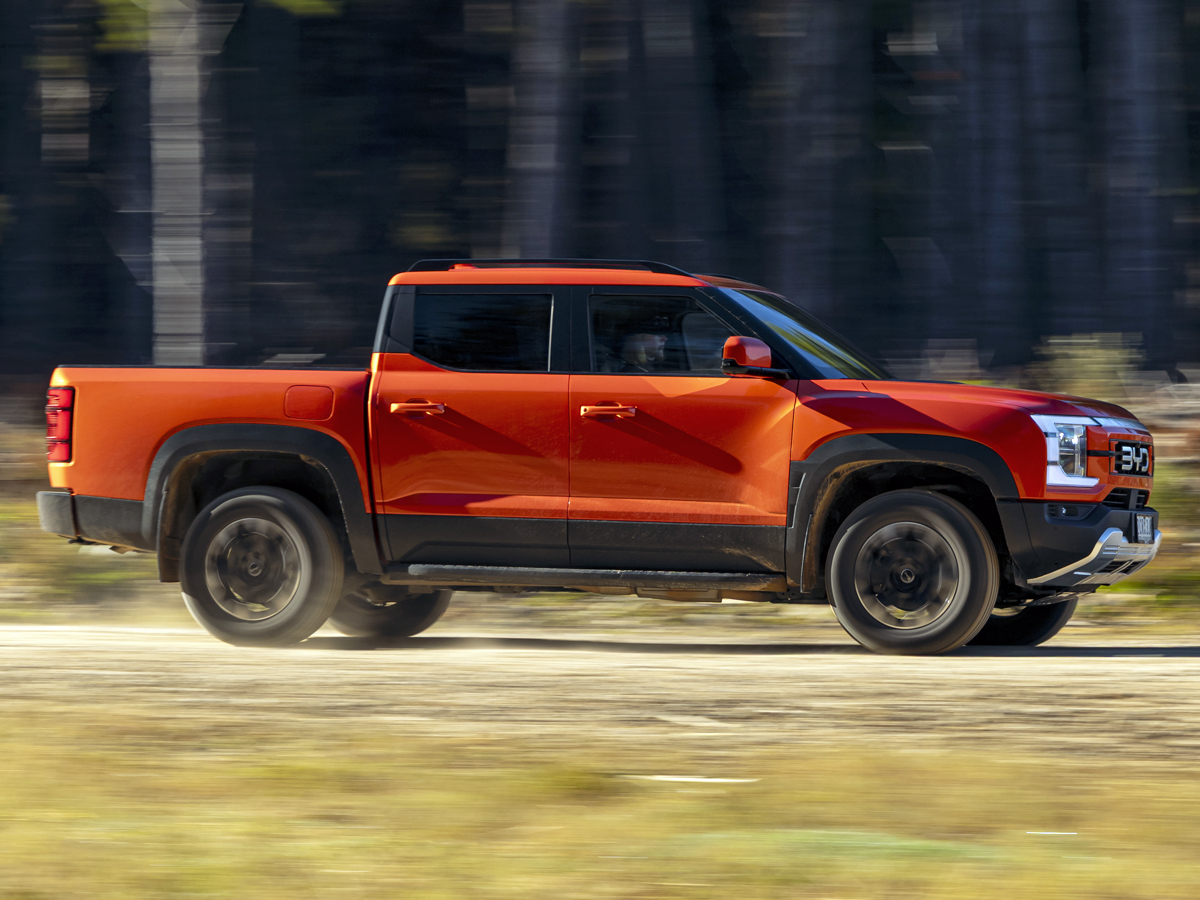
The Performance derivative is available in BYD’s new “Outback Orange” hue.
Yes, while the Premium derivative (which features a turbocharged 1.5-litre, 4-cylinder petrol engine and an electric motor on each axle) churns out 321 kW and 650 Nm, the Performance flagship boasts peak outputs of 350 kW and 700 Nm. These increased outputs are facilitated by a larger-capacity turbocharged 2.0-litre petrol unit.
According to BYD Auto SA, the Shark 6 Performance’s 0-100 kph time comes in at 5.5 seconds, making it 2-tenths quicker to 3 figures than its Premium sibling. Furthermore, its maximum braked towing capacity increases from 2 500 kg to 3 500 kg. Though BYD Auto SA hasn’t confirmed the new derivative’s payload, overseas specifications suggest a figure of 725 kg (lower than the Premium’s 790 kg capacity).
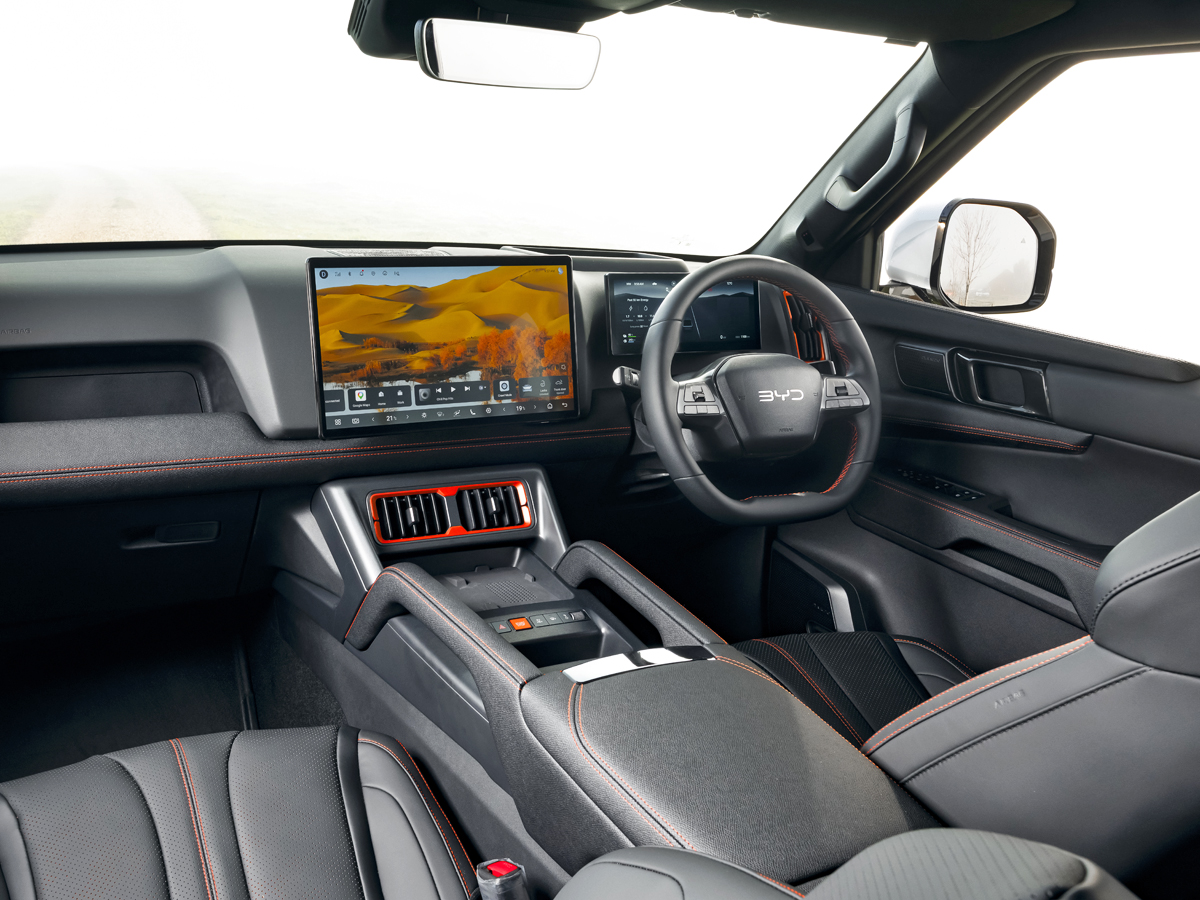
Note the centre console, now free of a gear lever.
Interestingly, the new Performance derivative features the same 29.58 kWh (gross capacity) battery pack as the Premium variant, which here provides a claimed all-electric range of “up to 80 km”. That pushes the combined WLTP range to 640 km, some 30 km lower than the Premium version (670 km). As a reminder, the petrol engine acts as a generator (to top up the battery) for the most part, directly driving the front wheels only at high speeds.
So, what does the ladder-frame BYD Shark 6 Performance cost? Well, the newcomer is priced at R1 149 900, which makes it some R160 000 more expensive than the Premium version. It nevertheless undercuts models like the Isuzu D-Max 3.0TD DC AT35 4×4 (R1 211 910) and the Ford Ranger Raptor 3.0T V6 DC 4WD (R1 307 300).
The gear selector is now of the column-mounted variety.
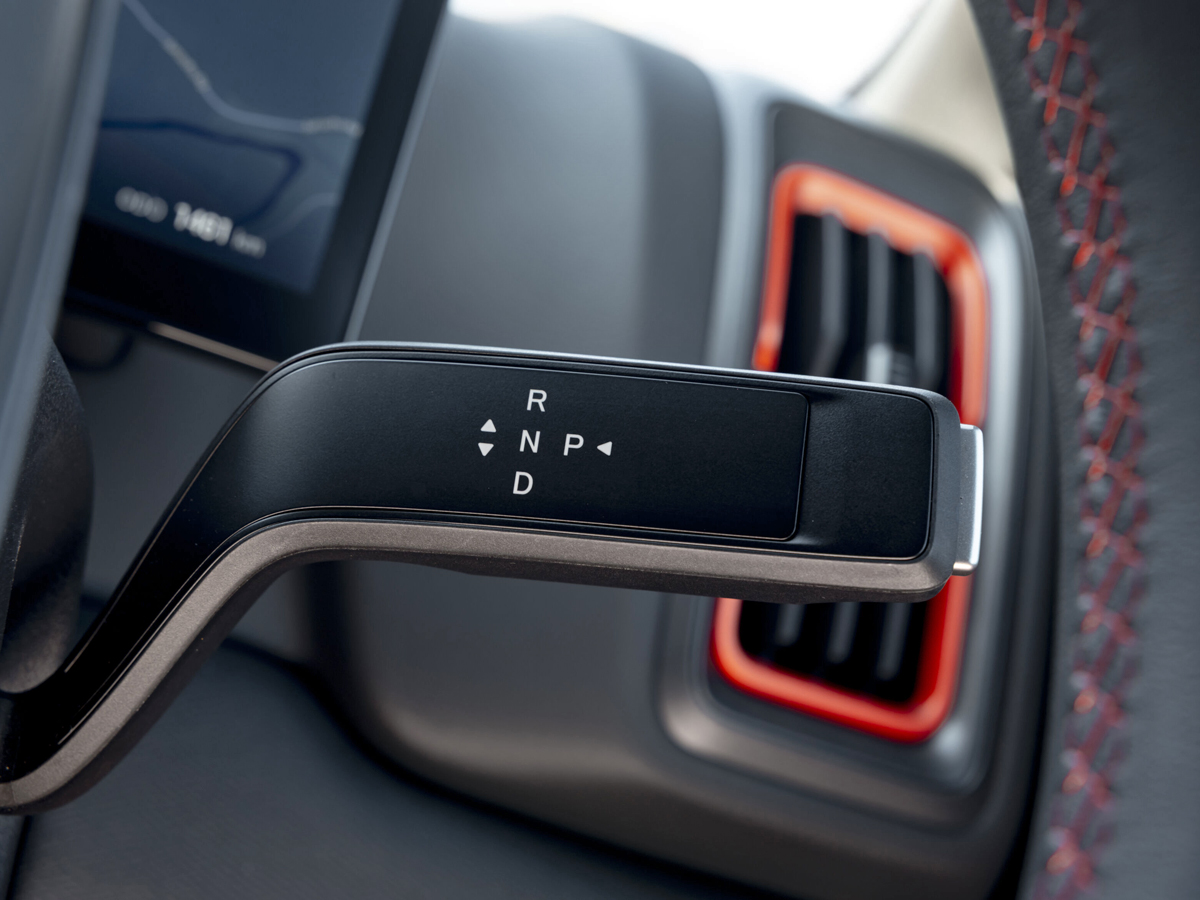
BYD Auto SA says the new range-topping Performance derivative additionally features a crawl mode and a new column-mounted gear selector, with the latter ostensibly creating extra space around the centre console.
In South Africa, the freshly launched Shark 6 Performance is offered in a choice of 4 exterior paint colours: the new “Outback Orange” and “Obsidian Black” hues, along with “Snowy White” and “Atlantis Grey” (colours familiar from the Premium model).
What does the BYD Shark 6 Performance cost in SA?
DERIVATIVE
PRICE
BYD Shark 6 Premium 1.5T DMO AWD
R989 900
BYD Shark 6 Performance 2.0T DMO AWD
R1 149 900
The prices above include a 5-year/100 000 km vehicle warranty, an 8-year/200 000 km battery-pack warranty and a 5-year/100 000 km maintenance plan.
Frequently Asked Questions (FAQ)
Q: What are the performance and mechanical differences between the BYD Shark 6 Premium and Performance derivatives?
A: While the Premium derivative pairs a 1.5-litre turbocharged 4-cylinder petrol engine with dual electric motors to produce 321 kW and 650 Nm, the flagship Performance version steps up to a larger 2.0-litre turbocharged petrol engine. This larger unit pushes total system output to 350 kW and 700 Nm, making it the most powerful bakkie in South Africa.
Q: How does the Performance model’s utility and acceleration compare to the standard Shark 6?
A: The Shark 6 Performance is two-tenths of a second quicker to three figures, dispatching the 0-100 kph sprint in a claimed 5.5 seconds (compared to 5.7 seconds in the Premium). Crucially, its maximum braked towing capacity increases significantly, rising from 2 500 kg to a class-competitive 3 500 kg.
Q: How do the battery specs and driving range differ between the two hybrid bakkies?
A: Both variants utilise the same 29.58 kWh battery pack. On pure electric power, the Performance model has an electric range of up to 80 km. Seemingly due to the larger petrol engine, its combined WLTP-rated range is 640 km, which is 30 km lower than the Premium variant’s 670 km combined range.
Q: What is the price of the BYD Shark 6 Performance in South Africa, and what is included?
A: The BYD Shark 6 Performance is priced at R1 149 900, which is R160 000 more than the Premium model (priced at R989 900). The retail price includes a 5-year/100 000 km vehicle warranty, an 8-year/200 000 km battery warranty and a 5-year/100 000 km maintenance plan.
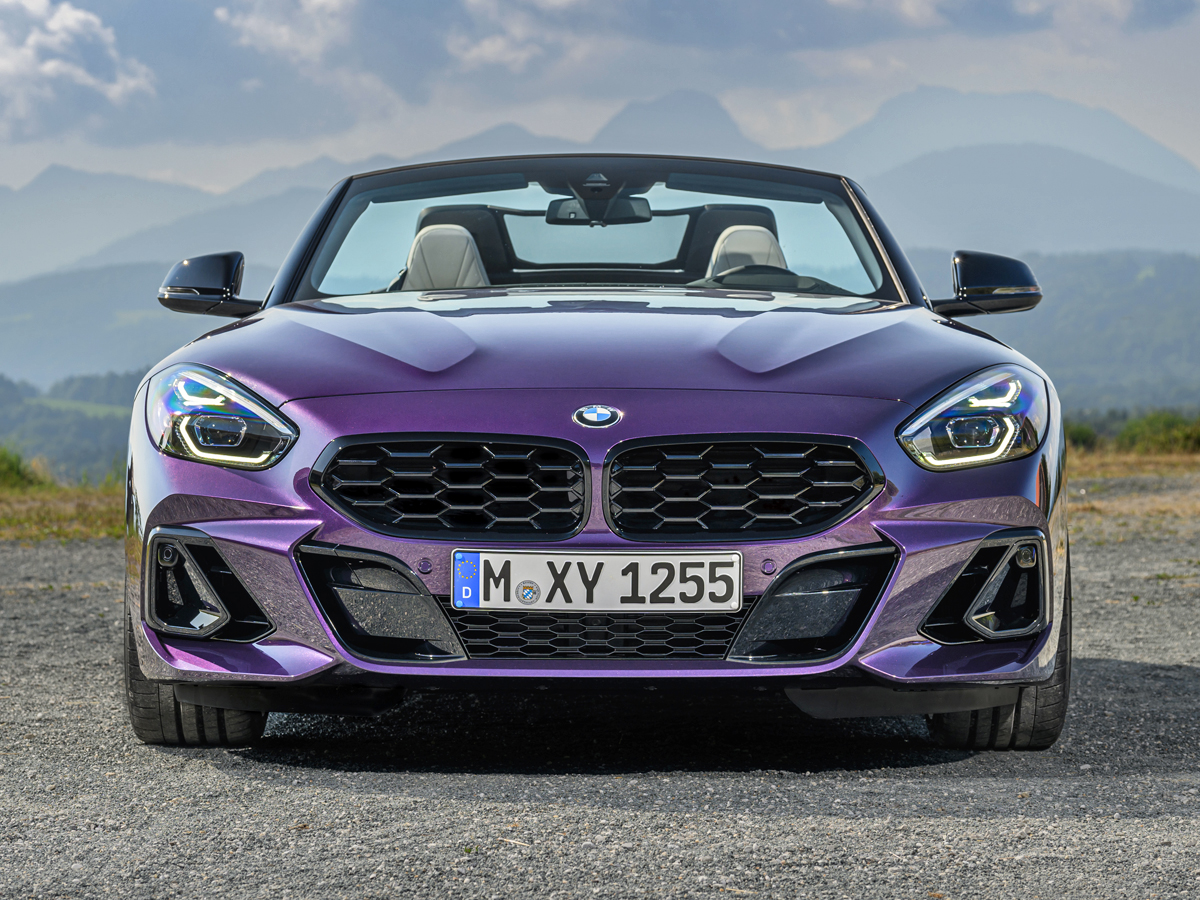
The G29-series BMW Z4’s time in South Africa has come to an end. Eyeing a used version of this rear-wheel-drive German roadster? Here’s what you need to know…
The automotive market can be a brutal place, particularly for vehicles positioned in so-called “diminishing” segments. The G29-series BMW Z4 roadster is a case in point, with the German firm officially ending production in March 2026, with no immediate replacement on the horizon.
While the Munich-based brand’s apparent decision not to develop a direct successor makes perfect financial sense – after all, a 2-seater roadster is an incredibly tough sell in the modern car-buying landscape – it’s nevertheless sad to see this classic configuration fall by the wayside.
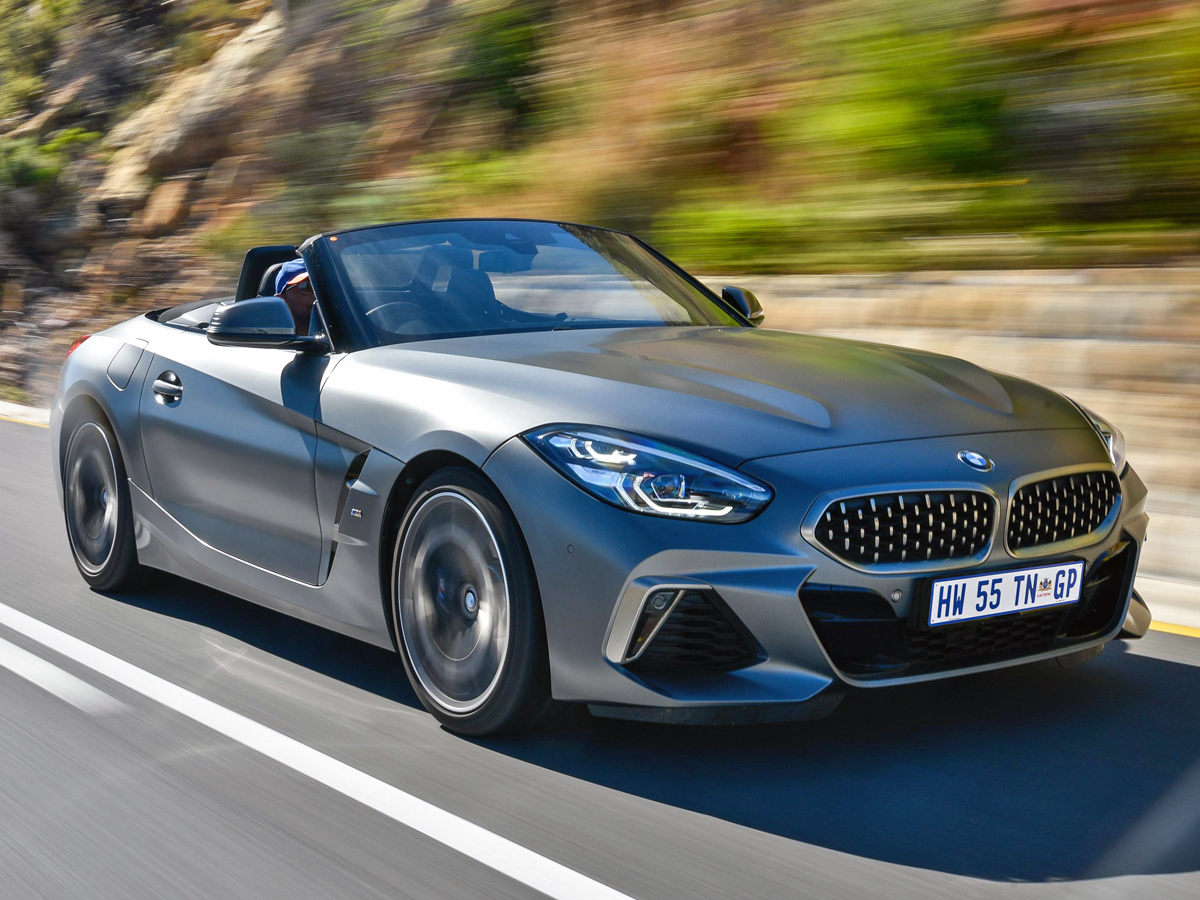
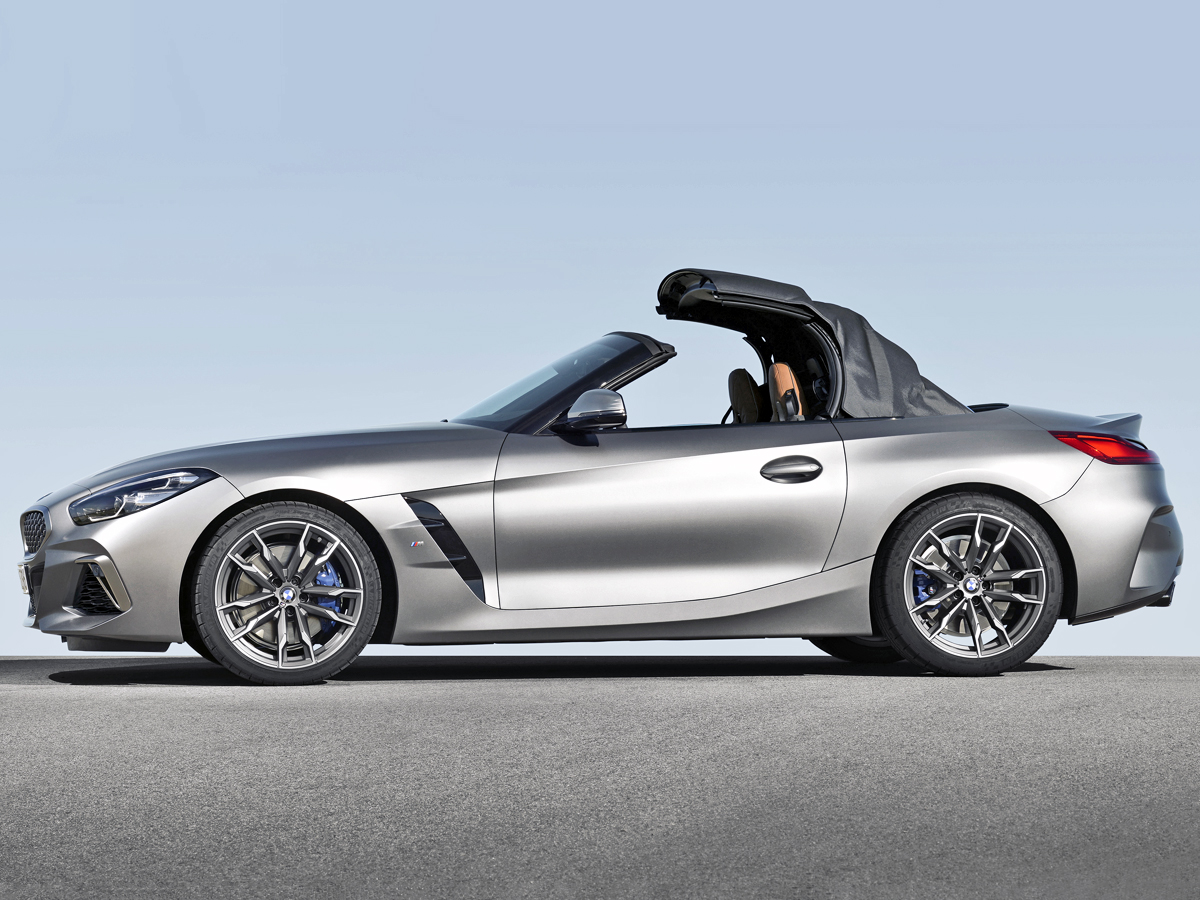
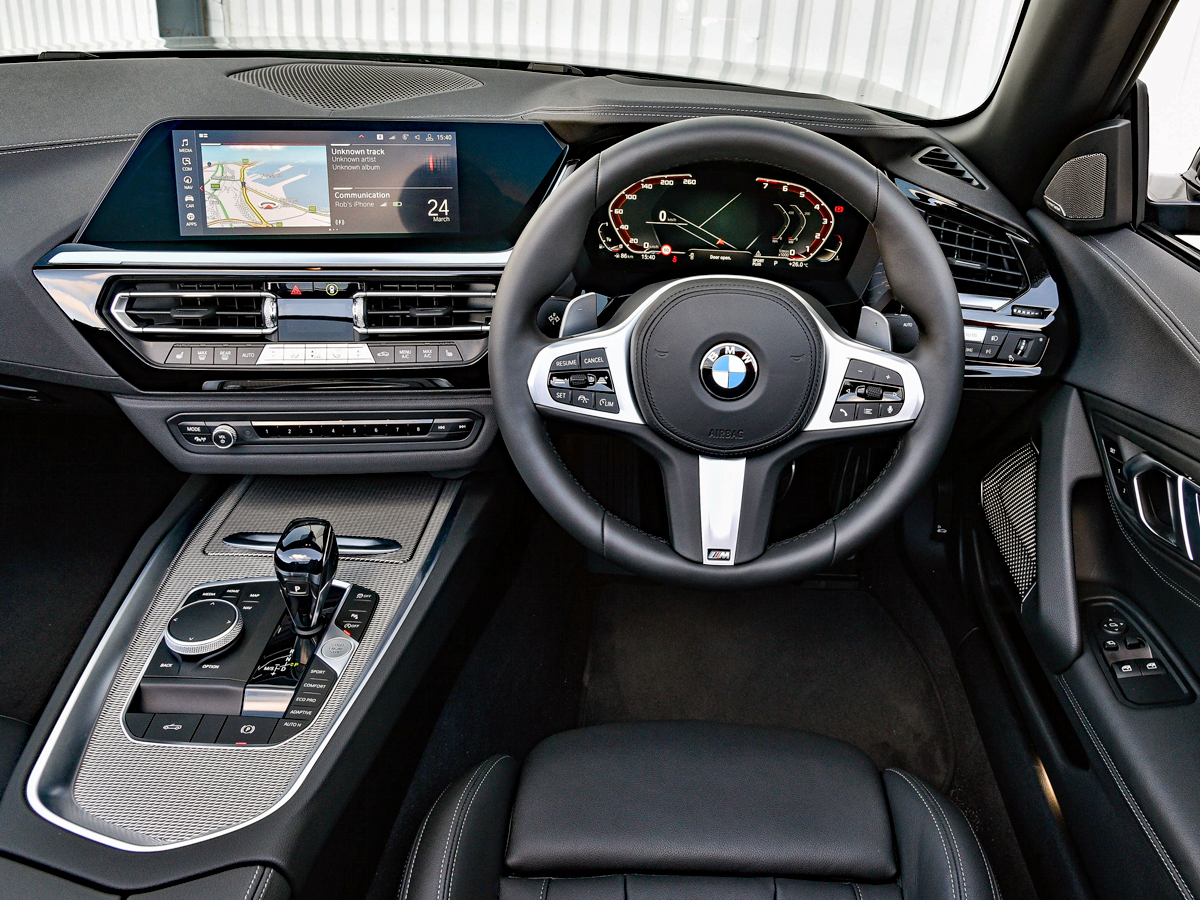
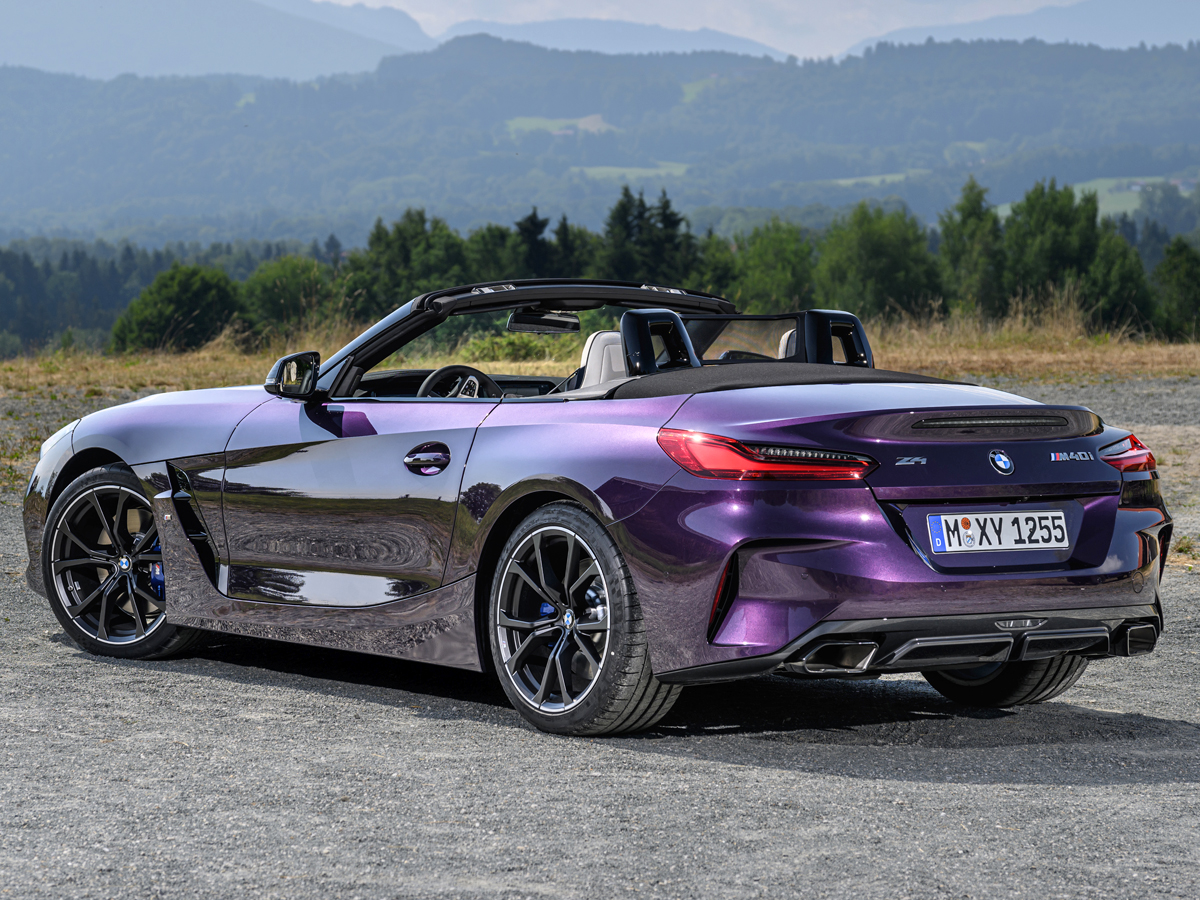
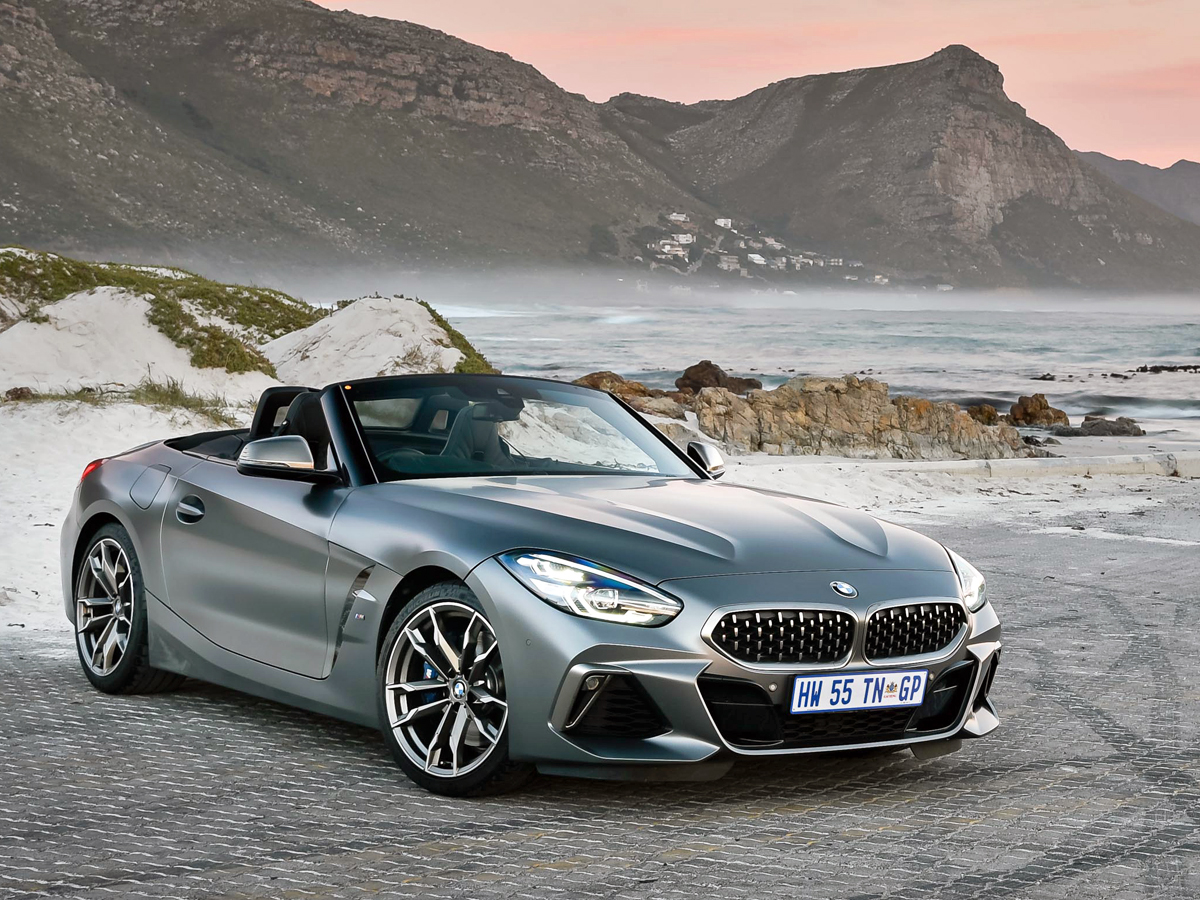
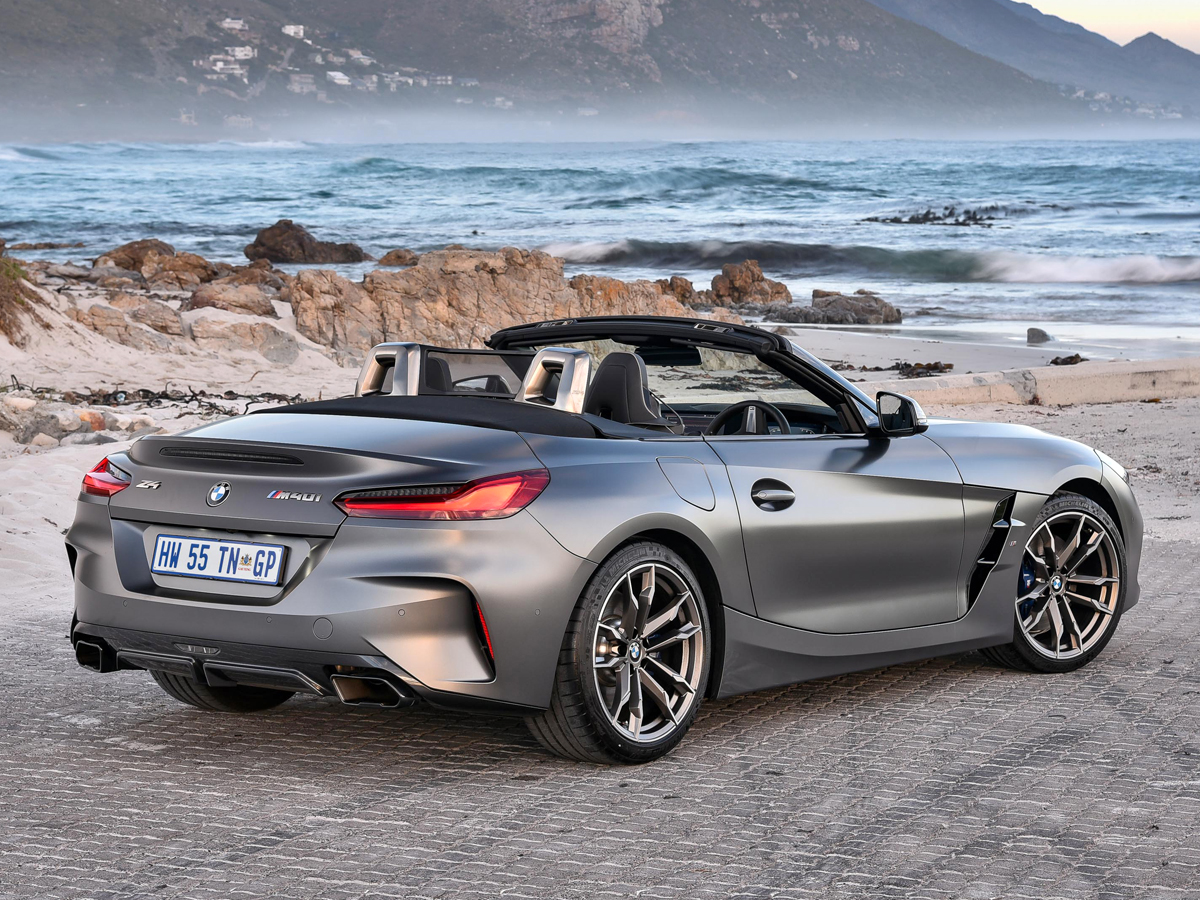
The G29 reverted to a classic soft-top convertible layout.
Thankfully, local buyers who remain keen on open-top, rear-wheel-drive thrills can turn to the used market, where they’ll find a modest smattering of 3rd-generation units (alongside a few examples of this model’s Z-badged forebears, such as the E89 and E85).
As a reminder, while the E89-series Z4 featured a retractable hardtop, the G29 reverted to the classic soft-top convertible layout that had been used by the E85. It’s also worth noting the G29 was developed alongside the A90-series Toyota GR Supra, with both models built by Magna Steyr in Austria.
BMW Z4 (G29) model line-up in South Africa
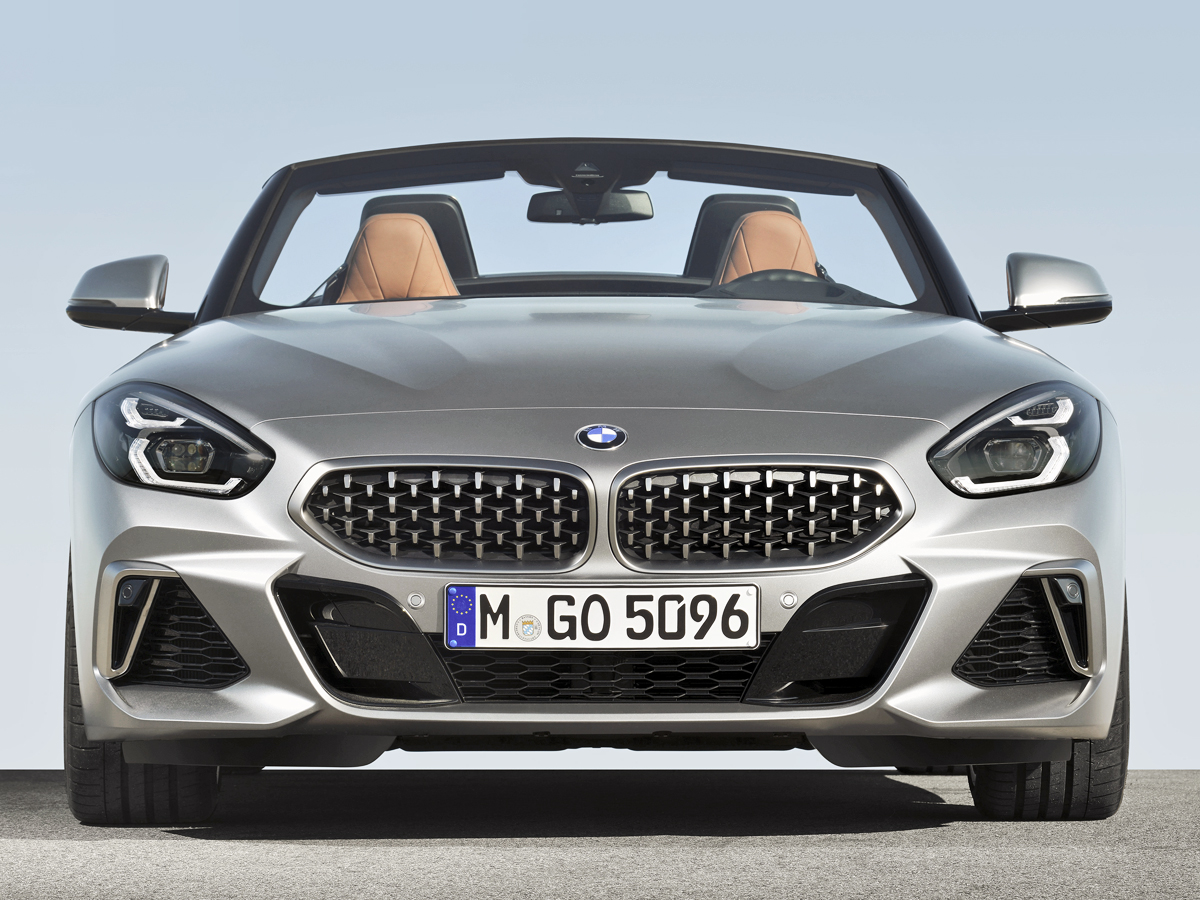
The production model was revealed in 2018.
The G29-series roadster was revealed globally at Pebble Beach in August 2018, around a year after the presentation of the Concept Z4. The production model then enjoyed its official show debut at Mondial de l’Automobile in Paris in October 2018.
In March 2019, the Z4 hit the market in South Africa, available in 2 forms: the 4-cylinder sDrive20i (standard in Sport Line guise but optionally offered in M Sport trim) and the 6-cylinder M40i (the M Performance derivative). In either case, an 8-speed automatic transmission shipped standard.
Z4 sDrive20i 8AT (145 kW/320 Nm)
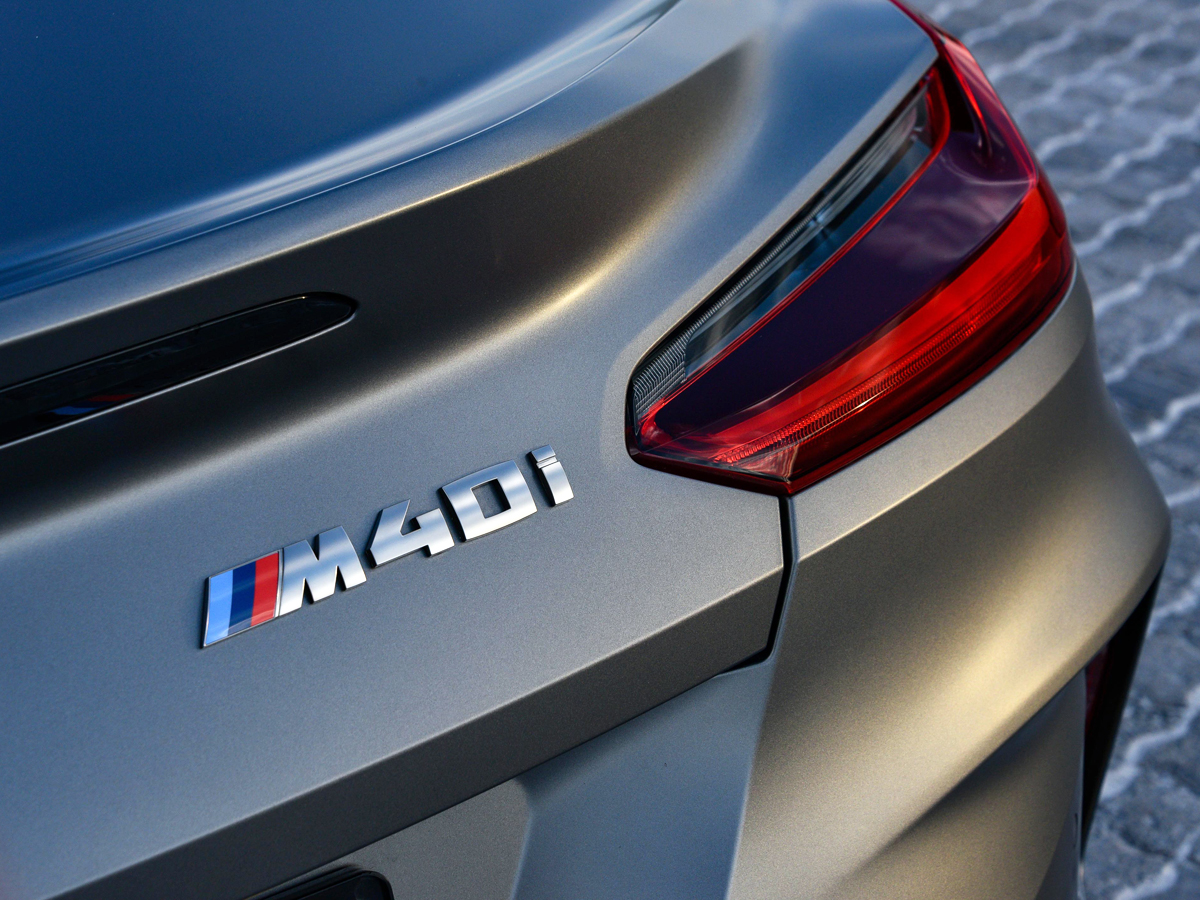
Z4 M40i 8AT (250 kW/500 Nm)
In early 2020, the SA-spec BMW Z4 M40i’s peak power output was quietly increased to 285 kW, some 35 kW more than what was offered at launch. Although the 6-cylinder’s maximum torque was unchanged at 500 Nm, this peak twisting force was on tap across a broader rev range than before.
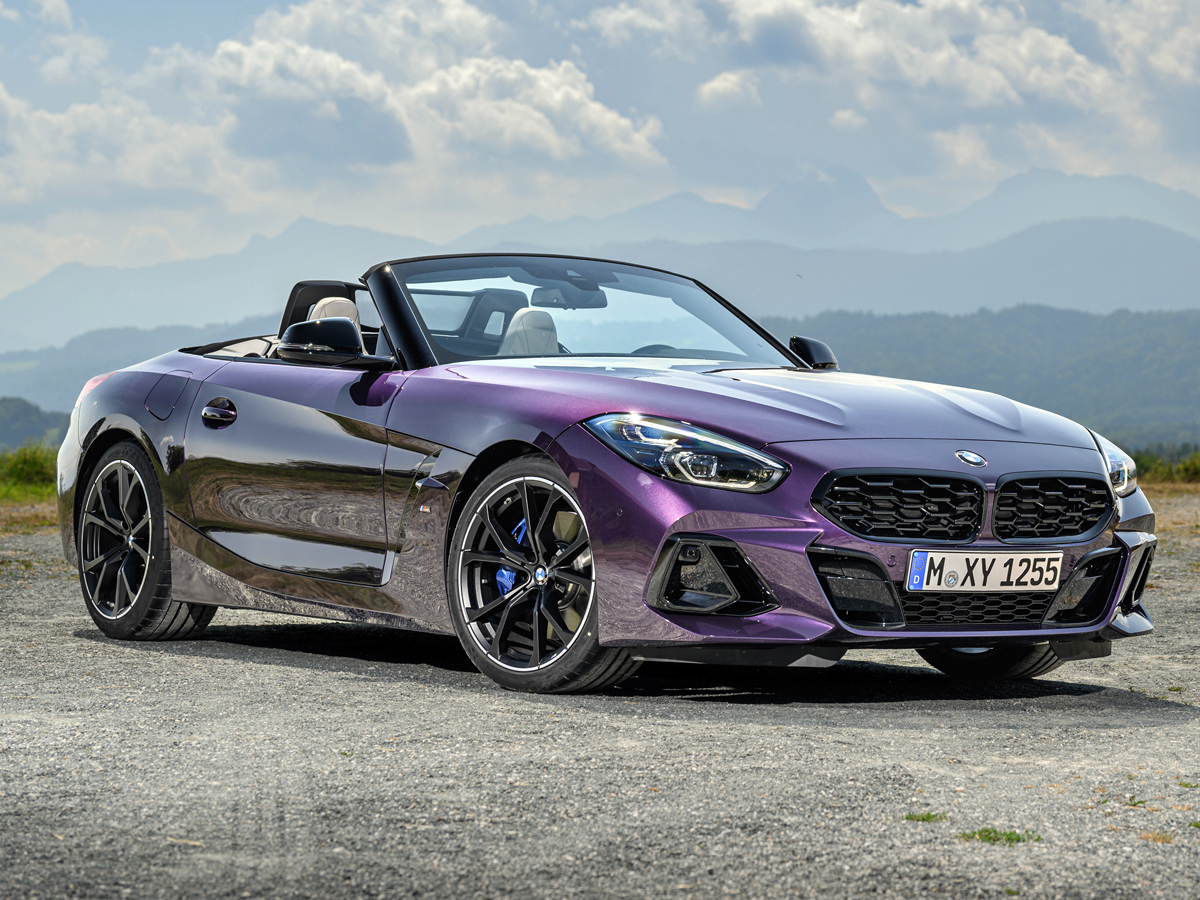
The subtly facelifted model arrived in Mzansi in March 2023.
By March 2023, the facelifted Z4 had made local landfall, having benefitted from mild styling revisions and a brace of new exterior paint colours. The same 2-derivative range did duty, although the M Sport package was now standard on the 4-cylinder variant.
With the local market seemingly favouring the M Performance derivative, the Z4 sDrive20i was discontinued in South Africa around October 2024. Then, soon after global production of all Z4 variants ceased in March 2026, the Z4 M40i was dropped from BMW Group Africa’s official price list, too.
What are the G29 BMW Z4’s strengths?
Six cylinders of soul.
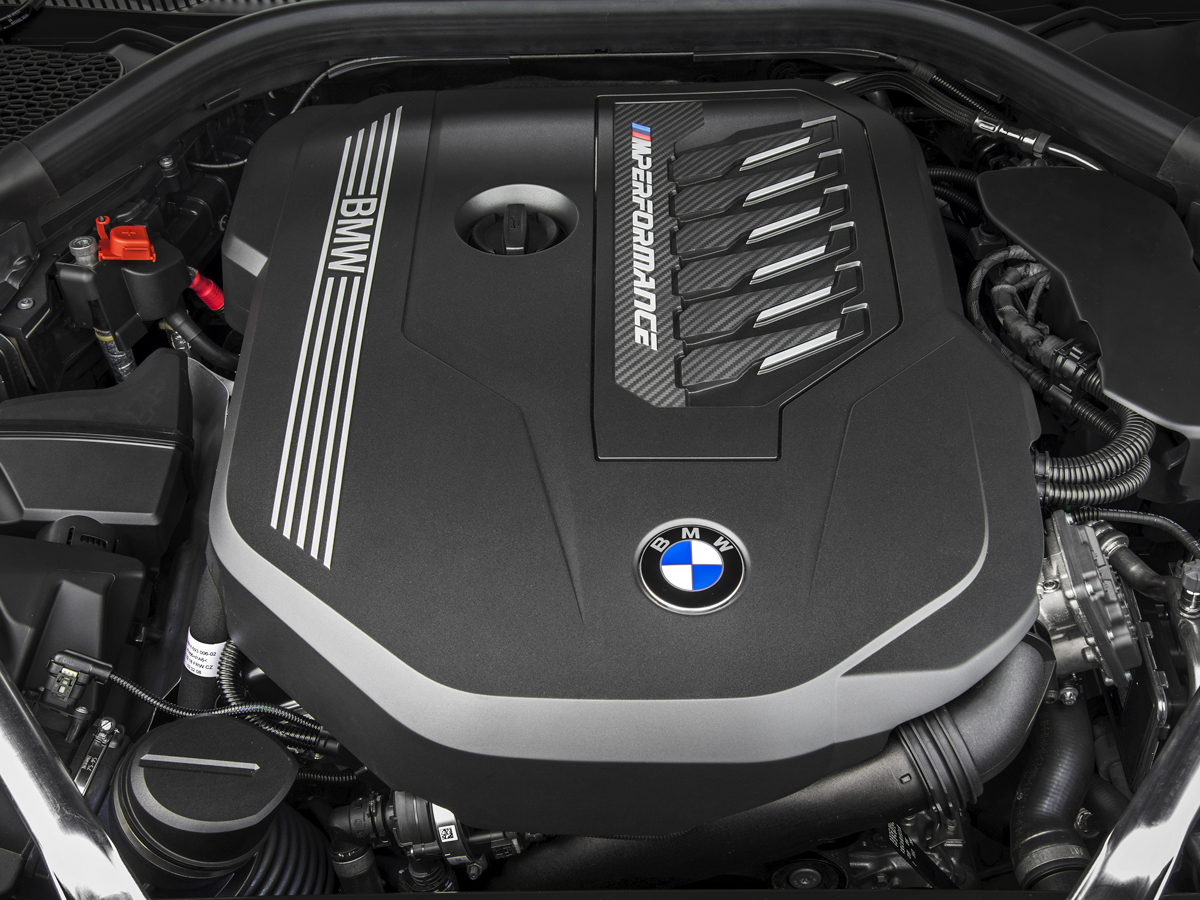
Soulful straight-6 engine: While the turbocharged 2.0-litre, 4-cylinder petrol engine in the sDrive20i wasn’t exactly lacking in punch – seeing off the obligatory 0-100 kph sprint in a respectable 6.6 seconds – it was the M40i’s 6-pot that impressed most.
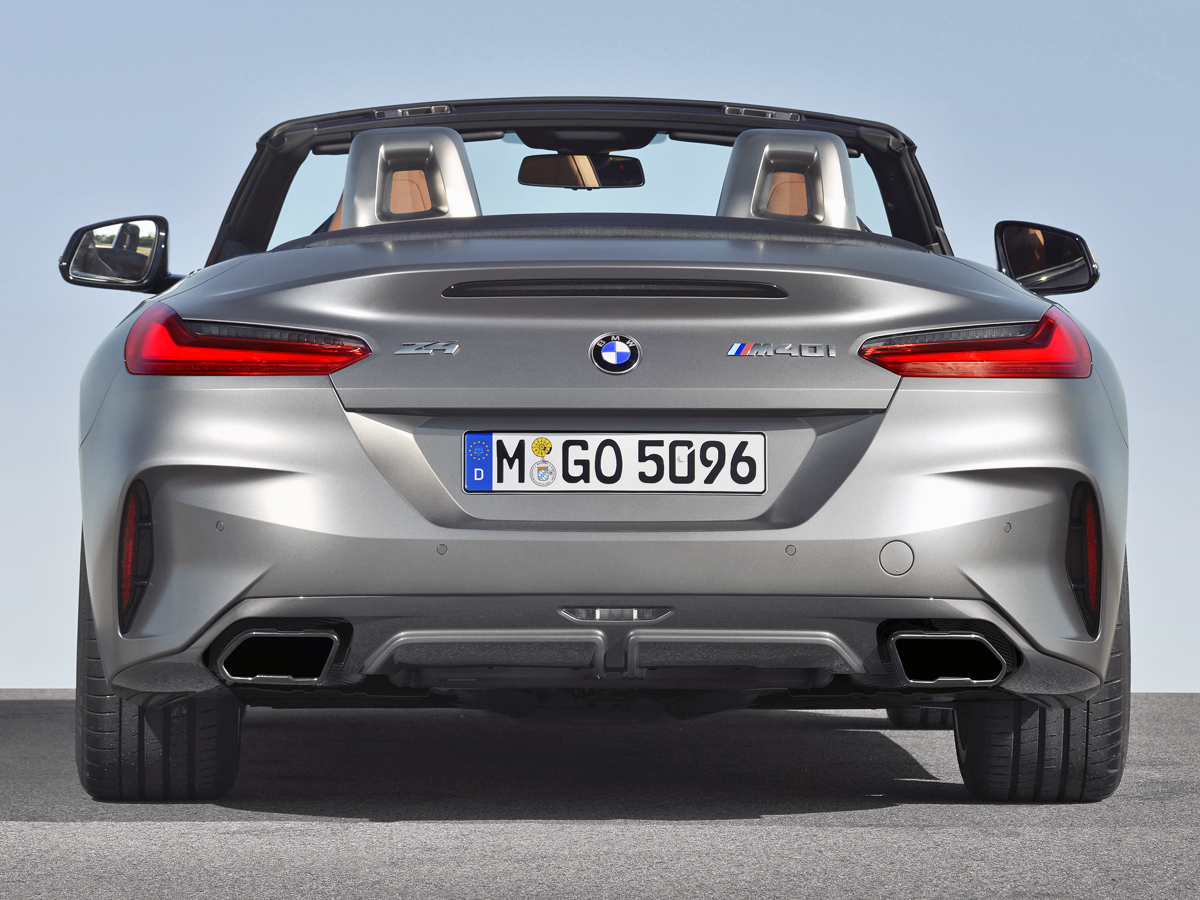
Yes, the B58 turbocharged 3.0-litre straight-6 petrol engine – initially offered in 250 kW guise but soon uprated to the full-fat 285 kW output (a luxury incidentally not afforded to European markets) – generated not only substantial grunt, but also produced a soulful soundtrack that was best enjoyed with the roof down.
The 285 kW version of the Z4 M40i had a listed 0-100 kph time of 4.1 seconds.
For the record, the 250 kW version of the Z4 M40i had a listed 0-100 kph time of 4.6 seconds, a figure that fell to a claimed 4.1 seconds in the case of the 285 kW tune. Still, this 500 Nm motor’s true strength was its in-gear punch, which allowed it to offer remarkably flexible performance. Furthermore, the 6-pot derivative came with an M Sport differential as standard.
Open to closed in just 10 seconds.
Quick-to-operate fabric roof: The G29-series Z4’s electrically operated fabric roof – which came standard in black but was optionally offered in an anthracite hue – took a mere 10 seconds to fully open or close. Furthermore, it could be operated at speeds up to 50 kph.
Not only could it open in around half the time of the E89’s hardtop, but this soft-top configuration saved valuable weight and effectively lowered the vehicle’s centre of gravity. Still, when viewing a potential buy, make sure to thoroughly inspect the roof mechanism and listen closely for any untoward sounds during operation.
The Z4 was surprisingly usable for a 2-seater roadster.
Daily usability: Despite its sporting pretensions, the Z4 served up a reasonable level of daily usability – for a 2-seater roadster, anyway. For instance, it offered a useful 281 litres of luggage space whether the soft-top was open or closed. That’s a considerable 50% more luggage capacity than the G89 that came before it.
Fitted with adaptive suspension (an option on the sDrive20i but standard on the M40i), the Z4 was capable of delivering a surprisingly pliant ride, too. Note, however, that the sDrive20i could also be optionally specified with a firmer M Sport suspension set-up.
What are the G29 BMW Z4’s weaknesses?
A key criticism was the artificial-feeling steering.
“Artificial” steering feel: In our comprehensive 2019 review of the M40i derivative, we cited the rear-wheel-drive Z4’s steering as a “textbook example of how artificial/software interference can detract from the overall driving experience”. Although the steering was relatively direct, it offered a disappointing lack of feel.
The steering felt frustratingly slow close to centre but abruptly sped up once greater steering angles were applied, a phenomenon that could upset the driver’s rhythm. Note that, with less mass over its front axle, the sDrive20i (which tipped the scales at 1 480 kg) felt a little pointier through the bends than the more nose-heavy M40i (which was around 130 kg beefier).
The manual version unfortunately wasn’t available locally.
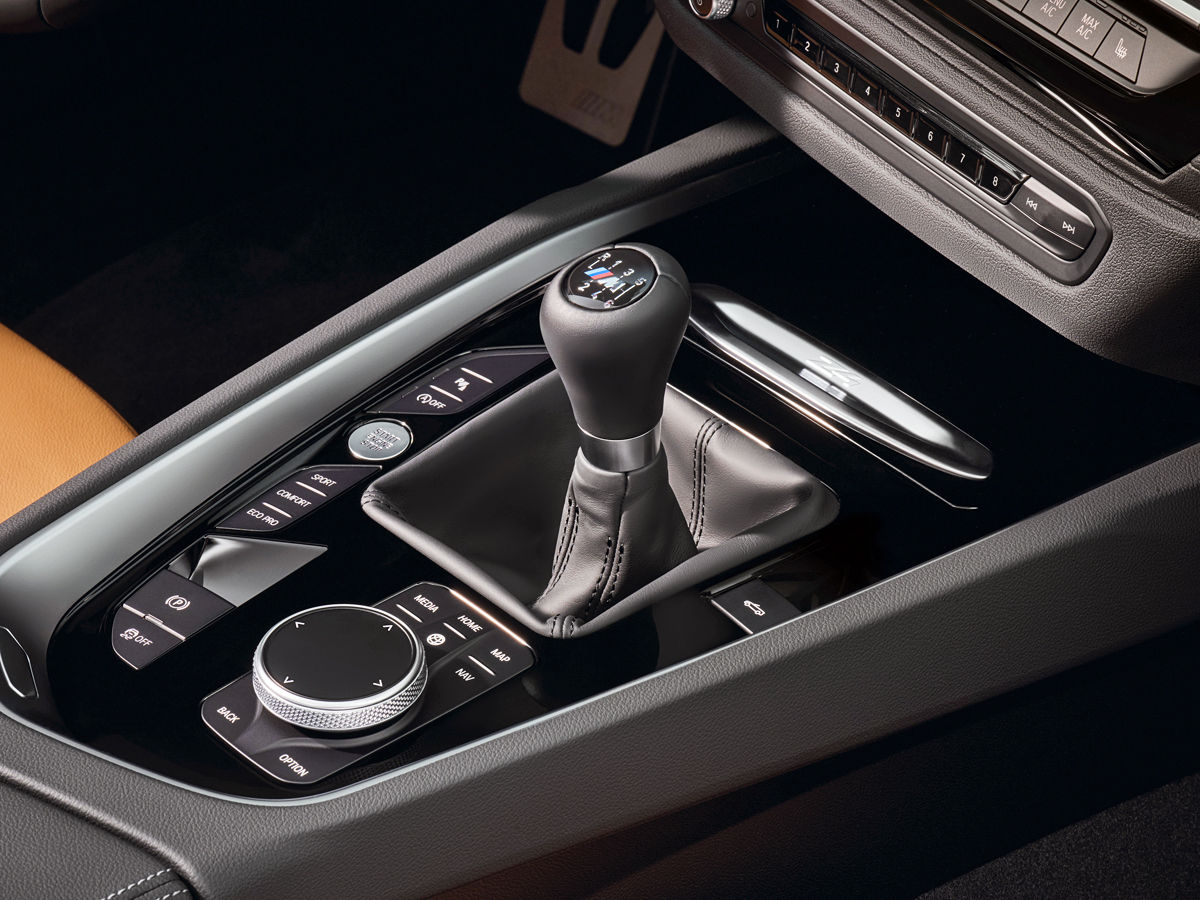
No manual ‘box for South Africa: While the ZF-sourced 8-speed automatic transmission (known as the “Steptronic Sport” in BMW parlance) was a fast-shifting ‘box particularly well matched to the 6-cylinder engine, it was nevertheless a pity a few manual-equipped examples didn’t find their way to Mzansi.
Interestingly, the Munich-based automaker opted to offer the M40i with a 6-speed manual cog-swapper in select markets only from 2024 (as part of the so-called Handschalter Pack), which was remarkably late in this model’s lifecycle.
Condition-based servicing wasn’t quite foolproof.
Condition-based servicing: The Z4 shipped with BMW’s standard 5-year/100 000 km maintenance plan, but – like virtually all models in the German group’s stable – featured so-called “condition-based servicing” (CBS) rather than predetermined service intervals. What exactly does this mean?
Well, the vehicle essentially monitored the condition of various components (including the engine oil) and alerted the driver only when the onboard diagnostics system determined a workshop visit was necessary. As we’ve said before, there’s an argument to be made that, under certain circumstances at least, these flexible service intervals could be extended a little too far.
Pay close attention to the service history, particularly in the case of examples out of motorplan.
Therefore, many fastidious BMW owners today opt to slot intermediate oil changes between the CBS recommendations. So, we’d suggest paying particularly close attention to the service history of any used Z4 you’re considering to make sure you’re satisfied with the frequency of the performed routine maintenance.
How much is a used G29 BMW Z4 in South Africa?
The M40i is the most common version of the G29-series Z4 on the used market.
In South Africa, the G29-series BMW Z4 came standard with a 2-year/unlimited kilometre warranty and the aforementioned 5-year/100 000 km maintenance plan. There were several extra-cost options on offer, from adaptive LED headlamps and a head-up display to steering-wheel heating and various alloy-wheel designs.
At the time of writing, there were just 16 units of the G29-series BMW Z4 listed on Cars.co.za – 14 examples of the M40i and just a pair of sDrive20i derivatives. Indicated mileage ranged from 3 400 km on a 2023 M40i model to 105 000 km on a 2019 sDrive20i.
Below R800 000: We found 6 units priced below the R800 000 mark, including the only sDrive20i examples listed (the highest-mileage model mentioned above, for R479 900, and a 2023 derivative for R698 950). The remaining M40i variants here were all pre-facelift examples. We also noted a “First Edition” model priced at R719 950.
R800 000 and up: At the time of writing, there were 10 units (all M40i) priced above this point, with most pre-facelift examples slipping in just below the 7-figure mark. The most expensive G29-series BMW Z4 we discovered was a 2025 model (with an indicated 10 500 km on its odometer) priced at R1 199 000.
For context on the figures above, note that the Z4 M40i was priced at R1 330 000 when it quietly exited SA’s new-vehicle market early in 2026 (having launched at a base price of R1 030 500 back in March 2019).
Which BMW Z4 derivative should I choose?
We’d lean strongly towards the M40i.
So, which version of the G29 most deserves your attention? Well, while the sDrive20i certainly had its merits, we’d point to the straight-6 derivative as the one to have. The extra performance on offer from the B58 engine served up in a far more visceral driving experience, after all.
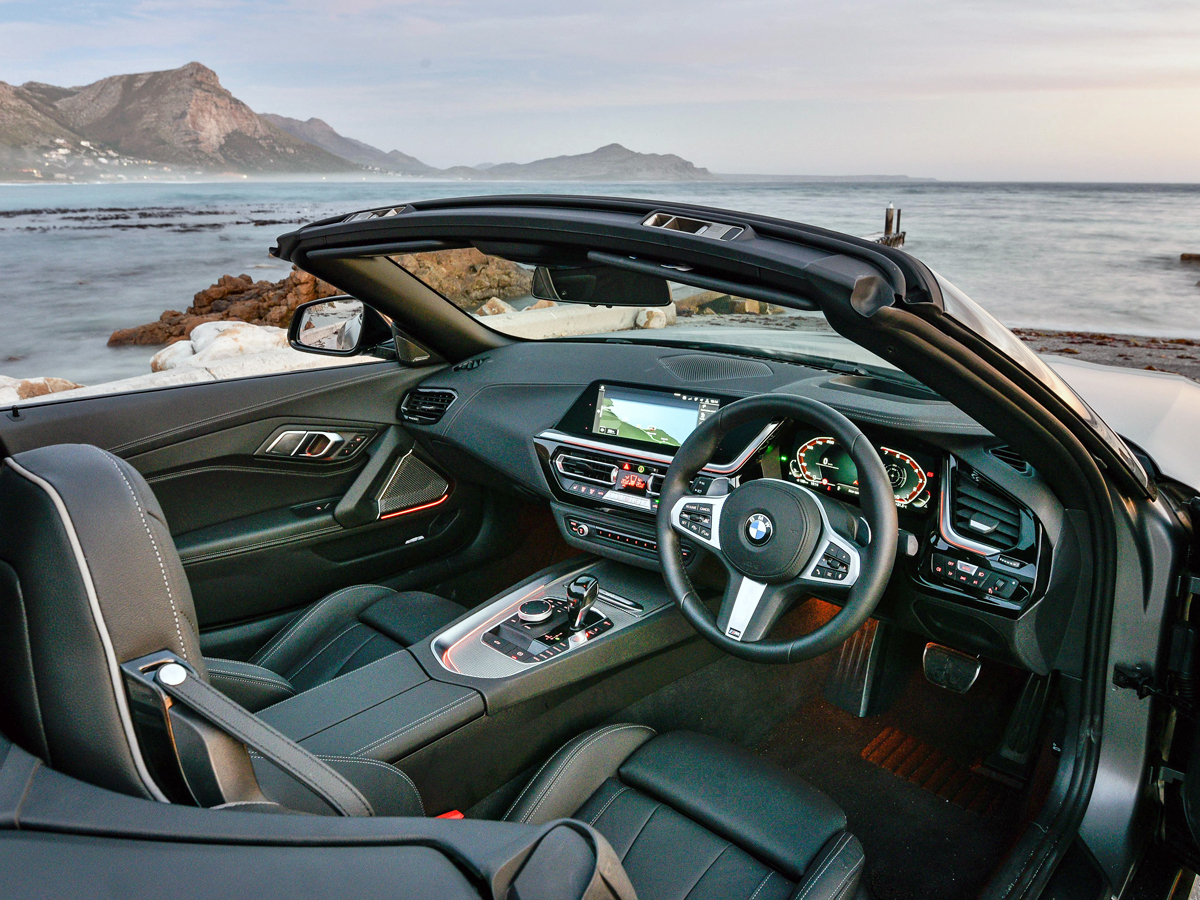
It’s also worth remembering the more expensive M40i obviously featured far more standard kit than the base sDrive20i, including items like ambient cabin lighting, parking sensors (front and rear), BMW Live Cockpit Professional, a 12-speaker Harman Kardon surround-sound system and larger alloy wheels (19-inch items rather than 18 inchers).
What are some alternatives to BMW’s Z4 roadster?
The G29-series Z4 faced a handful of rivals.
Over its circa-7-year local lifecycle, the 3rd-generation Z4 faced a handful of open-air rivals, including the retractable-hardtop R172-series Mercedes-Benz SLC (earlier known as the SLK) that went out of production soon after the BMW arrived.
Still, it was the razor-sharp 982-series Porsche 718 Boxster that offered the purest sportscar driving experience (particularly in flat-6 guise) in the segment. Other options included the Audi TT Roadster (with its front-wheel-drive or quattro platform) and the Jaguar F-Type Convertible (available with a stonking V8).
Is the BMW Z4 a smart used purchase?
Will we one day see the return of the Z4 badge?
Equipped with that silky smooth straight-6 engine, the G29-series BMW Z4 in M Performance form offered a pleasing balance of grand-touring comfort and white-knuckle rear-wheel-drive dynamics.
This dual personality was perhaps its defining feature, helping set the Z4 apart from both harder-edged rivals and so-called “poser” ragtops. What a shame this badge – and indeed much of this segment – is no more…
Q: What is the current production status of the G29-series BMW Z4 in South Africa?
A: The G29-series BMW Z4 has reached the end of its lifecycle, with global production officially ceasing in March 2026. Following the discontinuation of the sDrive20i derivative in October 2024, the range-topping M40i was subsequently removed from BMW Group Africa’s official pricelist in early 2026, marking the end of the Z4’s availability in the local new-vehicle market.
Q: How did the BMW Z4 M40i performance change during its South African lifecycle?
A: While the M40i initially launched with 250 kW at its introduction in March 2019, the peak power output for the SA-spec 3.0-litre turbocharged straight-6 engine was quietly increased to 285 kW in early 2020. This update also widened the peak torque band, resulting in a claimed 0-100 kph sprint time of 4.1 seconds for the uprated model.
Q: What are the potential drawbacks or “watch items” for a used G29 BMW Z4?
A: Prospective buyers should be aware of a few specific points: the steering has been criticised for feeling artificial and inconsistent near the centre; there was no manual gearbox option provided for the South African market; and because the vehicle uses “condition-based servicing” (CBS) instead of fixed intervals, it is vital to review the service history closely. Many owners recommend performing intermediate oil changes to ensure long-term engine health.
Q: Is the Z4 sDrive20i or the M40i a better used buy?
A: The M40i is generally the preferred choice due to its visceral performance and significantly more comprehensive standard equipment list, which includes features like a 12-speaker Harman Kardon sound system, adaptive suspension, and larger 19-inch alloy wheels. While the sDrive20i is a capable roadster, the M40i’s B58 straight-6 engine defines the Z4 experience and offers a more complete “M Performance” package.
BMW vs Mercedes-Benz: global sales race in H1 2026
BMW and Mercedes-Benz continue to fight for sales dominance in the global premium market. But which of these foes leads the race after the opening half of 2026?
BMW Group sales drop 4.2% year on year
Mercedes-Benz Group sales decline 6.0%
BMW brand still ahead globally in H1 2026
With the opening half of 2026 behind us, it’s time to see which German automaker is leading the global premium sales race. Yes, we’re about to break down the H1 2026 sales figures for both BMW and Mercedes-Benz.
Note that the Mercedes-Benz Group appears to have rounded its figures to the nearest 100 units. In addition, the BMW Group says its global numbers are “provisional and may change up until the BMW Group Report 2026 is published”.
BMW Group stays ahead of Mercedes-Benz Group
In the first 6 months of the year, the BMW Group says it delivered 1 156 742 units to customers around the world, representing a 4.2% year-on-year decline. For the record, that includes 149 538 units from the Mini marque and some 2 523 units from Rolls-Royce, though seemingly excludes 102 847 units from BMW Motorrad, the company’s motorcycle and scooter brand.
Meanwhile, the Mercedes-Benz Group (which includes the Mercedes-Benz brand and Mercedes-Benz Vans, though seemingly not Smart) says it ended the 6-month reporting period on 1 011 500 units, down 6.0% year on year. That suggests the BMW Group is a little over 145 000 units ahead of the Mercedes-Benz Group at the year’s halfway mark.
How the core brands (and EV totals) compare
How did the 2 core brands compare in H1 2026? Well, the BMW brand ended the reporting period on 1 004 681 units, down 6.2% year on year. Mercedes-Benz Cars reached 837 200 units over the same 6 months, representing a 7.0% year-on-year decline. This suggests the BMW brand is approximately 167 000 units ahead at the year’s mid-point.
Meanwhile, the BMW Group says it registered 204 295 fully electric vehicles (EVs) in the first half of 2026, down 7.4% year on year. The Mercedes-Benz Group’s total EV sales for the same 6-month period increased 30.0% year on year 113 300 units.
While BMW M GmbH says it registered 99 595 units in H1 2026 (-6.0% compared with H1 2025), its Stuttgart-based rival unfortunately hasn’t revealed a Mercedes‑AMG sales figure for the opening half of the year. Instead, Mercedes-Benz lists a “top-end” total of 119 600 units, which includes not only Mercedes‑AMG but also Mercedes‑Maybach, G‑Class, S‑Class, GLS, EQS and EQS SUV sales.
What about BMW and Mercedes sales in SA?
In South Africa, it’s unfortunately not quite clear how each firm performed in H1 2026, since BMW reports sales figures for only every 3rd month and Mercedes-Benz doesn’t share registrations with Naamsa at all.
That said, based on the industry representative body’s monthly “estimates”, BMW Group SA (here including only the BMW and Mini brands, and not Rolls-Royce and BMW Motorrad) sold 7 948 units locally in the opening half of 2026, while Mercedes-Benz SA (including Mercedes-Benz Vans) finished on 3 103 units.
Frequently Asked Questions (FAQ)
Q: Which German premium automotive group is leading global sales after the first half of 2026?
A: The BMW Group leads the global race at the halfway mark of 2026, delivering 1 156 742 units worldwide despite a 4.2% year-on-year decline. This puts them more than 145 000 units ahead of the Mercedes-Benz Group, which registered 1 011 500 deliveries, marking a 6.0% year-on-year decline.
Q: How do the core BMW and Mercedes-Benz passenger car brands compare in global H1 2026 sales?
A: The core BMW brand retains its lead over its Stuttgart rival with 1 004 681 global deliveries in H1 2026 (down 6.2%). In comparison, Mercedes-Benz Cars recorded 837 200 deliveries (down 7.0%), putting the Munich-based BMW brand approximately 167 000 units ahead of Mercedes-Benz at mid-year.
Q: Which premium brand is winning the electric vehicle (EV) sales race in H1 2026?
A: While the BMW Group delivered a higher volume of fully electric vehicles with 204 295 units sold (a 7.4% decrease year-on-year), the Mercedes-Benz Group saw massive growth in this sector. Mercedes-Benz EV sales jumped 30.0% year-on-year to reach 113 300 units, significantly narrowing the electric gap between the two rivals.
Q: How do BMW and Mercedes-Benz sales stack up in the South African market for H1 2026?
A: Exact local figures are difficult to pin down as Mercedes-Benz does not report detailed sales to Naamsa and BMW only reports quarterly. However, based on Naamsa’s industry estimates for the first six months of 2026, BMW Group SA (BMW and Mini) led local premium sales with 7 948 units, while Mercedes-Benz SA (including Vans) trailed with an estimated 3 103 units.
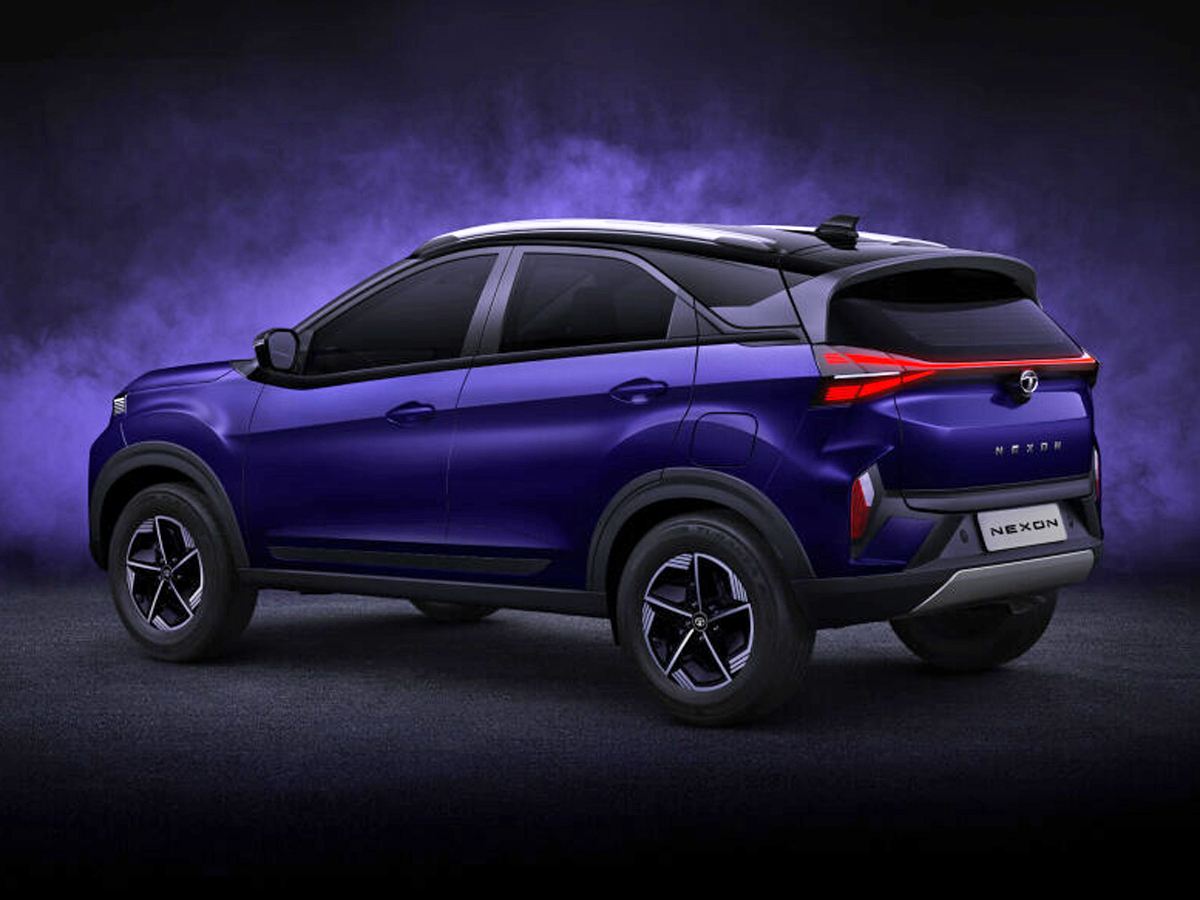
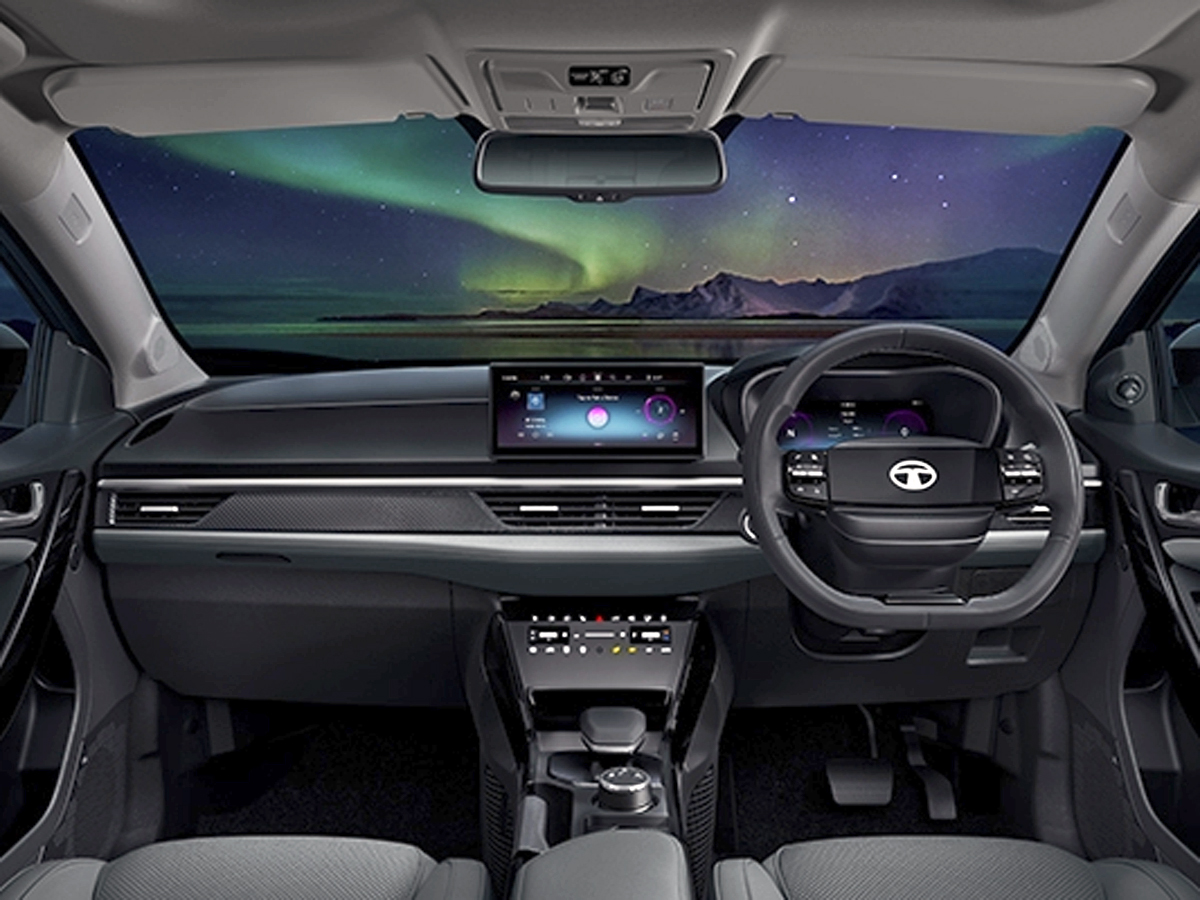
The Tata Nexon is scheduled to launch in South Africa in the 3rd quarter of 2026, though the Indian brand’s local division says it will be badged as the Osprey…
Nexon to wear Osprey badge in SA
Local launch planned for Q3 2026
Engine details not yet confirmed
At the start of 2026, Tata Motors Passenger Vehicles South Africa confirmed plans to launch the Nexon in Mzansi. Now, however, the Indian brand’s local division has announced that the crossover will be badged as the “Osprey” in the local market.
Set to arrive in the 3rd quarter of the year (seemingly in August), the sub-4-metre crossover will likely slot in between the Punch and the Curvv. Though the company hasn’t said why it’s adopted this “unique naming convention” for the local market, it’s interesting to note the Nexon’s internal codename ahead of its global reveal back in 2016 was Osprey.
In India, this model wears the “Nexon” badge.
For the record, the Nexon is by no means a new model, with production having started in India way back in 2017. However, this small crossover received facelifts in both 2020 and 2023, with this latest version destined for Mzansi’s roads – albeit wearing a fresh badge (ostensibly inspired by the bird of prey of the same name).
Though Tata Motors Passenger Vehicles SA hasn’t yet confirmed powertrain details for the local market, the front-wheel-drive Nexon is available in India with the same turbocharged 1.2-litre, 3-cylinder petrol engine (88 kW and 170 Nm) as used in the Curvv. A 1.5-litre turbodiesel motor (85 kW and 260 Nm) is also offered in the world’s most populous nation, as is a fully electric powertrain.
A look at the interior of the Indian-spec Nexon.
The 5-seater crossover measures 3 995 mm long and has a wheelbase of 2 498 mm, while the Indian-spec version has a ground clearance of 208 mm. The luggage compartment is rated to swallow 382 litres. In SA, this model is expected to be pitched against likewise Indian-built models of similar dimensions, such as the Nissan Magnite, Renault Kiger and Kia Sonet.
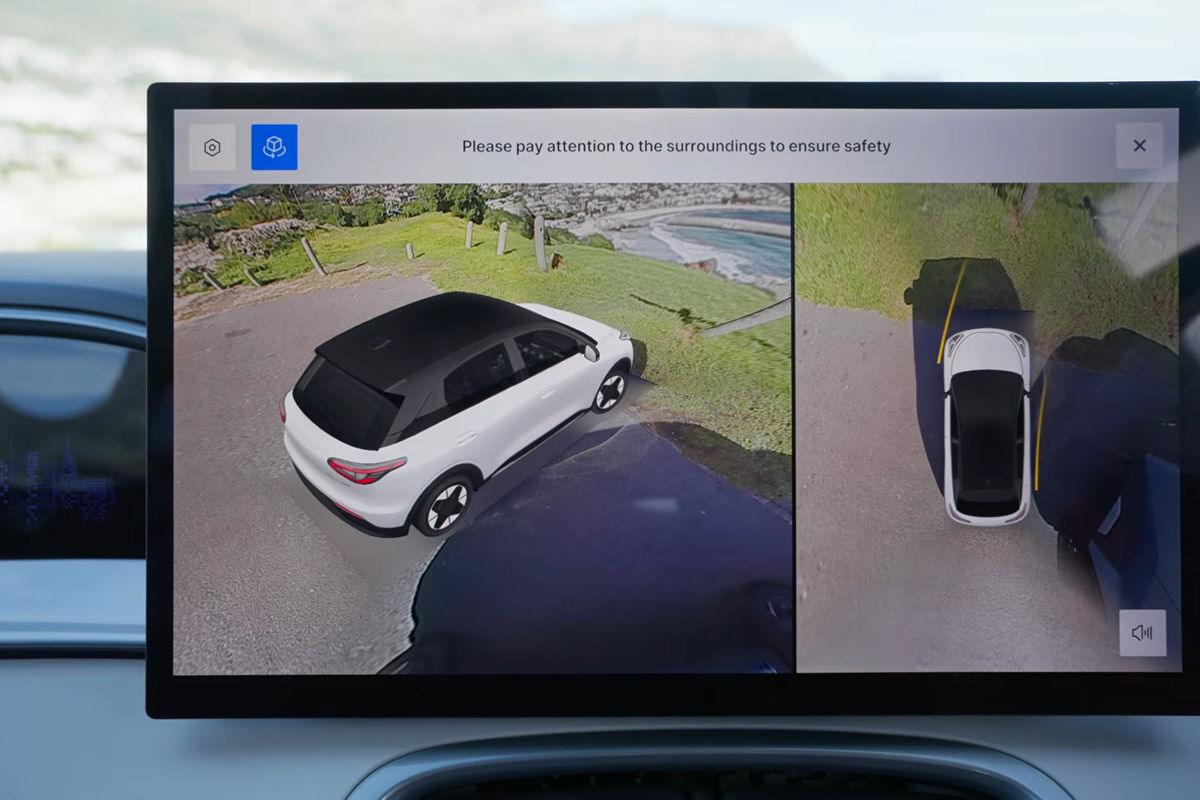
According to Tata’s local division, the SA-spec Osprey will be available with items like a 10.25-inch infotainment system, a 10.25-inch digital instrument cluster, a 360-degree camera system, front parking sensors, faux-leather upholstery, a panoramic sunroof, electronic stability control and 6 airbags. Of course, we’ll have confirmed specification details once the vehicle has officially landed.
Frequently Asked Questions (FAQ)
Q: When will the Tata Nexon launch in South Africa, and what nameplate will it use?
A: The crossover is scheduled to launch in South Africa in the third quarter of 2026. However, instead of using its global “Nexon” nameplate, the Indian manufacturer’s local division has announced it will be badged as the Tata Osprey in the South African market.
Q: What are the dimensions of the upcoming Tata Osprey, and which vehicles will it compete against locally?
A: The 5-seater crossover measures 3 995 mm in length, features a 2 498 mm wheelbase and has a ground clearance of 208 mm. In Mzansi, this sub-4-metre model is expected to compete directly against other Indian-built compact crossovers of similar proportions, including the Nissan Magnite, Renault Kiger and Kia Sonet.
Q: What engine options are available internationally, and what features are expected on the South African spec model?
A: While local powertrain configurations are yet to be finalised, international models offer a choice between an 88 kW 1.2-litre turbocharged petrol engine, an 85 kW 1.5-litre turbodiesel engine and a fully electric powertrain. Local models are expected to feature premium equipment such as dual 10.25-inch digital screens, a 360-degree camera system, a panoramic sunroof and 6 airbags.