10 best-selling bakkies in South Africa: May 2023

Has the Toyota Hilux managed to grab back the top spot? Let’s take a closer at South Africa’s best- and worst-selling bakkies for May 2023…

South Africa’s new-vehicle industry registered 10.1% of year-on-year growth in May 2023, finishing the month on 43 060 units. The light-commercial vehicle (LCV) segment provided much of this momentum, with sales in that sector of the market increasing a significant 38.5% year on year to 12 825 units.

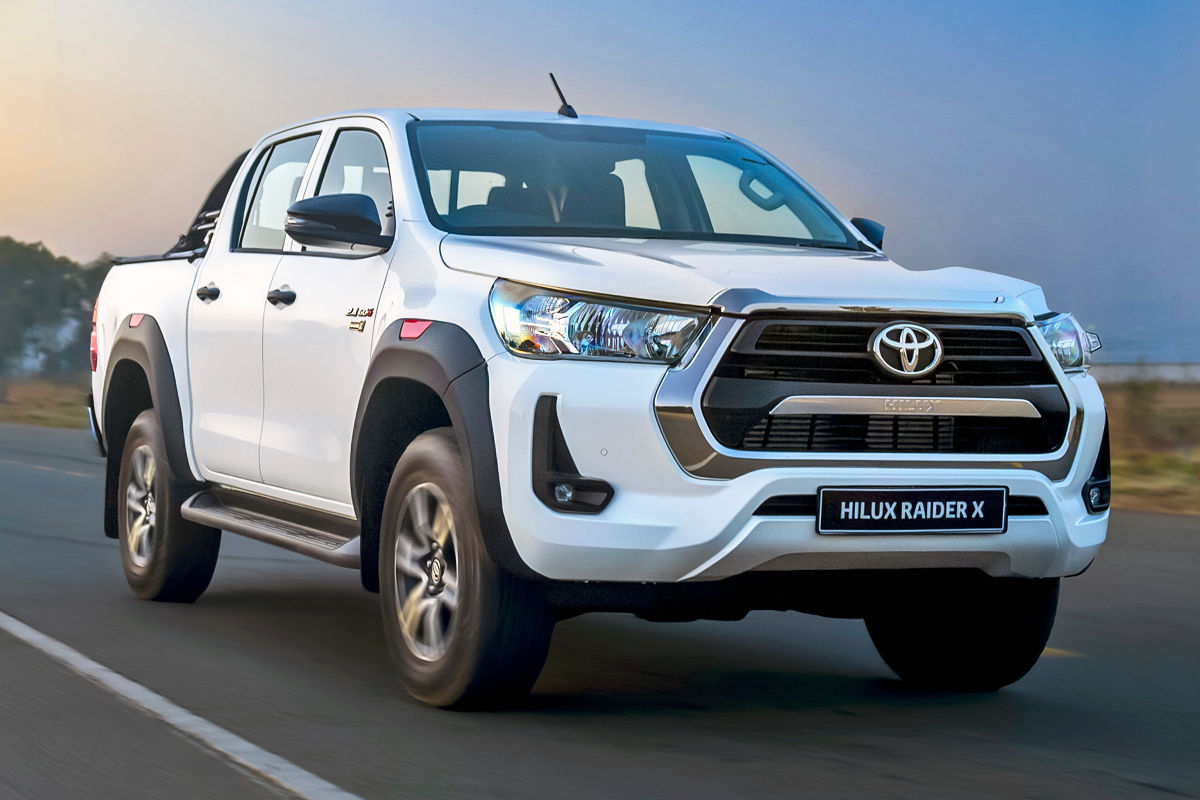
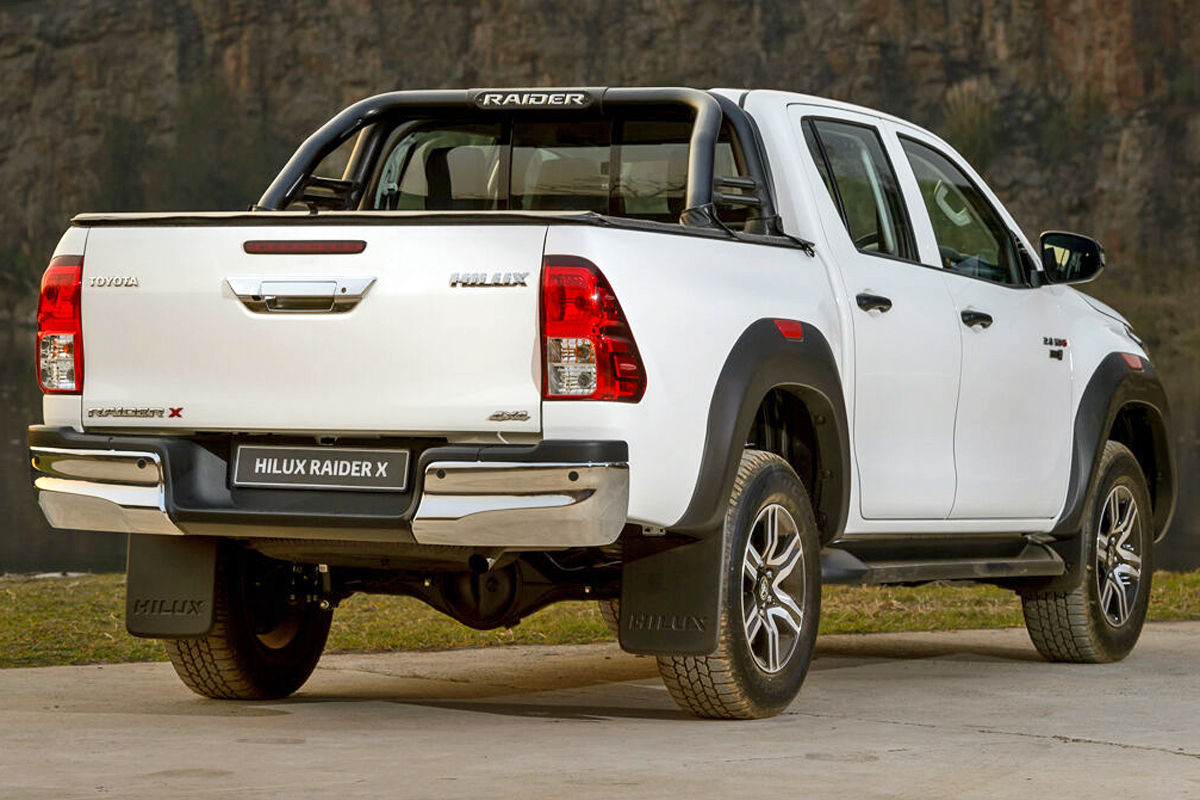
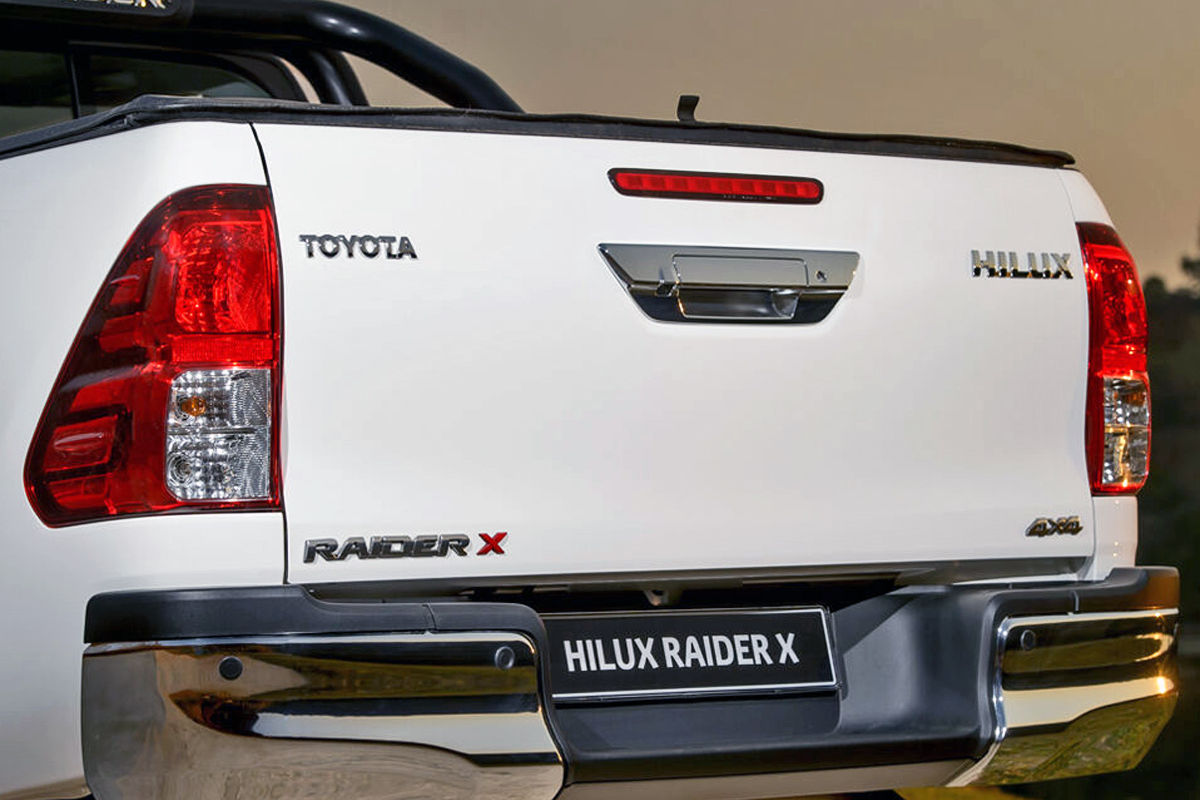
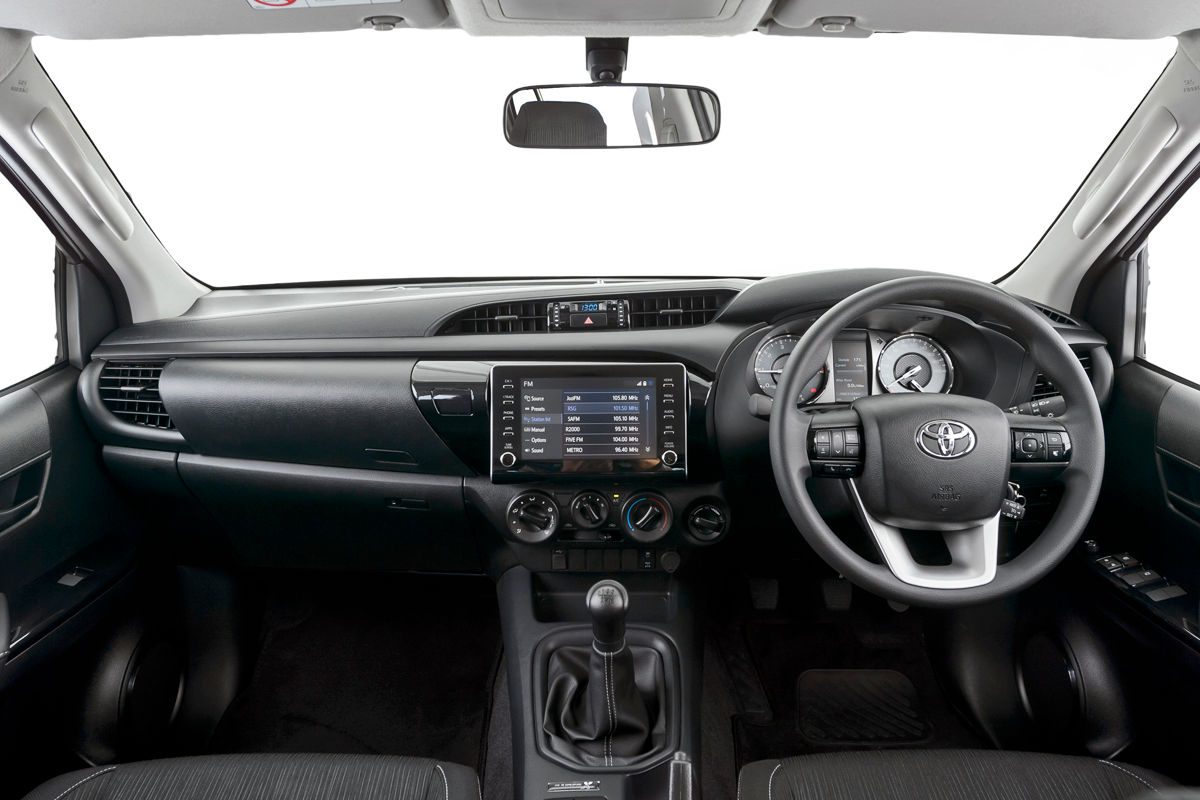
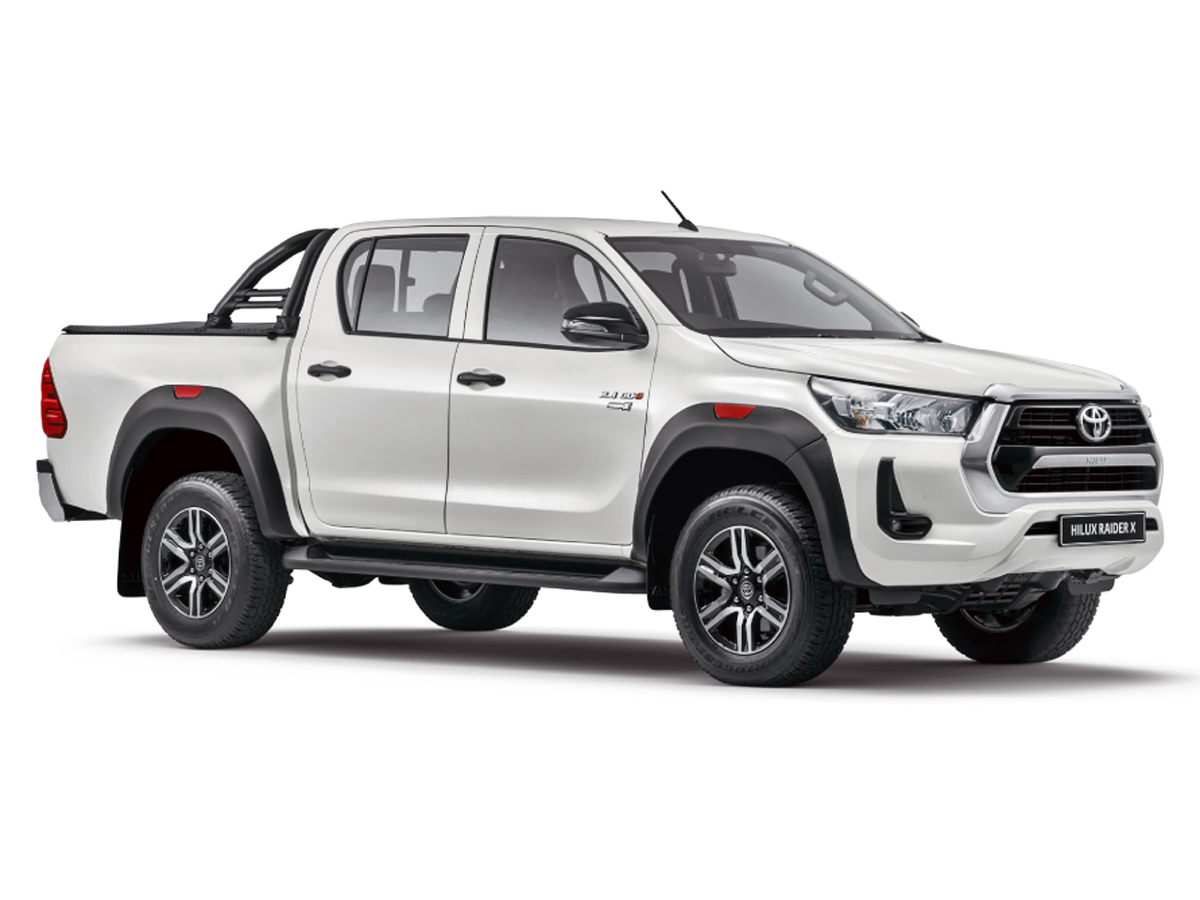
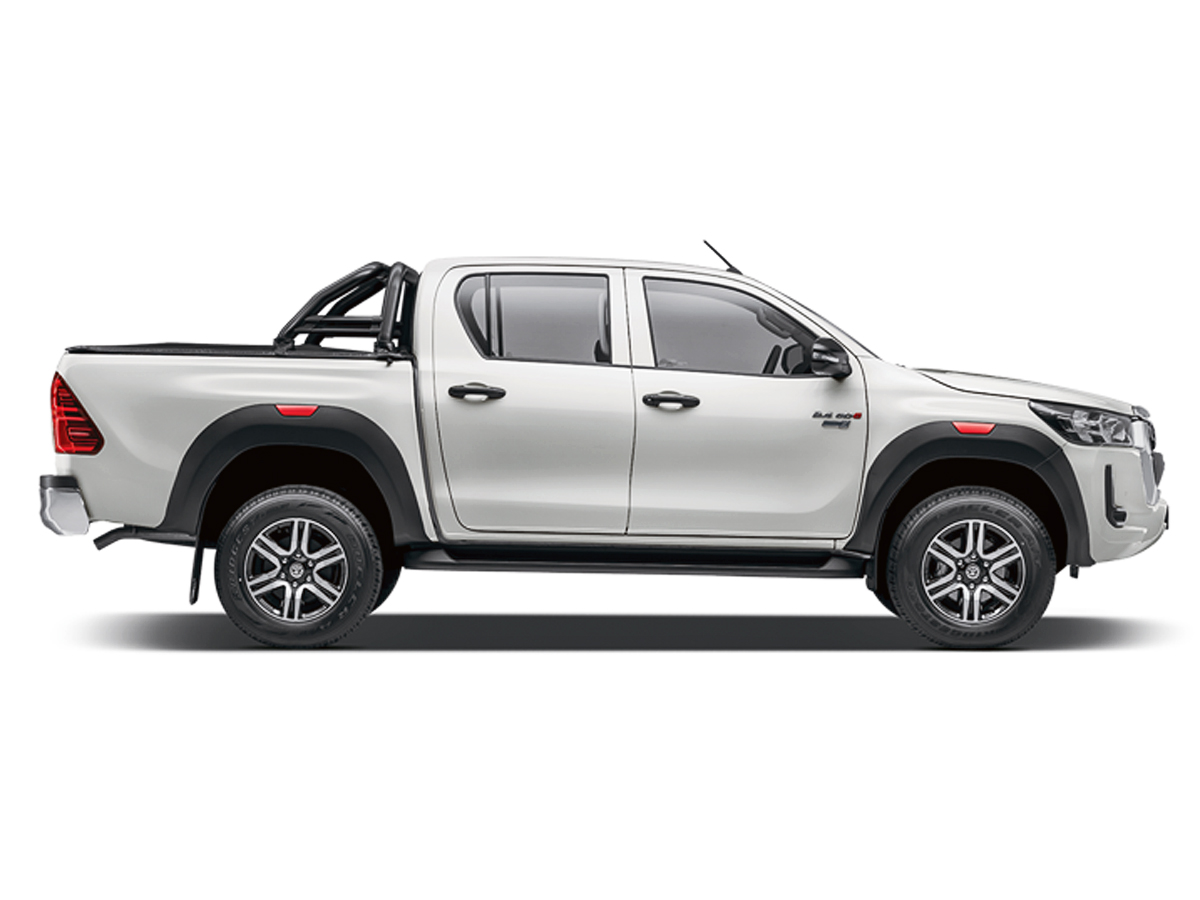
Question is, after being relegated to an unfamiliar 2nd place in April 2023, did the Toyota Hilux manage to regain the top spot on the list of South Africa’s best-selling bakkies in May 2023? It did indeed, with the popular Prospecton-produced pick-up racking up 2 798 registrations across the country.

Shedding 97 units month on month, the Silverton-built Ford Ranger thus dropped a position to 2nd, registering 2 104 sales in May. Our calculations (based on Naamsa data) show the Hilux is some way ahead in the year-to-date sales race, with its tally sitting at 15 009 units. The Ranger, meanwhile, has garnered 9 627 sales up until the end of May.

But back to last month’s figures. The Isuzu D-Max again completed the bakkie podium, with the Struandale-manufactured range (including the Gen 6 line-up) attracting 1 555 registrations in May 2023. For the record, the D-Max’s year-to-date total stands at 8 047 units, which puts it 1 580 units behind the Ranger. As an aside, the new the D-Max Arctic Trucks AT35 is expected to be added to the range relatively soon.

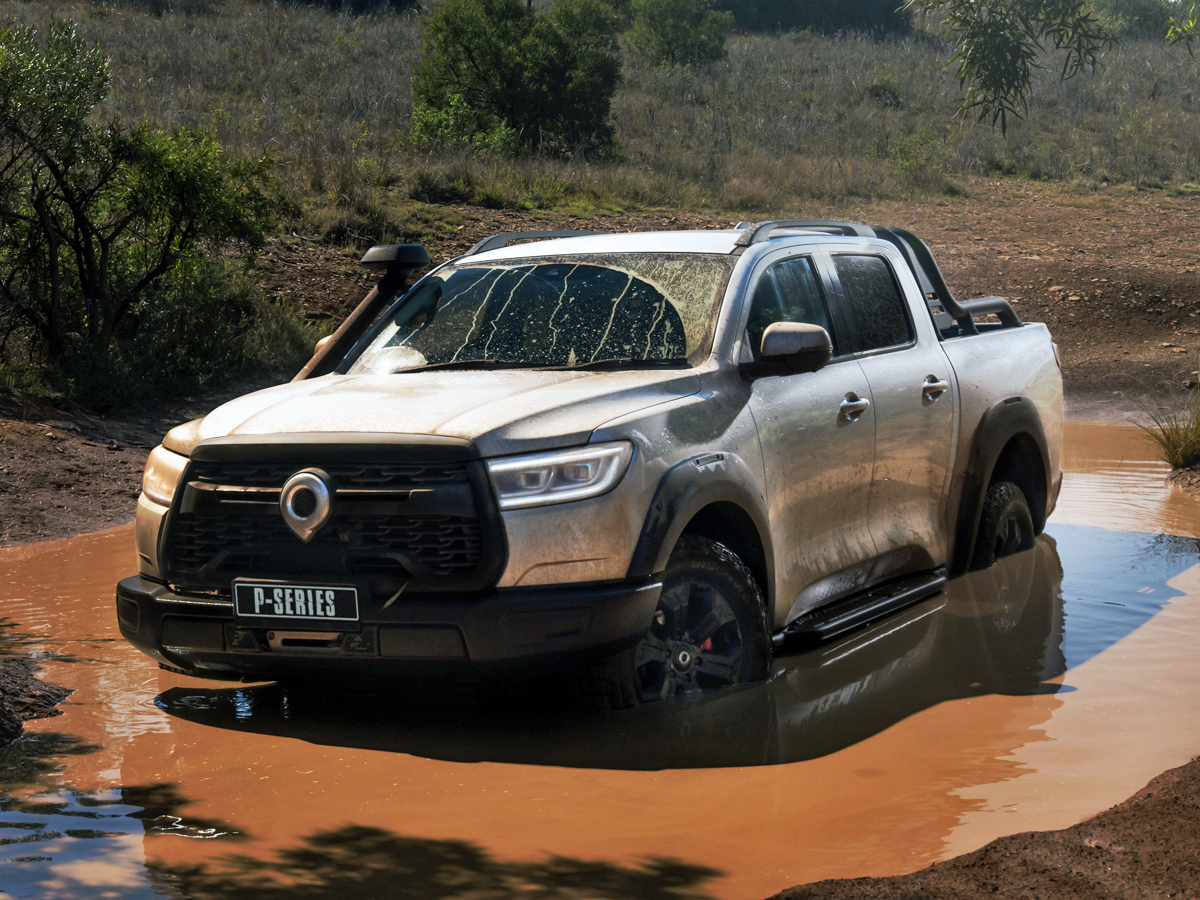
The market’s only half-tonne bakkie, the Rosslyn-made Nissan NP200, remained in 4th in May thanks to its 1 157 sales, while the Mahindra Pik Up (639 units) likewise held steady in 5th. Having nearly doubled its April effort, the GWM P-Series (494 units) moved up a couple of spots to 6th.

That saw the evergreen Toyota Land Cruiser 79 (371 units) – which appears to be in line for 4-cylinder power towards the end of the year – and the Ford-built Volkswagen Amarok (330 units) each slip a position to 7th and 8th, respectively. The Nissan Navara (318 units) managed to hold onto 9th, while the GWM Steed returned to the table, with 99 registrations.

Best of the rest in May 2023: bakkies outside top 10

Mazda’s BT-50 was SA’s slowest-selling bakkie in May 2023, with just 8 units registered.

So, what about those bakkies that didn’t crack the top 10? Well, the Mitsubishi Triton (which will soon gain an AT35 derivative, too) dropped off the table, with 53 units registered in May. The Mahindra Bolero added 37 sales for the Indian firm, while JAC’s T-badged bakkies – the Chinese automaker unfortunately reports only a combined figure for its T6 and T8 line-ups – finished May 2023 on a total of 35 units.

The Peugeot Landtrek was next on 23 registrations, with its Stellantis stablemate, the Jeep Gladiator, following with 13 sales. The Mazda BT-50 had to settle for the final spot, with just 8 units sold (its best performance so far this year).

Export winners in the bakkie segment in May 2023

Exports of the Silverton-built VW Amarok may well have been included in Ford’s figure for the Ranger.

What about the bakkie export market? Well, the Ford Ranger led the charge on this front, with 6 274 units shipped from the Blue Oval brand’s Silverton facility in May 2023. Though it’s not clear, we suspect this total includes Amarok units built in the same factory, as Volkswagen shows no exports of this model in its reported figures. The meant the Toyota Hilux slipped to 2nd on the export charts in May, with 5 323 units sent overseas.

Meanwhile, the D-Max (630 units), Navara (451 units) and NP200 (31 units) again made up the numbers on the export charts. As has been the case for a few months, the official Naamsa report furthermore showed a handful of imported models being exported from local shores in May 2023, this time in the form of the Triton (56 units), P-Series (15 units) and Steed (1 unit).

10 best-selling bakkies in South Africa for May 2023

1. Toyota Hilux – 2 798 units

2. Ford Ranger – 2 104 units

3. Isuzu D-Max – 1 555 units

4. Nissan NP200 – 1 157 units

5. Mahindra Pik Up – 639 units

6. GWM P-Series – 494 units

7. Toyota Land Cruiser 79 – 371 units

8. Volkswagen Amarok – 330 units

9. Nissan Navara – 318 units

10. GWM Steed – 99 units

Related content

Watch our exciting 7-way bakkie drag race!

10 best-selling bakkies in South Africa: April 2023

Polo back in top 10! SA’s best-selling cars in May 2023

Lamborghini Huracán Sterrato (2023) Price & Specs

Hoping to bag 1 of the few Lamborghini Huracán Sterrato units headed to SA? Well, here’s how much you’ll pay for the firm’s V10-powered “all-terrain” supercar…

The Lamborghini Huracán Sterrato was revealed at the tail end of 2022, billed as an “all-terrain” supercar designed to tackle both tarmac and gravel roads (yes, just like its Volkswagen Group cousin, the Porsche 911 Dakar). Though just 1 499 units will be produced, a few are indeed destined for South Africa … and we now know the starting price.

Courtesy of a tip from the in-the-know vehicle-information specialists over at duoporta.com, we have confirmation the all-paw Huracán Sterrato will be priced from R6 625 000, a figure that includes a standard 3-year DrivePlan. Should you wish to upgrade to 5-year cover, the starting price is pushed to R6 825 000.

At the same time, Lamborghini’s local distributor appears to have re-introduced the Huracán Evo RWD derivative (now priced from R5 200 000), along with the Spyder version (which, at R6 750 000, is actually a little more expensive than the Sterrato).

Lamborghini Huracán Sterrato
The Huracán Sterrato scores an extra 44 mm of ground clearance.

As a reminder, the Huracán Sterrato is powered by the Italian automaker’s naturally aspirated 5.2-litre V10 petrol engine, which here sends 449 kW and 565 Nm to all 4 wheels via a 7-speed dual-clutch transmission (and benefits from a mechanical self-locking differential at the rear, too). Lamborghini claims the Sterrato is capable of completing the 0-100 kph sprint in just 3.4 seconds, before running out of steam at 260 kph (a figure likely hindered somewhat by the standard all-terrain tyres).

Compared with the Huracán Evo, the newcomer’s ground clearance has been hiked by 44 mm, while the front and rear track widths grow by 30 mm and 34 mm, respectively. The Sant’Agata Bolognese-based firm’s designers have furthermore added aluminium underbody protection, reinforced sills, a rear diffuser and prominent wheel-arch extensions, along with additional LEDs on the front end, roof rails and a scoop feeding clean air to the rear-mounted atmospheric engine.

The braking system comprises aluminium fixed monoblock callipers with 6 pistons fore and 4 pistons aft, along with ventilated and cross-drilled carbon-ceramic discs. The latter measure 380 mm in diameter and have a 38 mm thickness at the front, complemented by 356 mm-diameter and 32 mm-thick items at the rear.

Lamborghini Huracán Sterrato
The all-terrain version of the Huracán boasts a model-specific Rally mode.

Those hefty brakes are framed by 19-inch alloy wheels wrapped in bespoke Bridgestone Dueler AT002 tyres that measure 235/40 R19 fore and 285/40 R19 aft. These tyres furthermore feature run-flat technology, which Lamborghini says “guarantee” a minimum of 80 km of travel at 80 kph with absolutely zero pressure.

In addition, the Huracán Sterrato features an updated version of the so-called “Lamborghini Integrated Vehicle Dynamics” system, replete with model-specific Strada and Sport calibrations. It also gains a new Rally mode designed for “low-grip conditions”.

The cabin features Alcantara Verde Sterrato upholstery, along with new graphics for the infotainment system. The driver even scores a digital inclinometer complete with pitch-and-roll indicator, a compass, geographic co-ordinate indicator and steering-angle indicator.

How much does the Lamborghini Huracán Sterrato cost in SA?

Lamborghini Huracán Sterrato – R6 625 000

A 3-year DrivePlan is included, with the purchase price rising to R6 825 000 should a 5-year DrivePlan be specified.

Buy a used Lamborghini on Cars.co.za!

Related content

Lamborghini Revuelto (2023) Price & Specs

Lamborghini Huracán Sterrato Primed for Gravel Travel

New Lamborghini Urus S Unveiled with Performante Power

VW Polo returns to top 10! SA’s best-selling vehicles in May 2023

South Africa’s new-vehicle sales grew 10.1% year on year in May 2023, thanks in part to a robust LCV segment. Here’s a look at the country’s best-selling cars, most popular brands and more…

In May 2023, South Africa’s new-vehicle industry registered encouraging year-on-year growth of 10.1% to finish on 43 060 units, ending 2 consecutive months of market decline. That industry tally furthermore represented a month-on-month improvement of 16%, with April 2023’s effort having come in at 37 107 units.

The light-commercial vehicle (LCV) segment appeared to do much of the heavy lifting, with sales in that part of the market increasing a substantial 38.5% year on year to 12 825 units, according to figures released by Naamsa. In contrast, the new passenger-vehicle market came in at 27 401 units, registering a marginal increase of 0.1% compared with May 2022’s figure.

Out of the total reported industry sales of 43 060 vehicles, Naamsa estimated 38 872 units (or 90.2%) represented sales via the dealer channel, with 4.9% coming courtesy of the vehicle-rental industry, 2.7% from industry corporate fleets and 2.2% via government purchases.

Meanwhile, May 2023 export sales stood at 31 833 units, registering a “remarkable” year-on-year gain of 67.5% (though it’s worth bearing in mind May 2022 wasn’t the best month for exports as Toyota’s factory in Prospecton was offline thanks to the prior month’s floods). Still, the industry representative body said production of the Ford Ranger and Volkswagen Amarok at the Blue Oval brand’s Silverton facility “boosted” SA’s export numbers for May.

Meanwhile, WesBank pointed out May sales last year were the 2nd-worst performing month of 2022 (so this latest growth wasn’t off a particularly high base), with May 2023’s performance returning to “levels experienced at the beginning of the year”.

“Although this May presented 1 more selling day year on year, market demand as measured by WesBank’s applications for finance increased substantially compared to the same time last year,” said Lebogang Gaoaketse, Head of Marketing and Communications at WesBank. “In fact, applications for new-vehicle finance displayed double-digit growth and increased twice as much as for used vehicles.”

Still, Gaoaketse cautioned the conversion of these applications into actual deals wasn’t taken into account, though added it was “reassuring” that opportunity remained in the market and that “economic activity – however difficult – continued to perform”.

Gary McCraw, Director of the National Automobile Dealers’ Association (NADA), said the market returned stronger-than-expected sales during the month, despite the general feeling among industry commentators having pointed to a slowdown.

“The retail motor industry is, naturally, delighted at the unexpected extent of the upswing, with dealers responsible for selling 90.2% of the total volume. Certain dealers focused on sales before the interest-rate announcement to allow customers to take advantage of lower rates. This activity, early in the month, certainly benefited sales volumes during May. However, purchase consideration didn’t deteriorate after the rate increase, driven by the ongoing trend towards smaller, more affordable vehicles,” said McCraw.

New-vehicle sales summary for May 2023

  • Aggregate new-vehicle sales of 43 060 units increased by 10.1% (3 959 units) compared to May 2022.
  • New passenger-vehicle sales of 27 401 units increased by 0.1% (15 units) compared to May 2022.
  • New light-commercial vehicle sales of 12 825 units increased by 38.5% (3 564 units) compared to May 2022. 
  • Export sales of 31 833 units increased by 67.5% (12 826 units) compared to May 2022.

10 best-selling car brands in South Africa for May 2023

After dipping below the 10 000-unit mark in April but still finishing the month way out in front, Toyota improved its tally to 11 395 units (6 200 of which came in the passenger-vehicle space) in May 2023. As is so often the case, the Japanese firm’s total was more than double that of the 2nd-placed automaker, which was again the Volkswagen Group (5 259 units). Suzuki, meanwhile, completed the podium, taking 3rd place – as it has done all this year and much of last – with 3 709 registrations.

Hyundai (2 745 units) climbed a position to 4th, which saw Ford (2 491 units) slip a spot to 5th. Nissan held steady in 6th with 2 314 units, while Haval (1 877 units) clawed its way up to 7th, a month-on-month improvement of 2 positions. Not far behind, Isuzu (1 871 units) remained in 8th and Renault (1 848 units) in 9th, while Kia tumbled 3 places to 10th, finishing the month on 1 668 sales.

So, which automakers just missed out on a top-10 finish? Well, the BMW Group technically landed up in 11th, though its 1 228-unit tally was listed as a Naamsa estimate, while Chinese firm Chery (1 211 units) settled for 12th, ahead of Indian automaker Mahindra (907 units).

1. Toyota – 11 395 units

2. Volkswagen Group – 5 259 units

3. Suzuki – 3 709 units

4. Hyundai – 2 745 units

5. Ford – 2 491 units

6. Nissan – 2 314 units

7. Haval – 1 877 units

8. Isuzu – 1 871 units

9. Renault – 1 848 units

10. Kia – 1 668 units

10 best-selling vehicles in South Africa for May 2023

Isuzu’s D-Max moved up to 5th on the list of SA’s best-selling vehicles in May 2023.

After uncharacteristically relinquishing the top spot in April (by just 14 units, we should point out), the Toyota Hilux grabbed back 1st position in May 2023, with 2 798 examples registered round the country. That saw the likewise locally built Ford Ranger (2 104 units) drop a place to 2nd.

The Volkswagen Polo Vivo (1 876 units) and Toyota Corolla Cross (1 644 units) held steady in 3rd and 4th respectively, while the popularity of locally built vehicles continued, with the Isuzu D-Max moving up a couple of spots to 5th, finishing the month on 1 555 units (a figure that includes the prolonged-lifecycle Gen 6 range).

The Prospecton-built Toyota Hi-Ace (1 553 units) was right on the D-Max’s tail but slipped a position to 6th, while the Toyota Starlet (1 218 units) climbed a place to 7th, where it finished as the best-selling imported model ahead of the likewise Indian-produced Suzuki Swift (1 178 units), which fell 2 spots to 8th. The Rosslyn-manufactured Nissan NP200 (1 157 units) again ended in 9th, while the Volkswagen Polo hatch finally returned to the table, with 1 024 sales in May 2023. This is only the 2nd time in 2023 the Polo hatch has made the top 10, having been out in the cold since January 2023.

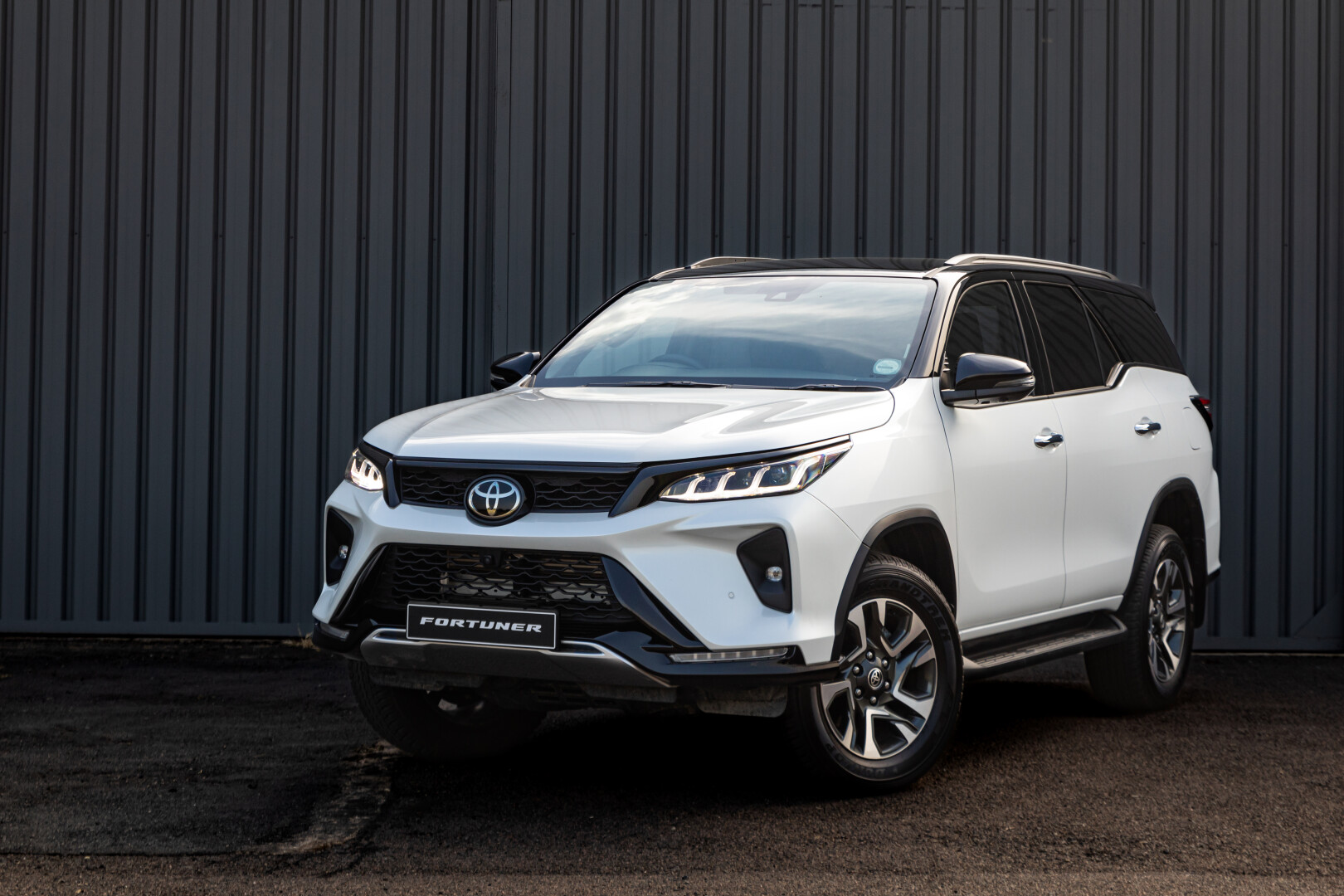
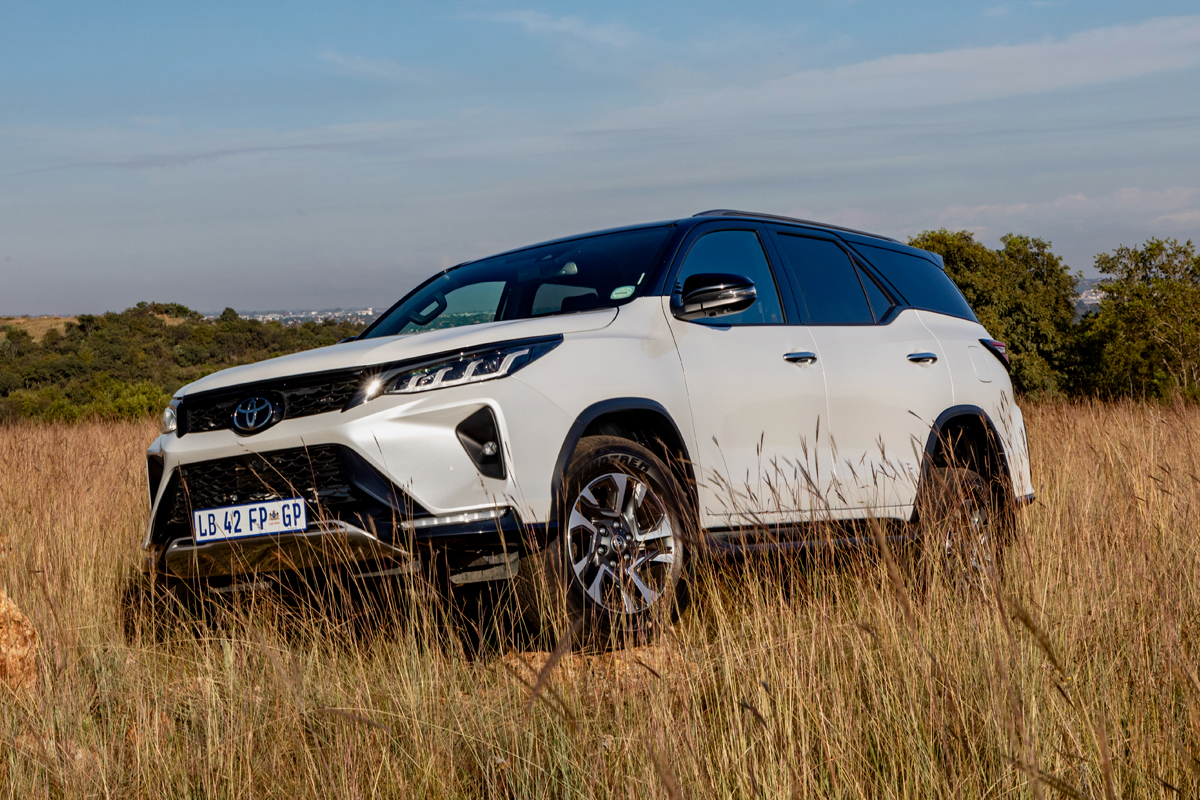
What about the models that just failed to crack the table in May 2023? Well, the Toyota Fortuner (1 018 units) was the only other vehicle to cross 4 figures, eclipsing the Hyundai Grand i10 (976 units), Haval Jolion (881 units), Chery Tiggo 4 Pro (745 units) and Renault Kiger (720 units). The new Toyota Urban Cruiser, meanwhile, wasn’t far off the pace on 713 registrations.

1. Toyota Hilux – 2 798 units

2. Ford Ranger – 2 104 units 

3. Volkswagen Polo Vivo – 1 876 units

4. Toyota Corolla Cross – 1 644 units

5. Isuzu D-Max – 1 555 units

6. Toyota Hi-Ace – 1 553 units 

7. Toyota Starlet – 1 218 units 

8. Suzuki Swift – 1 178 units

9. Nissan NP200 – 1 157 units

10. Volkswagen Polo (hatch) – 1 024 units

Top 9 vehicles exported from South Africa in May 2023

Ford’s Ranger was the 2nd most exported vehicle in May 2023, according to Naamsa.

The Volkswagen Polo hatchback was again top of the export charts, with 7 855 units shipped off from the German automaker’s Kariega facility in May 2023. The Ford Ranger (6 274 units) moved up to 2nd, though its figure may well include VW Amarok units built in Silverton. The Toyota Hilux thus dropped to 3rd, with the Japanese bakkie’s export tally coming in at 5 323 units.

As you might have expected, the Isuzu D-Max, Nissan Navara, Toyota Fortuner, Toyota Corolla Cross, Nissan NP200 and Toyota Corolla Quest made up the export numbers. We should, of course, add the fact BMW and Mercedes-Benz did not submit detailed figures, so it’s unclear how many X3 and C-Class sedan units were exported during the month (but, for the record, Naamsa’s estimates for May 2023 stood at 3 300 units and 7 567 units, respectively).

1. Volkswagen Polo (hatch) – 7 855 units

2. Ford Ranger – 6 274 units

3. Toyota Hilux – 5 323 units

4. Isuzu D-Max – 630 units

5. Nissan Navara – 451 units

6. Toyota Fortuner – 146 units

7. Toyota Corolla Cross – 38 units

8. Nissan NP200 – 31 units

9. Toyota Corolla Quest – 19 units

Vehicle-sales outlook in SA for remainder of 2023

So, what’s next for South Africa’s new-vehicle market? Well, Naamsa warns the market continues to face “multiple headwinds”, including the recent “escalation” of interest-rate hikes, the depreciation of the currency, “sectoral” supply chain disruptions as well as “producer and consumer inflationary pressures”. In addition, the organisation notes a “load-shedding-bound economy will cause irreparable harm to the automotive industry, which has become the successful cornerstone of industrialisation and development in South Africa”.

“Globally, recession concerns have gained prominence, while concerns over the high inflation environment continue to persist. For SA, the risks are heavily tilted downwards, especially as debt levels continue to grow to record high levels. The likelihood of further monetary tightening is very high as inflation remains stickier than expected,” explains Naamsa, before adding “business sentiment is riding a pessimistic tide, with threats on the certainty of South Africa’s future participation in AGOA [the African Growth and Opportunity Act] now entering a realm of speculation”.

ALSO READ: How many EVs and hybrids were sold in SA in Q1 2023?

Heading towards the middle of the year, WesBank says the industry’s year-to-date volumes – up 3.0% to 218 869 units – are representative of “the slow recovery in the market”.

“While the levels of demand remain reassuring for the new-vehicle market, the economic effects will continue to take their toll on consumer budgets and ultimately have a bigger impact on the market,” concludes WesBank’s Gaoaketse, who echoed Naamsa’s concerns about “relentless” increases to interest rates, rising fuel prices and a depreciating currency.

ALSO READ: How many model derivatives are offered in South Africa?

Pointing to May 2023’s figures, NADA’s McCraw appears a little more positive, saying it will be “interesting to see if the pace can continue in an environment where sales growth is seen as being somewhat against the odds”.

“A contributing factor to the better-than-expected sales is that several brands have started offering incentives, to encourage new vehicle buyers. This is something we haven’t seen much of since the pandemic. Another factor could be that many dealers have accumulated stock and were concerned about being left with an excessive inventory if the market took a downturn. As a result, they have turned to more aggressive marketing strategies on new models,” concludes McCraw.

Related content

Ranger pips Hilux! SA’s best-selling vehicles in April 2023

10 best-selling bakkies in South Africa: April 2023

How much market share have Chinese brands grabbed in SA?

All-New Mazda CX-5 Due in 2025

The all-new Mazda CX-5 is due for market launch in 2025. Here’s a look at what’s potentially to come.

The Mazda CX-5 is the Hiroshima-based brand’s best-seller and locally, the big family SUV heads up the sales charts too. In Australia, the CX-5 was the best-selling SUV for seven straight years, until 2019.

The Mazda CX-5 has been a multiple finalist and winner in the Cars.co.za #CarsAwards over the years in the Family Car category.

“Senior management have confirmed there will be a next-generation CX-5, that’s coming. It’s a top selling model globally, so it makes sense,” Mazda Australia marketing director Alastair Doak told Australian publication Drive. “There’s a new-generation car eventually coming. But it’s not next year, it’s [further away],” he added. Based on that quote, the all-new Mazda CX-5 is more than 18 months away.

The third-generation Mazda CX-5 will have many rivals by the time it comes out, including the Toyota RAV4, Volkswagen Tiguan, Hyundai Tucson, Kia Sportage, Nissan X-Ttrail, to name but a few.

This is where things get interesting. Toyota owns 5% of Mazda and the two brands have collaborated on a number of vehicles and shared hybrid technology, and the even share a factory in the United States where the Corolla Cross and CX-50 are built.

We suspect the all-new Mazda CX-5 will not be too radically different and still retain the option of all-wheel or front-wheel drive, as well as petrol and diesel engines. Given the push towards a more efficient and sustainable future, Mazda will have to add hybrid technology to its best-seller, and there’s a good chance Toyota’s hybrid expertise could be called in.

More

Opel Corsa (2015-2020) Buyer’s Guide

Keen on a 5th-gen Opel Corsa? Read our handy buyer’s guide, which details the X15 model’s history in SA, its strengths (and weaknesses!) and what you can expect to pay on the used market…

While the Opel Corsa isn’t nearly as popular in South Africa as it once was, there’s no denying the nameplate has a strong history in the country. The original version of the German firm’s B-segment car wasn’t sold here, but every generation since has been offered locally.

For a period, the Corsa was even built in South Africa – by General Motors at its Port Elizabeth (now Gqeberha) facility – including in Corsa Utility half-tonne bakkie form (which eventually morphed into the Chevrolet Utility) and Corsa Lite prolonged lifecycle guise (remember the “Lite Side of Life” advertising campaign?).

The latest-generation Corsa went into production as long ago as 2019, though arrived in South Africa only at the start of 2021 (yes, we have a certain global pandemic to thank for that). So, the 5th-gen Corsa was on the market locally from 2015 through to the end of 2020, without ever benefitting from a mid-cycle update. And it’s that model that forms the subject of this buyer’s guide.

As an aside, the Opel Corsa went by a number of names, depending on the market. For instance, it was known as the Vauxhall Corsa (or Vauxhall Nova, for a time) in the United Kingdom and was also badged as the Holden Barina (for 2 generations) in Australasia. Japan knew the 2nd-gen model as the Opel Vita, while Mexico called the same version the Chevrolet Chevy. Here, of course, it was simply the Opel Corsa.

Opel Corsa model line-up

The 5th-gen Opel Corsa arrived in SA in the opening quarter of 2015.

The Opel Corsa E (not to be confused with the all-electric “Corsa-e”) was officially revealed at the Paris Motor Show in October 2014, arriving as something of an evolution (some might even term it a “reskin”) of its predecessor and inheriting that model’s basic chassis structure. Within just 4 months, the 5-door version of the then-box-fresh hatchback hit the market in South Africa, rolling onto local dealership floors in the 3rd week of February 2015.

At launch, the Mk5 Corsa – known internally by its X15 codename – was available only with the Rüsselsheim-based firm’s EcoFlex turbocharged 1.0-litre, 3-cylinder petrol engine (which had just debuted in the Adam), driving the front wheels through a new 6-speed manual gearbox. A trio of trim levels was on offer:

  • 1.0T (85 kW/170 Nm) Essentia 6-speed manual
  • 1.0T (85 kW/170 Nm) Enjoy 6-speed manual
  • 1.0T (85 kW/170 Nm) Cosmo 6-speed manual

By August 2015, after a 66 kW/130 Nm naturally aspirated 1.4-litre petrol motor mated to a 6-speed automatic transmission (and offered only in Enjoy guise) had joined the local line-up, Opel also added the option of a new EcoTec turbocharged 1.4-litre petrol engine generating 110 kW and 220 Nm. Fitted to the Corsa 1.4T Sport – which benefited from a subtle OPC Line body kit, rode on 17-inch “Dark Titanium” alloy wheels and featured a smattering of cabin upgrades – this forced-induction 4-pot drove the front axle via a slick 6-speed manual cog-swapper.

Note the Corsa Sport’s subtle body kit.

In July 2017, around 2 years later, the German automaker’s local distributor rejigged the Corsa range based on what it called “intensive market research”, axing the Cosmo specification and thus trimming the line-up from 5 variants to 4. In addition, the entry-level Essentia derivative – which later became known simply as the “1.0T” – switched to a lower-output version of the 1.0-litre turbo-triple, making do with 66 kW (and an unchanged 170 Nm). Furthermore, various items were removed from each variant’s standard specification list, while others were added.

From January 2018, after General Motors had officially exited the country, the Williams Hunt group was appointed as Opel’s new distributor in South Africa. By July of the same year, the formation of Opel South Africa – described as a “wholly owned subsidiary” of the German automaker – was announced, with Williams Hunt parent company Unitrans Automotive assuming responsibility for distributing the brand across Southern Africa.

March 2019 saw the arrival of the Corsa 120Y Special Edition (conceived to celebrate 120 years of the Opel brand), based on the 1.0T Enjoy but gaining items such as 16-inch gunmetal alloy wheels, “Allure” cloth upholstery, some extra standard kit and “120Y” logos on the front fenders, sill plates and floor mats. Shortly before this launch, Opel opted to detune all 1.0-litre variants from 85 kW to 66 kW (yes, just like the base Essentia), ostensibly in the name of fuel savings. Indeed, the claimed combined consumption fell from 5.0 to 4.6 litres per 100 km.

The GSi arrived quite late in the 5th-gen Corsa’s local lifecycle.

The final update for the local X15-gen Corsa was perhaps the most interesting of the bunch, with the GSi badge making a long-awaited return in May 2019. The Corsa GSi featured a 3-door body and employed the same 110 kW turbocharged 1.4-litre powertrain – complete with a “short-ratio” 6-speed manual gearbox – as the 5-door Corsa Sport, which then fell away. It was a moderately warm rather than hot hatch, with even Opel admitting the newcomer was “not a pure racing machine”. Other GSi-specific features included a sportier body kit, OPC suspension, uprated brakes, 18-inch alloys, heated Recaro sports seats, a flat-bottomed steering wheel and alloy pedals.

The curtain finally came down on the 5th-generation Corsa – that’s right, the full-fat 152 kW OPC hot hatch didn’t ever make it to South African roads – at the dawn of 2021, when the Corsa F made local landfall, having switched to the PSA Group’s EMP1 platform (remember, the French firm purchased Opel from General Motors back in March 2017). Peugeot Citroen South Africa – by this time a wholly owned subsidiary of the freshly formed Stellantis – then became the official distributor of Opel vehicles in South Africa.

What are the advantages of an Opel Corsa?

A look at the cabin of the high-spec Cosmo derivative.

Cabin build quality and layout: The Mk5 Corsa boasted a much-improved cabin compared with that of its predecessor. There were plenty of high-quality materials on offer (including a soft-touch finish atop the dashboard) as well as the option of specifying technology (such as the smartphone-mirroring IntelliLink 7-inch infotainment system) that was at the time usually reserved for vehicles in higher segments.

Furthermore, Opel’s designers cleverly maximised interior space, allowing the X15-gen Corsa to feel a fair bit roomier than the likes of the Mk5 Volkswagen Polo and the Mk6 Ford Fiesta (particularly when it came to rear accommodation). Take note, however, the listed luggage space of 265 litres was anything but class leading, while the Enjoy derivatives downgraded from a 60:40-split rear bench to a single-piece item in mid-2017.

Undemanding to drive: Since its focus was on ease of use, overall refinement and a lofty level of comfort, the Corsa was straightforward to pilot, rendering it an ideal commuter vehicle as well as a commendable choice for young drivers. The turbocharged 1.0-litre motor offered its peak twisting force across a broad section of the rev range (from 1 800 to 3 700 r/min), lending it handy tractability, while the handling was predictable and the gearshift action fairly precise. There was even a button-activated “City Mode” setting that allowed reduced steering effort at low speeds for easy parking.

Generous rear space for the segment (Enjoy trim level pictured).

Generous standard safety spec: Though this generation of Corsa had to settle for a 4-star rating from Euro NCAP, the SA-spec range came packed with standard safety equipment. At launch, all variants shipped with ABS (plus EBD and BAS), 6 airbags, IsoFix child-seat anchors, a tyre-pressure monitoring system and Opel’s electronic stability programme (including features such as active rollover protection and hill-start assist).

In addition, items such as an advanced parking assistance feature, blind-spot alert and parking sensors (fore and aft) were available as options for the mid-tier Enjoy and higher-spec Cosmo and Sport derivatives. The GSi further scored items such as forward collision alert, lane-departure alert and traffic-sign recognition. While all models featured disc brakes all round at launch, it appears later versions of the base and Enjoy variants downgraded to drums at the rear, while the base model also eventually lost its tyre-pressure monitoring system.

What are the disadvantages of an Opel Corsa?

There are no obvious reliability issues with the 5th-gen Corsa’s powertrains.

Based on our research, the Mk5 Corsa was largely trouble-free in the mechanical department – and it’s worth noting all engines were chain- rather than belt-driven, too – so we’ll focus on other areas here. Of course, no vehicle or powertrain is immune to reliability problems, so always assess each potential buy on its individual merits and favour vehicles that have strong evidence of fastidious maintenance.

Base spec lacked certain basic features: While safety equipment levels were lofty across the range, the base models initially did without a couple of convenience items most buyers would have expected to be standard. At launch, for instance, air-conditioning and a radio system were absent on Essentia derivatives, instead relegated to “option packs”. Later in the model’s life, however, such features were made standard.

In mid-2017, Enjoy derivatives lost certain features but gained the IntelliLink infotainment system.

Sneaky specification adjustments: With as many as 3 local distributors over its lifetime, the 5th-gen Corsa range endured a number of specification adjustments – some implemented more quietly than others. In mid-2017, for instance, Enjoy derivatives ditched their front foglamps and LED daytime running lights (while the rear bench lost its ability to split) but scored the IntelliLink infotainment system. Naturally, this can make it tricky to compare potential buys on the used market today, even if their trim-level names match.

No OPC halo model for South Africa: In 2015, Opel said the then-new Corsa OPC was “planned” for a South African launch by the 3rd quarter of that year. Of course, for whatever reason, it didn’t ever happen, much to the chagrin of Opel’s local hot-hatch fans. Whereas the 1.4T Sport and GSi were decidedly lukewarm hatchbacks, the full-fat OPC looked a proper little rocket, offering peak outputs of 152 kW and 245 Nm (plus an additional 35 Nm on overboost) from its turbocharged 1.6-litre heart. It’s a real pity this alternative to the likes of the Ford Fiesta ST, Renault Clio RS, Volkswagen Polo GTI and Peugeot 208 GTi didn’t make it to local roads.

What is the price of a second-hand Opel Corsa?

Late model-year GSi derivatives predictably command the highest prices on the used market.

Take note the Corsa range was initially marketed with a 5-year/120 000 km warranty and a 3-year/ 60 000 km service plan. However, the warranty was quietly downgraded to 3 years/120 000 km around the start of 2019, though the service plan was unchanged. To muddy the waters further, models sold during July and August 2019 scored a 5-year/150 000 km warranty and a 5-year/100 000 km service plan.

Of the used Opel Corsa E listings on Cars.co.za at the time of writing, a whopping 97% were equipped with a manual gearbox. The turbocharged 1.0-litre, 3-cylinder motor was the most common (representing 83% of listings), while the turbocharged 1.4-litre unit was interestingly slightly better represented than the naturally aspirated mill of the same capacity.

A few 120Y Special Edition models are still floating around the used market.

Mileage varied from 17 000 km (on a late model-year 66 kW 1.0T Enjoy) to 190 000 km (achieved by an 85 kW 1.0T Enjoy registered in 2018). As you might have guessed, white was the most popular exterior colour, accounting for 44% of all listings, followed by silver (18%) and grey (15%).

  • Below R125 000: At the time of writing, all listings below this mark were entry-level Essentia models with early registration years. Of course, it’s worth bearing in mind the base models of this era featured the higher-output 85 kW version of the turbo-triple engine.
  • From R125 000 to R150 000: There was far more choice between these pricing bookends, with the 3 main trim levels – Essentia, Enjoy and Cosmo – all well represented. The newest model year here was 2018, while we also spotted a relatively rare 1.4 auto in this space.
  • From R150 000 to R200 000: This was the most densely populated pricing segment at the time of writing, featuring nearly half of all X15-generation Corsa listings. Interestingly, every single model year was present, while this was also where we found all examples of the 1.4T Sport as well as a couple of low-mileage 120Y Special Edition units.
  • R200 000 and up: This top bracket contained only 2-year-old or younger vehicles (most with well under 50 000 km on their respective odometers), including another self-shifting model and yet more 120Y Special Edition derivatives. The most expensive Mk5 Corsa we uncovered was a 2019 GSi, which was listed for R270 000.

Pick of the Opel Corsa range?

The mid-level Enjoy specification arguably offers the best value.

So, which derivative should be at the top of your shopping list? Well, there’s very little evidence of widespread problems with any of the 3 engine options, so there’s no particular powertrain you absolutely need to avoid. That said, we’d argue the 85 kW version of the 1.0T offers the best blend of urge and efficiency, while the mid-tier Enjoy specification has sufficient equipment to meet most requirements.

Should you prefer a warm-ish hatch, you have the choice of the 1.4T Sport and the GSi (which employs the same 110 kW 4-pot). With 5 doors, relatively demure styling and a fairly pliant suspension set-up, the former is perhaps the better-balanced of the pair when it comes to daily driving. However, the GSi’s 3-door shell, more aggressive styling, figure-hugging bucket seats and OPC-tuned suspension certainly lend it added appeal.

Is the Opel Corsa a good car?

The Corsa had to contend with a number of mainstream rivals.

The X15-generation Corsa found itself competing against a throng of compelling B-segment hatchbacks, including the 6th- and 7th-generation (German-built) Ford Fiesta as well as the locally produced 5th- and 6th-generation Volkswagen Polo. Other mainstream contenders in this space at the time included the Renault Clio IV, the 2nd-gen Hyundai i20, the Kia Rio Mk4, the 3rd-gen Honda Jazz and the Mazda2 Mk3.

Later examples of the 3rd-gen Toyota Yaris might also be worth considering, while the French duo of the Peugeot 208 and Mk3 Citroën C3 covered the left-field choices. Alternatives to the Corsa Sport and GSi, meanwhile, included the Chevrolet Sonic RS, which employed a slightly detuned version of the same turbocharged 1.4-litre mill, and the naturally aspirated Suzuki Swift Sport (Mk2).

Thanks in part to a lifecycle punctuated by disruptive changes in brand ownership and local distribution (and effectively extended by the pandemic), this generation of Opel Corsa is perhaps a little under-appreciated in South Africa. As a result, there aren’t as many available on the used market as you might think.

Still, since demand is likewise relatively low, there are sometimes highly attractive deals available for buyers who have their wits about them. That makes this version of the Opel Corsa – the last before the move to PSA platforms and powertrains – an interesting and potentially value-packed used alternative to the likes of the more popular Polo.

Looking for an Opel Corsa to buy?

Find one on Cars.co.za here.

Or sell your car here, for no charge.

Range Rover Sport SV Announced

Meet the new Range Rover Sport SV, a 467 kW luxury sports SUV that will be arriving in South Africa.

Not to be confused with SVR, the new Range Rover Sport SV is the new headline act in the Range Rover Sport family. Armed with a BMW-sourced 4.4-litre turbocharged V8 engine, the new potent performer is going to be one of the quickest luxury SUVs when it goes on sale.

With 467 kW and 750 Nm (800 Nm is available for a few seconds in Dynamic Launch Mode) on tap, the Sport SV sprints to 100 kph in 3.7 seconds and charge to a limited top speed of 290 kph, which is ballistic given its size. All that shove goes to the wheels via a ZF-sourced 8-speed automatic transmission. A mild-hybrid system helps with the temporary additional 50 Nm as well as reducing consumption and emissions.

Hit the SV mode on the steering wheel to activate the SV’s sportiest mode. The vehicle will lower by 15 mm, the active exhaust opens up and the steering/transmission/suspension are set to their sportiest.

Given the monstrous power on offer, it should come as no surprise that Land Rover has upgraded the rest of the package to manage the grunt. The car has been lightened with 23-inch carbon wheels, a carbon hood which combined shave 76 kg off the total mass of 2 485 kg. The 6D Dynamic height-adjustable air suspension is said to be smart enough to replace the need for anti-roll bars. There are new carbon ceramic brakes, a first for Range Rover.

Inside, there’s a very apparent sporty theme with carbon fibre and red detailing. The sport seats are of the carbon-backed variety and feature SV logos and integrated headrests. The gearshift paddles are illuminated, which Range Rover says is unique. There’s even a speaker system in the seat which plugs into the 29-speaker Meridian audio that will vibrate the seats in time to the music for a powerful musical experience.

Range Rover Sport SV

Range Rover Sport SV on sale when?

Good news as the Range Rover Sport SV will be sold in South Africa, but the bad news is you’ll have to wait as the first year of production is all sold out. There’s some light on the horizon for Range Rover Sport owners as the rest of the range has been given a mild update and is available to order, priced from R2 283 700.

The changes range from a new plug-in hybrid derivative called the P460e with a bit more pure electric range (now up to 121 km) and the debut of the new-gen Pivi Pro infotainment system. The P460e features a 3.0-litre 6-cylinder petrol engine and thanks to the addition of an electric system, generates 33 8 kW and 800 Nm.

More

Volvo C40 Recharge (2023) Launch Review

The sporty-looking Volvo C40 Recharge has touched down in South Africa and we got behind the wheel of the new battery-electric vehicle in Franschhoek, Western Cape.

The past few years have been tough on everyone, including the automotive industry, which struggled with manufacturing disruptions (due to the lack of semiconductors and other components), logistical challenges (such as congested ports), escalating raw-material prices and delayed model launches.

As a niche brand in our market, Volvo South Africa has had to weather the proverbial storm more than most, but fortunately, the worst is over and the brand is on the up. Volvo has a raft of new products earmarked for our country, such as the EX90. First up is a stylish coupe SUV, named the C40 Recharge.

Setting aside its Polestar sub-brand for a moment, Volvo’s first dedicated battery-electric vehicle (BEV) – the C40 Recharge – is positioned against the upcoming BMW iX1 and Mercedes-Benz EQA/EQB.

What is it?

There are numerous ways in which to “top up” the C40 Recharge’s battery.

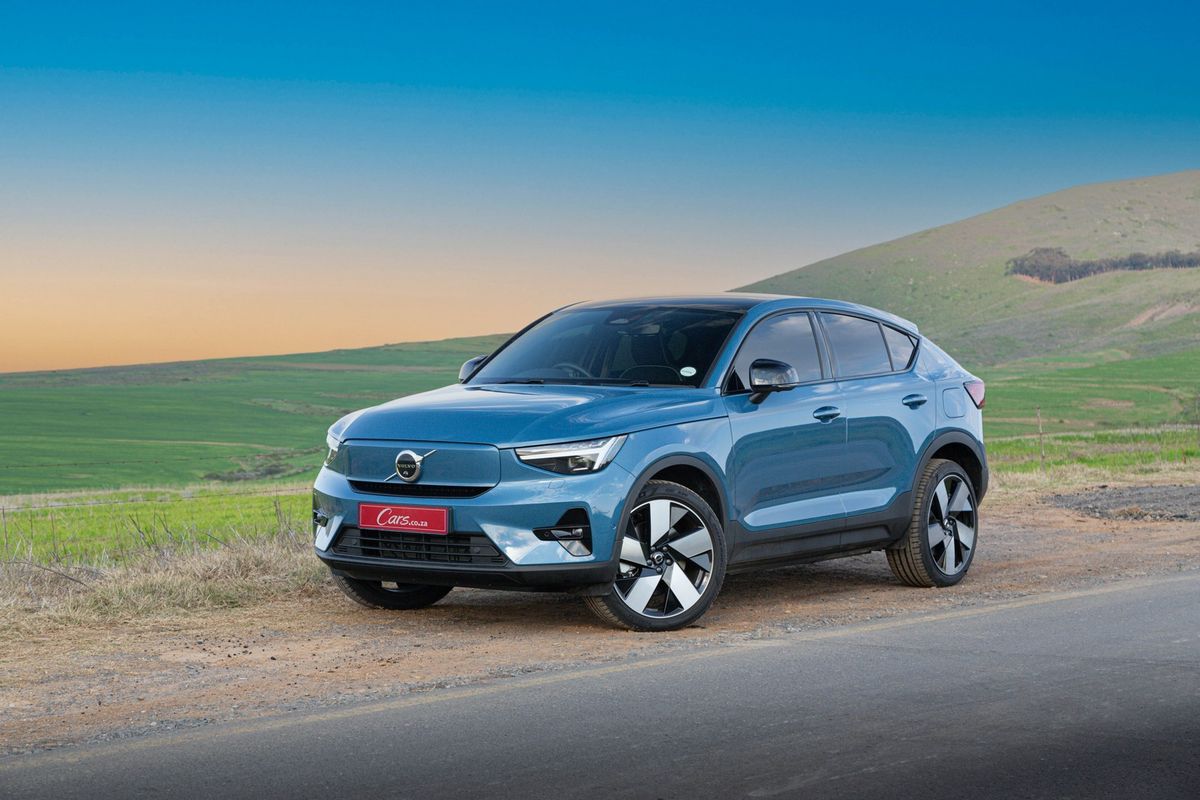
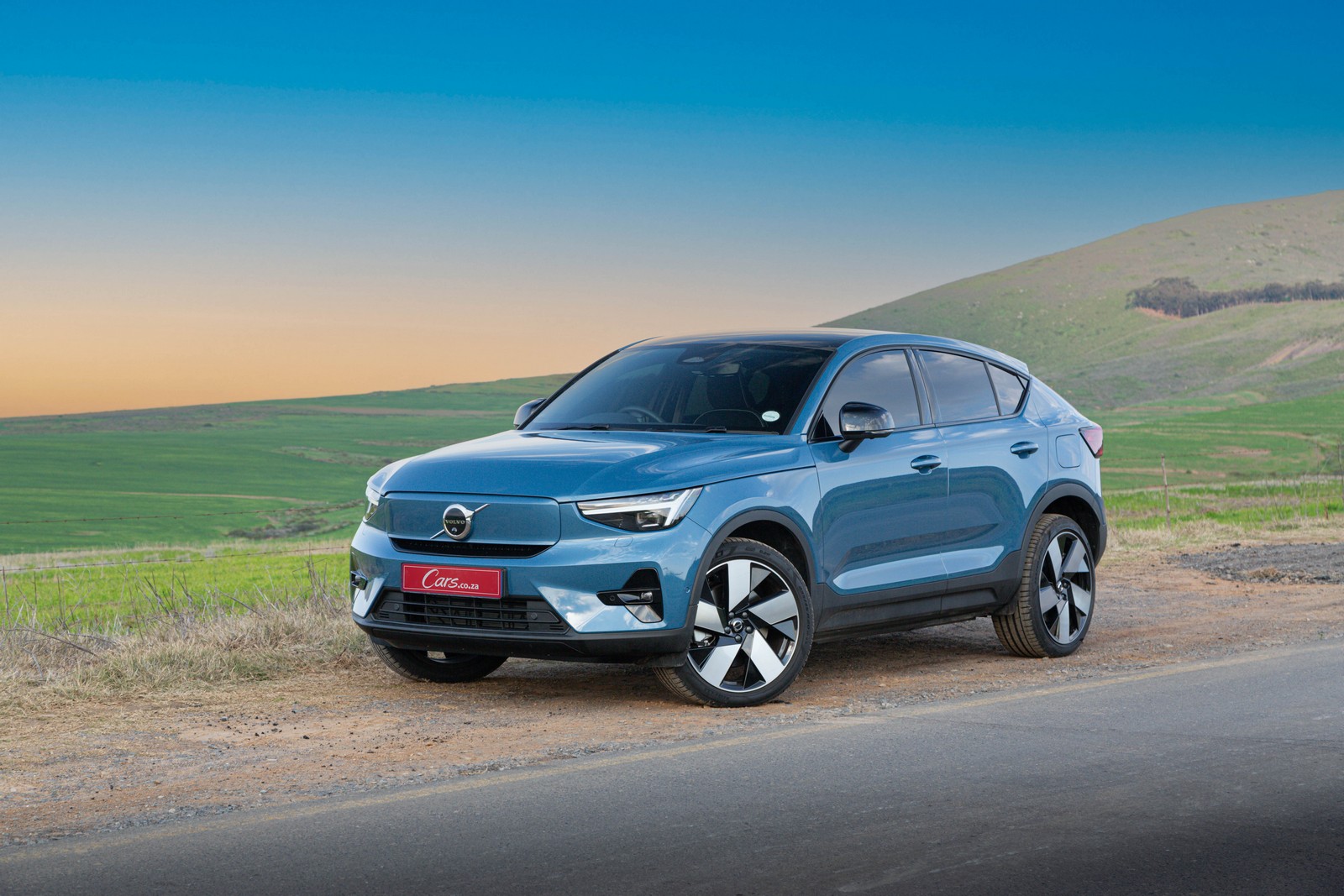
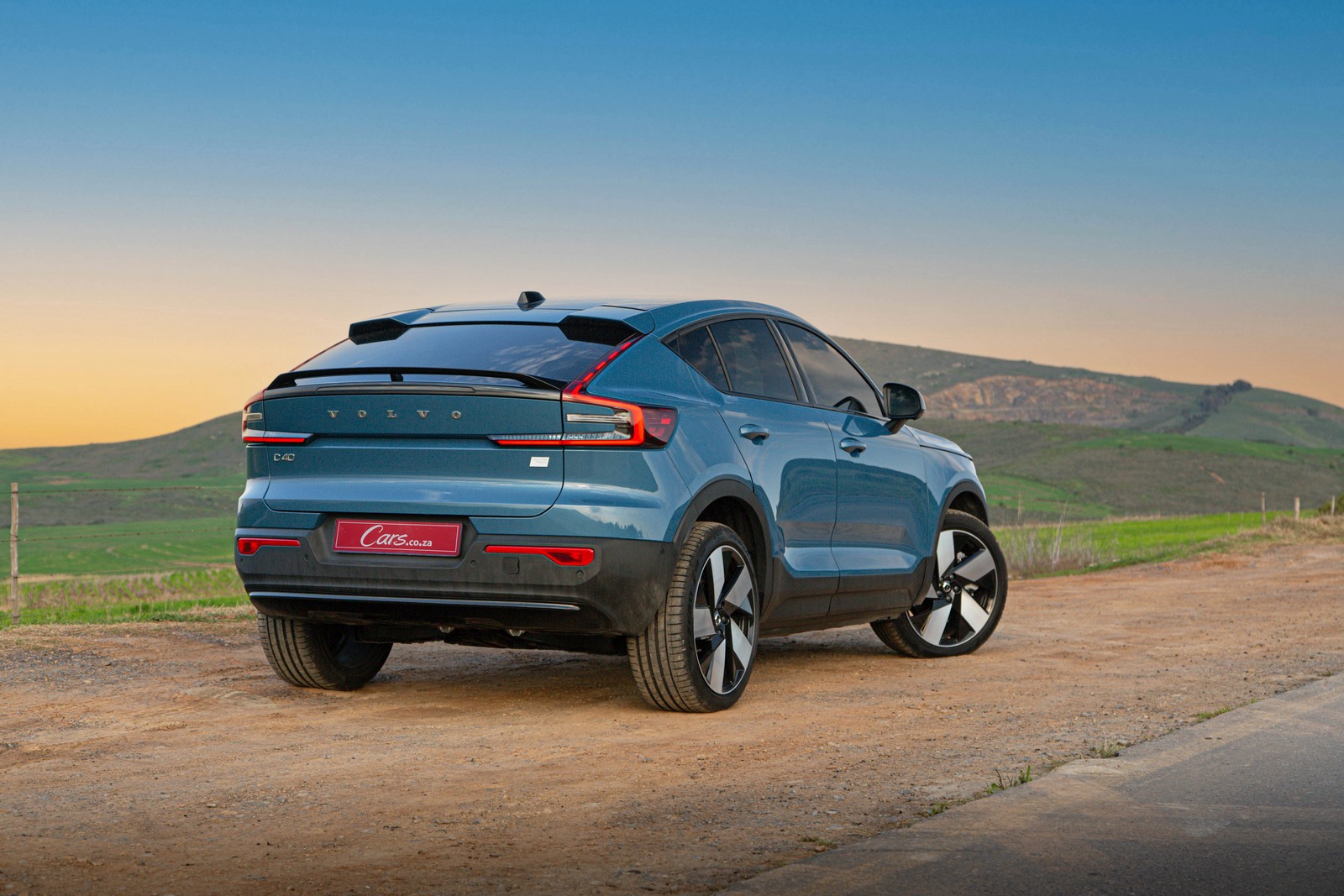
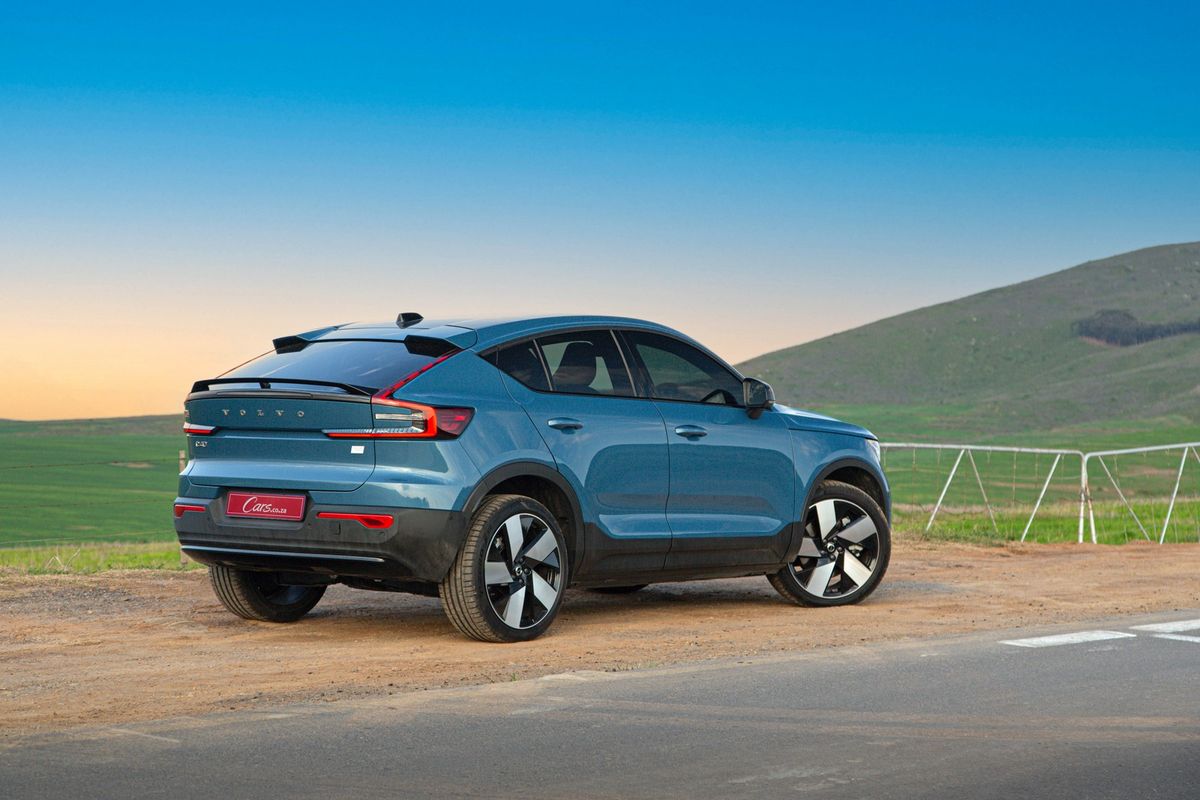
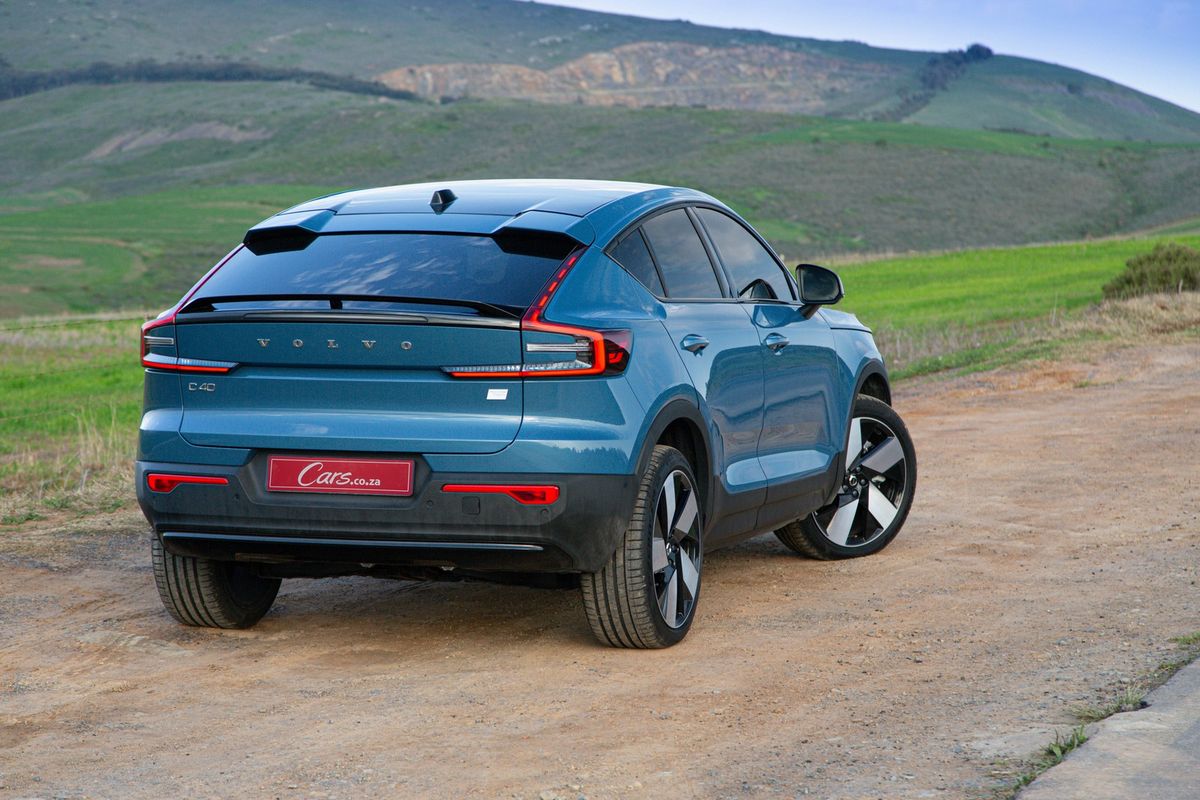
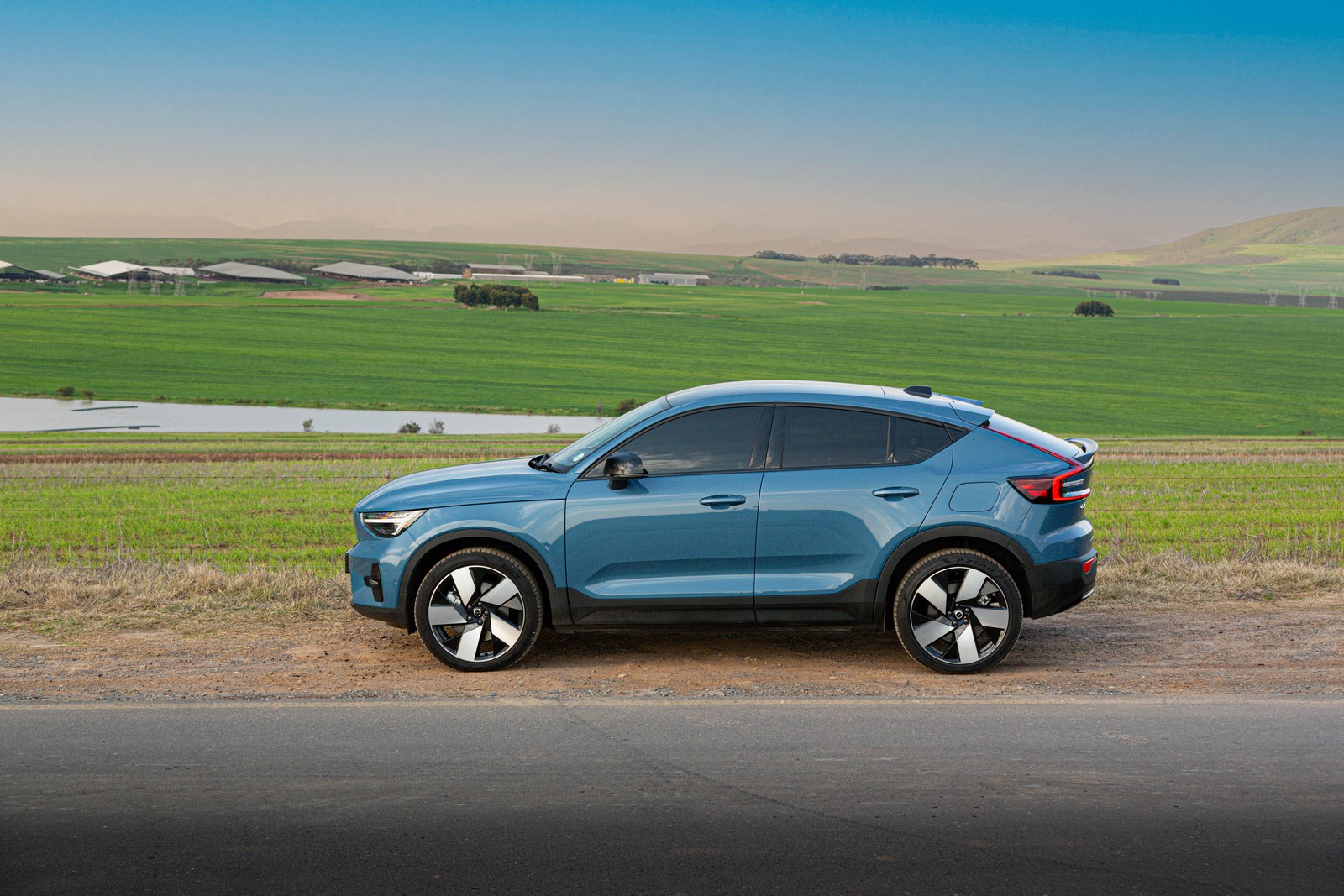
The Volvo C40 Recharge is essentially a sportier-looking derivative of the accomplished XC40 premium compact crossover. Just as the Q3 Sportback is the more stylish sibling of the Audi Q3, Volvo’s debutant features a sloping roofline and tailgate instead of a traditional boxy rear end. The slippery silhouette is not just for show either; Volvo claims the optimised aerodynamics help to increase the BEV’s range.

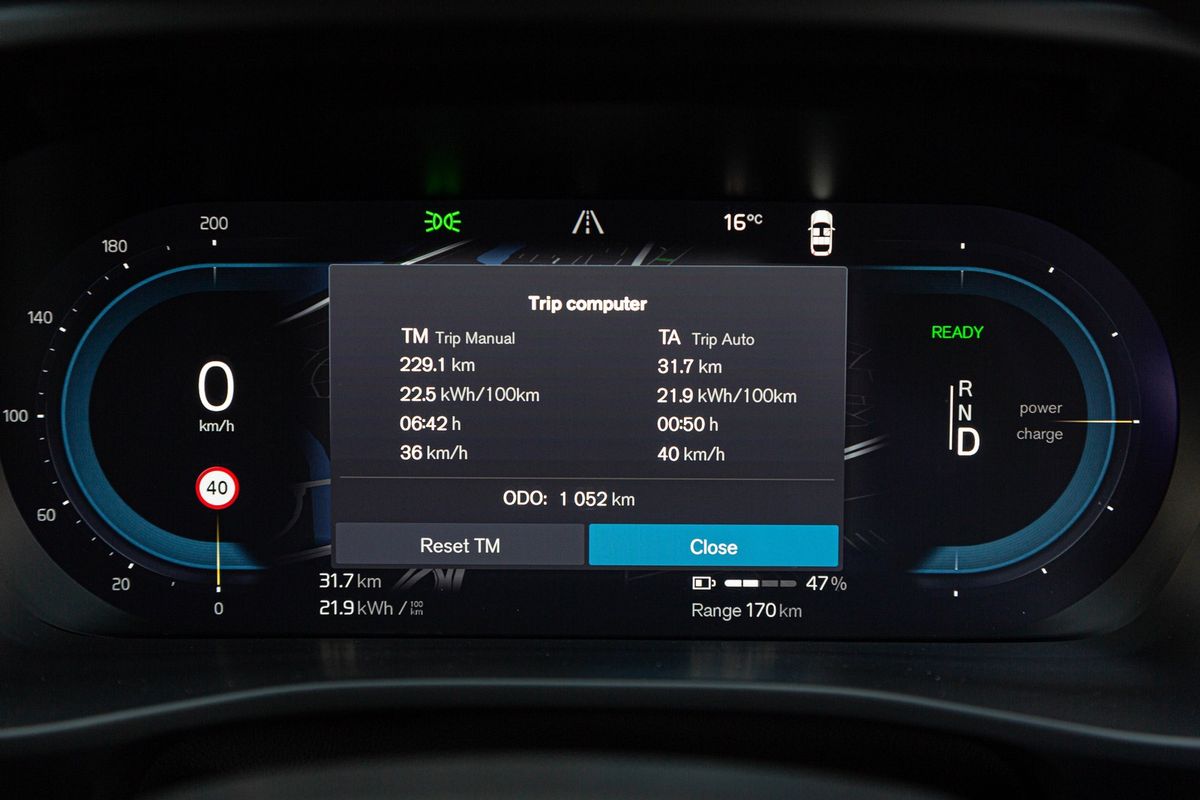
Speaking of range, the C40 Recharge is equipped with a 78 kWh battery that’s claimed to offer a range of 444 km on the WLTP test. You can recharge it in a variety of ways; the easiest (but slowest) way is via a 3.5 kWh home plug. But, if you buy a C40 Recharge, Volvo will install a complimentary wall box that’s capable of 11 kWh (provided your home can supply 3-phase electricity) and it can deliver 50 to 60 km worth of power per hour, which means a full charge in around 8 hours. Finally, for those who live close to a 150 kWh DC charger, the C40 Recharge can be fast-charged from 10% to 80% in around 37 minutes.

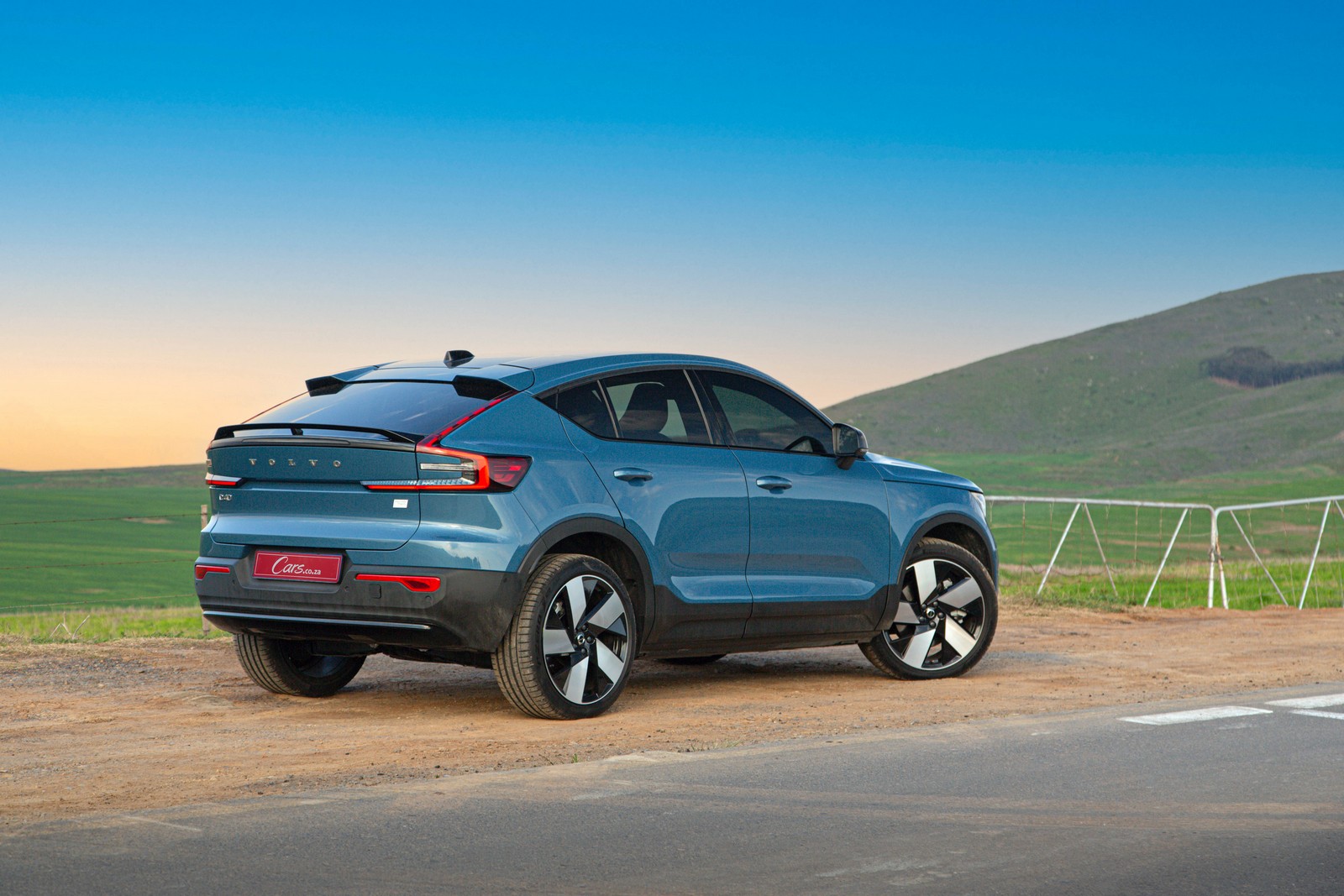
The C40 Recharge’s smooth contours optimise aero efficiency and, therefore, battery range.

The newcomer has a twin-motor setup that drives all 4 wheels and its numbers make for impressive reading. With 300 kW/660 Nm on tap, the Volvo has a claimed 0-100 kph time of just 4.7 seconds. Ha, so much for the safe, sensible and conservative Swedes… The C40 Recharge’s on-paper figures suggest that the Gothenburg-based brand’s first Volvo-branded BEV has a distinct performance slant to it.

Interior and features?

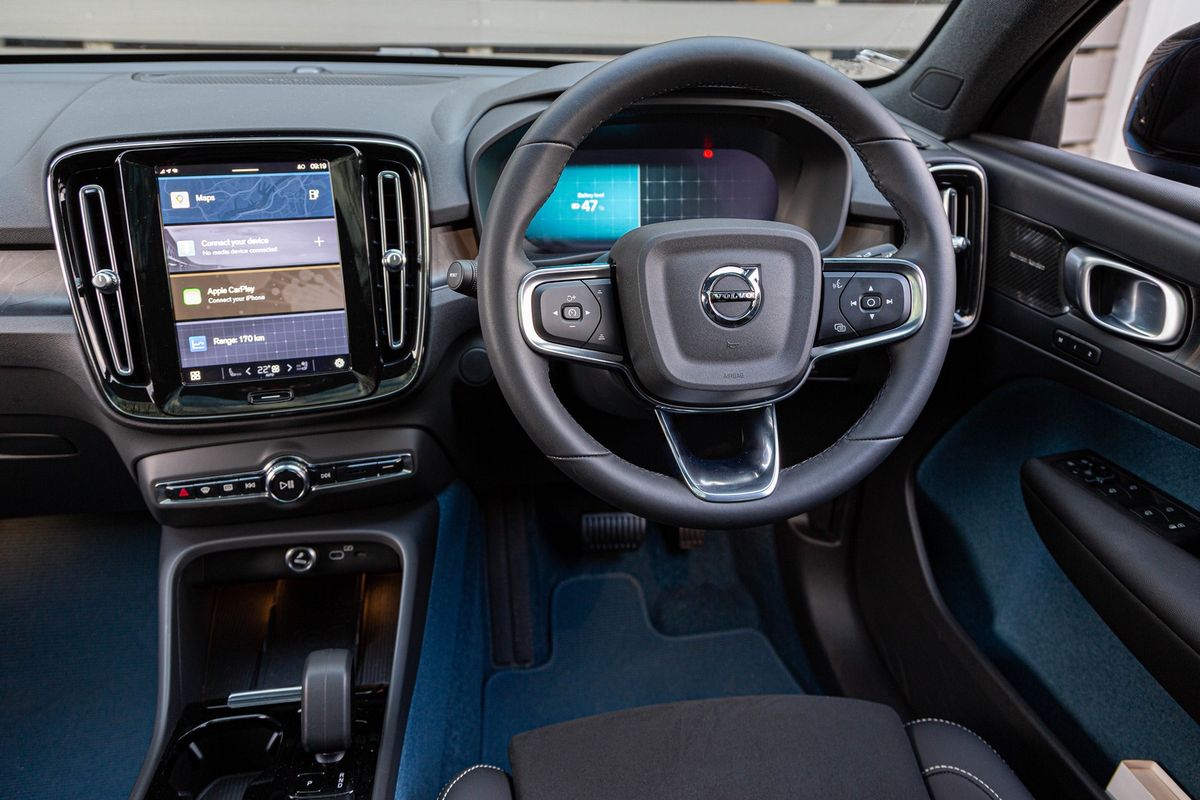
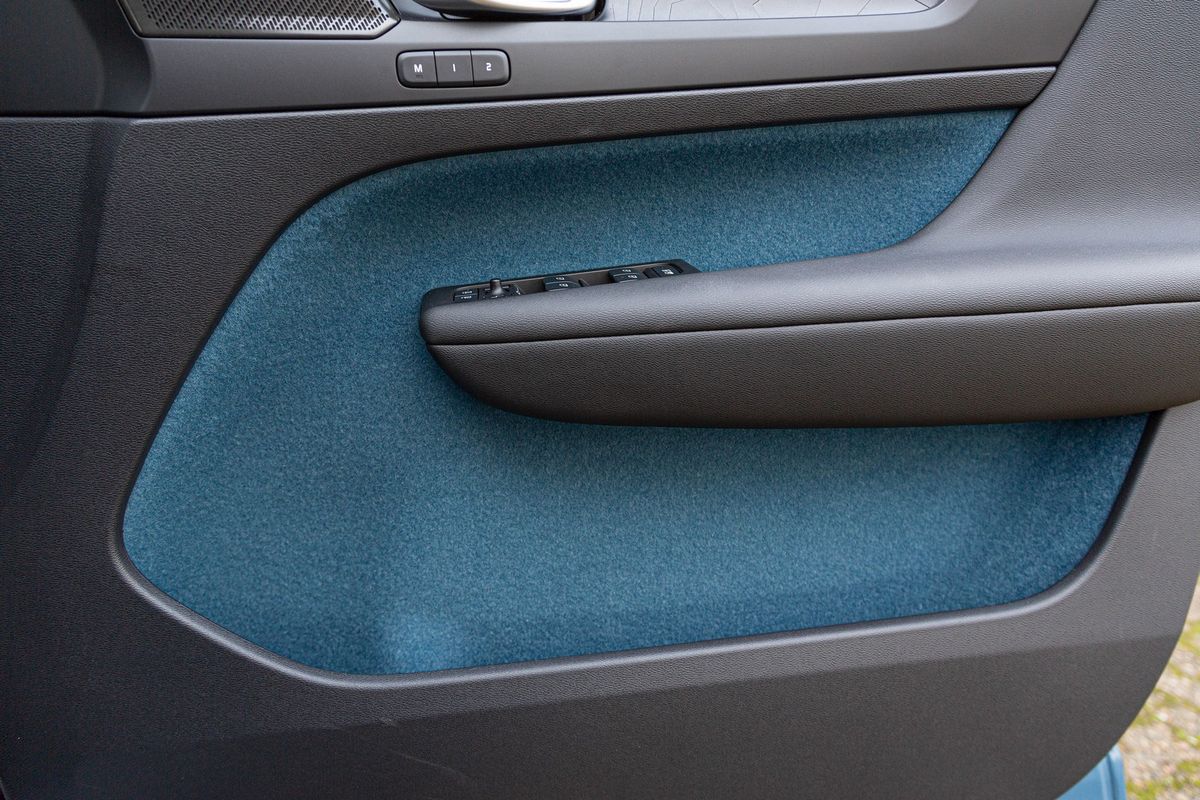
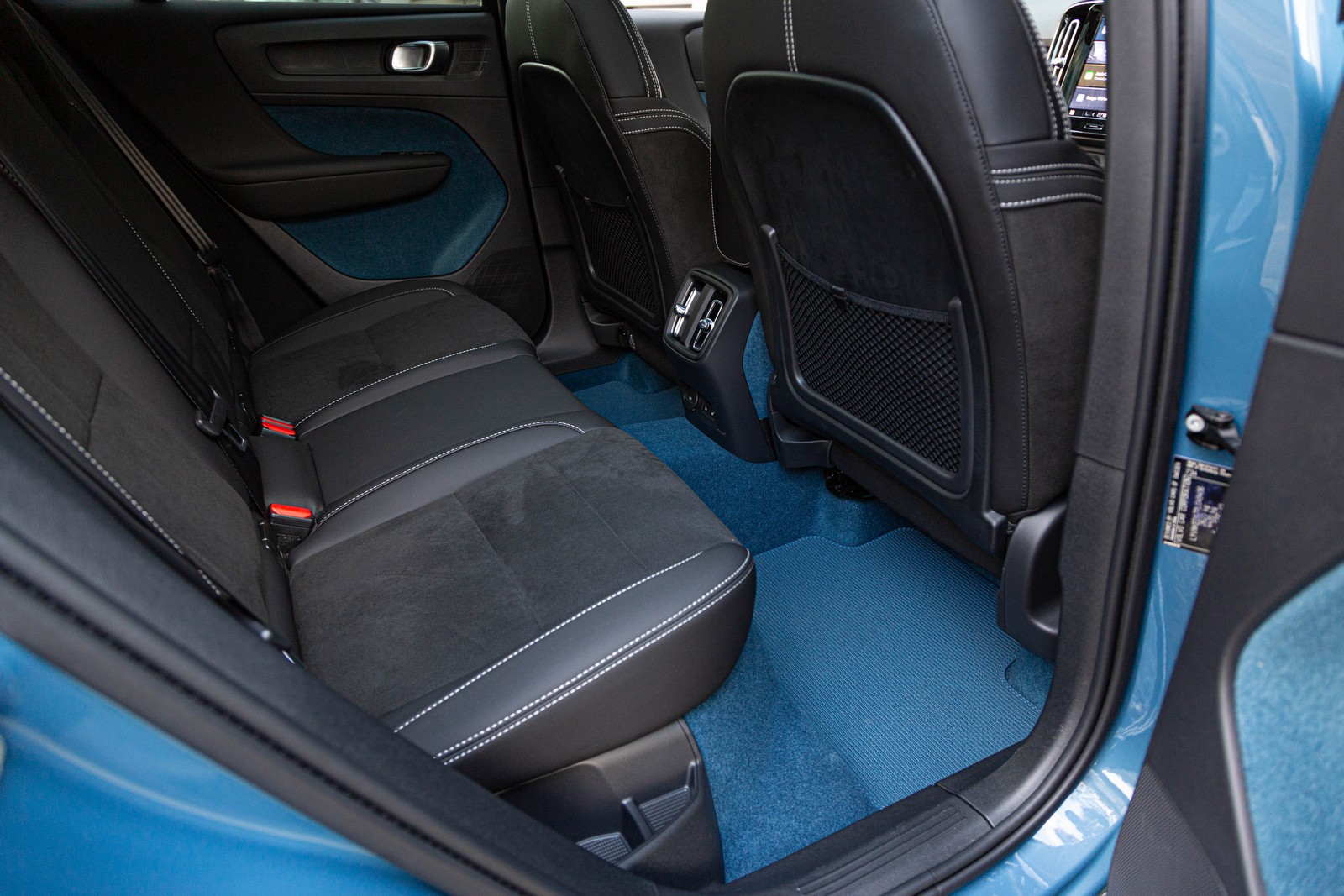
First impressions count and the C40 Recharge’s cabin is a lovely and minimalistic space to occupy. The materials and fit-and-finish befit a vehicle of this price tag, plus there is no shortage of smart packaging and design elements, such as leather-free seats – much of the cabin is made from recycled materials.

When you’re perched on the driver’s seat, you have a commanding view of your surroundings (it feels as if you’re at the ‘wheel of a much larger vehicle). There’s a beautiful backlit pattern on some of the interior panels (we’re told the design is based on a topographical map) and it looks fantastic in low light!

This topographical map-inspired panel is a classy touch.

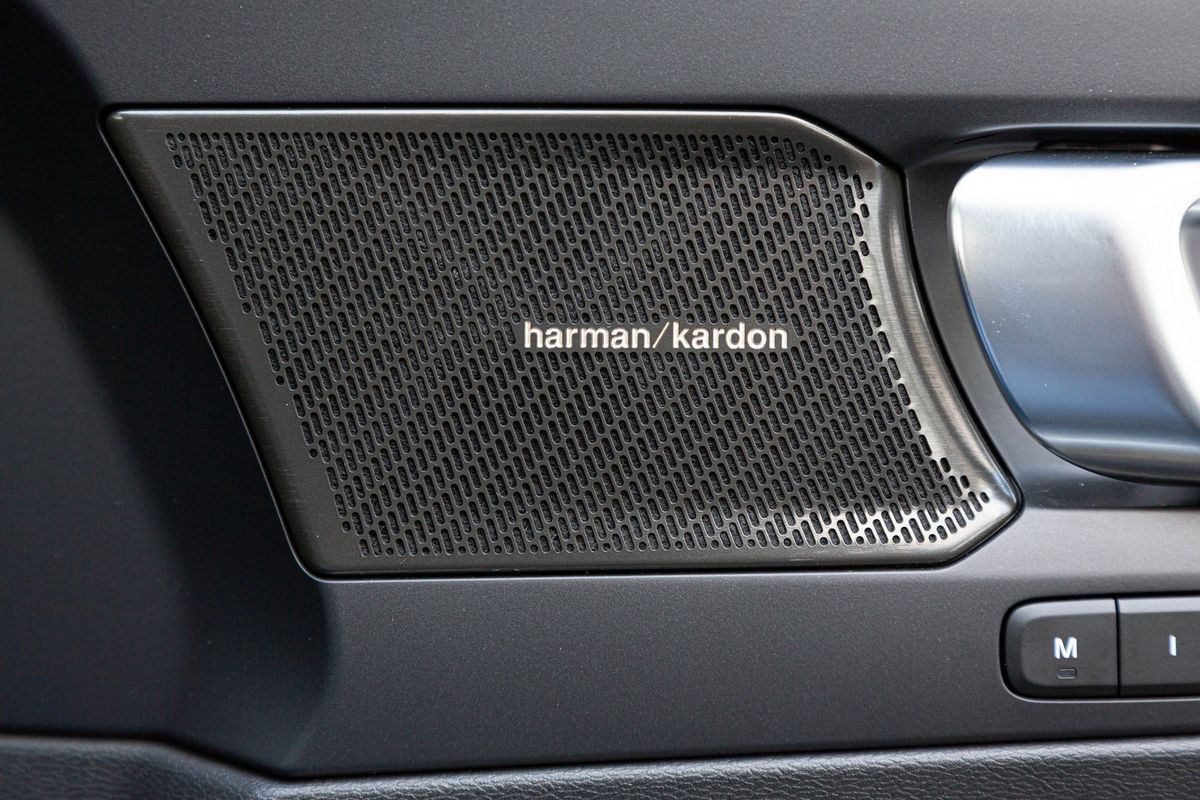
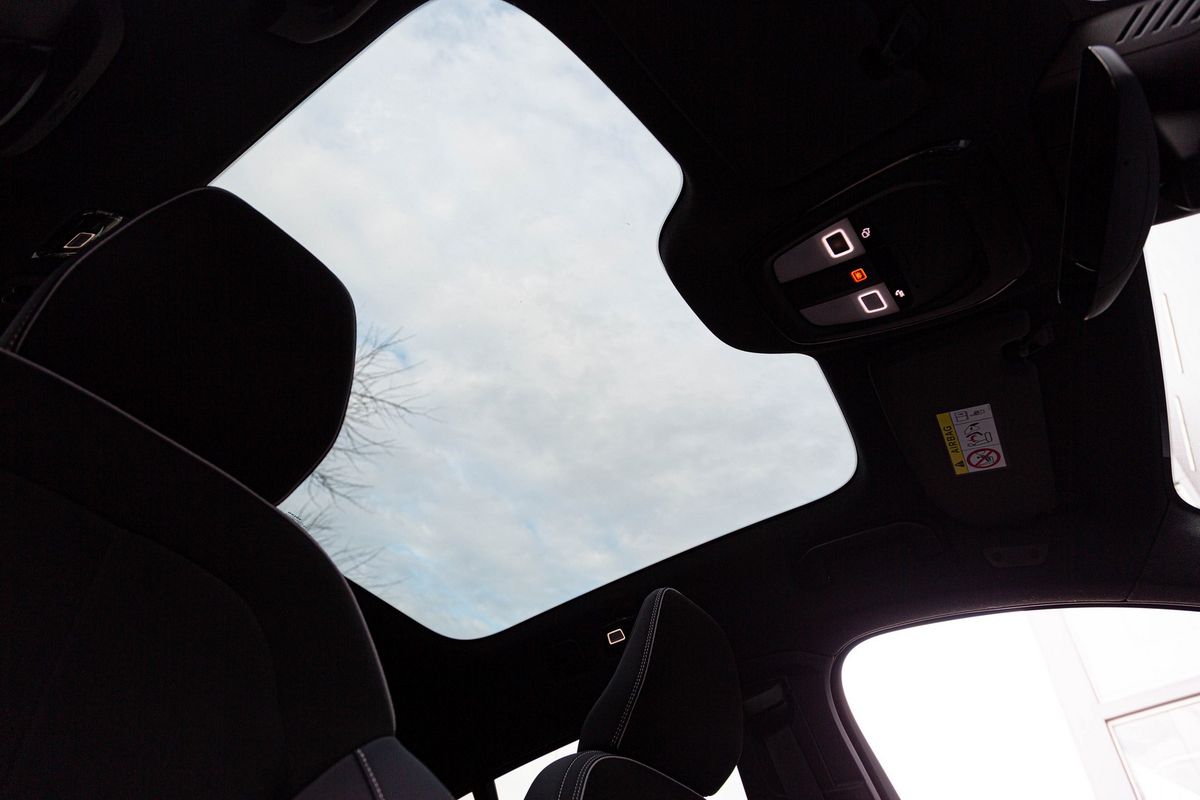
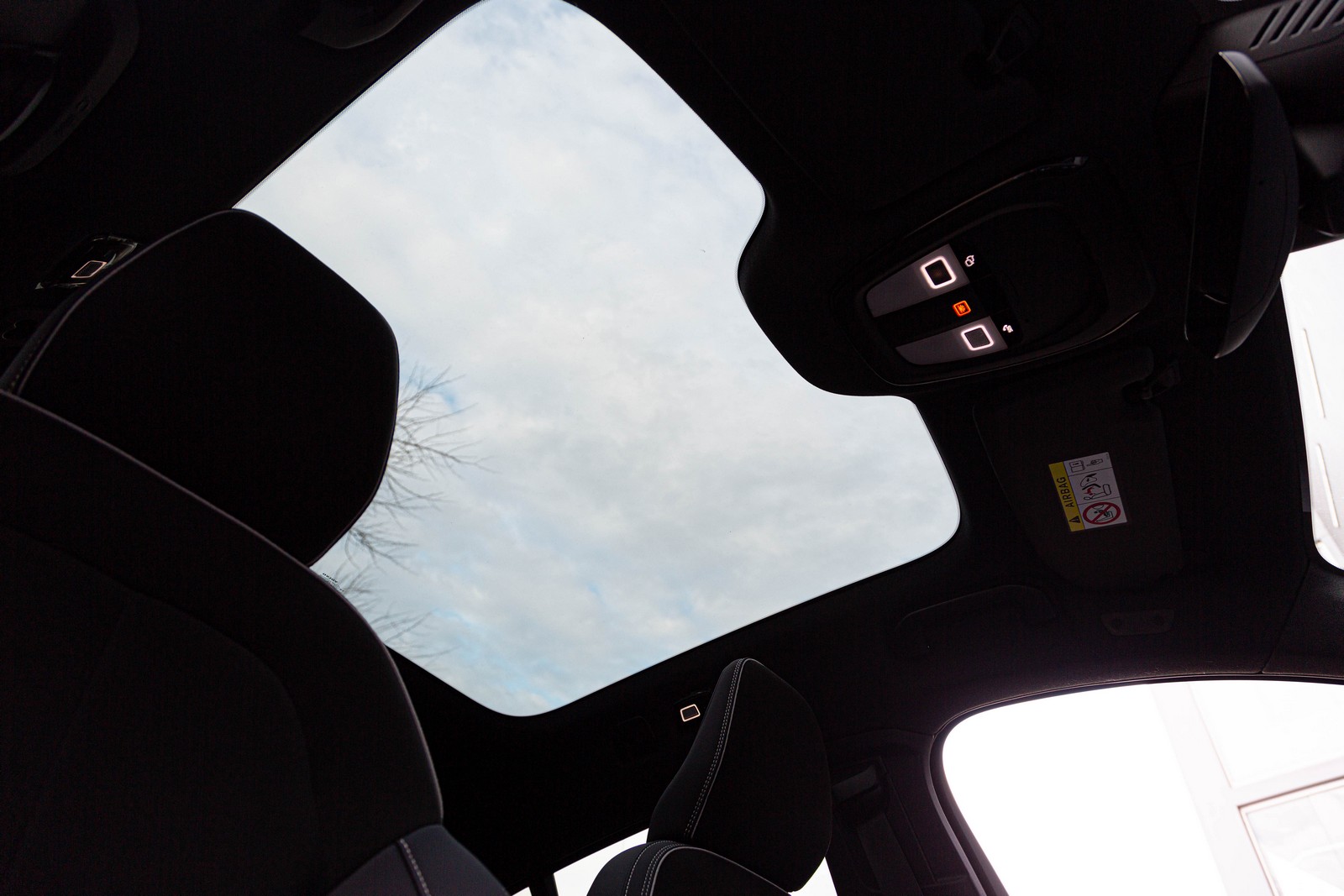
Volvo South Africa offers the C40 Recharge with its highest trim level, dubbed Ultimate. This means the model comes comprehensively equipped with luxury items such as a panoramic roof, heated seats, a heated steering wheel, a Harman Kardon audio system, and an electrically powered tailgate.

Meanwhile, the Volvo’s safety suite incorporates blind-spot monitoring, Pilot Assist, a lane-tracking system, City Safety and rear cross-traffic alert, to name but a few of its features.

There are very few extras to choose from; they’re limited to specific exterior finishes (R2 950 each), Pixel LED headlights (R24 200), and some textured interior trim pieces, which appear to be no-cost options.

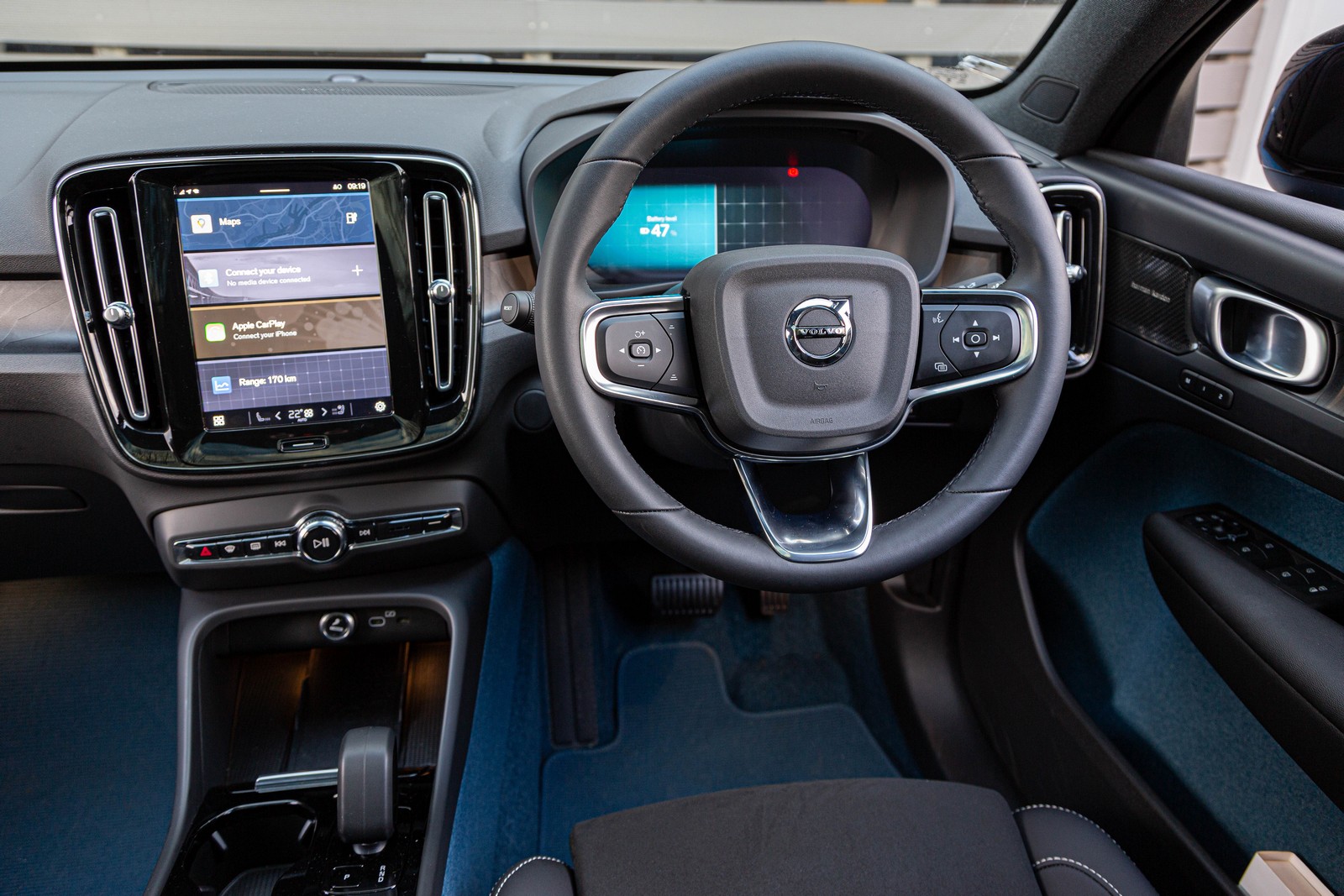
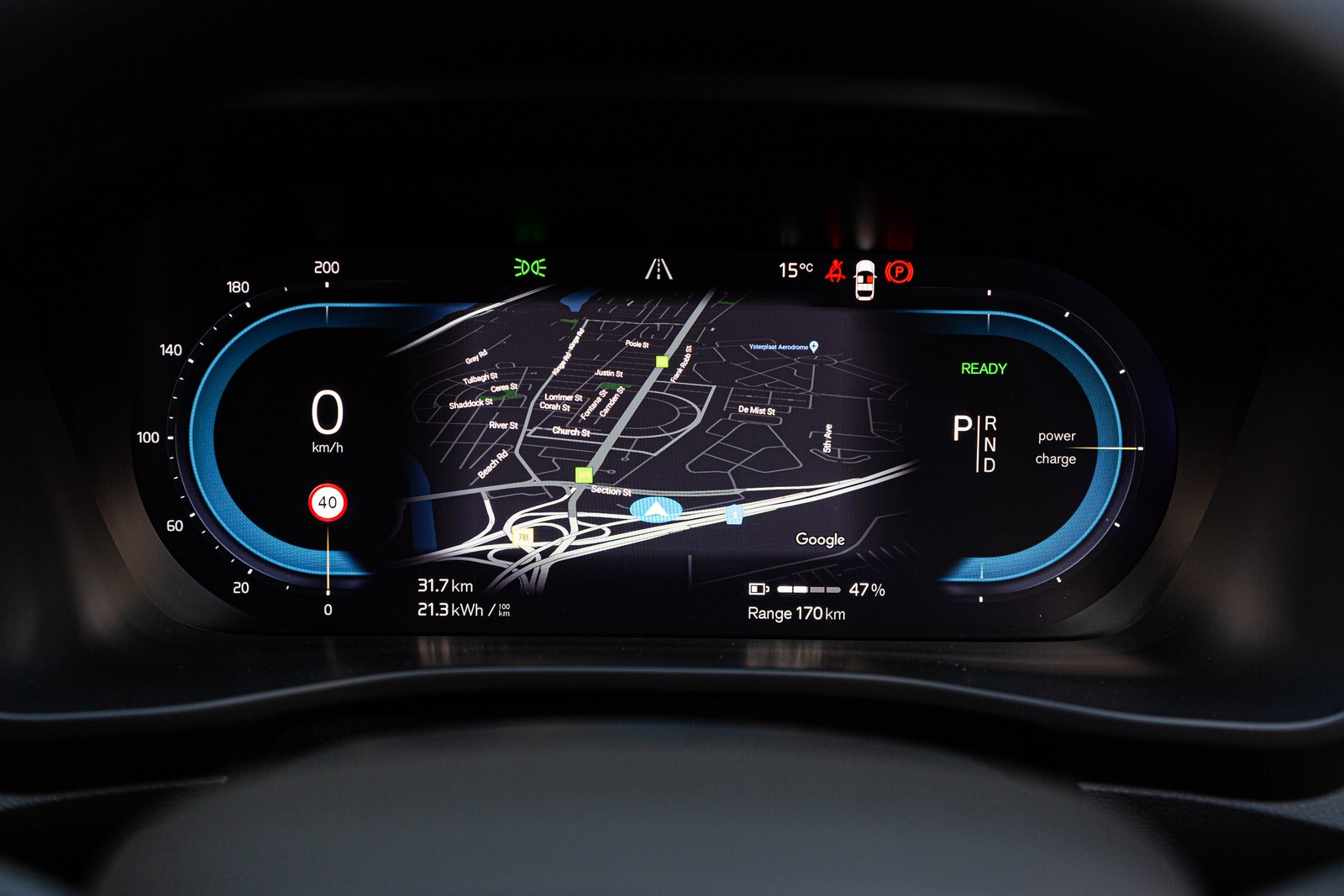
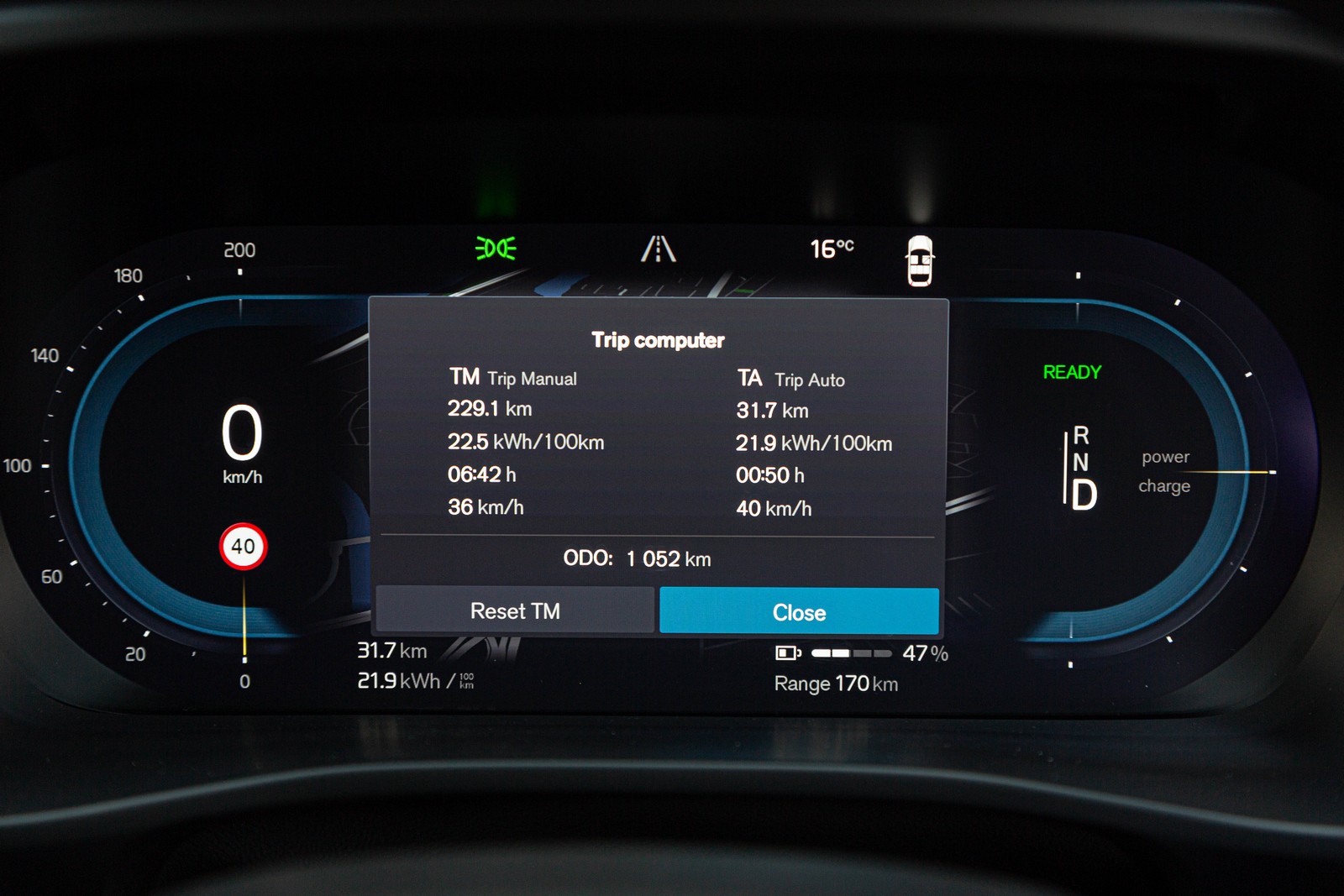
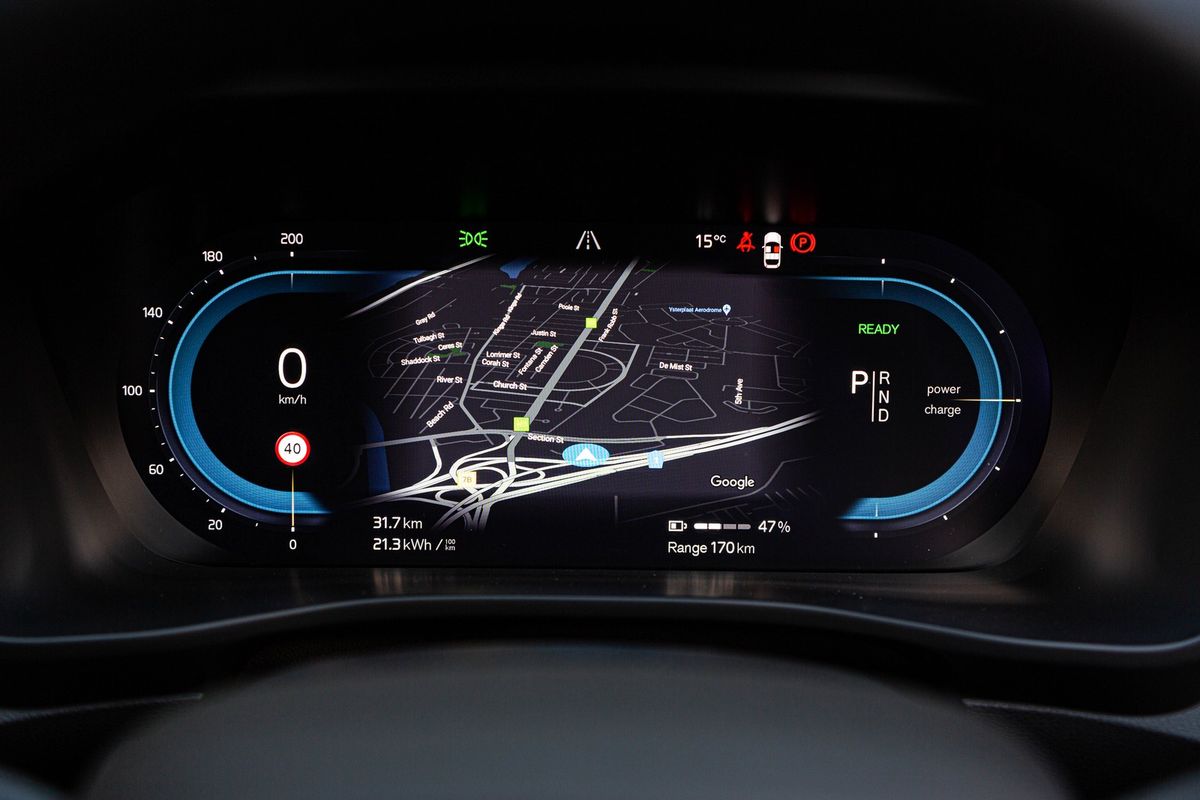
The Volvo C40 Recharge’s instrument cluster has a crisp and clear display.

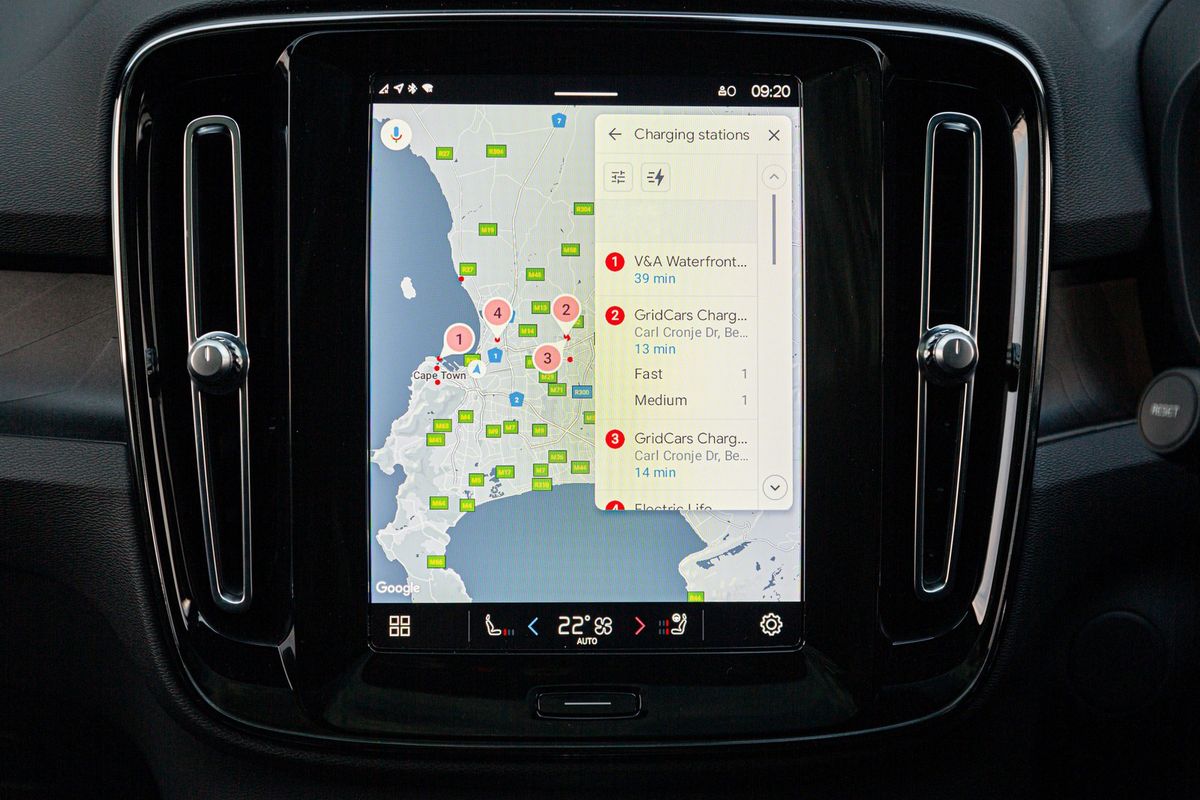
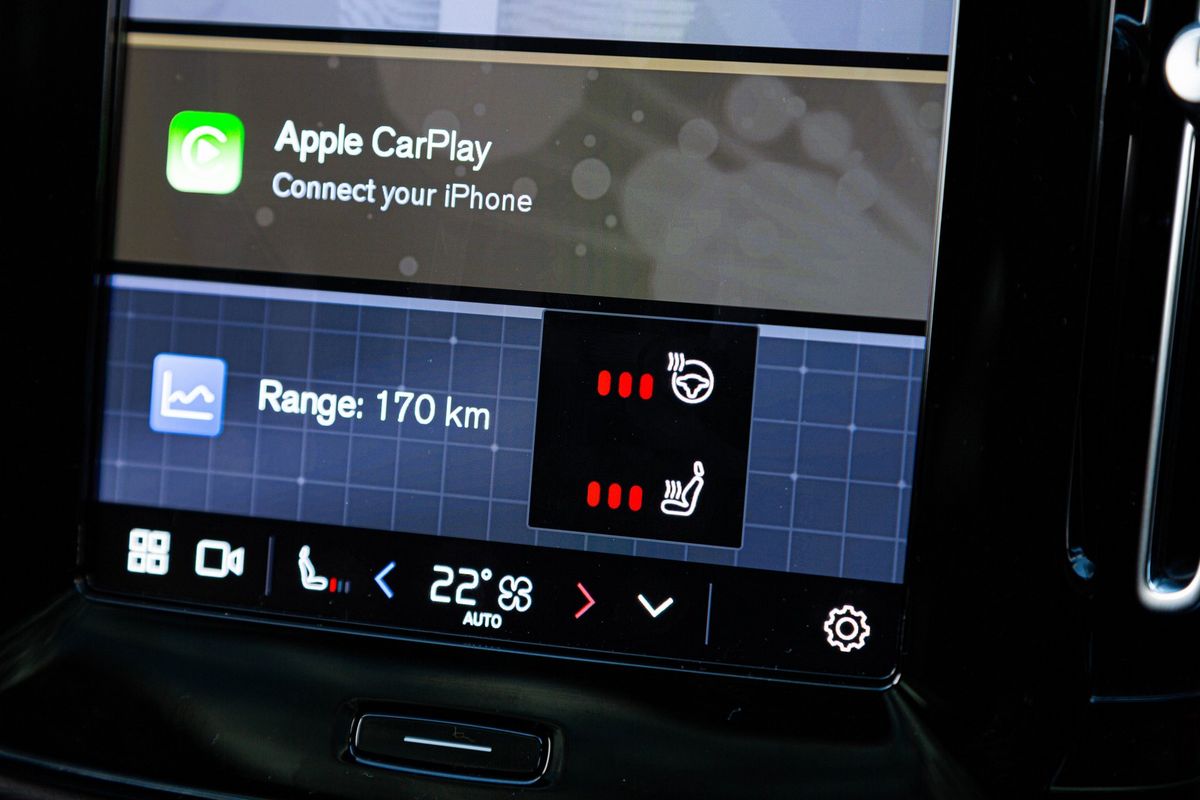
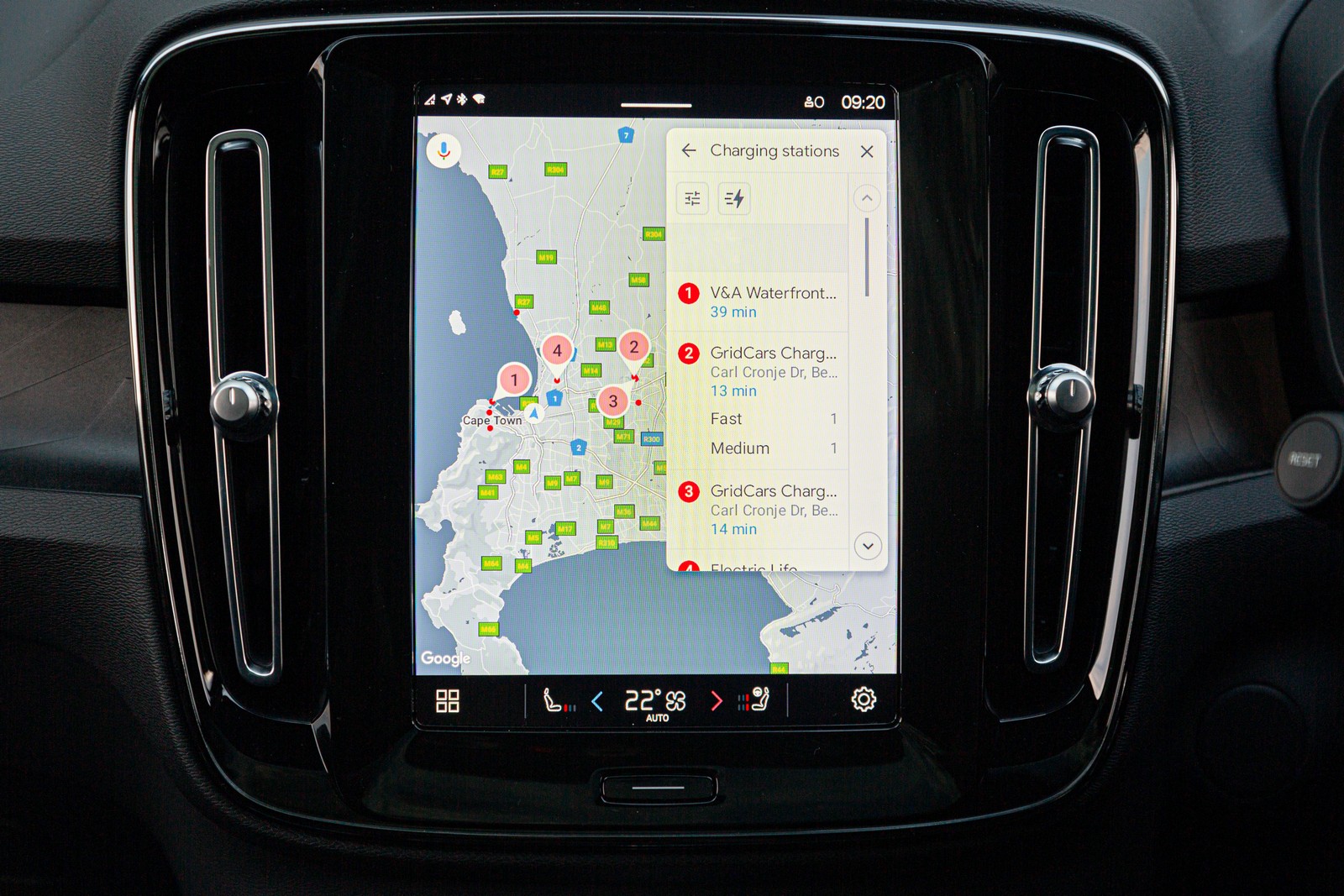
If you weren’t already aware of it, the latest generation of Volvos no longer employs the Sensus Connect native infotainment and system management software; the brand has switched to Google Automotive, which is not to be confused with Android Auto. That means the C40 Recharge can receive over-the-air updates and utilise most of the Google services, including Maps and Google Assistant, plus it supports Spotify, Waze, YouTube music and more. If you’re an Apple user, fear not – CarPlay is standard too. Cleverly, Google Maps has been tweaked for the model to help you find the nearest charger very quickly.

The Volvo C40 Recharge’s infotainment system is now powered by Google Automotive.

What is the Volvo C40 Recharge like to drive?

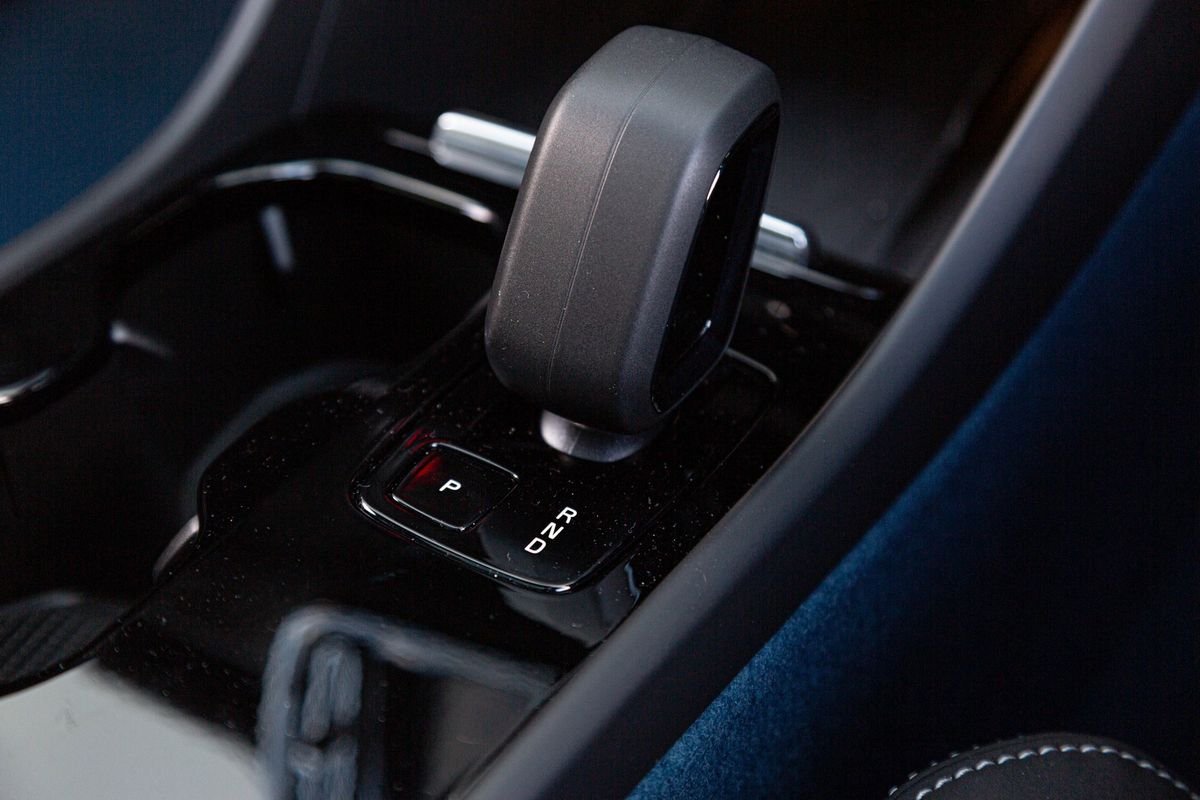
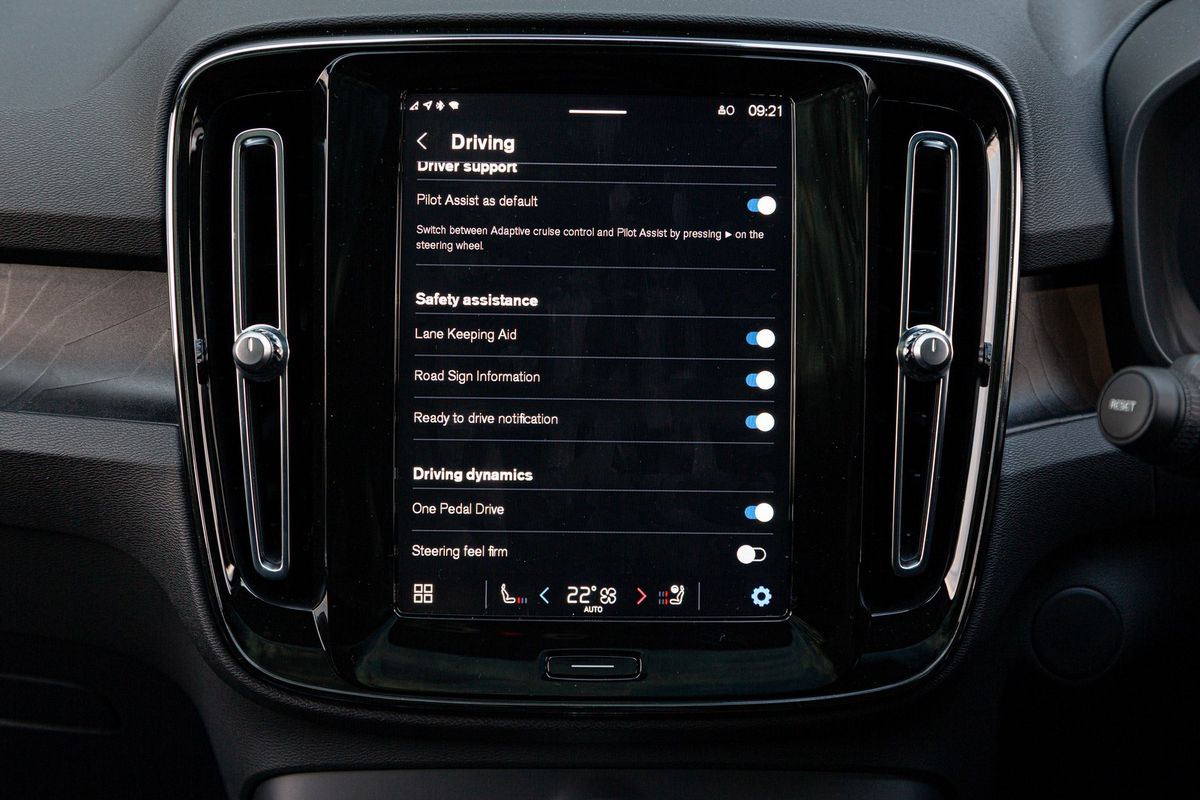
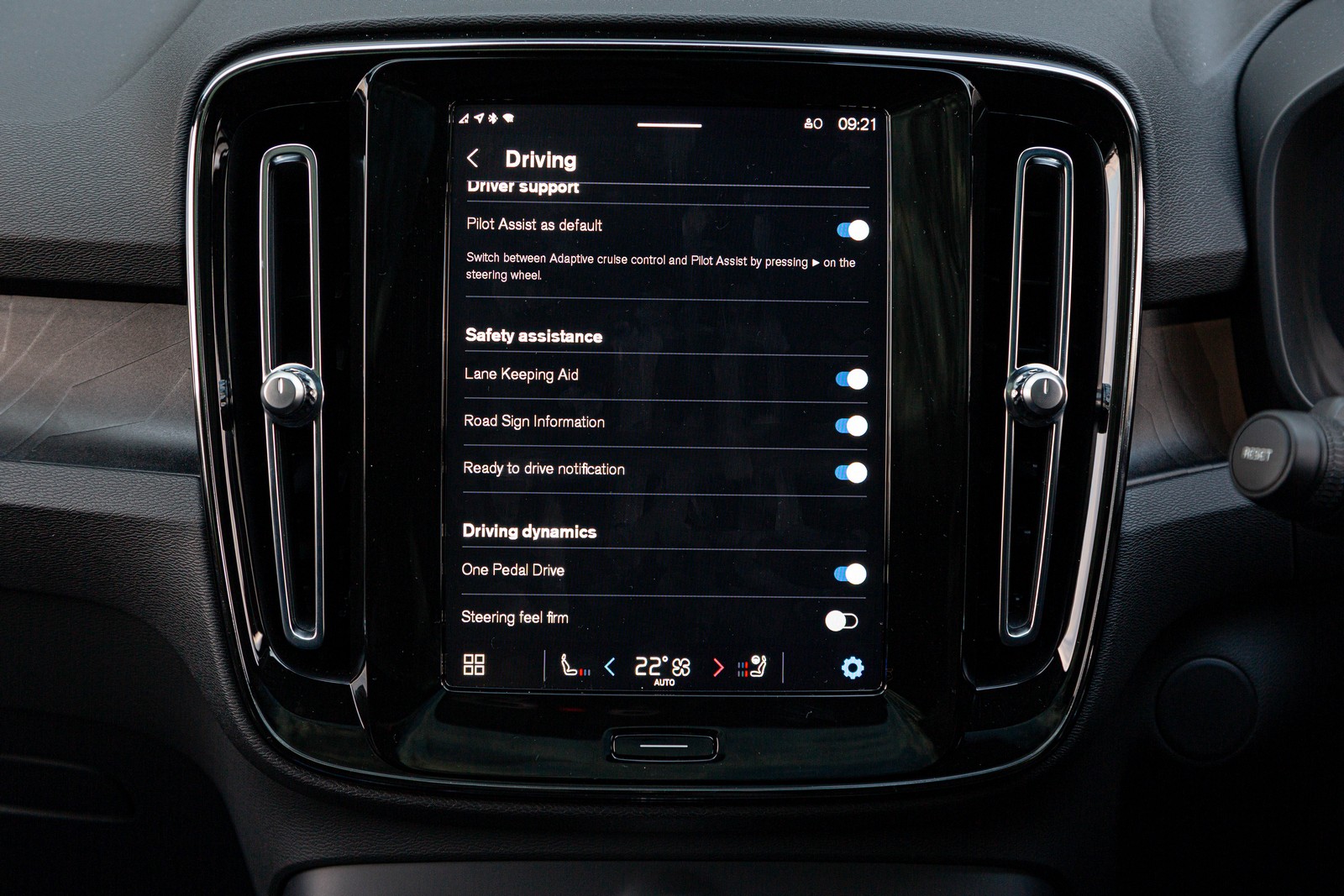
The roads on our launch route were very wet, so we were thankful for the C40 Recharge’s confidence-instilling all-wheel drive. The model’s ease of use is refreshing; simply unlock the car, get in, select Drive or Reverse on the transmission lever and the car’s ready to go. There’s no start button or drive modes to sift through (unless you want to activate 1-pedal driving, which utilises maximum regenerative braking).

Volvo C40 Solar
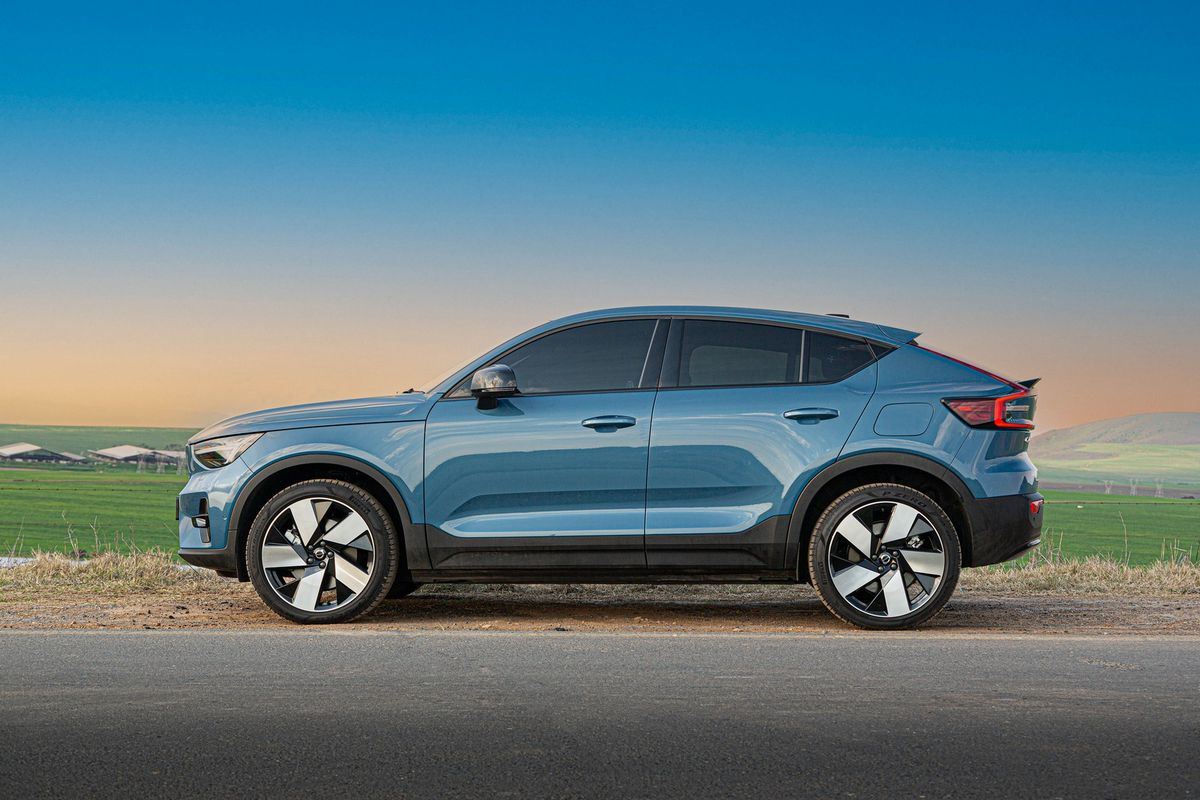
The C40 Recharge’s gently sloping profile is easy on the eye.

Considering its peak outputs of 300 kW and 600 Nm, the C40 Recharge was never going to be sluggish and it’s quite breathtaking how the Volvo shoots forward when you flatten its accelerator pedal. It zooms toward the horizon in an alarmingly calm manner, both from a standstill and when you want to overtake.

However, for all the fun that the C40 Recharge’s straight-line performance offers, the model does not corner with much verve, because it feels a bit top-heavy and the steering lacks weight and feeling. But that’s okay in our books – once the novelty of instantaneous acceleration has worn off, the average C40 Recharge owner is unlikely to want to hustle their vehicle along a mountain pass as if they’re a rally driver.

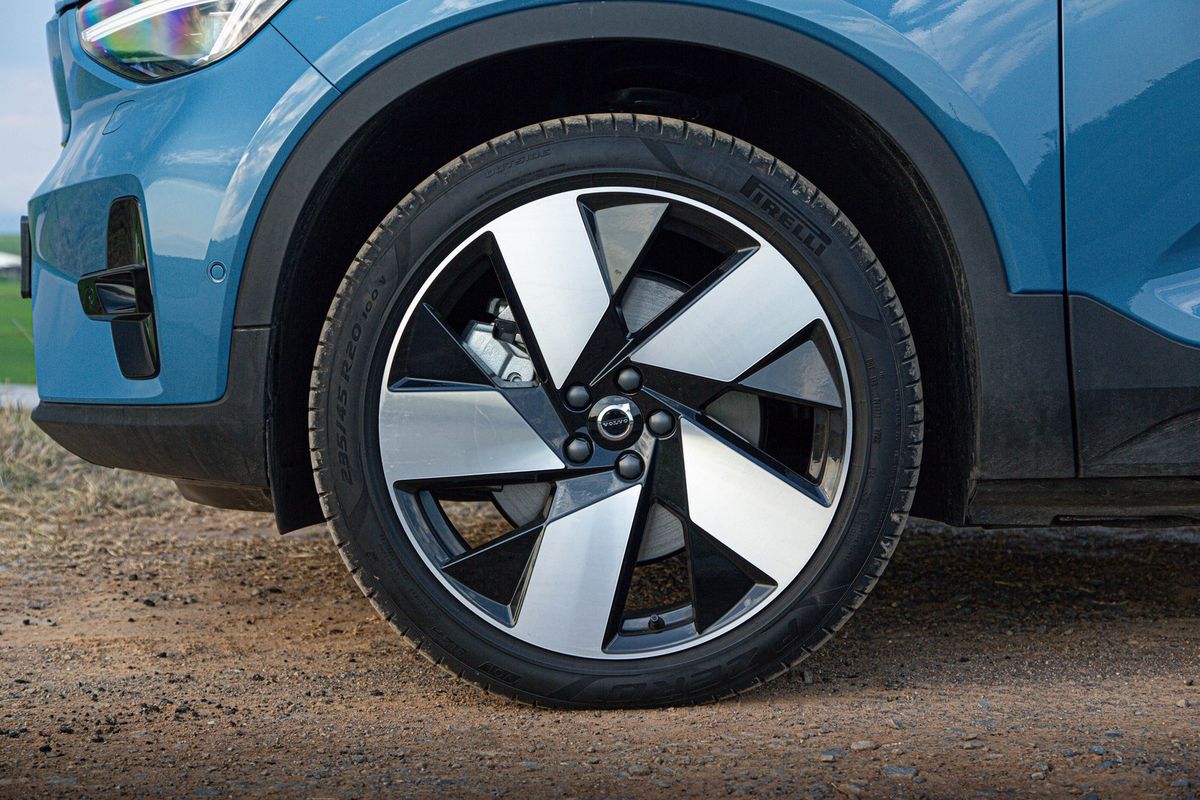
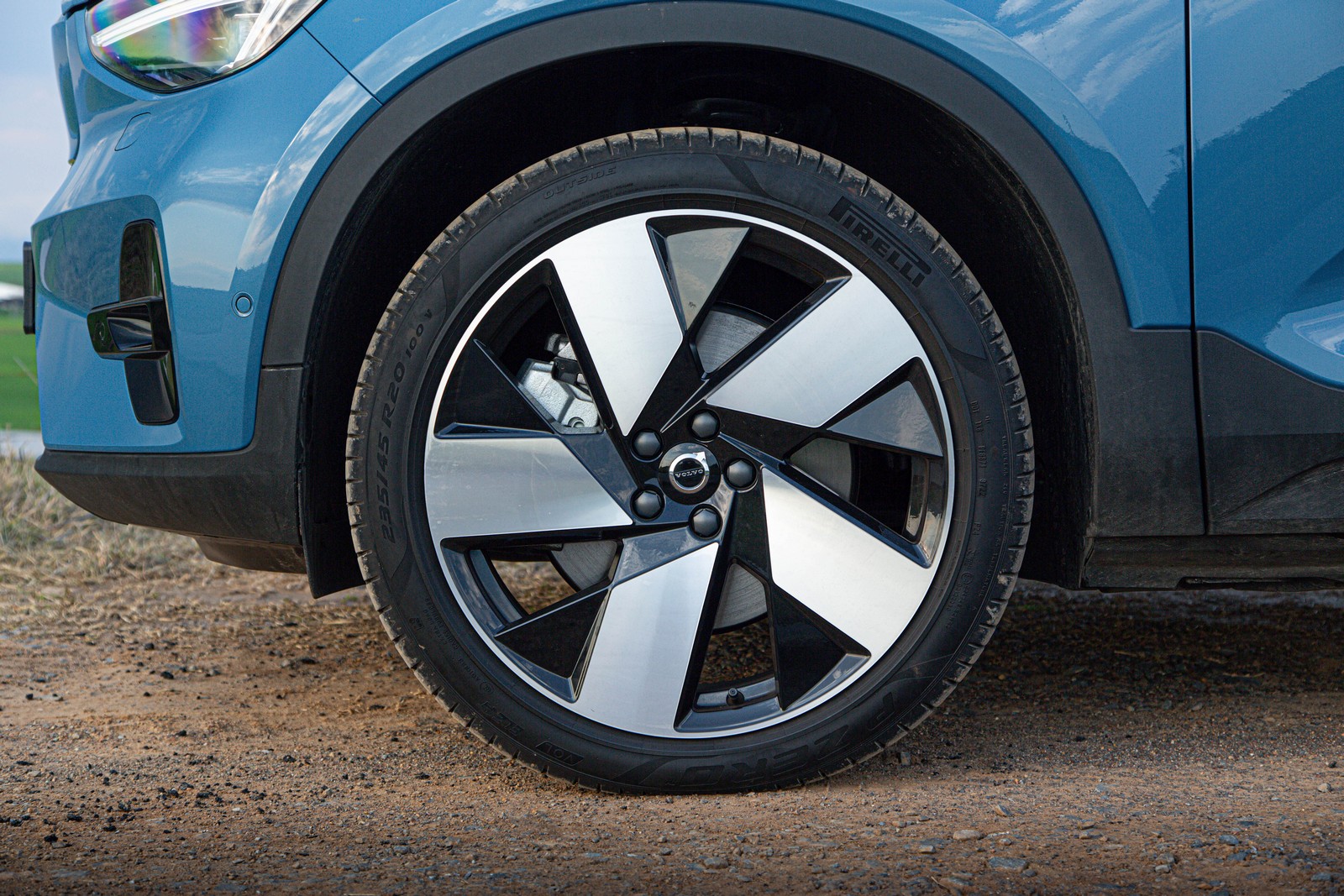
The Volvo’s ride quality is quite fair, considering that it rides on 20-inch wheels.

Instead, owners will probably appreciate the Volvo’s quiet and refined cabin and only occasionally stab the long pedal to scoot past slower traffic. Despite the car’s large (20-inch) alloy wheels, the ride quality never really faltered on some of the rougher sections of tarmac, although some smaller potholes and ruts did thump through to the cabin. It’s a pity there’s no option for a 19-inch wheel with a higher-profile tyre.

How much does the Volvo C40 Recharge cost in South Africa?

The Volvo C40 Recharge comes with a 5-year/100 000 km maintenance plan and warranty, with the battery pack covered for 8 years/160 000 km. Remember, a Volvo wall box charger is included with the purchase of the vehicle, along with a 7-metre auxiliary charging cable.

Volvo C40 RechargeR1 285 000

Summary

Volvo C40 with wind turbines
We’re big fans of Volvo’s compact EVs.

The current crop of vehicles from Volvo is certainly impressive, and we’d rate the XC40 Recharge as one of the better all-electric offerings in its segment based on price versus performance/range. Its sibling – the C40 Recharge – continues this, but with a bit more style, but it does demand some compromise…

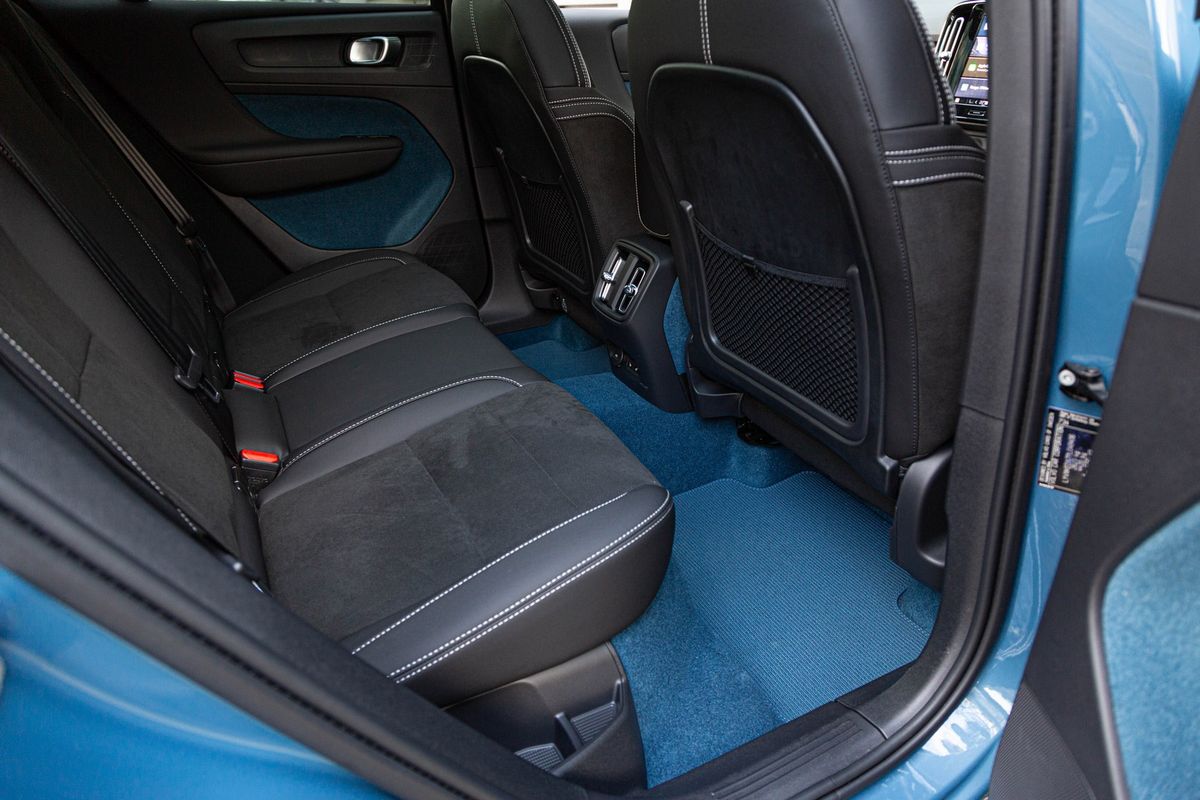
As undeniably eye-catching as that coupe-SUV look is, it comes at the expense of rear passenger headroom; we suspect that taller occupants may feel a bit cramped or hemmed when seated in the back, which is something we’ll test when the C40 Recharge arrives at our office for a thorough evaluation.

Should you buy one? Well, if you have roughly R1.2 million to spend on a well-thought-out and liberally equipped all-electric premium compact crossover, you should put the C40 Recharge at the top of your shortlist. If you’re not overly enamoured with the sporty coupe-like styling, you can always opt for the conventional XC40 P8, which is a touch slower and a bit cheaper. We suspect stocks won’t last long.

Further Viewing:

Lamborghini Revuelto (2023) Price & Specs

The new Lamborghini Revuelto is headed to South Africa, boasting a whopping 747 kW from its V12 hybrid powertrain. Get your bank manager on the phone, because we have local pricing…

Revealed as recently as March 2023, the new Lamborghini Revuelto is on its way to South Africa, boasting a total system power output as lofty as 747 kW and a top speed in excess of 350 kph. Keen to know how much the Sant’Agata Bolognese-based firm’s first V12 plug-in hybrid super sports car will cost you? Well, wonder no more…

Thanks to our astute colleagues over at duoporta.com, we have confirmation the Revuelto – which bears the LB744 designation and effectively replaces the Aventador – will kick off at a cool R12 800 000, which includes the Italian automaker’s standard 3-year DrivePlan. Opting for the 5-year DrivePlan, meanwhile, will push the starting price to R13 000 000. Regardless, it’s the most expensive model in the current Lamborghini stable (and a shade more than even the Aventador SVJ 63 Roadster cost).

On its own, the L545 atmospheric V12 makes 607 kW.

As a reminder, the Lamborghini Revuelto combines a naturally aspirated 6.5-litre V12 petrol engine (making 607 kW at 9 250 r/min and 725 Nm at 6 750 r/min, outputs that are delivered to the rear wheels) with a trio of electric motors and a new 8-speed dual-clutch transmission. A 3.8 kWh lithium-ion battery pack feeds a pair of electric motors (each generating 110 kW and 350 Nm) sited at the rear as well as a 220 kW front-mounted e-motor.

As a result, the Revuelto will reach 100 kph in a mere 2.5 seconds, according to Lamborghini, before topping out on the far side of 350 kph. The electric motors serve to boost power delivery while also allowing the Revuelto to function as a fully electric vehicle (for a few short kilometres, anyway).

The Revuelto tips the scales at a claimed 1 772 kg (dry).

The flagship Lamborghini measures 4 947 mm long, 2 266 mm wide (including mirrors) and stands just 1 160 mm tall, with a wheelbase of 2 779 mm. Its dry weight is listed as 1 772 kg, while the front wheels are shod in bespoke 265/35 ZR20 Bridgestone Potenza Sport tyres and the rear items in 345/30 ZR21 rubber.

The Revuelto rides on a new “monofuselage” chassis featuring a monocoque fashioned entirely from carbon fibre and a front structure made from forged composites. Inside, you’ll find a 12.3-inch instrument cluster, an 8.4-inch central display and an additional 9.1-inch screen (for the passenger), along with access to as many as 13 driving modes and numerous driver-assistance features.

How much does the Lamborghini Revuelto cost in SA?

Lamborghini Revuelto – R12 800 000

A 3-year DrivePlan is included, with the purchase price rising to R13 000 000 should a 5-year DrivePlan be specified.

Buy a used Lamborghini on Cars.co.za!

Related content

Lamborghini Huracán Sterrato Primed for Gravel Travel

New Lamborghini Urus S Unveiled with Performante Power

490 kW Lamborghini Urus Performante Unleashed!

Ford Everest Wildtrak / XLT (2023) Launch Review 

Ford has bolstered its local Everest range with the introduction of the Everest XLT and Everest Wildtrak. Our adventure journalist, Gero Lilleike, sampled the newcomers in the Pilansberg this week. 

We tested the range-topping Ford Everest Platinum earlier this year and came away mightily impressed with what the 3rd-generation Everest has to offer. Make sure to watch our video in case you missed it!

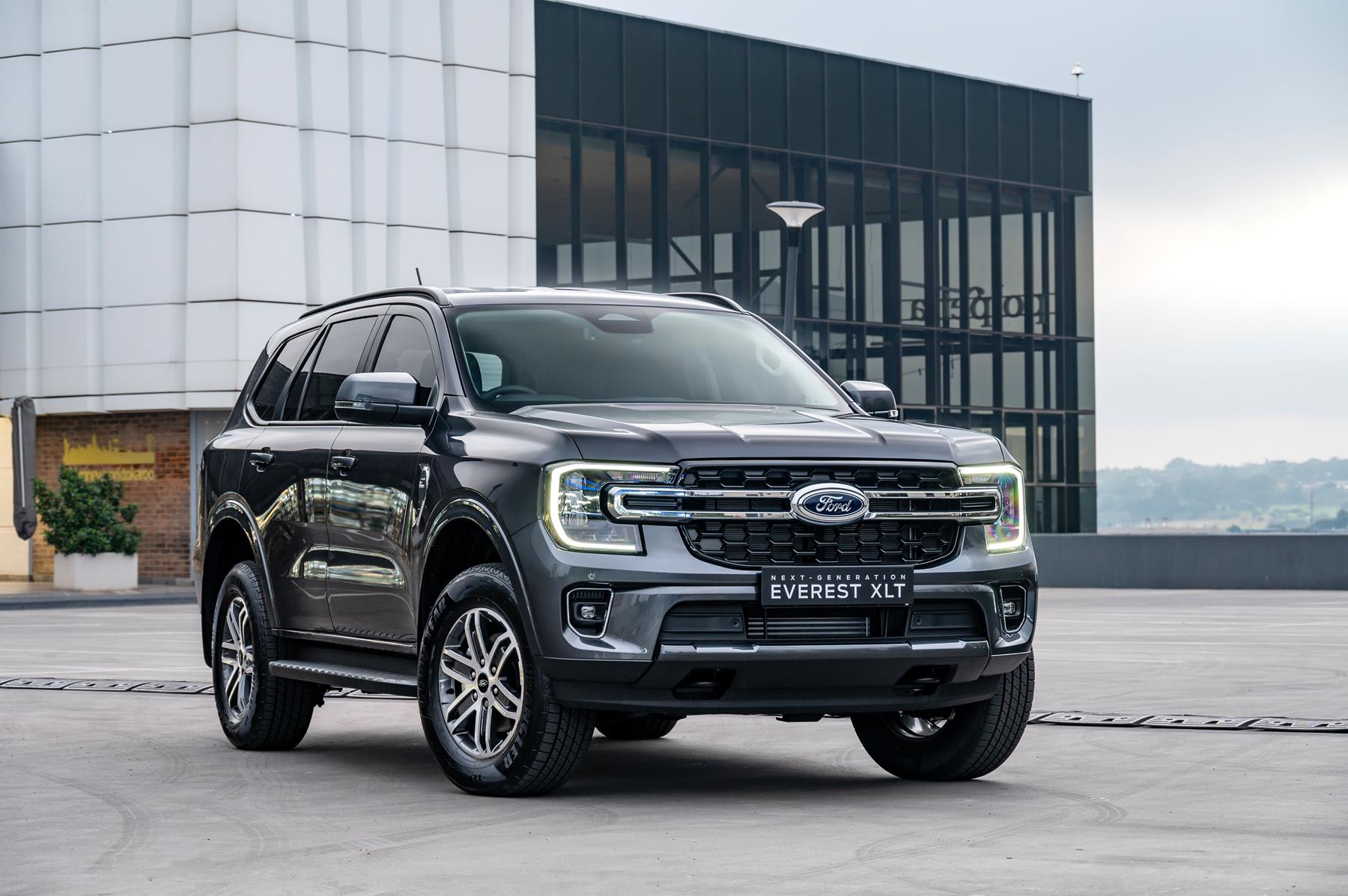
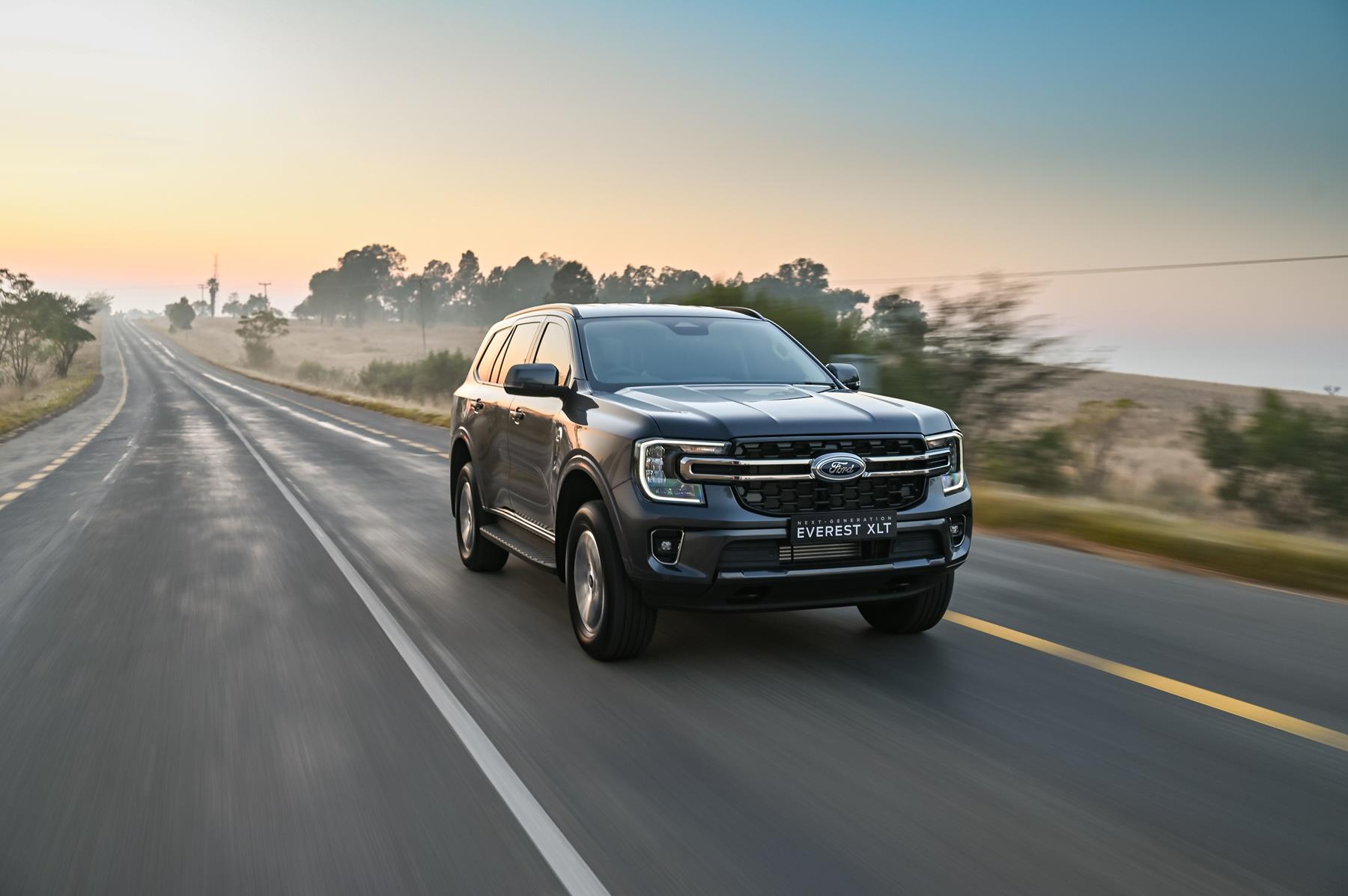
Now though, Ford has introduced 3 new derivatives to the local Everest range: the Everest Wildtrak 4×4, Everest XLT (4×2 and 4×4) and the Everest Sport 4×2, bringing the total Everest derivative count to 6! 

By giving consumers a wider choice across a broader price range, Ford has bolstered the prospects of the Everest, which has moved upmarket, but has never matched the Toyota Fortuner in terms of sales. 

The launch of the Everest Wildtrak and Everest XLT took place this week and we had the chance to sample both derivatives on tar and gravel in the Pilanesberg, North West Province. 

Also see: Ford Everest Wildtrak / XLT (2023) Price & Specs

What engines power the new Ford Everest?

Ford Everest Wildtrak
The Everest Wildtrak gains the now-familiar 3.0-litre V6 turbodiesel engine with 184 kW and 600 Nm.

The Everest Wildtrak uses the same 3.0-litre V6 turbodiesel engine as the Everest Platinum. It produces a heady 184 kW and 600 Nm and is paired with Ford’s 10-speed automatic transmission. Ford claims fuel consumption at 8.5 L/100km. Note that the Everest Wildtrak is only offered in 4-wheel-drive guise. 

As for the Everest Sport and new entry-level Everest XLT, they are powered by the Blue Oval’s familiar 2.0-litre bi-turbodiesel engine with 154 kW and 500 Nm and, as is the case with the 3.0-litre V6, the 4-cylinder is paired with a 10-speed automatic transmission. Ford claims an average fuel consumption of 7.5 L/100 km. Buyers can now choose between 4×2 or 4×4 derivatives in both XLT and Sport trim.

What makes the Everest Wildtrak and XLT special? 

Everest Wildtrak
The Everest Wildtrak gains a unique face and can be had in Luxe Yellow.

This is the first time that the Wildtrak treatment has been applied to the Everest SUV and Luxe Yellow is available exclusively for this derivative. We love this hue – it looks particularly striking in bright sunshine!

The Everest Wildtrak adopts a more rugged persona with “WILDTRAK” lettering seen on the bonnet, while also adopting a “Bolder Grey” grille and silver bash plate. The Everest Wildtrak rides on two-tone 20-inch alloy wheels as standard, but for those who intend on venturing into the wild with the range-topper, Ford also offers smaller 18-inch wheels shod with all-terrain tyres that are fit for purpose. 

Everest Wildtrak Interior
Yellow contrast stitching and soft-touch finishes welcome you inside the Everest Wildtrak.

Moving inside, the Everest Wildtrak gains yellow stitching seen on the steering wheel, dashboard and seats, the latter of which also gain embossed Wildtrak lettering. All Everest derivatives are equipped with a portrait-style 12-inch infotainment touchscreen (powered by Ford’s latest SYNC 4A operating system), as well as an 8-inch digital instrument display that can be configured to your preference.

The Everest Wildtrak further gains a dual-panel Moon Roof, which adds to the upmarket feel of the cabin and other nice-to-have features include an 8-way adjustable driver’s seat, 8-speaker premium audio system, USB-A and USB-C ports, a wireless charging pad and a built-in 400W/240V inverter.

See full specification for the Ford Everest Wildtrak 
Everest XLT

As for the Everest XLT, you may recognise the derivative by its chrome horizontal grille bars. While it may not feature the Wildtrak’s sunroof, it comes particularly well-equipped with standard features. In fact, it too has an 8-way adjustable driver’s seat and the same infotainment screen and instrument cluster as found on the Wildtrak. USB-A and USB-C ports and a wireless charging pad are also offered as standard. Adaptive cruise control and tyre pressure monitoring, however, aren’t offered on the Everest XLT.

See full specification for the Ford Everest XLT
Everest XLT
The Everest XLT comes well-specified with standard features.

How much does the new Ford Everest cost in South Africa?

The new Ford Everest is sold with a 4-year/120 000 km warranty, 4-year/unlimited distance Roadside Assistance and 5-year/unlimited distance corrosion warranty. The recommended service interval is 15 000 km or annually, whichever occurs first.

In line with the Right to Repair legislation, customers can choose to purchase service or maintenance plans of up to 8 years or 165 000 km, and the warranty can be extended to 7 years/200 000 km.

Everest XLT 2.0L BiT 4×2 10ATR832 400
Everest XLT 2.0L BiT 4×4 10ATR896 300
Everest Sport 2.0L BiT 4×2 10ATR918 500
Everest Sport 2.0L BiT 4×4 10ATR984 800
Everest Wildtrak 3.0L V6 4WD 10ATR1 084 000
Everest Platinum 3.0L V6 4WD 10ATR1 146 500

Buy a new Ford Everest on Cars.co.za

Buy a used Ford Everest on Cars.co.za

What’s the Ford Everest Wildtrak like to drive?
The launch route started at the Culinary Table at Lanseria airport where several Everest Wildtraks and Everest XLTs were waiting for us. Naturally, I made a beeline for the V6-powered Everest Wildtrak (you see, the author of this article is an amateur apiarist, otherwise known as a beekeeper – true story).

I needed to load an oversized bag (filled with beekeeping paraphernalia?) in the back of the Everest, but the claimed 259 litres of luggage space behind the 3rd row of seats was more than big enough to fit my hefty bag. Of course, unless the Ford needs to accommodate 7 occupants, the 3rd row can be folded down, which increases load capacity to a generous 898 litres. What’s more, when the Everest is tasked with hauling a big load, you can free up 1 823 litres of utility space when the 2nd and 3rd rows are folded.

Upon sliding into the driver’s seat, I immediately noticed that the Everest Wildtrak’s seat cushions were quite firm, but they offered adequate side bolstering and thigh support nonetheless. I proceeded to wirelessly connect Android Auto, a process which I found quick and seamless.

Everest Wildtrak
The V6-powered Everest Wildtrak delivers in terms of performance!

I pressed the engine start button and the Everest Wildtrak’s 3.0-litre V6 turbodiesel came to life, with only the faintest engine whirr making its way into the cabin. In fact, cabin refinement is one of the major highlights of the new-generation Everest, even out on the road. Not only is engine noise adequately suppressed (even under hard acceleration), but the cabin is well-insulated from wind and road noise.

The long convoy of Ford Everests set off in the direction of Rustenburg for the Pilansberg mountains and, if you’ve driven in this part of the world recently, you’ll know that much of the road network is in a poor and, sadly, deteriorating state, which is perfect for testing the composure of the Everest’s suspension.

Everest Wildtrak
On-road refinement is a major highlight of the new Everest.

We drove at least 300 km on this launch and I was duly impressed by the high levels of ride comfort that the Everest delivered! Its suspension soaked up all but the worst of the pockmarked and rutted sections of tar on our route with aplomb. However, I found the steering feel to be a bit “sleepy” and would have preferred for the steering feel to be a tad sharper/more direct. Still, it’s a niggle that most buyers are unlikely to be bothered by and, overall, the Everest deserves praise for its refined on-road demeanour.

It’s also well worth mentioning that the Everest is no lightweight. In fact, the Blue Oval’s adventure SUV has a kerb weight of 2 341 kg, which means that the 184 kW/600 Nm engine has “a lot of vehicle” to haul around! But the performance of the turbocharged 3.0-litre V6 engine is, in a word, sublime! With all that power and torque, acceleration is swift and effortless and the Everest Wildtrak made light work of overtaking the countless heavy-duty trucks on that mining route. It’s an absolute pleasure to drive!

What’s more, the 10-speed automatic transmission is fantastically calibrated with the V6 powerplant. It changes up and down smoothly, almost imperceptibly, which further highlights the vast improvement in the refinement of this new Everest. With a 3 500 kg braked tow rating, the Everest Wildtrak has more than enough grunt on tap to tow boats, caravans, campers, horse boxes and so forth. Plus, with its adventure bent, it’s perfectly poised to serve those who seek to explore the outdoors with confidence.

Everest Wildtrak drive modes
Numerous drive modes are available to suit the driving situation.

I must add that I was pleasantly surprised to see a real-world fuel consumption figure of around 10.3 L/100 km, which isn’t too shabby for this V6 powerplant (Ford claims an average of 8.5 L/100 km).

The driver can choose from a range of drive modes to suit various conditions, including Normal, Eco, Tow/Haul, Slippery, Mud & Ruts, and Sand. Furthermore, the Everest Wildtrak’s on-demand electromechanical 2-speed transfer case offers 2H (rear-wheel drive), 4A (automatic 4-wheel drive), 4H (for loose surfaces, such as gravel roads) and 4L (for negotiating off-road routes at low speeds).

It’s worth mentioning here that the Everest is extensively equipped with active and passive safety features and these include no fewer than 7 airbags, ABS with EBD, emergency braking stability control with traction control, hill descent control. In addition, the Everest Wildtrak features driver assistance systems such as adaptive cruise control with stop & go function, as well as lane centring, blind-spot monitoring with trailer coverage, cross-traffic alert, evasive steer assist, a lane-keeping system with road-edge detection, pre-collision assist, reverse brake assist and a tyre pressure monitoring system.

Park Assist 2.0 and a 360-degree camera are optionally available for the Everest Wildtrak.

What is the Ford Everest XLT like to drive?
Everest XLT drive
The Everest XLT might offer less power, but it still impresses.

I initially thought that driving the V6-engined Everest Wildtrak first would set me up for disappointment when I stepped into the Everest XLT, which is powered by a 2.0-litre 4-cylinder bi-turbodiesel engine.

But, boy, was I wrong. The Everest XLT is, in many ways, the pick of the range – and here’s why.

Firstly, with 2 fewer cylinders, it produces only 30 kW and 100 Nm less than what’s offered in the Everest V6 Wildtrak and Platinum offerings, but it’s far from lacking in terms of performance. While acceleration is perhaps not as urgent as what we experienced in the Everest Wildtrak, the Everest XLT doesn’t skip a beat when it comes to overtaking – there’s more than enough shove to keep the hefty SUV barreling along at a rapid rate. Most urban-based buyers will find the Everest XLT offers surfeit performance.

Importantly, based on what we witnessed during the launch (when the Everest XLT we drove indicated an average fuel economy figure of 9.2 L/100 km), the entry-level version should strike a better balance between performance and fuel economy than its V6 brethren. Moreover, the aforementioned levels of refinement and ride comfort we experienced in the Everest Wildtrak are also traits of its XLT brother.

Everest XLT
The Everest XLT’s cabin doesn’t skimp on the necessities.

Secondly, the Everest XLT’s cabin is generously equipped with standard equipment – this is by no means a poverty-spec derivative. The Everest XLT offers A LOT of 7-seat adventure SUV for under R900k.

And that leads me to the 3rd reason why the Everest XLT makes a strong case for itself — value for money! If you don’t need the sheer muscle of the V6 engine (to tow heavy toys) and care little for the attention-grabbing or ego-stroking design elements offered by the Everest Sport, Wildtrak and Platinum derivatives, then the blend of simple practicality and versatility offered by the Everest XLT is very difficult to ignore. Note that both the 4×2 and 4×4 versions of the Everest XLT are currently priced below R900k!

I’d say that the Everest XLT gives the rivalling Toyota Fortuner 2.8-GD-6 a good run for its money! See how they stack up against each other by using our handy Car Comparison Tool!

Related Content:

Ford Everest (2023) Living with it
Ford Everest (2023) Review
Ford Ranger Raptor (2023) Launch Review

New V6-powered Ranger Raptor tackles Simola Hillclimb! Madness or Genius?

Ford South Africa thought it would be a good idea to showcase the new Ranger Raptor at SA’s premier motorsport event, the Knysna Simola Hillclimb.

We can certainly appreciate that Ford South Africa even considered entering their new Ranger Raptor into the Simola Hillclimb. It’s the kind of ballsy move you don’t often see from big car makers, but in this case, it definitely paid off.

The new 2023 Ranger Raptor was a fan favourite on the hill and was entertaining to watch and of course listen to, with that new V6 making a rather unique noise for a bakkie!

In the hands of long-time racer Anthony Taylor, the Raptor set decent times up the hill but the talk of the town was probably the biggest save ever seen at the Simola Hillclimb…you have to see it to believe it.
What makes the Raptor so special? Watch our comparison between the new Wildtrak and the Raptor to find out.

Search for a used Ford Ranger

Sell your car online, hassle-free