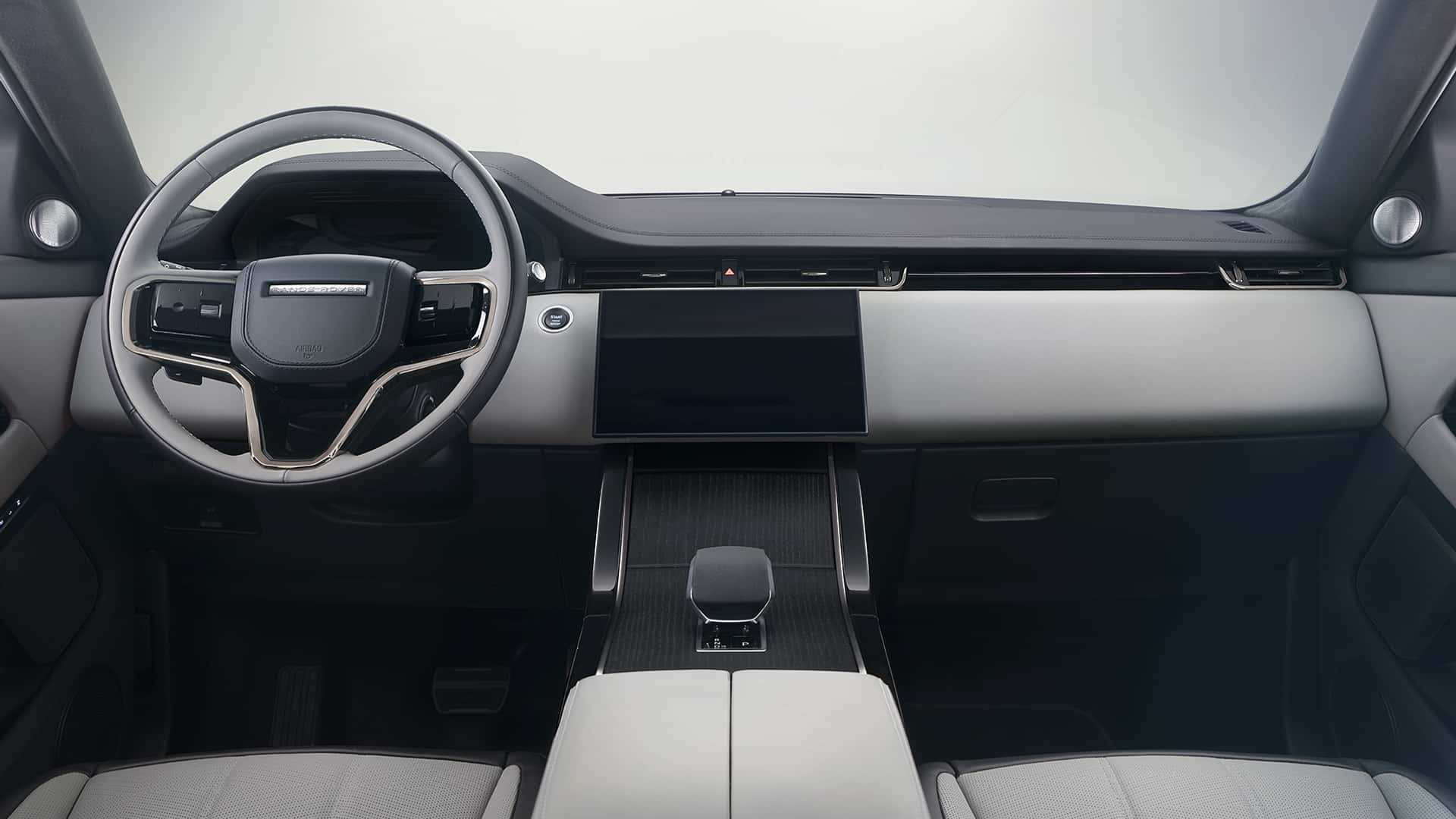
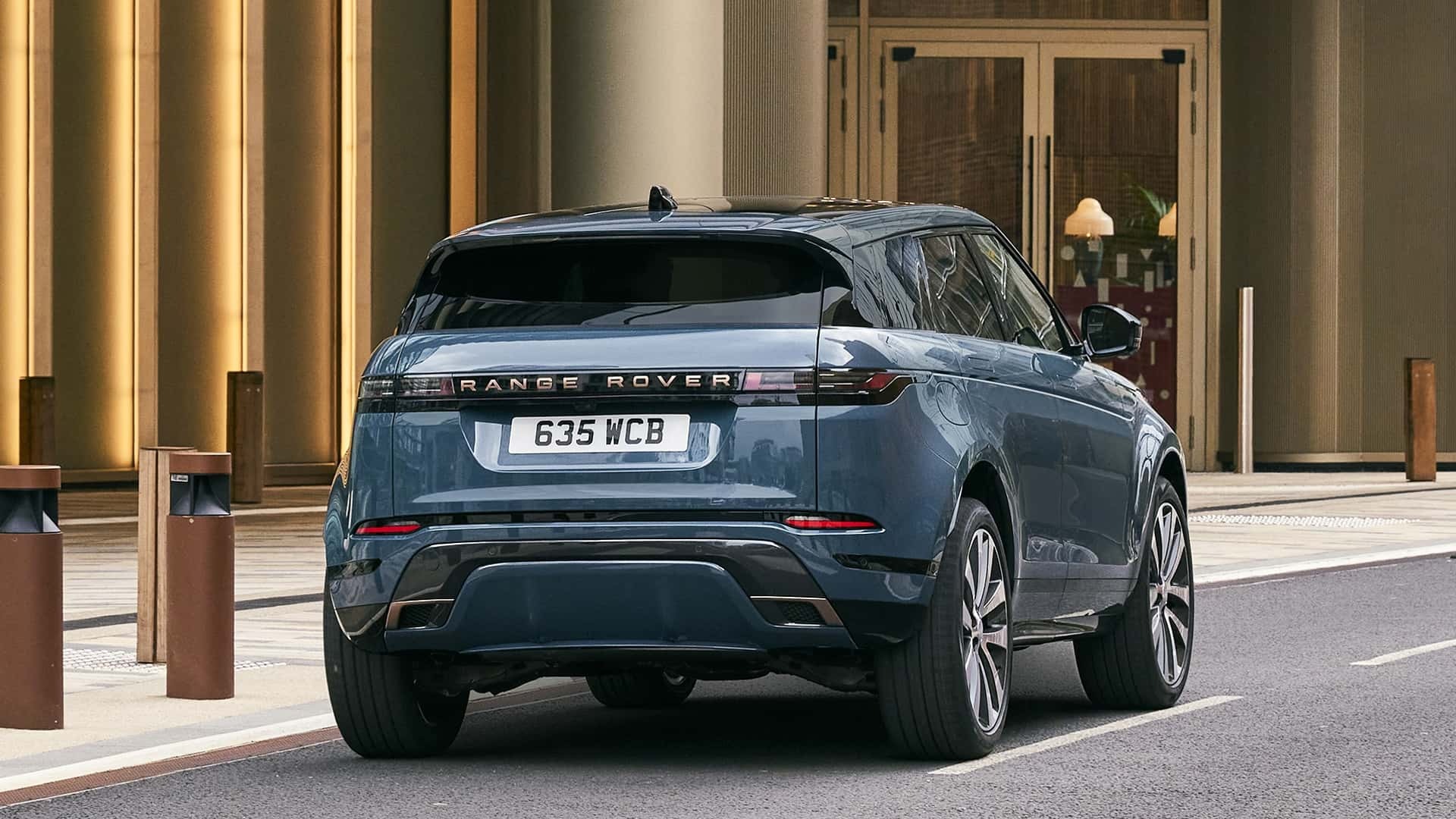
The Range Rover Evoque has received a small update and while the changes aren’t immediately visible to the eye, there’s been some work done in the cabin. Here are the details, plus how much you can expect to pay.
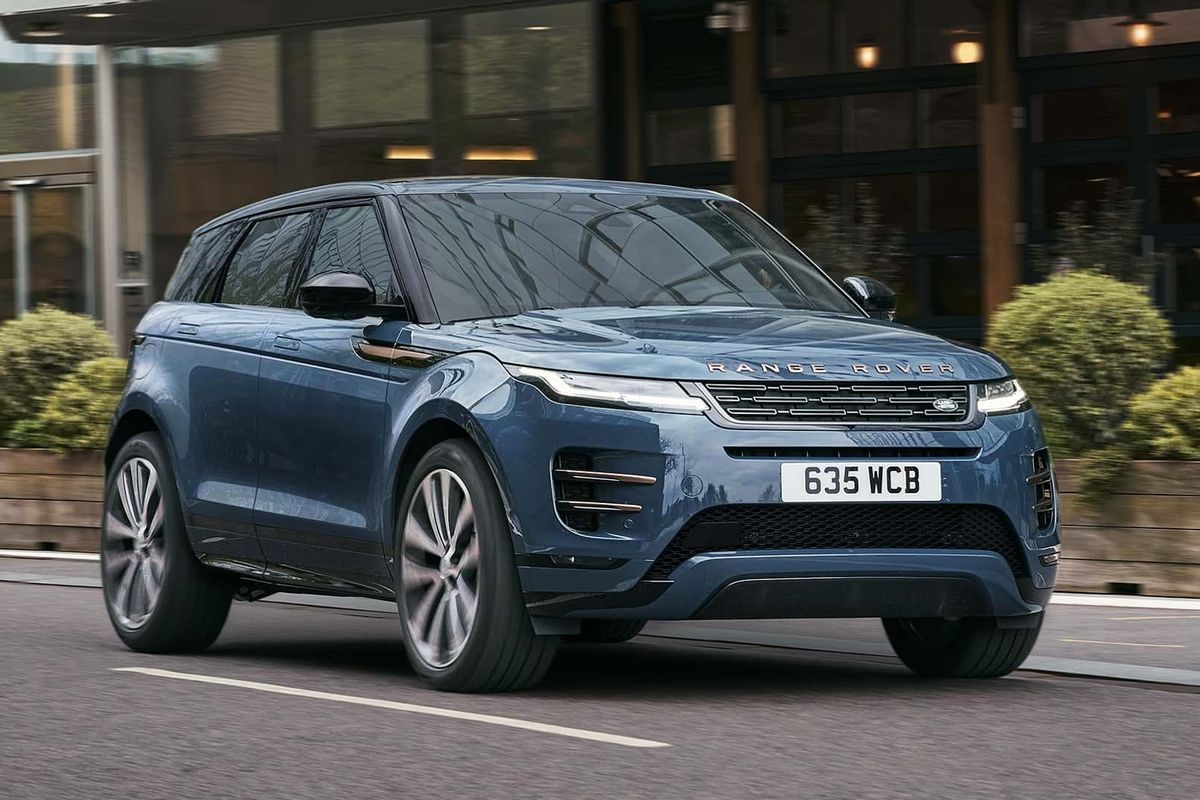
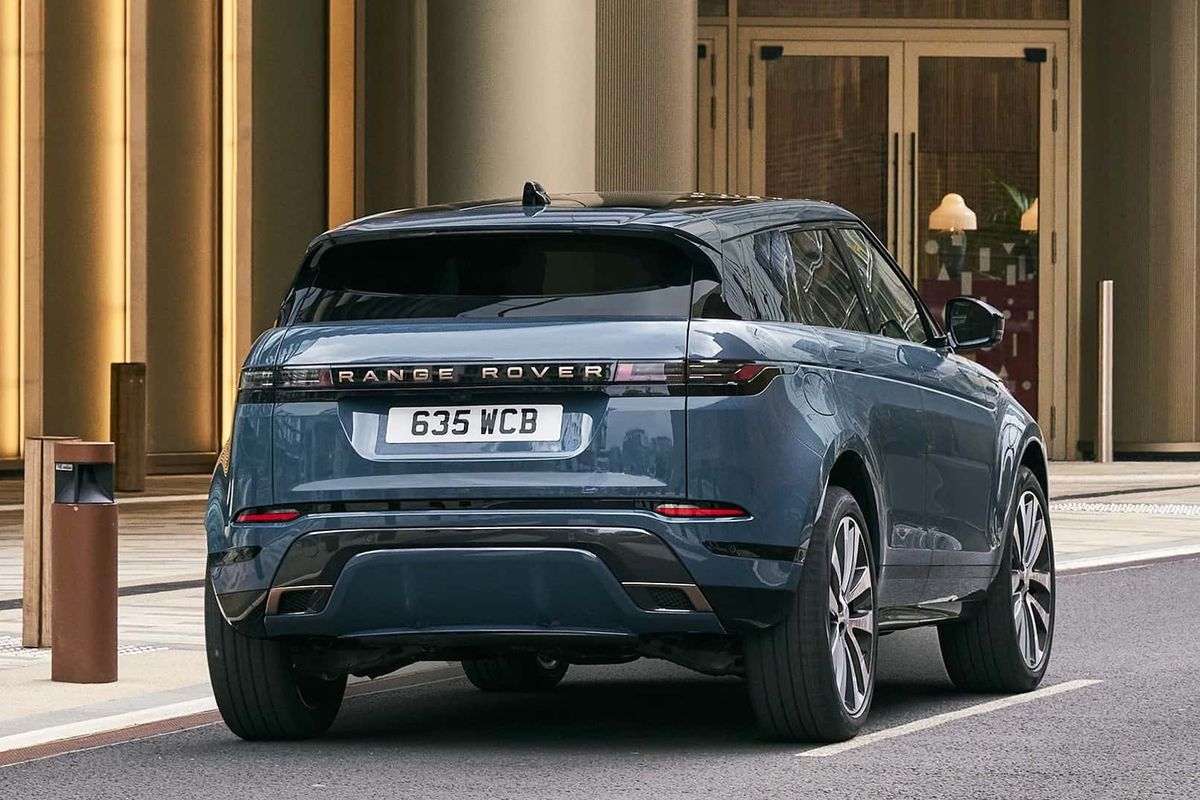
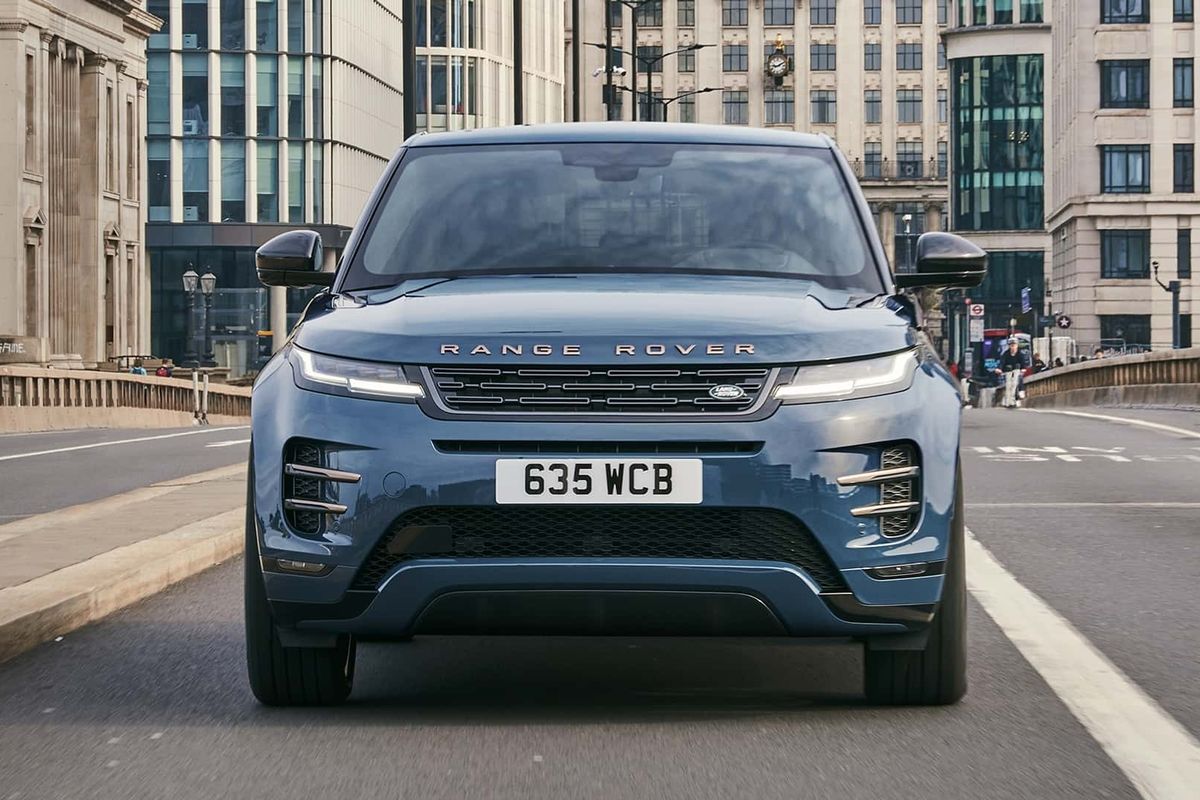
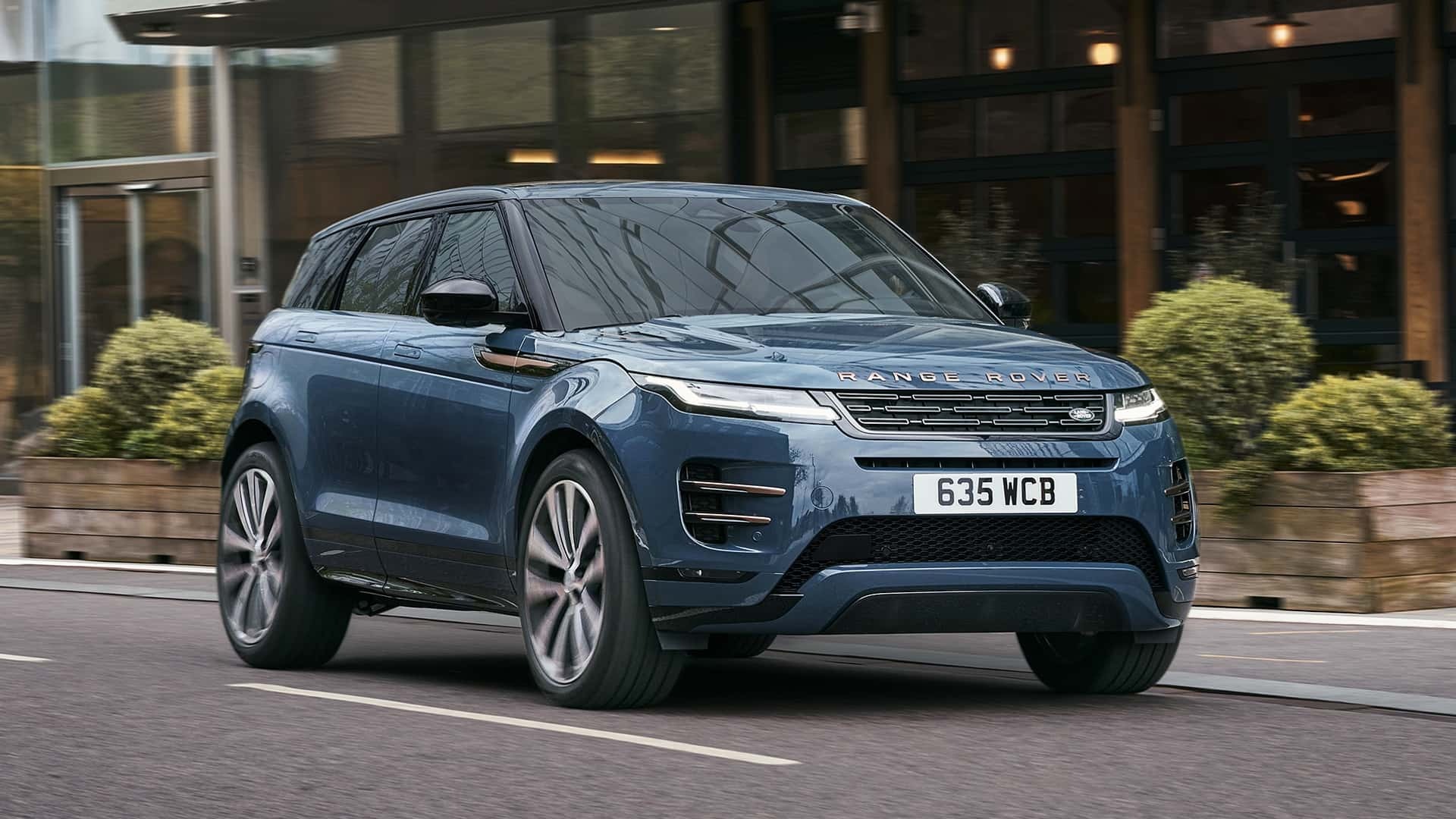
At a glance, the 2024 Range Rover Evoque looks very much like the 2023 model. Not that the outgoing model isn’t pleasing to the eye, but in the world of facelifts this one is properly small. But changes there are, not just in how this luxury SUV looks but how it treats occupants inside as well.
What’s changed?
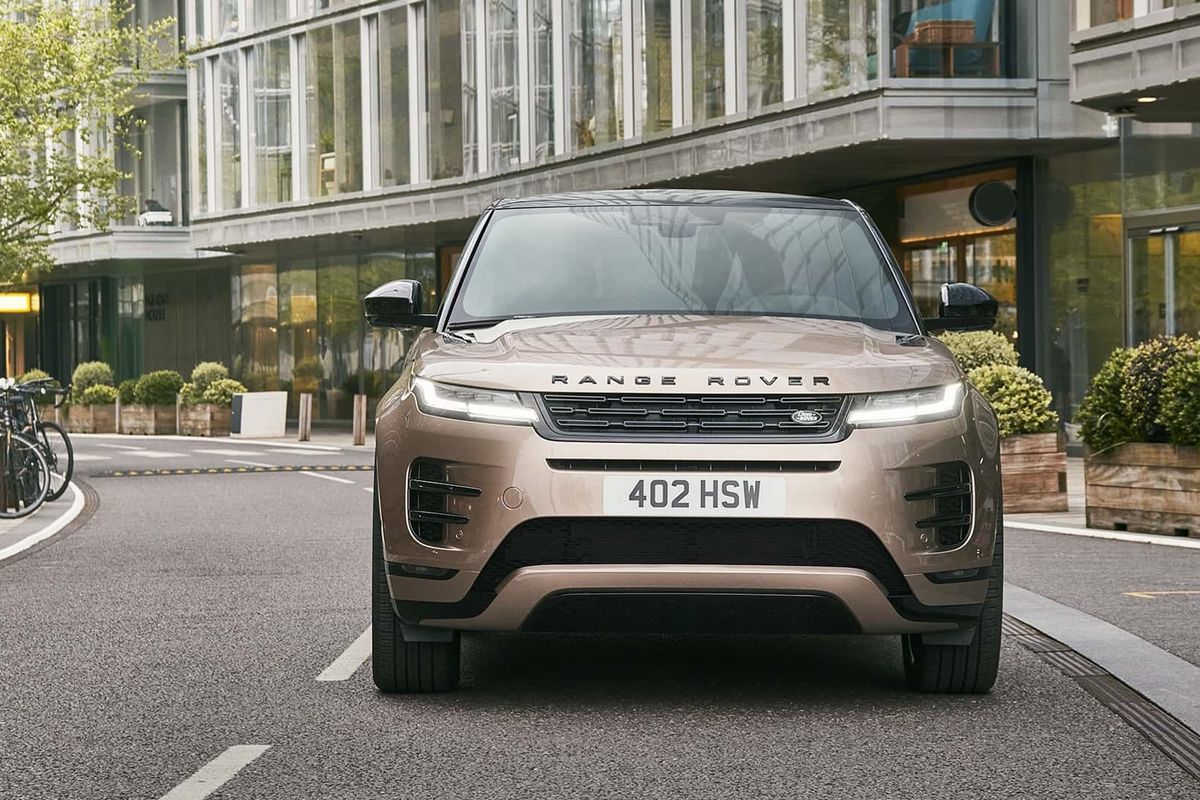
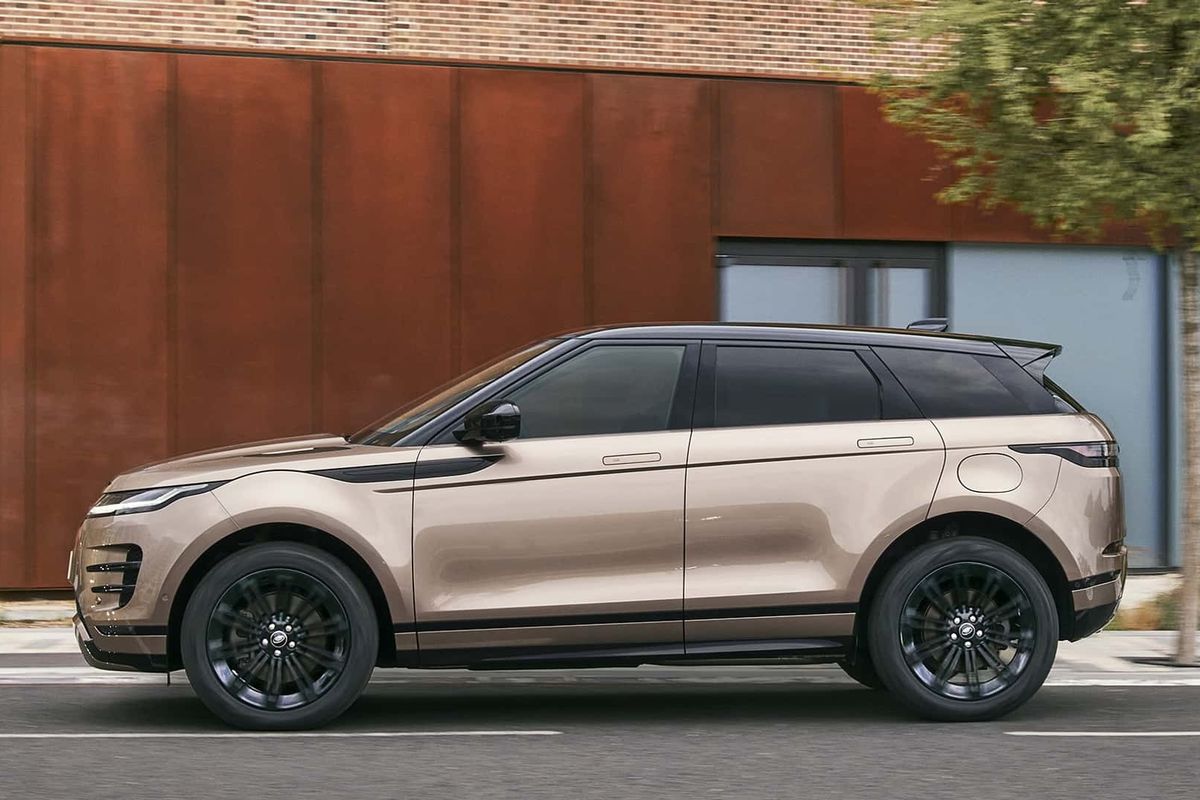
Subtle changes but the Evoque is still a classy head-turner.
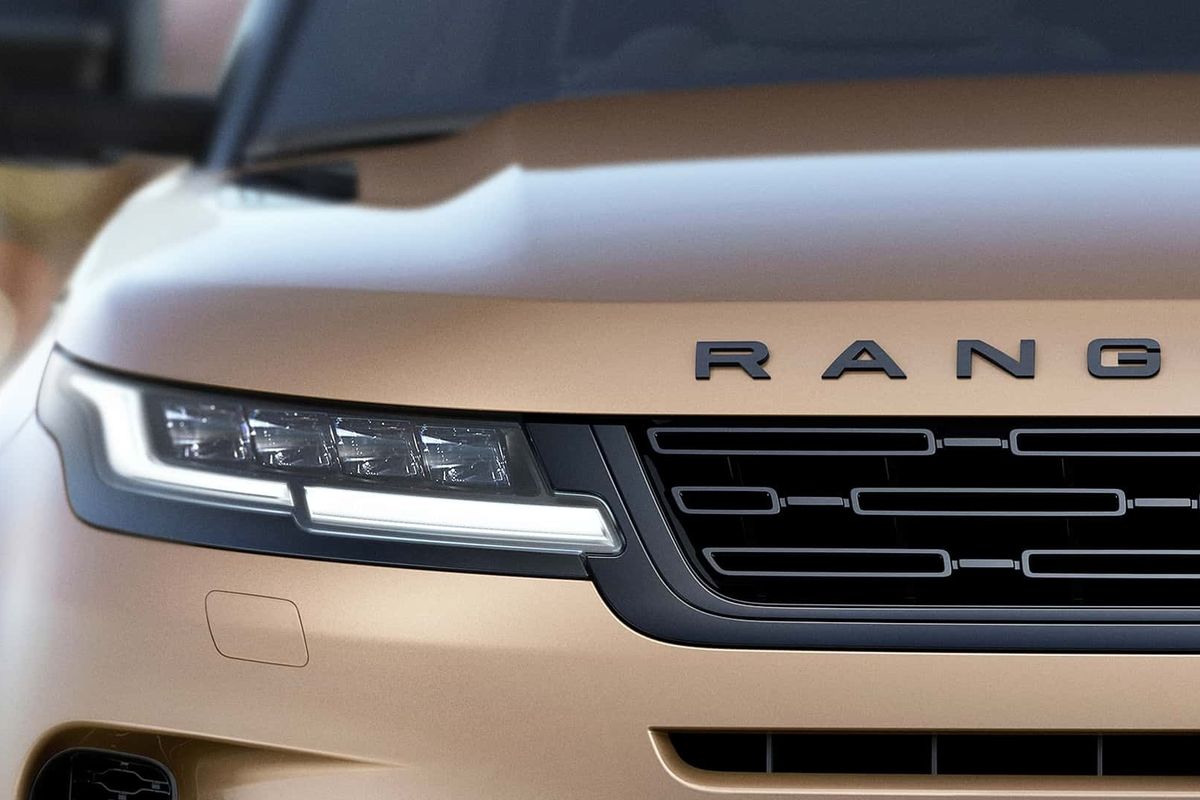
Let’s start with the visuals, specifically the grille. There’s a new mesh-style pattern in place, adopting thin rectangles versus irregular hexagons. On either side of the grille, there are new headlights that look indistinguishable from the current model, but it’s what’s inside that matters. These are new Pixel 1 LED lights, featuring 3 times as many LEDs as before. Furthermore, each light contains 4 pixel modules with LEDs that are individually controlled, projecting varying amounts of light in different directions.
Also new for the 2024 Evoque are fresh wheels up to 21 inches in diameter. New exterior colours include Tribeca Blue, Corinthian Bronze, and Arroios Grey, and that about does it for the visual changes on the outside. We told you this was a slim facelift.
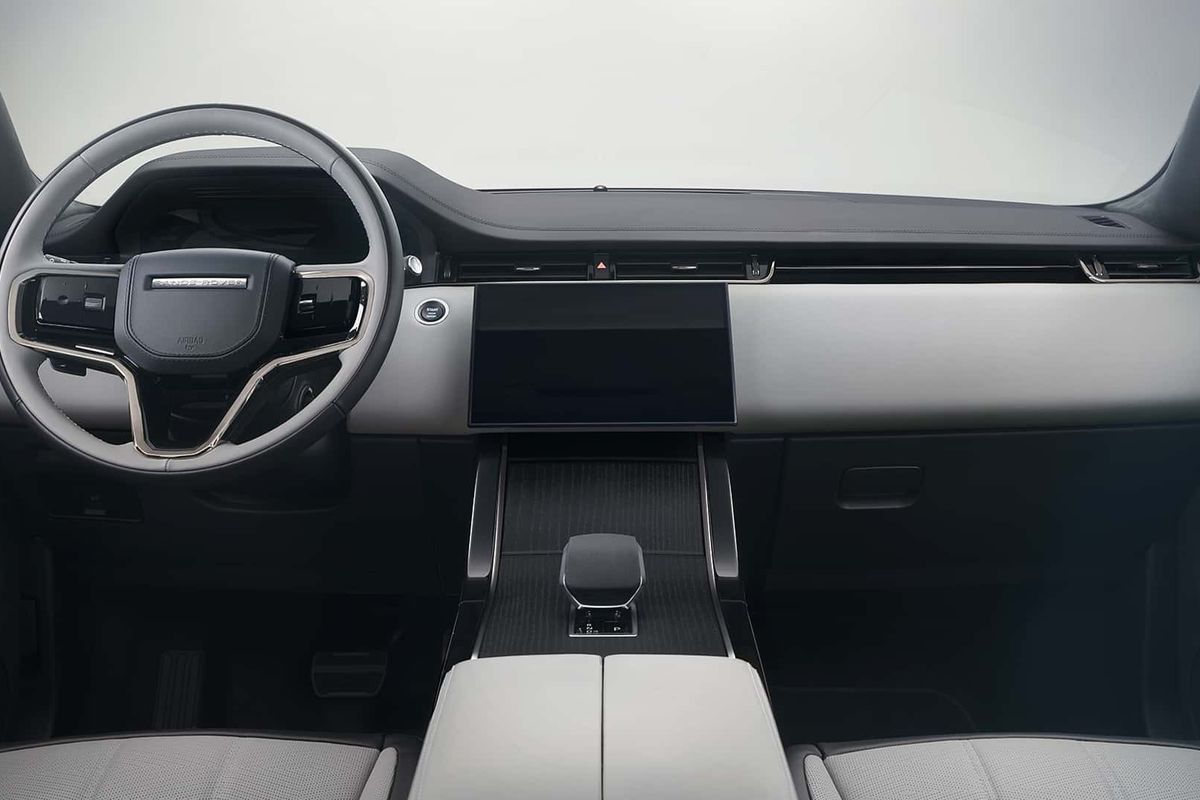
A new touchscreen has made physical buttons redundant, hence the minimalistic look.
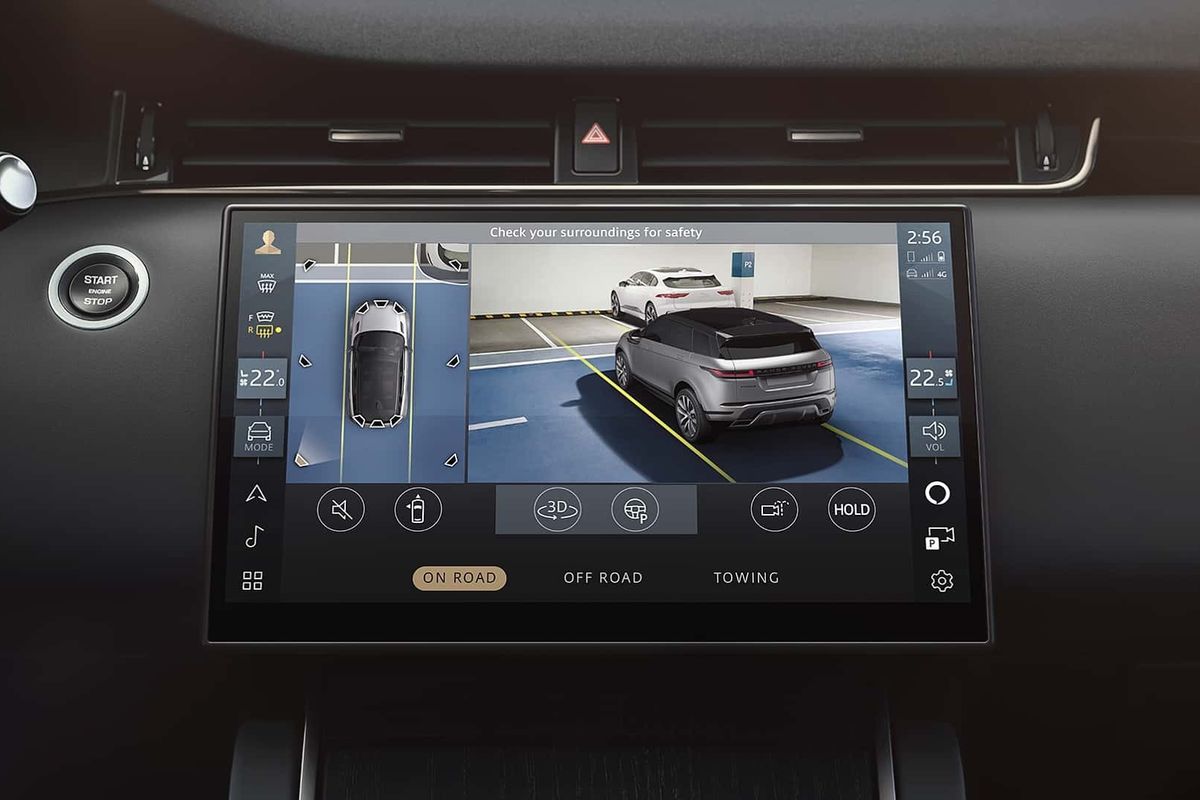
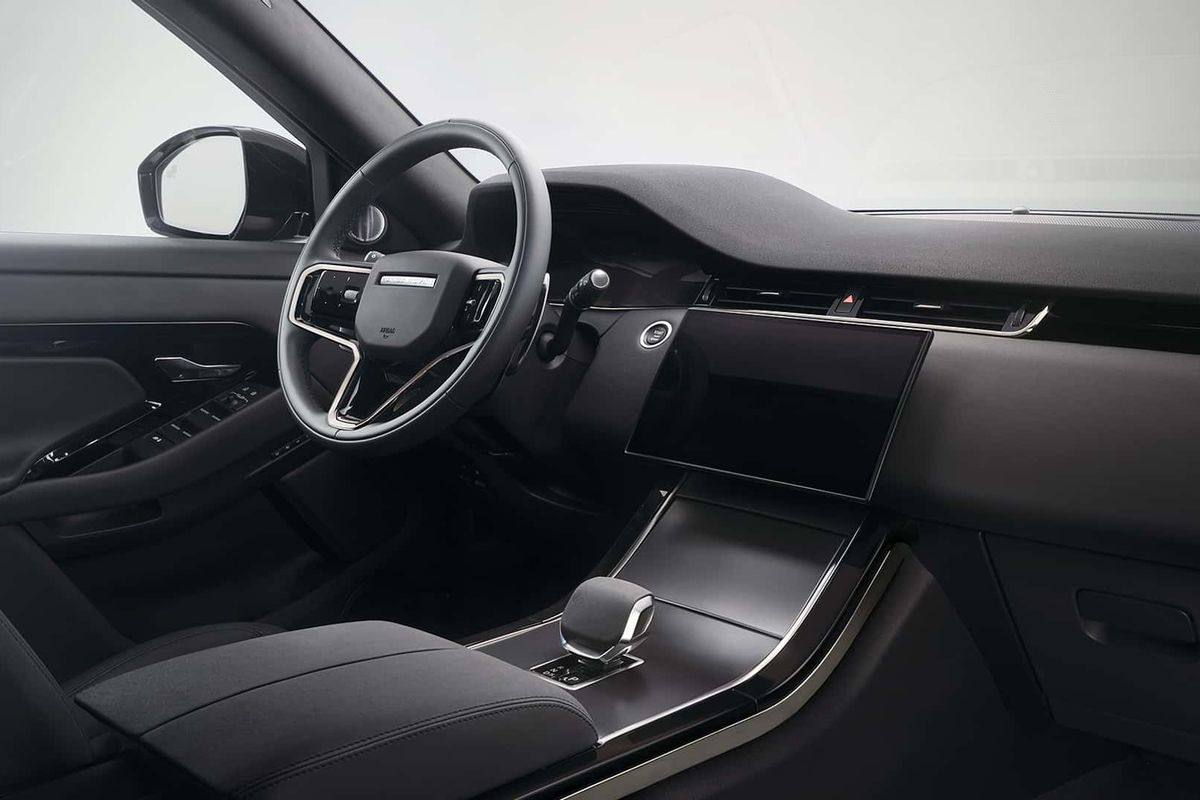
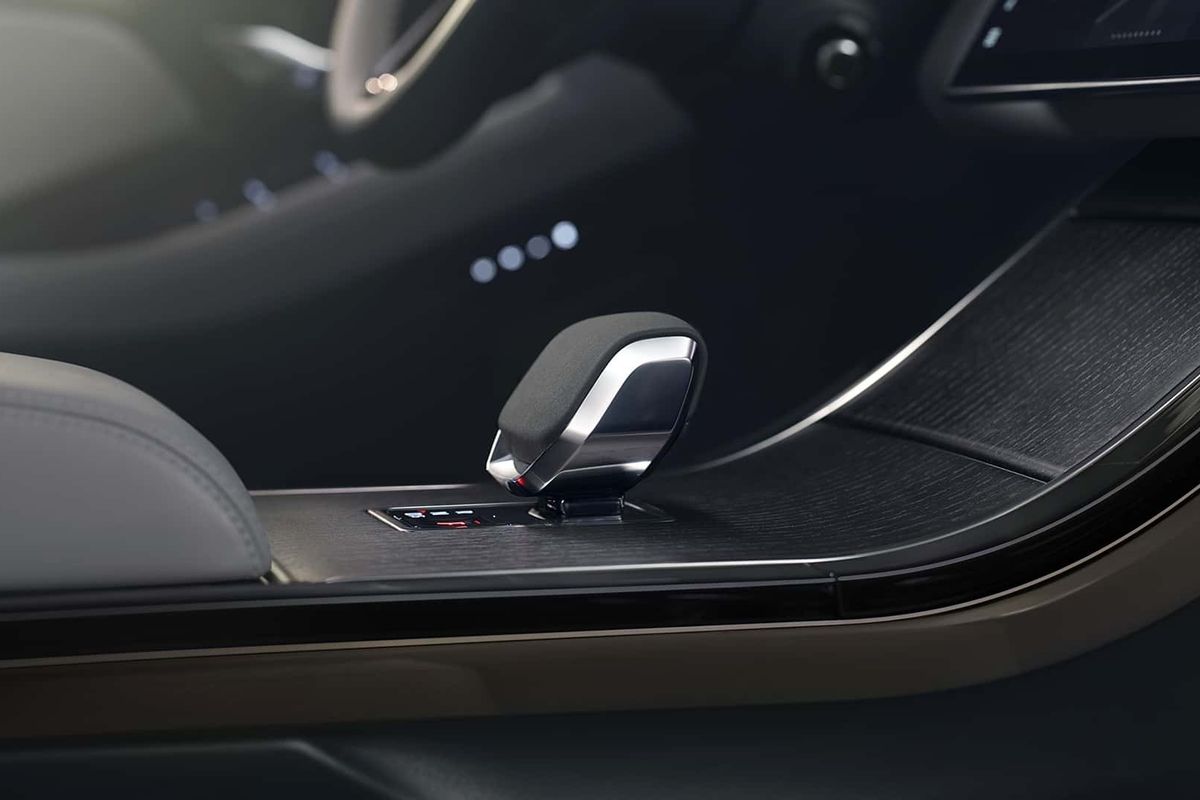
There’s a bit more happening inside the cockpit. The driver and front-seat passenger will immediately notice a new 11.4-inch landscape-oriented touchscreen. This is a curved screen that mounts away from the dash, floating style. It sits above a new centre console that eliminates physical controls save for a redesigned drive shift stalk. The effect is one of extreme minimalism, relegating many vehicle functions to either the steering wheel or touchscreen.
Continuing with tech news, the 2024 Range Rover Evoque enjoys the latest Pivi Pro 2 infotainment system. This supports wireless Apple CarPlay and Android Auto, and Amazon Alexa 10 is integrated for voice control. And then there are the cameras, a system JLR says is among the most sophisticated setup in the Evoque’s class. A 3D surround camera is supplemented with a ClearSight ground view camera and an interior rearview camera.
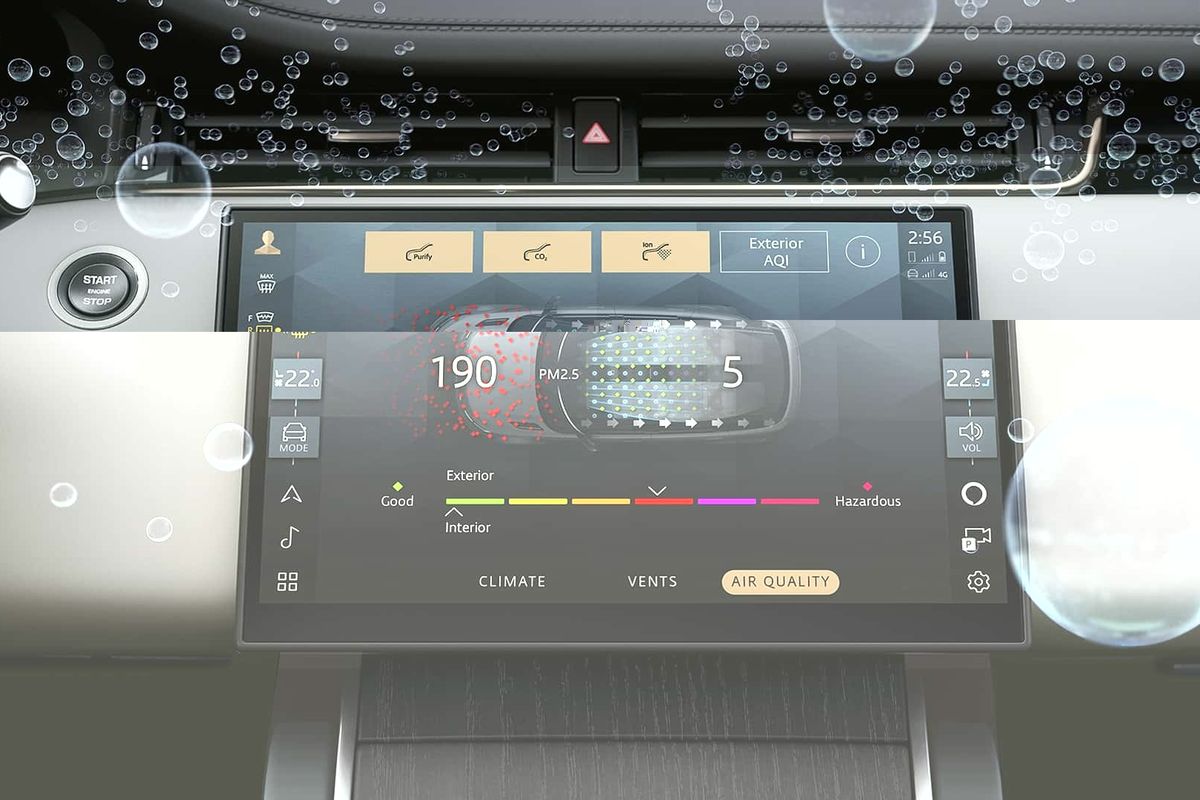
The automaker also says the Cabin Air Purification Plus system is among the best in class and leather is replaced with Kvadrat wool blend fabric for the first time on the Evoque.
What engines power the Range Rover Evoque in South Africa?
Two powertrain options are available to buyers in South Africa.
The Range Rover Evoque is available to order now with diesel and hybrid options to choose from in either SE, HSE or Autobiography guise.
The diesel engine option includes the D200 with a 2.0-litre turbodiesel engine producing 146 kW and 430 Nm of torque and is paired with a 9-speed automatic transmission while the petrol-hybrid P300e combines a 1.5-litre turbocharged petrol engine and electric motor to offer 227 kW and 540 Nm and is paired with an 8-speed automatic transmission.
How much does the updated Range Rover Evoque cost?
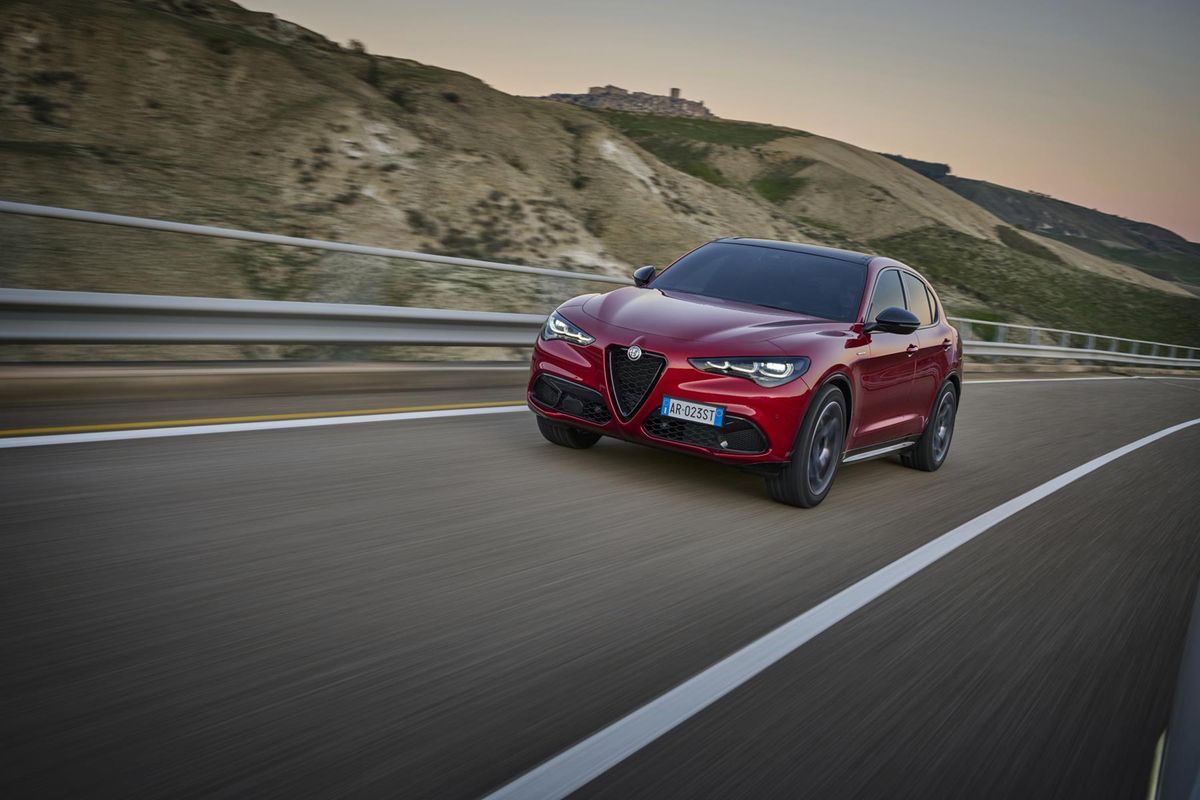
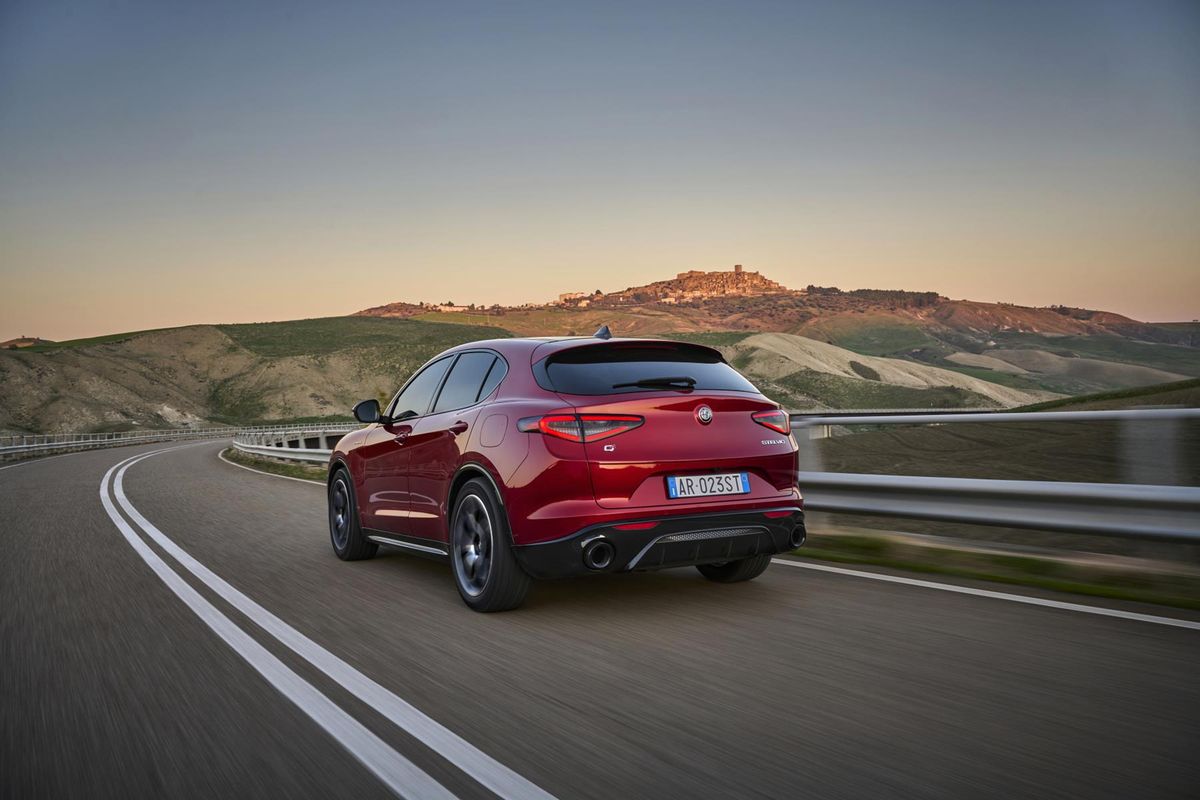
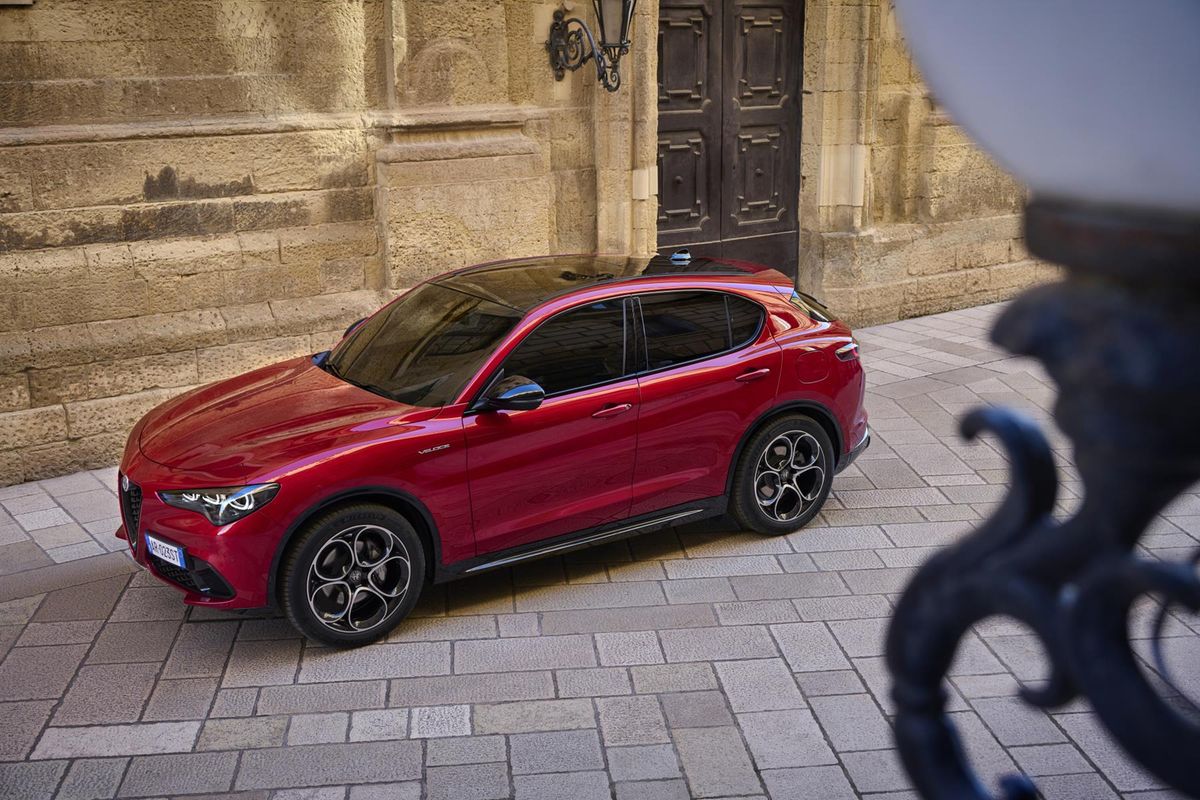
The updated Alfa Romeo Stelvio has reached South African showrooms, Take a look at what’s changed and what you can expect to pay!
What’s Changed?
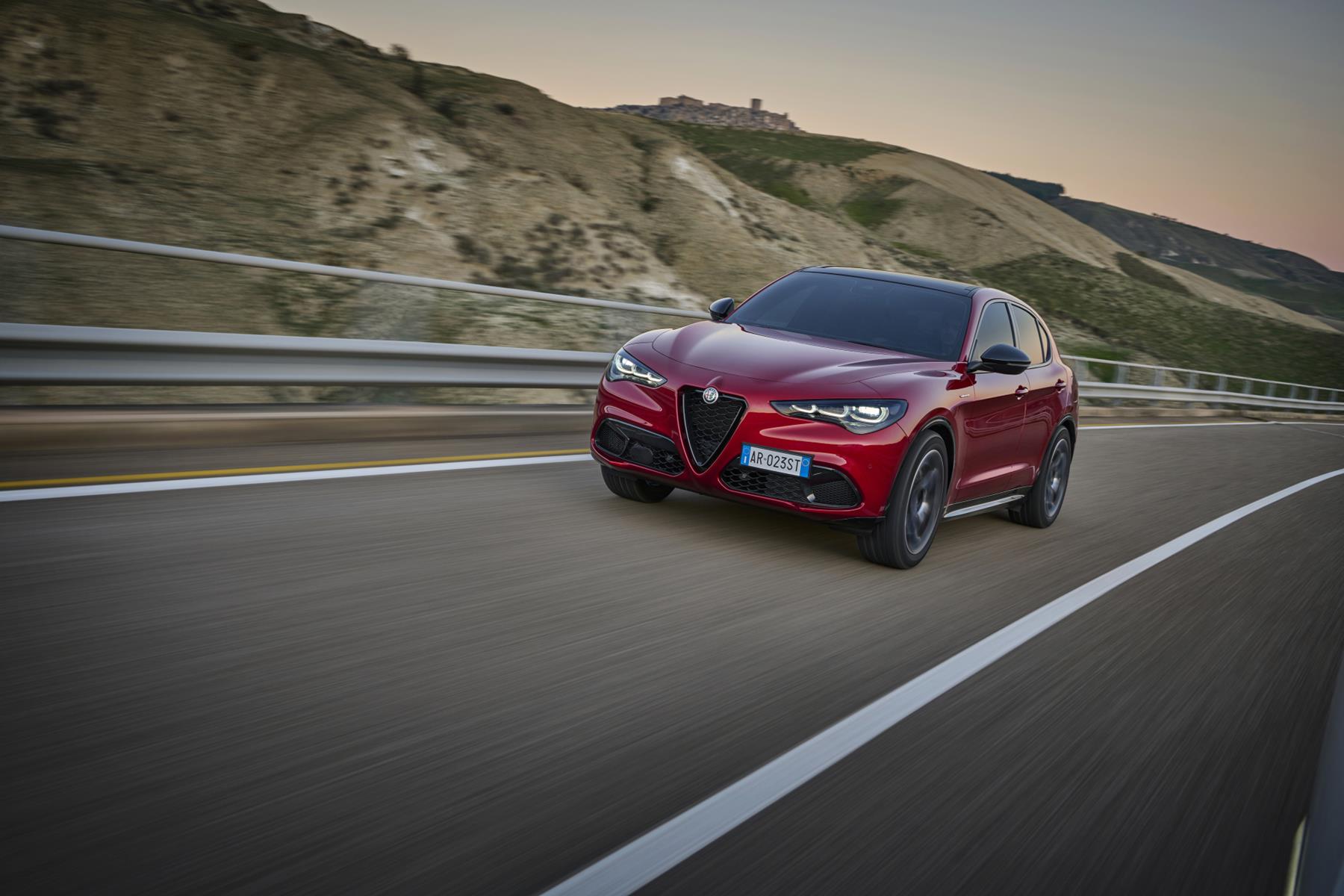
The Stelvio gains LED Matrix headlights familiar from the smaller Tonale SUV.
Following a mild range revision in 2022, the Alfa Romeo Stelvio now ushers in a fresh face boasting a reimagined and updated Trilobo grille but the Italian marque has also fitted new “3+3” LED matrix headlights, also seen on the smaller Tonale SUV, that adds more impetus to the front-end design of the updated Stelvio. The headlights include an integrated and dynamic turn signal as well as a “Welcome and Goodbye” function.
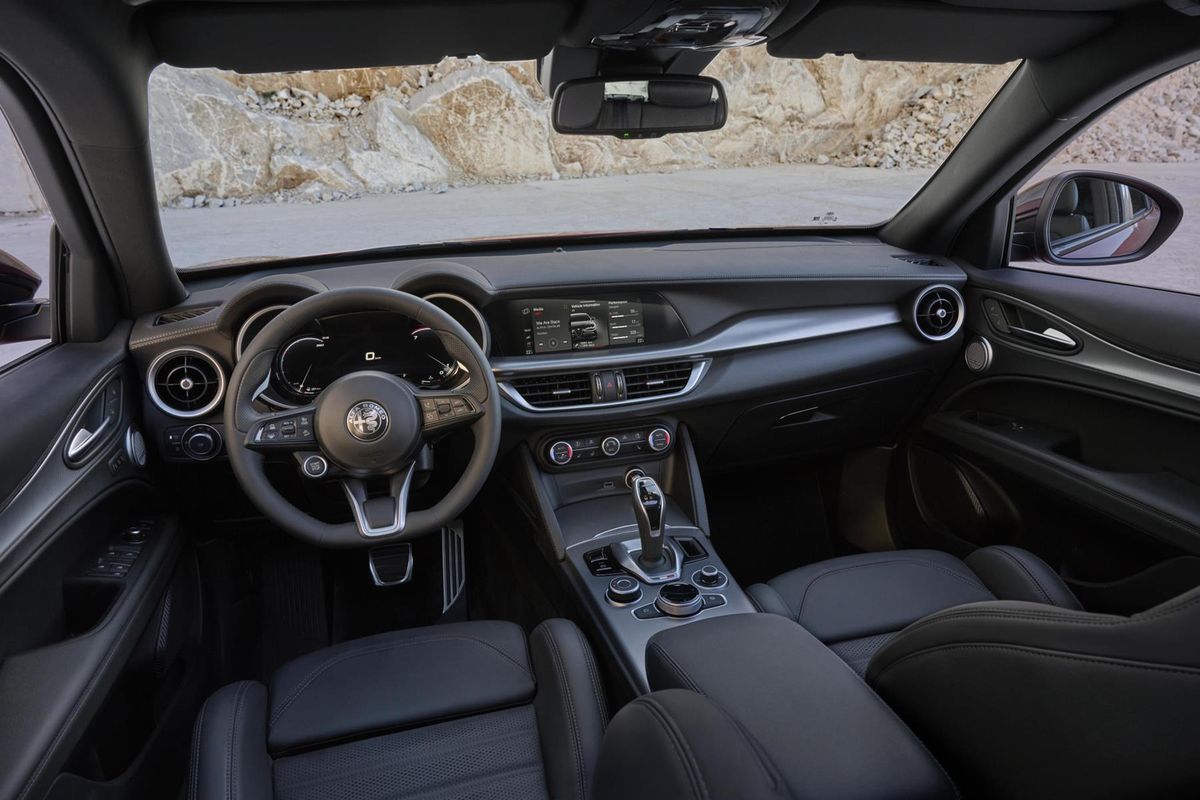
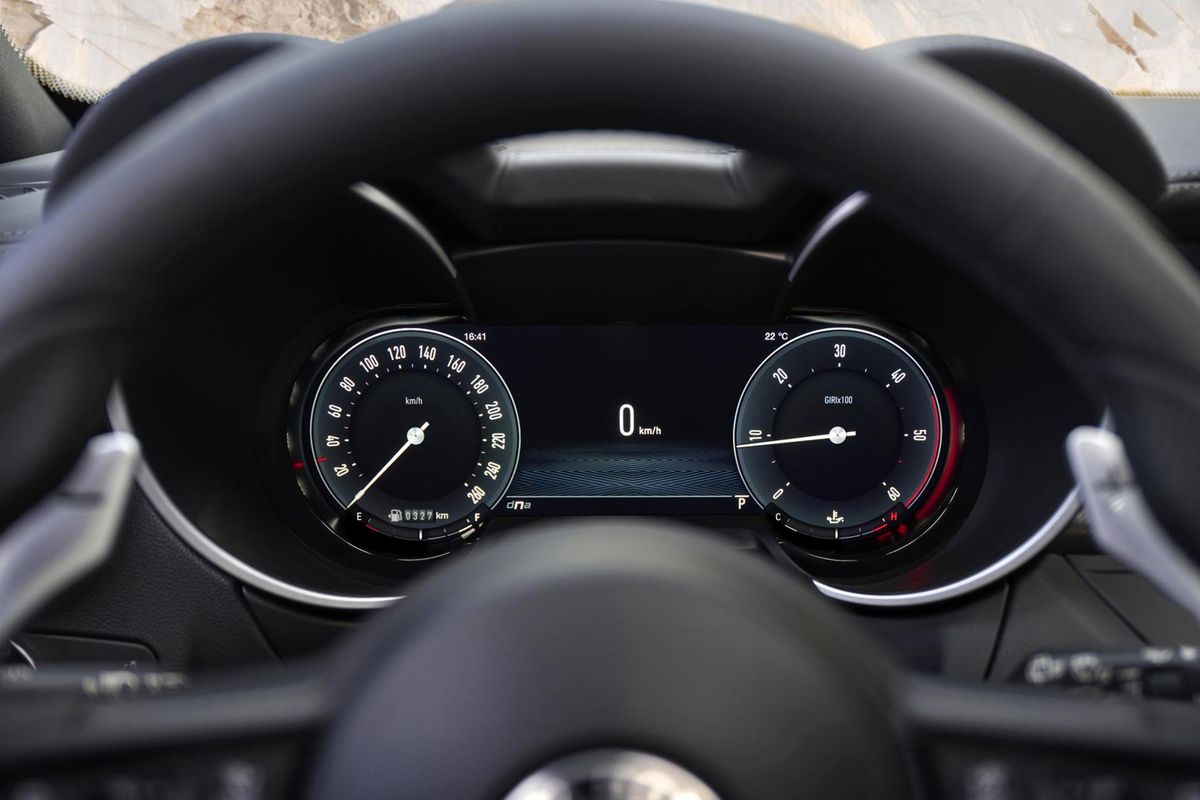
Inside, the major change is found in the instrument binnacle where a new digital 12.3-inch TFT display is now fitted and offers 3 layouts including Evolved, Relax and Heritage.
What hasn’t changed is the engine under the bonnet, which is Alfa’s familiar turbocharged 2.0-litre, 4-cylinder petrol engine which delivers 206 kW and 400 Nm and distributes power to all four wheels via an 8-speed automatic transmission.
With the first half of the year behind us, we take a look ahead at what new cars can be expected to reach South Africa in the remainder of 2023. What new car introductions are you looking forward to most? Take a look at the list below!
In the last 2 years, the automotive sector has been hit hard with a myriad of challenges including parts and chip shortages, supply constraints, production setbacks and ultimately, product delivery delays. Every car manufacturer has suffered — some more than others. With ongoing disruptions and amidst a new car shortage, buyers have flocked to the used car market in search of value, even though demand and prices for new cars remain high.
Nonetheless, if all goes well and to plan, carmakers are introducing exciting new cars for South Africa in 2023.
The list below highlights a distinct lack of new budget car options but compact crossovers/SUVs, family SUVs, luxury SUVs, bakkies, MPVs, supercars and electric cars are all on the menu in the new year.
Please note that this new car list is generated based on feedback from manufacturers as well as from what has been reported publicly by either by Cars.co.za or elsewhere. We have tried our utmost to make this list as accurate and as definitive as possible but please note that we will update this list regularly as we receive relevant information from manufacturers.
It’s also worth mentioning that arrival timings for new cars are tentative and are subject to change due to ongoing changes and delays in the global supply chain.
New Cars for South Africa in 2023
Alfa Romeo
– Range update expected for existing models (Stelvio, Giulia and Tonale)
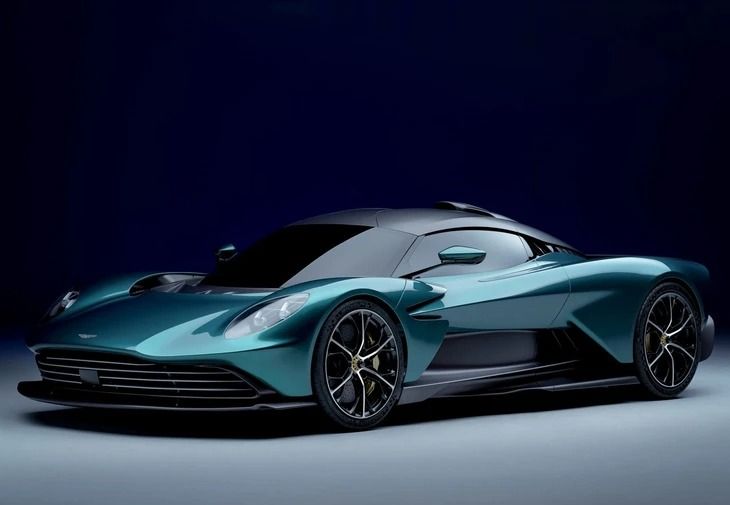
The mid-engined Aston Martin Valhalla is due on local soil and will feature a potent twin-turbocharged 4.0-litre V8 engine sourced from Mercedes-AMG that combines with a pair of electric motors to produce 699 kW and 1 000 Nm of torque. This all culminates in rapid acceleration with zero to 100 kph claimed in 2.5 seconds before reaching its climax at 350 kph. Pricing has yet to be confirmed for the South African market, but don’t expect to see too many Valhallas out on the road.
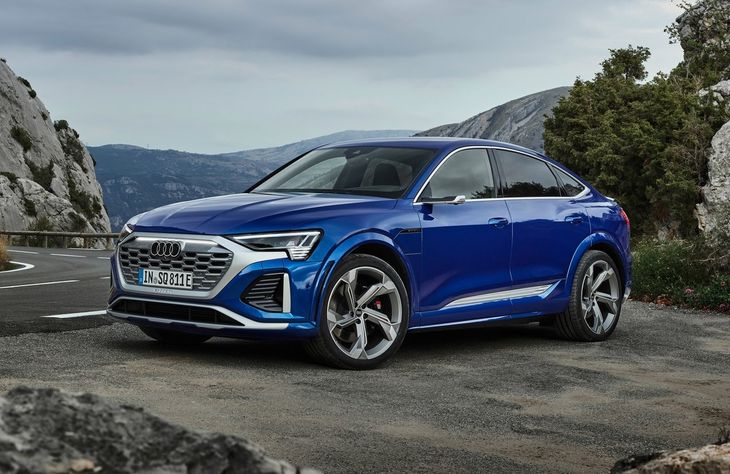
Audi will have a relatively quiet year in 2023 and its updated electric SUV range, which is now known as the Q8 e-tron, is expected to arrive in the third quarter of 2023. The Q8 e-tron will be available in both SUV and Sportback body styles with 3 powertrains and 2 battery sizes to choose from. The range will be headlined by the Audi S Q8 e-tron which boasts 3 electric motors which combine to produce 370 kW and 973 Nm along with a 104 kWh battery and a claimed electric range of up to 513 km (Sportback). Pricing details will be announced closer to the launch of the Q8 e-tron.
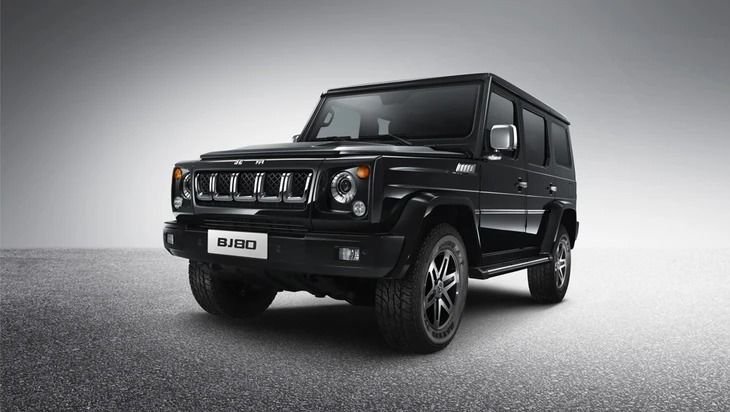
Following the local launch of the BAIC B40 Plus as well as the svelte Beijing X55 compact SUV, BAIC South Africa is expected to further expand its local product offering with a new SUV product and all indications point to the larger BJ80 4×4 SUV making landfall to swipe sales from established offerings from Toyota, Ford, Mitsubishi and Haval. For those who want a Mercedes-Benz G-Class but can’t afford one, the BJ80 will be a more affordable alternative! Engine details have yet to be confirmed but a 3.0-litre V6 engine mated with an 8-speed automatic transmission is likely.
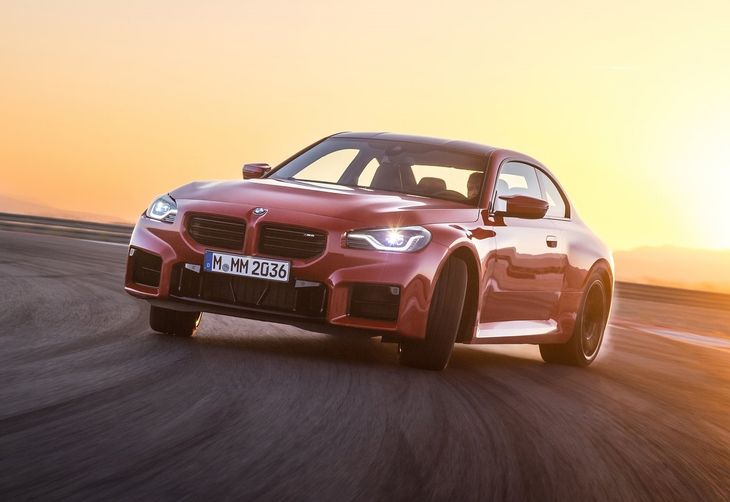
BMW’s new-generation M2 is now available to local buyers and packs a punch with its 3.0-litre turbocharged straight-6 petrol delivering 338 kW and 550 Nm of torque. All that shove is be sent to the rear rubber via either a 6-speed manual or 8-speed automatic transmission. The automatic M2 is able to dispatch the zero to 100kph sprint in just 4.1 seconds while the manual M2 is marginally slower with a claimed sprint time of 4.3 seconds.
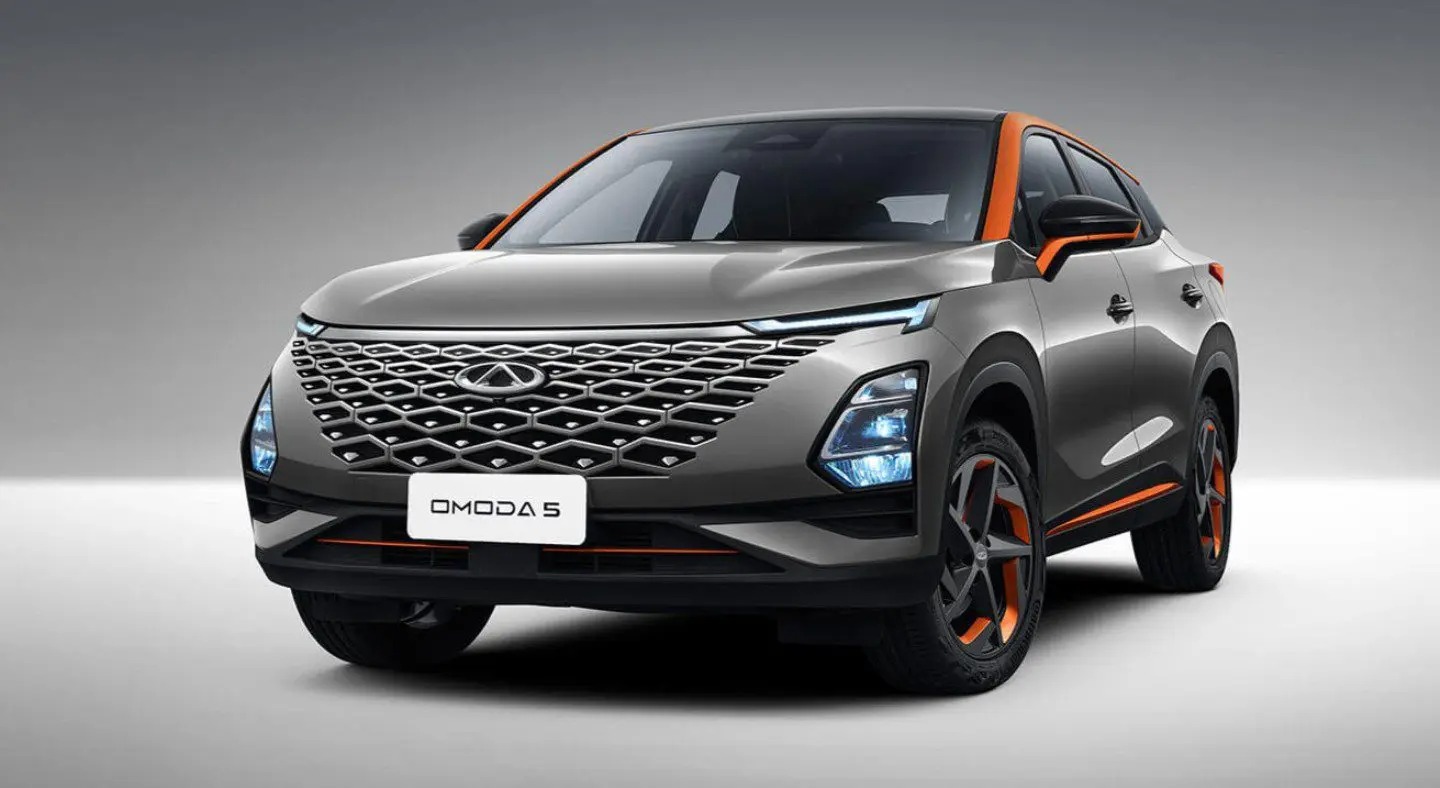
Late in 2021, Chinese car brand, Chery, revealed the new Omoda 5 crossover SUV at the Guangzhou Motor Show and Chery South Africa consequently confirmed that the newcomer would arrive on South African soil in 2023. Note that Omoda is Chery’s luxury sub-brand.
The Omoda C5 makes use of a turbocharged 1.5-litre petrol engine with 115 kW and 230 Nm of torque in conjunction with a Continuously Variable Transmission (CVT).
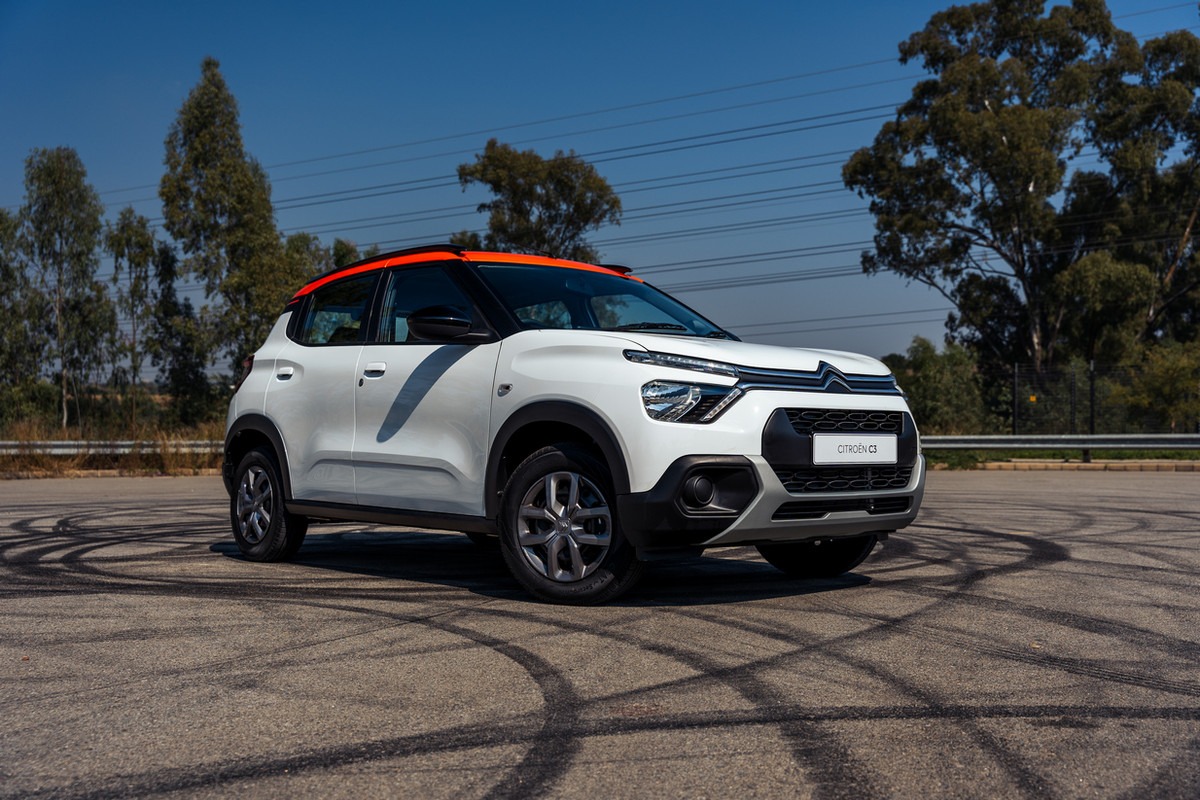
The new Citroen C3 was launched in May 2023 and the newcomer is available with a single engine option, a naturally aspirated 1.2-litre petrol engine with 61 kW and 115 Nm of torque and is currently only offered in conjunction with a 5-speed manual transmission.
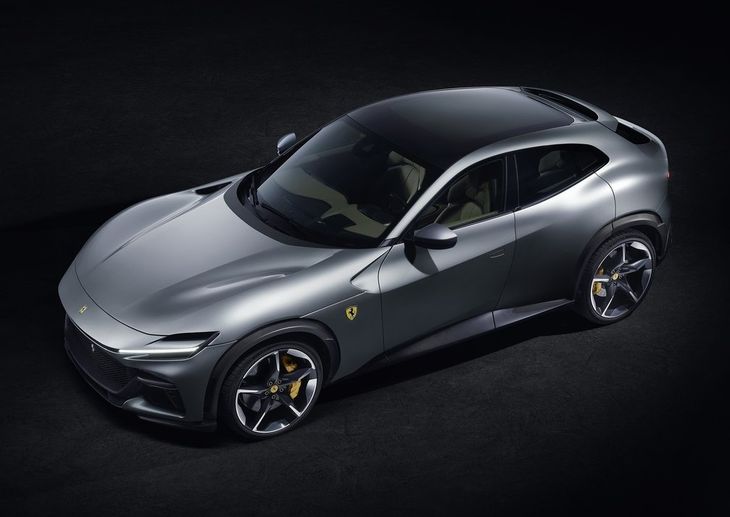
Ferrari’s first-ever SUV (Ferrari refuses to call it an SUV), called the Purosangue, will hopefully grace South African roads in 2023.
The stylish and swooping 5-door Purosangue is powered by a naturally-aspirated 6.5-litre V12 engine that develops a heady 533 kW and 716 Nm of torque and is paired to an 8-speed dual-clutch transmission which lays down power to all four wheels. Ferrari says that the Purosangue is good for 3.3 seconds in the sprint from zero to 100 kph and tops out at about 310 kph. Local timing is not yet known but we will keep you updated as soon as we get confirmation.
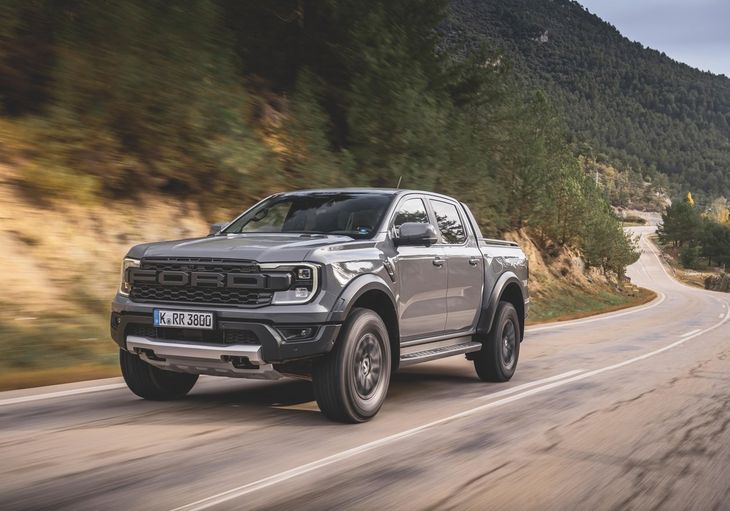
The new Ford Ranger Raptor is one of the most highly-anticipated new car introductions of 2023, especially for bakkie lovers across South Africa. The new-generation Raptor welcomes a powerful 3.0-litre twin-turbo petrol V6 engine, which drives all four wheels through a 10-speed automatic transmission and offers peak outputs of 292 kW and 583 Nm.
This, combined, with a Ford Performance suspension setup which includes a Watt’s link rear end and FOX 2.5-inch Live Valve Internal Bypass shock absorbers, front and rear locking differentials and an electronically controlled on-demand 2-speed transfer case, will ensure formidable offroad performance.
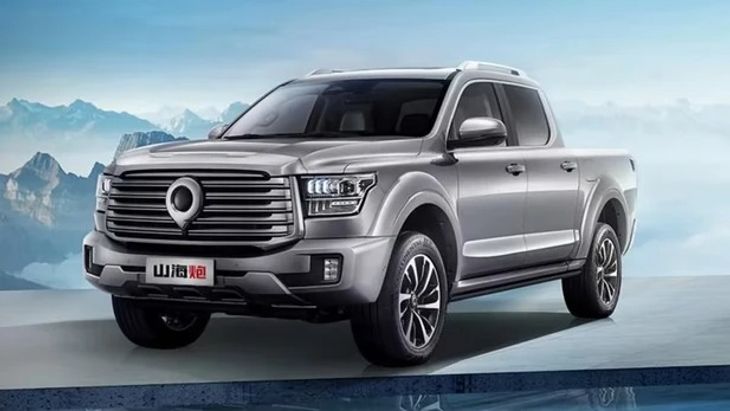
Since its local introduction, the GWM P-Series has become a fairly common sight on South African roads. While the current P-Series range employs a middling 120 kW / 400 Nm 2.0-litre turbodiesel engine, there’s ample room for improvement in terms of performance and we have reason to believe that GWM may very well introduce a more powerful bakkie on the local market.
Earlier this year we reported on the GWM Shanhai Cannon which is expected to go on sale in Australia in 2023, which like South Africa, is also a right-hand-drive market. While it hasn’t been confirmed outright, a strong business case can be made for a more competitive engine choice in our market. The Shanhai Cannon can be had with 3 powertrains including a 137 kW 2.4-litre turbodiesel engine, turbocharged 3.0-litre V6 petrol engine with 260 kW and 500 Nm or a 2.0-litre petrol hybrid derivative. We’re hoping the potent V6 petrol engine is on the cards!
The Jolion has been a sales success for Haval ever since it made landfall in South Africa in April 2021 and the big news for the Chinese SUV firm in 2023 is the introduction of a sportier Jolion S as well as the Jolion Hybrid, both of which are currently on sale in South Africa. The Jolion S is powered by an uprated version of the standard model’s turbocharged 1.5-litre, 4-cylinder petrol engine with 130 kW and 270 Nm which is 25 kW and 60 Nm more than the standard Jolion and comes paired with a 7-speed dual-clutch transmission. In addition to the powertrain upgrade, the Jolion S gains a more sophisticated rear independent multi-link rear suspension arrangement, replacing the basic torsion-beam set-up used by the standard model.
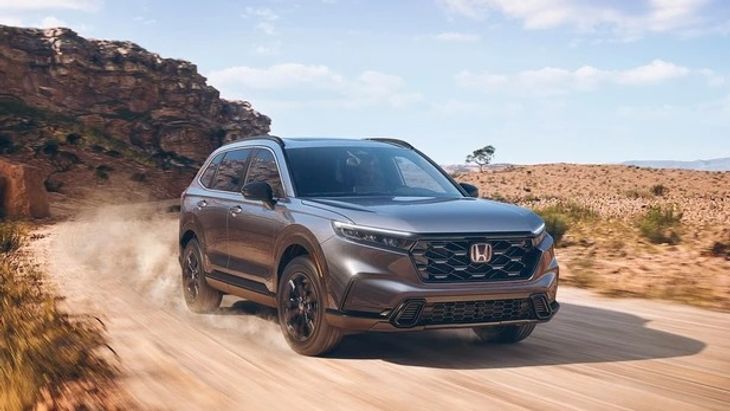
A new, larger and more stylish Honda CR-V is on the way in 2023. Local specification and pricing details have yet to be confirmed but it’s likely that the current 1.5-litre turbopetrol engine will forge on in revised form to offer 140 kW and 243 Nm (+3 Nm over predecessor) while a 2.0-litre dual motor hybrid-electric CR-V with 150 kW and 335 Nm of torque is also a possibility which will serve as a rival to the Toyota RAV4 Hybrid.
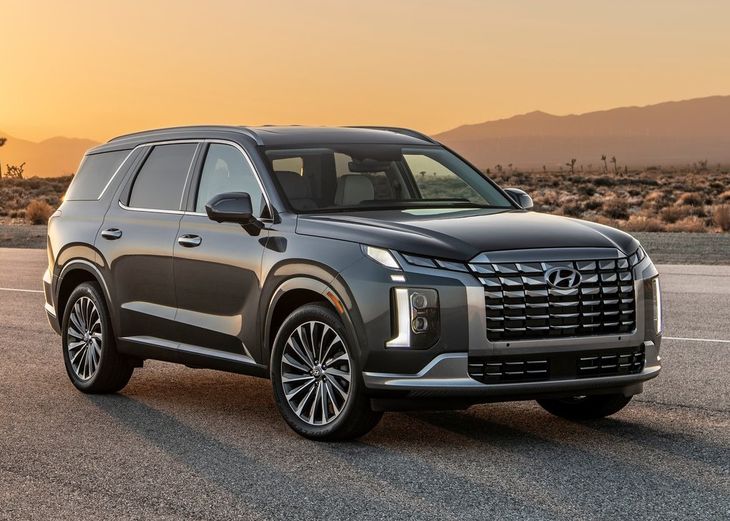
Hyundai will have a relatively quiet year in 2023 but local buyers are treated to an updated Palisade SUV boasting enhanced styling as well as an interior equipment update which includes a host of new technology and comfort features. As far as powertrains are concerned, the current 2.2-litre turbodiesel with 142 kW and 440 Nm will still be the core offering and the Palisade can be had in either 7- or 8-seat configuration.
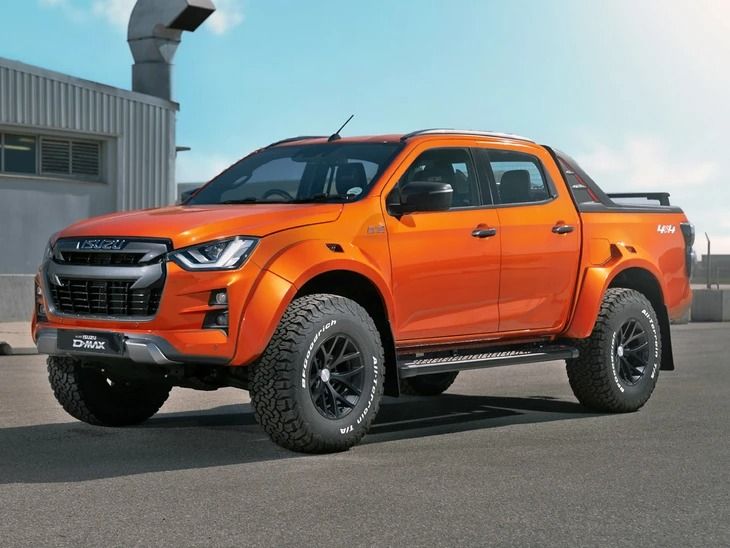
Even though Isuzu has confirmed that its offroad-ready bakkie will be offered in South Africa, exact timing and pricing remain unknown at this stage but we expect to see it in local showrooms before year-end.
This beefed-up and jacked-up D-Max rides on standard 35-inch tyres on matte black alloy wheels and boasts flared bodywork to create a rather imposing stance. The enhanced Bilstein performance suspension ensures improved offroad performance and the Arctic Trucks AT35 stands some 50mm higher than the standard D-Max. Since the SA-spec version is likely to be based on the flagship V-Cross 4×4 double-cab derivative, power would come from Isuzu’s 3.0-litre, 4-cylinder turbodiesel engine, which in this state of tune is worth 140 kW and 450 Nm. The Isuzu D-Max Arctic Trucks AT35 will be assembled at Isuzu’s plant in Struandale, Gqeberha. We will keep you updated as soon as we receive more information.
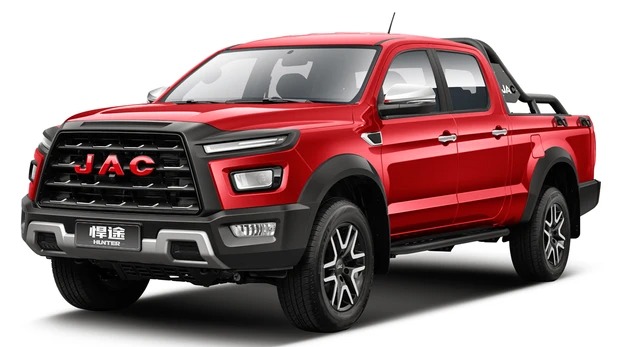
JAC Motors South Africa says its new T9 Hunter double-cab bakkie line-up has been pencilled in for a local launch in the second half of 2023.
According to the Chinese firm’s local distributor, the T9 Hunter range will comprise four derivatives, including the choice of 4×2 and 4×4 configurations, and slot in above the current T6 and T8 portfolios.
Interestingly, the South African market looks set to receive a turbodiesel model at launch, before a plug-in hybrid electric vehicle (PHEV) variant touches down towards the end of 2023. Finally, JAC Motors SA says it plans to introduce a fully electric derivative in “early 2024”.
So, what do we know about the oil-burning engine? Well, it’s a 2.0-litre, 4-cylinder turbodiesel mill that generates 125 kW and 410 Nm. In South Africa, the powerplant will be available exclusively in conjunction with an 8-speed automatic transmission sourced from ZF. The 4×4 derivatives will feature a low-range transfer case and a rear differential lock.
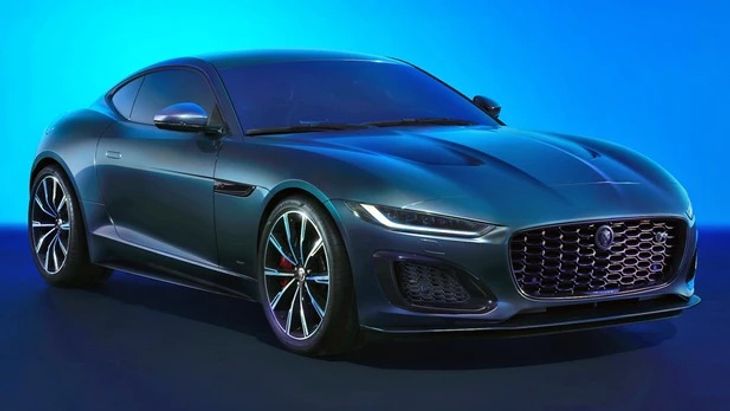
Jaguar has handed its F-Type one final update before the sportscar rides off into the sunset as the British firm has committed to an EV future as of 2025. The 75-badged F-Type (to celebrate 75 years of Jaguar sportscars) range in South Africa will include coupé and convertible versions of the all-paw 75 and R 75 special-edition models, along with the 331 kW rear-driven R-Dynamic variants (again available in either of the two body styles).
The final F-Type range will include only one engine option: the supercharged 5.0-litre V8 (though in two states of tune), paired with an 8-speed automatic transmission.
In the lower-output version, the 8-cylinder unit makes 331 kW and 580 Nm. In South Africa, the F-Type 75 will be available exclusively in all-wheel-drive guise, complete with an active electronic rear differential. Jaguar claims a 0-100 kph time of 4.6 seconds and a top speed of 285 kph.
Then there’s the F-Type R 75, which bears a version of the supercharged V8 worth 423 kW and 700 Nm. With this model, the sprint from standstill to 100 kph takes a claimed 3.7 seconds, while maximum speed is electronically limited to a heady 300 kph.
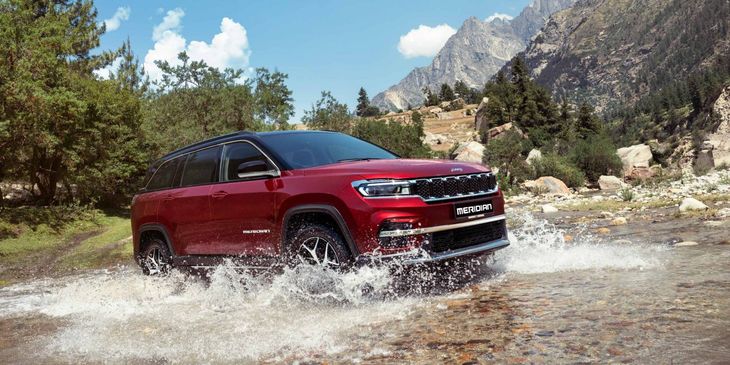
Jeep SA has confirmed that 2 new models are due to reach South Africa in 2023. While currently under consideration for introduction in South Africa (as reported by The Citizen), the Commander (also known as the Meridian in India where it’s produced in right-hand-drive guise) might see the light of day in Mzansi in 2023 or 2024. The Meridian will be Jeep’s answer to the popular Toyota Fortuner, Ford Everest, Mitsubishi Pajero Sport, Isuzu MU-X and Haval H9. The Meridian makes use of a 2.0-litre turbodiesel engine with 125 kW and 350 Nm on offer and can be had with a 6-speed manual transmission as standard. We will keep you updated as soon as Jeep SA releases official information.
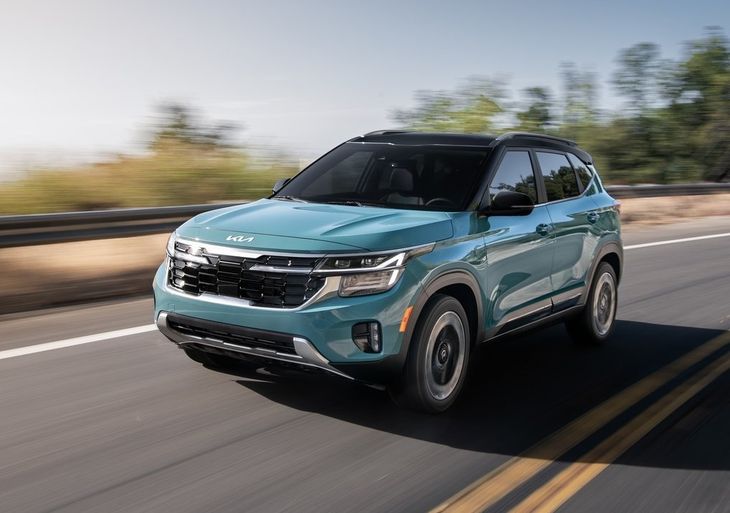
Kia has given its stylish Seltos a makeover and it can be expected in local showrooms in the second half of 2023. The Seltos sports a new exterior look, incorporating new-look headlights, daytime running lights, and a new grille. At the rear, there’s a light bar stretching its way across the rear of the vehicle. Inside, the traditional gear lever has been replaced by a rotary switch and the dashboard has been restructured to accommodate the two new 10.25-inch digital screens. The current naturally-aspirated 1.6-litre petrol engine, 1.5-litre turbodiesel engine and 1.4-litre turbopetrol engine are expected to remain on offer when the updated Seltos arrives in Mzansi. Pricing will be revealed closer to the launch.
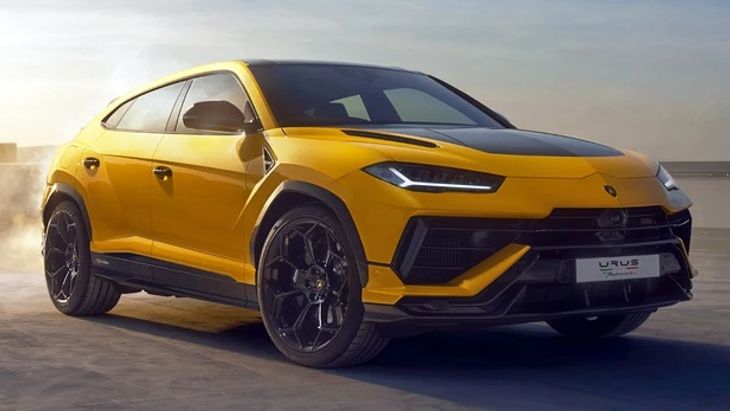
As if the Lamborghini Urus wasn’t powerful enough, the Italian supercar manufacturer will unleash a more potent (and updated) version of its best-selling Urus SUV soon. Enter the Urus Performante, now boasting 490 kW and 850 Nm from its twin-turbocharged 4.0-litre V8 petrol engine! It’s also some 47 kg lighter and will run from zero to 100kph in just 3.3 seconds before powering on to a top speed of 306 kW!
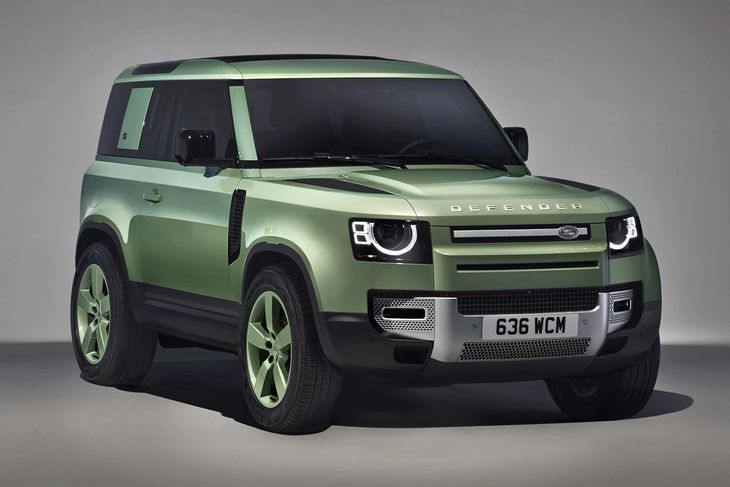
Land Rover Defender 75th Limited Edition – Arrived
To celebrate 75 years of the iconic Defender, Land Rover has introduced the Defender 75th Limited Edition to South Africa in early 2023. Only 10 (short 90 and long wheelbase 110) will be offered in South Africa and all will be in D300 form. That means a turbocharged, 3.0-litre, 6-cylinder mild-hybrid diesel powertrain is found under the bonnet mated with an 8-speed automatic transmission. Outputs are rated at 221 kW and 650 Nm of torque.
The Defender 75th Limited Edition is finished in Grasmere Green paint and boasts what Land Rover describes as “unique detailing”. This exterior hue has been reserved for the special-edition model and is repeated on the 20-inch alloy wheels, which are wrapped in all-terrain rubber as standard.
The limited-edition model furthermore gains a subtle “75 Years” graphic at the rear, as well as Ceres Silver bumpers and privacy glass. Inside, the facia panel is finished in Grasmere Green Powder Coat, while the seats are trimmed in Resist Ebony.
According to Land Rover, this particular Defender is “highly collectable”. See pricing details here!
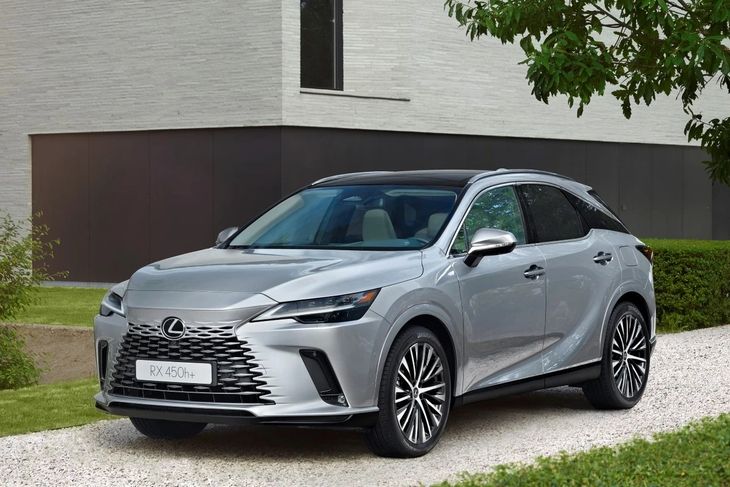
The new RX luxury crossover is on sale with 4 derivatives on offer. The RX range starts with the RX350 which now employs a turbocharged 2.4-litre petrol engine with 205 kW and 430 Nm of torque and is paired with an 8-speed automatic transmission.
The hybrid RX350h replaces the outgoing RX450h and combines a 2.5-litre petrol engine with Lexus’ latest fourth-generation hybrid system to develop 184 kW and 316 Nm of torque and will only be offered in all-wheel-drive guise.
At the top of the range is the new RX 500h F Sport and it combines a turbocharged 2.4-litre turbopetrol engine and a high output electric motor over the rear axle to produce 274 kW and 550 Nm of torque. A 6-speed automatic transmission directs power to all-four wheels and Lexus claims 5.9 seconds in the sprint from zero to 100kph. See more details here!
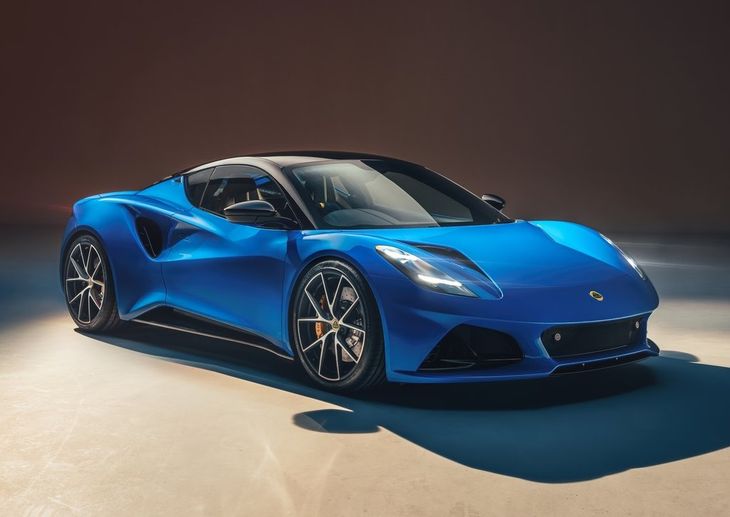
The Emira is a new mid-engined, rear-wheel drive sportscar to come from Lotus to rival the Porsche 718 Cayman and employs a supercharged 3.5-litre V6 from the Evora and it produces 300 kW and 430 Nm of torque. Zero to 100 kph is said to take less than 4.5 seconds with a top speed of 290 kph. The arrival of the V6-powered Emira will be followed by the introduction of a 2.0-litre, AMG-powered Emira in the second quarter of 2023. Pricing will be confirmed closer the model’s arrival on local soil.
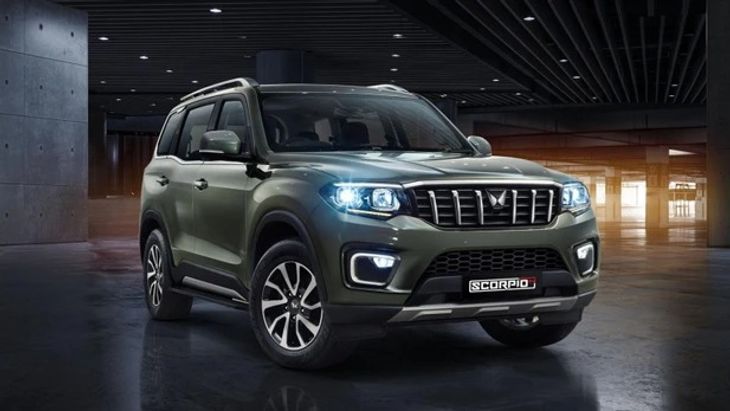
The Scorpio-N is Mahindra’s new ladder-frame midsized SUV offering and it’s currently on sale in South Africa.
The new Mahindra Scorpio-N is powered by a 2.2-litre turbodiesel mHawk engine with 129 kW and 400 Nm of torque and is mated with a 6-speed automatic transmission. The diesel-powered Scorpio-N is offered in both rear-wheel and 4×4 guise.
The Scorpio-N 4×4 is equipped with a 4XPLOR terrain management system with a shift-on-the-fly dial to change from 2WD to 4WD and 4LO. The driver are also 3 oddly-named drive modes including Zip, Zap and Zoom.
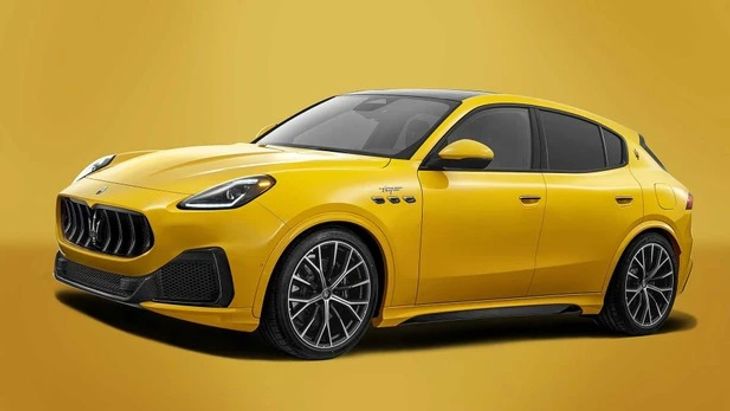
Maserati’s Grecale SUV is set to arrive in Mzansi in 2023 and will rival the Porsche Macan on local soil.
From launch, the all-wheel-drive Maserati Grecale will be offered in 3 flavours including the GT, Modena and range-topping Trofeo.
The entry-level Grecale GT is fitted with a 4-cylinder, 2.0-litre turbopetrol engine with mild-hybrid technology and offers outputs of 224 kW and 450 Nm of torque. The Modena uses the same powerplant but power is ramped up to 246 kW while retaining its 450 Nm torque figure. Both derivatives use an 8-speed automatic transmission and Maserati claims a 5.6 second sprint time for the GT while the Modena is capable of 5.3 seconds to 100 kph.
As for the range-topping Grecale Trofeo, it employs the same twin-turbocharged 3.0-litre V6 engine from the Maserati MC20 supercar with outputs of 390 kW and 620 Nm of torque. Zero to 100 kph is pegged at 3.8 seconds using a ZF 8-speed automatic transmission and an electronic rear limited-slip differential. Top speed is rated at 285 kph.
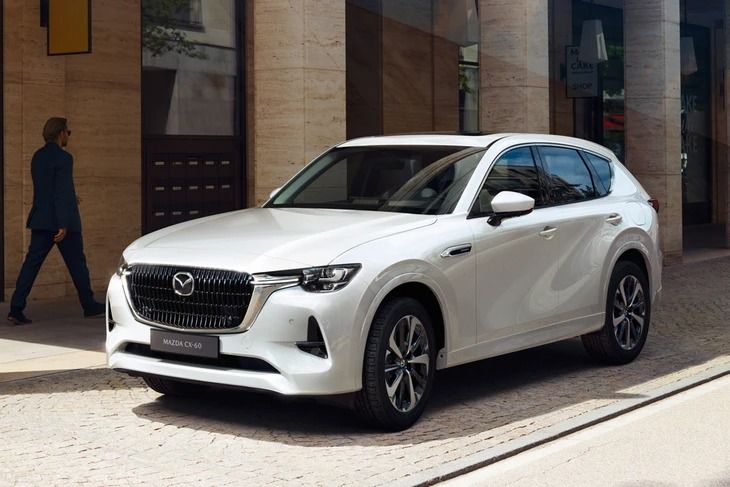
Mazda has launched the new CX-60 in South Africa in 2023 and the newcomer is based on an all-new rear- and all-wheel-drive platform and features plug-in hybrid and inline 6-cylinder petrol and diesel powertrains. The CX-60 slots in above the current CX-5 family SUV in the firm’s local range. The 241 kW/500 Nm plug-in hybrid power unit is notable, given the recent introduction of a petrol-electric Toyota RAV4 in Mzansi, but it’s not earmarked for local introduction.
Instead, in South Africa, the CX-60 is powered by the brand’s atmospheric 2.5-litre, 4-cylinder petrol engine with 141 kW and 261 Nm of torque and is paired with an 8-speed automatic transmission.
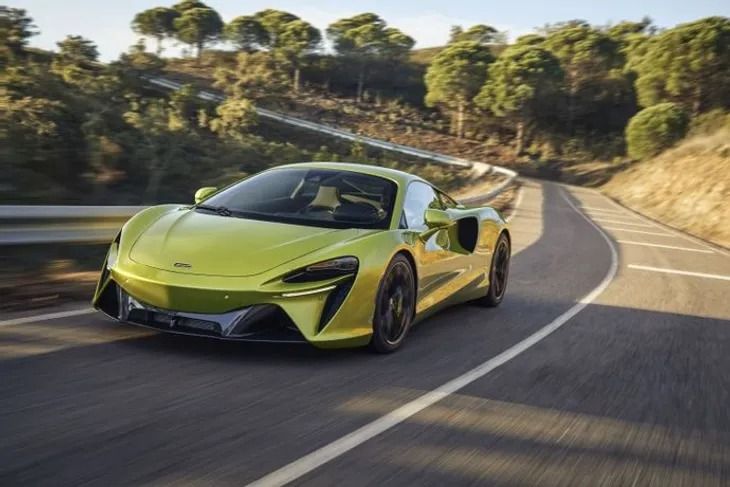
The Artura is McLaren’s first series production High-Performance Hybrid (HPH) supercar and it’s built on the new McLaren Carbon Lightweight Architecture (MCLA) which has resulted in the lightest dry weight of 1 395 kg (kerb weight of 1 498 kg) with a said class-leading power-to-weight ratio of 359 kW per ton.
The Artura is powered by an all-new twin-turbocharged 3.0-litre V6 petrol engine that develops 430 kW and 585 Nm of torque. This engine combines with a 70 kW electric motor that produces an additional 225 Nm. The Artura is equipped with a new 8-speed dual-clutch transmission. The Artura of accelerating from zero to 100 kph in 3.0 seconds flat and will reach 200 kph in just 8.3 seconds and 300 kph in 21.5 seconds. Top speed limited to 330 kph.
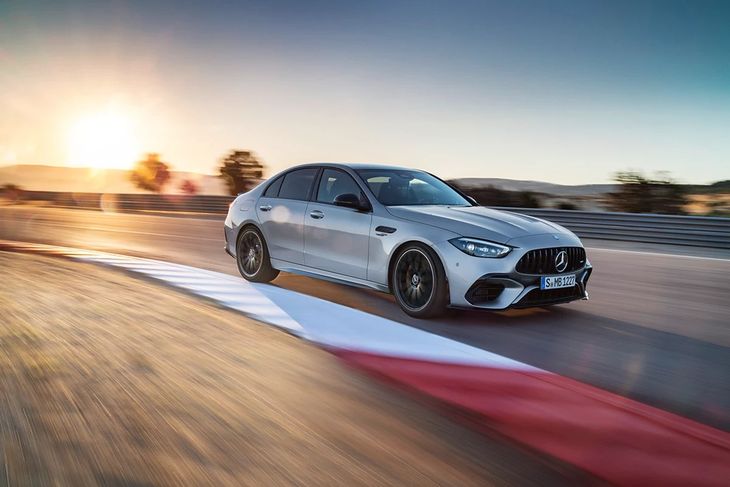
The new Mercedes-AMG C63 foregoes its previous V8 powertrain and in its place is a hybrid powertrain that produces a mighty 500 kW and 1 020 Nm of torque! The system includes a 350 kW / 545 Nm 2.0-litre turbocharged engine which combines with a powerful 150 kW / 320 Nm electric motor driving the rear axle and coupled to a 400V electrical system and 6.1 kWh lithium-ion battery. This powerful hybrid powertrain is mated with a fast-shifting 9-speed Multi-Clutch Transmission (MCT).
The new range-topping C-Class is heavier (2 111 kg) than the model it replaces but with more torque and virtually no turbo lag, the newcomer is faster than its predecessor. Merc says that the new AMG C63 will run from zero to 100 kph in 3.4 seconds before reaching a limited top speed of 280 kph with the AMG Driver’s Package! A fully-variable all-wheel-drive system includes a Drift Mode and active rear-axle steering is standard. The driver has up to 8 drive modes to choose from including, Electric, Comfort, Battery Hold, Sport, Sport+, Race, Slippery and Individual. Fuel consumption is claimed at 6.9 L/100km.
Pricing will be revealed closer to the launch in late 2023.
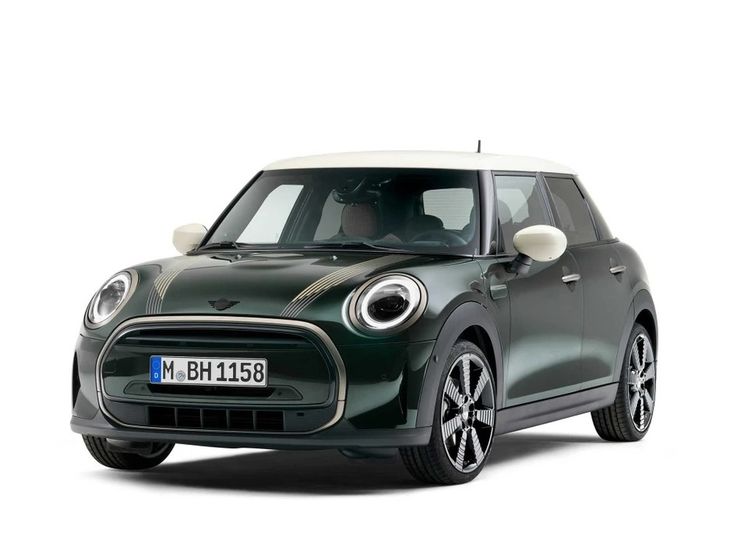
As Mini transitions into an EV-only brand, there won’t be any new products on the way in 2023. However, Mini will be launching a range of Edition derivatives, each with their own design flavour. The Mini 3-door, 5-door, convertible and the all-electric Cooper SE will be offered as the Resolute Edition. The Mini Clubman Untold Edition and the Countryman Untamed Edition are also be available to buyers.
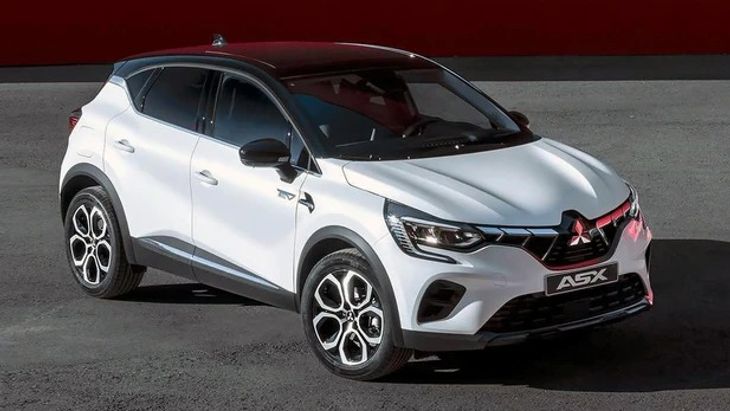
The ageing ASX will be replaced with an all-new ASX in 2023. The new ASX is based on the Renault Captur compact crossover but will feature its own design direction. Predictably, the new ASX’s powertrain options in Europe will mirror those of the Captur, which means it will be available in plug-in hybrid form (comprising a 1.6-litre petrol engine, two electric motors and a 10.5 kWh battery), full-hybrid guise (with a 1.6-litre petrol engine, two electric motors and a 1.3 kWh battery) and mild-hybrid form (using a turbocharged 1.3-litre petrol engine mated with either a 6-speed manual or a 7-speed double-clutch transmission). There will also be an entry-level model employing a turbocharged 1.0-litre petrol engine driving the front axle through a 6-speed manual gearbox. It remains to be seen what derivatives will be offered in South Africa but we will keep you updated as soon as more information becomes available.
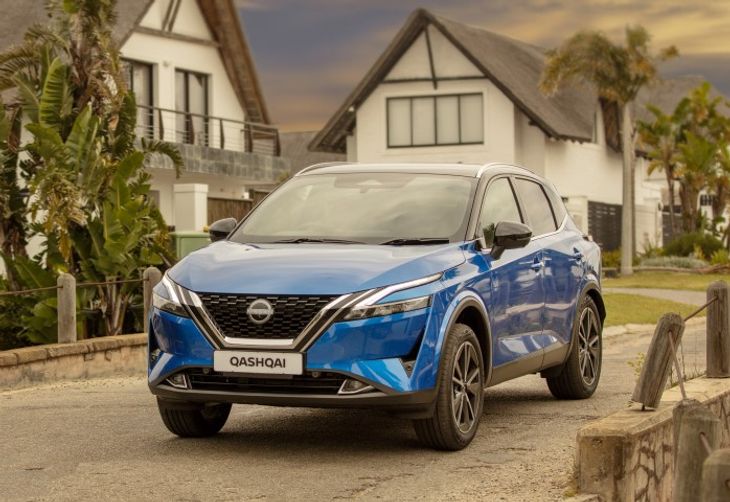
Following the introduction of the new third-generation Nissan Qashqai in South Africa, the Japanese firm will follow up with the Qashqai e-Power in the second quarter of 2023. The Qashqai e-Power hybrid combines a 1.5-litre petrol engine that serves as a generator to charge the 1.97 kWh battery while an electric motor is responsible for driving the front wheels. Total outputs for the Nissan Qashqai e-Power are 140 kW and 250 Nm. Pricing will be confirmed closer to launch.
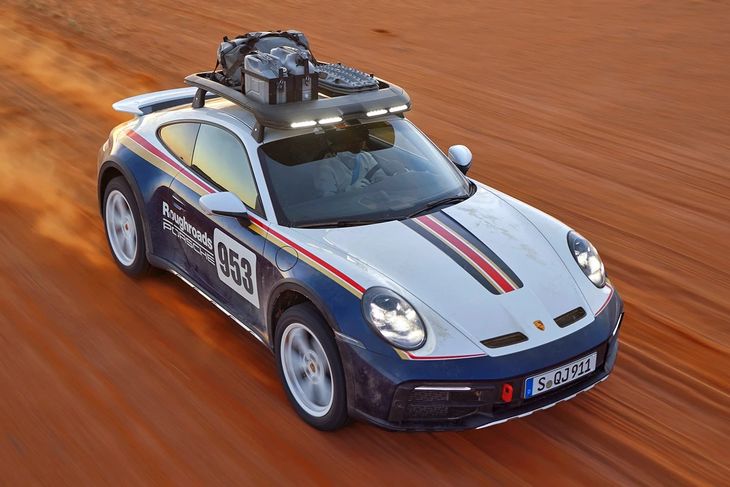
The 911 Dakar is based on the 911 Carrera 4 GTS coupé and uses the same twin-turbo 3.0-litre, flat-6 petrol engine, which generates heady peak outputs of 353 kW and 570 Nm. Porsche claims its new PDK-equipped all-terrain sportscar will complete the 0-100 kph sprint in just 3.4 seconds, a mere one-tenth behind the likewise all-paw GTS. To ensure effective gravel-travel ability, the 911 Dakar stands some 50 mm higher than a standard 911 Carrera while a standard lift system can raise the height by an additional 30 mm. Pricing for the incoming 911 Dakar has been pegged in the region of R4 140 000.
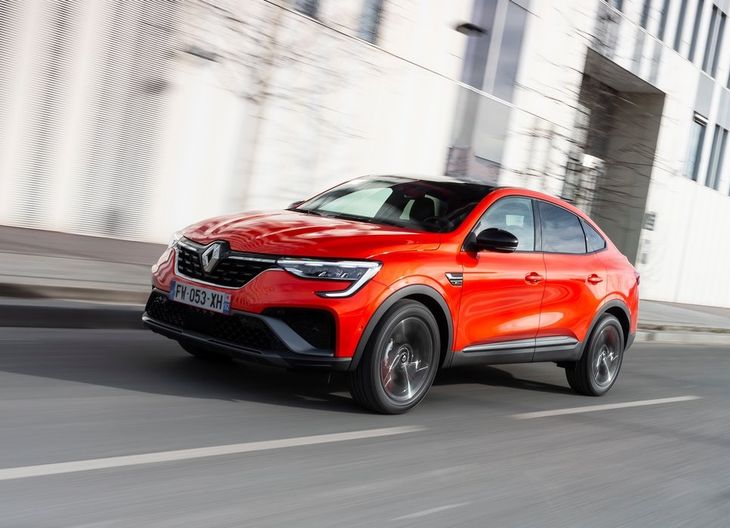
This is Renault’s coupe-crossover called the Arkana and Renault SA has confirmed its local arrival sometime in the second half of 2023. With its coupe-like styling and modern interior, the Arkana will appeal to buyers looking for both a stylish and practical SUV. Local engine choices have yet to be confirmed but options include a choice of hybridised powertrains including a 104 kW and 119 kW 1.3-litre turbocharged engine with 12V mild-hybrid system as well as a 104 kW E-Tech Hybrid. We will keep you updated as soon as local specification and pricing details become available.
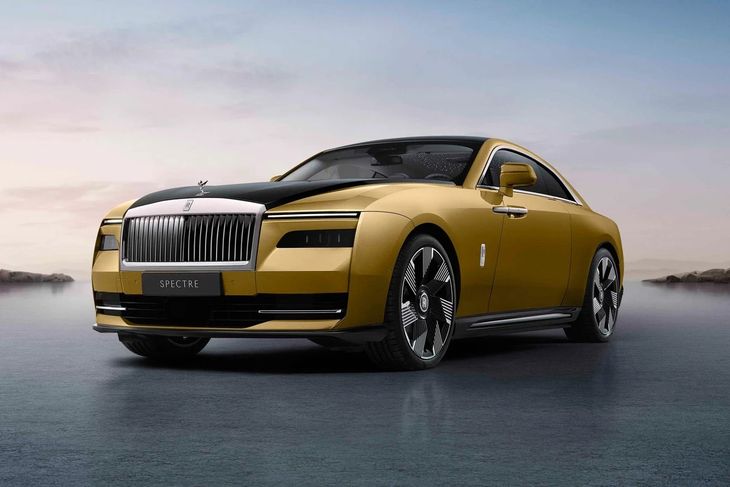
The Rolls-Royce Spectre is the brand’s first production electric vehicle, and the first units will be reaching customers by the end of 2023. The Spectre makes use of 2 electric motors with a combined output of 430 kW and 900 Nm of torque and an estimated electric driving range of 420 km. More technical details, specification and local pricing will be revealed closer to launch.
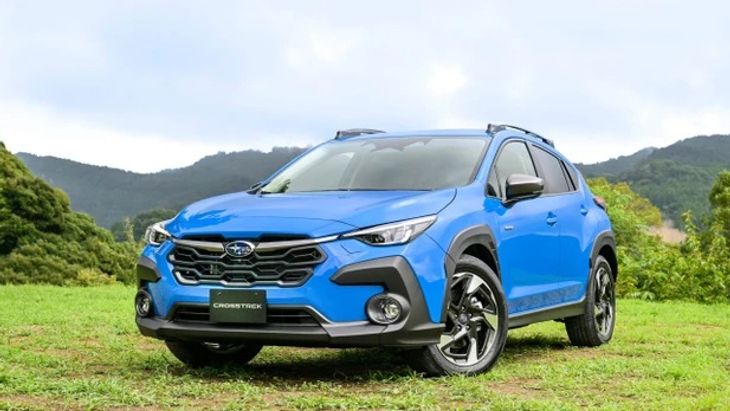
The Subaru XV name has been dropped and is now known as the Crosstrek globally. The third-generation Subaru Crosstrek was announced in Japan earlier this year and is now available in South Africa.
Physically, the Subaru Crosstrek is 4 480 mm long, 1 800 mm wide and 1 580 mm high. This new model features a 5 mm longer wheelbase, is 15 mm longer and 30 mm taller. Subaru claims a ground clearance of 200 mm.
The Japanese brand’s familiar naturally aspirated 2.0-litre, 4-cylinder Boxer petrol engine is found under the bonnet. With symmetrical all-wheel drive as standard, power again goes to all 4 corners via a continuously variable transmission (CVT) with paddle shifters and 8 pre-set steps.
In the Crosstrek, this horizontally opposed motor makes an unchanged 115 kW and 196 Nm, though now sips at a claimed 7.2 litres per 100 km, making it ever-so-slightly more efficient than before.
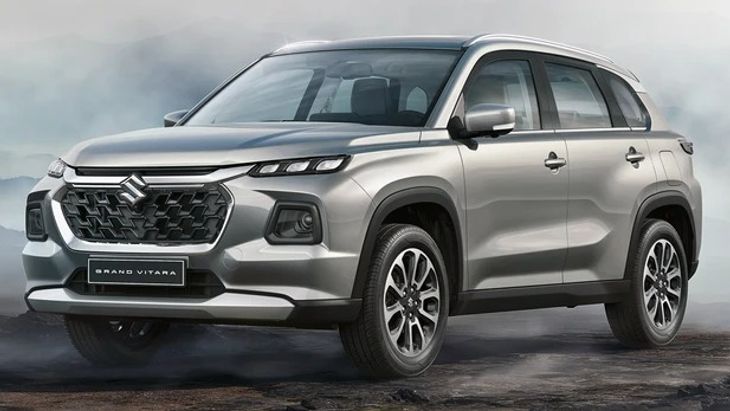
Suzuki Auto South Africa has welcomed the new Grand Vitara to South Africa. The Grand Vitara is sourced from Maruti Suzuki in India, where it is offered in mild-hybrid and full-hybrid forms.
The Grand Vitara is available locally in two engine configurations, though seemingly not the full hybrid. The powertrains include Suzuki’s familiar K15B naturally aspirated 1.5-litre, 4-cylinder unit with 77 kW and 138 Nm and the new (likewise atmospheric) K15C 1.5-litre dual-jet motor with mild-hybrid technology with 76 kW and 136 Nm. K15B-equipped variants will be available with the choice of a manual or automatic transmission, while the K15C-endowed derivatives will feature “AllGrip” all-wheel drive and an automatic transmission.
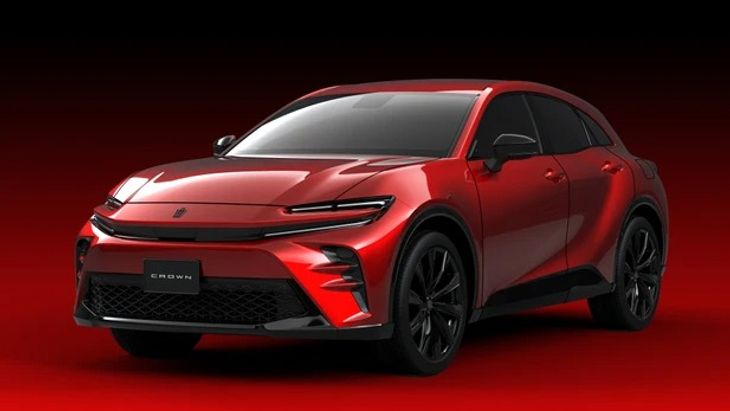
The Toyota Crown nameplate is going global and the Crown Crossover can be expected on local soil shortly, albeit in limited numbers.
The Crown Crossover is equipped with a naturally aspirated 2.5-litre petrol engine as part of a hybrid system that incorporates a “newly developed bipolar nickel-hydrogen battery”.
According to Toyota, the system’s total power output stands at 176 kW, while the combined fuel consumption comes in at a mere 4.4 litres per 100 km. Drive is directed to all 4 wheels through a continuously variable transmission (CVT). From what we can tell, this powertrain set-up is closely related to the version employed by the new Lexus RX 350h, which itself has just arrived in SA. For now, at least, the Crown’s more powerful turbocharged 2.4-litre petrol-electric engine won’t be offered locally.
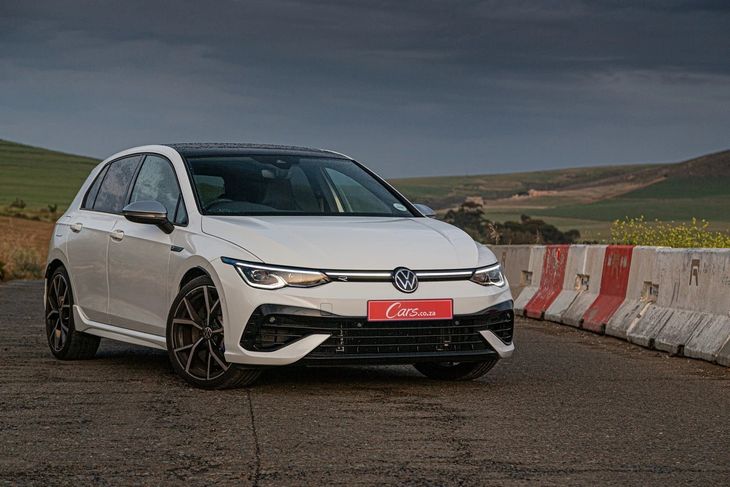
The wait for the new Volkswagen Golf 8 R has been painfully long but the potent hatchback is finally available in local showrooms. We have, however, driven the Golf 8 R on local soil and you’d be wise to either read our written review or watch our video review so that you can be informed before making a purchase.
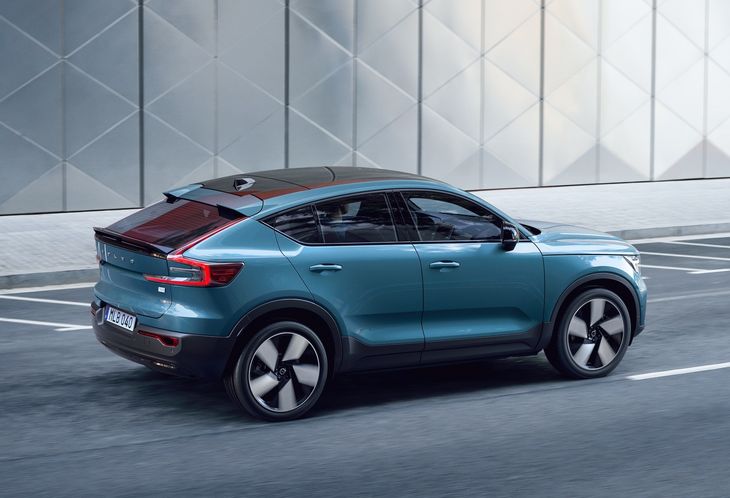
Volvo’s EV footprint is growing in South Africa and the Swedish firm recently introduced its electric C40 Recharge crossover to the local market.
The Volvo C40 Recharge is powered by 2 electric motors, one over each axle, and supplemented with a 78 kWh lithium-ion battery pack that offers up to 451 km on a single charge (WLTP). The C40 Recharge offers outputs of 300 kW and 660 Nm and is capable of accelerating from zero to 100 kph in 4.7 seconds.
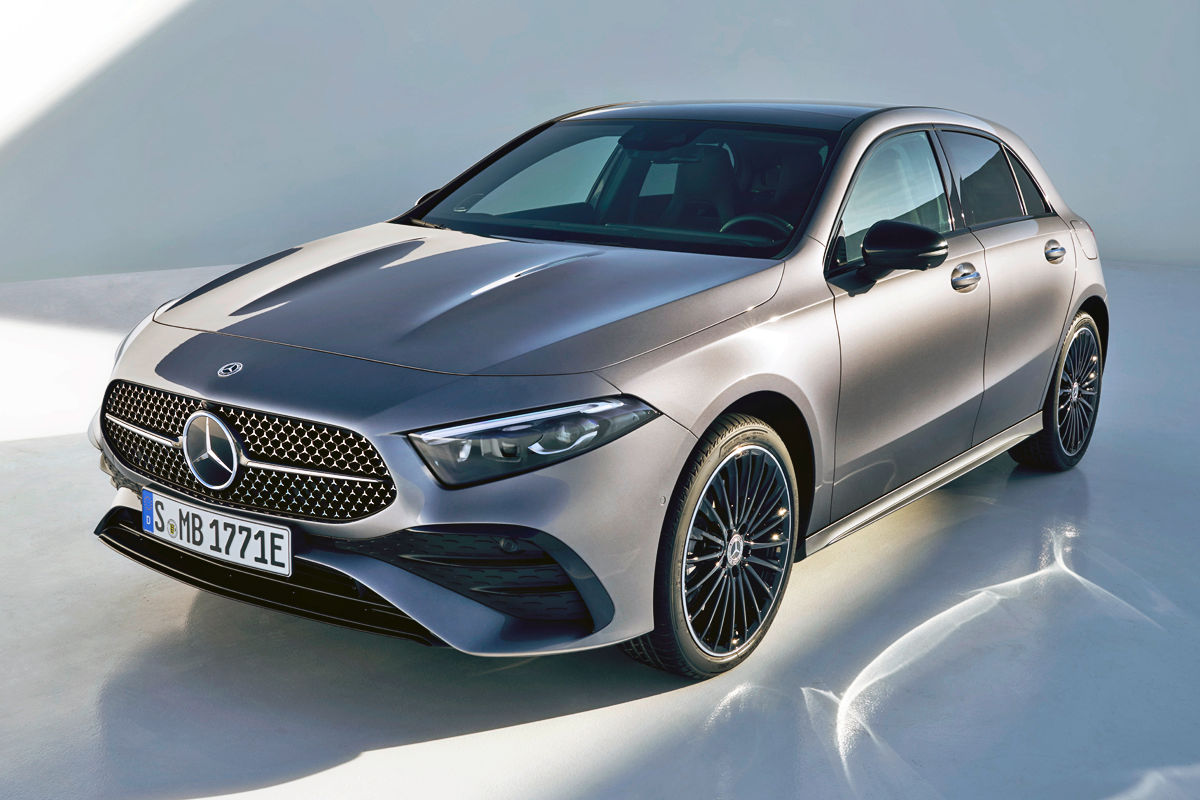
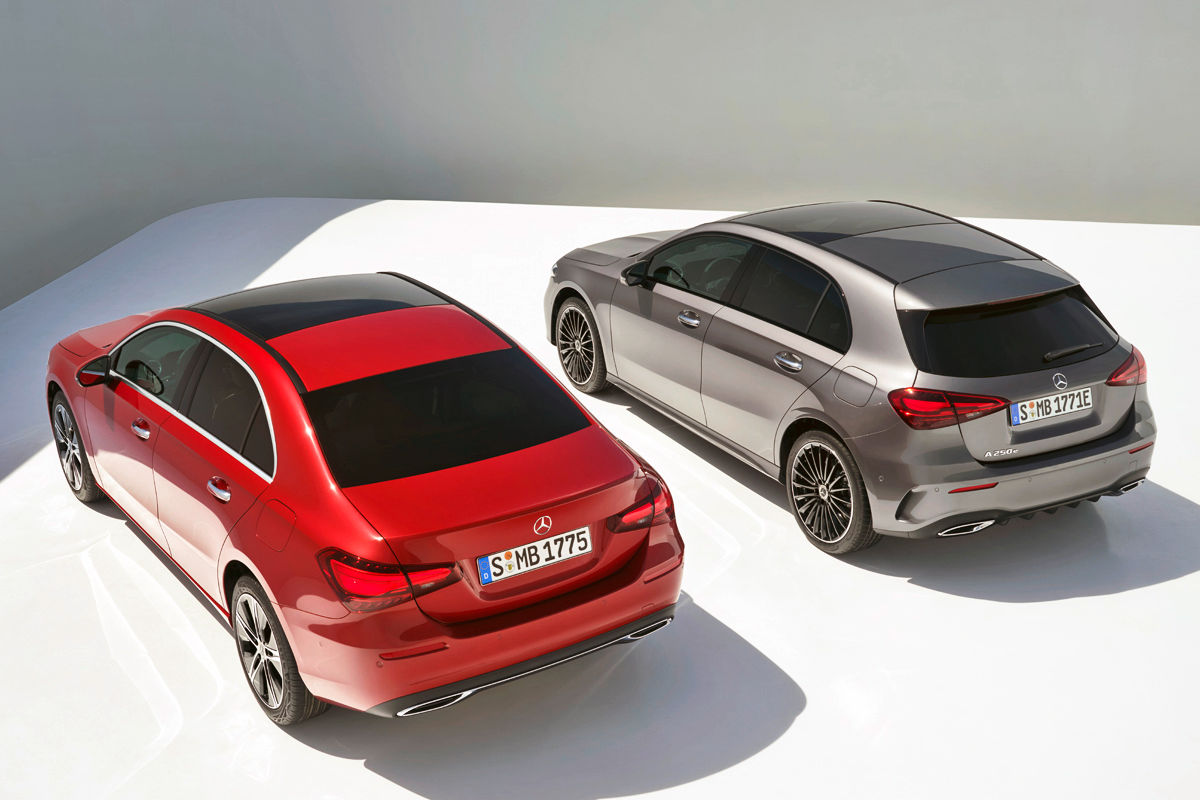
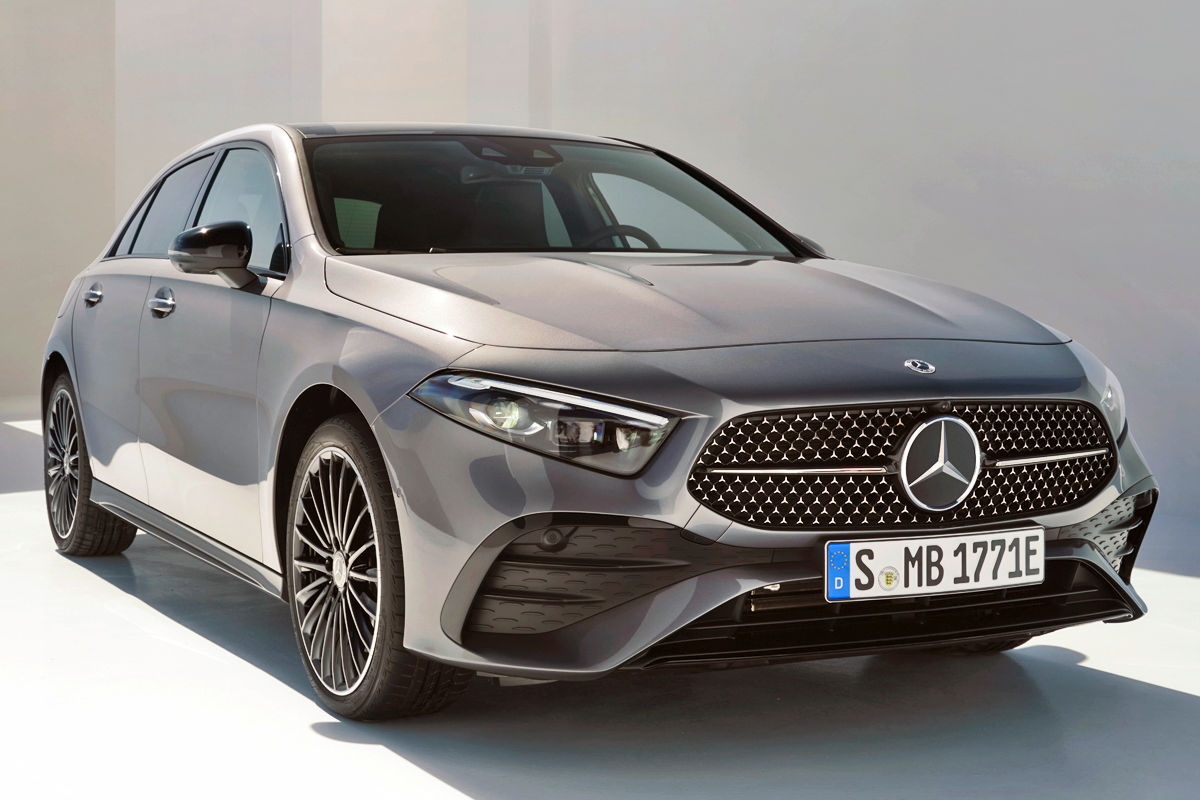
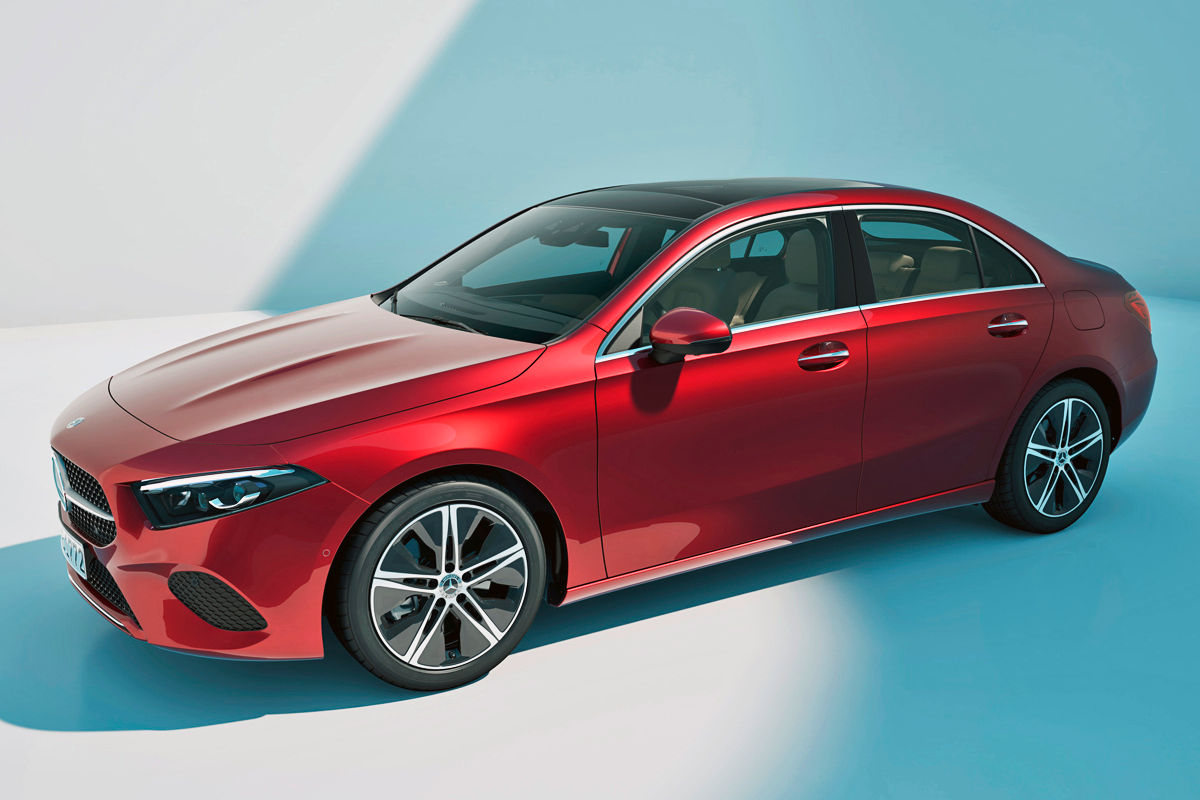
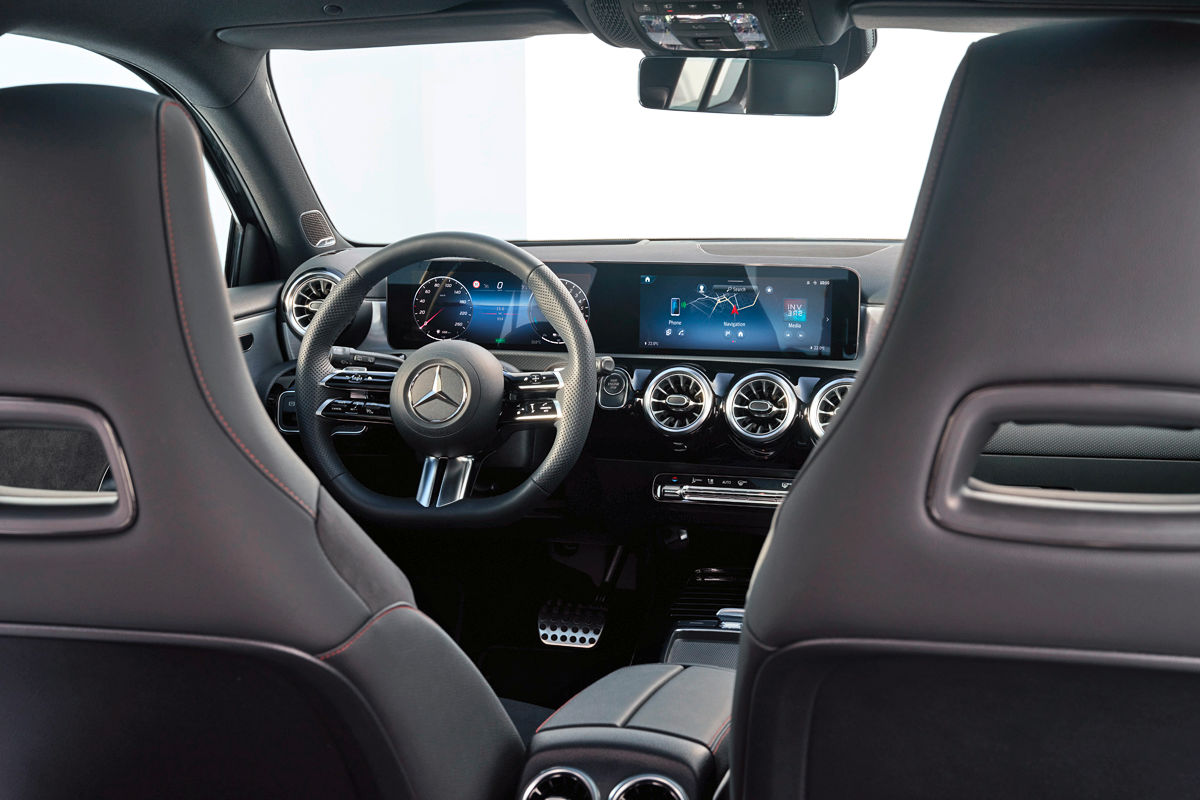
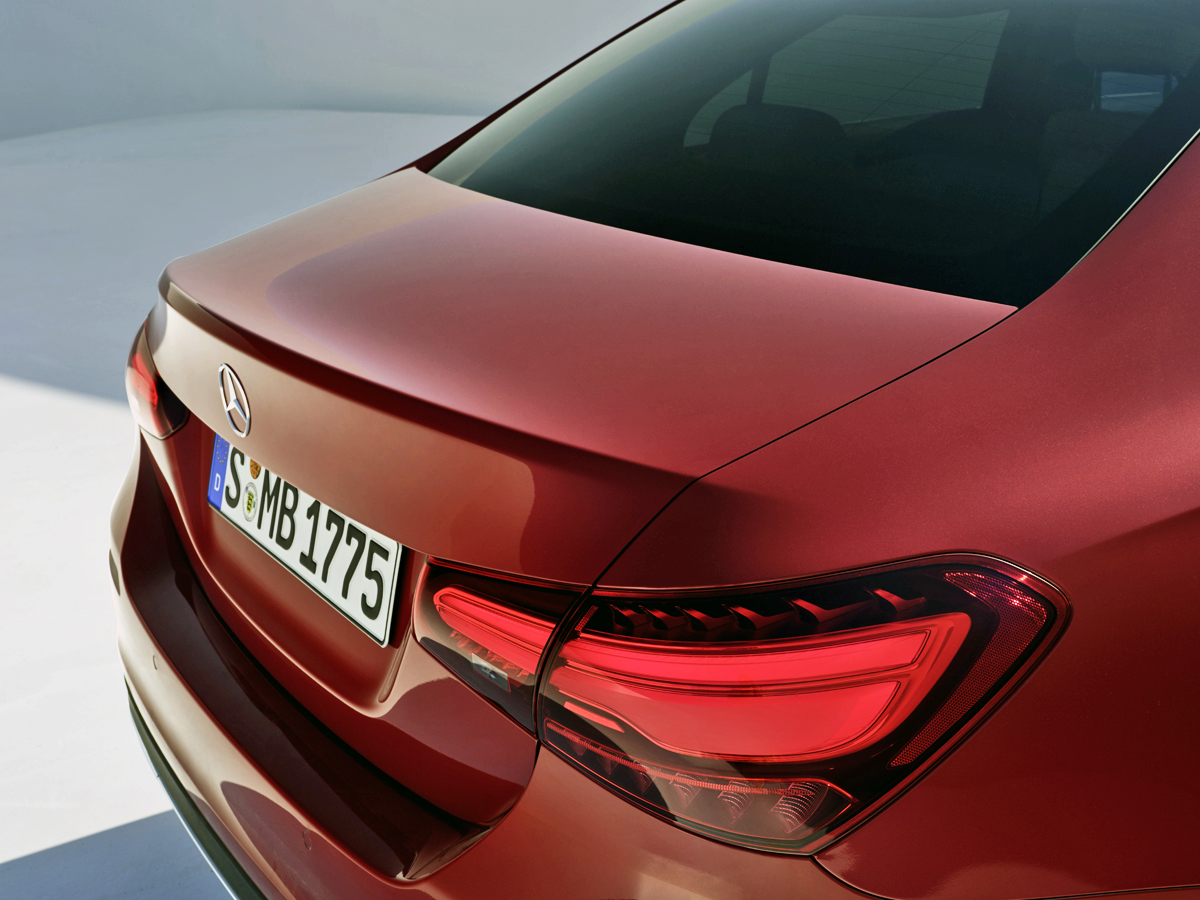
The facelifted Mercedes-Benz A-Class has arrived in South Africa, in both hatch and sedan form. Here’s what the entry point to Mercedes ownership will cost you now…
Plenty has been written about the uncertain future of the Mercedes-Benz A-Class nameplate. Regardless, a facelifted version of the Stuttgart-based firm’s compact model has touched down in South Africa, again in the hatchback (W177) and sedan (V177) body styles.
We’ve already brought you local pricing for the refreshed Mercedes-AMG A35 and A45 S derivatives, and now we’ll turn our attention to the common-or-garden variants. At launch, local buyers have the choice of a trio of derivatives: the A200 hatch, A200 sedan and A200d sedan. For now, at least, it seems the A250 powertrain has been ditched.
According to Mercedes-Benz SA, the updated version of the W177-generation A200 hatch will kick off at R796 560 in standard Progressive form, though upgrading to the AMG Line trim level will add R29 000. The V177-gen A200 sedan, meanwhile, will be priced from R851 560, while specifying the AMG Line equipment level will likewise cost an additional R29 000.
As before, the A200 moniker denotes a turbocharged 1.3-litre, 4-cylinder petrol engine, sending an unchanged 120 kW and now 270 Nm to the front axle courtesy of a 7-speed dual-clutch transmission. So, what about the optional extras? Well, the A200 rides on 17-inch 5-twin spoke light-alloy wheels as standard, with the option to upgrade to 10-spoke items (R5 310) or 18-inch versions. A panoramic sliding sunroof will cost you R16 400, while various upholstery and interior trim options are on offer.
While the Advanced package ships standard, buyers will have the choice of 3 additional extra-cost packs, each containing different mixes of individual options. The Advanced Plus package will cost you R30 000, while the Premium package will come in at R65 000 and the Premium Plus package at R119 000 (with the latter “not compatible” with the entry-level Progressive grade). In addition, the standard comfort suspension can be upgraded to the AMG Ride Control Suspension set-up for an extra R24 000.
And the oil-burning model? Well, A200d Sedan starts at R920 299, employing a 2.0-litre, 4-cylinder turbodiesel engine worth 110 kW and 320 Nm. Mercedes-Benz claims this derivative is capable of sipping fuel at rate of 4.5 litres per 100 km.
How much does the updated Mercedes-Benz A-Class cost in SA?
Mercedes-Benz A200 Hatch – R796 560
Mercedes-Benz A200 Sedan – R851 560
Mercedes-Benz A200d Sedan – R920 299
The above prices include a 5-year/100 000 km maintenance plan as well as a 2-year/unlimited km warranty.
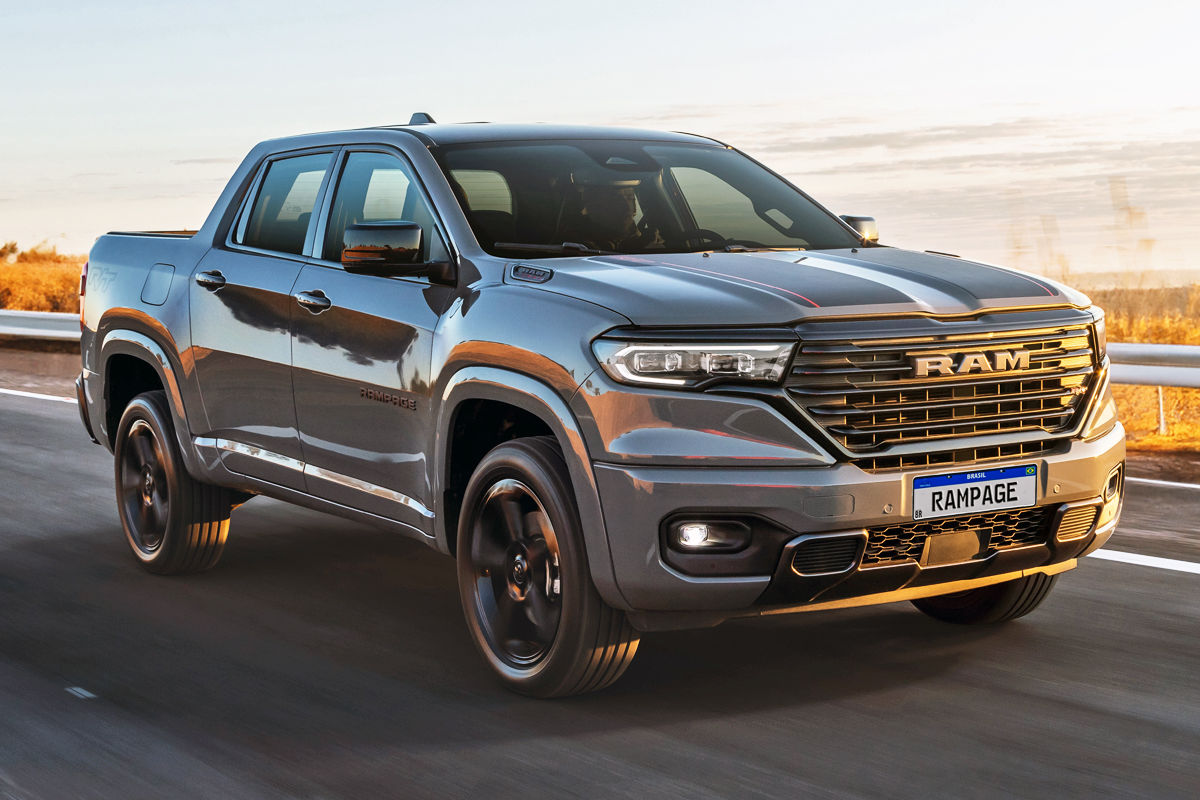
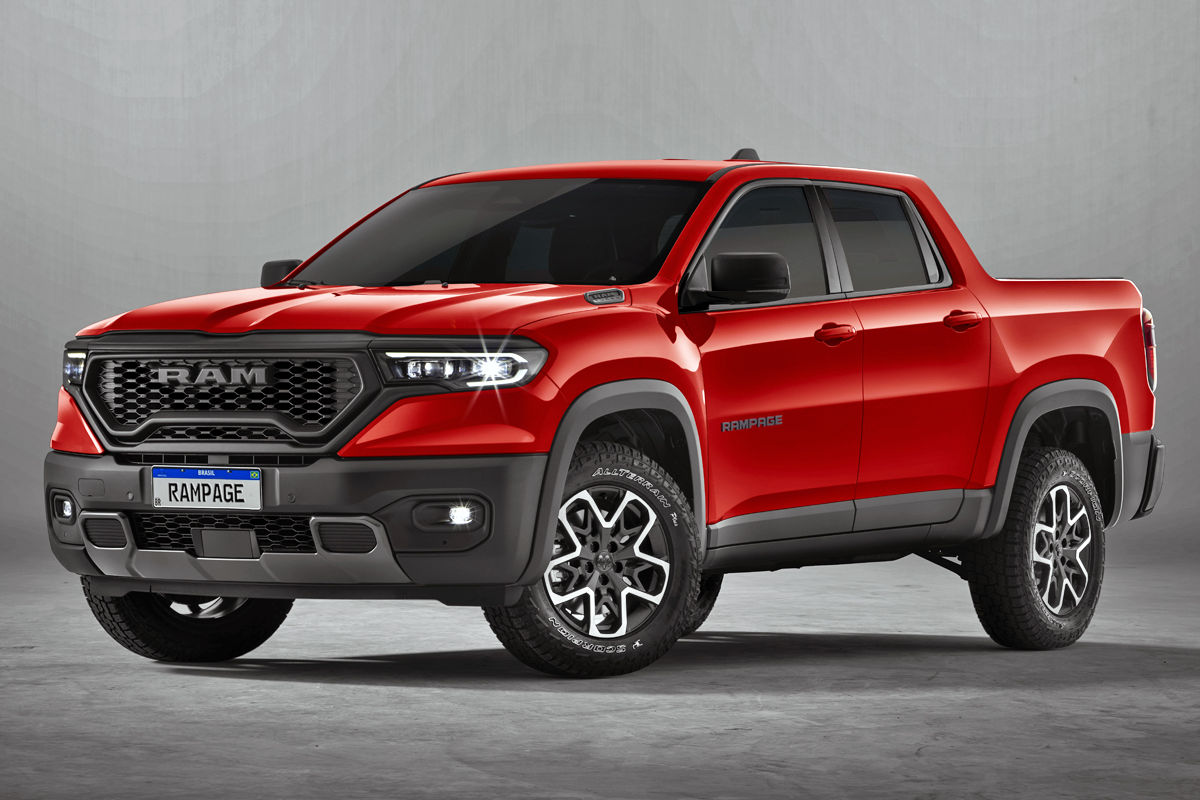
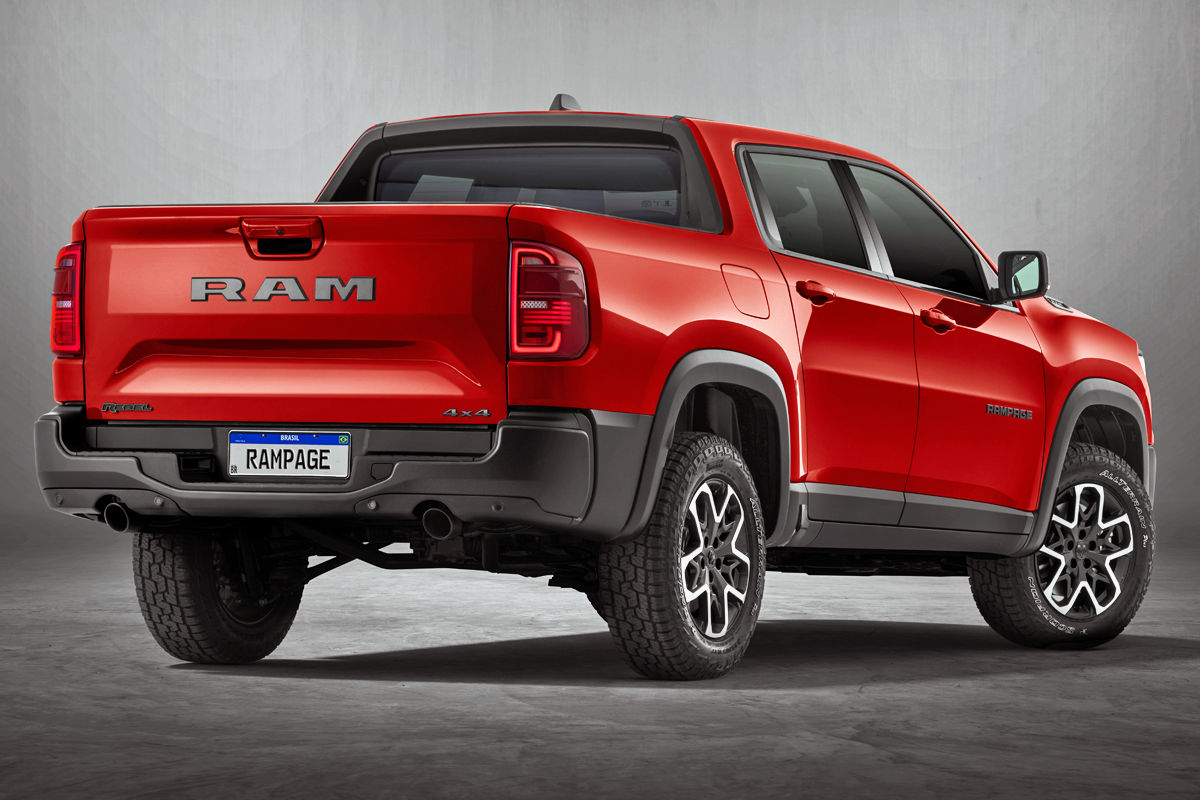
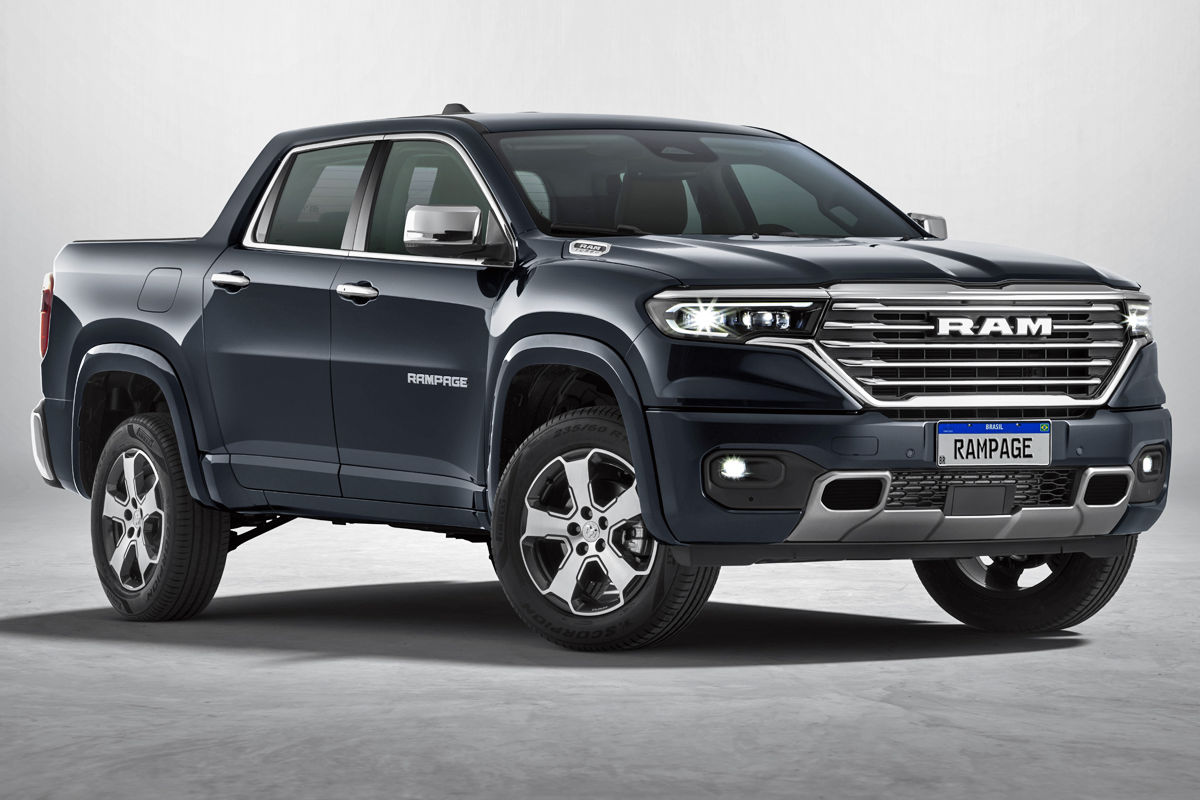
Ram Rampage Debuts as New Unibody Bakkie from Stellantis
A little smaller than a Toyota Hilux, the new Ram Rampage is a fresh-faced unibody bakkie from the folks over at Stellantis. And the hottest version makes 203 kW…
Stellantis has whipped the wraps off the new Ram Rampage, a unibody double-cab bakkie designed and developed in Brazil, with a little help from North America.
From what we understand, the Rampage has been developed for the South American market, where unibody bakkies are big business. So far, there has been no official mention of producing the newcomer in right-hand drive. As an aside, though Stellantis plans to start building vehicles in South Africa, it has yet to reveal exactly which models it will manufacture here.
Riding on the same Stellantis platform as the likes of the Jeep Renegade and Alfa Romeo Tonale, the Rampage is 5 028 mm long and 1 886 mm wide, while standing 1 780 mm tall (with a wheelbase of 2 994 mm). It’s not exactly compact, then, despite not being quite as large as a Toyota Hilux, which measures 5 325 mm from snout to tail.
What about engine options? Well, buyers in Brazil will have the choice of 2 motors, each displacing 2.0 litres, employing 4 cylinders and standard with a 9-speed automatic transmission plus all-wheel drive. The Multijet turbodiesel iteration generates 127 kW and 380 Nm, allowing the oil-burning Rampage to complete the 0-100 kph sprint in a claimed 10.9 seconds (before topping out at 186 kph).
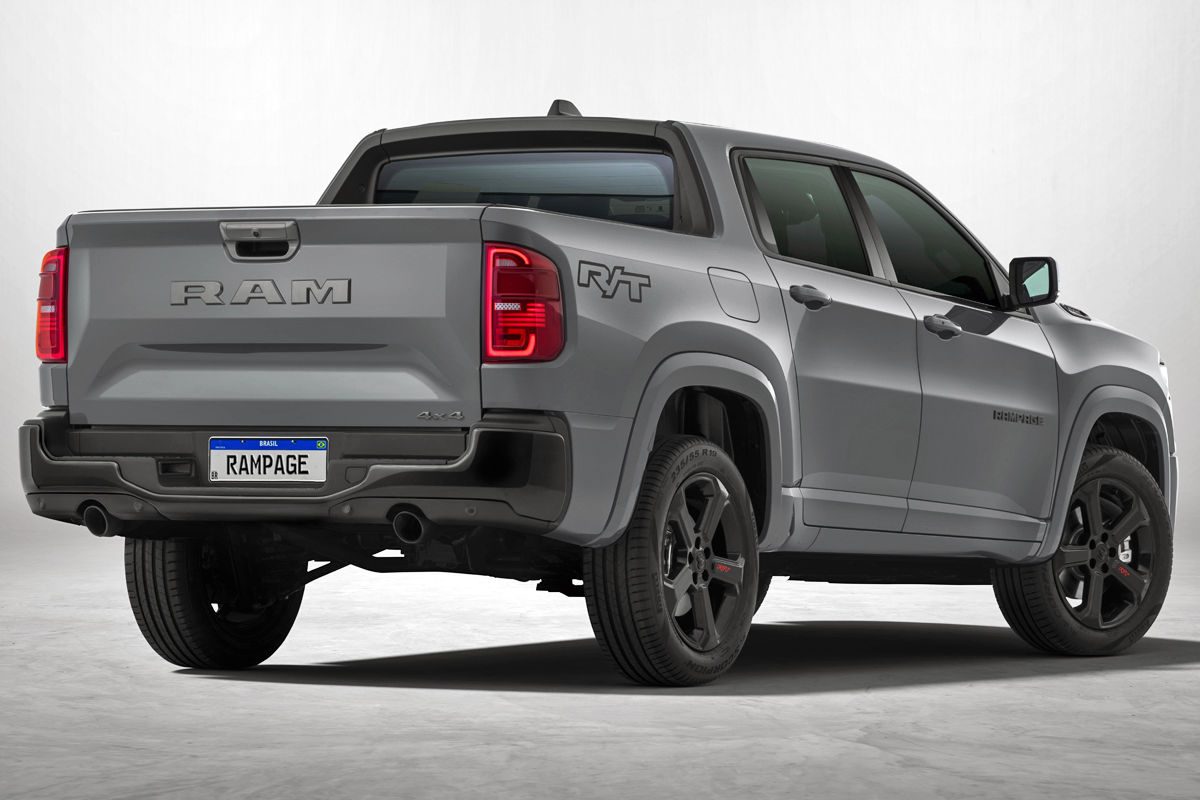
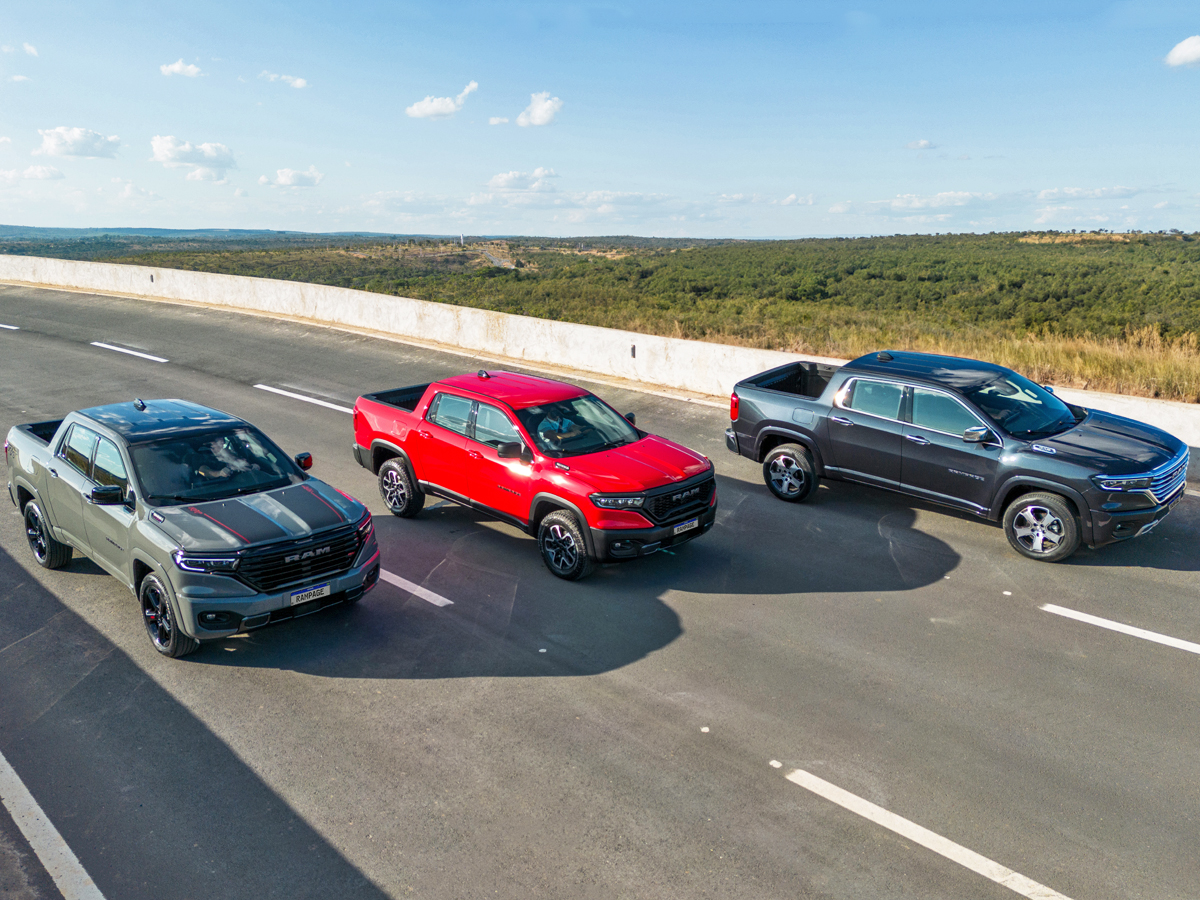
The 3 versions of the Ram Rampage on offer in Brazil.
Then there’s the Hurricane 4 petrol unit, which offers a healthy 203 kW and 400 Nm (and breathes out through a dual-exhaust system). Equipped with this turbocharged mill, the sportiest R/T version of the Rampage completes the obligatory sprint to 3 figures in a claimed 6.9 seconds before running out of puff at 220 kph (figures that change to 7.1 seconds and 210 kph in lower-specced versions with the same engine).
A trio of variants – Laramie, Rebel and the aforementioned R/T – will be offered in Brazil, each with its own visual identity and equipment level. The flagship R/T, for instance, features firmer springs and dampers, a lower ride height (by 10 mm) and 19-inch wheels shod in 235/55 tyres. The Rebel has somewhat of an off-road persona (and ships with 235/65 R17 all-terrain rubber), while the Laramie appears more road-biased with its 18-inch rims and 235/60 tyres.
The Rampage’s load capacity (the bay is fitted with a plastic lining as standard) comes in at 1 015 kg in the case of the diesel variants and 750 kg for the petrol derivatives. Inside, you’ll find a 10.3-inch digital instrument panel and a 12.3-inch infotainment display, along with 2-zone air-conditioning and an electrically adjustable driver’s seat, while options include a 10-speaker Harman Kardon sound system and ambient lighting.
Safety, meanwhile, is taken care of by 7 airbags, electronic stability control, body roll mitigation, auto high beams, tyre-pressure monitoring, adaptive cruise control, forward collision warning, autonomous emergency braking and a raft of other driver-assistance features.
Omoda C5 Review: A Fancy Chery or Premium Car Contender?
We recently tested the new Omoda C5 to find out if there’s substance to the Chinese newcomer. Is the new Omoda C5 worthy of your attention or should you look elsewhere? Watch the video!
The brand-new Omoda C5 has joined the popular coupe crossover segment with the aim of offering a premium drive at a more reasonable price. We sent Ashley Oldfield to test and review it in order to find out if it’s any good.
Omoda has placed itself as the premium arm of the Chery organisation. It shares much of its underlying parts with other Chery models but where it ups the ante is in the interior, the design and the wealth of on-board technologies.
Is it going to be a hit with the SA buyers that are flocking to Chinese brands at the moment? Let us know what you think once you’ve watched the video!
Why you should consider an extended vehicle warranty
Is your car’s warranty near the end of its term, but you don’t want to – or can’t – replace the vehicle? Budget Insurance’s Extended Vehicle Warranty allows owners to get up to 2 more years of unlimited cover on most mechanical and electrical components.
PARTNERED CONTENT
If you bought your current vehicle as a new, demo or slightly used example, you may have benefited from the car’s comprehensive manufacturer warranty, under which normal mechanical faults or failures will be repaired at no cost (to you) by a franchised dealer’s workshop. However, the validity of a car warranty is limited by the vehicle’s age (years, usually 3 or 5) and mileage (such as 100 000 km, for example).
Many buyers regard the expiry (or imminent expiry) of their vehicles’ warranties as a cue to replace their cars with newer ones, but that’s not always an option. An owner may choose to set funds aside to pay for future repairs to their vehicle after its warranty has ended, but it’s also possible to extend the peace of mind offered by a warranty by buying insurance cover against unexpected – potentially costly – repairs.
In other words, an extended vehicle warranty can be purchased to cover the cost of repairs/maintenance for an extended period after a car’s manufacturer warranty has ended. It’s especially useful if you expect a lot of wear and tear on your vehicle, travel long distances, or often traverse badly surfaced roads…
An extended vehicle warranty that comes into effect as soon as your car is out of its original warranty presents the most seamless way to have insurance cover (against the cost of repairing major mechanical and electrical components) in place as soon as you need it, but there are various options available for older vehicles that cover the repair or replacement of particular components up to a certain Rand value.
If your vehicle’s mileage is less than 250 000 km (recorded on its odometer) from the date that it was first registered, Budget Insurance’s Pre-owned Vehicle Warranty, for example, can cover 32 major components until the vehicle is 20 years old or has 400 000 km on the clock, whichever comes first.
Types of mechanical repairs covered by an extended warranty
The specific types of mechanical repairs covered by your extended car warranty will depend on the terms and conditions of the policy. However, an extended warranty typically covers engine components, transmission, suspension and electrical systems repairs, such as:
Fuel system repairs. This could include the fuel injectors, fuel pump and components
Cooling system. This can include the radiator and water pump.
Electrical systems, like the battery or starter
Brake systems, like the brake pads and callipers
Suspension, including the shocks
Transmission repairs, like the transmission gears, clutch and torque converter
Engine repairs, like the engine block cylinder, pistons and other internal components
4 Reasons to take out an extended warranty for your car
Overall, an extended car warranty can provide peace of mind against unexpected repairs-related costs. However, some great reasons to consider investing in this policy are:
1. Cover expensive repair costs. As your car gets older, the likelihood of mechanical failure increases. The extended car warranty can help cover the cost of these repairs.
2. Budgeting for repairs. An extended warranty can help you budget for repairs with a fixed monthly or annual cost.
3. High-kilometre vehicles. If your car has a high kilometre, the extended warranty can help with the cost of wear and tear.
4. Cost-effective. It’s the smart way to protect both your vehicle and finances.
How to qualify for an Extended Vehicle Warranty
Through Budget Insurance’s Extended Vehicle Warranty, you can enjoy up to 2 more years of unlimited cover on most mechanical and electrical components. To qualify, your car should have no more than 120 000 km on the clock (its odometer’s mileage reading), and the manufacturer’s warranty must still be in effect. If it’s already expired, you’ll need to look at taking out a Pre-owned Vehicle Warranty instead.
If you time it just right, you can get an extended warranty with Budget Insurance. Call Budget Insurance on 0861 00 19 17 to get an Extended Vehicle Warranty in place so your car never misses a day of cover.
The extended-warranty options offered by Budget Insurance
Budget Insurance‘s Better-Extend 1, -2, -3, and -4 cover (whichever suits you) extends a manufacturer’s existing warranty and allows you to enjoy nearly the same level of cover you’ve had up until now.
The company offer 4 tiers of cover depending on your car’s engine size. Each option offers the same level of unlimited cover for most components, except for your car’s engine, which starts at R50 000 and goes up to R100 000 in cover. You can find out which components Better-Extend Warranties cover here.
Get in touch with Budget Insurance today
Applying for an Extended Vehicle Warranty is a wise choice (if you can afford it). Apply for a quote online for an Extended Vehicle Warranty or Pre-owned Vehicle Warranty from Budget Insurance to give yourself peace and mind and financial protection from unexpected costs; it may save you money in the long run.
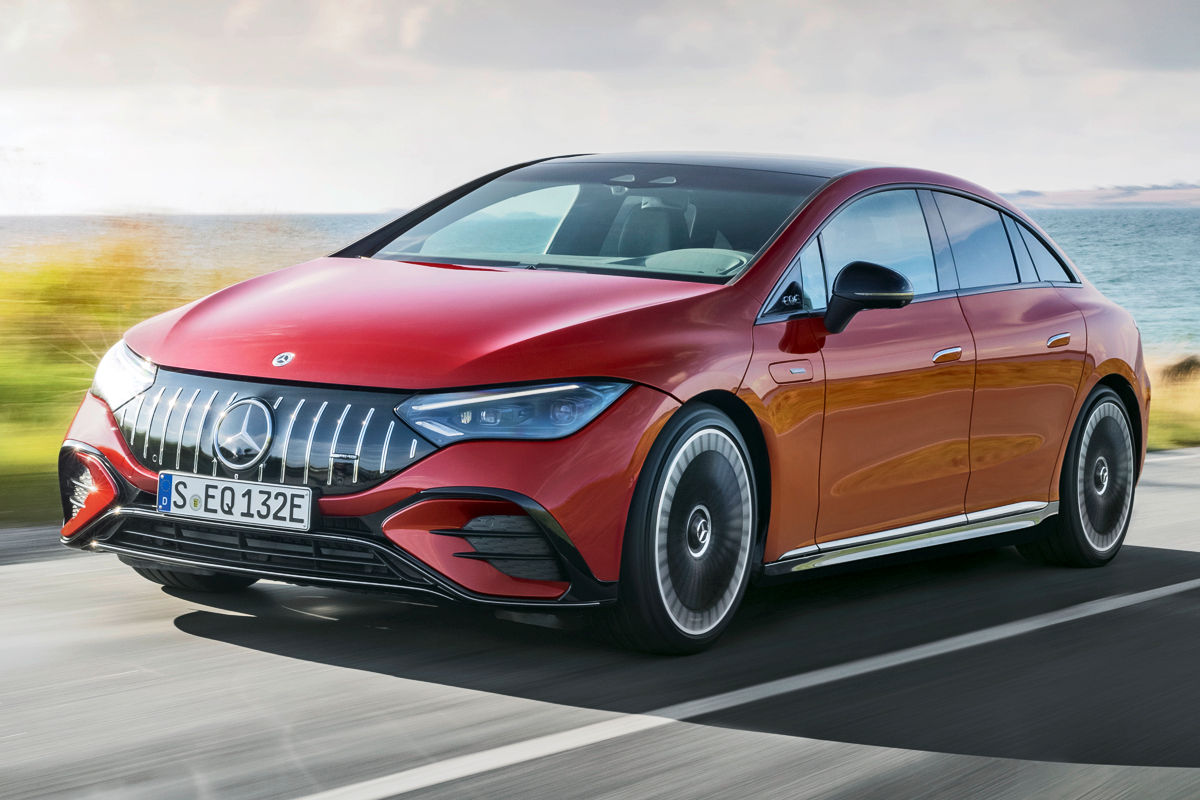
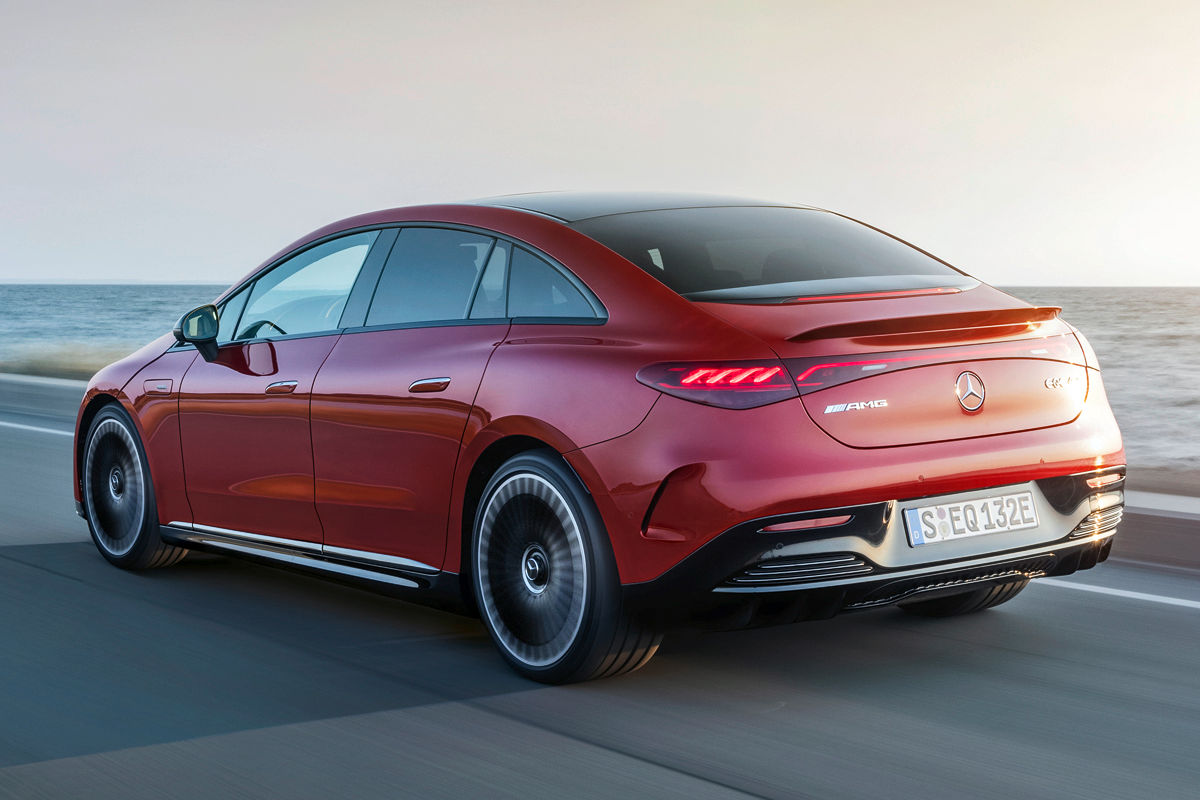
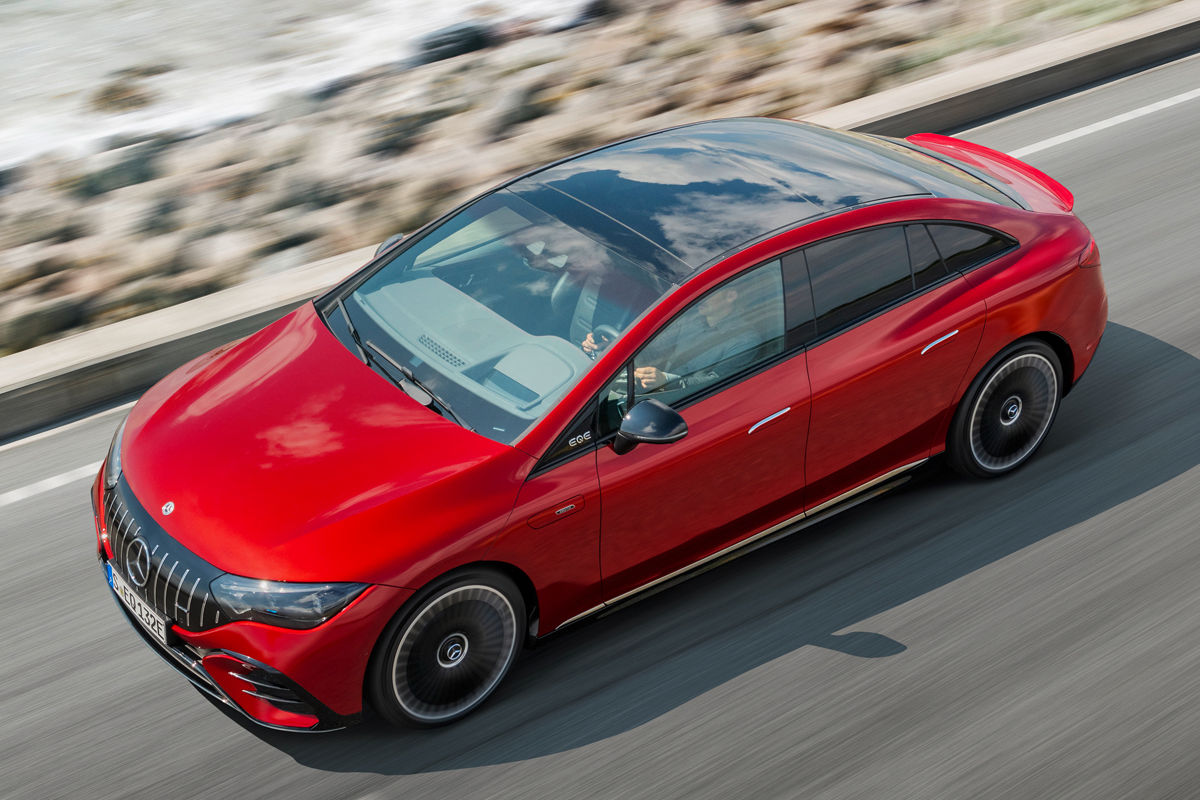
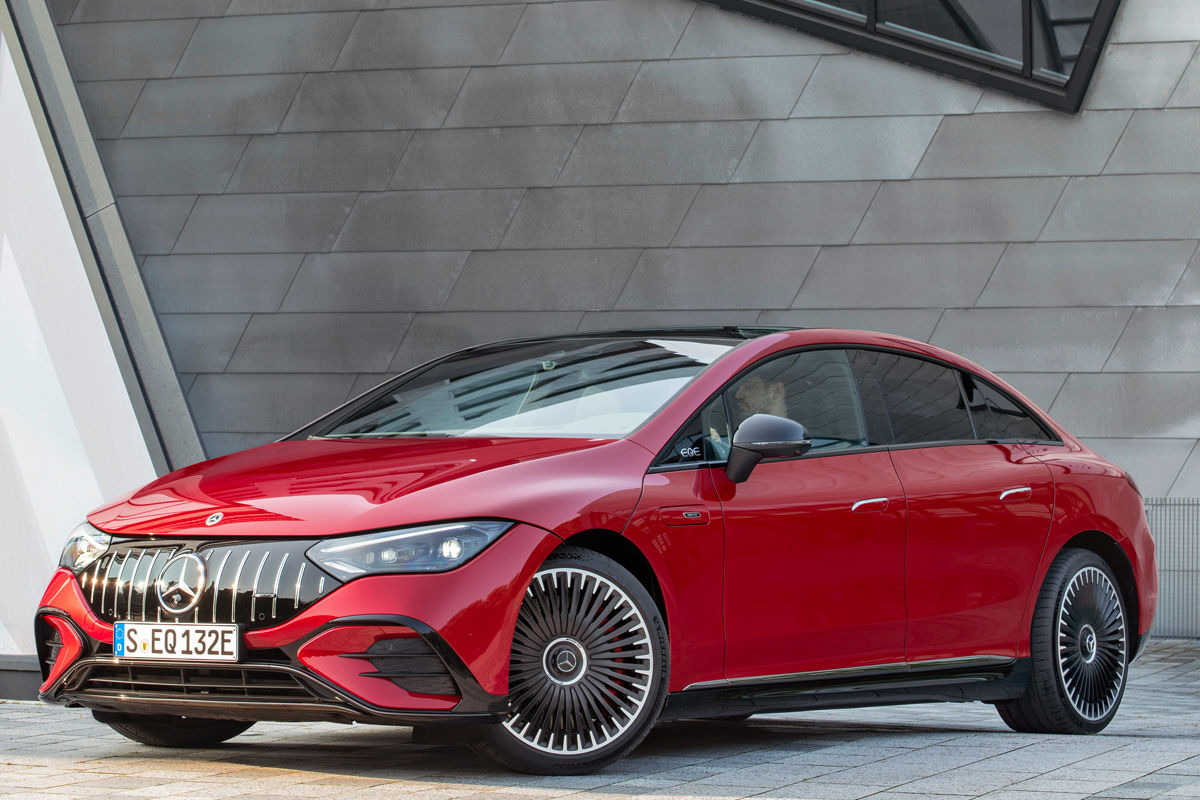
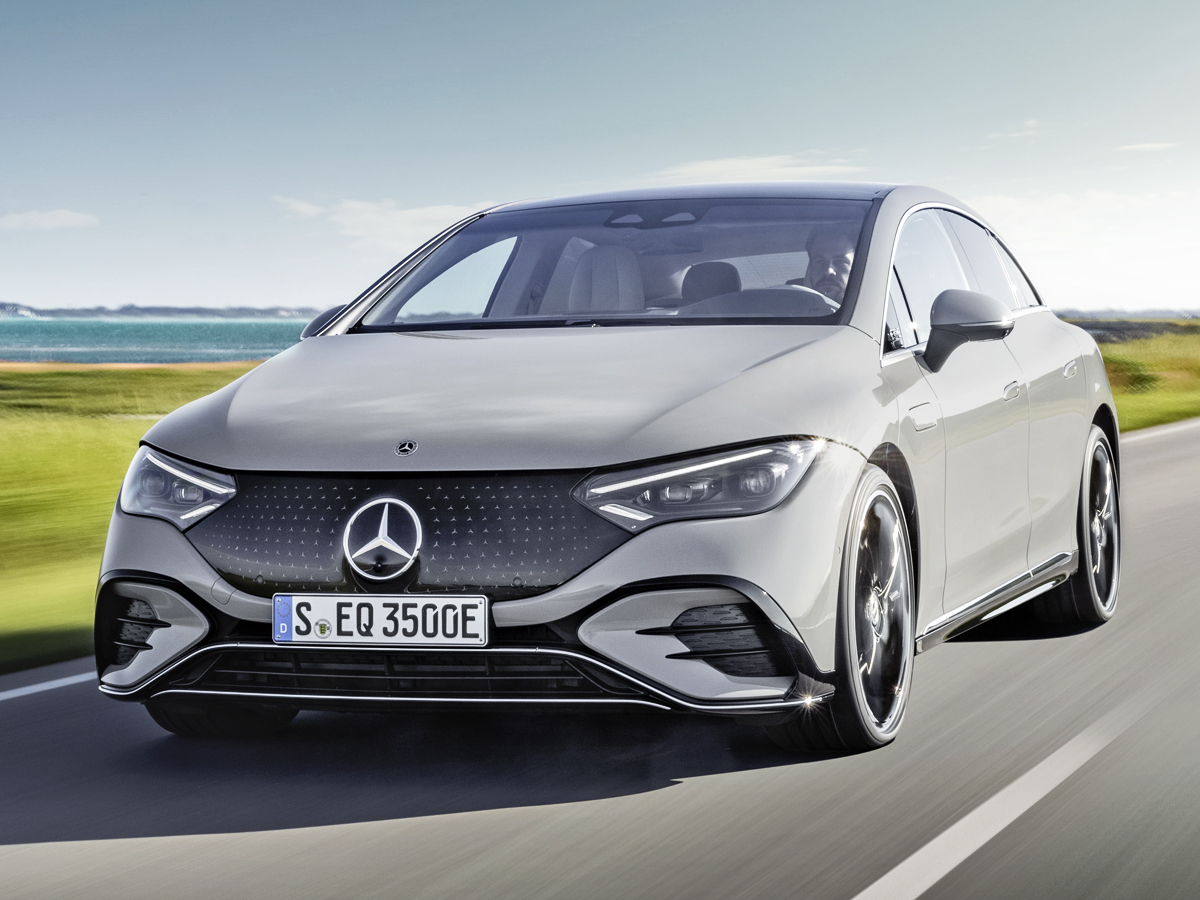
We have pricing for the new fully electric Mercedes-Benz EQE Sedan, including the Mercedes-AMG EQE 43 4Matic! Here’s how much you’ll pay in South Africa…
Wondering how much the new Mercedes-Benz EQE Sedan will cost in South Africa? Well, pricing for this fully electric executive saloon (not to be confused with the SUV version wearing the same EQE badge) has finally be added to the local Mercedes-Benz configurator as the German company continues its EV offensive.
As expected, the local V295-generation line-up comprises a pair of derivatives at launch, slotting in below the EQS Sedan. The first is the EQE 350+ Sedan, which starts at R1 724 650 (a figure that comes in a little lower than the indicative pricing released at the start of 2023). As a reminder, this variant employs a permanently excited synchronous motor at the rear, drawing power from a 10-module 90 kWh (useable) lithium-ion battery pack.
The EQE 350+ Sedan’s peak system outputs stand at 215 kW and 565 Nm, while the WLTP single-charge range tops out at 654 km. According to the Stuttgart-based firm, the 0-100 kph sprint is seen off in 6.4 seconds, with top speed limited to 210 kph. With a maximum DC charging capacity of 170 kW, Mercedes-Benz says moving the battery’s state of charge from 10 to 80% at a fast charger would take approximately 32 minutes.
In the case of the EQE 350+ Sedan, the Electric Art exterior pack ships standard, while upgrading to the AMG Line exterior package adds R102 200 to the price. The Night Package costs R22 000, while Mercedes also offers a trio of equipment packs: Advanced (included), Advanced Plus (R81 300) and Premium (R145 600).
The Mercedes-Benz EQE 350+ Sedan fitted with the AMG Line exterior package.
Individual options include larger alloy wheels (up to R49 000 for 21-inch AMG items), a panoramic sliding sunroof (R34 000), climatised front seats (R18 000), a head-up display (R22 000), a Burmester surround-sound system (R26 000) and an increase in the AC charging capacity from the standard 11 kW to 22 kW (R20 500).
What about the Mercedes-AMG EQE 43 Sedan? Well, the lower-powered version of Affalterbach’s take on the saloon (no sign of the 505 kW EQE 53 4Matic+ yet) kicks off at R2 112 950. The 43-badged model features an “AMG-specific” electric motor on each axle and is thus all-wheel drive.
Maximum system outputs stand at 350 kW and 858 Nm, while the sprint to 3 figures takes a claimed 4.2 seconds (with top speed pegged at 220 kph). Like the EQE 350+, the EQE 43 employs a 90 kWh lithium-ion battery, though here it yields a WLTP range up to 534 km.
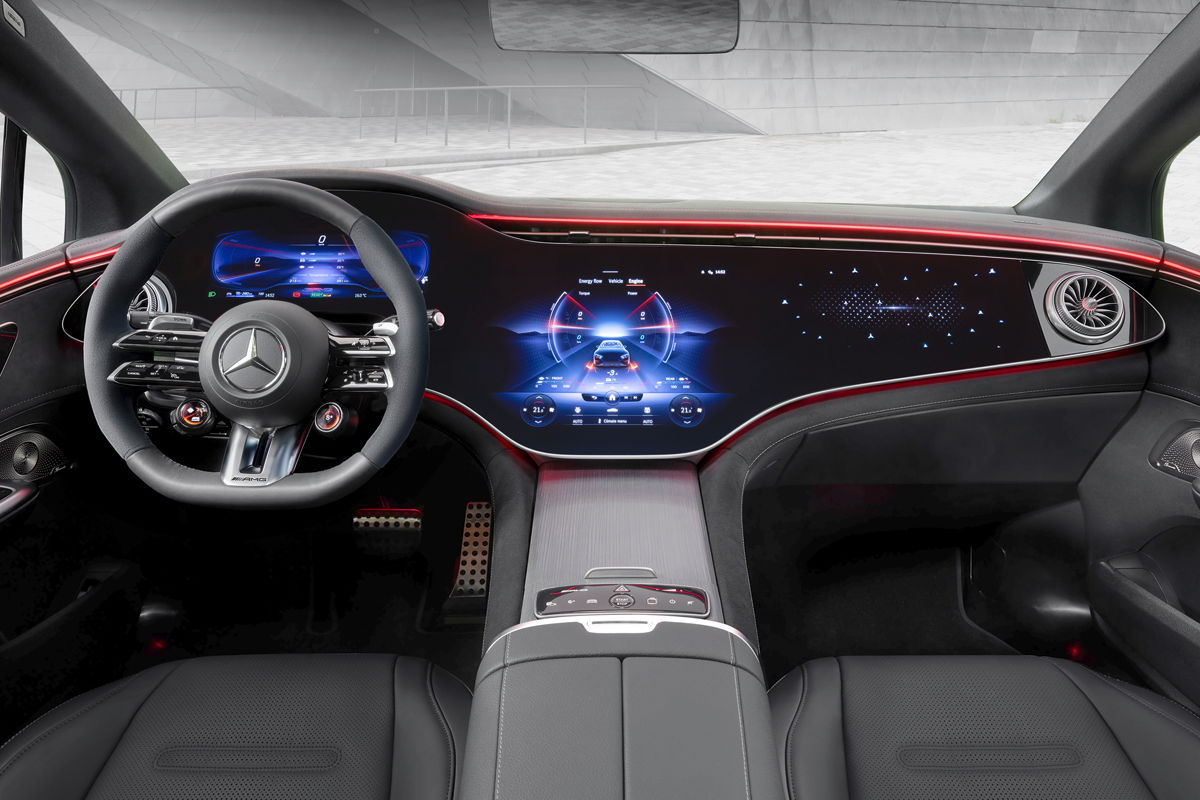
A pair of optional equipment packages is also on offer for the Mercedes-AMG EQE 43 Sedan, though here they cost less: R37 800 in the case of the Advanced Plus and R61 100 for the Premium package. In addition, Mercedes-Benz SA offers a few AMG-specific options, such as a high-performance ceramic composite braking system (R90 000) and red-painted brake callipers (R14 500). There’s also the MBUX Hyperscreen for the price of R155 000.
How much does the Mercedes-Benz EQE Sedan cost in SA?
Mercedes-Benz EQE 350+ Sedan – R1 724 650
Mercedes-AMG EQE 43 Sedan – R2 112 950
The above pricing includes a 5-year/100 000 km maintenance plan as well as a 2-year/unlimited kilometre warranty, plus a separate 10-year/unlimited km warranty on the battery.
New Mitsubishi Triton Shows its Face in Fresh Teasers
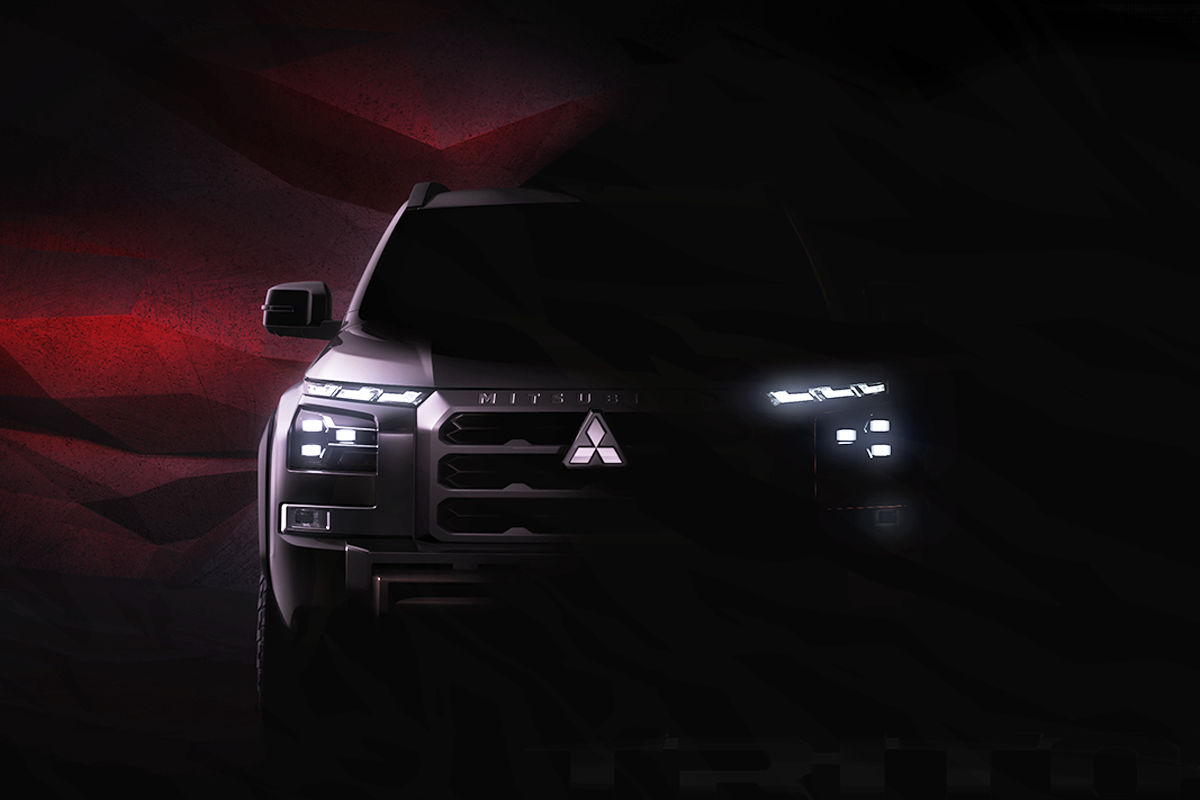
The new Mitsubishi Triton has shown its face in a fresh set of teaser images and a video, with the Japanese brand also confirming an official reveal date…
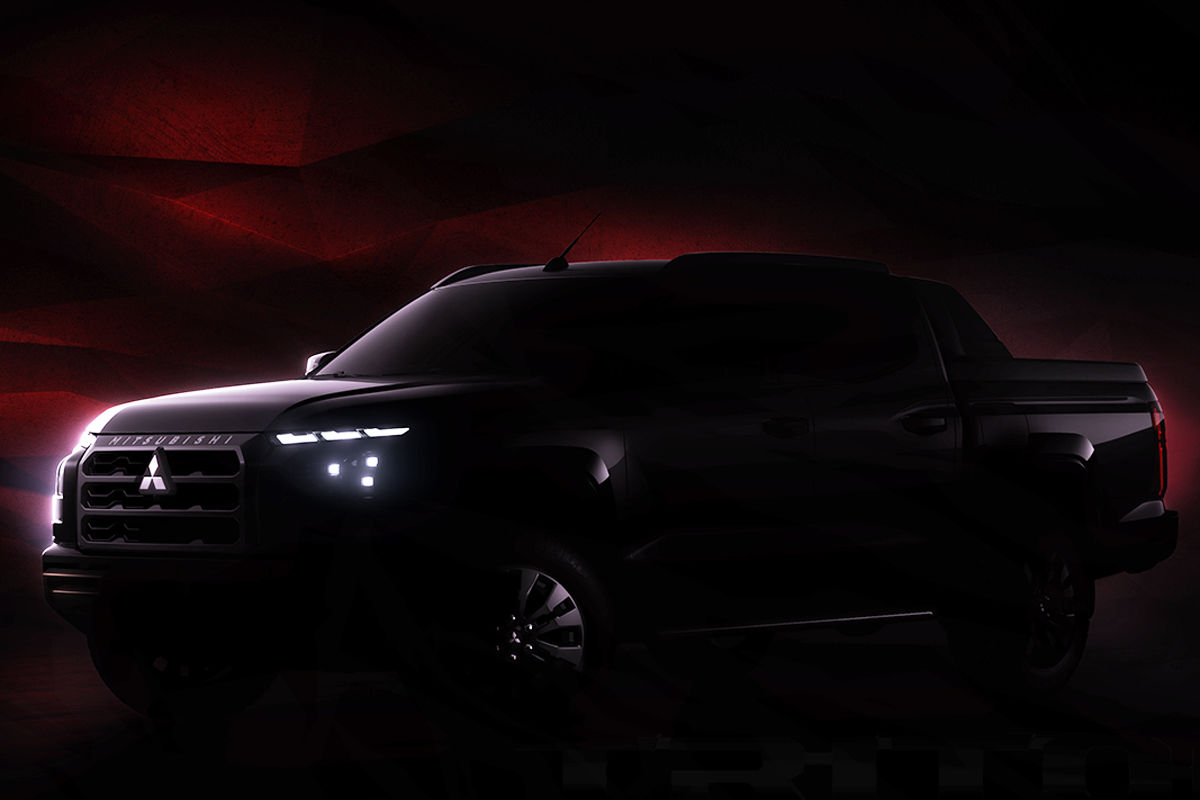
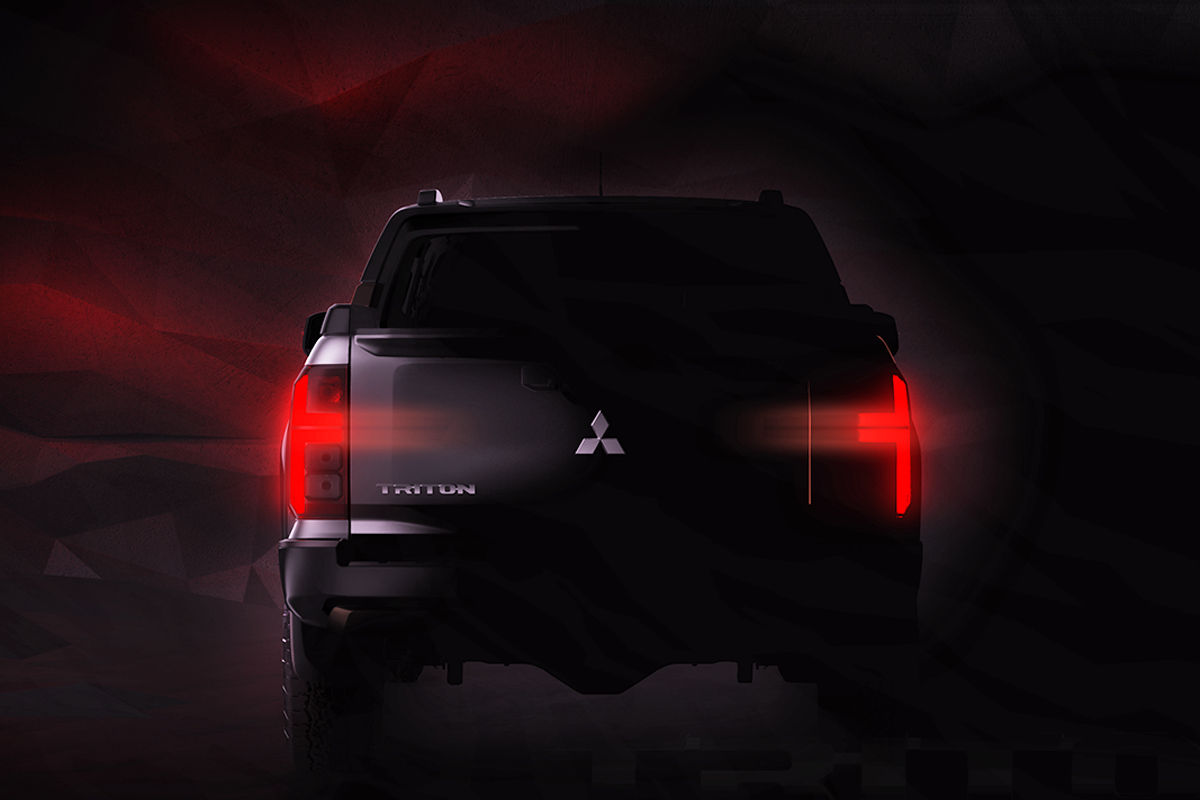
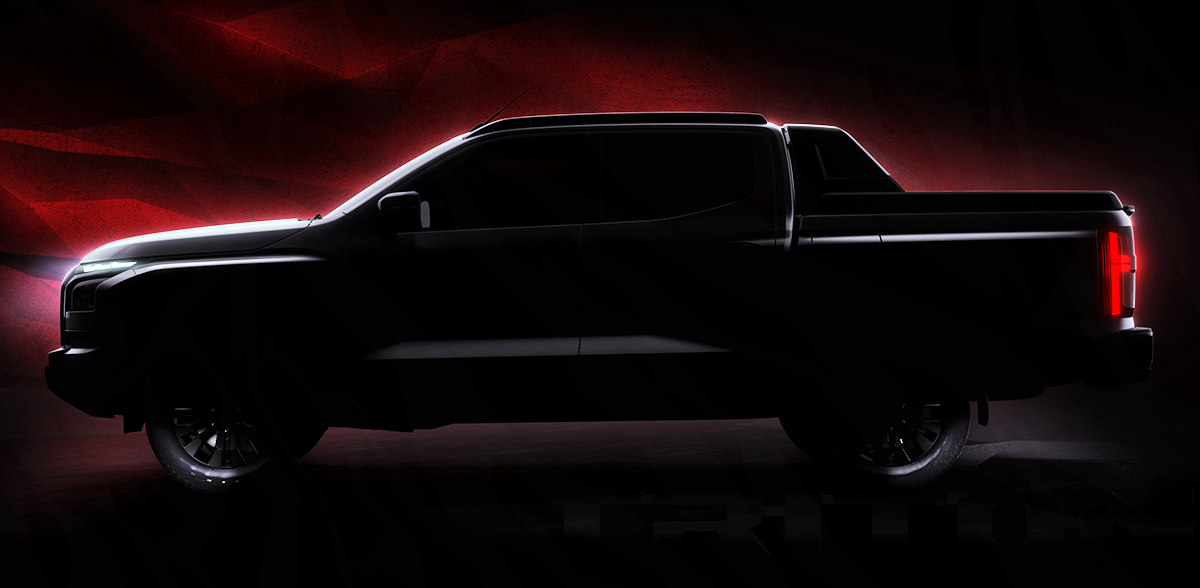
Ready for the all-new Mitsubishi Triton? Well, the wraps will officially come off the 6th generation bakkie on 26 July 2023, though the Japanese automaker has dropped a handful of teaser images (and some video content) in the meantime, giving us an early look at its upcoming rival to the likes of the Toyota Hilux, Ford Ranger and Isuzu D-Max.
Billed as an all-new “global strategic model” (and known as the L200 in some markets), the next-gen Triton is set to feature what Mitsubishi describes as a “beefed-up body” and “powerful, horizontally themed styling”. Of course, we’ve already have a bit of a preview in the form of the XRT Concept.
A look at the new Mitsubishi Triton’s profile.
As you can tell from these latest teaser images (showing the double-cab body style), the bakkie’s front end is defined by a combination of daytime running lights (apparently resembling the “sharp gaze of a hawk”) and new “3-dimensional headlights”. The video below also gives us an early (but shadowy) look at the new Triton’s cabin, complete with a tablet-like infotainment screen standing proud of the dashboard. For now, Mitsubishi remains mum on the new Triton’s powertrain options.
“The all-new Triton has been completely re-imagined under the design concept ‘Beast Mode’, or audacious and daring,” said Seiji Watanabe, division general manager of design at Mitsubishi Motors.
“While expressing the toughness and powerfulness expected of a pick-up truck, the all-new Triton combines agility with the brand’s robust design to create an imposing look. Tough and reliable, the all-new Triton will make customers want to go on any adventure,” promised Watanabe.
The new Triton – which we expect to be closely related to the next-gen Nissan Navara, considering the 2 brands are part of the Renault-Nissan-Mitsubishi Alliance – will be fully revealed at a special event in Thailand in July (and will surely spawn a new Pajero Sport, too). Check back for more details then…
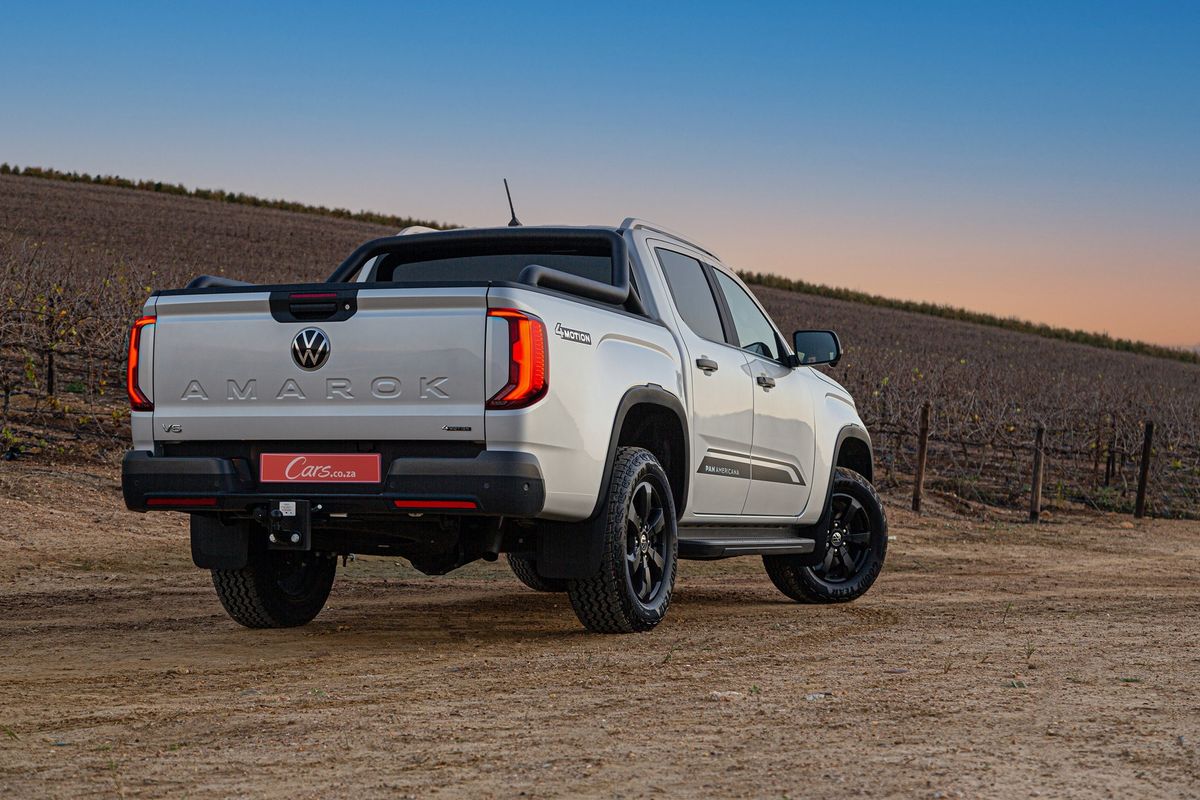
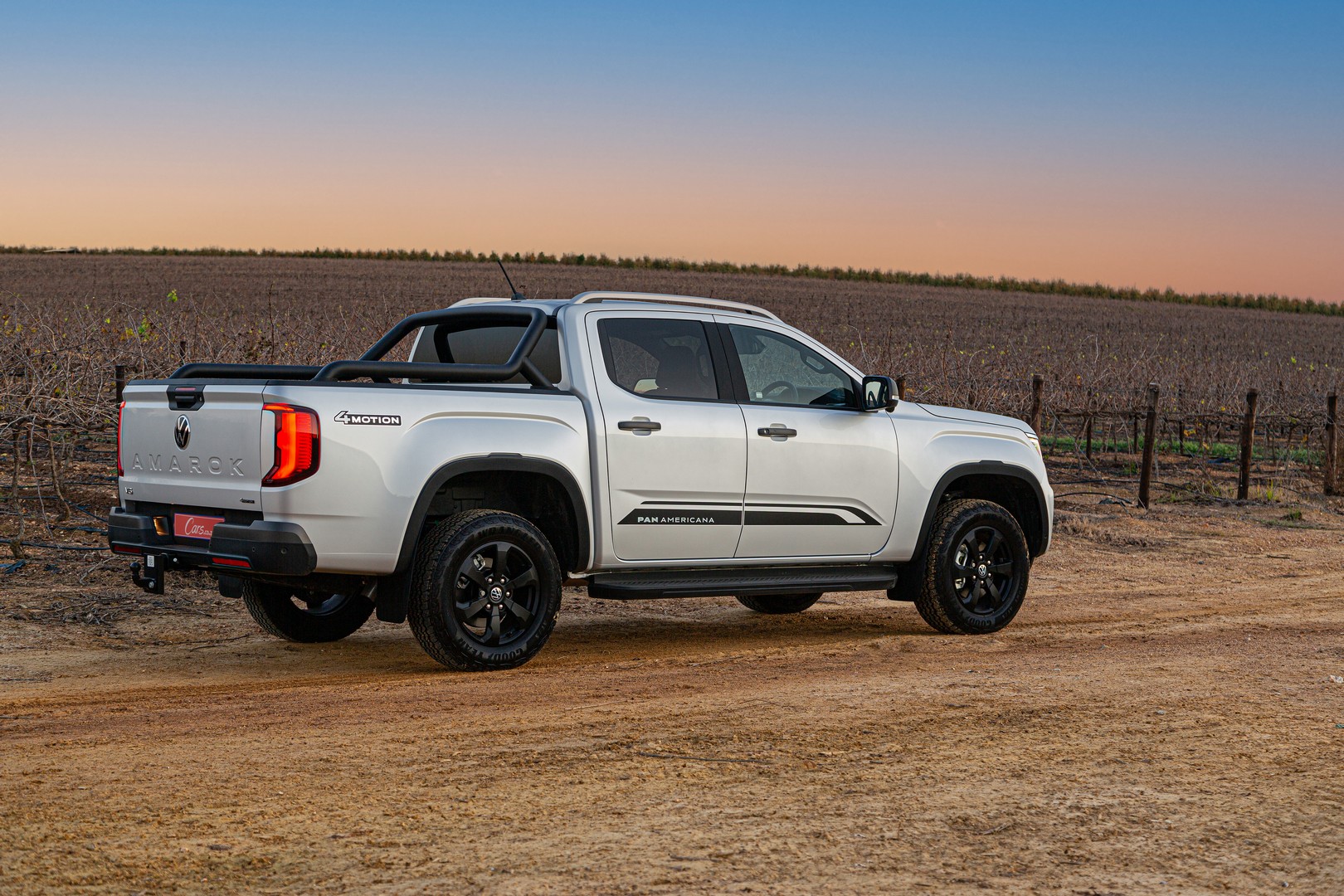
Is the 2023 Volkswagen Amarok simply a clone of the Ford Ranger, or is there more to the Wolfsburg-based brand’s 2nd-gen double-cab? We review the PanAmericana 4Motion-grade 3.0TDI V6 derivative, which, like its siblings, is built in South Africa.
We like: Plush cabin, great infotainment system, most off-road capable Amarok ever.
We don’t like: Some ergonomic quirks, price premium over its Ranger Wildtrak cousin.
Where does the Volkswagen Amarok PanAmericana fit in?
The new Amarok is happiest on a dirt road
The 2023 Volkswagen Amarok joins the hotly-contested double-cab bakkie market at one of the busiest times for the highly popular segment. If you’ve had your eye on purchasing a double-cab bakkie, now is a good time to take the plunge – new and updated models are arriving at local showrooms in their droves.
The all-new Amarok recently made its debut and the 2nd-generation model brings significant upgrades in terms of powertrain, connectivity, and capability. If you weren’t already aware of it, the new iteration of Volkswagen’s double-cab is built here in South Africa – at Ford’s Silverton factory, located near Pretoria.
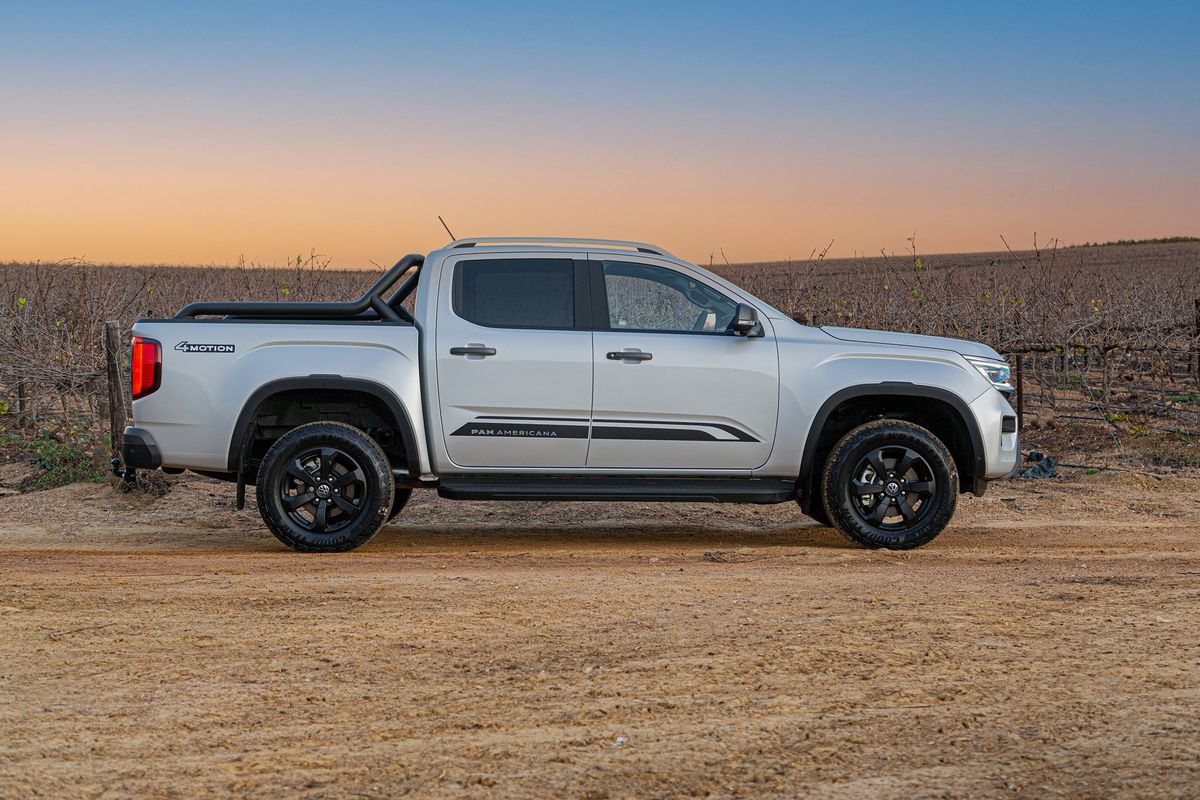
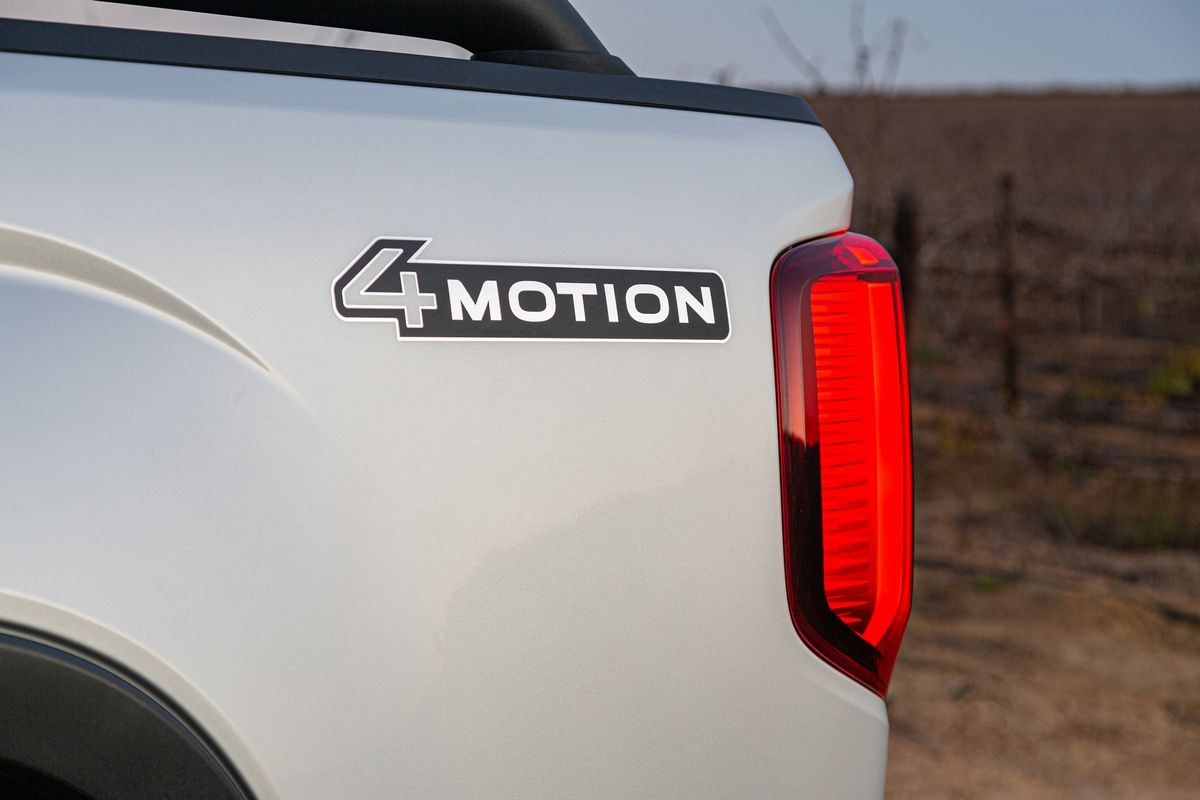
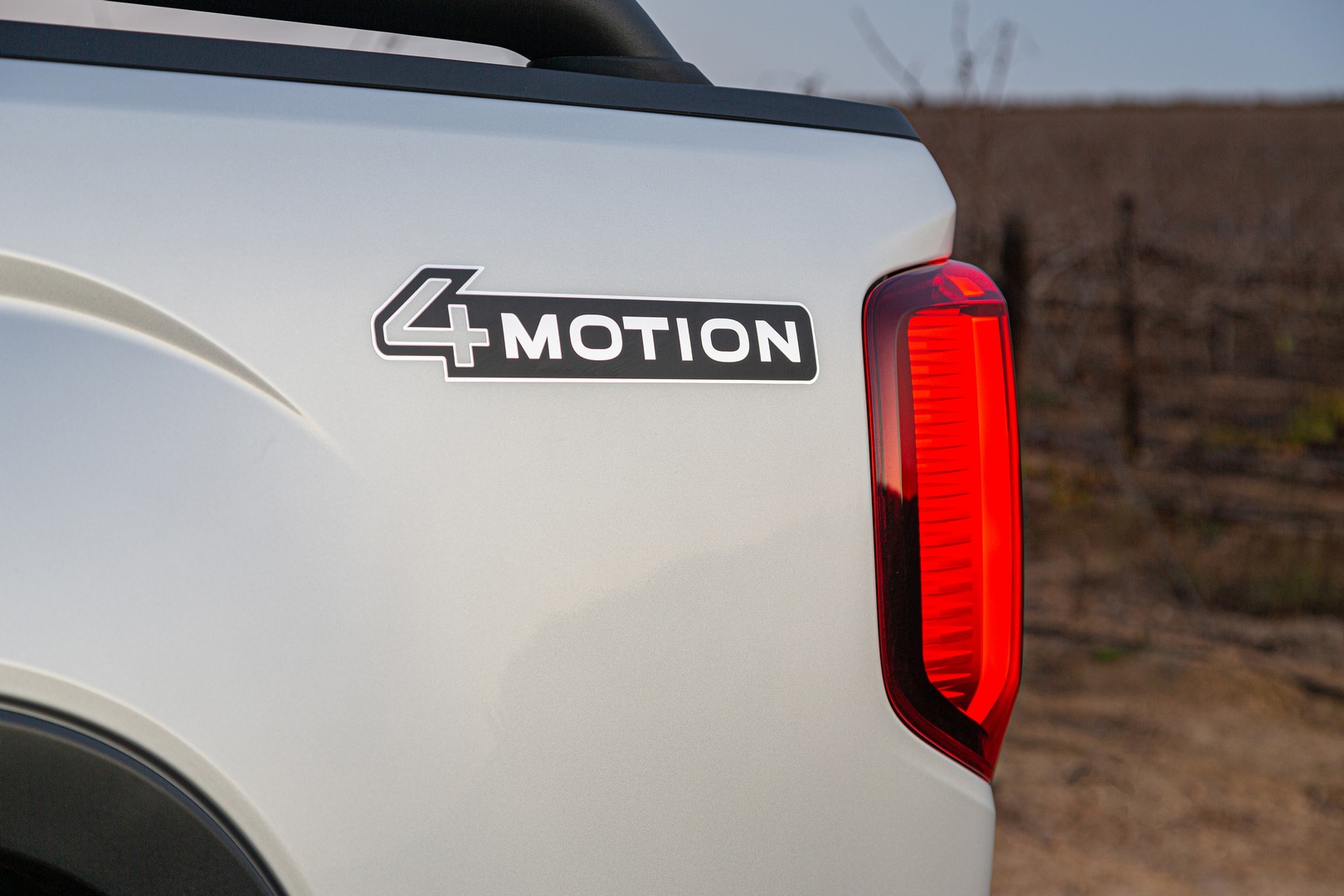
4Motion implies that Amarok is 4×4 capable; in fact, it has an automatic 4-wheel-drive system.
Ford produces the 2023 Volkswagen Amarok on behalf of the Wolfsburg-based brand (with which it has a strategic partnership) and the model shares quite a few components with the new-generation Ranger. Still, if there was one platform you’d want your new product to be based on, you’d struggle to find a more modern and complete package than the P703-series (or “T6.2”) Ranger. A good starting point, then!
By undertaking collaborative projects, Ford and Volkswagen have benefited from sharing research and development costs, as well as utilising proven technology. The winner is, of course, you the consumer, who benefits the most from the 2019 Ford-VW global alliance cooperation agreement. Such a venture isn’t always a success… Just ask Mercedes-Benz, whose X-Class version of the Nissan Navara faltered.
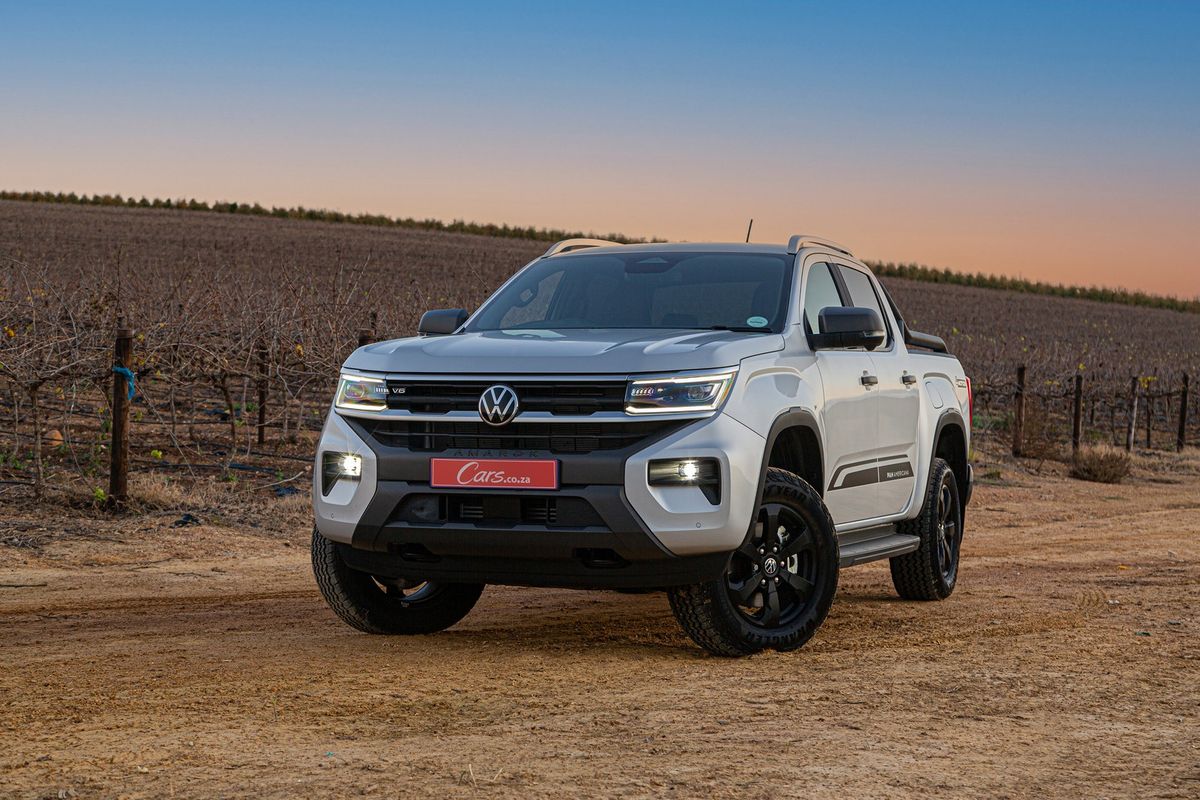
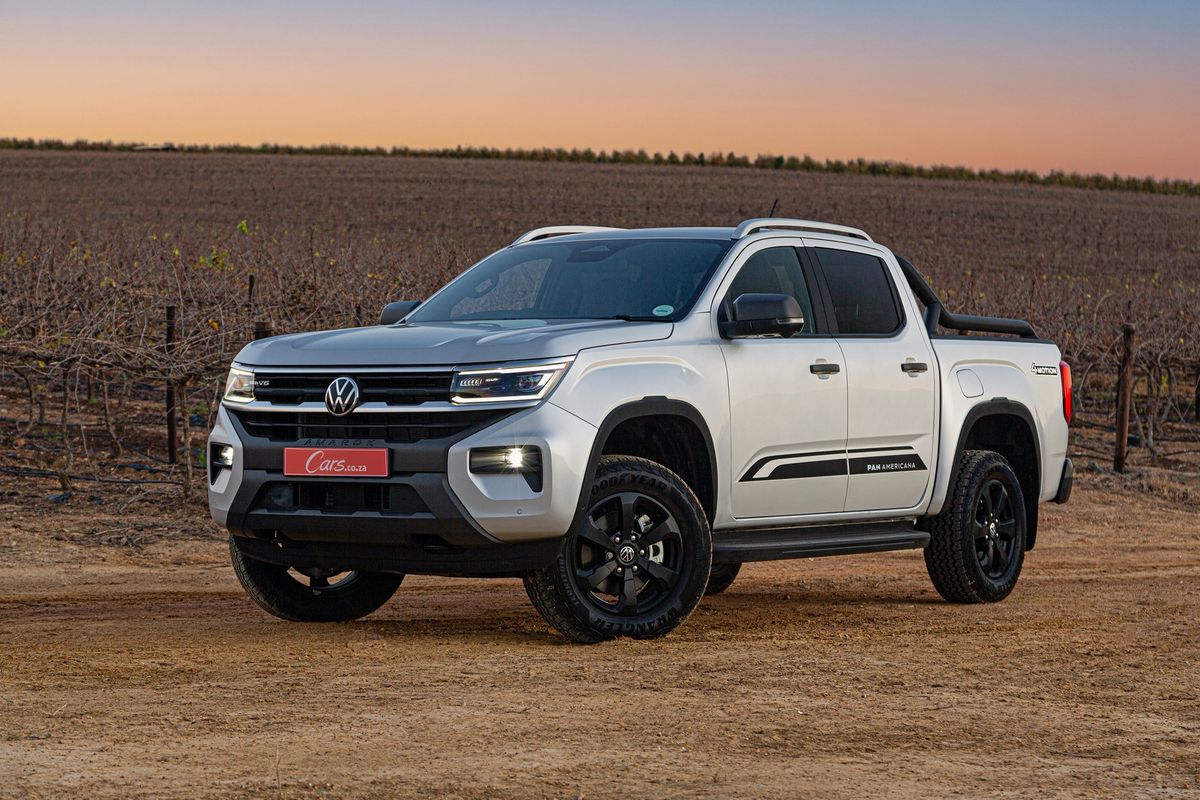
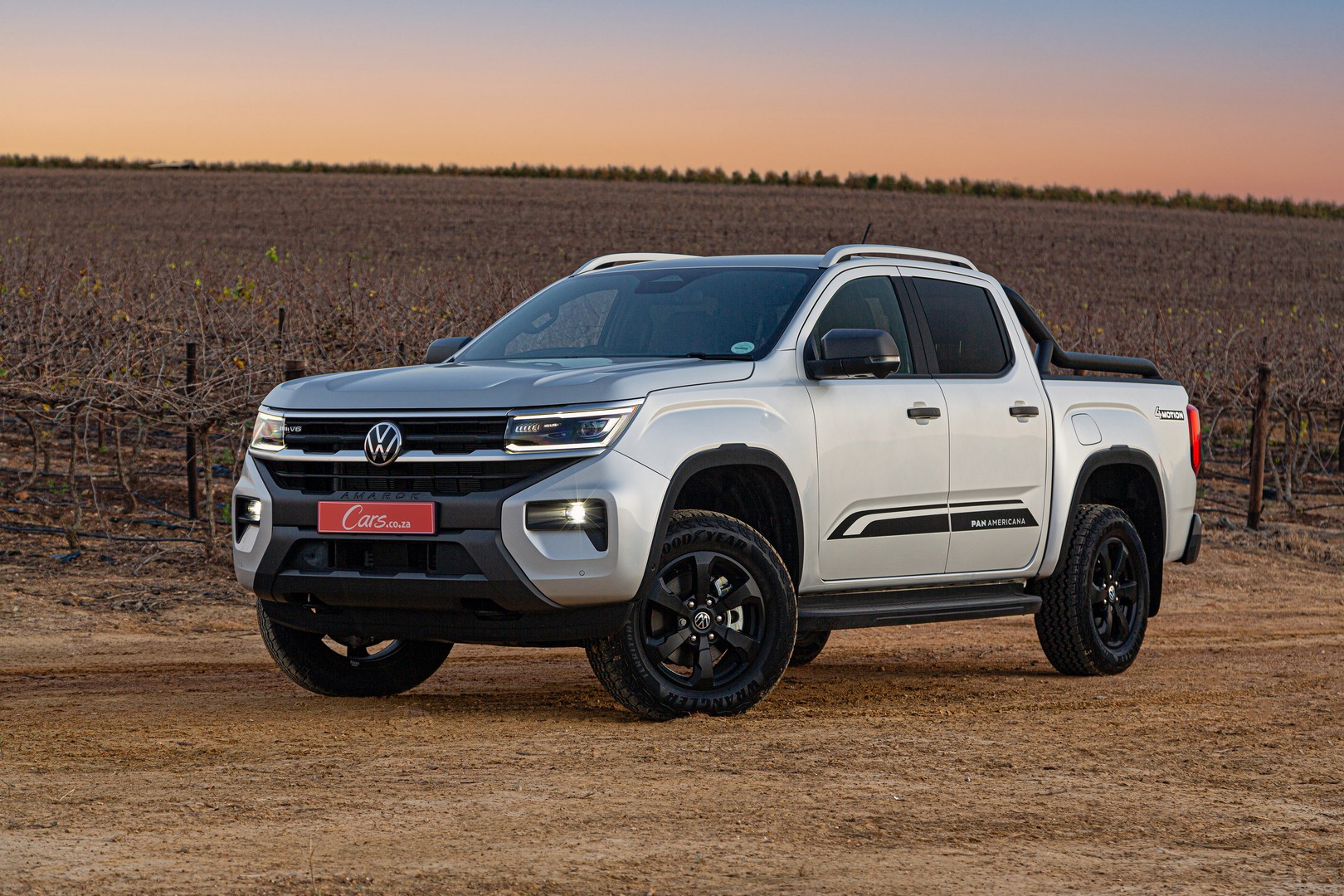
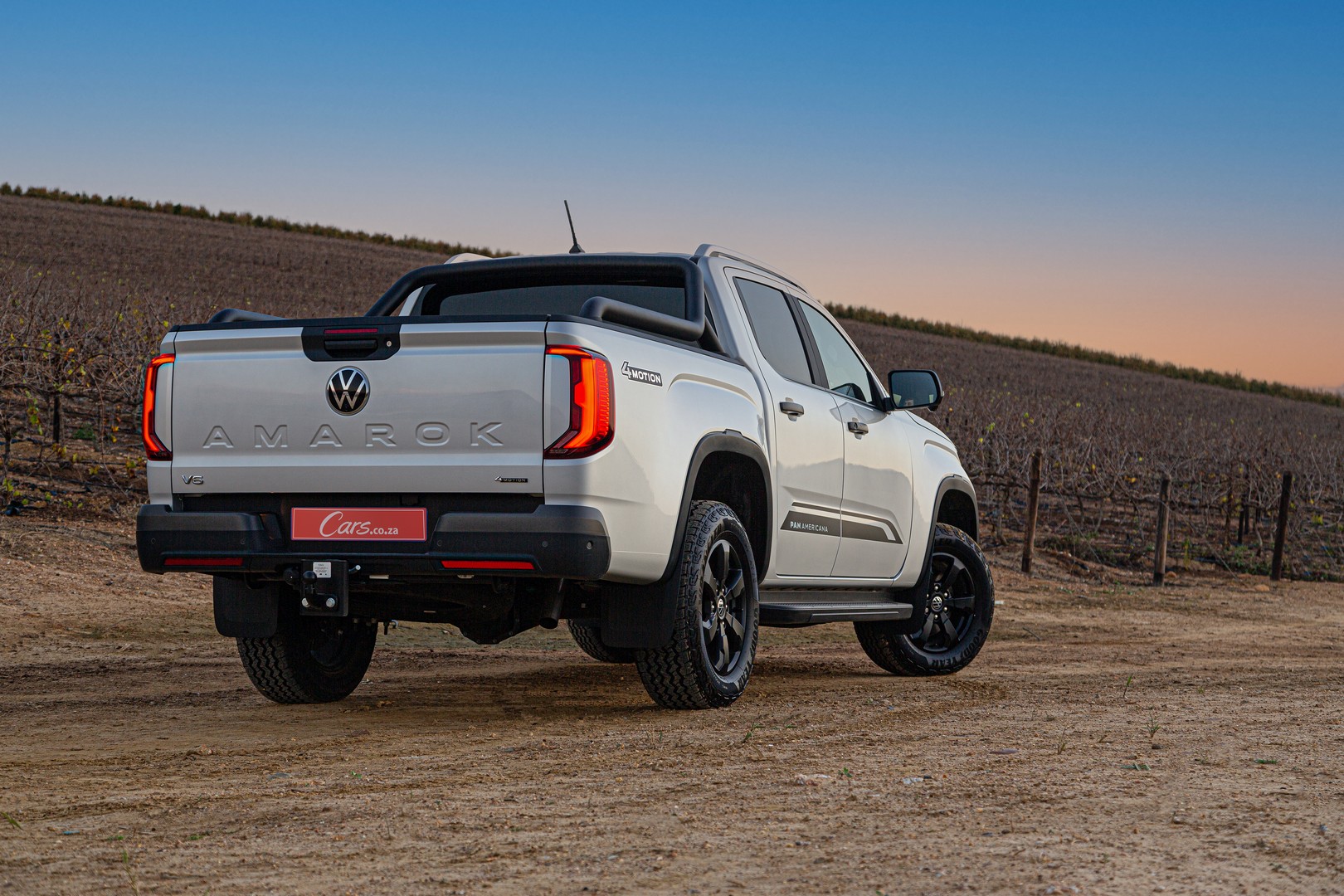
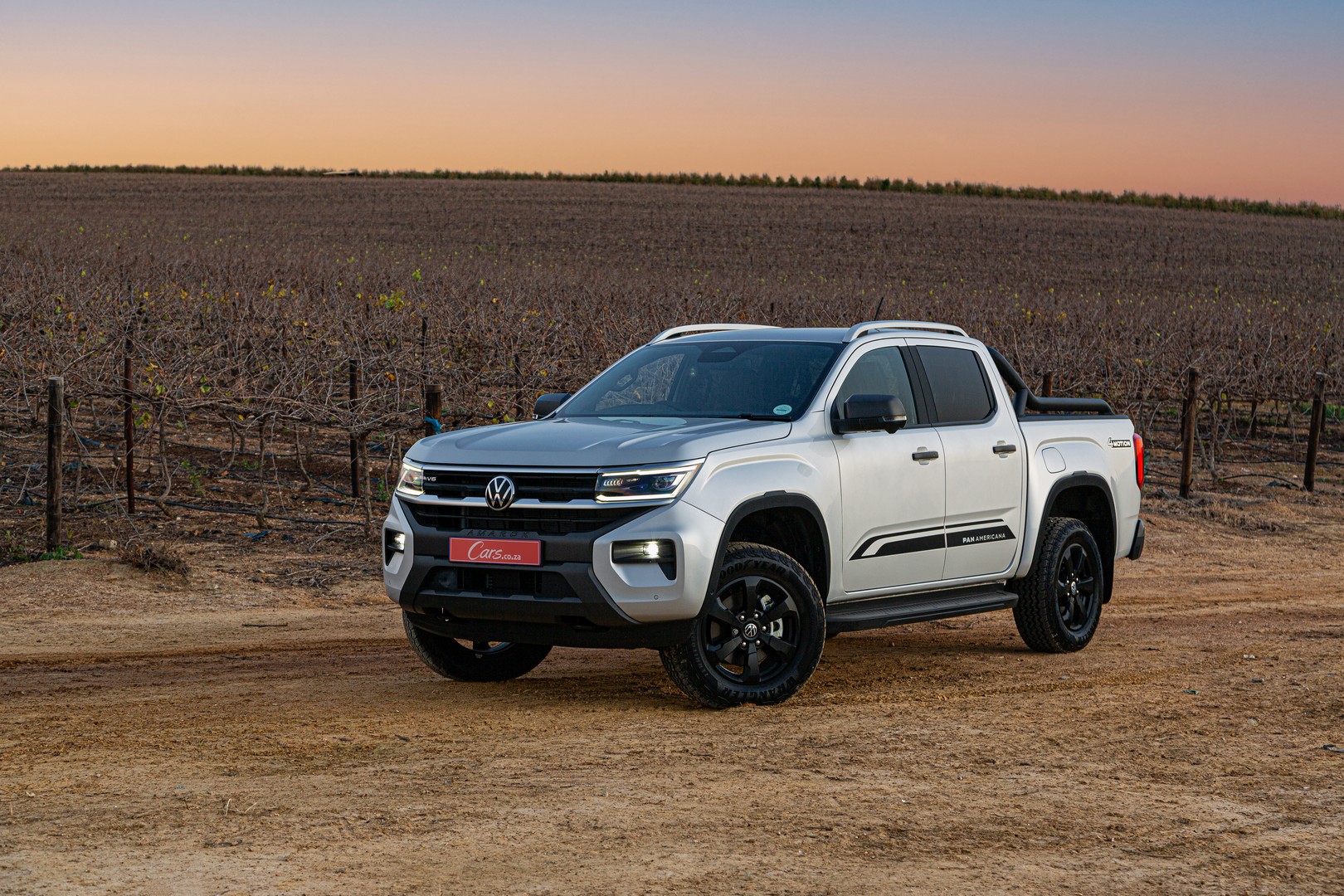
What a great-looking truck! The V6 badge on the grille is very subtle.
Will Volkswagen fare better? Perhaps it will – the brand makes full use of Ford’s manufacturing capability and the new Amarok is available in single and double-cab body styles, with an array of 4-cylinder and 6-cylinder turbodiesel engines that should a variety of lifestyle buyer- and commercial customer needs.
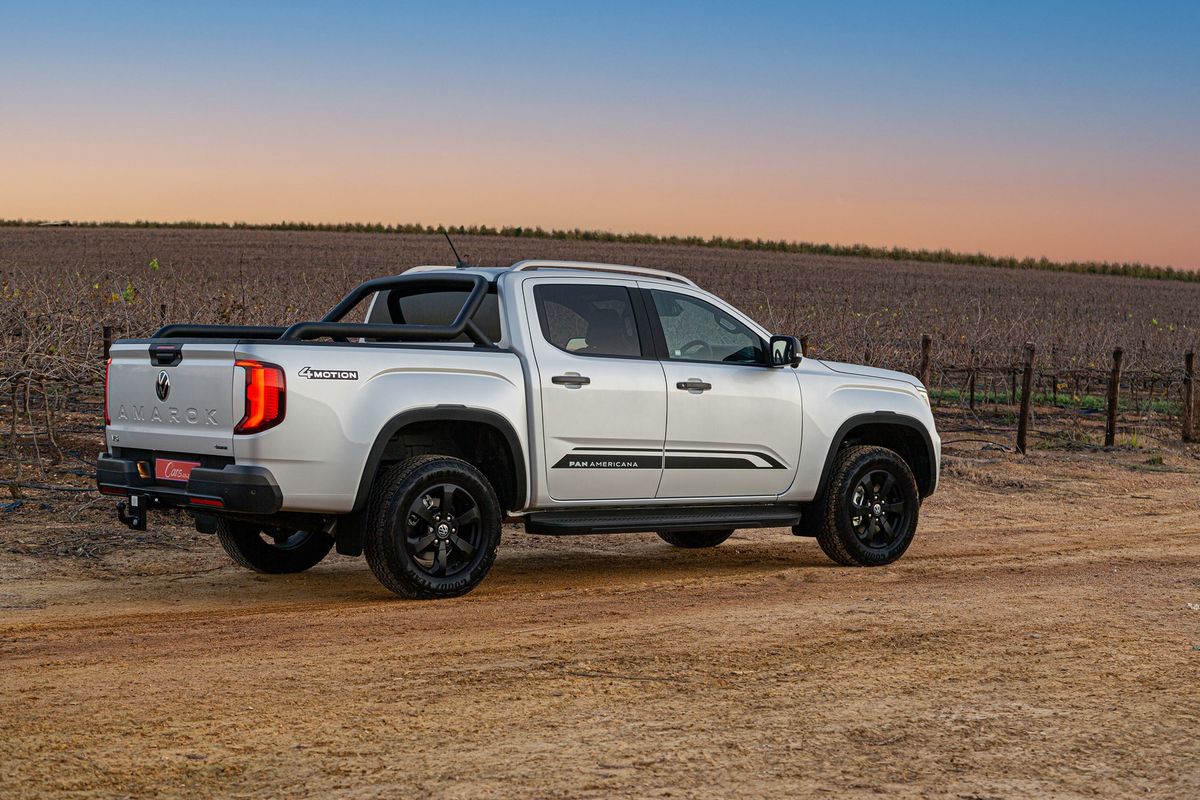
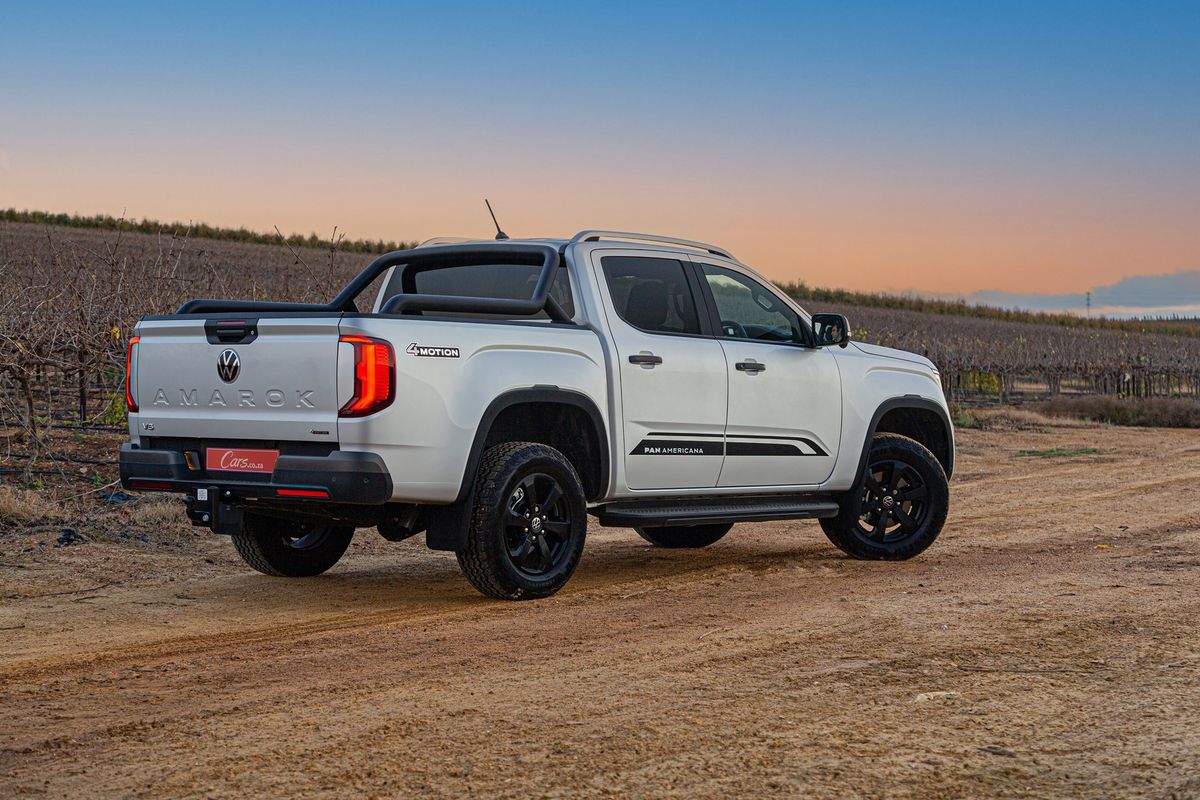
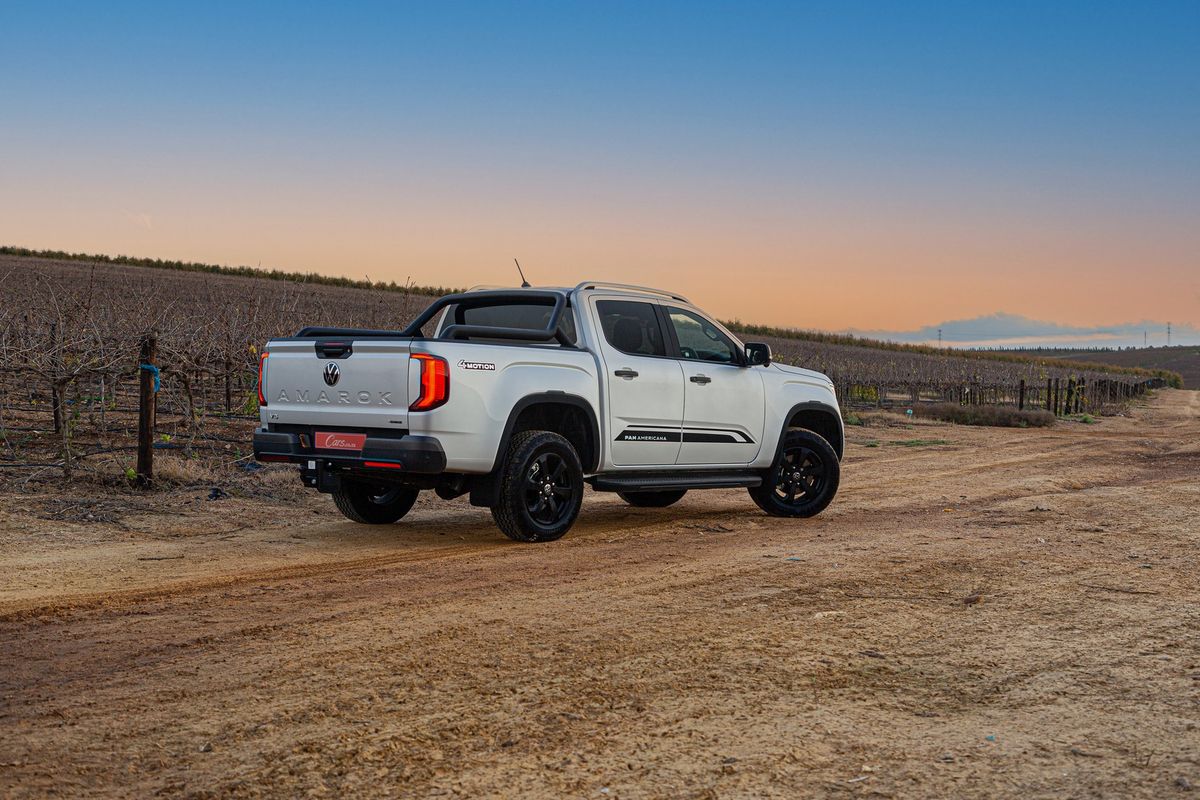
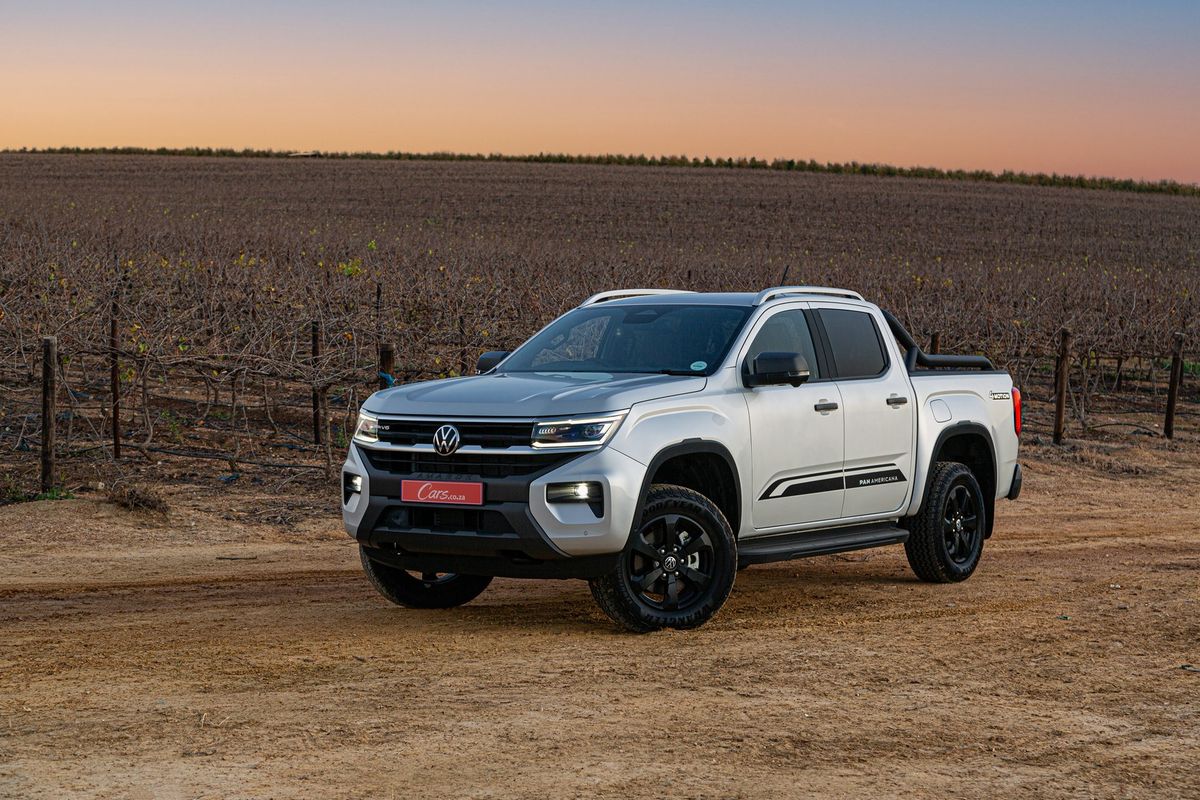
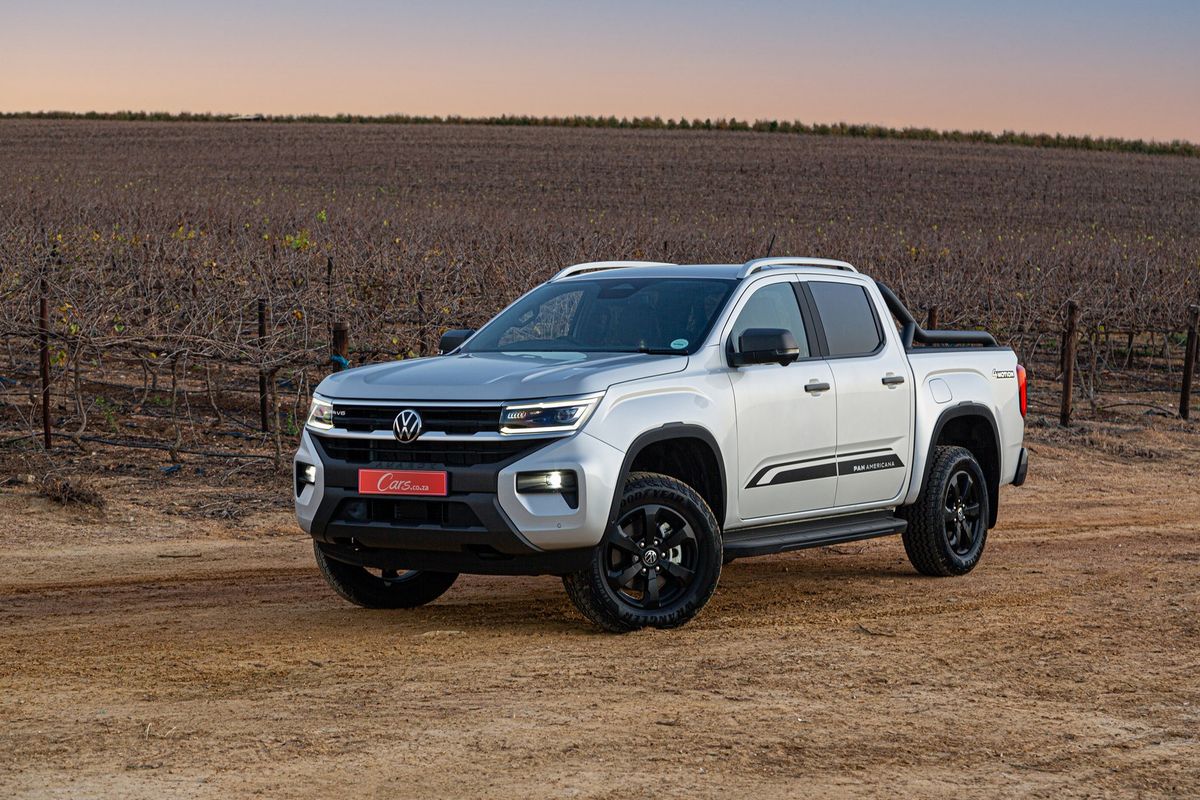
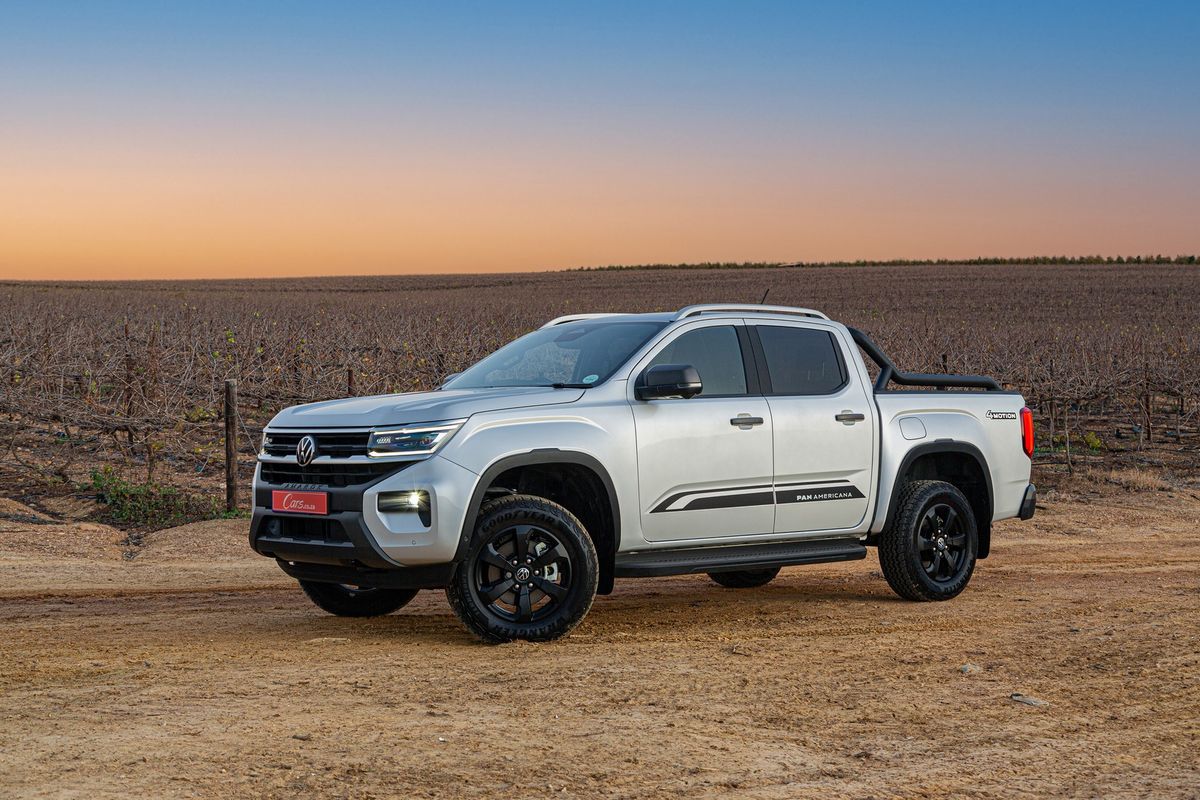
Is it a simple case of changing a few things from the Ford Ranger to produce the 2023 Volkswagen Amarok? Absolutely not. As you can see, the new Amarok has quite a unique look. At first glance, you may notice the bakkies have identical wing mirrors, door handles and a roofline, but that’s about it. The bumpers are different, as are the wheel arches and headlights, plus the VW’s grille is big and imposing.
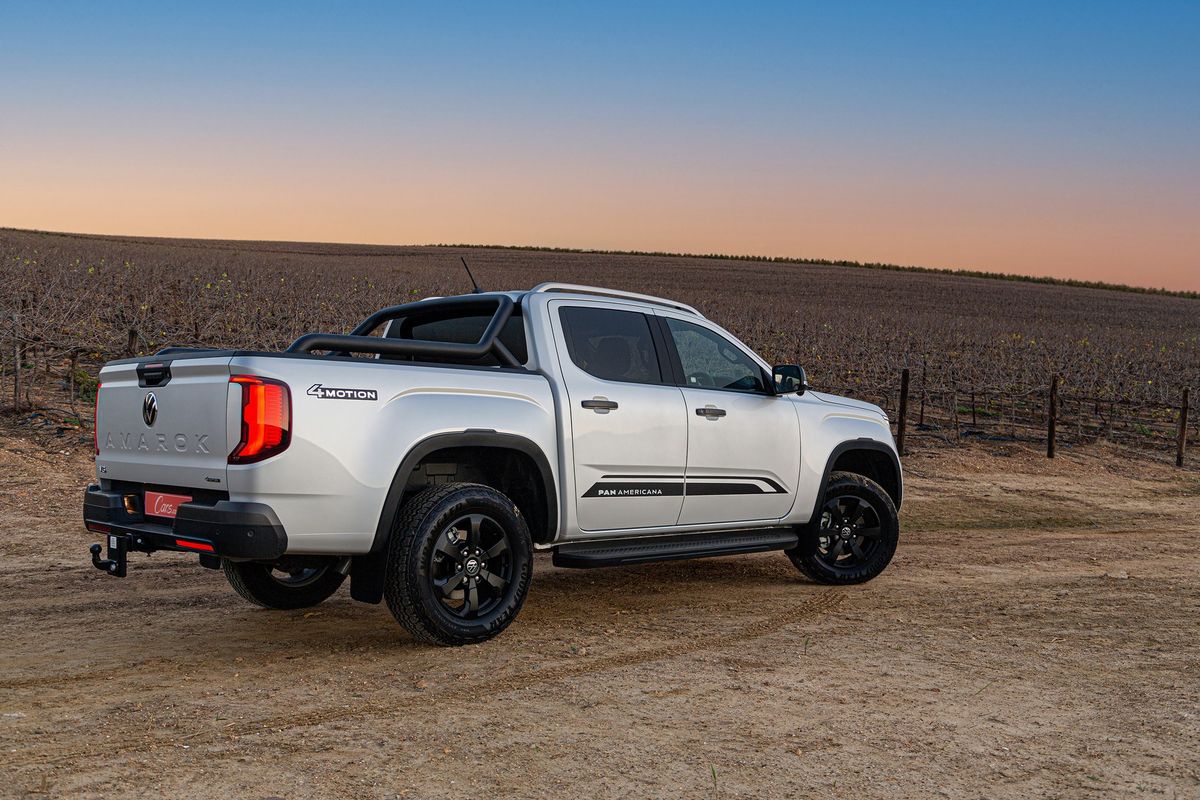
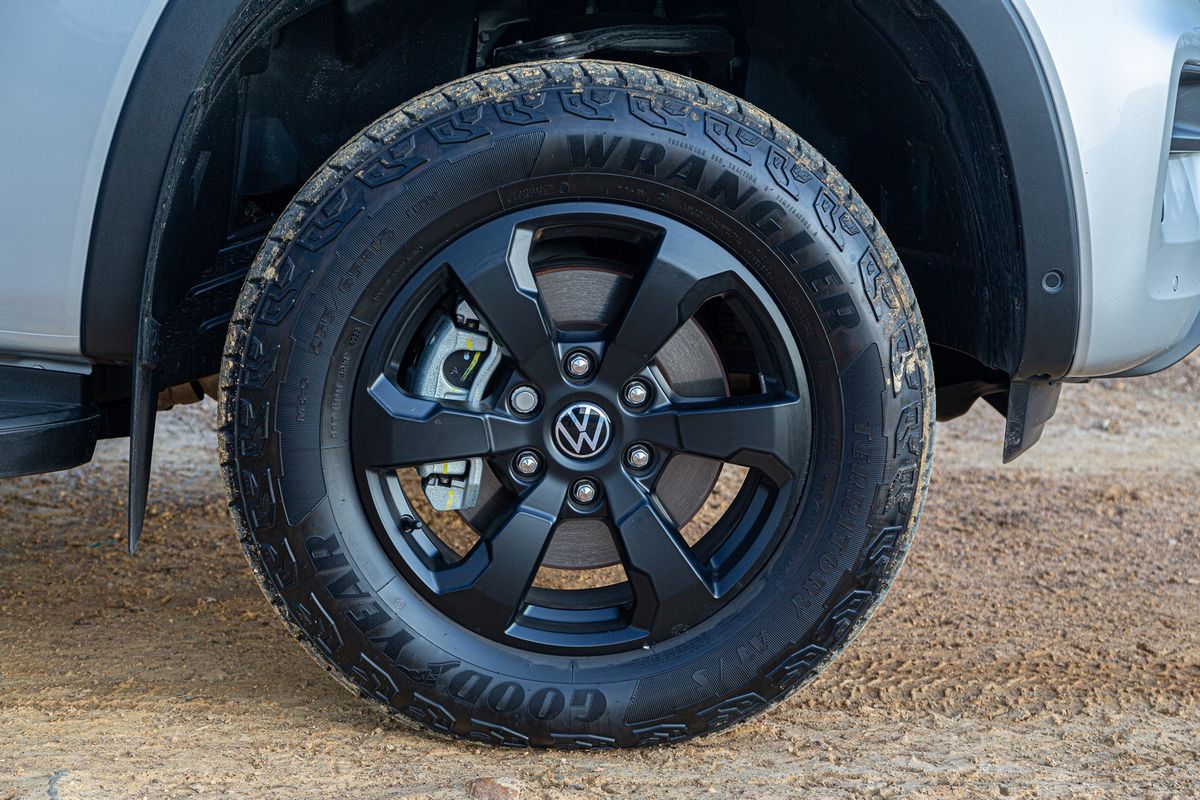
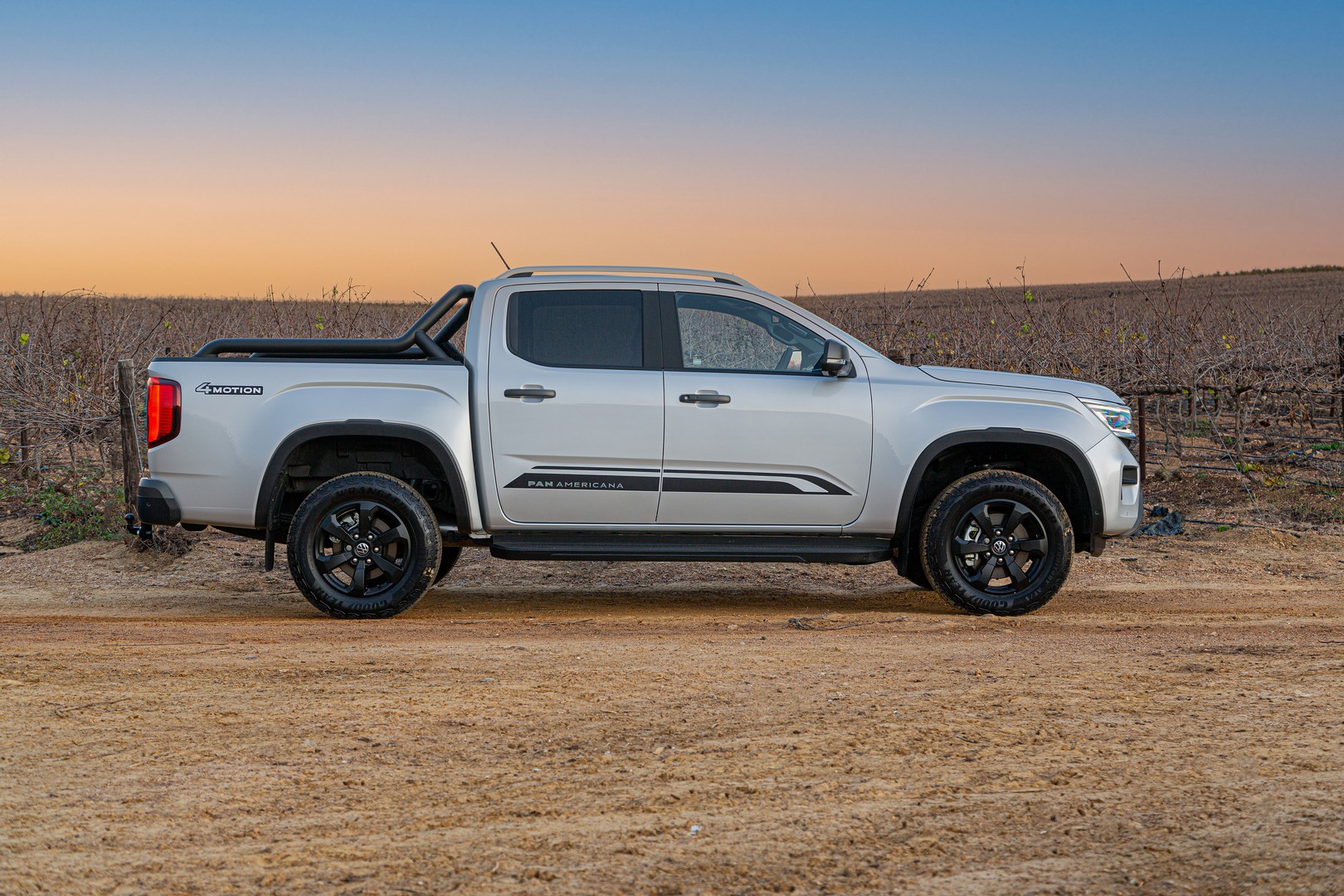
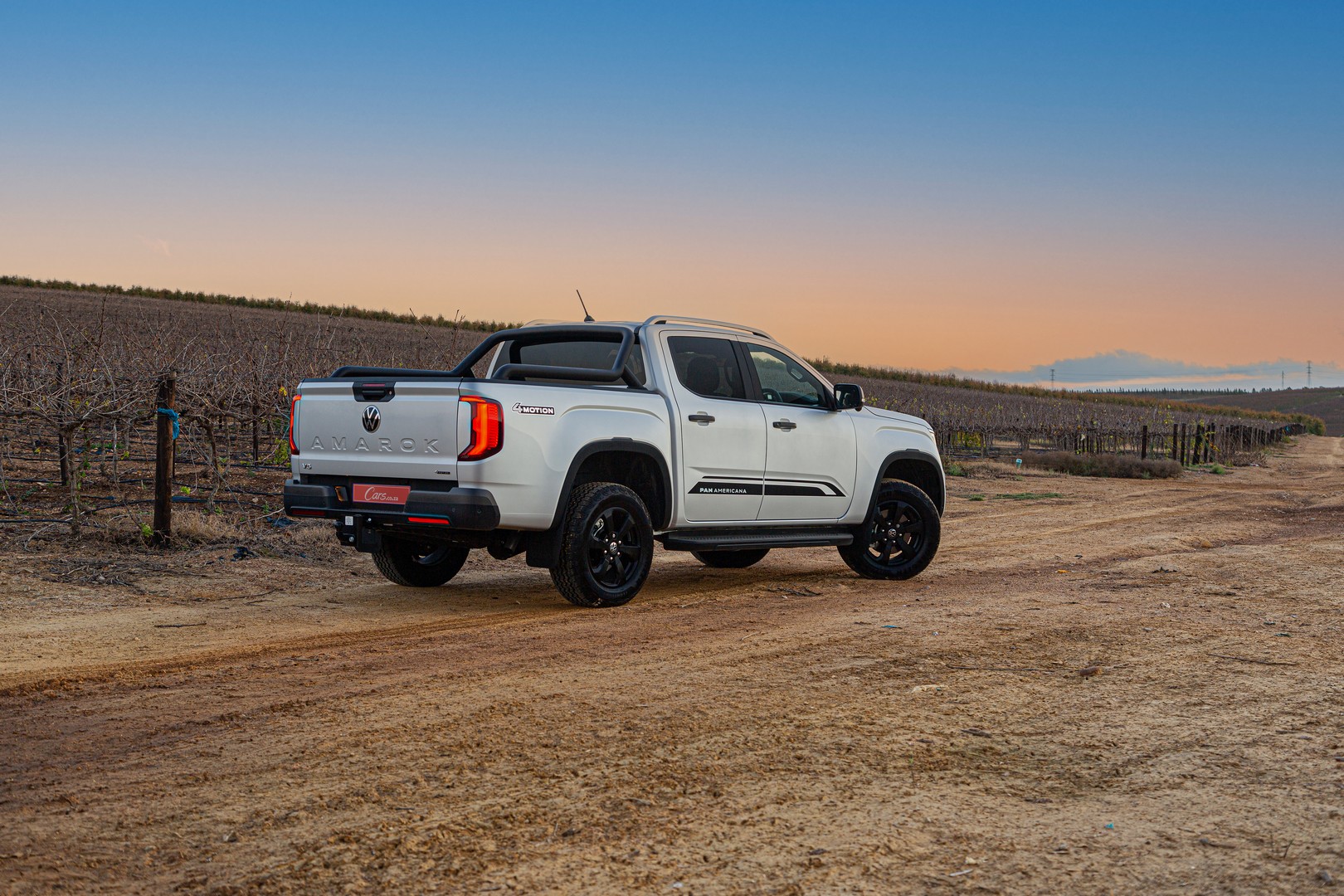
The PanAmericana off-road pack adds offroad tyres, underbody protection and subtle decals.
Right now, the class of 2023 double-cab bakkies is more competitive than ever and, if you’re shopping for top-spec derivatives, there are a number of quality offerings that rival the Amarok PanAmericana.
It may be based on the Ranger, but there are quite a few unique design elements
The 3.0TDI V6 double cab PanAmericana 4Motion is powered by a Ford-sourced 3.0-litre V6 turbodiesel. Its peak outputs of 184 kW and 600 Nm isn’t far off the outgoing model’s 190 kW and 580 Nm. The first-gen Amarok V6 was easily one of the quickest double-cab bakkies, but it had an Audi-derived engine. The new model’s motor offers slightly less performance, but improved fuel economy/lower emissions.
Indeed, the derivative is anything but sluggish. According to our test equipment, the Amarok accelerated from 0 to 100 kph in a decidedly brisk 8.74 seconds (VW claims the bakkie has a top speed of 180 kph). If full-bore sprinting doesn’t impress you, the bakkie’s lively throttle responses and abundance of in-gear shove certainly will. The software that governs the 10-speed automatic transmission does a good job of optimising the engine’s performance characteristics (it does not “hunt”). Plus, we’re delighted to report that the motor doesn’t clatter excessively; you hardly ever discern mechanical vibrations in the cabin.
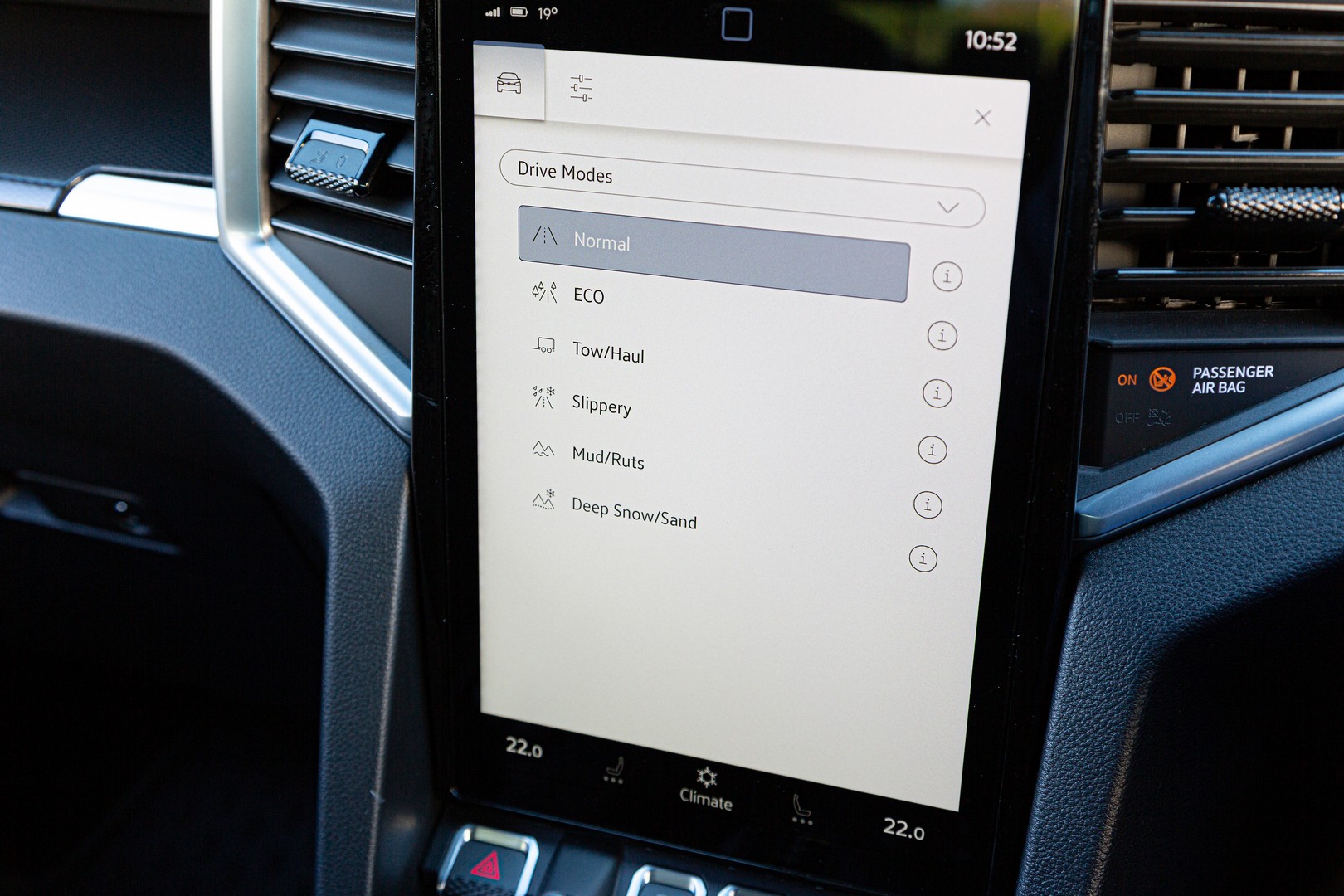
Pick one of the many offroad modes when the going gets tough
That 10-speed automatic transmission is a marvel. You’d think the transmission has at least 2 too many ratios, and it sometimes hesitates on downshifts if you suddenly summon the engine’s full performance, but in general, the ‘box just quietly gets on with its job. There are no shift paddles on the steering wheel, but you can actuate cog-changes manually by using a button on the side of the transmission lever.
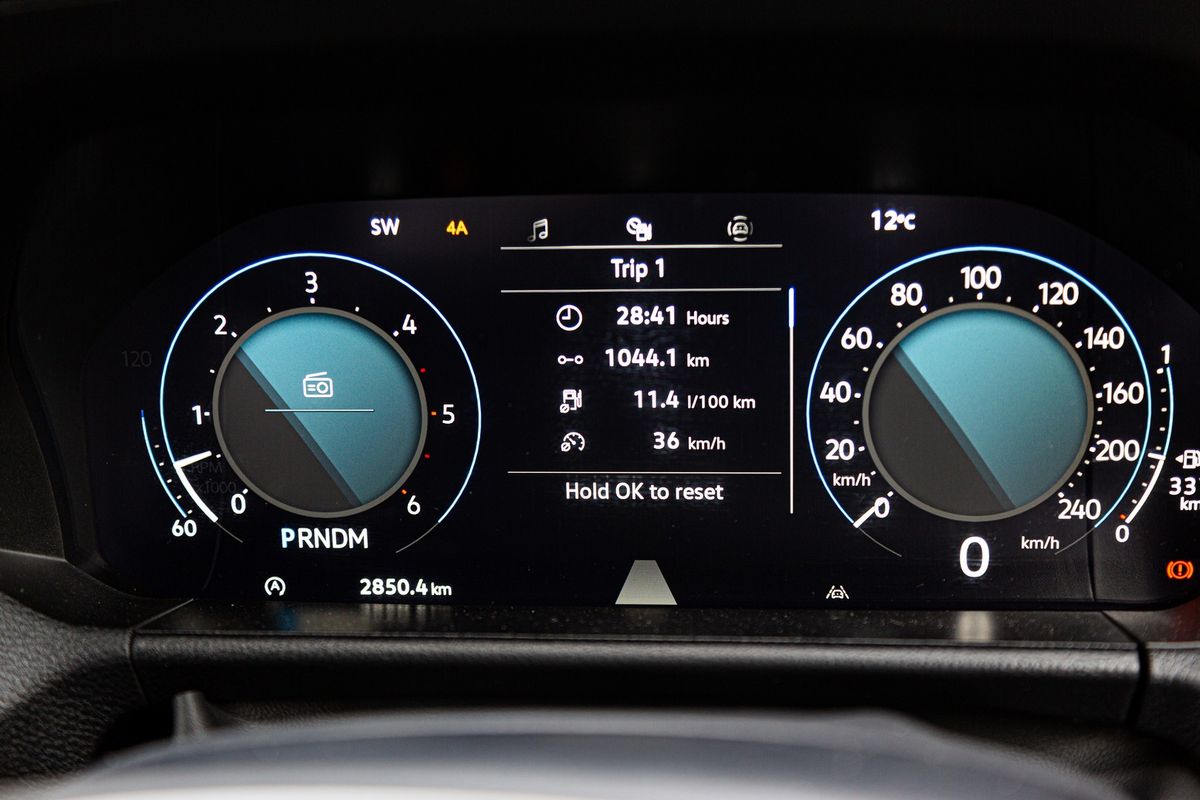
As far as fuel efficiency is concerned, the 3.0-litre V6 turbodiesel-powered Amarok returned an average consumption figure of 11.4 L/100 km (VW claims 8.4 L/100 km), which may seem a trifle high, but is more or less in line with other big-engined diesel bakkies. The theoretical range of the 80-litre tank is 952 km.
Interior tech and refinement
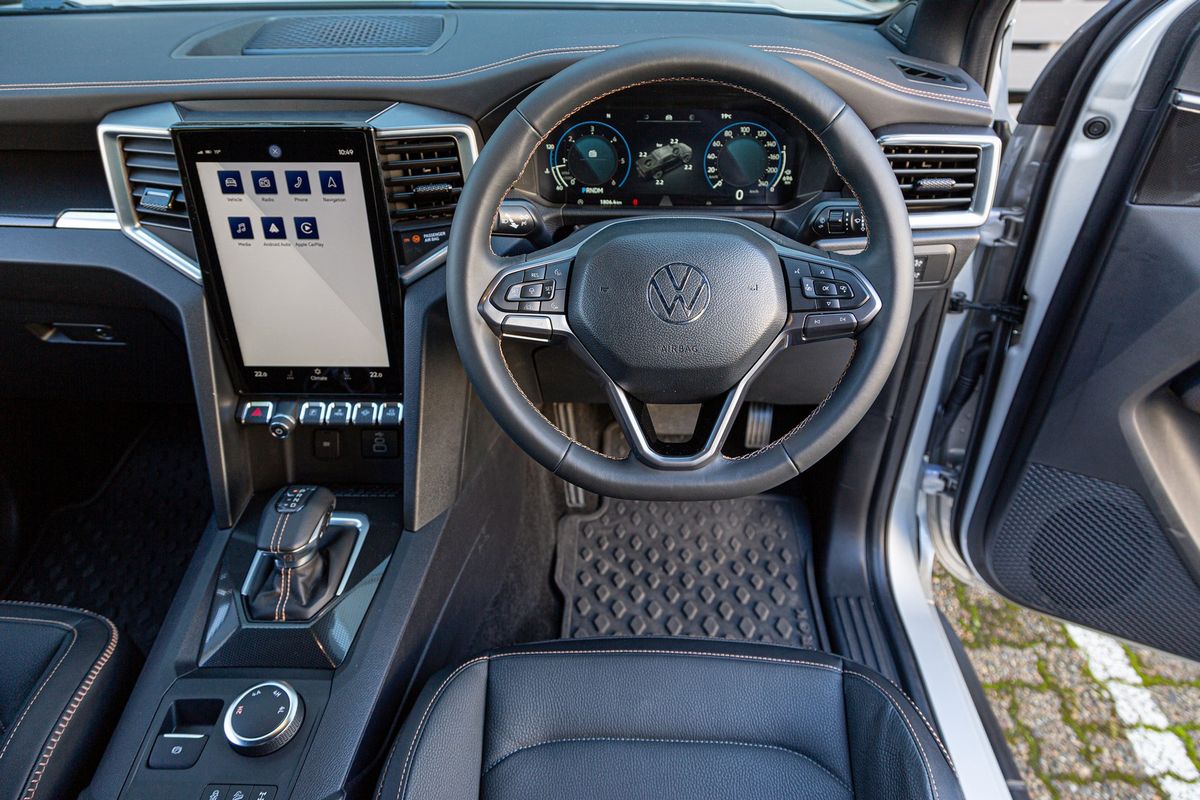
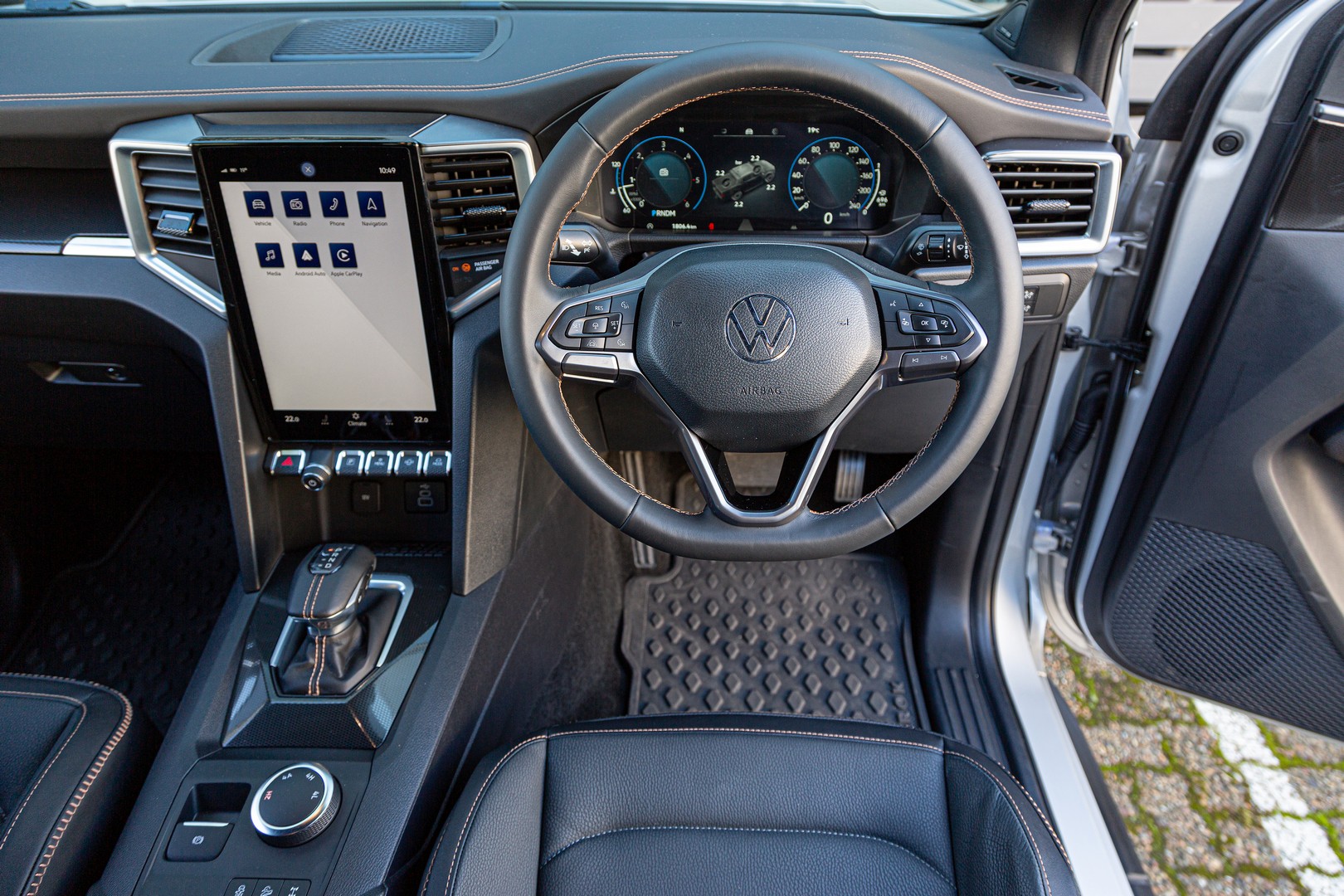
The cabin shares many elements with the Ranger, but it’s arguably the most modern and stylish cockpit in the segment.
Volkswagen SA has priced this Amarok a bit higher than its Blue Oval cousin – the Ford Ranger Wildtrak – and, considering the premium for the German bakkie, buyers expect a lofy standard specification, as well as a more premium feel and -cabin ambience. Fortunately, VWSA has ticked those boxes. While the Aventura grade is geared for luxury-car buyers, the PanAmericana spec is aimed at off-road enthusiasts.
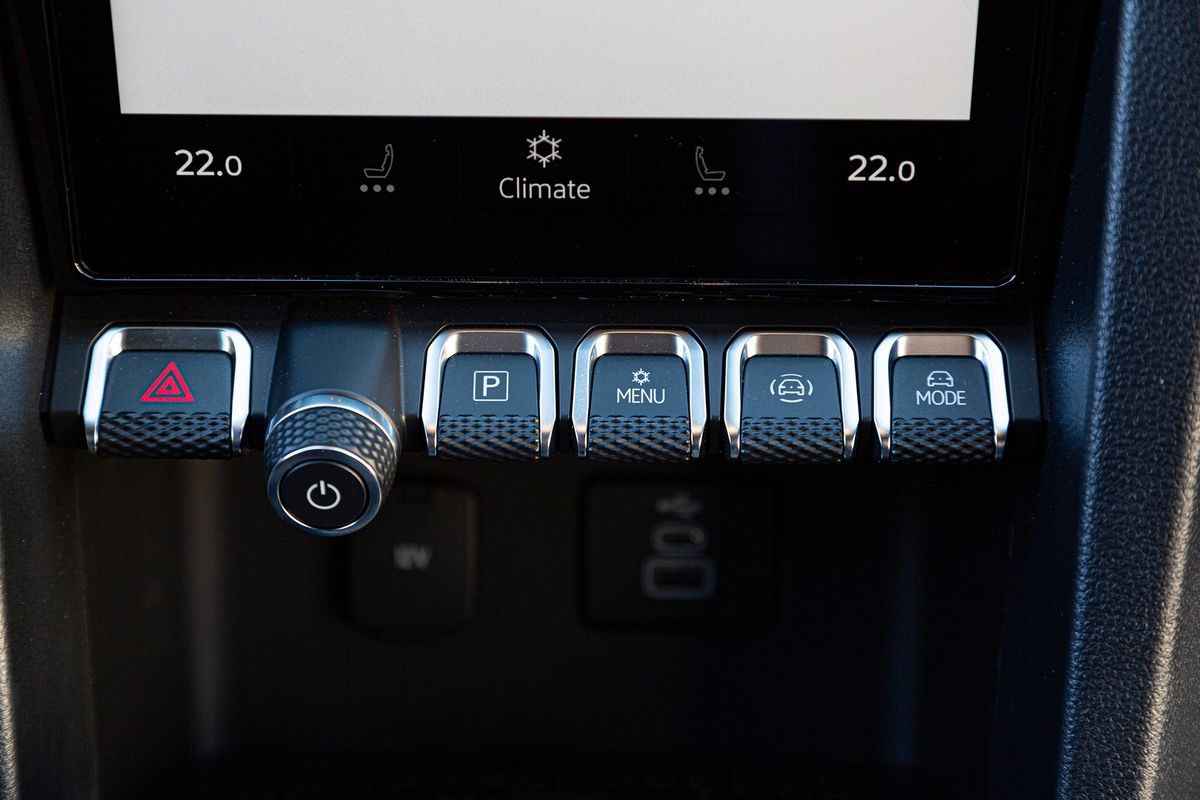
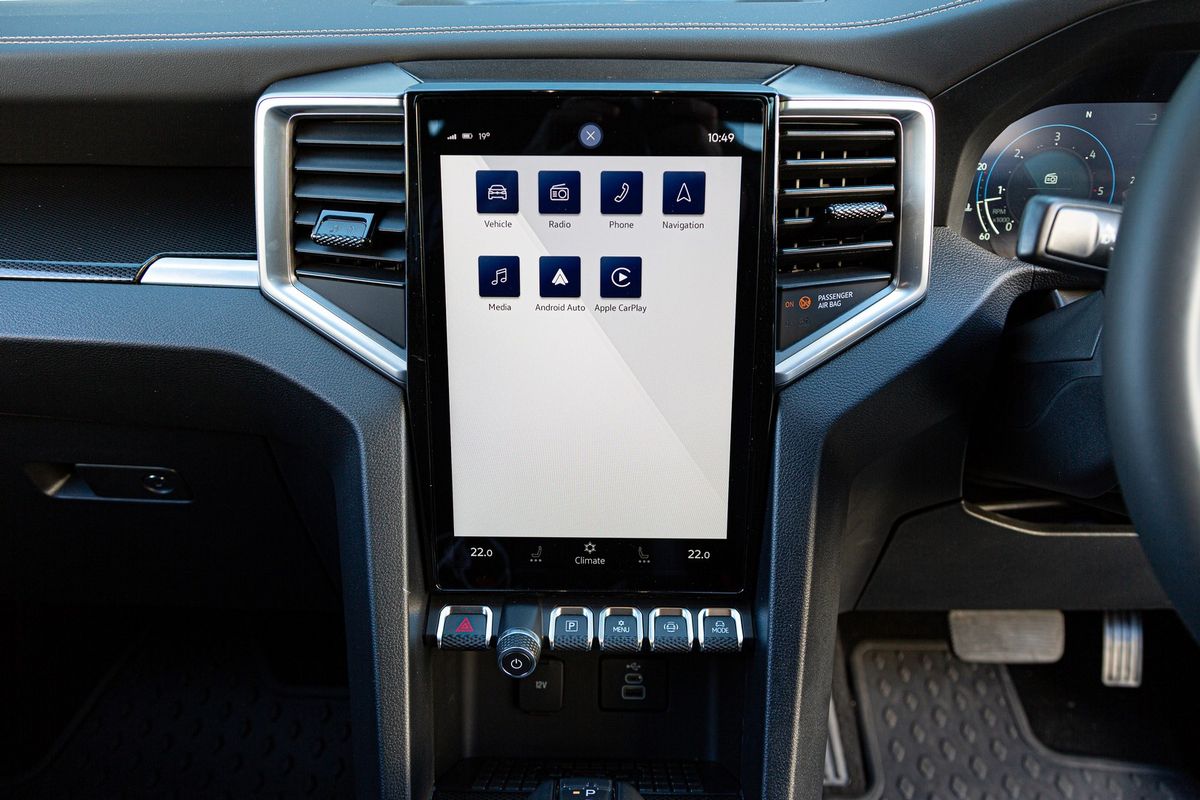
When you climb inside the Volkswagen’s cabin, you’re greeted with a visual feast. One would expect this car-like layout and such upmarket finishes in a plush SUV – not a double-cab bakkie. Highlights include the digital instrument cluster and vertical infotainment touchscreen. It looks like a clone of Ford’s system, but on closer inspection, the ergonomics are a bit different (the Ranger’s fascia has more buttons).
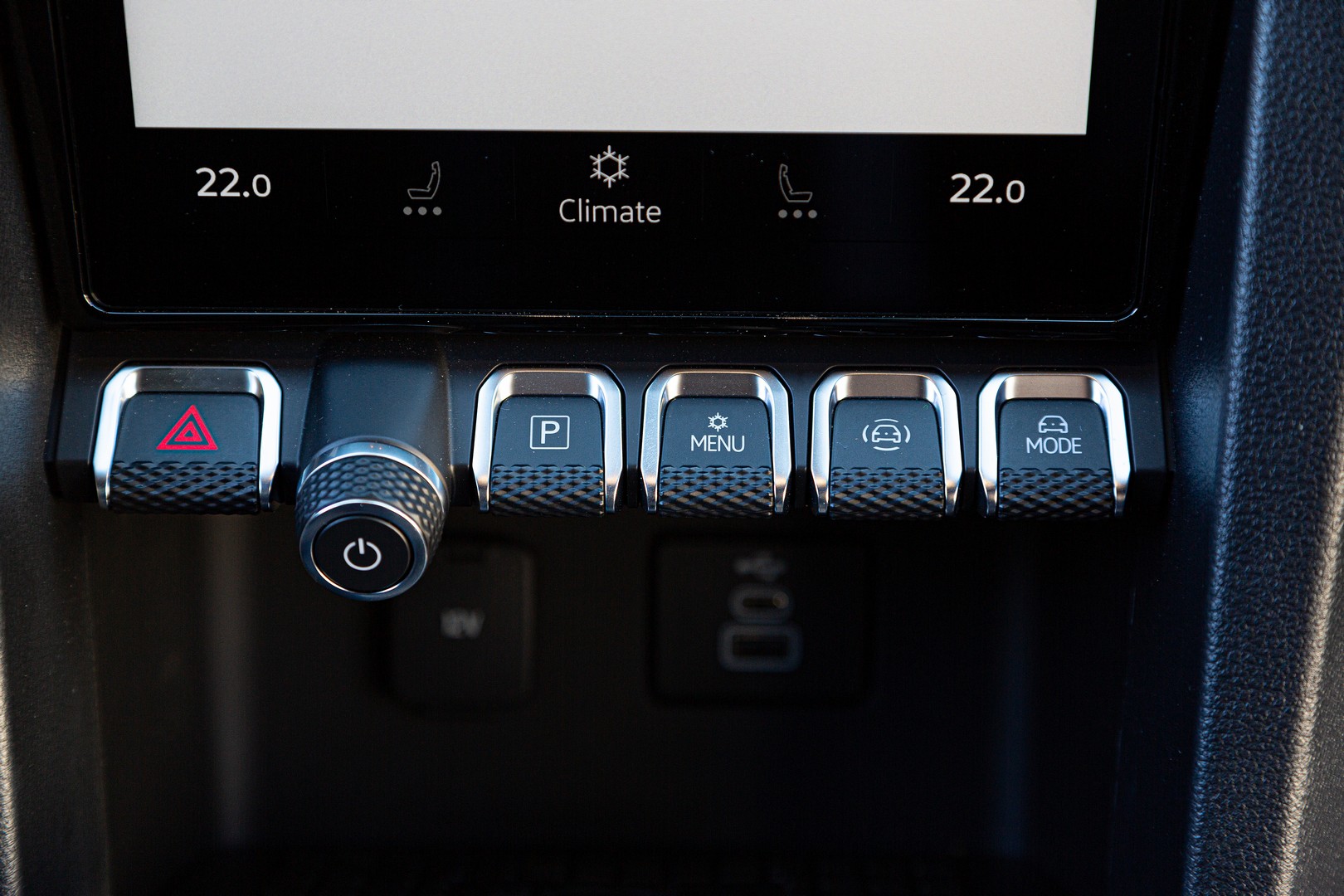
This row of switches is a key differentiator between the Amarok and the Ranger.
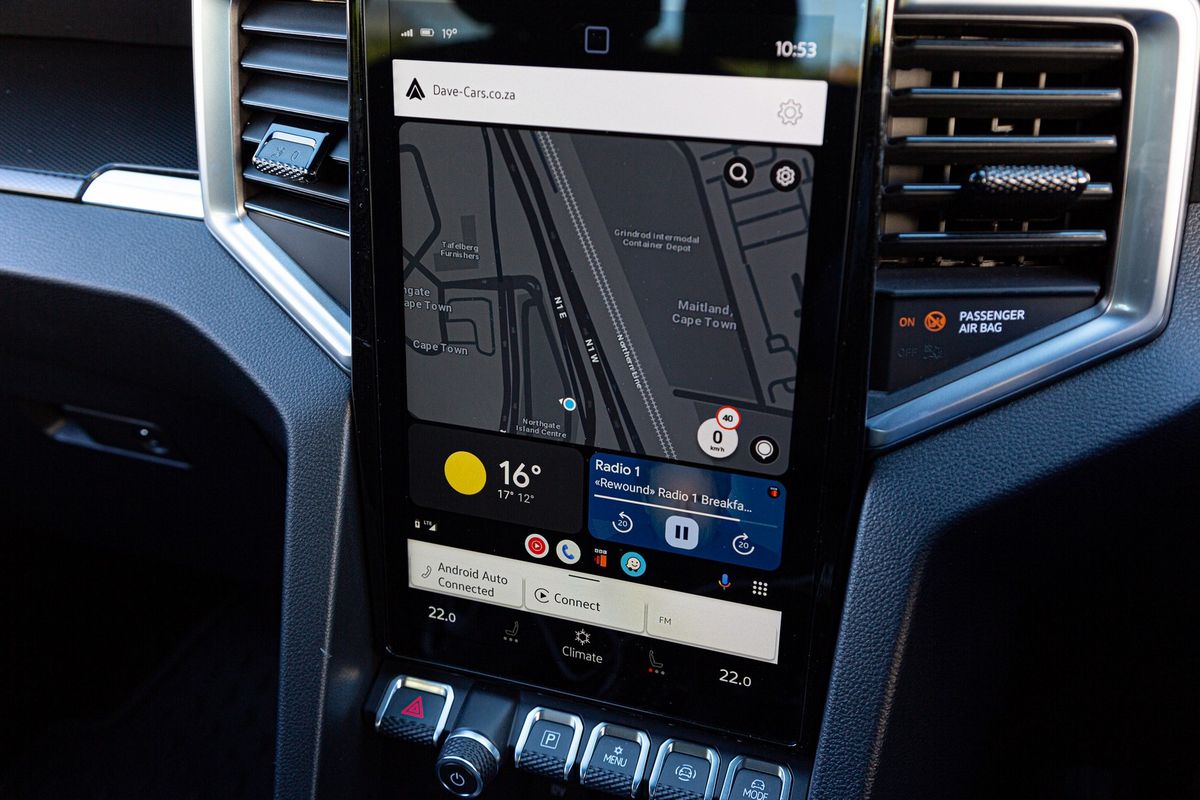
While the portrait-orientated screen and layout does take a bit of time to get used to, it’s impressively advanced. Admittedly its derived from Ford’s SYNC4 system, but Volkswagen has given it its own “skin” and theme. That awkward moment when Ford builds a better infotainment system for a VW than VW…
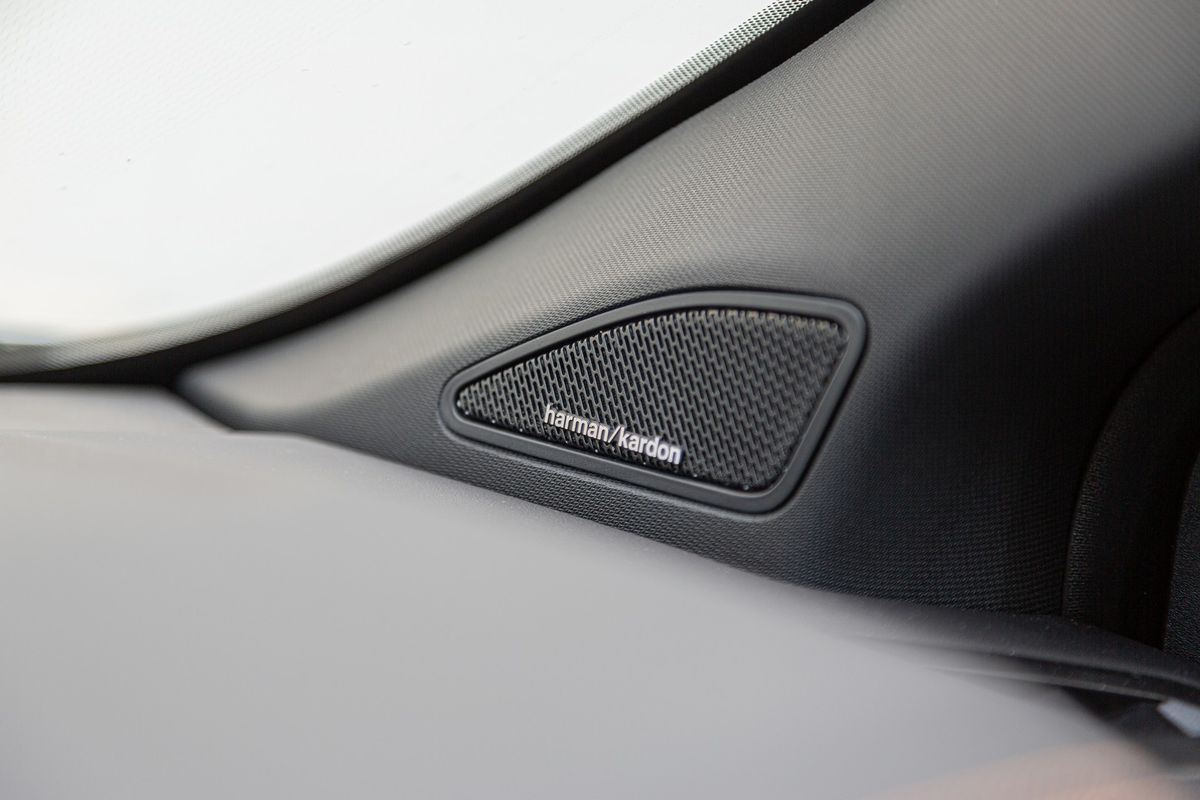
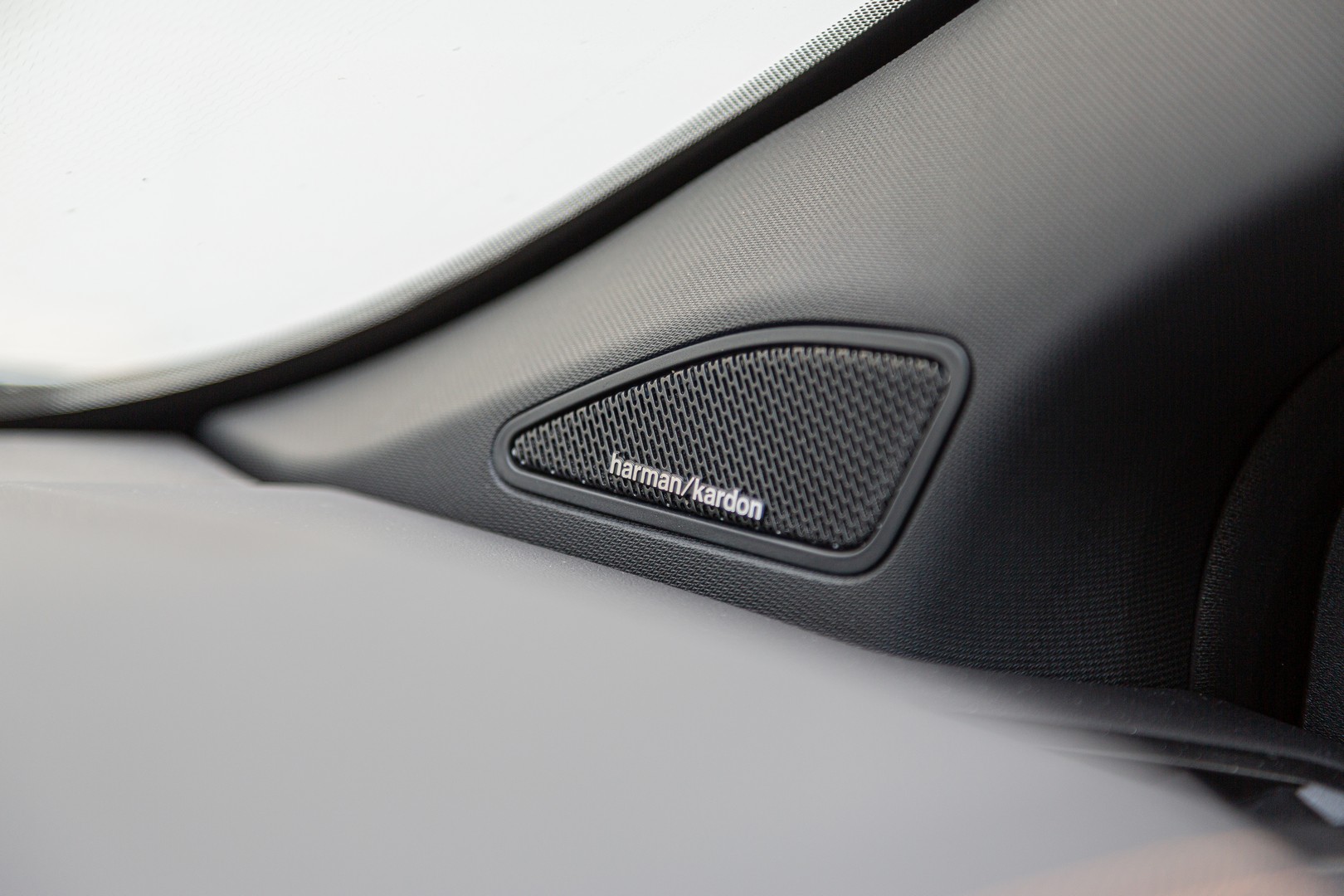
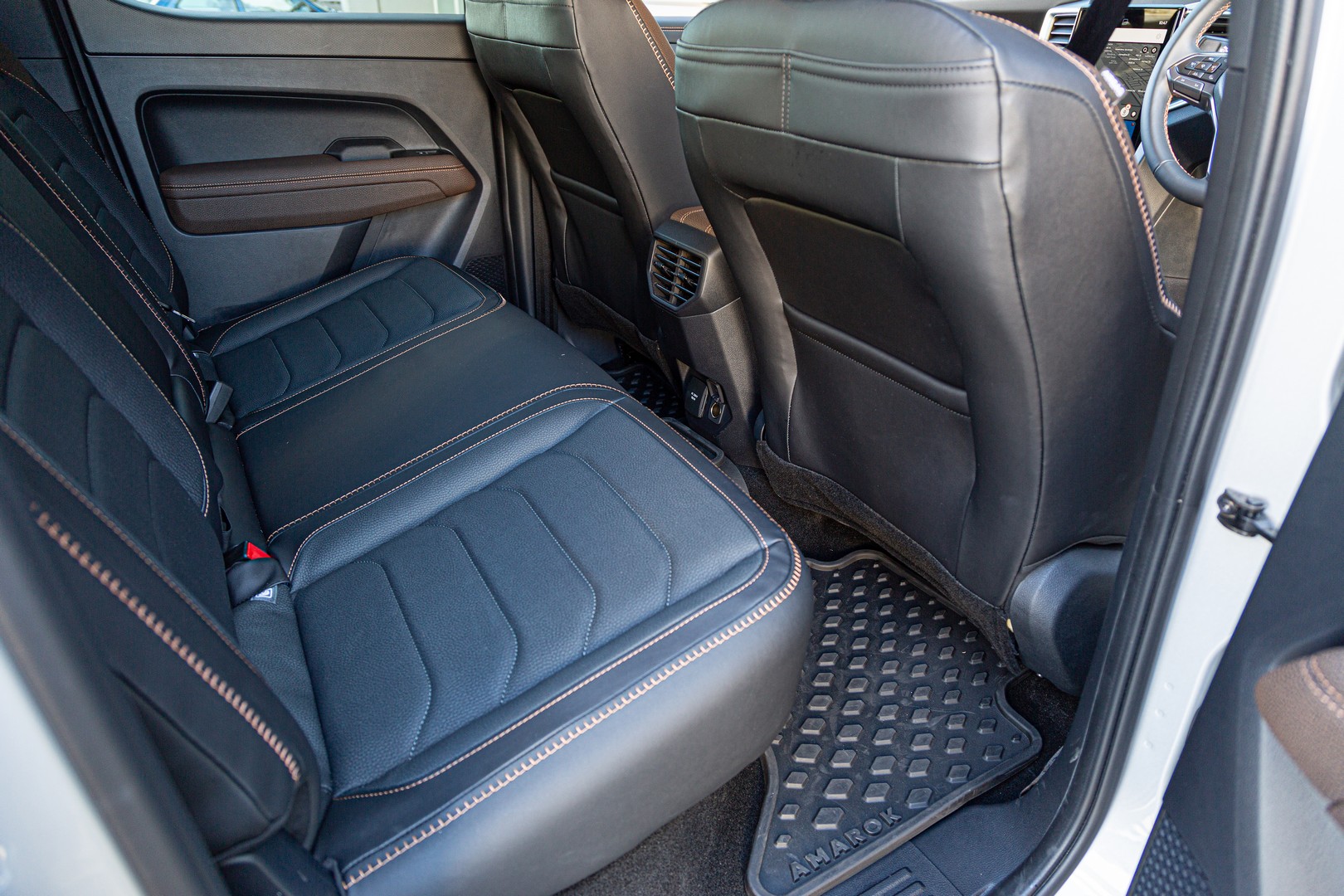
Buyers expect a R1 million-plus bakkie to be nothing short of fully-equipped – and the PanAmericana doesn’t disappoint in that regard. Luxury items include Harman Kardon audio, IQ Matrix headlights, a wireless charging pad, USB-A/USB-C ports, wireless Android Auto/Apple CarPlay and heated leather seats (with 10-way adjustable driver’s seat). There’s even a 230V power outlet for rear passengers.
Harman Kardon audio is a luxury touch.
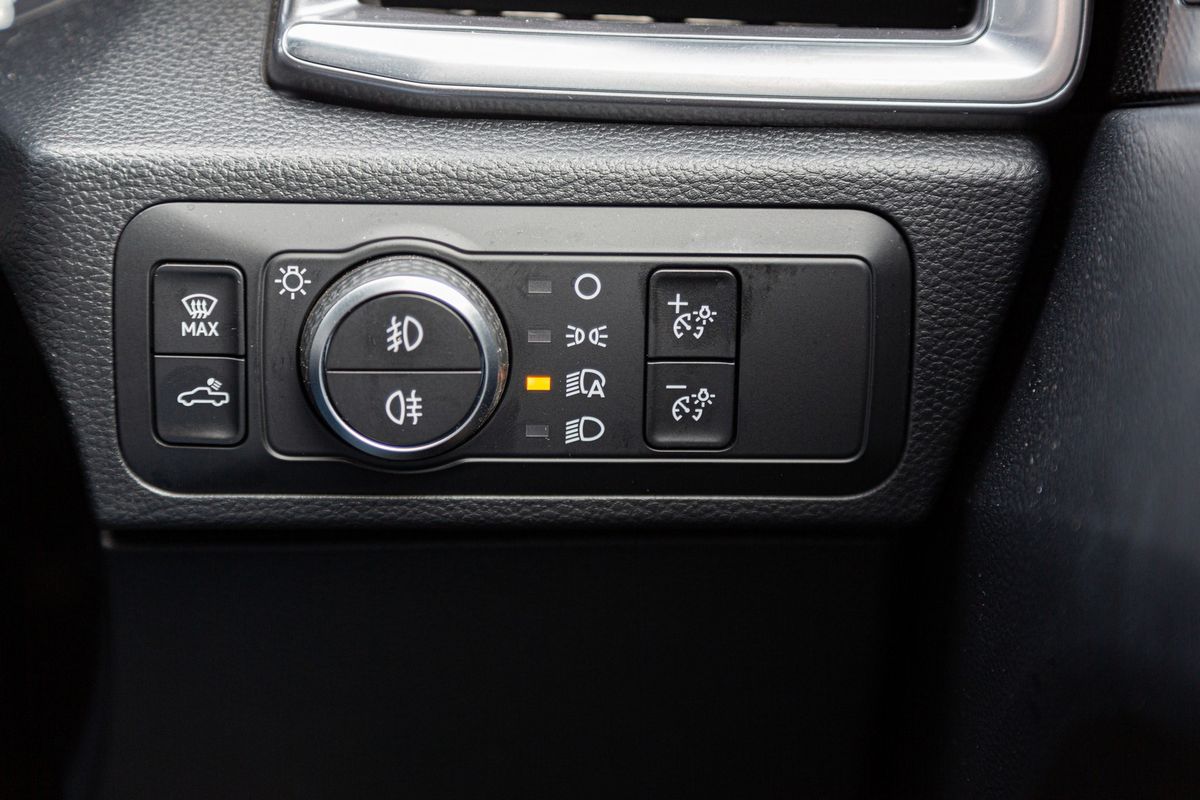
Criticisms? Well, we have some, but they’re only related to the Amarok’s in-cabin user experience. There are no physical climate-control buttons – instead, you have to touch the infotainment screen to bring up the climate menu, then slide your finger along the temperature range to achieve your desired setting.
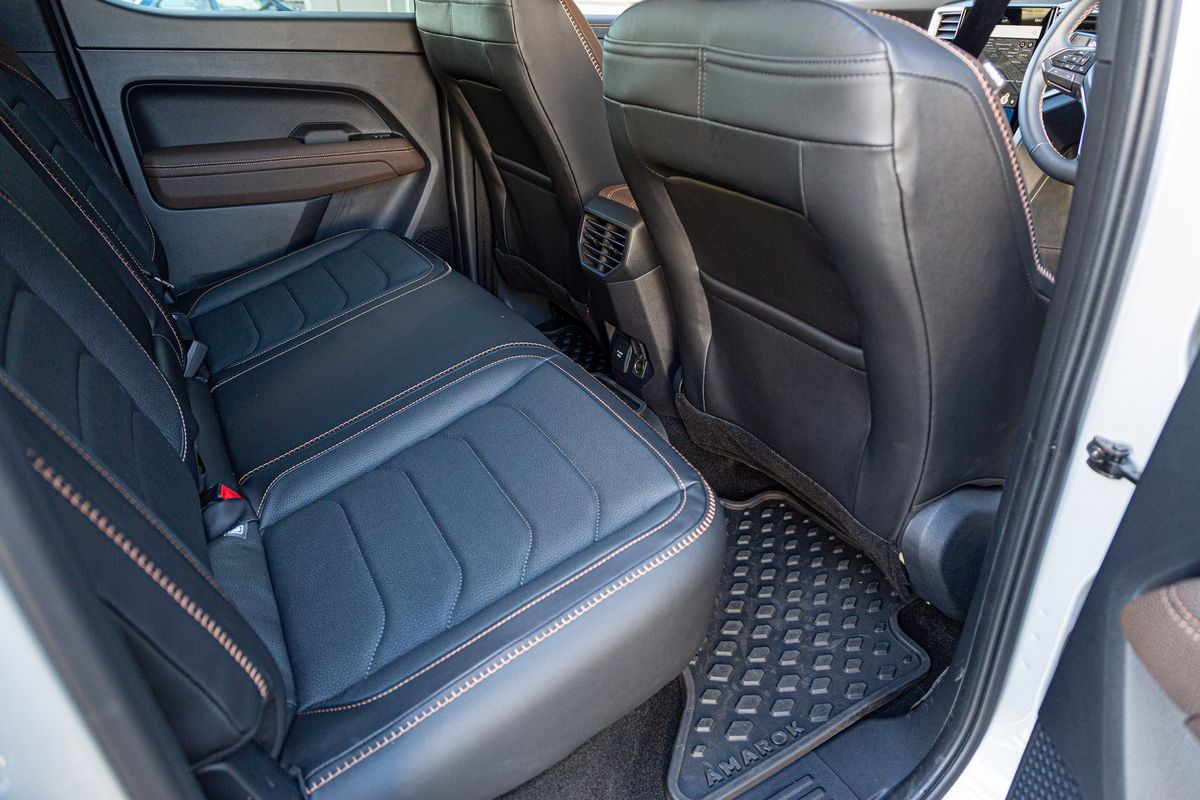
Rear passengers will appreciate the 240V power outlet, which is ideal for charging digital devices.
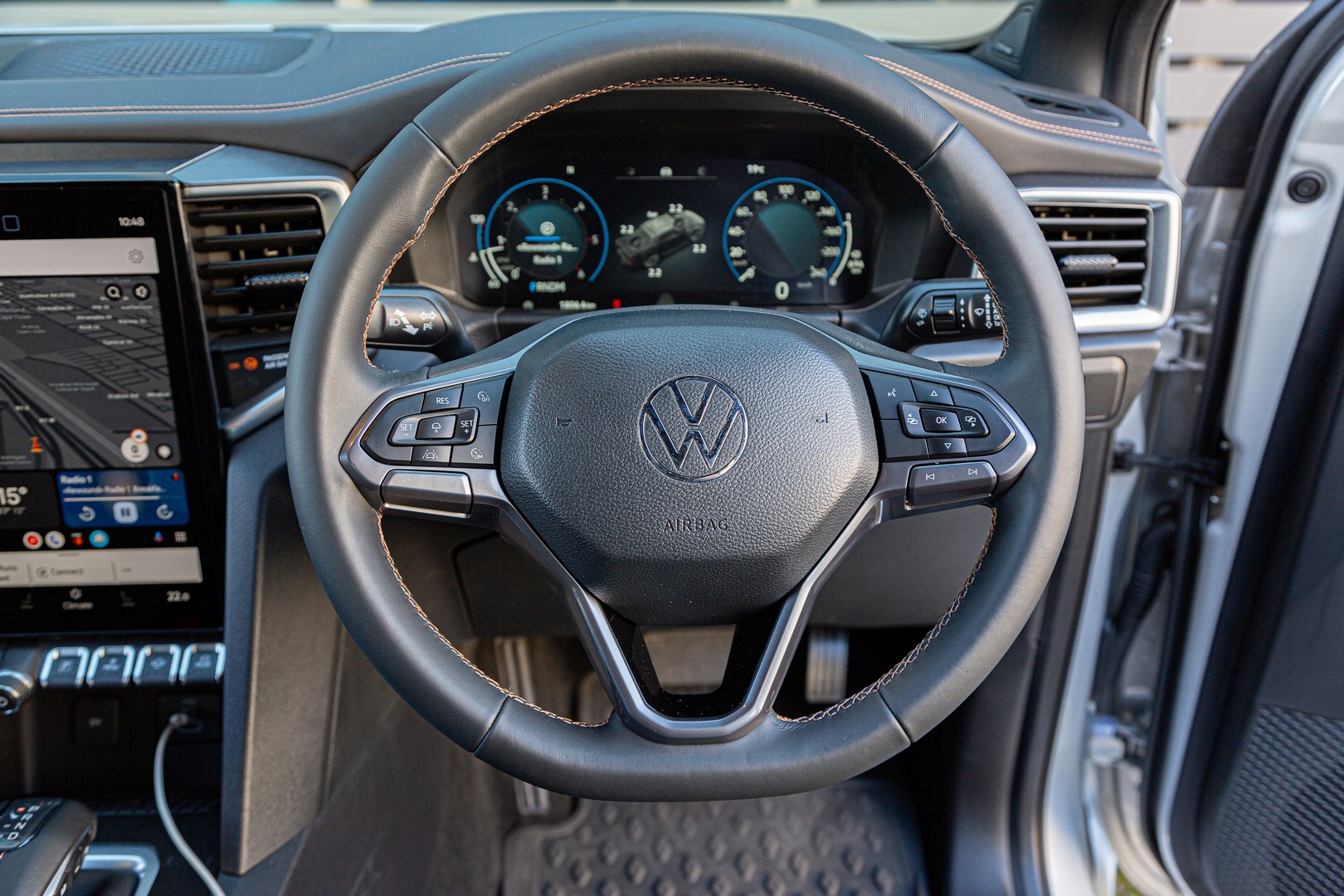
That kind of configuration may distract drivers while they’re at the ‘wheel; perhaps Volkswagen expected users would get into the habit of activating the Amarok’s voice control to request changes to the cabin’s temperature. By contrast, most contemporary VW models feature fiddly capacitive touchpads on their steering wheels, but thankfully the Amarok has old-school buttons. Also, we’ve grown fond of the Ford Pass mobile phone app (remote start, digital key etc), but frustratingly, there’s no Volkswagen equivalent.
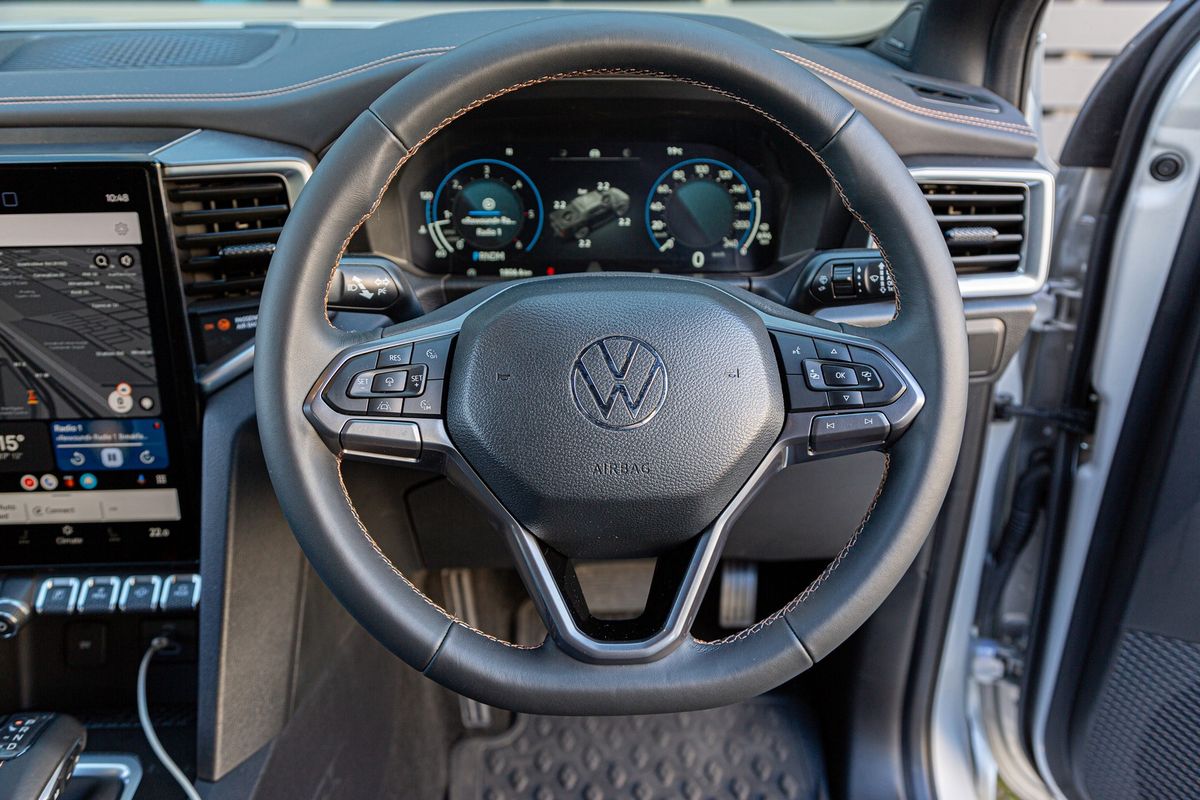
Thankfully, the Amarok’s multifunction steering wheel is devoid of capacitive touchpads – it features conventional buttons.
Ride, handling and safety
The driving experience of the 2023 Volkswagen Amarok is refined, despite the body-on-frame chassis and leaf springs over the rear axle. While the hardware is “off Ford’s shelf”, Volkswagen has tuned the suspension for optimal ride comfort. Granted, the VW’s double-cab bakkie configuration comes to the fore on poorly surfaced roads, but we’d argue the refinement and comfort levels put it above its peers.
Here’s another awkward moment, this time for the Blue Oval – Ford has built a nicer-to-drive Ranger than the Ranger it sells – but, to put it in context, you’re paying a bit extra for the Amarok’s superb comfort.
The Amarok PanAmericana offers plenty in the way of safety tech.
That extra money has clearly been spent on improving refinement, because precious little road- and wind noise intrude into the cabin. Granted, the off-road-oriented tyres tend to rumble, but it’s no dealbreaker.
The pliant ride quality and hushed cabin is complemented by a surprisingly light steering setup that makes the sizeable Amarok fairly easy to manoeuvre in tight parking lots or narrow suburban streets. Some testers did note that they would appreciate a bit more heft the bakkie’s steering feel, however.
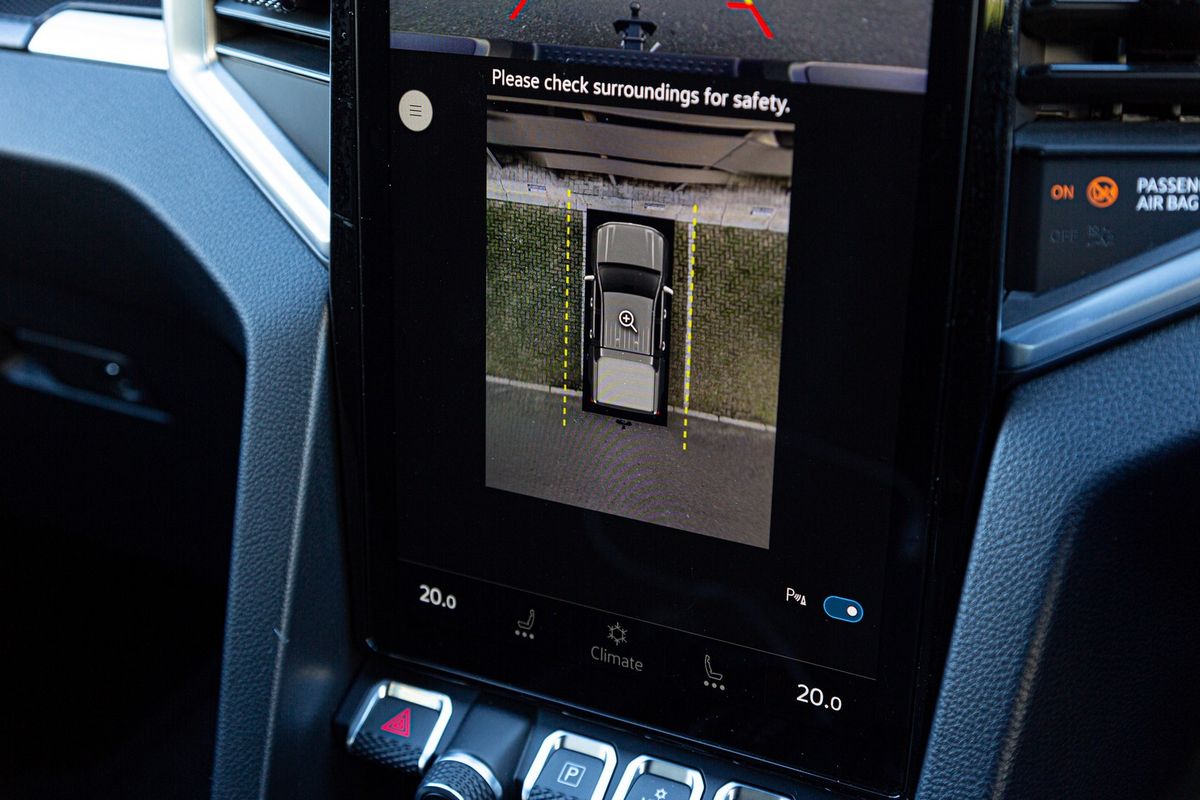
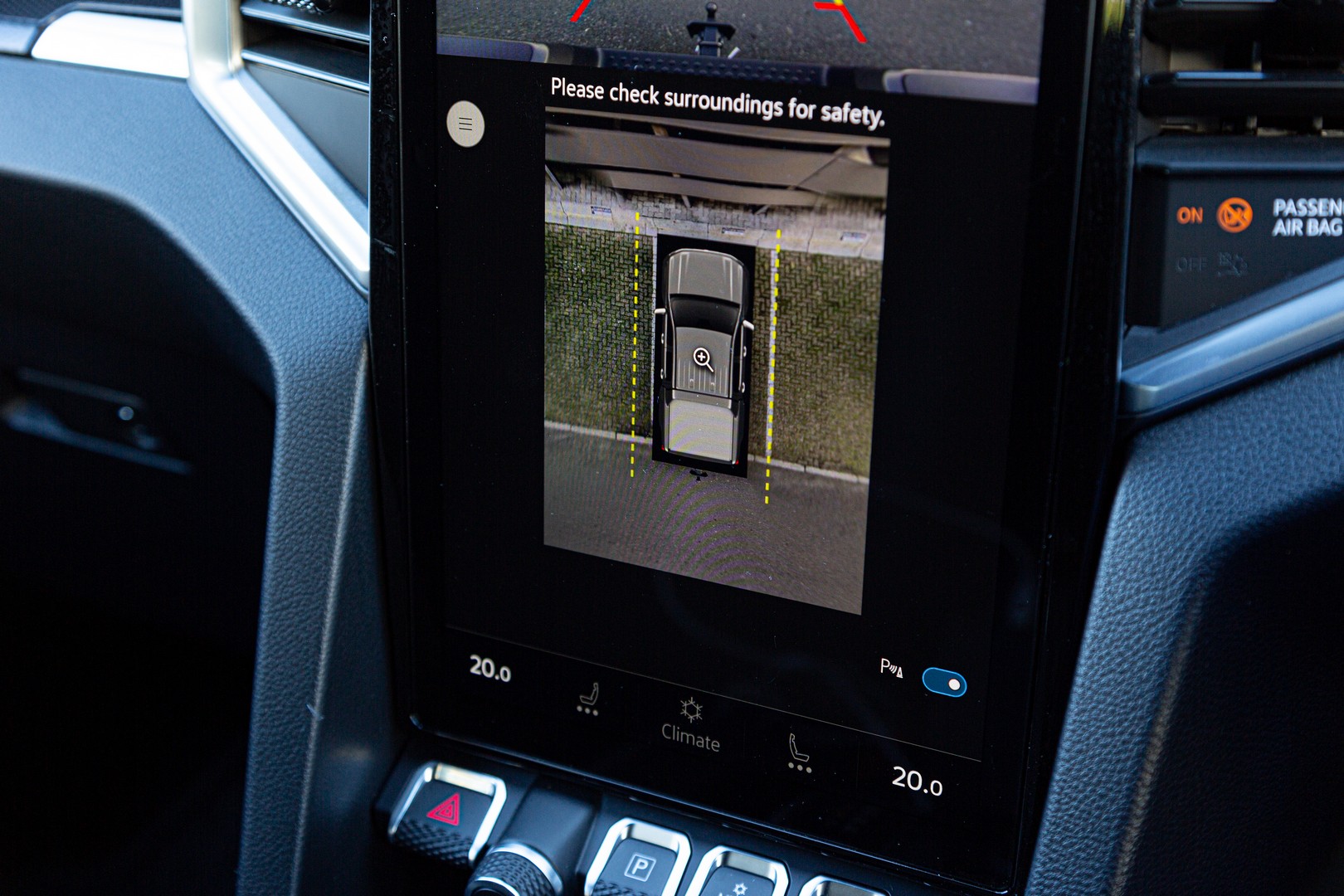
The 360-degree camera view is excellent.
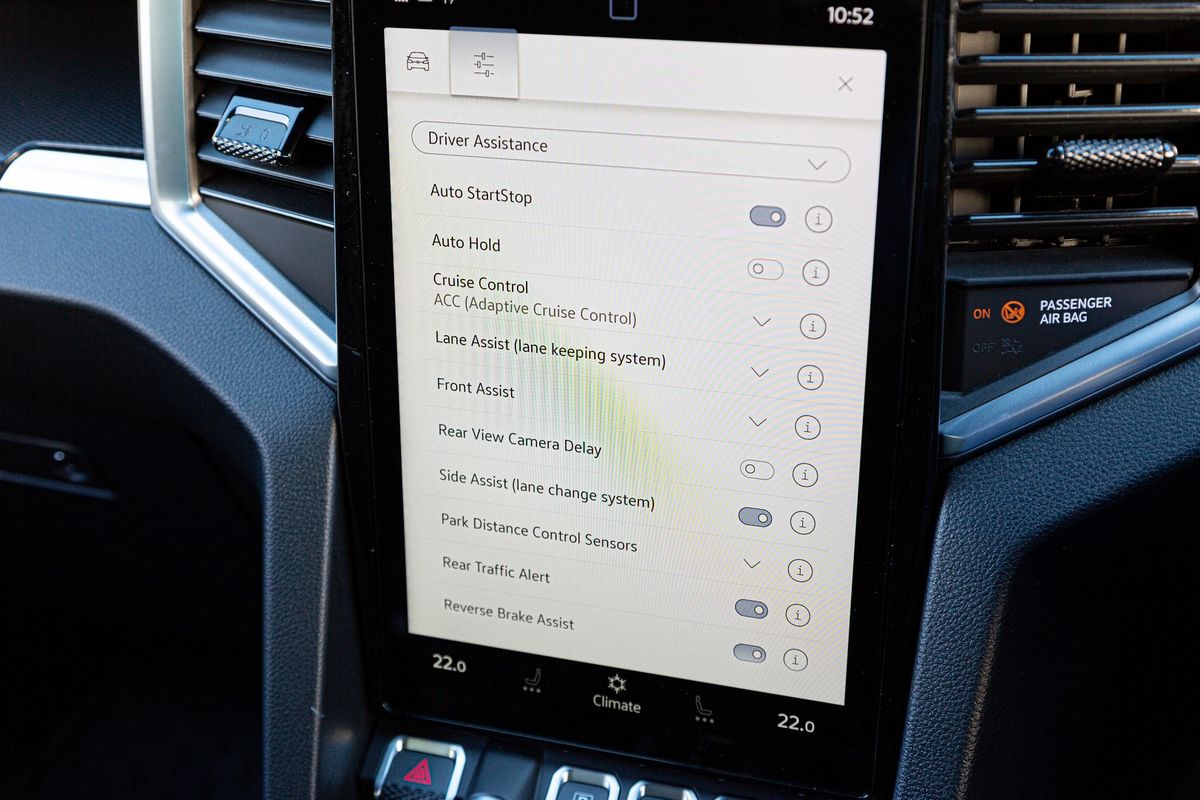
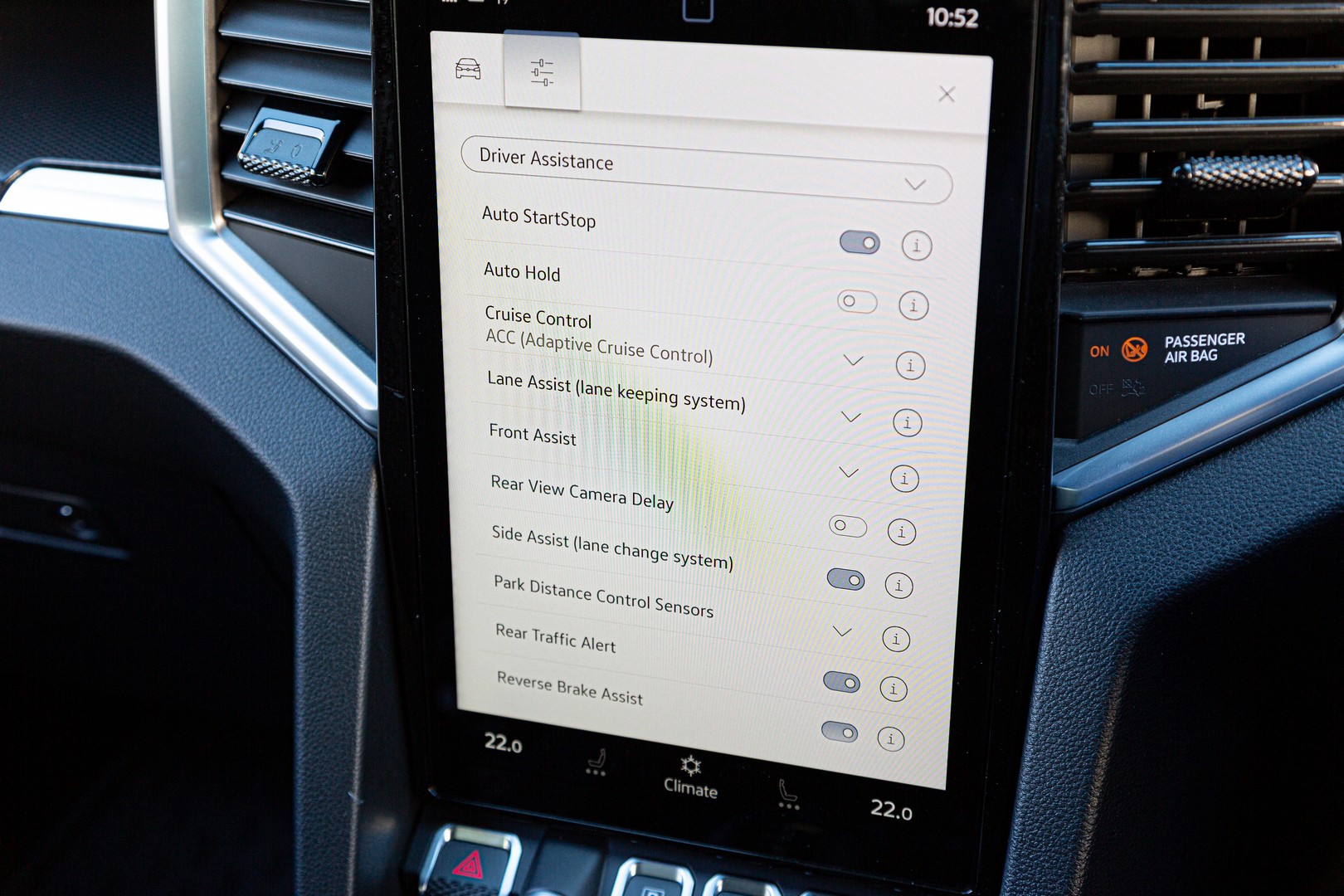
Suffice it to say, the Amarok 3.0TDI V6 double cab PanAmericana 4Motion is equipped with a multitude of safety features. The display of the 360-degree parking camera setup is remarkably clear and the vehicle benefits from tech such as front/rear parking sensors, autonomous emergency braking, adaptive cruise control, blind-spot monitoring, automatic high-beam, tyre-pressure monitoring and rear-cross traffic alert. Apart from ABS with EBD and brake assist, the Volkswagen comes equipped with 7 airbags.
Off-road capabilities
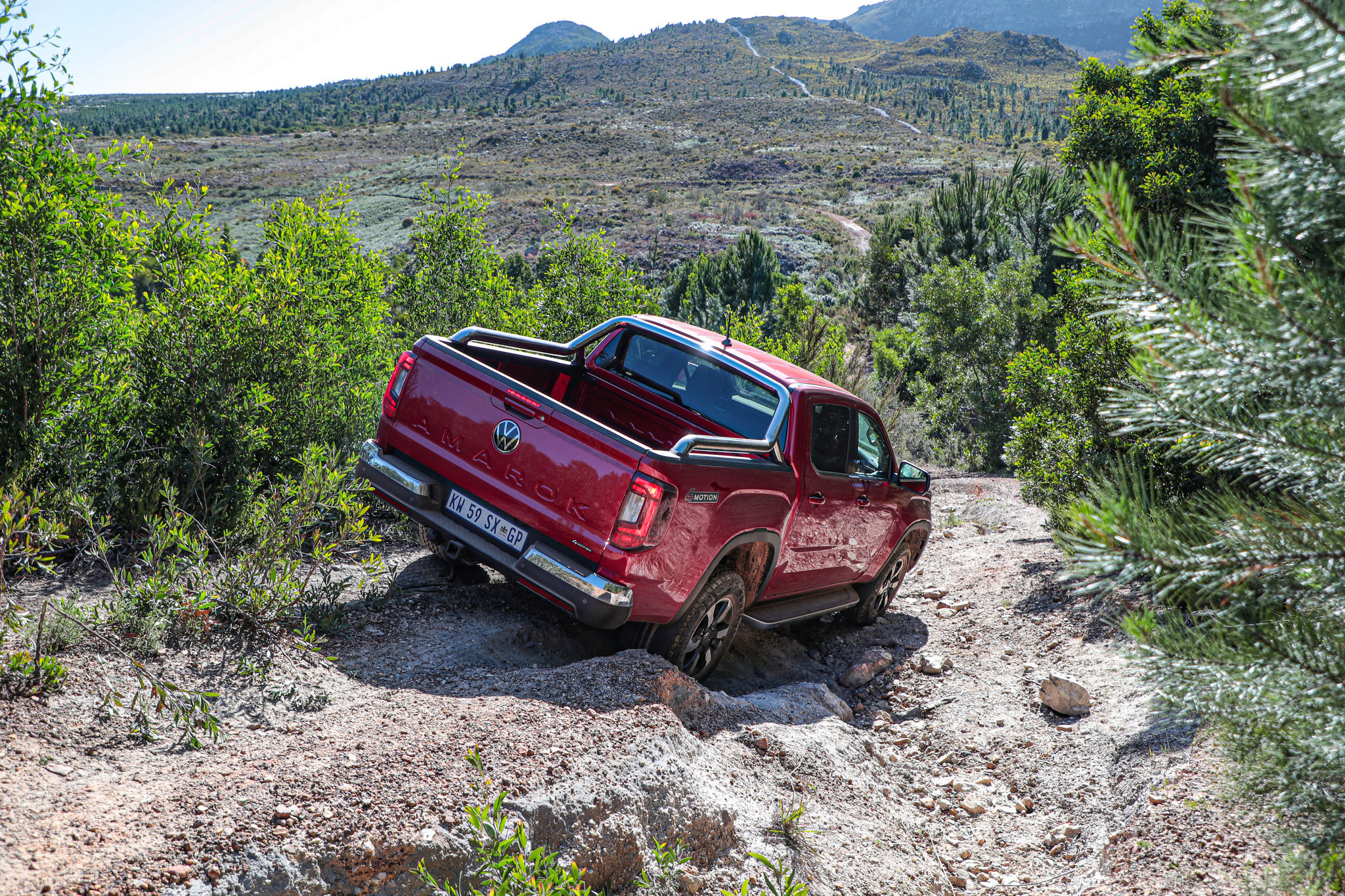
No review of a 4×4 double-cab would be comprehensive without an assessment of the vehicle’s off-road abilities! The PanAmericana-grade Volkswagen Amarok ships standard with an advanced 4-wheel-drive system that offers its driver a variety of drive modes to choose from to suit all kinds of roads and terrain.
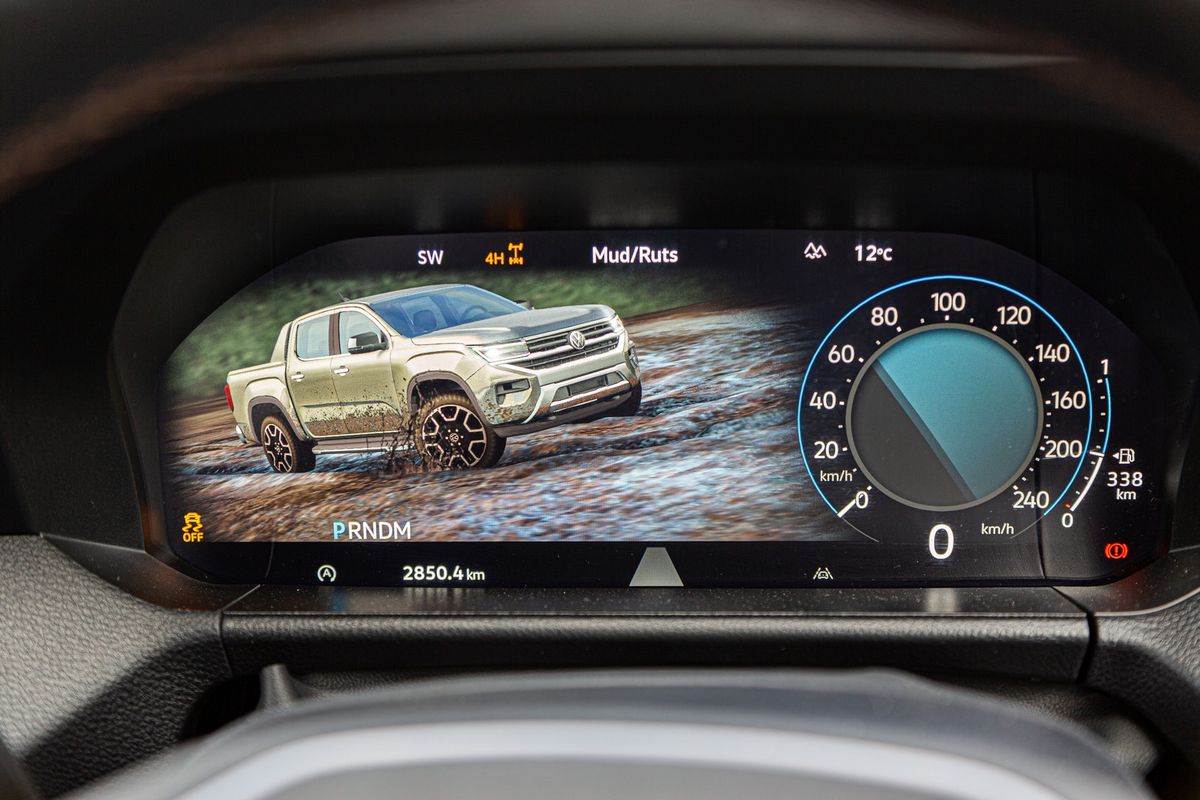
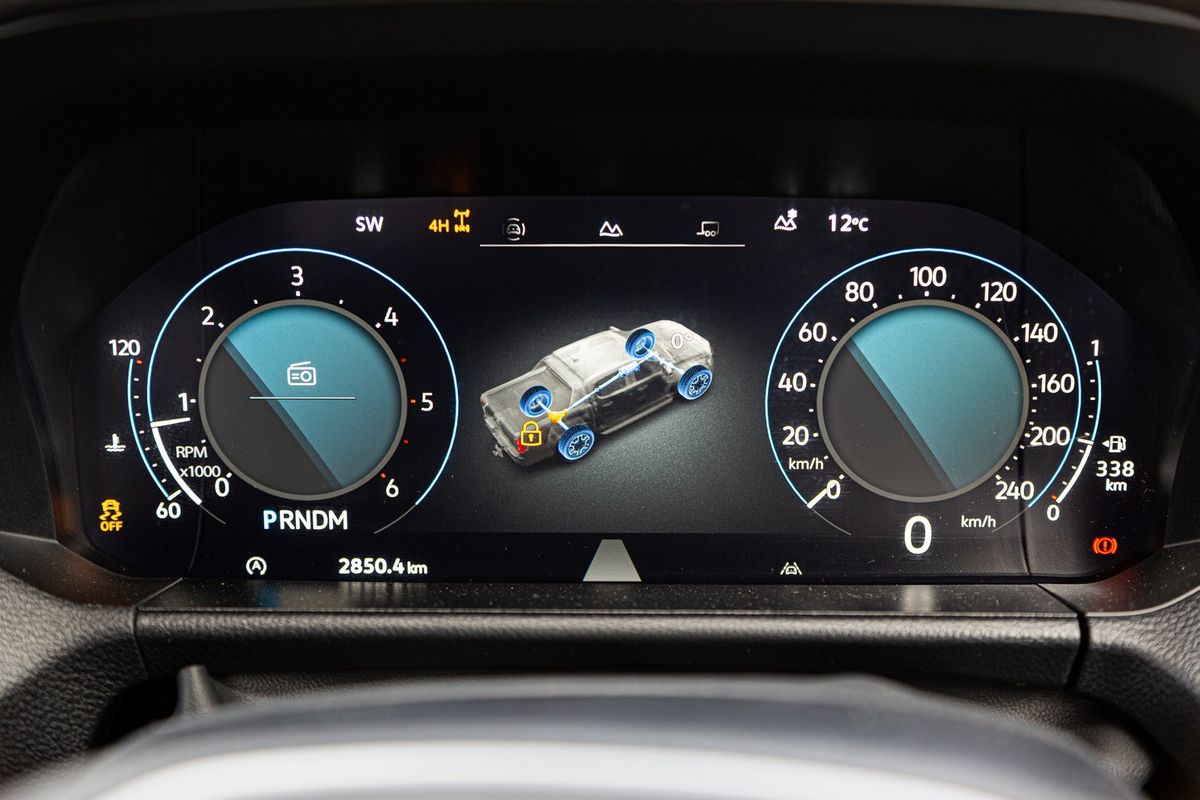
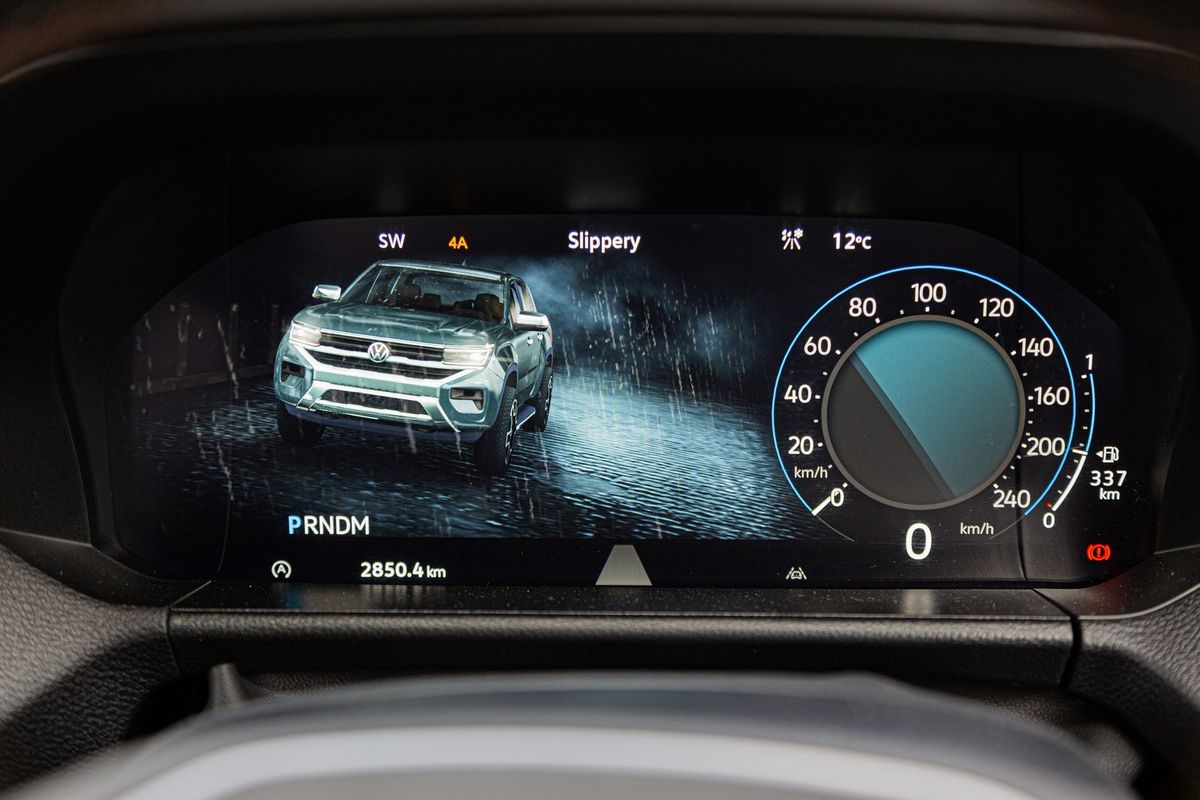
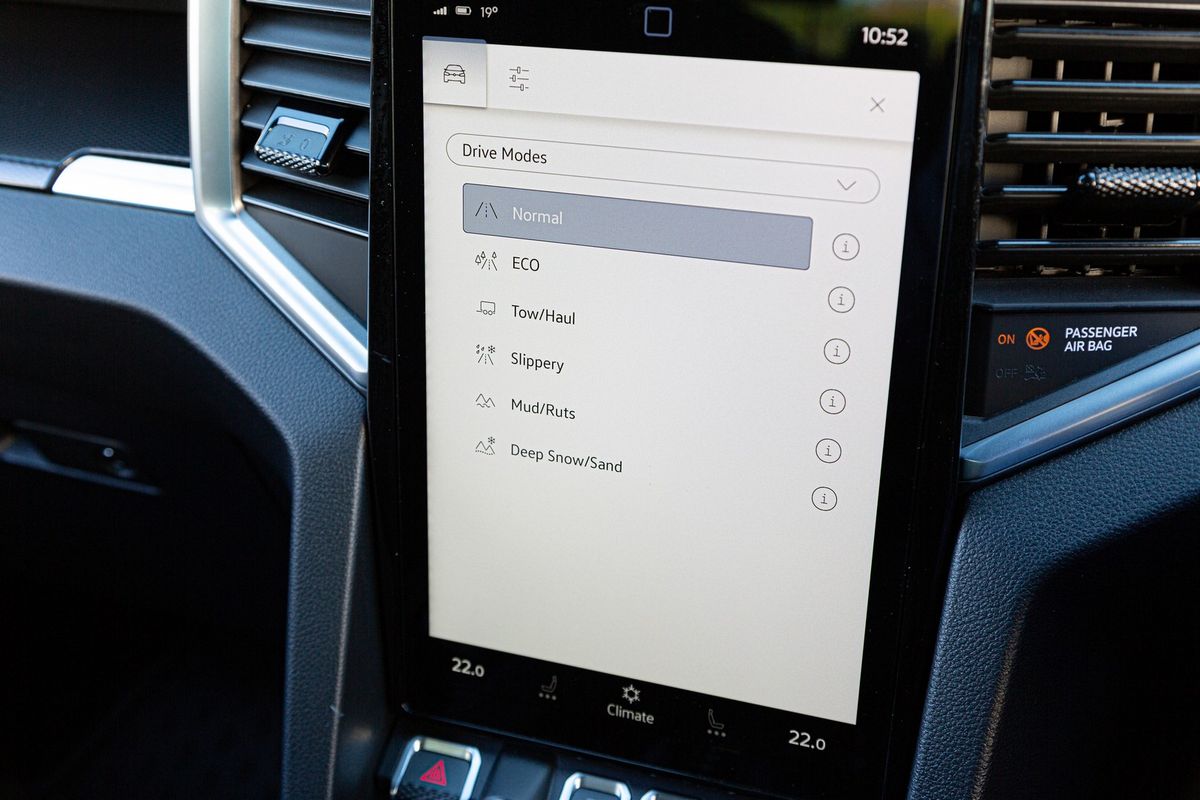
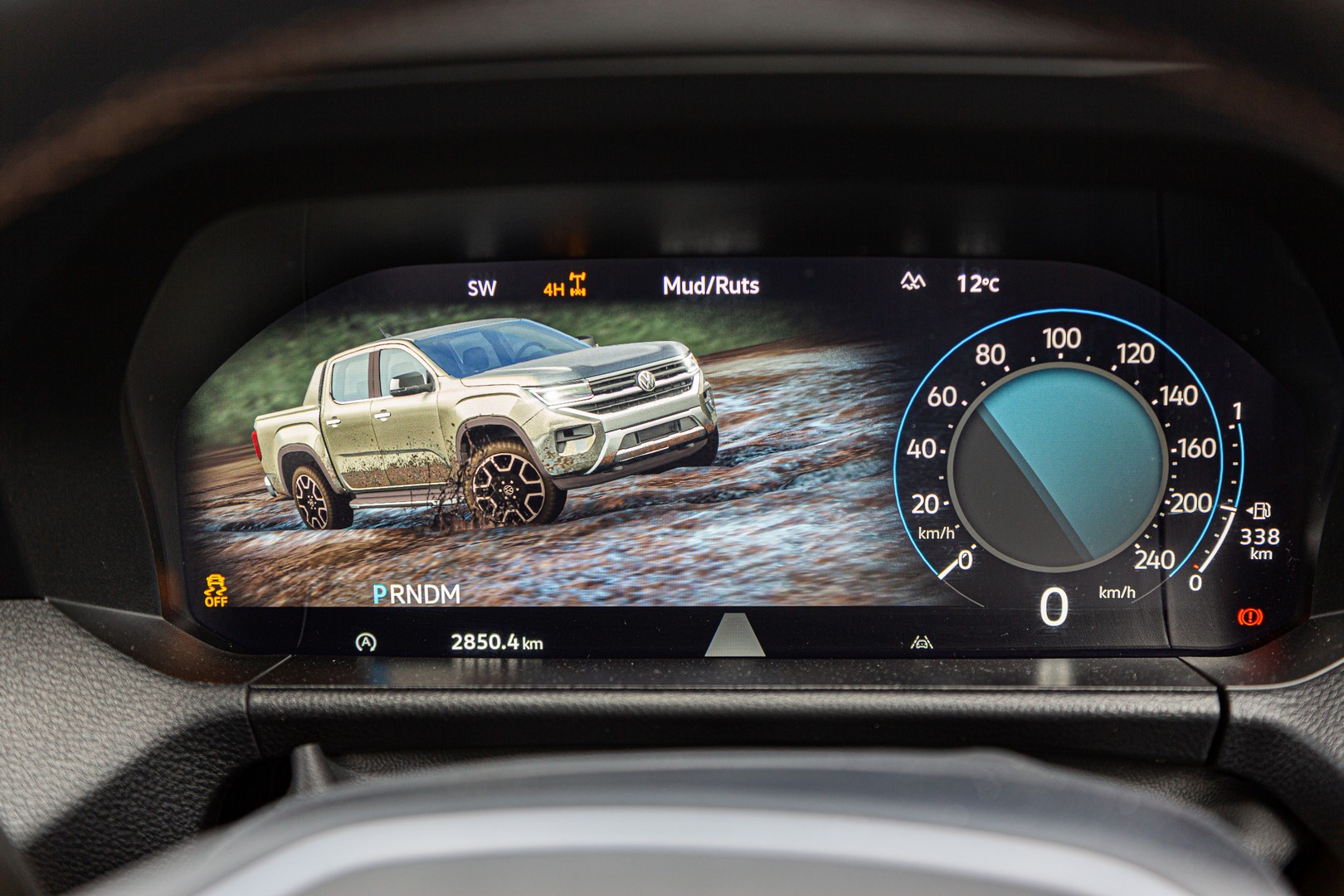
Every mode has an appropriate graphic
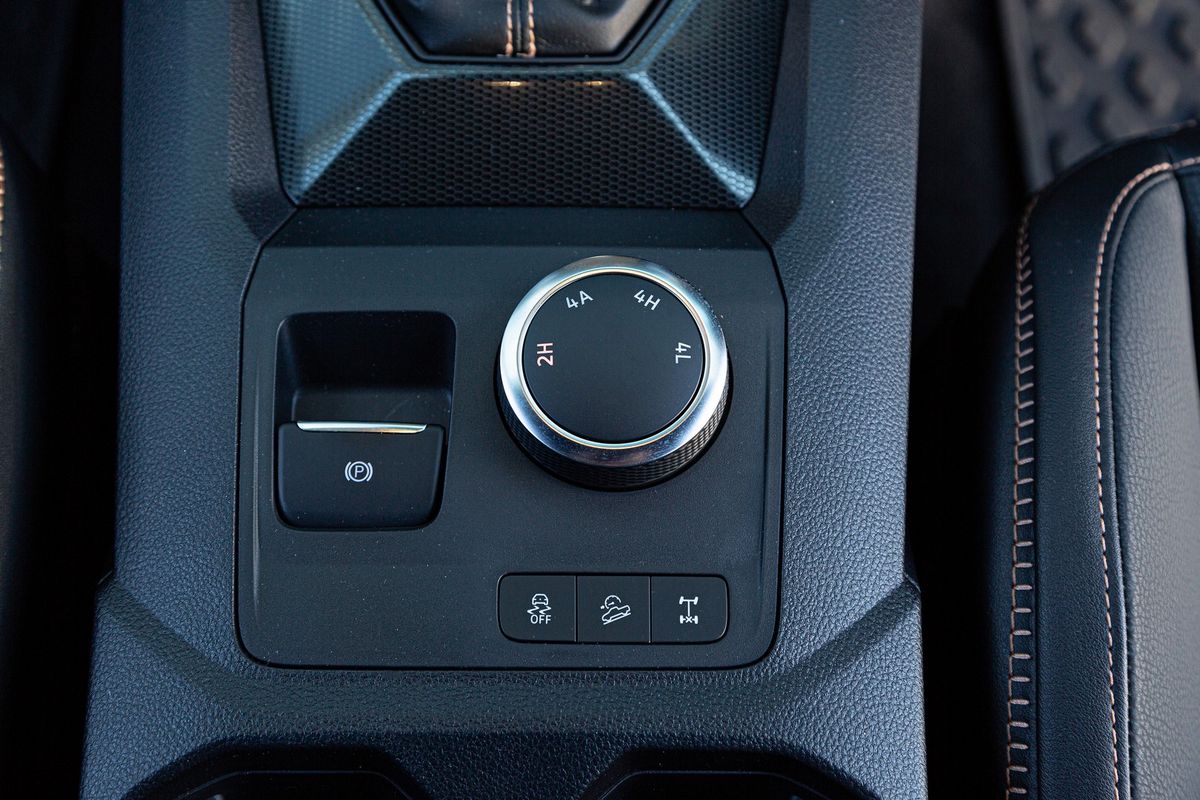
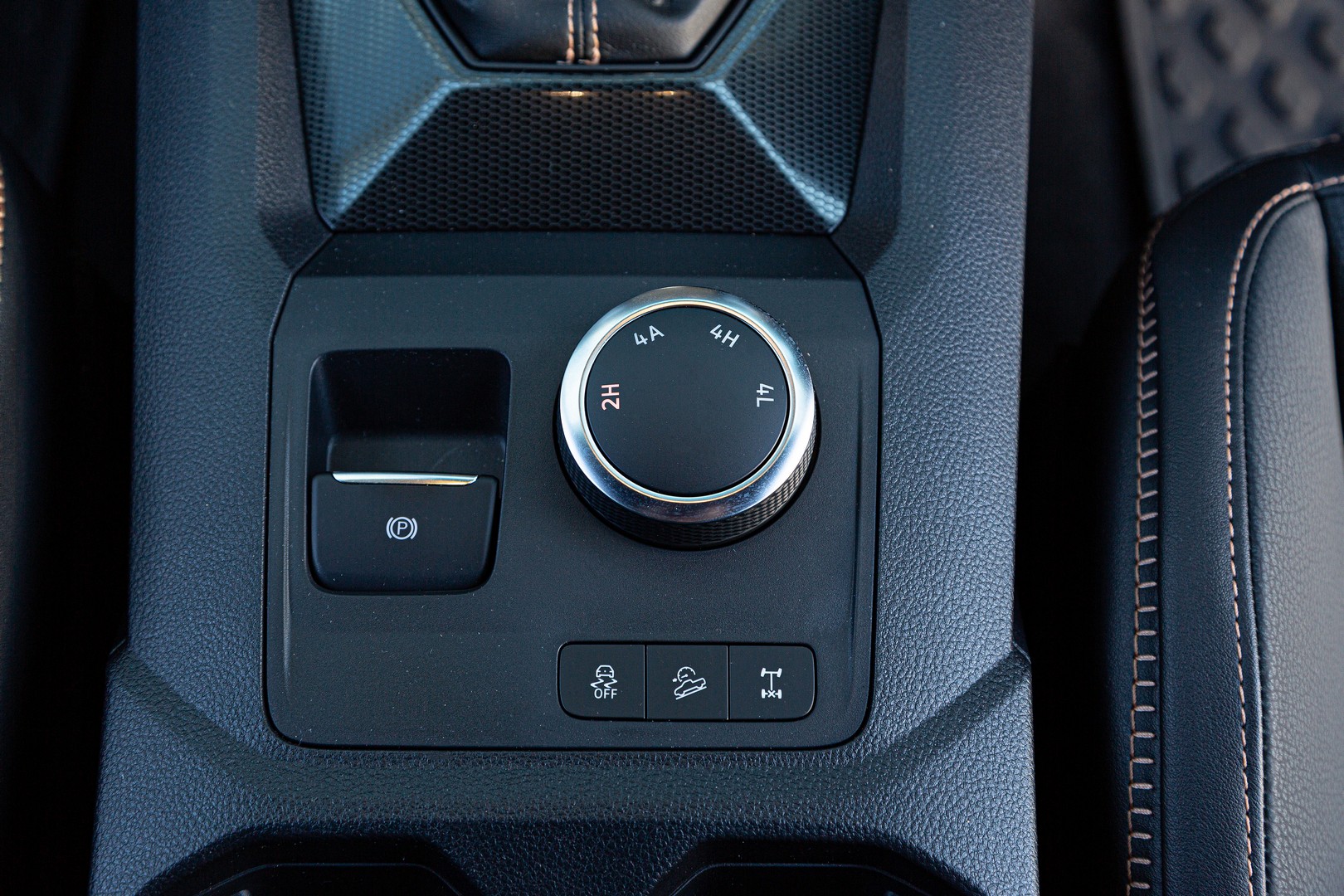
Whereas most drivers are likely to use the 3.0TDI V6 double cab PanAmericana 4Motion’s 2-wheel-drive (2H) by default – certainly when roads are completely dry – the Volkswagen also offers 4-wheel-drive autmomatic (4A), which is ideal when you’re traversing roads that offer varying levels of grip – 4A brings the front axle into action when the vehicle’s sensors detect that one or more wheels are slipping.
Given that heavy rain was lashing the Cape when we tested the VW (making roads water-logged and muddy), 4A was often called into play. Four-wheel drive – in high- and low range – are also available.
4A is very useful in adverse weather
Unsurprisingly, the 2023 Volkswagen Amarok’s off-road-related stats are on par with the best models in the segment; it has a ground clearance of 235 mm, approach/departure angles of 30 and 26 degrees, as well as a wading depth of 800 mm. Apart from an electronically activated rear diff lock, the bakkie offers hill-descent control and an assortment of drive modes, each with their own unique graphics and settings.
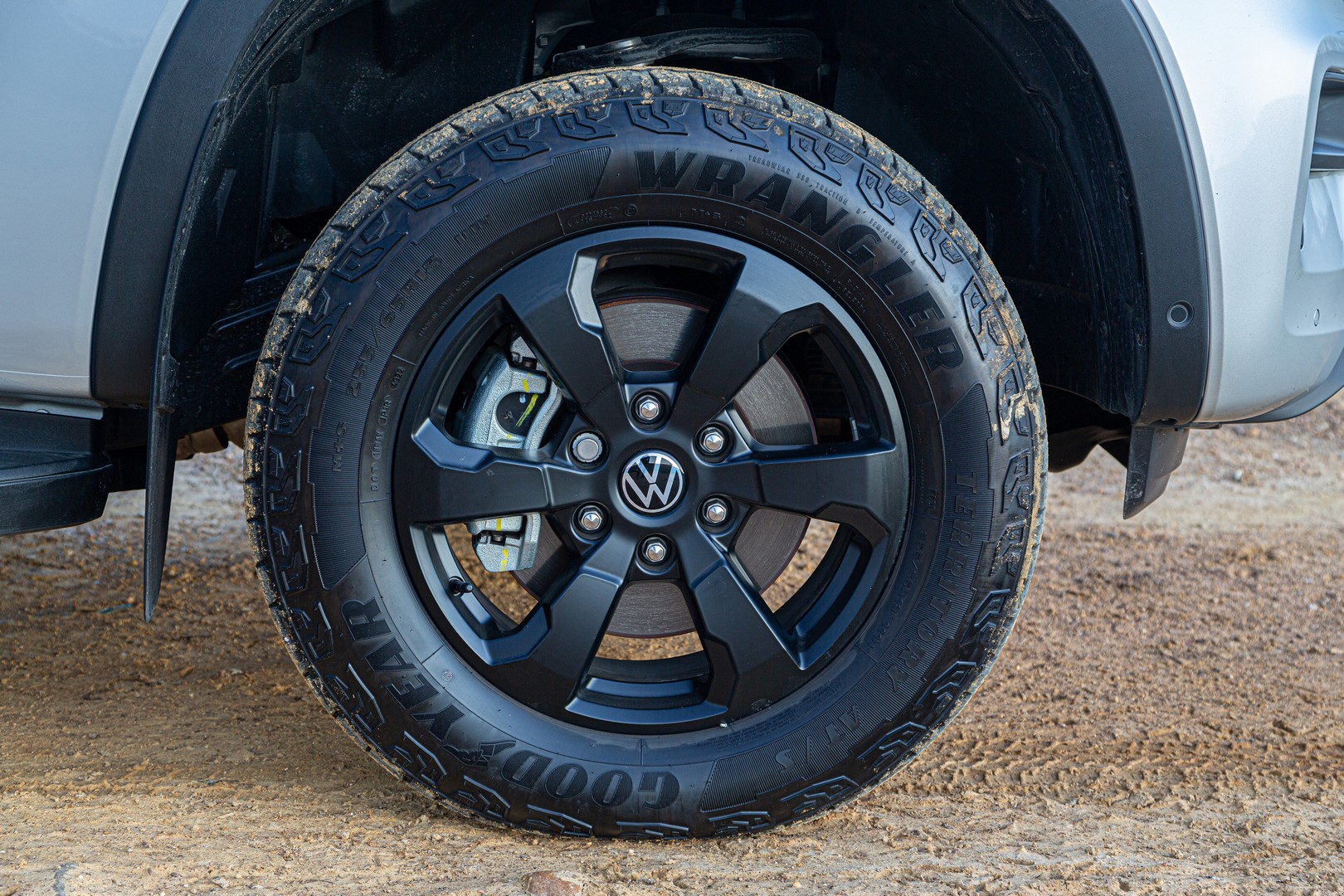
On top of Normal, Eco and Towing drive modes, the latter of which optimises the vehicle’s stability when a user has attached a trailer to the vehicle’s tow bar, Slippery, Snow/Sand and Mud modes are available for trickier off-road conditions. To reiterate, the PanAmericana is the most offroad-focused Amarok derivative and it comes fitted with chunkier Goodyear Wrangler 255/65 R18 tyres as standard.
Off-road tyres make the Amarok more sure-footed in the trickiest off-road conditions.
We have some experience of driving the new Amarok “away from the beaten track”, as they say, (we did some intensive off-roading during the model’s international launch in South Africa), but how would the bakkie fare on wet farm tracks when you don’t utilise fancy drive modes or low-range? We found out!
Amarok on a serious off-road course in December 2022.
When we traversed the muddy, rutted dirt roads with the PanAmericana (with no more than 4A activated), the bakkie impressed with its unflappable composure and high levels of grip (aided by the test unit’s knobbly Wrangler boots). The newcomer made light work of basic off-tar driving, so in the right hands – and with the appropriate mode selected – the Amarok should be very capable off-road.
Elegant and capable, but so is the Ranger Wildtrak…
Price and after-sales support
The Amarok 3.0TDI V6 double cab PanAmericana 4Motion costs R1 084 600 (there are no optional extras), which includes a 4-year/120 000 km warranty, 5-year/100 000 km maintenance plan with 15 000 km service intervals. The range starts from R599 000 and goes up to R1 138 200 for the Aventura.
Verdict
The 2nd-generation Amarok is a big leap forward for the marque and customers are unlikely to be disappointed.
While some purists will be upset that the 2023 Volkswagen Amarok is based on a Ford product, the development of a new bakkie would have cost VW billions in R&D; bear in mind, a double cab is not a core product in the brand’s line-up. On top of that, most European carmakers are phasing out models powered by internal combustion engines, so Volkswagen was unlikely to green-light an all-new vehlicle that it would not be permitted to sell in many countries after 2030 (due to EU emissions regulations).
By utilising the admittedly good bits of Ford’s top-selling bakkie, Volkswagen Commercial has fashioned an upmarket and competent 2nd-gen Amarok. Cleverly, VW and Ford’s product-planning departments have carefully chosen different grades and trims, to avoid stepping on each other’s toes (too much).
Volkswagen has taken some of the best elements from the already-excellent Ford Ranger Wildtrak and incorporated them in a slightly posher Amarok 3.0TDI V6 double cab PanAmericana 4Motion package. The plush look-and-feel of the newcomer’s cabin and aspects such as comfort, smoothness and a quieter, more refined driving experience will win over many fans. But such things come at a premium.
We think the PanAmericana (R1 084 600) and Wildtrak (R996 500, excluding a service/maintenance plan – both prices correct in June 2023) will appeal to slightly different markets; the Volkswagen seems more overtly off-road oriented, but we think it will resonate more with buyers of luxury family cars than its Ford cousin, which may see more action as an outdoor adventurer/workhorse. Make no mistake though, the 2023 Volkswagen Amarok will be more than up to the task – and just as capable as its “rugged” brother.