GWM Shanhai Cannon Looking Likely for SA

The GWM Shanhai Cannon double-cab bakkie is positioned as a bigger and more luxurious offering in comparison to the P-Series … and it’s looking likely to come to South Africa. 

First showcased at the Chengdu Motor Show in 2022, the GWM Shanhai Cannon looks to be the new bakkie flagship for the Chinese carmaker. And, judging by recent comments from a GWM China official at the 2023 Shanghai motor show, it’s likely to come to South Africa.
According to carsales.com.au, a GWM China spokesperson confirmed during a livestream that the Shanhai bakkie would “soon be available [in Australia and South Africa] in the 4th quarter of 2023”. Turns out, however, the spokesperson was making reference to production availability rather than concrete launch dates.

In addition, it’s worth keeping in mind Haval Motors South Africa (which distributes the GWM brand locally) has yet to confirm this model for launch. Still, it’s looking increasingly likely, isn’t it? In addition, the local distributor’s COO hinted to us earlier in 2023 there were indeed plans to expand the bakkie range.
The Shanai Cannon slots in above the P-Series.

So, what separates the Shanhai Cannon from the P-Series? Well, firstly it’s larger and uses a ladder-frame setup that’s near-identical to the one found in the flagship Tank series. 

As far as physical dimensions go, the Shanhai Cannon is 5 400 mm long, 1 991 mm wide and has a height of 1 924 mm. There’s a wheelbase of 3 350 and these figures make it fractionally longer, wider and taller than the current P-Series. The P-Series has a wheelbase of 3 230 mm.
Secondly, there’s not one, not two, but three engines to choose from (in China, anyway). Kicking off the range is a brand-new turbocharged petrol V6 engine producing a punchy 260 kW and 500 Nm, paired to a 9-speed automatic gearbox. There’ll also be a 2.0-litre turbocharged petrol hybrid engine (outputs which are yet to be confirmed) as well as a brand-new 2.4-litre turbocharged 4-cylinder diesel motor, which is said to have 137 kW on tap with no torque figure given. 

It has some cool party tricks, like its tailgate can be opened in the traditional manner as well as open vertically in two halves. Inside, there’s a massive 14.9-inch infotainment touchscreen, 12.3-inch digital instrument cluster for the driver, with both rows of seats gaining heated/ventilated power adjustable seats, upmarket cream leather upholstery, woodgrain inserts and nice gadgets like a wireless smartphone charging pad. 

Want to purchase a new or used GWM vehicle? Browse stock here.

Suzuki Grand Vitara (2023) Price & Specs

The new flagship Suzuki Grand Vitara has arrived in South Africa. Here’s how much you can expect to pay for it and what’s on offer.

The brand-new Suzuki Grand Vitara has gone on sale in South Africa. “The previous-generation Grand Vitara was very popular and had a particularly long life cycle in South Africa thanks to its popularity. The new model is a reinterpretation of the Grand Vitara concept and has been completely redesigned from the ground up, with a focus on style, technology and ride comfort,” says Brendon Carpenter, Brand Marketing Manager of Suzuki Auto.

The newcomer goes on sale from just R339 900. Here’s a look at the pricing and specifications.

Want to buy a new or used Suzuki? Browse units for sale here.

What’s on offer?

The Suzuki Grand Vitara is on sale with a choice of two drivetrain options, three gearbox options and two- and four-wheel drive. The new model sees the debut of a mild-hybrid petrol-electric powertrain from Suzuki.

As a reminder, the new Suzuki Grand Vitara is a product of the partnership between it and Toyota, and is built at the Toyota facility in Kirloskar, India. Customers will have 8 colours to choose from as well as some two-tone options.

There are two versions of the Suzuki K15 engine offered in the Grand Vitara. The K15b is a naturally-aspirated 1.5-litre 4-cylinder engine with 77 kW and 138 Nm.

The second is the K15C which features an always-on mild hybrid system and has outputs of 75.8 kW and 136.8 Nm. The integrated starter generator assists the engine with additional power under heavy acceleration and along with start/stop, is said to reduce fuel consumption. Suzuki reckons the hybrid-equipped Grand Vitara is good for 5.6 L/100 km while its non-hybrid sibling manages 6 L/100 km.

As far as gearboxes are concerned, the Grand Vitara is offered with a 5-speed manual gearbox or 4-speed automatic for the 2-wheel-drive non-hybrid models, while the mild-hybrid model has a 6-speed automatic transmission with switchable all-wheel drive.

This is the 6th-gen version of Suzuki’s AllGrip system and combined with 210 mm of ground clearance, the Grand Vitara should be capable on the rough stuff.

Trim Levels

GL

  • 17-inch painted alloy wheels
  • Roof rails
  • 7-inch digital display
  • Reverse camera
  • Keyless access
  • Keyless start/stop
  • Electric windows
  • Wireless Apple CarPlay / wired Android Auto
  • Automatic climate control
  • Cruise control
  • Leather-wrapped steering wheel with audio/cruise functionality
  • Rear parking sensors

GLX (the above content, plus:)

  • 17-inch machined-polished alloy wheels
  • Silver roof rails
  • Privacy glass on the rear doors
  • 9-inch digital display
  • Panoramic parking camera
  • Heads up display
  • Leatherette interior
  • Wireless charging tray
  • Ambient lighting
  • Additional USB charging ports for rear passengers
  • Panoramic sunroof
  • Additional audio speakers

When it comes to safety, the Grand Vitara has six airbags as standard, electronic stability control, anti-lock brakes and hill hold assist.

Suzuki Grand Vitara interior

How much does the Suzuki Grand Vitara cost in South Africa?

The Suzuki Grand Vitara is sold with a 5 year / 200 000 km promotional warranty plan and a
6 year / 90 000 km service plan with intervals once every twelve months or every 15 000 km, whichever comes first.

Grand Vitara 1.5 GL 5MTR339 900
Grand Vitara 1.5 GL 4ATR359 900
Grand Vitara 1.5 GLX 5MTR397 900
Grand Vitara 1.5 GLX 4ATR417 900
Grand Vitara 1.5 GLX 6AT Hybrid AllGripR529 900

Want to buy a new or used Suzuki? Browse units for sale here.

Why you won’t see VW hybrids in SA before 2027

Volkswagen South Africa says though it is “discussing” hybrids, we won’t see any VW-badged examples on local roads before at least 2027. Here’s why…

The head of Volkswagen Group South Africa has revealed though the firm continues to “discuss” hybrids, VW-badged vehicles such equipped won’t be seen on local roads before at least 2027.

Martina Biene, chairperson and managing director of Volkswagen Group South Africa, made the comments during an exclusive podcast interview with Cars.co.za video journalist, Ciro De Siena.

So, why the long wait for hybrid vehicles, considering VW already offers a number in some other markets? Well, Biene – who also served as head of the Volkswagen passenger brand in SA from October 2018 until August 2020, before moving back to Germany for a short stint – suggested South Africa’s fuel quality was to blame.

The VW Golf 8 GTE offered in Europe is a plug-in hybrid boasting a GTI-matching 180 kW.

“To bridge a bit to EVs, we are discussing hybrid technology,” she confirmed, emphasising should such models be offered in South Africa they would not be locally produced but rather fully imported.

“The fuel quality in South Africa currently does not work with the engines we use for hybrid technology in Wolfsburg. But by 2027 there’s the next fuel quality level excepted in South Africa – a better fuel quality. And with that we could look into hybrids again,” Biene explained, making reference to SA’s long-delayed “Clean Fuels II” regulations that are expected to finally be implemented in 2027.

Biene pointed to the plug-in hybrid electric vehicle (PHEV) as a compelling stepping stone to the fully electric car, though was wary of the cost implications.

“We have plug-in hybrids, which I think is the best technology to bridge into EVs. But unfortunately it’s also the most expensive because you have the best of both worlds. So, I’m not so sure whether that’s the right [route to go] for South Africa.

The 340 kW Touareg R is another of VW’s plug-in hybrids.

“I think the technology itself is great and also bridges into EVs because you can overcome range anxiety as you still have your combustion engine, but let’s [wait to see what will happen locally] when we get closer to 2027,” she added.

Finally, Biene touched on the fact the German firm offers mild-hybrid powertrains – under the “eTSI” badge – in some markets, though suggested the local fuel-quality issue was likewise hampering the chances of these engines being made available to South Africa.

“Then we’ve got the eTSI, as we call it, where you just have a bit of electric support. So, we’re debating, but this is not going to happen before 2027 because of the fuel quality and the engines used with VW globally.”

Watch the full interview with VWSA boss Biene

Related content

Why VW won’t build EVs in SA anytime soon

SA-built half-tonne bakkie: VW says ‘there is hope’

VW’s mystery ‘made-in-SA’ model: fresh details emerge

Mercedes-Maybach EQS 680 with 484 kW Revealed, Coming to SA

The new Mercedes-Maybach EQS 680 is the first all-electric Maybach and it packs some serious performance punch while also offering all the luxury your heart desires. The best part? It’s coming to SA!

The first electric Maybach to come to market is an SUV. Say hello to the Mercedes-Maybach EQS 680! 

The good news is that the EQS 680 appears on Mercedes-Benz South Africa’s local website, which suggests that the newcomer is due to join the German firm’s growing South African EV footprint in the near future.

So what’s on offer, you ask? What’s not on offer is a better question! Positioned as the pinnacle of luxury, there’s little missing from this opulent package. 

Starting with the dual-electric motor powertrain, it packs no less than 484 kW and 850 Nm (in the US) of torque, allowing this ultra-luxury SUV to cruise from zero to 100 kph in just 4.4 seconds. Electric range is claimed at up to 600 km and the vehicle supports 200kW DC fast-charging.  

Mercedes-Maybach EQS 680
Everything you could want in terms of comfort and luxury is found inside the Maybach EQS 680.

While the electric powertrain is impressive, the level of sheer opulence found inside the Mercedes-Maybach EQS 680 is simply staggering. The vehicle is lavishly equipped and passenger comfort is a top priority, hence the 2 individual rear, reclinable rear seats. Note that the fully-ventilated and massage-cable seats are upholstered in eco-friendly vegetable-tanned quilted leather. Features such an 11.6-inch infotainment screen, rear reading lights, ventilated cupholders, fridge and so forth, ensure that rear passengers are well looked after. 

Mercedes-Maybach EQS 680
Merc’s MBUX Hyperscreen is standard inside the Maybach EQS 680.

As for the driver’s cabin, Merc’s all-encompassing MBUX Hypersceen is standard but comes with Maybach-specific graphics. In addition, just about every conceivable driving assistance feature is fitted. 

While local pricing is yet to be announced, you can be sure that the Mercedes-Maybach EQS 680 will be very expensive. For context, the current Mercedes-Maybach GLS 600 is priced from R3 539 751, so you can use your imagination to conjure up estimated pricing for the Maybach EQS 680… 

Buy a Mercedes-Benz GLS on Cars.co.za 

Related Content 

Mercedes-Benz GLS Updated for 2024

Mercedes-Maybach S-Class (2022) Specs & Price

2024 Renault Clio Facelift Announced

The 2024 Renault Clio Facelift has been revealed, bringing a radical new face to the compact hatchback segment. Here’s a look at what’s changed as well as a confirmed time of arrival in SA.

With over 16 million units finding homes around the world, the Clio has proven quite a winner for the French brand. Now the 2024 Renault Clio has been revealed, showing off a brand-new face, the debut of the new Renault logo for the Clio as well as a sporty Alpine trim.

The face has changed the most, with minimal changes under the skin. The new front looks far more aggressive and features the brand’s bold new logo. There are new slim LED headlights which are now standard across the lineup and the diamond daytime running lights look like the Renault logo has been split in half. A clever touch if you ask us.

2024 Renault Clio

The cabin gets some more upmarket sustainable materials that are said to be longer lasting and of a higher quality. The infotainment system is mostly the same as the current model. Interestingly, Europe will get a sportily styled Alpine derivative that features clear tail lamps, blue paint and Alpine logos on the wheels. On the inside, there are sports seats, unique steering wheel and aluminium pedals.

Sadly there’s no sporty engine to match the sporty show. Right now the European market gets a 1.6-litre E-Tech hybrid, 1.2-litre 3-cylinder turbopetrol and a 1.2 naturally-aspirated motor. We estimate the SA market will continue with the current engine lineup. As a reminder, that’s a 1.0-litre turbopetrol 3-cylinder with 74 kW and 160 Nm.

The market for compact hatchbacks has changed dramatically, particularly in Europe. The demise of the Ford Fiesta is confirmed, and rumours of the Volkswagen Polo being dropped once the stricter Euro 7 emission regulations kick in. Customers have been flocking to the crossovers, like the Ford Puma, Volkswagen T-Cross and Renault Captur, to name but a few.

2024 Renault Clio in SA?

Renault South Africa has confirmed that the facelifted Clio will be sold in our market. It’s expected to arrive late in 2024.

Want to buy a new or used Renault? Browse stock now.

New Mercedes-Benz Sprinter Inkanyezi for SA 

Looking for a safe, comfortable and capable people mover? The Mercedes-Benz Sprinter Inkanyezi has arrived in Mzansi! See specifications and details below! 

Set to go on sale in South Africa at the end of April 2023, the new Mercedes-Benz Sprinter Inkanyezi can carry up to 22 passengers plus a driver while also offering high standards of comfort, durability and dependability. 

“At Mercedes-Benz Vans, we are committed to continuously seeking new ways to embrace our customers, to provide them with the most desirable vans and services. With the latest version of the Sprinter Inkanyezi, I am pleased to say that we have achieved this commitment. By keeping our customers at the forefront of every decision along the way, we have managed to keep all the best-loved features of the original Inkanyezi whilst creating exciting enhancements to further delight our customers”, says Marinus Venter, the Head of Product & Marketing at Mercedes-Benz Vans SA. 

The updated Sprinter Inkanyezi features a revised 2.2-litre turbodiesel engine which now incorporates a more compact design and offers no less than 110 kW / 380 Nm and comes mated with a 6-speed Eco manual transmission. 

The interior of the Sprinter Inkanyezi has been enhanced with new fabric seat finishes adds a dash of style while also offering higher levels of passenger comfort with a soft-touch texture. The interior cladding is now finished in black along with jet-black window frames. USB ports are also fitted in each row and there are lightweight parcel shelves fitted in each row. 

Up front in the driver’s cabin, Mercedes-Benz has fitted a Bluetooth radio and speaker system which is now standard. 

Other useful standard features include ECO stop/start function,  lane keeping assist, crosswind assistance, hill start assist and dual front airbags. 

How much does the Mercedes-Benz Sprinter Inkanyezi cost in South Africa? 

Mercedes-Benz Sprinter Inkanyezi – R899 992

For a limited time only, the Sprinter Inkanyezi can be purchased on a no-deposit, fixed interest rate offer, at R22,899 pm, subject to credit approval & while stock lasts.

Buy a Mercedes-Benz Sprinter on Cars.co.za

Updated Porsche Cayenne Revealed, SA Pricing Confirmed

The Porsche Cayenne has received a significant update which includes more powerful powertrains and a significantly revised interior. The new Cayenne is currently on display at Auto Shanghai.

The Porsche Cayenne is the firm’s most popular model to roll off the production line at Zuffenhausen and while we’ve already had a preview of the Cayenne’s new cabin architecture, the facelifted Cayenne has now been fully revealed at Auto Shanghai. 

Apart from the significant interior upgrade, the Cayenne benefits from more power under the bonnet and a chassis upgrade, which according to Michael Schätzle, Vice President Product Line Cayenne, is “one of the most extensive product upgrades in the history of Porsche”.

Porsche Cayenne Gains Enhanced Styling and Tech-Infused Cabin

Porsche Cayenne
The Cayenne Turbo GT sits at the top of the range.

From a styling perspective, the Cayenne boasts a more dynamic appearance with a revised front end including reshaped high-definition HD Matrix LED headlights (optional), a new bonnet and a revised grille with more strongly arched wings. The rear apron has also been reworked and the 3D rear lights provide a distinct look from the rear. 

Customers will be able to choose from 3 new colours including Algarve Blue Metallic, Montego Blue Metallic and Arctic Grey. More so, wheel size options include 20-, 21- and 22-inch wheels and lightweight sport packages are also offered, shaving weight by as much 33 kg in the Cayenne Coupe. 

Porsche Cayenne Interior
The interior of the updated Cayenne represents a significant departure from the outgoing iteration.

Perhaps the most noticeable visual change can be seen inside the Cayenne where you will find the Porsche Driver Experience which first made its debut in the all-electric Porsche Taycan, with controls placed right where the driver would want and need them, balancing digital and analogue controls in an effort to strike the perfect ergonomic balance. 

The major interior change is the fitment of a fully-digital 12.6-inch instrument cluster that features a curved, free-standing design. In the central dashboard, a standard 12.3-inch infotainment system is fitted and customers can now also opt for a 10.9-inch front passenger display which is a first for the Cayenne. 

What engines power the latest Porsche Cayenne? 

Porsche Cayenne
The Cayenne gains a power bump across the board.

A total of 3 engine options are offered for the updated Cayenne but the juicy news is that the Cayenne S swops its previous twin-turbocharged V6 engine for a twin-turbocharged V8 which packs a hearty 349 kW and 600 Nm, some 25 kW and 50 Nm more than the outgoing Cayenne S. Both the Cayenne S SUV and Cayenne S Coupe now accelerate from zero to 100 kph in 4.7 seconds and will barrel on to a top speed of 273 kph. 

The base Cayenne engine offering is a revised turbocharged 3.0-litre V6 engine that’s been fettled to produce 260 kW and 500 Nm which is an improvement of 10 kW and 50 Nm.

In the Cayenne E-Hybrid, this 6-cylinder engine combines with an uprated 130kW electric motor (30 kW more) taking the combined power output to 346 kW. Porsche has also fitted a larger capacity 25.9 kWh battery (previously 17.9 kWh). And electric range of about 90 km is now possible with the larger battery while an on-board 11 kW charger reduces charging time to under 2.5 hours. 

As for the range-topping Cayenne Turbo GT, its bi-turbocharged 4.0-litre V8 engine gains a 14 kW power bump to 485 kW and will accelerate from zero to 100 kph in 3.3 seconds with a top speed of 305 kph. An all-electric Cayenne is due in 2026. 

Ride and handling performance has also been enhanced with a steel spring suspension and new shock absorbers with 2-valve technology which enhance driving comfort at slower speeds, dynamic ability during cornering as well as improving pitch and roll support. New adaptive air suspension with 2-chamber, 2-valve technology is optional.     

How much will the updated Porsche Cayenne Cost in South Africa? 

The Porsche Cayenne is due to arrive in South Africa in the second half of 2023. 

Porsche Cayenne – R1 848 000

Porsche Cayenne E-Hybrid – R2 194 000

Porsche Cayenne S – R2 125 000

Porsche Cayenne coupé – R1 933 000

Porsche Cayenne E-Hybrid coupé – R2 259 000

Porsche Cayenne S Coupé – R2 232 000

Porsche Cayenne Turbo GT – R4 128 000

Buy a Porsche Cayenne on Cars.co.za 

Related Content 

Porsche Cayenne Turbo GT (2022) Review

Porsche Cayenne Platinum Edition (2022) Launch Drive

CONTINENTAL ICONS Part 2: Porsche Cayenne

Farewell, FJ Cruiser! Toyota calls time on 4×4 legend

Global production of the retro-styled Toyota FJ Cruiser has officially ended, meaning the legendary SUV is no longer on sale in South Africa after a 12-year local run…

Toyota South Africa Motors has confirmed to Cars.co.za that production of the FJ Cruiser has officially ended in Japan, meaning the retro-styled SUV is no longer available locally after a 12-year run.

We noticed the Hamura-built FJ Cruiser – an off-road SUV defined by its retro styling and complete with rear-hinged back doors, a quirky 3-arm front wiper system and a generous 245 mm of ground clearance – had been quietly removed from Toyota’s SA website and asked the Japanese firm’s local division whether the move signalled the end of the line for the nameplate.

One of the FJ Cruiser’s defining features was its rear-hinged back-door design.

“Yes, we can confirm global discontinuation of the FJ Cruiser product line as of December 2022,” a Toyota SA Motors spokesperson told us, adding the decision “isn’t just limited to”  South Africa but other markets as well.

Priced at R813 000 before its local discontinuation, the ladder-frame SUV employed Toyota’s familiar naturally aspirated 4.0-litre V6 petrol (1GR-FE) powerplant, which sipped from twin fuel tanks and delivered 200 kW and 380 Nm to all 4 wheels via a 5-speed automatic transmission.

It could complete the 0-100 kph sprint in a claimed 7.6 seconds, with maximum speed pegged at 175 kph. While the 4 670 mm-long FJ Cruiser changed little over its lengthy lifespan, the SA-spec version did benefit from an infotainment upgrade in 2022, scoring Apple CarPlay and Android Auto.

Ground clearance came in at a whopping 245 mm.

Though the FJ Cruiser went into production back in 2006, it reached the South African market only in 2011. It remained on sale here for quite some time despite having been axed in most countries around the world (including its domestic market of Japan back in early 2018). The model was also pulled from markets in the Middle East at the end of 2022.

Over the past 6 months, Toyota SA Motors has registered 98 examples of the FJ Cruiser locally, with sales dipping from 25 units in October 2022 to just 3 units in March 2023, as stock began to run dry. Of course, the FJ Cruiser is still very much available on the used market, with a number currently listed on Cars.co.za

Farewell, FJ!

Related content

Toyota hints at ‘widebody’ Hilux for South Africa

Baby FJ, anyone? Toyota details Cruiser EV concept

13 oldest vehicles you can still buy new in SA

Why VW won’t build EVs in SA anytime soon

Think Volkswagen will start producing EVs in South Africa in the next couple of years? Think again. VWSA’s boss explains why that likely won’t happen until around 2035…

The head of Volkswagen Group South Africa has explained why it will likely be more than a decade before the German brand starts producing electric vehicles (EVs) at its Kariega plant in the Eastern Cape.

Martina Biene, chairperson and managing director of Volkswagen Group South Africa, made the comments during an exclusive podcast interview with Cars.co.za video journalist, Ciro De Siena, saying she sees locally produced EVs becoming a reality only around 2035.

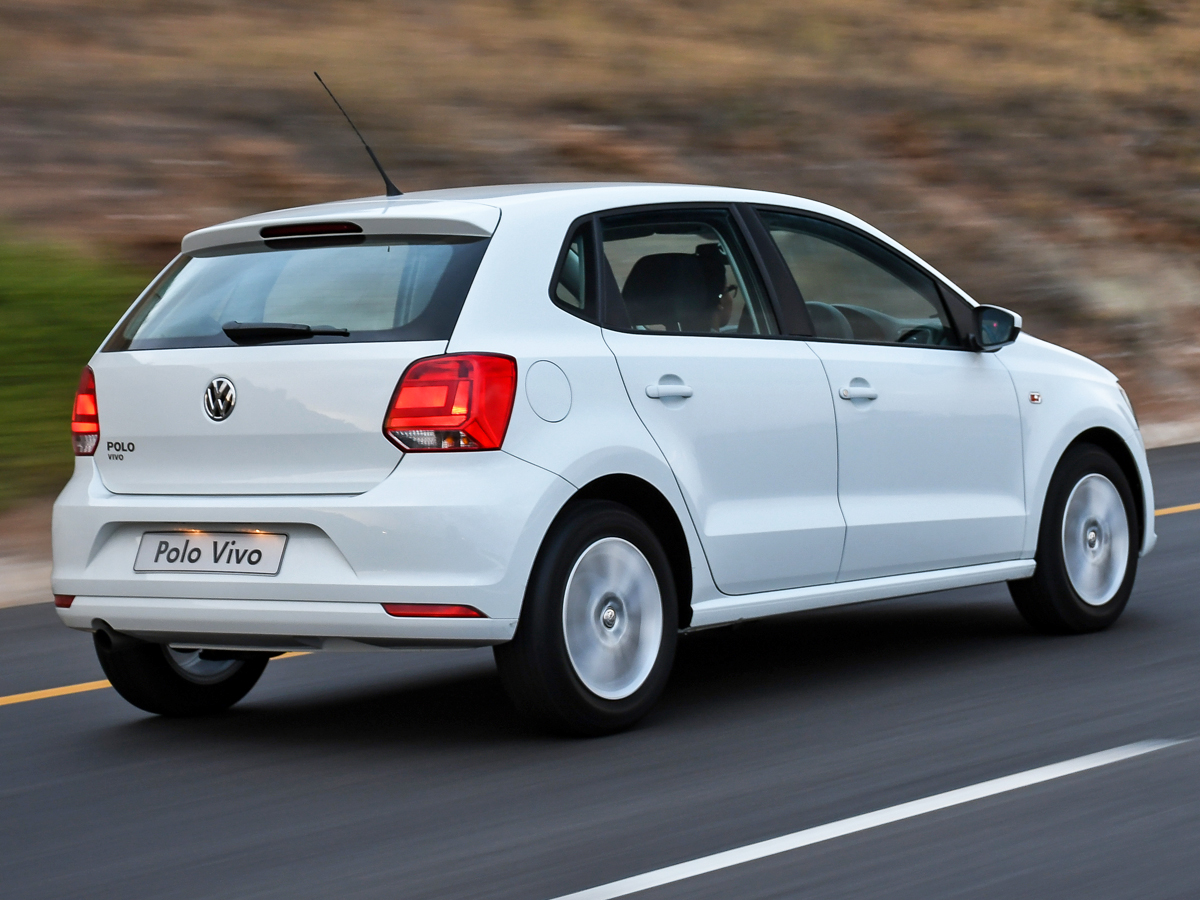
VWSA currently manufactures the Polo hatchback and Polo Vivo at its local facility, while it plans to add a mystery 3rd model to the Kariega production line in the next few years. In addition, a half-tonne bakkie could be spun off the same platform, based on separate comments from Biene.

Of course, all of those models are or will be powered by internal combustion engines. Considering the global shift towards electric mobility – including in key export markets in Europe – what are the chances of the Wolfsburg-based firm adding an EV to its production line in the next few years? Well, Biene suggested such a move was quite some way off.

In July 2022, VW’s Kariega plant celebrated 500 000 units of the current-gen Polo hatch.

“The first step is getting EVs into the country on an FBU basis – a fully built unit basis – import them and then grow and also get South African customers to experience them,” she said, pointing out potential buyers still have concerns around range anxiety and indeed whether EVs can really work in South Africa considering the enduring load-shedding crisis.

“I see us producing electric vehicles probably by 2035, in our South African plant. Why is that? That’s also related to our strong local footprint,” said Biene, explaining that around 30 to 35% of vehicles – in the form of the Polo hatchback and Polo Vivo – currently produced at the Kariega facility are sold locally rather than exported.

“We don’t want to be only an export plant for EVs to Europe or to somewhere [else]. So, we would probably need, say, 50 000 units for one model per year to make it meaningful to localise,” she said.

“So, 50 000 units. Let’s take the 30% [local] share: we’d have to sell around 15 000 in South Africa – 15 000 EVs, one model,” Biene emphasised, adding VWSA tended to sell “20 000 to 25 000 Polos a year and 20 000 to 25 000 Vivos a year” (though those numbers were actually 15 697 and 20 866, respectively, in 2022).

“That’s what I would also want to target with EVs. Because, as I said, we are not only producing and then exporting, but we want the local footprint. So, it’ll take a bit to grow the South African market to then take these 15 000 units a year [in local sales], from that mathematical example. That’s why I think it’ll take a while to get there.”

We could see a Volkswagen ID.4 fleet in SA towards the end of the year.

In addition, Biene revealed spiralling logistics costs were making it increasingly difficult to export vehicles to Europe.

“Also, what is a bit of a roadblock currently is that the logistics costs have increased tremendously for export to Europe, with diesel for vessels becoming more and more expensive. That logistics cost is a nightmare from South Africa to Europe.

“For EVs, we currently would even have to ship batteries from Europe to South Africa and then ship the [completed] vehicles back. And that’d add too much to our CO2 footprint – and [to] the costs. So, I think it [will take] a while to grow EVs in South Africa and also in Africa,” Biene said.

She emphasised VW would “need a bit of time to build that demand in South Africa” before considering local production of battery-powered vehicles. So, when will we see imported electric VWs on the road in South Africa? Read our recent chat with Steffen Knapp, VWSA’s head of passenger cars, for more details on that topic

Watch the full interview with VWSA boss Biene

Related content

SA-built half-tonne bakkie: VW says ‘there is hope’

VW’s mystery ‘made-in-SA’ model: fresh details emerge

Volkswagen SA’s electric car plan for 2023/2024

Suzuki Eeco (2023) Price & Specs

The Suzuki Eeco is a cute panel van aimed at businesses. Here’s how much you can expect to pay for this practical newcomer.

It’s not very often we get to see commercial vans introduced into South Africa as double-cab bakkies rule the roost. However, meet the new Suzuki Eeco, a cute and practical van that the Japanese brand reckons is a good fit for our market.

Suzuki SA claims the Eeco is already a market leader in India, where almost a million units have left showroom floors. The Suzuki Eeco that’s just touched down in SA is the latest derivative with upgraded safety, performance and a fresher look.

Physically, the Eeeco is 3 675 mm long and 1 475 mm wide with a wheelbase of 2 350 mm. It has a ground clearance of 160 mm. The load bay has lots of space, with a loading length of 1 620 mm from the door to the passenger partition. Its loadbay is 1 300 mm wide and 1 030 mm high, which Suzuki says is enough to hold a full-size SA pallet.

The Suzuki Eeco features the 1.2-litre 4-cylinder petrol engine that’s found in a number of its other products. The motor has 59 kW and 104 Nm, with power going to the rear wheels through a 5-speed manual gearbox. As far as fuel economy goes, the Eeco is said to use 5.4 L/100 km of unleaded.

When it comes to safety, the Eeco features two airbags, electronic stability control, anti-lock brakes and electronic brake-force distribution as standard.

Other noteworthy features include 13-inch wheels, rear parking sensors, air conditioner, 12V power socket (useful for charging a GPS unit or mobile phone) and there are two speakers and aerial, but no radio. You’re going to have to buy an aftermarket head unit.

Suzuki Eeco interior

How much does the Suzuki Eeco cost in South Africa?

The newcomer is sold with a 3-year / 100 000 km warranty.

  • Suzuki Eeco 1.2 Panel Van R199 900