Ford EcoSport (2013-2023) Buyer’s Guide

Eyeing a used Ford EcoSport? Read our buyer’s guide, which examines the long-running crossover’s history in SA, outlines its strengths and weaknesses, and looks at what you can expect to pay on the used market…

Back when Ford whipped the wraps off the B515-generation EcoSport at the dawn of 2012, the concept of building a small crossover on a popular front-wheel-drive hatchback’s underpinnings was still a relatively fresh one. It meant the Blue Oval brand’s Fiesta-based, B-segment SUV had very few direct rivals early in its life.

Fast-forward around a decade and that’s certainly no longer the case. Today, virtually every mainstream manufacturer has a contender jostling for attention in this space, while a sub-segment of even more compact budget options has since also emerged. Still, the long-in-the-tooth EcoSport – which, we should point out, is pronounced “Echo-Sport” – has soldiered on in South Africa. At the time of writing, production has already been discontinued in both India and Romania, though Ford Motor Company of Southern Africa still had a stockpile of new units.

The EcoSport was Ford SA’s best-selling passenger vehicle for a number of years.

For the record, the original EcoSport (debuting in 2003 and codenamed BV226) wasn’t offered outside a handful of Latin American countries. Though the 2nd-generation version was billed as a global product and ended up being sold in Europe, China and eventually even the United States, it likewise had strong links to emerging markets. Yes, much of its development was assigned to Ford’s Brazilian arm, while initial production took place both in that country and in India.

When the EcoSport touched down in South Africa, the Dearborn-based firm’s local division predicted it would be “a game changer” for the brand. That’s exactly what ended up happening, with the little crossover proving exceedingly popular on local soil, where it long held the title of South Africa’s strongest-selling compact crossover (and Ford’s most popular passenger vehicle).

Specs of Ford EcoSport variants

The EcoSport officially arrived in SA in the 3rd quarter of 2013.

First previewed at Auto Expo 2012 in India, the B515-gen EcoSport was then shown at Beijing’s 2012 Auto China before being displayed at the Paris Motor Show in Europe later that year. The first examples rolled onto dealership floors in South Africa by August 2013, shortly after the arrival of the ill-fated C520-generation Kuga.

At launch, the local EcoSport range offered the choice of 3 trim levels (Ambiente, Trend and Titanium), 3 engine options (an atmospheric 1.5, a turbocharged 1.0 and a turbodiesel 1.5) and 2 transmission variants (a 5-speed manual and a 6-speed auto), resulting in a 6-strong initial line-up:

  • EcoSport 1.5 (82 kW/138 Nm) Ambiente 5-speed manual
  • EcoSport 1.0 EcoBoost (92 kW/170 Nm) Trend 5-speed manual
  • EcoSport 1.5 TDCi (66 kW/205 Nm) Trend 5-speed manual
  • EcoSport 1.5 TDCi (66 kW/205 Nm) Titanium 5-speed manual
  • EcoSport 1.5 (82 kW/138 Nm) Titanium 6-speed auto
  • EcoSport 1.0 EcoBoost (92 kW/170 Nm) Titanium 5-speed manual

SA’s Indian-built EcoSport range continued largely unchanged for the next 5 years or so, though the 1.5 TDCi did quietly have it peak power hiked to 74 kW at some point. In June 2018, however, after local sales had crossed the 45 000-unit barrier, a facelifted version finally hit the local market. It offered revised styling, a significantly upgraded interior and a fresh mix of derivatives (including new transmissions, with the problematic dual-clutch cog-swapper ditched in favour of a conventional torque-converter ‘box). The naturally aspirated 1.5-litre, 4-cylinder petrol engine fell away, while the 1.0-litre, 3-cylinder EcoBoost mill provided urge for 4 of the 5 variants.

The facelifted EcoSport in Titanium guise.

Though the oil-burning 1.5 TDCi engine carried over to the refreshed range, it was available only in entry-level Ambiente form. At this point, the diesel-powered derivative was the only version still being imported from Chennai in India, with the 1.0 EcoBoost variants being sourced from Ford’s Craiova plant in Romania instead.

About 5 months later, Ford Motor Company of SA added a new base model to the range, bringing in the 1.5 Ambiente from India. Fitted with a 5-speed manual as standard, the entry-level derivative employed a new naturally aspirated 1.5-litre, 3-cylinder engine (rather than the old 4-pot), which developed 91 kW and 150 Nm.  

By April 2020, the 1.5 Ambiente gained the option of a 6-speed automatic transmission, while the mid-tier Trend and top-spec Titanium 1.0 EcoBoost models scored handy specification updates. Both gained a pre-collision assist feature and a new underbody protection plate, while Trend derivatives furthermore upgraded to cruise control and Titanium flagships to front parking sensors (in addition to the standard rear items).

The base models in the facelifted range were again built in India.

A year later, the limited-edition EcoSport Black hit the market. Based on the self-shifting 1.5 Ambiente, the special model featured black finishes for items such as the grille, skid plate, roof rails, side-mirror caps and rear-mounted spare-wheel cover. The roof was likewise painted black, while the 15-inch steelies were binned in favour of (black) 16-inch alloys. This model was further distinguished by bold black decals applied to its bonnet and along its flanks.

In May 2022, another special-edition model touched down in the form of the EcoSport Active. Using the Trend 1.0 AT derivative as a base, the Active-badged variant gained a black finish for its grille, headlamp surrounds, foglamp bezels, side-mirror caps and roof rails, as well as black skirts (fore and aft). It furthermore featured privacy glass for the rear windows, leather upholstery, a black roof and black chunky wheel-arch cladding to frame the model-specific 17-inch alloy wheels.

What are the advantages of a Ford EcoSport?

Safety features were high even from launch back in 2013.

Standard safety equipment: While you might not expect a vehicle that debuted locally as long ago as 2013 to feature a comprehensive list of safety kit as standard, that was exactly the case with the EcoSport. At launch, every derivative shipped with 6 airbags, ABS and IsoFix child-seat anchors, though only the Titanium trim level boasted electronic stability control and emergency brake assist.

With the 2018 facelift (and the switch to mostly Romania-built models), electronic stability control was made standard across the range, while all grades bar the base Ambiente (which was still manufactured in India) additionally scoring hill-launch assistance, roll-stability control and tyre-pressuring monitoring, while also upgrading to 7 airbags.

Ride quality and ground clearance: Despite making do with a relatively unsophisticated torsion-beam suspension set-up at the rear, the EcoSport featured a fairly well-judged ride (the high-profile tyres certainly helped), even if it wasn’t nearly as sharp to drive as the Fiesta from which it pilfered its underpinnings. Relatively softly sprung and benefitting from plenty of ground clearance (206 mm, to be precise), the little crossover made for an adept gravel traveller, despite no 4×4 option being offered in South Africa.

The 1.0 EcoBoost packed a decent punch for its size.

Potential for fuel economy: The most fuel-frugal engine in the range was the 1.5 TDCi, which boasted a claimed combined economy figure of just 4.6 litres per 100 km. Drawing from a 52-litre tank, this turbodiesel derivative thus boasted a potential range of more than 1 100 km. Of course, the 1.0-litre, 3-cylinder EcoBoost unit – famously small enough to stand on an A4 sheet of paper – grabbed all the headlines, sipping at a claimed 5.7 litres per 100 km when fitted with the 5-speed manual gearbox and 5.4 after gaining an extra forward cog at the facelift (that figure increased to 6.3 when specifying the 6-speed auto).

However, be warned there have been numerous complaints from 1.0 EcoBoost buyers who have been unable to achieve consumption figures even remotely close to the claims. Early versions (pre-2014) of this high-compression motor were furthermore known to suffer from coolant leaks, sometimes leading to overheating and blown head gaskets. In addition, Ford recalled certain 2018-2020 models, which it said “may be susceptible to low speed pre-ignition, due to local fuel quality”, resulting in an engine misfire, a loss of power and difficulty starting. Dealers were authorised to update the powertrain control module as a fix.

What are the disadvantages and problems of the Ford EcoSport?

The side-hinged rear door proved a little awkward to use.

Awkward side-hinged rear door: One of the EcoSport’s defining design features was its side-hinged rear door. However, this quirky configuration made it impossible to gain full access to the luggage compartment when space behind the vehicle was limited (such as in crowded parking lots or when the vehicle was reverse-parked close to a wall or bollard). The hinge was furthermore positioned on the left, which made for tricky loading and unloading of goods when parked on the left side of the roadway, as required by law in South Africa.

As an aside, the tailgate-mounted spare wheel made it impossible for Ford to offer a reversing camera, though it did free up boot space. The latter came in at a reasonable 377 litres in pre-facelift form, a figure that interestingly fell to 333 litres with the mid-cycle update (though a nifty adjustable floor was introduced at this point).

PowerShift problems (pre-facelift): The 6-speed dual-clutch transmission fitted to the pre-facelift 1.5-litre version of the EcoSport (as well as certain Fiesta and Focus models) tended to suffer from leaking seals that quickly led to oil contamination of the dry clutch module. This was a known fault – Ford even faced legal action in many countries and replaced countless clutches under warranty – that resulted in excessive juddering as well as jerking under acceleration. Thankfully, in the local EcoSport line-up, this PowerShift transmission was employed only by the 1.5 Titanium, with the Blue Oval brand switching to torque-converter automatic gearboxes at the 2018 facelift.  

The quality of materials used in the pre-facelift model’s cabin was relatively poor.

Fairly low-rent cabin (pre-facelift): Though the pre-facelift EcoSport’s button-festooned dashboard shared much in terms of design with the Cologne-produced Fiesta, the quality of the materials used in the Indian-built model was not nearly as high. Thankfully, with the facelift introduced in 2018, the EcoSport interior gained a fresh, far less-cluttered fascia design and noticeably improved material quality (particularly in the case of the Romanian-sourced variants).

Security-system shortcomings: In 2019, after facing a raft of complaints on social media, Ford Motor Company of SA said it was “aware” of potential security system problems with “certain older” EcoSport and Fiesta vehicles. The issues related to vulnerabilities around the key-lock barrel as well as alarm systems that failed to sound when the locks were tampered with. The automaker offered customers various potential remedies at “below cost”, insisting the break-ins were “not related” to design or manufacturing faults on its part.

For the record, the 2018 mid-cycle update saw security bolstered somewhat, with the refreshed EcoSport featuring a perimeter alarm, remote central locking (with drive-away auto locking function) and what the firm described as “new anti-theft door locks”. The Trend and Titanium models furthermore scored a Thatcham alarm with double dead-locking.

Ford EcoSport Price in South Africa?

The Active model joined the local range in mid-2022.

At launch, the EcoSport shipped standard with a 4-year/120 000 km warranty and a 4-year/60 000 km service plan. Service intervals were set at 20 000 km in the case of the petrol derivatives and 15 000 km for the diesel motor. Take note, however, Ford Motor Company of SA “unbundled” service plans from the purchase price of all its models from the start of November 2021, effectively making such plans optional. Regardless, as we always advise, give preference to vehicles sporting full service histories.

Of the used Ford EcoSport stock listed on Cars.co.za at the time of writing, 86% featured a petrol engine (the 1.0 EcoBoost being the most common), with the 1.5 TDCi thus accounting for only 14% of listings. Fascinatingly, the split between manual and automatic transmissions was far closer to even, with the former edging ahead on 56%.

We found as many as 8 vehicles with more than 200 000 km on their respective odometers, all featuring either a 1.5-litre petrol engine or the oil-burner of the same capacity (and a manual cog-swapper). As you might have guessed, white (43%) was easily the most common exterior paint colour, followed by silver (22%), blue (11%) and grey (9%).

  • Below R150 000: At the time of writing, all vehicles listed below this mark were pre-facelift models, though more than half interestingly had under 100 000 km on their respective clocks. There were only 3 examples featuring the problematic PowerShift transmission.
  • From R150 000 to R300 000: This was the most densely populated pricing bracket, though most listings fell towards the upper end (many above R250 000). Somewhat unexpectedly, the 1.5-litre petrol engines (both the pre-facelift 4-pot and the 3-pot that followed from 2018) were the most common motors here, while this was also where the majority of the 1.5 TDCi mills were found. Trim levels ranged from early model-year Titanium variants to late model-year Ambiente derivatives.
  • From R300 000 to R400 000: Facelifted 1.0 EcoBoost models made up the overwhelming bulk of listings between these pricing bookends, with very few examples of the 1.5 TDCi appearing here (remember, after the mid-cycle update, the oil-burner was offered only in base trim). A whopping 70% of models here had an automatic gearbox.
  • R400 000 and up: The few vehicles listed above this mark were all nearly new (the highest mileage was 17 000 km) examples of either the 1.0 EcoBoost Titanium or Active, each with an automatic transmission.

Pick of the range?

Facelifted (Romanian-built) models featured a far higher quality interior.

Identifying the pick of the EcoSport range isn’t as simple as one might expect. However, we’ll start with the advice to stick with facelifted models sourced from Romania wherever possible, as there are tangible quality (and indeed equipment) benefits compared with the Indian-built versions. We’d also suggest steering well clear of the pre-facelift 1.5 Titanium AT (yes, the derivative with the PowerShift problems).

Though we feel there’s a strong argument to be made for the punchy-yet-frugal 1.5 TDCi engine as the best of the bunch in pure powertrain terms, the fact it was available only in an Indian-built body (like the naturally aspirated 1.5-litre petrol engines) – and latterly only in entry-level Ambiente trim – works against it here.

Since we’d generally recommend sticking to facelifted EcoSport models, that leaves us with the refined little 1.0 EcoBoost. The top-spec Titanium grade offers all the bells and whistles (including a larger touchscreen and leather upholstery), though the mid-tier Trend likely provides the best value proposition as well as a marginally more pliant ride thanks to its slightly smaller (16-inch) alloys. As a reminder, you have the choice of a 6-speed manual gearbox or a conventional torque-converter automatic transmission bearing the same number of cogs. Just be aware achieving Ford’s rock-bottom claimed fuel economy figures will be near-impossible.

Is a Ford EcoSport a good car to buy?

Today, the EcoSport has to contend with a wide range of rivals.

At the EcoSport’s local launch in 2013, it had few direct rivals, with only the likes of the original Renault Duster and Nissan Juke falling in a similar segment. Over the next decade, however, all manner of competitors emerged (some of which have since moved to a 2nd generation), from the Peugeot 2008, Hyundai Creta, Suzuki Vitara and Renault Captur to the Mazda CX-3 and even the Volkswagen T-Cross.

In addition, a throng of sub-4-metre budget crossovers from India has emerged, including the Hyundai Venue, Kia Sonet, Suzuki Vitara Brezza, Toyota Urban Cruiser, Nissan Magnite and Mahindra XUV300. Despite the arrival of these aggressively priced models on the new-vehicle market, the EcoSport continued to prove popular with South African buyers.

There’s thus a wealth of stock on the used market today. While the Ford EcoSport certainly isn’t without its foibles – and it’s a great pity the diesel engine wasn’t available in the Romanian-built version – it nevertheless remains a contender worth adding to your small-crossover shopping list. Just bear in mind there are more modern rivals capable of outclassing the grey-haired Ford in various departments.

Looking for a Ford EcoSport for sale?

Find one on Cars.co.za here.

Or sell your car here, for no charge.

Mercedes-Benz GLS Updated for 2024

The flagship Mercedes-Benz GLS has been given an update for 2024. Here’s a look at what’s changed across the range.

Mercedes-Benz has been hard at work updating its SUV range, and we’ve seen facelifts of the GLA, GLB and GLE. Now its the turn of the 7-seater GLS, which gains some mild tweaks in terms of design, specification and options. The AMG and Maybach derivatives also gain some updates, which we’ll touch on in this article.

The 2024 Mercedes-Benz GLS gets a new-look front with a new large grille finished in Silver Shadow. The air intakes get some revisions too, while the rear gains new tail-lamps. The new GLS is now available with 20-inch alloy wheels.

Want to buy a new or used Mercedes-Benz GLS? Browse stock here

Inside, the MBUX infotainment system has been given an update and an offroad-mode has been added too. The Off-Road engineering package now includes an underride guard and 30 mm additional ground clearance. If you tow frequently, you’ll appreciate the new trailer maneuvering assist system. Customers can choose from two new leather colours.

The European lineup will comprise GLS 450 4Matic (280 kW/500 Nm), GLS 580 4Matic (380 kW / 730 Nm), GLS 350d 4Matic (230 kW / 650 Nm) and GLS 450d 4Matic (270 kW / 750 Nm). For the performance fanatics, the GLS 63 4Matic+ has made a return. All models feature a 48-volt mild-hybrid system that adds 15 kW and 200 Nm for short periods.

MORE: The latest Mercedes-Benz GLS Specs and Prices

The GLS 63 4Matic+ is powered by a 4.0-litre V8 twin-turbocharged petrol engine which develops 450 kW and 850 Nm, and its able to sprint to 100 kph in a claimed 4.2 seconds. The standard equipment list for the GLS 63 4Matic+ has grown to now include a panoramic sunroof, AMG performance exhaust, Burmester sound system, heated/cooled front seats, memory package and 360-degree parking pilot. AMG says the software for the air suspension and roll stabilisation has been tweaked for enhanced handling and comfort.

Maybach-Mercedes GLS Facelifted

The luxury Maybach-Mercedes GLS has also received some updates, both externally and inside. There’s a new lower grille with chrome surrounds and its been repositioned. There are new air intakes and customers can choose from new 23-inch forged wheels. There are new lights that projects the Maybach logo onto the road when the doors are opened.

Inside, there are new seat covers with diamond-pattern quilting on the plush leather seats. Customers can choose from two new exterior colours and there’s a new steering wheel. The MBUX Multi-seat entertainment system features three touchscreens, two USB ports, 100W device charger and a two-stage air filter to help keep the dust out.

Mercedes-Maybach is offering the GLS with just one engine, which is the 4.0-litre twin-turbocharged V8 which produces 410 kW and 730 Nm. It too features a 48V mild-hybrid system and is good for a 0-100 kph in 4.2 seconds.

2024 Mercedes-Benz GLS Coming to SA?

As it stands, we have had zero indication of the new flagship 7-seater SUV arriving on our shores. The American market will be receiving this model in the middle of September 2023, so if we were to have a guess, we expect the newcomer to be touching down in early 2024.

10 best-selling bakkies in South Africa: March 2023

South Africa’s list of best-selling bakkies saw some movement (including on the podium!) in March 2023, plus the debut of a certain Ford-built Volkswagen pick-up. Let’s take a closer look at the sales figures…
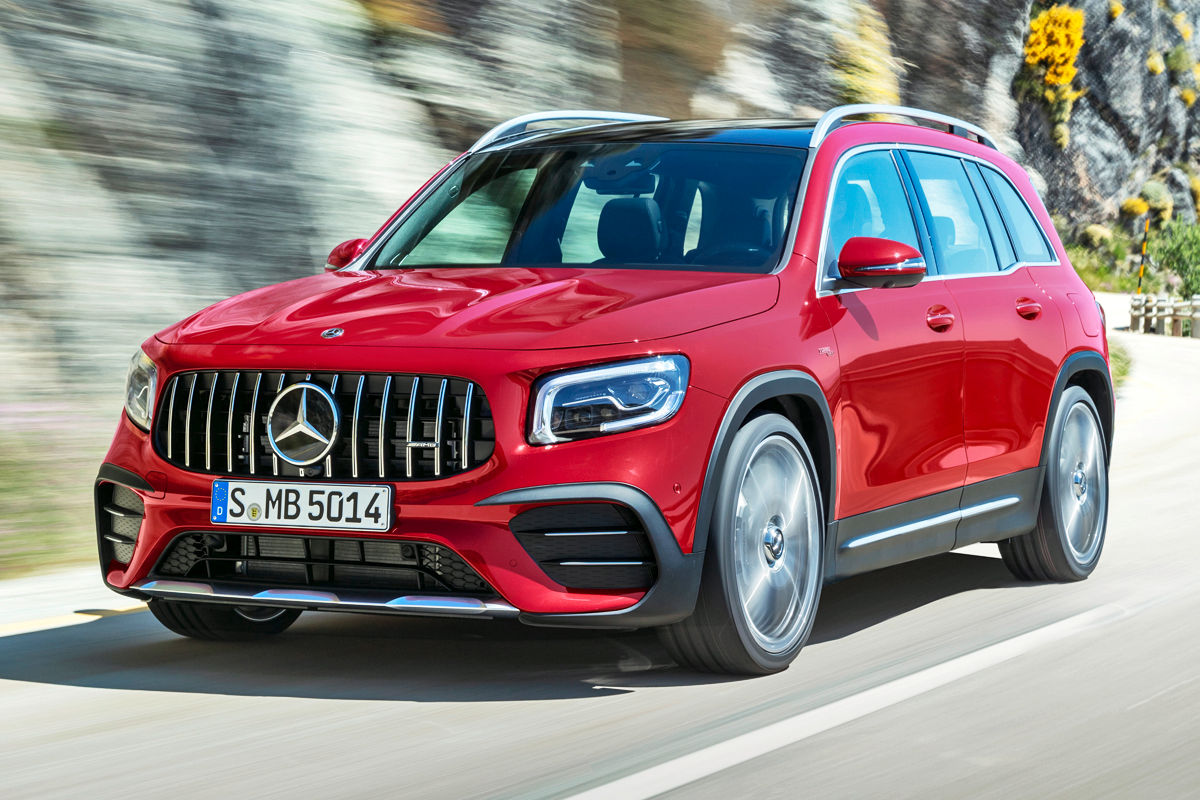
Though South Africa’s new-vehicle market shrunk slightly year on year in March 2023 to a still-impressive 50 157 units, the light-commercial segment (which is dominated by bakkies) enjoyed 11.1% growth, finishing the month on 15 529 units (the highest figure achieved by this segment for more than a year). So, what happened on the list of SA’s best- and worst-selling bakkies?

Well, no prizes for guessing the Prospecton-built Toyota Hilux was again out in front (just as it was in February 2023), with a considerable 3 920 units registered in South Africa during March 2023. Fascinatingly, however, the Struandale-produced Isuzu D-Max grabbed 2nd place with 2 289 units (500 of which represented sales to government), pushing the new Silverton-manufactured Ford Ranger (2 247 units) into a very close 3rd.

As an aside, Ford Motor Company of SA confirmed to Cars.co.za the Ranger’s figure included as many as 642 examples of the range-topping Raptor.

The Nissan NP200 (1 404 units) and Mahindra Pik Up (966 units) increased their tallies month on month, holding steady in 4th and 5th, respectively. Though the Nissan Navara’s haul in March 2023 fell somewhat to 475 units, the Rosslyn-built bakkie nevertheless remained in 6th position, again just ahead of the seemingly evergreen Toyota Land Cruiser 79 (406 units).

Having officially arrived in local dealerships on 18 March, the new Volkswagen Amarok – which is built alongside the Ranger at Ford’s facility in Gauteng – enjoyed a strong start (perhaps boosted by the fulfilment of pre-orders), ending the month with 401 registrations and thus returning the nameplate to the table by placing 8th.

The Amarok’s reappearance in the top 10 saw the imported GWM P-Series (372 units) and GWM Steed (118 units) each drop a spot, with the Chinese bakkies finishing in 9th and 10th, respectively.

Best of the rest in March 2023

The VW Amarok’s return saw the Mitsubishi Triton fall from the top 10 in March 2023.

What about the bit-part players? Well, although the Mitsubishi Triton improved month on month to 62 registrations, it dropped out of the top 10 in March 2023. The Peugeot Landtrek, meanwhile, finished the month on 37 units, ahead of the Mahindra Bolero (21 units), the Jeep Gladiator (13 units) and the Mazda BT-50 (6 units).

Meanwhile, JAC’s T-badged bakkies – the Chinese automaker reports a combined figure for its T6 and T8 line-ups – ended March 2023 on a total of 45 units.

Export winners in March 2023

More than 5 700 units of the Ford Ranger were shipped from SA shores in March 2023.

What about the bakkie export market? Well, the Ford Ranger moved into 1st place here, with 5 708 units shipped overseas in March 2023. That saw the Toyota Hilux pushed down into 2nd, with 3 588 units exported during the month.

The D-Max (743 units), Navara (450 units) and NP200 (29 units) again made up the numbers on the export charts. The official Naamsa report again interestingly showed a handful of imported models being exported from local shores in March 2023, in the form of the Triton (30 units), P-Series (18 units), Gladiator (1 unit) and Steed (1 unit).

10 best-selling bakkies in South Africa for March 2023

1. Toyota Hilux – 3 920 units

2. Isuzu D-Max – 2 289 units

3. Ford Ranger – 2 247 units

4. Nissan NP200 – 1 404 units

5. Mahindra Pik Up – 966 units

6. Nissan Navara – 475 units

7. Toyota Land Cruiser 79 – 406 units

8. Volkswagen Amarok – 401 units

9. GWM P-Series – 372 units

10. GWM Steed – 118 units

Related content

Toyota Hilux Xtra Cab Legend models score spec update

10 best-selling bakkies in South Africa: February 2023

Double-Cab 4×4 Bakkie Buyer’s Guide (2023)

BMW M2 (2023) International Launch Review

The M4 has moved so far upmarket that the BMW M2 – now in its 2nd generation – is comparatively closer in spirit to the brand’s iconic coupes from the Eighties and Nineties. Ciro De Siena drove a manual version of the new M2 in Arizona.

As we headed out on the highways of Phoenix, Arizona and into the nearby mountains to catch some twisties in the new, G87-generation M2, I felt a rush of excitement, because BMW furnished me with a manual version (a “stick-shift”, as they say here in the States) of the model to put through its paces.

Side profile of 2023 BMW M2 coupe.
Ciro relished driving a 6-speed BMW M2, but driving a left-hand-drive car with a manual ‘box was a challenge.

Having said that, when you’re used to driving manual right-hand-drive cars, it’s a challenge to use your right hand to change gears in a left-hand-drive country; you select the next gear by shifting away from –as opposed to toward – you. It’s like, well, swapping your knife and fork and then trying to eat normally.

BMW owes much of its fan following to its compact sportscars of yesteryear and the new M2 has that classic ol’ configuration: it’s a front-engined, rear-wheel-drive compact coupe with an inline-6 petrol motor and a manual ‘box. It harks back to classic BMW models that don’t really exist anymore… Recent M3s and M4s have become sort of different beasts – they’re powerful, but they’re quite heavy too.

2023 BMW M2, rear three-quarter view.
The new BMW M2 looks very broad-shouldered from the back, note the elaborate bumper, diffuser and quad tailpipes.

New BMW M2 – a big little car

So, the BMW M2 is the smallest M car in the Bavarian brand’s line-up. In reality, however, it’s not much smaller than the M4 and its sedan counterpart, the M3. The new M2’s wheelbase is only 110 mm shorter than that of the M4 and overall, the newcomer’s about 210 mm shorter than its bigger sibling.

However, when you stand in front of the new M2, its dimensions and design seem to shrink – it does appear to be a smaller car than the M4. Its cabin also feels like that of a smaller car…

2023 BMW M2 coupe, driving on a mountain pass, front three-quarter view.
The BMW M2 comes in 2 model-specific colours: Toronto Red and this finish: Zandvoort Blue.

The 2023 car is available in 5 colours, 2 of which are specific to the model. The example I drove was finished in one of those hues – Toronto Red – but there is also a new Zandvoort Blue, which, for me, does not work on this car. It’s like a matte colour and sort of reduces the impact of the M2’s lines and shoulder creases… It makes it look a bit weak, visually.

When this car was revealed, there was a lot of online chatter (which is usually the case when new BMWs get unveiled). Some disgruntled commentators said: “BMW didn’t get the styling right”, but they must just wait until they see an M2, clad in Toronto Red, with their own eyes. It may change their opinion.

Interior of 2023 BMW M2, equipped with 6-speed manual gearbox.
The G87-generation BMW M2’s steering wheel features a pair of red (and programmable) M-mode buttons.

Whereas the model’s suspension has, by and large, been carried over from the previous-gen car (along with extra reinforcement at the rear), the new BMW M2 has a much wider track than its predecessor. Consequently, the car feels more planted on the road and that bigger “footprint” definitely helps – it instils more confidence in the driver to explore the (rather heady) limits of the car’s performance.

Effectively a ‘baby M4’, engine-wise

Like its M3 and M4 siblings, the G87-generation BMW M2 has a twin-turbo 3.0-litre inline-6 petrol powerplant, but in a lower state of tune. Its peak outputs are 338 kW and 550 Nm, the latter of which is available for much of the engine’s rev range (from 2 650 rpm to 5 870 rpm, to be precise).

2023 BMW M2 with M Carbon bucket seats.
Optional M Carbon bucket seats feature M2 badges, M colour highlights and, of course, lots of added bolstering.

That means this car produces 66 kW and 36 kW more than the previous-gen single-turbo M2 and twin-turbo M2 Competition respectively. However, with a kerb weight of 1 730 kg (6-speed manual) or 1 754 kg (8-speed auto), the new M2 is notably heavier than the old M2 (1 495 kg) and M2 Competition (1 650 kg). Still, it’s claimed to be a 10th of a second faster from 0 to 100 kph (4.3 sec for the manual and 4.1 sec for the auto) than the latter.

Meanwhile, BMW has pretty much thrown the kitchen sink at the new M2; it comes equipped with electronically controlled dampers, as well as an active differential, which can create a locking effect of up to 100 per cent. Heck, it’s even got a drift analyser, for when you feel like shredding your tyres!

2023 BMW M2 coupe driving on a country road, front three-quarter view.
The new BMW M2 features an almost cartoonish front bumper with square- and rectangular inlets.

Keeping you on the black stuff are Michelin Pilot Sport 4 tyres – 20-inch items in the case of the M2 that I drove. And I suspect that the BMW technicians at the launch ensured that the cars’ tyres were “pumped hard” to extend the life of the “boots”, because I could feel every little thing on the road surface. If I drove over an ant, I could probably tell you what species it was from what it felt like through the M2’s tyres.

Peak power is developed at 6 250 rpm (the engine redlines at 7 200 rpm), but moreover, the model’s generous peak-torque band truly made its presence felt when I rifled through the 2nd-, 3rd- and 4th gears. Five hundred and fifty Newton metres is a lot of torque for a car of this size – bear in mind it’s rear-wheel drive only (not all-wheel drive, as is the case with its 285 kW/500 Nm M240i xDrive sibling).

2023 BMW M2 driving on a country road, rear three-quarter view.
The BMW M2, in rear-wheel-drive guise, is bound to please driving enthusiasts (an xDrive version is coming soon).

Suffice it to say, the new BMW M2 demands a measure of driver skill and -attention that will satisfy some of the most discerning enthusiasts. When I drove the M2 quite enthusiastically, I could feel its tail-end “go light” on a few occasions – not alarmingly so, but enough to clearly convey where the limits were.   

Still a hands-on, visceral sportscar

I love how BMW hasn’t tried to refine or sanitise the new M2 to the Nth degree… When you touch the 6-speed manual car’s gear knob while the vehicle is in motion, you can actually feel the machinations of the drivetrain through the palm of your hand. Perhaps the model’s steering is a bit dull (after all, you can’t expect all that much feedback from an electrically assisted setup), but it is, most certainly, accurate.

The manual version of the BMW M2 comes equipped with an entertaining Gear-Shift Assistant function.

Interestingly, there are 2 levels of braking feel available (selectable via the iDrive menu) and, in the manual version of the M2, you get gear-shift assistance, which effectively rev-matches for you on downshifts and meters the way that the clutch engages with the flywheel.

For example, when I shifted down (from, say, 4th to 3rd), the M2 blipped its throttle. It sure wasn’t me: I can’t heel and toe, I’m not (Cars.co.za race ace) Ashley Oldfield… the car did it entirely by itself.

To its credit, BMW has taken the following position on its product line-up: “Electric vehicles (EVs) aren’t the only solution, we’re going to keep making great internal-combustion-engined (ICE) cars. We’re going to make them as efficient as possible and we’re going to make EVs, hybrids and hydrogen cars too.”

2023 BMW M2 driving on a country road, shown in profile.
BMW South Africa will begin deliveries of the new M2 in May 2023.

I really appreciate that BMW wants to give consumers a broad range of vehicles to choose from (everything from ICE cars – with or without electrification – to hydrogen fuel-cell vehicles).

After all, the Munich-based carmaker has built its brand on visceral models, especially those that bear M badges – producing driver’s cars is one of its major selling points. BMW wants you to walk into one of its dealerships and spend R1.5 million so that you drive out to a winding country road and enjoy yourself.

2023 BMW M2 front-on view.
The G87-gen BMW M2 comes with an 8-speed auto ‘box in SA, but the manual version is available on special order.

Summary

Enjoyment – isn’t that exactly what BMW M cars are for? During the new M2’s launch in the States, the CEO of BMW’s M Division, Frank van Meel showed us a graph with a product timeline that went all the way to 2030. Then he proclaimed that BMW would keep producing great ICE cars all the way to 2030.

What’s more, I absolutely loved the experience of driving a modern high-powered car equipped with a manual ‘box. It seems an anachronism; manual sportscars are definitely dying out, that’s for sure.

When it arrives in South Africa in May, the new BMW M2 will come with the 8-speed automatic ZF transmission, but if you want a manual version, you will be able to place a special order with BMW SA.  

The automatic is a brilliant ‘box – I can totally understand if you’d prefer it, especially if you intend to use this BMW as your “daily”, but just know this: A manual M2 is a pretty wonderful thing.

New BMW M2 Specs & Prices in South Africa

Porsche 356 vs Porsche 912: Classic Comparison

If you are thinking of buying a Porsche 356, should you also take a look at the 4-cylinder Porsche 912? We drive both back-to-back outside Cape Town.  

The modest four-cylinder, boxer engine that launched Porsche onto the motoring scene in 1948 started off with a paltry 30 kW from its 1.1-litre displacement. Fast-forward to around 12 years and the flat-4, 1.6-litre engine in the 1600 GT developed a very healthy 100 kW.

A look at Porsche’s racing history reveals it is littered with racing-developed flat-4s fitted to 356s, as well as several notable race cars that achieved several victories over many years.  

History

By 1963, when the Porsche 356’s replacement saw the light of day, the Zuffenhausen-based brand’s focus had obviously shifted to the 911, but the company still saw enough appeal in the 4-cylinder concept to unveil a new model, the 912, at the 1965 New York Auto Show.

While the Porsche 912 was unveiled in 1965, it only became widely available by 1966. Interestingly, the 912 sold very well and evidently, buyers didn’t mind at the time to have a familiar flat-4 engine in the back of their Porsche and a cabin that offered less equipment than the 911. 

The idea behind the Porsche 912 was to offer a more accessible sports car to buyers who couldn’t stretch all the way to the 911… and it clearly worked. In its first year of production, around 5 000 units were manufactured and 6 692 in 1966.

Today Porsche 912s are valued lower than early Porsche 911s. Bring the range of 356s onboard, and again the 912 slots comfortably below that range of models if you compare them specification-wise.

Compared to a car like this beautiful Ruby Red Porsche 356B, how does the Porsche 912 stack up from behind the wheel and does it deserve more admiration than it currently gets?

The entire 356 range was fitted with the flat-4-cylinder engine, and the 912 was the only 911 to ever receive a 4-cylinder engine, which makes it a bit of an oddball in Porsche’s road-going history.

Few enthusiasts know this, but a number of Porsche 356s were assembled in South Africa after being imported as knocked-down kits. However, this 1960 Porsche 356B was manufactured in Germany before being delivered to the Winelands town of Stellenbosch.

The first owner was an Olivetti typewriter engineer. He owned it until the day he died and the current owner bought it from his grandson 6 years ago. 

Specifications

  • Model: 1960 Porsche 356B
  • Engine: 1.6-litre, flat-4 petrol
  • Power: 44 kW at 4 500 rpm 
  • Torque: 110 Nm at 2 800 rpm
  • Transmission: 4-speed manual, RWD
  • Weight: 900 kg
  • 0-97 kph: 14.4 sec (claimed)
  • Top speed: 155 kph (claimed)

“I haven’t done anything to this car except to give it a small service and a polish every now and then. We even left the minor cracks in the paint. The car has not been restored and we have several invoices, even including insurance premium slips from early years. The original owner was really fastidious.

“For example, he took the original keys, made copies and only used the copies, filing the original keys in the car’s folder. There is the service book, the handbook and the toolkit. There was also a big folder on the then-new Porsche 928. At some stage, he considered trading in his 356 for this new GT.”

Subsequent to purchasing this 356B, it won the regional Porsche Club Cape concourse event in 2020. 

Eight years after that Porsche 356, in 1968, this Bahama Yellow Porsche 912 rolled off the production line. The owner, founder of Dogleg Werks in Cape Town, acquired it in early 2021. 

Specifications

  • Model: 1968 Porsche 912
  • Engine: 1.6-litre, flat-4 petrol
  • Power: 67 kW at 5 800 rpm 
  • Torque: 133 Nm at 3 500 rpm
  • Transmission: 5-speed manual, RWD
  • Weight: 970 kg
  • 0-97 kph: 12.3 sec (claimed)
  • Top speed: 184 kph (claimed)

“All the license discs from new came with the car. It was a Johannesburg car and has had 2 or 3 owners. Unfortunately, it was cheaply maintained. It does have some rust and will soon be heading for a gentle restoration. However, it won’t be a nuts-and-bolts restoration. The fenders will be removed, sills will be replaced and it will receive a partial respray.

“This was a daily driver for the past 10 to 15 years. It was unfortunately kept in Newlands – one of the wettest parts of South Africa. The engine was rebuilt in the ’90s, but it now needs attention again.”

Parked next to each other it is easy to see the evolutionary design flowing from the 356 to 912. There are similarities, but they are also 2 very distinctly different cars.

Behind the ‘wheels of the Porsche 356 & Porsche 912

I settle in behind the wheel of the 356 and notice the solid thud when I close the door. Everything about the 356 is rounded. The dashboard curves underneath the windscreen and the large Bakelite steering wheel allows for much-needed leverage during slow speeds.

The red leather vinyl-covered dashboard ties in perfectly with the red window garnish rails below the side windows that run towards the rear of the car as well as the fascia, which is also ruby red.

Being a 356 means that there are only 3 dials behind the steering wheel, them being, from left to right, the speedometer, tachometer and a combination gauge for the oil temperature and the fuel level.

It is relatively luxurious in the cabin with rubber matting on the floor, carpets along the sides while the original beige seats and door panels provide a welcoming contrast. Over the bonnet, the rounded curves of the lid as well as the fenders are clearly visible.

The engine starts without any trouble and it sounds spot on, a throaty flat-four rumble that permeates from the two exhaust pipes, situated inside the chromed overriders. 

The gearlever slots with ease into gear in a very light manner and it is easy to modulate the clutch, all the pedals being floor mounted. 

There is a surprising level of sprightliness to the 1 582 cm3 engine’s power delivery. You can potter around at 2 to 3 000 rpm, but it is from 2 500 to 4 000 rpm that the engine seems at its happiest and delivers an honest level of performance. The redline arrives 500 rpm later at 4 500.

Chase the 4 000-rpm mark through first, second and third gear, and you will be impressed at the speeds you can achieve. 

There is a little play in the steering, but you still get a good feel through the wheel. However, you need to remind yourself of those high-profile tyres when you drive more enthusiastically through the corners.

Still, being so lightweight and with the engine mounted low in the chassis, there is grip to be found through the bends and some fun to be had. Even the brakes feel up to the task of bringing the speeds down, although you don’t want to overdo it, having to then use them with vigour.

The owner also told me that he fits all the 356s in his collection with a camber regulator on the rear axle which limits the wheels tucking in during cornering or other vertical loading and unloading. 

In terms of practicality the 356 offers less luggage space at the front thanks to the fuel tank and spare wheel which almost completely fills this area. In the 912 there is ample space for a few soft bags. 

There might be only an 8-year difference between these two cars, but the moment you step into the 912 you know this is the more modern model, body and layout that also spanned around 2 decades of 911s. 

There is a complete change of feel in the cabin thanks to the horizontal, straight dashboard design and the cabin is marginally roomier in every direction.

The seats are well worn, so I sit very low, while the cabin colours are darker compared to the 356. The black vinyl seats, door trims and the dashboard are all black as well. 

As in the 356, the steering wheel is close to the dashboard, but now there are 5 dials to look at (there were only 3 when the 912 was launched), one of the additions being a clock. As in the 356, there are still rear seats that can be folded flat to offer extra luggage space, or up to offer seating space for children.

As I twist the key, the engine turns and for a moment the different beat from the flat-4 caught me off guard, not a sound you associate with a 911-shaped Porsche. When cars are half a century old, or older, they are very much the result of how they have been maintained. This example of the Porsche 356 has been maintained better than the car it’s being compared with here, but even so, this particular Porsche 912 has been used regularly and provides a good idea of what the 1960s cut-price 911 offers. 

The view through the windscreen is also different compared to the 356. Gone is the rounded centre lid, now replaced by the sloping flat deck, with the pronounced fenders running towards the headlights leaving you in no doubt this is a 911 (or 912).

This 912 was, at some time in its life, fitted with a factory short shifter kit, as the throws are very short and direct and it doesn’t have any of the vagueness usually associated with this transmission. This does add another level of driver involvement and sportiness for me. If it was my car, I would probably have opted for this upgrade as well, especially after having experienced these gearboxes in their original state.

It still needs some getting used to though, but after a few minutes I become accustomed to finding that dogleg first gear and also the following four gears. The availability of five speeds is an important change over the Porsche 356’s driving experience.

The additional ratio allows you not only more speed, but once on the go it is easy to swap between second and third, ideal for the twisties, and then fourth and fifth as you head onto the longer straights. I immediately feel there is a wider scope of performance with the 912. 

Although the engine, in its current state, is not as smooth as the 356B’s, it still pulls stronger than its older sibling, while also allowing you to head higher into the rev range. With the red line only arriving at 6 000 rpm, you can comfortably let the needle run past 4 000 and 5 000 rpm.

After all, the 912’s engine was based on the 356 Super 90 engine, offering 90 hp (67 kW) versus the 356B’s 44 kW.

As the suspension is a notably better setup compared to the Porsche 356, the Porsche 912 feels more planted on the road and it does feel more suited to enthusiastic cornering than the 356. Of course, the 912 benefits from the same suspension, steering and braking system as the early 911s. 

Porsche 356 or Porsche 912?

On the way home we both select 3rd gear, needles pointing to the middle of the rev range. We push the throttle pedals to the floor. For a moment the Porsche 356 pulls away from its Porsche 912 stablemate, but as our speed builds and I select fourth gear in the 912, it pulls away from the 356. 

The Porsche 912 will probably continue to remain under the radar for most buyers, but I don’t understand why. Of course, it is 2 cylinders down on any other 911 in history, but it still delivers a visual experience that is 100% that of the 911 and a driving experience that is very close to that of the celebrated brand’s iconic sportscar. Oh, and did I mention it is around 50 kg lighter than a 911 of the same year?

For those who appreciate these benefits, that is a very attractive number. Depending on what your requirements are for an air-cooled 4-cylinder Porsche, give the underrated 912 a closer look.

Search for a classic Porsche listed for sale on Cars.co.za

Find exclusive car-themed merchandise at the SentiMETAL Shop

Related content:

Porsche 912: Classic Drive

Porsche 911 (993) GT2: Classic Drive

Porsche 911 Targa ‘Edition 50 Years’ (2022) Launch Review

Porsche 911 GT3 (2022) Launch Review

Porsche 911 GTS (2021) Launch Review

Porsche 911 Turbo S (2020) Launch Review

Porsche 911 GT3 RS (2020) Review

Toyota Fortuner bounces back! SA’s best-selling cars in March 2023

The South African new-vehicle market’s run of year-on-year growth has ended, with sales falling marginally to a still-impressive 50 157 units in March 2023. Here’s a look at SA’s best-selling vehicles, most popular brands and more…

In March 2023, South Africa’s new-vehicle market registered a marginal decline of 0.6% to 50 157 units, bringing to an end the industry’s 14-month streak of year-on-year sales growth. Still, the month’s sales tally represents a considerable 10.6% increase compared with February 2023’s effort and is interestingly also the first time the market has cracked the 50 000-unit mark in a year.

Naamsa described the industry’s performance in March 2023 as “modest”, saying this could at least in part be attributed to rising interest rates and the so-called “national shutdown” of 20 March, when “many dealers opted to close shop and vehicle manufacturers operating in hotspot metros also halted production”.

Out of the total reported industry sales of 50 157 vehicles, an estimated 43 801 units (or 87.3%) came via the dealer channel, with 6.1% representing sales to the rental industry, 4.1% to government and 2.5% to industry corporate fleets.

The new passenger-vehicle market decreased 6.4% to 31 631 units in March 2023, while sales of new light-commercial vehicles (including bakkies and minibuses) grew an encouraging 11.1% year on year to 15 529 units (the highest LCV figure for over a year, as you can see in the chart below). After the opening quarter of the 2023, domestic sales stood at 139 437 units, representing an increase of 2.4% compared with the same period in 2022.

What about the export market? Well, Naamsa’s figures showed a 3.1% year-on-year increase to 34 134 units in March 2023, with the year-to-date number coming in at 84 774 units (or 4.2% down on the first quarter of 2022).

Lebogang Gaoaketse, Head of Marketing and Communications at WesBank, was upbeat, suggesting March 2023’s performance was worth celebrating.

“Despite the public holidays, March is a long sales month and this month’s performance mirrored what was the best-selling month last year. Both March 2022 and 2023 have been the only sales months to breach the 50 000-unit level since October 2019,” explained Gaoaketse.

Furthermore, according to WesBank, March’s increased volumes compared with February’s tally indicates “growth remains possible despite the headwinds of the continued energy crisis, rising interest rates and the pressures of inflation on household budgets”.

Gary McCraw, National Director of the National Automobil Dealers’ Association (NADA), was similarly optimistic, saying the fact total sales exceeded the 50 0000- unit barrier “was a positive sign, showing that there is still ongoing, pent-up demand for new vehicles”.

“The retail dealer network fared well in the circumstances, with many of them having closed over the Human Rights Day period. In fact, the dealers’ share of the new-vehicle market continues to hold up, with the March share of 87.3% being even better than the 83.6% share in February. On a year-to-date basis, the dealers have sold 2 230 more vehicles this year than in the same period in 2022 – 117 178 versus 114 948,” added McGraw.

New vehicle sales summary for March 2023

  • Aggregate new-vehicle sales of 50 157 units decreased by 0.6% (-308 units) compared to March 2022.
  • New passenger-vehicle sales of 31 631 units decreased by 6.4% (-2 157 units) compared to March 2022.
  • New light-commercial vehicle sales of 15 529 units increased by 11.1% (1 556 units) compared to March 2022. 
  • Export sales of 34 134 units increased by 3.1% (1 026 units) compared to March 2022.

10 best-selling car brands in South Africa in March 2023

Another month, another overwhelmingly dominant sales performance from Toyota. The Japanese firm’s local arm registered a hefty 13 406 units in March 2023 (translating to a market share of 26.7%), almost 2 000 sales more than it achieved in the preceding (admittedly shorter) month. The Volkswagen Group (6 139 units) was again 2nd on the list, though the German company at least managed to stretch its lead over the 3rd-placed Suzuki (3 734 units).

Hyundai (3 032 units) climbed a place to 4th, finishing the month a mere 20 units ahead of Nissan (3 012 units), which consequently dropped a spot to 5th. Ford wasn’t far behind, with its 2 993 sales enough to keep it in 6th, while Isuzu (2 691 units) enjoyed a particularly strong month, moving up a position to 7th. With 2 058 registrations, Renault thus slipped a spot to 8th, with Haval (2 002 units) gaining a place to 9th and Kia (1 833 units) sliding a position to 10th.

Which brands finished just outside the top 10? Well, Chinese automaker Chery again had to settle for 11th, with its 1 502 units sold in March 2023 proving a record haul, and seeing it finish ahead of Indian firm Mahindra (1 434 units) and the BMW Group (1 394 units), with the latter reporting sales to Naamsa for the first time this year.

1. Toyota – 13 406 units

2. Volkswagen Group – 6 139 units

3. Suzuki – 3 734 units

4. Hyundai – 3 032 units

5. Nissan – 3 012 units

6. Ford – 2 993 units

7. Isuzu – 2 691 units

8. Renault – 2 058 units

9. Haval – 2 002 units

10. Kia – 1 833 units

10 best-selling vehicles in South Africa in March 2023

Isuzu’s Struandale-built D-Max scooped 2nd place in March 2023.

As you might very well have guessed, the Toyota Hilux was again South Africa’s most popular new vehicle, with as many as 3 920 examples registered in March 2023. Interestingly, the Isuzu D-Max (2 289 units, including 500 sales to government) climbed a spot to snaffle 2nd, pushing the new Ford Ranger (2 247 units) down to 3rd. Yes, that means the podium comprised a trio of locally produced bakkies (here’s the full list of SA’s best-selling bakkies for March 2023).

The Kariega-built Volkswagen Polo Vivo (2 016 units) – recently bolstered with the launch of a subtly updated GT flagship – moved up a position to 4th, forcing the Prospecton-produced Toyota Corolla Cross (1 839 units) down to 5th. The Toyota Hi-Ace (1 600 units) gained a spot to finish the month in 6th, while the Toyota Fortuner made a strong return to the top 10, with 1 409 registrations across the country (including 281 units courtesy of the rental channel). As a reminder, the Japanese firm’s locally produced adventure SUV lost the title of SA’s best-selling SUV in 2022 (and failed to crack the top 15 overall in both January and February 2023), though recently benefited from a handy refresh.

The long-in-the-tooth Nissan NP200 (1 404 units) and Suzuki-built Toyota Starlet (1 276 units) effectively swapped places compared with February 2023 – thus finishing in 8th and 9th respectively – while the Suzuki Swift tumbled 4 positions to close out the table on 1 248 registrations.

What about models that just failed to crack the top 10? Well, the Volkswagen Polo hatchback (1 008 units) had to settle for 11th, ahead of the Hyundai Grand i10 (977 units), Mahindra Pik Up (966 units), Haval Jolion (940 units) and Chery Tiggo 4 Pro (918 units).

1. Toyota Hilux – 3 920 units

2. Isuzu D-Max – 2 289 units

3. Ford Ranger – 2 247 units 

4. Volkswagen Polo Vivo – 2 016 units

5. Toyota Corolla Cross – 1 839 units

6. Toyota Hi-Ace – 1 600 units 

7. Toyota Fortuner – 1 409 units

8. Nissan NP200 – 1 404 units

9. Toyota Starlet – 1 276 units 

10. Suzuki Swift – 1 248 units

Top 10 vehicles exported from South Africa in March 2023

BMW Group SA exported nearly 6 000 examples of the X3 in March 2023.

Though the Volkswagen Polo hatchback again missed out on a top-10 finish on the domestic front, it was the runaway leader on the export charts, with a whopping 10 029 units shipped overseas. Meanwhile, with the brand again reporting figures to Naamsa for March 2023, the Rosslyn-built BMW X3 (5 988 units) grabbed 2nd, with the Silverton-manufactured Ford Ranger (5 708 units) close behind in 3rd and the Toyota Hilux (3 588 units) relegated to 4th.

As is so often the case, the Isuzu D-Max, Nissan Navara, Toyota Corolla Cross, Toyota Fortuner, Nissan NP200 and Toyota Corolla Quest made up the export numbers. We should, of course, point out Mercedes-Benz did not submit detailed figures, so it’s not clear exactly how many new C-Class sedan units were exported during the month (for the record, though, Naamsa’s estimate for March 2023 stands at 7 075 units).

1. Volkswagen Polo (hatch) – 10 029 units

2. BMW X3 – 5 988 units

3. Ford Ranger – 5 708 units

4. Toyota Hilux – 3 588 units

5. Isuzu D-Max – 743 units

6. Nissan Navara – 450 units

7. Toyota Corolla Cross – 98 units

8. Toyota Fortuner – 81 units

9. Nissan NP200 – 29 units

10. Toyota Corolla Quest – 28 units

Sales outlook for the remainder of 2023

So, where to from here for South Africa’s new-vehicle market? Well, Naamsa believes the latest interest-rate hike as well as a multitude of other factors will have a further impact on the “shrinking disposable income purse many consumers rely on when making new vehicle sales decisions”.

“While vehicle production is ramping up and the overall performance [of] vehicle sales and exports sales has been steadily increasing, the continued monetary policy tightening, domestic and global slowing growth, as well as energy shortages will have greater spill over to the overall performance of the industry,” says Naamsa, before adding it “remains upbeat” that its forecast of domestic sales growth of 6.3% and export sales growth of 8.3% for 2023 is still achievable.

ALSO READ: 10 best-selling bakkies in South Africa for March 2023

Meanwhile, WesBank’s Gaoaketse also points to the latest increase in the prime lending rate as cause for concern for the new-vehicle market.

“In addition to making existing linked finance agreements more expensive, the higher-than-expected interest-rate hike will no doubt challenge affordability and future purchase decisions for the new-vehicle market, which could begin impacting sales volumes over the coming months,” warns Gaoaketse.

Despite this, WesBank “continues to expect market growth this year off the back of improved supply and the need to refresh the replacement cycle that has been delayed over the past few years”.

ALSO READ: Here’s how many EVs and hybrids were sold in SA in 2022

NADA’s McGraw takes a likewise positive stance, listing various factors that could see more new-vehicle sales growth.

“Looking ahead, we believe that as many local companies have entered a new financial year, there may be a greater appetite for them to start buying again. Ongoing load-shedding and changes in company policies are seeing many more people now returning to work in their offices instead of at home, which means they are driving daily, which could also be a spur for new-car sales.

“We also believe that the increase in interest rate may result in a speed up of the buy-down trend. We are hopeful that people intending to replace their cars this year will still do so, as there is a host of new models arriving and new-vehicle stock levels are much improved. This could lead to more aggressive trading,” concludes McGraw.

Related content

A Chery knocks VW Polo from top 10: SA’s best-sellers in Feb 2023

10 best-selling bakkies in South Africa: March 2023

SA’s top 10 automakers: 2022’s winners & losers by market share

Volkswagen Polo Vivo GT (2023) Price & Specs

Volkswagen South Africa has officially unwrapped an “upgraded” version of its locally built Polo Vivo GT. Here are the details and pricing…

Volkswagen South Africa has launched an “upgraded” Polo Vivo GT. So, what’s new about the revised version of the locally produced, prolonged-lifecycle hatchback? Well, here’s what you need to know.

The updated Polo Vivo GT sticks with the outgoing version’s turbocharged 1.0-litre, 3-cylinder petrol engine, which sends unchanged peak outputs of 81 kW and 200 Nm to the front axle, again via a 6-speed manual gearbox.

What does the upgrade to the Polo Vivo 1.0 TSI GT – which sits right at the summit of the strong-selling 5-variant Vivo range – then entail? Well, it appears to be an entirely (and rather subtle) cosmetic exercise, led by the adoption of a new exterior silver theme. Yes, the previously body coloured side-mirror caps switch to a silver finish, matching the 17-inch “Mirabeau” alloy wheels.

Spot the difference: original on the left, updated model on the right. Yes, the changes are subtle.

Meanwhile, the decals that run along the 5-door hatchback’s flanks change from black to silver, and take on a new design, too (the “GT” logo, for instance, is smaller than before and now positioned on the front rather than rear doors). Round back, the GT insignia likewise switches from black to silver. We also noticed the availability of a fresh paint finish; the “Wild Cherry metallic” option you see in the accompanying images.

Inside, the silver theme continues, with the Polo Vivo GT gaining dashboard inserts in the bright hue. In addition, the colour used for the cloth insert and top-stitching on the front seats has been changed to red, though the headrests interestingly now lose the top-stitching detail. Grey stitching has been applied to the gear-lever and handbrake gaiters, while the mats feature “GT” logos embroidered in red.

Other standard features include the Safety Package, the Lights and Vision Package, cruise control, faux-aluminium pedals, Anthracite headlining, a chrome-trimmed tailpipe, lowered suspension (by 15 mm) and a black rear spoiler.

How much does the VW Polo Vivo GT cost in South Africa?

Volkswagen Polo Vivo GT – R332 800

A 3-year/120 000 km warranty is included in the price, while service and maintenance plans (with intervals of 15 000 km) are available as options.

Buy a used Volkswagen Polo Vivo on Cars.co.za!

Related content

SA’s Best-Selling Cars in Jan 2023: VW Polo Vivo Slips

New VW Polo GTS is a ‘GTI Lite’ South Africa Won’t Get

New Volkswagen ID. 2all Previews Polo-Sized EV

Diesel Relief for April 2023

Good news for owners of diesel vehicles as the price is coming down. Here are the changes in the prices of fuel for April 2023.

There’s some good news for diesel car owners and operators as unaudited data from the Central Energy Fund (CEF) is pointing to a substantial decrease in the price of diesel as we head into April 2023.

The price of illuminating paraffin will also come down, but sadly there’s nothing significant for the price of petrol. Based on the latest numbers, the decrease for 95 ULP petrol stands at 1.5 cents a litre, while 93 ULP goes down by around 4c/l. Diesel relief is far more noteworthy, with a reduction of around 78 c/l and illuminating paraffin down by R1.39/l. The official adjustment of the fuel prices come on the first Wednesday of the new month, which is the 5th April 2023.

“The main driver behind the decreases is lower international product prices, while the higher average Rand/US Dollar exchange rate is counter-balancing these gains. The weaker Rand is eroding around 40c/l of the decreases meaning the decreases could have been more significant had the Rand been stronger throughout March,” notes the AA.

It’s also important to remember that the two main levies on fuel (General fuel levy and Road accident fund) will not be increasing this year. These increases usually come into effect in April, but the Minister of Finance confirmed this would not happen in the February budget speech.

Fuel Price Forecast for April 2023 in South Africa

Fuel Type March 23
Inland
March 23 CoastApril 23 (projected) InlandApril 23 (Projected) Coast
Petrol Unleaded 93R22.60R21.95R22.56R21.91
Petrol Unleaded 95R22.90R22.25R22.88R22.24
Diesel 0.05% (wholesale)R21.60R21.95R20.82R20.18
Diesel 0.005% (wholesale)R21.70R21.06R20.92R20.28

Related Content 

Most Fuel Efficient Budget Cars in SA

10 Fuel Efficient Used Compact SUVs under R300k

10 Fuel Efficient Used Cars Under R200k in SA

10 Fuel Efficient Used Family SUVs Under R400k 

5 Fuel Efficient Used Double Cab Bakkies Under R500k

Is it time for South Africa to Switch to EVs? 

5 Ways to Beat the Fuel Price Hike

Toyota Fortuner (2023) Launch Review

Toyota South Africa has given the popular Toyota Fortuner a minor update for 2023. We drove the Japanese brand’s 7-seater adventure SUV in the Great Karoo to see whether the subtle changes are enough to keep it near the top of local sales charts.

What’s new on the Toyota Fortuner 2023?

New lighting and bumper design for this update. Indicator lamps are below the fog lamps now

Toyota South Africa Motors’ (TSAM) juggernaut bakkie and bakkie-based models – the Hilux and Fortuner – tend to have particularly light, but regular, updates throughout their life cycles. This year, it was the turn of the Fortuner, which has received new 18-inch wheels, a reshaped front bumper, as well as revised grille- and LED designs. Also, the front and rear indicator elements now light up sequentially.

A new white/black option has been added to the colour palette (but the 2-tone scheme is only available on 2.8-litre derivatives). The 2.4-litre variants, in turn, gain the lighting design from the pre-facelift 2.8-litre versions and have been updated cosmetically to more closely resemble their larger-engined siblings.

The Toyota’s interior is largely unchanged in terms of specification, bar a red/black leather combination that complements the new 2-tone exterior option. According to TSAM, this update to the Fortuner does not incorporate any changes to the suspension, steering setup or NVH levels of the model.

2023 Toyota Fortuner price and specs

Does the 2023 Toyota Fortuner have more power?

2023 Toyota Fortuner SUV
The power outputs of the 2.4- and 2.8-litre derivatives remain the same.

No, both the 2.4-litre- and the 2.8-litre 4-cylinder turbodiesel engines’ power/torque outputs remain the same for the 2023 model. That means the Fortuner ships with either 110 kW/400 Nm (2.4-litre) or 150 kW/500 Nm (2.8-litre), with your choice of 4×2 or 4×4. Only the entry-level 2.4-litre 4×2 version can be specced with a manual transmission, the rest are all equipped with a 6-speed automatic transmission.

We only sampled the top-spec VX derivative on the local launch, which included the red/black interior.

Ford may have a 184 kW/600 Nm 3.0-litre V6 turbodiesel in its arsenal, but the power and torque delivery of the 2.8-litre Fortuner feels ample, especially considering it virtually matches the Everest’s bi-turbo 2.0-litre 4-pot (154 kW/500 Nm). Compare the 2.8GD-6 4×4 VX with the Everest 2.0 BiTurbo 4×4 Sport.

Toyota has evidently quickly caught up in the power struggle that appears to be happening in the bakkie segment, in which an increasing number of buyers seek multi-purpose vehicles (like a Fortuner) that can tow large trailers, carry 7 people and still easily pull off rapid overtaking manoeuvres at around 120 kph.

While Toyota does offer this engine in a more powerful spec in the Hilux GR-Sport, the Fortuner GR-Sport hasn’t been confirmed for our market, TSAM is considering its business case for the local market.

Has the interior been updated?

Red and black leather is now available on the 2.8-litre derivatives.

The new dual-tone leather is a subtle upgrade that offers a modicum of premium design without being overly showy. Toyota doesn’t have a massive infotainment system to match the Ford Everest’s (yet) so it feels comparatively a bit basic in functionality, but you still get the necessities such as Android Auto and Apple Carplay. It would be nice to have more than 1 USB port up front to match the 2 ports in the rear.

How Toyota Fortuner will lose its title as SA’s best-selling SUV

Is the Toyota Fortuner better to drive?

No official changes have been made to the suspension or steering.

Despite TSAM claiming that nothing has changed in terms of the SUV’s suspension or steering setups, we couldn’t help but feel that the 2023 Fortuner seemed a little more refined than the outgoing model.

We drove the 2.8GD-6 4×4 VX on a variety of asphalt and dirt roads (including the Swartberg Pass) and, whether it be the steering, which feels a bit better weighted and accurate, or the ride refinement and low cabin noise on dirt roads, the updated Fortuner seems to have come out of the factory slightly improved.

Some of this may be down to manufacturing improvements that were implemented on the Toyota Fortuner following the Prospecton factory’s enforced shutdown due to the KZN floods in 2022.

Toyota Fortuner pricing and after-sales

Toyota Fortuner 2.4 GD6 RB MTR653 500
Toyota Fortuner 2.4 GD6 RB ATR677 500
Toyota Fortuner 2.4 GD6 4×4 ATR709 800
Toyota Fortuner 2.8 GD6 RB ATR794 600
Toyota Fortuner 2.8 GD6 RB VX ATR837 800
Toyota Fortuner 2.8 GD6 4×4 ATR873 500
Toyota Fortuner 2.8 GD6 4×4 VX ATR915 400

A 3-year/100 000 km warranty and a 9-service/90 000 km service plan (with intervals of 10 000 km) are included in the purchase price.

Is the Toyota Fortuner a match for the new Ford Everest?

The Fortuner is renowned for excellent reliability and resale values.

Right now, the Toyota Fortuner seems a bit outgunned by the 3rd-generation Ford Everest, which is admittedly an all-new model replete with bold, eye-catching styling and a rather swanky interior…

The Fortuner, however, has proven itself a reliable choice for thousands of South African adventurers. Its tech and how you interact with the functions may seem a little dated compared with the Everest, but after 8 years on the market (this generation was introduced in 2016), you know it’s a proven product.

It may lose some buyers to the Everest (because the Ford is the more sophisticated product), but I think most buyers looking to spend R1 million on a 4×4 SUV will remain loyal to Toyota, with its sterling brand reputation. Also, the top-spec Fortuner is R50k cheaper than the entry-level Everest (March 2023).

Search for a used Toyota Fortuner here

Sell your car for free on Cars.co.za

New Hyundai Kona set to arrive in SA late in 2023

The 2nd-generation Hyundai Kona has shed its “i30 hatchback on stilts” image in favour of a space-age small crossover design. The newcomer, which is notably larger than its predecessor, will be launched in South Africa during the 4th quarter of 2023.

The Korean manufacturer says the development of the all-new Hyundai Kona started with the EV variant, which explains its “EV-derived futuristic design”. However, the 2nd-gen small crossover will be produced in internal-combustion engine (ICE), petrol-electric hybrid (HEV) and all-electric (EV) guises. There will be N Line versions of all variants, although the firm has not said anything about a next-gen Kona N.

2023 Hyundai Kona in profile.

In terms of practicality, the newcomer is both longer (by 150 mm) and wider (by 25 mm) than the original model; it measures 4 355 mm (courtesy of a wheelbase that has been lengthened by 60 mm to 2 660 mm). It is also said to offer more legroom (77 mm) and headroom (11 mm) for 2nd-row occupants, who are afforded 1 402 mm of shoulder room, plus 723 litres of luggage space (up by a significant 179 litres).

The new Kona’s front-end styling, which is dominated by a full-width horizontal lighting element, is reminiscent of that of the Staria. On ICE and HEV variants, the bumper features a 3-dimensional garnish and skid plate instead of a radiator grille. The latter variant comes equipped with upper and lower active air flaps (AAF), while the former is fitted with an upper AFF only to lower the model’s drag coefficient.

The model’s flanks are characterised by black cladding, sculpted side panels and an ornate chrome strip that stretches from the base of the A-pillars to the leading edge of the tailgate spoiler. The rear end also scores a full-width lighting set-up, along with a high-mounted brake light integrated within the spoiler.

2023 Hyundai Kona rear three-quarter view.

Meanwhile, the Hyundai Motor Company (HMC) says that the N Line versions will be offered with optional black side-mirror caps and roof, along with a wing-type spoiler, more aggressive front and rear designs, model-specific 19-inch alloy wheels, twin exhaust outlets and silver side skirts.

The new Kona’s EV roots are evident even in the ICE and HEV variants of the model; a column-type shift-by-wire gear selector is positioned on the steering column, which facilitates an open, clean console structure (highlighted by LED ambient lighting) that offers more storage space than the current model.

2023 Hyundai Kona interior.

The fascia is dominated by a pair of 12.3-inch displays (for the digital instrument cluster and infotainment touchscreen), which are integrated into a single panel and support over-the-air (OTA) software updates. Despite its expansive electronic interface, the Kona still offers audio system- and climate control buttons, a drive-mode selector knob, as well the usual multiple charging ports and a wireless charging pad.

Meanwhile, the fully foldable rear bench allows for the Kona’s load bay capacity to be expanded. Hyundai has not stated a claimed utility space figure at this stage, but the manufacturer says that, depending on which market it’s offered, the model will be available with a customisable “smart power tailgate” and that the car can, if so specified, be locked, unlocked and started via a smartphone app (Digital Key 2 Touch).

2023 Hyundai Kona front three-quarter view.

Although it’s unlikely that all of the following features will be offered in our market, the new Kona may be equipped with smart cruise control, navigation-based smart cruise control, lane-following assist, highway driving assist, a surround-view monitor, rear cross-traffic collision-avoidance assist, parking distance warning, reverse parking collision-avoidance assist and remote-smart parking assist systems.

According to HMC, optional advanced driver assistance systems include forward collision-avoidance assist, lane-keeping assist, blind-spot collision avoidance assist, safe exit warning, intelligent speed limit assist, driver attention warning and blind-spot view monitor, as well as high-beam assist.

2023 Hyundai Kona driving on a dirt road.

As for the expected local line-up of the 2nd-gen Kona, it’s unlikely that we’ll see the all-electric version reach South Africa, but it’s not inconceivable that, given the recent launches of the rivalling Corolla Cross Hybrid and Haval Jolion HEV, that the 104 kW/265 Nm hybrid may make an appearance at some point.

The ICE line-up, however, sounds very familiar. Base derivatives of the new Kona are likely to be powered by a 110 kW/180 Nm naturally aspirated 2.0-litre 4-cylinder petrol mated with a continuously variable automatic transmission (CVT). Higher-specced derivatives, in turn, may be powered by a 146 kW/265 Nm 1.6-litre 4-cylinder turbopetrol motor mated with a 7-speed dual-clutch automatic transmission.

Hyundai Automotive South Africa’s general manager of corporate communications Deon Sonnekus told Cars.co.za that the new Kona was set to arrive in local dealerships during the 4th quarter of the year (so, from October onwards). Although Sonnekus could not yet confirm the new range’s line-up, he did say that an N Line version was a possibility and that the hybrid variant remained under consideration.

Related content:

Hyundai Confirms Next-Gen i10, i20, i30

Hyundai Palisade (2023) Launch Review

How Hyundai became the world’s 3rd-biggest car company

How well is the Hyundai Staria selling in South Africa?