Mercedes-Benz V300d Special Edition (2023) Review

We got a taste of the Mercedes-Benz V300d Special Edition, which sets the scene for the unveiling of the Three-pointed Star’s facelifted V-Class later this year. Is this R2.2-million ‘Benz the ultimate luxury people-mover available in South Africa? Let’s find out.

  • We like: Powerful-yet-economical engine, spaciousness, fine driving experience, AMG roof box
  • We don’t like: Showing its age, the most expensive people-mover sold in SA

FAST FACTS

  • Model: Mercedes-Benz V-Class V300d Special Edition
  • Price: R2 206 698 (June 2023)
  • Engine: 2.0-litre 4-cylinder turbodiesel
  • Power/Torque: 174 kW/550 Nm
  • Transmission: 9-speed automatic
  • 0-100 kph: 7.8 sec (claimed)
  • Fuel consumption: 8.0 L/100 km (claimed)
  • Luggage space: 1 055 litres

Serious about buying/selling?

Some dealerships regularly offer great deals. See our New Car Specials!

Looking to sell your car? Sell it on Cars.co.za for free

Where does the V300d Special Edition fit in?

The V300d is distinguished by its Sodalite blue paint finish and the AMG-branded roof box.

South African motoring enthusiasts adore the current-gen Mercedes-Benz V-Class; our social channels light up whenever we post content about it. It’s easy to understand why: it’s the most expensive people mover in South Africa and the Three-pointed Star on its grille projects an image of success and wealth.

But there is no doubt about it, this “shape” of the V-Class is getting on a bit, as they say. The W447-gen model was unveiled as long ago as 2014 and arrived in the local market in 2015. An update followed in 2020, which saw the debut of more powerful and efficient diesel engines and, at the time of writing, Mercedes-Benz was preparing a substantial facelift that’s likely to reach Mzansi before the end of 2023.

Enter the Mercedes-Benz V300d Special Edition – a limited-run and fully-accessorised V-Class that comes to market with some cosmetic enhancements and additional content. The Sodalite blue exterior finish is unique to this vehicle, as are the 19-inch black AMG alloy wheels. The ‘Benz minibus’ chrome elements have been replaced by black elements and the mirrors and lights have been darkened.

There are black roof rails too, but the biggest talking point is the AMG-branded roof box.

The AMG roof-box drew much attention during the Benz’s tenure in our test fleet.

Mercedes-Benz could have enlisted any high-end aftermarket supplier to supply a roof box for the V300d Special Edition, but it enlisted its performance division Mercedes-AMG to develop one instead. Unsurprisingly, the AMG-branded roof box looks awesome and is aerodynamically optimised to reduce noise as well as the impact of the ‘box on the V-Class’ fuel economy. There’s a caveat however, if you drive with the roof box in place, you aren’t allowed to exceed 130 kph (not that you would, of course).

If you want to buy a luxury people-mover, you’re spoilt for choice. Don’t fret about needing to break the piggy bank to afford the flagship V-Class, there are many options available – most notably from Hyundai and Volkswagen – and some models cost less than half of what this V300d Special Edition retails for.

Compare specs of the V300d SE with those of Hyundai Staria and Volkswagen Caravelle equivalents

How the V300d Special Edition fares in terms of…

Drive, ride and handling

The V300d Special Edition’s 2.0-litre 4-cylinder turbodiesel produces 174 kW/550 Nm and those outputs comfortably outgun everything else in the MPV segment! Suffice it to say, they translate into impressive on-road performance but, if you feel that those headline numbers are “a bit too punchy” for a people-mover (even an apex example), Mercedes-Benz has less potent V-Class derivatives to choose from.

The Sindelfingen-based brand claims the Special Edition will accelerate from 0 to 100 kph in just 7.8 sec and the ‘Benz does feel quick out of the blocks. We didn’t use our test equipment to record a sprint time because the test unit was brand new and besides, the 0-100 kph time is only of academic importance.

The in-gear acceleration was particularly muscular. All 550 Nm is available from just 1600 rpm, and when this is combined with a quick-shifting 9-speed automatic ‘box, overtaking manoeuvres can be executed with palpable ease. Eighty to 120 kph is dispatched with little effort and you don’t even need to engage the Sport drive mode for maximum effect. Just remember to not exceed 130 kph: “Oh no, the roof box!”

These 19-inch alloys look great and they’re not fitted with low-profile rubber – a plus.

Fitting optional (usually larger-than-standard) alloy wheels tends to have a negative impact on the ride quality of a vehicle, but we found these 19-inch black (and AMG-branded) rims not only looked the part – they didn’t seem to detract from the V300d Special Edition’s impeccable road manners. The secret to this is ‘Benz’s trick Agility Control adaptive dampers, which constantly assess current road conditions.

When cornering at (let’s say) enthusiastic speeds, notable body roll will remind you that the V-Class is a large, top-heavy vehicle, but then, so are its rivals. The V300d is happiest on the open road or freeways, where its stability, ride comfort and refinement come into play. We feel the cabin could benefit from more wind-noise insulation, but, as far as long-distance cruising is concerned, the V-Class nails the brief.

Despite its size, heft and lofty peak outputs, the V300d returned impressive fuel-economy figures during its tenure in our test fleet. Mercedes-Benz claims 8 L/100 km and, thanks to a tank capacity of 70 litres, it has a claimed tank range of 875 km. We achieved 9.3 L/100 km, which was, well, a pleasant surprise.

The V300d Special Edition’s 2.0-litre turbodiesel engine delivered impressive fuel economy.

Interior tech and practicality

Before you step inside the passenger area of the V300d Special Edition for the first time, be prepared to have your mind blown! The cabin is lavishly finished; there are 2 individual seats for the 2nd row and a 3-seater bench for the lattermost (3rd) row. Splitting the 2nd row is a convenient storage bin that opens into a table big enough for a laptop and a picnic. When it’s not in use, it folds down and out of the way.

Cleverly, you can re-positioned the seats in such a way that the rear passengers (sitting in the 2nd and 3rd rows) face each other or, alternatively, remove the seats entirely (if you need to transport cargo of abnormal length or bulk). However, given the seats’ complexity (they have integrated seatbelts), they are not the lightest of items to move around – you’ll get quite a workout when handling an individual chair.

The flagship V-Class features a deployable table between the 2nd row’s pair of individual seats.

The V300d Special Edition’s cabin fulfils most requirements of the always-connected generation. It features the new-gen MBUX infotainment system with its slick graphics and easy-to-understand menus, but compared with newer ‘Benzes, which have digital screens that stretch across their dashboards, the V300d’s largely analogue instrument cluster feels old-school. Good thing there’s an update coming!

When you’re paying R2.2 million for a luxury people-mover, it’s fair to expect a lengthy list of creature comforts and the flagship V-Class doesn’t fall short in that regard. There are heated and cooled seats, a 15-speaker Burmester audio system, a panoramic sliding roof, Apple CarPlay/Android Auto connectivity, a separate climate-control console and 12V power outlets for the rear passengers… there’s even a drinks holder that will chill or heat your preferred beverage. Nifty! We would have liked some USB ports (for recharging devices) at the back, which is something that the Hyundai Staria and Kia Carnival provide.

The layout of the front of the cabin betrays the W447-generation V-Class’ advanced age.

Safety equipment

At this price point, vehicles are equipped with a vast array of safety tech and the V300d is no exception. Look, driving a 5-metre-long MPV within the confines of a parking lot or narrow road is tricky and that’s where the 360-degree view (aided by sensors) helps; you can see right around the vehicle’s extremities.

The V300d’s driver can utilise drive modes such as Comfort and Sport.

Hill start and -assist and brake-hold functionality will prevent the V-Class from rolling backwards when pulling away on an incline and, while you’re on the road, blind-spot- and lane-keeping assist will help you to keep the V300d well within the lines and alert you if other vehicles are in close proximity.

The ‘Benz can also detect vehicles in its path and, if the electronic management system’s software calculates that there is a likelihood of a collision, it will sound an alarm. If you don’t apply sufficient pressure to the brake pedal thereafter, the vehicle will apply extra stopping force to avoid an accident.

Price and after-sales support

The Mercedes-Benz V-Class range starts from R1 285 562 (for the entry-level V220d) and goes up all the way to R2 206 698 for this V300d Special Edition. The price includes a 7-year/140 000 km Premium Drive plan (which applies to all the factory-fitted accessories) and service intervals are every 25 000 km.

V220d (120 kW/380 Nm)From R1 285 562
V250d (140 kW/440 Nm)From R1 373 835
V300d (174/550 Nm)From R1 754 412

Verdict

The most expensive people mover in SA – but for a good reason!

If you choose to make a status statement with a luxury people-mover (you want to demonstrate to the world you’ve made it to the top rungs of society) – or own a high-end airport-to-luxury-hotel transfer business – the V300d Special Edition may be the MPV for you. The ‘Benz’s power and performance are unmatched in this segment and its lavishly-trimmed seats are exceptionally comfortable and versatile.

Yes, the 3rd-gen V-Class is showing its age in some ways (the old-school cowled instrument cluster and tablet-like infotainment system perched on the fascia) look old-fashioned compared with those of more modern rivals), but an updated W447 should arrive in SA in 2024. As things stand, if you want the most luxurious and premium-badged people-mover in the new-vehicle market, this ‘Benz is it.

How many Ferraris have been sold in SA in 2023 thus far?

Exactly how many new Ferraris have been registered in South Africa in 2023 thus far? Let’s take a closer look at the sales statistics for the opening 5 months of the year…

It seems there’s always a market for exotic Italian machinery, regardless of any challenging economic conditions facing the country. So, we decided to take a look at exactly how many new Ferraris have been sold in South Africa over the first 5 months of 2023.

Scuderia South Africa, the Ferrari brand’s official local distributor, is one of the few supercar-makers that reports registrations to Naamsa, which means we have an accurate picture of just how many have been sold.

According to Naamsa figures, the Maranello-based firm has sold 15 units in South Africa year to date (up to the end of May 2023), with the 296 GTB (which kicks off at R6 804 200) being the most popular model with 6 registrations. Interestingly, January 2023 was the Italian automaker’s best month in volume terms, when 9 of those 15 new vehicles were registered.

Four SF90 units have been registered in SA in 2023 thus far.

Next came the SF90 with 4 units (perhaps a mix of Stradale and Spider models?), followed by the 812 with 3 units (presumably GTS rather than Superfast models), the F8 with a single unit (either a Tributo or a Spider) and the 296 GTS likewise with just 1 unit.

Fascinatingly, there’s no sign of the nameplate that represents the entry point to Ferrari ownership, with zero registrations of the Roma coupé (nor the Roma Spider, though this convertible version was revealed as recently as March 2023) listed in Naamsa’s figures, despite a 2023 model currently being up for sale on the used market.

In addition, we found no evidence of any Purosangue units having been sold locally in 2023 thus far…

Buy a used Ferrari on Cars.co.za!

Related content

Ferrari Roma Spider (2023) Price & Specs

Lamborghini Revuelto (2023) Price & Specs

Ferrari Purosangue Revealed with 533 kW

Mercedes-Benz GLA (2023) Price & Specs

Pricing for the facelifted Mercedes-Benz GLA has quietly appeared on the German brand’s local configurator. Here’s how much you’ll pay in South Africa…

The Mercedes-Benz GLA was handed a subtle facelift earlier in 2023. With the updated version of the H247-generation crossover heading to South Africa later this year, pricing has quietly been added to the local configurator.

As before, the range comprises a pair of engine derivatives: the GLA200 and the GLA200d. Priced from R887 455, the GLA200 employs a turbocharged 1.3-litre, 4-cylinder petrol engine driving the front wheels via a 7-speed dual-clutch transmission, though the mid-cycle refreshed has seen mild-hybrid assistance added. Peak outputs thus come in at 120 kW (with an additional 10 kW available for short periods) and 270 Nm.

The SA range comprises the GLA200 and GLA200d (Europe’s 250e pictured).

Then there’s the GLA200d, which kicks off at R922 283. This likewise front-driven variant’s 2.0-litre, 4-cylinder turbodiesel motor makes an unchanged 110 kW and 320 Nm, maximum outputs that are delivered via an 8-speed dual-clutch cog-swapper.

While the Progressive trim line ships standard, buyers have the option of specifying the popular AMG Line kit (R29 000) as well as the Night Package (R12 900). In terms of equipment, Mercedes-Benz SA includes the Advanced Package as standard, though customers can upgrade to the Advanced Plus Package (R30 000), the Premium Package (R65 000) and the Premium Plus Package (R119 000), with each adding progressively more kit.

A look at the refreshed GLA’s cabin.

The colour palette gains a new Spectral Blue Metallic hue, while available alloy wheels range in size from the standard 18-inch items to AMG-style 20-inch versions. Other individual options include a panoramic sliding sunroof (R16 400), a Burmester surround-sound system (R19 800), the Driving Assistance Package (R42 171) and an upgrade to the MBUX Navigation Premium system (R15 295).

So, what sort of styling updates have been applied to the GLA? Well, the standard model gains a redesigned grille with vertical louvres, while the restyled front bumper features what Mercedes-Benz calls “visual underride protection”. There are also new lighting signatures, front and back. Inside, the free-standing dual screen comprises a 7-inch instrument cluster and a 10.25-inch infotainment display as standard.

How much does the Mercedes-Benz GLA cost in South Africa?

Mercedes-Benz GLA200 – R887 455

Mercedes-Benz GLA200d – R922 283

The above figures include a 5-year/100 000 km maintenance plan.

Buy a used Mercedes-Benz GLA on Cars.co.za!

Related content

Mercedes-Benz CLA (2023) Price & Specs

35 Units of Mercedes-AMG GLB 35 for SA

Mercedes-AMG A35 and A45 S (2023) Price & Specs

Lexus GX Previews New Prado

The all-new Lexus GX has been unveiled and while its availability in South Africa is yet to be confirmed, there’s a good chance the brand-new Toyota Prado will resemble this.

What you see here is the third-generation 7-seater Lexus GX, which was recently unveiled in North America. We’ve had no confirmation from Lexus SA on its availability, but we understand that it will be built in right-hand drive, so it’s not off the cards yet.

Underpinned by the Toyota TNGA-F platform (which also underpins the Toyota Land Cruiser 300), the Lexus GX has two engine options. Customers will be able to go for the muscular 3.5-litre twin-turbocharged V6 or the frugal 2.4-litre hybrid turbo 4-cylinder petrol.

If the looks didn’t give it away, Lexus Chief Engineer for the GX says the vehicle is a true offroader. “One of the many joys of owning this car is that it performs like a diver’s watch,” he said. “Even if its full functionality isn’t always needed, it’s great to know it’s always capable,” said Koji Tsukasaki.

The vehicle you see here is left-hand drive, but the Japanese luxury brand did confirm the Lexus GX will be released in different markets from the end of 2023.

Of far more important to the South African market is the links between the Lexus GX and the Toyota Prado. SA motoring fans will be well aware that the Prado is not the spring chicken it used to be. In fact, the model’s current iteration was first launched back in 2010, making it 13 years old.

The all-new Prado is expected to be revealed in 2023 and will be sharing the TNGA-F platform, as well as engines from the Land Cruiser / Lexus range. As far as styling cues go, you can bet that what you see here in the GX will resembled the forthcoming Prado.

Subaru Outback 2.4T XT (2023) Price & Specs

Want your Subaru Outback with turbo power? You’re in luck! The local range now includes a new Outback 2.4T XT flagship using a detuned version of the WRX motor…

Subaru Southern Africa has quietly expanded its Outback range with the addition of a turbocharged flagship derivative badged as the Outback 2.4T XT.

The local Outback line-up previously comprised just a pair of variants (the Field and Touring), each employing the Japanese firm’s naturally aspirated 2.5-litre, 4-cylinder boxer petrol engine. Peak outputs for that mill stand at 138 kW and 245 Nm, delivered to all 4 wheels courtesy of a continuously variable transmission (CVT).

The new Outback 2.4 T XT shares its specification level with the Touring.

The new Outback 2.4T XT, meanwhile, uses a version of the turbocharged 2.4-litre, flat-4 motor from the new 202 kW WRX sedan, though here the powerplant has been detuned slightly to 183 kW (maximum twisting force, though, remains at 350 Nm). As is the case with most of Subaru SA’s wares, drive is directed to all 4 wheels (symmetrical all-wheel drive, anyone?) through a CVT, while the claimed fuel consumption comes in at 9.0 litres per 100 km.

So, how much does the new Outback 2.4T XT cost? Well, thanks to a tip from our savvy friends over at duoporta.com, we know pricing for the newcomer comes in at R959 000. For the record, that makes it the most expensive derivative in the current Subaru range. In addition, we’re told a price increase is imminent for the atmospheric Field and Touring derivatives, which are set to rise from R728 000 and R788 000 to R779 000 and R829 000, respectively, from the start of June 2023.

An 11.6-inch portrait-oriented screen is standard.

From what we understand, the Outback 2.4T XT shares its equipment level with the Touring, which means it comes fitted with standard features such as Subaru’s 11.6-inch infotainment screen (with Apple CarPlay and Android Auto), a reversing camera, a 12-speaker Harman Kardon audio system, 8-way power-adjustable (and heated) front seats, leather upholstery, a sunroof, roof rails, 18-inch alloy wheels, 8 airbags and Subaru’s wide-ranging EyeSight driver-assistance system.

As a reminder, the BT-generation Outback launched locally in May 2021. Over the first 4 months of 2023, Subaru has registered 14 units of the Outback in South Africa, according to Naamsa figures.

How much does the Subaru Outback cost in South Africa?

Subaru Outback 2.5i Field – R728 000 (R779 000 from 1 June 2023)

Subaru Outback 2.5i Touring – R788 000 (R829 000 from 1 June 2023)

Subaru Outback 2.4T XT – R959 000

A 5-year/100 000 km warranty and a 3-year/75 000 km maintenance plan (with intervals of 15 000 km) are included in the above purchase prices.

Buy a used Subaru Outback on Cars.co.za!

Related content

Subaru Crosstrek (2023) Price & Specs

New Subaru Forester STI Sport Revealed

Subaru Confirms Petrol WRX STI is Dead

Bakkie Performance Testing: How Quickly Can 7 Bakkies Accelerate and Then Stop?

As part of our Big Bakkie Shootout for 2023, we wanted to test the pure acceleration and the stopping power of each of our 7 bakkies on test. The results were interesting! Watch the video!

Bakkies often have to carry loads which require them to be fitted with better brakes than your average SUV. With a driver and passenger aboard, we tested each bakkie’s acceleration to 100kph and then slammed on the brakes to get it back to 0kph as quickly as possible. Each bakkie was tested 3 times over for consistent data and tested with our Dragy GPS system.

Watch Ashley Oldfield and Gero Lilleike put themselves under the pressure of 21 consecutive sprint-and-stop tests. Which bakkie performed the best in your opinion? Watch th video and leave a comment down below to let us know what you think.

In case you missed it, watch our 7 Bakkie Drag Race 

Also see:

VW Amarok for sale on Cars.co.za

Isuzu D-Max for sale on Cars.co.za

Toyota Hilux for sale on Cars.co.za

Nissan Navara for sale on Cars.co.za

GWM P-Series for sale on Cars.co.za

Ford Ranger for sale on Cars.co.za

Mitsubishi Triton for sale on Cars.co.za

Has Eskom made new-car emissions tax redundant?

What’s the point of paying a new-car emissions tax if the Government does precious little to facilitate the public uptake of lower-emissions vehicles? South Africa is on track to achieve its CO2 reduction targets all right, but only because Eskom is in disarray…

How much of a burden, annoyance and anxiety trigger was Eskom in your life in 2010? Remember that year? South Africa hosted an immensely successful Soccer World Cup tournament – and load-shedding wasn’t really a thing.

Governments institute unavoidable taxes – they’re sneaky that way – and, in 2010, the South African government introduced its carbon emissions tax for private vehicles under 3 500 kg. It wasn’t much of an issue for consumers at the time, but it has become one as the economy declines – and inflation soars.

When SA’s emission tax was introduced in 2010, inflation was low and load-shedding infrequent.

The emission tax you pay on a new car is hugely complicated, which is how governments prefer their tax regulations to be. In 2022, it became even more problematic.

Why? Because the original new-vehicle (CO2) emission tax was geared to increase by 2% per year, until 2022. Since last year, it is linked to inflation – and South Africa is currently in a cycle of surging inflation.

The irony of emissions taxes and Eskom

Bakkies have become South Africa’s default family cars and trigger a heavy CO2 tax burden.

The CO2 tax is calculated on a vehicle’s emissions above 95g/km and will grow at the Consumer Price Index (inflation rate). Every gram of CO2 your new car emits beyond the 95g/km threshold is taxed. How do those numbers influence some of South Africa’s most popular vehicles?

The official numbers of the National Association of Automobile Manufacturers (Naamsa), which account for the 2022 emission tax re-rating, are: R132 per gram for cars, with double-cab bakkies taxed higher, at R176 per gram. What does that mean in actual money, applied to Mzansi’s most popular vehicle range?

Applying the Naamsa emission tax formula to something like Toyota’s Hilux 2.8-litre double-cab auto calculates to about R17 600. Double-cab bakkies aren’t inexpensive, so the emission tax burden isn’t proportionally significant, but it’s still money. And something South African buyers should question.

A vehicle tax – to serve what end?

Electric vehicles trigger a heavy import tax. And there’s little government support for charging infrastructure

The irony is that the Government is taxing your choice of vehicle while hampering the introduction of lower-emission alternatives. Instead of incentivising local consumers to purchase hybrid- and battery-electric vehicles, the State levies frankly ridiculous battery import tariffs on lower-emissions vehicles.

The greatest irony with the Government’s vehicle emission tax is related to Eskom’s energy availability (or lack thereof). The idea that South Africa – one of the world’s greatest CO2 polluters – would naturally reduce its emissions was laughable back in 2010, when the private vehicle emissions tax became law.

Kusile and Medupi were expected to entrench South Africa’s CO2 volumes. But this hasn’t happened quite as envisioned, because both those coal-fired power stations have dramatically underperformed.

Amazingly, South Africa is on trend to efficiently achieve its CO2 emission targets due to an inconsistent supply of power. If we are safely under the prescribed 2030 carbon emission threshold, why are you, the dutiful South African taxpayer, paying an escalating carbon emission tax on your new car… especially when you consider that Government is effectively taxing you out of hybrid- and electric vehicle options?

The numbers make no sense

This graph by energy expert, Prof Anton Eberhard, shows how South Africa is trending for a lower CO2 future, by accident.

Paying vehicle emissions tax to the Government hasn’t resulted in improved fuel quality or an expanded EV-charging infrastructure. Maddeningly, the State is making it harder for local consumers to buy new-energy vehicles, which are readily available in other markets and could evade the local CO2 emission tax.

Once a tax becomes entrenched, governments are reluctant to rethink it (why would they abandon a growing revenue stream?) And, with private vehicle owners being a convenient target – there is no way to avoid it – there is little likelihood of the Government reconsidering its position on vehicle emissions tax.

You pay, well, for nothing

This is South Africa’s most popular hybrid. But it could be cheaper, without government tariffs on the battery pack

What are the options? For most South African car buyers, they aren’t great. The most popular vehicles in South Africa are bakkies, which are all way over the prescribed CO2 emissions tax threshold. Although Toyota has promised to introduce hybridised powertrain options for Hilux, that won’t make a material difference unless the State softens its tariffs on imported electric powertrain components.

South African car buyers are being flanked by a nonsensical government approach to the taxation of the CO2 emissions of new vehicles. The Government’s approach appears to be tax extraction without any investment or enablement of better alternatives. And with many brands now producing an abundance of hybridised derivatives throughout their model portfolios, let alone all-electric models, it’s inexplicable.

Government has the right to tax emissions, as governments do in many global markets. But doing that while simultaneously taxing the new energy vehicle alternatives has the makings of powertrain paranoia.

The simple truth is this… The CO2 emissions tax levied on South African new vehicles sold since 2010 has not delivered a single litre of superior quality fuel required by low-emission petrol and diesel engines. It is solely a revenue source for the Government. Paying an emissions tax without any benefits in fuel-refining quality, advanced powertrain options, or charging infrastructure, is bizarre – it makes no sense.

Emissions tax is even worse as a financed cost

With Eskom underperforming, your quad exhaust ends are of a lot less consequence to cumulative CO2 emissions

When vehicle emissions tax regulations were promulgated in 2010, the Eskom power crisis was never supposed to continue into 2023. All the projections for South Africa’s global contribution to CO2 emissions have dramatically ebbed due to the power crisis.

South Africa is trending below its projected 2030 emissions target, and it’s time for the Government to respond to that reality. How? By suspending the new-vehicle CO2 emissions tax, making cars with loser-emissions tech more affordable, and removing the illogical import tariffs on EV power-unit components.

Many South Africans are struggling financially, and the thousands of Rands they are paying in CO2 emissions tax (built into new-vehicle purchase prices) are draining. For first-time new-car buyers or those on a tight budget, the emissions tax loaded into their cars’ purchase prices, when financed, becomes a real affordability issue compounded over the terms of their car-finance agreements.

Related content:

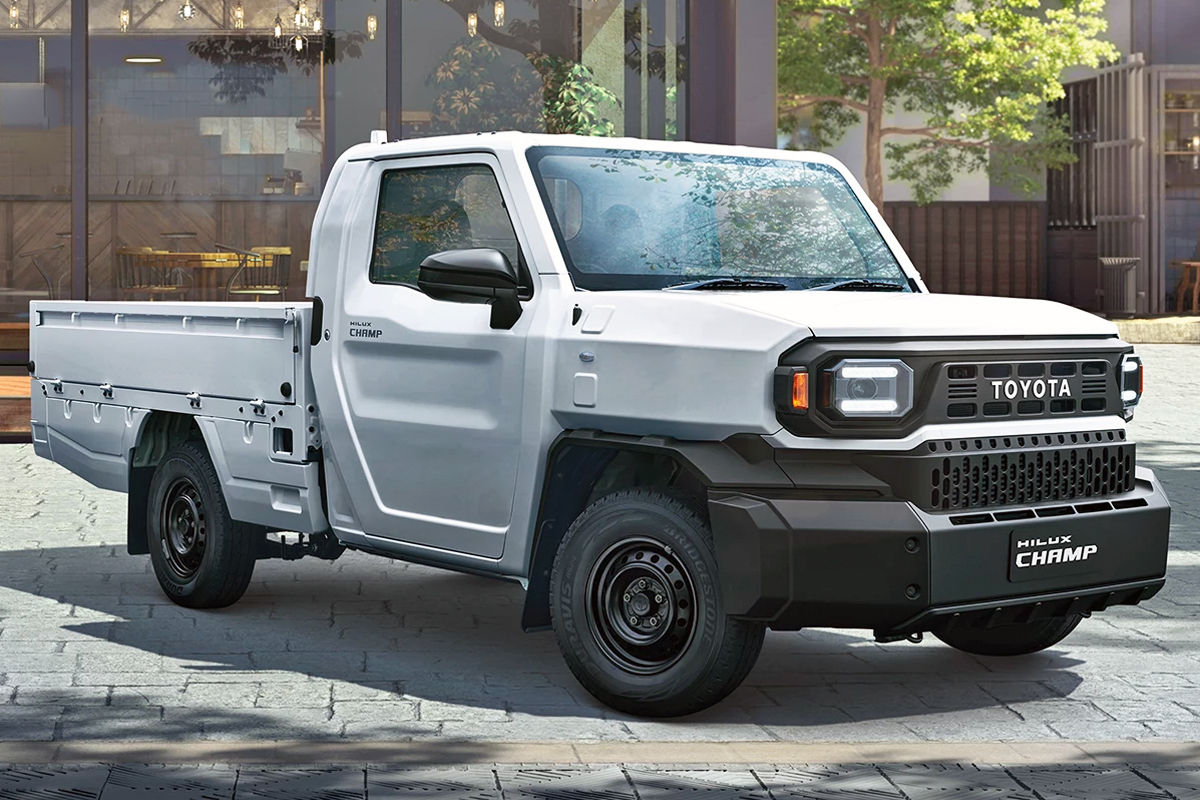
Would you buy a brand-new ‘old’ Toyota bakkie?

Did Mazda give the CX-60 the wrong engine?

Is Isuzu’s 6-cylinder turbodiesel hiding in plain view?

Why you don’t need a double-cab 4×4 with low range

What bakkie might Stellantis build in SA?

Green hydrogen could save South Africa’s car industry

Why no more Akio Toyoda at Toyota?

Mitsubishi Colt Returns as (Poorly) Disguised Renault Clio

The Mitsubishi Colt badge is back! Look familiar? Well, that’s because it’s little more than a rebadged Renault Clio hatchback…

The Mitsubishi Colt badge traces its origins all the way back to 1962 and has over the years been applied to both passenger cars and light-commercial vehicles (it was, for instance, used in South Africa between 1992 and 2008 on what the rest of the world knew as the L200 or Triton bakkie). After a bit of a sabbatical, the nameplate is back, though this time it’s affixed to what is merely a Renault Clio clone.

Yes, the new Mitsubishi Colt is little more than a rebadged version of the recently facelifted 5th-generation Clio. Like the 2nd-gen ASX unwrapped in September 2022, the new Colt is a product of the Renault-Nissan-Mitsubishi Alliance (under the so-called “leader-follower” strategy).

So, will the Colt make its way to South Africa? Well, according to Jeffrey Allison, General Manager for Marketing at Mitsubishi Motors South Africa, the new Colt “is destined for Europe and not for South Africa”.

Riding on the group’s CMF-B platform and manufactured at Renault’s Bursa factory in Turkey, the Clio-based model will technically serve as the 7th generation of Colt to be offered in Europe (more than 1.2 million units of the earlier-gen models were sold in the region), returning to the Old Continent after a 9-year absence.

A cabin familiar from the 5th-generation Renault Clio (but now with a Mitsubishi logo).

Mitsubishi’s designers have pasted the Japanese firm’s so-called “Dynamic Shield” face onto the front of the Clio, while also seemingly handing it a slightly different lighting signature (along with the 3-diamond Mitsubishi logo, of course). Round back, “Mitsubishi” lettering stretches across the tailgate, positioned above a Colt badge.

Inside, there’s virtually nothing to differentiate the new Colt from its Clio sibling (apart from badging, of course). For instance, it’s available with either a 7- or 9.3-inch infotainment display, as well as a Bose premium sound system and a raft of driver-assistance safety features (such as adaptive cruise control, lane-departure warning, automatic high beam and rear cross traffic alert) offered on the Clio in Europe.

As you’ve no doubt gleaned, the new Mitsubishi Colt uses the same powertrains as the Clio in Europe, which means it’s available in hybrid form (combining a 1.6-litre petrol engine with a pair of electric motors and a 1.2 kWh battery pack). There’s also a turbocharged 1.0-litre petrol motor (an engine that delivers 74 kW and 160 Nm in Clio guise here in SA) mated with a 6-speed manual transmission as well as a naturally aspirated 1.0-litre mill that makes do with a 5-speed manual cog-swapper.

Buy a used Renault Clio on Cars.co.za!

Related content

New Mitsubishi ASX is Rebadged Renault

Mitsubishi Outlander (2023) Price & Specs

Mitsubishi Triton XRT Concept Shown

Porsche Mission X Concept Announced

It’s not very often we get to see concepts from the Stuttgart-based brand. Meet the Porsche Mission X.

As far as concepts go, the Porsche Mission X ticks many of the boxes. Outrageous looks. Check. Scissor doors. Check. Lofty ambitions. Check.

It’s crazy to think the mighty Porsche 918 Spyder hybrid came out around a decade ago and together with the Ferrari LaFerrari and McLaren P1, set the benchmarks for hybrid high performance. Electrification tech has come a long way and now we have the Porsche Mission X concept and the brand has intentions of building it.

In Porsche’s own words; “Mission X is a spectacular reinterpretation of a hypercar, with Le Mans-style doors that open upwards to the front and a high-performance, efficient electric powertrain.” Sounds good, doesn’t it?

Porsche Mission X doors

The German brand is not holding back when it comes to goals for the Porsche Mission X. It should be the fastest road-legal vehicle around the Nurburgring Nordschleife, feature a power-to-weight ratio of roughly 1 PS per kg, have more downforce than the current 911 GT3 RS and offer charging that’s twice as quick as the current Porsche Taycan Turbo S.

No information was released about the car’s powertrain, but we do know that it will be an all-electric setup, with the battery located centrally behind the vehicle’s seats giving it that mid-engined handling agility. Given Porsche’s business tie-ins with Rimac, we guess some tech from the Nevera would make its way into the Mission X.

Some interior pictures were released and the cabin looks futuristic and retro simultaneously. There are carbon-shell bucket seats and a nice blend of digital and analogue instrumentation.

Porsche Mission X cabin

Will the Porsche Mission X be built?

Well, it’s not officially been greenlit for production, Porsche is well aware that the game of hyper-performance motoring has shifted into the EV era and it’ll need to remain relevant if it wishes to remain a flagship performance brand.

Porsche 911 (993) GT2: Classic Drive

The Porsche 911 (993) GT2 is arguably one of the most special homologation 911s of all time. We drive a stunning example in Switzerland to verify whether it indeed represents the best 911 of the 90s.

PICTURES: Charles Russell

When was the golden period for Porsche’s venerable 911? That is a moot question… and your answer will probably depend on when you were born. Some 911 enthusiasts argue that pre-1973 911s are the real deal. Then, for some of us, an impact-bumper series car is the archetypal 911. All things considered, your preference may ultimately be determined by which of the aforementioned models captured your imagination the moment you saw a Porsche “in the wild” for the first time.

Porsche 911 (993) GT2 rear wing

I am a member of the latter group, but when I started reading about cars with real intent, it was the end of the 964, advent of the 993 era. The 993 Turbo with its rounded curves really stood out for me, especially since other performance cars of the period were generally very angular in terms of their exterior designs. I thought a 911 couldn’t look any more hunkered down and purposeful than the 993 Turbo, so imagine my sheer jaw-dropping excitement the first time I saw a picture of a 911 (993) GT2!

Porsche 911 (993) GT2 bolt-on rear fender

Note those bolt-on wheel arches (32mm at the front, 30mm at the rear), the wide split-rim, three-piece magnesium-alloy Speedline wheels (here with darkened centre pieces) and a rear wing not unlike those on Porsche’s endurance race cars. “Can you drive this 911 on the road?” It’s a question I first asked myself as a teenager.

Examples of the road-going 911 GT2 were built by Porsche to comply with the rules and regulations of international GT-racing formulae, particularly the BPR series for street-legal GT cars. The GT2 race cars’ lineage traces back to the 964-series 911 Carrera RSR and RS 3.8.

Specifications

  • Model: Porsche 911 (993) GT2
  • Engine: 3.6-litre, flat-6 turbopetrol
  • Power: 321 kW at 5 750 rpm
  • Torque: 540 Nm at 4 500 rpm
  • Transmission: 6-speed manual, RWD
  • Weight: 1 295 kg
  • 0-100 kph: 4.4 sec (claimed)
  • Top speed: 295 kph (claimed)
  • Years produced: 1995–1997
Porsche 911 (993) GT2 engine bay

And, as was the case with competitively campaigned 911s that predate it, the 911 GT2 excelled at endurance racing. 1995 was the first year the GT2 participated at Le Mans. Although six GT2s/GT2 Evos didn’t finish the race, three cars took the overall 15th, 16th and 17th places. These achievements lead to class positions of 4th, 5th and 6th. The top-placed car was the white number 77 car from Seikel Motorsport, driven by Guy Kuster, Karel Dolejší and Peter Seikel. 

And the 911 GT2’s racing success gained momentum thereafter… In the 1997 24 Hours of Le Mans, the cars achieved 1st, 2nd, 3rd and 4th places in their class at the challenging La Sarthe circuit, which resulted in overall positions of 9th, 10th, 11th and 13th in that year’s race. 

Privateers continued to race the 911 GT2s competitively in 1998, 1999 and even in 2000. However, by that time the 996 GT3 R was already on the racing scene.

Still, at its final Le Mans race in 2000, a 911 GT2 finished 7th in class — it was no match for the Chrysler Viper GTS-R and Corvette C5R — but, significantly, it completed 317 laps, 7 more than the GT-class winning Porsche 911 GT3-R. To say it was a successful racer of its time will be an understatement of note. 

Porsche 911 (993) GT2 cabin

Made available early April 1995, the Porsche 911 GT2 (in Street, as well as Clubsport, versions) was based on the new 993 Turbo, which – incidentally – would only be released a few weeks later. There were notable changes and upgrades compared to the Turbo. The GT2 used the same engine, but power increased from the Turbo’s 300 kW to 321 kW.

What’s more, dropping the Turbo’s all-wheel-drive system meant the GT2 was around 200 kg lighter and Porsche claimed a 0-100 kph acceleration time of 4.4 sec and a top speed of 295 kph. The GT2 was also 20 mm lower to the ground than the Turbo, while its suspension was adjustable and a stiffer subframe was fitted at the rear (as well as increased negative camber). The brief was clear, the GT2 had to be a pure driver’s machine, in line with the race car that Porsche intended to take to global race circuits.

Porsche 911 (993) GT2 instrument cluster

This specific 911 GT2 was built in 1995 and is, in GT2 terms, a luxurious “Street” version. Even so, it still tips the scales at only 1 295 kg. Only 172 GT2s were built, and of this small number most were built in 1995. According to the very comprehensive “The Porsche Book” by Jürgen Bath and Gustav Büsing, this chassis number was one of the Rest of World (RoW) cars which featured the M64/60RS engine, developing 335 kW at a higher 6 000 rpm instead of the M64/60s 321 kW at 5 750 rpm.

The car was originally earmarked for the UK. Its current (third) owner bought the car in Europe a decade and a half ago and has kept it in Switzerland since he acquired it. 

Porsche 911 (993) GT2 rear three-quarter view

Although the cabin is sparse in terms of equipment, there is still an audio system, electric windows as well as those legendary door pull straps. As expected, the car has a lot in common with the 993 Turbo, but when you look behind you and see the omission of rear seats you realise you are seated in something special. The half-cage currently in situ was fitted post-factory, but that is of little concern, if there is a car that can make do with a half-cage, it’s a Porsche GT car.

Frosted Alpine roads are a far cry from a dry Le Mans track. As I drive up the twisty mountain road, the GT2’s 235/40 ZR18 front and 285/35 ZR18 rear tyres crush half-molten snow in its path. These aren’t ideal driving conditions for a 335 kW car, so I take care to make extremely sensitive and delicate throttle inputs with my right foot.

Porsche 911 (993) GT2 front three-quarter view

Switzerland is fascinating in that sense. When spring comes along, the temperature drops and the snow gets thicker the higher you drive up mountain passes, but, astonishingly, the roads might be bone dry in the valleys below them.

The owner told me that these tyres are actually quite forgiving in wet conditions. I’m thinking on the one hand he is crazy to let me head out with this car in these conditions, but he should be applauded for allowing us to do so. 

Behind the wheel of a Porsche 911 (993) GT2

I heed his advice and slowly push the throttle harder. I’m amazed at how tractable the engine is. Even when the rev needle rests as low as 1 000 rpm in second gear, you can simply squeeze the pedal and the engine will start to push from the rear.

When I flex my right foot I discern some turbo lag, but it is only for a fraction of a second before the urgency of the engine makes itself felt. Beyond 4 000 rpm, the GT2’s engine delivers its true performance in no uncertain terms — with the turbos fully spooled up, the Porsche’s characteristic flat-six soundtrack can be savoured as it bounces from the rock faces. This sound, in conjunction with the turbo noise, reminds you, at every second, of the serious nature of this 90s icon.

In these conditions, you need to make sure your front wheels are pointing ahead as the full power delivery can easily overwhelm the rear wheels, albeit briefly, as the road twists and turns down the mountain. Fortunately, the brakes are more than up to the task of lowering your speed, while the pedal also provides good feedback. Switching gears is effortless, as each engagement is slick and the gear lever slots into the respective mechanisms.

The GT2’s steering system feels better connected to the front axle compared to modern cars; it constantly and accurately feeds information to your hands. It is a driving experience in which you want to immerse yourself — as if the car implores you to learn to drive it to its potential over several days… even weeks. 

A few years ago I drove the Clubsport version of the 993 GT2. The Street version, as expected, feels almost plush compared to the Clubsport.

The cabin is more habitable (as well as better insulated from exterior sounds), and you can easily do a long road trip in this car – that is if supremely-focused 911s are your cup of tea. However, what this GT2 Street does share with the Clubsport is the power delivery, the solid shift action of the gearbox and the overall character and stance of the car.

Why the 993-gen 911 GT2 is significant

The release of the 993 GT2 paved the way for some of fastest, most respected, but also most fearsome 911s in history. Let’s not forget it all started with the 993 version, a road car that incorporated so much of its racing sibling and whose full-slick tyres pounded the various endurance racing tracks across the globe with tremendous success. It undoubtedly deserves all the attention and value it receives today. 

Search for a Porsche 911 listed for sale on Cars.co.za

Find exclusive car-themed merchandise at the SentiMETAL Shop

Related content:

Porsche 911 (997) GTS vs GT3: Classic Comparison

Porsche 356 vs Porsche 912: Classic Comparison

Porsche 911 Targa ‘Edition 50 Years’ (2022) Launch Review

Porsche 911 GT3 (2022) Launch Review

Porsche 911 GTS (2021) Launch Review

Porsche 911 Turbo S (2020) Launch Review

Porsche 911 GT3 RS (2020) Review