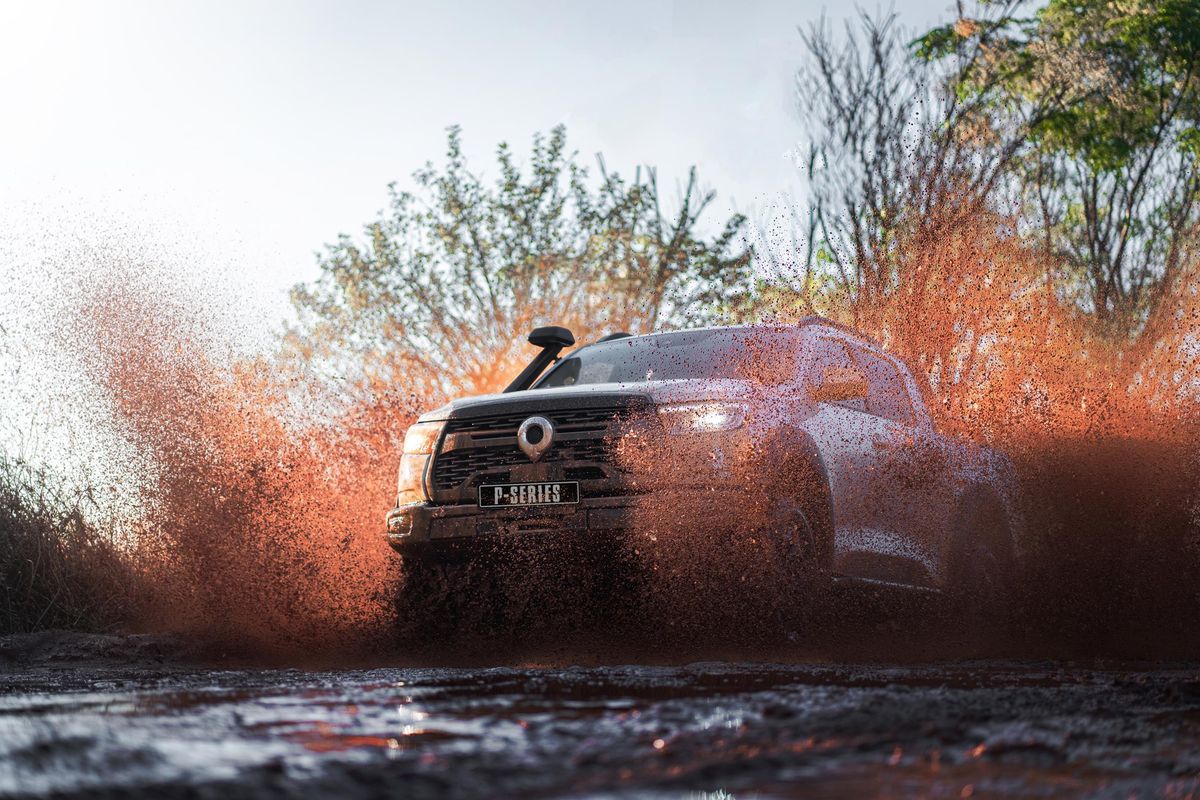
The GWM P-Series LTD is the new flagship for the P-Series family. Here’s what you get for your R694 950.
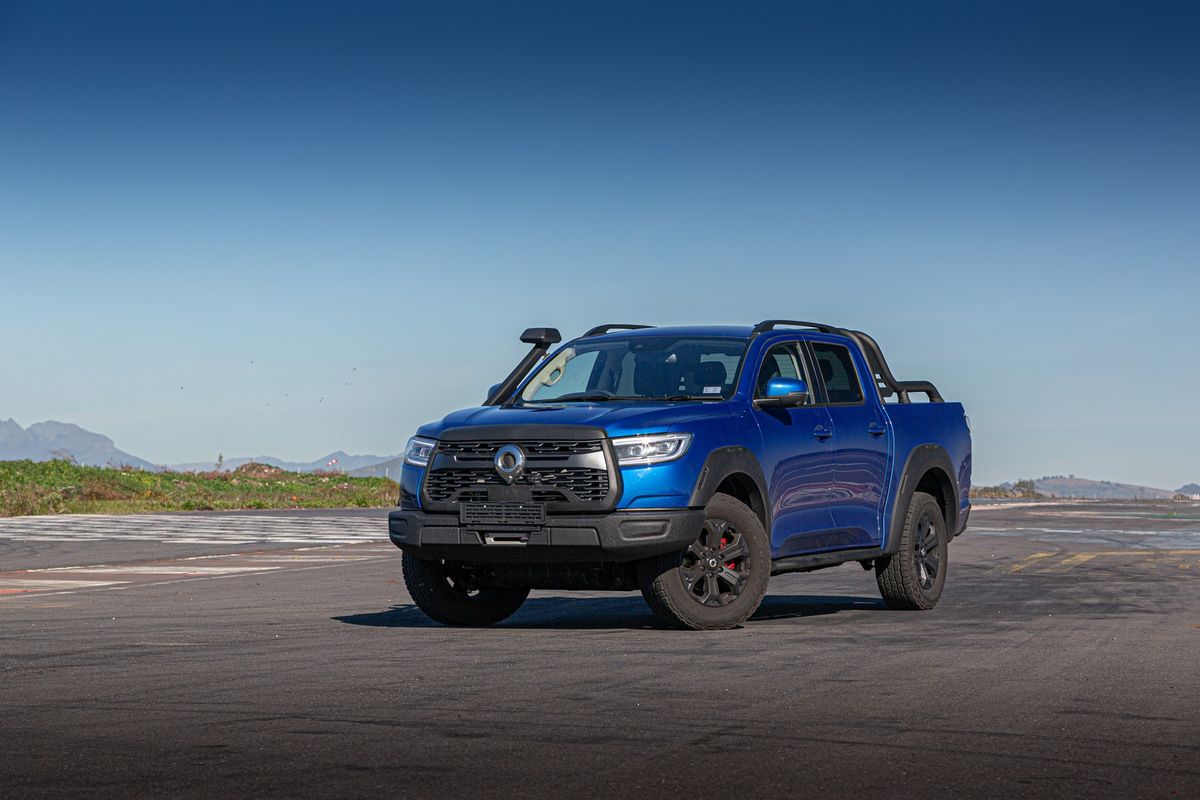
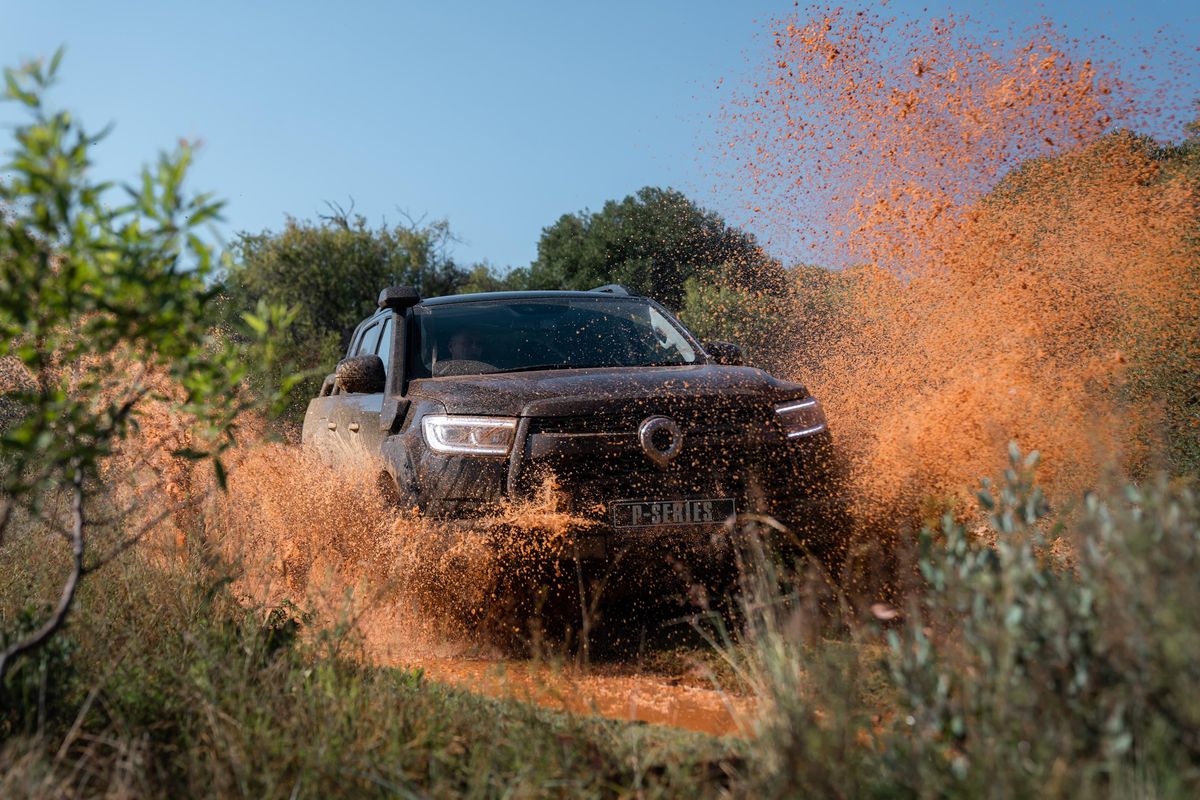
The P-Series bakkie range from Chinese manufacturer GWM has upset the traditional players by offering value for money in a tech-laden product. What you see here is the new GWM P-Series LTD, the flagship derivative and it comes with a number of upgrades to differentiate itself from the rest of the lineup.
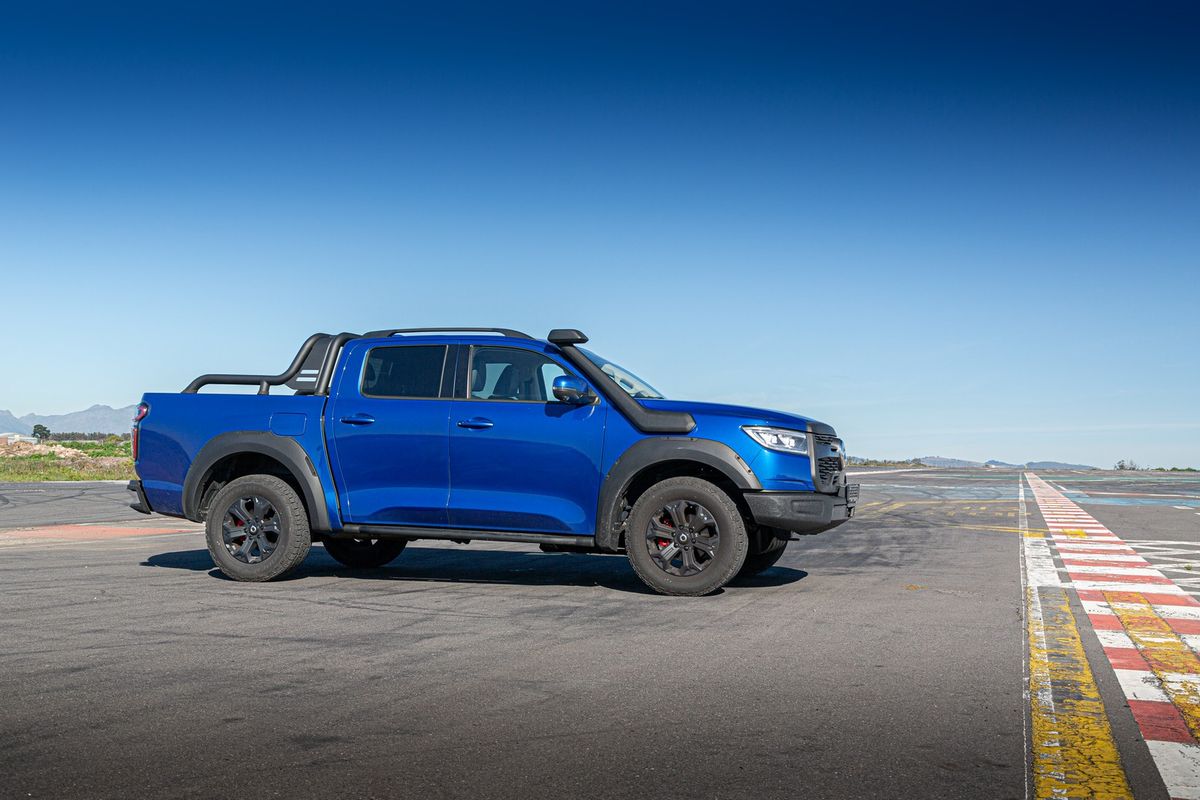
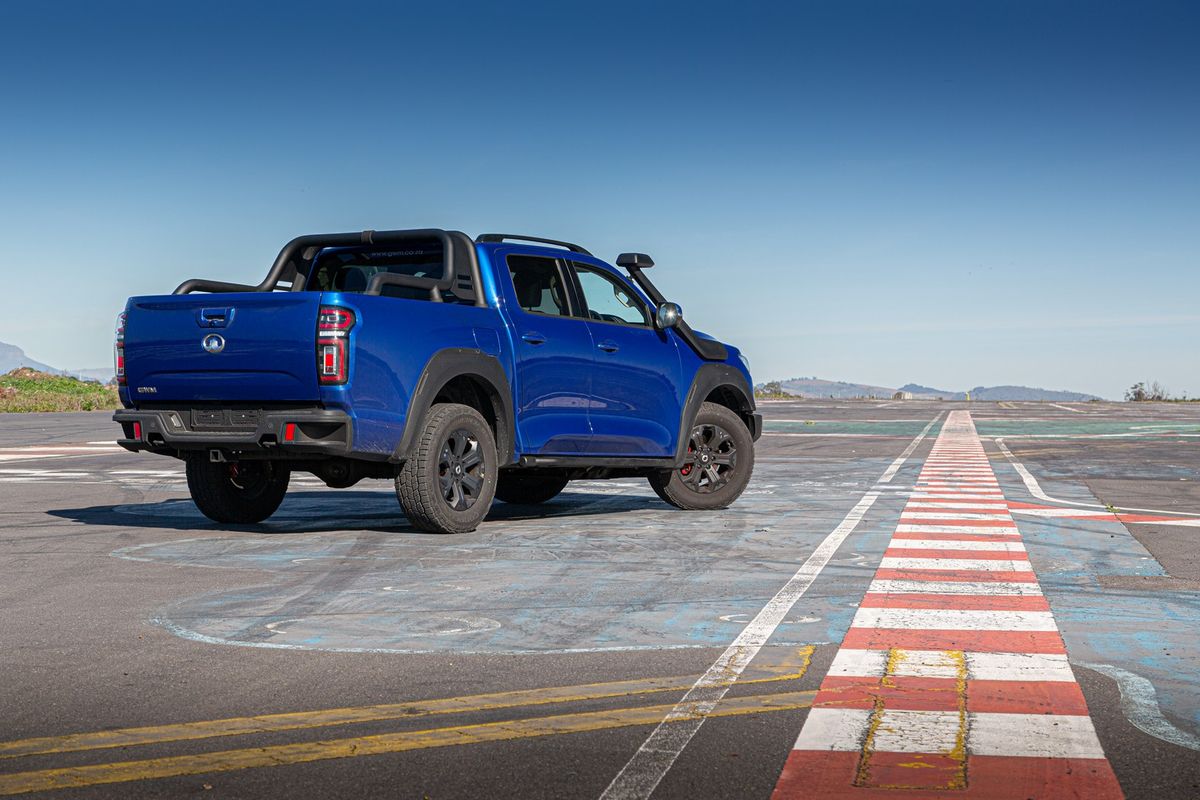
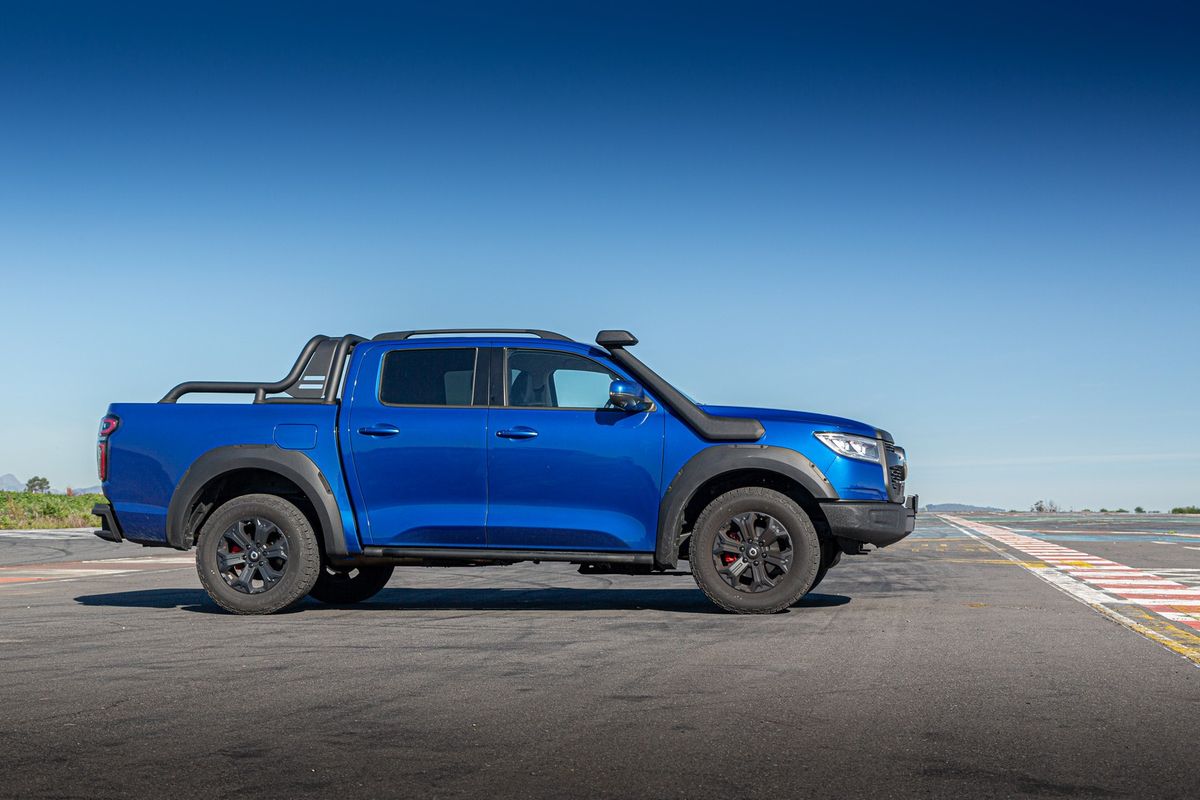
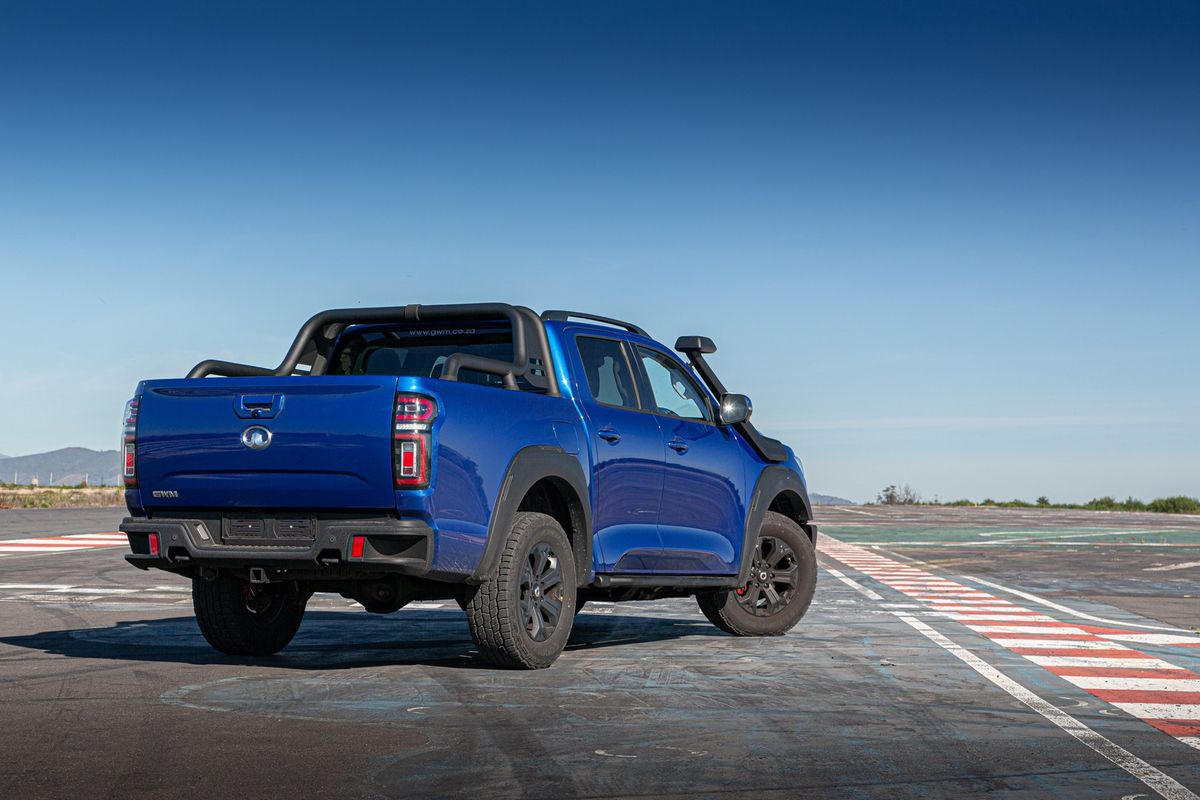
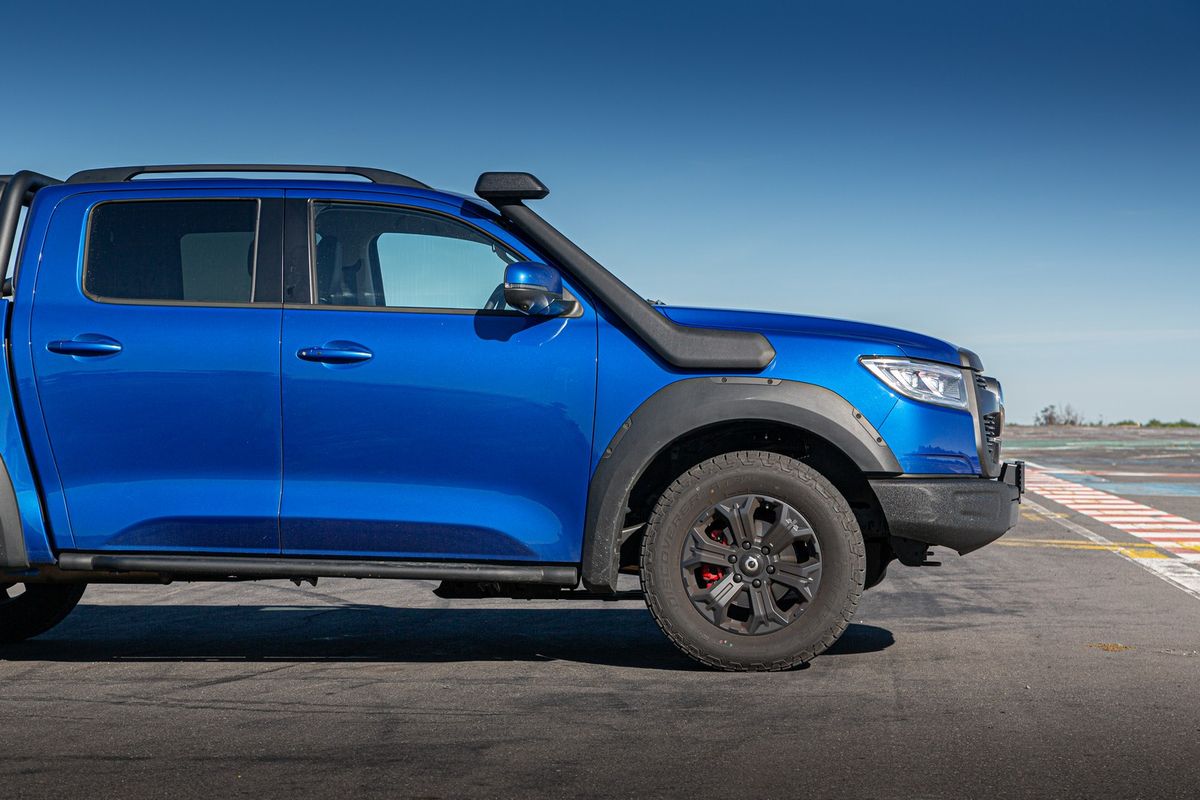
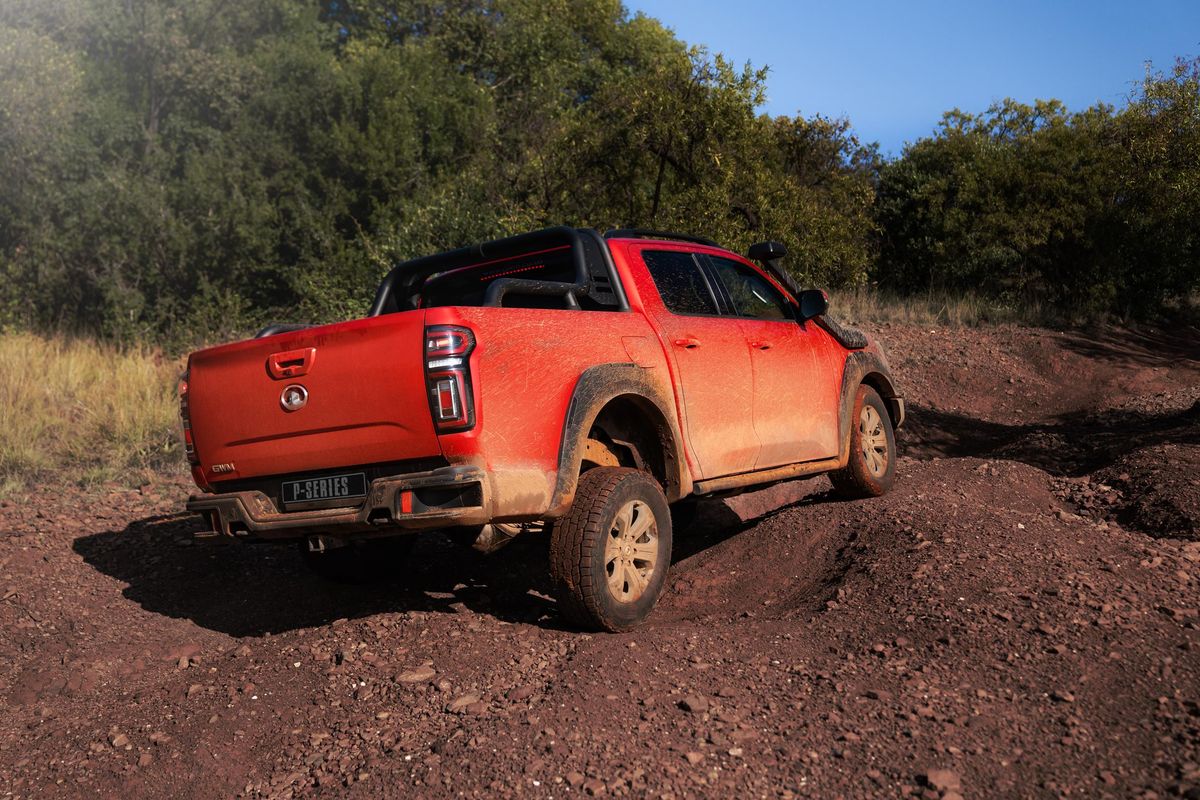
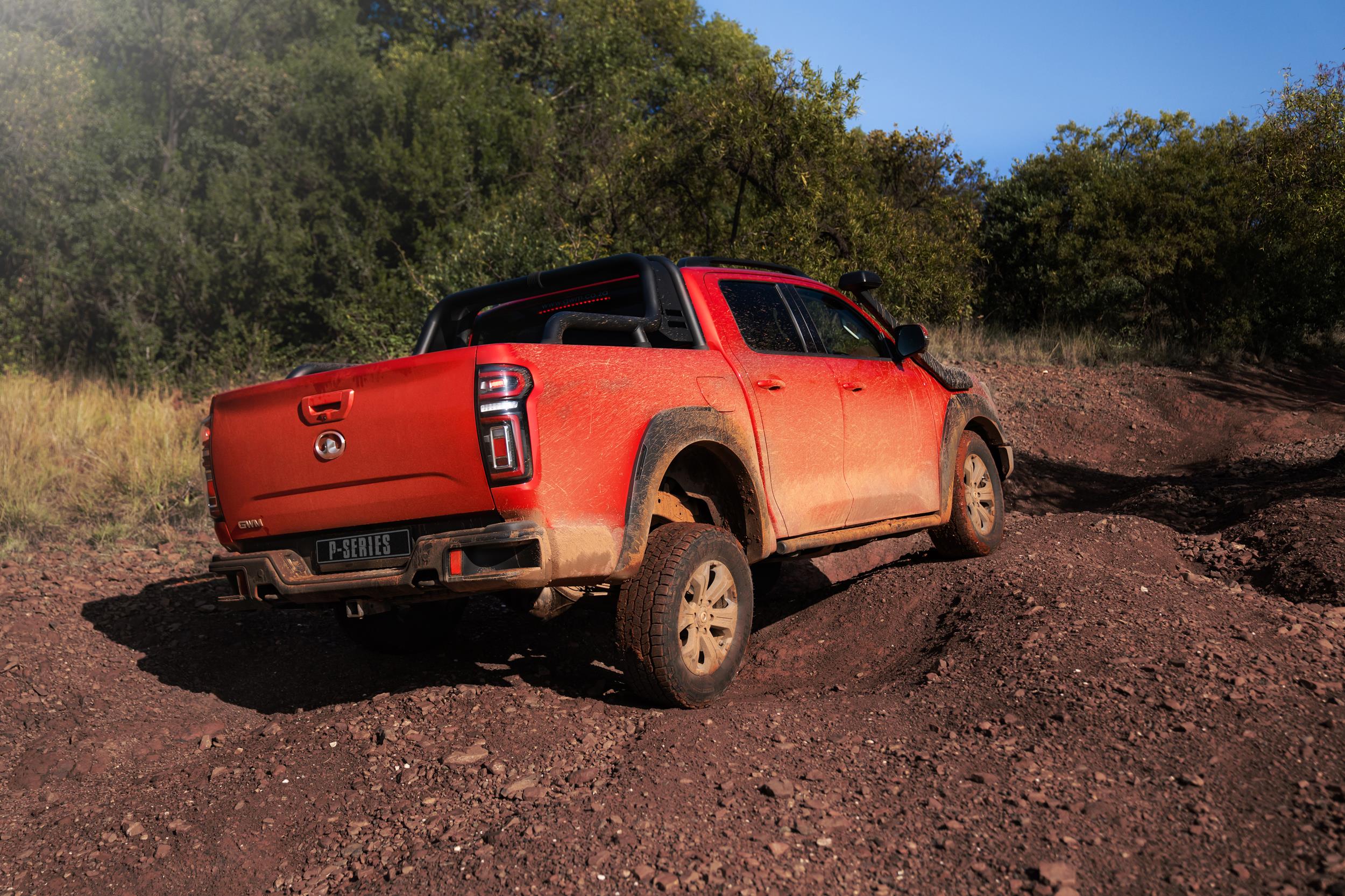
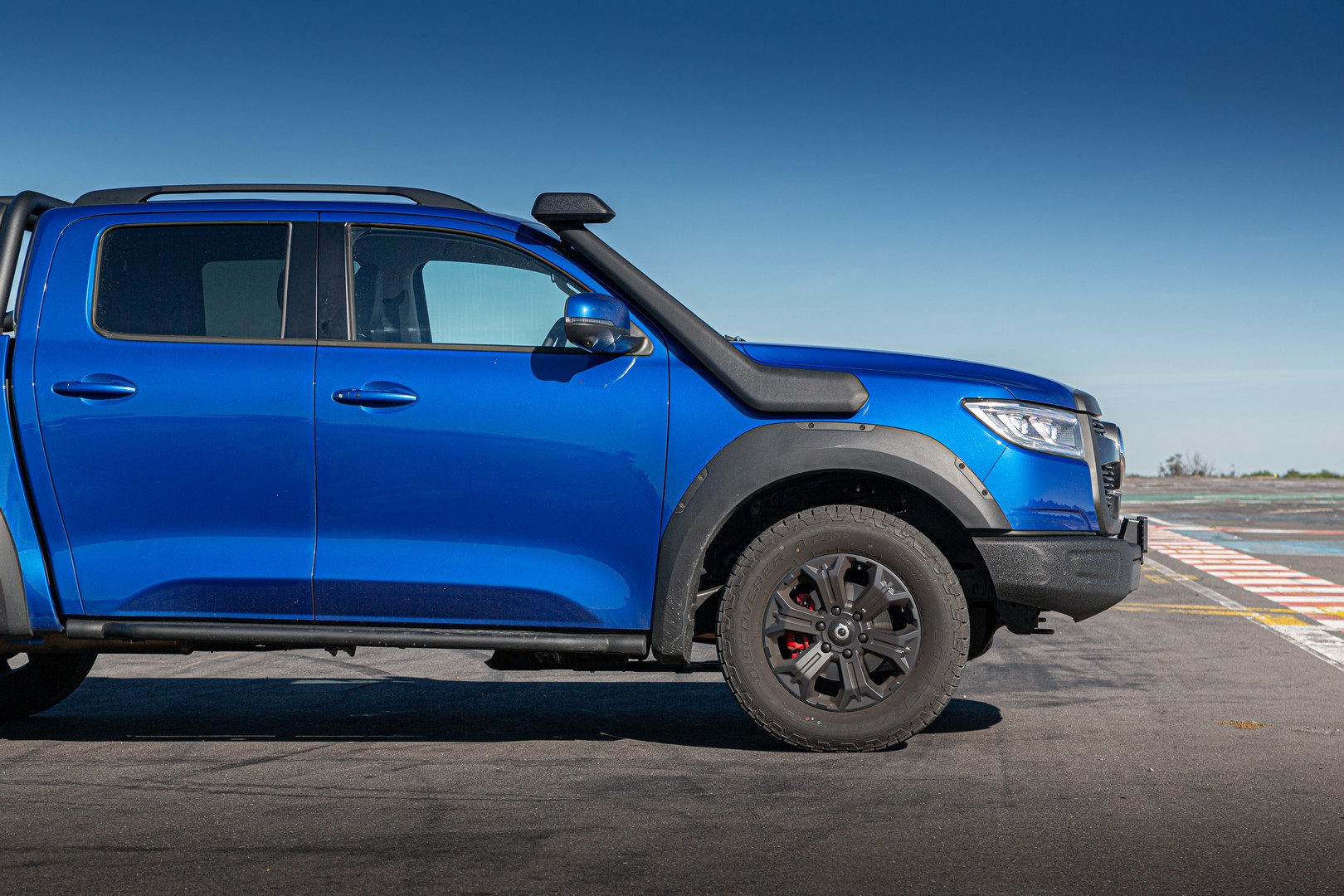
The new GWM P-Series LTD is priced at R694 950, a R50 000 premium over the 2.0TD double cab LT 4×4 which was the previous top model. You can spot the newcomer with its rugged look, which comprises an off-road steel black front bumper that looks like it helps with approach angles in offroad situations, a rear bumper that now offers steps for easier loadbin access and all-terrain 18-inch wheels.
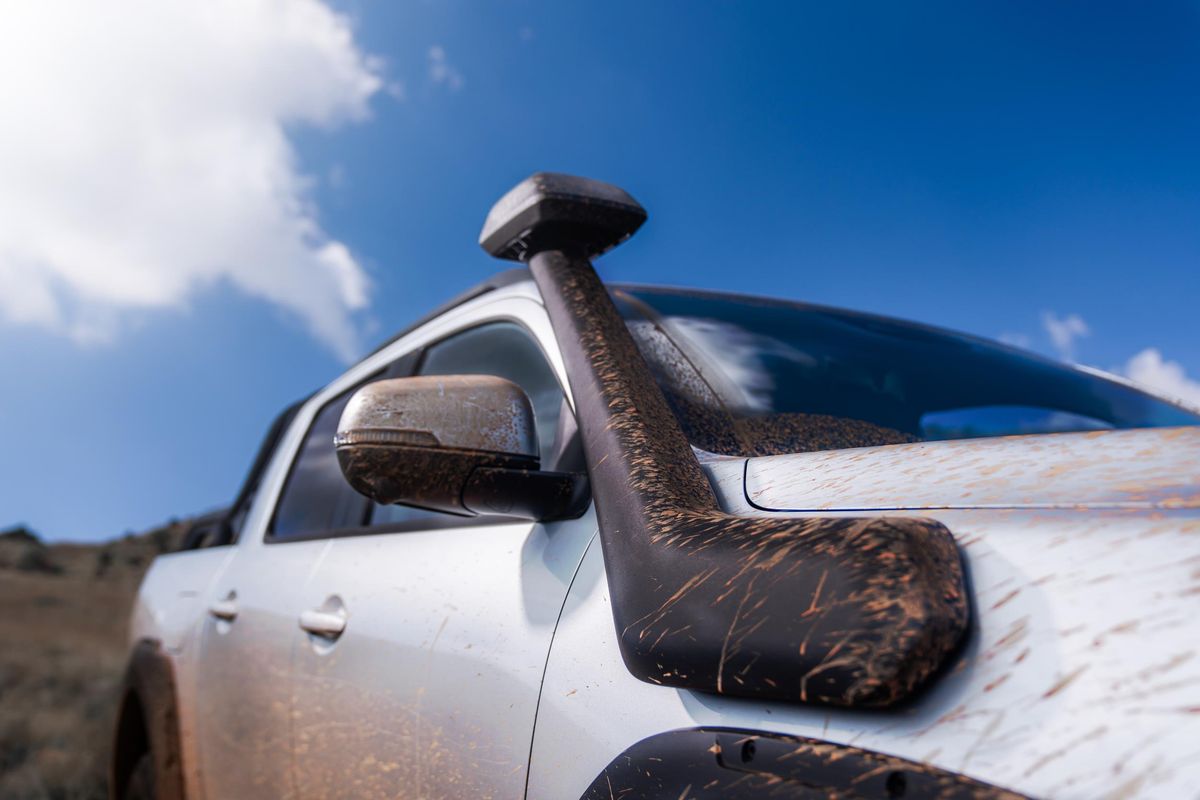
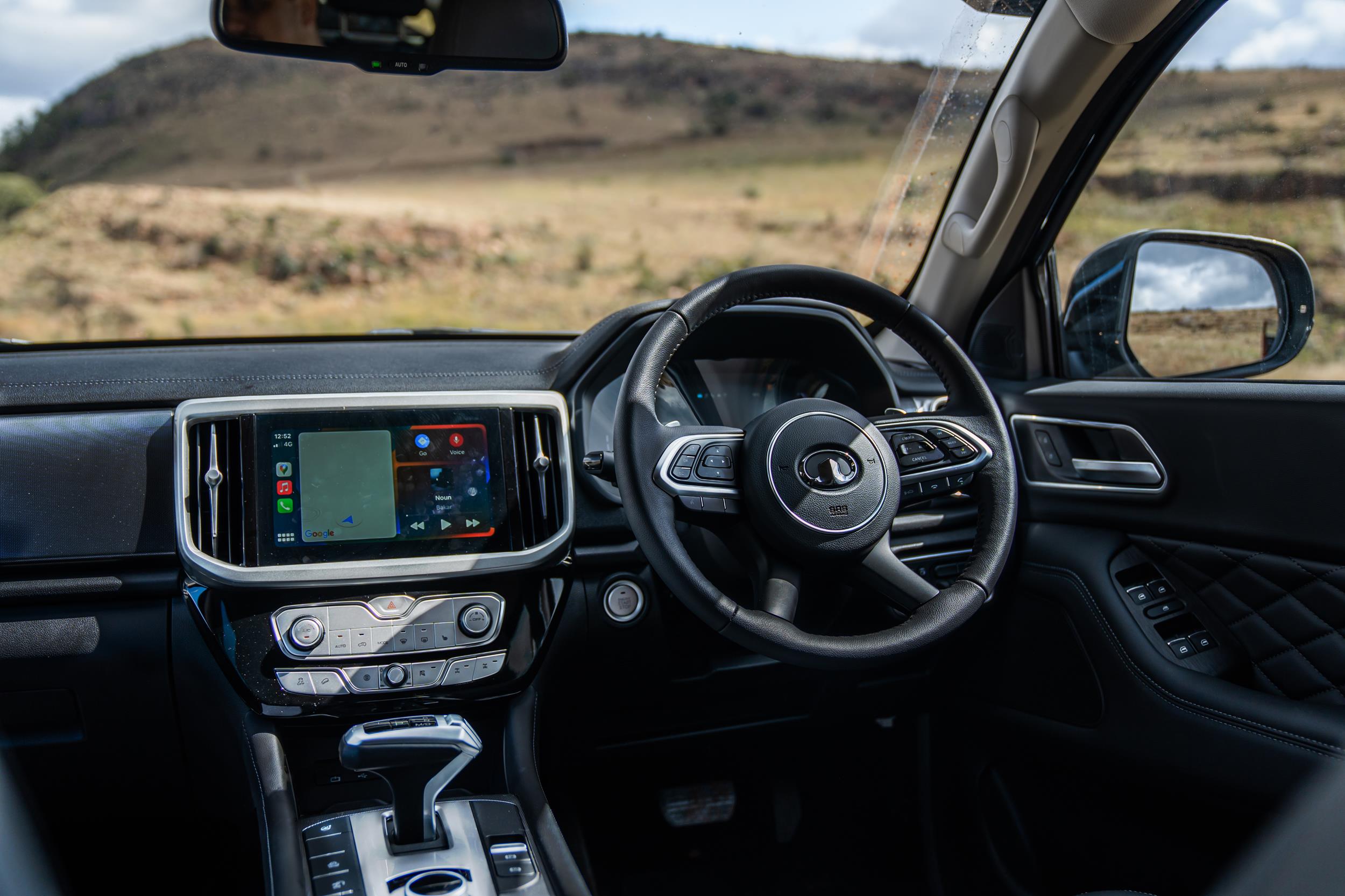
A black sports bar, plastic bedliner, aggressive offroad wheel arches, specifically developed snorkel and a winch with 4.2-ton capability are also thrown in. Inside the GWM P-Series LTD gains a 12-volt power accessory in the engine bay as well as a 220V power plug.
New P-Series LTD Off-road System
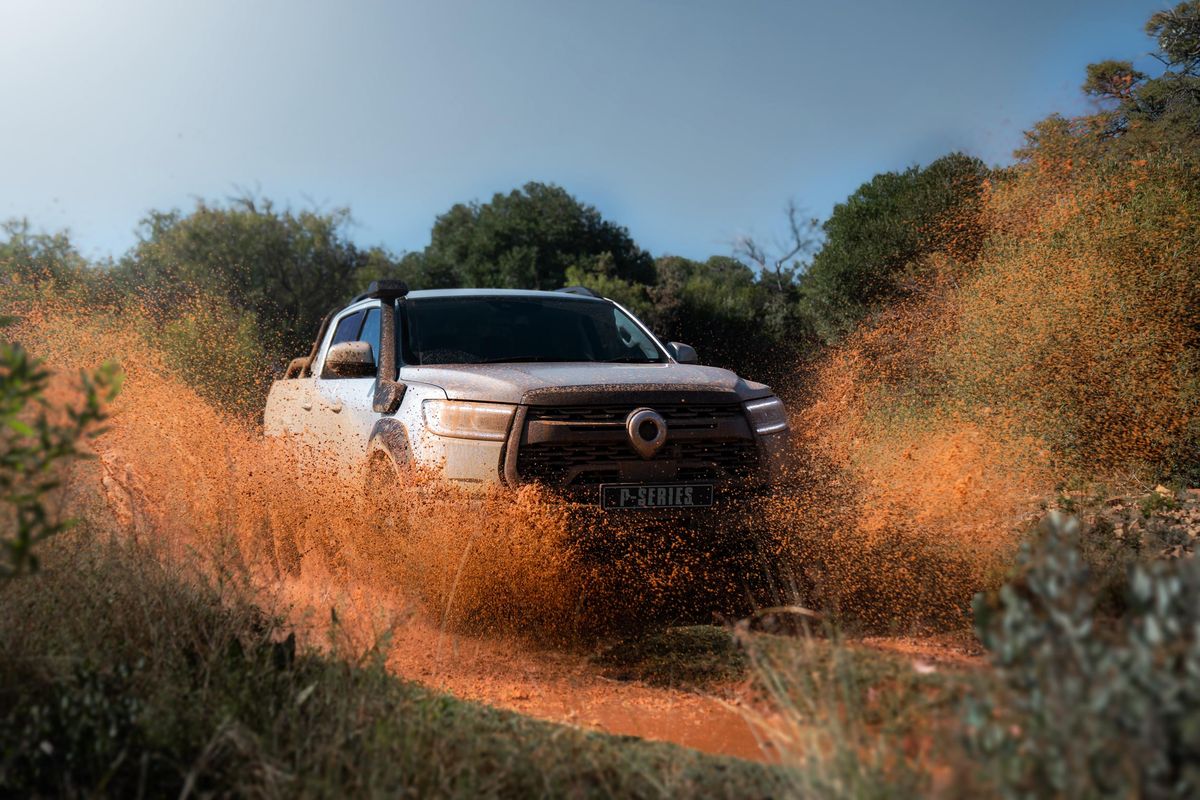
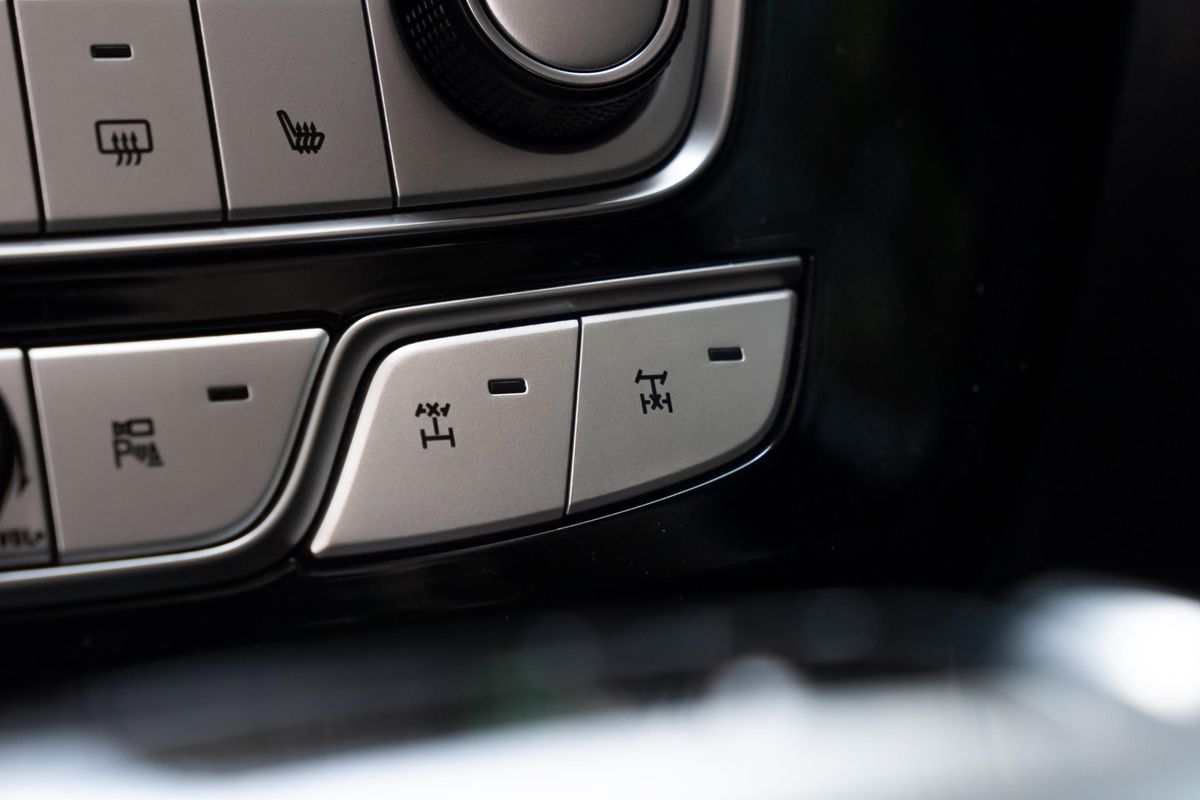
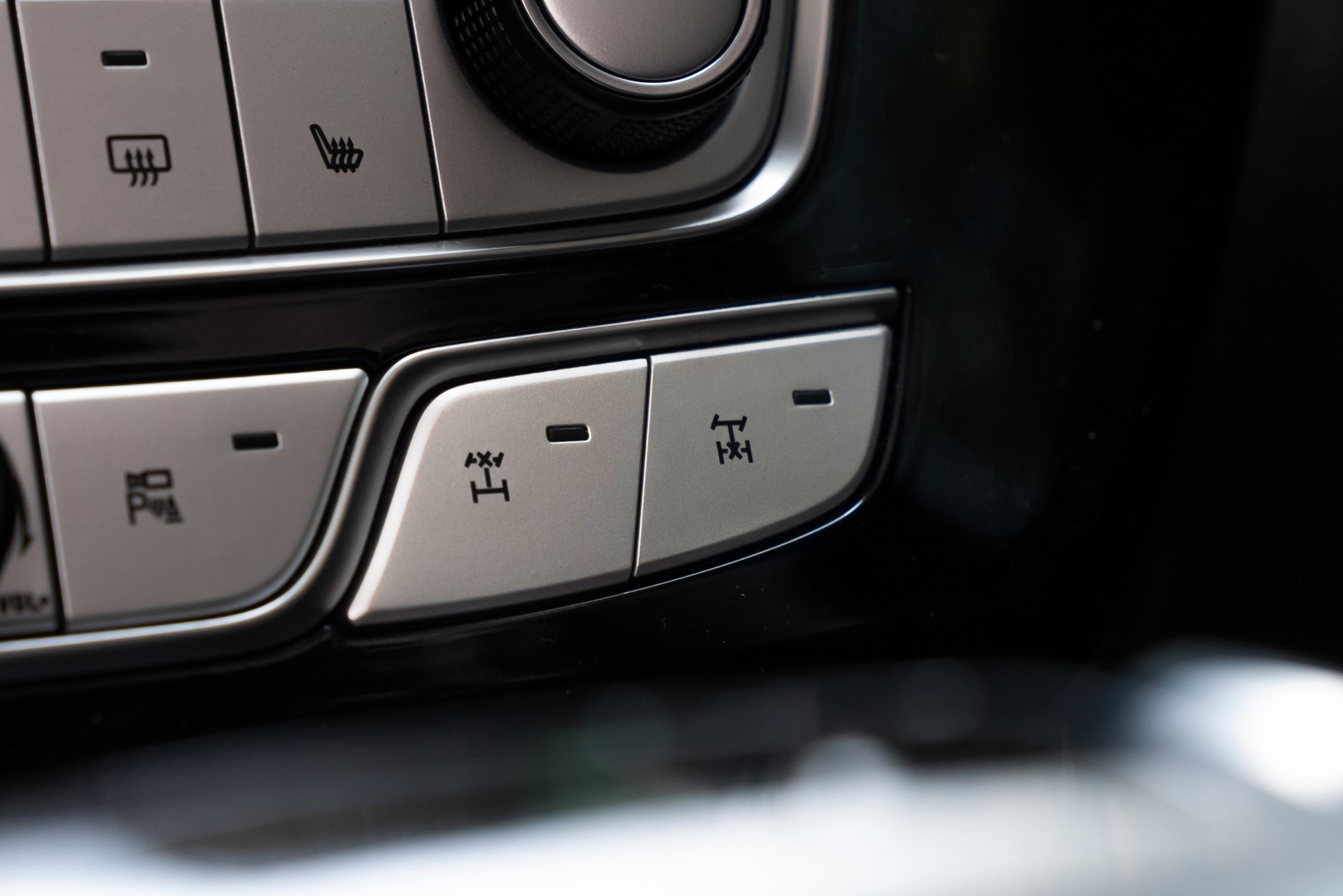
Under the skin is a new off-road system that allows full control over the drivetrain. The other P-Series models are permanent four-wheel drive, with a torque-on-demand setup that sends power where it’s required if there’s a loss of traction. The P-Series LTD has a system that’s aimed at the more 4×4-conscious buyer looking for increased off-road prowess from their affordable double-cab bakkie.
The new off-road system includes a fully selectable system with a variety of driving modes, including 2H, 4H, Snow, Mud, Sand and 4L. The off-road systems include the Cross-Country Expert Mode and Drive Mode Memory, linking to both front and rear differential locks (new for this version P-Series). Some interesting tech has been introduced like the off-road cruise control and the Trail Turn assist that decreases the turning circle by 3 meters, useful when you need to turn around in the bush.
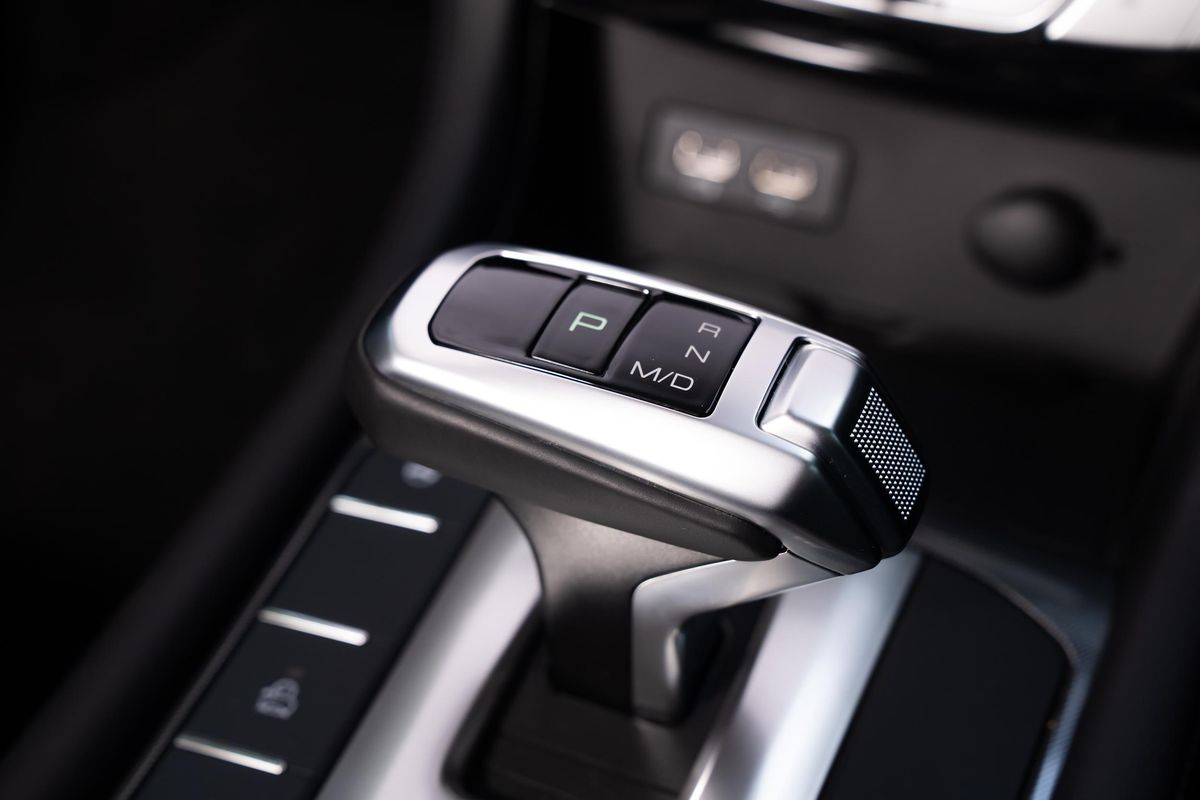
The engine and transmission remain unchanged, and as a reminder, it’s a 2.0-litre turbocharged diesel 4-cylinder motor developing 120 kW and 400 Nm. An 8-speed automatic transmission is standard.
Features
Hill Descent Control
360-degree camera
Tyre pressure monitoring system,
Dual front airbags with side, curtain and front central airbags
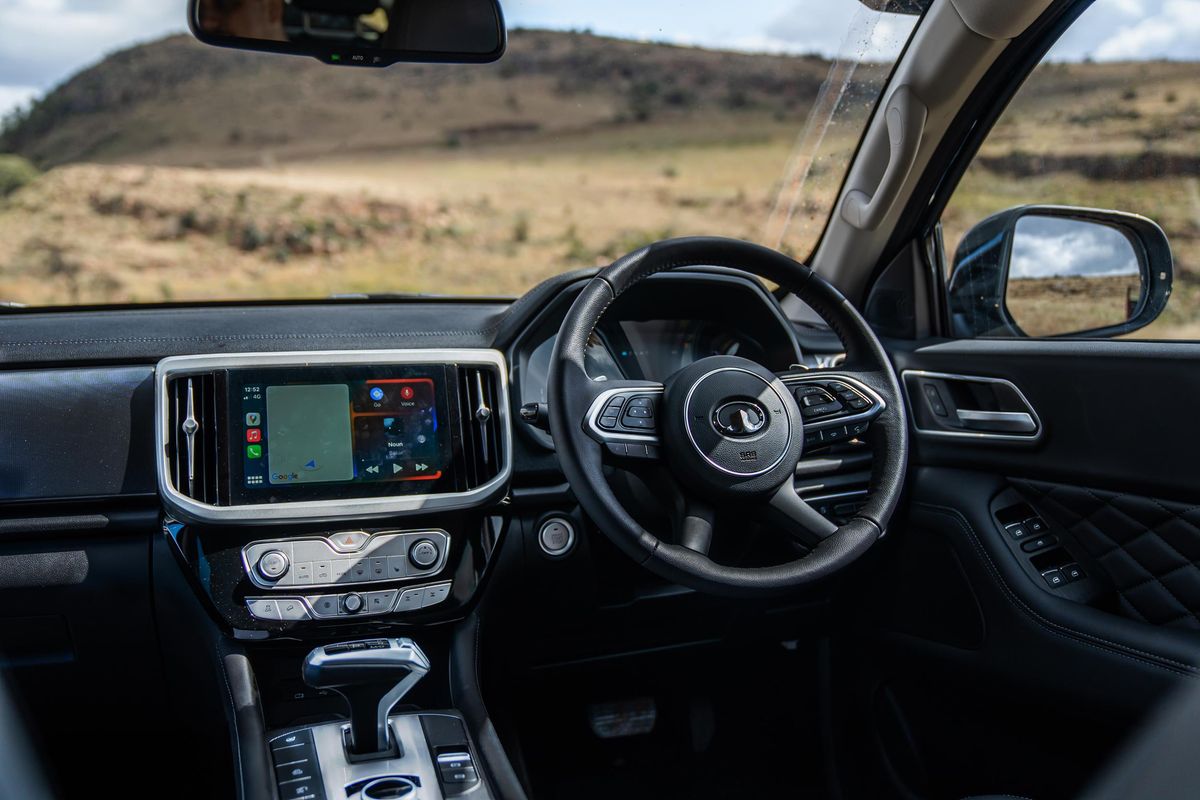
7-inch LCD virtual instrument cluster
9-inch multi-media touchscreen offering Apple CarPlay and Android Auto
Bluetooth capability
Wireless phone charging
2x USB ports in the front and 1 for the passengers.
How much does the GWM P-Series LTD cost in South Africa?
P-Series LTD R694 950
A standard 5-year/100 000 km warranty and service plan and 5-year unlimited mileage roadside assistance are included in the price.
Toyota SA rapped over knuckles for ‘misleading’ Corolla Cross ad
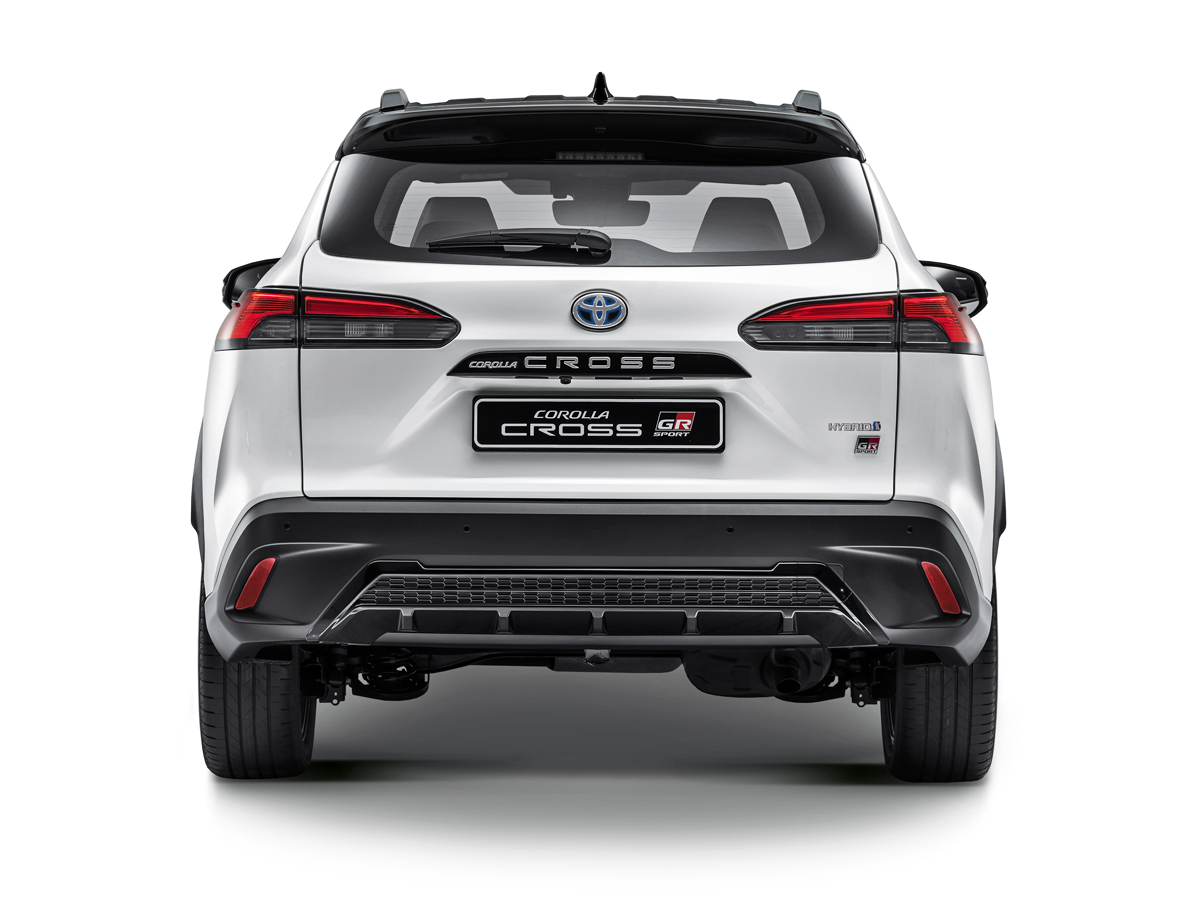
South Africa’s advertising watchdog has rapped Toyota SA Motors over the knuckles for a Corolla Cross GR-Sport Hybrid advertisement it ruled was “misleading”…
The Advertising Regulatory Board (ARB) has ruled against Toyota South Africa Motors after a consumer complained an advertisement for the Corolla Cross GR-Sport Hybrid was “misleading”.
Complainant Justin Brown approached the advertising watchdog about a Facebook post (dated 20 February 2023) from Toyota promoting its locally built Corolla Cross GR-Sport Hybrid. The advert in question included the following text: “If you thought the Corolla Cross GR-Sport couldn’t get any better, think again. The Corolla Cross GR-Sport Hybrid is here!”.
As a reminder, the Corolla Cross GR-Sport Hybrid launched in South Africa in February 2023, with production taking place at Toyota’s Prospecton facility in KwaZulu-Natal.
Brown submitted the advertising was misleading since it created the impression the vehicle was available for sale. However, the complainant said several dealerships confirmed there was no available stock, and that the waiting list for the Corolla Cross GR-Sport was “anywhere between 12 and 24 months”.
Toyota SA points to global hybrid battery shortage
In response, Toyota SA Motors initially refuted the claim there was no available stock, saying there had been a “steady inflow of these vehicles to the dealer network”. Still, it explained waiting periods might apply due to a global hybrid battery shortage, which it added should normalise by 2024.
It further pointed out the Corolla Cross GR-Sport Hybrid was indeed launched at the time it was advertised, suggesting the reference to it being “here” was factual, as the vehicle had officially become part of the Corolla Cross range, albeit in limited numbers “due to serving a niche demand”.
Publicis Groupe Africa, the company appointed as Toyota SA Motors’ agency partner late in 2022, echoed this sentiment, saying the post merely announced the addition of the GR-Sport Hybrid model to the overall Corolla Cross model range.
A screengrab of the Facebook post in question.
According to the Japanese firm’s local division, the Corolla Cross production plan at Prospecton included an average of 49 units of the GR-Sport Hybrid per month, with an annual plan of 542 units (for 2023). By comparison, around 1 500 units of the regular Corolla Cross were produced per month on average since launch, with the non-hybrid GR-Sport version sitting at about 141 units a month.
Explaining there was no other advertising actively promoting the sale of the vehicle in question, Toyota submitted it was “not unreasonable” to communicate its arrival despite having to put some customers on a waiting list. But, having considered all the material before it, the Directorate of the ARB ultimately ruled against Toyota SA Motors.
Advertising watchdog explains its ruling against Toyota
“The Facebook page that led to this complaint states that this vehicle is ‘here’. In the absence of any context that suggests the contrary, a reasonable person would interpret this to mean that this vehicle is generally available for purchase. In addition, the advertiser’s website, which is accessible by clicking on the URL provided in the advertisement, reads ‘Corolla Cross GR-Sport. Now Available in Hybrid’,” ARB’s ruling said.
“Neither of these advertisements communicate any sense of potential delays, shortages or long waiting lists (between 12 and 24 months) that might apply. The advertiser appears to concede that this is the case. However, it has not explained why its advertising does not inform consumers of this. It merely submitted that demand outstrips supply at this point and that it was not actively advertising this vehicle,” the watchdog added, saying the matter was further complicated by the fact Toyota had “not submitted any supporting information”.
Clause 16.1 of Section III of the ARB Code sits at the centre of the complaint and reads as follows: “Advertisements should not be submitted for publication unless the advertiser has reasonable grounds for believing that it can supply any demand likely to be created by the advertising”. In addition, ARB considered Clause 4.2.1 of Section II, which reads: “Advertisements should not contain any statement or visual presentation which, directly or by implication, omission, ambiguity, inaccuracy, exaggerated claim or otherwise, is likely to mislead the consumer”.
The hybrid version of the Corolla Cross GR-Sport launched locally in February 2023.
“In the absence of anything to show that the advertiser had reasonable expectations of meeting the demand for this vehicle, the Facebook [post] that gave rise to this dispute is found to have breached Clause 16.1 of Section III of the Code. By the same reasoning, the advertisement appears to be misleading and in contravention of Clause 4.2.1 of Section II of the Code,” ARB ruled.
In light of its findings, ARB ruled Toyota SA Motors was “required to withdraw or appropriately amend its advertising to ensure that consumers are adequately informed of the reality of the situation and the likelihood of prolonged waiting periods”.
Though the post in question still appears on the company’s Facebook page (at the time of writing, anyway), we noticed the Corolla Cross page on Toyota’s website now includes a line below the main image of the GR-Sport Hybrid, reading: “subject to limited stock availability”.
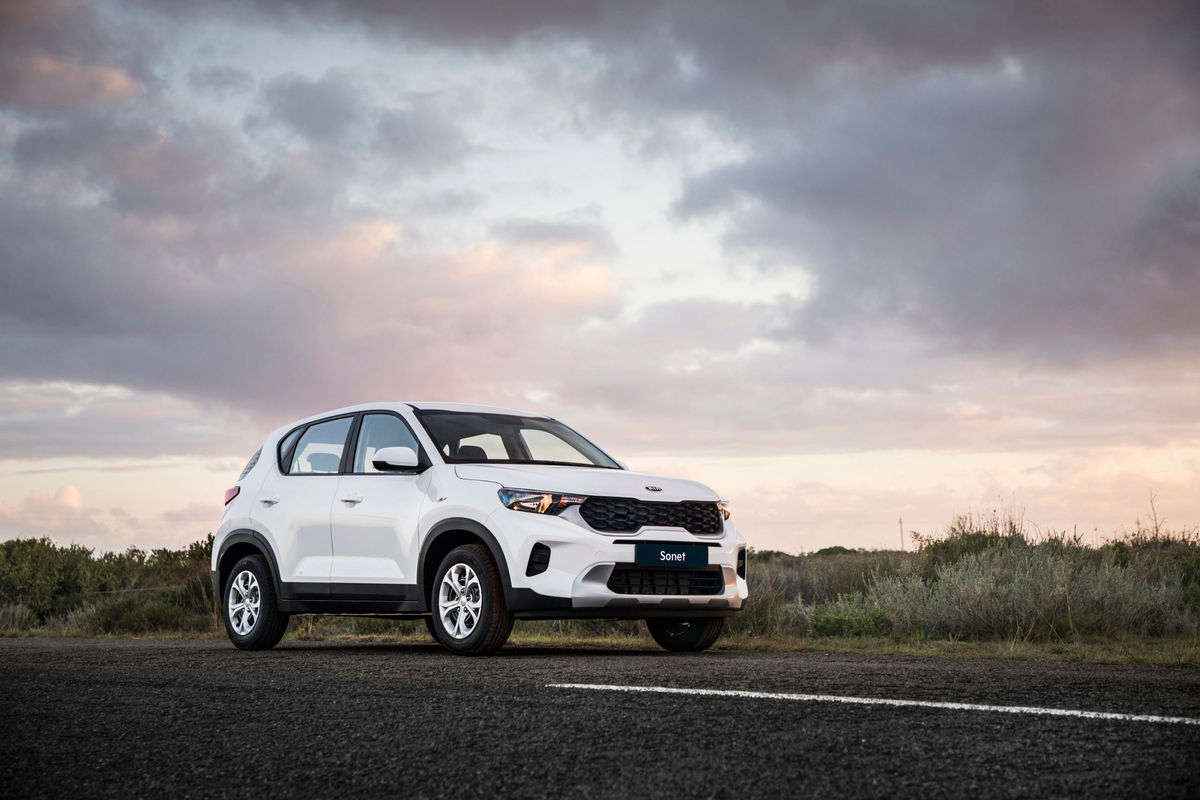
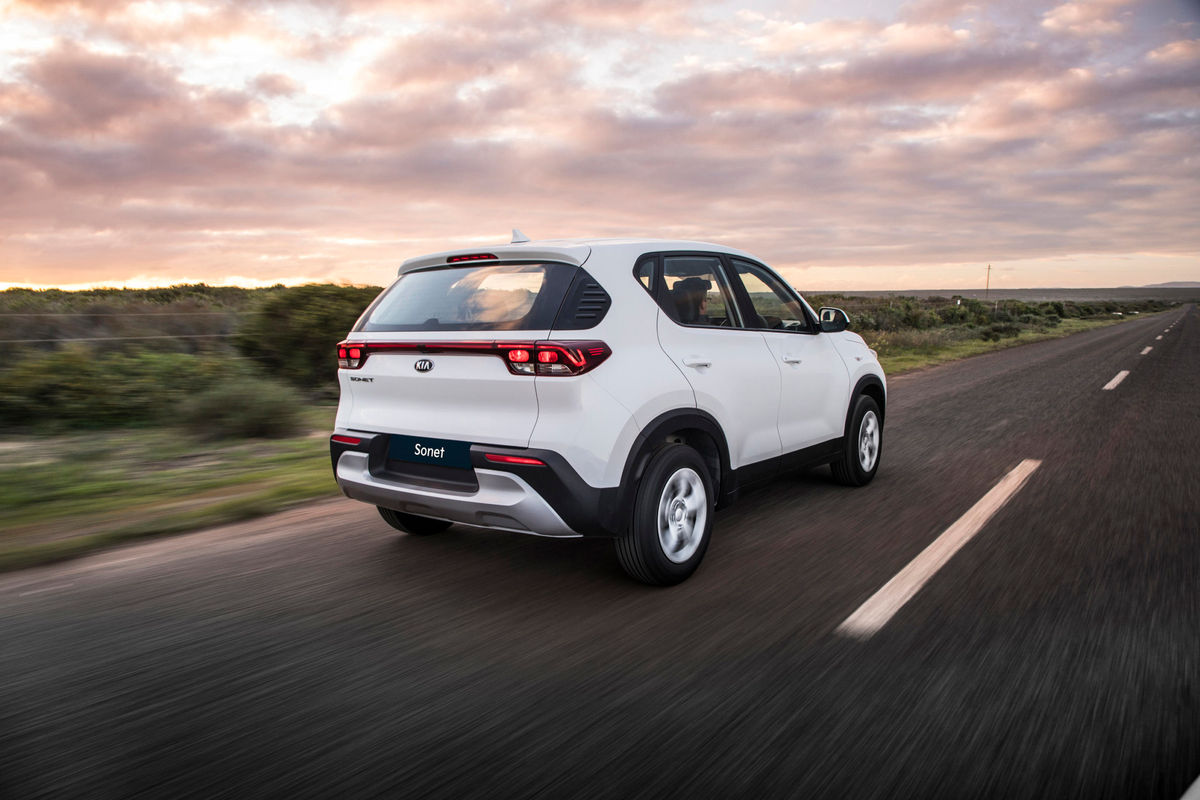
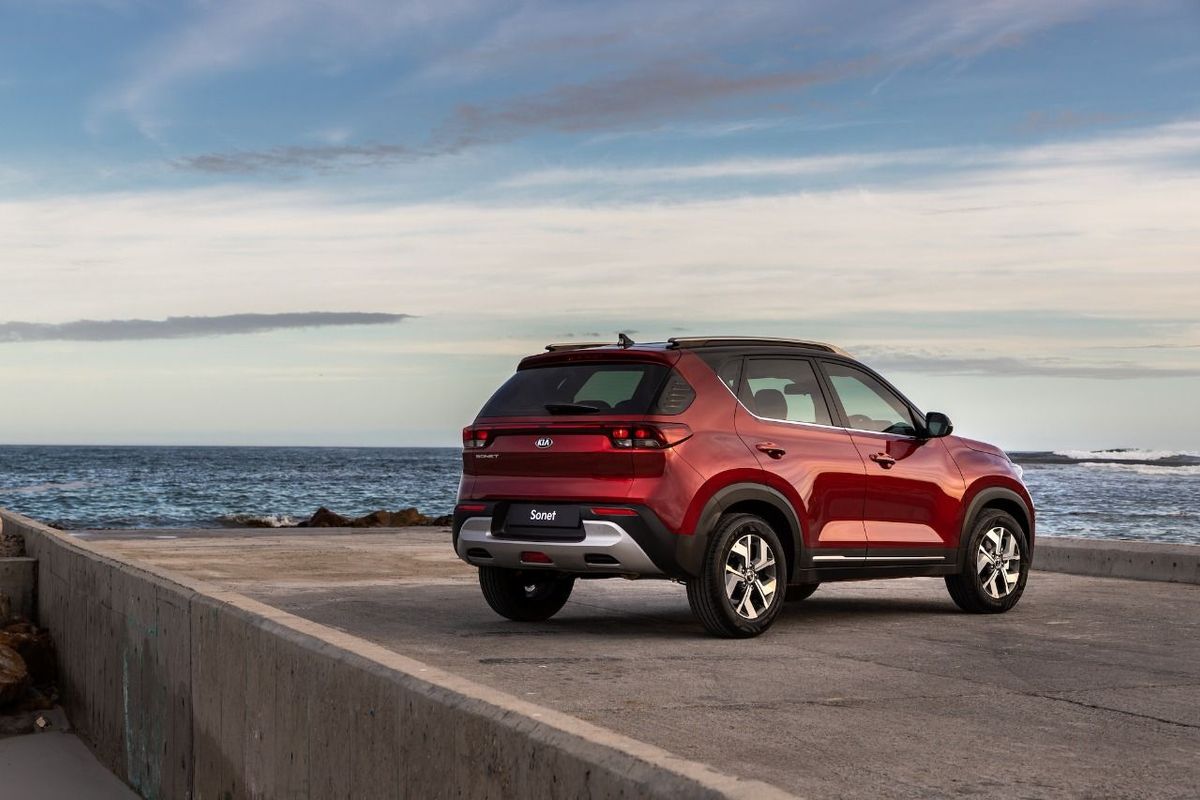
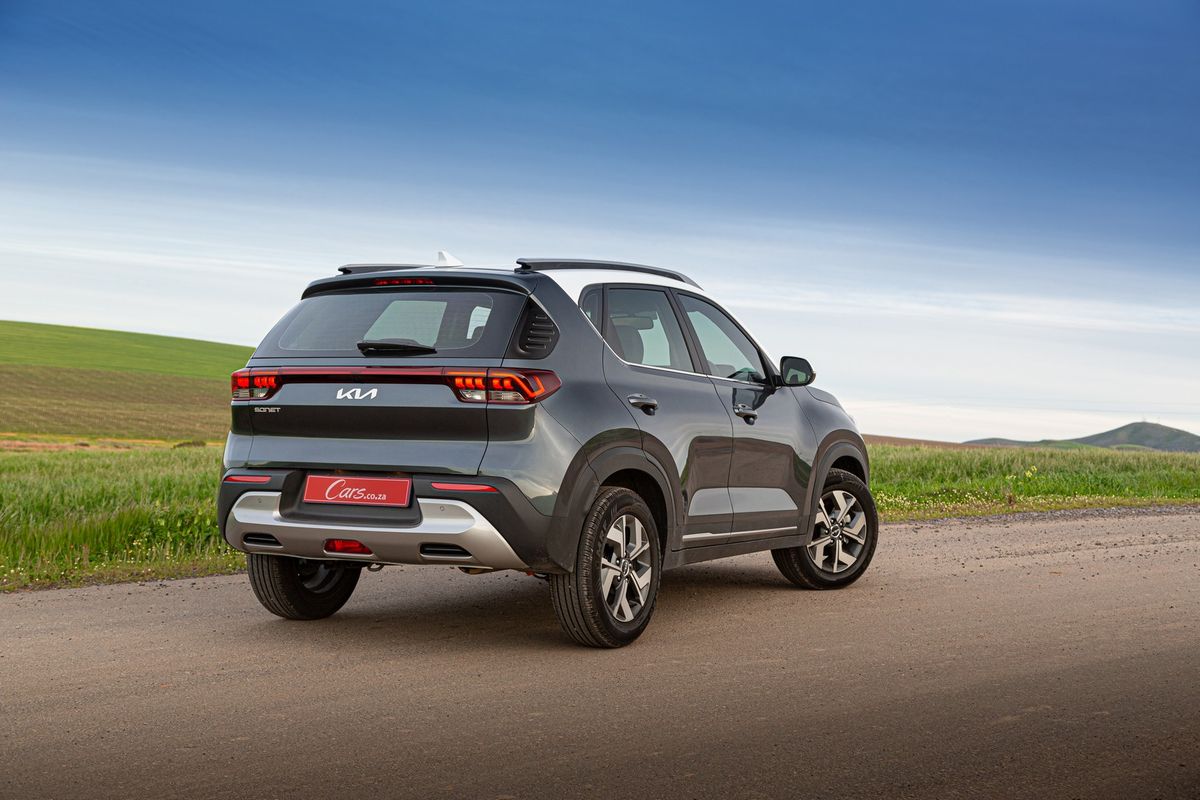
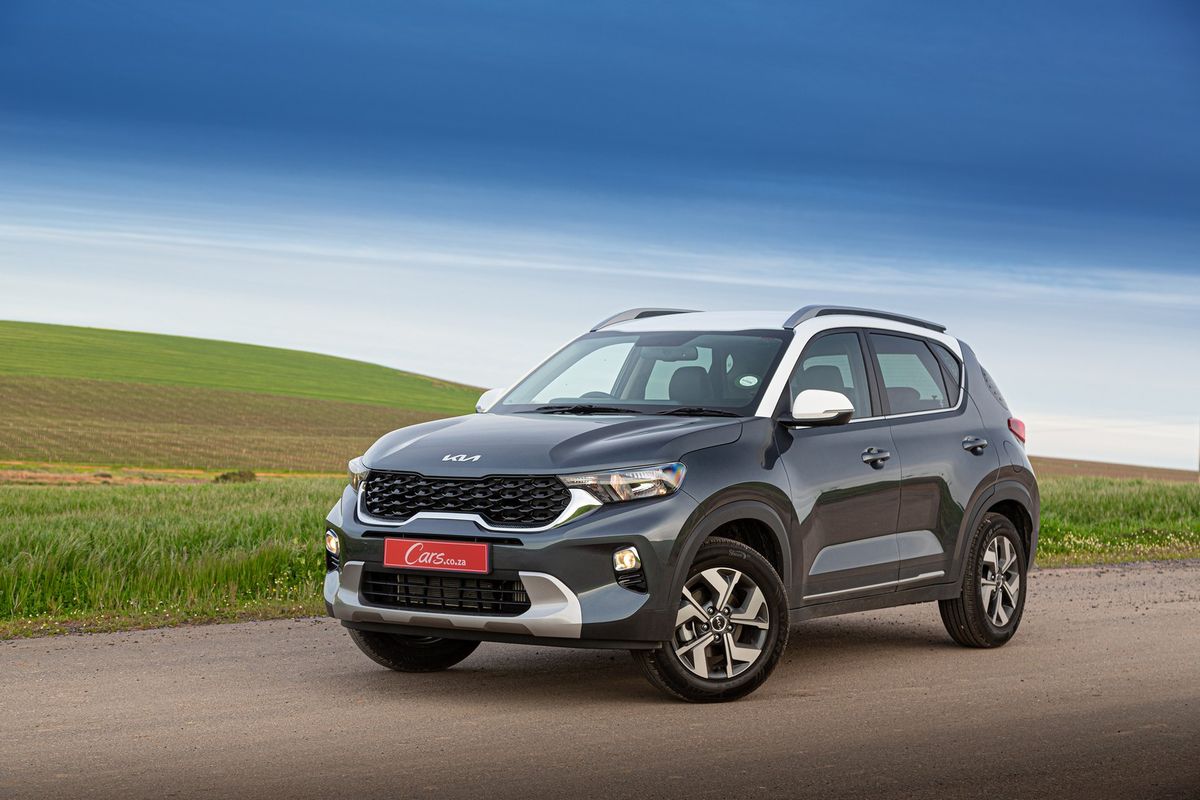
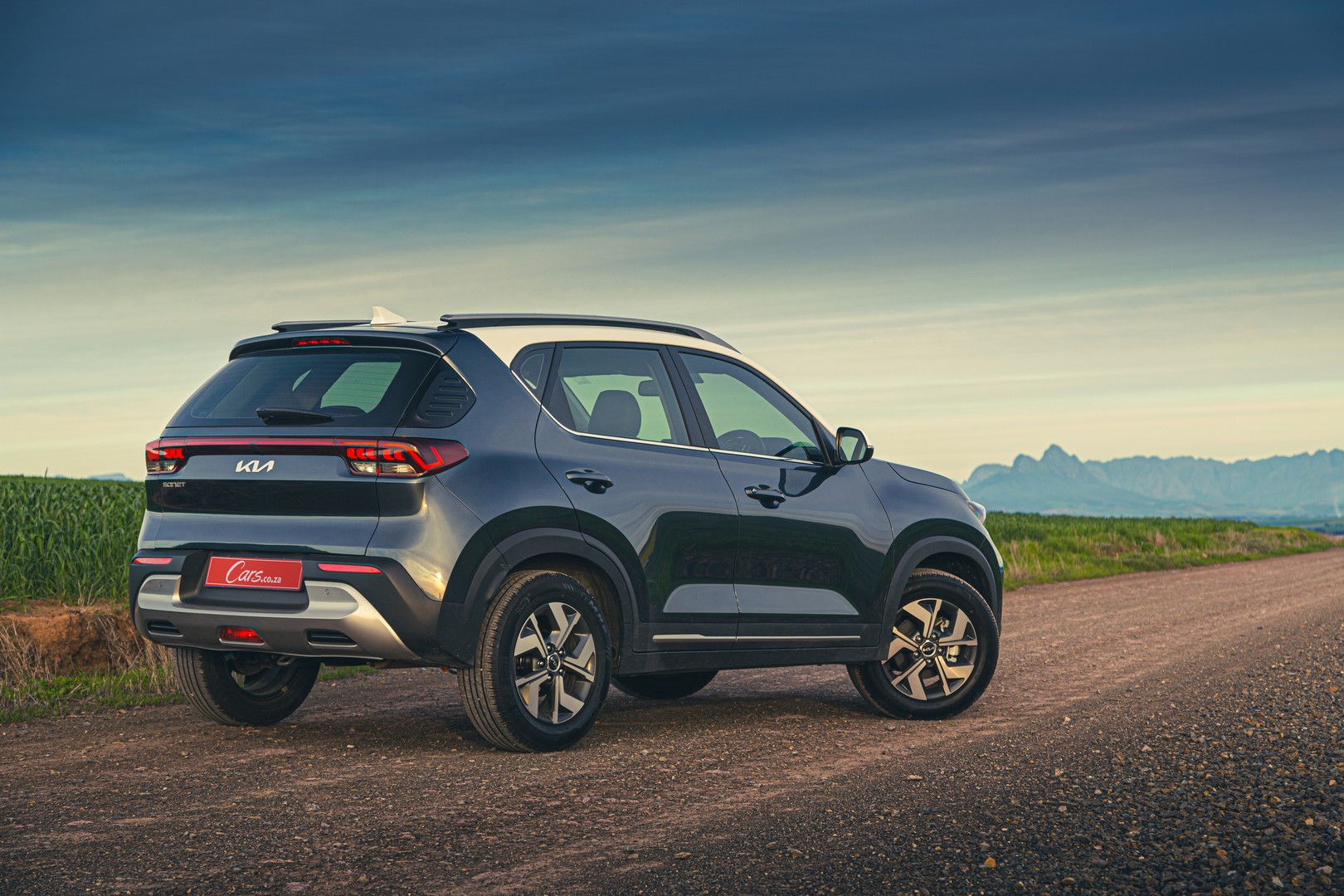
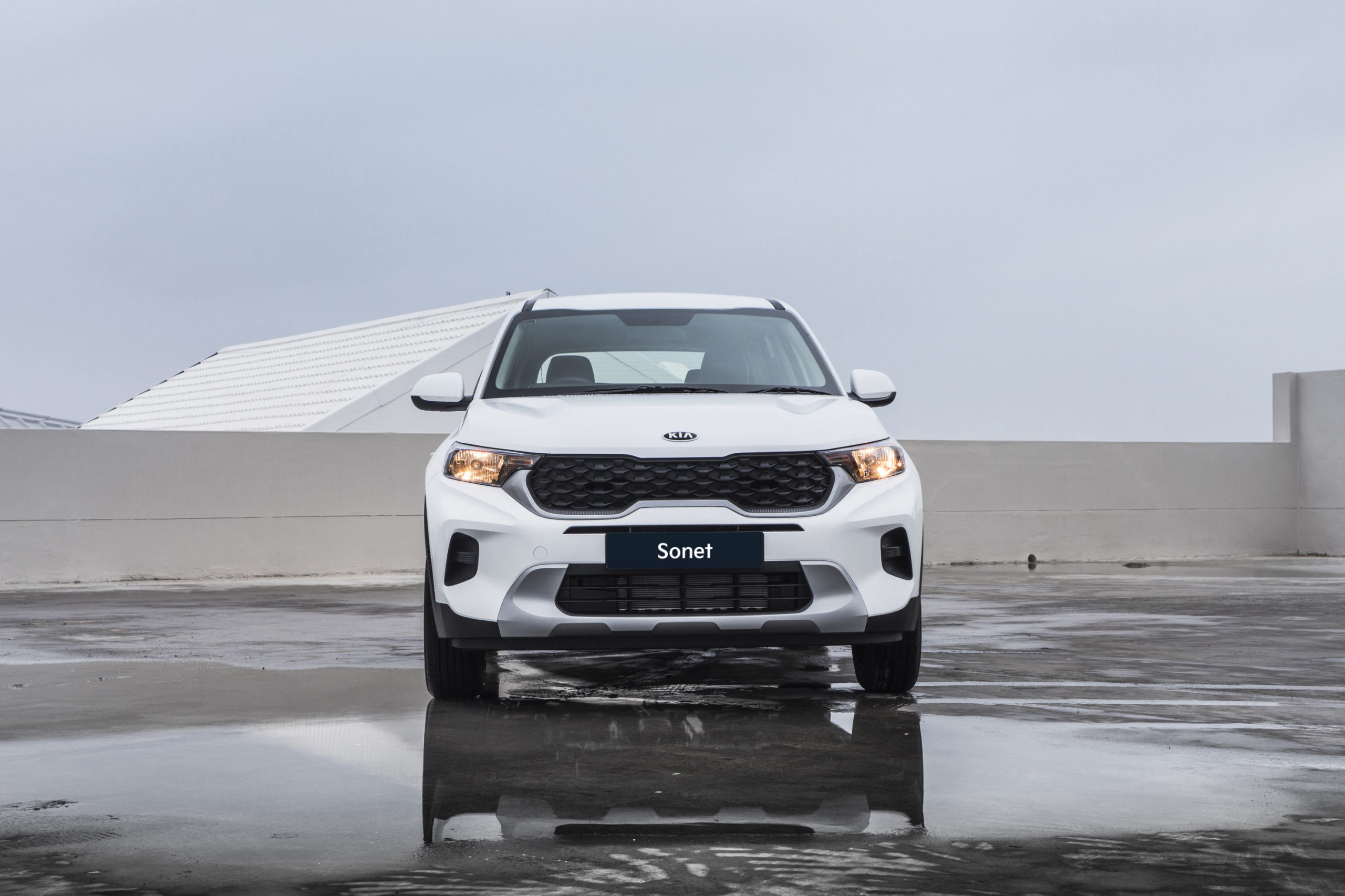
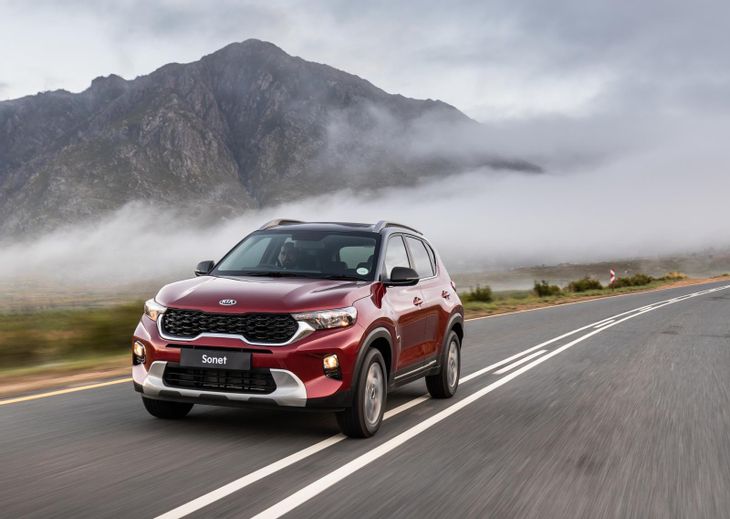
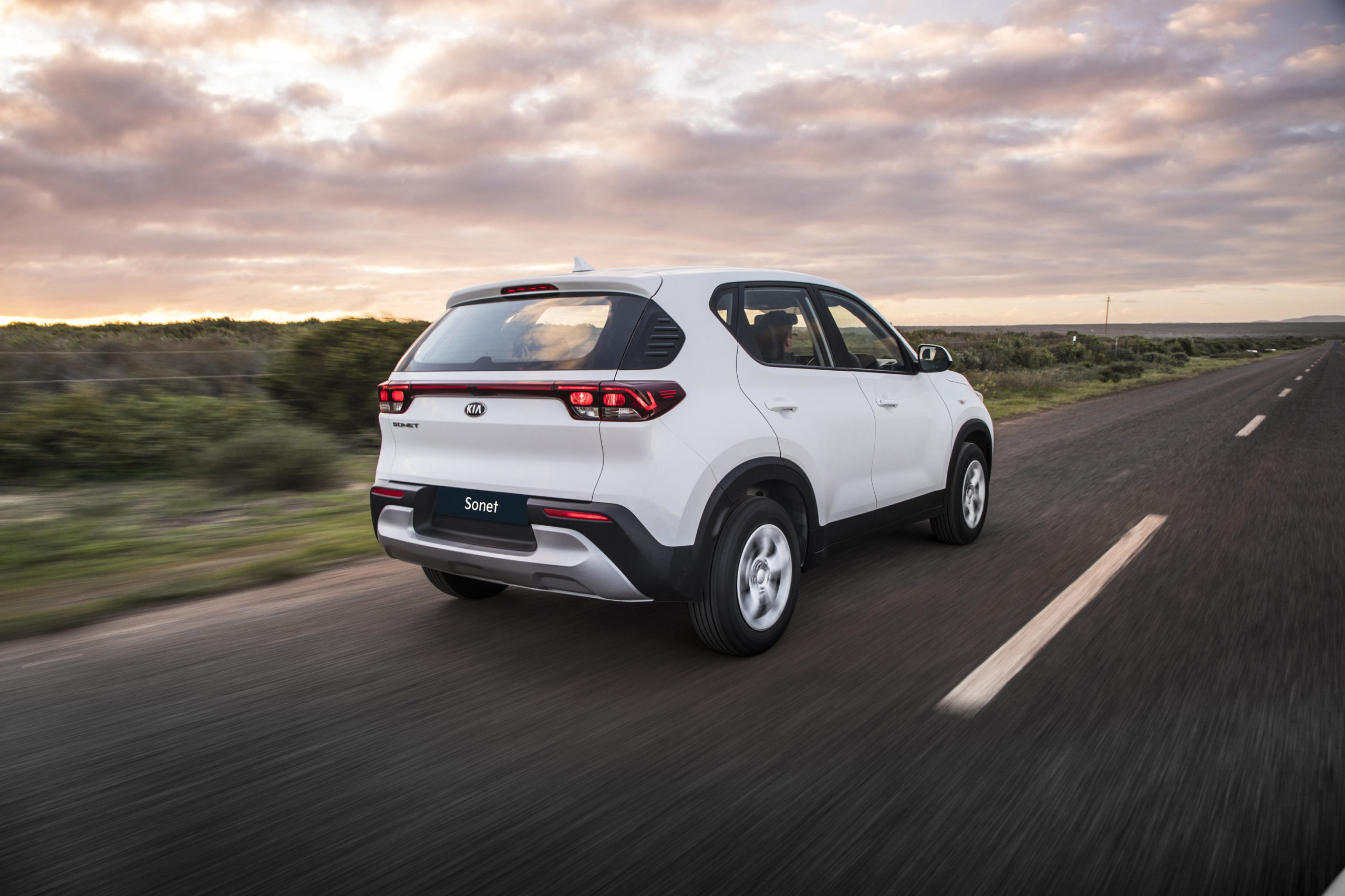
The line-up of the Kia Sonet, which competes in the popular budget crossover segment, now comprises 6 derivatives and Kia South Africa is offering all versions of the model with a 0% deposit car-finance deal, starting from R5 399 p/m.
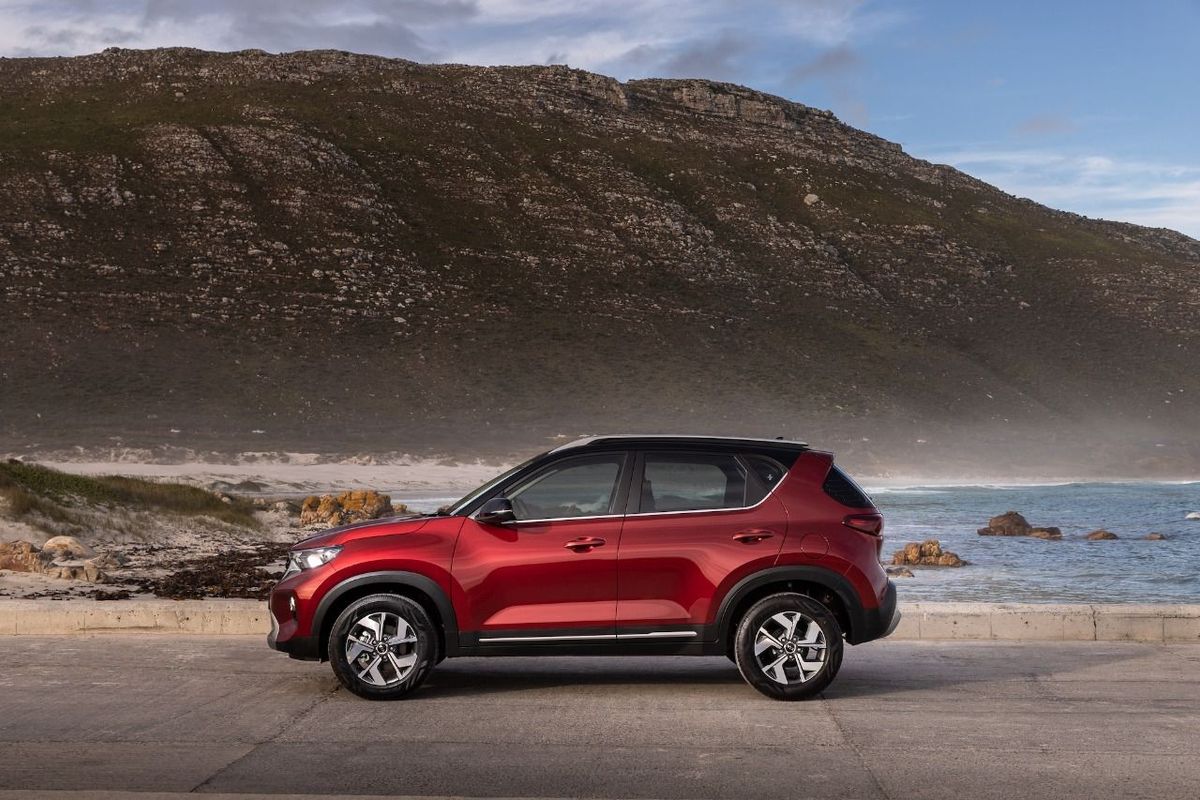
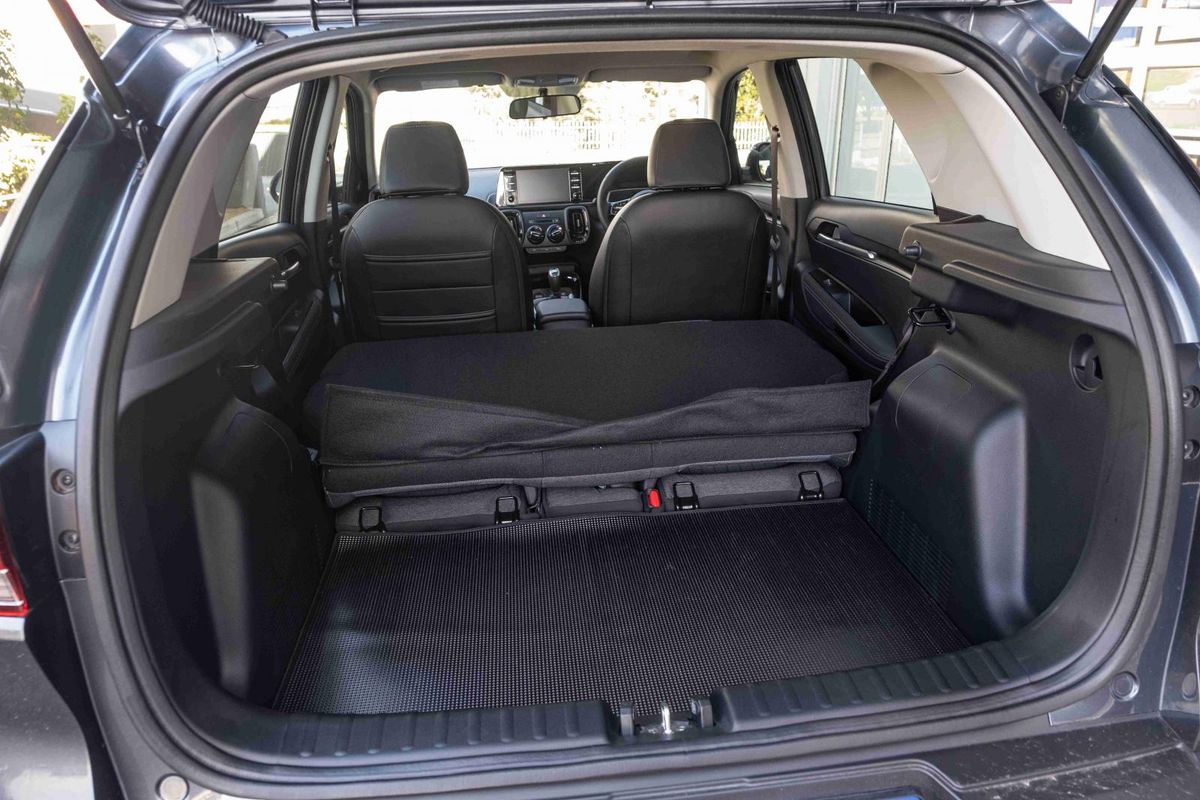
The Sonet is based on the same platform as the Hyundai Venue, but it is produced at a different plant to its cousin (in Bangalore, which is the same facility that builds the popular Kia Seltos for South Africa). In terms of dimensions, the Sonet is 4 120 mm long, 1 790 mm wide, stands 1 610 mm high and has a 2 500-mm wheelbase, with 190 mm of ground clearance and a claimed load-bay capacity of 392 litres.
Of the range’s half a dozen derivatives, the first 2 are equipped with 6-speed manual gearboxes, while the remaining 4 have either continuously variable- or 7-speed dual-clutch automatic transmissions. We previously reviewed the Sonet’s 1.5 EX and the range-topping 1.0T EX+ derivatives (the latter with video).
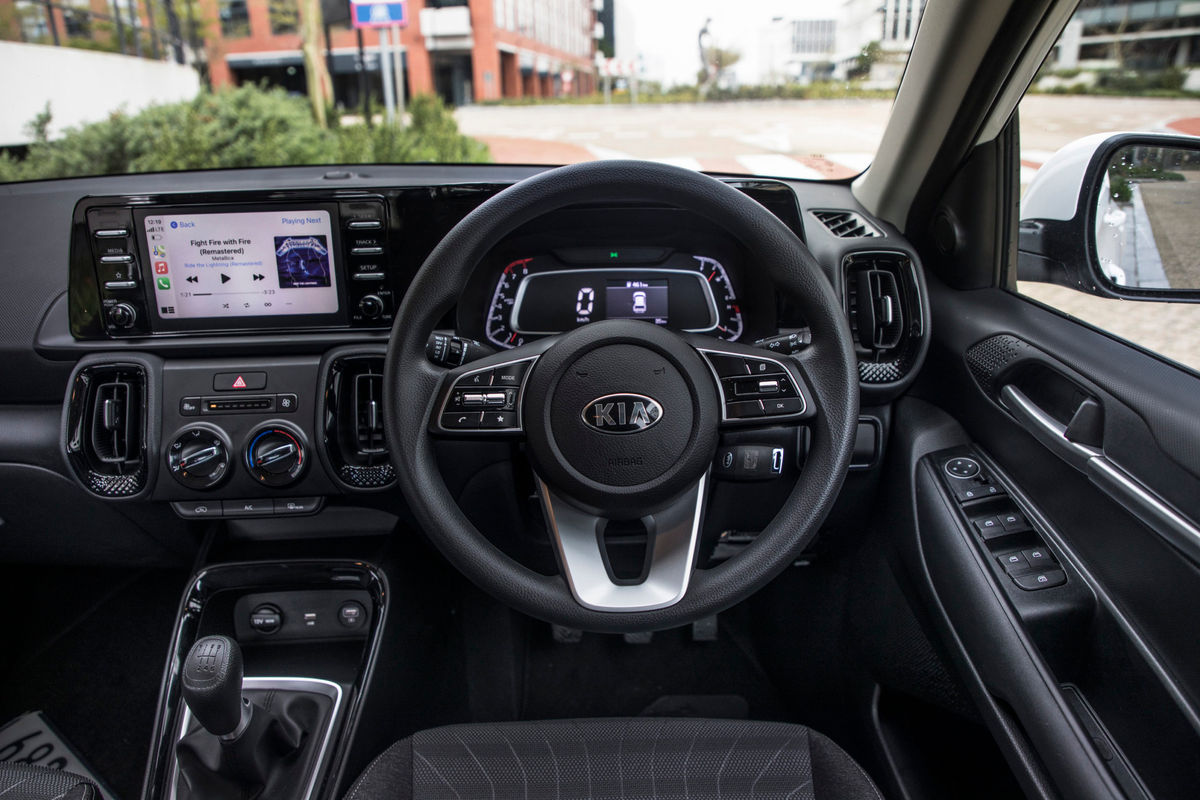
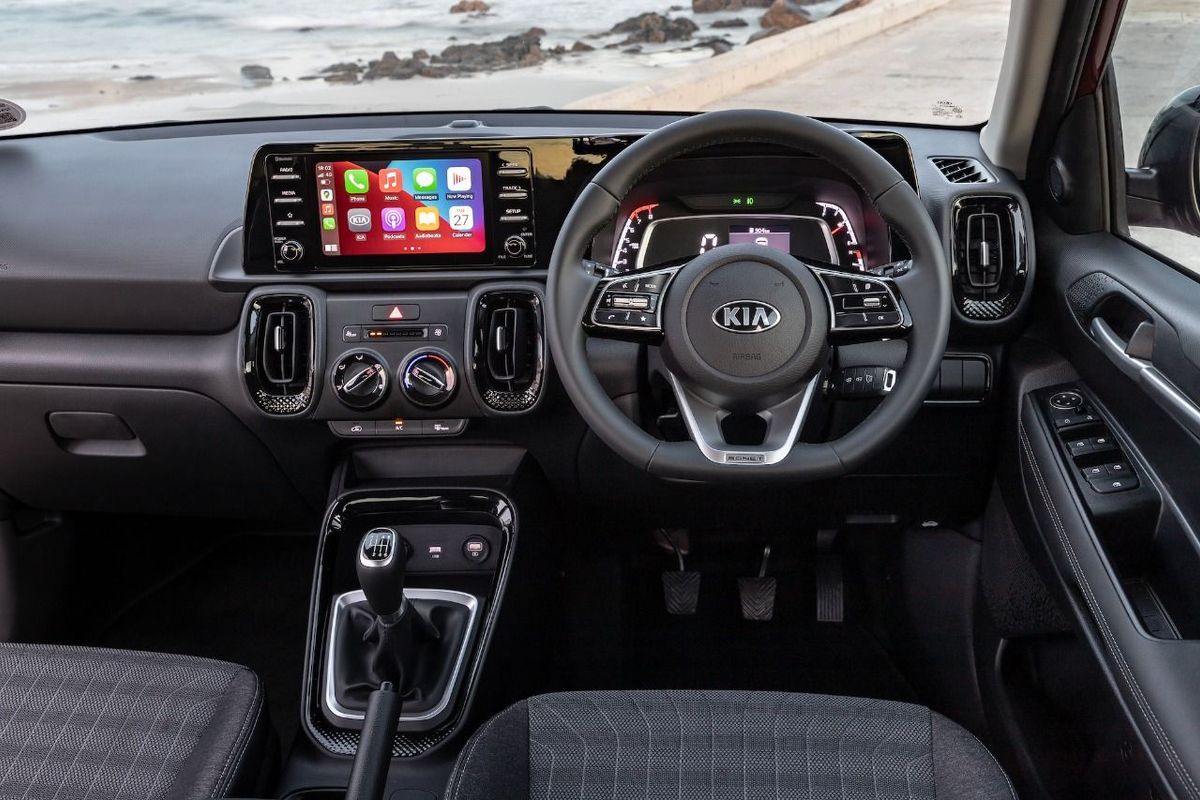
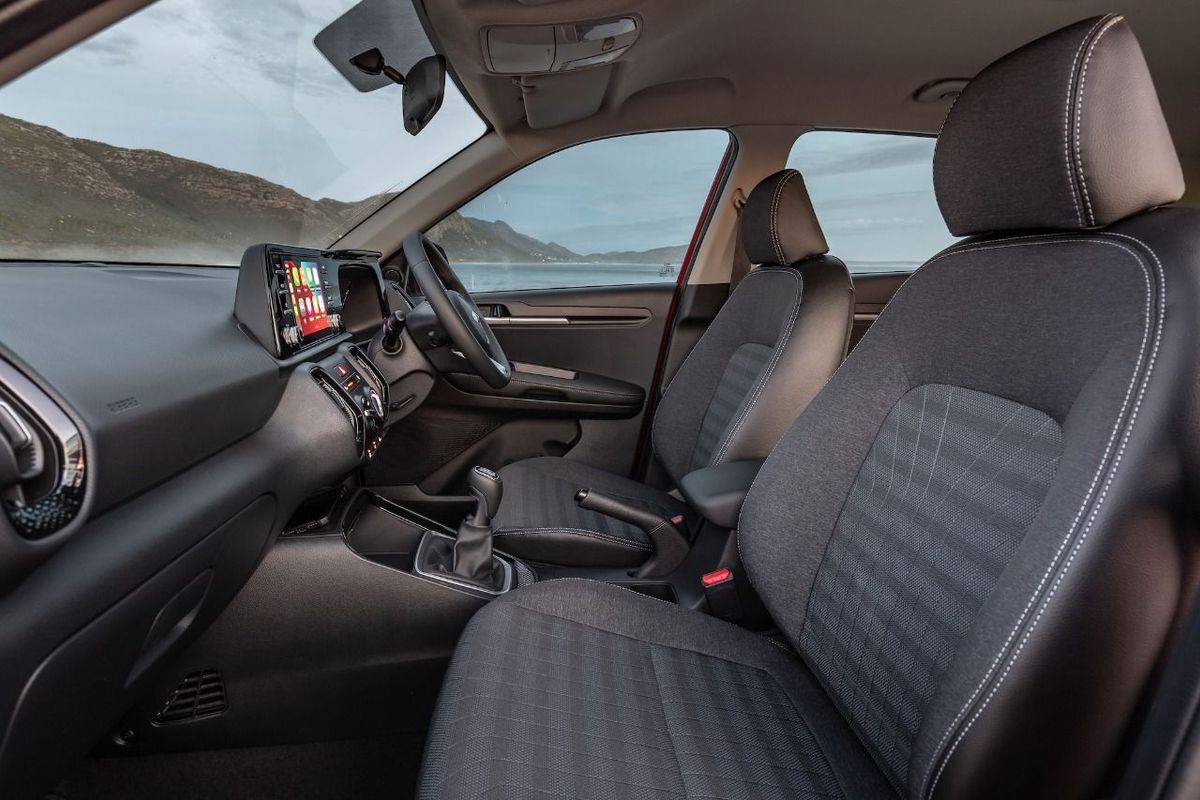
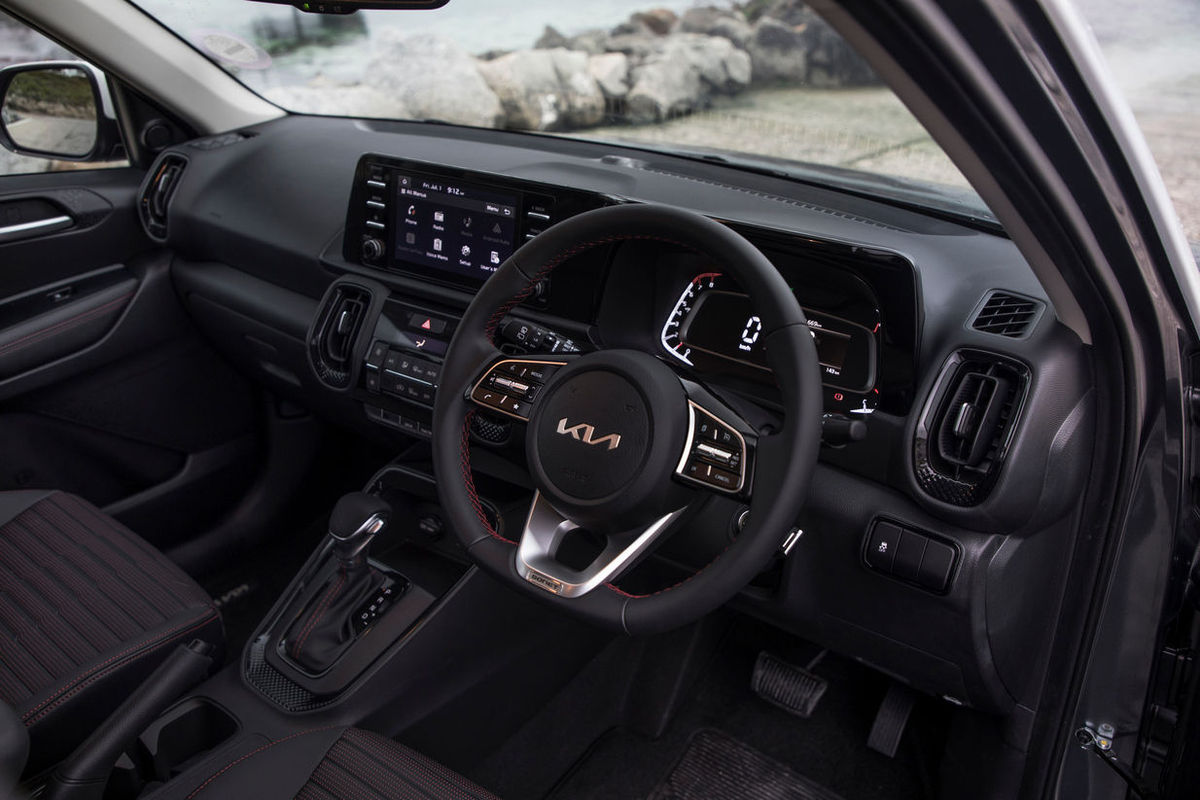
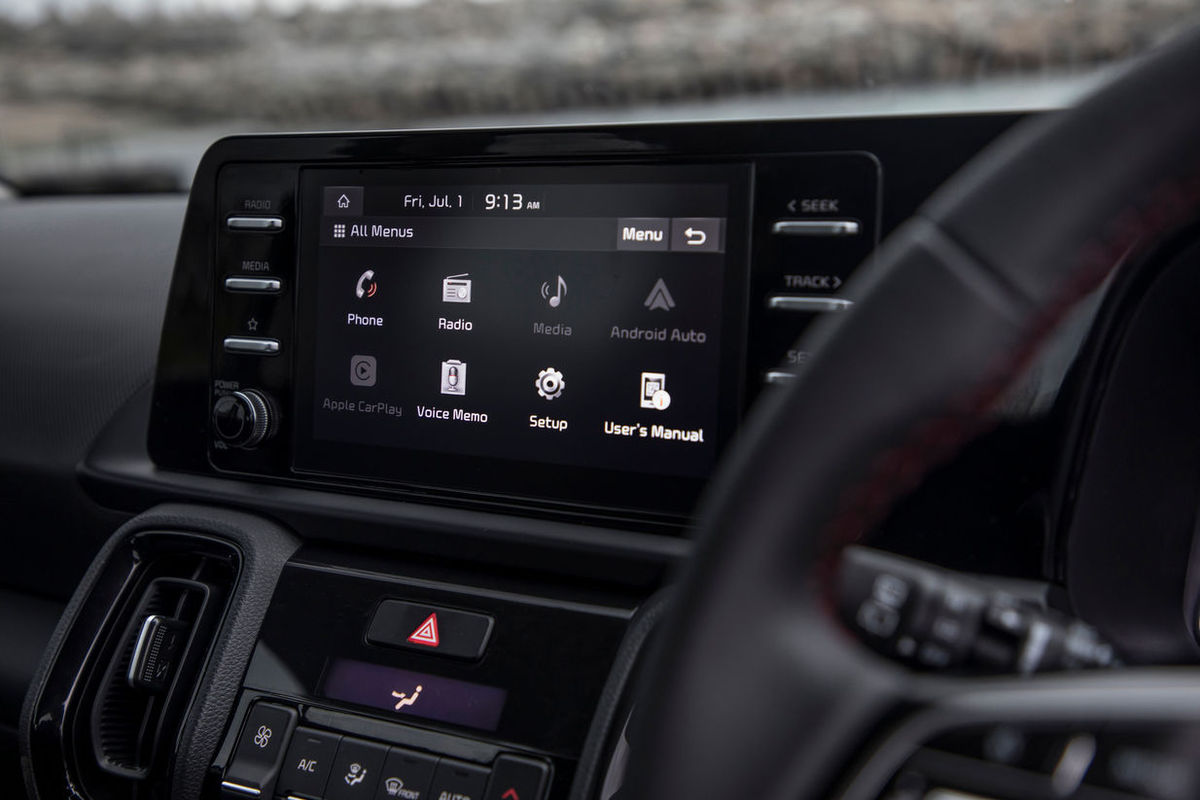
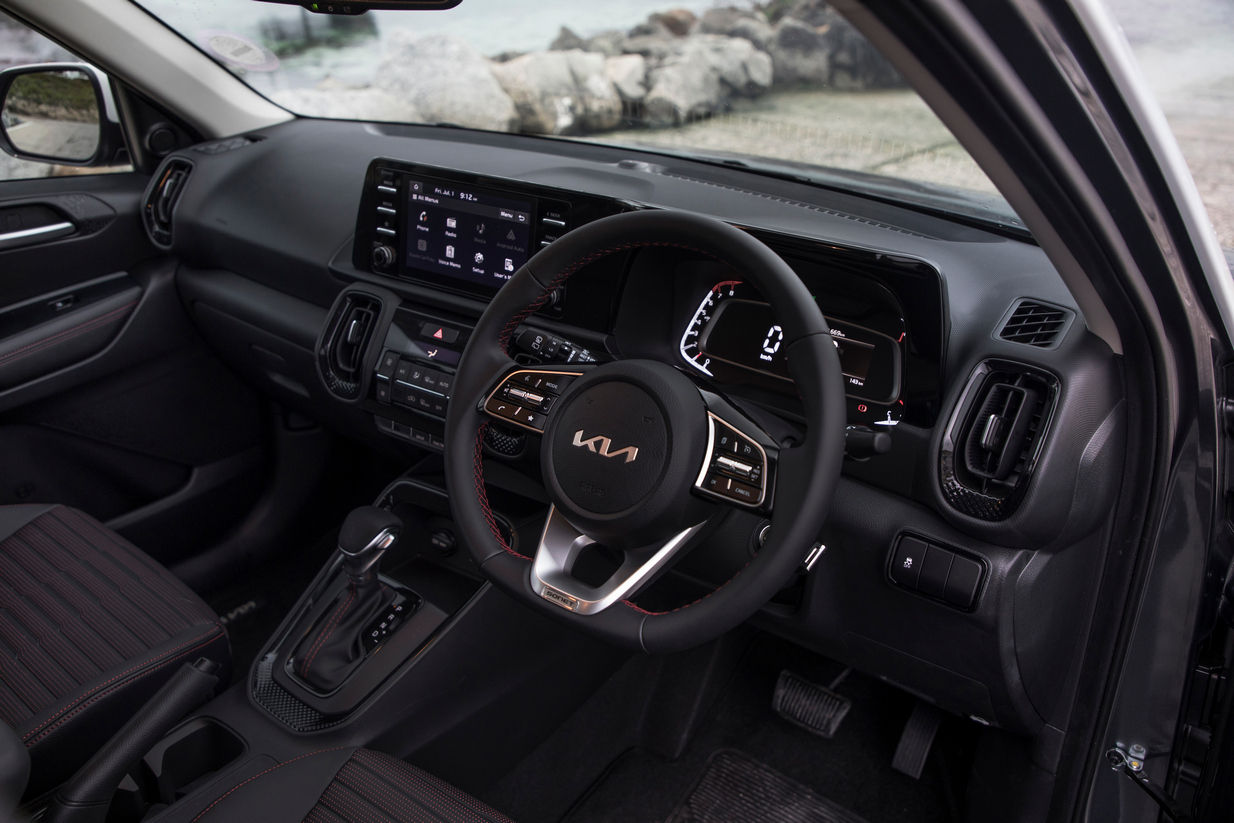
LX is the base grade of the Sonet range. LX derivatives come equipped with 15-inch steel wheels, remote central locking, multifunction steering wheel, height-adjustable driver’s seat, tilt-adjustable steering column, artificial leather and cloth seat trim, aircon, electric windows (all round), electrically adjustable side mirrors, auto headlamp activation and an 8.0-inch touchscreen infotainment system.
The latter supports Bluetooth, plus wireless Apple CarPlay and Android Auto, and is complemented by a front USB port and reverse-view camera. Rear occupants are availed a USB for charging their devices and a central armrest with cupholders, while the rear bench can be folded flat to free up utility space.
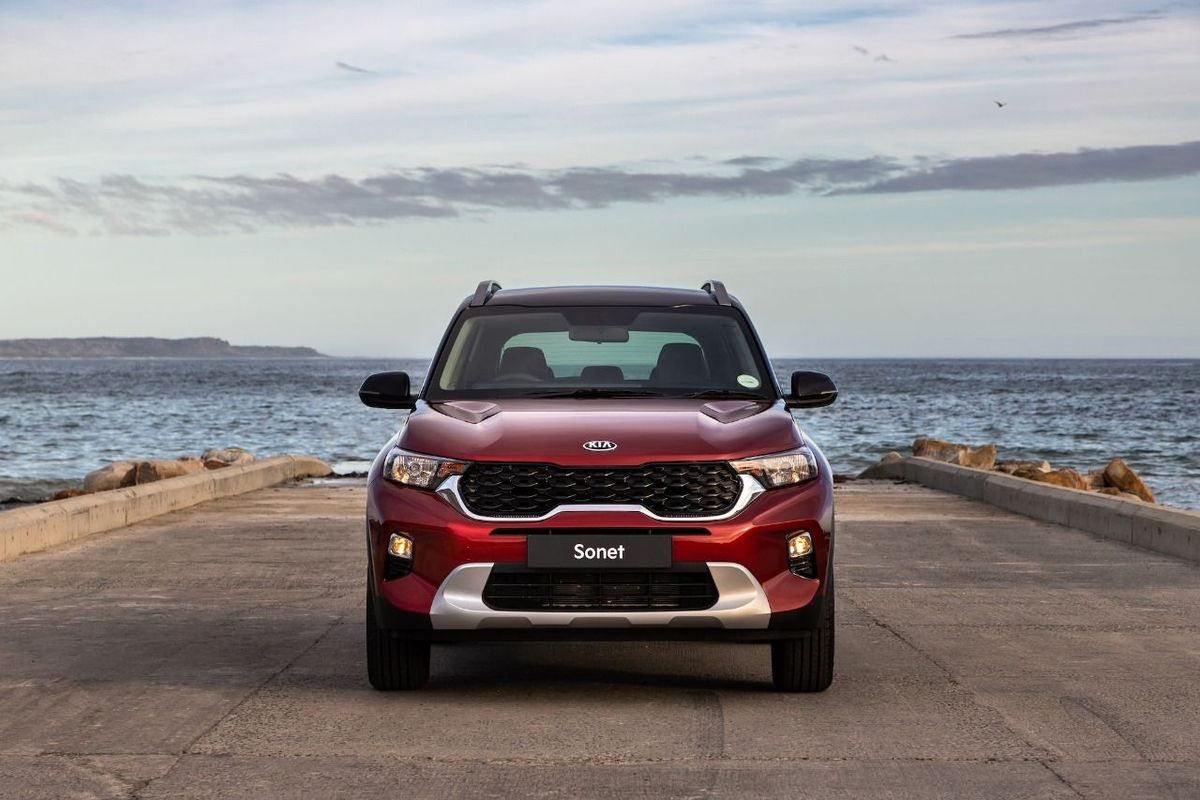
EX derivatives, in turn, can be distinguished by their roof rails, front fog lights, silver skid plates, integrated indicator lenses (in the side mirrors), 16-inch alloy wheels and rear parking sensors. Over and above LX’s interior specification, the EX versions have leather trim on the steering wheel and gear lever.
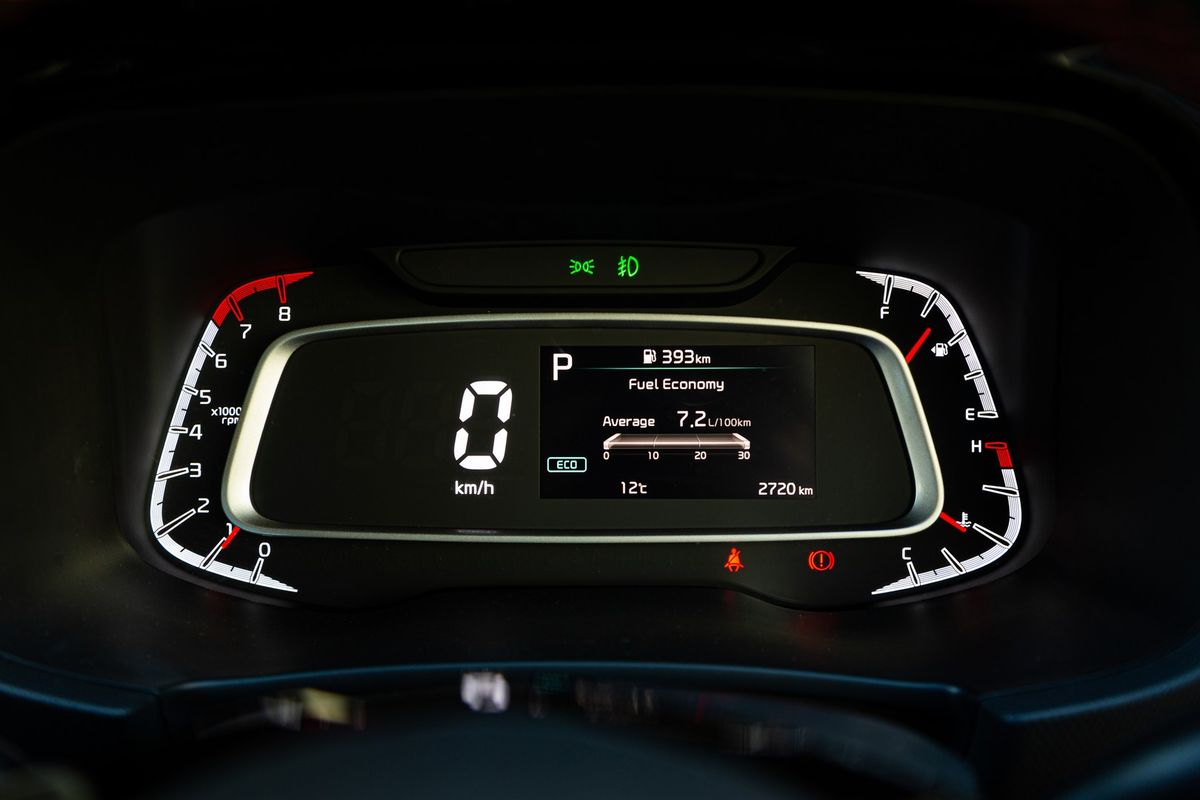
Finally, the top-of-the-range 1.0T EX+ is additionally equipped with a 4.2-inch TFT LCD supervision cluster, artificial leather seats (with red stitching), electrically-folding side mirrors, an electrochromatic rear-view mirror, cruise control, auto aircon, drive-mode select and combination LED tail lights.
Most derivatives are powered by a naturally aspirated 1.5-litre 4-cylinder petrol engine, paired with either a 6-speed manual or continuously variable automatic transmission. The 1.5-litre motor produces peak outputs of 85 kW and 144 Nm of torque. Kia states claimed 0-to-100 kph times of 11.3 sec (manual) and 11.8 sec (auto), with the former said to consume 7.0 L/100 km and the latter 7.2 L/100 km respectively.
The top 2 derivatives, in turn, feature a 88 kW/172 Nm 1.0-litre 3-cylinder turbopetrol engine in combination with a 7-speed dual-clutch automatic transmission. The Korean carmaker says 1.0 T-GDI derivatives can sprint from 0-100 kph in 11.3 sec and, on average, consume 6.0 litres of fuel per 100 km.
Kia Sonet safety spec
In terms of safety features, the Sonet comes well-equipped for its segment. Standard kit includes ABS with EBD, electronic stability control (ESC) and hill-start assist control (HAC), dual front airbags and ISOfix child-seat anchoring points. The EX+ version additionally features side and curtain airbags.
How much does the Kia Sonet cost in South Africa*?
* Based on May 2023 prices. All Sonets derivatives are sold (from new) with a 5-year/unlimited km warranty and roadside assistance as well as a 4-year/60 000 km service plan.
Mitsubishi Triton Halo AT35 Prototype Unveiled for SA
Meet the Mitsubishi Triton Halo AT35 prototype, which was unveiled at Nampo 2023 and previews the most extreme version of the Japanese firm’s bakkie yet…
The Mitsubishi Triton Halo AT35 prototype has been revealed at Nampo 2023 in the Free State, previewing what the Japanese firm’s South African division describes as the “ultimate iteration” of its double-cab bakkie.
Right now, details are frustratingly thin on the ground. For instance, it’s not yet clear when the production version will hit the market in South Africa, nor how much it will cost. In addition, Mitsubishi Motors SA made no mention of the powertrain and shared only a single photograph of the prototype.
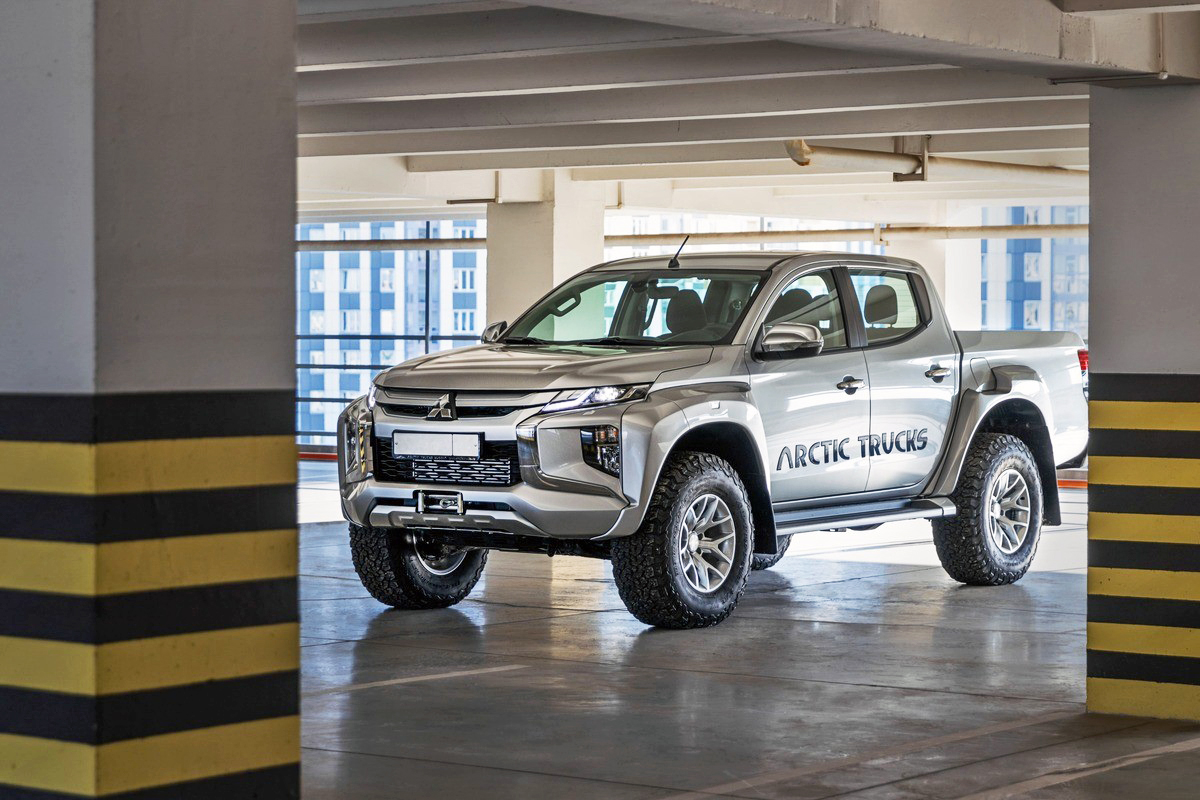
So, what do we know? Well, like the Isuzu D-Max Arctic Trucks AT35 displayed at the same event outside Bothaville, the Triton Halo AT35 was developed in conjunction with Icelandic off-road specialist, Arctic Trucks. For the record, the company’s Russian division unwrapped an AT35 version of the L200 (another badge used on the Triton in some markets) back in 2021.
But back to the SA-spec model. The Japanese firm promises the production model will be an “extremely capable vehicle that is well engineered and backed by Mitsubishi’s factory warranty”.
Mitsubishi says the AT35 is “based on the flagship Triton double-cab 4×4”, so it will surely slot in well above the Triton Heritage (R749 990) and Triton Xtreme (R778 990). We’re guessing it will use the same 2.4-litre turbodiesel engine, which delivers 133 kW and 430 Nm to all 4 wheels via a 6-speed automatic transmission.
The Russian branch of Arctic Trucks revealed the L200 AT35 back in 2021.
The Triton Halo AT35 scores a 4×4 Iron Man suspension lift and 17-inch BFGoodrich off-road tyres wrapped round Arctic Truck alloy wheels. As a result, it features a wider track and a ride height increased by “approximately 35 mm” (which, by our maths, boosts ground clearance to 255 mm).
In addition, the bodywork has been “comprehensively modified” and now includes a new front bumper, extended wheel-arches and wider fender liners. Additional accessories come in the form of a snorkel and a roof rack, with the latter housing further items such as a high-lift jack and a spade.
The Triton AT35 on display also features various Ralliart accessories, including special floormats, mudflaps and decals. A rubberised load bin has been fitted, too, along with a Keko sports bar and a Keko tonneau cover. Inside, Mitsubishi has “upgraded” the infotainment to a 7-inch Sony Display Audio system and added “bespoke stitching” to the leather seats.
Considering there’s a next-generation Triton (also known as the L200) just around the corner, this new AT35 iteration may well serve as something of a swansong for the outgoing model. We’ll keep our eyes open for more information (including launch timing and pricing) as well as fresh images…
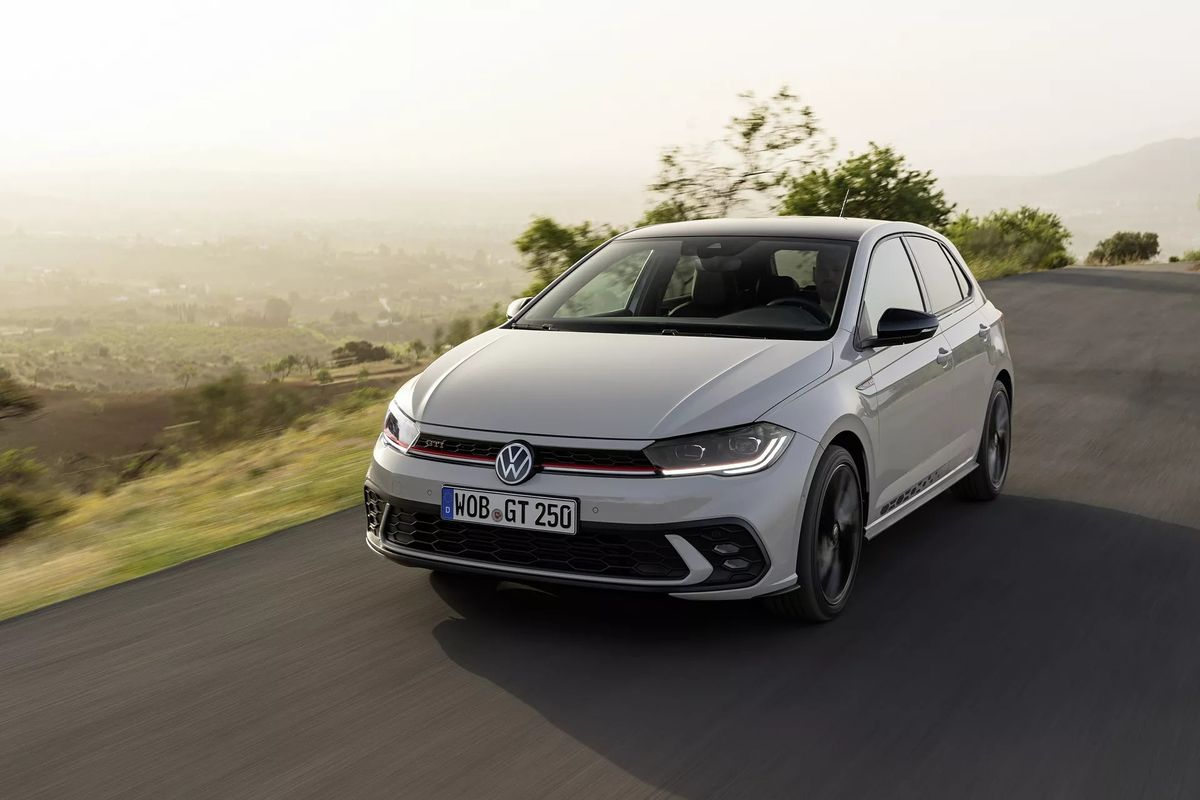
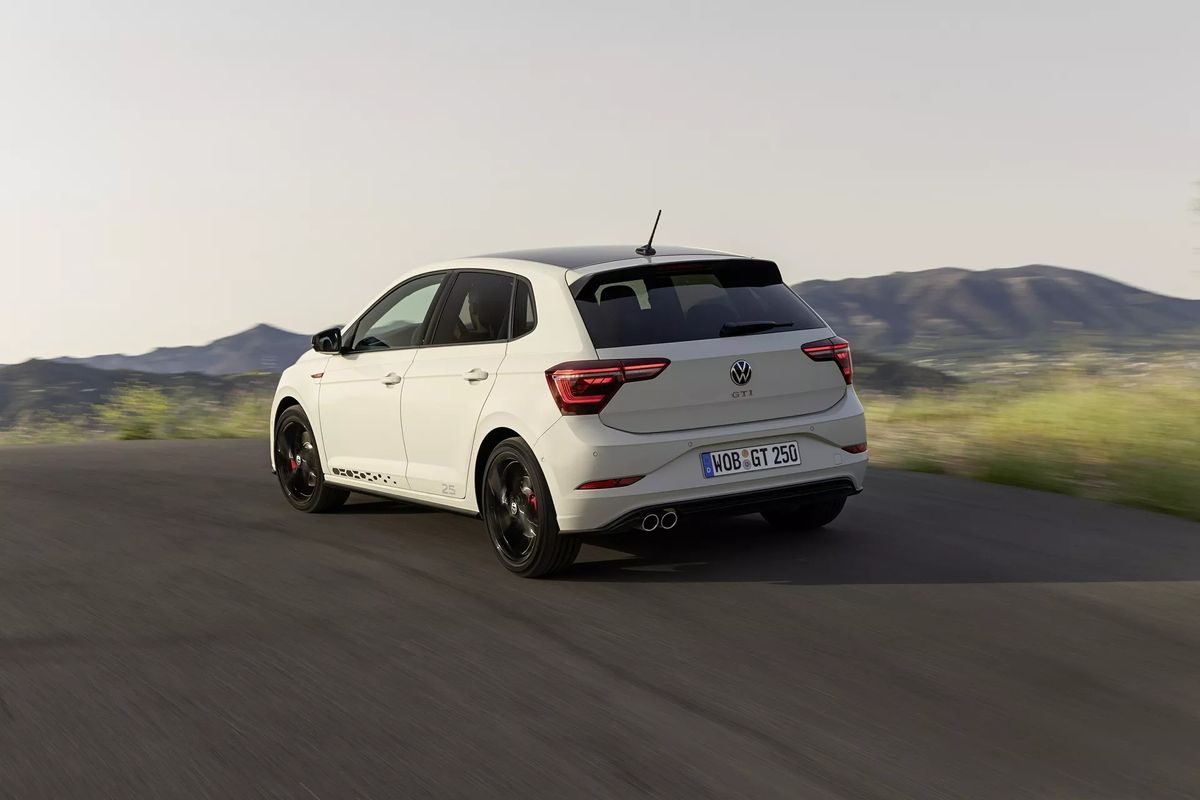
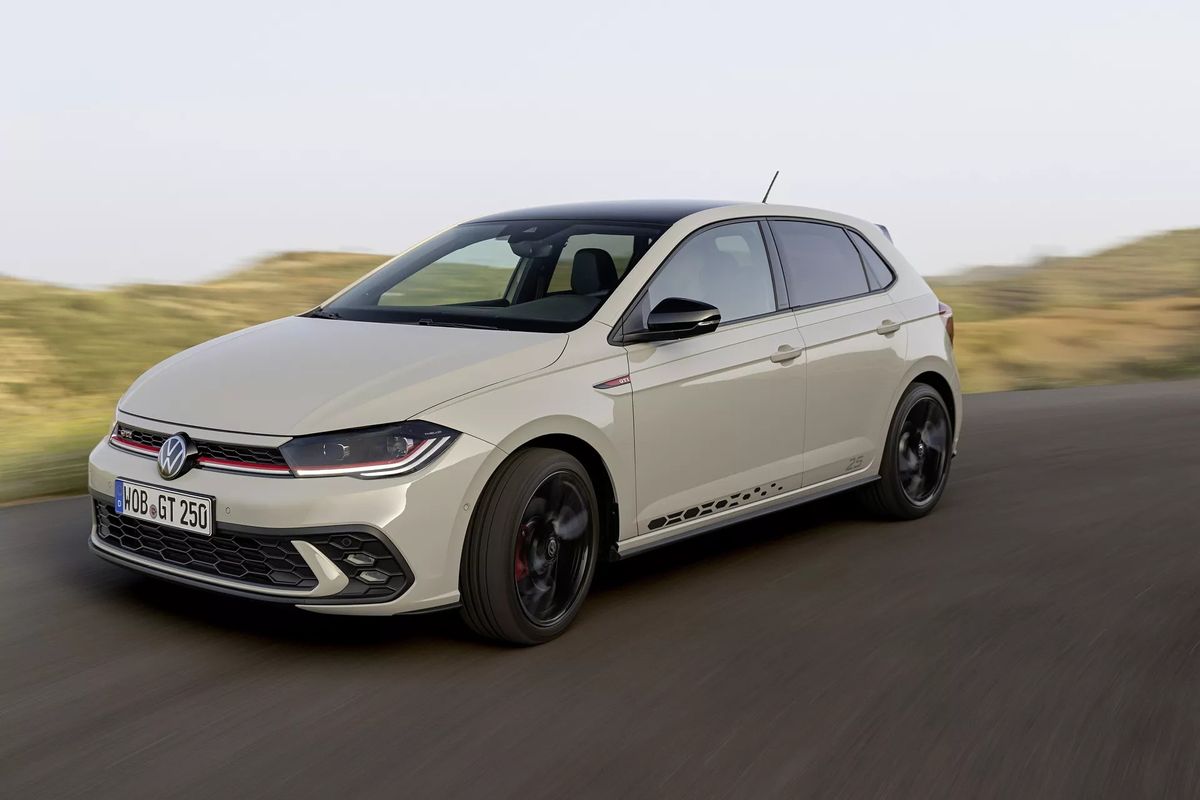
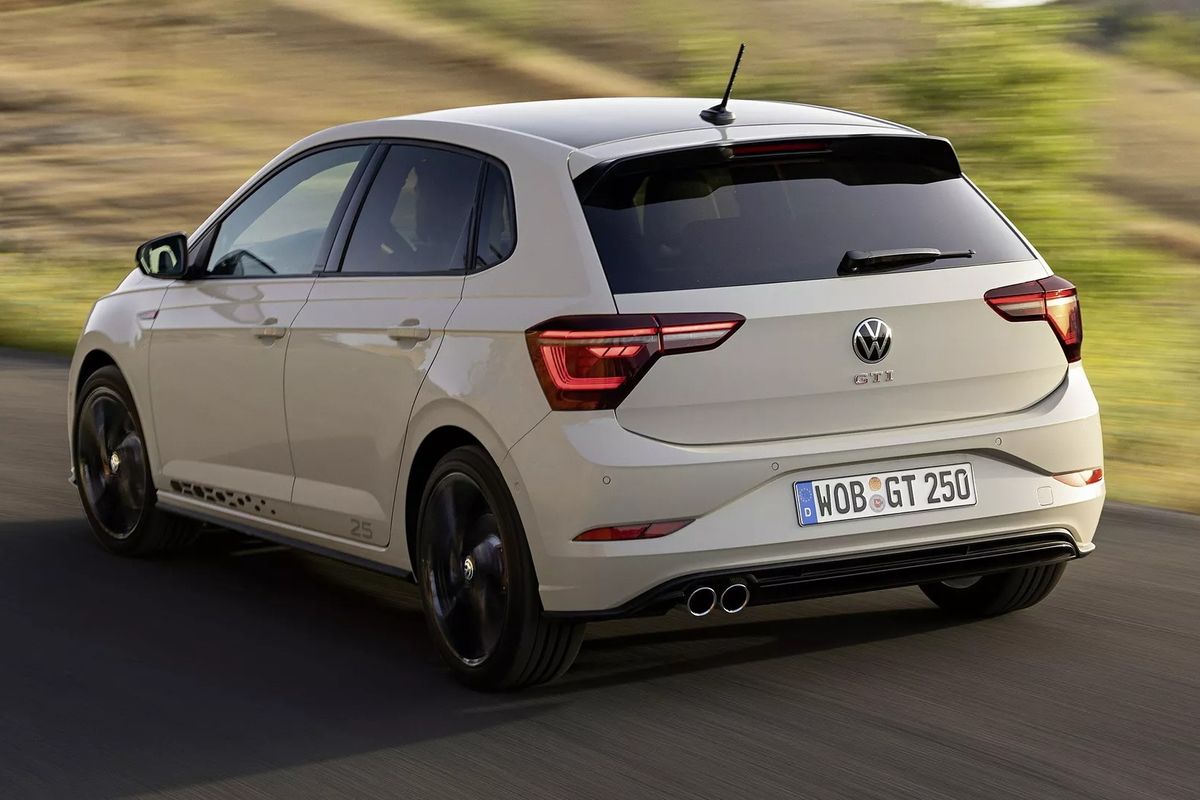
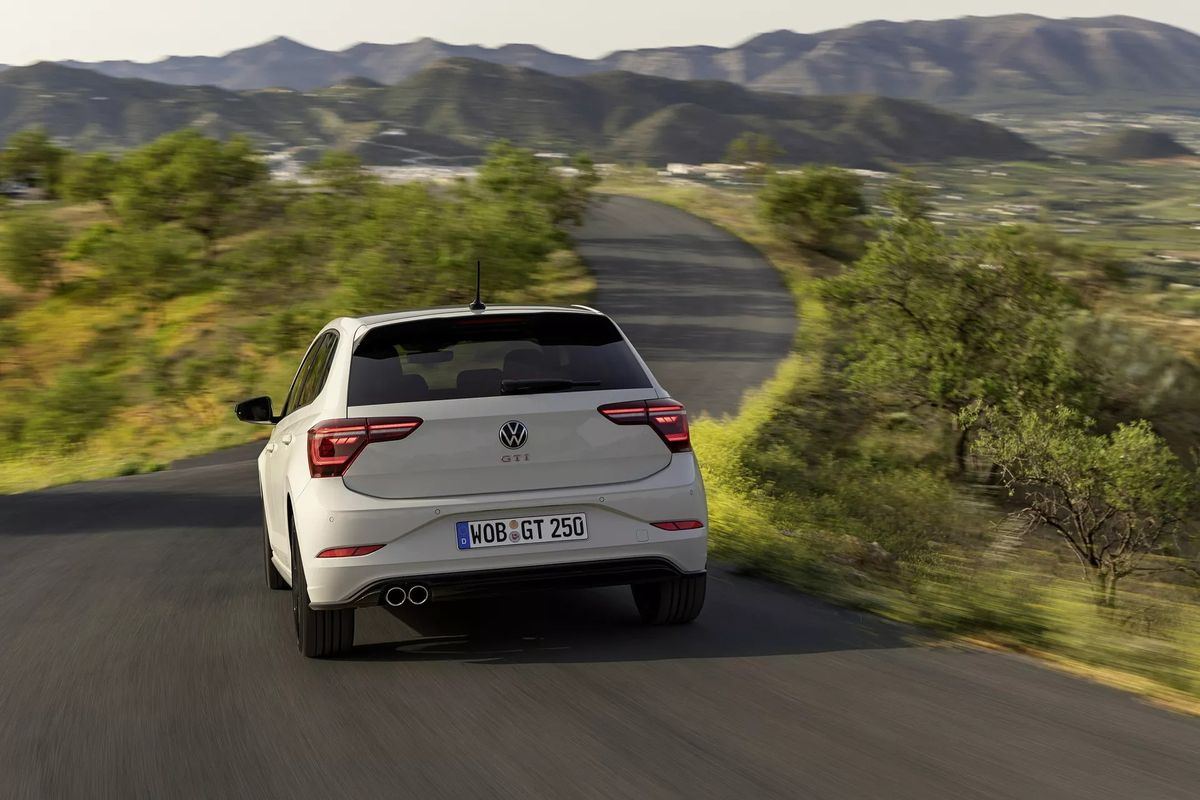
This is the VW Polo GTI Edition 25, revealed to celebrate 25 years of Polo. While it may be assembled in South Africa, it’s not going to be sold locally.
There will be just 2 500 units of the Polo GTI Edition 25 going on sale from the 1st June 2023 and we’ve reached out to Volkswagen South Africa to find out if SA will get an allocation. It would be fitting, as the vehicle is made right here at Volkswagen’s plant in Kariega (formerly Uitenhage) in the Eastern Cape.
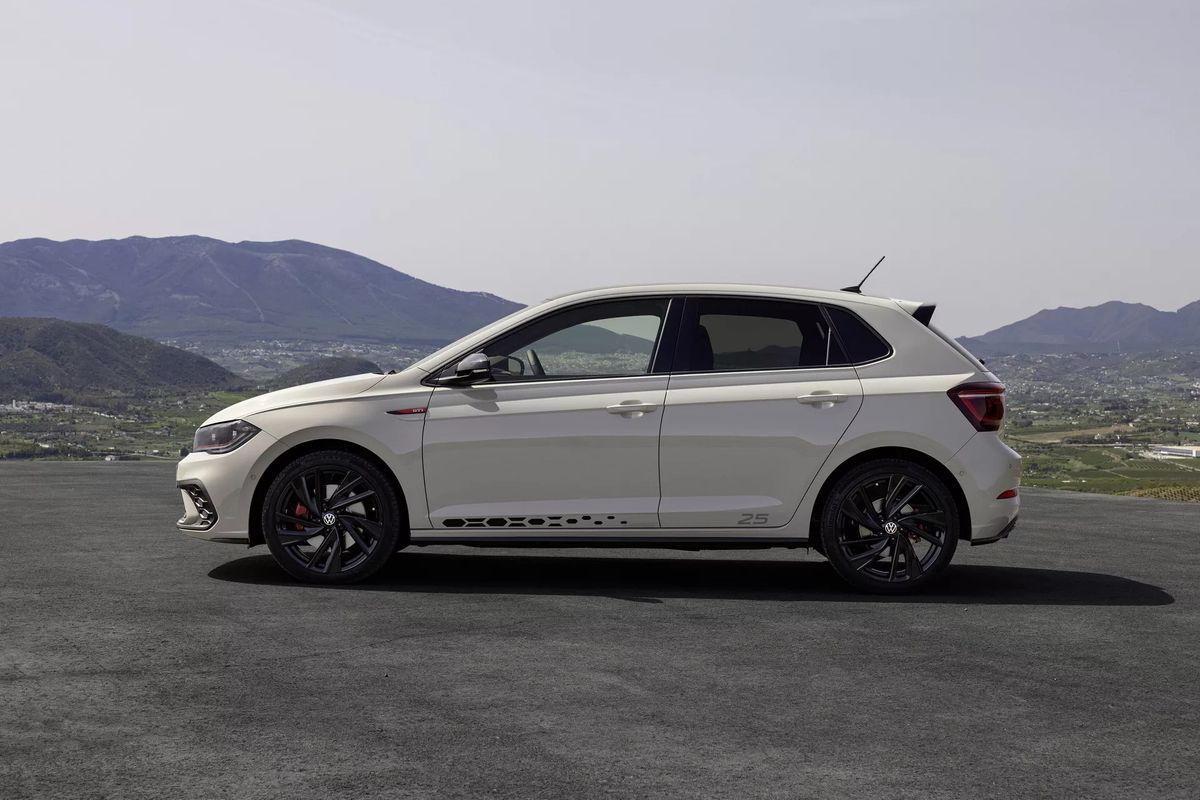
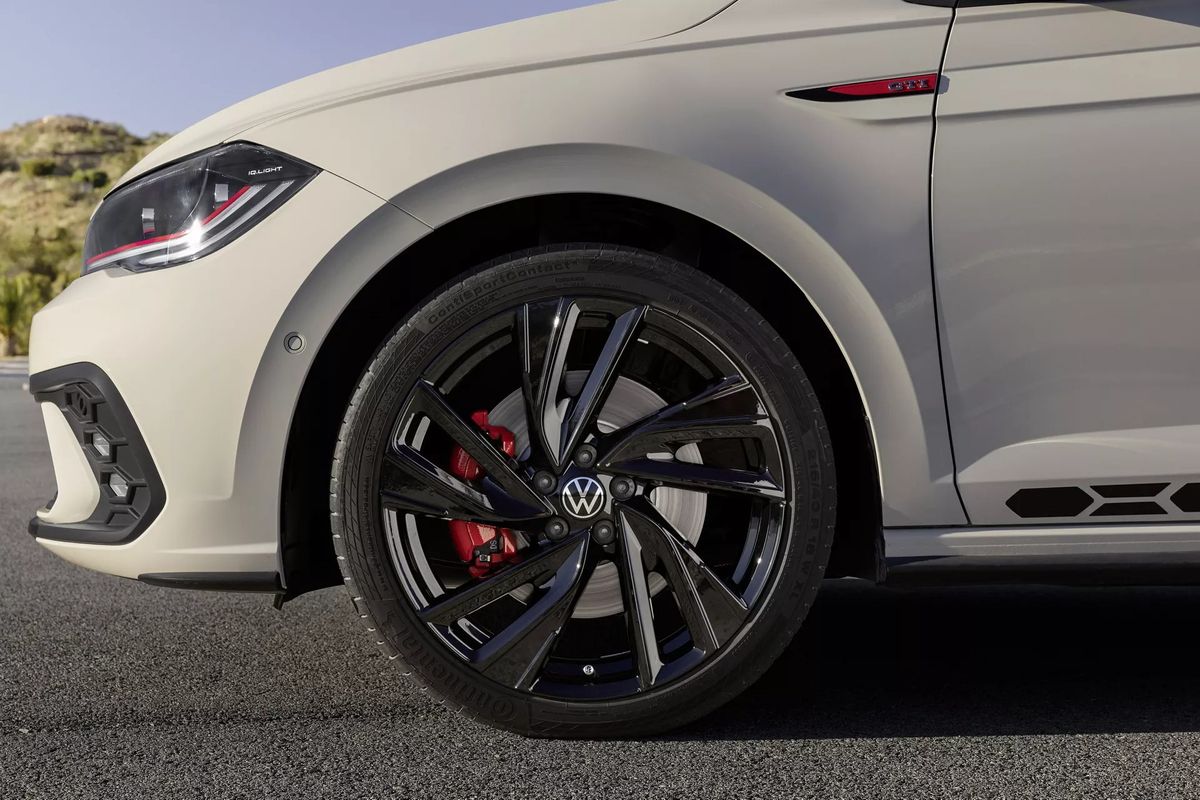
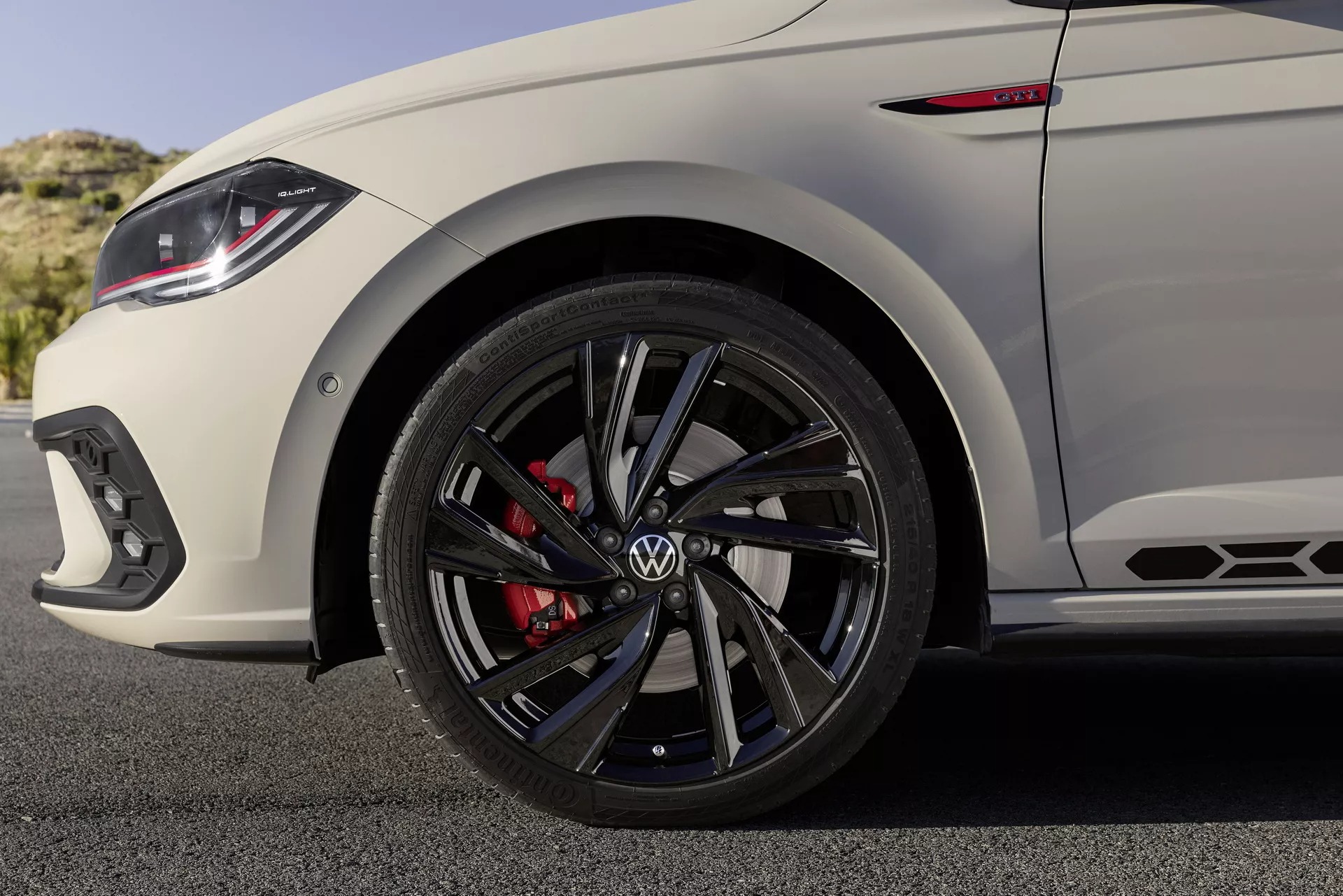
This factory is the sole supplier of the Volkswagen Polo GTI. So, what’s different with the Polo Edition 25? There’s a special colour, called Ascot Grey and the vehicle is sold with IQ. LED Matrix headlights as well as gloss black 18-inch Adelaide wheels. There are also some subtle styling elements like black roof and black mirror caps.
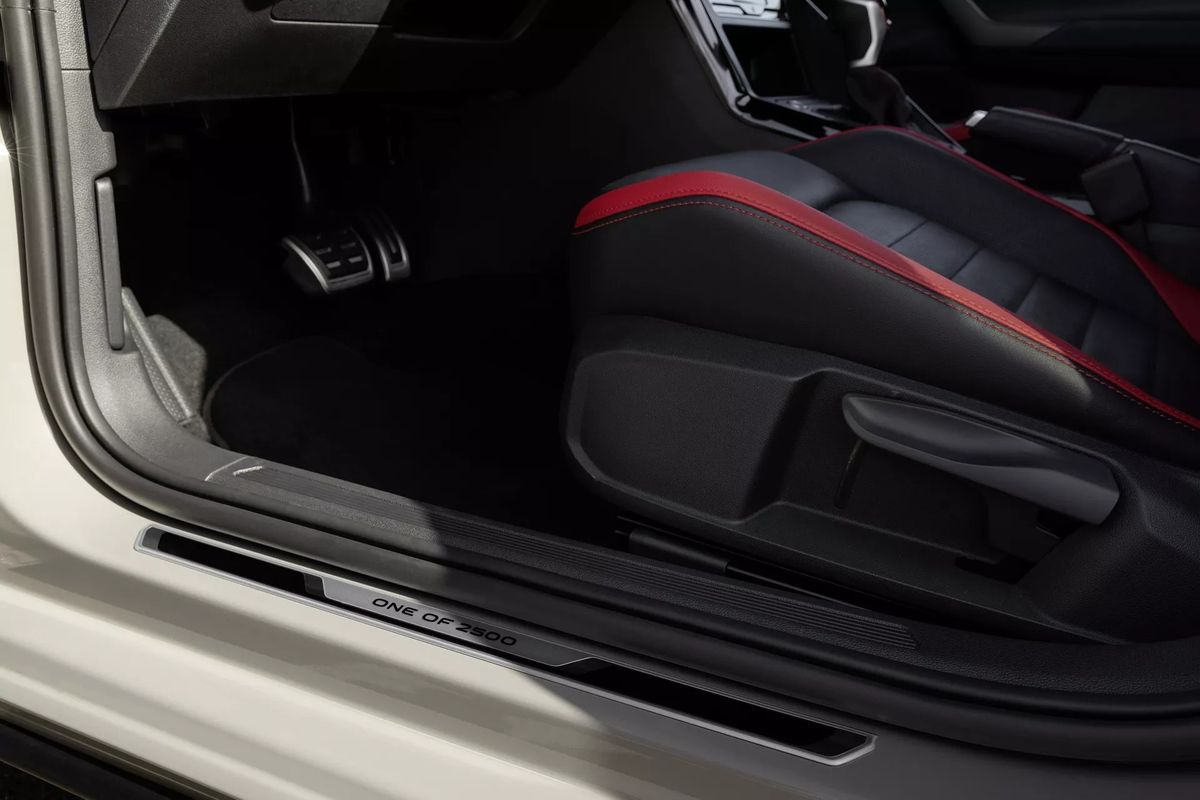
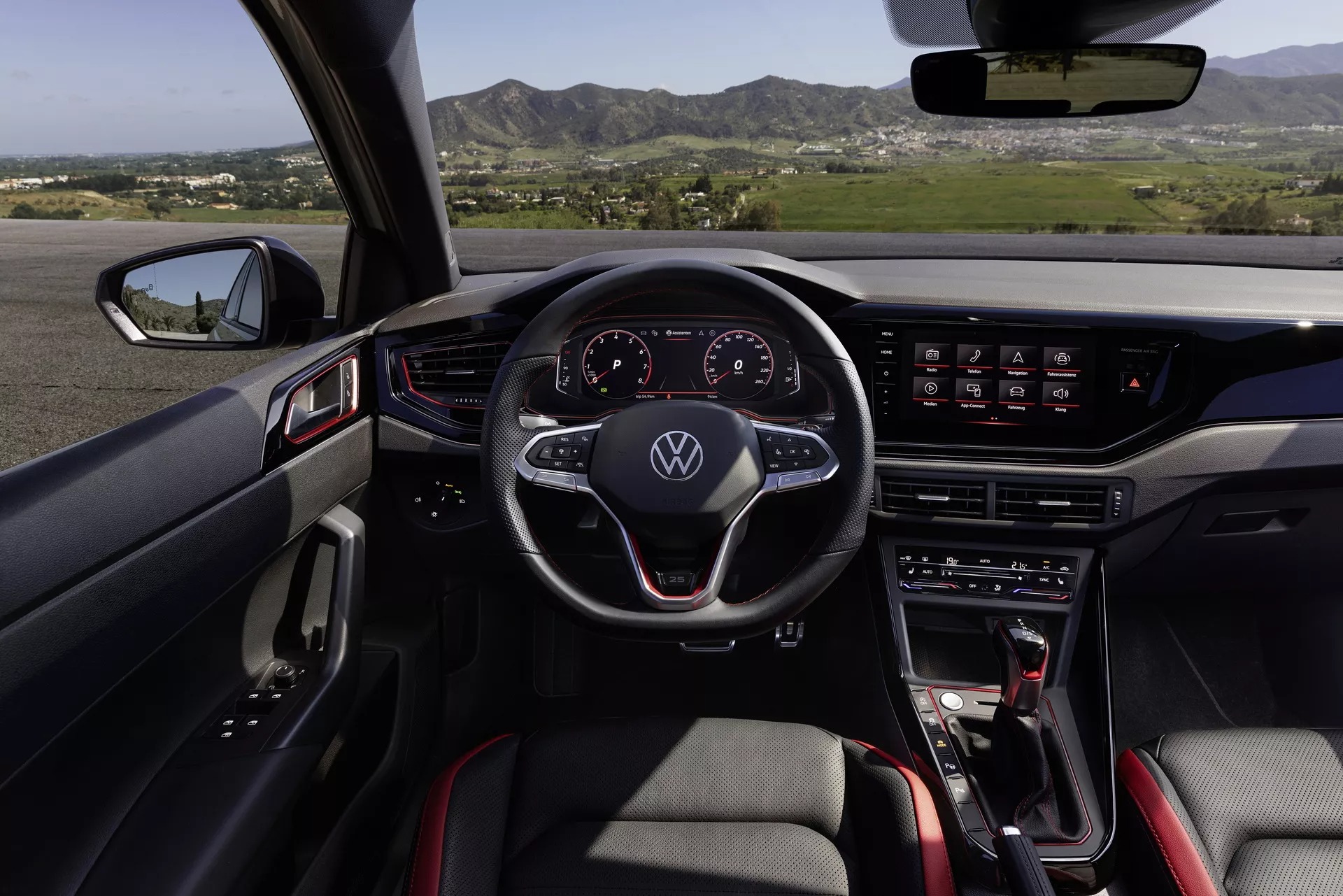
Inside the Edition 25, there are nice-looking sports seats finished in black perforated leather with red detailing, a ‘one of 2 500′ decal on the side sills, and a ’25’ branded steering wheel. Critically, there are mechanical changes too, with a special suspension setup that sees the vehicle sit 15 mm lower which will aid the handling.
The engine is identical to the European-spec motor and as a reminder, its a 2.0-litre turbocharged 4-cylinder petrol with 152 kW and 320 Nm. A 7-speed dual-clutch transmission sends all of that to the front wheels and Volkswagen says the Polo GTI Edition 25 can hit 100 kph in 6.5 seconds. As a reminder, the SA-spec Polo GTI has 147 kW and 320 Nm, and retails for R527 700.
VW Polo GTI Edition 25 in South Africa?
You’d think given how popular the Volkswagen Polo is in South Africa as well as the local manufacturing, the new model would be an automatic entrant to showrooms. We’ve yet to hear from Volkswagen SA and will update this article with further information.
Update: Volkswagen SA has confirmed the GTI Edition 25 is only for European and Japanese markets.
Mid-month fuel price data from the Department of Energy suggests South Africa could be in for a major fuel price decrease in June 2023.
Somehow amidst all the complications South Africa finds itself in, there appears to be a spot of good news on the horizon. Mid-month fuel price data suggest the local fuel price could drop by over R1 per litre if things track consistently towards the end of the month.
While the local exchange rate has seen the Rand depreciate against the dollar from R18.40 at the beginning of the month to R19.01 at the midpoint of May 2023, the price of Brent Crude has been on the decline. At the end of April, Brent Crude oil was trading above $80 per gallon but has since come down to below $75 per gallon. This equates to a reduction in the price of petrol coming down by R1.13 per litre for 95 octane, R1.11 for 93 octane and diesel by R1.27 per litre for 50ppm and R1.36 for 500ppm.
Mid-month data is only a projection of what is to come with confirmed pricing being available in the last week of May. Here’s a nifty table of the projected fuel price for June 2023.
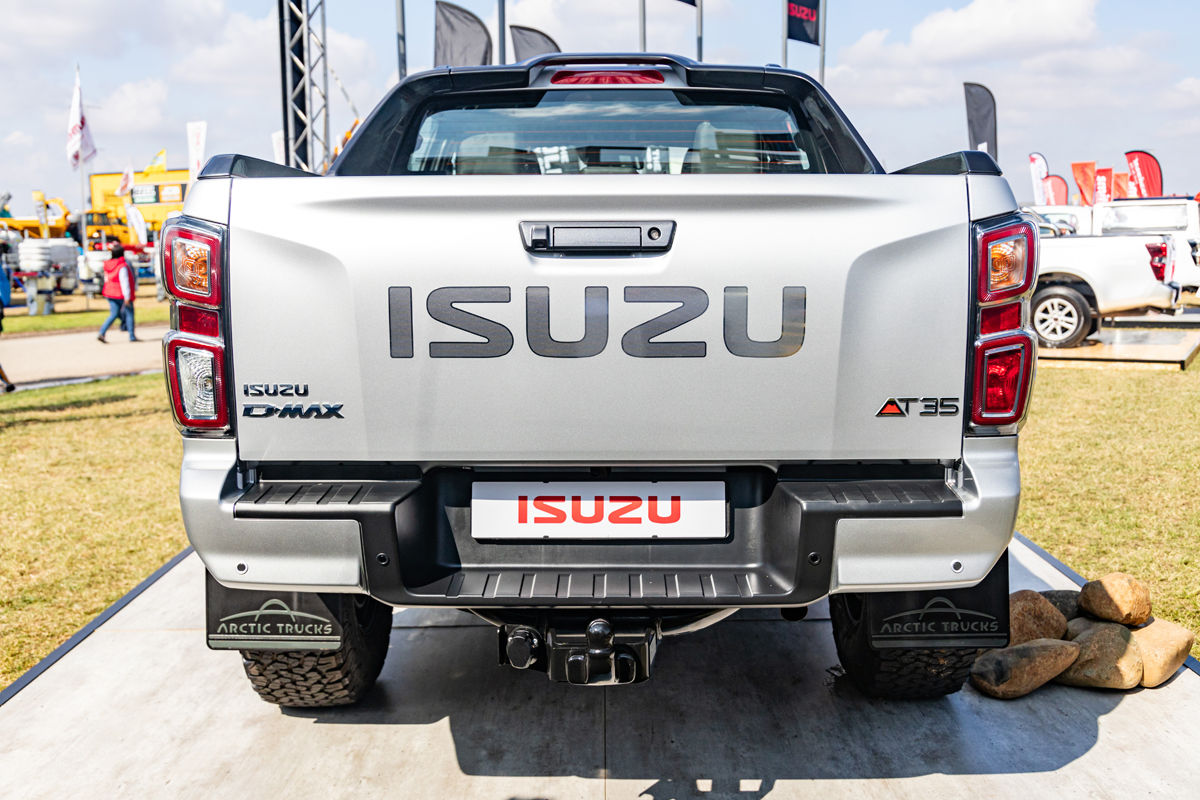
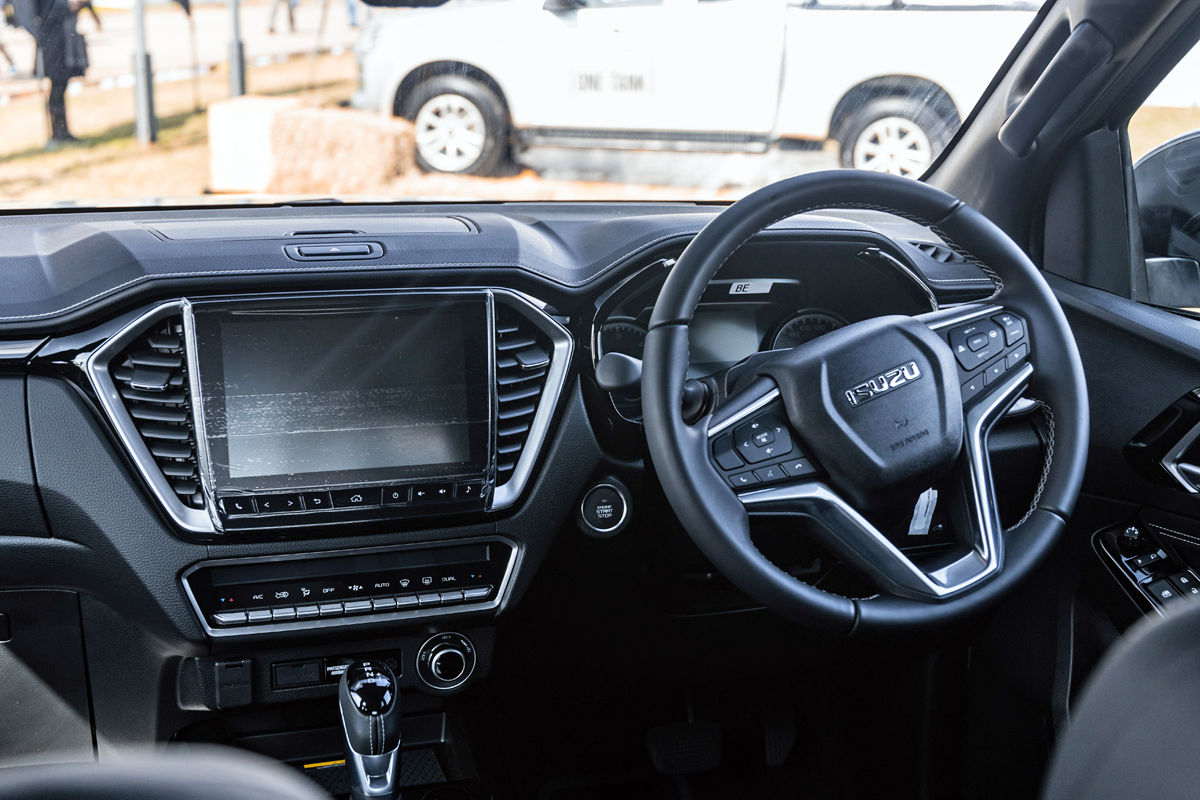
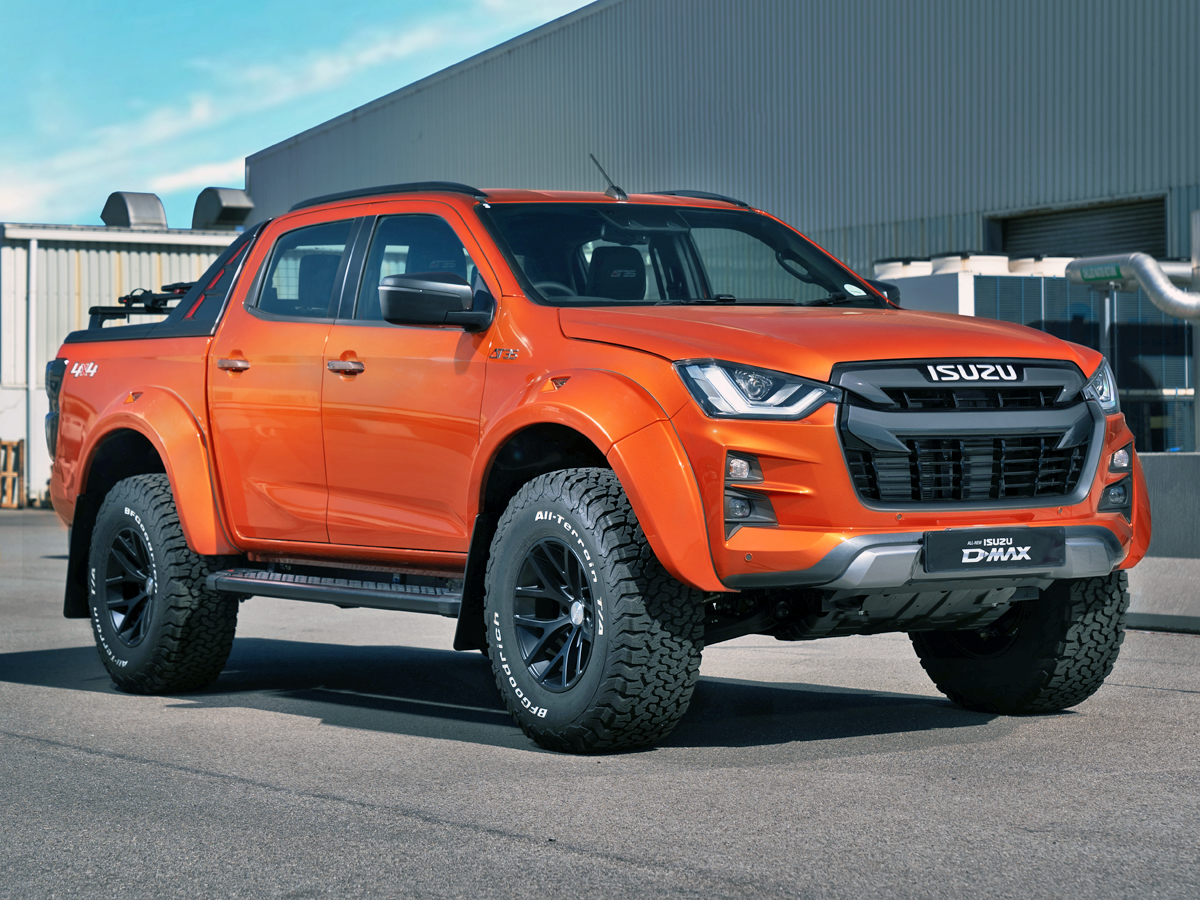
New Isuzu D-Max Arctic Trucks AT35 Locked in For SA!
The new Isuzu D-Max Arctic Trucks AT35 has finally been confirmed for South Africa, though – rather curiously – the firm’s local division is unable to confirm pricing…
Isuzu Motors South Africa dropped a substantial hint late in 2022 and now the news is official: the latest Isuzu D-Max Arctic Trucks AT35 has been confirmed for the local market in “limited” numbers.
Despite the Japanese firm’s local division saying the new flagship model “is available on special order through Isuzu’s local dealer network” (as in, present tense), it curiously cannot currently confirm pricing. We even called a couple of local dealerships, which were likewise unable to share an official figure.
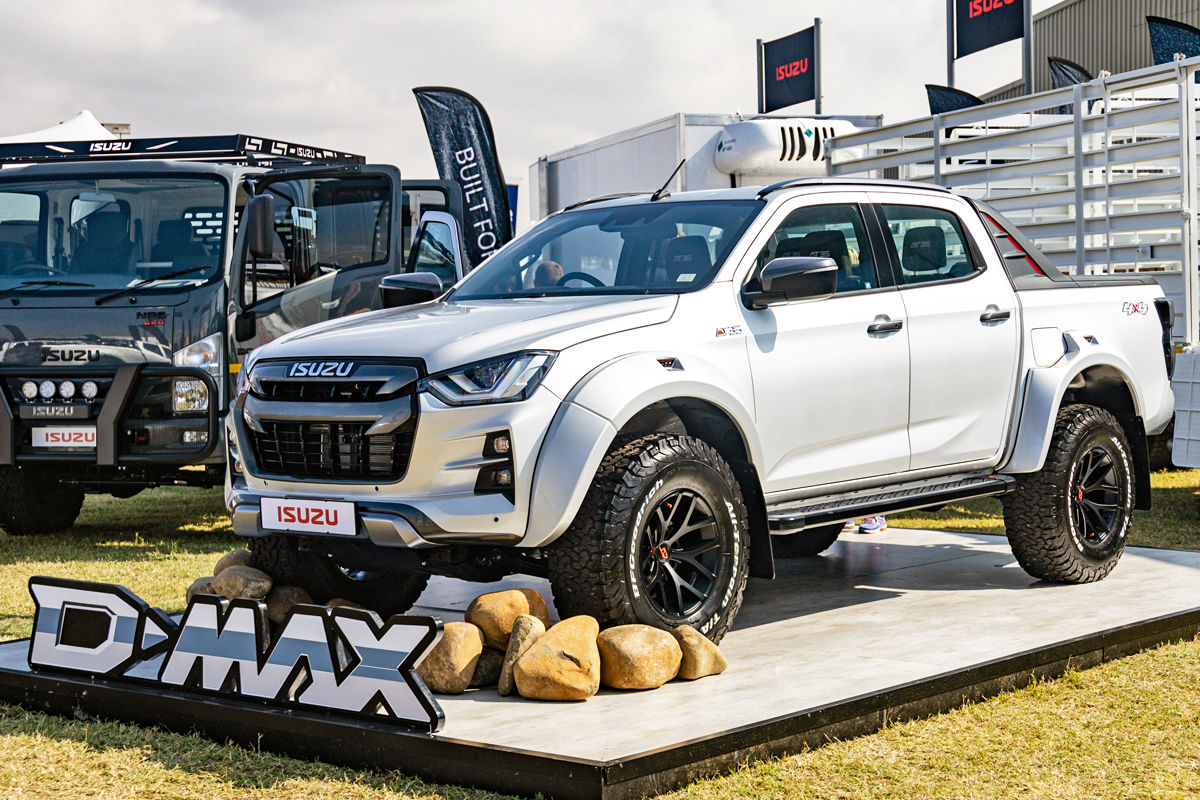
So, what do we know? Well, developed in collaboration with Icelandic specialists Arctic Trucks, the 2023 D-Max Arctic AT35 will again be locally assembled at Isuzu’s plant in Struandale, Gqeberha. As was the case with the previous-generation version of the beefed-up bakkie, the Struandale plant is the only Isuzu facility in the world accredited by Arctic Trucks to produce the D-Max AT35.
Based on the range-topping V-Cross 4×4 double-cab derivative (which, for the record, is currently priced at R857 700), the AT35 gains its enhancements in a dedicated Arctic Trucks conversion area in the body shop, where Isuzu says its “most skilled artisans and technicians craft the bigger wheel wells and arches to accommodate the large 35-inch tyres and beefed-up suspension”.
After painting, the vehicle follows the normal D-Max assembly line, where it also gains a specially developed suspension lift kit and Bilstein dampers. The final step in the transformation is the “off-line fitment” of larger wheel-arch mouldings.
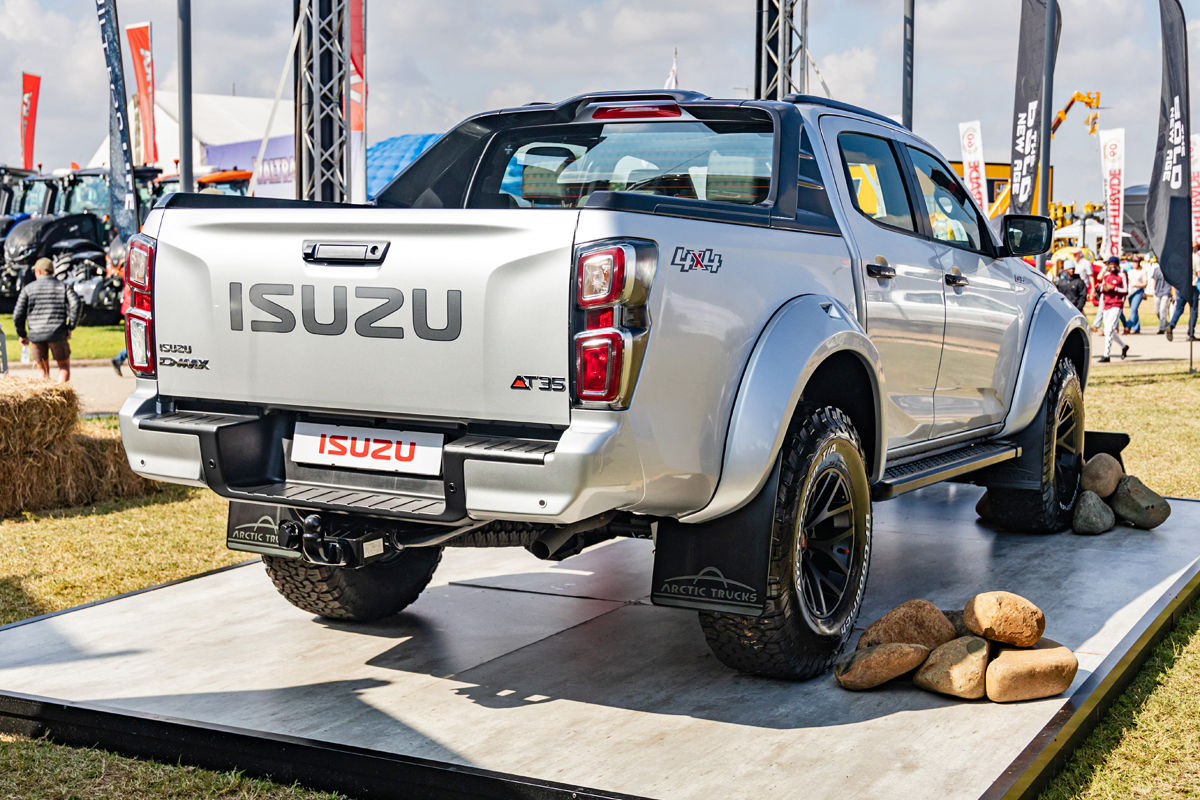
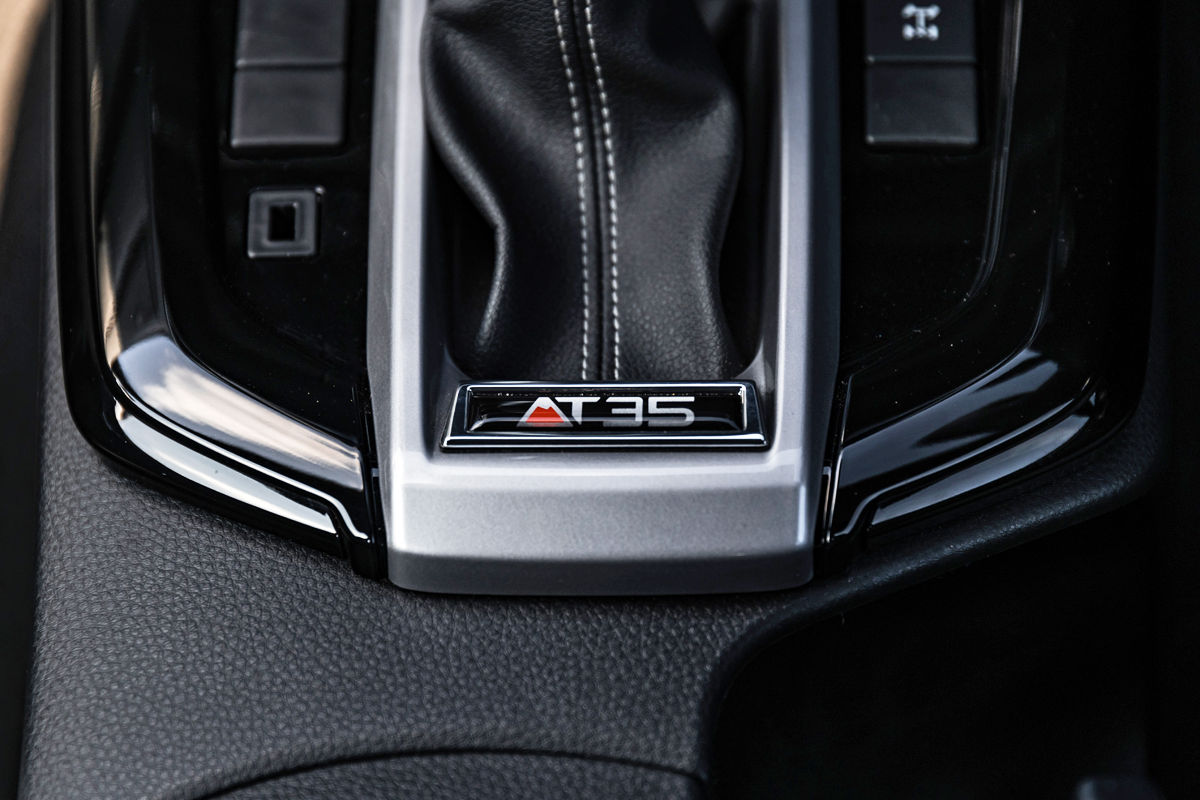
Besides its increased ride height and wider track, the AT35 gains special chrome badges on its front fenders and tailgate, along with wider-profile side steps, Arctic Trucks mudflaps and 35-inch BF Goodrich all-terrain tyres (wrapped round 17×10-inch AT black alloy wheels). In addition, a standard 18-inch spare wheel is fitted beneath the loadbox, while a ResQ Puncture Repair Kit is also provided. Inside, the bakkie’s leather-trimmed seats score “AT35” logos, a treatment repeated on the gearshift shroud and floor mats.
The “purpose-designed” lift kit and tyres increase the ground clearance from 232 mm to 266 mm and boost the vehicle’s overall height from 1 810 mm to 1 875 mm. The standard bakkie’s claimed wading depth of 800 mm climbs to 865 mm, while the approach angle improves to 33 degrees, the departure angle to 23 degrees and the break-over angle to 34 degrees.
As a reminder, the AT35 is powered by the brand’s 3.0-litre, 4-cylinder turbodiesel engine familiar from other D-Max derivatives. In this latest application, it generates an unchanged 140 kW and 450 Nm, peak outputs that are delivered to all 4 wheels via a 6-speed automatic transmission.
The D-Max Arctic Trucks AT35 ships standard with a 5-year/120 000 km warranty and a 5-year/90 000 km service plan (with intervals of 15 000 km). We’ll share local pricing as soon as it’s confirmed…
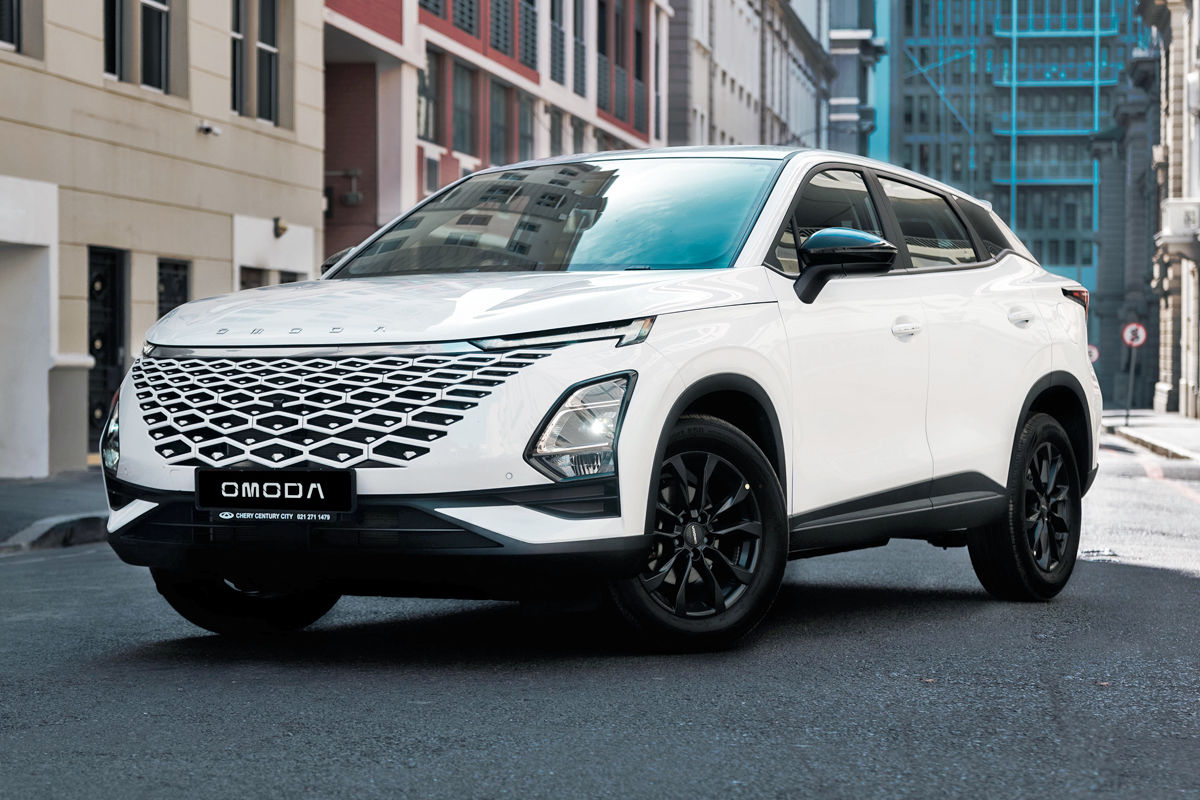
Barely a month after the Omoda C5 launched in South Africa, the range has expanded with the addition of 2 fresh mid-tier derivatives. Here’s how much they cost…
Despite launching in South Africa as recently as mid-April 2023, the Omoda C5 range has already grown. A pair of mid-tier variants now join the local line-up, offering buyers even more choice.
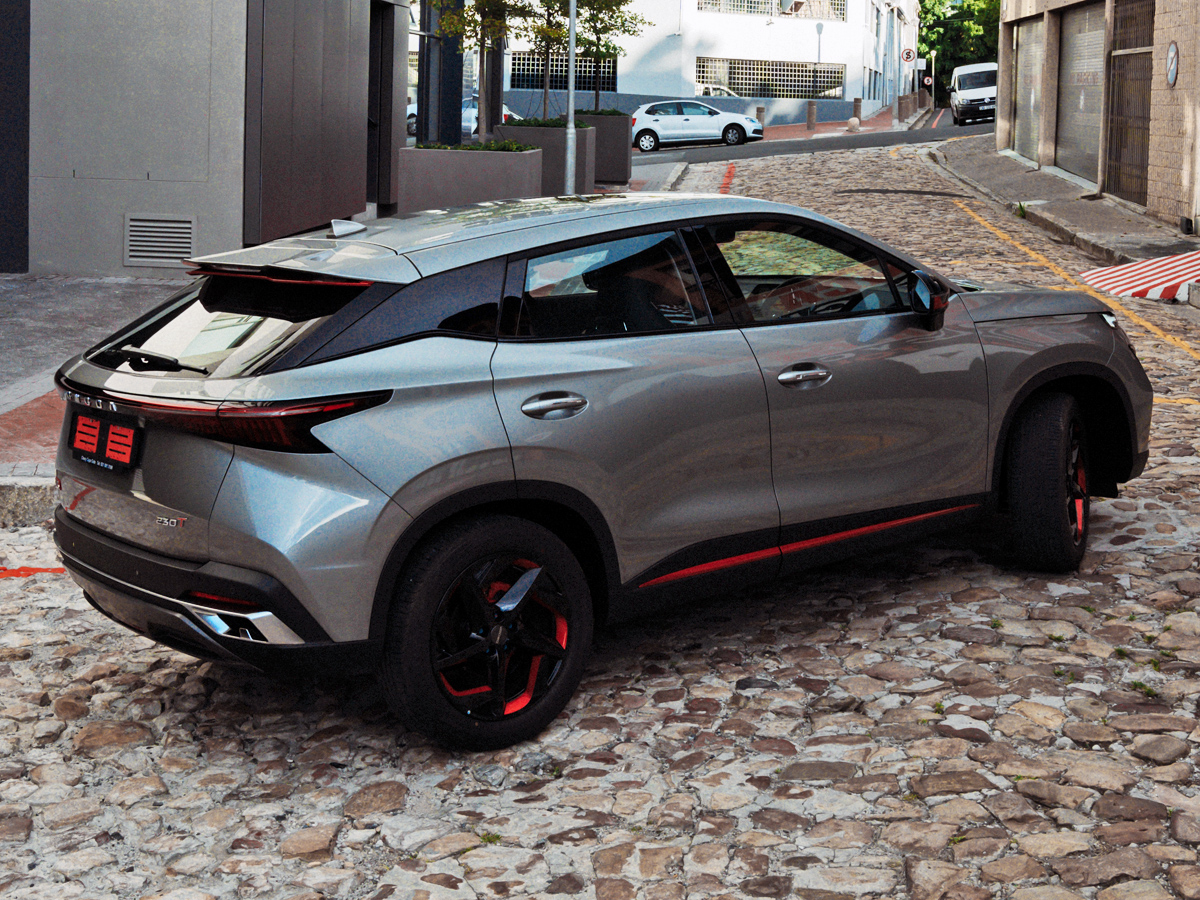
In addition to the existing Tech, Elegance and Elegance S trim levels, Omoda South Africa has rolled out new Luxury and Luxury S grades, pushing the line-up to 5 derivatives. All models are powered by a turbocharged 1.5-litre, 4-cylinder petrol engine that delivers 115 kW and 230 Nm to the front axle via a continuously variable transmission (CVT).
While the range still kicks off with the C5 1.5T Tech at R447 900, the C5 1.5T Luxury (R477 900) and C5 1.5T Luxury S (R479 900) now slot in right above it. As before, the C5 1.5T Elegance (R507 900) and C5 1.5T Elegance S (R509 900) top the local portfolio.
Note the red detailing on the Luxury S derivative.
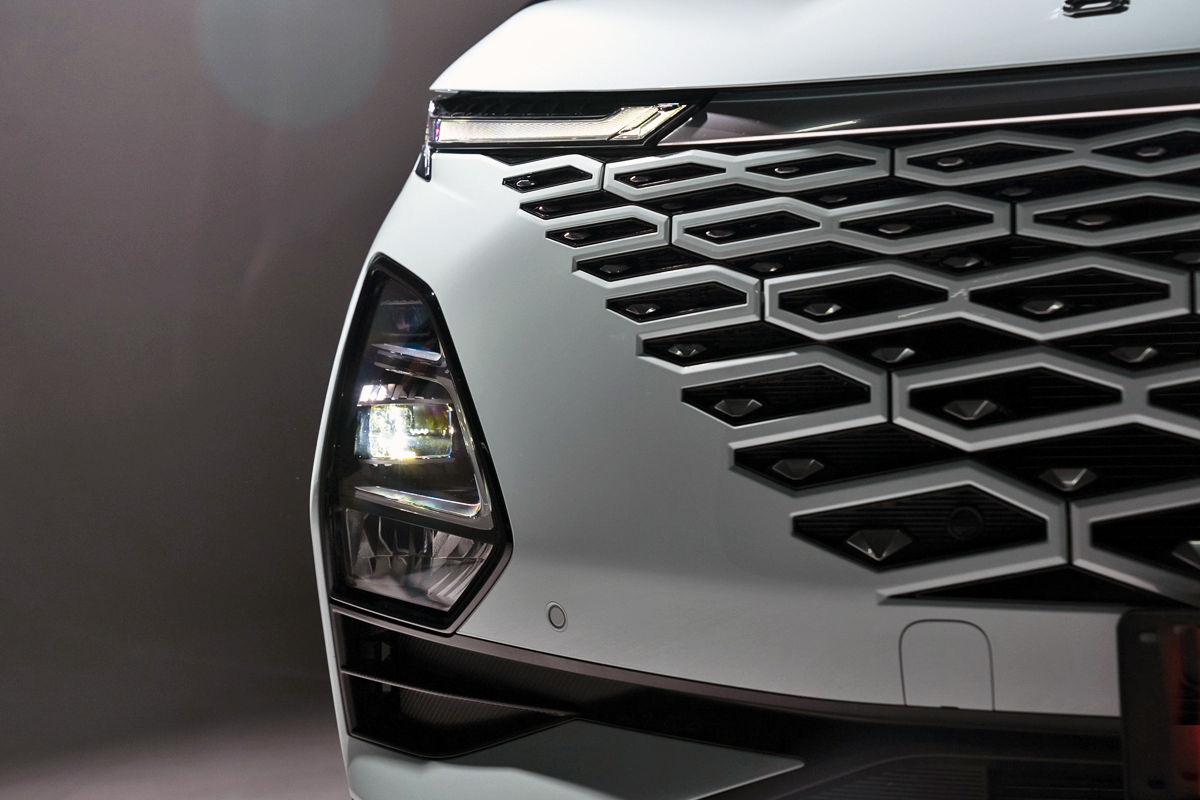
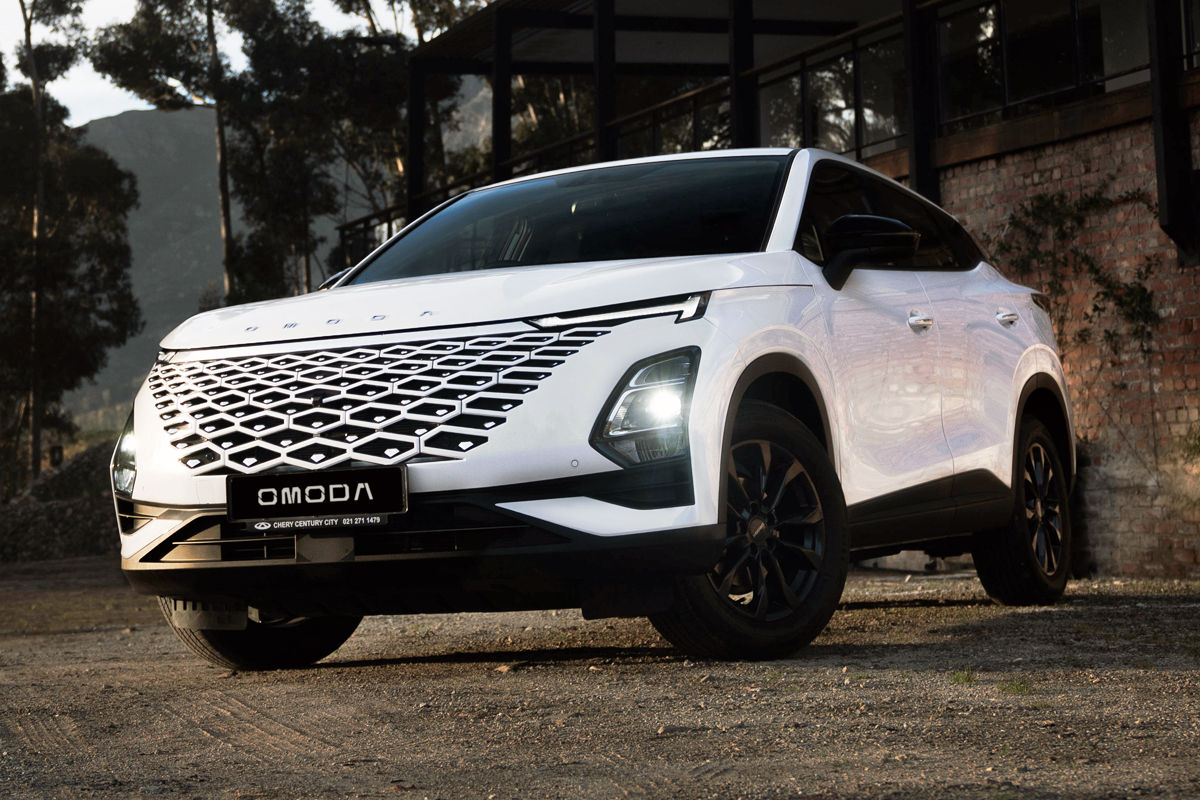
The newcomers both sport 18-inch alloy wheels shod in 215/55 rubber and framing red brake callipers, as well as a roof-mounted spoiler, LED daytime running lights, LED brake lights and a sunroof. The fresh Luxury and Luxury S variants can also be ordered with a 2-tone colour scheme, with the roof painted in a contrasting colour.
Like the flagship Elegance S model, the Luxury S trim level features red detailing on the front bumper, alloy wheels and roof-mounted spoiler. Inside, both the Luxury and Luxury S variants ship standard with leather upholstery. Other upgrades over the Tech specification include power-adjustable front seats and a powered tailgate, along with a 360-degree camera system.
The standard specification list furthermore includes climate control, cruise control, a voice-command system, dual 10.25-inch screens and an 8-speaker Sony sound system (with a pair of extra speakers compared with the Tech grade).
How much does the Omoda C5 cost in South Africa?
C5 1.5T Tech – R447 900
C5 1.5T Luxury – R477 900
C5 1.5T Luxury S – R479 900
C5 1.5T Elegance – R507 900
C5 1.5T Elegance S – R509 900
The Omoda C5 is sold with a 5-year/150 000 km warranty, a 5-year/70 000 km service plan and a first-owner only 10-year/1 million km engine warranty.
The 2023 Mercedes-AMG C43 4Matic ushers in a new era for the Three-pointed Star’s Affalterbach-based division. Does the C43’s electrified 2.0-litre engine deliver enough on-road thrills to emerge from the shadow of the V6 engine in the previous model?
We like: Responsive powertrain, easy to drive quickly, fit and finish, interior wow factor
We don’t like: Engine lacks character, pricey when compared with rivals
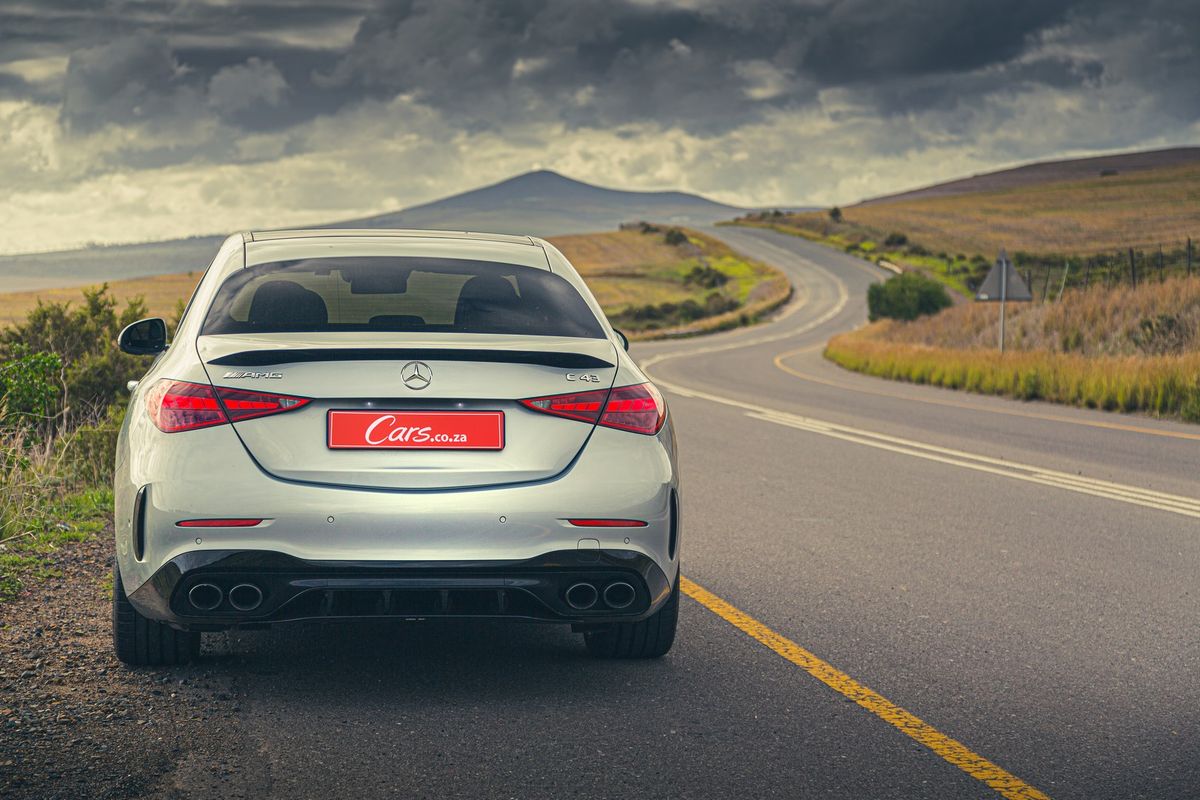
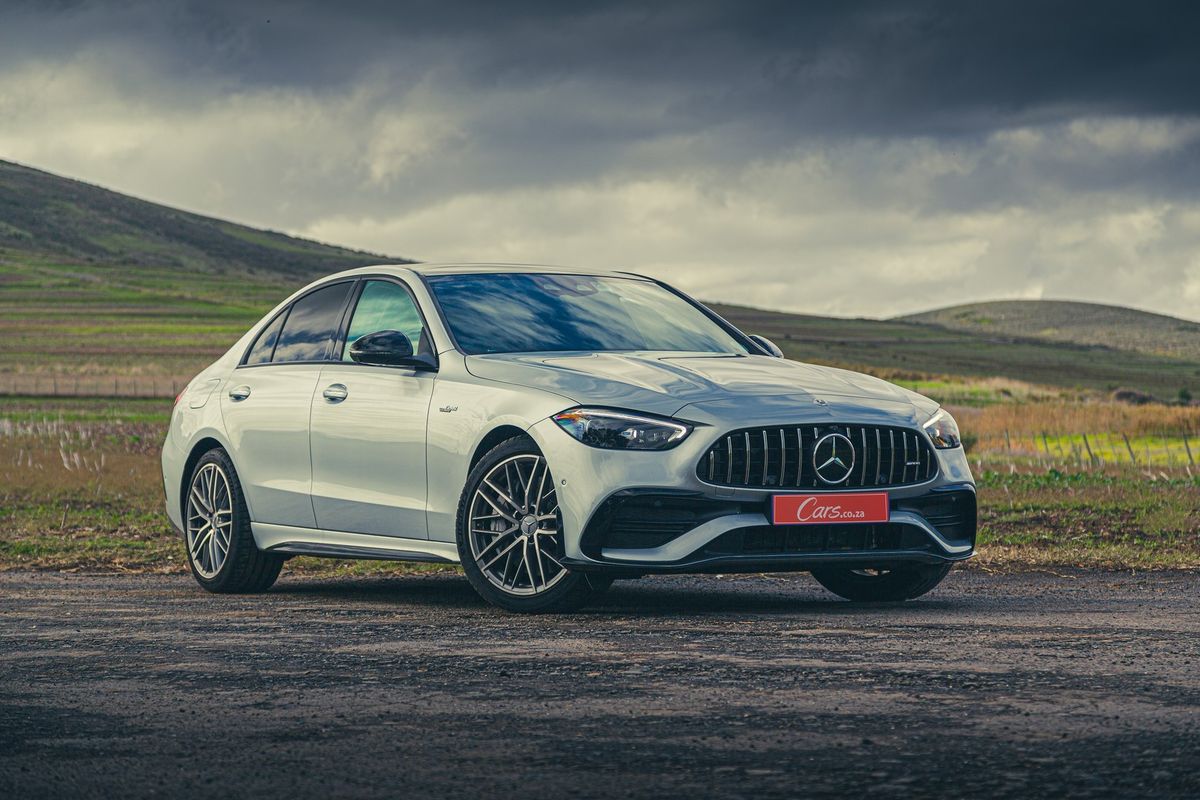
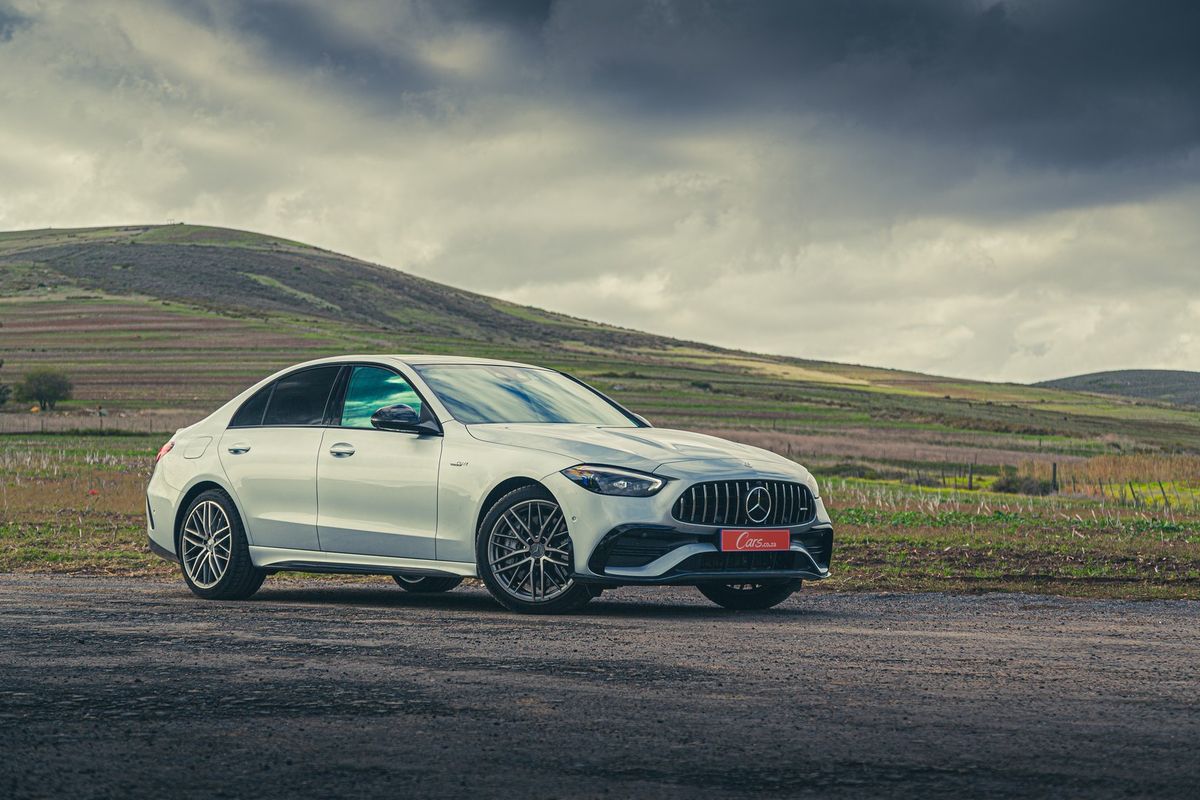
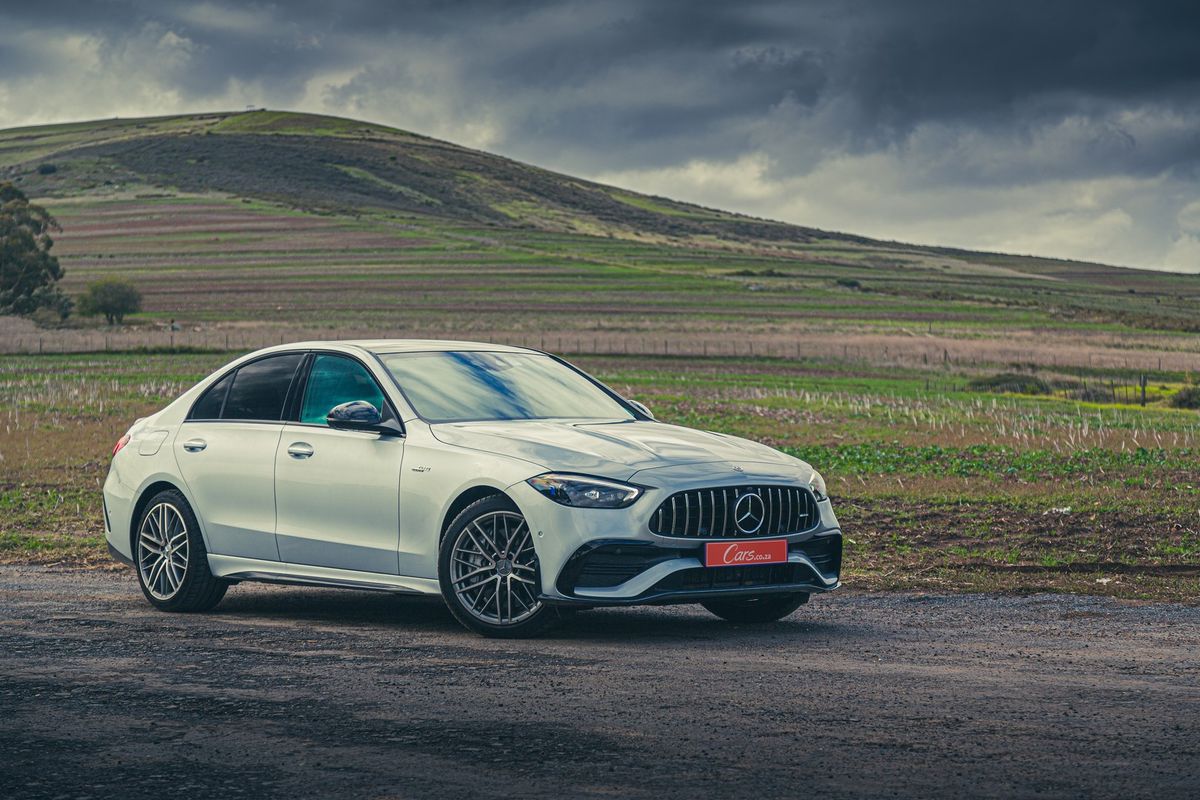
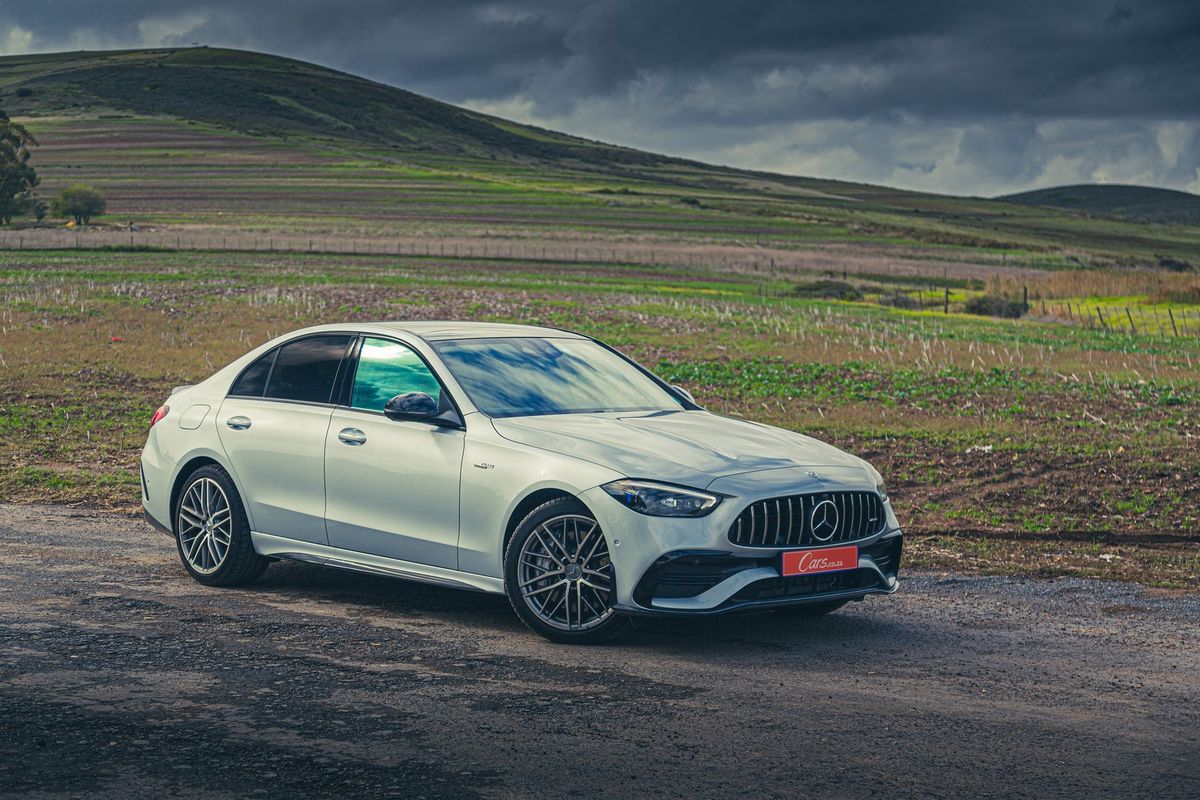
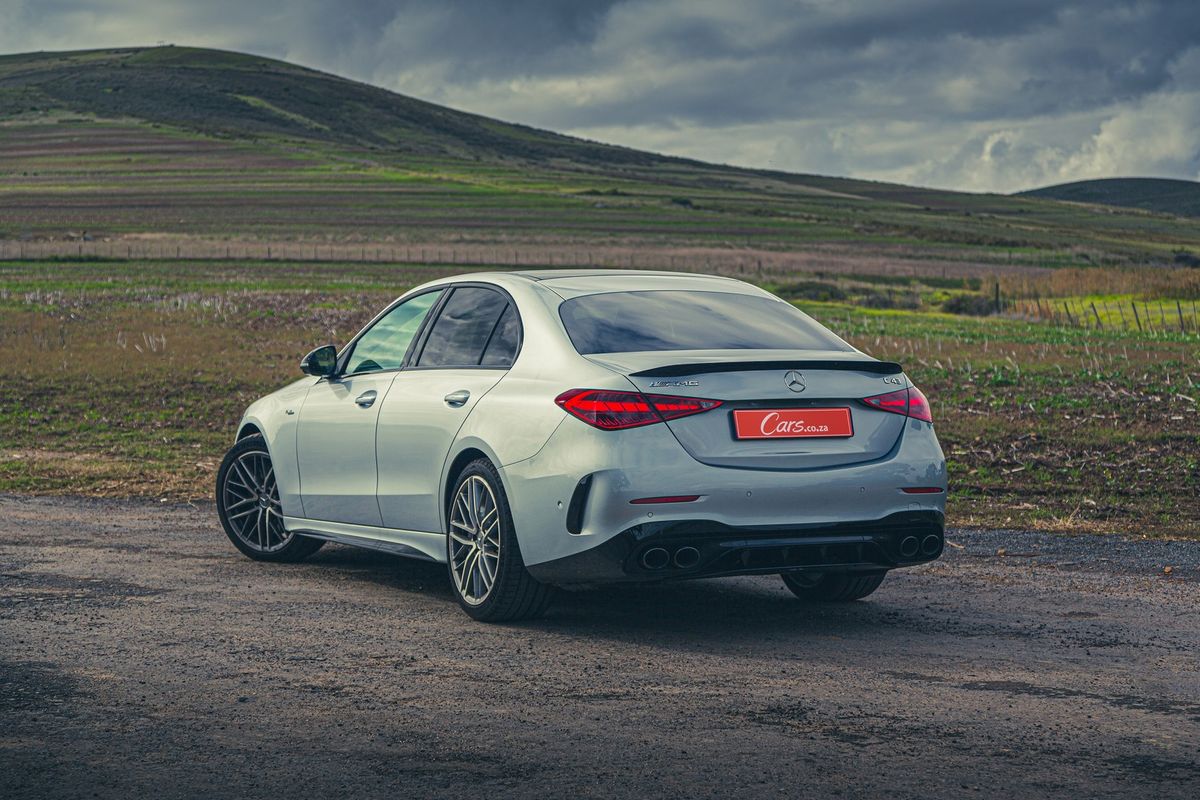
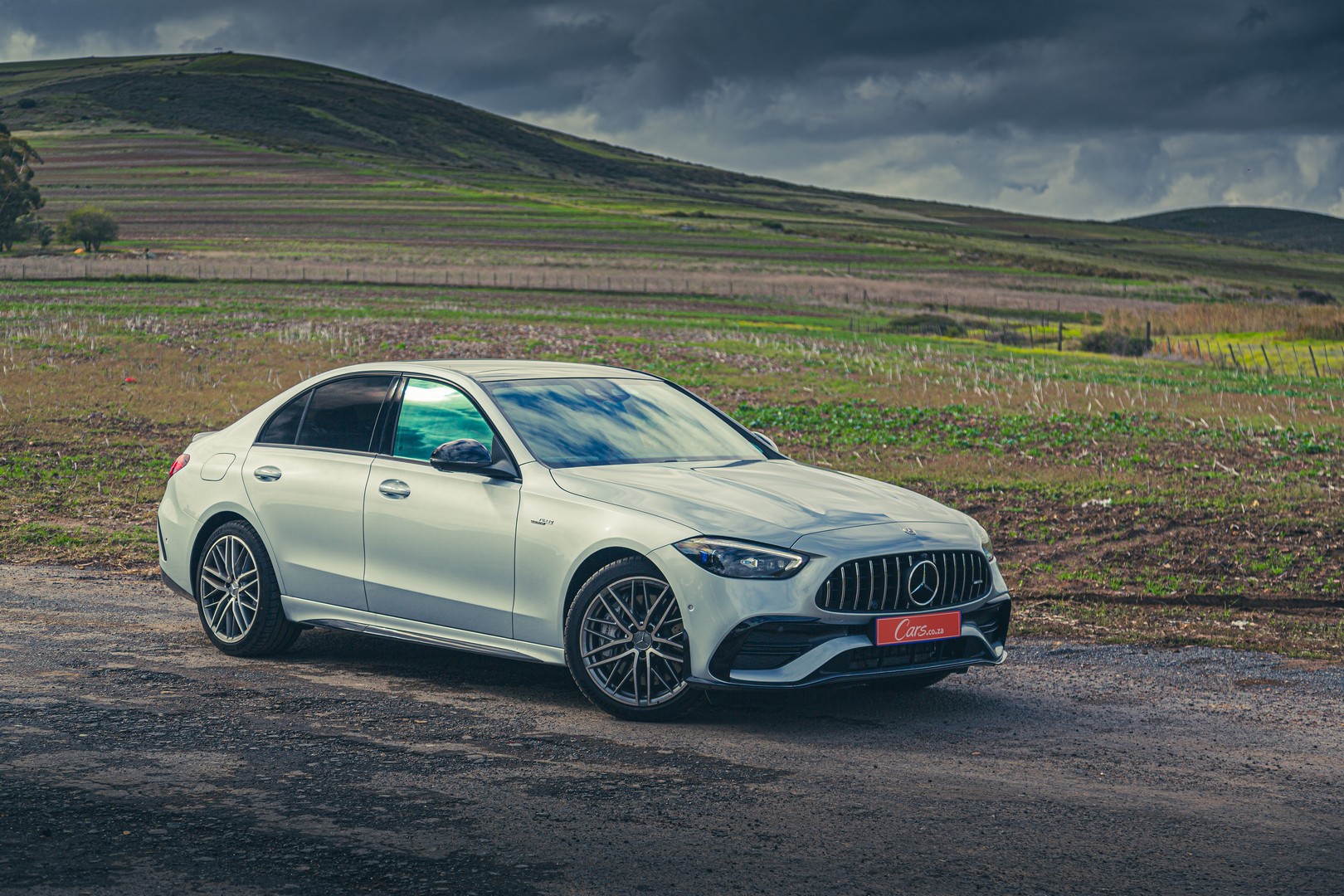
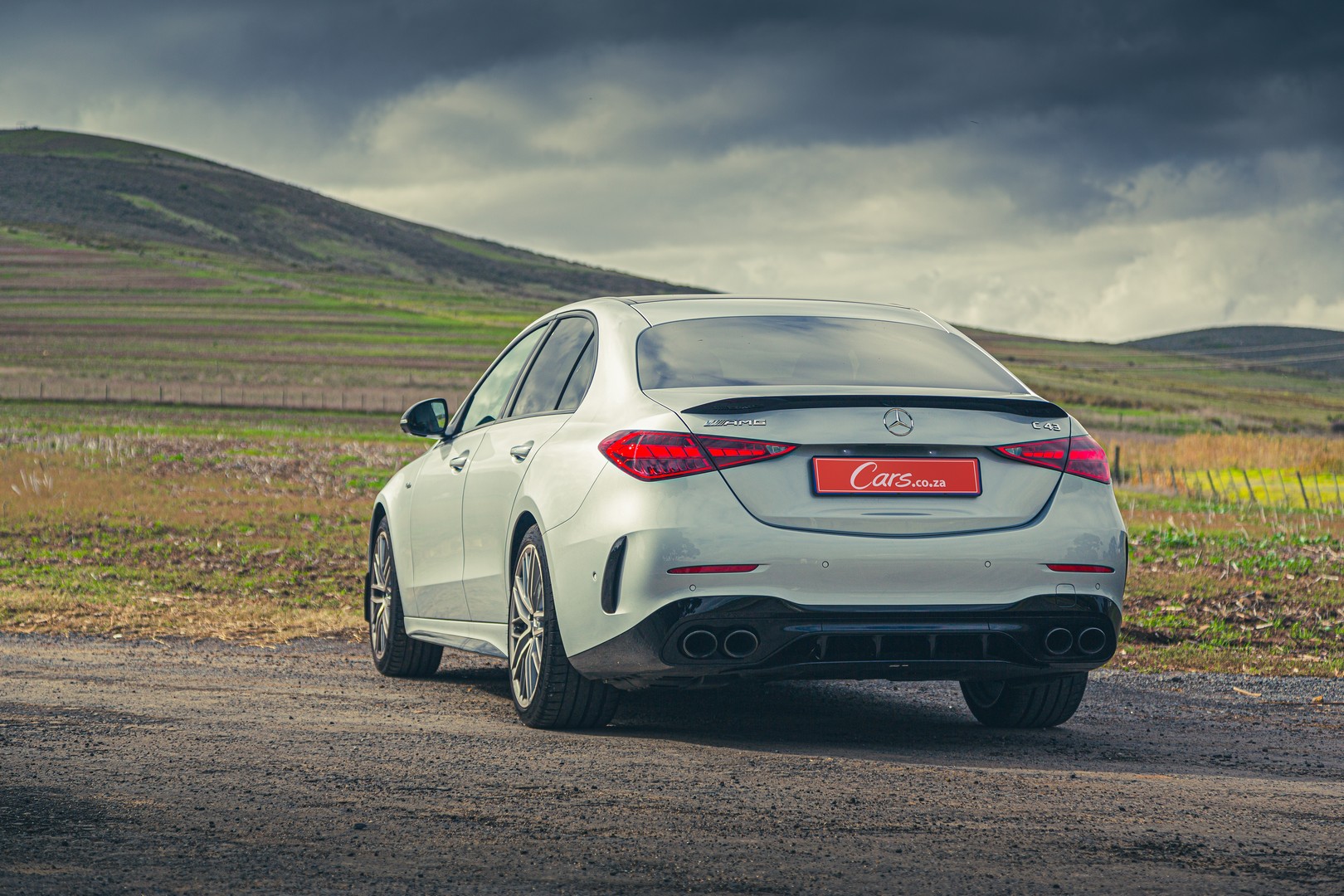
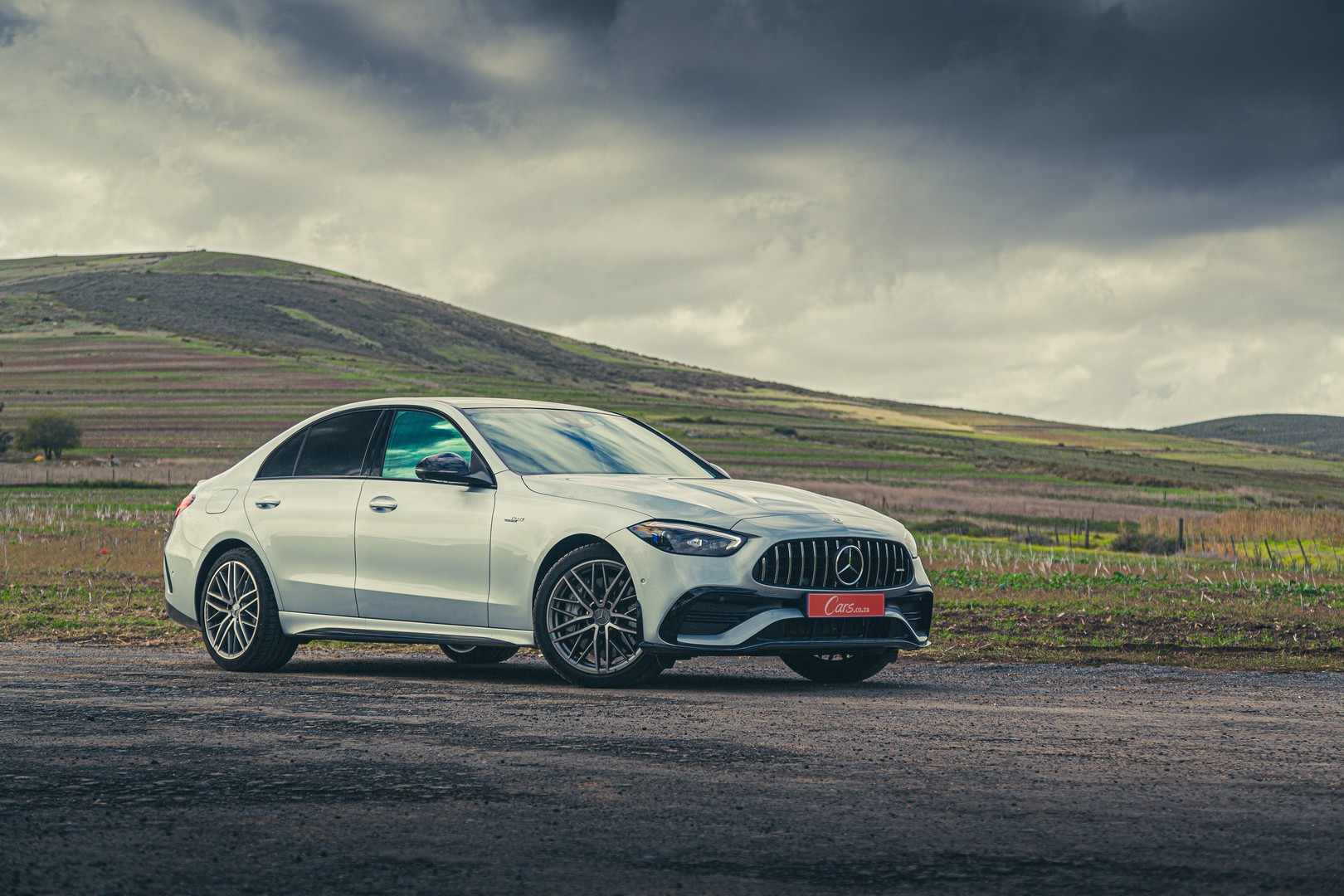
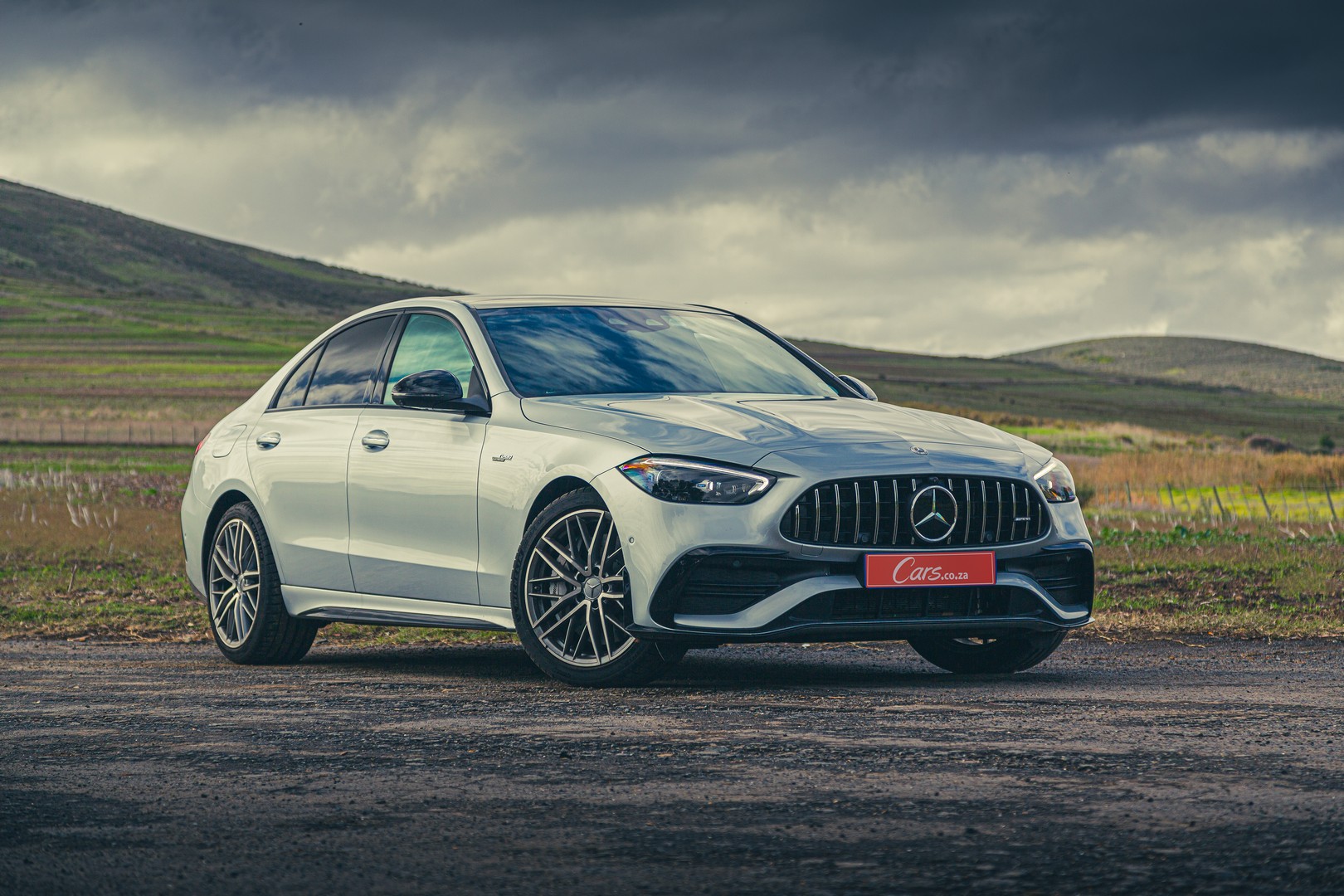
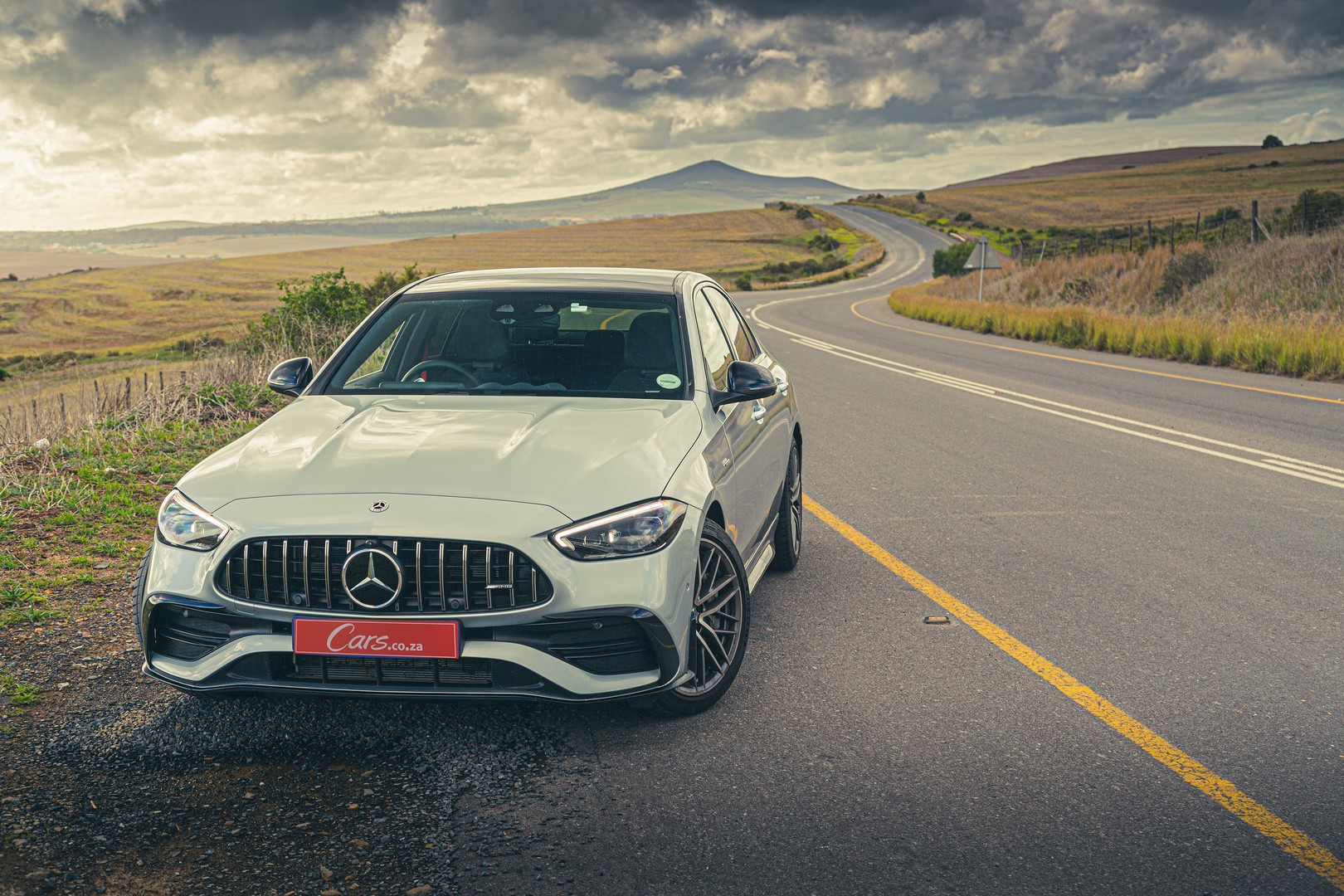
As befits the opening act to the C63 S E Performance, the C43 4Matic’s exterior execution is purposeful, yet restrained.
Most European manufacturers plan to phase out ICE-powered models by the middle of the next decade (or soon thereafter), but that doesn’t mean many legacy carmakers are in a hurry to ditch their traditional models. The W206-generation Mercedes-Benz C-Class is one of the most important models for the Three-pointed Star and its South African subsidiary; the model (including its Mercedes-AMG derivatives) is manufactured in East London in the Eastern Cape, both for export markets and local consumption.
As things stand, the 2023 Mercedes-AMG C43 4Matic is the fastest, most powerful C-Class available locally, well, at least before the mighty 500-kW C63 S E Performance arrives. Of course, if you must have an SUV, we’re confident that both the 43 and 63 hybrid powertrains will make their way into the GLC.
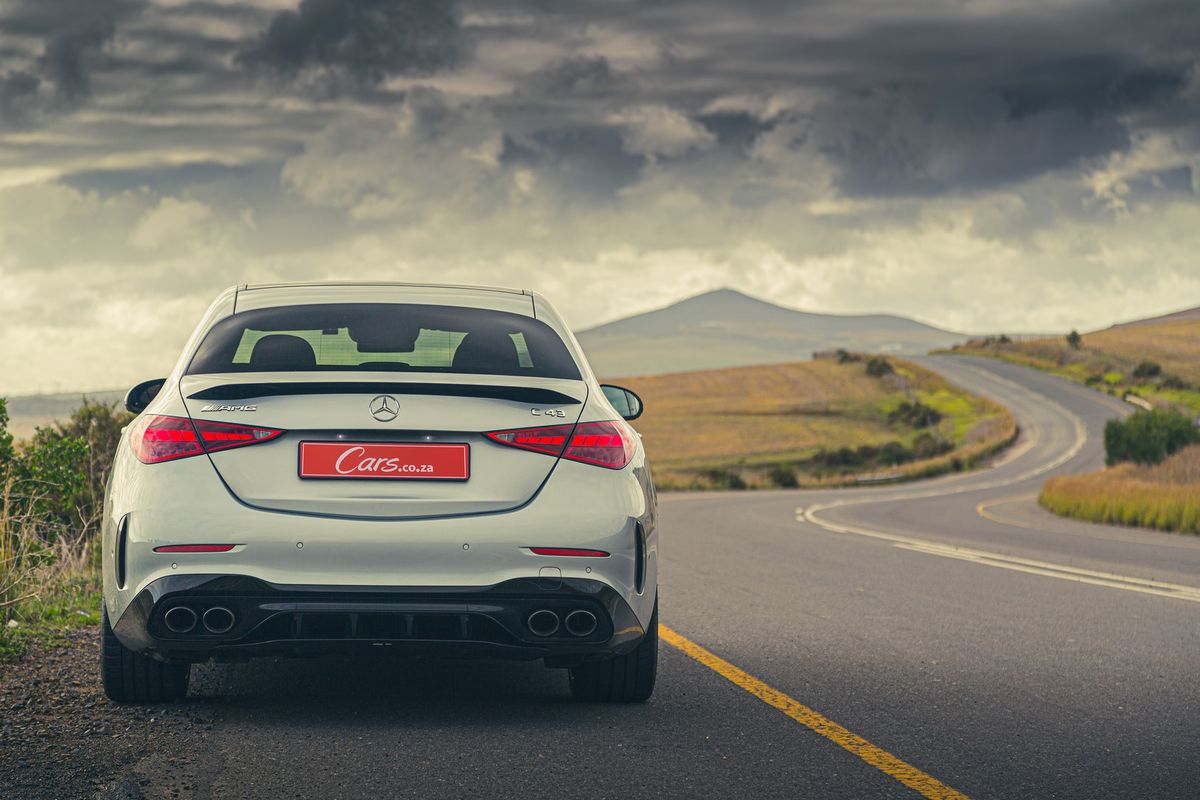
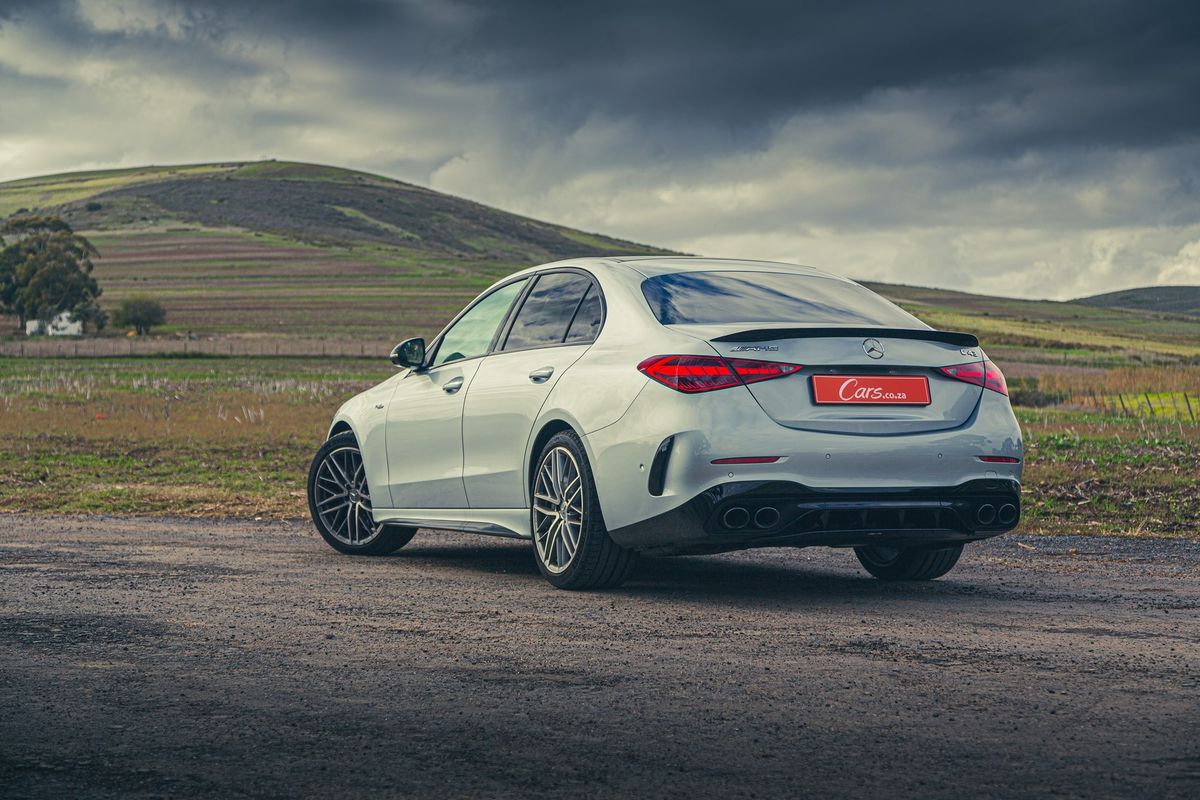
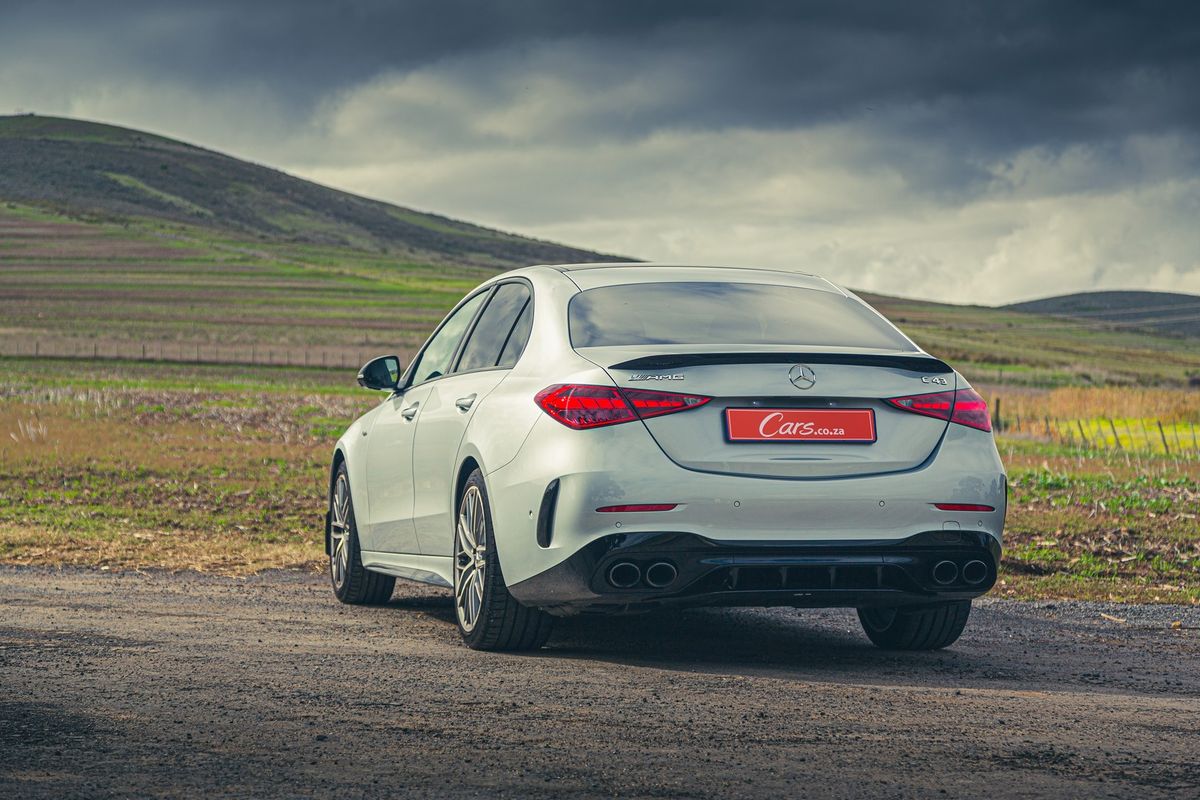
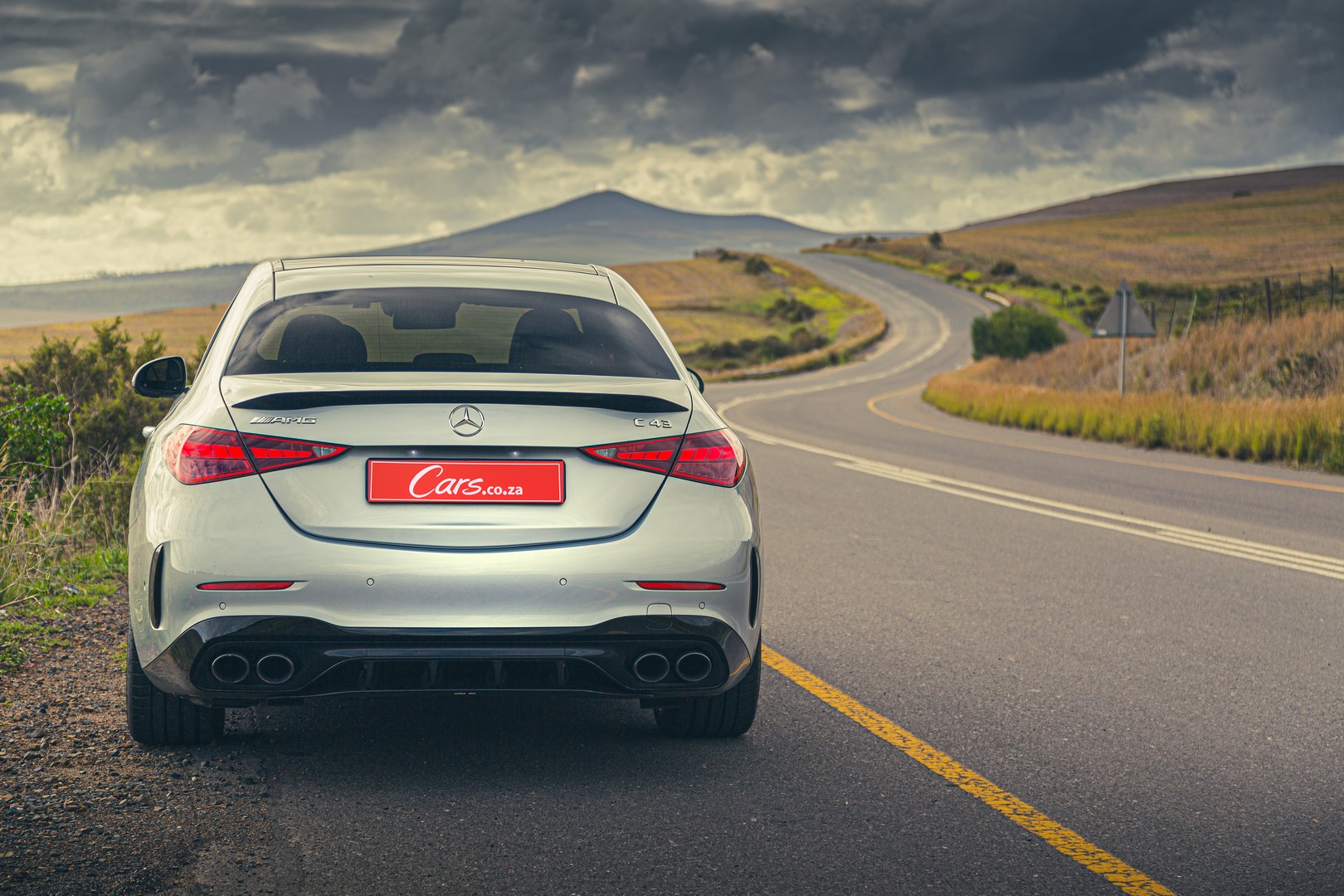
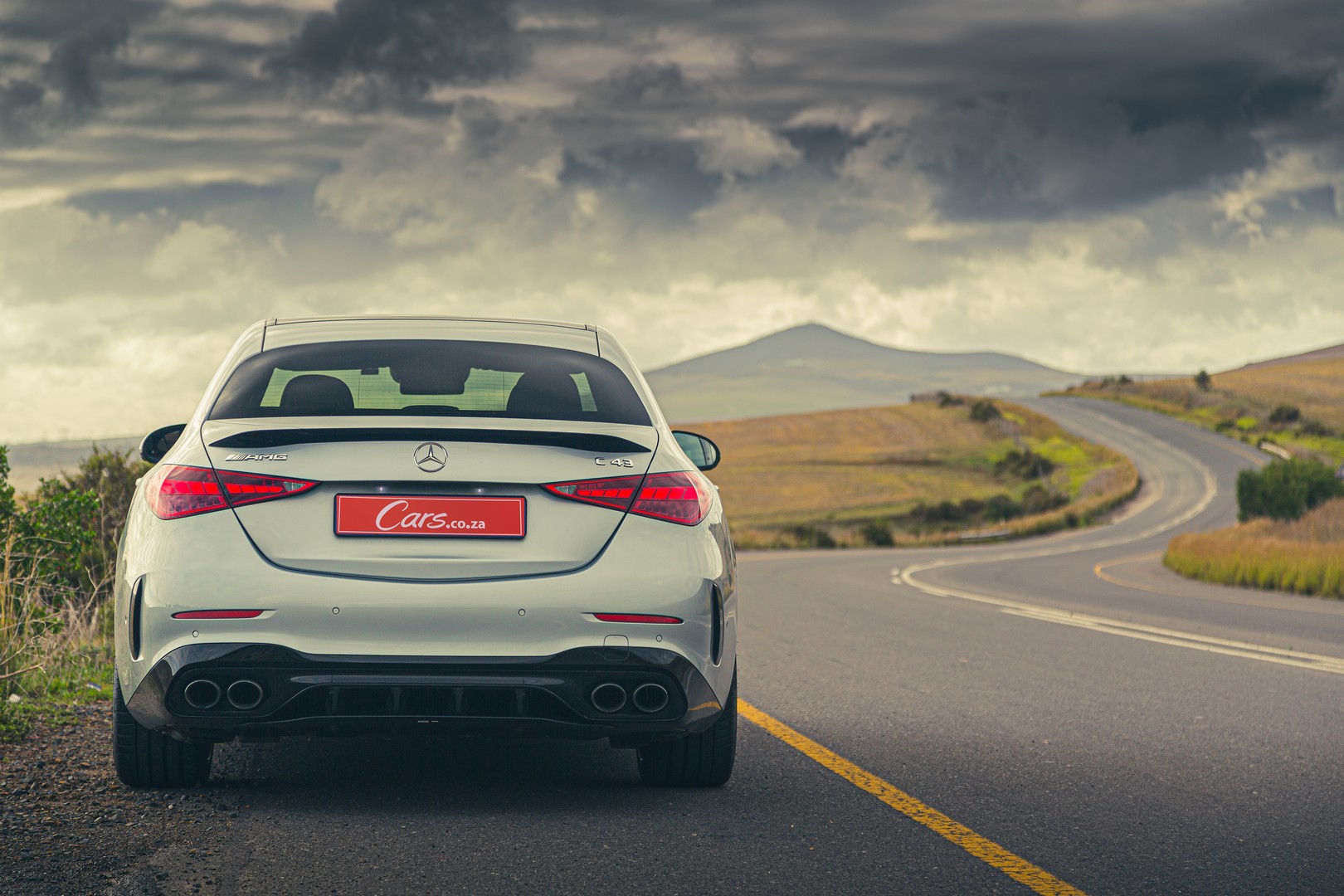
As befitting products that are produced by Mercedes-AMG, the C43 4Matic has a quartet of exhaust tips.
If you’re looking for a new business-class sedan with standout styling and compelling performance (but want to spend less than the R2-million that the BMW M3 competition M xDrive demands), the Mercedes-AMG C43 competes with a quartet of models. Between just over R1 million and R1.6 million, Alfa Romeo offers the Giulia 2.0T Veloce, Audi the S4 and RS5 Sportback quattros and BMW the M340i xDrive.
Whereas the Giulia is, um, beautiful and sufficiently engaging to drive, the 206-kW 2.0T Veloce (R1 086 900) is not in the same league as the ‘Benz, performance-wise. The Audi S4 costs about the same as its Italian rival, but has 260 kW on tap and its claimed 0-100 kph time (4.7 sec) is just a tenth off the C43’s.
But the Mercedes-AMG’s fiercest competition comes from the 285-kW BMW M340i xDrive with its sonorous inline-6, which is said to bolt from 0 to 100 kph in 4.3 sec, plus its asking price undercuts that of the ‘Benz by more than R300k. The Audi RS5 Sportback, in turn, is a bit of a performance bargain; it costs fractionally less than its rival from Affalterbach and, with 331 kW/600 Nm courtesy of its twin-turbo 2.9-litre V6, it is said to dispatch the 0-100 kph sprint in just under 4 seconds (May 2023 prices quoted).
Mercedes-AMG has replaced the previous C43’s V6 motor with a mild-hybrid 2.0-litre inline-4 engine.
How the Mercedes-AMG C43 fares in terms of…
Performance and Efficiency
Under the bonnet of the 2023 Mercedes-AMG C43, you’ll find a 2.0-litre 4-cylinder turbopetrol engine –but this one has an ace up its sleeve. You see, this Three-pointed Star motor is electrified and its mild-hybrid configuration is said to enhance efficiency, reduce turbo lag, as well as produce a 10-kW power boost. Outputs of 300 kW and 500 Nm are quoted, with all four wheels propelling the vehicle forward.
Race Start in 3, 2, 1 … GO!
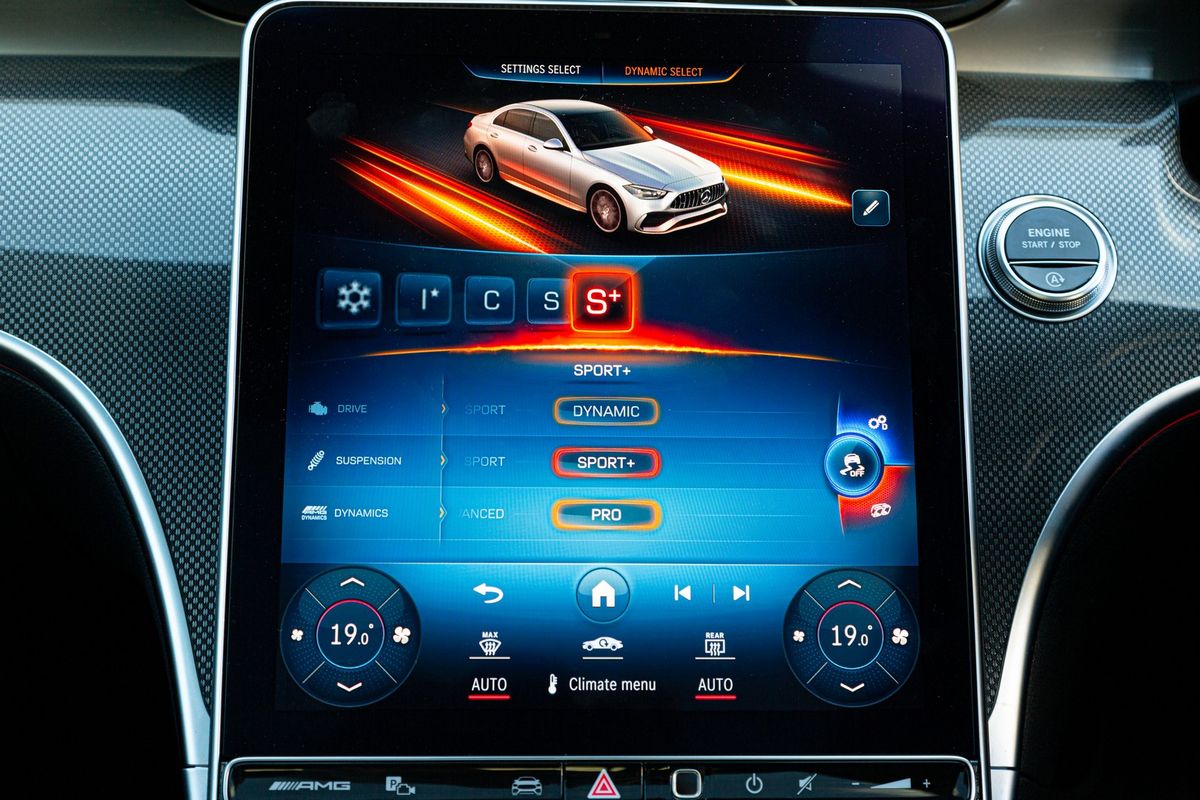
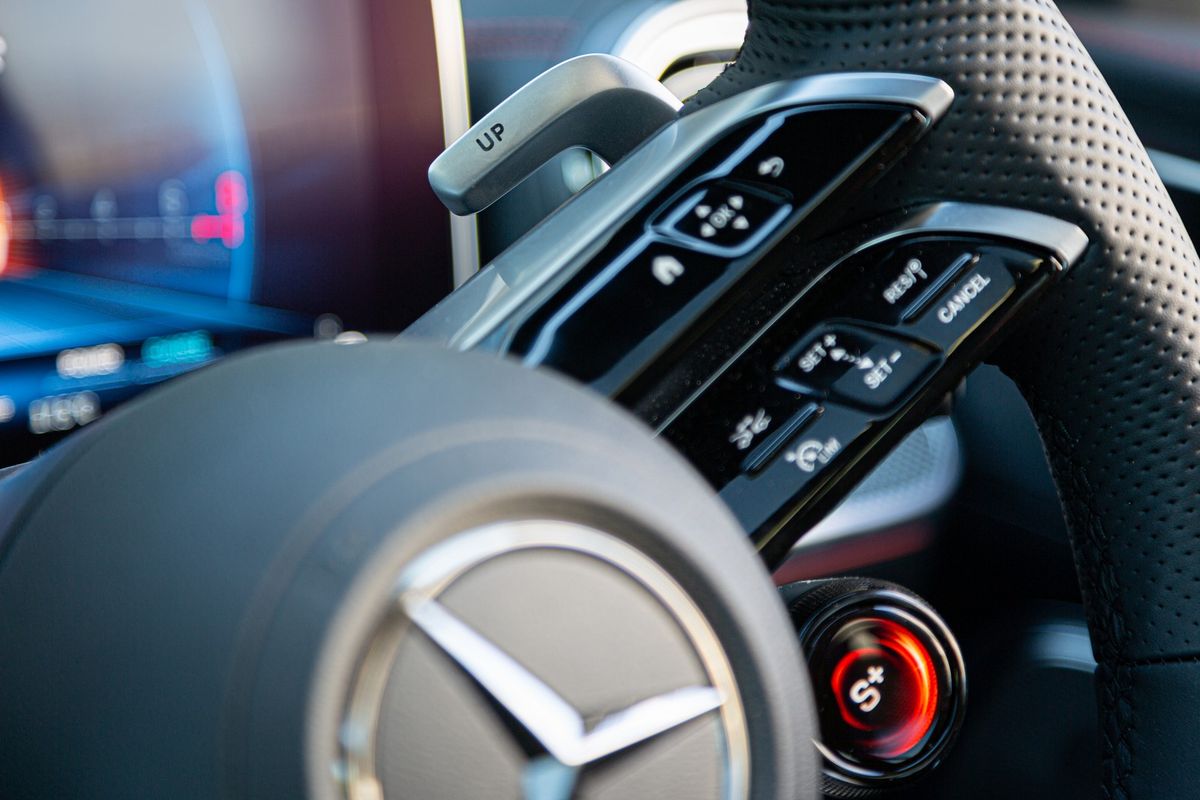
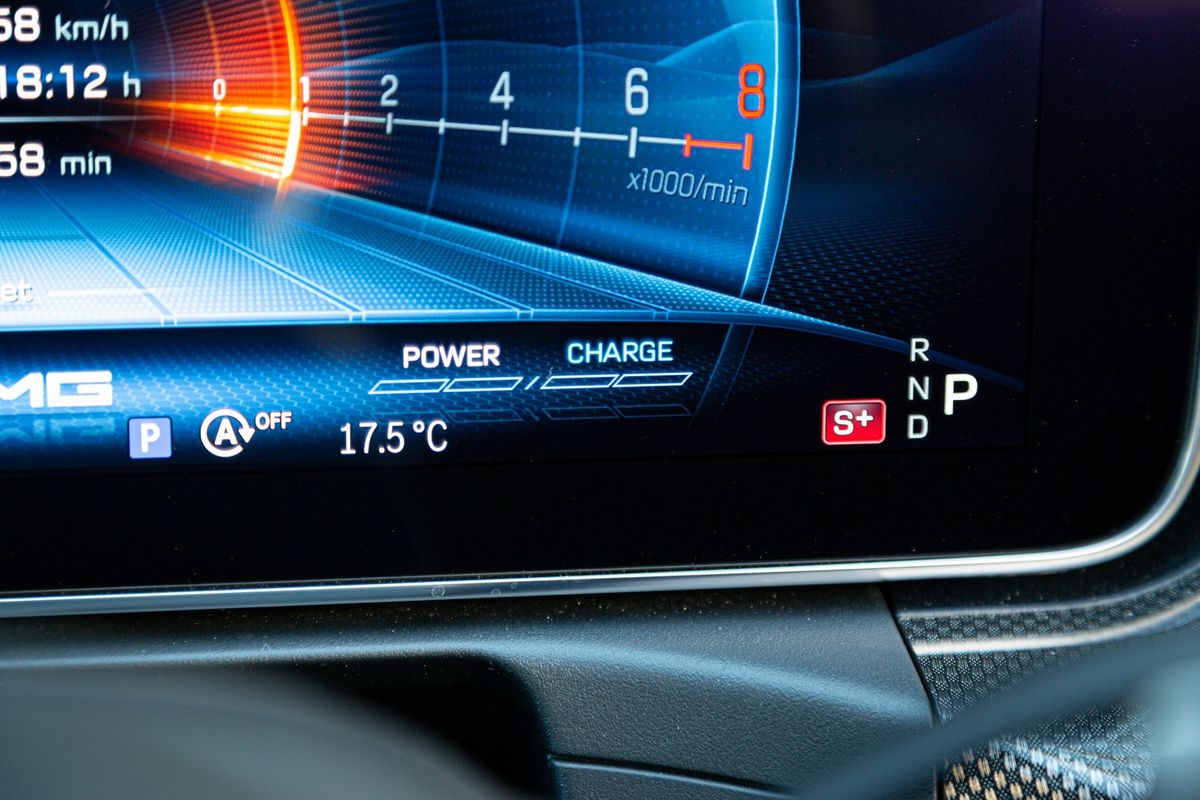
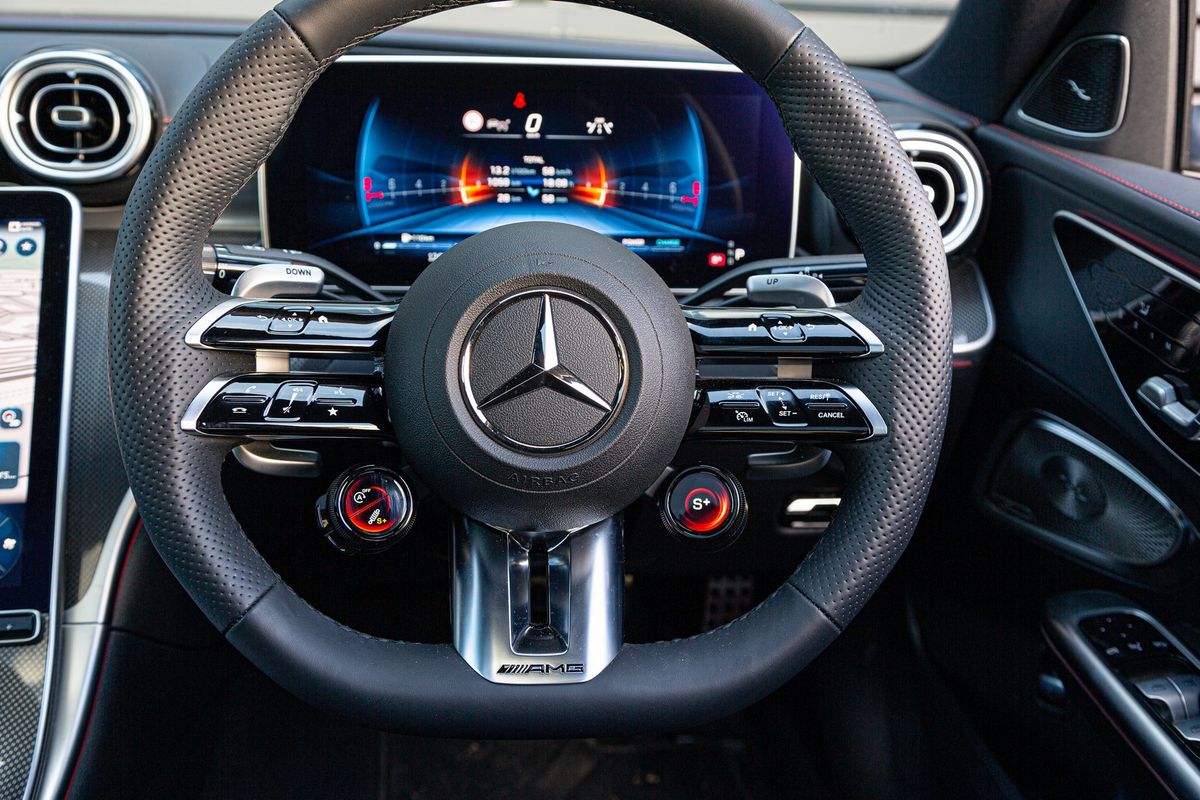
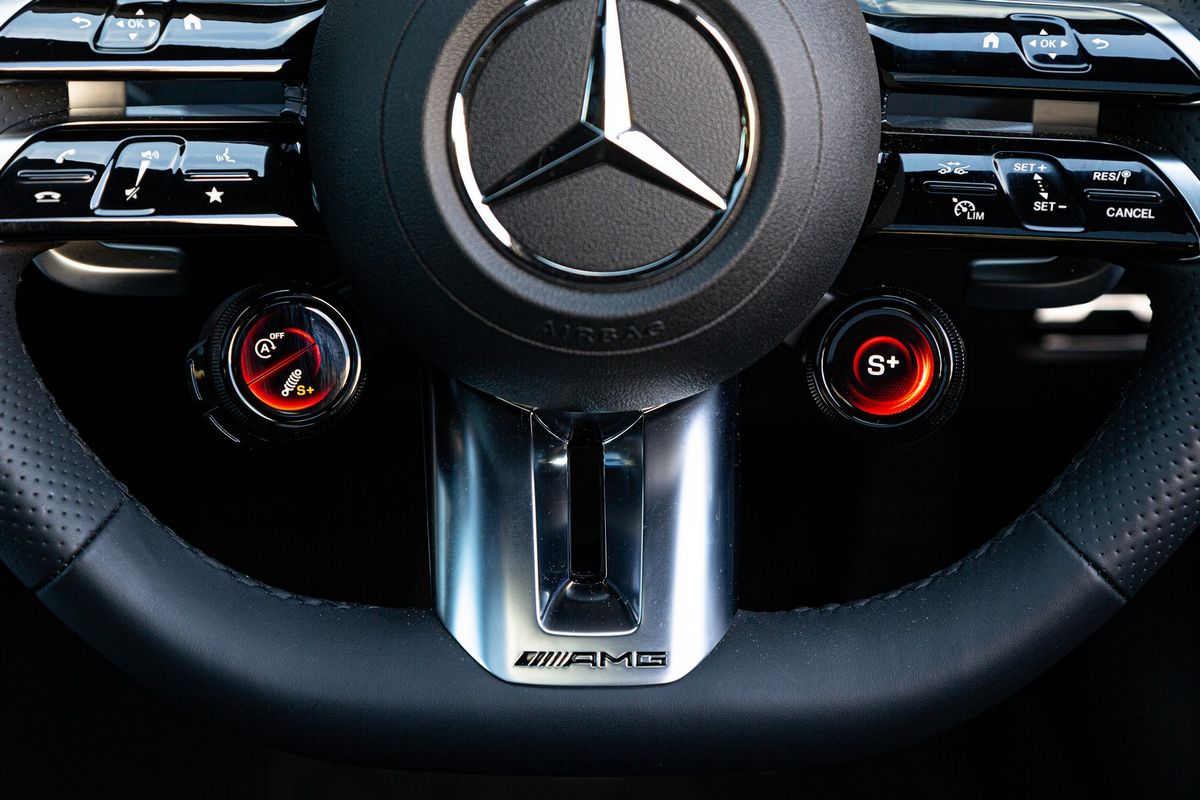
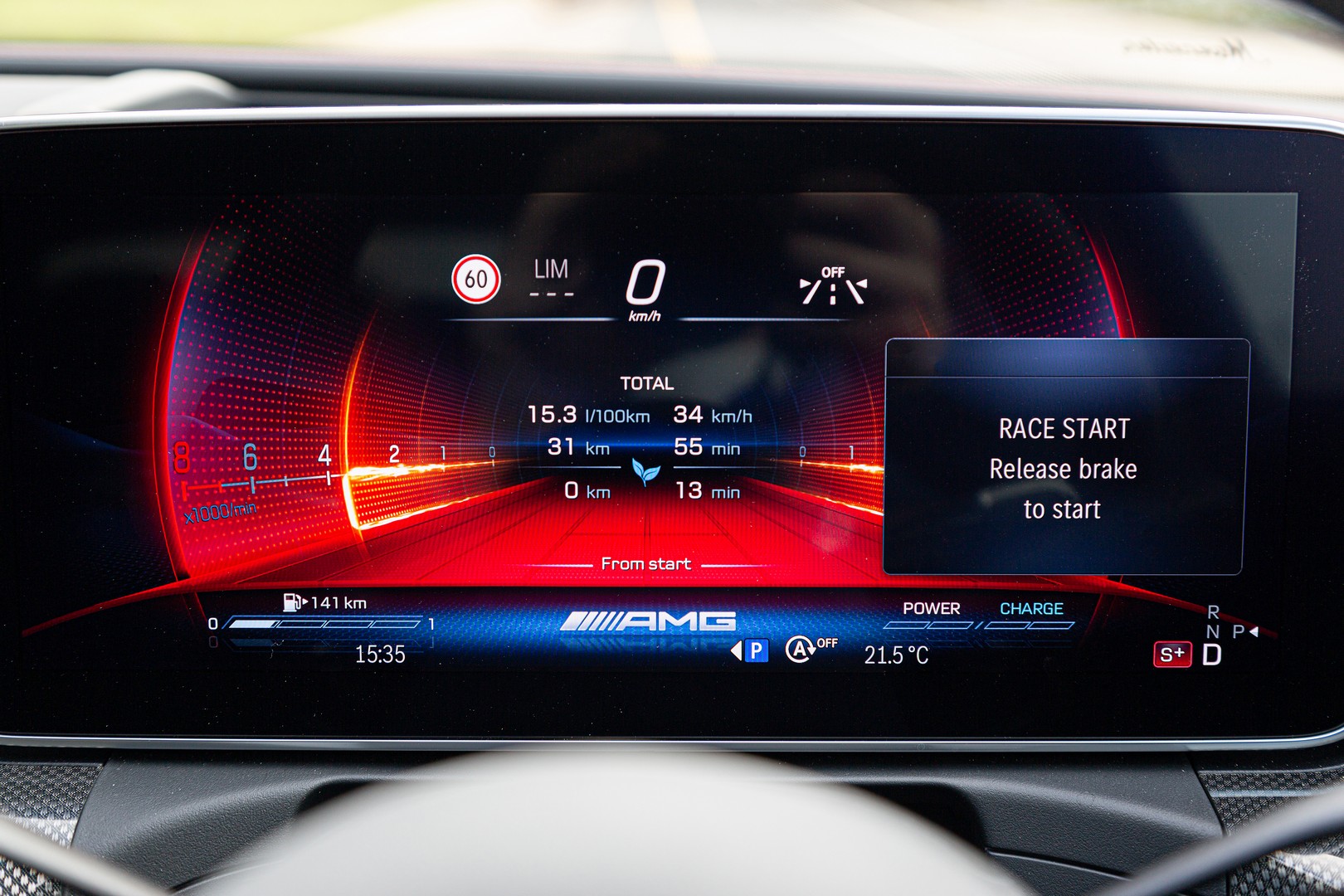
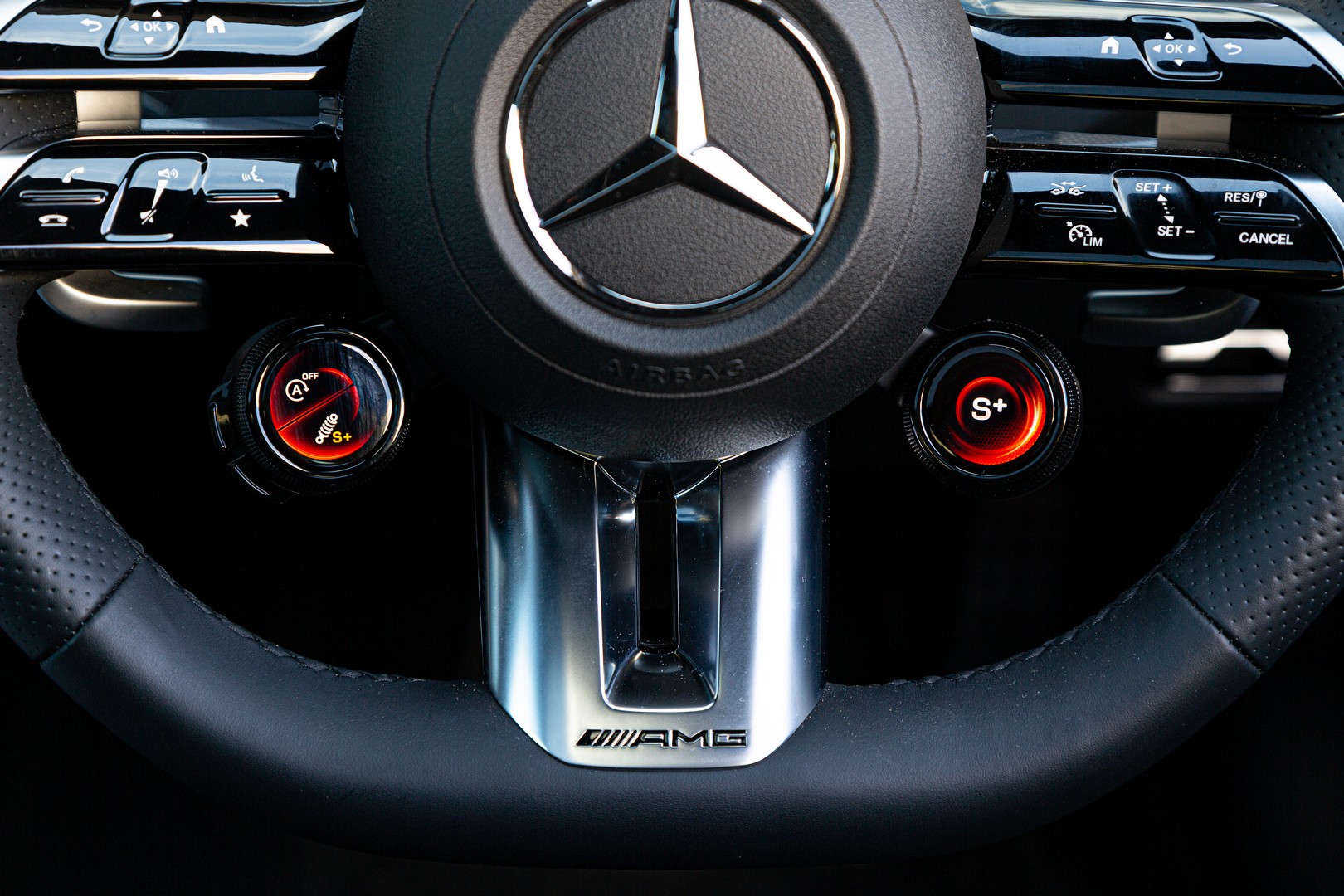
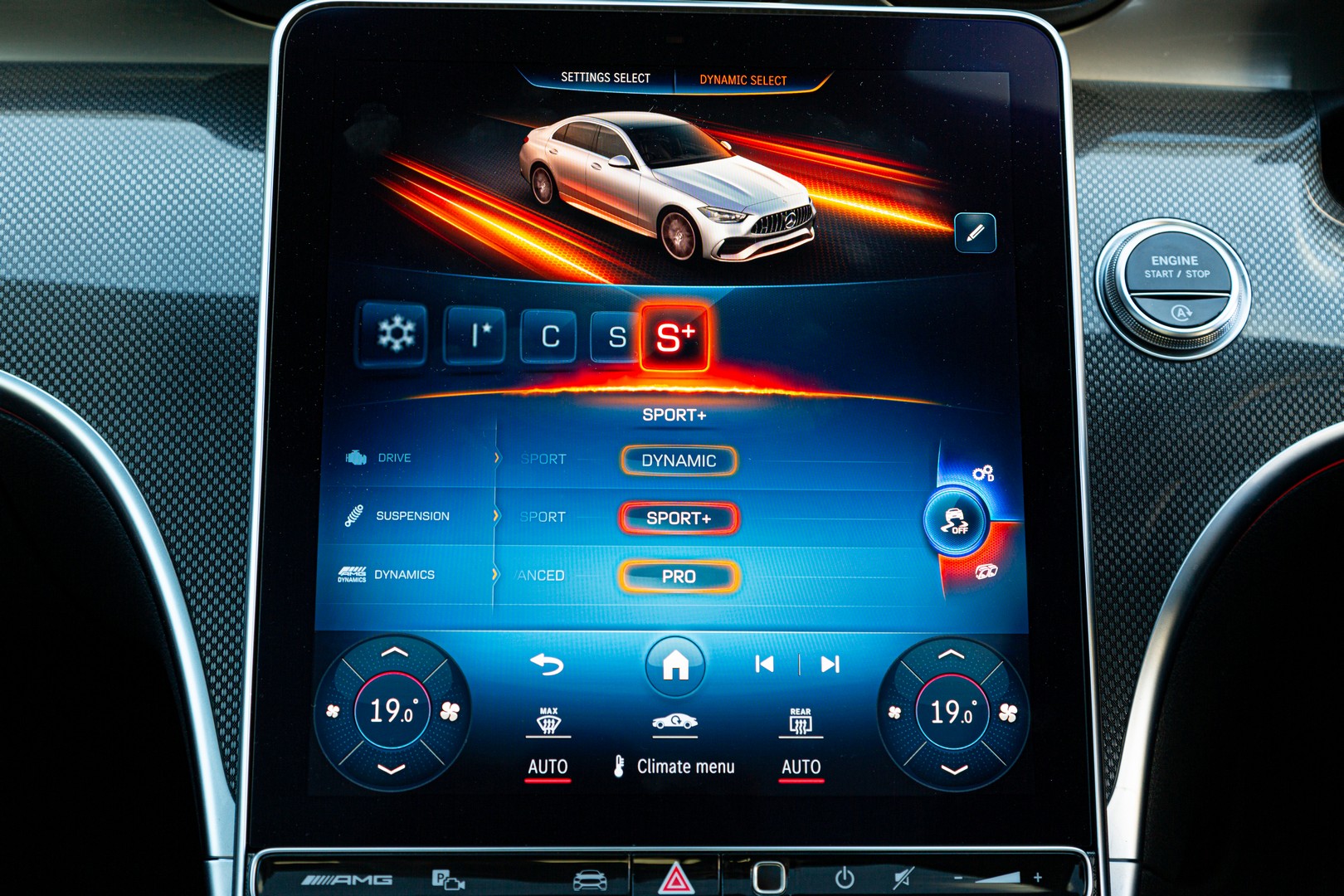
New for this 2023 model is a Race Start function, which is even easier to engage than before… Simply turn the drive-mode selection knob to S+, plant your left foot on the brake, flatten the accelerator pedal and the car will be primed to catapult towards the horizon. It’s quite an experience; the C43’s seatbelts suddenly tighten, the dashboard graphics flash dramatically and the cabin fills with engine noise, which is admittedly augmented through the speakers. Then release the brake – the C43 shoots off the line.
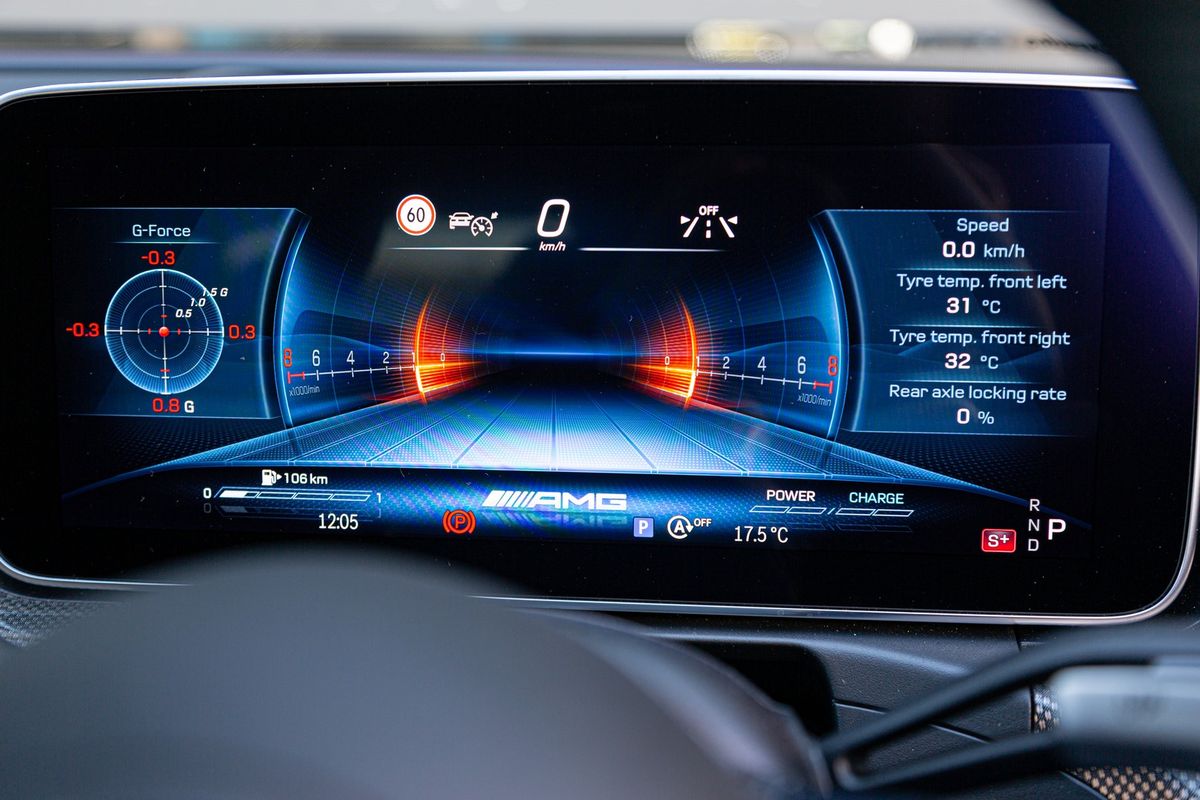
These dials are customisable: these are our preferred settings for a spirited drive. You can tweak traction and exhaust modes too.
Mercedes-AMG claims a 4.6-sec 0-to-100 kph time and our test gear registered a 4.64-sec run. Now before you all run to your social media to ask about the M340i xDrive’s time, we can confirm that the BMW took 4.27 seconds to bolt from 0 to 100 kph when we tested it, so it’s first blood to the Bavarian brand. The C43’s in-gear shove is also particularly impressive; just down gear once (by flicking the left shift paddle), then flex your right foot and the C43 will thrust ahead thanks to its “lag-free” turbo setup.
Comparisons with the previous C43’s glorious-sounding 287 kW/520 Nm 3.0-litre V6 are inevitable and, not everyone has welcomed ‘Benz’s decision to utilise only 4-pot engines in its W206-gen C-Class. Petrolheads may struggle to fathom the presence of a small-capacity mild-hybrid engine in a Mercedes-AMG model, but then again, how many prospective buyers would be in the privileged position to have driven both cars to make a direct comparison between the old and new powerplants? A reckon very few.
Modes and settings to configure! We favoured Sport+ for the engine and Comfort for the suspension, however.
The lack of an evocative engine note did bother some of our testers, but others said that the C43’s soundtrack reminded them of a “spicier A45 S”. We do feel a tad sorry for Affalterbach’s engineers; mechanically, there’s not much you can do to a road-going 2.0 litre to make it sound exciting – it’s one of the reasons the dual-clutch gearbox brrupph (known in Golf GTI fan circles as vrr-pah!) was invented! Speaking of the transmission, it emits some lovely thuds and bangs when you change cogs manually.
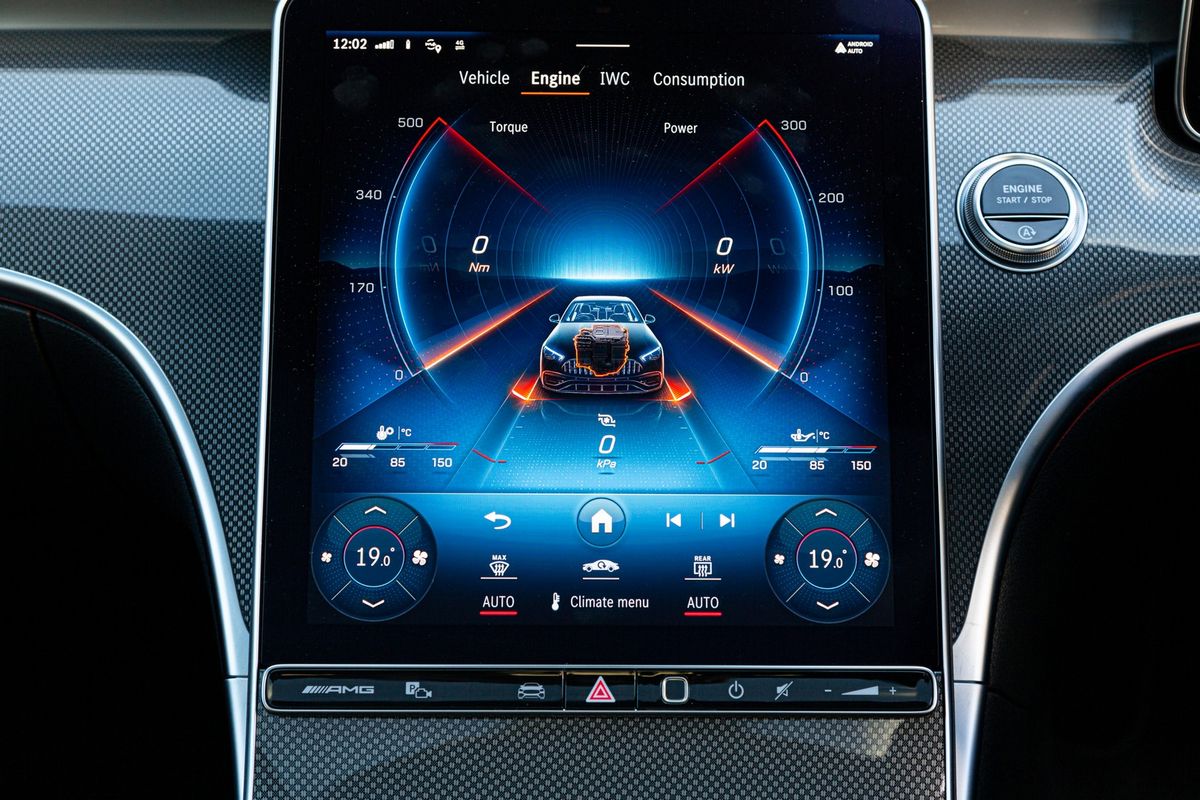
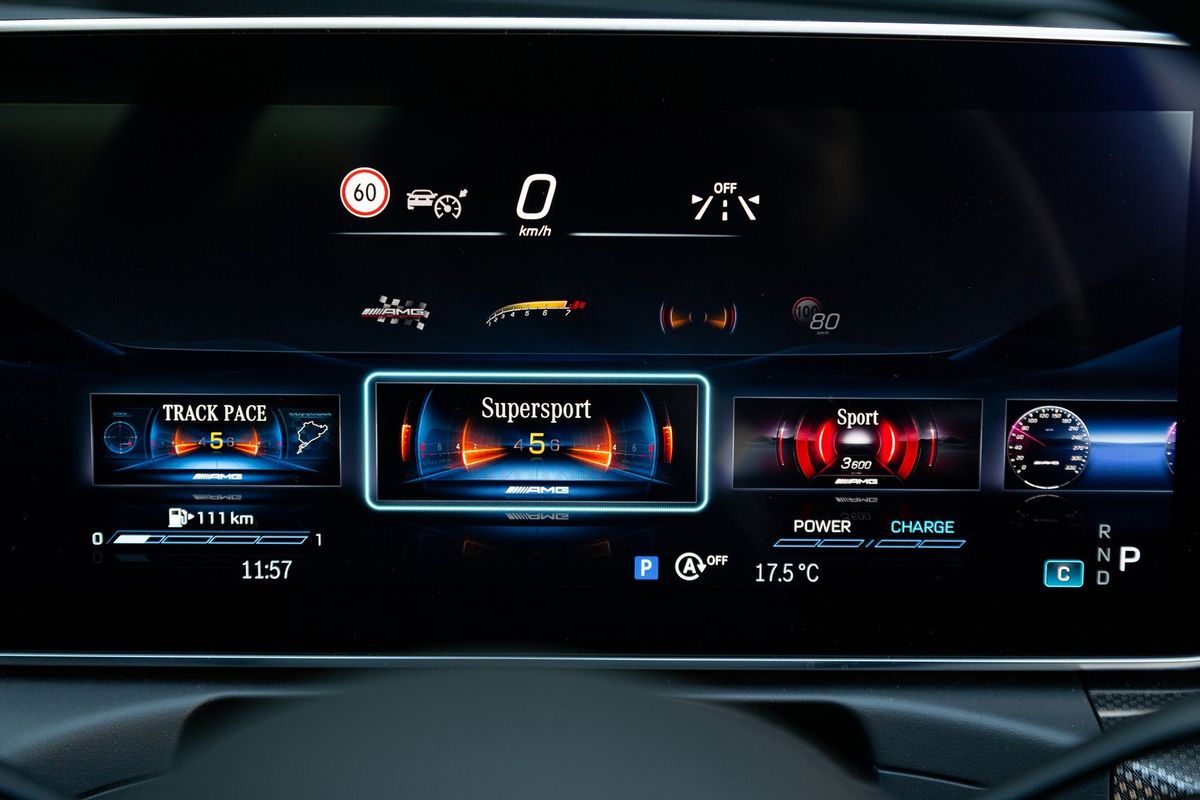
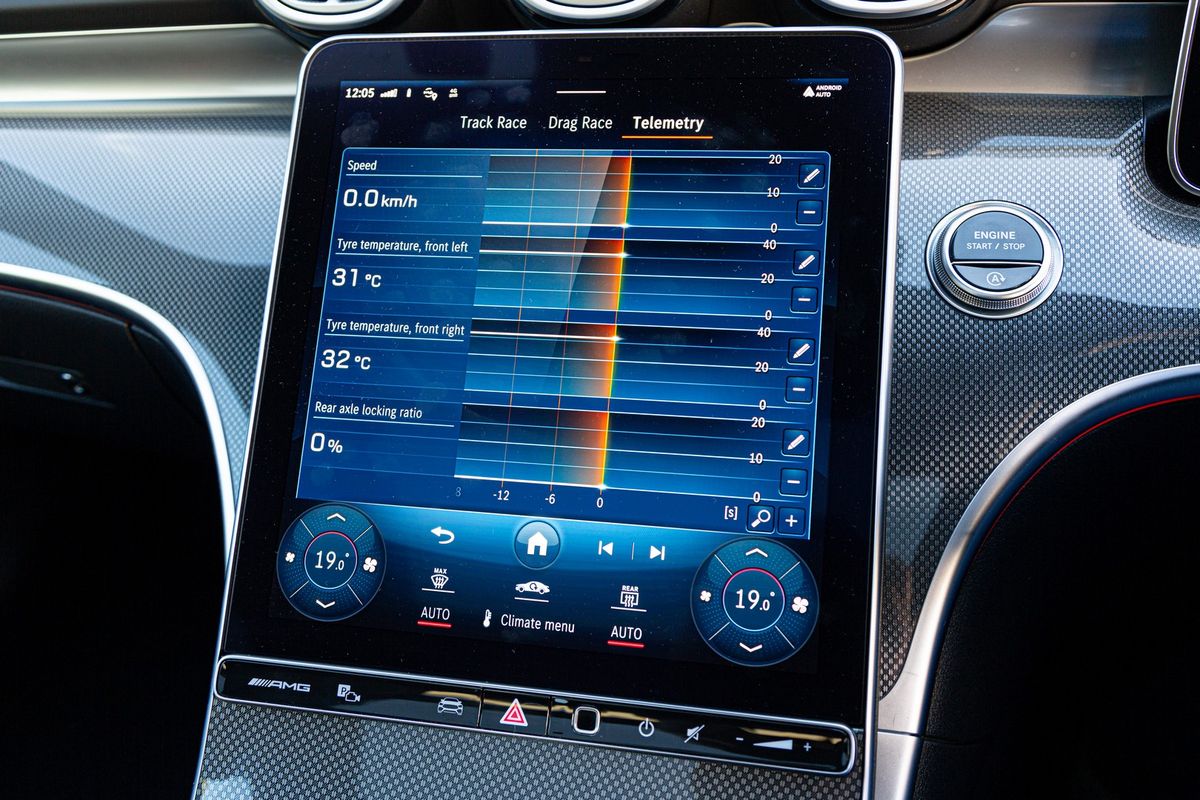
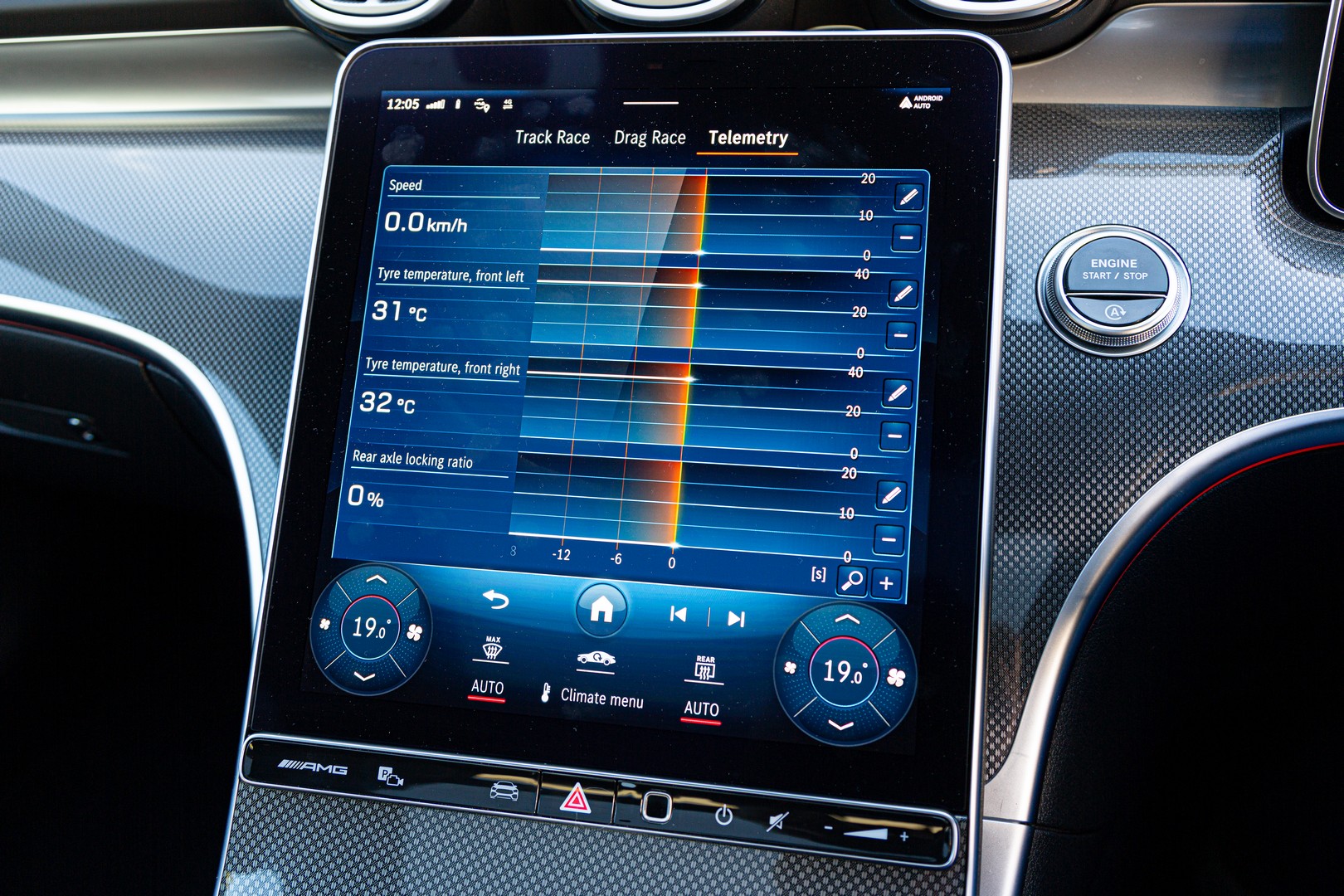
We were particularly impressed with the vehicle’s powertrain customisation. You can tweak a plethora of the C43’s powertrain and suspension settings to your heart’s content, and our test unit came equipped with Mercedes-AMG TrackPace onboard telemetry, which will probably represent information overload for most consumers. For us car nerds, however, well, we lapped it all up and loved the interface.
Data, glorious data!
Of course, one simply cannot drive with the engine, transmission and suspension tuned to their most aggressive settings ALL THE TIME. Most of the time, a car of this nature will be driven on the commute in its default Comfort drive mode. Once you’ve had your fun, simply turn the dial back to C for Comfort.
When you do that, the power delivery becomes much more subdued, the adaptive dampers soften up and things became way more relaxed. The engine sound is completely dialled back too, but if you need to get a move on, the car will still jump to action if you stand on the loud pedal, just without the theatrics.
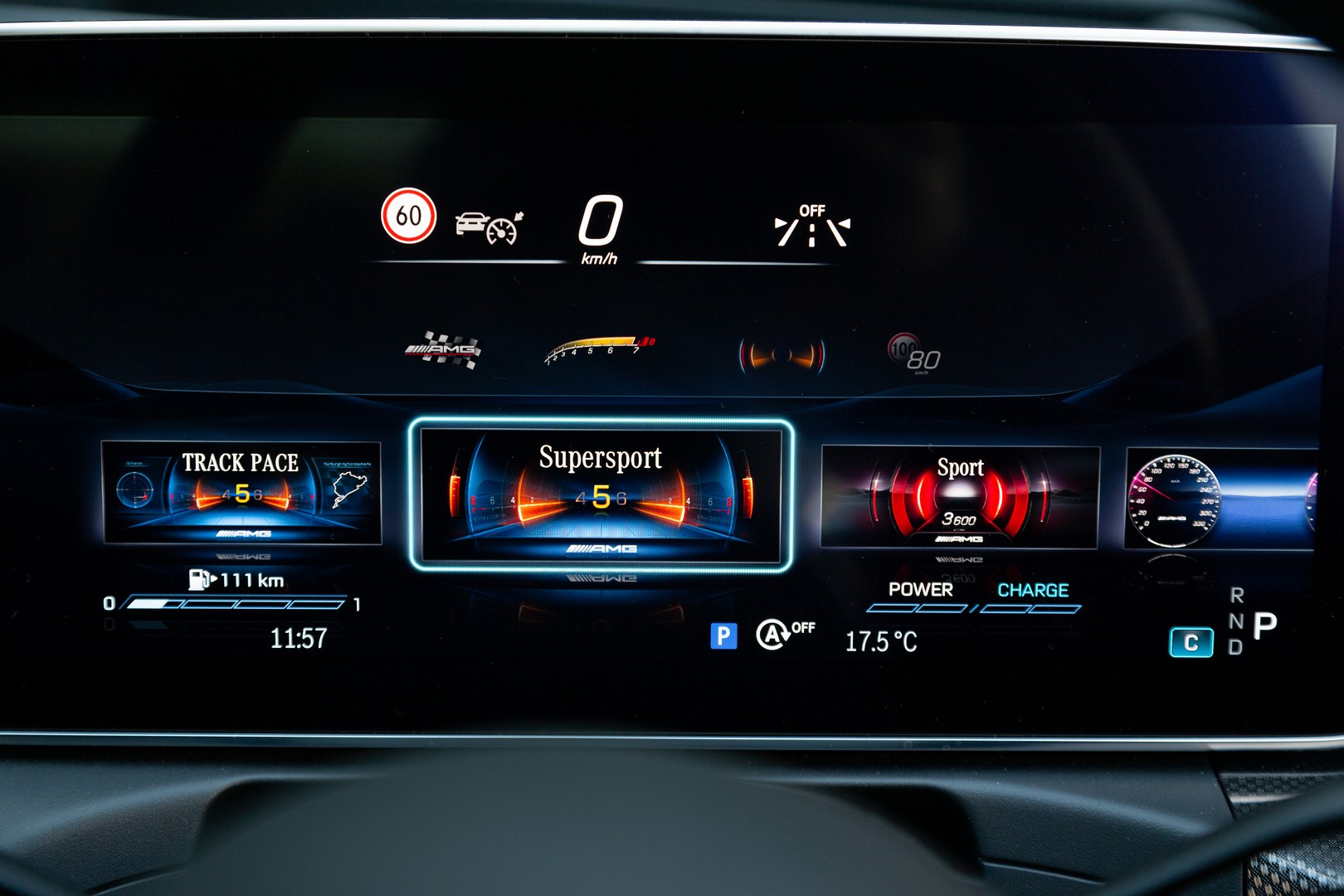
How many dashboard options would you like? Yes.
Gripes? Well, if we’re being blunt, it all feels a tad artificial, even contrived. We get that downsizing has resulted in a reduction of visceral appeal; Mercedes-AMG has tried to compensate with synthesised sounds and flashy graphics. Would it be a dealbreaker for the C43’s target market? Probably not.
In Comfort mode, progress can be a bit jerky at lower speeds/when driving in congested traffic. The transmission mapping seems a bit dim-witted (it’s almost as if the C43 is befuddled by its own start/stop system, which can be switched off). Things improve if you activate manual mode on the ‘box, however.
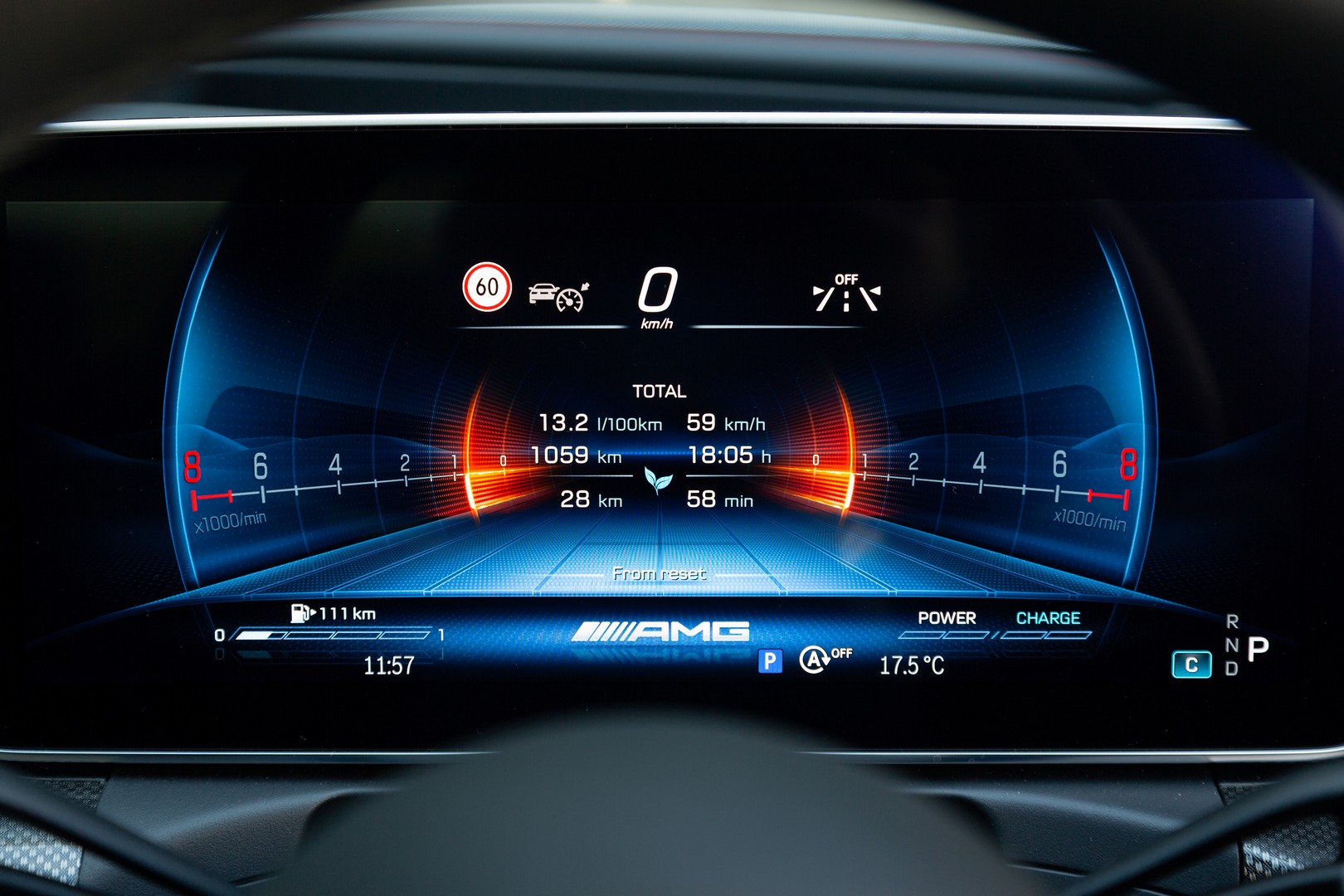
An unconventional digital layout
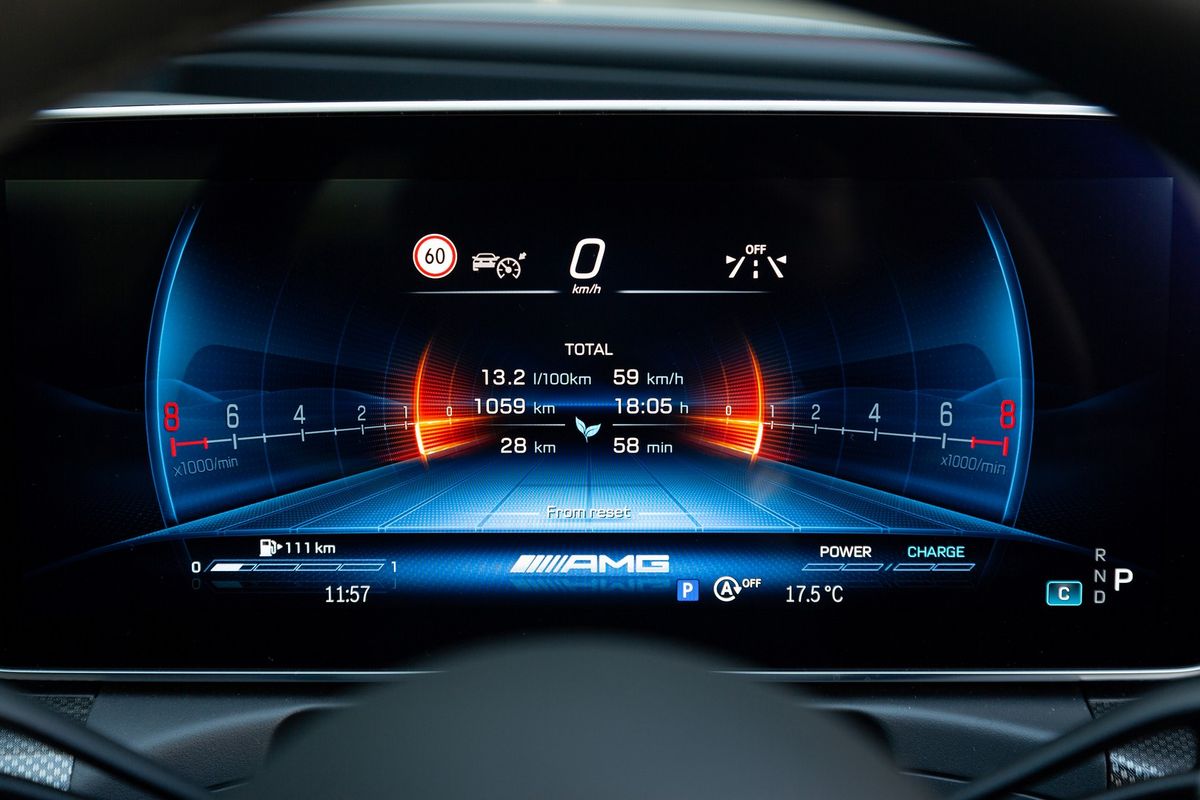
We weren’t able to achieve an indicated average fuel consumption figure of under 13.2 L/100 km, but we spent quite a bit of time driving the C43 in its sportiest settings (and testing the derivative’s performance potential). Over time, when the ‘Benz is driven more sedately, that figure should improve considerably.
Ride and Handling
The 2023 Mercedes-AMG C43 incorporates a number of enhancements designed to improve its handling prowess, such as rear-wheel steering and specific tuning for the 4Matic all-wheel-drive system.
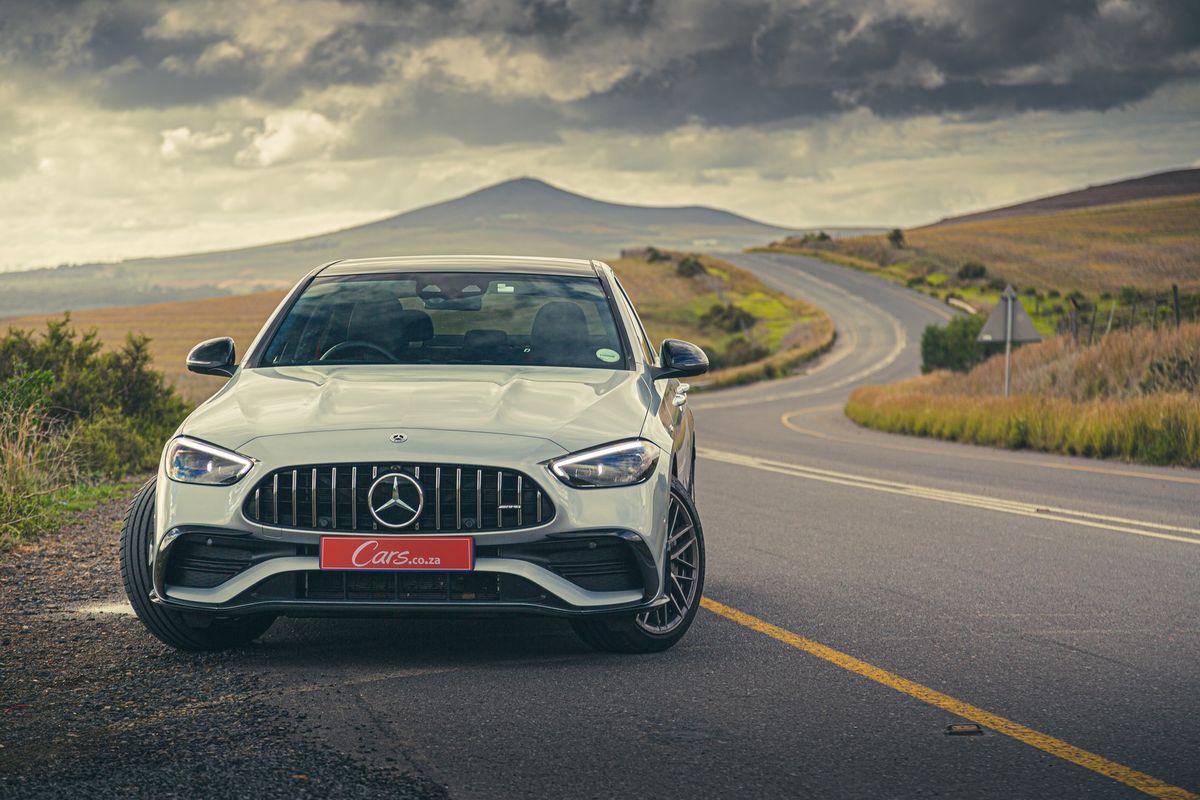
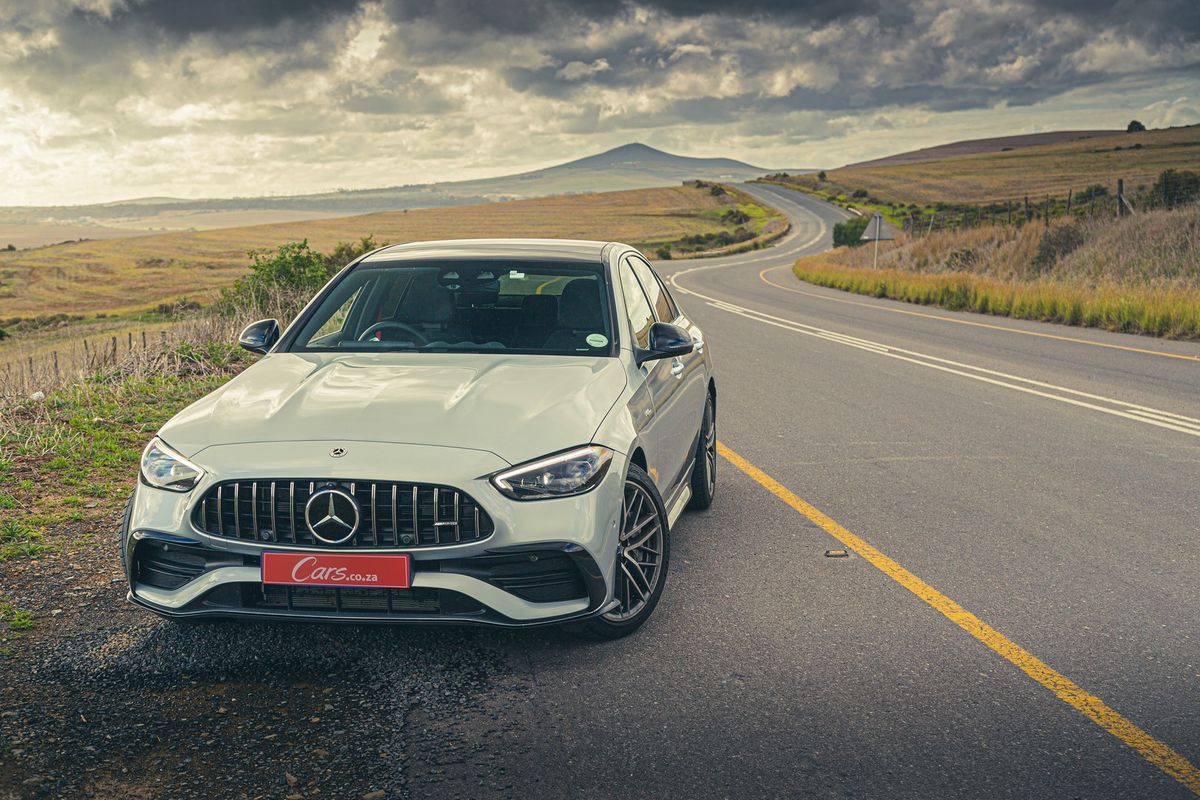
Although the C43 4Matic will spend most of its time on the daily commute, it revels in a country road jaunt.
The former not only reduces the C43’s turning circle at low speeds, but is said to optimise the sedan’s cornering ability at headier velocities. Can you feel its effect? At speed, not really, but rear-wheel steering is certainly useful when you have to manoeuvre the ‘Benz in and out of tight parking bays.
When we drove on one of our favourite stretches of serpentine tarmac on a particularly gloomy day, we activated S+ and piloted the C43 with considerable zeal. The feeling of sure-footedness and grip galore was immediate, and the car felt neutral and balanced. The 4Matic is set to a fixed rearward bias (31:69) and while we weren’t brave (or foolish) enough to coax the C43 into a tailslide, we could feel the rear end “hint” at wiggling loose as we accelerated hard out of corners, but at no point did it feel unmanageable.
The Mercedes-AMG C43’s driving dynamics are aided by a tuned 4Matic setup and rear-wheel steering.
As far as the C43’s steering setup is concerned, it’s adequately sharp, but not the most communicative of its kind… You’re likely to find yourself making tiny micro-adjustments to ensure you can still feel what the car’s front end is doing. It’s a pity, as the rest of the handling package is well-sorted, well, enough to satisfy most drivers. Enthusiasts and driving pros may feel that it’s not quite engaging enough, however.
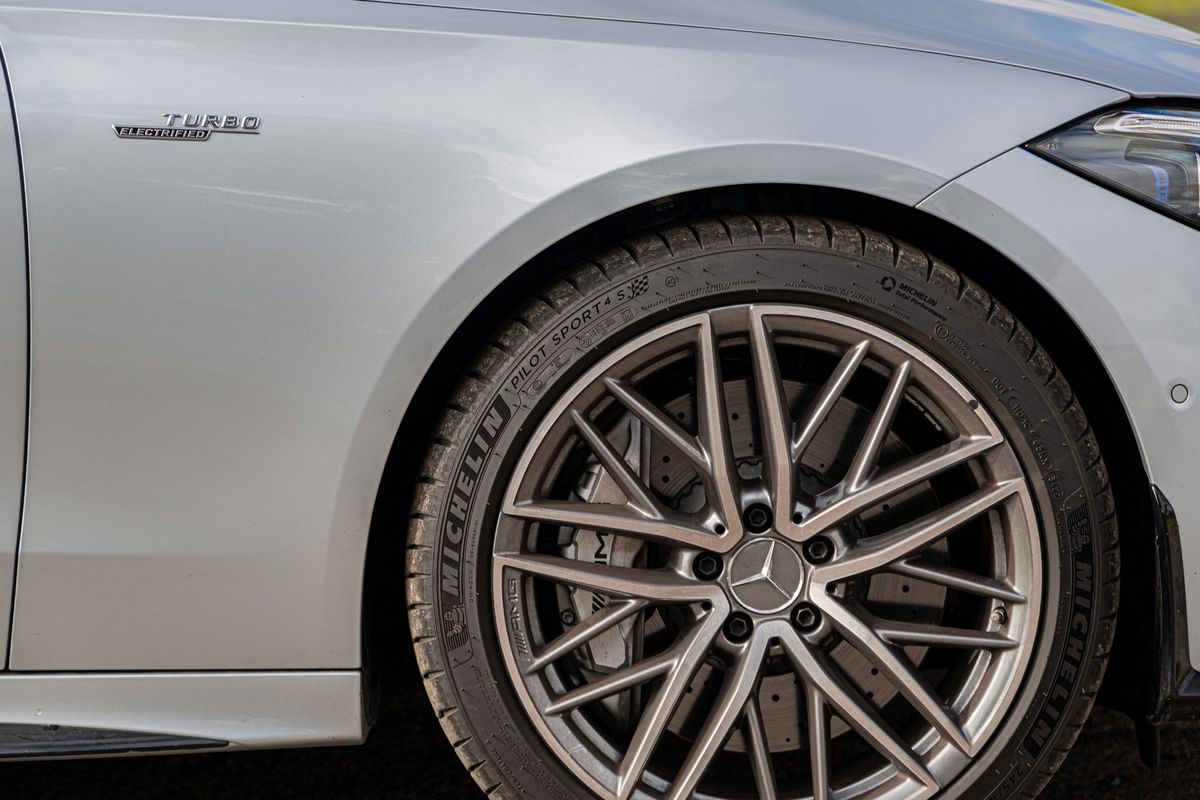
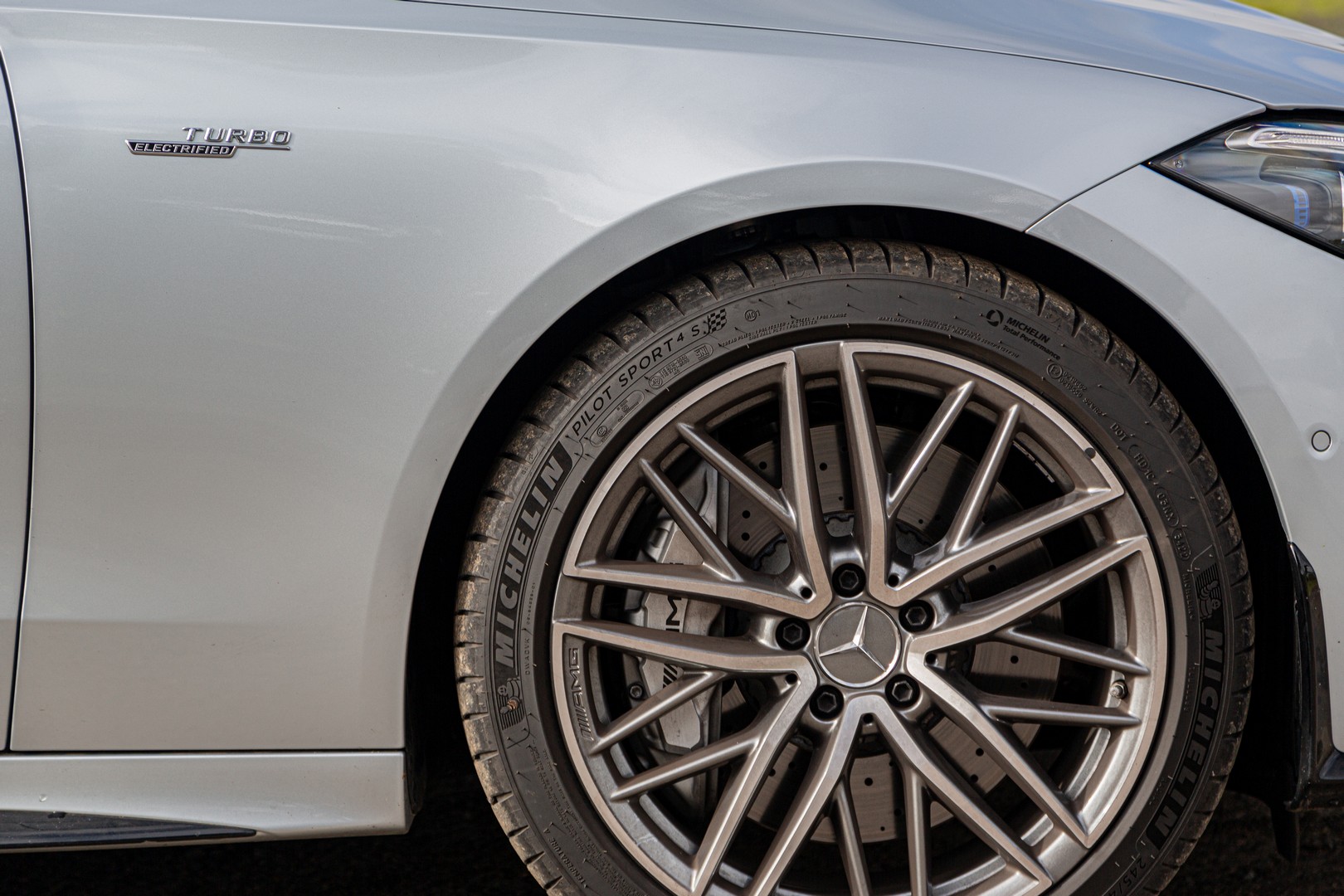
The 19-inch wheels are shod with grippy Michelin rubber.
Again, once you’re done trying to find your personal driving-, as well as the car’s limits, the Mercedes-AMG effortlessly reverts to being a classy high-end luxury sedan. This latest iteration of the C-Class represents a huge step up for both the product and the brand; the W206-gen feels substantially more upmarket than its predecessor – cheap-feeling cabin plastics, a stiff ride and iffy build quality are gone.
Our test unit rode on the standard 19-inch alloys (wrapped in 245/40 tyres) and we think they strike a great balance between comfort, sportiness and style. You can specify 20-inch units at extra cost.
Design and Packaging
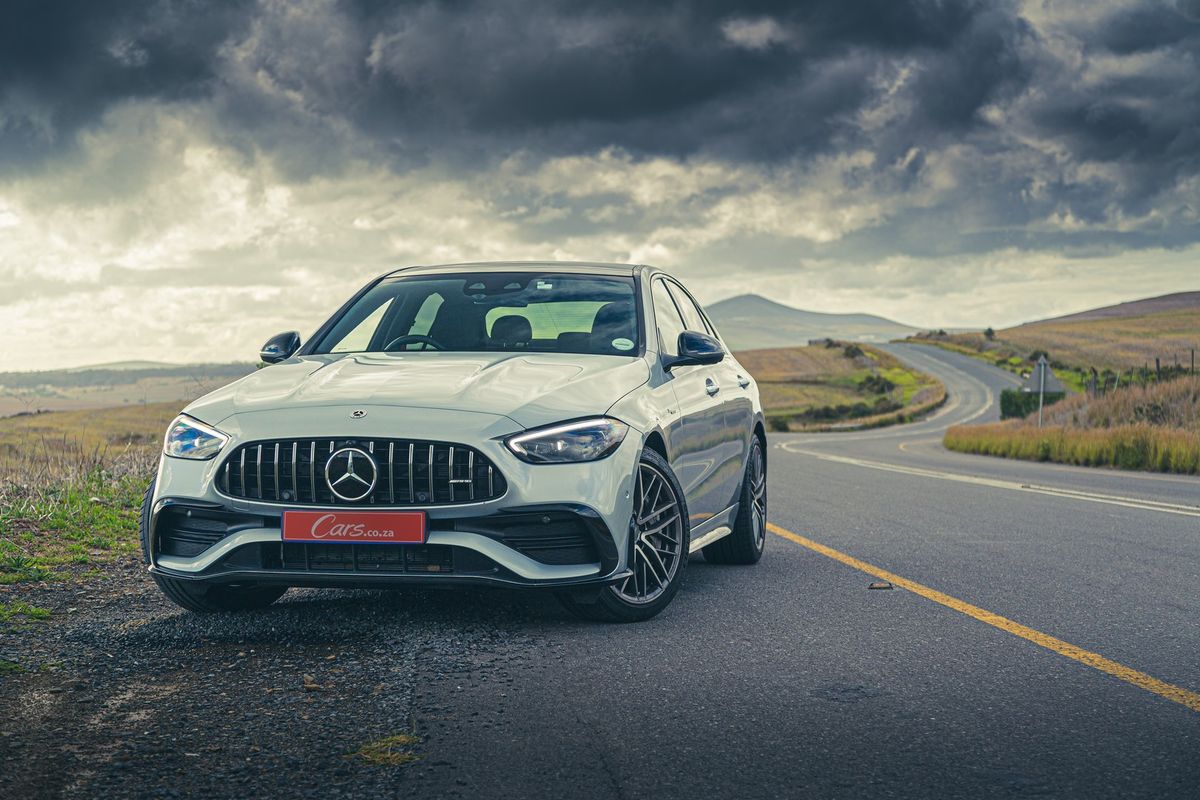
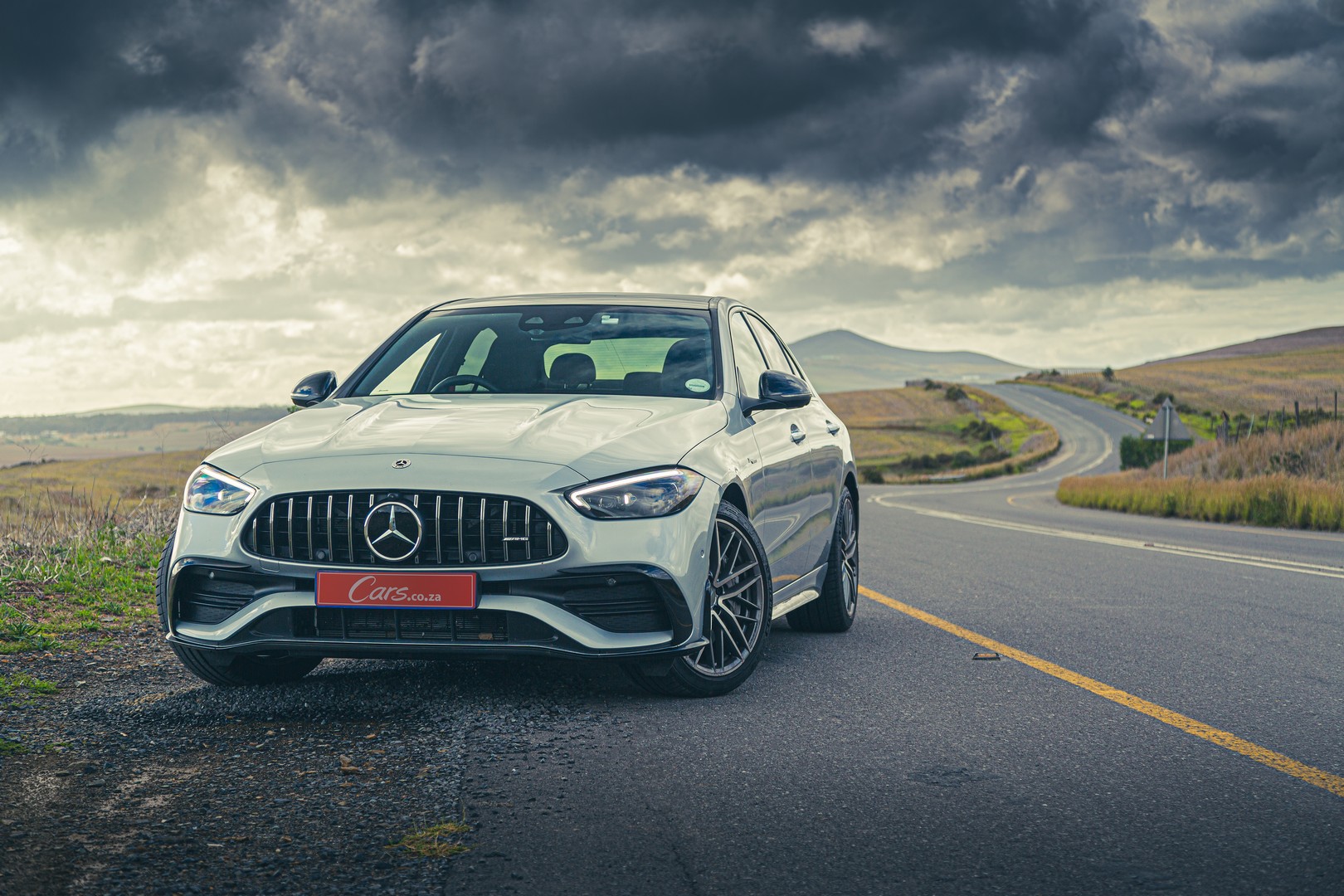
In an effort to distinguish the 2023 Mercedes-AMG C43 from its standard C200 and C220d siblings, ‘Benz has adorned this derivative with the Panamericana grille, a quad-exhaust system, a rear diffuser and a neat boot-lid spoiler. There are AMG and subtle “Turbo Electrified” badges on the ‘Benz’s flanks.
It’s an AMG alright, check the grille!
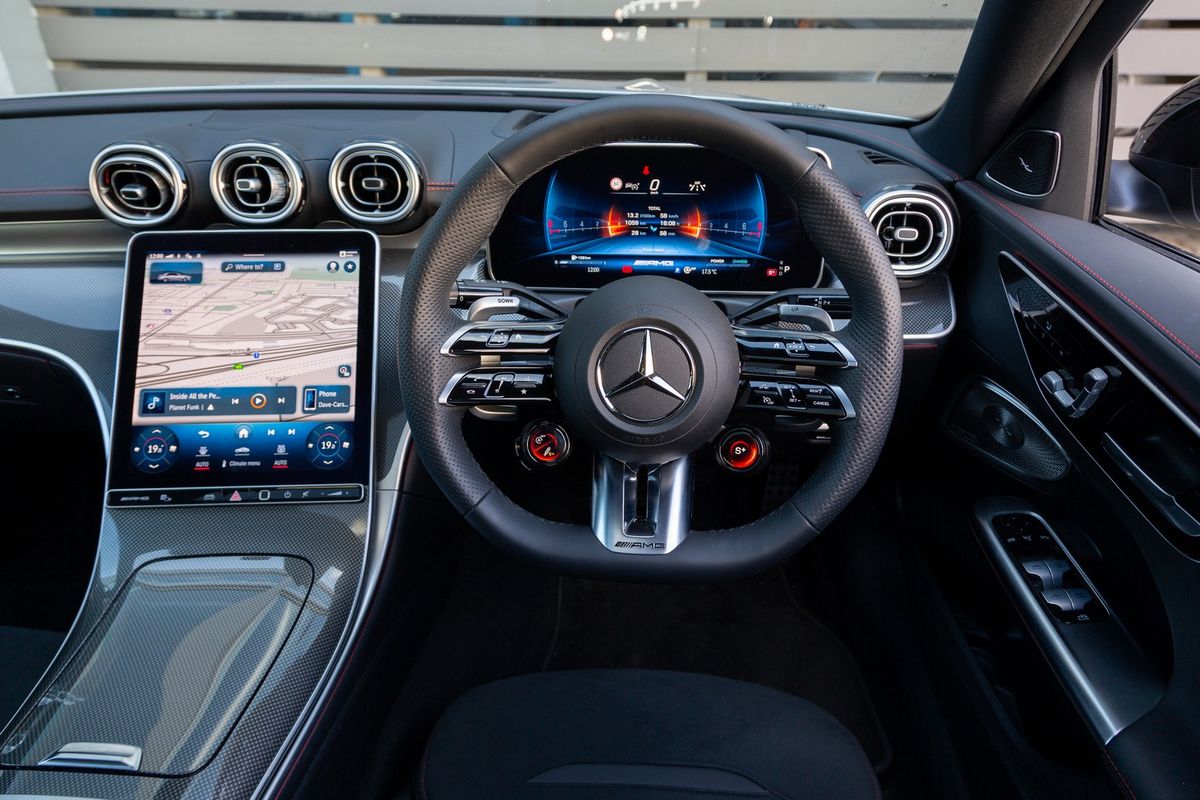
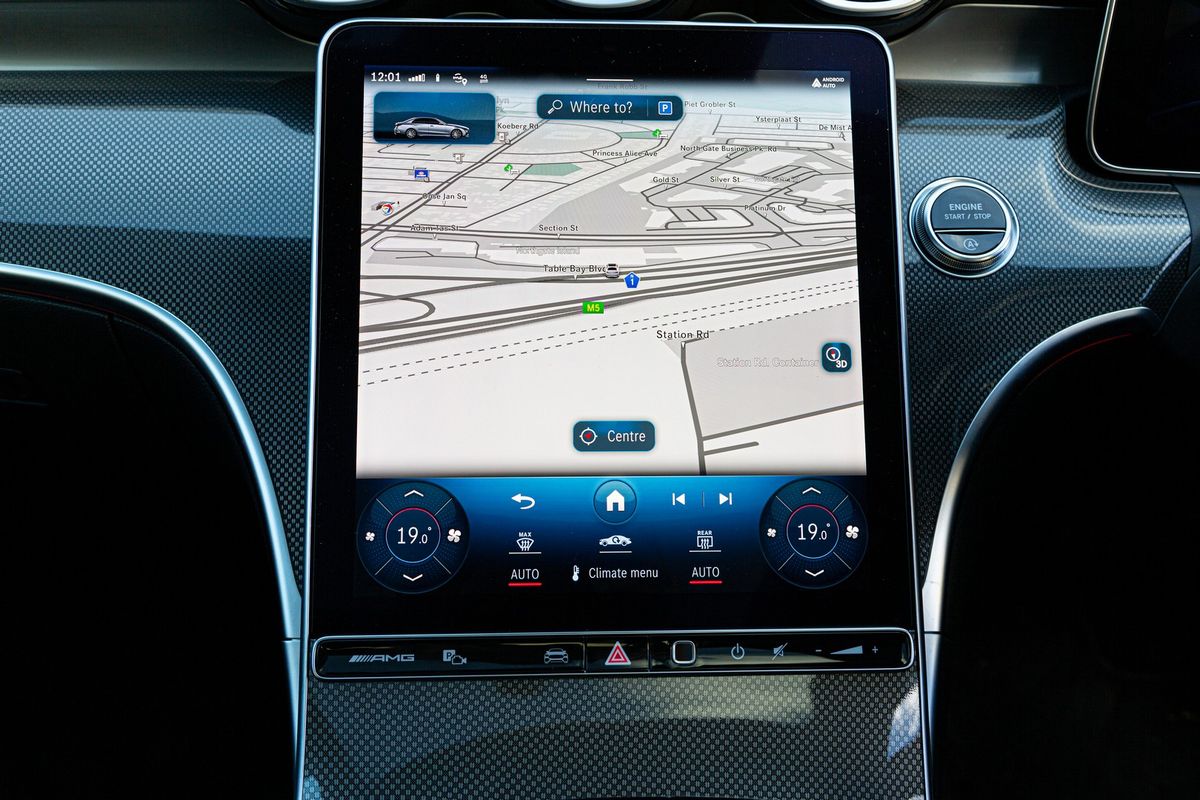
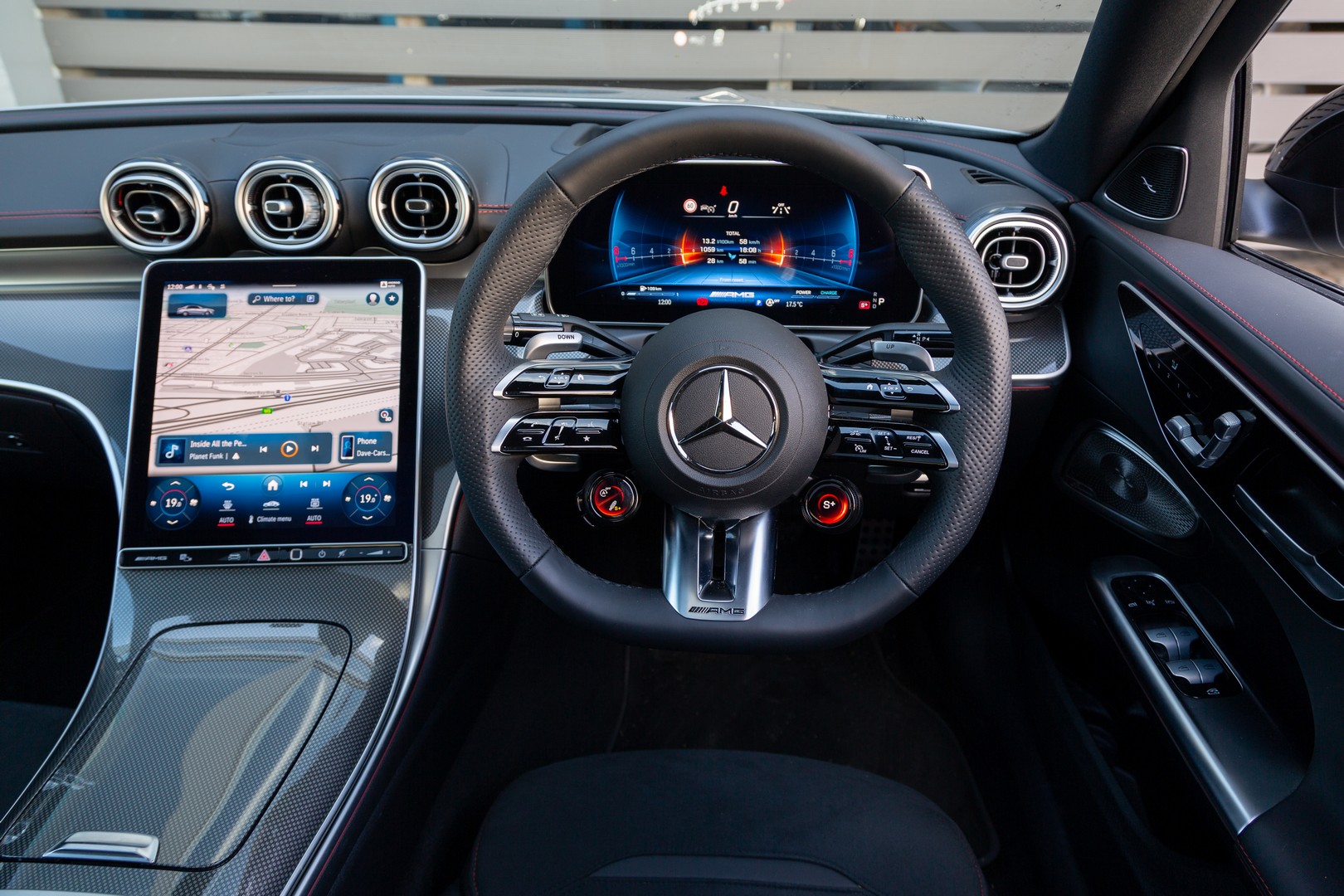
Like most modern Mercedes-Benz models, the C43’s elegantly finished and technologically advanced cabin makes a strong first impression. That large infotainment touchscreen, the array of buttons on the multi-spoke steering wheel and the diffuse ambient lighting (at night) takes some time to get used to.
While it looks good, it’s a trifle overwhelming. There are myriad menus and sub-menus to explore, and quite a bit of redundancy (multiple ways to access the same function). The capacitive touchpads on the ‘wheel are a bit fiddly, which is not a C43-specific issue, but a motoring industry problem in general.
The Mercedes-AMG C43’s cockpit is a technological tour de force and beautifully finished.
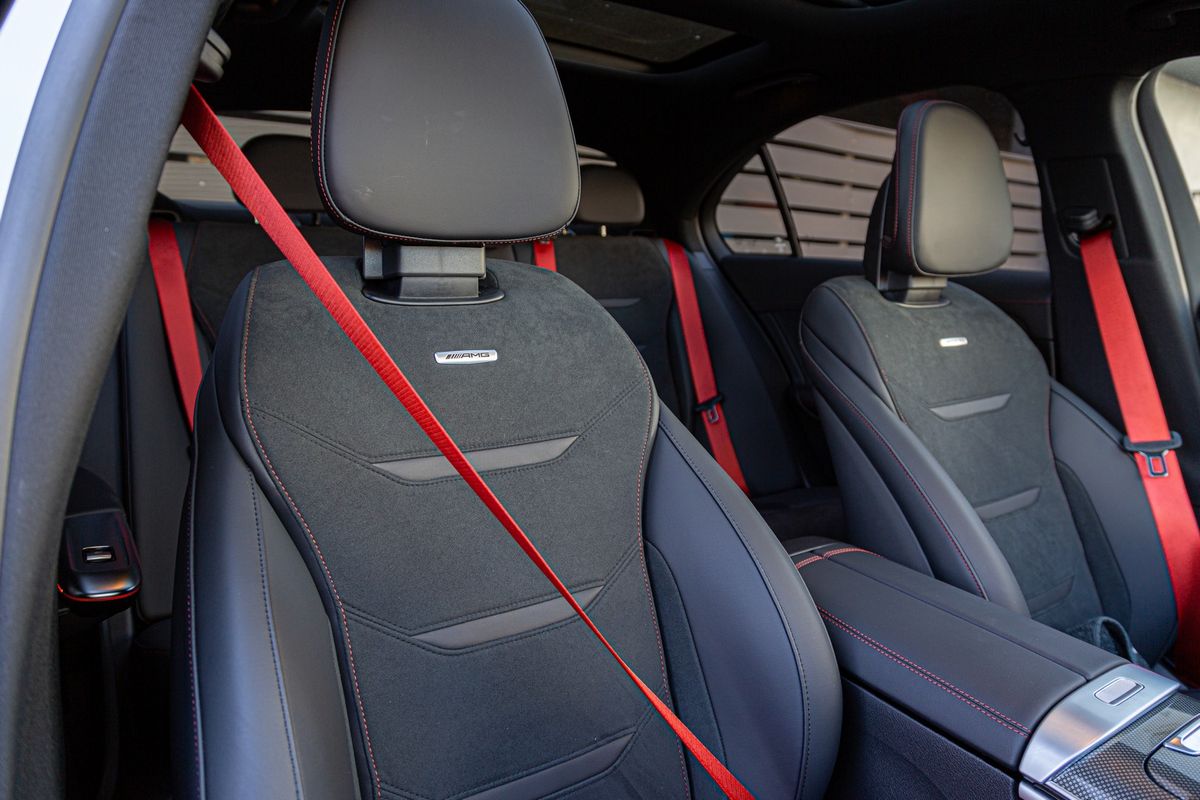
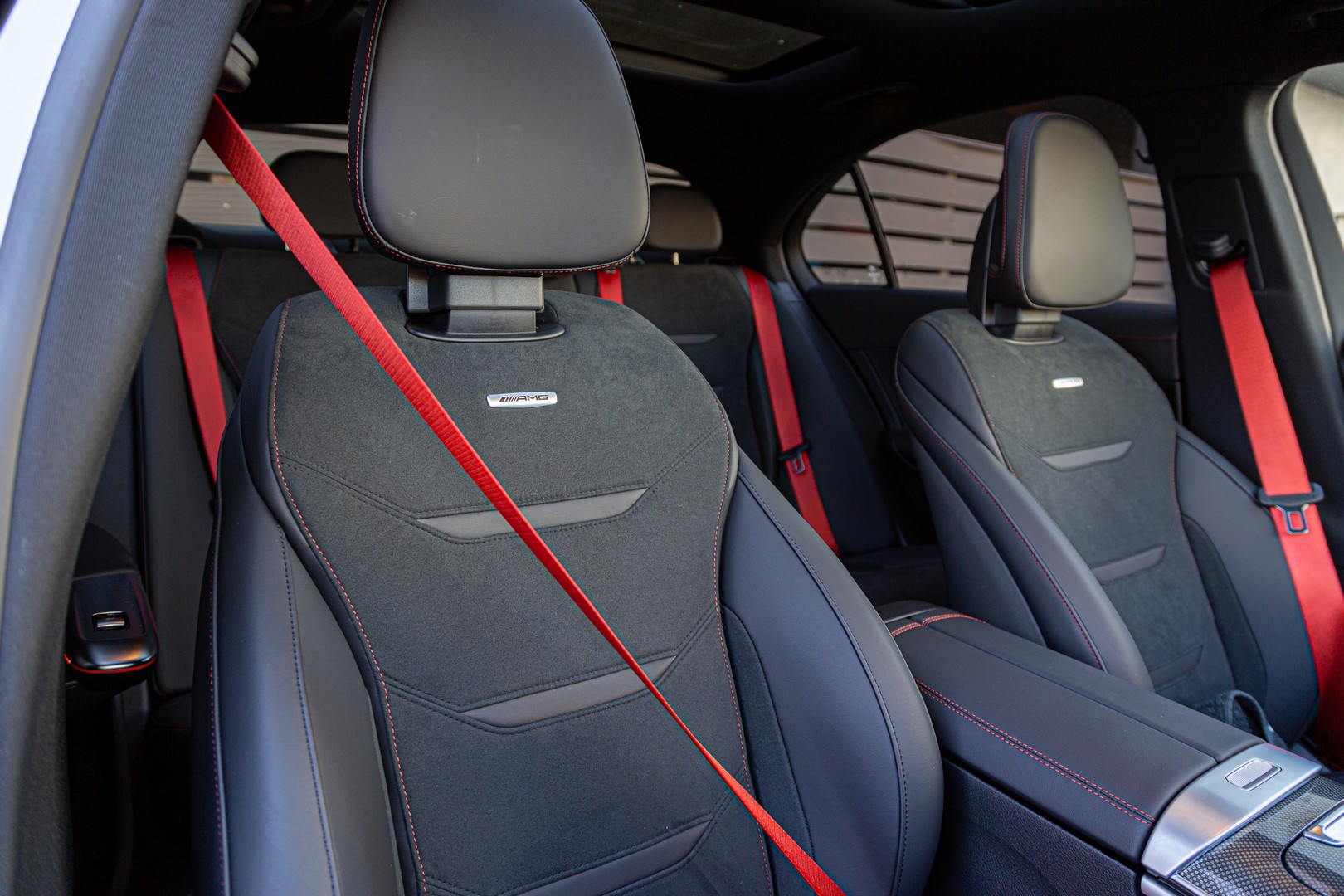
Meanwhile, the AMG-branded sports seats (with heating) are a treat. Not only do they look the part, they offer a nice balance between support and comfort. The red seatbelts (a no-cost option) look racy too.
The AMG front sports seats are pleasingly shapely and supportive.
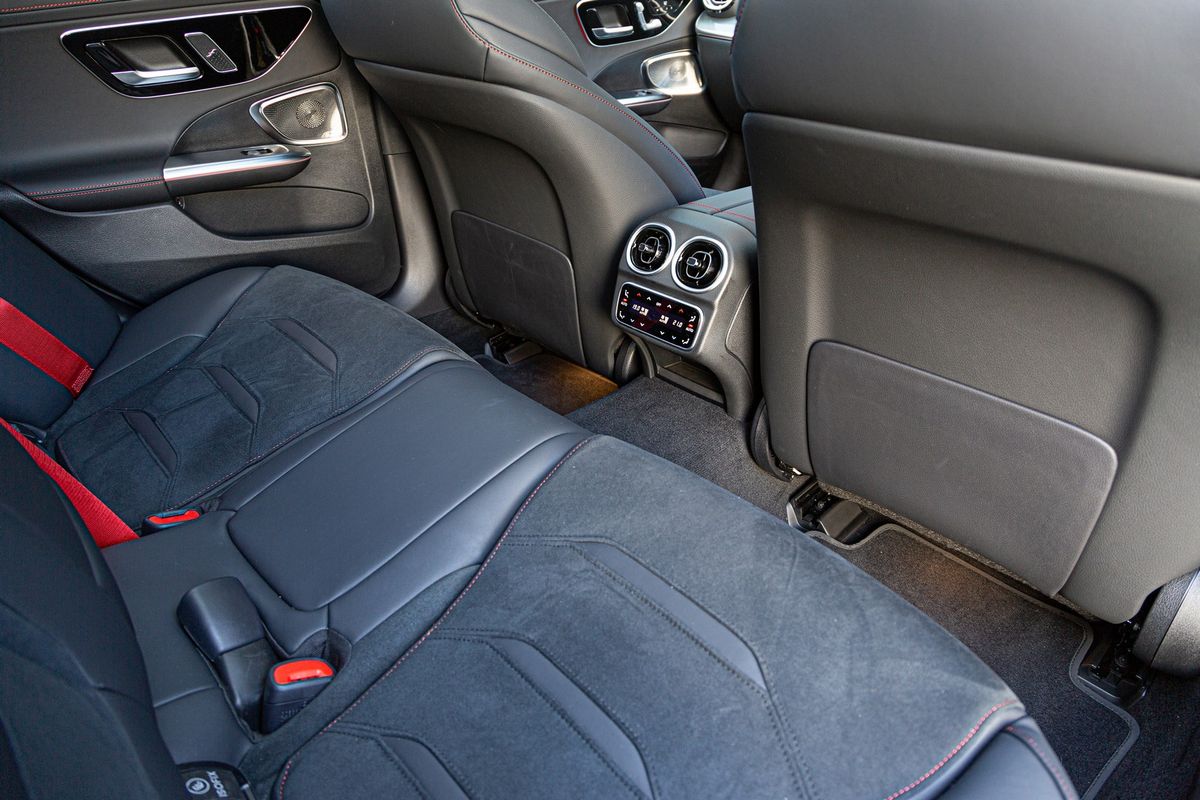
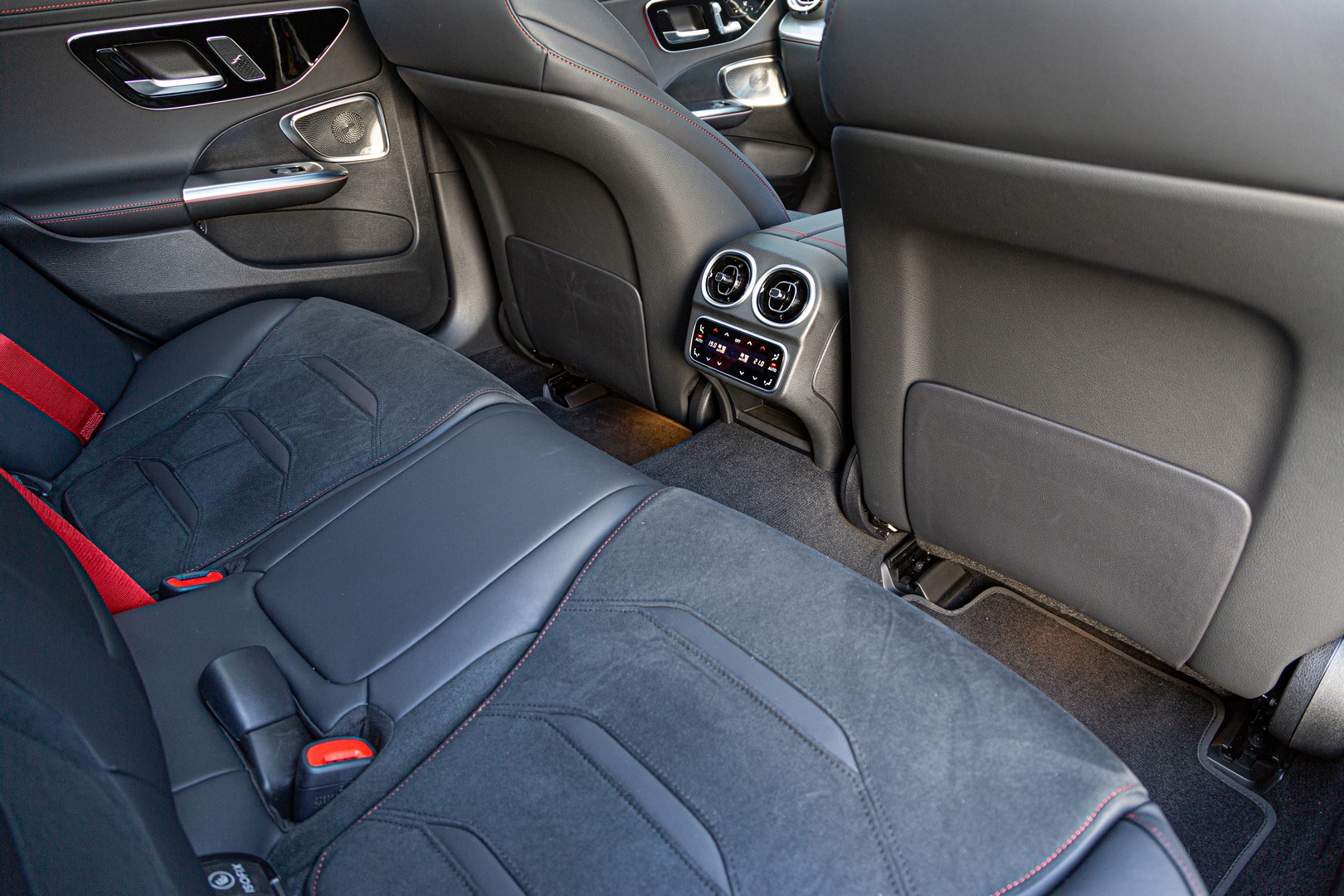
Rear occupant space is acceptable too, although taller passengers may find their heads mashed into the roof lining. You may also find that you sit a bit awkwardly on the rear bench… Perhaps the cushion is a bit too flat and/or short to suit tall adult occupants; one tester said that they seemed to slouch in the seat.
There is generous space for rear passengers, and separate climate controls are a bonus/
Comfort and Features
At this price point (just over R1.6 million, before options), business-class sedans are expected to come generously equipped and, in the C43, you’re well covered in terms of kit. What’s more, Mercedes-Benz SA has looked to simplify its lengthy options list by grouping extra-cost features into logical packages.
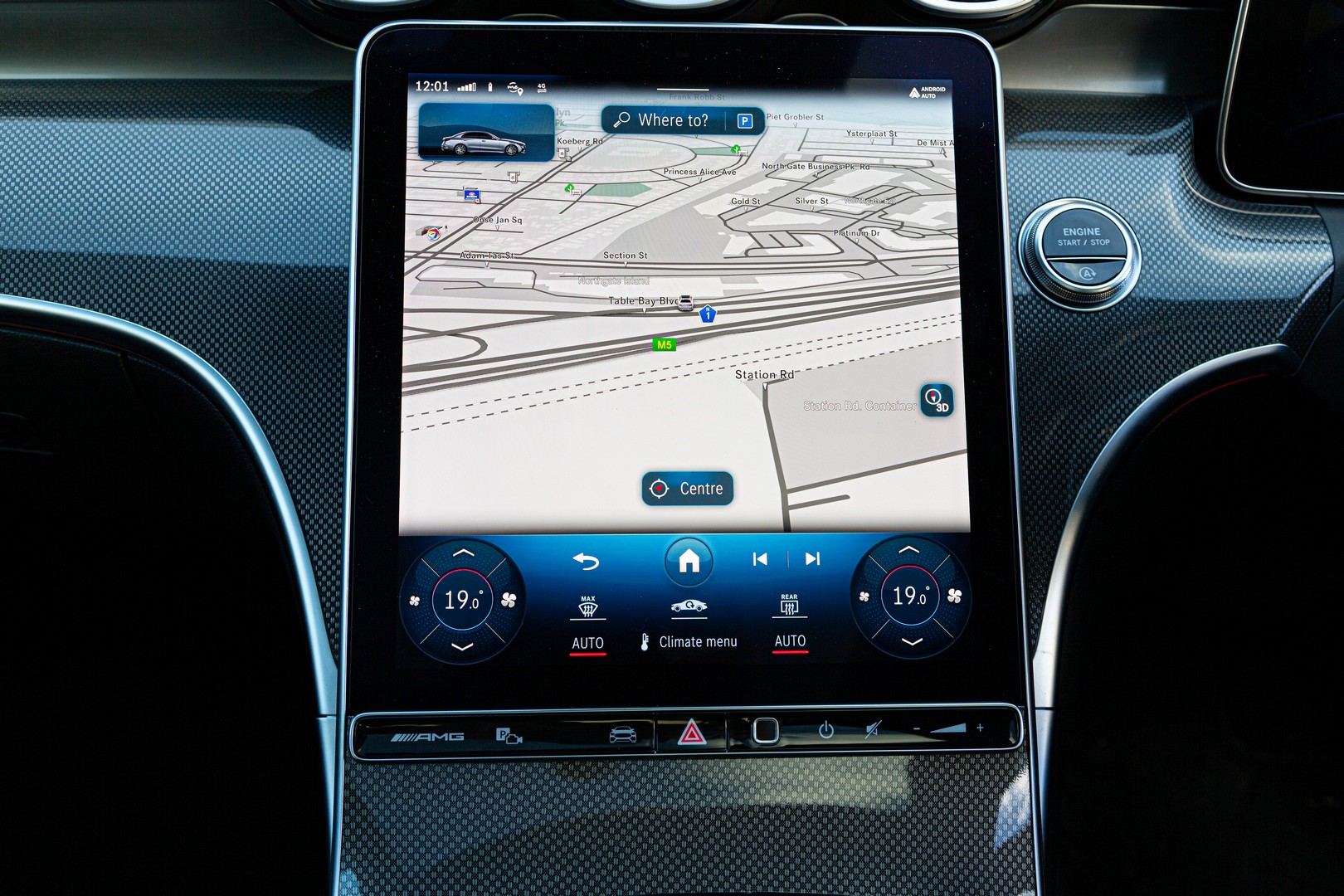
In the C43, you get the Advanced Plus package as standard – it incorporates nice-to-have features such as the expanded MBUX interface, Apple Carplay/Android Auto compatibility, a wireless charging pad, heated and electrically adjustable seats, automatic parking and auto high beam (to name but a few).
The MBUX looks fantastic, but requires a fair bit of familiarisation.
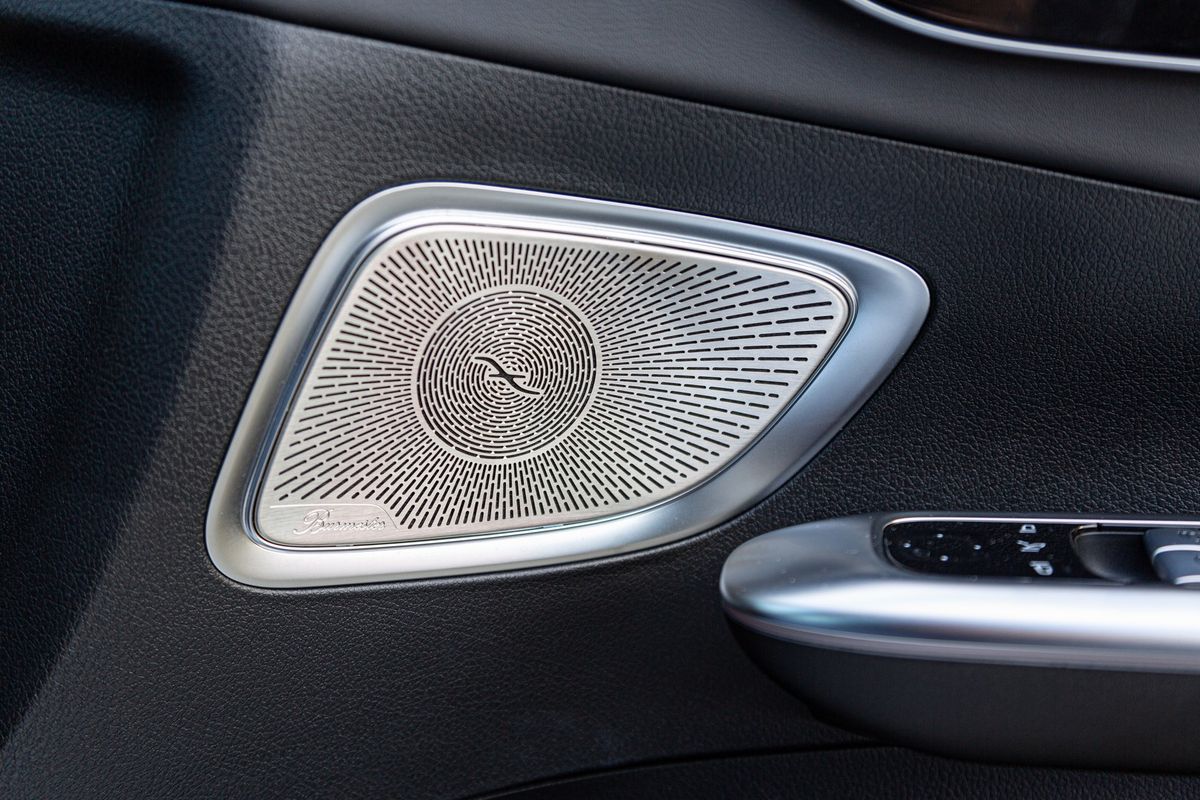
For R49 800, you can opt for the Premium package, which adds keyless go, matrix-style digital lights, and a 360-degree camera. The Premium Plus package (R123 500) has all of the above, plus the high-end Burmester 3D audio, head-up display and panoramic sunroof – our test unit came fitted with this.
Some other options include the AMG TrackPace (R5 100), AMG Real Performance Sound (R12 000) and, if want to nudge the top speed up to 265 kph, tick the box called the AMG Driver’s Package (R39 000).
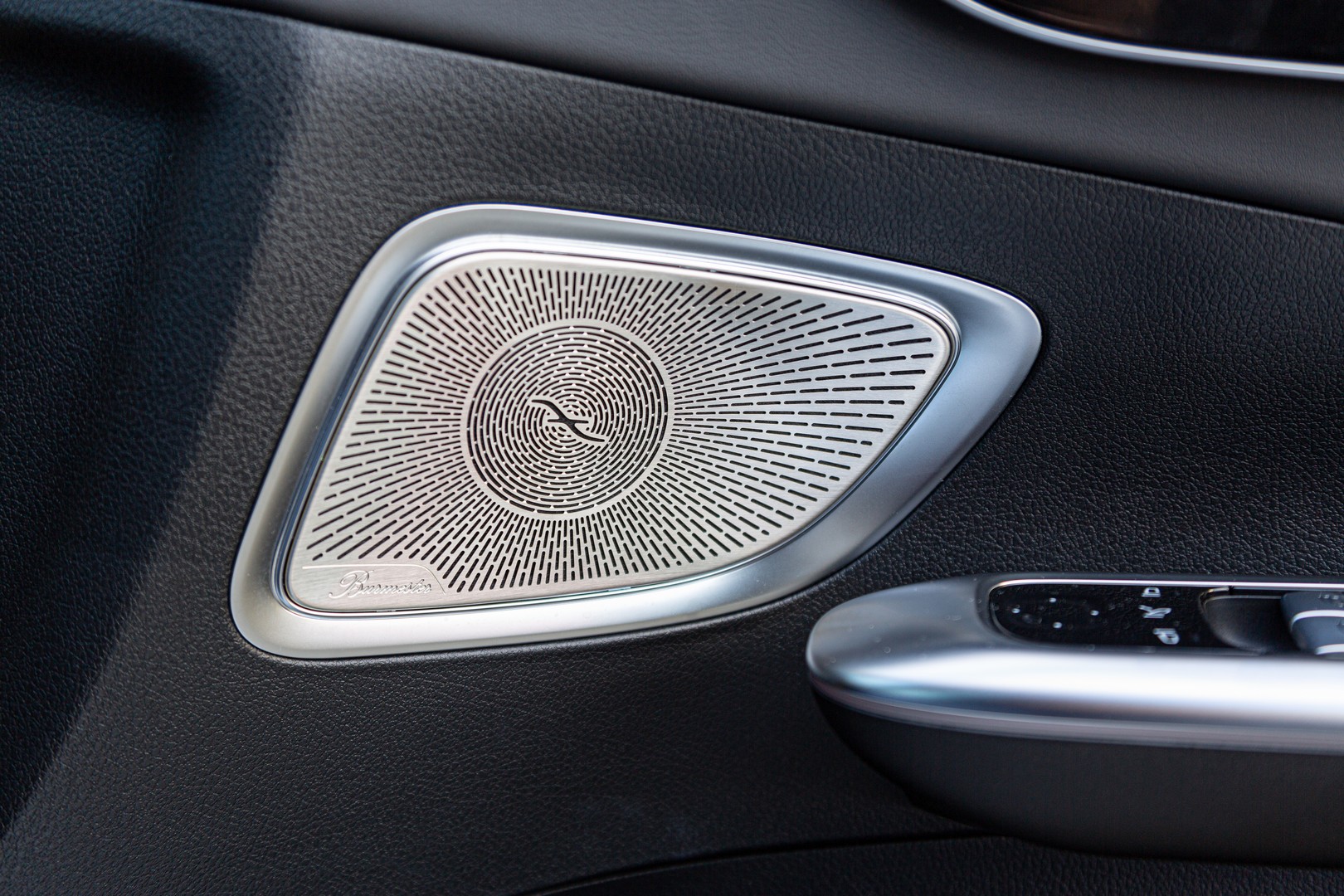
The audio output of the Burmester system is nothing short of magnificent.
Price and After-Sales Support
The 2023 Mercedes-AMG C43 4Matic retails for R1 625 660 (May 2023) and comes with a PremiumDrive 5-year/100 000 km maintenance plan included.
Verdict
Does the Mercedes-AMG C43 tug harder on the heartstrings than the BMW M340i xDrive?
When news broke that the 2023 Mercedes-AMG C43 4Matic would be powered by a downsized engine, some motoring enthusiasts grumbled. It appeared as if Benz’s performance division, which is renowned for its roaring large-capacity engines, had finally caved to pressure from EU policymakers. The arrival of a C43 test unit was not hugely anticipated; in truth, we thought it would be a little underwhelming.
In an effort to make everyone forget about the old C43’s lovely V6, Mercedes-AMG packed the new C43 with an oodles of tech, big screens, multiple modes and artificial sounds. No, it’s not perfect, but when you’re piloting the ‘Benz on a twisty road (with a sporty drive mode engaged), it does deliver satisfaction.
We were impressed by the newcomer’s willing and responsive powertrain, as well as the wide range of adjustability that the electronic interface offers (you can truly set up the car to your liking). For (well-heeled) prospective buyers, this would be a luxury daily driver that offers a healthy dose of sportiness.
The ‘Benz is certainly better than we expected it’d be. Perhaps if the C43 offered more punch and engagement, it may have drawn attention from the imminent 500 kW/1 020 Nm C63 S E Performance…
And that in itself might be the C43’s biggest drawback; it feels more like a spicy C-Class derivative than a Mercedes-AMG model. It’s notably pricier than the BMW M340i xDrive, which has a more evocative 3.0-litre inline-6 turbopetrol engine (with a bit less power, but identical torque) and costs about the same as an RS5 Sportback quattro. The Audi, with its muscular twin-turbo 2.9-litre V6, appeals to performance enthusiasts, even if its cabin can’t match the C43’s technologically advanced and glamorous interior.
It can be argued, however, that the C43 is not aimed at driving enthusiasts per se. It’s tailored for luxury car buyers that appreciate a sporty kerb presence allied with in-car and on-road sophistication – those to whom its sufficiently sizeable performance envelope is a mere bonus. In that regard, it fits the bill.
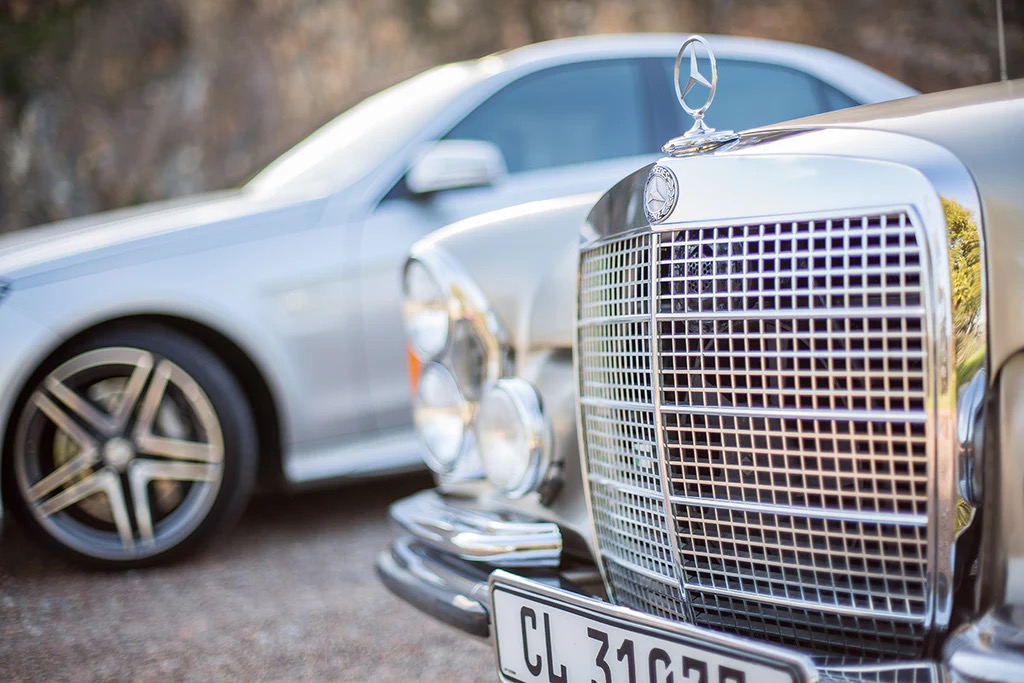
Mercedes-Benz 300SEL 6.3 vs E63 AMG (W212): Classic Comparison
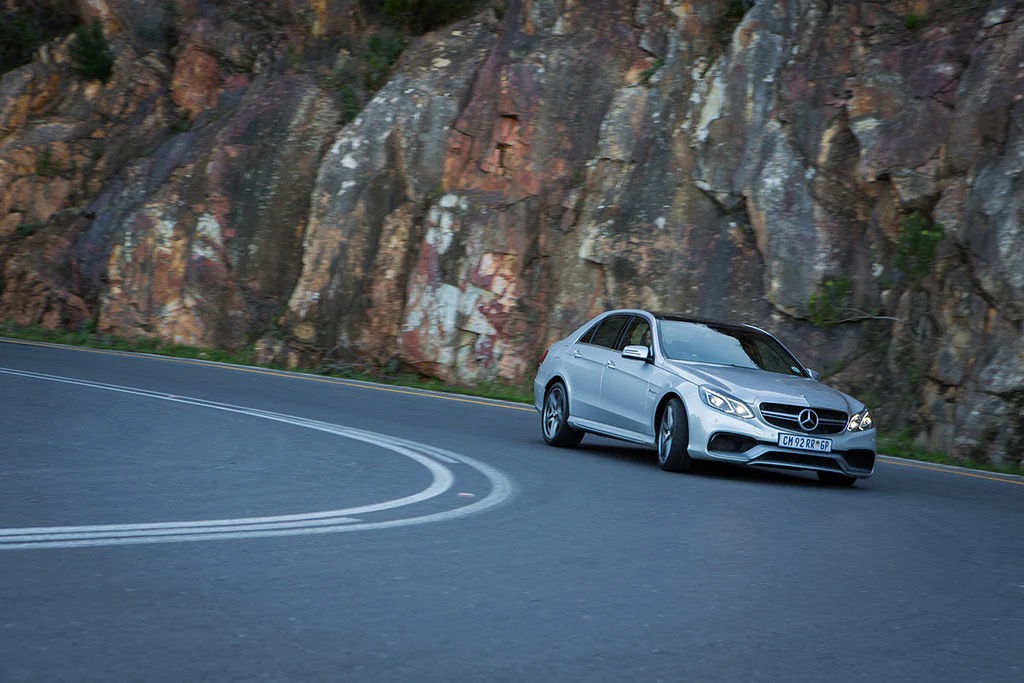
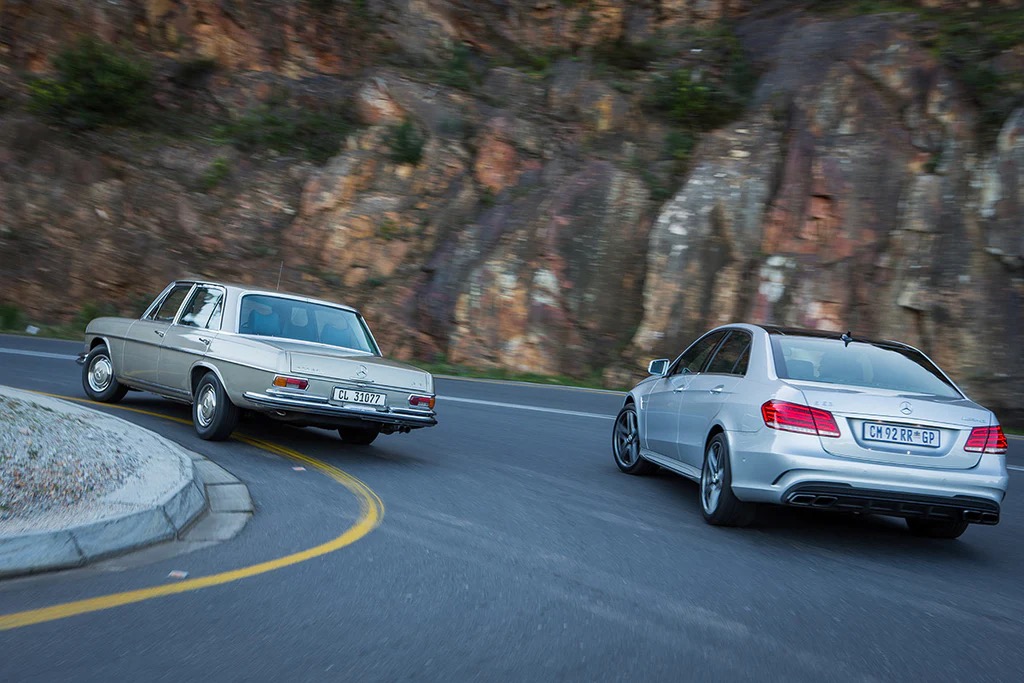
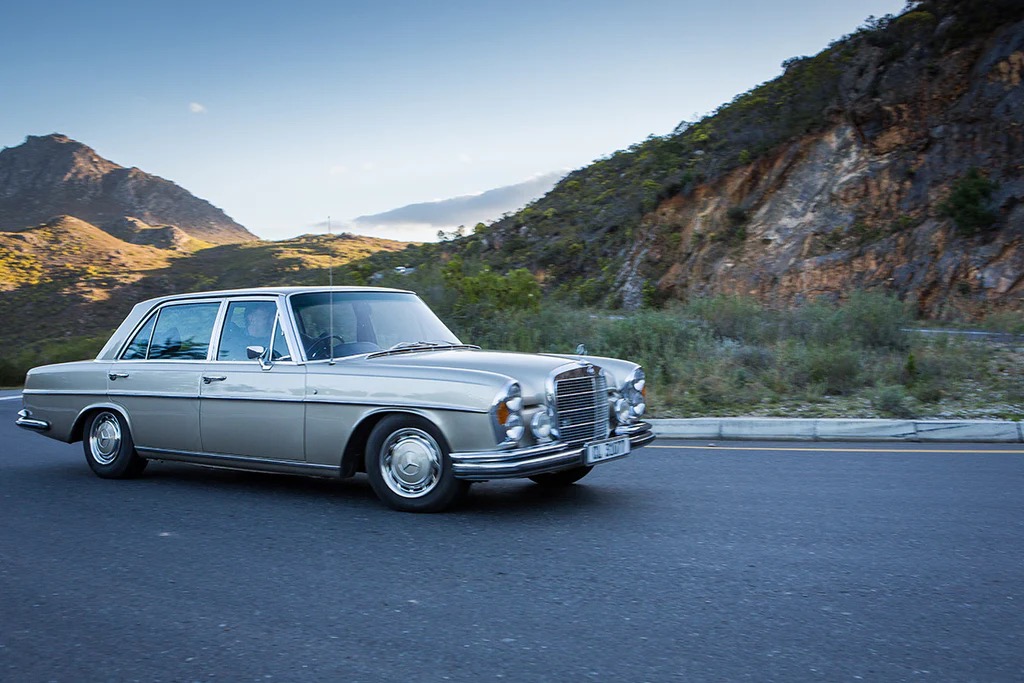
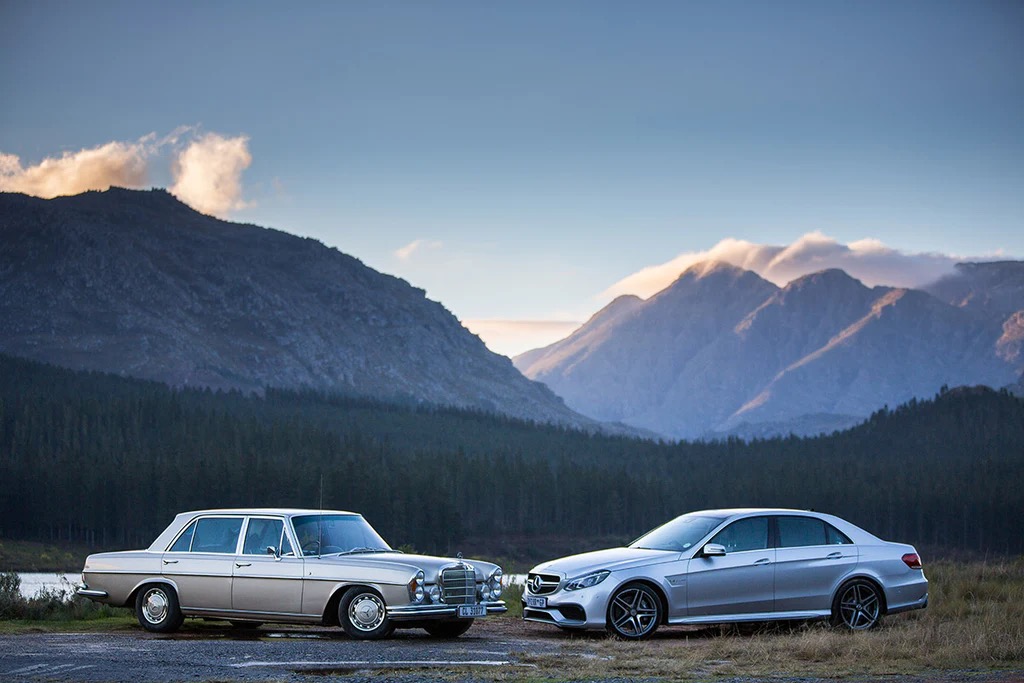
The 300SEL 6.3 from 1967 was seen by many as Mercedes-Benz’s first performance sedan. We headed to the Elgin Valley to see how the classic holds up against a (relatively) modern equivalent from AMG.
IMAGES: Charles Russell
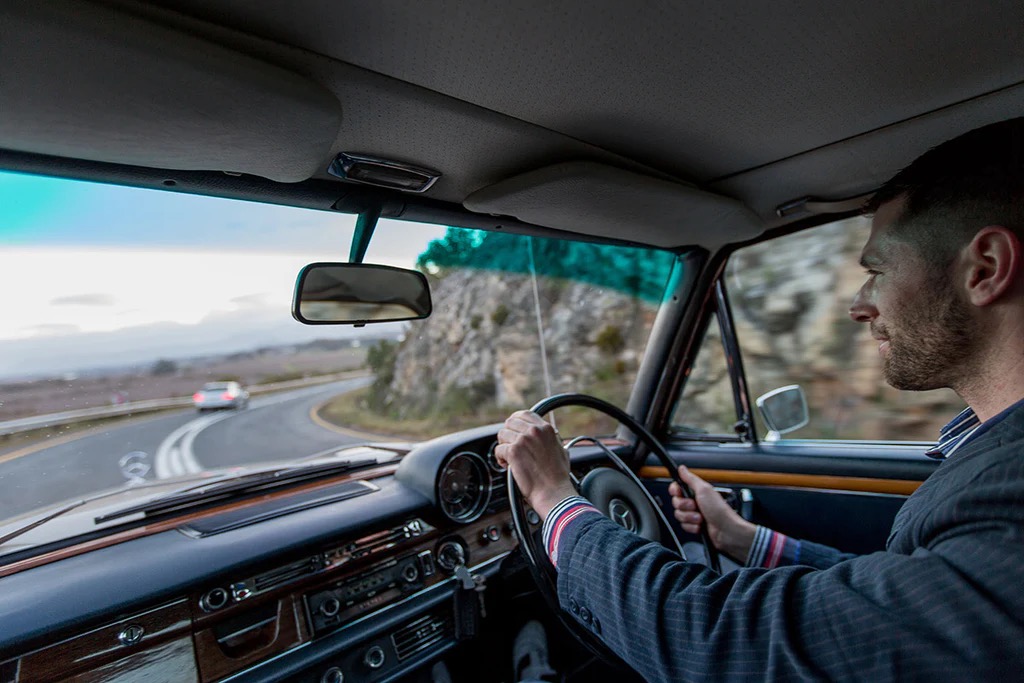
I remember the evening rather well. A few years ago the owner of this Mercedes-Benz 300SEL 6.3 opened his garage door and as I walked through his collection of some of Stuttgart’s most interesting cars, spanning almost three decades, he first drove his 450SEL 6.9 and then the 6.3 out of his garage.
After each car had been warmed for a few minutes, he took me for a quick blast in them. He was kind enough to allow me to get behind the ‘wheel of each car on our drive back and I was completely bowled over by the 6.3’s performance, especially since it was my first time behind the wheel of this car. Back in 1967, this Mercedes-Benz – one of the fastest cars at the time – had enthusiasts champing at the bit.
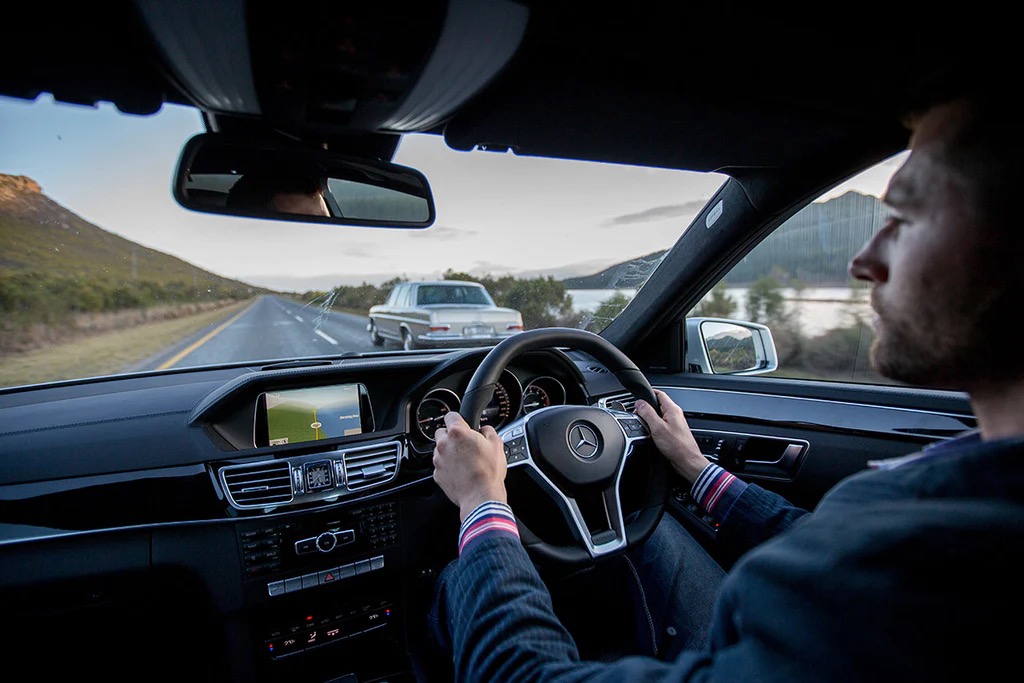
After that experience, I craved more time with the car and wanted to compare it to what I consider its spiritual successor. Technically, the 300SEL 6.3 is part of the S-Class timeline, but a W212-series E63 AMG is a similar size and better mirrors the 6.3’s agile-hooligan nature than Affalterbach’s latest super barge in the shape of Mercedes-AMG S-Class.
For the head-to-head we met in the Elgin Valley, surrounded by fruit farms scattered throughout the hills and land that is covered by hectares of pine trees. The owner had barely pulled up next to us before he plucked his smartphone from his pocket and started snapping details of the E63.
With its modern nose section, the E63 AMG demands respect, especially when it fills your rearview mirror with its snarling presence. Although there are four exhaust pipes flush with the rear bumper, the rear view of the E63 AMG is still fairly conservative, yet the sills, badging and AMG wheels leave you in no doubt that this is Mercedes’ E-Class wild child.
Specifications
Model: Mercedes-Benz E63 AMG 6.3 (W212)
Engine: M157, 5.5-litre V8 biturbo
Power: 410 kW at 5 500 rpm
Torque: 720 Nm from 1 750 to 5 250 rpm
Transmission: 7-speed auto, RWD
Weight: 1 845 kg
0-100 kph: 4.2 sec (claimed)
Top speed: 250 kph
Modern meets Classic
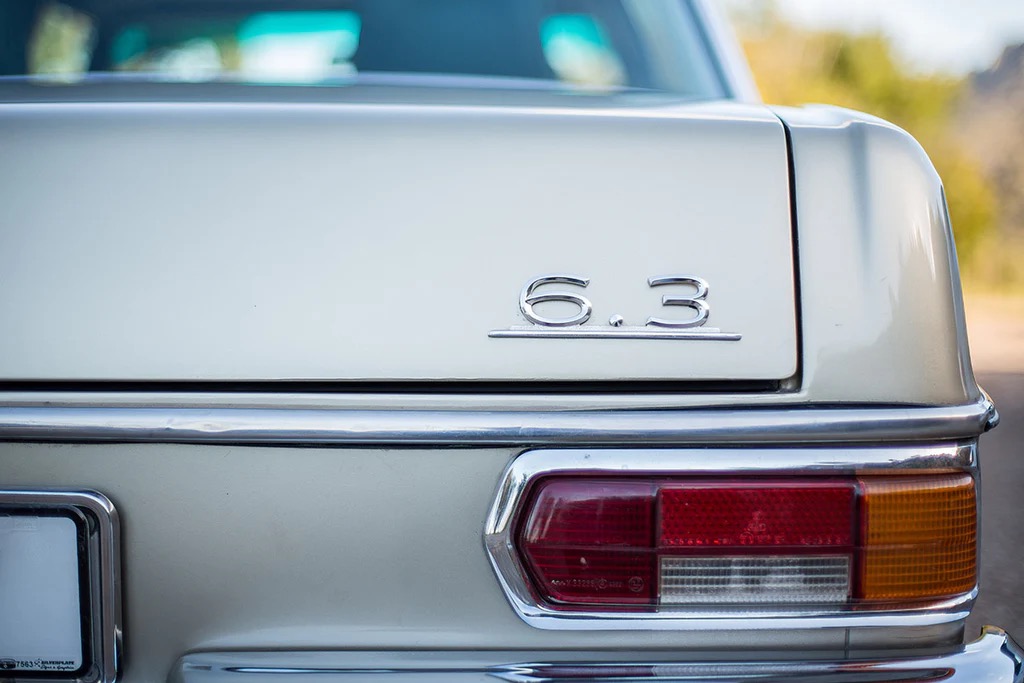
In the late 1960s and ’70s, Mercedes cars boasted particularly solid-looking but elegant designs, and yet the Mercedes-Benz 300SEL 6.3 looks dainty next to the E63 AMG, its Q-car credentials boosted as a result. Excepting the 6.3 badge on the bootlid, few could distinguish it from a regular 300SEL.
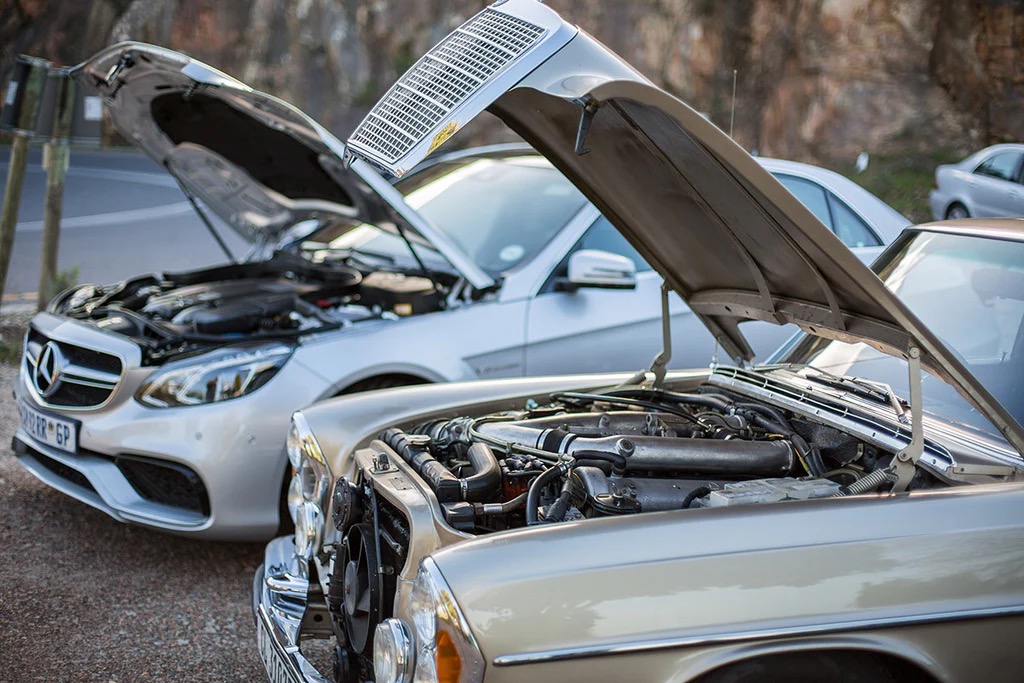
Equipped with the same engine as the majestic W100 600 Grosser, the W109 formed the foundations of the Mercedes performance saloon. Almost five decades of technological advancement mean that the E63 AMG offers acceleration figures on par with several serious sportscars of it era, and even the estate version will keep such exotica company away from traffic lights.
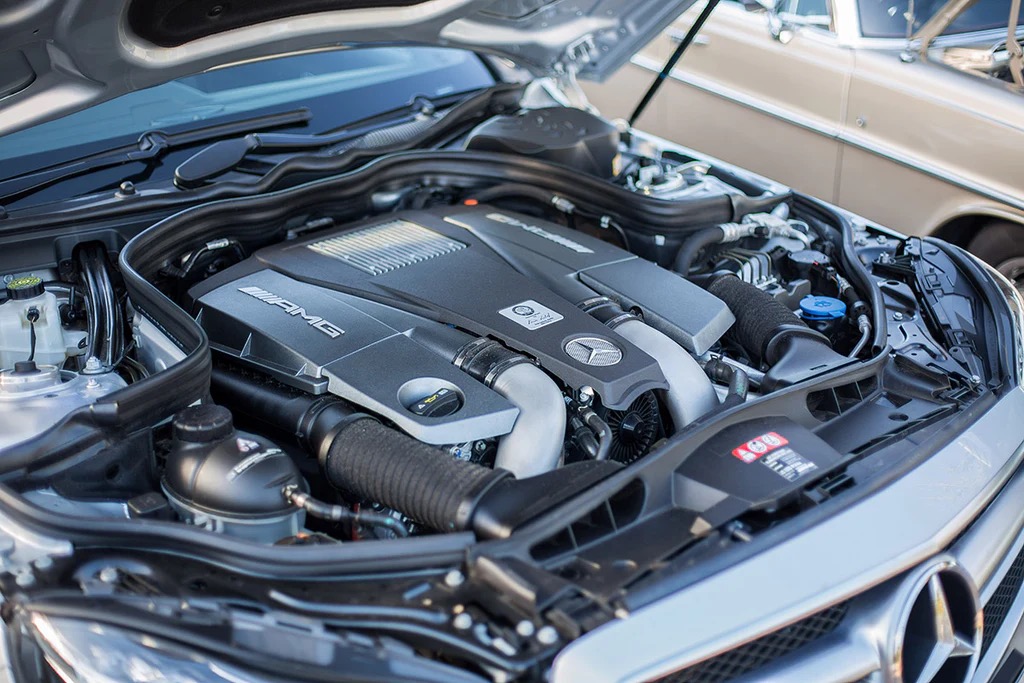
The engineers at Affalterbach were able to instil many of the 6.2-litre M156 V8’s traits into the 5.5-litre V8 biturbo (M157), including an eagerness to rev with minimal lag from the turbos.
Even the thumping exhaust note has been masterfully engineered to offer a familiar soundtrack, and you quickly learn how to coax the exhausts into producing those memorable backfires. The 410 kW E63 AMG holds the scale in perfect balance between an effortless executive saloon and a truly ballistic car.
Driving through the town with all settings left in Comfort, the E63 AMG – although firm – never causes its occupants discomfort, even with a 19-inch alloy wrapped in low-profile rubber at each corner of the car. However, once the traffic has dissipated and the road twists through the valley, the E63 AMG can be chased through the 7 forward gears of its multi-clutch transmission.
The performance of the engine largely hides the 1 845 kg kerb weight of the car, but you can feel the E-Class working against you slightly when braking hard from high speed for a tight corner, and once finally into the turn you must patiently wait to reapply the throttle, otherwise rear grip is easily overcome by the sheer brute force of AMG’s 8-cylinder.
Method to the madness
The ESP’s ‘sport handling’ setting allows the driver to experience the performance of the car with looser reins. Switch off the system completely and it takes almost no effort to light up the rear tyres and wander loosely round a corner. It is during such moments that you discover the electro-mechanical steering provides just enough feedback, and that its fixed turning ratio (20 per cent more direct than that of other Es) offers a nice compromise for a luxury saloon with sporting pretensions.
The E63 AMG is at its happiest through faster corners. It feels planted and the throttle can be gradually applied through the last part of the turn. As soon as the steering wheel is straight, I push the throttle to its stop and marvel as even the digital speedometer struggles to keep up with the pace of the car.
It’s all relative to the ’60s-era 300SEL 6.3
After such a rush, you need to take a long moment before climbing into the Mercedes-Benz 300SEL 6.3. One must remember that, in its heyday, this was not a simple car. It has the same air suspension as the W100 600, which can cost a pretty penny to maintain.
The 109-series SEL is luxuriously trimmed with materials of unsurpassed quality, and its colossal 6 332 cm3 V8 – with Bosch mechanical injection and two valves per cylinder – distinguished it not just from the Mercedes range, but from every other car.
Specifications
Model: Mercedes-Benz 300SEL 6.3 (W109)
Engine: M100, 6.3-litre V8
Power: 184 at 4 000 rpm
Torque: 500 Nm at 2 800 rpm
Transmission: 4-speed auto, RWD
Weight: 1 780 kg
0-100 kph: 6.5 sec (claimed)
Top speed: 220 kph (claimed)
Years produced: 1967–1972
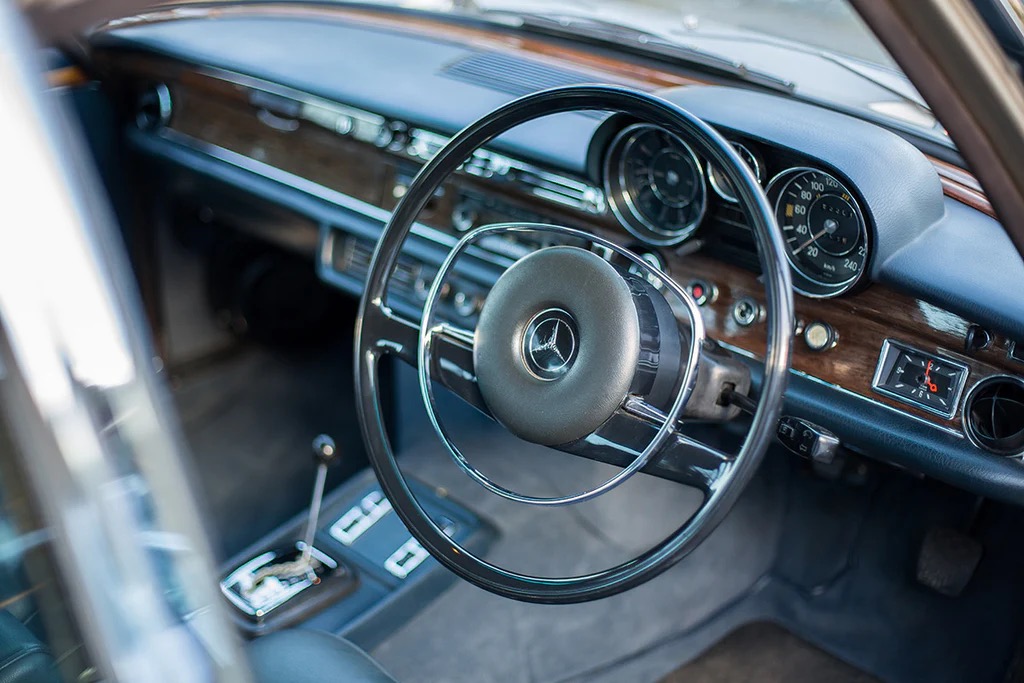
You sink into the metal sprung seat, more so than you do in the firmer sports chair of the E63 AMG. The huge but thin-rimmed steering wheel corresponds well with the rest of the controls, including the slim, chromed gear selector. Other highlights include the aircon, leather upholstery and electric windows.
Shift the transmission lever to drive, give the car some throttle and the Mercedes-Benz 300SEL quickly gets moving. The high level of power assistance makes turning the steering at low speeds a breeze, but the general response is, unsurprisingly, much slower than that experienced in the AMG.
Squeeze your right foot and a moment later the engine wakes up and the rev needle starts to climb, the V8 the dominating sound rather than the exhaust note, as in the AMG.
Does the 300SEL 6.3 still feel quick after all this time? Undoubtedly! Pushing it through the same corners as the E63 AMG, the old V8 saloon feels more alive and moves around a lot more than its modern counterpart.
Having said that, it flows and glides over longer undulations in the road surface much better than the AMG does, which itself is hardly crashy. Some research revealed that 6 526 units of the Mercedes-Benz 300SEL 6.3 were built between December 1967 and September 1972. By no means a small number, but compare it to production numbers of Mercedes-Benz’s mainstream models at the time, between 100,000 and 400,000, and things are put into perspective.
So, would I choose the 300SEL 6.3?
No, I had no difficulty choosing which car to drive home. On the way to the location, I had a ball passing traffic with what felt like less than half of the E63 AMG’s throttle pedal travel. Corners gave me a chance to flick the left-hand paddle shifter and savour the auto-blipping function. But now it was time to relax.
The photographer and I inspected the 300SEL 6.3’s interior from top to bottom. We pushed buttons, pulled levers and absorbed every other detail of this iconic performance saloon, marvelling at its rate of acceleration every time the M100 was allowed to sing to 4 000 rpm and beyond.
As mountains and pine trees flashed by, I felt like filling the 105-litre fuel tank and exploring further along the coast. I just didn’t want the drive to end.