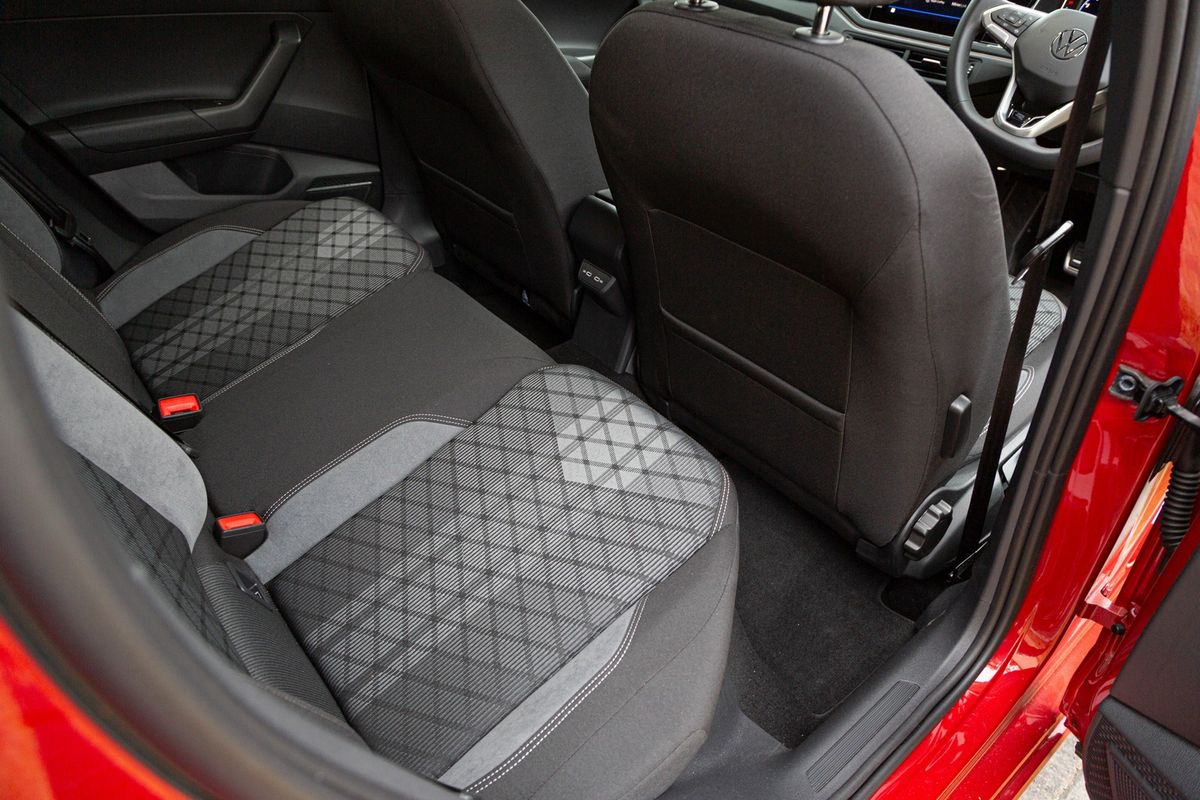
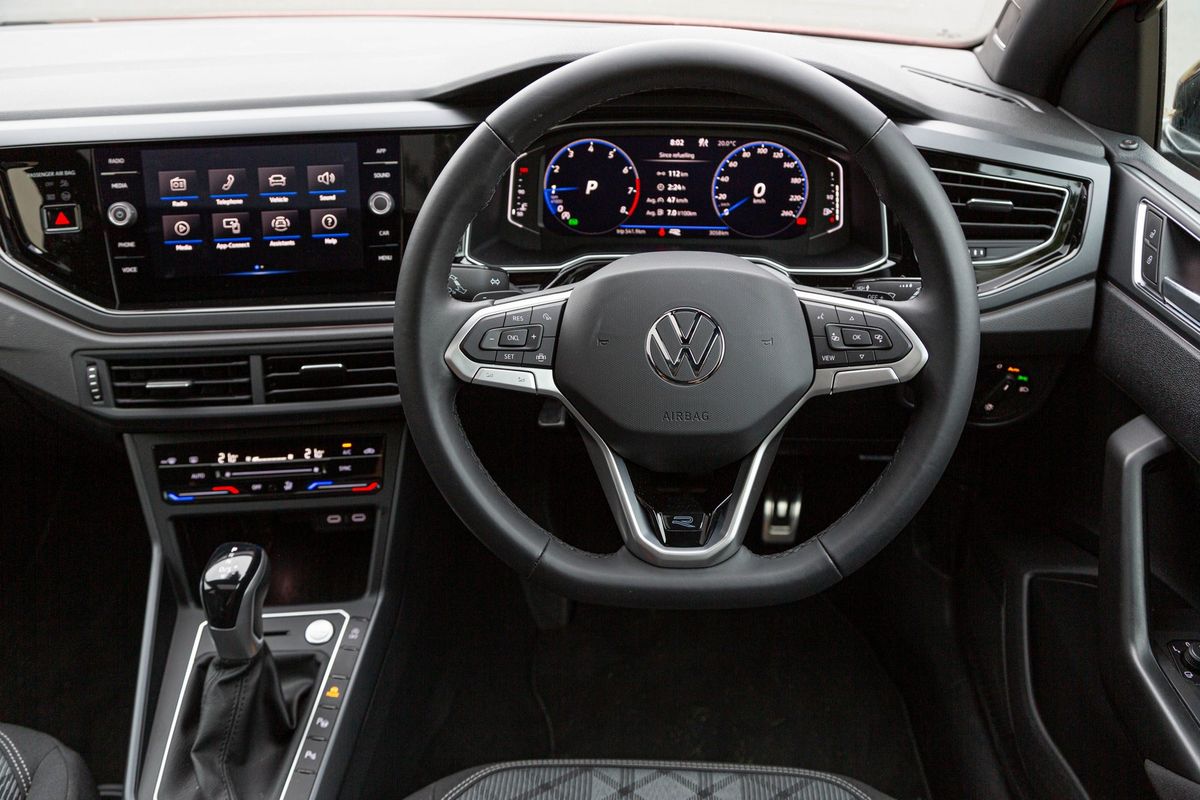
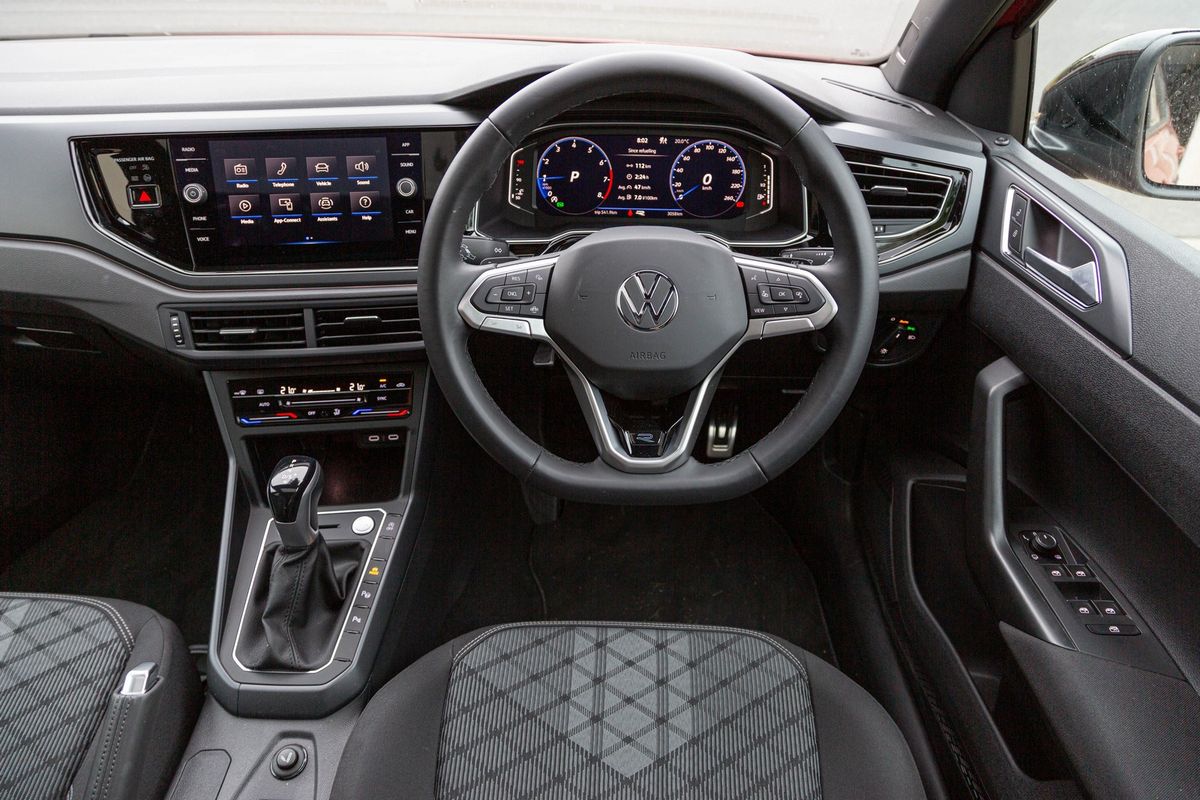
The Toyota Vitz is available with 3 derivatives to choose from including the Base manual, XR manual and XR automatic, with one engine doing duty across the range. Customers will have the choice of either a 5-speed manual gearbox or an automated manual transmission (AMT). There are 7 colours to choose from.
The engine is a 1.0-naturally-aspirated 3-cylinder petrol engine which has 49 kW and 89 Nm. It is front-wheel driven and Toyota claims the Vitz will consume just 4.4 L/100 km. A top speed of 160 kph is claimed and there’s a 32 litre fuel tank.
Grade Walk
The Toyota Vitz is sold in standard and XR models.
The new Lexus LBX has been revealed and serves as the new entry point into the Nagoya-based firm’s luxury wares. Take a look at what the Lexus LBX has to offer!
In South Africa, the Lexus UX is currently the cheapest new Lexus you can buy with pricing starting from R832 900 but that’s likely to change as the Japanese luxury marque welcomes the new LBX to its range.
The new Lexus LBX is built on Toyota’s revised GA-B platform, the same which underpins the Yaris and measures 4 190 mm long, 1 825 mm wide, 1 560 mm high and with a wheelbase of 2 580 mm. The LBX has a kerb weight of 1 280 kg.
Stylistically, the LBX adopt’s Lexus’ latest design language which includes the firm’s “Unified Spindel” grille design which is familiar from the new Lexus RX, for example, while the interior focuses on offering an “inviting and serene space fostering a seamless connection between the driver and car, promoting complete relaxation” according to Lexus.
The Lexus LBX’s interior will be highly customisable with 4 “atmospheres” on offer.
Interestingly, the LBX will be offered with 4 “atmospheres” including Elegant, Relax, Emotion and Cool, each of which can be customised to taste with the new Lexus Bespoke Build Program. A 9.8-inch infotainment touchscreen as well as a fully digital 12.3-inch instrument cluster, the latter of which is a first for Lexus. Load capacity is quoted at up to 332 litres for front-wheel-drive variants.
What engine does the new Lexus LBX have?
The Lexus LBX is powered by a new-generation self-charging hybrid powertrain which incorporates a 3-cylinder, 1.5-litre petrol engine, electric motor and a high output nickel-metal hydride (NiMH) battery. Peak power output is rated at 100 kW while torque is quoted at 185 Nm. The LBX will be offered in both 2-wheel-drive and all-wheel-drive guise and all variants are paired with a Continuously Variable Transmission (CVT).
As far as driver assistance is concerned, the Lexus LBX features the latest generation of Lexus Safety System + which incorporates a host of features including a Pre-Collision System with Intersection Turn Assist, Dynamic Radar Cruise Control, Lane Tracing Assist/Lane Keep Assist and Road Sign Assist. But that’s not all, other features such as a Blind Spot Monitor, Rear Cross Traffic Alert, Safe Exit Assist, driver monitor and parking sensors are also included. Features such as a Front Cross Traffic Alert with Panoramic View Monitor and Remote Parking will be optional.
Lexus SA has yet to confirm whether the new LBX will be offered in South Africa but given how popular compact SUVs are locally, we expect to see the LBX on local soil in 2024.
We will keep you updated as soon as we get official confirmation.
Fitted with a slightly more modern drivetrain, this Land Rover Series 1 offers perhaps the best combination of a truly classic Landy experience with a touch of modern convenience. We drove the British icon along Cape Town’s scenic Clarence Drive.
I hadn’t even driven a kilometre down the road from the property where I collected the Land Rover Series 1, when a fellow Land Rover driver flashed his vehicle’s lights and waved at me. It doesn’t happen often when you’re going about your business, but it does to Defender drivers, and it’s only polite to wave back.
It’s as if driving a classic Land Rover immediately makes you friends with every other Landy owner, and it goes along with a sense of humour… Several owners have told me you need to wave “to show the other driver that your hands are clean” (as proof that you haven’t recently had to work on your Land Rover)!
Joking aside, within the 1st few hundred metres of driving this Series 1, I already felt part of the “club”.
Modernising the Land Rover Series 1
Six years ago, this Landy was not in this great condition, however. When the Series 1 arrived at Land Rover Worx in Helderberg, it needed a lot of attention. Then the team began restoring it piece by piece.
Stefan from Land Rover Worx explains: “The engine is the later 2.5-litre 4-cylinder petrol engine that was fitted to the Defender from around 1987 onwards. The synchromesh gearbox is from a Series III, just to make it a little more drivable. The brakes, wiring and body were redone, and the body was completely repainted. Often, when we receive these cars, there is very little you can use from the original sample.”
The team kindly removed the roof, which makes the Land Rover appear even more purposeful – and ready for action. Even though it is a chilly 14°C, I am wearing “long johns” underneath my jeans, am triple layered at the top and even have a woolly beanie on my head… The nip in the air won’t affect me today.
Specifications:
Model: 1956 Land Rover Series 1, 86-inch (with upgraded drivetrain)
Engine: 2.5-litre, four-cylinder petrol
Power: 83 kW at 4 000 rpm
Torque: 265 Nm at 1 800 rpm
Transmission: 4-speed manual, with low-range transfer case
Weight: ± 1 100 kg
If you really want the full al fresco experience, the windscreen can be removed (or folded flat when the spare wheel is removed). Suffice it to say, it affords you a near 360-degree view from the driver’s seat.
What is the Land Rover Series 1 like to drive?
The more modern engine and gearbox are indeed welcome additions to this Series 1; they perfectly fit the model and also make it more drivable. Originally, this Landy was fitted with a 2.0-litre engine, as was the case with many later Series 1 Land Rovers. A 2.0-litre diesel motor was also available at the time.
The upgraded gearbox removes the hassle and challenges of a non-synchronous gearbox (also known as a crash box). The updated ‘box still feels its age, yet it shifts positively, with a short and mechanical action from 1st to 2nd gear. The up-right-up action when shifting from 2nd to 3rd takes slightly longer.
There is some play in the ‘wheel, which, to be fair, applies to most cars I’ve driven from this era, but the larger-displacement engine makes a significant difference: the Landy easily accelerates past 60 and on to 80 kph. Had it been powered by its original motor, this Series 1 would have delivered far more leisurely acceleration; it would have been more of a chore to drive (as it battled to keep up with traffic in town).
Make no mistake, there are rattles, and the off-road-biased tyres generate a lot of noise, but I wouldn’t want it any other way. As expected – again, as with other vehicles from the Fifties – you need to reduce speed and apply the brakes earlier than usual when you need to stop the Landy at an intersection.
As I head along the beautiful Clarence Drive in the Land Rover Series 1, I’m thankful that on this weekday in the heart of winter, there are no high-performance cars or motorcycles in a rush to overtake me.
The massive swells of the ocean make for a picturesque sight, and as the Landy trundles around bends, its knobbly tyres scrabble just to remind you that they’re there. It is quite strange to see the spare wheel in front of you, but after a while, you forget about it – or it simply becomes part of the scenery.
There is no rev counter, but knowing that the engine is a low-revving unit, you tend not to hang on gears for too long. I quickly change up into 4th gear to potter along as, well, “serenely” as possible.
In terms of kerb presence, there is no mistaking this vehicle for anything but an off-road Land Rover. There is ample space in the short load bin to load equipment/camping gear for an off-road excursion.
Occupant comfort is of little concern
If you are okay with sitting close to one another, there are 3 small seats up front. Embarrassingly, a fuel attendant had to show me how to move the driver’s seat to gain access to the fuel tank beneath it.
Halfway along Clarence Drive, I turn around and head back to Gordon’s Bay. I first pull over at the now well-known Pit Stop Lodge, where it comes as no surprise that a few of the visitors make some positive comments about the green Land Rover Series 1 – after all, it is not a car that you see on the road often.
Summary
On the final stretch back to Gordon’s Bay, I’m again reminded of how agricultural and military-grade the Land Rover Series 1 (and other vehicles of its type) are. It was built to be fit for purpose – a far cry from luxurious modern Land Rover models (even Defender variants) with all their soft creature comforts.
At the same time, I could have easily driven another 200 km (with a stop or 2 along the way) to enjoy the other talent (legendary off-road capability) the Series 1 offers. It is a back-to-basics driving experience, and the knowledge that you can tackle off-road routes with confidence only boosts the Landy’s allure.
Will Suzuki leapfrog VW in SA? A look at YTD dealer sales
Suzuki Auto SA has grown tremendously in recent times. But just how close is the Japanese brand to snatching 2nd place from VW? Year-to-date dealer sales tell an interesting story…
It’s been a scarcely believable couple of years for Suzuki Auto South Africa. Once something of a bit-part player, the Japanese firm’s local division has rocketed up the sales charts in recent times, consistently breaking internal sales records and making 3rd place on the monthly list of SA’s best-selling automakers very much its own.
While Toyota SA Motors is still way out in front, the gap between Suzuki and the 2nd-placed Volkswagen Group (the latter, we should point out, includes the Audi brand) is narrowing – and fast. So, we decided to examine the year-to-date sales race with VW, though with a focus specifically on the dealer channel. The latter is, of course, considered to be a strong indicator of private-buyer sentiment.
Collectively, dealerships form the channel through which the vast majority of new-vehicle sales are registered. In May 2023, for instance, Naamsa estimated 38 872 units (or 90.2% of the total reported industry sales of 43 060 vehicles) represented sales in the dealer space. But before we delve into the year-to-date sales figures, let’s take a step back and consider how the Hamamatsu-based manufacturer has managed to climb this high, this quickly…
What’s driving Suzuki Auto SA’s recent sales success?
The Baleno is Suzuki Auto SA’s 2nd-most popular vehicle in 2023.
Suzuki Auto SA opened its doors back in 2008 and has enjoyed 15 consecutive years of dealer growth since. In fact, the opening quarter of 2023 was the Suzuki dealer network’s best in history, while as many as 9 dealerships (out of 97 dotted now round Southern Africa) each sold more than 100 new vehicles in March.
So, what’s behind this consistent growth? Well, in what has become an increasingly price-sensitive local market, Suzuki Auto SA has shrewdly taken advantage of its mother brand’s large-scale production facilities in fellow right-hand-drive country India, where its Maruti counterpart manufactures huge volumes of budget-friendly compact vehicles. For the record, Maruti Suzuki is an absolute giant in the world’s most populous nation, having achieved a staggering 42% market share in 2022.
As many as 12 of the 13 nameplates in Suzuki Auto SA’s stable today are imported from India, with only the Vitara (which is the brand’s slowest seller this year and looks likely to exit the local range soon) being sourced from Hungary in Europe. In addition, while the broader Swift line-up is manufactured in the South Asian country, the low-volume Swift Sport derivative is brought over from the Sagara factory in Japan.
VW Group vs Suzuki: a quick look back at 2022 sales
Suzuki Auto SA is thriving perhaps partly because of rather than despite South Africa’s challenging economic conditions, since its attractively priced budget cars – virtually all of which play in the compact-vehicle space – are on offer at just the right time for many cash-strapped local consumers. Furthermore, the company has seemingly managed to secure a steady flow of stock, while other automakers continue to struggle with supply constraints.
Just how close was the Japanese firm to matching the Volkswagen Group last year? Well, the German firm’s total sales (again, including Audi) in South Africa fell 2.48% year on year to 69 801 units in 2022. The VW Group’s market share thus dropped from 15.41% to 13.20%, although it quite comfortably held onto 2nd place on the overall list.
Meanwhile, Suzuki Auto SA improved its total sales a whopping 71.04% year on year to 47 178 units in 2022, rocketing up the rankings from 6th to 3rd and boosting its market share from 5.94% to a very respectable 8.92%. Still, last year, Suzuki was a considerable 22 623 units behind the VW Group. In 2023, however, the race is far closer…
How is the VW brand faring in the dealer channel?
The Kariega-built Polo Vivo continues to function as the main volume driver for VW.
Year to date, the VW Group’s overall tally sits at 26 411 units, though that figure falls to 23 912 when we remove Audi sales from the equation. But here we’re going to focus on the dealer channel, which means we won’t take into account sales to the rental industry or to the government, not to mention so-called “single” registrations (which comprise vehicles registered by manufacturers for their own use).
Over the opening 5 months of 2023, the Volkswagen brand sold 18 288 units through the dealer channel in South Africa, translating to a monthly average of 3 658 units. For the record, the year-to-date dealer-sales figure for the VW Group stood at 20 427 units over the same reporting period.
As you might have guessed, the Wolfsburg-based automaker’s locally produced hatchbacks – the Polo and Polo Vivo – were its key volume drivers. In May 2023, for instance, the Kariega-built siblings contributed 1 876 (1 378 of which went through dealers) and 1 024 (815 via dealers) registrations respectively, and were supported by the imported T-Cross (550 total units) and Tiguan (208 total units), not to mention the new Ford-built Amarok (330 total units).
How is Suzuki performing in the dealer channel?
The Ertiga was Suzuki Auto SA’s 3rd-best seller in May 2023.
In the opening months of 2023, Suzuki and the VW brand traded blows in the dealer channel, with the German firm having its way in January and March, and the Japanese manufacturer putting its nose ahead in February and April. The ding-dong battle continued in May, when VW pushed ahead slightly.
Year to date, Suzuki’s overall total comes in at 19 729, with 17 402 of those units having been registered to private buyers through dealerships (that’s an average of 3 280 units a month). In terms of dealer sales, that puts Suzuki just 3 025 units behind the Volkswagen Group and a mere 886 units adrift of the VW brand.
Of course, the model that has done much of Suzuki’s heavy lifting in recent times is the Swift hatchback. With 17 282 units registered in 2022, the Swift was SA’s 2nd best-selling passenger vehicle last year, finishing ahead of the Polo hatch (15 697 units), which found itself down in 5th, but behind the Polo Vivo (20 866 units). The Swift again dominated the sales charts in May 2023, with 1 178 units (1 156 of which were dealer sales) registered, while the Baleno (504 total units), Ertiga (425 total units), new Grand Vitara (382 total units) and S-Presso (352 total units) all also came to the party for the Hamamatsu-based automaker.
Will Suzuki overtake Volkswagen in South Africa?
So, will we see Suzuki leapfrog the VW brand (and perhaps even the Volkswagen Group) in South Africa? And, if so, how far away are we from such a situation? Well, considering the gap has narrowed markedly over the opening 5 months of 2023 – with the 113-year-old Japanese marque cutting VW’s lead in the dealer channel to fewer than 1 000 units – there’s no doubt we’re in for an intriguing remainder of the year.
The local market finds itself in increasingly turbulent times and we can’t help but feel the sustained economic challenges facing South Africa will largely favour Suzuki’s budget-friendly line-up (which currently runs from R166 900 to R529 900) over than the German manufacturer’s higher-priced portfolio (R248 500 to R1 663 400, or R3 871 100 if we include Audi).
When it comes to pure volume, VW continues to rely on its least-expensive model, the Polo Vivo (and, to a lesser extent these days, the Polo hatch). However, Volkswagen has plans to add a mystery 3rd vehicle – some sort of sub-T-Cross crossover – to its Kariega production line, while it has also confirmed “there is hope” for a half-tonne bakkie spin-off. As much as these models have the potential to become significant volume drivers for VW, they are a few years away, with the new crossover likely to come online only in 2026 or 2027 (and the proposed bakkie thereafter).
Meanwhile, Suzuki recently added the new Grand Vitara to its local line-up, positioning the revived nameplate as its flagship model. Perhaps more pertinent to the brand’s volume aspirations, however, is the fact the Vitara Brezza – one of its strongest sellers last year – has been discontinued locally. Still, the upcoming Fronx (a Baleno-based crossover) may well fill much of this gap, while the new 5-door version of the already popular Jimny will surely also attract a number of fresh sales.
In the short term, Suzuki Auto SA’s star looks all but certain to continue to rise as the fast-growing automaker goes about hunting down VW through the dealer channel. We’re absolutely itching to see what the sales figures say by the end of the year…
The all-new Mitsubishi Outlander is arriving in South African showrooms and we’ve uncovered pricing and specs for the 7-seater SUV.
The new Mitsubishi Outlander is now available from dealerships in South Africa priced from R729 995. Under the bonnet is a 2.5-litre naturally-aspirated 4-cylinder petrol engine which develops 135 kW and 245 Nm. Power goes to all four wheels via a continuously variable transmission. For those wanting to venture offroad, there’s 210 mm of ground clearance.
The Super All-Wheel Control (S-AWC) offers drivers six drive modes with also which to adjust the electronically controlled four-wheel drive system, allowing the driver to find the perfect balance of economy and performance according to their particular needs or terrain.
Trim Walk
Outlander GLS
7 Airbags
ABS (Anti-lock Braking System) with EBD (Electronic Brake-force Distribution)
Hill Start Assist (HSA)
Hill Descent Control (HDC)
LED Front Fog Lights
Daytime Running Lights
Auto Headlights
Keyless entry and button start
Active Stability + Traction Control
Front and Rear Park Distance Control with rear camera
Front Rain-sensing Wipers
5+2 Seat Configuration
60/40 Split Rear Seats with Flat-folding Function
One-touch Rear/2nd Row Seat Folding Lever
Heated Front Seats
4 -Spoke Leather Wrapped Steering Wheel
Cruise Control
12.3-inch Driver Digital Display
8-inch SDA (Smartphone-link Display Audio) Apple CarPlay/Android Auto)
Power Remote Liftgate with Hands Free Access & with Height Adjust
6 Speakers with Tweeters
3-zone Automatic Climate Control (Front Dual Zone)
Outlander Aspire (above content plus: )
8-way Power Adjustable leather seats with Power Lumber Support + Memory Function (Driver’s Side)
9-inch SDA (Smartphone-link Display Audio) Apple CarPlay/Android Auto with Nav
Power Sliding Panoramic Sunroof
Reverse Auto Tilt Door Mirrors
How much does the new Mitsubishi Outlander cost in South Africa?
Outlander GLS R729 995
Outlander Aspire R759 995
Mitsubishi has included a manufacturer’s warranty of 3 year/ 100 000 km, with roadside assistance of 5 years / unlimited mileage. A service plan of 5 years/ 90 000 km is included and service intervals are every 15 000 km.
Mitsubishi will also make a number of accessory packages available, including a body kit that will allow customers to personalise and equip the Outlander to their taste and needs with parts that feature the same fit and finish as factory fitted components.
Has the Toyota Hilux managed to grab back the top spot? Let’s take a closer at South Africa’s best- and worst-selling bakkies for May 2023…
South Africa’s new-vehicle industry registered 10.1% of year-on-year growth in May 2023, finishing the month on 43 060 units. The light-commercial vehicle (LCV) segment provided much of this momentum, with sales in that sector of the market increasing a significant 38.5% year on year to 12 825 units.
Question is, after being relegated to an unfamiliar 2nd place in April 2023, did the Toyota Hilux manage to regain the top spot on the list of South Africa’s best-selling bakkies in May 2023? It did indeed, with the popular Prospecton-produced pick-up racking up 2 798 registrations across the country.
Shedding 97 units month on month, the Silverton-built Ford Ranger thus dropped a position to 2nd, registering 2 104 sales in May. Our calculations (based on Naamsa data) show the Hilux is some way ahead in the year-to-date sales race, with its tally sitting at 15 009 units. The Ranger, meanwhile, has garnered 9 627 sales up until the end of May.
But back to last month’s figures. The Isuzu D-Max again completed the bakkie podium, with the Struandale-manufactured range (including the Gen 6 line-up) attracting 1 555 registrations in May 2023. For the record, the D-Max’s year-to-date total stands at 8 047 units, which puts it 1 580 units behind the Ranger. As an aside, the new the D-Max Arctic Trucks AT35 is expected to be added to the range relatively soon.
The market’s only half-tonne bakkie, the Rosslyn-made Nissan NP200, remained in 4th in May thanks to its 1 157 sales, while the Mahindra Pik Up (639 units) likewise held steady in 5th. Having nearly doubled its April effort, the GWM P-Series (494 units) moved up a couple of spots to 6th.
That saw the evergreen Toyota Land Cruiser 79 (371 units) – which appears to be in line for 4-cylinder power towards the end of the year – and the Ford-built Volkswagen Amarok (330 units) each slip a position to 7th and 8th, respectively. The Nissan Navara (318 units) managed to hold onto 9th, while the GWM Steed returned to the table, with 99 registrations.
Best of the rest in May 2023: bakkies outside top 10
Mazda’s BT-50 was SA’s slowest-selling bakkie in May 2023, with just 8 units registered.
So, what about those bakkies that didn’t crack the top 10? Well, the Mitsubishi Triton (which will soon gain an AT35 derivative, too) dropped off the table, with 53 units registered in May. The Mahindra Bolero added 37 sales for the Indian firm, while JAC’s T-badged bakkies – the Chinese automaker unfortunately reports only a combined figure for its T6 and T8 line-ups – finished May 2023 on a total of 35 units.
The Peugeot Landtrek was next on 23 registrations, with its Stellantis stablemate, the Jeep Gladiator, following with 13 sales. The Mazda BT-50 had to settle for the final spot, with just 8 units sold (its best performance so far this year).
Export winners in the bakkie segment in May 2023
Exports of the Silverton-built VW Amarok may well have been included in Ford’s figure for the Ranger.
What about the bakkie export market? Well, the Ford Ranger led the charge on this front, with 6 274 units shipped from the Blue Oval brand’s Silverton facility in May 2023. Though it’s not clear, we suspect this total includes Amarok units built in the same factory, as Volkswagen shows no exports of this model in its reported figures. The meant the Toyota Hilux slipped to 2nd on the export charts in May, with 5 323 units sent overseas.
Meanwhile, the D-Max (630 units), Navara (451 units) and NP200 (31 units) again made up the numbers on the export charts. As has been the case for a few months, the official Naamsa report furthermore showed a handful of imported models being exported from local shores in May 2023, this time in the form of the Triton (56 units), P-Series (15 units) and Steed (1 unit).
10 best-selling bakkies in South Africa for May 2023
Hoping to bag 1 of the few Lamborghini Huracán Sterrato units headed to SA? Well, here’s how much you’ll pay for the firm’s V10-powered “all-terrain” supercar…
The Lamborghini Huracán Sterrato was revealed at the tail end of 2022, billed as an “all-terrain” supercar designed to tackle both tarmac and gravel roads (yes, just like its Volkswagen Group cousin, the Porsche 911 Dakar). Though just 1 499 units will be produced, a few are indeed destined for South Africa … and we now know the starting price.
Courtesy of a tip from the in-the-know vehicle-information specialists over at duoporta.com, we have confirmation the all-paw Huracán Sterrato will be priced from R6 625 000, a figure that includes a standard 3-year DrivePlan. Should you wish to upgrade to 5-year cover, the starting price is pushed to R6 825 000.
At the same time, Lamborghini’s local distributor appears to have re-introduced the Huracán Evo RWD derivative (now priced from R5 200 000), along with the Spyder version (which, at R6 750 000, is actually a little more expensive than the Sterrato).
The Huracán Sterrato scores an extra 44 mm of ground clearance.
As a reminder, the Huracán Sterrato is powered by the Italian automaker’s naturally aspirated 5.2-litre V10 petrol engine, which here sends 449 kW and 565 Nm to all 4 wheels via a 7-speed dual-clutch transmission (and benefits from a mechanical self-locking differential at the rear, too). Lamborghini claims the Sterrato is capable of completing the 0-100 kph sprint in just 3.4 seconds, before running out of steam at 260 kph (a figure likely hindered somewhat by the standard all-terrain tyres).
Compared with the Huracán Evo, the newcomer’s ground clearance has been hiked by 44 mm, while the front and rear track widths grow by 30 mm and 34 mm, respectively. The Sant’Agata Bolognese-based firm’s designers have furthermore added aluminium underbody protection, reinforced sills, a rear diffuser and prominent wheel-arch extensions, along with additional LEDs on the front end, roof rails and a scoop feeding clean air to the rear-mounted atmospheric engine.
The braking system comprises aluminium fixed monoblock callipers with 6 pistons fore and 4 pistons aft, along with ventilated and cross-drilled carbon-ceramic discs. The latter measure 380 mm in diameter and have a 38 mm thickness at the front, complemented by 356 mm-diameter and 32 mm-thick items at the rear.
The all-terrain version of the Huracán boasts a model-specific Rally mode.
Those hefty brakes are framed by 19-inch alloy wheels wrapped in bespoke Bridgestone Dueler AT002 tyres that measure 235/40 R19 fore and 285/40 R19 aft. These tyres furthermore feature run-flat technology, which Lamborghini says “guarantee” a minimum of 80 km of travel at 80 kph with absolutely zero pressure.
In addition, the Huracán Sterrato features an updated version of the so-called “Lamborghini Integrated Vehicle Dynamics” system, replete with model-specific Strada and Sport calibrations. It also gains a new Rally mode designed for “low-grip conditions”.
The cabin features Alcantara Verde Sterrato upholstery, along with new graphics for the infotainment system. The driver even scores a digital inclinometer complete with pitch-and-roll indicator, a compass, geographic co-ordinate indicator and steering-angle indicator.
How much does the Lamborghini Huracán Sterrato cost in SA?
Lamborghini Huracán Sterrato – R6 625 000
A 3-year DrivePlan is included, with the purchase price rising to R6 825 000 should a 5-year DrivePlan be specified.
VW Polo returns to top 10! SA’s best-selling vehicles in May 2023
South Africa’s new-vehicle sales grew 10.1% year on year in May 2023, thanks in part to a robust LCV segment. Here’s a look at the country’s best-selling cars, most popular brands and more…
In May 2023, South Africa’s new-vehicle industry registered encouraging year-on-year growth of 10.1% to finish on 43 060 units, ending 2 consecutive months of market decline. That industry tally furthermore represented a month-on-month improvement of 16%, with April 2023’s effort having come in at 37 107 units.
The light-commercial vehicle (LCV) segment appeared to do much of the heavy lifting, with sales in that part of the market increasing a substantial 38.5% year on year to 12 825 units, according to figures released by Naamsa. In contrast, the new passenger-vehicle market came in at 27 401 units, registering a marginal increase of 0.1% compared with May 2022’s figure.
Out of the total reported industry sales of 43 060 vehicles, Naamsa estimated 38 872 units (or 90.2%) represented sales via the dealer channel, with 4.9% coming courtesy of the vehicle-rental industry, 2.7% from industry corporate fleets and 2.2% via government purchases.
Meanwhile, May 2023 export sales stood at 31 833 units, registering a “remarkable” year-on-year gain of 67.5% (though it’s worth bearing in mind May 2022 wasn’t the best month for exports as Toyota’s factory in Prospecton was offline thanks to the prior month’s floods). Still, the industry representative body said production of the Ford Ranger and Volkswagen Amarok at the Blue Oval brand’s Silverton facility “boosted” SA’s export numbers for May.
Meanwhile, WesBank pointed out May sales last year were the 2nd-worst performing month of 2022 (so this latest growth wasn’t off a particularly high base), with May 2023’s performance returning to “levels experienced at the beginning of the year”.
“Although this May presented 1 more selling day year on year, market demand as measured by WesBank’s applications for finance increased substantially compared to the same time last year,” said Lebogang Gaoaketse, Head of Marketing and Communications at WesBank. “In fact, applications for new-vehicle finance displayed double-digit growth and increased twice as much as for used vehicles.”
Still, Gaoaketse cautioned the conversion of these applications into actual deals wasn’t taken into account, though added it was “reassuring” that opportunity remained in the market and that “economic activity – however difficult – continued to perform”.
Gary McCraw, Director of the National Automobile Dealers’ Association (NADA), said the market returned stronger-than-expected sales during the month, despite the general feeling among industry commentators having pointed to a slowdown.
“The retail motor industry is, naturally, delighted at the unexpected extent of the upswing, with dealers responsible for selling 90.2% of the total volume. Certain dealers focused on sales before the interest-rate announcement to allow customers to take advantage of lower rates. This activity, early in the month, certainly benefited sales volumes during May. However, purchase consideration didn’t deteriorate after the rate increase, driven by the ongoing trend towards smaller, more affordable vehicles,” said McCraw.
New-vehicle sales summary for May 2023
Aggregate new-vehicle sales of 43 060 units increased by 10.1% (3 959 units) compared to May 2022.
New passenger-vehicle sales of 27 401 units increased by 0.1% (15 units) compared to May 2022.
New light-commercial vehicle sales of 12 825 units increased by 38.5% (3 564 units) compared to May 2022.
Export sales of 31 833 units increased by 67.5% (12 826 units) compared to May 2022.
10 best-selling car brands in South Africa for May 2023
After dipping below the 10 000-unit mark in April but still finishing the month way out in front, Toyota improved its tally to 11 395 units (6 200 of which came in the passenger-vehicle space) in May 2023. As is so often the case, the Japanese firm’s total was more than double that of the 2nd-placed automaker, which was again the Volkswagen Group (5 259 units). Suzuki, meanwhile, completed the podium, taking 3rd place – as it has done all this year and much of last – with 3 709 registrations.
Hyundai (2 745 units) climbed a position to 4th, which saw Ford (2 491 units) slip a spot to 5th. Nissan held steady in 6th with 2 314 units, while Haval (1 877 units) clawed its way up to 7th, a month-on-month improvement of 2 positions. Not far behind, Isuzu (1 871 units) remained in 8th and Renault (1 848 units) in 9th, while Kia tumbled 3 places to 10th, finishing the month on 1 668 sales.
So, which automakers just missed out on a top-10 finish? Well, the BMW Group technically landed up in 11th, though its 1 228-unit tally was listed as a Naamsa estimate, while Chinese firm Chery (1 211 units) settled for 12th, ahead of Indian automaker Mahindra (907 units).
1. Toyota – 11 395 units
2. Volkswagen Group – 5 259 units
3. Suzuki – 3 709 units
4. Hyundai – 2 745 units
5. Ford – 2 491 units
6. Nissan – 2 314 units
7. Haval – 1 877 units
8. Isuzu – 1 871 units
9. Renault – 1 848 units
10. Kia – 1 668 units
10 best-selling vehicles in South Africa for May 2023
Isuzu’s D-Max moved up to 5th on the list of SA’s best-selling vehicles in May 2023.
After uncharacteristically relinquishing the top spot in April (by just 14 units, we should point out), the Toyota Hilux grabbed back 1st position in May 2023, with 2 798 examples registered round the country. That saw the likewise locally built Ford Ranger (2 104 units) drop a place to 2nd.
The Volkswagen Polo Vivo (1 876 units) and Toyota Corolla Cross (1 644 units) held steady in 3rd and 4th respectively, while the popularity of locally built vehicles continued, with the Isuzu D-Max moving up a couple of spots to 5th, finishing the month on 1 555 units (a figure that includes the prolonged-lifecycle Gen 6 range).
The Prospecton-built Toyota Hi-Ace (1 553 units) was right on the D-Max’s tail but slipped a position to 6th, while the Toyota Starlet (1 218 units) climbed a place to 7th, where it finished as the best-selling imported model ahead of the likewise Indian-produced Suzuki Swift (1 178 units), which fell 2 spots to 8th. The Rosslyn-manufactured Nissan NP200 (1 157 units) again ended in 9th, while the Volkswagen Polo hatch finally returned to the table, with 1 024 sales in May 2023. This is only the 2nd time in 2023 the Polo hatch has made the top 10, having been out in the cold since January 2023.
Top 9 vehicles exported from South Africa in May 2023
Ford’s Ranger was the 2nd most exported vehicle in May 2023, according to Naamsa.
The Volkswagen Polo hatchback was again top of the export charts, with 7 855 units shipped off from the German automaker’s Kariega facility in May 2023. The Ford Ranger (6 274 units) moved up to 2nd, though its figure may well include VW Amarok units built in Silverton. The Toyota Hilux thus dropped to 3rd, with the Japanese bakkie’s export tally coming in at 5 323 units.
As you might have expected, the Isuzu D-Max, Nissan Navara, Toyota Fortuner, Toyota Corolla Cross, Nissan NP200 and Toyota Corolla Quest made up the export numbers. We should, of course, add the fact BMW and Mercedes-Benz did not submit detailed figures, so it’s unclear how many X3 and C-Class sedan units were exported during the month (but, for the record, Naamsa’s estimates for May 2023 stood at 3 300 units and 7 567 units, respectively).
1. Volkswagen Polo (hatch) – 7 855 units
2. Ford Ranger – 6 274 units
3. Toyota Hilux – 5 323 units
4. Isuzu D-Max – 630 units
5. Nissan Navara – 451 units
6. Toyota Fortuner – 146 units
7. Toyota Corolla Cross – 38 units
8. Nissan NP200 – 31 units
9. Toyota Corolla Quest – 19 units
Vehicle-sales outlook in SA for remainder of 2023
So, what’s next for South Africa’s new-vehicle market? Well, Naamsa warns the market continues to face “multiple headwinds”, including the recent “escalation” of interest-rate hikes, the depreciation of the currency, “sectoral” supply chain disruptions as well as “producer and consumer inflationary pressures”. In addition, the organisation notes a “load-shedding-bound economy will cause irreparable harm to the automotive industry, which has become the successful cornerstone of industrialisation and development in South Africa”.
“Globally, recession concerns have gained prominence, while concerns over the high inflation environment continue to persist. For SA, the risks are heavily tilted downwards, especially as debt levels continue to grow to record high levels. The likelihood of further monetary tightening is very high as inflation remains stickier than expected,” explains Naamsa, before adding “business sentiment is riding a pessimistic tide, with threats on the certainty of South Africa’s future participation in AGOA [the African Growth and Opportunity Act] now entering a realm of speculation”.
Heading towards the middle of the year, WesBank says the industry’s year-to-date volumes – up 3.0% to 218 869 units – are representative of “the slow recovery in the market”.
“While the levels of demand remain reassuring for the new-vehicle market, the economic effects will continue to take their toll on consumer budgets and ultimately have a bigger impact on the market,” concludes WesBank’s Gaoaketse, who echoed Naamsa’s concerns about “relentless” increases to interest rates, rising fuel prices and a depreciating currency.
Pointing to May 2023’s figures, NADA’s McCraw appears a little more positive, saying it will be “interesting to see if the pace can continue in an environment where sales growth is seen as being somewhat against the odds”.
“A contributing factor to the better-than-expected sales is that several brands have started offering incentives, to encourage new vehicle buyers. This is something we haven’t seen much of since the pandemic. Another factor could be that many dealers have accumulated stock and were concerned about being left with an excessive inventory if the market took a downturn. As a result, they have turned to more aggressive marketing strategies on new models,” concludes McCraw.
The all-new Mazda CX-5 is due for market launch in 2025. Here’s a look at what’s potentially to come.
The Mazda CX-5 is the Hiroshima-based brand’s best-seller and locally, the big family SUV heads up the sales charts too. In Australia, the CX-5 was the best-selling SUV for seven straight years, until 2019.
The Mazda CX-5 has been a multiple finalist and winner in the Cars.co.za #CarsAwards over the years in the Family Car category.
“Senior management have confirmed there will be a next-generation CX-5, that’s coming. It’s a top selling model globally, so it makes sense,” Mazda Australia marketing director Alastair Doak told Australian publication Drive. “There’s a new-generation car eventually coming. But it’s not next year, it’s [further away],” he added. Based on that quote, the all-new Mazda CX-5 is more than 18 months away.
The third-generation Mazda CX-5 will have many rivals by the time it comes out, including the Toyota RAV4, Volkswagen Tiguan, Hyundai Tucson, Kia Sportage, Nissan X-Ttrail, to name but a few.
This is where things get interesting. Toyota owns 5% of Mazda and the two brands have collaborated on a number of vehicles and shared hybrid technology, and the even share a factory in the United States where the Corolla Cross and CX-50 are built.
We suspect the all-new Mazda CX-5 will not be too radically different and still retain the option of all-wheel or front-wheel drive, as well as petrol and diesel engines. Given the push towards a more efficient and sustainable future, Mazda will have to add hybrid technology to its best-seller, and there’s a good chance Toyota’s hybrid expertise could be called in.
Keen on a 5th-gen Opel Corsa? Read our handy buyer’s guide, which details the X15 model’s history in SA, its strengths (and weaknesses!) and what you can expect to pay on the used market…
While the Opel Corsa isn’t nearly as popular in South Africa as it once was, there’s no denying the nameplate has a strong history in the country. The original version of the German firm’s B-segment car wasn’t sold here, but every generation since has been offered locally.
For a period, the Corsa was even built in South Africa – by General Motors at its Port Elizabeth (now Gqeberha) facility – including in Corsa Utility half-tonne bakkie form (which eventually morphed into the Chevrolet Utility) and Corsa Lite prolonged lifecycle guise (remember the “Lite Side of Life” advertising campaign?).
The latest-generation Corsa went into production as long ago as 2019, though arrived in South Africa only at the start of 2021 (yes, we have a certain global pandemic to thank for that). So, the 5th-gen Corsa was on the market locally from 2015 through to the end of 2020, without ever benefitting from a mid-cycle update. And it’s that model that forms the subject of this buyer’s guide.
As an aside, the Opel Corsa went by a number of names, depending on the market. For instance, it was known as the Vauxhall Corsa (or Vauxhall Nova, for a time) in the United Kingdom and was also badged as the Holden Barina (for 2 generations) in Australasia. Japan knew the 2nd-gen model as the Opel Vita, while Mexico called the same version the Chevrolet Chevy. Here, of course, it was simply the Opel Corsa.
Opel Corsa model line-up
The 5th-gen Opel Corsa arrived in SA in the opening quarter of 2015.
The Opel Corsa E (not to be confused with the all-electric “Corsa-e”) was officially revealed at the Paris Motor Show in October 2014, arriving as something of an evolution (some might even term it a “reskin”) of its predecessor and inheriting that model’s basic chassis structure. Within just 4 months, the 5-door version of the then-box-fresh hatchback hit the market in South Africa, rolling onto local dealership floors in the 3rd week of February 2015.
At launch, the Mk5 Corsa – known internally by its X15 codename – was available only with the Rüsselsheim-based firm’s EcoFlex turbocharged 1.0-litre, 3-cylinder petrol engine (which had just debuted in the Adam), driving the front wheels through a new 6-speed manual gearbox. A trio of trim levels was on offer:
1.0T (85 kW/170 Nm) Essentia 6-speed manual
1.0T (85 kW/170 Nm) Enjoy 6-speed manual
1.0T (85 kW/170 Nm) Cosmo 6-speed manual
By August 2015, after a 66 kW/130 Nm naturally aspirated 1.4-litre petrol motor mated to a 6-speed automatic transmission (and offered only in Enjoy guise) had joined the local line-up, Opel also added the option of a new EcoTec turbocharged 1.4-litre petrol engine generating 110 kW and 220 Nm. Fitted to the Corsa 1.4T Sport – which benefited from a subtle OPC Line body kit, rode on 17-inch “Dark Titanium” alloy wheels and featured a smattering of cabin upgrades – this forced-induction 4-pot drove the front axle via a slick 6-speed manual cog-swapper.
Note the Corsa Sport’s subtle body kit.
In July 2017, around 2 years later, the German automaker’s local distributor rejigged the Corsa range based on what it called “intensive market research”, axing the Cosmo specification and thus trimming the line-up from 5 variants to 4. In addition, the entry-level Essentia derivative – which later became known simply as the “1.0T” – switched to a lower-output version of the 1.0-litre turbo-triple, making do with 66 kW (and an unchanged 170 Nm). Furthermore, various items were removed from each variant’s standard specification list, while others were added.
From January 2018, after General Motors had officially exited the country, the Williams Hunt group was appointed as Opel’s new distributor in South Africa. By July of the same year, the formation of Opel South Africa – described as a “wholly owned subsidiary” of the German automaker – was announced, with Williams Hunt parent company Unitrans Automotive assuming responsibility for distributing the brand across Southern Africa.
March 2019 saw the arrival of the Corsa 120Y Special Edition (conceived to celebrate 120 years of the Opel brand), based on the 1.0T Enjoy but gaining items such as 16-inch gunmetal alloy wheels, “Allure” cloth upholstery, some extra standard kit and “120Y” logos on the front fenders, sill plates and floor mats. Shortly before this launch, Opel opted to detune all 1.0-litre variants from 85 kW to 66 kW (yes, just like the base Essentia), ostensibly in the name of fuel savings. Indeed, the claimed combined consumption fell from 5.0 to 4.6 litres per 100 km.
The GSi arrived quite late in the 5th-gen Corsa’s local lifecycle.
The final update for the local X15-gen Corsa was perhaps the most interesting of the bunch, with the GSi badge making a long-awaited return in May 2019. The Corsa GSi featured a 3-door body and employed the same 110 kW turbocharged 1.4-litre powertrain – complete with a “short-ratio” 6-speed manual gearbox – as the 5-door Corsa Sport, which then fell away. It was a moderately warm rather than hot hatch, with even Opel admitting the newcomer was “not a pure racing machine”. Other GSi-specific features included a sportier body kit, OPC suspension, uprated brakes, 18-inch alloys, heated Recaro sports seats, a flat-bottomed steering wheel and alloy pedals.
The curtain finally came down on the 5th-generation Corsa – that’s right, the full-fat 152 kW OPC hot hatch didn’t ever make it to South African roads – at the dawn of 2021, when the Corsa F made local landfall, having switched to the PSA Group’s EMP1 platform (remember, the French firm purchased Opel from General Motors back in March 2017). Peugeot Citroen South Africa – by this time a wholly owned subsidiary of the freshly formed Stellantis – then became the official distributor of Opel vehicles in South Africa.
What are the advantages of an Opel Corsa?
A look at the cabin of the high-spec Cosmo derivative.
Cabin build quality and layout: The Mk5 Corsa boasted a much-improved cabin compared with that of its predecessor. There were plenty of high-quality materials on offer (including a soft-touch finish atop the dashboard) as well as the option of specifying technology (such as the smartphone-mirroring IntelliLink 7-inch infotainment system) that was at the time usually reserved for vehicles in higher segments.
Furthermore, Opel’s designers cleverly maximised interior space, allowing the X15-gen Corsa to feel a fair bit roomier than the likes of the Mk5 Volkswagen Polo and the Mk6 Ford Fiesta (particularly when it came to rear accommodation). Take note, however, the listed luggage space of 265 litres was anything but class leading, while the Enjoy derivatives downgraded from a 60:40-split rear bench to a single-piece item in mid-2017.
Undemanding to drive: Since its focus was on ease of use, overall refinement and a lofty level of comfort, the Corsa was straightforward to pilot, rendering it an ideal commuter vehicle as well as a commendable choice for young drivers. The turbocharged 1.0-litre motor offered its peak twisting force across a broad section of the rev range (from 1 800 to 3 700 r/min), lending it handy tractability, while the handling was predictable and the gearshift action fairly precise. There was even a button-activated “City Mode” setting that allowed reduced steering effort at low speeds for easy parking.
Generous rear space for the segment (Enjoy trim level pictured).
Generous standard safety spec: Though this generation of Corsa had to settle for a 4-star rating from Euro NCAP, the SA-spec range came packed with standard safety equipment. At launch, all variants shipped with ABS (plus EBD and BAS), 6 airbags, IsoFix child-seat anchors, a tyre-pressure monitoring system and Opel’s electronic stability programme (including features such as active rollover protection and hill-start assist).
In addition, items such as an advanced parking assistance feature, blind-spot alert and parking sensors (fore and aft) were available as options for the mid-tier Enjoy and higher-spec Cosmo and Sport derivatives. The GSi further scored items such as forward collision alert, lane-departure alert and traffic-sign recognition. While all models featured disc brakes all round at launch, it appears later versions of the base and Enjoy variants downgraded to drums at the rear, while the base model also eventually lost its tyre-pressure monitoring system.
What are the disadvantages of an Opel Corsa?
There are no obvious reliability issues with the 5th-gen Corsa’s powertrains.
Based on our research, the Mk5 Corsa was largely trouble-free in the mechanical department – and it’s worth noting all engines were chain- rather than belt-driven, too – so we’ll focus on other areas here. Of course, no vehicle or powertrain is immune to reliability problems, so always assess each potential buy on its individual merits and favour vehicles that have strong evidence of fastidious maintenance.
Base spec lacked certain basic features: While safety equipment levels were lofty across the range, the base models initially did without a couple of convenience items most buyers would have expected to be standard. At launch, for instance, air-conditioning and a radio system were absent on Essentia derivatives, instead relegated to “option packs”. Later in the model’s life, however, such features were made standard.
In mid-2017, Enjoy derivatives lost certain features but gained the IntelliLink infotainment system.
Sneaky specification adjustments: With as many as 3 local distributors over its lifetime, the 5th-gen Corsa range endured a number of specification adjustments – some implemented more quietly than others. In mid-2017, for instance, Enjoy derivatives ditched their front foglamps and LED daytime running lights (while the rear bench lost its ability to split) but scored the IntelliLink infotainment system. Naturally, this can make it tricky to compare potential buys on the used market today, even if their trim-level names match.
No OPC halo model for South Africa: In 2015, Opel said the then-new Corsa OPC was “planned” for a South African launch by the 3rd quarter of that year. Of course, for whatever reason, it didn’t ever happen, much to the chagrin of Opel’s local hot-hatch fans. Whereas the 1.4T Sport and GSi were decidedly lukewarm hatchbacks, the full-fat OPC looked a proper little rocket, offering peak outputs of 152 kW and 245 Nm (plus an additional 35 Nm on overboost) from its turbocharged 1.6-litre heart. It’s a real pity this alternative to the likes of the Ford Fiesta ST, Renault Clio RS, Volkswagen Polo GTI and Peugeot 208 GTi didn’t make it to local roads.
What is the price of a second-hand Opel Corsa?
Late model-year GSi derivatives predictably command the highest prices on the used market.
Take note the Corsa range was initially marketed with a 5-year/120 000 km warranty and a 3-year/ 60 000 km service plan. However, the warranty was quietly downgraded to 3 years/120 000 km around the start of 2019, though the service plan was unchanged. To muddy the waters further, models sold during July and August 2019 scored a 5-year/150 000 km warranty and a 5-year/100 000 km service plan.
Of the used Opel Corsa E listings on Cars.co.za at the time of writing, a whopping 97% were equipped with a manual gearbox. The turbocharged 1.0-litre, 3-cylinder motor was the most common (representing 83% of listings), while the turbocharged 1.4-litre unit was interestingly slightly better represented than the naturally aspirated mill of the same capacity.
A few 120Y Special Edition models are still floating around the used market.
Mileage varied from 17 000 km (on a late model-year 66 kW 1.0T Enjoy) to 190 000 km (achieved by an 85 kW 1.0T Enjoy registered in 2018). As you might have guessed, white was the most popular exterior colour, accounting for 44% of all listings, followed by silver (18%) and grey (15%).
Below R125 000: At the time of writing, all listings below this mark were entry-level Essentia models with early registration years. Of course, it’s worth bearing in mind the base models of this era featured the higher-output 85 kW version of the turbo-triple engine.
From R125 000 to R150 000: There was far more choice between these pricing bookends, with the 3 main trim levels – Essentia, Enjoy and Cosmo – all well represented. The newest model year here was 2018, while we also spotted a relatively rare 1.4 auto in this space.
From R150 000 to R200 000: This was the most densely populated pricing segment at the time of writing, featuring nearly half of all X15-generation Corsa listings. Interestingly, every single model year was present, while this was also where we found all examples of the 1.4T Sport as well as a couple of low-mileage 120Y Special Edition units.
R200 000 and up: This top bracket contained only 2-year-old or younger vehicles (most with well under 50 000 km on their respective odometers), including another self-shifting model and yet more 120Y Special Edition derivatives. The most expensive Mk5 Corsa we uncovered was a 2019 GSi, which was listed for R270 000.
Pick of the Opel Corsa range?
The mid-level Enjoy specification arguably offers the best value.
So, which derivative should be at the top of your shopping list? Well, there’s very little evidence of widespread problems with any of the 3 engine options, so there’s no particular powertrain you absolutely need to avoid. That said, we’d argue the 85 kW version of the 1.0T offers the best blend of urge and efficiency, while the mid-tier Enjoy specification has sufficient equipment to meet most requirements.
Should you prefer a warm-ish hatch, you have the choice of the 1.4T Sport and the GSi (which employs the same 110 kW 4-pot). With 5 doors, relatively demure styling and a fairly pliant suspension set-up, the former is perhaps the better-balanced of the pair when it comes to daily driving. However, the GSi’s 3-door shell, more aggressive styling, figure-hugging bucket seats and OPC-tuned suspension certainly lend it added appeal.
Is the Opel Corsa a good car?
The Corsa had to contend with a number of mainstream rivals.
The X15-generation Corsa found itself competing against a throng of compelling B-segment hatchbacks, including the 6th- and 7th-generation (German-built) Ford Fiesta as well as the locally produced 5th- and 6th-generation Volkswagen Polo. Other mainstream contenders in this space at the time included the Renault Clio IV, the 2nd-gen Hyundai i20, the Kia Rio Mk4, the 3rd-gen Honda Jazz and the Mazda2 Mk3.
Later examples of the 3rd-gen Toyota Yaris might also be worth considering, while the French duo of the Peugeot 208 and Mk3 Citroën C3 covered the left-field choices. Alternatives to the Corsa Sport and GSi, meanwhile, included the Chevrolet Sonic RS, which employed a slightly detuned version of the same turbocharged 1.4-litre mill, and the naturally aspirated Suzuki Swift Sport (Mk2).
Thanks in part to a lifecycle punctuated by disruptive changes in brand ownership and local distribution (and effectively extended by the pandemic), this generation of Opel Corsa is perhaps a little under-appreciated in South Africa. As a result, there aren’t as many available on the used market as you might think.
Still, since demand is likewise relatively low, there are sometimes highly attractive deals available for buyers who have their wits about them. That makes this version of the Opel Corsa – the last before the move to PSA platforms and powertrains – an interesting and potentially value-packed used alternative to the likes of the more popular Polo.