Kia Sportage (2010-2016) Buyer’s Guide

Shopping for a used 3rd-generation Kia Sportage? Here’s everything you need to know about what proved to be a game-changer for the Korean brand, including the family car’s pros and cons and what you should expect to pay for a good 2nd-hand example.

More often than not, an established nameplate’s move from one generation to the next is a visually subtle exercise – and sometimes even downright difficult to detect. Designers generally strive to maintain some sort of obvious lineage with the preceding model, habitually erring on the side of evolution over revolution. But the exact opposite was true with the introduction of the 3rd-gen Kia Sportage.

A radical departure if ever there was one, the SL series of Kia’s Sportage shared virtually nothing (other than its badge, of course) with its frankly drab predecessor. Much of the credit for this sophisticated makeover went to Peter Schreyer, the renowned German car designer perhaps best known for penning the original Audi TT. In fact, the eye-catching 3rd-gen Sportage was the first Kia drafted from scratch under Schreyer’s leadership and initiated a dramatic change in the South Korean firm’s design trajectory.

Kia Sportage
The 3rd-gen Sportage represented a distinct shift in design for Kia.

Likely largely as a result of its fresh persona, the Sportage quickly became one of Kia’s strongest-selling models, both globally and here in Mzansi. There was engineering substance beneath that bold exterior too, with Euro NCAP awarding the Sportage a full 5-star rating in 2010 (curiously, though, the 3rd-gen model didn’t rank particularly highly when it came to pedestrian safety, for which it scored just 49%). 

Fascinatingly, despite the SL series’ sales success, Schreyer’s design team again thoroughly overhauled the model’s styling with the QL series that succeeded it, opting to hand the 4th iteration of the family car a markedly different face (as it has subsequently done with the current model). The QL-series Sportage arrived in SA in October 2016, ending the 3rd-gen model’s perception-shattering run on the local market.

Kia Sportage model line-up in South Africa

The 3rd-gen Sportage made local landfall in September 2010.

While the first official images of the 3rd-gen Kia Sportage were released in February 2010, the arrestingly styled medium SUV made its public debut at the Geneva International Motor Show the following month. By September 2010, the then-box-fresh Sportage had already arrived in South Africa.

Initially, the local line-up offered the choice of 3 transversely mounted, chain-driven engines (a pair of naturally aspirated petrol motors and a turbodiesel unit), 3 transmissions (a 5-speed manual, 6-speed manual and 6-speed auto) and the option of either front-wheel drive or all-wheel drive. As such, the range comprised the following 10 derivatives at launch, starting with the base Ignite grade:

  • 2.0 5MT Ignite FWD: 122 kW/197 Nm
  • 2.0 5MT FWD: 122 kW/197 Nm
  • 2.0 6AT FWD: 122 kW/197 Nm
  • 2.0 5MT AWD: 122 kW/197 Nm
  • 2.0 6AT AWD: 122 kW/197 Nm
  • 2.4 6AT AWD: 130 kW/227 Nm
  • 2.0 CRDi 6MT FWD: 130 kW/392 Nm
  • 2.0 CRDi 6AT FWD: 130 kW/392 Nm
  • 2.0 CRDi 6MT AWD: 130 kW/392 Nm
  • 2.0 CRDi 6AT AWD: 130 kW/392 Nm

This line-up continued unchanged until February 2014, when the facelifted range made local landfall, complete with refinement upgrades. Styling tweaks included a lightly updated front end (incorporating a new grille, lower bumper and foglamps), fresh alloy wheels, redesigned taillights and the switch to a shark-fin roof antenna, while the upper trim on the inside of the doors scored soft padding. Flagship all-paw derivatives also gained a 4.2-inch TFT LCD instrument cluster and upgraded from the old dot-matrix centre display to a 4.3-inch touchscreen linked to a reverse-view camera and an Infinity audio system.

Kia Sportage facelift rear
Note the new taillamp design on this facelifted model.

Interestingly, the 2.4-litre mill fell away at this point, while the likewise atmospheric 2.0-litre petrol unit was replaced with a version featuring slightly lower peak outputs of 116 kW and 192 Nm (ostensibly in the name of refinement and economy) and the old 5-speed stick-shift gave way to a 6-speed manual gearbox. The oil-burning 2.0 CRDi engine’s maximum power was unchanged at 130 kW, though its peak twisting force was now listed as 382 Nm. While pre-facelift SA-spec derivatives were built at the Gwangju factory in Korea, we understand the refreshed models came from the Žilina plant in Slovakia.

By December 2014, Kia Motors SA had introduced the Sportage Explore; it effectively fitted the 2.0 CRDi AWD 6AT with a smattering of parts from its “genuine accessories” catalogue to create a new flagship in the process. Upgrades included satellite navigation, a front nudge bar, side steps, a rear “styling” bar and a towbar, along with a subtle “Explore” branding on the tailgate, carpets and service-book wallet.

Kia Sportage TEC
This is the limited-run Sportage TEC in AWD form.

The final update to the SL-series range came in mid-2015, when Kia launched a pair of limited-edition TEC derivatives. Based on the 2.0 CRDi powertrain – either in front- or all-wheel-drive guise and fitted with the auto transmission – the TEC package added derivative-specific 18-inch alloy wheels, full LED taillights, privacy glass and a panoramic sunroof. Inside, the Korean firm threw in heated and ventilated front seats, while the front-wheel-drive version further gained Xenon headlights, a smart key, a start-stop button and a TFT LCD instrument cluster (items that were already standard on the all-paw variant).

What are the advantages of a Kia Sportage?

Kia Sportage cabin
The 3rd-gen Sportage’s cabin was decidedly roomy.

Space and practicality: Not only did the 3rd-gen Sportage look completely different to its predecessor – it was more spacious, too. Measuring 4 445 mm from nose to tail, the SL series was 95 mm longer than the model it replaced, while also gaining 15 mm in width and 10 mm between its axles.

The floor at the rear was almost completely flat (there was no bulky transmission tunnel that limited the centrally seated passenger’s foot room), while the load bay capacity grew to a generous 740 litres (or 1 547 litres with the rear seatback folded), thanks in part to a longer overhang and despite the provision of a full-size spare wheel. Even the seats and door sills were lowered to ease ingress and egress. Note, however, ground clearance was cut by 23 mm to 172 mm, compared with the previous version.

Kia Sportage CRDi engine
The CRDi-badged turbodiesel was the pick of the engines.

Diesel engine’s mix of punch and economy: Though the 3rd-gen Sportage wasn’t available locally with the excellent 1.7 CRDi engine employed by the Kia’s closely related Hyundai ix35 cousin of this period, the tractable 2.0-litre turbodiesel motor nevertheless offered a pleasing mix of in-gear punch (peak torque was available from as low as 1 800 through to 2 500 rpm) and potential for fuel frugality.

In fact, the front-wheel-drive 2.0 CRDi derivative – fitted with a 6-speed manual ‘box – was said to be both the fastest-accelerating (with a claimed 0-to-100 kph time of 9.4 seconds) AND the most fuel-efficient (with a claimed average consumption figure of 6.4 litres per 100 km) derivative in the range.

Kia Sportage pre-facelift cabin
Most derivatives were well-equipped from launch.

Generous standard kit: Most derivatives in the local 3rd-gen Kia Sportage range offered heaps of value thanks to their lengthy standard equipment lists. For instance, at launch, all derivatives bar the base Ignite boasted leather upholstery and dual-zone climate control (with the entry-level variant settling for cloth trim and manual air conditioning), along with LED daytime running lights, automatic headlamps, keyless entry, a power-adjustable driver seat and rear parking sensors.

Safety levels were lofty, too, and included ABS with EBD, brake assist, electronic stability control, traction control, cornering brake control, downhill brake control, hill-start assist control, 6 airbags and ISOfix child-seat anchors.

What are the disadvantages of a Kia Sportage?

Kia Sportage rear
The chunky C-pillars and small rear screen hampered visibility.

Compromised rear visibility: Though the Sportage offered a suitably raised driving position (and thus an excellent view out the front of the cabin), rear visibility wasn’t the best. While the chunky reverse-angled C-pillar was a design highlight, it hampered the driver’s over-the-shoulder view, with the relatively small rear screen making matters worse. Still, AWD derivatives came standard with a reverse-view camera, which transmitted a video feed to either an LCD display set in the interior rear-view mirror or to the nav screen, if the latter was optionally specified (or to the 4.3-inch touchscreen, in the case of the facelifted version).

Lifeless steering: Like most Korean vehicles of this era, the Sportage’s steering lacked in the feel department, displaying a particular “numbness around centre”. At launch, all versions employed a speed-sensitive hydraulic power-assisted rack-and-pinion arrangement, though the turbodiesel derivatives switched to motor-driven power steering at the facelift, which improved matters somewhat. In addition, note the Sportage’s tiller did without reach adjustment, though the driver’s seat was height adjustable.

Kia Sportage facelift cabin
Here’s a look at the interior after the facelift.

Although all derivatives featured a multi-link, fully independent rear suspension system, the entry-level Ignite grade did without amplitude selective dampers, which ostensibly combined to deliver “firm control over bumpy roads and when travelling at higher speeds”, plus “a smoother city ride at lower speeds”.

Thirsty (and gruff) petrol engines: Neither the Sportage’s naturally aspirated 2.0-litre engine nor the 2.4-litre Theta II motor was especially fuel-efficient. Claimed combined figures ranged from 8.7 to 9.2 L/100 km (depending on displacement, transmissions and driven wheels), but real-world numbers were quite some way past 10. In addition, the pre-facelift petrol-powered mills were somewhat coarse on the ear, though the updated 2.0-litre unit was at least a little smoother (and further benefited from general improvements to body insulation).

How much does a 3rd-gen Kia Sportage cost in South Africa?

We struggled to find any Sportage Explore models on the used market.

Initially, the 3rd-gen Kia Sportage was sold with a 5-year/100 000 km warranty and a service plan of the same duration. However, at the facelift, the Korean firm’s local division extended the warranty cover to 5 years or 150 000 km. Though these plans would have expired by now, give preference to vehicles that have full maintenance histories.

At the time of writing, around 62% of the used SL-generation Kia Sportage listings on Cars.co.za featured a petrol engine, with the 2.0-litre unit proving far more popular than the seldom-spotted 2.4-litre motor. Interestingly, automatic was the dominant transmission choice, accounting for 59% of all listings, while 65% of the listed derivatives had a front-wheel-drive configuration.

The limited-edition TEC derivatives were among the most expensive examples we unearthed.

Mileages ranged from 61 000 km (on a 2016 Sportage 2.0) to 236 000 km (achieved by a 2012 Sportage 2.0 6AT), with a further 8 examples – most of which were 2.0 CRDi derivatives – showing more than 200 000 km on their respective odometers. Silver was the most common colour, accounting for 34% of listed vehicles, followed by white (29%) and red (10%).

  • Below R125 000: Though there wasn’t a single SL-gen Sportage listed for 5 figures, we did find a few priced below R125 000. As you might have guessed, they were all early model-year and relatively high-mileage examples, most featuring the entry-level Ignite grade.
  • From R125 000 to R150 000: Options were still fairly limited here and mileages were generally quite high, but interestingly, we discovered a couple of all-paw 2.0 CRDi derivatives between these pricing bookends (among a throng of 2.0 petrol models, of course).
  • From R150 000 to R200 000: At the time of writing, this was the most densely populated bracket, with every model year and engine derivative represented. There were a number of sub-100 000 km examples in this space (though don’t let relatively high mileage put you off if evidence of fastidious maintenance is present).
  • R200 000 and up: Most vehicles listed on the far side of the R200 000-mark were late model-year examples, with the 2.0 CRDi the dominant powertrain choice here. This was also where we found all special-edition TEC derivatives, though the most expensive listing was a 2016 Sportage 2.0 CRDi AWD 6AT with 92 000 km on the clock (for R299 900).

Which Kia Sportage derivative should I buy?

Top-spec facelifted derivatives upgraded to a 4.3-inch touchscreen linked to a reverse-view camera.

As you’ve likely gleaned from the sections above, there’s little doubt in our minds that the 2.0 CRDi engine is the pick of the bunch, so we’d certainly recommend a turbodiesel model over the petrol alternatives. Should you stick with the front-wheel-drive configuration or spring for an all-paw derivative? Well, though the answer depends largely on your intended usage, it’s worth noting that front-wheel-drive variants are lighter, accelerate faster and are more fuel efficient (not to mention more affordable).

In addition, keep in mind turbodiesel-powered variants fitted with the 6-speed manual gearbox have a braked towing capacity of 2 000 kg, compared with the 6-speed auto’s maximum figure of 1 600 kg. These numbers apply to both front- and all-wheel-drive examples of the 3rd-gen Kia Sportage, although serial towers may well appreciate the extra grip offered by the latter configuration.

Whether you opt for an earlier model or a facelifted example would depend on your budget, of course, but we should point out the updated version benefited from improvements to the steering system, cabin-material quality and sound-deadening measures.

Is the 3rd-gen Kia Sportage a good used buy?

Kia Sportage
The exterior design of Kia’s SL-series Sportage has aged well.

The 3rd-gen Kia Sportage’s closest rival was the Hyundai ix35 from within the same group, seeing as it offered identical powertrains (as well as a 1.7 CRDi motor) and similar levels of kit. Buyers in this space could also consider a Nissan Qashqai (either a late model-year J10 or an early model-year J11) and the 4th iteration of the Toyota RAV4, which was available with the Japanese firm’s trusty 2.2 D-4D engine.

Volkswagen also marketed the original Tiguan around this time (though these remain fairly pricey in comparison), while the 4th-gen Honda CR-V offered quite a bit more interior space. There was also the original Mazda CX-5 as well as the Mitsubishi ASX (not to mention the closely related Citroën C4 Aircross and Peugeot 4008 cousins). Finally, it would be remiss of us not to mention the C520-generation Ford Kuga, though many buyers would likely be put off by the Blue Oval brand’s well-publicised fire scandal.

Ultimately, the SL-series Sportage was a model that shattered perceptions of the Kia brand (in a good way) and helped the Korean firm establish itself as a mainstream contender in numerous markets around the world, including right here in Mzansi. Though its exterior design – which continues to age well – was likely at the root of this step change, the 3rd-gen Sportage was certainly far more than just a pretty face.

Looking for a used Kia Sportage to buy?

Find one on Cars.co.za here.

Looking to sell your car? You can sell it for free to our dealer network here.

These are the VWs that government bought in July 2023

Nearly half of the automotive industry’s sales to government in July 2023 came from the Volkswagen Group. Here’s which VWs the South African state bought last month…

Around 1.7% of July 2023’s total new-vehicle registrations (43 389 units) in South Africa represented sales to government. Fascinatingly, nearly half of those 749 units were delivered by Volkswagen Group South Africa.

Yes, the German firm’s local division sold 371 vehicles – including a handful of Audi models – to the South African state last month, followed by Isuzu (201 units), truck-maker Iveco (59 units), Nissan (52 units), Ford (15 units), Toyota (11 units) and Suzuki (10 units).

The government purchased 150 units of the Polo Sedan in July 2023.

So, which VW vehicles were purchased by government? Well, the Polo Sedan – which is imported from India – led the charge with 150 units, while the Kariega-built Polo Vivo accounted for a further 106 registrations. Next came the Crafter (46 units), followed by the Golf 8 (27 units), with the later nameplate including both GTI and R derivatives.

South Africa’s government also bought 13 units of the Transporter Crew Bus, along with 12 examples of the T-Cross and 6 of the Taigo. The Audi A1 Sportback (3 units), Polo hatchback (2 units), Kombi (2 units), Audi Q5 (1 unit), Audi Q8 (1 unit), T-Roc (1 unit) and Tiguan (1 unit) completed the set.

VW also sold 13 examples of the Transporter Crew Bus to government.

Overall, VW Group SA registered 5 797 new vehicles locally in July 2023, with the 371 units sold to government representing 6.4%. The German group sold 3 914 units via the dealer channel and 1 168 units to the vehicle rental industry, with 344 units representing so-called “single” registrations (which comprise vehicles registered by manufacturers for their own use).

Finally, VW exported as many as 10 326 units from its Eastern Cape factory in July, all in the form of the Polo hatchback.  VW Group SA exports the Polo to nearly 40 countries, building the hatch for all right-hand-drive markets and supplementing production for left-hand-drive markets. Kariega is also the sole manufacturer worldwide of the Polo GTI.
Related content

Hot hatch sales in South Africa for July 2023

10 years on: how SA’s car sales have changed since 2013

Chery knocks Kia from top 10! SA’s best-sellers in July 2023


Hyundai Grand i10 (2023) Launch Review

Today, Hyundai is synonymous with daringly styled crossovers and SUVs, but when the Korean marque entered the local market in the mid-1990s, it did so with humble budget hatchbacks and sedans. The updated Grand i10 range builds on that legacy.

Despite its enormous growth and now immense market presence in South Africa (it’s the 4th most popular car brand in our new-vehicle market), Hyundai has never disengaged from its entry-level cars.

With the South African economy straining and customers struggling to reconcile incomes and budgets, the sub-R300 000 segment has become particularly significant. And this is a segment in which Hyundai has a true local legacy. Given the Atos’ departure from our market, the Grand i10 – already the brand’s top-selling model – has become even more important; plus, its line-up now features sedan derivatives.

What’s new on the Hyundai Grand i10?

At the front of the Grand i10, those horizontal Y-shaped LEDs are the biggest change.

Hyundai’s value hatchback gains a new grille and bumper design, with repositioned LED daytime running lights. Around the rear is a corner-to-corner tailgate reflector – a popular design element to make smaller cars appear wider.

The Grand i10 range’s powertrains are unchanged, with a 1.0-litre triple and 1.2-litre 4-cylinder being the engine options. Like all other engines in the entry-level car segment, these petrol motors are unboosted (non-turbocharged) and will suffer reasonable power loss at Gauteng altitudes. The 1.0-litre triple produces 48.4 kW/94 Nm and the 1.2-litre 4-cylinder has peak outputs of 61 kW and 114 Nm.

Hyundai has made a specification change to the Grand i10’s drivetrain options – the 1.0-litre automatic has been discontinued. Both engine options are available in conjunction with a 5-speed manual gearbox, while the 1.2-litre is also available paired with a 4-speed automatic transmission.

Has it changed inside?

Red seat bolster piping and vent surround offset the black trim. Touchscreen interface is typically Korean – and excellent.  

For all car buyers, at any price level, infotainment is either a deal-maker or a deal-breaker. Hyundai’s improved the Grand i10’s infotainment with a larger (now 8-inch) touchscreen, plus there is a C-type fast-charging USB port to keep your devices powered up. Rear passengers have access to a conventional USB port for device charging and are availed individual ventilation outlets.

There’s red seat piping to add vibrancy to the cabin, but overall, it’s typical Hyundai fare – no creaks, sensible ergonomics and excellent infotainment synching. The driver’s seat is height adjustable, but the steering wheel only adjusts for tilt – not depth, a common ergonomic standardisation in the segment.

What is the Hyundai Grand i10 like to drive?

In 1.2-litre configuration, the Grand i10 is a confident highway cruiser – at the coast.   

The Grand i10 launch route was in Cape Town, so there’s little reference for how asthmatic its naturally-aspirated engines would be at Gauteng altitudes. We didn’t drive any of the 4-speed automatic derivatives; we only got seat time in the 5-speed manual 1.2-litre versions.

A 6-gear transmission would save a little fuel, but the 5-speed gearbox has a very effective 3rd gear, which is much more usable in real-world driving as an intermediate overtaking gear.

The truth is that few Grand i10s will ever tally huge highway cruising mileages, at speeds where a 6th-gear overdrive ratio becomes a telling fuel economy advantage. On an undulating test route with slower traffic, the Grand i10’s 1.2-litre engine was decently responsive when shifting down from 5th- to 4th gear (for performing overtaking manoeuvres) – and that’s a referable real-world driving scenario that matters.

Despite a compact car wheelbase and small wheels, the Grand i10 tracks securely, and its electric power steering isn’t overly light or artificially vague at cruising speeds.

It is worth noting that cars in this class still don’t have ESP, despite having ABS. Seeing as the 2 systems are interrelated, it remains a curious specification omission made by all brands in the entry-level car segment of the local market – does leaving the function out save manufacturers that much money?

You’ll win all the precision parking trophies

A standard reverse-view camera and parking sensors help a lot.

Suffice it to say, city cars like the Hyundai Grand i10 need to be, um, laughably easy to park. For the bustle of inner-city motoring, a supermini’s compact dimensions and tiny turning circle really matter!

Augmenting the Grand i10’s terrific parking agility is its standard fitment of a reverse-view camera. When exiting a bay in a chaotically busy parking area, the reverse-view camera is a win – and whereas it’s an option on models such as the Toyota Vitz and Volkswagen Polo Vivo, it’s standard on the Grand i10.

Loadability is another benefit of the Grand i10 when compared with its rivals. Hyundai’s entry-level offering has a claimed load-bay capacity of 360 litres, compared with 280 litres for the Polo Vivo and just 268 litres for the Suzuki Swift. What’s more, the Grand i10’s luggage capacity does not come at the sacrifice of spare wheel specification; yes, there is a proper full-size spare under the boot board.

Why a sedan?

A metal boot is a great place to lock your laptop. Grand i10 sedan’s boot isn’t the biggest in class, though.

“Crossovers and SUVs killed the sedan.” That’s not untrue, but it’s also not completely factual. The compact sedan segment might only be 5% of South Africa’s overall new car passenger market, but there’s still some demand. VW’s Polo Vivo sedan owns the segment, but now it has more competition.

From the C-pillar rearwards, the Grand i10 Sedan might lack its hatchback sibling’s balanced proportions, but there are real benefits to the 4-door configuration.

Safe in-car storage is always an issue in South Africa, and the truth is that any vehicle with a 5th door/tailgate that features a large glass area is vulnerable to break-ins. Secure storage is where a sedan is always better than any equivalent hatchback. It offers an all-metal boot, which offers more security when your valuables are locked inside than a hatchback’s tailgate, which has a smashable screen.

Is it any different to drive? The sedan is only available with Hyundai’s 1.2-litre engine and it has a touch more high-speed stability, courtesy of a 180-mm longer body and more stable rear-end aerodynamics.

The sedan’s luggage capacity isn’t quite as class-leading as the Grand i10 hatchback’s. With its 402-litre boot, the i10 sedan offers less space than a 4-door Polo Vivo (521 litres) or Honda’s Amaze (420 litres).

See also: Hyundai Grand i10 (2023) Price & Specs

Picanto might have the design cachet, but the Grand i10 is a more practical offering.  

Summary

There’s a Genesis metaphor with Hyundai’s latest entry-level cars. When the Korean brand arrived in South Africa, during the 1990s, anything produced by a Korean car brand was classified as cheap. But in 2023, a new model from a Korean car brand is classed as cool, sophisticated, and advanced.

Back in the mid-1990s, Hyundai didn’t have a luxury car business. Today it sells R1m SUVs, and in many global markets, its Genesis premium brand competes with marques such as Audi, BMW and Mercedes-Benz. And some of that implied luxury market confidence applies to Hyundai’s most affordable cars, too.

The Grand i10’s pricing spectrum is very competitive and, for what it is, standard equipment levels are comprehensive. And then there’s the 7-year/200 000 km warranty, which means a lot if you’re stretching those Rands with your monthly budget – as most South Africans shopping in the Grand i10 segment are.

Ford Puma Coming to South Africa!

The Ford Puma subcompact crossover is finally headed to South Africa, according to fresh information uncovered by Cars.co.za. Here’s what we know so far…

The Ford Puma subcompact crossover – think of it as a slightly larger Fiesta on stilts – is coming to South Africa to bolster the Blue Oval brand’s passenger-vehicle line-up, according to fresh information uncovered by Cars.co.za.

While Ford Motor Company of Southern Africa (FMCSA) would tell us only that the Puma is “under consideration” for a local launch and therefore “not confirmed for South Africa”, information from a separate trusted source suggests the Romanian-built crossover will make local landfall in October 2023. Furthermore, we found an owner’s manual for the Puma uploaded to Ford’s local website, though it has since been removed.

The Puma will be imported from Romania.

Revealed for European markets in June 2019, the Puma – which measures 4 186 mm long in standard guise (and 4 207 mm in ST-Line form), with a wheelbase of 2 588 mm – slotted in above the EcoSport and below the Kuga (known as the Escape in some markets). Of course, the latter is no longer part of the Dearborn-based firm’s local stable, while production of the EcoSport has officially ended at both the Chennai facility in India and the Craiova plant in Romania, where the Puma is still being built.

With EcoSport stock finally starting to run dry – just 20 units were registered in South Africa in July 2023 – the long-awaited Puma will serve to bolster a passenger-vehicle line-up that has effectively been reduced to the outgoing Mustang and new Everest. As a reminder, the Fiesta was discontinued locally in March 2022 (before Ford pulled the plug globally), with the Figo following soon thereafter.

The newcomer will be a welcome addition to Ford SA’s truncated passenger-car line-up.

Though official information is still thin on the ground, our source says the local Puma range will comprise 2 derivatives at launch, with the possibility of more variants arriving further down the line. Power is expected to come from the Blue Oval brand’s familiar turbocharged 1.0-litre, 3-cylinder EcoBoost petrol engine.

In Australia, this 3-pot generates 92 kW (at 6 000 r/min) and 170 Nm (between 1 400 and 4 500 r/min), peak outputs that are delivered to the front wheels via a 7-speed dual-clutch transmission. This powertrain’s claimed combined fuel consumption comes in at 5.3 L/100 km. Of course, local specifications have yet to be announced, so it’s not yet clear whether our market will also receive the option of a 6-speed manual gearbox.

This is the Titanium X derivative (note the black cladding) offered in Europe.

In Europe, Ford furthermore offers a lower-output version of this engine as well as a 48-volt mild-hybrid iteration, plus the option of diesel power (while a fully electric Puma is expected to hit European markets in 2024). However, from what we understand, these motors won’t be part of the local range at launch.

There’s also no official word yet on whether the Puma ST will join the local range at a later point, though considering the ST version of the 7th-generation Fiesta – which employed the same 147 kW/320 Nm turbocharged 1.5-litre, 3-cylinder engine – didn’t ever make it to South Africa (ostensibly due to fuel-quality concerns), it seems unlikely at this point. But perhaps there’d later be room for the 125 kW/248 Nm Puma ST Powershift, which combines an uprated version of Ford’s mild-hybrid turbocharged 1.0-litre 3-pot with a 7-speed dual-clutch cog-swapper?

It seems unlikely we’ll see the Puma ST in South Africa.

We expect the Puma to do battle with the likes of the likewise European-built Volkswagen T-Cross (and perhaps Taigo), Hyundai Kona, Renault Captur and Peugeot 2008. Pricing, however, has yet to be confirmed.

The Puma nameplate is by no means a new one for Ford, with the badge first used on a 3-door coupé produced in Europe between 1997 and 2002. Like the current Puma, that model ran on the same platform as the Fiesta of the era.

Check back soon for more details on the SA-spec Ford Puma as they become available…

Related content

Ford EcoSport (2013-2023) Buyer’s Guide

RIP Ford Hatchbacks: Fiesta Dead in SA, Figo to Follow

Ford Fiesta (2008-2018) Buyer’s Guide

Opel Grandland (2023) Launch Review

Medium SUVs are mobilising the middle class at a growing rate. Now the updated Opel Grandland ushers in a refreshed alternative to the mix. But does it offer good value beneath its sharp new Vizor grille? We drove the updated model in Gauteng to find out.

What’s new with the Opel Grandland?

Well, for 2023, the Opel Grandland sports the firm’s new Vizor grille and IntelliLux LED Pixel Light headlamp arrangement. At first acquaintance, the refreshed styling draws plenty of attention – this is definitely not one of those blink-and-you’ll-miss-it reskins/repackagings. It’s a handsome brute, with sharp features, a pert rear end and diamond-cut 18-inch alloys on the top-spec Ultimate version. Around the rear, you will note the Grandland model name now appears on the tailgate for the first time. Lovely.

Stellantis South Africa, now the local distributor of the Russelsheim-based brand, used the launch as an opportunity to realign the Grandland grade walk; the 2023 line-up offers significantly more spec at each level, it says. Gone are the Enjoy and Cosmo of yore; they’ve been replaced with a base model 1.6T, the mid-range GS Line and a top-of-the-range Ultimate, which is the derivative that we drove at the launch.

Also new to the Grandland for 2023 is Opel’s Pure Panel fully digital cockpit, which features a 12-inch digital instrument cluster flanked by either a 7-inch or 10-inch infotainment touchscreen (the latter with navigation, on the Ultimate derivative). Opel is talking up the digital-detox effect of the Pure Panel, which can display a simplified, minimalist view that doesn’t overwhelm occupants – but more about that later. 

New gizmos, but unchanged platform

The Grandland may look all-new, but it is still underpinned by the PSA-developed EMP2 architecture, which it shares with the Peugeot 3008. No surprise, then, that the dimensions are unchanged too: it’s 4 477 mm long, 1 856 mm wide, 1 609 mm tall and has 2 675-mm wheelbase. Ground clearance is rated at 123 mm and you get the same utility capacity (514 litres) as before (1 652 litres with rear seats folded).

Likewise, propulsion comes courtesy of the Grandland X’s 1.6-litre 4-cylinder turbopetrol engine, again mated with an auto ‘box. Opel said the plug-in hybrid version wasn’t on the cards for the local market, because of constrained supply and besides, the PHEV’s price would have been prohibitively expensive.

The Opel Grandland’s business case

According to Opel’s number crunchers, the Medium SUV segment accounts for 13% of the total car park in South Africa. That equates to 1 in 8 cars sold coming from the segment the Grandland plays in. So, it’s a valuable piece of real estate. Despite new-car price inflation and the ever-increasing cost of living, this figure is increasing – believe it or not! It’s up from 7% in 2019, and the “C-SUV” is conquesting buyers from declining B- and C-hatch segments (think the outgoing Ford Fiesta and Volkswagen Golf).

As before, the Grandland hails from Opel’s Eisennach factory in Germany and, unsurprisingly, Opel is talking up its German engineering, precision and pure design. Except now, Opel says it has moved from “cold and clinical to inclusive and cool.” The Opel Grandland X was launched in South Africa in 2018 and, at the height of its popularity, it commanded a healthy 2% market share in a seriously crowded segment.

Can we expect the revised model (no longer encumbered with the X suffix) to achieve the same feat?

What’s the Opel Grandland like to drive?

The point of departure of our launch drive was Stellantis SA’s newly opened Learning Academy offices near Waterfall City. The state-of-the-art facility is a green-concept building with solar and borehole water that combines 5 previous PSA Group sites into one. This configuration is a timely reminder of how relatively new the Stellantis Group merger is on the ground in South Africa. It’s the venue for Stellantis’ commercial operations, as well as an academy for management, sales and technical training.  

After a brief introduction at the facility, we were en route to the popular Hartbeespoort Dam area. The 1.6-litre turbopetrol motor, with 121 kW and 280 Nm of torque, is a bit of an old warhorse nowadays, but it’s an utter gem in this application that’s well-matched to the fuss-free 6-speed automatic transmission.

On the highways and byways of Gauteng, it felt largely unstressed and even during our (at times, spirited) cruise, the real-time fuel economy reading showed figures in the mid-6.0 L/100 km range. That’s impressive, considering the claimed/combined figure is 7.0 L/100 km.

The front-wheel-drive Opel is claimed to accelerate from 0 to 100 kph in 9.5 seconds and go on to a top speed is 200 kph, which is bang on the money for vehicles in this segment.

Riding on 18-inch alloy wheels, shod with cushy 215/65 section rubber, as standard, the 1.6T Ultimate‘s MacPherson strut front and torsion beam rear suspension offered a consistently smooth ride quality over the more careworn sections of road, but with enough feedback to the driver to not feel remote.

What about the toys?

On the inside, the Grandland has more than just a veneer of solidity going for it. The cabin is so quiet you need a double take to check that the engine is running at idle. Likewise, while it appears to have very few fripperies, thanks to the Pure Panel cockpit, the 1.6T Ultimate was, in a word, comprehensively specified.

That spec includes active lane-keeping assistance, adaptive cruise control, heated/cooled front seats, automatic parking, keyless entry, wireless smartphone charging and an electrically powered tailgate. The Pure Panel’s double screens feature Opel’s Multimedia Navi Pro and yet, don’t dominate the experience.

As promised, the minimalist view does an excellent job of eliminating any unwarranted distraction in what is a thoroughly well-executed family conveyance.

What does the Opel Grandland cost in SA?

The Opel Grandland comes with a 5-year/100 000 km warranty with roadside assistance, as well as a 5-year/100 000 km service plan. Service intervals are annual or every 20 000 km.

Opel Grandland 1.6TR599 900
Opel Grandland GS Line 1.6TR679 900
Opel Grandland Ultimate 1.6TR720 900

New Opel Grandland Specs & Prices in South Africa

Summary

As sad as we are to see people leaving the C-hatch segment behind, there is no denying that a medium SUV, such as the Grandland – with its tall seating position, chunky bodywork to cloister their loved ones and decent-enough clearances to soak up the neighbourhood speed bumps – is the mobility solution that people seek.

And like any popular idea, Opel has carefully refined the formula to spawn a more desirable version of the model formerly known as the Grandland X. Competent and unwaveringly self-assured, the 2023 Opel Grandland is a breath of fresh air in the crowded medium SUV/family car segment. It will undoubtedly keep the brand’s diehard fans happy and, hopefully, find a broader audience in the process, too.  

Related content:

Kia Sportage Diesel (2023) Review

Hyundai Tucson N Line (2023) Review

Volkswagen Tiguan Diesel (2023) Review

Citroen C5 Aircross (2023) Review

V8 to Return to Mercedes-AMG C63 – Report

Not a fan of the latest 4-pot Mercedes-AMG C63? Well, a fresh report claims Affalterbach will switch back to V8 power in 2026. Here’s what we know so far…

For many, the W205-generation Mercedes-AMG C63’s defining feature was its twin-turbo V8 engine, so when the flagship version of the W206 iteration debuted in 2022 with an electrified 2.0-litre, 4-cylinder heart (and all-wheel drive), some fans were not amused. However, a new report claims Affalterbach plans to switch back to V8 power in 2026.

Yes, according to Georg Kacher writing for Car and Driver, the German firm’s twin-turbo 4.0-litre V8 petrol engine is currently being further developed to meet Europe’s latest emissions regulations. The M177 motor is, of course, still employed by the likes of the GT63 S E Performance and S63 S E Performance, though in plug-in hybrid guise.

The M177 4.0-litre V8 has lived on in PHEV form in the likes of the Mercedes-AMG S63 S E Performance.

The US publication claims 2 “independent sources” have confirmed the V8 is back on the table for the C63, with “senior engineers directly involved in the matter” having revealed only “minor” bodywork changes would be required for the hottest version of the compact executive sedan to accept the hybrid version of the hefty V8 powerplant.

Car and Driver furthermore suggests the upcoming Mercedes-AMG E63 – based on the freshly revealed W214 series E-Class – will be powered by an inline-6 plug-in hybrid arrangement. Though this model has yet to even make its debut, Kacher’s sources claim the apex E-Class will revert to V8 power in 2026 as well.

The C63 would reportedly require only “minor” body modifications to accommodate the V8.

As a reminder, the rear-driven W205-generation C63 S offered 375 kW and 700 Nm from its 8-cylinder engine. The all-paw W206-series C63 S E Performance, meanwhile, employs a 2-speed electric motor at the rear (along with a lithium-ion battery) and the brand’s M139L turbocharged 2.0-litre, 4-pot longitudinally mounted at the front, a set-up that delivers a combined total system output of 500 kW and 1 020 Nm.

The 0-100 kph sprint takes a claimed 3.4 seconds, while top speed is electronically limited to 280 kph. The new C63 S E Performance has yet to hit the market in South Africa, despite the fact it’s built alongside the C43 and other W206 models at Mercedes-Benz SA’s plant in the Eastern Cape.

Related content

New 4-Pot Mercedes-AMG GLC63 S E Performance Debuts

35 Units of Mercedes-AMG GLB 35 Set Aside for SA

The Coupé Isn’t Dead? New Mercedes-Benz CLE Revealed

Toyota Corolla-Based Bakkie ‘Under Discussion’ – Report

A fresh report out of the US claims Toyota is mulling a Corolla-based bakkie. However, if the project gets the green light, the production version is still a few years away…

Over in the United States, Ford is struggling to keep up with demand for its sub-Ranger Maverick unibody bakkie. And, if a fresh report is to be believed, Toyota wants a piece of that pie as the Japanese firm is apparently mulling a Corolla-based bakkie.

According to Automotive News, a Corolla-based bakkie – which would battle the likes of the Maverick and Hyundai Santa Cruz, and thus likely have a half-tonne-plus payload – “remains a possibility” and is very much “under discussion” at Toyota. The publication’s source claims such a model would likely be built at the company’s Mississippi factory.

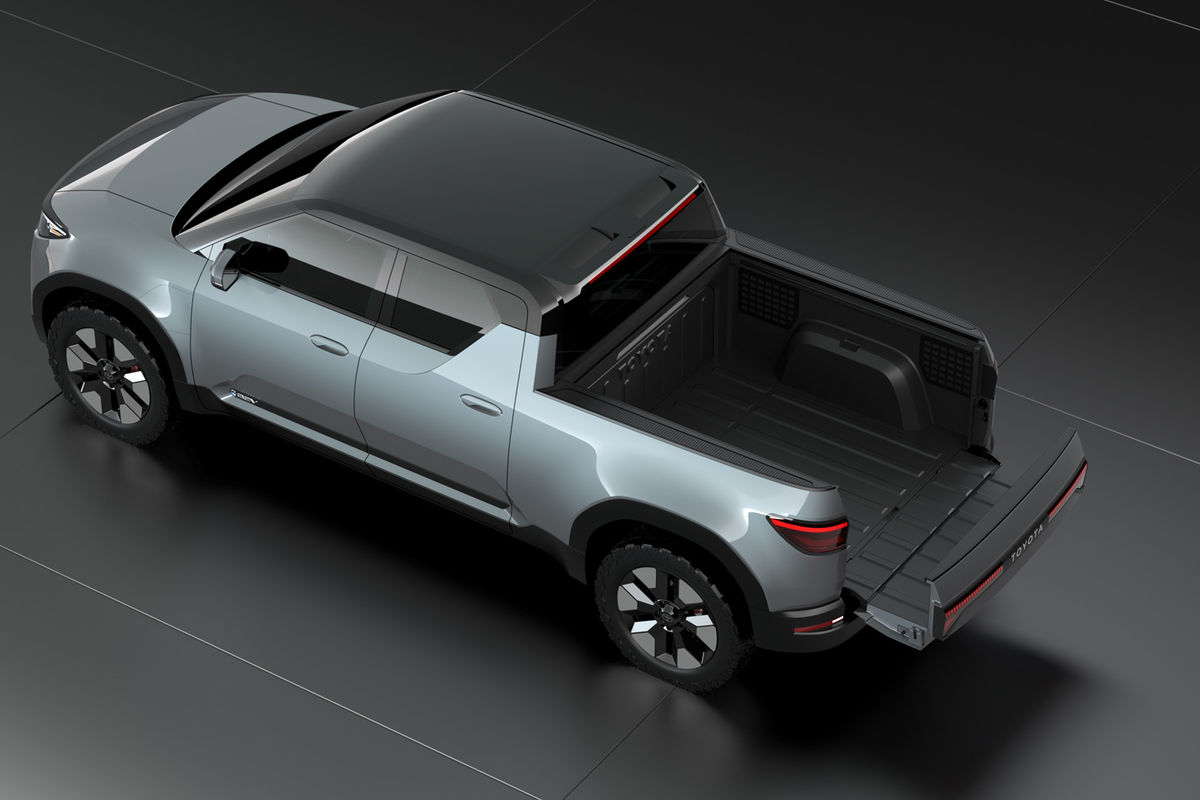
Will the Corolla badge been extended to a bakkie next?

Earlier rumours suggested Toyota would revive the Stout nameplate for this model. The latest report states the proposed bakkie’s “appearance is a work in progress”, while the production version – should the project get the green light, of course – is “not expected in market until at least 2027”.

Since the 13th-generation Corolla is expected to debut around 2025, that suggests the proposed bakkie would be not be based on the existing version but rather developed alongside the upcoming generation. There’s also the possibility such a model could use the closely related Corolla Cross – which rides on the same TNGA-C platform as the hatch and sedan but is likely due a refresh in 2026 – as a base.

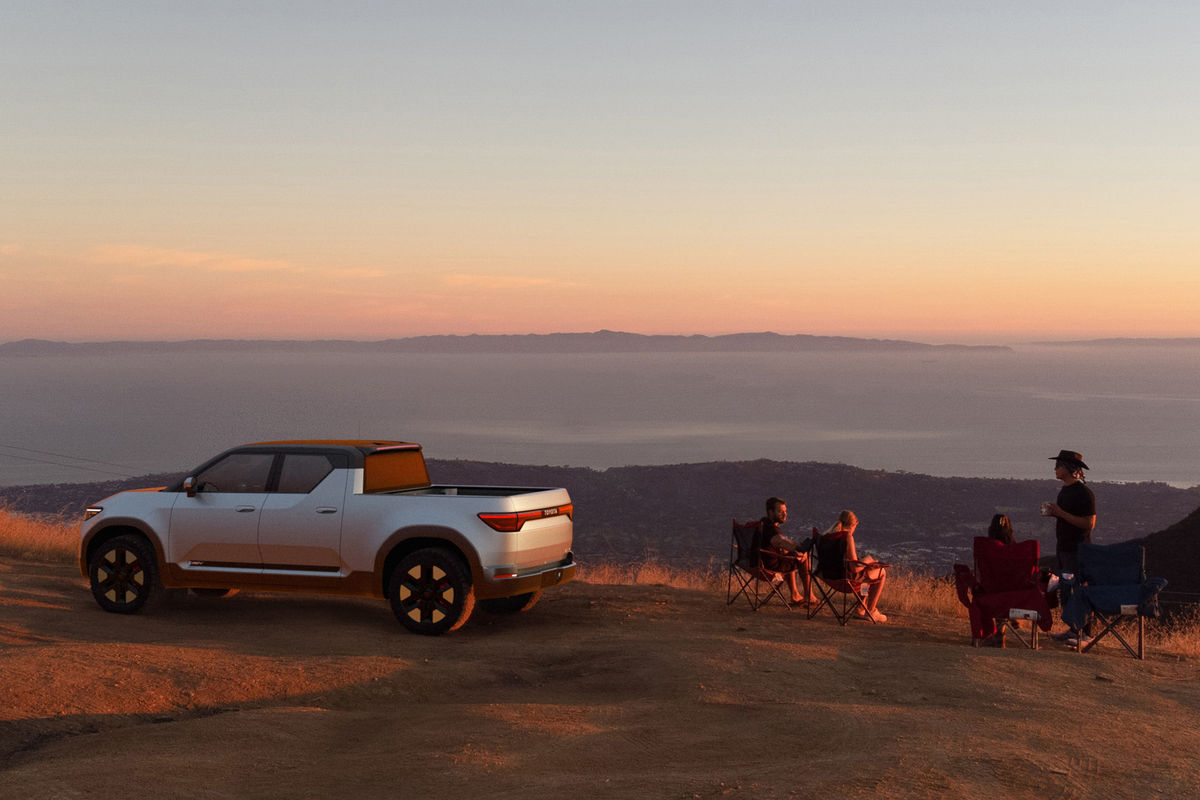
The IMV 0 concept (left) was unveiled in Thailand in December 2022.

Of course, these aren’t the first rumours of a new sub-Hilux bakkie. Earlier in 2023, as reported by IOL Motoring, Toyota SA Motors executives hinted at an upcoming model that could slot in below the popular Hilux and likely be built at the same factory in Prospecton, KwaZulu-Natal. As we’ve touched on before, however, this may well end up being a prolonged-lifecycle version of the Hilux (a “Hilux Quest”, if you will) rather than an all-new model (or indeed a unibody half-tonner).

Before that, Toyota took the wraps off a new “IMV 0 concept” single-cab bakkie in Thailand, suggesting the upcoming production version would be “designed to support economic growth and mobility for all”. From what we understand, such a model would also feature a ladder-frame rather than unibody construction.

Time will tell whether Toyota extends the 57-year-old Corolla nameplate – which is today used on a hatchback, sedan, wagon and crossover – to the bakkie body style…

Related content

Why Toyota never built a Corolla Quest bakkie

Hilux ‘Quest’? A brand-new ‘old’ Toyota bakkie…

Top-spec Toyota Hilux breaches R1-million

Hot hatch sales in South Africa for July 2023

How many units of your favourite hot hatch were sold in South Africa in July 2023? Let’s take a look at the local sales figures available for this segment…

While South Africa’s C-segment hot hatch class isn’t nearly as densely populated as in years gone by – with the likes of the Mazda3 MPS, Ford Focus ST and Opel Astra OPC having long since departed – there’s certainly still some sort of market for a family-friendly hatchback with a dash of extra oomph.

Of course, today’s high-performance hot hatches are by no means volume drivers for their respective manufacturers. In fact, in many cases, the local market receives only a limited number of units. In short, don’t expect the sales figures here to be lofty.  

With that in mind, let’s take a look at sales of C-segment hot hatches in Mzansi for July 2023, according to Naamsa figures. The Volkswagen Golf 8 GTI and R – the German firm’s local division reports a combined number – managed 125 registrations last month, the nameplate’s best performance so far this year. Interestingly, 89 of those came via the dealer channel, while 27 represented sales to government.

July was the VW Golf GTI’s (combined with the R) best month of the year thus far.

And the new Toyota GR Corolla? Well, 7 examples were registered in July 2023. As a reminder, the Japanese firm opened the local order books back in mid-May, saying this 221 kW all-paw hot hatch (which is offered exclusively with a manual gearbox) would be available “in limited numbers”. The official market launch took place late in July, with around 5 units expected to be imported every month from now.

Meanwhile, the 206 kW Hyundai i30 N ended July on 4 units, largely in line with its sales performance in previous months this year (it has yet to break into 2 figures in 2023, though local supply is – again – likely limited). As a reminder, a refreshed version of the i30 N arrived in SA early in April 2022, ditching the pre-facelift version’s 6-speed manual gearbox in favour of an 8-speed dual-clutch transmission.

Only a handful of examples of the Toyota GR Corolla will be imported every month.

Finally, just a single example of the 221 kW Renault Mégane RS 300 Trophy was registered locally last month. At the start of 2023, the French firm’s distributor unexpectedly announced the RS 300 Trophy had made a return to South Africa, though that just 55 units were up for grabs. According to figures reported to Naamsa over the past 7 months, 11 have been registered so far this year.

Of course, we should point out sales figures are not available for a few other C-segment hot hatches. Since the BMW Group and Mercedes-Benz unfortunately don’t report details sales statistics to Naamsa, we don’t know how many 128ti, M135i xDrive, Mini JCW Hatch, Mercedes-AMG A35 4Matic and Mercedes-AMG A45 S 4Matic+ units were sold, for instance.

Honda Motor SA reports a combined figure for Civic sales rather than listing a separate Type R tally.

Furthermore, Audi reports only a total figure for its A3 Sportback range, so the sales performance of the S3 and RS3 hot hatches are unknown. Similarly, Honda lists only a single figure for its Civic range (just 6 units in July), which includes the new Civic Type R. The latter launched locally in April 2023, with just 60 units said to be earmarked for our market.

What about the B-segment below? Well, we know 3 examples of the Toyota GR Yaris were sold in SA in July 2023, along with a single unit of the warm-ish hatch Abarth 695. As with some of the models above, an individual figure for the Volkswagen Polo GTI – which is lumped in with total Polo hatchback sales – is not available (it’s the same case with the Suzuki Swift Sport as the brand reports only a total Swift figure, though you might argue that model is warm rather than hot)…

Related content

VW trademark application shows revised GTI logo

10 years on: how SA’s car sales have changed since 2013

Chery trumps Kia! South Africa’s best-sellers in July 2023

Porsche 911 S/T (2023) Price & Specs

To mark the 60th anniversary of the 911, Porsche has produced the lightest model of the 992 generation yet… The 911 S/T – with the high-revving engine from the 911 GT3 RS, a manual ‘box and a lightweight clutch – is the quintessential driver’s car.

Anoraks will recognise that the 911 S/T’s nomenclature harks back to 1969, when Porsche produced a special race version of the original 911 S (internally, this vehicle was called the 911 ST). Modifications to the chassis, wheels, engine and body improved the S’ acceleration, braking, traction and cornering grip.

The 911 S/T takes up the spirit of the original 911 S (ST) and transfers it to the 992-generation Porsche 911 model. The Zuffenhausen-based firm describes its special model (of which only 1 963 units will be produced) as a “highly purist sports car dedicated to sheer driving enjoyment”, but those might be one of those few occasions that a car brand’s NOT exaggerating when describing its latest model release.

Porsche 911 S/T

That’s because this special model combines the 911 GT3 RS’ naturally aspirated 4.0-litre flat-6 engine, which produces 386 kW at 8 500 rpm and 465 Nm of torque at 6 300 rpm, with the body of the 911 GT3 with Touring Package and incorporates lightweight components specially developed for the 911 S/T.

The bonnet, roof, front wings and doors are made of lightweight carbon-fibre-reinforced plastic (CFRP). The same applies to the roll cage, rear axle anti-roll bar and shear panel (stiffening element on the rear axle). Furthermore, the Porsche 911 S/T is fitted with 20-inch (front) and 21-inch (rear) centre-locking magnesium wheels, the PCCB system, a lithium-ion starter battery and lightweight glass as standard.

Porsche 911 S/T

With reduced insulation, the omission of rear-axle steering and weight savings in the powertrain, the 911 S/T achieves an astonishingly skinny DIN kerb weight of 1 380 kg (that’s including all fluids). This makes the 60th-anniversary 911 even 40 kg lighter than a manual 911 GT3 Touring.

Also, a new lightweight clutch was developed exclusively for the 911 S/T. In conjunction with a single-mass flywheel, it reduces the weight of the rotating mass by 10.5 kg. “This noticeably improves the engine’s responsiveness,” Porsche claims, “which builds revs with (extraordinary) speed and directness.”

Porsche 911 S/T

Equipped with a 6-speed manual gearbox with a shorter gear ratio than on the 911 GT3, the Porsche 911 S/T is said to rocket from 0 to 100 kph in just 3.7 seconds and achieves a top speed of 300 kph…

However, the low kerb weight is truly the highlight of the special model because the reduction of rotating mass in the engine, wheels and brakes facilitates heightened dynamic responsiveness. The 911 S/T is said to respond to driver inputs “instantaneously” and deliver particularly agile, direct handling.

Porsche 911 S/T

The 911 S/T is the only 992-generation 911 to combine a double-wishbone front-axle design with a multi-link rear axle without rear-axle steering. The dampers and control systems were tuned accordingly, a lightweight sports exhaust system is standard and a Gurney flap is fitted to the extending rear spoiler.

Standard equipment also includes 255/35 ZR 20 (front) and 315/30 ZR 21 (rear) tyres, CFRP full bucket seats (4-way-adjustable Sports Seat Plus is available at no extra charge). The instrument cluster and the clock of the Sport Chrono package are finished in a classic green Porsche colour scheme.

The 911 S/T is offered with an optional exclusive Heritage Design Package, which includes the Shoreblue Metallic exterior- and Ceramica wheel rim colours, which are exclusively available for this special model. On the doors, a starting number from 0 to 99, as well as a decorative foil can be applied on request. What’s more, the classic-design Porsche crest from the original 911 that adorns the front, the hub caps, the steering wheel, the headrests and the car key underscores the historic roots of the 911 S/T.

The interior also features cloth seat centres in Classic Cognac with black pinstripes, which are another homage to heritage. Two-tone semi-aniline leather trim in Black/Classic Cognac leather with extensive leather surrounds, a roof lining in perforated Dinamica, and other elements from Porsche Exclusive Manufaktur round out the package. The Porsche logo and the 911 S/T model designation are in Gold.

Porsche 911 S/T

Porsche 911 S/T price in South Africa

The new model retails for R6 326 000, which includes a 5-year maintenance plan

Related content:

Porsche 911 GT3 (2022) Launch Review

Porsche 911 GTS Review

Porsche 911 Targa ‘Edition 50 Years’ (2022) Launch Review

Porsche 911 Turbo S (2020) Launch Review

Chery Tiggo 8 Pro Max (2023) Launch Review

In the space of a year, Chery has become a dominant force in the market AND it has a slew of models to come, but first, an updated Tiggo 8 Pro Max has hit the streets. We drove the updated model at its launch in KZN to see if it will continue to drive sales.

What’s new on the Tiggo 8 Pro Max

Chery Tiggo 8 Pro Max front
The facial area contains a badge that has the ability to light up.

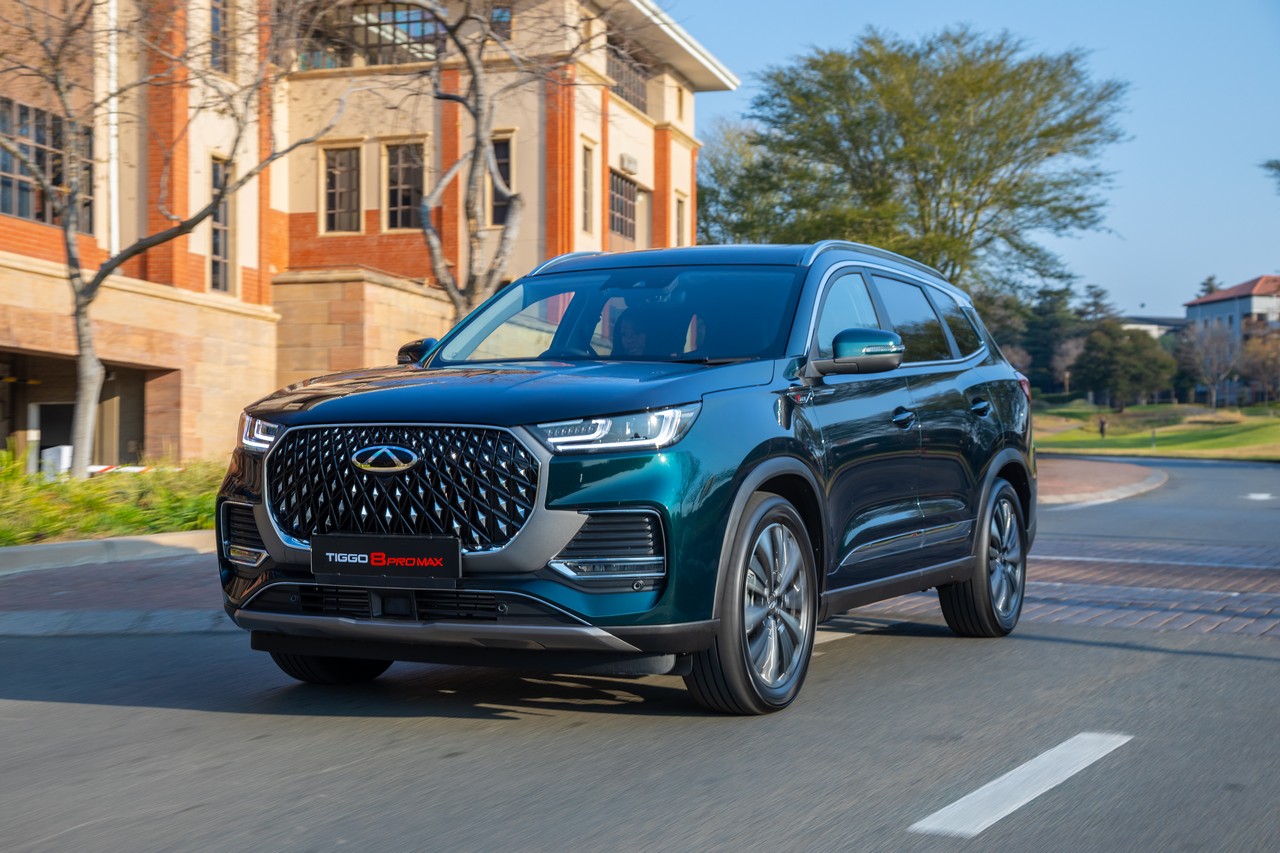
The Tiggo 8 Pro Max is the flagship of the Tiggo 8 Pro – a 7-seater SUV that’s about the same size as the recently launched Mitsubishi Outlander and Volkswagen Tiguan Allspace. The updated model ships with a slightly updated appearance, most notable by dark grey trim around the front grille and foglamps and, at the rear, Crystal Matrix LED tail lamps and a lightbar that stretches the width of the tailgate. 

As with all modern facelifts, the interior features a technology update and, in this case, it takes the form of bigger screens and updated software. Some of the cabin architecture has also been neatened up to enhance ergonomics and boost upmarket appeal.

The Tiggo 8 Pro Max, a pre-facelift version of which was launched late last year, features a new 2.0-litre turbopetrol engine, while the Tiggo 8 Pro model continues with the 1.6-litre turbopetrol engine.

See also: Chery Tiggo 8 Pro & Pro Max (2023) Price & Specs 

More powerful Tiggo 8 Pro Max

Chery Tiggo 8 Pro Max rear
The most visible update on the rear is the lightbar that stretches across its entire width.

We had the opportunity to spend a good 300 km behind the ‘wheel of the revised 2.0-litre turbopetrol unit. Getting the figures out the way, the motor delivers 187 kW and 390 Nm of torque (hence the 390T badge on the rear). That sends a message to all the naturally aspirated competitors that Chery is not here to compete on a level playing field – it wants to offer the best in every department. There might be some raised eyebrows from the premium segment when they have a look at this particular offering.

Aside from its eye-popping peak outputs, the 4-cylinder powerplant is mated with a 7-speed dual-clutch automatic transmission. The ‘box’s mapping is a little clumsy in the low gears; the Chery seemed prone to aggressively accelerate off the line and only a gentle touch of the throttle pedal elicited a chirp from the front tyres. Once on the move, the ‘box gets on with the job like any modern auto; it shifts through the gears quietly and without fuss. Kickdown shifts are timely and nicely in sync with the throttle position.

Chery Tiggo 8 Pro Max gear lever
The centre console has been redesigned with a new transmission lever.

The Tiggo 8 Pro Max offers good punch – its in-gear acceleration is more than adequate – but don’t expect to be blown away by its performance (in a way, the flagship’s peak outputs seem exaggerated). Nevertheless, for a 7-seater family SUV that only costs R669 900, it performs very impressively.

Fuel economy has been somewhat of a bugbear for Chinese brands, especially on models such as the Chery Tiggo 4 Pro and even the Haval H6. I was impressed with the returns over the 300 km of driving we did over rolling terrain – albeit most of the route encompassed freeway driving. On the uphill run, I achieved 9.2 L/100 km and on the down run back to the coast, 8.6 L/100 km. That’s certainly more acceptable and more in line with what you might get out of a German marque’s 2.0-litre turbopetrol.

Tiggo 8 Interior updated for 2023

Chery Tiggo 8 Pro Max interior
The interior of the vehicle is characterised by a pair of large 12.3-inch screens.

Chery has impressed with the level of interior tech it has introduced at the respective price points where its models are offered. Moreover, the technology’s slick, efficient and has an intuitive interface. Functions such as Bluetooth, Andriod Auto and Apple Carplay are simple to set up. For the Tiggo 8 Pro Max update, wireless Apple Carplay and Android Auto functionality has been added, while the wireless charging bay has been upgraded to deliver 50 milliamps of charge, which makes it a very fast charging bay.

The digital instrument cluster and infotainment screens measure 12.3 inches apiece, are integrated into a single curved surface and are notable for their impressive clarity and resolution. A firm prod is sometimes required to confirm a setting change on the screen, but the speed with which the system changes menus and adjusts settings appears to be very good. Obviously, the infotainment setup is brand new, so the hope is that the system will remain fast after years of use… and numerous software updates.

Speaking of updates, Chery has rolled out an update that improves the usability of safety features such as the lane-keep assist, lane recognition as well as the auto-pilot (hands-free operation). I still think the driving assistance is too sensitive to suit our road conditions and is still too firm and deliberate with its automated steering adjustments – they feel less like “suggestions” and more like “startled reactions”.

The build quality and material choices appear to be excellent on the Tiggo 8 Pro Max.

The good news is that the system can easily be deactivated with a button on the right side of the digital instrument cluster. During the launch event, I chatted with Chery’s engineers about the system’s, well, invasiveness and they assured me that more updates will be implemented – and quite soon. This should mean a quick trip to the dealer for an update and off you roll (over-the-air updates are not supported). 

As for the quality of the materials used in the Tiggo 8 Pro Max, they are genuinely excellent, and even more so when you consider the SUV’s price point. The leather feels soft and tightly wrapped, and the shut-lines are tight and line up well.

Some of the design elements such as the window buttons will look familiar to anyone who has been in a Mercedes-Benz, as will the Sony speaker covers at the front. The Sony setup is quite good though; my Chinese driving partner made sure I tested the audio at full blast in the heart of Umhlanga’s high street.

Meanwhile, the transmission lever’s design has been changed and it now feels neatly positioned in the centre of the centre console; it’s flanked by the other button adjustments and the drive-mode selector, which annoyingly shouts at you as to which mode you have engaged when you scroll through them.

Rear occupant space appears to be pretty good with the second row able to recline, as well as slide forwards and backwards on rails. The 3rd row of seats is very tight, but when we get the vehicle on test in a few weeks’ time, we shall do a full review of the SUV’s people- and luggage-carrying capability.

How does the Tiggo 8 Pro Max drive?

For now, all derivatives are front-wheel-driven, but an AWD version is said to be coming in 2024.

The Tiggo 8 Pro Max is currently only available in front-wheel-drive guise, but apparently, an all-wheel-drive version is set to be introduced to the South African new-vehicle market early next year (2024).

The solidity of the cabin and the hushed interior are highlights of the driving experience. That certainly points towards decent build quality and good sound deadening. The road roar of the tyres on mixed tarmac surfaces can be a little loud, but this may be down to the Cooper tyres fitted to the test vehicle.

Ride quality on-road is firm, but not uncomfortable in most circumstances. You may notice a bit more firmness or harsher feedback from the suspension on rougher or uneven surfaces. When we crossed a rocky gravel road, I had to drive a bit more carefully to allow some of the unwanted feedback to settle.

Overall, I don’t think most owners will fret too much about the Tiggo 8 Pro Max’s “firmish” ride quality, as in day-to-day use, it’s unlikely to prove more than a few seconds worth of discomfort.

Chery Tiggo 8 Pro Max price and after-sales

This is quite a sweetener! Chery’s local distributors offer an astounding 5-year/150 000 km warranty and 7-year/90 000 km service plan with the Tiggo 8 Pro Max. The service plan means if you do less than 12 000 km a year (1 000 km a month) your car will be covered by the service plan for 7 years.

Chery Tiggo 8 Pro 1.6T ExecutiveR609 900
Chery Tiggo 8 Pro Max 2.0T Executive R669 900

Summary

The Tiggo 8 Pro Max seems to offer great value for the price.

The MY23 Chery Tiggo 8 Pro Max certainly offers excellent value for money. It’s easy to see how this manufacturer has quickly entered the top 10 of SA’s new-vehicle sales charts, and with the continued strength of its products, other manufacturers should have alarm bells going off in their buildings. 

The Tiggo 8 Pro Max 2.0T Executive offers an impressive drivetrain that is both powerful and appears to have addressed the fuel consumption issues that have plagued its 1.6-litre turbopetrol-powered siblings. At the price, there are few competitors that can match Chery’s offering in this department.

It’s not a perfect SUV, with a few issues around some of the safety software and general ride quality, but most of these issues could be overlooked for the sheer amount of car that’s available for your money.