AI Automotive Artworks Available Now

See how we used AI tech and human interaction to create some rather cool pieces of art, which you can get your hands on now.

This appears to be the year in which AI (artificial intelligence) goes mainstream; with its new “Paint & Power” series of prints, SentiMETAL (a Cars.co.za sub-brand that’s aimed at motoring enthusiasts) vividly showcases the power of combining new technologies with a human touch.

“Diving headfirst into the world of AI art creation is a journey of perplexity and wonder, and something that I had been hugely keen to explore for our store,” Andrew Crawford, the Head of Creative at South Africa’s leading automotive platform, explains. “For the ‘Paint & Power’ series, I embarked on the journey with a combination of MidJourney and Photoshop as my trusty tools.

“During the creative process, I visualised famous car colour schemes coming to life in a veritable explosion of paint. With MidJourney’s assistance, I was able to generate unique designs that I then meticulously refined and tweaked using Photoshop,” Crawford adds.

The “Paint & Power” series features four artworks that measure 420 mm by 420 mm and retails for R150 apiece (which excludes shipping). The line-up consists of the following vehicles/colour schemes: Subaru WRX/555 Blue&Gold, BMW M3/BMW Motorsport Blue/White/Red, Porsche 911/Gulf Orange&Blue and Toyota GR Supra/Castrol Red/White/Green.

“I’m very proud of the outcome. We’re ready to embrace the world of AI and all that it can offer, but, let’s not forget that the human element is also crucial in this entire process. The artist’s creative input and decision-making remain vital in crafting pieces such as these,” he concludes.

The “Paint & Power” series of prints is available exclusively at www.sentimetal.shop

Kia Rio (2011-2017) Buyer’s Guide

Marking a turning point in Kia’s story, the 3rd-gen Kia Rio was streets ahead of its predecessor. Keen to buy one on the used market? Here’s what’s available, what you should look out for and which variant you should consider…

This Buyer’s Guide will provide you with all you need to know if you’re looking for a third-generation Kia Rio in South Africa.

The global B-segment of today is a shadow of its former self. Subcompact hatchbacks and sedans have fallen out of favour in key markets thanks to the rapid worldwide shift first to crossovers and now increasingly towards electric vehicles. Inconceivable just a few short years ago, big-name players like the Ford Fiesta – a nameplate spanning seven generations and more than 46 years – are being put out to pasture.

In South Africa, we’ve also seen the demise of once-popular models such as the Nissan Micra and Toyota Yaris (not counting the manic GR, that is). Even the 4th-gen Kia Rio is due to exit the market at the end of 2023. Though there’s clearly still a market for the locally built Volkswagen Polo, sales of this model and rivals continue to dwindle as local buyers pivot towards small crossovers (and requirements in Europe change). It’s all very doom and gloom.

But back in 2011, when the 3rd-generation Kia Rio – which was known as the Pride in its home country and the K2 in China – hit the market, the B-segment was one of the most hotly contested of all. And such was the all-round competence of the Korean firm’s 3rd attempt at the Rio that a number of its more established rivals were caught well and truly off guard.

2011 Kia Rio
The 3rd-generation Rio was a massive step up from its predecessor.

Yes, the Kia Rio Mk3 signalled a turning point for the Korean firm, not only over in Europe but also here in South Africa. It was sharply styled (thanks to the design influence of a certain Peter Schreyer), but perhaps more importantly a far cry better resolved than its frankly underwhelming predecessor in virtually every way. As a result, it soon found itself duking it out with the segment’s best.

At the time of its launch, the market was experiencing something of a buying-down trend as motorists grappled to beat rising fuel costs (sound familiar?). The Rio was shrewdly positioned to take advantage of this, offering added space and the sort of features buyers would expect from a car in the segment above. When all was said and done, the UB-generation Rio enjoyed a strong run in South Africa, while also serving to introduce many new customers to the Kia brand and ultimately help to take it truly mainstream.

Kia Rio model line-up in South Africa

Kia Rio Sedan
The sedan body style launched locally in the 2nd quarter of 2012.

The 3rd-gen Rio was revealed – in 5-door hatchback form – at the Geneva International Motor Show in March 2011, with the first units rolling off the Sohari assembly line in South Korea shortly thereafter. By September of that year, it was already on display in South Africa at the 2011 Johannesburg International Motor Show.

The 5-door hatchback officially launched locally in November 2011, while the 4-door sedan version followed in April 2012. Each body style was available with a choice of 2 transversely mounted, naturally aspirated, 4-cylinder petrol engines driving the front wheels via a 5- or 6-speed manual gearbox or a 4-speed automatic transmission. All models shipped standard with a 5-year/100 000 km warranty, which was considered quite lengthy cover at the time. At launch in South Africa, the following powertrain variants were available (note the 1.4-litre models were also offered in flagship Tec trim, thus taking each of the 2 body style ranges to 5 variants):

  • 1.2 (65 kW/120 Nm) 5-speed manual
  • 1.4 (79 kW/135 Nm) 6-speed manual
  • 1.4 (79 kW/135 Nm) 4-speed auto

When the 3rd-gen Rio first hit the market in South Africa, Kia admitted the outgoing model had kept a “relatively low profile” in the segment, but was confident the new version would appeal to a far wider audience. That’s exactly what happened, with the Rio quickly graduating to the position of Kia Motor SA’s best-selling vehicle, a role it was likewise playing on the global stage at the time.

Kia Rio facelift
Note the new bumper treatment of the facelifted Rio, introduced to SA in early 2015.

The 10-strong line-up continued virtually unchanged until February 2015, when the facelifted version – unveiled in Paris in September of the previous year – touched down on local soil. While the engines carried over unaltered, styling tweaks included an updated version of the so-called tiger-nose grille, along with refreshed bumpers (fore and aft) and new alloy wheel designs. Inside, the mid-cycle update brought a smattering of chrome-effect accents and a redesigned centre-stack around the audio system, complete with piano black trim.

In January 2016, the local Rio range expanded to 12 derivatives with the arrival of the 3-door body style, which was offered exclusively with the larger engine (and either gearbox) and in flagship Tec specification. The newcomer was further set apart by the fact it boasted a sunroof as standard; at the time, this was a R7 000 option for the Tec versions of the 5-door hatch and saloon.

Kia Rio 3-Door
The 3-door version arrived in South Africa late in the 3rd-gen Rio’s life.

Though the 4th-gen Rio was revealed in 2016, it made landfall in South Africa only midway through 2017, effectively closing the 3rd-gen model’s highly successful local chapter. The sedan, though, technically soldiered on to the end of 2018.

Kia Rio: Product strengths

Improved practicality: The UB-generation Rio hatchback was 20 mm longer, 25 mm wider and 15 mm lower than the model it replaced, boasting an additional 70 mm between its axles. It’s the latter than resulted in a marked increase in both rear passenger space and cargo capacity. The boot could handle a claimed 288 litres (expandable to 923 litres, with the rear bench folded down) while also housing a full-size spare wheel.

2011 Kia Rio cabin
The perceived build quality and overall practicality represented big steps forward for the UB-gen Rio.

The Rio sedan, meanwhile, boasted a 389-litre luggage compartment (representing a 14.4% improvement over that of its predecessor), while the rear seat’s backrest could also fold down to create an almost flat-floored area. Both body styles furthermore featured a wealth of cabin storage areas, including a 1.5-litre cubbyhole, a 3.0-litre centre console and door pockets capable of housing a 1.5-litre bottle up front and a 0.5-litre item at the rear. The perceived build quality was also a noticeable step forward, with the flagship version’s cabin even bordering on premium.

Generous standard specification: While the 1.2-litre derivatives made do with basic items like 15-inch steel wheels (with hubcaps), even these entry-level models were generously equipped for the money, shipping standard with features such as a height-adjustable driver’s seat, tilt-and-telescopic adjustment for the steering column, electrically adjustable side mirrors, electric windows all round, air conditioning, a Bluetooth hands-free system and a 4-speaker sound system. The main safety features, meanwhile, were dual front airbags and ABS with EBD.

2011 Kia Rio climate control
The flagship Tec trim level featured this classy climate-control arrangement.

Upgrading to the 1.4-litre version added 15-inch alloys (or 17-inch items as an option), front foglamps, power-folding side mirrors, automatic headlights, an uprated instrument cluster, a centre console armrest, a pair of audio tweeters and leather trim for the steering wheel and gearshift knob. Finally, the 1.4 TEC flagship furthermore scored 17-inch alloys, projection-type headlamps, LED positioning lights, LED rear lamps, rain-sensing wipers, rear parking sensors, climate control, a cooling function for the cubbyhole, leather upholstery for the seats, faux-leather interior door trim panels, alloy pedals, and side and curtain airbags (for a total of 6). Note, however, no models in the Rio range featured stability control.

Proven engines: While rivals such as the facelifted Volkswagen Polo Mk5 made the switch to downsized turbocharged engines, Kia opted to stick with proven – and fairly straightforward – naturally aspirated mills in the form of the 1.2-litre (Kappa G4LA) and the 1.4-litre (Gamma G4FA) units. The latter proved its mettle in the previous-generation Rio and an example that’s been properly maintained should provide many years of reliable service. Both powerplants used so-called lifetime timing chains rather than belts.

Kia Rio: Product weaknesses

2011 Kia Rio
The atmospheric powerplants in the Rio range offered little in the way of low-down pulling power.

Lack of low-down grunt: Although the Rio scores points for potential reliability thanks to its relatively uncomplicated atmospheric engines, the downside is a distinct lack of low-down torque compared with turbocharged alternatives. Indeed, the 1.2-litre mill’s peak twisting force of 120 Nm arrives only at 4 000 rpm, while the 1.4-litre unit makes its maximum figure of 135 Nm at an even loftier 4 200 rpm. Naturally, this necessitates frequent gear changes. While neither engine is averse to being revved, working them in this way will, of course, have a negative impact on fuel economy.

Dashboard rattles: Fairly early in the UB-generation Rio’s life, Kia issued a technical bulletin in some markets over a “squeaking, rubbing or creaking noise” coming from the dashboard (and often more prevalent in cold temperatures). Unfortunately, the fix required the complete removal of the facia and the fitment of insulating material to four offending contact tabs. Though we know of no official action being taken in South Africa, our country’s models were clearly also impacted as we’ve heard of a number of complaints of such from local Rio owners. Make sure to listen out for any odd noises coming from the dashboard during your test drive.

Kia Rio dashboard
The updated Rio didn’t seem to suffer from the same dashboard rattles as early versions of the pre-facelift model.

Fairly bland to drive: Though dynamic ability is likely nowhere near the top of a potential Rio buyer’s list of priorities, it’s worth noting the Korean hatchback wasn’t the most thrilling to drive (and was far off the pace of more dynamically gifted rivals such as the Ford Fiesta). In addition, as was the case with many Korean products of the era, the electric power steering felt excessively artificial and tended to require constant small corrections around centre.

Still, the Rio made the grade in other areas likely more pertinent to the average buyer, including rolling refinement, ease of use and overall ride comfort (on 15-inch wheels, that is). That said, we should again point out the SA-spec Rio did without stability control, a safety feature offered by many rivals of the era.

What to pay for a Kia Rio?

Kia Rio badge
Used UB-generation Rio stock in South Africa is dominated by the 5-door hatchback body style.

Take note all 3rd-generation Rio models offered in South Africa came with a 5-year/150 000 km warranty and a 4-year/60 000 km service plan. Scrutinise the service history of any potential buy, with a particular emphasis on the recorded maintenance history from 4 years after registration.

At the time of writing, 80% of the used UB-generation Rio units listed on Cars.co.za were hatchbacks (though only 2% featured the 3-door body style), confirming the saloon version wasn’t nearly as popular as its 5-door sibling. The 1.4-litre engine dominated (accounting for 79% of all listings), while only 20% were equipped with the 4-speed automatic transmission.

Kia Rio 3-Door
There aren’t many Rio 3-Door models on the used market.

We found a pair of 1.4-litre hatchbacks with more than 200 000 km on the clock, as well as a 1.2-litre model showing in excess of 300 000 km. White was the most popular exterior paint colour, followed by silver and red.

  • Below R100 000: Options with 5-figure price tags were limited, as only 6 percent of all listings fell below the R100 000 mark. Predictably, a number of these units featured high mileage. Be particularly wary of too-good-to-be-true mileage claims in this ballpark.
  • From R100 000 to R150 000: A little more than half of all listings fell between these pricing bookends, suggesting this is where most buyers will be shopping. There were plenty of examples with well under 100 000 km on the odometer (always make sure typical wear points match the mileage claims).
  • From R150 000 to R200 000: We found 38% of models were listed for between R150 000 and R200 000, many of which were later model-year 1.4 and 1.4 TEC derivatives. Mileage varied from just 26 000 km through to 167 000 km.
  • Above R200 000: The handful of units listed above R200 000 were all facelifted models, many featuring the flagship TEC specification and an automatic transmission (with the highest asking price coming in at R230 000). Interestingly, we found only one saloon in this section.

Pick of the range?

Kia Rio
Note the large alloys on the Tec variant and the smaller wheels (with higher-profile tyres) on the cooking version. 

As illustrated by its popularity, the 5-door hatchback is the body style most buyers prefer, so we’ll concentrate on that here. In terms of engines, we’d recommend the larger-capacity 1.4-litre unit over the somewhat more breathless 1.2-litre mill (which, incidentally, also did duty in the Picanto of that era), while likewise vouching for the slick-shifting 6-speed manual gearbox over the relatively lethargic 4-speed torque-converter automatic transmission. The larger-engined models furthermore come with the full complement of airbags.

Owing to its attractive list of standard features – with highlights in the form of rain-sensing wipers, rear parking sensors, full climate control, leather upholstery and extra airbags – it’d certainly be tempting to spring for the flagship 1.4 TEC derivative. However, it’s important to consider how much value you place on ride comfort, as this variant’s 17-inch alloys and low-profile tyres conspired to deliver a noticeably harsher ride. Should that be an issue for you, opt for the standard 1.4 model instead.

Since the differences between the pre-facelift model and the updated version were relatively minor (effectively limited to cosmetic treatments inside and out), choose whichever fits your budget best.

Verdict

2011 Kia Rio front end
The 3rd-gen Rio’s styling has aged particularly well.

Which hatchback alternatives should you consider in this segment? Well, the most obvious rival comes from within the same family in the form of the closely related PB-generation Hyundai i20. The Rio’s cousin used the same 1.4-litre unit (and gained the 1.2-litre motor later in life) and was initially available with a larger 1.6-litre petrol engine, too. There was even the option of a 1.4-litre turbodiesel mill.

Of course, other competitors include B-segment heavy hitters such as the fifth-generation Volkswagen Polo, sixth-gen Ford Fiesta, third-gen Toyota Yaris, Renault Clio IV, Opel Corsa (in both fourth- and fifth-generation form) and second-gen Mazda2.

If you’re shopping towards the lower end of the UB-series Rio hatchback range, also look at the original (Fiesta-based) Figo and the first Volkswagen Polo Vivo. Specific rivals for the Rio Sedan, meanwhile, include the Chevrolet Sonic Sedan, Hyundai Accent and Volkswagen Polo Sedan.

2012 Kia Rio Sedan profile
This iteration of the Rio Sedan is one of the better-proportioned B-segment saloons of the era.

The 3rd-generation Rio represented a coming of age for the nameplate. Though the engines weren’t the punchiest – and the range-wide lack of stability control unfortunate – the Rio nevertheless featured solid perceived build quality plus an attractive design … which, we might add, has aged quite well.

While sales in today’s B-segment have dwindled compared to years gone by, there’s certainly still a market for a generally well-equipped, keenly priced used hatchback (and, to a lesser extent, sedan). And that’s exactly what this iteration of the Rio still offers.

Looking for a Kia Rio to buy?

Find one on Cars.co.za here

Looking to sell your car? You can sell it to our dealer network here

Frequently Asked Questions

Is the Kia Rio still sold new in South Africa?

No, the Kia Rio was discontinued in South Africa in the first quarter of 2024. The 4th-generation model’s production did not include a right-hand-drive version for the South African market. It is now only available as a used vehicle.

What engines were available in the Kia Rio in South Africa?

The Kia Rio in South Africa was sold with two naturally aspirated petrol engine options: a 1.2-litre (62 kW, 120 Nm) and a 1.4-litre (73 kW, 135 Nm).

Is the Kia Rio a good used car to buy in South Africa?

The Kia Rio has a reputation for being a reliable and economical choice, making it a popular option on the used car market. Many late-model examples may still have the balance of a 5-year/unlimited-kilometre warranty, which provides extra peace of mind for buyers.

What are the main alternatives to the Kia Rio?

Direct competitors and similar alternatives to the Kia Rio in South Africa include the Volkswagen Polo, Hyundai i20, and Ford Fiesta.

Related Content

Buyer’s Guide

Kia Rio (2017-2024) Buyer’s Guide

Used Kia Rio (2017-2023) Buyer’s Guide (Video) 

Kia Rio (2011-2017) Buyer’s Guide

Reviews
Kia Rio 1.4 Tec )2017) Review

Kia Rio 1.4 Tec (2015) Review

Toyota Hints at ‘Widebody’ Hilux for South Africa

Toyota South Africa Motors has hinted a widebody version of its strong-selling Hilux is on the horizon, though it’s keeping its cards very close to its chest for now…

Disappointed the widebody version of the Toyota Hilux sold in Australia is not currently available in South Africa? Well, the Japanese firm’s local division has dropped a sizeable hint this could change.

When asked about the possibility of the more aggressively styled (Thailand-built) Hilux GR-Sport recently revealed Down Under also being offered in South Africa (and perhaps going into production at the automaker’s Prospecton facility in KwaZulu-Natal), a Toyota SA Motors spokesperson suggested to Cars.co.za such a model could indeed be on the horizon.

“The widebody variant, shown in the Australian market, is being reserved for a future product action, which will be communicated [at a suitable time],” the spokesperson said, after pointing out Australia employs “a unique model and specification matrix”.

Of course, when exactly such a “product action” will take place remains to be seen, but with Ford Motor Company of Southern Africa having now launched its new Ranger Raptor, Toyota SA Motors will surely be keen to upgrade its flagship derivative sooner rather than later. In addition, it’s worth noting the Toyota SA Motors official confirmed Hilux Xtra Cab Legend models will “receive a specification adjustment” at some point in 2023, with the rest of the Hilux range continuing “largely unchanged”.

Australia’s latest Rogue flagship was the first widebody version of the 8th-gen Hilux.

So, what do we know about the widebody Hilux? Well, our first glimpse of this upgraded version of the popular bakkie came in the form of the latest Rogue derivative, which was unwrapped in Australia in September 2022. It features what Toyota describes as “significant mechanical upgrades that improve both on- and off-road performance”.

Indeed, the Hilux Rogue for that market boasts an increase in its front and rear tracks, while the ride height has been hiked by around 20 mm (improving ground clearance to about 265 mm). The front suspension arm and front stabiliser bar have both been lengthened, while the front damper angle has also been adjusted. The rear axle has likewise been extended, with the rear dampers moved out towards the wheels. The Hilux Rogue furthermore gains a rear stabiliser bar, while the brakes have been upgraded to ventilated discs at the rear (replacing the drums that previously did duty on that axle).

In January 2023, the covers came off the Aussie-spec Hilux GR-Sport (with a version for Argentina following soon thereafter), with a front track extended by 140 mm to 1 675 mm and a rear track by 155 mm to 1 705 mm. Featuring chunky over-fenders, the flagship Hilux’s overall width is pushed to a whopping 2 020 mm.

The Aussie-spec Hilux GR-Sport also features the widebody configuration.

This model also scores redesigned wishbones and a reinforced rear axle to “cater for the most demanding driving conditions”. Other suspension tweaks include dedicated monotube shock absorbers (with higher damping force and heat-dissipation capacity), stiffer coil springs and an “optimal” front-rear balance.

The widebody version of the Hilux GR-Sport features the same engine tune – taking the 2.8-litre, 4-cylinder turbodiesel unit’s peak outputs from the standard 150 kW and 500 Nm to 165 kW and 550 Nm – as the standard-body GR-Sport derivative offered in South Africa since September 2022, but in addition to the considerably wider tracks it gains a far more aggressively styled front end (and better approach angle), complete with a skid plate.

The grille differs from that of the SA-spec version, as does the design and hue of the 17-inch alloy wheels, which are wrapped in all-terrain tyres. The black wheels furthermore frame red brake callipers (while the rear drums are replaced with discs, as on the Rogue) and the load bay features an embossed “GR” logo. Round back, you’ll likely also notice this model’s red recovery points.

For now, that’s all we know about the widebody Hilux. Still, we’ll keep our ears to the ground and will keep you informed about any impending updates to the Hilux, which was again South Africa’s best-selling vehicle in 2022.

Related content

Toyota Hilux GR-Sport: What It’s Like to Live With

Ford Ranger Raptor (2023) Price & Specs

Toyota SA Rolls Out Free Anti-Theft Updates

Big Petrol Price Increase in South Africa for March 2023? 

Unaudited mid-month data released by the Central Energy Fund (CEF) suggests that a significant petrol price increase is looming for March 2023. 

South African motorists will likely have to dig deeper into their pockets as a significant petrol price increase is in the forecast for March 2023. 

Unaudited mid-month fuel price data is suggesting substantial increases in the petrol price with the price of 95 ULP currently pegged for a R1.18 p/litre increase while the price of 93 ULP/LRP could increase by R1.24 p/litre. 

Diesel price increases are also in the forecast with 0.05% Sulphur diesel showing an expected increase of 36 c/litre and 0.005% Sulphur diesel is expected to increase by 37 c/litre. 

Increases in fuel prices won’t be welcomed as South Africans are already enduring excessive Eskom load shedding, which has a severe negative impact on the economy. More than this, higher interest rates and rapidly rising inflation is escalating the cost of living and consumers are increasingly overburdened.

During the period 27 January 2033 to February 2023, the Rand has steadily weakened against the US Dollar which is a main driver behind the forthcoming increase. The basket price of international petroleum products fell during the same period but with 2 weeks left in the month of February, exact adjustments are expected to change, but hopefully for the better! 

We will keep you updated as this story develops.

Fuel Prices in South Africa 

Fuel Type Feb 23 InlandFeb 23 CoastMarch 23 Forecast (Inland)March 23 Forecast (Coast) 
Petrol Unleaded 93R21.38R20.73R22.62R21.97
Petrol Unleaded 95R21.68R21.03R22.86R22.21
Diesel 0.05% (wholesale)R21.32R20.67R21.68R21.03
Diesel 0.005% (wholesale)R21.42R20.78R21.79R21.15
Fuel price data courtesy of the department of mineral resources and energy

Related Content 

Most Fuel Efficient Budget Cars in SA

10 Fuel Efficient Used Compact SUVs under R300k

10 Fuel Efficient Used Cars Under R200k in SA

10 Fuel Efficient Used Family SUVs Under R400k 

5 Fuel Efficient Used Double Cab Bakkies Under R500k

Is it time for South Africa to Switch to EVs? 

5 Ways to Beat the Fuel Price Hike

GWM Ora Sport (2023) International Launch Review

The GWM Ora Sport is under consideration for South Africa and could arrive here in 2024. We got a preview of the all-electric compact sports sedan – ostensibly an EV alternative to the BMW 2 Series Gran Coupe and Mercedes-Benz CLA – in Australia.

While the main reason for our recent trip to Melbourne, Victoria was to get a first-hand experience of the Tank 300 luxury off-roader and GWM Ora battery-electric compact hatchback (both of which will be launched in our market during the course of 2023), we also got a small taste of what you see here…

Front three-quarter view of the GWM Ora Sport.
Even though it’s a “shrunken Porsche Taycan” in spirit, the GWM Ora Sport has more of a “baby Panamera” look.

The GWM Ora Sport is a quirkily styled compact “4-door coupe” (as other cars of its shape have been described) or a “fastback” (if you are of an older vintage). In its home market, it’s called the Lightning Cat, but indications are that the “Cat” naming system will be dropped for South Africa and Australia.

By now you’ve probably read our international launch review of the GWM Ora, which looks set to snatch the title of “SA’s cheapest new electric car” from the Mini Cooper SE when it reaches local shores later this year. The Ora Sport, which is aimed at buyers who want a sportier small electric car, ups the ante.

GWM Ora Sport has a four-door configuration, but a coupe-like profile.
The GWM Ora Sport offers a greater range than its 5-door sibling – and it’s a much more stylish prospect.

The GWM Ora Sport’s styling is controversial and, with eccentric colour choices such as Jade White, Canyon Grey, Amethyst Purple and Diamond Pink (shown here), the model will most certainly turn heads. Does the variant’s exterior execution hit the mark? Well, styling is subjective (so there’s no right or wrong answer), but there’s no doubt that it’s a distinctive design – it looks intriguing from almost every angle.

Some have suggested it takes cues, such as the ovoid headlights and the tapered posterior, from the Porsche 911 and Panamera. Inside, the tri-tubular digital instrument cluster is also very Porsche-esque.

Rear three-quarter view of the GWM Ora Sport.
Despite its appearance, the GWM Ora Sport doesn’t have a tailgate – it sports a boot lid instead.

Performance and Range

The new GWM Ora Sport is longer and more practical than its hatchback sibling and is available in either single- or dual-motor configuration. In some countries, the single-motor setup is said to produce peak outputs of 150 kW and 340 Nm, with an impressive claimed range of 555 km from a 63-kWh battery. We’ll bet that the sports sedan uses its sleeker profile to eke out every extra bit of range that it can.

Frontal view of the GWM Ora Sport.
The front end of the all-electric GWM Ora Sport requires the minimum in the way of cooling ducts.

The dual-motor version, in turn, features an 85-kWh battery, has 300 kW/680 Nm on tap, and is said to be capable of travelling up to 705 km on a single charge. Take that, range anxiety! Because it has “Sport” in its name, you can expect lively performance – the claimed 0-100 kph sprint time is just 4.3 seconds.

What is the GWM Ora Sport’s interior like?

We had an opportunity to inspect and evaluate the cabin of a GWM Ora Sport before we took the car for a quick drive on the Anglesea Automotive Research Centre’s (AARC) test road. The example that we drove was a left-hand-drive unit with Mandarin script in its digital instrumentation and on its boot lid.

The expansive infotainment touchscreen of the GWM Ora Sport.
The large infotainment touchscreen dominates the GWM Ora Sport’s fascia.

The cabin is an ultra-modern interpretation of what a compact sports sedan’s interior should look like. First impressions are positive; much of the switchgear has a metallic finish and the graphics of the digital instrument cluster and infotainment screen are as crisp as on the latest smartphones – if not better.

Contoured sports seats of the GWM Ora Sport. Also pictured: floating centre console with metallic knobs.
Contoured front seats suggest good long-haul comfort. Note the floating centre console design.

The test unit’s cabin was finished in white, with what we think was leather (or, if not, upmarket imitation hide). It feels like a plush, premium interior space, with admirable build quality for a vehicle of its size. The packaging is well-considered: many onboard controls are mounted on a floating centre console and underneath that sits a big storage space, auxiliary power outlet, USB ports and a wireless charging pad.

The tri-tubular design of the GWM Ora Sport's digital instrument cluster.
The digital instrument cluster’s tri-tubular design would not look out of place on an all-electric Porsche!

What’s the Ora Sport like to drive?

The unit we drove had a single-motor powertrain (to reiterate, with 150 kW/340 Nm and a 63-kWh battery). Interestingly, both the Ora and Ora Sport lack a start button. Simply unlock the car, get seated behind its multifunction steering wheel, put on your seatbelt and the car will be ready to set off right away. The only other car (that we can think of) that has this feature is the Volvo XC40 P6 and P8.

This model may be named the Ora Sport, but it wasn’t quite as exhilarating to drive as we hoped. We’re accustomed to performance-oriented battery-electric vehicles that dish up a wad of instant torque when you plant the accelerator pedal, but in the case of this sports sedan, that characteristic appears to have been toned down in favour of silky-smooth power delivery. Less “sport” and more “grand tourer”, then.

The test unit’s ride quality seemed to strike a good balance between comfort and sportiness and its steering setup was fairly quick and direct, but seeing as the AARC’s test track had smooth asphalt and offered little opportunity to test the GWM Ora Sport’s dynamic abilities, don’t read too much into that.

GWM Ora Sport's pop-up boot lid spoiler.
The GWM Ora Sport features pop-up door handles, as well as an automatically deploying rear spoiler.

What’s more, there is no shortage of details on the GWM Ora Sport; some of which are luxurious and tasteful, while others are, arguably, a bit gimmicky…

Frameless doors, a panoramic roof and an automatically deploying rear spoiler are grand and, when you unlock the car, you get an audio greeting and an LED-headlamp light show. But then, the car also pipes hilarious “engine noise” into the cabin when it delivers maximum acceleration: you can hear (what could only be described as) the synthesised “roar of a throaty V6” punctuated by “dual-clutch gear changes”.

Summary

Our stint in the GWM Ora Sport may have been brief (plus we drove it on a test track, not a public road), but it offered us a glimpse of what’s to come, should the model make its way to our market in 2024. As we said in our launch review of this car’s 5-door sibling, as long as battery-electric vehicles (BEVs) are subject to higher import duties in South Africa, affordability will remain a problem, especially at the low end of the market (with regard to small cars). Also, the rate of market uptake of the GWM Ora hatchback (which is due here later this year) will be a key indicator of the GWM Ora Sport’s prospects in Mzansi.

MORE: GWM will also be launching its offroad Tank brand in SA. Here’s the Tank 300!

GWM Ora Sport driving on an oval test track in Australia.
The prospect of the GWM Ora Sport’s local introduction depends on several factors.

We hope that good sense will prevail and that our Government will start to offer concessions (or, in an ideal world, genuine incentives) to facilitate the production of BEVs on home soil, as well as our new-vehicle market’s transition to electrified models (which will have to happen sooner or later).

If that happens, GWM (with an immense portfolio of brands such as Haval, Tank, Ora and more) will be well-positioned to take advantage. Last year, the Chinese giant announced that it would launch more than 50 “new-energy vehicles” (NEVs) globally by 2025. Given its local subsidiary Haval Motors SA’s rapid expansion in our market, it’s fair to assume that many of those models may be heading our way.

Mercedes-Benz eSprinter: Electric Van Coming to SA in 2024

The updated Mercedes-Benz eSprinter has been confirmed for South Africa. Here’s what to expect from this fully electric van when it touches down in 2024…

Mercedes-Benz Vans South Africa has confirmed the freshly updated eSprinter electric van is scheduled to hit the local market at some point in 2024.

The news comes after the German firm’s local division last year revealed it was studying the feasibility of marketing van-based electric vehicles in South Africa.

“As we embark on a new era of sustainable mobility, we are proud to announce that the eSprinter will arrive in South Africa by 2024. This vehicle will offer a game-changing solution for businesses and individuals looking for a cost-effective, environmentally friendly mode of transportation. This marks a significant milestone in our commitment to creating a more sustainable future for all,” said Nadia Trimmel, President of Mercedes-Benz Vans SA.

The updated eSprinter – which will interestingly be offered with the MBUX system familiar from the passenger-vehicle range – is due to launch in panel-van form in North America in the 2nd half of 2023, before hitting Europe by the end of the year and South Africa by the following year. A cab-chassis variant and other battery variants will “gradually” follow, though these have yet to be announced for South Africa. The vehicle will be produced at the company’s Charleston, Düsseldorf and Ludwigsfelde facilities.

It’s not yet clear whether the chassis-cab version of the eSprinter will be offered locally.

A permanent magnet synchronous electric motor is positioned on the rear axle and weighs “only around 130 kg”, according to Mercedes-Benz Vans. It is expected be available in 2 power outputs: 100 kW or 150 kW, with peak torque of “up to” 400 Nm.

The battery-powered, high-roof panel van can be equipped with what Mercedes-Benz Vans describes as “the largest battery available”, which has a usable capacity of 113 kWh. Based on a simulation using the WLTP cycle, the company says the (provisional) single-change range will be “up to 400 km”, a figure that increases to 500 km when using the WLTP’s city cycle.

Depending on the customer’s “individual range and payload requirements”, a smaller battery pack with a usable capacity of either 56 kW or 81 kW can also be specified. The vehicle’s on-board charger has a maximum output of 11 kW, with the eSprinter able to accept up to 115 kW at fast-charging stations.

Initially, Mercedes-Benz Vans said a new-generation eSprinter would be revealed in 2023, though now it seems the company has pushed this back to a later date, instead handing the electric van a considerable update.

As a reminder, the Mercedes-Benz passenger-vehicle brand has already introduced a raft of all-electric models (including EQAEQBEQC and EQS sedan) to South Africa, with yet more (such as the EQE sedanEQE SUV and EQS SUV) coming…

Related content

Mercedes-Benz Says First Electric Van ‘On Track’ for SA

Mercedes-Benz SA Confirms Electric Vans are Coming

Mercedes-Benz Sprinter AWD Motorhome (2022) Specs & Price

Ford Ranger Raptor (2023) Price & Specs

Wondering just how much the new Ford Ranger Raptor will cost in South Africa? Well, we have pricing and specifications for the Blue Oval brand’s 292 kW double-cab bakkie!

The flagship Ford Ranger Raptor has gone on sale, bringing a potent twin-turbo 3.0-litre V6 petrol engine to the party. With macho looks, a high-output engine and that impressive off-road capability, expect demand to outstrip supply.

As a reminder, the outgoing Raptor is currently priced at R951 900, though that model employs a 2.0-litre twin-turbodiesel engine worth 157 kW and 500 Nm.

Ford Ranger Raptor V6

The new Raptor, meanwhile, uses a 3.0-litre twin-turbo petrol V6, which drives all four wheels through a 10-speed automatic transmission. Peak outputs for the new EcoBoost motor stand at a whopping 292 kW and 583 Nm.

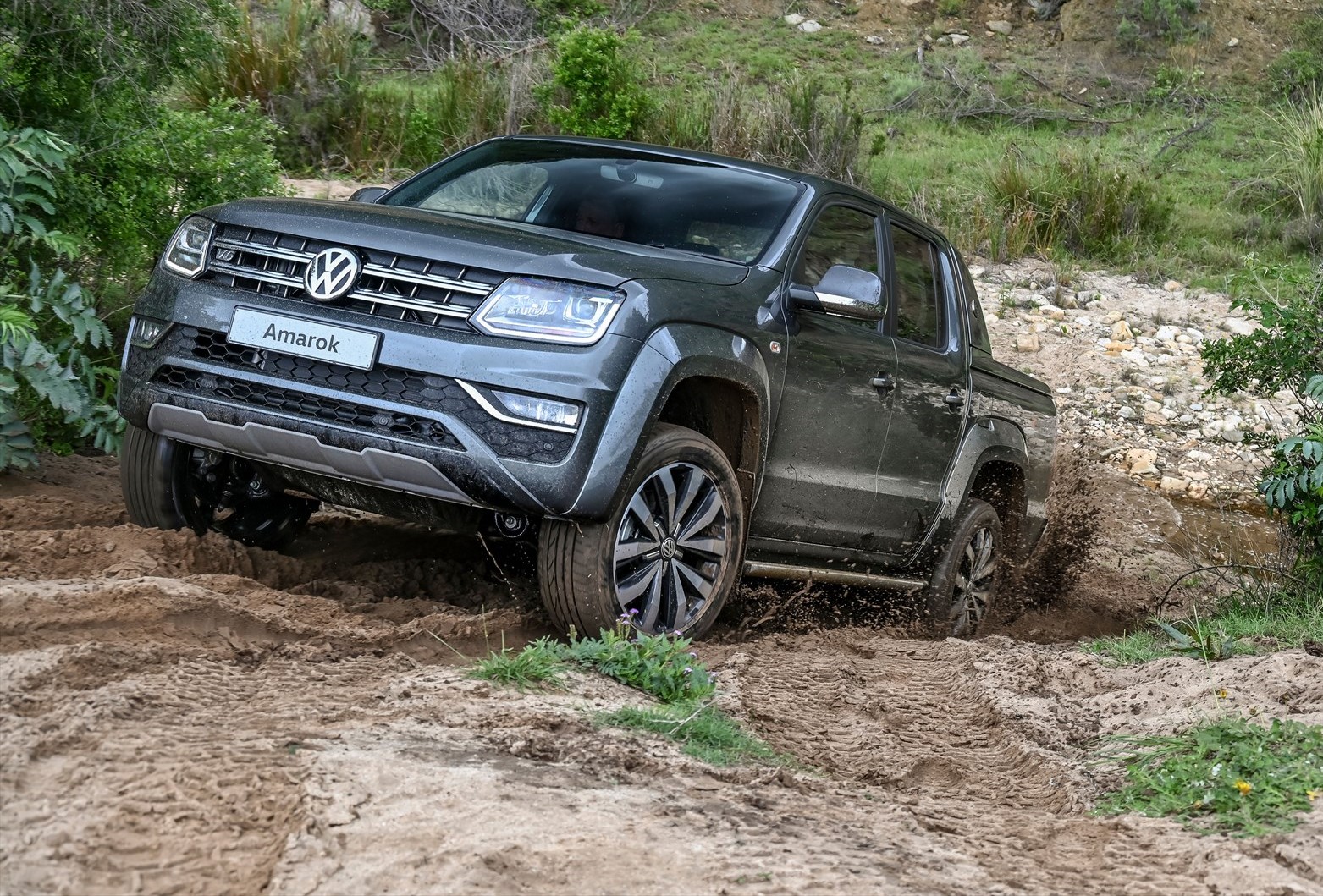
So, how much does it cost? Well, pricing kicks off at R1 094 900, though note this does not include a service plan. For the record, that makes the new Ranger Raptor the 3rd most expensive bakkie on the local market at launch, behind the Jeep Gladiator (R1 329 900) and the outgoing Volkswagen Amarok 3.0 V6 TDI Extreme (R1 118 200).

The Ford Performance model’s suspension set-up includes a Watt’s link rear end and FOX 2.5-inch Live Valve Internal Bypass shock absorbers. There’s a new permanent 4-wheel-drive system which has gained an electronically controlled on-demand 2-speed transfer case, combined with front and rear locking differentials, while the V6 breathes out through an electronically controlled active exhaust system with modes such as Quiet, Normal, Sport and Baja.

As a reminder, the new high-performance Raptor (like the fresh-faced Everest) is fully imported from Thailand rather than built alongside the standard Ranger models at Ford Motor Company of Southern Africa’s plant in Silverton.

Standard technology and features at this price point are generous. Matrix LED headlights, 17-inch wheels wrapped in 285/70 R17 BF Goodrich all-terrain tyres, a towbar, sports seats, magnesium gearshift paddles, a 12.4-inch digital cluster, a 12-inch centrally sited touchscreen, Apple CarPlay and Android Auto, USB-A and USB-C ports (front and rear), wireless charging, a USB port on the rearview mirror (to power an action camera, dashcam or GPS), a 10-speaker Bang & Olufsen sound system and a 400-watt inverter are all included.

When it comes to safety, the new Raptor features a 360-degree camera, electronic stability control (ESC) with traction control, hill-launch assist, hill-descent control and a lane-keeping system (with lane-keeping alert, lane Keeping aid and road-edge detection).

There’s also adaptive cruise control. Pre-collision assist with dynamic brake support, forward collision warning and automated emergency braking will take over if the driver doesn’t react and apply the brakes. There’s even the fully automatic Active Park Assist 2.0 which helps the driver fit the vehicle safely in tight spaces at the press of a button.

Customers can choose from a range of colours such as the flagship Code Orange as well as Conquer Grey, Arctic White, Absolute Black, Blue Lightning, Aluminium Metallic, Meteor Grey and Sedona Orange.

How much will the new Ford Ranger Raptor cost in South Africa?

Ranger Raptor 3.0L V6 EcoBoost 4WD 10ATR1 094 900

A 4-year/120 000 km warranty, 4-year/unlimited km roadside assistance and 5-year/unlimited km corrosion warranty are included, but bear in mind that the price excludes the cost of a Ford Protect service or maintenance plan (for up to 8 years or 165 000 km), which buyers must pay for separately.

Previous-generation Ranger derivatives came standard with 6-year/90 000 km service plans (at least until Ford Motor Company of Southern Africa unbundled the prices recently. A representative of a local Ford dealer told us that a service plan of that duration and distance now costs an additional R18 740.40 (incl VAT), while a comparable maintenance plan will cost R31 869.75 (as quoted in February 2023).
In practice, however, buyers are more likely to purchase 3- or 4-year plans, which are more affordable. The recommended service interval is 15 000 km (or annually), while the warranty can be extended up to 7 years or 200 000 km, while the roadside assistance can be extended for an additional 1 or 2 years.

Related content

Best and worst-selling bakkies in South Africa of 2022

How safe is the new Ford Ranger? Crash-test results revealed

Volkswagen Amarok vs Ford Ranger: what’s the difference?

It’s Official: Kia Rio to Exit South Africa at End of 2023

First the Fiesta, then the Micra. Now this? Yes, the Kia Rio nameplate will exit South Africa at the end of 2023, after 22 years on the local market. Here’s why it’s leaving…

The Kia Rio nameplate will be “phased out” of the South African market towards the end of 2023, with the firm’s local division confirming the news in a statement to Cars.co.za.

So, what’s the thinking behind the decision to cull what has become one of the automaker’s most recognised badges in South Africa over the past 22 years? Well, Kia Motors South Africa effectively has no choice in the matter, as the next-generation model will not be produced in right-hand drive.

It’s the same reason the Soul was discontinued in SA back in 2019. As an aside, the C-segment Cerato was pulled from the local line-up towards the end of 2018, despite still being built in right-hand-drive form.

The Rio is set to ride off into the sunset (locally, at least) towards the end of 2023.

But back to the Rio. The South Korean firm’s local distributor says it has secured “sufficient stock” of the supermini – which is known as the Pride in its home country and the K2 in China – to fulfil South African demand for the rest of the year. According to overseas reports, production of the current model will wrap up towards the middle of the year.

“This model has come to the end of its lifecycle, and will eventually be phased out of our model line-up in South Africa. However, I can confidently say that we will have sufficient stock and will continue to retail the Kia Rio for the remainder of 2023,” a Kia Motors SA spokesperson told us.

Of course, it’s worth noting automotive brands in South Africa are obliged to stock and supply parts for any model for at least 10 years after it is discontinued, so current Rio owners (and indeed anyone who purchases a new Rio for the remainder of the year) should have no immediate concerns about aftersales support.

The current Rio line-up comprises as many as 9 derivatives, priced from R299 995 through to R383 995. All feature the 5-door hatchback body style, with the sedan version having been put out to pasture (in previous-generation form) back in 2018. The current hatch model launched locally in mid-2017, with the refreshed version touching down at the end of 2020. Production of the original Rio commenced in 1999, though it arrived in SA only in 2001.

Though the Rio has long been a solid sales performer for Kia Motors SA, the market’s shift towards crossovers has seen its tally shrink somewhat, compared with a few years back. In 2022, for instance, 3 511 units (down from 3 907 units in 2021) of the Rio were registered locally, translating to a monthly average of 293 units.

Still, that was enough to make it Kia’s 2nd best-selling passenger vehicle in 2022, behind the Picanto (7 133 units). Yes, the Rio outsold the higher-riding, Indian-built Sonet (3 319 units) and Seltos (2 502 units) last year, while also finishing ahead of the Chinese-built Pegas sedan (2 015 units). In January 2023, however, the Rio (141 units) found itself behind the Picanto (640 units), Sonet (357 units), Pegas (188 units) and Seltos (181 units).
The Rio isn’t the first well-known B-segment hatchback to have its time on the local market cut short in recent times. Back in September 2022, Nissan South Africa confirmed to us it had discontinued the Micra locally, while Ford told us in March 2022 it had scrapped the Fiesta, a decision that has since been extended worldwide. Even the Kariega-built Volkswagen Polo hatch is seemingly facing an uncertain future, particularly in Europe (VW SA, though, says it will continue to build this model “beyond 2025”).  
Buy a Kia Rio on Cars.co.za

Related content

SA’s best-selling cars in January 2023: VW Polo Vivo slips

Sayonara, supermini! Nissan Micra axed in South Africa

RIP Ford hatchbacks: Fiesta dead in SA and Figo follows

The ORA is coming! Will this be SA’s cheapest electric car? (Detailed Preview)

With every single EV on our market, except for the MINI Cooper SE, costing well over R1million, the Ora Good Cat has the potential to open EV motoring to a much wider audience in our country. Let us tell you everything you need to know about the incoming fully electric ORA from GWM.

How much will the ORA Cat cost in South Africa? Well, GWM SA are still working on the pricing, but we can use Australian pricing and some speculation to arrive at projected figure, which we detail in this video.

MORE: GWM Ora – We drive the new small electric car

How much range does the ORA Good/Funky Cat offer? The model is offered in two battery sizes, offering very impressive range of up to 420km on the WLTP cycle.

When will the ORA Cat launch in South Africa? Later in 2023.

Mercedes-AMG A45 S and A35 (2023) Price & Specs

The facelifted Mercedes-AMG A45 S and A35 and are on their way to South Africa. Here’s how much you can expect to pay for Affalterbach’s updated high-performance A-Class models…

Back in October 2022, Mercedes-Benz revealed the facelifted A-Class range (despite the nameplate’s seemingly uncertain future), including updated versions of the Mercedes-AMG A45 S and A35. Now, ahead of the arrival of these all-paw, high-performance compact models in South Africa, we can bring you local pricing. From what we understand, the refreshed A-Class line-up is likely to hit local dealers at some point in the 2nd quarter of 2023.

According to Mercedes-Benz SA’s website, the updated A35 hatchback will start at R1 112 448, while the sedan version will kick off at R1 006 041. Interestingly, that makes the hatch more expensive than the sedan, which wasn’t the case with the outgoing pre-facelift models. In addition, we should point out these latest prices appear not to include a maintenance plan.

What about the Mercedes-AMG A45 S? Well, Affalterbach’s apex hot hatch will kick off at R1 256 243, though specifying the new AMG Street Style Edition package (complete with edition-specific foiling and fluorescent orange accents, as pictured here) will add a further R164 610 to the price. That base figure, however, is a touch lower than that of the outgoing A45 S; again, we’re assuming this is due to the absence of a standard maintenance plan.

Options galore for the Mercedes-AMG A45 S and A35

Of course, there are all sorts of extras available, too. In the case of the both the A45 S and the A35 twins, buyers can choose from a range of optional style packages, including the AMG Aerodynamics package (R27 400), and various alloy-wheel designs. A panoramic sliding sunroof will set you back R16 400, while there are plenty of interior upholstery and trim options on offer, too.

There’s also the AMG Ride Control Suspension upgrade, which will cost you an extra R24 000. Should buyers prefer not to trawl through the list of individual options, a trio of pre-set equipment packages is available. The Advanced Plus package is included in the purchase price, while the Premium package (R35 000) and Premium Plus package (R90 000) cost extra and include all manner of interesting kit.

What powers the Mercedes-AMG A45 S and A35?

While the turbocharged 2.0-litre, 4-cylinder petrol engine in the A45 S is unchanged (still sending a whopping 310 kW and 500 Nm to all 4 wheels via an 8-speed dual-clutch transmission), the 225 kW/400 Nm unit in the A35 twins has been tweaked slightly. Yes, the 35-badged models – now standard with an 8- rather than 7-speed dual-clutch cog-swapper – each gain a 48-volt electrical system and a belt-driven starter-generator, with this mild-hybrid technology providing a brief power boost of 10 kW.

Despite the temporary extra shot of power, the revised A35 hatch will hit 100 kph from standstill in an unchanged (claimed) 4.7 seconds, with the saloon body style again taking a tenth of a second longer. The A45 S, meanwhile, will complete the obligatory sprint in a likewise unchanged but suitably rapid 3.9 seconds.

Design changes for Affalterbach’s compact models

The AMG-fettled A-Class models gain revised headlamps, an AMG-specific grille and a round badge with the AMG emblem (rather than the Mercedes star with a laurel wreath). In addition, A35 models score the front apron and power bulges familiar from the A45. There are also fresh wheel designs, a new rear spoiler lip and revised taillamps.

Inside, you’ll find an AMG Performance steering wheel, while the AMG Performance seats are now also available in sage grey. Then there’s the latest generation of the MBUX infotainment system, featuring “increased performance”, the integration of a fingerprint sensor, more USB charging power and an updated AMG-specific screen design.

How much will the Mercedes-AMG A45 S and A35 cost in SA?

Mercedes-AMG A35 hatch 4Matic: R1 112 448

Mercedes-AMG A35 sedan 4Matic: R1 006 041

Mercedes-AMG A45 S hatch 4Matic+: R1 256 243

Mercedes-AMG A45 S hatch 4Matic+ AMG Street Style Edition: R1 420 853

According to Mercedes-Benz SA’s website, the above prices do not include a maintenance plan, which the customer “shall be entitled to include in the purchase” of the vehicle. However, a 2-year/unlimited km warranty is included.

Related content

Mercedes-Benz A-Class gets update (before axing?)

Mercedes-Benz CLA handed facelift and mild-hybrid engines

VIDEO: What it takes to modify Merc’s hottest hatch