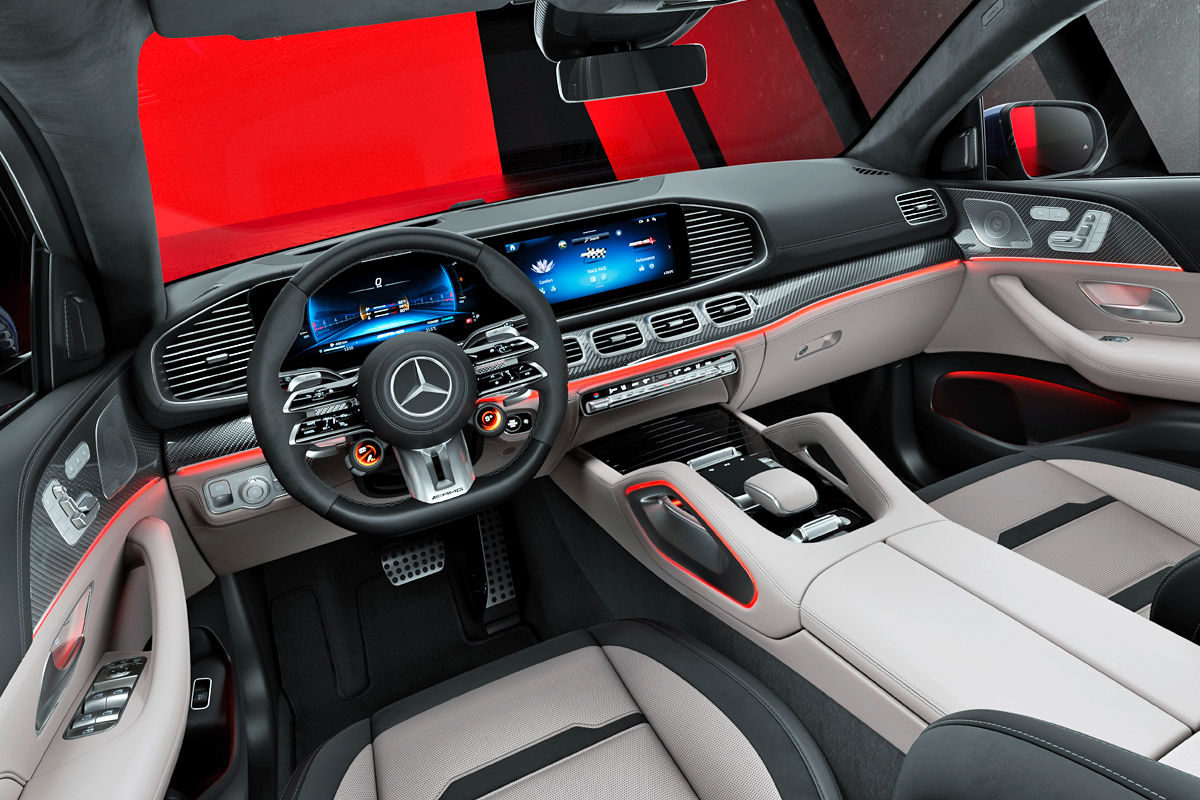
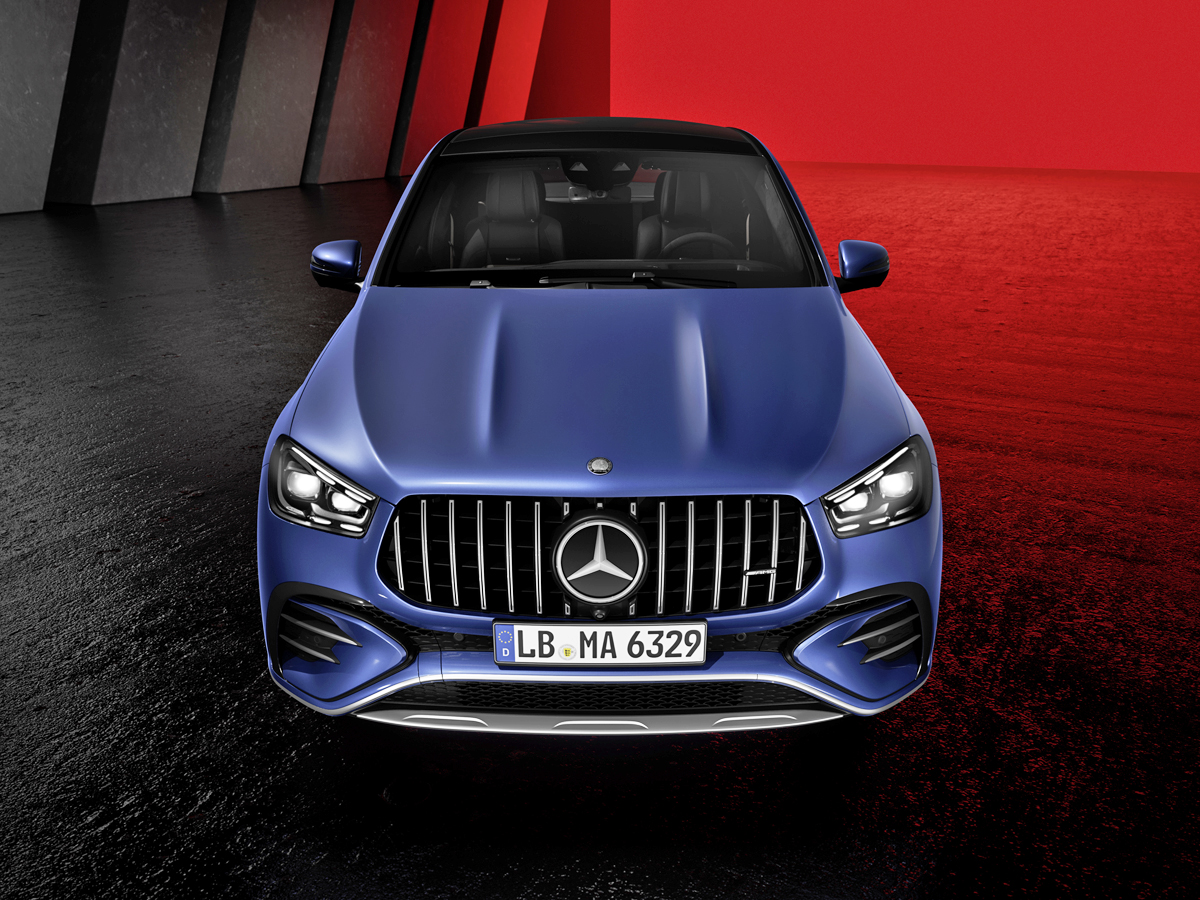
We’ve managed to unearth pricing for the refreshed Mercedes-AMG GLE53 Coupé ahead of its arrival in South Africa later this year. Here’s how much it’s set to cost…
The facelifted Mercedes-Benz GLE range was revealed as recently as January 2023, but we’ve already come across local pricing for the Mercedes-AMG GLE53 Coupé ahead of its launch in South Africa later in 2023.
While there’s no sign yet of the updated standard (non-AMG) derivatives nor the flagship GL63 S variants, we now know the starting price for the Mercedes-AMG GLE53 4Matic+ Coupé. Yes, our information shows the refreshed version of this 6-cylinder model will kick off at R2 344 103 (note this figure does not include the price of a maintenance plan). Interestingly, this derivative has since disappeared from Mercedes-Benz SA’s online configurator.
As a reminder, the 3.0‑litre straight‑6 petrol engine under the bonnet is mated to all 4 wheels through a 9-speed automatic transmission. It benefits from twin turbochargers and is electrified courtesy of an integrated starter generator and a 48 V system. Though peak power remains at 320 kW (with an additional 16 kW available for brief periods), maximum torque rises 40 units to 560 Nm thanks to a “software update and a larger turbocharger”. As a result, the claimed 0-100 kph time improves from 5.3 to 5.0 seconds.
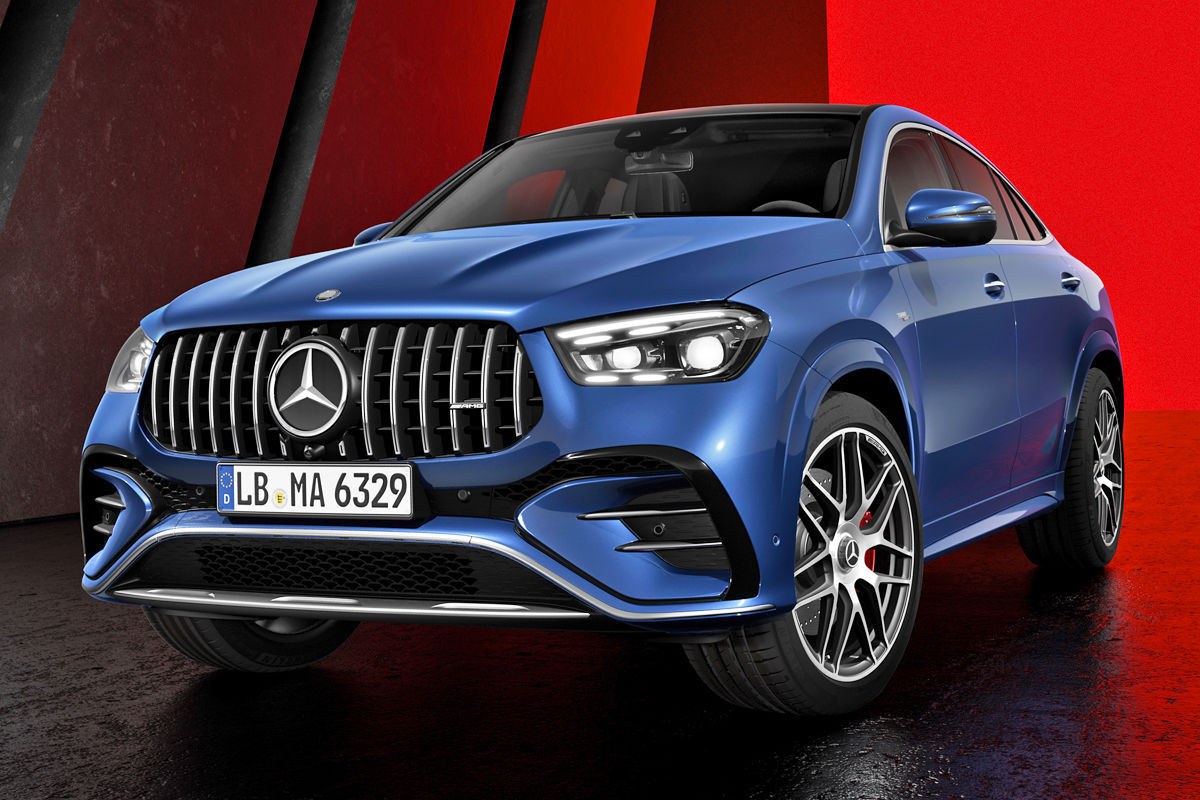
The most noticeable change is the new lighting signature courtesy of the DRLs.
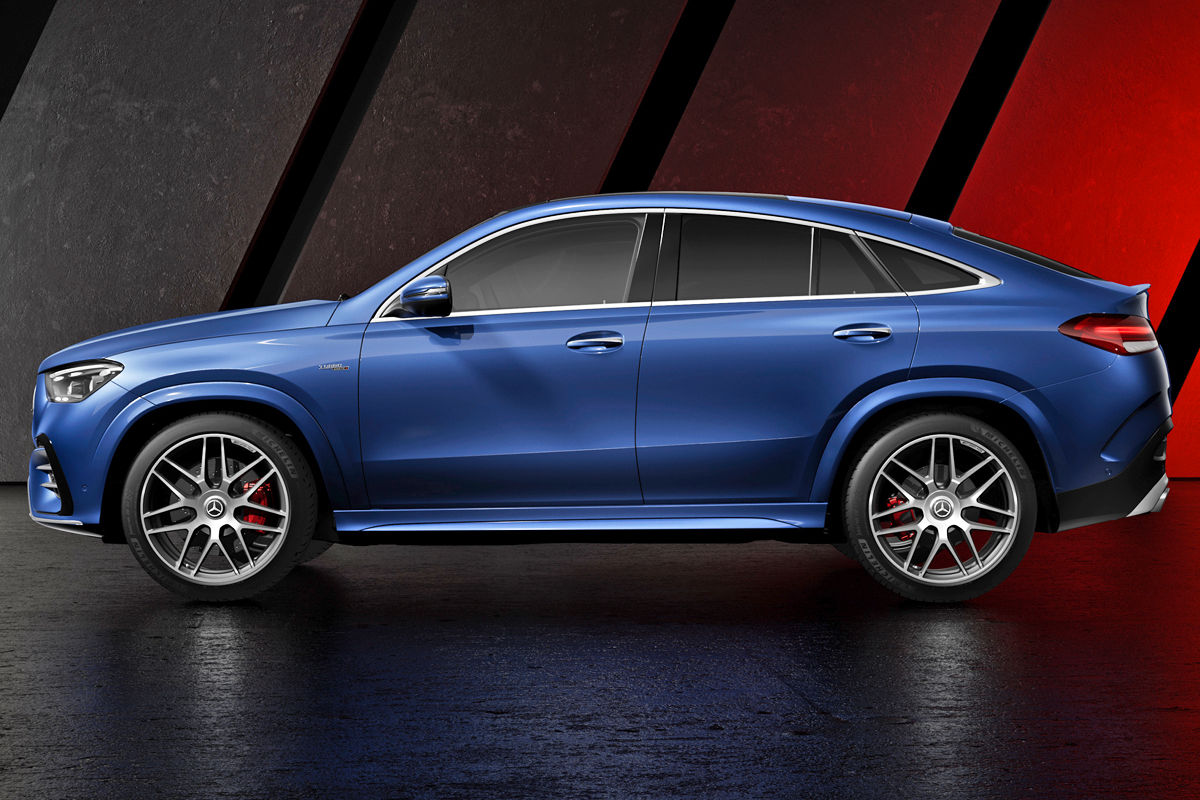
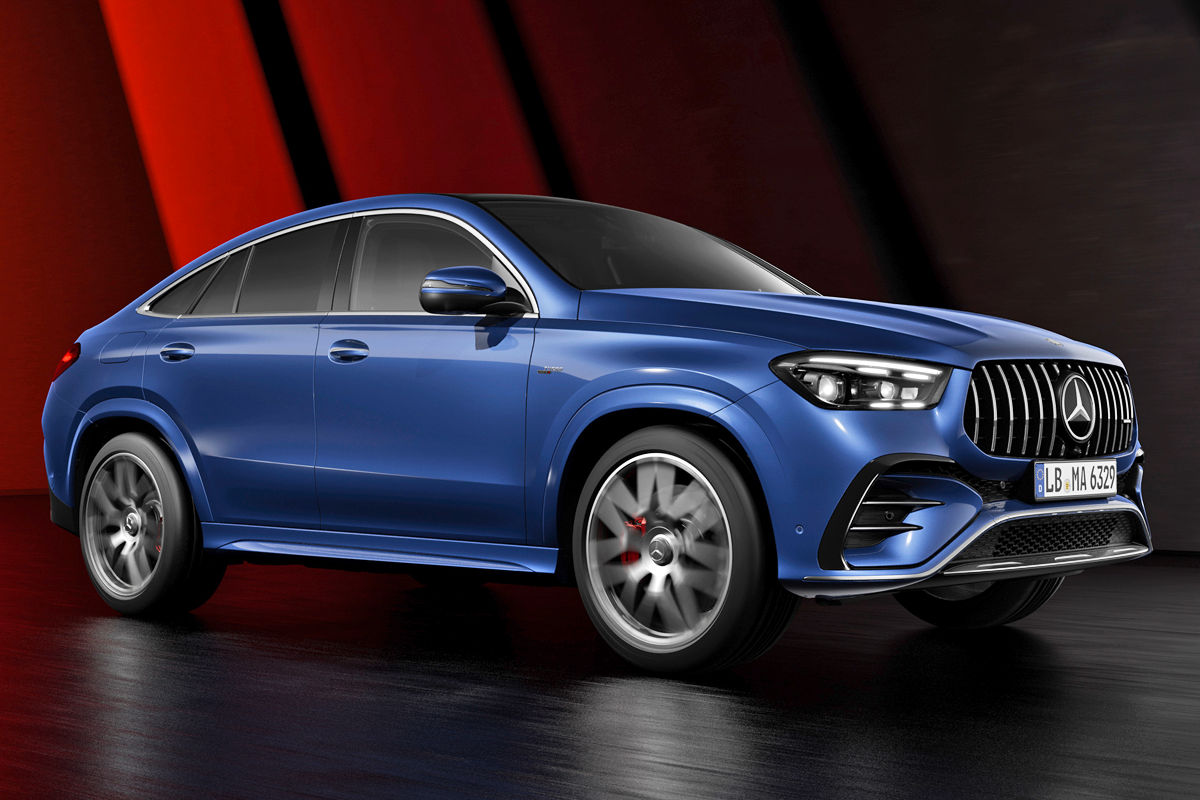
So, what else is new on this 53-badged derivative? Well, it scores newly designed LED daytime running lights as well as a revised front apron that Mercedes-Benz says moves it “visually closer” to the 8‑cylinder models. Round back, you’ll find revised LED taillamps, while a pair of new exterior colours has been added to the line-up: Alpine Grey and Sodalite Blue.
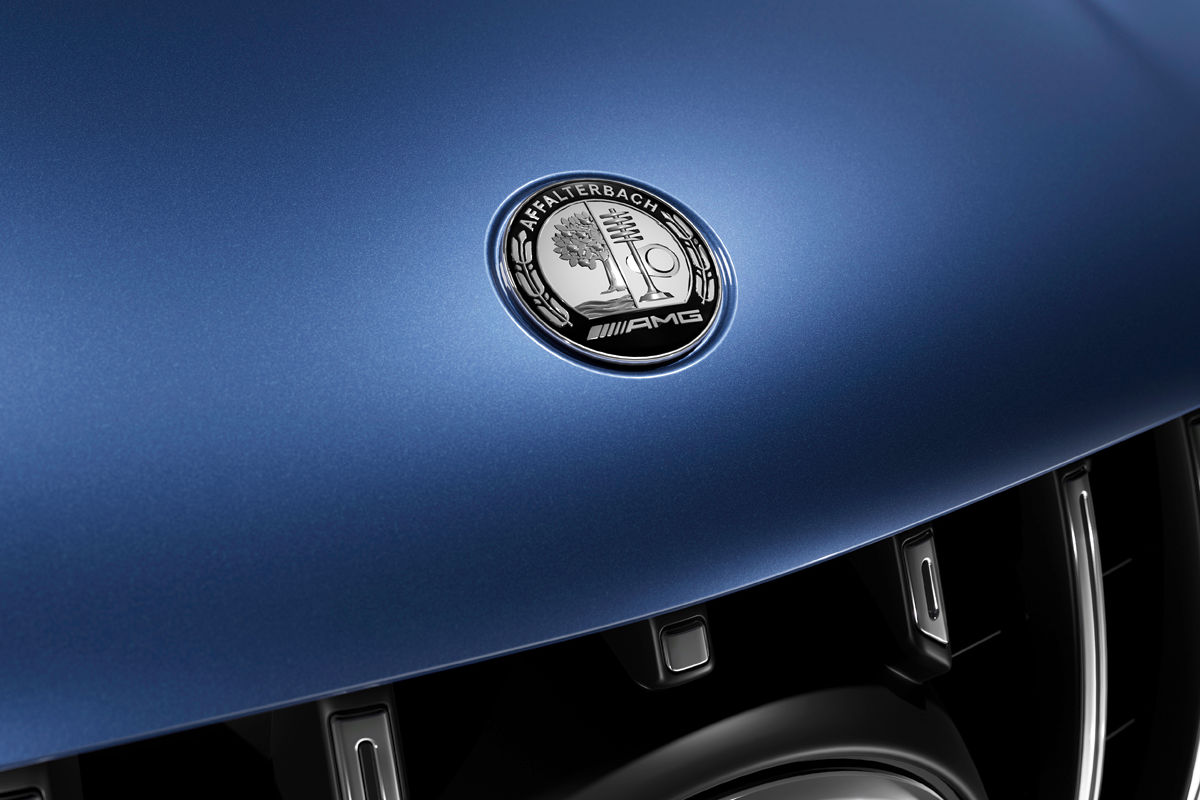
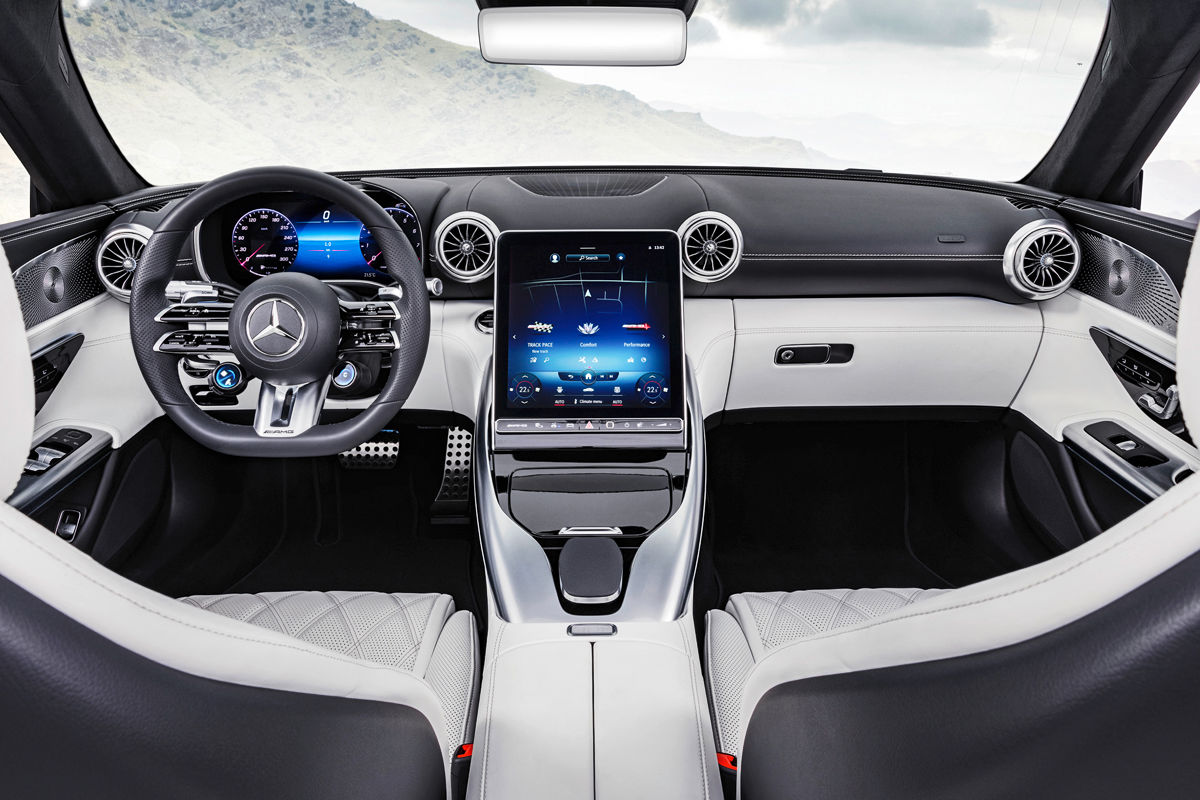
In addition, the bonnet now bears the AMG emblem rather than the Mercedes-Benz star (which is, of course, still present in oversized form on the grille). New 22‑inch forged wheels in a 10‑twin‑spoke design are now also available as an option. Inside, you’ll find fresh leather-upholstery colour schemes and the latest generation of the MBUX infotainment system, complete with an AMG-specific screen design.
The Affalterbach-based performance division furthermore says the list of standard features is more generous than before, and now includes the AMG Performance exhaust system, a Burmester sound system, the memory package, a 360‑degree parking pilot, the keyless‑go package and blind-spot assist. The GLE 53 4MATIC+ Coupé also boasts climatised front seats, the MBUX Augmented Reality function and multibeam LED headlamps as standard.
Of course, there are still a number of options available, too, including the AMG Night Package (R19 700), various alloy-wheel designs (up to R73 486), the AMG Active Ride Control system (R52 200) and the AMG high-performance braking system (R51 799). There’s also the option of upgrading to the Premium Plus Package, which adds a raft of extra individual features for R144 600.
How much does the Mercedes-AMG GLE53 Coupé cost in SA?
Mercedes-AMG GLE53 4Matic+ Coupé – R2 344 103
The above figure does not include the price of a maintenance plan, though does include a 2-year/unlimited kilometre warranty.
Take a Toyota Tazz and add a big dollop of imagination and this is what you get! Watch the video!
Ofentse Mphatsoe (@ofentse7115 on Instagram), by his own admission, is not necessarily a car guy. But, it’s obvious that he has a deeply creative spirit, and he loves art and the art of creating something special.
When this Transformer Tazz hit South African social media last year, it immediately went viral and was the talk of the town. There is just nothing like it on our roads.
We spent some time with Ofentse and got the real story behind this incredible custom build. Watch the video!
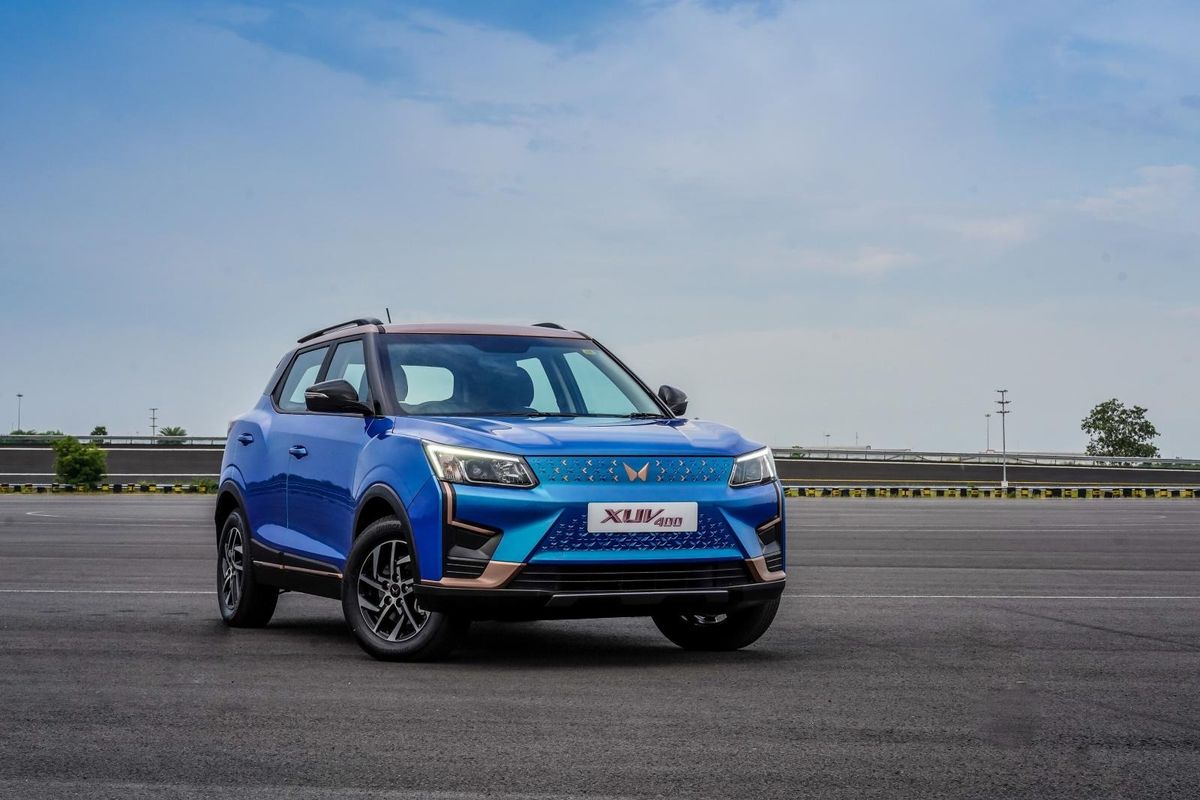
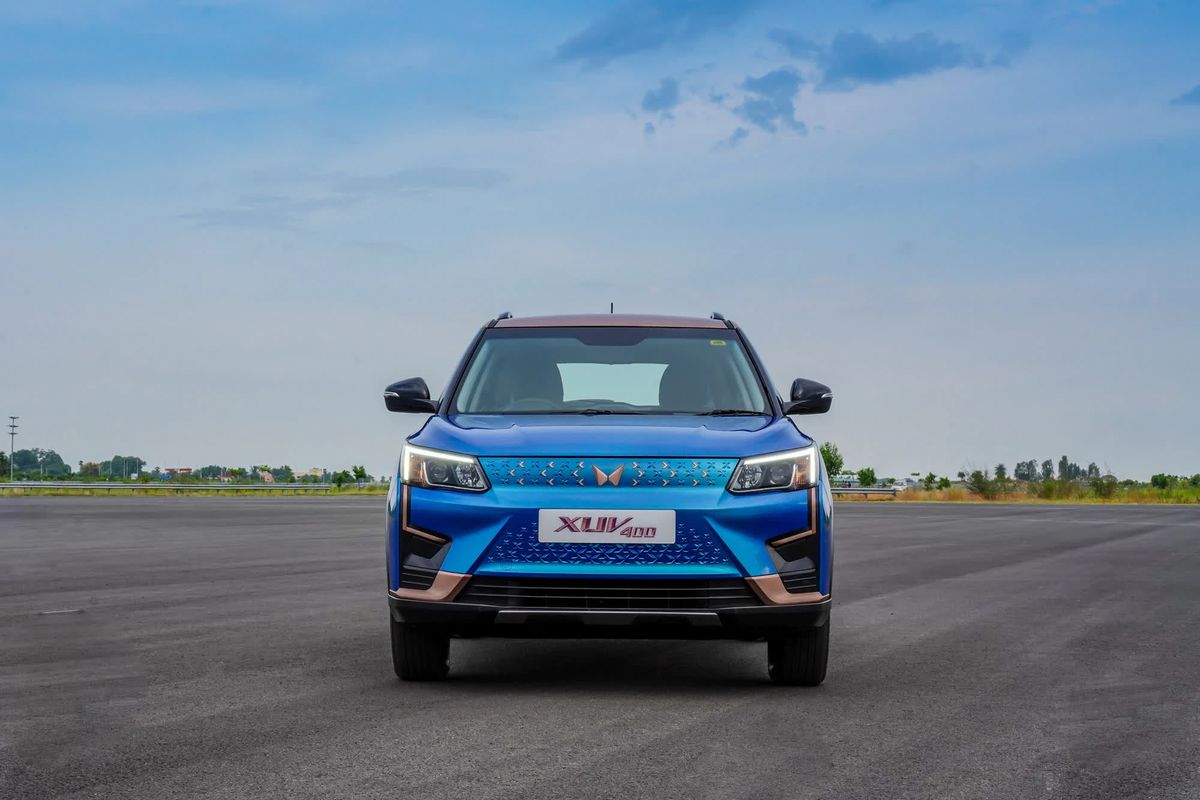
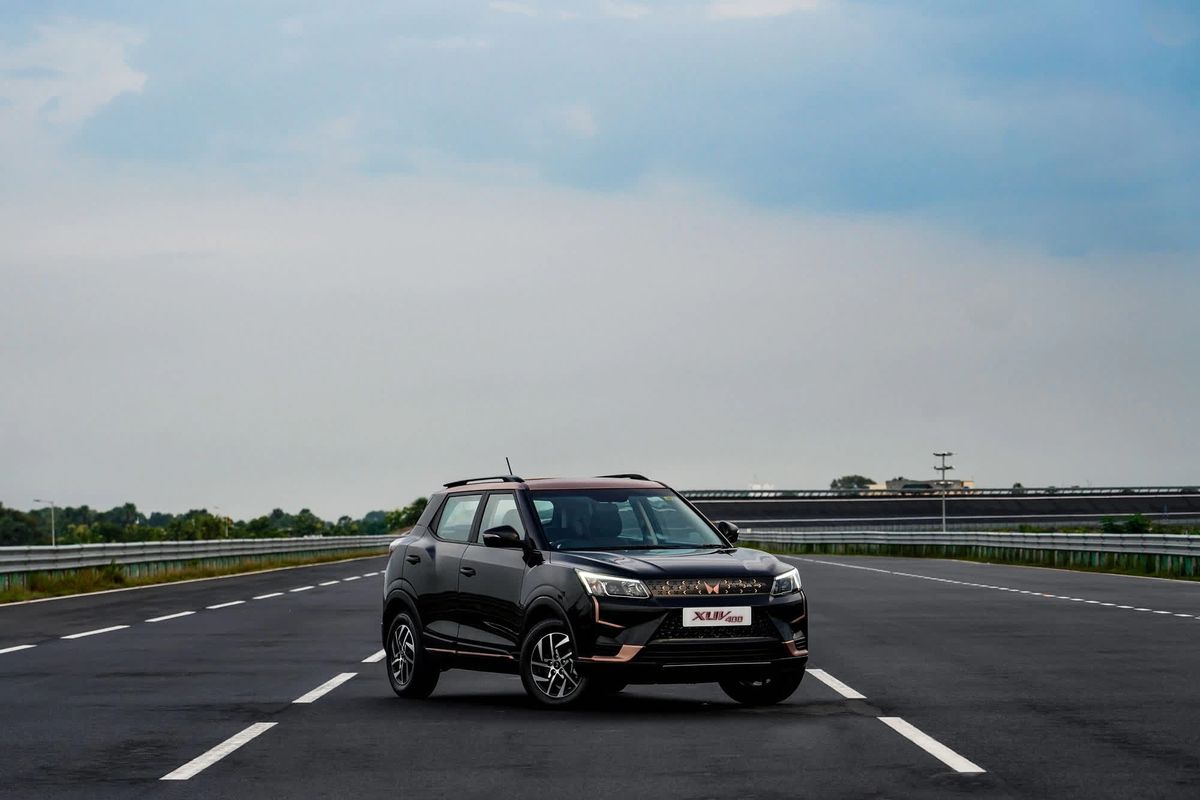
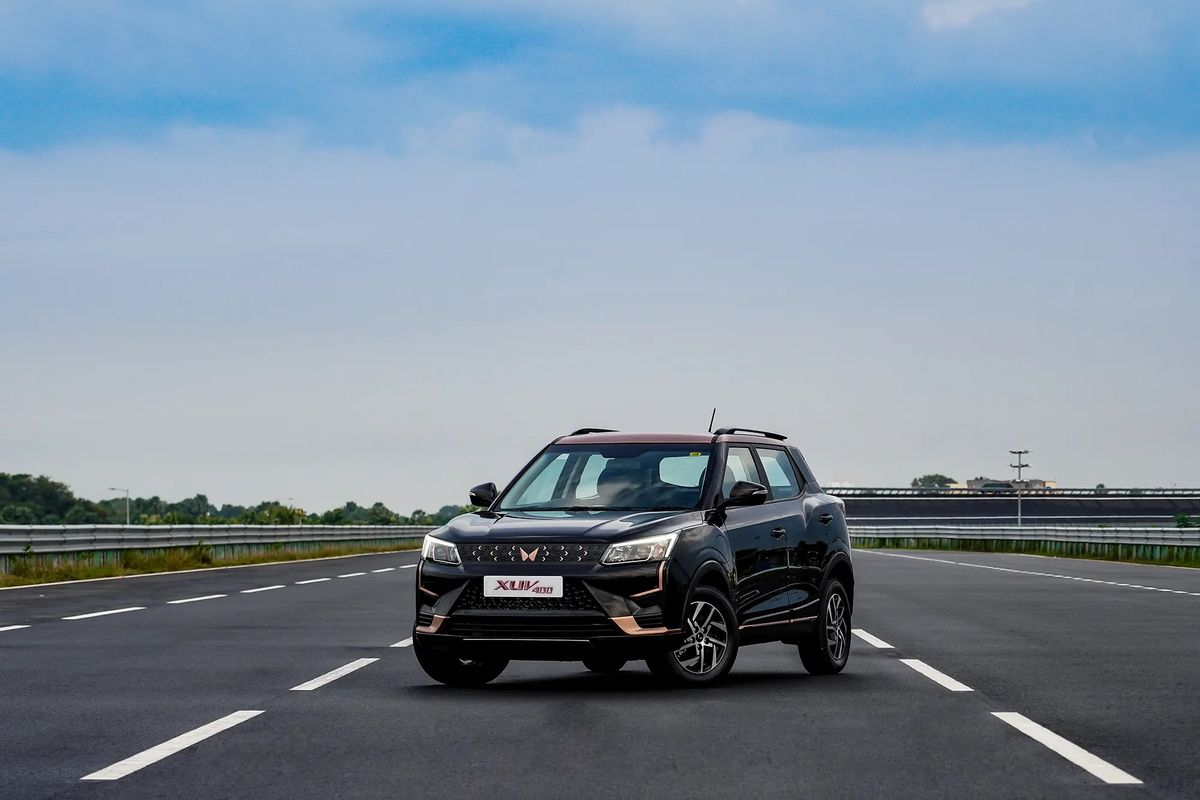
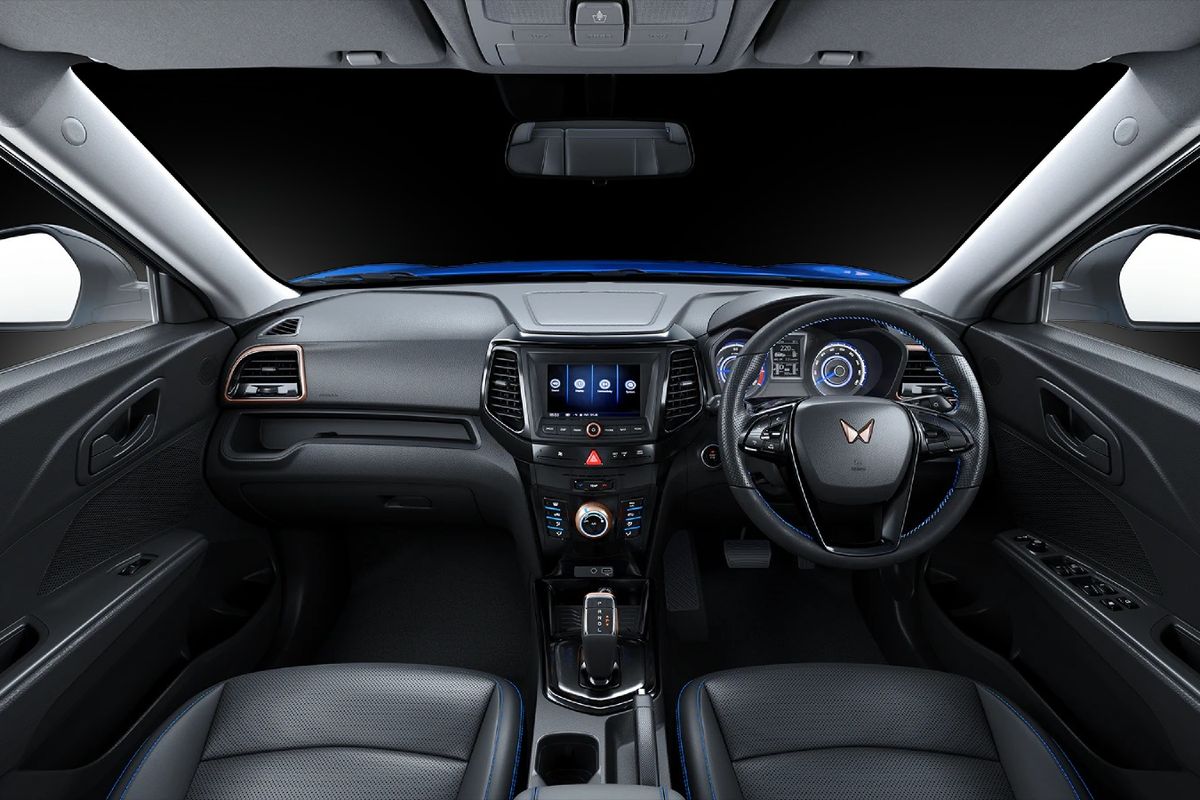
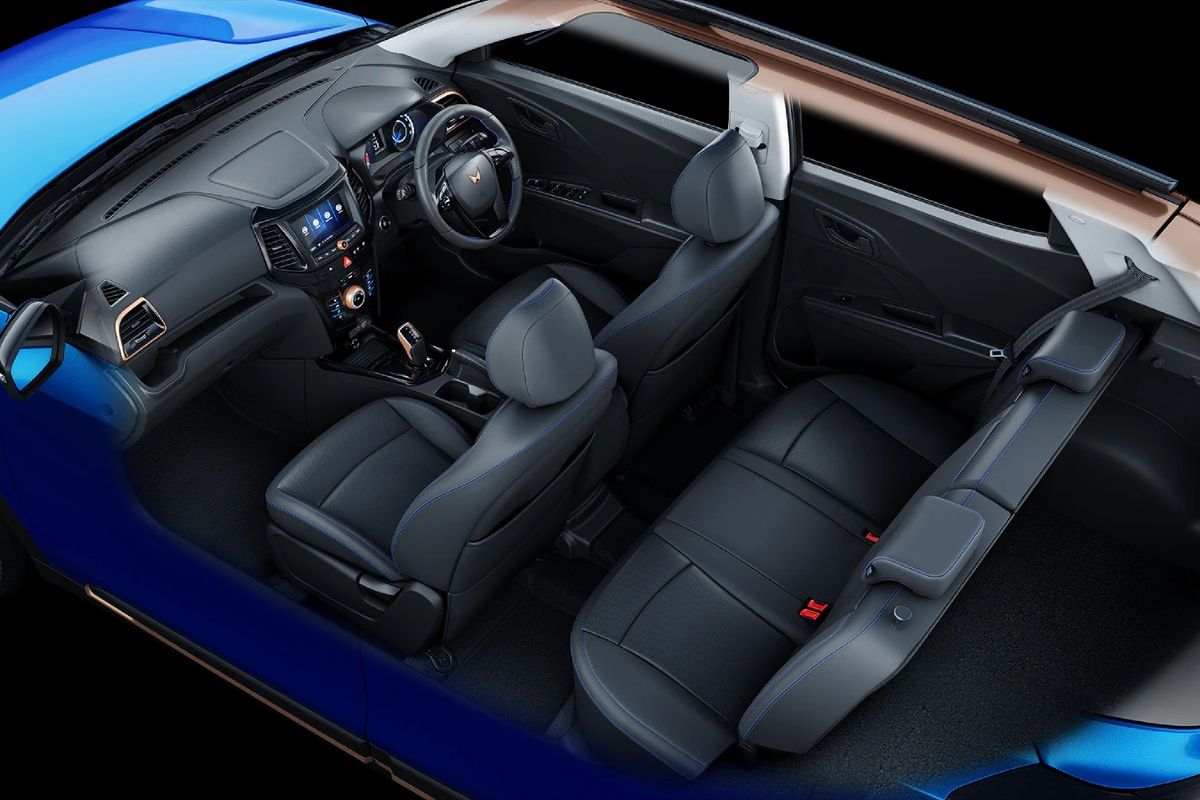
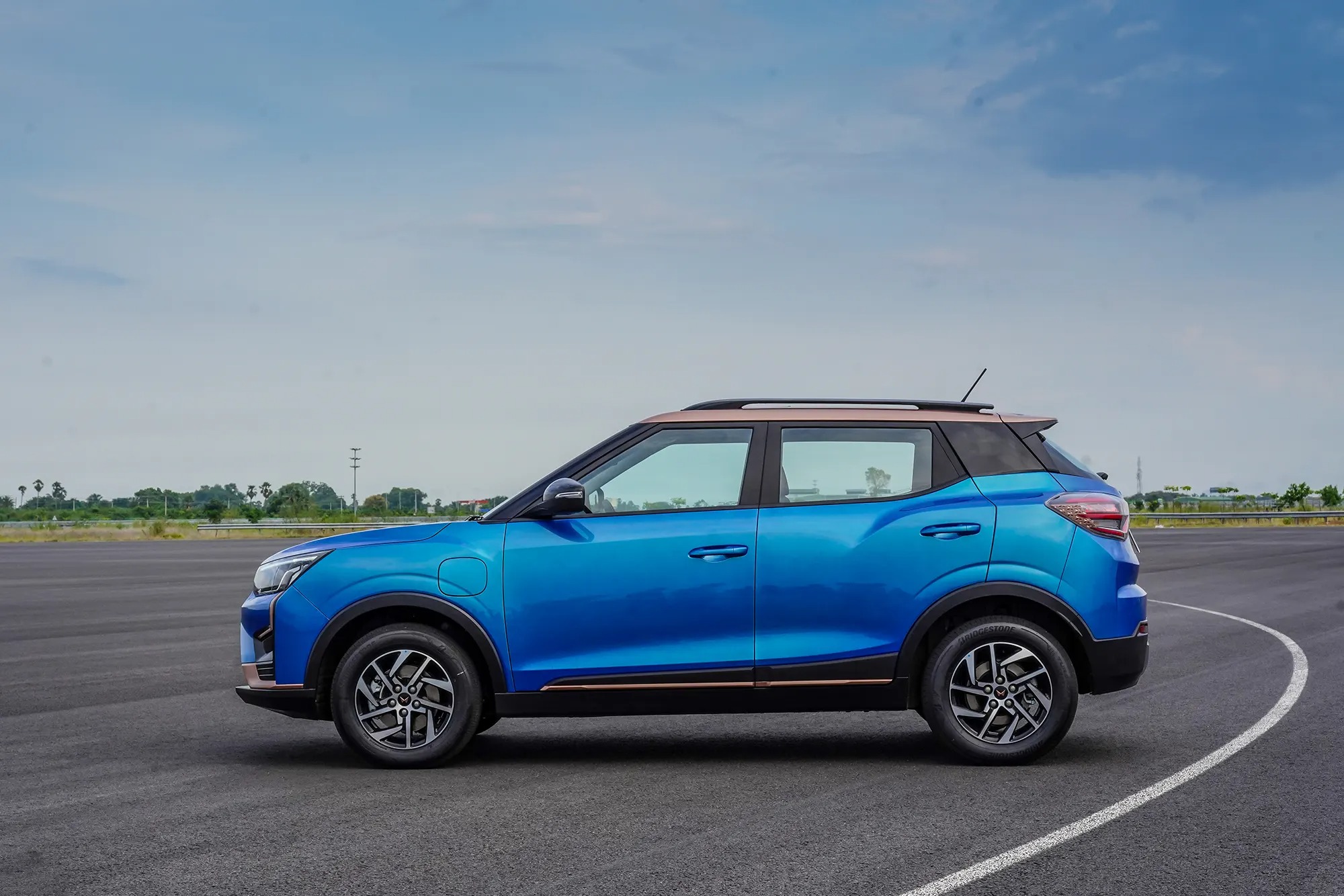
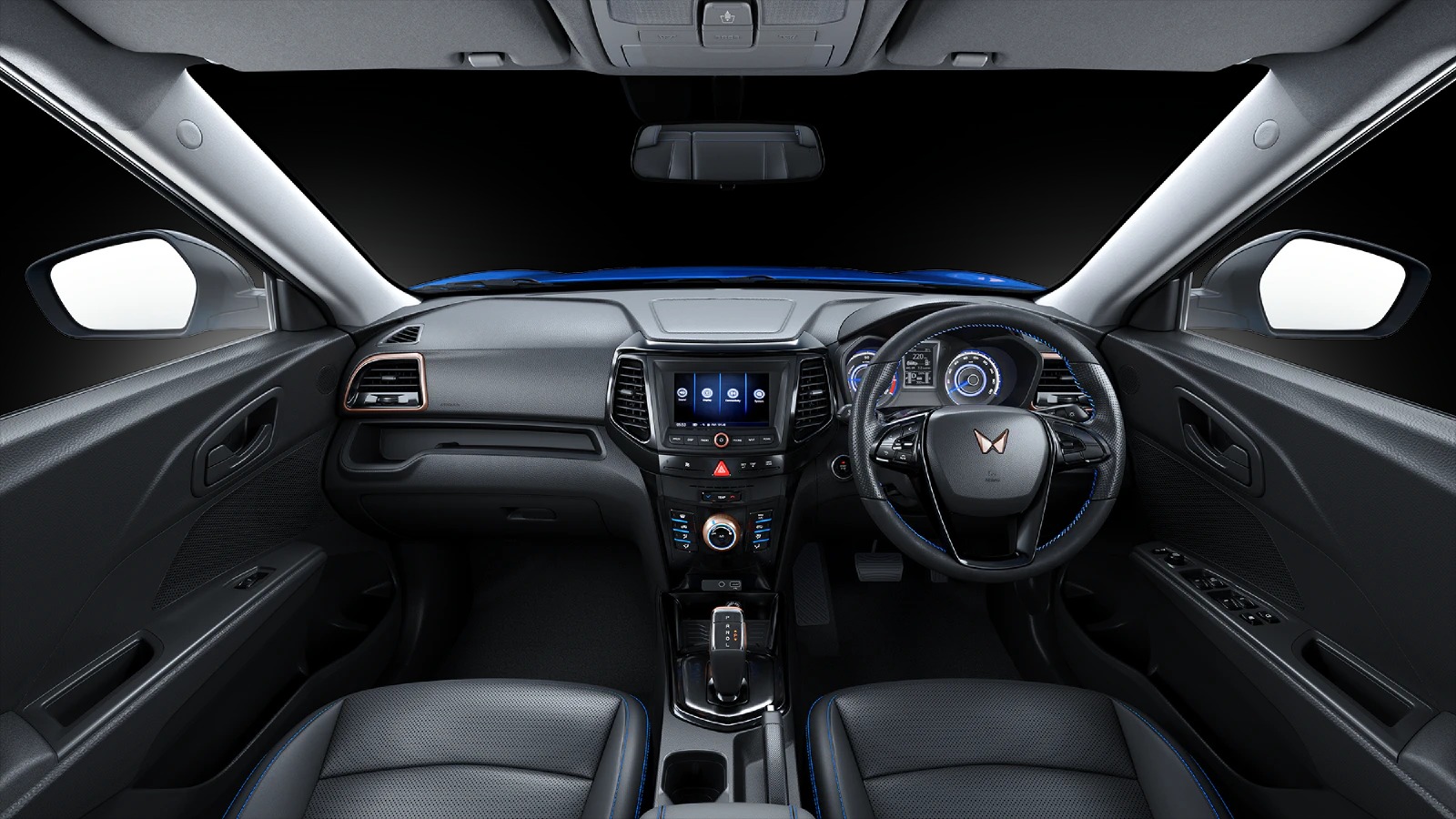
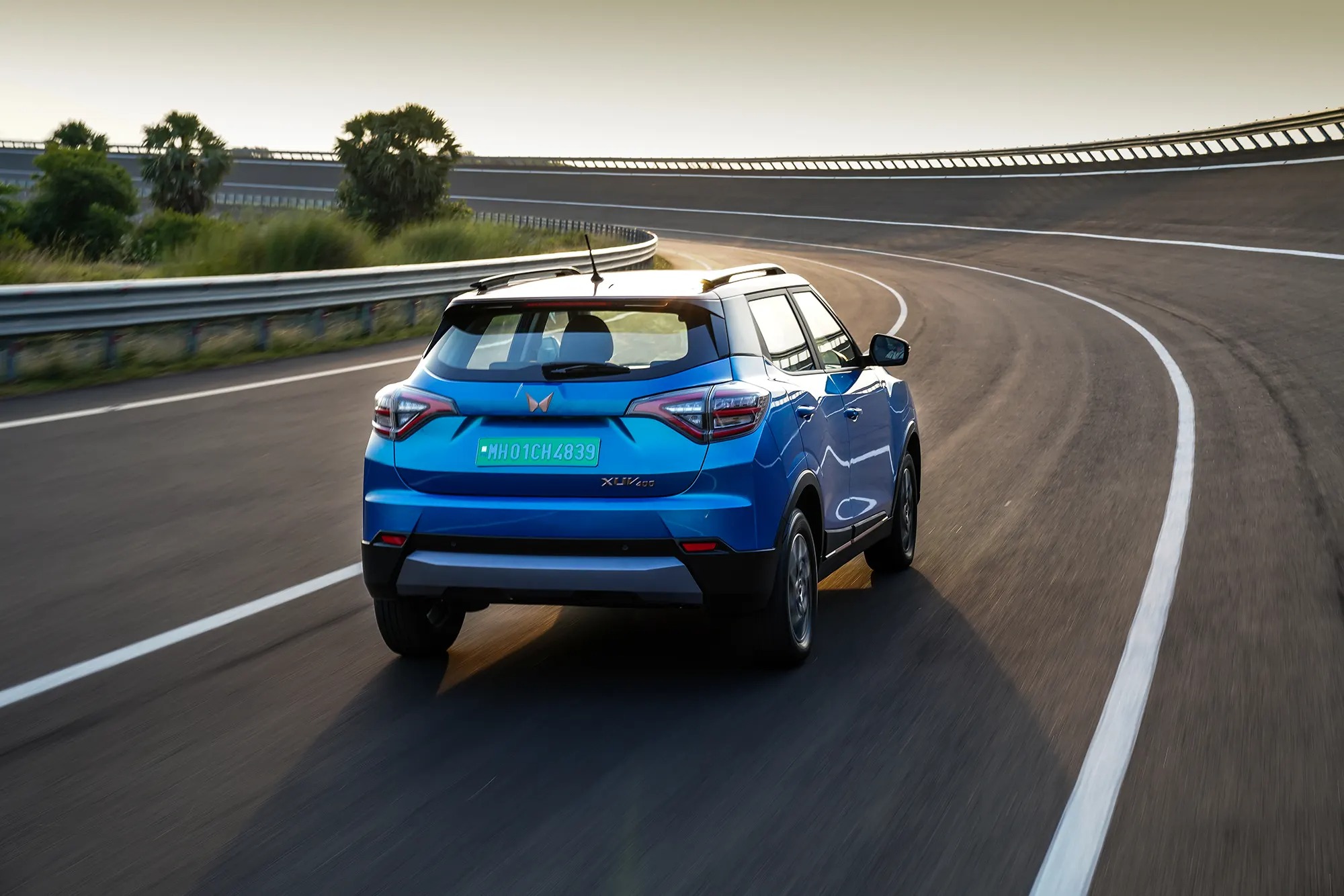
Mahindra XUV400 EV Announced and Under Consideration for SA
The Mahindra XUV400 brings a range of 456 km to the party and will be hitting the Indian market in March 2023. Should it come to South Africa as potentially SA’s cheapest electric car?
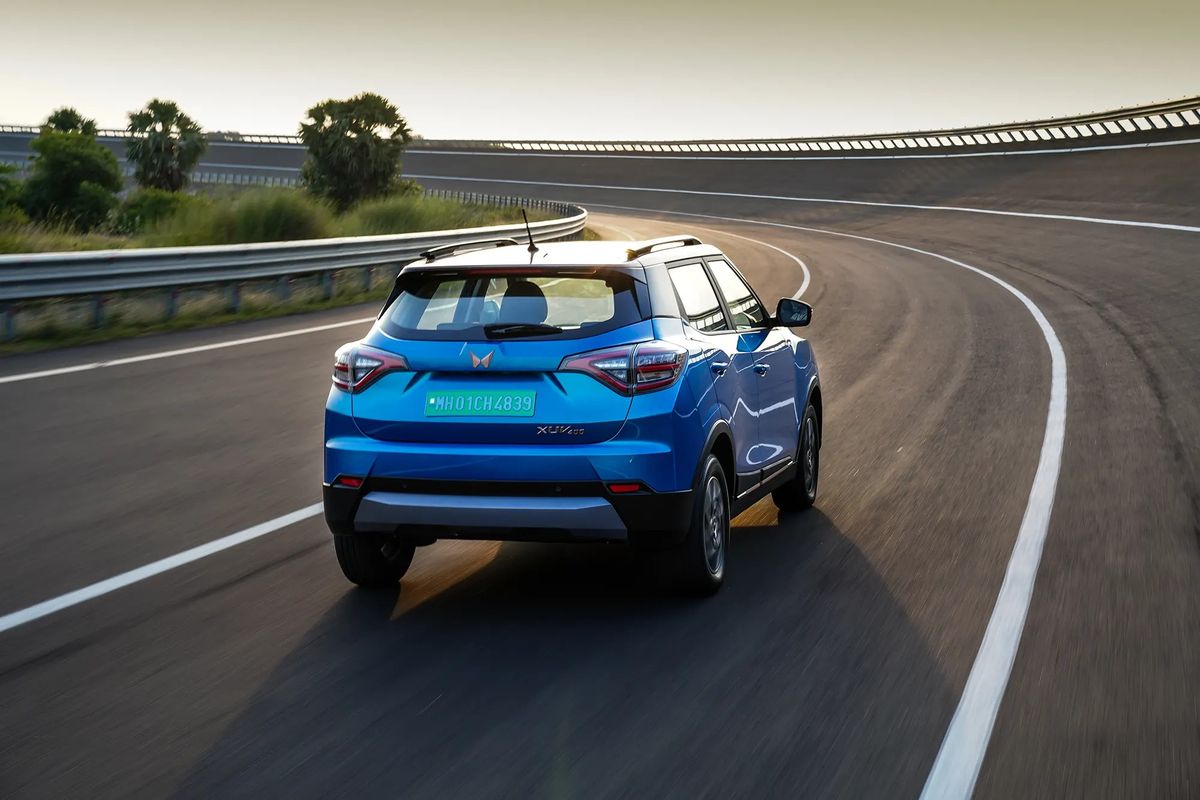
This looks like your ordinary run-of-the-mill Mahindra XUV300, doesn’t it? But, if you look closely and spot the clever wheels, fuel filler cap towards the front of the vehicle and the different tail lights, you’ll realise this is different.
Meet the Mahindra XUV400, an electric vehicle that’s available in two derivatives. There are two battery sizes on offer; 34.5 kWh and 39.4 kWh, giving a range of 375 km and 456 km respectively. This claim is based on the Indian driving cycle standards.
As far as performance goes, there’s 110 kW and 310 Nm and the Mahindra XUV400 is said to hit 100 kph in just 8.3 seconds and gp to a top speed of 150 kph. Physically, the XUV400 is 4 200mm long with a wheelbase of 2 600 mm, which puts it roughly in the same size bracket as things like the Haval Jolion and Hyundai Creta.
Standard Features
When it comes to features, the XUV400 is reasonably well equipped. The entry-level model features:
Single Pedal Drive 3 Intelligent Drive Modes 2 Airbags R16 Steel Wheels Connected Car Fabric Seats All Disc Brakes Electrically Adjustable ORVM LED Tail Lamps 60:40 Seats 2 Charger Options – 3.3 kW, 7.2 kW
The higher-spec model adds the following content:
6 Airbags Bi-tone colour options R16 Diamond Cut Alloy Wheels Connected Car + Smartwatch Connectivity Leatherette Seats Electrically Adjustable + Foldable ORVM Rear View Camera 17.78 cm Infotainment System Android Auto, Apple CarPlay Electric Sunroof Projector Headlamps with Daytime Running Lights
Mahindra XUV400 for South Africa?
Interestingly, the XUV400 is priced around R365 000 in India if we go on the current exchange rate in early March 2023. As a reminder, South African electric cars are subject to an additional tax that pushes the prices up and there’s no government subsidy or incentive. Even then, we’d guesstimate that if it were to come to South Africa, it would still be substantially cheaper than the current most affordable EV, the Mini Cooper SE (R742 102).
Could Mahindra SA bring it to South Africa? There’s already one big advantage as India is a right-hand drive market and thus compatible for our roads. We reached out to Mahindra South Africa for comment.
“Mahindra South Africa shall soon commence a study to evaluate the product fit and viability of the all-new XUV400 EV. At the same time, Mahindra is participating in the national discussion on electric vehicle policy as championed by NAAMSA. We hope to see the final national policy on EVs soon.”
“The XUV400 EV shares the dynamics and world-class safety of the XUV300, which is well established in South Africa, and it would be a success in the local market where there is a definite need for an affordable and practical electric model” said Mr Rajesh Gupta, CEO of Mahindra SA.
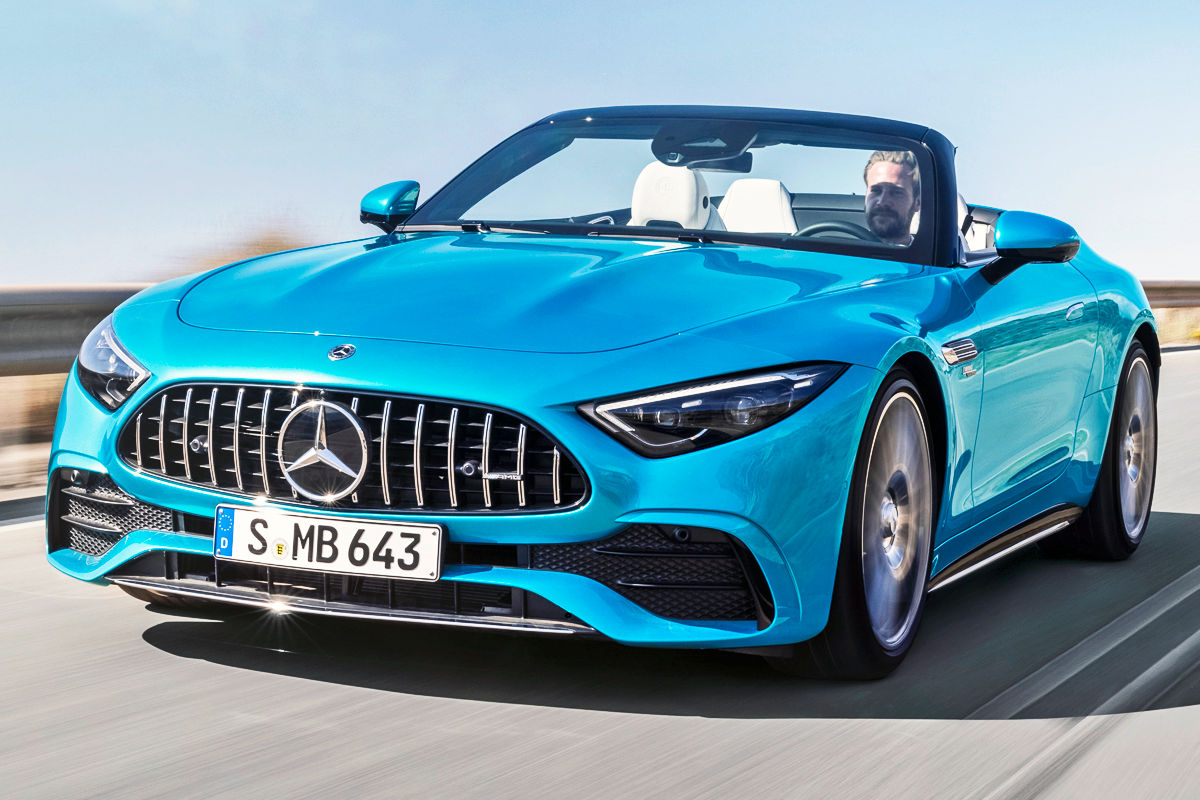
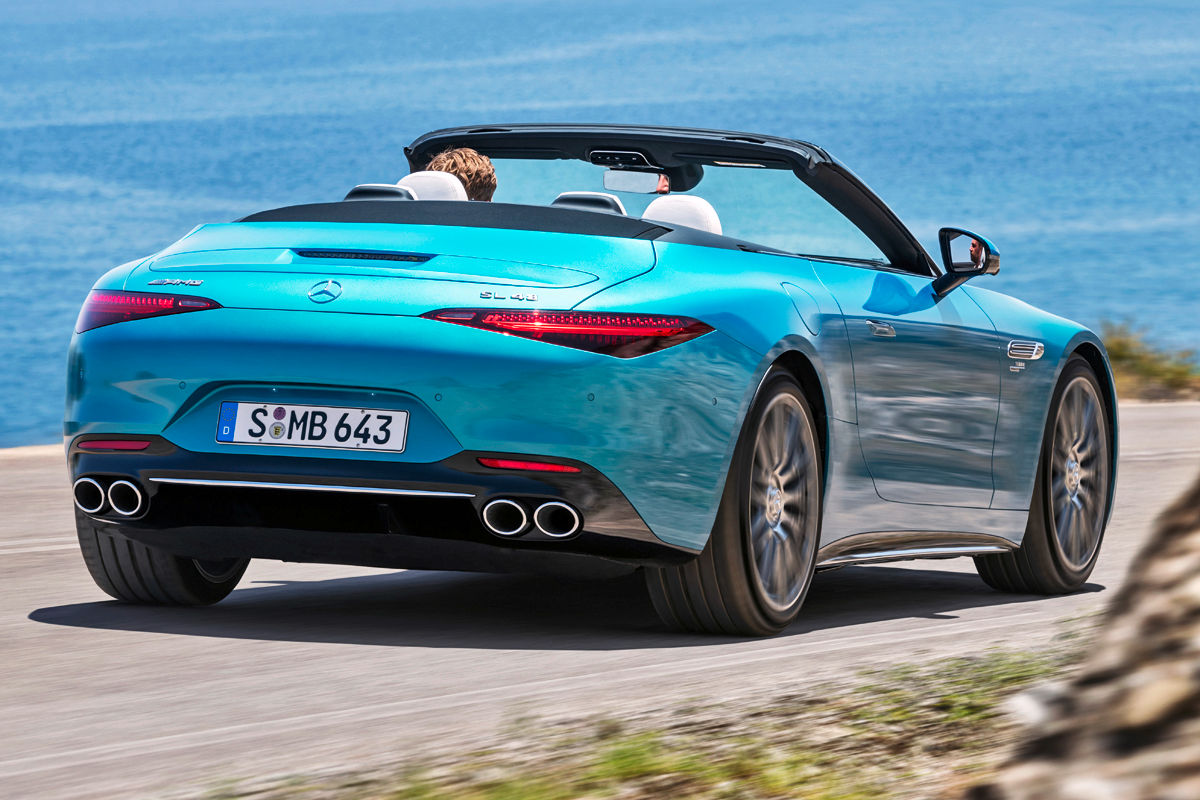
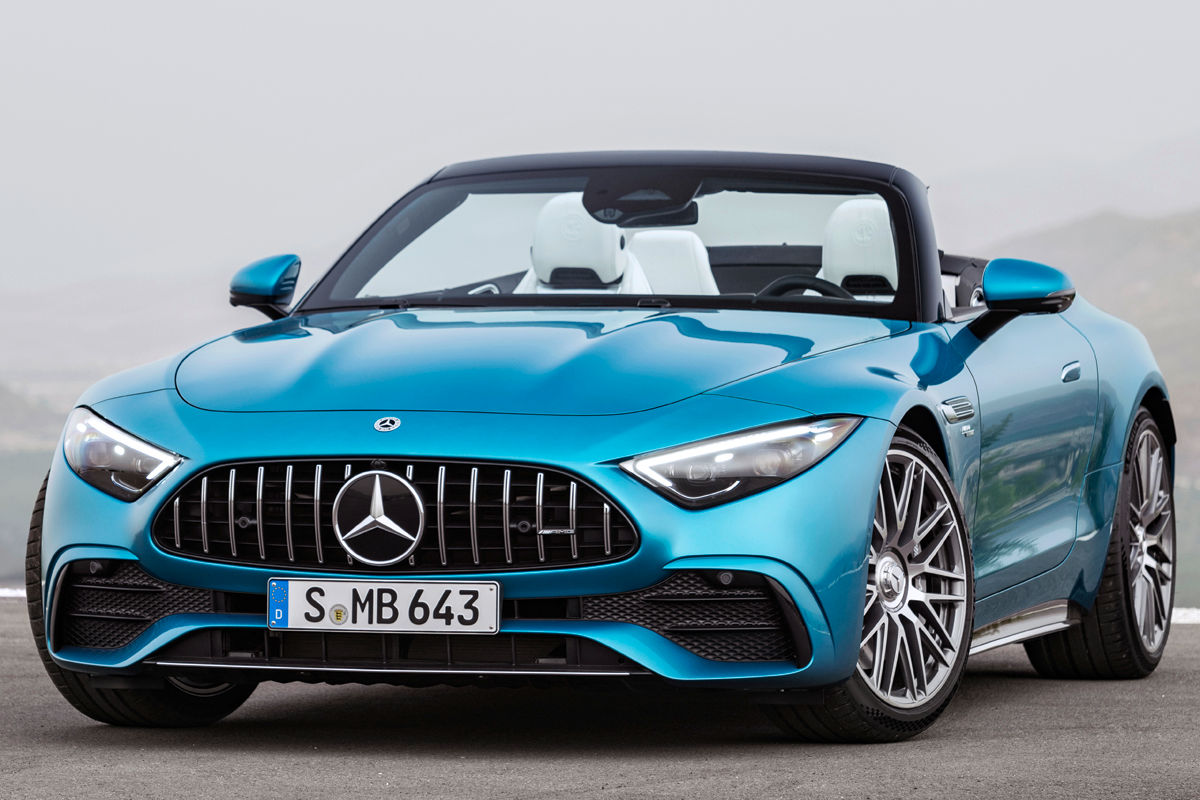
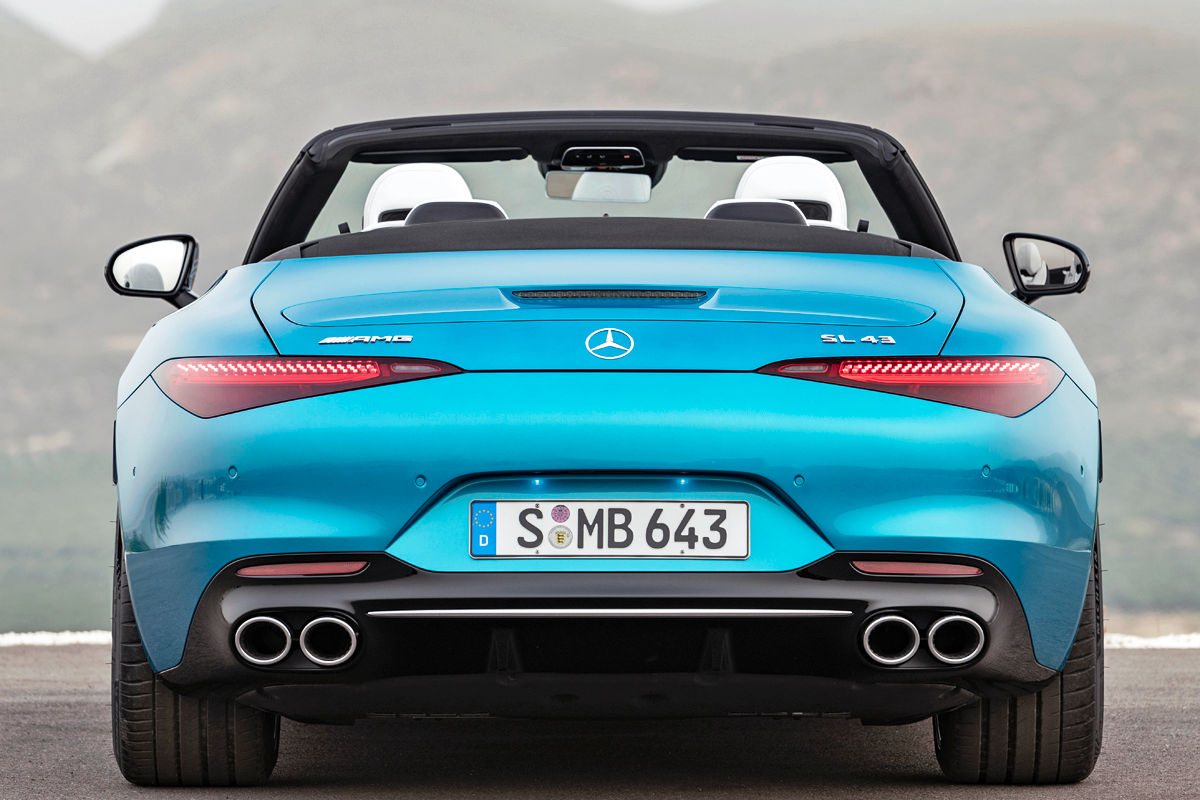
How much will the new Mercedes-AMG SL43 roadster cost in South Africa? Well, here’s your first look at pricing for the German firm’s fresh-faced open-top 2+2-seater…
The R232-generation Mercedes-AMG SL was revealed – in twin-turbo 4.0-litre V8-powered SL55 and SL63 guise – as long ago as October 2021. In April of the following year, the 4-cylinder SL43 make its global debut. And now we have local pricing for the latter.
Yes, while the 350 kW SL55 and 430 kW SL63 are nowhere to been seen (for the time being, at least), the entry-level version of the open-top 2+2 seater has just been loaded onto Mercedes-Benz South Africa’s online configurator.
So, what’s the starting price for the Mercedes-AMG SL43? Well, the configurator lists a figure of R2 316 547, though take note this excludes the price of a maintenance plan, which can be purchased separately (UPDATE: The official price list has since been released, which shows a figure of R2 449 500, including a 5-year/100 000 km maintenance plan, plus maximum emissions tax of R16 547, taking the total base price to R2 466 047).
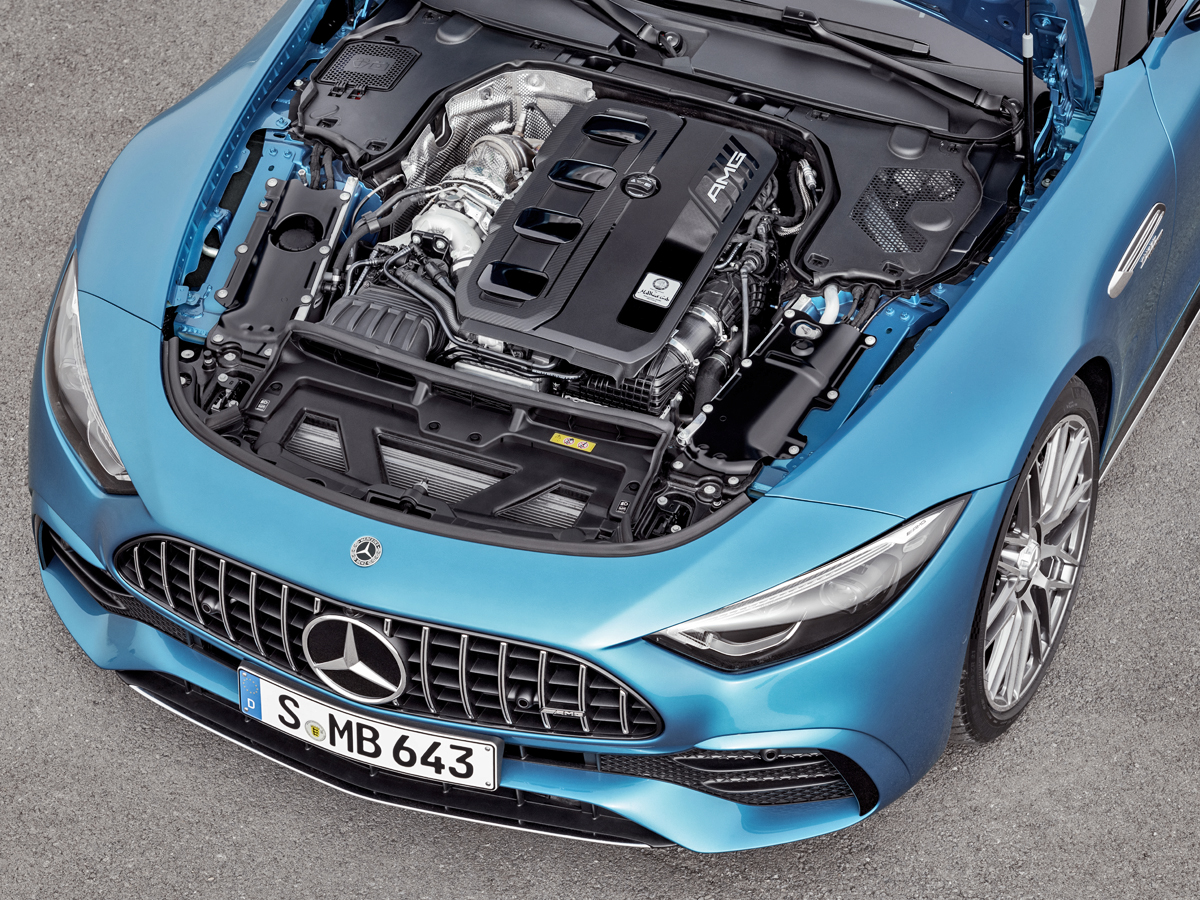
As a reminder, the 43-badged version of the rear-wheel-drive roadster – which has a listed kerb weight of 1 810 kg – employs the brand’s M139 2.0-litre, 4-cylinder petrol engine with what Mercedes describes as a “world-first” electric exhaust gas turbocharger (yes, just like the latest C43). The Affalterbach-based performance division claims the latter “guarantees particularly spontaneous throttle response across the entire rev range”.
The turbocharger is operated via a 48V electrical system, which furthermore feeds the belt-driven starter-generator (effectively rendering the roadster a mild hybrid). As a result, the SL43 boasts a peak power output of 280 kW and a maximum torque figure of 480 Nm, plus an additional “short-term boost” of 10 kW “in certain driving situations”.
The electrified 4-pot motor sends 280 kW to the rear axle.
Drive is channelled to the rear axle through a 9-speed multi-clutch transmission featuring a wet start-off clutch in place of a torque converter. Mercedes-Benz claims a 0-100 kph sprint time of 4.9 seconds, with a maximum speed of 275 kph.
The R232 series SL employs an electric “Z-folding” soft top rather than a retractable metal roof. Opening and closing of the 3-layer roof takes a claimed 15 seconds and is possible at speeds up 60 kph. Interestingly, the soft top can be operated either using the switch panel in the centre console or the standard MBUX multimedia touchscreen.
Should you want your SL43 to appear (rather than sound) similar to the 8-cylinder models, Mercedes-Benz SA offers a “V8 Exterior Styling Package” for an additional R59 030. A number of other packages are also available, including the AMG Aerodynamics Package (R56 994) and AMG Exterior Carbon Package (R97 704).
While 19-inch alloys ship standard, there are plenty of additional wheel options available, measuring up to 21 inches in diameter. The standard black-fabric soft top, meanwhile, can be binned in favour of a red or grey version (for R8 142 each).
Further individual options include AMG Performance seats (R39 692), a head-up display (R20 151), the Burmester high-end 3D surround-sound system (R99 740), rear-axle steering (R38 675) and the AMG Dynamic Plus Package (R59 030), which incorporates AMG Ride Control suspension, active dynamic engine mounts, the AMG electronic rear-axle limited-slip differential and yellow-painted AMG brake callipers.
How much does the new Mercedes-AMG SL43 cost in SA?
Mercedes-AMG SL43 – R2 316 547
According to Mercedes-Benz SA, the above figure does not include the price of a service or maintenance plan. It does, however, include a 2-year/unlimited kilometre warranty.
We’re a step closer to knowing which are the best cars in the world as the top three finalists in six categories of the World Car Awards have been announced.
The World Car Finals powered by Brembo has announced the top three finalists in six awards categories. The finals are on the 5th April 2023, and the winners will be announced as part of the 2023 New York International Auto Show.
As a reminder, a jury of 100 distinguished international automotive journalists from 32 countries selected the finalists by secret ballot, based on their respective evaluations of each eligible vehicle as part of their professional work. Cars.co.za’s very own Hannes Oosthuizen, who is South Africa’s longest-standing representative on the World Car of the Year jury, has also had his say.
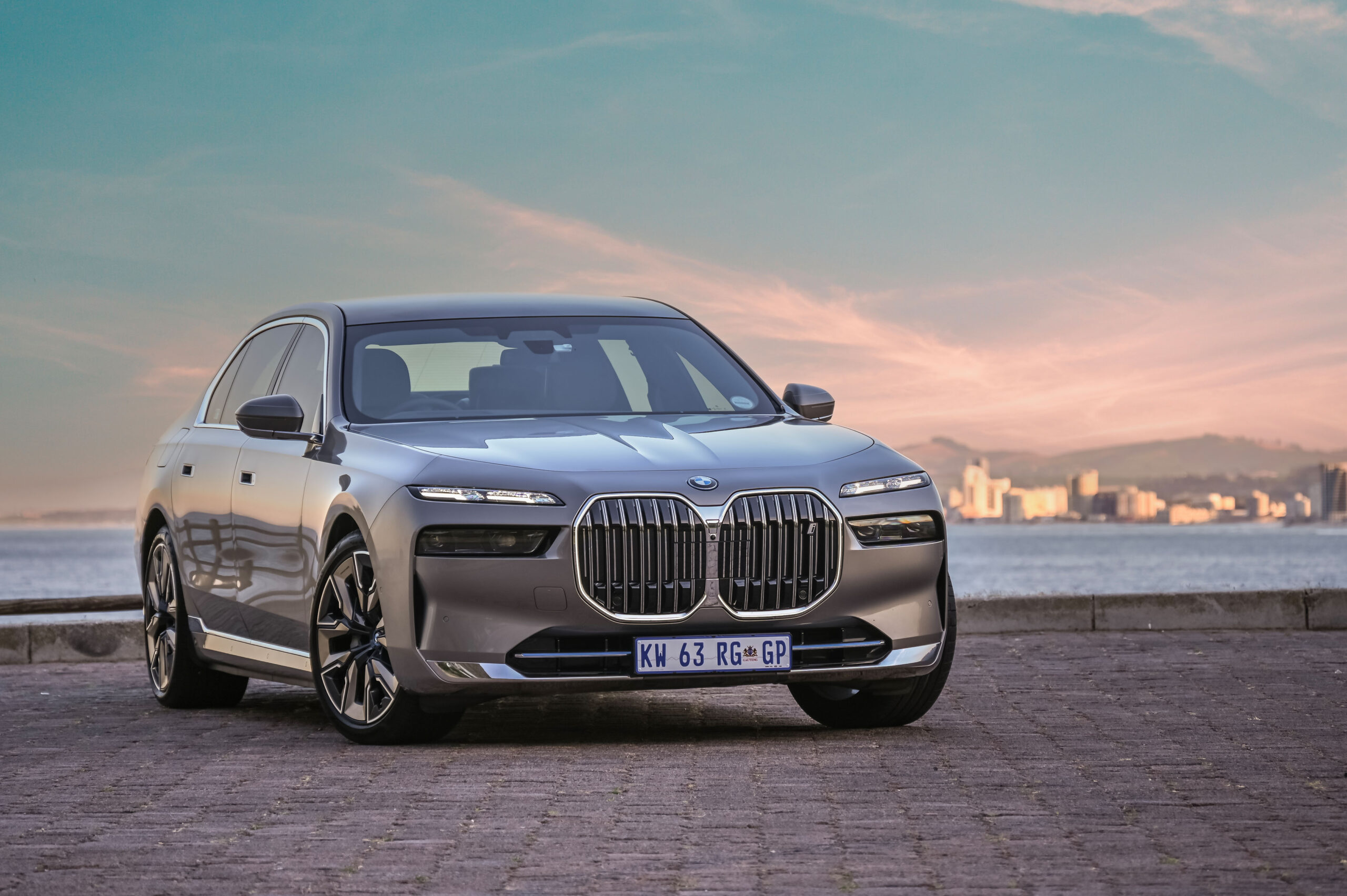
“With so many electric vehicles in the running, it has become almost unnecessary to have a separate category for them, but having recently tested the BMW i7, I expect that vehicle to win its category quite easily.” Oosthuizen said.
The Stellantis group has announced plans to set up a production facility in South Africa, with the first units billed to roll off the assembly line as early as 2025…
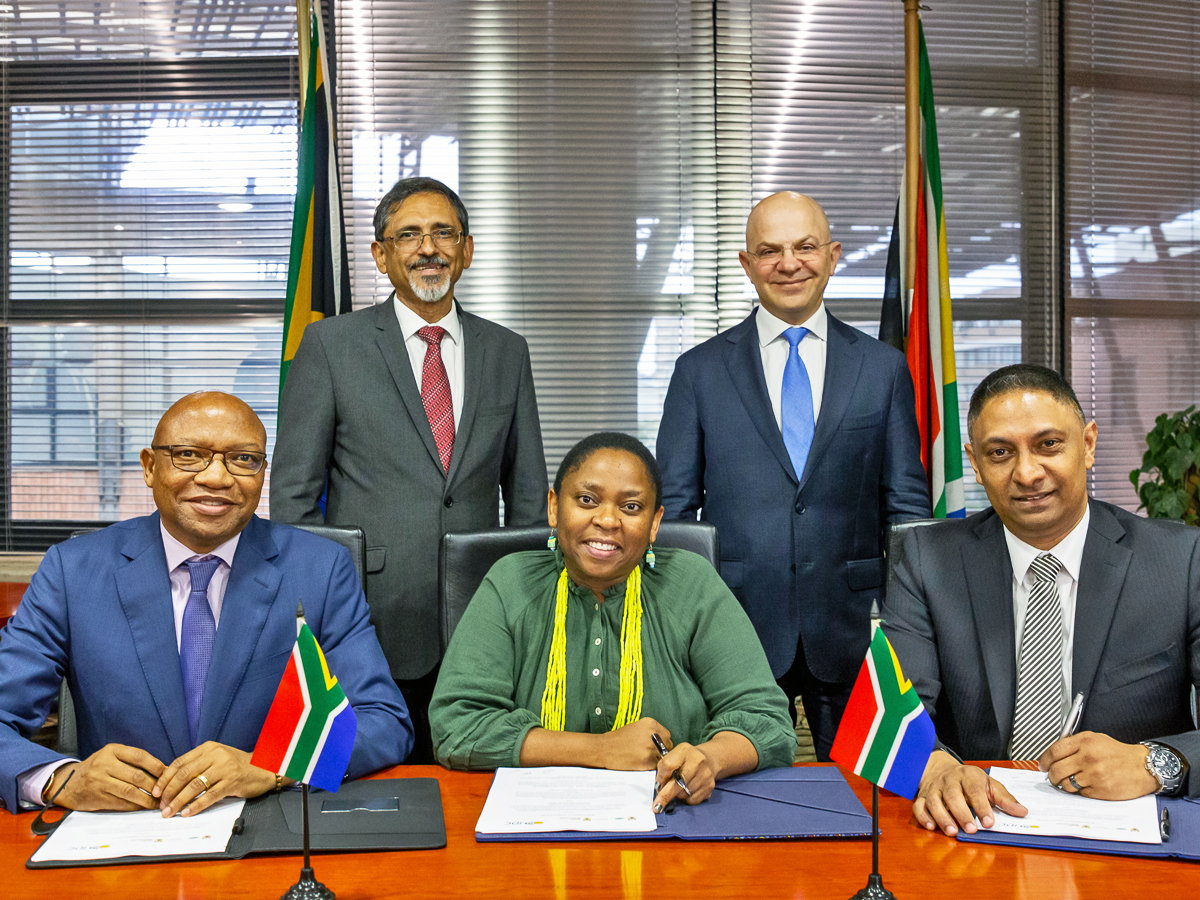
Multinational automotive group Stellantis has signed a Memorandum of Understanding (MoU) with the South African government to “develop a manufacturing facility” in the country.
The Netherlands-based corporation – which was formed in early 2021 with the merger of Fiat Chrysler Automobiles and the PSA Group – took part in a signing ceremony with South Africa’s Industrial Development Corporation (IDC) and the Department of Trade, Industry and Competition (DTIC).
In August 2022, Stellantis signed a similar MoU with Egypt’s government, before announcing a €300-million investment in its existing Kenitra manufacturing facility in Morocco in November 2022.
As a reminder, as many as 16 automotive brands fall under the Stellantis banner: Abarth, Alfa Romeo, Chrysler, Citroën, Dodge, DS, Fiat, Fiat Professional, Jeep, Lancia, Maserati, Mopar, Opel, Peugeot, Ram and Vauxhall.
Details are currently thin on the ground, but the group has stated the manufacturing plant is “planned for setup” in a Special Economic Zone (SEZ), with an aimed completion date of 2025. At present, South Africa has a pair of such zones with an automotive focus: the Tshwane Automotive SEZ in Gauteng and the Coega SEZ, with the latter located in Nelson Mandela Bay in the Eastern Cape. Whether Stellantis plans to build a new facility or make use of an existing one remains to be seen.
Interestingly, TP Nchocho, CEO of the IDC, described Stellantis as an “investment partner”, saying he looked forward to a “joint venture” with the company. It’s not yet clear which vehicles Stellantis plans to manufacture locally, though its brands with a presence in South Africa include Alfa Romeo, Citroën, Fiat, Jeep, Maserati, Opel and Peugeot.
The Memorandum of Understanding was signed at Minister Patel’s offices.
Despite distributing that many brands locally, Stellantis remains a fringe player in South Africa’s new-vehicle market. In February 2023, the group registered just 312 vehicles locally, with Peugeot accounting for 95 units, Fiat 75 units, Opel 73 units, Jeep 55 units, Citroën 12 units, Alfa Romeo 2 units and Abarth failing to trouble the scorers. Maserati, meanwhile, does not report sales figures to Naamsa.
“This is an important step in our ‘Dare Forward 2030’ strategic plan towards strengthening our leadership in the Middle East and Africa region and becoming a major player in South Africa,” said Samir Cherfan, Stellantis Middle East and Africa Chief Operating Officer.
“The manufacturing site in South Africa will be a new building block in our industrialisation strategy that includes the plan to sell one million vehicles in the region by 2030 with 70% regional production autonomy and will bring us closer to our customers’ needs in the region,” he added.
Ebrahim Patel, Minister of Trade, Industry and Competition, said he was “pleased that Stellantis is looking to South Africa to expand its manufacturing footprint”.
“The company is a large global automaker, with a range of well-known brands. South Africa is a great investment destination with significant car-making capacity. We look forward to working closely with Stellantis to enable the company to set up a plant that will expand our manufacturing base and create local jobs,” Minister Patel added.
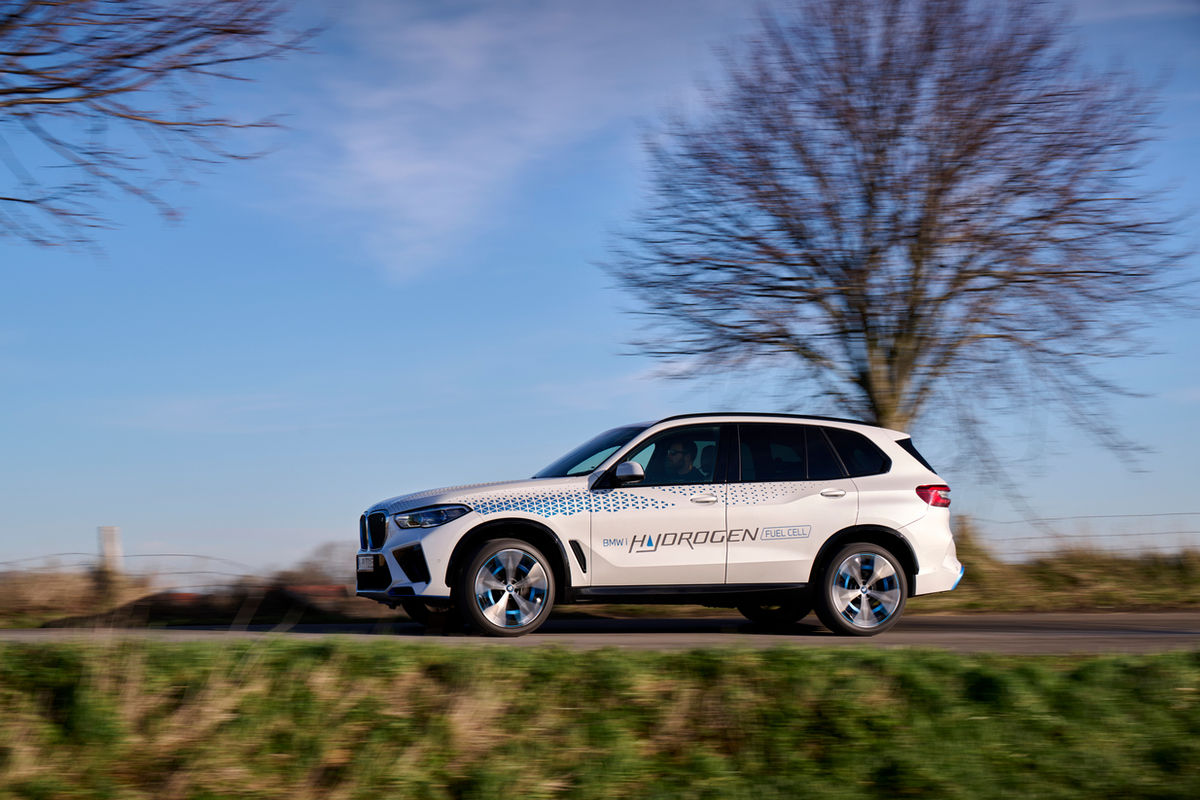
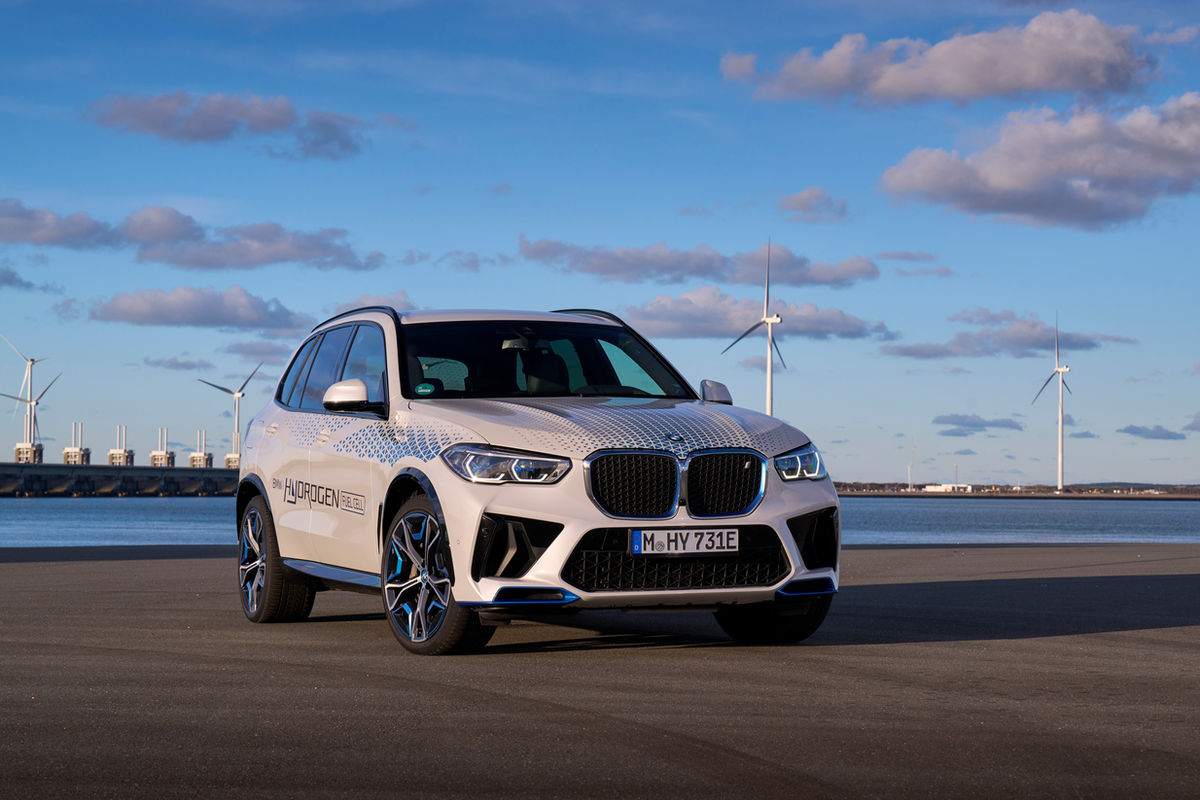
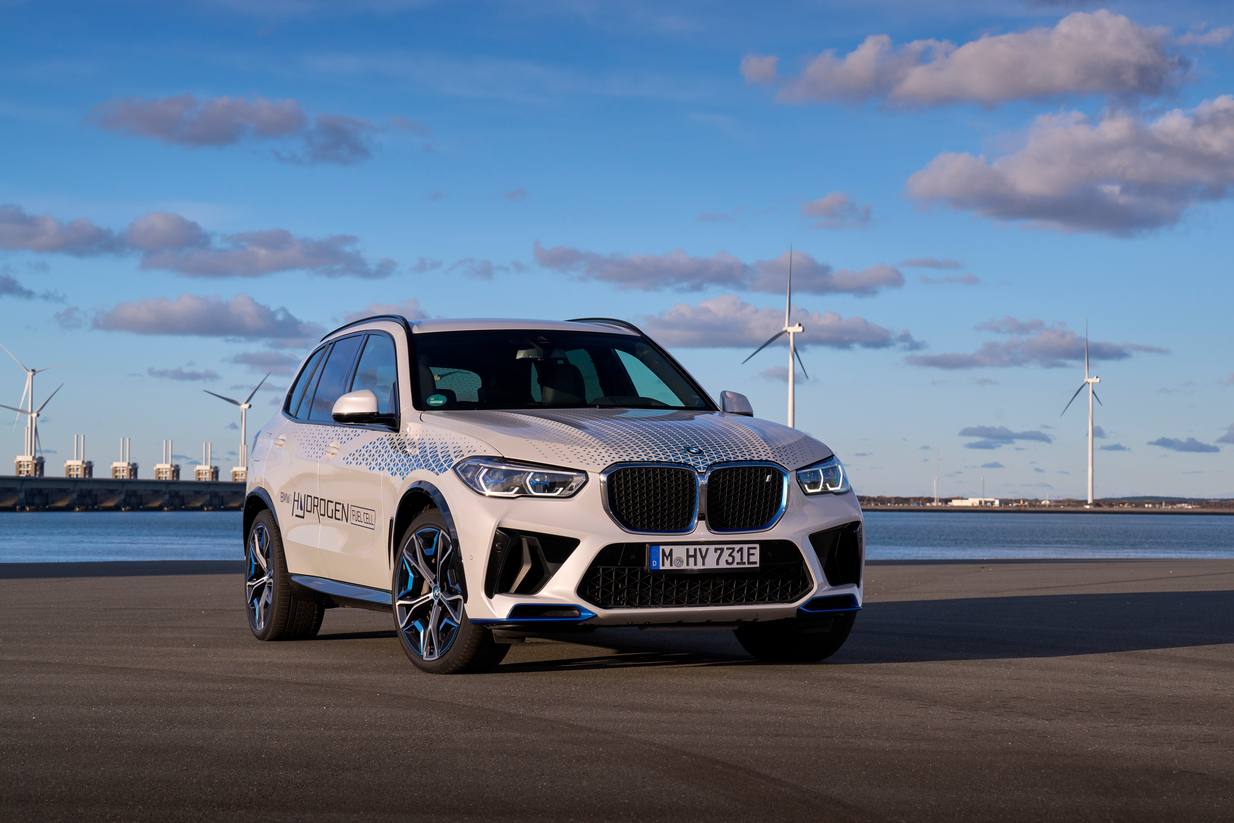
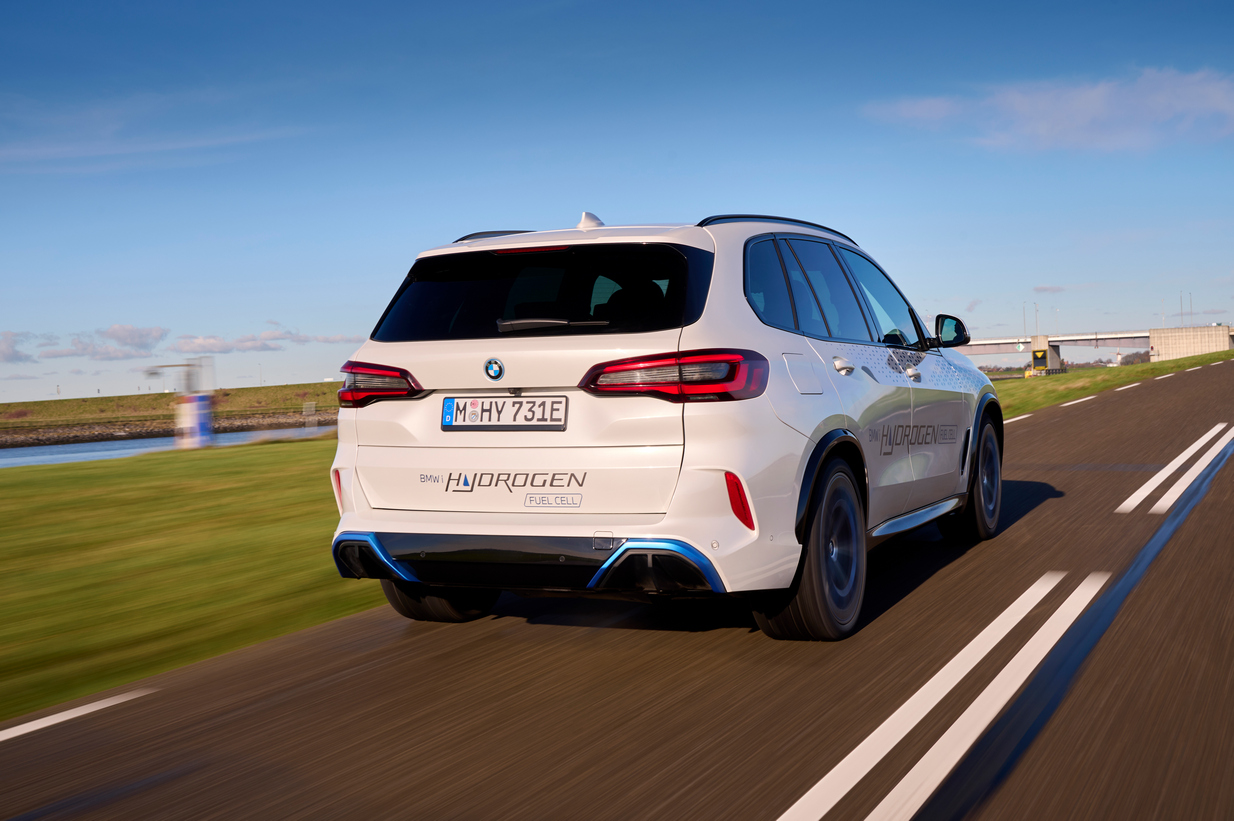
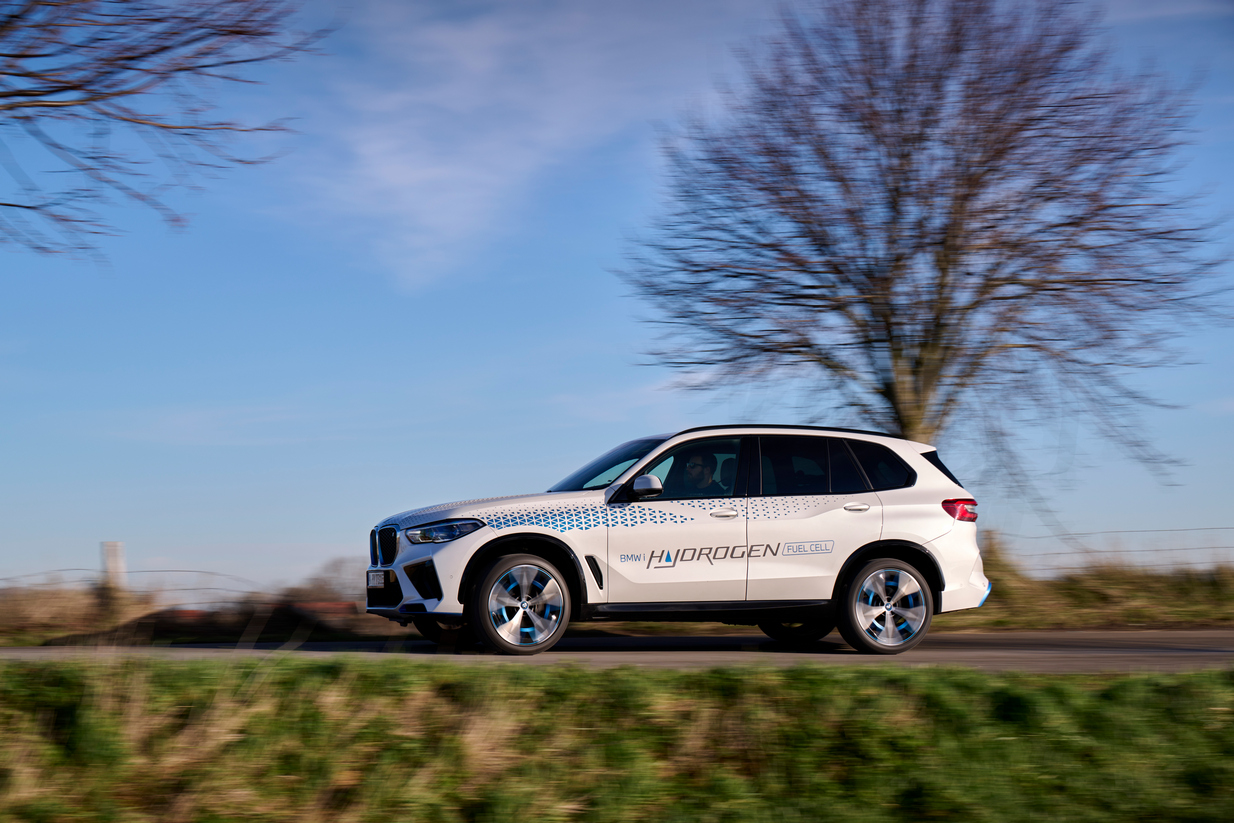
Underneath this BMW X5’s sheet metal hides technology that may be the missing link in the decarbonisation race. In the preview video, Ciro De Siena details the BMW iX5 Hydrogen fuel-cell vehicle; Hannes Oosthuizen drove the prototype in Belgium.
Let’s get a few facts out of the way up front. I am a big fan of battery-electric vehicles (BEVs) – I love the driving experience that they offer, which is characterised by instant power delivery, rapid acceleration and… near-silent running. As a commuter vehicle around the city, I would have one in a heartbeat.
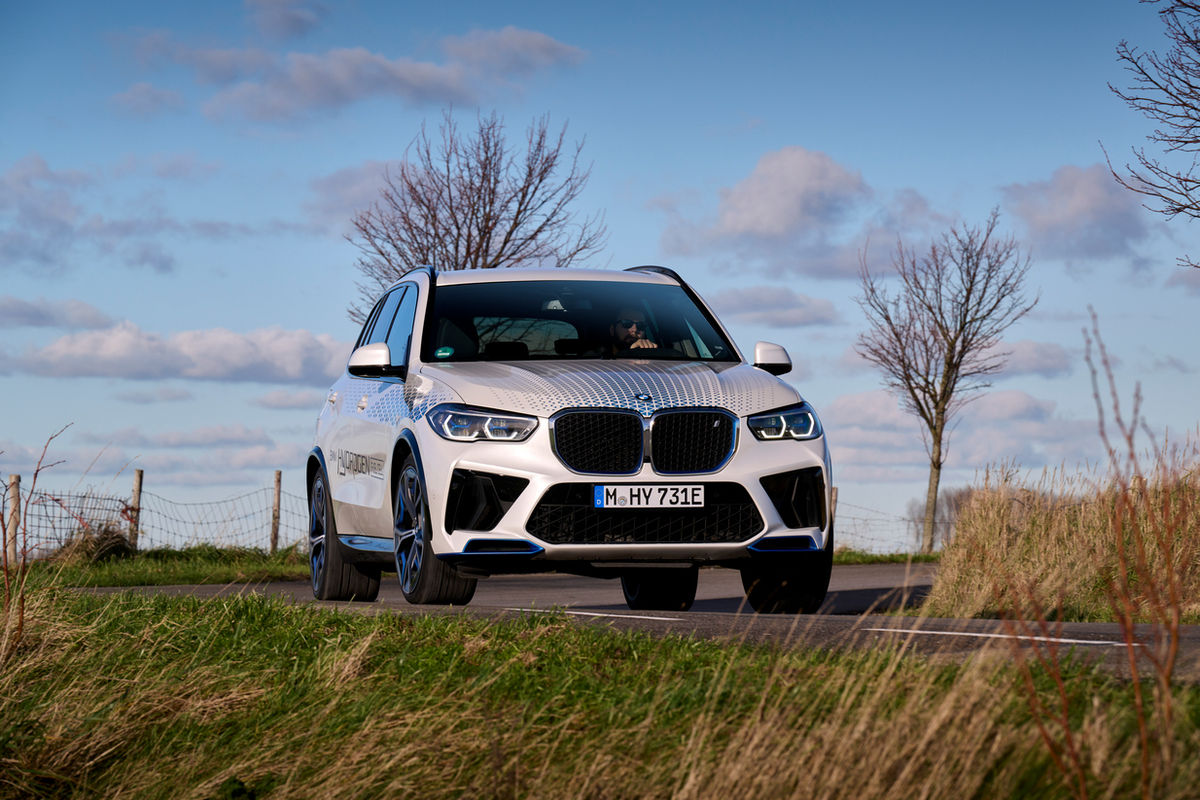
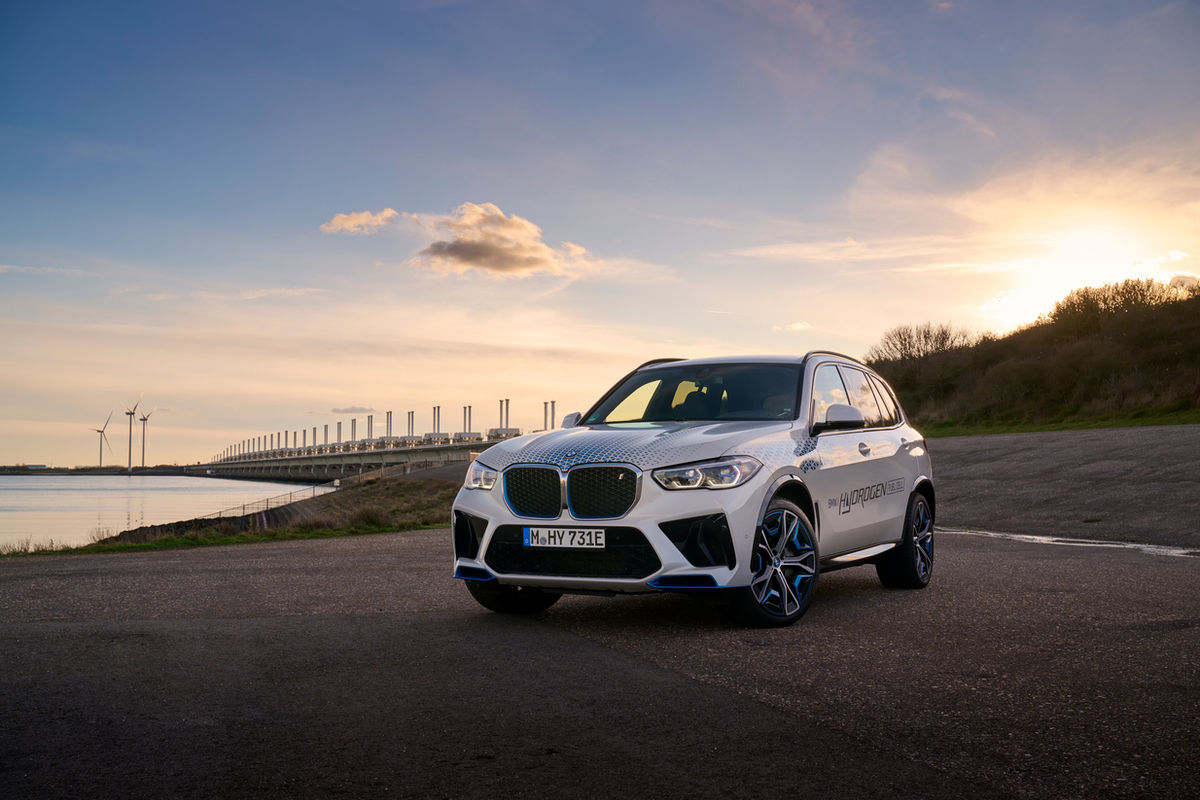
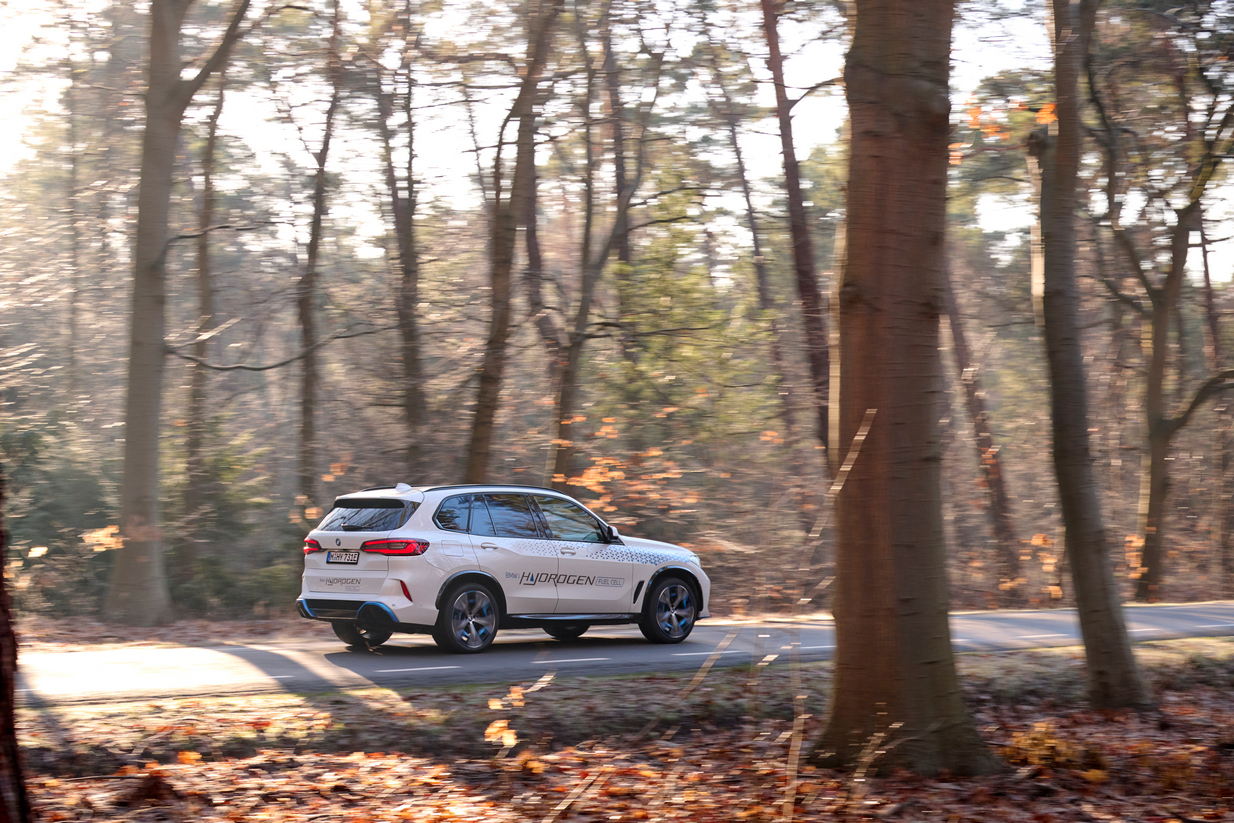
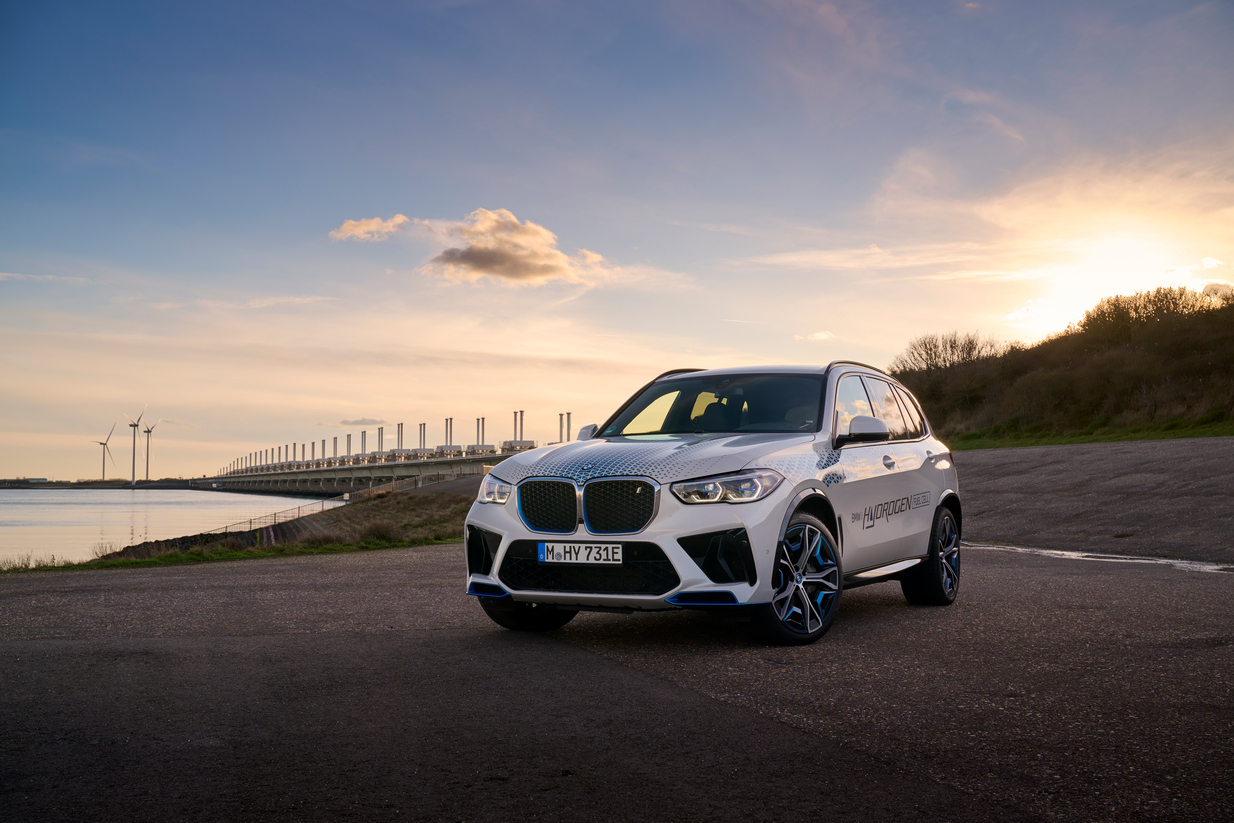
The BMW iX5 Hydrogen looks production-ready, but this version won’t make it to showroom floors.
I also admire the “theory” that BEVs are less harmful to the environment (because they don’t generate harmful emissions), but the reality is that in South Africa, all-electric vehicles are powered by electricity generated by burning coal, which is anything but “clean energy”. And, as much as I appreciate the ever-increasing ranges of EVs, the reality is that – at present – you pay a hefty premium for that tech (thanks, in part, to the Government’s higher tax on battery-electric vehicles). So, for a number of people, EVs are just not practical, but what if you still want to play your part in the efforts to curtail climate change?
Hydrogen is a highly-hyped technology at present, so I arrived in Belgium, where I would drive the BMW iX5 Hydrogen, with a degree of scepticism. After all, BMW has been on-off with hydrogen for decades. Even in Belgium and Germany, where there are a decent number of hydrogen refuelling stations, only 2 brands offer fuel-cell electric vehicles (FCEVs): Toyota (Mirai) and Hyundai (Nexo). Other brands have dipped their toes into hydrogen in the past, but for the moment, most appear entirely focused on BEVs.
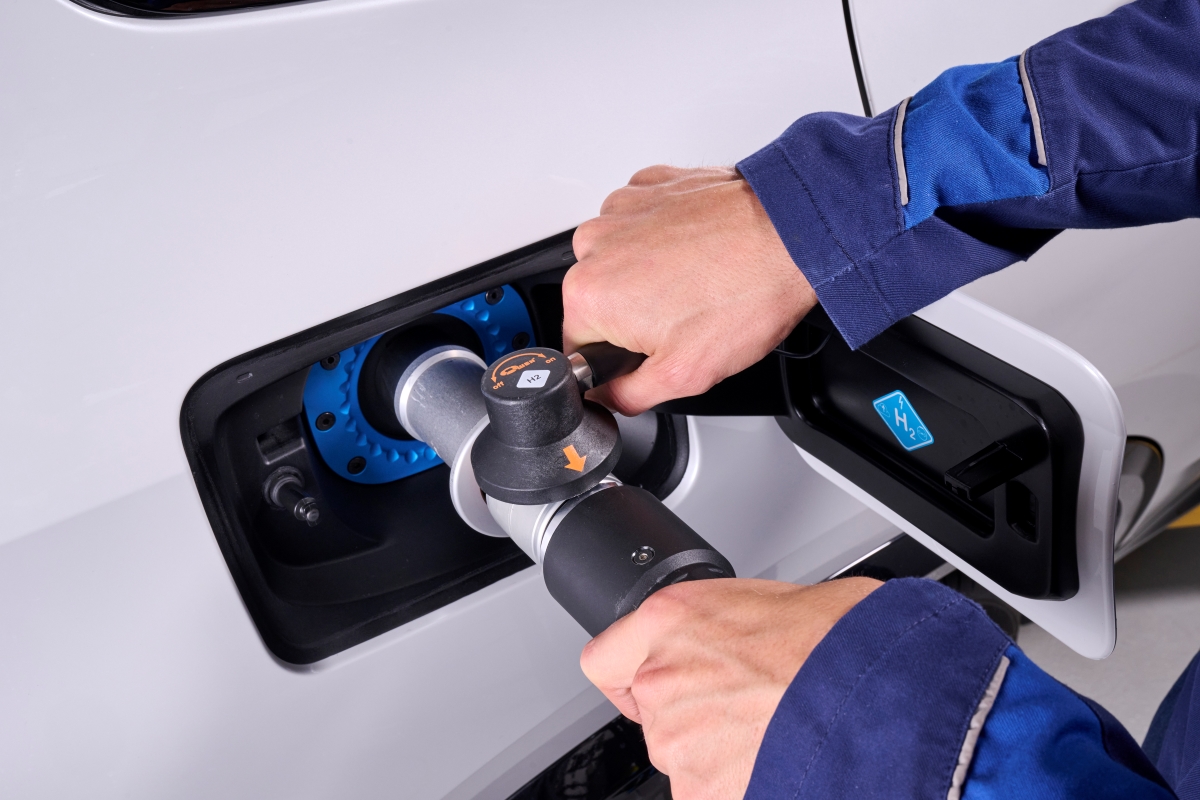
The BMW iX5 Hydrogen is refuelled conventionally at H2 pumps that look much like their petrol/diesel counterparts.
Why is BMW pursuing hydrogen as a solution?
BMW believes that 1 technology alone won’t be enough to achieve “climate-neutral” mobility worldwide.
“Hydrogen is a versatile energy source that has a key role to play in the energy transition process and therefore in climate protection. After all, it is one of the most efficient ways of storing and transporting renewable energies”, says Oliver Zipse, the chairman of the Board of Management of BMW AG.
“We should use this potential to also accelerate the transformation of the mobility sector. Hydrogen is the missing piece in the jigsaw when it comes to emission-free mobility,” he adds.
The BMW iX5 Hydrogen’s driving experience is much like that of a battery-electric vehicle; it’s quick!
Of course, there are some caveats. As is the case with electricity generation, there are “clean” ways to produce hydrogen (called green hydrogen), and ways to produce it that emit carbon dioxide. What’s more, hydrogen infrastructure needs to be created in most parts of the world. In South Africa, there is only 1 hydrogen station suitable to refuel Toyota South Africa’s lone Mirai test unit – in Potchefstroom!
But then there are very persuasive counter-arguments as well. The European Commission’s AFIR (its directive on the deployment of alternative fuels infrastructure) has introduced new rules to ensure the build-up of alternative refuelling points across Europe with common standards for their design and use.
So, what does this mean in practice? Essentially, at least one hydrogen refuelling station must be made available for every 100 km of the TEN-T (Trans-European Transport Network) in the near future. So, the infrastructure will come… It is interesting to note that Germany has more than 100 hydrogen stations already; therefore, owning a hydrogen-fuelled vehicle is a viable option in that country. It just goes to show that when there is political will and decisiveness, things do get moving in the right direction.
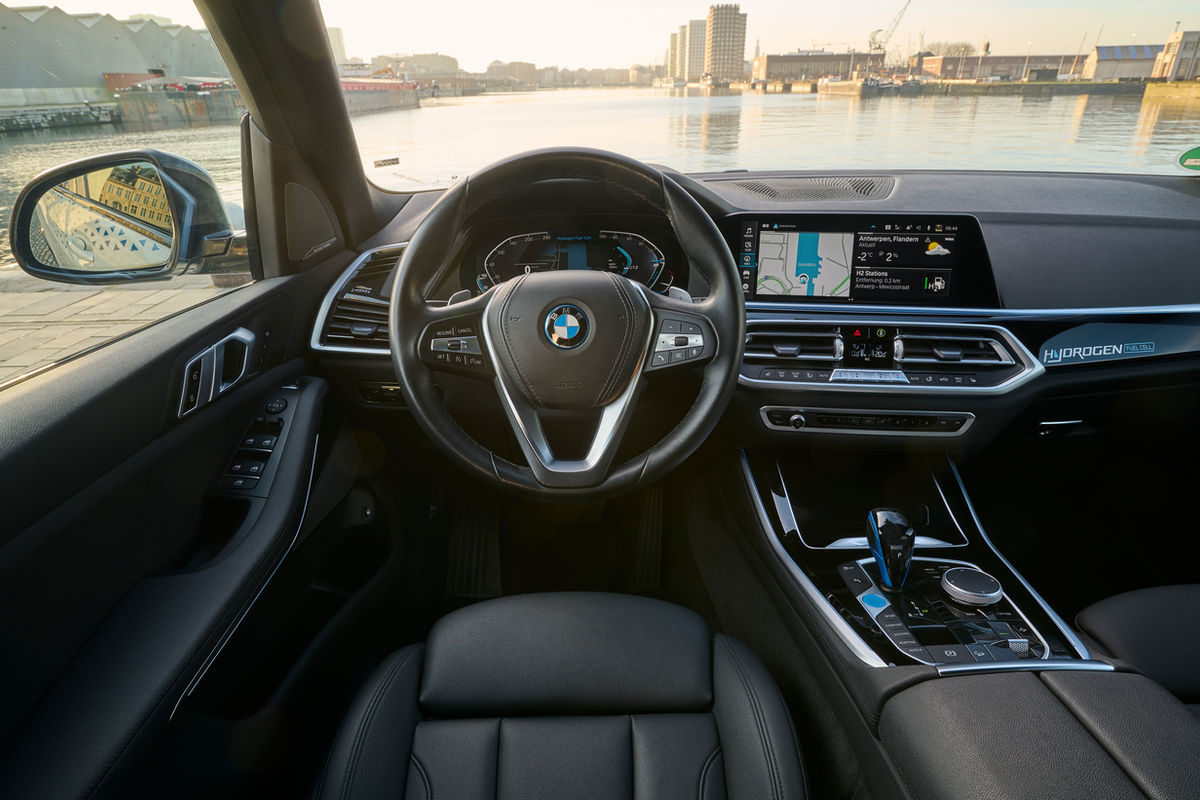
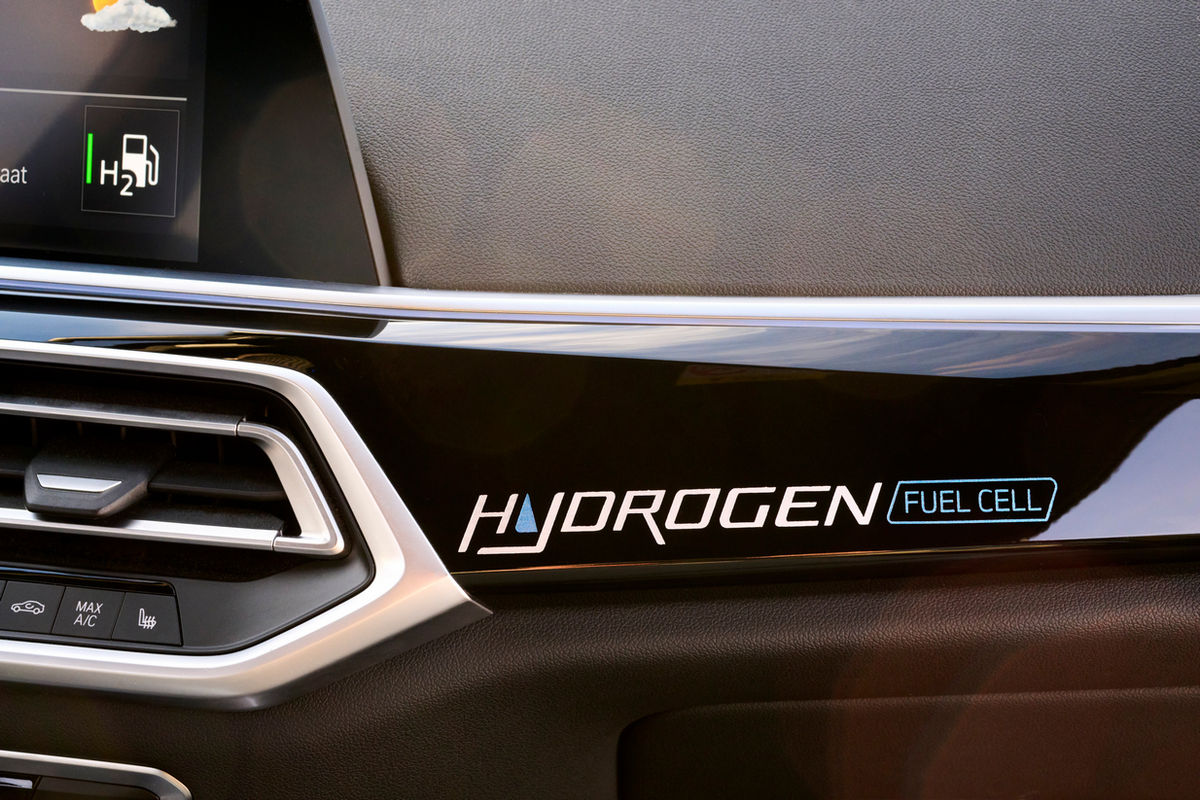
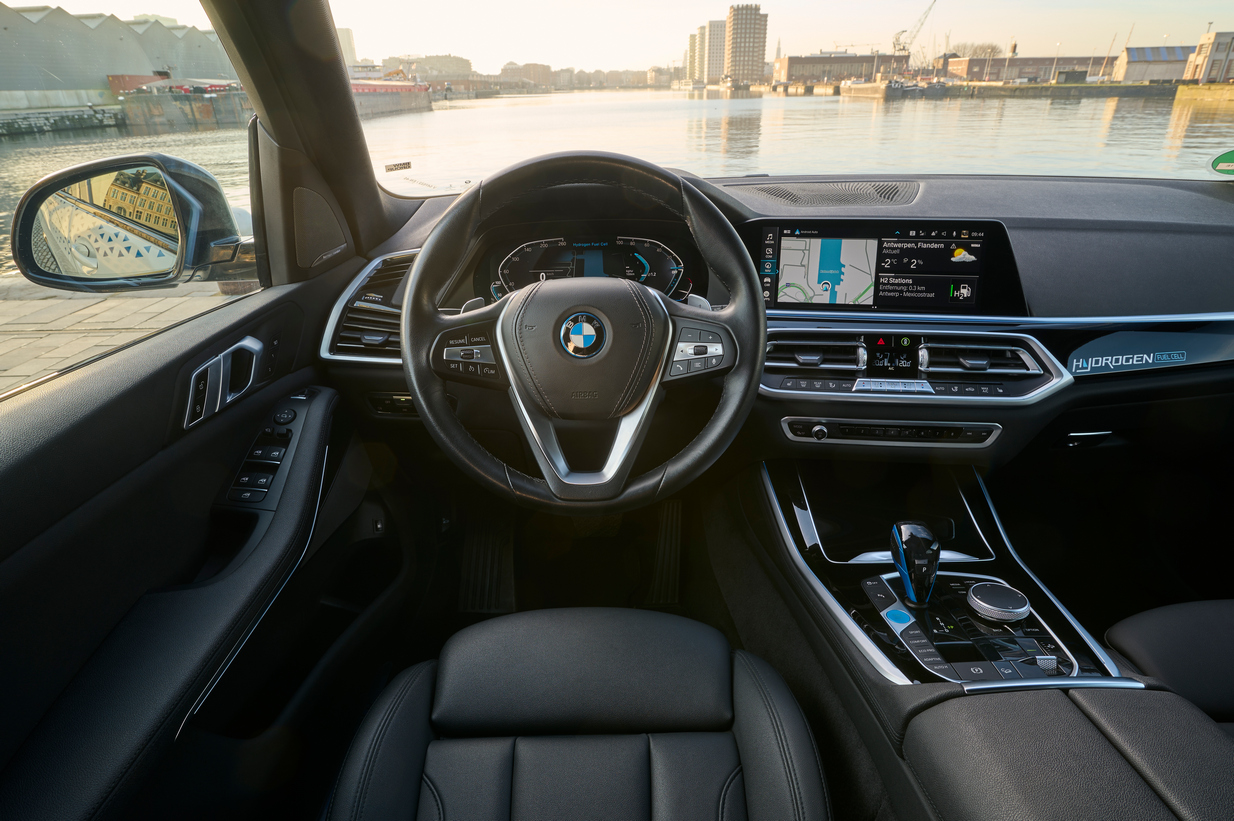
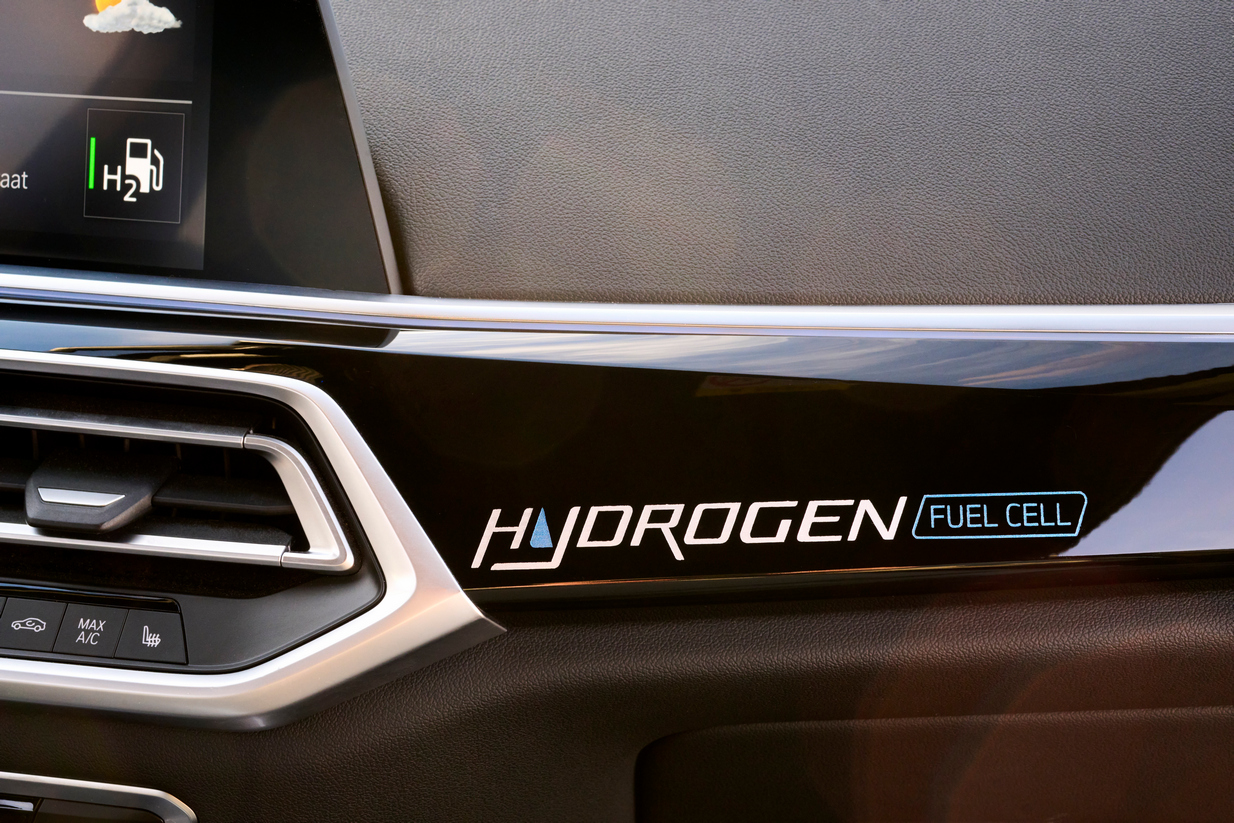
Apart from branding on the fascia, the BMW iX5 Hydrogen’s cabin is near-identical to that of an ICE-powered X5.
What does all of this mean for South Africa? Well, according to Jorgo Chatzimarkakis, who is the CEO of Hydrogen Europe and the man who fights for the hydrogen cause at the highest political decision-making level in the EU, South Africa has been identified as a critical source region, not only for platinum (a fuel-cell component) – but clean hydrogen itself. South Africa has an abundance of sun and wind, which, if harnessed appropriately, could see the Republic become a hydrogen-production hub.
Indeed, Anglo American is investigating setting up a “Hydrogen Valley” with Mogalakwena (Limpopo), Johannesburg and Durban/Richards Bay identified as hubs. In fact, Anglo American is already producing “green” hydrogen in Mzansi and has launched a hydrogen fuel-cell mine haul truck. The benefits of hydrogen as an energy storage medium, compared with, say, a lithium-ion battery, are obvious.
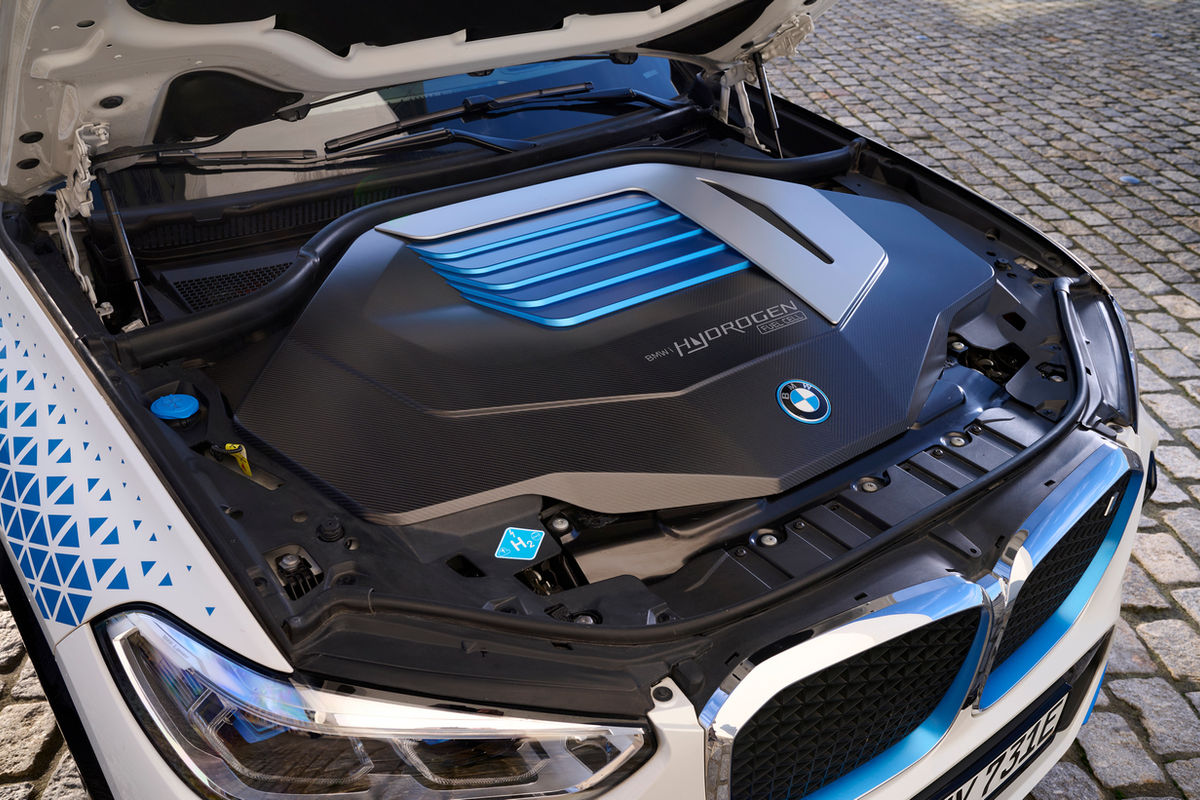
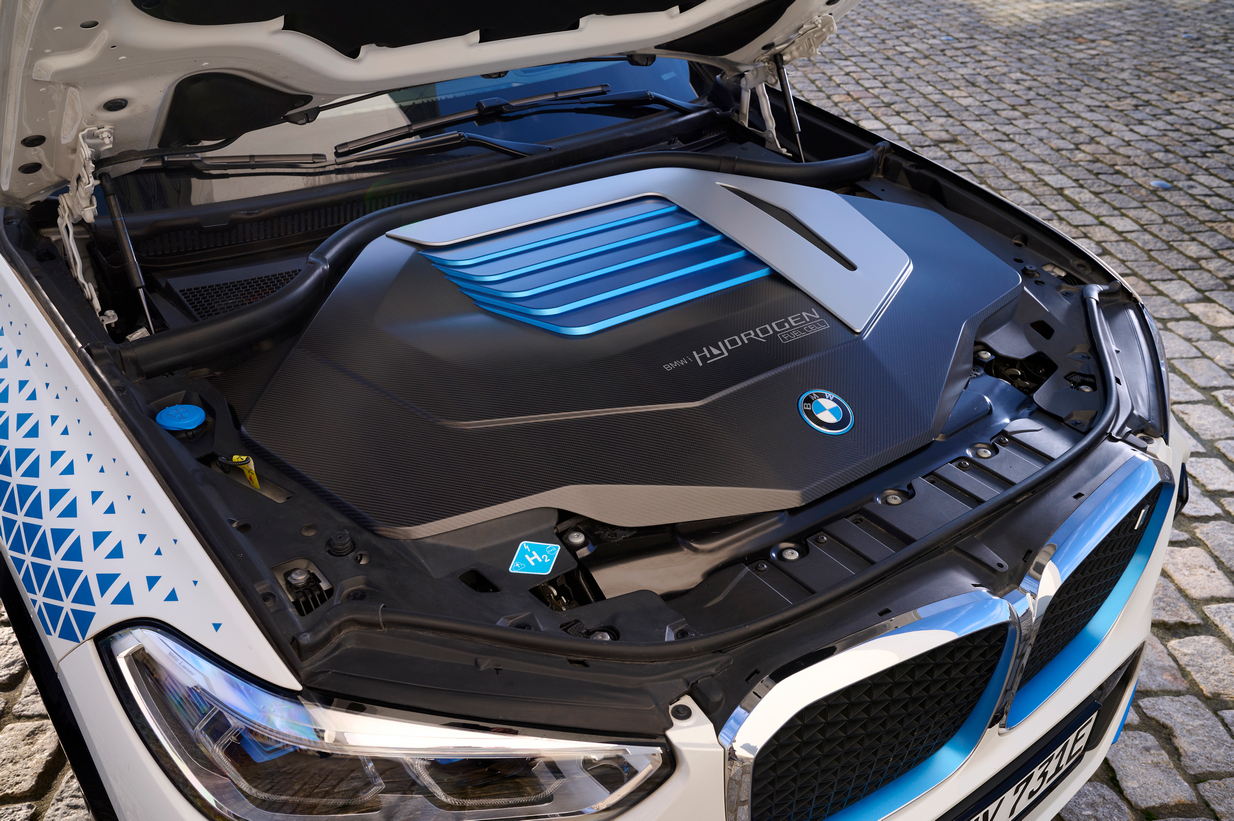
BMW iX5 Hydrogen’s fuel cell is located at the front of the vehicle and it develops 125 kW.
Refuelling a hydrogen-powered passenger vehicle such as the BMW iX5 takes about 5 minutes, and the H2 pump looks much like its petrol or diesel-delivering equivalents. You don’t need special gloves or protective gear. Hydrogen is easy to store and transport. It will likely be more efficient for European nations to import their hydrogen from South Africa, provided ships are powered by hydrogen as well.
Furthermore, transforming a normal petrol station into a hydrogen station is relatively simple and cost-effective, particularly compared with building a new electric charging station/infrastructure. Much of a traditional petrol station can be reused, and the cost is estimated at around €1.4 million (roughly R27 million) per station, though that number obviously depends on the size of the outlet’s forecourt.
The BMW iX5 Hydrogen’s fuel economy is expressed in kg/100 km, as opposed to L/100 km.
And what is the cost of filling up? Well, at the moment the price is not regulated, so in Europe, you are likely to pay anywhere between €10 and €20 (about R195 and R390) per kg.
Another very important benefit of BMW’s two-pronged strategy is that it lessens dependence on only a few critical raw materials. Already there are concerns that Lithium supply will come under pressure as BEVs grow in market dominance. Fuel-Cell passenger cars use (on average) 23kg less critical raw materials (CRMs). As an example, a BEV SUV with a 80kWh Li-NMC battery requires 14.4kg of cobalt and 8.8kg of lithium, compared with 0.27kg and 0.17kg respectively for a FCEV SUV with a 95kW fuel cell and 1.5kWh Li-NMC battery. FCEVs therefore puts far less pressure on supply chains.
The BMW iX5 Hydrogen Fuel-Cell Vehicle
Much like the original electric Mini prototypes were used to gather information prior to the launch of the BMW i3, the Munich-based marque’s iX5 Hydrogen vehicle fleet (of fewer than 100 units) will be used to gather real-world information and to expose decision-makers to the technology. If all goes to plan – and the infrastructure roll-out happens as quickly as predicted – a production vehicle is likely to be launched in the second half of this decade. In all likelihood, it will be a derivative of the next-generation X5.
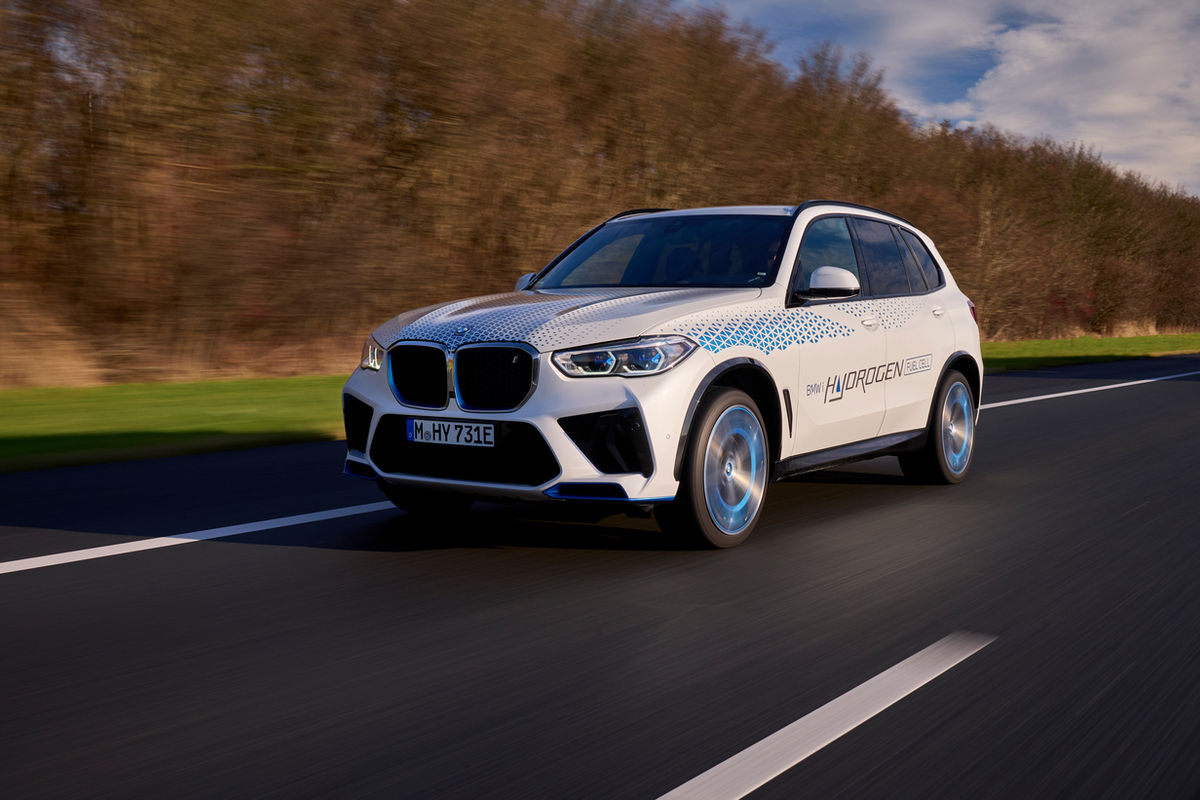
The BMW iX5 Hydrogen may come to fruition, but only as a derivative of the next-generation X5 model.
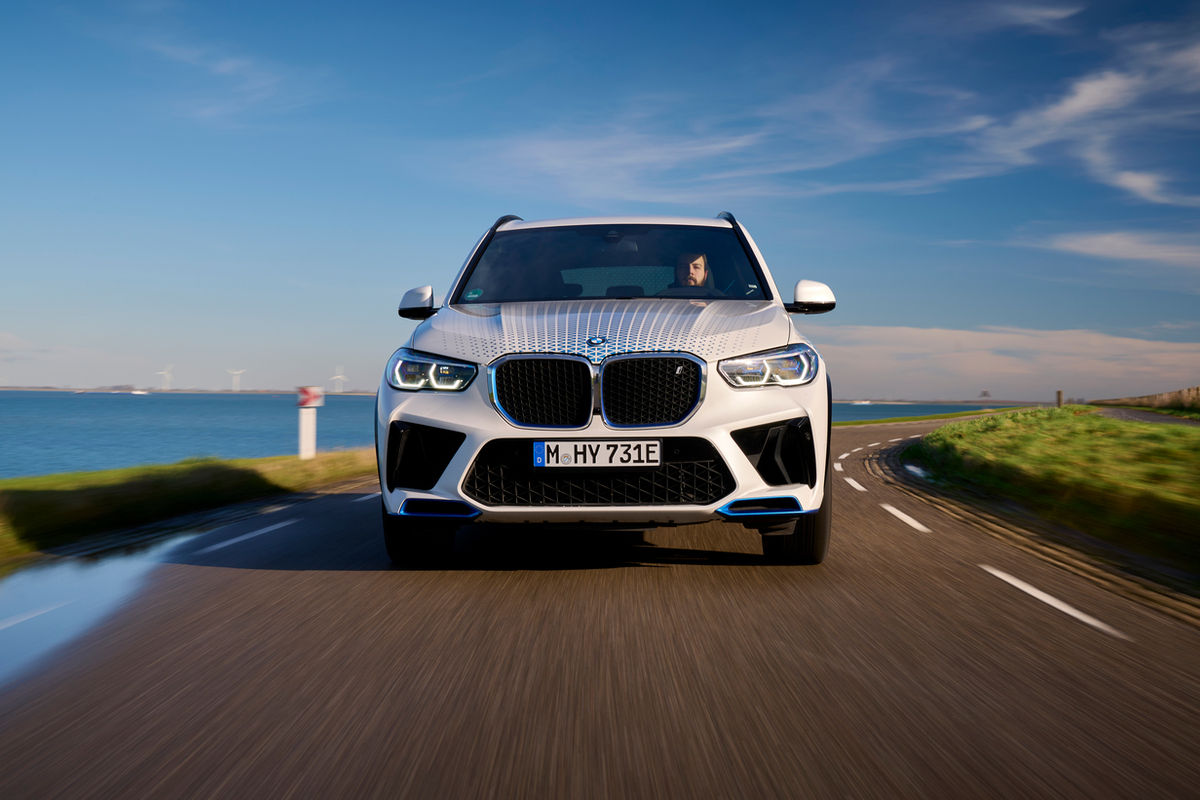
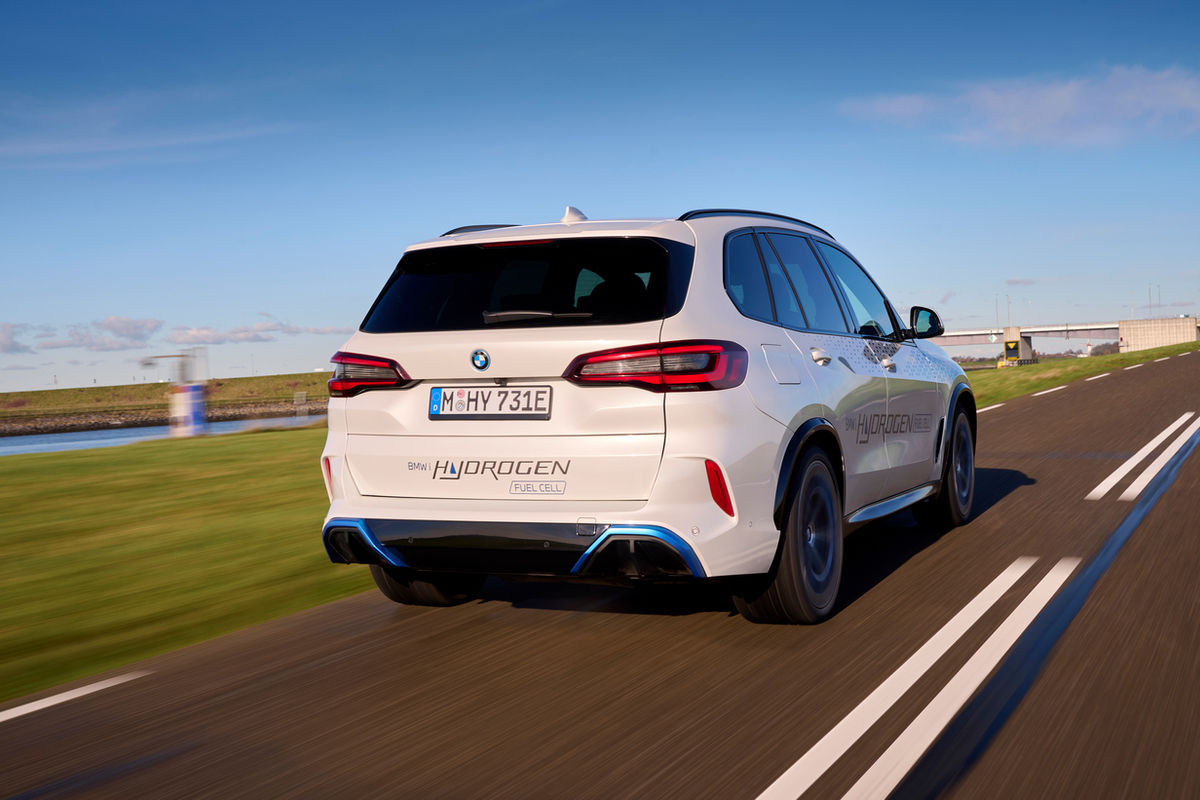
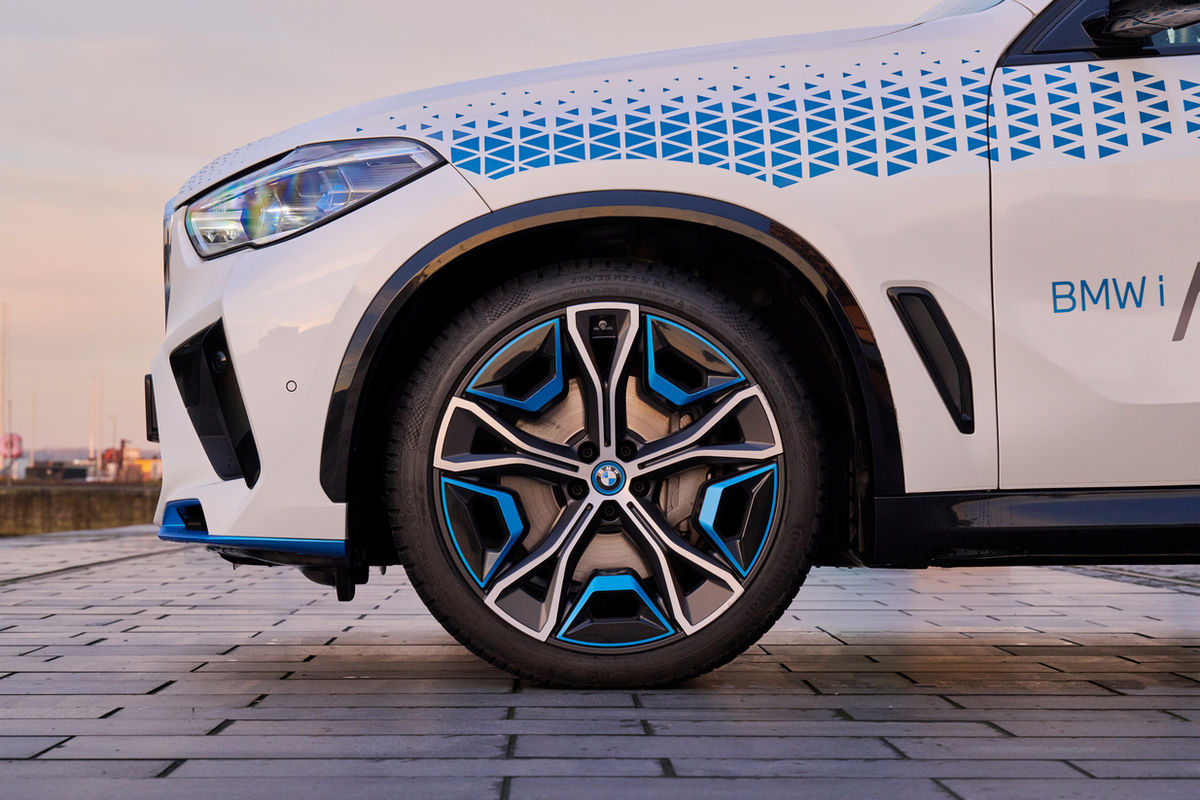
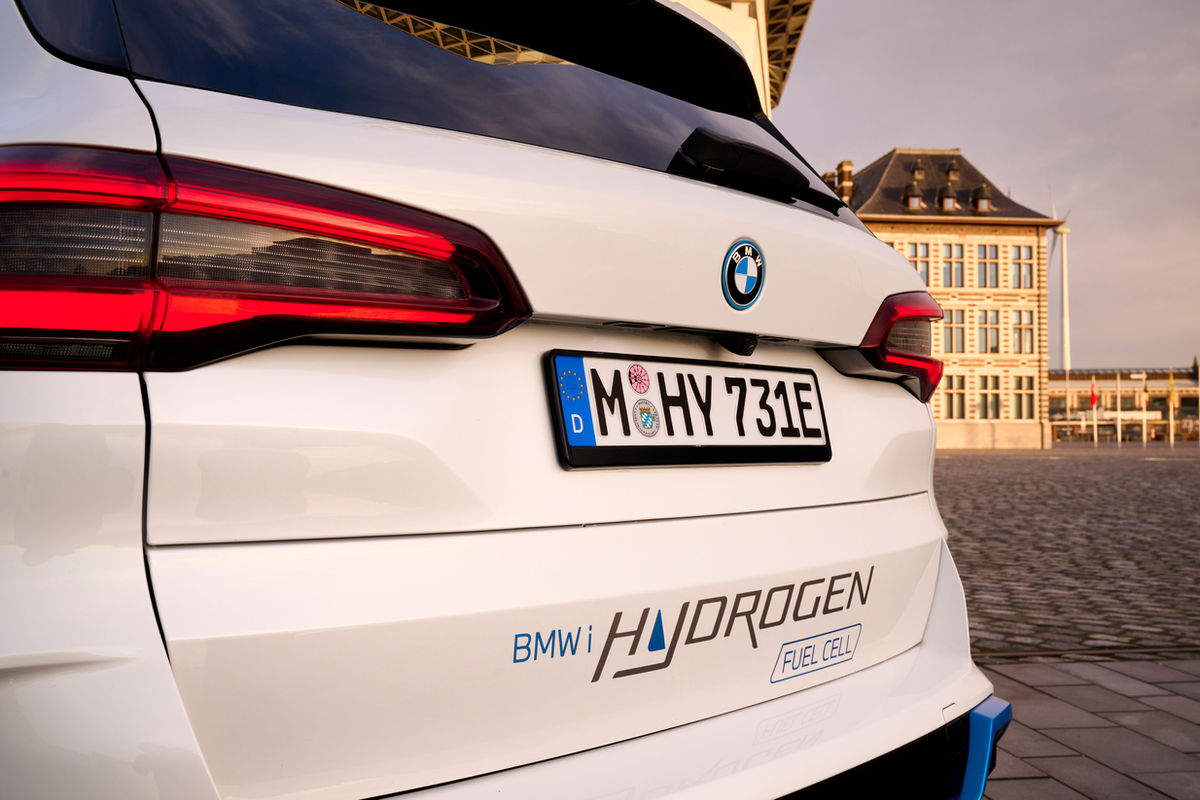
There is precious little to distinguish the iX5 from an X5 derivative powered by an internal combustion engine (ICE), but eagle-eyed observers will notice that the grille is ever-so-slightly different and that the exhaust exits about a metre before the rear axle (you’d have to crouch down to see that). Of course, the numerous blue design details and special tyres (made from recycled materials) are more obvious clues.
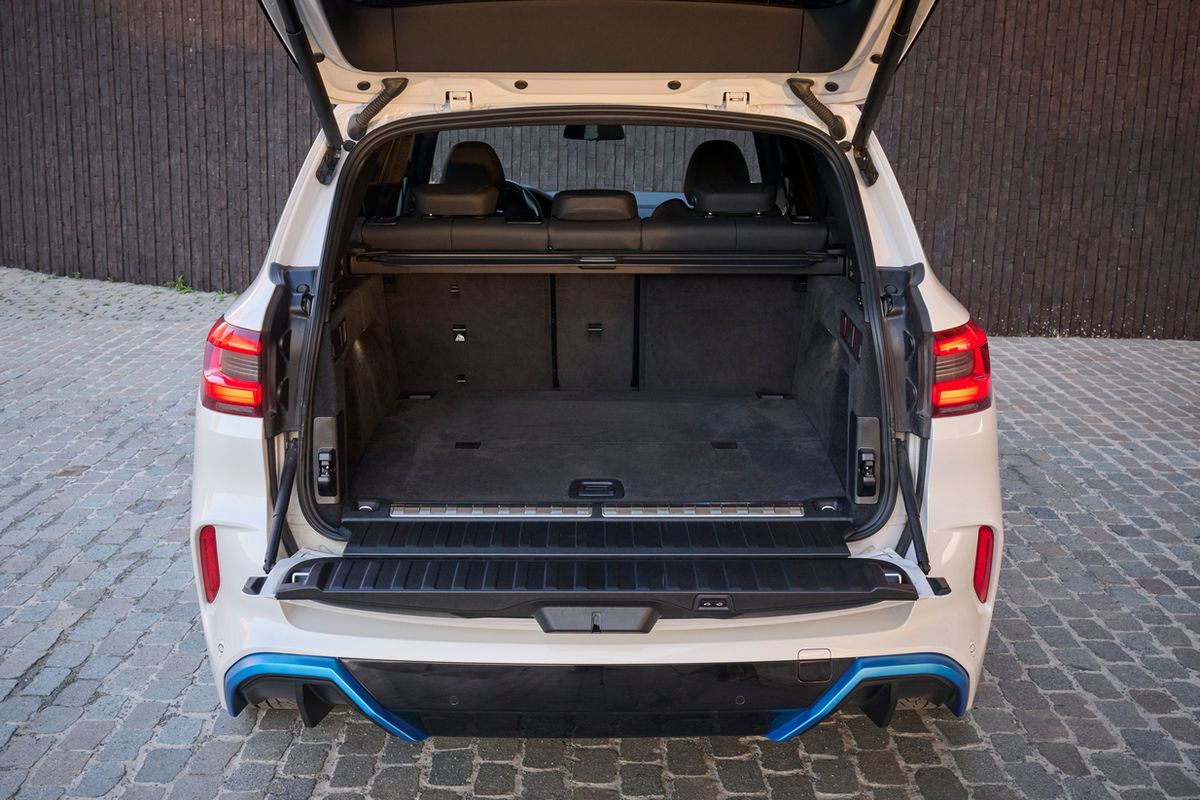
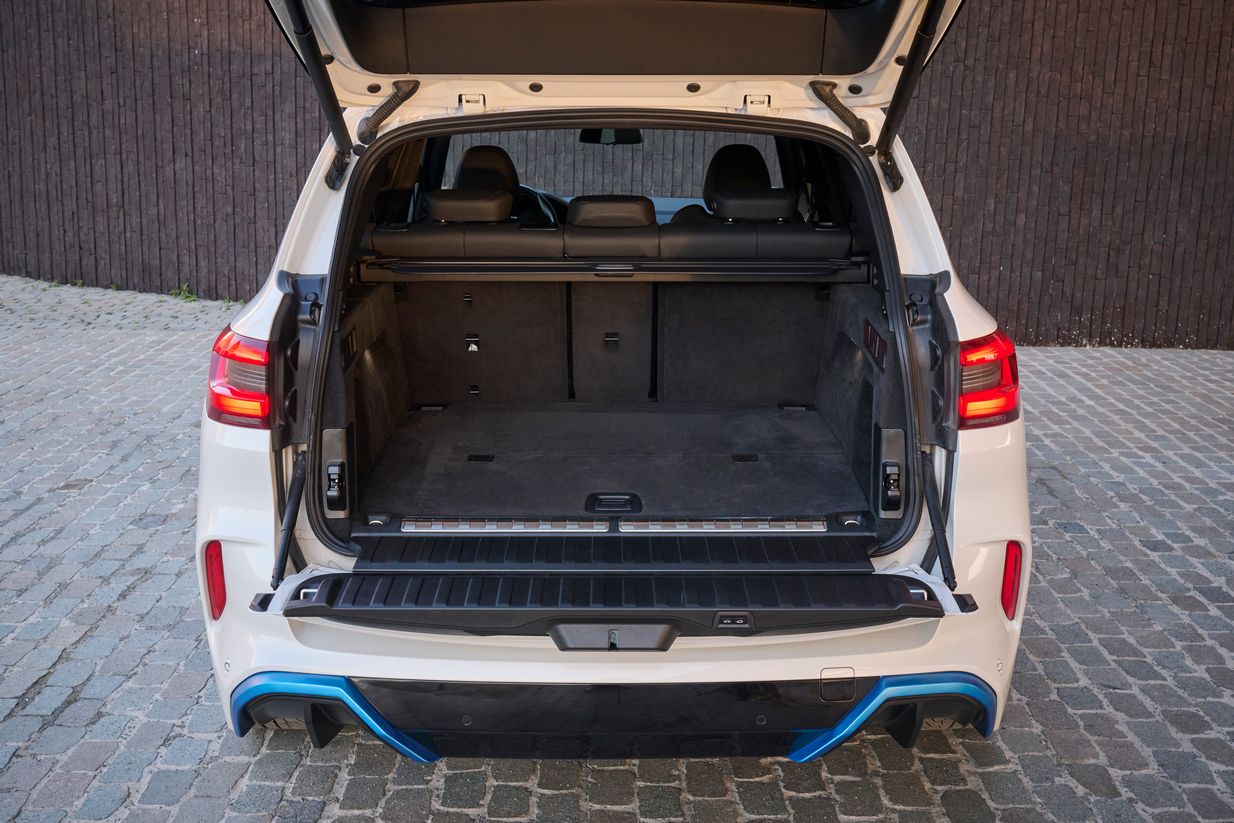
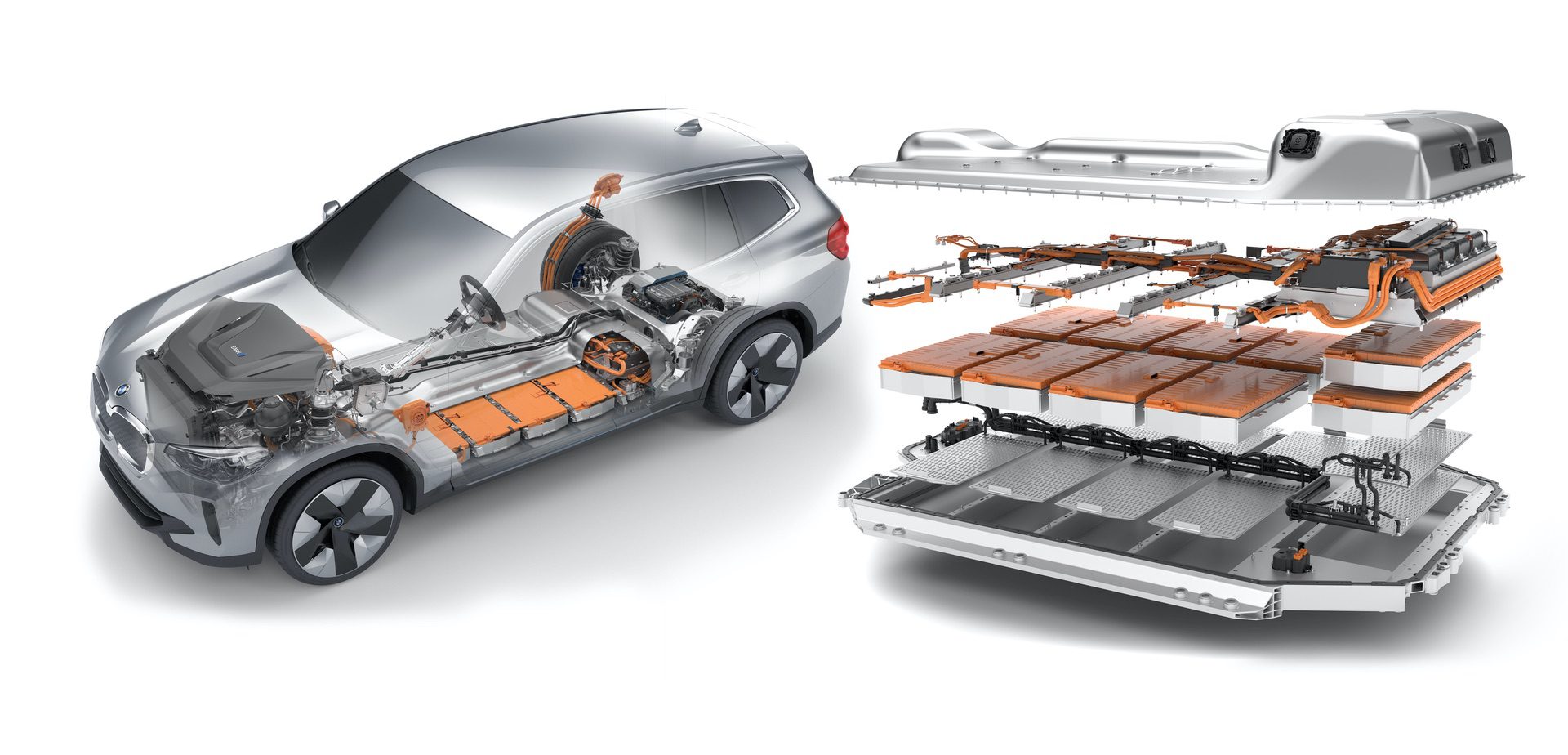
Interestingly, BMW has fitted the hydrogen fuel-cell drivetrain in the X5 without any impact on its cabin space. The load bay has exactly the same luggage capacity as before, and the secondary hydrogen tank is positioned neatly in the transmission tunnel. Speaking of which, the iX5 has a pair of hydrogen tanks with a combined capacity of 6 kg. The hydrogen fuel cell is mounted at the front and, at the rear, you’ll find the same electric motor and battery as in the BMW iX. Not only does the fuel cell power the wheels – it also feeds into the battery pack; as a result, you’ll never have to “plug in” the iX5 Hydrogen anywhere.
The BMW iX5 Hydrogen does not necessitate compromises in terms of load bay packaging.
BMW gets its fuel cells from Toyota – its long-standing technical partner – but the rest of the drivetrain is proprietary. How does it all work? A chemical reaction takes place in the fuel cell between gaseous hydrogen (from the two 700-bar tanks, made from carbon-fibre-reinforced plastic) and oxygen from the air. The fuel cell delivers 125 kW, while the e-motor adds a further 170 kW, for a total output of 295 kW.
295 kW on tap – 0-100 kph in under 6 sec
All of this means the iX5 Hydrogen’s driving experience is akin to what you would experience in an electric X5 – there’s quick acceleration (BMW claims the prototype will zoom from 0 to 100 kph in less than 6 seconds and go on to a top speed of in excess of 180 kph). It’s no slouch – that’s evident; one could be forgiven for thinking you are at the ‘wheel of a conventional battery-electric vehicle. There is no noise, the responsiveness is great and what comes out of the exhaust pipe is water vapour and hot air.
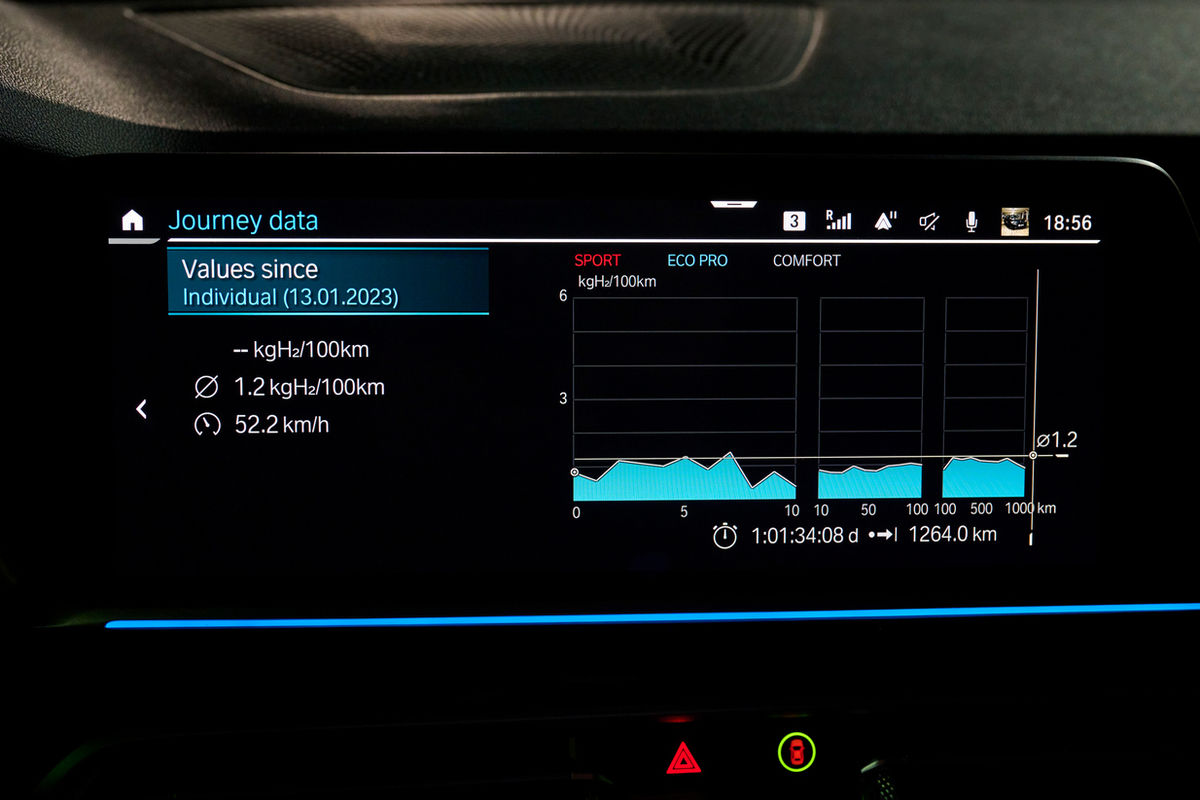
It takes approximately 5 minutes to refuel the BMW iX5 Hydrogen; we achieved 1.4 kg/100 km on the test route.
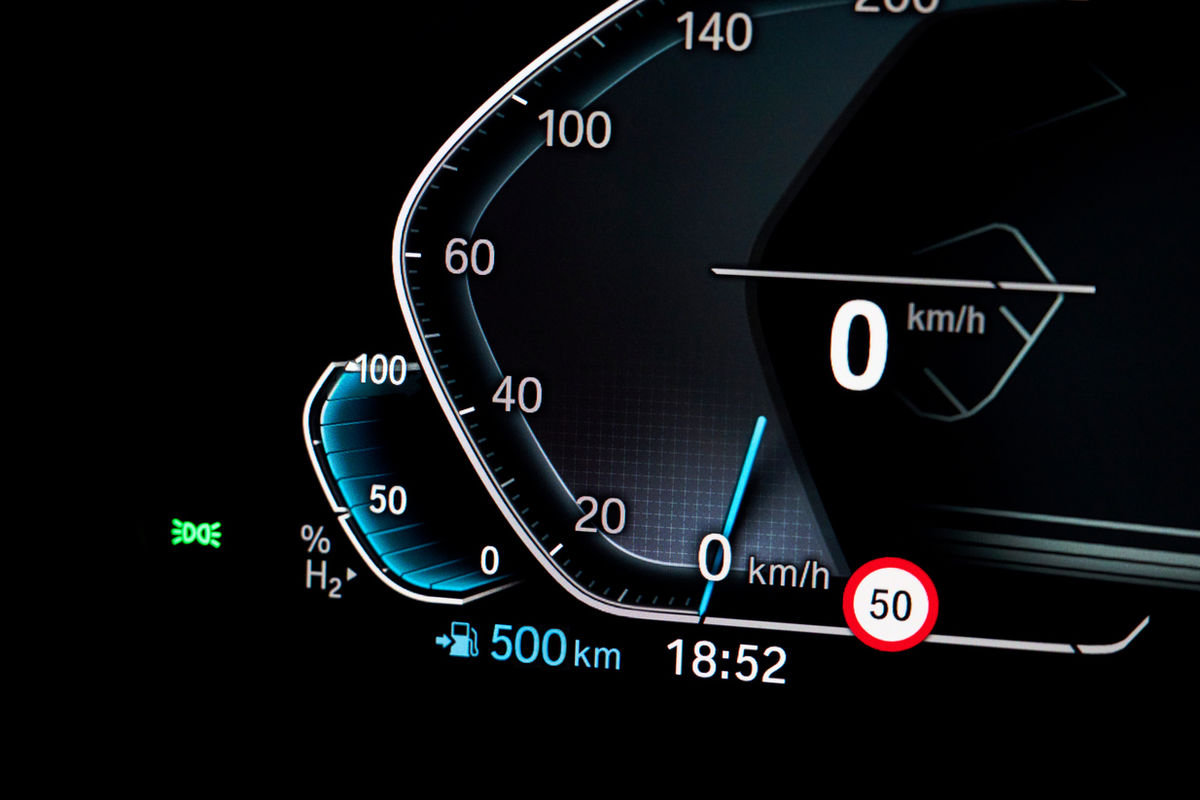
In fact, there is nothing about the car that suggests it is a prototype, even the instrumentation has been updated to show consumption in kg/100 km. I achieved 1.4 kg/100 km on our test route, which included a lot of stop/go traffic and some highway cruising. Still, BMW is adamant this SUV will never be produced.
And what about costs? According to BMW, a hydrogen-fuelled X5 like this should cost about the same as a battery-electric vehicle of a similar size. As hydrogen becomes more readily available, refuelling costs are likely to come down as well, but as things stand (late February 2023), it would cost approximately R1 170 to fill the iX5’s 6-kg tanks. The range is just over 500 km when fully fuelled. A petrol-fed BMW X5 has a tank capacity of 83 litres, which would cost about R1 745 to fill (calculated at R21.03 per litre). So running costs will be in the ballpark, but bear in mind that there are far fewer service items on an FCEV…
BMW iX5 Hydrogen might be a prototype, but its technology may come to market in the second half of the decade.
Summary
BMW says that the FCEV is not a replacement for the BEV and that it will continue to offer models of the latter in the future. However, BMW believes hydrogen provides the “second leg of its alternative energy strategy” and that it will appeal to consumers who drive very regularly, who don’t have easy access to public charging facilities, who often tow trailers and who live in cold-climate countries. As I drove around Antwerpen with the BMW iX5 Hydrogen, I couldn’t help but wonder whether this is not indeed the “silver bullet tech” we’ve hankered for. After all, it can power trucks, ships and trains, plus it’s cost-effective. The new tech is safe (BMW has performed numerous crash tests and fire exercises). And… maybe, just maybe, it could be the tech that accelerates our own country’s energy transition. I’m holding thumbs!
Green hydrogen could save South Africa’s car industry
Green hydrogen has huge potential to power future vehicles. And South Africa could produce a lot of it. But would you drive a hydrogen-powered car… or bakkie?
For decades, the theory behind having a great automotive engine, was to have one that could contain the biggest possible bang.
Although hybrid/EV batteries are improving, liquid fuel still has superior energy density. But curiously, the specific liquid fuel that produces the biggest bang of all – hydrogen – is underutilised.
Don’t ever listen to any automotive powertrain debate without a degree of scepticism. Whether it’s the diesel lobby, battery-electric vehicle evangelists, e-fuel believers, or advocates for hydrogen. All engines, motors and energy sources incur an environmental cost.
Does South Africa need battery packs for energy storage, or to power luxury cars? That’s the question!
The fallacy of BEVs and a coal-powered electricity grid
South Africa isn’t ripe for the automotive powertrain and fuel-source transition. The Republic’s electricity supply is a heavily politicised crisis and it’s unfathomable that South Africa could prioritise and allow the required incentives to allow 20% of the local car market to comprise battery-electric vehicles (BEVs).
To put it frankly, German premium brands have fudged domestic BEV sales statistics, which look impressive but stem from a laughably low base. The truth is that a few hundred costly electric cars, with massive battery packs, make absolutely no difference to South Africa’s climate change destiny.
BEVs can’t work in a market where driving distances are significant and electricity generation is crippled. Arguments against incentivising BEVs are entirely valid in South Africa – our public recharging network is simply too dependent on electricity generated from burning coal. All available electricity generation and distribution, including all new builds, must be directed towards eradicating load shedding – not charging the 100kWh battery pack of a luxury BEV in the Karoo (on a sojourn from Gauteng to the Western Cape).
But what if South Africa has the potential for a low-emissions alternative fuel source? One that uses the element that can create quite a big bang, as evidenced by the largest artificial explosions in history: H2.
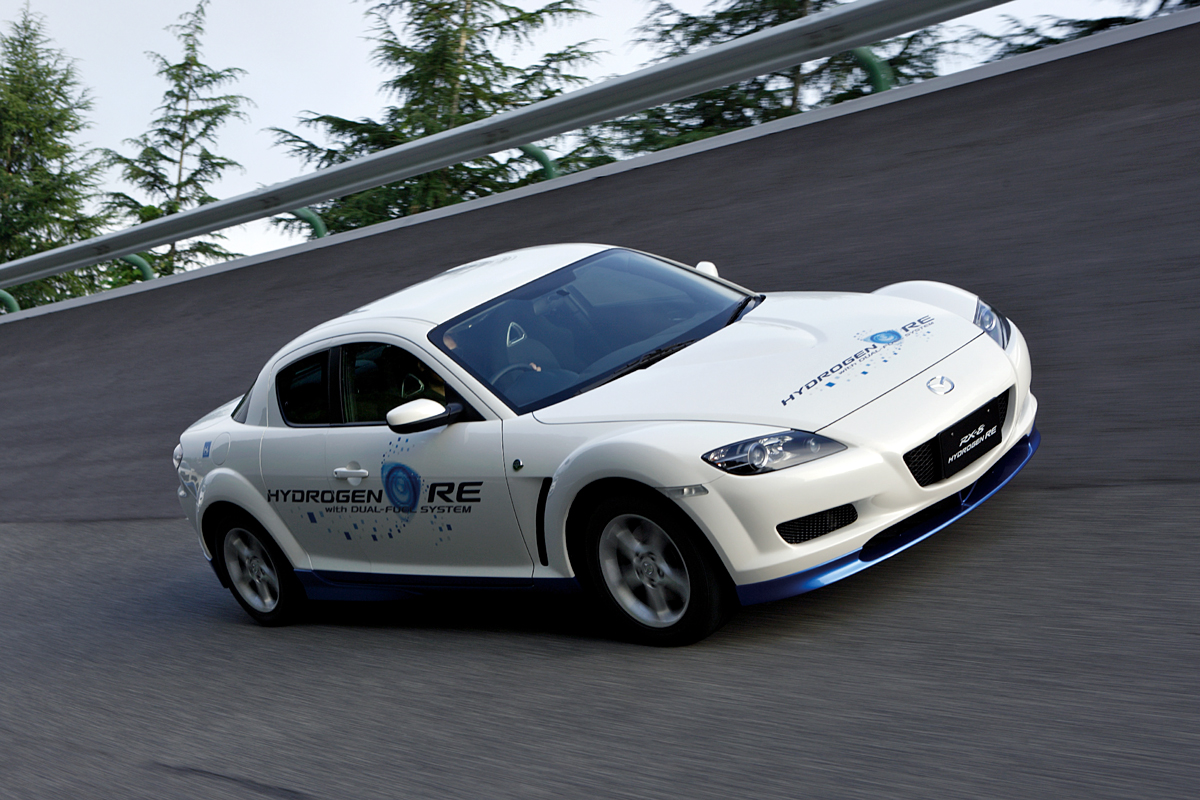
The hydrogenised RX-8 had half the power of its petrol siblings, but used the same Wankel rotary engine tech.
Eskom is in crisis, but Sasol has a hydrogen business
Hydrogen has terrific energy density, it doesn’t emit carbon when combusted and, best of all, South Africa is good at making it.
The South African hydrogen industry has a similar natural resourcing logic to sustainable energy solutions for the electricity crisis. Engineers and hydrogen strategists believe the Northern Cape’s enormous solar and wind energy potential can be harvested to produce green hydrogen. The technical feasibility of using the Northern Cape’s wind and solar energy to produce green hydrogen is more viable than linking sustainable power sources to alleviate the much-publicised (and -lamented) Eskom crisis.
As the country’s electricity disaster has become more transparent, grid capacity is the low ceiling to sustainable electricity capacity ambitions. But for green hydrogen, it would be different. You don’t need to wheel or network the electricity a Northern Cape solar or wind farm generates to power a green-H2 refinery in Gauteng. Creating green hydrogen would be localised, on-site, at the solar or wind source.
And it works. Already. Few wheeled vehicles work harder or need more energy than a mining ore truck. Anglo-American has piloted a very successful conversion of some South African mining trucks in its fleet from diesel to fuel-cell hydrogen. And those trucks are fuelled by hydrogen produced on-site.
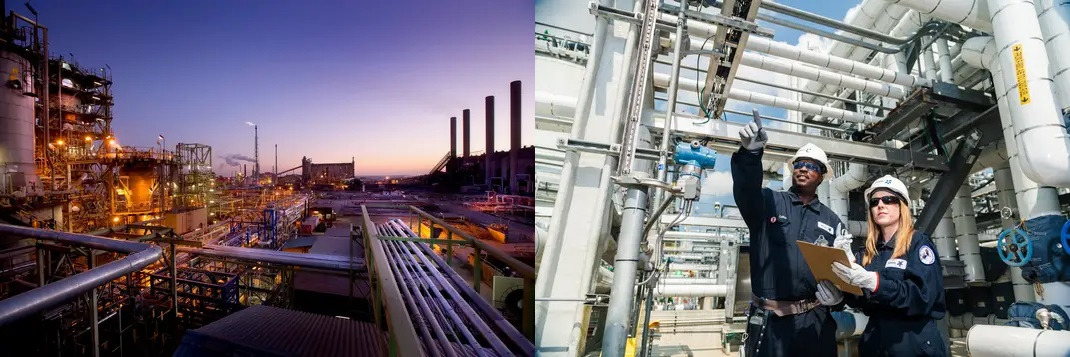
Sasol has enormous chemical engineering capacity. And very skilled people.
Then we have Sasol. One of the world’s most regarded petrochemical companies, and one created to facilitate liquid fuel independence for South Africa.
The Fischer Tropsch processing Sasol uses to make liquid fuels from coal, produces hydrogen as a by-product. It’s mostly “grey” hydrogen, but to make it “green’” Sasol needs to reconfigure its foundational electricity supply towards sustainable sources – which it is doing.
Globally, very few companies or countries can rival Sasol’s Fischer Tropsch chemical engineering and refining capacity, which gives South Africa a telling first-mover advantage with hydrogen.
Sasol is a private company with shareholder interests and a profit motive. It also has excellent technical expertise. It is, quintessentially, everything that Eskom is not. Sasol’s interest in producing hydrogen as a fuel source for South Africans has more viability than Eskom returning to 85% electricity dispatchability.
A hydrogen-powered car (with a fuel cell or an internal combustion engine) is refuelled in much the same way as a petrol/diesel car.
Fuel cells or not?
If we can produce the fuel, which cars would be part of South Africa’s green hydrogen vehicle future? The market for hydrogen-powered vehicles is quite narrow.
BMW, Honda, Hyundai, and Toyota produce hydrogen powertrain models. But they are rare. And their sales distribution is beholden to hydrogen fuelling infrastructure.
The current hydrogen vehicles from legacy car manufacturers are fuel-cell vehicles, where compressed hydrogen gas reacts with oxygen to generate electricity. These hydrogen fuel cell BEVs offer running costs that are, on average, about two-thirds of an equivalent petrol or diesel vehicle.
Bakkies could have the ground clearance and structure to make hydrogen powertrain packaging the most viable.
The hydrogen NOx issue
But could South Africa’s true green hydrogen fuel destiny be an application beyond fuel-cell electric vehicles (FCEVs)? As it happens, diesel engines are highly compatible with hydrogen fuel. Advances made during the last two decades with direct-injection technology and fuel atomisation, make hydrogen feasible as a diesel or petrol substitute in traditional reciprocating engines.
Hydrogen has an energy density nearly 3 times that of diesel, which makes it a very attractive liquid fuel source for internal-combustion engines.
The risks are low. Leaning fuel-air mixtures for hydrogen reduces the risk of engine knock. Carbon and particulate emissions are between zero and negligible, but burning hydrogen as a diesel-fuel substitute can trigger substantial NOx pollutants. These are effectively nullified by after-treatment systems, much like catalytic converters work in current engines.
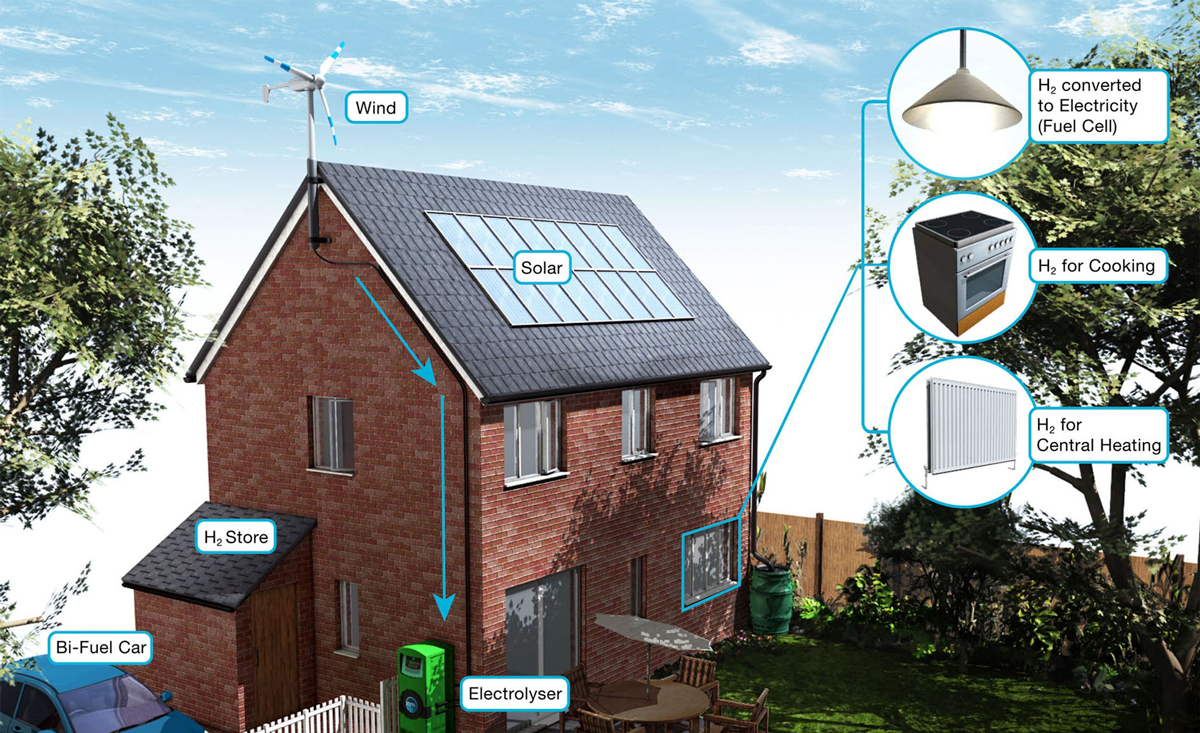
A home equipped with its own mini hydrogen production plant? Why not?
Diesel engines on hydrogen?
As far as future BEV production and consumerisation are concerned, the South African Government’s department of trade and industry has an alarmingly absent policy framework.
But imagine if we could hydrogenise the country’s existing diesel engine production? Bakkies are essentially the most important vehicles on sale in South Africa – and most of them have diesel engines.
The tooling, machining skills and supply chain all exist for localised legacy diesel engine production. And best of all, the metals required to create catalytic converters and aftertreatment systems for hydrogen-powered internal-combustion engines are readily available.
Platinum is what you need… and South Africa is the world’s biggest supplier of that precious metal!
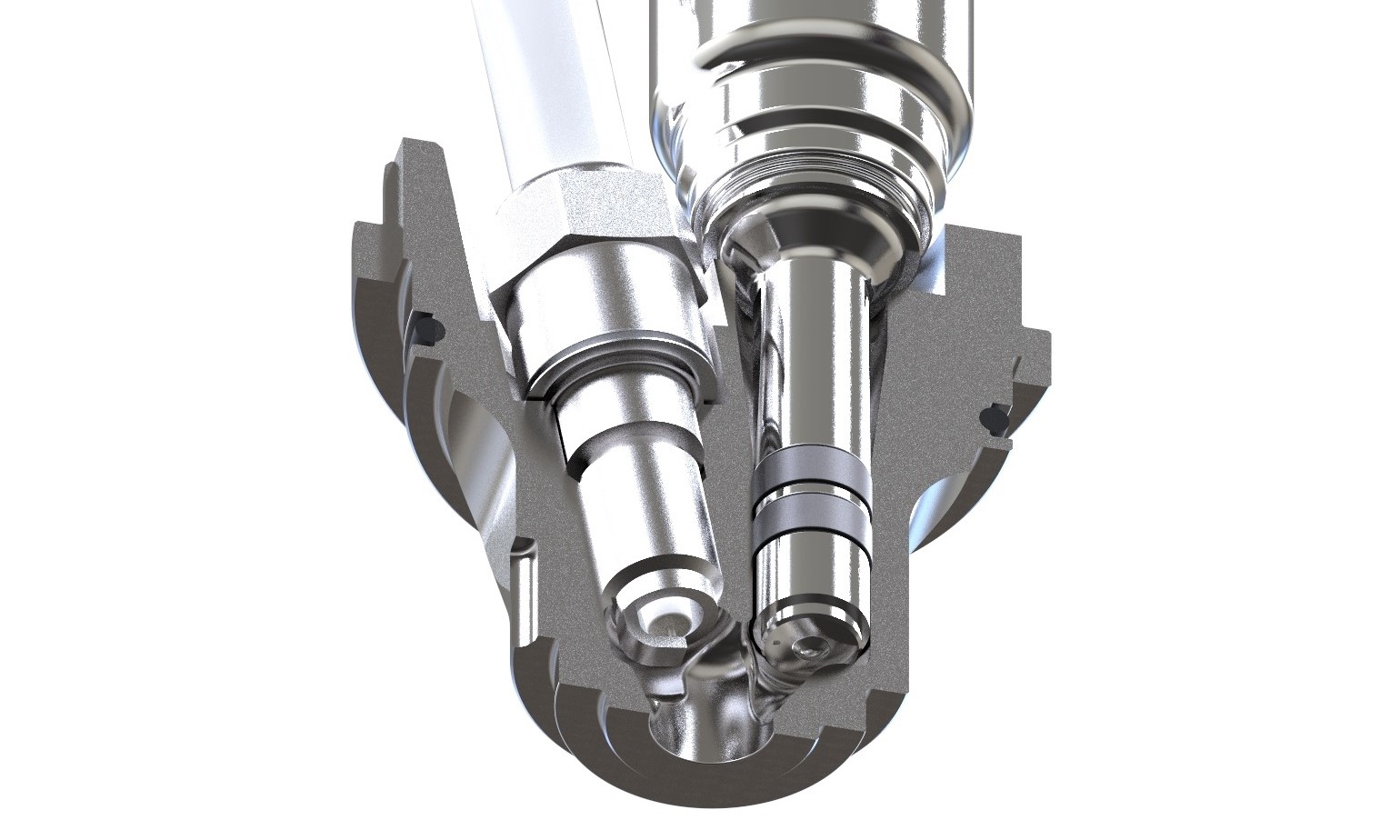
This is the Mahle Jet Injection system, in which the pre-chamber mixes hydrogen and air, allowing for high-compression ratio use.
We’re nowhere battery-wise… but could be with green hydrogen
South Africa won’t become a producer of scaled battery packs for BEVs. We might have the required raw materials, but the Asian advantage in assembly and labour skills for battery production is unassailable.
What South Africa does have, thanks to Sasol and Northern Cape solar, is a potentially easy win in hydrogen production. Fuel refining has always been decentralised; the provinces that don’t have refineries rely on trucked fuel. Hydrogen could be distributed from the Northern Cape to everywhere.
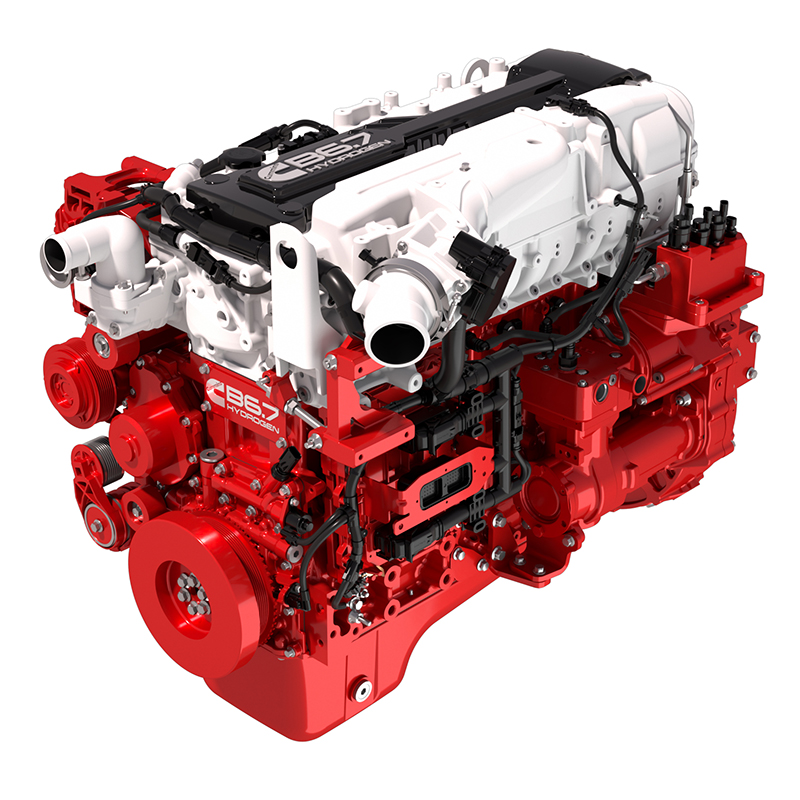
The Cummins hydrogen internal combustion engine is virtually indistinguishable from its diesel twin.
ICE hydrogen works!
Cummins has previewed an internal-combustion hydrogen engine, validating the technology. The B6.7H is a 6.7-litre inline-6 hydrogen engine, good for 216 kW and 1200 Nm. It’s heavy, at 485kg, but that’s still lighter than the equivalent battery pack you’d need to power a high-output double-cab BEV bakkie.
A benefit of hydrogenising existing diesel engines (powered by green hydrogen) for the local market, is the reduction of scarce material usage. All South Africans can agree that available battery metals and elements should be used for electricity storage to balance the grid, instead of powering luxury BEVs.
Internal-combustion hydrogen engines are a lot less efficient than BEVs or FCEVs. This is a fact. But South Africa has a clean electricity sourcing problem. And lots of hydrogen potential. Those 2 realities could invert the alternative fuel fleet logic towards internal-combustion hydrogen, instead of BEVs.
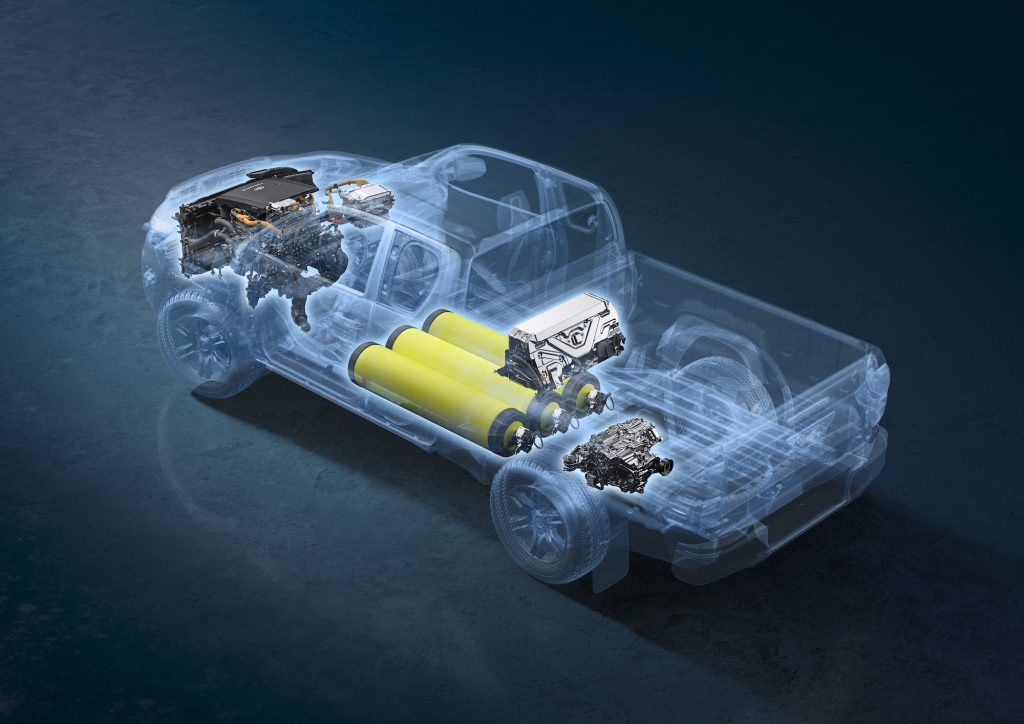
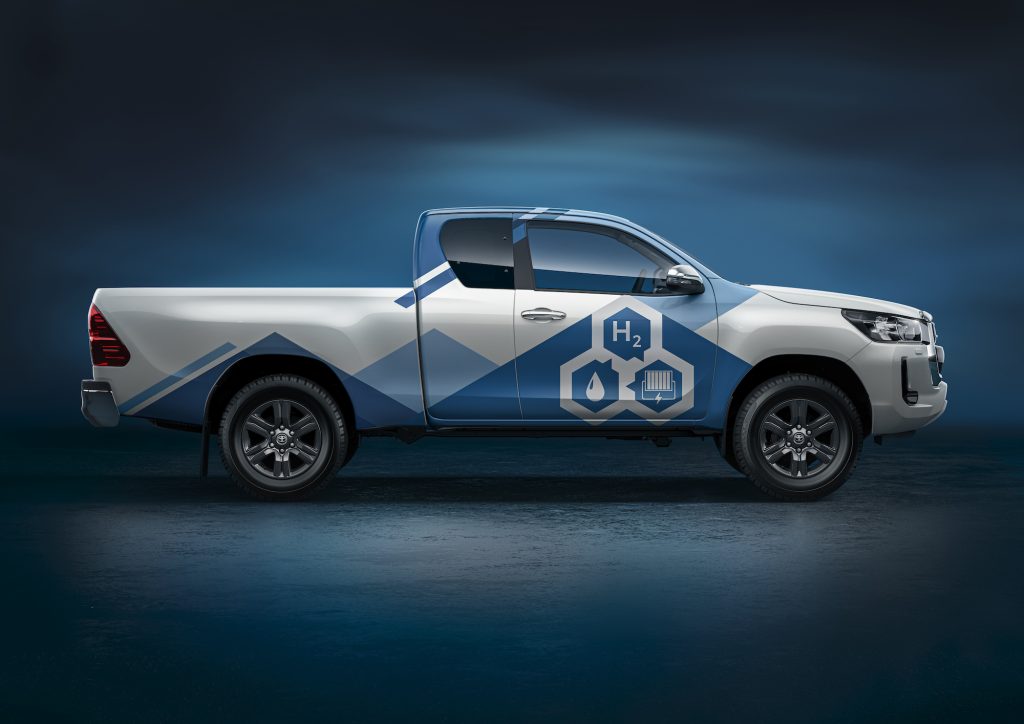
The hydrogen Hilux is not mere theory. Toyota is serious about hydrogen. Especially in South Africa.
Green hydrogen at home?
For farmers and wealthy urbanites, who live on properties with sufficient space, the potential of owning an internal-combustion hydrogen vehicle is enticing.
Imagine making your own hydrogen fuel powered by an existing off-grid solar installation. A mini electrolysis station in your backyard, with certified storage tanks, for producing your independent batches of green hydrogen. That would herald an era of incredible energy independence for South Africans, wouldn’t it?
Dream of being free of Eskom and fuel companies, powering your home and vehicle with solar and self-made hydrogen. Could your 2025 Hilux double-cab have a hydrogenised version of the 2.8-litre 4-cylinder GD6 diesel engine? It’s not beyond the realms of possibility…
It’s the battle of budget hatchbacks to answer that age-old question: which one is faster? It’s the Renault Kwid versus the Datsun Go!
While the Datsun Go is no longer on sale in South Africa, the Go and the Kwid have racked up impressive sales numbers over the years. Despite their shortcomings, these cars remain incredibly popular in our country.
And so, we set out to answer a question that simply needed answering: which is faster! This is the only video on YouTube where you’ll see the Renault Kwid vs Datsun Go in a proper quarter-mile drag race.
Renault Kwid vs Datsun Go Quarter Mile Times – Race 2
Datsun Go: 19.04
Renault Kwid: 18.12
Haval P04 To Take on Land Cruiser
Great Wall Motors is continually increasing its SUV footprint, with this new Haval P04 image being shared by the brand. Here’s what we know so far.
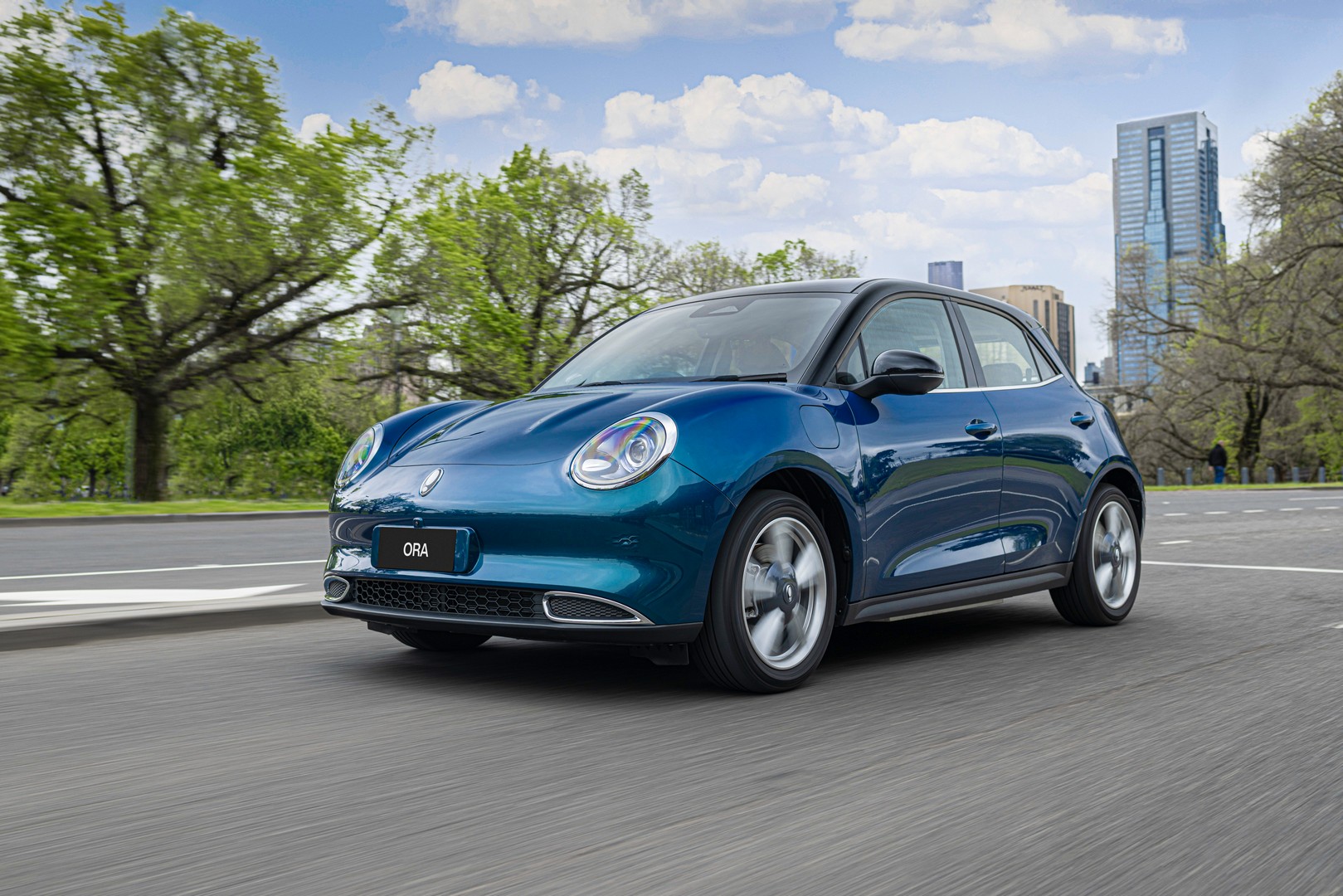
The Haval P04 is yet another SUV from the Chinese giant GWM. As a reminder, GWM has Haval, Ora and Tank brands in its portfolio locally, while overseas there are a few more, like Wey.
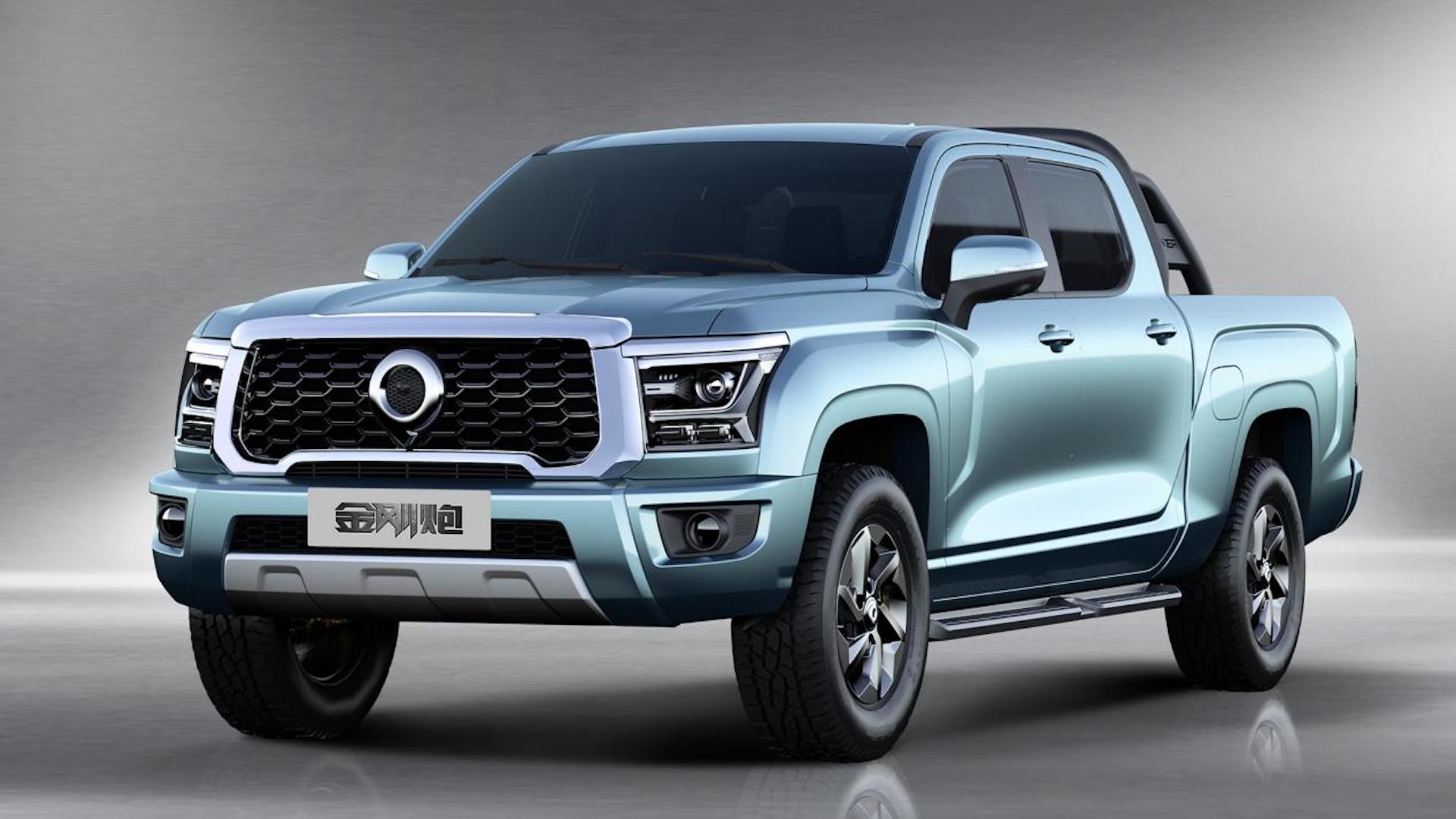
What you see here is what’s called the Haval P04. The name will likely change to something that’s more in line with the rest of the family (think of the H6, H9 etc) but importantly, it’s riding on a bakkie body-on-frame platform. Apparently based on the large King Kong Cannon, the Haval P04 is one large offering.
As reported by CarNewsChina, at 5.2 metres long with a 3 metre wheelbase, this puts it in the same dimension bracket as something like the Toyota Land Cruiser 300. With this size in mind, it could easily accommodate seven seats.
At this stage, there’s no word on powertrains, but if recent activity by GWM Haval is anything to go by, we can expect either 2.0-litre petrol engines or 2.0-litre turbo diesel engines, but given its size, it’s likely going to need something with more shove.
Chinese media estimates that the new Haval P04 will go on sale in its domestic market in the 4th quarter of 2023, with an official reveal before then.
GWM Haval is growing rapidly, both globally and in South Africa. Both the Jolion and H6 have received mild hybrid derivatives added to their respective ranges, and the new offroad-focused GWM Tank 300 will be touching down locally in 2023. Let’s not forget the pure electric Ora or the sportily-styled Haval H6 GT either.