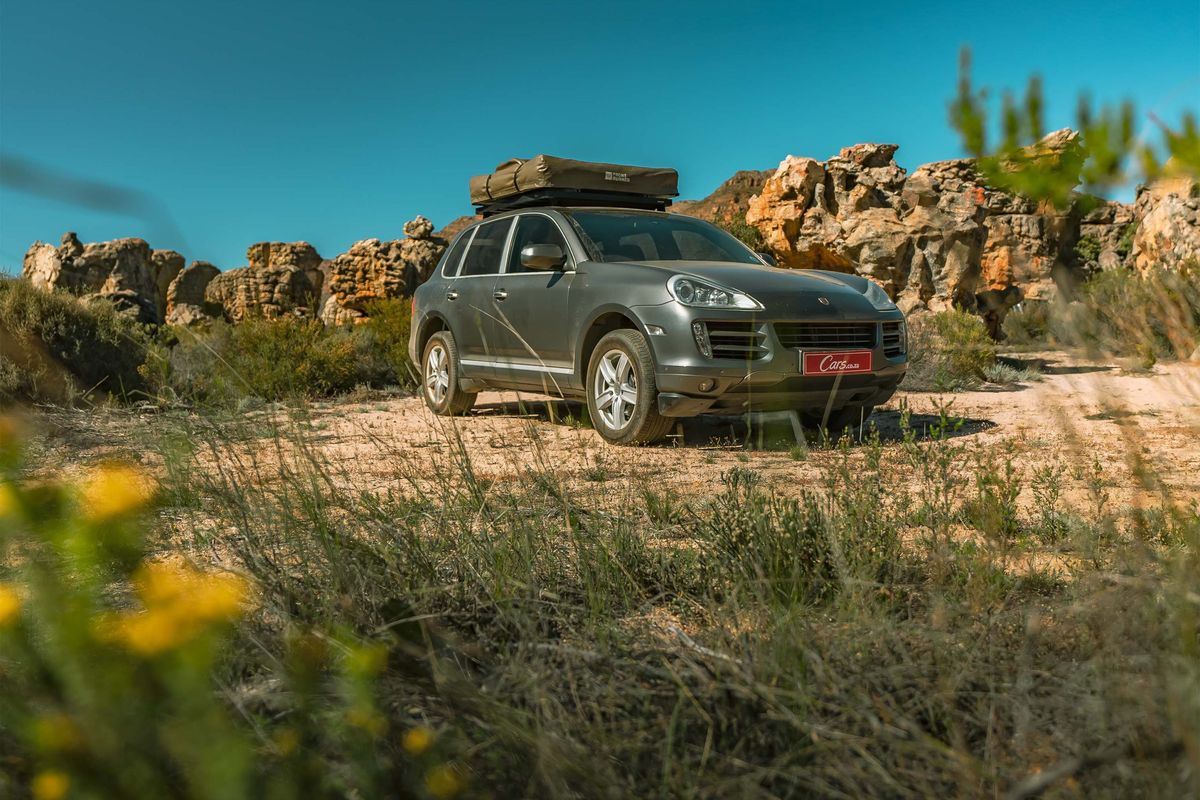
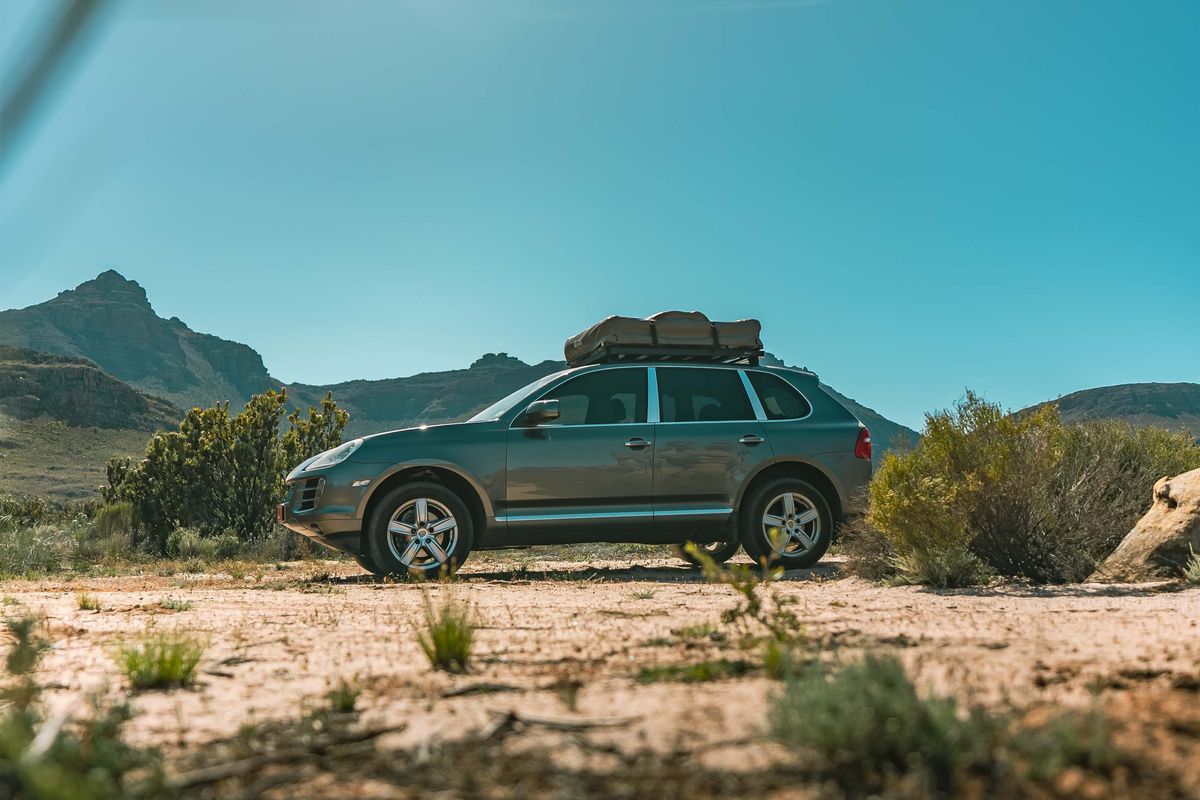
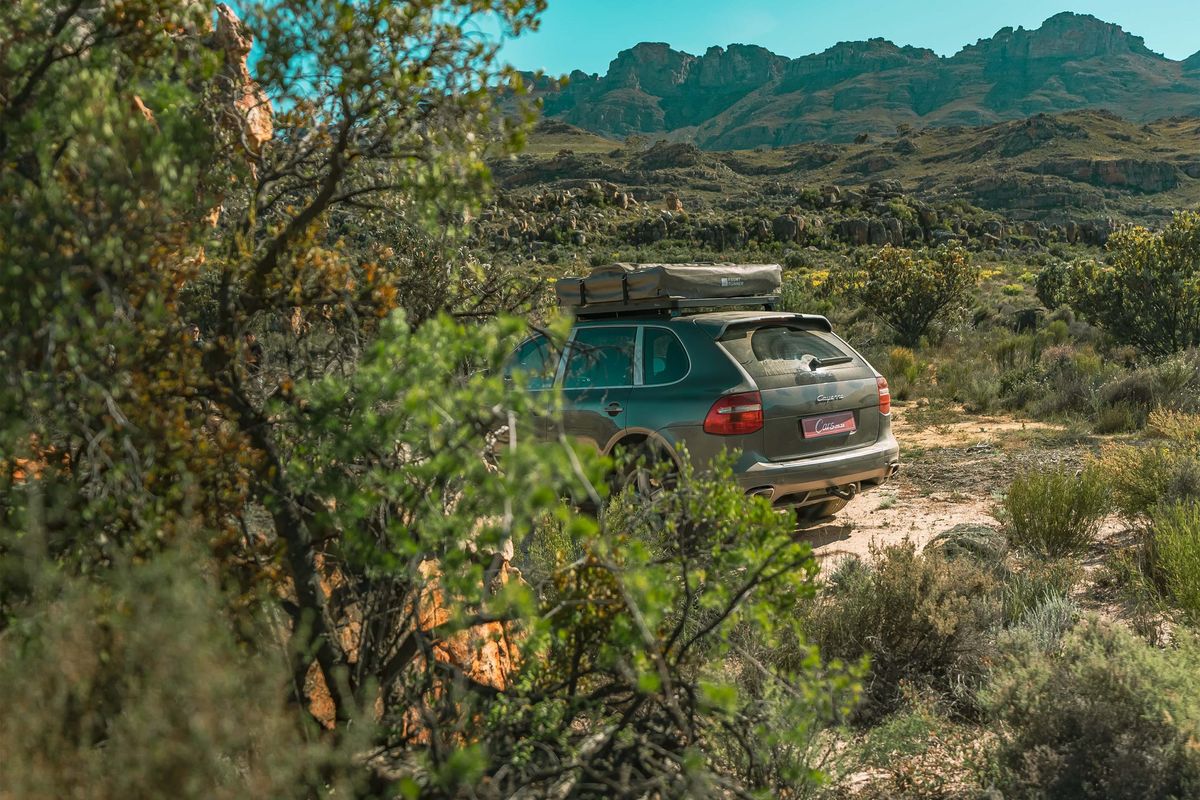
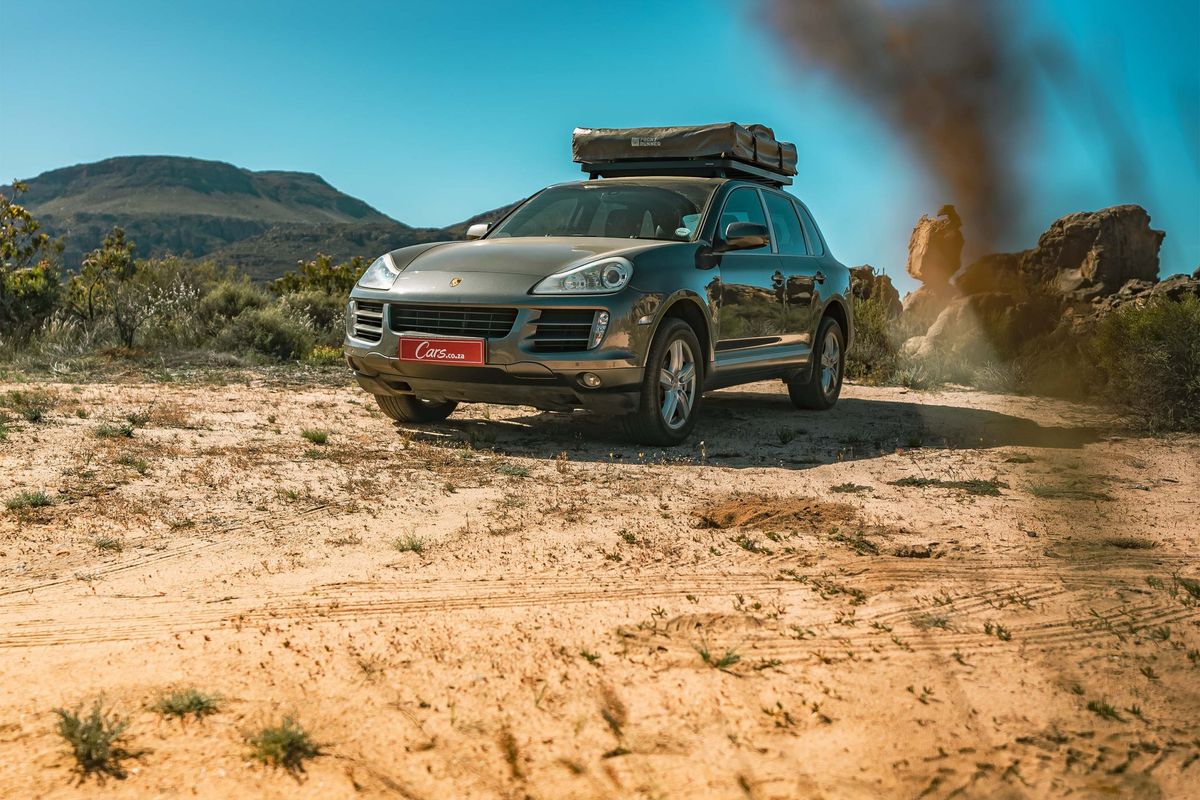
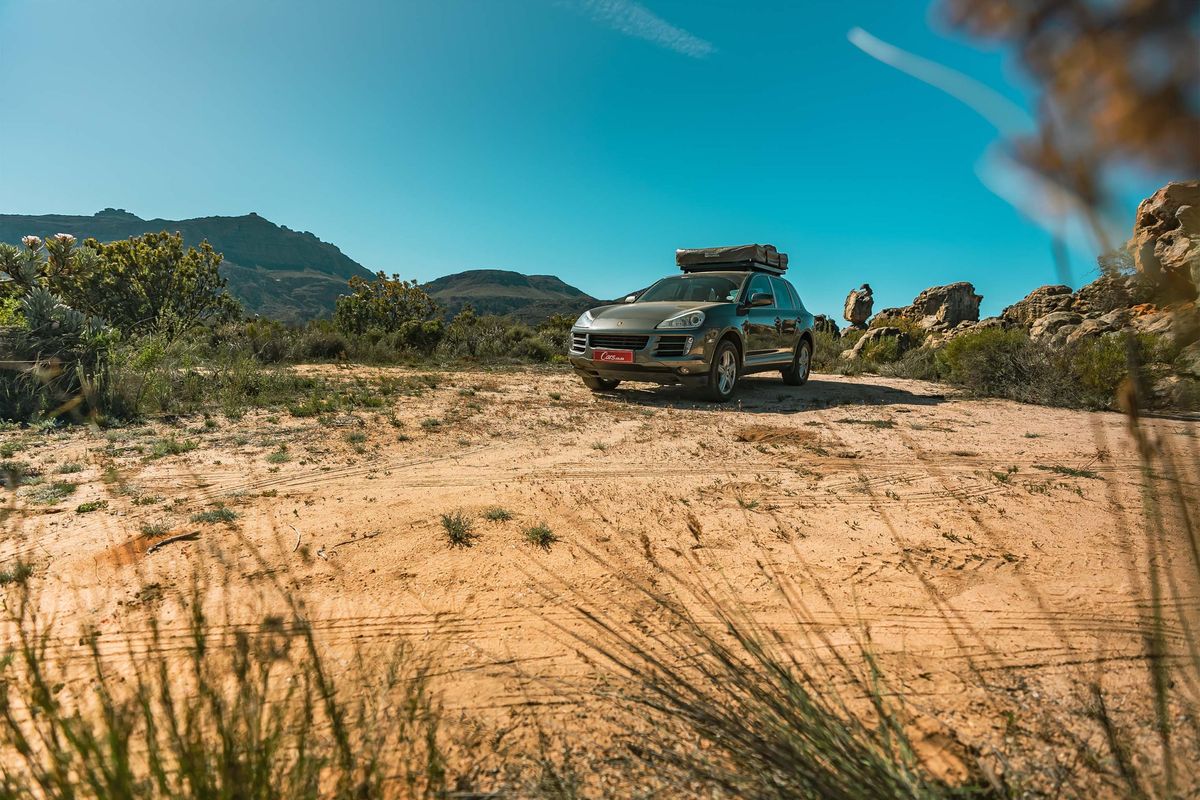
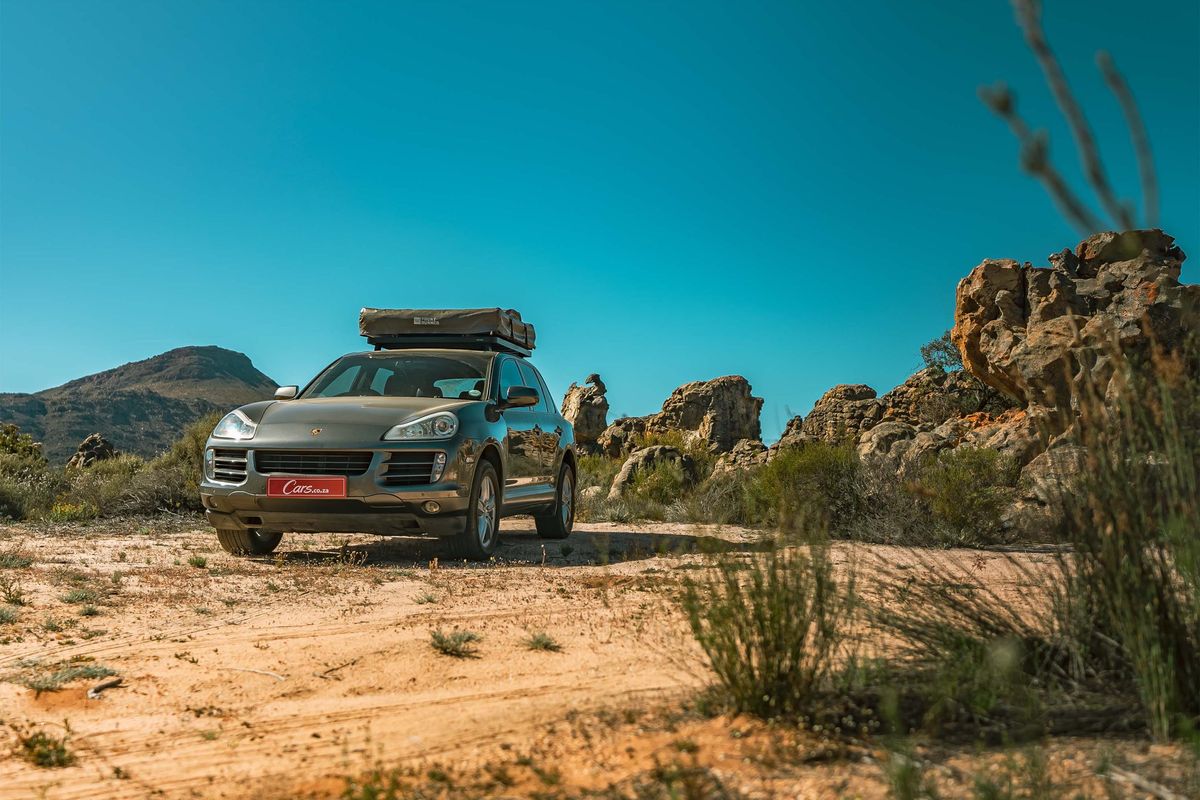
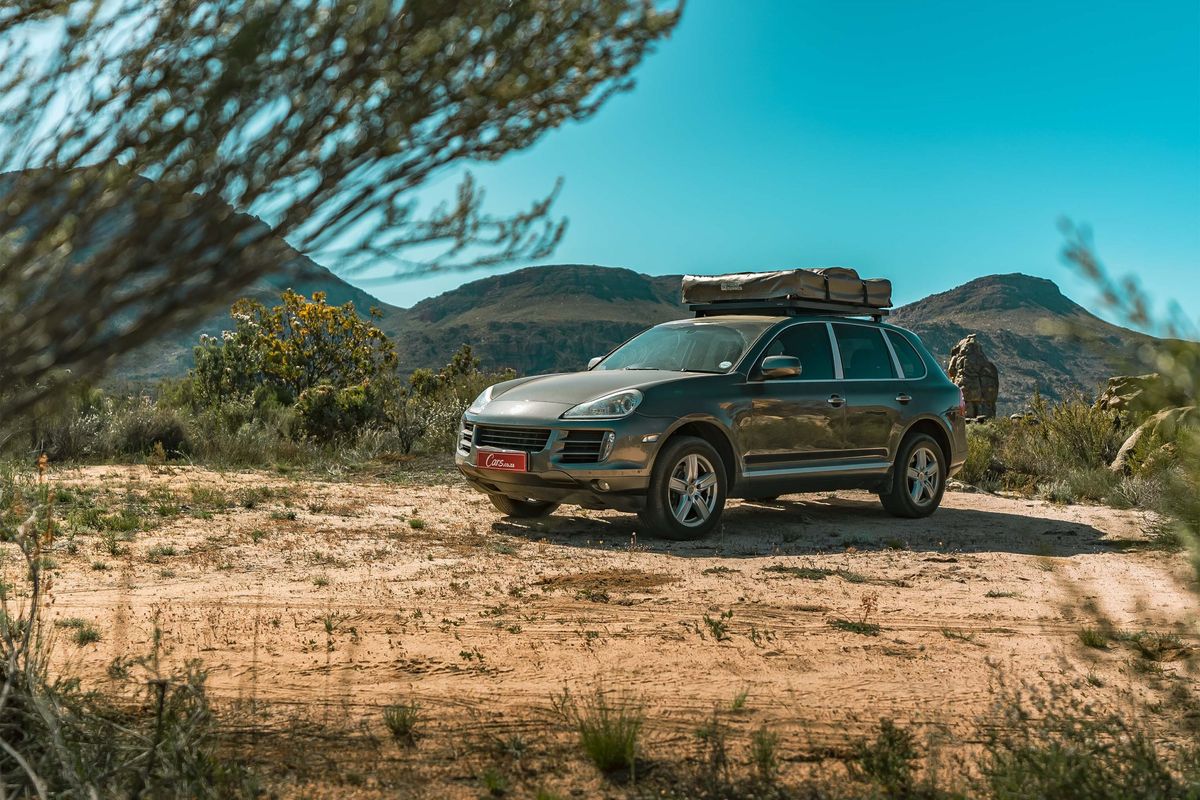
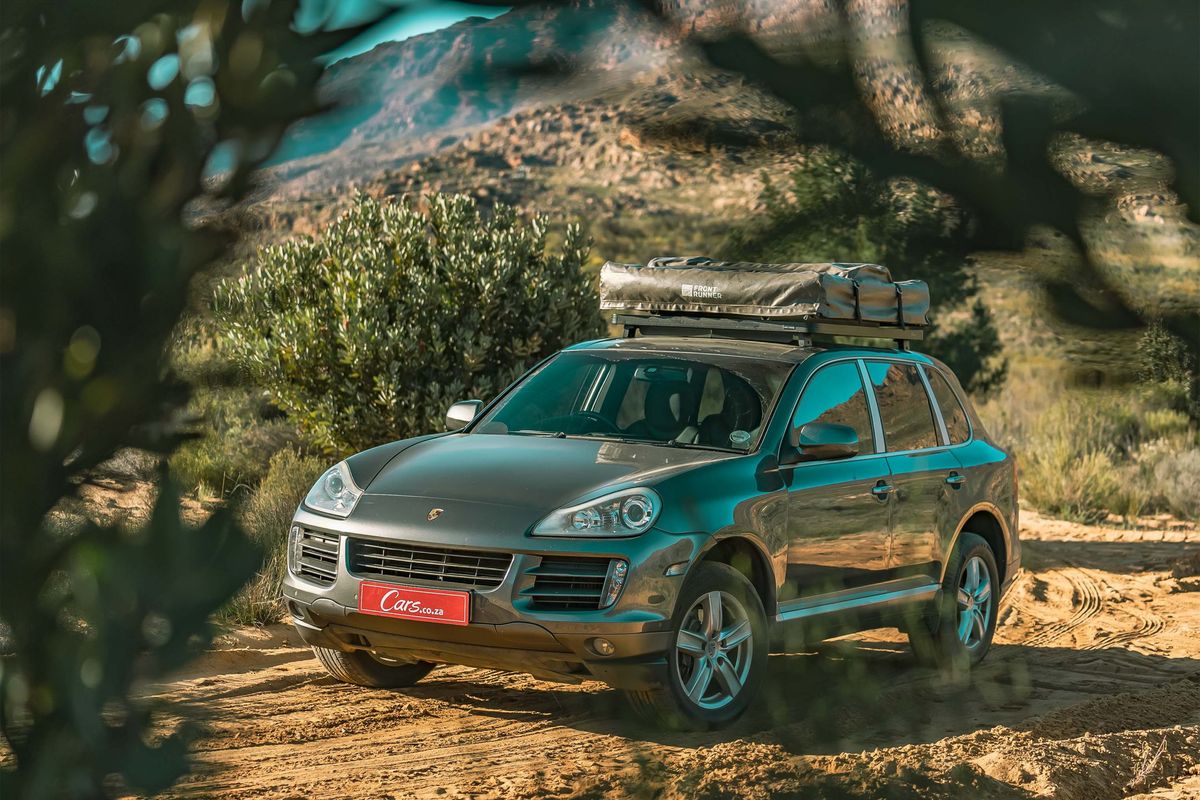
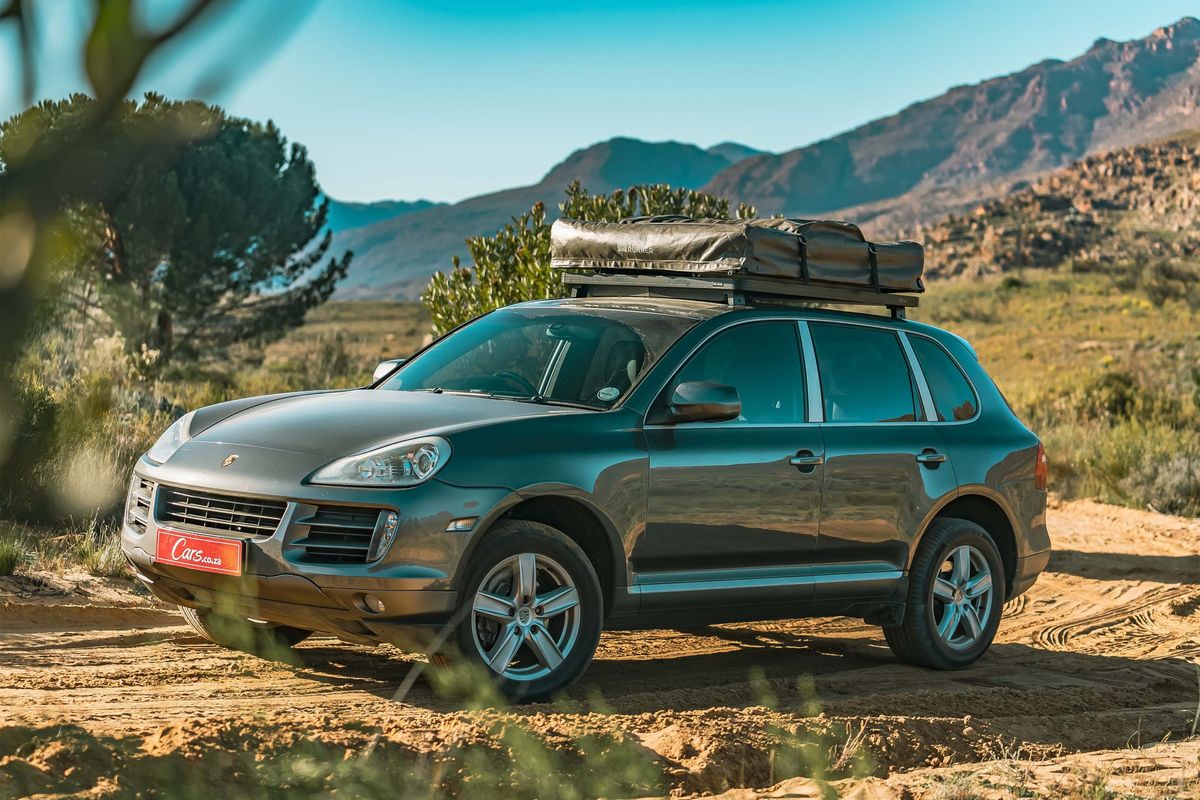
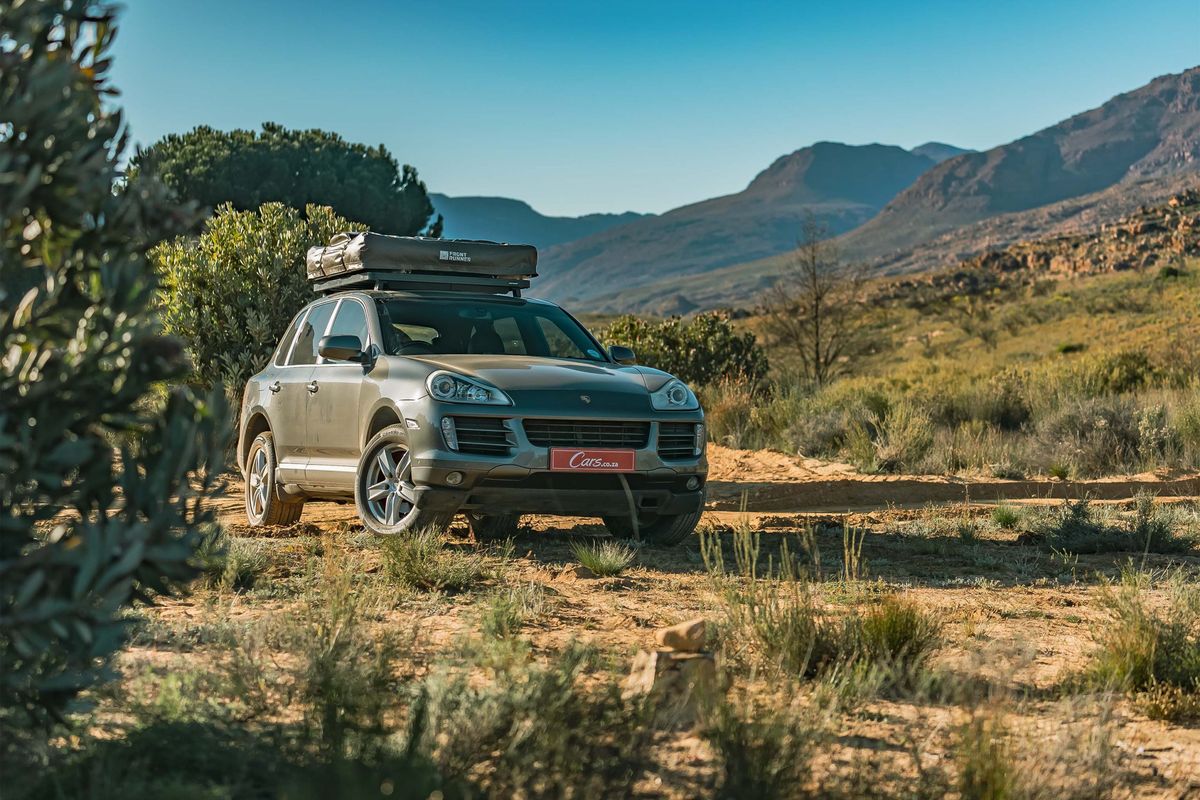
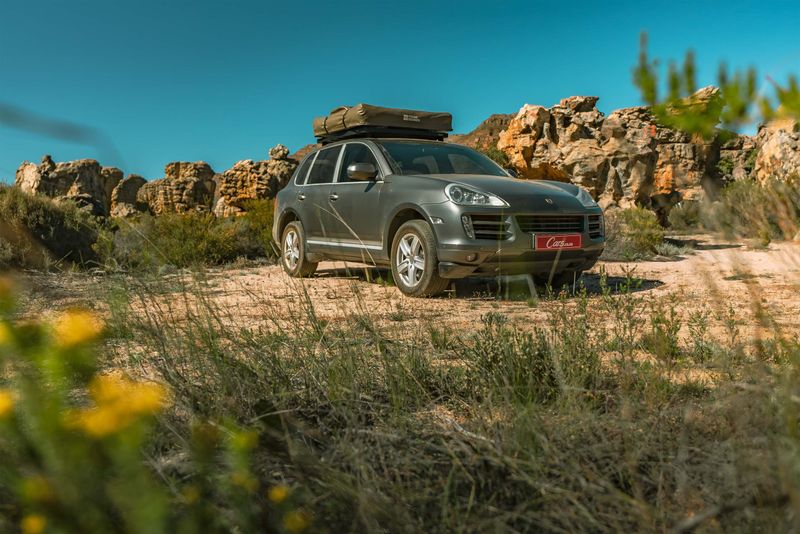
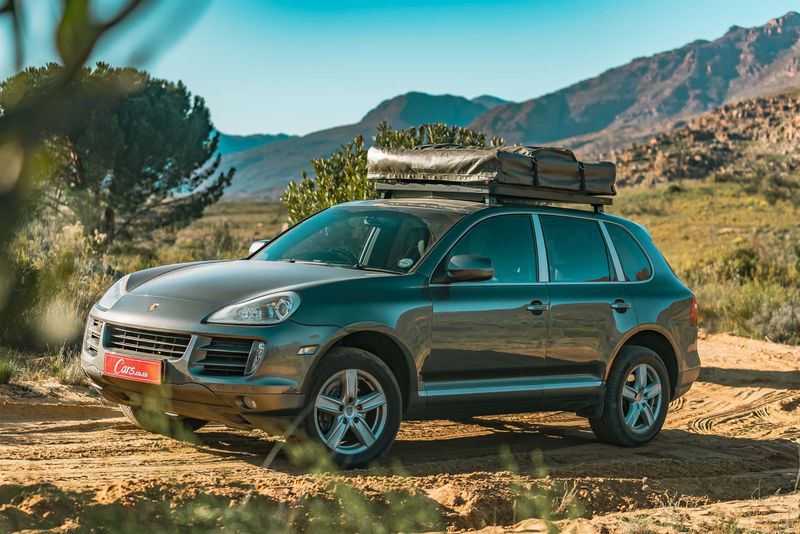
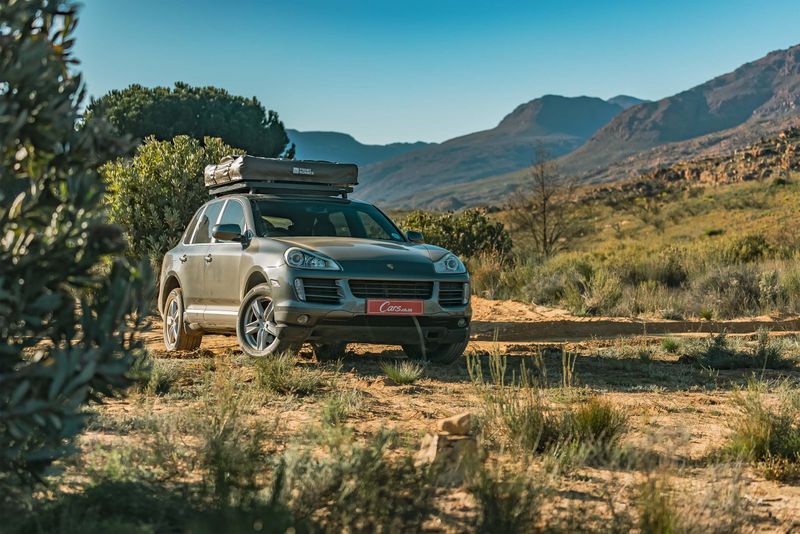
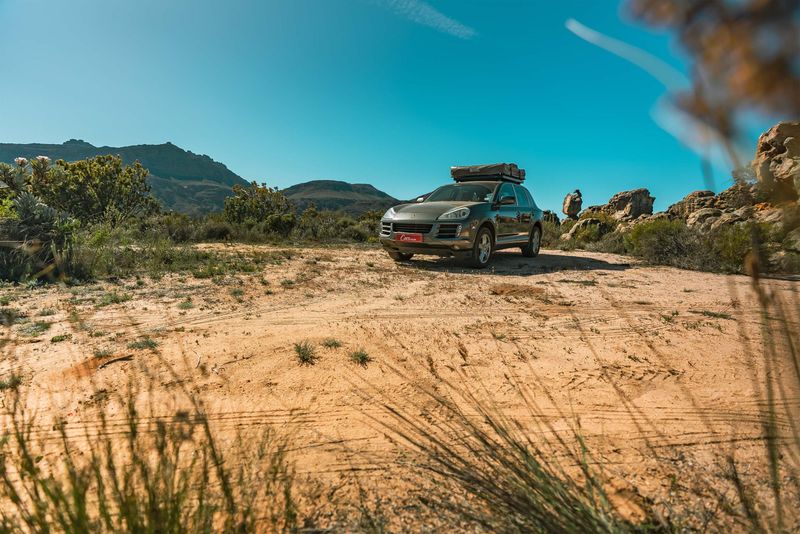
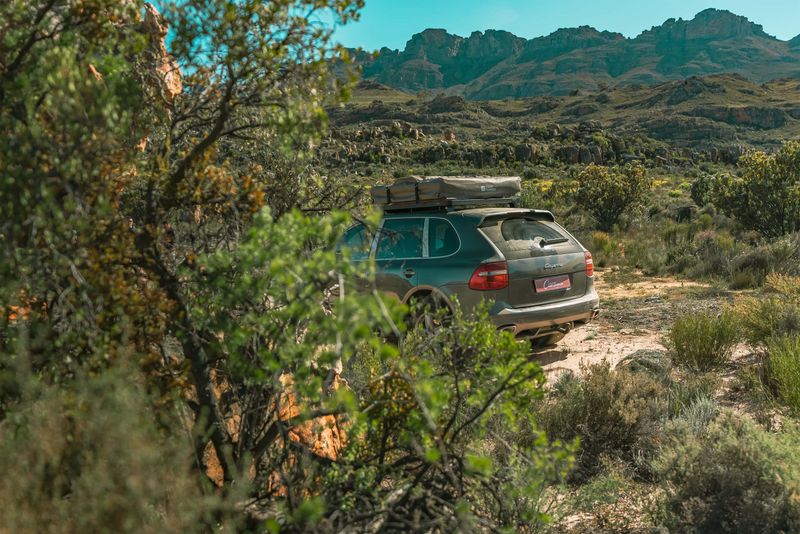
In the second instalment of a 4-part series in celebration of Continental’s 75th birthday in South Africa, we head for the Koue Bokkeveld with Calvin Fisher and his 2010 Porsche Cayenne 3.0-litre V6 turbodiesel, a car that has taken him and his family on a number of off-road adventures. To make the Cayenne an even better candidate for a tribute film such as this, it is also the 20th anniversary of Porsche’s first SUV.
It doesn’t take long to figure out that Calvin Fisher is an automotive enthusiast. In fact, he has taken things a step further by also recently acquiring his motorcycle leaner’s licence. Apart from that, his day job entails being a motoring journalist and content creator. Plus, he has another couple of cars in his garage… This passion is thankfully also shared in, and with, his family.
Where it all started
“I grew up on the Cape Flats and for us freedom meant car keys, a full tank… or actually any amount of fuel. My earliest car memories are of my dad’s Chevy on family road trips – and that has really stuck with me. Those have been such good memories that today I own a Chevrolet 4100 just like he had. If I don’t drive the Cayenne, I do try to spend some time in the Chevy.
“In the early Nineties, the car culture scene I was growing up in was very much on the street. Cars that appealed to me back then were the Nissan Skyline 2.8, Toyota’s Cressida 24-valve and a Nissan EXA Turbo. At the time I didn’t know what these cars were, but I knew I loved them and realised I was forever changed by those experiences.
“Through the years I never really understood the appeal of a Porsche and I was never blown away by them… until I got to drive a 911 for the first time. That experience quickly changed my view! Over the years I got to drive a few more, and I went from respecting the brand to loving it.
“I realised that owning a 911 wasn’t really compatible with being an adult and having kids. I wanted a car that I could still love and use on a daily basis. After the controversial first generation, I think the design department at Porsche nailed it aesthetically with the 957-generation Cayenne. I love it so much that even if I could have any Cayenne, I’ll still pick mine.
Exploring
“My plan was always to go on adventures with this car and before I bought it I decided what I wanted. I decided on a turbodiesel with standard suspension and not air suspension. It is fitted with the 3.0-litre, V6 turbodiesel engine which is similar to the unit found in the VW Amarok. The result is that we’ve done trips to Tankwa Karoo and we’ve camped in various places, always via a lot of gravel roads. Every time she has held up perfectly. All that I’ve done to make these trips possible is to fit a good pair of off-road tyres as well as a roof rack. Inside I’ve also fitted a OneNav Android Auto navigation system that features a 12.1-inch screen that I can use for off-line maps and to listen to my music. I’m a massive nerd and love connecting my phone and having this technology at hand. We really use this car like the way it will be portrayed in a brochure and not parked at the mall.
“The thing that I love the most about the Cayenne is the freedom that comes with it. The fact that if I see a place I know I can get there. It is real 4×4 at the end of the day and I treat it as such. In terms of buying cars, this is probably the first time it has been a sensible decision that has also been a passionate one for me.
“Every car I’ve ever owned I’ve felt the need to tinker on, style or upgrade the performance. Maybe it is an age thing, but I’m at the point now where I don’t feel like doing any of those things. Now, any changes I want to make to this car, it must be to improve it based on my lifestyle. And this is now my lifestyle, going anywhere I want, pitching a tent really quick and camping next to a river.”
The first camping trip
Calvin eagerly shares his first camping experience with the Cayenne, a car he admits is not regularly seen at the nation’s campsites.
“We rolled into this established camping site, with all the locals in their Toyota Fortuners, Hiluxes and Ford Rangers. And there we were, with our Porsche and our tent on the roof. Initially there were some stares and it was a kind of a weird moment. But, we had a jol, enjoyed a braai and a lekker swim. It is definitely not your typical car that you will see at South Africa’s camping sites, but I’m working on that! I now have an on-road wheel and tyre combo as well as an off-road wheel and tyre combo, depending on what I want to do.”
Calvin enjoys his Cayenne equally as much on the gravel as on the tarmac. “Today when we did Gydo Pass, as well as all the twisty roads leading up to it, I put it in Sport mode and she tackles the corners very well.
“There is something incredibly satisfying about owning this car. To me this Cayenne looks brilliant and I can carry my entire family in the car to several adventures throughout the year. That means everything to me.”
Mercedes-AMG C63/C43 To Be Assembled in South Africa
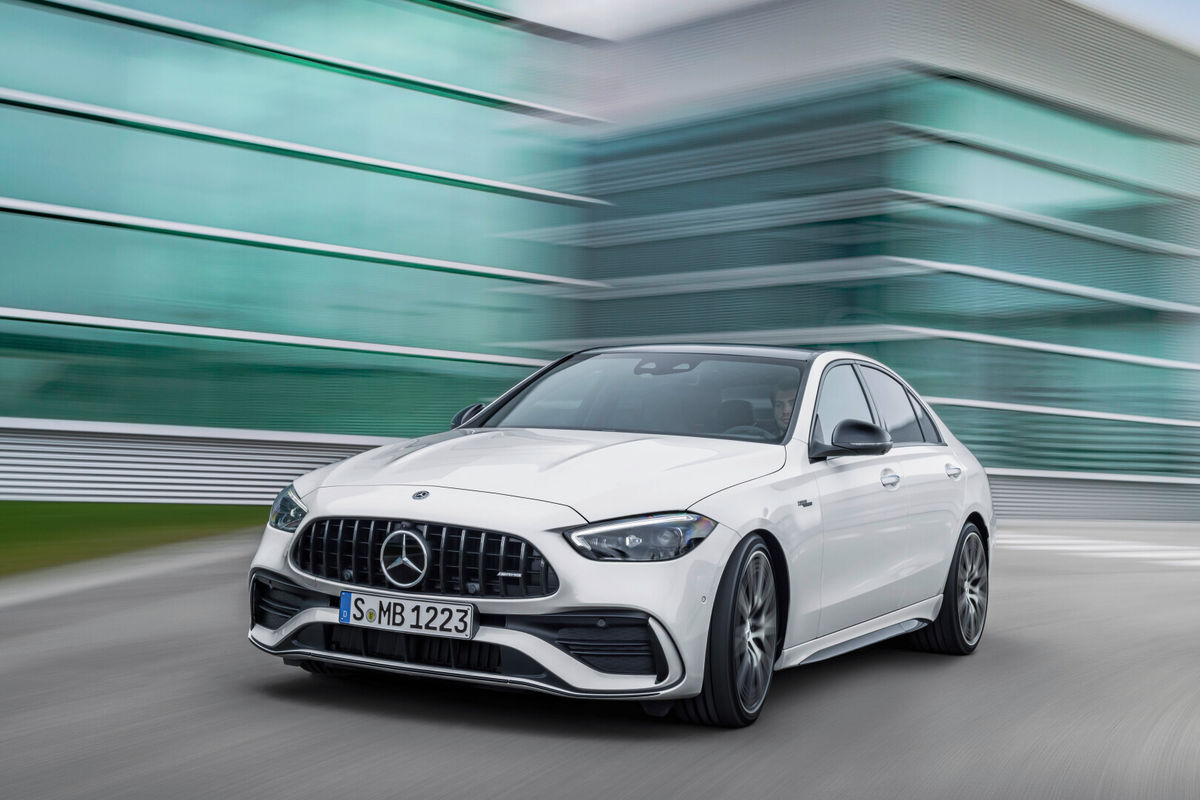
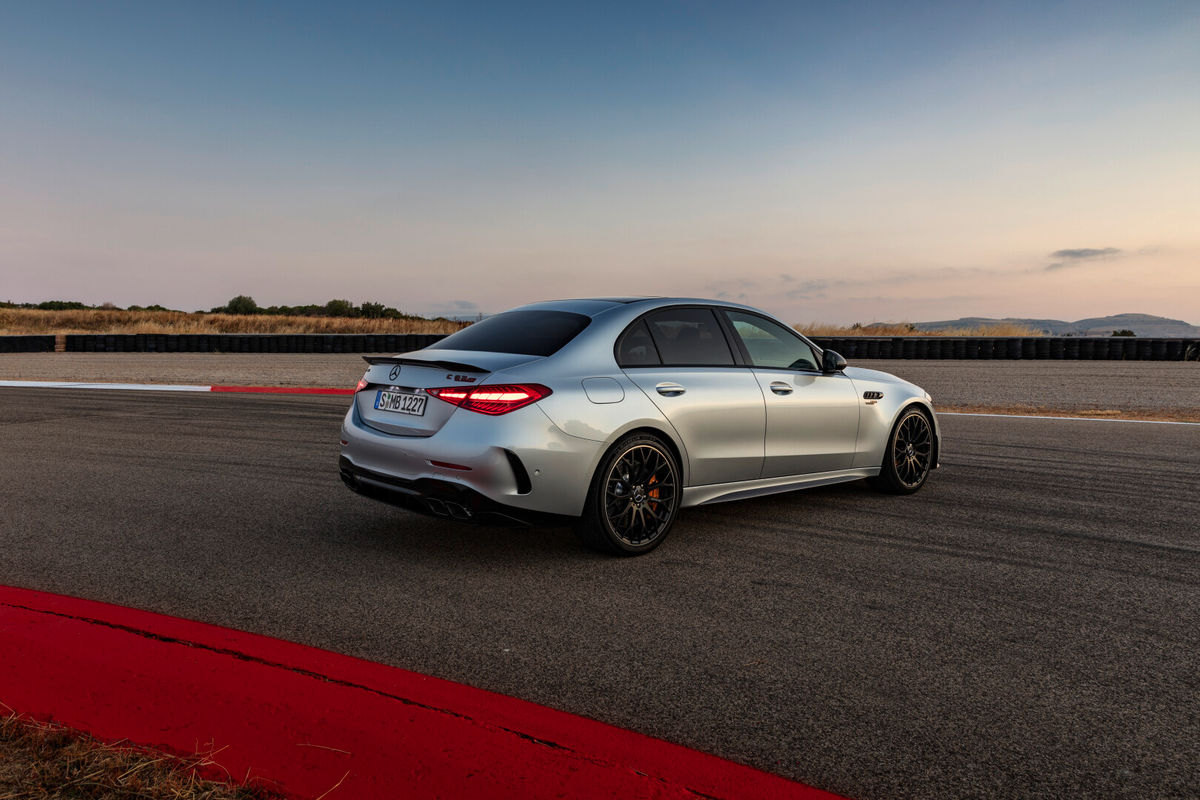
The brand-new Mercedes-AMG C63 and C43 will be assembled at the East London facility, for both SA consumption and export.
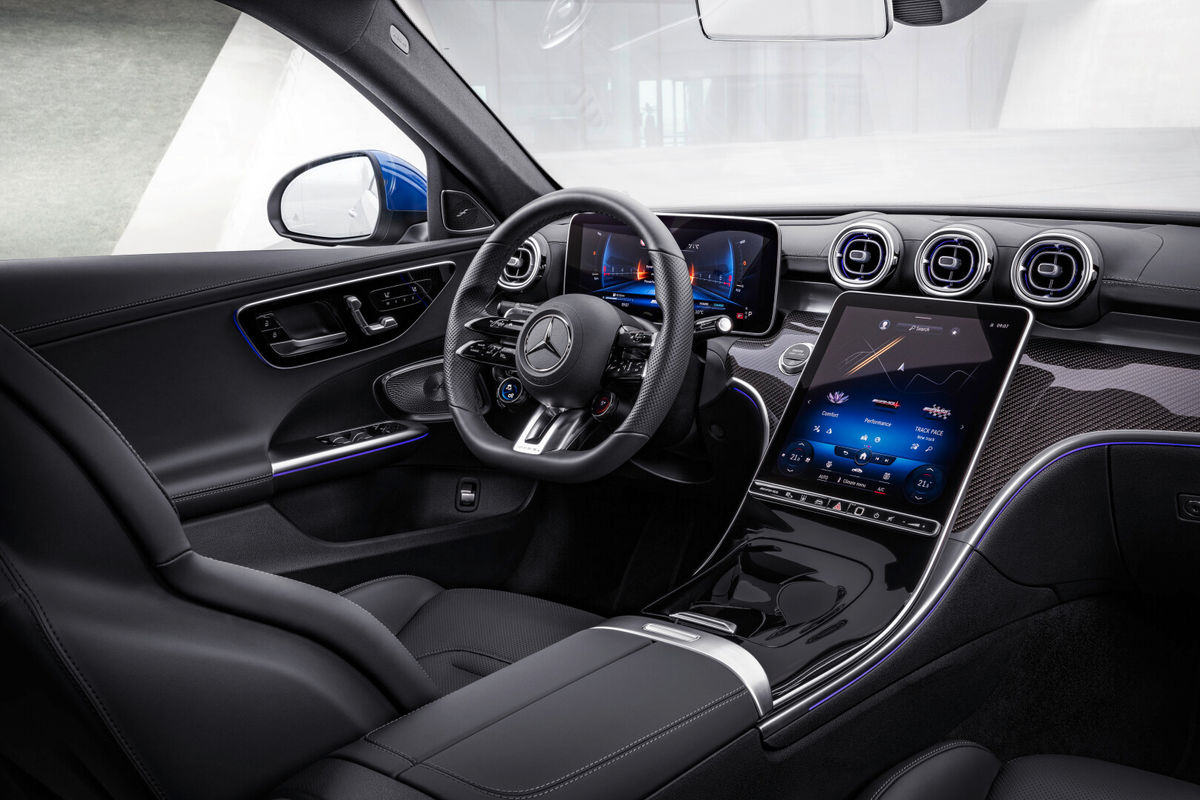
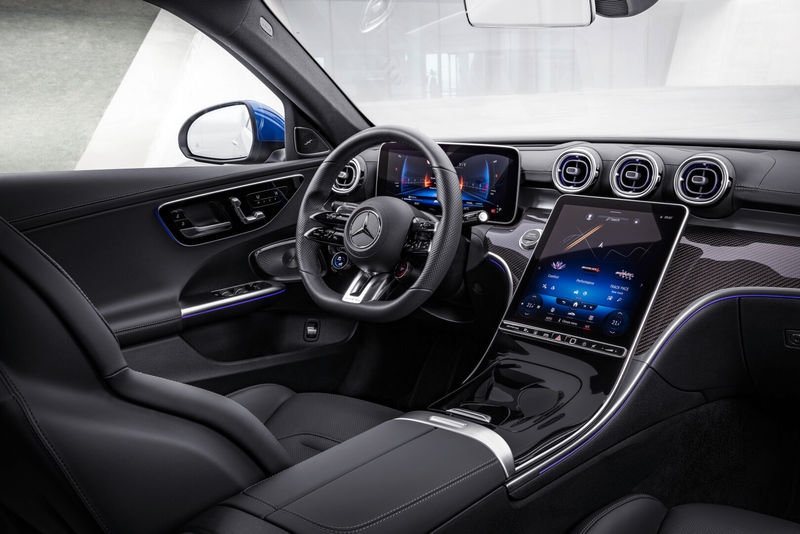
Mercedes-Benz South Africa has confirmed its brand-new AMG offerings will be assembled locally. Headlining this line-up is the brand-new and recently-revealed Mercedes-AMG C63 S E Performance with its potent hybrid setup. Gone is the V8 and in its place is a 2.0-litre 4-cylinder turbocharged petrol engine driving the front axle and an electric motor on the rear axle.
Combined, the new AMG powertrain punches out a total of 500 kW and 1 020 Nm. Straight-line performance is impressive considering its weight of the new electric setup, with a 0-100 kph dispatched in just 3.4 seconds. The best part? Mercedes-Benz South Africa has confirmed this model will be launched locally in the 4th quarter of 2023.
For those who don’t want to wait that long and want a taste of the new Mercedes-AMG electrified performance, the new C43 will be launching in SA as early as January 2023. This features a 2.0-litre turbocharged 4-cylinder petrol engine paired to all-wheel drive and a 9-speed automatic transmission. Outputs of 300 kW and 500 Nm are offered, and the vehicle will sprint from 0-100 kph in just 4.6 seconds. We’ll have pricing and specifications for this model early next year.
The confirmation from Mercedes-Benz that it will be building the AMG derivatives along with the standard W206 C-Class models is a great boost to East London and the immediate suppliers in the vicinity of the plant. This is not Mercedes-Benz SA’s first rodeo when it comes to AMG production, as the plant assembled the V8-powered C63 S and the 6-cylinder-powered C43 since early 2018. The engines from both of these vehicles were imported from Germany to South Africa for final assembly.
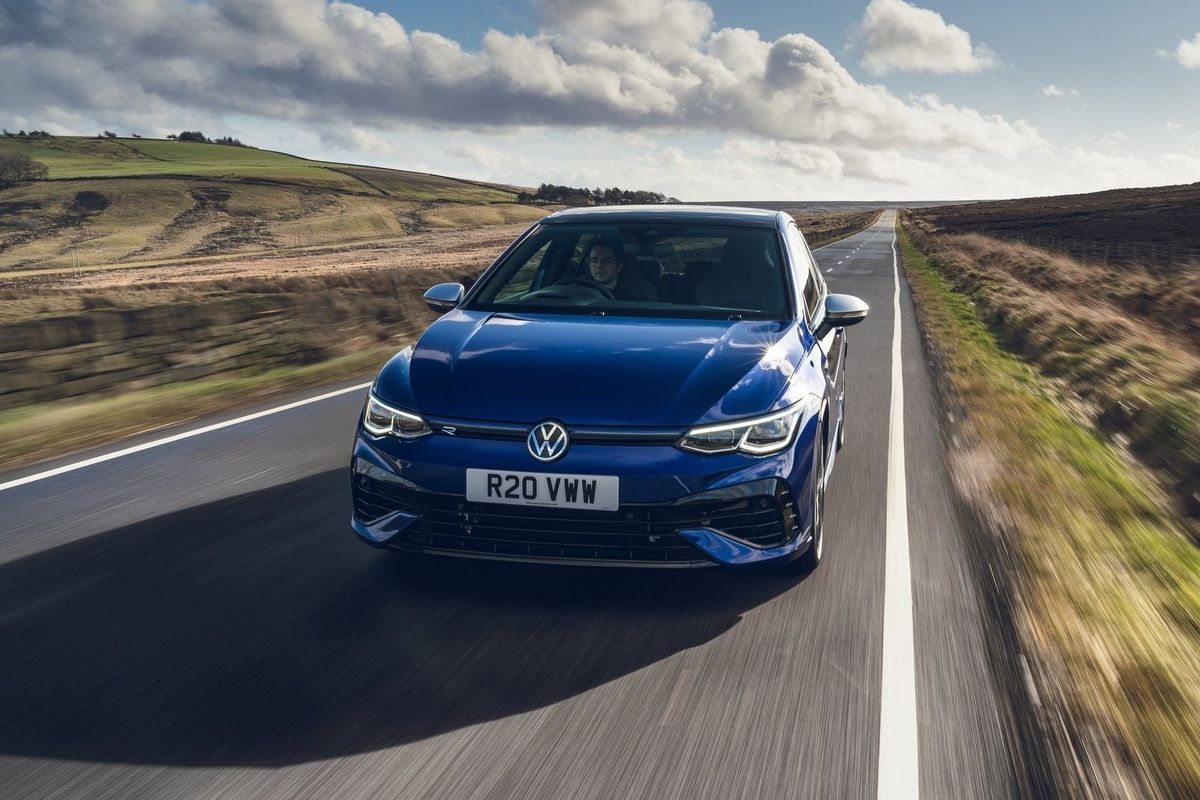
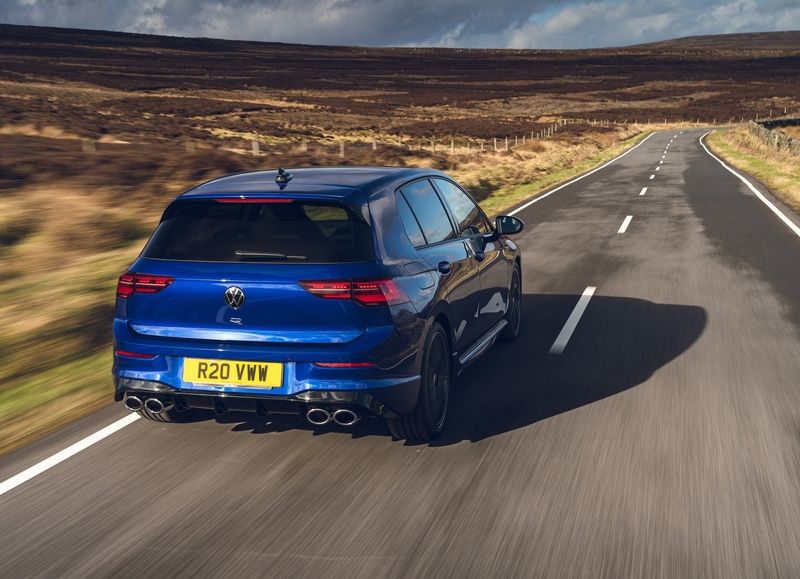
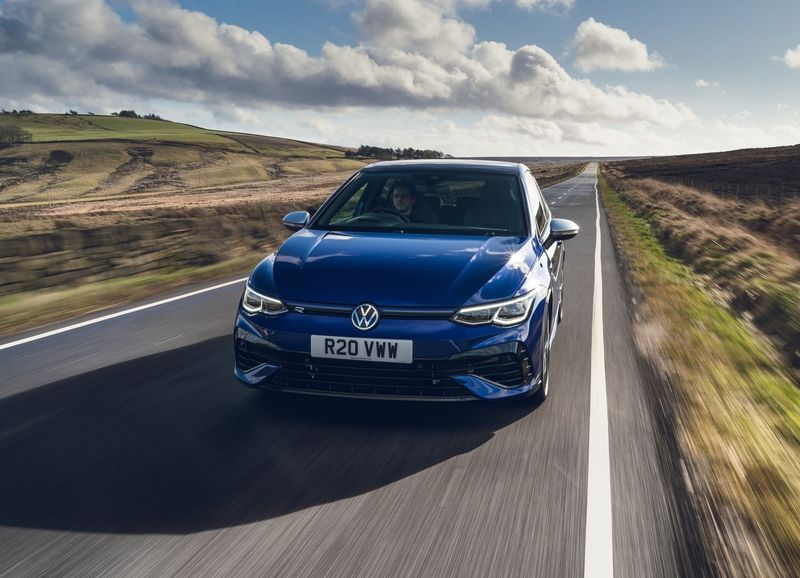
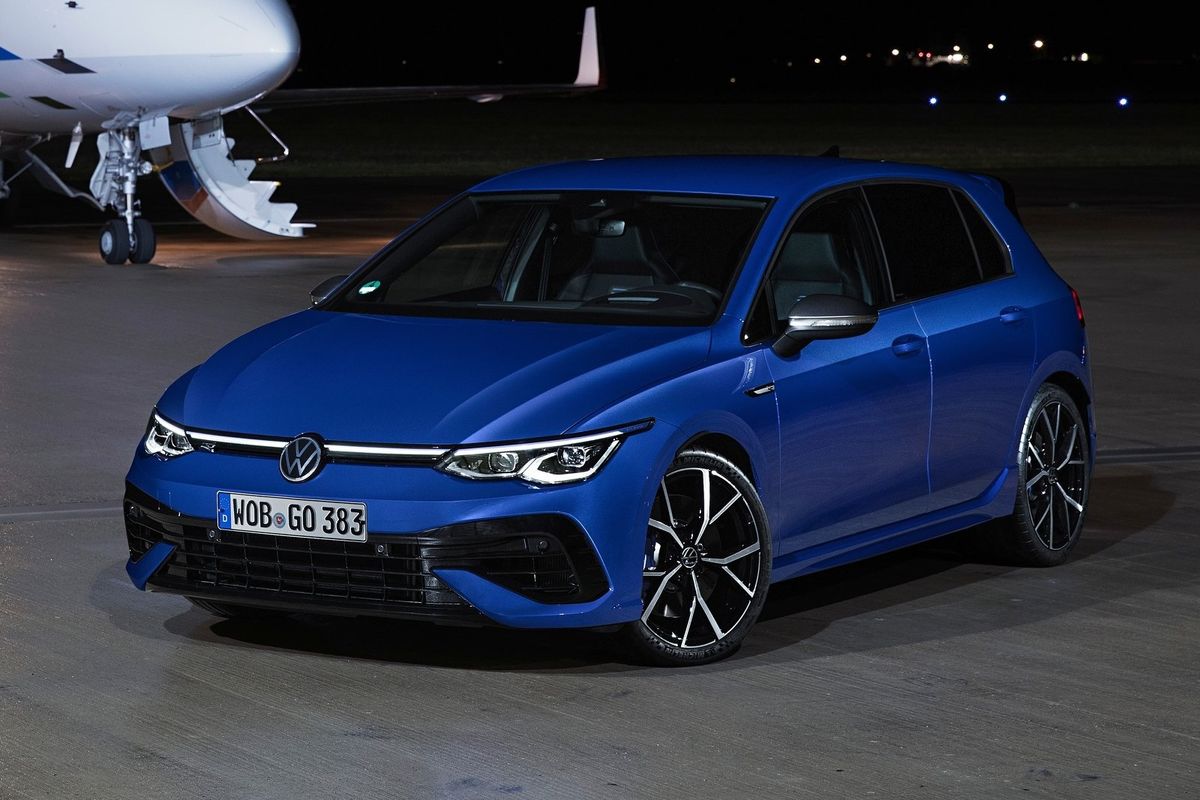
The first VW Golf 8 R units have arrived in SA and we got behind the wheel of the all-wheel-drive performance hatchback – first at the Aldo Scribante race track in Gqeberha and then in the Western Cape. Has it been worth the wait (and hype)?
Let’s get straight to the bad news. Sadly, this R model will only arrive early next year, folks. While we have driven the new Volkswagen Golf 8 R locally this week, the newcomer will only hit local showrooms in the first quarter of 2023. Due to a lack of stock coming from Germany, Volkswagen SA does not have enough units to start retail operations. Pricing isn’t available until then either, but we’ll give you a list-price forecast at the bottom of the article.
Volkswagen’s R performance sub-brand has proven very popular in South Africa. Since its debut back in 2007, almost 6 000 units have found homes in the Republic. That’s not quite on the same level as the GTI lineage, but the R is far more performance-focused. Both the Golf 7 R and 7.5 R were immensely popular, so the new Golf 8 R has quite a legacy to live up to.
What’s On Offer?
With peak outputs of 235 kW and 400 Nm, the South African-spec Golf 8 R offers the model’s maximum outputs, as offered in Europe.
Under the skin sit a revised version of the VW Group’s MQB platform and the latest iteration of the EA888 2.0-litre 4-cylinder turbopetrol engine. It produces peak outputs of 235 kW and 400 Nm – no detuning due to hot climate or poor fuel quality here; this is the full-fat version! All that shove is sent to all 4 wheels via a 7-speed dual-clutch automatic transmission and VW says the new Golf R will sprint to 100 kph in just 4.7 sec. Having said that, we’ve found Golf Rs tend to be a bit quicker than claimed. Could a 4.5-sec 0-100 kph time be possible?
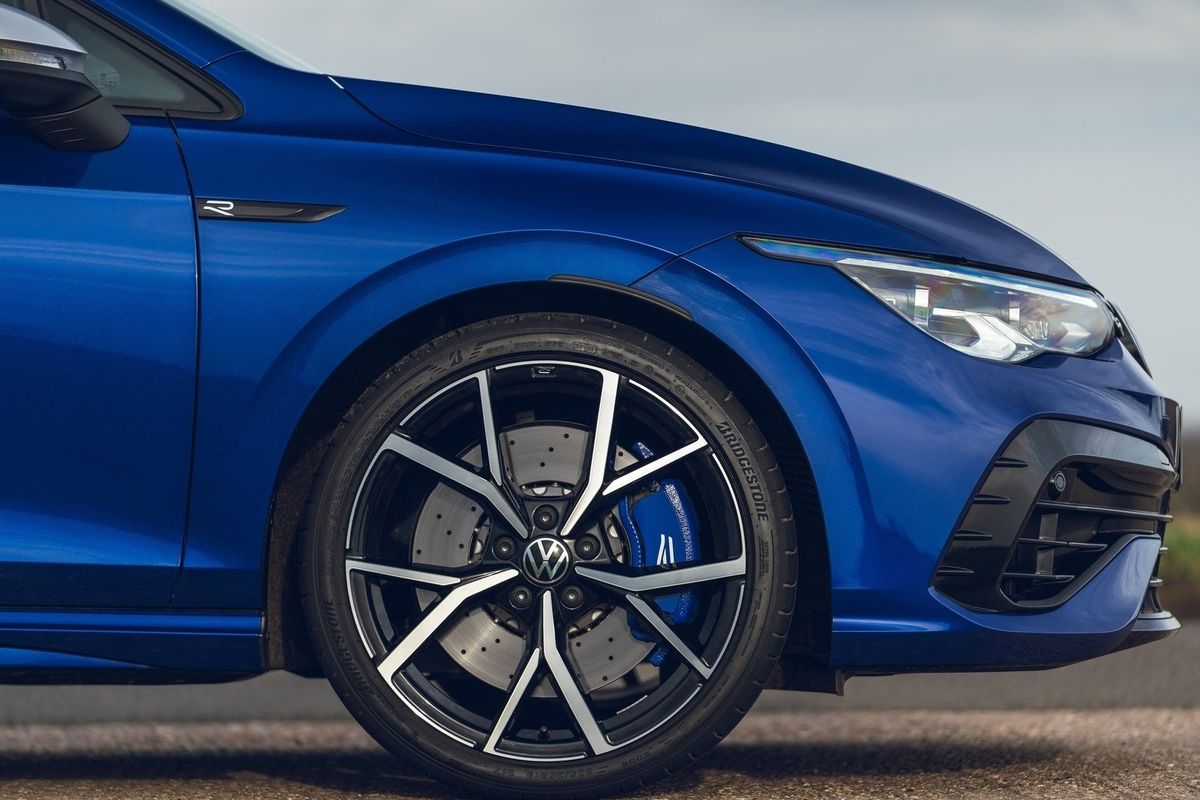
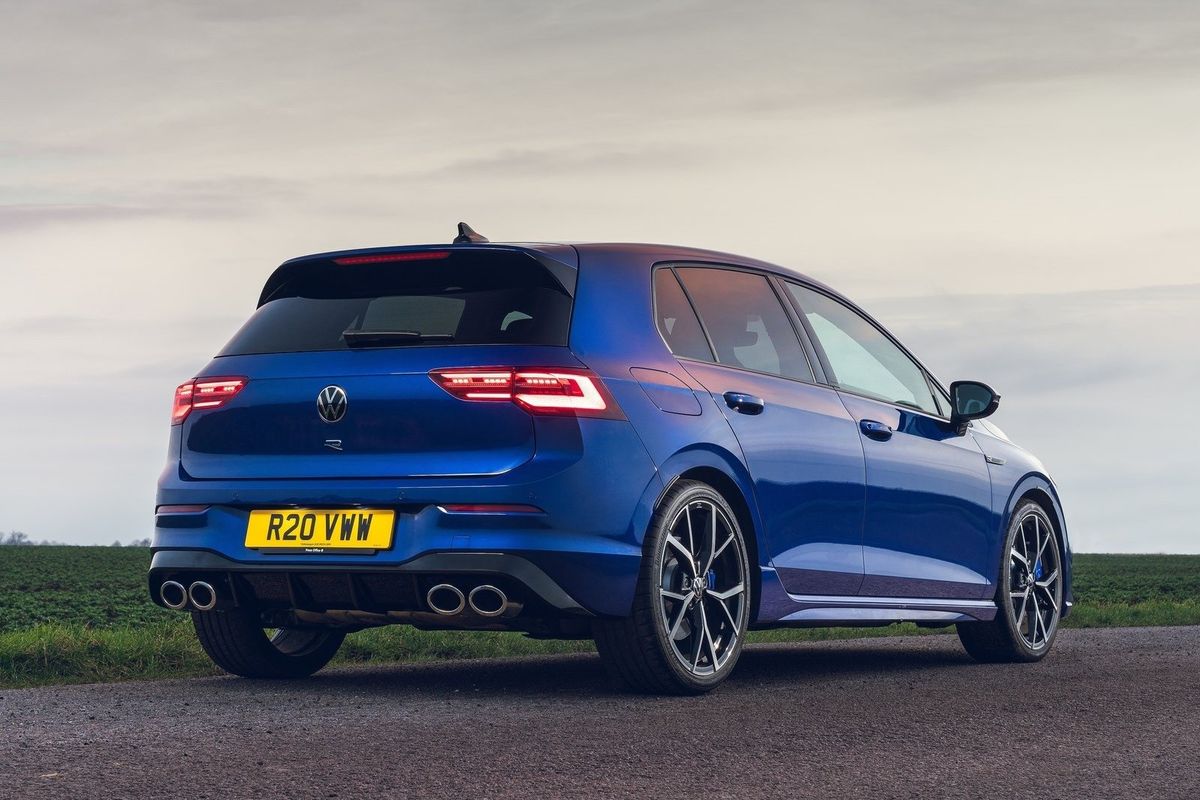
The Golf R comes reasonably well-equipped. Nappa leather, sports seats, a Discover Pro navigation infotainment system, 19-inch alloy wheels, a panoramic sunroof and dynamic chassis control are standard, with options including an Akrapovic exhaust, IQ Matrix LED headlights, uprated Harman Kardon audio, adaptive cruise control and the Black Style Package. Customers will have a choice of 3 exterior colours: black, blue and white.
Meanwhile, Drift mode and a higher top speed are offered as part of an extra-cost Performance Pack, but we’ll have more details and pricing for this and the other options early in 2023.
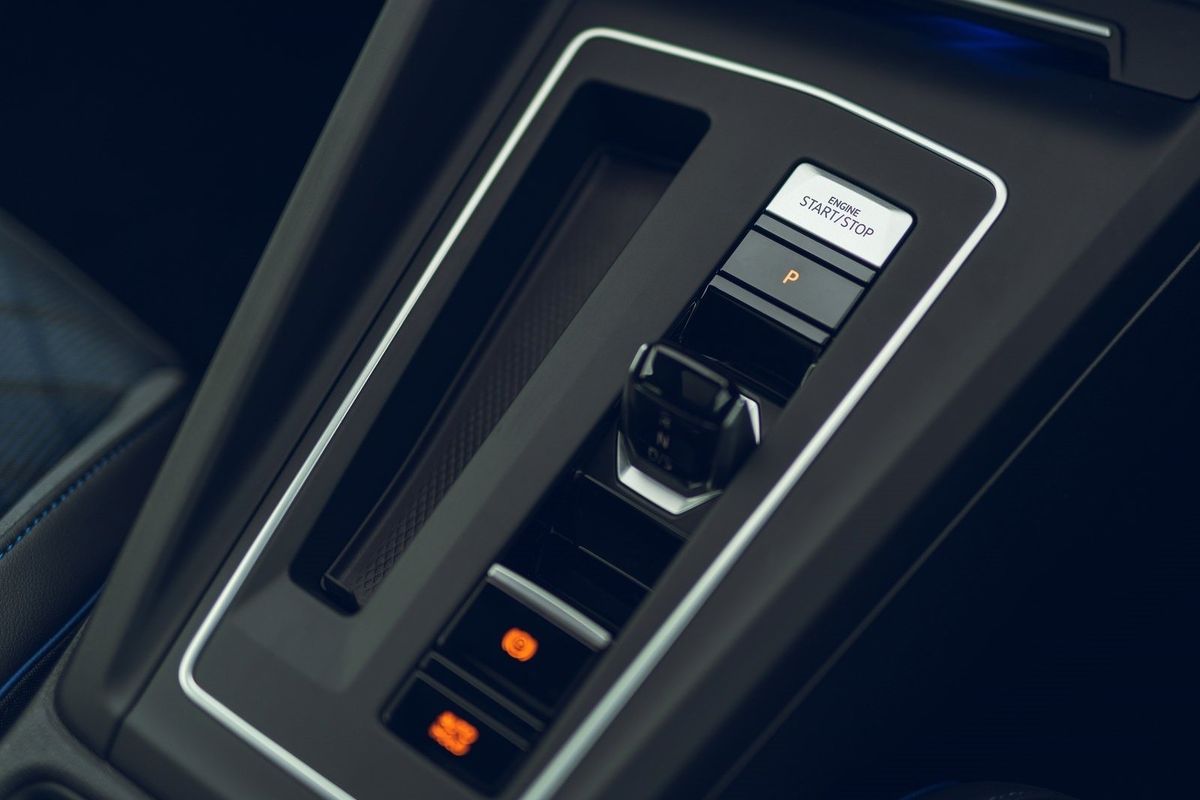
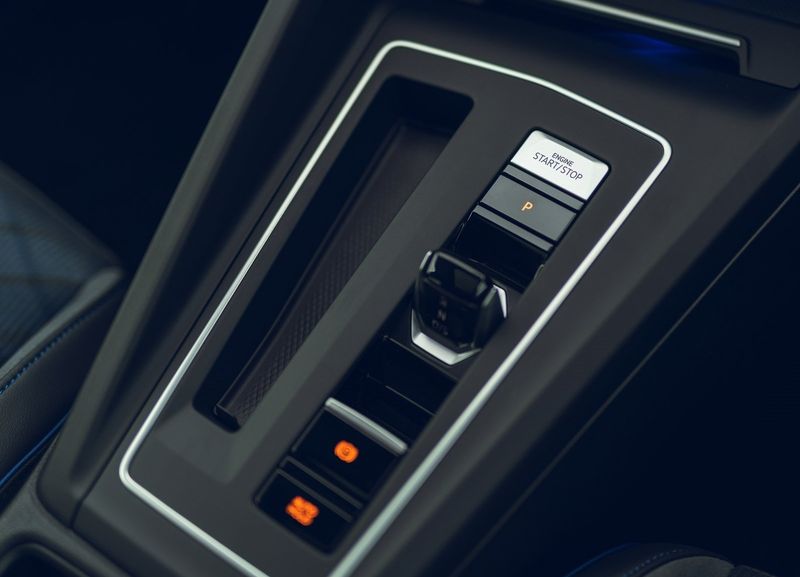
A sign of the times. As in the Golf GTI, the traditional transmission lever has been replaced by a shift-by-wire selector.
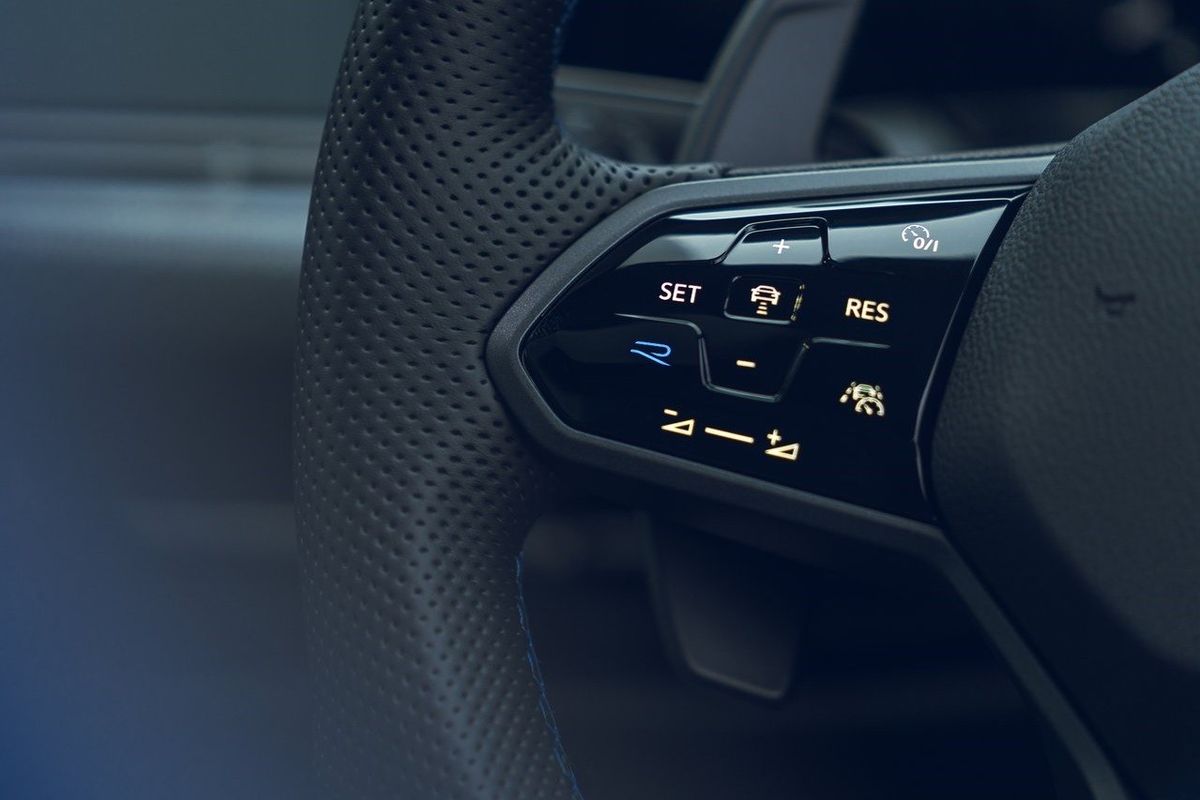
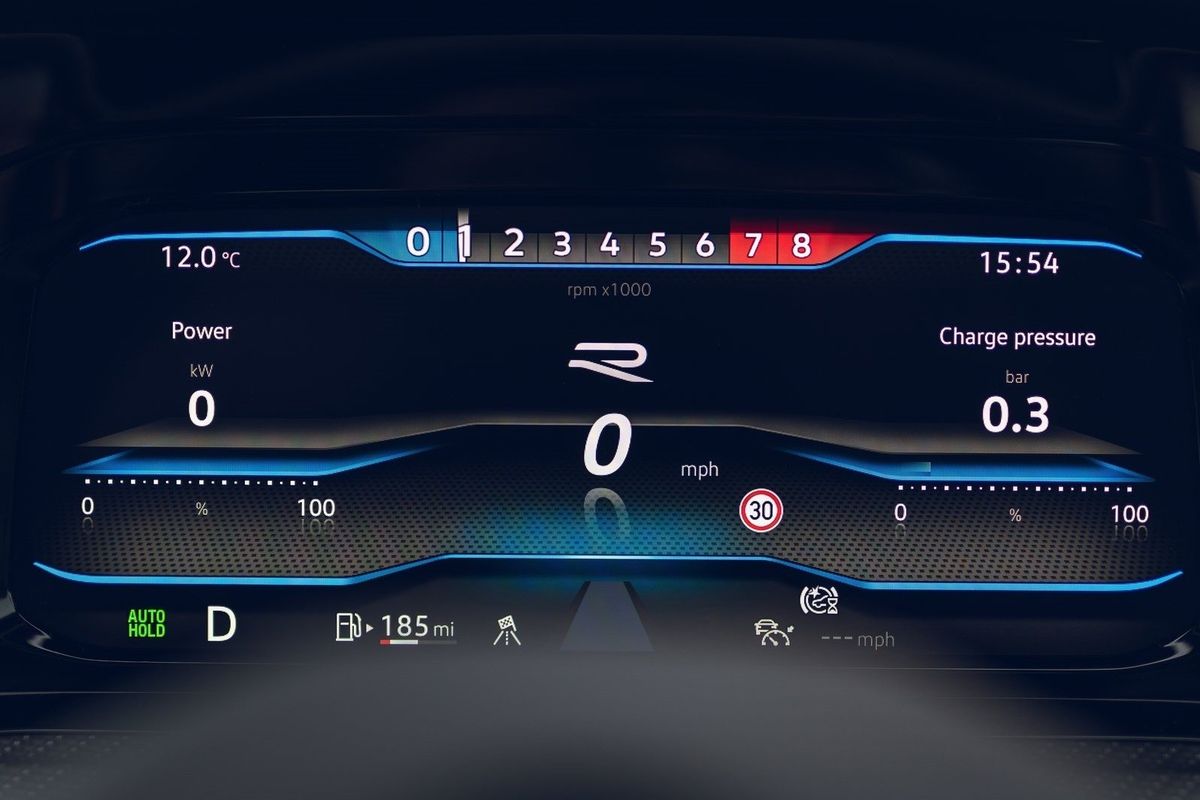
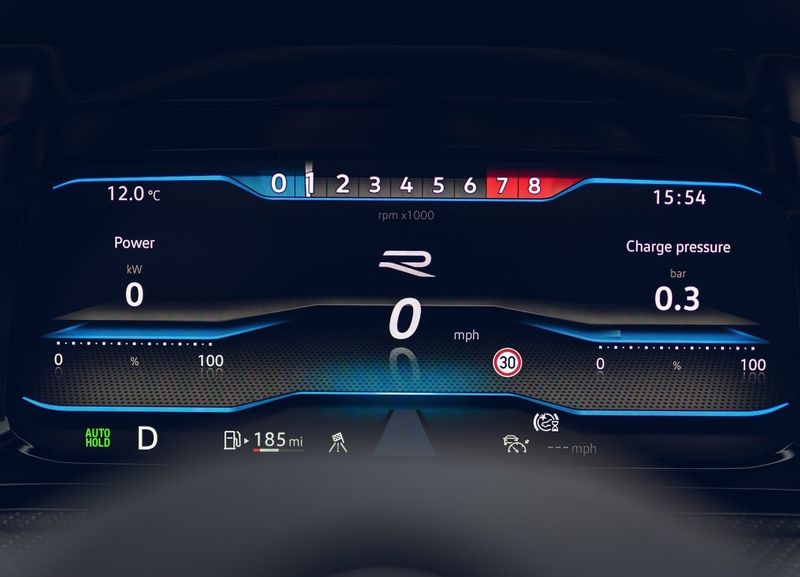
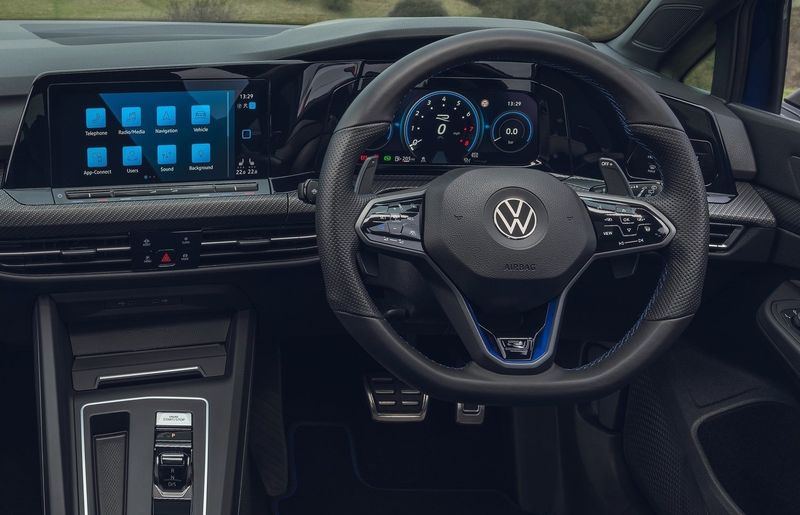
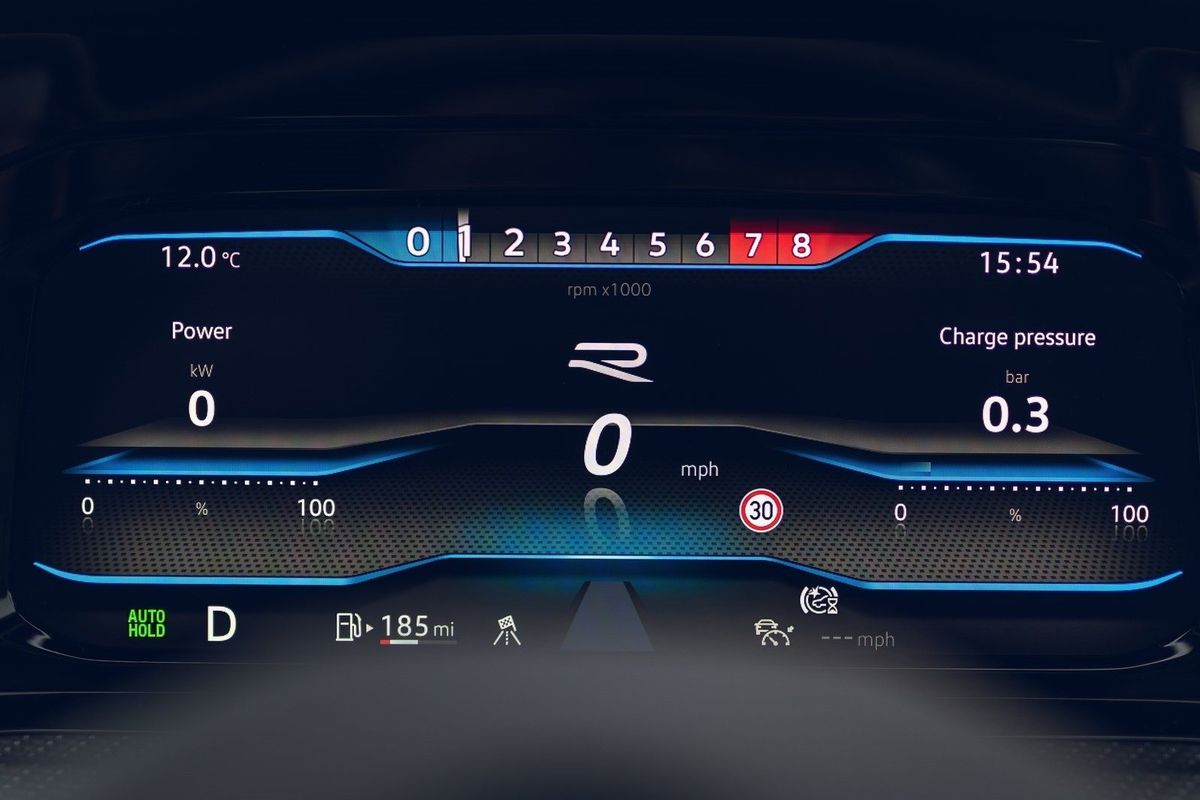
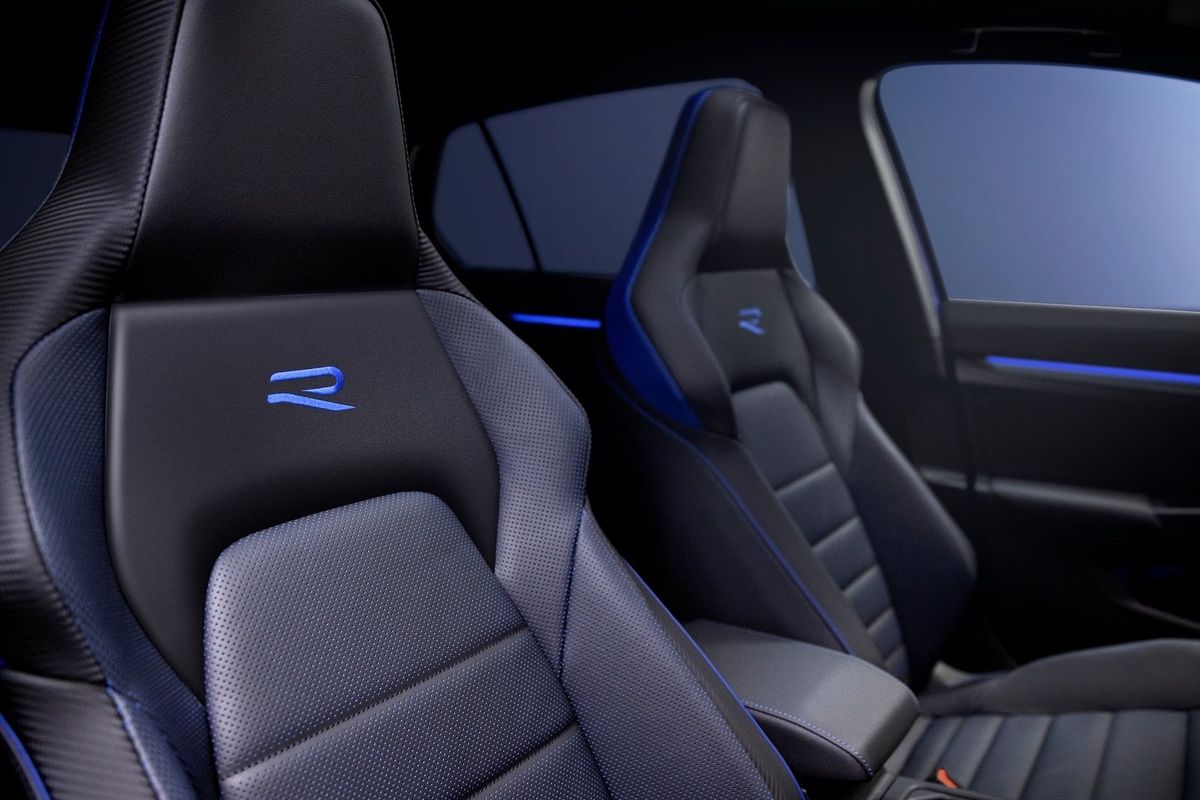
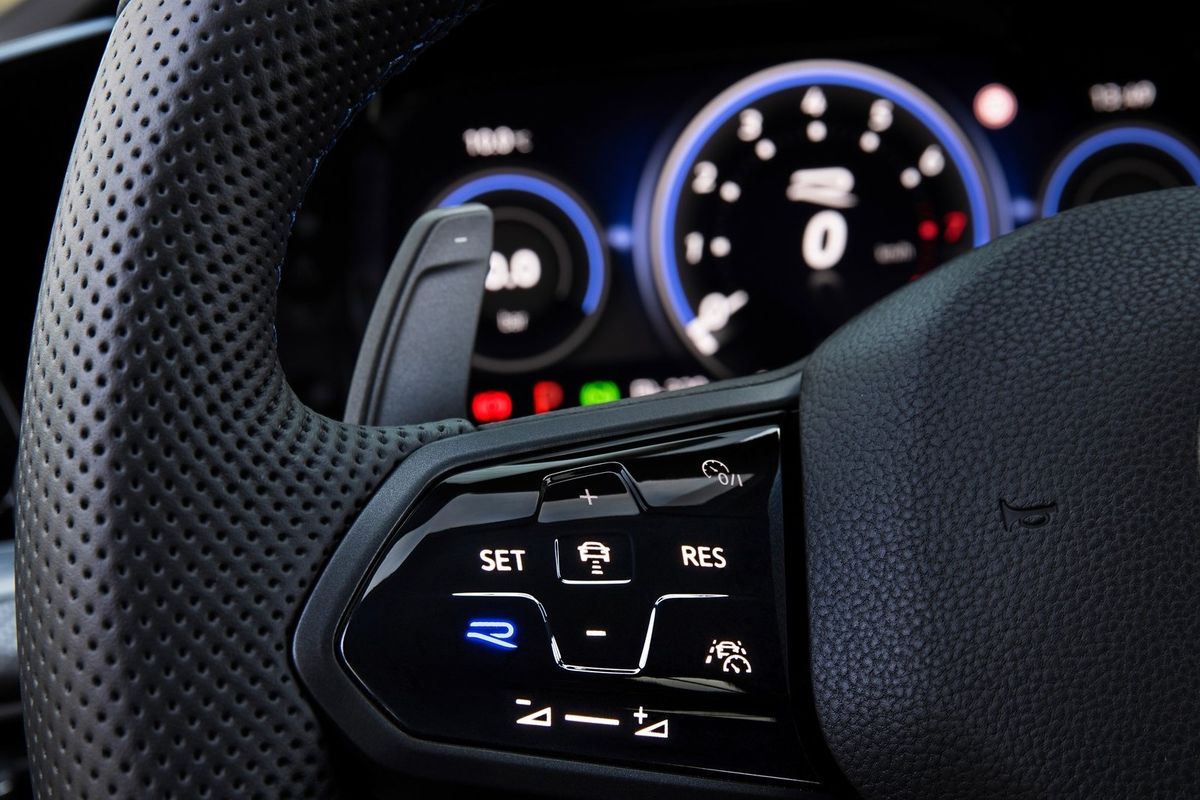
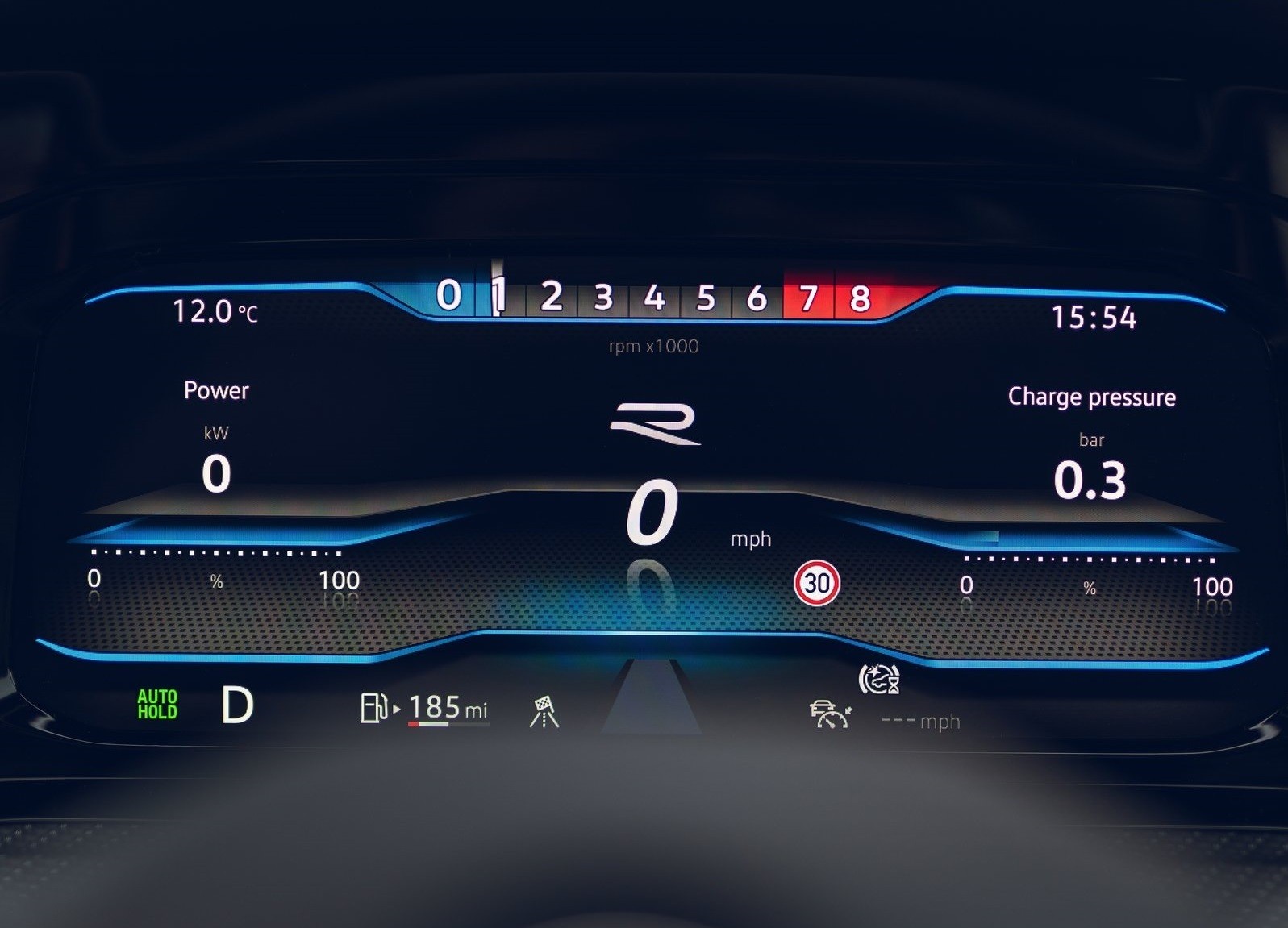
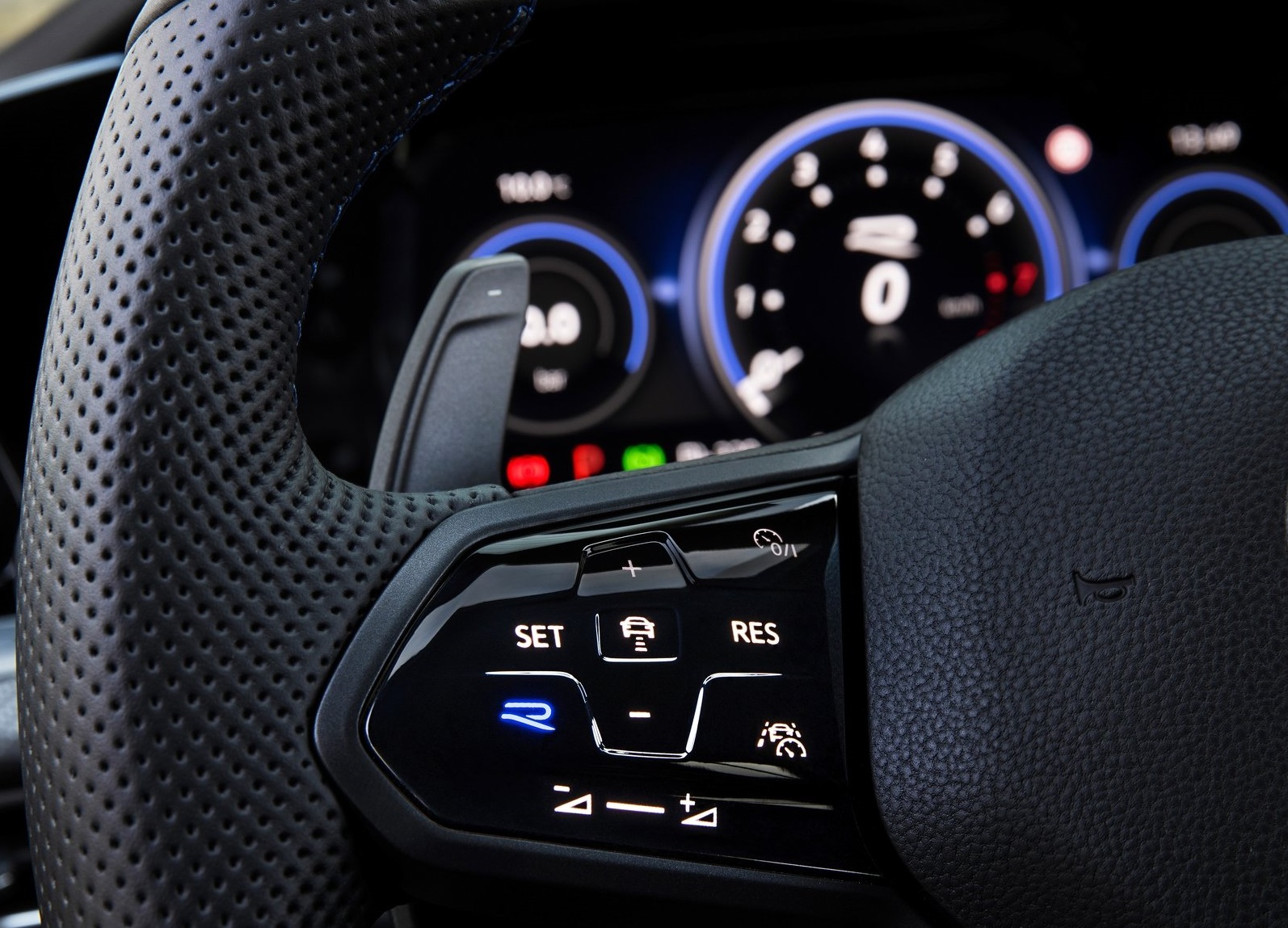
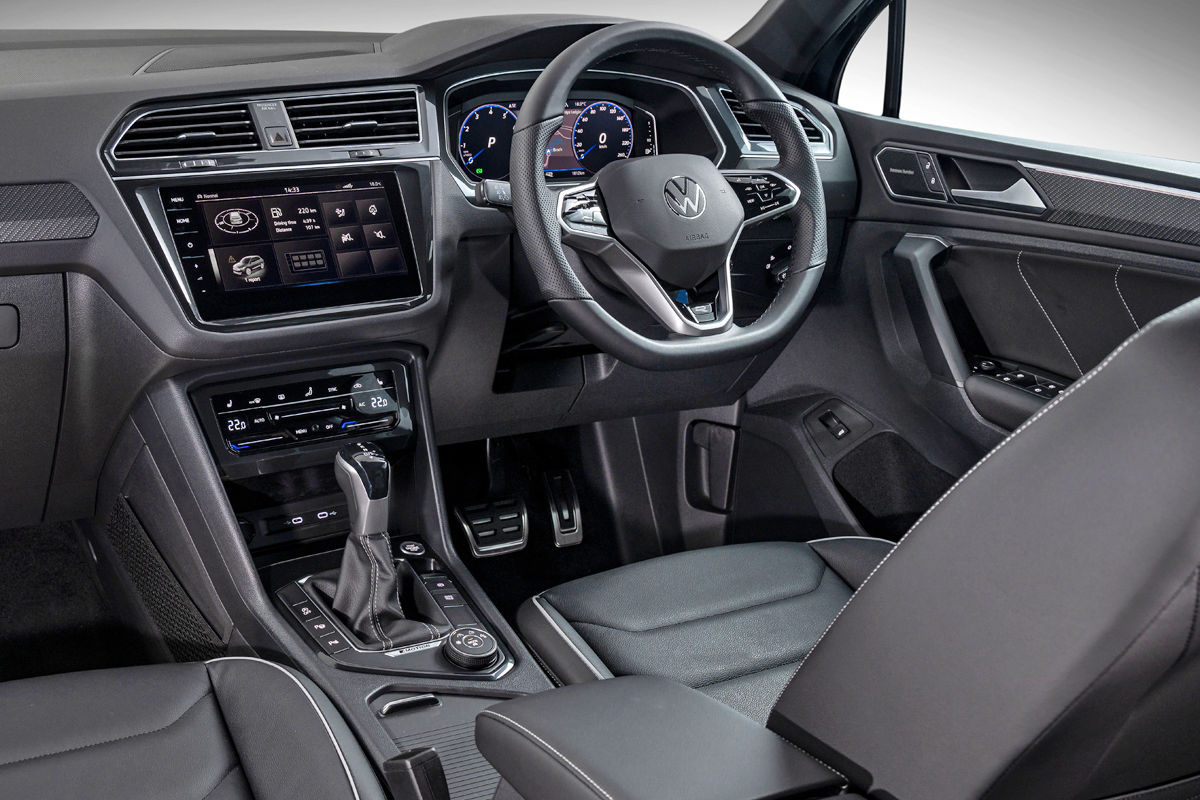
The Golf R’s cabin is sporty, tech-laden… and quite minimalistic. R-themed cues include blue ambient lighting and an abundance of blue detailing and R badges. Keen-eyed fans will have spotted the blue R on the multifunction steering wheel (you press that to activate Race mode). Like the GTI, the Golf R has a stubby selector on the centre console, rather than a conventional transmission lever – it won’t be to everyone’s taste, but it does free up some cabin space – and a configurable digital instrument cluster (replete with R-specific display).
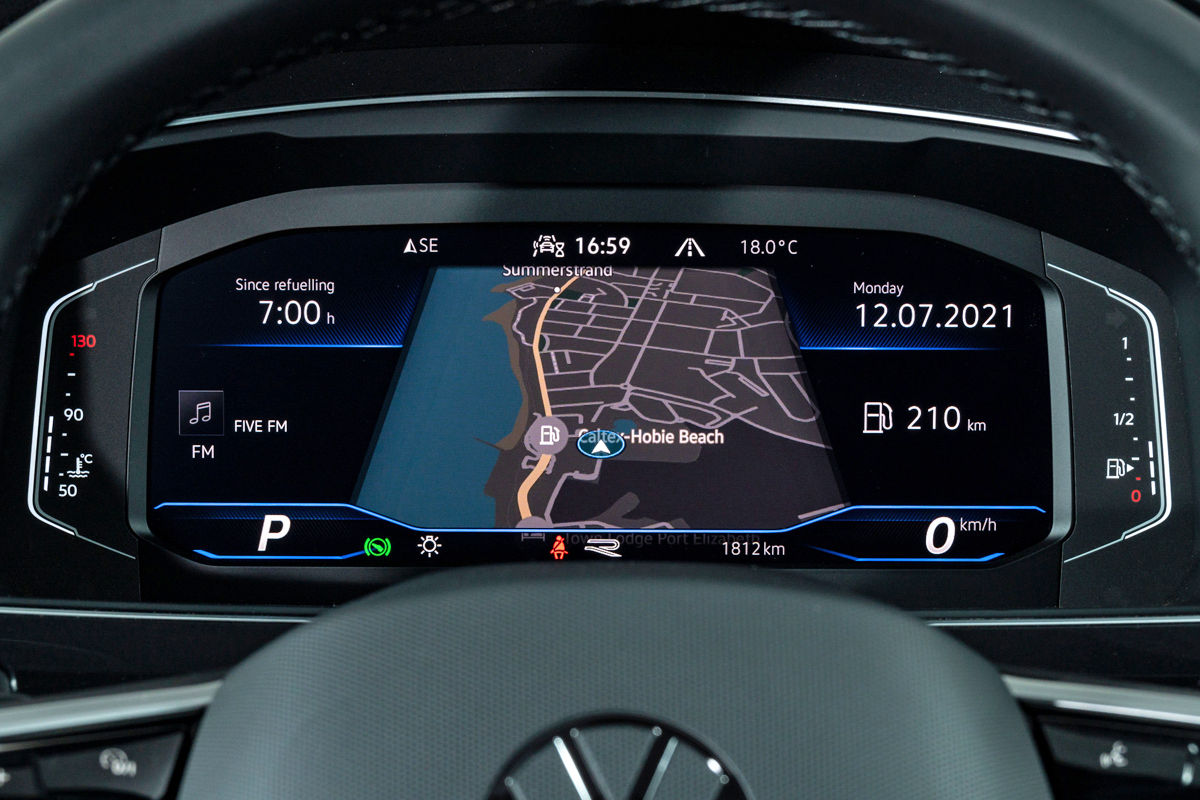
The digital instrument cluster of the Golf R features blue highlighting and the R logo.
At the Golf R’s launch event, we made a beeline for a white example purely because we had been told it was one of very few early units fitted with the optional Akrapovic exhaust. Upon start-up, the motor emits a deep throaty rumble, which, in an era of ever-tightening emissions and noise regulations, was a pleasant surprise. While it was oh-so-tempting to hit the blue R button on the multifunction steering wheel to engage the flagship Golf’s raciest drive mode right away, we chose to depart the centre of Cape Town in an altogether civilised manner.
The Golf R sounds quite rorty at startup, but we expect that many buyers will opt for the optional Akrapovic exhaust setup.
In its default settings, the Golf R is an excellent “daily driver” – it blends luxury, comfort, ease of use and, believe it or not, economy. During our highway drive, we saw an indicated consumption figure of just above 8 L/100 km – that’s commendable, given the newcomer’s sporty pretensions/lofty engine outputs. On-road refinement and ride quality are excellent.
Once we’d left the N1 and turned onto a quiet stretch of tarmac, it was time to punch that R button and unleash the Golf R. In an instant, the engine noise increased and the exhaust ends bellowed to let onlookers know a special vehicle was about to grace them with its presence.
In Race mode, the Golf R’s transmission is highly responsive and slots each gear rapidly. Earlier, when the direct-shift gearbox was operating in Comfort mode, things were much more relaxed, as if changes were executed slowly, almost imperceptibly, instead of with a rifle bolt-like action. The gearshift paddles on the steering wheel look and feel the part too.
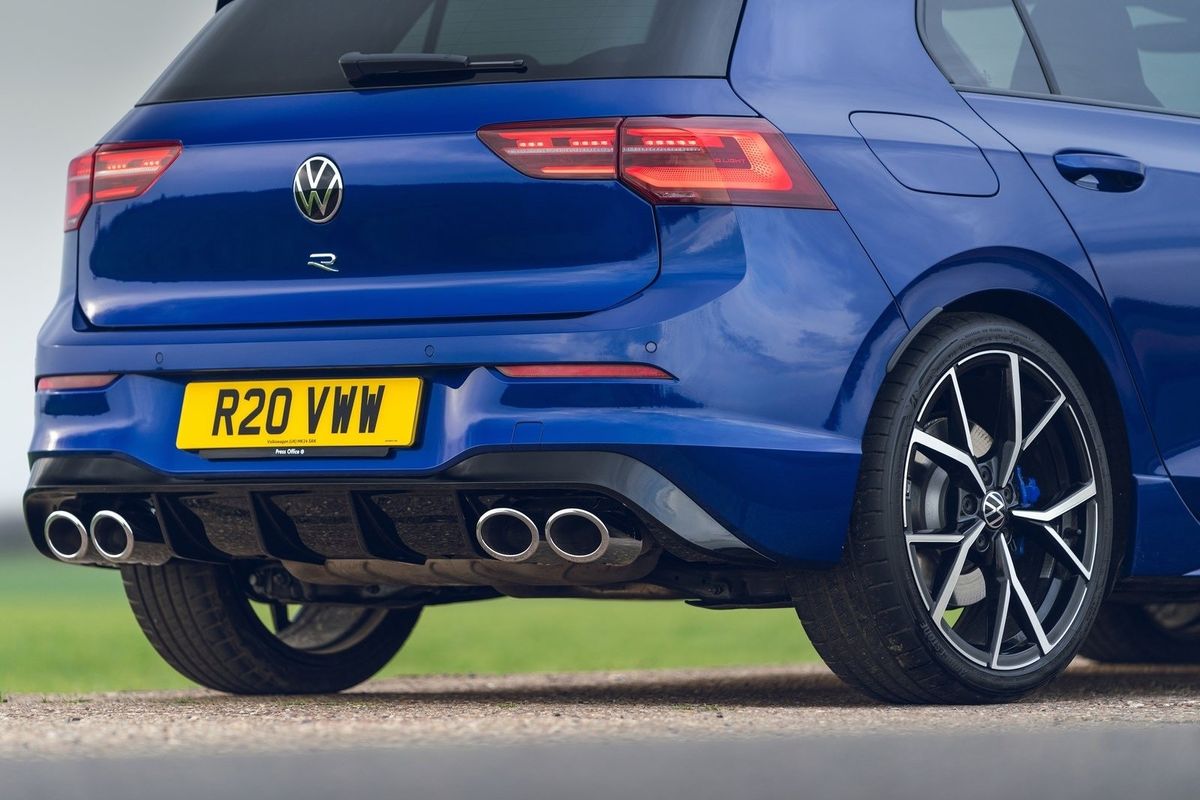
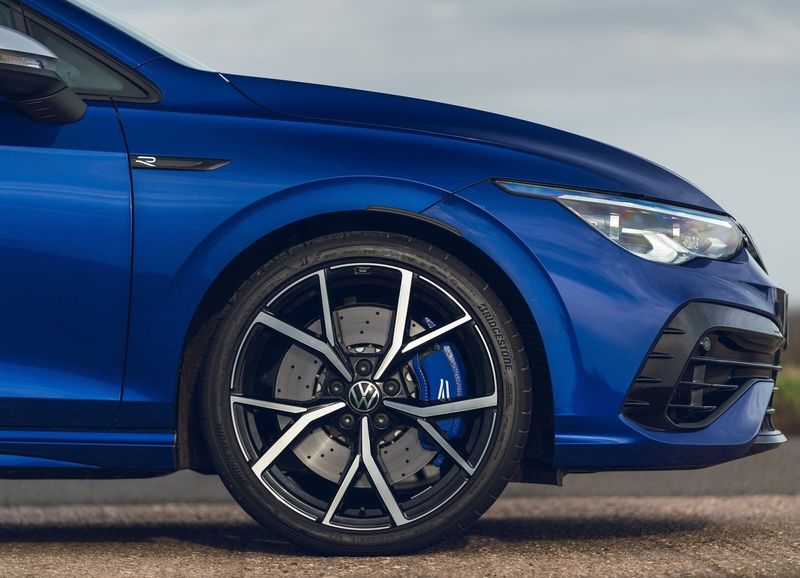
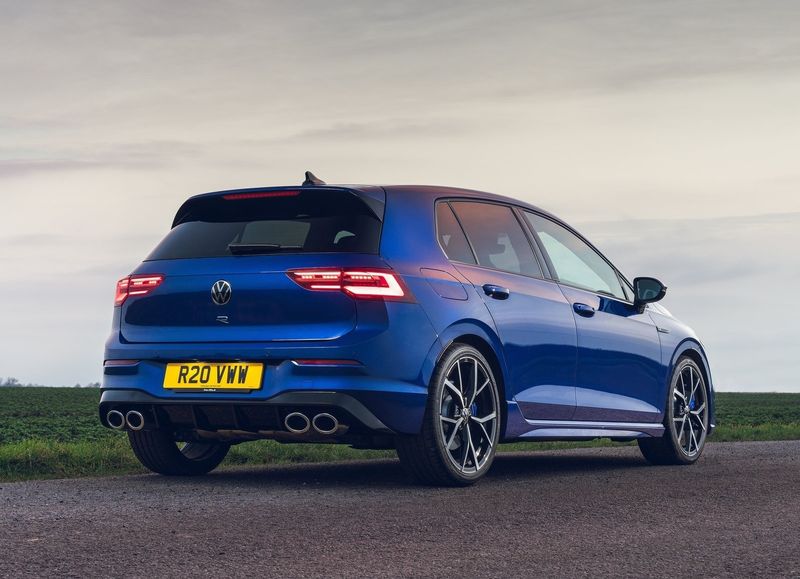
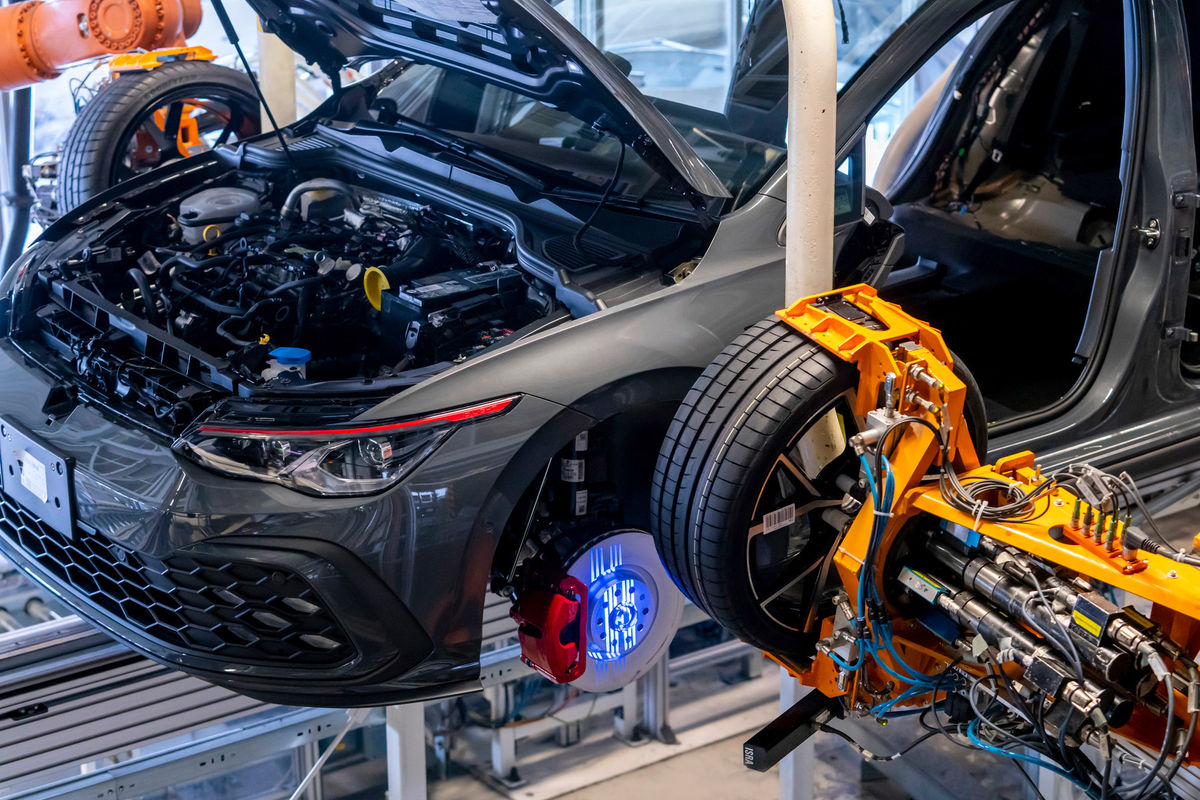
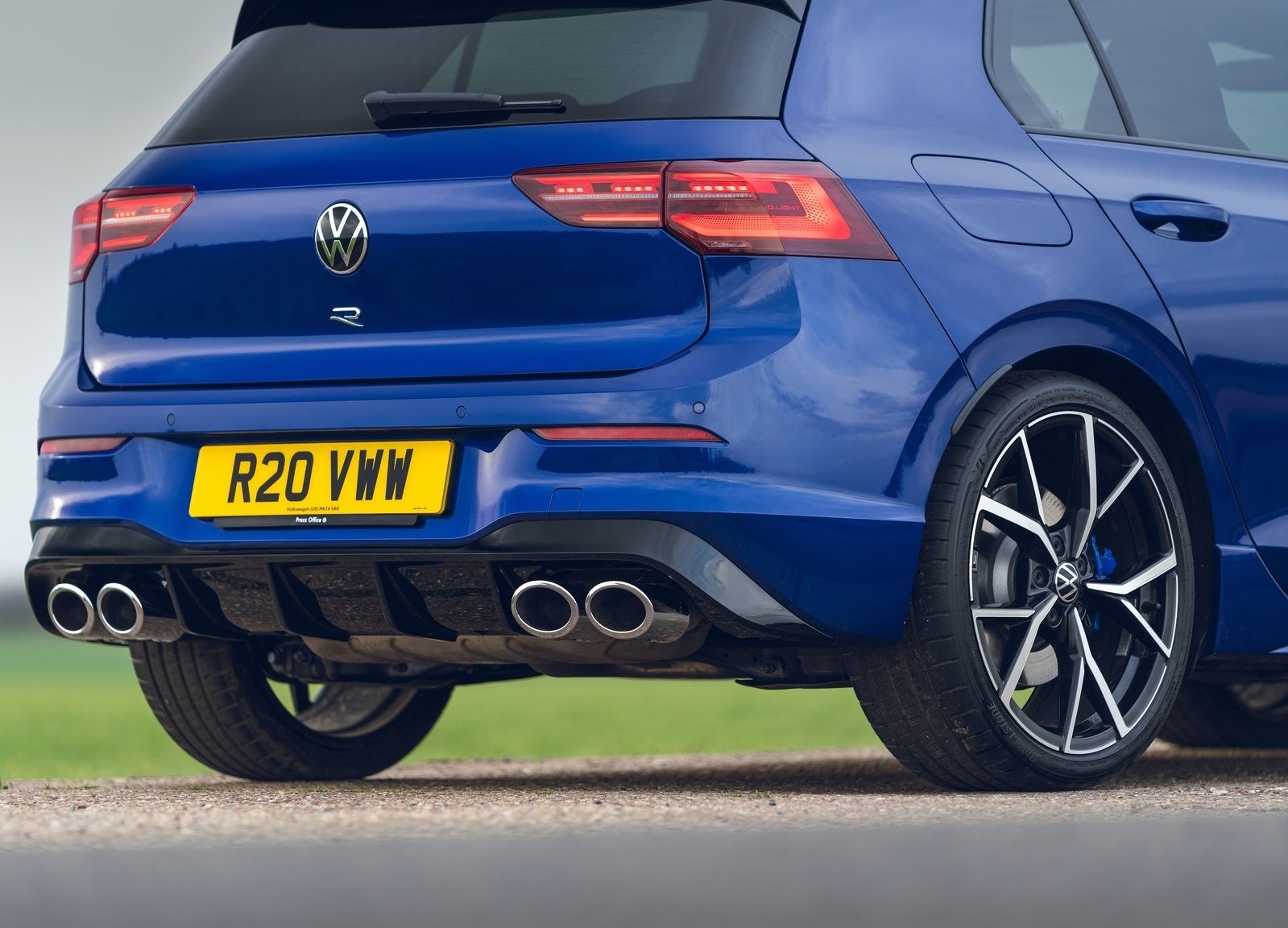
The Golf R is fitted with attractive 19-inch allows and comes fitted with a beefed-up braking system. The blue brake calipers are particularly eye-catching.
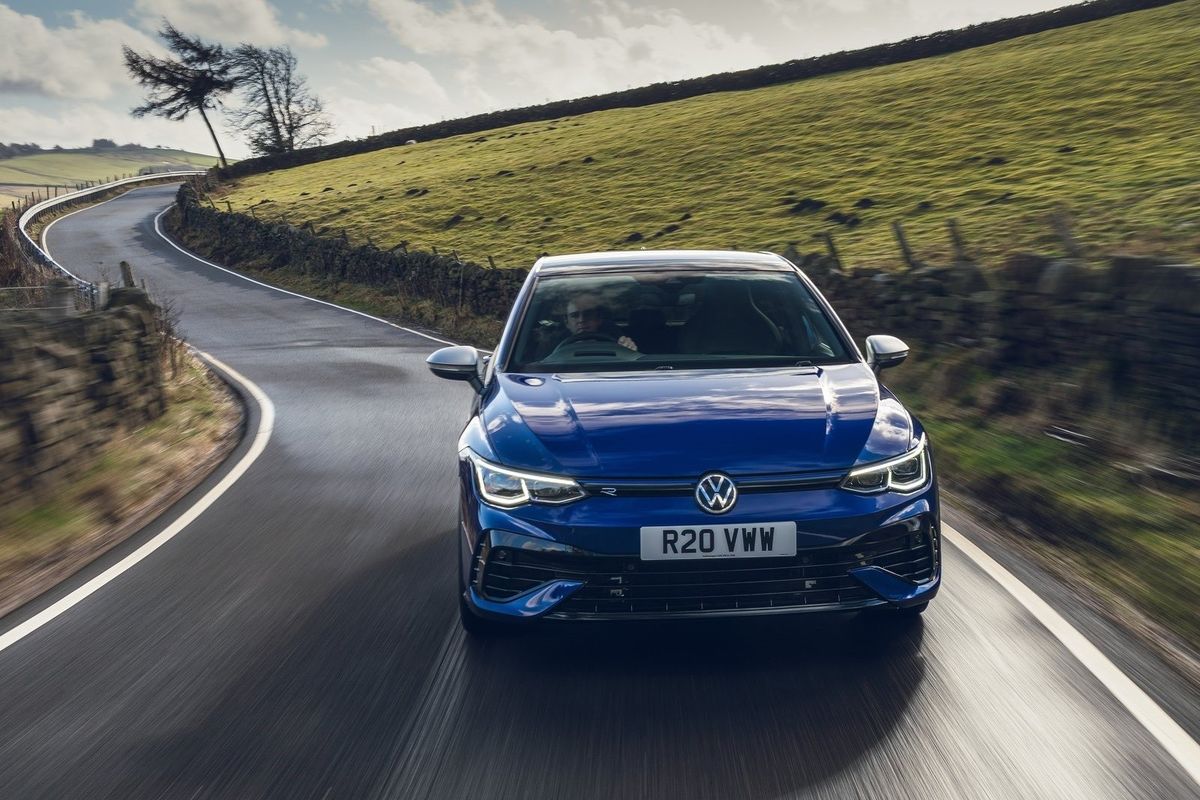
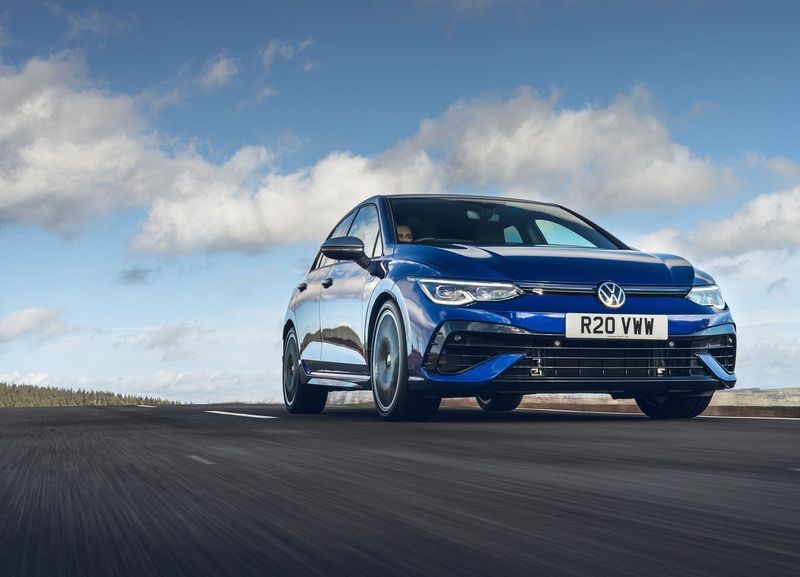
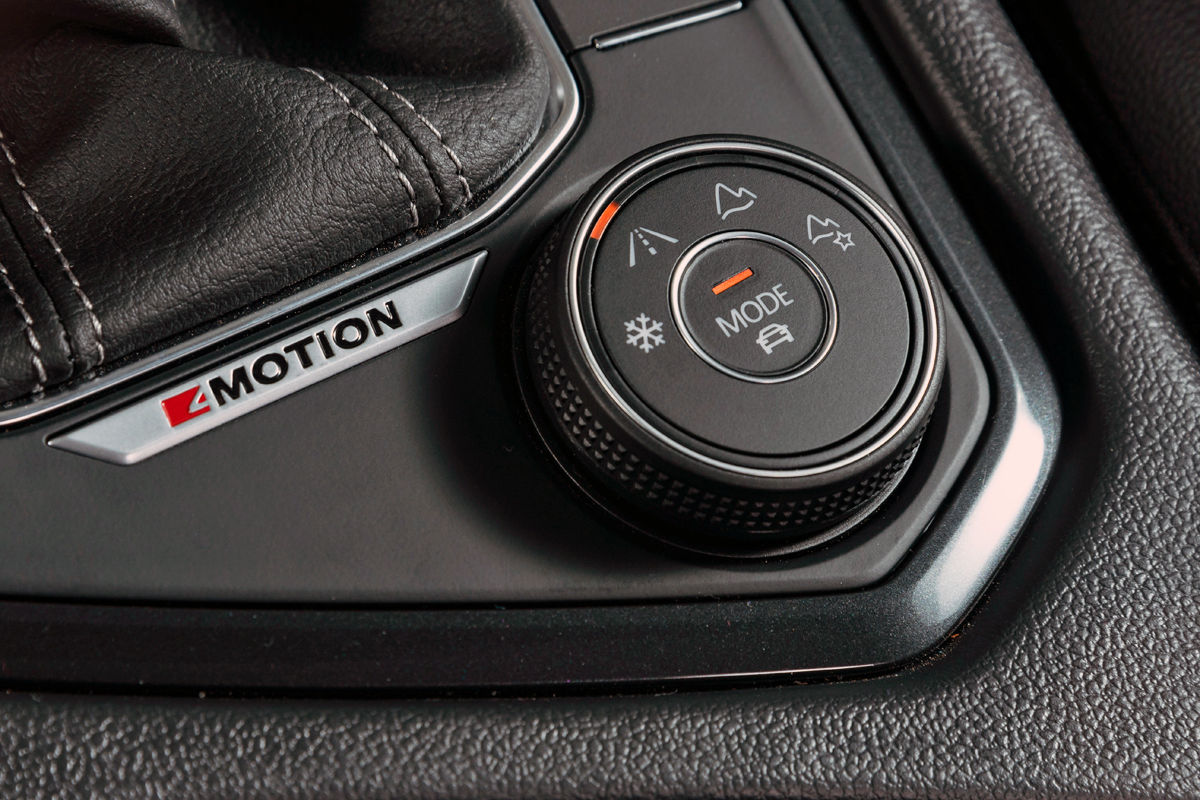
As the Golf R charged through a set of challenging corners (as rain started falling), two impressions came to mind: “Good grief, this is one quick hatchback” and “This car feels utterly planted”. Thanks to the 4Motion all-wheel drive and the clever torque vectoring, it may require some deliberate manhandling or careless antics to get the Golf R out of shape.
Unless you’re a pro driver, you’ll run out of talent and bravery long before you hear this fleet-footed Volkswagen’s tyres squeal. As we reached the bottom of Franschhoek Pass, the rainfall became torrential. Therefore, we slowed to a brisk, as opposed to rapid, pace.
The Golf R’s cabin is tastefully appointed, but we’re not big fans of the multifunction steering wheel’s capacitive touch pads.
Still, in these treacherous conditions, the Golf R’s grip levels remained lofty and we used the opportunity to assess the newcomer’s steering setup. It’s suitably quick and direct, but doesn’t offer very much feedback. If you’re looking for more driver engagement/involvement, try the Hyundai i30 N DCT. There are no doubts about the VW’s sheer pace and precise handling, but much like every preceding R model, there’s a lack of “that ultimate thrill and rush”.
But then again, the Golf R and its Audi, BMW and Mercedes-AMG rivals are designed to deliver compelling performance matched with day-to-day usability that harder-edged hot hatches cannot match. This car is remarkably easy to drive quickly; it covers ground rapidly and you could happily drive it on a long trip with your family. For the average petrolhead, who hardly ever spend time on a track, the Golf R should cover all the performance bases.
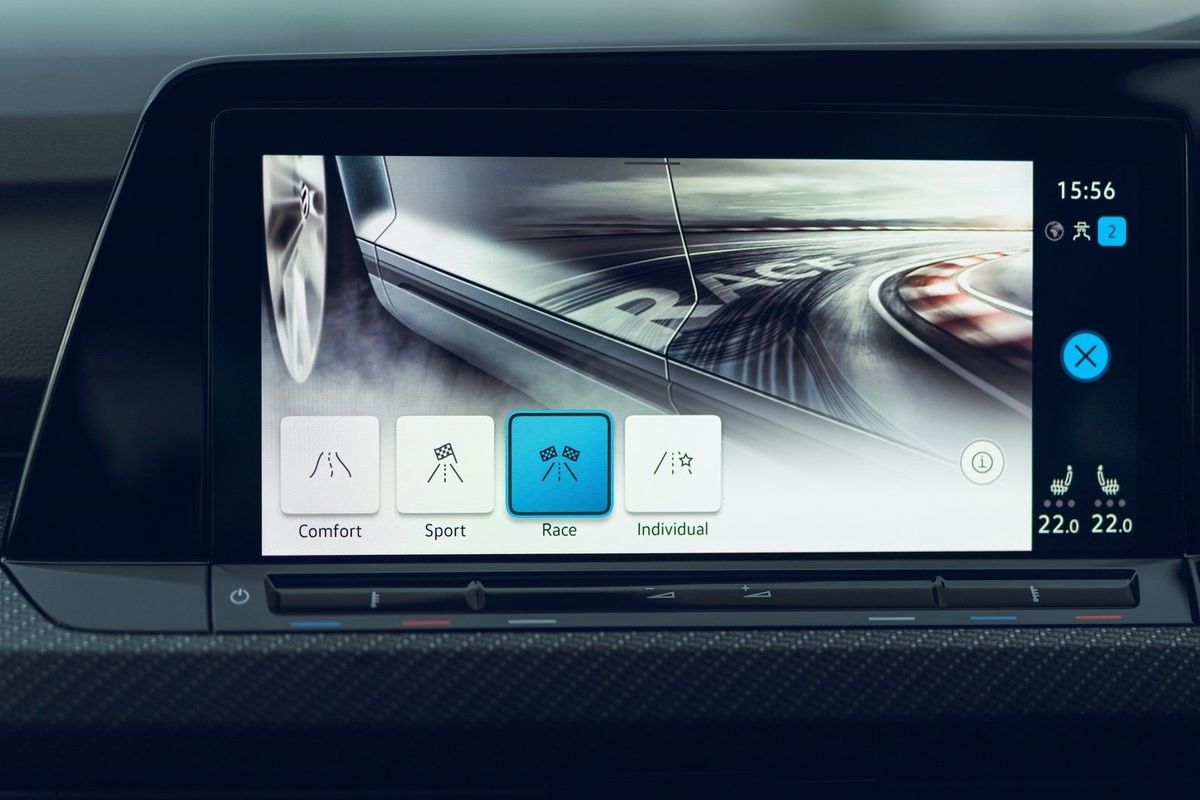
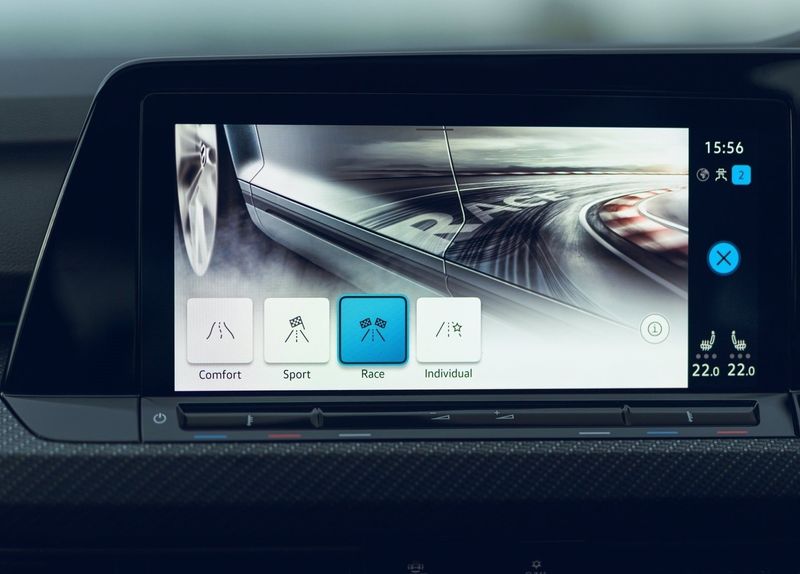
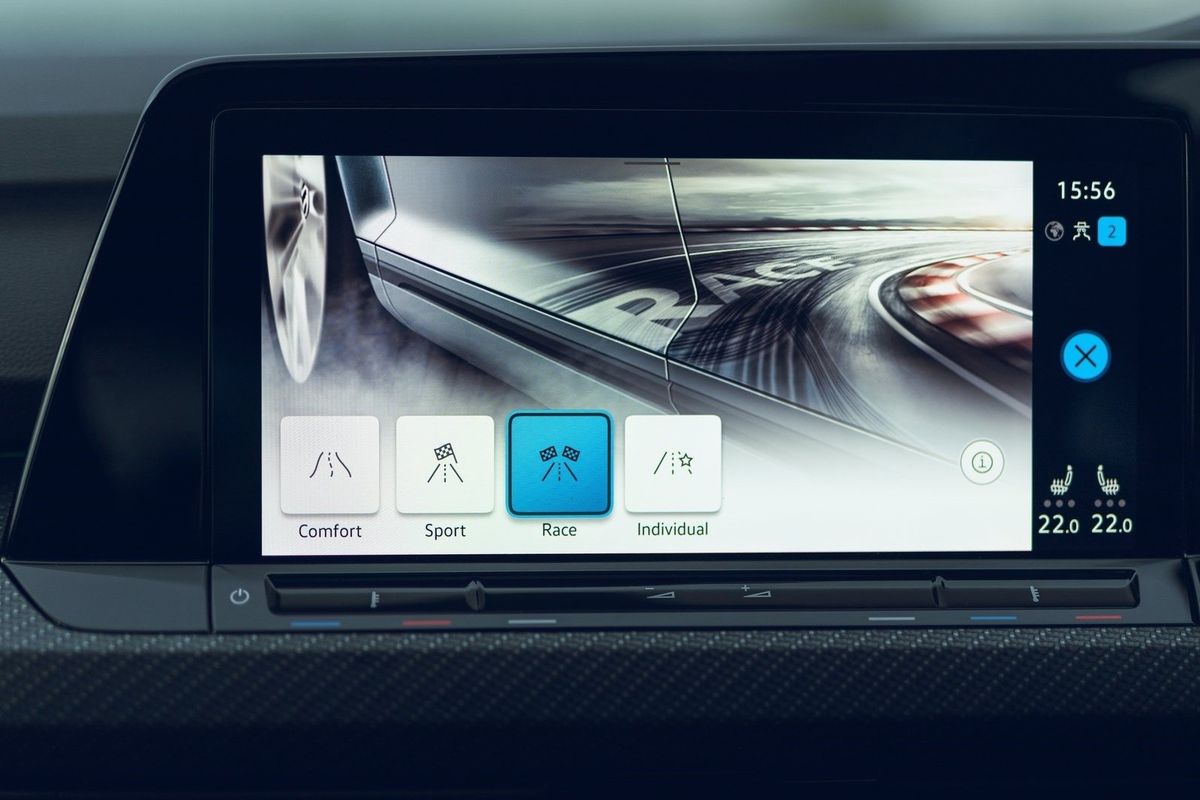
As before, the Golf 8 R has an assortment of drive modes, but the most noteworthy one is the Individual setup, which allows you to fine-tune the powertrain and suspension’s responses. Race mode can get a bit much (the ride’s quite firm), Sport is enough to quicken the pulse, but to get the most out of the package, you should toggle the settings to suit your preference.
The Golf R allows drivers to choose between various drive modes and toggle myriad powertrain and suspension settings.
Individual has TEN settings for the adjustable dampers, and you can go even softer than the car’s own Comfort setting. The opposite is true too, with the possibility of stiffening the ride quality beyond the Race setup. Performance enthusiasts may lean towards high performance and rapid ‘shifts for short, sharp driving jaunts, but when you’re traversing poorly maintained roads for hours on end you’ll appreciate the softest possible suspension for optimal comfort.
Downsides? Well aside from the stock shortage problem, and not knowing exactly how much the Golf R will cost when it goes on sale, we do have a few grumbles. The ‘wheel’s fiddly capacitive touchpads are frustrating to use, but to be fair, it’s not a problem specific to this Volkswagen model. Perhaps they become easier to use with familiarisation, but we doubt it.
Then there’s the engine sound, which isn’t very inspiring. The Golf R pumps some artificial noise into its cabin (depending on which drive mode is active) but, unless you’re driving with the windows down, you can’t fully appreciate the motor’s timbre. The Akrapovic plumbing shaves 7 kg off the vehicle’s weight and enhances the sheer volume of the exhaust note, but it doesn’t sound more melodious than the soundtrack emitted by the standard R’s four ‘pipes.
Everyday practicality and on-road comfort remain strengths of the Golf R package, although the ride quality is very firm in Race mode.
How much does the Volkswagen Golf 8 R cost in SA?
It’s at this point of a launch review that we usually confirm the vehicle’s price, the cost of the options, as well as the warranty and service/maintenance plan, but VWSA does not want to share the price of the new Golf R until the model goes on sale in the first quarter of 2023.
The outgoing model cost under R800k when it was discontinued, but we can use the Audi S3 as a good yardstick for the new Golf R, which is traditionally more affordable than its cousin from Ingolstadt. The Audi S3’s list price is R883 000 and we reckon its VW equivalent will cost around R850 000. With all options ticked, a Golf 8 R may cost more than R1 million.
Summary
The days of the performance hatchback may be numbered; if this is to be the final Golf R, it does not disappoint.
We expected the Volkswagen Golf 8 R would be fast, comfortable, have a well-appointed cabin and be the perfect evolution of what’s clearly a successful formula. Well, that it is. The newcomer doesn’t tick all the boxes for ultimate driver involvement, but that’s okay, because this model is not strictly targeted at performance-car buyers. Most Golf Rs will be used as family cars and for commuting, which is why refinement and luxury have been prioritised.
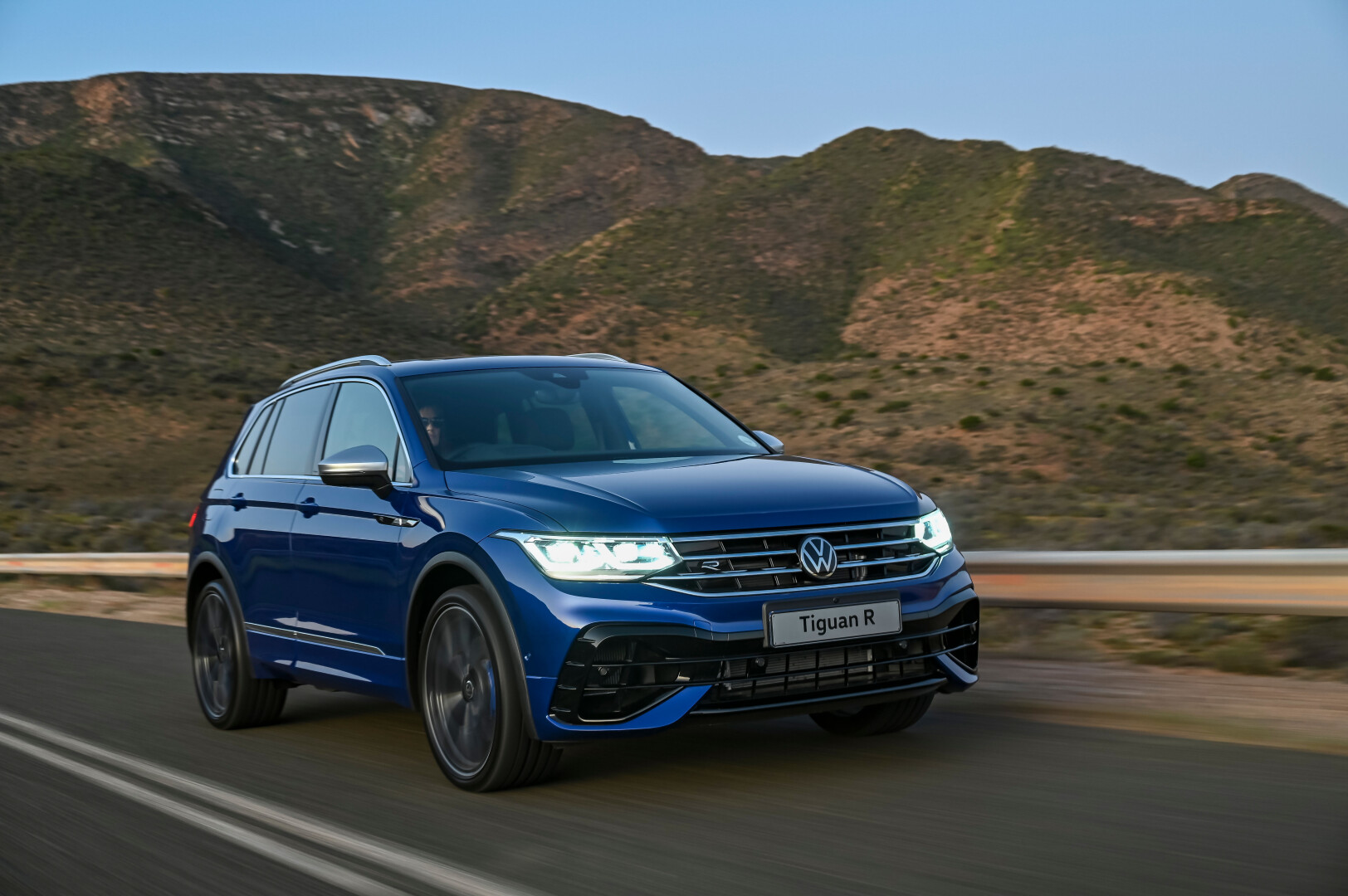
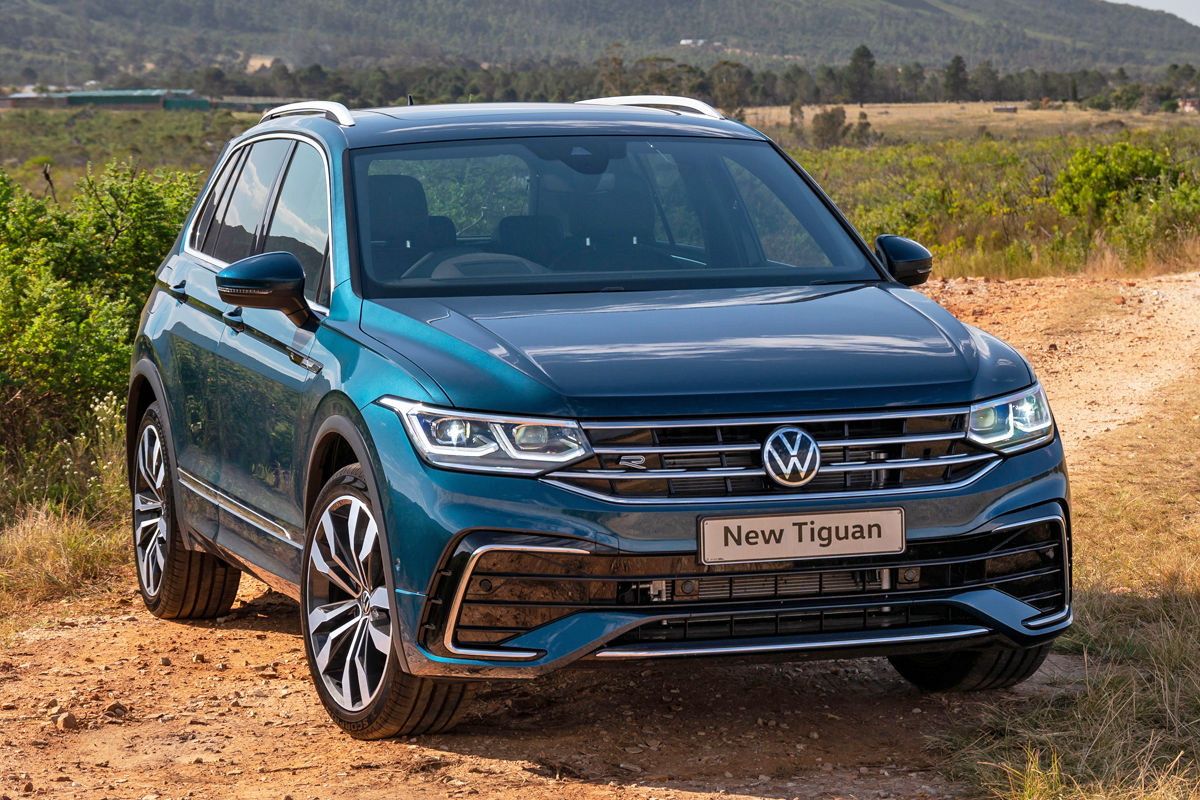
If you’re keen on acquiring one of the last few thoroughbred performance hatchbacks, you will just have to wait just a bit longer, while Volkswagen AG battles to overcome vehicle production-, supply chain and logistical challenges. If you’re impatient and frustrated (as many are), we have a solution, though. At the local drive of the Golf R, VWSA also gave us extensive time behind the ‘wheel of the Tiguan R, which has the same 235 kW engine, 4Motion, plus the option of an Akrapovic exhaust. The best part? It’s available right now.
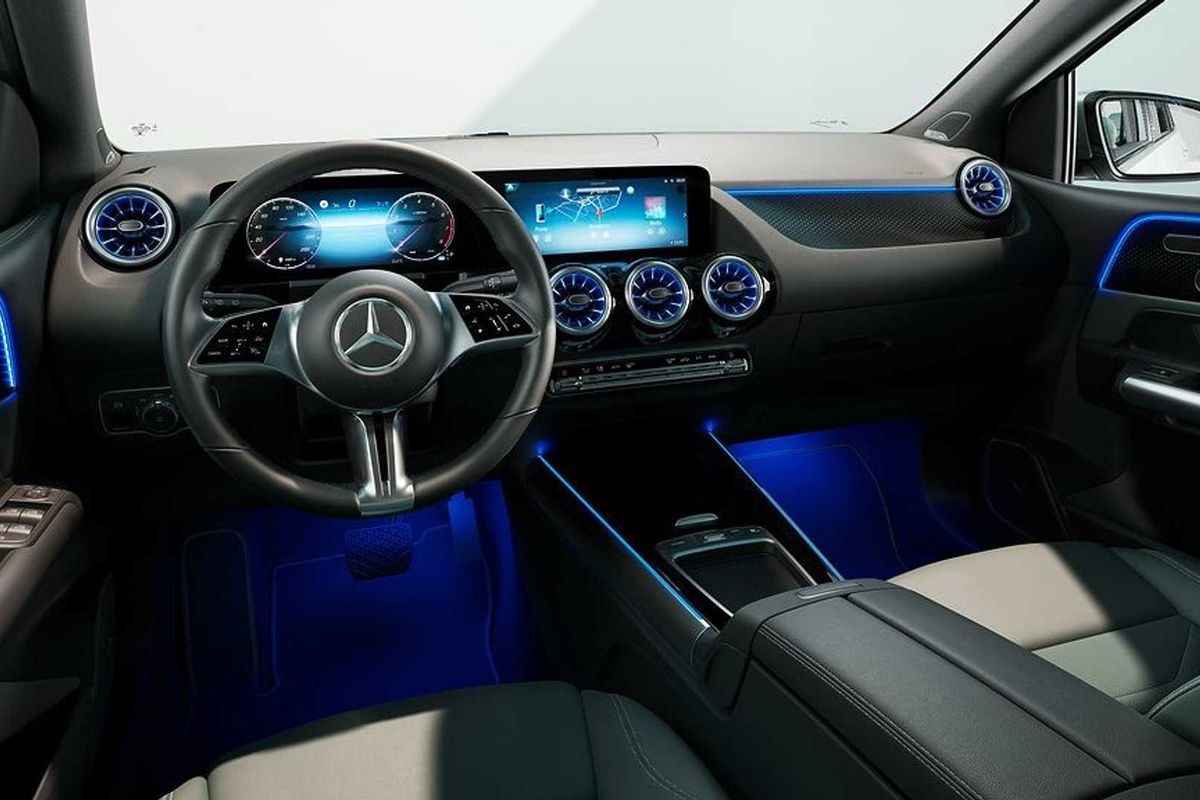
The Mercedes-Benz B-Class has received a mild update and local availability is expected in the third quarter of 2023.
Much like the A-Class, Mercedes-Benz’s B-Class has undergone some mild revisions and you can expect to see it on local soil in the first half of 2023.
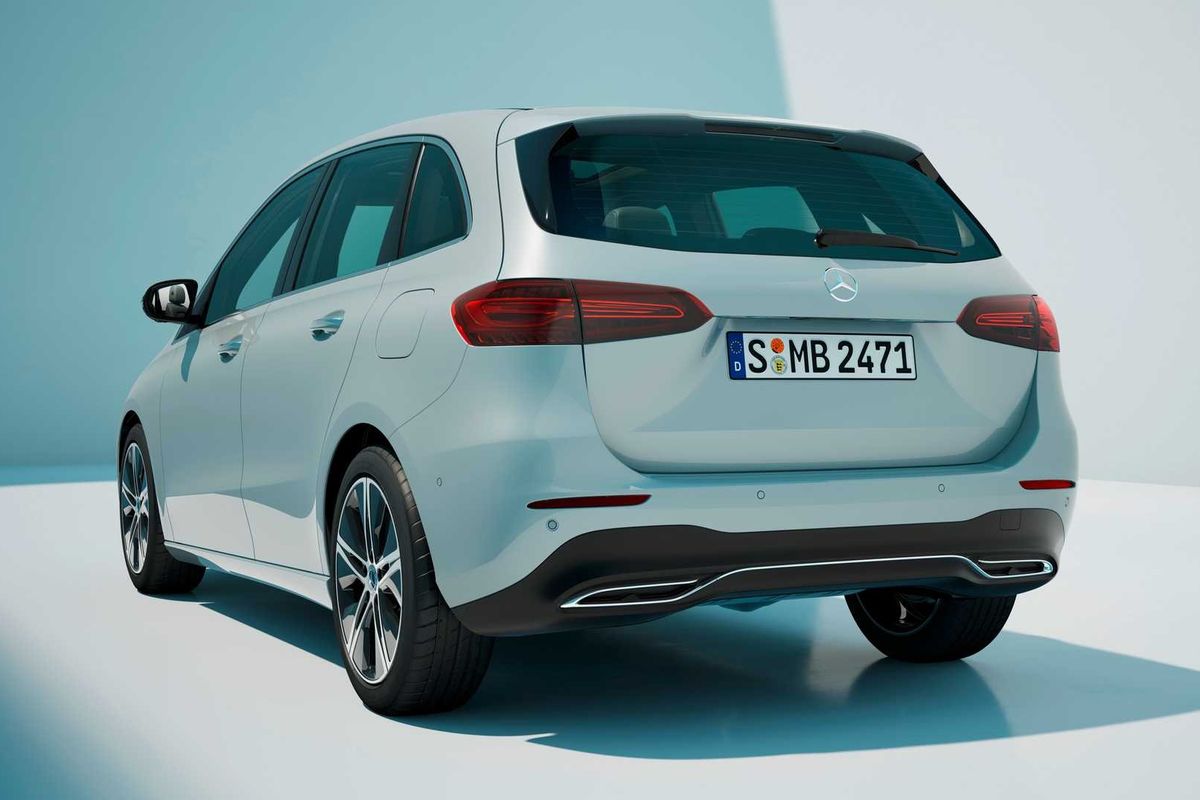
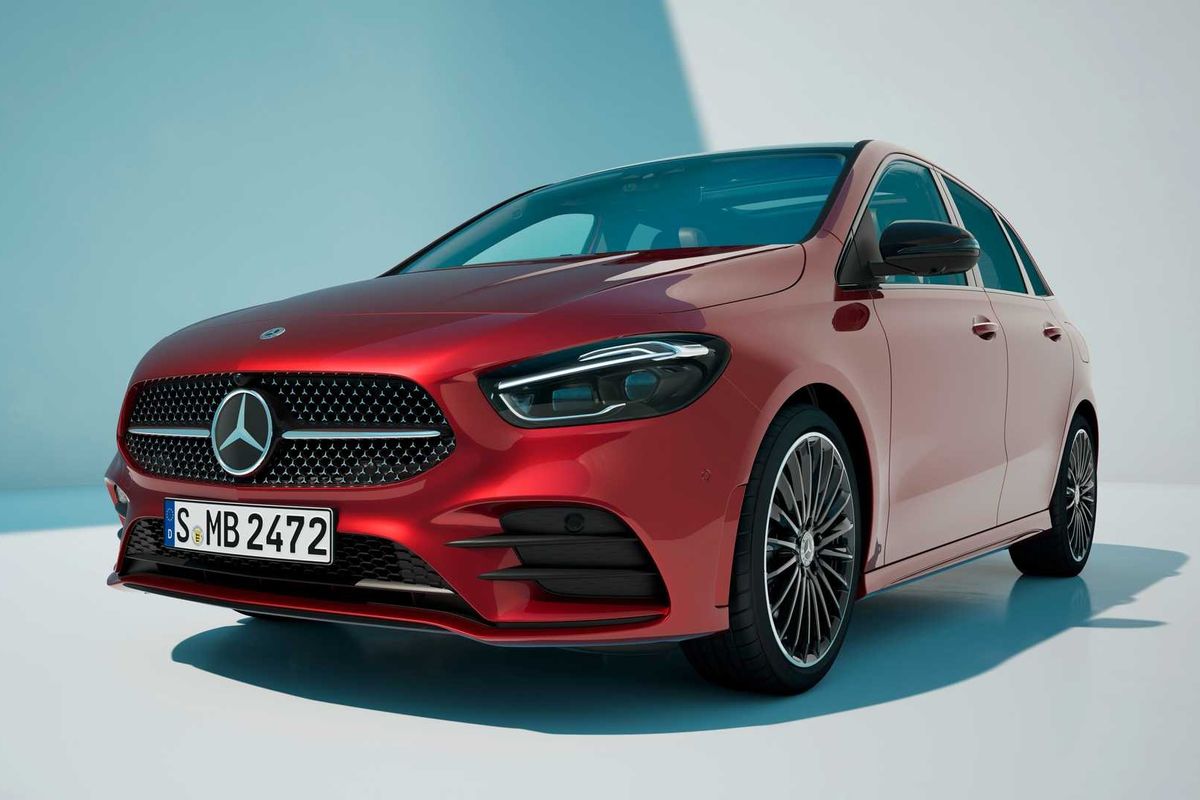
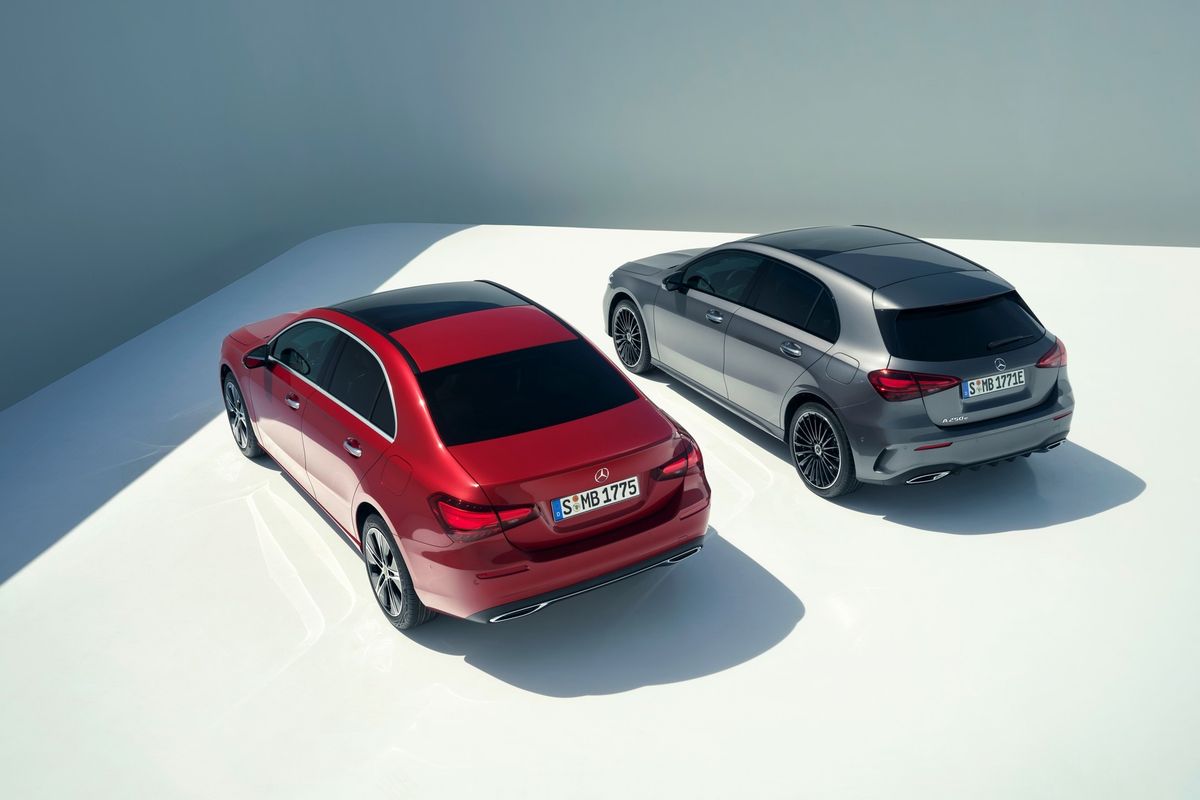
So, what’s changed, you ask? In truth, not too much. The grille has been mildly revised as are the headlights which can be had in LED guise as an option. The front bumper has also been tweaked and at the rear you might notice the new-look taillight clusters. Mercedes-Benz has also added 4 new alloy wheel designs up to 19-inches in size. The B-Class AMG Line derivatives further gain glossy black wheels with a multi-spoke design.
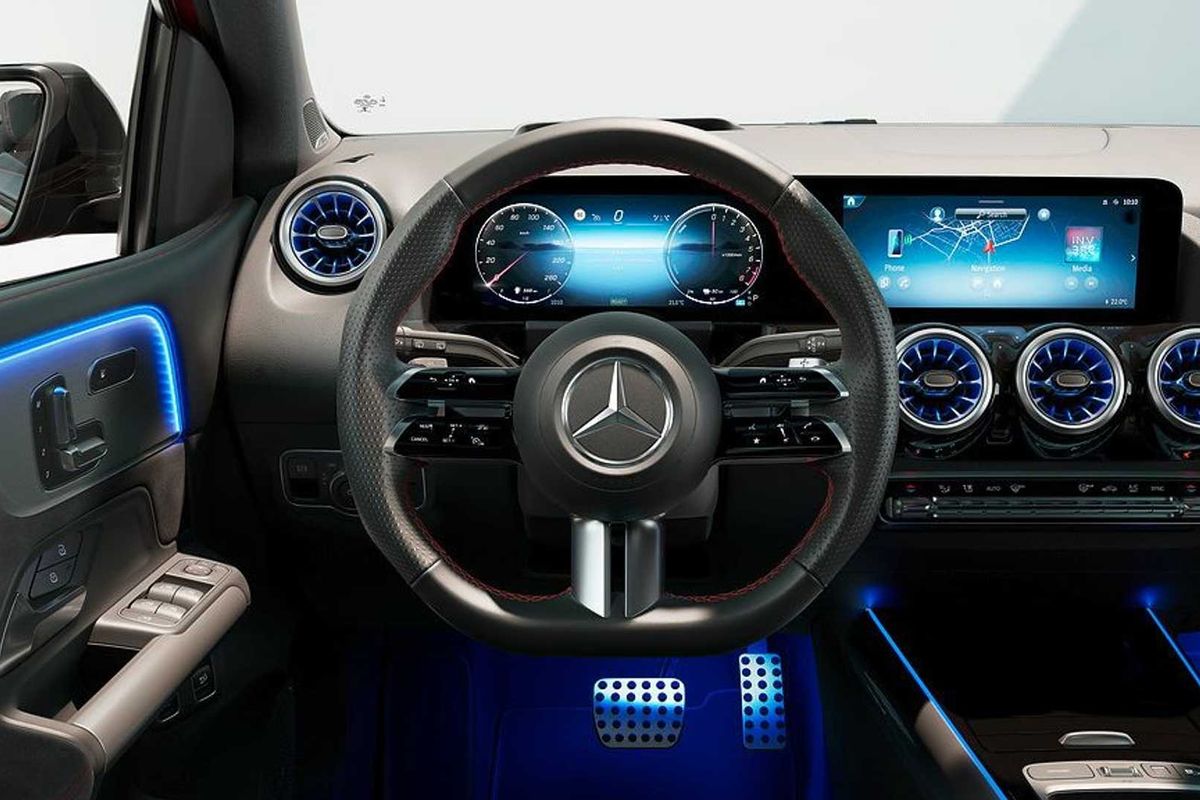
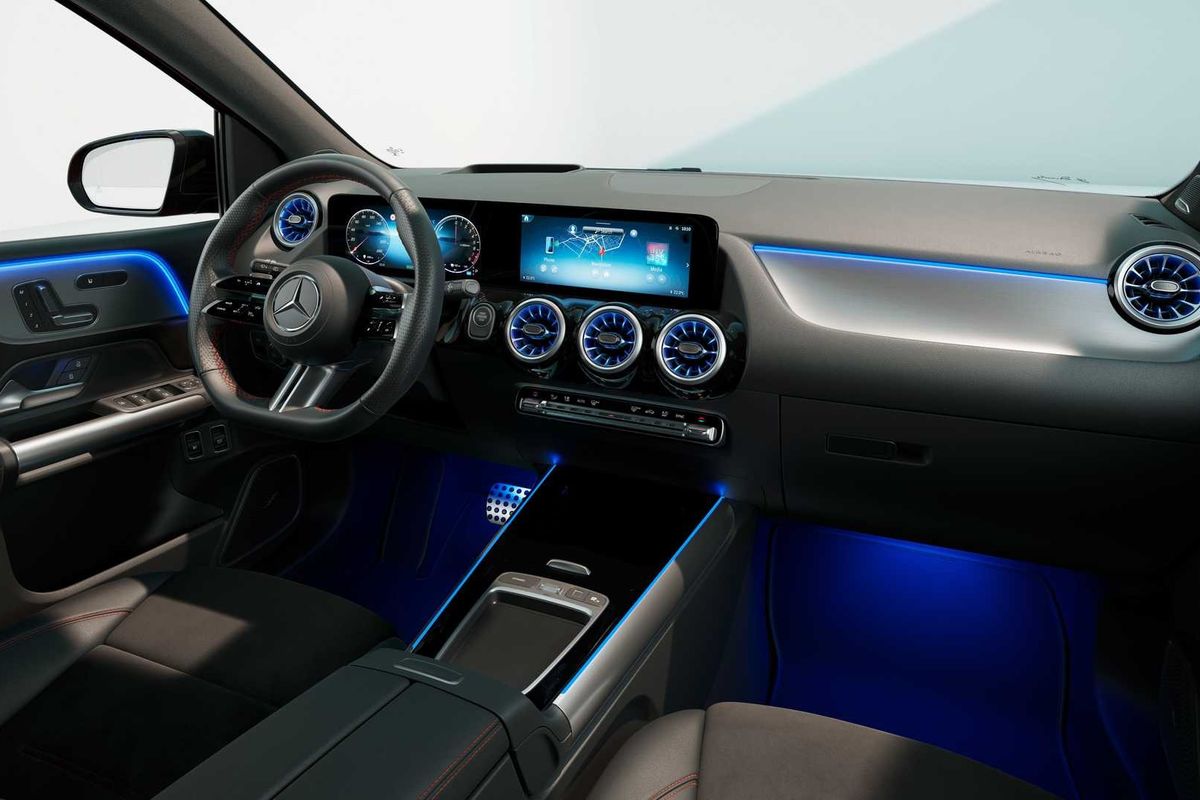
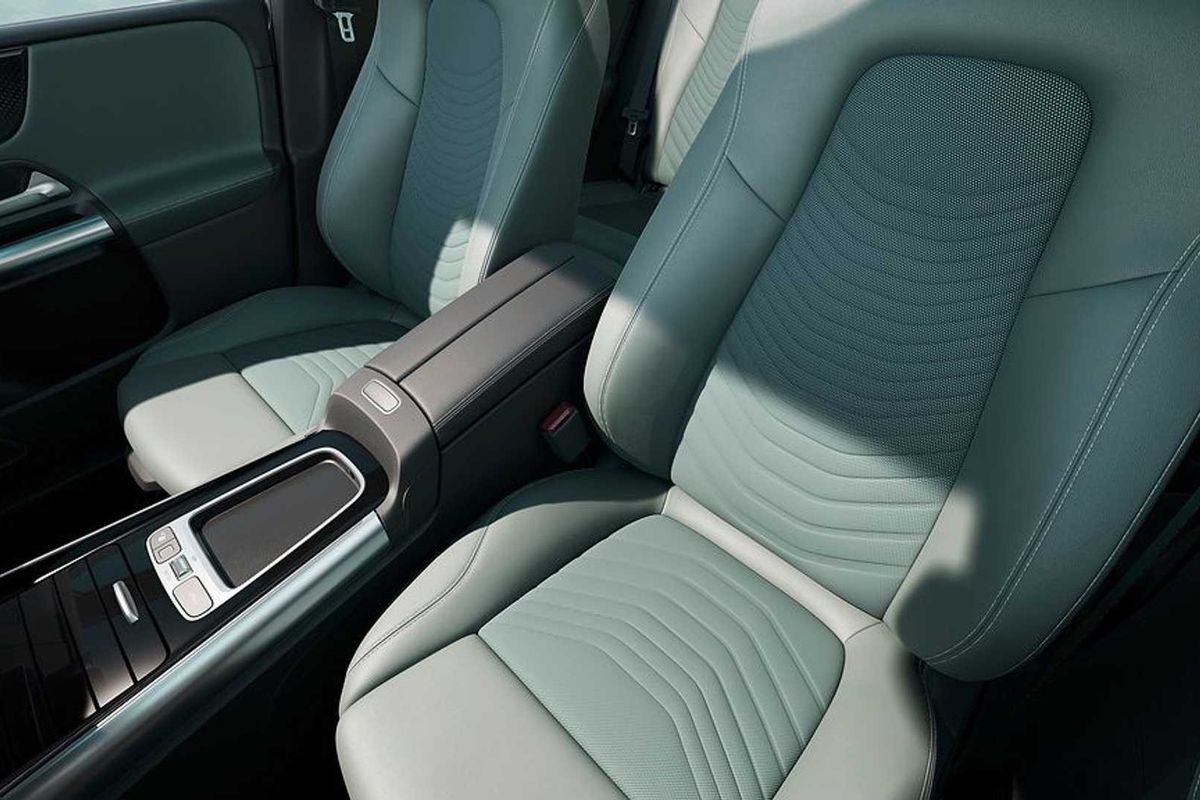
Changes inside the B-Class are minimal but equipment and upholstery upgrades are most notable.
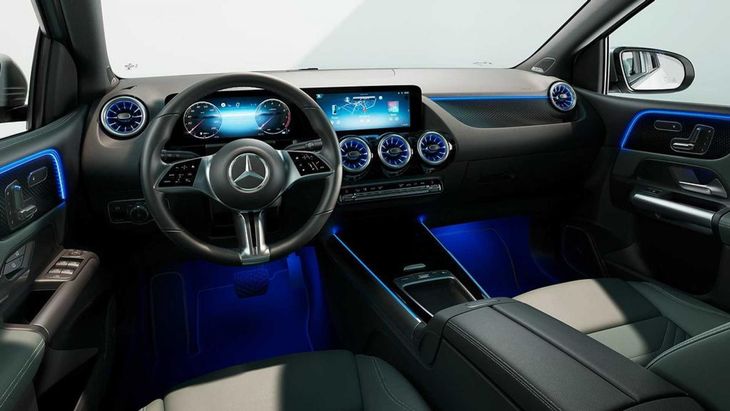
The interior remains mostly unchanged, however, a Nappa leather steering wheel is now standard as is a 10.25-inch MBUX touchscreen and 7-inch digital instrument cluster. Customers can also opt for a larger 10.25-inch instrument display. New upholstery options, including star-pattern upholstery, is also offered.
The B-Class’s powertrain remains mostly unchanged with the plug-in hybrid B250e gaining a revised electric motor that now produces an additional 5 kW to total 80 kW. This derivative is not on sale in South Africa, however.
When the updated B-Class arrives in South Africa next year, the 1.3-litre turbopetrol engine with 120 kW and 250 Nm will likely be carried over and will be mated with the familiar 7-speed dual-clutch transmission.
Earlier this year, news emerged that Mercedes-Benz would be rationalising its range and models such as the A-Class and B-Class are due to be discontinued by 2025. This is, therefore, likely to be the final update for the B-Class before it vacates the motoring landscape for good.
So, what you are looking at here is most likely to be the final facelift for the A-Class.
Take a moment to soak it in.
What’s changed with the updated Mercedes-Benz A-Class?
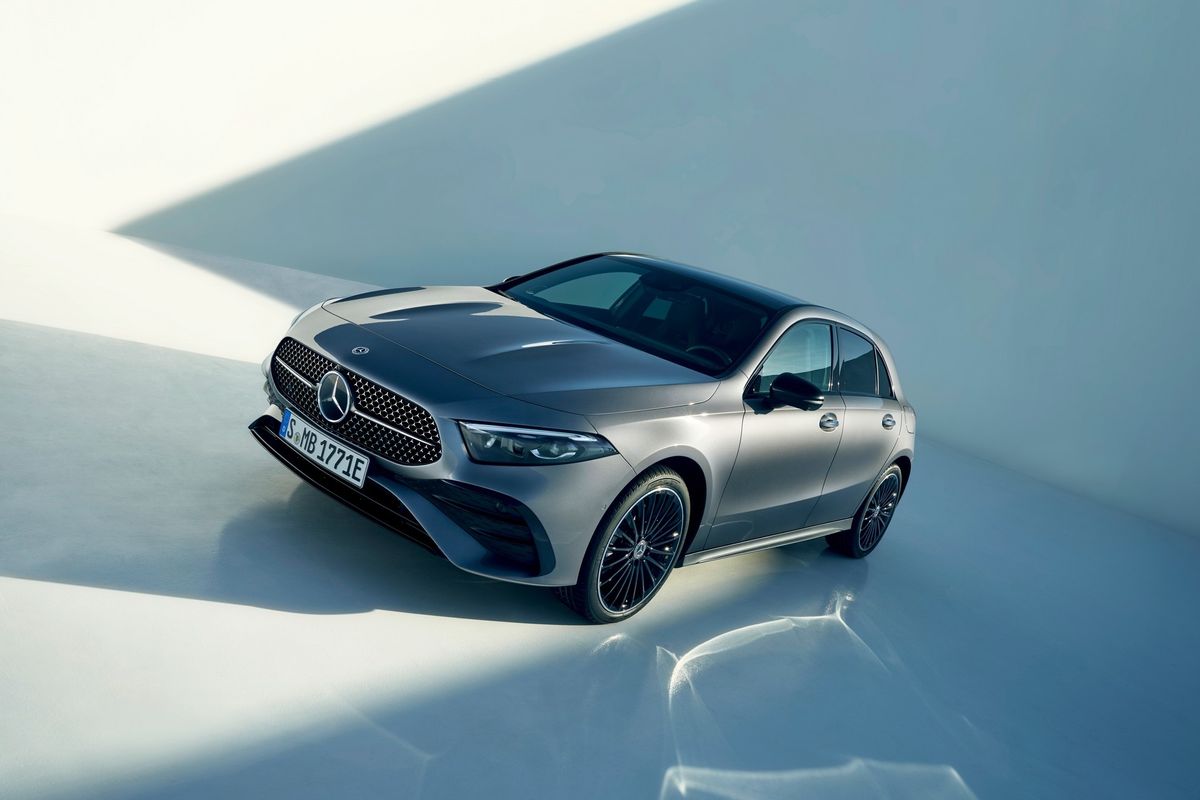
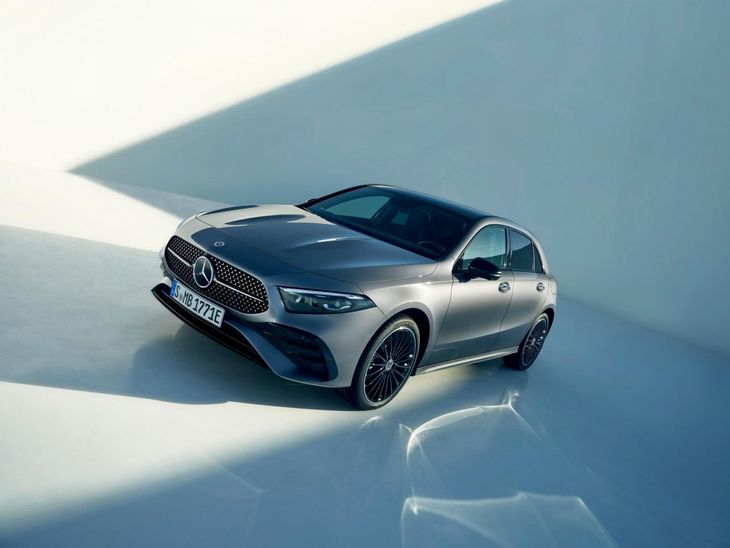
The styling changes are fairly minimal for this round of updates. Can you spot the changes?
Overall, the styling changes are minimal. In a game of “spot the difference”, your eagle eyes might notice that the grille with a star pattern has been updated and is flanked by flat headlamp units (LED headlights are optional). Merc has added 4 additional wheel designs up to 19-inches in size including optional high-gloss black painted light-alloy wheels in multi-spoke design and with a high-gloss rim flange for the AMG Line. At the rear, the LED taillights have been redesigned and a new rear diffuser has been fitted to further enhance the look.
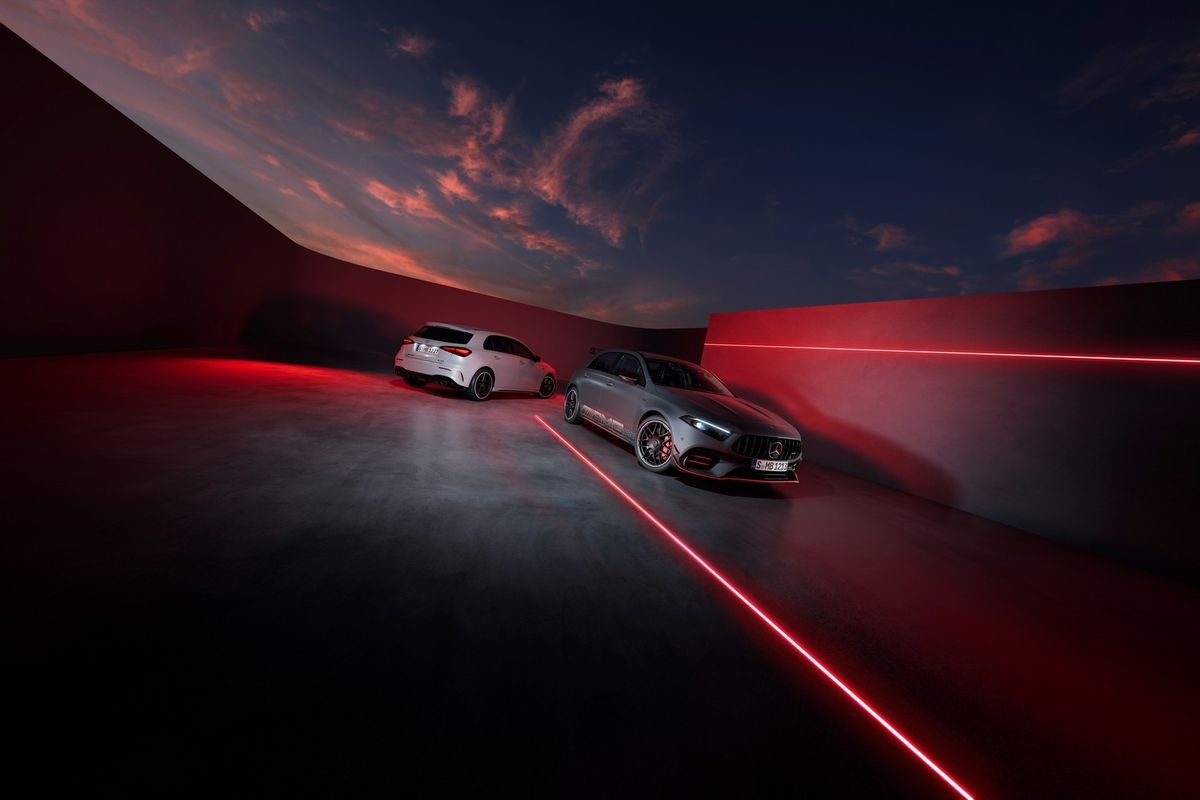
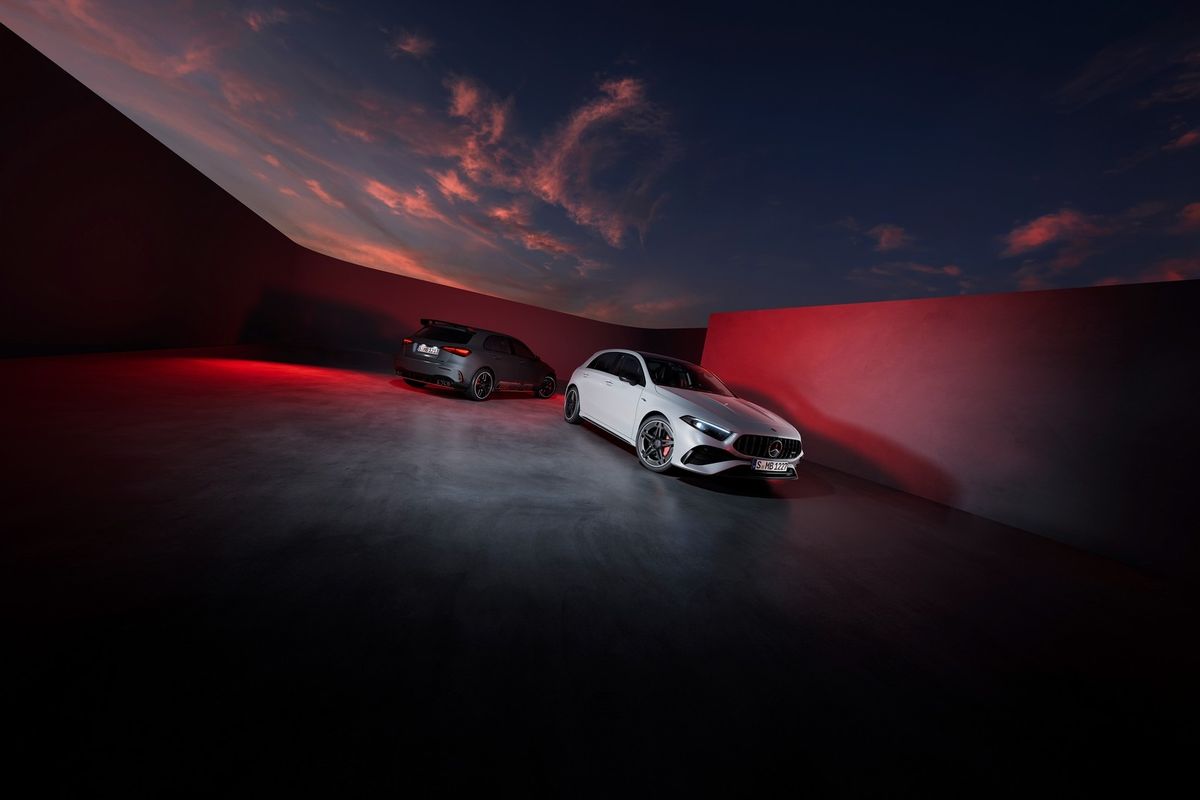
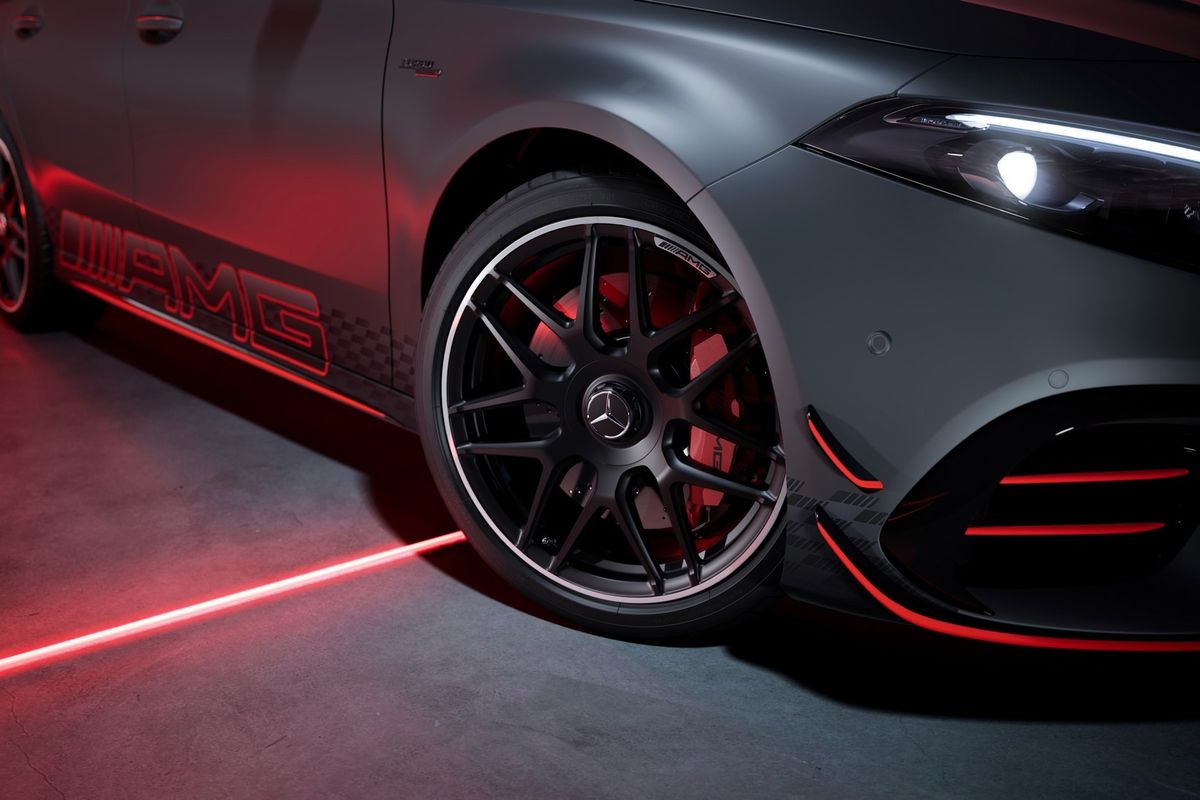
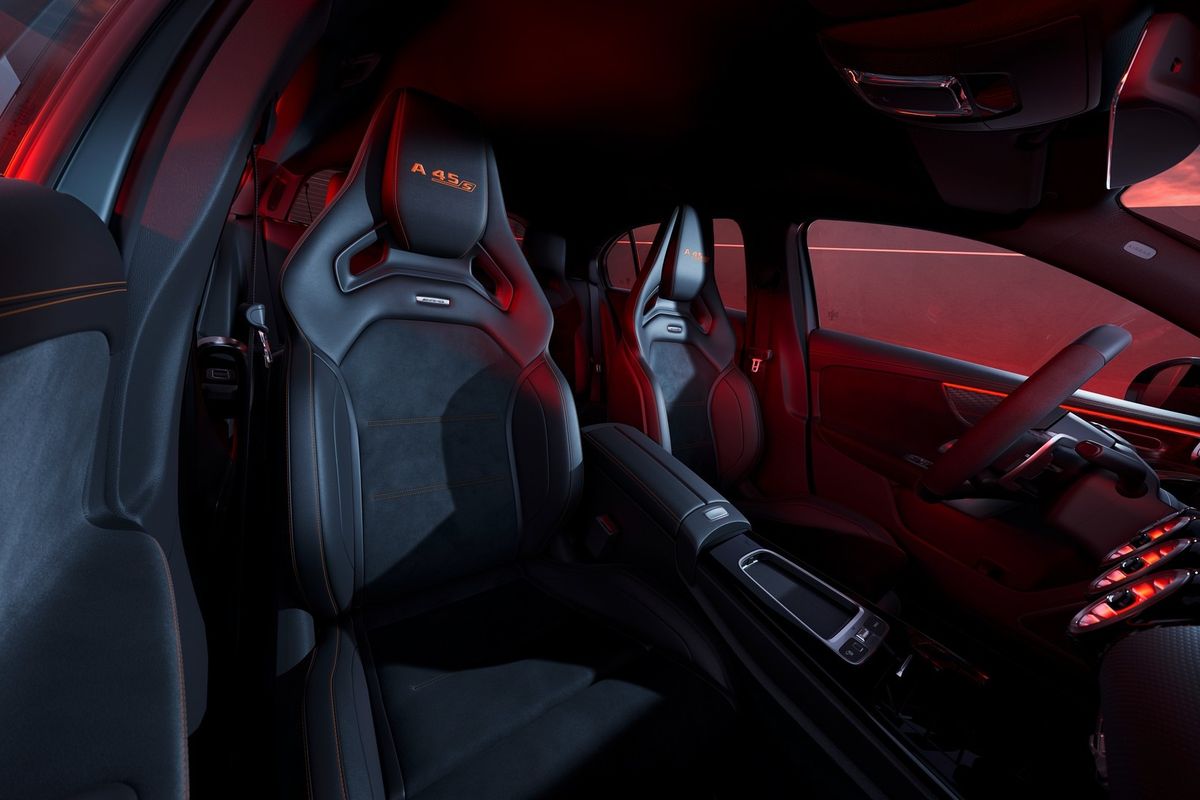
The sportier AMG derivatives, namely the Mercedes-AMG A35 4Matic and the more potent A 45 S 4Matic+, gain revised headlights, an AMG-specific grille as well as the AMG emblem replacing the Mercedes star with a laurel wreath emblem. A new wheel design, rear spoiler lip, revised tail lights, and round tailpipes (twin-flow exhaust on AMG A45 S) round off the exterior changes.
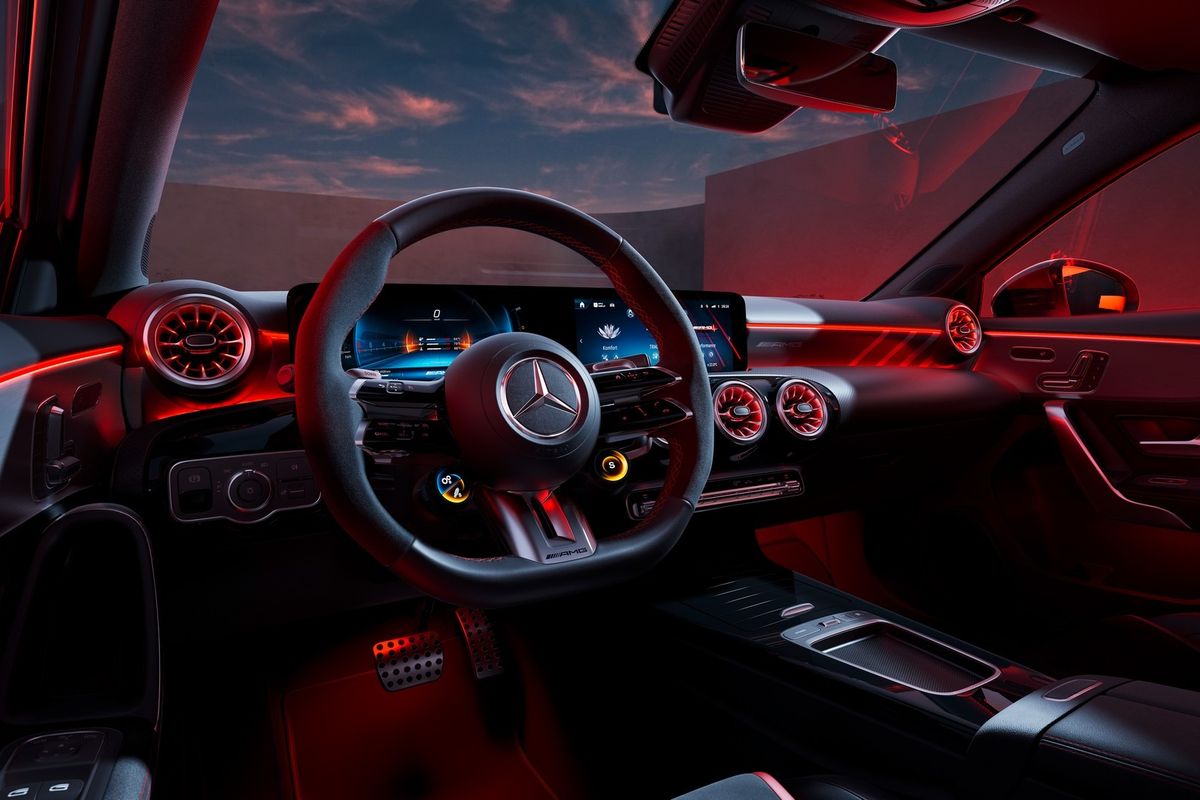
The place you want to be, inside the facelifted Mercedes-AMG A45 S 4Matic+.
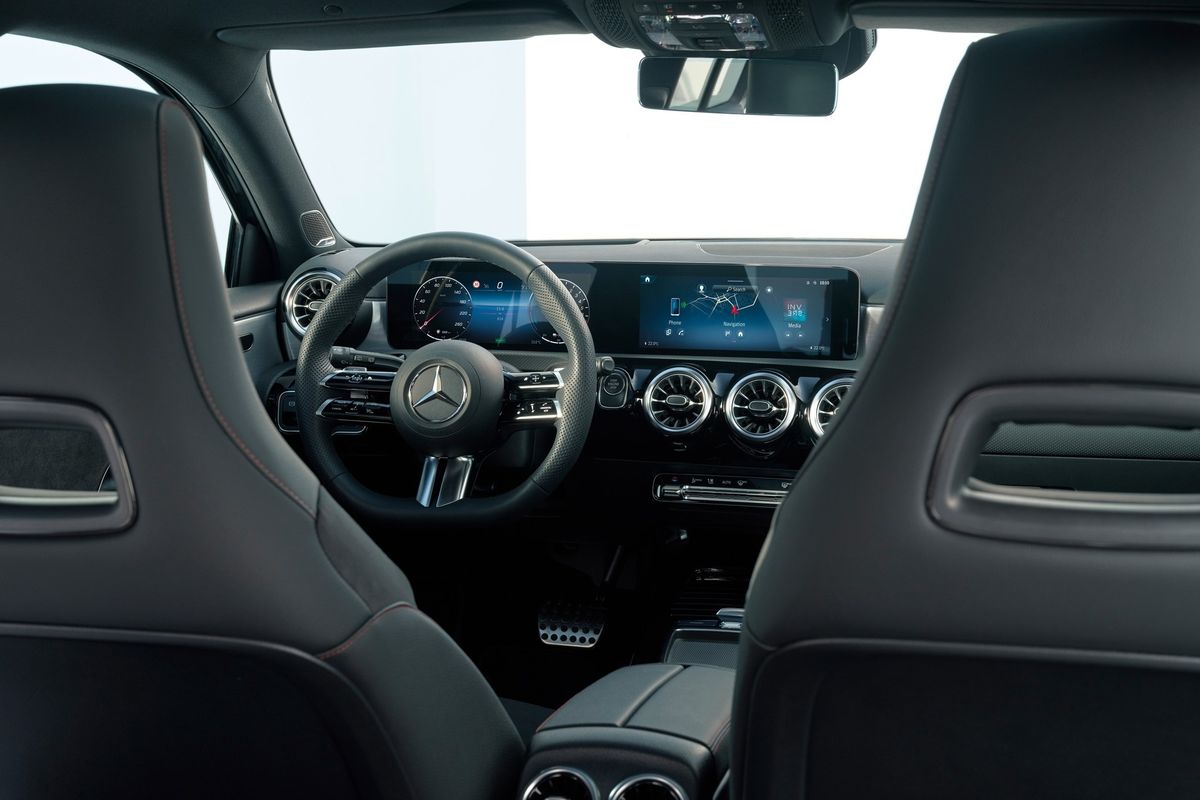
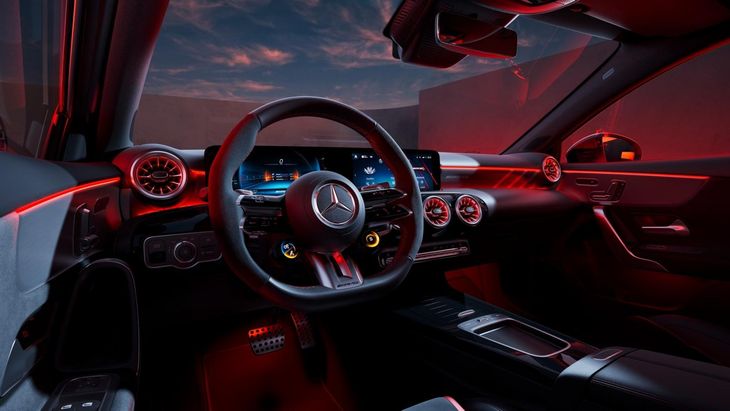
Inside, the A-Class is fitted with a 10.25-inch infotainment system and a 7-inch digital instrument cluster. However, buyers who want to amplify the tech experience can opt for dual 10.25-inch wide-screen displays at extra cost. The MBUX operating system has also been enhanced with fingerprint recognition as well as an improved voice assistant.
The compact model also gains a sportier flat-bottom steering wheel finished in Nappa leather and the centre console has also been revised. Standard features across the trim lines have also been bolstered and in an effort to reduce the extensive options list, commonly sought-after features are now bundled together and from Progressive trim upwards, features such as LED headlights, lumbar support, Parking Package and Mirror Package are now standard.
The AMG derivatives gain an AMG Performance steering wheel and AMG Performance seats are now available in sage grey.
As for powertrains, 48-volt mild-hybrid technology with a belt-driven starter generator is now offered across the petrol-powered range.
While we are in the process of confirming local engine availability for the facelifted A-Class, it’s expected that the 1.3-litre turbocharged petrol engine in the A200 will forge on with 120 kW and 250 Nm as well as the 2.0-litre turbocharged engine in the A250 with 165 kW and 350 Nm, both mated with a 7-speed dual-clutch automatic transmission. A 2.0-litre turbodiesel engine in the A200d with 110 kW and 320 Nm paired with an 8-speed dual-clutch automatic is also likely to be offered locally, but only in sedan guise.
The AMG A35 4Matic produces 225 kW and 400 Nm from its 2.0-litre turbocharged petrol engine and now also gains a 48-volt auxiliary power supply and belt-driven starter-generator. The AMG A45 S 4Matic+’s 2.0-litre turbocharged engine is dialled to 310 kW and 500 Nm and both derivatives are paired to an 8-speed AMG SpeedShift dual-clutch transmission.
Mercedes-Benz is also offering an AMG Street Style Edition for a limited period of time but it’s not yet clear if it will be offered in South Africa. We have reached out to Mercedes-Benz South Africa to confirm local availability and a local representative has confirmed the timing for April or May 2023.
13 oldest vehicles you can still buy new in South Africa
Though now uncommon, a vehicle generation sometimes lasts well in excess of a decade. But which date back the furthest? These are the oldest new vehicles still on the market in South Africa (and how they’re selling)…
If we were to venture an educated guess, we’d say the average lifecycle of a vehicle generation today has shortened to around 5 years. Platforms, powertrains and designs all have to keep pace with rapidly evolving customer tastes and ever-tightening regulations.
But there are still a few outliers that have soldiered on for more than a decade sans fundamental updates. While most have benefited from an update or three along the way (some with multiple facelifts), they’re technically still in the same generation as the very day they launched.
So, we decided to comb through South Africa’s automotive market and identify the oldest new vehicles still on sale today (big thanks to our esteemed colleagues over at duoporta.com for helping us fill in a few gaps). For the record, we’re basing each model’s “age” on the year it was introduced to the local market, rather than its global reveal date.
Right, let’s take a closer look at the 13 oldest vehicles you can still buy new in South Africa in 2022, along with their respective sales figures for the month of September.
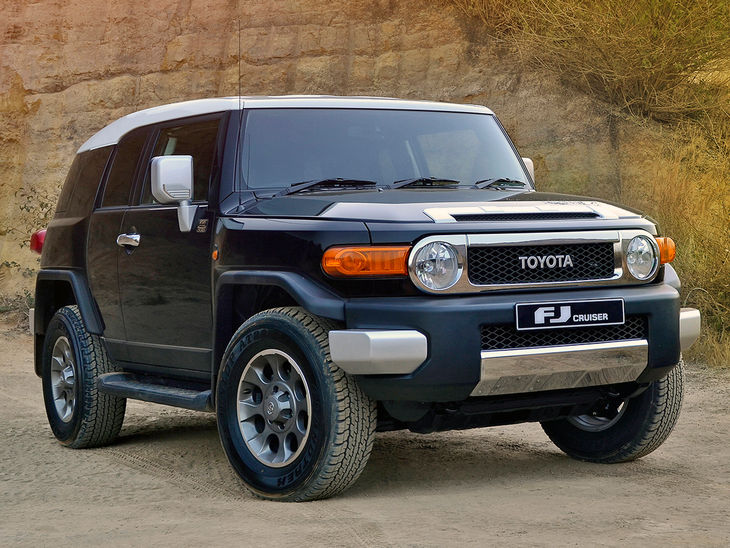
13. Toyota FJ Cruiser – 2011 (11 years)
Though Toyota’s retro-styled FJ Cruiser went into production back in 2006, it reached the South African market only in 2011. However, it’s still on sale here today despite having been axed in most countries around the world (including its domestic market of Japan back in early 2018). Locally, the FJ draws its urge from Toyota’s familiar 4.0-litre V6 (1GR-FE) petrol engine, which delivers 200 kW and 380 Nm to all four wheels through a 5-speed automatic transmission. Starting price: R797 100 Units sold in September 2022: 26
12. Mitsubishi ASX – 2011 (11 years)
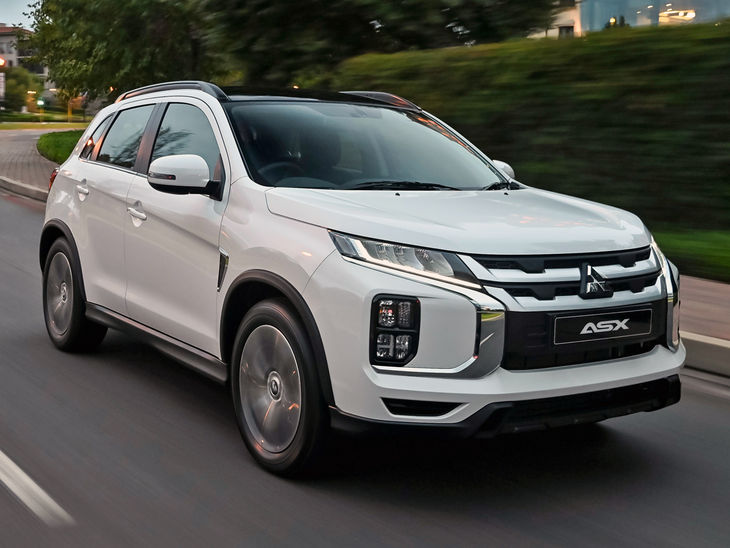
Yes, the original GA-generation ASX has been on the South African market since late in 2011 (a year after its global reveal), though Mitsubishi Motors SA has tweaked the range a number of times since then. Still, despite gaining a fresh face, it’s essentially the same vehicle from 11 years back. Every derivative in the 5-strong range uses the brand’s naturally aspirated 2.0-litre petrol engine. Interestingly, the ASX formed the basis for the Citroën C4 Aircross and Peugeot 4008, both of which have long since gone out of production. While a second-generation ASX has been revealed for Europe, it’s little more than a rebadged Renault Captur and has yet to be confirmed for a local introduction. Starting price: R379 990 Units sold in September 2022: 75
11. Mahindra XUV500 – 2011 (11 years)
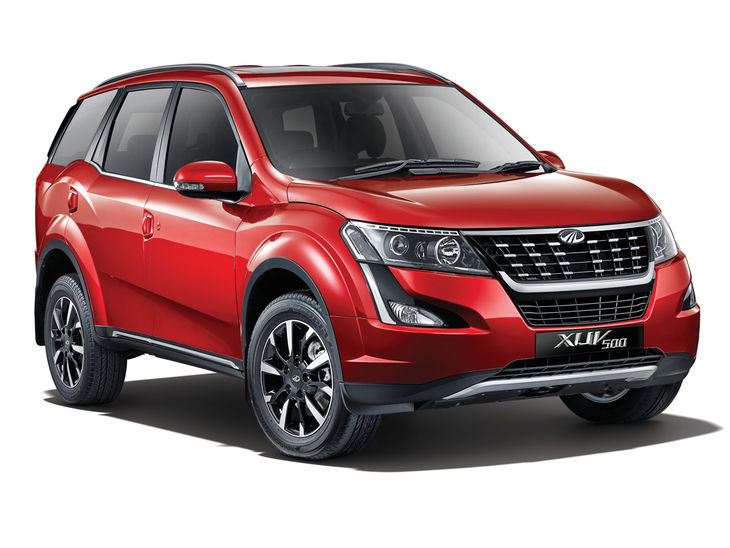
The XUV500 is another 11-year-old new car, having hit local roads soon after its reveal in India in 2011. It’s been facelifted twice since then, with the local range expanding to five derivatives at one point. Today, however, only the W6 and W8 AT variants are on offer, each powered by Mahindra’s 103 kW/330 Nm 2.2-litre turbodiesel unit. From what we understand, the new XUV700 scheduled to launch in South Africa towards the end of 2022 will finally replace this out-of-date model. Starting price: R429 999 Units sold in September 2022: 14
10. GWM Steed 5 – 2011 (11 years)
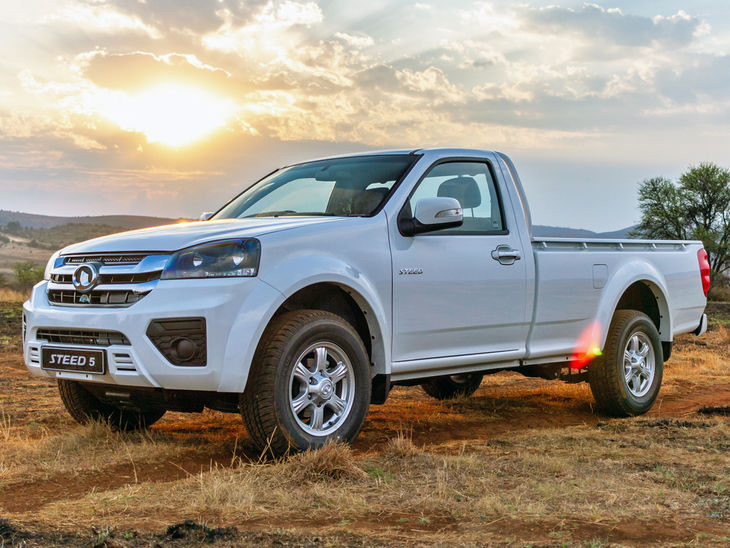
Though the Steed 6 has come and gone and the Steed 7 remains on sale in some overseas markets (both incidentally wore the Great Wall Wingle moniker in China), a version of the Steed 5 is still on the market in South Africa. Tracing its roots all the way back to the model introduced locally in 2008, the current range comprises six derivatives. Since the P-Series covers the leisure-bakkie segment, most variants in the Steed 5 line-up take the form of single-cab workhorses (though there are two double cabs on offer). Starting price: R233 950 Units sold in September 2022: 365
9. Ford Ranger – 2011 (11 years)
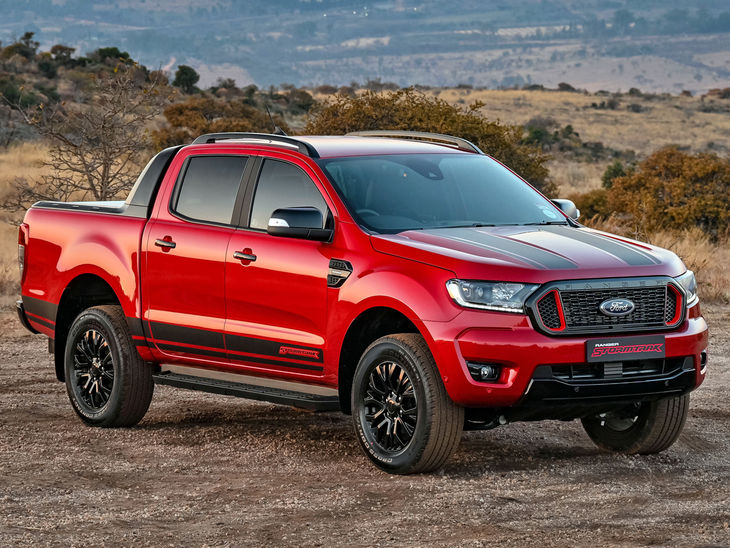
Yes, there’s a new one just around the corner, but the P375-generation Ranger is still available at the time of writing. Production of the original T6-based Ranger commenced at Silverton in 2011, though the Blue Oval bakkie received a mid-cycle update in 2015 as well as a second refresh in 2019 (complete with new powertrain options). Comprising single-, extended- and double-cab body styles, the outgoing line-up features a whopping 44 derivatives. The new P703-generation Ranger is expected to launch locally before the end of the year. Starting price: R340 400 Units sold in September 2022: 1 604
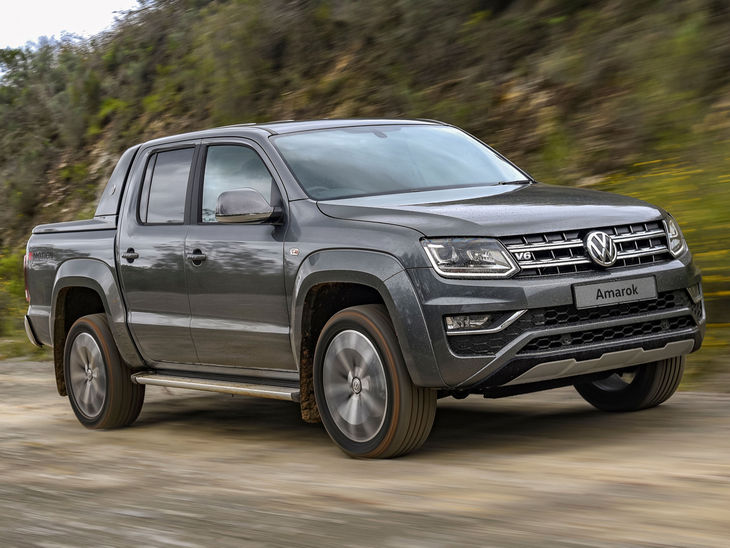
8. Volkswagen Amarok – 2010 (12 years)
The original Amarok sports even more grey hairs than the Ranger above, having arrived in local dealerships some 12 years back. Like the Ford, however, an all-new model will soon succeed it, this time based on the latest Ranger and produced alongside it here in South Africa. Though the Amarok line-up once included the single-cab body style, today’s outgoing range features only dual-cab models, powered by either the 132 kW/420 Nm 2.0 BiTDI unit or the Porsche-derived 190 kW/580 Nm 3.0 V6 TDI lump (which will cost you R1 096 300 in flagship Extreme guise). Starting price: R778 600 Units sold in September 2022: 168
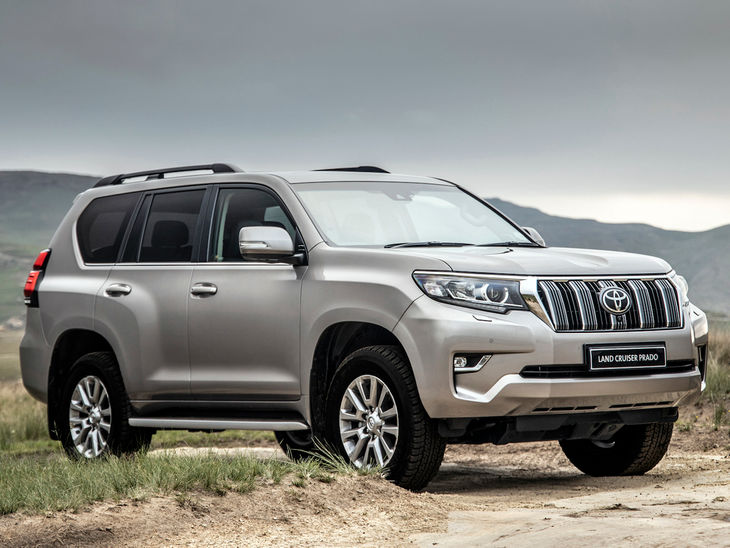
7. Toyota Land Cruiser Prado – 2009 (13 years)
South Africa received the J150-generation Prado right from the start back in 2009. Since then, this member of Toyota’s Land Cruiser family has received a couple of facelifts, including an update at the end of 2020 that saw the venerable 3.0 D-4D powerplant replaced by a 150 kW/500 Nm version of the more modern 2.8 GD-6 motor (the 202 kW/381 Nm 4.0-litre V6 petrol unit, meanwhile, continued unaltered) and the switch to a fresh infotainment system with Apple CarPlay and Android Auto. Currently, the long-in-the-tooth Prado range comprises five derivatives. Starting price: R1 058 500 Units sold in September 2022: 292
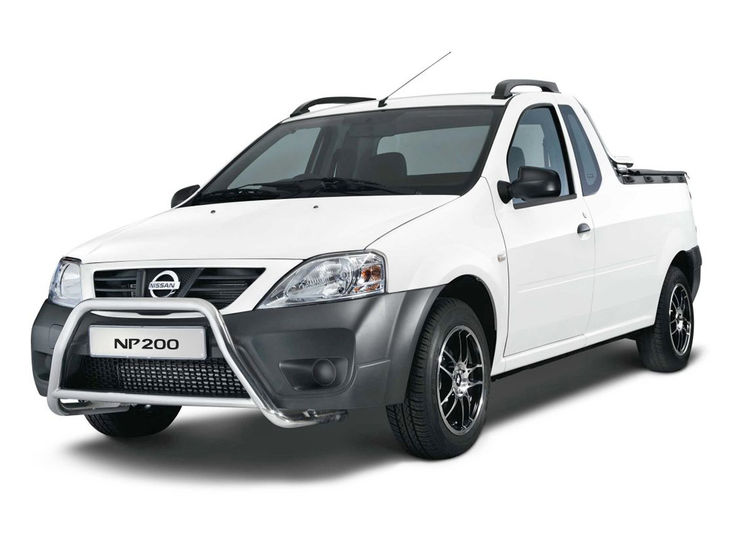
6. Nissan NP200 – 2008 (14 years)
As the only surviving model in a half-tonne segment that once included the likes of the Ford Bantam, Chevrolet Utility and Fiat Strada, Nissan’s Rosslyn-produced NP200 still does a fair old trade in South Africa, despite having been on the market for close to 15 years now. Interestingly, the current range has been whittled down to just two derivatives, each employing Nissan’s ancient atmospheric 1.6-litre, 4-cylinder petrol mill, which offers the front axle 64 kW and 128 Nm through a 5-speed manual cog-swapper. Starting price: R212 500 Units sold in September 2022: 1 198
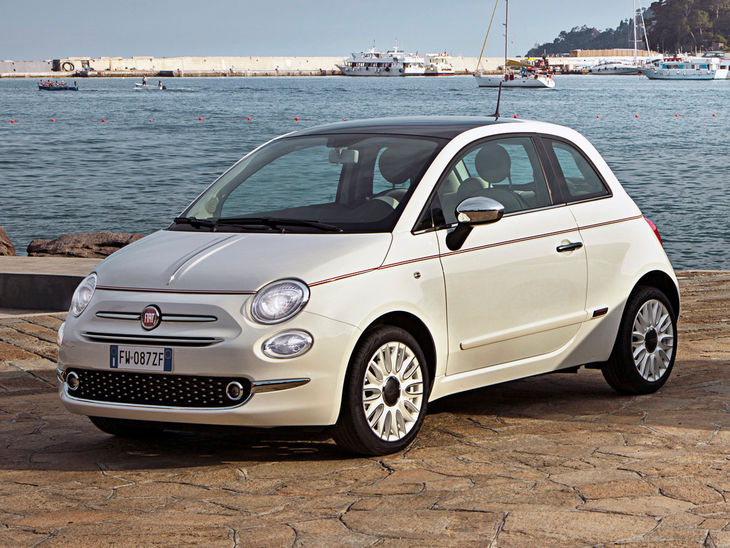
5. Fiat 500 – 2008 (14 years)
The original Fiat 500 (or Cinquecento) that debuted back in 1957 ended up staying in production for 18 years. The second-generation model, however, isn’t far behind, with the first units having rolled off the line in 2007. The Type-312 Fiat 500 launched locally the following year and is still on the South African market 14 years later, though a fully electric successor is now offered in Europe. The SA line-up has been pruned back to just four derivatives, each using a tiny turbocharged 2-cylinder motor displacing 875 cc. Peak outputs stand at 63 kW and 145 Nm. Starting price: R223 900 Units sold in September 2022: 8
4. Mahindra Bolero – 2005 (17 years)
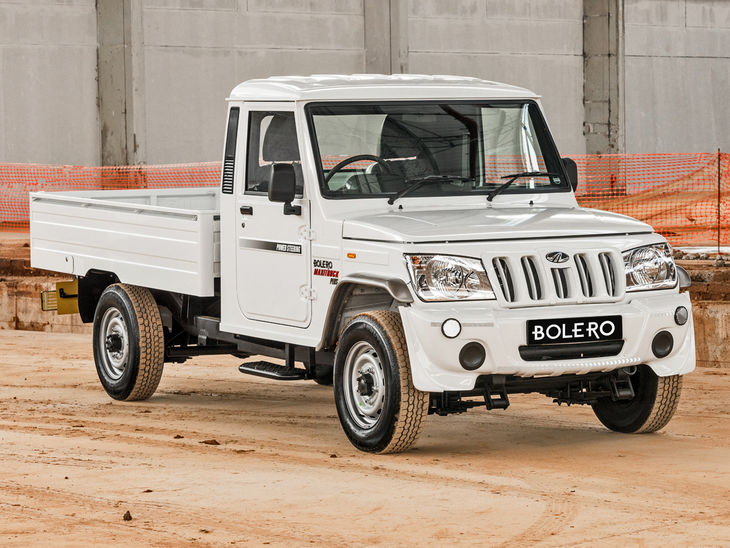
Mahindra’s Bolero has been plying its trade in South Africa for around 17 years, having been introduced way back in 2005. Known as the Bolero Camper in India, the local range is made up of single- (including a dropside configuration) and double-cab body styles. While the 2.5-litre turbodiesel engine in the Maxitruck Plus derivative offers a paltry 46 kW and 195 Nm, the version powering other variants makes 74 kW and 238 Nm (or 235 Nm in the dual-cab models). Staring price: R187 999 Units sold in September 2022: 32
3. Kia K2 Series – 2004 (18 years)
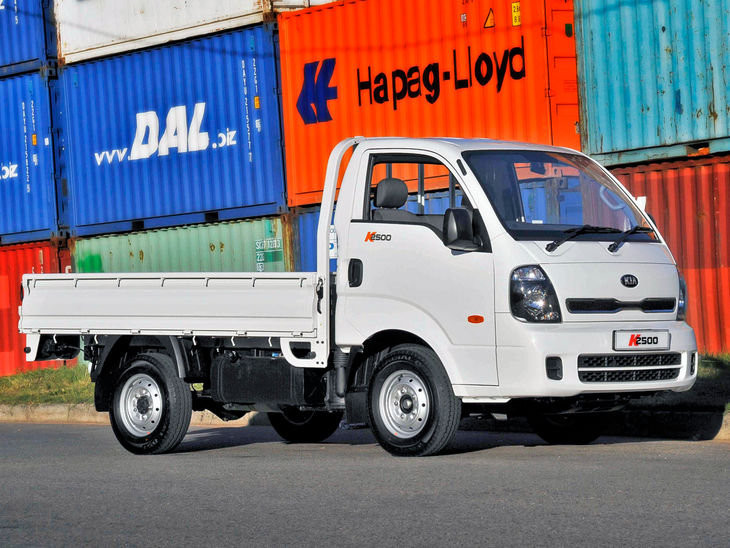
It’s no coincidence the very oldest models still available new in South Africa are light-commercial vehicles, which by nature tend to have a longer production run than their passenger-car brethren. The K2 Series is one such example, having been on the market since 2004, around seven years after Kia Motors SA was founded. The K2500 and K2700 (which fall under the Bongo nameplate in some markets) soldier on today, offering a total of four derivatives between them. Starting price: R366 995 Units sold in September 2022: 21 (K2500) and 169 (K2700)
2. Hyundai H-100 – 2004 (18 years)
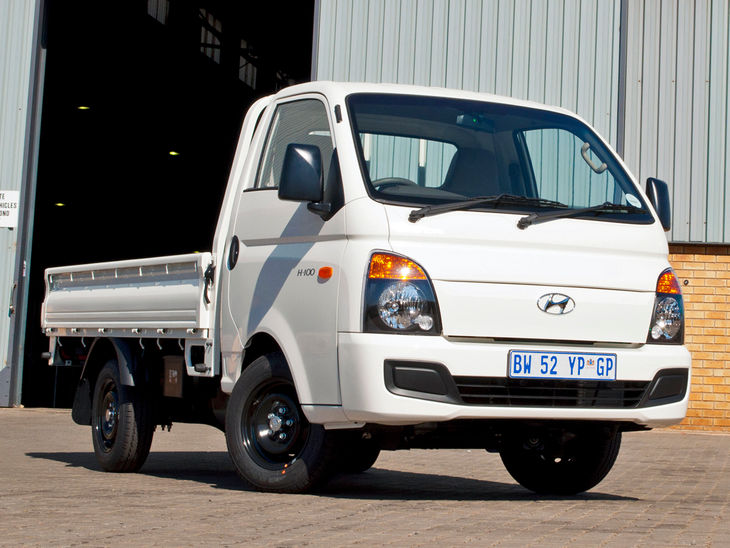
Considering Hyundai’s H-100 and Kia’s K2 Series are closely related, it’s no surprise the former has been around in South Africa for just as long as the latter. Known as the Porter in certain other markets, the local H-100 range features six derivatives, each drawing its urge from a 58 kW/167 Nm naturally aspirated 2.6-litre diesel powerplant (unlike the K2 Series units, which are available with displacements of 2.5 and 2.7 litres). Starting price:R329 900 Units sold in September 2022: 154
1. Toyota Land Cruiser 70 Series – 2002 (20 years)
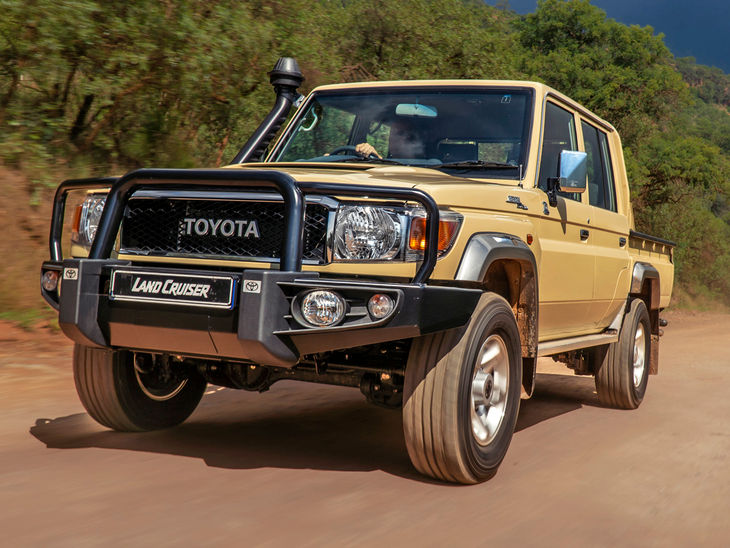
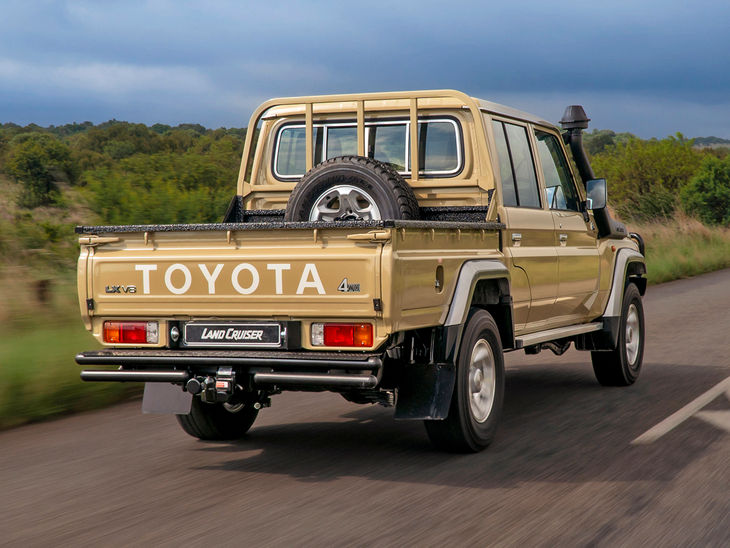
The most senior of them all? No prizes for guessing that title belongs to Toyota’s Land Cruiser 70 Series family, which has been sold in South Africa in its current form for two decades. Of course, the J70 model actually dates back far further than 2002, with production of the successor to the 40 Series having commenced as long ago as 1984. Today, there’s still robust demand, particularly for the Land Cruiser 79 bakkie range. The 76-badged station-wagon body style is also still available, as is the 78-badged “Troopy” (though technically only on a customer-order basis). Starting price: R692 400 Units sold in September 2022: LC76 (12), LC78 (0) and LC79 (403)
The Golf 8 R was revealed in November 2020, but Volkswagen South Africa (VWSA) recently confirmed that local sales of the flagship derivative will only begin during the 1st quarter of 2023. What are the reasons for the massive delay and may local-market preferences have something to do with it? Here’s what we have found out.
Cars.co.za’s social media channels light up with comments from irate and frustrated fans of the VW brand (and petrolheads in general) whenever we mention either the Golf 8 GTI or Golf 8 R. The former arrived in South Africa belatedly and, by the time that the R lands here, it will be more than 2 years since its global reveal back in late 2020.
User responses such as “VWSA doesn’t respect us” and similar sometimes ruder, sentiments have dotted our social media pages in response to Golf R-related posts. But why has it taken so long for the Golf R to reach our shores? In this article, we look at the many factors that have delayed the arrival of the desirable all-wheel-drive hot hatchback.
At the local debut of the Volkswagen Tiguan R, where we also had a quick drive in the Golf R, VWSA’s Head of Group Communications, Andile Dlamini had this to say about the current stock supply issues: “Many questions have been asked about why does it take us (VWSA) almost 3 years to get the car into the country? As you know, there are issues around semiconductors, but what has exacerbated the issue now is the supply of leather.
“What we are working on is to get as many cars into the country as possible, so that we have enough volume to bring to the market. The current plan is that Golf R retail will start in Q1 and we’re confident by then that we’ll have enough volume to meet the demand,” he added.
Production Slowdown
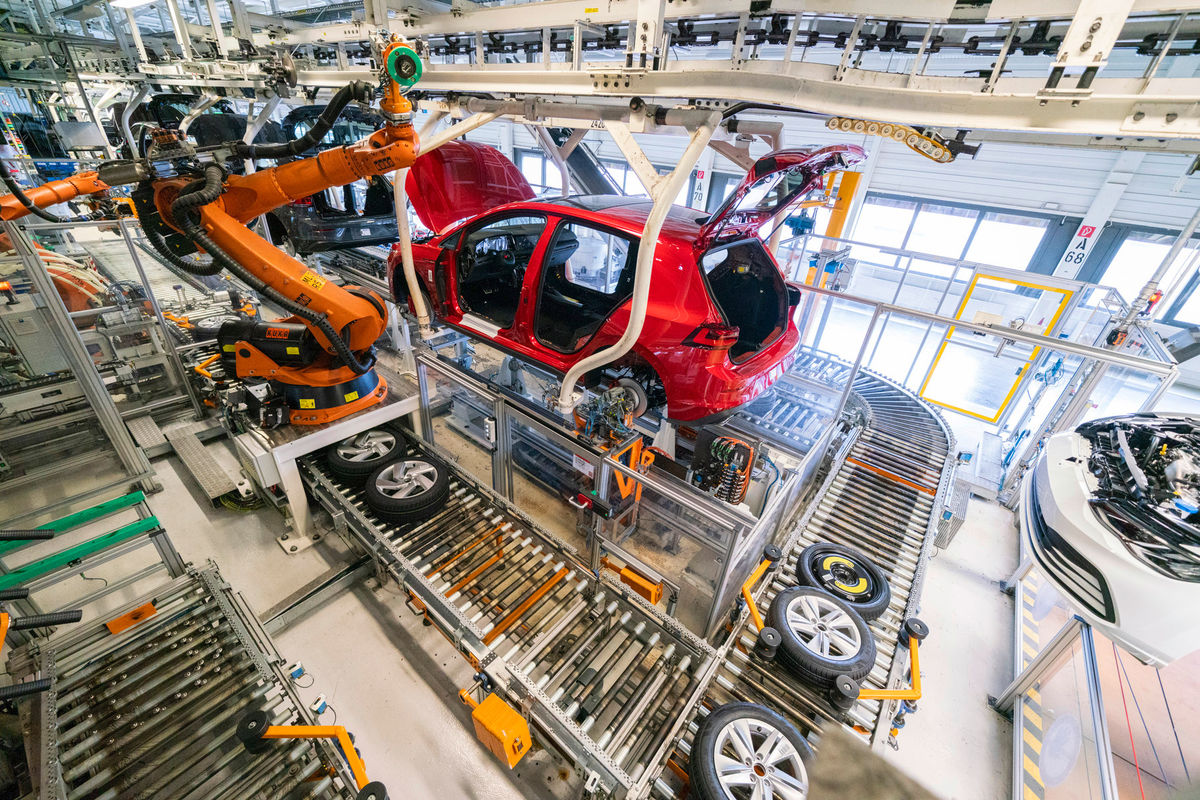
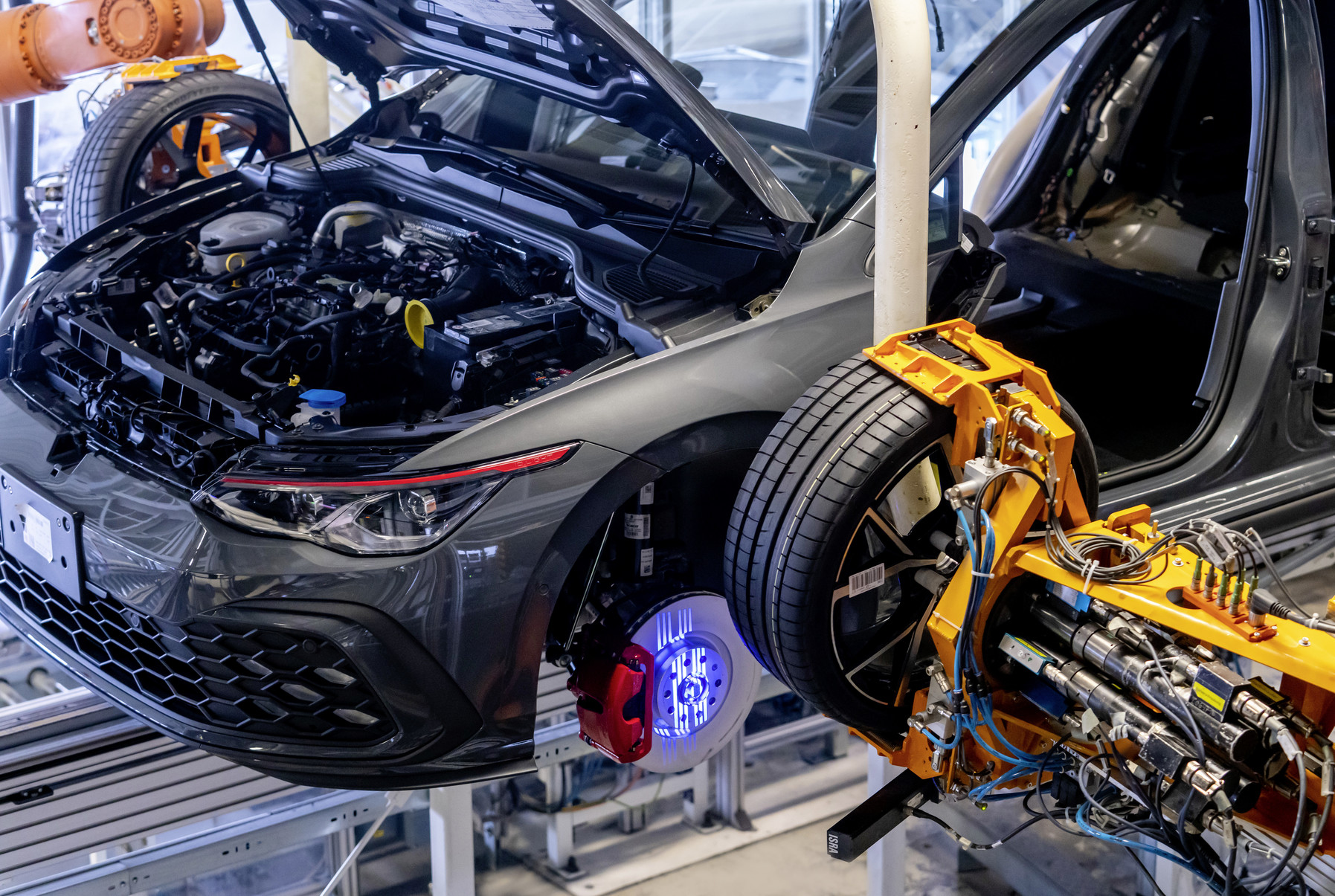
The source of the delays begins, well, at the beginning: production. Making a car is no longer a straightforward process especially if it’s a mass/mainstream model that’s earmarked for the global market. Teams of data scientists pore over Excel spreadsheets, trying to optimise and enhance production, while balancing costs of labour, materials, and so on.
The production line where vehicles are assembled is continually moving and workers are expected to install specific parts/modules to units being produced within a limited time period, while still maintaining safety and quality standards.
Generally, car making follows the just-in-time production model. Basically, if you’re building 10 Golfs in 24 hours, you will have 10 engines, 10 dashboards, 10 sets of wheels and so on ready for that day. The supply chain to the factory does not create surplus or plan too far ahead, and the factory doesn’t have the floor space to stockpile a massive inventory of parts sourced from around the world.
There’s additional complexity due to the components for vehicle assembly not being available right next to the factory. Companies such as Faurecia and Aptiv, plus many others, supply parts for vehicle assembly across all brands and, you guessed it – they’re battling with their own supply issues.
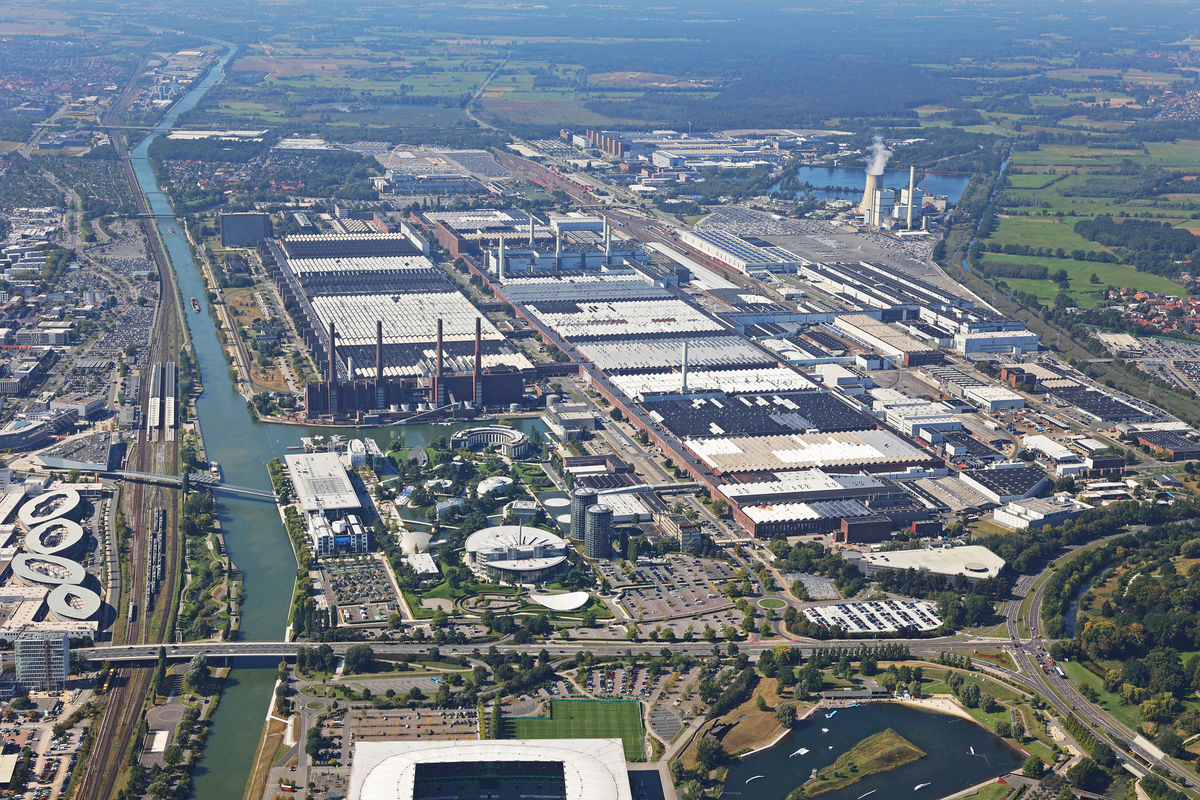
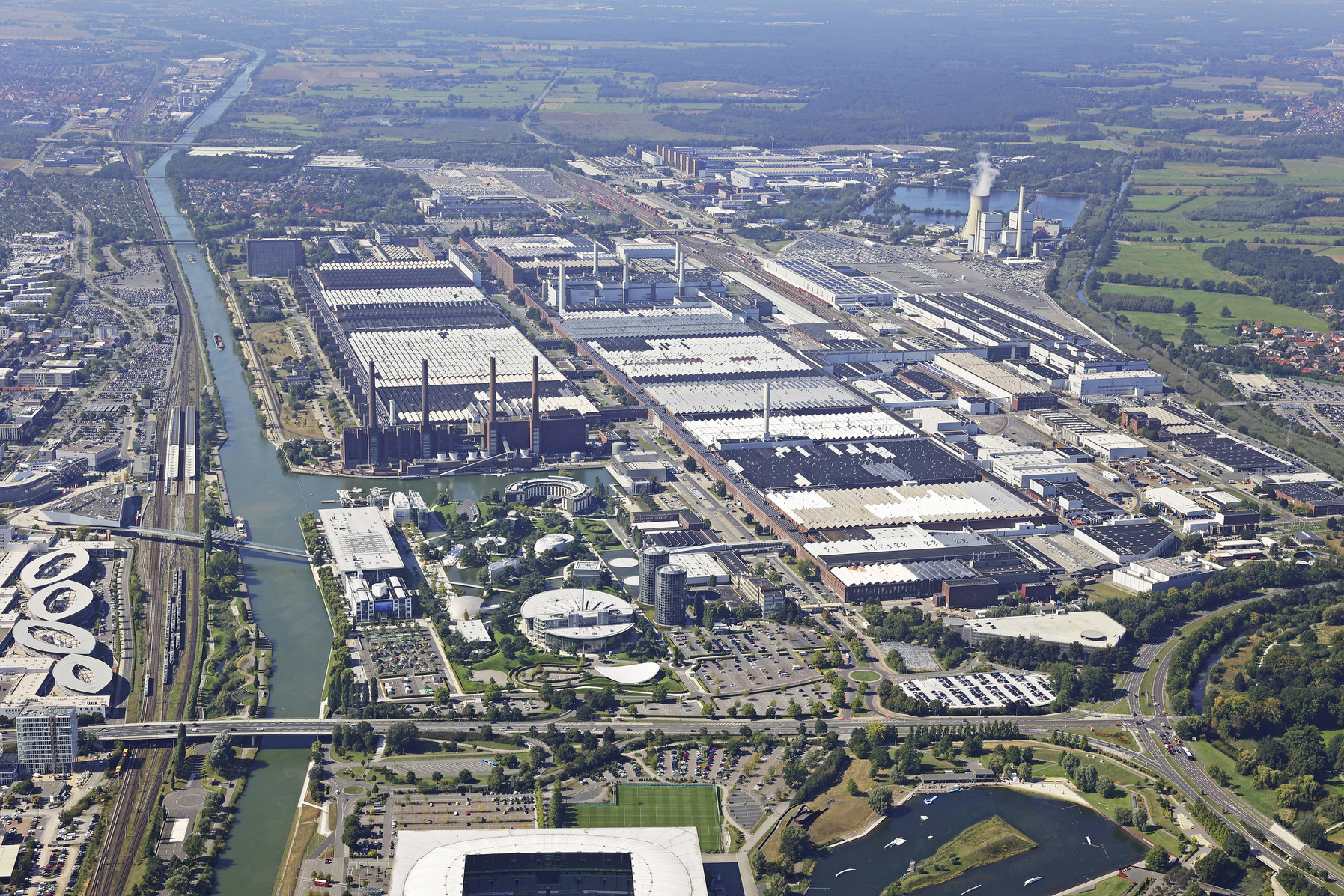
VW factory in Wolfsburg
A modern vehicle requires kilometres of cabling to link all its electronic elements, commonly known as the wiring harness. Ukraine-based firms used to supply those to the Volkswagen Group (VAG) until war broke out in that country (in fact, VAG was one of the biggest clients of those firms, which is why its production has been disrupted so severely). Car firms have had to scramble to enlist new suppliers elsewhere, but such a switchover is complex and time-consuming.
You’ve probably worked out the net result of delays/shortages of components – if the parts required for building completed vehicles are not available on time, then production grinds to a halt. Right now, the Volkswagen plant in Wolfsburg, Germany that produces the Golf and Tiguan is on short time, which is where workers’ hours and pay are reduced proportionately. The factory is still making vehicles, just in far fewer numbers and at a slower rate.
The other major problem affecting the motor industry is the semiconductor chip shortage, which is ongoing. The majority of these chips are sourced from Asia (Taiwan in particular) and demand for these comes from more than just the automotive sector. Products such as smartphones and laptops also require chips and, just to compound things, a few semiconductor chip production facilities have suffered fire damage, which has resulted in reduced factory outputs.
Some things – as minor as switches or buttons – have not been readily available either. Components made in China have been delayed for a long time because the Chinese government has a habit of locking down entire suburbs of its big cities if just a single Covid-19 case is detected.
The harbour of Shanghai is a global hub for raw materials and has been closed either entirely or running on severely limited capacity. Now that things are improving, the subsequent clearing of the backlog has played havoc with shipping schedules. Don’t forget the container trucks that are delivering parts and components to the harbour too, they’ve also been subject to delays.
Some brands have attempted to work around this, by “de-contenting” or “de-speccing” vehicles for specific markets to get the production line moving/cars to customers sooner. Stellantis has tried this with its Peugeot lineup, by removing digital instrument clusters, wireless charging pads, sunroofs, electric tailgates and even the audio system in exchange for a cheaper purchase price and/or reduced cost or free services.
South Africans don’t want de-specced cars
Both Volkswagen and Audi have done this too in some markets, like Australia, but the South African market is very particular when it comes to these features. At the recent local debut of the Audi RS3, representatives from that brand told us South Africa could have had the RS3 sooner, but it would lack key features such as a panoramic sunroof, leather trim and digital dashboard. When you’re paying top dollar for a premium product, you expect a long list of standard features.
These switches need semi-conductor chips, as does the digital dashboard behind it
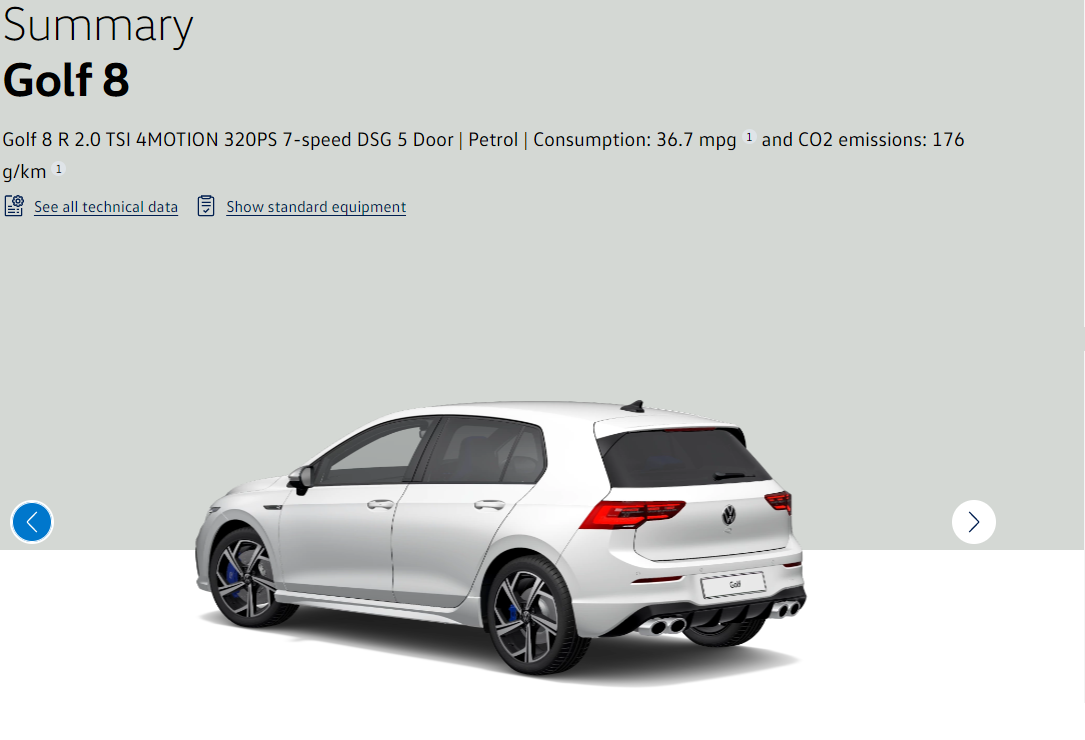
This is one of the reasons why the European market has already received the Golf R. If you look at VW UK’s configurator, the Golf R offered there rides on much smaller (18-inch) wheels, has fabric upholstery and lacks a number of features that are standard in the SA-spec vehicles. Could you imagine a “stripped out” Golf R landing in SA? The social media backlash would be brutal and VWSA knows Golf R customers want highly-specced vehicles.
It’s interesting to note that when you try to configure a European Volkswagen, you’re greeted by this message: “We’re sorry that due to global supply chain issues and a few component shortages, delivery times on some of our model lines are currently longer than we would like. The crisis in the Ukraine is also disrupting supply of certain components. While our primary concern is for the humanitarian crisis in the area, the situation may lead to further delays. We hope you will appreciate we are working hard to mitigate the impacts and deliver vehicles as quickly as possible.”
Fabric seats are not good enough for SA customers
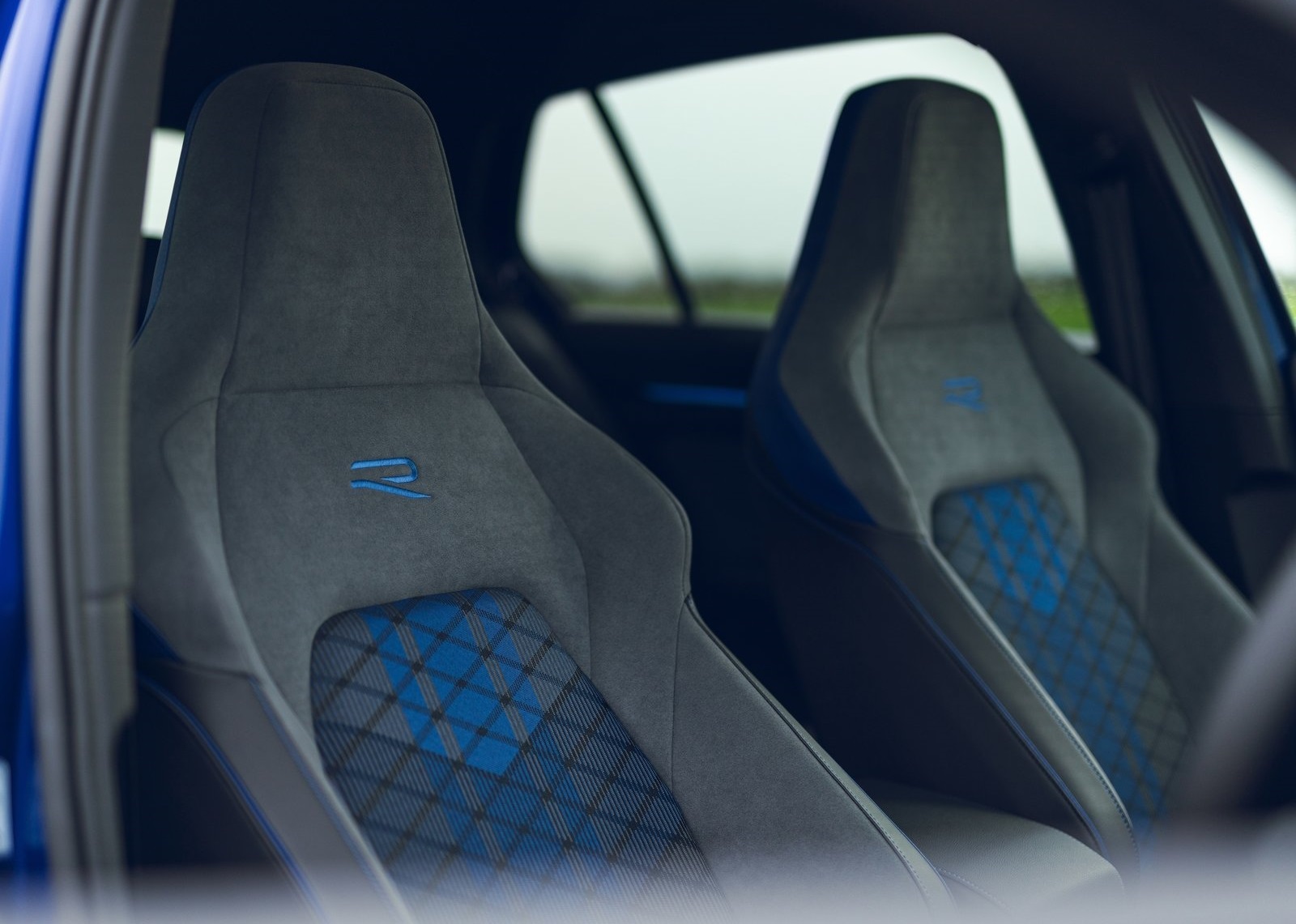
In the case of the Golf GTI and Golf R units destined for South Africa, production has been affected by a combination of a shortage of wiring harnesses, semiconductors and other components. What’s more, we recently learnt that there’s a shortage of leather for sports seats too. We understand the lack of Vienna leather seats in the Golf GTI has forced Volkswagen SA to offer retro-looking tartan Jacara seats and those units will be hitting local showrooms soon.
Minimal units of the Golf GTI have made landfall in South Africa and that’s despite the fact that VWSA delayed its retail operations for the 8th-generation hot hatch to build up a good supply of vehicles for the purpose of executing a thorough product rollout. There’s no point in hosting a launch event for us and other media outlets to generate hype and leads, with only 50 cars in storage. They’d be gone in a few days, and you’d have many frustrated customers.
The fallout – GTIs are being ‘flipped’
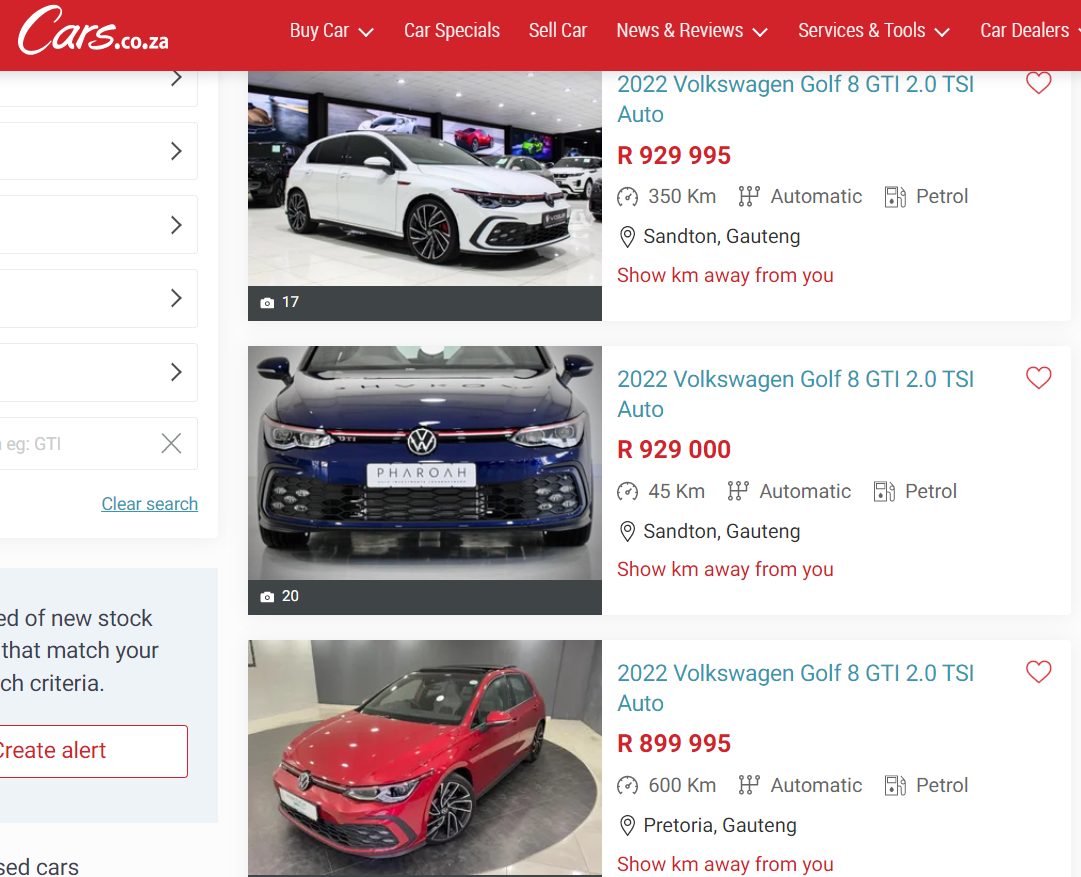
Sadly, the Golf 8 GTI continues to be hampered by production issues and units are trickling into our market. Although the GTI’s recommended retail price is R717 600, we’ve seen units listed at around R900 000 online (see the screenshot of Cars.co.za listing page above). Such is the law of supply and demand, that the same is likely to happen to the Golf R.
The media fleet units of the Golf R that we drove locally in early October 2022 have been sitting in storage because an insufficient number of vehicles have been produced or made their way onto a car carrier for shipping to the Republic. There’s a strong likelihood that the few units that do arrive early next year will be snapped up by opportunistic buyers (car flippers) and sold at huge markups, either privately, via consignment or as stock at independent car dealers.
A poverty-spec Golf 8 R just won’t do.
Summary
The Covid-19 pandemic has disrupted virtually the entire world, not least the motor industry. It brought the world’s production of everything to a standstill through lockdowns, which had created shortages, backlogs and bottlenecks and there’s very little to indicate that the situation will improve much over the coming months. The just-in-time production model is under scrutiny as car brands take their learnings from the pandemic/Ukraine conflict and seek deeper efficiency.
We’ll feel the knock-on effects for some time to come. While VWSA continues to be plagued by stock issues across its portfolio, the Kariega-based firm is by no means the only one struggling to satisfy the demand for specific models.
Ford South Africa, for example, is struggling to get car carrier ships to Thailand where the Everest and Ranger Raptor are being assembled, so expect delays/shortages of those products. There’s still a massive waiting list for the Toyota Land Cruiser 300 and other imported Toyota vehicles.
So, what are your options? Well, you’re most likely to have watched Ciro De Siena and Ashley Oldfield test the Volkswagen Golf 8 R to whet your appetites. If you’re keen on R ownership, you’re in for a wait as VWSA attempts to secure more stock before beginning retail operations in the first quarter of 2023. If you’re impatient and willing to stretch the budget, then consider the Volkswagen Tiguan R, which also has the 235 kW 2.0-litre turbopetrol engine.
Volkswagen South Africa has finally added a turbodiesel derivative to its Tiguan range. Here’s how much the Tiguan 2.0TDI 4Motion R-Line costs…
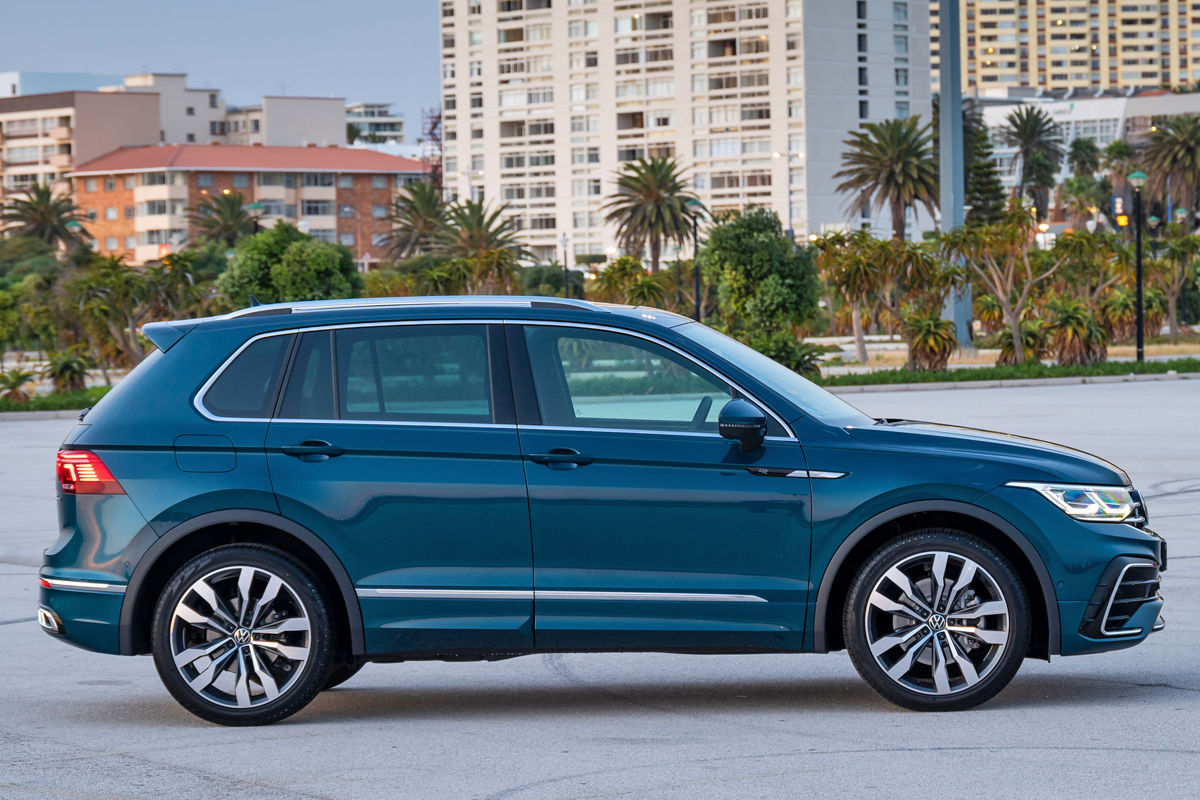
With all the focus on the freshly launched Tiguan R, Volkswagen South Africa has quietly further expanded its Tiguan range with the long-awaited addition of a 2.0TDI derivative.
The arrival of the turbodiesel option takes the local Tiguan range – which touched down in facelifted form in mid-2021 – to six variants, including the aforementioned 235 kW Tiguan R. Of course, the Wolfsburg-based firm’s local division also offers the 7-seater Allspace (though currently only with petrol power), with that range comprising a further five derivatives.
Priced from R783 100, the Tiguan 2.0TDI 4Motion R-Line slots into the line-up just below the 2.0TSI 4Motion R-Line, which costs R1 000 more. As its name suggests, the oil-burning Tiguan boasts VW’s 4Motion all-wheel-drive system and ships standard in R-Line form.
The 2.0-litre turbodiesel motor generates 130 kW and 380 Nm, peak outputs that are delivered to all four wheels through a 7-speed dual-clutch transmission. According to the German automaker, the 0-100 kph sprint time comes in at 8.3 seconds, while consumption is a claimed 6.6 litres per 100 km.
The R-Line trim level includes items such as 19-inch Valencia alloy wheels, 3-zone climate control, ambient interior lighting, Vienna leather seats, the active info display and a Composition Media Radio with App Connect. Of course, the exterior R-Line package is also part of the purchase price.
The list of options, meanwhile, includes 20-inch Suzuka alloys (R13 700), a Harman Kardon sound system (R12 200), a head-up display (R11 200), Matrix LED IQ headlights (R14 800), a panoramic sunroof (R17 000), a raft of driver-assistance features and the Black Style Package (R29 600), amongst others.
How much does the VW Tiguan 2.0TDI 4Motion R-Line cost in SA?
Tiguan 2.0TDI 4Motion R-Line – R783 100
The purchase price includes a 3-year/120 000 km warranty and a 5-year/90 000 km service plan.
Pricing and specification details for the Volkswagen Golf GTI Jacara Edition have appears on VWSA’s local configurator. Here’s the lowdown on this model.
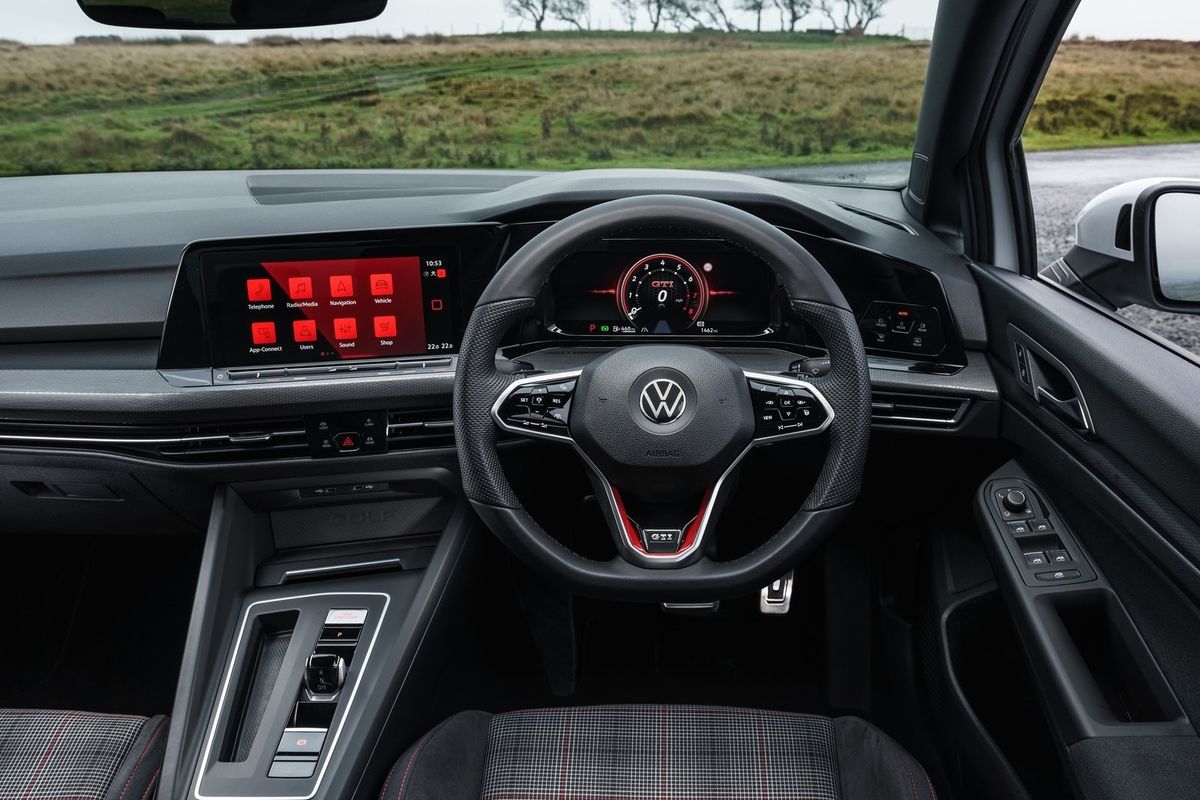
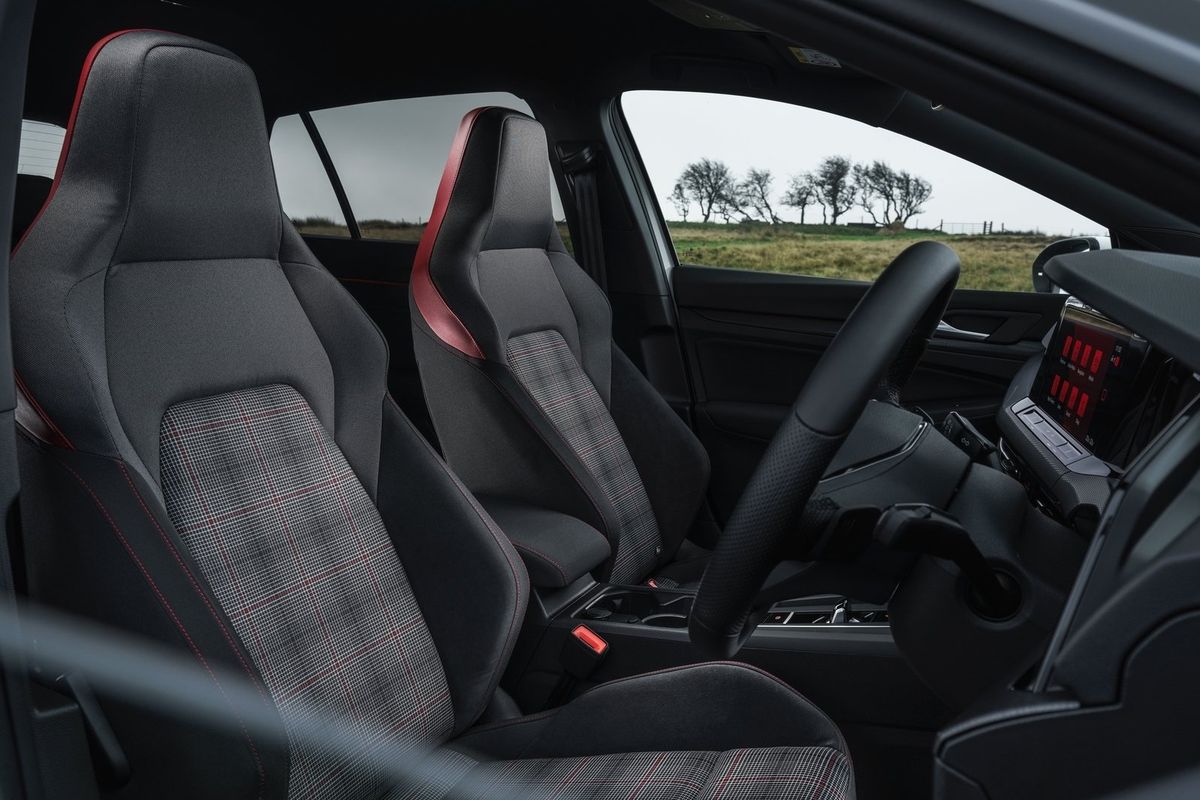
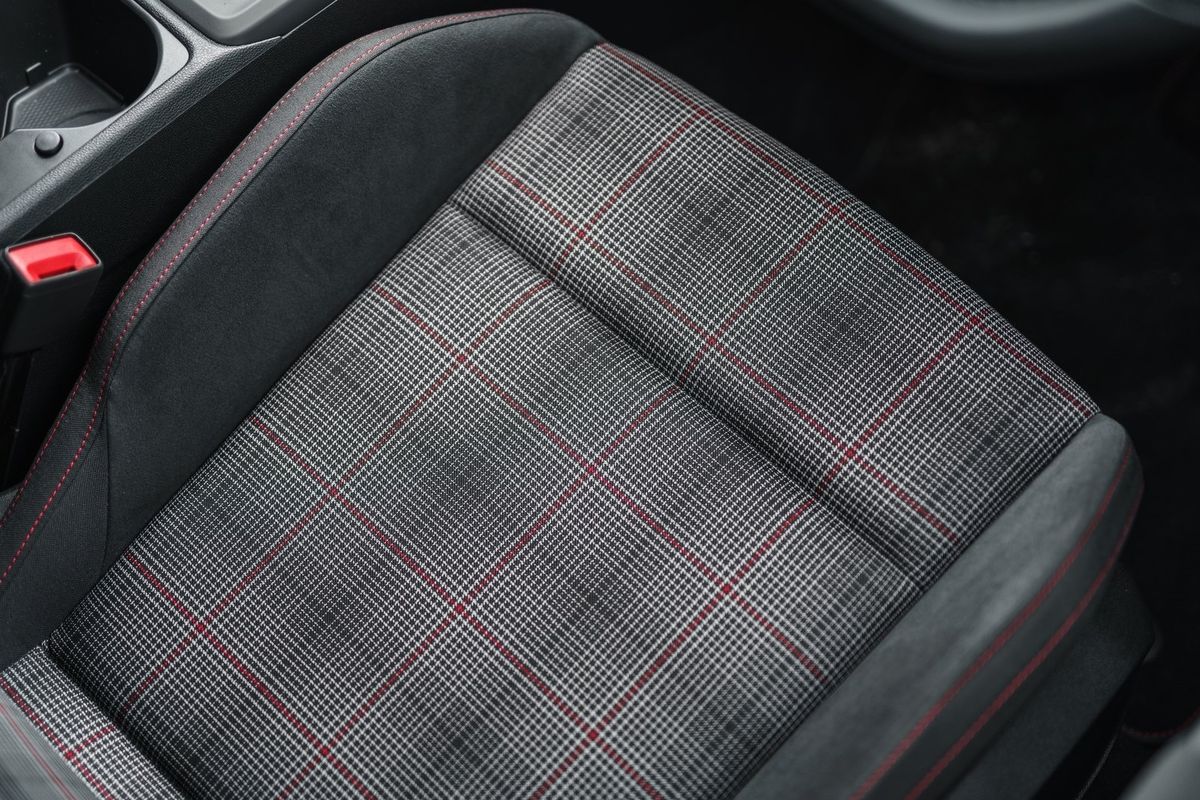
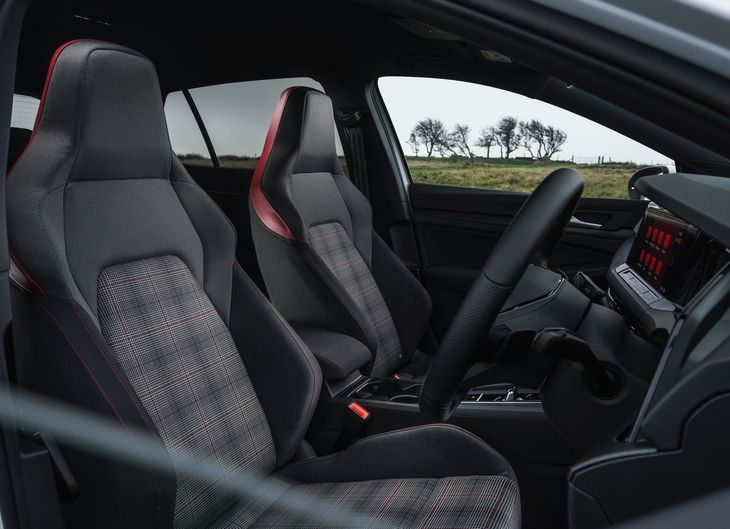
The main difference between the GTI Jacara Edition and the standard Golf GTI can be found in the seating arrangement. The standard model Golf GTI comes with leather Vienna sports seats that offer heating functionality and electronic adjustment. The Jacara features fabric seats of the same name.
Why would Volkswagen offer this model? Right now, Volkswagen Group (and many other brands) are battling with component shortages across the value chain. One of the critical shortages that has emerged of late is in the trim and upholstery department. There simply isn’t enough leather around to make Vienna seats for customers.
There are also major supply issues affecting the Golf GTI, so to help ease waiting times for vehicles, Volkswagen SA has ordered the Jacara fabric trim for its seats. These particular seats lose their heating functionality.
Much like the standard Volkswagen Golf GTI, the GTI Jacara Edition still comes with an array of standard features, with the options including things like an uprated Harman Kardon audio system, bigger wheels, and the safety equipment which falls under the IQ banner. Some standard equipment highlights:
8.25-inch Composition Media Radio
18-inch Richmond Alloy Wheels
Innovision cockpit
Seat trim covers in Jacara fabric
LED headlights
Adaptive Chassis Control DCC
Ambient lighting, exterior illuminated styling elements at the sides and in the front
Engine and Performance
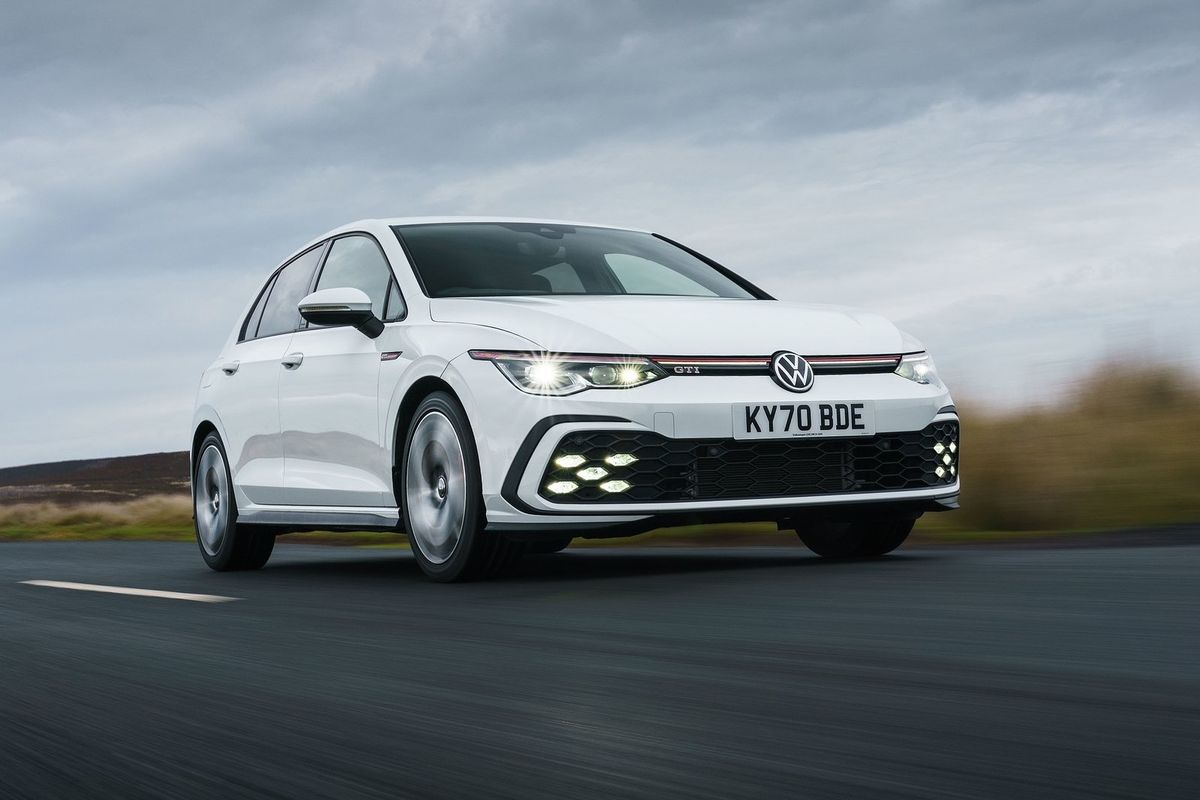
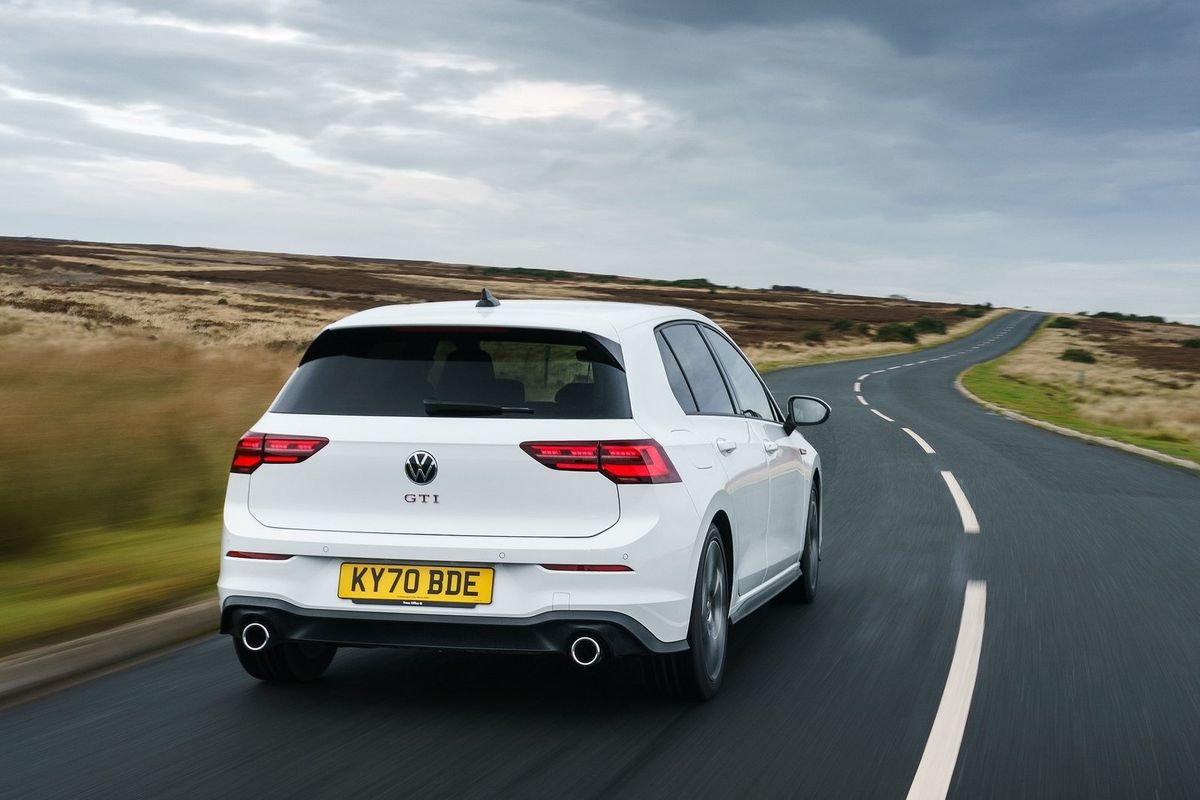
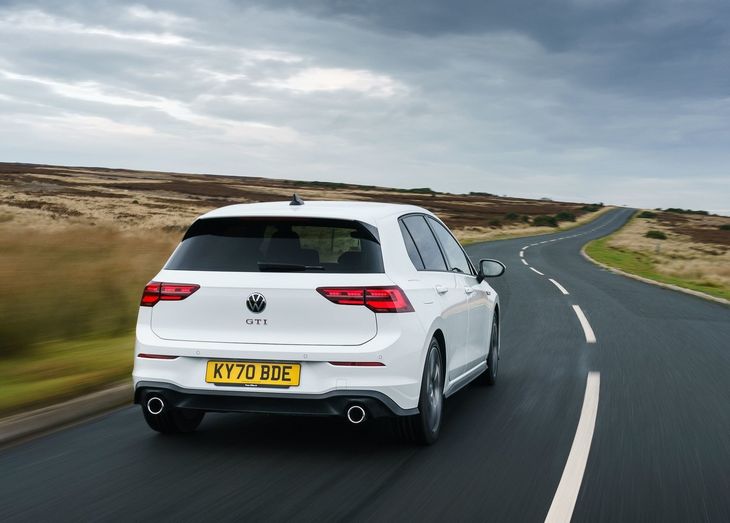
Seats aside, its the same Volkswagen Golf 8 GTI as we know it, with a 2.0-litre turbocharged 4-cylinder petrol producing 180 kW and 370 Nm. Power reaches the front wheels via a 7-speed dual-clutch transmission and Volkswagen claims a 0-100 kph time of just 6.4 seconds.
How much does the Golf GTI Jacara Edition cost in South Africa?
Due to the lack of leather seats and seat heating functionality, the Jacara Edition comes in a bit cheaper than its standard counterpart. The GTI comes with a 3-year/120 000 km warranty and 5-year/90 000 km EasyDrive service plan.
10 best-selling bakkies in South Africa: September 2022
Here’s a look at the list of South Africa’s best-selling bakkies for September 2022, which shows some movement on the podium as well as – rather unusually – a new entrant to the top 10…
September 2022 saw South Africa’s new-vehicle market put in another resilient performance, with industry sales increasing 10.8% year on year to 47 786 units. The country’s light-commercial vehicle segment (which includes bakkies) enjoyed even stronger growth, closing the month with year-on-year gains of 14.9% to reach 12 573 registrations.
So, what does that mean for our list of SA’s best-selling bakkies? Well, the Prospecton-built Toyota Hilux – which recently had its range bolstered by the arrival of the 165 kW GR-Sport derivative – was once again the star of the show, with 2 842 units registered in September. Though this figure was down somewhat on the number of registrations achieved in August, it still suggests Toyota’s factory in KwaZulu-Natal is almost back to full production capacity.
Meanwhile, the Struandale-produced Isuzu D-Max (1 968 units) came just short of cracking the 2 000-unit mark (its maker reports a combined figure that includes Gen 6 sales) but managed to climb one spot to second. That saw the outgoing version of the Ford Ranger – which will soon be replaced by the likewise Silverton-manufactured new-generation model – fall a place to third, with 1 604 units sold.
Toyota’s Land Cruiser 79 enjoyed another strong month, moving up to seventh place.
Though the Nissan NP200 (1 198 units), Mahindra Pik Up (666 units) and Nissan Navara (450 units) each lost a few sales compared with their performances in the preceding month, they managed to hang on to their fourth, fifth and sixth places, respectively. The Toyota Land Cruiser 79, however, put in an even stronger showing than it did in August, with its 403 registrations seeing it climb a position to seventh.
The GWM Steed (365 units) thus fell one place to eighth, while the Volkswagen Amarok (168 units) found itself a spot higher than usual in ninth. Finally, the Mitsubishi Triton (which is now offered in limited-edition Heritage form) entered the top 10 despite a sales figure of only 72 units, largely thanks to registrations of the normally popular GWM P-Series mysteriously plunging to a mere 36 units in September 2022. We can only speculate the Chinese brand’s local division is experiencing a few supply headaches at the moment.
Best of the rest in September 2022
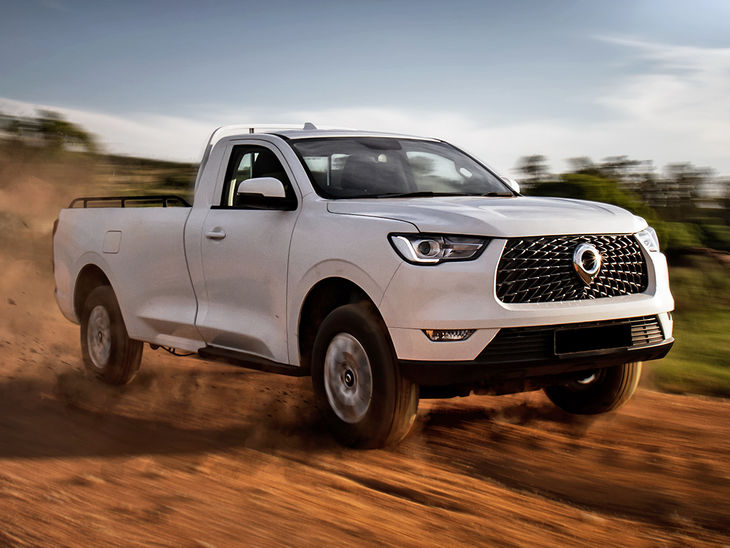
The GWM P-Series (seen here in single-cab guise) found itself outside of the top 10.
So, what about the bit-part players? Well, JAC’s T-badged bakkies (the company reports a combined figure for the T6 and T8 models) ended the month on 72 units, while the Mahindra Bolero managed a final tally of 32 units, putting it just behind the aforementioned P-Series. The Peugeot Landtrek contributed 21 sales to the Stellantis cause, putting it ahead of the Mazda BT-50 (7 units) and Jeep Gladiator (2 units).
Export winners in September 2022
Ford was once again at the very top of the export table, with a whopping 9 829 examples of its P375-generation Ranger shipped to overseas markets in September 2022. That puts it ahead of the Toyota Hilux (6 820 units); the Nissan Navara (596 units) and Isuzu D-Max (329 units) were next, while the Nissan NP200 (65) once again made up the numbers.
10 best-selling bakkies in South Africa for September 2022