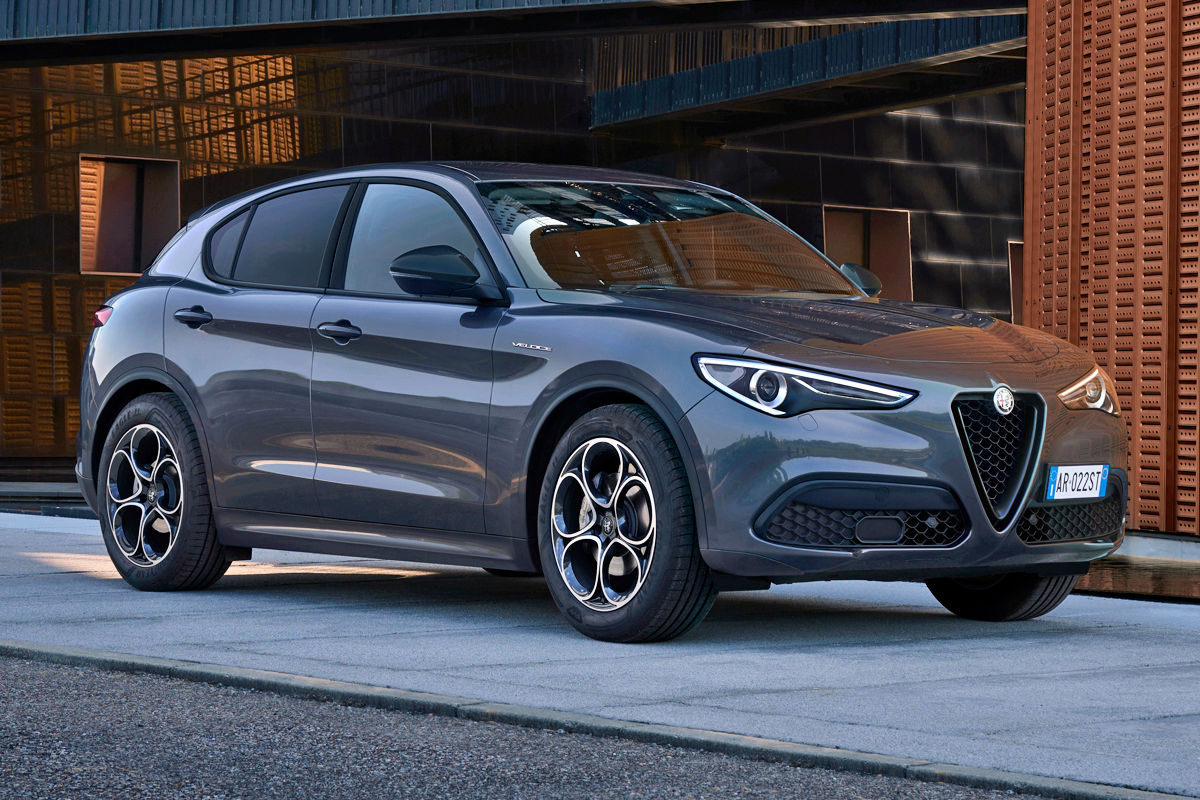
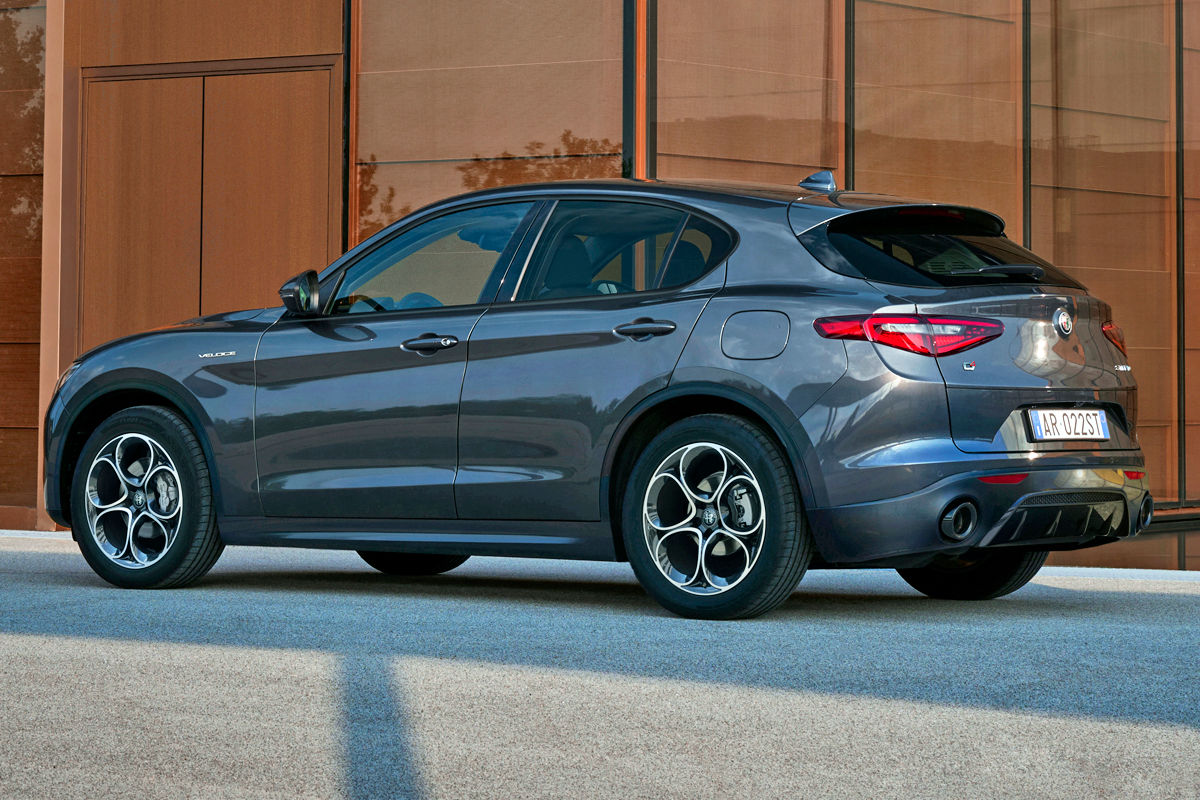
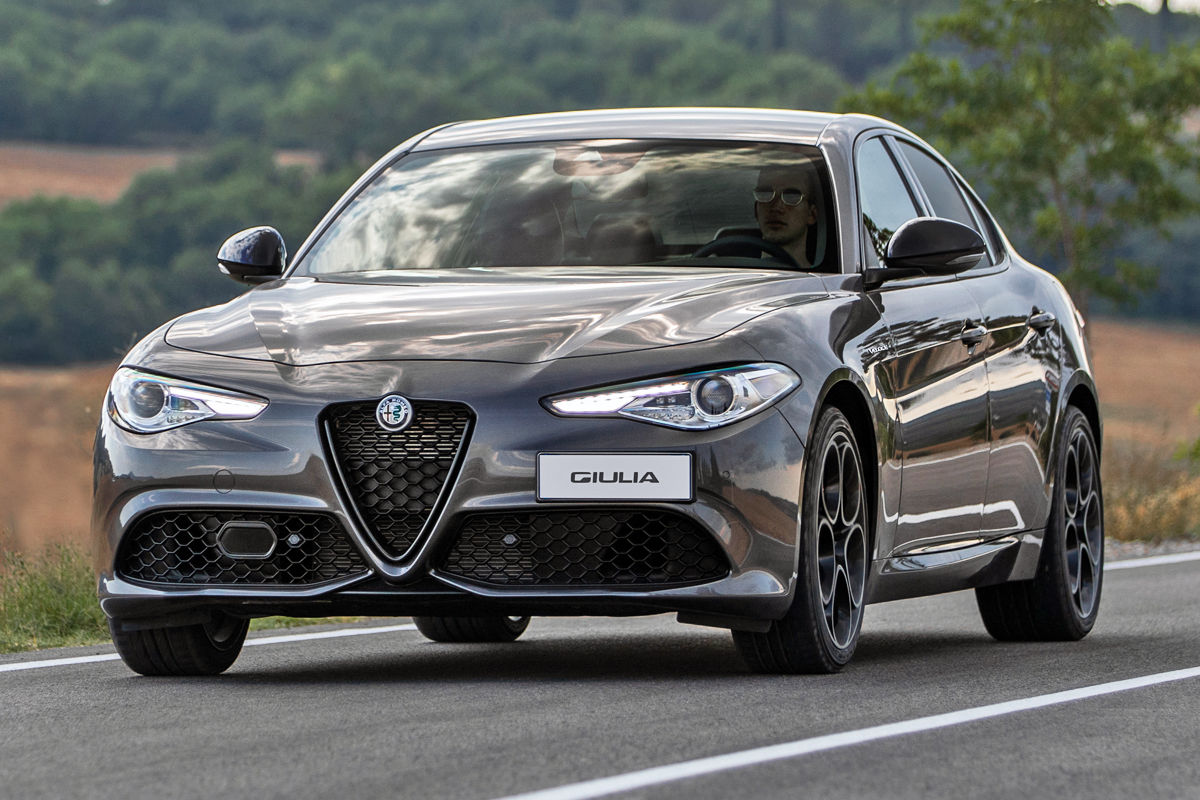
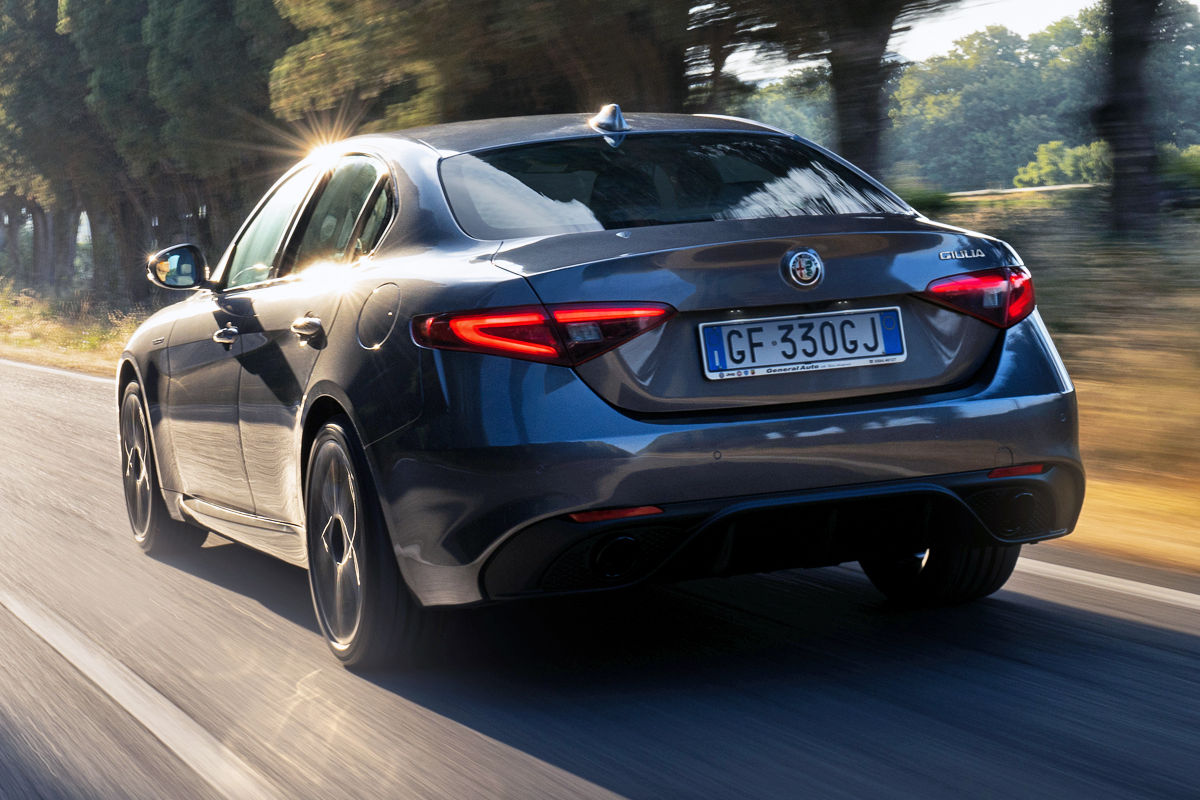
Alfa Romeo has rolled out a series of model-year updates for its Giulia and Stelvio. Here’s how much you’ll pay in South Africa for the latest iterations…
Although Alfa Romeo launched revised versions of its Giulia and Stelvio in South Africa just last year, the Italian firm’s local division has now made a series of further updates.
The Stellantis subsidiary says the “basic technical specification” of both the Giulia sedan and Stelvio crossover remains unchanged. Indeed, the most significant revision is the scrapping of the Stelvio Super derivative in favour the Stelvio Veloce, effectively aligning the SUV range with that of the sedan.
Alfa Romeo says the Stelvio Veloce – which starts at R1 188 900 – gains items such as a fresh body kit, black anodised brake callipers, matte exhaust tips and monotone wheel centres. Inside, the Stelvio Veloce features black roof lining and 6-way electrically adjustable sports seats, complete with 4-way lumbar adjustment and a memory function for the driver. The Italian executive SUV’s infotainment system, meanwhile, upgrades to 8 speakers, while a hands-free tailgate is now included.
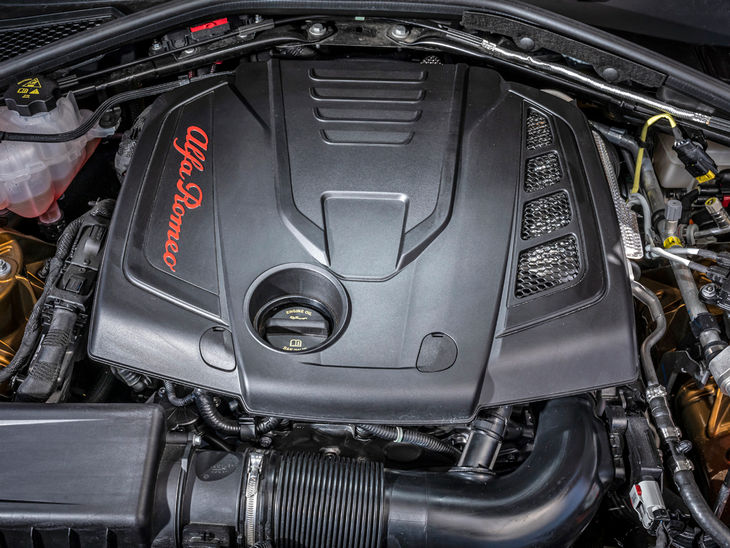
As a reminder, the Stelvio Veloce draws its urge from an unchanged turbocharged 2.0-litre, 4-cylinder petrol mill, which delivers 206 kW and 400 Nm to all four corners through an 8-speed automatic transmission.
The Veloce versions of the Giulia and Stelvio employ a 206 kW turbocharged 2.0-litre mill.
While the flagship R1 911 900 Stelvio Q retains its turbocharged 2.9-litre V6 petrol engine (with unchanged peak outputs of 375 kW and 600 Nm), it does upgrade to carbon-shelled, Alcantara-trimmed sports seat from Sparco. In addition, the high-performance crossover gains a variety of the aforementioned Veloce tweaks, including the hands-free tailgate.
The Giulia line-up, meanwhile, again kicks off with the Veloce (from R1 061 900), which employs the same powertrain as its Stelvio sibling but with drive delivered to the rear axle via a carbon-fibre prop shaft. With this update, the Giulia Veloce gains a limited slip differential, along with an 8-speaker audio system, 6-way electrically controlled sports seats (again with 4-way adjustable lumbar support and a memory function for the pilot).
What about the high-performance R1 770 900 Giulia QV? Well, as with the Q-badged Stelvio, the Quadrifoglio powertrain is left untouched (as are the claimed 0-100 kph time of 3.9 seconds and top speed of 307 kph), though the cabin gains the aforementioned carbon-shelled Sparco sports seats (finished in Alcantara) as well as an exposed carbon-fibre roof and a Harman Kardon sound system.
How much does the Alfa Romeo Giulia cost in South Africa?
Both the Giulia and Stelvio come with a 5-year/100 000 km warranty and maintenance plan.
How To Work Out Car Insurance Excess & Deductibles
To help you ensure that you don’t accept a car insurance quote that doesn’t serve your needs, Budget Insurance brings you a guide to working out your car insurance excess and deductibles.
If you want to insure a car, you know that you’ll need to browse your car insurance options before making a decision. You’ll also know that no matter what level of insurance you choose, you’ll have to make provision for an excess payment or a deductible.
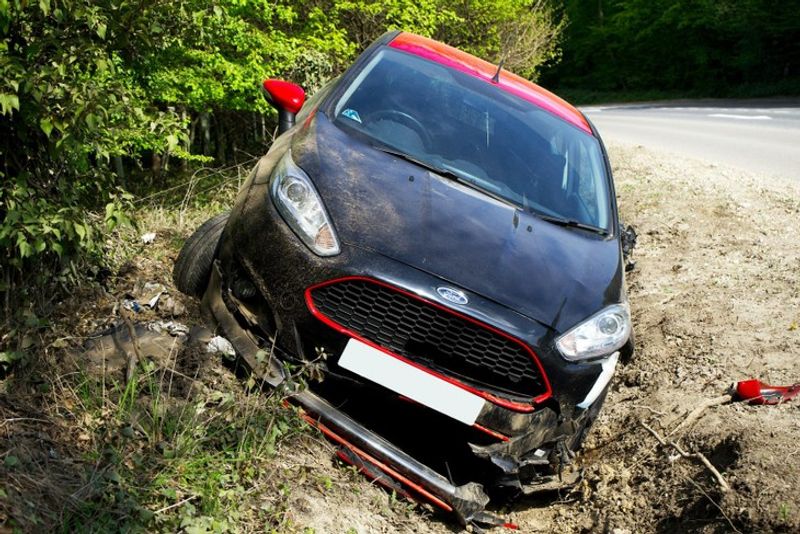
Selecting a high excess in exchange for lower monthly premiums is an understandably desirable option, however, unless you’re confident that you know precisely what your excess and deductibles are, you might end up paying more than anticipated for an unexpected vehicle repair.
What’s a car insurance deductible?
In an ideal world, honest interaction between all businesses and their customers would be standard. Unfortunately, in reality, this doesn’t always happen. This means that car insurance providers have to put measures in place to ensure that customers are discouraged from making false claims.
Your car insurance excess and deductibles are basically the same, except that excess refers to the amount you’ve agreed — in advance — to pay in the event of making a claim, whereas a deductible only comes into play in the event of an accident.
How does car insurance excess work?
Your car insurance excess is determined when you initially take out a policy. The only time it might change is when you make a claim. By knowing exactly what excess you’ve agreed to, you can prepare yourself for a possible future claim without worrying about how much you can afford. For example, if you’ve selected comprehensive car insurance with an R4 000 excess and the damage your car has sustained costs R6 500, you will need to pay the R4 000 excess, while your insurer will pay the remaining R2 500.
The amount of excess you can expect to pay depends on your risk profile and what you are happy paying. Certain factors (such as being a new driver or having limited driving experience) can make you a higher risk statistically, which will increase the stipulated excess on your car insurance policy. The type of car you drive, where you live, how you use your vehicle and the measures you’ve taken to prevent your car from being damaged or stolen can also impact this. For example, if you have a tracking device installed on your vehicle and park it in a locked garage behind a locked gate, you can expect your excess to be lower than a person who has no device and parks on the street.
You might also be offered what’s known as a percentage excess. This is where you agree to pay a set percentage of the total cost of a claim. In most cases, you can expect to pay a flat excess or set amount in the event of an accident. In many cases, you can opt for a higher premium in exchange for a lower excess, and vice versa. However, you should be aware that the circumstances of your claim could result in a price hike to your premium.
Misconceptions about car insurance excess payments
A common myth concerning car insurance excess payments is that agreeing to pay an excess is an admission of guilt (that you admit that the damage sustained by your and/or the other party’s vehicle in a road accident occurred as a result of your actions or negligence). The reality is that you will need to pay the excess for any claim you make, no matter who was at fault.
If the accident was the fault of another driver, your insurer may try to recover the excess amount from them on your behalf. It’s worth keeping in mind, however, that car insurance providers aren’t legally obliged to do this and that a number of them might not offer this service.
How much excess on car insurance should I pay?
It helps to remember that there’s no right or wrong decision when it comes to paying an excess. It is essentially your personal preference. It might suit you to pay a reduced monthly premium and set aside money for a higher excess payment. Alternatively, you might prefer to pay more every month so that your excess payment is low enough to pay without any problem if needed.
It’s also important to remember that honesty is your best policy for car insurance, including your excess. Being dishonest about who usually drives your car and other things your car insurance provider asks you about can result in increased excess or your claim being refused altogether.
Where to find the best car insurance in South Africa?
If you want an honest chat about your options or any further clarification on excess and deductibles, talk to Budget Insurance.
Budget Insurance can help you select the level of coverage that meets your needs — with an excess that’s easy on your wallet. Request a quote today and start the conversation.
Continental marks 75-year milestone in SA with 4-part video series
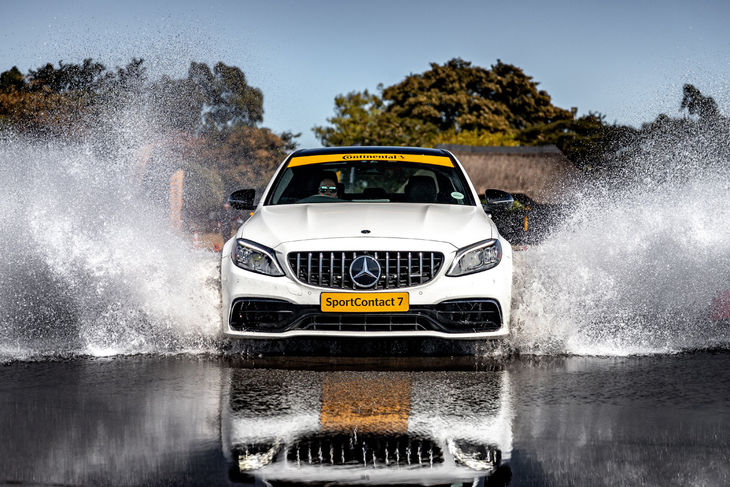
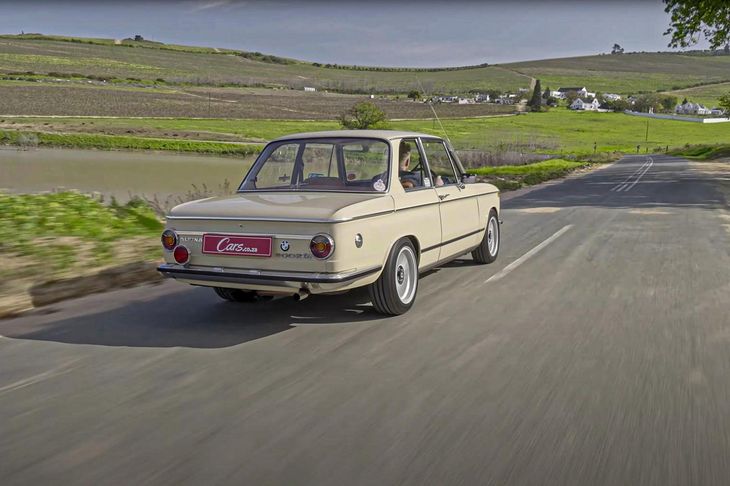
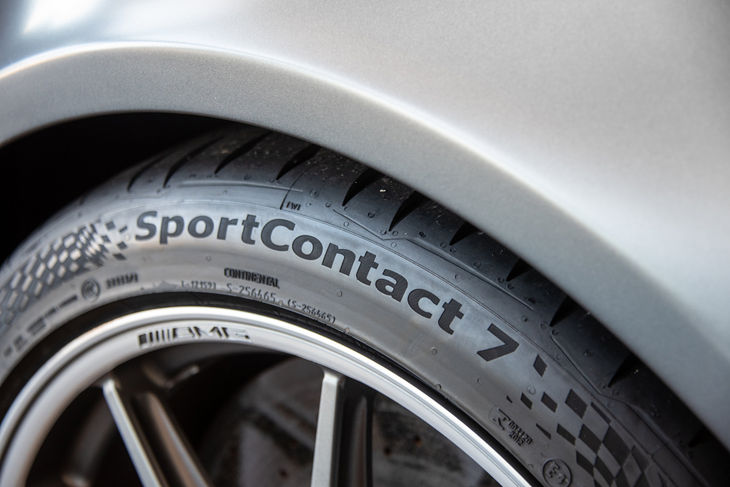
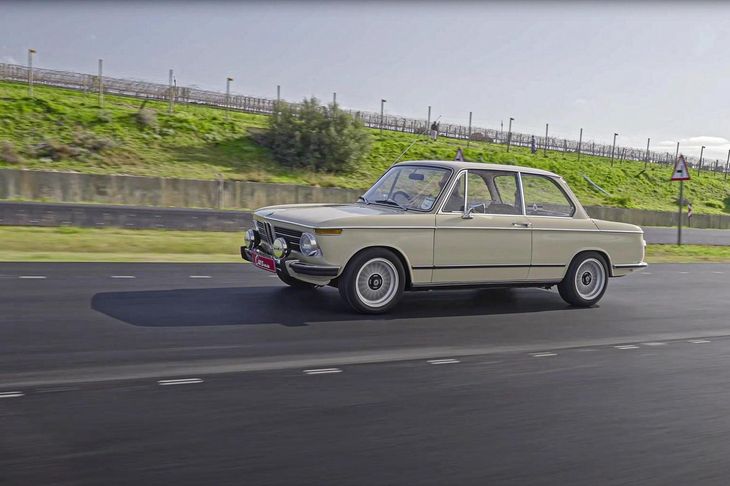
Continental Tyre SA, which is celebrating its 75th anniversary this year, has commissioned a 4-part “Continental Icons” video series, exclusive to our YouTube channel. The series kicked off with a video featuring a local enthusiast’s 1973 BMW 2002tii, but which other cars (that also feature in New York artist Julian Montague’s “Original Equipment Heroes” artworks) will be next?
PARTNERED CONTENT
Continental has a rich heritage in South Africa, beginning in January 1947 with the founding of General Tire and Rubber Company South Africa. The local operation was acquired by German tyre giant Continental AG in 1998 and renamed Continental Tyre South Africa, helping cement its role as one of the country’s leading tyre manufacturers.
“We are extremely proud of achieving the 75-year milestone, and to have played a large supporting role in the local economy by producing some of the best tyres in the world, for some of the most significant cars of all time,” says Monica Ramsunder, Continental Tyre SA‘s marketing manager.
As the only Continental tyre plant in Africa, the local factory produces original equipment Continental and General Tire-branded tyres for half a dozen of the largest vehicle manufacturers in the country. What’s more, it exports tyres around the world – thus making it an important part of South Africa’s rich automotive history, and key to its export-driven growth opportunities.
“We are delighted to be partnering with the creative team at Cars.co.za as part of our 75th-anniversary celebrations, and linking this to the industry-defining legacy of 4 iconic, trend-setting cars,” Ramsunder says.
The first video in the series set the scene by featuring a mint-condition, rare and valuable 1973 BMW 2002tii, owned by Jaques Wessels. The 2002 is a legendary car that created the foundation for what later became BMW’s immensely successful compact executive sedan, the 3 Series, for which Continental remains an original equipment manufacturer (OEM) tyre supplier in Germany.
Notably, nearly 1 in every 3 new cars in Europe is delivered from the factory with tyres from Continental, making it the leading original equipment provider in the European market. Globally Continental is an OE supplier to most of the leading manufacturers, including Audi, Mercedes-Benz, Jaguar/Land Rover, Peugeot/Citroen, Renault/Nissan, Fiat and Volkswagen, as well as sports car manufacturers such as Porsche and Maserati.
“Partnering with an iconic brand like Continental, which is so closely associated with some truly memorable cars, is a perfect fit for Cars.co.za‘s classic car lifestyle brand, SentiMETAL,” says Hannes Oosthuizen, who is our company’s consumer experience manager. “This new video series represents a great opportunity to tell diverse and entertaining ownership stories, featuring passionate owners and special vehicles.”
The 4 cars that star in the “Continental Icons” video series are also featured in the 2020 collaboration between Continental AG and famous New York artist, Julian Montague. The “Original Equipment Heroes” series of artworks incorporated Montague’s unique style of art to celebrate some of the most iconic cars in the history of Continental globally. It also formed part of the build-up to the company’s 150th anniversary in 2021.
“Continental is trusted around the world for its German engineering, delivering exceptional performance and safety,” Ramsunder adds. “The Cars.co.za ‘Continental Icons’ video series and the artwork by Julian Montague highlight the spirit of innovation that has shaped the cars we drive today.
Which icon will be featured next?
“Many of the European cars incorporated in the ‘Original Equipment Heroes’ artwork are also celebrated as an iconic part of our South African heritage,” Ramsunder says. “Accordingly, we specifically chose 4 cars to be featured by the Cars.co.za team as ‘Continental Icons’ to showcase the diversity of vehicle types relative to our wide range of needs, and to highlight the extensive range of world-class tyres that we produce in South Africa.”
Look out for the next 3 episodes of “Continental Icons” on the Cars.co.za YouTube channel, which is one of the largest branded channels in South Africa with more than 320 000 subscribers.
Apart from the 1974 BMW 2002, Julian Montague’s “Original Equipment Heroes” series of artworks also featured the 1901 Mercedes 35 PS, 1950 Volkswagen T1, 1955 Volkswagen Beetle, 1964 Porsche 911, 1968 Opel GT, 1974 Volkswagen Golf 1, 1975 Opel Manta, 1980 Audi Quattro, 1983 Audi 80, 1986 Land Rover Defender (D90), 2001 New Mini, 2002 Porsche Cayenne, 2005 Porsche 9FF, 2010 Mercedes-Benz SLS, 2011 Renault Twizy, 2012 Tesla Model S, 2013 Jaguar F-Type, 2013 Maserati Quattroporte, 2017 Honda Civic Type R, 2017 Rolls-Royce Phantom and 2020 Volkswagen ID.3…
Of those cars, the Volkswagen Beetle and Golf 1, Porsche 911 and Cayenne, Opel Manta and GT, Audi Quattro, Land Rover Defender, New Mini, Mercedes-Benz SLS, Jaguar F-Type, Maserati Quattroporte, Honda Civic Type R and Rolls-Royce Phantom were available in the South African market, so at least that narrows down the list of classic-car candidates for the 3 upcoming instalments of our “Continental Icons” YouTube video series a little…
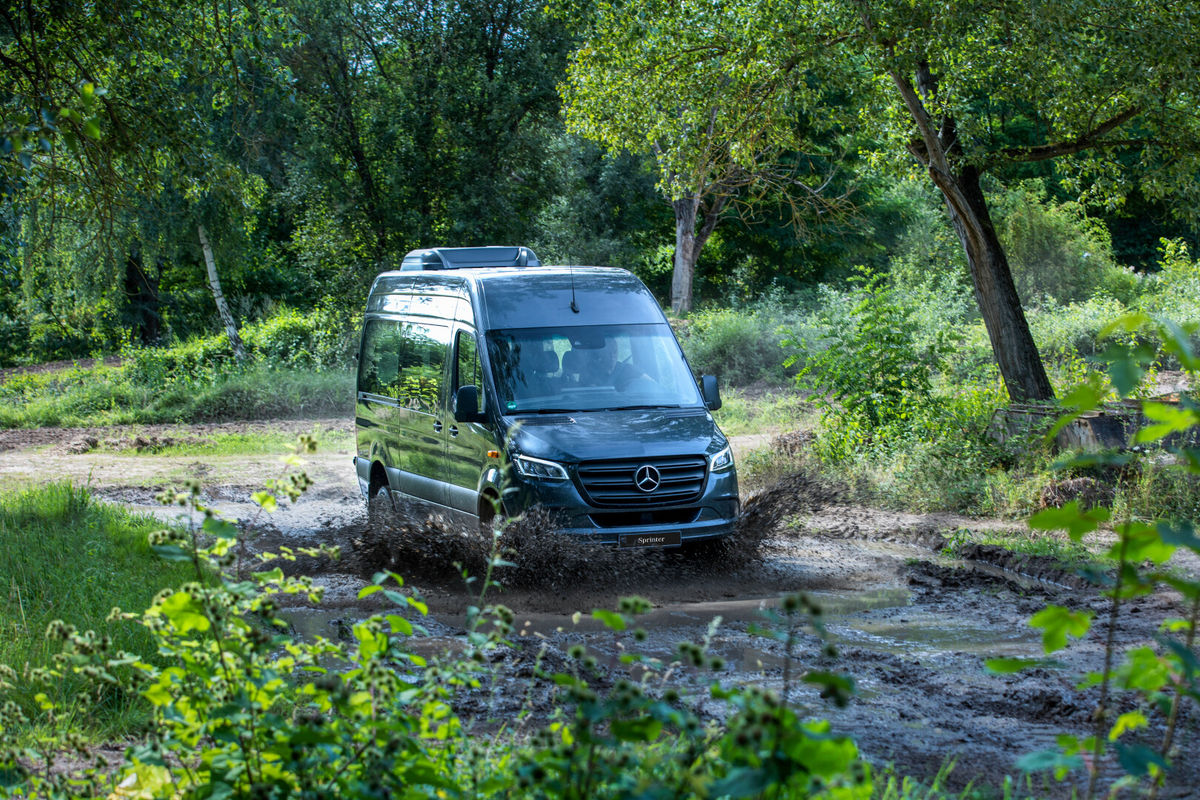
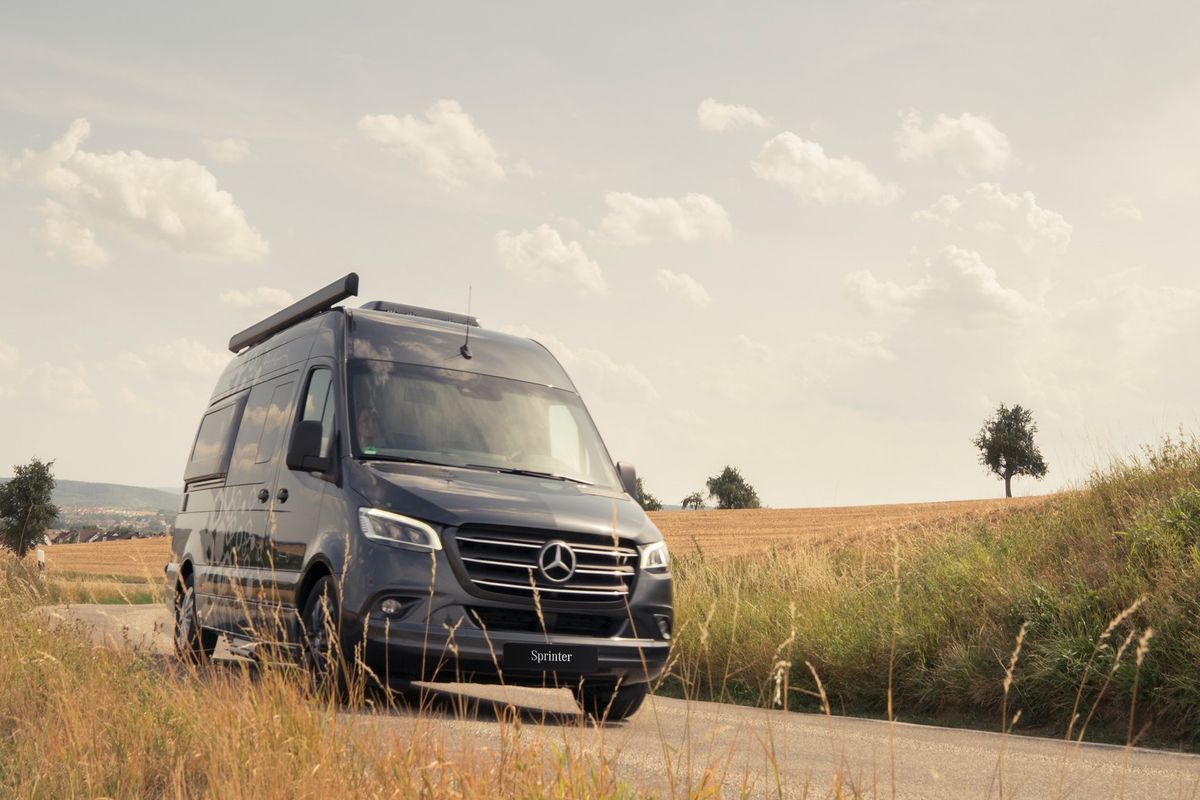
Mercedes-Benz Vans has confirmed pricing and spec details of its new Sprinter AWD. Here’s how much you can expect to pay for the Sprinter AWD motorhome.
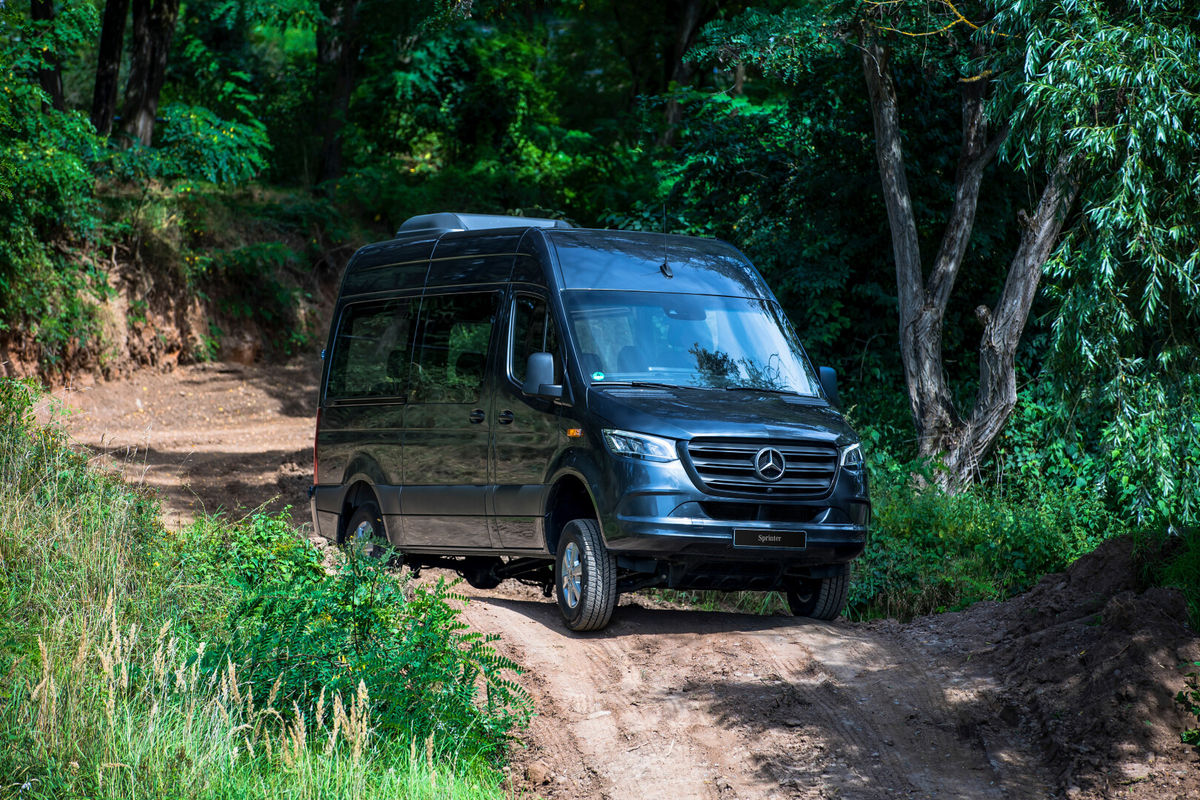
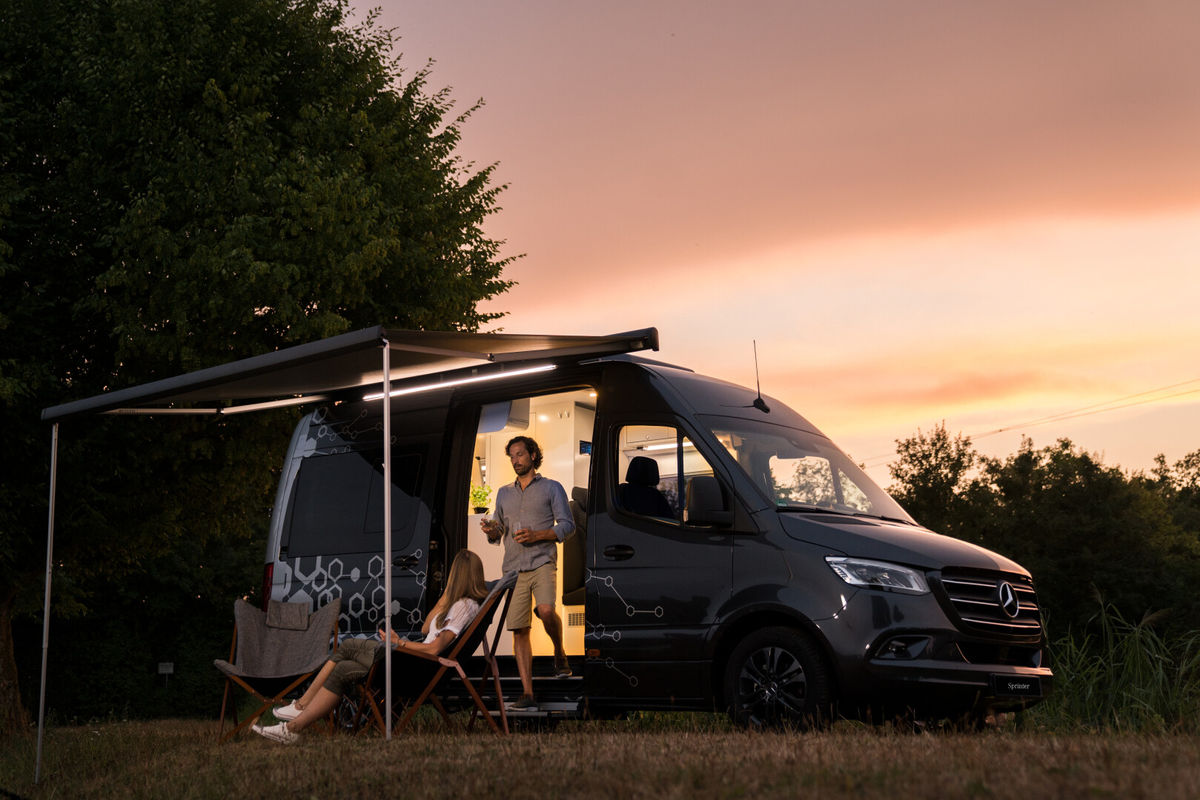
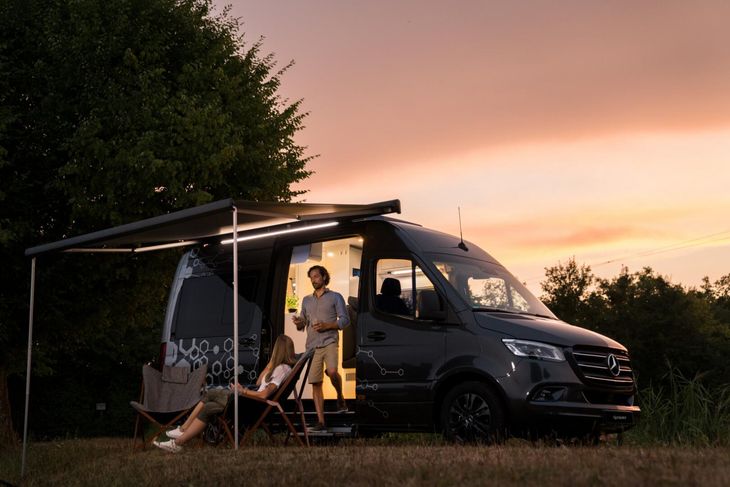
Overlanding and the motorhome lifestyle have increased post-pandemic and its easy to see why. With a laptop and a good internet connection, its easy to work remotely and many have embarked on cross-country trips in their vehicles. Mercedes-Benz Vans has launched the Sprinter AWD Motorhome for those who want to explore the vastness that is South Africa.
Under the bonnet is the OM654 2.0-litre four-cylinder diesel engine which produces 140 kW and 450 Nm, and the vehicle features a 9-speed automatic transmission.
Given the road conditions of South Africa, and the fact that many would like to venture offroad, the new Sprinter AWD Motorhome features all-wheel drive with torque on demand. The vehicle is primarily rear-wheel driven, but the moment it detects a loss of traction, the front axle is called into action.
To get from a standard Sprinter to a Motorhome, Mercedes-Benz SA has partnered with four local companies, known as VanPartners. They’re responsible for converting Sprinters/Vito/V-Class into vehicles suitable for service, adventure, trade and so on. The benefit of using VanPartners is the work is guaranteed by Mercedes-Benz.
How much does the new Mercedes-Benz Sprinter AWD Motorhome cost in South Africa?
The range starts at R716 926 for the Sprinter 311 CDI Standard, with the Sprinter 319 CDI AWD coming in at R1 199 348.
Please note this price is before the conversion to motorhome. When it comes to conversions and what’s possible, Mercedes-Benz Vans says the sky is the limit, with basic conversions costing from as little as R200 000, but can go up to R900 000.
Suzuki is a small car specialist and the firm is preparing to produce its first Indian-built Electric Vehicle (EV) by 2025 following significant investment in its production facilities in Gujarat, India, earlier this year.
Affordable EVs is what the South African motoring landscape desperately needs. If you consider that most Suzuki products that we have come to adore are manufactured in India, then it’s not too difficult to imagine that an affordable Indian-built Suzuki EV will eventually see the light of day in Mzansi.
Earlier this year, Suzuki announced a significant $1.37-billion investment to upgrade its production facilities in Gujarat, India, in preparation for EV production. Maruti Suzuki dominates the Indian market with its ICE vehicles and even here in the “deep South”, Suzuki now finds itself in the Top 3 best-selling car brands in South Africa.
However, when it comes to EVs, Tata Motors holds a significant share of the Indian EV market and Suzuki is now preparing to enter the EV market with its very own Battery-Electric Vehicle (BEV) in 2025 to meet the growing demand for EVs in India. In fact, the Indian EV market is expected to boom to over $150-billion by 2030 and Suzuki wants to secure its share of the pie!
Suzuki and Toyota Join Forces
More affordable EVs will hopefully be the result of the Toyota-Suzuki collaboration.
Suzuki, however, will lean on expertise from Toyota to achieve its goals. While not much is yet known about this new Suzuki EV, it’s expected to take the form of an SUV and will be built on a new electric platform that’s likely to spawn a range of new electrified Suzuki models, some of which might also wear Toyota badges. Toyota last year announced its commitment to producing no less than 30 new EVs by 2030.
The Suzuki-Toyota collaboration will hopefully stimulate the widespread introduction of more affordable EVs in the not-too-distant future, not only in India but hopefully in other regions too, including South Africa.
We will keep you updated as this story develops further…
Rising interest rates hike up car payments, but depreciation’s the killer
Interest rates and car prices are up, but at least vehicle depreciation is lower than usual. Rule one of buying a car through a vehicle finance agreement is to ensure that you’ll be able to make your payments easily, but rule two – minimise the risk of steep depreciation by choosing your next vehicle wisely – still applies. Here’s why…
If you have the resources to buy a vehicle cash (provided you choose your purchase carefully – but more about that in a little while), it is undoubtedly the smartest way to own your car. But, of course, few of us have that luxury.
Most South African vehicle purchases are financed and that means you are at the mercy of the market regarding the future cost of your car – a rather expensive “asset” that loses value each month that you are paying off the loan against it.
Buying and owning a car is a balance of financial risk. You can’t control interest rates, but you can buy a car with a lower risk of suffering ruinous depreciation, which matters over the repayment term. It matters a helluva lot.
In an economic climate of rising interest rates, car ownership keeps getting more expensive. And, at the same time, your car is losing value every single day; you don’t need an actuarial degree to understand the problem.
Rates are going to keep rising
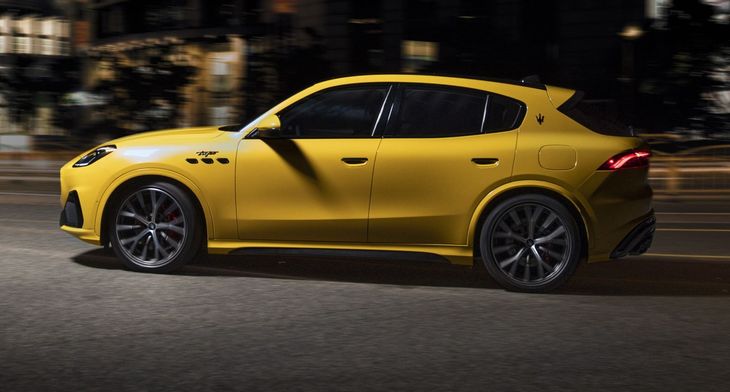
A brightly coloured Italian luxury SUV is particularly tempting when interest rates are low.
When credit is cheap, you can be more discerning when choosing a new car. Buyers are more likely to risk purchasing a model from a niche brand – finished in a very bold colour – because additional interest rate costs aren’t gearing the depreciation risk over time. Here’s an example: when the interest rate was at an all-time low, you may have taken a leap of faith with a scarlet red Alfa Romeo Stelvio, instead of buying the more sensible glacier white Mercedes-Benz GLC.
But borrowing money has become a lot more expensive in South Africa. Inflation is surging across the globe, and nations’ central banks are mandated to contain its effect by hiking up interest rates. And, if you are servicing financed vehicle debt, or are pondering the options of doing so, the calculation has changed a lot.
Interest rates aren’t volatile. Or at least, they aren’t supposed to be. Unlike the Rand’s exchange rates or the fuel price, which can fluctuate wildly, South Africa’s credibly skilled and prudent Reserve Bank staff navigate interest rate challenges in long cycles. That means once inflation creeps up or gradually subsides, interest rates move within their own momentum during the next few years, not months.
How worried should you be about the rising interest rate cycle and your car payments? Let’s look back on the past 25 years.
The current repo rate is 5.5%, which is quite a bit more than the lowest South African data point of 3.5%, but nowhere near the nightmarish interest rates of 1998, which peaked at 23.99%. Your vehicle financing cost is obviously higher than the official repo rate of 5.5%, but it does function as the foundation of all other debt structurings, and when it rises, the cost of servicing all your other interest-bearing debts go up too.
Interest rates will keep increasing because local and global inflation isn’t receding. Will you be deep into double-digit interest rate repayments on your car by year-end? No. That’s unlikely. However, it is valuable to think of the car you drive and how it plays against the twin cost risks of interest rates and depreciation.
Rising rates and depreciation – the terrible twins
When you own a car, it depreciates constantly. But the loss only becomes “real” when you want to trade-in your vehicle.
Timelines for vehicle financing vary from 12- to 72 months. Again, you don’t need to be a financial guru to know that servicing that debt in the shortest possible timeframe is the best strategy.
If we imagine that 36 months is an average repayment term for South African vehicle finance, you need to think about how much additional cost is tolerable. And not just the finance cost, but the “invisible” depreciation that occurs over that period, which is only revealed when you decide to sell or trade-in your current car.
The combination of paying interest over several years of a vehicle finance agreement (your instalments don’t repay the capital portion of a car loan right from the onset – quite the contrary, in fact) and depreciation leads to the dreaded “shortfall”, when your vehicle’s trade value is lower than the outstanding amount you owe on it; many consumers opt to refinance that shortfall when they buy their next car, which often worsens the problem (the “debt trap” phenomenon).
Meanwhile, even a 3-year commitment can be a long time to trust the markets, government, global events and even model cycles. Suppose your car is being repaid over 3- or 5 years. In that case, it is guaranteed that you will suffer an additional depreciation event due to a mid-lifecycle product update (a facelift version of the model comes to market) or replacement (a new-generation model gets introduced). Well, unless you drive a Hilux, but we’ll touch on that later.
Suffice it to say, choosing an apparently “cool” or “quirky” car usually precedes a depreciation disaster…
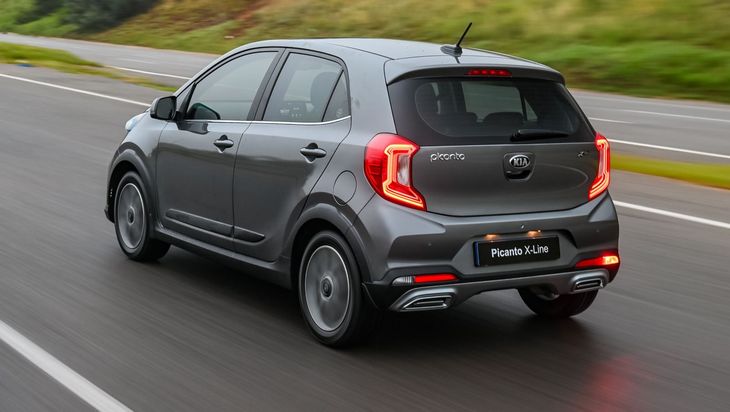
Special-edition cars are a marketing staple. But with a class-leading model (such as the Picanto), you can buy some style without facing increased depreciation risk.
The sagest advice for managing your vehicle debt, or at least structuring it for a new purchase, is to be sensible about what you buy.
Always buy a great platform (yes, a popular make and model, even if it seems like a “boring” or “unimaginative” choice) and, importantly, avoid specifying the vehicle with numerous extra-cost features. You don’t retain value on optional extras, especially digital elements, which age rapidly on the technology timeline. Apply the same scepticism to any “special edition” vehicle that’s adorned with distinctive graphics or funky trim upgrades… “Fine feathers don’t make fine birds”.
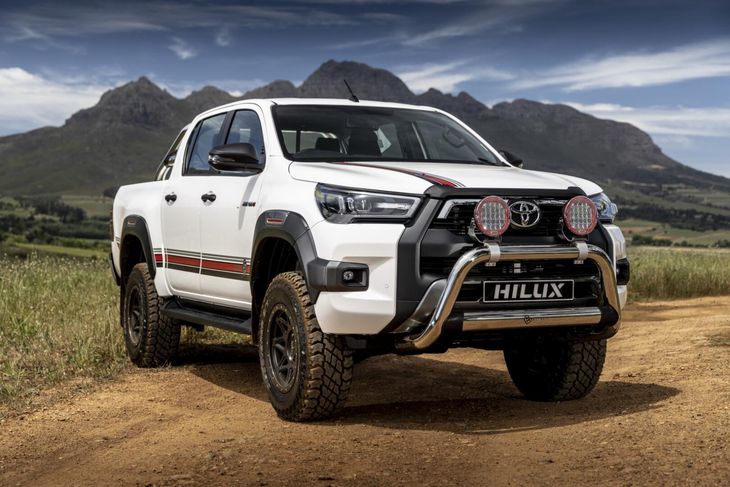
Toyota’s Hilux, however, isn’t a risk. Even if you buy one of the “edition” versions, with negligible content upgrades, it remains fundamentally a Hilux, which is South Africa’s most in-demand vehicle. You want to avoid any “special edition” type vehicle that is released close to the end of a model’s lifecycle, or where a manufacturer or importer’s marketing team is clearly attempting to prevent sales momentum from stalling out.
You don’t get a depreciation statement each month – but remain mindful of it
Hilux is one of the very few models where a “special edition’ buy is a smart buy.
A sound principle is that any vehicle’s simplest specification will suffer the least depreciation and, therefore, retain the most value. And that hedges your debt position regarding car payments and rising interest rates.
The worst cars? Luxury vehicles. Virtually all of them, except a Toyota Land Cruiser Prado or 300. German and British luxury SUVs and crossovers suffer crushing deprecation, but their owners are often wealthy enough to absorb the losses.
Engine configuration matters too. In fact, we’ve seen that vehicles powered by engines with more than 4 cylinders suffer significant depreciation. Consumers have a decreased appetite for 6- and 8-cylinder vehicles – even in South Africa – and not due to environmental concerns or emission tax, such as in Europe, but the fear of further escalating fuel prices.
Buying now, but thinking beyond 2022
This is one of the very few luxury cars you can buy in SA that doesn’t suffer tragic depreciation.
Balancing the risk of future depreciation against credit cost cycles is crucial for any owner who wants to enjoy their car-ownership experience. Your car is not a collector’s bottle of wine or an NFT, which is stored safely at home (where you can view it occasionally).
Cars operate in the real world – in heat and rain and over vast distances. They transport us to work and enable us to pursue leisure activities or go on holidays across the country, even beyond our borders in Southern Africa. If you suffer anxiety about driving and using your vehicle due to an unfavourable debt position developing around it, that’s a very disempowering position.
But, for the moment, the car market is in a state of suspended animation with regards to depreciation and that creates a dangerous fallacy of misinterpretation. Because global new vehicle supplies remain low and car prices, new or used, remain high, depreciation is negligible – owners are capable of selling most “newish” models under R500 000 with almost no depreciation risk. However, this “stalled depreciation” will not last indefinitely, especially given rising interest rates.
Don’t get lulled into believing your car has become “depreciation-proof” due to the artificial market conditions of 2022, the advice to buy proven and popular models with moderate specifications stands.
When supply returns to normal, there will be a flood of inventory in the new- and used-vehicle markets, which is when prices could adjust downwards, and dramatically so. If you have to sell into the late 2023 or 2024 used-vehicle market, in which depreciation is likely to normalise, be sure that you will be able to absorb that financial hit.
You can’t control the interest-rate cycle. But you can choose wisely with make, model, colour and specification, to glide along a milder depreciation curve with your car ownership experience.
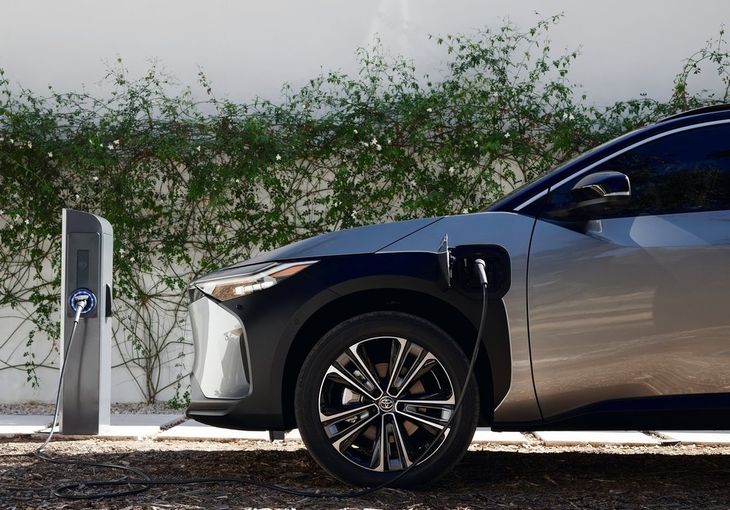
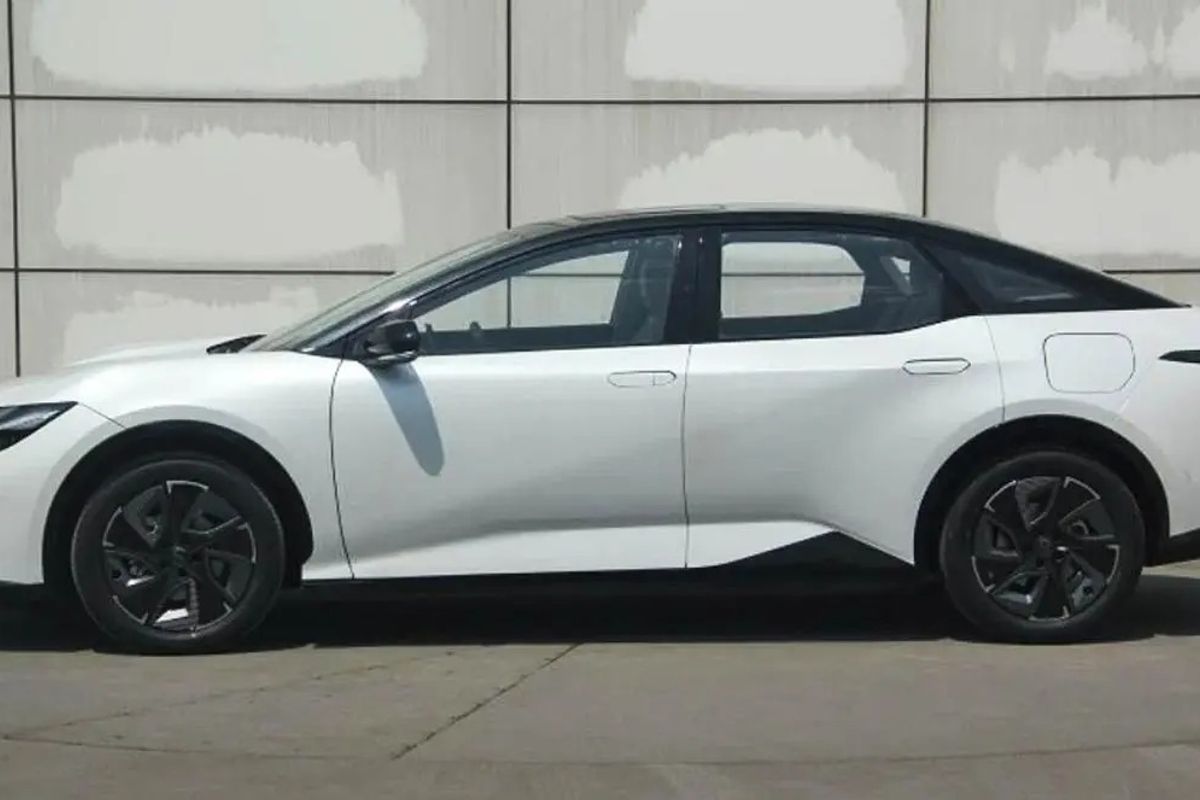
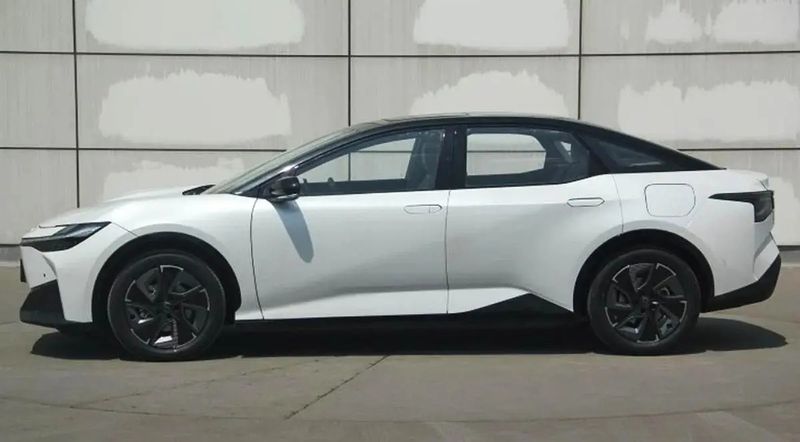
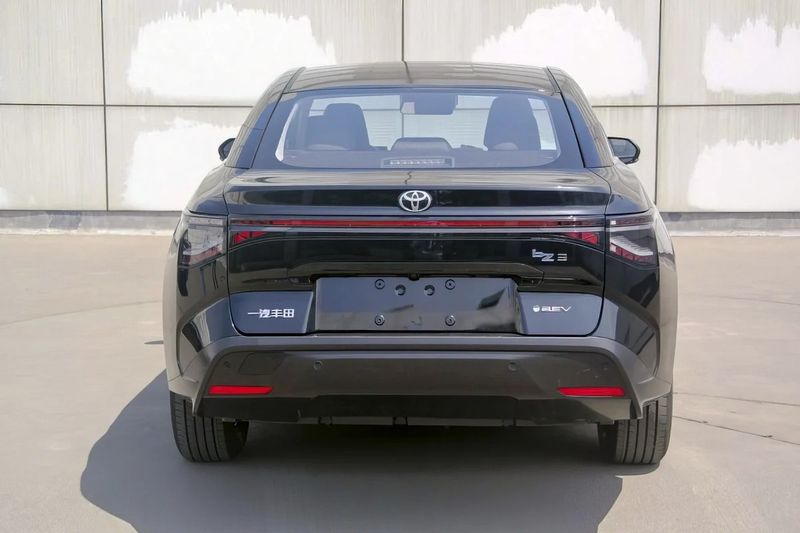
The Toyota bZ3 is the brand’s second all-electric offering. Here’s what we know ahead of its global reveal.
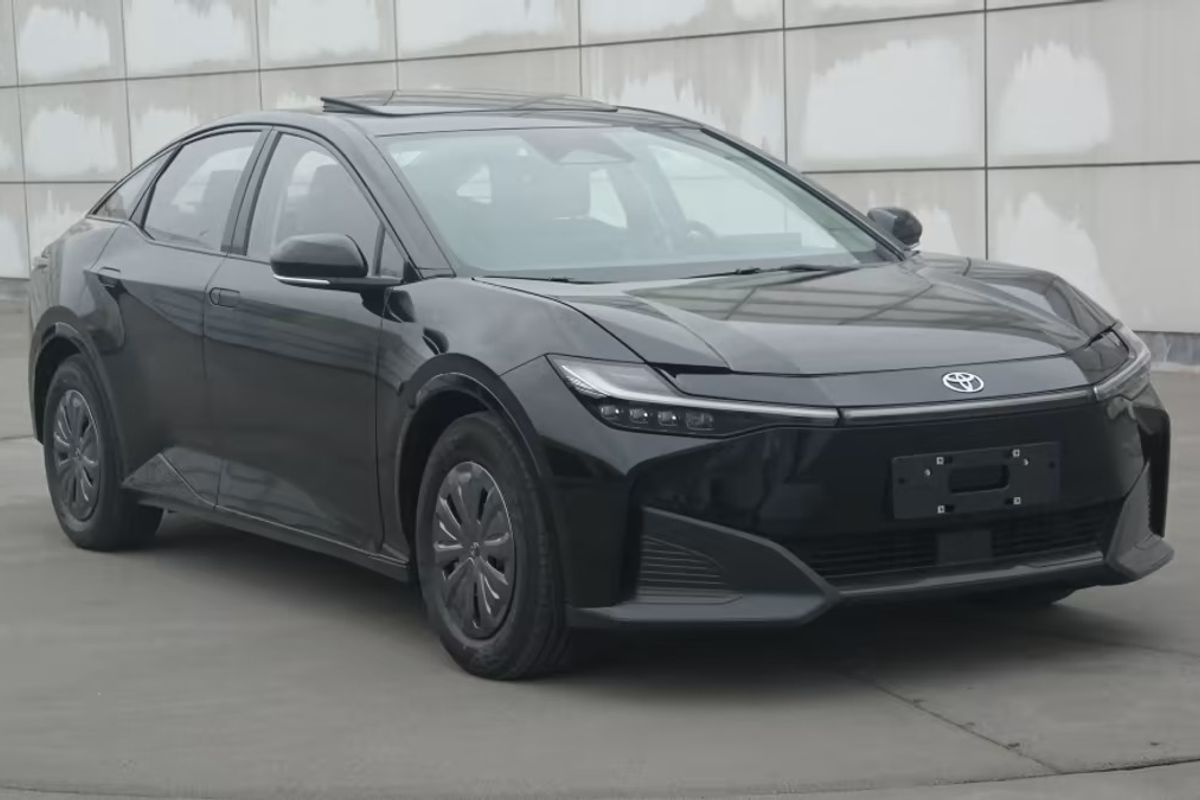
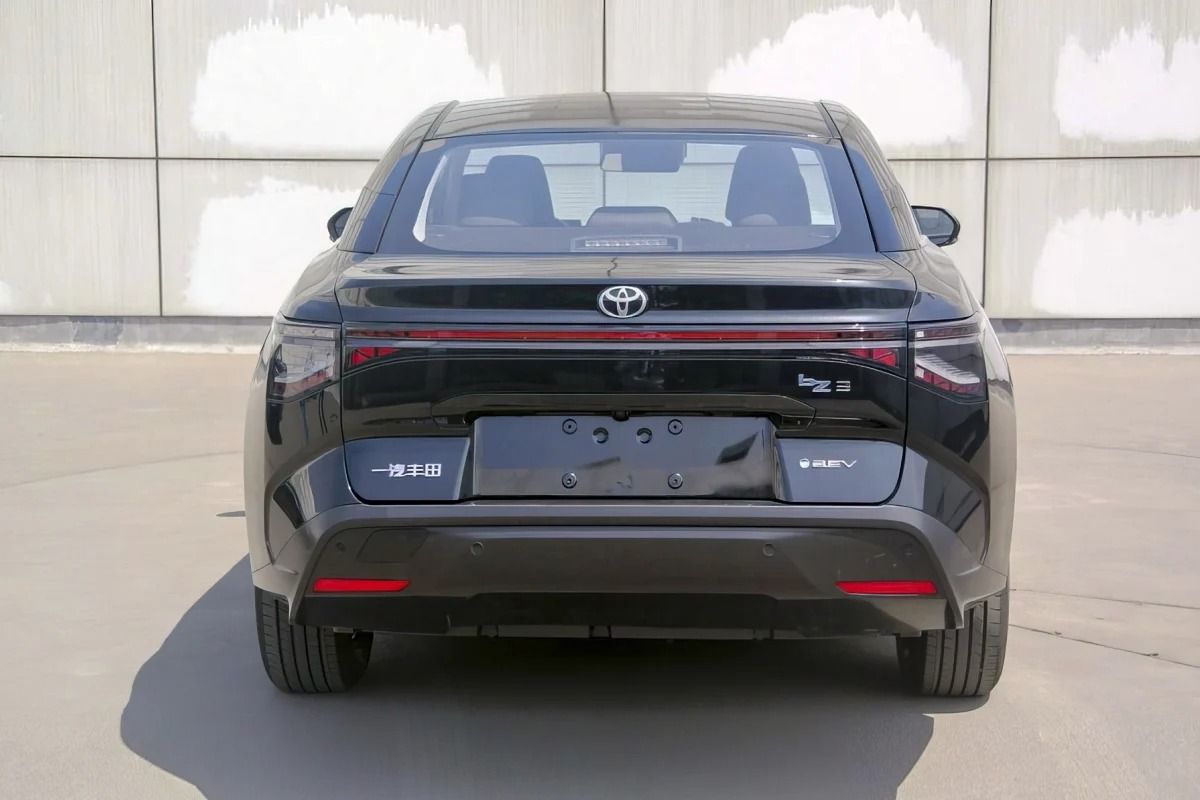
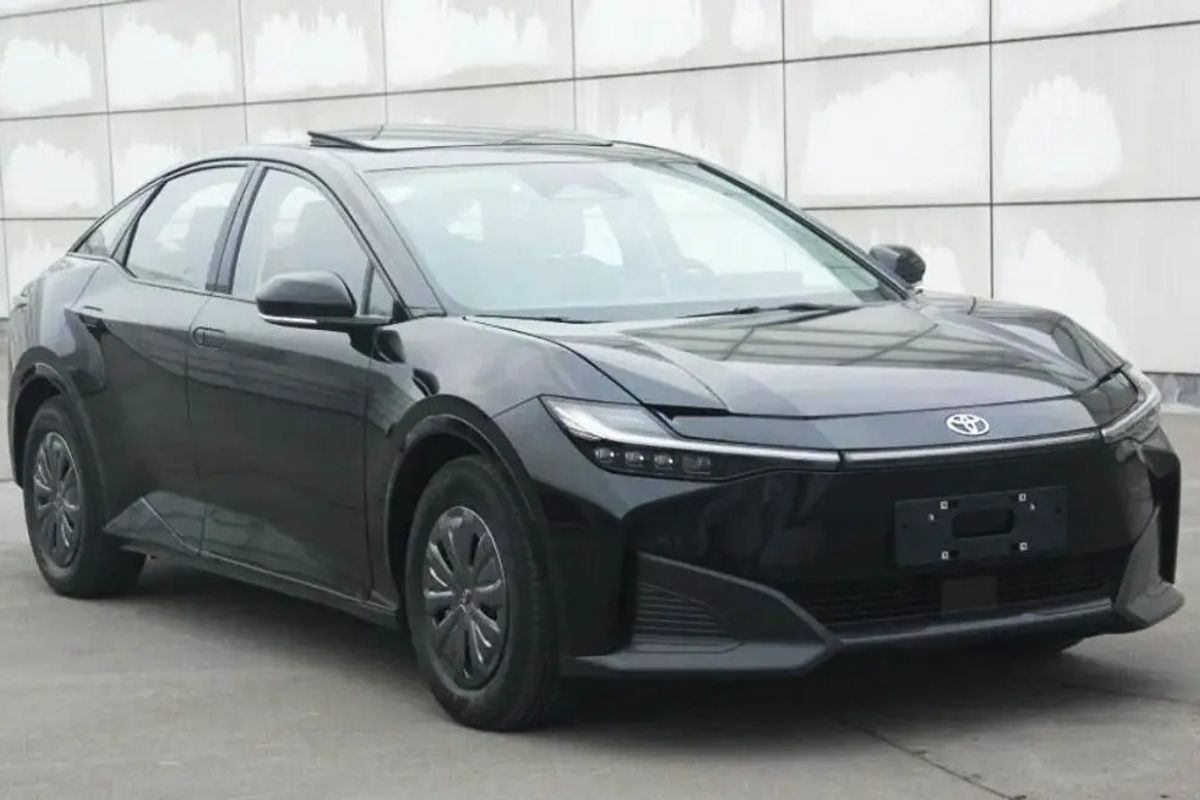
What you see here are the patent images of the Toyota bZ3 which leaked ahead of its reveal on CarNewsChina at the Guangzhou Auto Show which takes place in November 2022.
Hard on the heels of the Toyota bZ4x electric SUV comes the bZ3 sedan. However, unlike the SUV which is primed for the global market, the sedan looks to be sold in China only. Interestingly, the vehicle is built in conjunction with FAW and adopts tech from BYD.
Car News China says there’ll be two derivatives of the Toyota bZ3, with both models featuring rear-wheel drive and single electric motors. There will be two power outputs, 136 kW and 182 kW. There’s no range claim yet, but the BYD battery technology is said to provide ‘more than 600 km’, which if accurate, is impressive.
Under the skin is the e-TNGA platform which is shared with the bZ4x and the sedan version is 4725mm long, 1835mm wide, 1475mm tall and has a 2880mm wheelbase. In comparison to a conventional Corolla, its fractionally bigger.
Toyota South Africa has already confirmed the bZ4x electric SUV for our market, however the vehicle (and its Subaru Solterra cousin) has been plagued by issues that may delay introduction.
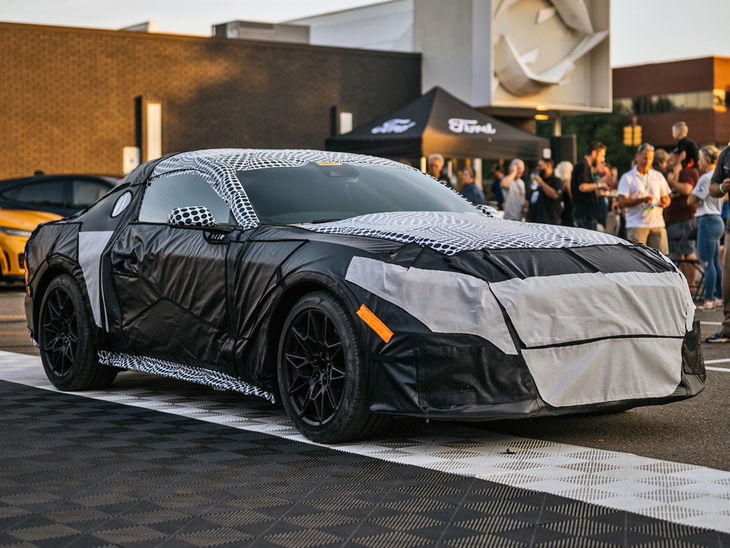
The reveal of the all-new, seventh-generation Ford Mustang is just around the corner. Here’s what we know so far, including the all-important fact the V8 engine will survive…
Ford Motor Company has confirmed it plans to reveal the new Mustang on 14 September 2022, with the seventh generation of the famed pony car – which traces its roots all the way back to 1964 – set to make its global debut at the Detroit Auto Show.
“Mustang is the world’s best-selling sports car because there’s one for everyone – from an EcoBoost convertible to 5.0-litre V8 GT fastback coupé,” said Jim Farley, president and chief executive officer, Ford Motor Company.
“Now it’s time to for a new stampede of owners, fans and employees to welcome the next chapter in Mustang’s legacy – the seventh-generation, which will be our best yet.”
Those are fighting words! So, what do we know so far? Despite the fact the unveiling is just around the corner, official information on the so-called S650 model is fairly thin on the ground. Still, there are a few things worth digging into. Let’s dive in…
The new Ford Mustang’s powertrain
Fans of displacement will be glad to hear the new Mustang will reportedly retain a version of the Blue Oval brand’s naturally aspirated 5.0-litre V8 petrol engine. In fact, the Dearborn-based firm has just released a 16-second teaser clip giving us a listen to the V8. No output details are available just yet.
In addition, we can expect an updated version of the EcoBoost-branded turbocharged 2.3-litre, 4-cylinder petrol engine to carry over. Farley has furthermore confirmed a 6-speed manual gearbox will again be offered (market dependent, of course), while the current 10-speed automatic will surely also continue to be available.
From what we understand, a hybrid powertrain might be added to the Mustang range (though likely only at a later date), increasing peak outputs and transforming the rear-wheel-drive pony car into an all-wheel-drive vehicle courtesy of a front-mounted electric motor. Considering the existence of the Mustang Mach-E, a fully electric version of the Mustang is not out of the question (though, again, is likely to follow further down the line).
What about the new Mustang’s styling?
At the start of 2022, we published spy shots of the upcoming Mustang, before Ford released a few images of its own. The photographs suggest the vehicle won’t be subjected to a radical redesign, though its front-end appears a little more angular. Expect a suitably muscular bonnet, a fresh bumper and redesigned headlights. The spy shots also suggest the new Mustang will gain larger air dams at the corners of the lower grille.
Round back, we can expect a new rear bumper design, with the prototype that was spotted testing featuring a familiar taillight design with a trio of vertical lines. We’ve yet to have any sort of look at the new Mustang’s cabin, though we wouldn’t think Ford would make too much of a design leap here, either. More retro-inspired cues, perhaps?
The Mustang’s (short) modern history in South Africa
Back in August 2014, Ford announced its engineers had finished construction of the very first right-hand-drive sixth-generation Mustang, confirming the production version would be exported to more than 25 right-hand-drive markets, including South Africa.
In December of the following year, the Mustang officially launched locally, with the range comprising six derivatives. There were fastback and convertible body styles, manual and automatic transmissions, and 4-cylinder and V8 engines. In July 2019, the refreshed Mustang arrived, with the line-up gaining Bullitt special edition. The Mach 1 followed in 2021, before the California Special arrived in 2022.
The outgoing Mustang range in South Africa – representing the only true passenger car from Ford still offered locally – currently comprises just three variants, all powered by the V8 engine: a fastback, a convertible and the aforementioned California Special.
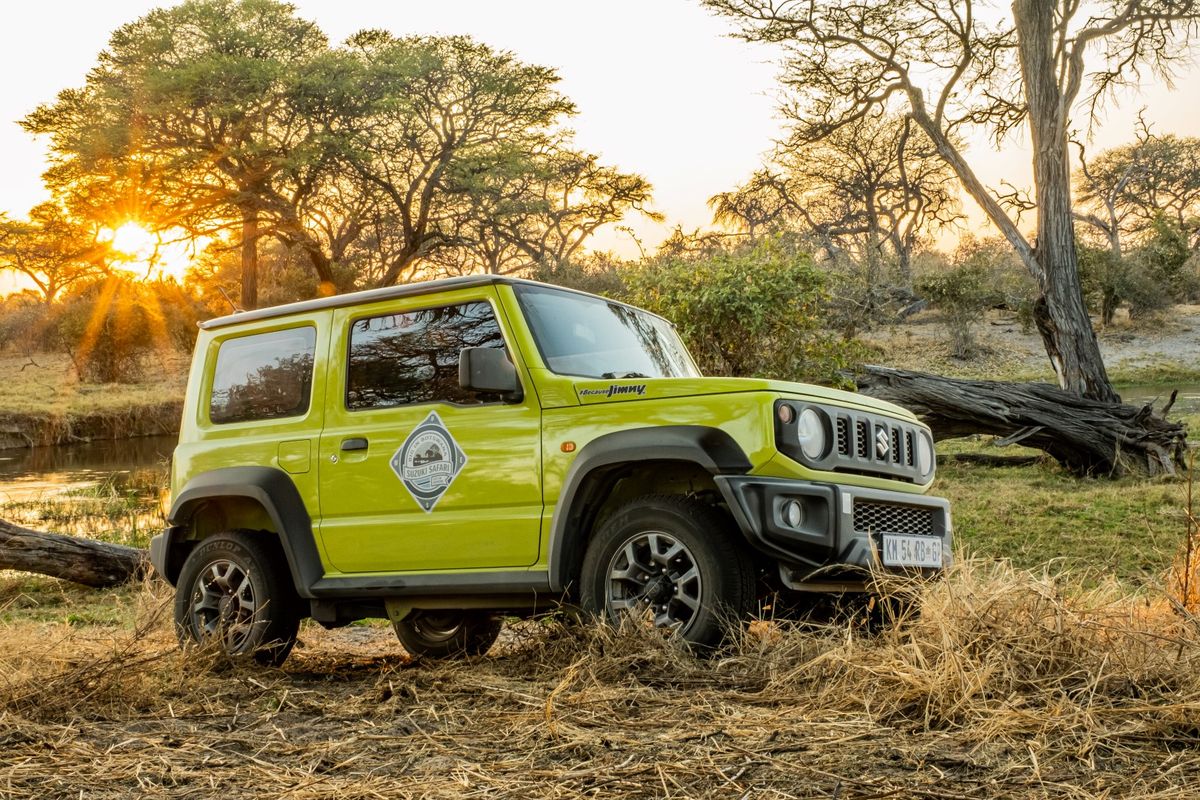
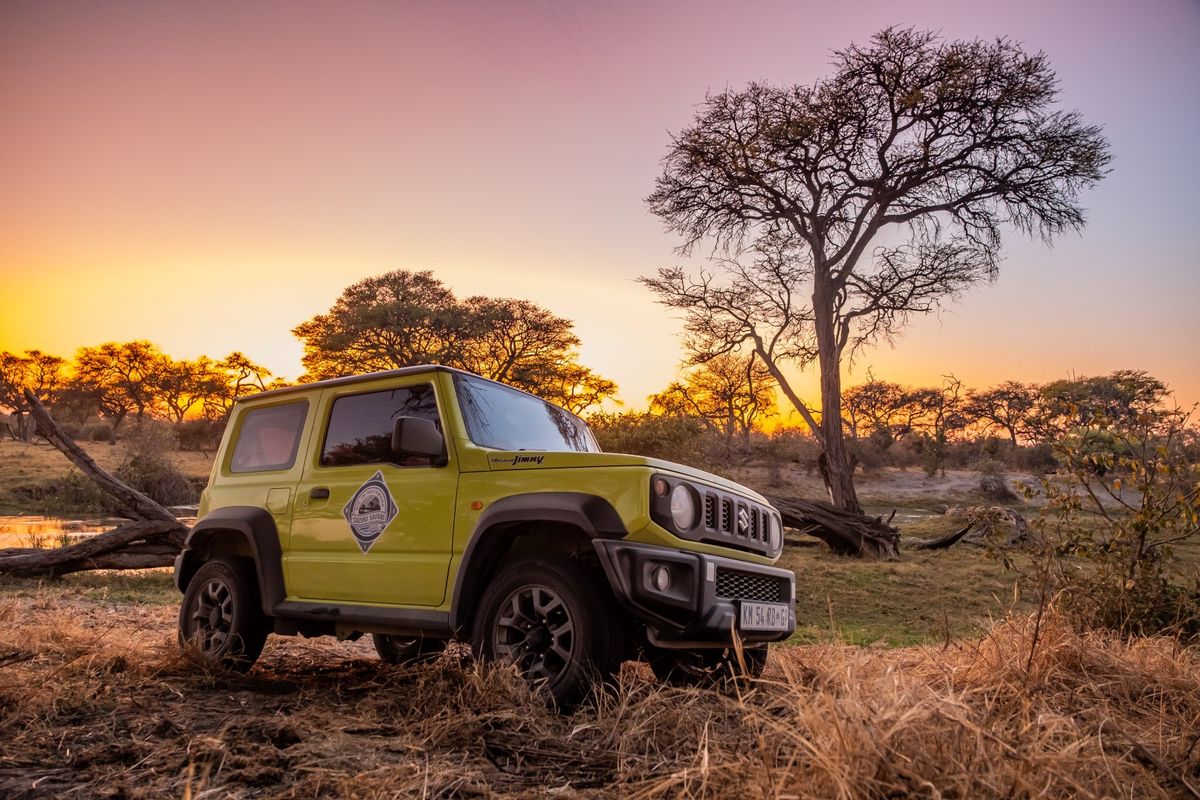
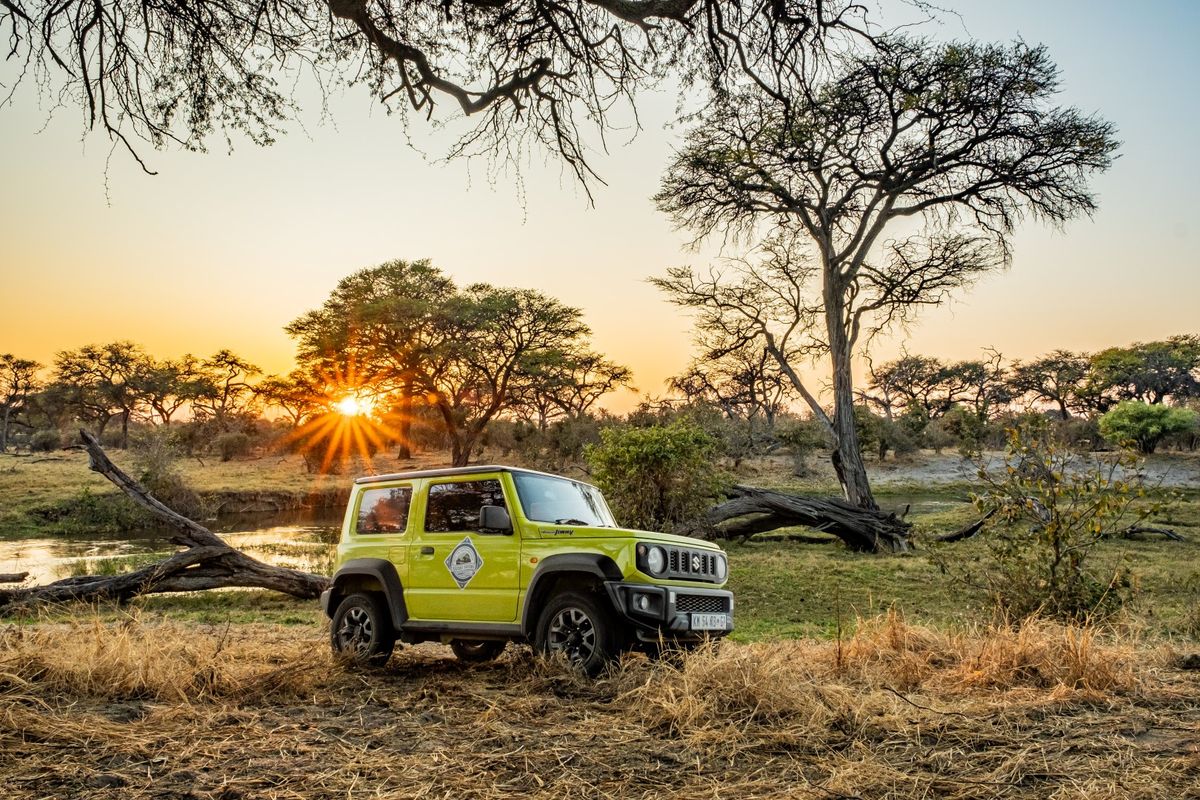
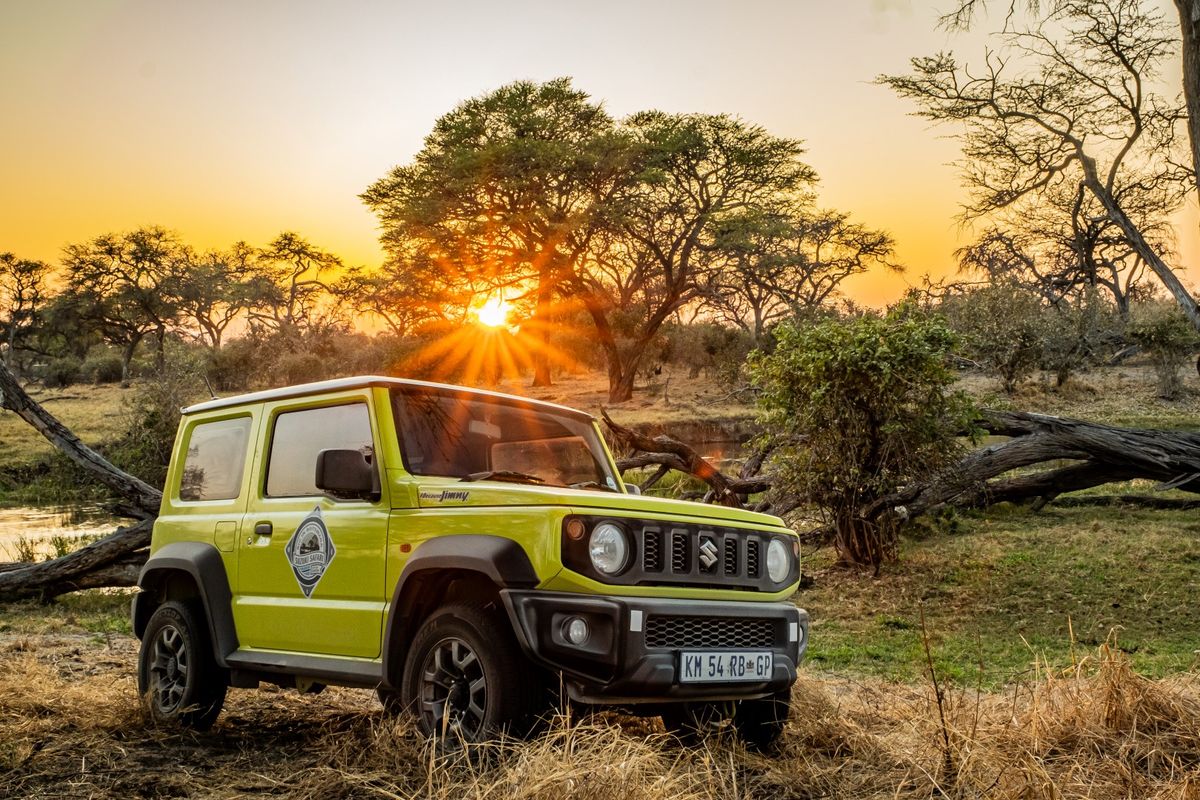
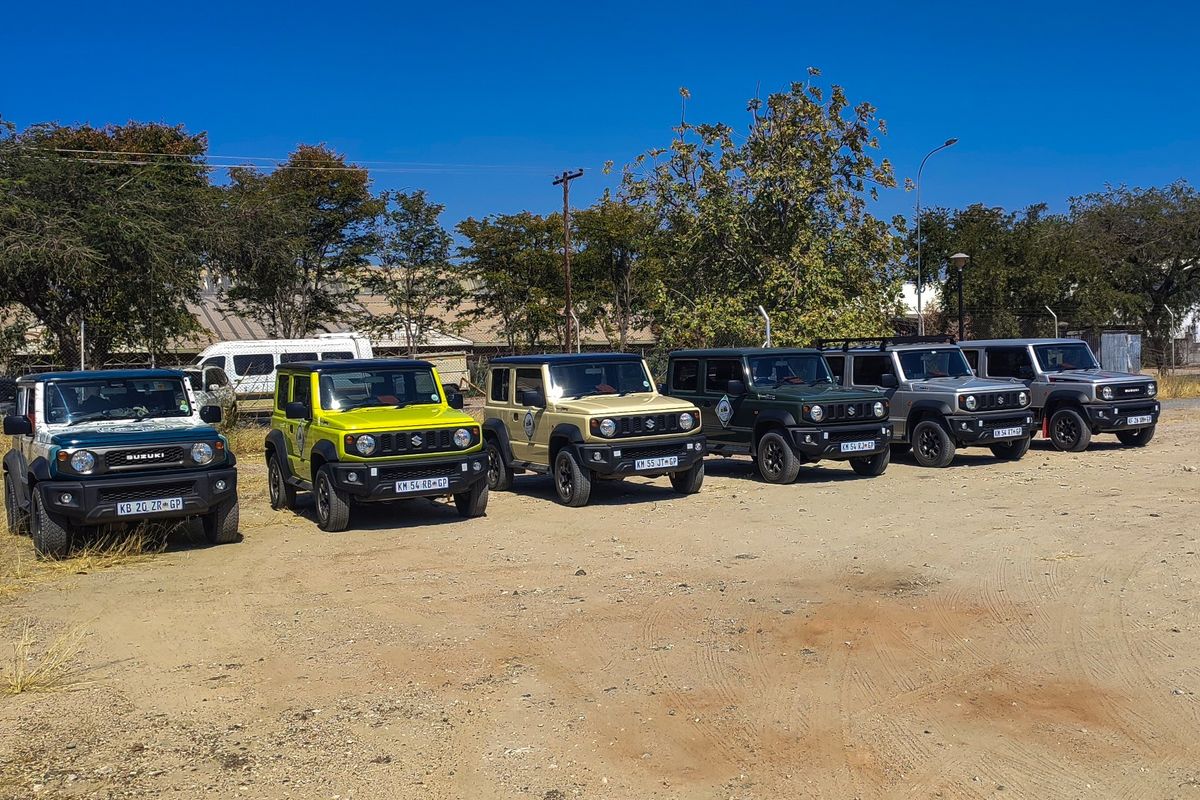
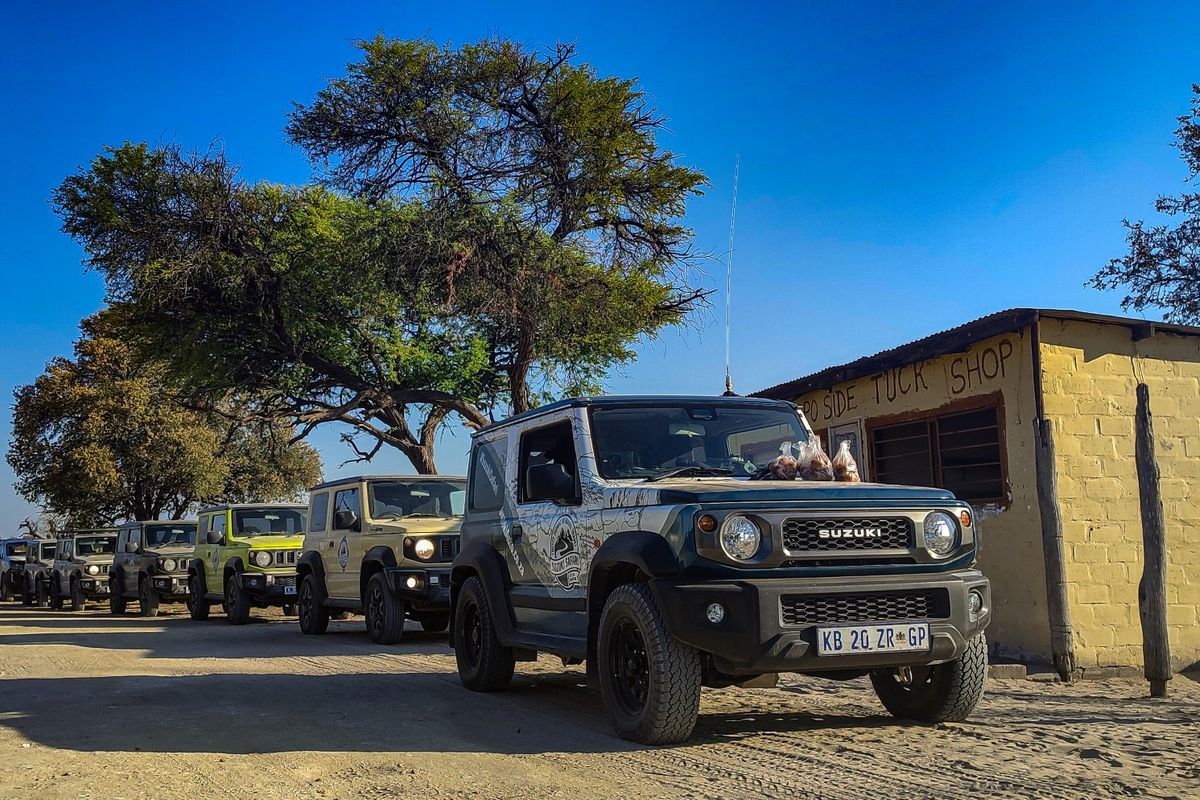
Cars.co.za journalist and photographer, Gero Lilleike, recently ventured into the wilds of Botswana in a Suzuki Jimny to find out if this cute, compact off-roader can handle the brutal and unforgiving terrain of this exceedingly beautiful African country. Step out of your comfort zone and join us for a trip on the wild side!
It was about 3 am, but my eyes were wide open. My heart was pounding hard in my chest. All my senses were on high alert. The thin canvas walls of my tent were all that separated me from the hungry, wild creatures lurking in the dim glow of the full moon overhead. I lay still, listening intently for even the faintest sound of movement. The loud and distinctive belch of a large hippo reverberated through the camp. That was close, very close — too close.
Further off in the bush, the eerie squeal of a hyena sent shivers down my spine and then, in an instant, the bush was silent once more. The gentle lapping of the nearby Khwai river calmed my nerves and slowly lulled me back into a deep sleep.
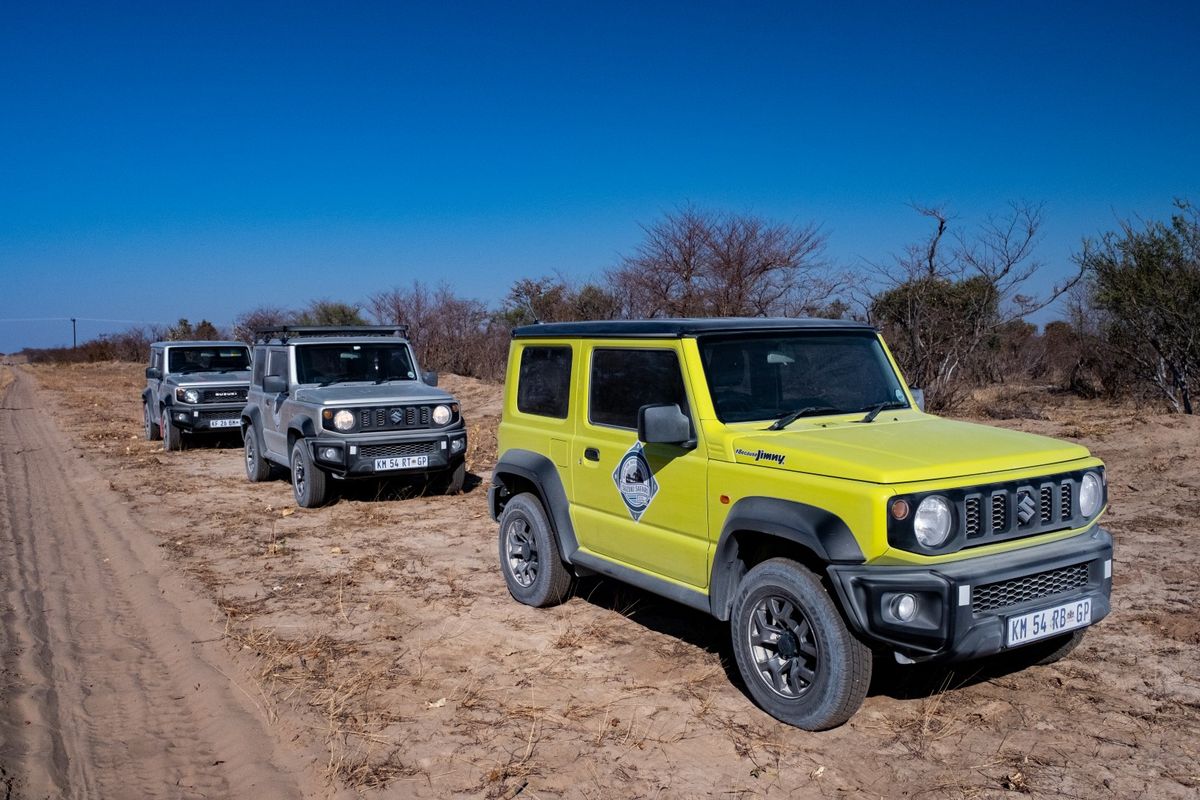
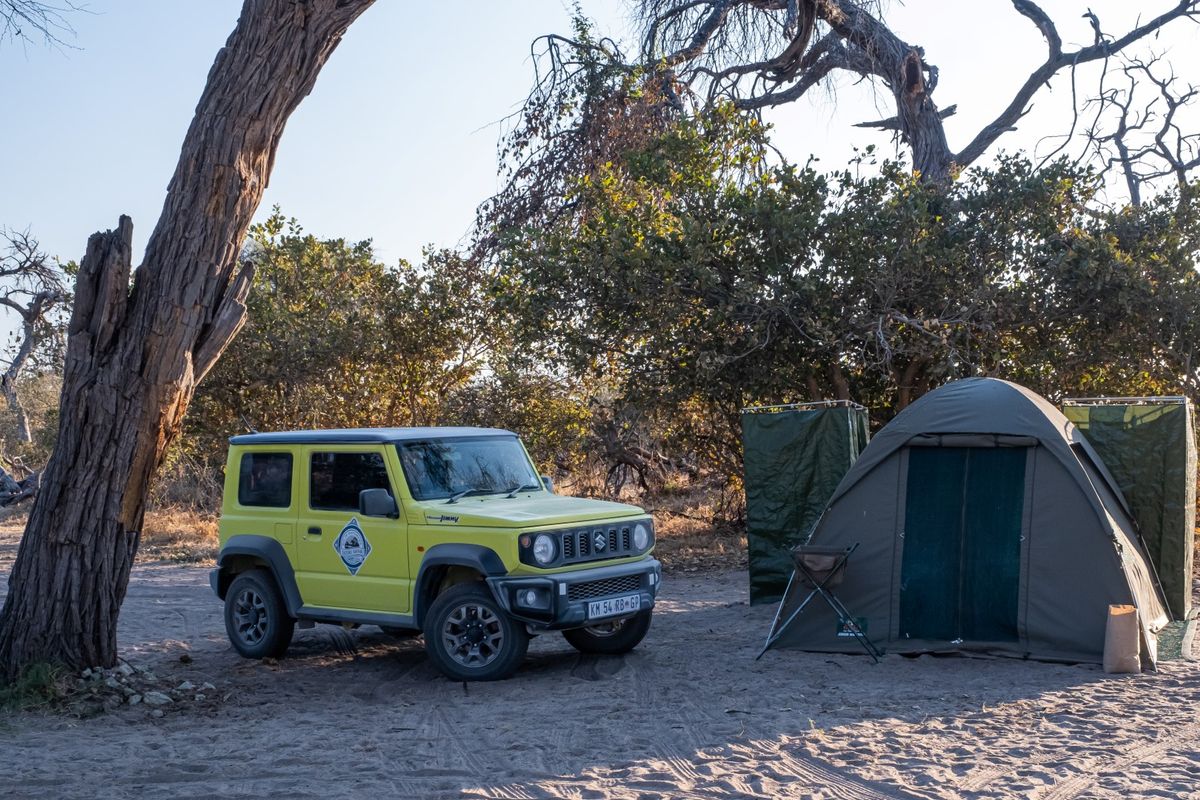
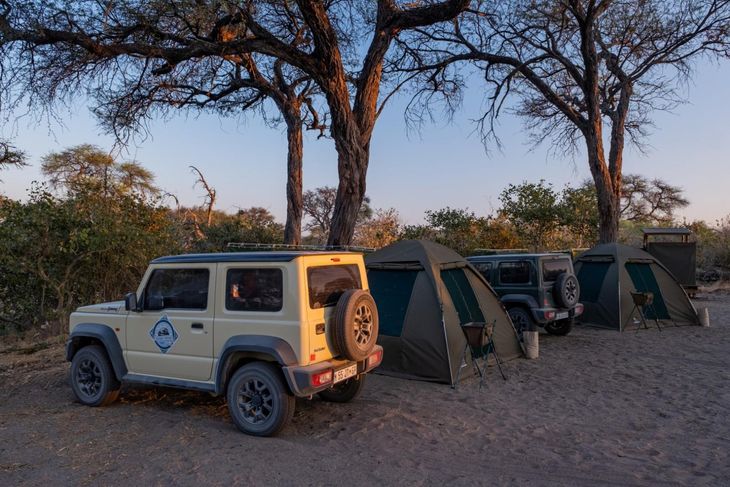
Day broke with a fiery red sky and the full, magnificent beauty of Botswana laid bare. The vibrant glow of the rising sun woke me from my slumber. I popped my head out of my tent and instinctively checked that there were no animals hiding under the Kinetic Yellow Suzuki Jimny parked nearby.
The campfire crackled hot and fresh coffee was on the brew. I gazed over this splendid scene and I was in awe. Was this a dream? How did I get here?
Into the Wilds of Botswana with the Suzuki Jimny
Can a stock-standard Suzuki Jimny tame the wilds of Botswana? You betcha!
The day before, we landed in Maun, in northern Botswana. Maun serves as a key supply town for local safari operators and Overlanding enthusiasts that visit places such as Moremi, Mababe, Savuti and Chobe.
Many Overlanding and wildlife enthusiasts consider Botswana the ultimate safari destination in Africa. Its vast wilderness is not only rich in wildlife but the harsh, unforgiving terrain poses a significant challenge to even the most capable 4×4 vehicles.
In a post-Covid-19 world, the Overlanding industry has grown significantly; enthusiasts now spend crazy sums of money to equip their 4x4s to the tee with the latest aftermarket equipment, but is it really necessary to equip your 4×4 with all that fancy equipment if you want to tackle the wilds of Botswana? Well, we were about to find out…
My trusty Jimny (in mid-spec 1.5 GL AllGrip guise) was named the “Catepillar”. It’s powered by a 75 kW/130 Nm naturally-aspirated 1.5-litre 4-cylinder petrol engine, paired with a 5-speed manual gearbox. Some of the other media participants had the luxury of an automatic transmission, but I was more than happy to “drive stick”.
Wild camping and free-roaming animals awaited us in Mababe. Here, you sleep with one eye open…
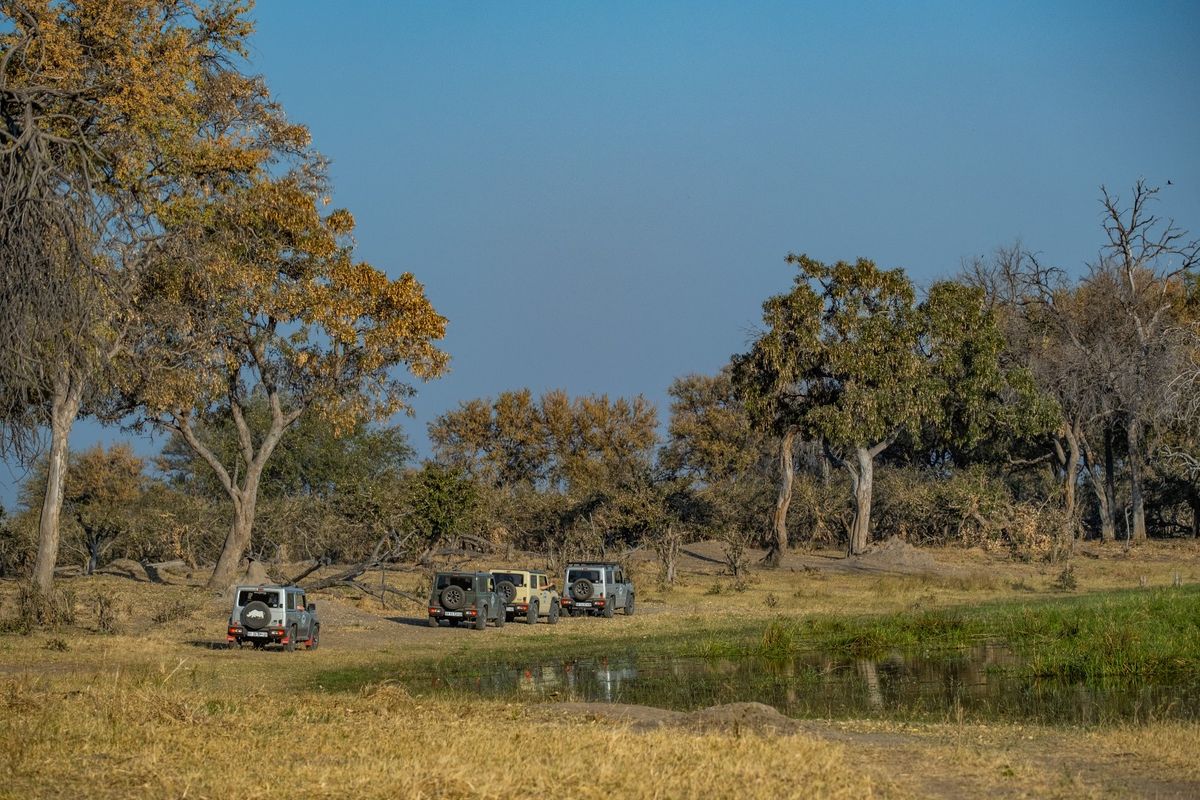
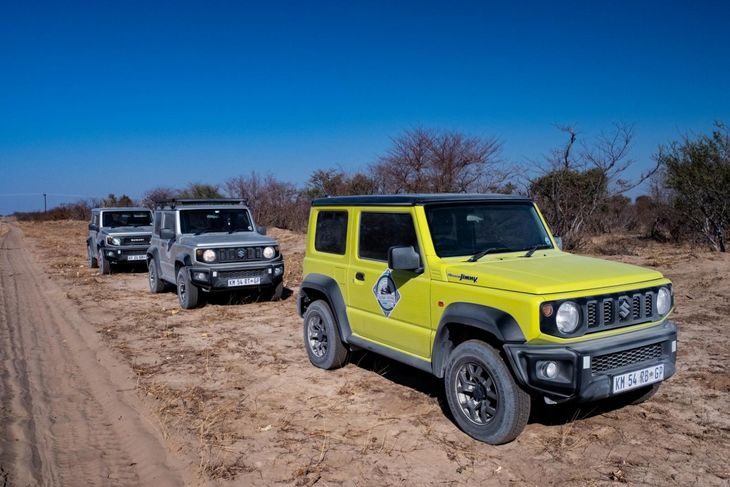
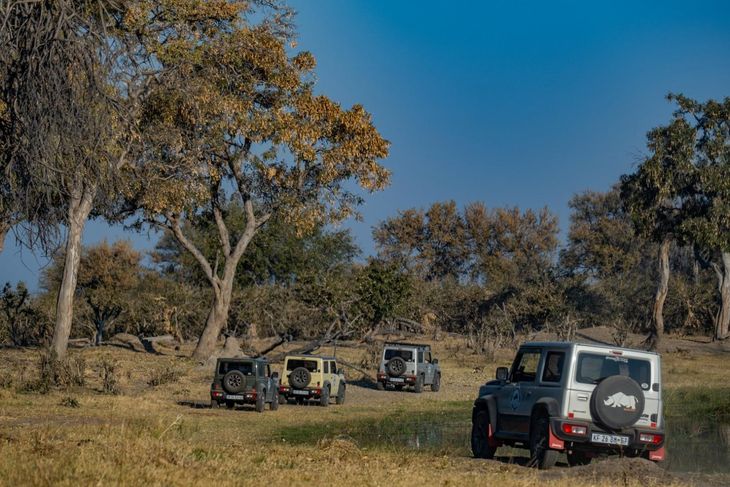
The route for this wild adventure would take us to a bush camp on the banks of the Khwai River some 120 km northeast of Maun. From there, the convoy of intrepid Jimnys would attempt a gruelling 166 km drive through some of the harshest sand corridors in Botswana in Chobe National Park, with the journey ending at the Linyanti Floodplains near Kasane, a town which straddles the borders of Namibia, Zambia and Zimbabwe.
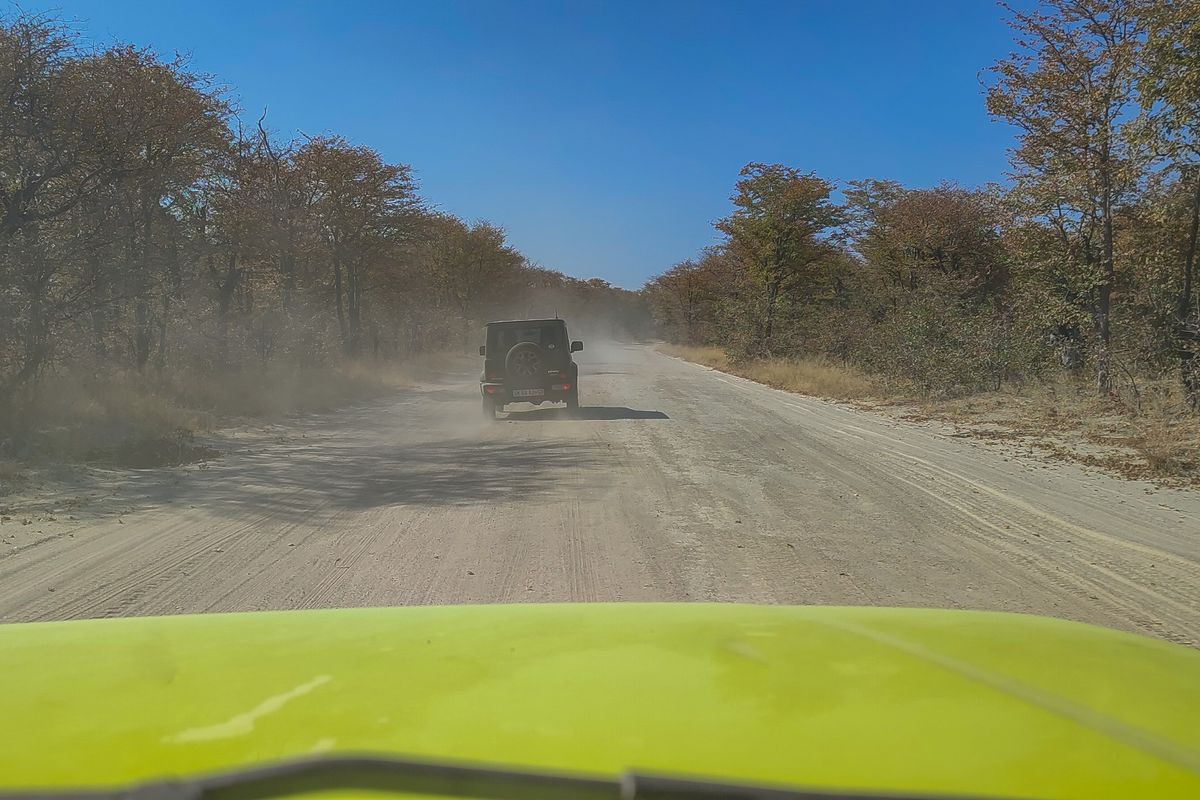
With tyre pressures dropped to about 1 bar, the Jimnys were primed for sand- and dirt-road driving in temperatures nudging above 30°C. Under the experienced command of JJ from African Expeditions, the convoy set off from Maun into the wilderness of Botswana.
The dirt road from Mababe to Maun is in a bad state with neverending ruts, channels, dips and holes to keep even the most experienced off-road drivers on their toes. In such conditions, progress is slow and the 120 km trip took us about 3.5 hours to complete! The 33°C heat and a dry, scorched landscape made for an apocalyptic scene, but despite this, the Jimnys forged ahead without hesitation.
We arrived at what is called Camp Tshaa 2, on the outskirts of Mababe Village. With just enough time to unpack before sunset, we were about to be treated to a magical wildlife experience on the Khwai River, replete with a raging fire to keep us warm in the cold night air.
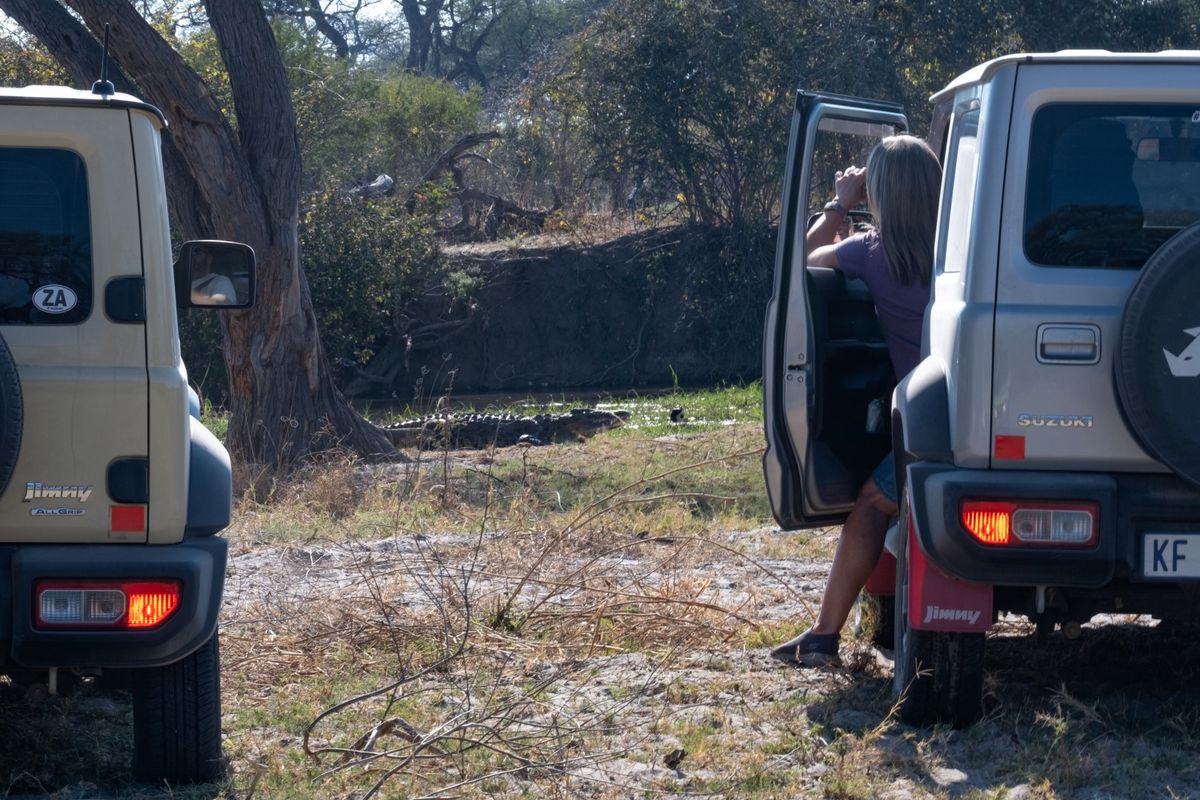
There are no fences here – wildlife can roam freely, making this a truly wild camping experience. Anything can happen and it’s wise to always be alert! The Khwai is home to hippos and crocodiles and the former are particularly active at night, when they graze on grass on the riverbanks.
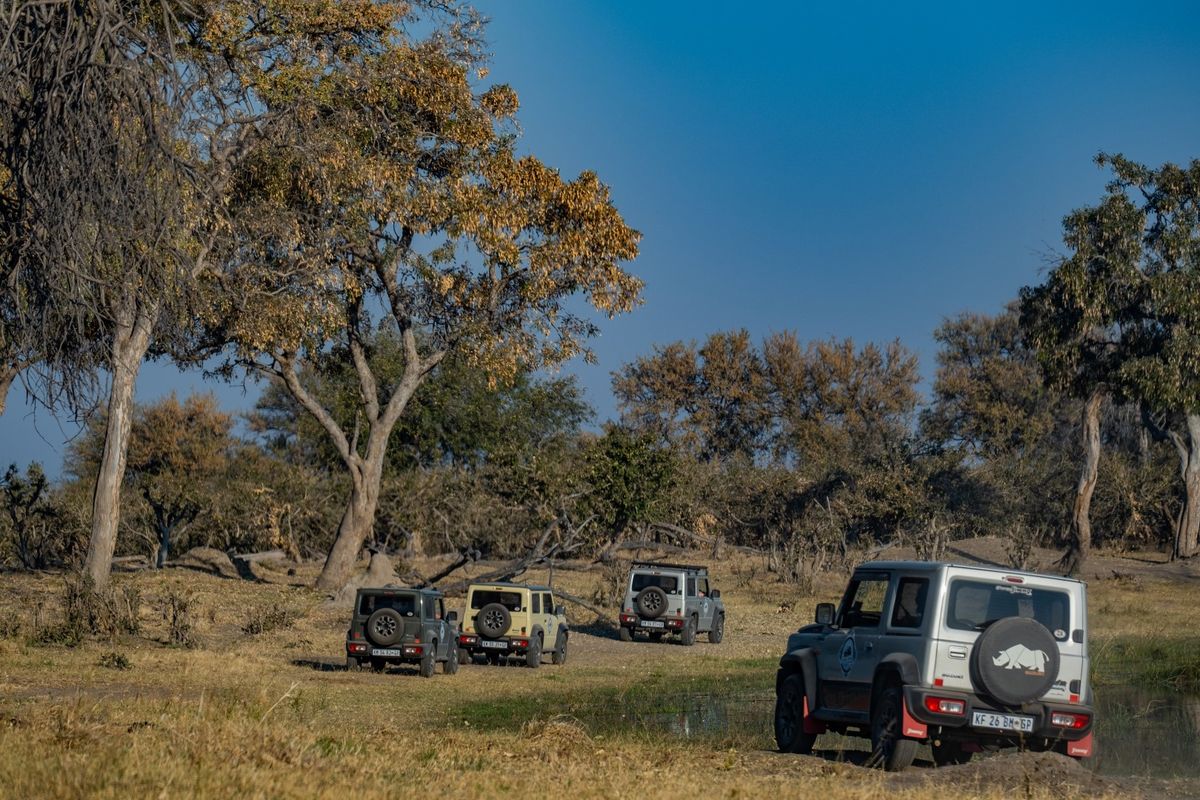
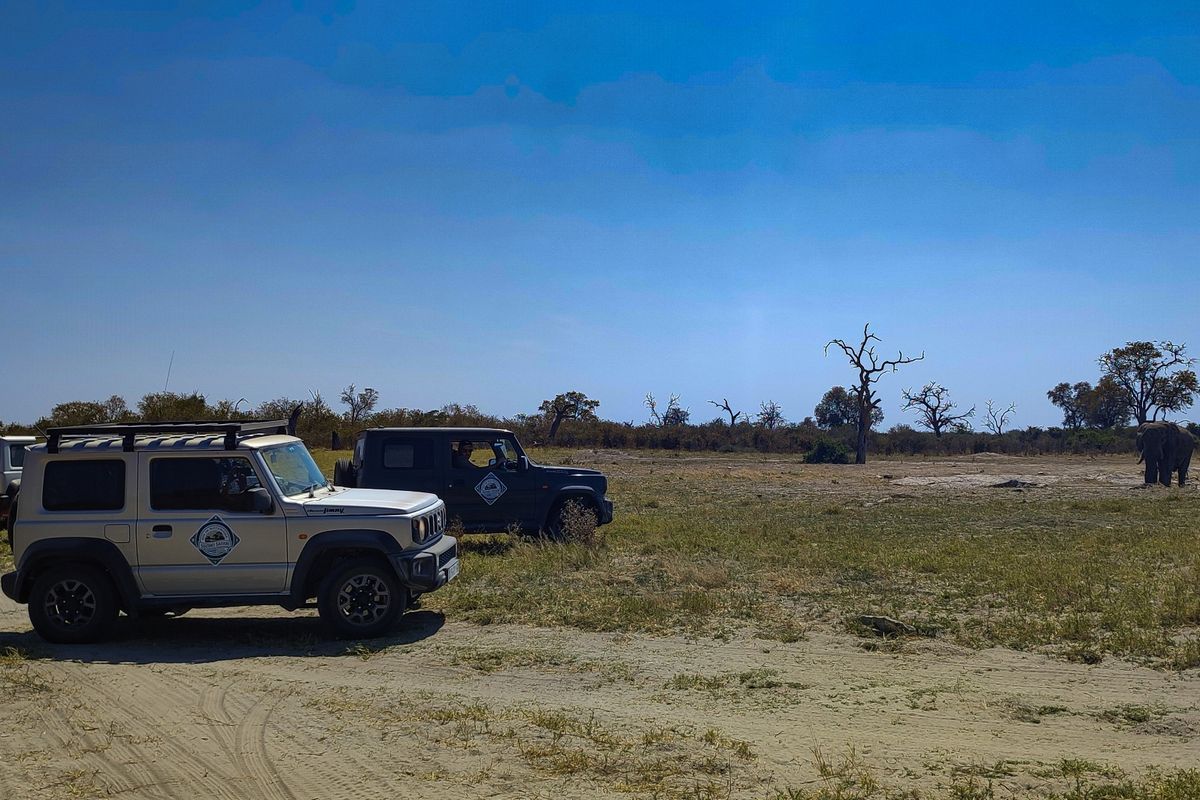
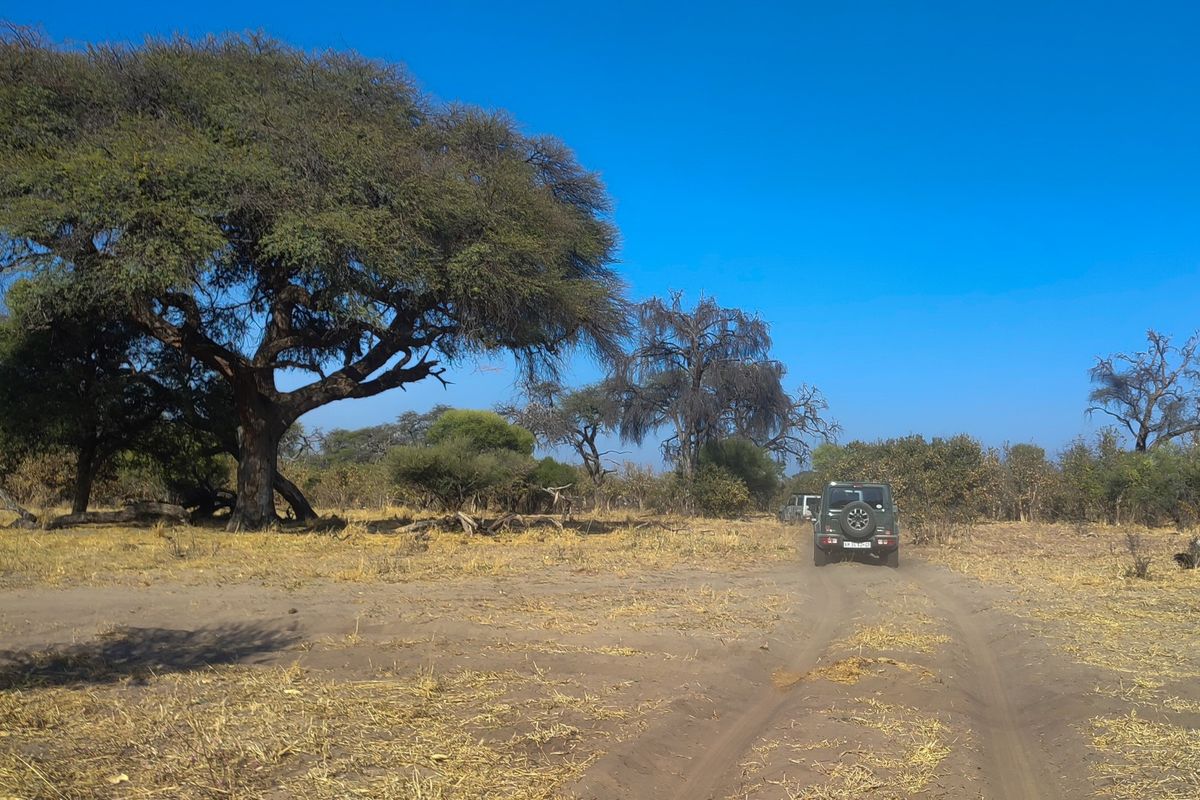
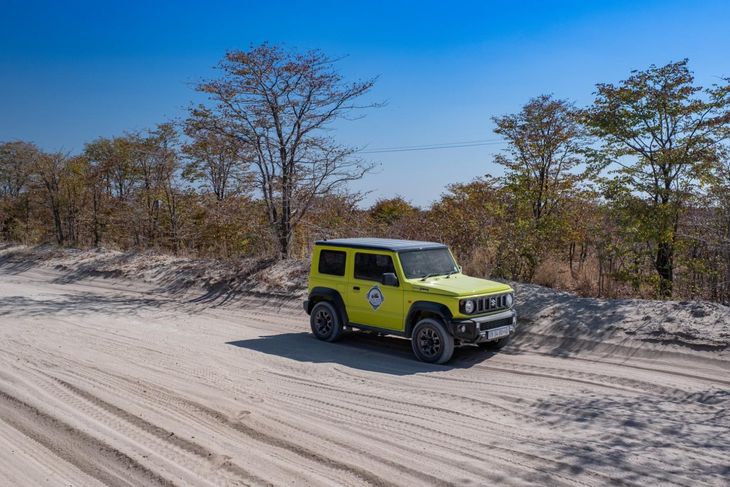
The Jimny tackled various terrain in Botswana with ease.
The next morning, after enjoying coffee and a hearty breakfast beside the campfire, we set off in the Jimnys in search of wildlife. We saw a large variety of birds and mammals along the route, which skirted the Khwai River. Large crocodiles basked in the sun. Hippos bathed in the deep pools and a variety of antelope enjoyed a cool drink from the river as the sun irradiated the earth.
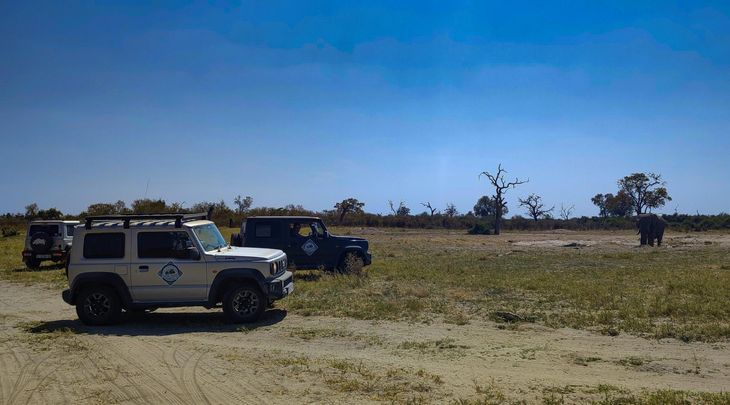
We also spotted a few lone male elephants that were foraging deep in the bush, but the large herds alluded us. We ended the day with a lovely, refreshing sundowner next to the river. On our way back to camp, we saw a pair of beautiful lionesses lying on the road (before they would head off to hunt in the fading light), just a mere kilometre from our open camp. What a magical place!
When the going gets tough, the Suzuki Jimny will prevail
Botswana’s vast sand corridors pose a significant challenge for any 4×4 and not every 4×4 makes it out alive.
The most significant off-road challenge that the half a dozen Jimnys would face presented itself on Day 2. Hot weather and acres of soft sand lay ahead of us as we embarked on the gruelling 9-hour (166 km) drive from Mababe to the Linyanti Floodplains via Chobe National Park.
While most of this drive was done in 4H, we had to engage low range (4L) after we entered the park at Mababe Gate. With its tyres adequately deflated, the Jimny had absolutely no difficulty in traversing the thick, soft sand. In fact, the diminutive 4×4 glided over the sand with aplomb… it just kept on doing it for hours on end with no fuss at all!
The Jimny’s performance in those difficult conditions suggested that nothing could stand in its way, but in the wild, there’s bound to be some drama, even if just a little. About 40 km from Savuti main camp, JJ’s Jimny, which was the lead vehicle, suffered a puncture and the whole convoy crept to a halt.
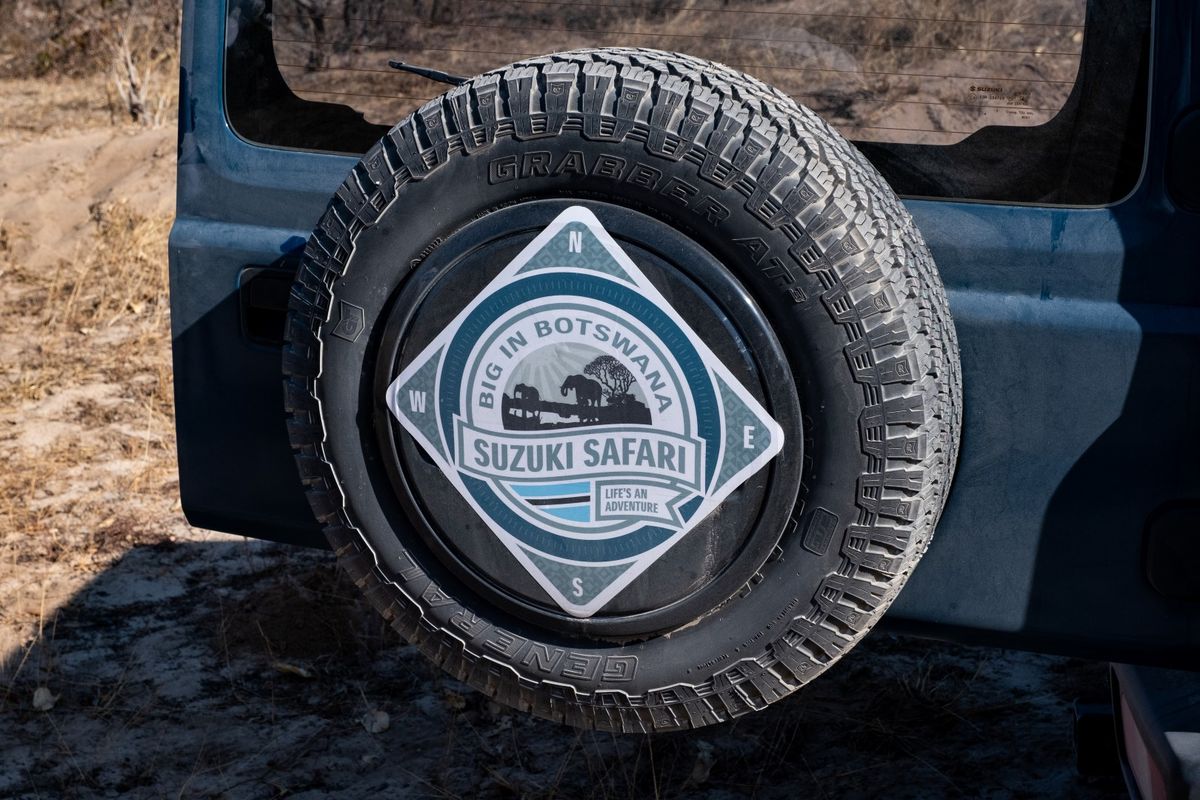
The men got to work with changing the wheel (thankfully the Jimny’s spare wheel is conveniently located on its tailgate), while the ladies scanned the surrounding bush for animals that might pose a threat. The wheel was changed in under 20 minutes and we were soon back on the road!
Botswana offers some of the best game-viewing in Africa!
The remaining leg of the trip was mostly uneventful, apart from a large giraffe that suddenly galloped out of the bush and onto the road ahead of the convoy, as the Jimnys approached the park exit at Ghoha Gate. The convoy pressed on to the small town of Kachikau where the dirt road finally gave way to tar and led us to our overnight accommodation at Mwandi View. A cold beer and a magnificent sunset over the Linyanti Floodplains awaited our tired bones.
This epic 3-day Suzuki Safari came to an end all too soon, but there was one final treat that would cap off this adventure in spectacular fashion.
A quick border crossing into Zambia afforded us a quick look at the magnificent Victoria Falls.
Our return flight would depart from Livingstone in Zambia the following day and we had to leave the Jimnys in Kasane, the last town near the border confluence of Botswana, Zambia and Zimbabwe. We left Mwandi View early in the morning and arrived in Livingstone a few hours later, which gave us just enough time to see the magnificent Victoria Falls, known as Mosi-oa-Tunya (The Smoke That Thunders). Africa is just amazing!
This “Jimny Journey” undoubtedly reinforced the go-anywhere ability of the Suzuki Jimny (in standard, non-accessorised guise) and this experience will hopefully inspire South African owners of the Japanese brand’s diminutive off-roader to not only explore the vast beauty that South Africa has to offer, but venture further and conquer the wilds of Africa in one of the most capable 4×4 vehicles currently on the market. If you have the will, the Jimny will get you there!
New Land Rover Defender 130 (2022) Price for SA Confirmed
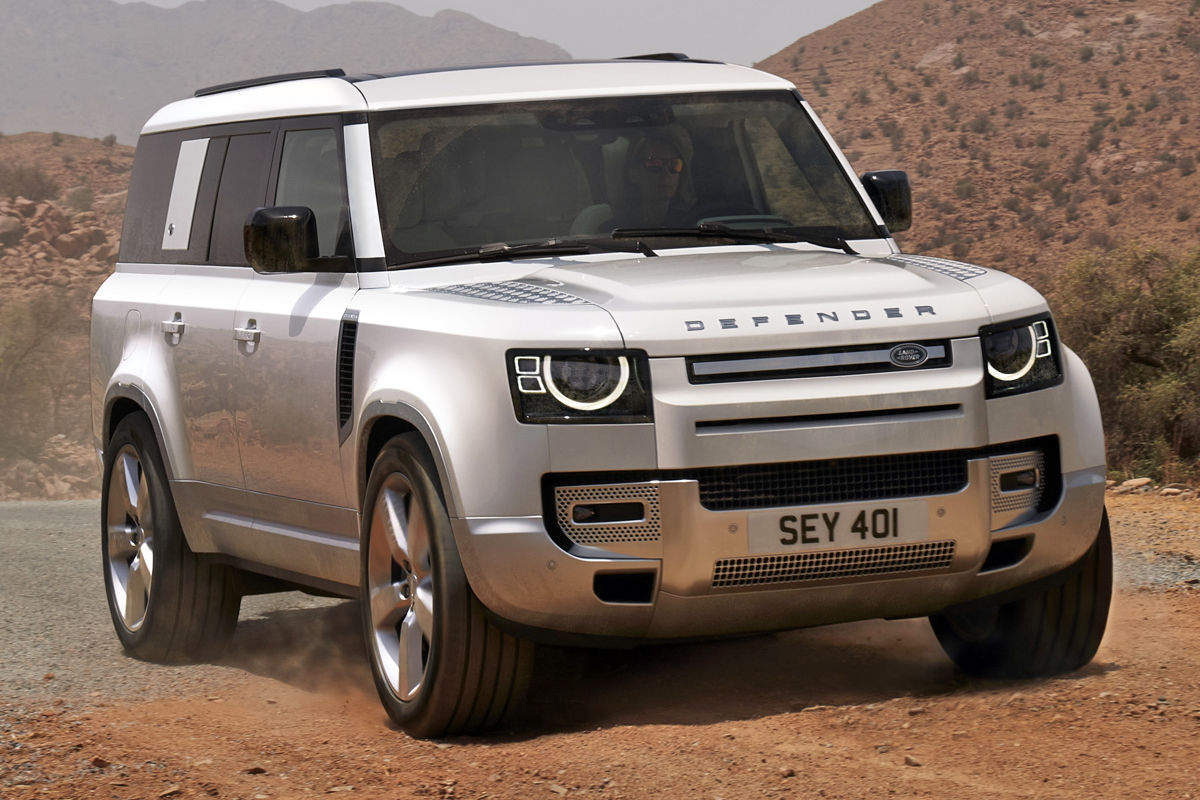
Love the reinvented Land Rover Defender but need 8 seats? Well, you’re in luck. The larger Defender 130 is headed to South Africa and pricing for the newcomer has been confirmed!
Land Rover has finally fully revealed its new Defender 130, a 3-row version of the reinvented off-roader boasting up to 8 “full-size” seats. The newcomer is scheduled to arrive in South Africa towards the end of 2022, with local pricing set to be announced closer to launch.
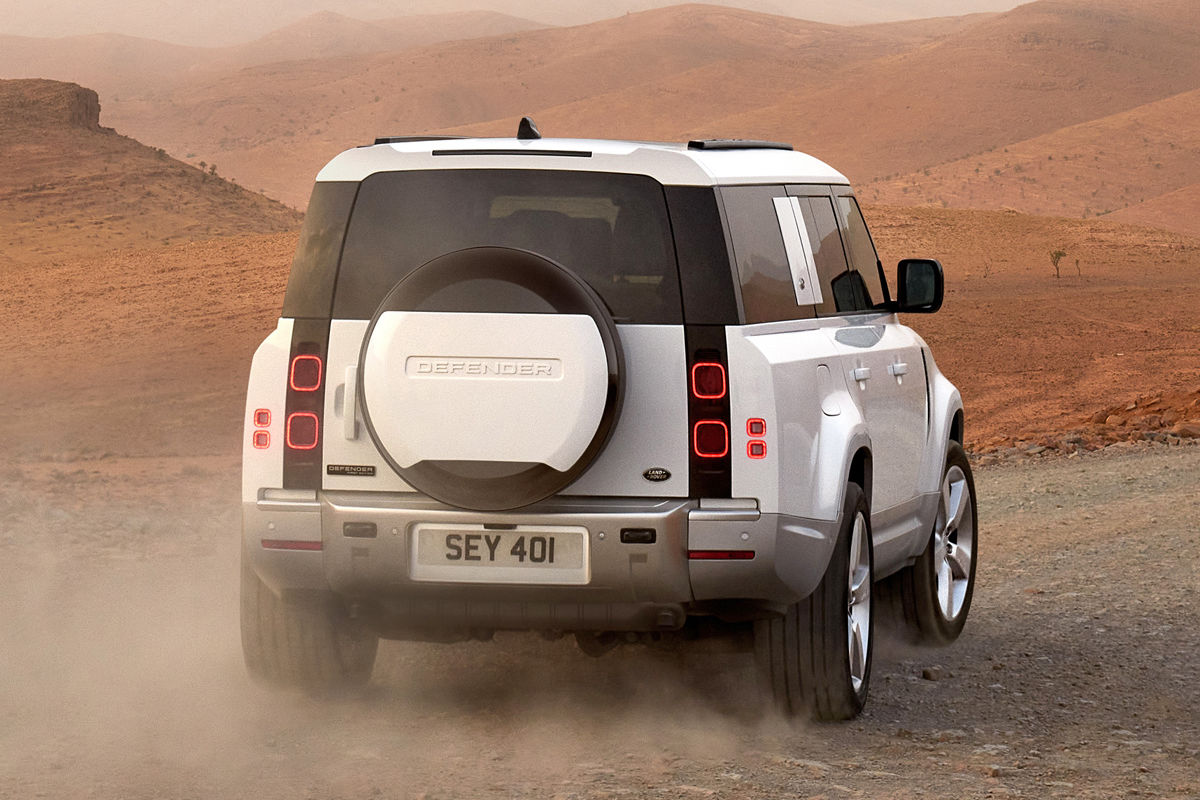
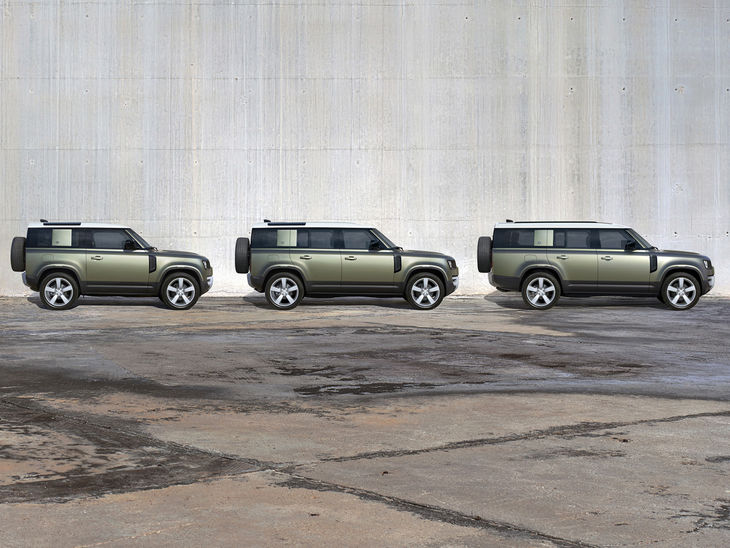
Slotting in above the Defender 90 and Defender 110, the new 130 is easily the longest model in the line-up, measuring a whopping 5 358 mm from nose to tail. Interestingly, the extra 340 mm of length comes in the form of an extended rear overhang, with the 3 022 mm wheelbase matching that of the 110.
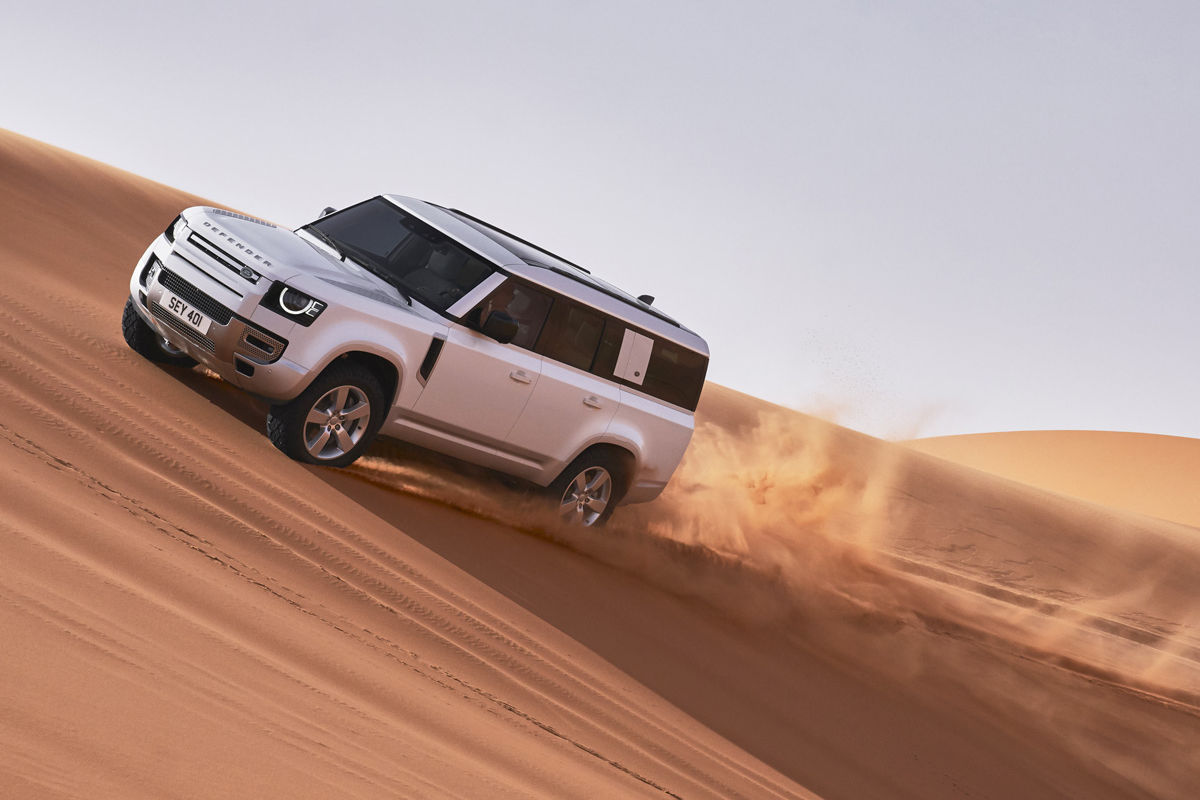
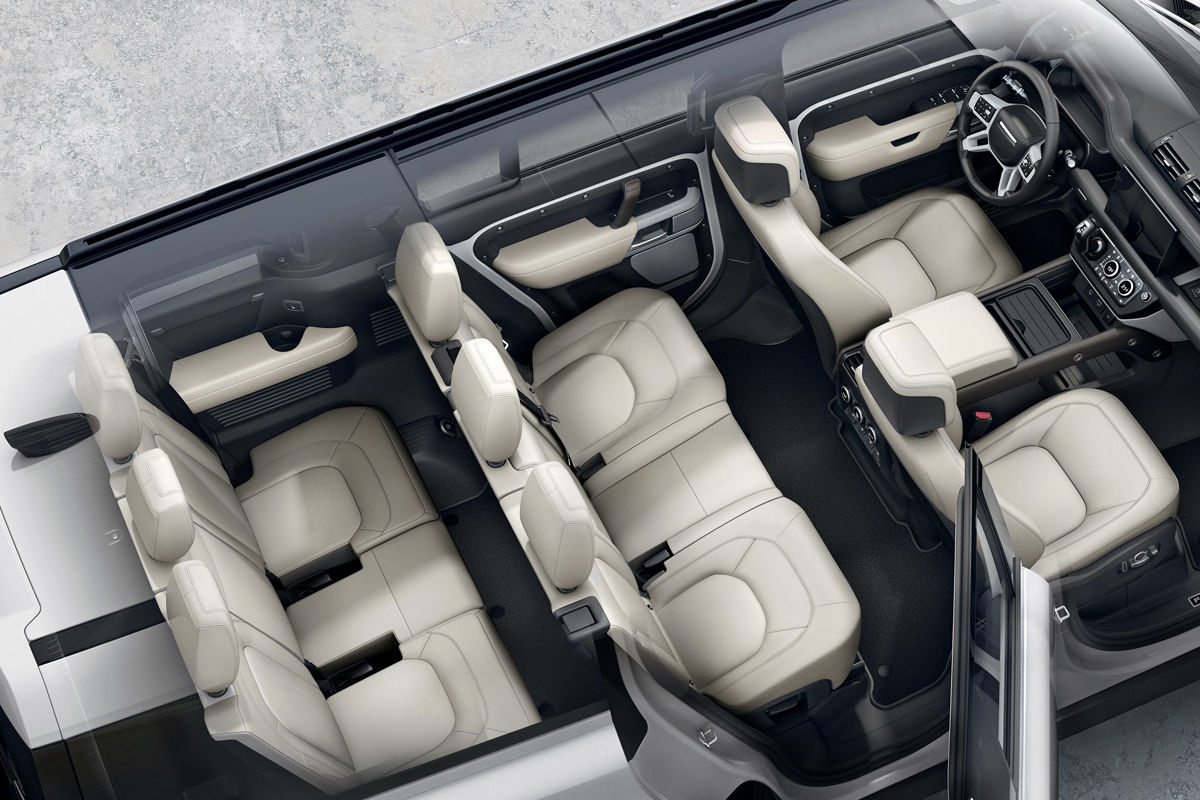
The Whitley-based firm says a subtle “boat tail-style uplift” at the rear maximises the Defender 130’s all-terrain ability, providing a departure angle of 28.5 degrees, while not impeding on interior space. In fact, the company claims the third row provides “comfortable seating for three adults”.
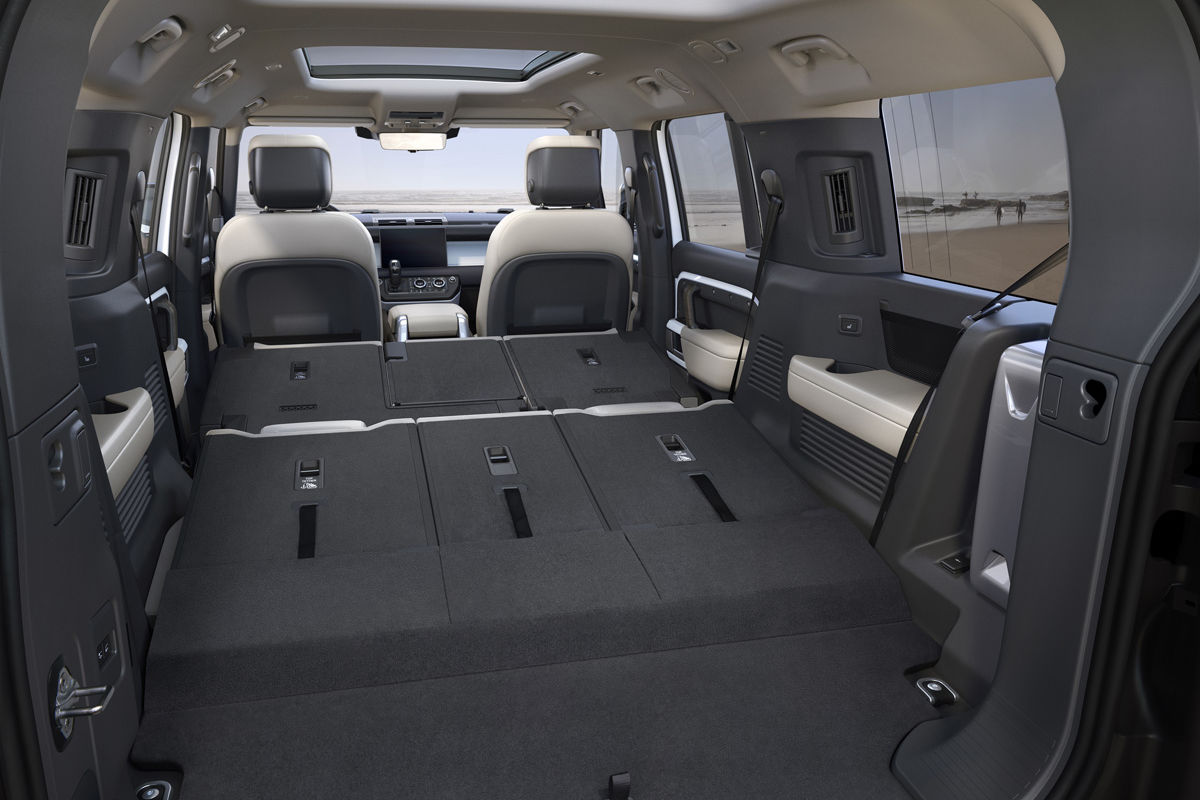
The second row of seats slides and folds forwards to provide access to the rearmost perches. With all pews in place, Land Rover claims a luggage capacity of 389 litres, which expands to 2 291 litres with the second and third rows folded down. The Defender 130 will actually be available in both 5- and 8-seater guise, with the former boasting an even higher utility capacity of 2 516 litres.
Equipment available for the third row includes heated seats, padded armrests, useful storage solutions and USB-C provision to charge devices. A panoramic glass sunroof ships standard, complemented by a second sunroof above the final row. A new four-zone climate control system is optional.
What else makes a Land Rover Defender 130?
The Defender 130 boasts a few exclusive paint colours, along with the option of an Extended Bright Pack, which adds exterior design elements in a Ceres Silver Satin finish around all lower body cladding, as well as front and rear skid plates in Noble Chrome.
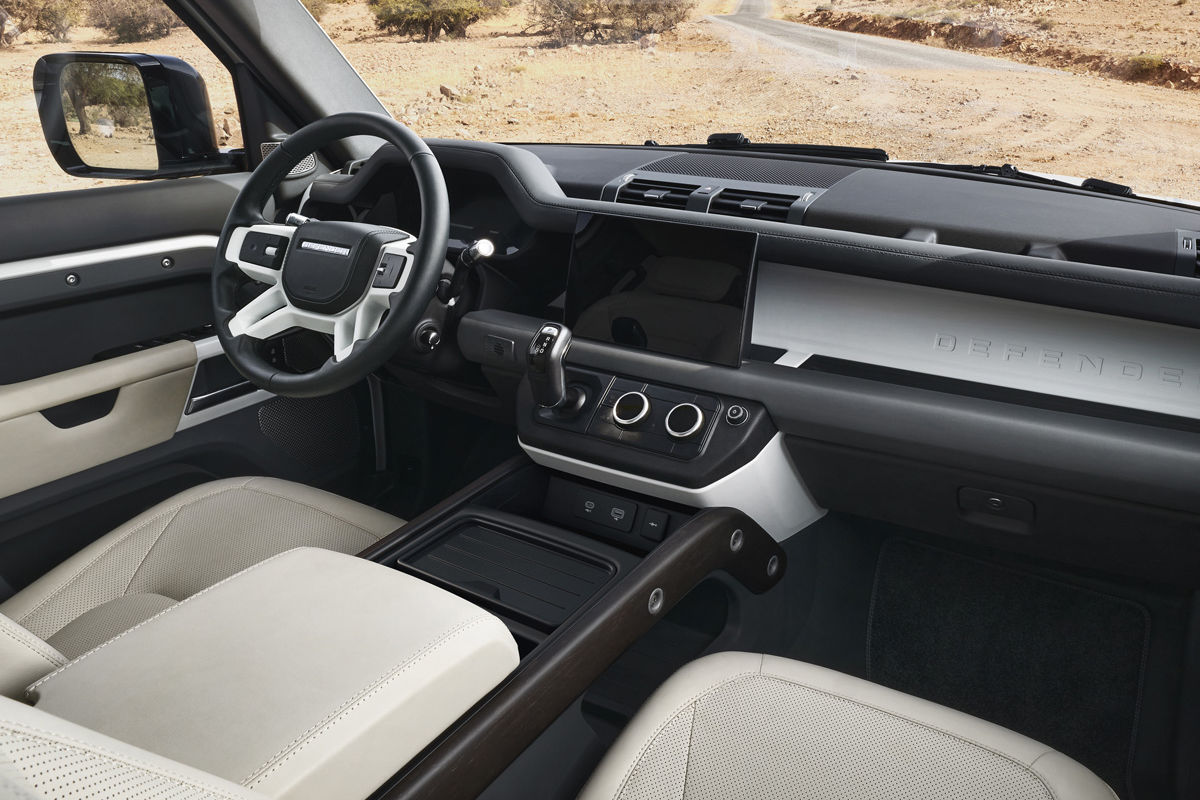
New colour and material options are available in the cabin as well, along with a new, larger 11.4-inch Pivi Pro touchscreen, standard air suspension and an uprated cabin air purification arrangement.
Engine options for international market include the familiar P300 and P400 mild-hybrid 3.0-litre six-cylinder petrol systems, as well as the D250 and D300 3.0-litre six-cylinder diesel powertrains (so, no V8, for the time being, at least). The 294 kW/550 Nm P400 will hit 100 kph in a claimed 6.6 seconds, while the 221 kW/650 Nm D300 will reach the same mark in a claimed 7.5 seconds. Both the P400 and D300 have been confirmed for South Africa.
Land Rover has furthermore announced the Defender 130 will be available in South Africa in X-Dynamic HSE and X specifications, as well as in First Edition guise. The latter will be available in three combinations, each featuring a distinct colour (Fuji White, Sedona Red and Carpathian Grey) and design theme.
The First Edition model builds on the HSE specification with an extensive equipment list that includes Matrix LED headlamps, heated second and third-row seating, the aforementioned four-zone climate control, a Meridian sound system, the driver assist pack and privacy glass. All feature 20-inch alloy wheels as standard.
“New Defender 130 brings a new dimension of capability to our most durable and rugged family of vehicles. Its spacious interior welcomes and transports up to eight people in supreme comfort, enabling unparalleled sophisticated adventuring opportunities for families, with unique design signatures to create a distinct New Defender experience,” said Nick Collins, Executive Director for Vehicle Programmes at Land Rover.
South African Engines Confirmed
According to the Land Rover South Africa configurator, we’ll be getting the Defender 130 with a choice of two engines: D300 and P400. The D300 is a 3.0-litre diesel 6-cylinder developing 221 kW and 650 Nm, while the petrol-powered P400 is a 3.0-litre petrol 6-cylinder packing 294 kW and 550 Nm. All models sold in SA will be automatic.
How much does the Land Rover Defender 130 cost in South Africa?