How To Get the Best Interest Rate On Your Next Car Loan
When you apply for vehicle finance through a dealership, a bank will determine at which interest rate a car loan may be granted to you, BUT that’s not necessarily the same rate that a dealer’s finance and insurance manager will offer you…
PARTNERED CONTENT
When buying a vehicle through a finance deal, you shouldn’t take the first interest rate you are offered. Here’s how to be more empowered to make sure you aren’t paying for someone else’s bills with your hard-earned money… Over the past 15 years, Mit Mak Motors has grown to become the “number one independent retailer in the country”, so they have years of knowledge and experience to share with you on this subject.
This Mit Mak Masterclass is presented by Bobby Petkov, the CEO of Mit Mak Motors, who explains how to get the best interest rate you can when purchasing a car via a vehicle-finance agreement with a financial institution (such as a car loan from a bank).
Who decides the interest rate that you will pay on your car loan? “The short answer is the bank”, says Bobby.
A dealership’s finance and insurance manager (F&I Manager) loads the application at a predetermined average rate and sends it to the bank, and the bank then calculates your rate. However, it is important to know that the dealer plays a big role in what this rate will be…
The “F&I” is the person at a dealership responsible for obtaining and reviewing purchaser credit applications; they liaise with financial institutions and structure loan agreements based on the underwriting guidelines of financial institutions.
“Beware, the dealer might increase the recommended rate to make more money. For example, the higher the rate the dealer can get you to agree to, the higher the income from that rate they will receive. This is known as the dealer incentive commission (DIC),” he adds.
“In short, the higher the rate, the higher the income for the person who sold you your vehicle. And the more you end up paying for it over the (loan) period.”
Here’s an example of the difference 1% can make on R100 000 purchase over 5 years:
Purchase Price
Interest Rate
Term
Instalment
R100 000
10%
60 months/
5 years
+- R2 227,70
R100 000
11%
60 months/
5 years
+- R2 278,89
The difference is R51,19 a month. It might not sound like much, but if you were to save that R51,19 over 60 months/5 years you would have R3 071,40 extra in your pocket.
“What can you do about it? Simple – ask questions. This is how you will ensure you get the best interest rate available to you,” Bobby continues.
“Ask the person selling to you and then, ask again. ‘Do I sign up at the recommended rate offered by the bank, or do I sign up at the rate you offer me?’
“You have a right to request a copy of this document between the bank and your dealer. If the dealer refuses to give you the document, then maybe they’re not the right dealer for you.”
Sometimes, the F&I Manager will say that your credit rating determines the rate. To find out if this is true, you need to see your report.
“However, 99% of the time, they will not send you your report. You have the right to ask for the podium,” Bobby concludes.
If you’re interested in your credit rating (credit score), click here and Mit Mak Motors will make your report available for free in 30 seconds.
The responsibilities of an F&I manager
An F&I Manager offers various value-added products to protect the client’s financial interest; they must disclose all relevant Terms and Conditions to their clients; they must practice strict legal compliance and behave ethically.
Negotiating the interest rate and the loan term are key factors in getting the best finance. Once the customer is satisfied with the structure of their finance deal, the F&I Manager will request the contract.
It is the responsibility of the F&I Manager to sign all relevant documentation with the client. The responsibility remains with the F&I Manager to verify the identity of the client and supply the financial institution with all the required documentation. Once all this is done, the client can take delivery of their new vehicle.
Mahindra and Volkswagen are expanding their cooperation and the two automotive giants have signed a Term Sheet outlining the supply of MEB components for Mahindra’s new INGLO electric vehicle platform that will see 5 new electric SUVs come to market.
Like many car manufacturers, Mahindra is embracing an electric future and the firm intends to lead the charge in one of the world’s largest car markets, India. Up to 3 million new cars are sold in India each year and the electrification of the passenger car segment is expected to grow significantly in the coming years.
Mahindra recently showcased its new electric SUV family under the Mahindra Born EV vision in the United Kingdom and the new models will be built on the firm’s new dedicated INGLO EV platform. Volkswagen has invested heavily in EVs and the MEB componentry such as the electric drivetrain, battery system and Volkswagen’s unified cell is envisaged to make their way into Mahindra’s new electric SUVs.
The signed Term Sheet outlines all major commercial and technical terms as well as a potential path for localisation of the battery system. More so, Mahindra and Volkswagen will explore further potential for collaboration regarding e-mobility including vehicle projects, local battery manufacturing and charging and energy solutions to better develop the Indian EV ecosystem.
“We are happy that we have identified a larger scope of collaboration between our two companies. Together, Volkswagen and Mahindra can contribute significantly to the electrification of India, a huge automotive market with ambitious climate protection commitments. The MEB Electric Platform and its components are key to affordable sustainable mobility around the globe. The partnership not only demonstrates that our platform business is highly competitive, but also that the MEB is well on track to become one of the leading open platforms for e-mobility. We are thus delivering on the focus of our Volkswagen NEW AUTO strategy to make the platform business a strong pillar of our Group and to unlock future profit pools through economies of scale” said Thomas Schmall, Volkswagen Group Board of Management member for Technology and CEO of Volkswagen Group Components.
Rajesh Jejurikar, Executive Director, Auto and Farm Sectors, Mahindra & Mahindra Ltd, commented, “The signing of the techno-commercial term sheet is a significant step forward in our partnership with Volkswagen. Our purpose-built INGLO platform offers unmatched potential for growth and further customization for developing new and innovative products, not just for India, but for global markets. Our vision is to lead the electric mobility revolution in India by bringing authentic electric SUVs with cutting-edge technology, as showcased in the UK today. We are very pleased to explore further areas of potential collaboration with Volkswagen and are confident that together, we will be able to shape an exciting electric future.”
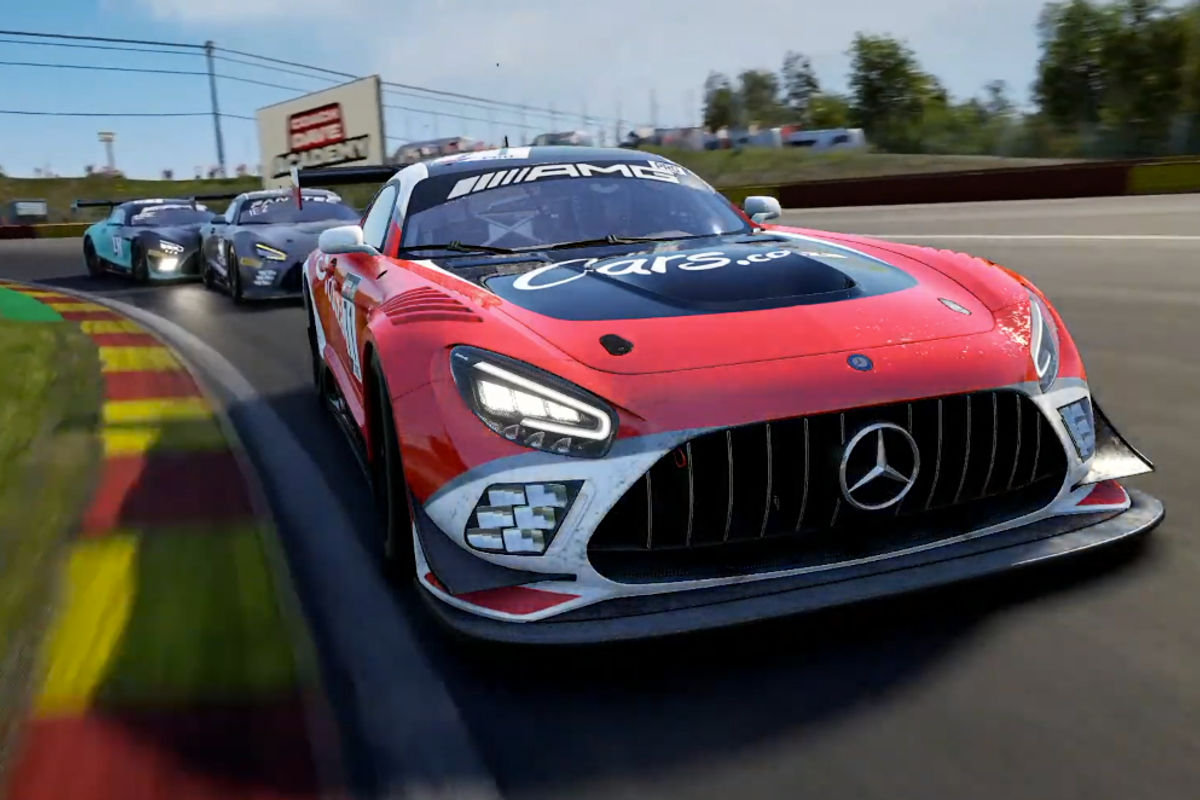
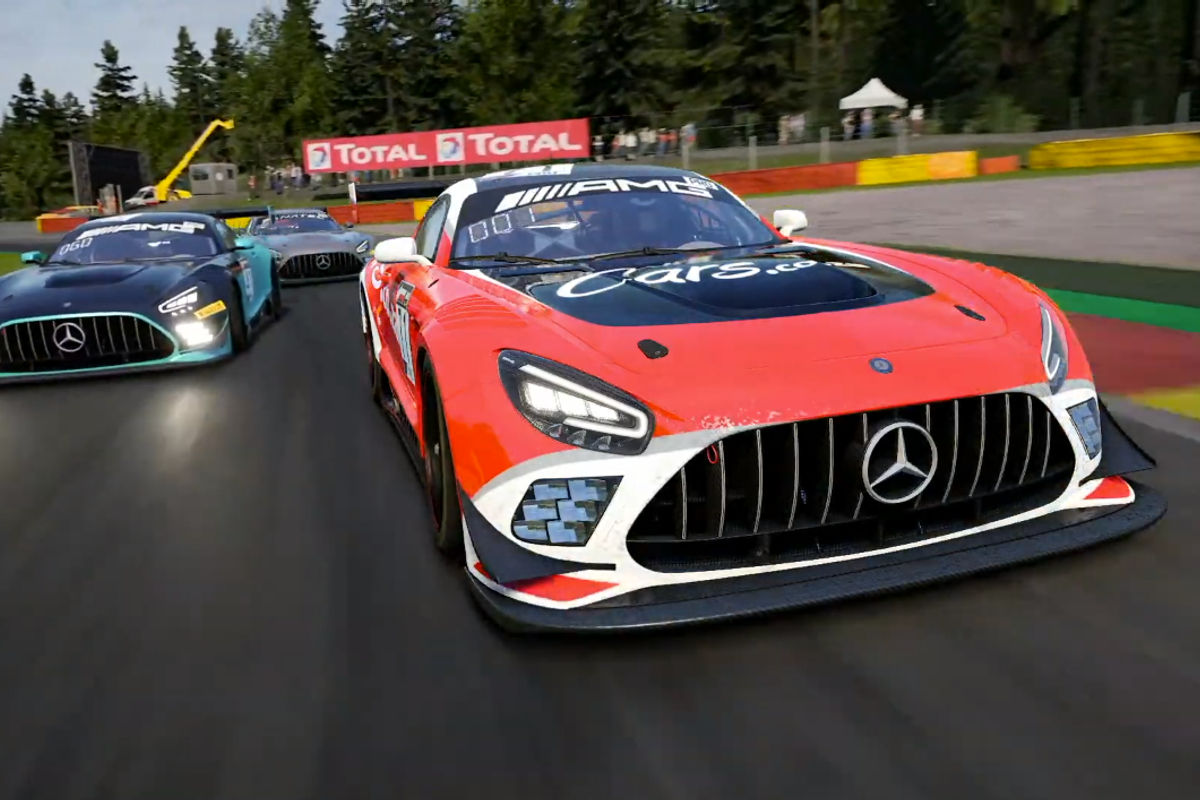
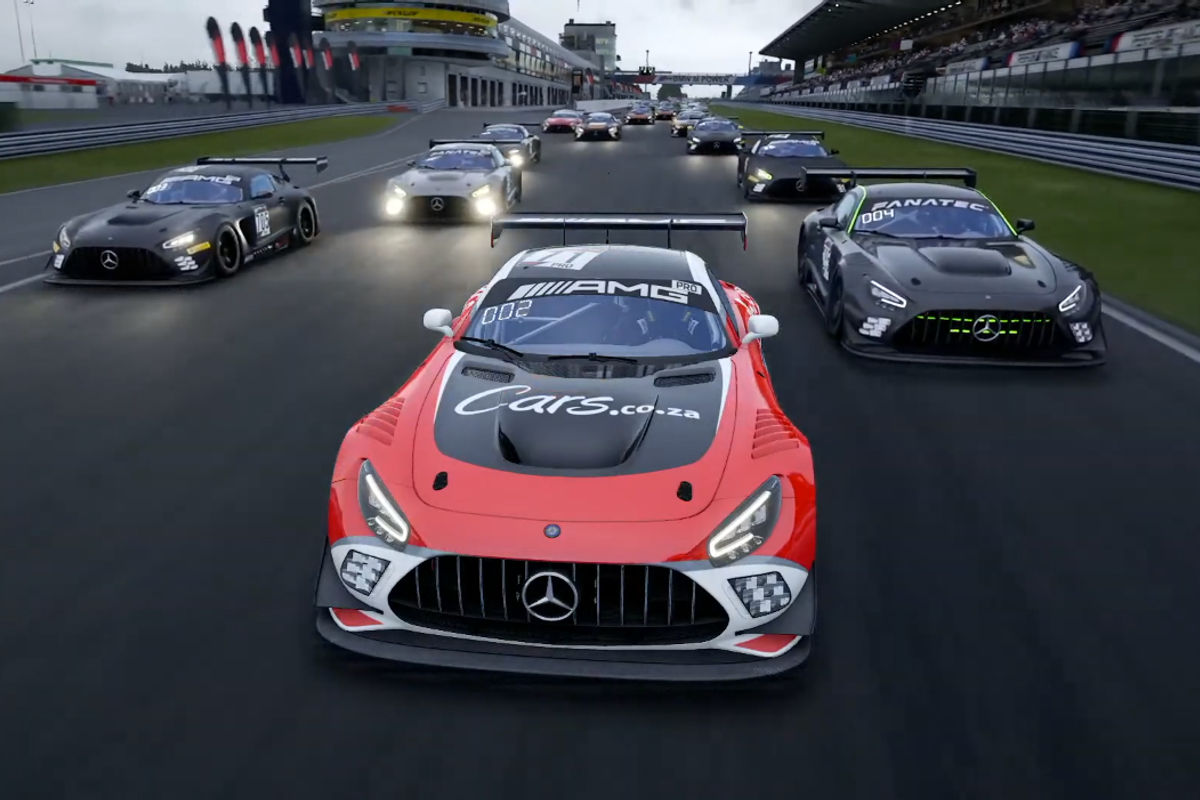
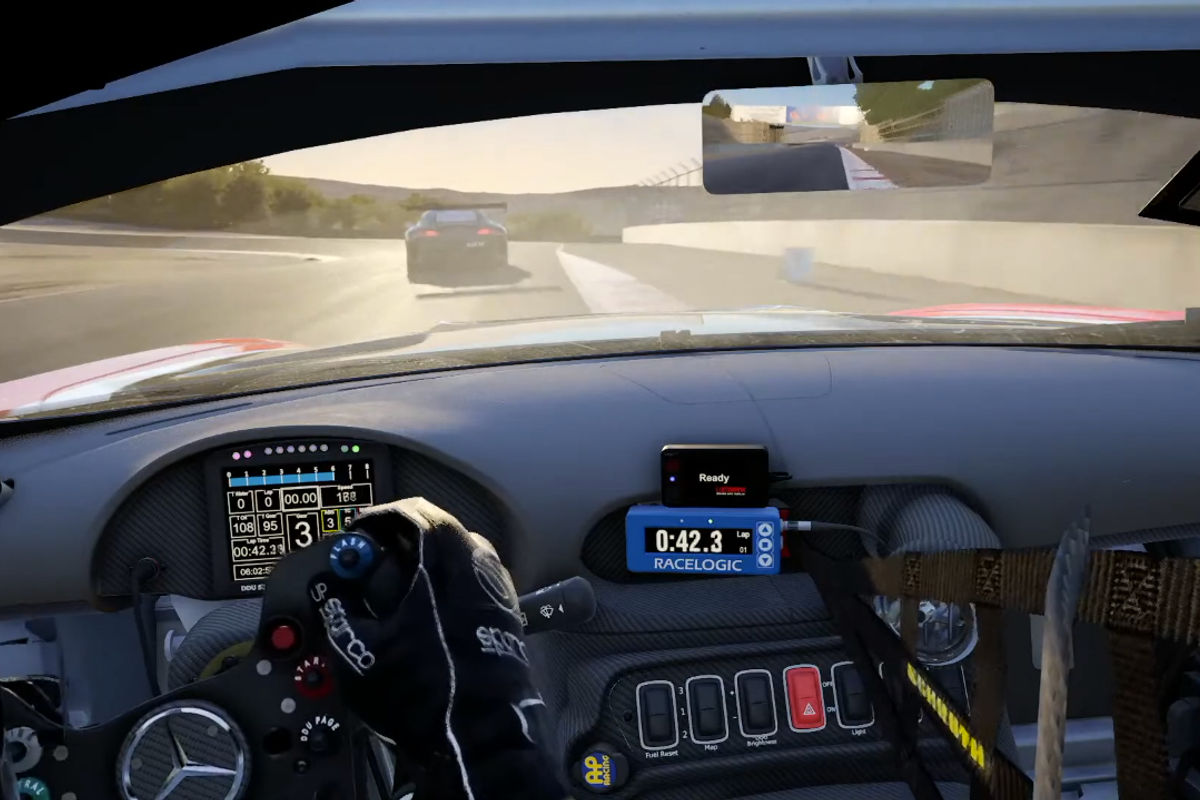
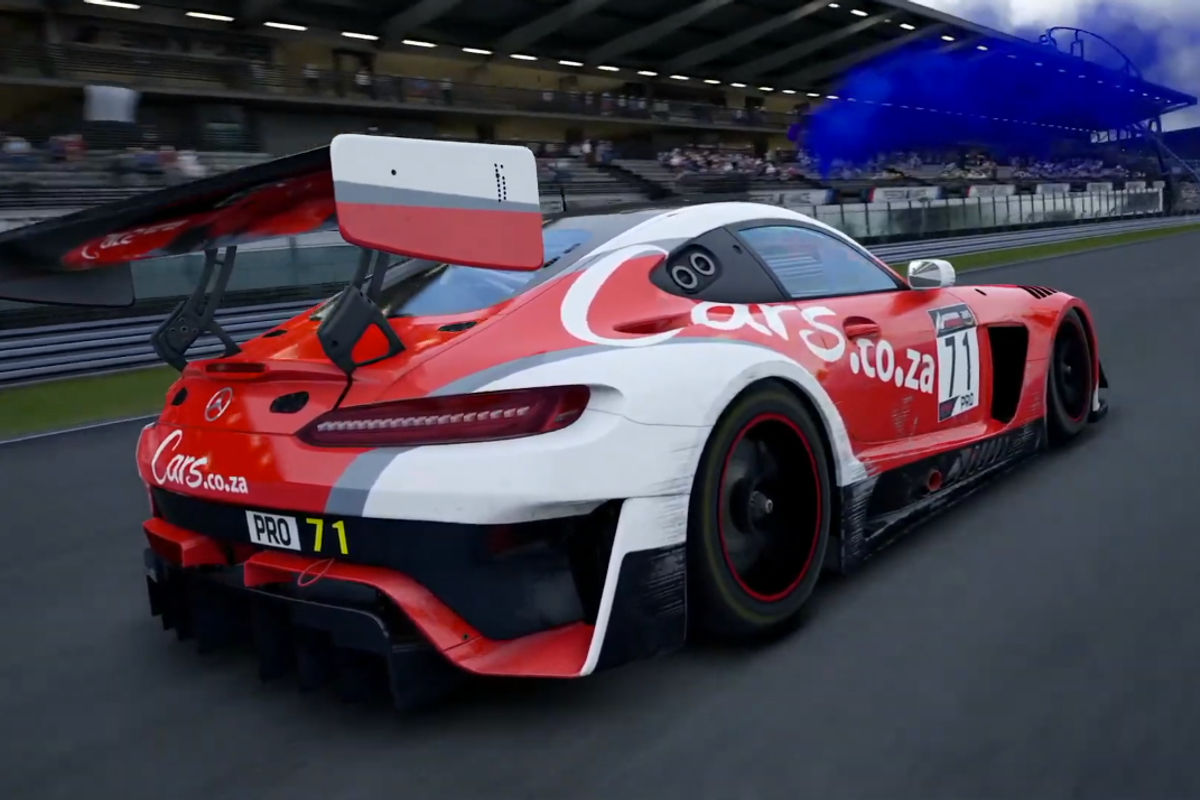
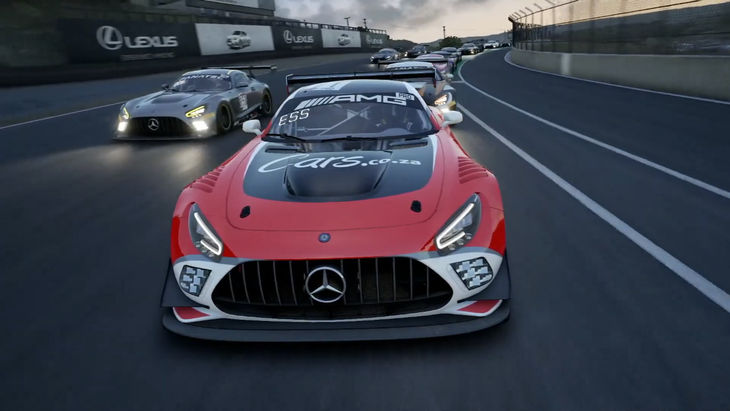
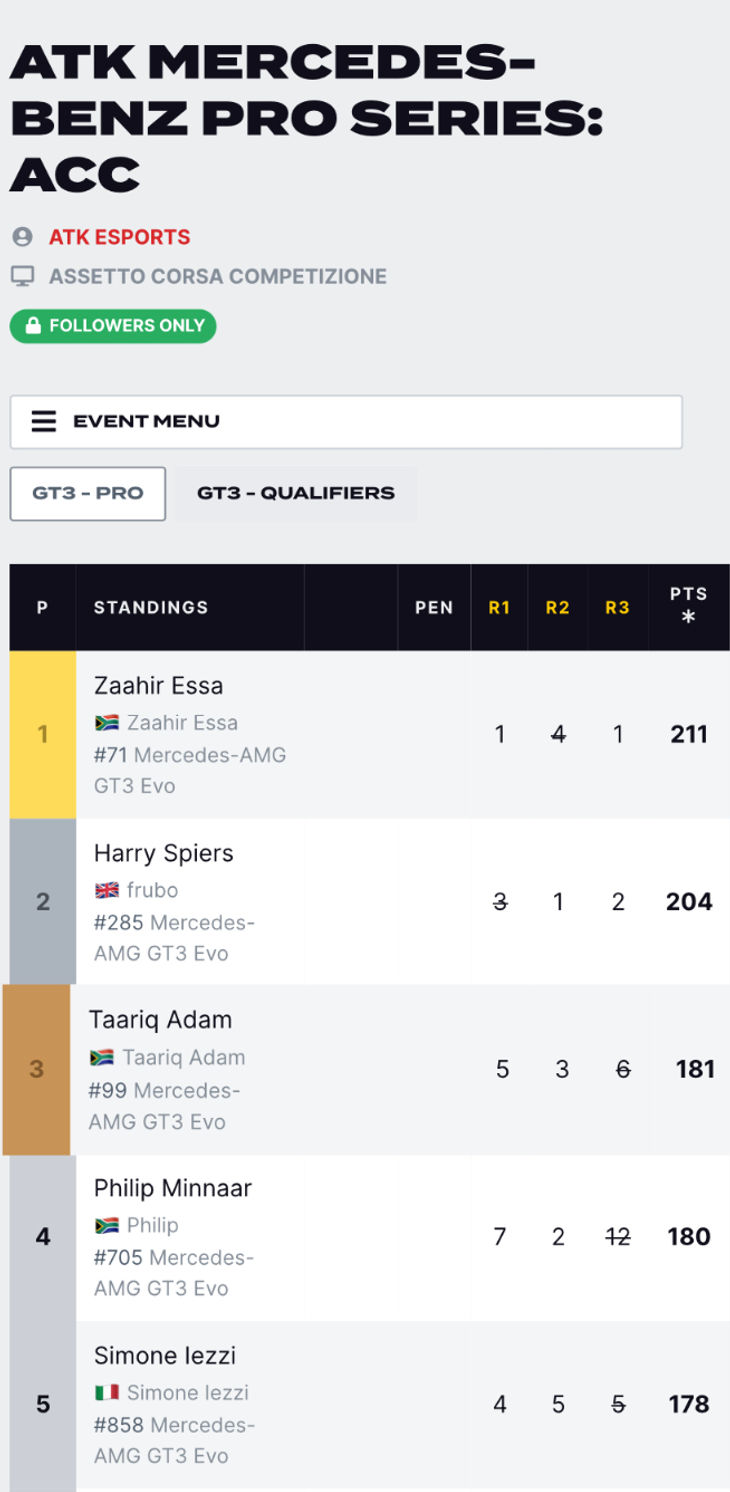
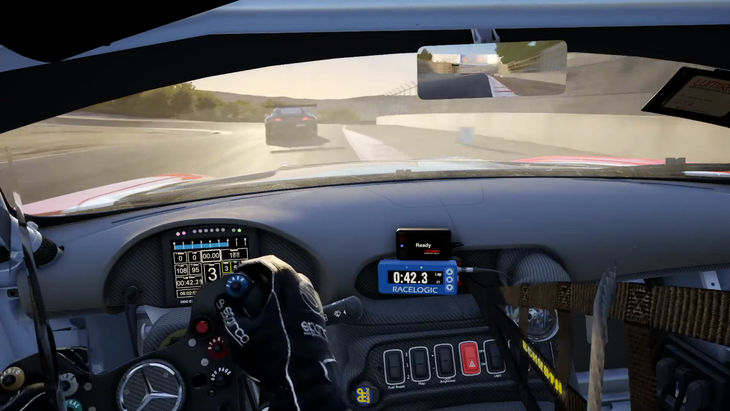
Local sim racer Zaahir Essa – the winner of our inaugural #CarsSimRacerSearch – currently tops the standings of the Mercedes-Benz ATK Pro Series 2022 after 4 rounds. We caught up with him to find out more about the races and his experiences behind the ‘wheel, along with his thoughts ahead of the final 2 races of the series.
Cars.co.za: How would you describe your Mercedes-Benz ATK Pro Series 2022 experience so far?
Zaahir: I’ve been pleasantly surprised that I have been consistently competitive in this car. It’s not exactly a natural driving style to me and I have no experience with it, but I’ve been having fun putting in time in to work things out. It’s been a real bonus that the races themselves have been enjoyable with the close racing, and it’s been amazing to see the support and interest generated with this partnership with Cars.co.za!
Cars.co.za: You currently lead the Mercedes-Benz ATK Pro Series 2022driver standings after 4 rounds. What have been some of the stand-out moments from these races that got you to this position?
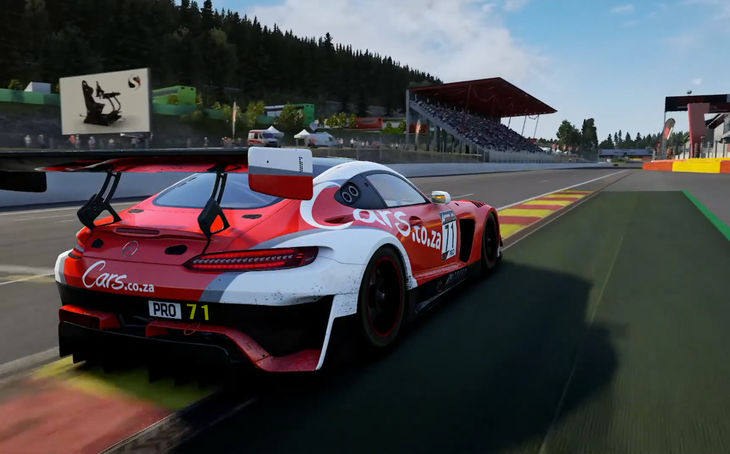
Zaahir: Of course, the two victories have been the standouts. The first is always awesome on home turf at Kyalami, where I just thoroughly enjoy driving. The win at Spa in round 3 was also satisfying after the intense battles on the track, while trying to overcome tyre-wear management and fuel saving in the space of one sprint race. You can’t win them all, and the other two races have been invaluable in terms of learning and improving myself for the remaining races.
Cars.co.za: It looks like you are going to be pushed to the very end by the other drivers. What can you share about the competitive nature of the current series, your direct opponents, and what you feel the current state of Sim Racing is on the back of your last four races?
Zaahir: These are high-stakes races, in the sense that if you make an error in qualifying or early in the race, it is very difficult to recover from that with how close the field is. You get one chance and that’s it. I would say any of the top 5 drivers have the potential to win races… there are many Mercedes-AMG “specialists” around.
So you really have to perform at a high level consistently – every half a tenth of a second on track can make the difference. In every race, I’ve been in direct battles with someone completely different!
The state of Sim Racing has definitely boomed since the Covid-19 lockdowns… and the overall awareness of the sport even more so. The competition has been at an extremely high level for well over a decade, and it’s pretty cool that I still can’t afford to rest on any laurels, even though I have a lot of experience. You have to keep pushing to stay ahead!
Cars.co.za: With 2 races to go, what are you looking to work/focus on, and how do you feel about the final two venues?
Zaahir: The next race at Suzuka is going to be an interesting challenge. It’s one of my favourite tracks, but I will be away from my racing rig until the day of the race, because I’ll be on holiday with my family for a much-needed break. That means I will go up against this fast-paced field with absolutely no practice, warmup, preparation or anything. I’ll take whatever I can from that race, but it’ll be an interesting exercise to see how far up I can get in the field at Suzuka!
I will, however, have time to work on the series finale at Bathurst, which I’m really looking forward to. I also enjoy that track, even if it has a very high-risk layout (as anyone who knows anything about the legendary circuit on Mount Panorama in New South Wales, Australia, would know). You skim past concrete walls for a lot of the lap; one small mistake and your race is done.
I love it, though and can’t wait for that challenge. Hopefully, I will maintain my lead in the championship right to the very end!
Cars.co.za: We are very proud of Zaahir’s achievements and will continue to cover his season (and affiliation with our brand) on our social media channels: Facebook, Twitter, Instagram and TikTok.
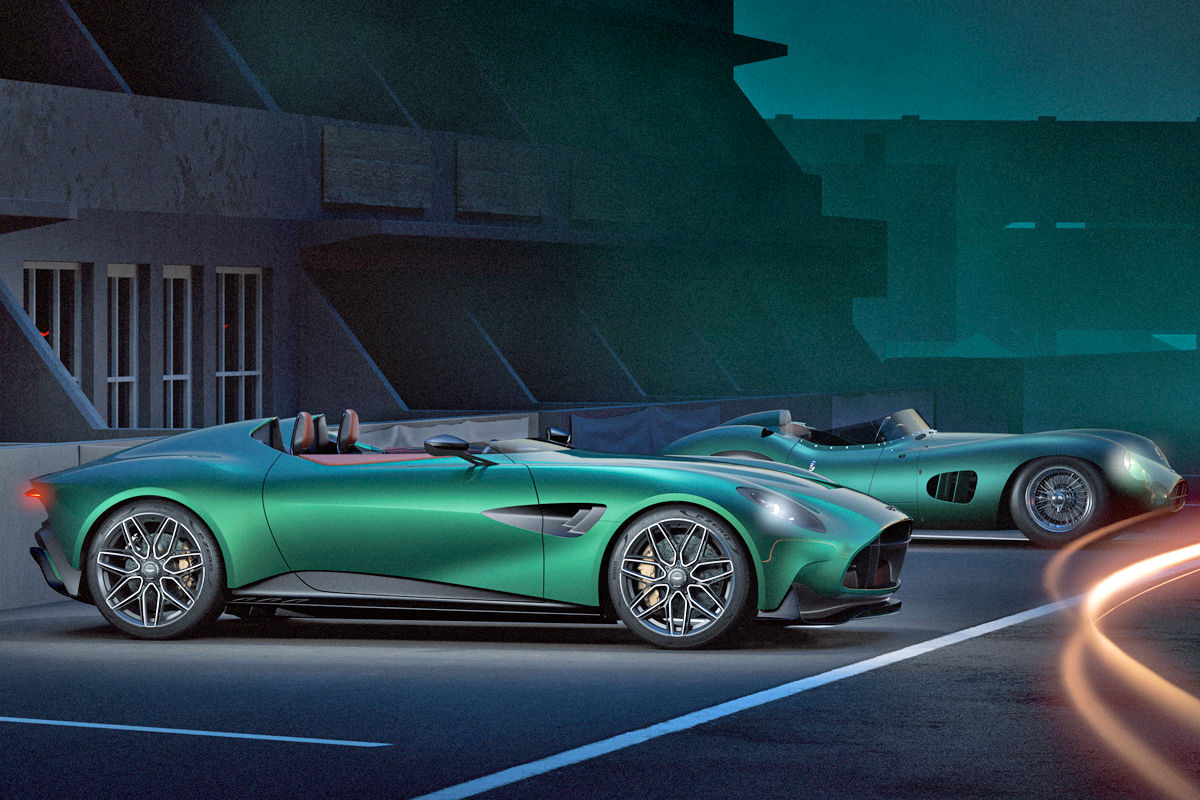
Who needs a roof? Aston Martin’s new DBR22 is a coach-built two-seater speedster powered by the British brand’s twin-turbo V12. Let’s take a closer look…
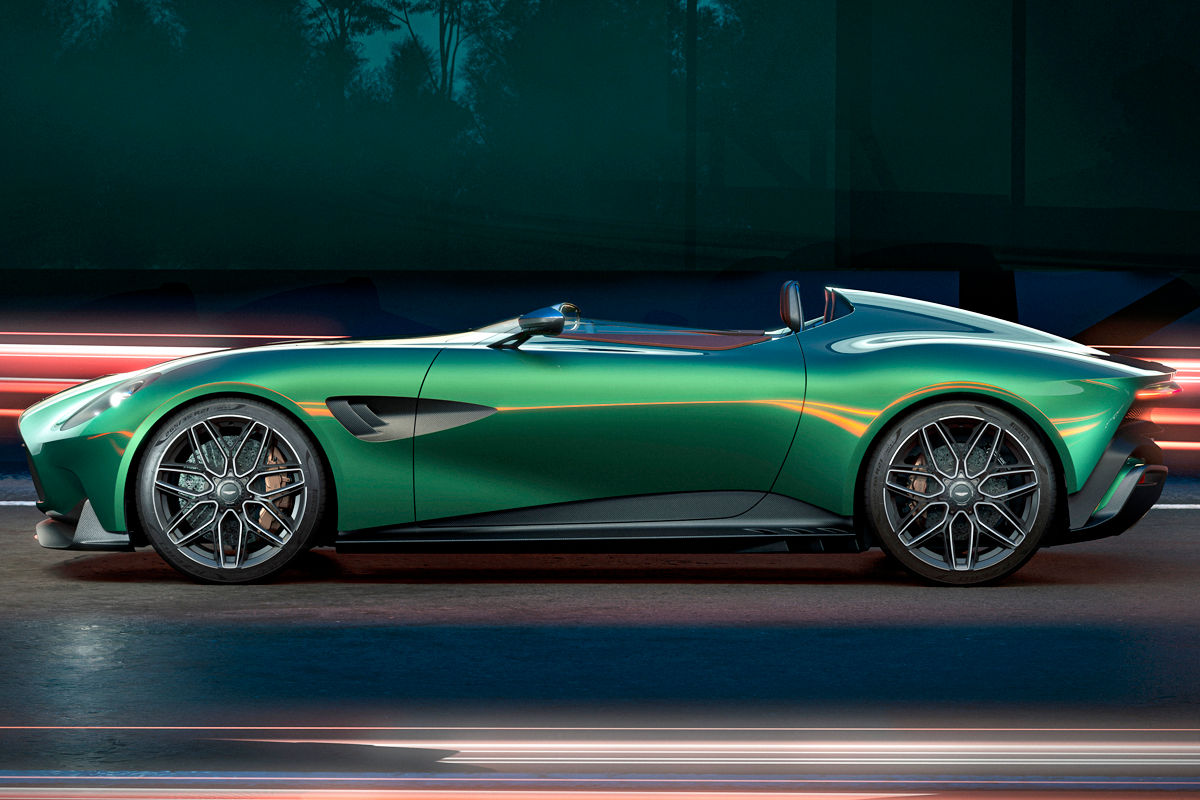
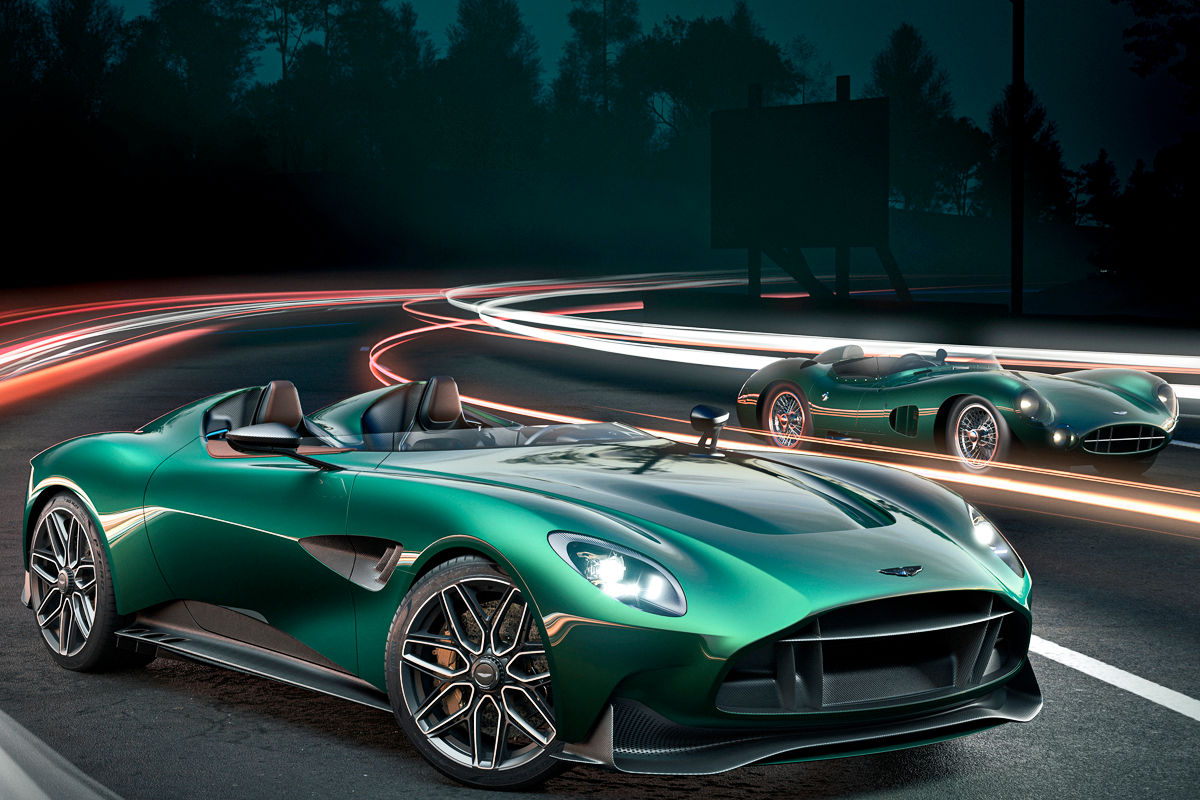
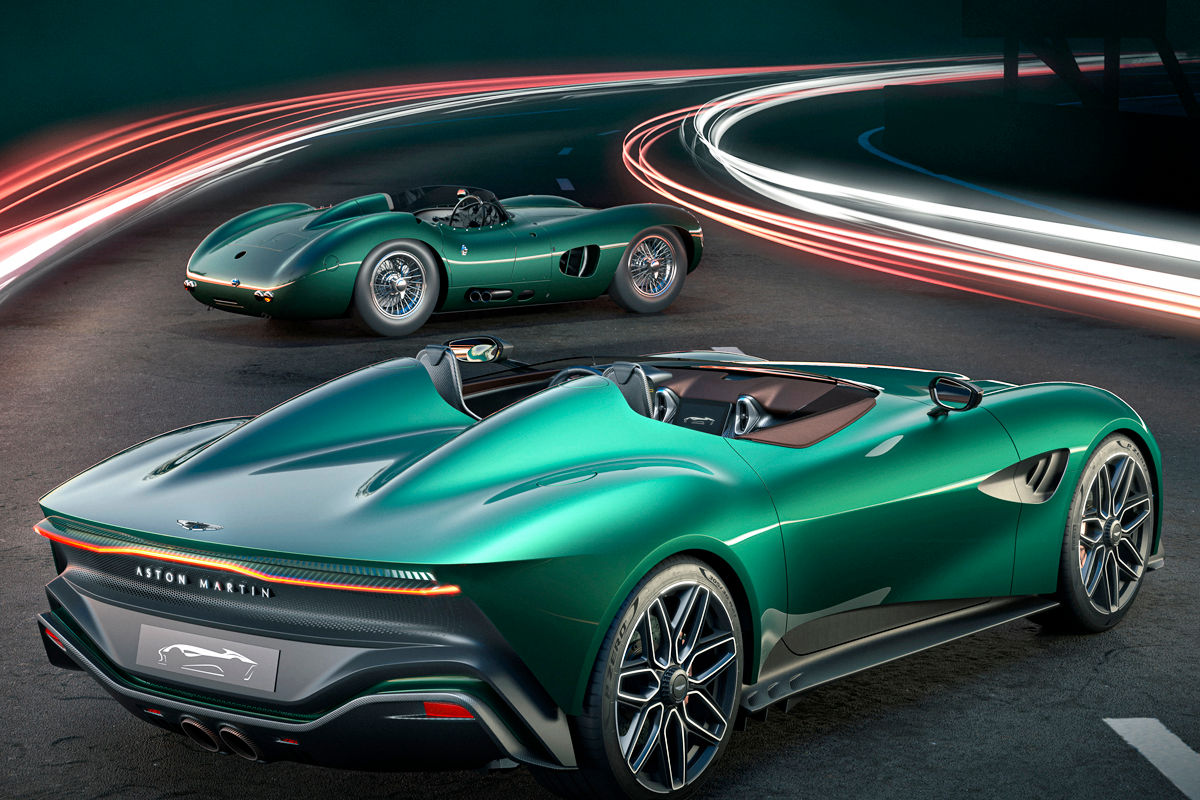
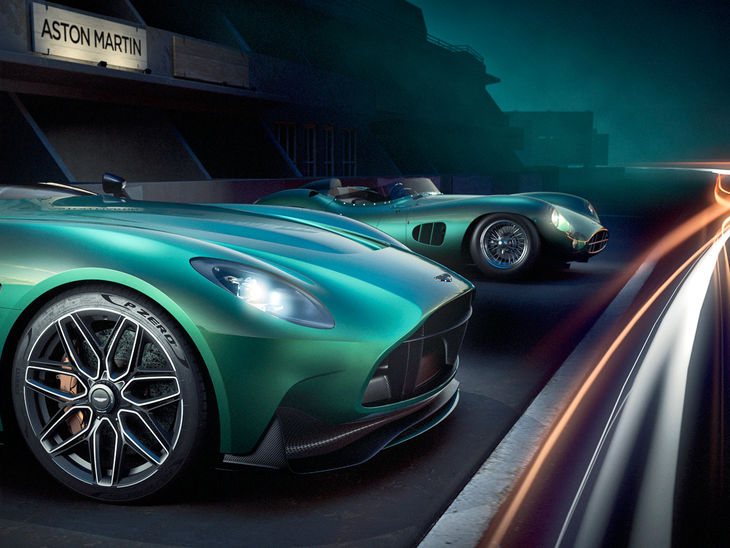
Aston Martin has revealed the first images of its new DBR22, a V12-powered two-seater speedster conceived to celebrated the Gaydon-based firm’s bloodline of open-cockpit sports racers such as the DBR1 and DB3S.
Set to make its debut in the metal at the Pebble Beach Concours D’ Elegance at the 2022 Monterey Car Week, the DBR22 was coach-built by the company’s in-house bespoke division, Q by Aston Martin, which this year celebrates a decade of creating exclusive cars (remember the V12 Speedster of 2020?). Aston Martin says the design will “form the basis of a production reality example” for an “ultra-exclusive number” of customers.
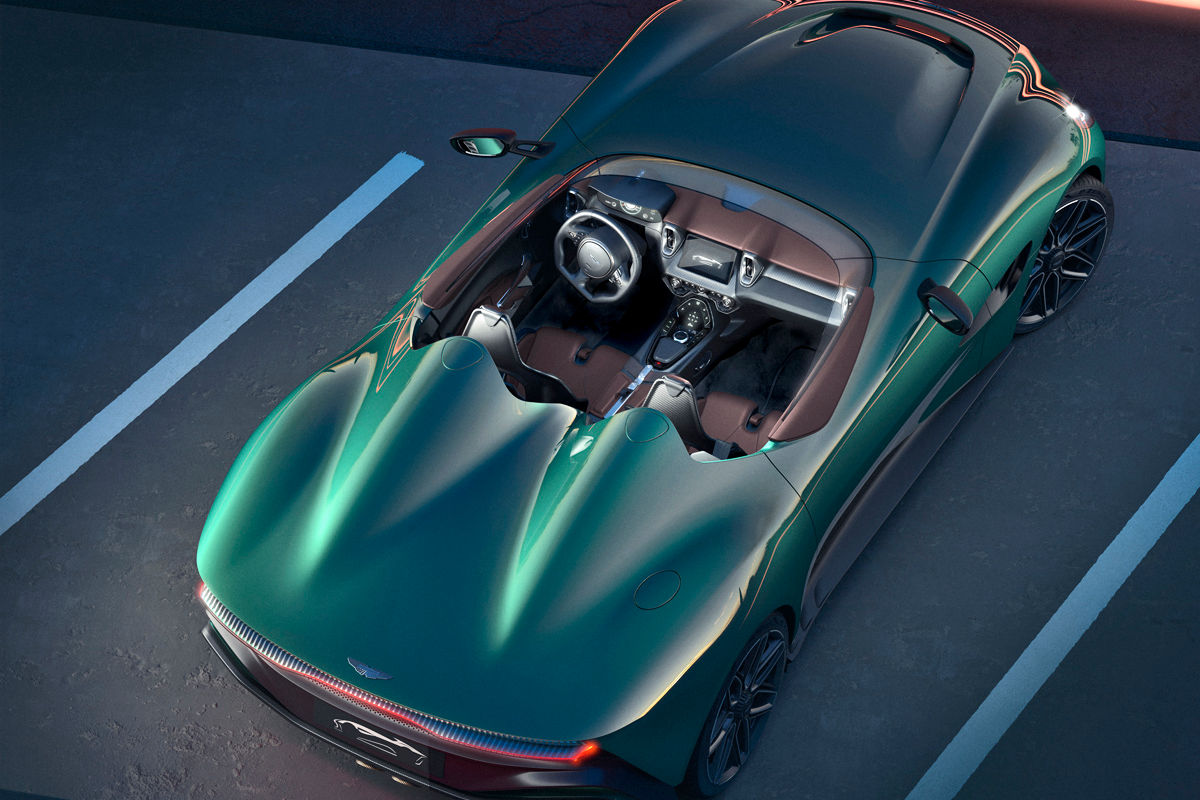
The roofless DBR22 features what the company describes as a “completely new body” crafted from a “minimal number” of panels. The result, according to Aston Martin, is a “smooth and effortless blend of exceptional drama and elegance”.
The grille incorporates a bespoke carbon-fibre design rather than the slats seen on series-production Aston Martins. Other interesting design features include a recessed horseshoe vent in the bonnet, a small wind deflector and slender side mirrors mounted to the tops of the doors on carbon-fibre arms. The DBR22 sits on lightweight 21-inch alloy wheels with a unique 14-spoke layout and a motorsport-derived centre-lock hub.
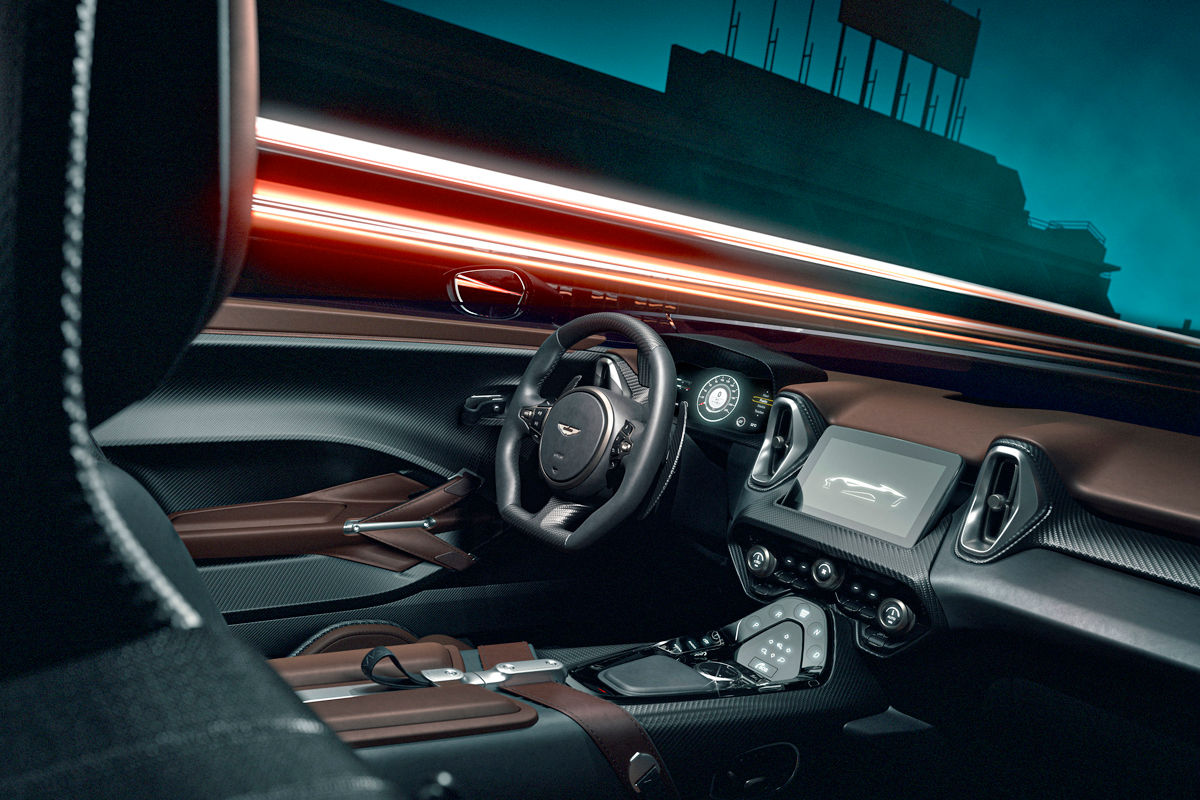
Inside, you’ll find plenty of leather and exposed carbon-fibre, along with an “all-new” facia and sleek infotainment displays. Rising from behind the carbon-shelled, leather-trimmed seats are twin nacelles that smooth the airflow behind the driver and passenger’s heads.
Under the Aston Martin DBR22’s bonnet
The twin-turbo 5.2-litre V12 under the bonnet facilitates what Aston Martin calls “breath-taking performance” thanks to peak outputs of 526 kW and 753 Nm, which are delivered exclusively to the rear axle. As a result, the sprint from standstill to 100 kph takes around 3.4 seconds, with top speed pegged at a heady (considering the distinct lack of a roof) 319 kph.
The British automaker promises the DBR22 serves up a “true driver connection”, with the chassis honed to deliver “precision, agility and tactility in equal measure”. The engine and 8-speed automatic transmission boast a bespoke calibration, while the pinned steering column ostensibly offers more detailed feedback.
Model-specific front and rear shear panels have also been incorporated to increase torsional rigidity, while the adaptive dampers receive a bespoke calibration. Interestingly, the DBR22 features a 3D-printed aluminium rear subframe, a first for Aston Martin.
Marek Reichman, Aston Martin chief creative officer, says the company “effectively modernised” its racing bloodline to create a “new pedigree”.
“DBR22 is a hot-blooded, purebred Aston Martin sportscar full of speed, agility and spirit, and a machine that we think will be the basis of many of tomorrow’s icons,” Reichman said.
More EV Chargers Installed by Audi SA and Gridcars
More EV chargers in SA are always welcome, with 33 new units dotted around South Africa. Here’s how fast they are and where they’re located.
There are a few factors impeding the growth of electric cars, but one of them is slowly being rectified. Charging infrastructure is such a vital cog in the wheel of electrification and given the vastness of South Africa, there needs to be chargers to link up the major metropoles.
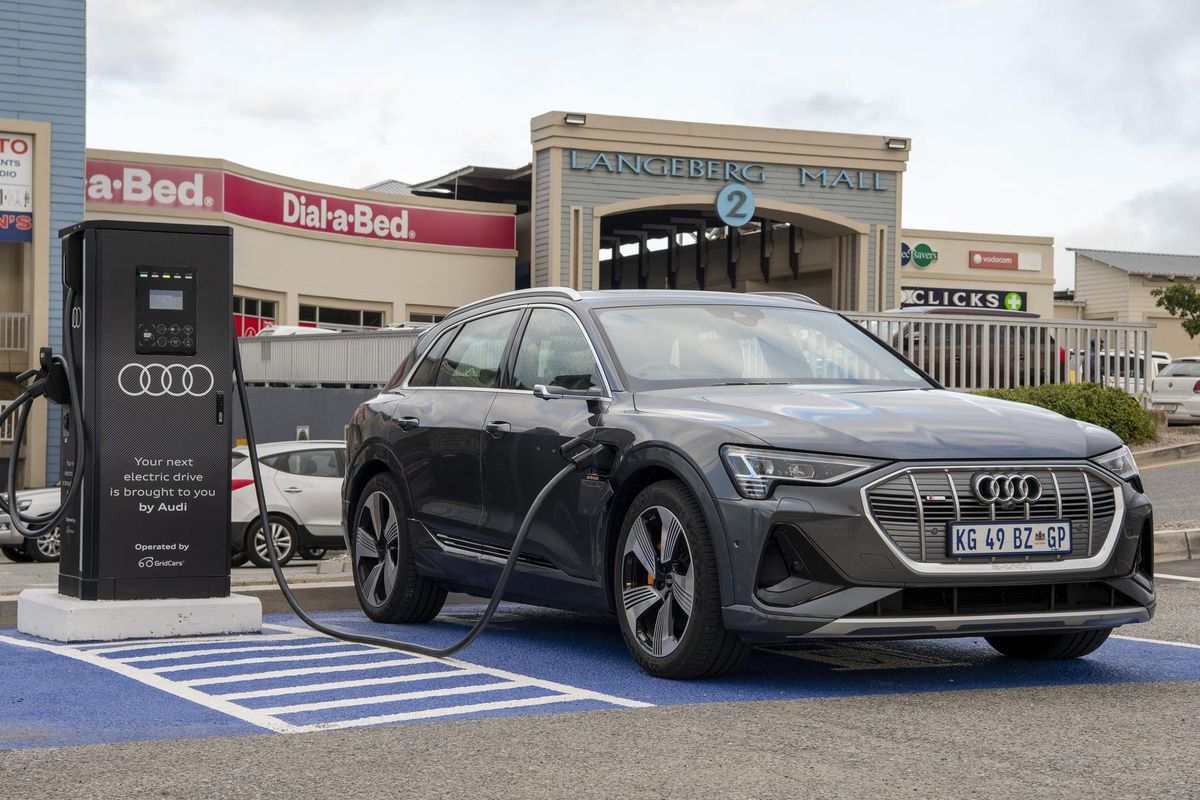
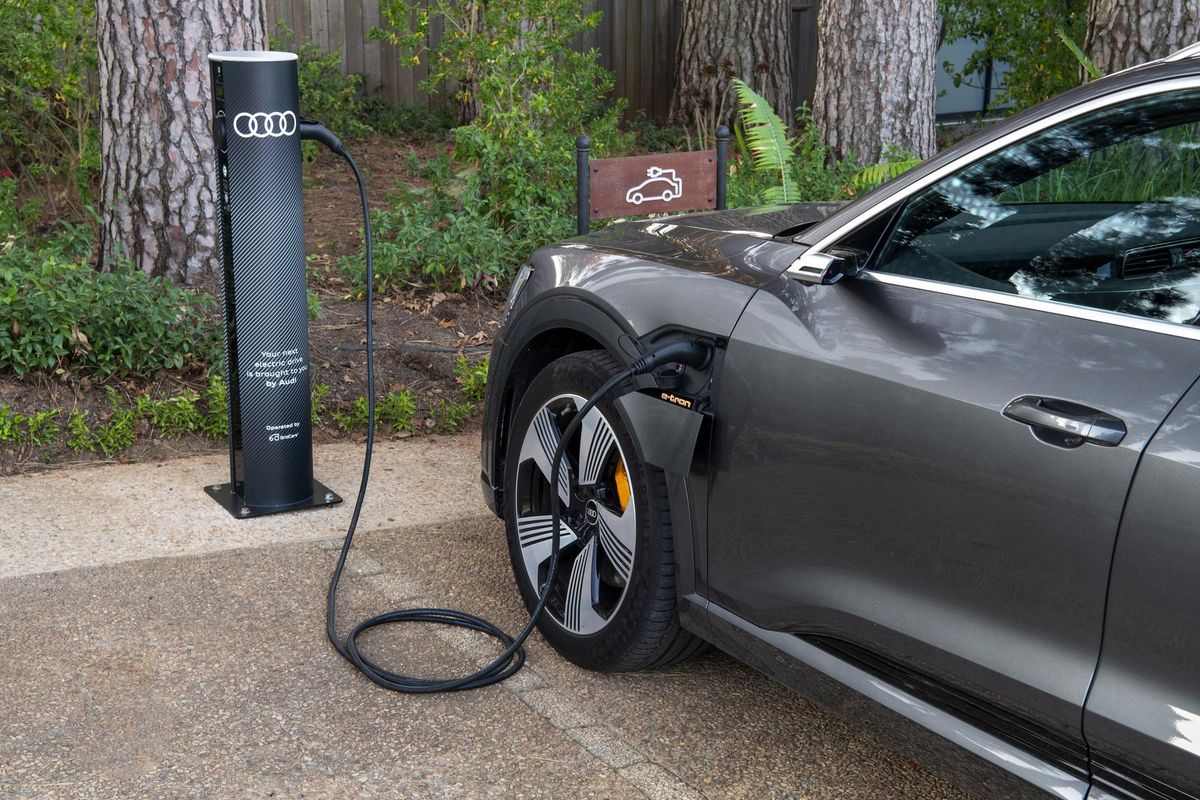
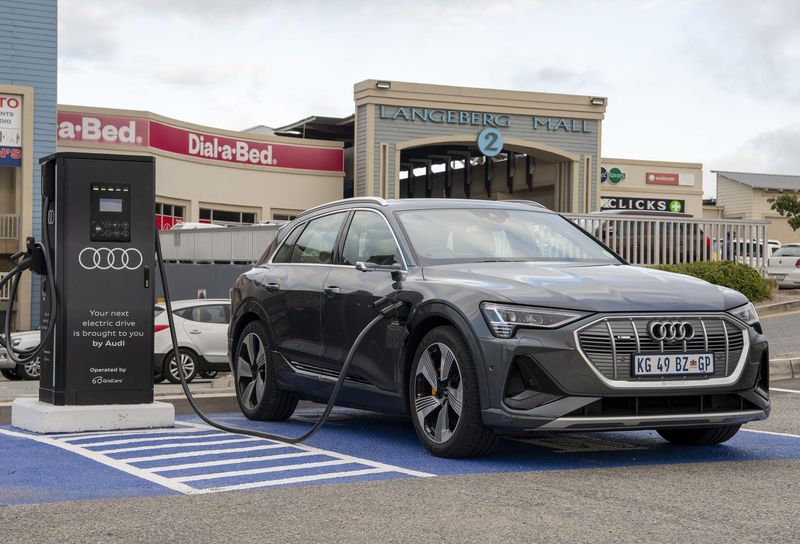
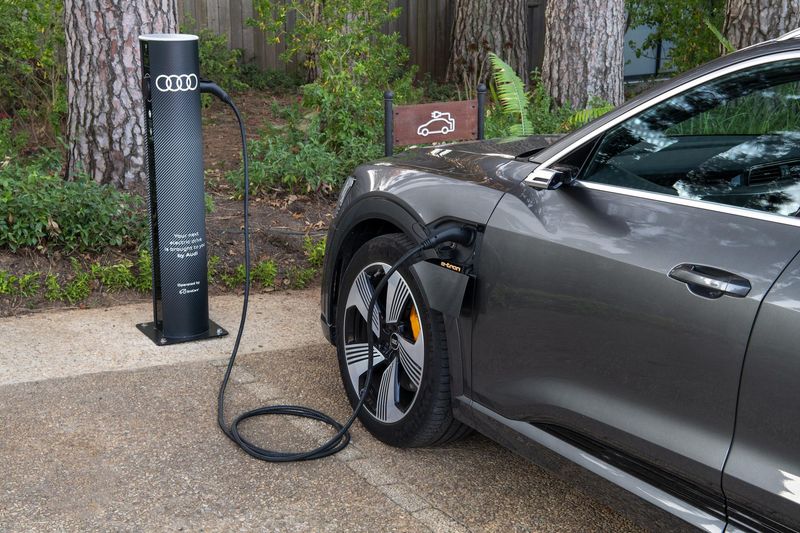
In the middle of August 2022, Audi SA together with Gridcars, finalised 33 new EV chargers across SA. These have varying power outputs, ranging from 22 kW AC boxes, to 80 kW DC and 150 kW DC ultra-fast chargers. The best part is they’re available to any brand of electric vehicle.
Mosselbay, Langeberg Mall, Western Cape
EV Chargers in SA
150 kW DC Fast Chargers are good for around 340 km of range in about 30 minutes. Audi SA says they’ve been positioned along national roads to help with the longer trips.
N1 – Colesburg, Caltex, Northern Cape
N2 – Mosselbay, Langeberg Mall, Western Cape
N3 – Tugela North, Engen, Kwa-Zulu Natal
N4 – Riverside Mall, Mbombela, Mpumalanga
80 kW (DC) chargers will give motorists around 185 km of range in 30 minutes.
N1 – Ventersburg, Caltex, Free State
N1 – Richmond, Caltex, Northern Cape
N2 – The Crags, Engen, Plettenburg Bay, Western Cape
N3 – Tugela South, Engen, Kwa-Zulu Natal
N4 – Alzu Petroport, Mpumalanga (Audi has upgraded the existing unit from DC 60 kW to DC 80 kW. GridCars has also installed a new EV charging unit at Kranskop Engen, Limpopo).
Finally, more 22 kW dual AC charging stations have been added. These have an output of 100 km of range in an hour.
Delaire Graff Estate, Stellenbosch
Western Cape
Hazendal Wine Estate, Stellenbosch
Franschhoek Motor Museum, Franschhoek
Delaire Graff Estate, Stellenbosch
Spier Wine Estate, Stellenbosch
Thesen Island, Knysna
Graham Beck Wine Estate, Robertson
The Marine Hotel, Hermanus
The Cellars Hohenort Hotel, Constantia
D’Hub B&B, Cape L’Agulhas
Gauteng
Parkview Shopping Centre, Pretoria
Johannesburg Country Club, Auckland Park
Royal Johannesburg & Kensington Country Club
Serengeti Golf & Wildlife Estate, Kempton Park
Johannesburg Country Club, Woodmead
Bryanston Country Club, Johannesburg
Kyalami Corner, Johannesburg
Virgin Active Bryanston, Johannesburg
Mpumalanga
84 on Main, Dullstroom
Hazyview Junction Shopping Centre
Kwa-Zulu Natal
Cornubia Mall, Mt. Edgecombe
Selborne Hotel & Golf Club, Pennington
Cedar Garden B&B, Underberg
Free State
Protea Hotel by Marriot, Clarens
North West
Village Mall, Haartebeespoort Dam
For more GridCars charging locations, click here for the live online map.
Good news as the current data shows the price of petrol and diesel could drop significantly in September 2022.
The current data from the Department of Energy (via Businesstech) paints a happier picture for South African motorists, who have been under considerable financial pressure due to back-to-back increases.
Right, so as it stands, petrol could drop by around R2.60 a litre and diesel by around R2.30 a litre. Illuminating paraffin data shows a decrease by potentially 193 cents a litre.
“The decreases to fuel prices in August were offset somewhat by the 75c/l for petrol and diesel which were returned to the GFL. But the decreases expected in September don’t have that problem,” said the Automobile Association of South Africa.
Please remember that these figures are just a guide based on the current variables like global oil price and exchange rate, which can change rapidly in a short space of time. There’s good news as the international price of oil has stayed below $100 a barrel, while the Rand has gained some ground on the US Dollar.
Let’s hope the oil price and the exchange rate stay on their current trajectory so we can benefit from some relief at the pumps.
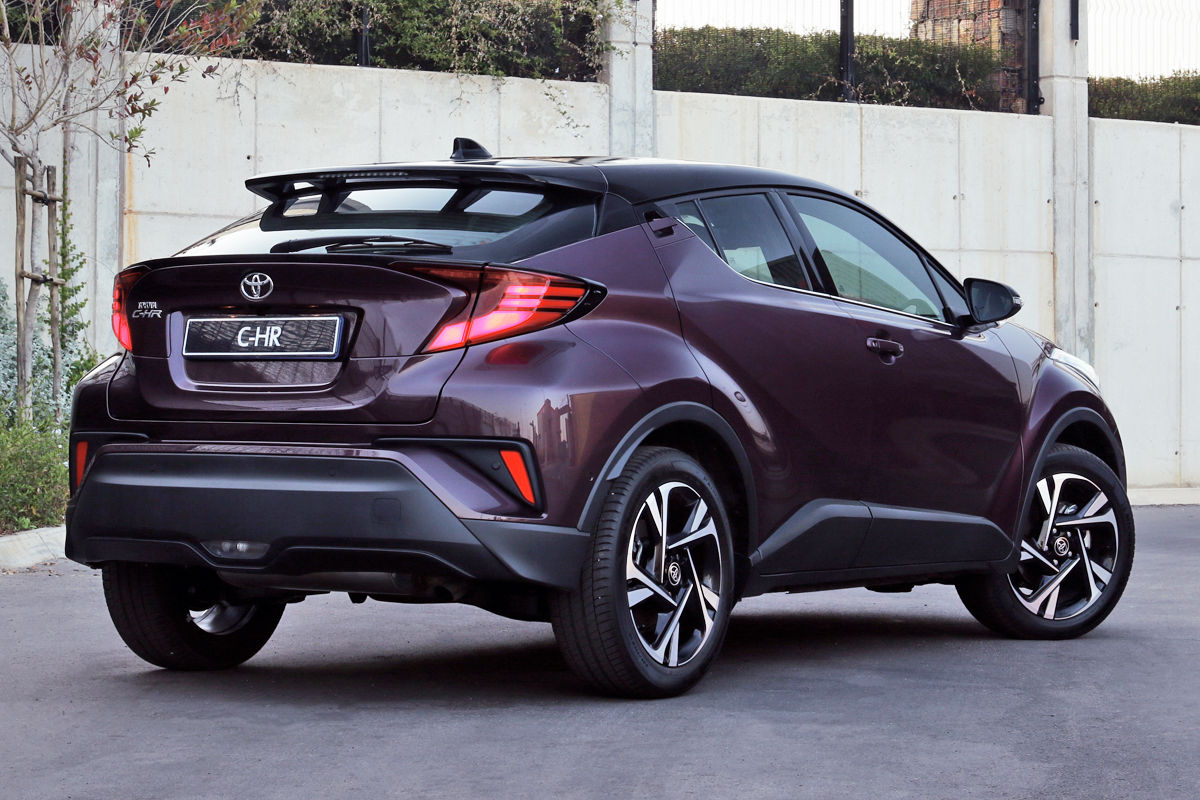
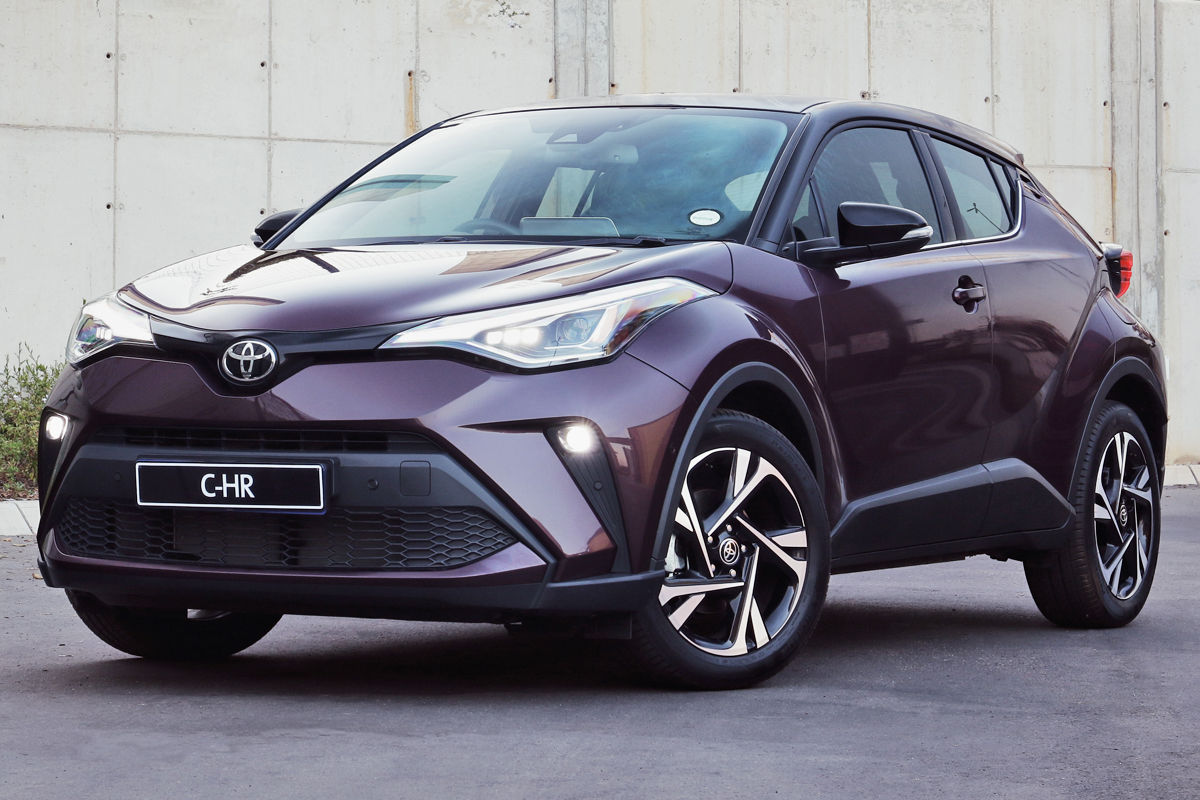
Toyota has handed its C-HR yet another minor update. Here’s what has changed and how much you’ll pay for the revised crossover in South Africa…
Toyota South Africa Motors has rolled out another small update for its C-HR, which soldiers on in a crossover line-up that also includes the Urban Cruiser, Rumion and Corolla Cross.
Revealed at the 2016 running of the Geneva International Motor Show and launched in South Africa in February of the following year, the C-HR range gained a Luxury flagship variant in August 2018 before undergoing a facelift in February 2020. In June 2021, the aforementioned Luxury derivative gained further upgrades.
In the first seven months of 2022, Toyota SA Motors registered 484 examples of the C-HR, which translates to a monthly average of about 69 units. Pricing for the four-strong line-up now starts at R429 000 and runs through to R554 500.
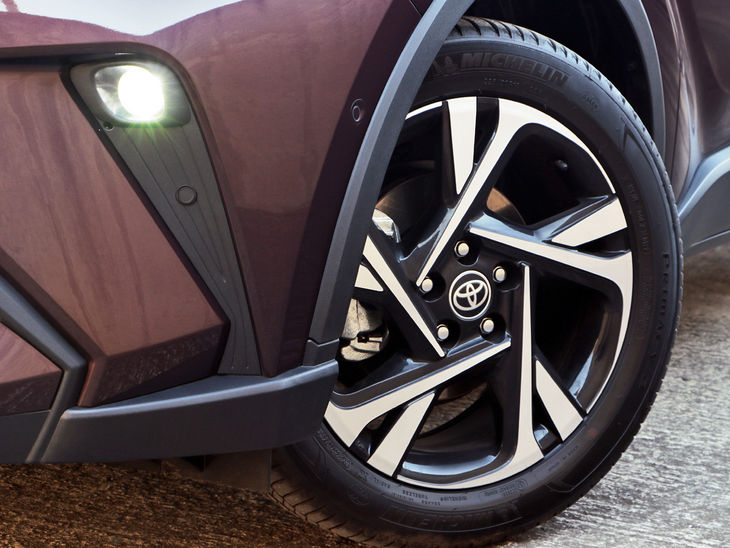
So, what do the latest revisions bring? Well, the local line-up still consists of four derivatives, with the mid-spec Plus and top-spec Luxury variants scoring fresh 18-inch alloy wheels wrapped in 225/50 R18 rubber (complemented by a space-saver spare wheel to “enhance” luggage capacity).
Plus and Luxury variants gain a new 18-inch alloy-wheel design.
In addition, the C-HR exterior colour palette has been tweaked, gaining options already employed by some other Toyota-badged passenger cars (including Celestite Grey) as well as introducing some fresh hues. The base and Plus models feature a choice of 10 exterior paint finishes, which include new Midnight Purple, Fierce Red and Eclipse Black finishes.
The Luxury flagship is offered exclusively in two-tone configuration, with nine combinations available. A black roof complements the selected body colour in all cases bar the new Eclipse Black colour, which instead features a silver-painted roof.
As before, there’s just a single powertrain available. The turbocharged 1.2-litre, 4-cylinder petrol engine sends 85 kW and 185 Nm to the front axle through either a 6-speed manual gearbox or a continuously variable transmission (CVT).
A reminder of the C-HR’s standard specification
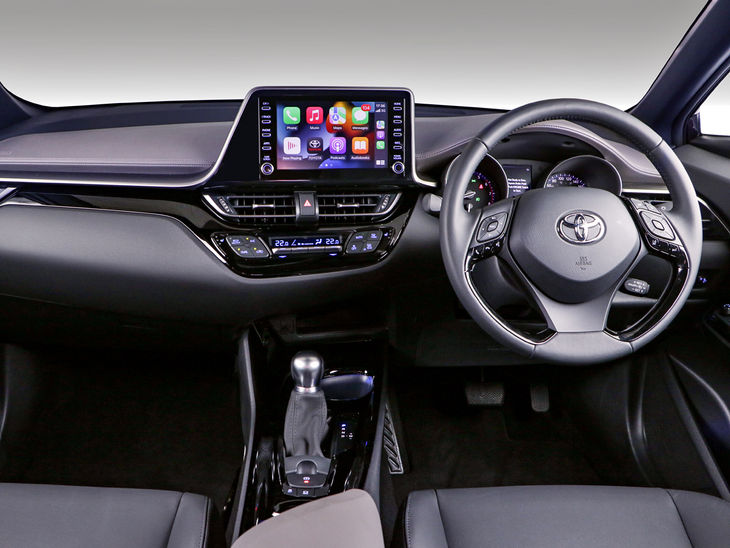
No changes appear to have been made in the cabin.
The base model ships standard with items such as daytime running lights, automatic LED headlamps, air conditioning, a tilt-and-telescopic adjustable steering column, an 8-inch touchscreen audio system (with Apple CarPlay and Android Auto functionality) and a reversing camera.
Plus variants add front foglamps, rain-sensing wipers, a leather finish for the steering wheel, cruise control and an auto-dimming rear-view mirror, while the standard air conditioning is upgraded to a dual-zone climate control arrangement.
Finally, the top-spec Luxury grade boasts parking sensors, an intelligent parking system, keyless entry and start, partial leather upholstery and bi-LED headlamps with sequential indicators. The side mirrors, meanwhile, are retractable and the foglamps are upgraded to LED items. The Luxury model furthermore features the full Toyota Safety Sense system, including items such as a pre-collision system, automatic high beams, rear cross traffic alert, blind-spot monitoring, adaptive cruise control and lane-departure alert with lane-trace functionality.
How much does the Toyota C-HR cost in South Africa?
Toyota C-HR 1.2T – R429 000
Toyota C-HR 1.2T Plus – R465 200
Toyota C-HR 1.2T Plus CVT – R479 100
Toyota C-HR 1.2T Luxury CVT – R554 500
All C-HR models come standard with a 6-service/90 000 km service plan (with intervals of 15 000 km) and a 3-year/100 000 km warranty.
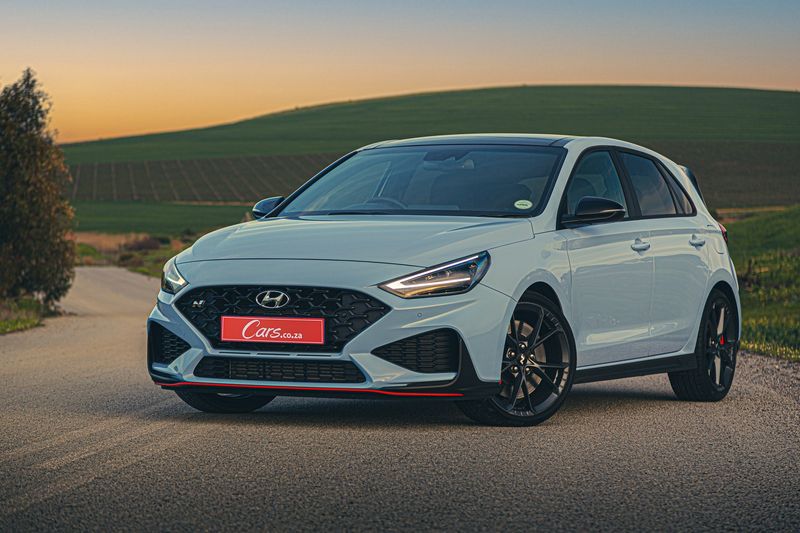
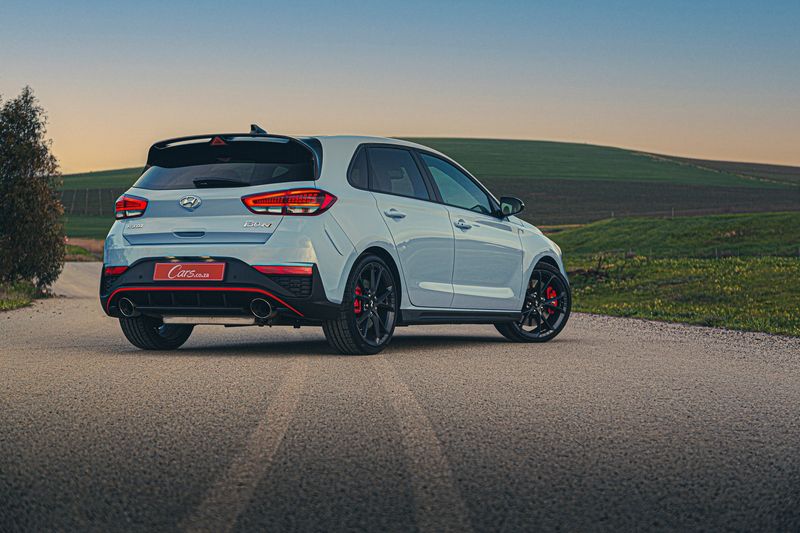
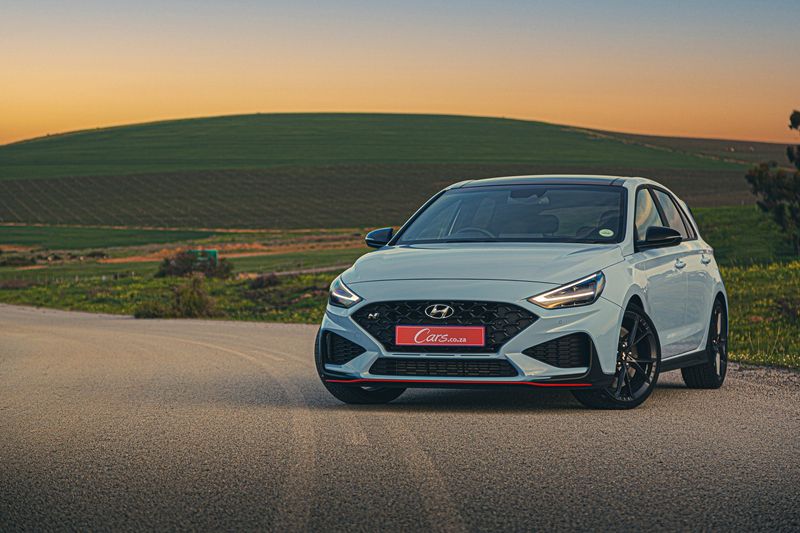
Hyundai i30 N (2022) Review
Now armed with a quick-shifting dual-clutch automatic transmission, the facelifted Hyundai i30 N offers much improved usability, but how good is it really? We travelled more than 1 500 km in the newcomer – arguably the only true rival to the VW Golf 8 GTI in the new-vehicle market – so that we could compile this comprehensive assessment.
We like: Arresting appearance, generous list of standard features, drive-mode customisation, exhaust note, performance, handling.
We don’t like: Notably firm ride quality, fuel consumption can creep up, unexciting interior.
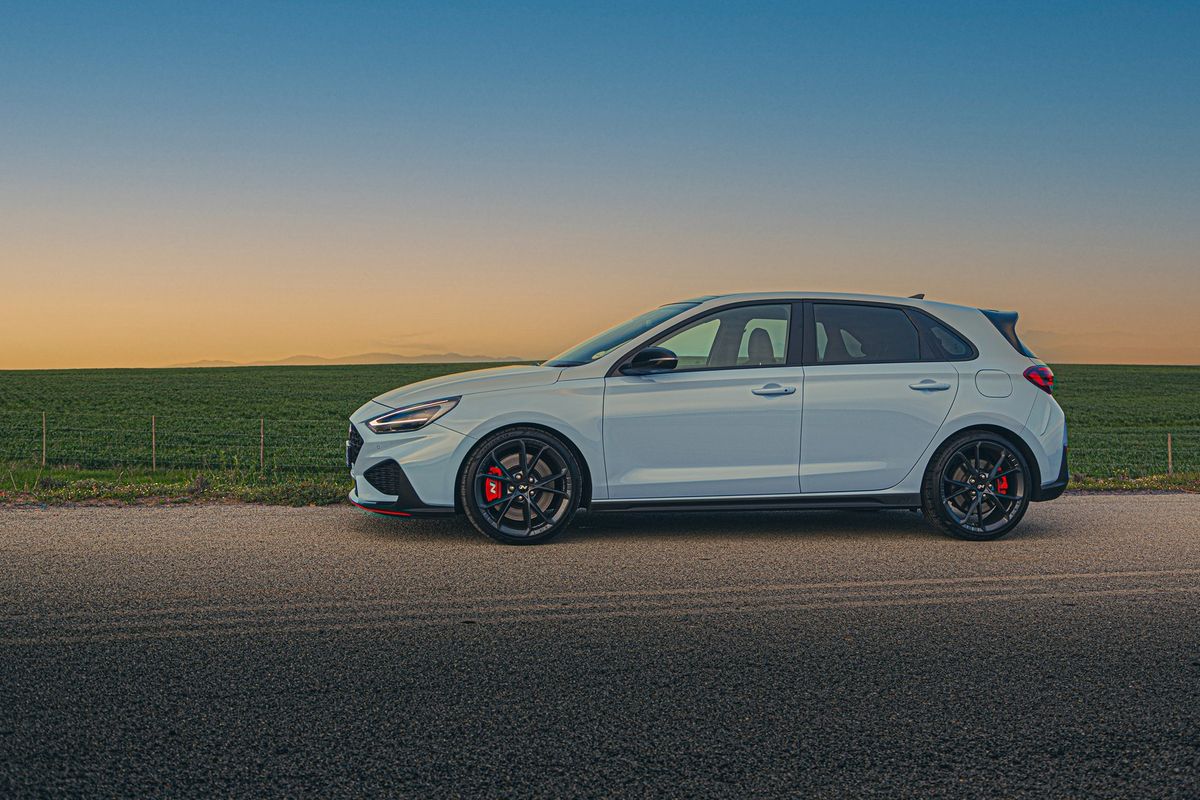
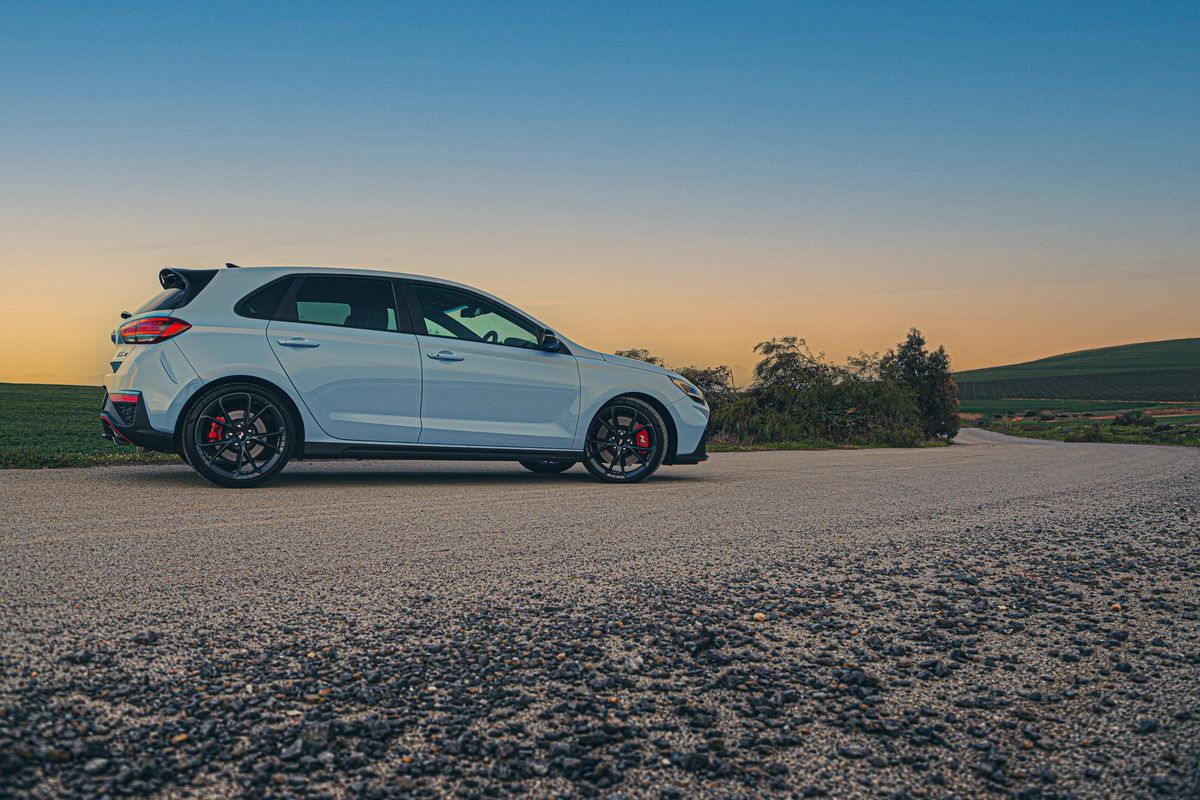
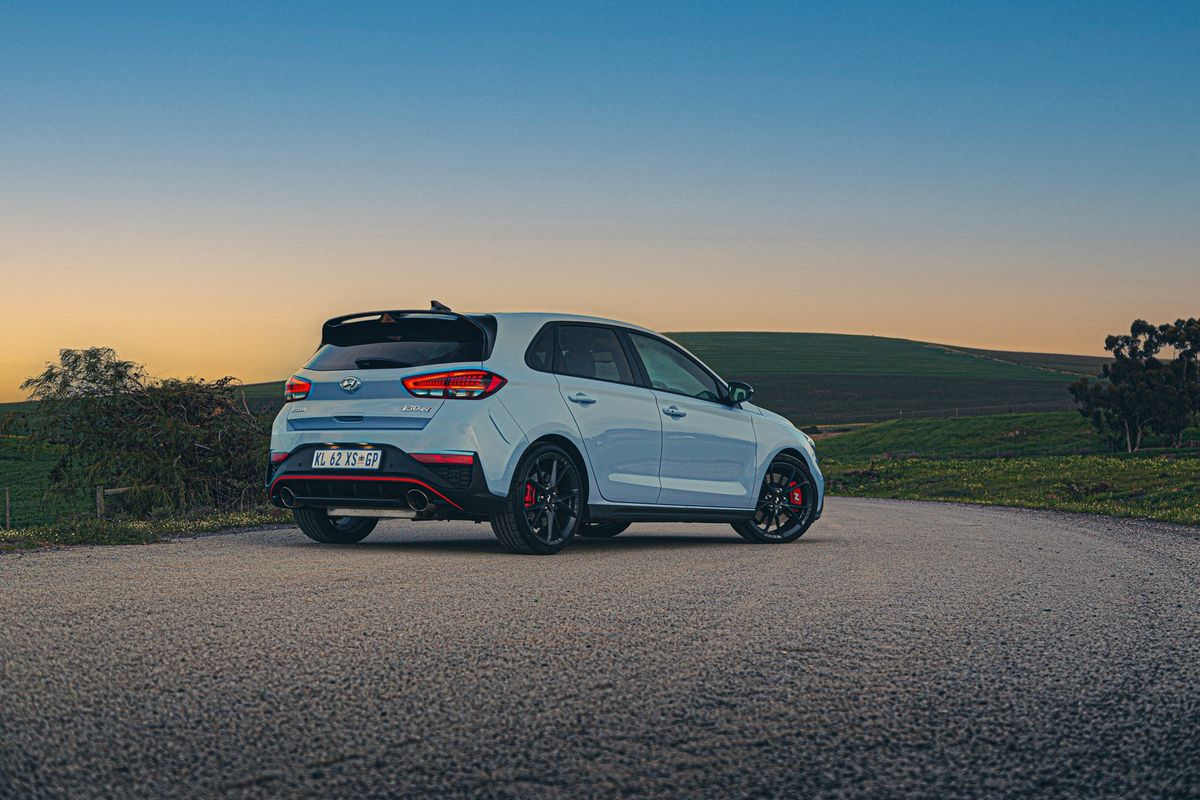
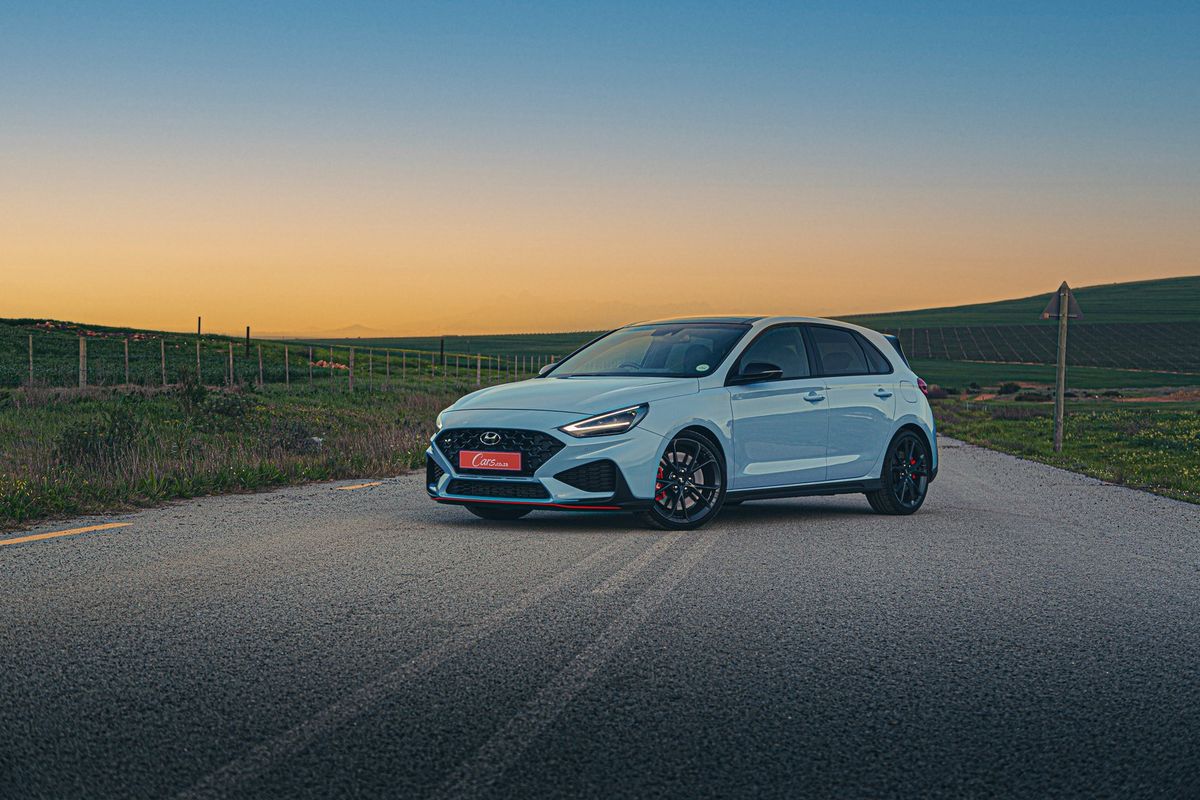
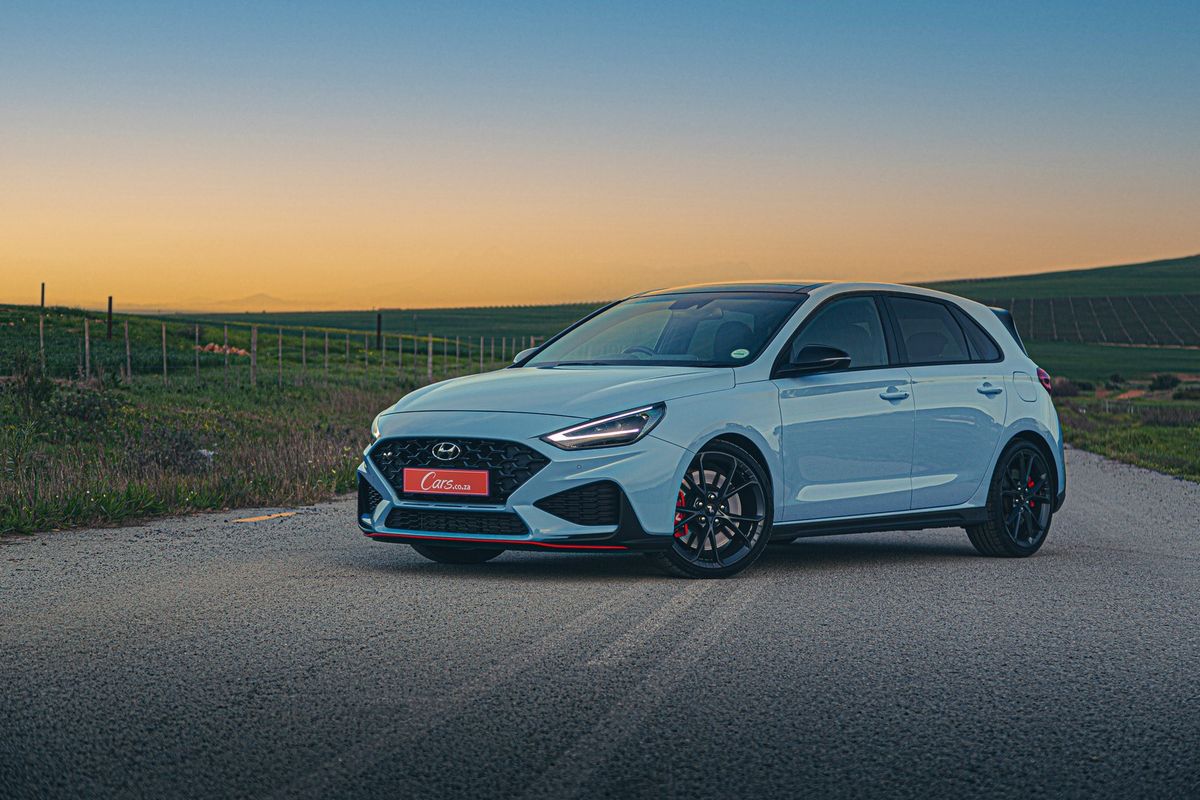
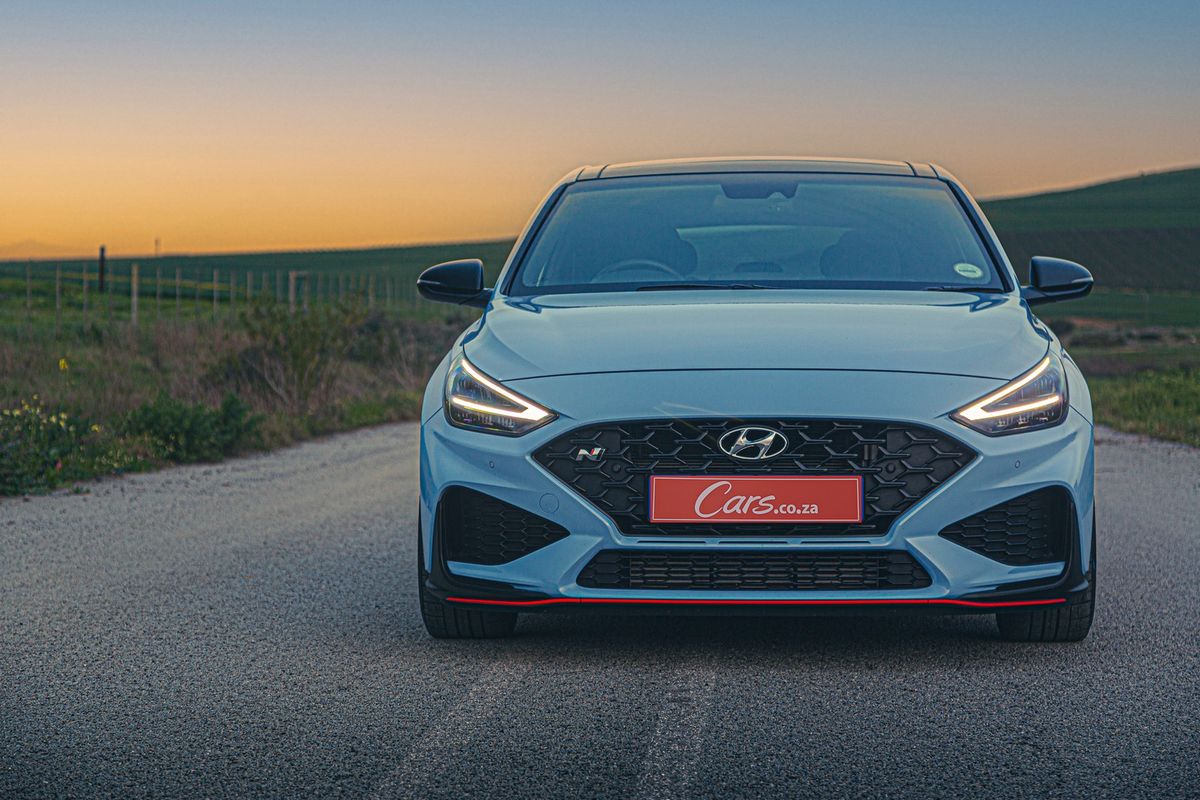
Hyundai i30 N finished in Performance Blue Metallic – the best colour for it!
Not all that long ago, several mainstream manufacturers produced front-wheel-drive (FWD) hot hatches. Remember when the Ford Focus ST, Honda Civic Type R, Mazda3 MPS, Opel Astra OPC and Renault Mégane RS were snapping at the wheels of Volkswagen’s segment-leading Golf GTI? These days, just a handful of compact FWD hot hatches remain, with the VW (now in its 8th generation) still leading the pack, in terms of sales numbers, anyway.
Hyundai’s goal with its i30 N – the 1st product of the brand’s N (performance) division – was simple, but lofty: take on and beat the Golf GTI. Many have tried, but the GTI has stayed on top of the pile by virtue of its all-round usability, combined with sufficient, if not class-leading, performance and dynamism. Other brands have been able to make hot hatches that are faster and more engaging to drive, but usually at the expense of general driveability.
Has Hyundai nailed the hot hatch brief? Yes, by and large.
The Korean brand is well aware of the fine balance it needs to achieve between entertaining driving dynamics and punchiness on the one hand, and comfort, luxury, plus practicality, on the other. The pre-facelift version of the Hyundai i30 N was offered exclusively with a 6-speed manual ‘box in South Africa, which pleased the purists, but limited its general appeal.
There’s a reason why the Golf GTI is no longer offered in our market with a three-pedal setup – the overwhelming majority of buyers want that vrrr-pha! (and practicality) that the DSG automatic offers. We peeked at the used stock on our site and found a low-mileage manual-shift i30 N is listed at about the same price as a brand-new Volkswagen Polo GTI…
A Golf GTI, a Civic Type R… or this? FWD hot-hatch choices are limited these days.
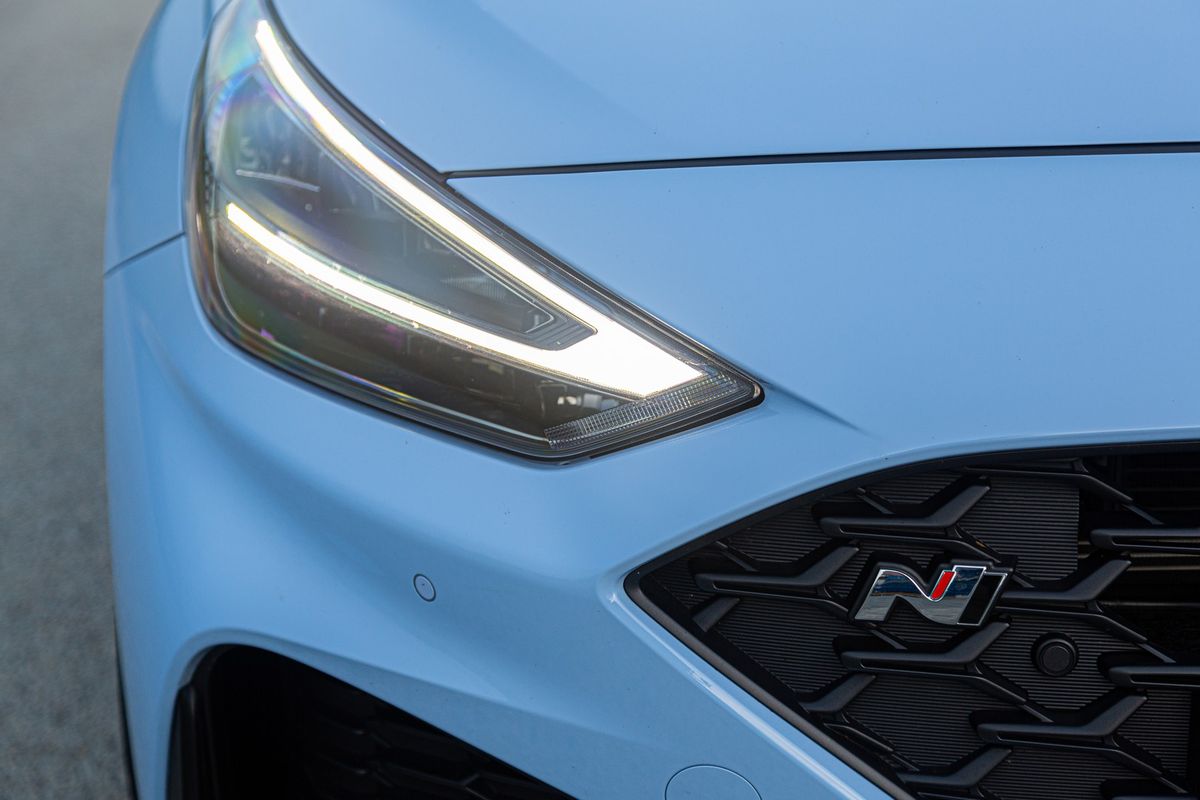
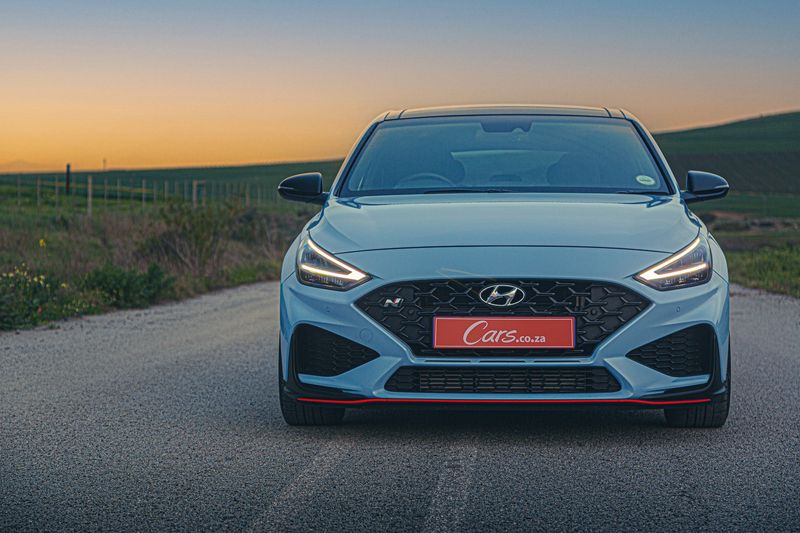
However, for 2022, the facelifted Hyundai i30 N comes to market with an 8-speed dual-clutch automatic transmission. The updated i30 N is fractionally longer and lower than the outgoing derivative, fitted with forged alloy wheels that save 14 kg of weight and the new-look front end is adorned with neater daytime-running lights integrated into the headlamps.
As for the Hyundai’s rivals, at the top of the list is the Golf 8 GTI, followed by the outgoing Honda Civic Type R (the new model will arrive in Mzansi early next year). If you’re looking for a premium-badged model, consider the BMW 128ti, Mercedes-Benz A250 as well as the Mini JCW.
The facelift features neater-looking daytime running lights.
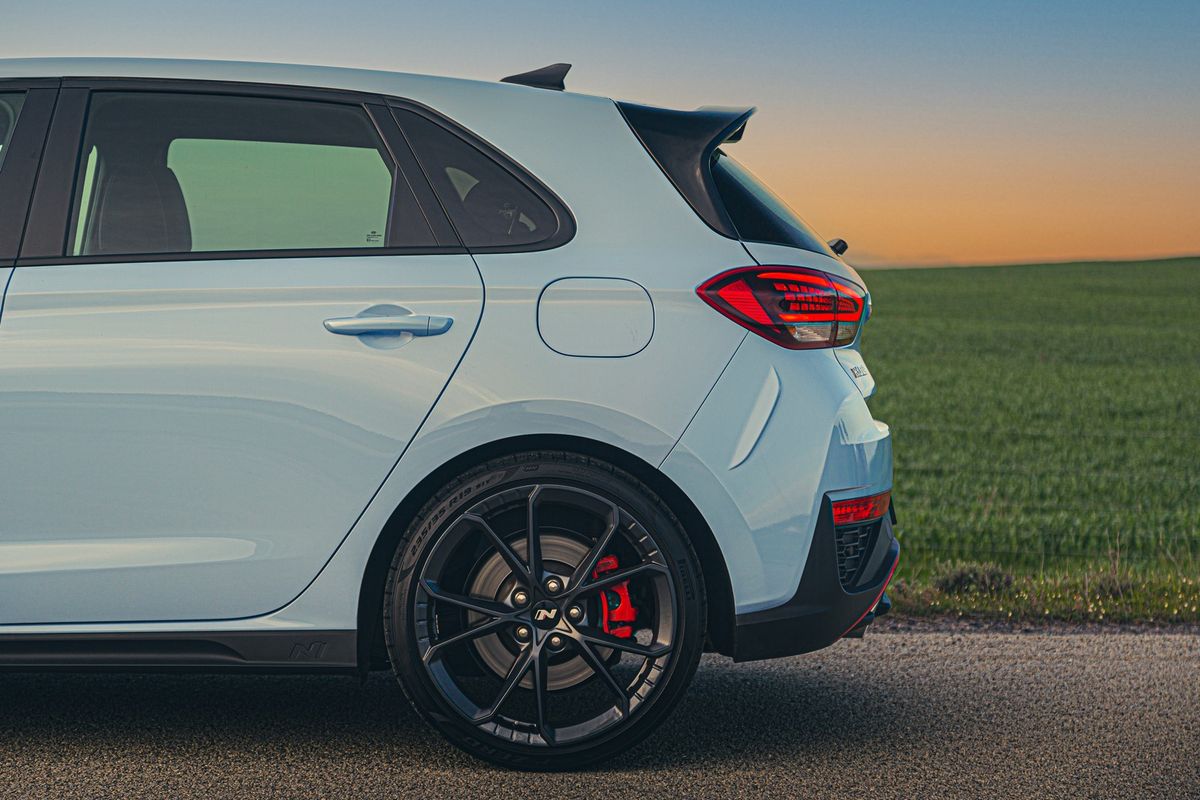
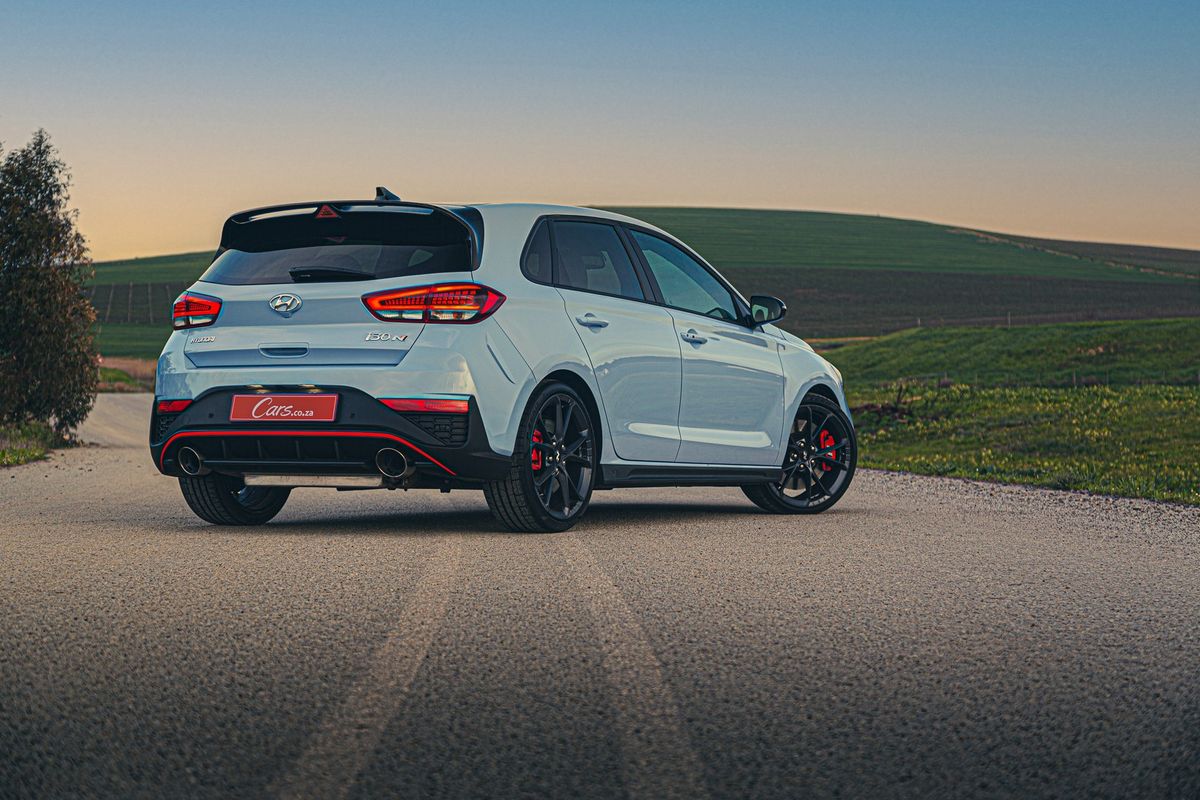
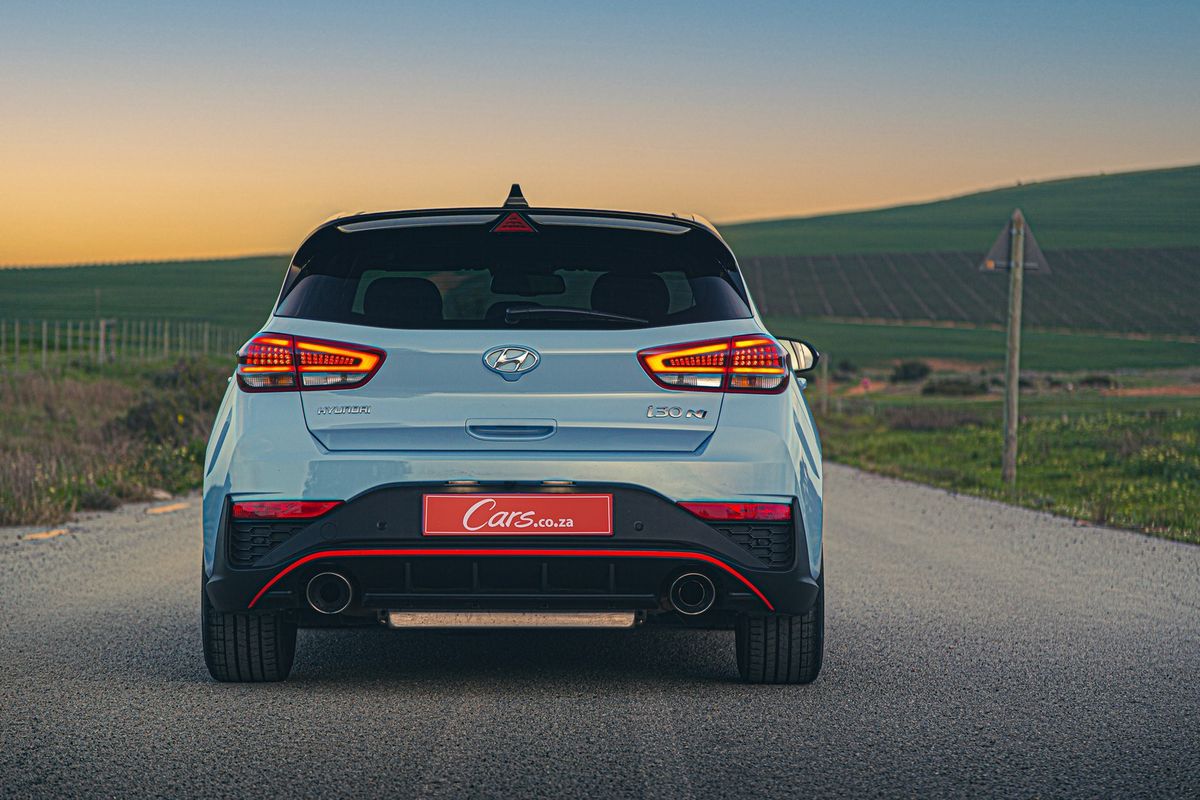
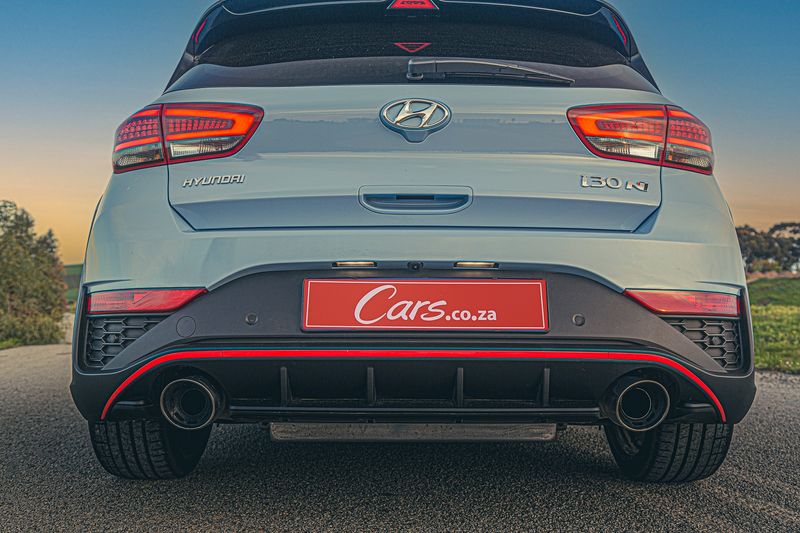
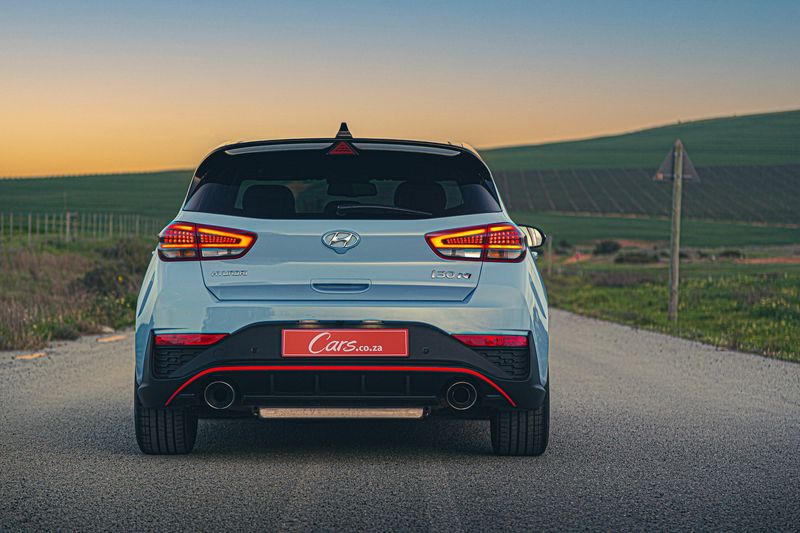
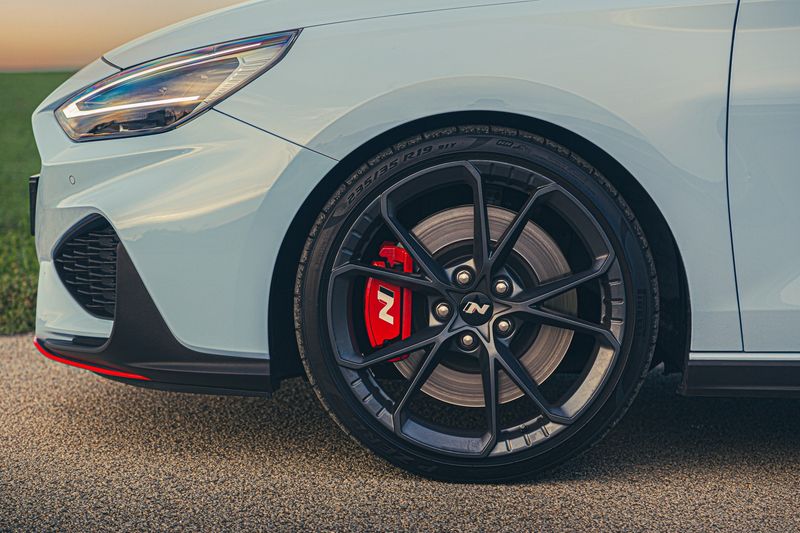
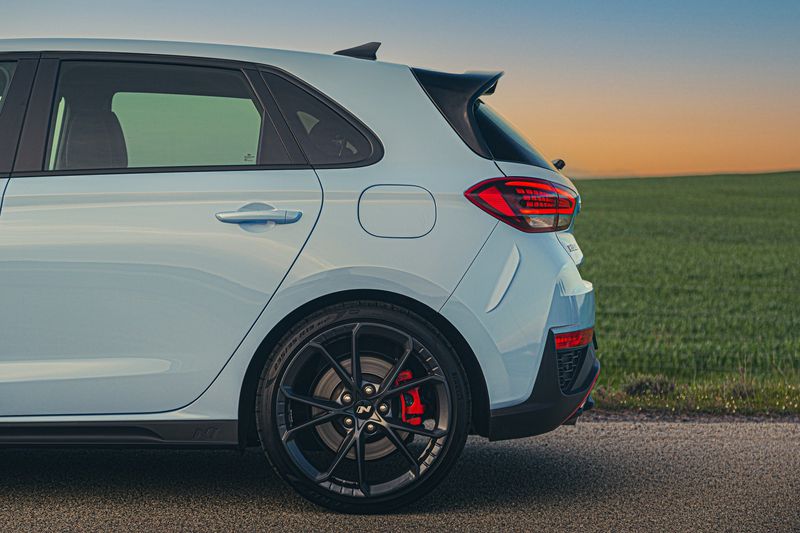
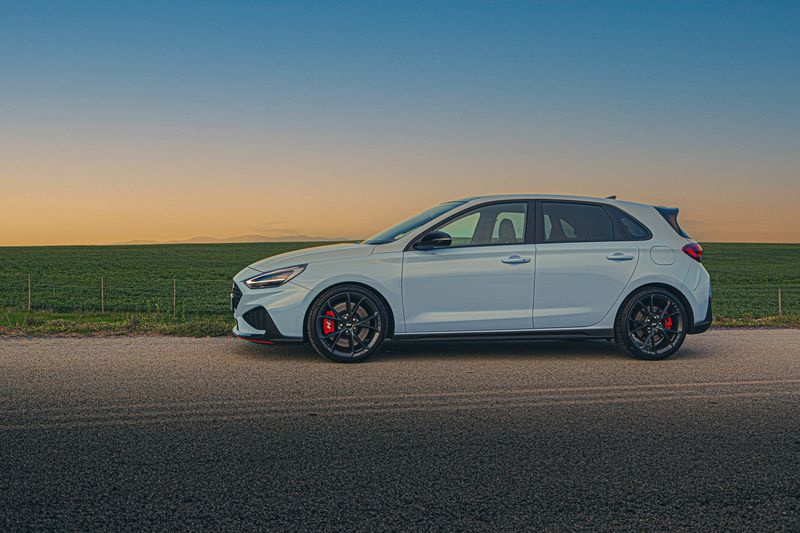
With a sharper-looking front end, complemented by red detailing and subtle N badges, the Hyundai i30 N looks suitably purposeful. Some would say the overall look is overdone, but then this is a hot hatch – it needs to make a statement even before you’ve blipped the throttle. At each corner is a smart-looking alloy wheel wrapped in a Pirelli P Zero 235/35 R19, the tailgate is adorned with a sizeable gloss-black wing and a pair of cannon-barrel-sized exhaust ends jut out at either end of the diffuser (they’re not just for show, but more about that later).
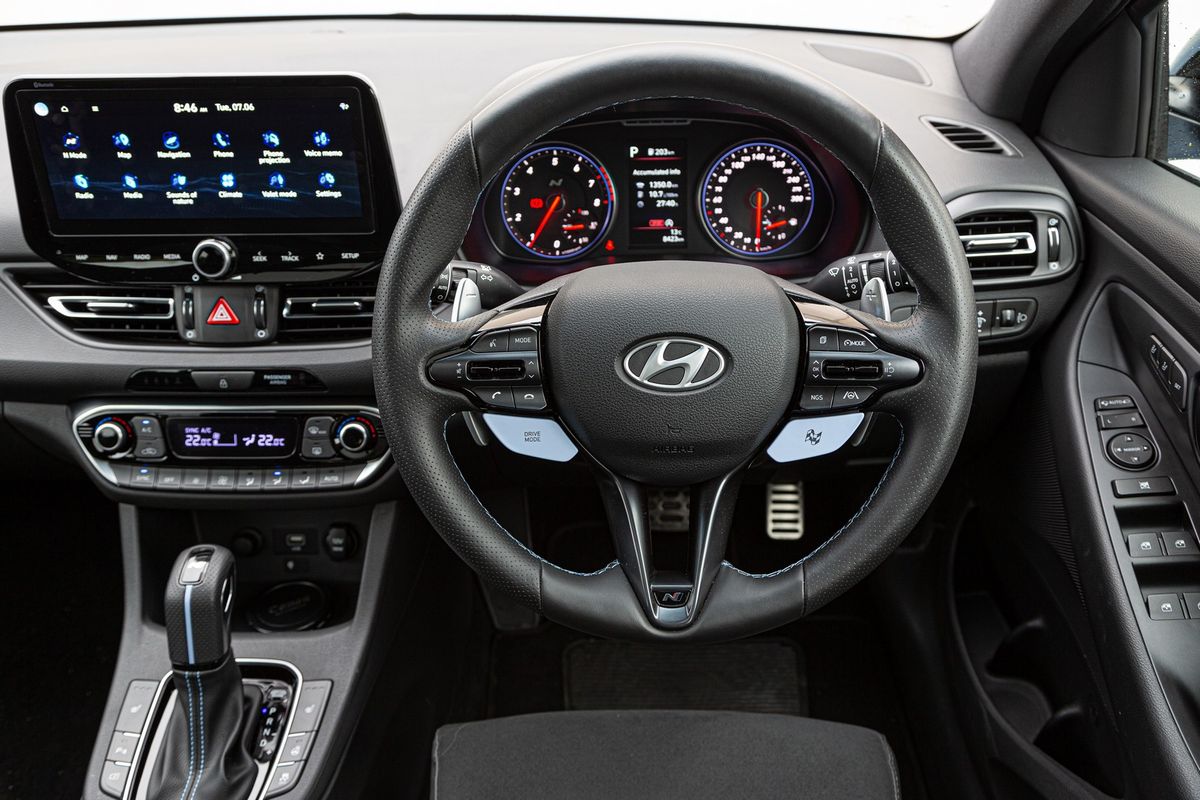
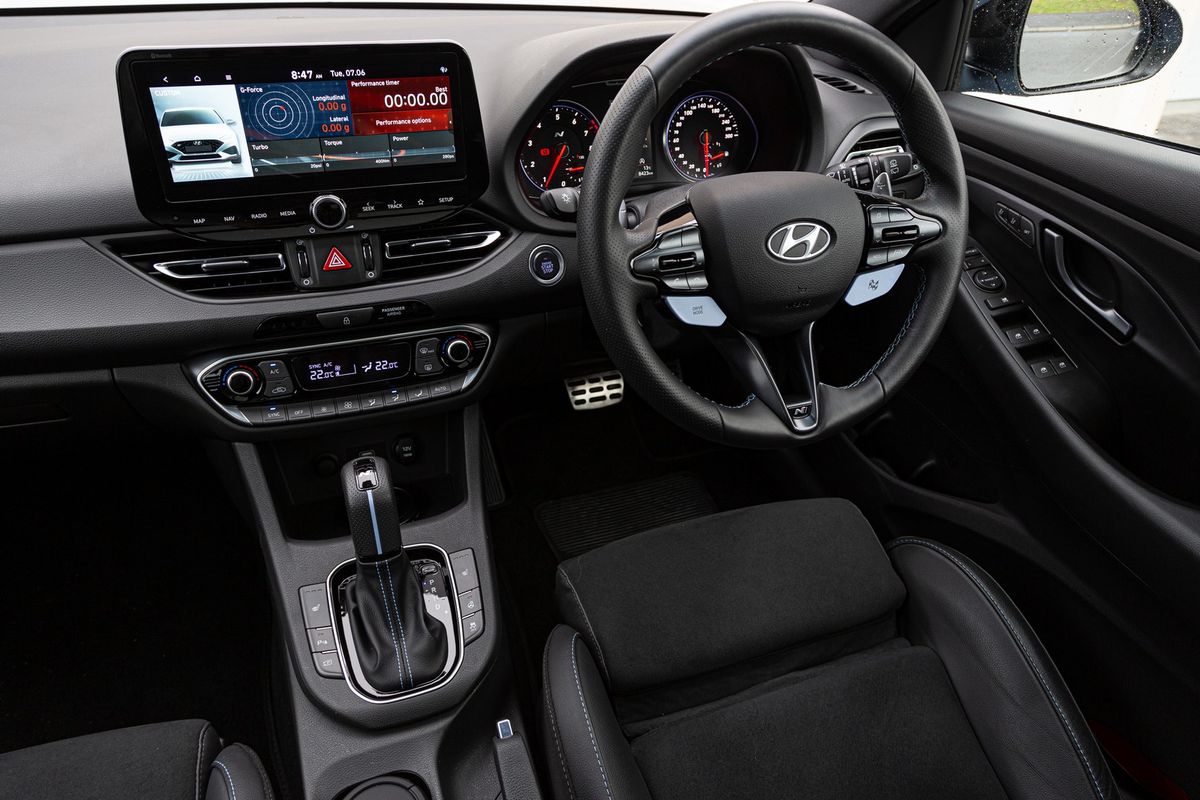
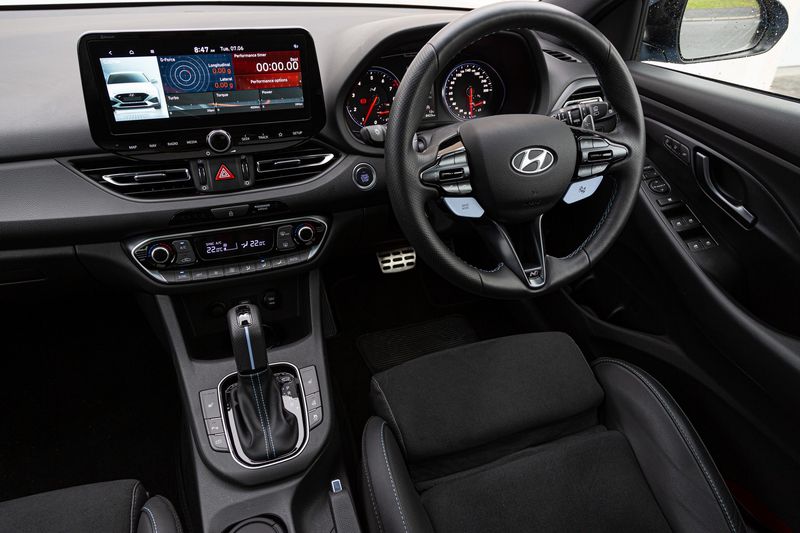
Not the most inspiring of cabins, with its black-on-black colour scheme, but it’s nicely finished.
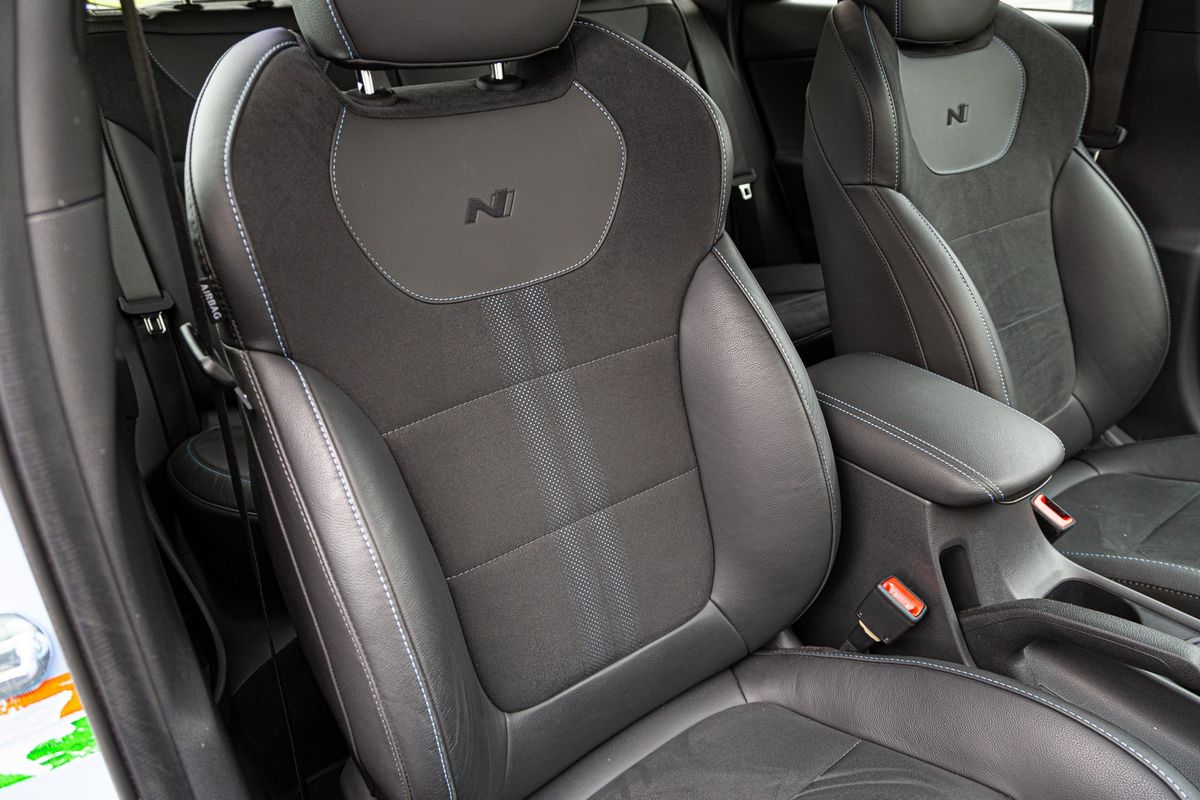
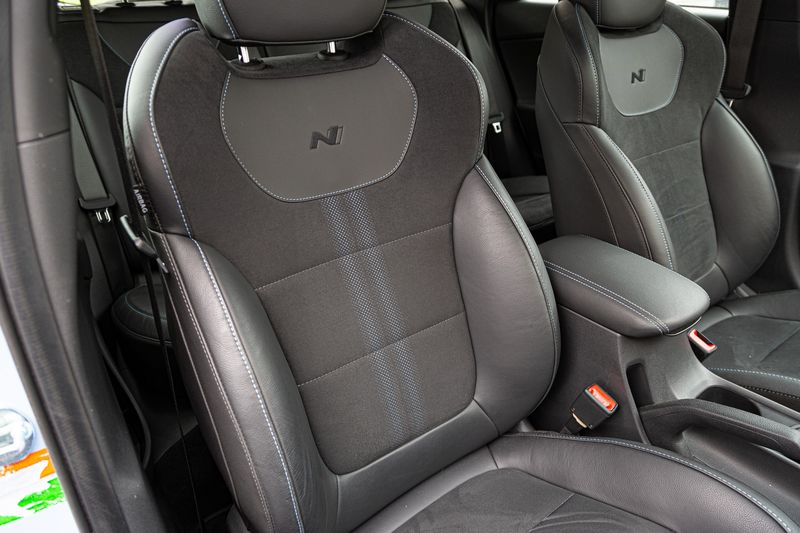
Compared with the i30 N’s attention-grabbing exterior execution, the interior seems a trifle underwhelming. However, once you’re seated in the form-hugging suede/leather-trimmed sport driver’s seat (both front seats are heated and offer various avenues of adjustment) and take stock of your surroundings, you get the full effect. The cabin materials feel plush to the touch and the layout is ergonomically sound. The centrally-mounted infotainment screen is a European-spec item (the vehicle is built in the Czech Republic) and thus looks considerably more upmarket than those fitted in Hyundai SA’s more, um, budget-oriented hatchbacks.
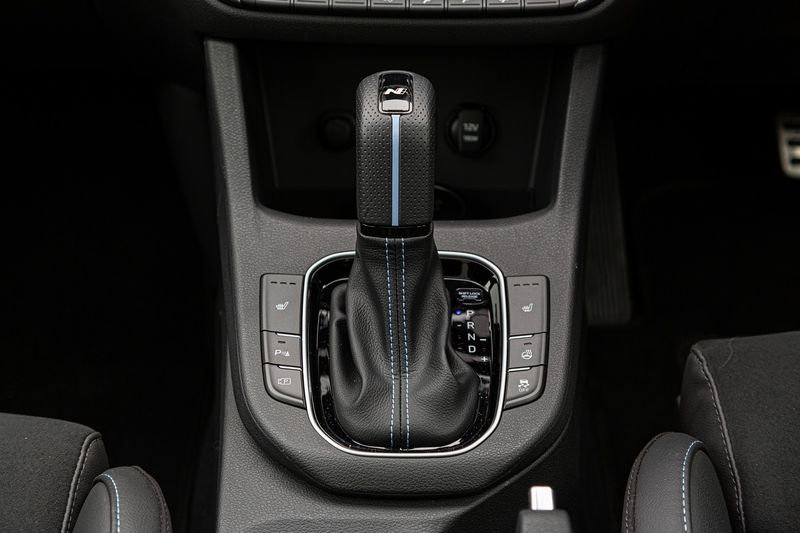
Who knew that an 8-speed DCT would make all the difference?
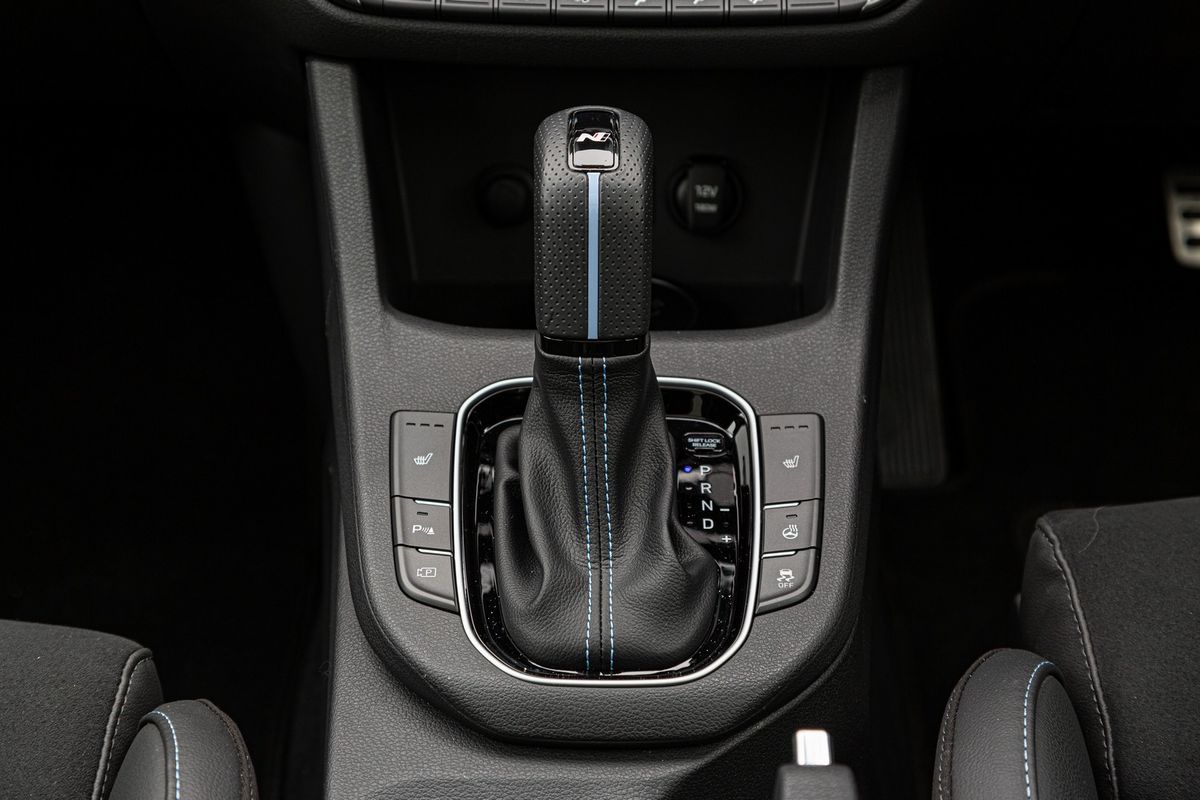
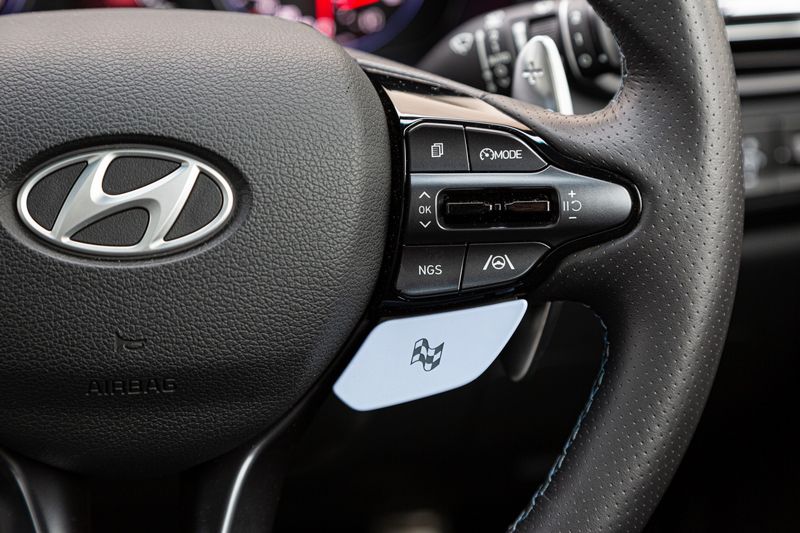
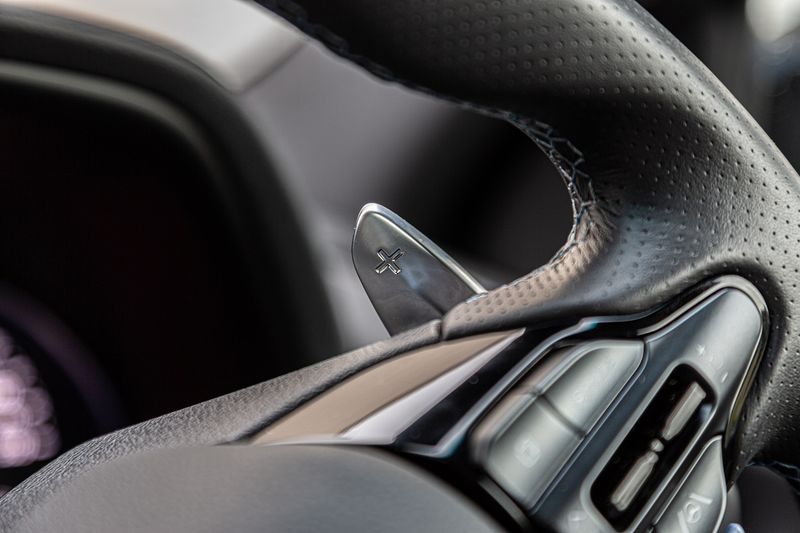
Besides, the important things, such as the steering wheel and transmission lever, feature N touches. The former is adorned with well-placed and -weighted gearshift paddles, as well as large, light blue buttons (one for drive-mode selection and the other with a chequered-flag logo), while the latter has a subtle N badge, an accent stripe and stitching on the leather trim).
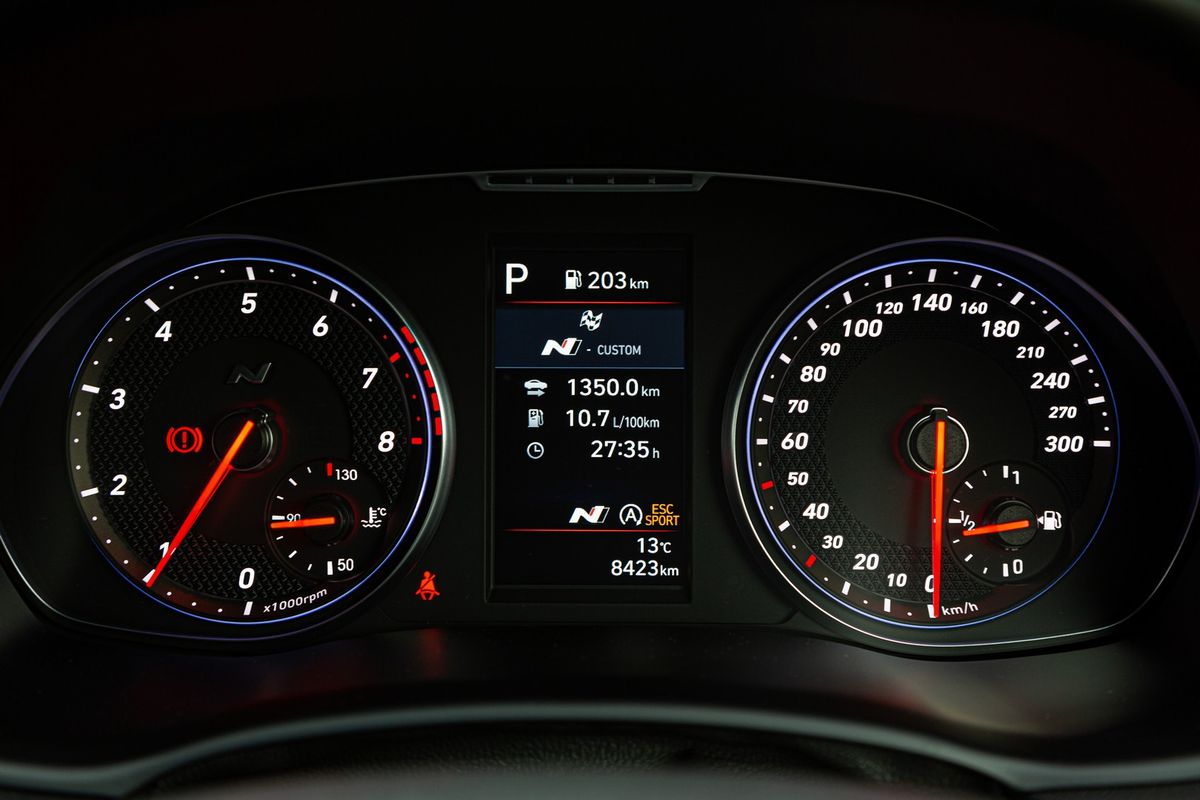
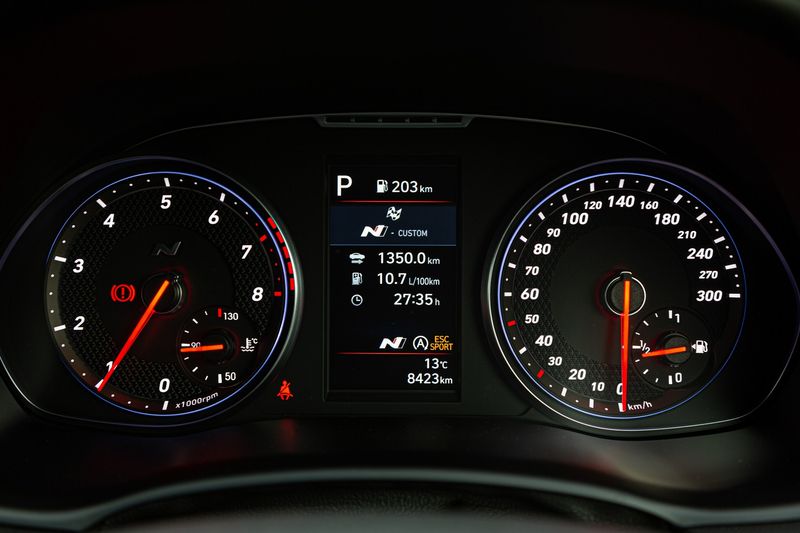
A digital instrument cluster (as featured in the GTI) would have been nice – the Kona N has one, after all – but we could live with the analogue dials; they’re neat and highly legible.
These seats look the part and are comfortable on long(er) trips.
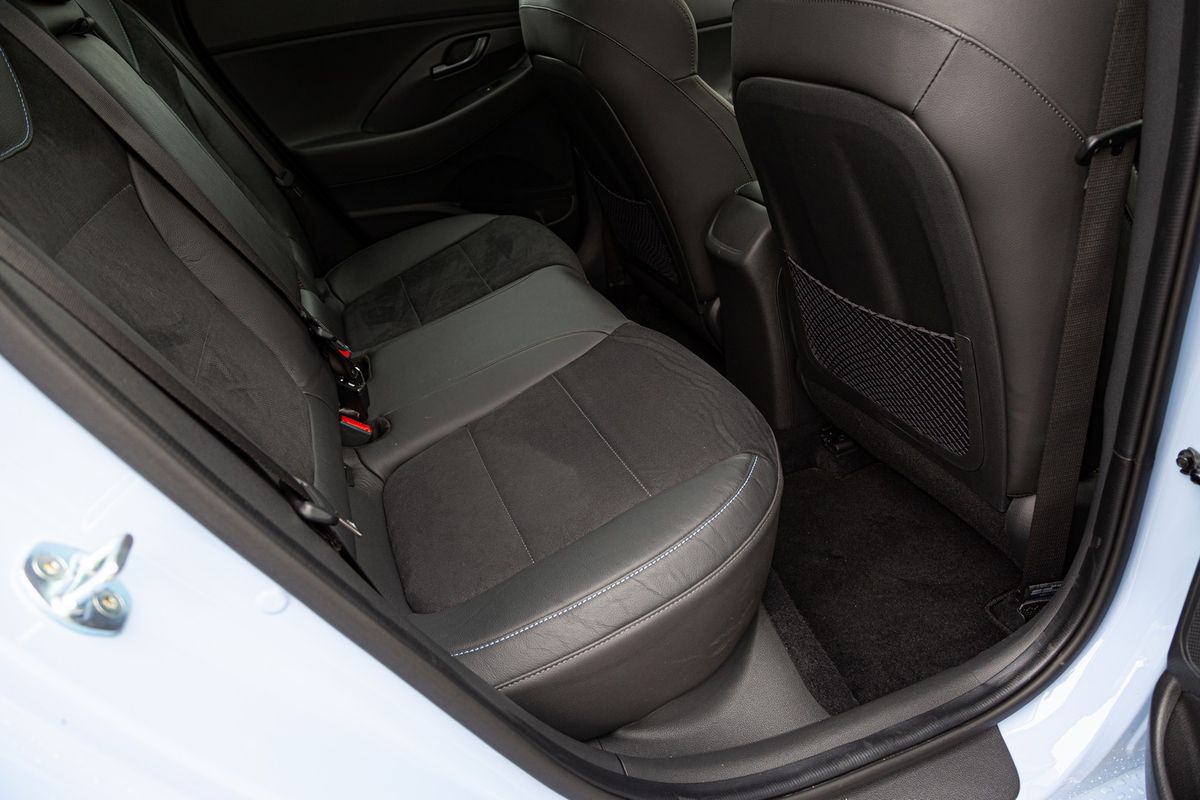
Of course, a hot hatch also needs to be reasonably practical and the i30 N doesn’t disappoint in that regard. Rear legroom is fair (it can seat four adults in reasonable comfort), and the load bay (381 litres) is the second largest in the segment (next to the Civic Type R). When the test unit was used to travel to a long-weekend getaway destination, it accommodated 2 suitcases, cooler bags and more. The rear seatback can be folded to increase cargo capacity.
Standard features
Hyundai has crammed the i30 N full of comfort and convenience features. There are no “options” – apart from your preferred exterior finish (of which there are 5 to choose from). We’ve compared the standard specification of the i30 N and that of the Golf 8 GTI and suffice to say you’ll have to fork out extra to bring the Volkswagen up to the Hyundai’s spec.
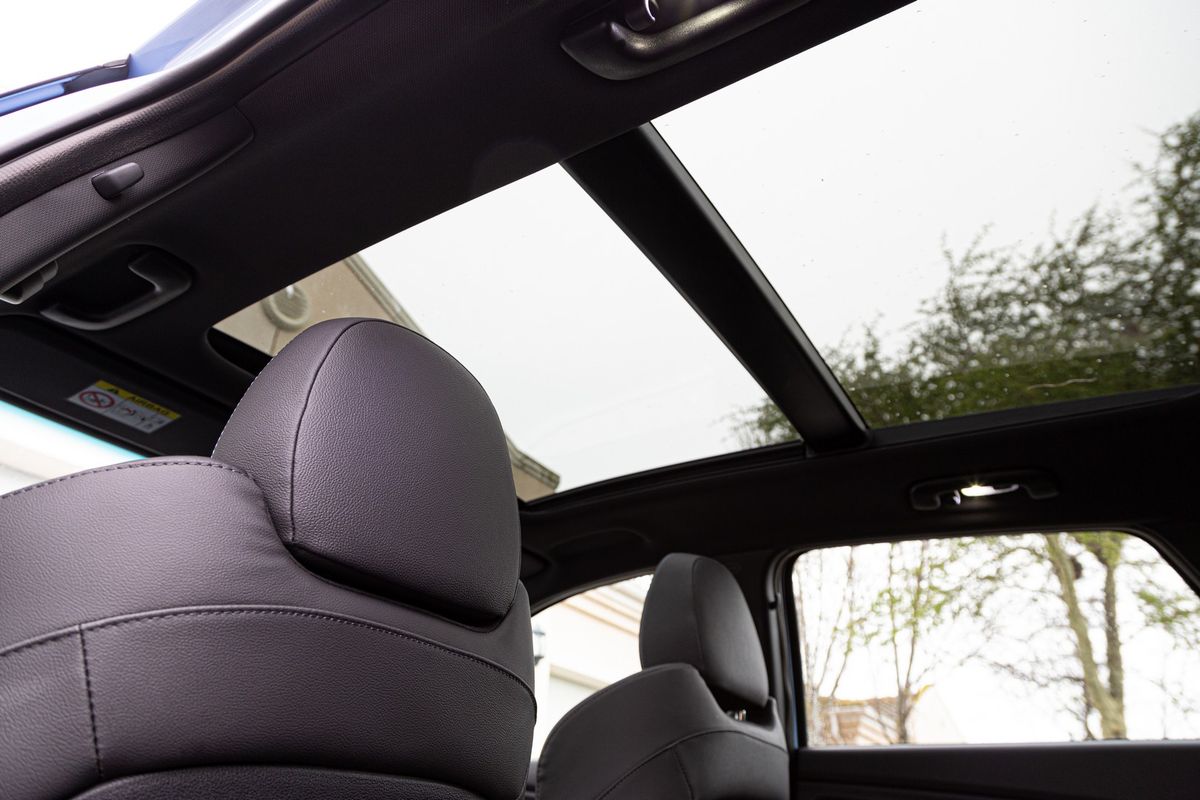
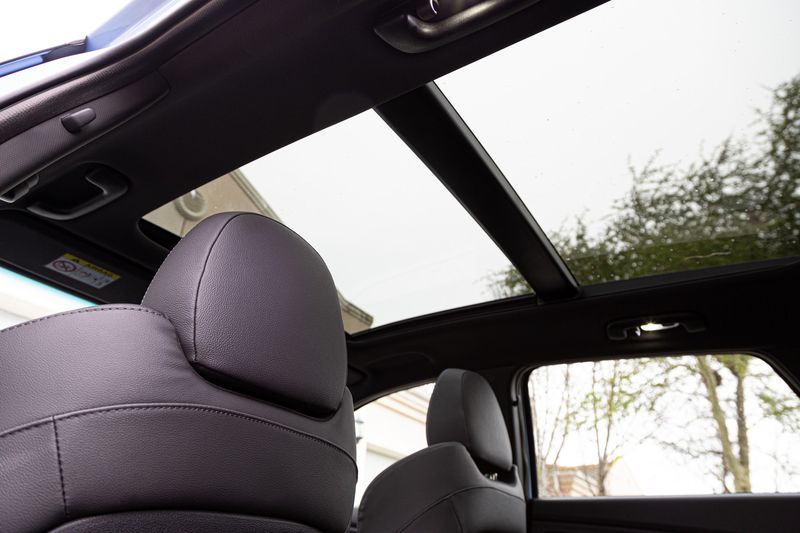
The standard panoramic sunroof beefs up the i30 N’s luxury specification considerably.
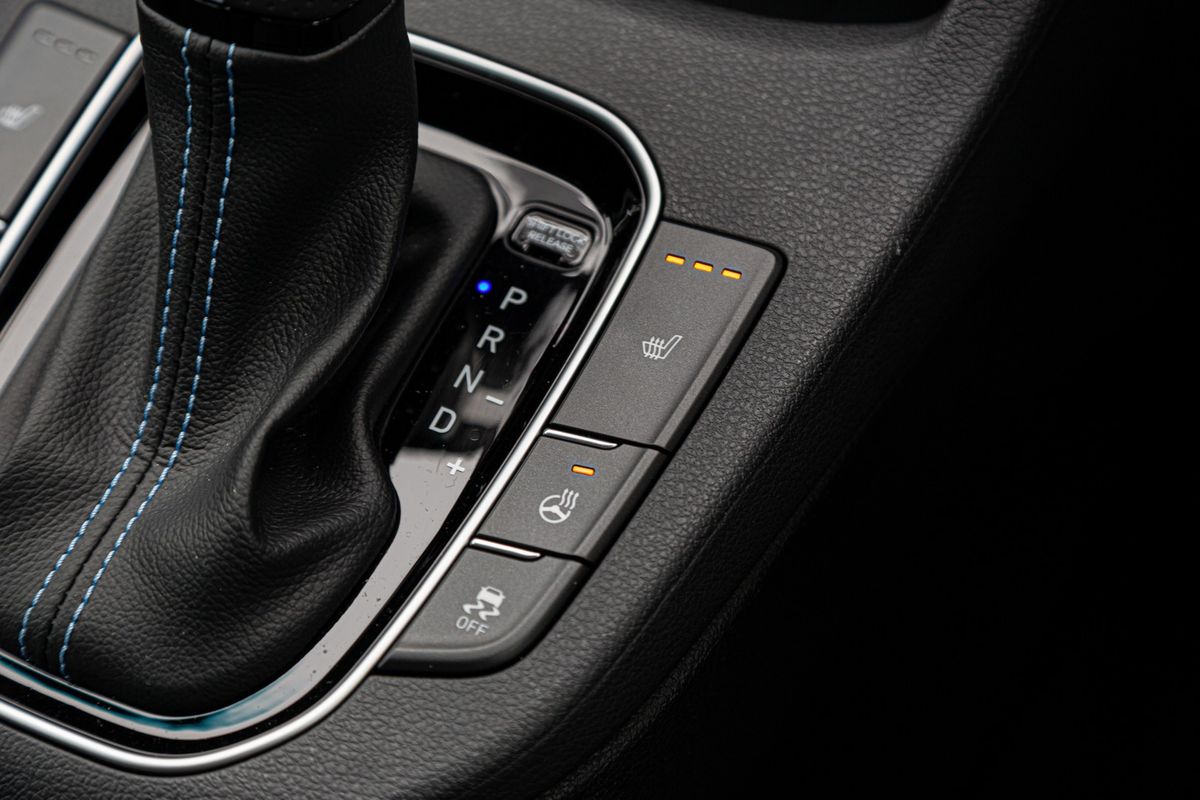
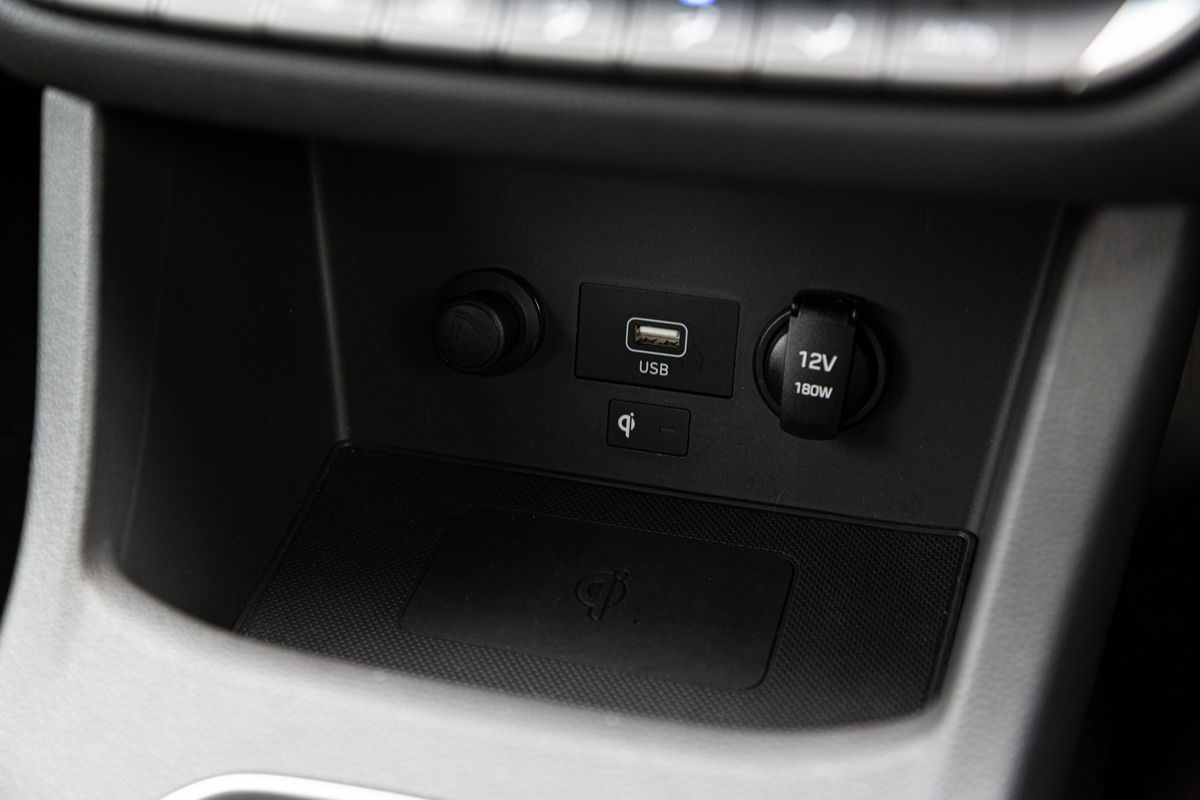
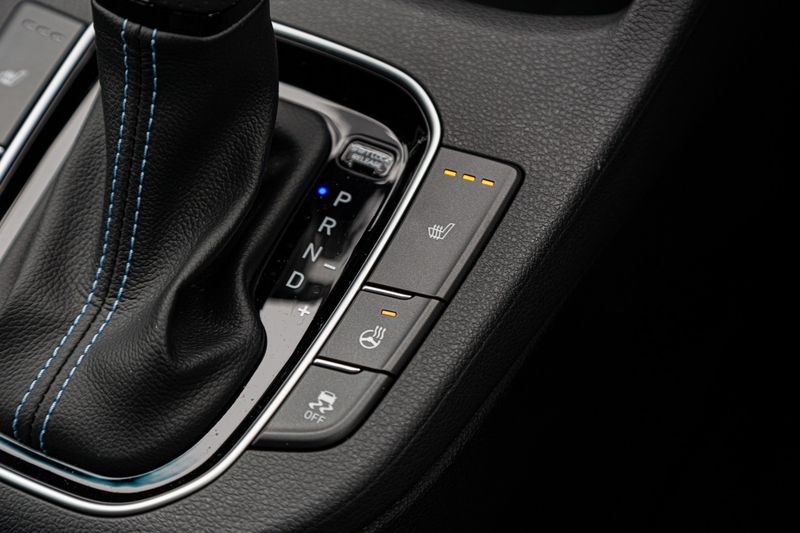
In fact, we think Hyundai has got the i30 N’s interior specification spot on. A heating function for the front seats and ‘wheel is nice to have in the winter months, while the full-length panoramic sunroof lends an airy ambience to the cabin. For the always-connected generation, the vehicle comes with a wireless charging pad, USB charging port and the 10.25-inch infotainment system is compatible with Apple Carplay and Android Auto.
Heated seats and -steering wheel are nice to have in the winter months.
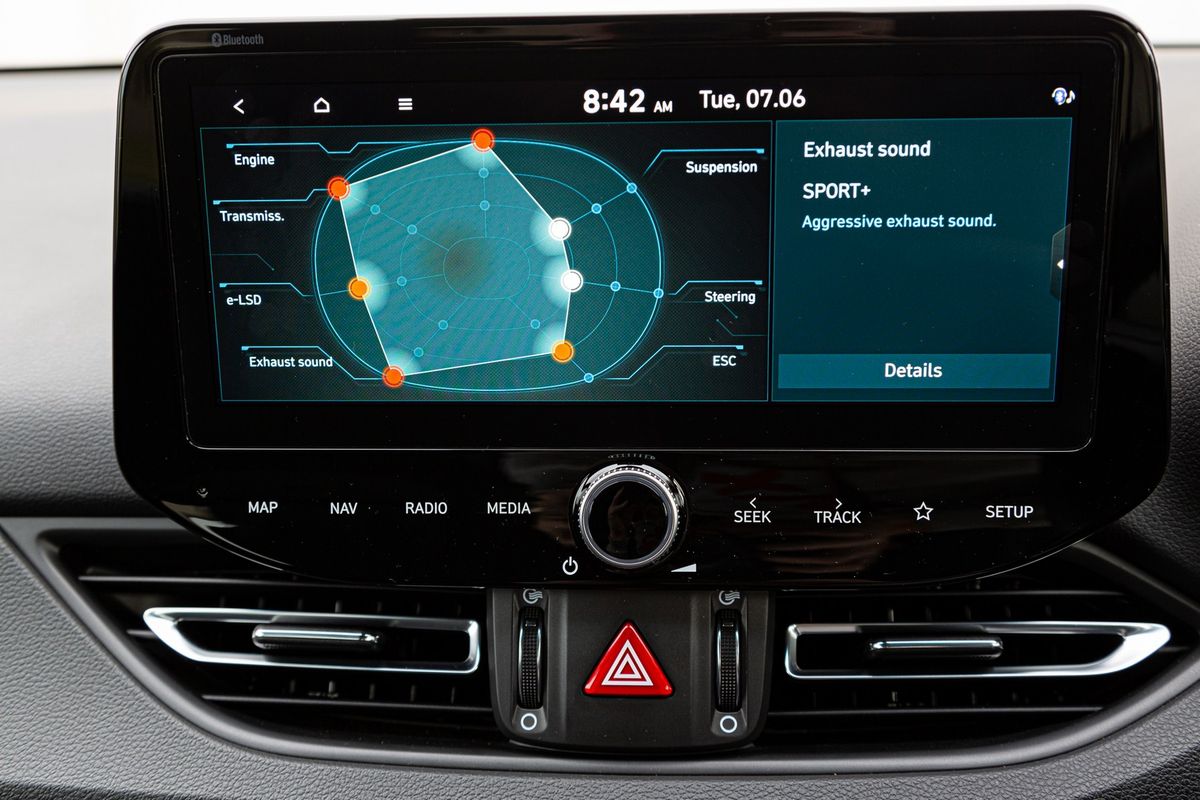
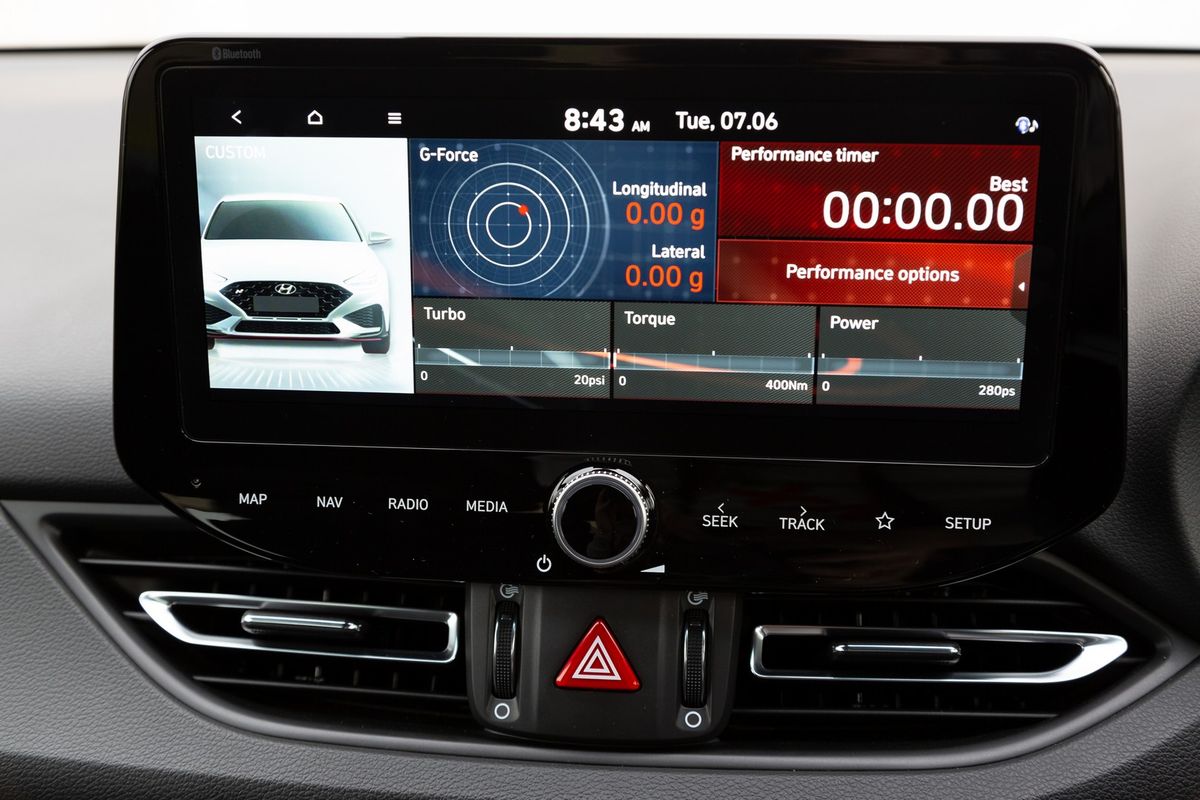
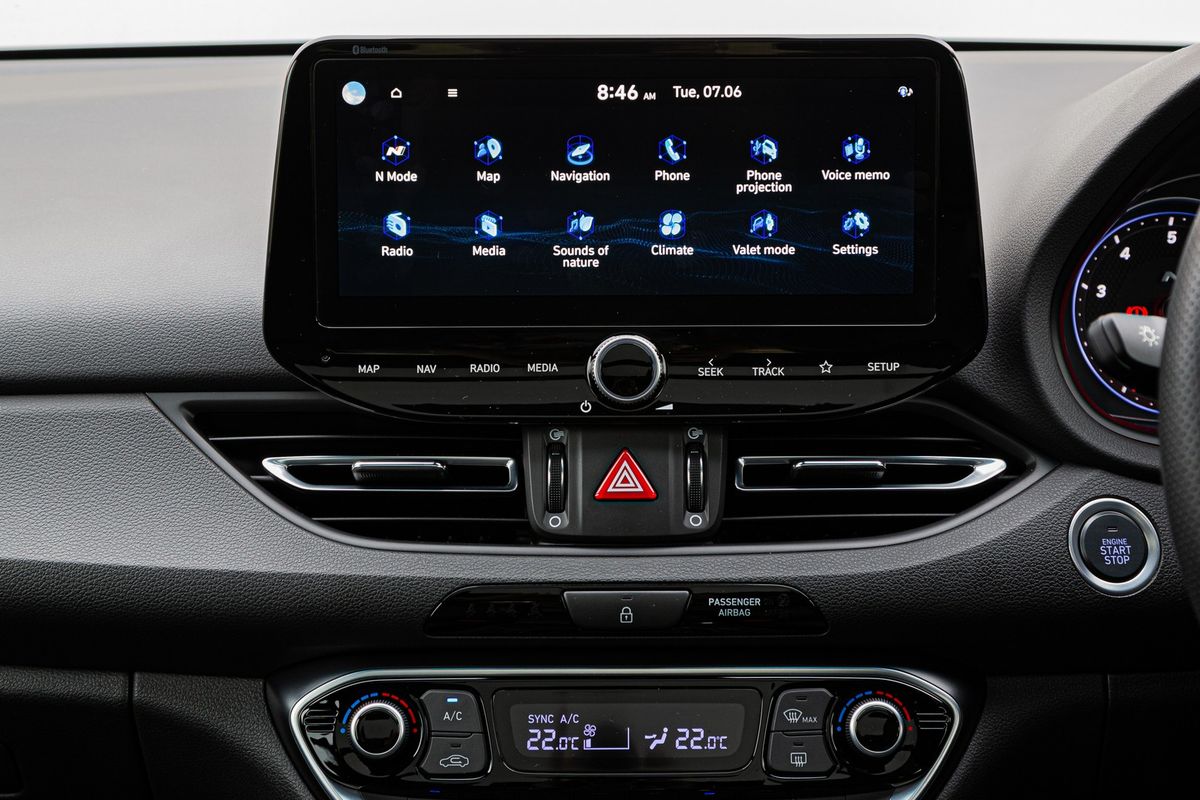
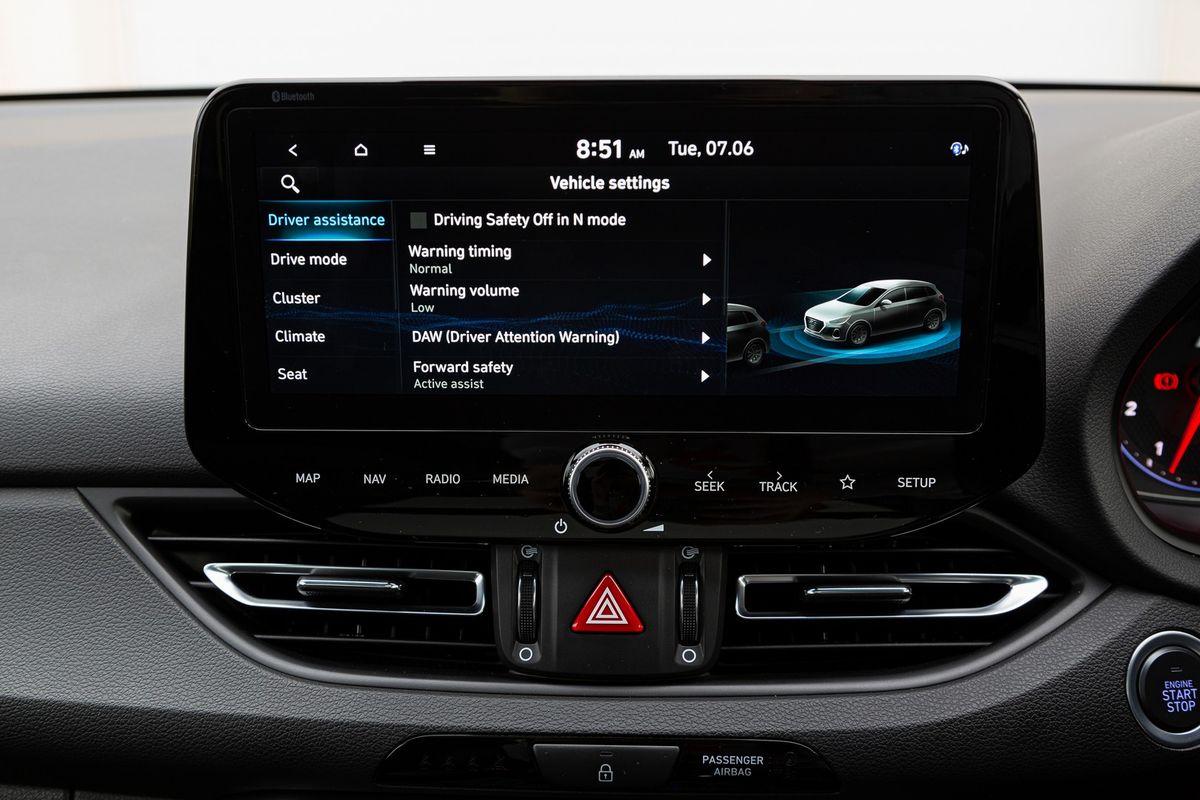
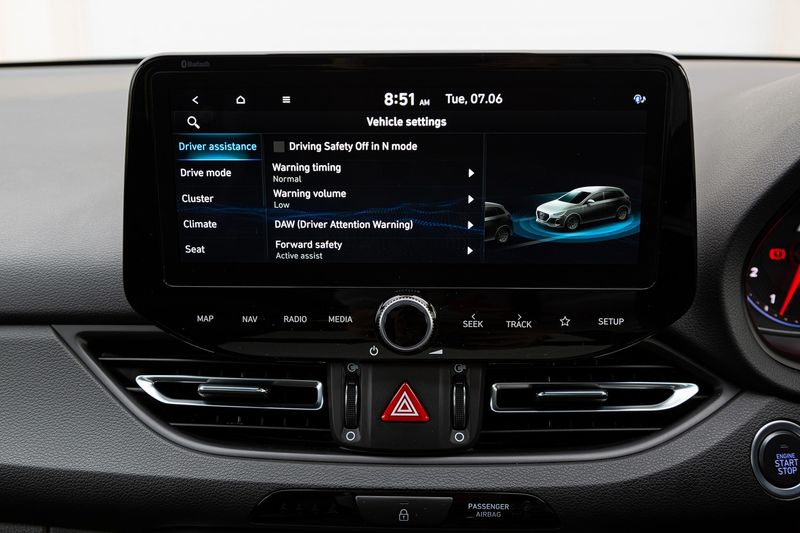
The infotainment system (with built-in satnav) has an assortment of additional content, such as the N menu, which incorporates a lap timer and telemetry, plus you can set up various car systems up to your heart’s content. It will even play sounds of nature to keep you calm in peak hour traffic.
An abundance of safety tech is standard.
Meanwhile, the safety package is truly impressive, with plenty of semi-autonomous features, including forward-collision avoidance, blind-spot collision avoidance, rear cross-traffic alert, radar-guided cruise control, and lane-keeping assist to name but a few. There are 7 airbags.
Performance and Efficiency
As with its predecessor, the i30 N is powered by a 2.0-litre 4-cylinder turbopetrol engine. It produces 206 kW and 392 Nm, with the 8-speed dual-clutch automatic transmission directing power to the front wheels via an electronically controlled limited-slip differential (e-LSD).
Hyundai claims a 0-100 kph time of 5.4 sec and 250-kph top speed – figures that are good enough to position the Hyundai near the top of its segment. The i30 N comes with a launch-control function, but strangely, the vehicle felt a bit quicker when we launched it manually (there was quite a lot of wheelspin under the electronically orchestrated start). If you frequent your local drag strip, you can fine-tune the launch control for that perfect start.
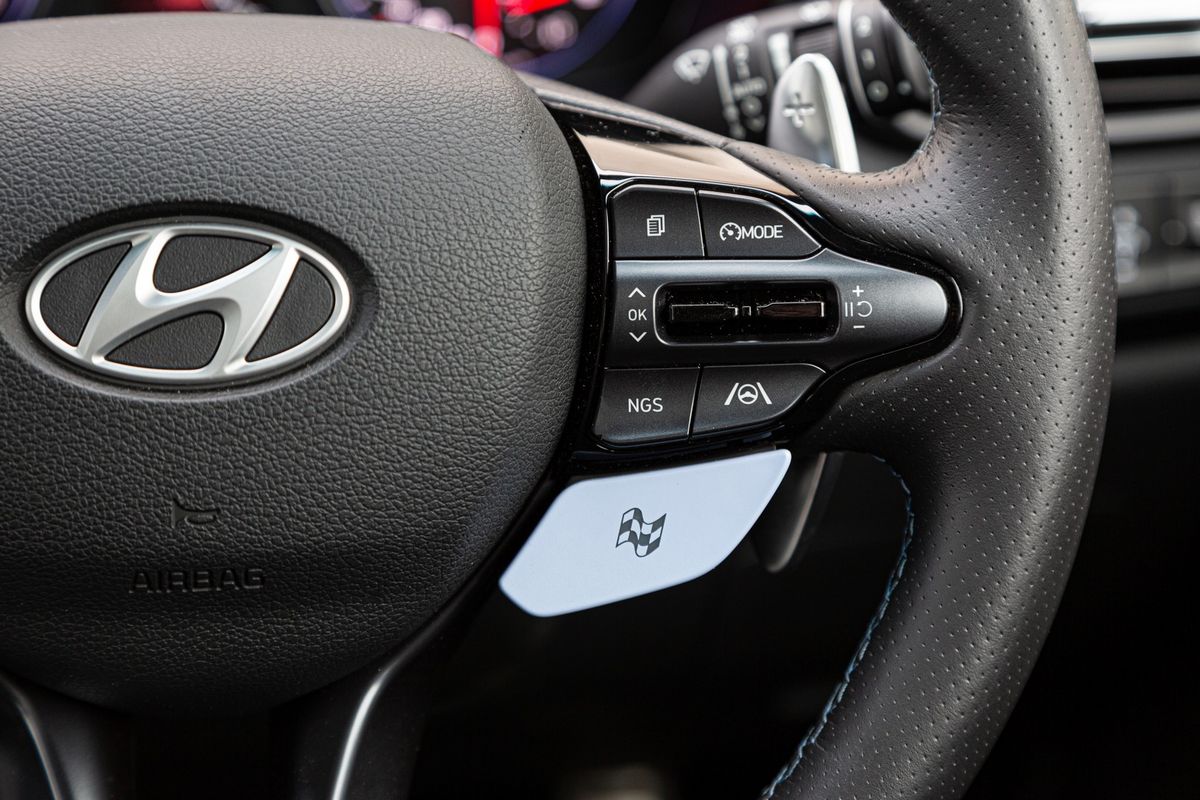
Performance aficionados are likely to utilise this big blue button often.
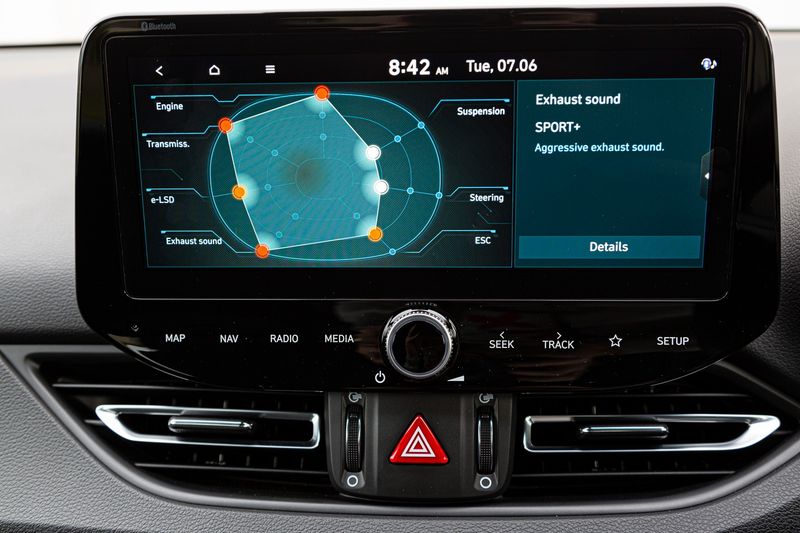
When you stab that steering-wheel button with the chequered flag on it, every aspect of the powertrain is immediately set to its hardest/fastest/loudest setting. Engine and Transmission? Full power and hard, late ‘shifts. Exhaust? Fully open. Adaptive suspension? Stiffest setting. Stability control? Playful. Steering? Sportiest. With everything set to, well, “Defcon 1”, the Hyundai i30 N is a remarkably wieldy and rapid machine, but you’ll pay for it at the pumps…
N mode increases fuel consumption, so rein in your heavy right foot!
After a morning of rather enthusiastic driving, we saw an indicated fuel consumption figure of over 10 L/100 km. Yet, when we completed a 500-km weekend trip (with the vehicle operating in its Eco drive mode throughout), we saw a figure as low as 7.8 L/100 km.
The engine revs eagerly to its redline (which is a boon in a turbocharged motor). As you approach the rev limit, shift lights illuminate on the instrument cluster to indicate the ideal point at which to change up a gear (by pulling the right shift paddle behind the ‘wheel). The throttle is ever responsive and the sounds on offer will certainly put a grin on your face.
These exhausts are some of the loudest we’ve ever heard.
There’s a great induction roar and, if you come off the throttle, those big-bore exhaust ends emit a barrage of rorty pops and bangs. If you downshift (while in N mode) into high revs, even louder bangs are produced. In an era of muffled car-engine notes, this is a lovely indulgence, but being this loud can be construed as antisocial behaviour – so be mindful.
It has been 24 hours and I miss the brash hooligan Hyundai i30N. The neighborhood is strangely quiet now. pic.twitter.com/XbSFEMbO9q
Meanwhile, the new automatic transmission is the most welcome addition to the i30 N package. Not only does it swap cogs quickly and efficiently, but its programme can be adjusted to alter the severity and speed of the shifts. At full throttle, N Power Shift mitigates any torque reduction during upshifts, which creates the sensation of even harder acceleration.
The new 8-speed DCT addresses the main downside of the pre-facelift version of the i30 N.
The vehicle also comes with a very cool party trick. A small button marked NGS (strangely, the Kona N gets a far more prominent red button) refers to the N Grin Shift. Essentially, it’s an overboost function and, for 20 seconds, the engine will produce even more power/torque, with a cool graphic on the dash. It’s ideal for overtaking slower traffic on the open road.
In its sportiest setting, the i30N is one of the most engaging hot hatches in the new-vehicle market.
For everyday driving conditions, Normal, Sport and Eco modes are available. Some may regard N mode as too extreme and, to a degree, it is. The last time we experienced such a level of involvement and engagement, we were in a Civic Type R, but the i30 N is a more multi-faceted machine! It’s fun to drive the i30 N at its most intense settings, but you can’t do it all day, every day, which is why the Hyundai’s adjustability is such an advantage.
Ride and Handling
There is so much more to the i30 N than scintillating straight-line acceleration – that’s what we found out when we “carved up” one of our favourite stretches of twisty blacktop in Hyundai’s newcomer. Granted, the sportiest steering mode is a little too heavy (artificially so), but this is the magic of adjustability – you just need to tweak the appropriate setting.
Pirelli rubber provides plenty of grip and the brakes are excellent.
By default, the Hyundai has a quick steering setup, and when you can make quick, small adjustments with the ‘wheel, the i30 N responds promptly and accurately. It’s an eminently wieldy car that instils confidence even as you pile on the pace; grip levels are high, thanks to the excellent Pirelli rubber and the uprated brakes are potent, yet offer pleasing feedback.
There’s an excellent level of focus and poise to the Hyundai i30 N. Yes, the suspension tuning is firm, which facilitates excellent body control, but you can experiment with the adaptive dampers’ settings to find a ride quality that you prefer – or could live with…
A jack of all trades here, but a master where it counts.
What’s truly impressive about the machine is its sheer adjustability. The transmission, engine, exhaust, suspension, stability control, steering and e-LSD… each of them have 3 settings… and there are hundreds of possible combinations. So, you could have the suspension setup at its comfiest, with the engine in its normal setting and the exhaust at its loudest. You could also set everything but the exhaust to the maximum, for a quieter blast down the back roads. Plus, you can save your preferred setup and access it with a second press of the N button.
And the best part? If you get tired of fun and games, simply select the Eco mode, which makes all those settings go into their most relaxed states. But, with such a reassuring setup, we doubt you’ll tire of the i30 N’s cornering capability. The e-LSD cleverly mitigates torque steer and will allow you to exit corners quicker and earlier. Addictive? Very much so.
The Cars.co.za setup: comfortable, but fast and noisy!
Price and After-sales support
The Hyundai i30 N retails for R749 900 and is sold with a 5-year/75 000 km maintenance plan, a 5-year/150 000 km general warranty and a 7-year/200 000 km drivetrain warranty.
The i30 N took its sweet time to join the fray, but of the few hot hatches that are left, the Hyundai is the closest in spirit – and execution – to the Golf GTI.
Social media has made it fashionable to dismiss a new arrival to a segment with the attitude of “how dare this newcomer try to unseat the established players?” but the facelifted Hyundai i30 N is an utterly accomplished offering. Volkswagen has a loyal following in South Africa and the Golf GTI has legendary status (deservedly so), but that should not detract from the facelifted Hyundai i30 N’s merits, of which there are many. Don’t knock it until you’ve driven it…
The introduction of the dual-clutch automatic transmission has addressed a concern that many had with the first iteration: “it’s only available in manual”; the i30 N’s sheer performance and feel-good factor frankly run rings around the Golf 8 GTI, which is technically a newer model and, when you compare them spec-for-spec, the Korean lands yet another blow. Granted, its day-to-day driveability isn’t quite as polished/refined as that of the VW, but in terms of comfort and refinement, it doesn’t lag far behind. What’s more, VWSA currently has low stock availability of the GTI (due to Covid-related component shortages and, therefore, production delays), which also counts in the Hyundai’s favour.
So, should you buy one? If you’re young at heart and pine for a hot hatch that delivers stonking performance, celebrates the joy of driving and can still do the daily commute with ease, you’d be foolish to ignore Hyundai’s latest offering. The i30 N may not have the pedigree of 7 generations behind it (as the Golf GTI does), but thanks to some deeply impressive engineering and performance, it’s able to deliver smiles and entertainment galore, with very few compromises, plus it comes at a competitive price. There are way too many lukewarm vehicles on sale right now, but the wickedly fun Hyundai i30 N is hard to resist and is hauntingly memorable.
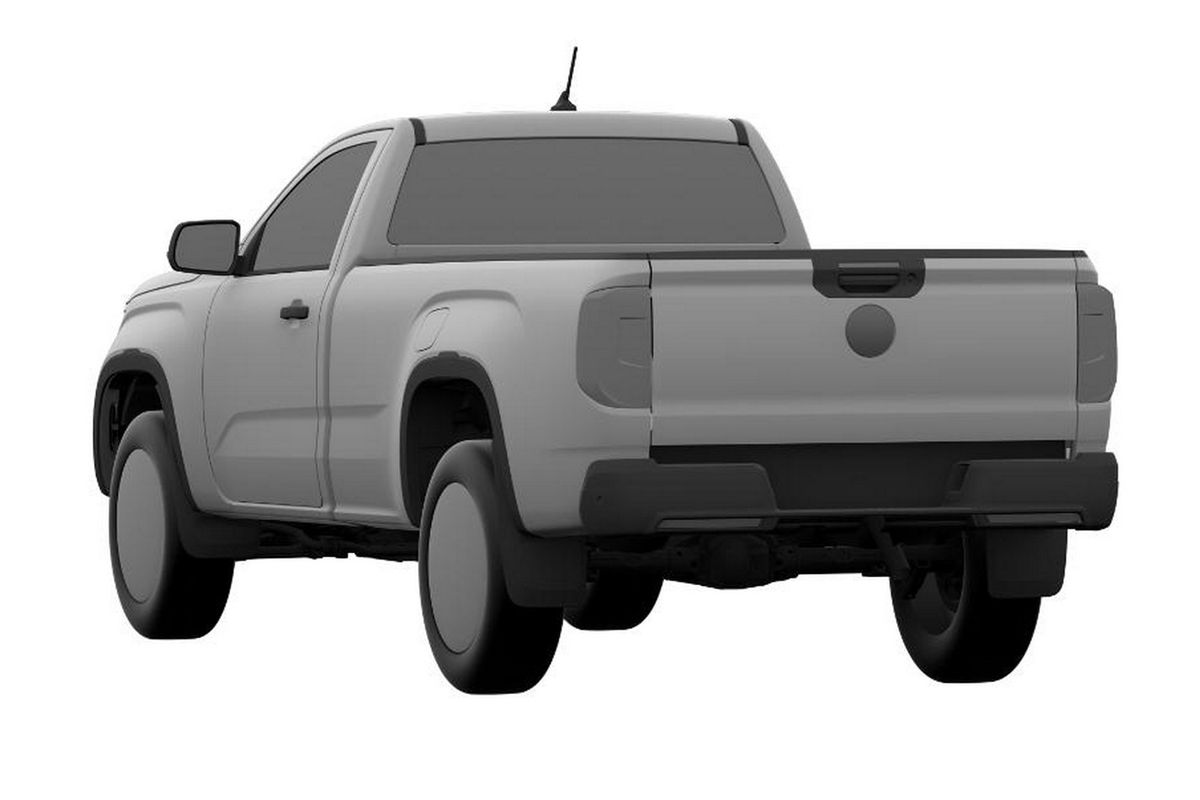
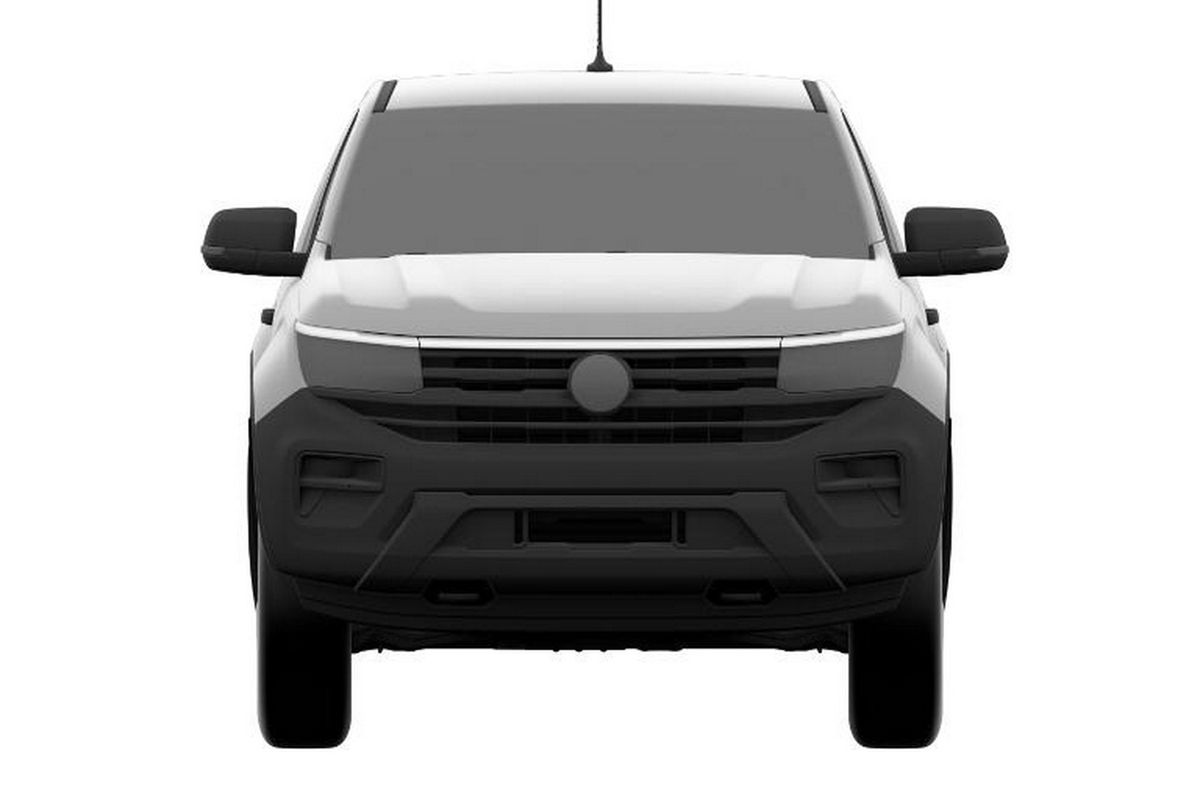
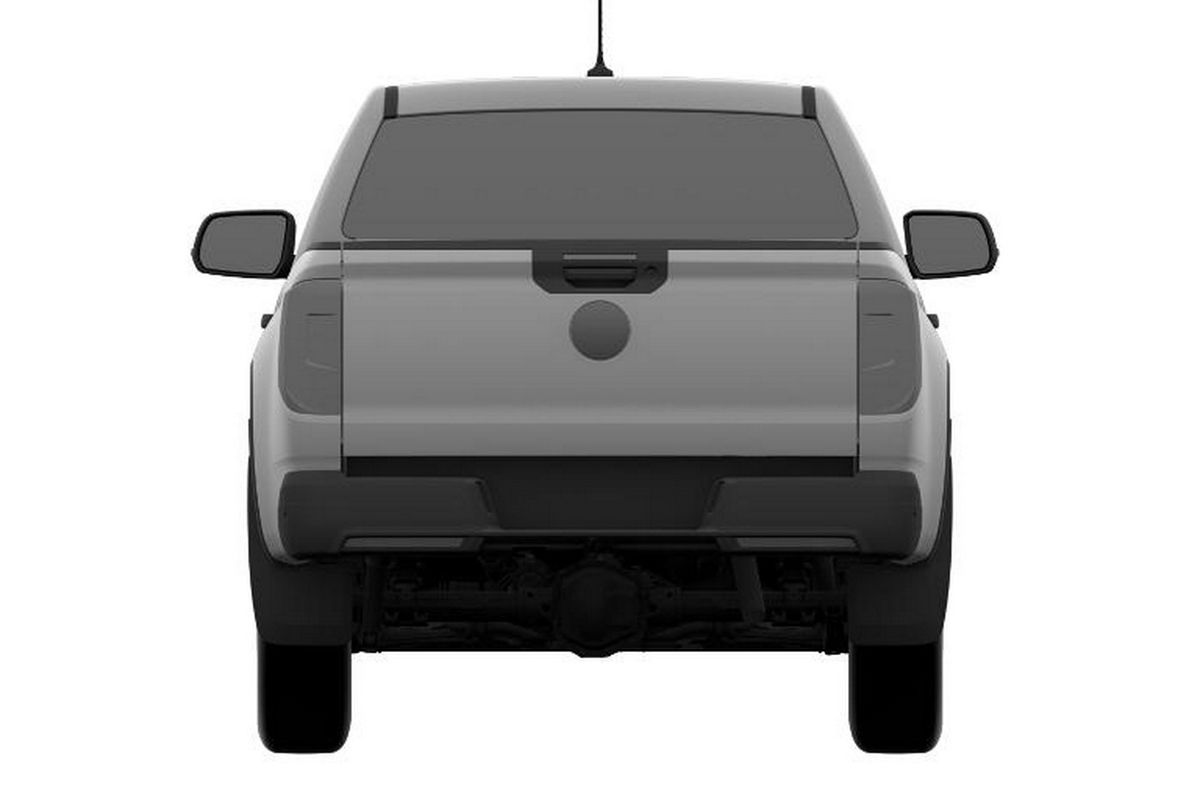
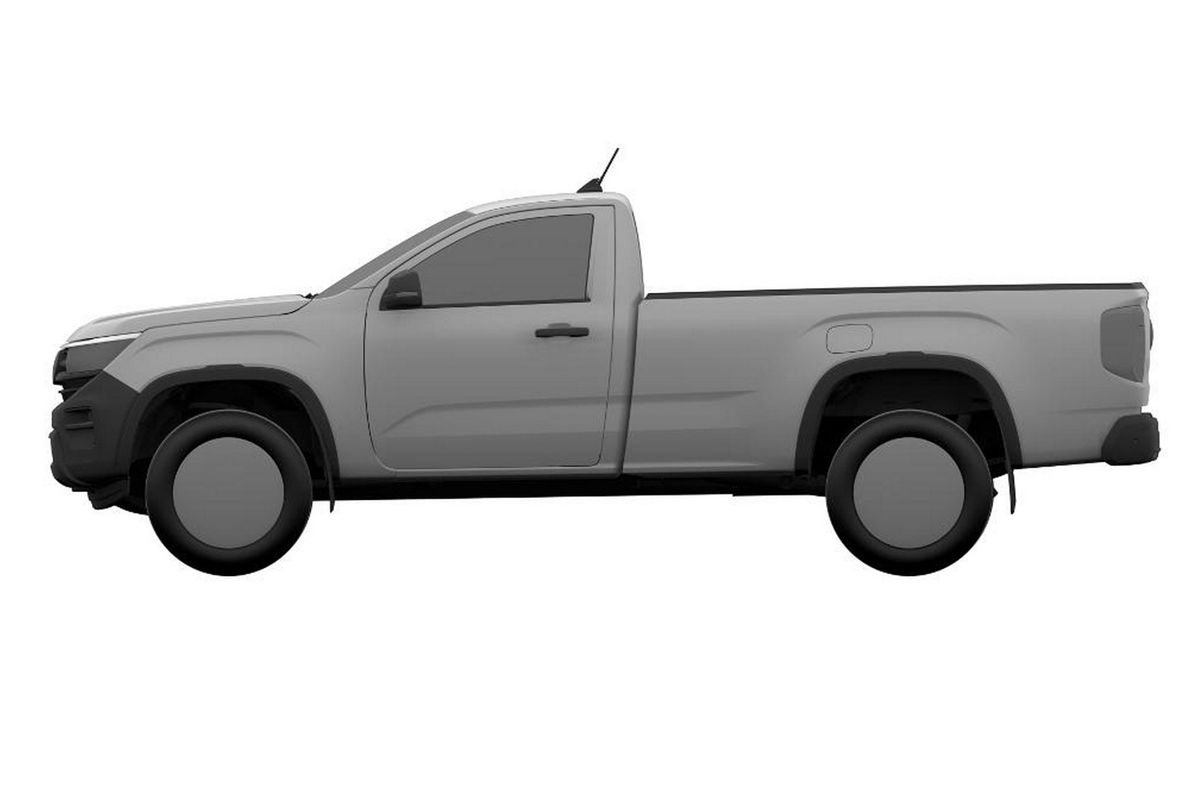
Wondering what the new Volkswagen Amarok will look like in base-spec, single-cab form? Well, wonder no more. These box-fresh patent images give us our first look at the workhorse version…
When Volkswagen whipped the covers off the new Amarok in July 2022, much of the focus was on the high-spec, double-cab derivatives. The Wolfsburg-based automaker, however, did confirm the range – in some markets, at least – would also include a single-cab body style.
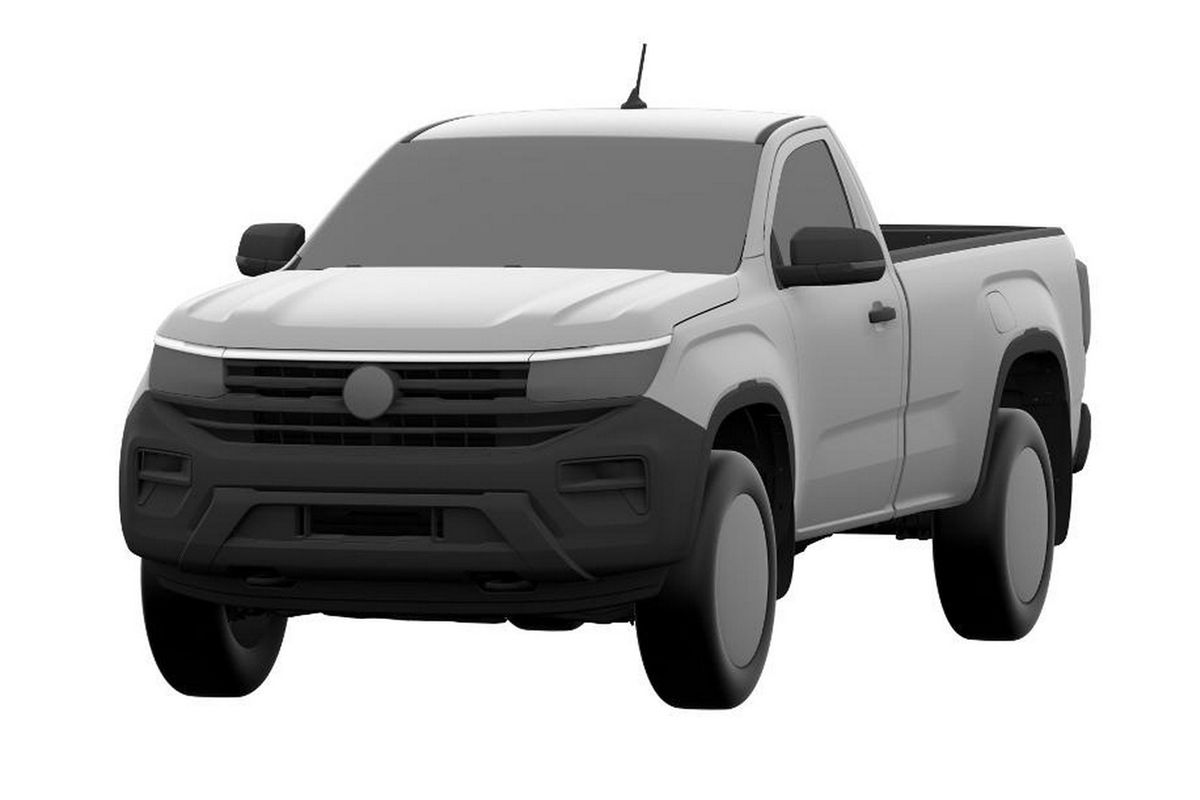
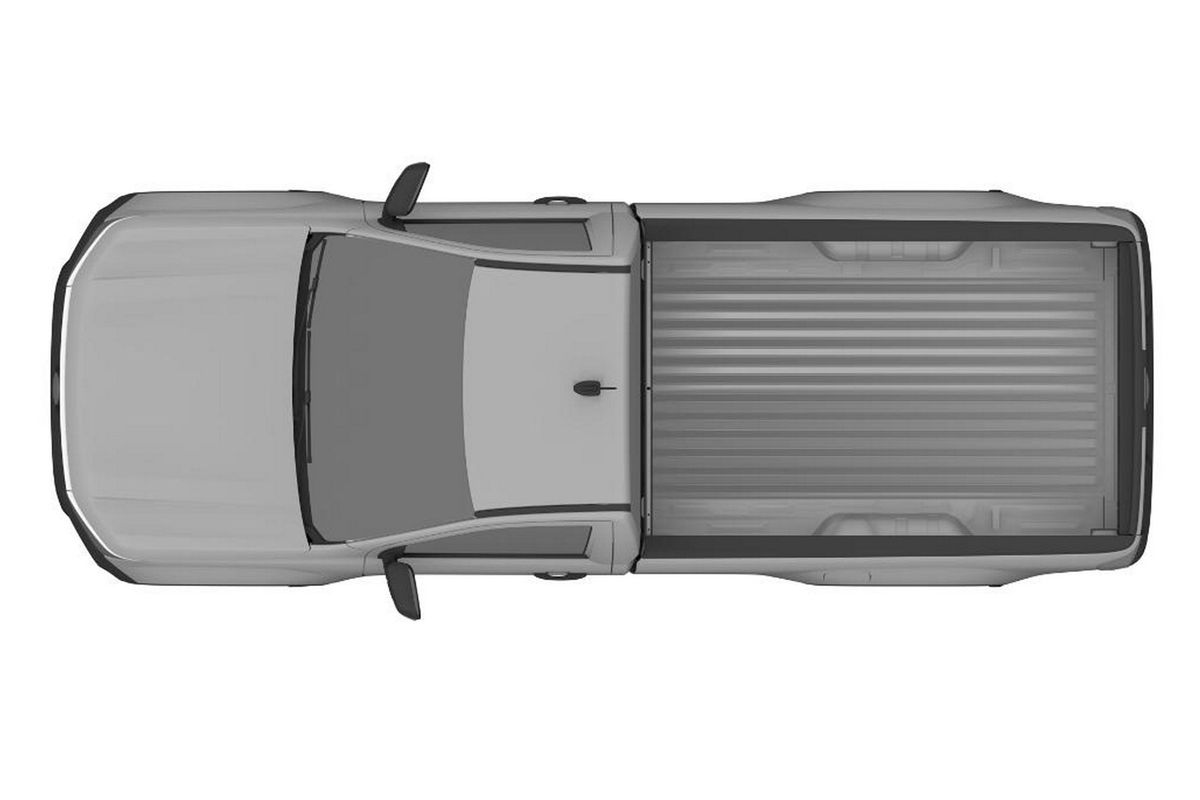
Now, fresh images submitted to the European Patent Office (and uncovered by the folks over at Carscoops) have given us our first look at the base-spec, workhorse version of the second-generation Amarok, which predictably features rather a utilitarian look.
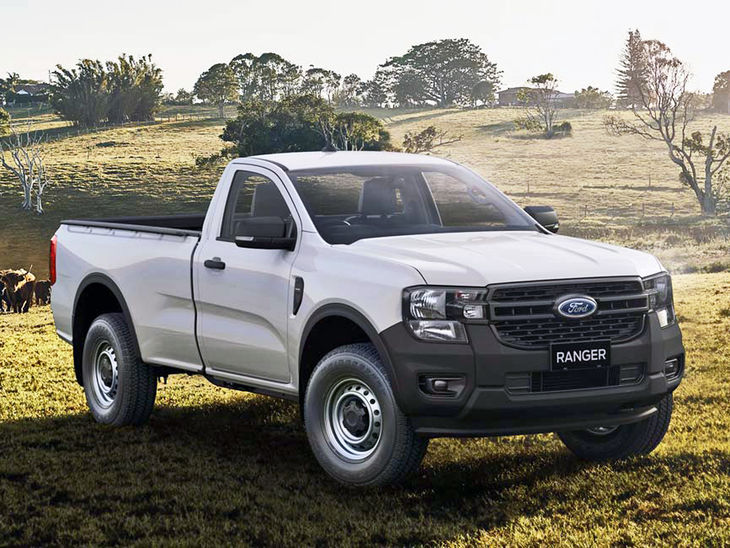
The images show the entry-level, 2-door version of VW’s new bakkie wearing a black plastic front bumper on a front end devoid of chrome-effect trim – unsurprisingly, just like the single-cab version of the Ford Ranger on which it is based (pictured below). The side-mirror caps likewise appear to be finished in black plastic, matching the exterior door handles.
The single-cab Amarok will obviously share much with the 2-door version of its Ranger cousin.
Unfortunately, the patent images don’t give us a clear indication of the types of head- and taillights used by the single-cab Amarok, nor the sort of wheels we can expect (though we’re guessing base models will make do with a set of budget steelies). Interestingly, the tailgate shown in the images doesn’t feature the stamped “Amarok” lettering seen on the double-cab models.
While the set of patent images doesn’t include depictions of the single-cab model’s cabin, the best buyers can hope for is the smaller of the two touchscreen systems on offer along with fabric upholstery. In terms of engines, we’d expect the single-cab Amarok to be powered by the single-turbo 2.0-litre, 4-cylinder diesel motor, likely mated to a 6-speed manual gearbox.
The only official information VW has so far revealed about the single-cab Amarok relates to its load bed. The German automaker says the 2-door version of the bakkie has a cargo box measuring 2 305 mm long and 1 224 mm wide, which is enough to accommodate two Euro pallets loaded in sideways one behind the other.
Of course, it remains to be seen whether Volkswagen will introduce the single-cab Amarok – which like the double-cab models will be built by Ford alongside the new Ranger at the Silverton assembly plant in Pretoria – in South Africa, with the make-up of the local range not yet announced. While a single cab was added to the original Amarok line-up in SA back in 2011, it didn’t last long due to a lack of sales.
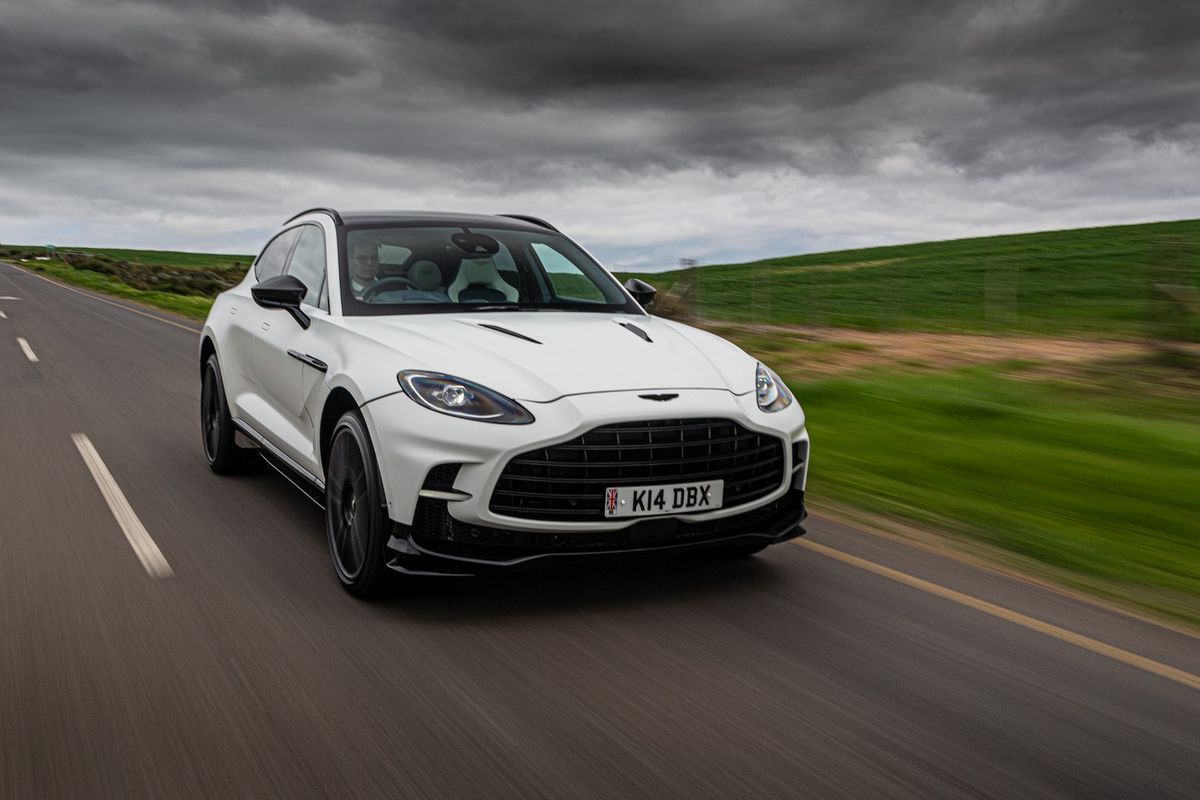
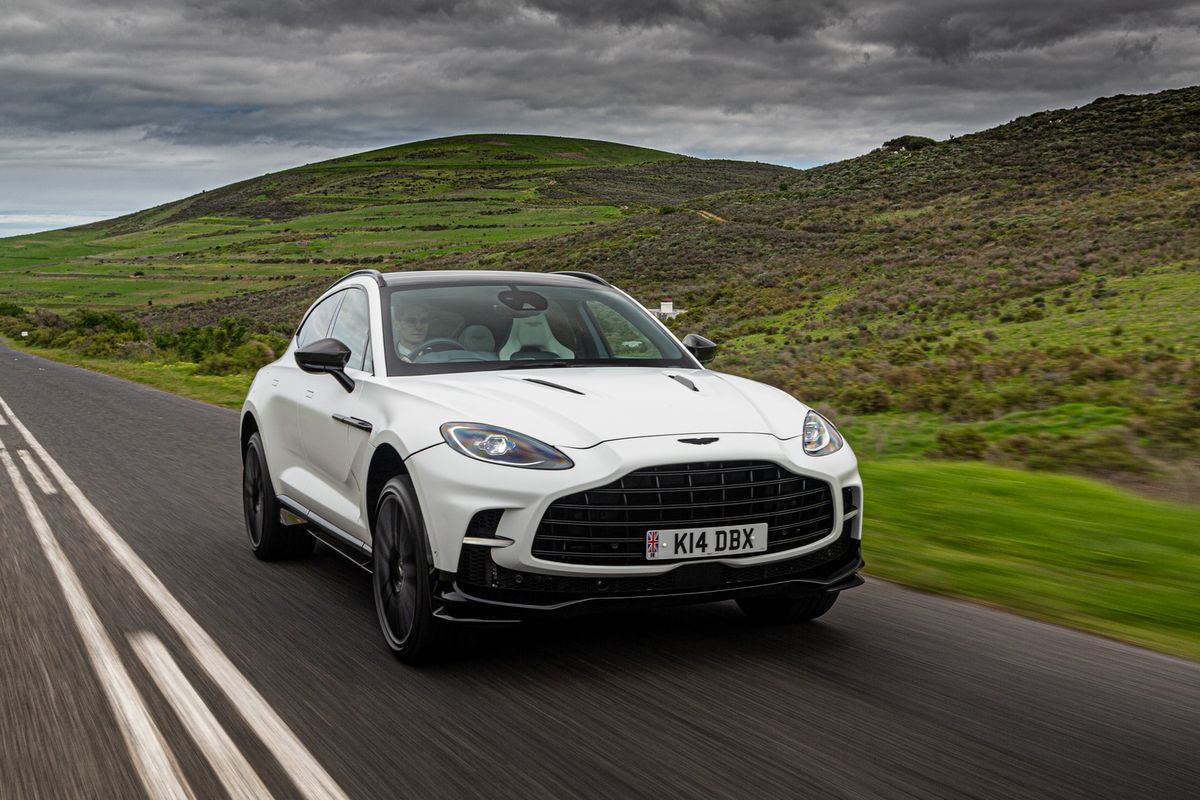
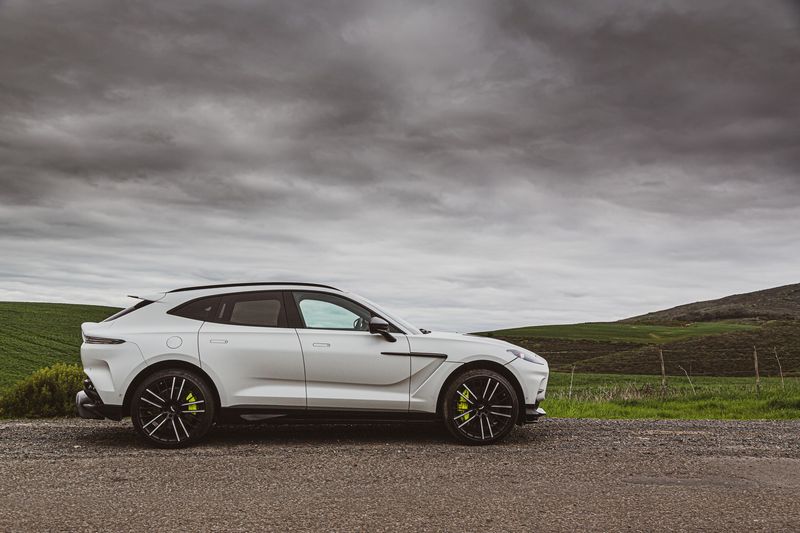
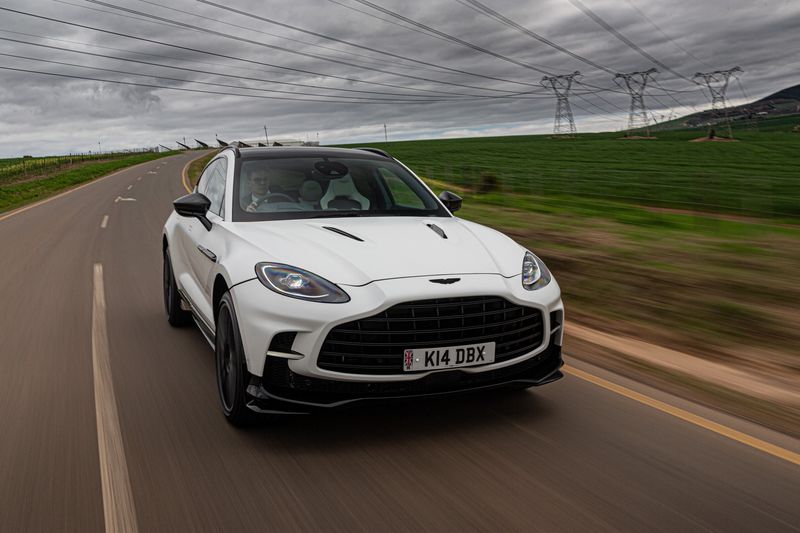
The Aston Martin DBX707 – touted as “the world’s most powerful SUV” – is now available in South Africa. We had a quick drive in a pre-production unit before it headed back to the UK.
“Please ignore the panel gaps, this is a pre-production unit and will be heading back to the UK soon”, says the Aston Martin DBX707’s chaperone. We know things are about to get serious when a test unit arrives at our office accompanied by a handler!
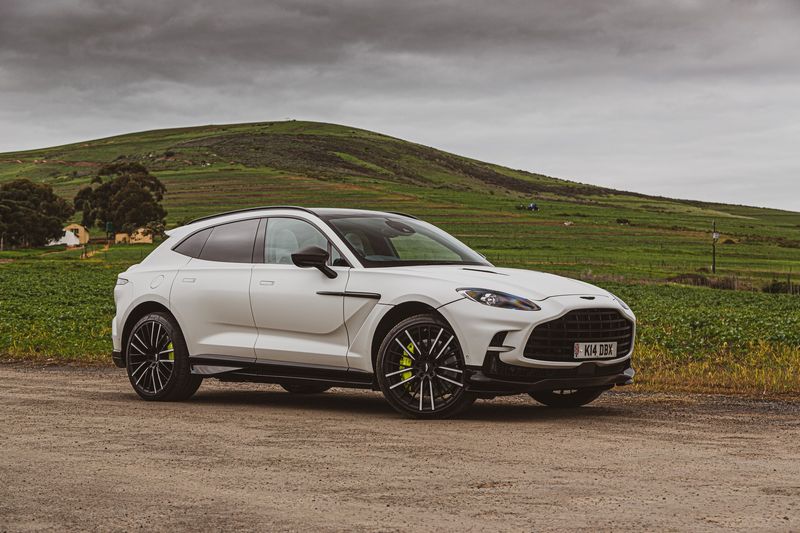
This example of the Gaydon-based firm’s 520 kW/900 Nm performance SUV wears British ‘plates because it’s in the Republic temporarily. Aston Martin’s local importer, Daytona, has been demonstrating the DBX707 to prospective buyers, as well as the automotive media.
We were only afforded a few hours with this machine – the apex version of the DBX (not a special edition) – and we weren’t going to pass up a chance to find out just how special it is.
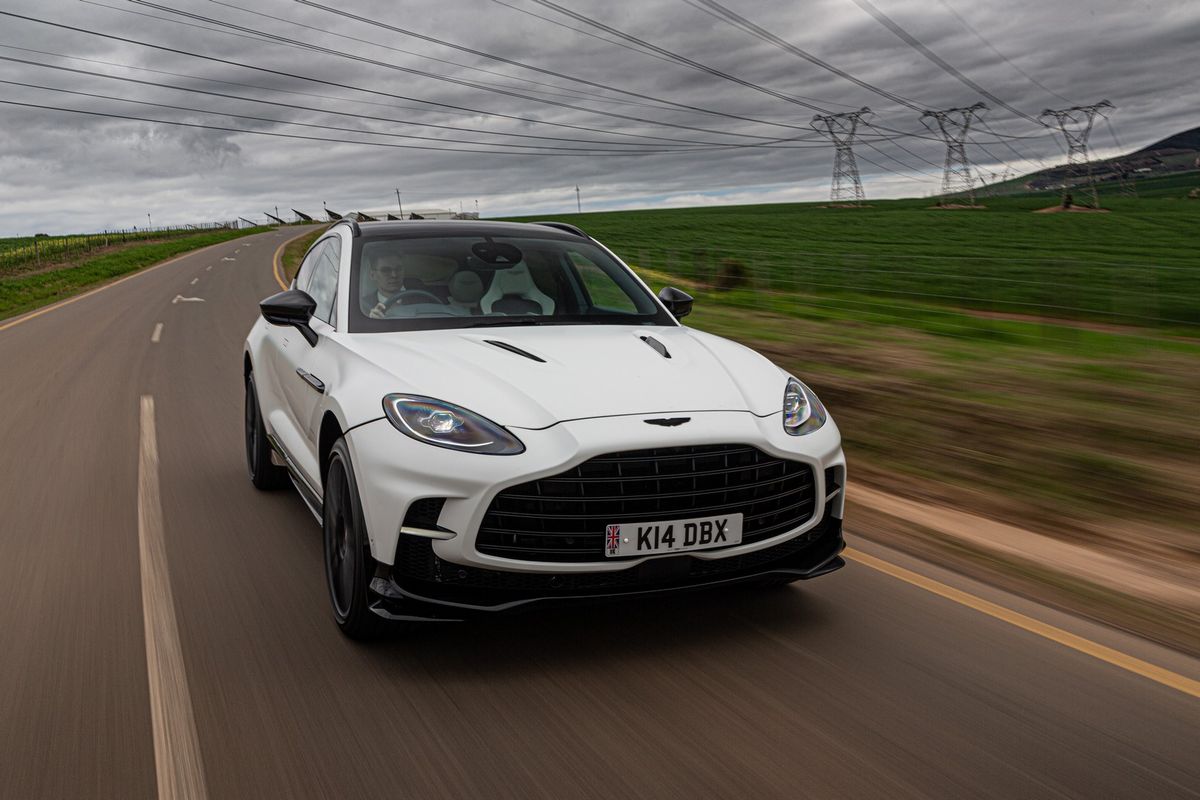
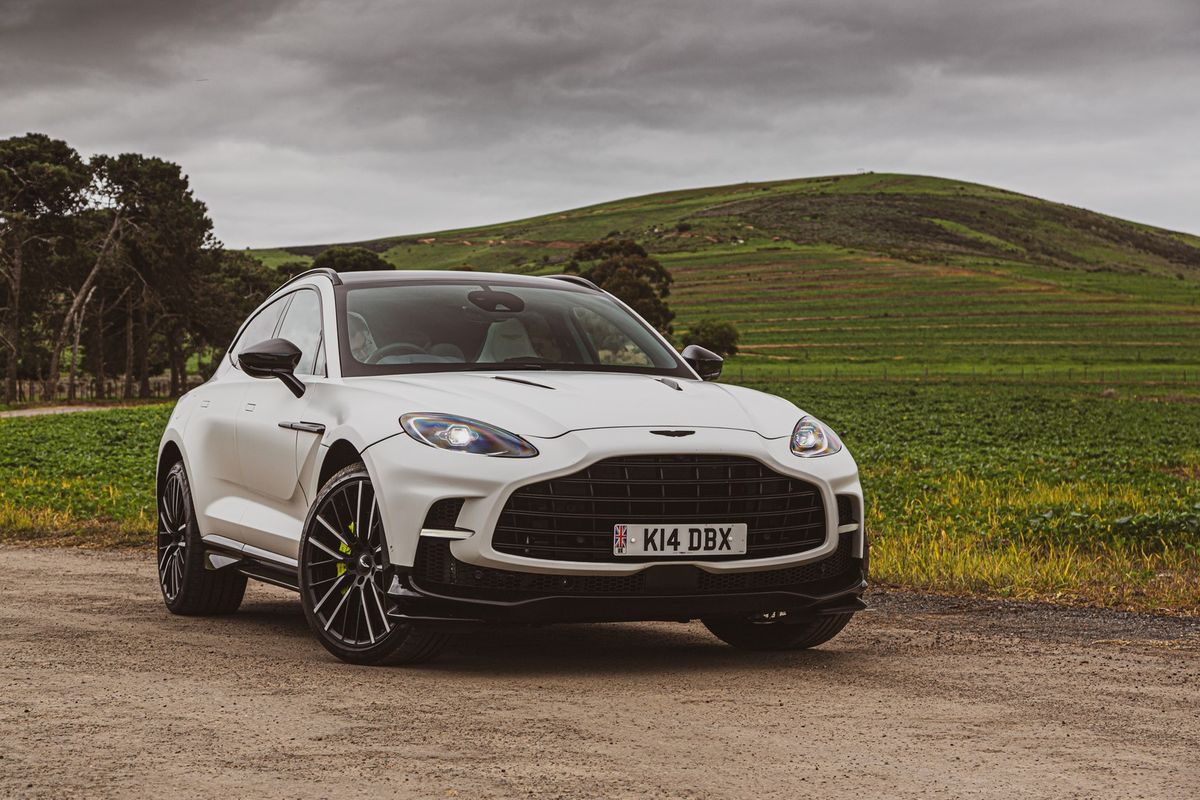
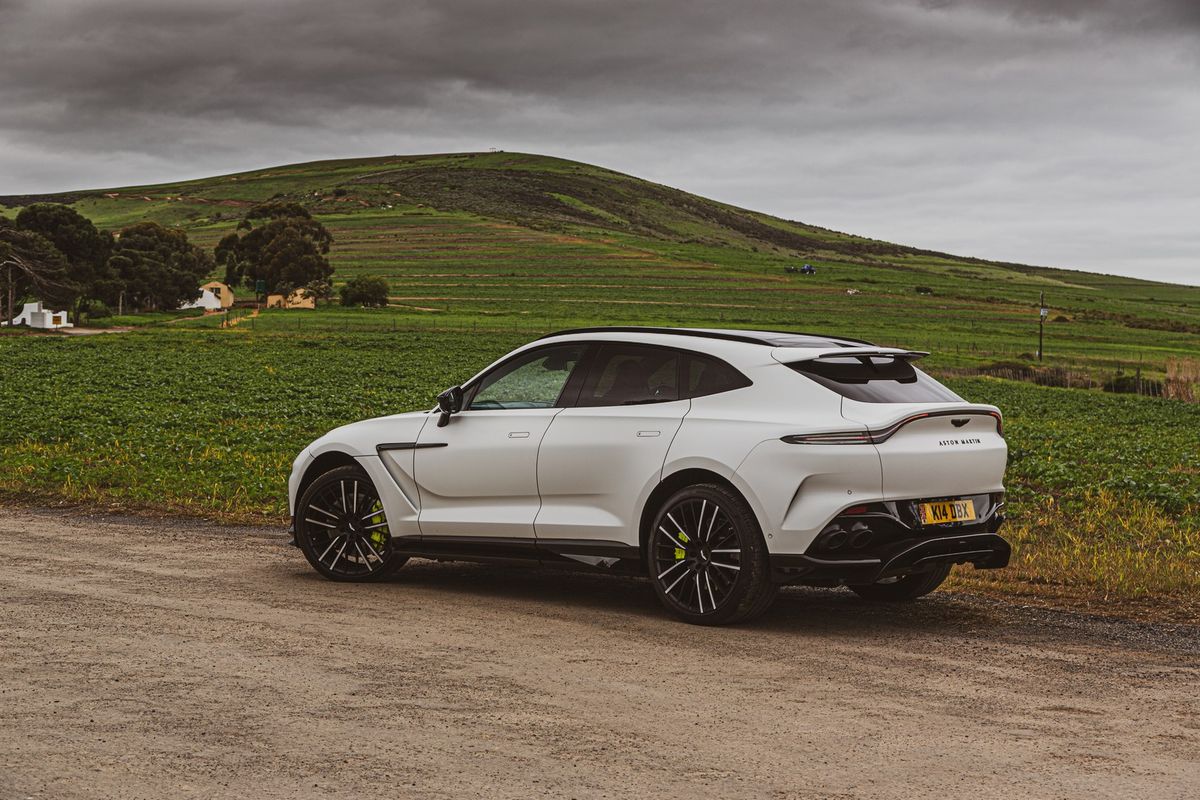
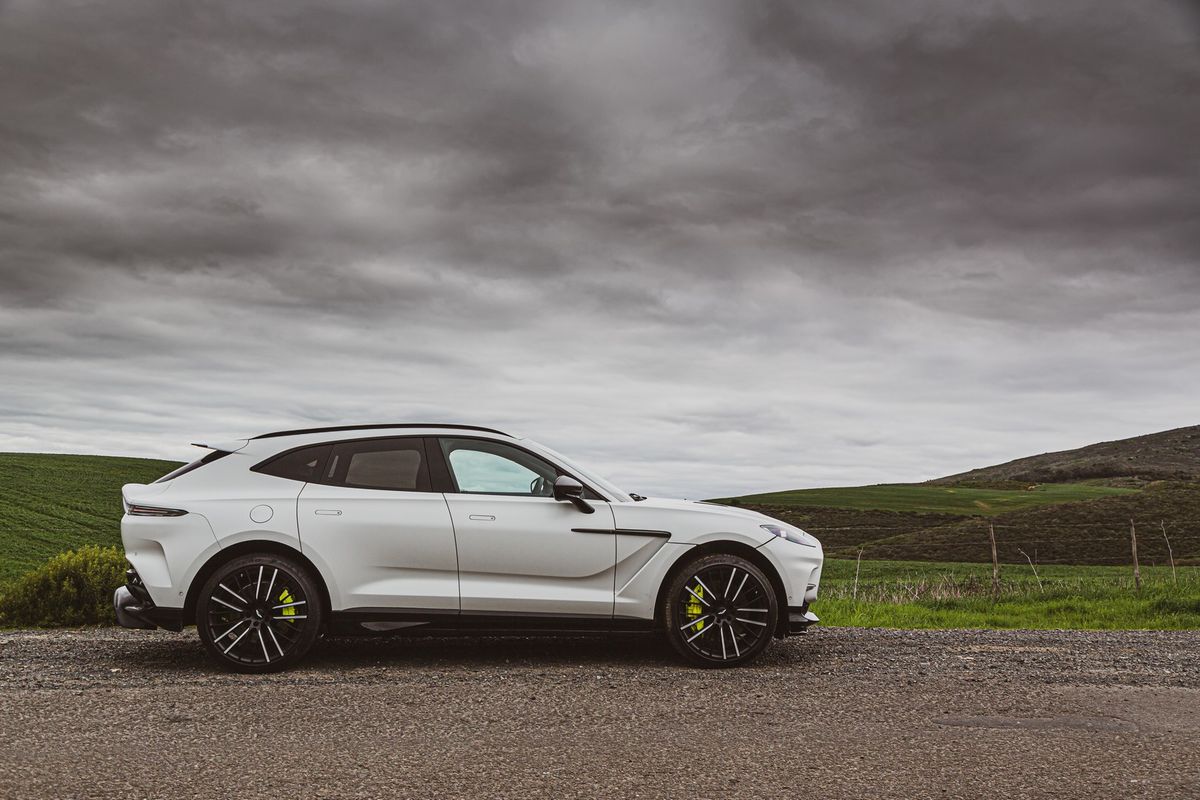
The DBX707’s stance is interesting yet purposeful.
What’s on offer?
The DBX707 is a substantially upgraded version of Aston Martin’s first SUV. While the idea of traditional sportscar brands bringing SUVs to market may not still sit well with purists, the reality is that, for high-net-worth customers, the prestige of supercar ownership is not enough – they want comfort and practicality too, which is why even Ferrari will unveil an SUV soon.
Statistics show the Urus is Lamborghini’s most popular model, the Bentayga has helped Bentley record excellent financial growth and sales of the Cayenne and Macan outnumber those of Porsche’s sportscar models. While Aston Martin is going through a tough time, the brand hopes that brisk sales of the DBX and its DBX707 sibling will help it steady the ship.
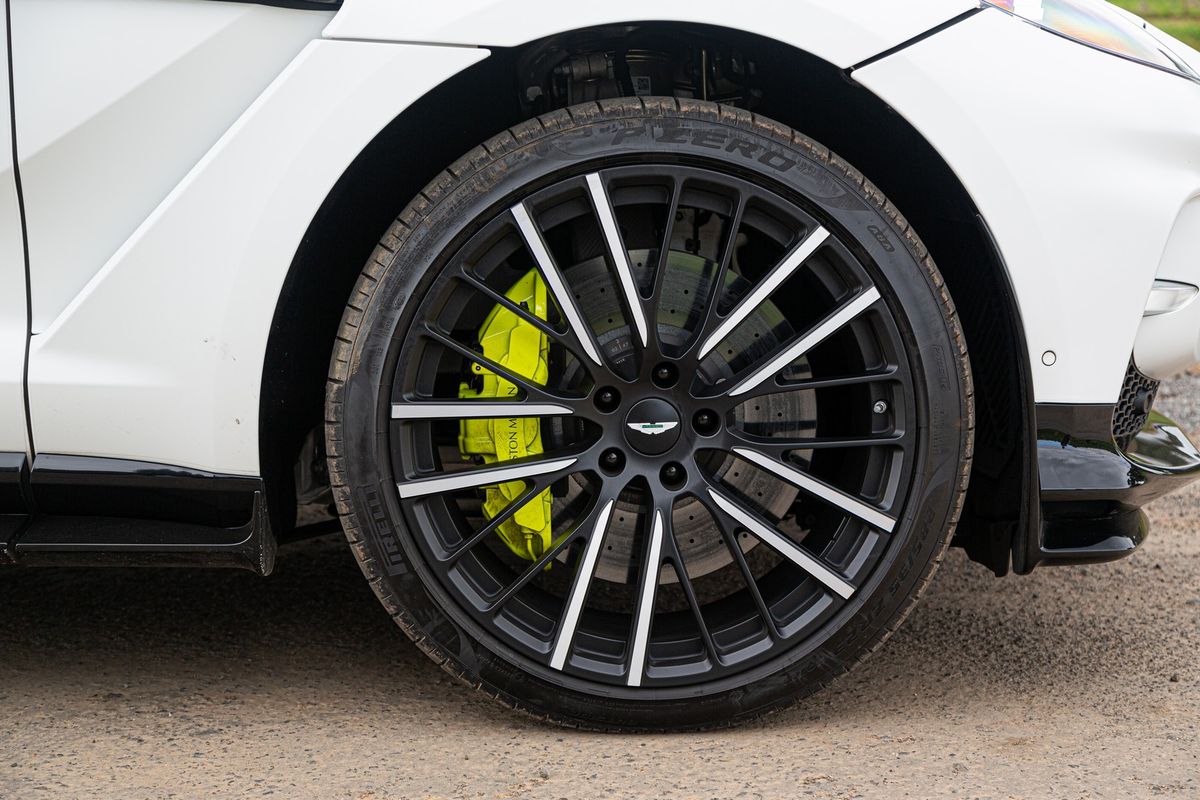
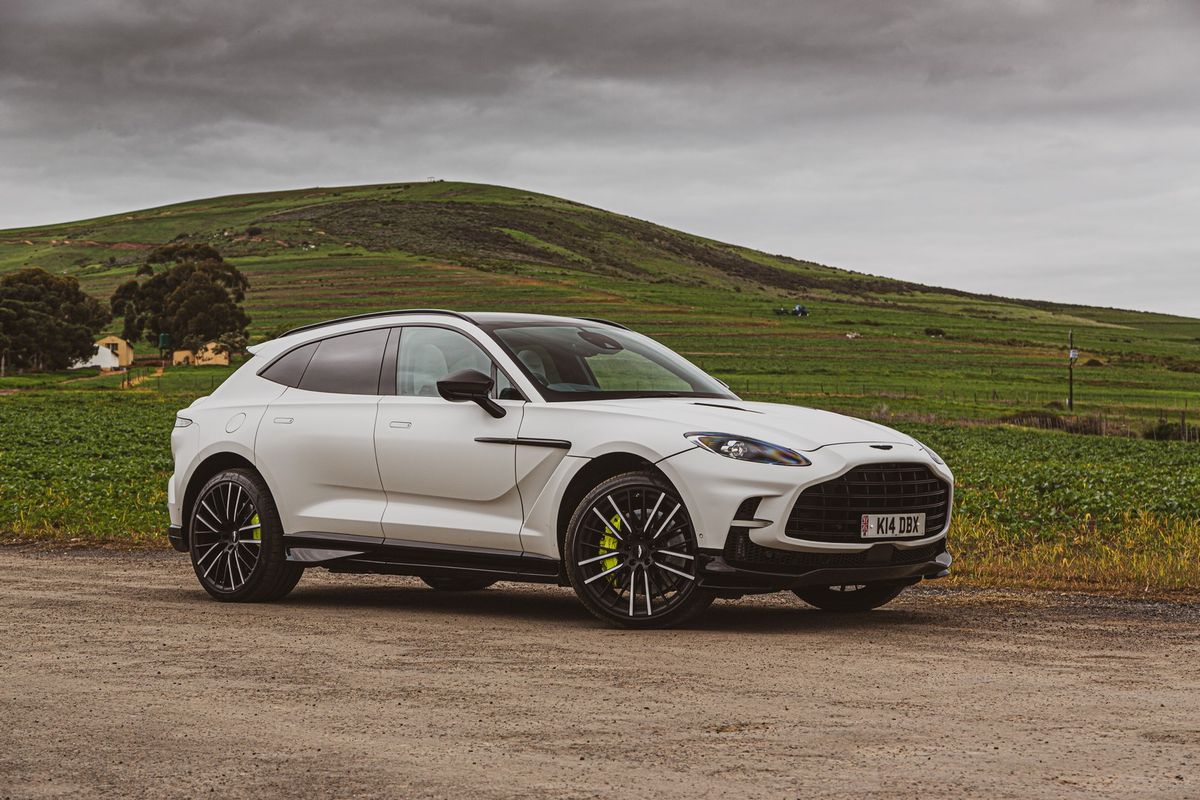
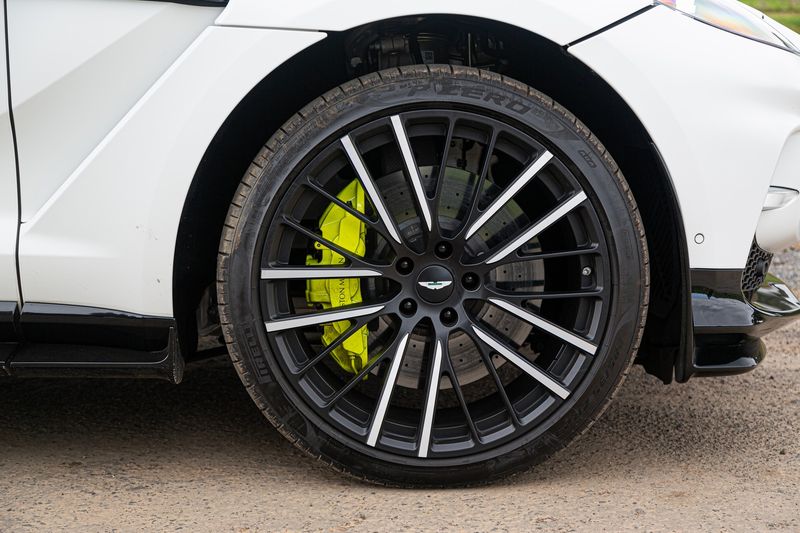
Monster 23-inch wheels and lumo green brake callipers are a sign of intent!
While most exotic brands’ SUV offerings admittedly fail to match the visual drama of their super- and hypercar counterparts, the DBX is more than a blinged- and bulked-up SUV… Its appearance is purposefully bold; its grille resembles a gaping mouth, while the tailgate design is unusual and thought-provoking; this model looks more like a fastback than an off-roader.
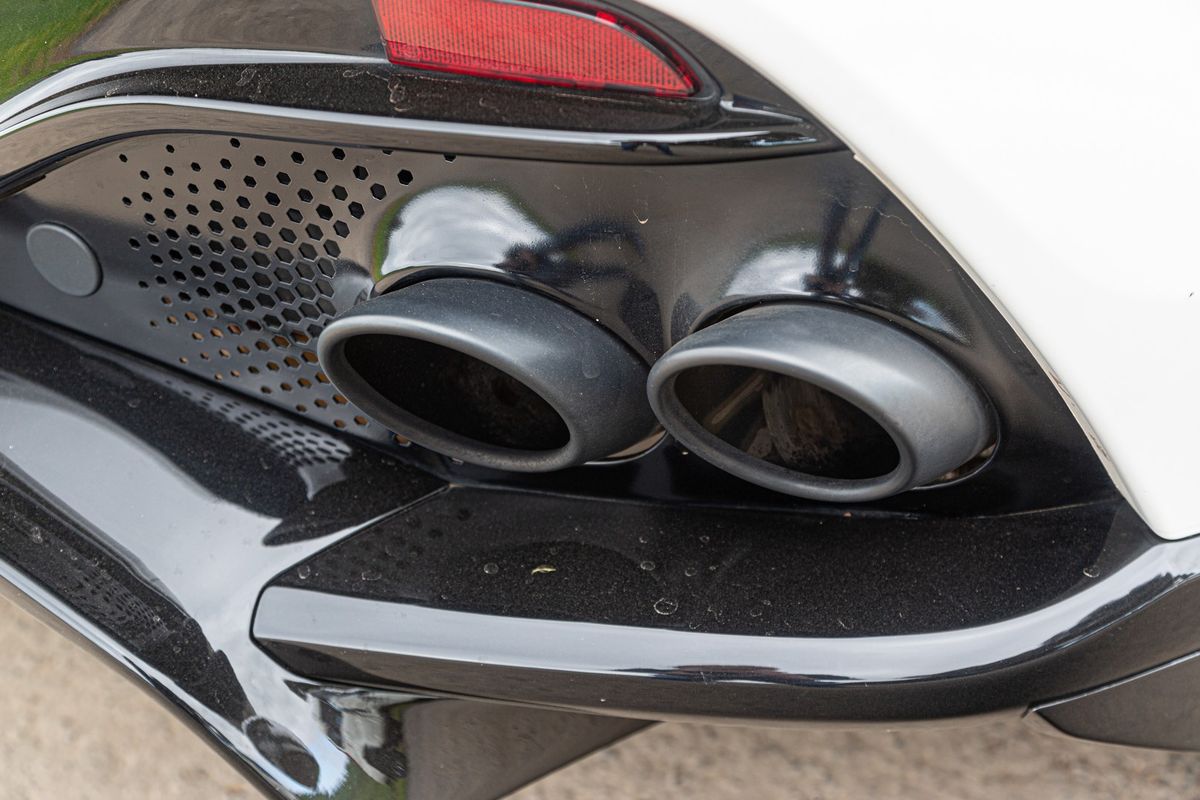
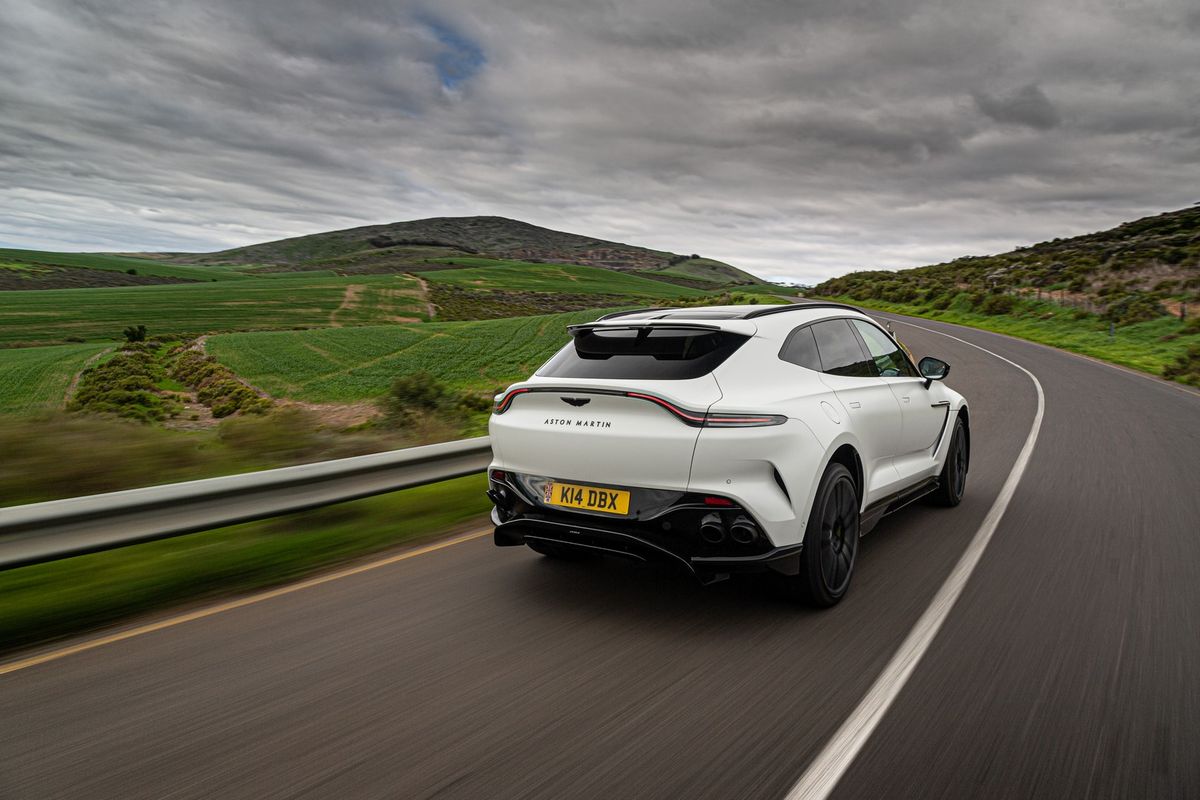
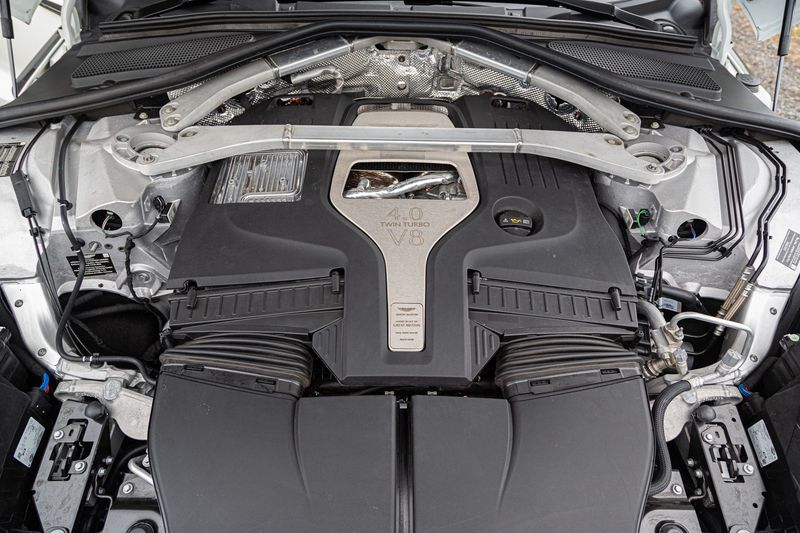
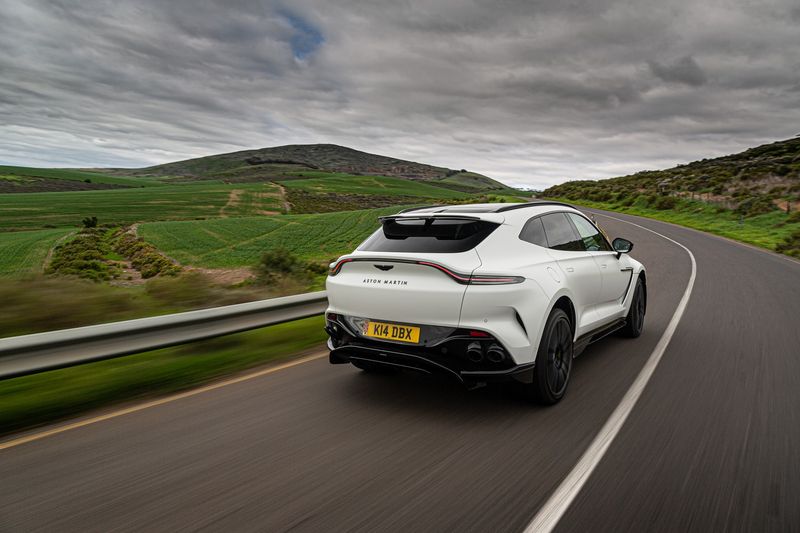
When I leaned out of the tracking vehicle’s window to photograph the DBX707, I got the chance to hear that mighty 4.0-litre biturbo V8 petrol engine from the outside. Even in the tamest drive mode, the Aston releases delicious snarls from its quad exhausts and, when the driver lifts off the throttle after a burst of acceleration, the turbos emit glorious whooshes.
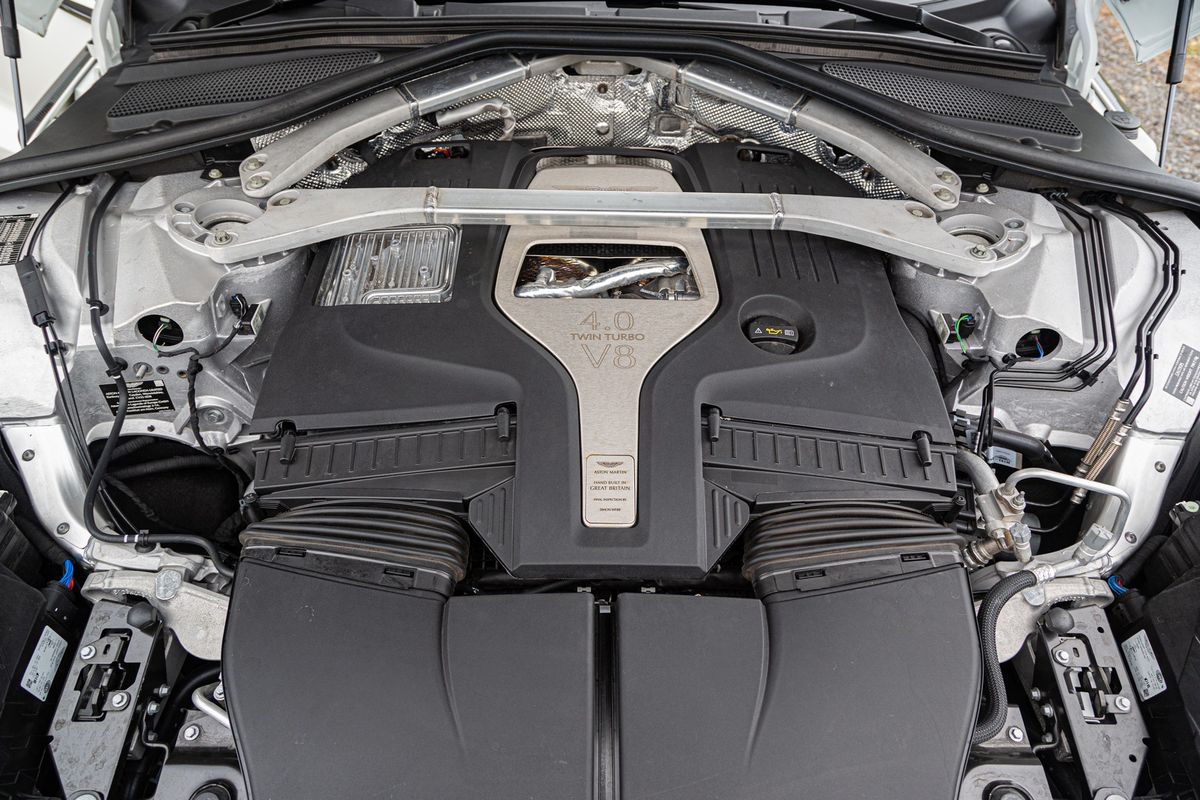
AMG-built but Aston Martin refined.
Officially, it’s the same 4.0-litre biturbo V8 that can be found in numerous Mercedes-AMG products. In case you don’t know, Mercedes-Benz has been supplying Aston Martin with AMG powerplants (as part of a wider-ranging technical agreement) since 2013. However, the M177’s outputs have been substantially cranked up in the DBX707 – Aston Martin has added bigger ball-bearing turbochargers and retuned the ECU to deliver eye-opening peak outputs of over 500 kW and 900 Nm.
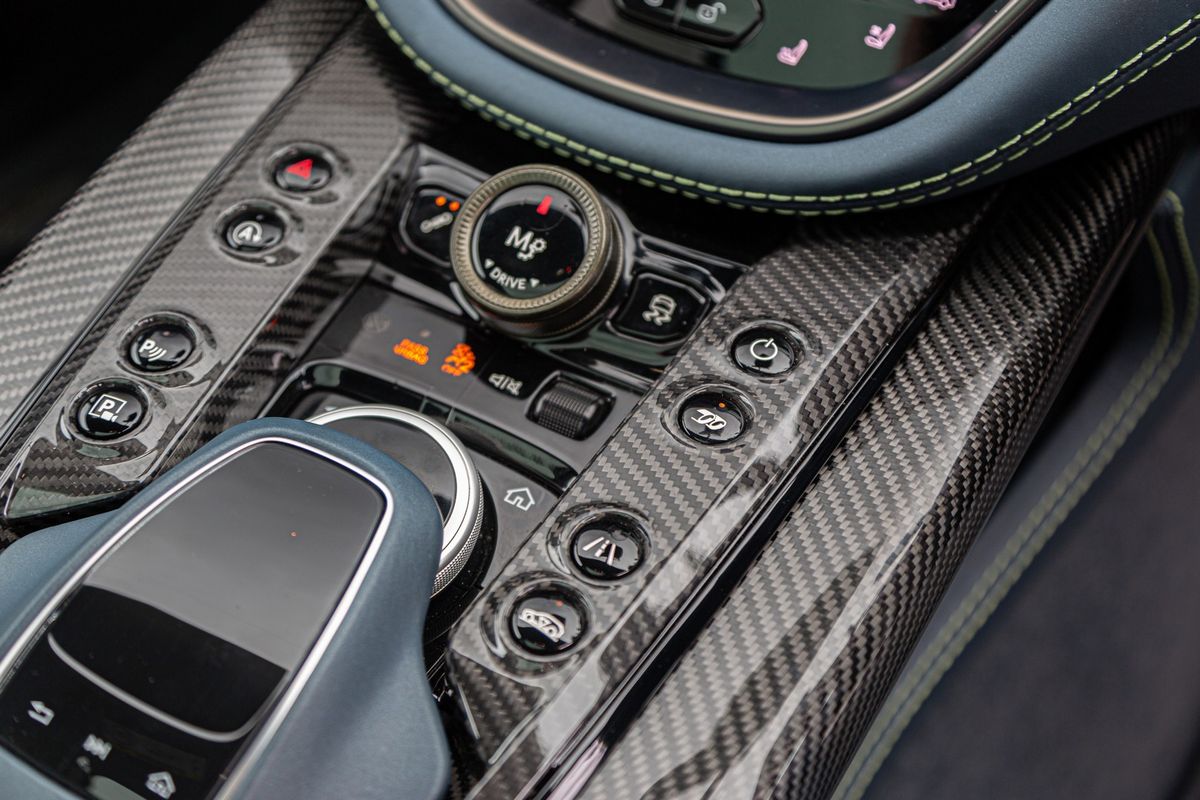
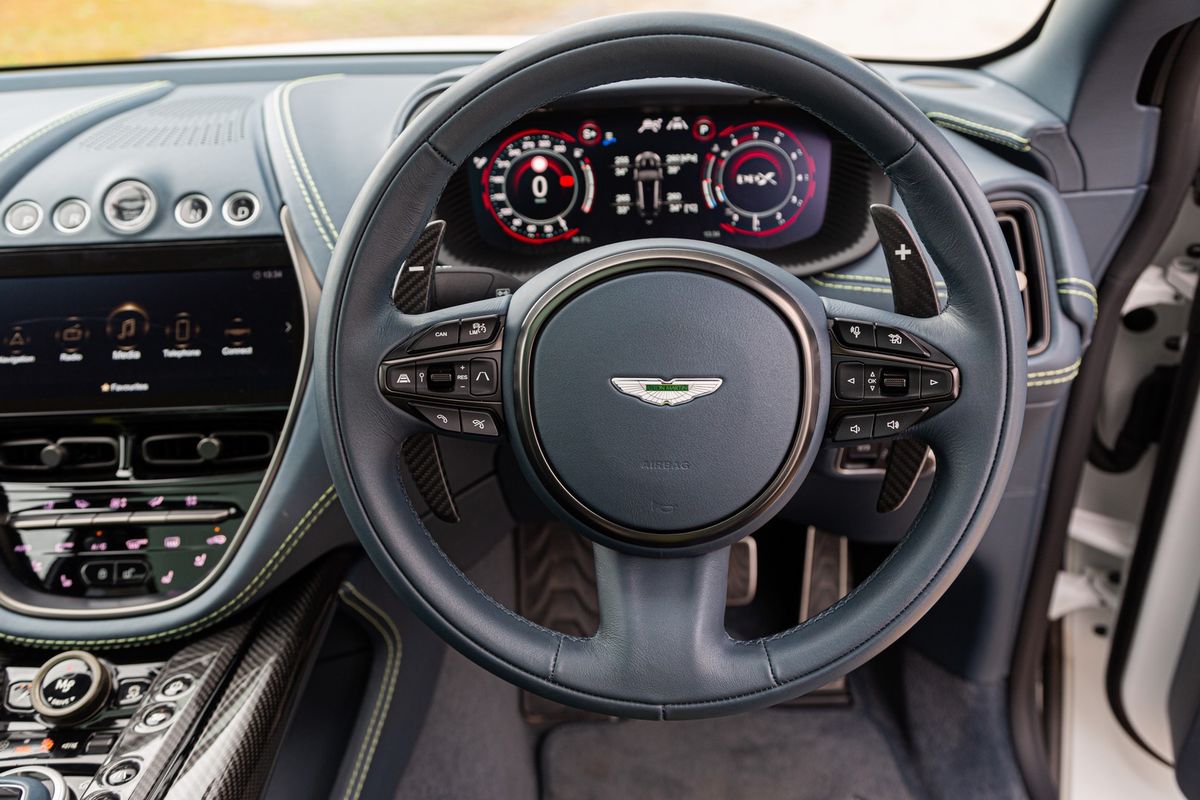
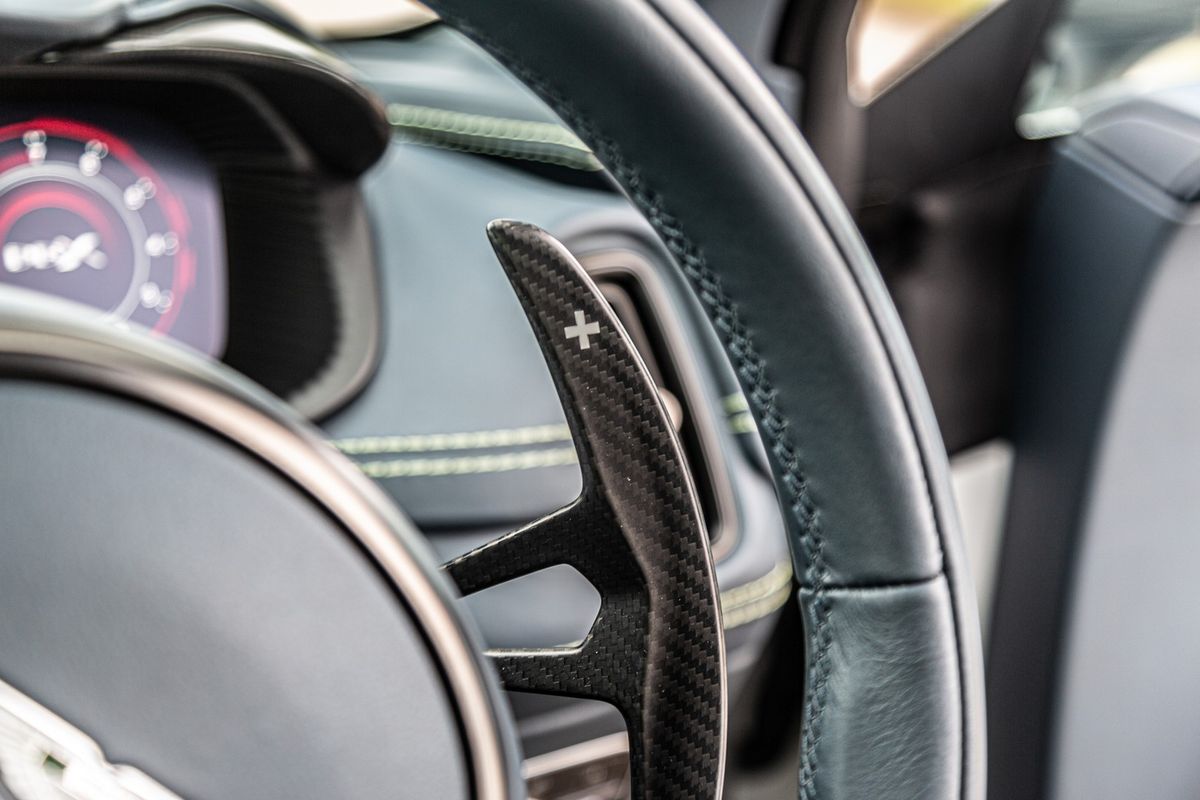
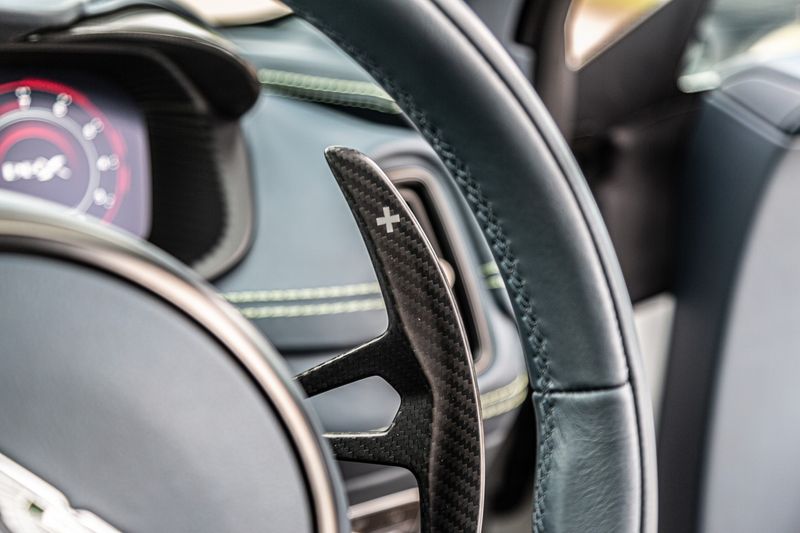
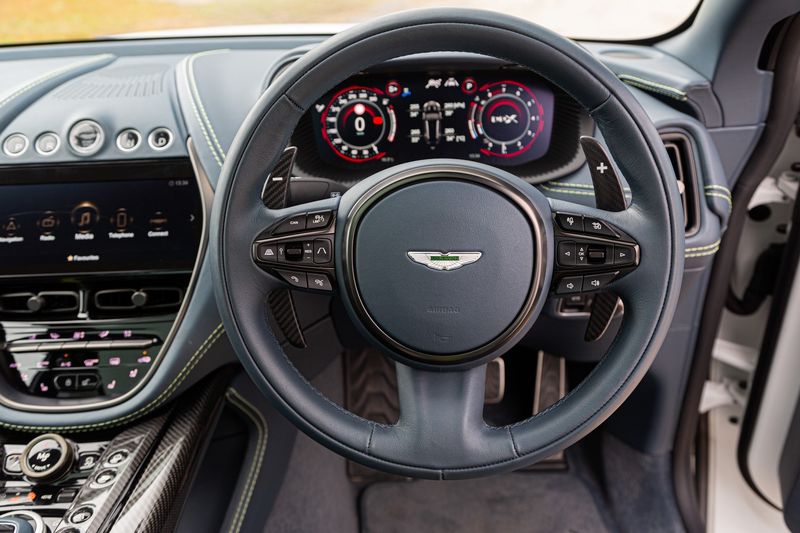
A carbon fibre shift paddle of the AMG-sourced 9-speed automatic transmission. These have a lovely tactile action and feel.
A wet-clutch 9-speed automatic transmission (also sourced from Mercedes-AMG) shuffles all that twist to all 4 of the DBX707’s wheels; in fact, Aston Martin says the SUV can apportion 100% of its torque to the rear axle if needed. Performance? The 0-100 kph sprint is claimed to be smashed in 3.3 sec and the Aston will run to a top speed of 310 kph.
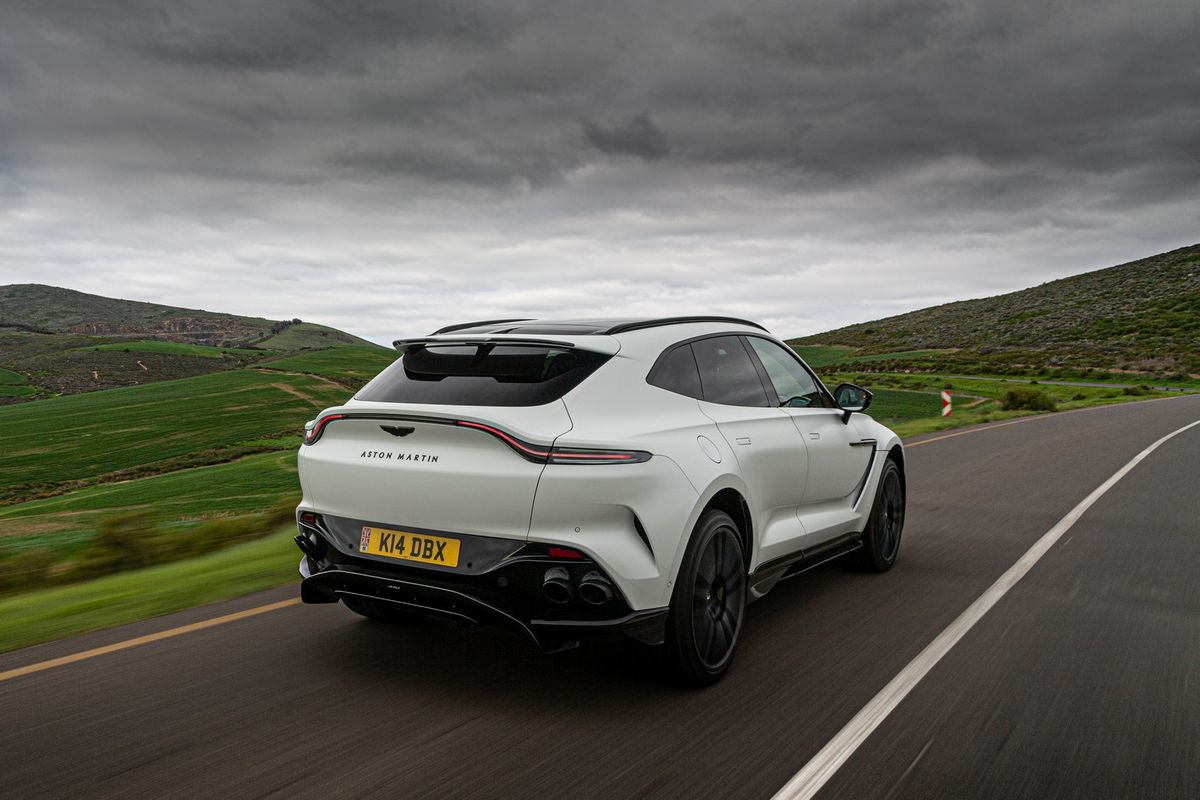
Make no mistake: this is not merely a DBX with a more powerful engine – the entire package has been improved substantially. For example, a launch control function has been added, upgrades have been applied to the aerodynamics (note the fitment of a huge diffuser), braking and suspension, while the gear ratios have been shortened and the chassis dynamics retuned.
What’s it like to drive?
Eye-opening and outrageous pace is the order of the day in the DBX707
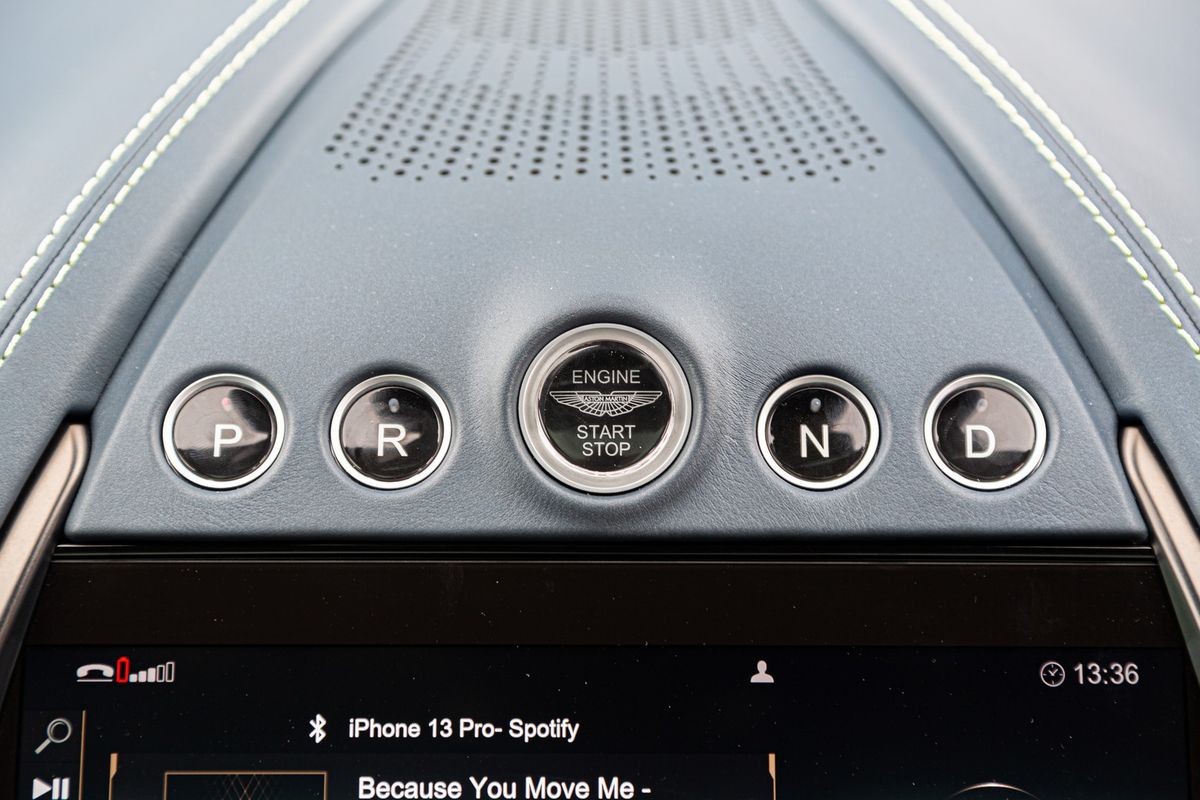
Once the photoshoot was finished, it was time to drive the Aston. When you push the start button in the middle of the fascia, the engine will fire up but, if you pull one of the gearshift paddles at the same time, everyone in your vicinity will know you’ve started one muscular motor.
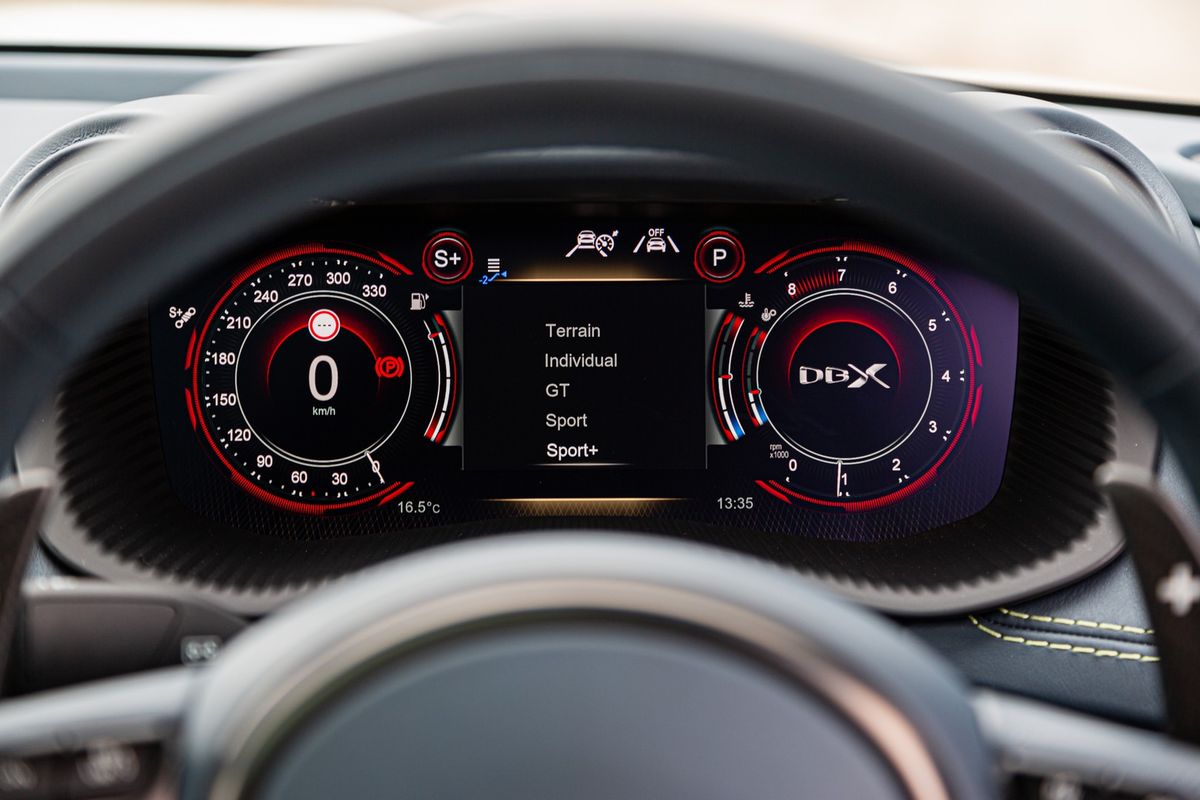
First things first… the obligatory acceleration test. Once the DBX707’s sportiest drive mode has been engaged, all you need to do to illuminate the launch control icon on the Aston’s digital instrument cluster is plant your left foot on the brake pedal and do the same with your right foot on the accelerator pedal. Then comes the call: “Go when you’re ready”.
Well, I was never ready for that ballistic take-off! With all four 23-inch tyres providing grip, the DBX707 doesn’t hesitate for a split second; it launches off the line like a bolt of lightning and positively spears towards the horizon. That claim of 3.3 sec for the 0-to-100-kph dash feels quite accurate and, for something that tips the scales at 2.2 tonnes, the DBX707 its blindingly fast. The noise emanating from the V8 motor is something else too.
Does it all turn into jelly when the Aston Martin’s made to corner at heady velocities? No, the DBX707 may weigh 2.2 tonnes and yes, many other overpowered SUV behemoths feel imprecise and overwhelmed by their sheer bulk when tasked to perform dynamically…
Yet the DBX707 hides its weight remarkably well – just imagine you’re in a high-riding hatchback. Of course if you’re careless, you’re reminded of the inescapable laws of physics, but this wasn’t something I was keen to explore in depth, given this car’s R5-million price tag and the fact that Aston Martin would not be pleased to hear that its test unit had been binned.
The ceramic brakes offer mega stopping power.
The secret to the Aston Martin’s corner-carving talents lies in its clever active anti-roll bars, which work non-stop, irrespective of speed and the drive mode you’ve selected. By keeping body roll in check, the vehicle can corner with a rather flat, almost sportscar-like, attitude.
With its Sports+ and manual gearshift modes engaged, the DBX707 proved remarkably responsive to driver inputs – for what it is, it darted into (and exited) corners with almost effortless agility. Despite being fitted with gargantuan (23-inch) wheels, the ride quality was even tempered, which we attribute to the tweaked chassis and 3-chamber air suspension.
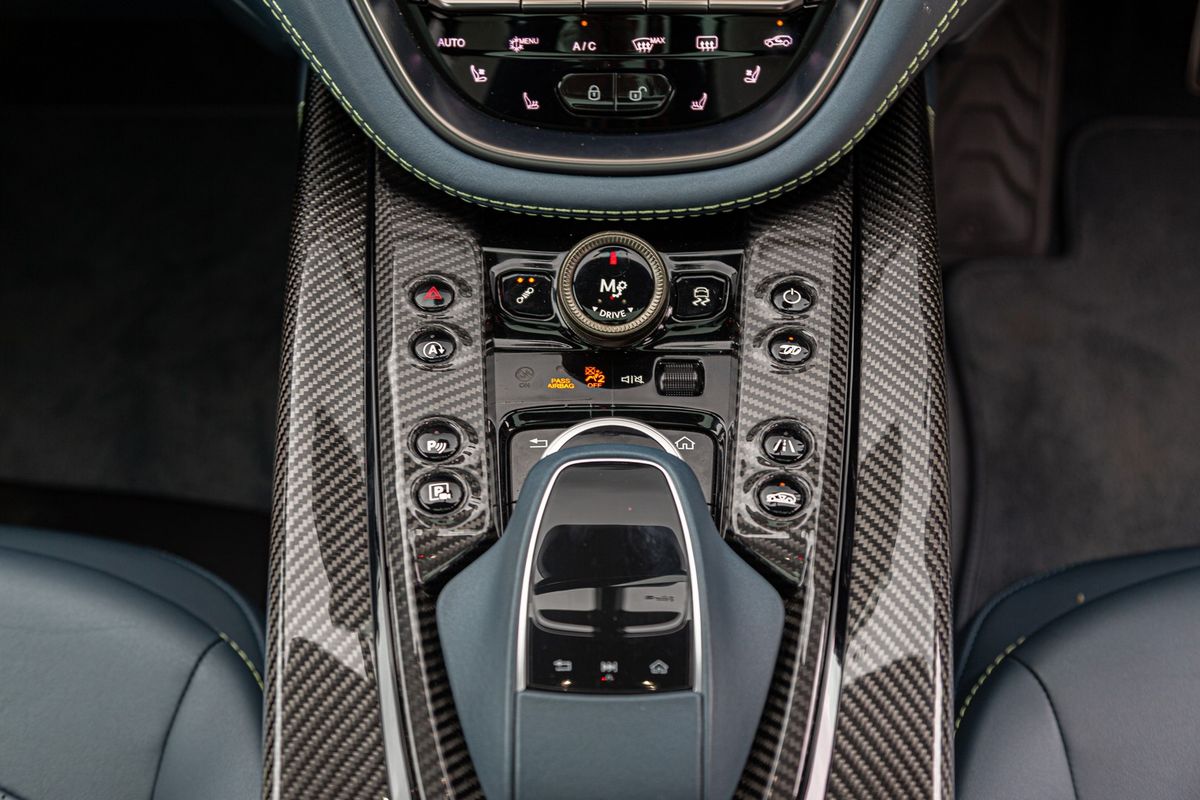
An upmarket cabin is expected at this price point and the DBX707 delivers.
Depending on which drive mode you’ve selected, the car can raise and lower its ride height automatically. Braking power is immense, courtesy of the monstrous ceramic discs on duty, and the steering is as direct and well-weighted as you’d expect of an Aston Martin product.
When its default GT mode is engaged, the DBX707 is a crushingly capable open-road cruiser. Overtaking is effortless, with most of the 900 Nm just a flex of your right foot away, but there is a smidgeon of turbo lag, which is to be expected, given the size of the blowers.
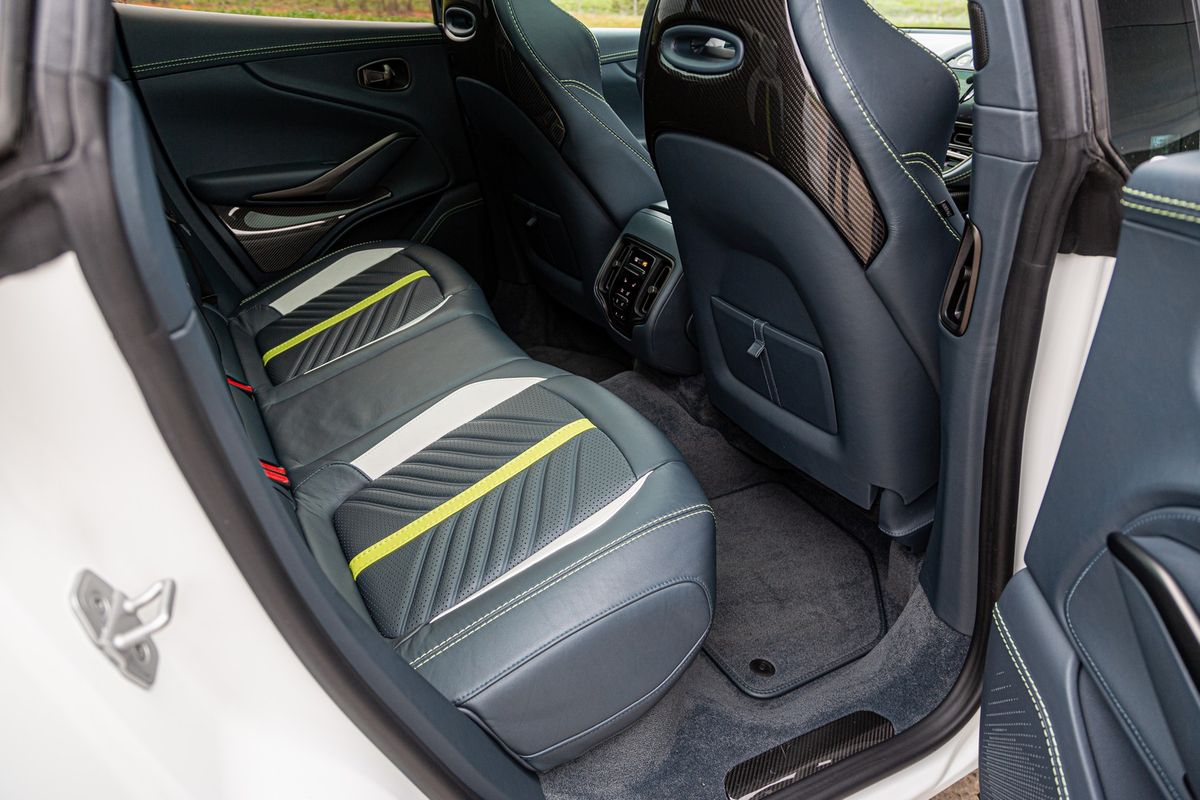
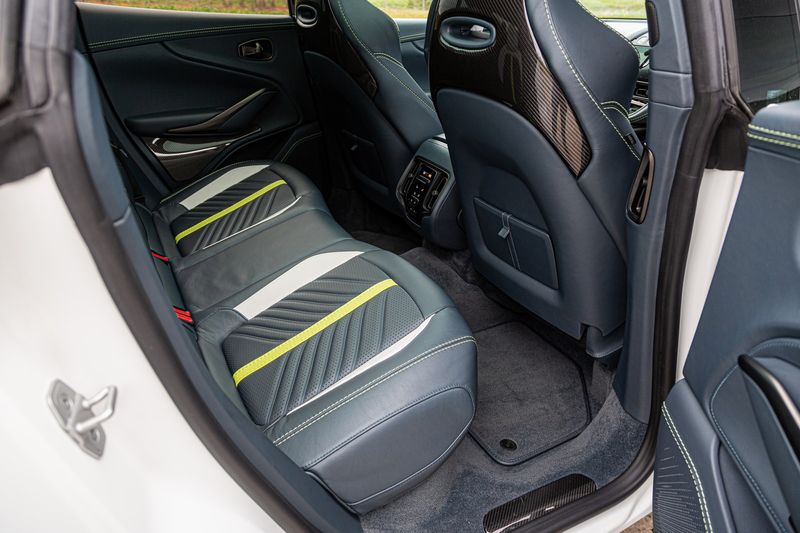
The DBX707 cabin is spacious and luxurious. Four adults in here with ease.
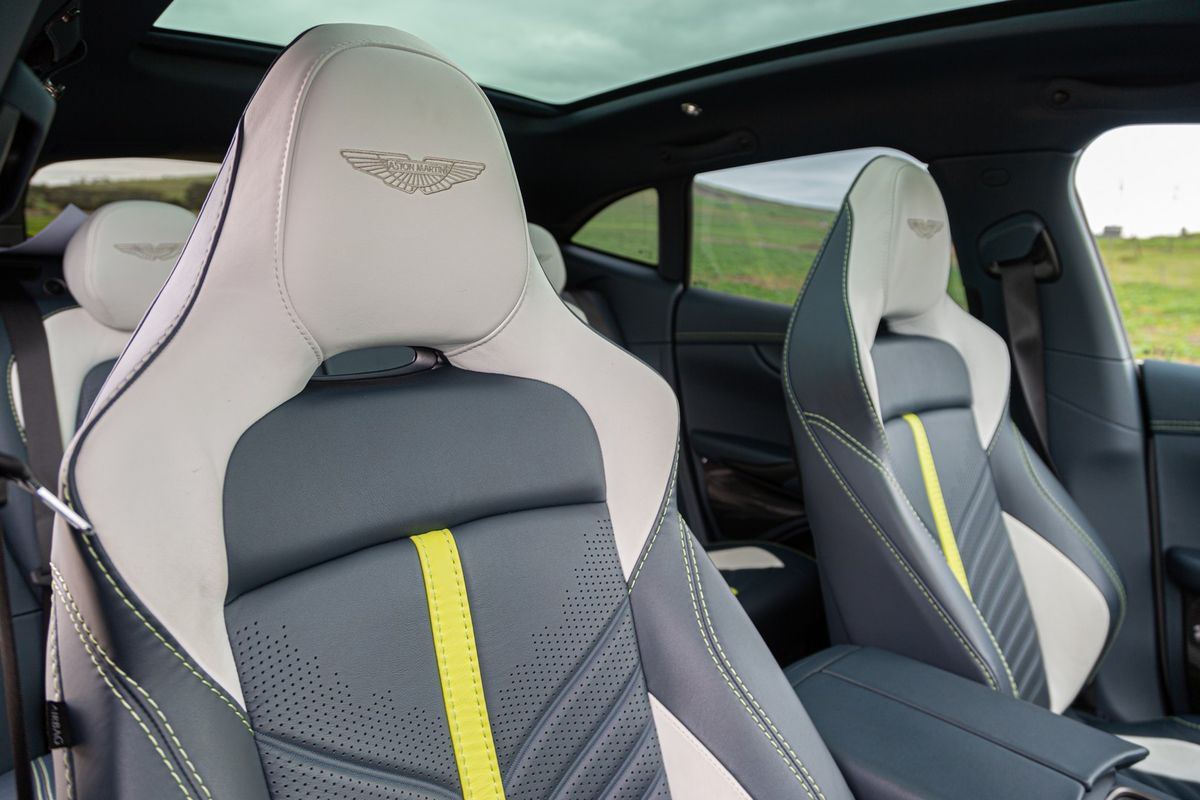
But can it “do family stuff” like any good SUV? Yes! Absolutely. Rear space is adequate for two tall adults and the load bay will easily swallow two sets of golf clubs. The cabin, with its lavish swathes of leather and carbon fibre, feels and smells – upmarket. The front seats not only look gorgeous, but are very supportive and offer 16-way adjustability, plus heating.
The standard features list is comprehensive, but you can dive into the Q Collection (yes, the customisation division is named after a character in the James Bond films) and specify things like the Halo package, which incorporates green brake callipers, stripey seats and other items.
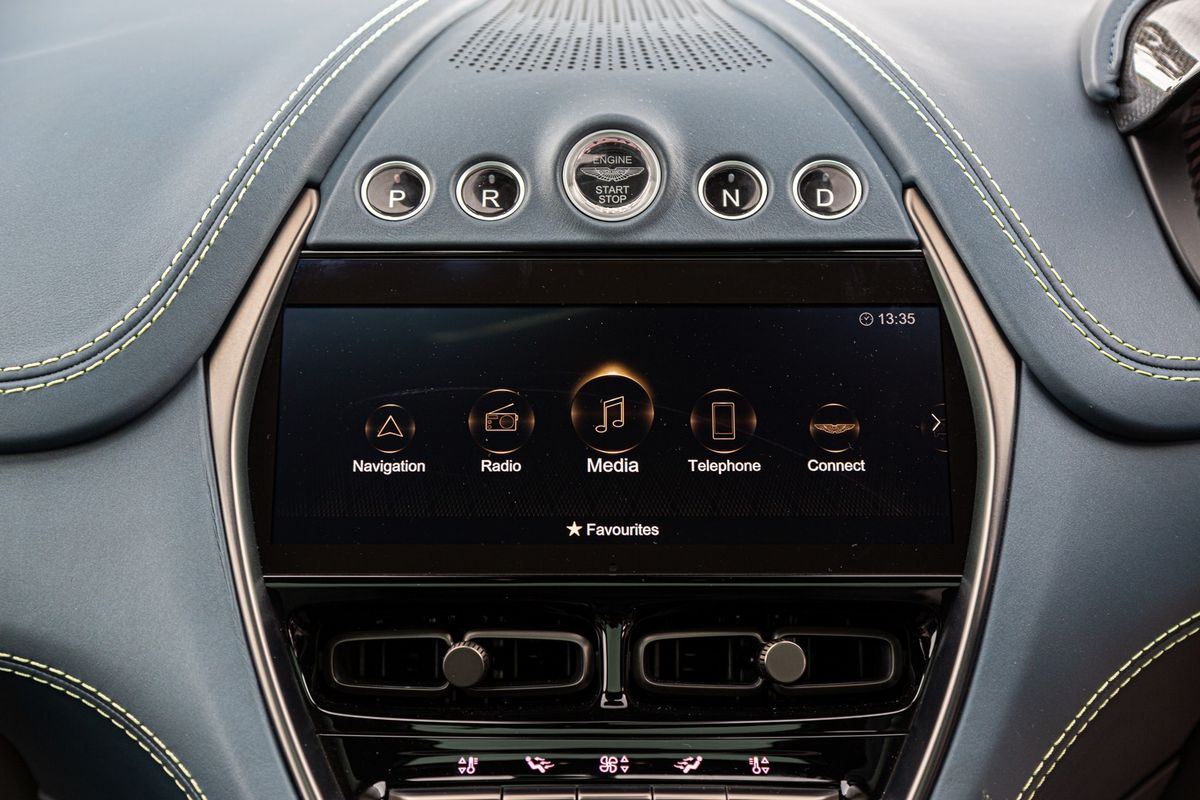
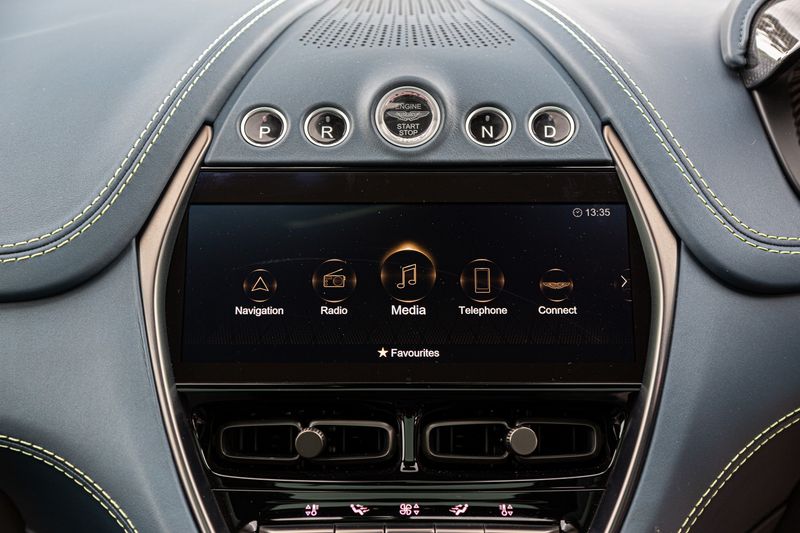
The infotainment system is functional, but no denying that its from a Mercedes-Benz.
Gripes? Well, the infotainment system is little more than a reskinned Mercedes-Benz unit, but that’s not a deal-breaker unless you’ve owned a string of Stuttgart’s products prior to taking delivery. Then there’s the pricing structure. With the standard DBX V8 coming in at R4.3 million and the DBX707 costing “just” R500k more, we can’t help but feel a tad sorry for those who bought the base version. This is the one to get, hands down.
It’s fast and it drives extraordinarily well. We think Aston Martin has nailed it with the DBX707.
How much does the Aston Martin DBX707 cost in South Africa?
Aston Martin DBX V8
R4 300 000
Aston Martin DBX707
R4 800 000
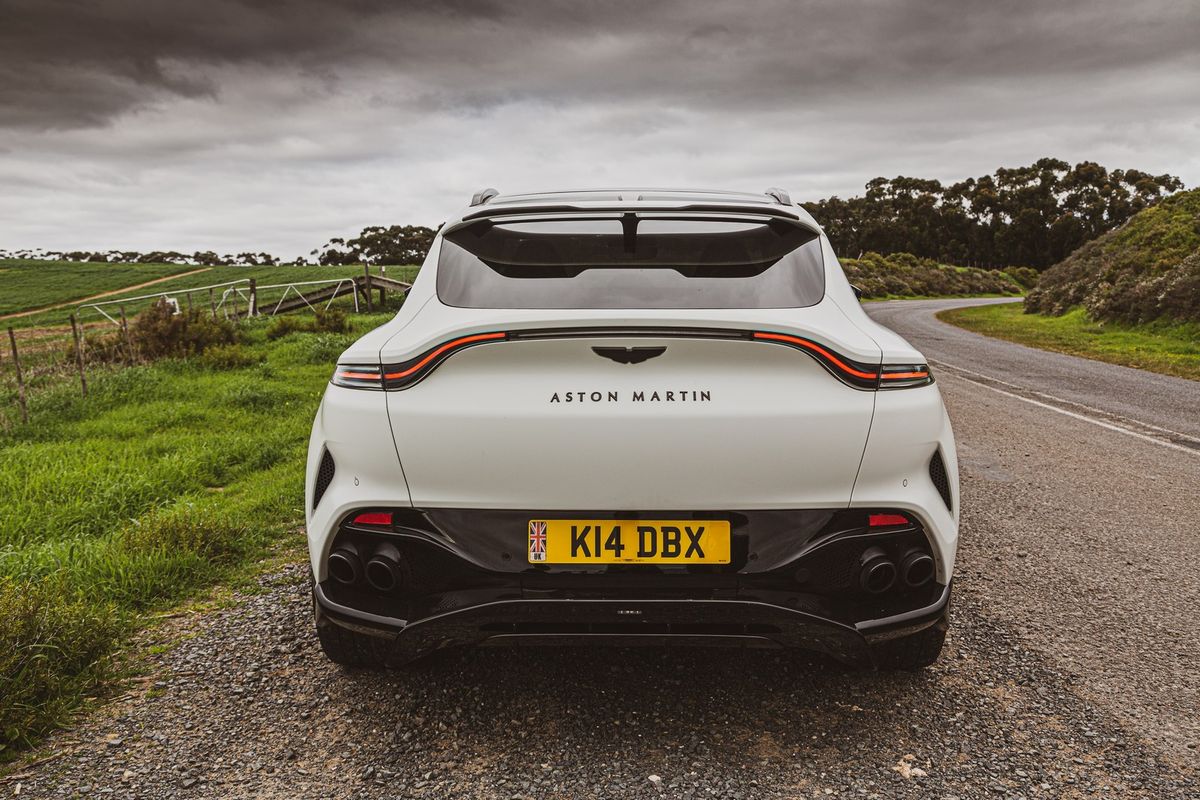
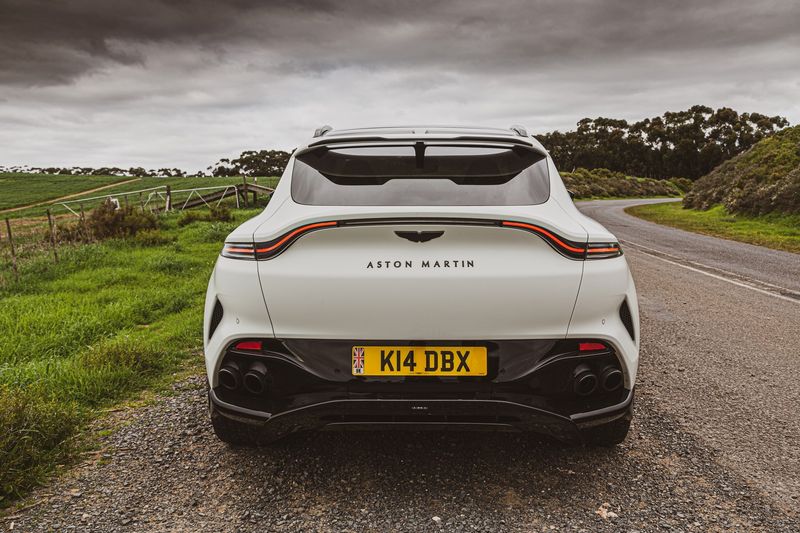
The view most road users will see, complete with quad exhausts and a rear diffuser
Summary
As far as speed dating goes, this was an eye-opening encounter with arguably one of the most entertaining super SUVs on sale. Rivals? Well, the duo from the Volkswagen Group (in the forms of the Urus and the Porsche Cayenne Turbo GT) offer similar performance for a bit less money and it would be rude to forget the most powerful Bentley Bentayga – the Speed.
However, the biggest drawcard of an Aston Martin is the fact that it is an Aston Martin. There’s something alluring and oh-so-classy about the quintessentially British brand, and the DBX707 represents an excellent product that delivers superb driving thrills and in-car luxury in abundance. If it takes a performance SUV to keep Aston Martin afloat, then we’re all for it.