Looking for the most affordable PHEVs on the market in South Africa right now? Here are the 8 most accessible plug-in hybrid options.
South Africa’s plug-in hybrid electric vehicle (PHEV) segment has grown rapidly over the past year or so. Several Chinese brands have moved into this space, seeing the segment’s entry point – which not long ago was more than R1 million – drop dramatically. These, then, are SA’s 8 most affordable PHEVs (all pricing is correct as of June 2026).
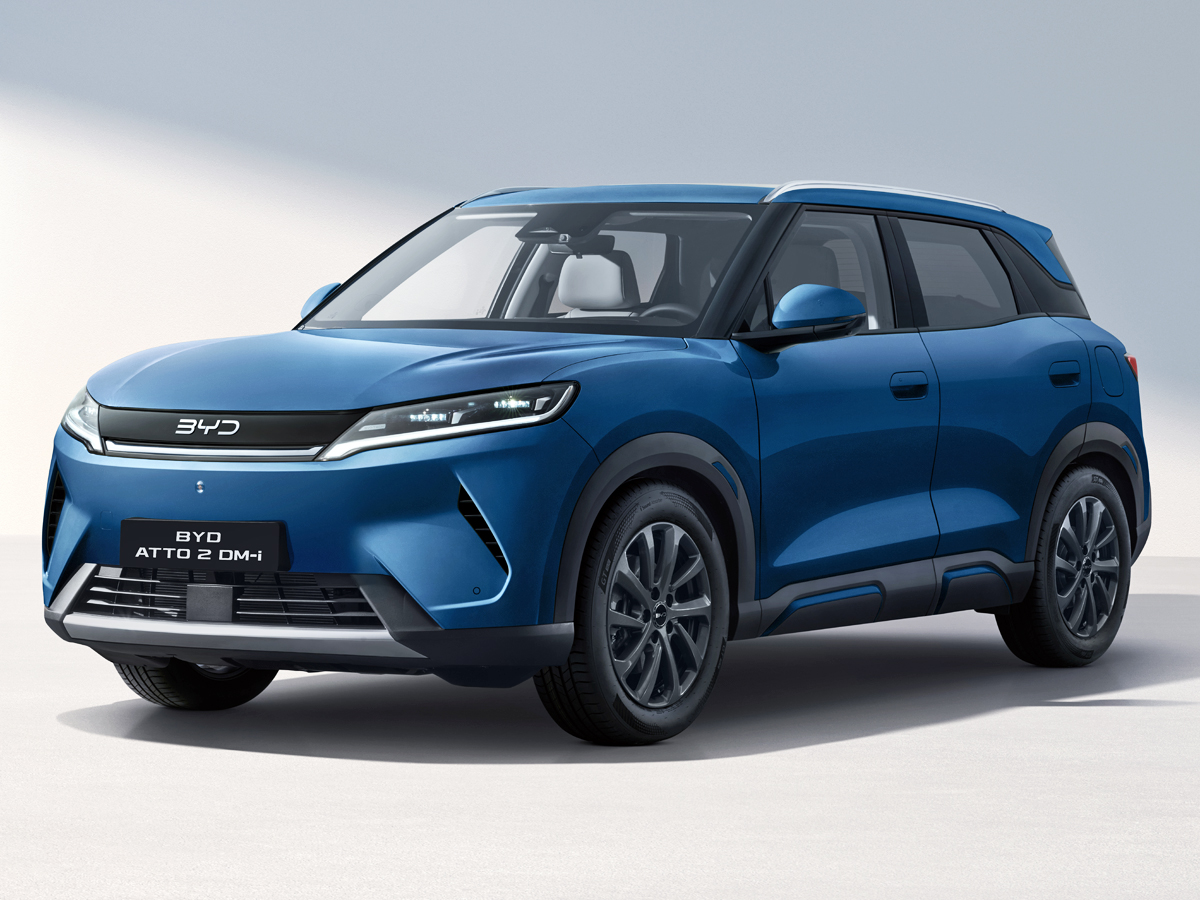
1. BYD Atto 2 DM-i – from R449 900
The freshly launched Atto 2 DM-i employs a PHEV powertrain comprising a naturally aspirated 1.5-litre petrol engine, a front-mounted electric motor and a battery pack. The resulting peak outputs come in at 122 kW and 300 Nm. The Comfort grade starts at just under R450 000, though BYD also offers a Dynamic derivative for R489 900.
Battery pack size: 7.85 kWh
Claimed all-electric range: 40 km
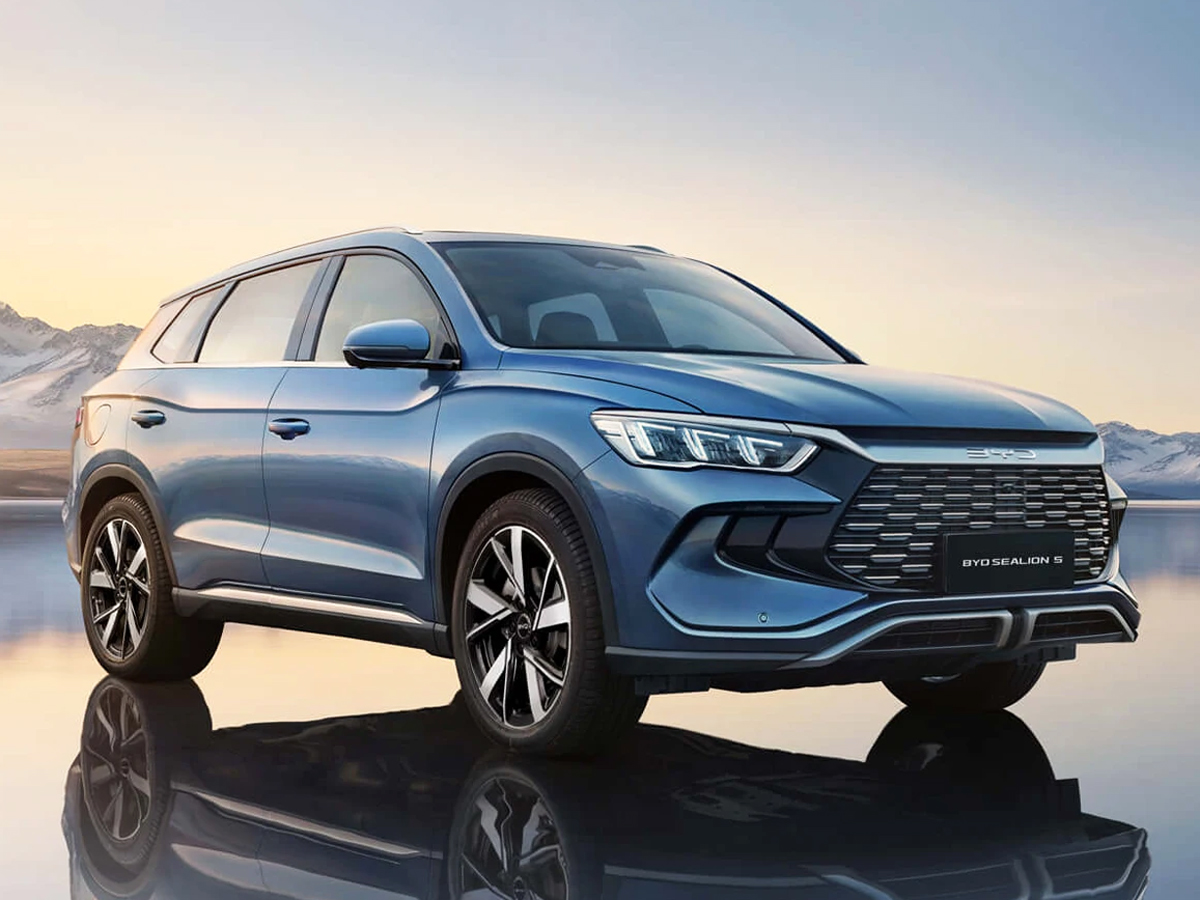
2. BYD Sealion 5 DM-i – from R509 900
The front-wheel-drive BYD Sealion 5‘s powertrain is also built around a naturally aspirated 1.5-litre petrol motor. With some help from a front-mounted electric motor, this arrangement offers peak system power of 156 kW. The base Comfort version is priced at R509 900, while the better-equipped Dynamic derivative comes in at R569 900.
Battery pack size: 12.96 kWh
Claimed all-electric range: 52 km
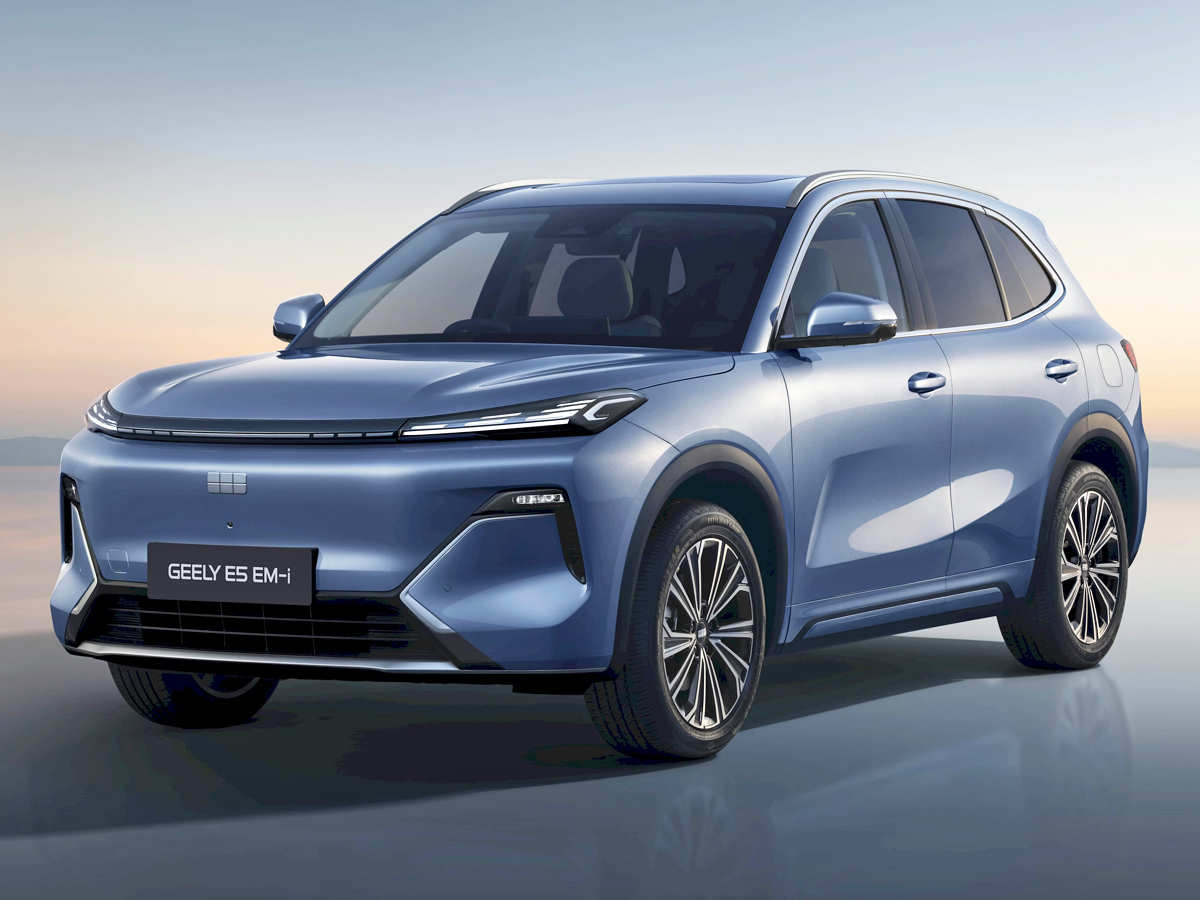
3. Geely E5 EM-i – from R599 999
Geely‘s recent return to Mzansi started with the launch of the E5 EM-i, which very briefly held the title of SA’s most affordable PHEV. Directing its drive to the front axle, an atmospheric 1.5-litre petrol mill combines with an electric motor to offer a total system output of 193 kW. The Aspire grade is priced at R599 999, while the appropriately named Apex flagship comes in at R679 999.
Battery pack size: 18.4 kWh
Claimed all-electric range: 83 km
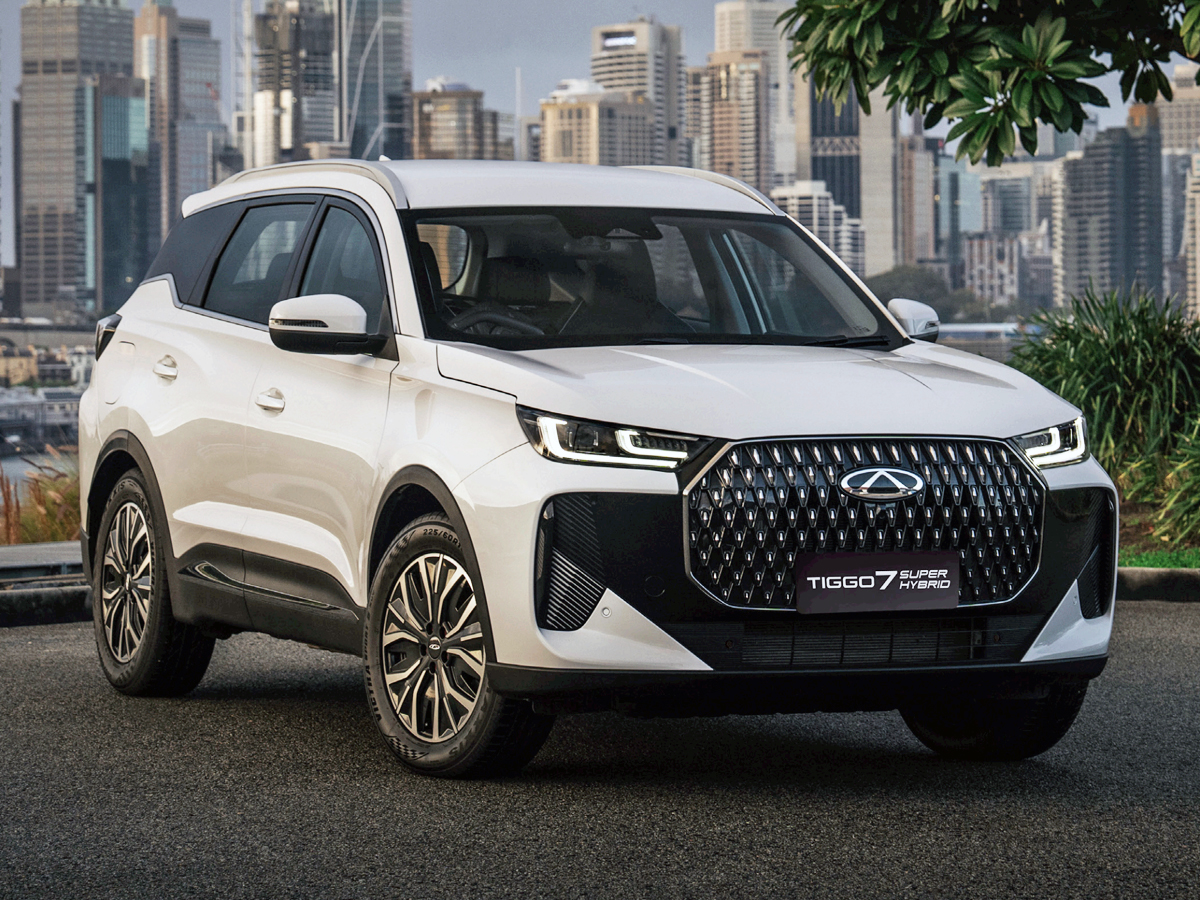
4. Chery Tiggo 7 1.5T CSH – from R619 900
Like the Sealion 5 above, the Chery Tiggo 7 CSH is front-wheel drive. However, it employs a turbocharged 1.5-litre petrol engine mated with an electric motor to offer a considerably higher system output of 265 kW. The Plus specification comes in at around R620 000, though there’s also an Ultra grade for R679 900.
Battery pack size: 18.3 kWh
Claimed all-electric range: 93 km
5. BYD Sealion 6 – from R639 900
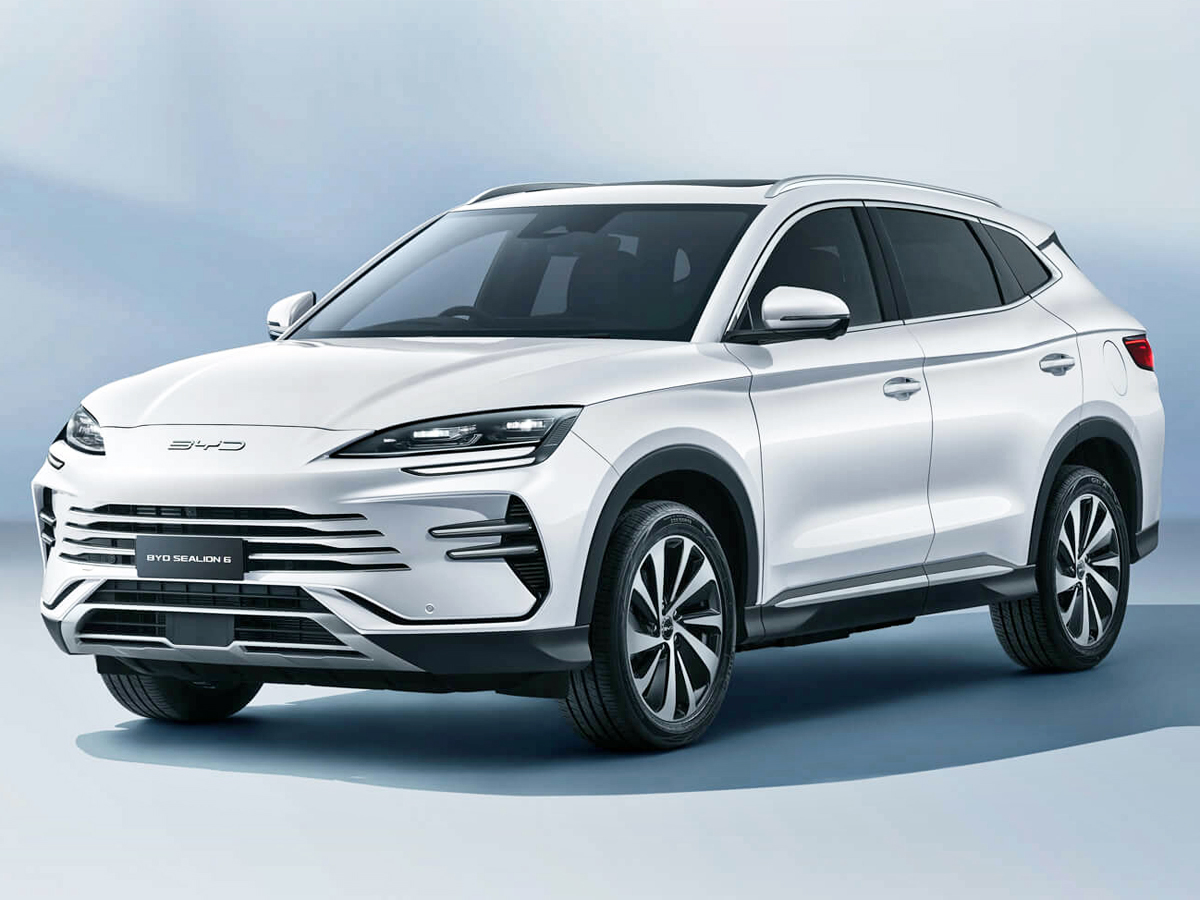
The BYD Sealion 6 range offers 2 distinct PHEV powertrain options. The Comfort (R639 900) and Dynamic (R696 900) variants are front-wheel drive, offering 160 kW from a naturally aspirated 1.5-litre petrol engine and an electric motor. Meanwhile, the flagship Premium derivative (R779 900) boasts a turbocharged 1.5-litre petrol unit and gains a rear-mounted electric motor, resulting in all-wheel drive and pushing peak power to 238 kW.
Battery pack size: 18.3 kWh
Claimed all-electric range: 70 km (Premium); 80 km (Comfort and Dynamic)
6=. Jaecoo J7 1.5T SHS – from R689 900
Interestingly, 6th place on the list of SA’s most affordable PHEVs is shared by 3 models from Chery Group sub-brands. First up is the Jaecoo J7 SHS, which combines a turbocharged 1.5-litre petrol unit with an electric motor to generate total system power of 255 kW. Just a single front-driven derivative is available in Mzansi.
Battery pack size: 18.3 kWh
Claimed all-electric range: 90 km
6=. Omoda C7 1.5T SHS – from R689 900
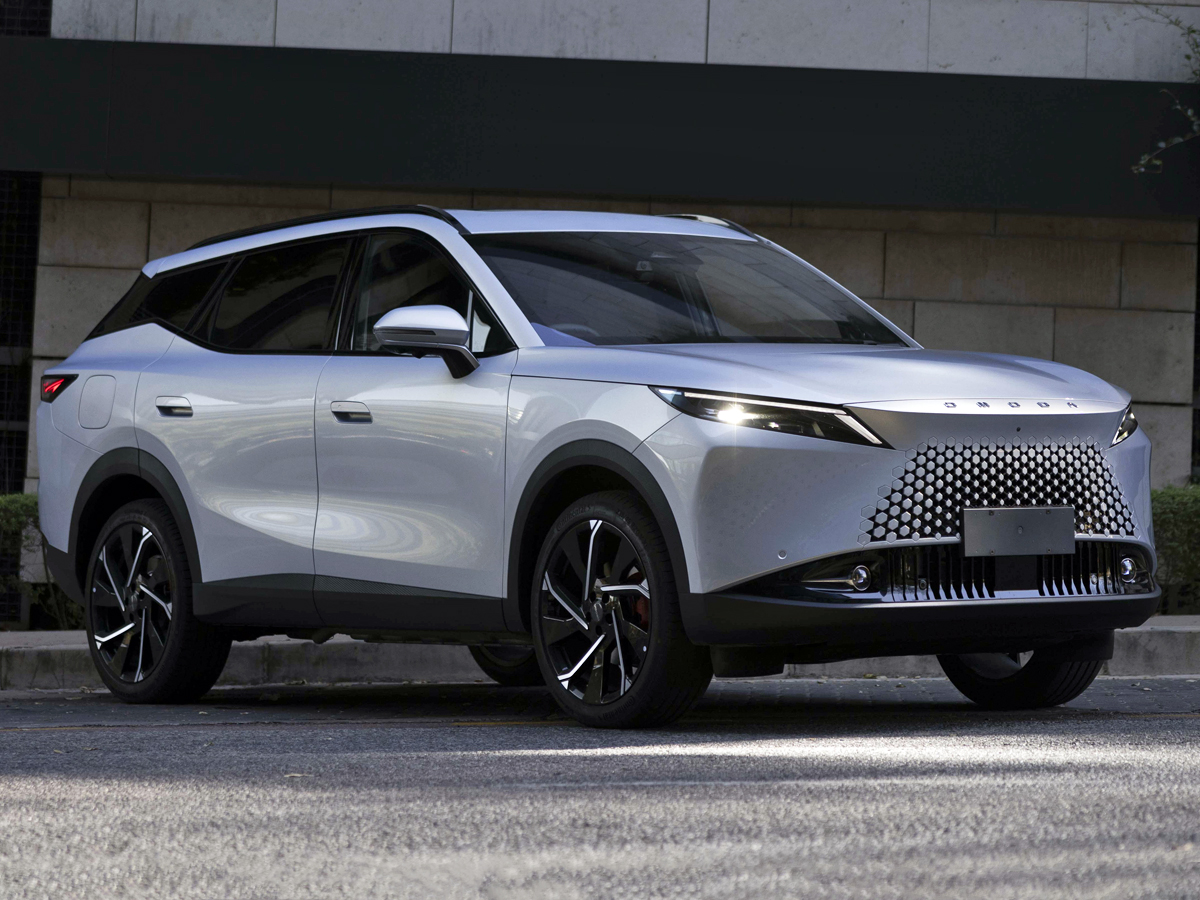
As you might have guessed, the Omoda C7 SHS appears to use the same powertrain as its J7 sibling above (and one no doubt closely related to the Tiggo 7 1.5T CHS above, too, considering all fall under the Chery Group banner). Curiously, however, this likewise front-driven derivative’s claimed all-electric range is 15 km higher than that of its J7 relative, at a listed 105 km.
Battery pack size: 18.3 kWh
Claimed all-electric range: 105 km
6=. Jetour T1 1.5T i-DM – from R689 900
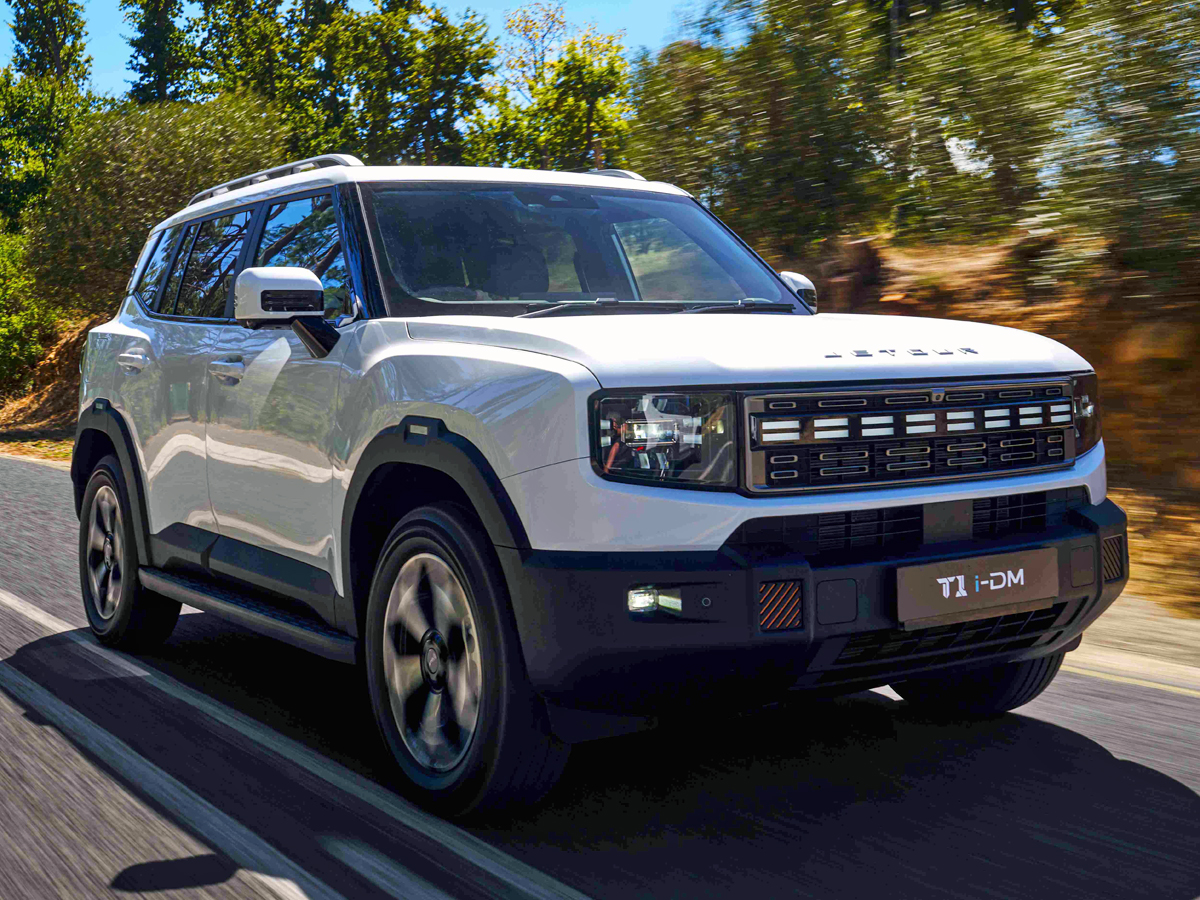
The i-DM-badged version of Jetour’s boxy T1 employs a PHEV powertrain built around – yes, you guessed it – a turbocharged 1.5-litre petrol engine paired with a single electric motor and a battery pack. The Chinese brand claims the front-wheel-drive T1 i-DM boasts total system outputs of 250 kW and 530 Nm.
Battery pack size: 18.4 kWh
Claimed all-electric range: 100 km
Frequently Asked Questions (FAQ)
Q: What are the entry points and top contenders for the most affordable PHEVs in South Africa?
A: As of June 2026, the local market’s entry point for plug-in hybrid electric vehicles (PHEVs) has dropped well below the R500 000 mark. The BYD Atto 2 DM-i leads as South Africa’s most affordable PHEV starting from R449 900, followed by the BYD Sealion 5 DM-i from R509 900 and the Geely E5 EM-i starting at R599 999.
Q: Which affordable plug-in hybrids offer the highest power outputs and electric driving ranges?
A: The Chery Tiggo 7 1.5T CSH offers the highest total system output among the lower-priced options at 265 kW, paired with a 93 km all-electric range. For absolute pure-electric distance, the Omoda C7 1.5T SHS leads this price bracket with a claimed zero-emission driving range of 105 km, closely followed by the Jetour T1 1.5T i-DM at 100 km.
Q: How do the battery sizes and drivetrains compare among the options priced under R700 000?
A: Most models in this entry-to-mid tier utilize front-wheel-drive architectures coupled with battery capacities hovering around 18 kWh (including the Geely E5, Chery Tiggo 7, Jaecoo J7, Omoda C7, and Jetour T1). The exceptions are the budget-oriented BYD Atto 2 and Sealion 5, which keep costs down by using smaller 7.85 kWh and 12.96 kWh battery packs respectively, while the BYD Sealion 6 family provides a choice between front-wheel drive (160 kW) and an all-wheel-drive Premium flagship (238 kW).
What it really costs to charge your EV at home in 2026
Charging your EV at home with solar is a no-brainer in sunny South Africa. But once a home battery system enters the mix, the math gets a lot less straightforward. Capacity limits, efficiency losses, and battery degradation all start to chip away at the “free fuel” narrative. Here’s what the numbers really look like.
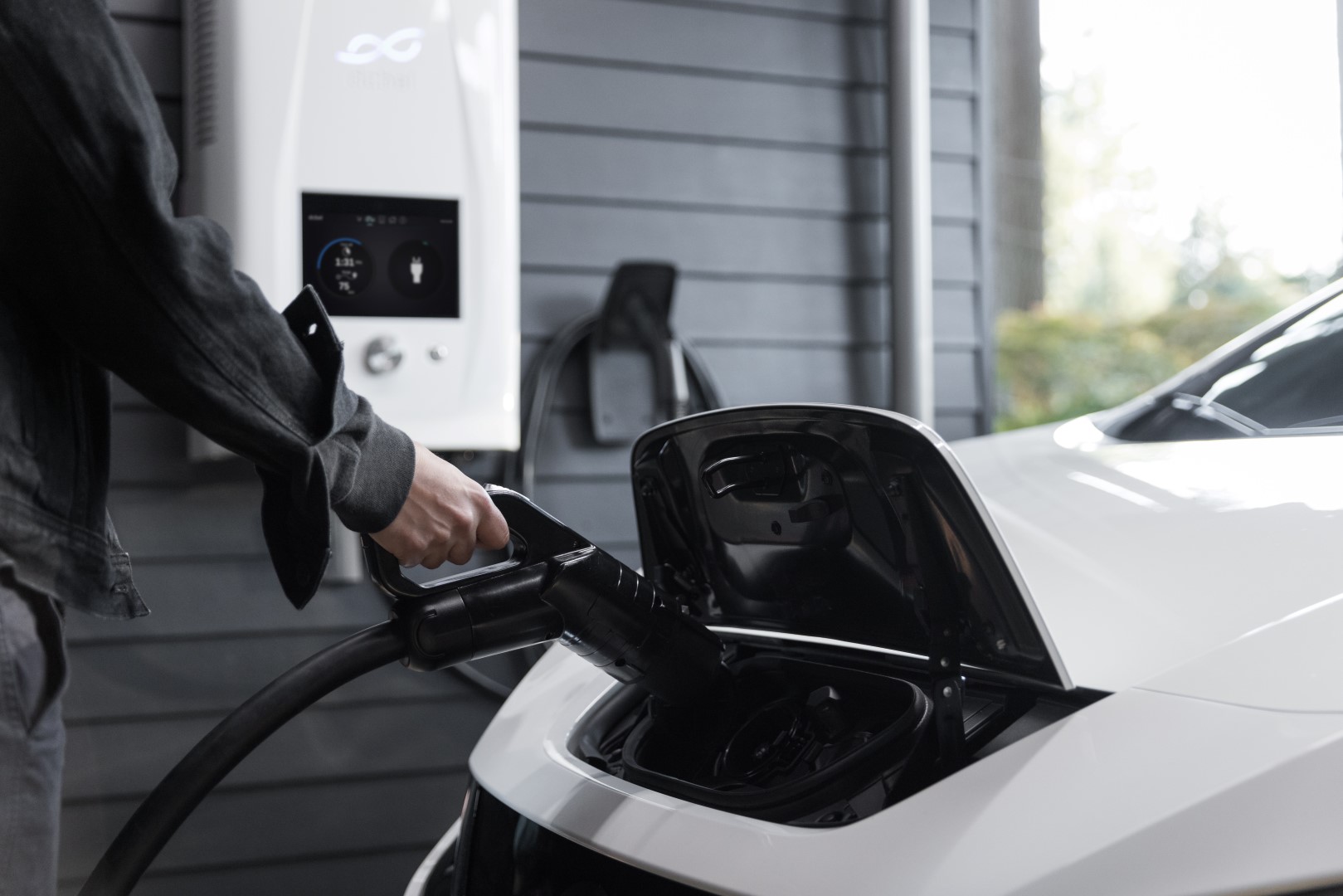
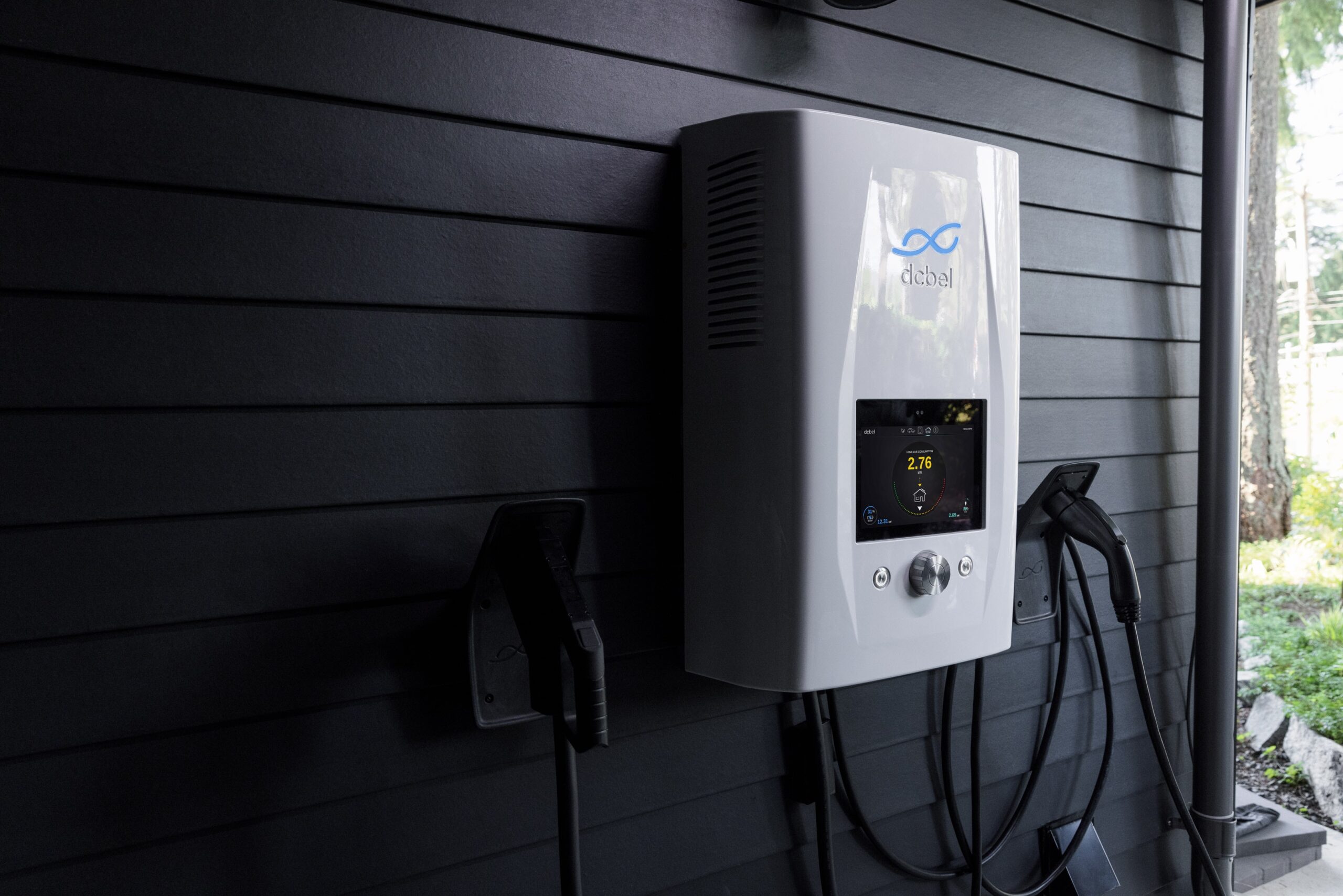
Too often, buyers don’t consider an EV’s running costs when signing on the dotted line. Unlike refuelling an internal combustion engine (ICE) vehicle, where you know exactly what a litre of fuel will cost, the various scenarios in which you can charge an EV differ greatly in price. While first prize is a high-voltage station at the office where rapid charging happens for free, the reality of hybrid work, weekends, and holidays dictates that you’ll occasionally have to charge elsewhere – including at home.
Here is how the standard at-home options compare in real-world costs.
How much does it actually cost to charge an EV at home in South Africa?
Charging scenario
Source tariff (per kWh)
Storage wear cost (per kWh)
Total true cost (per kWh)
Real cost per 100 km
Financial verdict
Direct daytime solar
R0.00
R0.00 (bypasses home battery)
R0.00
R0.00
Free, but the car must be plugged in during peak daylight hours.
Standard municipal grid
R4.00
R0.00 (direct to car)
R4.00
R60.00
Significantly cheaper than internal combustion, but subject to tariff hikes.
Overnight home battery (stored solar/grid power)
R0.00 to R4.00
R1.00 (inverter battery wear)
R1.00 to R5.00
R15.00 to R75.00
Drawing power into a home battery to dump it into an EV adds a heavy premium in hardware wear.
Internal combustion engine averaging 6.75 L/100 km
n/a
n/a
n/a
R190.00 (at R28/L)
Double the cost of standard grid charging, but requires no behavioural adjustments.
(Note: EV calculations are based on an average efficiency of 1 kWh per 6.6 km, or roughly 15 kWh/100 km).
Eskom tariffs vs solar energy: Is charging via panels truly free?
With enough solar panels, you can run practically anything in your household off the sun, provided there’s enough light to power a suitably sized solar array. During peak solar periods – say, between 10:00 and 14:00 – you could theoretically charge your EV for free.
However, that assumes you’ve already made the capital outlay for a solar system capable of dealing with the demands of a 7.4 kW single-phase or an 11 kW 3-phase AC wallbox charger – most modern solar panels produce around 550 Wh, so simple math suggests you’ll need a minimum of 15 panels on your roof.
If it’s cloudy, or your inverter capacity is limited to 8 kW, attempting to charge your EV means you will have to forgo topping up your home backup system. In such a scenario, the house’s backup battery won’t reach a full state of charge. This forces you to use expensive grid power to top up the shortfall overnight.
Ultimately, achieving “free” charging demands a significant lifestyle change and careful daily planning.
The hidden costs: Why depleting your home battery to charge your EV is a mistake
It’s tempting to think that a home storage battery can easily be used to charge an EV overnight. But the hardware physics prove otherwise.
A standard 5.12 kWh home battery can only boost a typical EV battery (which ranges from 50 kWh to 100 kWh) by about 30 km worth of range. A single standard home battery simply doesn’t have the capacity to feed a massive vehicle battery. More importantly, pulling a continuous high load from the home battery causes rapid thermal degradation, prematurely eating through its finite lifespan of charging cycles.
Trying to run a 7.4 kW wallbox charger off a lone 5.12 kWh battery will drain the home storage to 0% in less than 45 minutes. You are effectively trading away your household load-shedding protection for a mere 30 km of driving range.
The true cost of storage wear: Assuming a quality 5.12 kWh LiFePO4 (lithium iron phosphate) battery costs roughly R30 000, dividing this upfront cost by its expected lifetime energy throughput (5.12 kWh x 6 000 cycles) yields a relative storage cost of R1.00 per kWh.
While your solar panels might harvest the energy for free, routing it through your home battery adds R1.00 per unit in hidden hardware depreciation. If a typical 40 km daily commute adds 10 kWh of demand to your home system overnight, it would require nearly 2 full charges of a 5.12 kWh battery just for the car. Combined with regular domestic usage, this forces the battery to operate at an unsustainable cycle rate, cutting its expected usable lifespan from 15 years down to under 6.
The lesson? Configure your inverter to skip the home battery when the car is plugged in. You save R1.00 per unit in hardware wear every single time.
Wallbox vs. standard wall socket: Balancing home charging & speed
The other major cost of home charging resides in the ratio between charging speed and upfront investment. Relying on the portable “granny charger” sold with the car as your permanent home charging solution is a non-starter. Standard domestic sockets aren’t designed for a prolonged, maximum-amperage current draw lasting over 24 hours. Doing so introduces significant thermal stress behind the wall, creating severe risks of melted sockets and electrical fires.
Upgrading to a dedicated home charger requires balancing your property’s electrical infrastructure against installation costs – some manufacturers are wise to this and are including the cost and installation of home AC chargers into the price of their vehicles.
Charger type
Electrical supply required
Charging power (kW)
Added range per hour
Time to charge a 60 kWh battery (0-100%)
Usage conditions
Portable charger (included with car)
Standard 3-pin wall socket (10A – 13A)
2.3 kW
10 to 15 km
26 hours
Emergency use only. Continuous high-current draw over a full day creates dangerous thermal stress on standard domestic wiring.
Single-phase wallbox (the most common installation)
Dedicated 32A breaker from DB board
7.4 kW
35 to 40 km
8 hours
The sweet spot. Fits 70% of South African suburban homes. Perfectly aligned with an overnight sleep cycle to fully replenish a daily commute without major grid upgrades.
3-phase wallbox (premium installation)
3-phase power supply (16A per phase)
11 kW
60 km
5.5 hours
Infrastructure dependent. Requires a native 3-phase property connection, which is typically limited to specific agricultural holdings, older large estates, or light commercial properties.
Most South African homes are wired as single-phase, which allows installation of a 7.4 kW wallbox able to fully charge a 60 kWh battery in 8 hours, and without significant revision of electric infrastructure. If not yet installed, upgrading to a full-fat 11 kW wallbox requires:
3-phase power.
A new application to your municipality.
A replacement electricity meter and modifications to your DB board.
Labour and a certificate of compliance.
Combined, the aforementioned could run into tens of thousands of extra rands spent.
The 3 rules for efficient EV home charging are…
Time your charging perfectly: To truly charge using “free” fuel, plug your EV in exclusively during peak daytime solar hours (10:00 to 14:00).
Protect the home storage system: Program your inverter to never drain the household backup battery to charge the car. Use daytime sun to charge the home battery, and let the car pull straight from the panels or the grid.
Stick to a 7.4 kW wallbox: For the vast majority of South Africans, a single-phase 7.4 kW charger offers the best balance of overnight speed without triggering exorbitant municipal infrastructure upgrade fees.
The bottom line
Charging an EV at home in South Africa isn’t as simple as plugging it in and watching the savings roll in. The math proves that the smartest investment you can make isn’t buying more expensive hardware – it’s simply knowing exactly when to plug in.
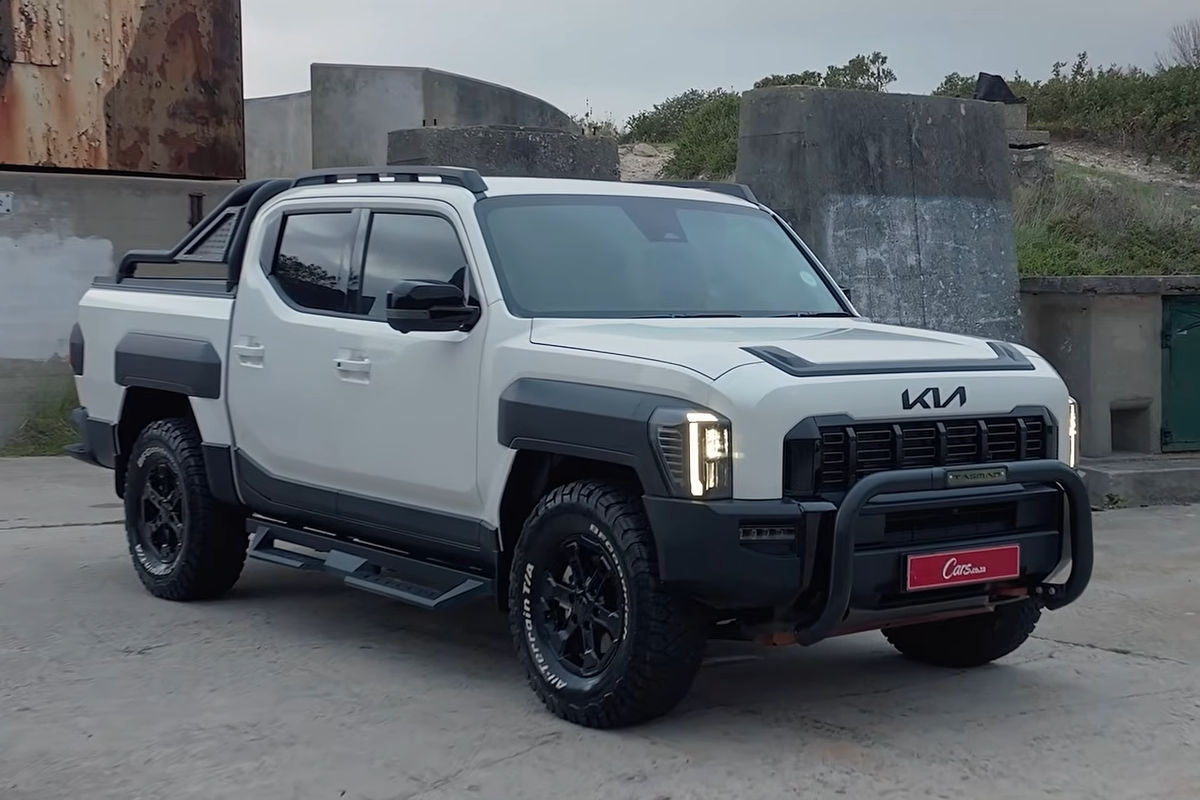
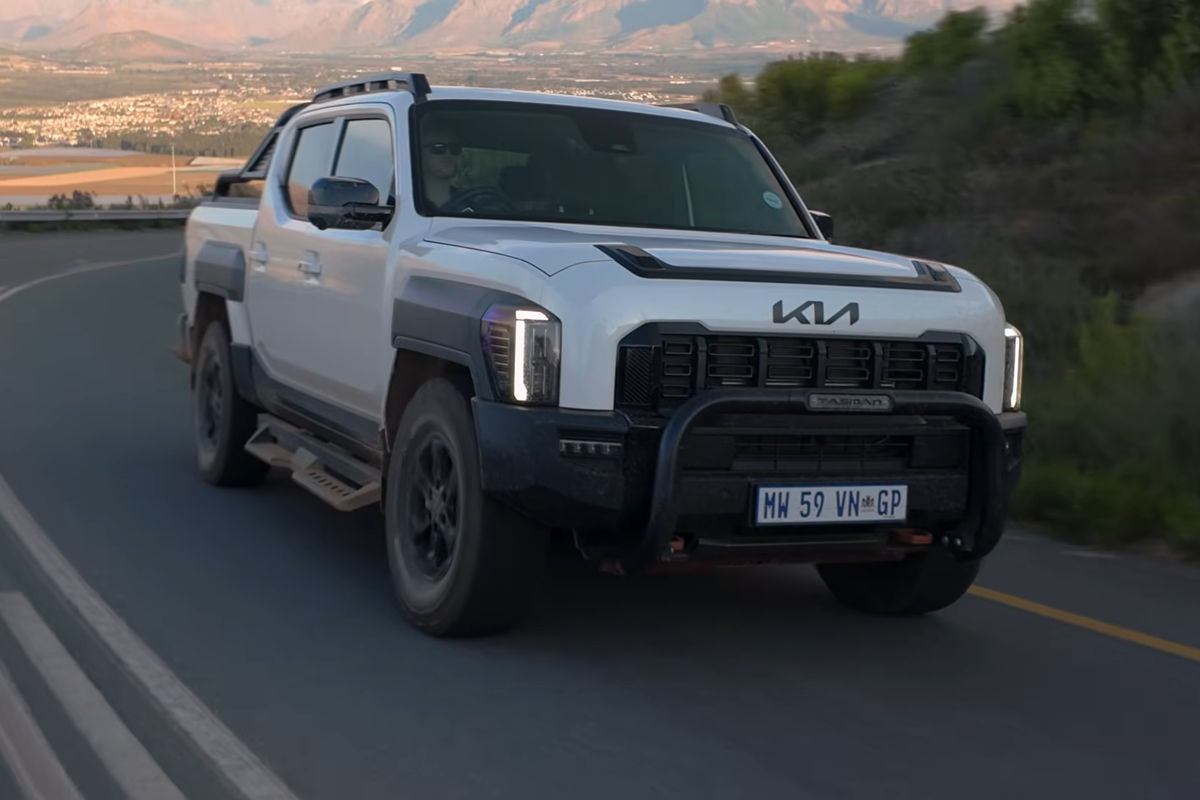
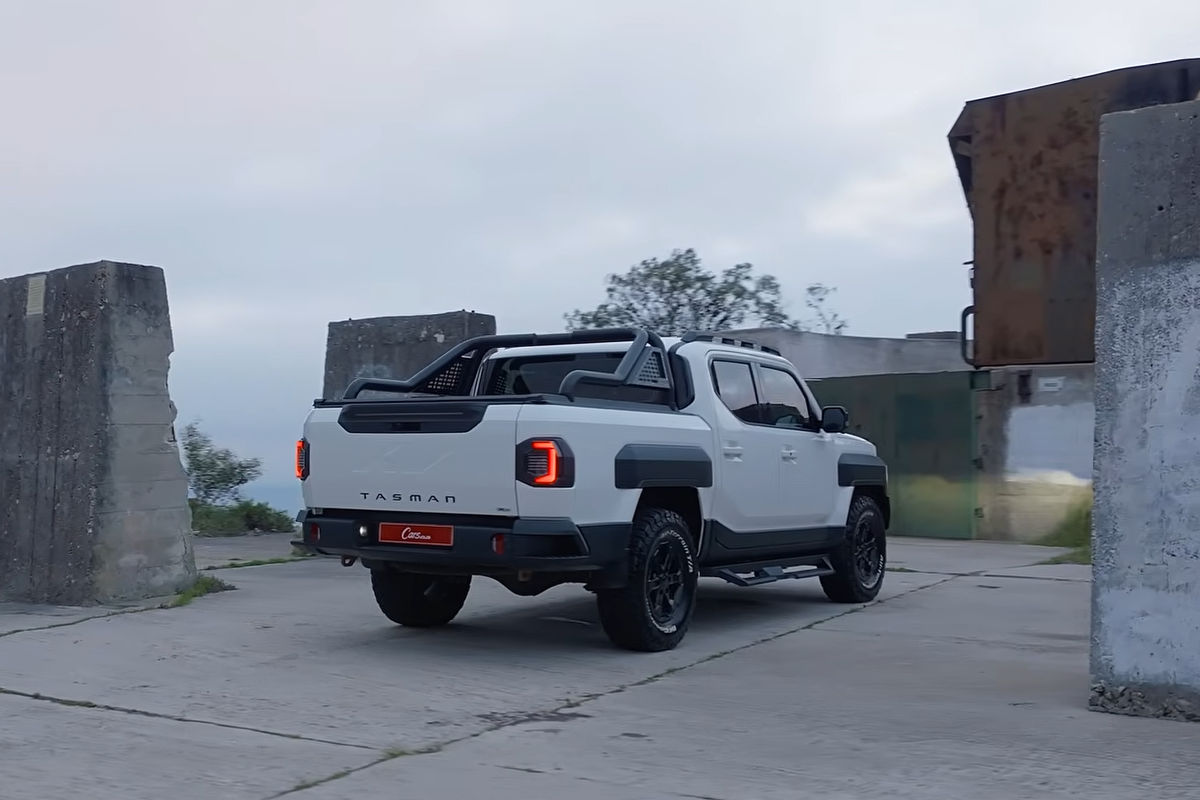
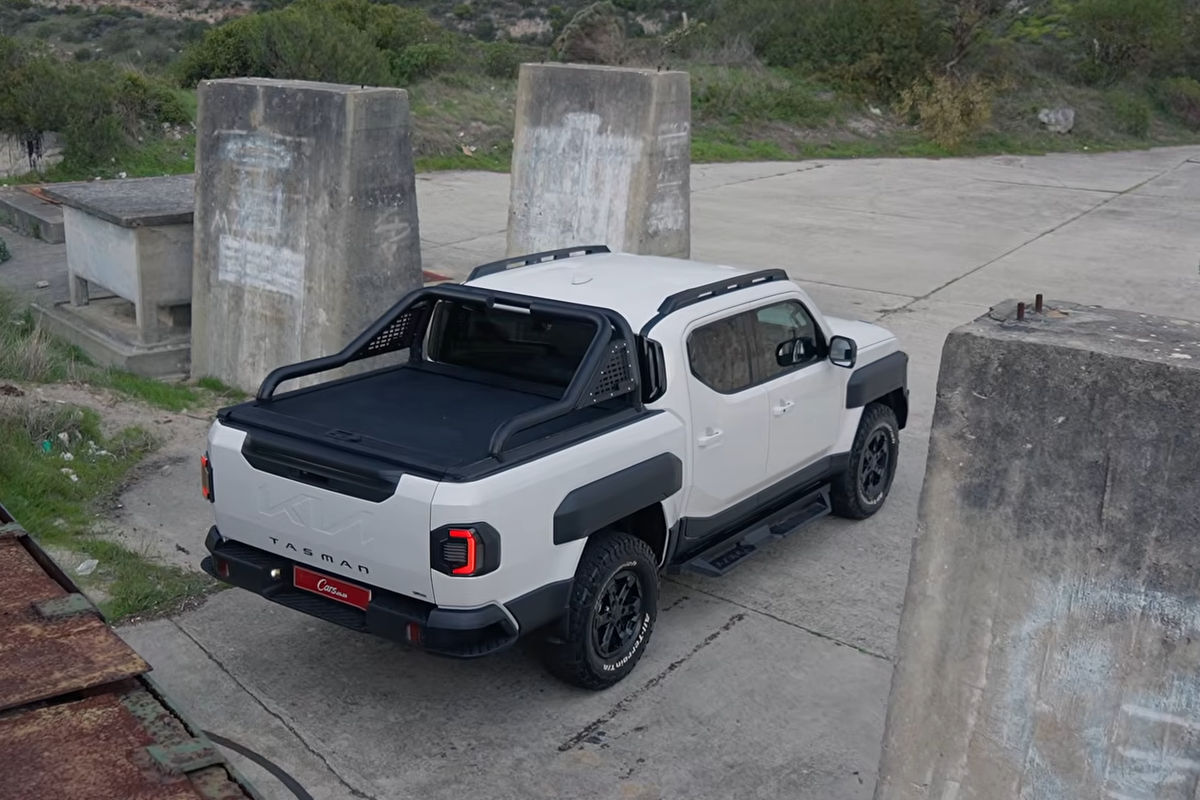
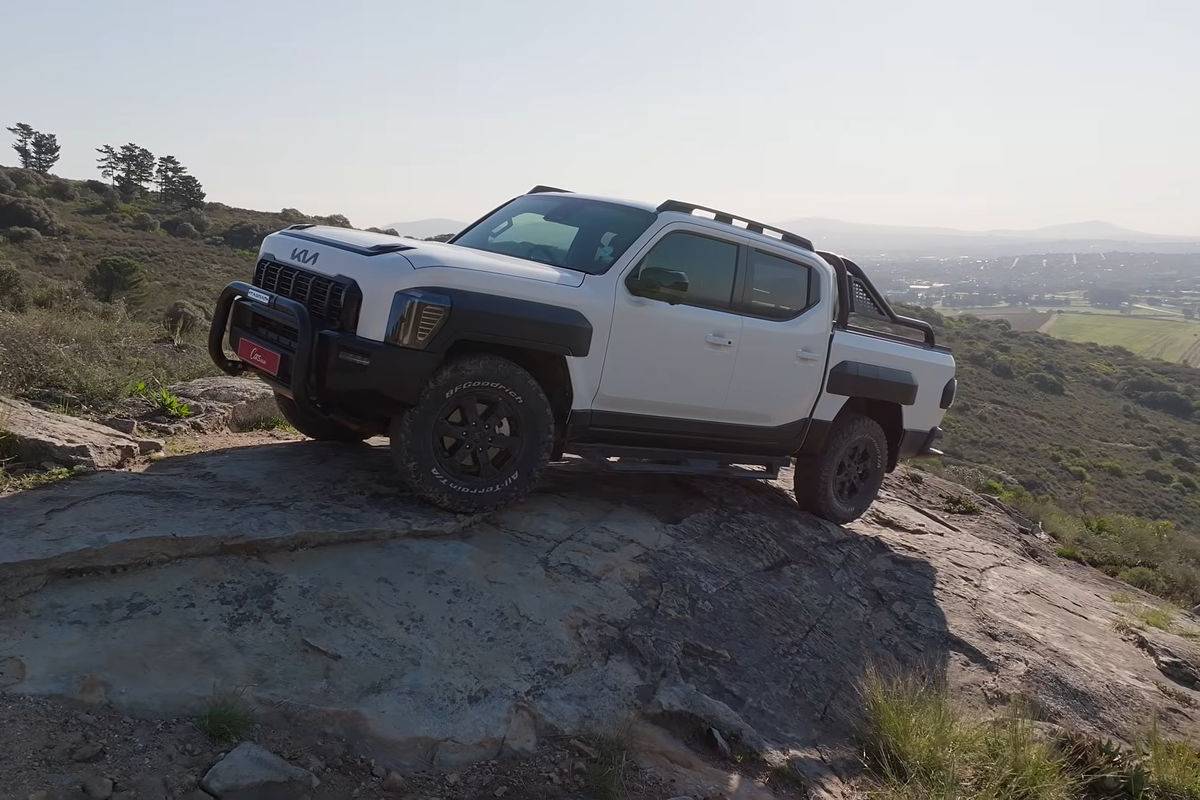
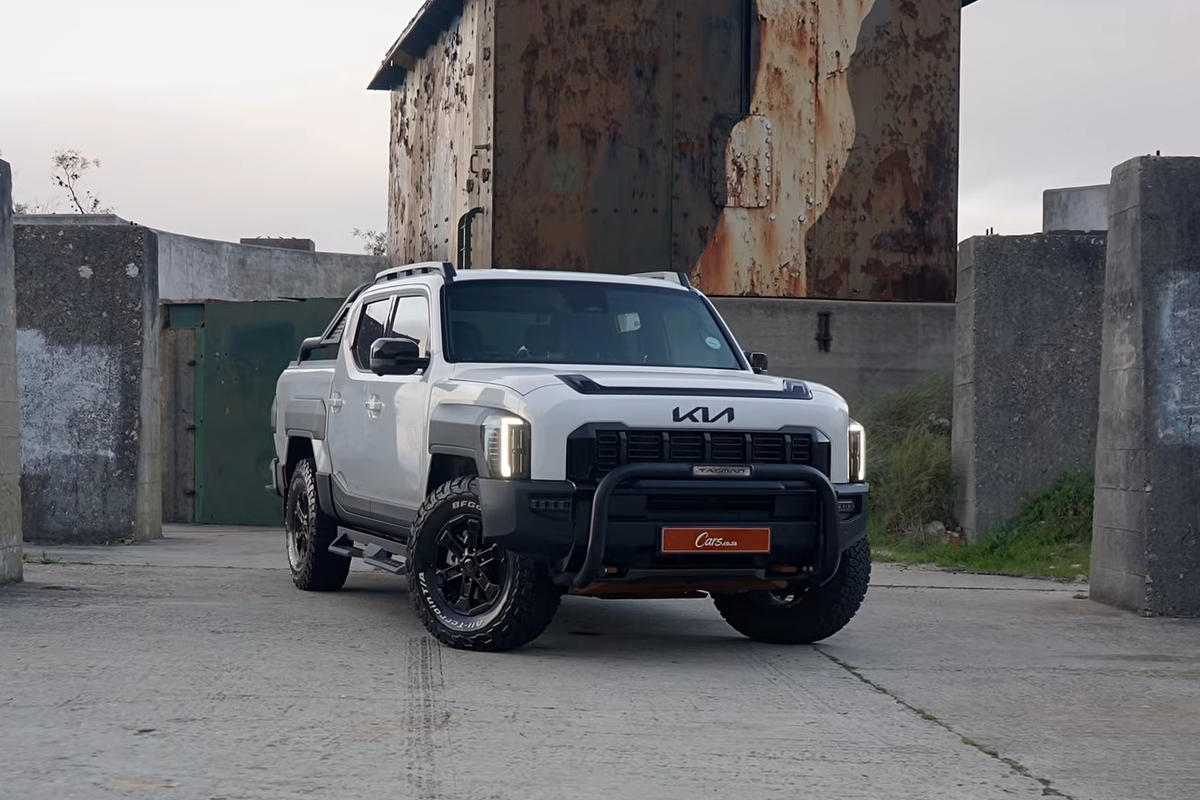
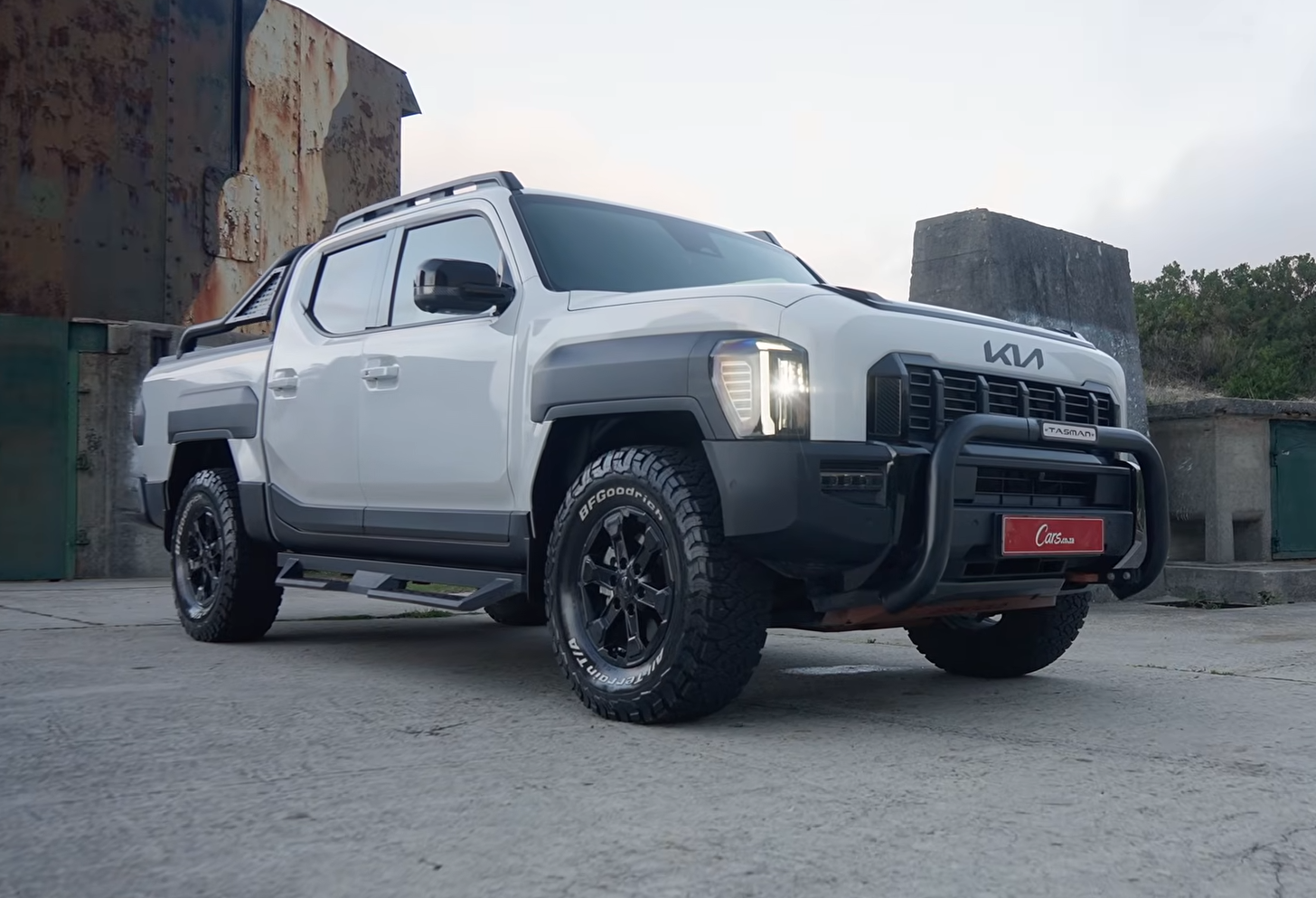
The Kia Tasman has officially landed, throwing the South Korean brand directly into the deep end of South Africa’s fiercely contested leisure double-cab market. In part 1 of this 2-part review, we assess the newcomer on-road.
We like: Tasman has a bold, unmistakable road presence; highly digitalised and versatile cabin layout; refined power delivery; impressive standard safety suite.
We don’t like: Divisive exterior styling elements; unladen rear ride can feel typically firm over sharp ruts; steering lacks feedback on-centre.
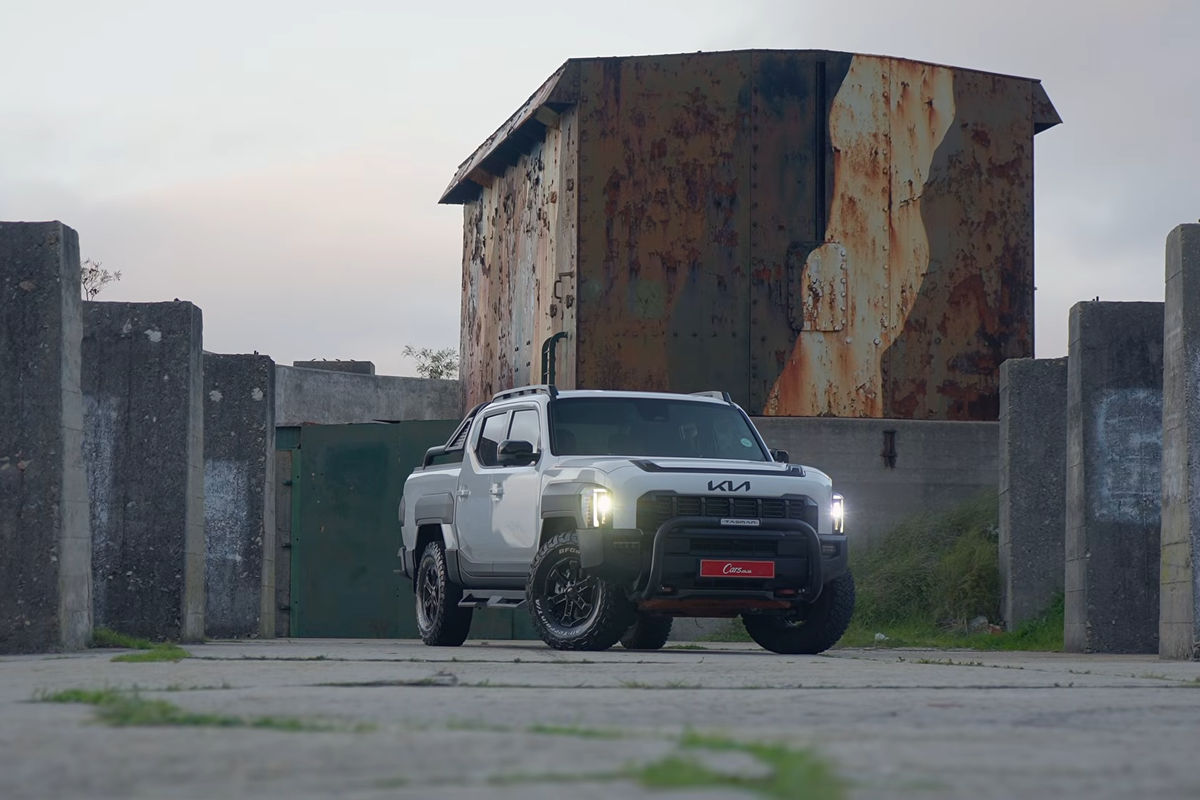
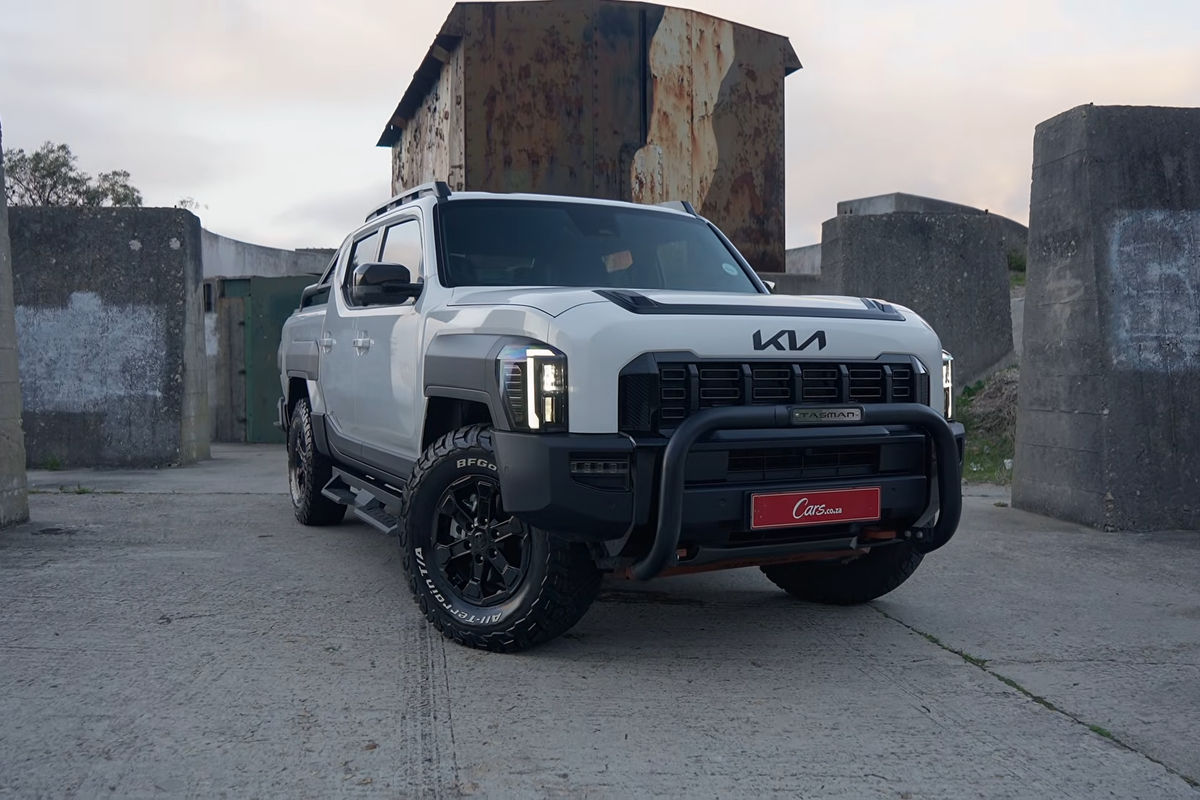
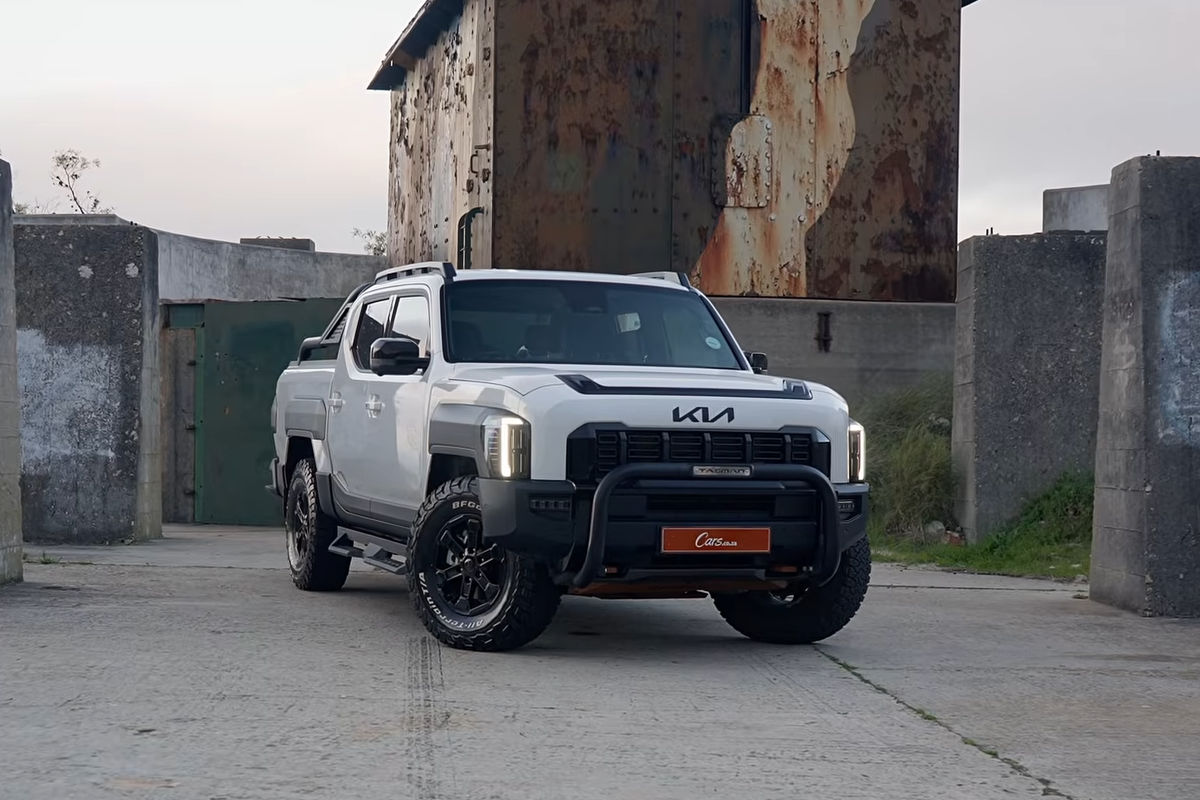
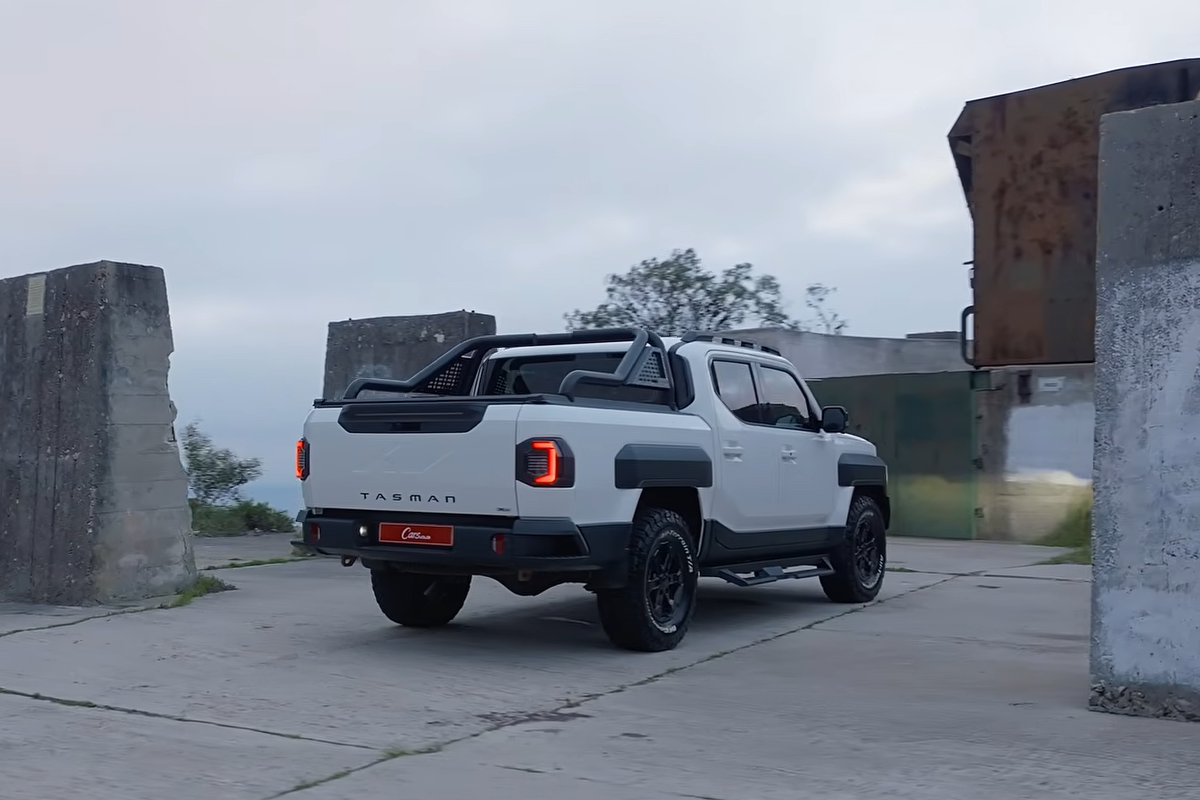
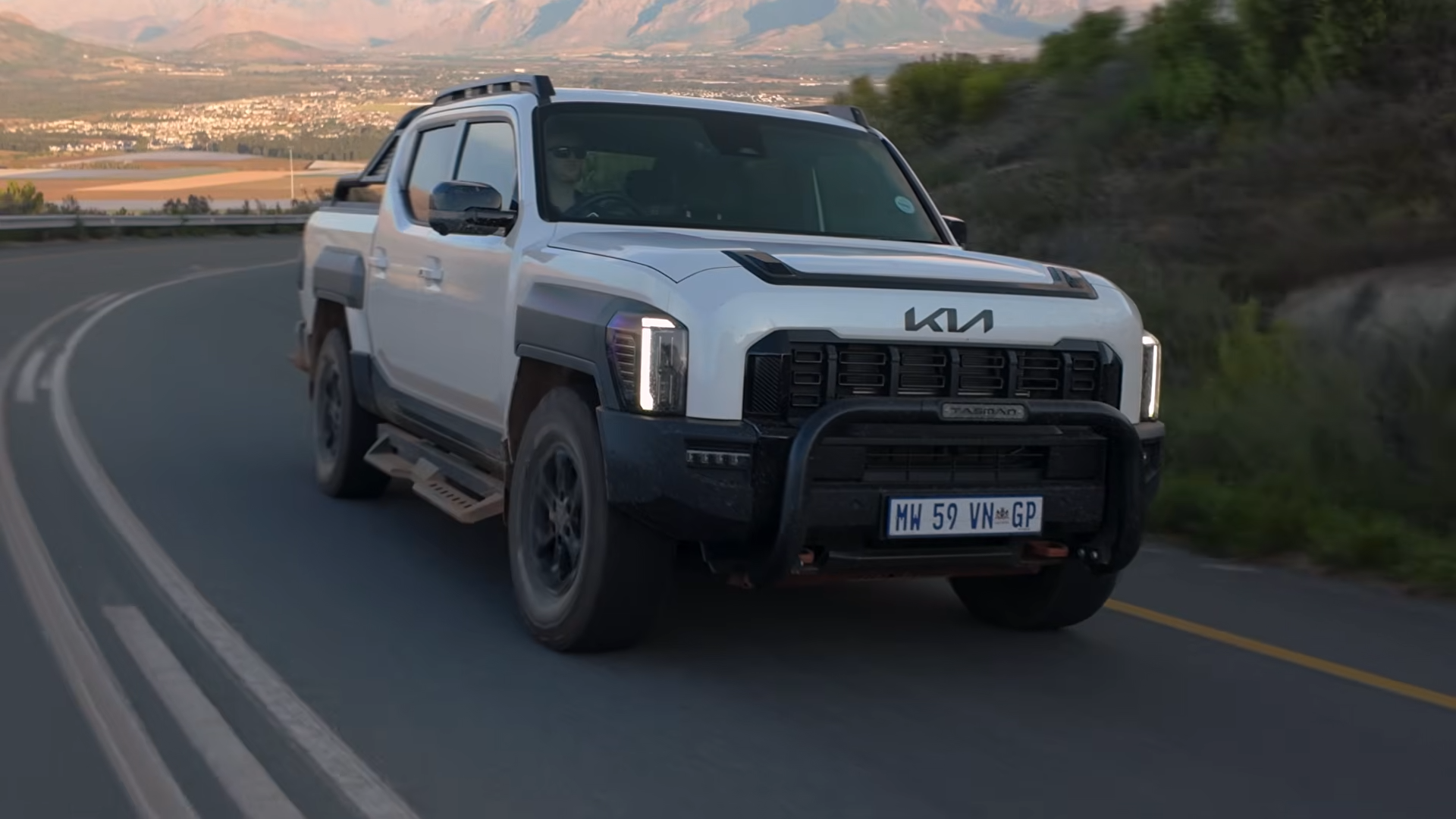
The all-new Kia Tasman marks the South Korean brand’s first-ever foray into the fiercely contested double-cab bakkie market, built from the ground up on a rugged ladder-frame chassis rather than adapting an existing SUV platform.
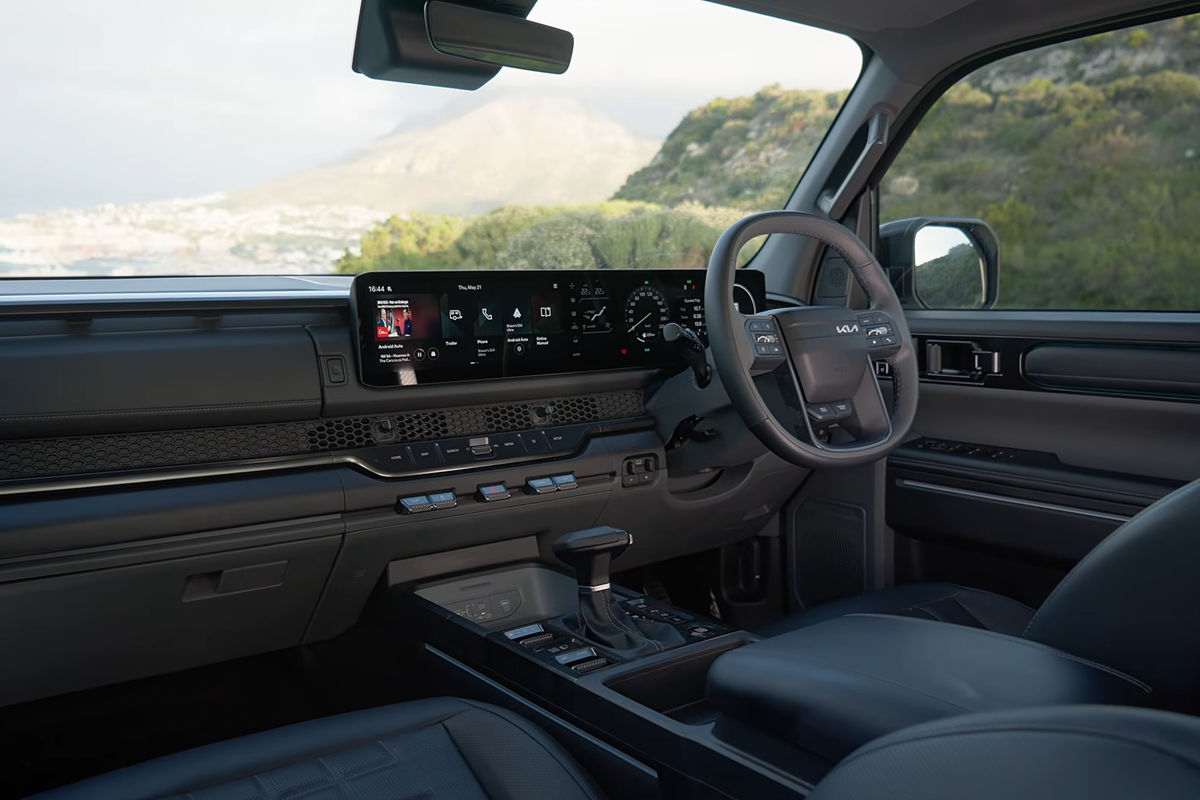
Visually striking and highly polarising, its boxy, military-inspired exterior strips away traditional bakkie styling conventions to emphasise pure functionality, while the cabin counters with a premium, tech-heavy, car-like environment.
How the Kia Tasman fares in terms of…
Design & Packaging
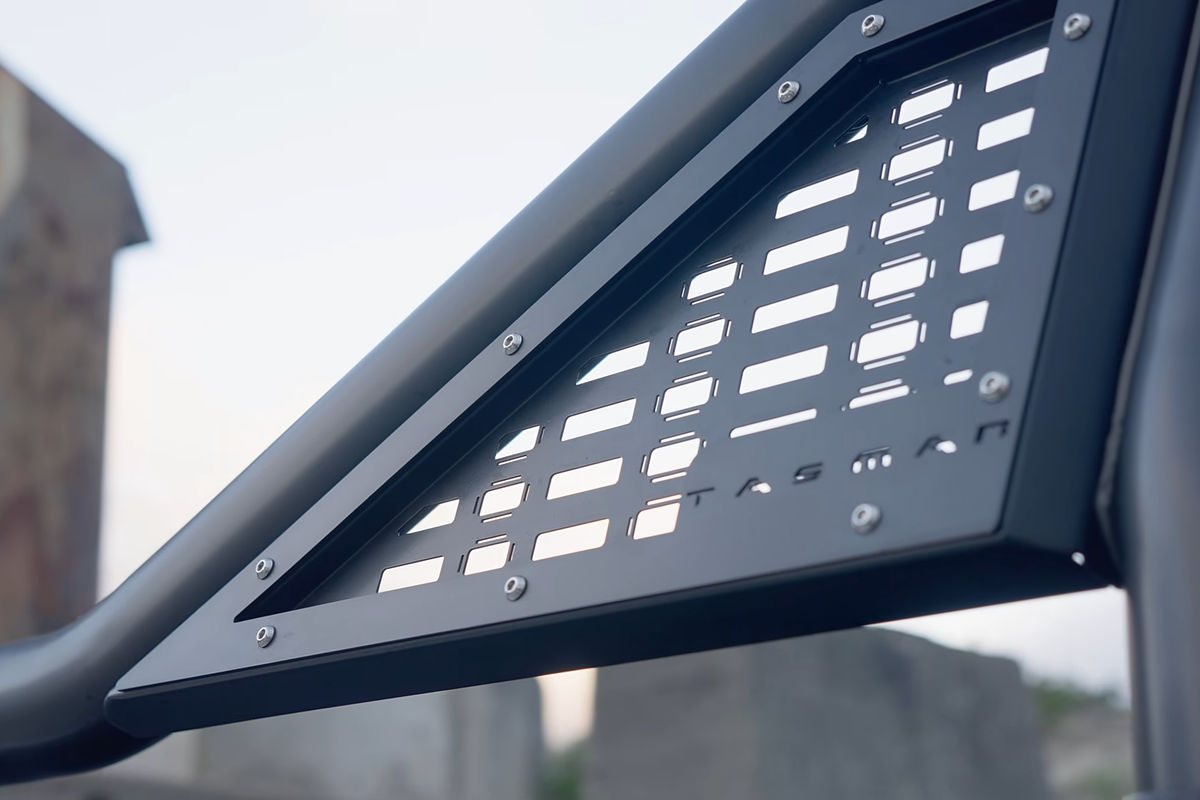
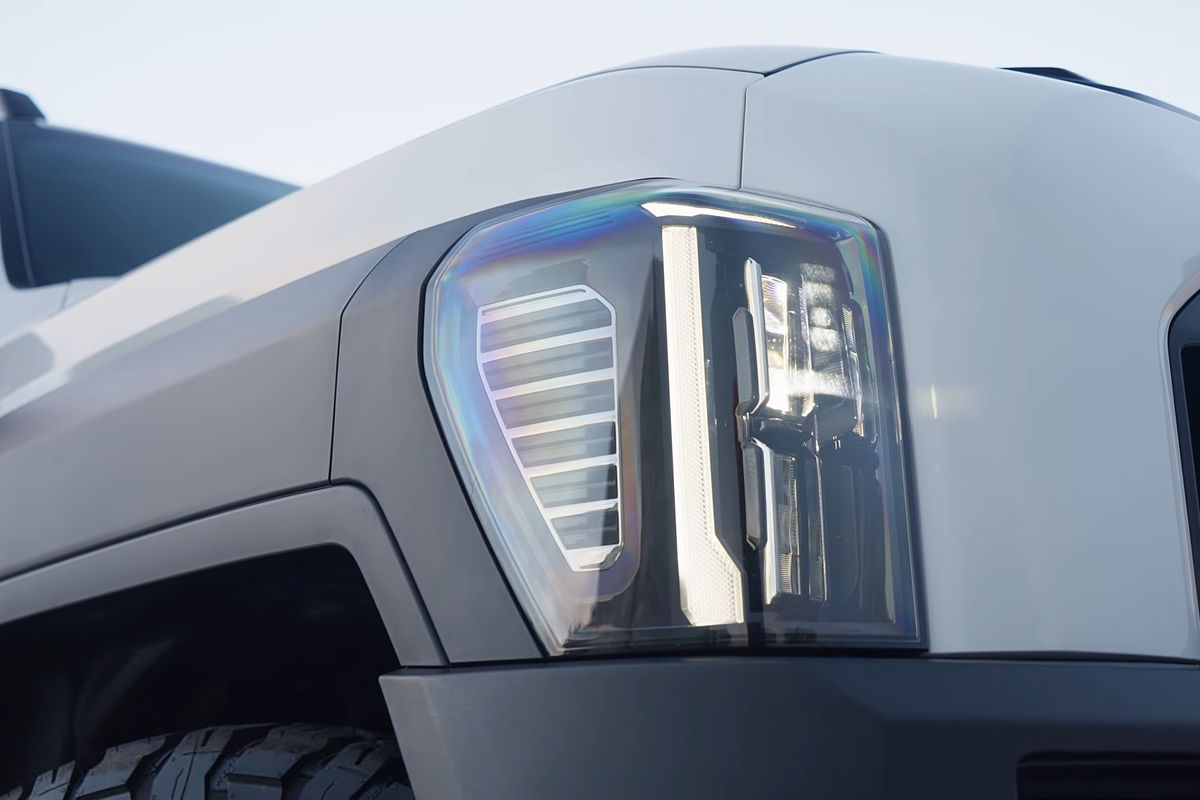
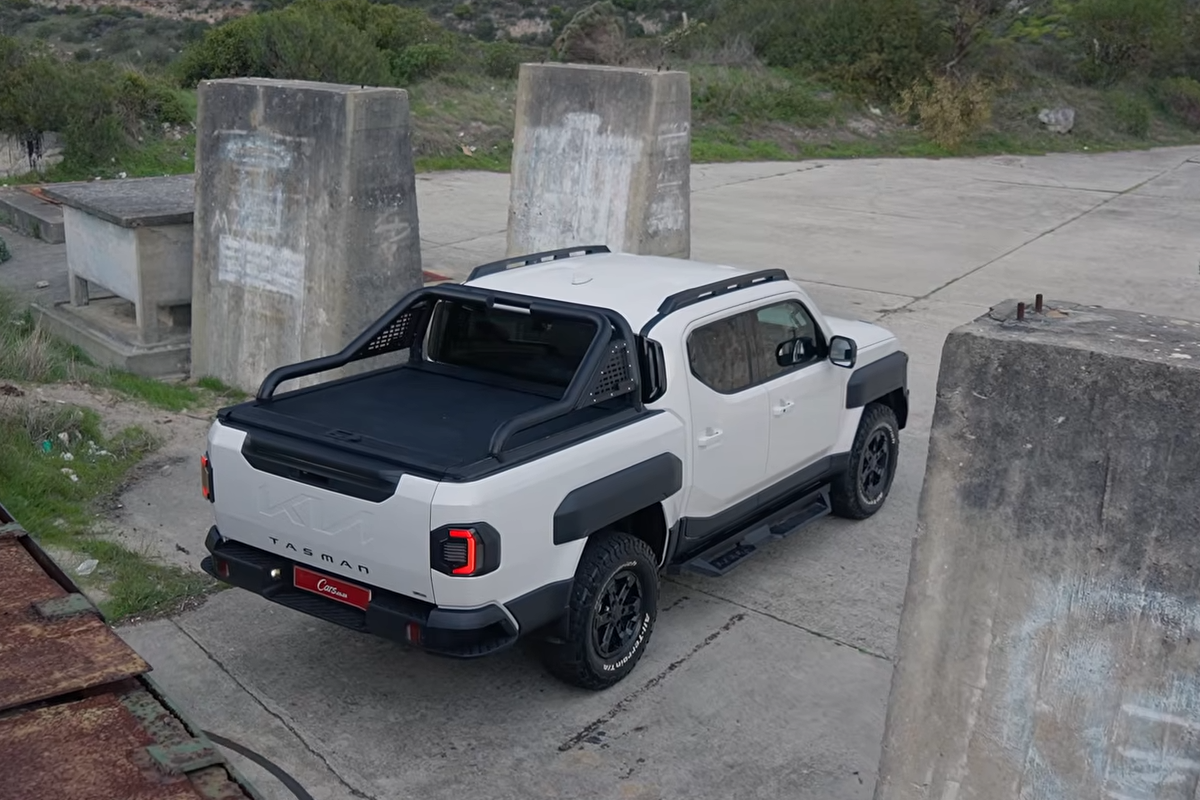
There is no escaping the Tasman’s exterior design. Kia has deliberately steered clear of the conservative, evolutionary styling language that dominates the bakkie segment. The front end is dominated by a massive, upright grille treatment, vertically oriented LED projector headlamps pushed to the outer edges, and prominent, blocky wheel-arch cladding that integrates storage steps. It is a highly unconventional look that ensures maximum road presence, even if it splits opinion in local parking lots.
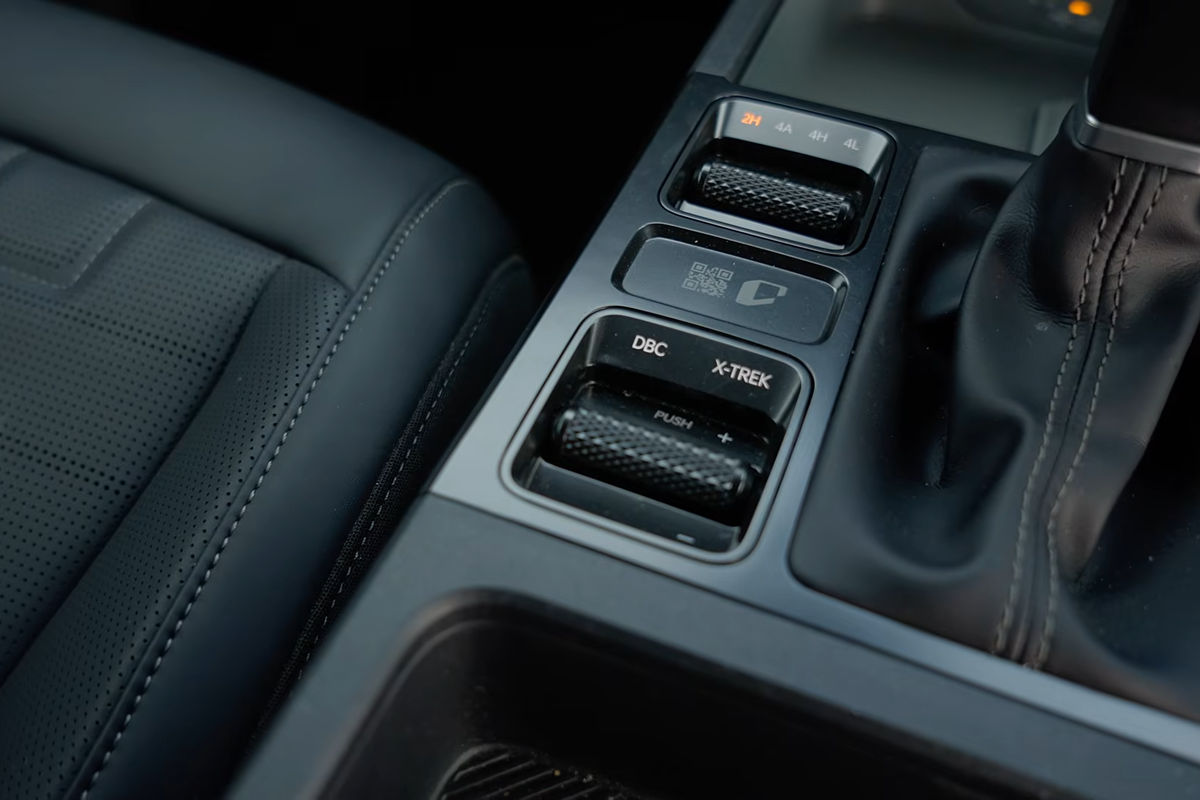
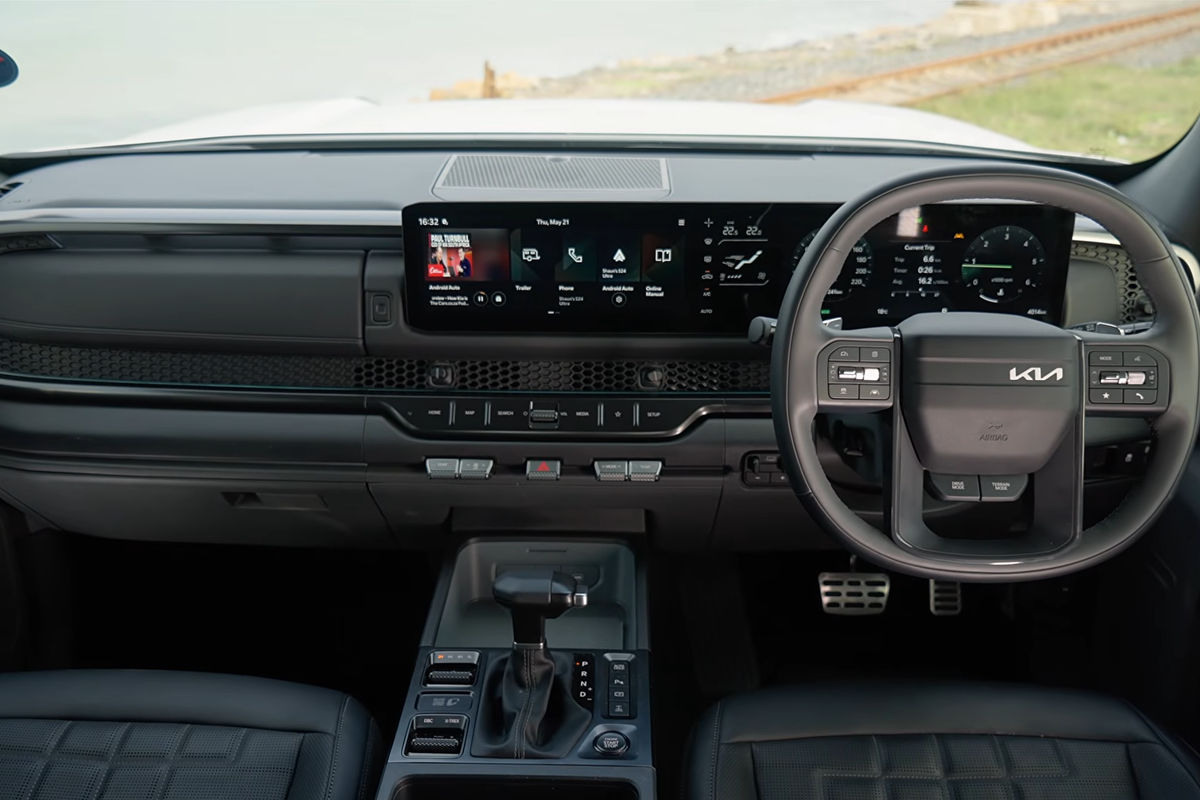
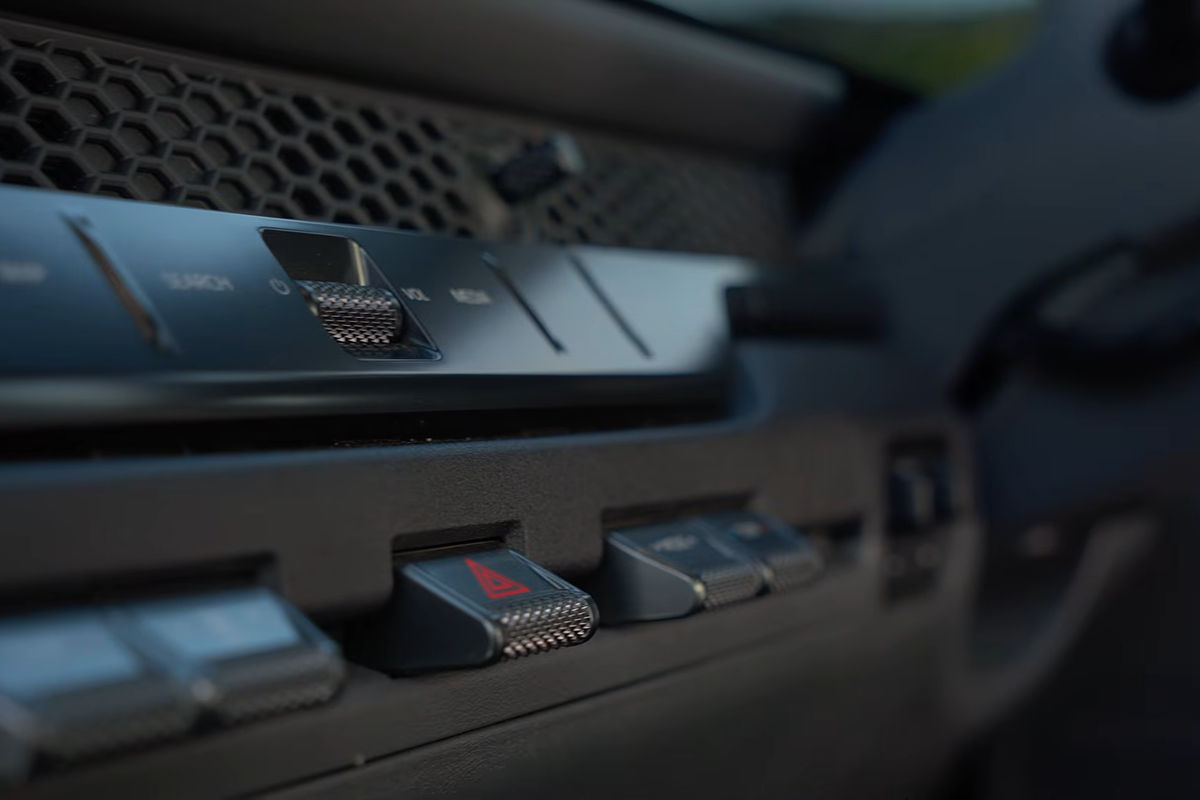
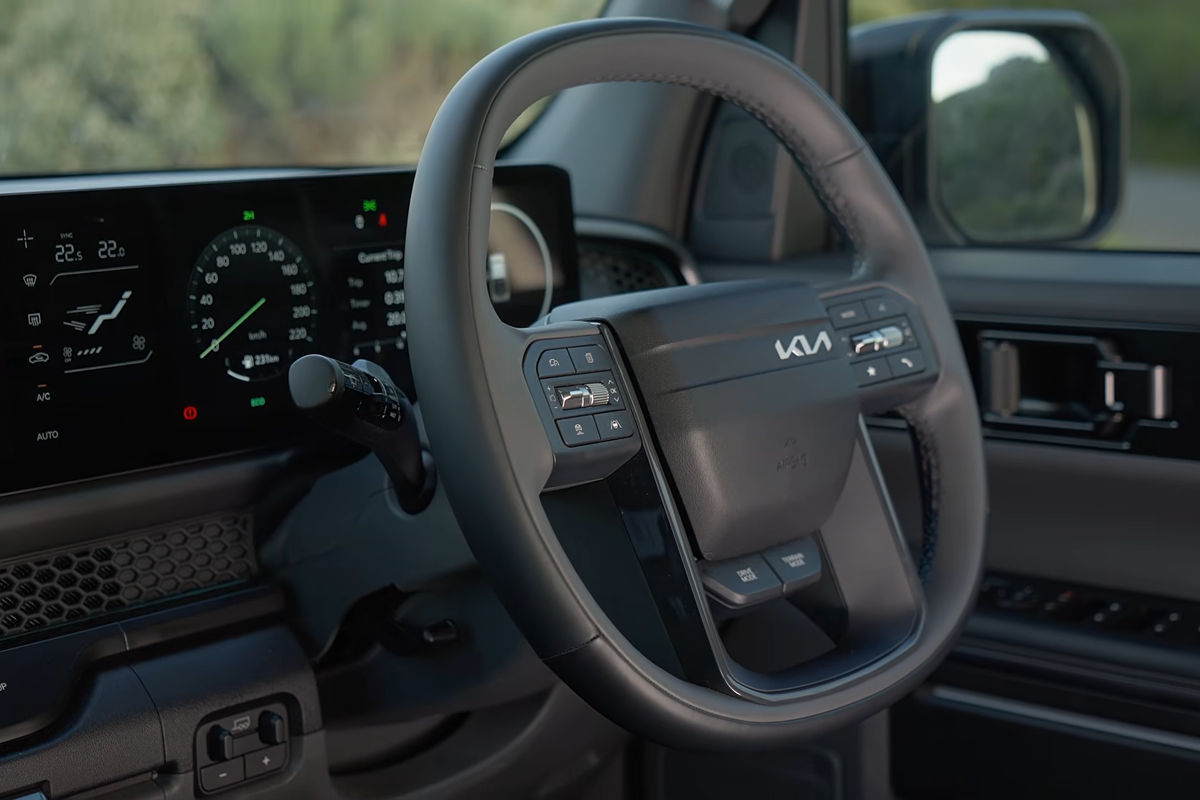
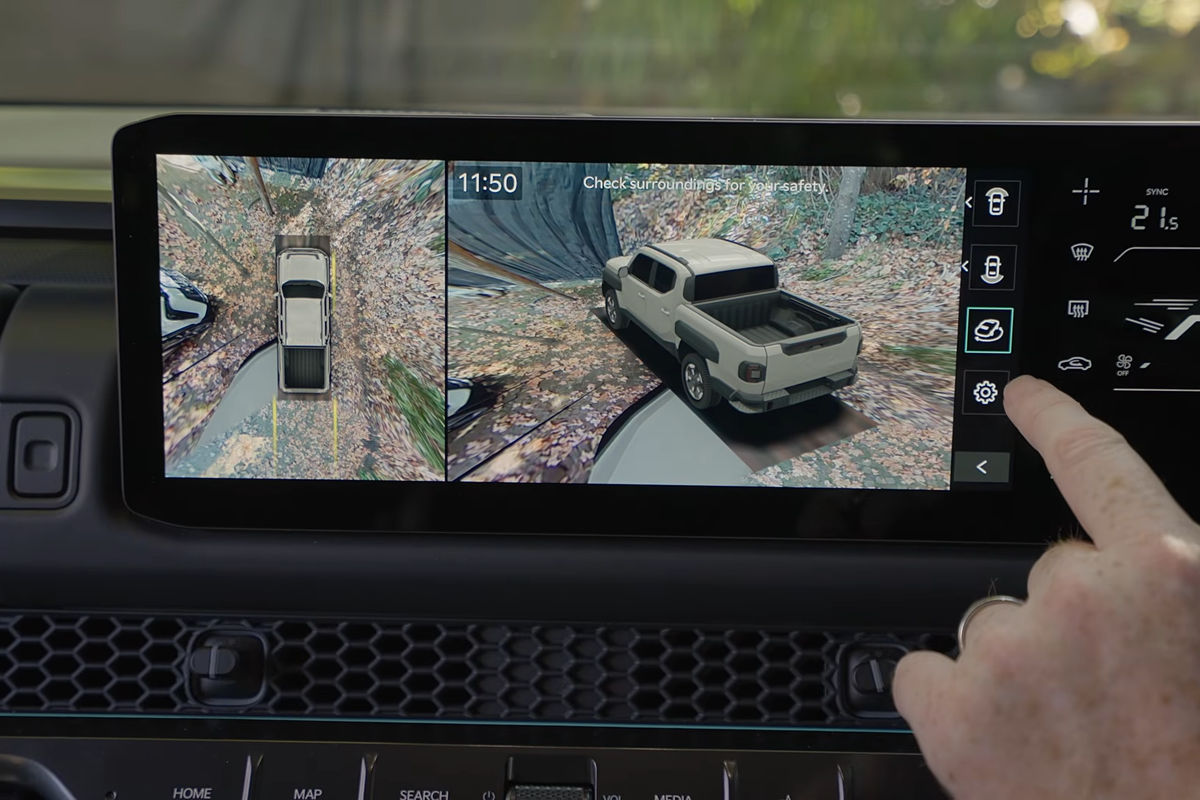
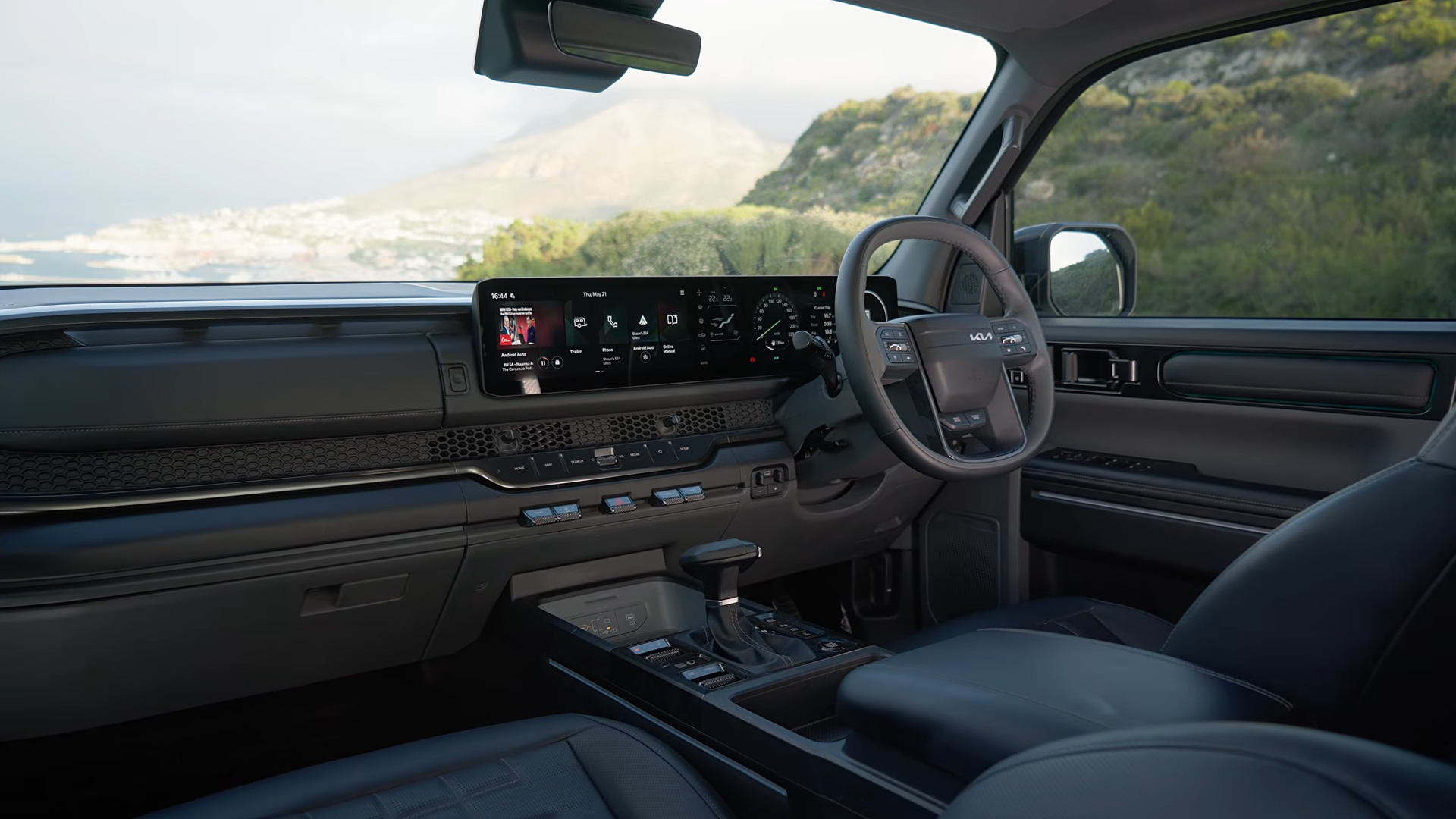
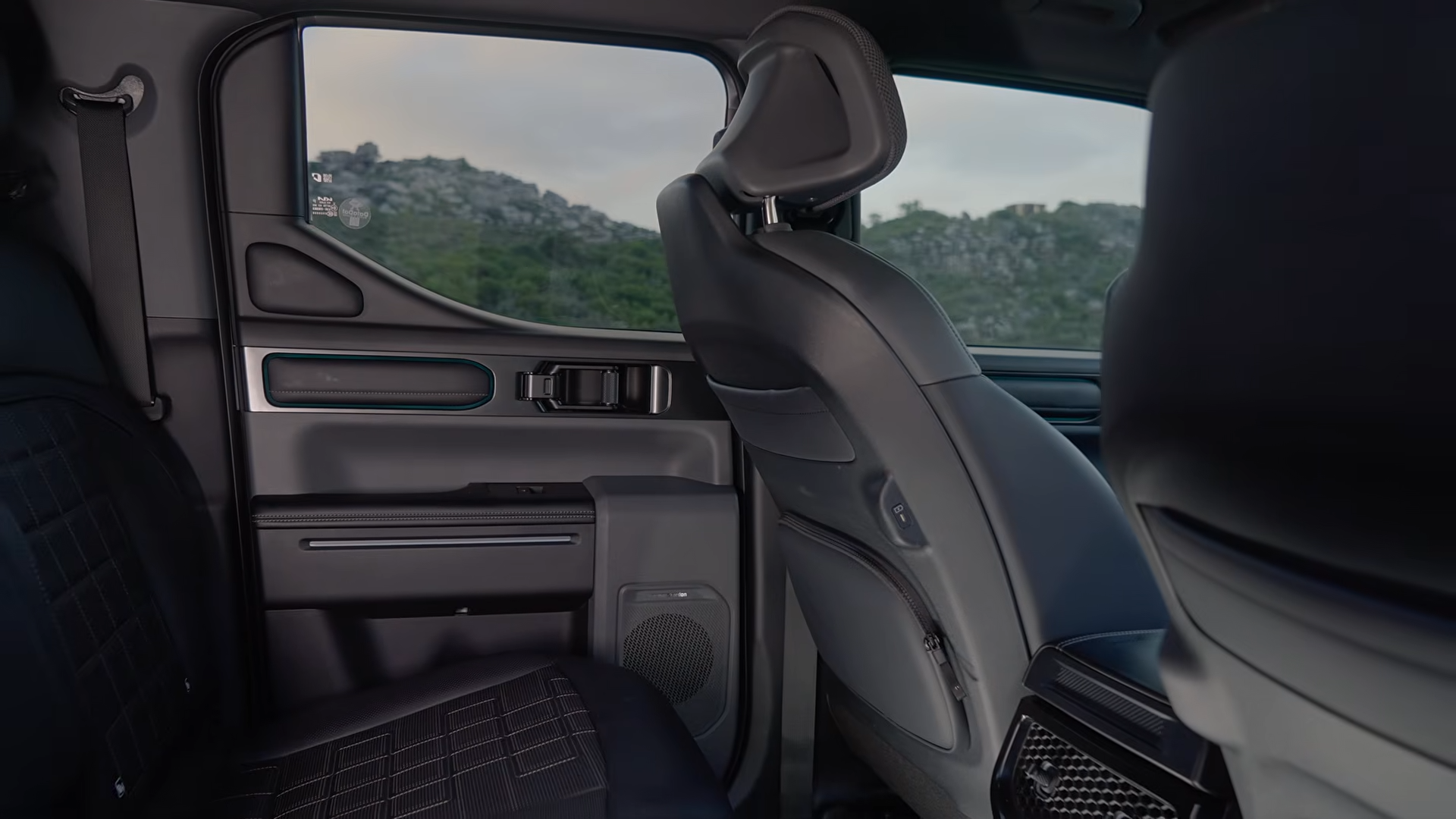
Step inside, however, and the narrative shifts entirely toward modern sophistication. The cabin layout borrows heavily from Kia’s premium EV line-up, featuring an expansive panoramic display panel that houses a 12.3-inch digital instrument cluster, a 5-inch climate touchscreen control segment, and a primary 12.3-inch infotainment system. Crucially, Kia has retained a neat row of physical toggle switches for core functions below the screen, balancing tech with daily usability.
Material quality is excellent for a utility vehicle, with extensive use of sustainable materials and robust switchgear.
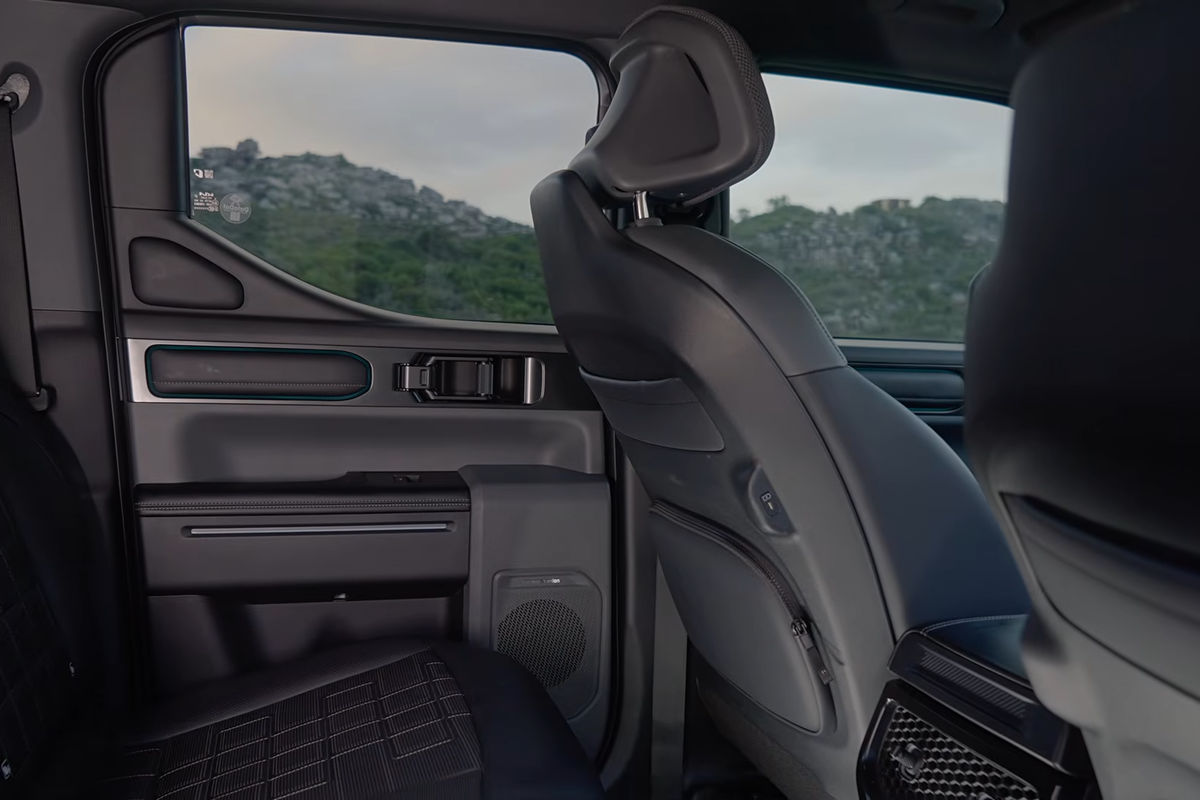
Practicality is a major highlight, too: the rear seats can slide and recline, and folding them up reveals a generous 29-litre under-seat storage bin. Out back, the load bay features an integrated power outlet, illuminated corner steps and a sliding cargo floor configuration on higher-grade models.
Performance & Efficiency
Under the bonnet, the Tasman relies on a revised iteration of Kia’s proven 2.2-litre four-cylinder Smartstream turbodiesel engine. Producing 154 kW and 440 Nm of torque, it sends power to all 4 wheels via a slick-shifting 8-speed torque-converter automatic transmission.
While it lacks the outright muscularity of V6 rivals, the power delivery is linear and responsive from low revs. In urban traffic, the powertrain is decently quiet and refined, with minimal diesel clatter entering the cabin. Out on the open road, the gear shifts are intuitive, although executing high-speed overtakes when fully loaded requires a bit of forward planning.
Efficiency is a notable strong suit. On our mixed testing route, real-world consumption hovered around 8.4 L/100 km, which is a respectable return for a vehicle of this size and wind-resistant aerodynamic profile.
Ride, Handling & Comfort
On the tarmac, the Tasman prioritises occupant comfort and long-distance refinement. NVH suppression is class-leading, with wind and road noise kept well at bay despite the blocky exterior design and large side mirrors.
The suspension layout utilises a double-wishbone front setup paired with a traditional leaf-spring rear axle to handle heavy payloads (up to 1 195 kg) and a 3 500 kg braked towing capacity. The inclusion of frequency-selective dampers helps mitigate some of the typical agricultural jitteriness associated with empty ladder-frame bakkies, although not entirely. Sharp ruts can still cause a momentary shimmy through the chassis.
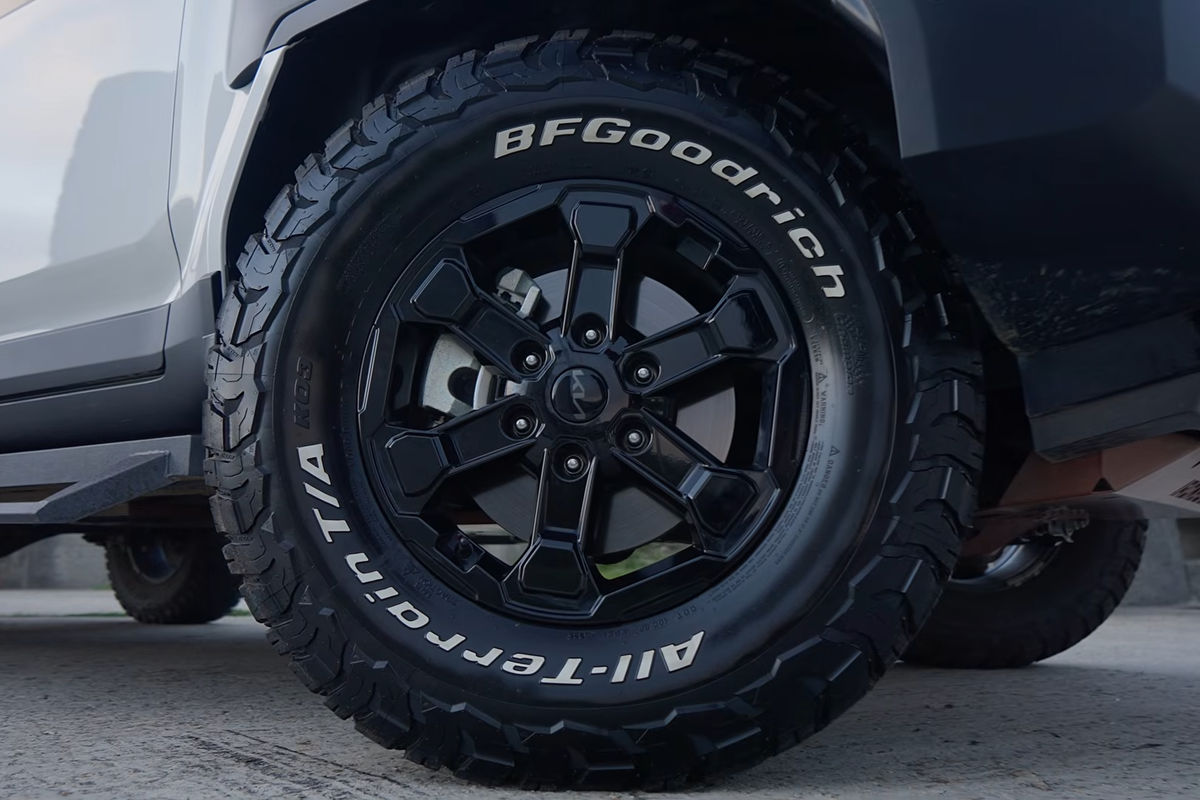
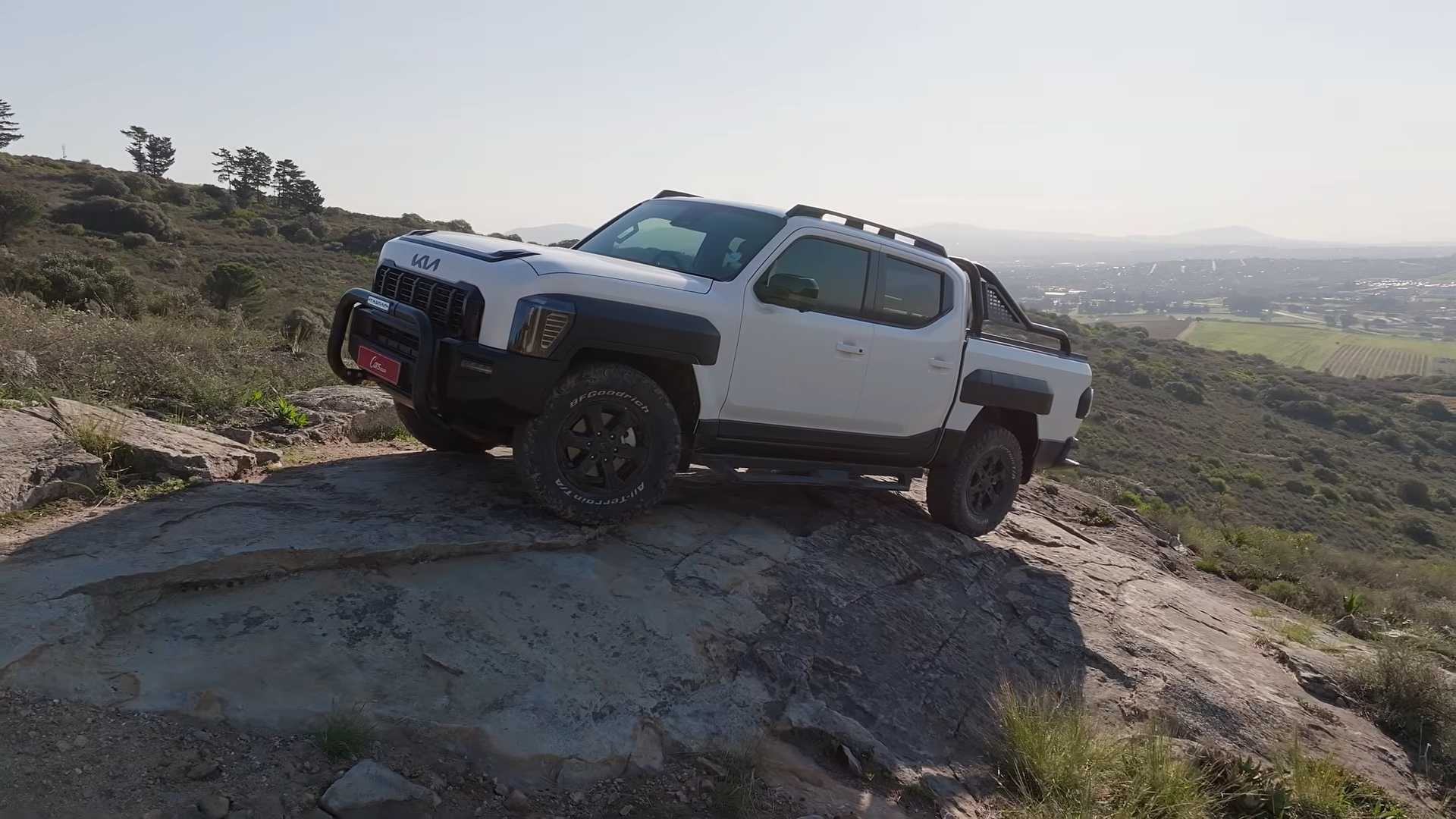
This flagship X-Pro derivative ups the ante off-road, adding an automatic electronic locking rear differential, an extra 28 mm of ground clearance (totalling 252 mm), and 17-inch gloss-black wheels wrapped in chunky all-terrain rubber. The steering is light and effortless around town, which simplifies parking manoeuvres, though it does feel somewhat vague and numb around the dead-centre position at highway cruising speeds. The tyres also produce quite a bit of road noise.
Kia Tasman Price & After-sales support
All Tasman models boast a 5-year/90 000 km service plan and 5-year/unlimited km warranty.
The Kia Tasman enters a fiercely competitive segment, but it does so with a very specific set of skills. It offers a massive amount of standard equipment, a nicely finished and practical cabin environment, and a refined powertrain package.
While the polarising exterior design will undoubtedly be the primary talking point for prospective South African buyers, look beneath the skin and you will find an accomplished, comfortable, and deeply rational lifestyle double-cab bakkie.
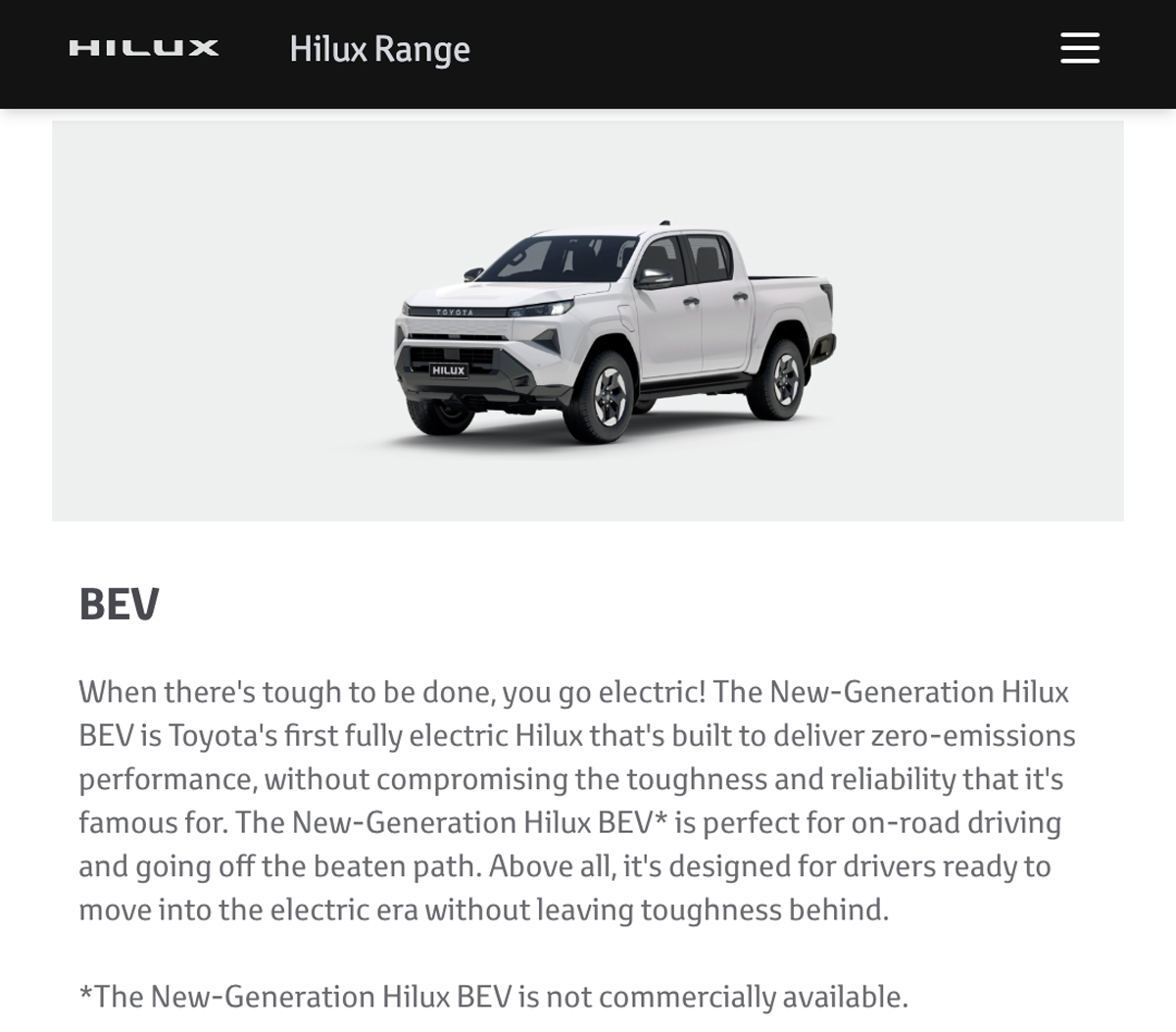
The new Hilux BEV is listed on Toyota’s local website, despite a note saying this electric bakkie is not “commercially available” in South Africa…
Electric bakkie listed on Toyota SA’s website
“Small sample” set aside for South Africa?
Dual-motor electric Hilux generates 144 kW
Toyota South Africa Motors recently confirmed pricing for initial derivatives in its 9th-generation Hilux range, each of which employs the brand’s familiar 2.8GD-6 turbodiesel powertrain. Interestingly, though, we also spotted the new Hilux BEV on the Japanese firm’s local website.
Included on a page providing an overview of the 9th-generation bakkie range (as well as featured on a dedicated new-energy vehicle page), the Hilux BEV is listed alongside the oil-burning Legend, Raider and SRX grades. However, the accompanying caption points out the battery-powered Hilux “is not commercially available” in South Africa.
A screenshot from Toyota SA’s website showing the Hilux BEV.
Riaan Esterhuysen, Senior Manager for Public Relations & Corporate Communication at Toyota SA Motors, recently told Cars.co.za during a podcast that the new Hilux BEV is “still in its infancy in terms of an LCV [light commercial vehicle] execution, but it is proof of concept”.
“It will be on offer to the customers. We are bringing those in at a small sampling rate just to check local market response and also [to see] how well the product fares, our usage conditions, etcetera,” Esterhuysen explained. As a reminder, Toyota SA Motors performed a similar exercise with the RAV4 PHEV back in 2022, before quietly rolling it out to the local market in 2024.
The Hilux BEV recently launched in Australia.
The Hilux BEV was recently launched in Australia, with the Japanese brand’s division Down Under suggesting the fresh-faced electric bakkie was “designed with government fleets, mining and construction sectors in mind”.
Available in Australia in the double-cab body style, the electric bakkie features an 82 kW/206 Nm electric motor on the front axle and a 129 kW/269 Nm item on the rear axle. Toyota lists total system power of 144 kW and a braked towing capacity of 2 000 kg. The 59.2 kWh lithium-ion battery offers a claimed range of 315 km (NEDC).
Q: Why is the new Toyota Hilux BEV listed on the South African website if it is not commercially available?
A: While the battery-electric vehicle (BEV) is listed alongside the 9th-generation diesel derivatives, Toyota South Africa Motors is seemingly utilising it as a proof of concept. The company is importing a small sample of units to evaluate local market response, test performance under South African usage conditions and gauge interest before considering a full commercial rollout.
Q: Has Toyota South Africa used this “sampling” strategy for new-energy vehicles before?
A: Yes, this approach mirrors Toyota SA’s previous strategy with the RAV4 Plug-in Hybrid (PHEV). The RAV4 PHEV was initially brought into the country in 2022 for local testing and market research purposes before it was quietly launched to the broader South African market in 2024.
Q: What are the mechanical and performance specifications of the electric Hilux bakkie?
A: Based on the double-cab version recently launched in Australia, the Hilux BEV features a dual-motor configuration: an 82 kW/206 Nm electric motor on the front axle and a 129 kW/269 Nm motor on the rear axle, delivering a combined total system output of 144 kW. It is equipped with a 59.2 kWh lithium-ion battery pack providing a claimed range of 315 km (NEDC) and features a braked towing capacity of 2 000 kg.
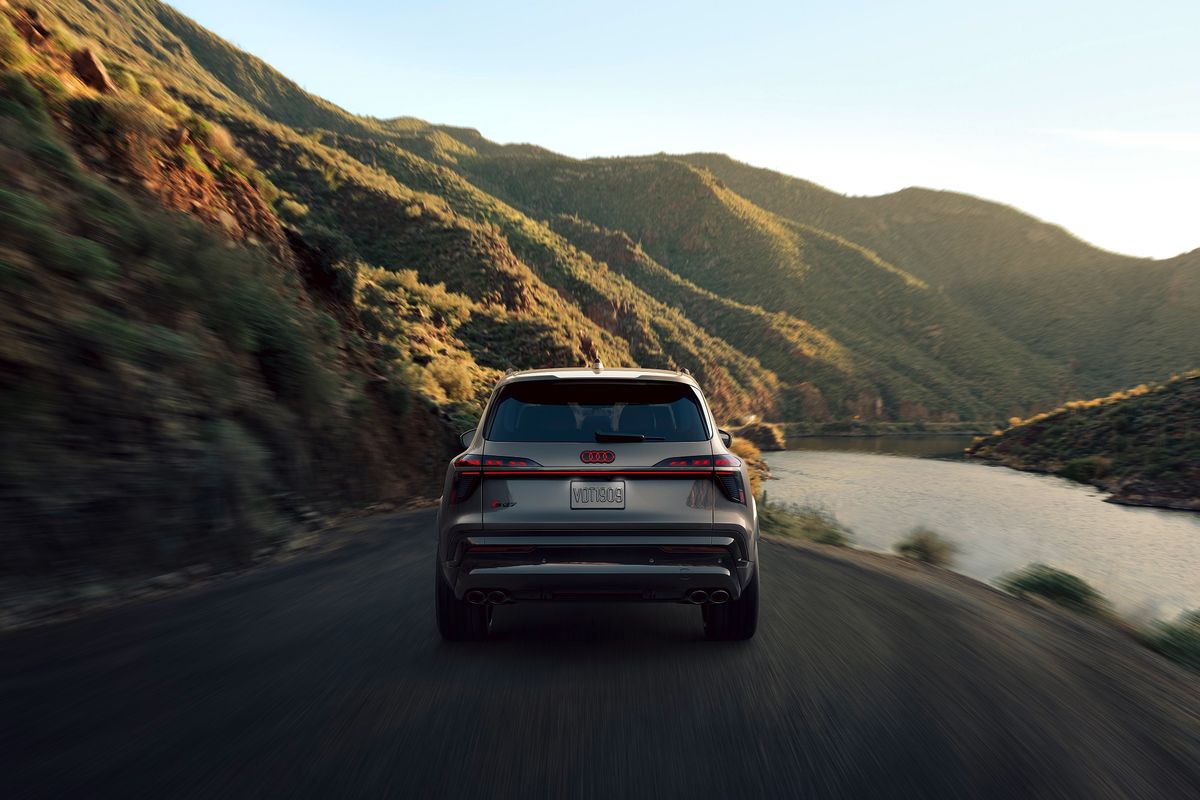
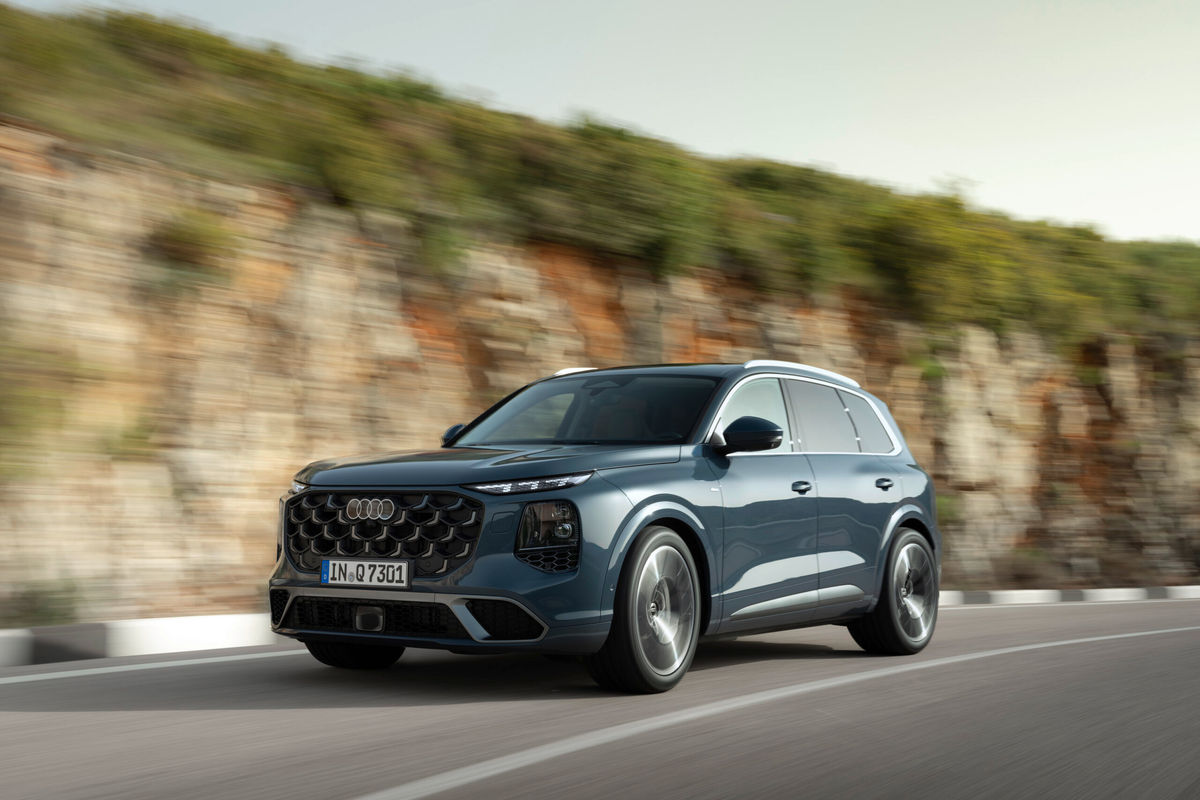
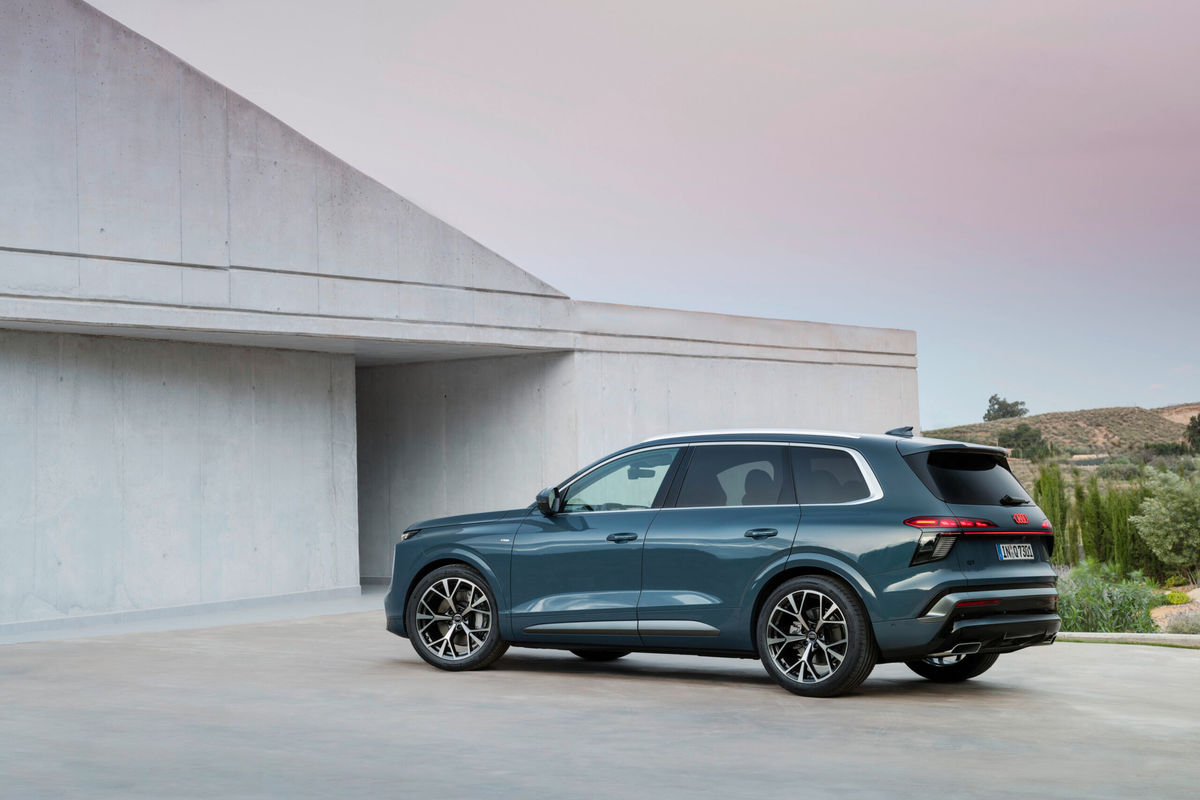
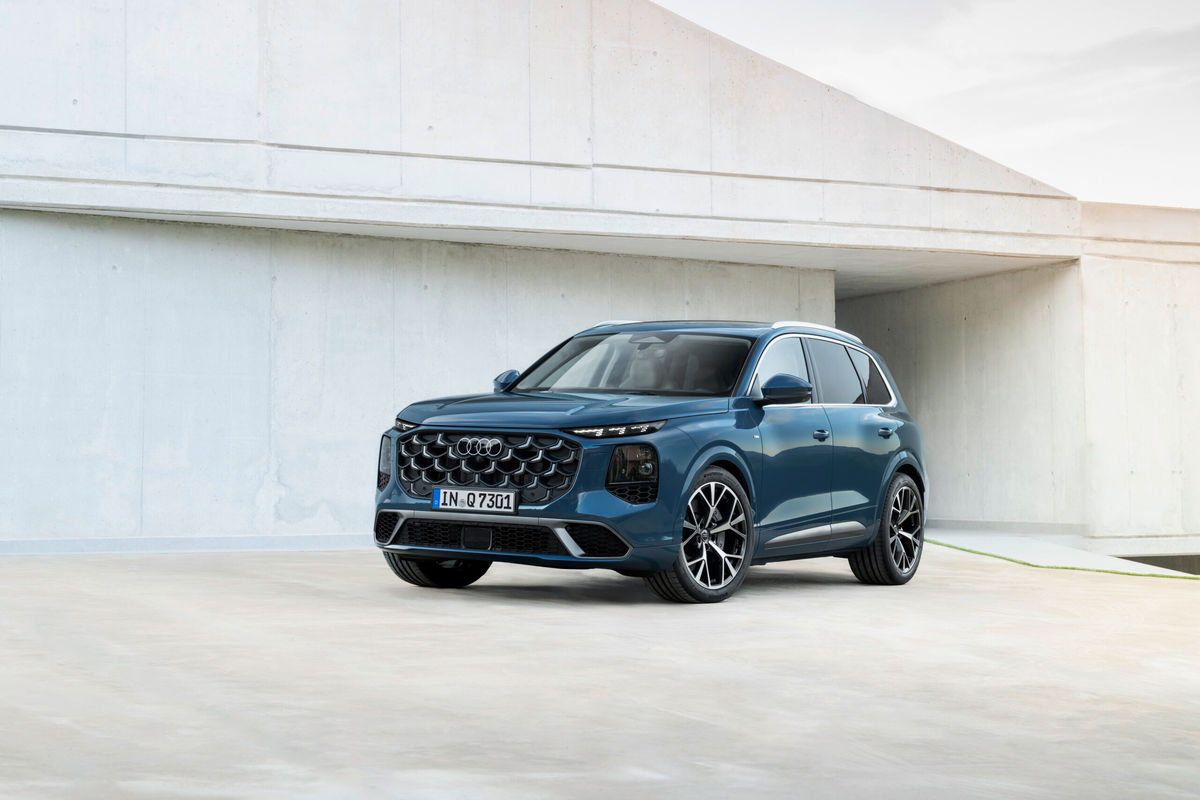
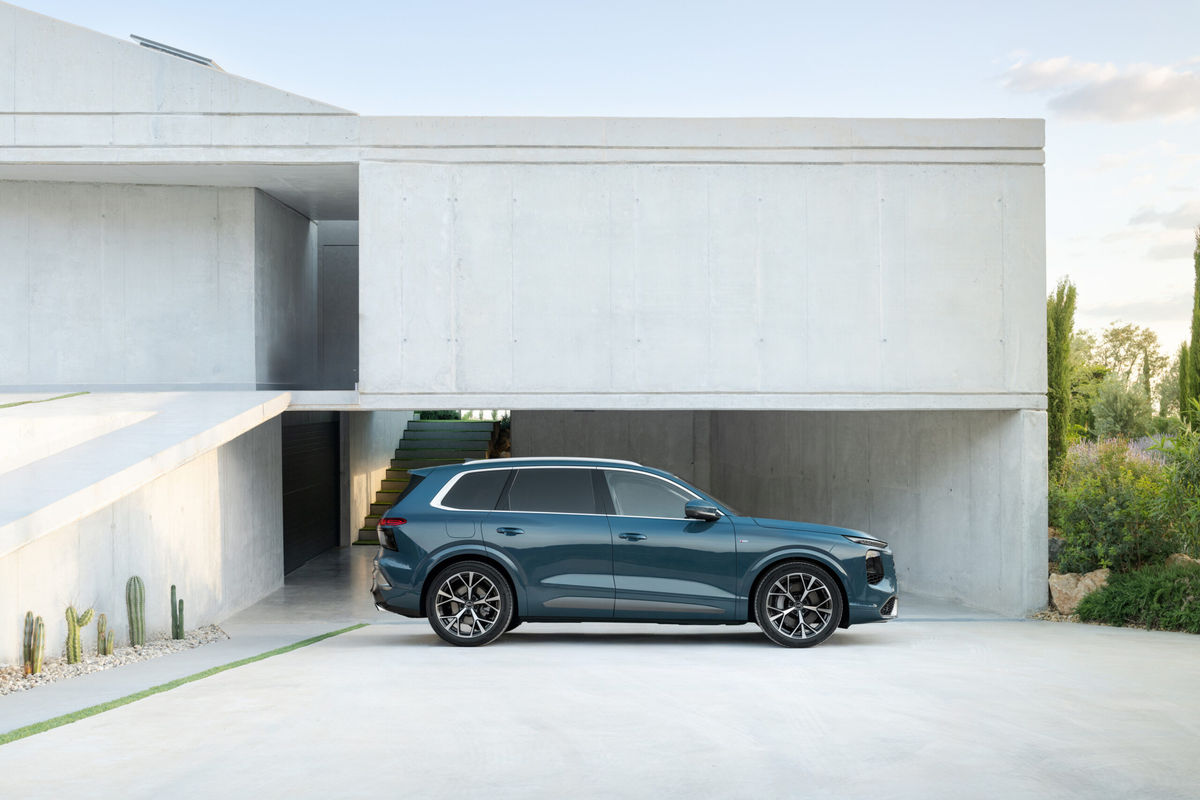
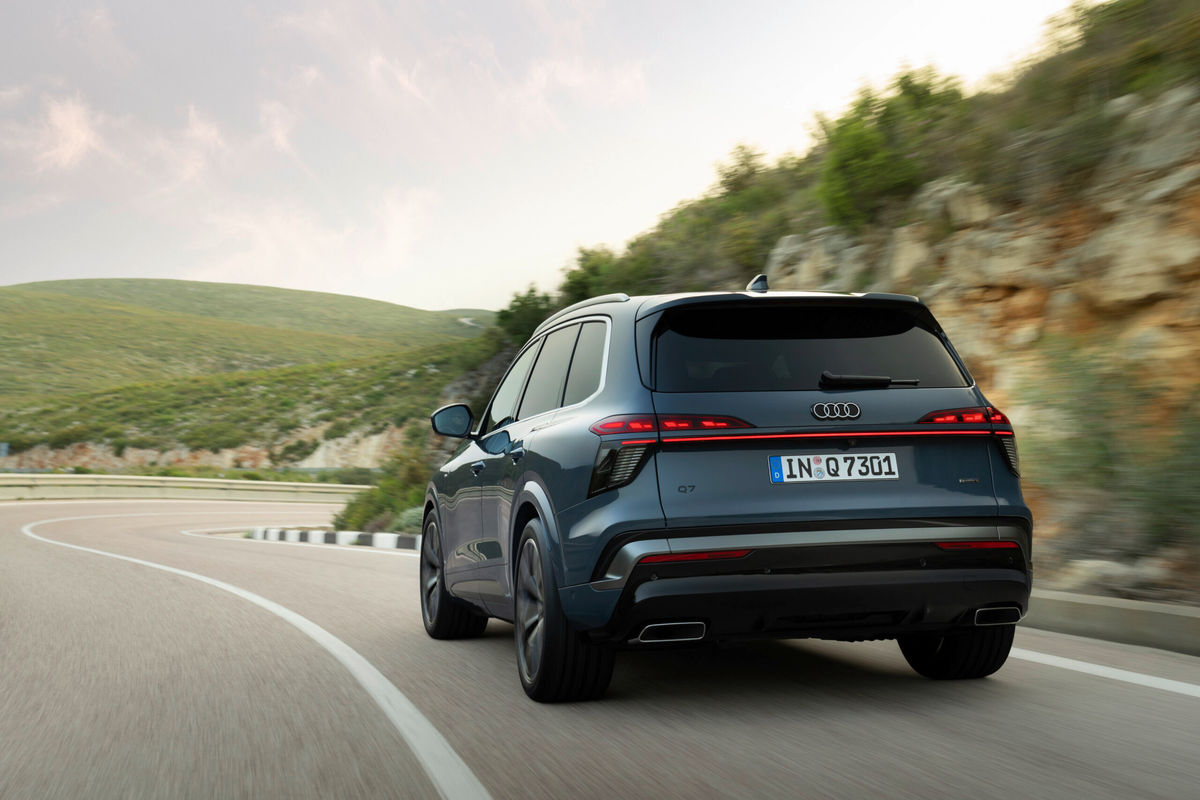
The 3rd-generation Audi Q7 has been revealed, debuting a luxury interior and 3-row practicality. Here’s your first look.
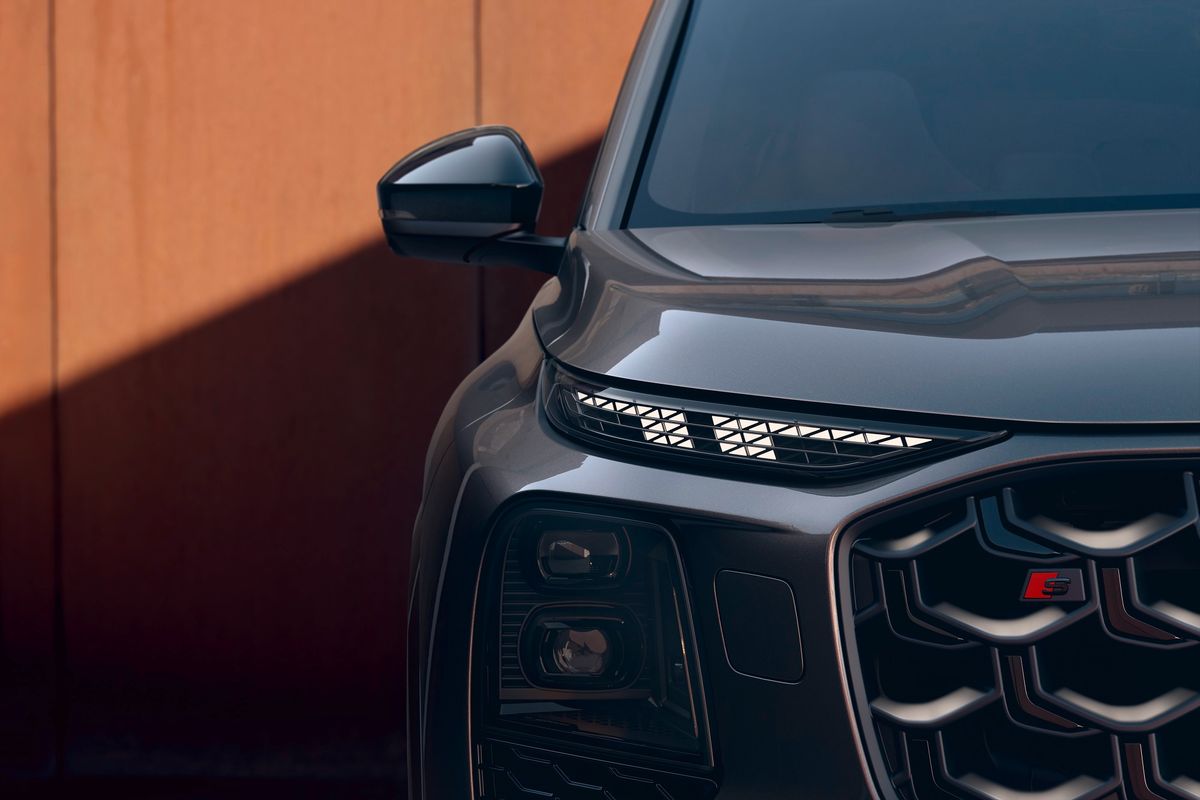
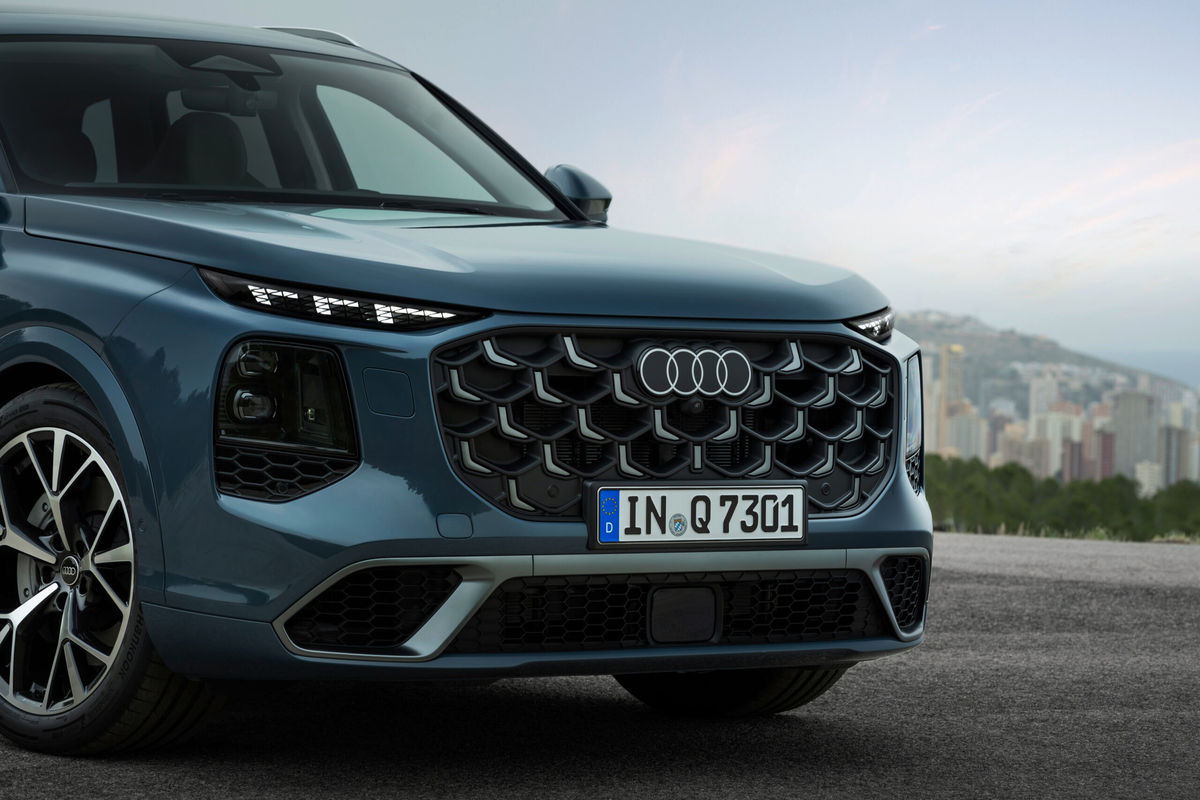
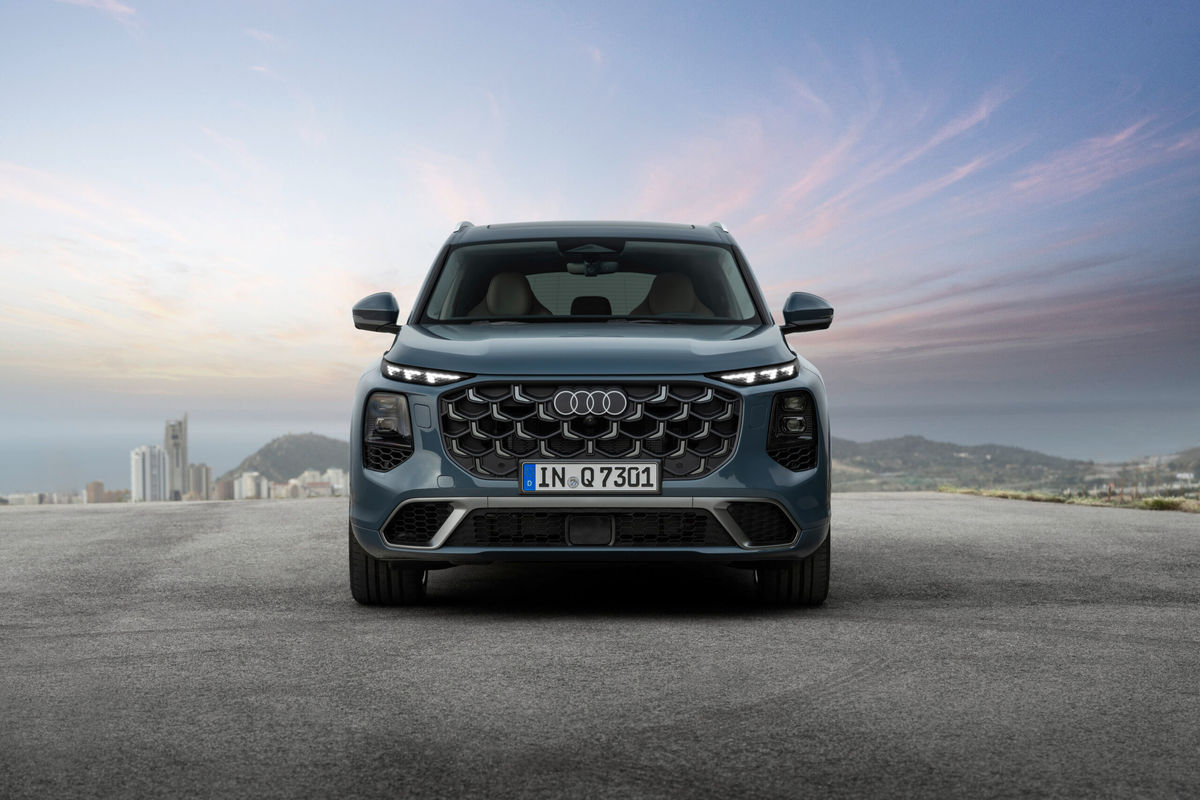
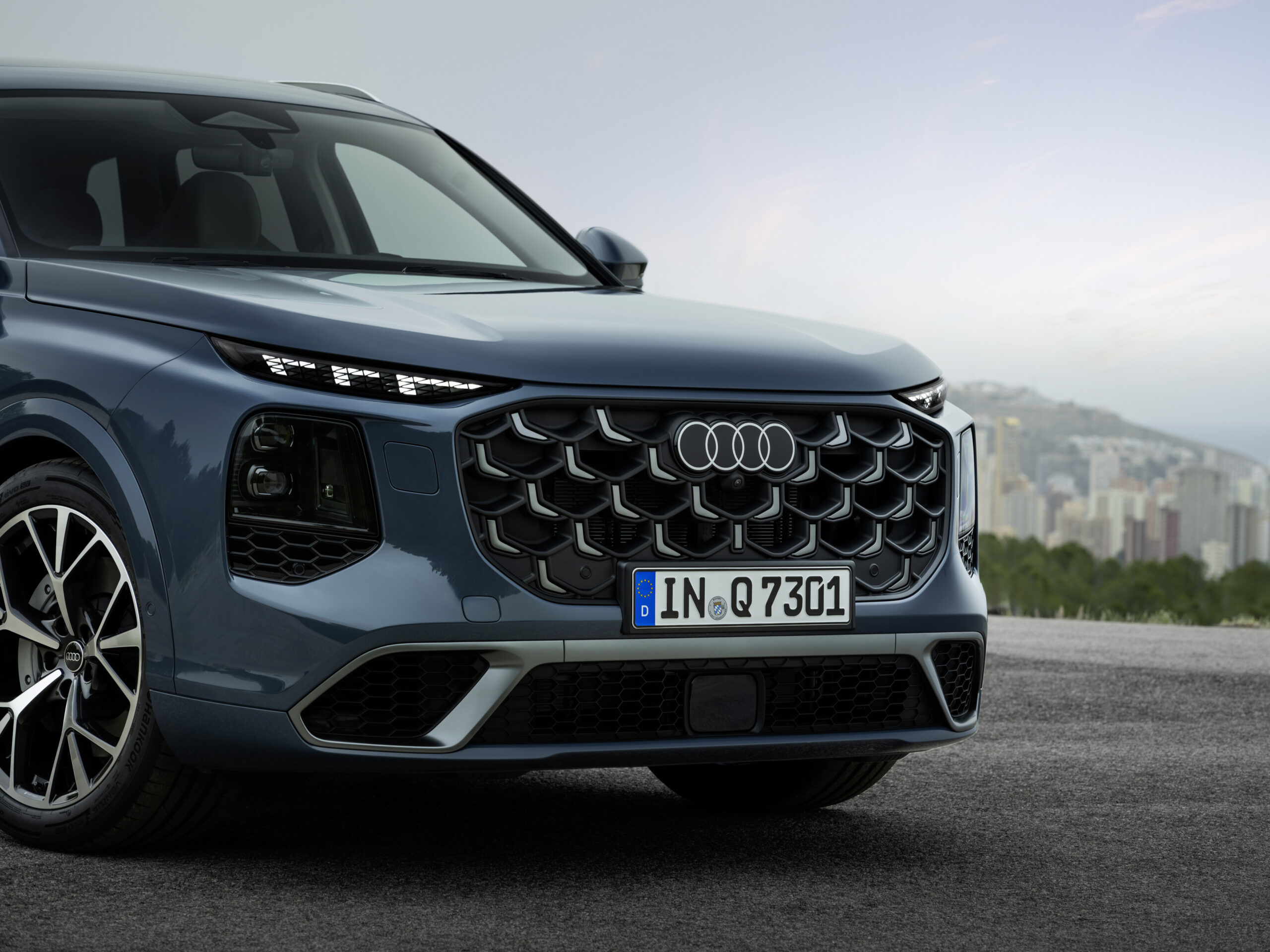
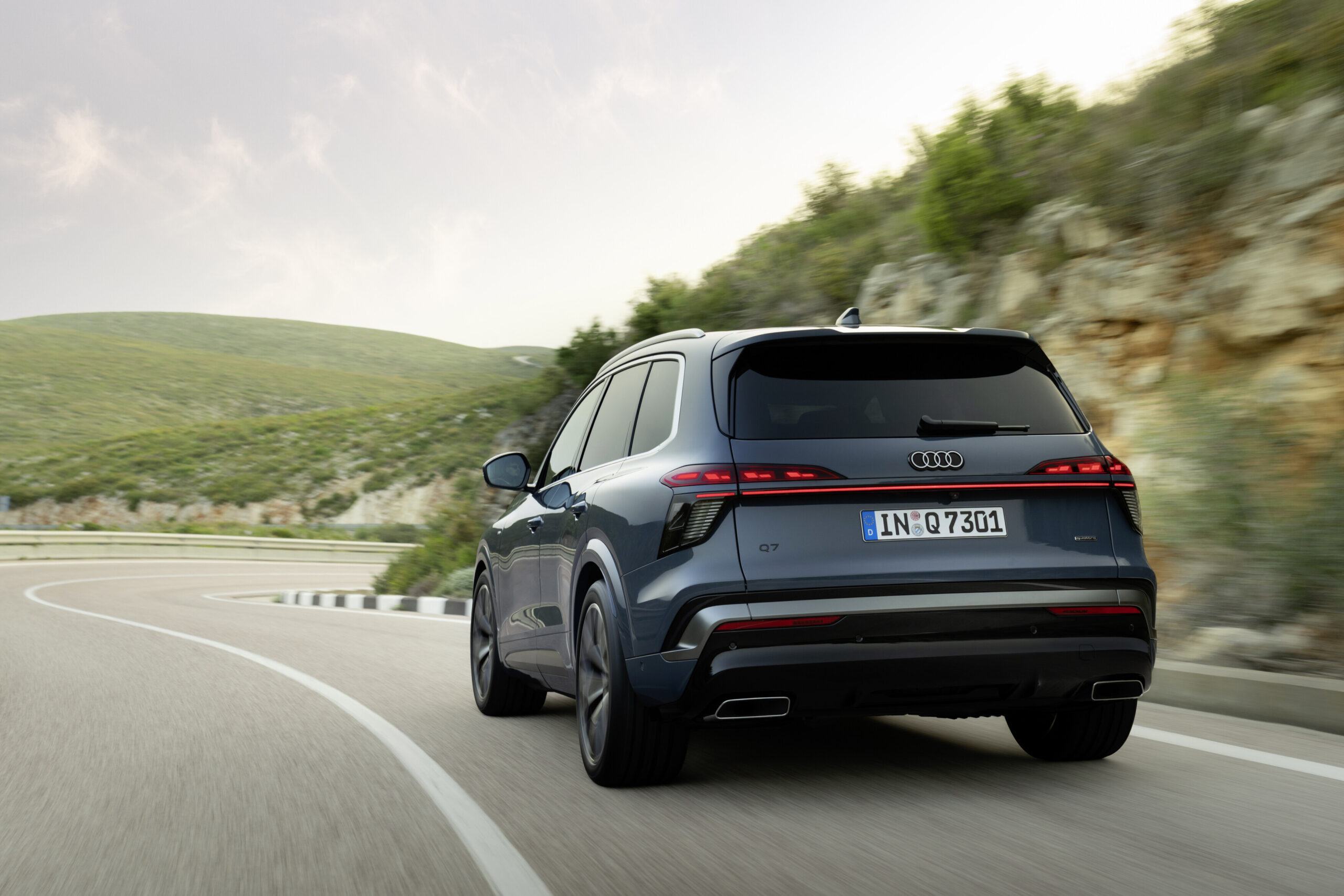
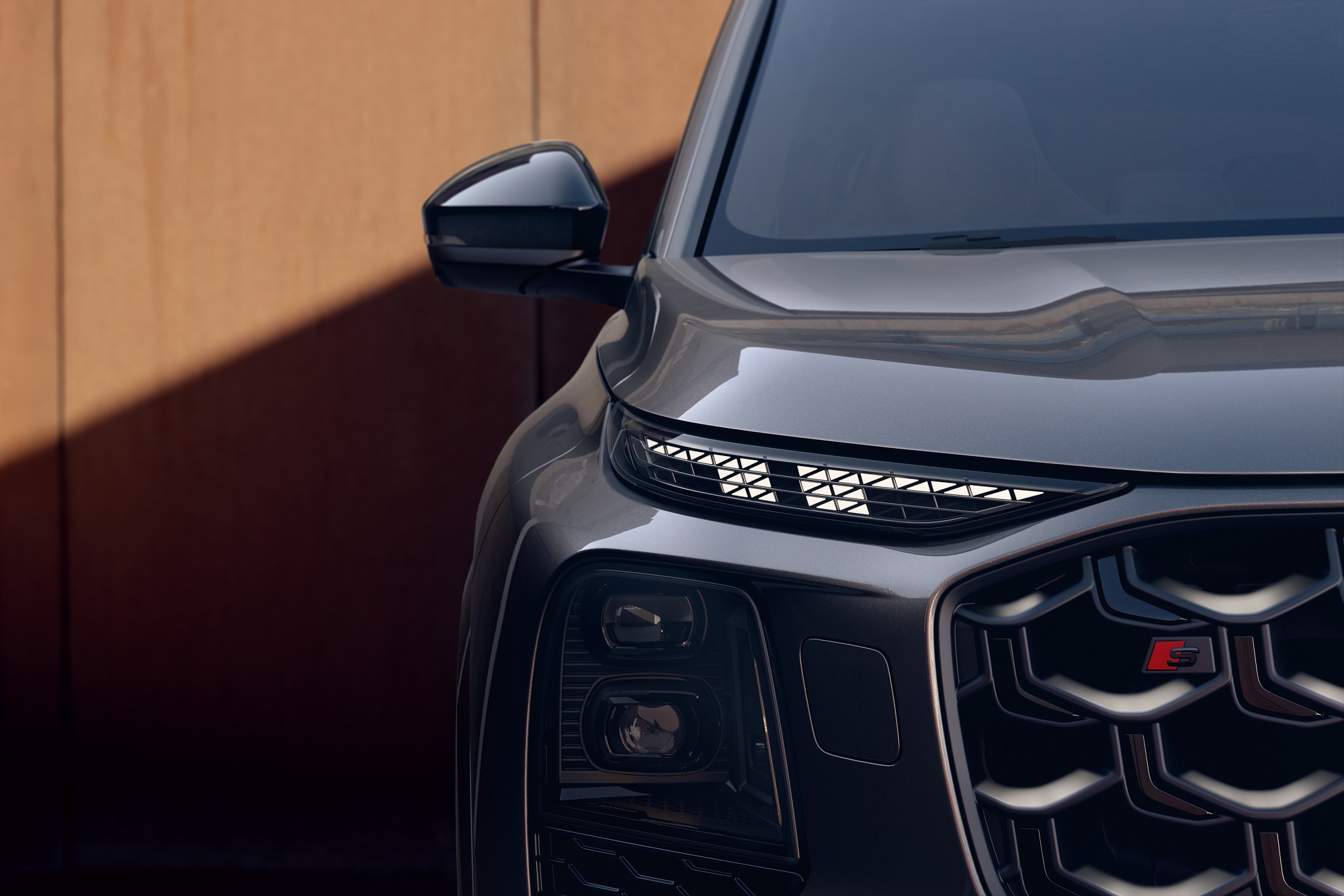
The Audi Q7 has been quite the success story for the Ingolstadt-based brand but the 2nd-generation model had been getting on its years despite some facelifts. Speaking of face, this new Q7 adopts the new Audi design language, complete with intricate grille, smart digital lighting and minimalist approach.
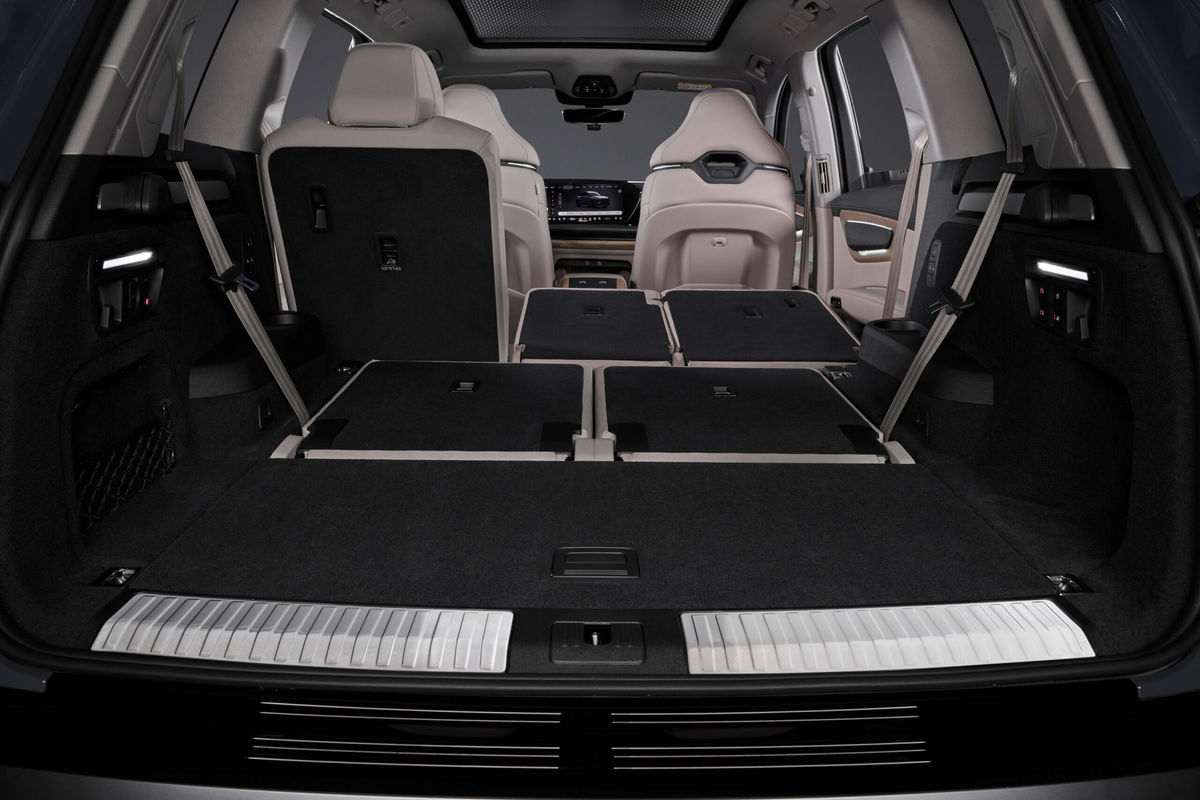
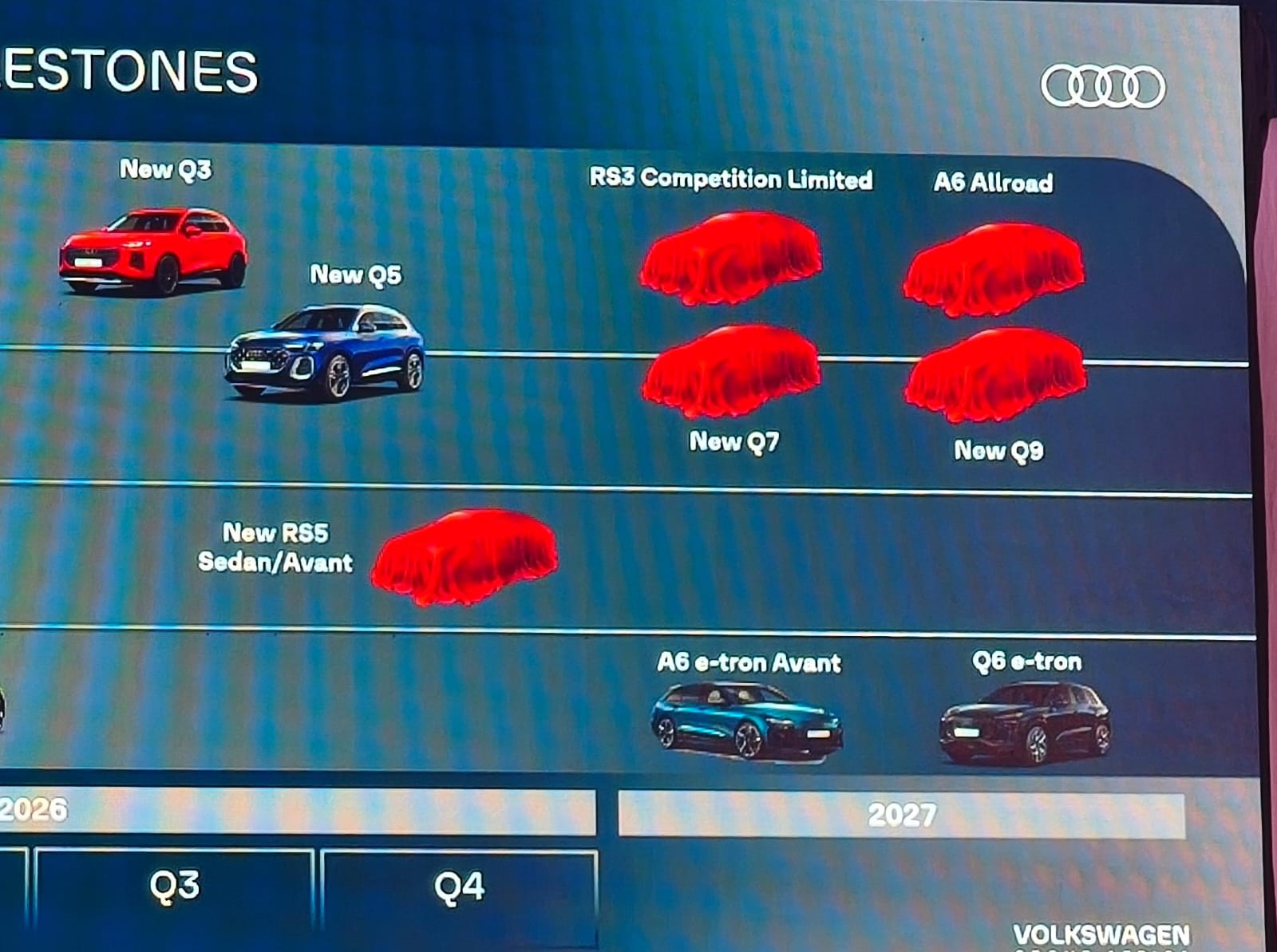
This new Audi Q7 rides on the Premium Platform Combustion setup, and will be available in 5- or 7-seater configuration. Additionally, for the 1st time, the Q7 will be offered with 2 individual seats in the 2nd row, essentially a 2x2x2. If you need even more space, Audi will be revealing the Q9 in July.
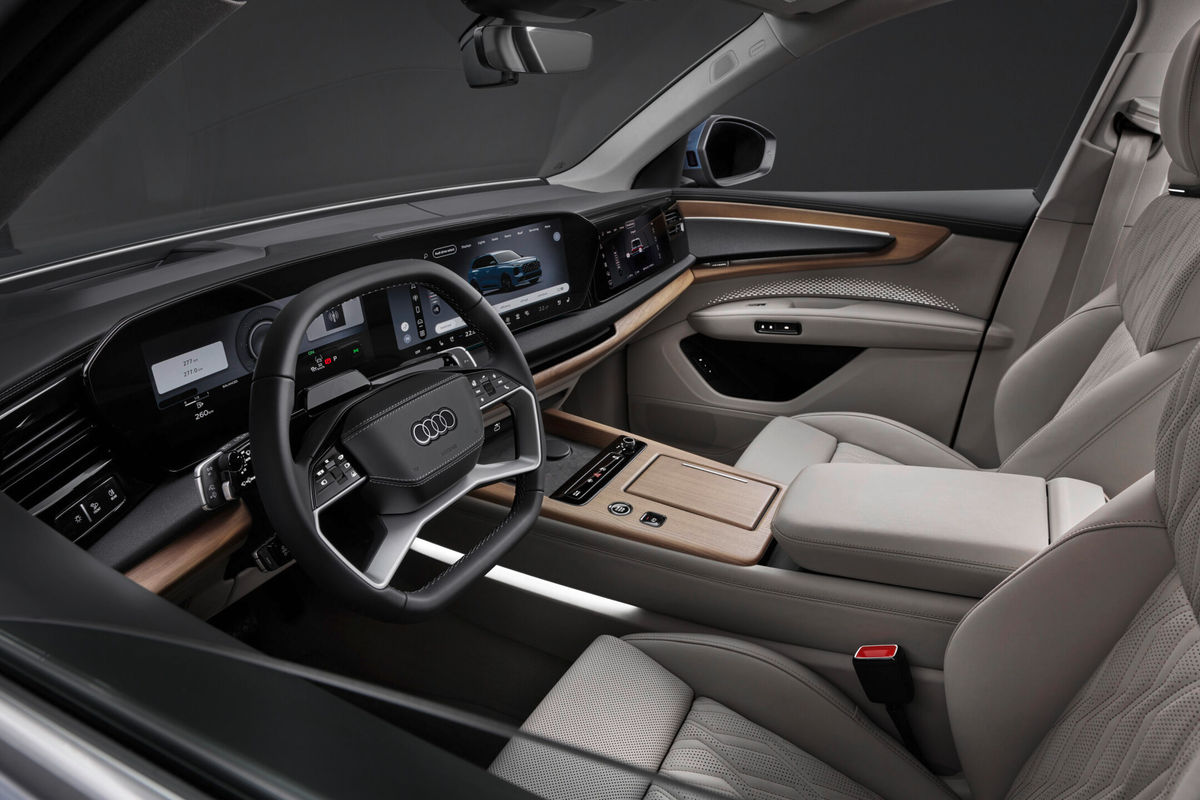
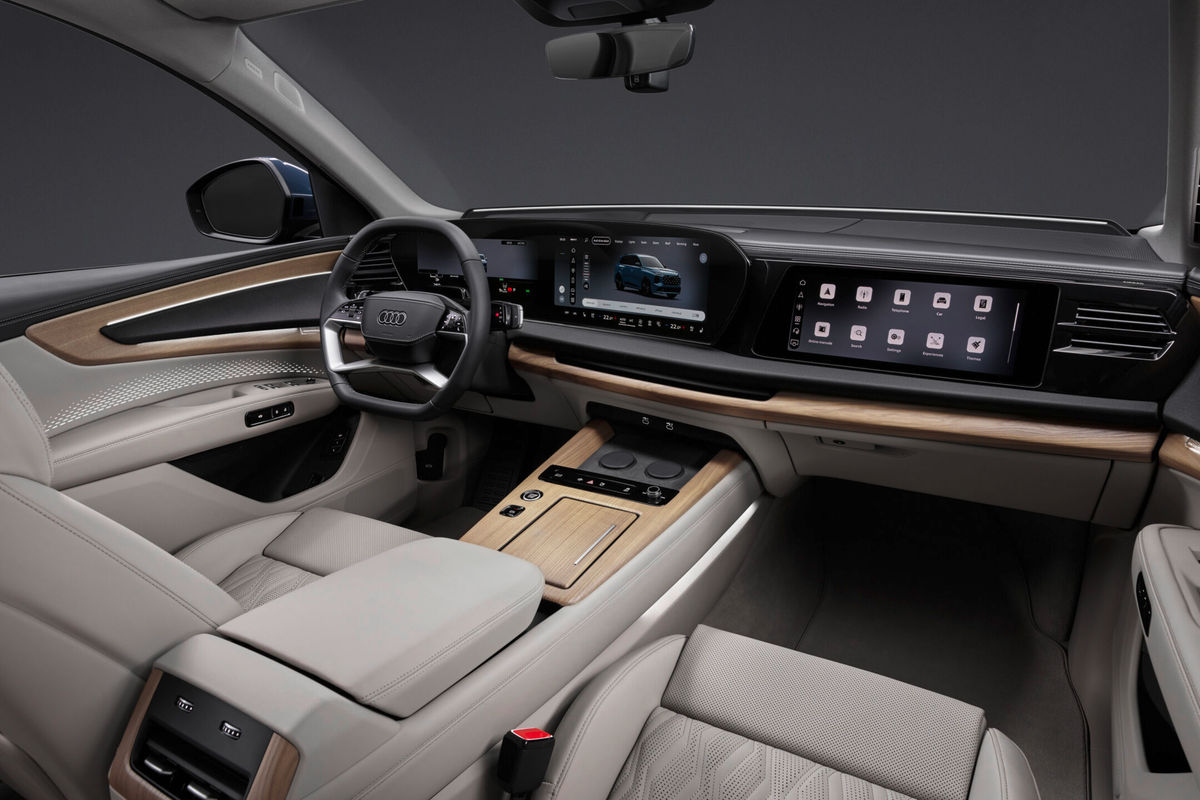
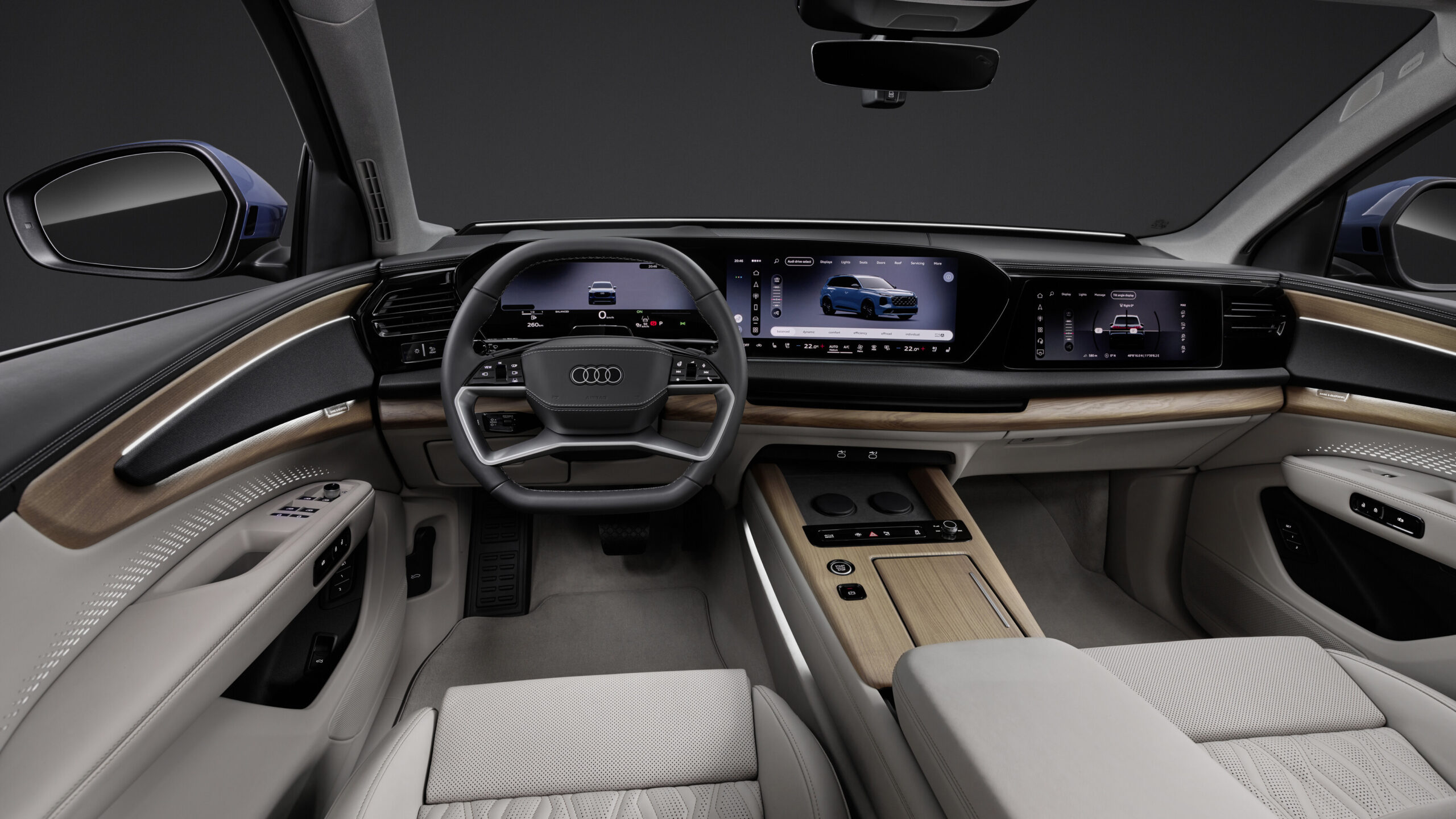
The Q7 has always been about space and practicality, but this new iteration has some interesting premium touches, like an illuminated panoramic sunroof with switchable transparency.
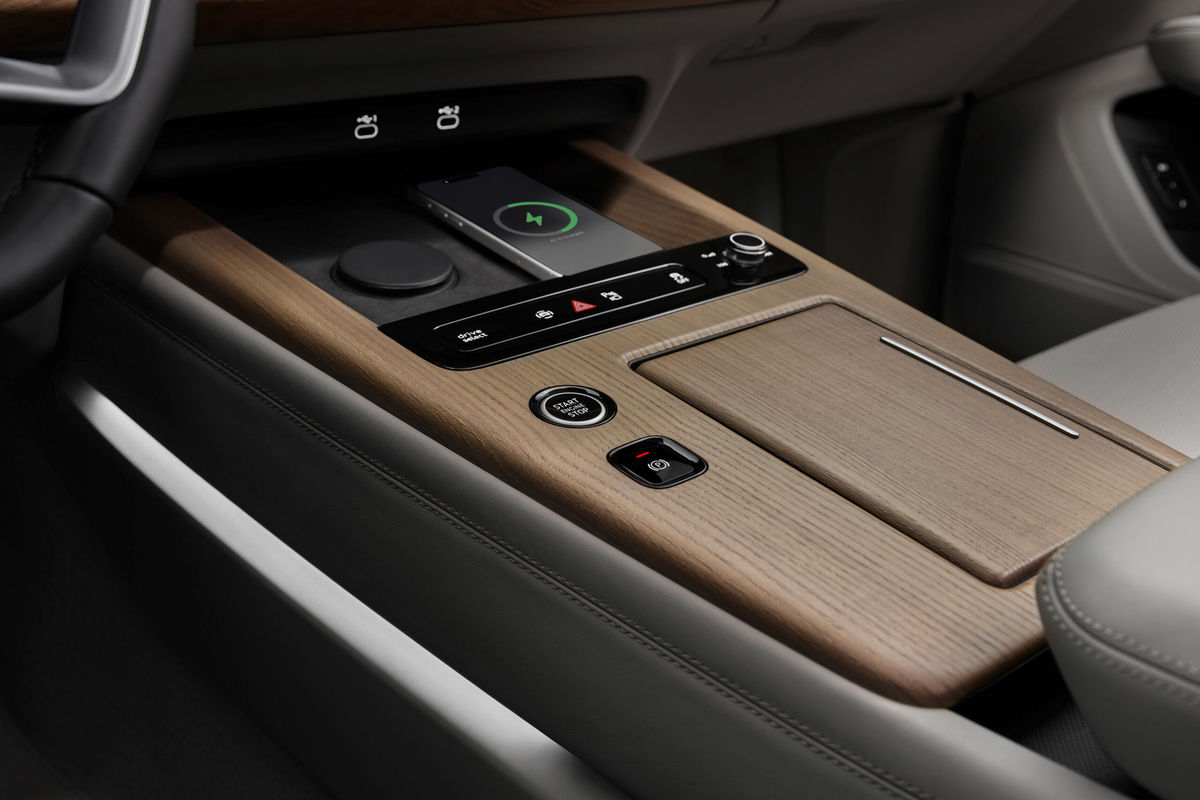
As is the case with most of the premium car brands, the cabin is filled with screens, but it’s unclear how much of the content you see in the marketing photographs will be standard or optional equipment.
Audi South Africa has yet to confirm which powertrains our market will receive, but globally the new Q7 is available with a choice of petrol or diesel motors offering mild-hybrid assistance (MHEV). It appears the European market will make do with the Volkswagen Group’s 3.0-litre turbocharged V6 diesel, with a choice of two outputs: 180 kW/500 Nm, and 220 kW/630 Nm.
The 48 V MHEV system temporarily sends 18 kW and 370 Nm to the wheels. Again, the Q7 features quattro all-wheel drive and there’s an 8-speed automatic ‘box on duty. Air suspension is likely an option. The North American market goes the petrol-only route, sourcing a 2.9-litre turbocharged V6 making 320 kW and 600 Nm.
Audi SQ7
For those wanting a helping of performance to their big premium Audi Q7 experience, the brand also confirmed a new SQ7. It features a sporty body kit, the usual fare of big bumpers, prominent exhausts, large wheels and so on. It’s powered by a 4.0-litre turbocharged V8 petrol engine and outputs are an impressive 441 kW and 800 Nm. The previous version had 373 kW and 770 Nm, so this is quite the step up.
When will the 3rd-generation Audi Q7 come to South Africa?
As part of the Volkswagen Group Africa’s Indaba held in the early part of 2026, Audi confirmed the new Q7 and Q9 will be coming to South Africa in 2027.
What are the major design and technology changes for the 2027 Audi Q7?
The 2027 Audi Q7 features a muscular new silhouette with an enlarged Singleframe honeycomb grille and ground-projecting advanced turn signals. Inside, the cabin receives a massive digital overhaul with a continuous curved panoramic housing an 11.9-inch driver display and a 14.5-inch MMI infotainment touchscreen, complemented by a separate, dedicated 12.3-inch front passenger entertainment screen.
What engines power the new 2027 Audi Q7 lineup?
The standard 2027 Audi Q7 transitions to a powerful new 2.9-litre turbocharged V6 petrol engine pumping out 320 kW (429 hp) and 600 Nm of torque, which drops its 0-100 km/h sprint time to under 5 seconds. For diesel-led markets like South Africa, updated 3.0-litre V6 TDI options utilizing advanced 48V MHEV Plus mild-hybrid tech will also remain core. The flagship SQ7 upgrades to a revised 4.0-litre twin-turbo V8 churning out 441 kW (591 hp). All configurations feature an 8-speed Tiptronic automatic and permanent quattro all-wheel drive.
Does the 2027 Audi Q7 offer six-seat or seven-seat layouts?
Yes, the 2027 model provides maximum cabin versatility. While the standard local configuration continues as a traditional 7-seater across three rows, Audi now offers a luxurious new 6-seat configuration that replaces the middle row with dual individual captain’s chairs for improved luxury and easier third-row access. All rear seats feature electric adjustment and dedicated ISOFIX anchor points.
What are the premium option highlights available on the 2027 model?
Standout technological options include adaptive air suspension packages capable of raising or lowering the ride height by up to 62 mm, massive factory-fitted 23-inch alloy wheels, a panoramic sunroof with switchable smart transparency, and a 22-speaker Bang & Olufsen 4D premium sound system featuring headrest-integrated privacy speakers and haptic bass actuators built directly into the front seats.
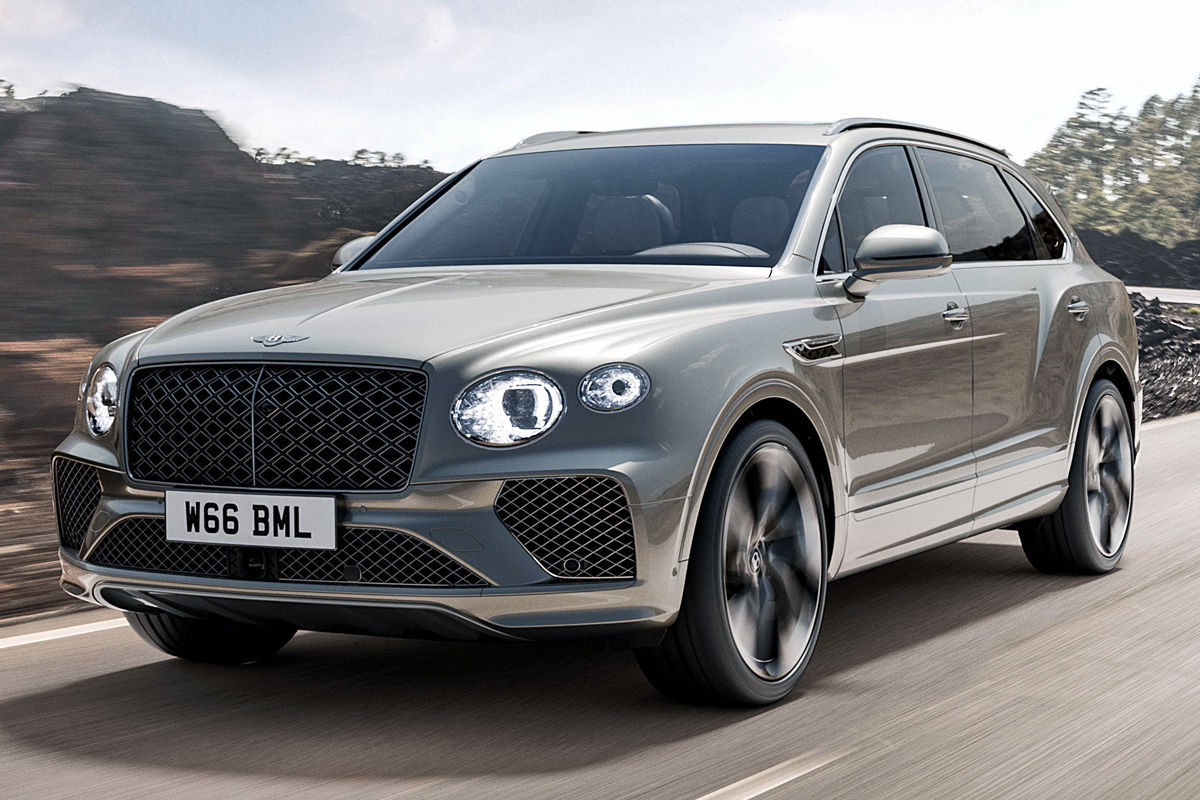
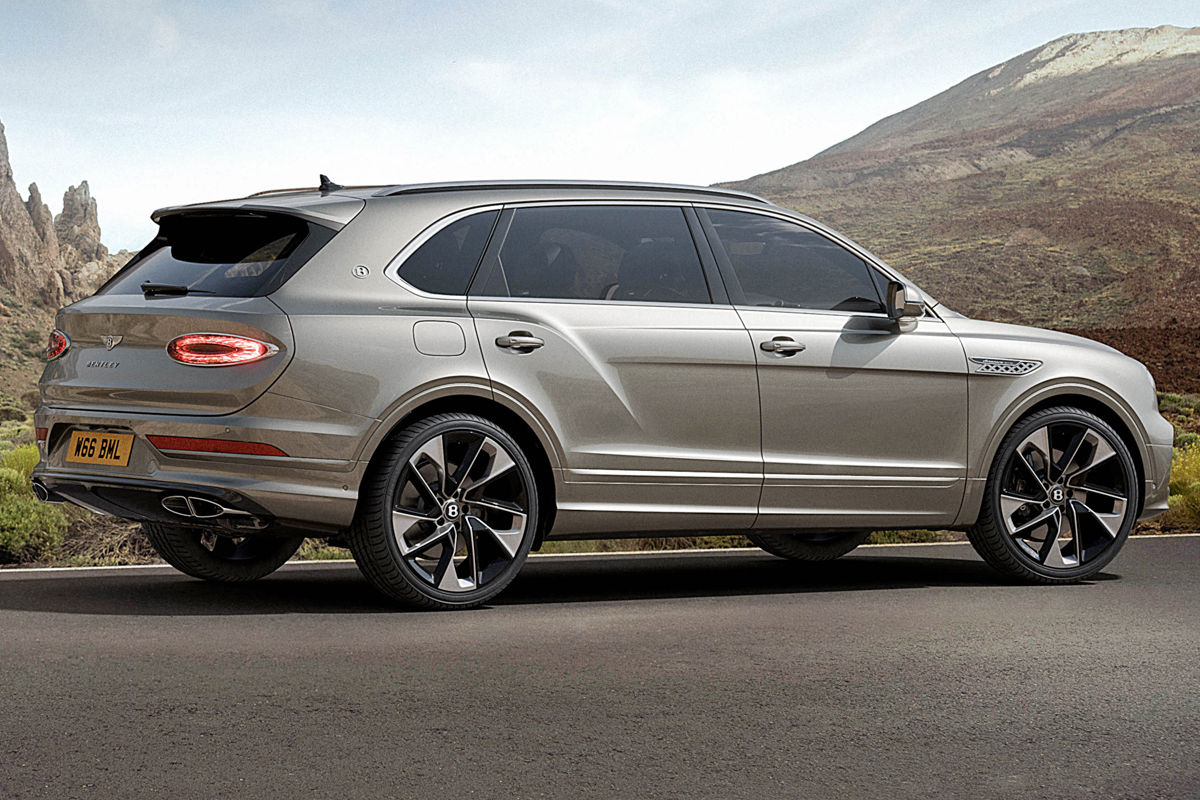
The new Bentley Bentayga Artenara Edition has joined the Crewe-based firm’s range in South Africa. Here’s what it costs, in either standard- or extended-wheelbase form…
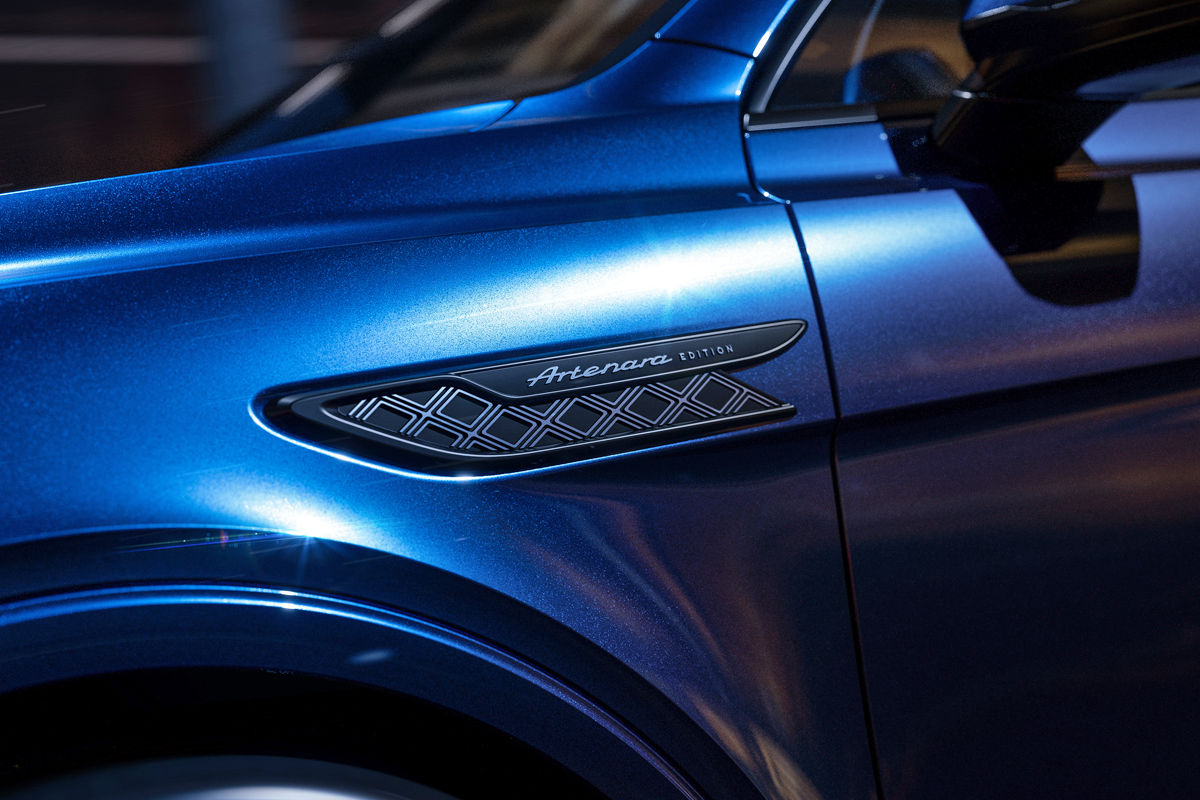
Bentayga Artenara Edition arrives in South Africa
Both standard- and extended-wheelbase versions
Key Mulliner options and curated colour schemes
Is the standard Bentayga not quite exclusive enough for you? Well, you’re in luck (if your pockets are deep enough, that is): Bentley has just added the new Bentayga Artenara Edition to its range in South Africa.
And, courtesy of some timely information from the ever-sharp folks over at duoporta.com, we now know how much this “curated” package costs. Yes, the Bentayga Artenara Edition starts at R5 259 000, while the extended-wheelbase (EWB) version kicks off at R5 808 000.
Some quick maths suggests the Artenara Edition package commands a premium of R617 000 in the case of the standard-wheelbase derivative (from R4 642 000) and R545 000 in the case of the EWB variant (from R5 263 000). As a reminder, the standard twin-turbo 4.0-litre V8 petrol engine sends 404 kW and 770 Nm to all 4 wheels via an 8-speed automatic transmission.
So, what does that extra cash buy you? Well, the Crewe-based automaker says the new package – named after Artenara, which at 1 200 metres is the highest village in Gran Canaria, home of the Roque Bentayga peak after which the Bentayga was christened over a decade ago – celebrates “the pinnacle design features of the Bentayga”.
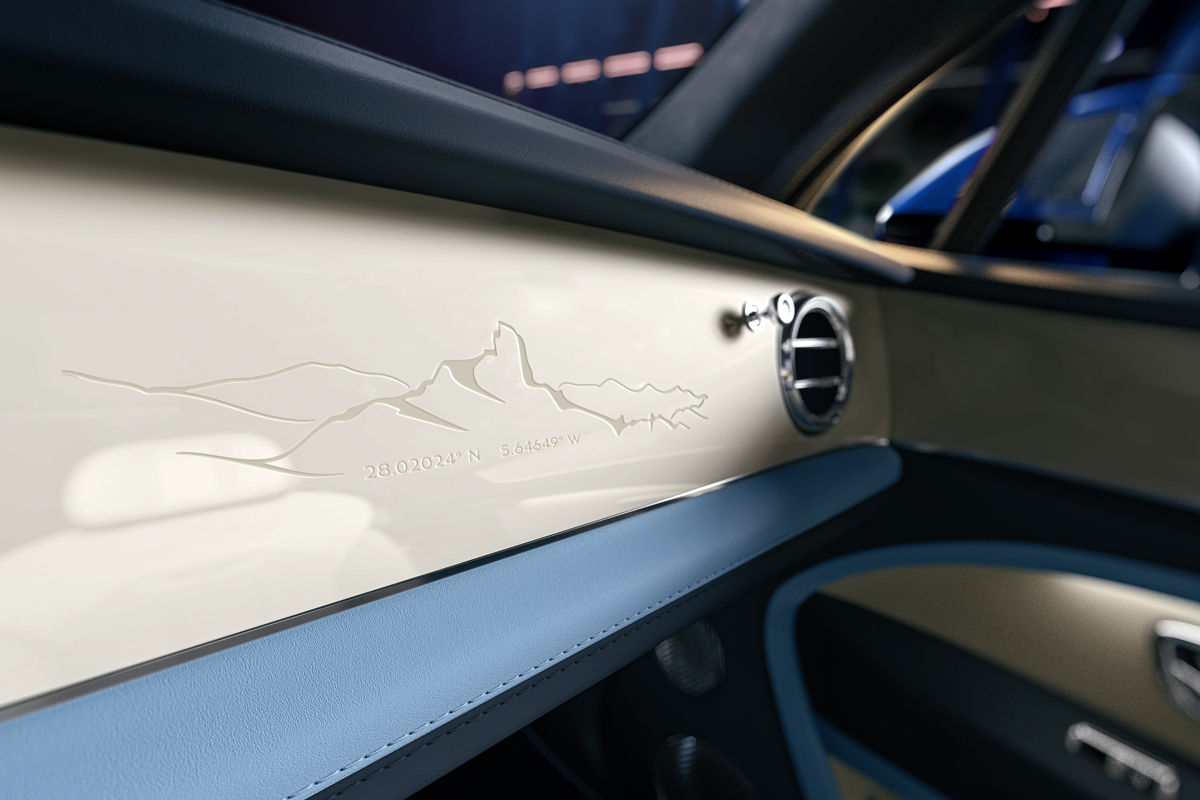
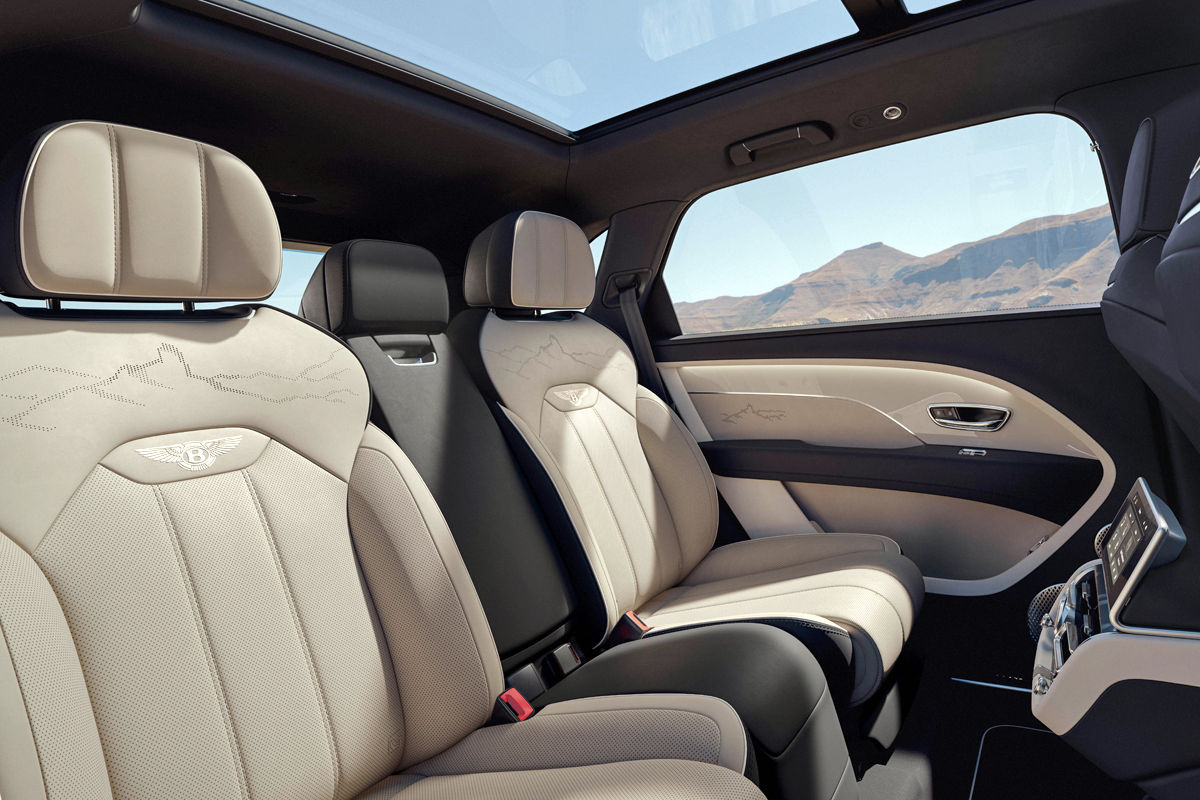
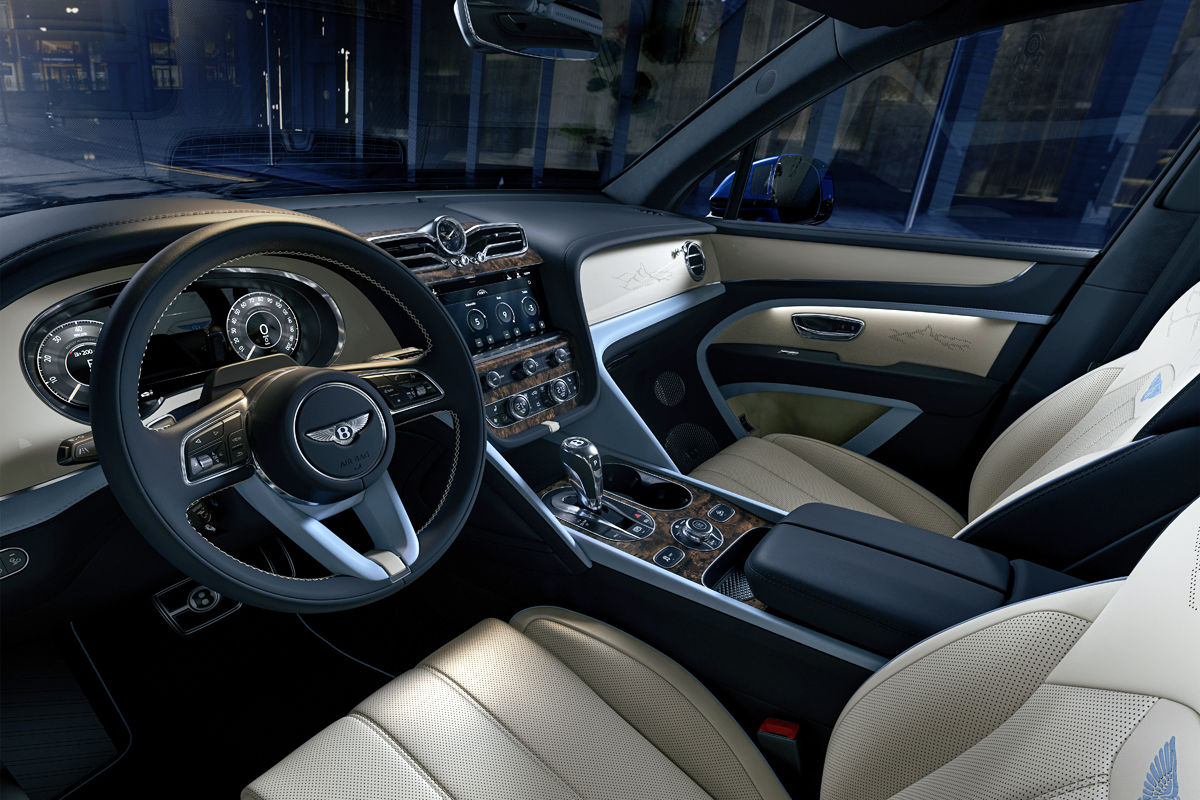
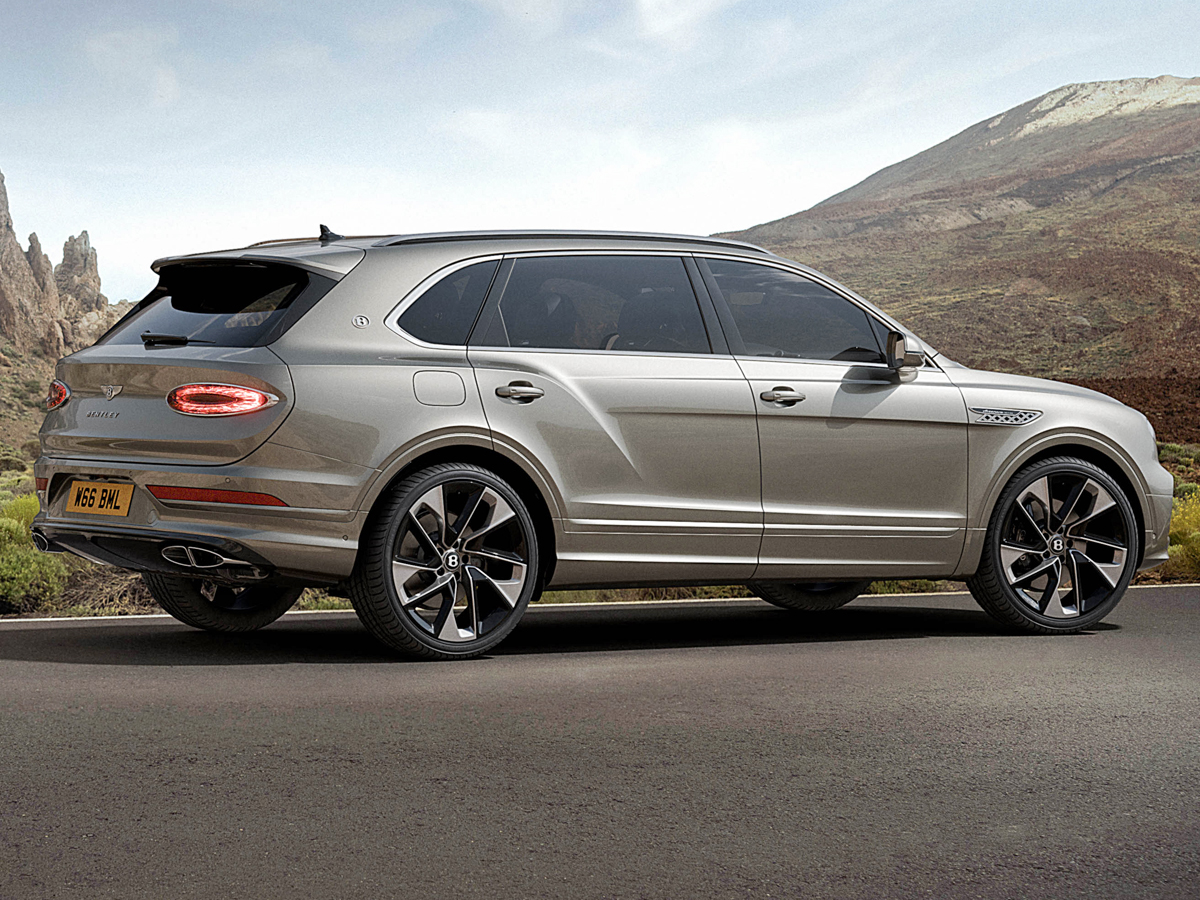
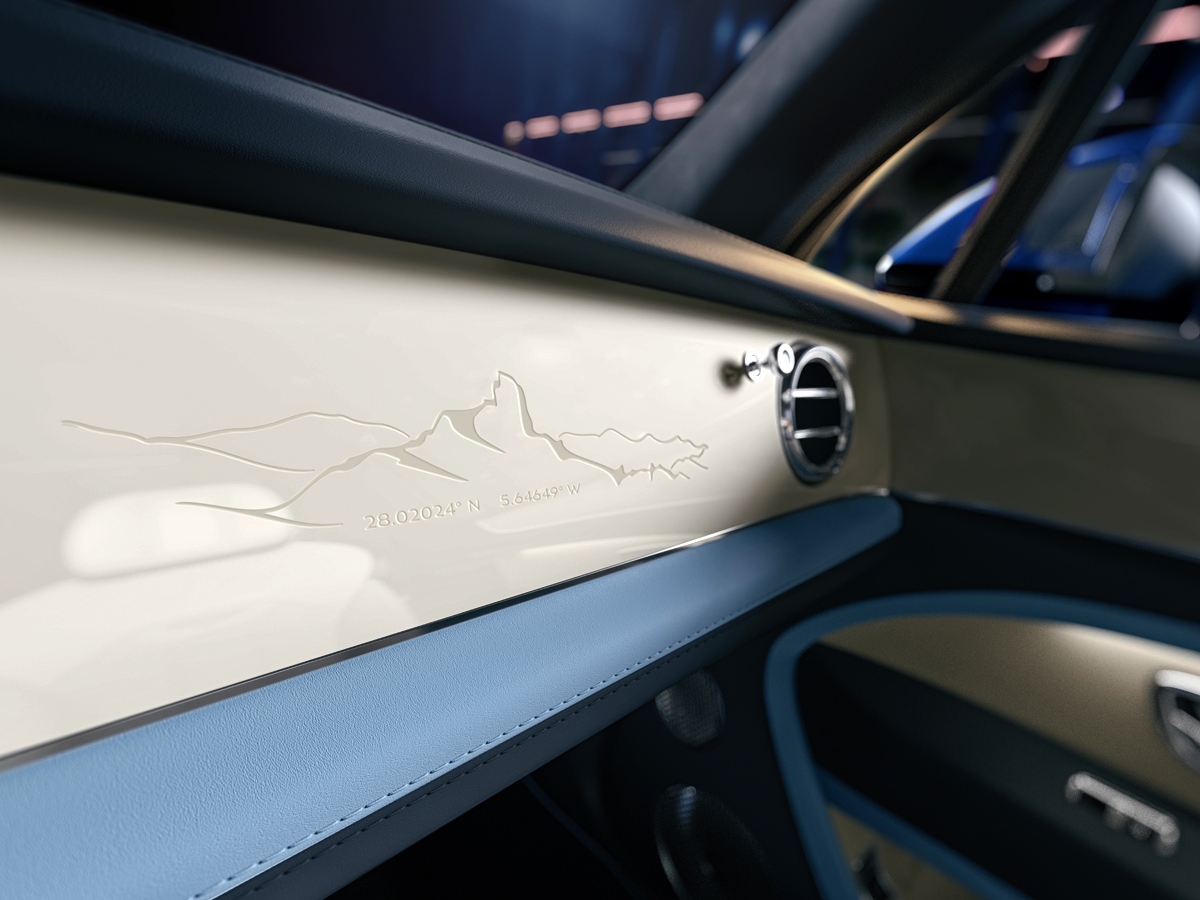
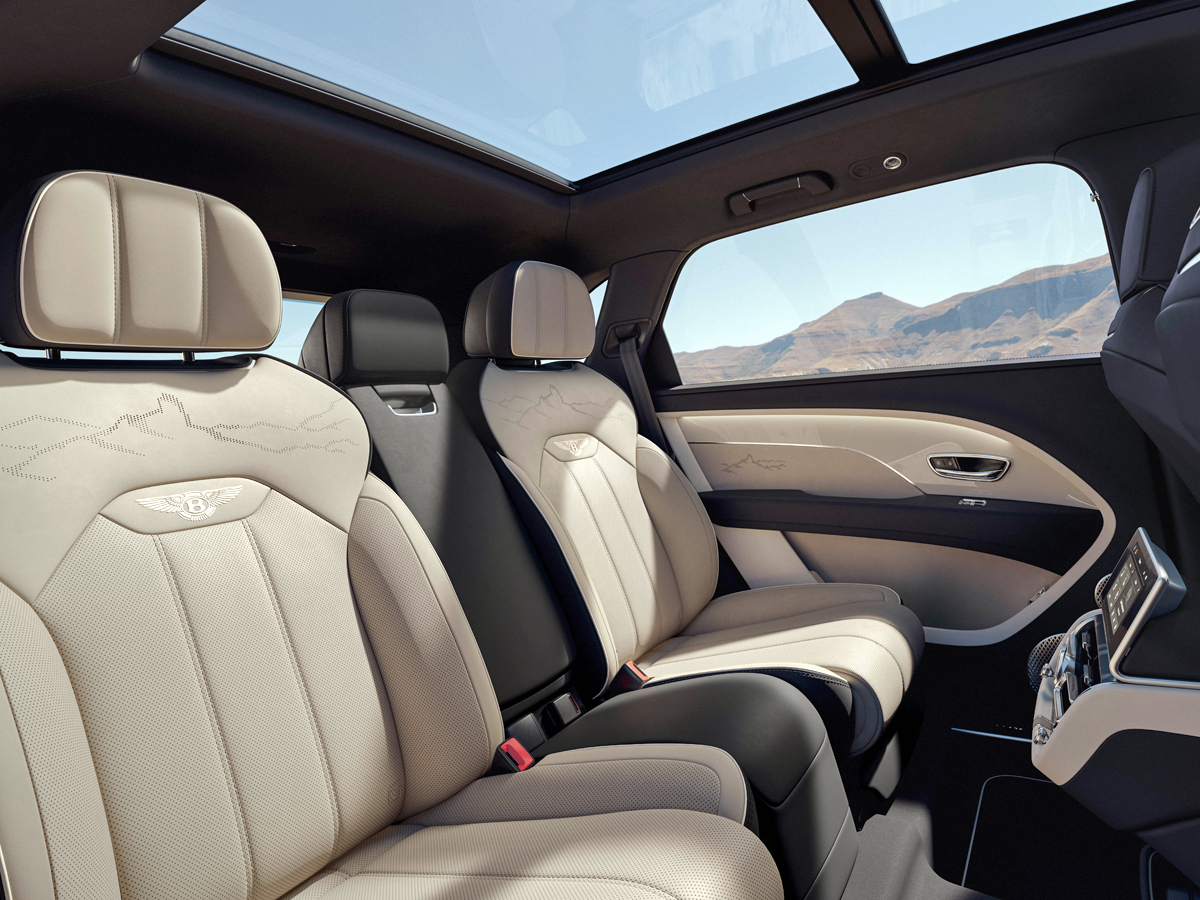
The package includes a Roque Bentayga mountain motif on the facia (complete with the location’s exact co-ordinates), in the welcome-lamp projection and as a pattern of laser-crafted perforations on the seats and doors. Bentley says several “key Mulliner options” are standard, from the 22-inch grey wheels (with 23-inch items optional) to the Mulliner double-diamond grille.
The Bentayga Artenara Edition is offered with the choice of 8 curated exterior colours in conjunction with what Bentley describes as “harmonising interiors” that feature a 3-colour split (an interior option previously exclusive to the Mulliner EWB derivative). In each case, the various exterior brightware elements – that is, the lower door, front bumper and rear bumper – are finished in body colour.
The Artenara Edition furthermore ships standard with Bentley’s “Bright Chrome” specification, though the “Blackline” specification (with its dark exterior trim, gloss-black front skid panel and gloss-black rear diffuser) is also offered as an option.
What does the Bentley Bentayga Artenara Edition cost in SA?
DERIVATIVE
PRICE
Bentley Bentayga Artenara Edition
R5 259 000
Bentley Bentayga EWB Artenara Edition
R5 808 000
The prices above include a 3-year/unlimited kilometre warranty and a 3-year/100 000 km maintenance plan (with intervals of 15 000 km).
Frequently Asked Questions (FAQ)
Q: What is the pricing for the new Bentley Bentayga Artenara Edition in South Africa?
A: The standard-wheelbase Bentley Bentayga Artenara Edition is priced from R5 259 000, while the extended-wheelbase (EWB) Artenara Edition starts at R5 808 000. These figures represent a premium of R617 000 for the standard model and R545 000 for the EWB variant over their respective baseline counterparts.
Q: What inspired the design of the Bentayga Artenara Edition, and what unique details does it feature?
A: The special edition is named after Artenara, the highest village in Gran Canaria and home to the Roque Bentayga mountain peak that originally inspired the SUV’s name. It features a Roque Bentayga mountain motif on the fascia, alongside custom welcome-lamp projections and laser-crafted perforations on the seats and doors replicating the geographic pattern.
Q: What additional Mulliner features and specifications come standard with this package?
A: The Artenara Edition upgrades include a Mulliner double-diamond front grille, 22-inch grey alloy wheels (with 23-inch options available), body-coloured exterior brightware elements and a choice of eight curated exterior paint colours. Inside, it benefits from a premium three-colour interior split that was previously exclusive to the flagship Mulliner EWB model. Power remains unchanged, utilising the twin-turbo 4.0-litre V8 petrol engine delivering 404 kW and 770 Nm.
The JMC Vigus Double-Cab has returned to South Africa with an aggressive price tag and a torquey turbodiesel heart. Is it capable enough to steal sales from the established budget-bakkie brigade?
We like: Punchy performance; surprisingly smooth automatic gearbox; spacious cabin (especially width); sturdy perceived build quality; value for money.
We don’t like: No traditional radio; lack of rear reading lights; short 10 000 km service intervals; tie-downs can lead to external load bay damage.
FAST FACTS
Model: 2026 JMC Vigus 2.5TD Double-Cab Auto
Price: R459 900
Engine: 2.5-litre, 4-cylinder turbodiesel
Transmission: 8-speed automatic
Power/Torque: 123 kW / 430 Nm
Claimed fuel consumption: 7.0 L/100 km
0-100 kph: 10.8 seconds (tested)
Where does the JMC Vigus 2.5TD Double-Cab Auto fit in?
South Africa truly is bakkie country. If we look at demand on Cars.co.za, local consumers’ appetite for double cabs continues to show growth.
In fact, when we investigate what else local buyers of crossovers or hatchbacks consider when making their purchasing decisions, almost everyone has a look at a bakkie at some point in the process … whether they end up buying a Volkswagen Polo Vivo or a Chery Tiggo 7 Pro, or not.
Lifestyle bakkies are expensive, however, and the top sellers in the market are all comfortably priced around R200 000 higher (or even more) than comparable offerings from China and India. This has created a gap at the lower end of the market that a multitude of Chinese brands are trying to fill. In fact, it has become quite difficult to keep track of all the options.
JMC’s Vigus competes at this (affordable) end of the market. It is not new to South Africans, having been offered here previously, but this latest model is substantially different. In 4×2 auto form as tested here, it is one of the most affordable offerings.
At R459 900 for this automatic derivative, the Vigus wildly undercuts traditional segment stalwarts and squares up directly against fellow budget contenders like the Foton Tunland G7, JAC T8 and the GWM P300 2.0T SX Auto.
Jiangling Motors Corporation (JMC) is no stranger to the bakkie market and shares a longstanding manufacturing joint-venture with Ford in China. But while you may look at the squared-off styling of the Vigus and think it is based on the Ranger, it is important to note that they are not based on the same platform.
How the JMC Vigus 2.5TD Double-Cab Auto fares in terms of…
Design, Packaging & Features
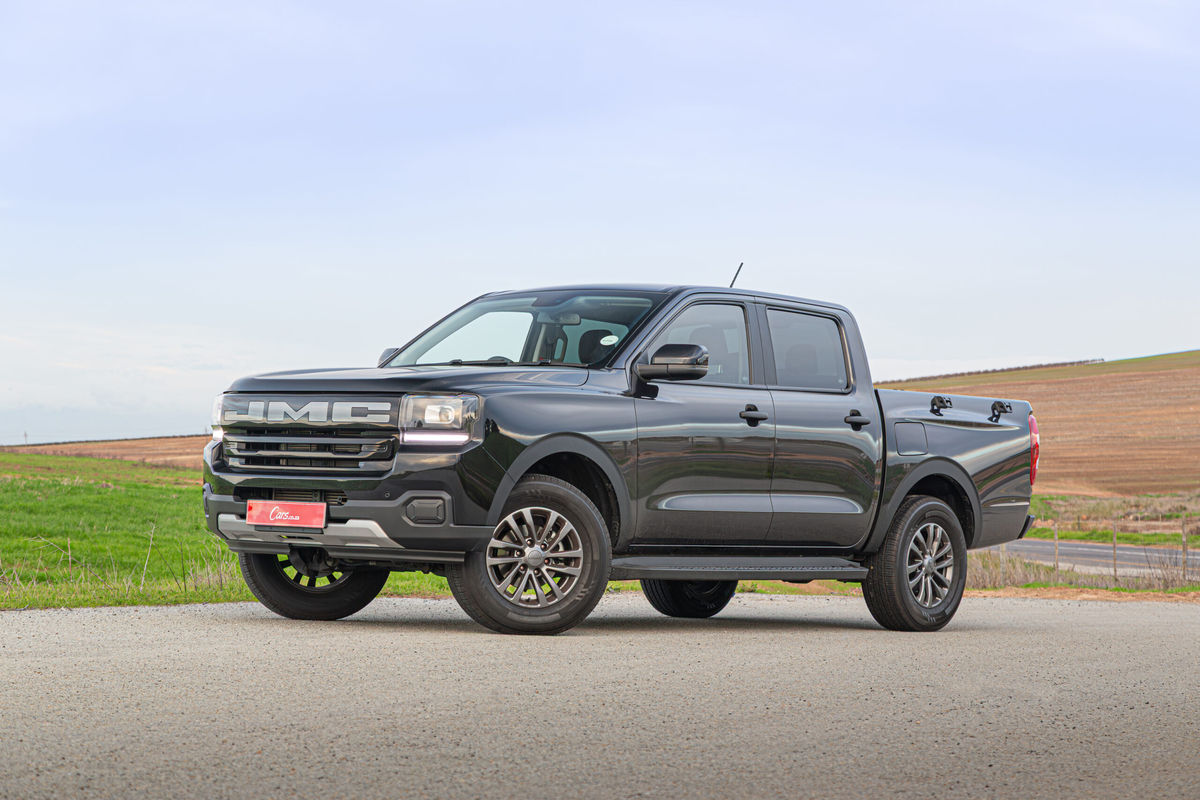
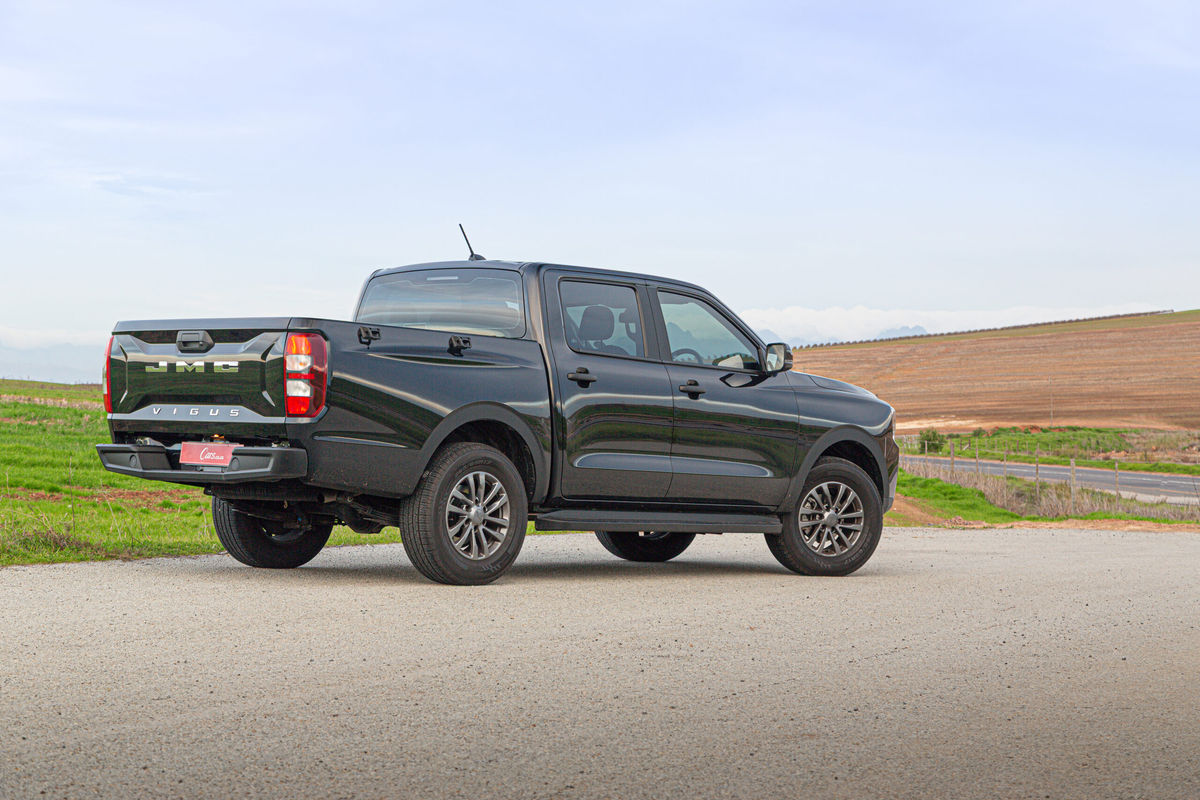
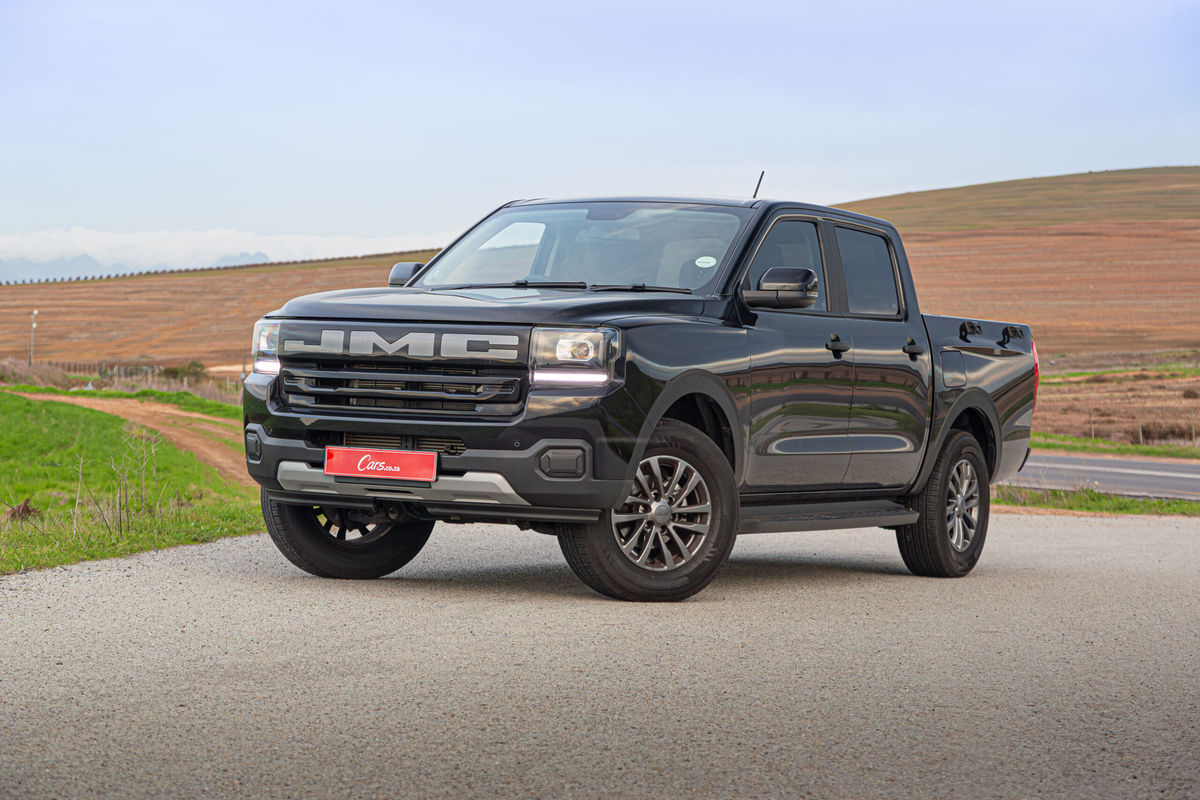
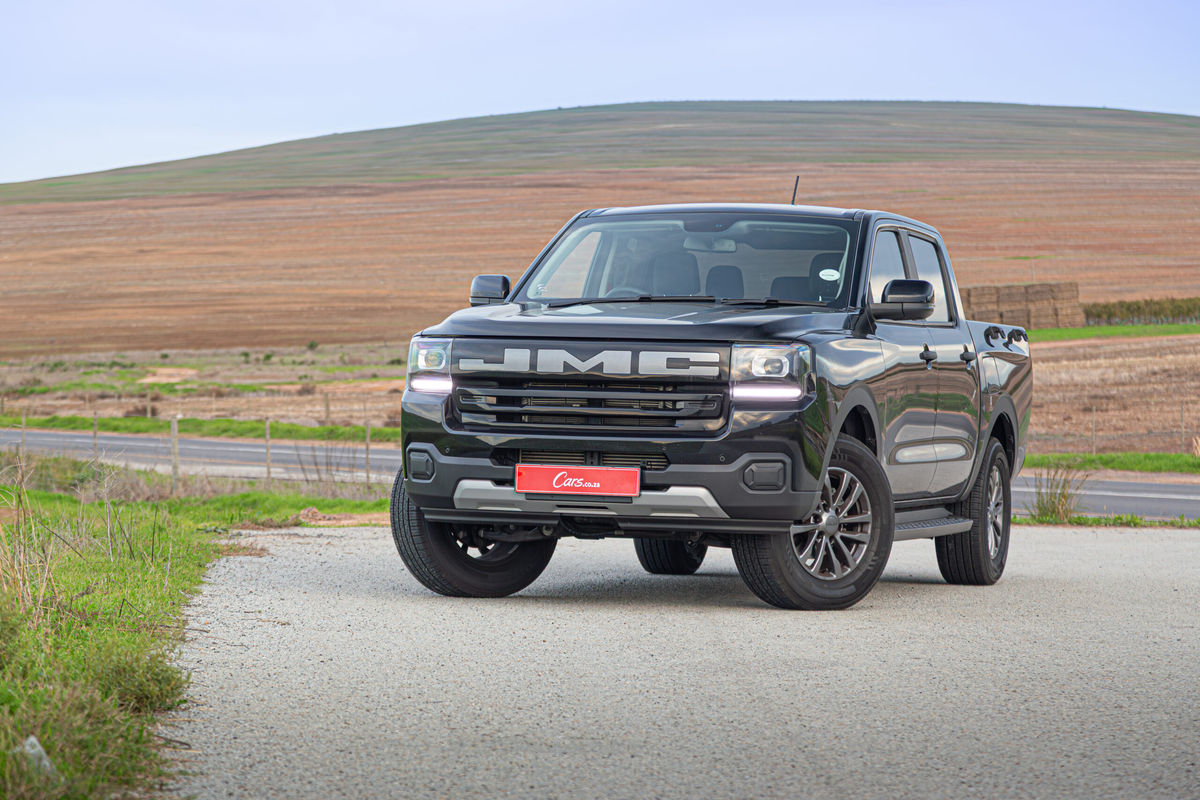
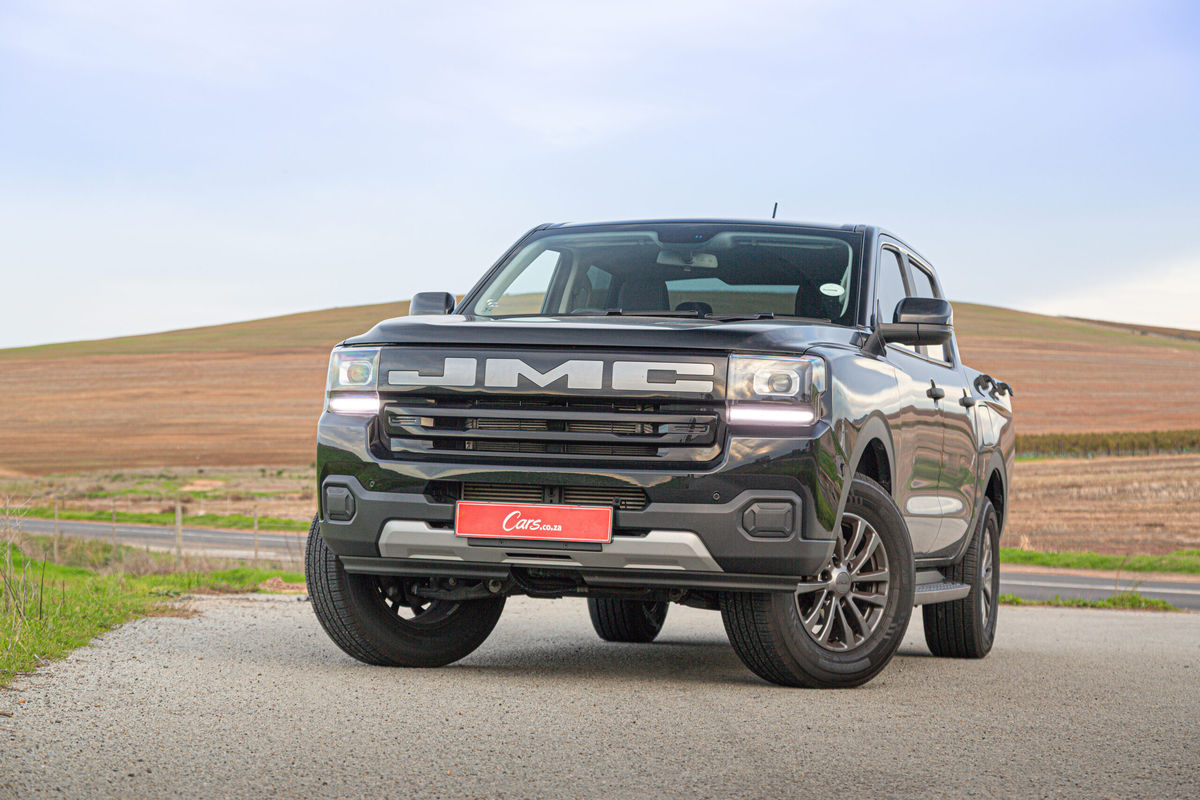
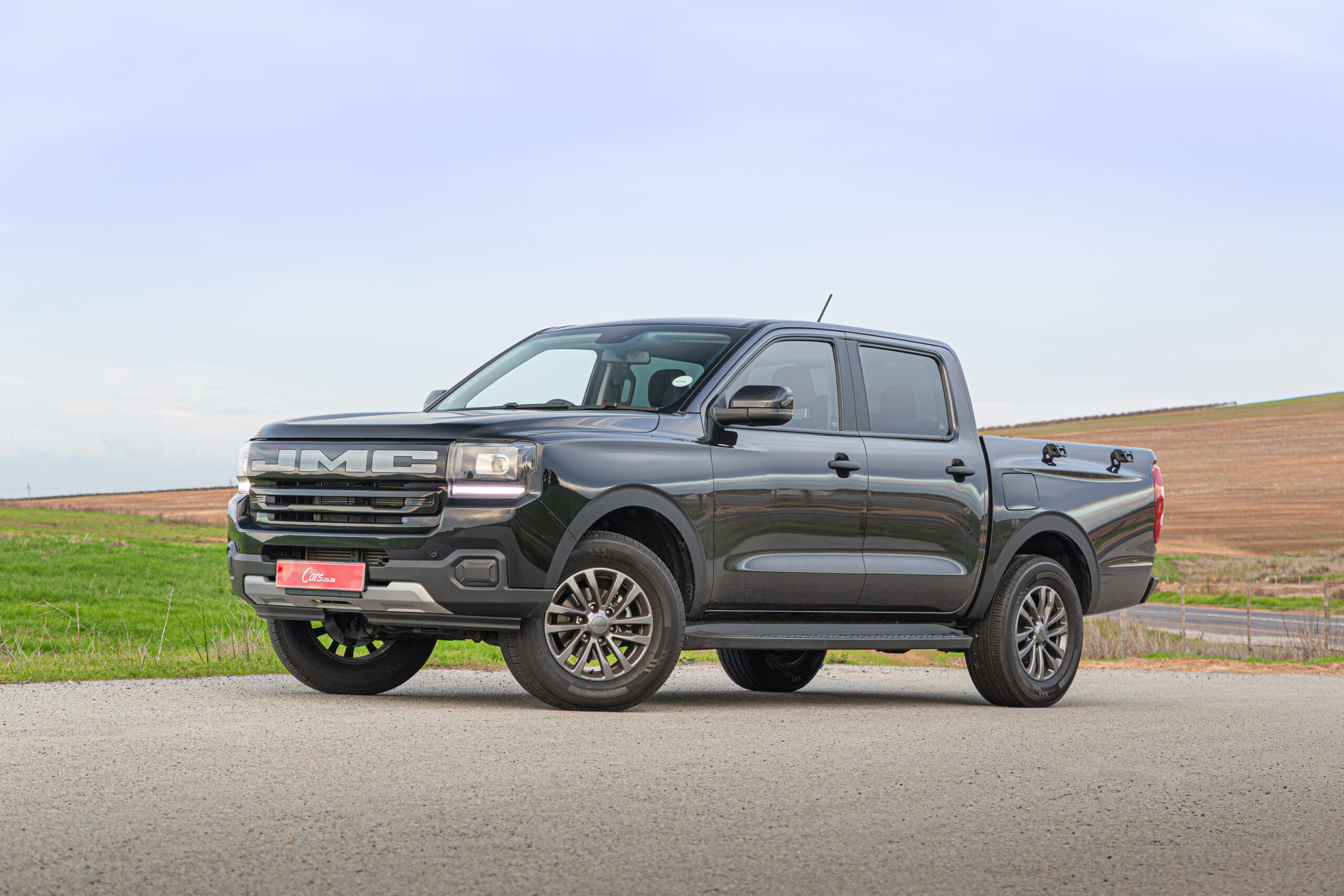
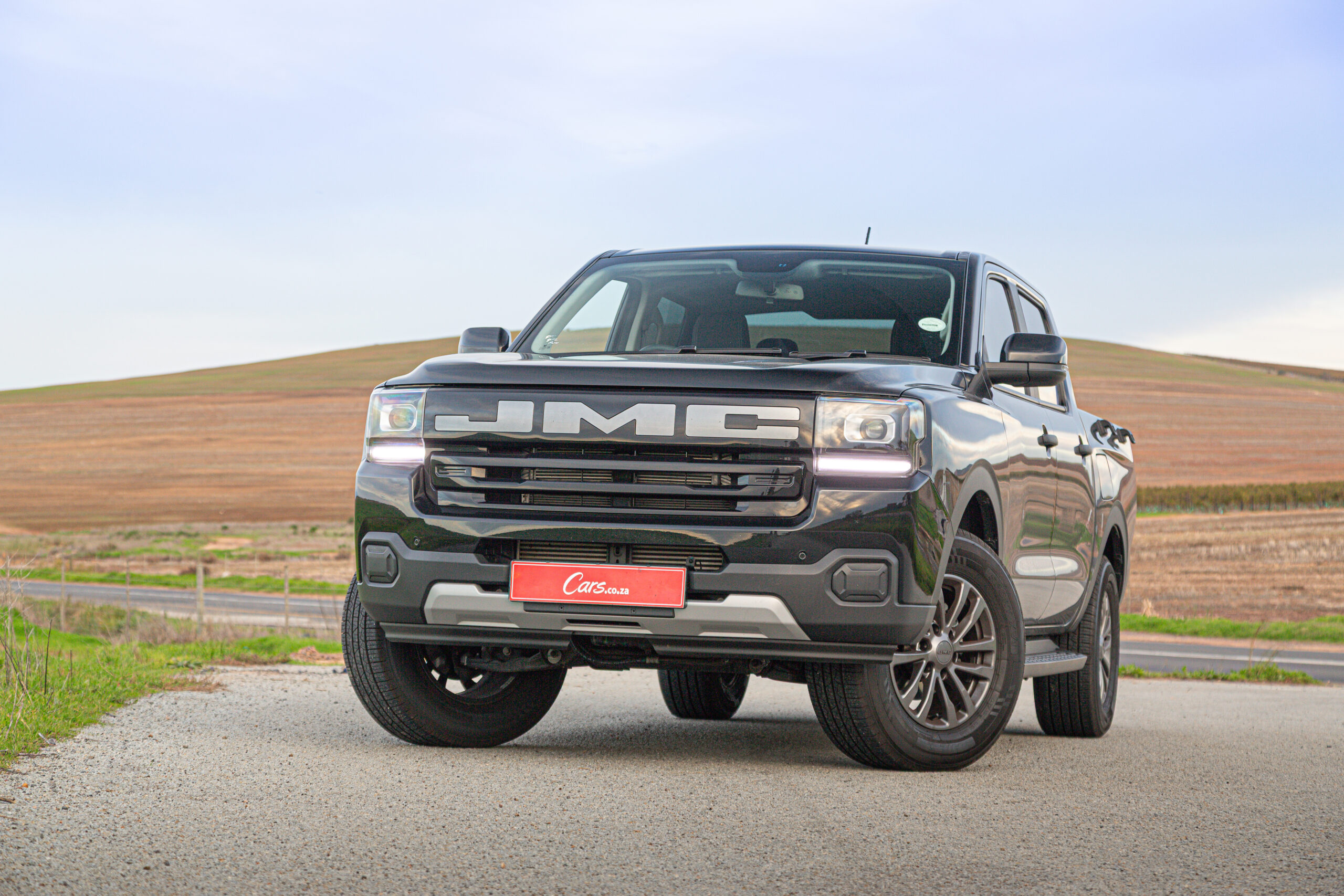
With its squared-off face and bold JMC lettering on the grille, it is clear that certain American pick-ups have inspired the look of the Vigus. It mostly works, but perhaps not so well in the dark grey of our test unit. The contrasting effect of the large grille, lower bumper inserts and wheel arch “lips” is mostly lost when set against an exterior paint colour like dark grey.
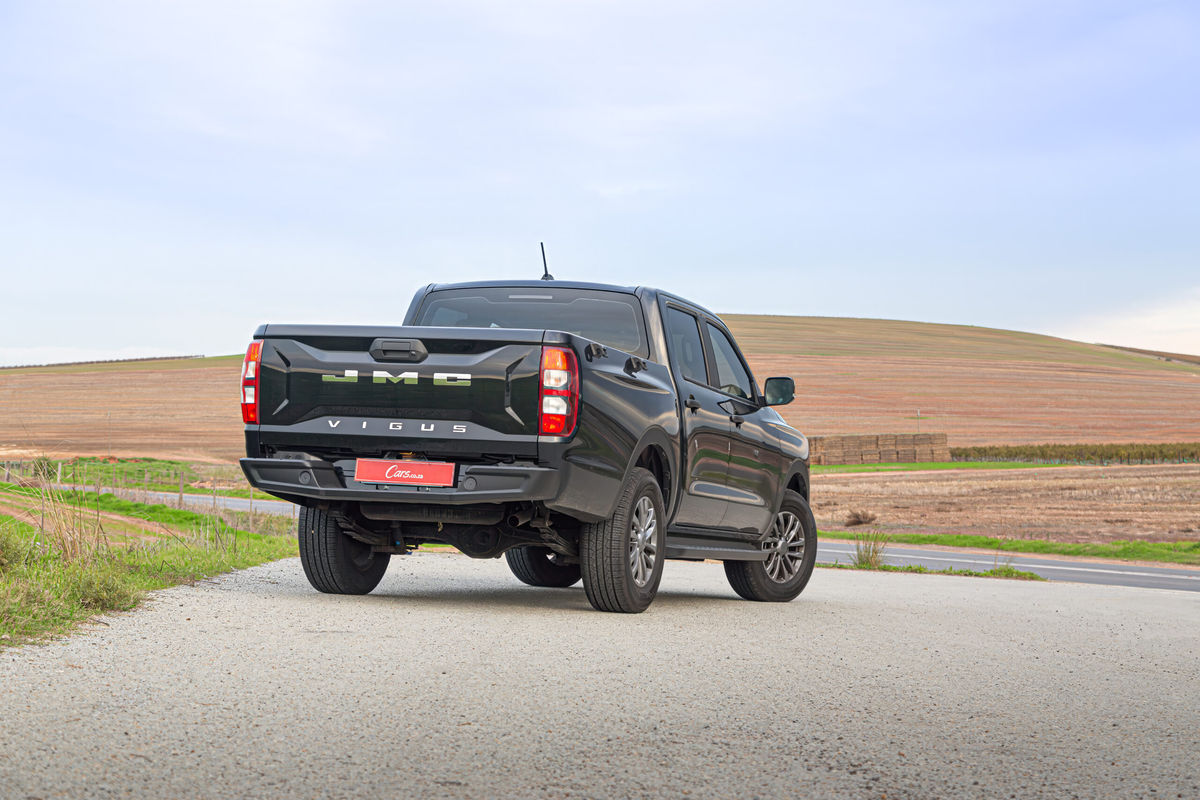
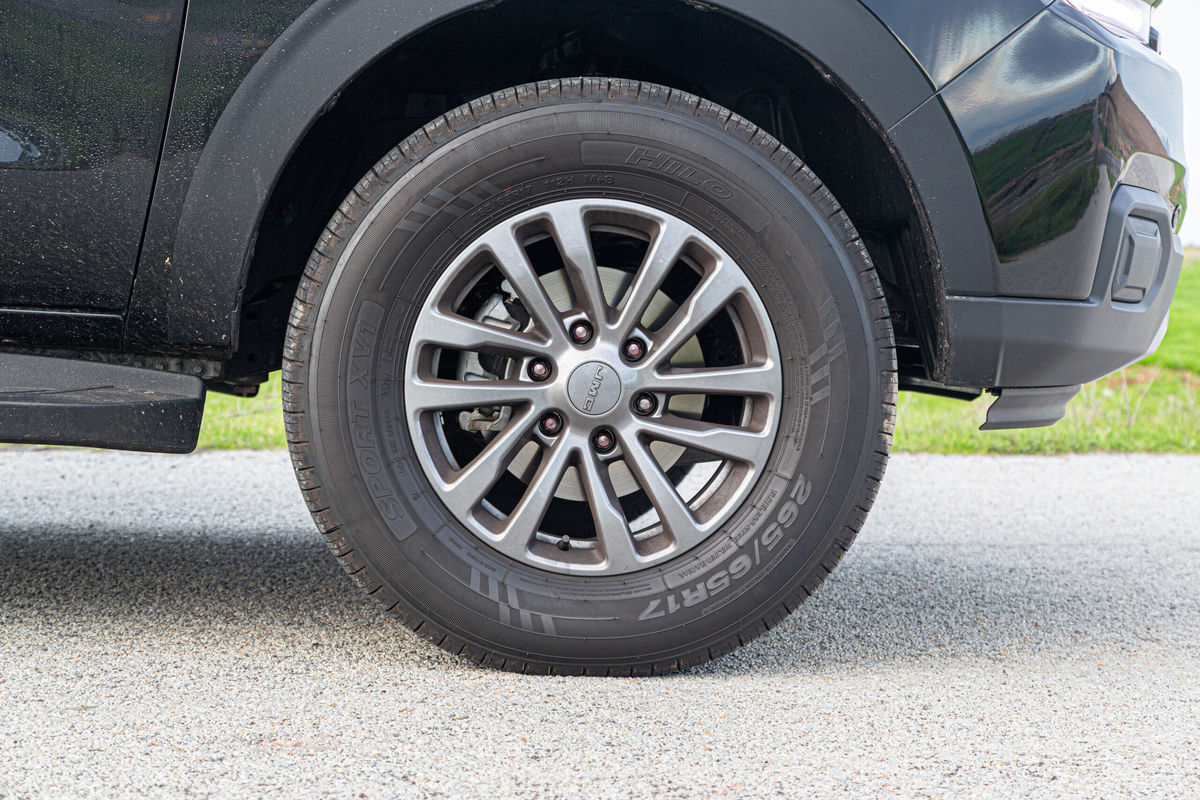
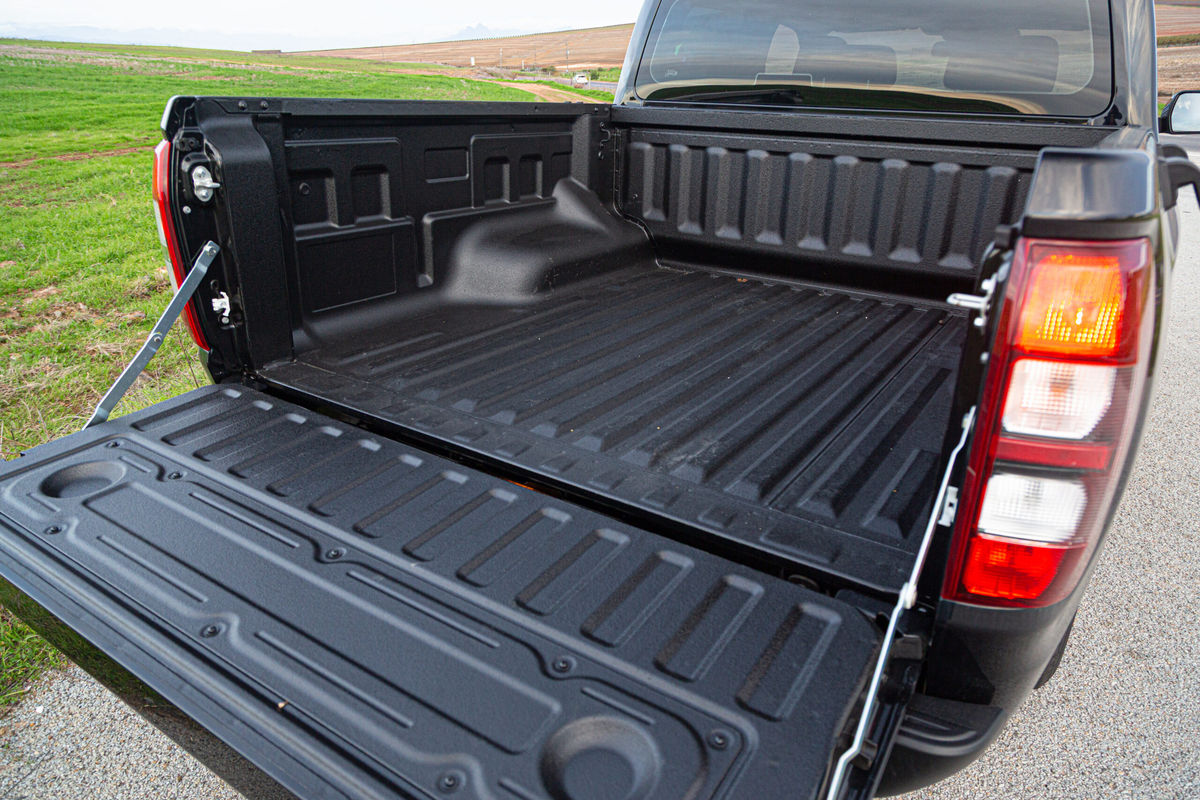
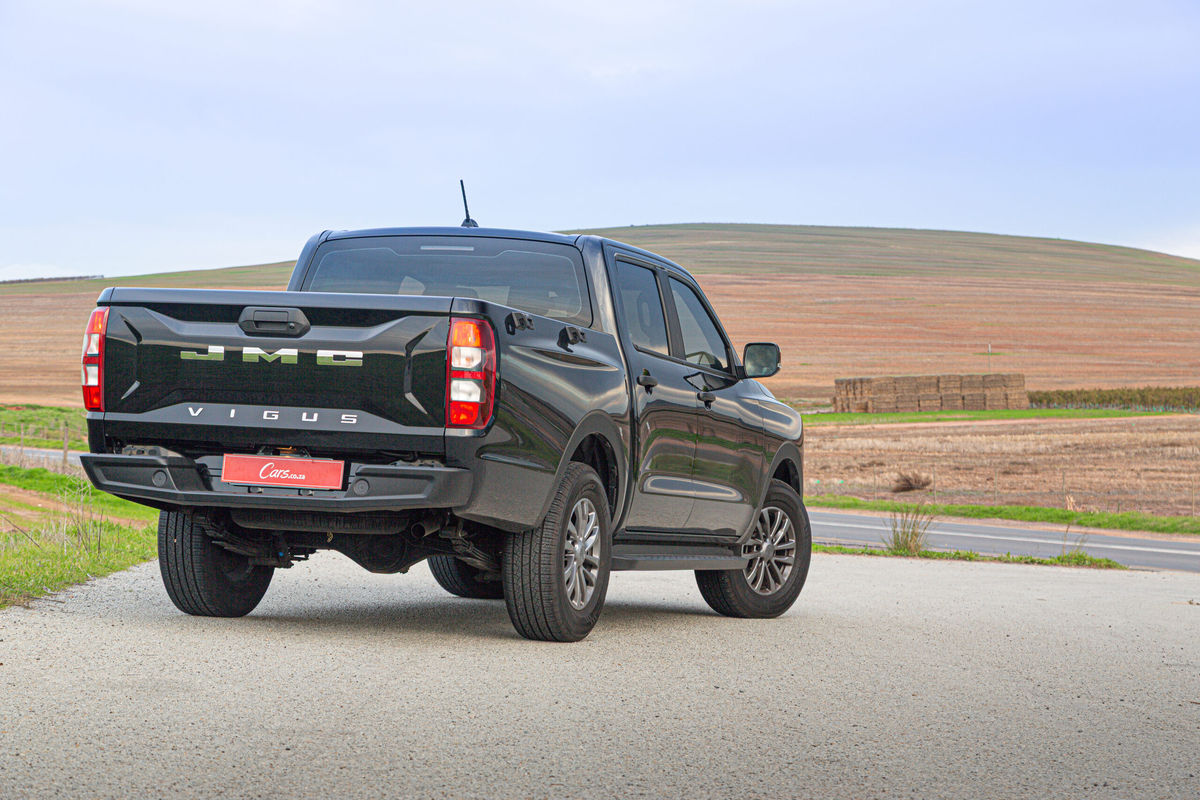
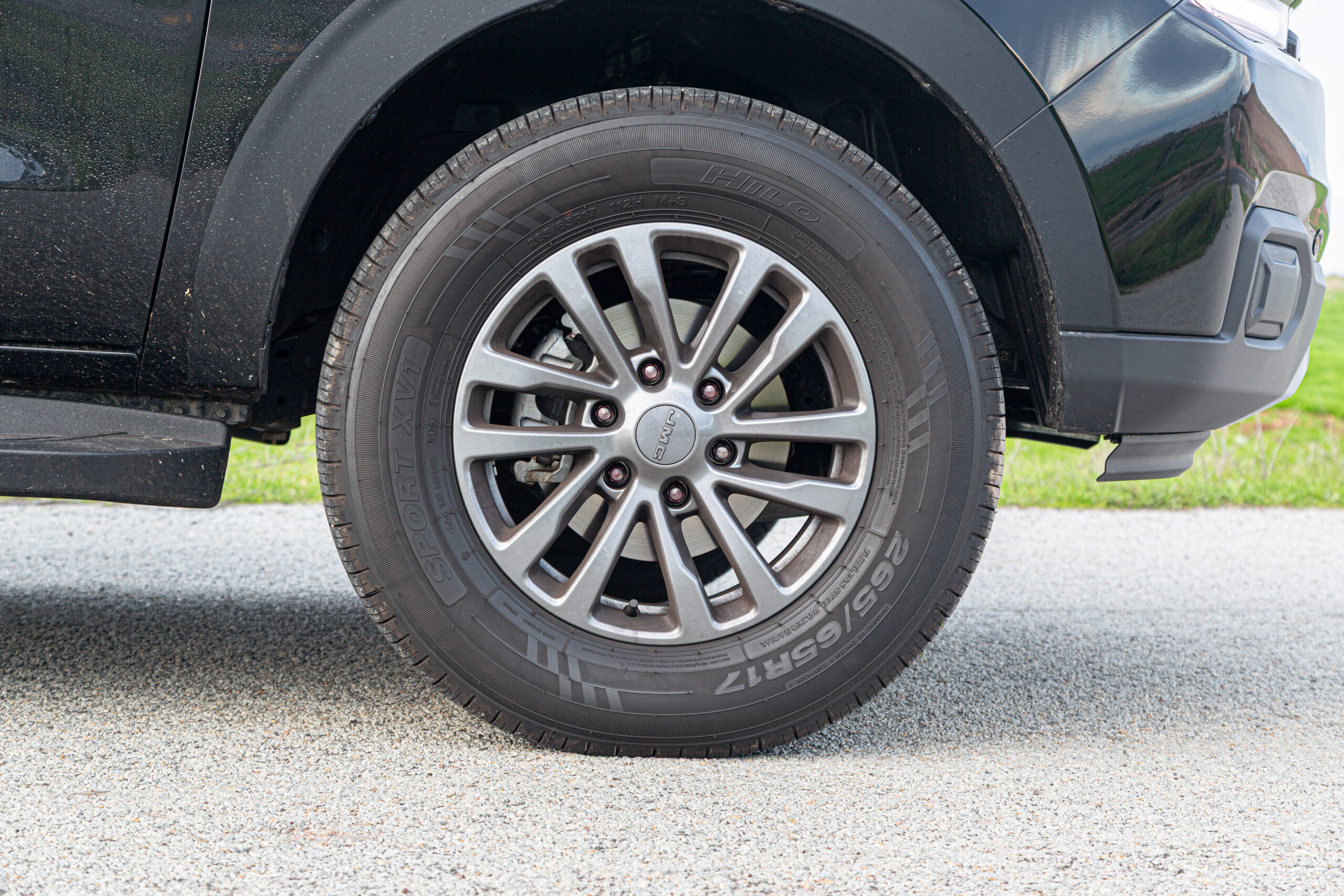
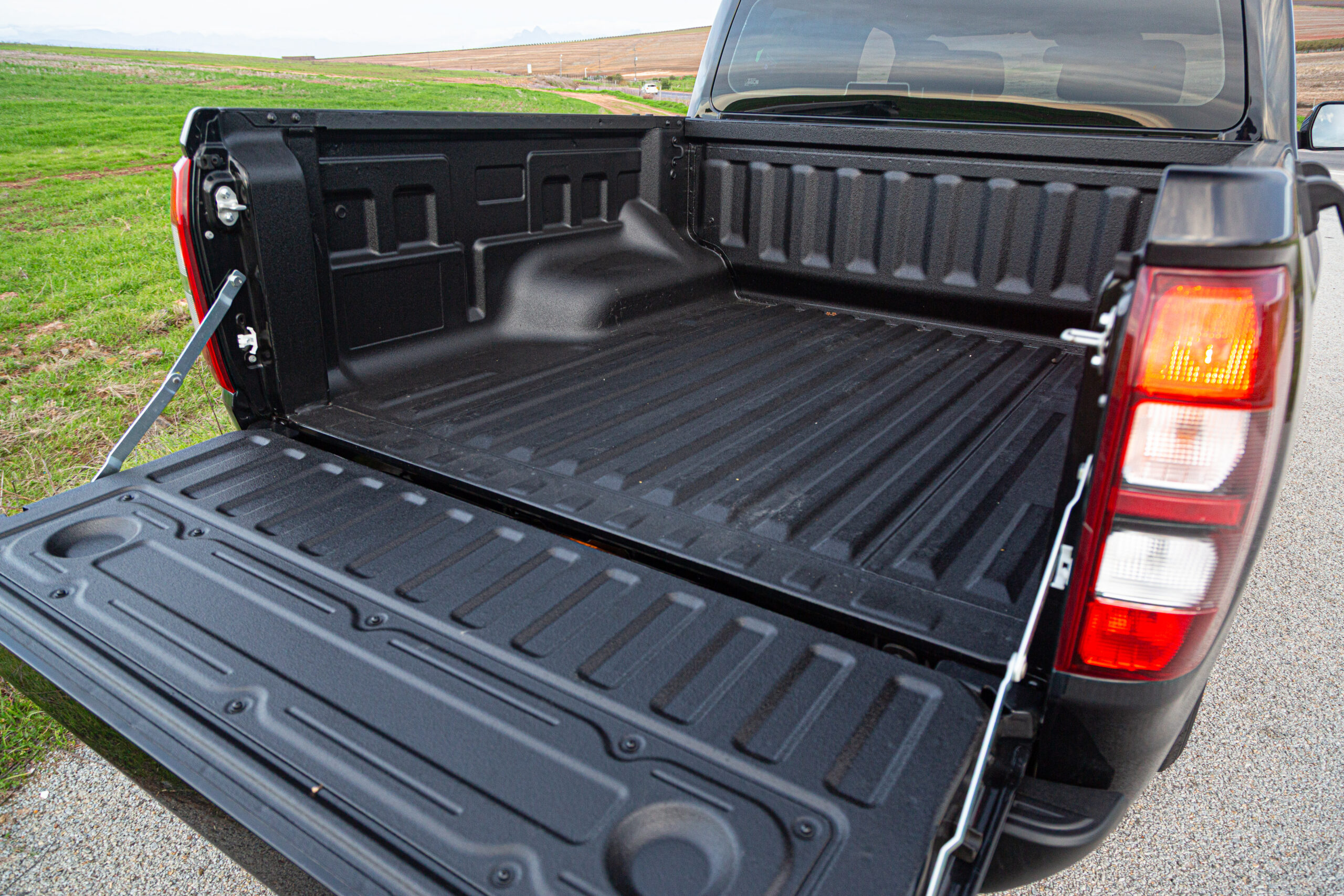
Nevertheless, it is not a bakkie that looks cheap, and we particularly like the X-shaped creases on the tailgate. It rides on neat gunmetal 17-inch alloy wheels, and boasts side steps as well as a spray-in bedliner as standard equipment.
It’s quite an imposing vehicle at 5 335 mm in length, and we were almost surprised to find out that it is actually slightly shorter than, for example, a Tunland G7 and P300. Its roofline is lower than those two vehicles, too, but it is close in width, and its wheelbase actually compares well with some of the more stretched bakkies in the market.
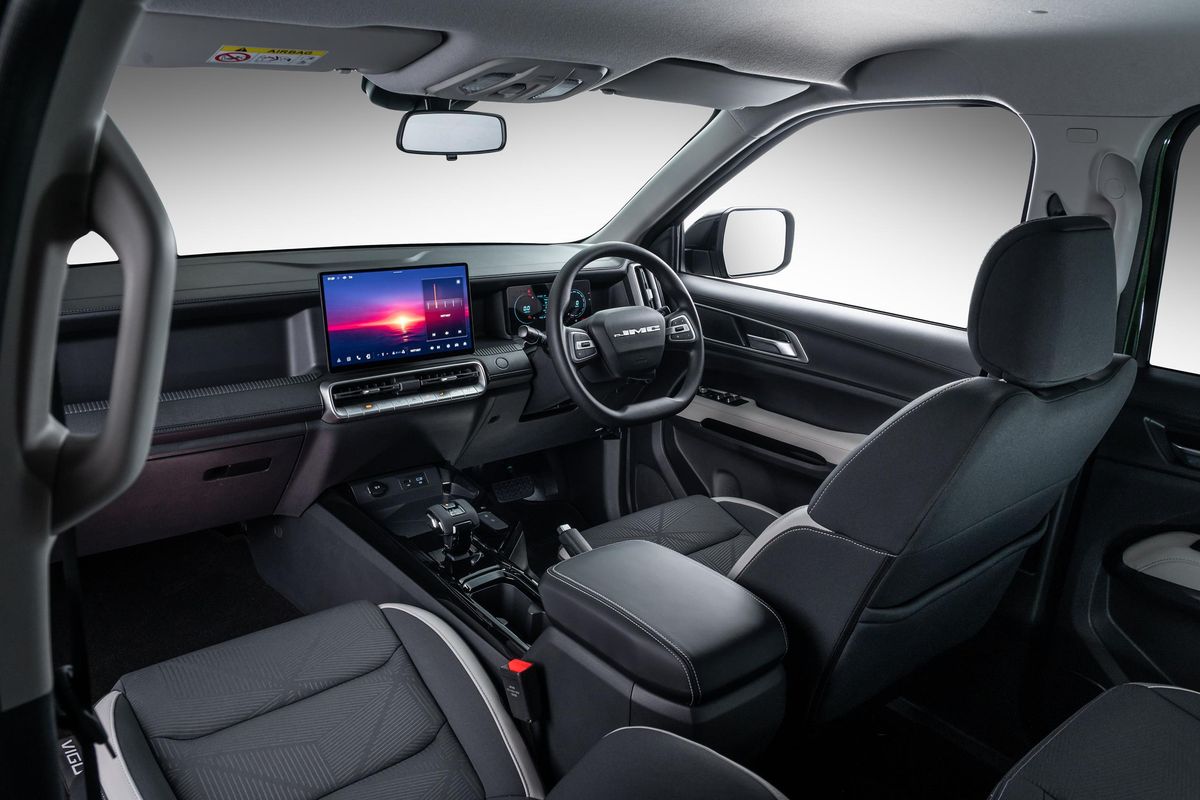
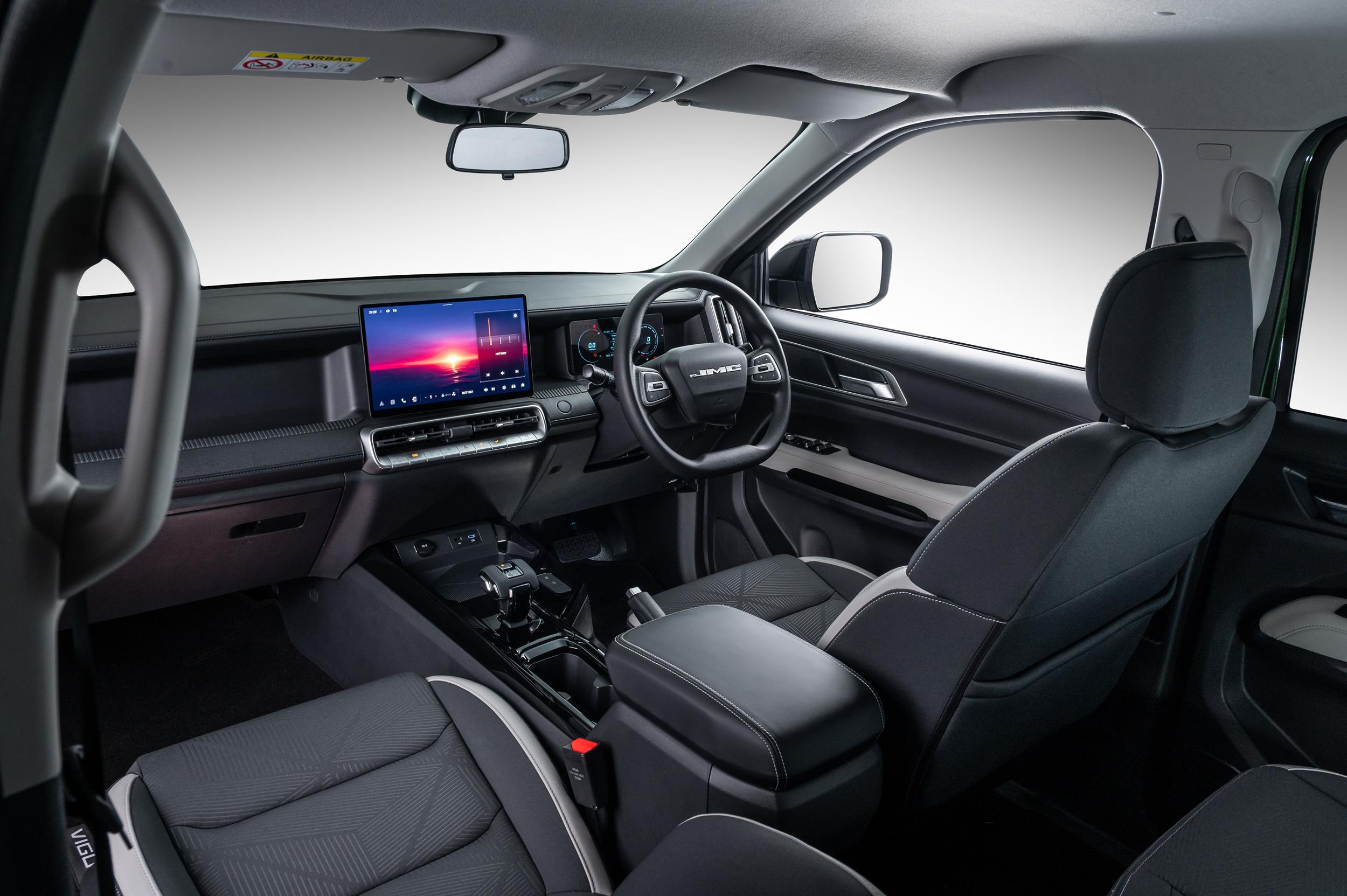
Consequently, it does not feel short on space inside. The width of the cabin is apparent when you slide in behind the steering wheel and notice how far away you sit from the front passenger. There is ample headroom, too. At the rear, occupants are highly unlikely to complain about legroom.
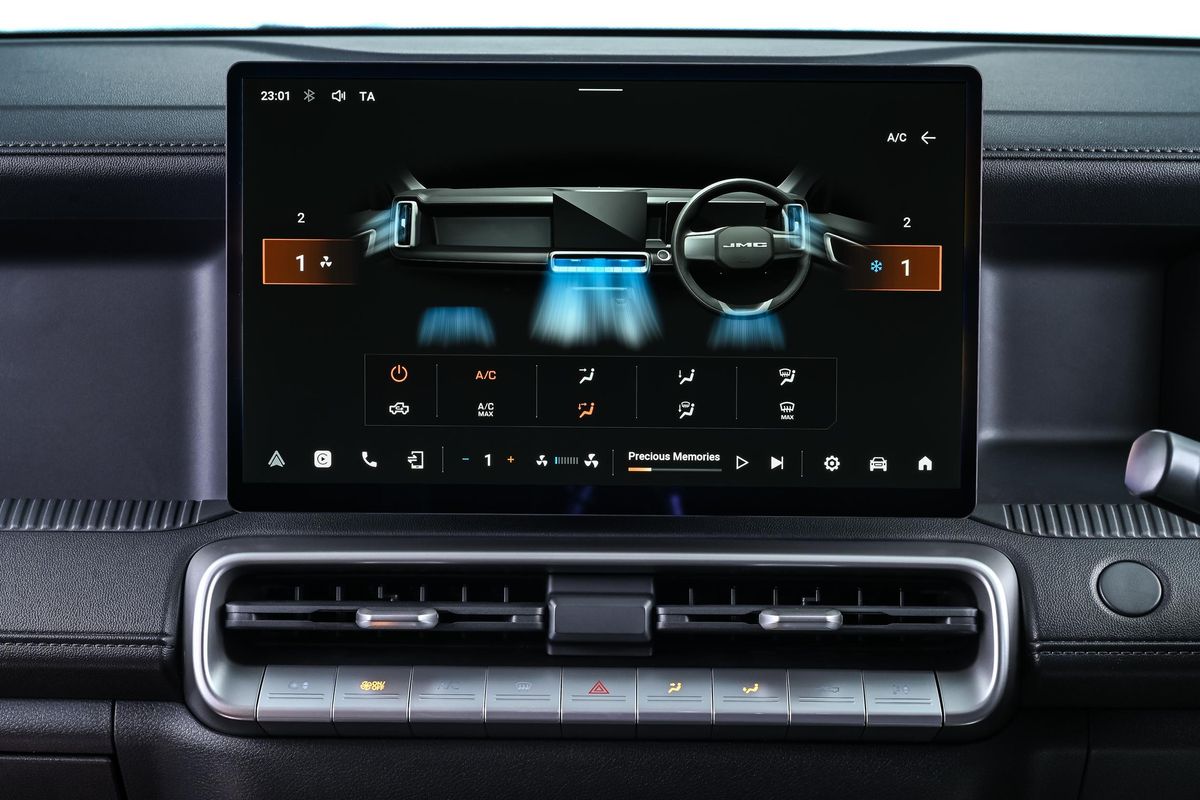
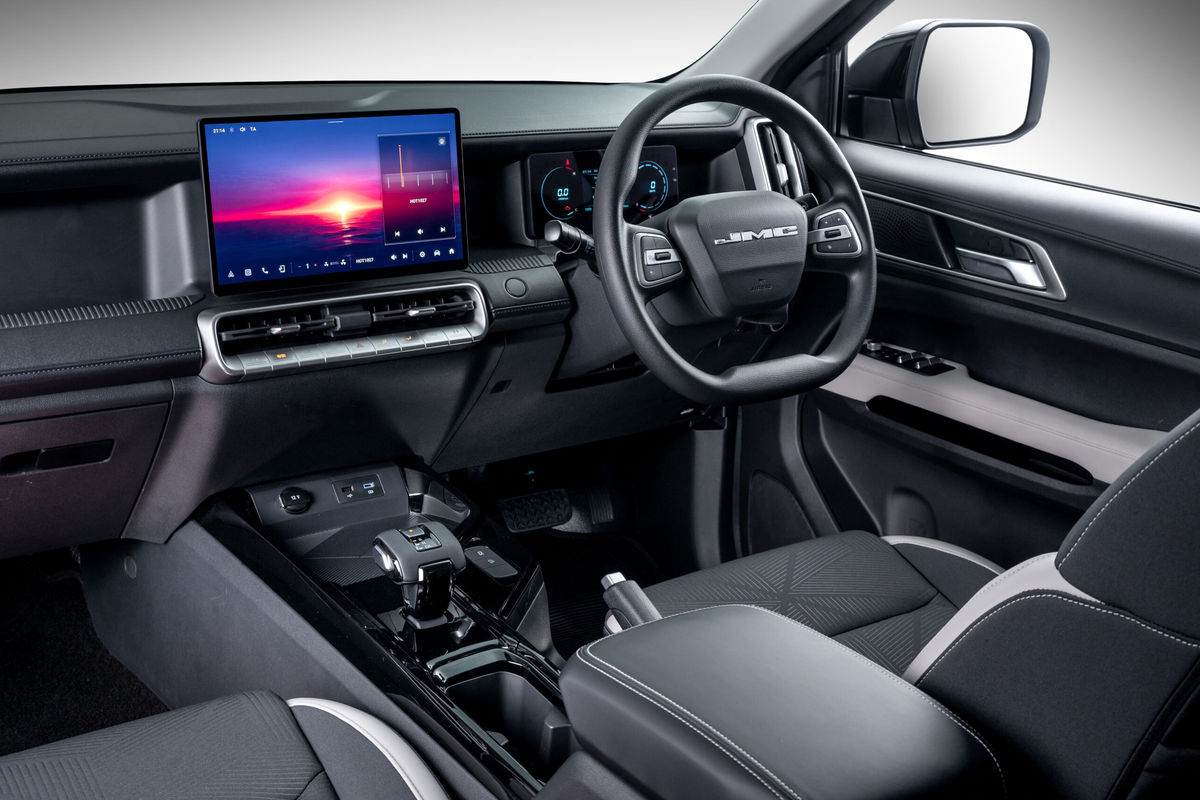
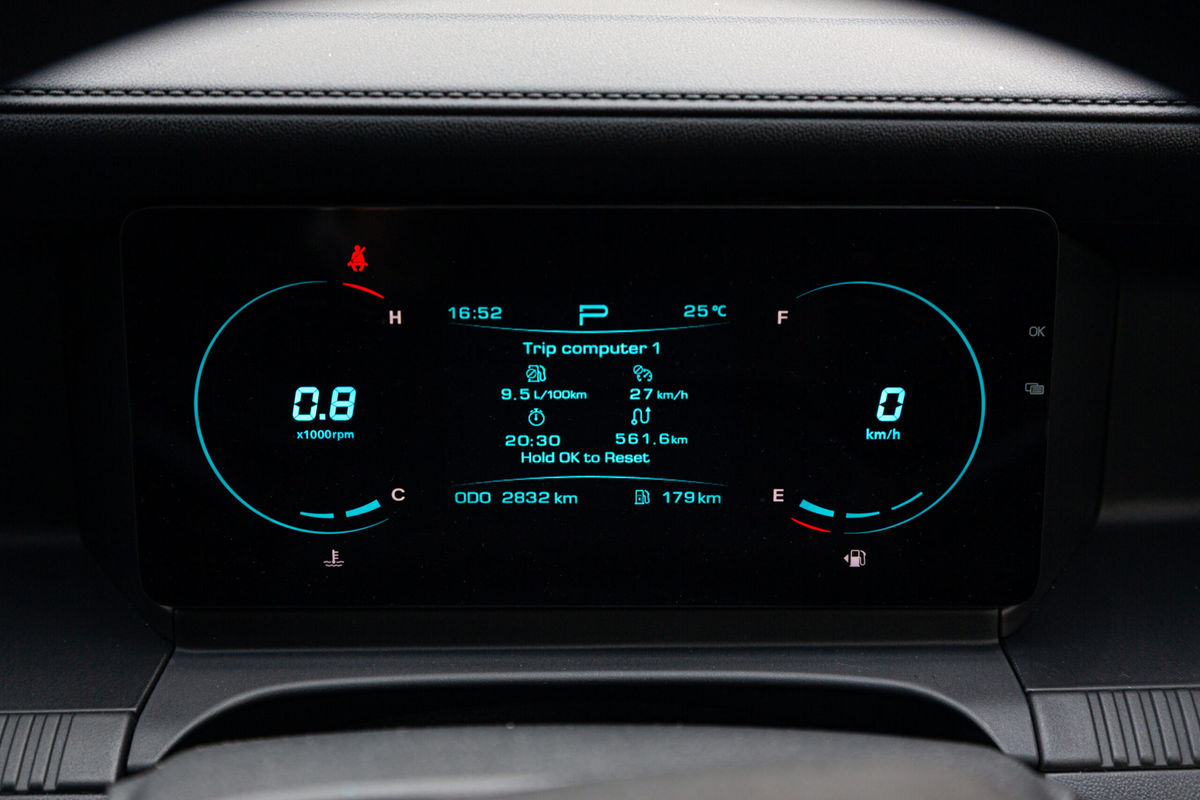
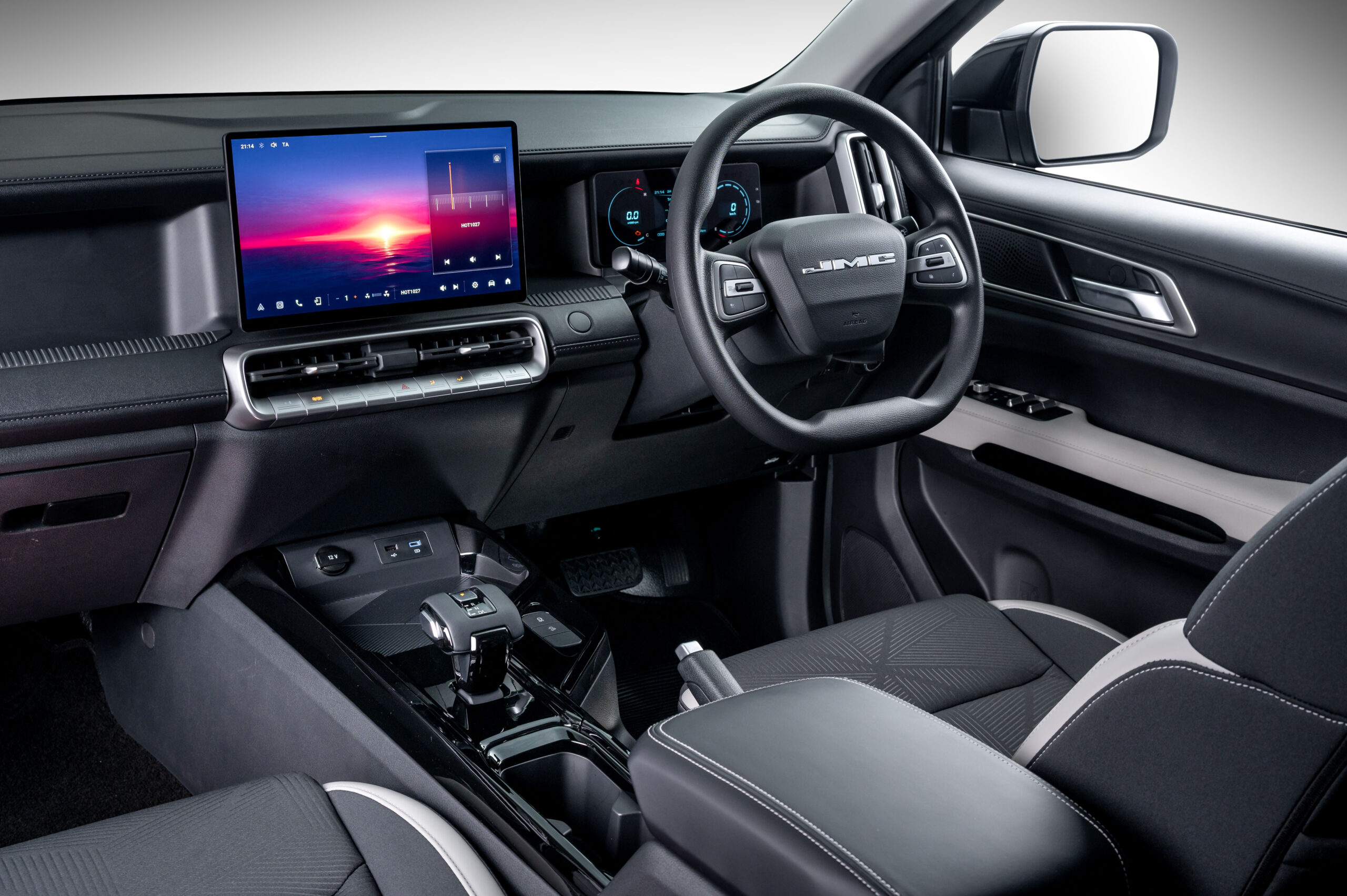
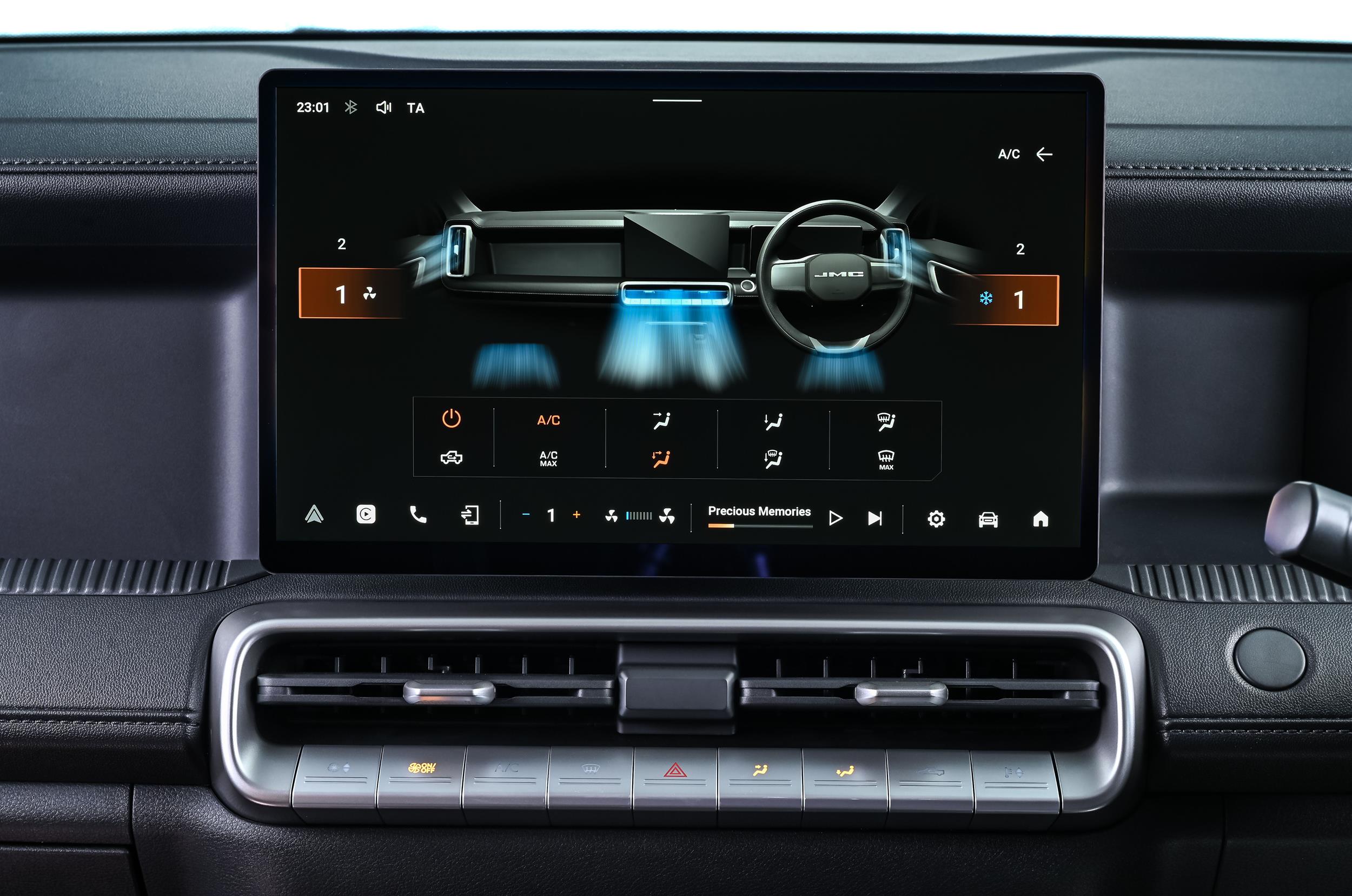
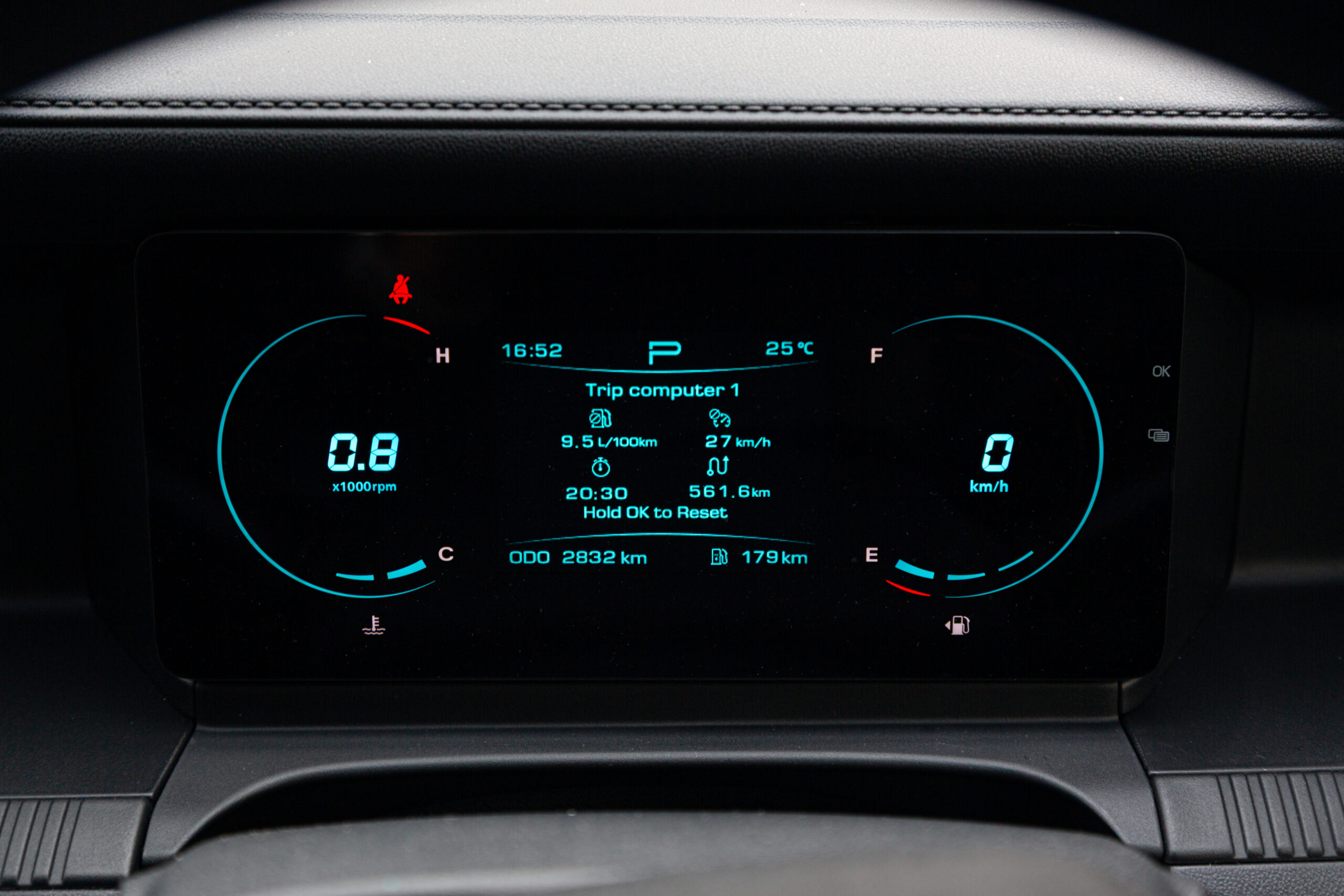
The cabin looks smart, dominated by a large 12.8-inch touchscreen infotainment system. The instrumentation is digital, too, but far simpler than most with a single turquoise font colour.
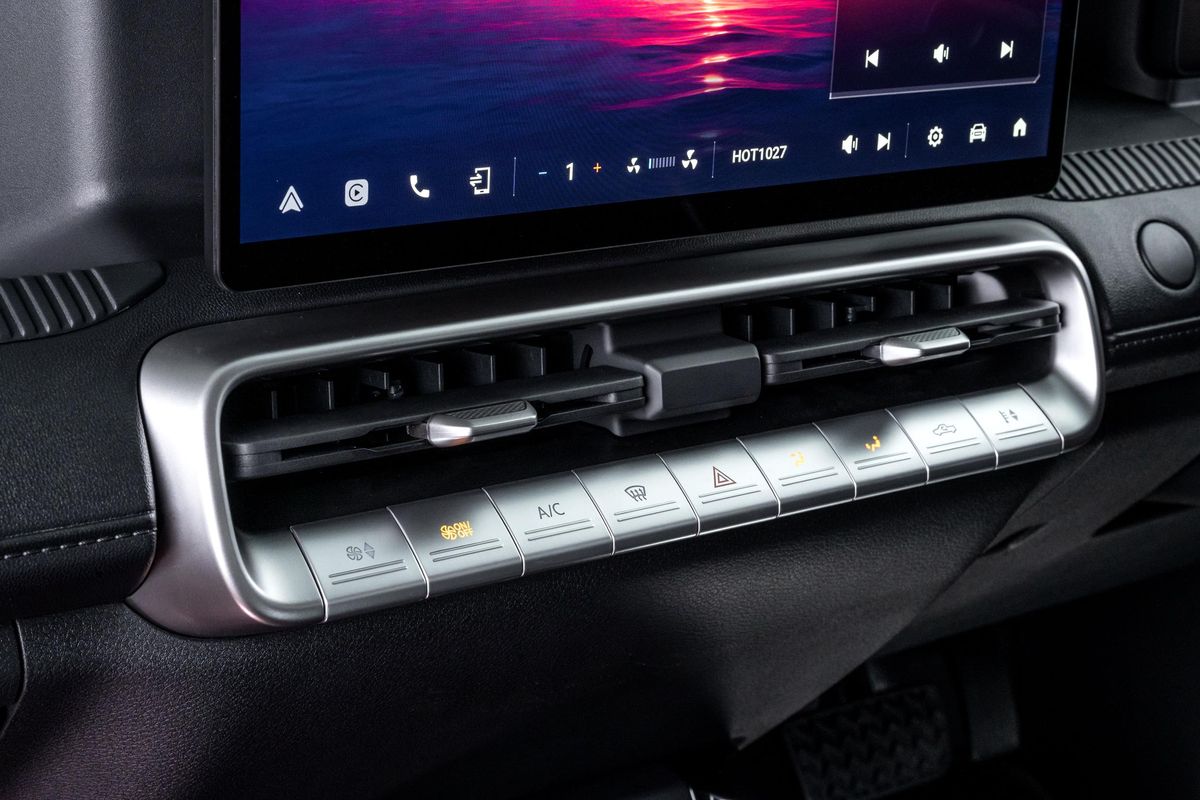
As is the case with many modern vehicles, though, too many simple functions are bundled into the screen. At least there is a neat strip of real buttons below the centre ventilation outlets to control the HVAC system.
The plastics are hard almost everywhere, but in fairness, the switchgear feels sturdy and the cohesive dashboard design gives the interior the impression of being more upmarket than it really is. You can thud and pull on the plastics and you won’t find much give. It feels well built.
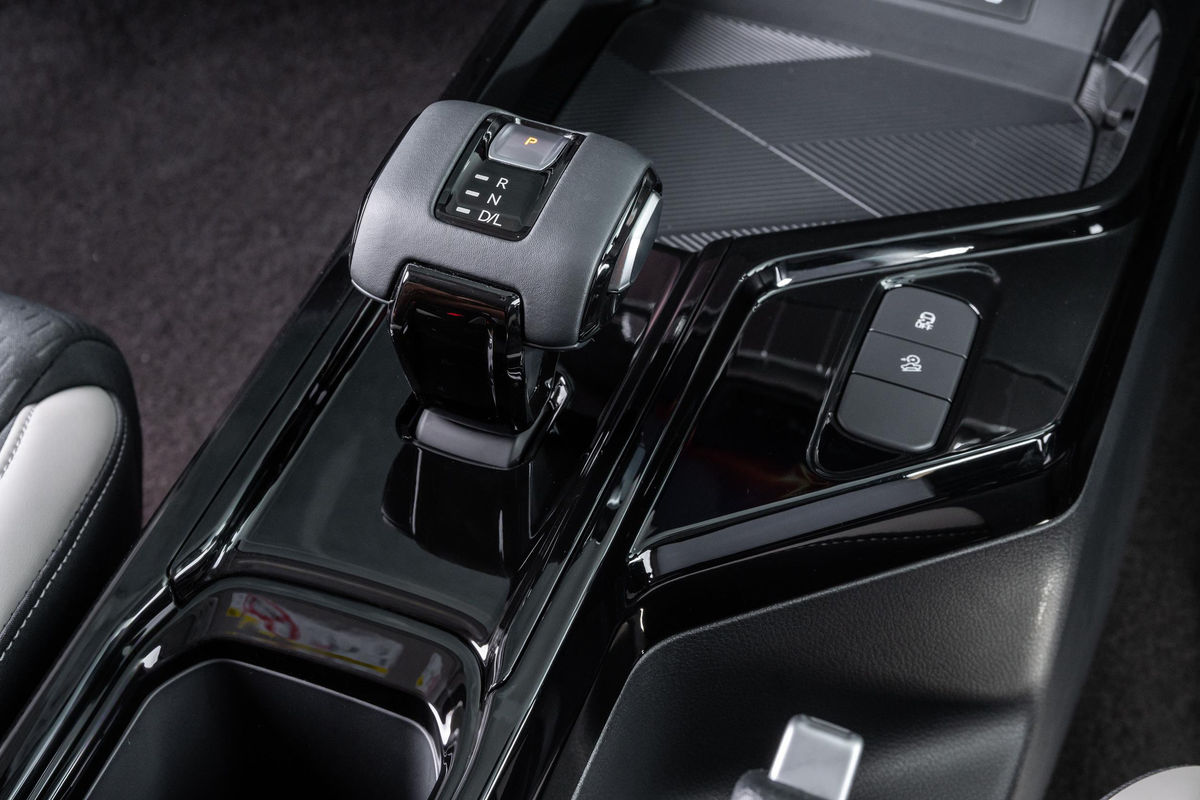
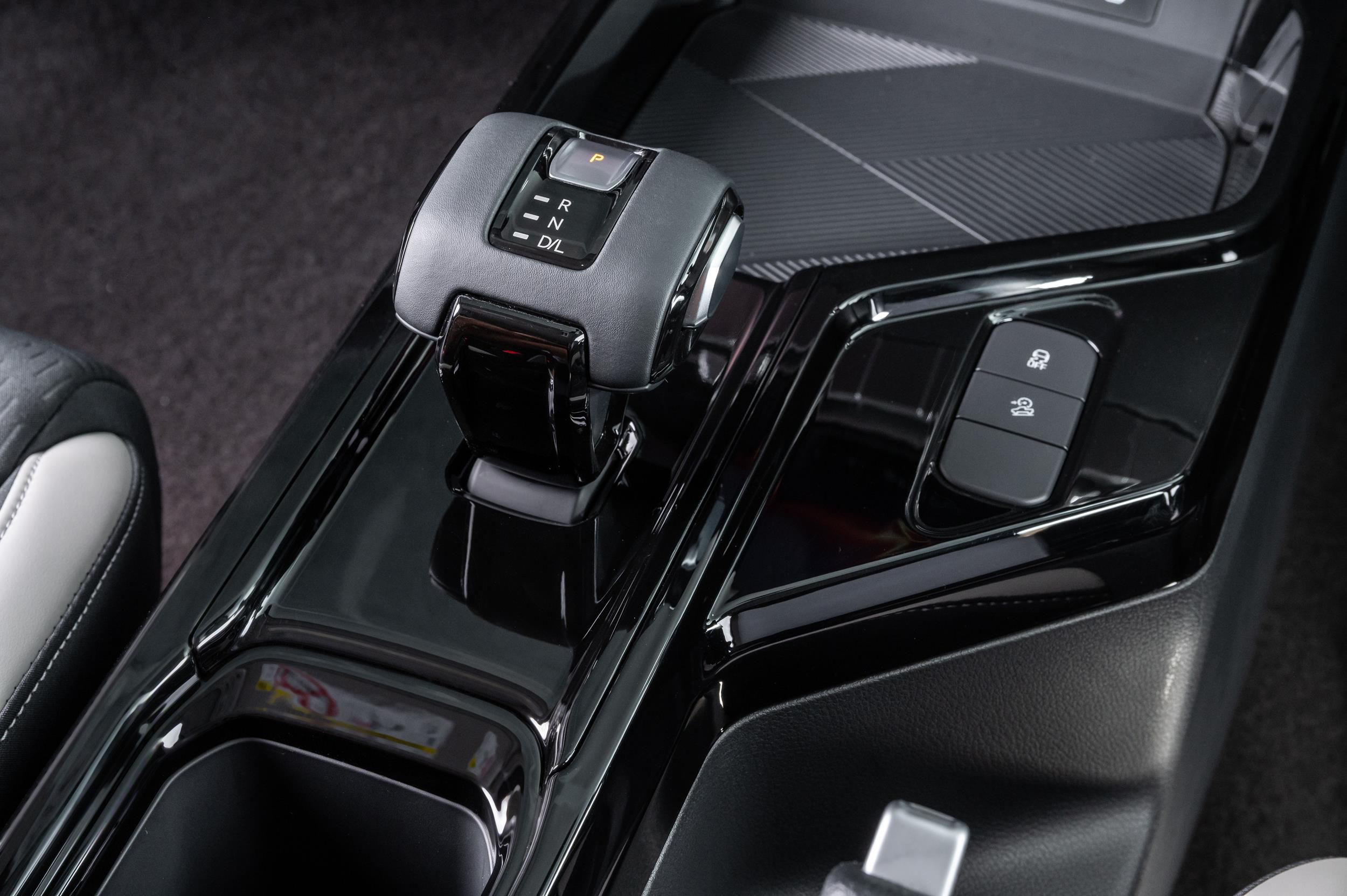
Piano-black trim may not be the most practical for a workhorse but, if your Vigus is going to be largely used as a leisure vehicle, it further enhances the cabin appearance, as does a neat, stubby gearshifter.
The steering wheel is of an interesting design, being a 2-spoke with a squared-off section inside the rim at the bottom of the wheel. It’s not leather-wrapped. You also don’t get leather upholstery, but again the pattern and feel of the fabric upholstery makes a good impression. You can see that a lot of detail work has gone into the cabin.
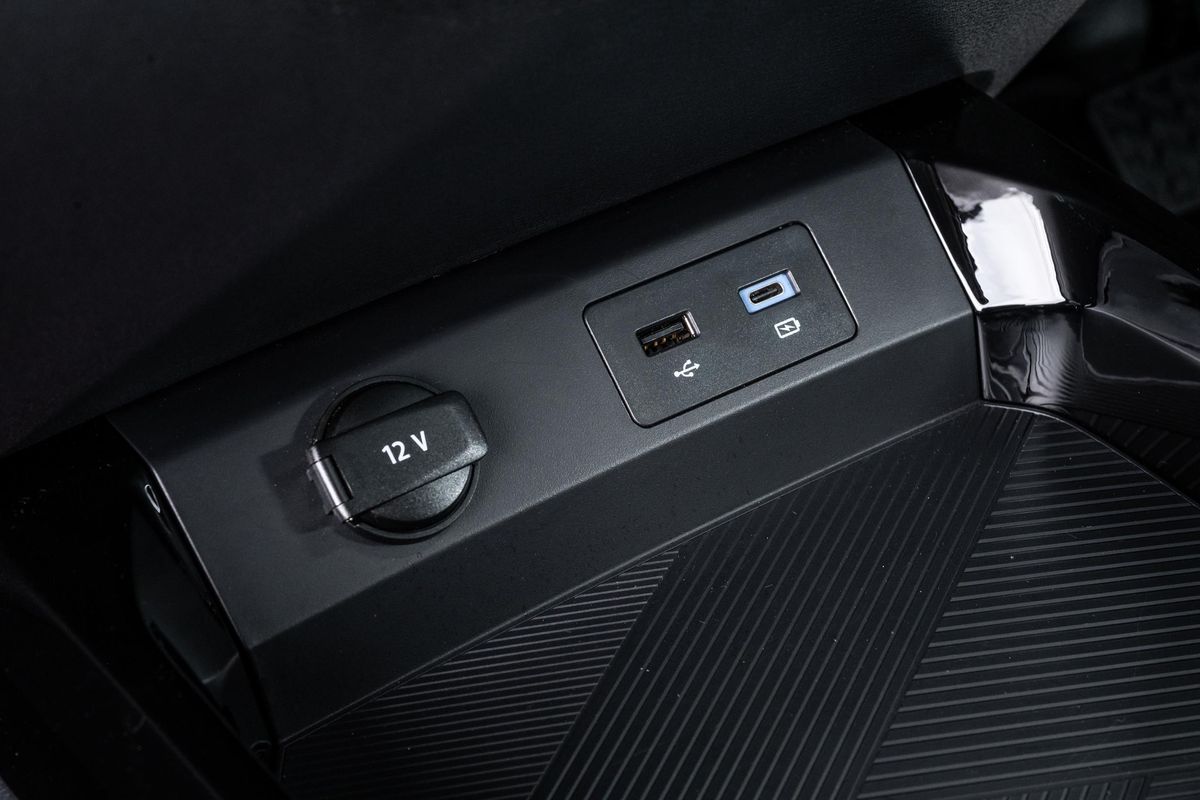
An absolute oddity, however, is the lack of a traditional AM/FM radio… With full smartphone connectivity (Apple CarPlay and Android Auto) on offer, we suspect most consumers will just use their devices to get their favourite tunes going. USB-A and USB-C plug points are provided at the front. Passengers in the rear may feel little shortchanged that there are no reading lights, which makes finding things in the dark a bit of a fumble.
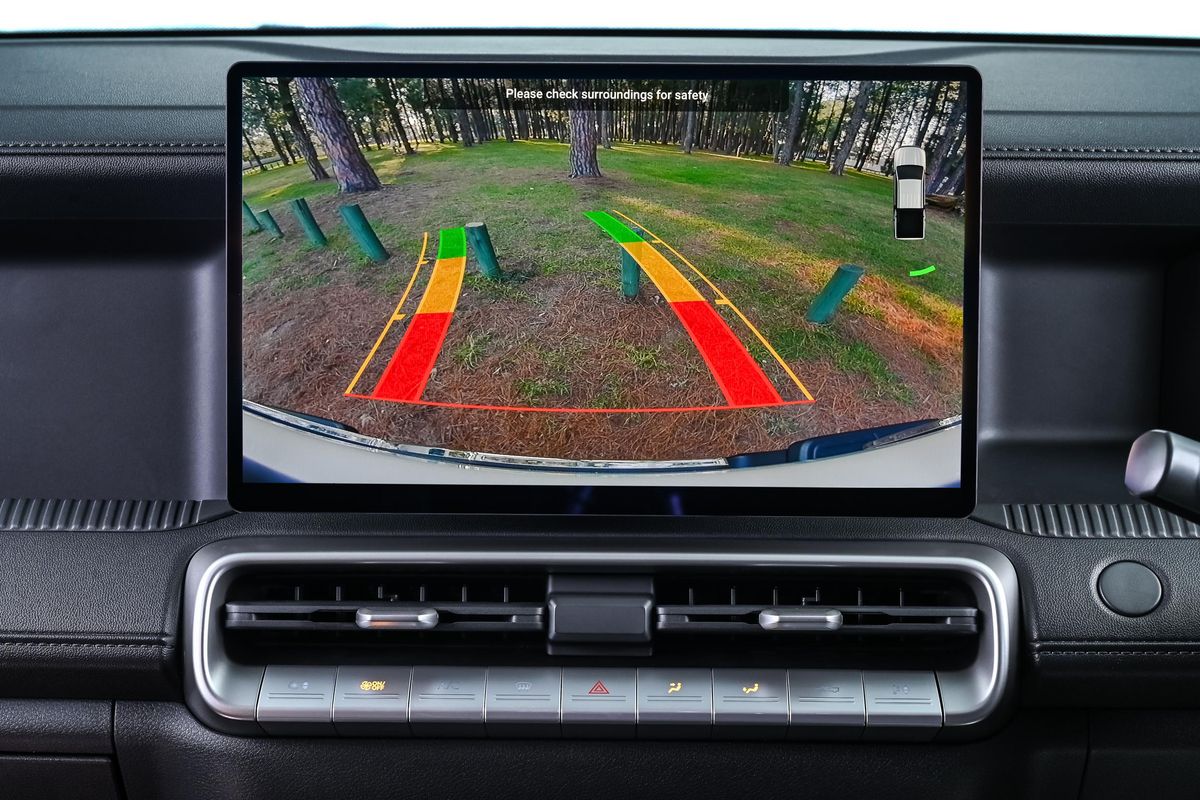
Other notable standard features include cruise control, auto lights and wipers, and a rear parking camera as well as park sensors. On the safety side, 4 airbags are fitted, and an electronic stability control system is part of the package. You also get hill-launch assist, hill-descent control and a tyre-pressure monitoring system. It is worth noting that there is no rear diff-lock.
Ride, Handling & Load carrying
The Vigus employs a traditional steel ladder-frame chassis with independent front suspension and a live rear axle. Yes, it has the familiar firmness of a real ladder-frame workhorse, and it naturally can’t match the best in the leisure-bakkie business for unladen suppleness, but we’d say it is less jarring than the fast-selling GWM P300.
When it comes to load-carrying ability, a unique feature is the use of externally mounted tie-down hooks on the load box, instead of the internal lashing rings common on most modern double cabs. There are pros and cons to this old-school approach. On the upside, external hooks are fantastic for securing oversized or awkward loads (like garden refuse or large furniture), as you can throw ropes or a cargo net over the entire bin and ratchet it down securely without having to lean awkwardly inside. The downside? Tensioned ropes can eventually chafe against the exterior paintwork, and if you plan to fit a canopy or a sleek tonneau cover, accessing these hooks can be problematic.
The Vigus is a slightly lighter vehicle than most of its rivals, weighing in at around 140 kg or so less than the equivalent Tunland G7. Its quoted load-carrying ability is 915 kg, while the Tunland offers 1 000 kg and the GWM P300 around 1 050 kg. We don’t expect the lower payload figure to be a dealbreaker for many, but the tow rating lags the Foton Tunland G7. Its GVM (gross vehicle mass) is around 200 kg less than the Tunland’s and P300’s. The braked tow rating of the JMC Vigus appears to be 2 500 kg.
As mentioned, the 4×2 automatic doesn’t feature a diff-lock, so your off-road adventures will have to be conservative. That said, its ground clearance (210 mm) is competitive – just mind those side steps – as are its approach and departure angles.
Performance & Efficiency
Under the bonnet, the 2.5-litre engine is quite punchy, delivering 123 kW and a substantial 430 Nm of torque available from 1 600 to 2 200 rpm. In the bakkie world, torque is what gets the hard work done. The JMC out-muscles both the Tunland G7 (390 Nm) and the GWM P300 (400 Nm) in this regard. The bigger capacity engine may also be less highly stressed than the 2.0-litre units offered by its main rivals.
During our testing, we recorded a sprightly 0-100 kph sprint time of 10.8 seconds. This is a very respectable figure for a heavy utility vehicle. Furthermore, the 8-speed automatic gearbox is surprisingly smooth, keeping the engine in its optimal torque band. Overall, the drivetrain is considerably more refined and willing than we expected at the price.
As for fuel consumption, JMC claims an optimistic average of 7.0 L/100 km. In the real world, our testing yielded a significantly higher figure of around 9.0 L/100 km. However, in the context of an automatic, heavy, ladder-frame double cab, our figure is still entirely acceptable and on par for the segment. Using our real-world fuel consumption figure, a full 75-litre tank of diesel should make it possible to travel for around 830 km between fill-ups.
JMC Vigus 2.5TD Double-Cab Auto Price & After-sales support
At R459 900, the Vigus 2.5TD Auto offers a lot of metal for the money. JMC backs the bakkie with a comprehensive 5-year/200 000 km warranty and a 4-year/65 000 km service plan. However, prospective buyers should note a distinct caveat: the service intervals are shorter than for most rivals, pegged at every 10 000 km.
Verdict
The South African double-cab market is unforgiving, but the Chinese brands are learning at a rapid rate. Between the neat and practical design, the abundance of cabin space, and a powertrain that genuinely impresses, the new Vigus proves to be far more than just a cheap alternative. Overall, we’d say it is significantly better than expected and absolutely deserves consideration at the lower end of the market for buyers looking for an honest, capable, and torquey work-and-play bakkie.
However, while it is one of the most affordable offerings of its type in the market, the gap to the more established GWM P300 (in 2.0TD SX trim) is only R30 000. The GWM offers not only an established reputation, but also backs it up with a better warranty. Meanwhile, the Foton Tunland G7 is only R10 000 more, and offers a few attractions of its own. So, being the cheapest is not going to give the JMC Vigus an easy win here, as impressive as it may be. It has certainly entered the chat, though…
Q: How much does the 2026 JMC Vigus 2.5TD Double-Cab Auto cost in South Africa, and what brands does it compete with?
A: The JMC Vigus 2.5TD Double-Cab Auto is priced at R459 900. It competes at the affordable end of the South African bakkie market, squaring up directly against other budget contenders like the Foton Tunland G7, JAC T8, and the GWM P300 2.0T SX Auto.
Q: What are the engine performance specifications and real-world fuel consumption of the JMC Vigus 2.5TD Auto?
A: The Vigus features a 2.5-litre, 4-cylinder turbodiesel engine paired with an 8-speed automatic gearbox, delivering 123 kW of power and 430 Nm of torque. While JMC claims an average fuel consumption of 7.0 L/100 km, real-world testing yielded around 9.0 L/100 km, giving it an estimated range of 830 km from its 75-litre tank.
Q: What are the pros and cons of the external tie-down hooks on the JMC Vigus load box?
A: The pros of the external hooks are that they make securing oversized or awkward loads much easier by allowing you to throw ropes or cargo nets over the entire bin. The cons are that tensioned ropes can eventually chafe and damage the exterior paintwork, and accessing these hooks can be problematic if you plan to fit a canopy or tonneau cover.
Q: What kind of warranty, service plan, and maintenance intervals come with the JMC Vigus?
A: JMC backs the Vigus with a comprehensive 5-year/200 000 km warranty and a 4-year/65 000 km service plan. However, a notable caveat for prospective buyers is that the required service intervals are shorter than most of its rivals, pegged at every 10 000 km.
Bentley Continental GT S (2026) Price & Specs
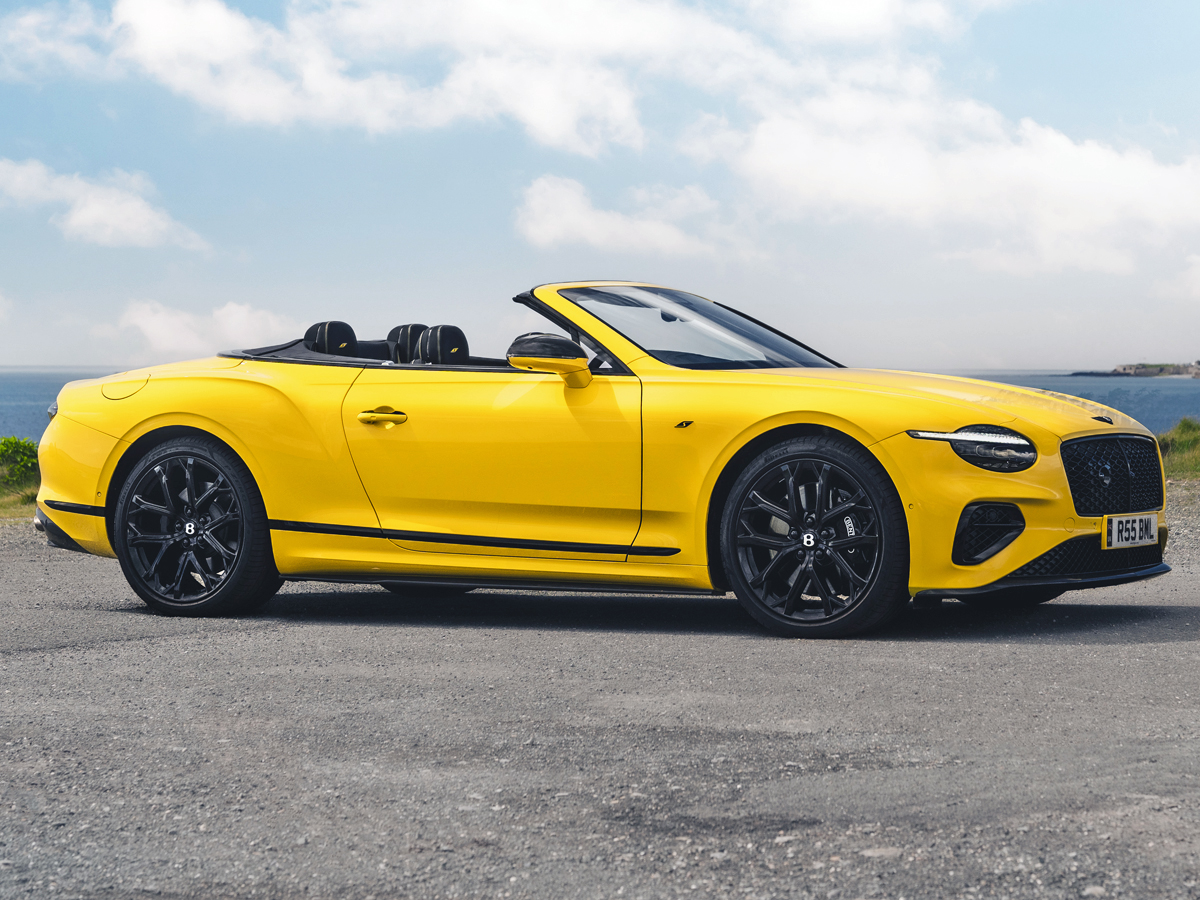
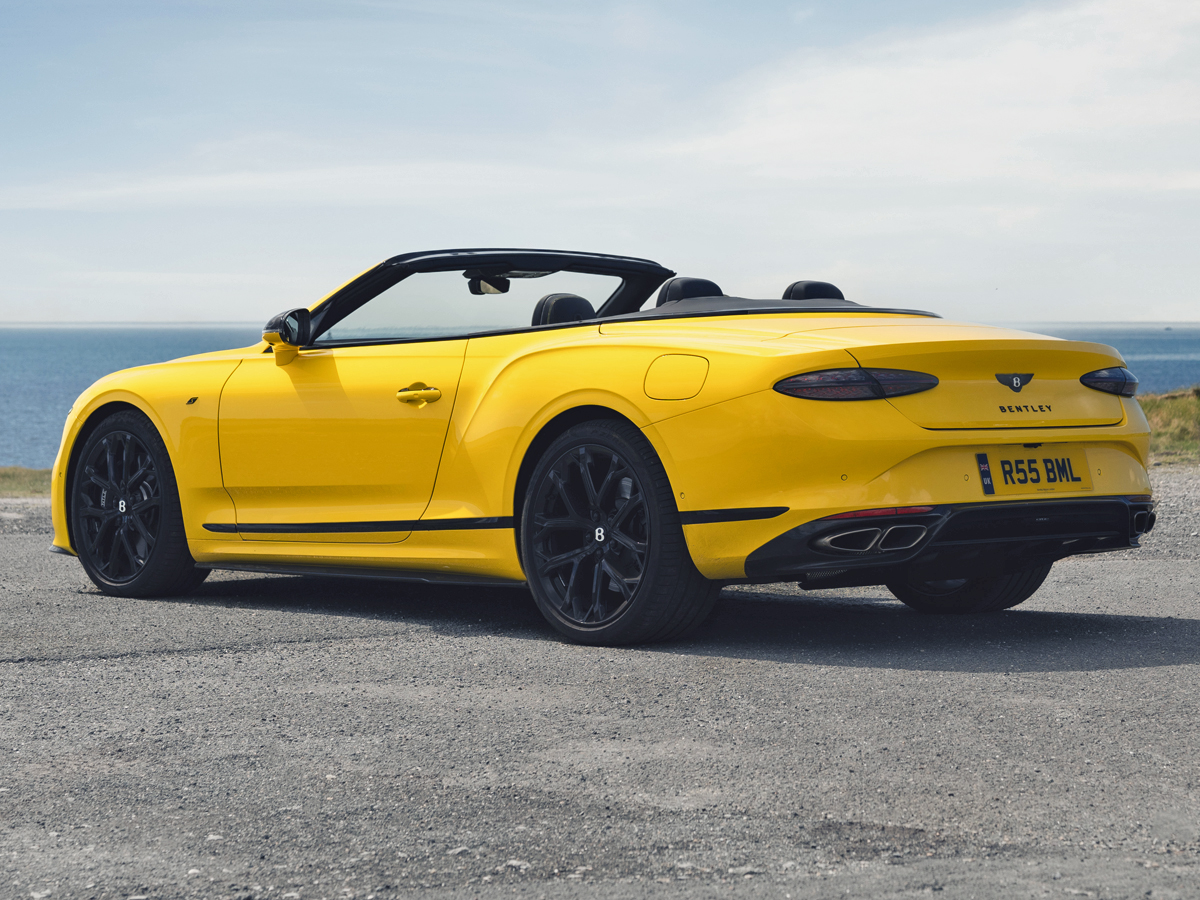
The new Bentley Continental GT S and its open-top GTC S sibling have arrived in South Africa. Here’s what these 500 kW S-badged models will cost you in Mzansi…
New S-badged versions of Continental GT unleashed
PHEV set-up makes unchanged 500 kW and 930 Nm
Newcomers gain Bentley’s sportier chassis set-up
At the end of January 2026, the new Bentley Continental GT S and Continental GTC S were revealed overseas. Now these S-badged twins have touched down in South Africa. So, what will they cost you?
Well, thanks to a friendly heads-up from the vehicle-information specialists over at duoporta.com, we can confirm the new Continental GT S starts at R5 532 000, while its soft-top Continental GTC S sibling kicks off at R6 085 000.
For the record, when compared to the “standard” (for lack of a better term) Continental GT and Continental GTC, those starting prices translate to respective premiums of R263 000 and R290 000. But what does that extra outlay buy you?
Well, the Crewe-based automaker claims these fresh-faced, all-wheel-drive derivatives are “aimed squarely at the performance-focused driver”, adding that they are the “fastest and most powerful yet to carry the S badge”. That said, the powertrain is unchanged from the standard GT and GTC.
A twin-turbocharged 4.0-litre V8 petrol engine is again combined with an electric motor (integrated into the 8-speed dual-clutch transmission) and a 25.9 kWh battery pack to form a plug-in hybrid (PHEV) system with peak outputs of 500 kW and 930 Nm (rather than the 575 kW and 1 000 Nm generated in the GT Speed and GT Mulliner).
For the coupé, the British firm claims a 0-100 kph time of 3.5 seconds, with that figure climbing to 3.7 seconds for the cabriolet. In each case, that’s an improvement of 2-tenths of a second over standard, despite no powertrain upgrades (we’re guessing the launch-control system has been optimised). Top speed comes in at 308 kph (or 140 kph in electric mode), while the listed all-electric range is around 80 km.
Where the new S-badged derivatives benefit most is in the chassis department, gaining a set-up previously available only for the aforementioned GT Speed and GT Mulliner. This includes twin-valve dampers, torque vectoring (front to rear and across the axles), a 48V active anti-roll system, a “new generation” of electronic stability-control software, an electronic limited-slip differential and all-wheel steering.
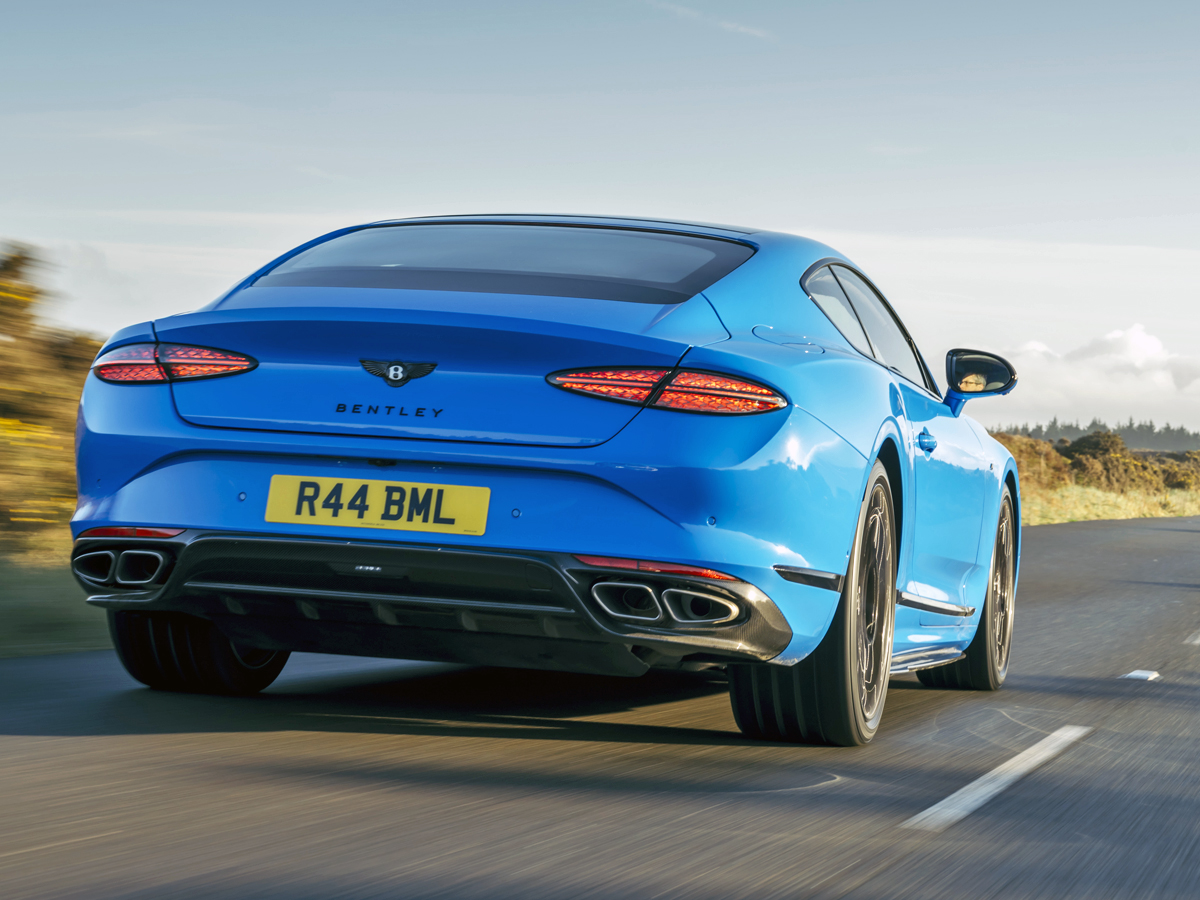
You’ll be able to spot an “S” derivative out on the road thanks to its dark front lower spoiler, gloss-black grille and black Bentley logos, along with side-mirror caps, sill extensions and a rear diffuser all likewise finished in black. Round back, the “S” specification includes tinted taillamps as well as tailpipe-finishers for the sports exhaust.
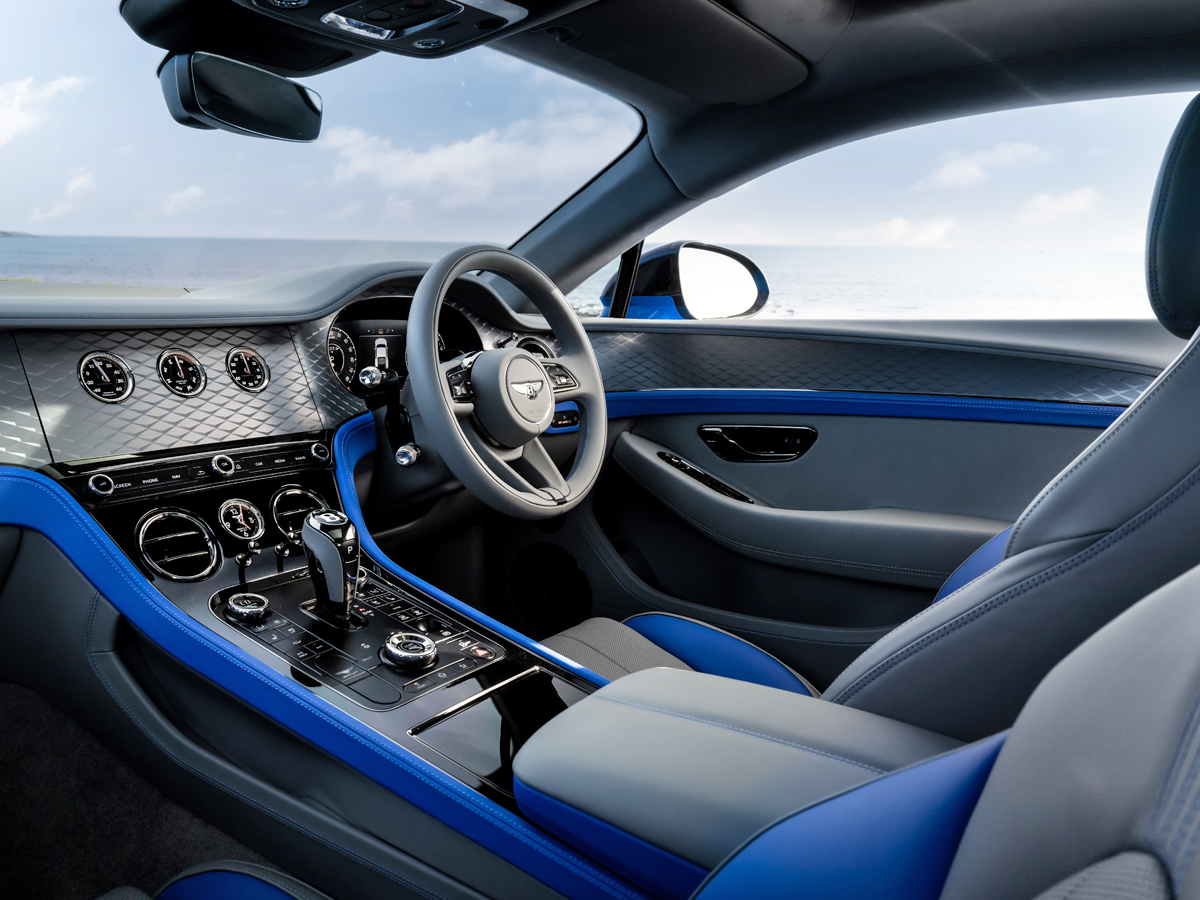
Inside, you’ll find 2-tone upholstery specific to these derivatives, along with “Dinamica” fabric on touch points such as the steering wheel, gear lever, sections of the seats and door inserts. There is also plenty of piano-black trim, with high-gloss carbon fibre and other finishes offered as an option.
What does the new Bentley Continental GT S cost in SA?
DERIVATIVE
PRICE
Bentley Continental GT S
R5 532 000
Bentley Continental GTC S
R6 085 000
The prices above include a 3-year/unlimited kilometre warranty and a 3-year/100 000 km maintenance plan (with intervals of 15 000 km).
Frequently Asked Questions (FAQ)
Q: What is the pricing for the new Bentley Continental GT S and GTC S in South Africa?
A: The new Bentley Continental GT S coupé is priced from R5 532 000, while its open-top sibling, the Continental GTC S, starts at R6 085 000. These prices represent a premium of R263 000 and R290 000 over their respective standard counterparts.
Q: What are the performance and powertrain specifications of the S-badged models?
A: Both models share a plug-in hybrid (PHEV) powertrain combining a twin-turbocharged 4.0-litre V8 petrol engine, an electric motor integrated into an 8-speed dual-clutch transmission and a 25.9 kWh battery pack. The system produces an unchanged 500 kW and 930 Nm of torque, yielding a 0-100 kph sprint time of 3.5 seconds for the coupé and 3.7 seconds for the cabriolet, with an all-electric range of approximately 80 km.
Q: What chassis and styling upgrades distinguish the Continental GT S and GTC S?
A: The S models inherit a sportier chassis configuration previously reserved for the Speed and Mulliner versions, featuring twin-valve dampers, a 48V active anti-roll system, an electronic limited-slip differential, and all-wheel steering. Visually, they are distinguished by gloss-black exterior trim, tinted taillamps, a sports exhaust and a 2-tone cabin layout heavily accented with Dinamica fabric and piano-black trim.
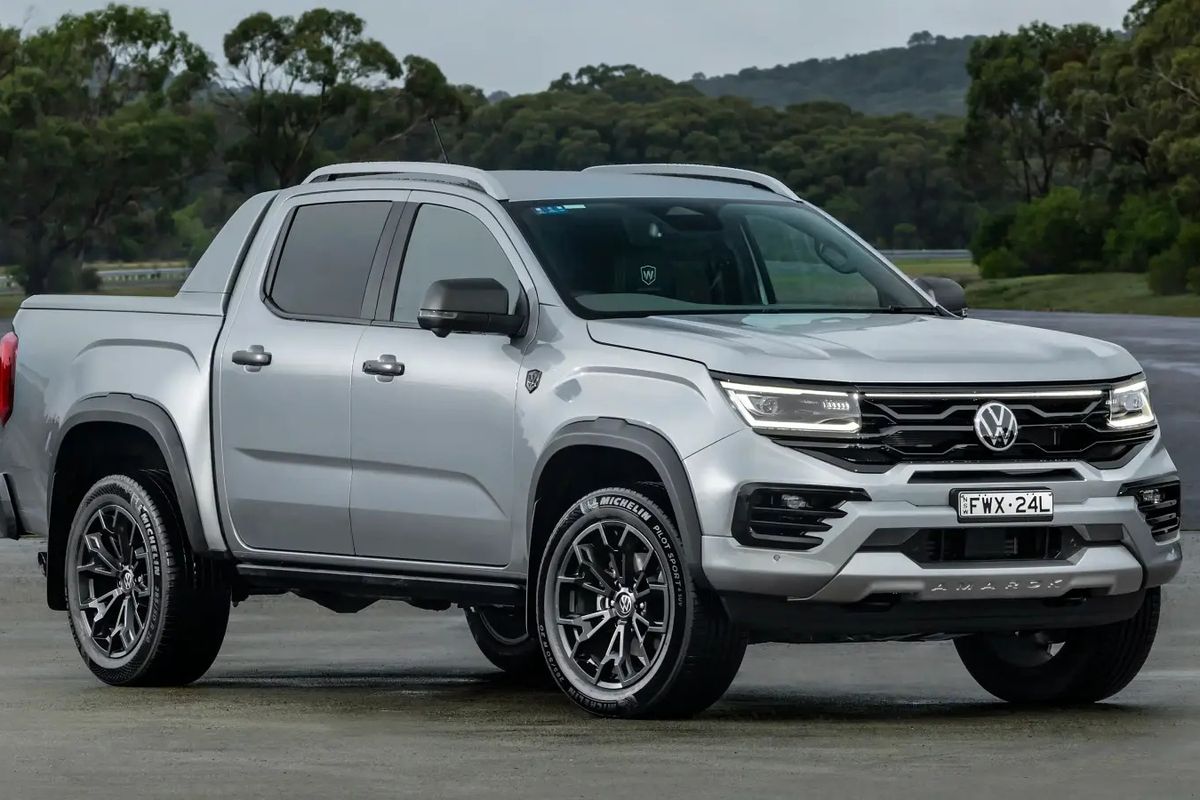
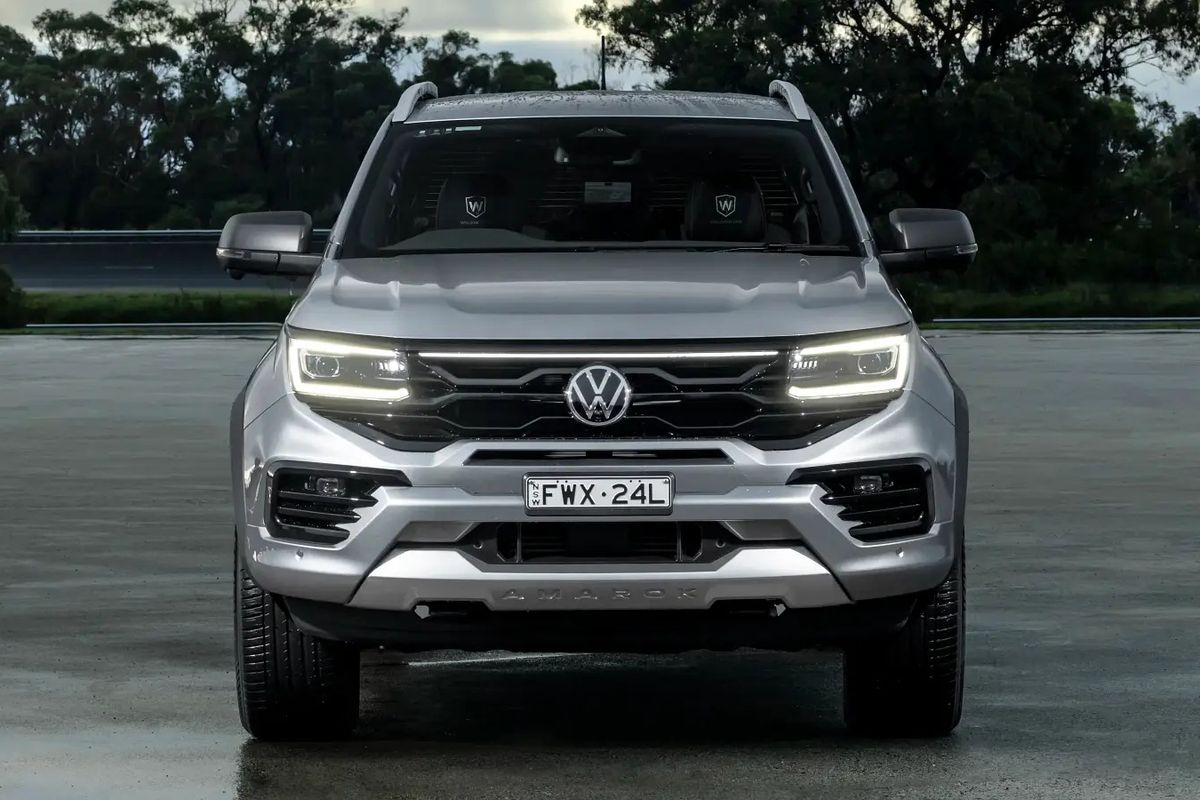
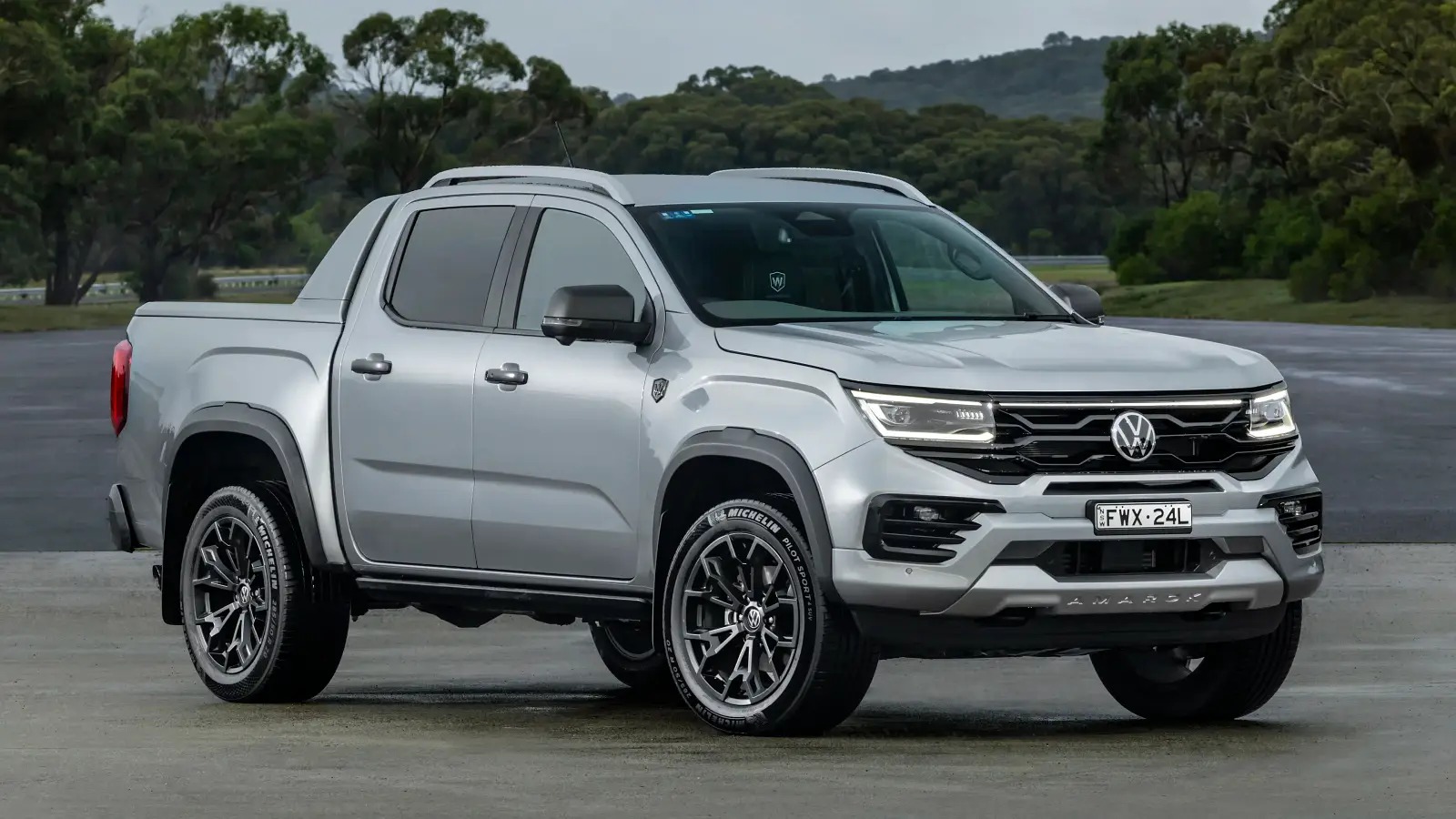
The Volkswagen Amarok W600 Walkinshaw has just been revealed, boasting some impressive cosmetic and handling enhancements. Here’s what you can expect ahead of its arrival locally in 2026.
The 2nd-generation Volkswagen Amarok has benefited from Ford’s know-how and, while the Ranger and it share a lot in common in terms of engines and interior, there’s been no halo model … until now. Enter the Volkswagen Amarok W600 Walkinshaw.
What is Walkinshaw?
The Walkinshaw Group is an Australian-based engineering firm which has built a serious reputation for its aftermarket enhancements and working closely with OEMs. This Amarok is not its first rodeo; it has worked with many brands prior.
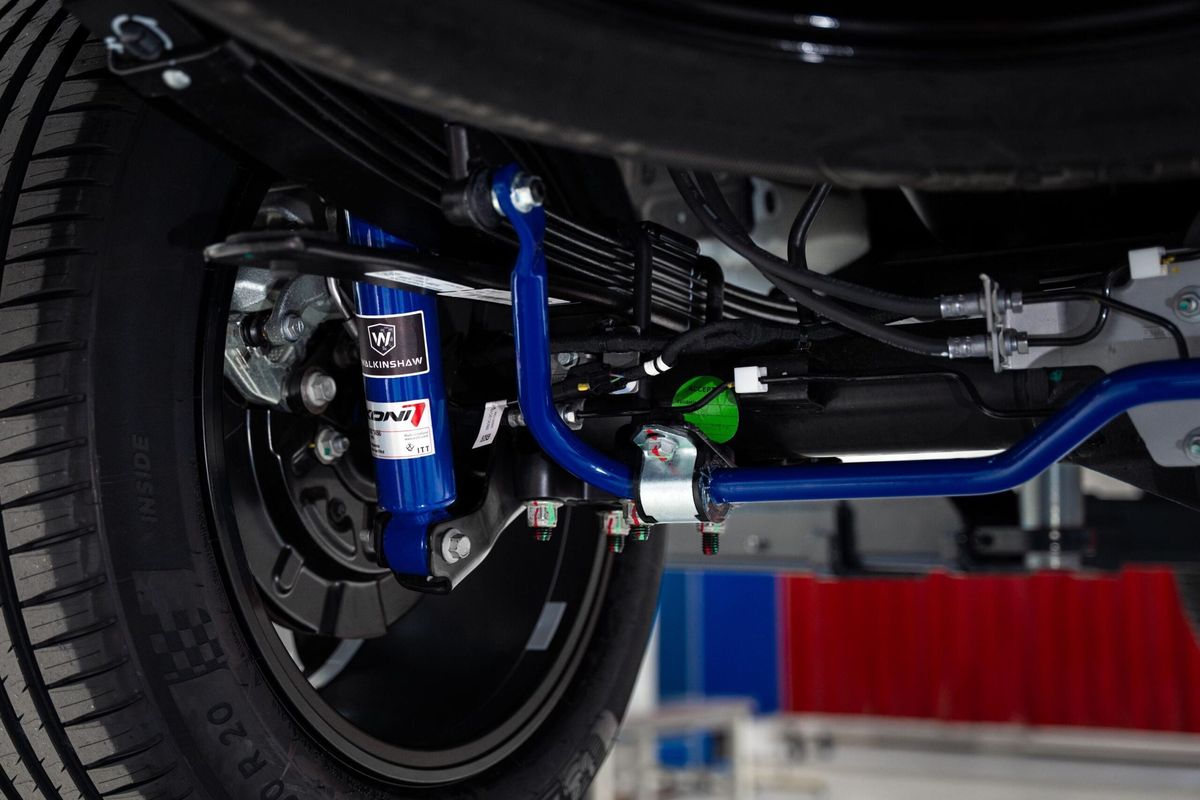
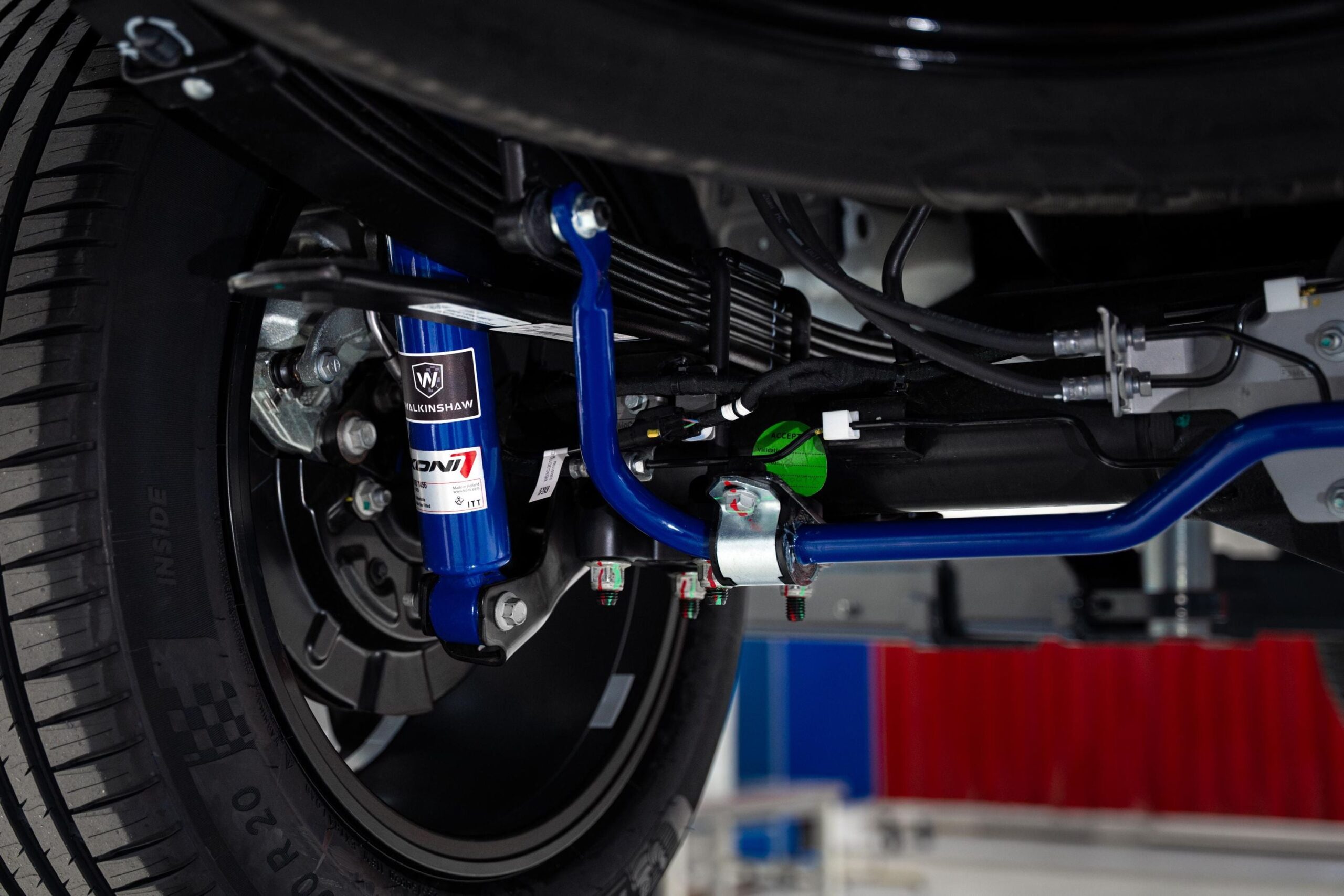
Interestingly, it seems that the Walkinshaw enhancements are not for the off-tar excursions but rather on-road handling and dynamics. There’s a custom suspension with Walkinshaw-tuned Koni shocks and dampers and 22 mm anti-roll bar at the rear.
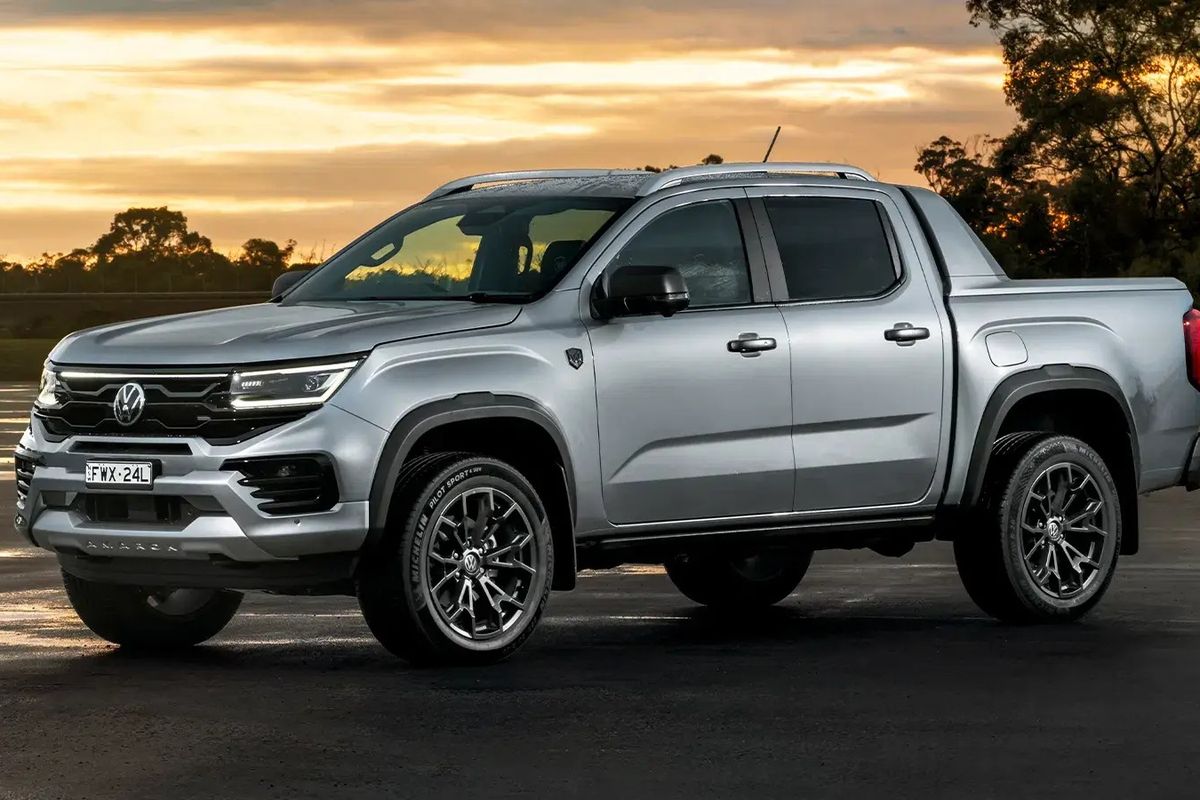
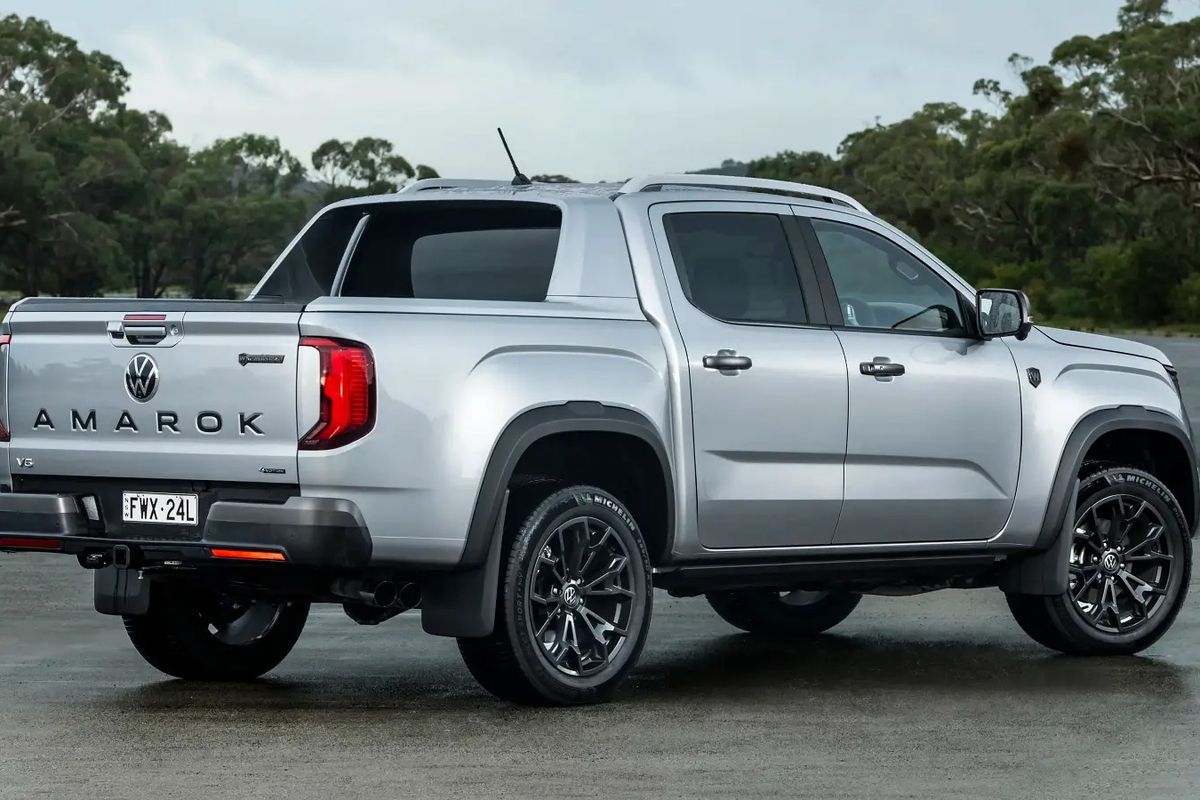
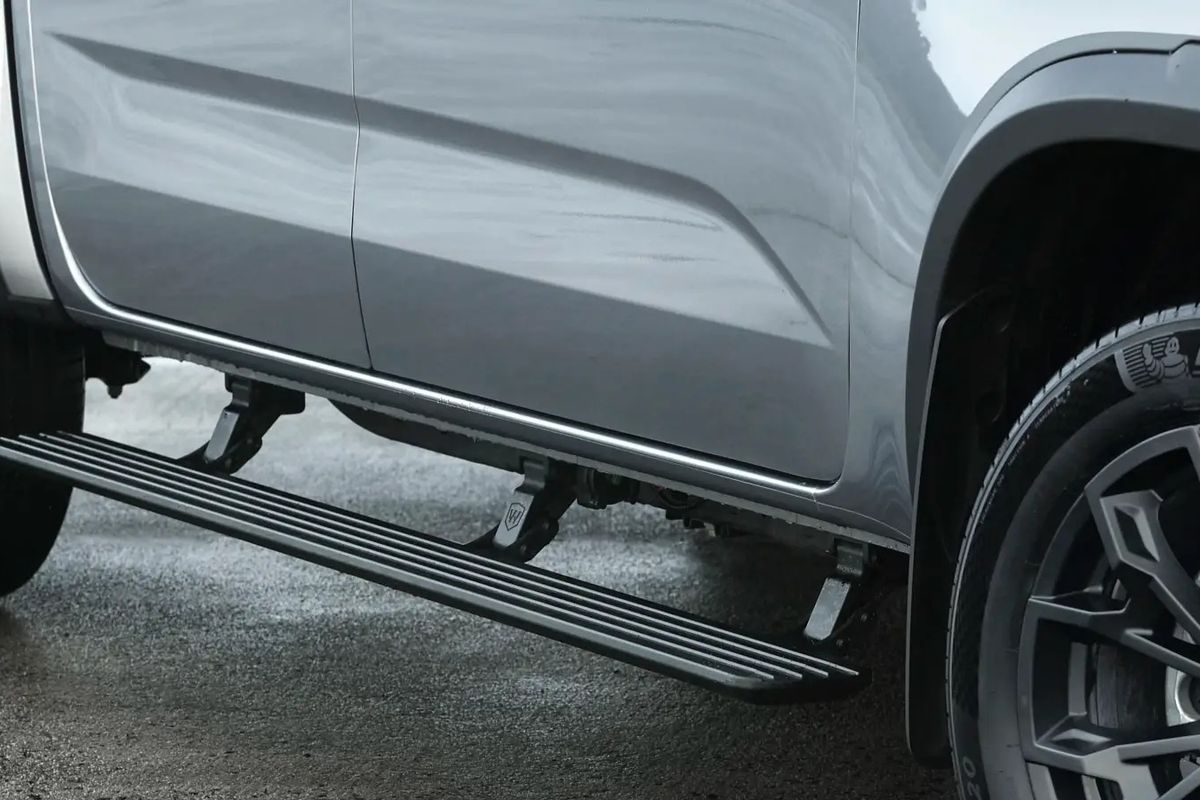
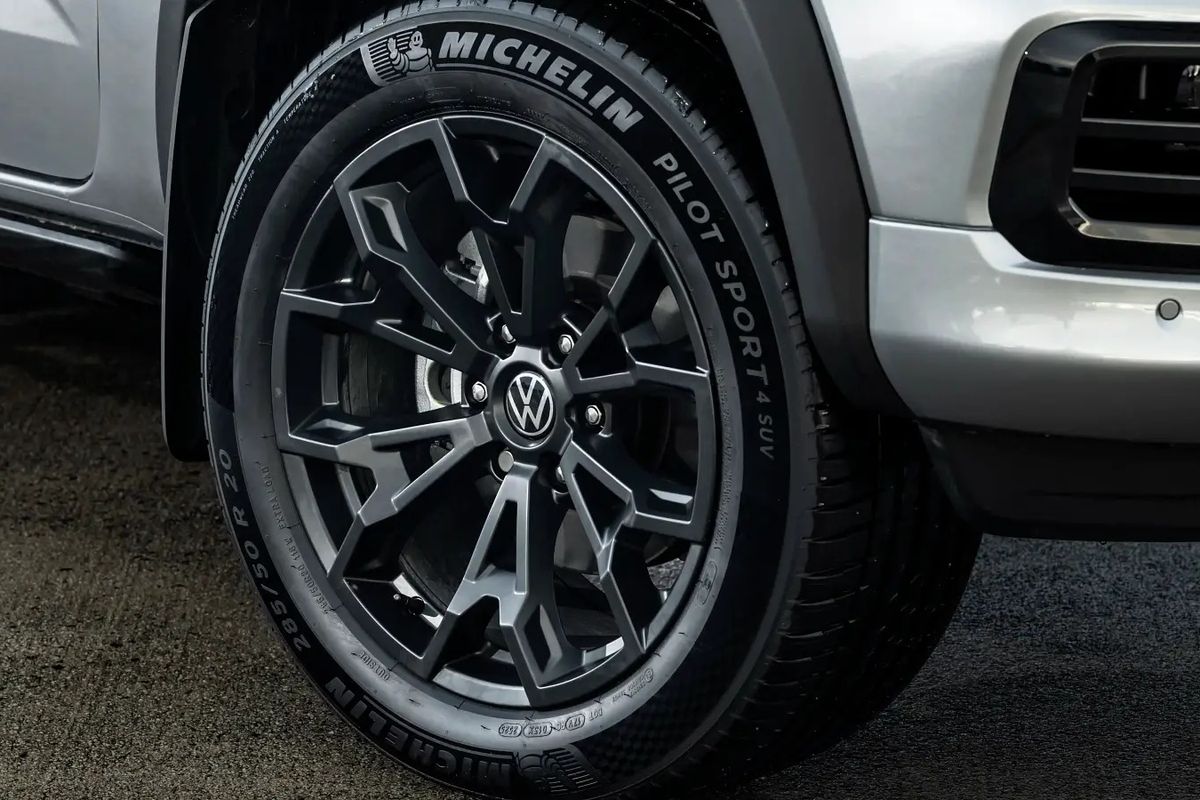
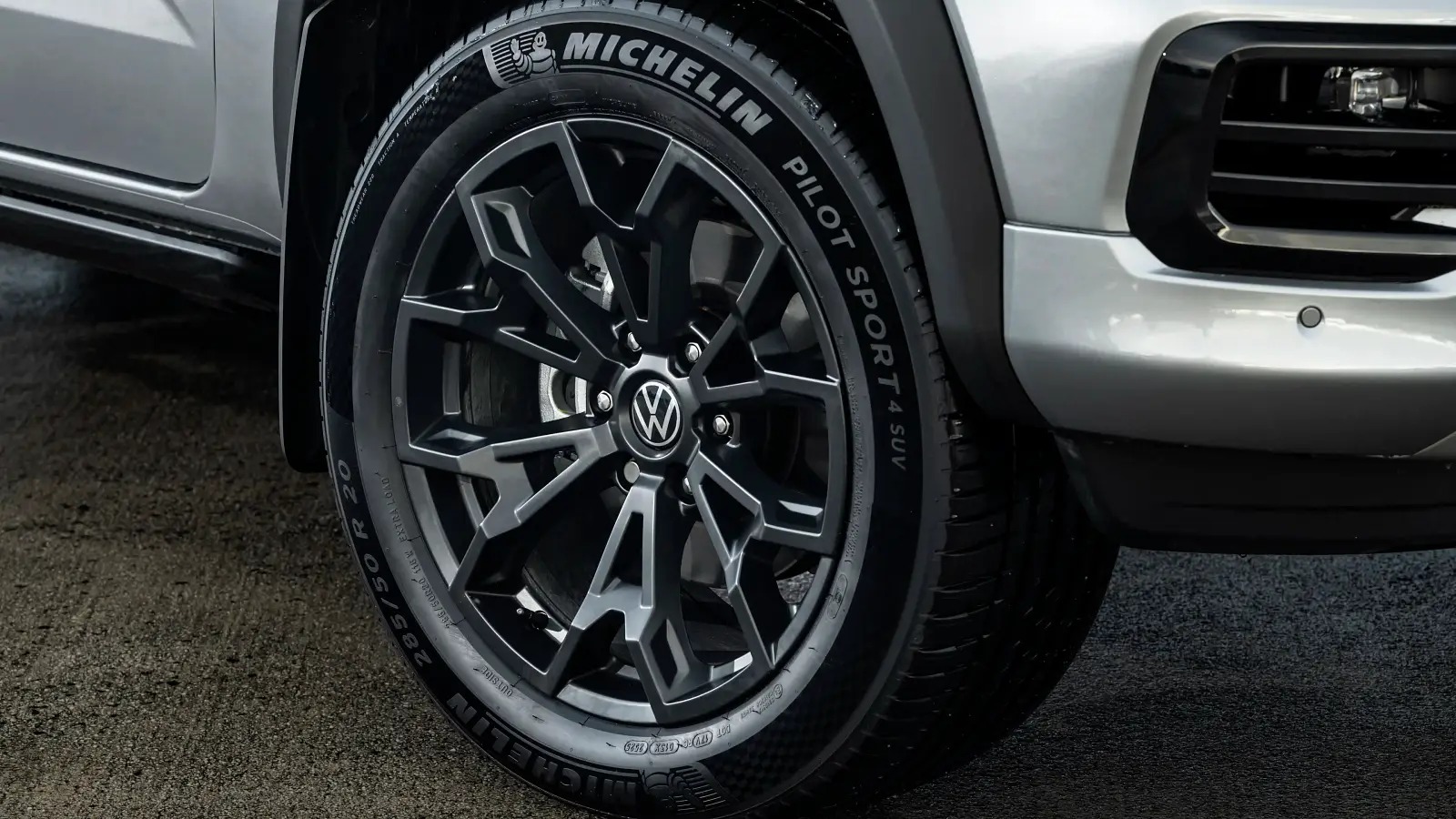
Visually, there are new 20-inch alloy wheels wrapped in trick Michelin Pilot Sport 4 SUV tyres, retractable side steps, side exit exhaust pipes, wider wheel arches, mud flaps and a sharp-looking body kit complete with an LED light bar at the front.
It appears the standard engine has remained untouched, and it’s the 3.0-litre turbocharged diesel V6. Making 184 kW and 600 Nm, it’s paired to a 10-speed automatic transmission and we hope it sounds a bit more meaty thanks to the aforementioned sporty-looking exhaust.
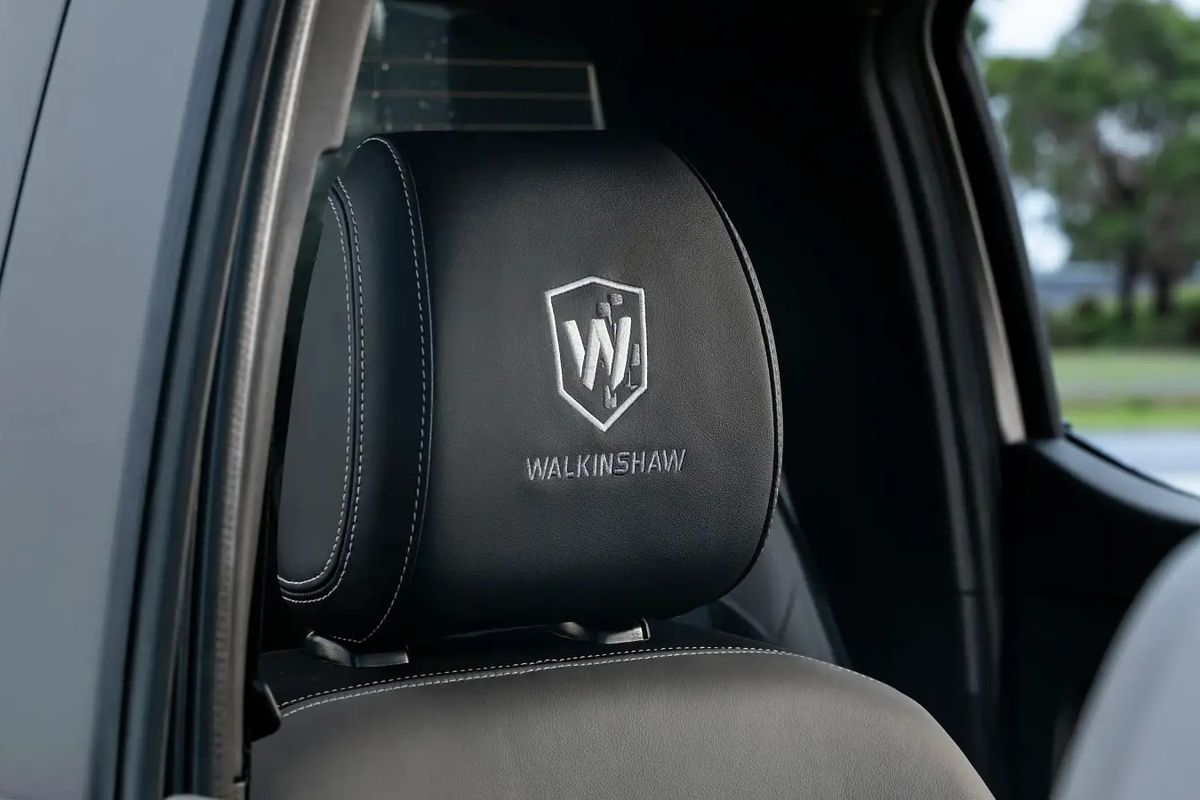
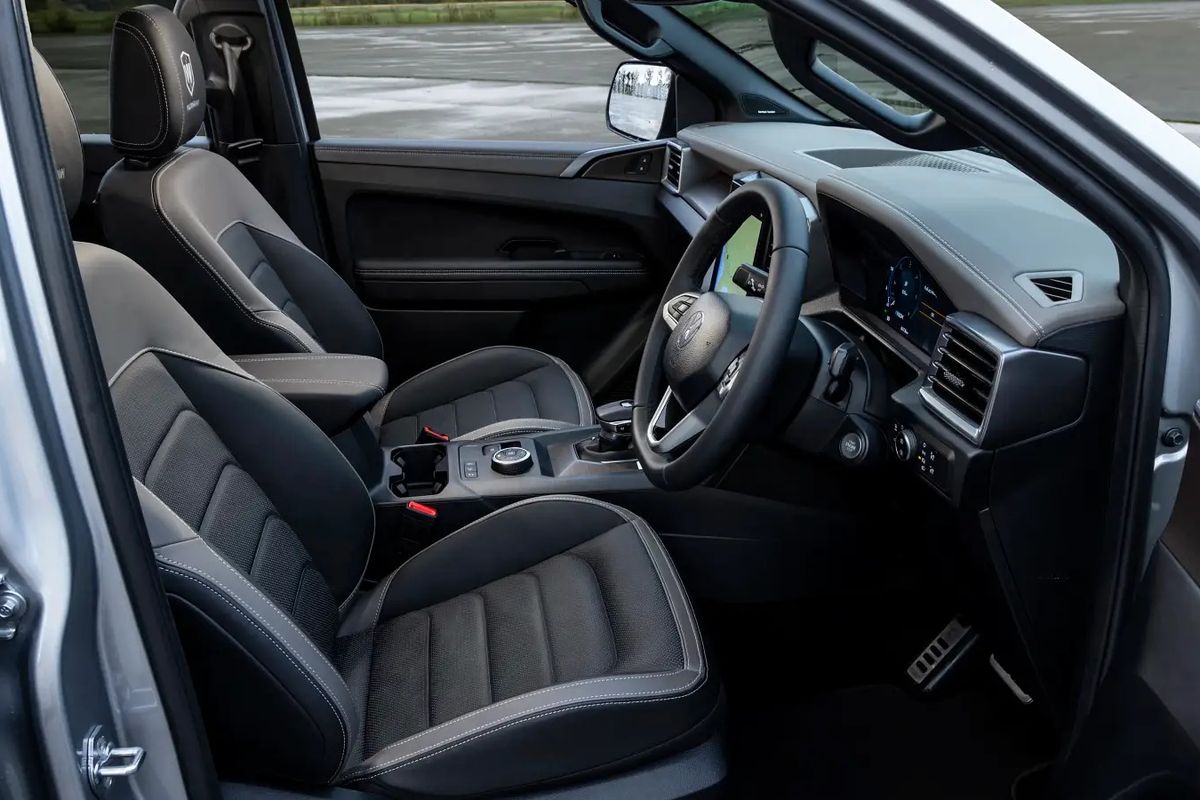
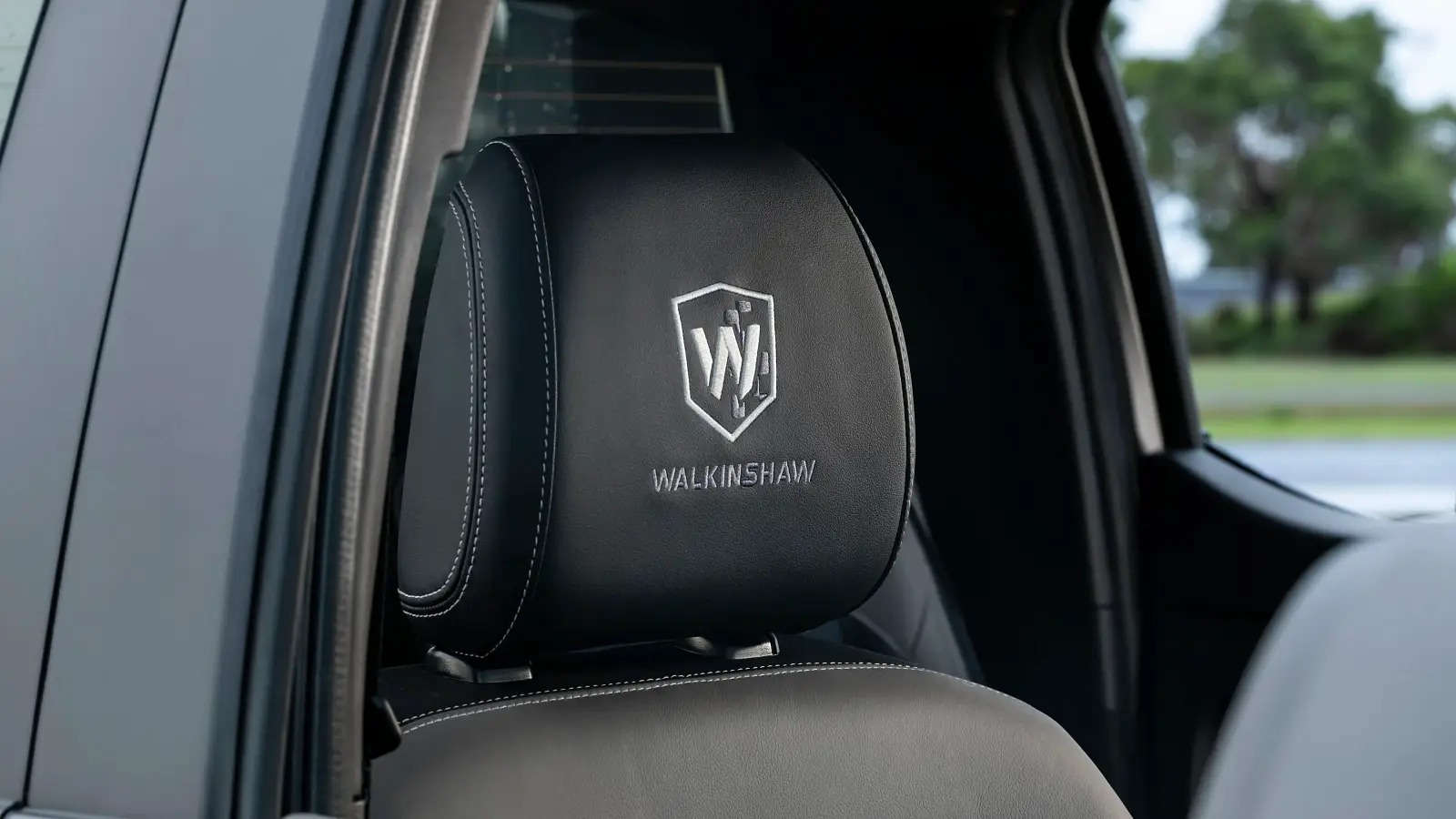
Inside, it appears the only changes are some branded metal pedals as well as some embroidered headrests with the Walkinshaw logo.
As a reminder, the Volkswagen Amarok is exclusively assembled in South Africa in Ford’s Silverton plant. It remains to be seen whether the Walkinshaw kits will be sent to South Africa and installed by Walkinshaw-trained technicians or the vehicles sent to Australia for fitment, then returned back to the country of origin.
When is the Volkswagen Amarok W600 Walkinshaw going on sale in South Africa?
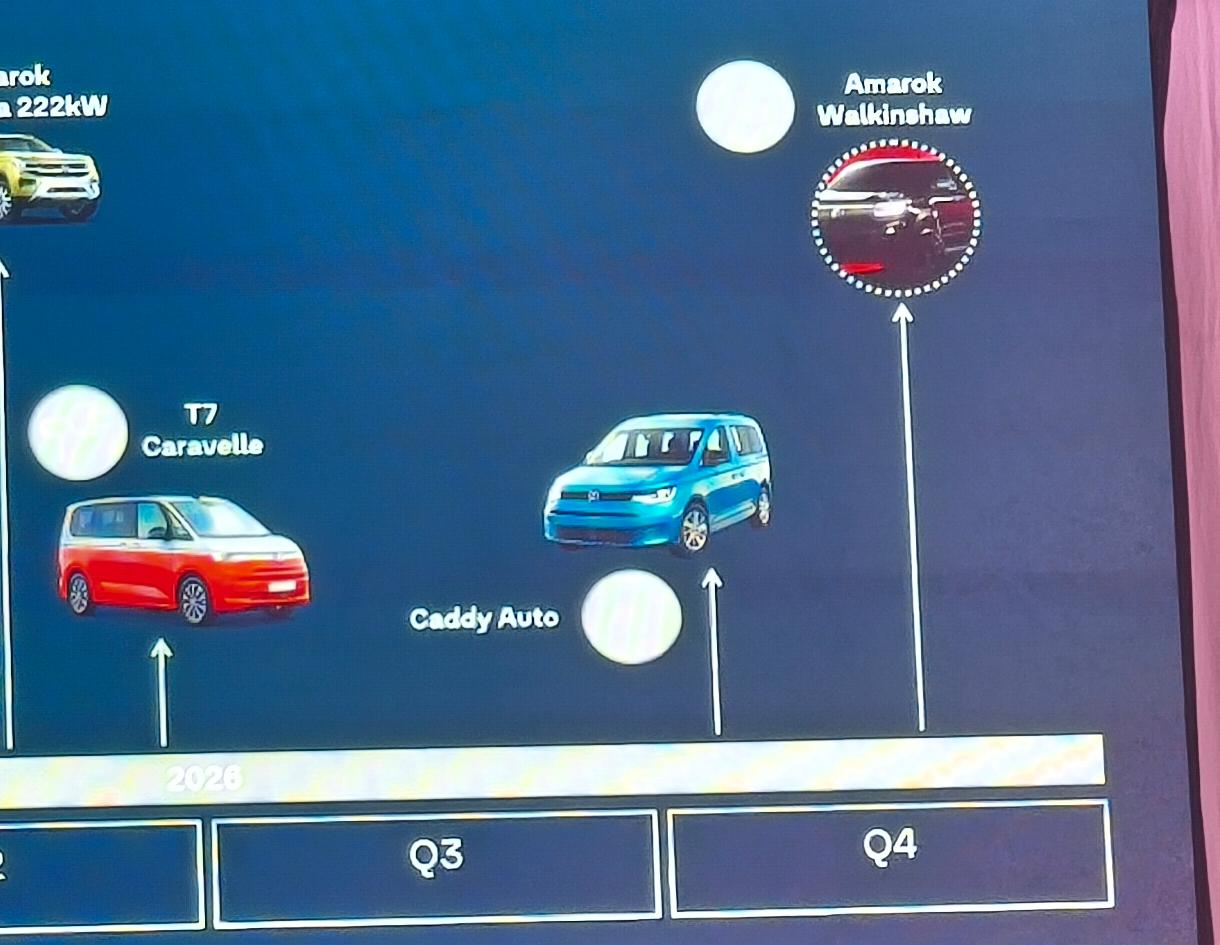
At the Volkswagen Group Africa Indaba event held early in 2026, Volkswagen Commercial Vehicles confirmed the Amarok W600 Walkinshaw will be touching down in the 4th quarter of 2026. We’ll have pricing and specifications of this road-biased performance bakkie closer to launch. Watch this space.
The Amarok W600 begins life at Volkswagen’s Silverton production line in South Africa, where it is built to a unique base specification. For the initial launch, the vehicles are then shipped to the Walkinshaw Group’s facility in Victoria, Australia, to undergo final performance modifications.
What engine and performance parts does the W600 feature?
The W600 retains Volkswagen’s powerful 3.0-litre turbodiesel V6 engine, delivering 184 kW of power and 600 Nm of torque. It is paired with a 10-speed automatic transmission and a selectable 4MOTION four-wheel-drive system. Key mechanical upgrades include a custom front and rear suspension package with frequency-selective dampers, a rear anti-roll bar, and a unique, deeper-sounding side-exit dual exhaust system.
What styling enhancements set the Walkinshaw W600 apart?
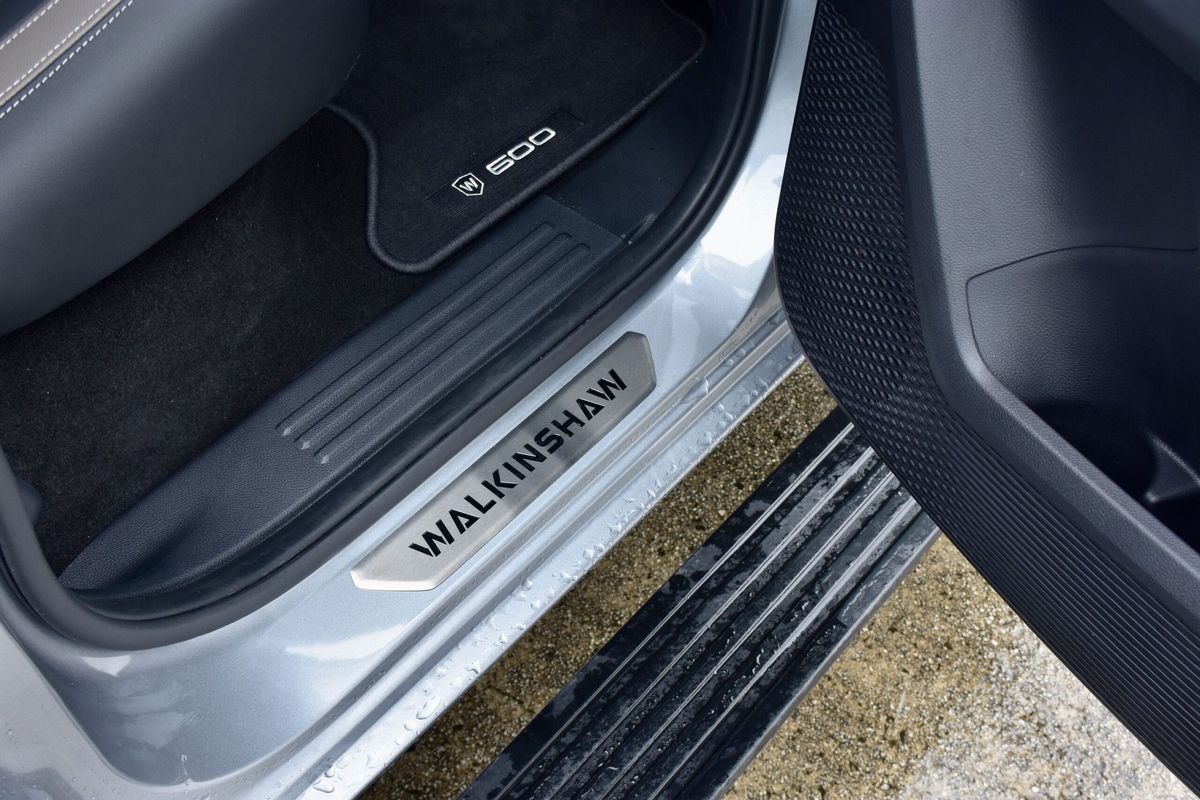
The exterior is distinguished by bespoke 20-inch alloy wheels wrapped in wide 285/50 R20 Michelin Pilot Sport 4 SUV tyres, wider wheel arches, power-retractable side steps, a body-coloured sailplane sports bar, an integrated front LED light bar, and extensive Walkinshaw “crest” branding. Inside, it receives black headlining, sports pedals, Walkinshaw-branded floor mats, and embossed front headrests.
What standard comfort features are carried over from the premium Amarok models?
Despite its custom nature, it retains full factory equipment, including a 12-inch infotainment touchscreen, a 12.3-inch digital driver display, an 8-speaker Harman Kardon premium sound system, matrix LED headlights, wireless smartphone charging, and a 360-degree surround-view camera.
5 cheapest car-based panel vans in South Africa (2026)
With the Nissan NP200 long since departed, several brands have rolled out car-based panel vans to try to fill the gap. These are the 5 most affordable options…
The demise of the Nissan NP200 may have marked the end of the half-tonne bakkie segment in South Africa (for now, anyway), but it also sparked an upswing in the number of small passenger-car-based panel vans on the local market. So, which are the most affordable models?
Well, we’ve sorted through SA’s light-commercial vehicle (LCV) segment to pick out the 5 cheapest options. Note that while this list concentrates on panel vans converted from passenger vehicles, there is another particularly affordable option in the form of the ladder-frame Suzuki Eeco, which comes in at R231 900. All pricing below is correct in June 2026.
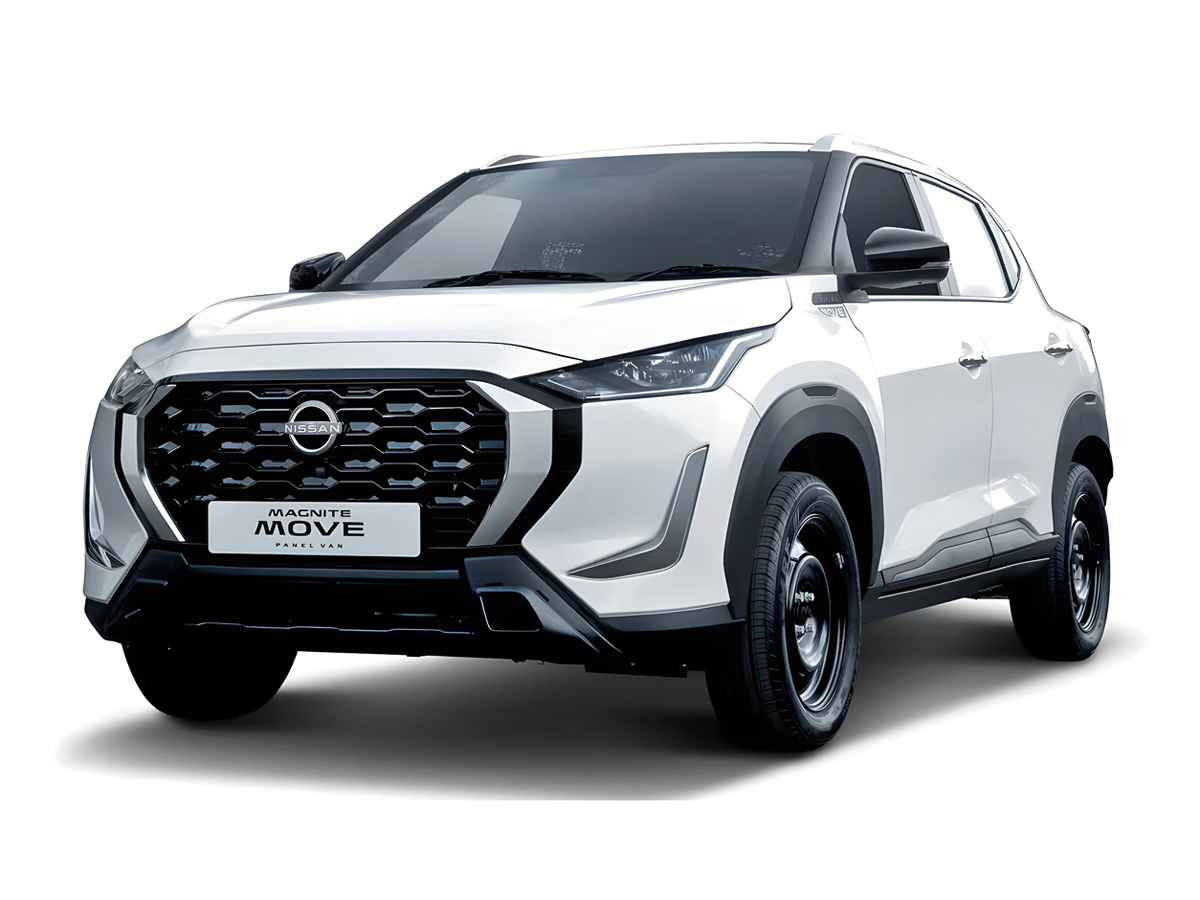
1. Nissan Magnite 1.0 Move panel van – from R229 900
South Africa’s most affordable panel van right now is Nissan’s Magnite Move. This LCV derivative employs a naturally aspirated 1.0-litre, 3-cylinder petrol engine to send 53 kW and 96 Nm to its front axle via a 5-speed manual gearbox. With the rear bench ditched, the little panel van’s load bay measures 1 300 mm long, while the official payload capacity comes in at 250 kg (quite some way under the old NP200’s 800 kg rating).
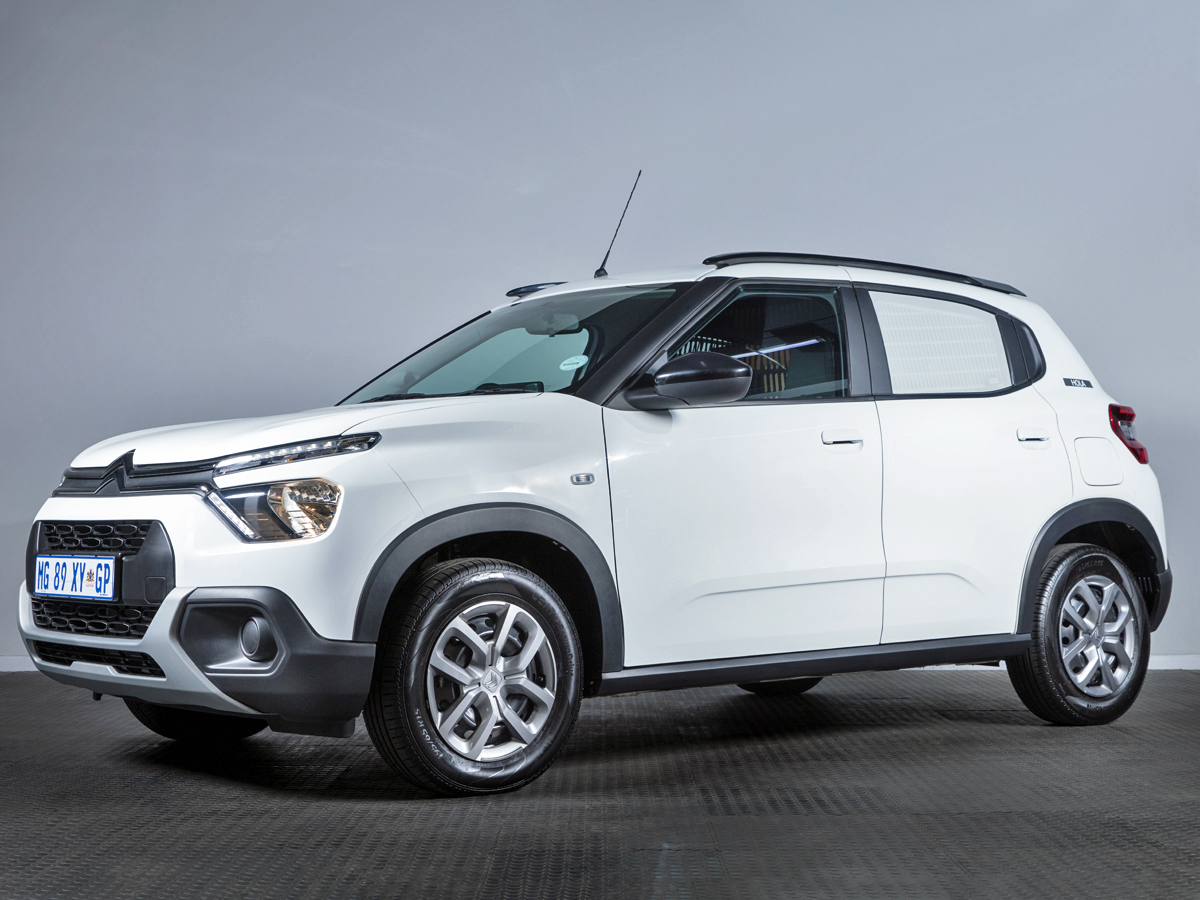
Though Citroën’s C3 Hola panel van costs some R12 600 more than Nissan’s contender, it offers a higher payload (at 386 kg) as well as a standard service plan. In addition, the C3 Hola uses a more powerful engine, with its atmospheric 1.2-litre 3-pot delivering 60 kW and 115 Nm to the front wheels through a 5-speed manual cog-swapper.
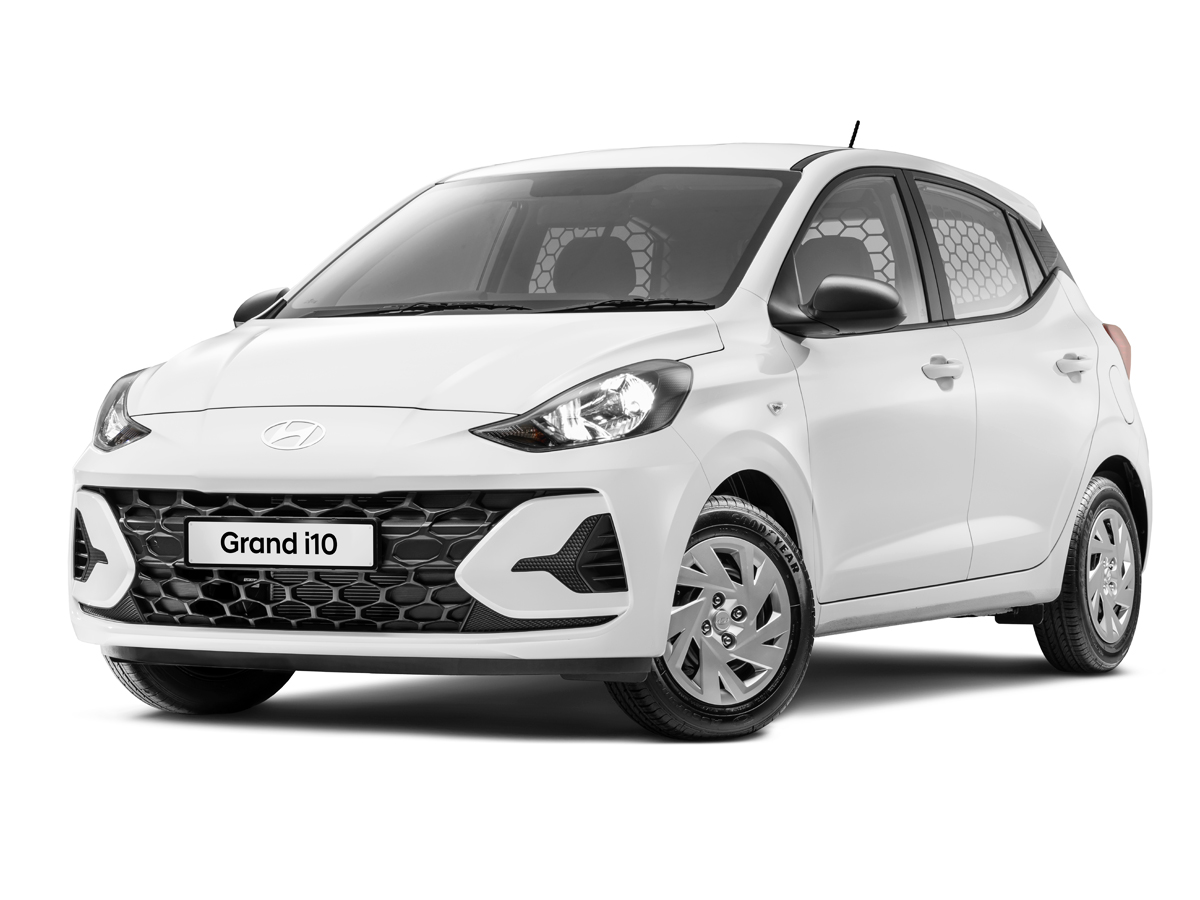
3. Hyundai Grand i10 1.0 Premium Cargo panel van – from R249 500
Offering a loftier payload of 488 kg, the most affordable version of Hyundai Automotive SA’s Cargo-badged Grand i10 is powered by a 49 kW/94 Nm naturally aspirated 1.0-litre, 3-cylinder motor, which drives the front axle via a 5-speed manual ‘box. However, the South Korean firm also offers this body style in conjunction with a 1.2-litre 4-cylinder engine (61 kW/114 Nm) and a 4-speed automatic transmission.
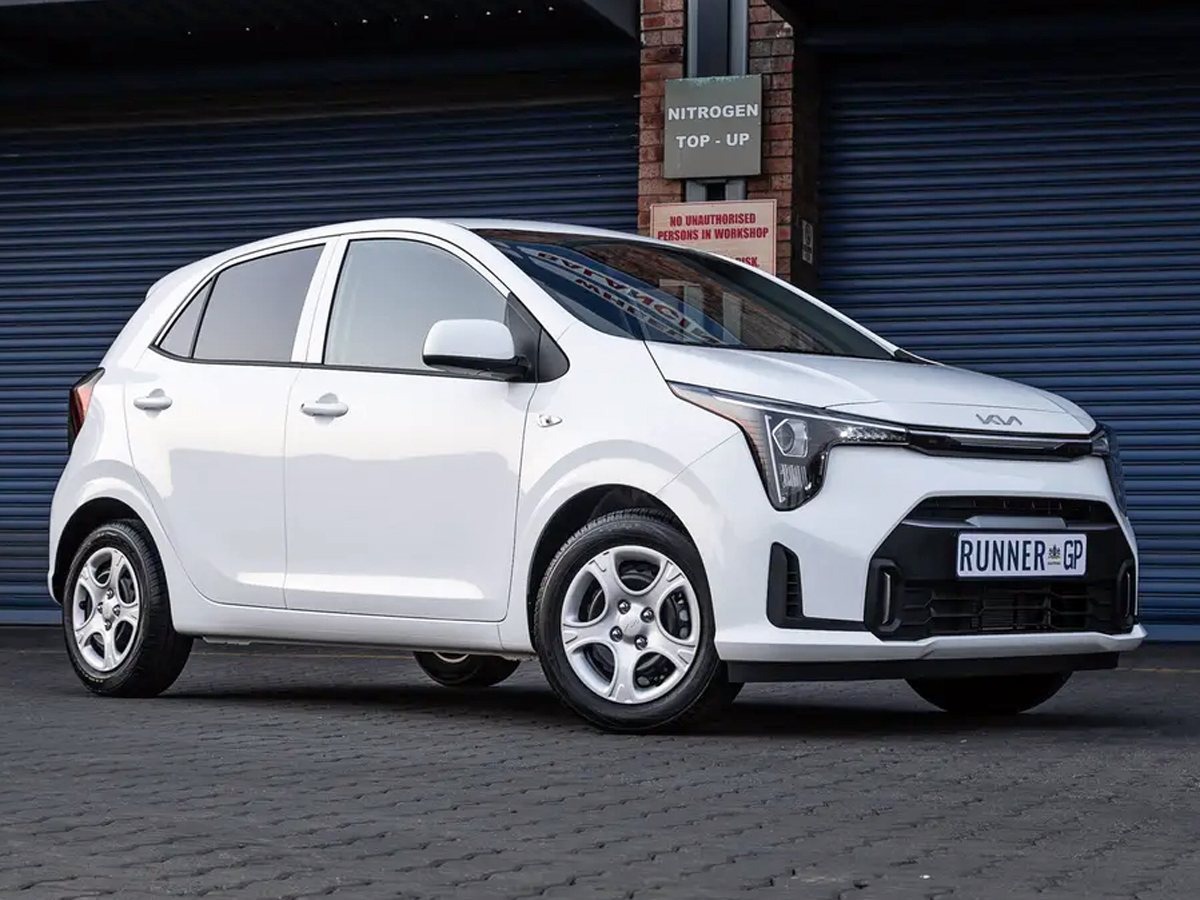
Though Kia once used the “Runner” badge on its Picanto-based panel van, it’s seemingly done away with the moniker. This model has a payload of 350 kg and draws its urge from a 49 kW/95 Nm version of the brand’s atmospheric 1.0-litre 3-cylinder mill, which is linked to the front wheels by a 5-speed manual gearbox (though a 4-speed auto is optionally available).
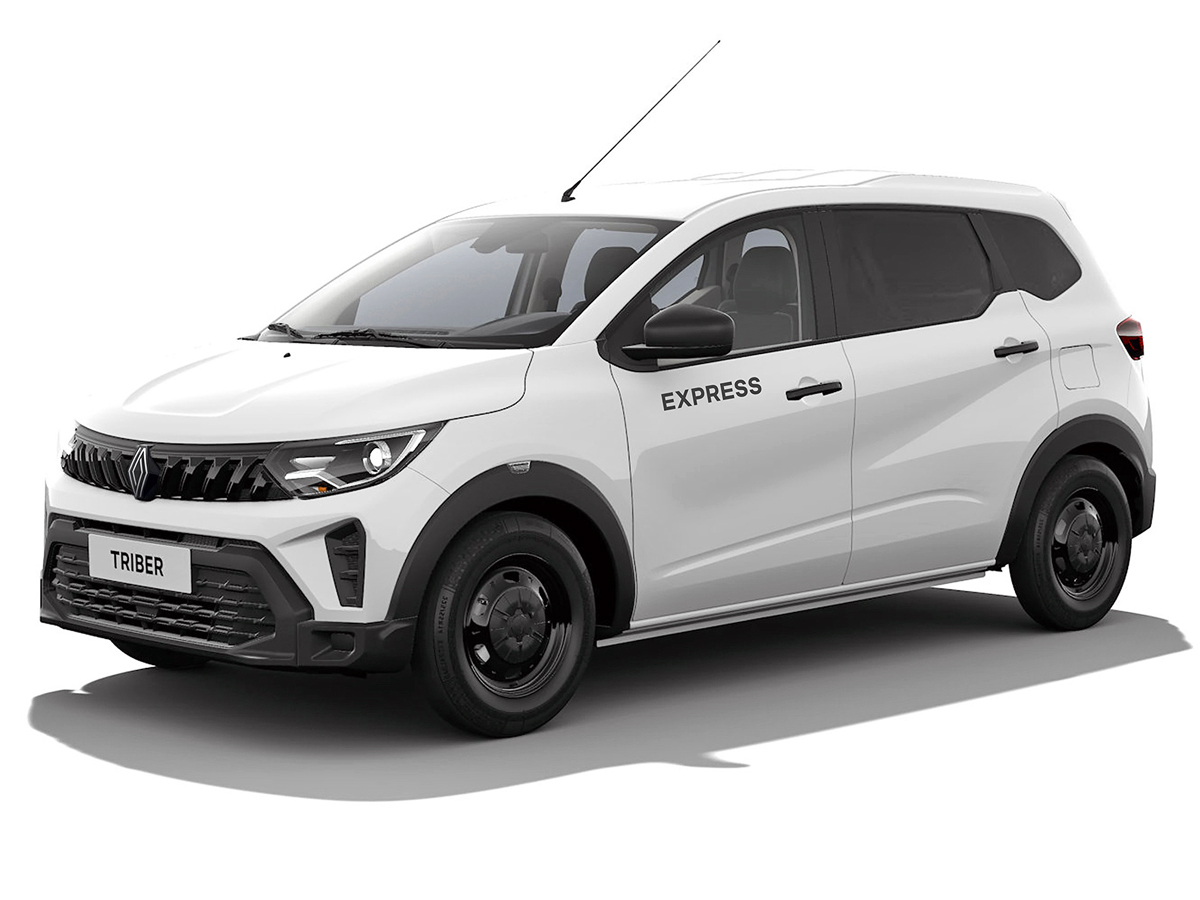
5. Renault Triber 1.0 Express panel van – R249 999
Renault’s Express-badged version of the Triber is the final model to slip in under the R250 000 mark. Considering the base vehicle comes with 7 seats, it’s no surprise the converted panel van has a load volume as high as 1 500 litres, along with a 542 kg payload. Power comes from the French firm’s naturally aspirated 1.0-litre, 3-cylinder motor, which directs 52 kW and 96 N to the front axle via a 5-speed manual transmission.
Q: What are the most affordable passenger-car-based panel vans in South Africa following the Nissan NP200’s exit?
A: As of June 2026, the five cheapest car-based panel vans priced below R250 000 include the Nissan Magnite 1.0 Move (from R229 900), Citroën C3 1.2 Hola (from R242 500), Hyundai Grand i10 1.0 Premium Cargo (from R249 500), Kia Picanto 1.0 LS panel van (from R249 995) and the Renault Triber 1.0 Express (R249 999). Additionally, the ladder-frame Suzuki Eeco offers an alternative option at R231 900.
Q: How do the payloads and cargo capacities compare among these small light-commercial vehicles (LCVs)?
A: Cargo capabilities vary widely between these models. The Renault Triber Express leads the group with a 542 kg payload and a 1 500-litre load volume due to its multi-seater architecture. It is closely followed by the Hyundai Grand i10 Cargo at 488 kg. The Citroën C3 Hola provides a 386 kg payload, the Kia Picanto panel van offers 350 kg and the Nissan Magnite Move has the lowest capacity at 250 kg.
Q: What engine and service plan options are standard on South Africa’s lowest-priced panel vans?
A: All five models utilise small, naturally aspirated petrol engines ranging from 49 kW to 60 kW, primarily paired with 5-speed manual gearboxes. Regarding ownership costs, standard service plans are included with the Citroën C3 Hola, Kia Picanto, and Renault Triber Express (all 2-year/30 000 km) as well as the Hyundai Grand i10 Cargo (1-year/15 000 km), while a service plan remains optional on the entry-level Nissan Magnite Move.