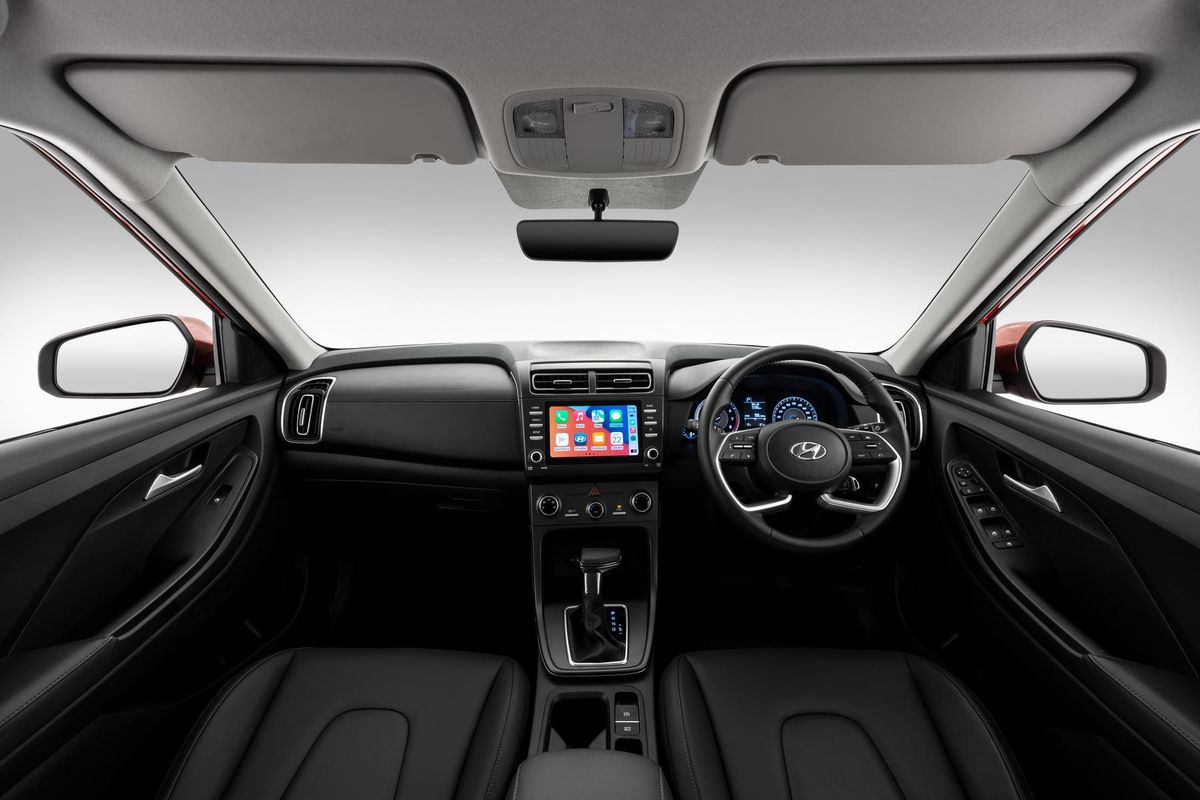
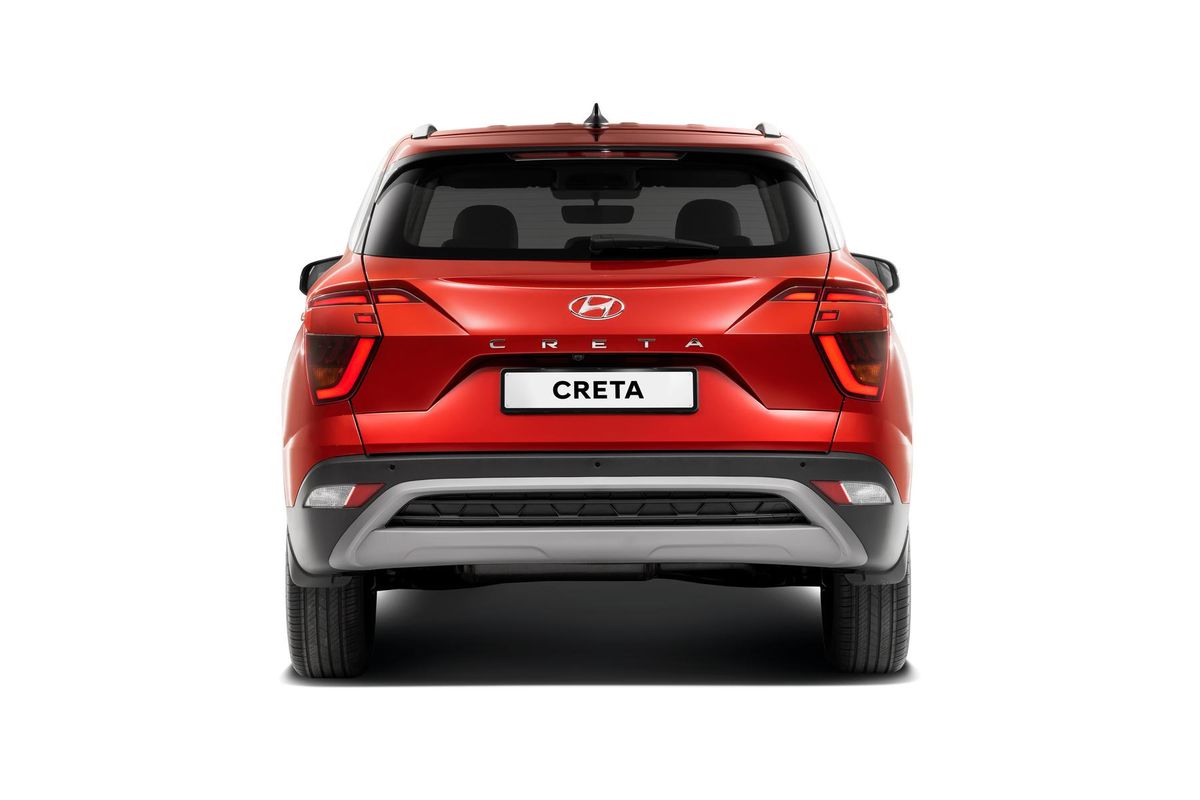
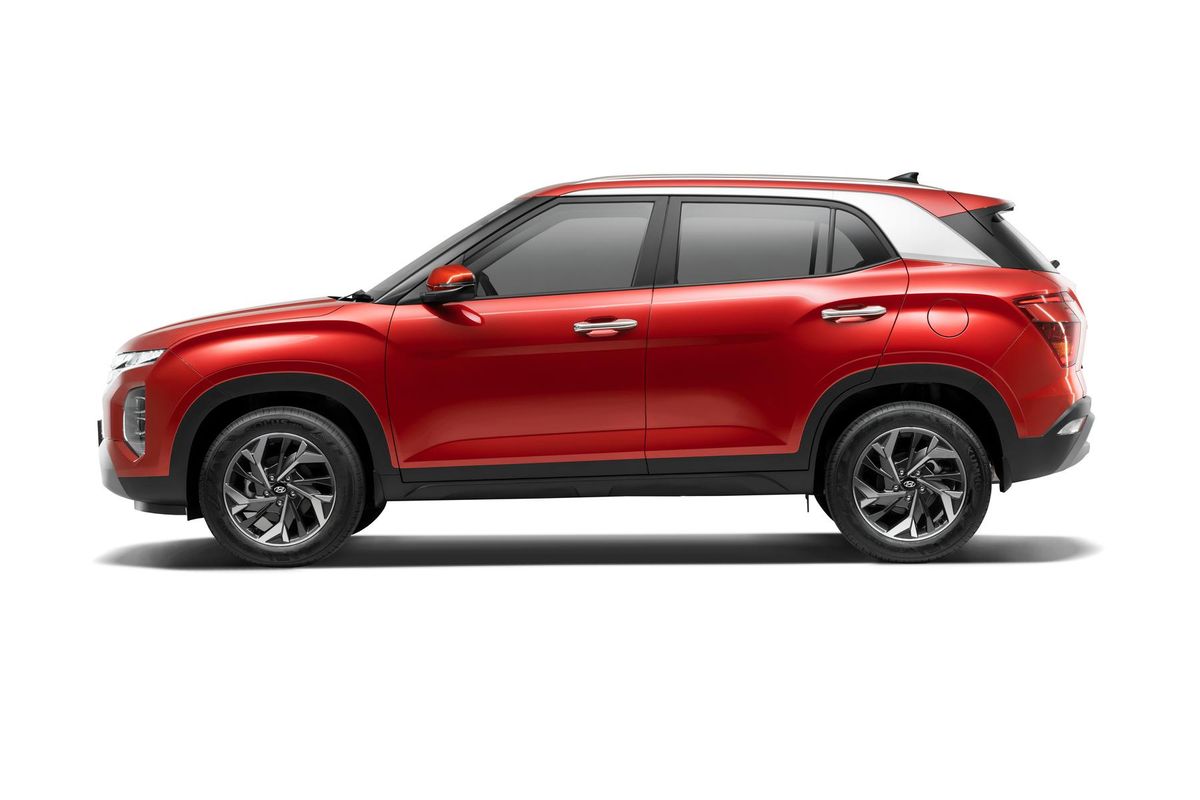
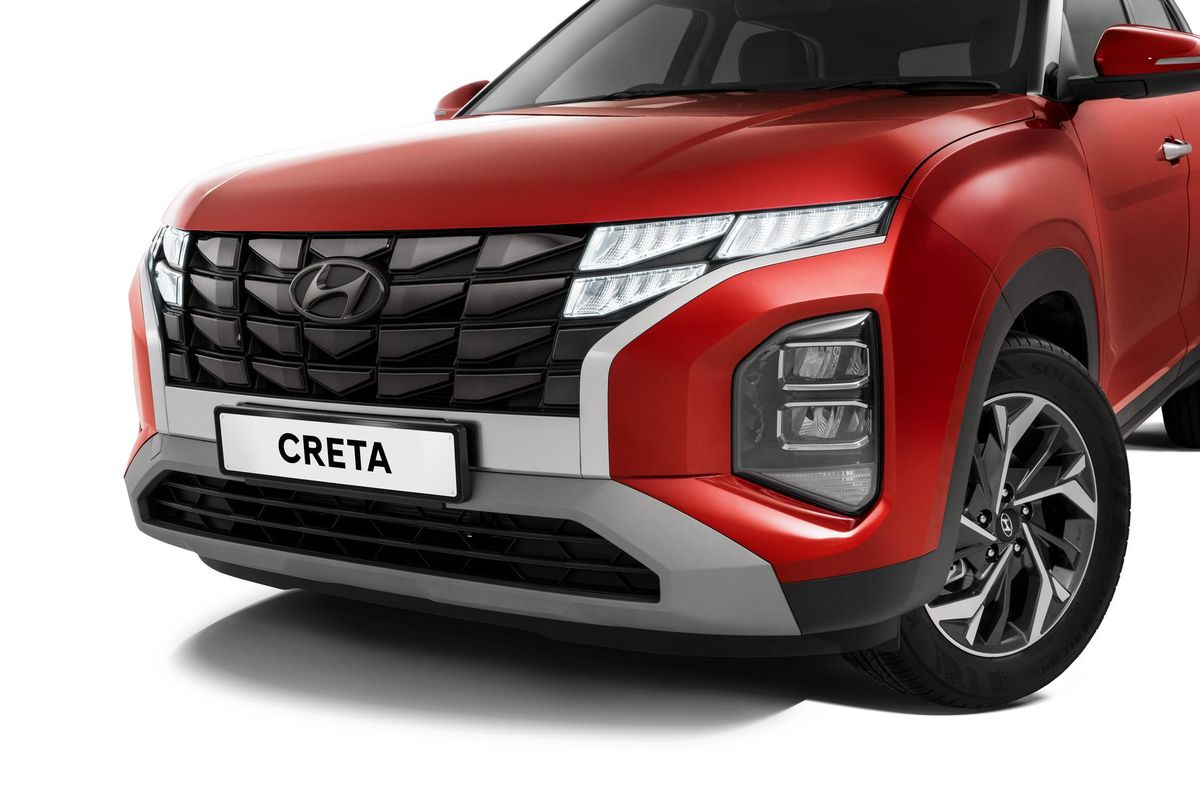
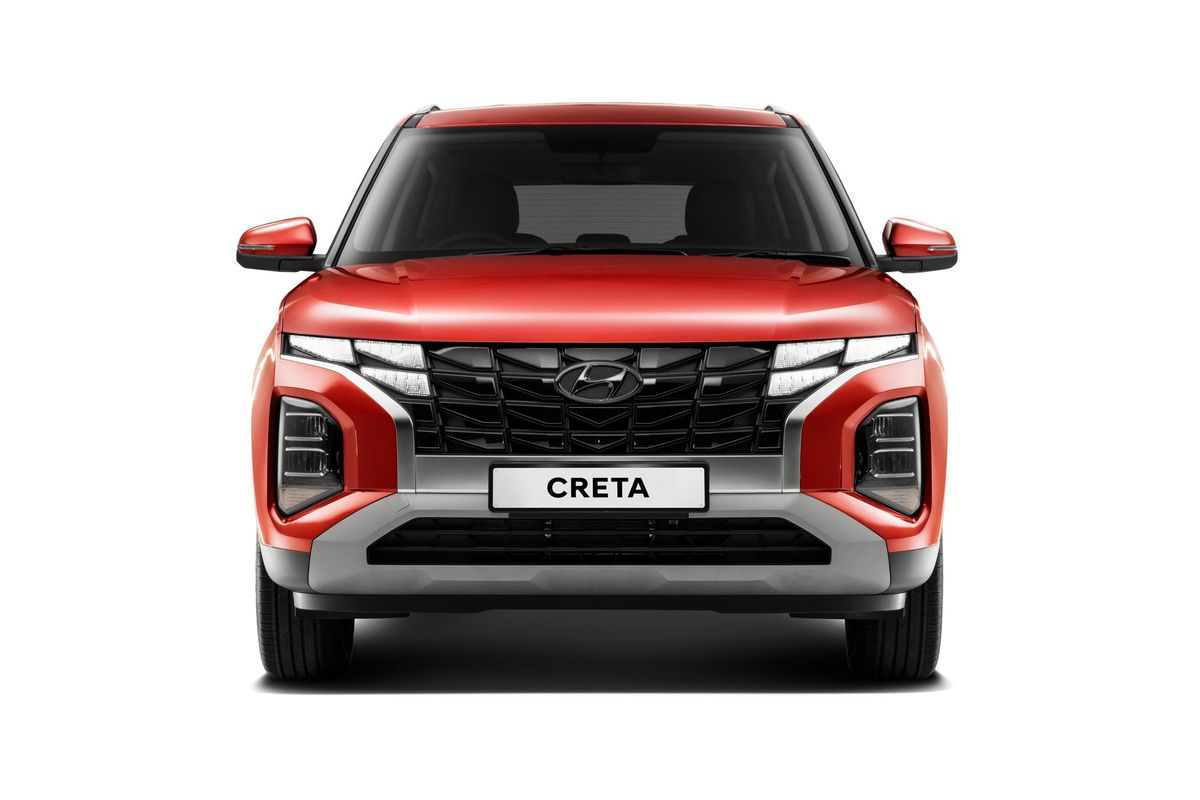
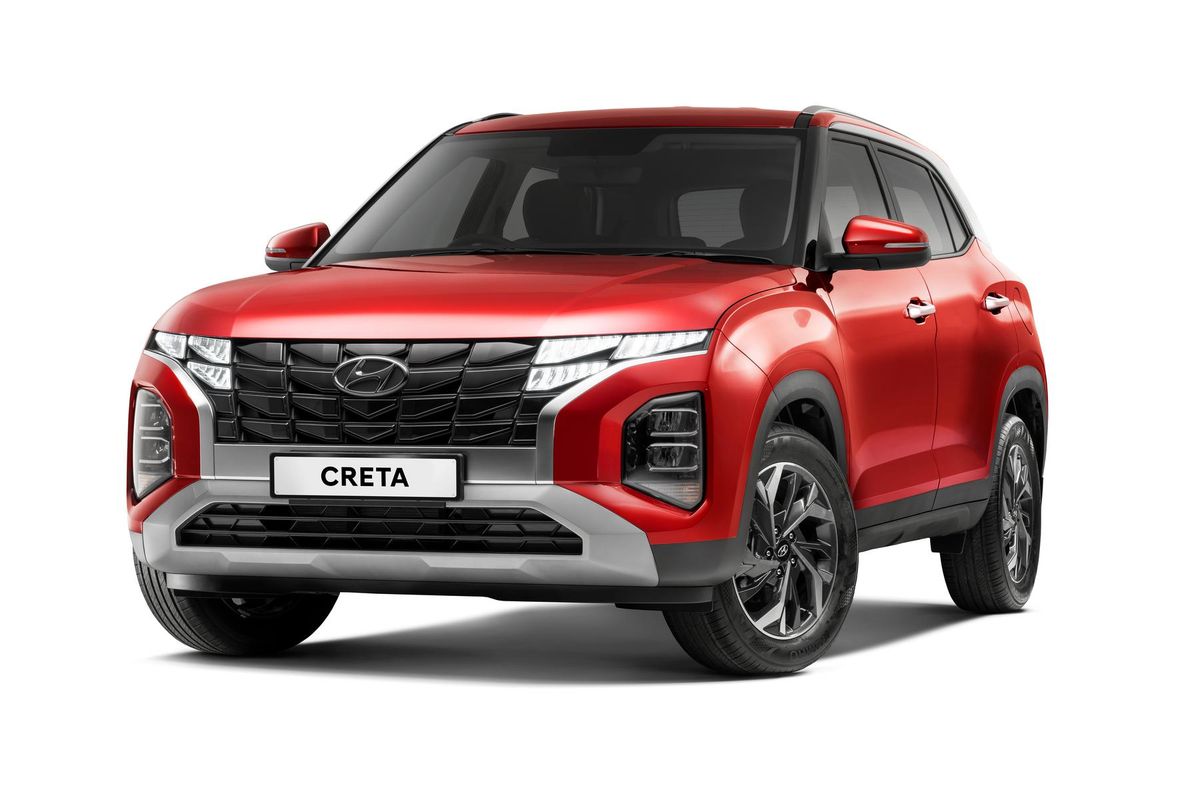
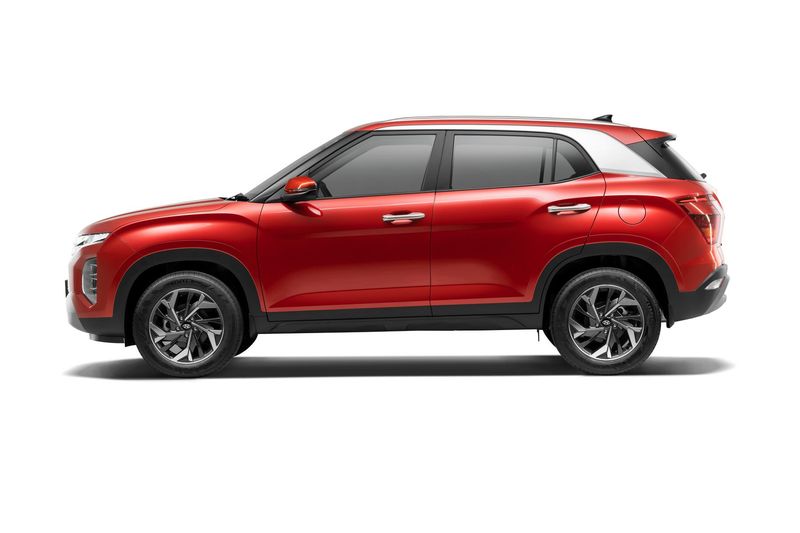
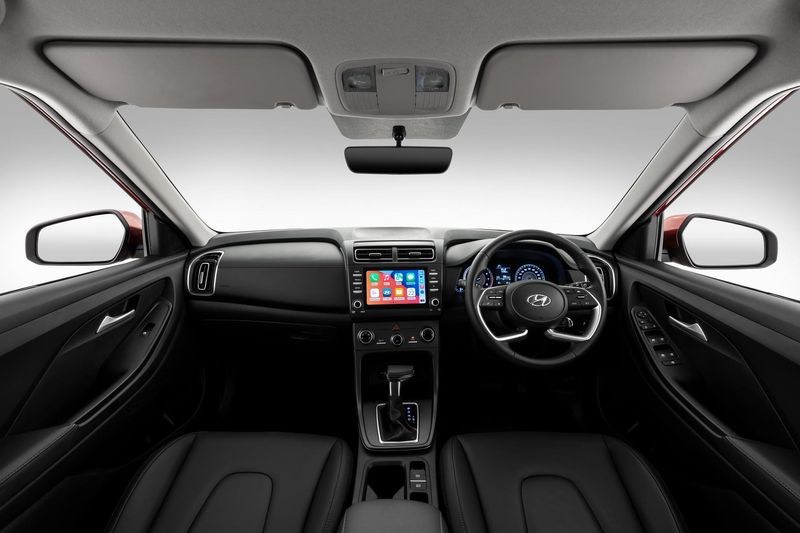
The big news is that this Hyundai Creta facelift is now sourced from Indonesia, unlike the outgoing model which came from India.
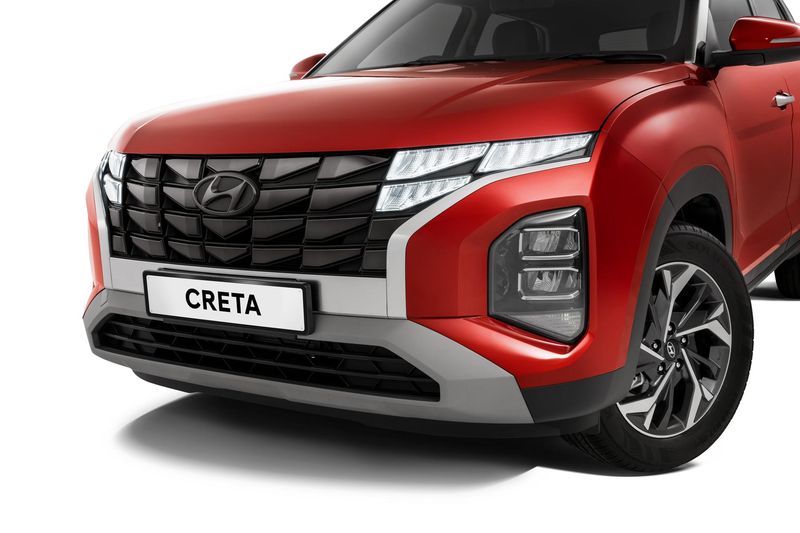
Visually, there’s a big change at the front, with the Hyundai Creta receiving a bold new grille that’s similar to that of the bigger Hyundai Tucson. It’s radically different and we think it makes quite the statement.
What is on offer?
The range has been rejigged, with the turbocharged petrol engine derivative falling away. Customers can choose from one of 6 colours and there are two trim levels: Premium and Executive.
There’s one engine available, with a choice of either a manual gearbox or a CVT. This naturally-aspirated petrol engine produces 84 kW and 144 Nm.
We understand that a Glide derivative will follow, as will more engine options.
Hyundai Creta Premium
Driver and passenger airbags
ISOFix mounts
Halogen headlights
Auto light control
Electric mirror control
Cloth trim
60:40 folding seats
Infotainment with device connect
Bluetooth
Cruise control
Rear view camera with parking sensors
Manual aircon
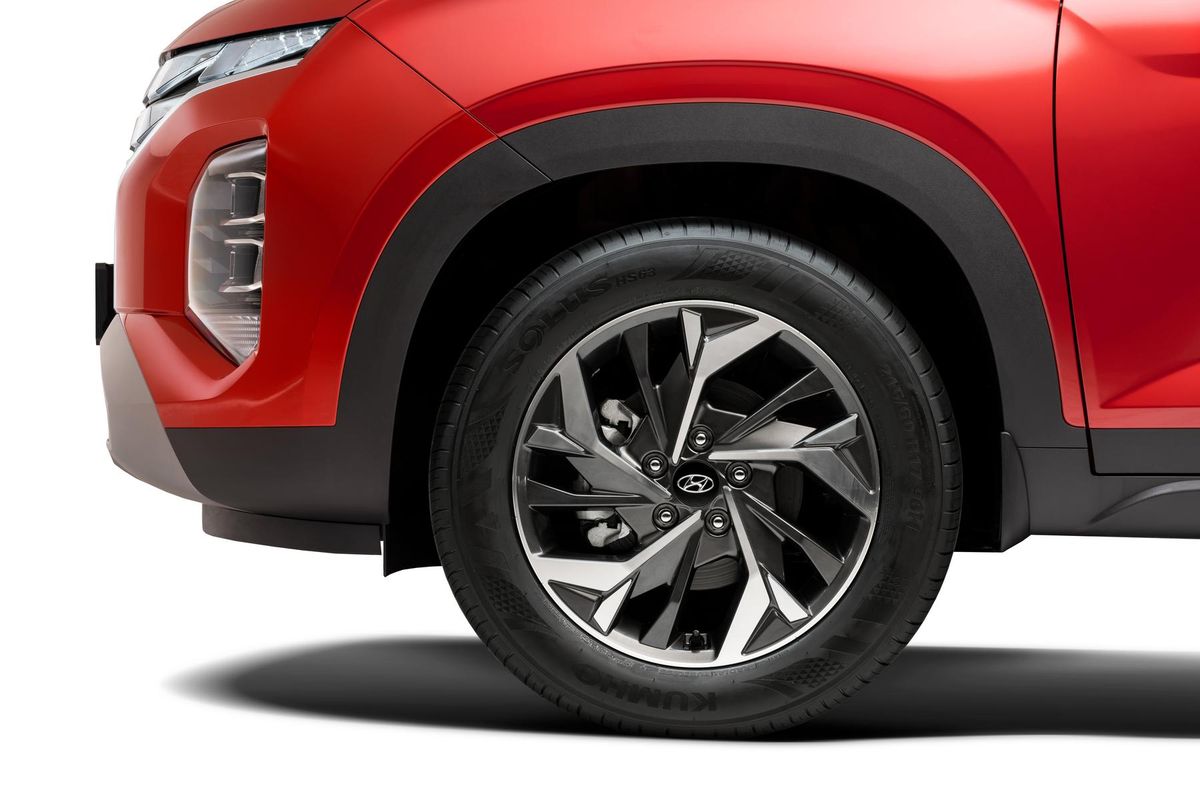
17-inch allow wheels
Hyundai Creta Executive
The above, plus the following content:
Keyless entry
Wireless phone charger
LED daytime running lights
Roof rack
Cluster with 3.5-inch TFT LCD
*This is a developing story and will update as we get more information.
How much does the Hyundai Creta Facelift cost in South Africa?
Hyundai Creta 1.5 Premium Manual R409 900
Hyundai Creta 1.5 Premium IVT R429 900
Hyundai Creta 1.5 Executive IVT R469 900
The Hyundai Creta facelift is sold with Hyundai’s 7-year / 200 000 km warranty, a 4-year / 60 000 km service plan and 7-year / 150 000 km roadside assistance.
SA hot hatch sales in 2022 so far: VW Golf 8 GTI vs Hyundai i30 N
Just how well did the Hyundai i30 N sell in South Africa in the first half of 2022, compared with the Volkswagen Golf 8 GTI? Let’s examine the local C-segment hot hatch sales race…
South Africa’s C-segment hot hatch market isn’t nearly as well populated as it once was. Indeed, with the likes of the Mazda3 MPS, Ford Focus ST, Opel Astra OPC and Renault Mégane RS long since departed, local buyers searching for high-performance hatchbacks around the size of a VW Golf have very few choices.
Still, it’s worth having a look at how well the main players have been selling in this spicy sub-segment. So, we trawled through Naamsa’s sales reports for the first half of 2022 to see what we could find. Unfortunately, we’re going to have to limit this exercise to the Hyundai i30 N and Volkswagen Golf 8 GTI.
Why? Well, since BMW Group SA and Mercedes-Benz don’t consistently report individual model sales figures to Naamsa, it’s not clear how many examples of the former’s front-driven 128ti and all-wheel-drive M135i nor the latter’s AMG-badged A35 and A45 S all-paw hatchbacks were registered locally in the first half of 2022.
Similarly, we don’t know exactly how popular the outgoing Honda Civic Type R has proven from the start of January to the end of June 2022, since the automaker reports a combined figure for the hot hatch and the Civic sedan (though that number comes to just 36 anyway). In addition, Audi S3 Sportback sales are lumped with A3 Sportback figures.
So, that leaves us with the aforementioned 206 kW/392 Nm i30 N (R749 900) and 180 kW/370 Nm Golf GTI (R696 700). While VW SA has bemoaned industry-wide pandemic-related constraints hitting its supply of new vehicles, Hyundai Automotive SA switched to a refreshed version of its hot hatch during the reporting period (a move that traditionally also comes with a dip in sales volume).
Indeed, the updated version of the i30 N arrived in South Africa early in April 2022, ditching the pre-facelift version’s 6-speed manual gearbox in favour of an 8-speed dual-clutch transmission. That, of course, suggests it’s aimed directly at Wolfsburg’s hot hatch, which likewise ships standard with a dual-clutch cog-swapper (though with 7 forward gears).
2022 H1 sales figures: VW Golf 8 GTI vs Hyundai i30 N
Anyway, what do the sales figures say? Well, Volkswagen SA managed to register 380 units of the Golf GTI in the first half of 2022, with its best monthly effort coming in January (100 units). The i30 N, meanwhile, had to settle for a six-month tally of just 40 units, though not a single example was registered in the first quarter (likely as a result of the switchover to the facelifted model).
What about the segment below? Well, even fewer B-segment hot hatches have survived, with the locally produced Volkswagen Polo GTI virtually having that market all to itself these days (though VW reports a combined figure for all Polo hatches, so – again – a GTI-only figure is not available).
However, we do know 19 units of the Toyota GR Yaris were sold in South Africa over the first six months of the year, with the Japanese firm’s local division recently telling us more stock is on the way (though interestingly the base version has been scrapped, with only the Rally model still on offer).
Suzuki Baleno vs Toyota Starlet – Which Offers Better Value For Money?
The latest iterations of the Suzuki Baleno hatchback and the Toyota Starlet have arrived in South Africa! They are mechanically identical but differ in terms of styling, feature specification and price. Let’s take a look at what the key differences are to determine which car offers the best value for money!
While the pair are mechanically identical, they differ in terms of styling execution, interior feature specification, trim grades and of course, price and warranty.
If you’ve been scratching your head trying to understand what sets these 2 hatchbacks apart, this article will hopefully bring you some clarity but will also highlight which one offers better value for money! Let’s take a closer look at the key differences!
Suzuki Baleno vs Toyota Starlet – Which offers better value for money?
Exterior Styling Execution
The major styling differences between the Suzuki Baleno and Toyota Starlet is seen on the front end with each model exhibiting different grille and bumper designs. The Suzuki Baleno’s face is defined by a 3-D grille design with a chrome belt trim element that runs along the lower edge of the grille to the now-sleeker headlight units. The fog lamps also feature chrome brows.
As for the Starlet, the grille surface is noticeably smaller with a chrome wing running through the middle of the grille from the headlights to the central Toyota badge while the lower air is larger than what’s seen on the Baleno and the fog lights are bracketed with C-shaped chrome trim. In its side profile, the Starlet further differentiates itself from the Baleno with a blacked-out C-pillar and an elegant chrome beltline that curves upwards into the C-Pillar.
At the rear, the 2 models are near-identical with a 2-piece taillight and chrome trim on the tailgate.
Which looks better? Well, we’ll leave that to you to decide!
Interior Execution and Features
The cabin architecture of the Baleno and Starlet are just about identical with trim grades and feature specification being the major differentiators between the 2 models.
The Suzuki Baleno is offered in 2 trim grades, namely the base GL trim and the range-topping GLX trim. The Toyota Starlet, however, is offered with 3 trim grades, namely the base Xi trim, mid-spec Xs trim and the range-topping Xr trim.
Let’s take a closer look at how key feature specification for each trim level differs from one another.
Android Auto and Apple CarPlay, Bluetooth, voice control, USB
Yes to all, 3 USB ports (Type A and Type C)
Rear view camera
No
Cruise Control
No
Air conditioning
Climate Control, with rear ventilation
Park distance control
Rear only
Upholstery
Cloth
Electric windows
Yes, all
Seat adjustment
Manual
Steering wheel adjustment
Tilt only
Other useful features
Front centre armrest, with slide function
Safety features
2 front airbags, ABS with EBD, brake assist, electronic stability control
Conclusion: The Toyota Starlet Xs trim level features identical interior features to the base-spec Starlet Xi with the exception of larger 16-inch alloy wheels (15-inch steel with wheel covers on Xi) and the fitment of LED fog lights.
Analogue dials with 4.2-inch color information display
Analogue dials with 4.2-inch color information display
Android Auto and Apple CarPlay, Bluetooth, voice control, USB
Yes to all, 3 USB ports (Type A and Type C)
Yes to all, 3 USB ports (Type A and Type C)
Rear view camera
360-degree camera
Rear camera
Heads-up Display
Yes
No
Cruise Control
Yes
Yes
Air conditioning
Climate Control
Climate Control
Park distance control
Rear only
Rear only
Upholstery
Cloth
Cloth
Electric windows and mirrors
Yes, all
Yes, all
Seat adjustment
Manual, with height adjustment
Manual with height adjustment
Steering wheel adjustment
Tilt and reach
Tilt and reach
Other useful features
Smart keyless entry, push-button start
Smart keyless entry, push-button-start
Safety features
6 front airbags, ABS with EBD, brake assist, electronic stability control
6 front airbags, ABS with EBD, brake assist, electronic stability control, hill assist control
Conclusion: The range-topping Suzuki Baleno GLX offers competitive pricing against the equivalent Starlet Xr and the addition of a 360-degree camera and heads-up display will appeal to tech-savvy buyers.
Engine, Transmissions & Performance
The big news for the latest iterations of the Suzuki Baleno and Toyota Starlet is that a more powerful naturally-aspirated 1.5-litre petrol engine is now under bonnet, replacing the previous 1.4-litre petrol engine.
Engine outputs for the 1.5-litre engine total 77 kW and 138 Nm, which is 9 kW and 8 Nm more than the previous offering and represents a 10% gain in power. Both manufacturers claim identical fuel consumption figures of 5.4 L/100km for the 5-speed manual derivatives and 5.7 L/100km for the 4-speed automatic derivatives.
Based on our driving experience at both the launches of the Baleno and Starlet, we are happy to report that both products benefit from stronger overall performance. Not only does the engine contribute to better acceleration but both models also benefit from enhanced body rigidity which has noticeably improved dynamic handling ability.
Practicality
Suzuki Baleno
Toyota Starlet
Length
3 990 mm
3 990 mm
Width
1 745 mm
1 745 mm
Height
1 500 mm
1 500 mm
Wheelbase
2 520 mm
2 520 mm
Ground Clearance
150 mm
150 mm
Turning Circle
10.2 m
10.2 m
Rear Seat Configuration
60:40 split
60:40 split
Load Capacity
314 L
314 L
Conclusion: Both the Suzuki Baleno and Toyota Starlet offer the same level of practicality.
Price and Warranty
Note that pricing is accurate as of June 2022 and prices exclude VAT.
Suzuki Baleno
Price
Toyota Starlet
Price
Base
Baleno 1.5 GL Manual Baleno 1.5 GL Automatic
R225 900
R245 900
Starlet 1.5 Xi Manual
R226 200
Mid
None
–
Starlet 1.5 Xs Manual Starlet 1.5 Xs Automatic
R239 100
R261 100
Top
Baleno 1.5 GLX Manual Baleno 1.5 GLX Automatic
R275 900
R295 900
Starlet 1.5 Xr Manual Starlet 1.5 Xr Automatic
R294 900
R313 300
Warranty
5-yr / 200 000 km (promotional warranty)
3-yr / 100 000 km
Service Plan
4-year / 60 000 km
3-services / 45 000 km
Which offers better value for money?
It’s clear from the above comparative exercise that the Suzuki Baleno offers better overall value for money compared to the Toyota Starlet.
The Baleno not only offers more standard features across its trim offerings but the range-topping Baleno GLX is aggressively priced and Suzuki is offering a superior warranty and service plan which will undoubtedly sweeten the deal for local buyers.
Armed with this information, will local buyers favour value-for-money or will the power of the Toyota badge prevail? Ever since the Starlet was introduced locally in 2020, it has out-sold its Suzuki counterpart by a large margin (about 8 to 1). With the latest iterations of the Baleno and Starlet now on showroom floors, it will be interesting to see if the Baleno will be able to claw back some much-deserved market share. On Toyota’s side is its vast dealer network that ranges the entire country and has the best after-sales service reputation of any brand in South Africa.
Geely Unveils New Electric Bakkie to Launch Radar Brand
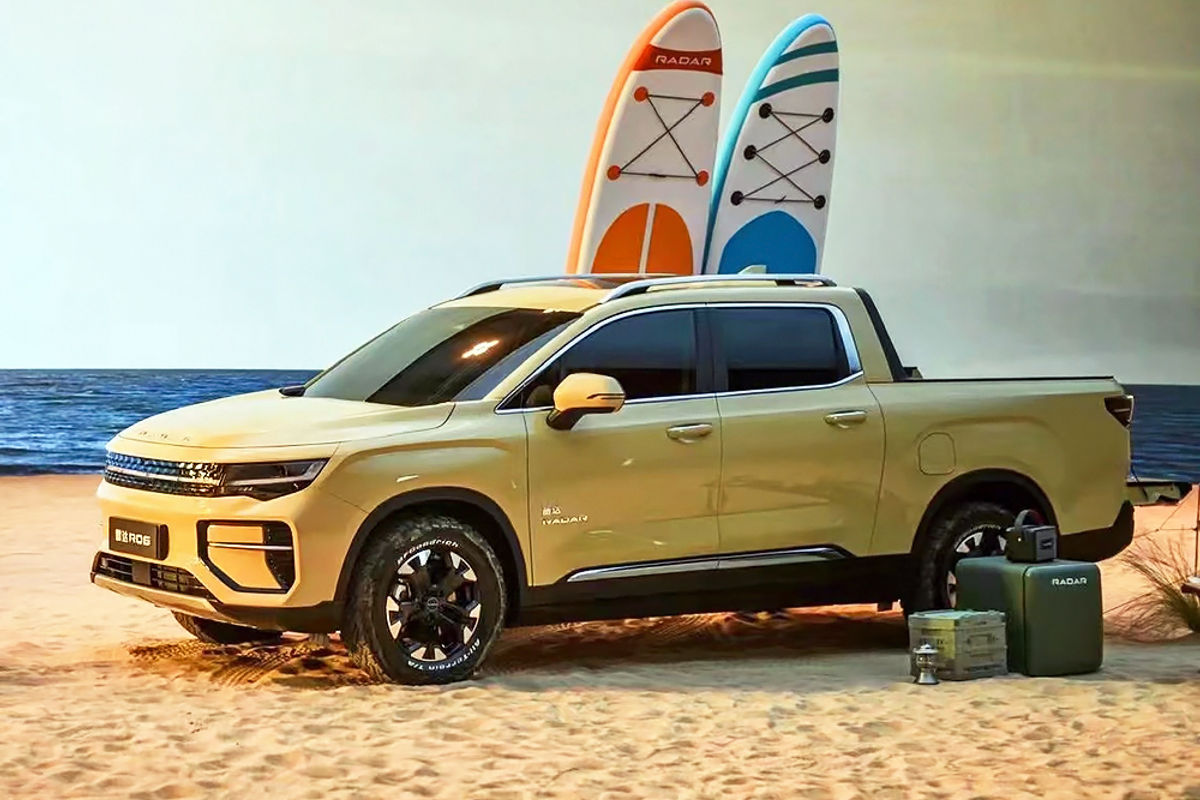
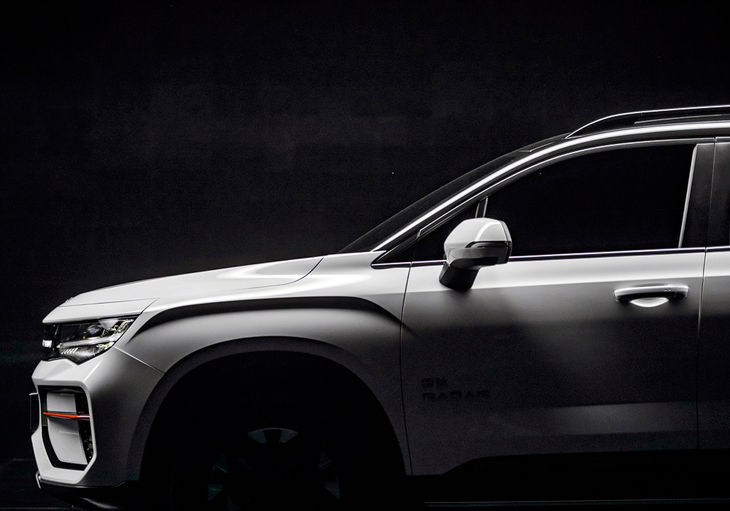
Geely has launched what it describes as a new “pure electric outdoors lifestyle vehicle brand”. The first model from the Radar Auto marque? An electric bakkie called the RD6…
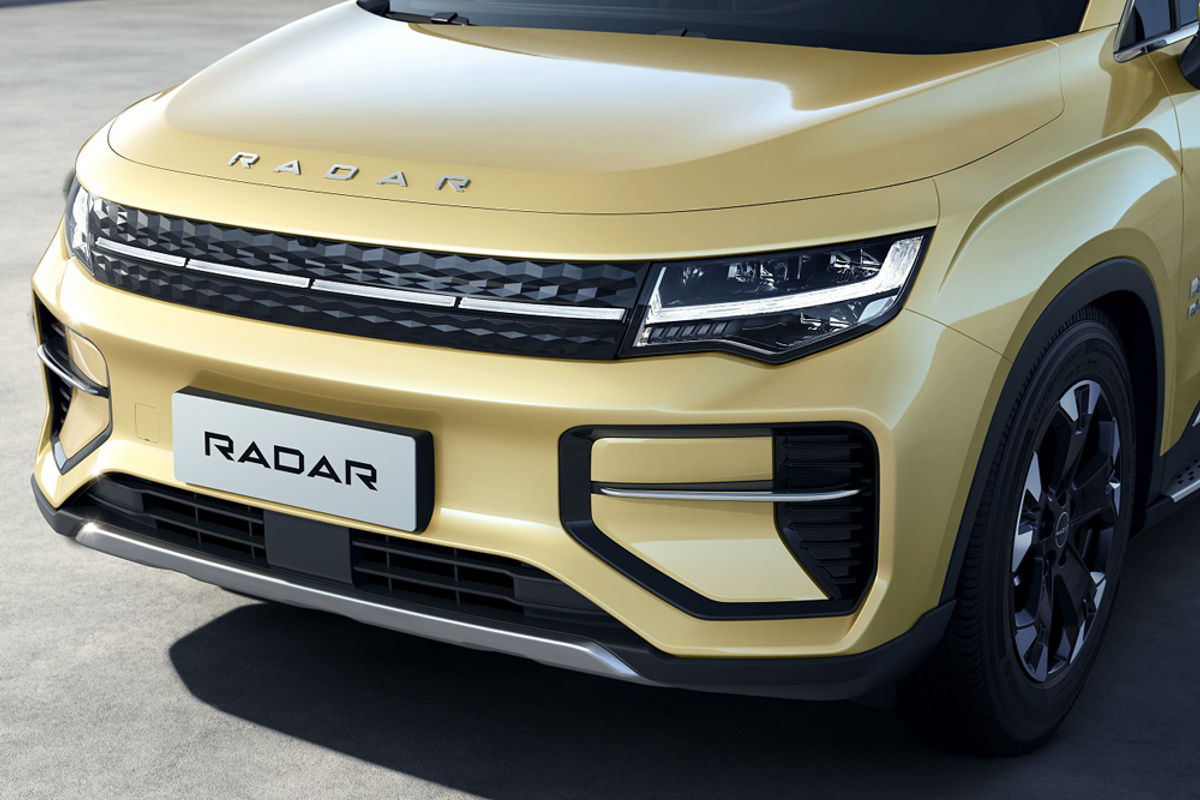
Meet the battery-powered Radar RD6 bakkie, the first product from the Geely Holding Group’s freshly launched electric lifestyle brand.
The Chinese automotive giant says its box-fresh Radar Auto brand will “start with trucks [or what we in South Africa know as bakkies] but is much more than just trucks”.
Billed as an “independent brand within the wider” group, Radar already boasts a dedicated research and development facility in Hangzhou as well as a “fully equipped” electric vehicle (EV) production facility in Zibo, Shandong.
It’s the latter factory that will begin production of the Radar RD6 by the fourth quarter of 2022, before the brand rolls out a “full portfolio of electric lifestyle vehicles”, including bakkies, SUVs, ATVs and “other lifestyle products”.
What do we know about the new Radar RD6?
Geely has yet to reveal any specific details about the Radar RD6 (no, not even its dimensions), but we do know the all-electric bakkie was styled with a little help from veteran British designer Peter Horbury, who was appointed executive vice-president of design at Geely Auto back in 2011. The version shown in the press images features a double-cab body style; it’s not yet clear whether a single-cab version is on the cards (though it seems unlikely considering the “lifestyle” angle of the brand).
From what we understand, the RD6 rides on what Geely calls the Sustainable Experience Architecture (SEA), which is shared with the Smart#1 (remember, Geely and Mercedes-Benz started a joint venture a little while back to revive the Smart marque) and includes both single- and dual-motor options. The Chinese firm says performance figures and range will be announced “in due course”, though a report out of China claims a single-charge range in the region of 600 km.
Geely has, however, confirmed the RD6 will boast a “front trunk” under the bonnet as well as a load bed with “external charging facilities”.
“The Radar product portfolio is focused on electric pick-up trucks and SUVs. This direction challenges us to mix functionality and usability with aesthetic form. Our aim is to let Radar users expand their horizons and explore nature in a sustainable way,” said Horbury.
An auto powerhouse: Geely’s vast collection of brands
Geely has appointed Dr. Ling Shi Quan – an engineering veteran who also helped establish the Lynk & Co brand – as the CEO of Radar.
“Understanding this new market segment and creating a new brand specifically for these unique users has been the highlight of my career so far. Radar Auto will be purpose-driven from the outset and that purpose is to allow users to explore the world in a more sustainable way,” explained Dr. Ling.
Of course, the Geely Holding Group produces vehicles not only under its various domestic brands (such as Geely Auto and Geometry), but also under its overseas subsidiaries, which include Volvo Cars, Polestar, Lynk & Co, Proton and Lotus.
Here’s hoping Geely releases more details about the new Radar RD6 soon…
New Honda CR-V Revealed with Bold Looks
Honda has unwrapped its latest 6th generation CR-V family car! Take a look at what the newcomer from Honda has to offer…
It was just 5 short years ago when Honda released the 5th generation CR-V in South Africa and now an all-new CR-V has been revealed boasting a more rugged and refined design.
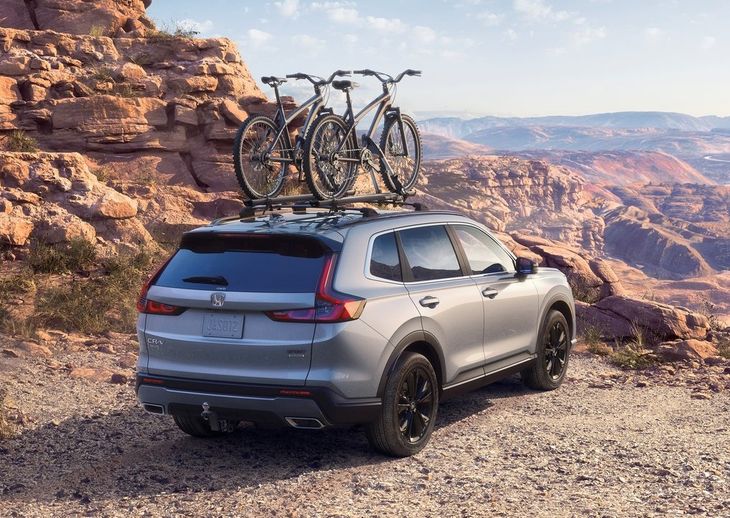
In terms of dimensions, the new CR-V is both 69 mm longer and 13 mm wider than the model it replaces and its wheelbase has grown by 41 mm, contributing to a noticeably more spacious interior. The CR-V now features a bolder upright grille design, similar to that found on the Honda Ridgeline bakkie in the USA and it oddly resembles that of its key rival, the Toyota RAV4. and the grille is flanked by slim LED headlights. Note that Honda has done away with the prominent chrome wing that dominated the front grille of the outgoing generation. In the US, the CR-V’s front-end design will differ depending on the derivative, of which there are 4, including the base EX, EX-L, Sport and Sport Touring. At the rear, the new CR-V gains newly designed tail lights that extend vertically along the edge of the tailgate aperture.
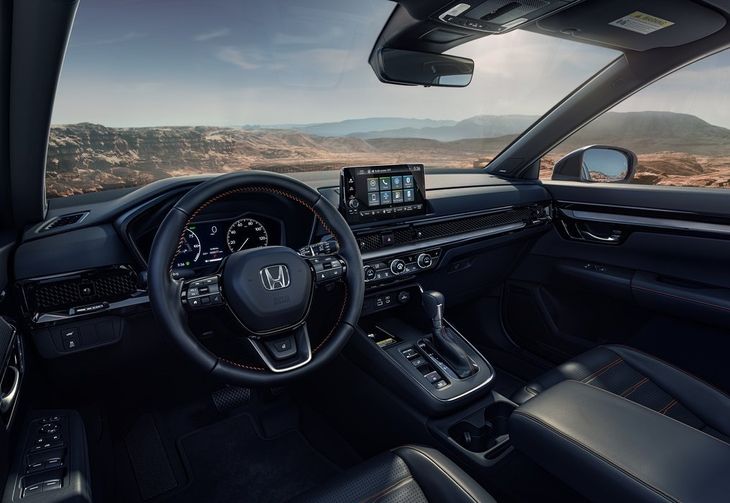
The CR-V’s interior architecture is familiar from the Honda Civic with a 7-inch touchscreen infotainment system and a 7-inch digital instrument cluster. Higher grade derivatives gain a larger 9-inch infotainment system and wireless charging while a 12-speaker Bose sound system is fitted in the CR-V Sport Touring derivative.
The CR-V’s interior execution takes direction form the 11th generation Civic.
Honda Sensing driver assistance and safety features are also fitted as standard across the range too including a new 90-degree wide-angle camera and a 120-degree radar that serves functions such as Traffic Jam Assist, Low-Speed Braking Control with Traffic Sign Recognition, Adaptive Cruise Control with Low-Speed Follow, Lane Keeping Assist, and Blind Spot Information.
What powertrains are offered with the new Honda CR-V?
The CRV’s current 1.5-litre engine has been updated but a new hybrid powertrain has been added to the added.
The base EX and EX-L derivatives are equipped with an updated 1.5-litre turbopetrol engine that offers the same 140 kW as before but with a slight increase of 3 Nm of torque to 243 Nm. This engine is paired with a Continuously Variable Transmission (CVT).
Moving up the range, the CR-V Sport and Sport Touring derivatives feature a new 4th generation two-motor hybrid-electric powertrain comprising a 2.0-litre Atkinson cycle 4-cylinder petrol engine that combines with a pair of electric motors mounted side-by-side to produce total outputs of 150 kW and 335 Nm of torque.
The CR-V’s torsional rigidity has been enhanced and Honda says that the body is now 15% stiffer which has contributed to improved ride, handling and refinement. More so, Honda has also revised the CR-V’s suspension for improved ride quality.
We have reached out to Honda South Africa to find out when we can expect to see the new CR-V in South Africa but its local arrival has yet to be confirmed. We suspect that an arrival in 2023 is likely. As always, we shall keep you updated as soon as more information becomes available.
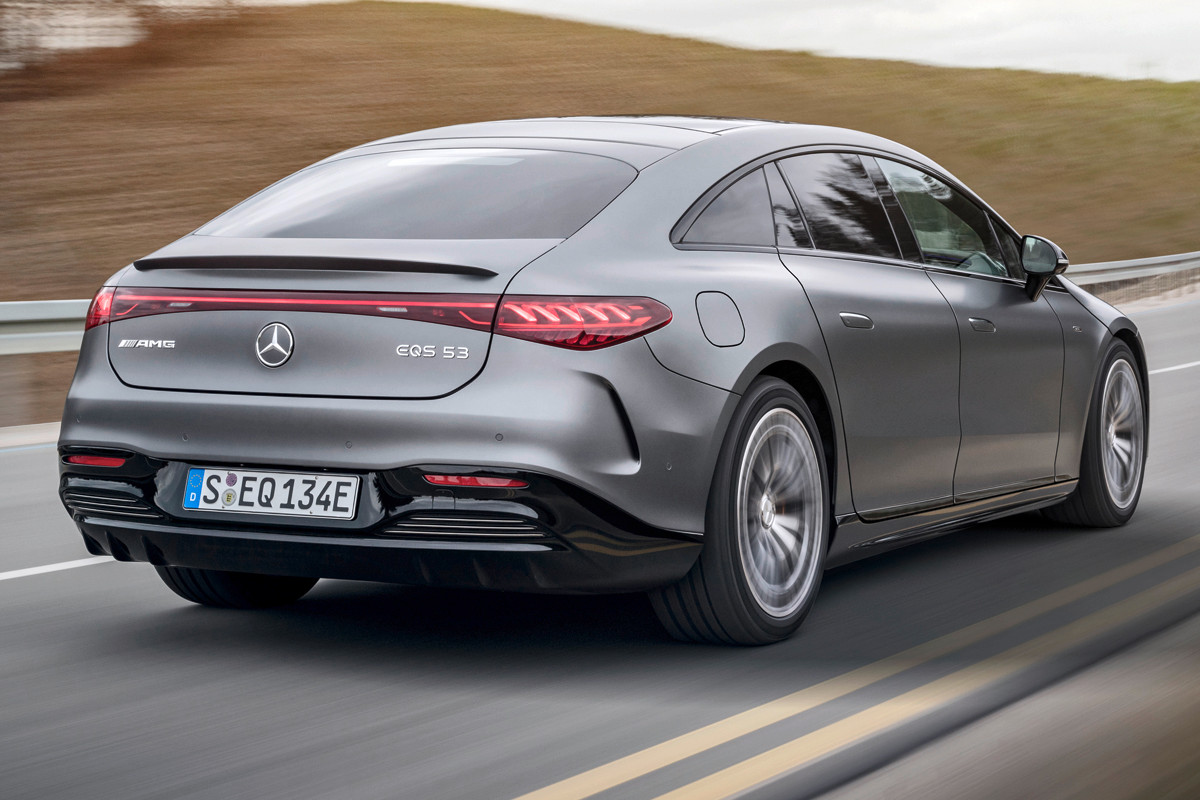
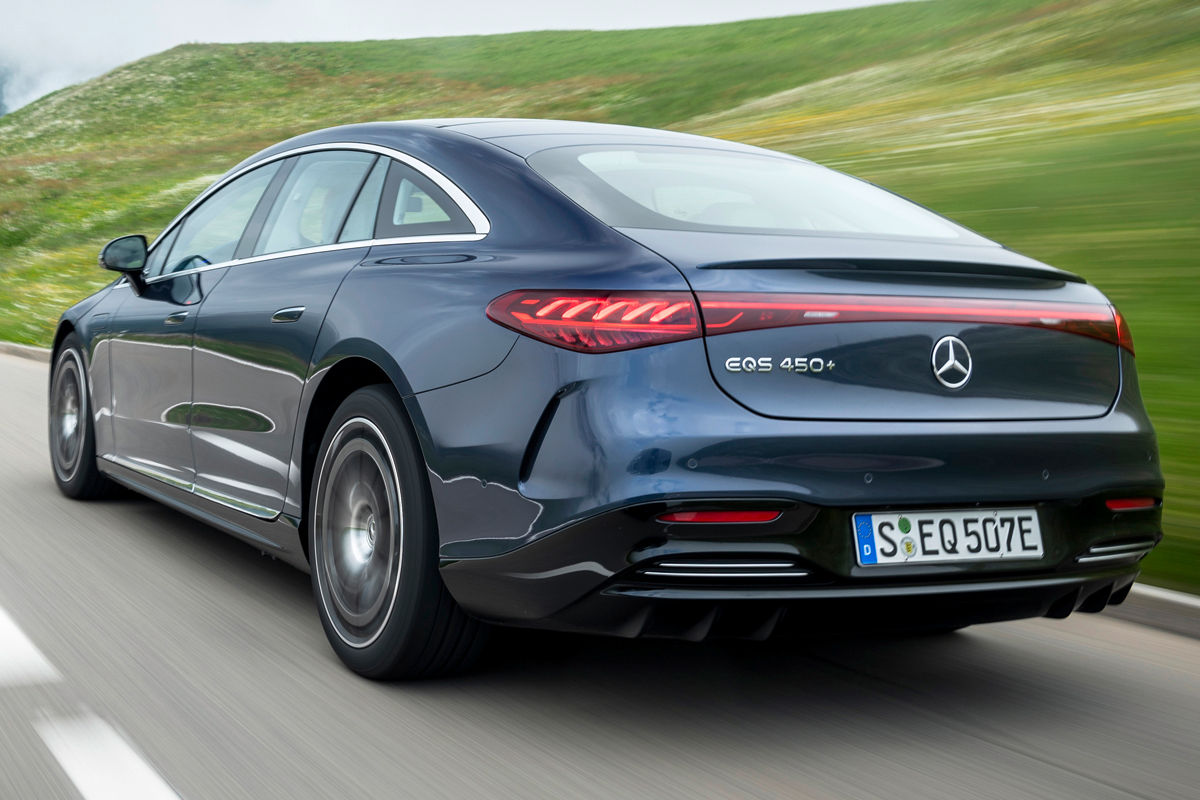
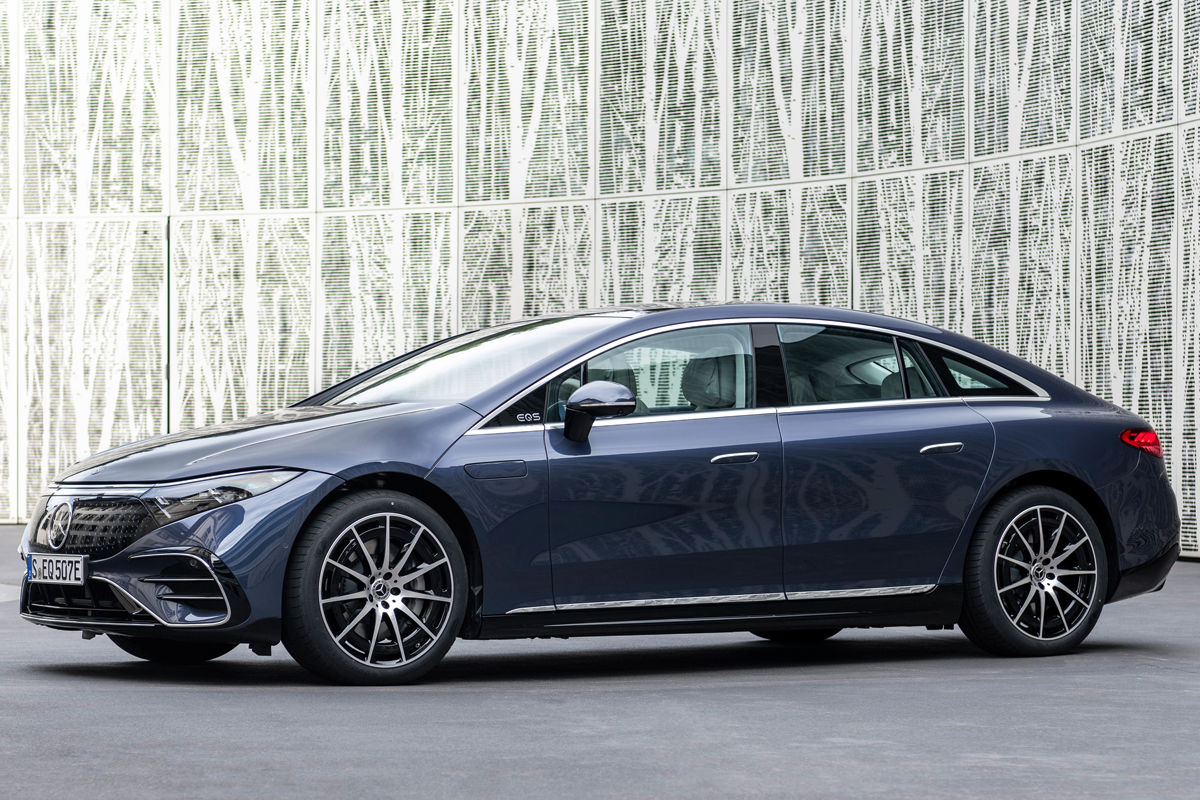
Mercedes-Benz’s flagship fully electric sedan will hit South Africa soon, boasting a claimed range of nearly 800 km. Here’s how much the EQS 450+ and the Mercedes-AMG EQS 53 will cost you…
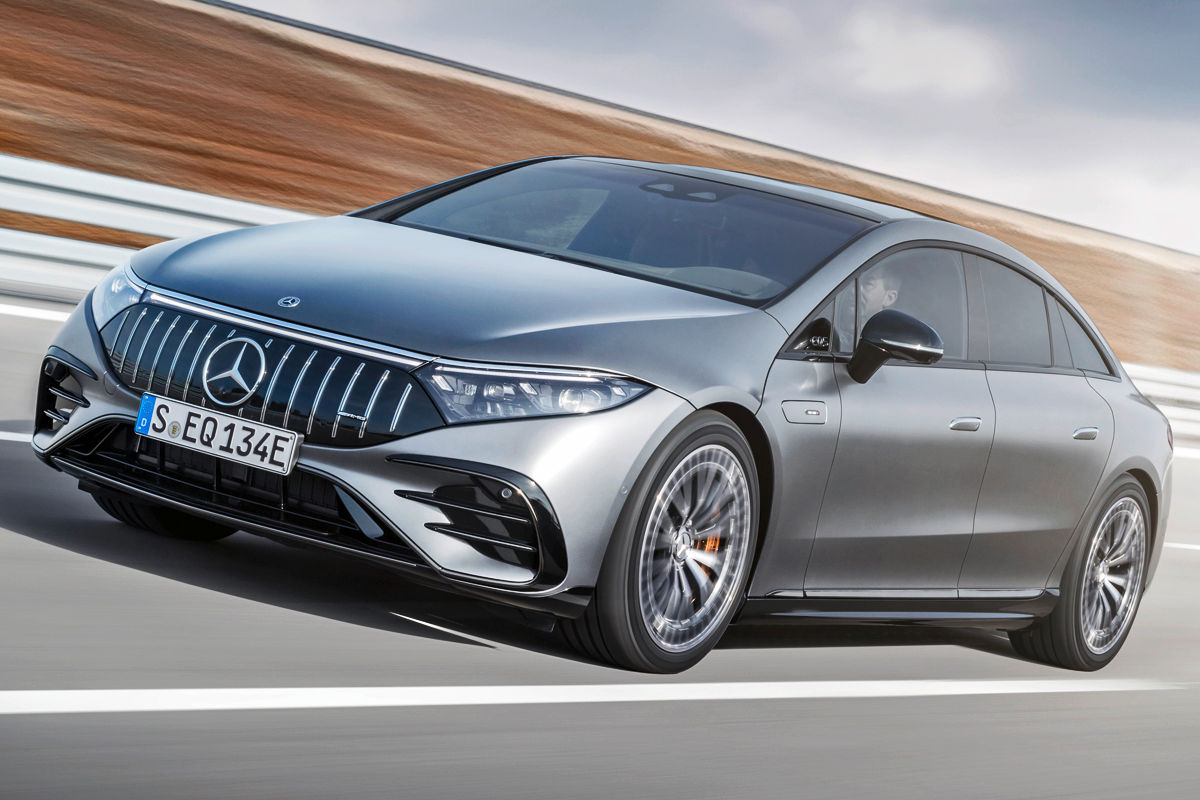
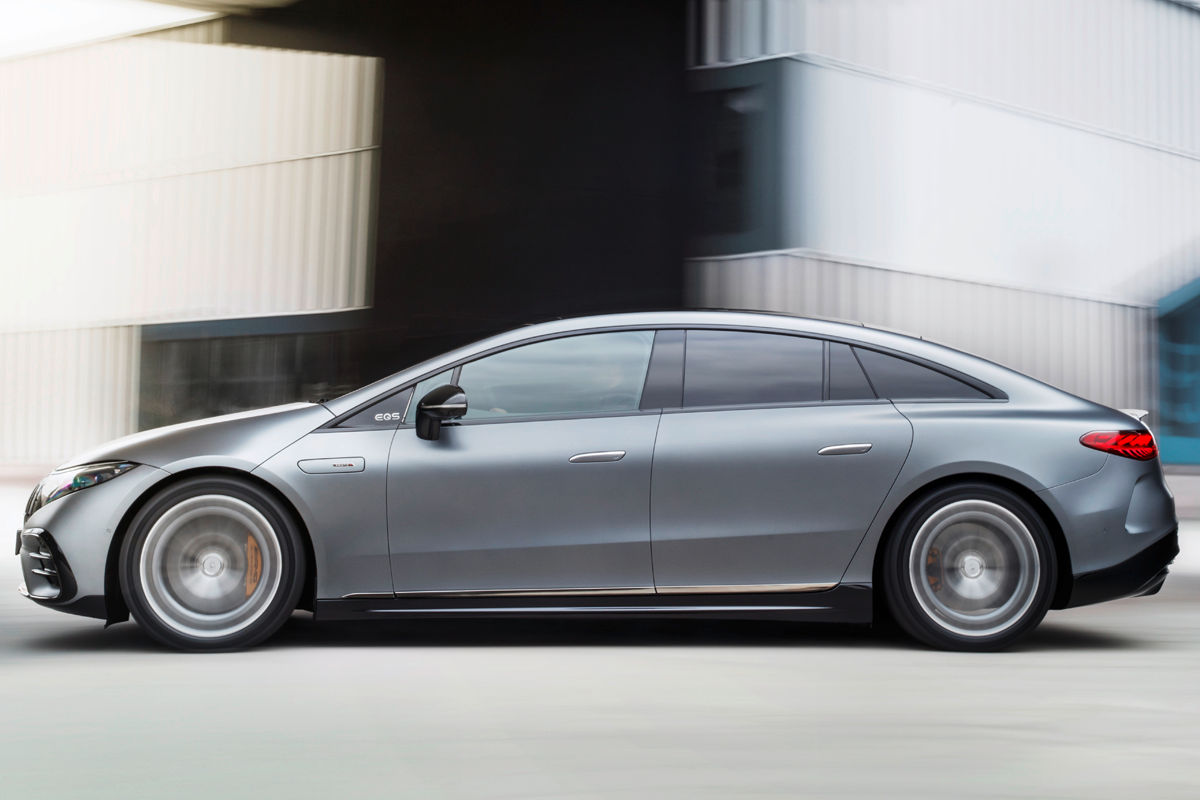
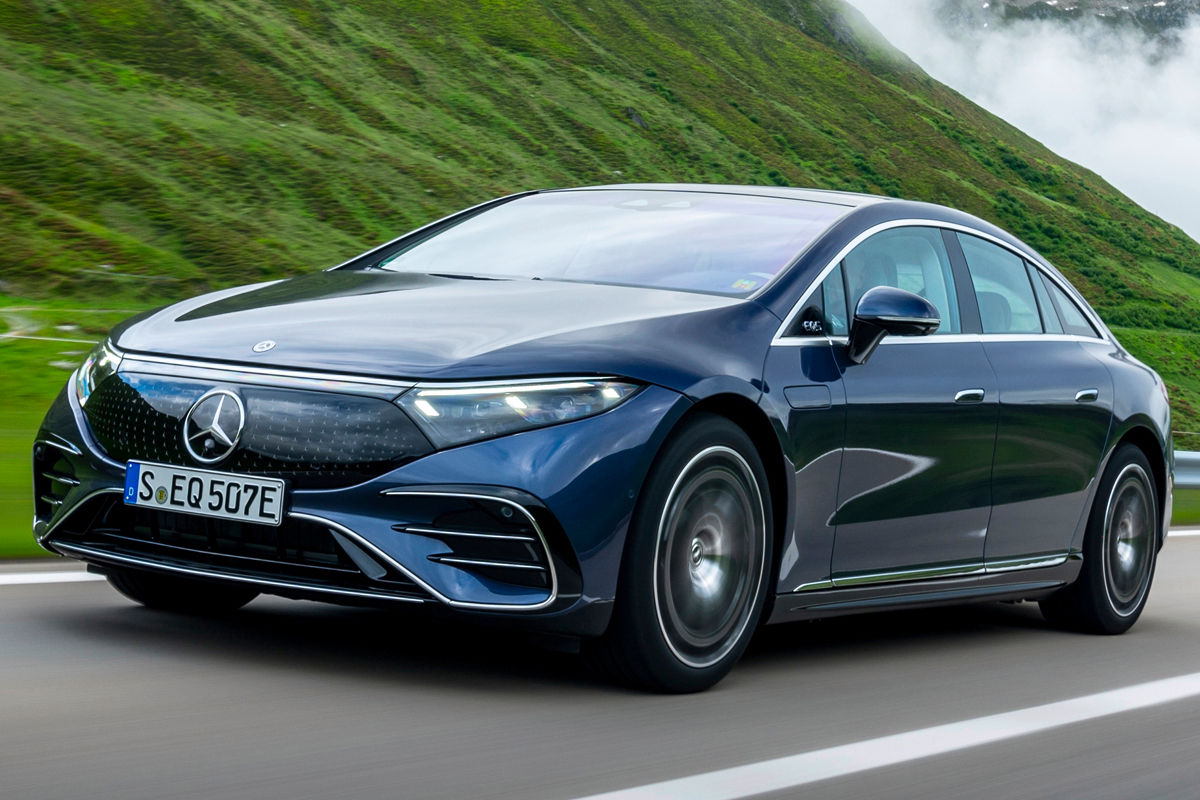
In the market for an electric S-Class? Well, the Mercedes-Benz EQS battery-powered sedan is poised to launch in South Africa in the very near future, and we have pricing for both the long-range EQS 450+ and the high-performance Mercedes-AMG EQS 53 4Matic+.
As a reminder, the EQS sedan (not to be confused with the closely related EQS SUV) was revealed back in April 2021, billed as the first all-electric luxury saloon from Mercedes-EQ and the world’s most aerodynamic series production vehicle.
From what we understand, two derivatives will be available at launch in South Africa (ruling out the EQS 580 4Matic … for now, at least). The EQS 450+ uses a rear-mounted permanently excited synchronous electric motor to generate 245 kW and 565 Nm. This results in a claimed 0-100 kph time of 6.2 seconds and an electronically limited top speed of 210 kph.
The Stuttgart-based firm says the high-voltage battery pack boasts a usable energy content of 107.8 kWh and a claimed range of between 631 km and 782 km. That gives it the longest claimed range of any electric vehicle (EV) currently on the market in South Africa. And the price? Well, the EQS 450+ will start at R2 615 100 (or R2 755 100 when ordered in AMG Line specification). For reference, S-Class base pricing currently runs from R2 341 689 to R2 582 514.
The first battery-powered production model from AMG
The second variant on the menu for deep-pocketed local EV enthusiasts is the Mercedes-AMG EQS 53 4Matic+, which starts at a heady R3 410 100. This Affalterbach-fettled version was unwrapped on the global stage in September 2021 as the first battery-electric AMG production model, and features a claimed single-charge range of between 529 km and 586 km (using the same battery pack as the 450+ model).
AMG’s high-performance battery-powered sedan features an electric motor on each axle for peak outputs of 484 kW and 950 Nm. However, specify the AMG Dynamic Plus package (for an additional R82 000, of course) and maximum power increases to 560 kW, with peak torque climbing to a whopping 1 020 Nm (both in Race Start mode).
The result is a 0-100 kph claim of just 3.4 seconds (provided the vehicle has a battery charge level of at least 80%, that is) and a top speed limited to 250 kph. If you don’t stump up for the optional package, the sprint time increases to 3.8 seconds and the top speed drops to 220 kph.
Various optional extras for the Mercedes-Benz EQS
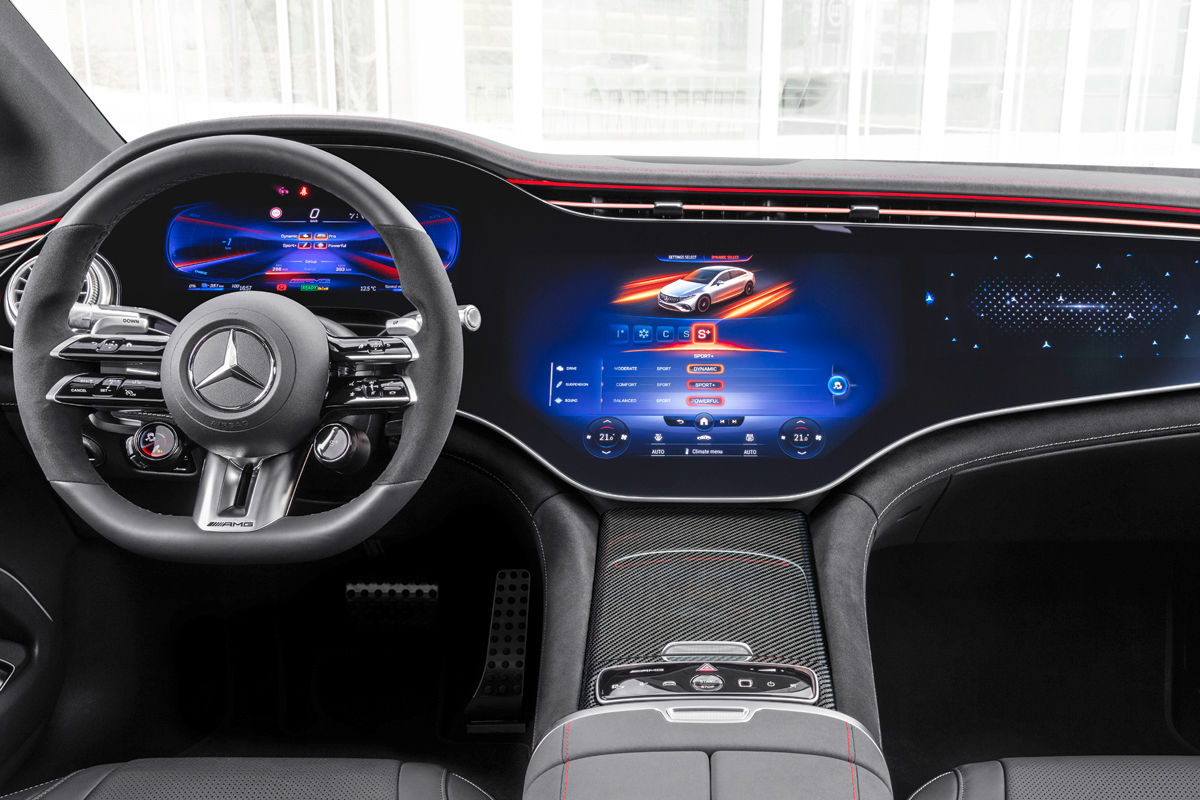
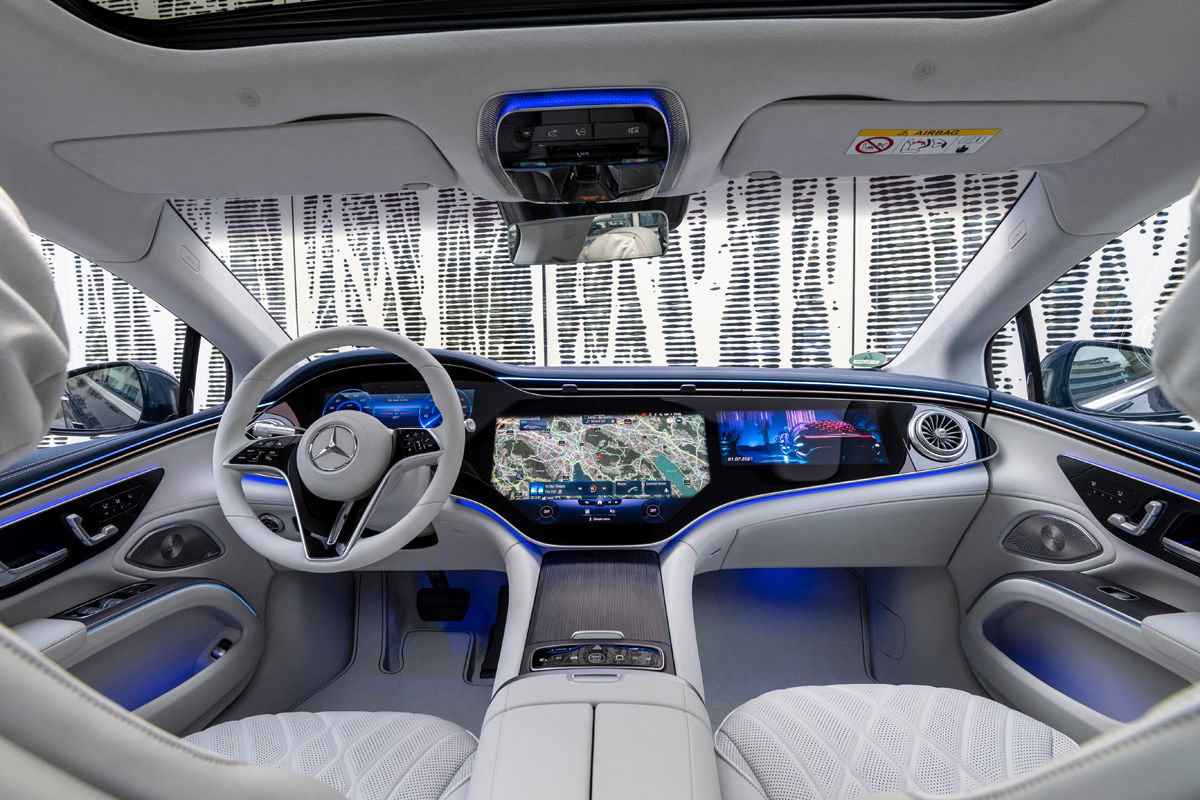
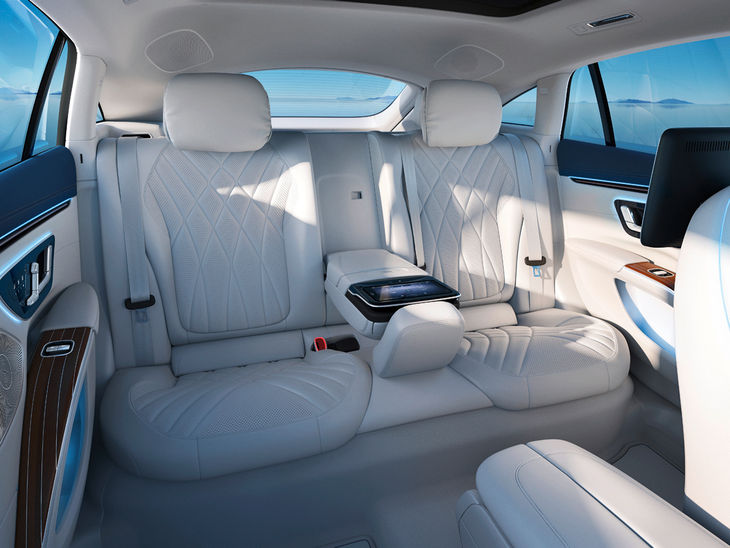
Despite the fact the all-electric luxury saloon will ship standard in South Africa with a lengthy list of standard kit, there are many optional extras on the table. This is an electric S-Class, after all. In the case of the EQS 450+, the list of paid extras includes items such as the R31 000 Driver Assistance Plus package, the R28 000 rear-axle steering system, a R26 000 Burmester surround sound system, various upgrades for the rear quarters and the R155 000 MBUX Hyperscreen (complete with a fingerprint scanner).
While the Hyperscreen arrangement is standard in the AMG-badged EQS 53 4Matic+, there are other options on offer for this model, including AMG ceramic brakes (R90 000), red-painted brake callipers (R14 500) and a range of AMG-specific two-tone leather upholstery combinations (R20 000).
How much does the Mercedes-Benz EQS cost in South Africa?
Applying for Car Finance: Why an acceptable credit score is important
Buying a vehicle is a long-term decision and we want to help you make an informed one with our Street Smart series, brought to you by Absa Vehicle and Asset Finance. In this episode, Absa’s Fulufhelo Mandane and Hatfield VW Melrose’s Vleis Manyama explain the importance of getting and maintaining an acceptable credit score.
PARTNERED ARTICLE
Given South Africa’s changing economic conditions, household budgets are under pressure to meet their financial obligations. This could lead to changes in individuals’ credit profiles. Cars.co.za Social Media Specialist Kgahliso Nyamane asked the Head of Absa Vehicle and Asset Finance Sales, Fulufhelo Mandane and the Dealer Principal of Hatfield VW Melrose, Vleis Manyama to tell us more about how these changes could affect your credit score and what you can do to protect your credit profile.
What is a credit score?
MANDANE: A credit score indicates your ability to undertake credit, and the ability to honour the accompanying terms and conditions. Banks and other lending institutions use credit scores as part of the credit assessment process to decide how financially dependable customers are and whether or not to grant them credit. A credit score is primarily based on information on a credit report, information typically sourced from credit bureaus.
Factors that influence your credit score include:
The length of your credit history
The number and type of credit products you own
How you have managed your respective loans and credit facilities in the past and
Your payment history (i.e. whether or not you pay on time)
Why is a good credit score important?
MANYAMA: Maintaining a good credit score shows lenders that you use credit responsibly and are more likely to pay back the money you want them to lend you.
Your credit score affects the offer you receive on your vehicle finance application. A poor score could result in you not being considered for a loan, or paying pack higher interest rates.
Which factors have a negative impact on your credit score?
MANDANE: Factors that play a role include:
How much debt you currently have or owe creditors
Whether you have a limited credit history or no credit history
Whether you have defaulted on payments, have been in arrears or had legal proceedings against you or
Whether you have used your full credit limits (for example on your Credit Card)
What steps can you take to improve your credit score?
MANYAMA:
It’s important to review your budget and ensure there are sufficient surplus funds. This will help with accommodating an interest rate increase which would impact monthly loan repayments if you opted for a variable interest rate. (A variable interest rate fluctuates over the term of the loan in line with the prime lending rate)
Keep expenses to a minimum and expenditure low to accommodate economic downturns.
Increase your savings pool for unexpected expenses.
Reduce your take-up of additional credit to allow for more surplus funds to pay for existing credit or save for unexpected expenses.
Manage your credit score efficiently and ensure all debts are repaid timeously to prevent a negative impact on your credit profile.
Consider an automated debit order known as DebiCheck, which is linked to your salary date so that there’s an automatic payment to the bank immediately after your salary reflects in your account. This could help prevent your debit order from returning unpaid. Missing a payment on your vehicle, for example, will affect your credit record.
And also remember to contact the bank for assistance if you encounter financial distress
For extra information on how you can become a better consumer, keep a lookout for more episodes from our Street Smart series and be sure to visit the Absa blog.
Absa’s Fulufhelo Mandane discusses what you need to consider before you start shopping for a vehicle, the costs of ownership and your various finance options. Absa First-time Buyer Guide to Vehicle Finance
Absa’s Gordon Wood details how the new Aftermarket Guidelines, which were introduced in the motor industry last year, affect you as a vehicle owner. Absa’s Guide to Responsible Vehicle Ownership
With rising fuel prices hurting the pocket, an electric car could help alleviate some of those financial woes. However, the Electric Vehicles (EVs) currently available in South Africa aren’t exactly affordable, but Kia South Africa has a plan…
Right now, there’s simply no electric car offering that’s priced within reach of the average South African motorist. The cheapest is the Mini Cooper SE at around R700 000, but its limited range of 200 km restricts it to the confines of the city. It would make a fantastic runabout / second car. Other electric offerings we’ve sampled have impressed us, but nearly all of them around priced comfortably over R1 million.
Where are the more affordable and mainstream models from other brands? One brand which is quietly working behind the scenes is Kia. While nothing is immediately confirmed, Kia South Africa admitted that one model has passed South African homologation. There was no confirmation on what that model is either, so now we can play the speculation game.
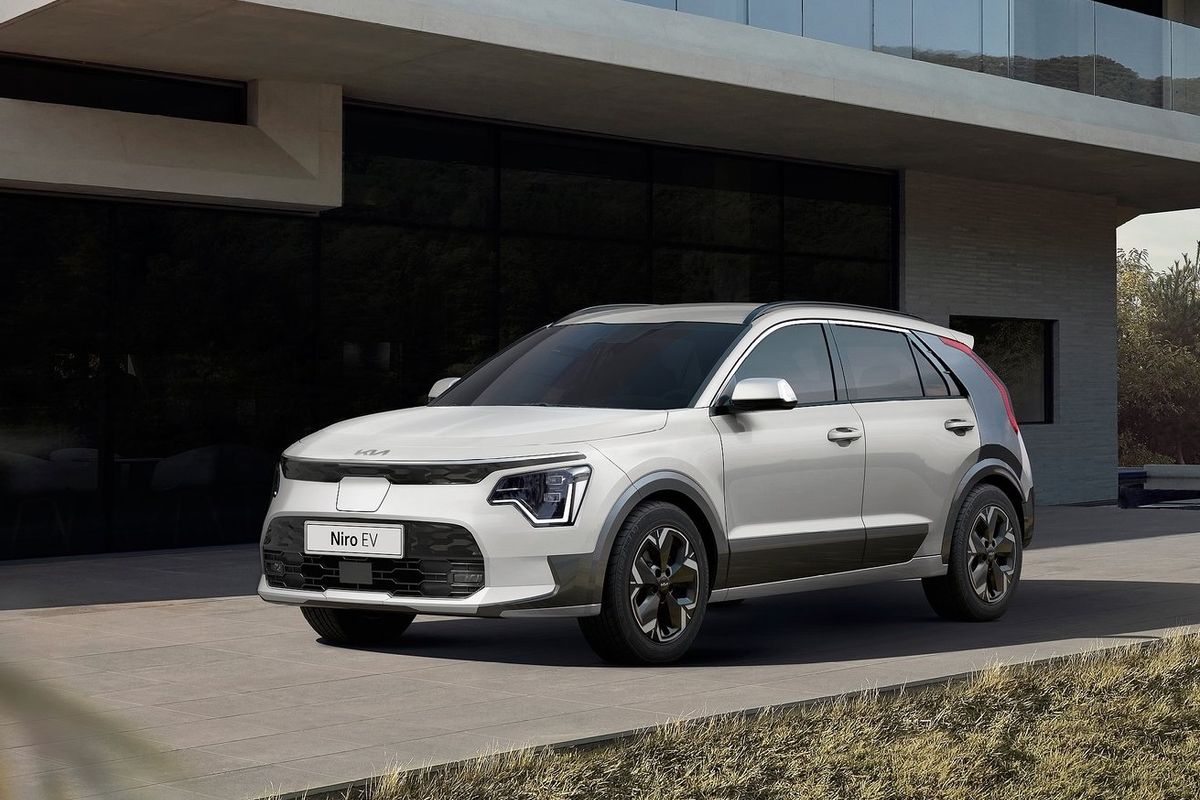
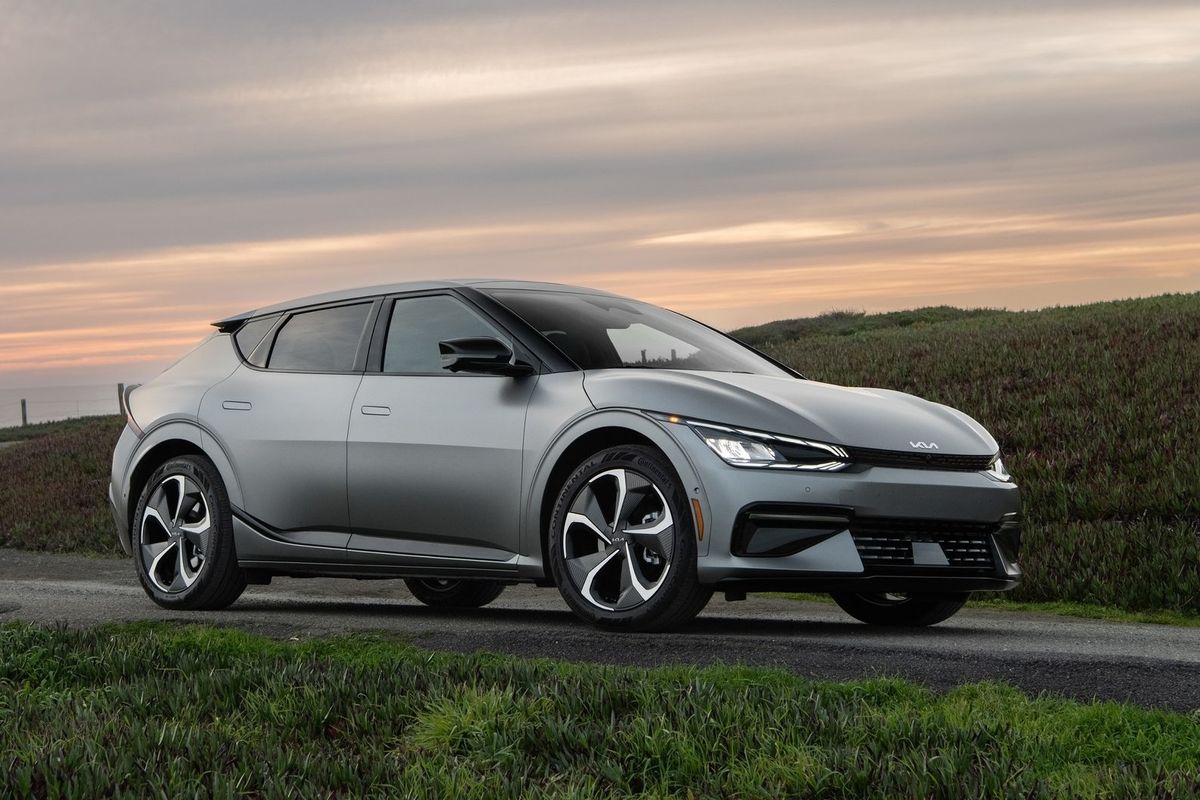
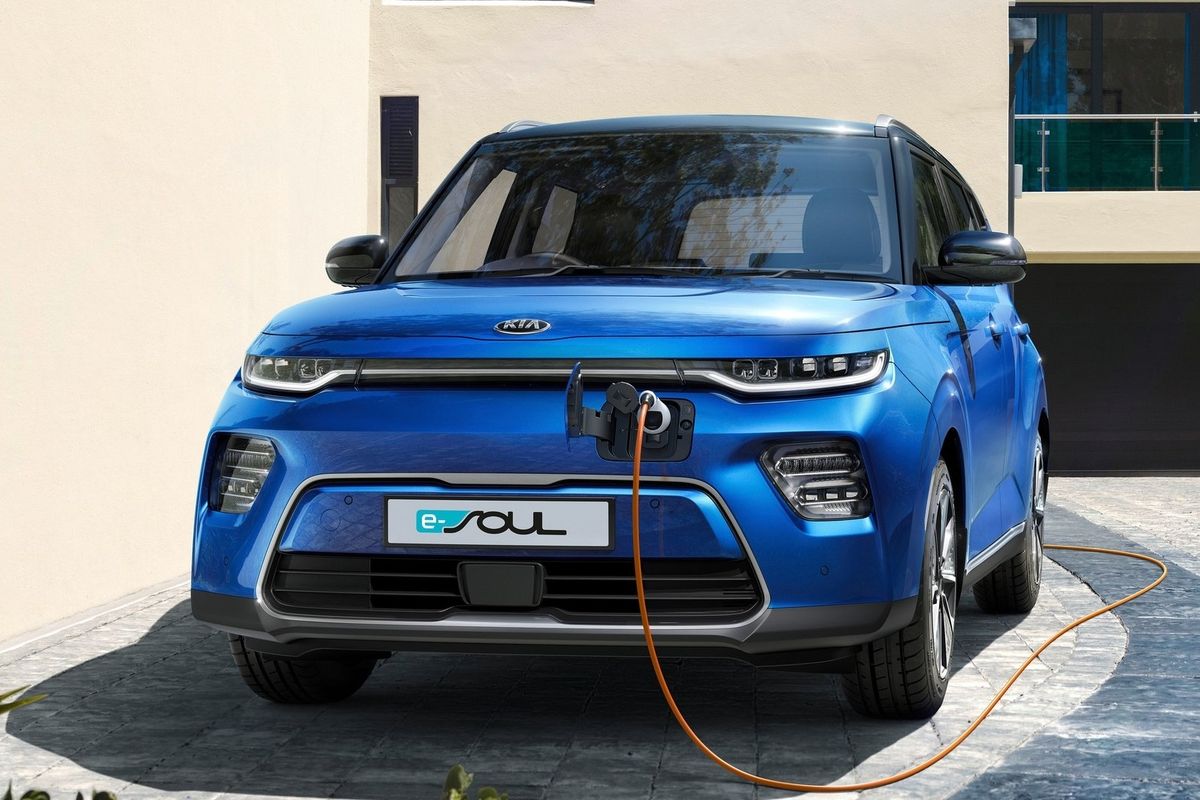
Based on what’s available in right-hand drive, we’ve narrowed it down to the Kia e-Soul, Kia Niro and Kia EV6.
Which electric Kia vehicles could come to SA?
Kia e-Soul
The eccentrically-designed Kia Soul is available overseas in electric form. Customers have a choice of a long-range (64 kWh) or a standard-range (39.2 kWh) powertrain. The 64 kWh comes with a 150 kW / 395 Nm motor, and is good for a range of 452 km based on the WLTP cycle.
The standard-range 39.2 kWh comes with 100 kW and 395 Nm and can go up to 276 km on a single charge. Both are capable of DC fast charging and when connected to a 100 kW fast charger, the battery will go from 20% to 80% in around 42 minutes.
The Kia e-Soul looks, on-paper at least, like a viable electric offering that shouldn’t be priced into six figures. What if money was no object? Read on….
Kia EV6
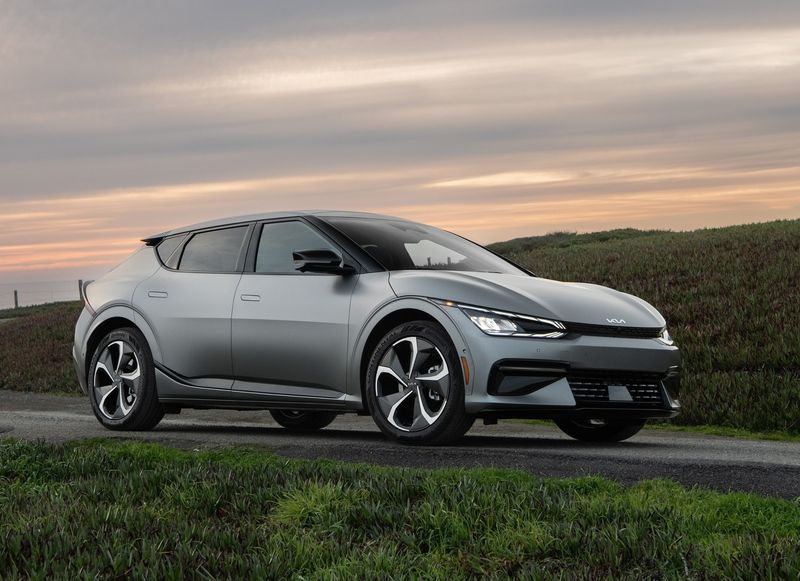
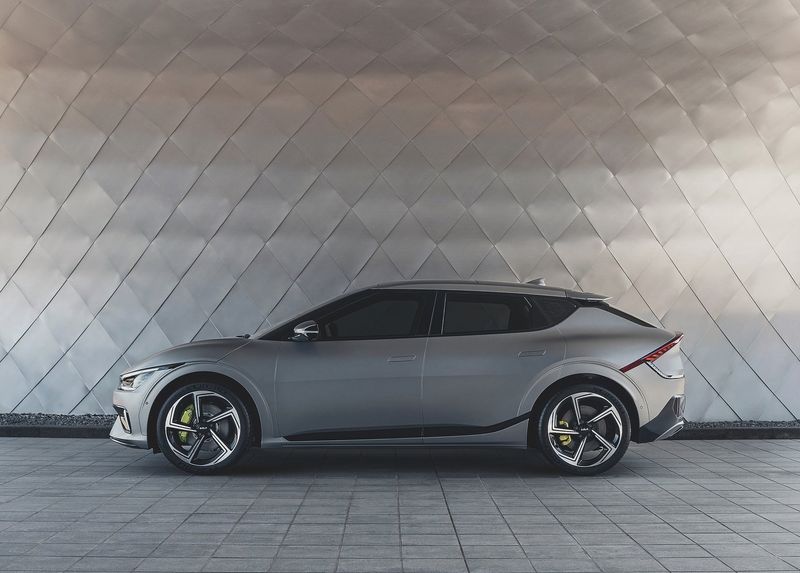
The strikingly-styled Kia EV6 is the current European Car of the Year for 2022 and it’s arguably the most advanced electric offering from the Korean brand right now. Under the skin, there’s a brand-new EV-focused platform, 800V charging capability (10-to-80 % battery charge in just 18 minutes), and customers can choose from all-wheel drive or rear-wheel drive. There’s even a performance GT version that will hit 100 kph in under 4 seconds!
Even the entry-level EV6 boasts impressive numbers like outputs of 166 kW and 350 Nm, 77.4 kWh battery, a claimed range of over 500 km based on WLTP and its good for a 0-100 kph in 7.3 seconds. The dual-motor all-wheel drive EV6 is faster, with 236 kW and 605 Nm and sprints to 100 kph in 5.2 seconds.
Kia Niro
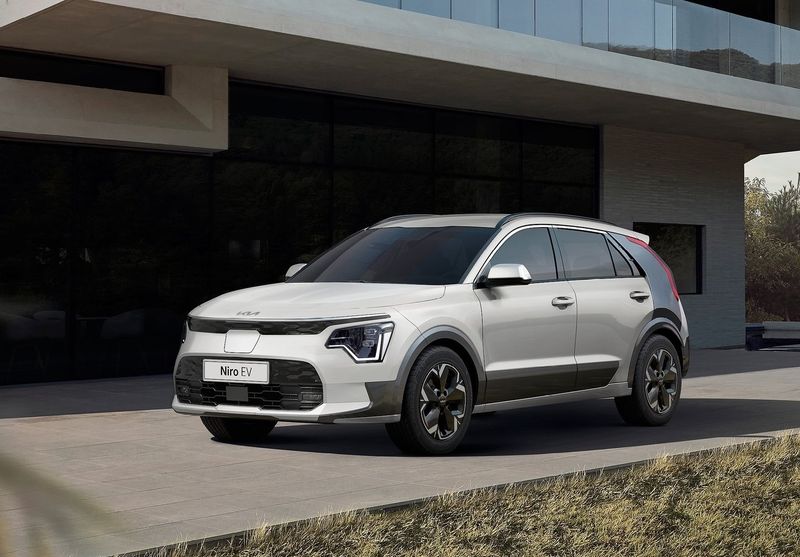
As cool and as desirable as the Kia EV6 is, we think its punching right into very expensive territory and it’s perhaps not the model that Kia SA is looking to launch. Enter the Kia Niro.
Cleverly, its packaging can support conventional internal combustion engine, hybrid, plug-in hybrid powertrain or full electric.
The Kia Niro EV features a 64.8 kWh battery and a 150 kW motor. Fast charging is supported and you’ll go from 10-80% in under 45 minutes, with a maximum charging capability of 85 kW. A range of around 400 km is quoted. Given our recent pleasant experience with a Volvo plug-in hybrid (PHEV), we reckon the Niro PHEV is also worth a look.
Its party trick is a 1.6-litre petrol engine mated to a 62 kW electric motor, giving it a total outputs of 132 kW and 264 Nm. It has an 11.1 kWh battery and a pure electric range of just over 50 km. The real benefit is the low fuel economy thanks to the two engines working togther.
Final Thoughts
Despite the inane taxation of electric vehicles which makes them more expensive than their petrol/diesel counterparts, progress is inevitable as more brands take the plunge and bring EVs to South Africa.
We can’t wait to see what Kia SA rolls out in the near future, (we suspect its either Soul or Niro) and hope that Kia is joined by a few more carmakers.
Whick one of the above electric Kia’s would you like to see in South Africa?
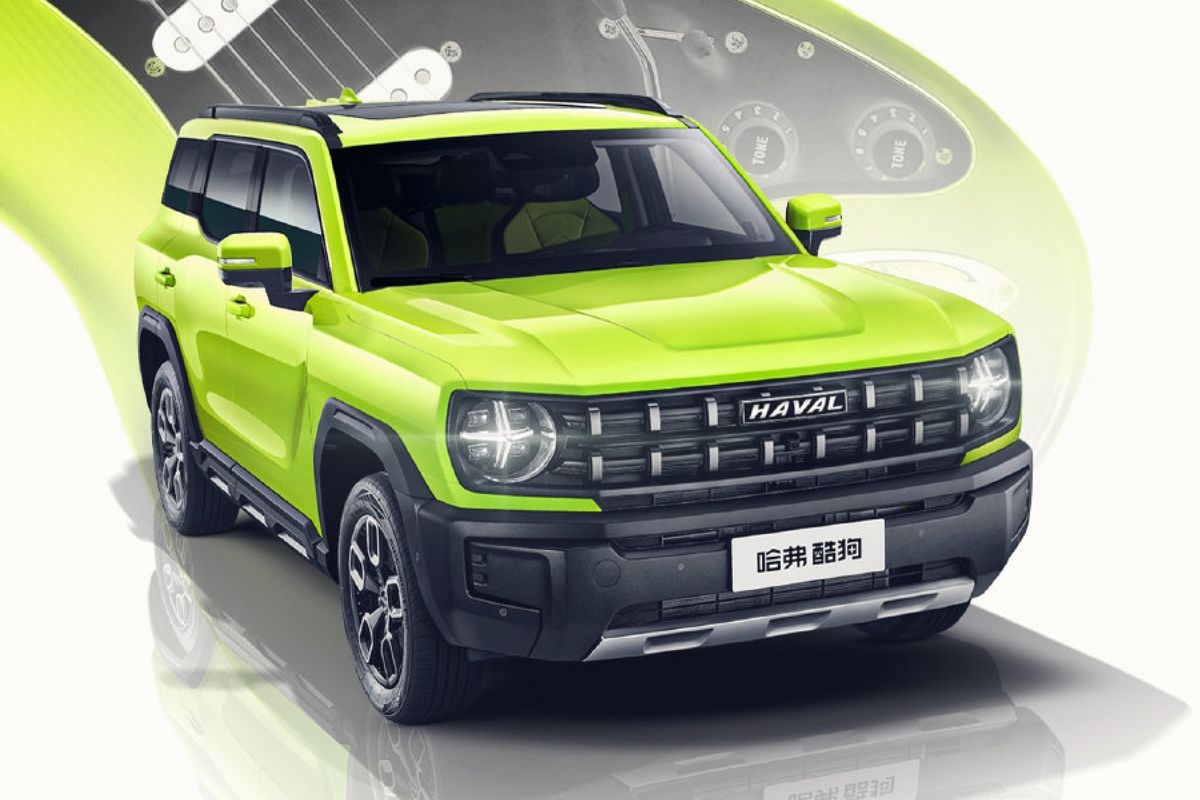
Meet the new Haval Cool Dog, an offroad-biased SUV with rugged styling.
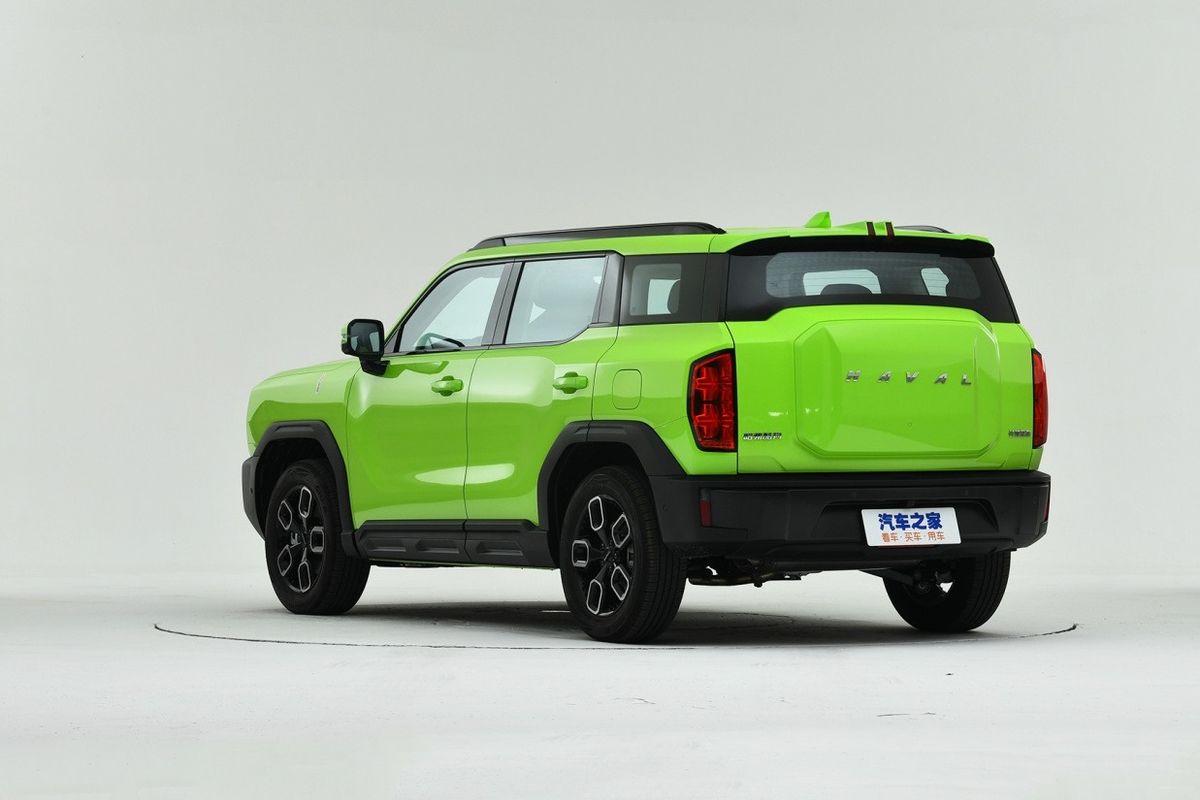
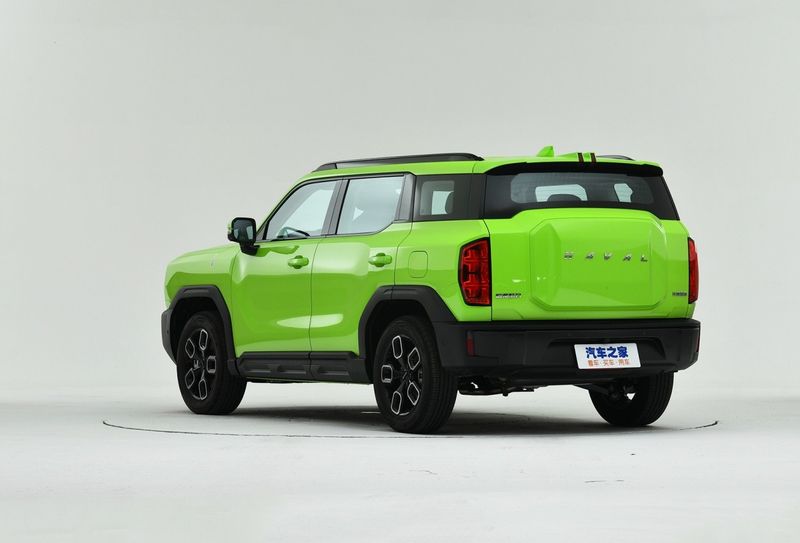
Remember the mega-cool Haval Big Dog, a rival to the Toyota Land Cruiser Prado? Well, Haval has made a smaller version, positioned below and it too features rugged offroad styling.
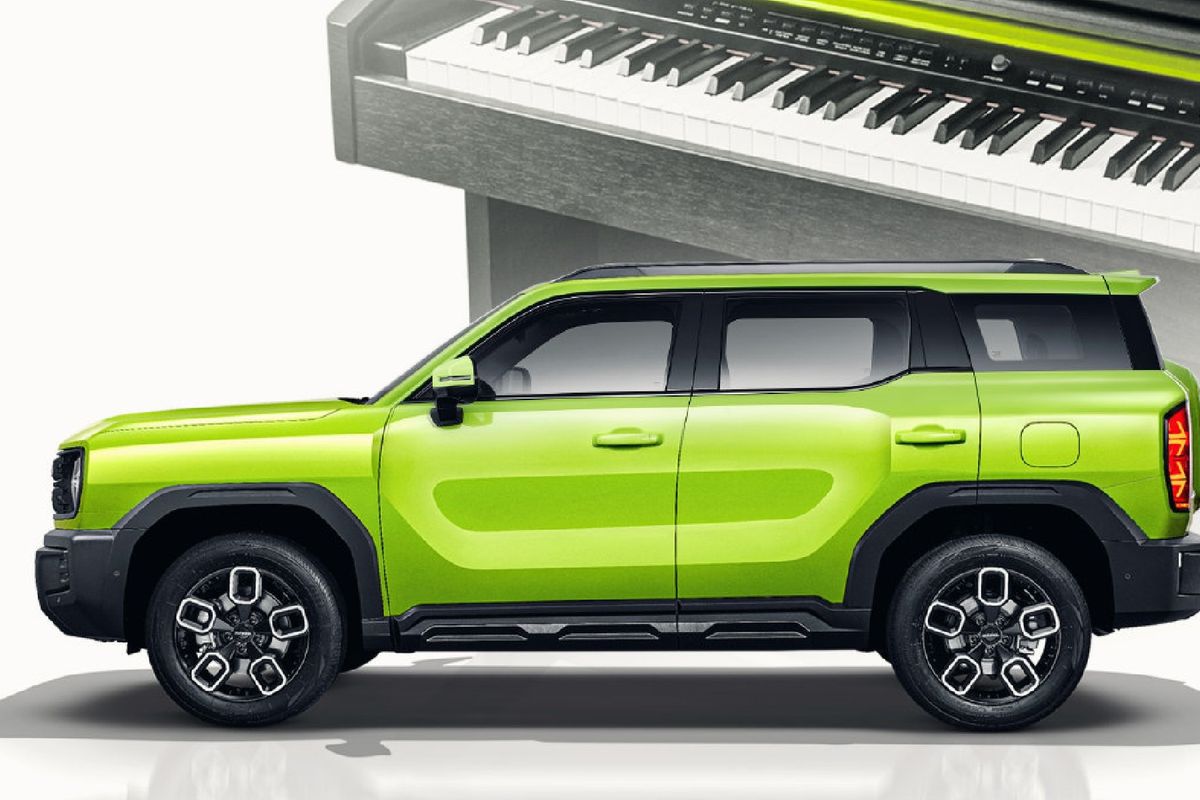
This is the Haval Cool Dog and with dimensions of 4 520 mm, 1 875 mm, 1 745 mm and a wheelbase of 2 710, you can think of it as similarly sized to the Kia Seltos and Toyota Corolla Cross. It could also be seen as a rival to the offroad lifestyle crew of the Jeep Renegade and Suzuki Jimny.
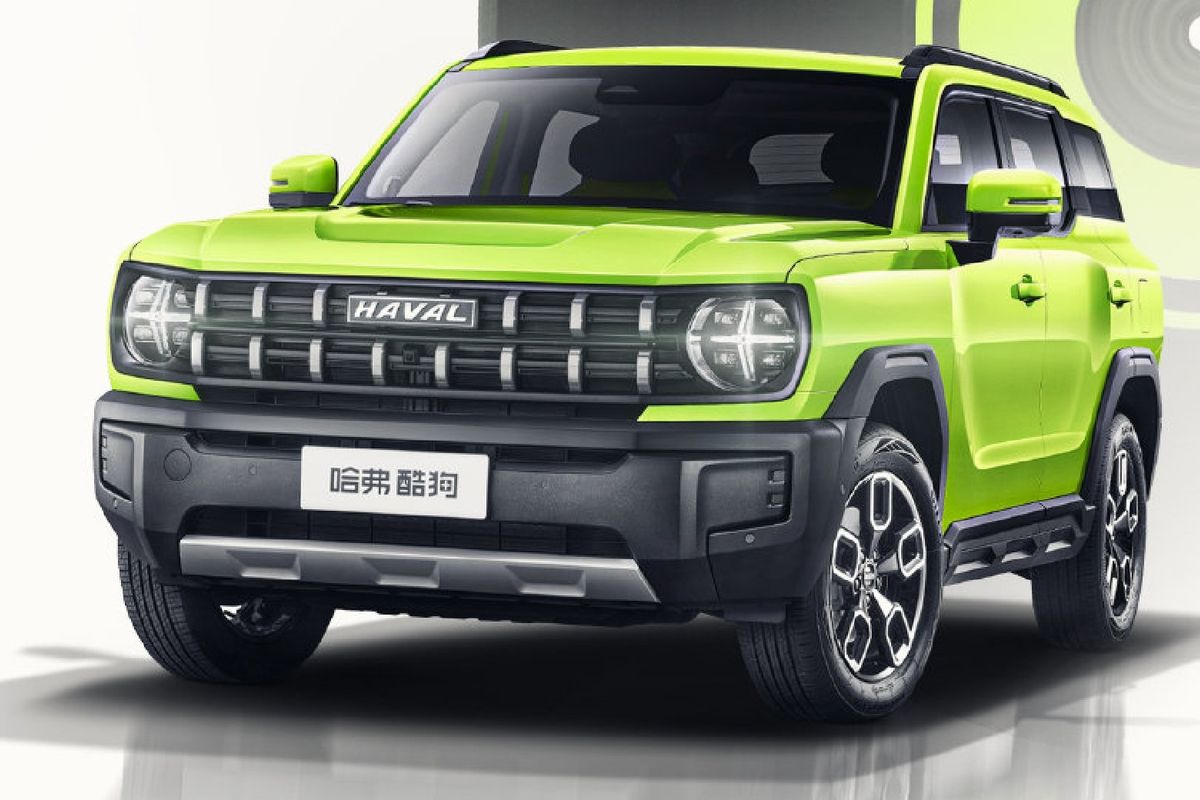
It just looks so damn cool, with design elements that really look the part. There are round LED headlights, a bold box-shaped grille, and aluminium-style skidplates. The ground clearance and box-shaped wheel arches really give it that old-school go-anywhere stance.
Styling-wise, the Cool Dog integrates a few styling features from the popular Big Dog although the two SUVs are not sharing any body panels. At the front, the round LED headlights are enclosed within the boxy-shaped grille, for a rugged and aggressive look in combination with the unpainted bumpers and the aluminum-style skidplates.
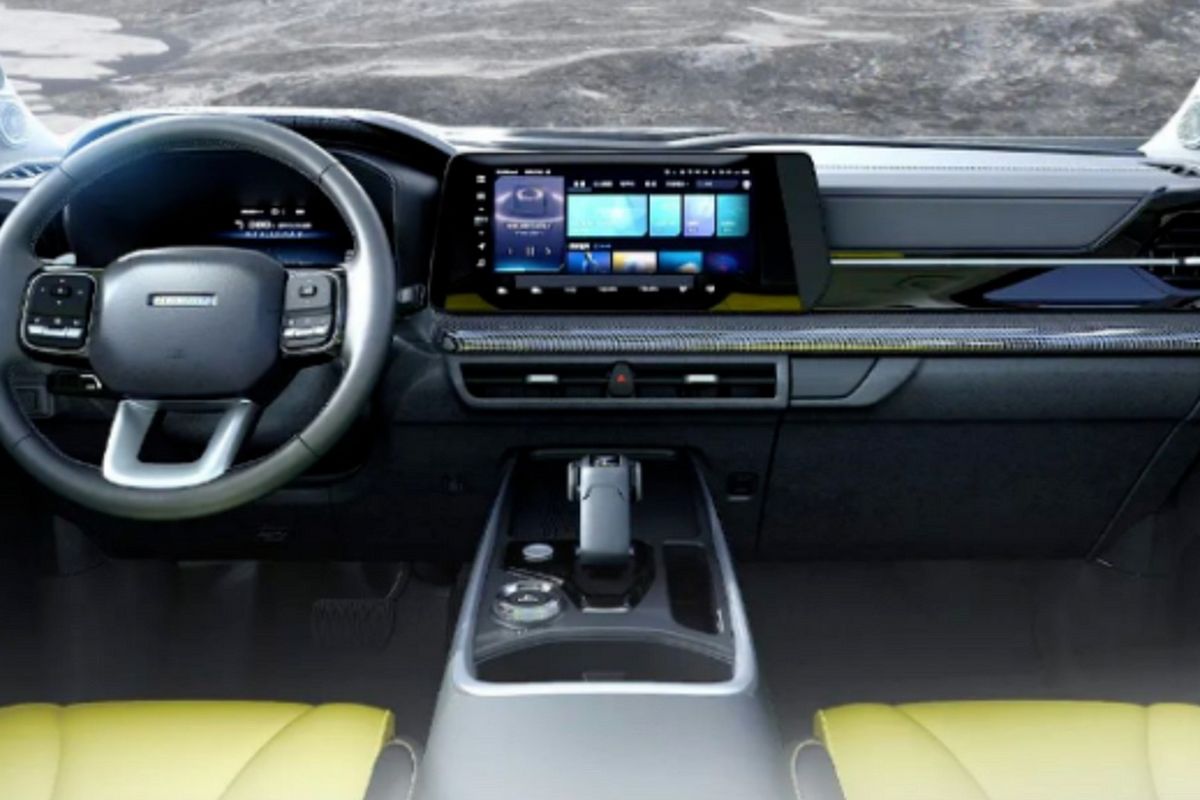
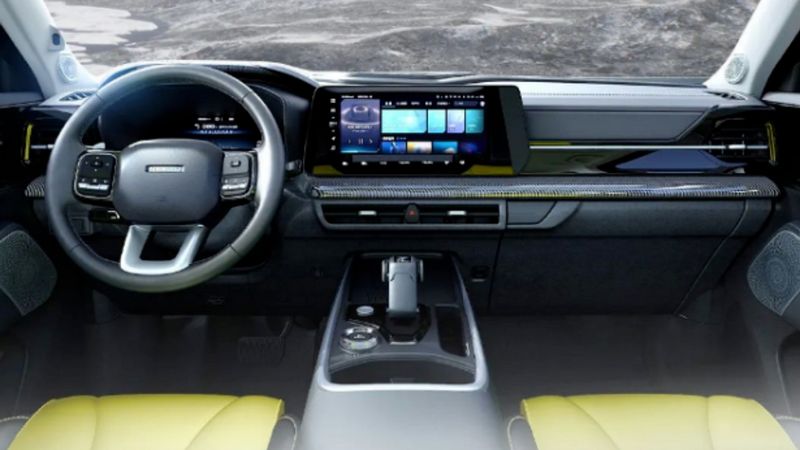
The cabin is far from old-school however, and while it doesn’t look as advanced as some of the other Haval products we’ve seen of late (check out the epic Haval H6 interior), it still feels like a fairly modern place to hang out. There’s a digital instrument cluster, 12.3-inch infotainment screen, upmarket steering wheel and an 18-speaker audio system powered by JVC. Haval says the higher trim levels get 2-tone leather seats as well as some piano black and carbon fibre interior accents.
Lurking inside that muscular bonnet is a 1.5-litre turbocharged 4-cylinder petrol engine with 135 kW and 275 Nm. Haval says customers can choose from either front-wheel drive or four-wheel drive. A 7-speed dual-clutch transmission is standard.
The Haval Cool Dog will be hitting the Chinese showrooms before the end of the year. We understand that Haval South Africa has been studying the Big Dog for a possible market introduction at some point. We also know that hybrid versions of the Jolion and H6 are due to be launched before the end of the year, along with the striking Haval H6 GT.
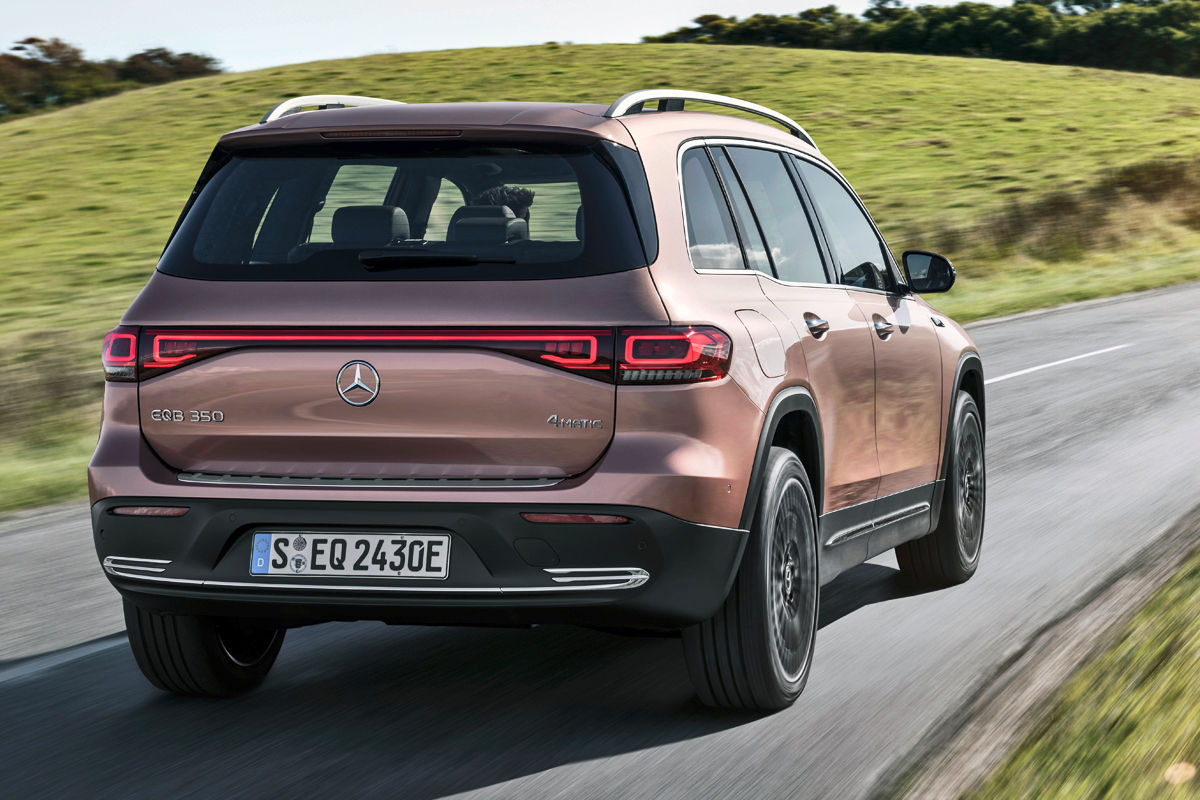
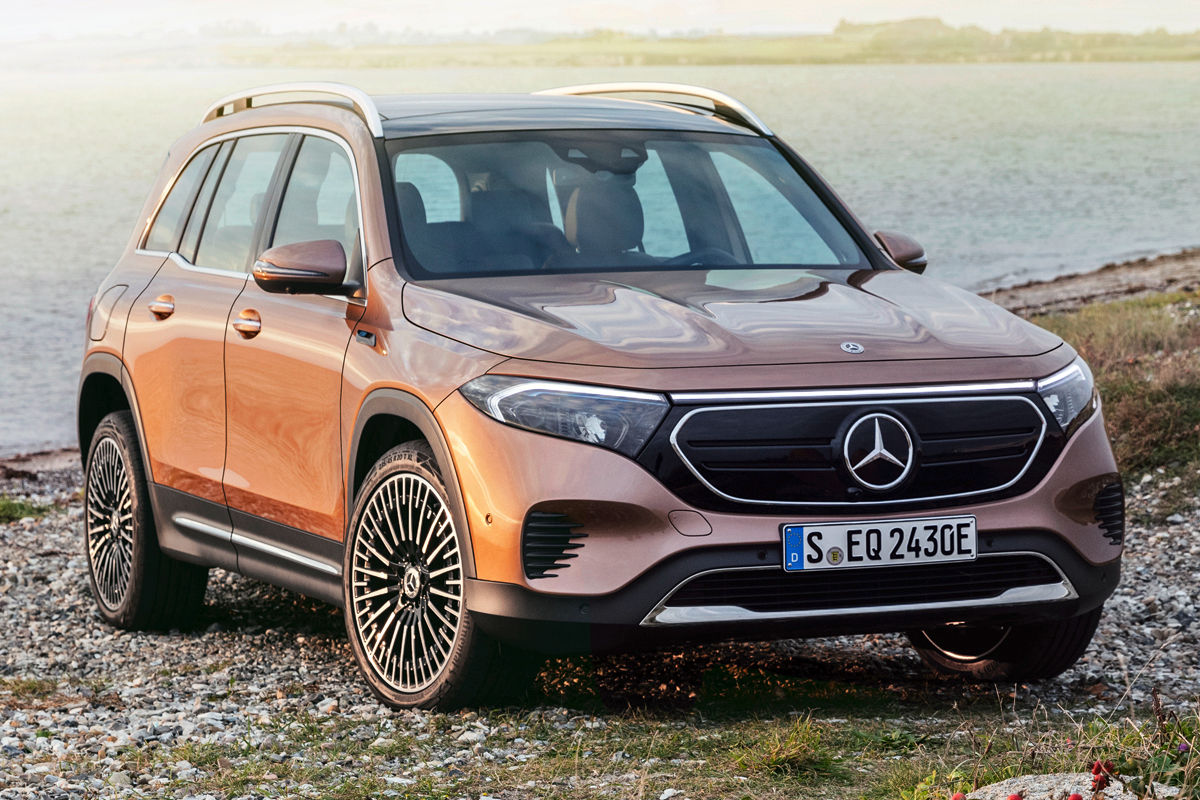
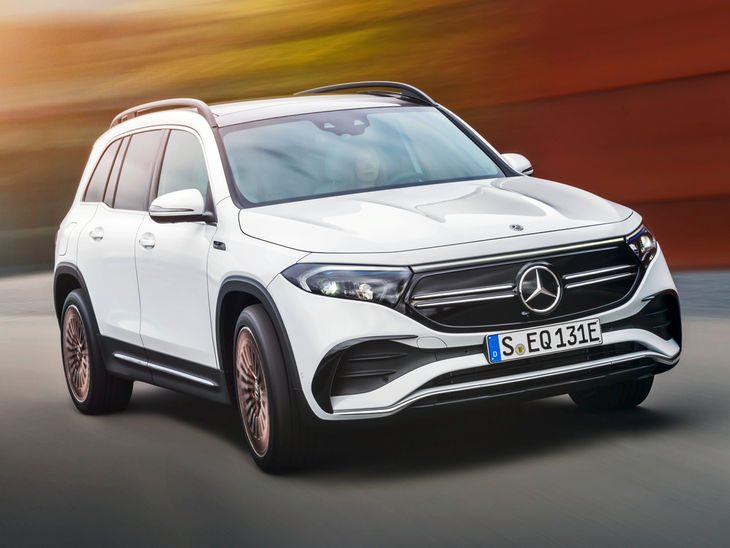
Looking for an all-electric model capable of seating 7 people? Well, here’s how much the new Mercedes-Benz EQB 350 4Matic will cost you in South Africa…
Mercedes-Benz South Africa is planning to roll out a raft of electric vehicles (EVs) in the coming months. We’ve already brought you local pricing for the new EQA and it seems the EQB is hot on its tail.
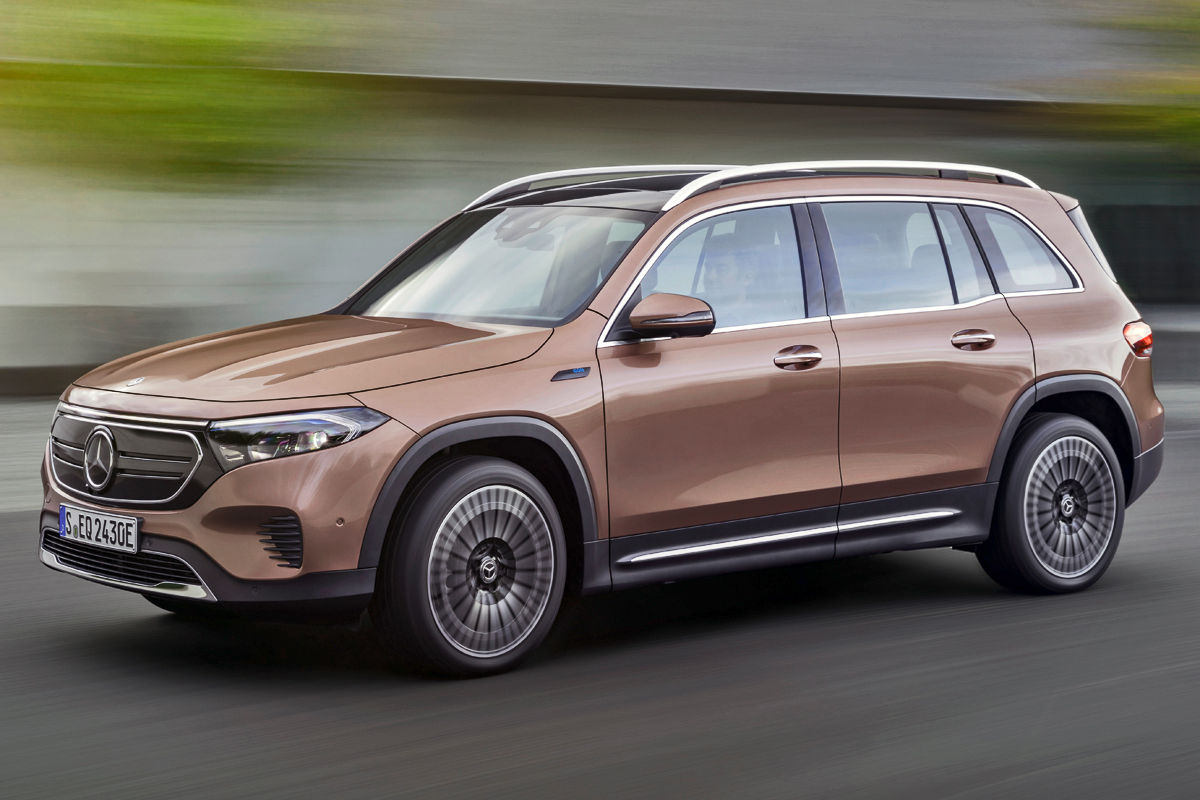
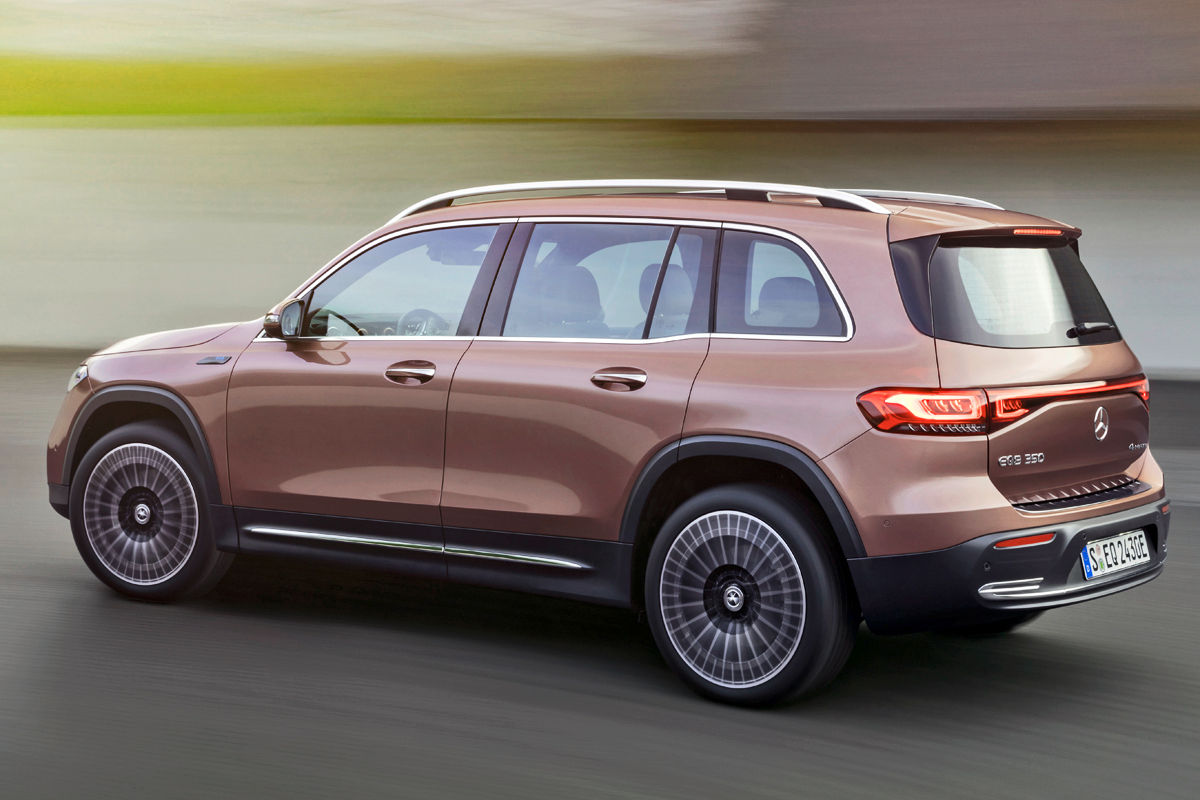
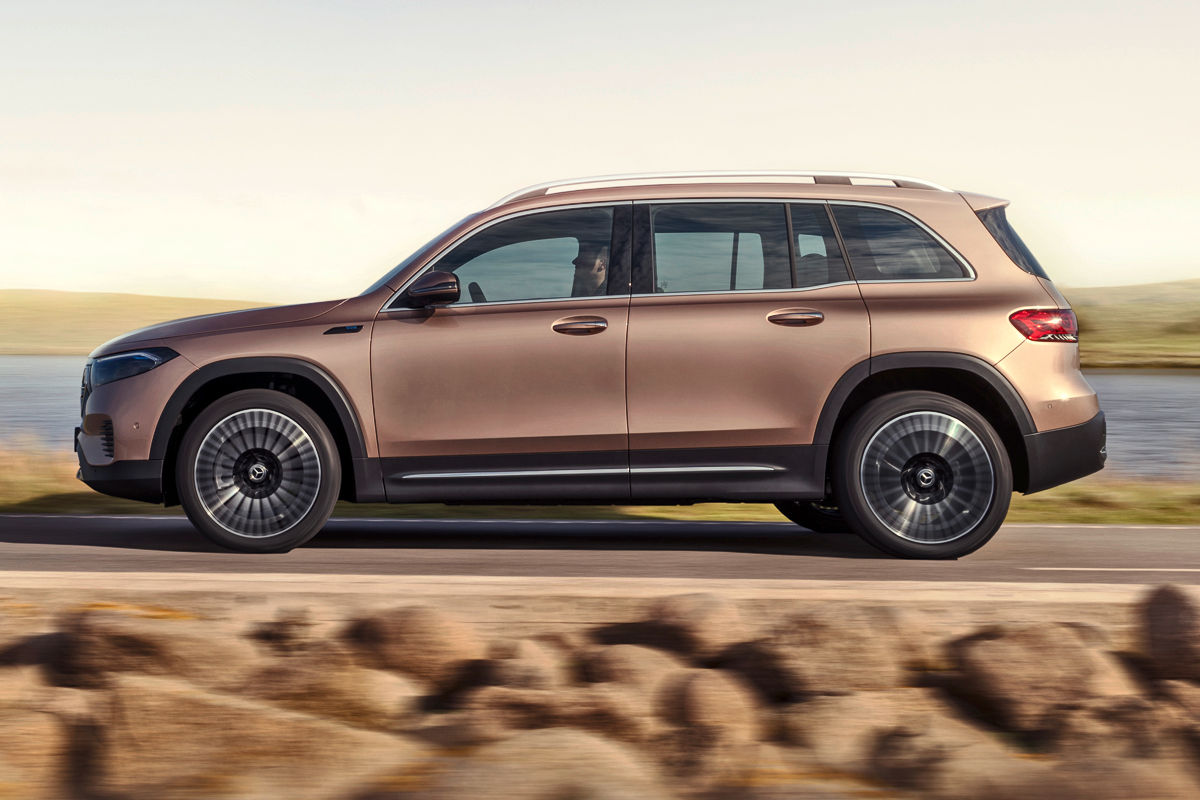
The Stuttgart-based firm whipped the wraps off the EQB back in April 2021, giving it the lengthy wheelbase of the GLB. Like that model, then, the electric version ships with 5 seats as standard but is optionally available as a 7-seater.
Built in Hungary, the EQB measures 4 684 mm long, 1 834 mm wide and stands 1 667 mm tall, offering what Mercedes-Benz describes as a “generous amount of space”. In 5-seater guise, the boot can swallow 495 litres (expandable to 1 710 litres), while the 7-seater version has a luggage capacity of 465 litres (or 1 620 litres with the final two rows folded flat).
Interestingly, the 168 kW EQB 300 4Matic won’t be available in South Africa at launch, with only the EQB 350 4Matic on offer. The latter employs an asynchronous motor at the front axle and a permanently excited synchronous motor at the rear, making it an all-wheel-drive vehicle.
Peak power and torque outputs for the EQB 350 4Matic stand at 215 kW and 520 Nm respectively, with the obligatory sprint from 0 to 100 kph taking a claimed 6.2 seconds (and top speed limited to 160 kph). The battery has a usable capacity of 66.5 kWh, while Mercedes-Benz SA lists a claimed single-charge range of between 395 km and 423 km.
So, what sort of pricing are we looking at here? Well, the EQB 350 4Matic will start at R1 374 500. As with the EQA, Mercedes-Benz SA says this “includes the price of a 5-year/100 000 km service and maintenance plan, which you shall be entitled to exclude from the purchase of your vehicle”.
Plenty of optional extras for the Mercedes-Benz EQB 350 4Matic
The Mercedes-Benz EQB 350 4Matic will be available locally in Edition 1 form for a limited time.
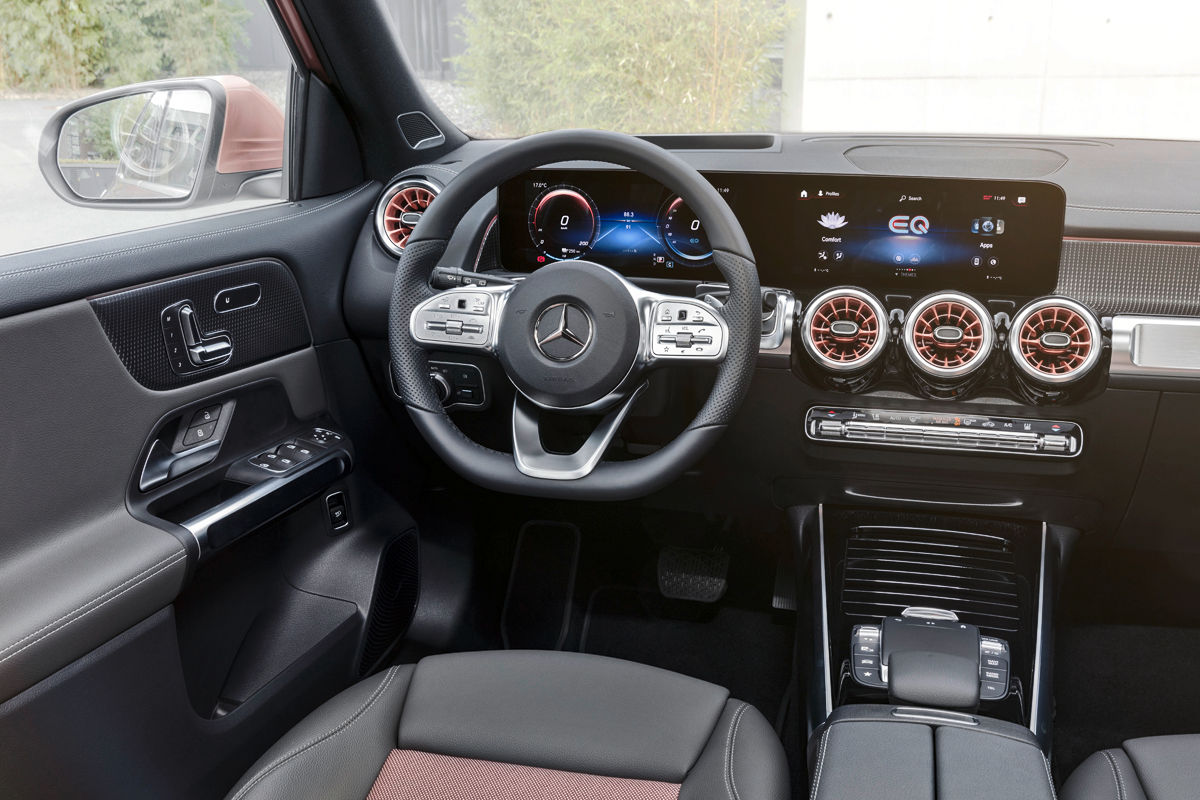
As standard, the B-badged EQ model will be sold with the Progressive trim level. However, for an extra R53 000 (to take the price to R1 427 500), it can be specified in AMG Line form, complete with items such as more aggressive body styling, upgraded interior finishes and flashier alloy wheels. In addition, Mercedes-Benz will offer a special “Edition 1” version for a limited time, adding R126 800 to the base price for a total of R1 501 300.
Plenty of optional packages will be on offer for the EQB, along with various individual options such as a panoramic sliding sunroof (R16 400) and adjustable damping (R17 600). Should you wish to specify that third row of two seats to turn your EQB into a 7-seater, be prepared to part with an additional R22 000.
As with the EQA, two charging cables also find themselves on the list of options, with the 8-metre cable for a wallbox and public charging station priced at R1 300 and a second 8-metre version for use with domestic sockets coming in at R4 800. From what we can tell, 5-metre versions come standard. It’s not yet clear whether a wallbox unit is included in the EQB’s purchase price.
Mercedes-Benz EQB 350 4Matic price in South Africa
Mercedes-Benz EQB 350 Progressive – R1 374 500
Mercedes-Benz EQB 350 AMG Line – R1 427 500
Mercedes-Benz EQB 350 Edition 1 – R1 501 300
The EQB comes with a 5-year/100 000 km maintenance plan, though Mercedes-Benz SA says buyers have the option of excluding the price of this from their purchase.