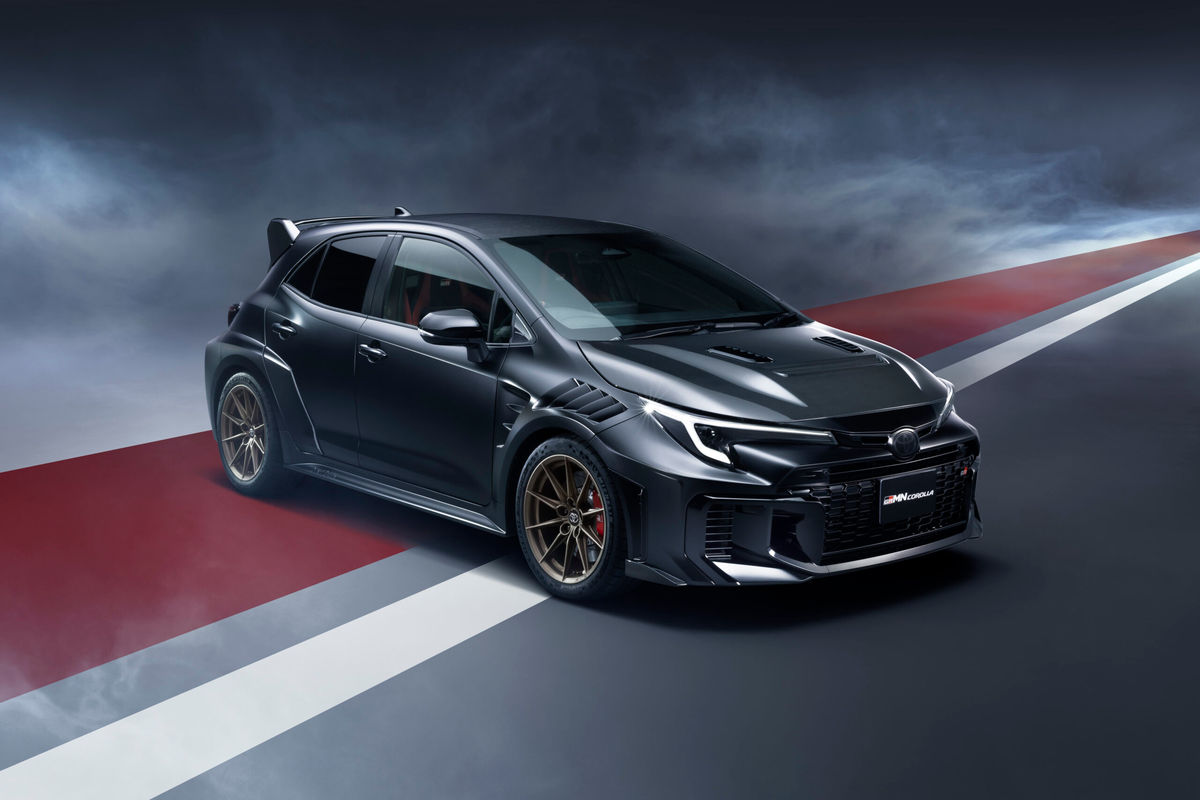
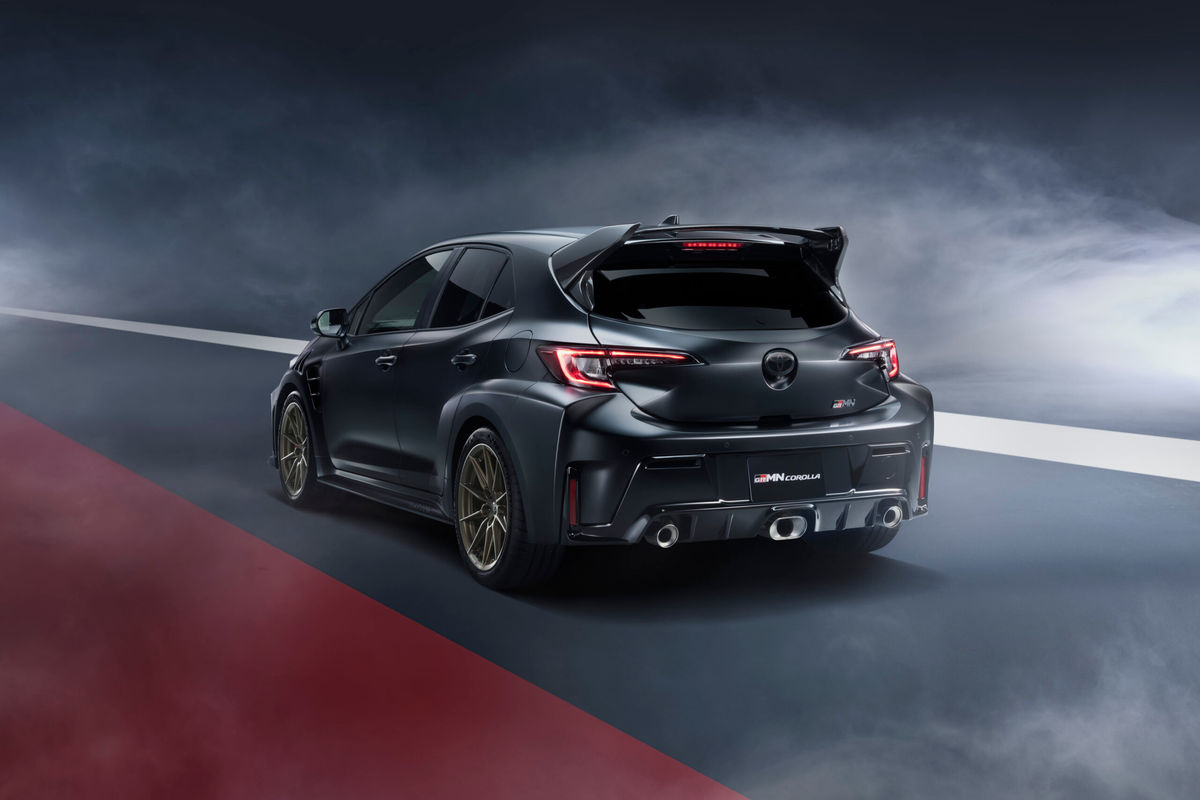
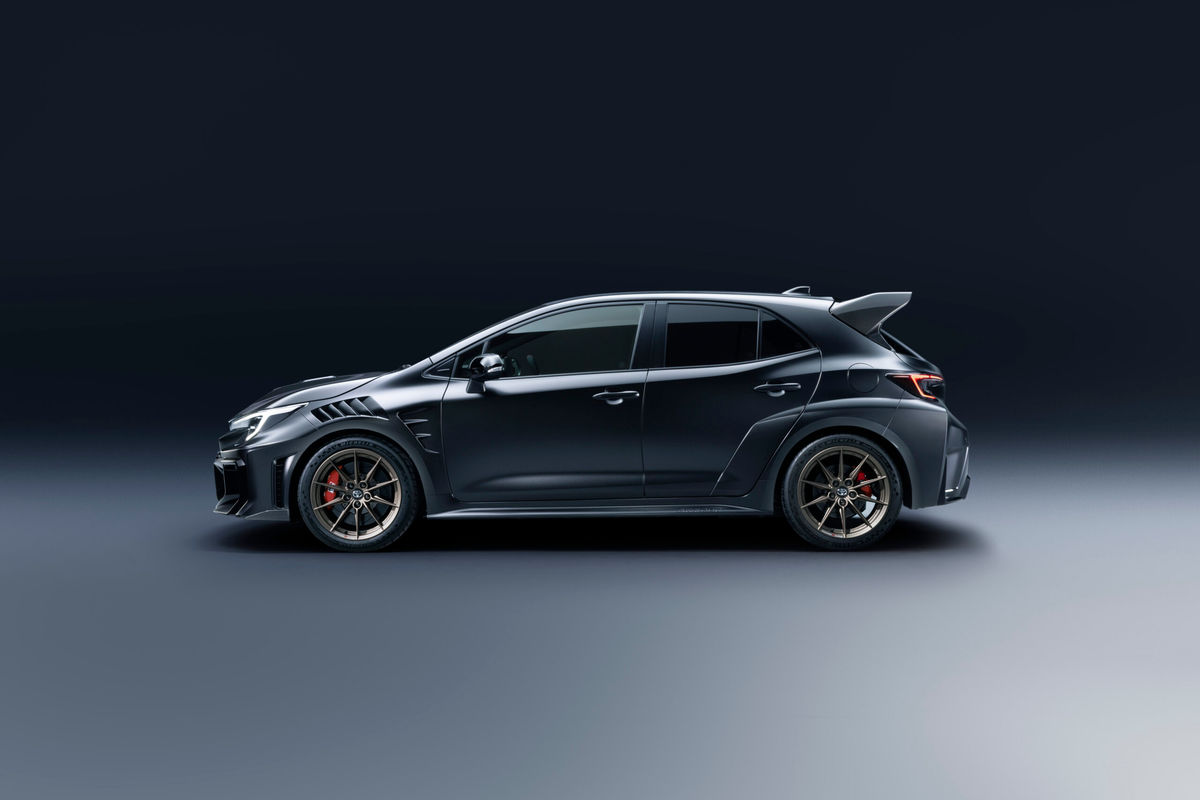
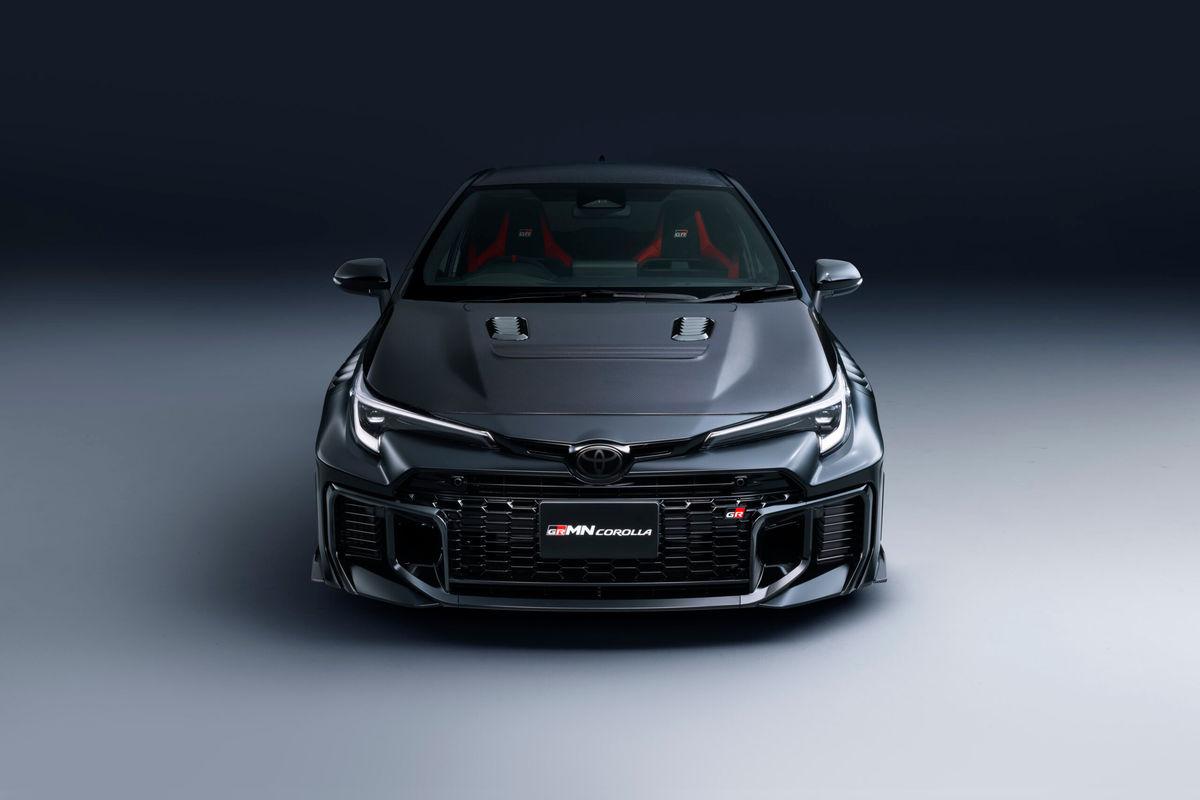
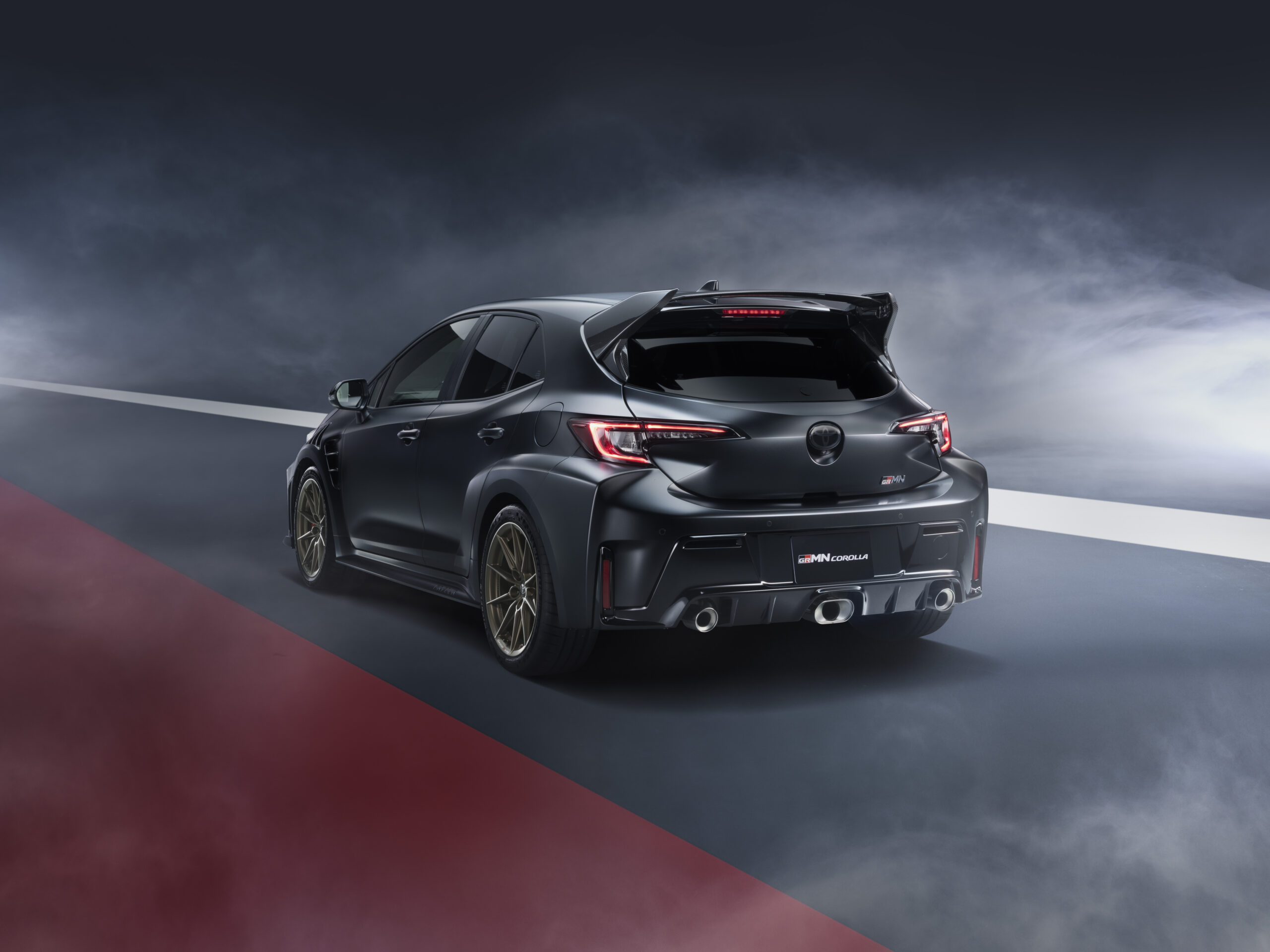
The Toyota GRMN Corolla is the ultimate Corolla hot hatchback, boasting handling upgrades, more torque and lightweight interior.
The Toyota GRMN Corolla takes the GR Corolla to another level entirely with a touch more power, upgraded suspension, stripped-out cabin and trick aerodynamics. At this stage it looks like this race car for the road will be available in limited quantities for select markets like Japan, North America and Australia.
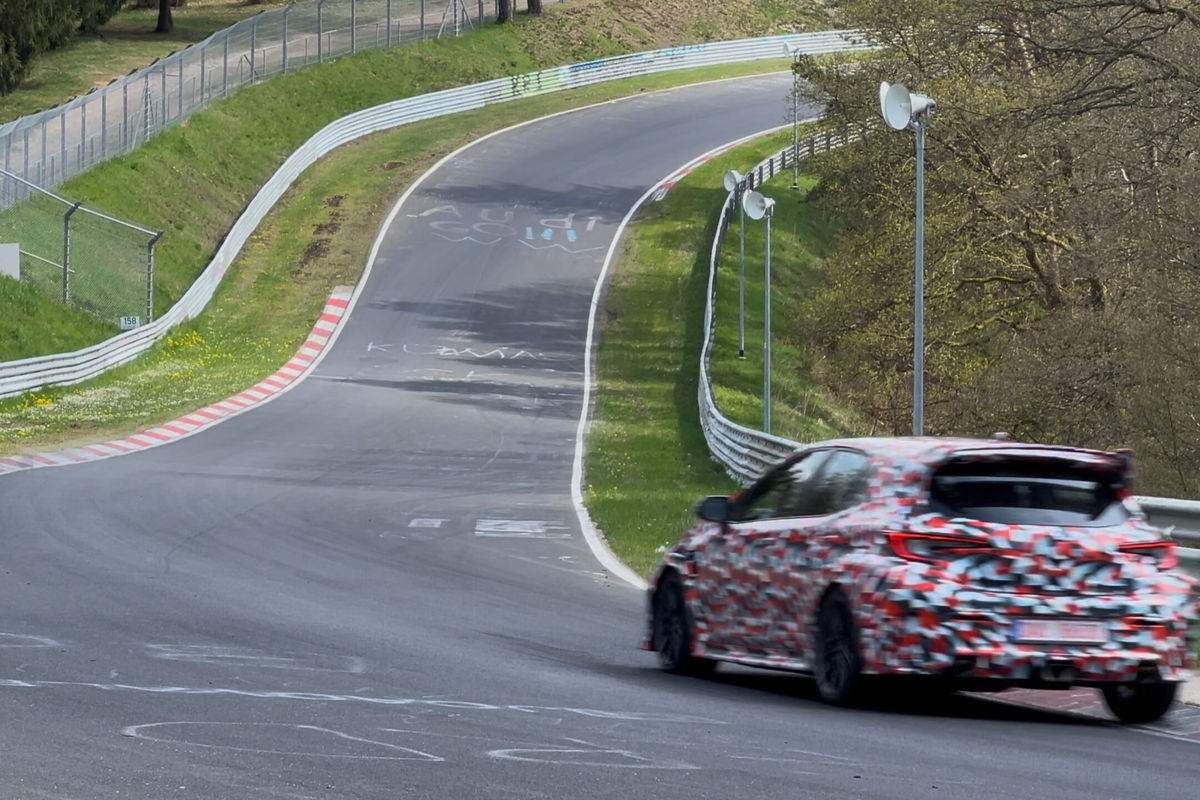
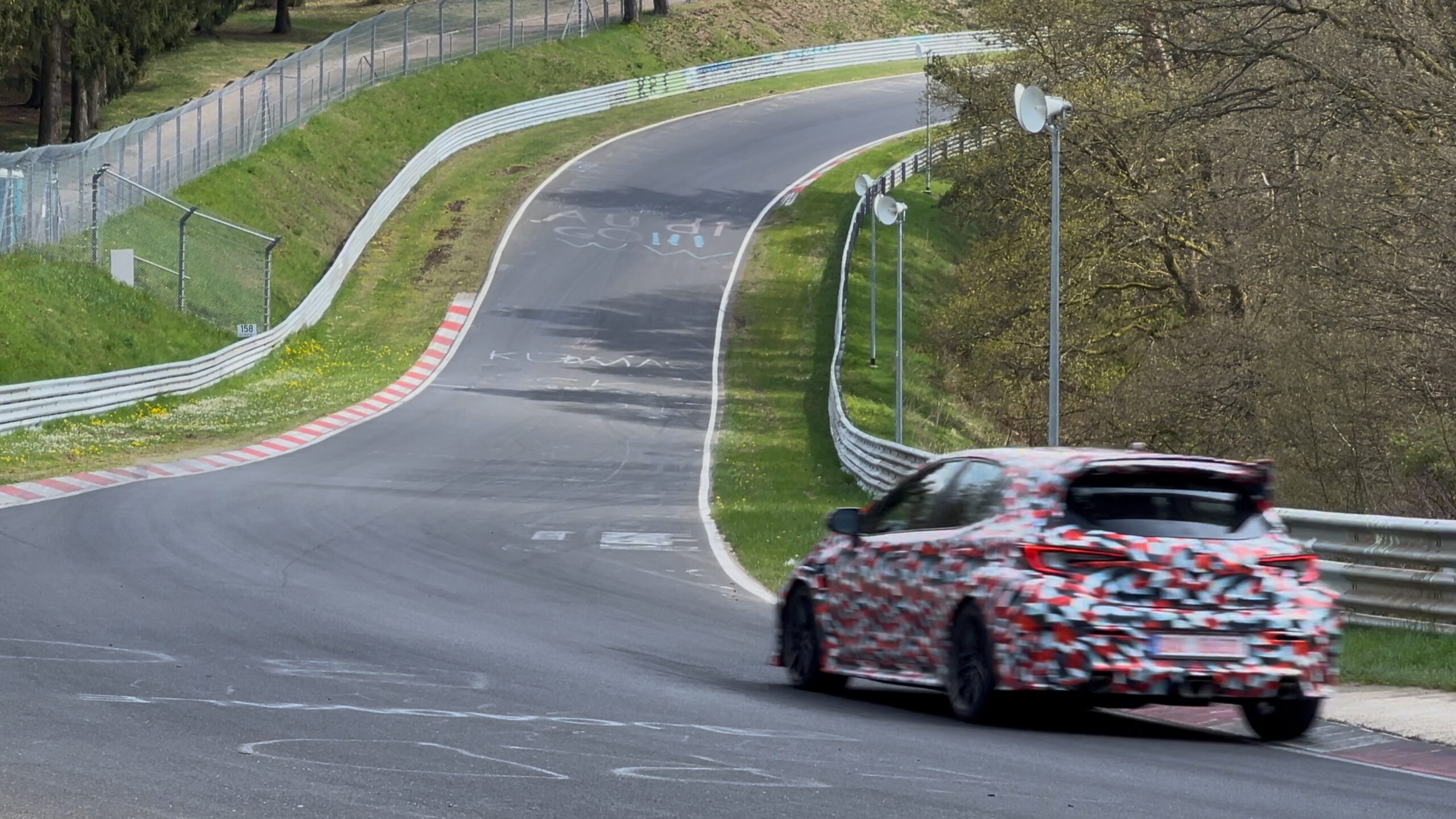
GRMN stands for Gazoo Racing tuned by the Meister of the Nurburgring, which gives you some idea of what this vehicle is capable. Sure, its easy to make a straight-line performer, but Toyota’s goal here was to make a hands-on and engaging racetrack weapon. With extensive research and development on the famous Nurburgring, the GRMN Corolla is probably going to go down in hatchback history.
GRMN vs GR
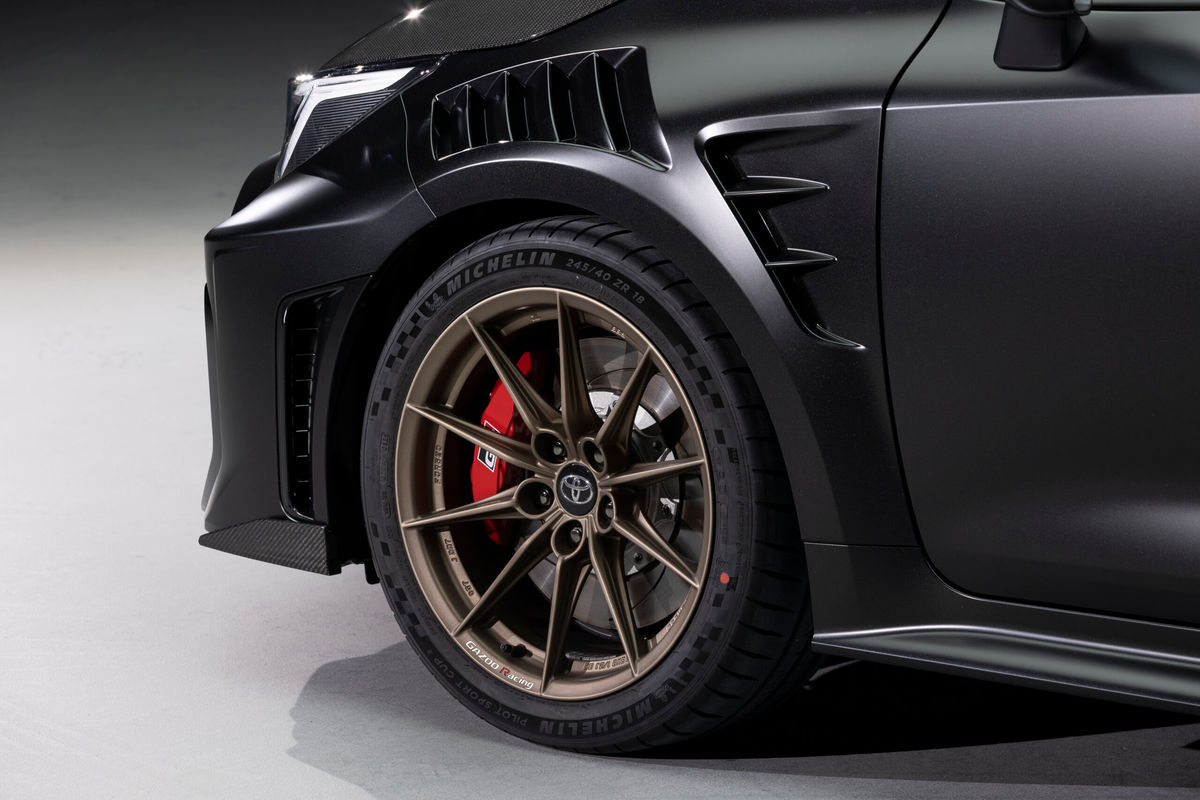
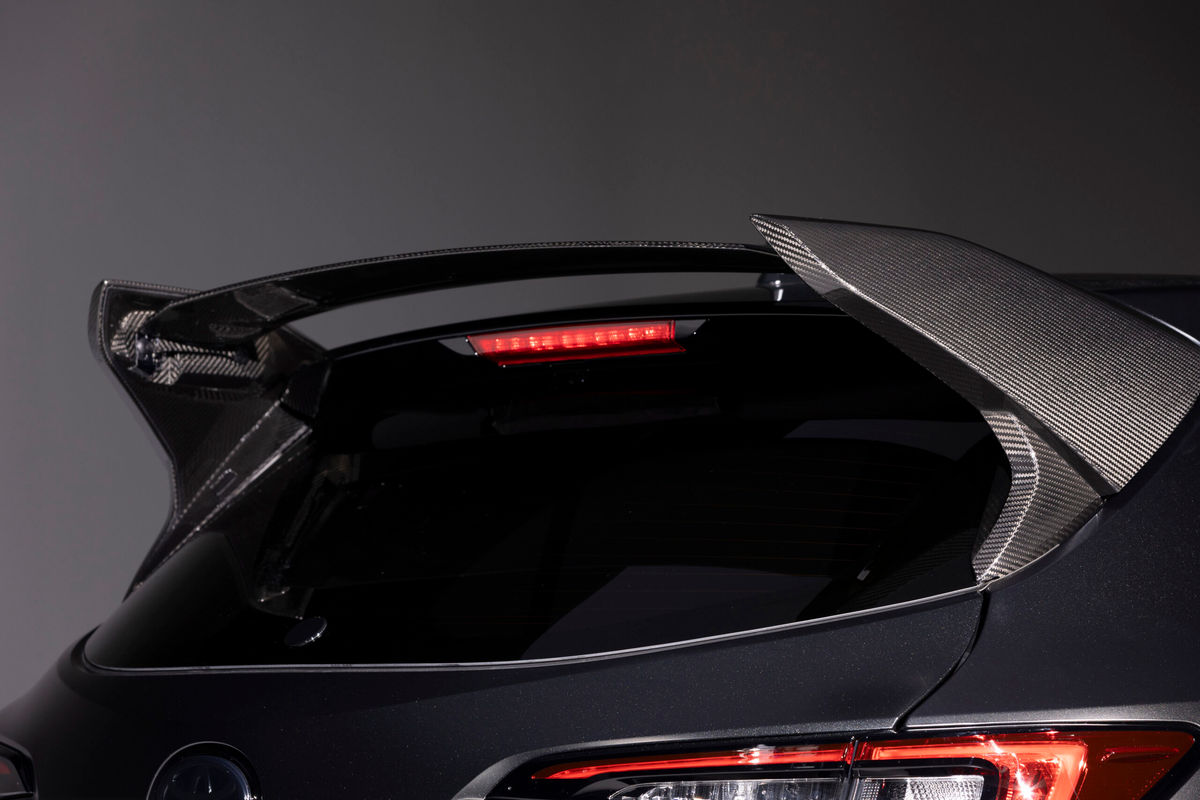
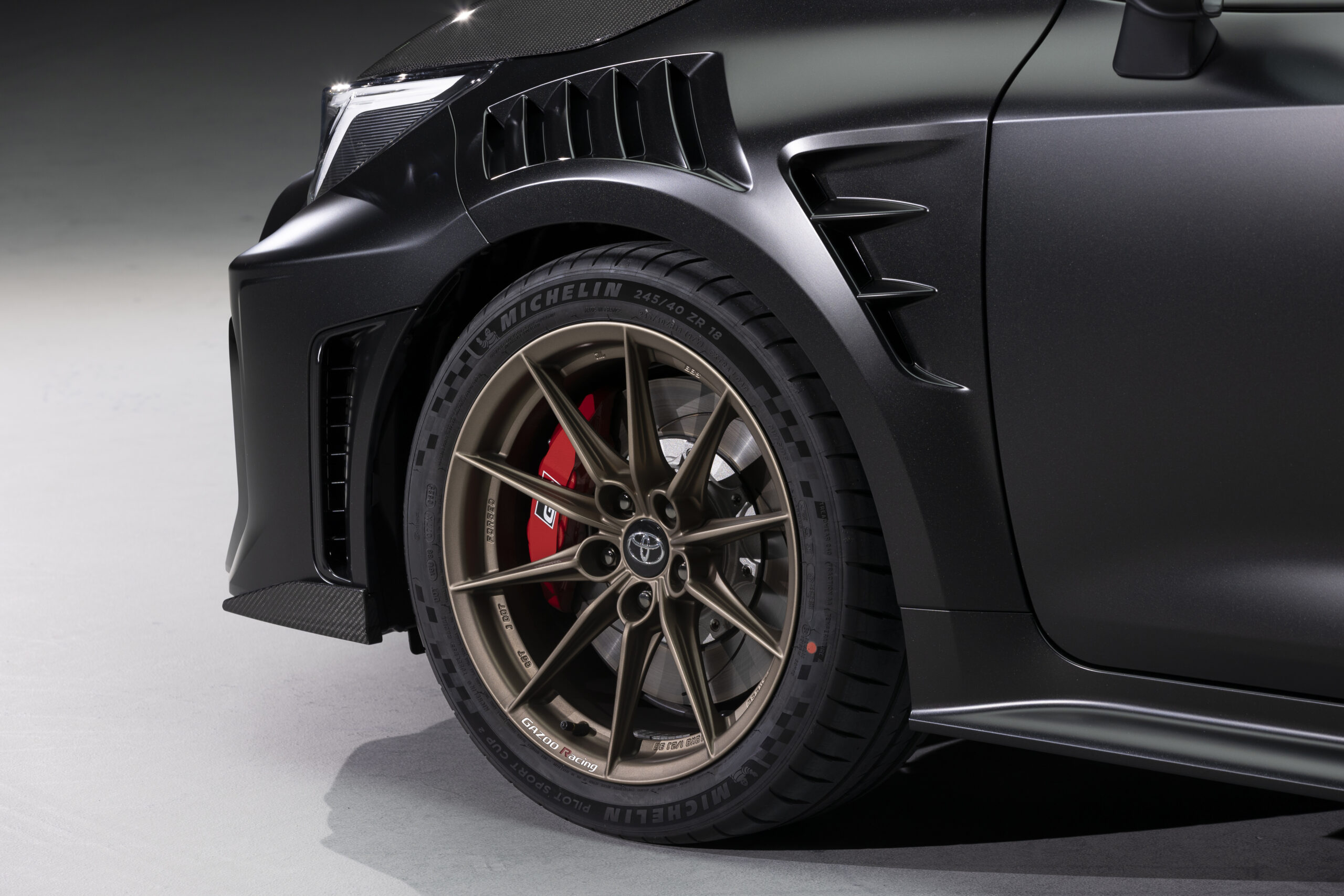
The Toyota GRMN Corolla features unique aerodynamic components in the form of special ducts on the bonnet, wings and spoilers to help with road holding. The suspension has been enhanced with front and rear monotube shock absorbers with rebound springs for improved inner-wheel traction during corner, while the wheels are wrapped in Michelin Pilot Sport Cup 2 tyres, which are 10 mm wider in comparison to the standard car. Both the electric power steering and 4WD control system have been tuned to suit this exclusive model.
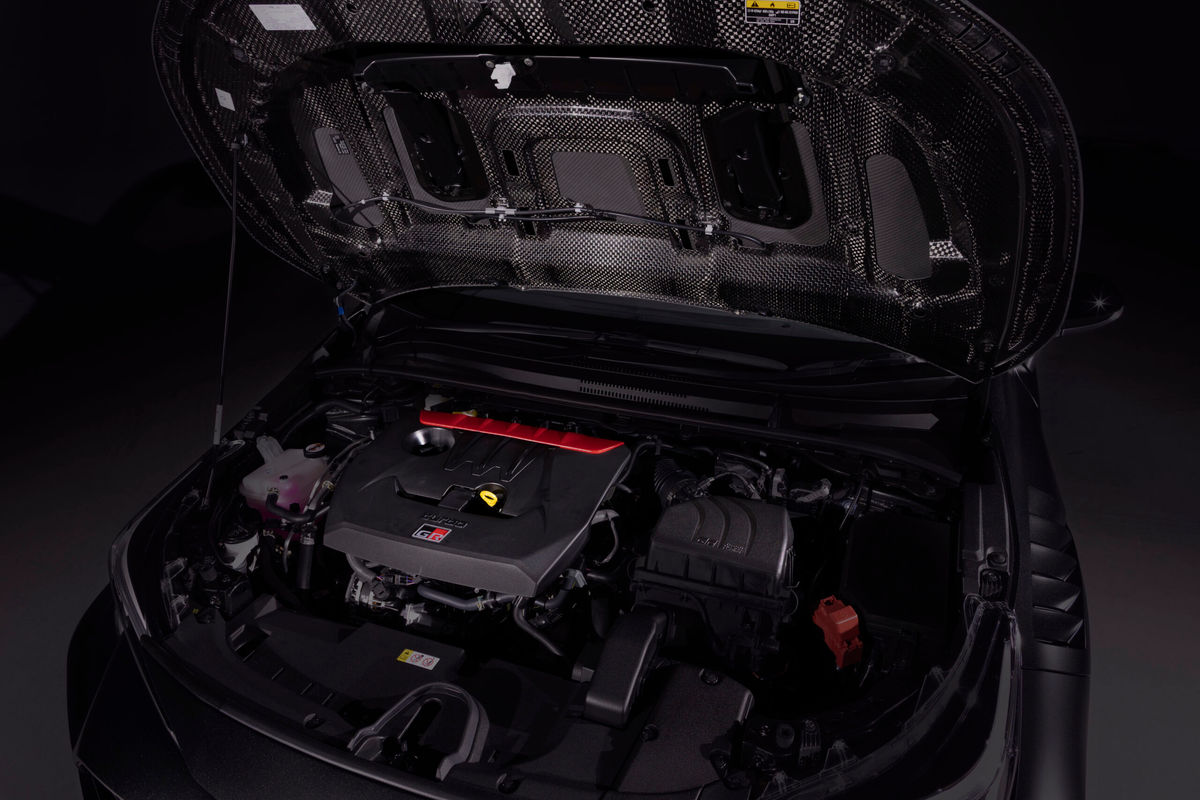
The 1.6-litre turbocharged three-cylinder petrol engine has received some software tweaks, increasing maximum engine torque to 415 Nm, 15 more than the standard car. Standard output remains the same at 224 kW. Interestingly, the South African-spec GR Corolla outputs are 210 kW and 400 Nm, and the vehicle is available with a choice of an 8-speed automatic or 6-speed manual ‘box.
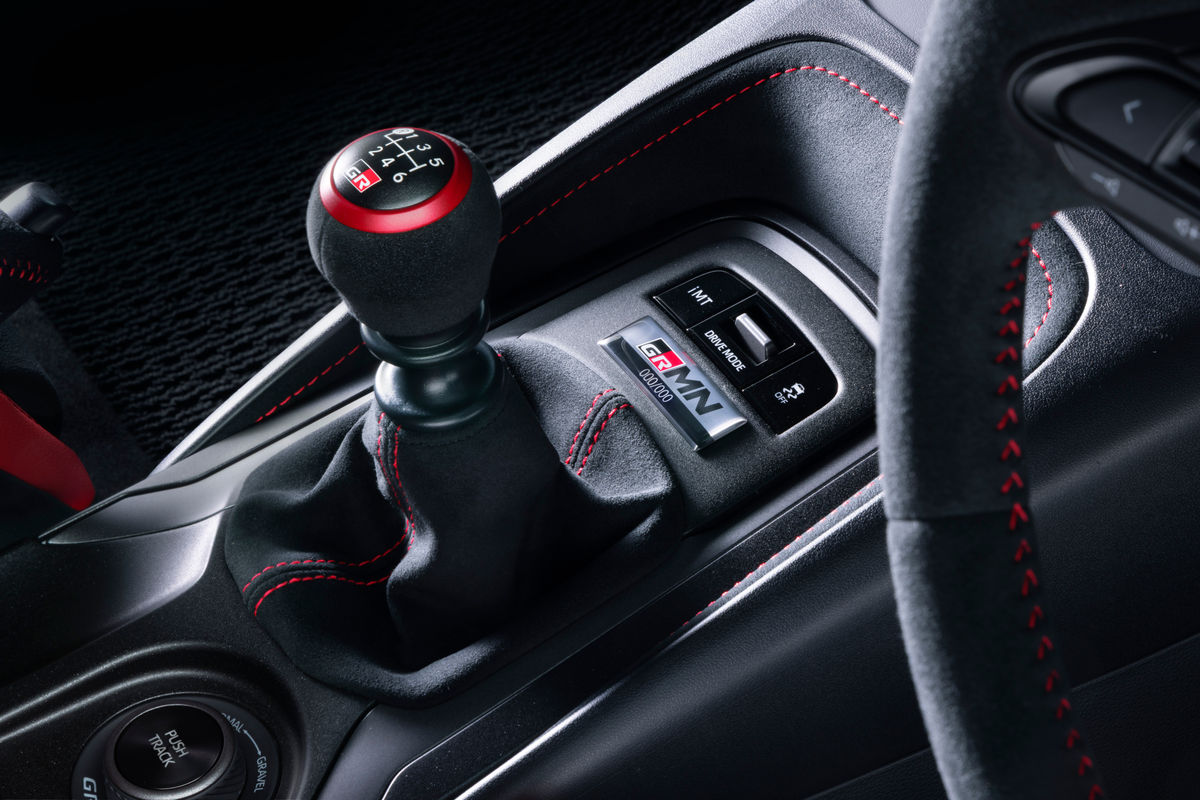
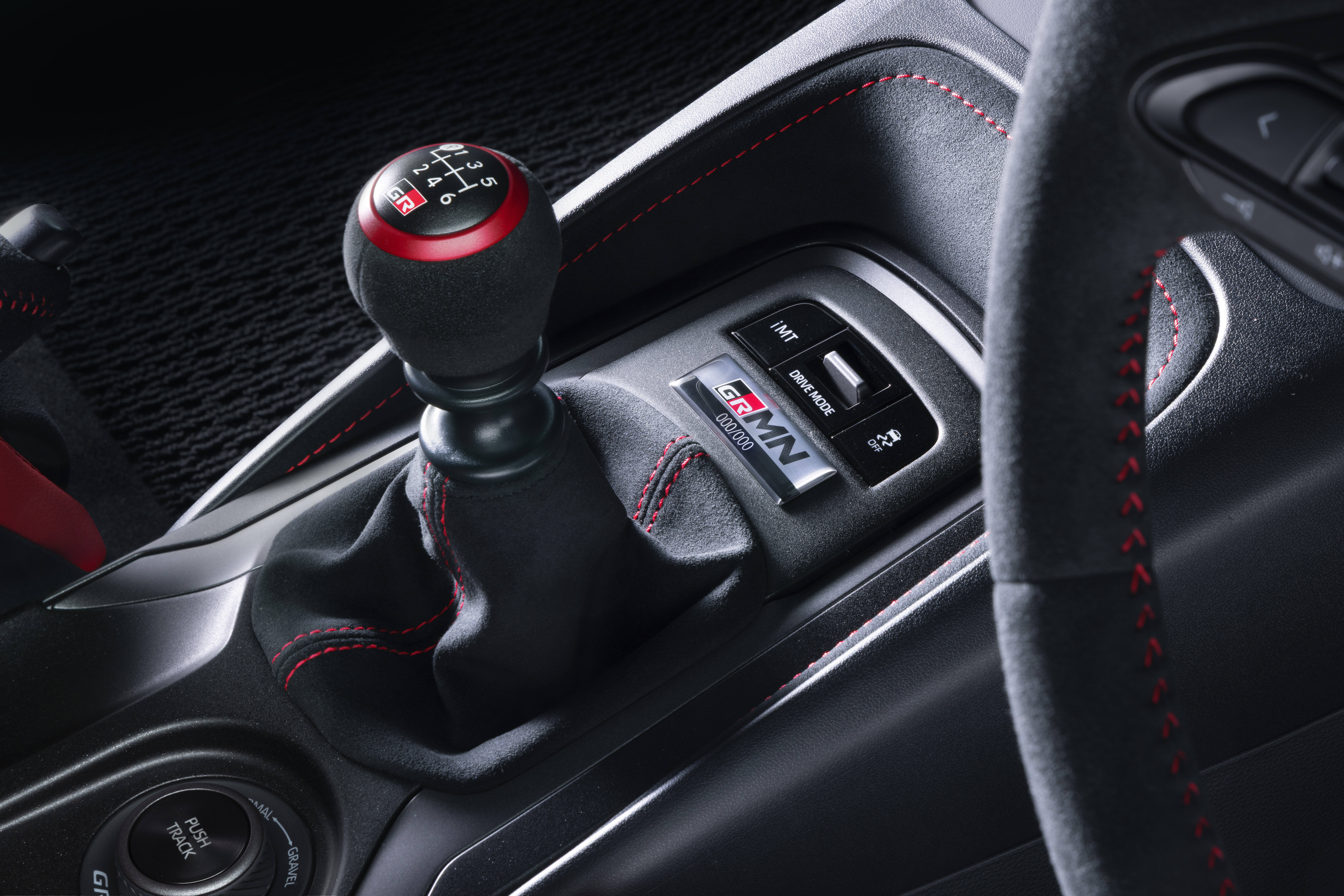
Toyota’s powertrain engineers focused on increasing the torque around the 4 000 rpm band, which they say is the sweet spot for accelerating out of corners. To help keep charge temperatures down, the vehicle features an intercooler spray. To keep the purist and enthusiast theme going, Toyota has opted for a 6-speed manual transmission.
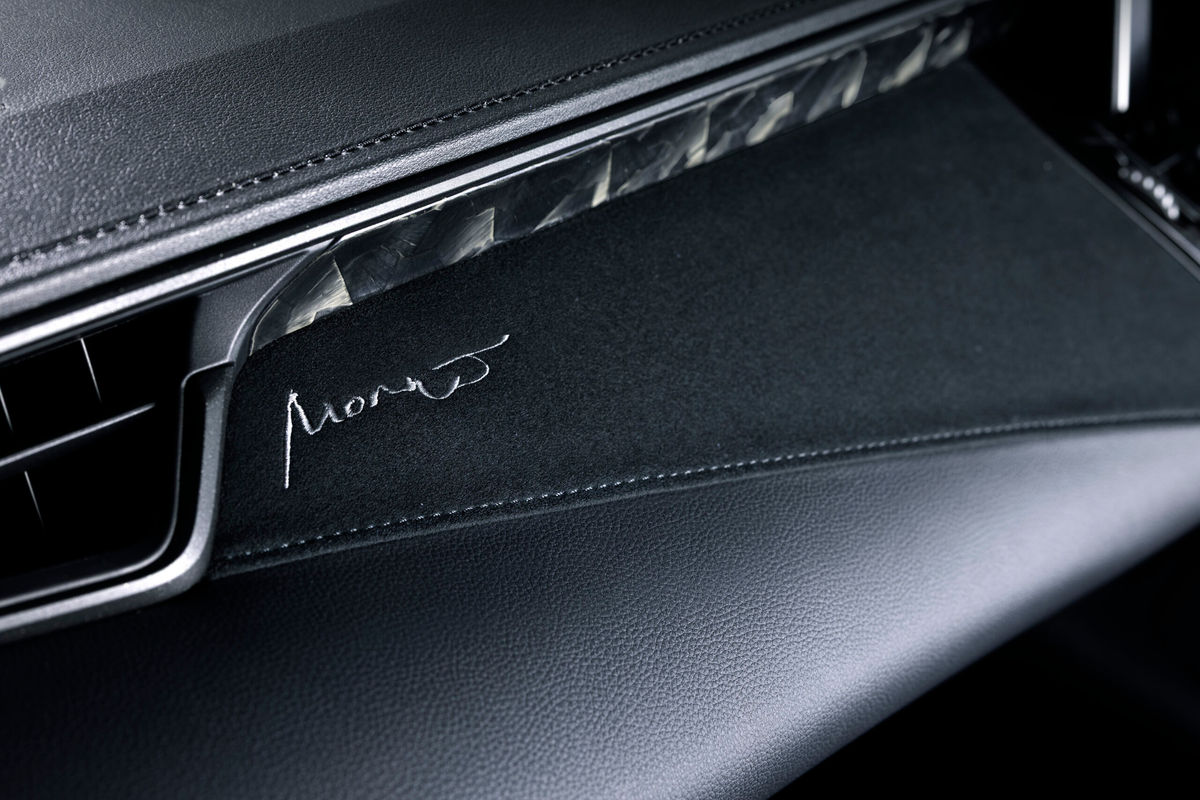
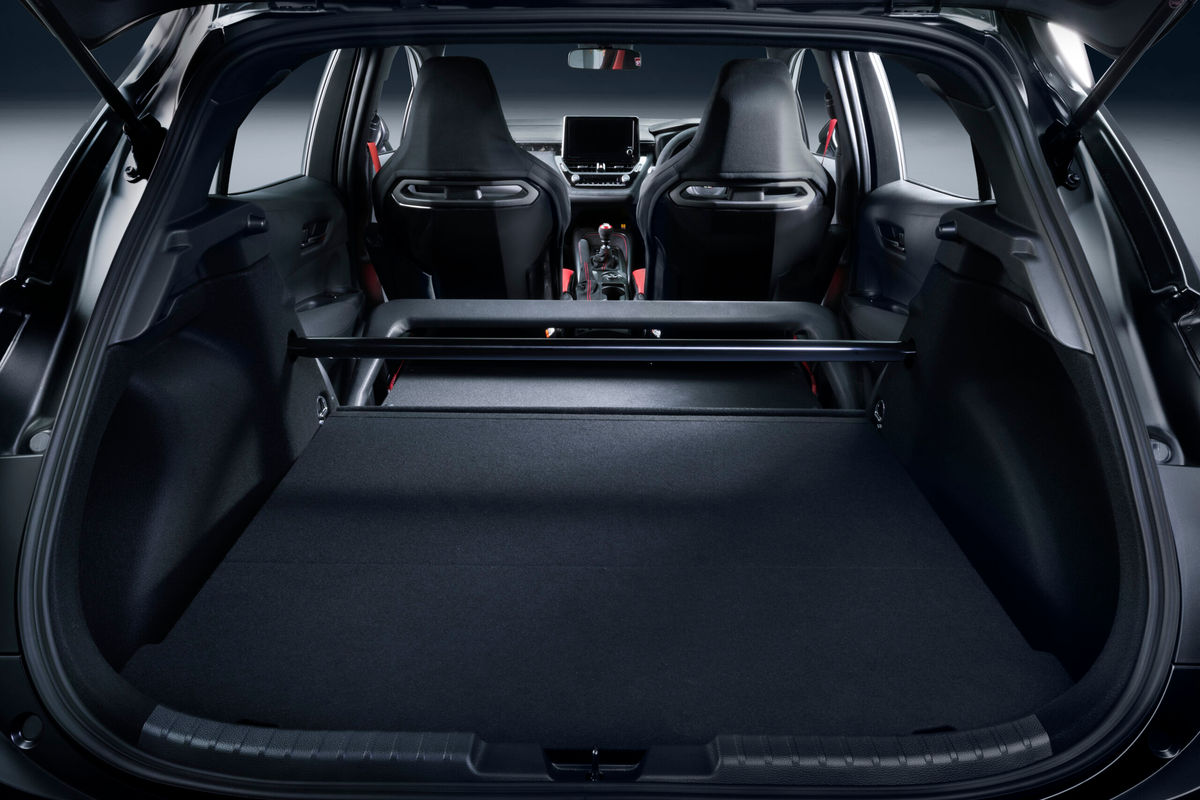
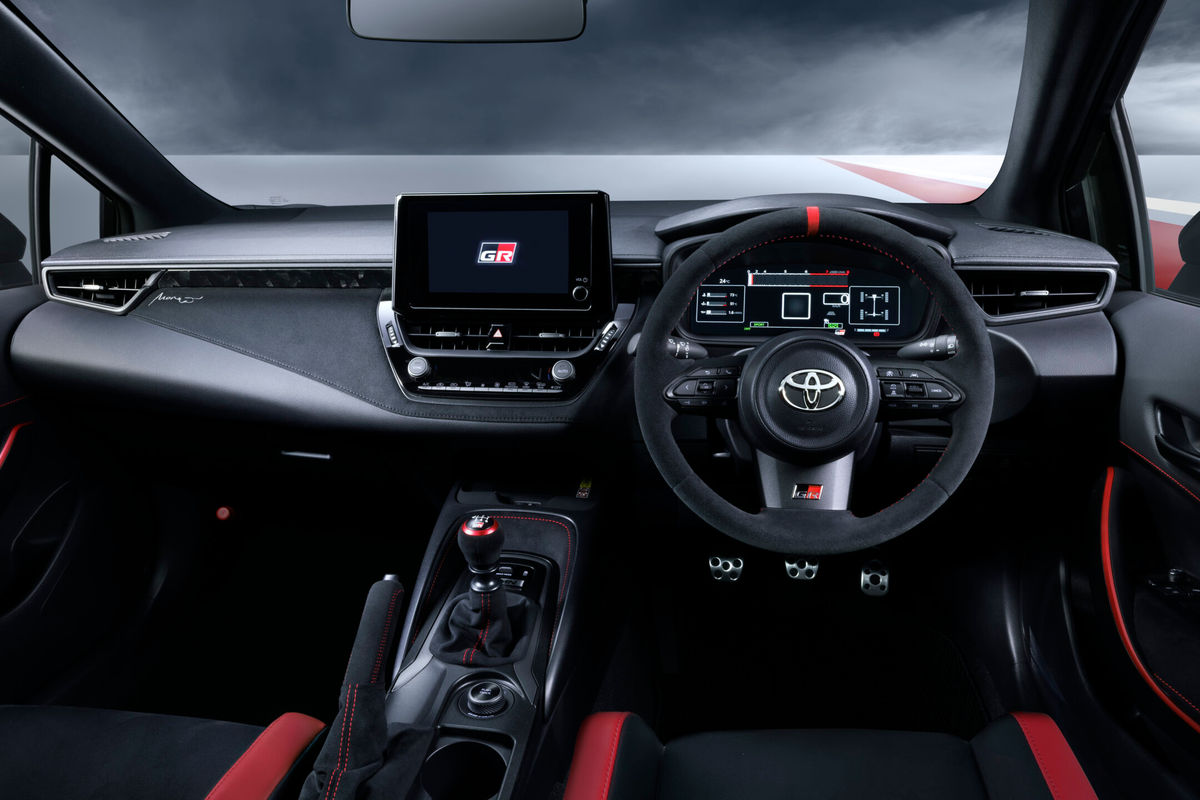
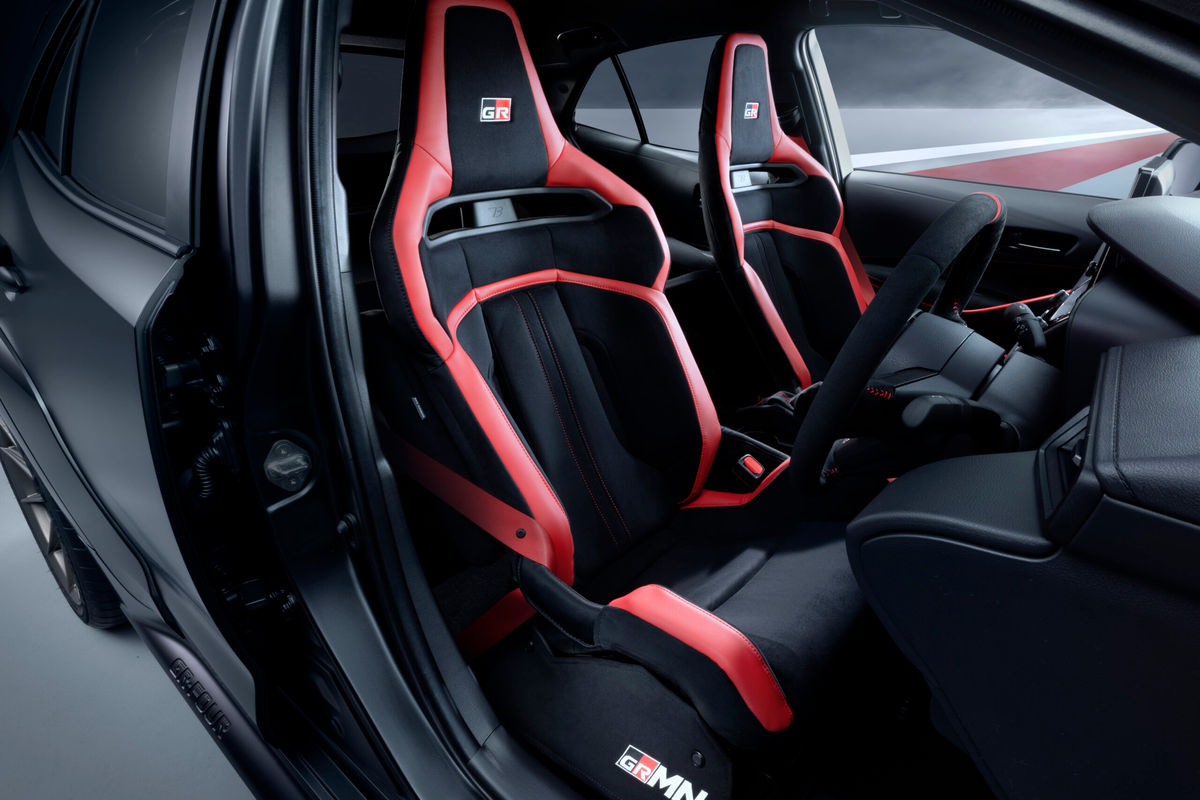
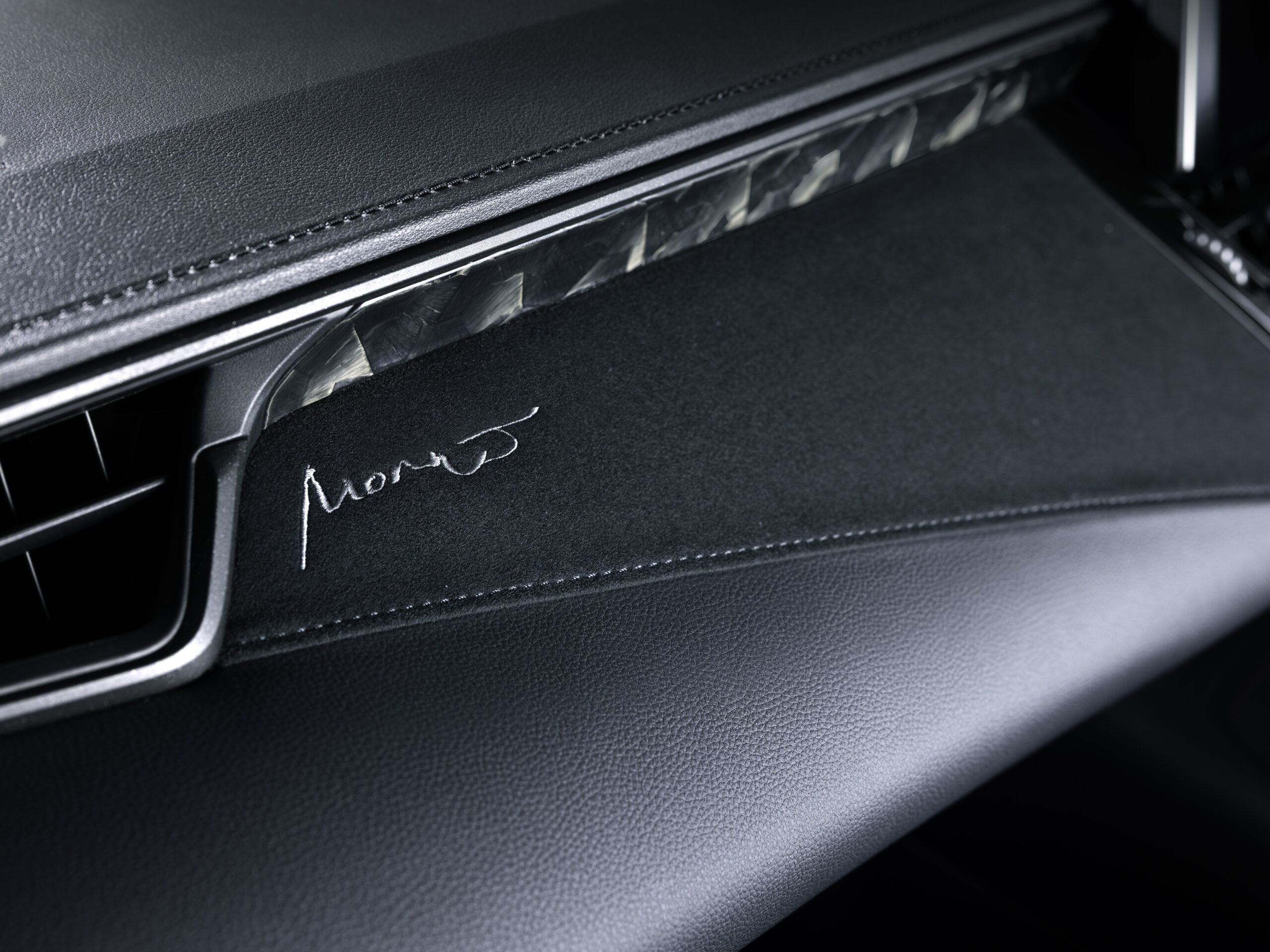
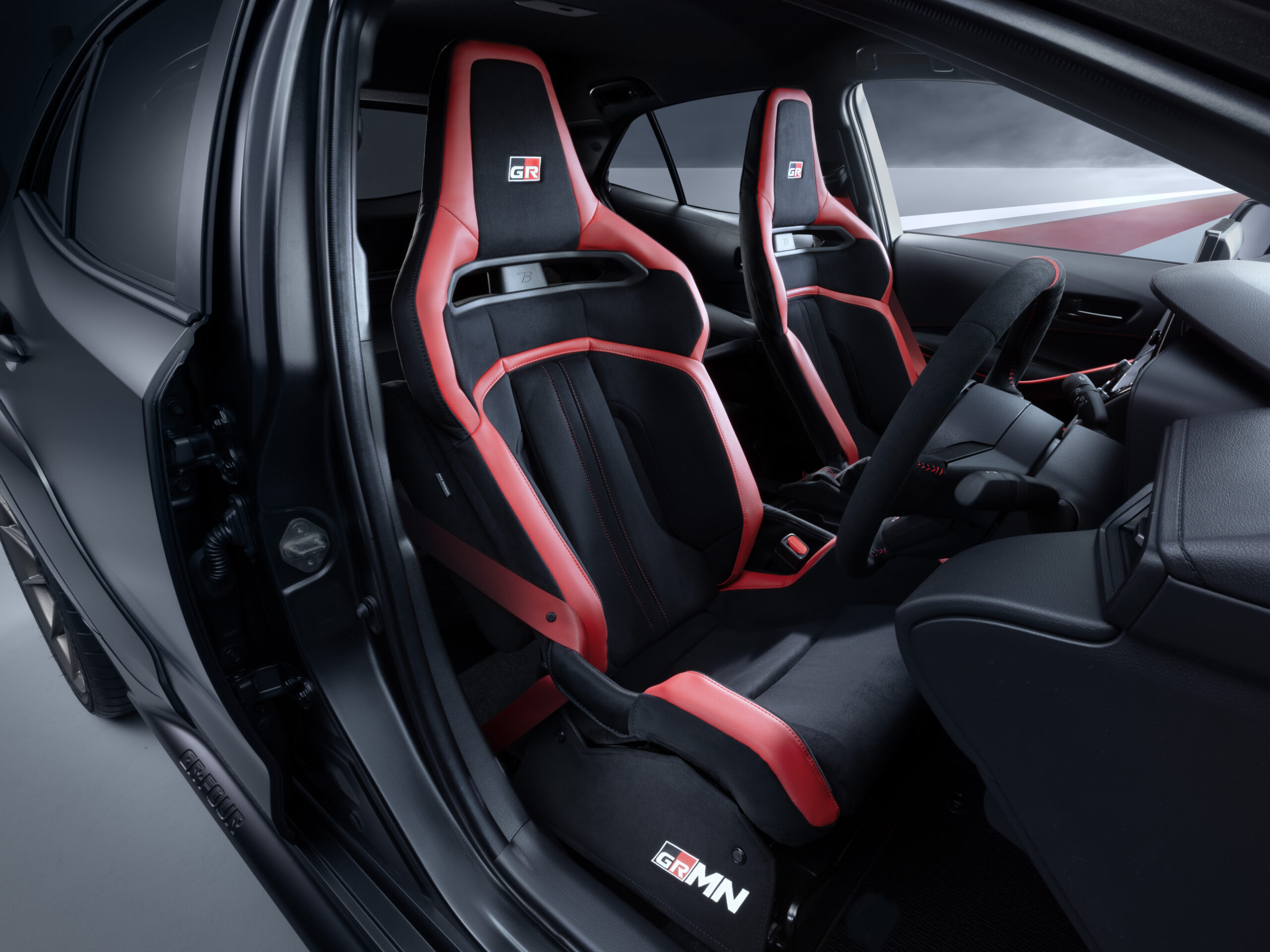
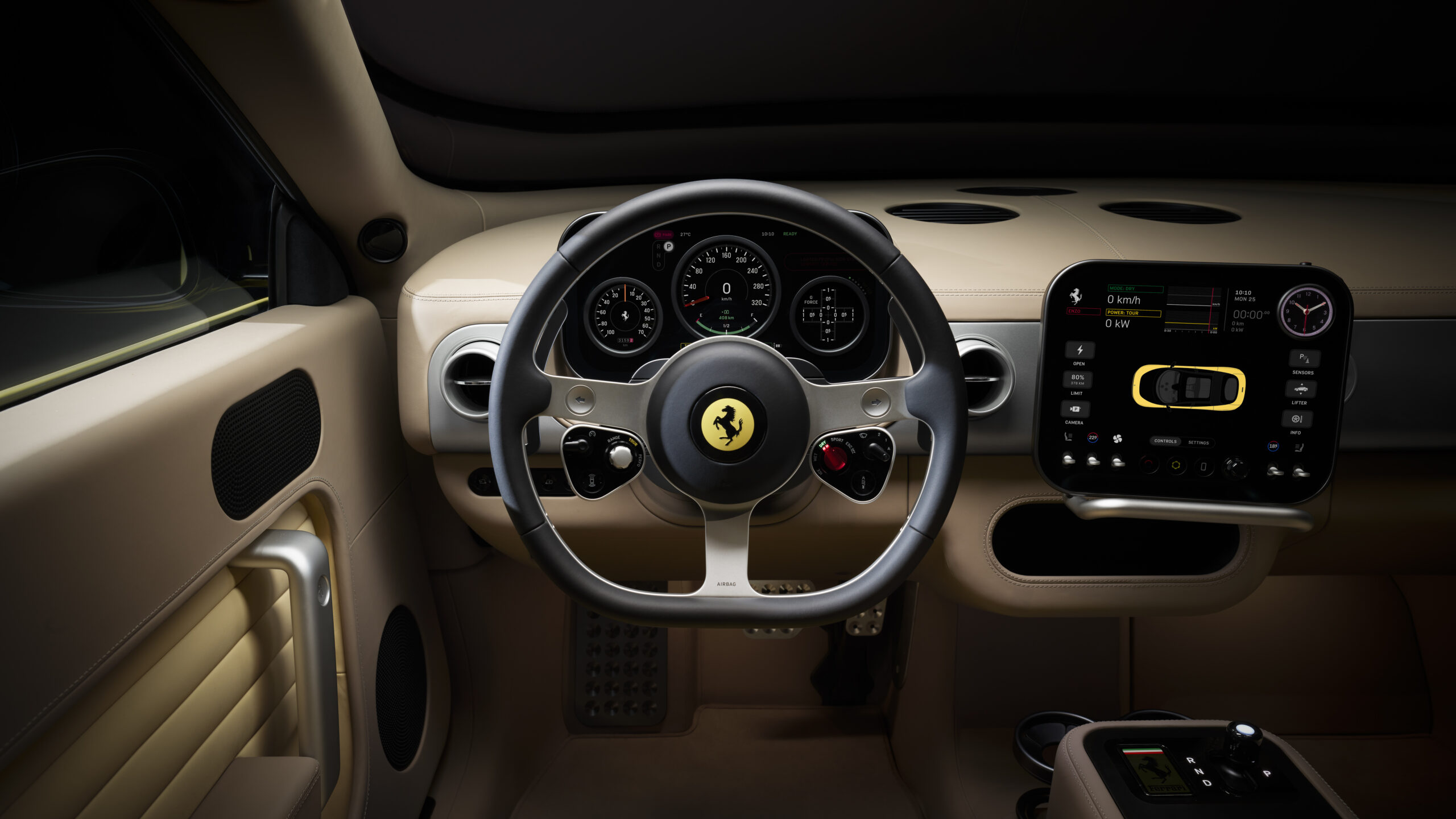
Step inside and the Toyota GRMN Corolla is quite different to the standard unit as the rear seats have been deleted to save weight, plus the front two seats are custom-designed full bucket seats which are also lighter. In place of the rear seats is a strut brace to stiffen the vehicle. There’s extensive use of carbon fibre plus there’s a serial number plate, and there’s an instrument panel bearing Toyota Master Driver Morizo’s signature.
Will the Toyota Corolla GRMN come to South Africa?
At this stage, this is an exclusive and limited-run vehicle and we’ll wait for official confirmation from Toyota South Africa.
Will the Toyota GRMN Corolla be available in South Africa?
The newly unveiled GRMN Corolla is an extremely rare, track-honed special edition primarily designated for Japan, North America, and Australia. While Toyota South Africa Motors (TSAM) sells the standard GR Corolla Circuit Edition (priced from R985 200), local availability for the GRMN has not been officially confirmed, and if any units arrive, they will be in strictly limited single-digit numbers.
How much power does the GRMN Corolla produce?
The GRMN Corolla uses an upgraded version of the G16E-GTS 1.6-litre turbocharged 3-cylinder engine. It pushes out 224kW of power and a boosted 415Nm of torque, making it the most powerful factory Corolla ever built.
Is the GRMN Corolla a 2-seater?
Yes, to save weight and maximize body rigidity, the GRMN Corolla completely removes the rear seats. In their place, a specialized 2-seater structural strut brace is installed. Up front, it features GRMN-exclusive full bucket seats.
What transmission option does the GRMN Corolla have?
The track-ready GRMN version is equipped exclusively with a close-ratio 6-speed intelligent Manual Transmission (iMT) to preserve ultimate driver engagement, paired with the active torque-splitting GR-FOUR all-wheel-drive system.
What makes the GRMN unique compared to a standard GR Corolla?
Honed directly at the Nürburgring, the GRMN features an extra 13.9 meters of structural body adhesive for extreme rigidity, specialized inverted monotube shock absorbers, forged matte bronze wheels wrapped in sticky Michelin Pilot Sport Cup 2 tyres, and an interior featuring Akio Toyoda’s (“Morizo”) signature on the dashboard.
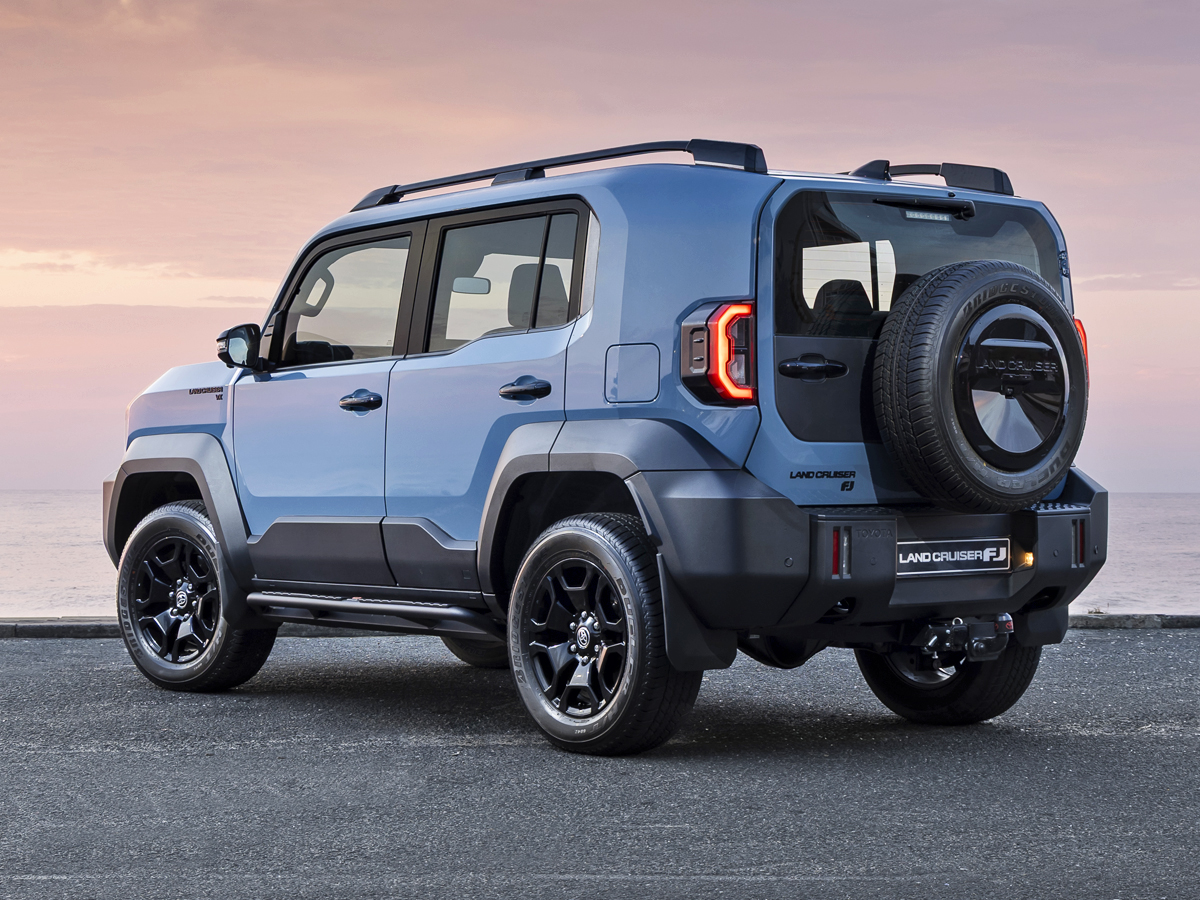
New Toyota Land Cruiser FJ: early SA sales figures revealed
How many units of the Toyota Land Cruiser FJ were registered in SA during this new SUV’s launch month? We have the answer, plus RAV4 and bZ4X sales for May 2026…
Land Cruiser FJ straight into 3 figures
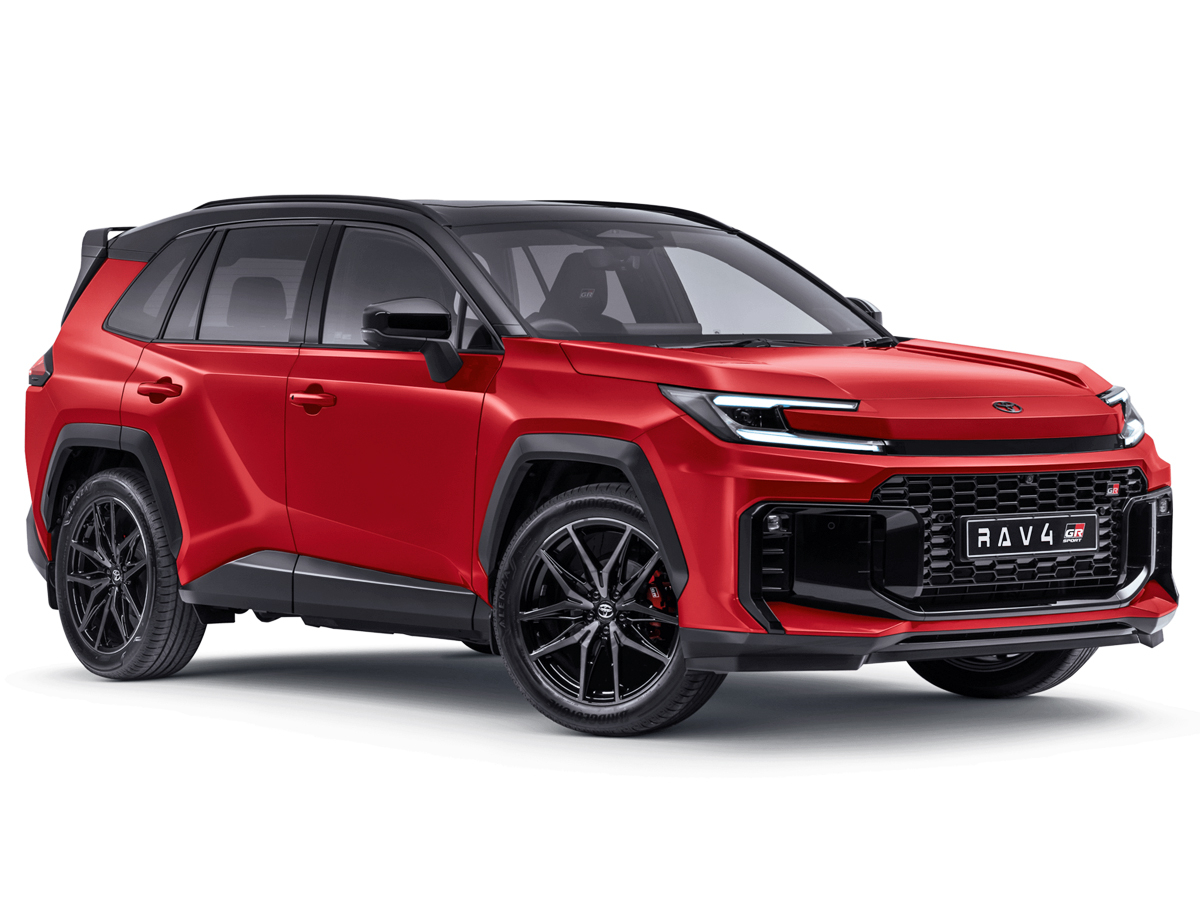
Best RAV4 sales since October 2025
New bZ4X hits 33 units (10 via dealers)
The newToyota Land Cruiser FJ – priced from R714 000 and offered exclusively (for now, anyway) with a long-in-the-tooth naturally aspirated 2.7-litre petrol engine – officially hit dealers around South Africa on 18 May 2026. So, how many units were registered over the remainder of this ladder-frame SUV’s launch month?
Well, according to figures reported to Naamsa, Toyota SA Motors registered 127 units of its new FJ-badged Land Cruiser in May 2026. As many as 116 of these were sold via the dealer channel, with the remaining 11 reported as so-called “single” registrations (vehicles the brand kept and licensed for its own use).
That means the new Land Cruiser FJ effectively outsold the larger (admittedly more expensive) Land Cruiser 300, which ended the month on 103 units. The J250-series Prado, however, was the most popular Land Cruiser SUV in May 2026, with as many as 323 examples sold.
What about the new RAV4 and fully electric bZ4X, which also arrived at dealers on 18 May? Well, Toyota registered 215 units of the RAV4 in May (with 180 of those sold through the dealer channel), though the sales split between the outgoing 5th-generation range and the new version is unclear. Still, that’s the first time the RAV4 has made it into triple digits since October 2025.
Meanwhile, the company registered 33 units of its new bZ4X, the first fully electric Toyota to be sold in Mzansi. Just 10 were sold through the dealer channel, with 23 reported as “single” registrations. As a reminder, this battery-powered crossover is priced from R1 182 800.
Frequently Asked Questions (FAQ)
Q: How many Toyota Land Cruiser FJ units were registered during its South African launch month?
A: Following its official arrival at South African dealerships on 18 May 2026, Toyota SA Motors registered 127 units of the new Land Cruiser FJ during May 2026. The vast majority (116 units) were sold directly through the dealer network, while 11 units were recorded as single registrations for internal use.
Q: How did the new Land Cruiser FJ’s sales compare to other Land Cruiser models in May 2026?
A: The Land Cruiser FJ immediately outsold the larger Land Cruiser 300, which recorded 103 registrations for the month. However, the J250-series Prado claimed the top spot as the most popular Land Cruiser SUV with 323 sales. Additionally, Toyota registered 3 units of the Land Cruiser 76 wagon and 466 units of the Land Cruiser 79 bakkie range.
Q: What were the May 2026 sales figures for the new Toyota RAV4 and the fully electric bZ4X?
A: Toyota registered 215 units of the RAV4 in May 2026 (with 180 moving through dealerships), marking its strongest sales month since October 2025. Meanwhile, the fully electric bZ4X crossover recorded 33 total registrations during the month, with 10 sold through the dealer channel and 23 moving as single registrations.
Outgoing Hilux holds off Ranger! SA’s best-selling bakkies in May 2026
In May 2026, the outgoing Toyota Hilux retained first place on the list of SA’s best-selling bakkies, while the Peugeot Landtrek snuck into the top 10. All the details here…
Hilux keeps 1st place but Ranger closes gap
P-Series retains 4th position ahead of Pik Up
Landtrek cracks top 10 at Tunland’s expense
BYD Shark 6 reaches 136 units in May 2026
LDV finally reports sales for T60 & Terron 9
In May 2026, sales in South Africa’s total new-vehicle market increased 12.8% year on year to 51 071 units, with the light-commercial vehicle (LCV) segment registering its 15th straight month of year-on-year growth, improving 2.5% to 11 251 units. So, what changed on the list of Mzansi’s best- and worst-selling bakkies?
Well, with the 9th-generation model set to hit the local market in the coming weeks, the outgoing version of the Toyota Hilux retained first place, even though local registrations dipped 15.8% compared to April 2026. In the end, the Prospecton-built stalwart managed 2 488 units in May.
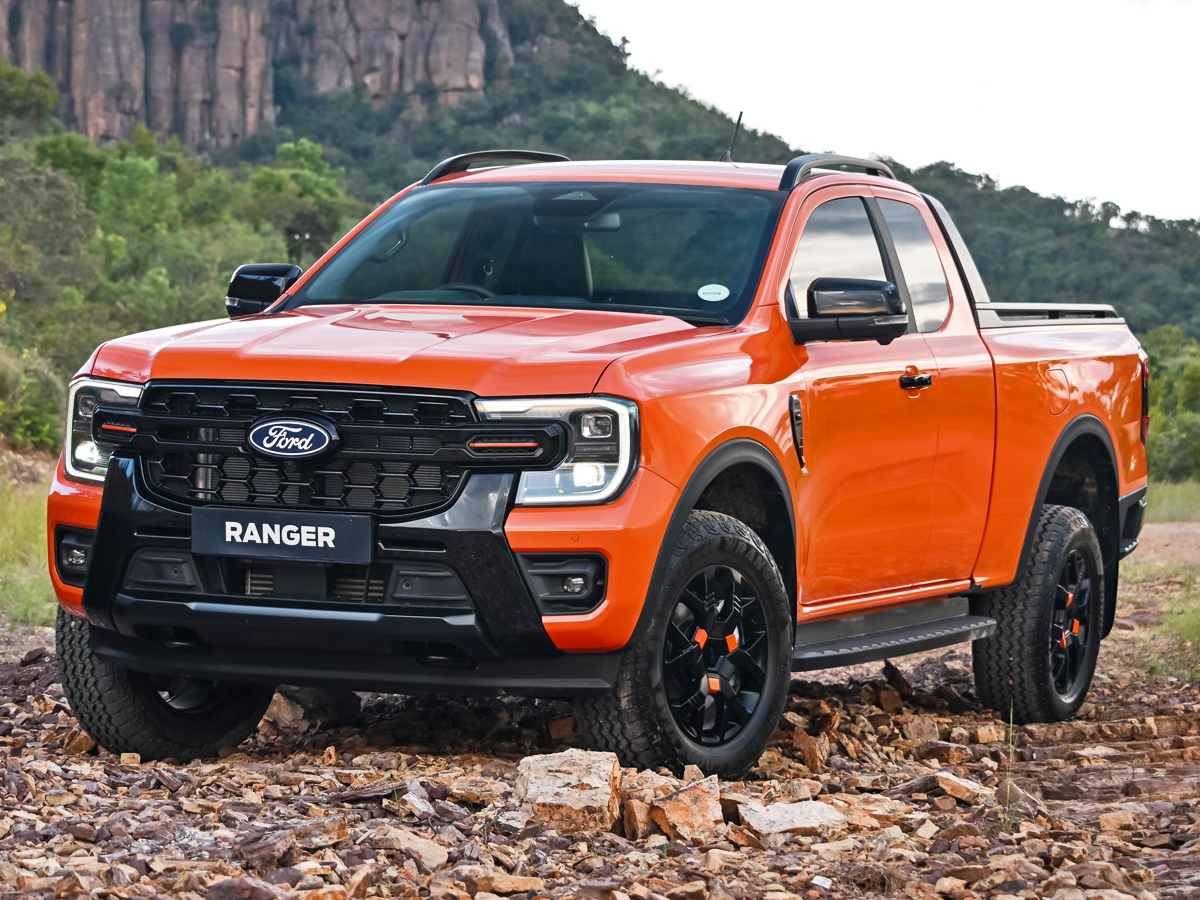
The 2nd-placed Ranger (seen here in Wildtrak Supercab guise) closed the gap in May.
With a total of 2 073 units (up 3.0% month on month), the Silverton-made Ford Ranger – which recently underwent a line-up revision locally – thus retained the runner-up spot, though closed the gap to the Hilux to just 415 units. Finally, amid a switch to the facelifted model, the Struandale-produced Isuzu D-Max managed 1 009 units (down 3.4% compared to April) to keep 3rd place.
Meanwhile, local registrations of the GWM P-Series (including both the P300 and P500) improved 17.2% month on month to 689 units, seeing the Chinese bakkie retain the 4th position it achieved in April. Therefore, the KwaZulu-Natal-assembled Mahindra Pik Up again had to settle for 5th, despite a 12.3% month-on-month increase in sales to 632 units.
So, the top 5 positions were unchanged from April, a theme that continued down much of the table. Yes, the Toyota Land Cruiser 79 (466 units; up 3.3%), Volkswagen Amarok (417 units; up 4.5%), Nissan Navara (288 units; down 8.6%) and JAC T-Series (261 units; down 3.3%) remained in 6th, 7th, 8th and 9th position, respectively. It’s worth noting local production of the Navara ended in May, with Chery SA having taken over Nissan’s Rosslyn plant.
In the end, there was just a single positional change in the top 10, with the Peugeot Landtrek‘s 66.7% month-on-month gain to 230 units seeing it snaffle the final spot. As a reminder, while the SA-spec Landtrek is currently imported from China, Stellantis SA hopes to start building this bakkie at its planned Coega facility in the Eastern Cape “towards the end of 2027”.
Bakkies outside the top 10 in May 2026
The LDV T60 ended in 13th place in May.
So, which bakkies didn’t manage to crack the top 10 in May 2026? Well, with local registrations dipping 15.1% month on month to 174 units, the Foton Tunland slipped out of the top 10, ending in 11th. Still, it remained ahead of fellow Chinese contender the BYD Shark 6, despite sales of the latter improving 25.9% month on month to 136 units.
Interestingly, the SAIC-owned LDV brand began reporting sales figures to industry-representative body Naamsa in May, with the LDV T60 slotting into 13th place on 99 units. That saw the Mahindra Bolero (75 units) and Mitsubishi Triton (43 units) forced down to 14th and 15th, respectively.
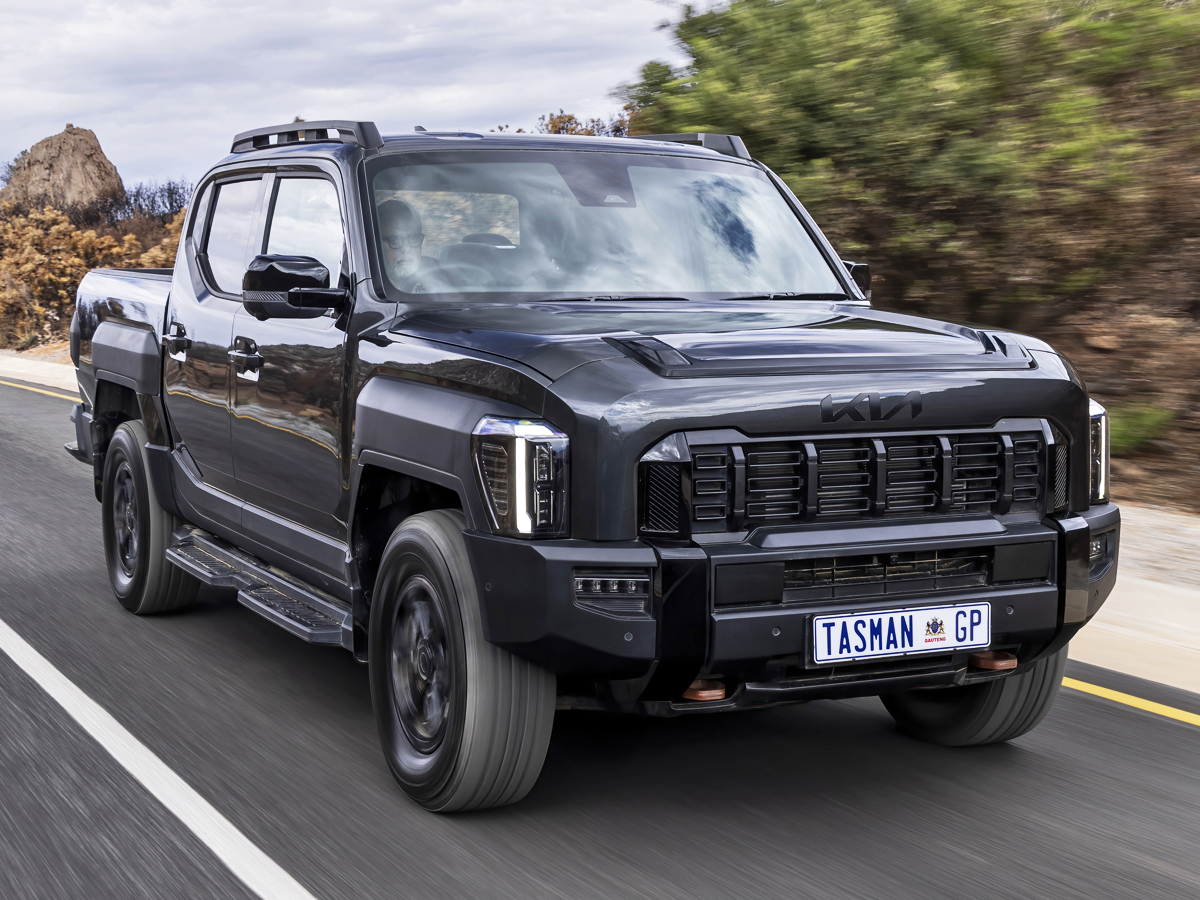
Kia SA registered 39 examples of the Tasman in May.
Meanwhile, the recently launched Kia Tasman finished in 16th position with 39 units, again slightly ahead of the 17th-placed Changan Hunter (36 units). The LDV Terron 9 managed 15 units to take 18th, while the since-discontinuedGWM Steed (3 units) and the decidedly niche Jeep Gladiator (1 unit) both remained in single figures, taking 19th and 20th, respectively.
Jetour hits record total! SA’s new-vehicle sales in May 2026
In May 2026, South Africa’s new-vehicle market registered its 20th consecutive month of year-on-year growth, with Jetour retaining its top-10 spot on the back of record sales…
New-vehicle sales up 12.8% year-on-year in May
South Africa’s highest May sales total since 2013
Toyota still leads but market share slips to 20.9%
Jetour breaks through 2 000-unit mark to keep 8th
Mahindra and Isuzu return to top 10 in May 2026
In May 2026, sales in South Africa’s new-vehicle market increased 12.8% year on year to 51 071 units, representing the local industry’s 20th straight month of year-on-year growth as well as its strongest May showing since 2013.
Furthermore, that figure – again breaching the 50 000-unit barrier – was 6.4% up on April 2026’s performance. In contrast, new-vehicle exports from South Africa dropped 4.8% year on year to 29 392 units in May 2026.
Industry-representative body Naamsa said an estimated 90.1% of May 2026’s total reported domestic figure of 51 071 units represented sales via the dealership channel, while 5.3% were sales to the new-vehicle rental industry, 2.5% to industry corporate fleets and 2.1% to government.
Mzansi’s new passenger-vehicle market ended May 2026 on 36 871 units (with rental sales accounting for 6.0% of that number), an increase of 16.3% compared to the same month in 2025. Meanwhile, local sales of new light commercial vehicles (LCVs) came in at 11 251 units, up 2.5% year on year.
Meanwhile, Brandon Cohen, National Chairperson of the National Automobile Dealers Association (NADA), said the local market’s performance continued to “confound industry commentators”.
“Given the recent interest-rate increase, ongoing cost-of-living pressures and concerns around consumer affordability, many expected vehicle demand to come under greater pressure. Instead, the market continues to show surprising resilience, supported by replacement demand and consumers’ ongoing need for personal mobility,” said Cohen.
Thanda Sithole, Senior Economist at WesBank, described May 2026’s market performance as “encouraging”, pointing out that “growth was led by passenger cars, while the commercial vehicle segments also remained positive, suggesting that the recovery has breadth”.
New-vehicle sales summary for May 2026
Aggregate new-vehicle sales of 51 071 units increased by 12.8% (5 784 units) compared to May 2025.
New passenger-vehicle sales of 36 871 units increased by 16.3% (5 170 units) compared to May 2025.
New light-commercial vehicle sales of 11 251 units increased by 2.5% (273 units) compared to May 2025.
Export sales of 29 392 units decreased by 4.8% (1 467 units) compared to May 2025.
10 best-selling automakers in SA in May 2026
VW Group sales increased 10% month on month in May.
Toyota SA Motors held steady right at the top of the table, again ranking as South Africa’s best-selling automaker by quite some margin. In May 2026, the Japanese company (including its Lexus and Hino brands) registered 10 667 units in Mzansi, up 4.7% on April’s effort. Still, the company’s market share slipped slightly to 20.9%, down from 21.2% in April and 22.8% in March.
While Suzuki Auto SA retained 2nd position in May with a total of 5 546 units (up 3.4% month on month), 3rd-placed Volkswagen Group Africa (including Audi) narrowed the gap somewhat. In the end, the German company increased its tally 10.0% compared to April, ending on 5 295 units – or just 251 units behind Suzuki.
Meanwhile, Hyundai Automotive SA (3 054 units; up 6.9% month on month) and Ford Motor Company of SA (2 932 units; up 8.5% month on month) remained in 4th and 5th position, respectively, though there were only 122 units between them.
Similarly, a mere 36 units separated Chinese firms GWM SA (up 4.8% month on month to 2 605 units) and Chery SA (up 4.3% month on month to 2 569 units), with these automakers keeping hold of 6th and 7th place, respectively.
After climbing to a new high of 8th in April, Jetour SA – which falls under the Chery Group umbrella globally but seemingly operates independently in Mzansi – not only retained this top-10 spot in May but also registered record sales. The Chinese company cracked the 2 000-unit mark for the first time, growing its tally 12.0% month on month to 2 020 units.
Mahindra SA (1 429 units; up 30.1% month on month) and Isuzu Motors SA (1 371 units; up 3.9% month on month) both returned to the top 10 in May 2026. As such, after breaking into the top 10 for the first time in April, Omoda & Jaecoo SA (1 369 units) narrowly missed out in May, with BMW Group SA (on a Naamsa-estimated 1 349 units, including the Mini brand) likewise dropping off the table (to 12th).
Finally, Kia SA (1 312 units) slipped a ranking to 13th, while Renault SA (1 240 units) dropped a spot to 14th. Stellantis SA closed out the top 15 on 811 units in May 2026, forcing Nissan SA (789 units) out of the picture.
1. Toyota – 10 667 units
2. Suzuki – 5 546 units
3. Volkswagen Group – 5 295 units
4. Hyundai – 3 054 units
5. Ford – 2 932 units
6. GWM – 2 605 units
7. Chery – 2 569 units
8. Jetour – 2 020 units
9. Mahindra – 1 429 units
10. Isuzu – 1 371 units
SA’s new-vehicle sales outlook for the rest of the year
So, where to from here for South Africa’s new-vehicle market? Well, Naamsa says the economic backdrop that “underpinned the vehicle market’s recovery through the first quarter of 2026 is gradually giving way to a more challenging set of conditions”.
“Rising fuel prices, mounting inflation risks and a changing interest-rate outlook have altered the trajectory of the broader economy, introducing new pressures on household budgets and business operating costs,” the industry-representative body points out, adding that these developments are “likely to influence both vehicle affordability and purchasing behaviour”.
Similarly, NADA’s Cohen suggests the coming months will provide a far clearer indication of how these higher borrowing costs and related economic headwinds will impact consumer behaviour in South Africa’s new-vehicle market.
“The challenge for the remainder of the year will be whether consumers can continue to absorb higher financing costs and rising living expenses. For now, however, the market’s performance demonstrates that South Africans continue to prioritise mobility, even in a demanding economic environment,” says Cohen.
WesBank’s Sithole adds the “shift in the interest-rate environment and renewed fuel-price pressure mean affordability will remain a key consideration for households and businesses in the months ahead”.
“The second half of 2026 will require consumers to stay informed and make decisions grounded in their own financial position, but the future looks positive,” says Sithole.
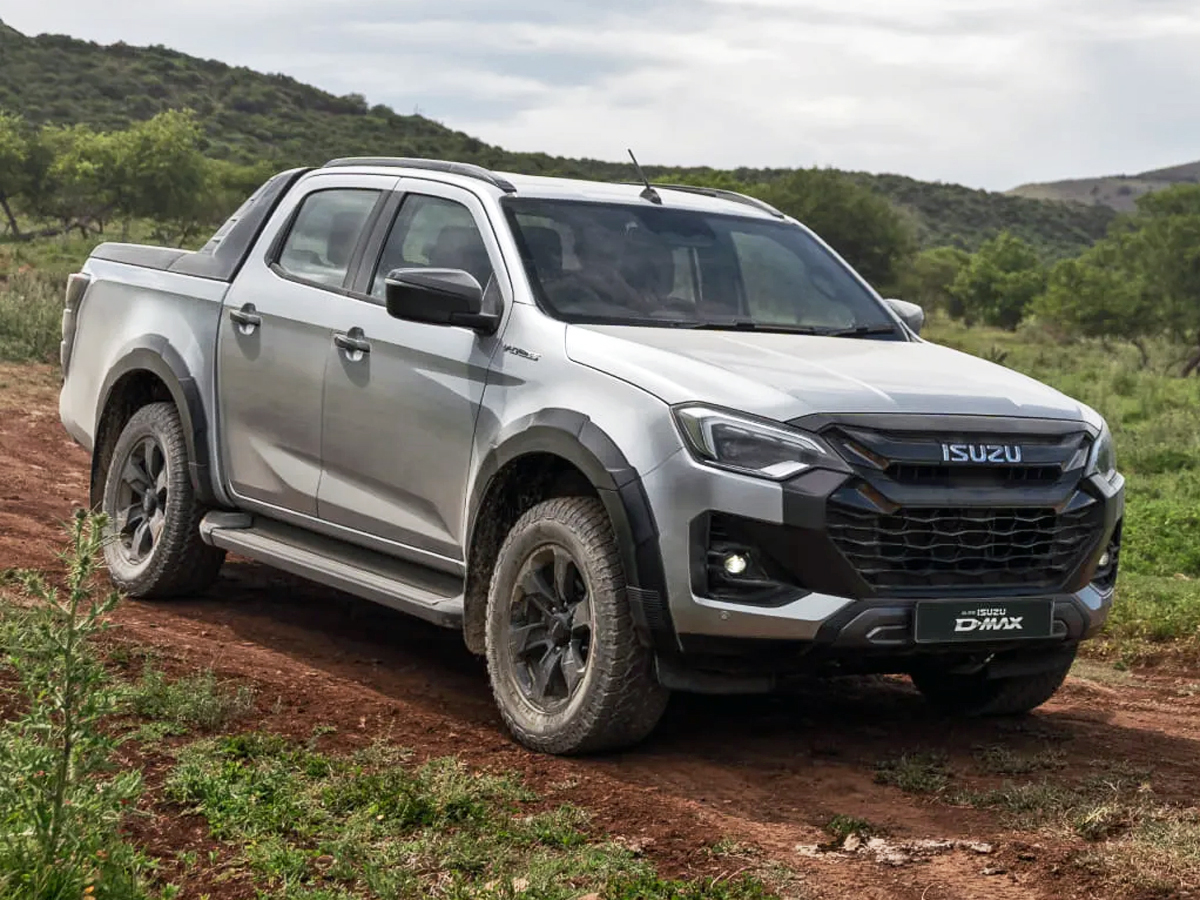
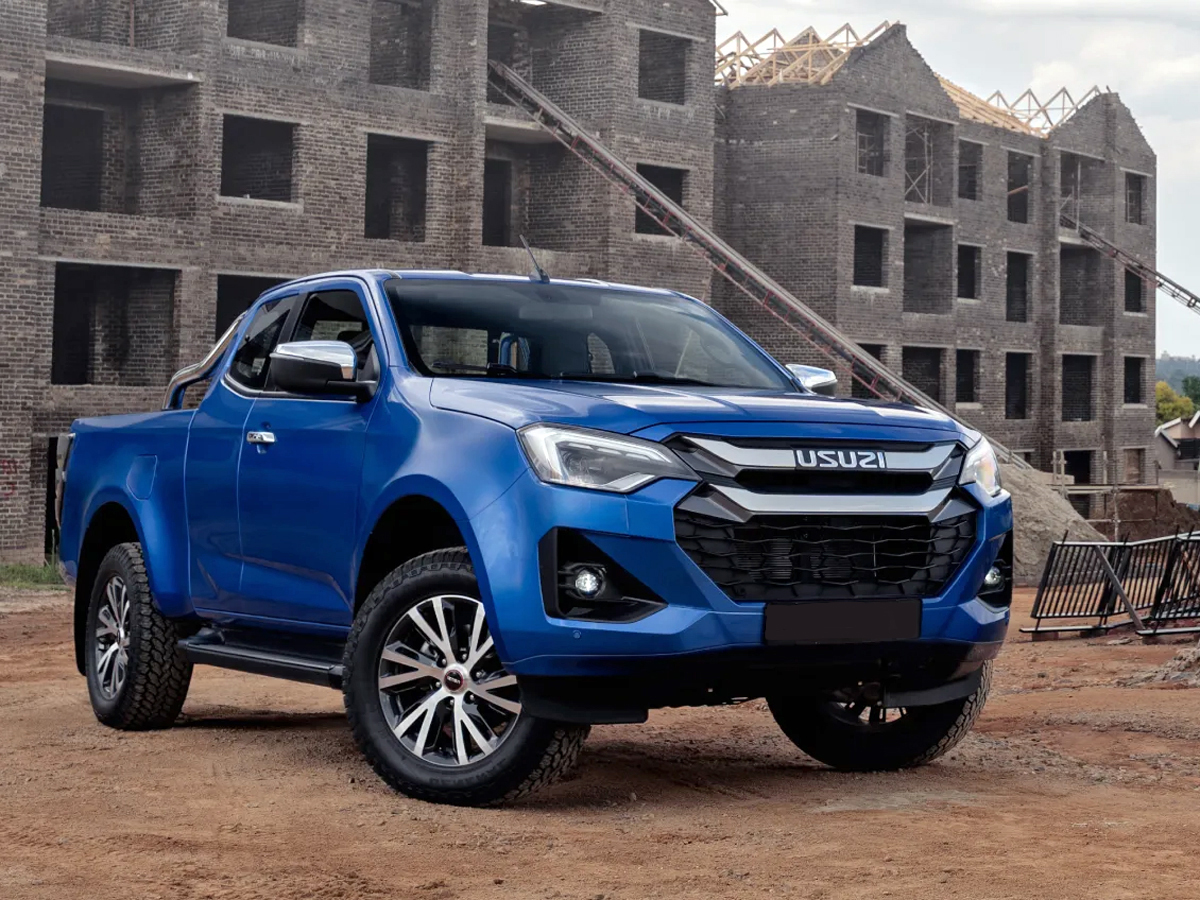
The Isuzu D-Max update – here’s what really matters
Isuzu’s D-Max update brings more options for adventure 4×4 drivers, but the core tech lags behind what’s available in the Australian market.
Any Isuzu D-Max update is big news for South African bakkie buyers. As one of the country’s most established bakkie brands, Isuzu’s model range has real legacy and impact in the local market. Just consider all the component sourcing, cost, and after-sales service support benefits that come with owning a locally built bakkie.
Toyota’s new Hilux will continue to dominate the South African bakkie market, but an updated D-Max is important. Why? Because to many buyers, alongside the Ford Ranger, it’s their preferred alternative. Yes, Chinese bakkies are gaining momentum and favour, but Isuzu remains a popular choice.
For bakkie buyers who don’t want to deal with the insurance and theft risk issues of owning the market-leading Hilux, the D-Max is the answer. But what changes has Isuzu made with the new range? And what is missing in this update before the much-anticipated all-new D-Max platform comes to market in late 2027?
Isuzu’s bakkie reputation is built on durability and diesel engines. Not sophistication. Isuzu is the world’s largest manufacturer of automotive diesel engines. And that scale means that Isuzu bakkies are renowned for their powertrain quality.
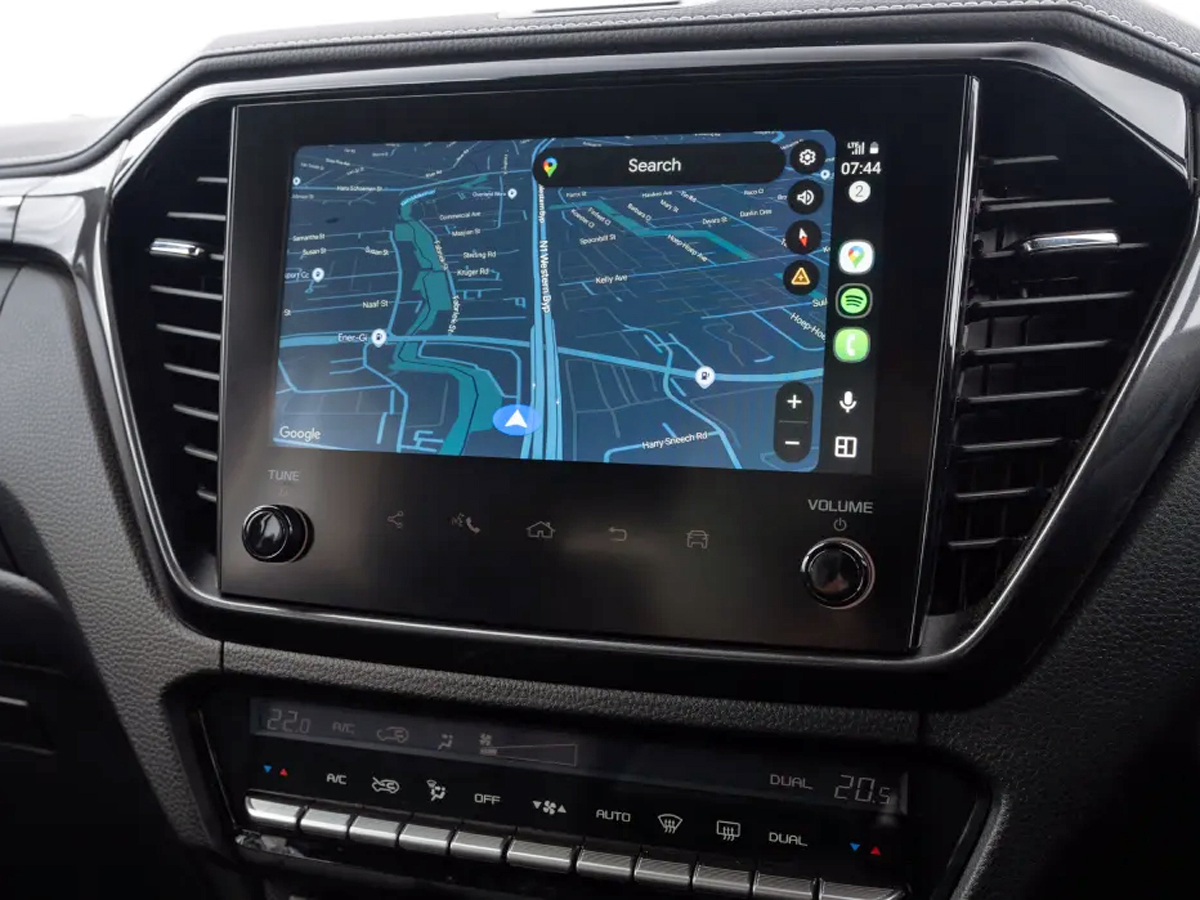
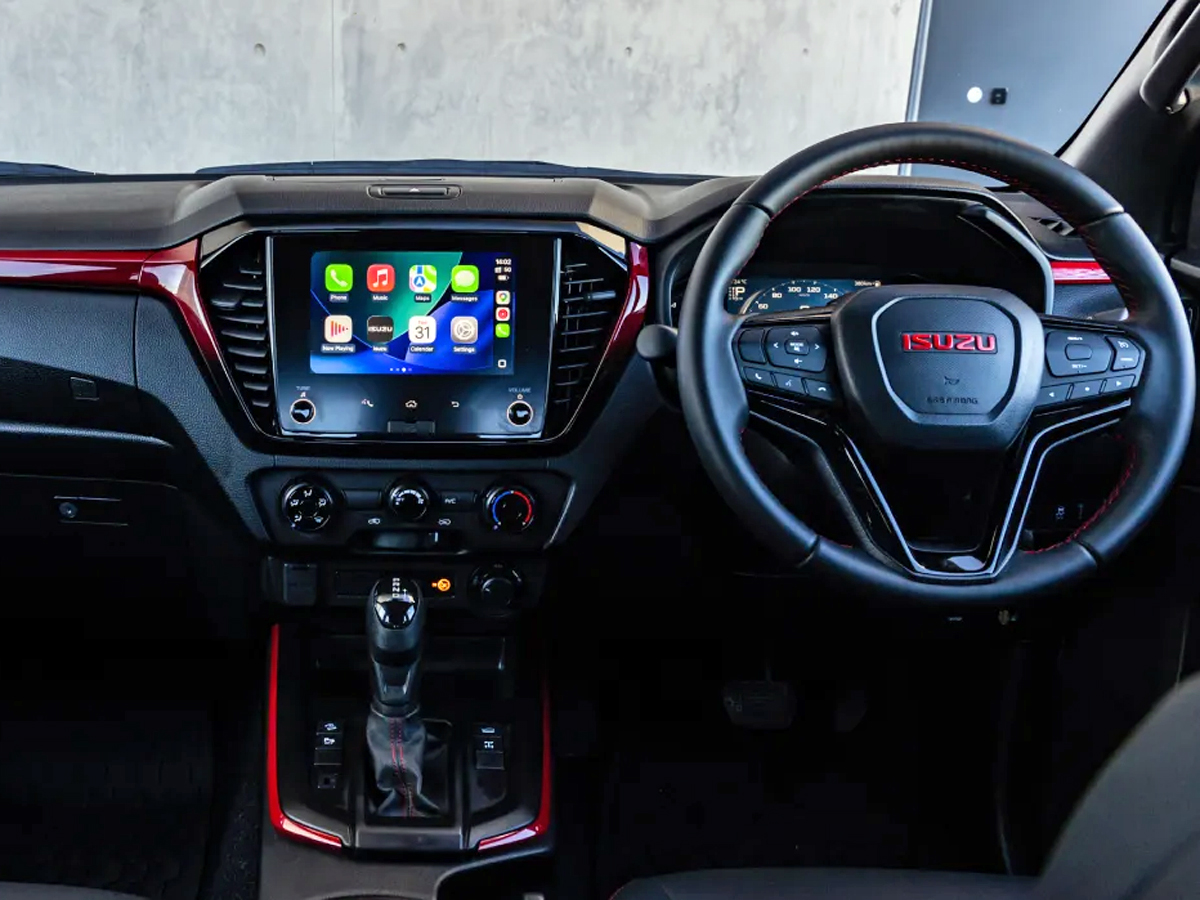
Bigger screens
Better screen graphics, but with physical buttons and tabs. Isuzu gets it right.
In a modern bakkie market, durability still matters, but in-car tech matters a lot, too. Bakkie buyers want all the connectivity that a modern infotainment system provides, without the annoyance of silly haptic controls. Or too many functions layered in screen sub-menus.
One of the D-Max’s best features is that it has retained many physical controls for the HVAC and infotainment. That means you still have that row of tabs that are easy to reach and control when driving on a corrugated dirt road.
The D-Max has durable engines but none make class-leading power or torque.
Isuzu hasn’t made any changes to the engines or drivetrains with the D-Max update. Will that be a disappointment to many Isuzu followers?
There’s a 2.2-litre turbodiesel available in other markets, but this engine won’t be available in local Isuzus until the new D-Max platform arrives in 2027.
Why has Isuzu decided to carry over its engine range when a new Hilux is entering the market and a flood of impressive Chinese bakkies is on the way? Well, because carry-over engines are reliable and proven. And it’s exactly what Toyota has done with the dominant Hilux. So you can’t really question the Isuzu South Africa product planning people for their decision.
Timing chains – no belts
Chain-driven engine timing is a durability hedge with Isuzu engines.
The 1.9- and 3.0-litre four-cylinder turbodiesel engines continue to be graded against the latest turbodiesel rivals and their outputs are average. But these engines retain the famed Isuzu diesel durability, which is worth a lot to many South African bakkie buyers. Importantly, all Isuzu diesel engines use chain-driven timing rather than timing belts.
For bakkie buyers who value long-term engine durability and worry about catastrophic engine failure and damage with a failed or snapped timing belt, it’s a big deal.
Unlike the Amarok or Ranger, you can’t use the D-Max’s 4×4 system on a wet tar road.
Like the engines, all gearboxes and transmissions for Isuzu’s latest bakkie have been carried over, too. That means you still only have 6 forward speeds. That is similar to a new Hilux, but it offers fewer gears than most rivals like the Amarok/Ranger (10) and most Chinese double cabs, which have 8-speed transmissions.
Disappointingly, the Isuzu 8-speed automatic transmission already available in several other global bakkie markets isn’t part of the local D-Max update. This is a big issue because most double cabs are ordered with automatic transmissions.
Fewer gears mean worse fuel consumption and possible acceleration lag when you need that rapid gear kickdown, accelerating up a steep gradient or to pass slower trucks on the highway.
The updated D-Max and new Hilux lack an all-wheel-drive option on the high-trim 4×4 versions. That means you can’t use a 4×4 D-Max in all-wheel drive on a sealed surface, or on a slipway when you are launching or retrieving watercraft.
With the Amarok, Ranger, Tasman, and several Chinese double-cab bakkies now offering all-wheel drive, it could be an issue to have a 4×4 bakkie with only a 50:50 lockup transfer case option. Why? Because on these bakkies, all-wheel drive can’t be used as a traction and safety aid at high speeds on dirt roads. And they absolutely can’t be used on steep, wet tar roads or slipways in 4×4, which is exactly where a double cab with all-wheel drive is so valuable.
New D-Max 4x4s
The D-Max’s dirt-road ride quality is legendary but the drivetrain technology is ageing.
An interesting detail in Isuzu’s updated bakkie range is the addition of more extended-cab versions. For a long time, these bakkies were an afterthought in the local market. Now, several brands are making an effort to market them more effectively.
Isuzu has added 2 4×4 derivatives to its extended-cab range because they make a lot of sense to adventure and business buyers. The load bed on a double-cab bakkie is short. That makes it a lot less useful than you’d think.
Extended cabs are having a moment
The better platform for adding an overlanding canopy for serious 4×4 driving.
For overlanders and 4×4 adventure drivers – an important segment of the local bakkie market – a short double cab load bed has many limitations.
An extended cab has better load rating and load volume than a double cab. That matters when buyers need to fit an aluminium canopy with a drawer system and carry their own supplies for a month-long tour of Botswana or Namibia.
Another benefit of extended-cab bakkies over both single- and double-cab bakkies is the storage area behind the seats. Bakkies have no safe in-cab storage. In an extended-cab bakkie, you can manage the risk better by utilising lockable storage boxes behind the seats, creating an excellent in-cabin storage solution without sacrificing any space in the load bed.
Double cab bakkies are popular as family vehicles. But it’s very difficult for business owners to make a VAT vehicle tax claim for them. With an extended cab, that’s not an issue, which does increase its appeal as an ownership proposition.
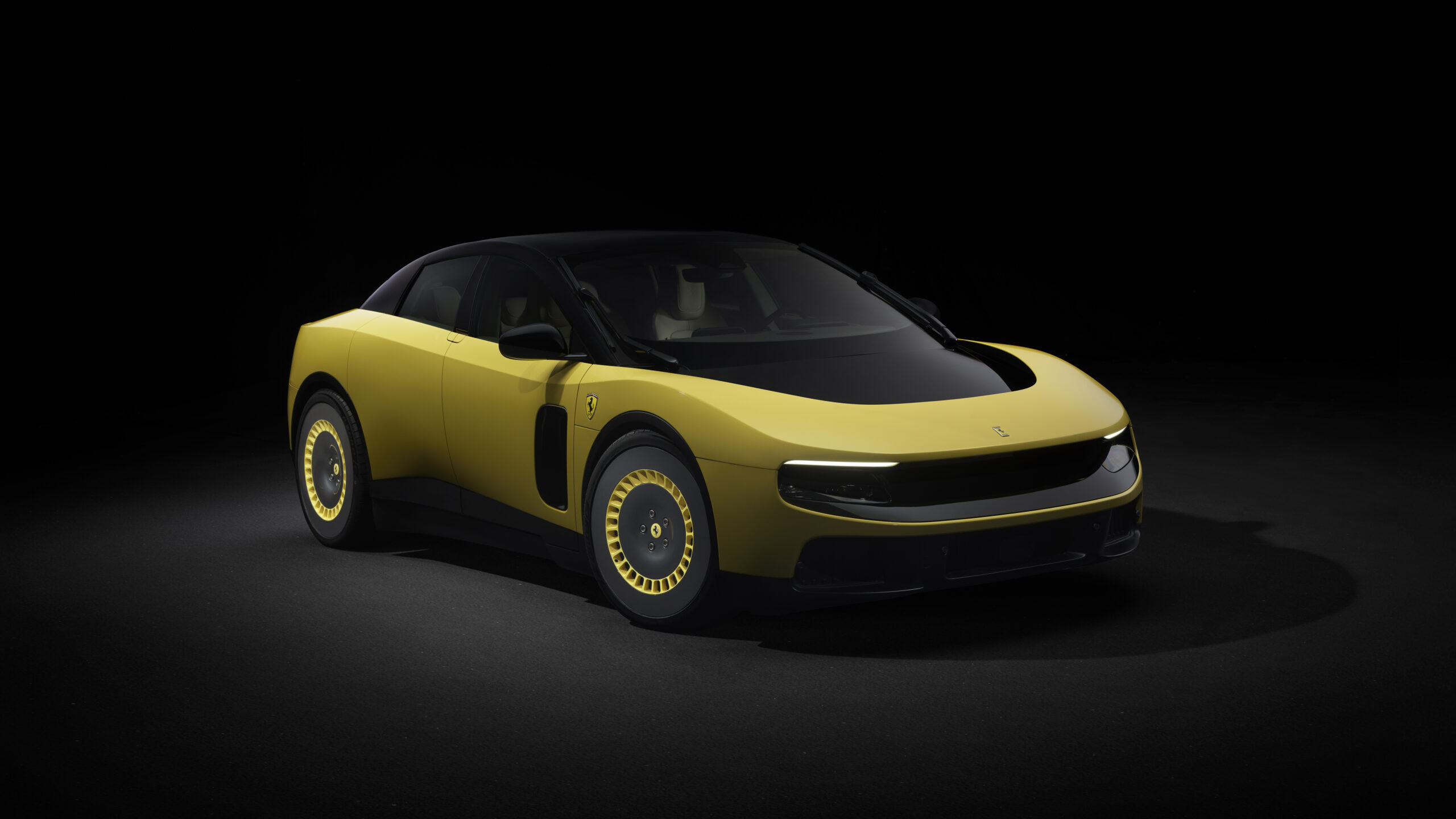
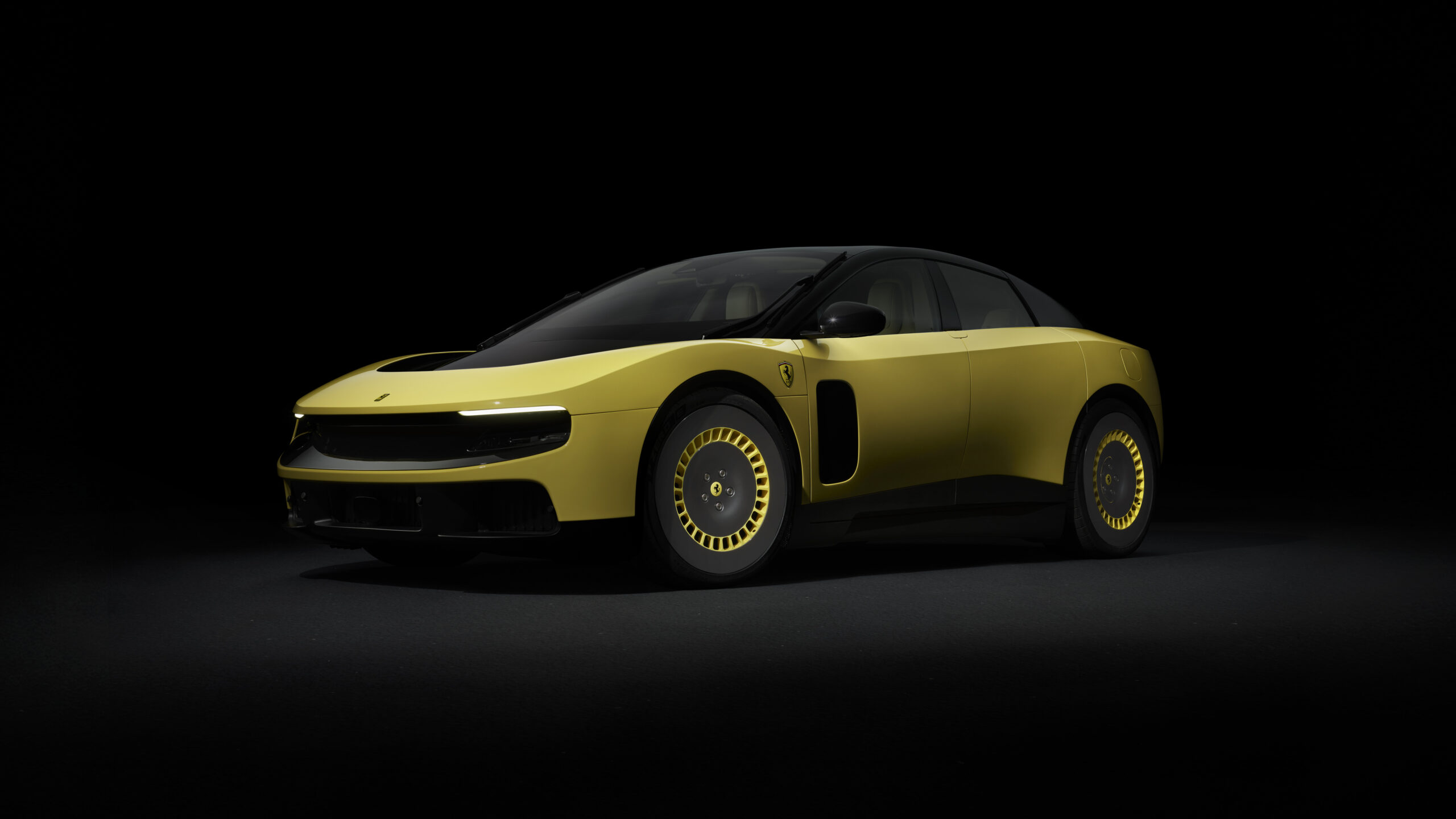
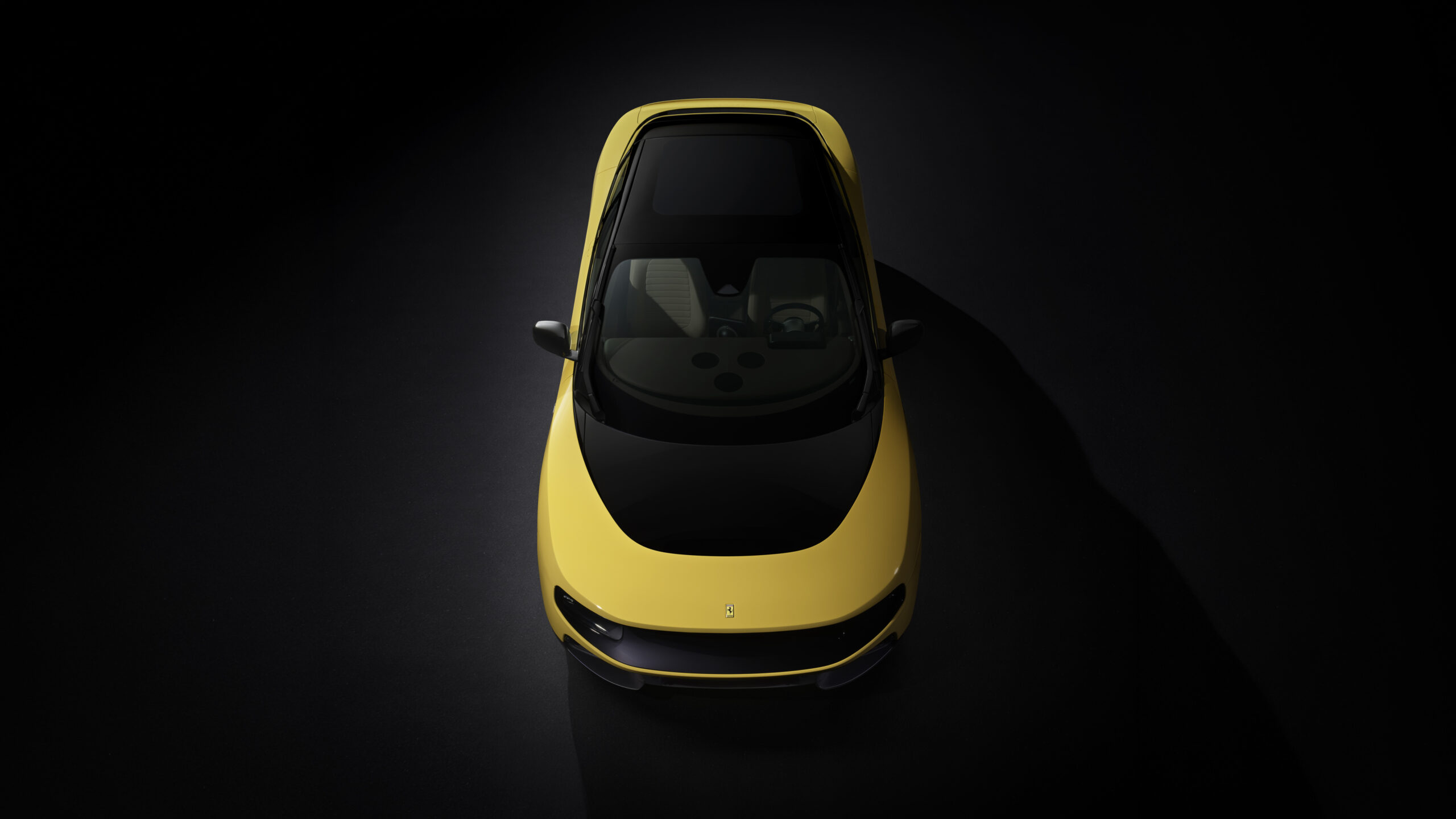
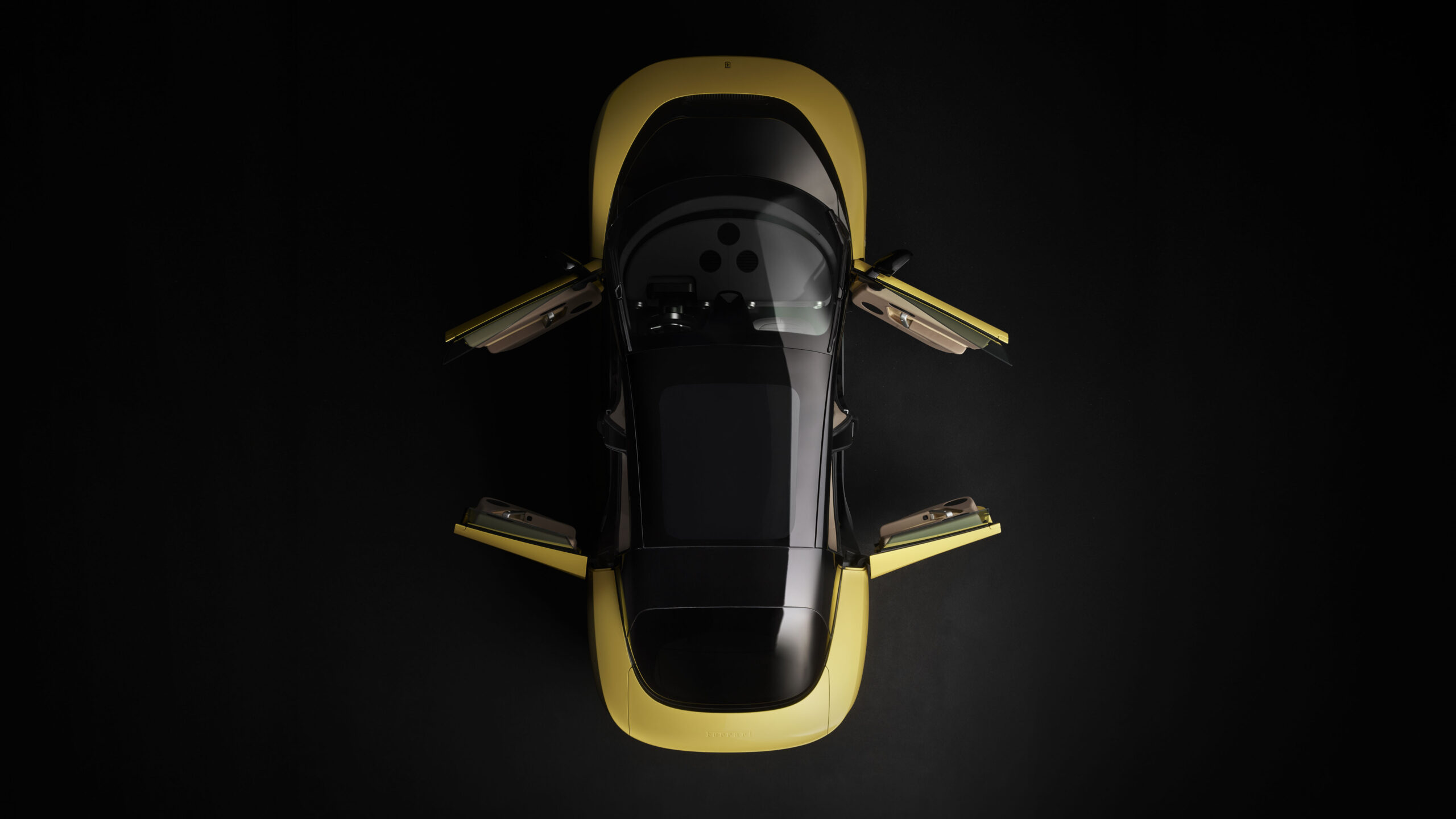
How did Ferrari get its first-ever EV, the Luce, so wrong? Or is Ferrari right and we are wrong? Or maybe two wrongs make a right? What’s the question again?
My first response upon seeing the new Ferrari Luce was not one of disgust. In fact, I barely raised an eyebrow. Viewing that first gallery on my Instagram feed over breakfast, I thought it was just more AI slop and not worthy of any emotional investment. But then there was another post. And then a reel. And then another. I started to wonder … surely this could not be real?
A few minutes later, the authenticity of the posts confirmed, I was immersed in the Internet’s response to Ferrari’s first-ever EV. Between gulps of coffee, I could not help but giggle, until my 14-year old daughter, who has grown up with cars, because she has grown up with me, asked me why. I showed her a picture of the Luce and told her it was the new Ferrari. She giggled, too (not at the picture, but at me, thinking I was joking), then shrugged and said, “But that’s not a Ferrari!”
That kind of response really sums up the situation. Whether we are passionate petrolheads or merely “alive”, we all know what Ferrari represents, and the Luce, quite evidently, is not that.
Ferrari’s share price slumped in the days following the Luce’s reveal, rival brands are mocking the Prancing Horse (even Kitkat and Toblerone joined in), and passionate Ferraristi are up in arms. Perhaps most concerning (for Ferrari) will be the thinly veiled criticism levelled at the Luce by its highly respected former chairman, Luca di Montezemolo. He said; “If I were to say what I really think, it would be unpleasant. I hope someone removes the Prancing Horse from that car. We risk destroying a legend. At least the Chinese won’t copy it!”
Ouch!
Why does the Ferrari Luce exist?
In the days following the Luce’s reveal, I went down many rabbit holes. Design is something that has always fascinated me. Growing up, I had real hopes of becoming a car designer, writing to the likes of Bertone and Pininfarina to gather more information. Though I did not end up designing cars, I am passionate about the subject and have invested considerable time trying to understand it. Perhaps more importantly, in my eventual career as a motoring journalist, I have met and interviewed many of the world’s top designers during the past quarter of a century or so.
My personal view is the surfacing of the car is too simple, resulting in a lack of visual “tension”. In fact, the design surfacing is so soft and almost pillowy, that it ends up looking more like a Duplo toy car than an exotic supercar. And then there is the shape of the thing… What is it exactly, a sedan on stilts? Somehow, even with massive 23-inch wheels at the front and 24s at the rear, it still looks curiously undertyred.
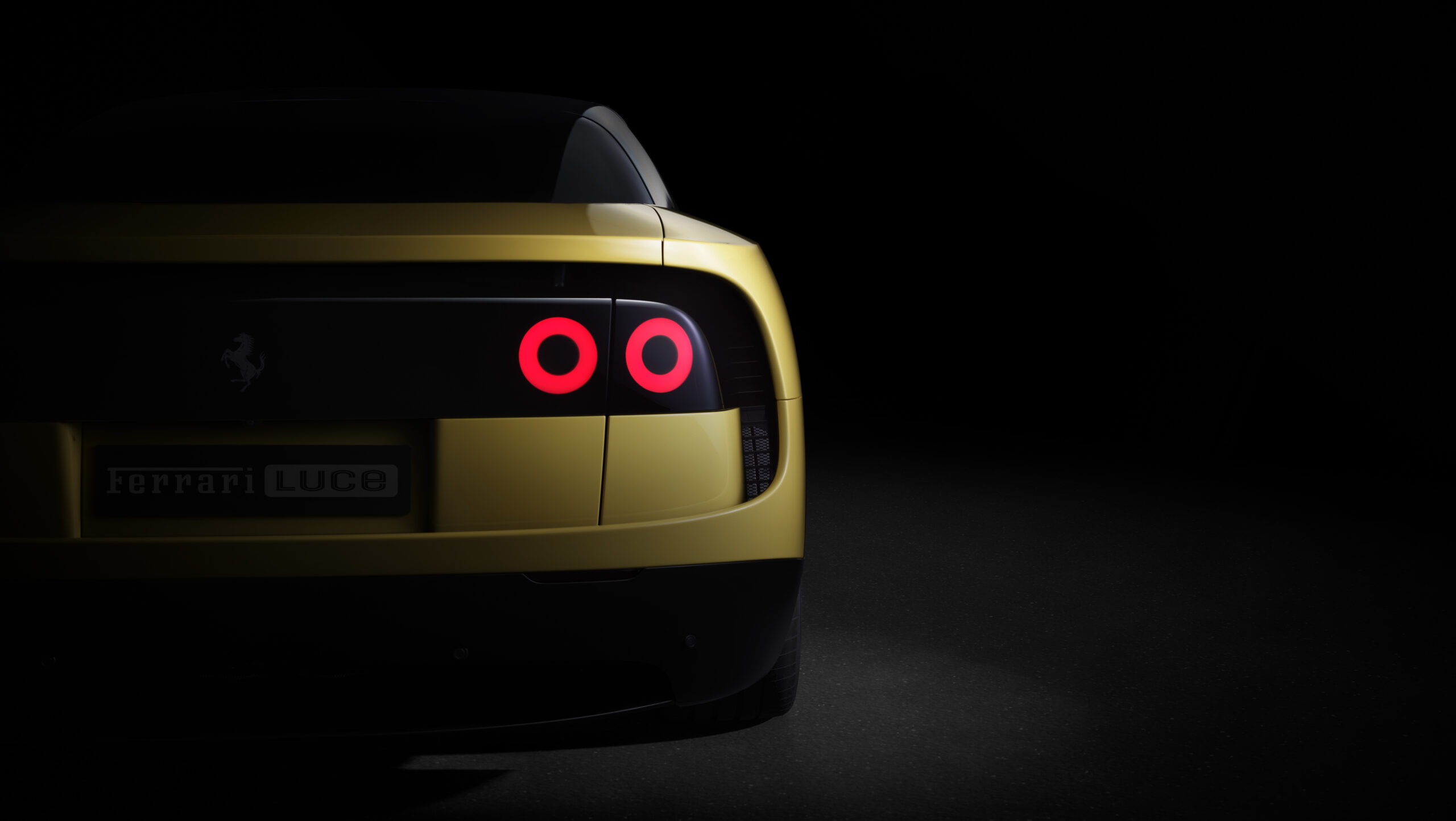
The Luce also eschews the traditional cab-rearward look of Ferraris, even the Purosangue, in favour of a type of cab-forward, monobox silhouette that is generic. And then, to make matters worse, where Ferrari has added traditional design elements (such as the round rear lights), it was executed quite poorly, like an afterthought. From the rear, it looks like a 360 Modena has been covered in the unfinished clay styling buck of a much bigger car!
Reviewing a car’s design is very much like evaluating art: extremely subjective. In the case of the Luce, however, the condemnation has been near universal. Some commentators have suggested that the Luce design is polarising, which would imply there exists a similarly large support base. This does not appear to be the case; not to me, anyway.
It would seem that much of the furore around the existence of the Luce is ignited by the fact that it is Ferrari’s first-ever EV, as if electric vehicles have to be unattractive by definition. Or, that supercars can simply not be EVs. You don’t have to look very far (mostly to China) to realise that neither of those points of view is correct. BYD’s Yangwang U9, penned by Wolfgang Egger (previously from Alfa Romeo and Audi, where he also oversaw Lamborghini) has a typical (some may say attractive) hypercar design and is also faster than the Ferrari Luce, while also being a 4-motor EV. Egger previously designed the Alfa Romeo 8C Competizione, one of the world’s most beautiful cars, of all time. That little detail is important to remember when you consider the automotive track record of the team behind the new Luce.
For the price, the Luce is simply not quick enough…
If you equate Ferraris with being the fastest, then the Luce also does not quite hit the target. Not only is the Yangwang faster to 100 kph, but so is the Tesla Model S Plaid. The Porsche Taycan Turbo S is in the same ballpark. And all three of those cars are significantly more affordable. Yes, the Luce has a higher top-end than the Porsche, but how often will you be able to reach that?
And, here’s a major issue: The Luce costs more than double the price of a Yangwang U9, nearly 3 times as much as a Taycan Turbo S, and about 6 times as much as a Tesla Model S Plaid (admittedly, not long for this world). So, if Ferrari supremacy to you means performance, then the Luce misses the mark, particularly at the price.
And yes, price is a particularly important factor here. The Luce will sell from around €550 000, but base pricing in the world of Ferrari means preciously little. We expect optioned vehicles to land in South Africa from around R15.0 million. Even for a Ferrari, that is a lot, and quite similar to the Purosangue, which suddenly seems quite a conventional Ferrari with its V12 engine (even though it caused quite a ruckus itself when it was launched, being the first-ever Ferrari SUV).
So the Luce is not the fastest EV, nor does it offer the best range in the world of performance EVs (around 530 km). Quite clearly, it is also not the prettiest.
Does the Luce exist to guarantee the future of V8s and V12s?
If anything, the introduction of the Luce appears to be a very calculated move taking into account a number of potential market scenarios. Firstly, regulatory pressure is a real and ever-tightening threat. Global emissions mandates, particularly in Europe and China, heavily penalise manufacturers that do not lower their fleet-wide CO2 averages. The situation could become even more dire and, if a car company is not technologically prepared, it may well not be able to respond in time.
By launching an exotic 122 kWh fully electric vehicle, Ferrari creates “carbon credit” headroom. Every Luce sold offsets the emissions of the high-margin, track-focused V8s, V12s, and hybrids in its line-up. As long as this works, Ferrari can continue developing and selling the cars we all associate with the Prancing Horse brand. I can get behind this approach.
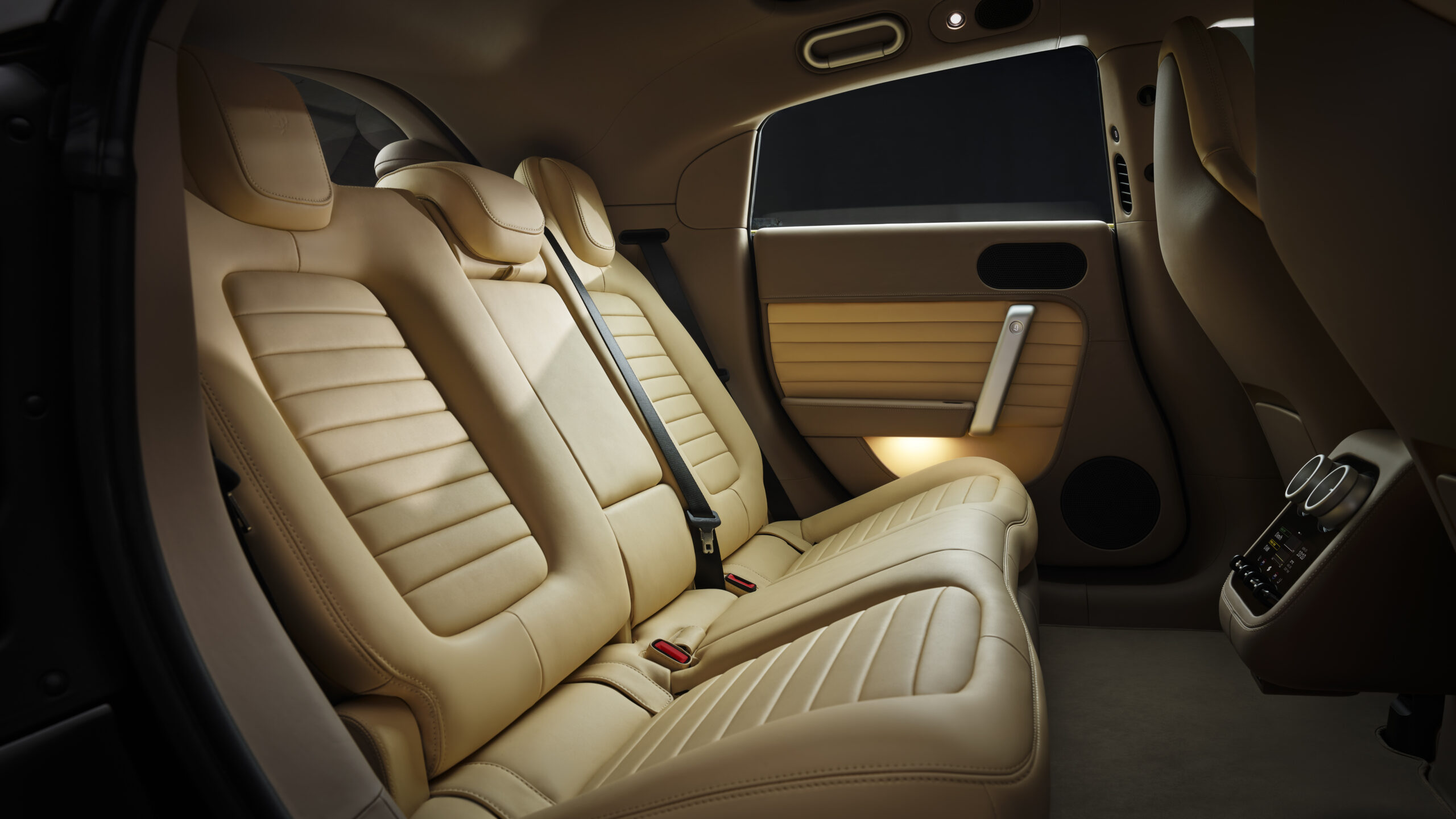
Another reason offered is that the Luce is explicitly aimed at a different demographic. Ferrari has stated that the Luce is designed to draw in buyers who would not necessarily buy a traditional Ferrari. Think wealthy, tech-forward purchasers (particularly in Asia) who demand zero emissions and absolute daily usability (hence the 5-seat layout), but still want extreme luxury and prestige. Manufacturing cars is a business, after all, and I can appreciate that extending your portfolio of customers beyond those wanting a weekend car is attractive. But we are, in my view, starting to tread on thin ice here already…
That said, the above are 2 facts of life that I can live with, even though it is clear that Ferrari is admitting in the process that it can’t match its much more affordable rivals in terms of performance, so instead has focused almost wholeheartedly on offering exclusivity, largely the result of the heady price and, um, “special” appearance.
What I can not accept, however, is that the Luce is just a horrible piece of (exterior) design that is alien to everything that this storied brand represents.
In the absence of Pininfarina
Ferrari first entered into a collaboration with famed Italian design house Pininfarina in 1951. Some of the world’s most celebrated automotive designs resulted from the partnership, including the original 250 Lusso, Daytona, 308 GTB, Testarossa, F40 and many more. The relationship started coming to an end in 2011 with the announcement of Ferrari’s in-house design studio. In 2015, Pininfarina was sold to Mahindra…
At the helm of Centro Stile Ferrari was (and is) Flavio Manzoni, who said, “The presence of the design centre in the factory is really important because there are meetings every day with engineers, aerodynamicists and economists to converge, step by step, on the best shape possible.”
That’s all good and well, but I fear in the instance of the Luce, the economists and, perhaps, the aerodynamicists, have had too much say. More than that, I think the risky nature of the project may have opened up Ferrari to some “foreign” influence.
Enter LoveFrom
LoveFrom is an independent, highly exclusive creative collective founded in 2019 by Sir Jony Ive, the legendary former Chief Design Officer of Apple, alongside his longtime collaborator and renowned industrial designer, Marc Newson.
Composed of a tight-knit, multi-disciplinary group of designers, the firm operates with a cloaked, minimalist mystique. It collaborates, very selectively, with some of the world’s most prestigious brands, including Moncler, King Charles III and, now, Ferrari. For those who don’t know, Ive was responsible for such products as the 2001 iPod, 2007 iPhone as well as the 2014 Apple Watch. The man clearly knows a thing or two about consumer product design. Newson, too, has designed some very desirable products, and has tried his hand at automotive styling before (Ford 021C). He also designed the achingly pretty Aquariva motorboat from 2010.
But LoveFrom is very, very thin on automotive design experience. So, why then, after going through all the trouble of divorcing yourself from the legendary Pininfarina and starting your own design house, would a brand such as Ferrari feel compelled to make use of LoveFrom’s services?
Well, you should know that Ive spearheaded Apple’s ultimately stillborn “Project Titan”, which would have delivered the American tech giant’s first car. While the Apple car was never shown, it is believed that a largely “monobox” design, a cavernous glass-house canopy and a radical interior influenced by the company’s other devices would have been trademark design cues. When I look at the Luce, it does not feel a massive stretch to consider it an Apple car rather than a Ferrari.
The loudest voice in the room
I have never met Ive or Newson from LoveFrom. From what I’ve read, Ive is actually quite reserved and polite, while Newson is reportedly a bit more boisterous, but widely respected. I can imagine, however, that they are both very convincing in a boardroom situation. They also have a lot of “unfinished business” from the Project Titan days.
In a situation where radical change is the request, and you are a storied, legendary brand, I do believe that a proposal by the likes of Ive/Newson would have been incredibly hard to ignore by the Ferrari decision makers. In fact, it reminds me a little of the situation at BMW back in the ‘90s and early 2000s…
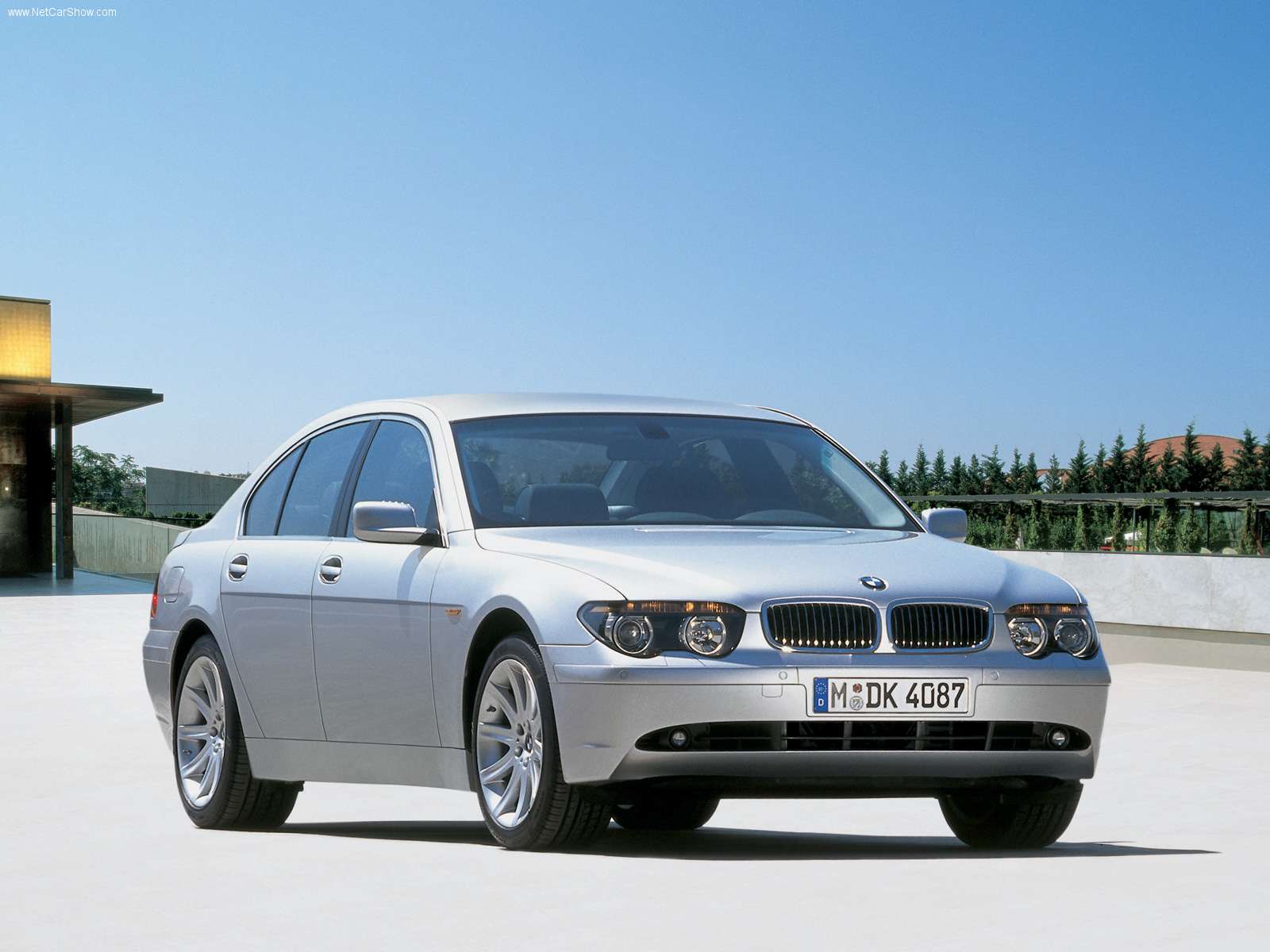
When Chris Bangle joined BMW in the early ‘90s, the German brand’s cars were criticised for always evolving very carefully, and having such conservative, “stoic” horizontal structure. One of my very first overseas car launches was to cover the reveal of the infamous BMW 7 Series E65, the so-called “Dame Edna”. I had seen images of it prior to the night of the big uncovering and was convinced it was appalling.
And yet, as Chris Bangle walked me around the car and explained every line, I felt convinced that he was 100% correct, albeit only for a while. Bangle was a fantastic, convincing talker, a Methodist minister who could, indeed, preach! Back then, co-workers and readers of CAR magazine asked me how BMW could let a car like the E65 become a reality. The truth is that, when accomplished oration, ego and undeniable expertise combine, it can become a very difficult force to resist.
If I look at the Ferrari management right now, seemingly devoid of an equally strong opposing ego (such as former chairman, Luca di Montezemolo) and defined more by cold objectivity than passion, I can understand LoveFrom’s “proposal” getting the nod. On paper, it makes sense. The ingredients are there.
Except for one critical thing: desirability.
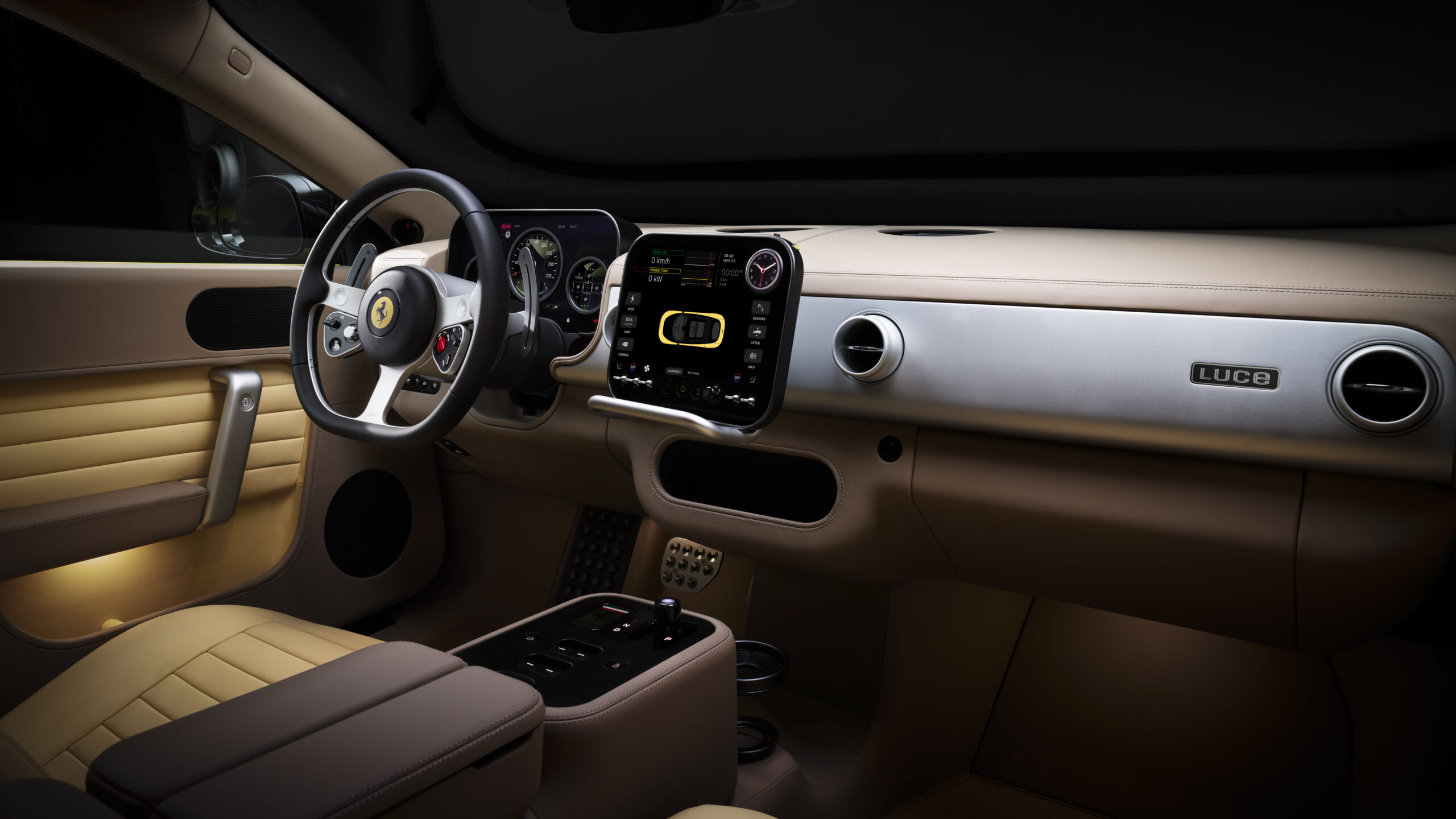
Now, don’t get me wrong; it’s not all bad news. I like the interior of the Luce. It is where LoveFrom’s expertise shines. I wouldn’t mind the Luce’s interior influencing all modern-day and forthcoming Ferraris. It’s that attractive. The way it takes iconic Ferrari design traits and makes them function in a modern way is truly impressive.
The absence of desirability…
But when it comes to a Ferrari, desirability must also be present on the outside. It’s a non-negotiable.
Leonardo Fioravanti, the designer behind the Daytona, 308 and F40, once said: “A Ferrari must be both art and science, otherwise it is just another fast car.”
I’ll take it a step further. Whether you are an old Italian man, an American influencer, or a 14-year old South African teenager commenting over breakfast, a Ferrari means something very specific, and it is pretty much the same thing to everyone. Very few other brands have this singular brand identity. A Ferrari is not a car. A Ferrari is desire. It is inspiration. It is what we dream about rewarding ourselves with for an incredible achievement. Ferrari is mythical. And much of that is grounded in what a Ferrari looks like.
Yes, beauty may be in the eye of the beholder, but desirability is not something you only observe. It is not merely about aesthetics. It is how those aesthetics make you feel.
And the Luce, I’m sad to say, just makes people feel … meh.
Mitsubishi Triton Bi-Turbo (2026) Price & Specs
Wondering what the new 150 kW Mitsubishi Triton Bi-Turbo costs in South Africa? Well, we can confirm local pricing for the flagship version of the Japanese bakkie…
150 kW version of Triton finally arrives in Mzansi
Commands R100k premium over 135 kW Athlete
New flagship scores a full suite of ADAS features
The Mitsubishi Triton Bi-Turbo has finally arrived in South Africa, slotting in at the very summit of the Japanese brand’s local bakkie range. And Cars.co.za can confirm pricing for this fresh 150 kW derivative.
As a reminder, the 6th-generation Triton was revealed in Thailand in July 2023, before arriving in South Africa in November 2024. At launch in Mzansi, all variants employed a single-turbo 2.4-litre diesel engine, which offered 81 kW/200 Nm in GL guise and 135 kW/430 Nm in all other derivatives.
Now, the bi-turbo version of this 2.4-litre 4-pot has finally made local landfall, offered exclusively in top-spec double-cab trim. This so-called “Super High Power” motor generates 150 kW and 470 Nm (the latter on tap between 1 500 and 2 750 rpm), peak outputs that are delivered to all 4 wheels via a 6-speed automatic transmission as standard. Braked towing capacity is 3 500 kg.
According to our information, the new Triton 2.4 DI-D Bi-Turbo Double Cab 6AT 4×4 is priced at R959 990, effectively commanding a R100 000 premium over the 2.4 DI-D Double Cab Athlete 6AT 4×4 (R859 990). It furthermore slots in some R70 000 above the Edition 46, which comes kitted out with extras like a nudge bar, a black canopy, a roof rack, a rubberised load bin and Dunlop AT3G tyres (265/65 R18).
Interestingly, while the SA-spec Triton Bi-Turbo doesn’t appear to officially wear the “Athlete” badge, it seems to share much of that derivative’s bold exterior styling. As such, the new flagship variant features items like a black styling bar and roof rails as standard.
Inside, the Triton Bi-Turbo gains Mitsubishi’s 360-degree camera system and also scores various advanced driver-assistance system (ADAS) features, from adaptive cruise control and blind-spot monitoring to rear cross-traffic alert, lane-departure warning, forward-collision warning (with pedestrian detection) and automatic high beams. It also features sections of orange trim on the seats.
Sales of the new Triton have been somewhat underwhelming in South Africa, with registrations of this bakkie dipping 11.2% year on year to just 500 units in 2025 (seeing it finish 14th on the list of Mzansi’s best-selling bakkies last year). Over the opening 4 months of 2026, Mitsubishi has sold a further 146 units of the Triton, which puts it in 15th spot, year to date.
What does the Mitsubishi Triton Bi-Turbo cost in SA?
DERIVATIVE
PRICE
Triton 2.4 DI-D GL Single Cab 5MT 4×2
R499 990
Triton 2.4 DI-D GL Single Cab 5MT 4×4
R559 990
Triton 2.4 DI-D GL Double Cab 5MT 4×4
R639 990
Triton 2.4 DI-D GLS Double Cab 6AT 4×2
R679 990
Triton 2.4 DI-D GLS Double Cab 6MT 4×4
R739 990
Triton 2.4 DI-D GLS Double Cab 6AT 4×4
R759 990
Triton 2.4 DI-D Xtreme Double Cab 6AT 4×2
R769 990
Triton 2.4 DI-D Double Cab Athlete 6AT 4×2
R779 990
Triton 2.4 DI-D Xtreme Double Cab 6AT 4×4
R849 990
Triton 2.4 DI-D Double Cab Athlete 6AT 4×4
R859 990
Triton 2.4DI-D Edition 46 Double Cab 6AT 4×4
R889 990
Triton 2.4 DI-D Bi-Turbo Double Cab 6AT 4×4
R959 990
The prices above includes a 5-year/unlimited kilometre warranty and a 5-year/90 000 km service plan (with intervals of 10 000 km).
Q: What is the price of the new flagship Mitsubishi Triton Bi-Turbo in South Africa?
A: The range-topping Mitsubishi Triton 2.4 DI-D Bi-Turbo Double Cab 6AT 4×4 is priced at R959 990. This positions it at the very summit of the local lineup, commanding a R100 000 premium over the 135 kW Athlete 4×4 variant and R70 000 over the accessorised Edition 46.
Q: How does the Bi-Turbo’s “Super High Power” engine performance compare to the standard Triton models?
A: While standard Triton models utilise a single-turbo 2.4-litre diesel engine delivering either 81 kW/200 Nm or 135 kW/430 Nm, the new Bi-Turbo version features a “Super High Power” setup. It develops a potent 150 kW and 470 Nm of torque (available between 1 500 and 2 750 rpm), paired exclusively with a 6-speed automatic transmission and a 4×4 system.
Q: What extra features and safety technology does the Triton Bi-Turbo flagship include?
A: On top of sharing aggressive styling cues with the Athlete model (such as a black styling bar and roof rails), the Bi-Turbo gains a 360-degree camera system and unique orange seat trim accents. Crucially, it scores a full suite of advanced driver-assistance systems (ADAS), including adaptive cruise control, blind-spot monitoring, rear cross-traffic alert, lane-departure warning and forward-collision warning with pedestrian detection.
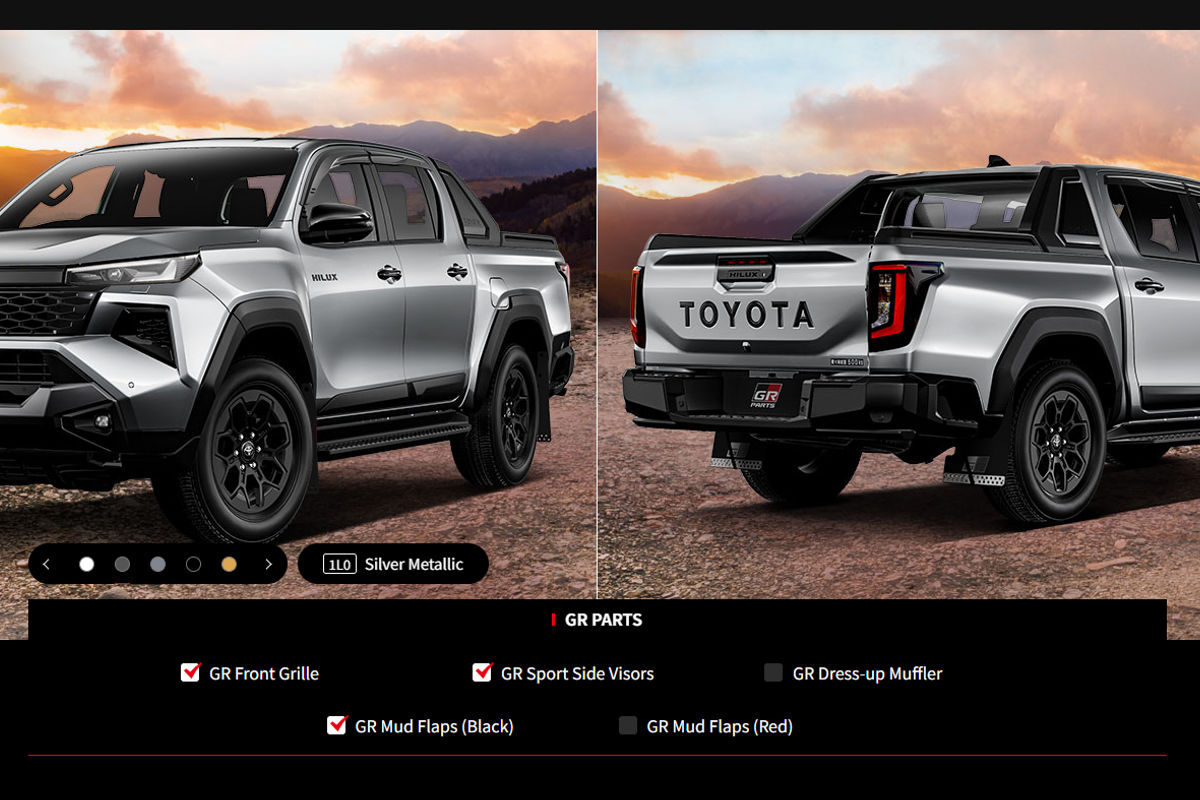
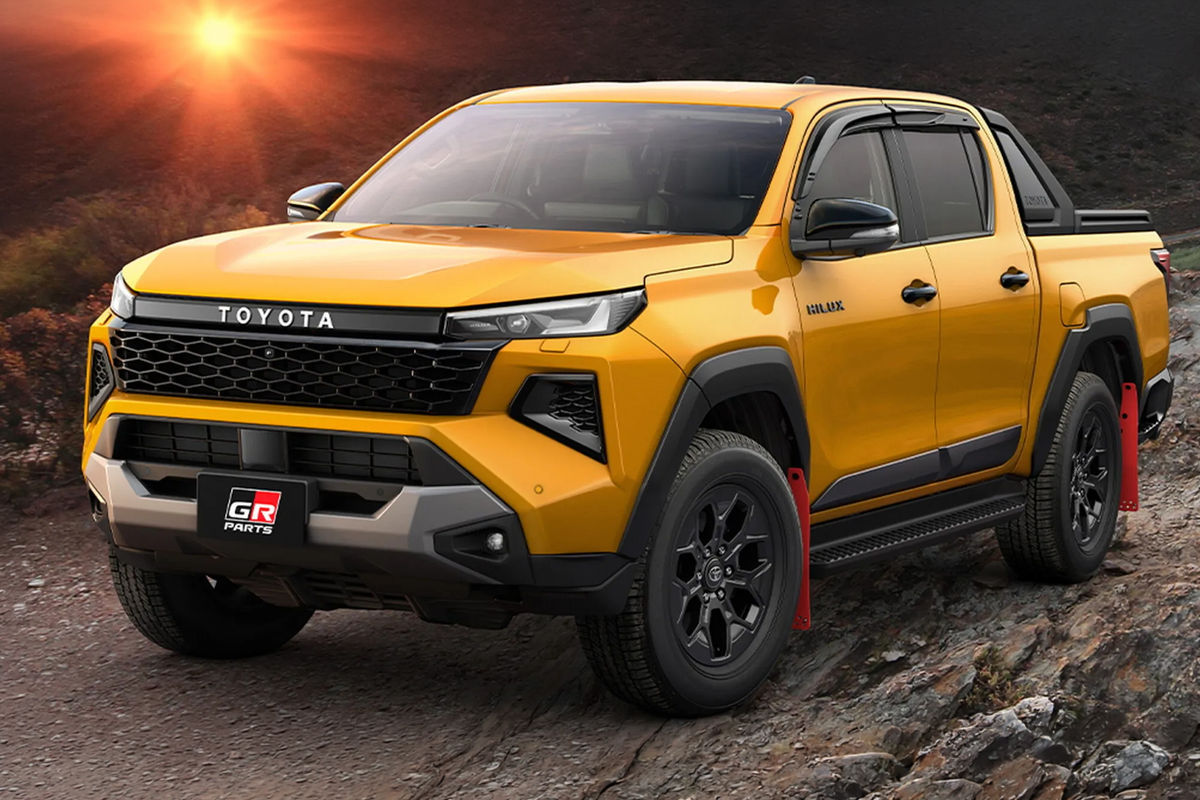
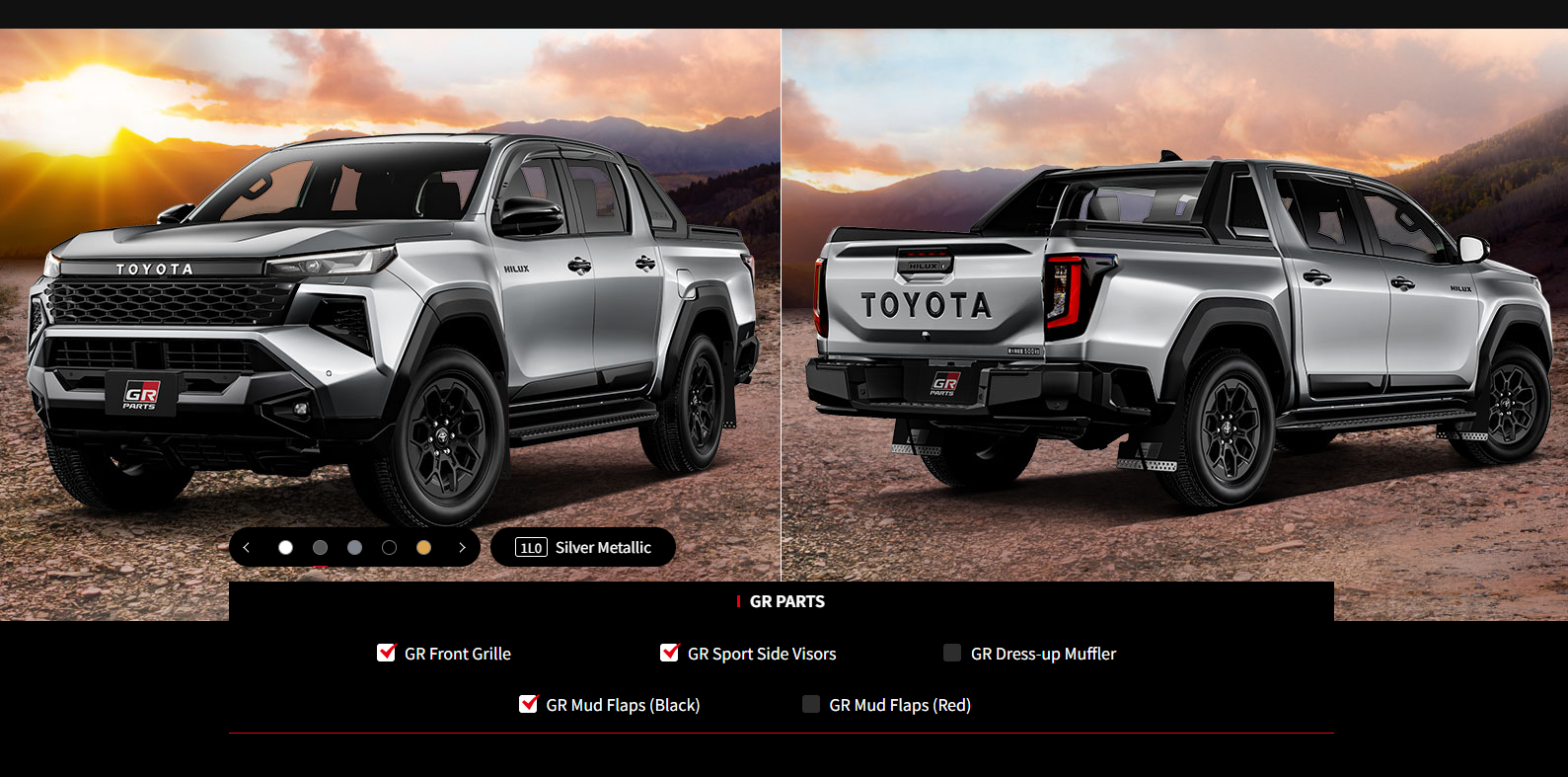
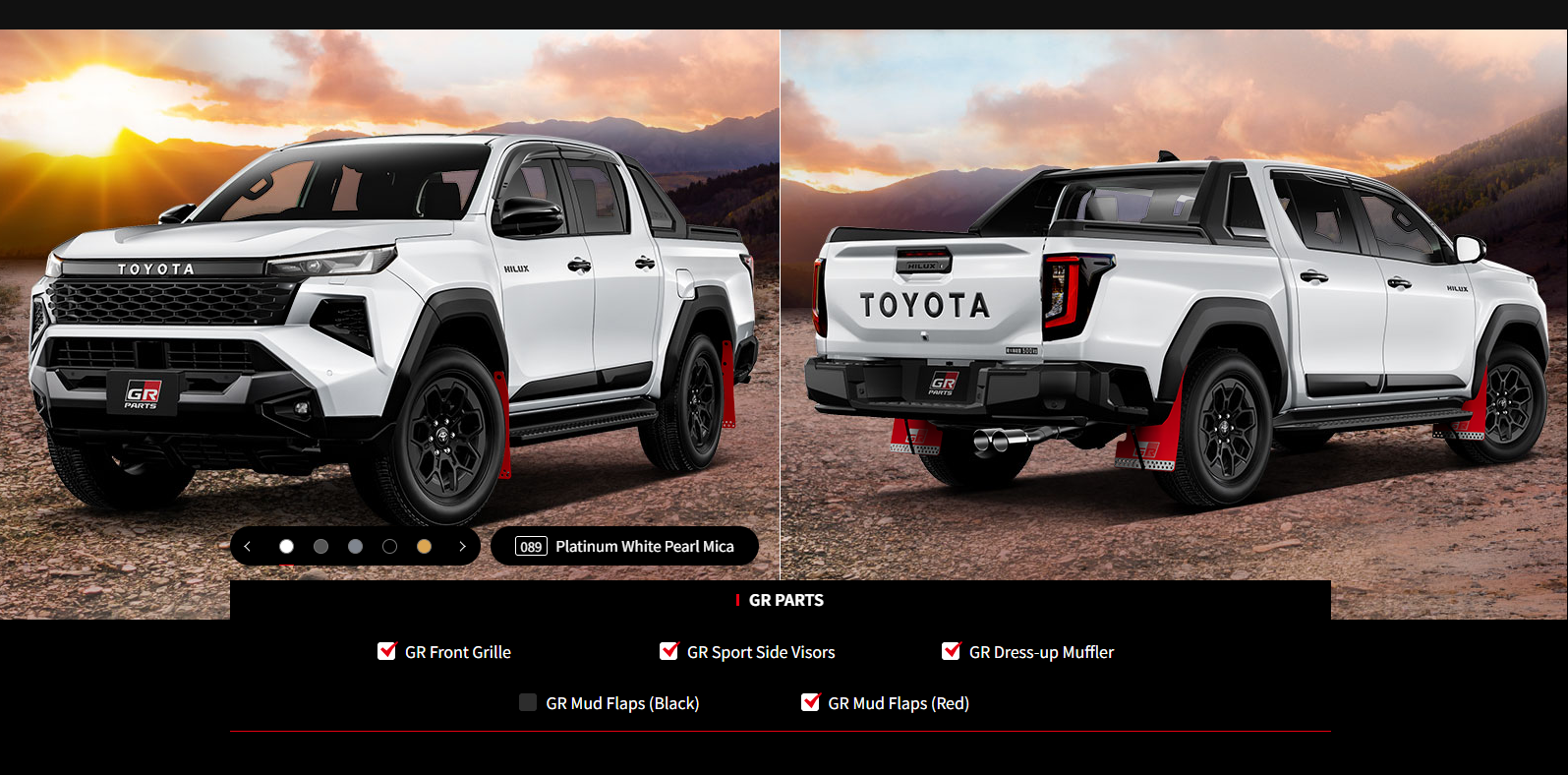
The Toyota Hilux GR parts catalogue has been released, showcasing both cosmetic and functional upgrades for the 9th-generation model.
The 9th-generation Toyota Hilux will be hitting South African showrooms around June/July 2026 and while the lineup and derivatives are yet to be confirmed, Toyota Racing Development has released the Toyota Hilux GR parts catalogue.
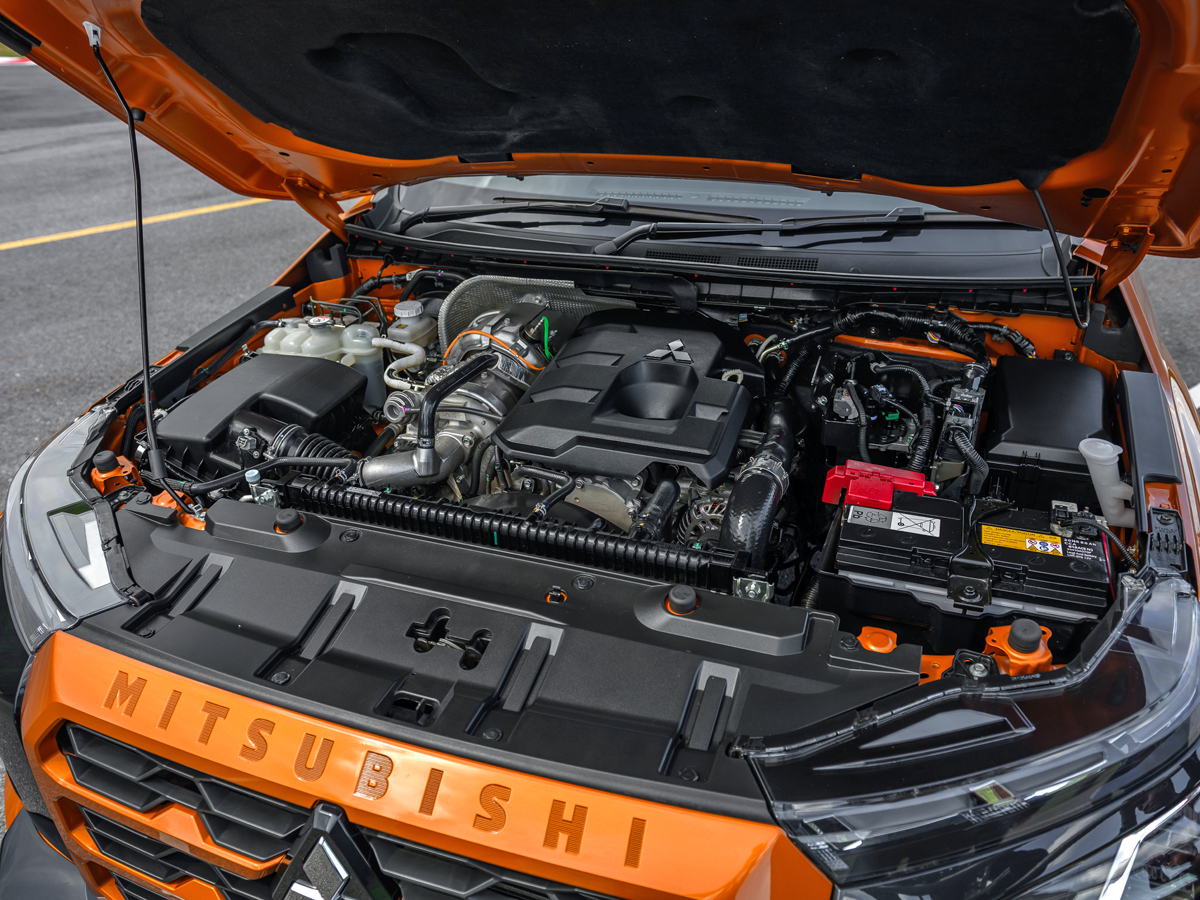
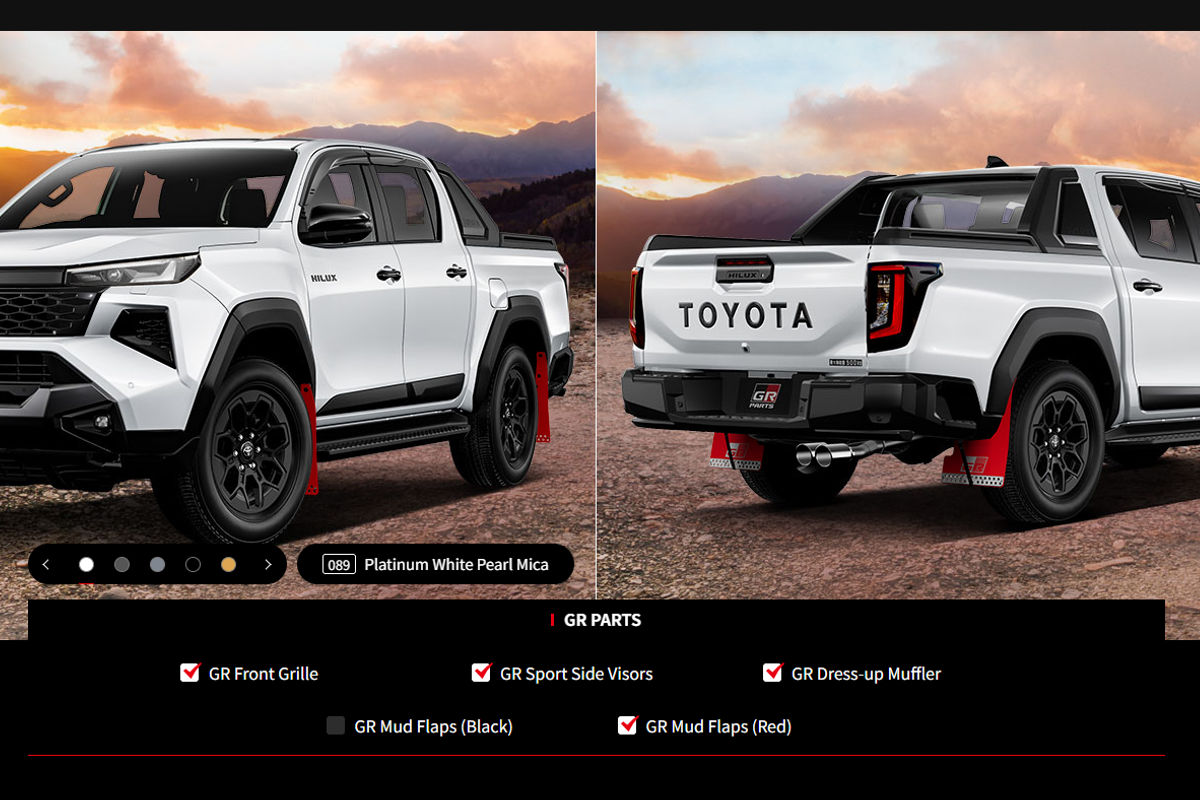
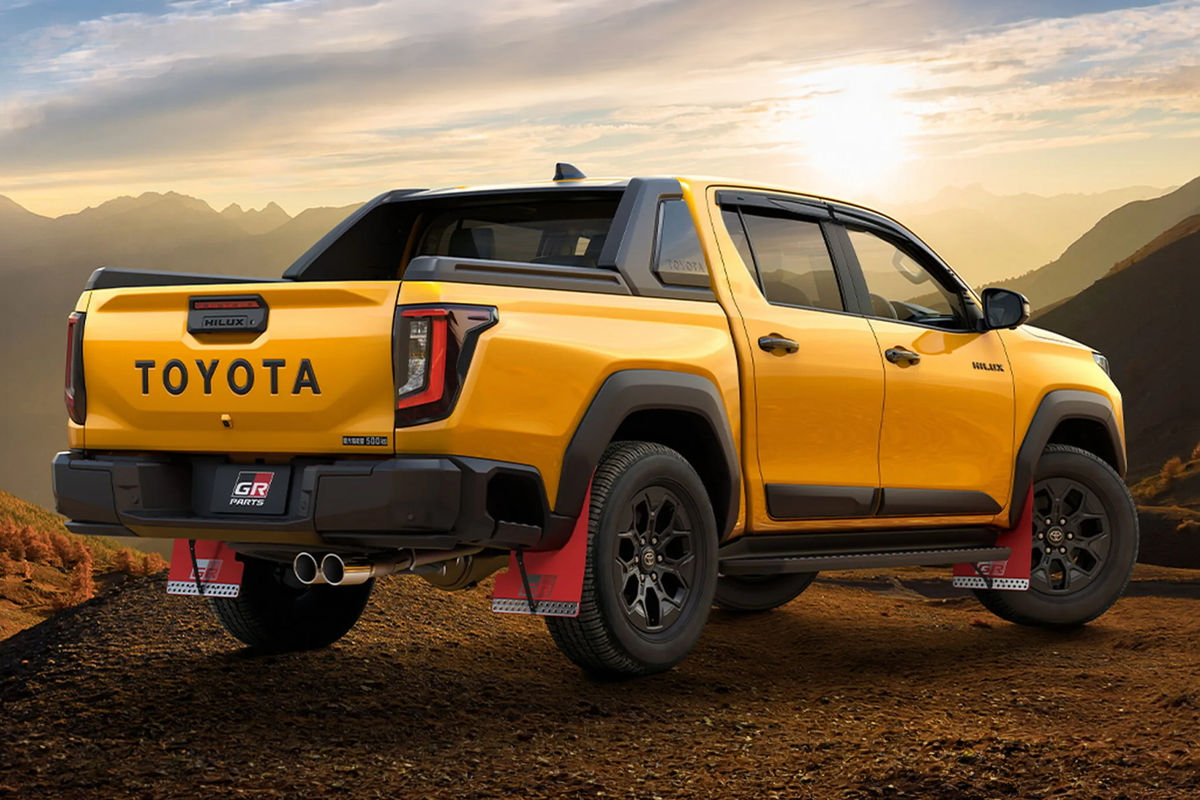
Gazoo Racing is Toyota’s sporty arm and the goodies offer both cosmetic and functionality enhancements. Visually, you can switch out the standard grille for a gloss-black unit, add GR mud flaps in either black or red, there’s a dual-pipe stainless steel muffler and GR Sport side window deflectors.
From an engineering enhancement point of you, there’s a GR performance damper which Toyota Racing Development says will reduce driving noises and vibrations, thus improving ride comfort and handling stability. These performance dampers were developed by Yamaha.
As a reminder, the Toyota Hilux, which made its local debut way back in 1969 – has held the title of SA’s best-selling vehicle overall for more than 50 years. It’s also produced at Toyotas’ Prospecton facility in KwaZulu-Natal.
Changes from the 8th to the 9th-generation Hilux include new hydraulic engine mounts, shear-type cabin mounts, electric power steering and a substantially enhanced cabin, bringing it more up to date in terms of infotainment and ergonomics.
While we wait for official powertrain confirmation for our market, it appears the engines are carried over from the previous generation with the flagship 1GD-FTV motor making 150 kW and 500 Nm.
What are the major changes for the 9th-generation Hilux?
The 9th-generation model introduces a bold “Cyber-Sumo” front fascia with a prominent hexagonal grille and sharper LED headlamps. Inside, it receives a major technology upgrade inspired by the Land Cruiser Prado, featuring a dual-display cockpit with 12.3-inch screens on high-spec variants. Mechanically, it debuts Electric Power Steering (EPS) and retuned suspension bushes for significantly improved ride comfort and lighter, more car-like handling.
What engine options power the new Toyota Hilux?
The cornerstone of the local range remains the proven 2.8-litre GD-6 turbodiesel engine, delivering 150 kW and 500 Nm (paired with a 6-speed automatic) or 420 Nm (paired with a 6-speed manual). For the 9th-generation launch, upper-tier automatic models come standard with 48V mild-hybrid (MHEV) technology to improve stop/start smoothness and low-speed throttle response.
Will there be an all-electric or hydrogen Toyota Hilux in South Africa?
Toyota has globally revealed an all-electric (BEV) dual-motor Hilux powertrain featuring a 59 kWh battery, as well as a planned Hydrogen Fuel Cell (FCEV) variant scheduled globally for 2028. However, official South African launch timelines and local availability for these alternative zero-emission powertrains are yet to be confirmed.
What is the towing and payload capacity of the 9th-generation Hilux?
The 9th-generation Hilux retains its core utilitarian capabilities, offering a class-competitive braked towing capacity of up to 3,500 kg on 4×4 models and a maximum payload capacity of approximately one tonne depending on the body configuration and trim.
Toyota Land Cruiser FJ (2026) Launch Review
The Toyota Land Cruiser family has gained a new member in the form of the compact FJ. We take it for a quick off-road jaunt!
What is it?
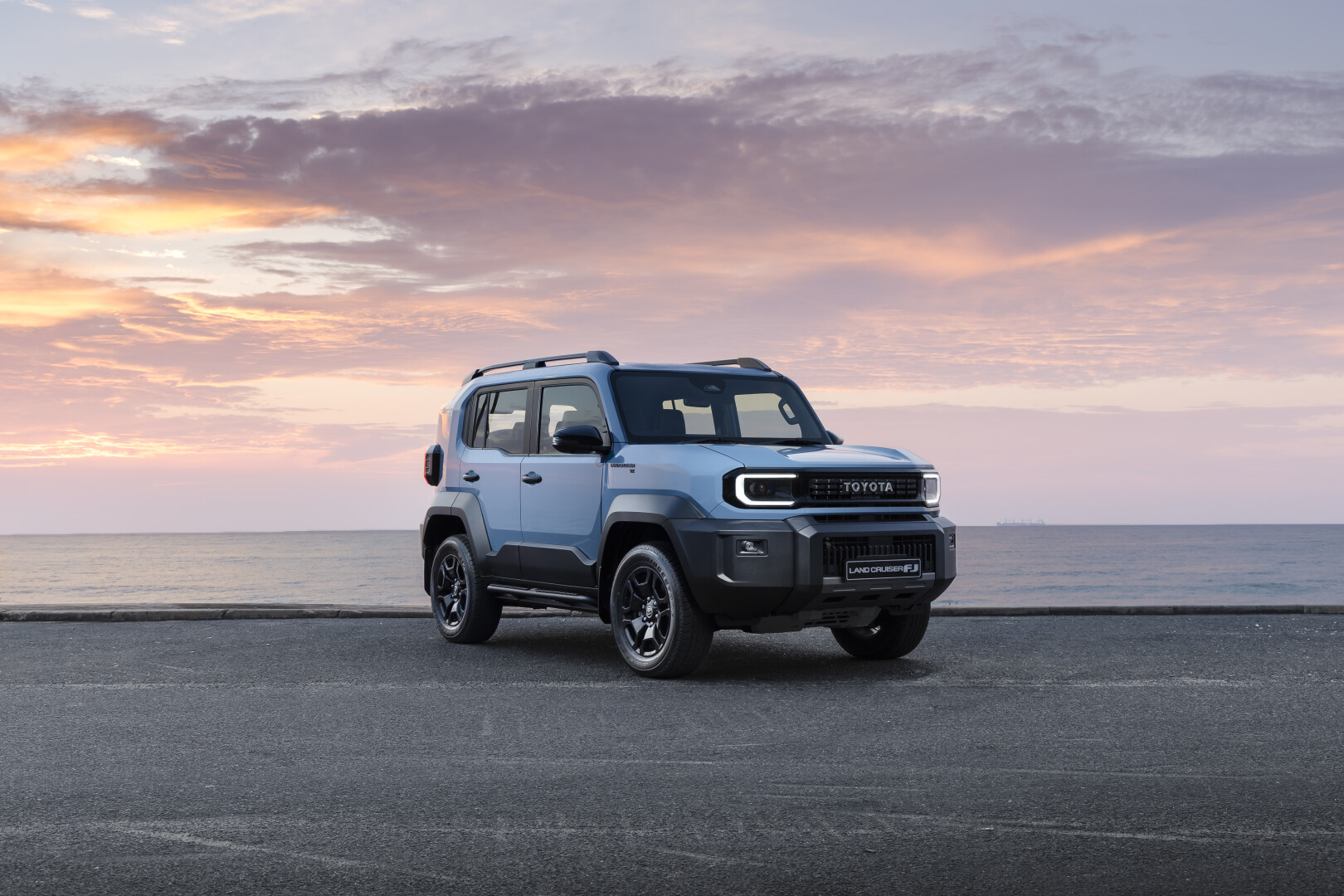
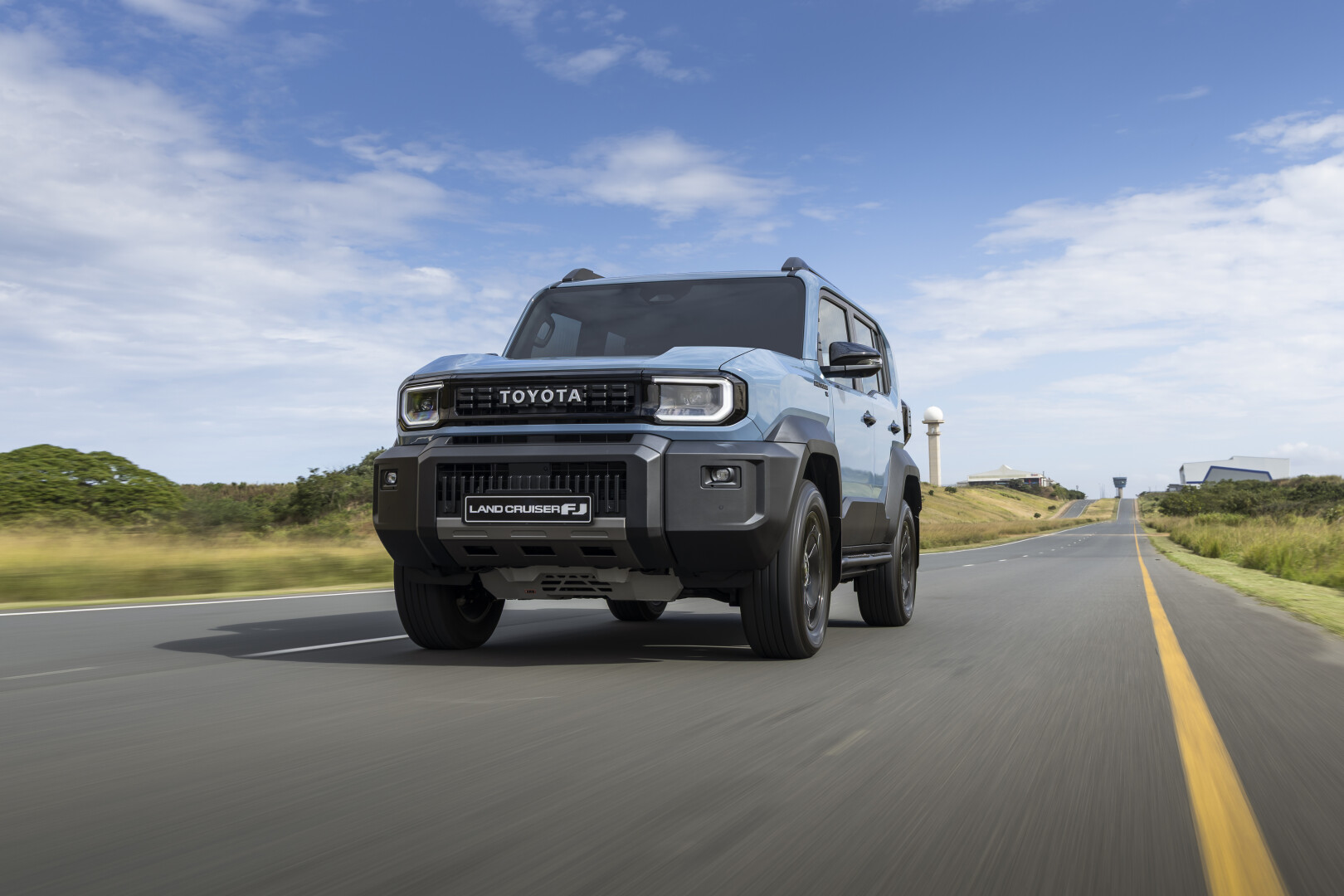
To say this Toyota Land Cruiser FJ is a successor to the retro-styled FJ Cruiser would be doing it a disservice, as the family tree doesn’t quite branch that way. With origins tracing back to the original Cruiser from 1951, Toyota’s framing the LC FJ as a descendant of the current-shape Prado.
The Toyota Land Cruiser brand is immense, with over 12.4 million sales across more than 190 countries. Interestingly, South Africa is in the top 10 markets for the Land Cruiser brand. Expectations of the new Land Cruiser FJ are immense, both locally and globally.
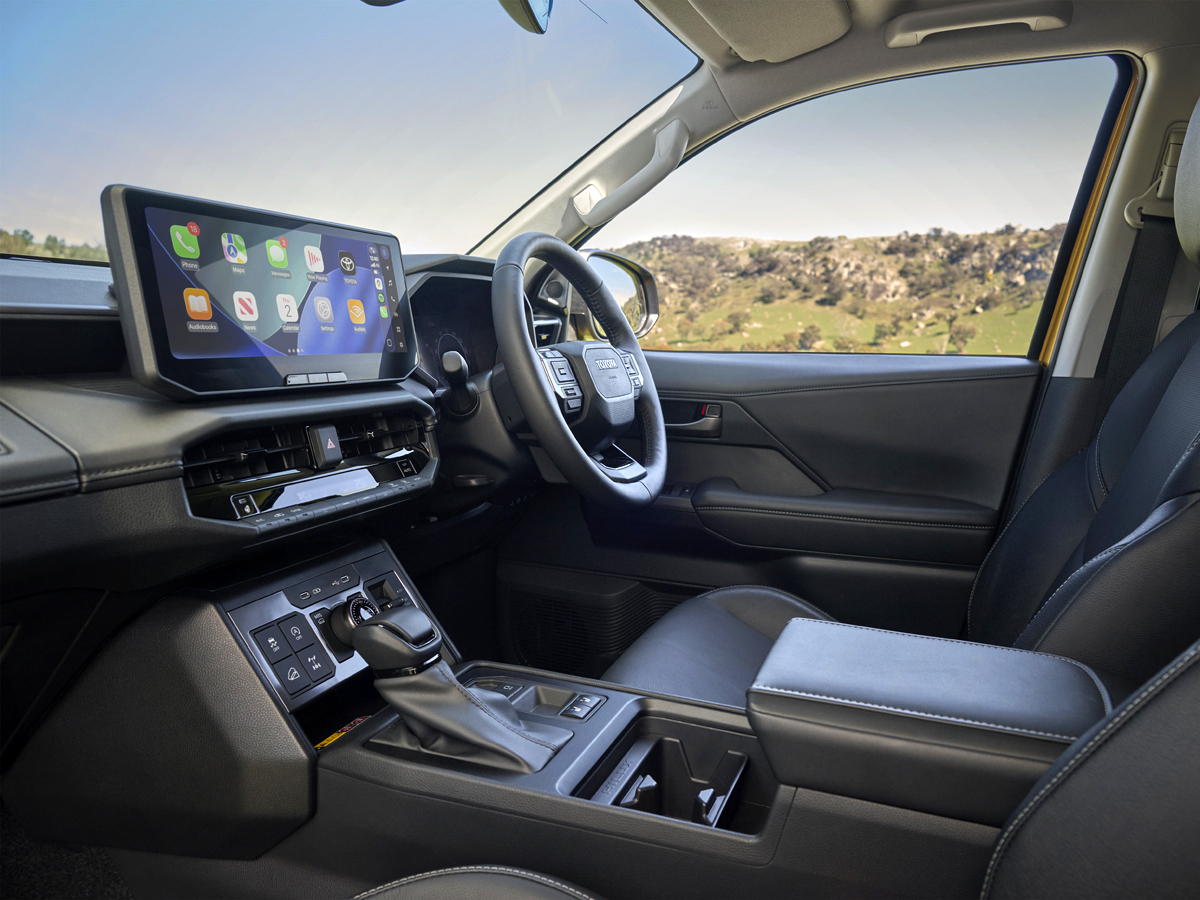
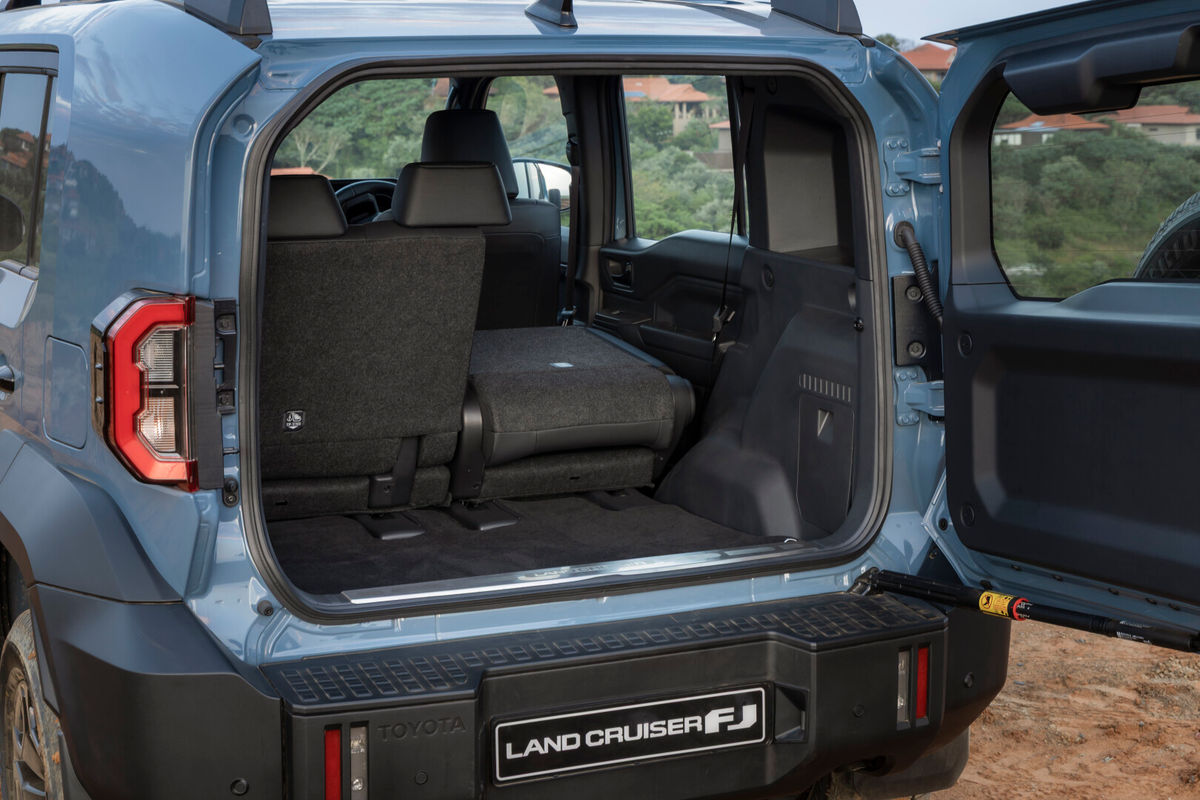
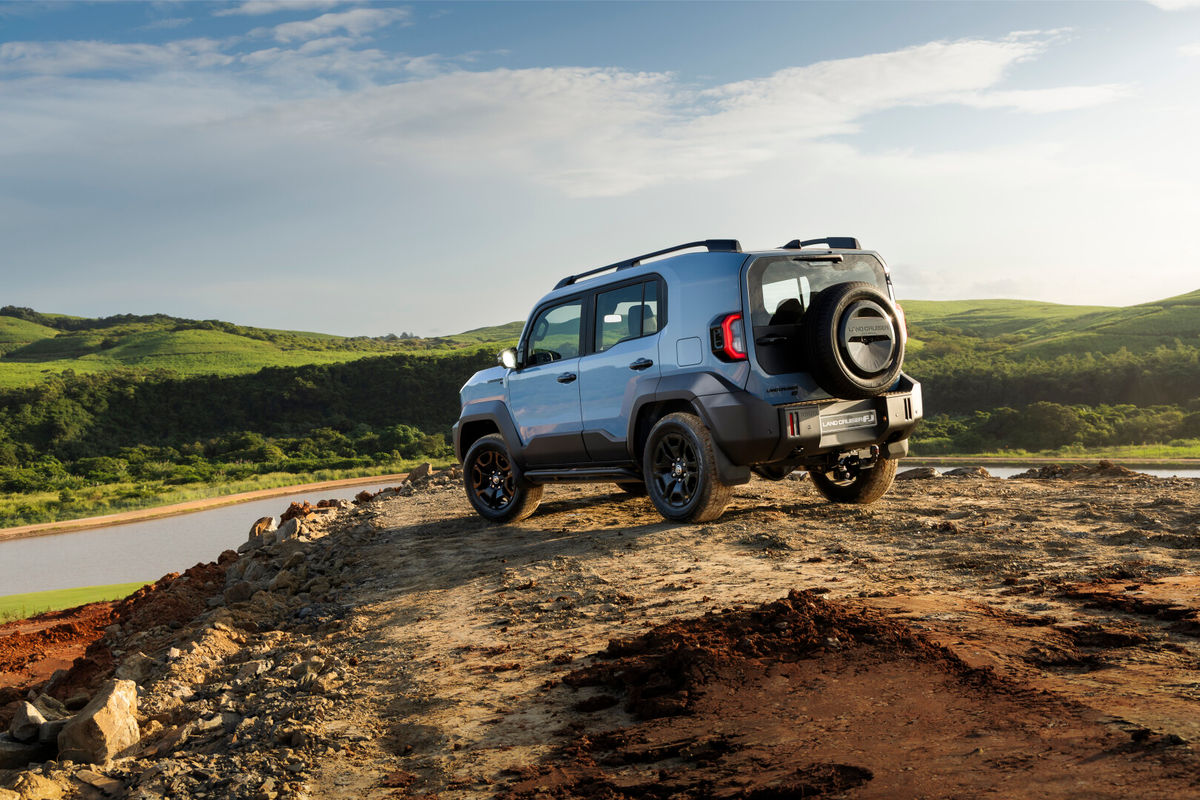
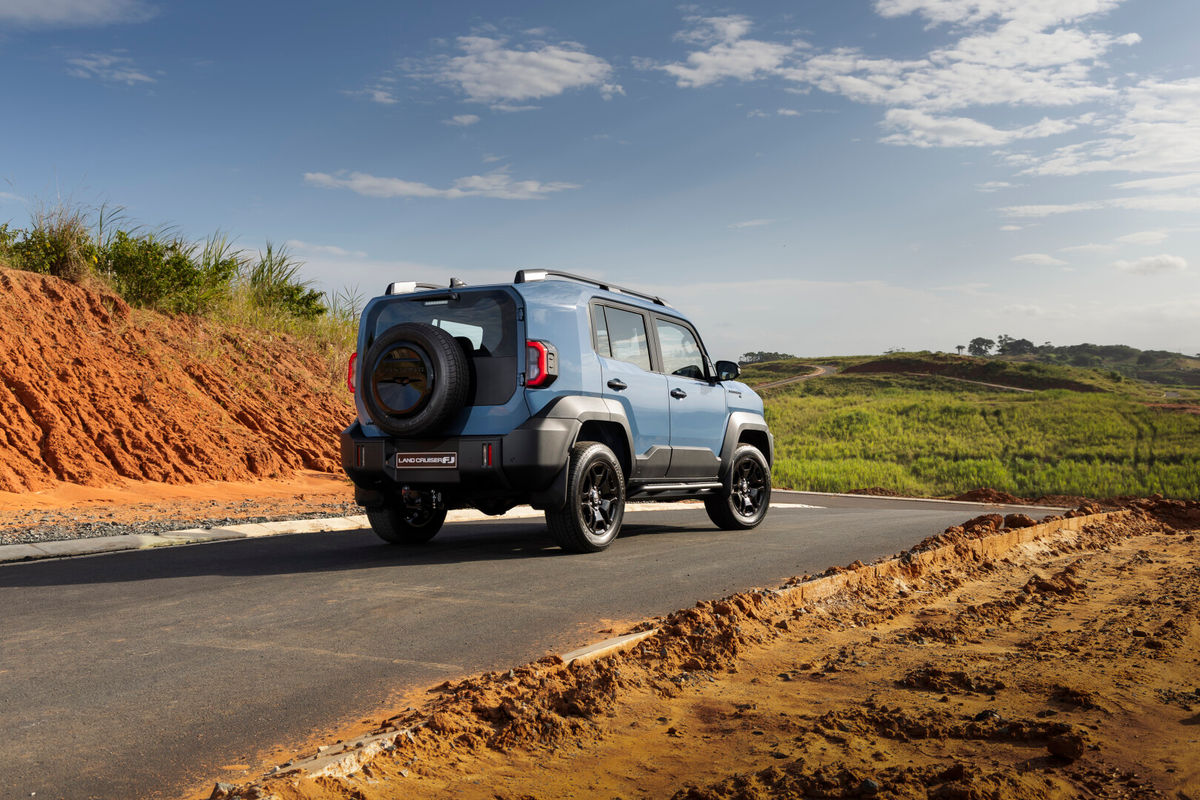
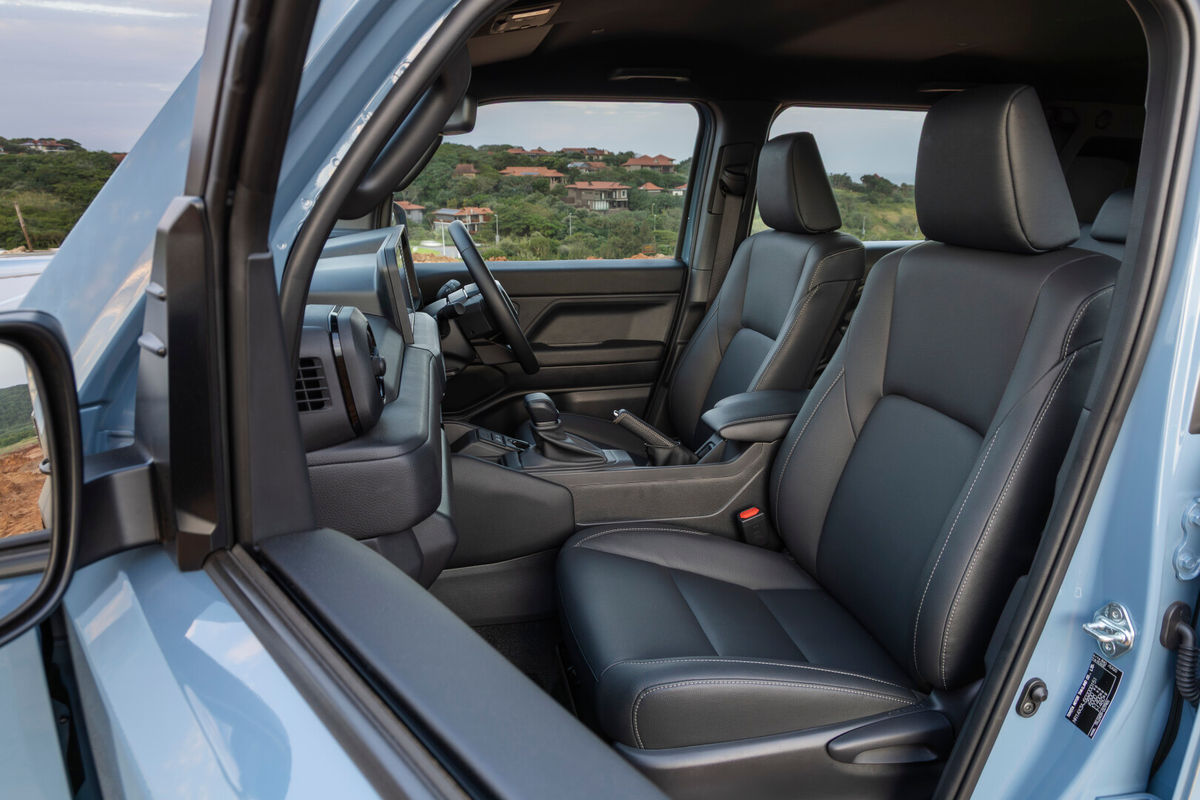
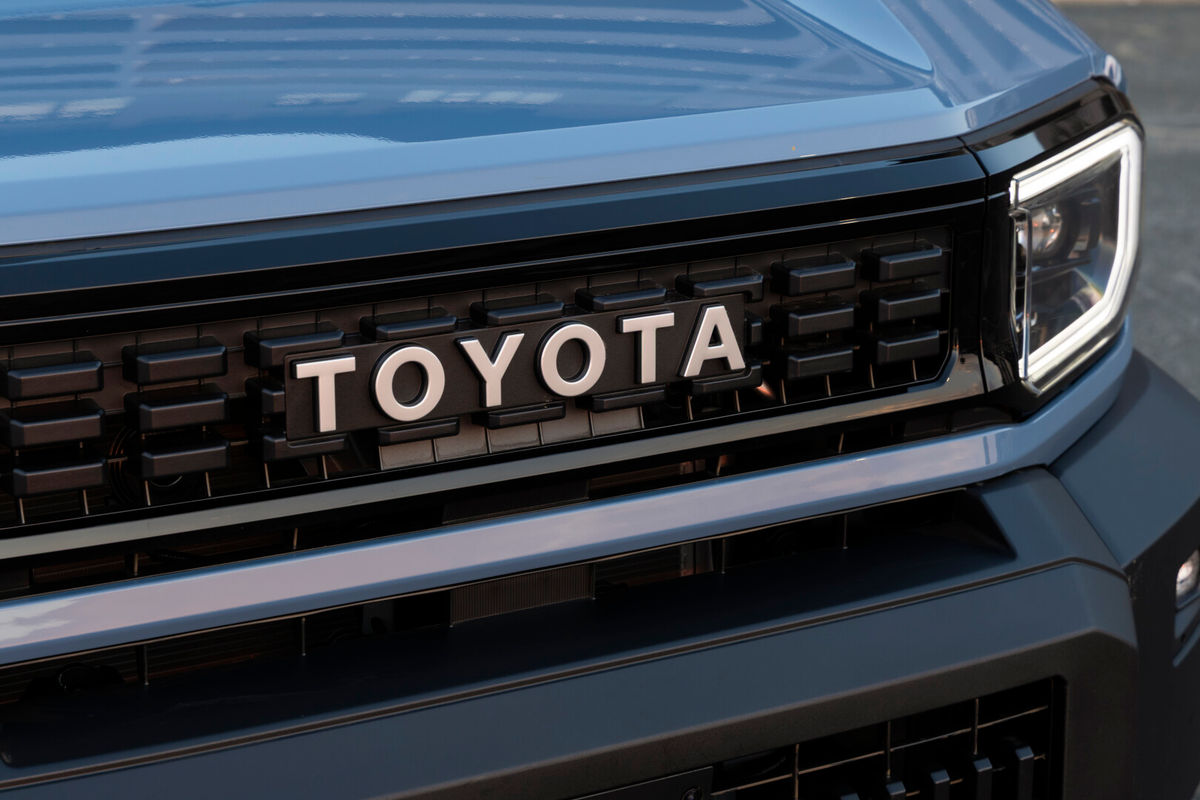
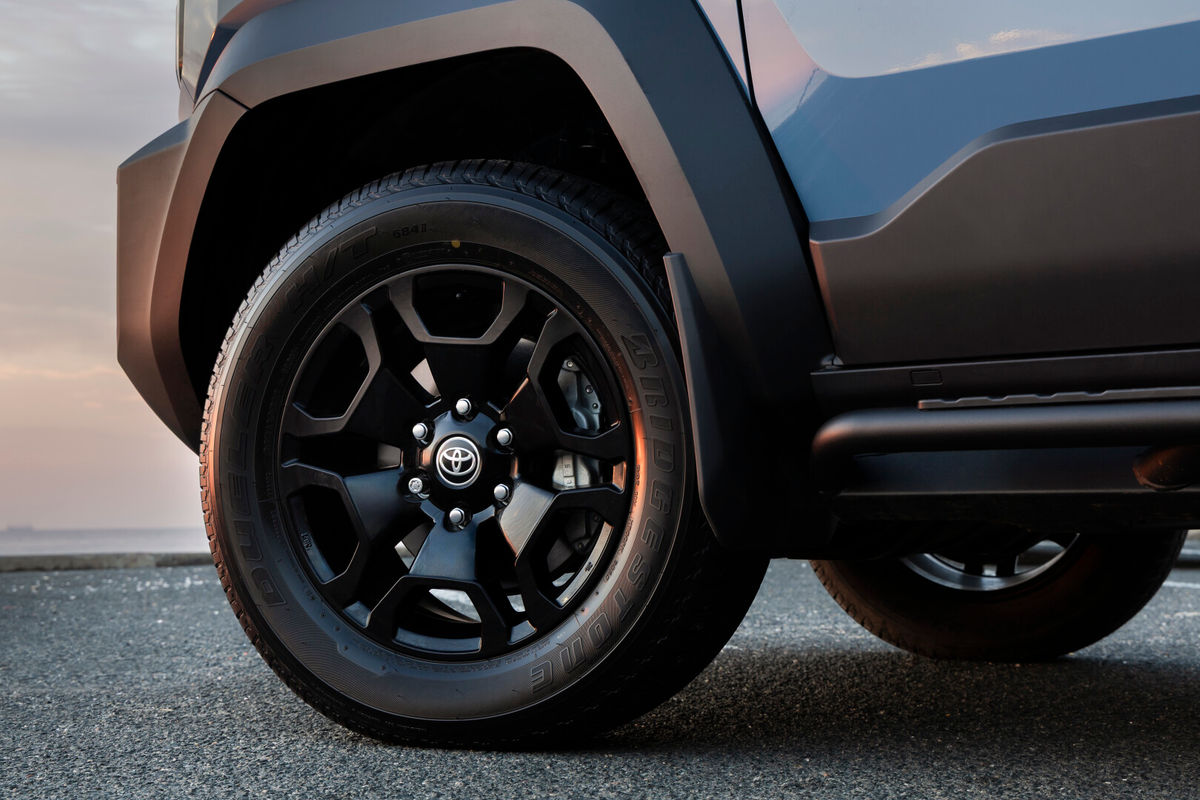
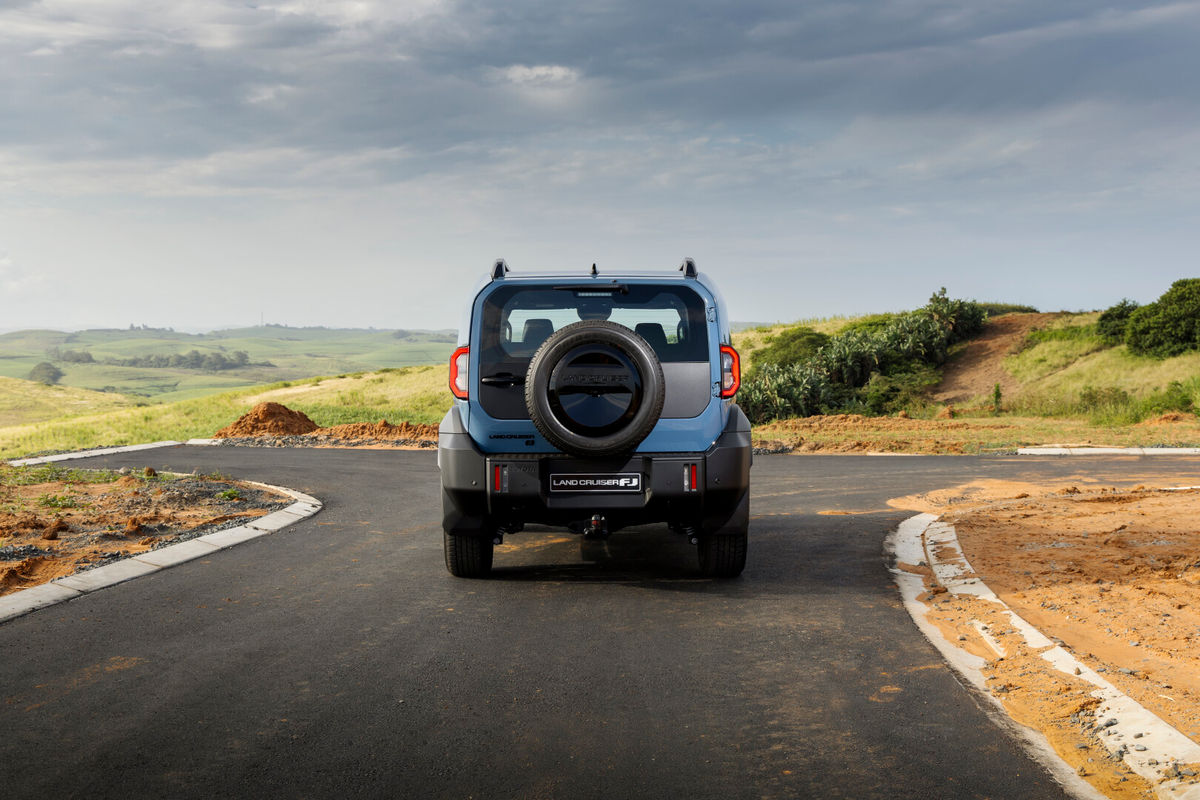
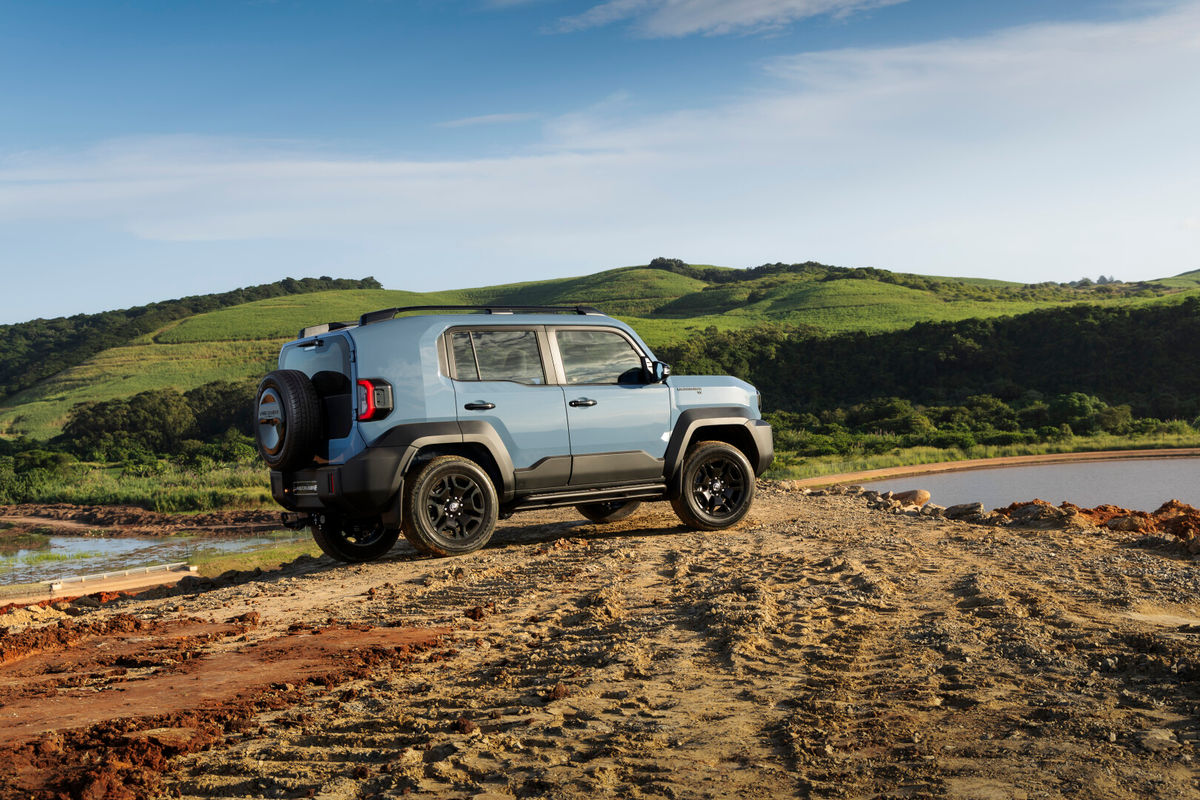
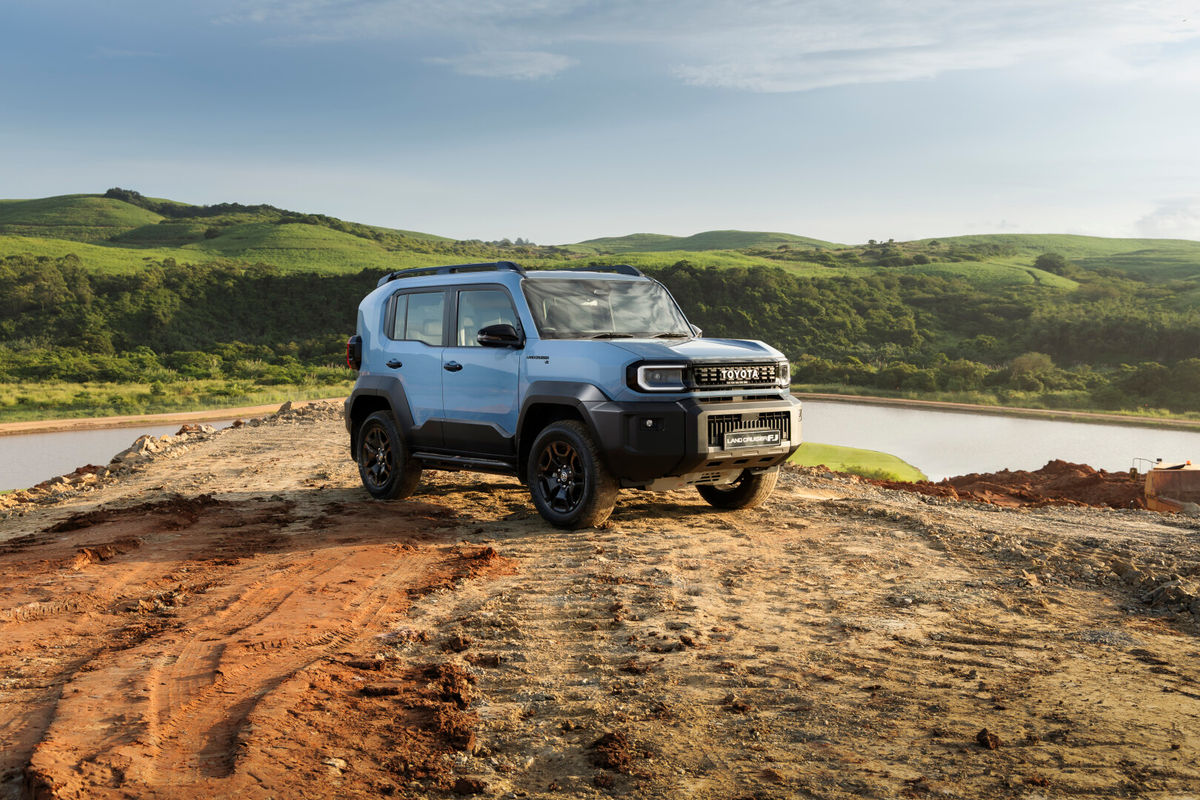
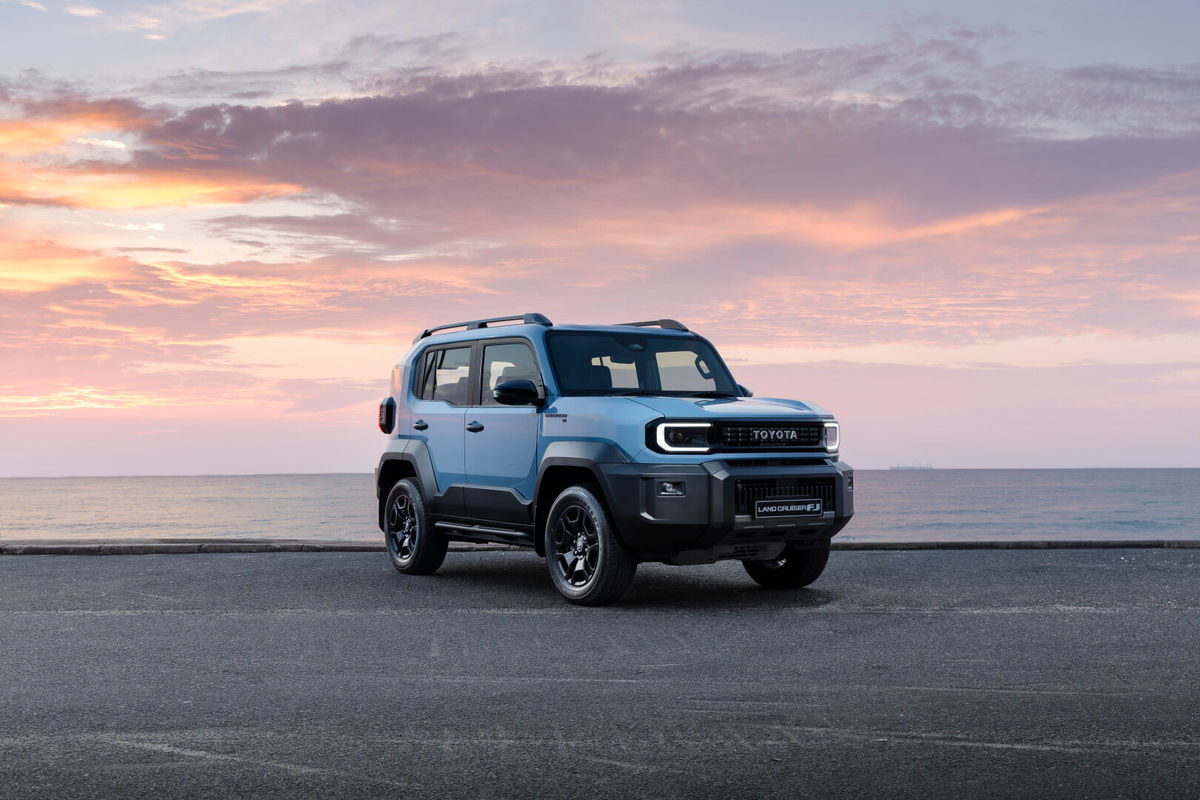
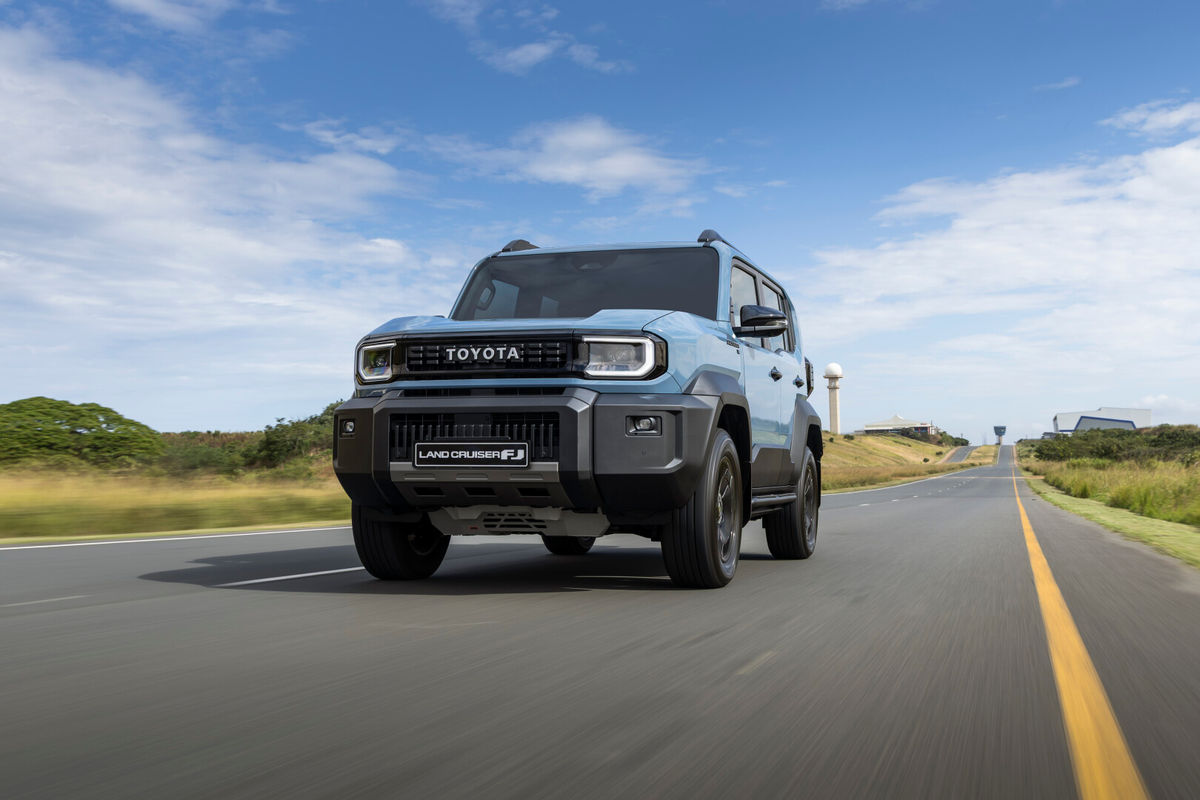
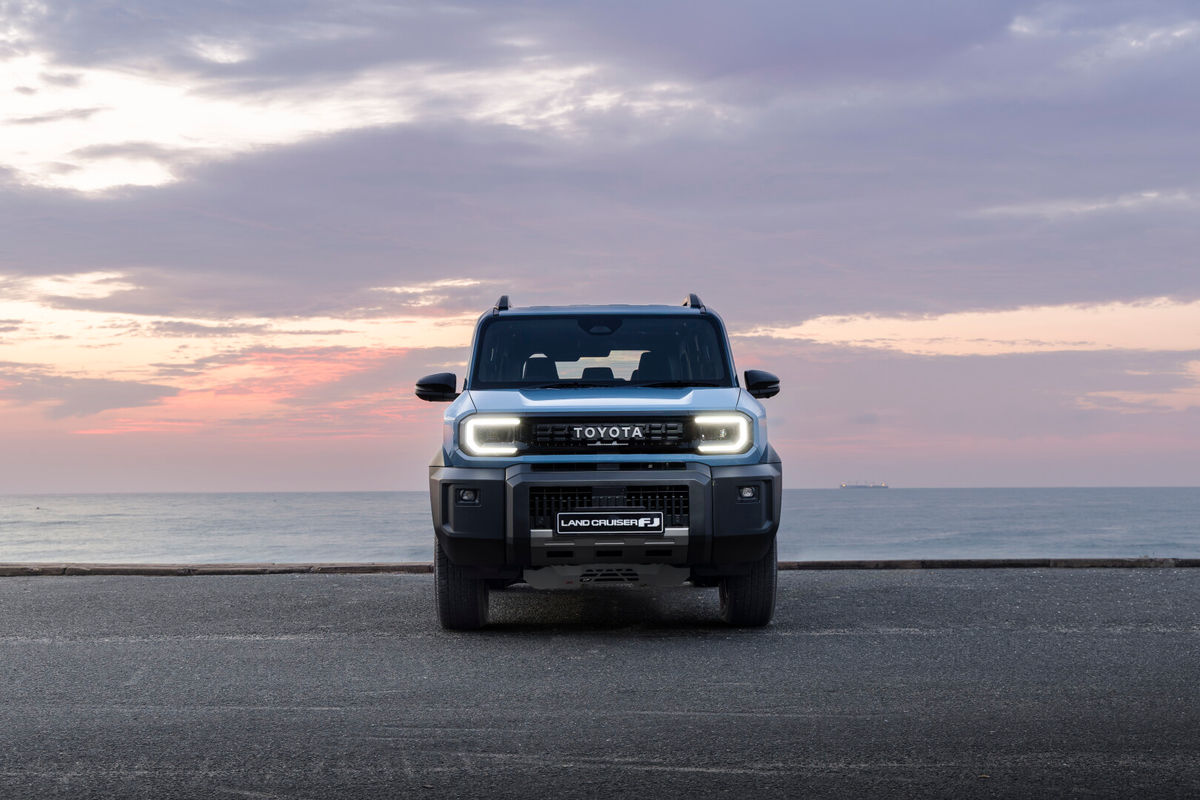
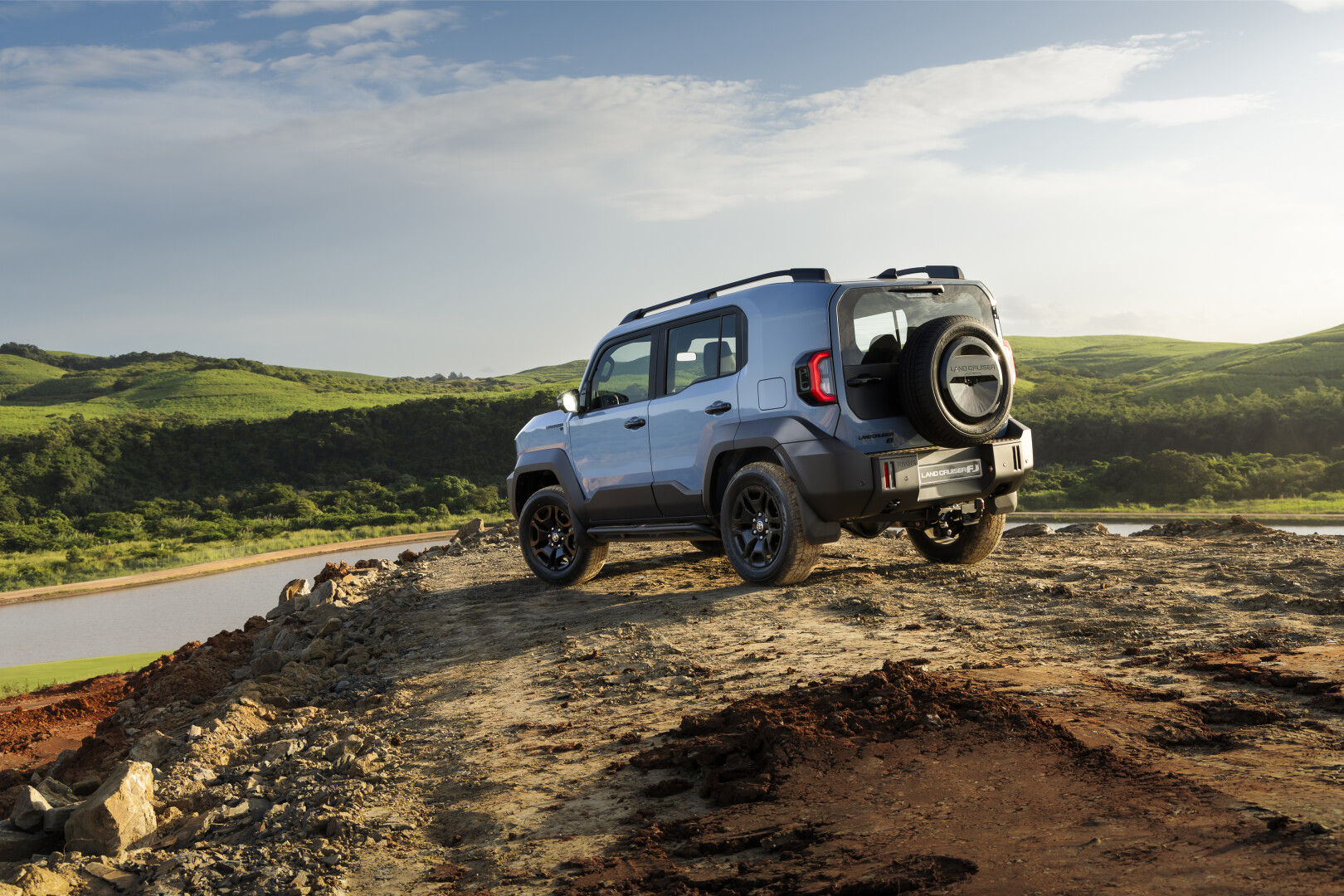
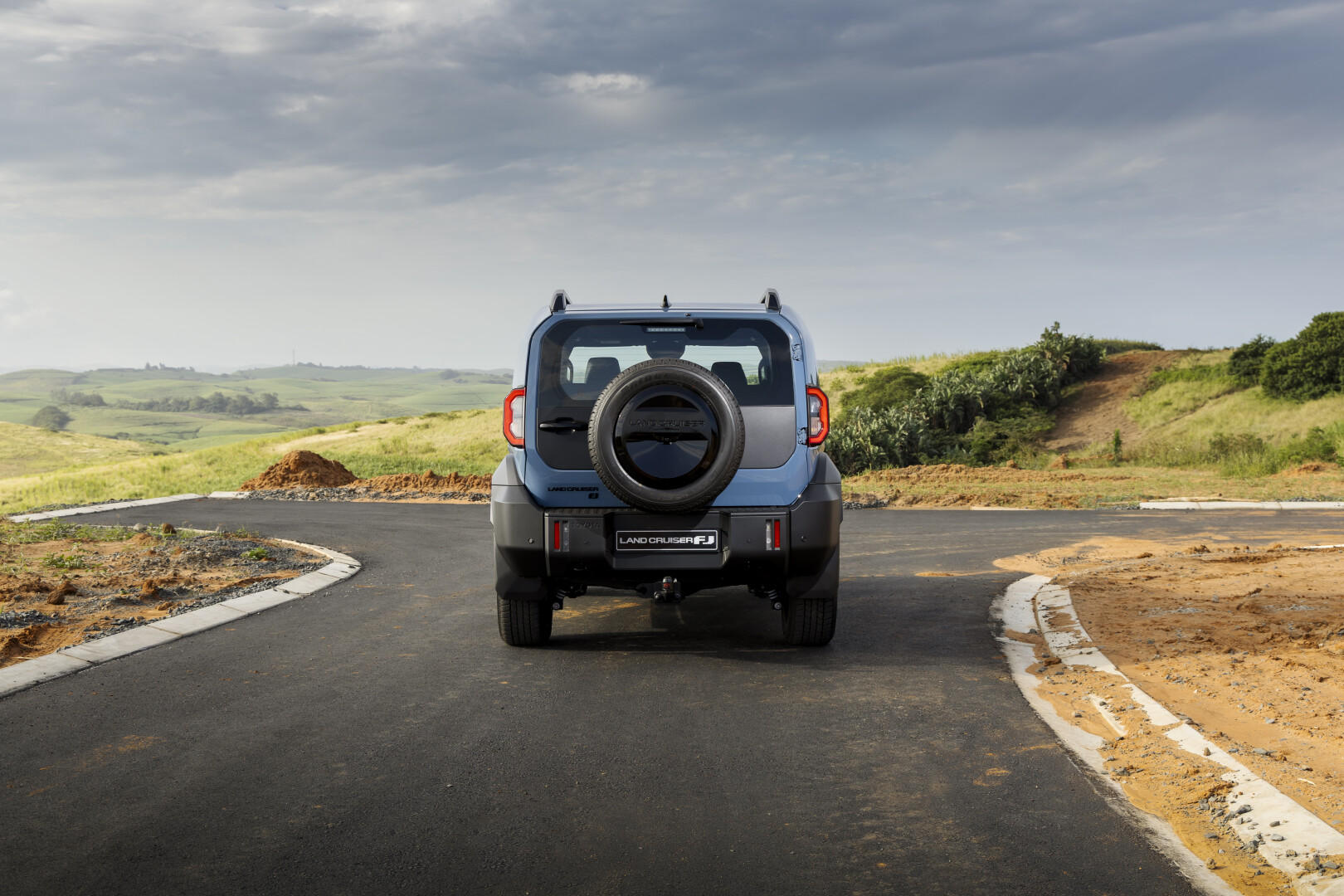
Under the skin is an enhanced version of the Toyota IMV platform, adopting portions from both the Fortuner and Hilux. It has a relatively short wheelbase of 2 580 mm for easier off-roading. Visually, its a curious design and there’s nothing quite like it on the road. It’s very box-like and radically different to the previous FJ.
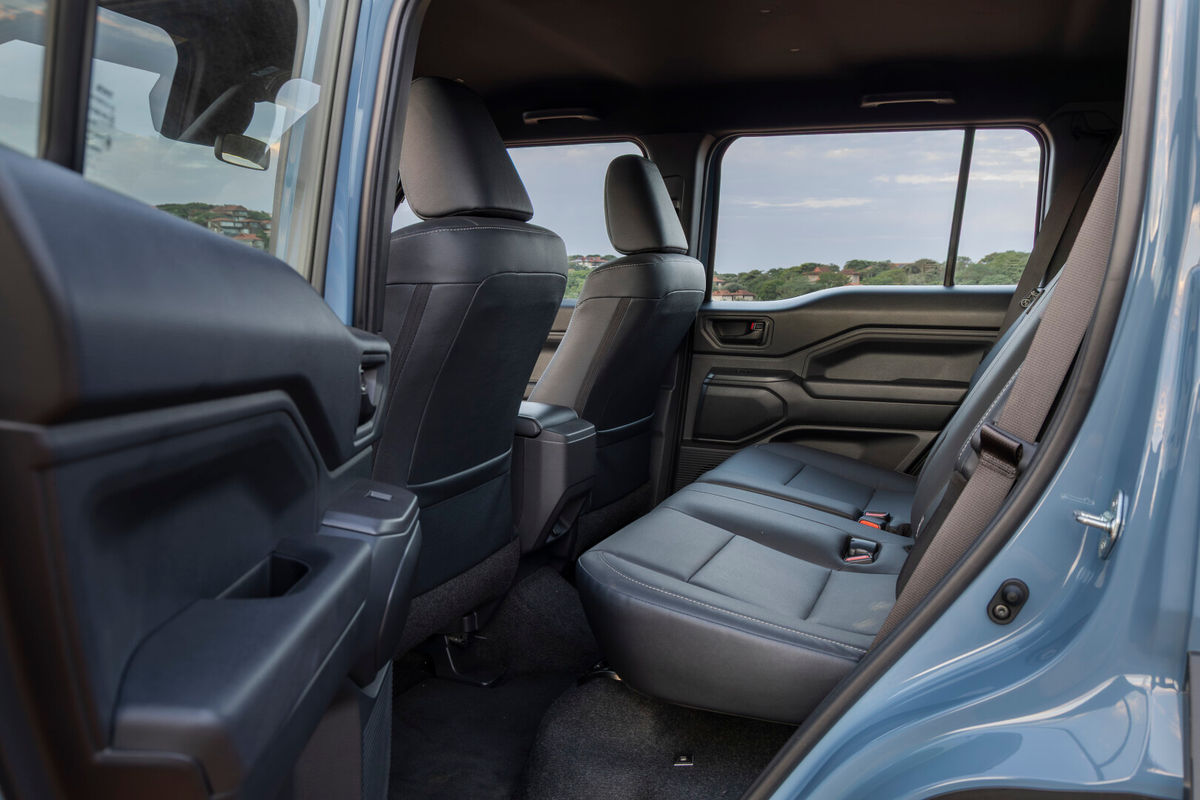
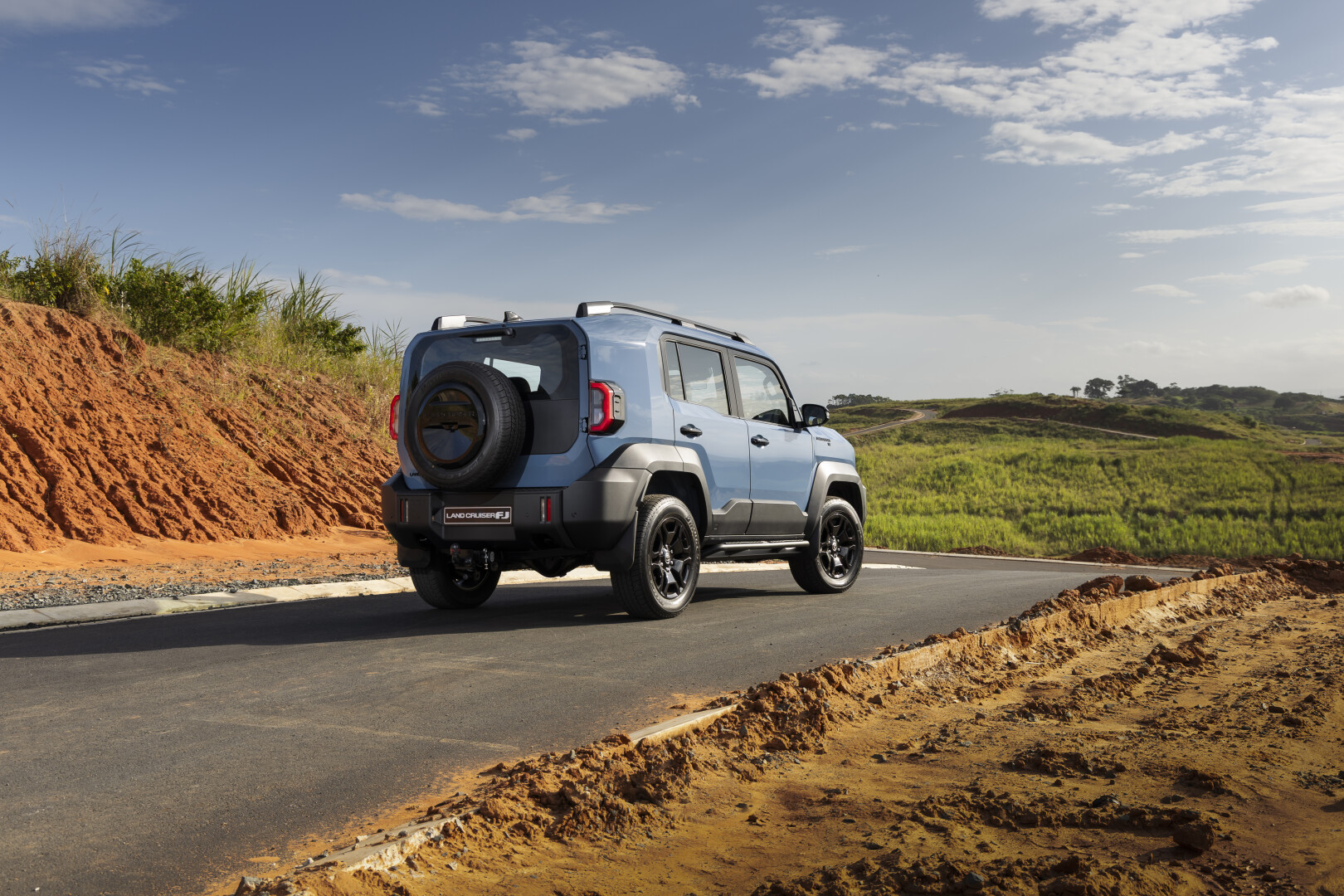
There are two derivatives offered, GX and VX, and customers have a choice of 5 colours. The Calcite Blue is pictured, and I think that and the Oxide Bronze are the standout tones. VX adds larger wheels, leather trim, ADAS tech, dual-zone climate control and other niceties.
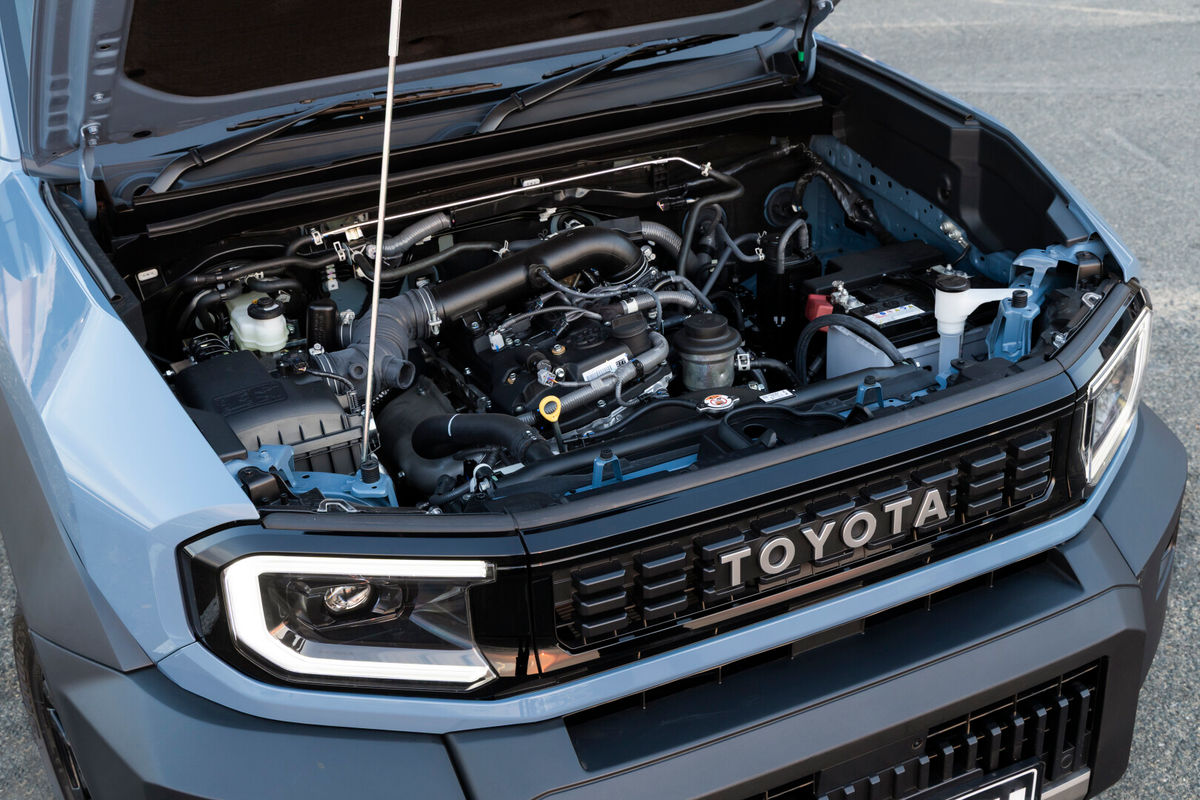
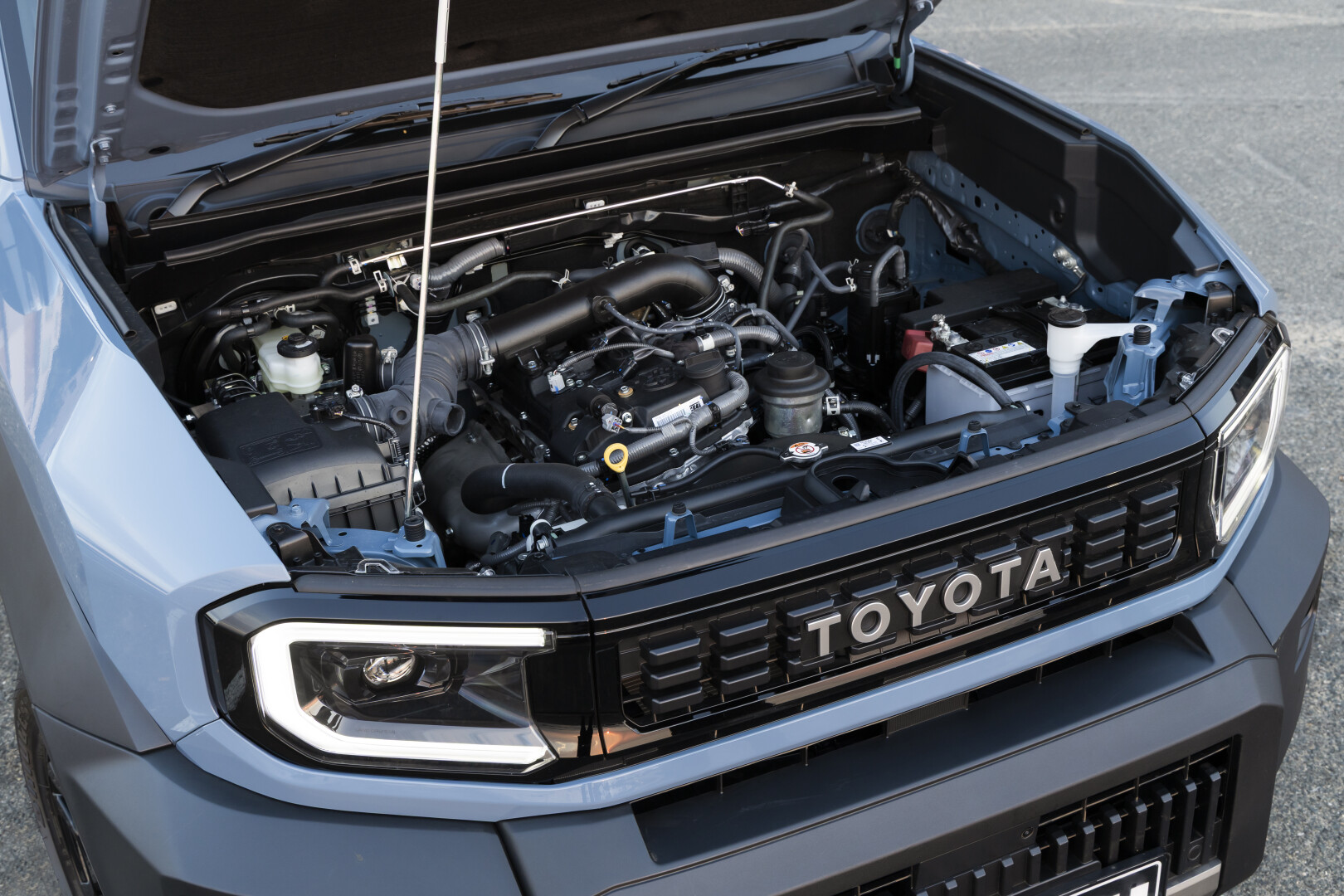
There’s one powertrain offered for now, with a diesel option highly likely in the future. The 2.7-litre naturally-aspirated petrol offers up 122 kW and 245 Nm, and is paired to a 6-speed automatic transmission. Fuel consumption is claimed at 10.7 L/100 km. It’s interesting to note this powertrain is also available in the Prado as a commercial spec in some markets!
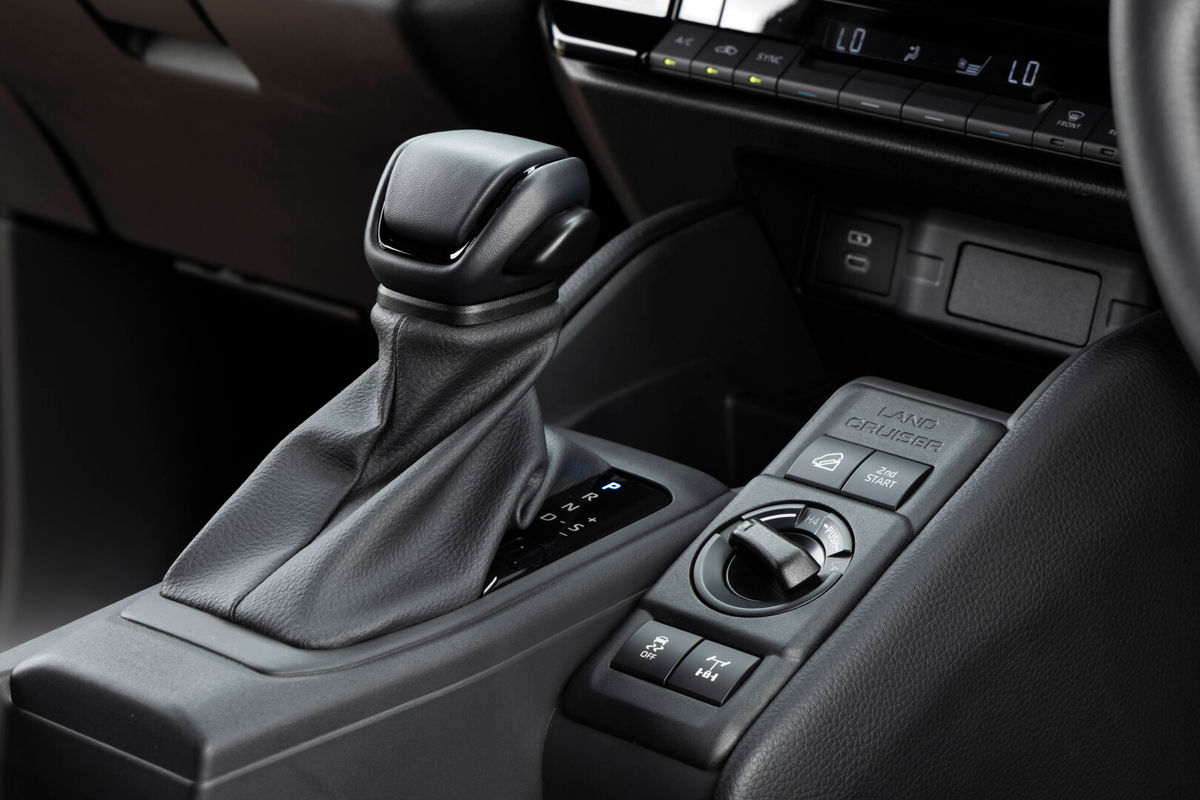
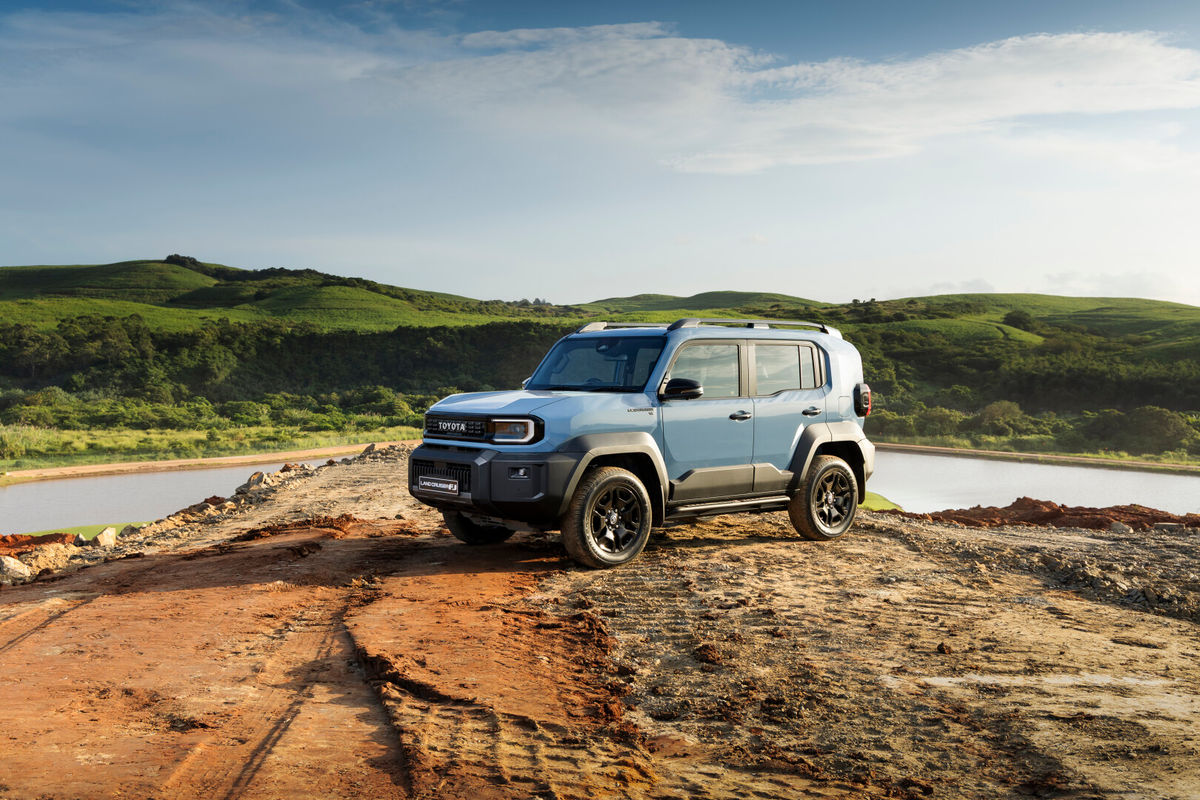
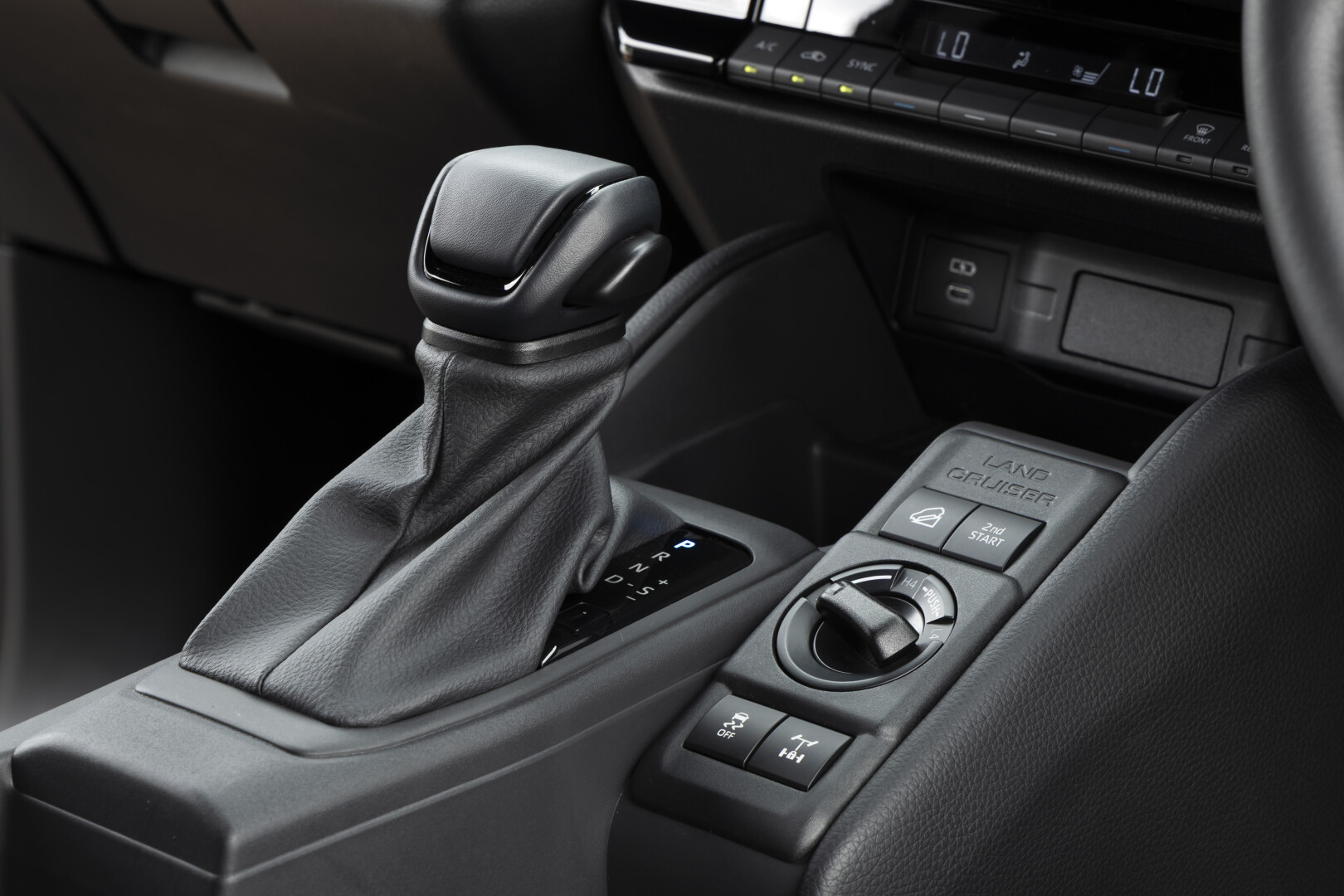
It wouldn’t be a Land Cruiser unless there’s genuine off-road capabilities. This model fits the bill, with both high-range and low-range gearboxes, 245 mm of ground clearance and 29/38 degrees of respective approach and departure angles. There’s also a lockable rear differential.
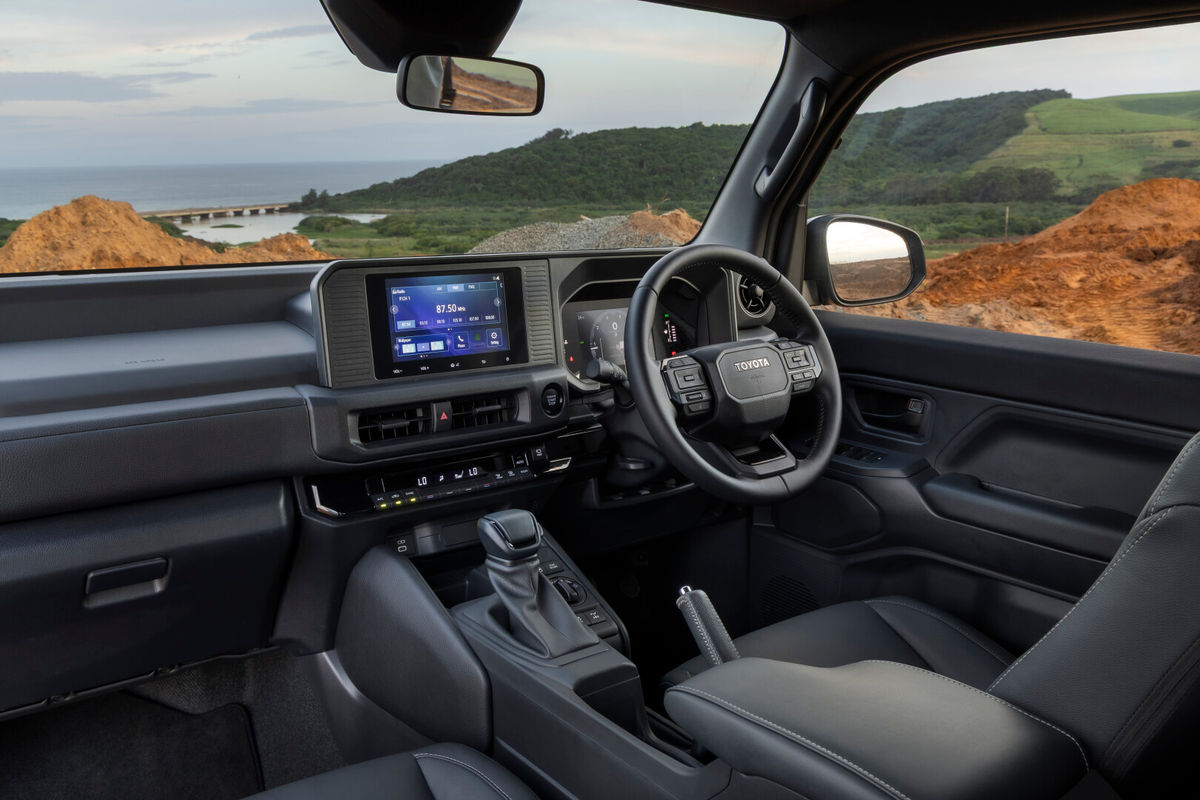
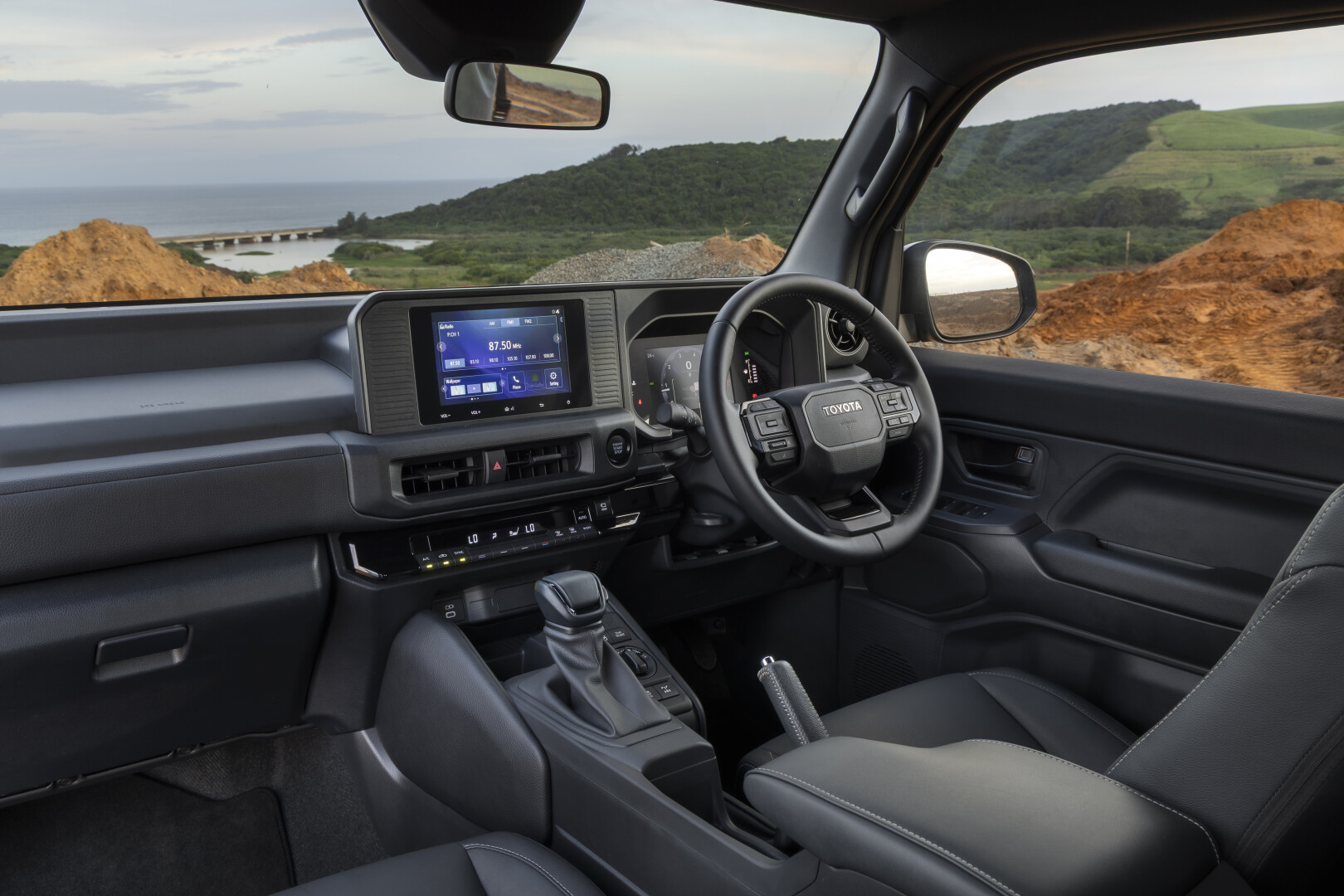
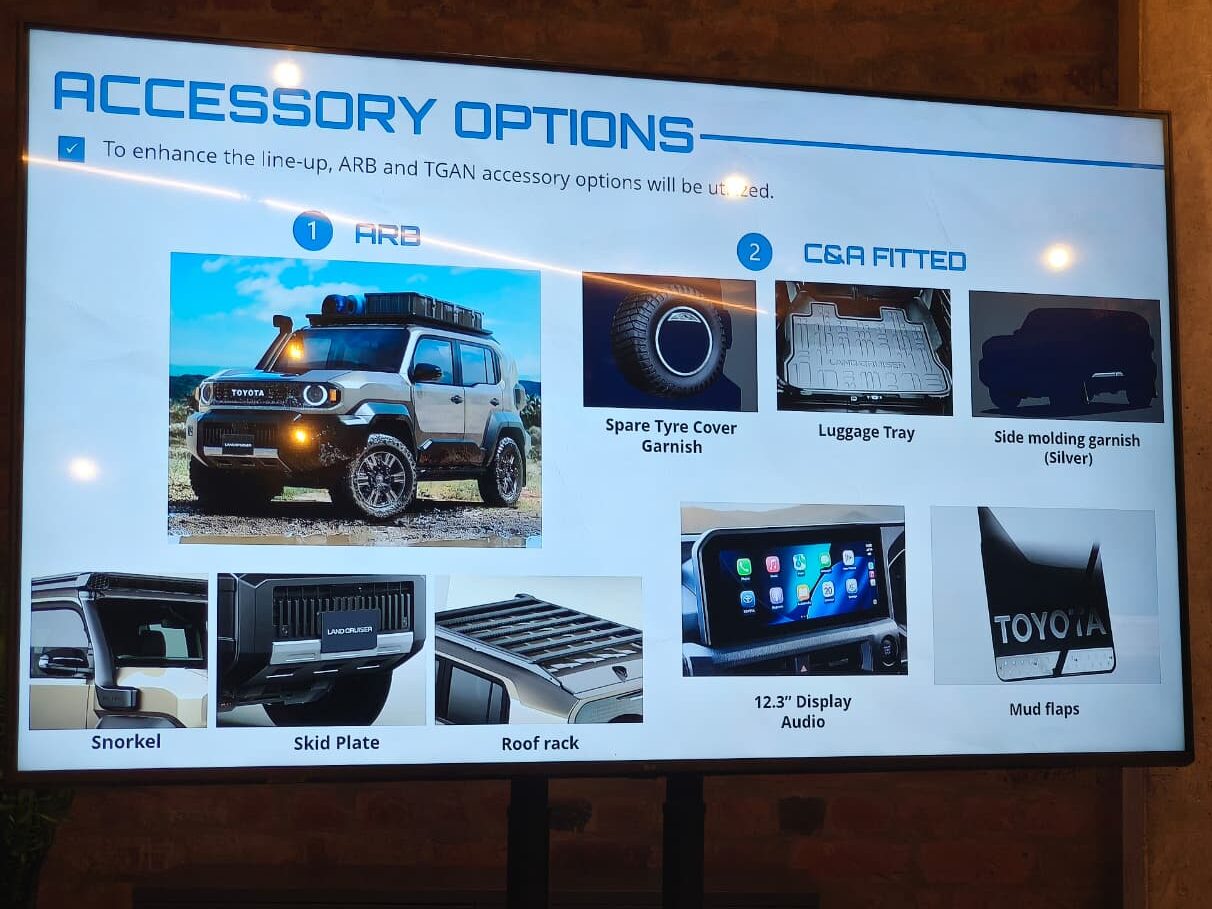
If you’re serious about living that Land Cruiser life, Toyota has made a number of accessories available, such as a snorkel, skid plate, roof rack and so on. You can also upgrade to a larger and improved infotainment system for R12 000. Due to production timings, the SA-spec FJs were signed off before this better infotainment system was available, so if you’re not satisfied with the standard unit, you have some recourse.
What’s it like to drive?
Our driving route took us from Cape Town’s City Bowl onto the national highways and out towards the Malmesbury/Riebeek-Kasteel region. Initial concerns around the vehicle’s performance proved unfounded. The 2.7-litre petrol engine is relatively free-revving, despite our test unit having only a few hundred kilometres on the odo.
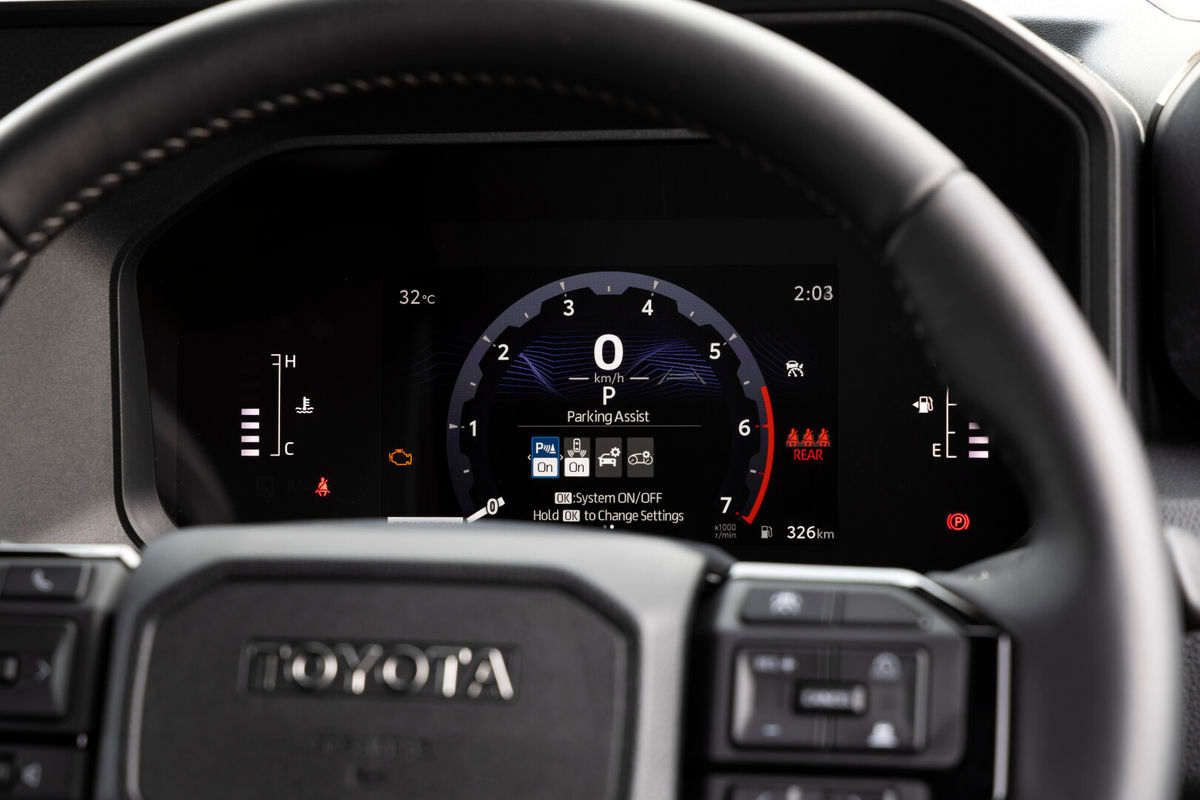
The 6-speed ‘box shifted cogs in a fuss-free manner, showing some hesitation only on freeway overtakes. The engine is adequate, but it’s worth noting that the claimed fuel consumption is ambitious. At the national speed limit, the rev counter is sitting around the 2 500 rpm figure, which helps maintain low levels of noise and vibration, but consumption doesn’t benefit too much.
Granted, we weren’t shy with the throttle and didn’t get to our destination with economy in mind, but some may find 13.5 L/100 km a tad alarming. Drive with a degree of restraint and, once the engine is run in, under 12.0 L/100 km may be possible. Consider the aerodynamics of the vehicle – it is box-like, after all.
This then begs the question: why isn’t there a diesel engine? Toyota SA confirmed it’s considering an oil-burner option. While we anticipate the 0-100 kph performance will be similar, the in-gear overtaking capability and overall range will be better. Is the 2.7-litre engine a dealbreaker? Not at all, and there are few positive takeaways here. This engine is tried-and-tested in South Africa, and mechanically, should be easy and cost-effective to maintain and repair.
The driving position is best described as commanding. You sit high up and have excellent outward visibility. We did have reservations about a potential blind spot around the C-pillar and, while it exists, we’re grateful for blind-spot monitoring!
Granted, the FJ can feel top heavy, but it’s not bad given the vehicle’s height. Photographs don’t do the FJ justice, by the way. It’s a lot bigger in the metal and comparisons between this and the Jimny are unfounded, as Suzuki’s plucky off-roader is dwarfed by the FJ.
Ride quality and refinement are acceptable on road, but expect the usual culprits like a jiggly ride on poorer-quality surfaces.
Where the Land Cruiser FJ shines is when the tar ends, and this off-roader offers a refreshingly uncomplicated experience. Fitted with all-terrain tyres as standard, it’s going to take some special carelessness to get this thing stuck.
There are no off-road modes. Simply engage high range or low range depending on the terrain, and off you go. The steering setup is light and quick; we suspect the turning circle of the FJ is far tighter than most vehicles in this class. We’ll give this vehicle a thorough and comprehensive 4×4 test in the near future, but as far as first impressions go, this is a Cruiser through and through.
How much does the new Land Cruiser FJ cost in South Africa?
Land Cruiser FJ GX
R714 000
Land Cruiser FJ VX
R761 400
The vehicle is sold with a 9-service/90 000 km service plan with intervals every 10 000 km, as well as a 3-year/100 000 km warranty. Service and warranty extensions are available through Toyota’s national dealer network. All new Toyota vehicles are equipped with connectivity hardware, enabling in-car Wi-Fi (including a complimentary 25Gb allocation) and a suite of Toyota Connect services.
Summary
The Toyota Land Cruiser FJ is a uniquely-styled compact SUV, but unlike the current crop of competitors, can actually venture far beyond the comforts of the metropolitan areas. There’s something refreshingly mechanical and uncomplicated about this vehicle. Sure, the exterior design team injected their youthfulness into the aesthetics, but at its core, it’s Land Cruiser through and through.
Given its appeal and positioning as an entry point to the Land Cruiser hierarchy, it should come as no surprise that demand comfortably outstrips supply and the Toyota Thailand factory will be churning them out as fast as realistically possible.
How much does the Toyota Land Cruiser FJ cost in South Africa?
As of May 2026, the Toyota Land Cruiser FJ is available in two specification grades: the entry-level GX costs R714 000 and the flagship VX costs R761 400.
What engine powers the Land Cruiser FJ in SA?
The Land Cruiser FJ is powered by a 2.7-litre naturally aspirated four-cylinder petrol engine (2TR-FE) that produces 122kW of power and 245Nm of torque.
Is the Toyota Land Cruiser FJ an automatic 4×4?
Yes. Both the GX and VX derivatives come standard with a 6-speed Super ECT automatic transmission paired with a part-time four-wheel-drive system, a low-range transfer case, and a rear differential lock.
What platform is the Land Cruiser FJ built on?
The Land Cruiser FJ utilizes a rugged, body-on-frame setup built on a modified version of Toyota’s IMV platform, which it shares with the Hilux and Fortuner.
What warranty and service plan is included with the Land Cruiser FJ?
The vehicle is sold with a standard 3-year/100 000 km warranty and an extensive 9-service/90 000 km service plan.
Record fuel prices: Are South Africans getting what they pay for?
Record fuel price increases are making South Africans rethink their vehicle choices and driving behaviour. What exactly are we paying so much for?
Fuel rewards data is one of the best indicators of how urban South Africans are driving. In April, one of the country’s biggest fuel rewards programs showed a nearly 30% reduction in fuel purchases. That’s not because South Africans have, by some miracle, converted en masse to PHEVs and EVs… It’s all about the fuel price.
This has made us wonder – are South Africans really getting what they are paying for when it comes to fuel? Are fuel prices carrying legacy levies and costs that no longer apply? Are these making fuel more expensive than it needs to be? And why is South Africa importing so much fuel when we were once capable of making nearly all our own petrol and diesel?
Why clean fuel matters
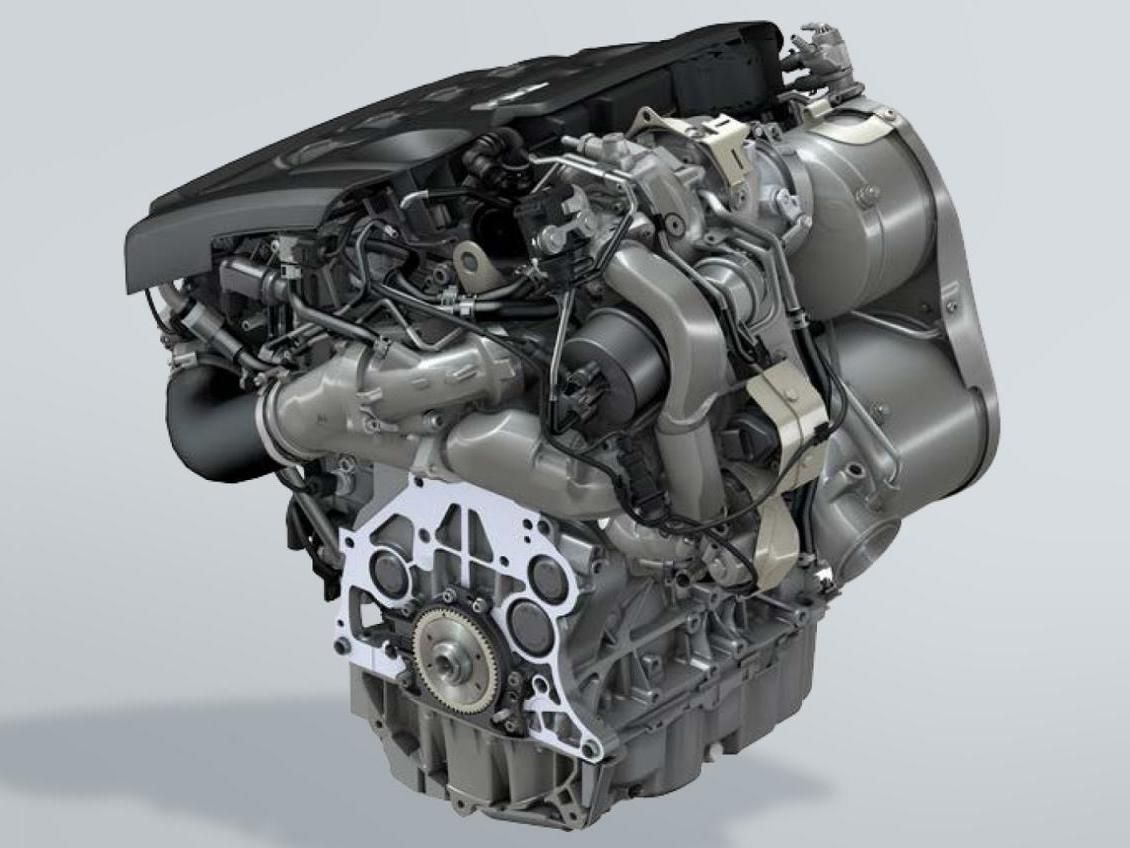
Modern diesel engines are super sensitive to sub-standard fuel.
Beyond the cost factor, what is the real near-term risk when talking about fuel in South Africa? Unless you are a petrochemical engineer, fuel purity is something most South African vehicle owners never really think about … but they should.
Modern engines require high-quality, low-contaminant fuel. And contaminants aren’t always what you think they are. Sure, diesel drivers know the difference between 500 and 50 ppm diesel, or ‘low sulphur’ diesel. But there’s more to fuel contamination than just particulate matter, which can destroy injectors.
Water is the other big risk. When the fuel production and supply chain system experiences temperature and condensation issues, moisture can form and contaminate fuel. Water, in any form, isn’t a lubricant. Engine fuel injectors operate at very high pressures. That makes them highly susceptible to moisture in the fuel, which acts as a cutting agent when it is pressurised through the fuel system and injection rail.
The blended diesel risk
It might look fine but impure diesel can be disastrous for your engine.
When fuel prices surge, especially the cost of diesel, the risk of blending becomes a real concern for South African transport operators and private vehicle owners.
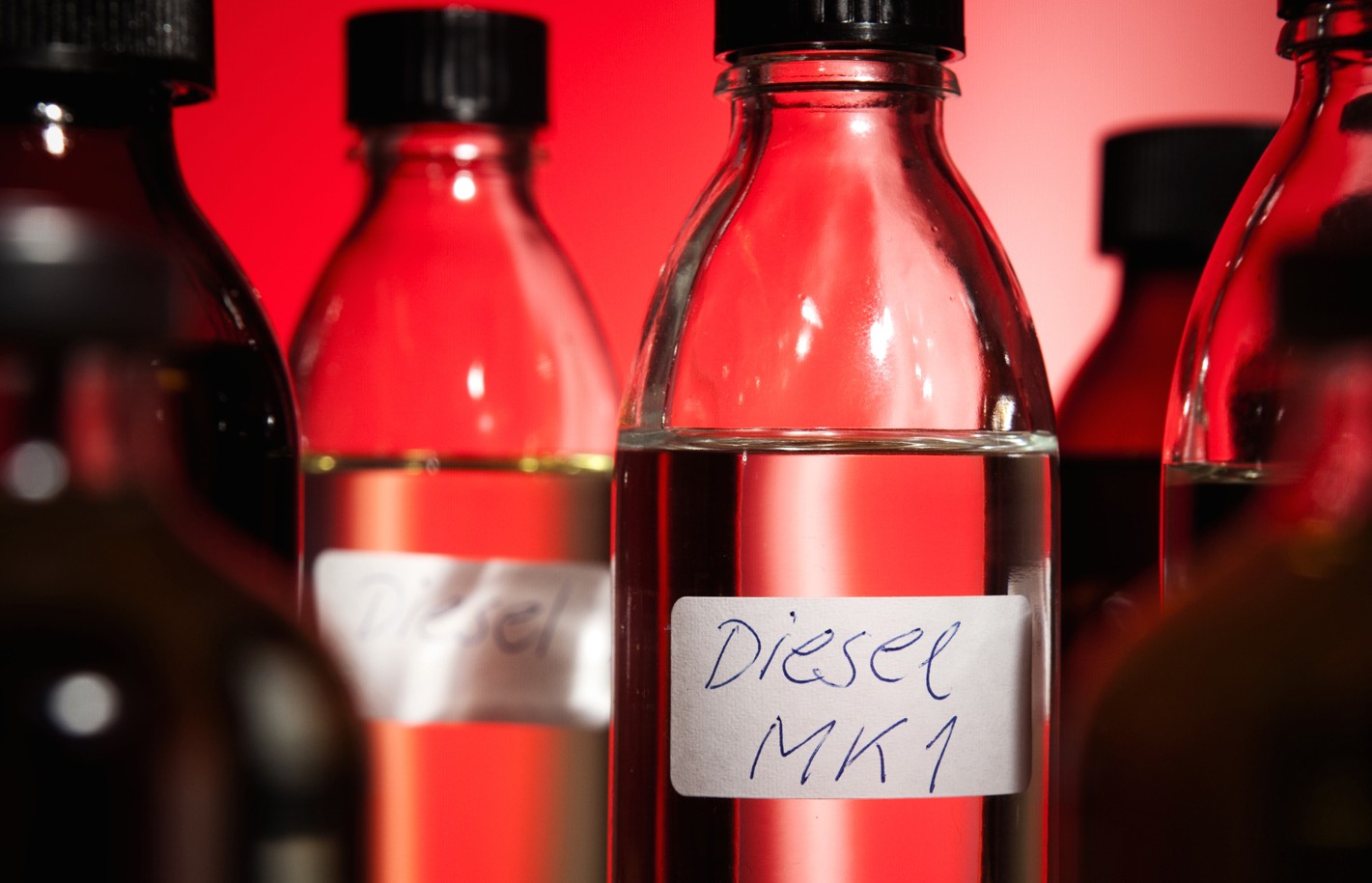
Blended fuel is diesel that has been volume-enhanced (or ‘adulterated’) with kerosene. Fuel syndicates create these blends to offer lower-priced fuel to desperate buyers. Syndicates also keep most of the fuel-tax difference. How? Well, blended diesel is sold illegally.
Like high-sulphur diesel or diesel that’s been poorly transported, bunkered, and transferred (gaining dust particles and moisture), blended diesel is destructive to injectors. While there’s been a clampdown on these syndicates, some slips through the system and manage to distribute and sell blended diesel.
The risk of filling up with blended diesel can be avoided by visiting recognised forecourts and established retailers. While that can be a challenge when you’re road tripping in a diesel double cab or SUV into rural areas, smart planning by refuelling in bigger towns before turning off onto dirt tracks can avoid derailing your adventure.
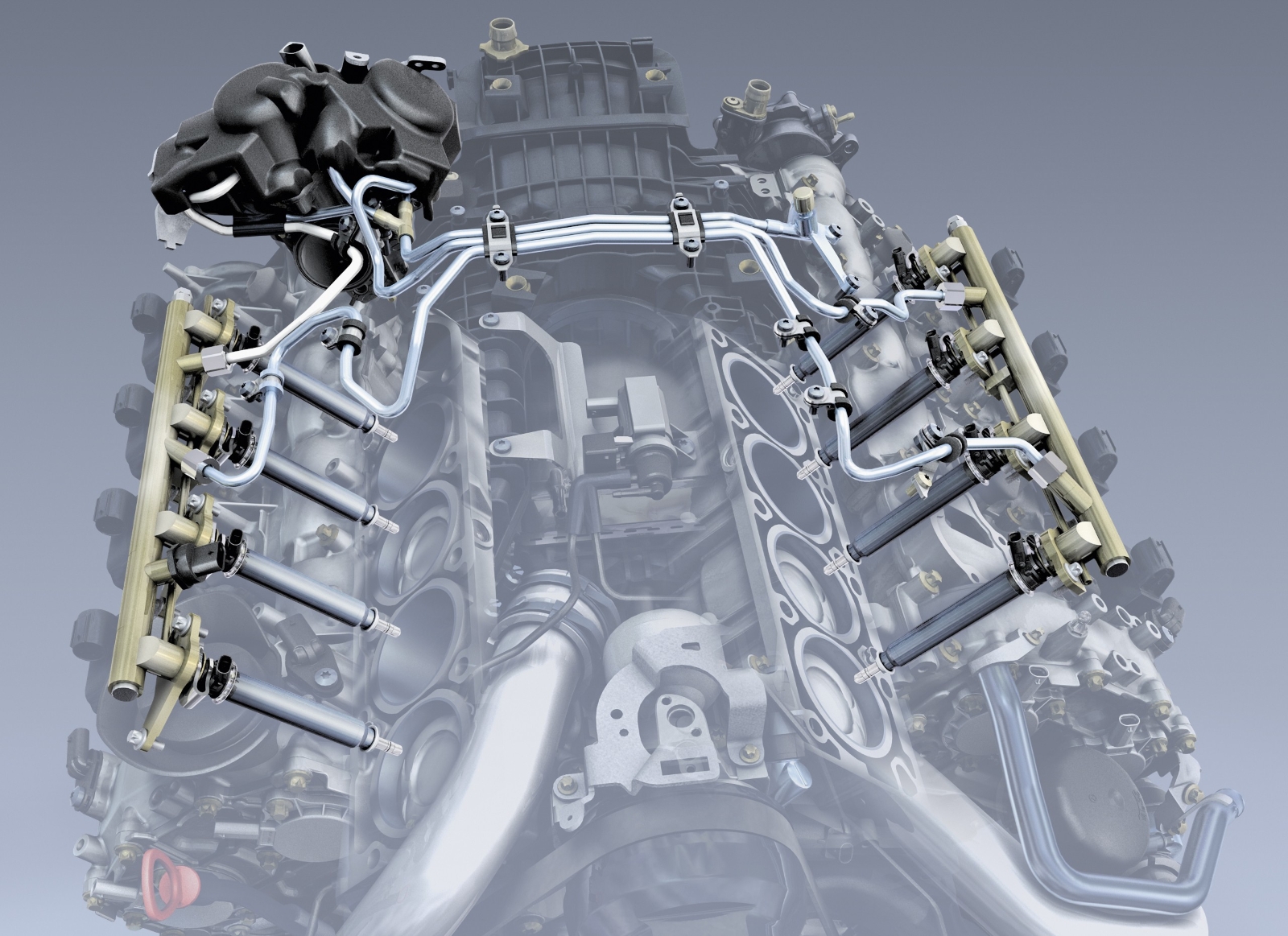
High-pressure injection systems, like on this V8, require the cleanest fuel possible.
Ironically, a solid proportion of South African fuel has improved in quality over the last few years… The reason is less positive – the local fuel-refining industry has collapsed.
South Africa now imports most of its petrol and diesel as fully refined products from some of the world’s best and most sophisticated refineries in the Middle East. That means a lot less of the petrol and diesel you buy is made by local refineries, some of which date back to the 1960s…
The collapse of South African refining is largely due to low-sulphur fuel requirements. Sophisticated petrol and diesel engines have become standardised on new vehicles on sale in South Africa. That means high-pressure direct injection and exhaust gas recirculation (EGR) valves. On diesels, additional emissions control systems such as AdBlue and diesel particulate filters add to the clean fuel requirement.
All those emissions-control components and turbocharged powertrains require a much higher level of fuel purity. Yet, when engineers evaluated South Africa’s future powertrain pipeline in the late 2000s and early 2010s, investors in the fuel sector and government were unwilling to spend the money to produce future-spec Euro-compliant fuels.
More than half of South Africa’s refineries are no longer in commission.
Fuel price structures
It would be great to have fully domestic fuel production again, potentially saving on shipping costs. But it is unlikely. Why? Upgrading local petrochemical refineries to supply the clean fuels needed for South Africa’s current and future vehicle fleet is just too expensive.
Crucially, while we’ve gone from producing nearly all the fuel we need, to importing most of it, it would appear most of the fuel levies and taxes have remained unchanged. The various levies and taxes for locally made fuel made from imported oil, versus the costs applied to fully imported fuel, surely can’t be the same?
There are further unanswered questions, such as how the carbon fuel levy works and whether it is time to update it. South Africa does not tax engine size or specific emissions outputs, unlike many other countries. All South African drivers effectively pay the same carbon fuel levy per litre of fuel. That means the effective carbon fuel tax you pay on a 1.0-litre city car is the same as with a V8 performance car.
While we all ponder what will happen to the fuel price next month and the month after that, we should instead be asking whether the legacy taxes and levies are still relevant in 2026…