Flat out in Porsche’s Cayman GTS, 911 GTS & Taycan GTS on track
The Porsche GTS badge takes an already complete offerings and enhances its dynamic abilities. We put some of the latest Porsche GTS models to the test on track.
What makes a Porsche GTS a GTS? The badge has been around for a long time but was brought back to life with the Cayenne in the 2000s.
Besides a few neat option pieces, what else do you get in a Porsche GTS and why should you be interested in the model?
In this video, our racing ace Ashley Oldfield drives the full range of GTS Porsches on a track he doesn’t know to see what they’re all about and decide which is his favourite.
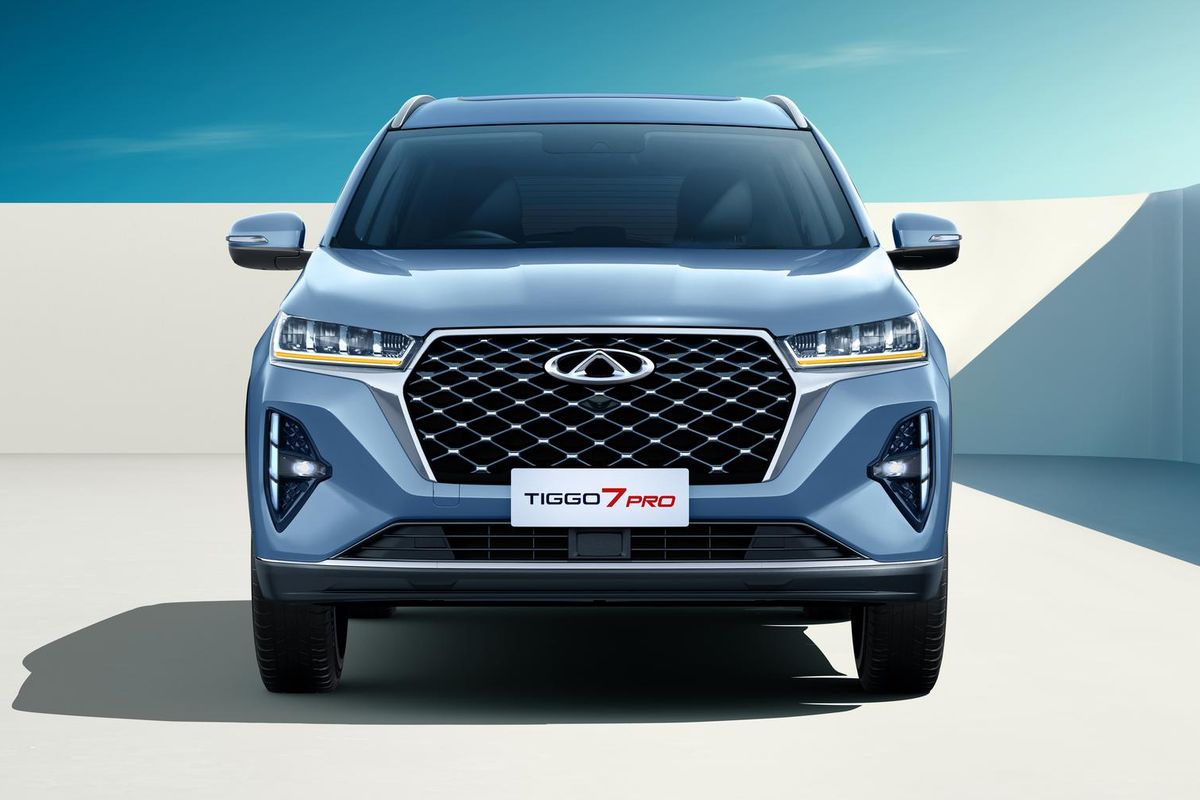
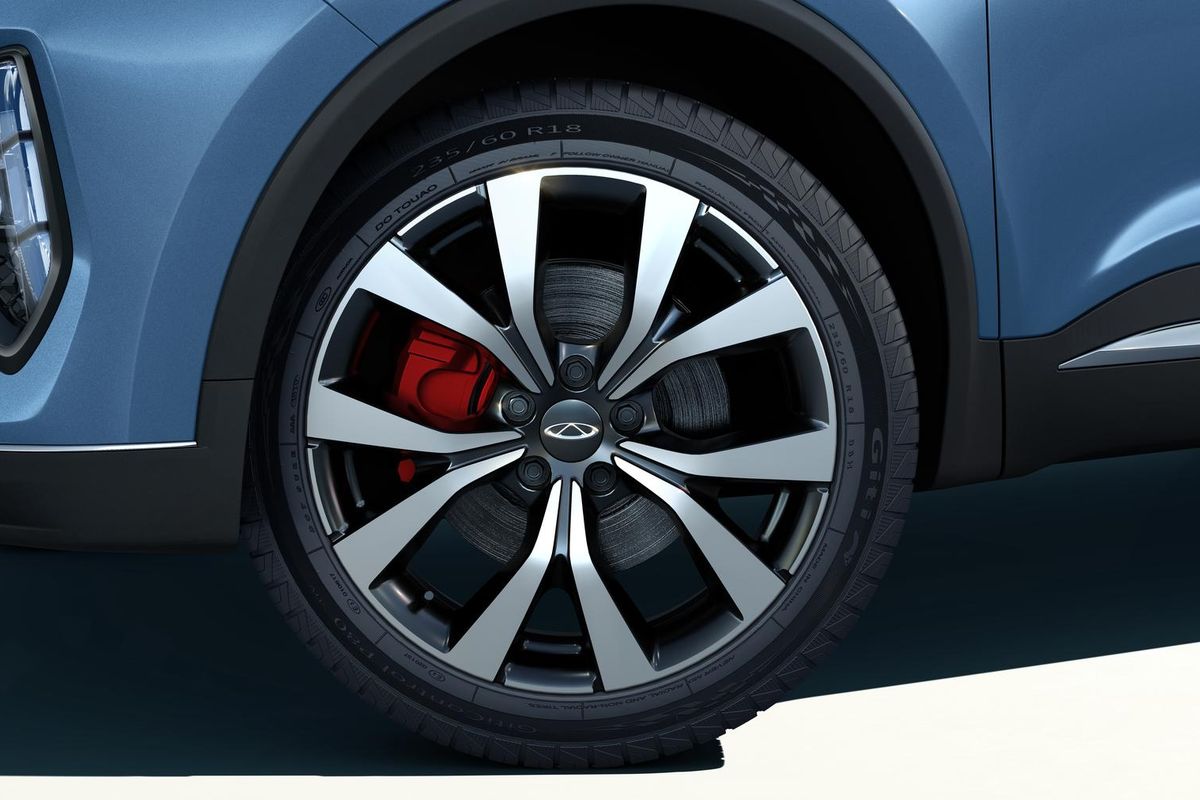
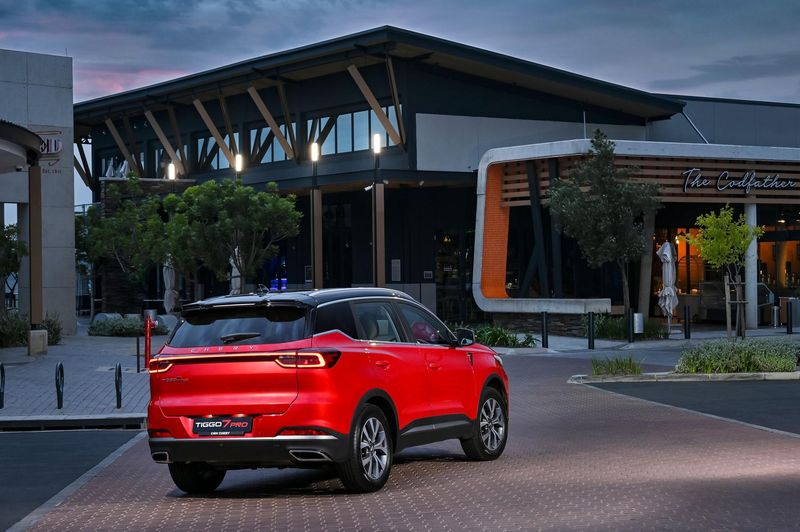
The Chery Tiggo 7 Pro has landed in SA. Here are the specs and prices.
Chery has seen impressive growth since its re-launch last year. With two solid offerings in the form of the Chery Tiggo 4 Pro and Tiggo 8 Pro backed by a substantial warranty and an ever-increasing dealership footprint, the brand is on the up.
Now Chery SA has confirmed that its mid-range model is on its way to South Africa with the first shipment of Tiggo 7 Pro units due soon. “Chery is a much-loved brand in many countries that have a similar buying profile, road network and infrastructure as South Africa. For instance, in Russia, the model has been so successful that it has become one of the most popular SUVs in its class.” says Tony Liu, Executive Deputy General Manager of Chery South Africa.
The 7 Pro will be positioned between the budget-friendly 4 Pro and the family-focused 8 Pro, and all models in the range will be powered by a 1.5-litre turbocharged petrol 4-cylinder unit. This motor develops 108 kW and 210 Nm, and is paired to a CVT. This transmission features 9 steps to create that gearshift sensation.
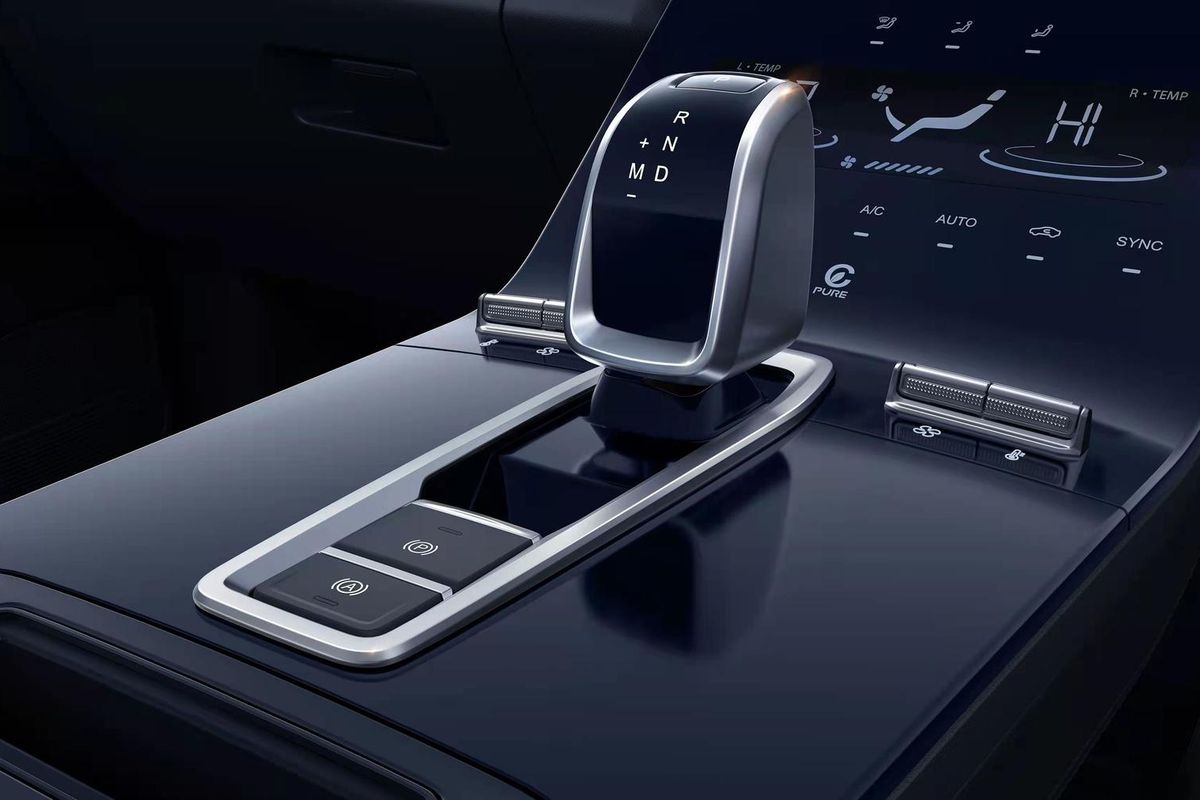
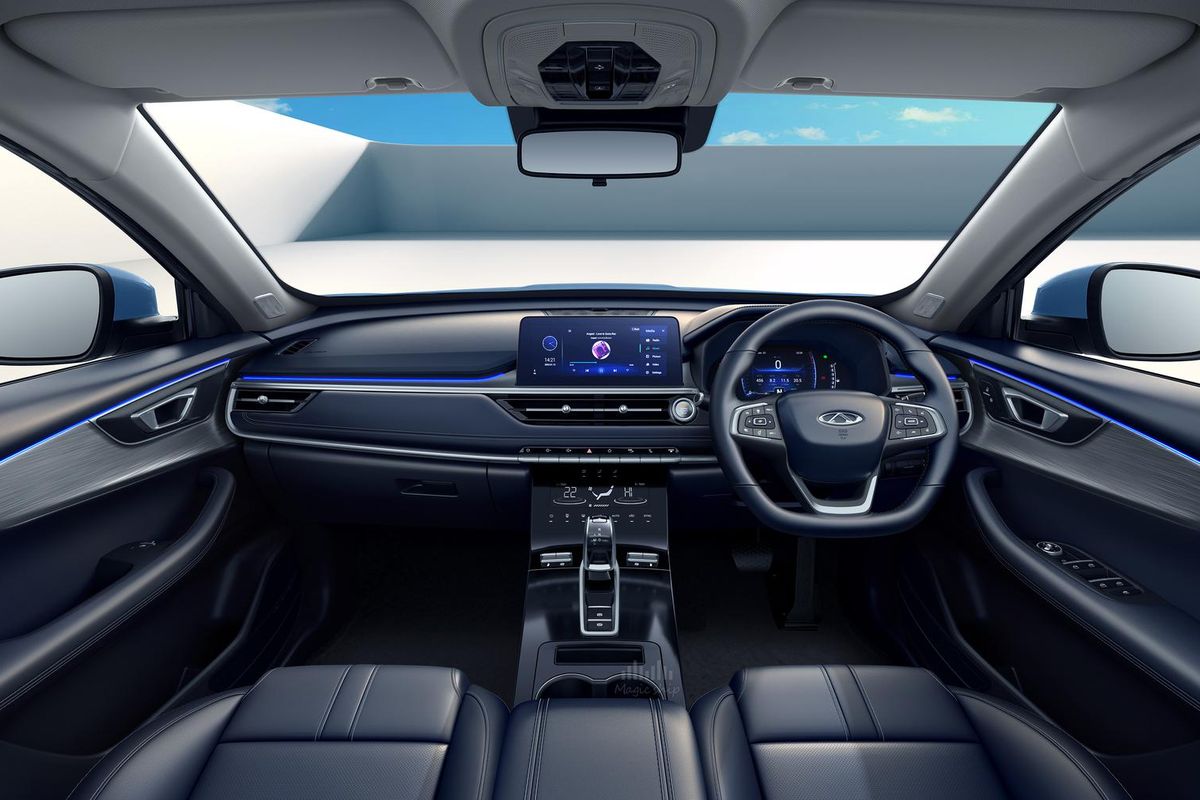
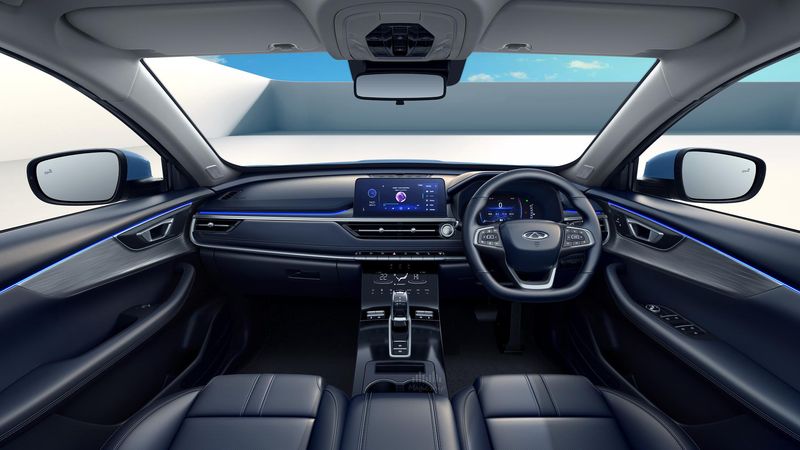
Much like the rest of the range, the Tiggo 7 Pro will come fully loaded with an array of features, such as a digital instrument cluster, full HD infotainment system as well as digital controls from climate control. “Many of the features that our South African customers have come to love, will also be available on the Tiggo 7 Pro range. These include our omnidirectional airbag system, our 360-degree camera array for easy low-speed manoeuvring and parking and our Chery Voice Command system,” says Liu.
A cursory glance at the tech data suggests this new model is about the same size as a Hyundai Creta, with a wheelbase of 2670 mm and a total length of 4500 mm. This will bring Chery SA’s portfolio to a 3-model lineup, with no confirmation as yet for the entry-level Tiggo 2 Pro.
Features
Black leather with contrasting stitching
The driver’s seat features six-way electric adjustment, and in the Executive model, the passenger seat has four-way electrical adjustment as well.
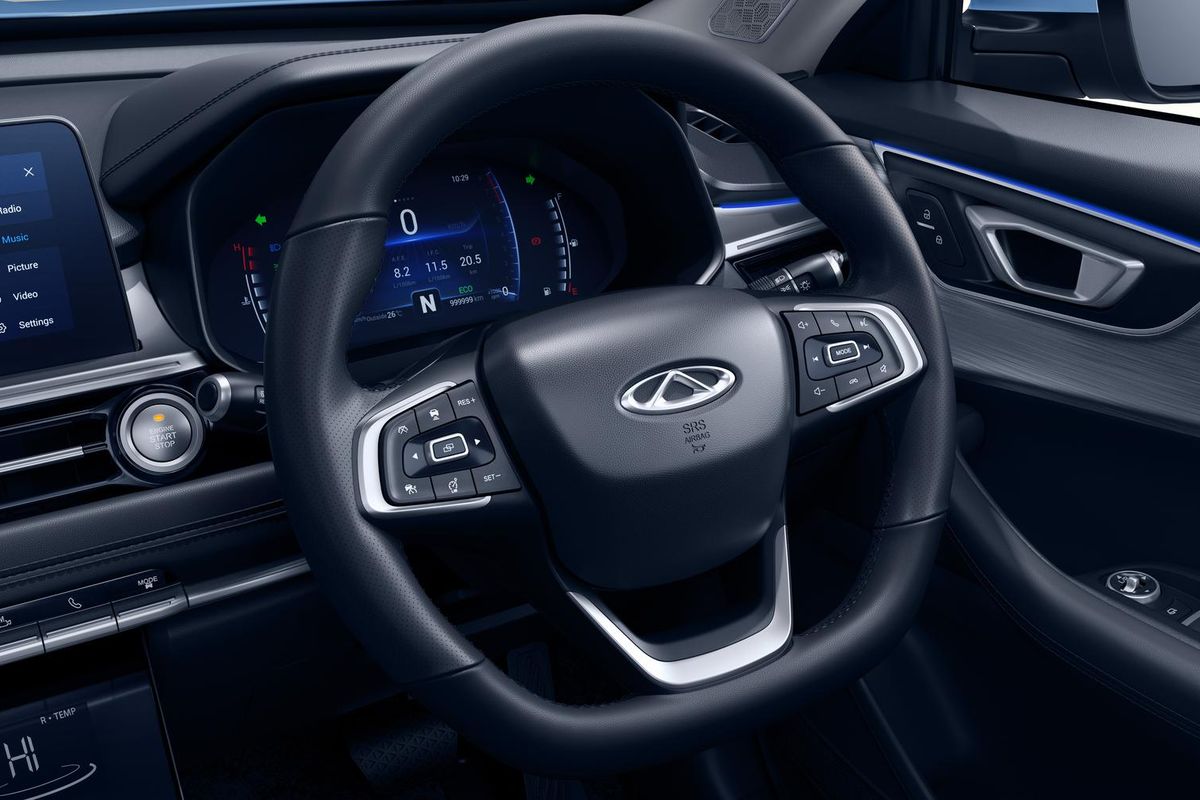
Leather-clad steering wheel which is adjustable in 4 directions
Start-stop
7-inch digital centre information panel in front of the driver
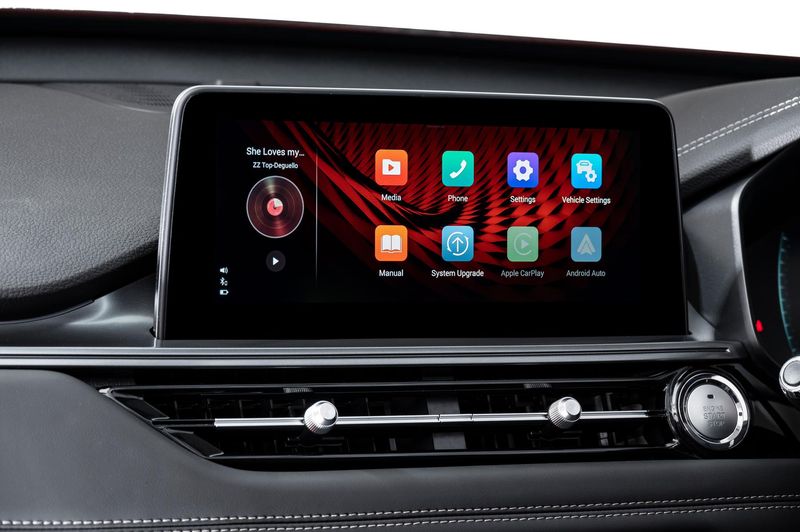
10.25-inch LCD screen with Apple CarPlay, Android Auto and Bluetooth
Standard reverse camera
Two USB ports in front, 1 USB port in the rear
Wireless charging
Multiple colour ambient lighting
Four airbags
ABS brakes on all four disk wheels (ventilated in front) with Electronic Brakeforce Distribution (EBD), Emergency Brake Assistance (EBA), Hill Start Assistance (HSA) and Hill Descent Control (HDC). All models have Rear Traffic Alert (RTA) and Blind Spot Detection (BSD).
Executive model adds:
Electric panoramic sunroof
Front passenger 4-way electrically adjustable seat
Lane Departure Warning (LDW), Front Collision Warning (FCW), Automatic Emergency Braking (AEB) and a 360-degree around-view monitor.
Six airbags
How much does the Chery 7 Pro cost in South Africa?
A source close to Cars.co.za has said the new model will be offered in two models. We understand the vehicle will be hitting showrooms in May 2022. We’ll have more info when the vehicle launches.
Tiggo 7 Pro Distinctive R409 900 Tiggo 7 Pro Executive R444 900
Cars.co.za is looking to make a dream come true for a local Sim Racer with a unique sponsorship opportunity. Consisting of a monthly cash contribution and content creation pieces, our chosen Sim Racer will get to make a significant step forward in their racing career.
As South Africa’s leading automotive online platform, Cars.co.za is always looking to build on this in everything it does. The next step in this process sees it looking to the gaming sector, with a talent search to identify South Africa’s next big thing in the world of Sim Racing.
“The increase in popularity of shows such as Drive to Survive has resulted in an explosion of petrolhead passion. And with our background of always finding new and exciting ways to extend the Cars.co.za brand, we want to be involved in uncovering more of SA’s e-racing superstars that are evolving racing as we know it”, says Ross McIlroy, co-founder of Cars.co.za
Sim racing may be in its infancy in South Africa, but for those who are involved in it, the sport is already well in its stride. In 2019, professional e-sports organisation ATK created the ATK Pro Series – it features online sim races that are contested in conjunction with intercontinental GT races around the world. The series is even recognised by the SRO Motorsport Group, affiliated with the Kyalami 9 Hour (arguably the premier event on the South African motorsport calendar) and endorsed Motorsport South Africa. In fact, the ATK Pro Series attracted the notable sponsorship of Mercedes-Benz South Africa in 2021.
Founder of ATK Warren Barkhuizen feels this is a great time for South African brands like Cars.co.za to get involved in this rapidly growing online sport. “When we initially had a plan for starting a dedicated Sim Racer platform in South Africa, we certainly didn’t envision the quality of talent that has risen so quickly to the top of our sport. We have young local racers already competing on the world stage, and with Cars.co.za looking to put a further spotlight on the talent out there, the standard of competition is only going to improve further,” says Barkhuizen.
How To Apply
Cars.co.za is looking for someone that gives their all in pursuit of the chequered flag, while also being a dedicated car person that can seamlessly fit in with our brand culture.
Sim Racing stars to be eligible for selection, need to follow a simple profile build via theMatchKit.coplatform.
MatchKit is an online sporting profile builder allowing athletes in all sports to package all their online sporting attributes from social media credentials to the best of their recent content created.
By clicking on the Cars Sim Racer sponsored linkhttps://bit.ly/carssimracer, they start the process. Applicants will need to link their Facebook/Instagram accounts first, then populate their profiles and publish. Once done with that, they then share their unique MatchKit URLs on social media with #CarsSimRacerSearch to stand a chance to be chosen.
A final three will be chosen by the Cars.co.za team, with the winner being announced on June 6th via the Cars.co.za social media accounts.
The Prize
Cars.co.za is offering a monthly cash contribution of R10 000 to our chosen racer during the racing season of June – November. They will race in the ATK Pro Racing GT series in the colours of the brand. Together with that our racer will get to be involved in content pieces with the brand to boost their profile within the sport during the racing season of June – November 2022.
THE SEARCH IS CONDUCTED BY RETRO VIRAL ONLINE BRANDING PROPRIETARY LIMITED (REGISTRATION NO. 2014/257064/07) (“RETROVIRAL”) ON BEHALF OF CARS.CO.ZA.
BY APPLYING TO PARTICIPATE IN THE CAMPAIGN OR PARTICIPATING IN THE SEARCH, YOU CONFIRM THAT YOU HAVE READ, UNDERSTAND AND AGREE TO THESE TERMS AND THAT YOU ARE 18 YEARS OF AGE OR OLDER. IF YOU ARE UNDER THE AGE OF 18 OR DO NOT AGREE WITH THESE TERMS, YOU MAY NOT APPLY TO PARTICIPATE IN THE CAMPAIGN OR PARTICIPATE IN THE SEARCH.
YOUR ATTENTION IS SPECIFICALLY DRAWN TO CLAUSES 4.2.6 AND 5.2 THAT LIMIT THE RISK AND LIABILITY OF RETROVIRAL AND/OR THIRD PARTIES, AND IMPOSE AN OBLIGATION ON YOU TO INDEMNIFY RETROVIRAL AND/OR THIRD PARTIES.
Definitions
“Applications” refers to applications to participate in the Campaign received by Retroviral.
“ATK Pro Series” refers to the 2022 Mercedes-Benz ATK Pro Series online racing (sim) event run under the auspices of Mercedes Benz South Africa, ATK SimRacing and ProSeries in partnership with Gran Turismo South Africa.
“Business Day” refers to any day which is not a Saturday, Sunday or official public holiday in the Republic of South Africa.
“Cars.co.za” refers to Cars On The Internet (Pty) Ltd t/a Cars.co.za (registration number 2016/041496/07).
“Campaign” refers to marketing and promotional campaign undertaken by Cars.co.za in connection with the ATK Pro Series in order to promote the Cars.co.za brand and products, including the granting of the Sponsorship.
“Matchkit” refers to Matchkit Inc. (registration number 85-0522481).
“Personal Information” refers to personal information as defined in the Protection of Personal Information Act, 4 of 2012 (“POPIA”).
“Search” refers the search for a suitable candidate to participate in the Campaign conducted by Retroviral in accordance with these Terms.
“Sponsorship” refers to the sponsorship to be granted by Retroviral on behalf of Cars.co.za to a local South African sim racer to participate in the ATK Pro Series, more fully set out in clause 4.1 below.
“Sponsorship Period” refers to the duration of the Sponsorship, which unless terminated earlier by Retroviral shall be from 1 June 2022 to November 2022 or such longer period as may be agreed in writing.
“These/the Terms” refers to these terms and conditions.
Eligibility and Application Requirements
In order to be eligible to apply to participate in the Search and the Campaign, you must be a South African citizen and 18 years or older.
Applications are required to be submitted by 31 May 2022 by way of the following:
the creation of an account on the Matchkit website using the following link:
the completion and publication of your personal Sim-Racer Matchkit profile; and
posting your unique profile URL on Instagram, Twitter, Facebook or TikTok using #CarsSimRacerSearch,
Only applications submitted in accordance with the aforegoing will be valid. The determination as to the validity of any Application shall be within the sole discretion of Retroviral. Retroviral accepts no liability for any Applications that may be lost.
Unless otherwise stated, you may only submit one application. Where more than one application is received from you, only the first Application received will be deemed valid. If it is established that you used multiple aliases to apply multiple times, Retroviral reserves the right to terminate your participation in the Search and/or the Campaign.
Selection Process
Cars.co.za will, within its sole discretion, select one applicant to participate in the Campaign based on the Applications. The decision of Cars.co.za in this regard is final and binding on all persons who submit Applications.
The successful applicant will be announced on 6 June 2022 on Cars.co.za’s Instagram page and notified by means of the contact details provided to MatchKit and you consent to the disclosure by Matchkit of your Personal Information to Retroviral and/or Cars.co.za for this purpose. If Cars.co.za and/or Retroviral is, or a third-party supplier is, unable to contact the successful candidate within 5 Business Days of the date of publication of the aforesaid Instagram post, Cars.co.za shall be entitled, but not obliged, to select another applicant under the same conditions.
Retroviral reserves the right, in its sole discretion, to vary, postpone, suspend or cancel the Search or the Campaign or any aspect thereof, at any time and for any reason whatsoever, or modify or amend these Terms. In the event of such variation, postponement, suspension or cancellation, modification or amendment, you agree to waive any rights, interests and expectations that you may have in relation to the Search, the Campaign and/or the Sponsorship and acknowledge that you will have no recourse against Retroviral, Cars.co.za, Matchkit or any of their affiliates, sponsors and third-party suppliers.
Retroviral and/or Cars.co.za’s decision on any matter concerning the Search, the Campaign or the selection process shall be final and binding on all applicants (including you), and no correspondence will be entered into.
The Sponsorship
The Sponsorship shall be for the period from June 2022 to November 2022 and consist of the following sponsorship benefits:
The recipient of the Sponsorship will be paid an amount of R10,000 per month, the first payment shall be made within 5 Business Days of receipt of the successful candidate’s banking details and, thereafter, the remaining payments shall be made on the first Business Day of each following calendar month falling within the Sponsorship Period.
The recipient of the Sponsorship will race in the ATK Pro Series in a Cars.co.za branded car and using Cars.co.za’s branding.
Should you be granted the Sponsorship, you acknowledge and agree for the duration of the Sponsorship Period:
You will participate in all of the races forming a part of the ATK Pro Series.
You will not conduct yourself or enjoy the above benefits in any manner which compromises or reflects unfavourably on the good name, reputation and image of Cars.co.za or in any manner which is contrary to applicable laws and regulations.
You will provide Retroviral and/or Cars.co.za with all such reasonable assistance as they may require in connection with the Campaign, including but not limited to cooperating with Retroviral and/or Cars.co.za in media and other promotional opportunities forming a part of the Campaign, the creation of monthly content for Cars.co.za’s online channels and attending such promotional events as may be agreed with Retroviral from time to time.
You will not, for the duration of the Sponsorship, promote or advertise the products or services of any third party which competes with the products and/or services of Cars.co.za without Retroviral’s prior written approval.
You grant to Retroviral and Cars.co.za the royalty free right to use your name, image and likeness in connection with the Campaign and the promotion of the products and/or services of Cars.co.za.
Your participation in the Campaign and the ATK Pro Series and use and enjoyment of the sponsorship benefits is at your own risk. Retroviral and Cars.co.za shall not be liable for, and you hereby indemnify Retroviral and Cars.co.za against, any loss, damage, personal injury or death incurred, suffered or sustained (including but not limited to that arising from any person’s negligence, including gross negligence) by you in connection with the Campaign, the ATK Pro Series or the sponsorship benefits.
You consent to your name and involvement in the Campaign being made available to the public.
Retroviral shall be entitled to terminate the Sponsorship forthwith on written notice to you in the event that you breach the provisions of this clause 4.2 or any other provision of these Terms. Upon termination of the Sponsorship, your entitlement to receive any sponsorship benefits will likewise terminate.
Personal Information
In terms of POPIA, Retroviral has a legal duty to process the Personal Information provided by you in a lawful, legitimate and responsible manner. To this end, you agree that Retroviral will process your Personal Information for purpose of evaluating your Application and share your Personal Information with third parties pursuant thereto, including but not limited to Cars.co.za and Matchkit.
You hereby give Retroviral permission to use, store and process your Personal Information, as provided to Retroviral and/or Matchkit, in accordance with the provisions of Retroviral’s privacy policy (which is available on Retroviral’s website) and acknowledge that you understand the purposes for which it is required and for which it will be used. You unconditionally indemnify Retroviral against any liability that may result from the furnishing of your Personal Information in this regard.
You declare that all Personal Information provided by you to Retroviral and/or Matchkit is accurate, up to date, is not misleading and that it is complete in all respects. You undertake to immediately advise Retroviral of any changes to your Personal Information and acknowledge that if it is found that any information that has been supplied is false, your Application may be disqualified.
General
Applicable Law and Jurisdiction: These Terms shall be governed by and interpreted in accordance with South African law. You consent to the jurisdiction of South African courts and agree that any dispute arising out of these Terms or the interpretation thereof, both while in force and after its termination howsoever arising shall be submitted to and determined by a court of law in the Republic of South Africa.
Changes: Retroviral may, from time to time, and in its sole discretion, amend these Terms. Such changes will be effected by way of publication, and you waive any right you may have to receive specific notice of such changes or modifications.
Waiver: No latitude, extension of time or other indulgence which may be given or allowed by Retroviral to you in respect of the performance of any obligation or enforcement of any right arising from these Terms and no single or partial exercise of any right by Retroviral shall under any circumstances be construed to be an implied consent by Retroviral or operate as a waiver or a novation of, or otherwise affect any of Retroviral’s rights in terms of or arising from these Terms or estop Retroviral from enforcing, at any time and without notice, strict and punctual compliance with each and every provision of these Terms.
Notices: You choose the e-mail address submitted in connection with the creation of your Matchkit profile as your domicilium citandi et executandi at which all notices, legal processes and other communications must be delivered for the purposes of these Terms.
All notices, legal processes and other communications must be delivered to Retroviral for the purposes of these Terms by e-mail to the following address:
Any notice to a party delivered by email to its chosen e-mail address, unless the contrary is proved, shall be deemed to have been received on the day of delivery or transmission as the case may be.
Midsize Hatchbacks Fading Away? What SA’s Sales Figures Say
With only a handful of midsize hatchbacks still available in South Africa, what was once a thriving segment appears to be on its last legs. Let’s take a closer look at the figures for April 2022…
Remember the days when the C-segment hatchback was the default option for family transport? Well, a glance at the latest sales figures in South Africa illustrates just how far this once-bustling segment has fallen.
Yes, the crossover craze has crushed more than just the traditional sedan segment, with the midsize hatch (we’re talking about cars with exterior dimensions similar to those of a Volkswagen Golf) also suffering the effects. In fact, there’s a laundry list of hatches from this segment that have been put out to pasture in the local – and in some cases global – market over the past few years due to flagging sales.
The Ford Focus and Opel Astra are two of the most prominent relatively recent examples of locally discontinued C-segment hatchbacks (despite new-generation versions being offered in European markets), though the register of dearly departed also includes traditionally less popular models such as the Alfa Romeo Giulietta, Kia Cerato, Renault Mégane and Peugeot 308, along with premium players like the Lexus CT200h and Volvo V40.
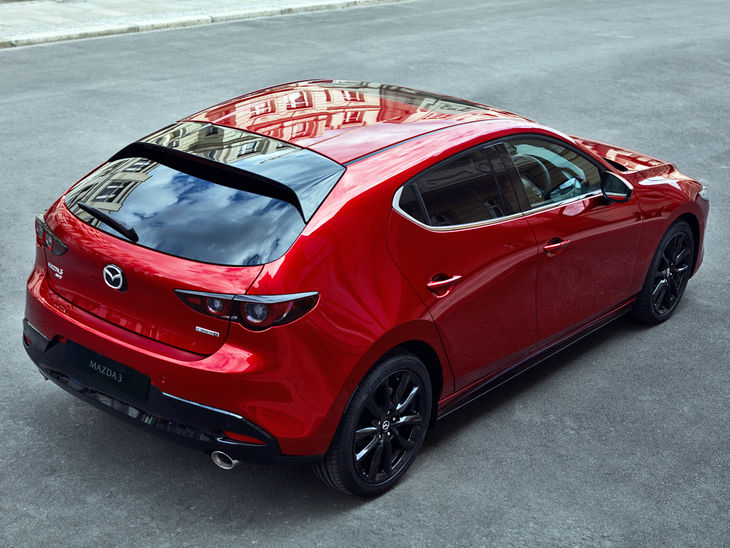
So, what midsize hatchback options remain – for the time being, at least – on the South African market? Well, there are only a few, and none is selling particularly well. In fact, the best-performing player in the country in April 2022 was the Toyota Corolla Hatchback, with a mere 40 units registered (remember the sort of numbers the Auris used to achieve?). Of course, the slack has been well and truly picked up by the Prospecton-built Corolla Cross, which has proven immensely popular in SA. Next came the Mazda3 (34 units), ahead of the Audi A3 Sportback (25 units).
Interestingly, the remaining three models are all performance variants in their respective ranges, with the cooking derivatives no longer offered locally: the Hyundai i30 N (24 units), Volkswagen Golf 8 GTI (17 units) and Honda Civic Type R (1 unit, though technically this single registration could have come courtesy of the Civic sedan line-up since Honda Motor Southern Africa reports a combined figure for the two body styles). Of course, as halo models, hot hatches tend not to be volume drivers, so these fairly meagre numbers are to be expected (and were likely further reduced thanks to global supply constraints).
In addition, since BMW and Mercedes-Benz have made a habit of not reporting individual model sales figures on a monthly basis, it’s not clear how many examples of the 1 Series and A-Class hatchbacks were sold locally in April. Still, we’re willing to bet the numbers were modest at best…
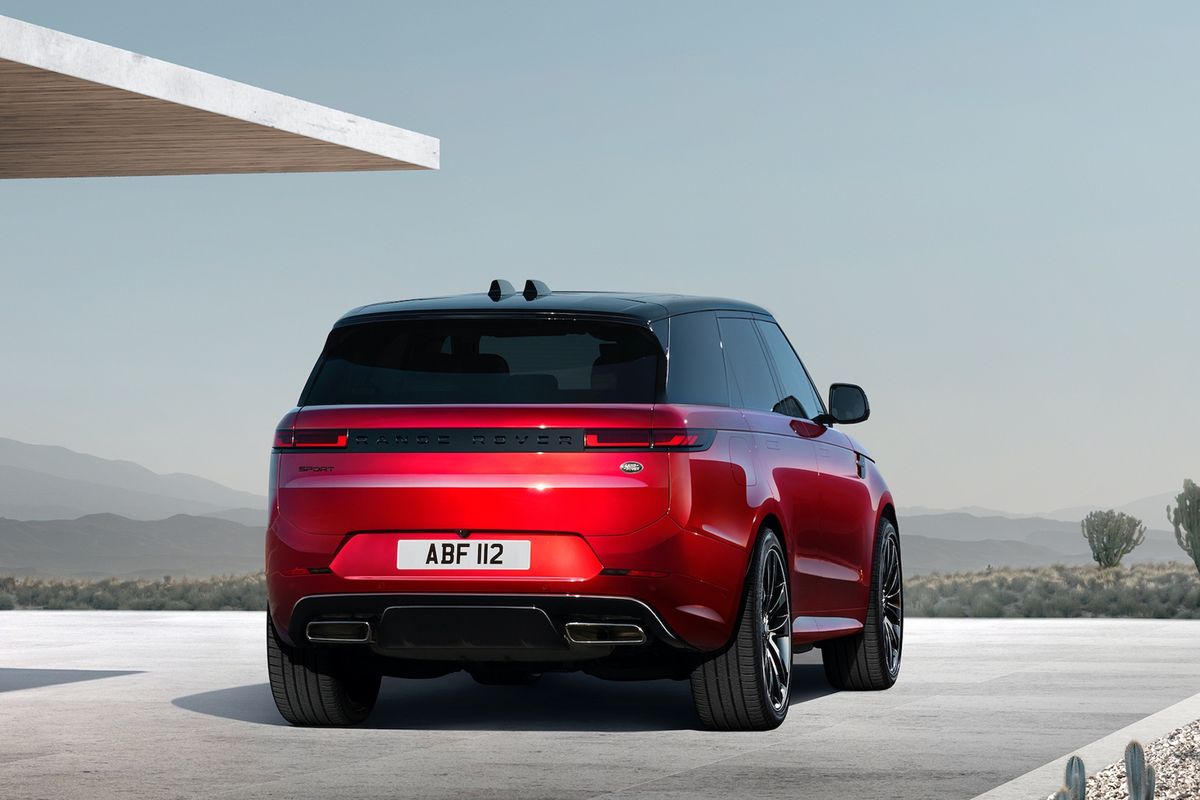
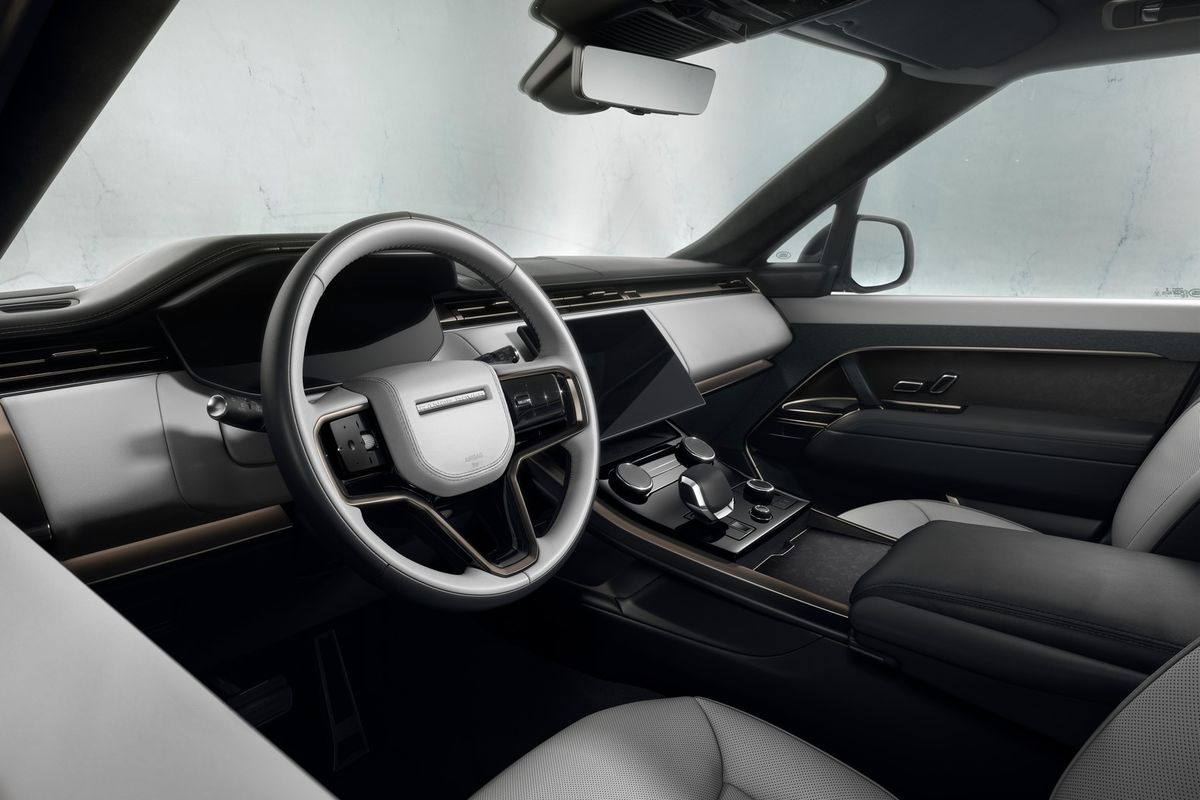
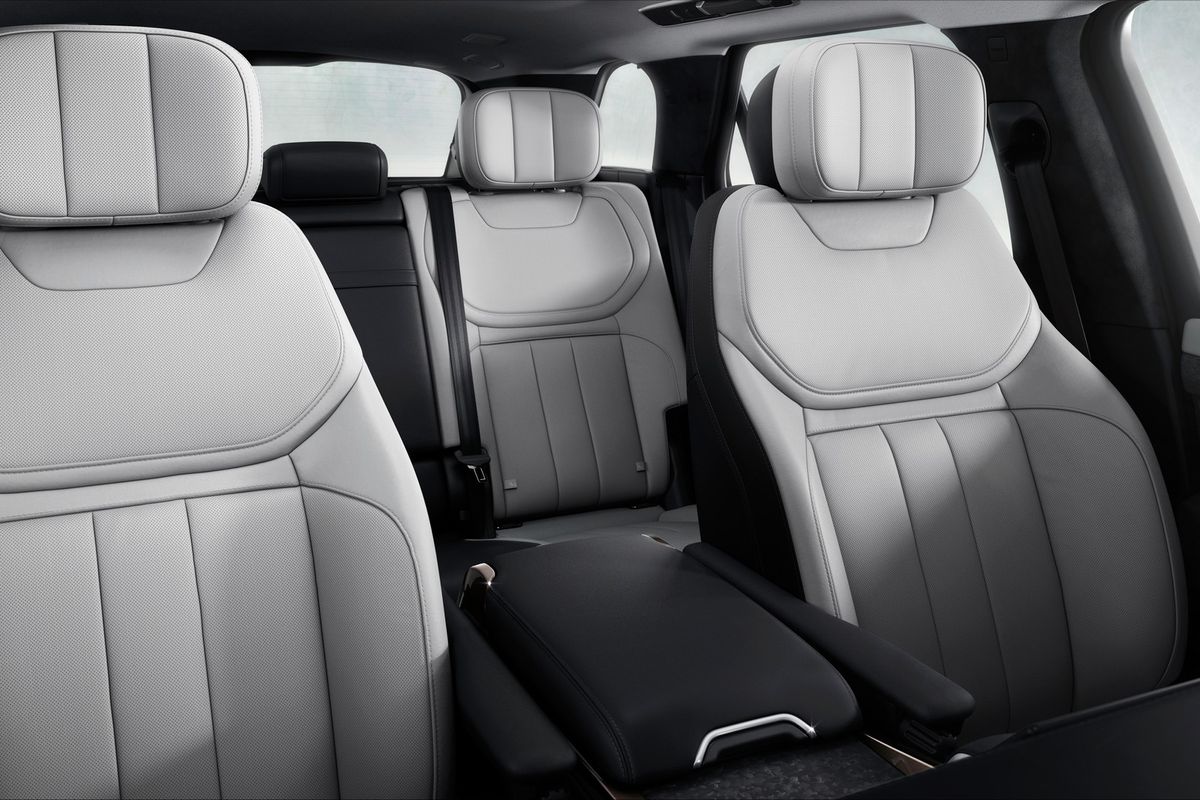
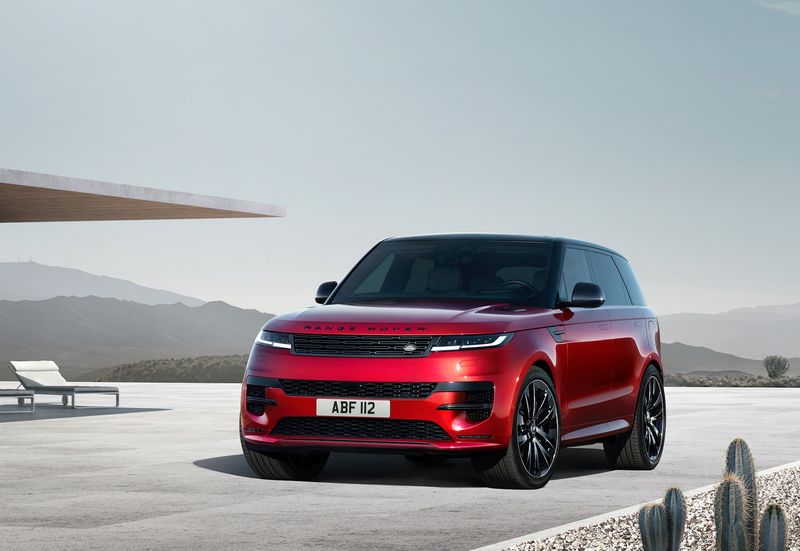
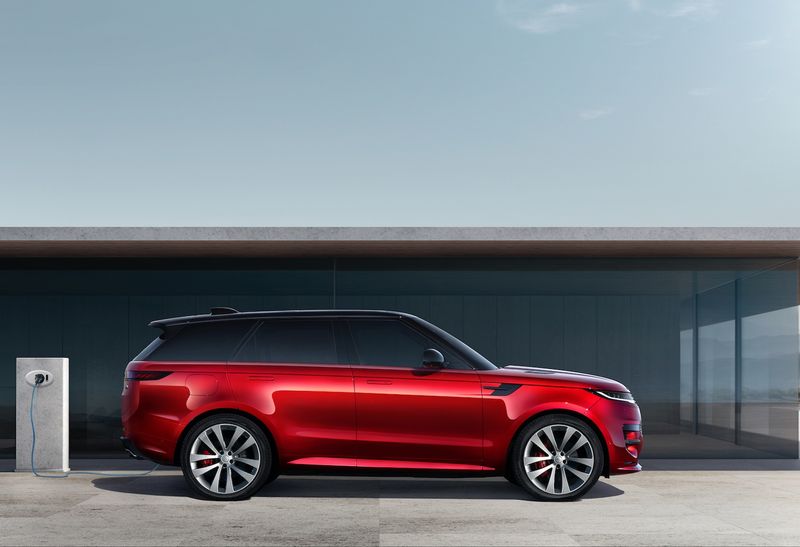
All-New Range Rover Sport Revealed
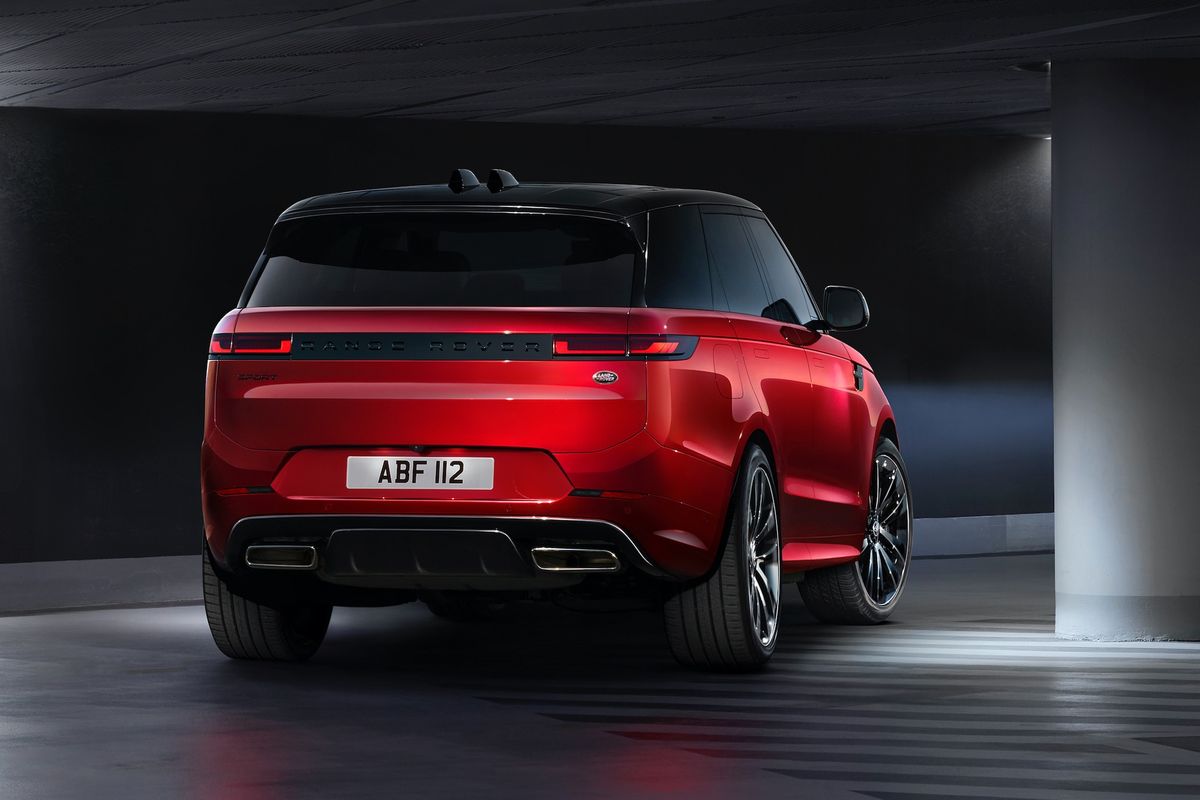
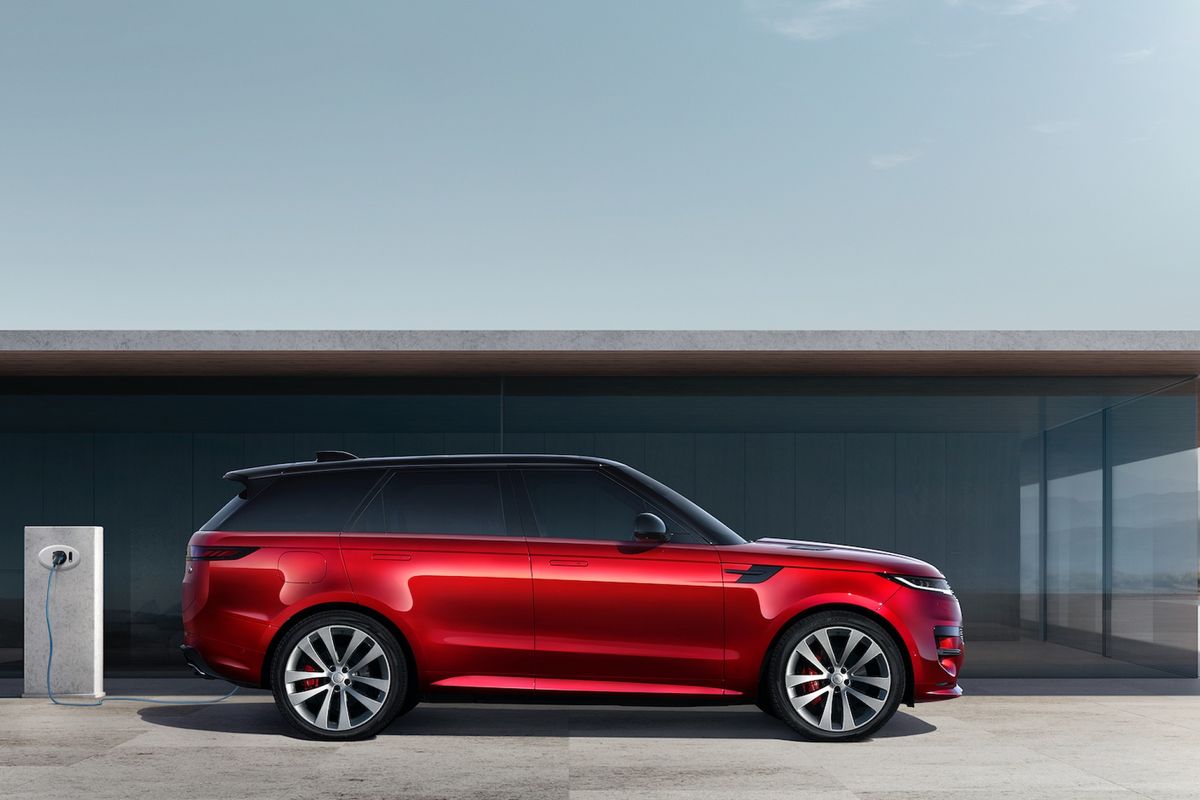
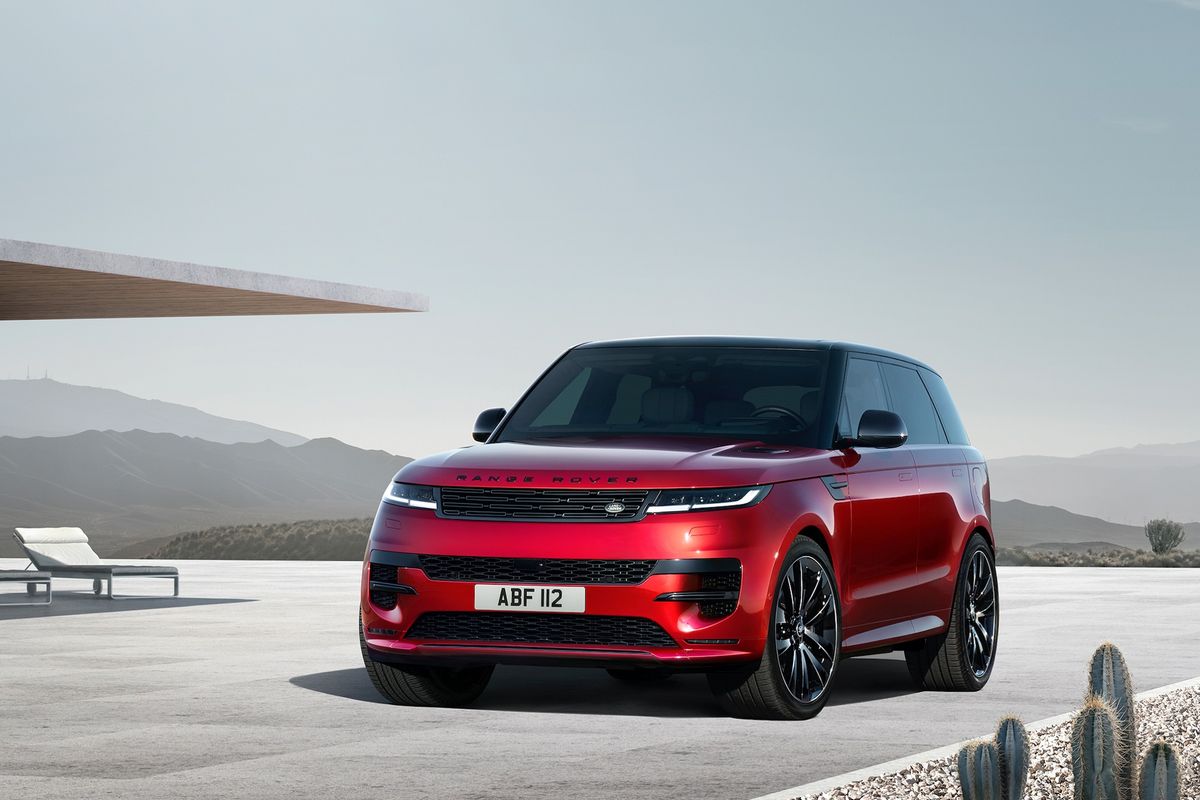
The all-new Range Rover Sport has been revealed, bringing new levels of sporting luxury to the segment. Here’s all you need to know about the 3rd-generation Range Rover Sport.
The Sport has been a phenomenal success for Jaguar Land Rover and the all-new Range Rover Sport brings new powertrains, a fresh look and a luxurious cabin. The good news is it is confirmed for South Africa, and will be reaching showrooms by the end of 2022.
Jaguar Land Rover is claiming this all-new Range Rover Sport is ” the most desirable, advanced and dynamically capable yet.” As far as engines go, the Sport will feature electrification with hybrids and a pure-electric model in 2024. There’s also petrol and diesel engines on offer, as well as a new V8. There’ll be S, SE, HSE, Autobiography levels of trim, with a special First Edition model available during the first year of production.
Visually, you can spot the all-new Range Rover Sport with its bold face. There’s nothing groundbreaking in terms of design here, an indication the Sport has aged rather well. At the rear, it’s a different story, with a radical new look. The tail lights have narrowed and there’s an air of minimalism. It’s not too dissimilar to the rear of the Evoque, but it looks upmarket. The overall design is sleek and the Range Rover Sport is said to offer excellent aerodynamic performance.
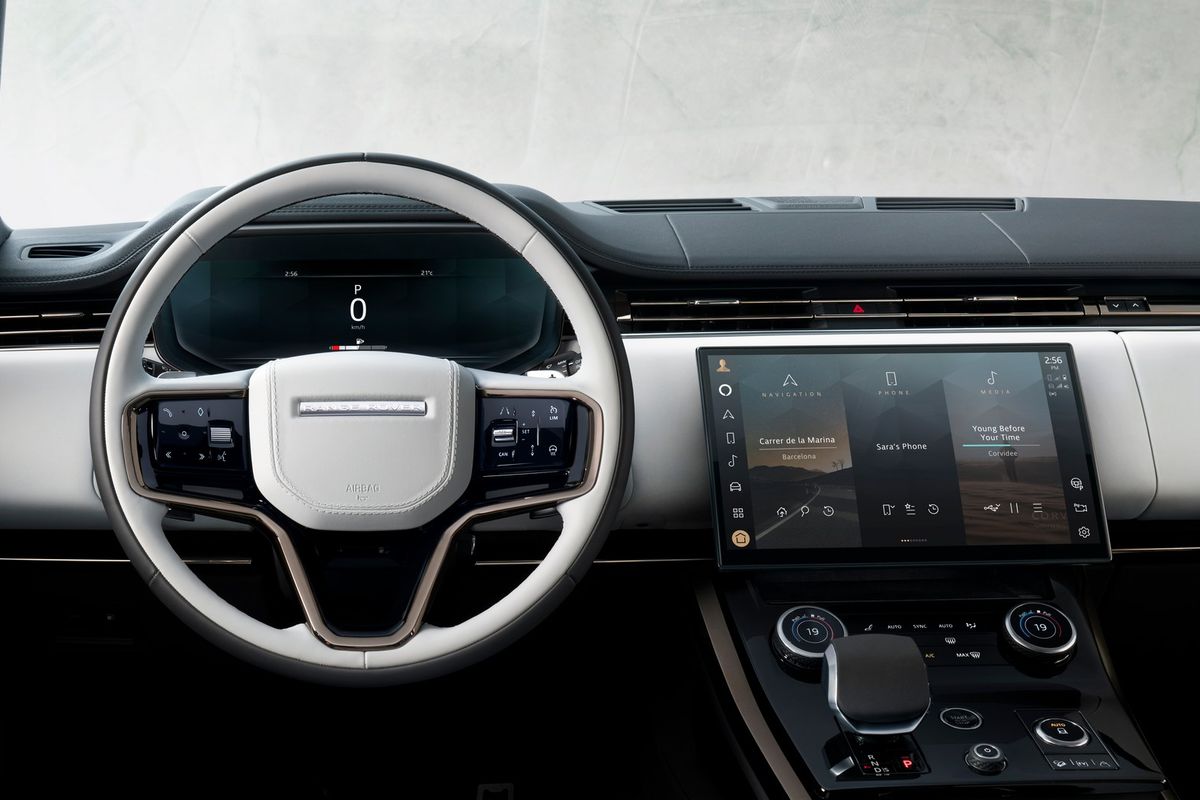
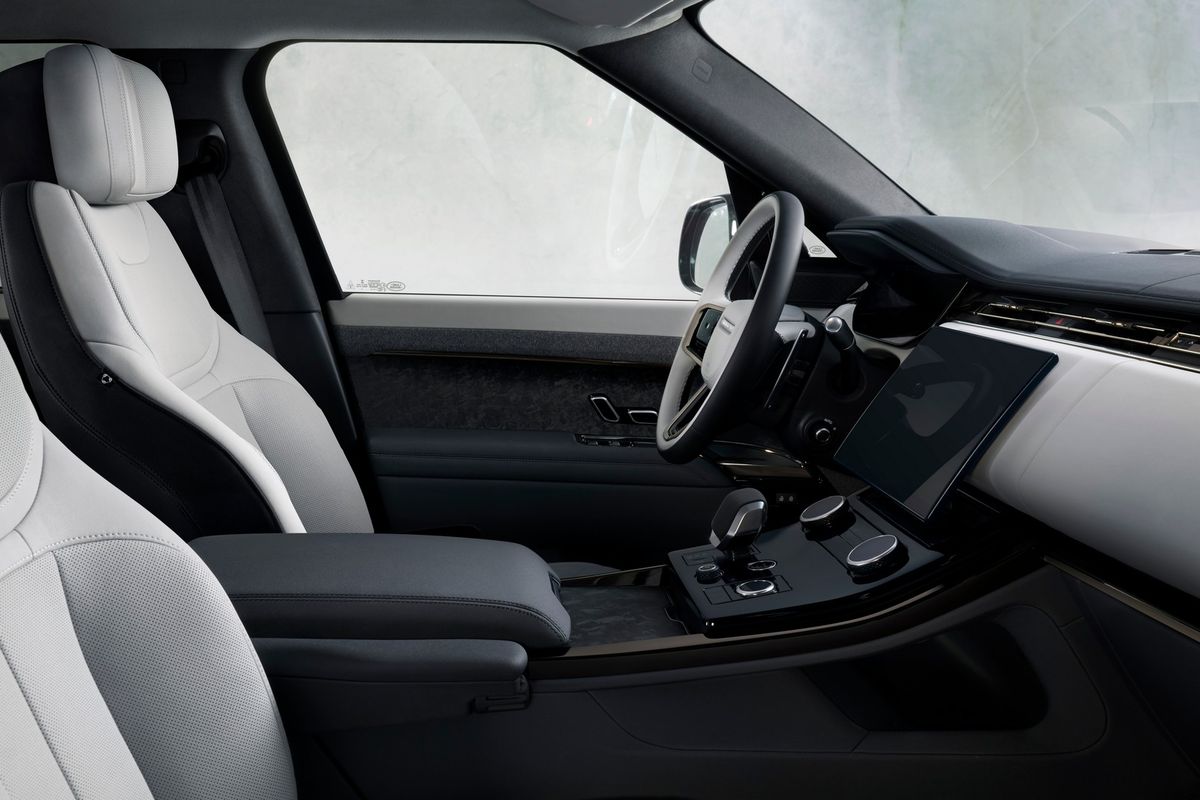
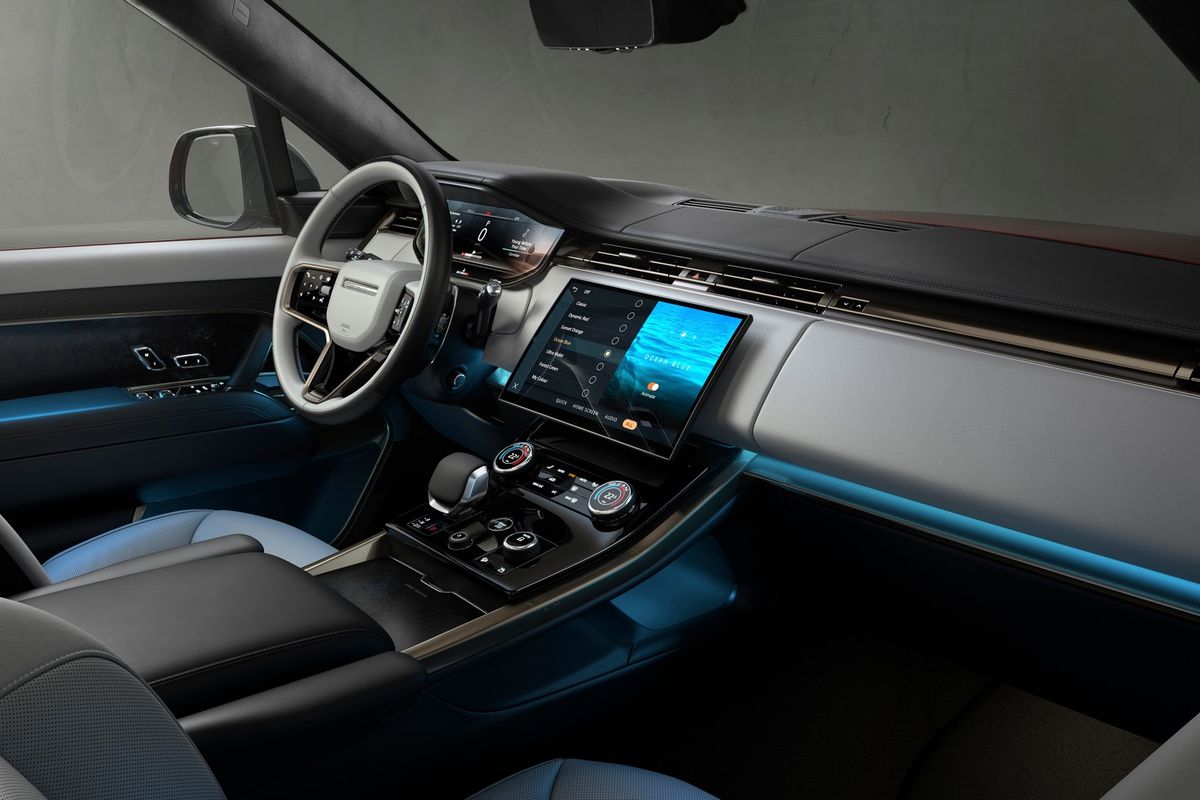
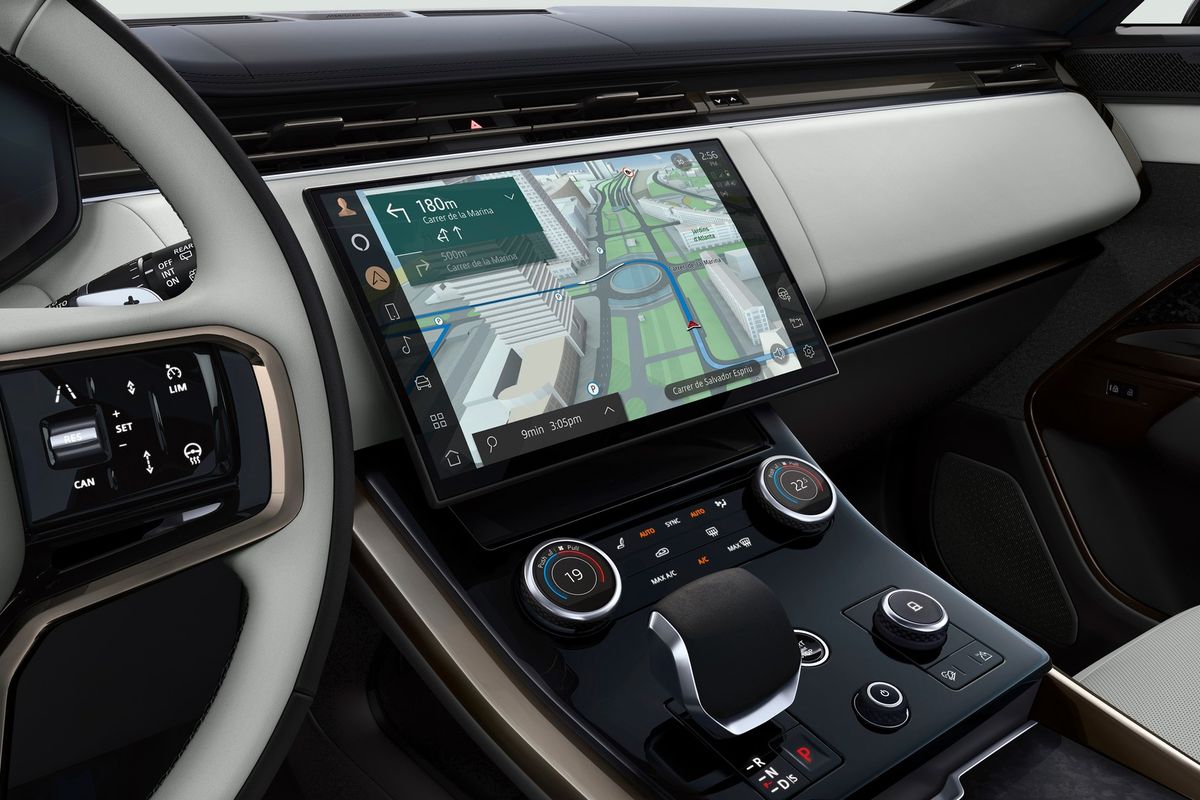
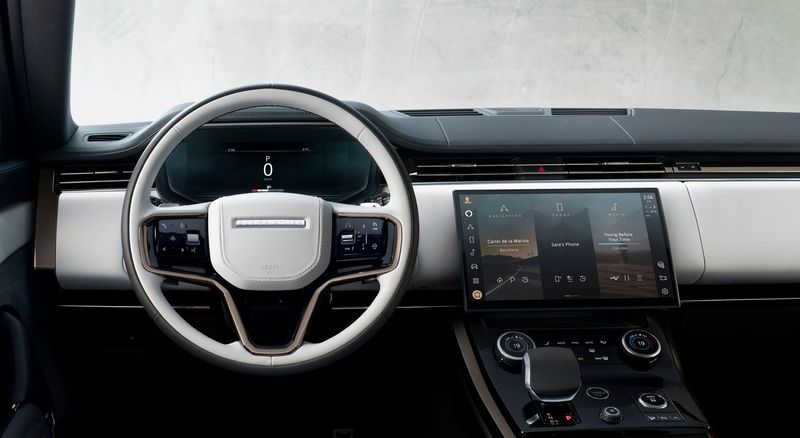
There’s also an all-new interior featuring the latest tech and upmarket materials used. Land Rover has mentioned the use of ‘innovative and sustainable material choices, like tactile and lightweight Ultrafabrics.’ The Electrical Vehicle Architecture (EVA 2.0) supports Software Over the Air updates and the award-winning Pivi Pro infotainment system is back, this time with a high-res floating 13.1-inch curved touchscreen.
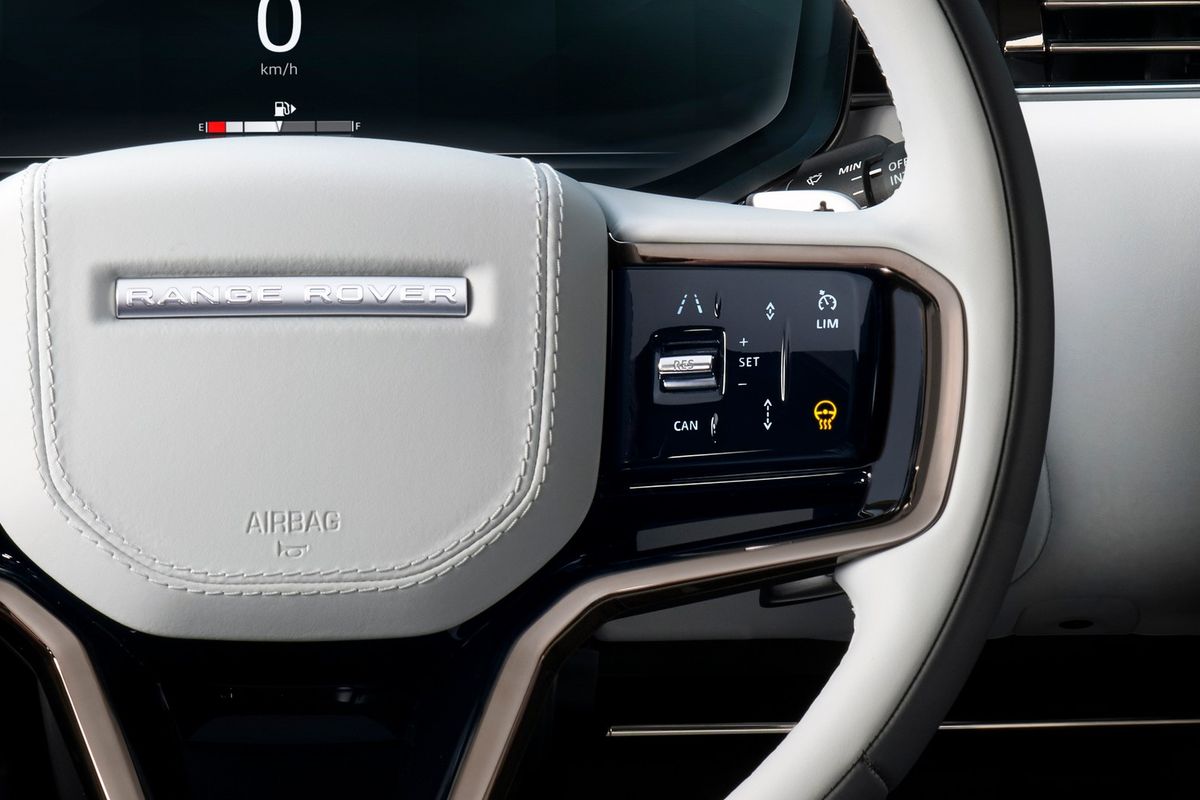
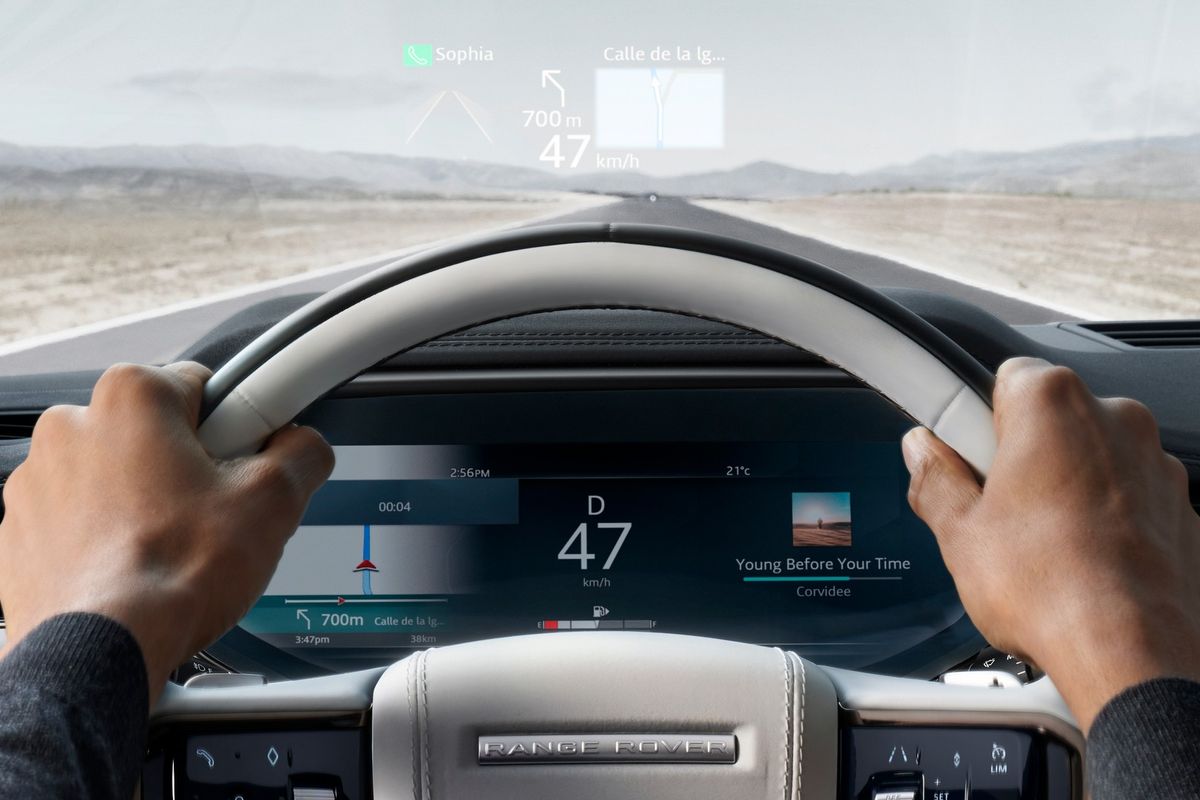
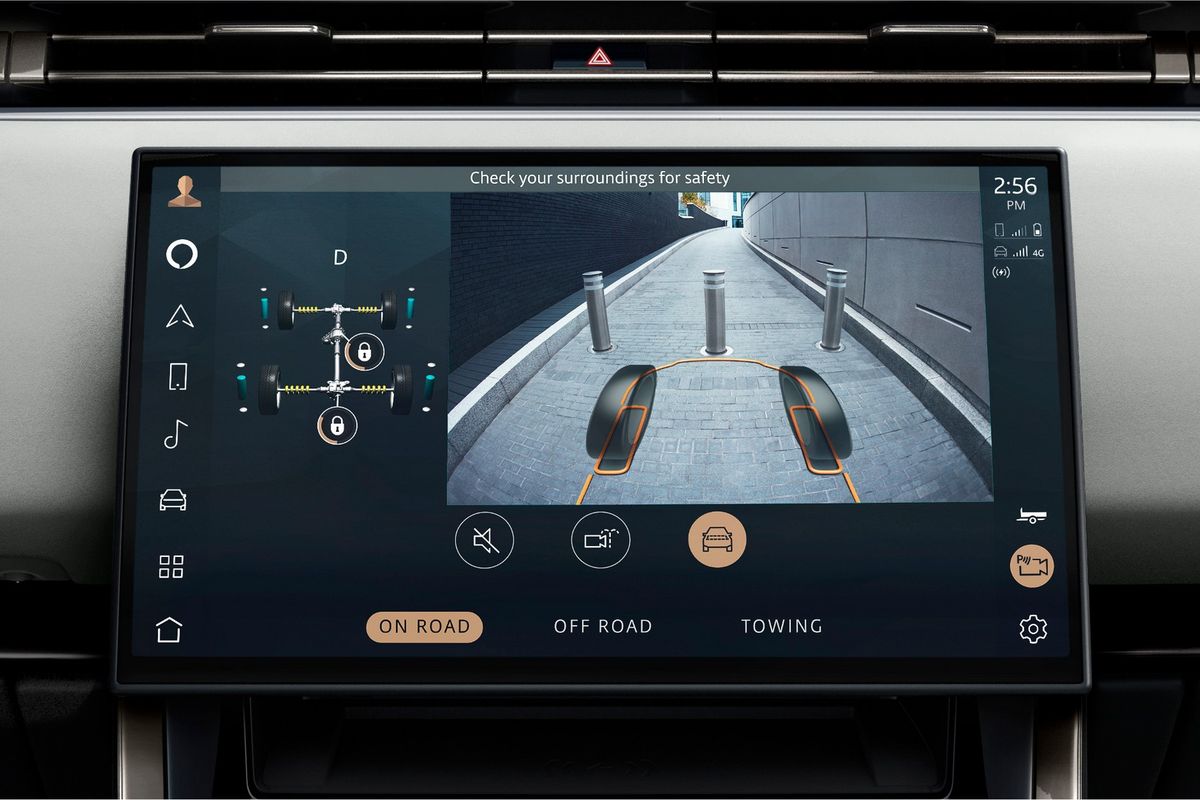
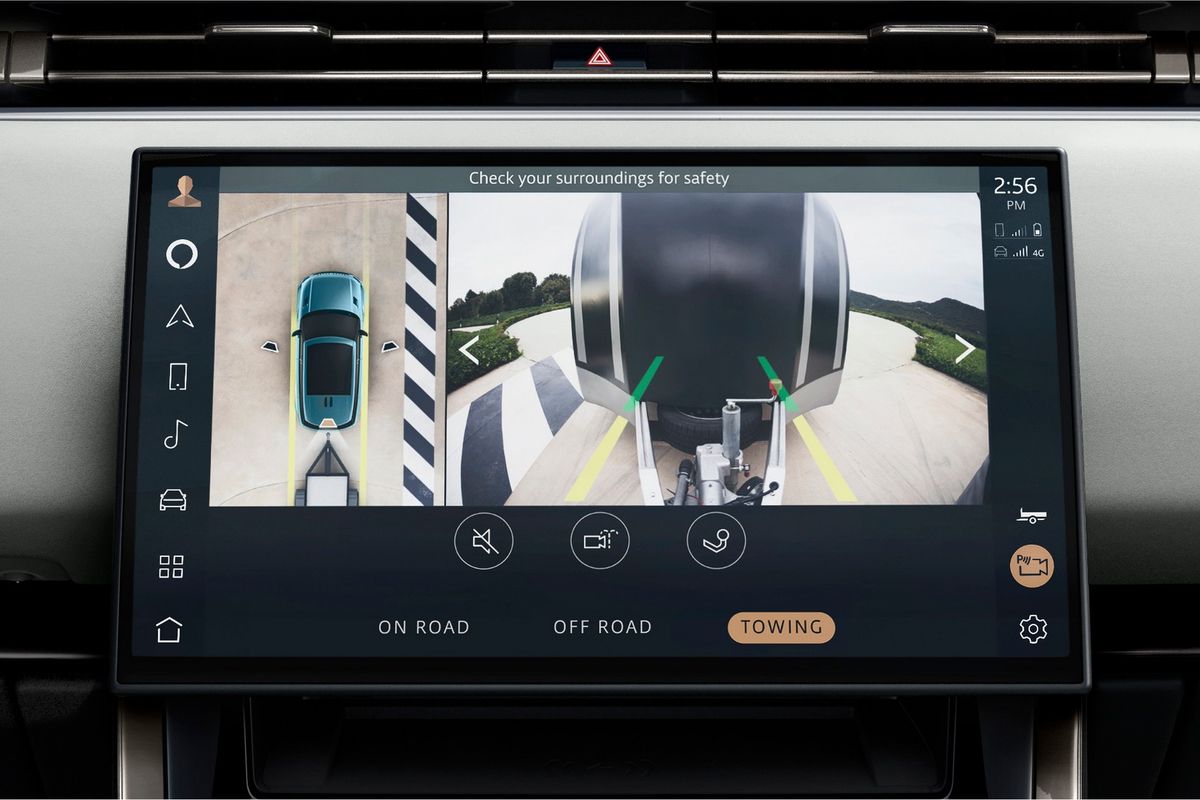
There’s a 13.7-inch digital dashboard, wireless Apple Carplay and Android Auto, a 15w wireless charger, Emergency Braking, 3D Surround Camera, including front and rear parking sensors, Wade Sensing, ClearSight Ground View6, Manoeuvring Lights, Driver Condition Monitor and Lane Keep Assist.
Under the skin, the mixed-metal architecture (MLA Flex) is now 35% stiffer than the outgoing model and the vehicle features a new specially-tuned version of the Integrated Chassis Control system. There’s a new Dynamic Response Pro system that works with the Dynamic Air Suspension to provide ultimate roll control. This 48-volt electronic active roll control system is able to apply up to 1 400 Nm of torque across each axle to ensure new levels of cornering and body control. Every new Range Rover Sport will come with the new Dynamic Air Suspension. Other noteworthy tech includes all-wheel steering, torque vectoring by braking and an electronic active differential.
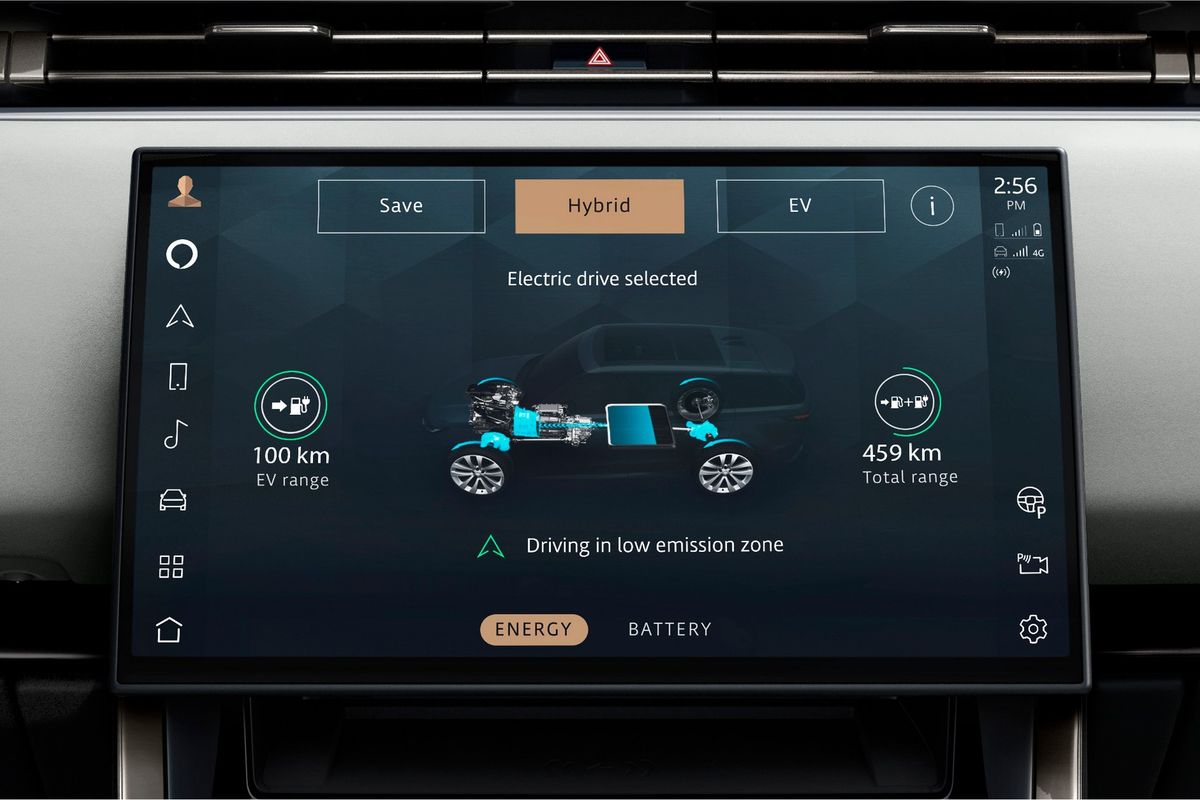
Every Range Rover Sport will come with all-wheel drive and an 8-speed ZF automatic transmission. The SA engine line up will comprise an extended-range Electric Hybrid, 6-cylinder petrol and diesel Ingenium engines and a new twin-turbocharged V8 petrol engine. The P510e Electric Hybrid boasts an all-electric range of 113 km, thanks to a 105 kW electric motor and 38.2 kWh battery. This is paired to a 3.0-litre 6-cylinder petrol, resulting in a total output of 375 kW and 0-100 in 5.4 seconds
This new twin-turbo V8 is good for 390 kW and thanks to Dynamic Launch Control, is good for 0-100 in 4.5 seconds. Other notable engines include the P400 mild hybrid straight-6 and the 6-cylinder D350 diesel motor.
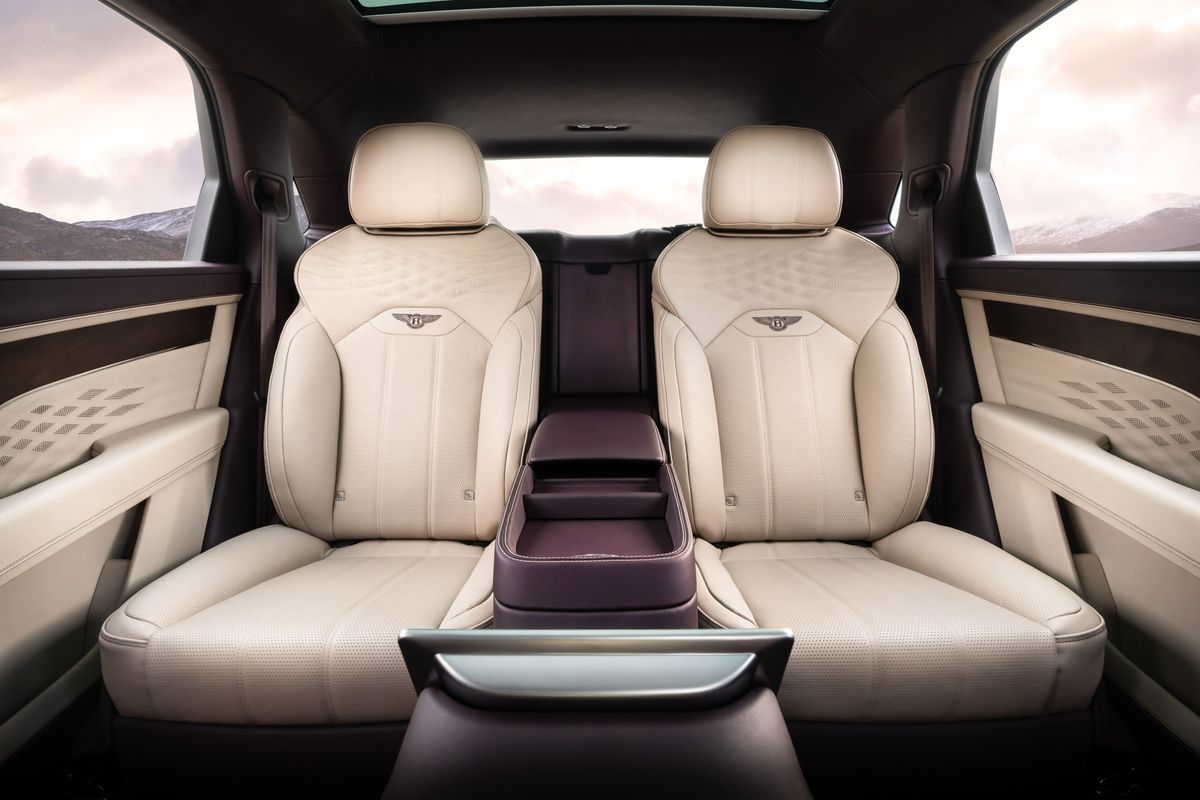
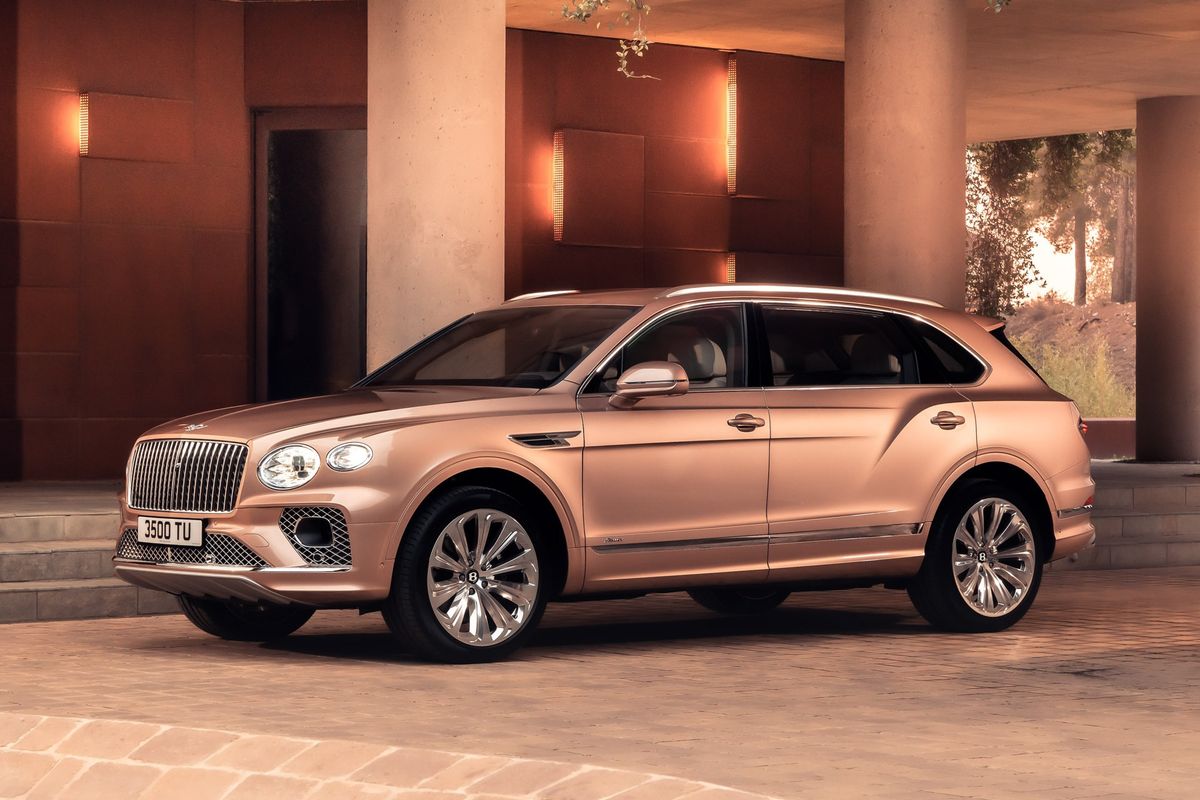
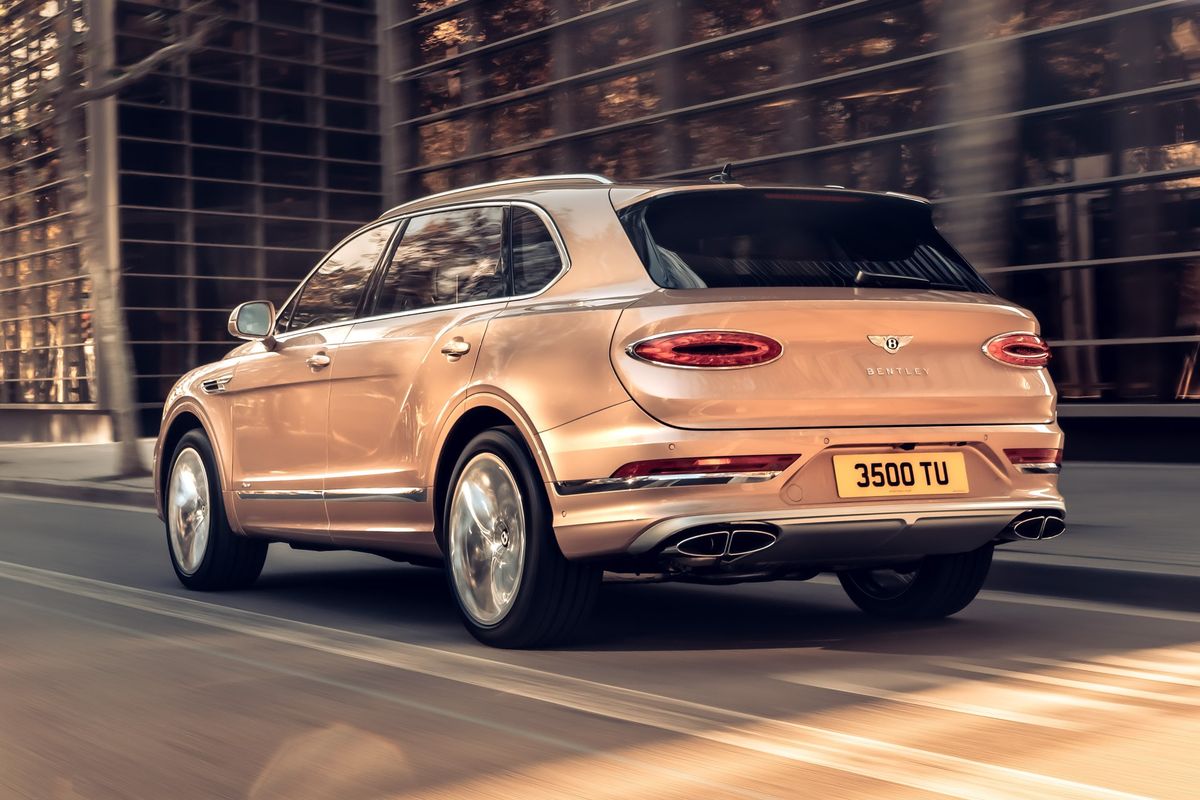
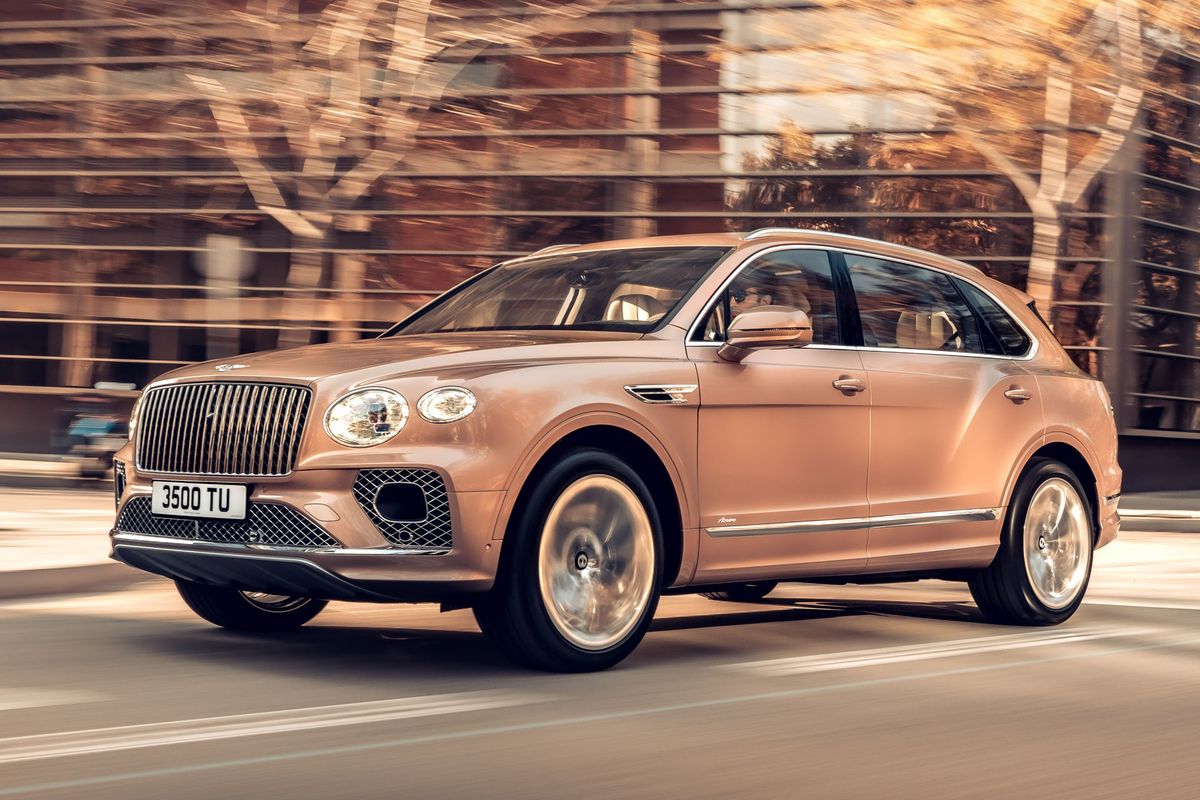
Bentley Bentayga Extended Wheelbase Offers Business Class Rear Legroom
The luxury British carmaker has expanded its Bentayga family with the addition of a stretched model which focuses on rear passenger comfort.
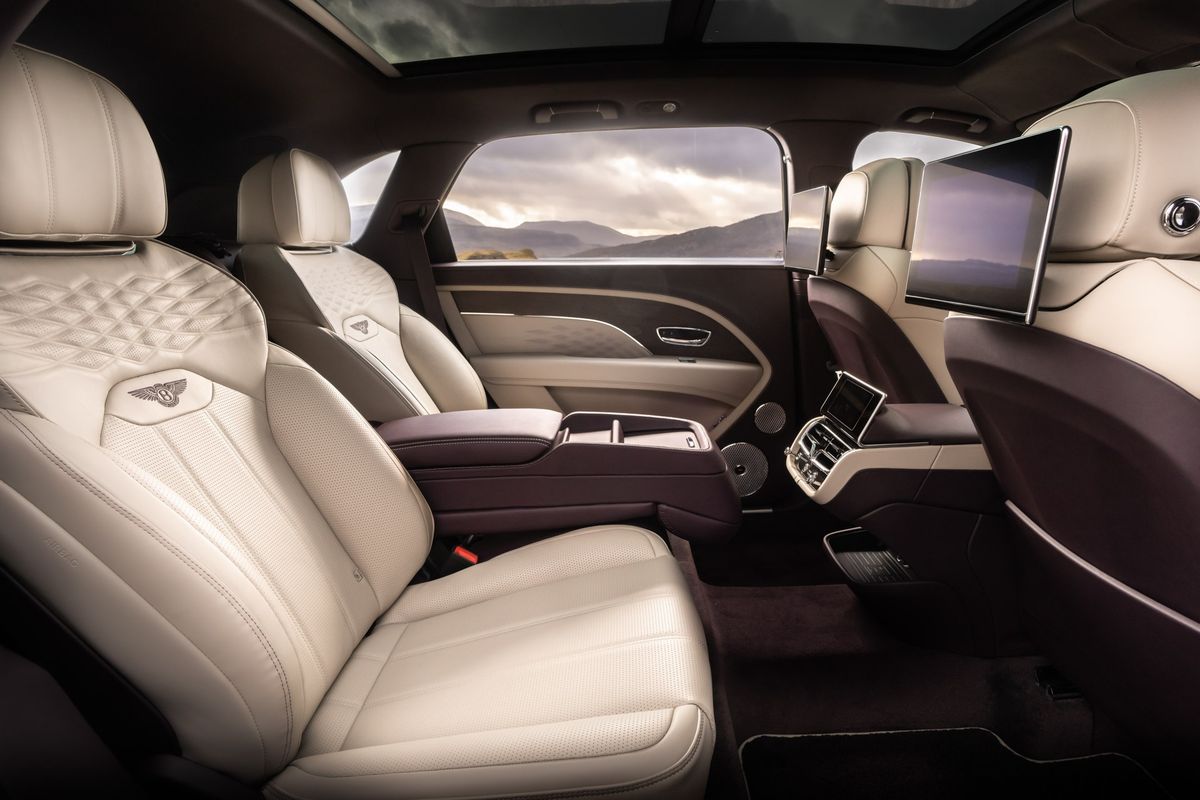
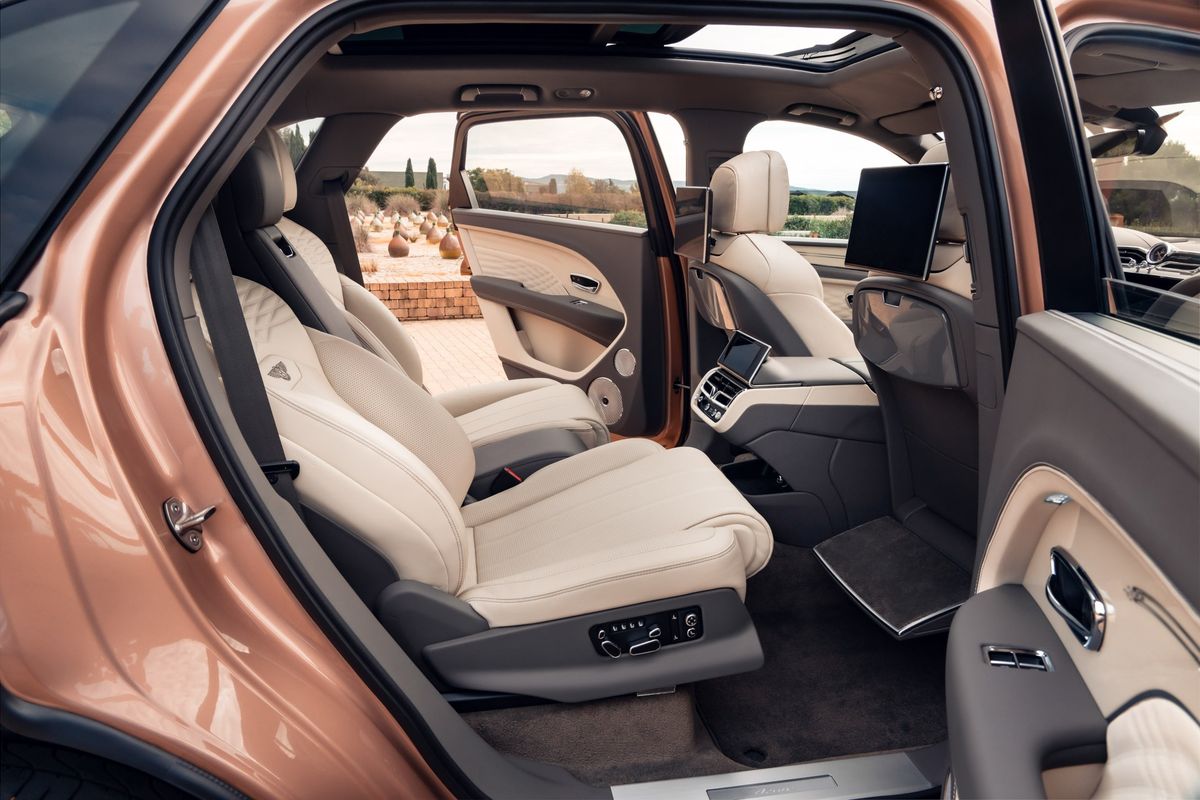
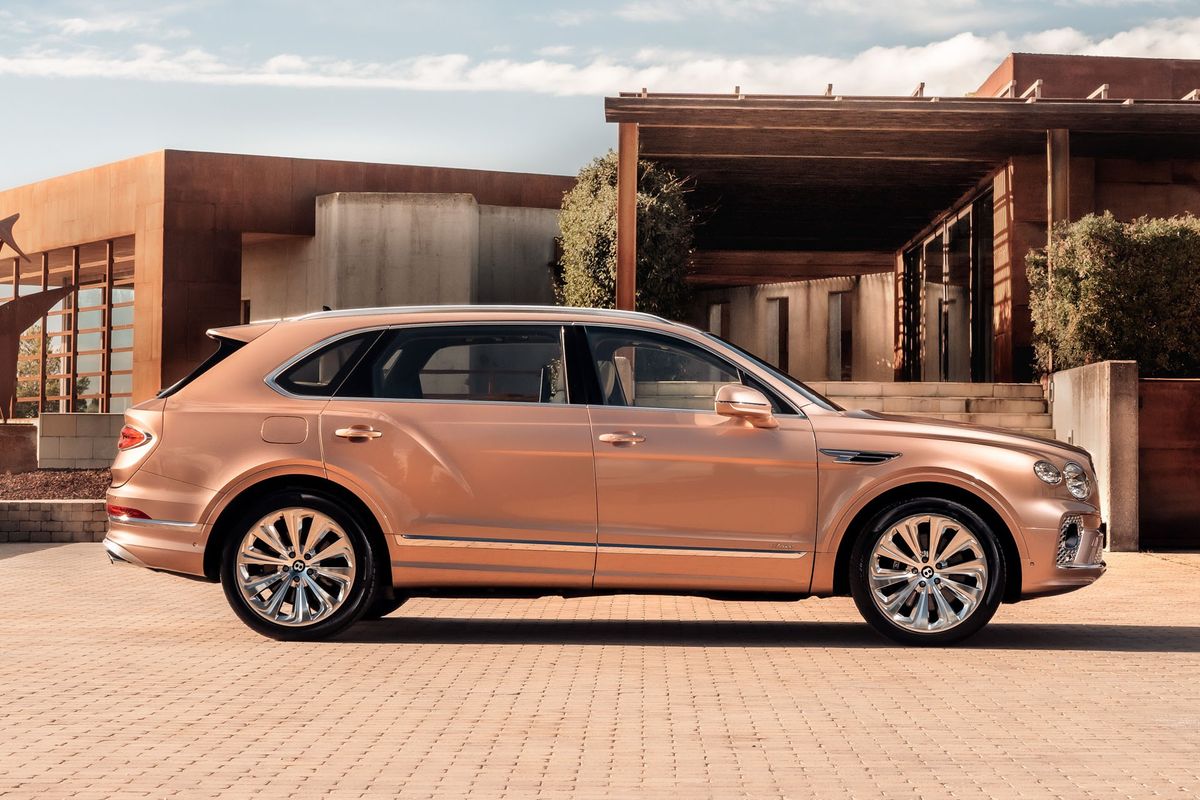
This stretched-out Bentayga is said to fill the gap left by the Bentley Mulsanne, which is no longer in production. Some clever engineering has resulted in an extension of the wheelbase from 2 995 mm and 3 175 mm. The difference is all in the rear seating area and Bentley claims there’s more interior space than any of its traditional rivals.
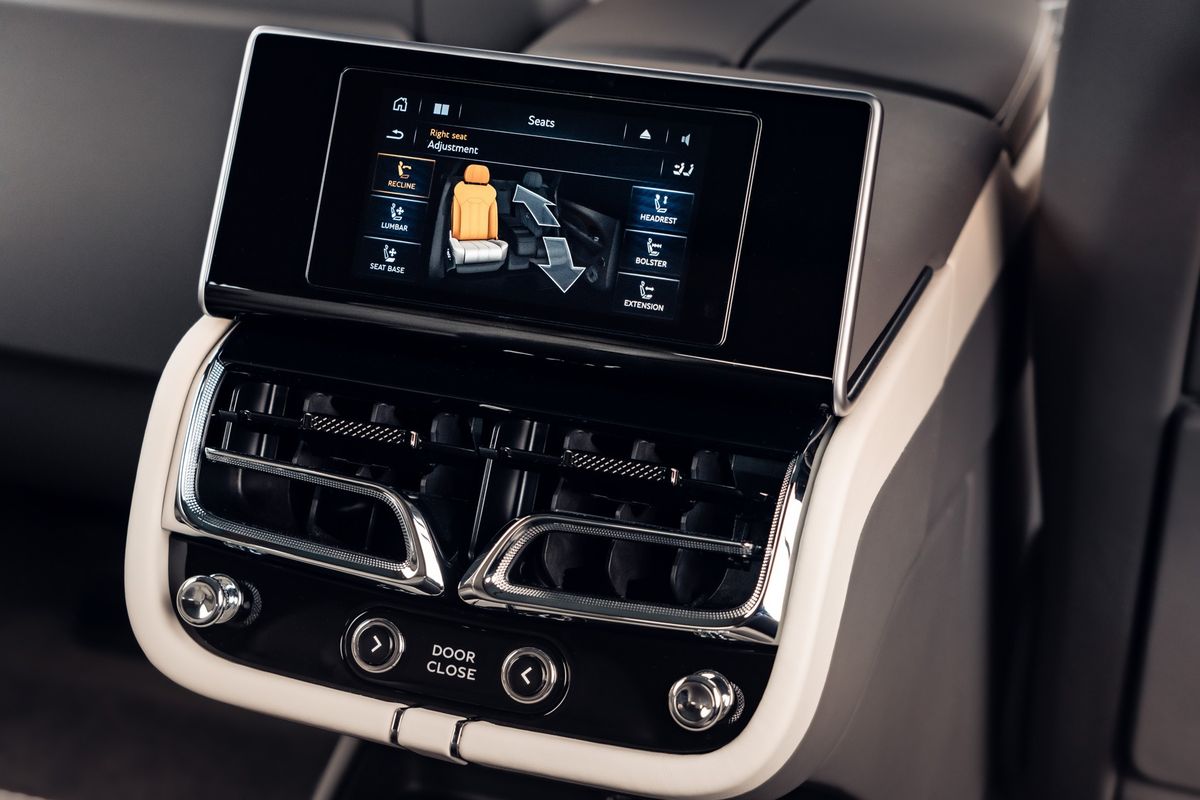
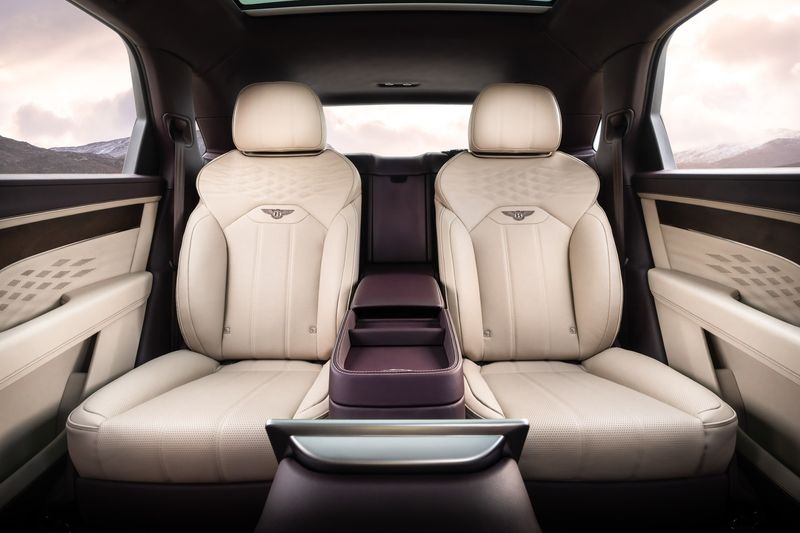
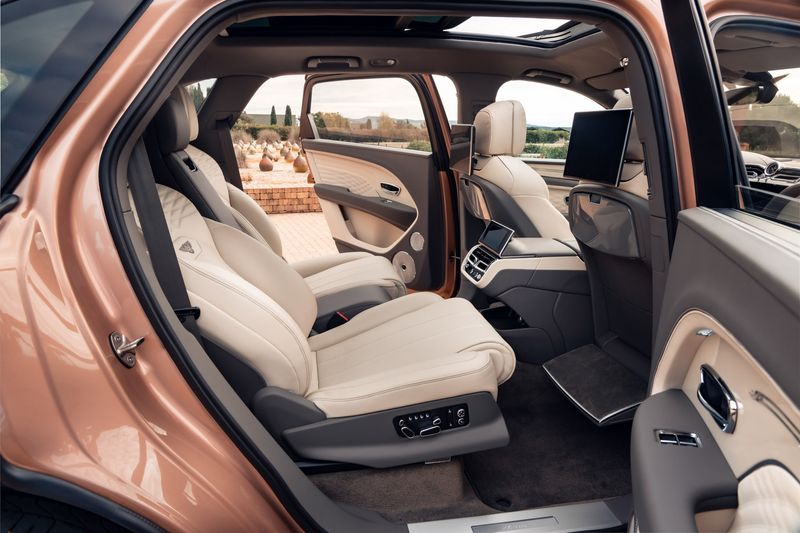
It’s not just about space as Bentley has fitted what it calls Airline Seats. There’s an array of adjustment options, just like a Business-Class jet and the entire suite is controlled by a touchscreen. The seats can recline by 40 degrees and there’s some clever climate tech involved. Heating and cooling just isn’t enough for the average millionaire these days.
The Bentley Bentayga Extended Wheelbase has sensors that measure your temperature, ambient temperature and surface humidity, and then the vehicle will decide on how much heating and cooling you’ll need for that perfect comfort level.
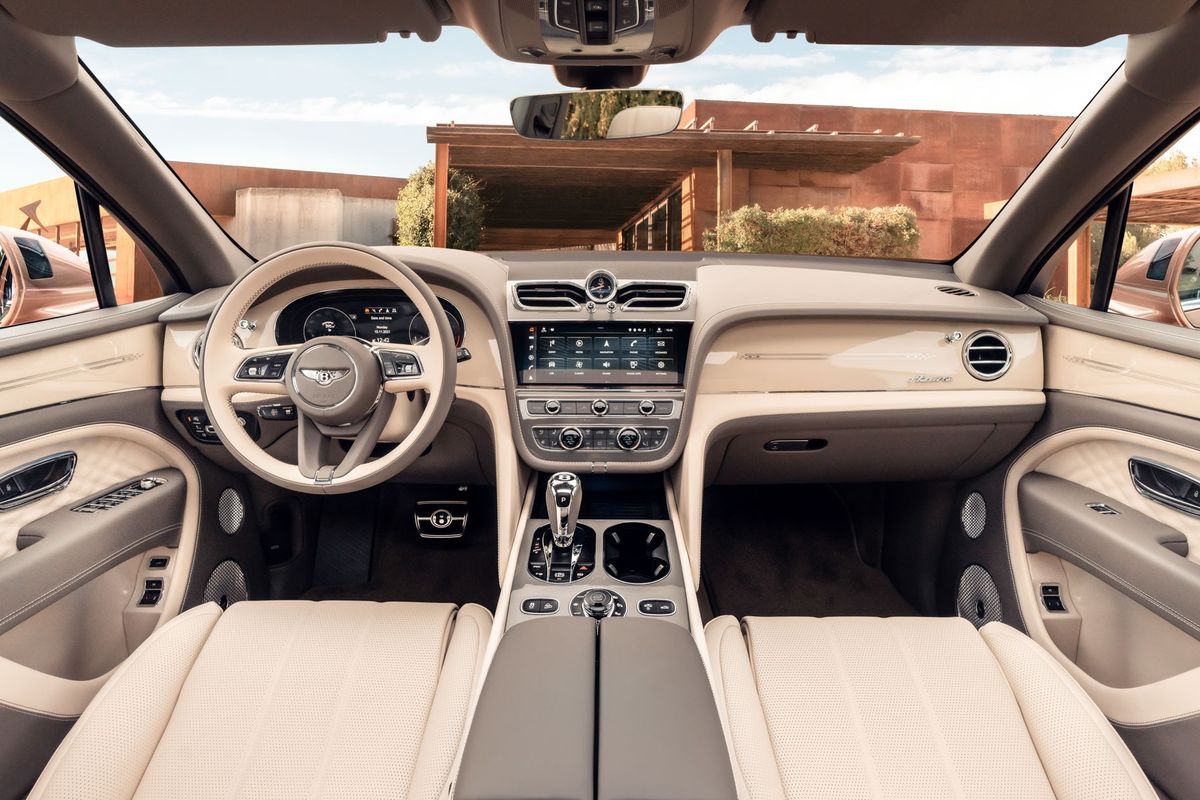
There are also sensors in the seats to detect where you’re positioned, and it will make incremental adjustments to reduce fatigue on long trips. No more numb butt cheeks then. Other wow features include power closing doors for the first time in a Bentley, heated rear door rest and arm rests, special lighting and this is all wrapped in one beautifully finished cabin that has diamond quilting and other fancy trim.
Visually, the newcomer can be identified by its extra-long rear doors. Only one engine is available and thats the 4.0-litre V8 twin-turbocharged petrol with 404 kW and 770 Nm. Despite its large size, its quick with 0-100 kph dispatched in 4.6 seconds.
That extra long rear door should be easy to spot, but to help differentiate the EWB from lesser Bentaygas Bentley has added a vertical vane grille from the the Flying Spur sedan and also offers the existing 22-inch wheels with a mirror-finish option.
Is it too much? We think not. The Bentley Bentayga is a vital model in the portfolio and already accounts for just over a third of Bentley sales. The more variants of Bentayga on offer will result in better sales. The first deliveries of this Bentayga EWB will start later in 2022.
Want to purchase a new or used Bentley? Browse stock for sale here.
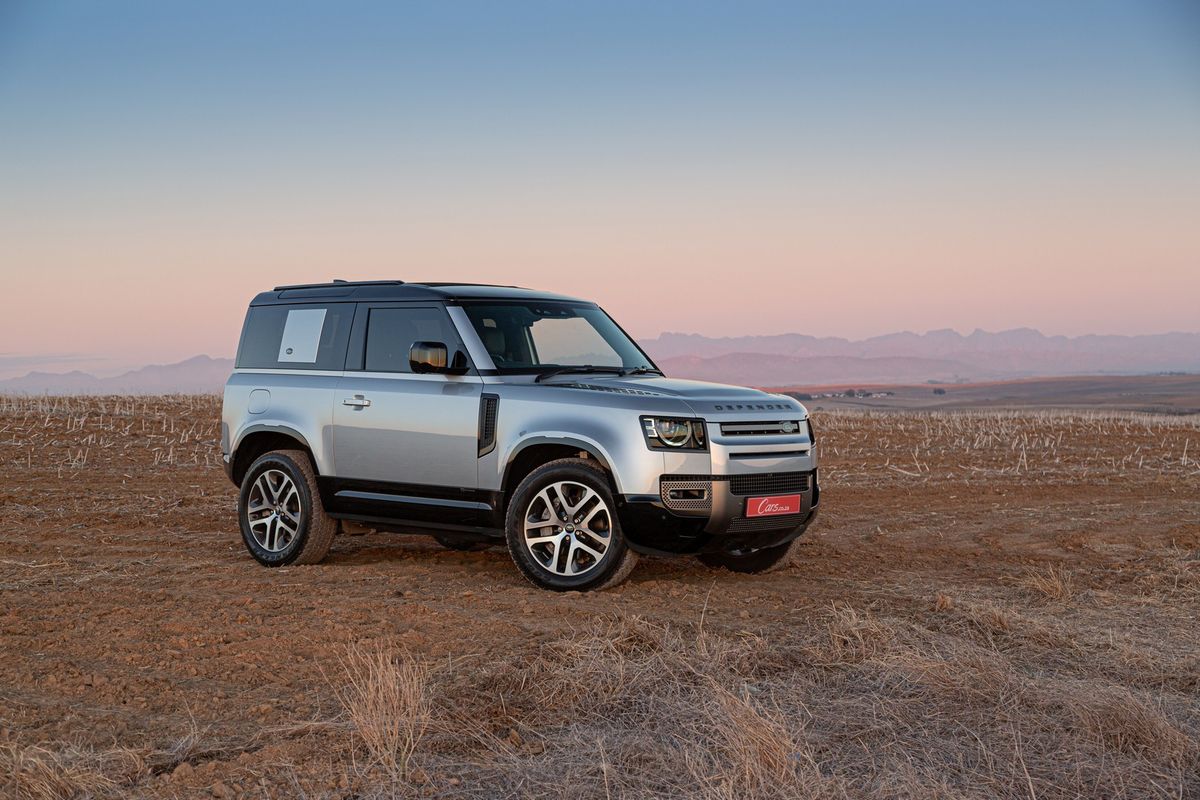
The Land Rover Defender 90 is undoubtedly one of the coolest vehicles we’ve driven in 2022, but it comes with a hefty price tag and is, unsurprisingly, less practical than its 110 sibling. Will buyers of the 3-door variant be fazed by its compromised packaging though? We get to grips with the smallest member of the Defender family, in D300 X-Dynamic HSE guise.
We like: Image, excellent engine, unparalleled off-road capability, luxurious cabin.
We don’t like: Rear seat access is, um, undignified, impractical load bay, priced too close to the 110.
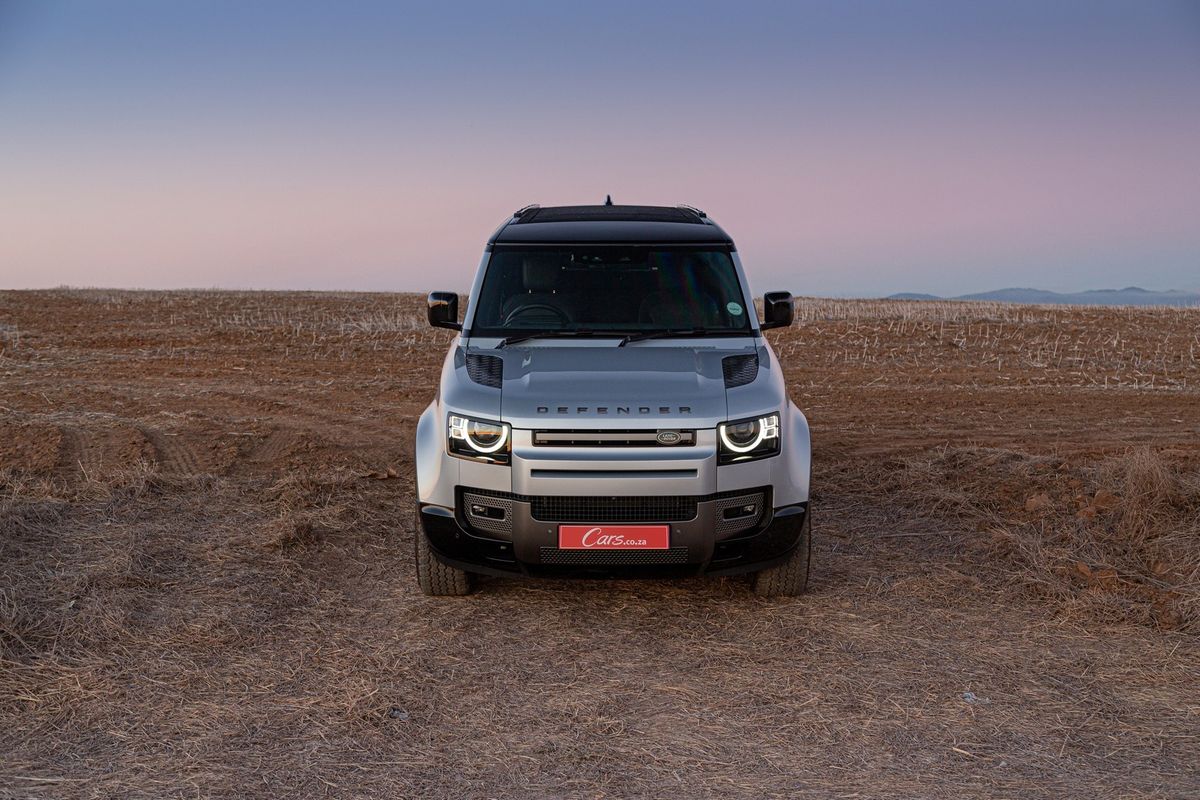
The 90 is the coolest, but least practical, variant in the Defender range.
The new Defender is the talisman of Land Rover’s product line-up. Given the legendary status of the original Defender, an awful lot of time and money was invested in the creation of its successor. Available in two flavours: 3-door 90 and 5-door 110, and with multiple powertrain options, the new Defender range is diverse. And, if a two-row Defender isn’t big enough, you won’t have to wait long for the 130, which will come with a longer wheelbase and a 3rd row of seats.
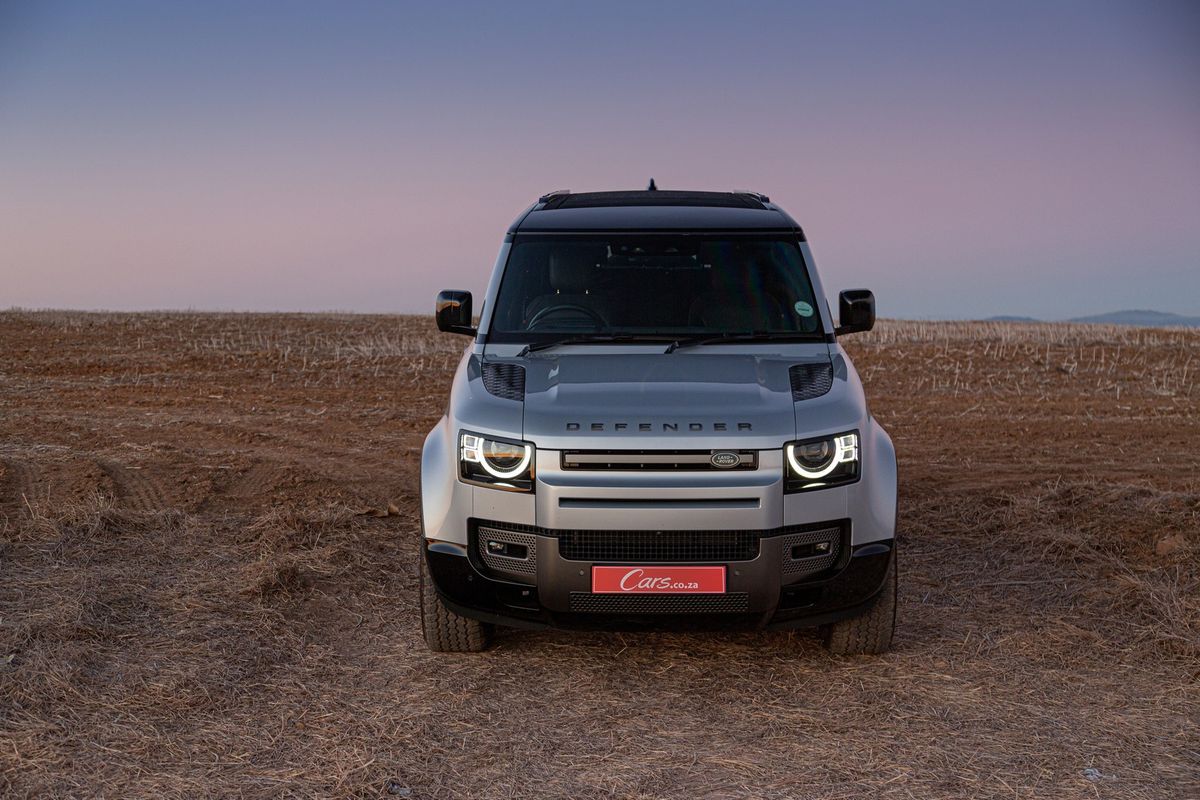
One of the gripes we’ve had with Land Rover is that there’s quite a bit of overlap in its range. For example, the Discovery‘s a luxurious family SUV but its off-road credentials don’t pale in comparison with the Defender’s – the same could also be said of the Range Rover Sport. Neither can hold a candle to the Defender when it comes to image, though. Just look at it! It’s big, bold and in-yer-face. It looks as imposing when parked as it does when it appears in your rear-view mirror.
Seeing as the Defender 90 is a 3 door, it has very few rivals. You could go for the old-school 70-series Toyota Land Cruiser, but while it may prove just as capable off-road as the Landy (in experienced hands), its cabin is ancient compared to the 90’s plush interior. The top-spec Jeep Wrangler is also a source of on-the-rough-stuff fun and, if you don’t mind settling for a demo unit (as its new price is over R2 million), a pre-owned Mercedes-Benz G-Class is worth a look.
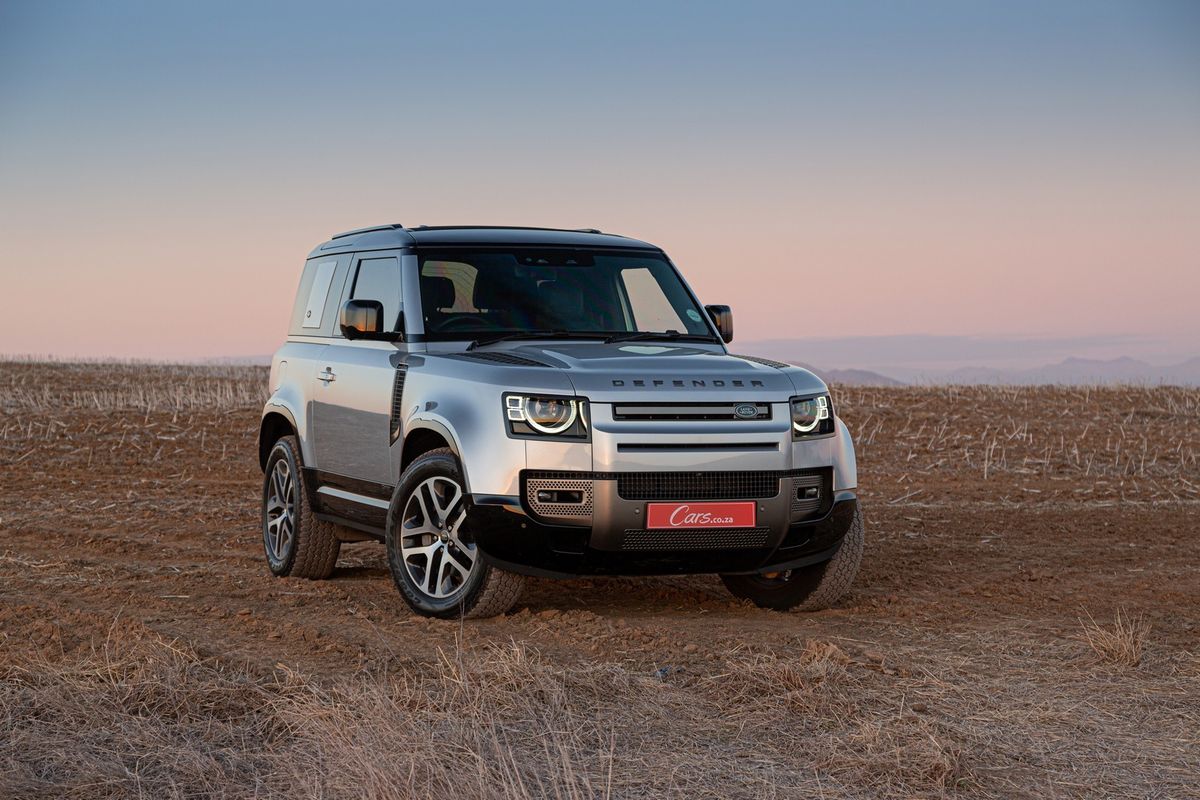
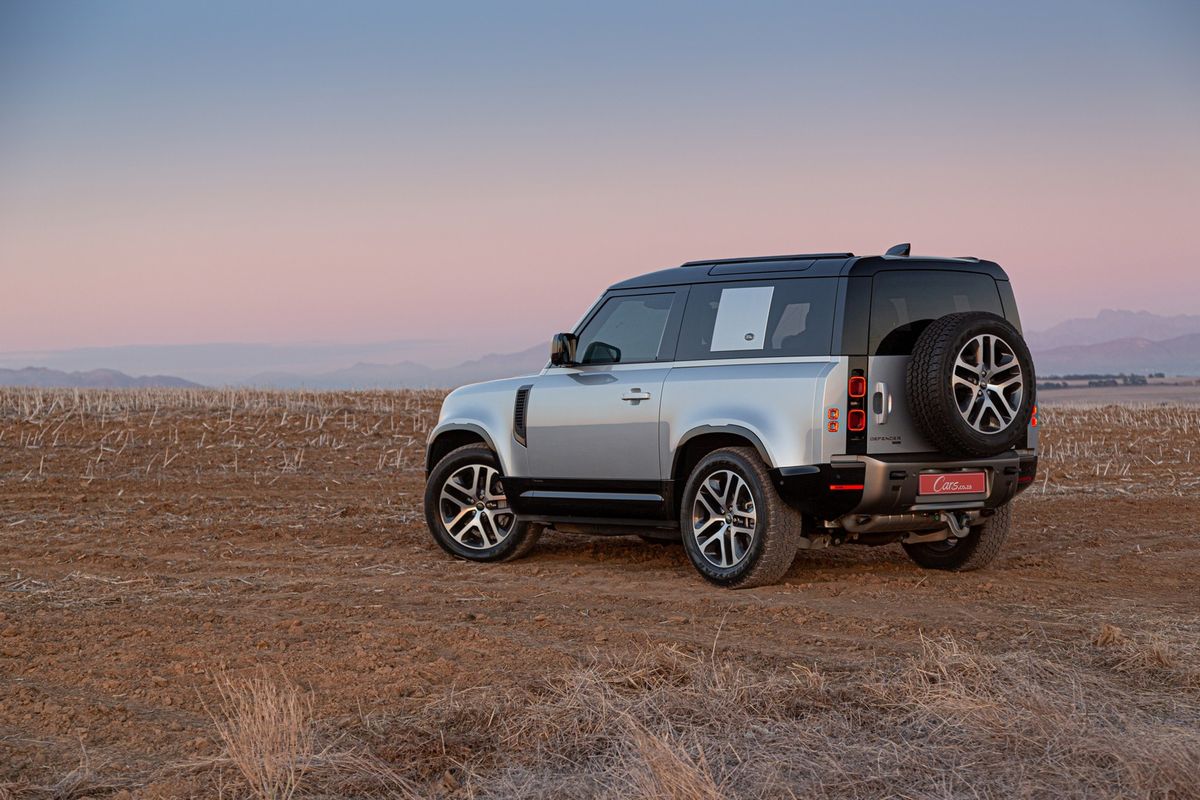
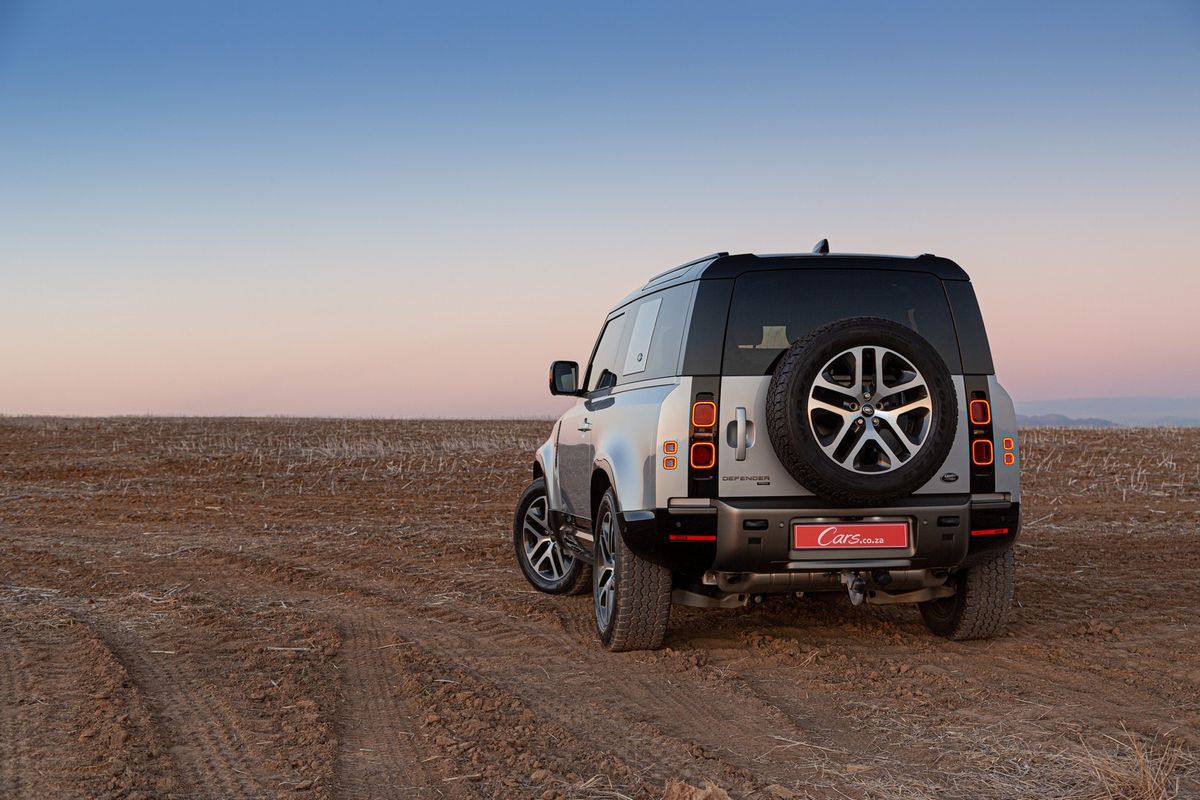
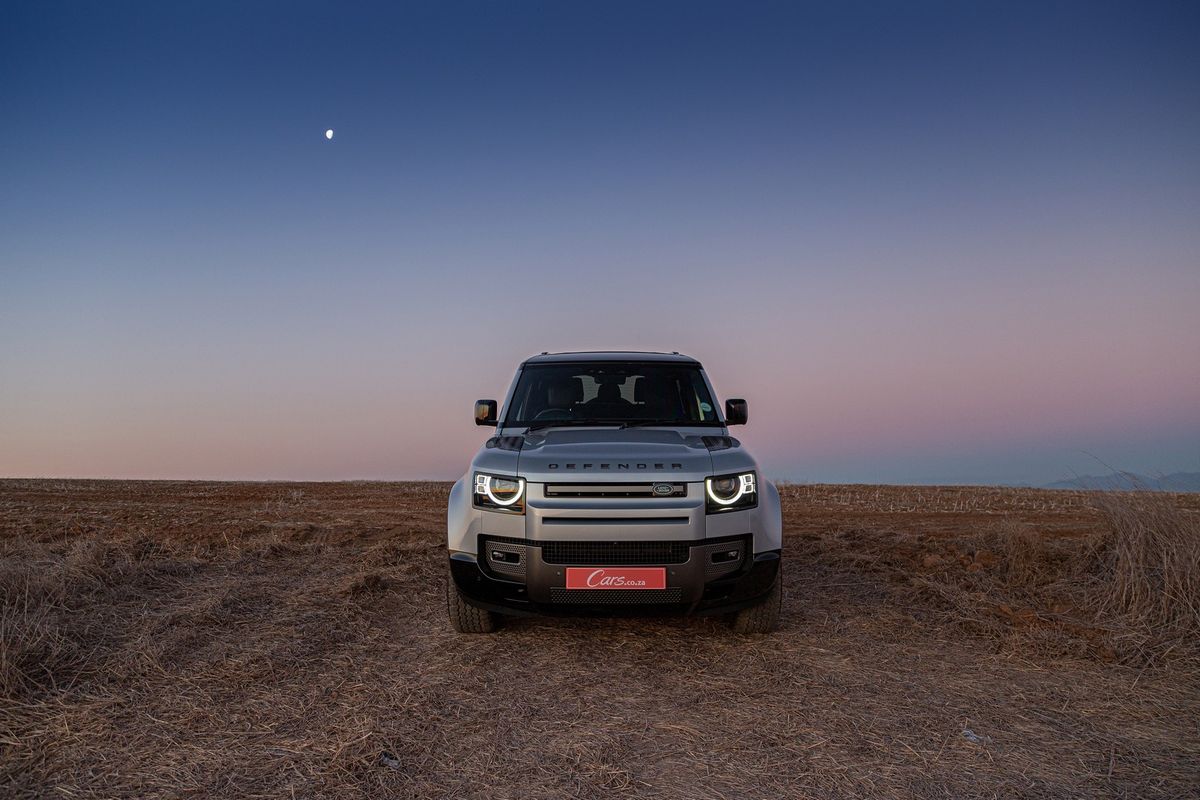
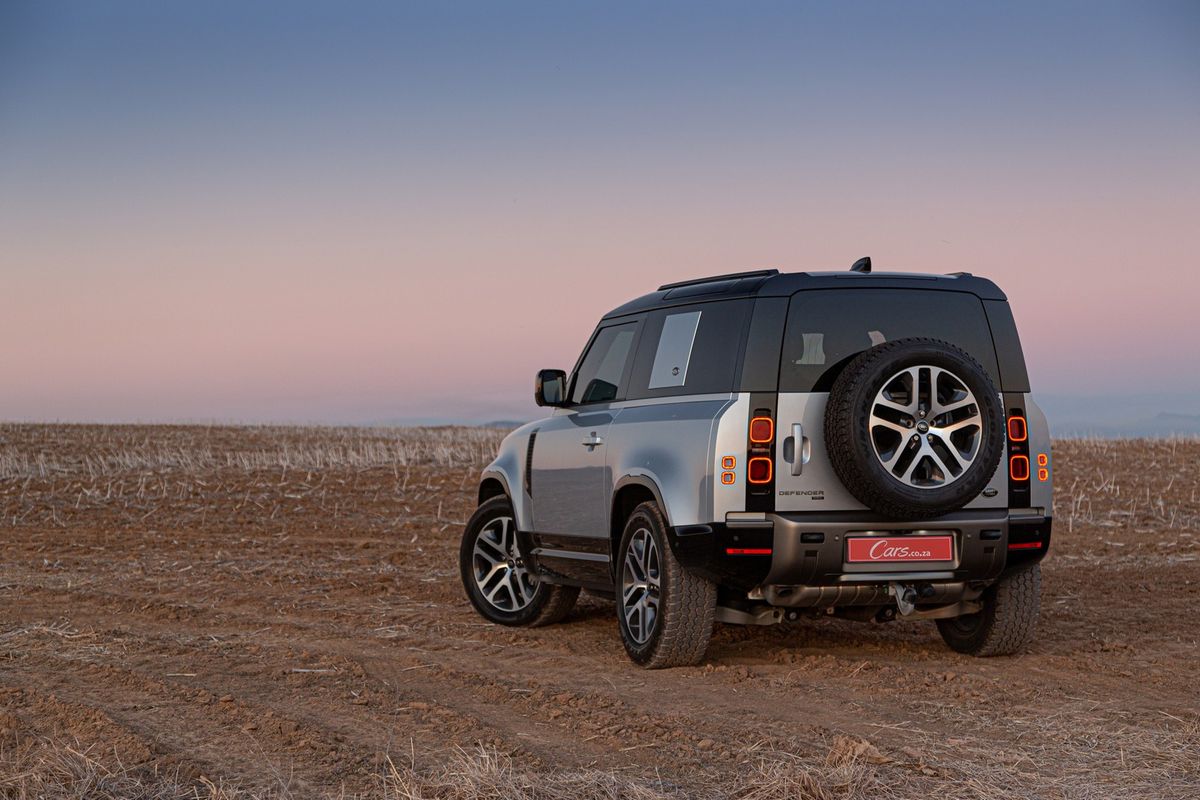
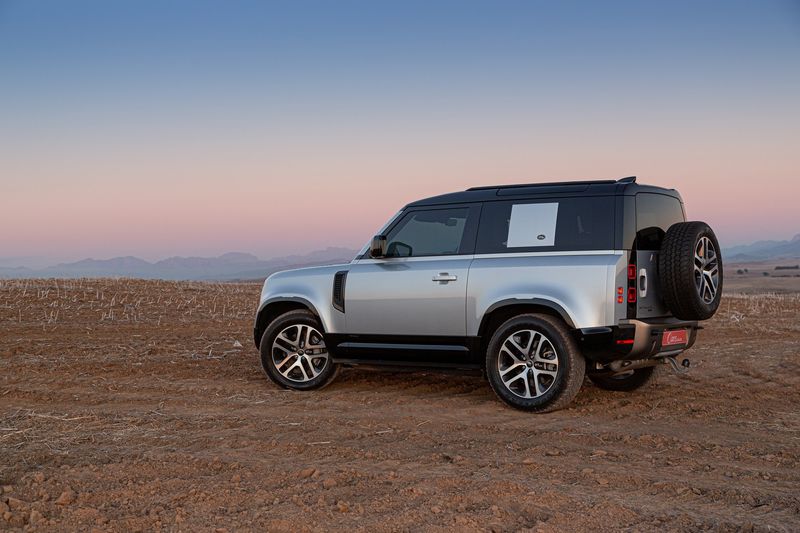
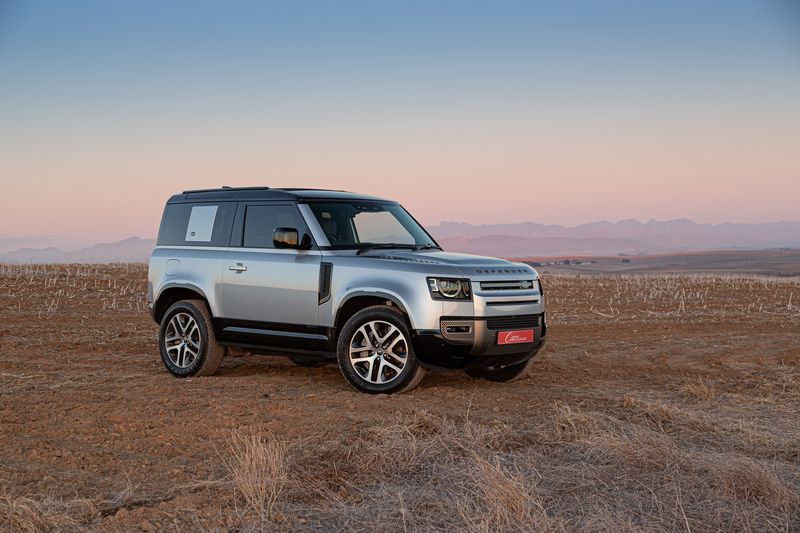
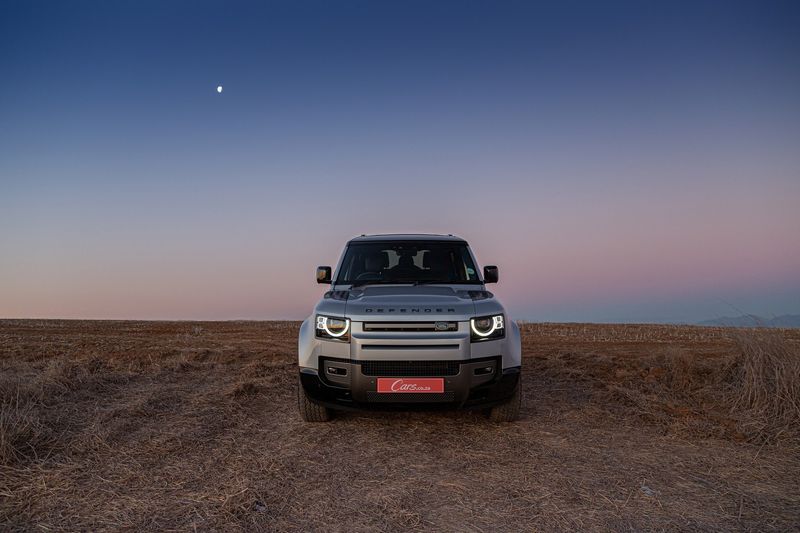
Hakuba Silver is a great finish and accentuates the unashamedly blocky design.
By virtue of its reduced length and number of doors (compared with its 110 sibling), the Defender 90 is a much more focused product. Most Defender buyers will favour the more family-friendly 110, which will do its utmost to perform every task you demand of it. As for buyers of the 3 door, think wealthy couples with no offspring or well-heeled retirees who’d relish going on many adventures with their vehicles, be that touring trips, off-road excursions or, probably, a blend of both.
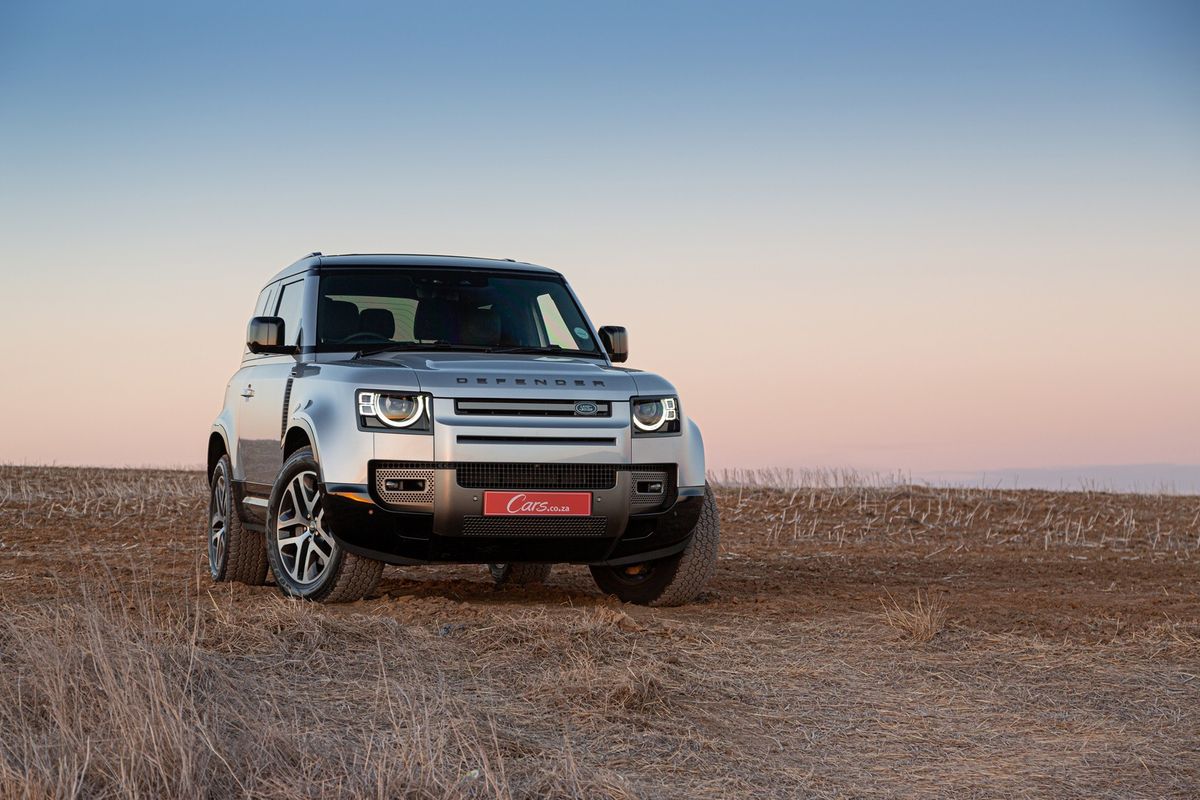
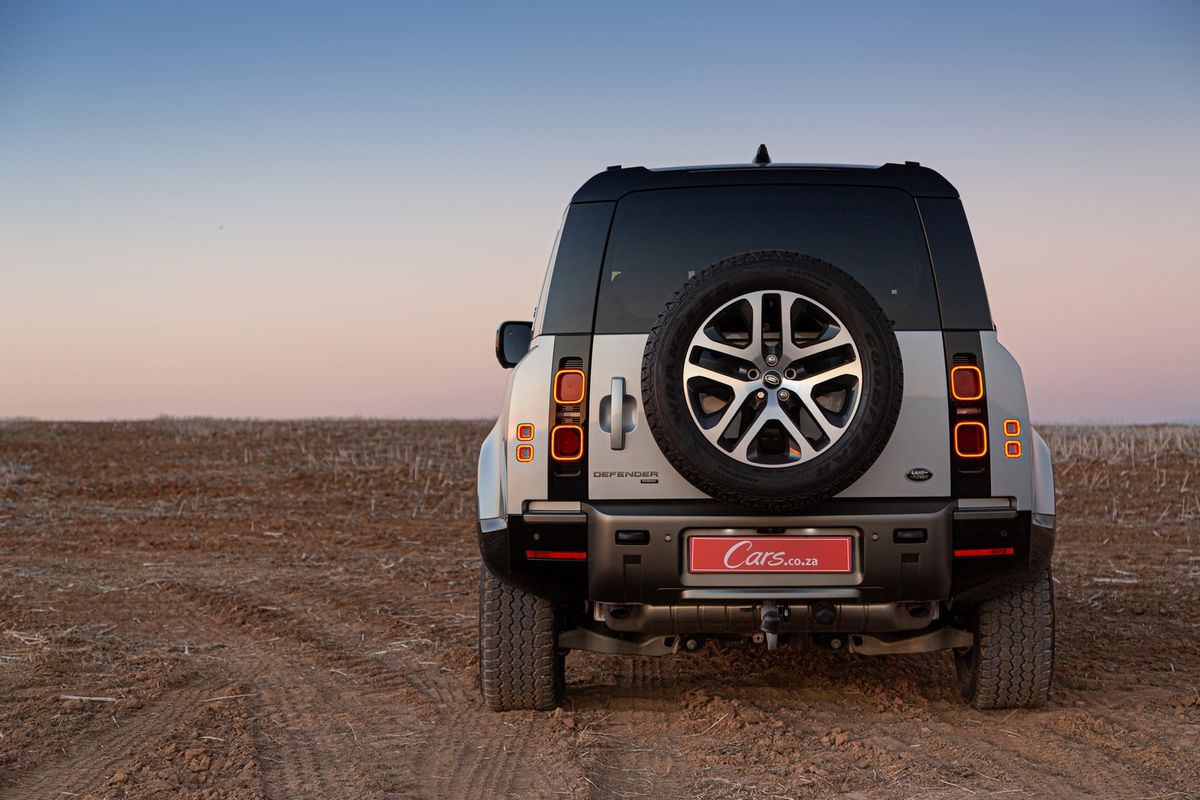
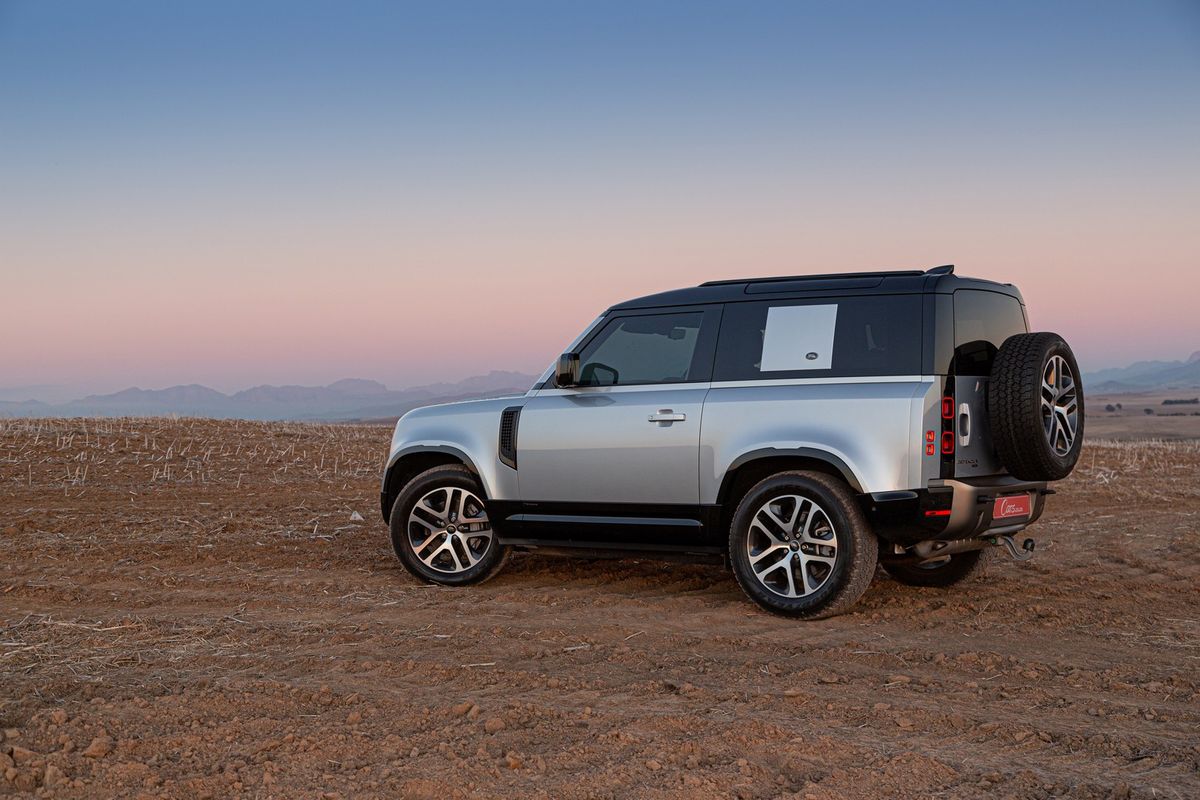
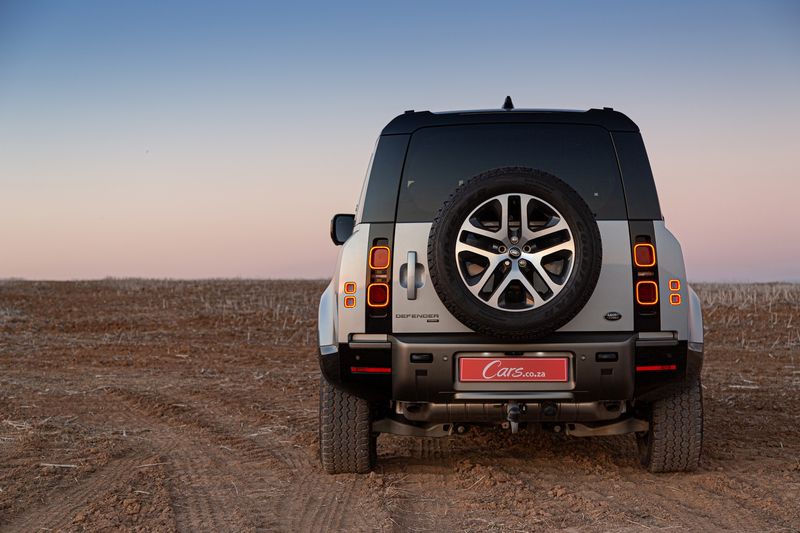
Design-wise, the 90 retains all the macho elements that we’ve come to love about the modern Defender. We’ve already touched on the macho front-end styling, but there is some evocative detailing too, such as the spare wheel on the tailgate and the massively flared wheel arches. Photographs don’t fully convey the Land Rover’s boxy proportions, but you’ll know what we mean when you see it in the metal. Irrespective of from which angle you look at it, this is a striking vehicle.
From its bold frontal styling (replete with a distinctive LED lighting signature) to the massive 20-inch wheels “at each corner”, the Defender 90 looks purposeful and will win you many envious glances. It’s also a tall vehicle, so height clearance might be an issue when you drive into underground parking garages. Fortunately, with the adjustable air suspension, you can manually lower the ride height, which should also lower your stress levels.
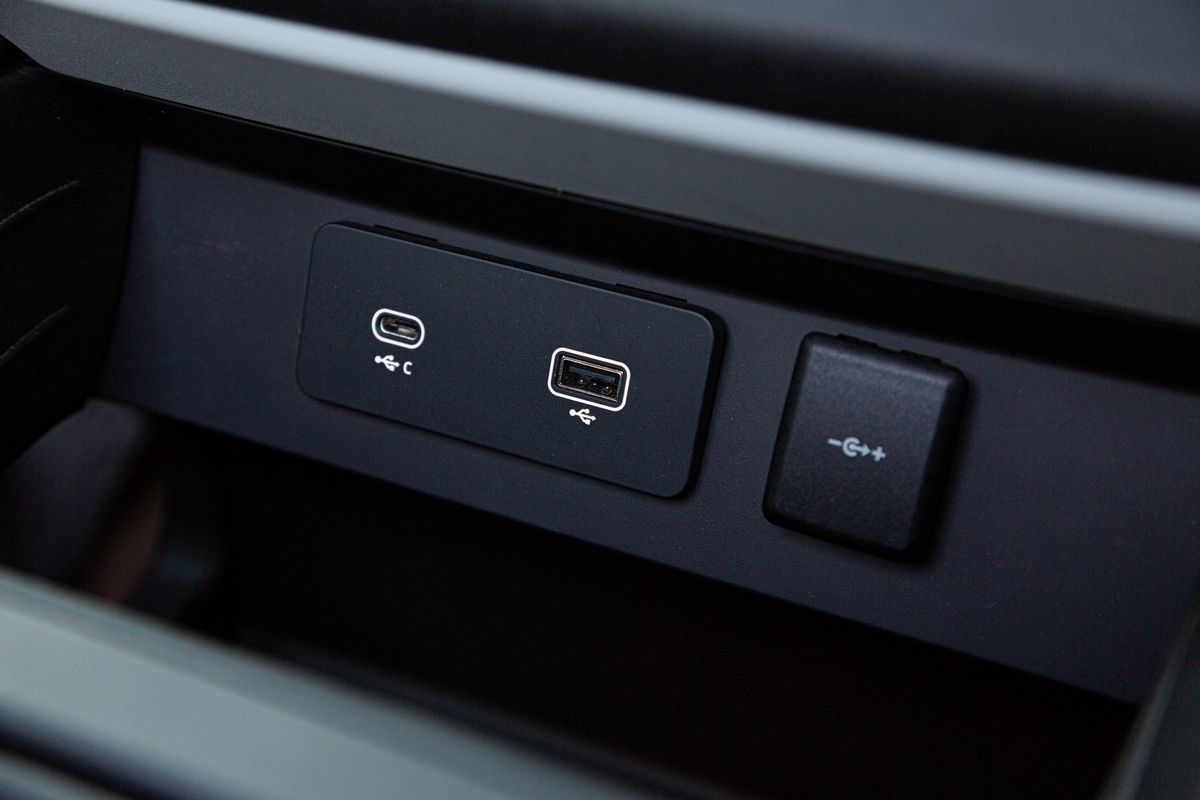
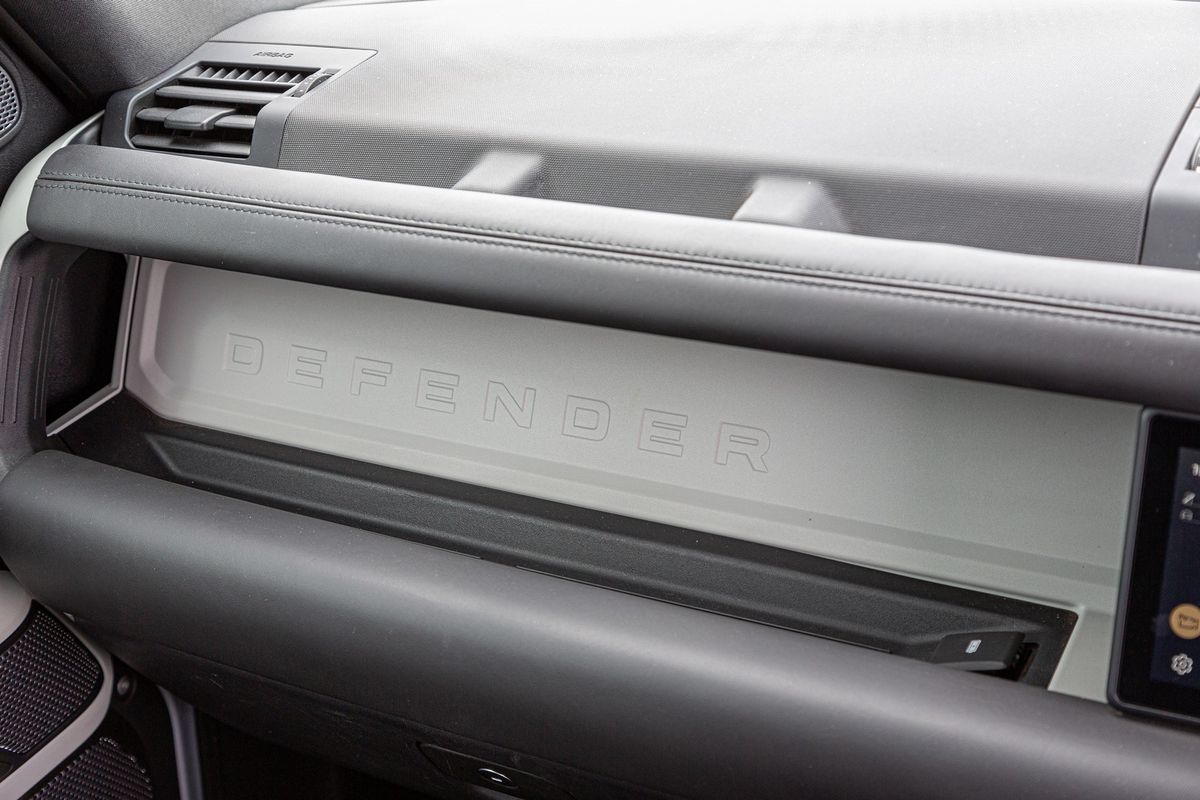
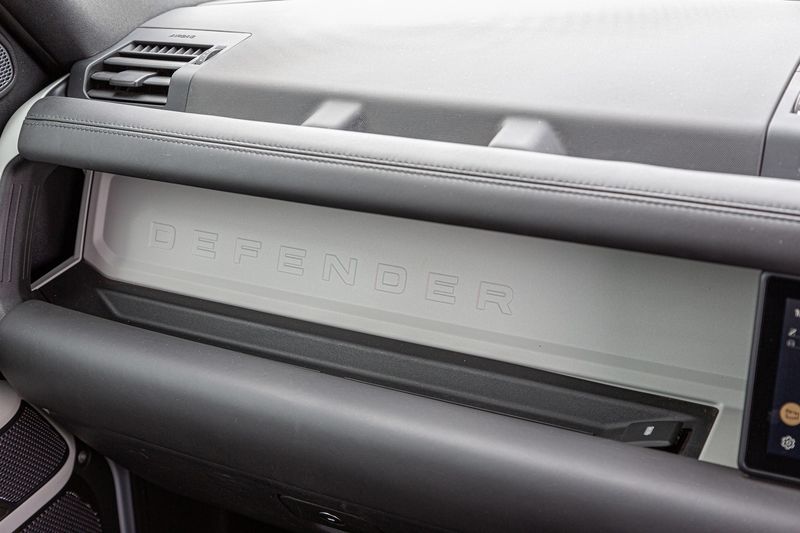
There are Defender motifs everywhere. Note one of the many USB charging ports.
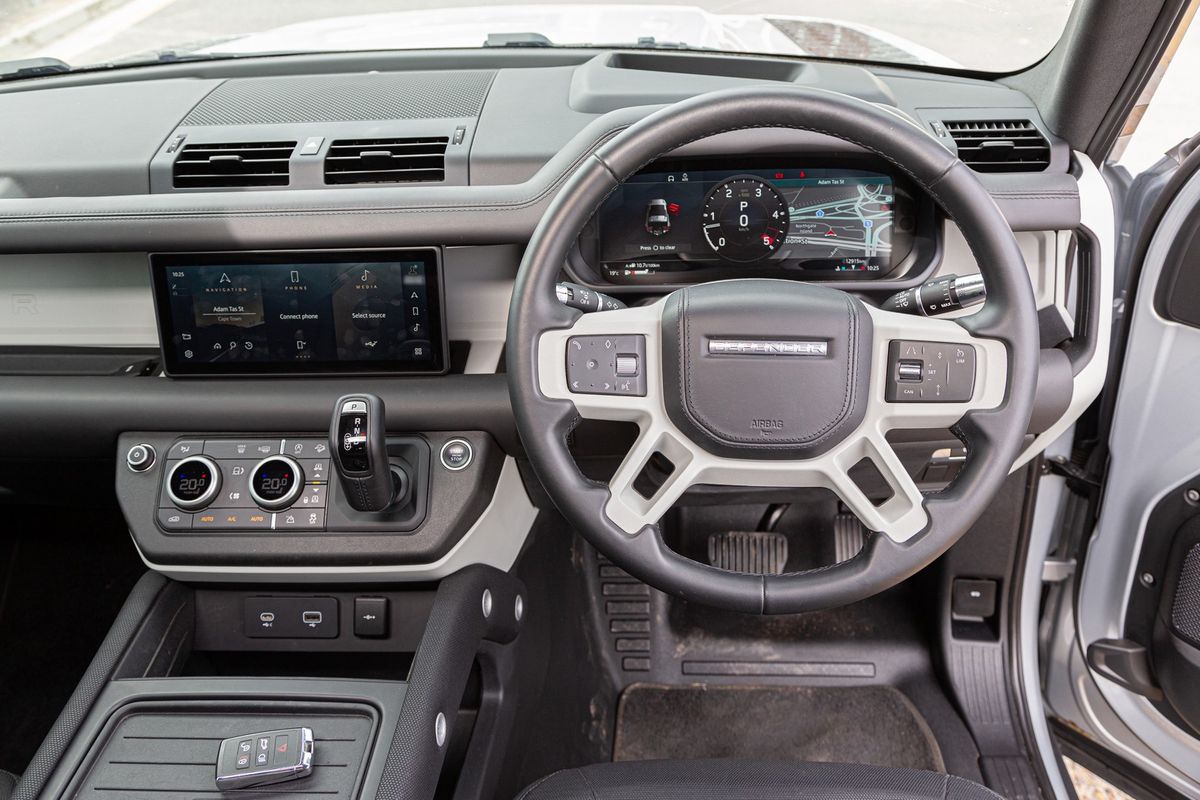
Climbing into the stilted Defender is not the easiest of tasks unless you’ve set it to Access Mode, which lowers the vehicle’s ride height for ease of ingress. The cabin presents a great mix of utility and luxury. There’s certainly an off-roader vibe, but enough luxury to satisfy customers who like to be cossetted. The seating is comfy and the driving position excellent… You’re perched up high with a commanding road view – well, above everything that’s not a double-cab – and outward visibility is mostly good. We say mostly, because the chunky C-pillars limit the rear three-quarter views, which you have to be mindful of. Thankfully, the large exterior mirrors help and blind-spot assist will alert you to other vehicles’ presence.
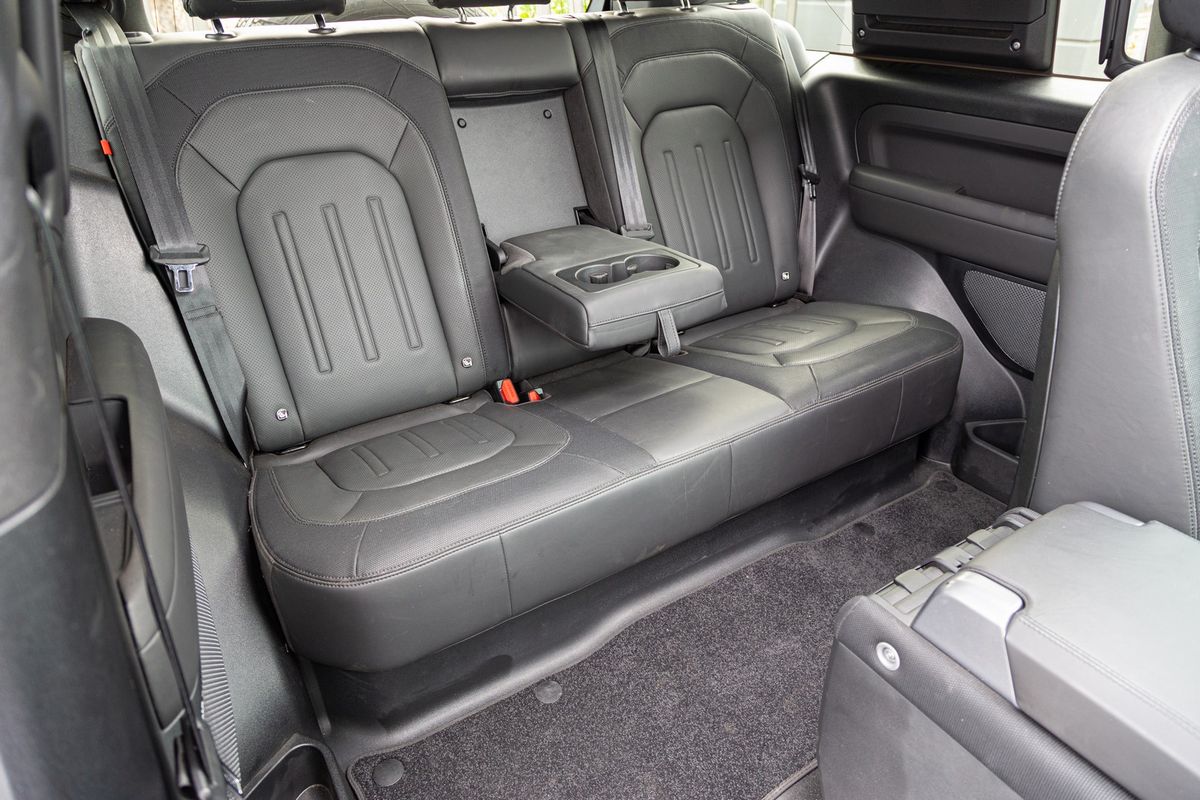
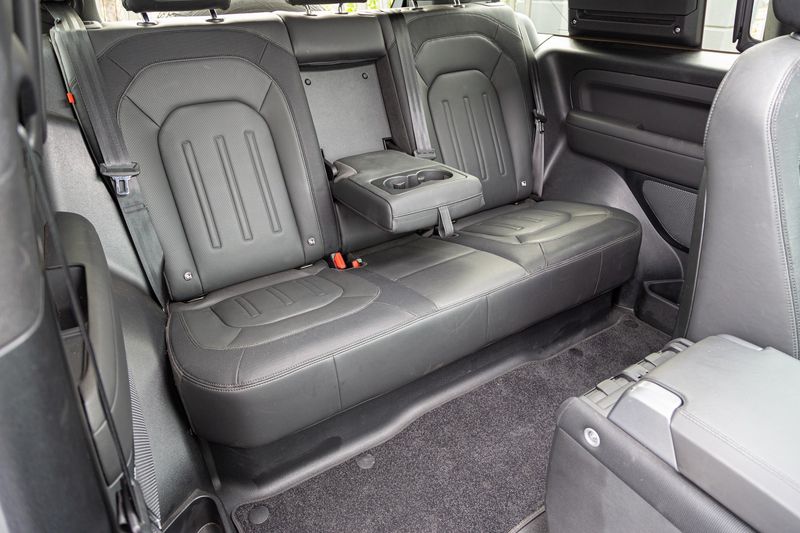
Rear leg- and headroom are commendable, but getting into the back of the cabin – that’s the issue.
Getting into the back of the cabin presents quite a challenge, because when you pull a front seat forward, the aperture it creates isn’t exactly generous – adults will battle to get in and find it even more difficult to get out, because you have to exit posterior first – or risk tumbling out face-first. Despite that, rear occupant space is commendable, with decent headroom and legroom for tall(ish) passengers. There’s limited outward visibility from back there, however.
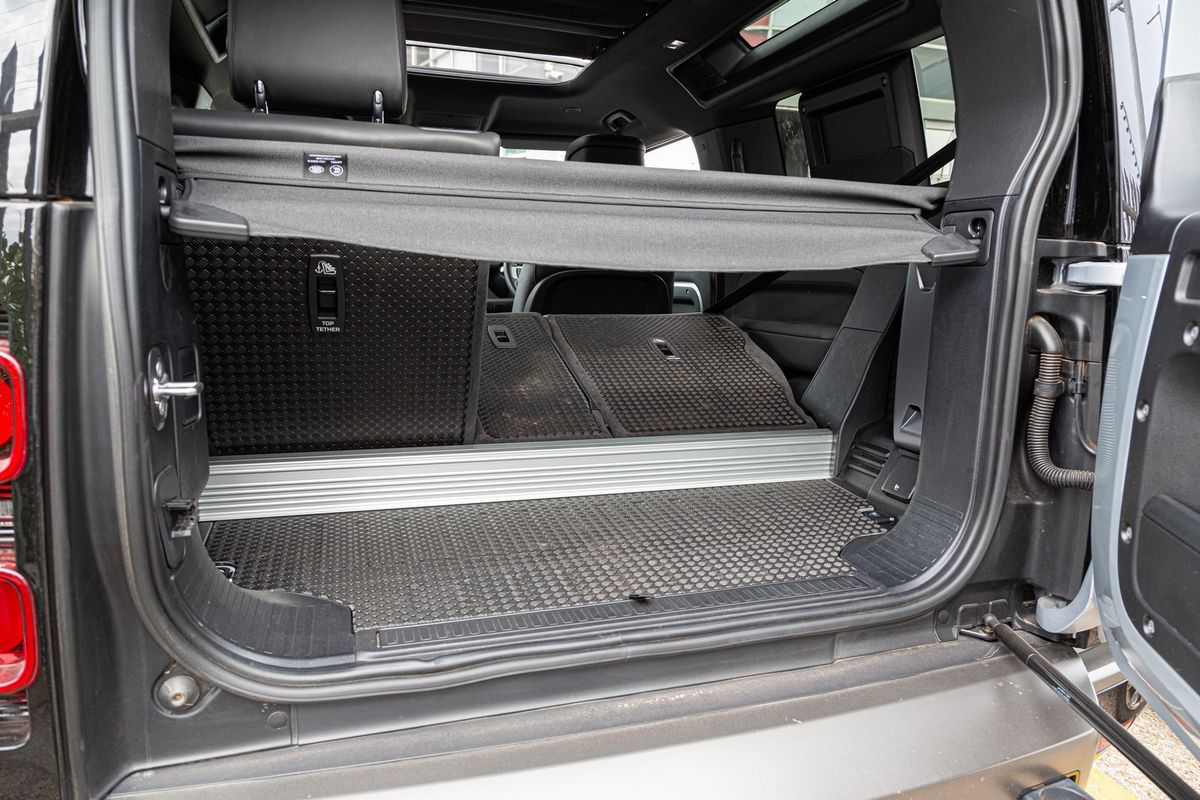
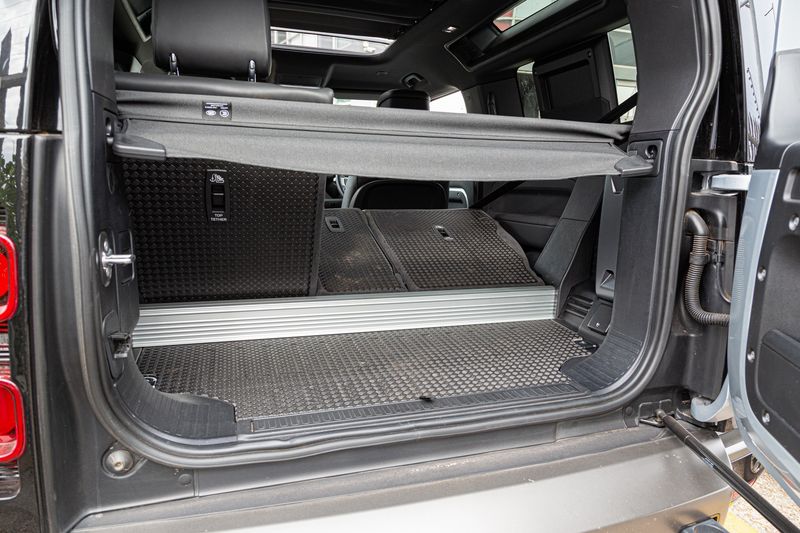
What’s more, the comfortable rear accommodation comes at the expense of luggage capacity, which is less than generous. Land Rover claims 297 litres of packing space; now, to put that in context, a Volkswagen Polo Vivo has a similar stated capacity. By folding down the rear seats, you get up to 1 263 litres, which you can load up with cooler boxes, suitcases and other larger items. Finally, some may find the side-opening tailgate a bit heavy/cumbersome to use.
The downside of having great rear legroom is a limited load bay.
Ride comfort & Off-road capability
The new Defender’s predecessor, of which production ended in 2015, was an anachronism – its basic design dated back to 1948, for Pete’s sake – and while there’s a horde of passionate fanatics who love the original for all it achieved and (still) represents, the iconic off-roader’s successor is a fundamentally more versatile, tech-intensive vehicle. The new model retains its nameplate’s off-road credentials, but most importantly, it’s as comfortable as any luxury SUV model with a comparable price tag. Buyers tend to value comfort above everything else in this segment; when you’re playing in the R1.5-million bracket, there’s an expectation of exceeding luxury and comfort – and the Defender 90 delivers.
The cabin offers a great blend of utility and luxury.
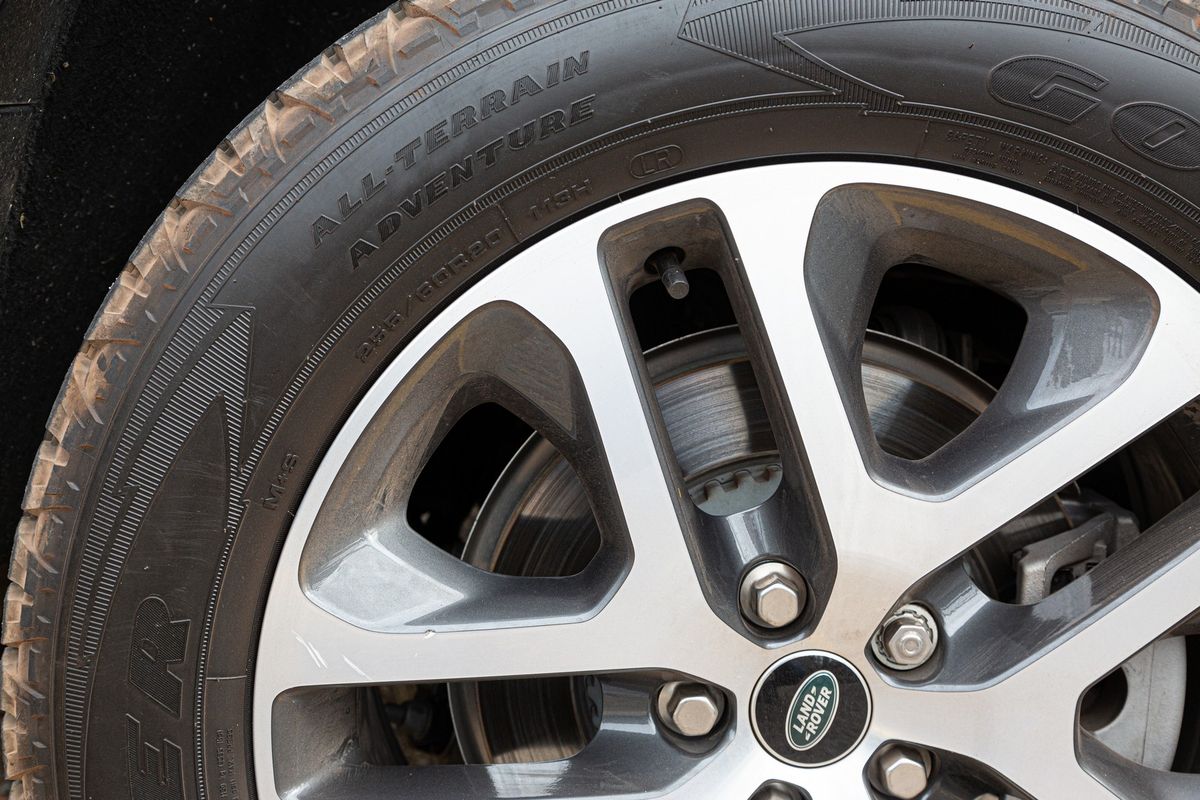
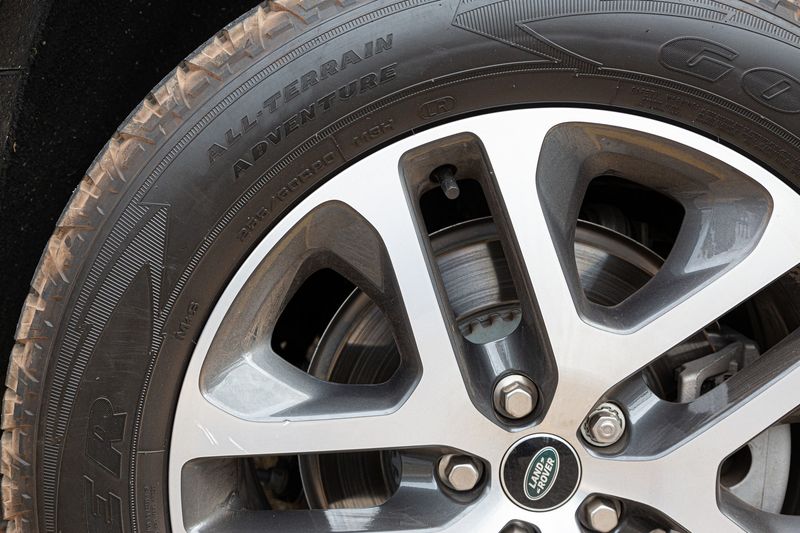
Our test unit came specified with the optional Air Suspension pack (R48 600) with adaptive dynamics. As a result, the D300 X-Dynamic HSE’s ride quality was generally good, with the monster (255/60 R20) all-terrain tyres soaking up most of the road imperfections. One of the drawbacks of off-road tyres is the droning noise they tend to generate, but thanks to the Defender’s good cabin insulation, this was largely dialled out. Handling is a mixed bag, however. Given the Defender 90’s architecture and raised ride height, we weren’t expecting poised, sure-footed handling. In truth, the Landy can wallow and lean when it’s made to corner at pace. It’s a pity, because the steering setup is well-weighted and direct.
All-terrain tyres are excellent on all surfaces.
The Defender has always been about delivering optimal off-road capability, and the 90 variant is probably the best of the range when it comes to traversing the rough stuff. The short wheelbase is better for off-roading because it facilitates a superior breakover angle – in other words, there’s a smaller chance of beaching your vehicle. Speaking of angles (and other numbers), the Defender comes fully armed with 30.1-degree approach- and 37.6-degree departure angles, a wading depth of 900 mm and ground clearance of 216 mm. Depending on which of the vehicle’s off-road modes are active, the air suspension will raise the ride height appropriately – in fact, the 90 can offer up to 291 mm of ground clearance!
And that’s before we mention all of the hardware and onboard technology that the Defender 90 avails off-road enthusiasts, whether they be newbies or seasoned pros. There’s a low-range transfer case, off-road drive modes (like for ruts, snow and gravel), low-traction launch function, 360-degree camera system (surround view) and this test unit featured the Off-Road Pack (R18 500), which incorporates an electronic active differential, black roof rails and domestic plug socket. The Advanced Offroad Capability pack (R11 300) was also ticked, adding Terrain Response 2 and All-Terrain Progress Control – the former will automatically adapt the car to road conditions, while the latter is a form of off-road cruise control.
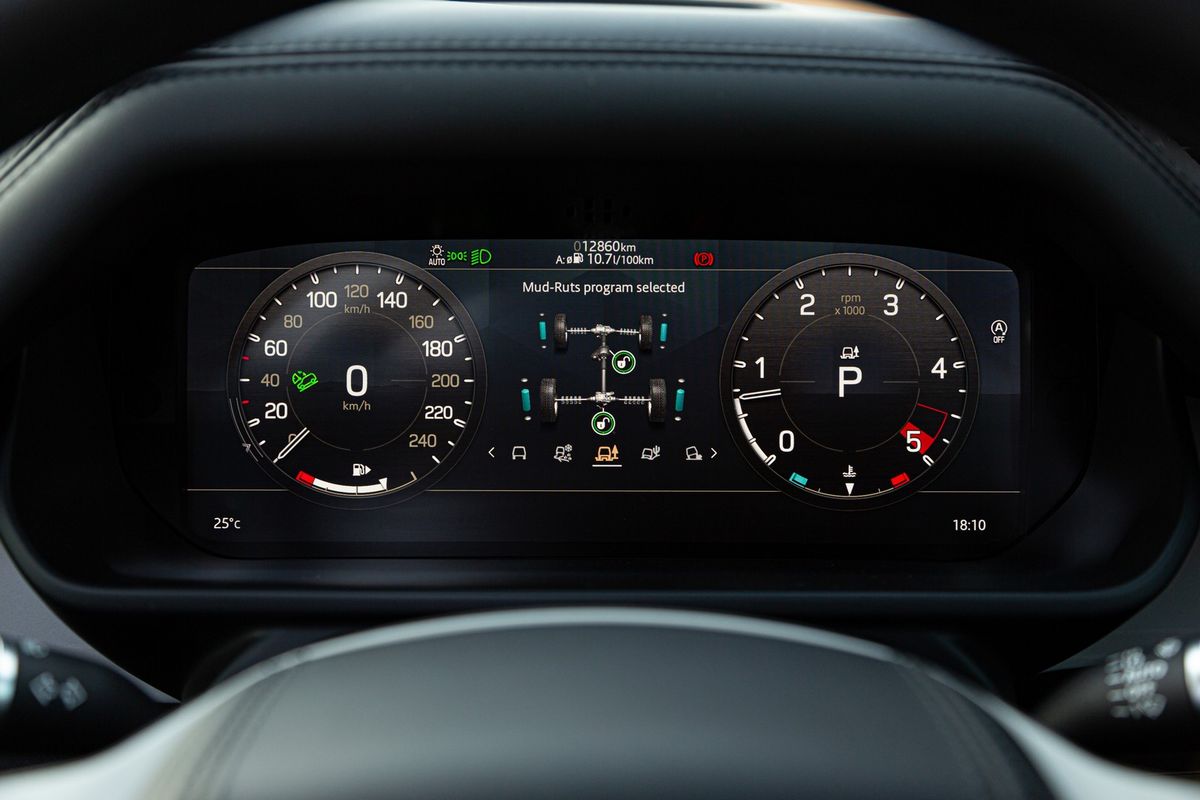
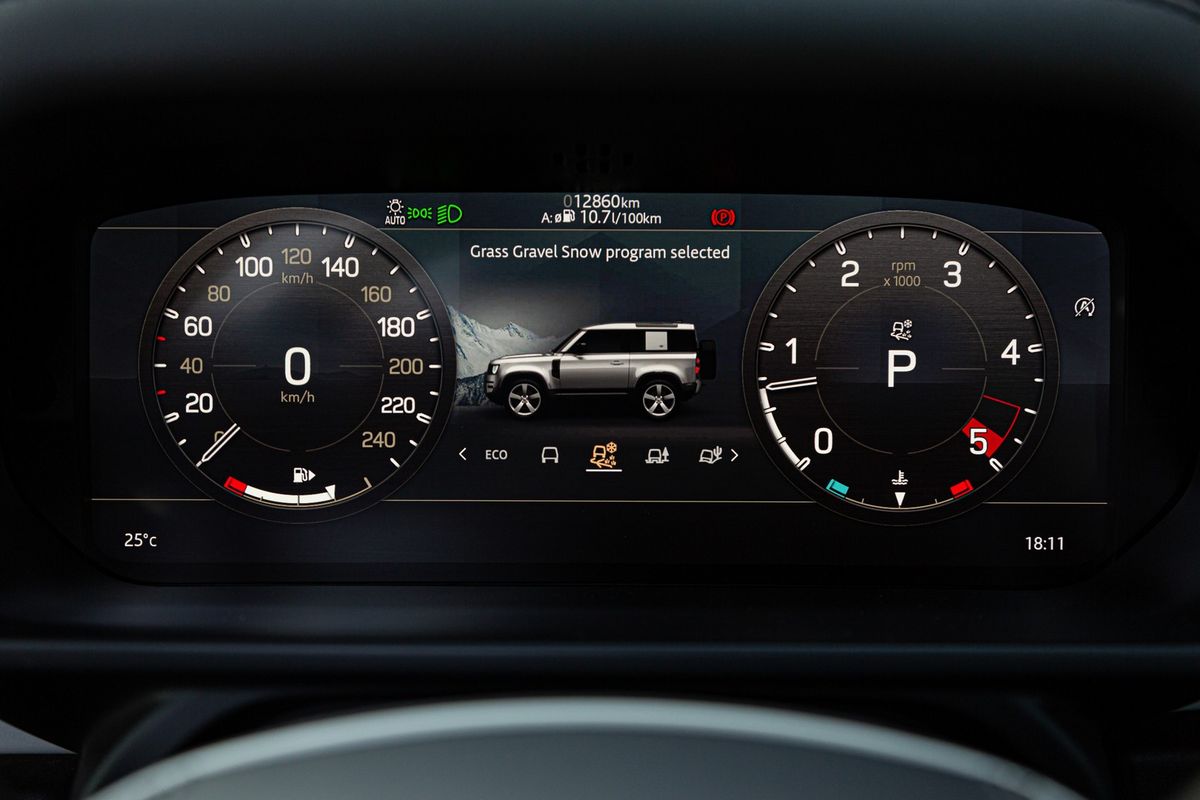
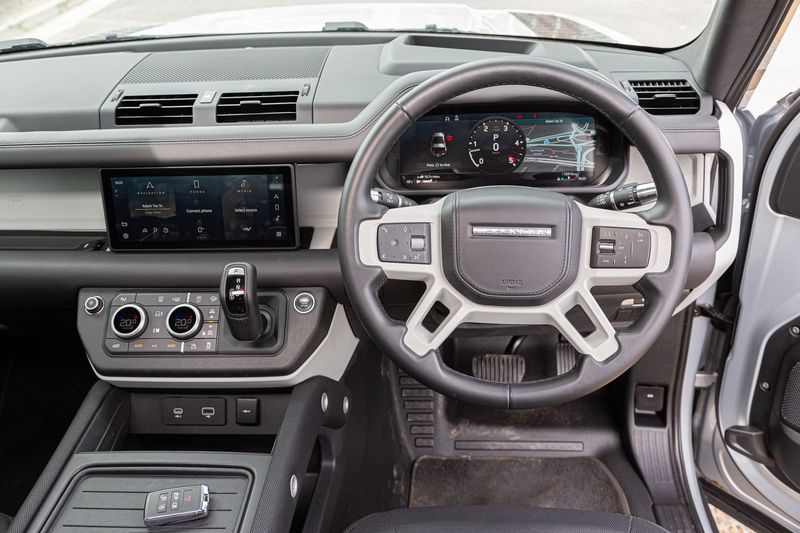
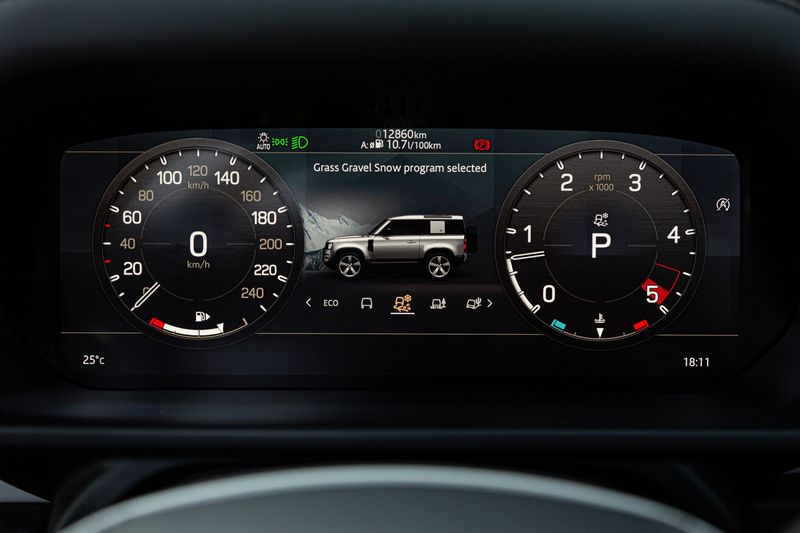
The digital dashboard displays a variety of themes and graphics.
Does it all work? Yes – and brilliantly. The best part is you don’t need to think about when to change the settings, unless conditions suddenly deteriorate (or improve). Just drive the vehicle and it will do the hard work for you, which is exactly what we did to get to the location where we shot these photographs. We knew the Defender 90 would be capable when you selected the right drive modes, but what if you just turned off the tar and headed onto the dirt?
Of course, when the going gets really tough, you can raise that air suspension and engage low range to venture to places where only very few vehicles have travelled before. We do suspect the vast majority of Defenders will never venture too far from sealed road surfaces, but it’s reassuring to know that these vehicles are as capable as their forebears. We’ve tested the Defender extensively off-road, check out our assessment of the 110 below:
Drivetrain refinement
“D300” means this is a turbodiesel-powered variant that develops 300 horsepower (221 kW), with maximum torque rated at 650 Nm. The twin-turbocharged 3.0-litre 6-cylinder is an impressive powertrain, thanks to its considerable urge from low revs and admirable responsiveness. If you’re in a hurry, the Defender 90 can get a proper move on… fully depressing the accelerator pedal will prompt the Defender to positively hurtle towards the horizon. Expect 100 kph to come up from a standstill in about the same time as a Volkswagen Polo GTI would take, so, suffice to say there’s plenty of pace on offer. In-gear overtaking ability is excellent too; 80-120-kph overtaking manoeuvres can be executed with ease.
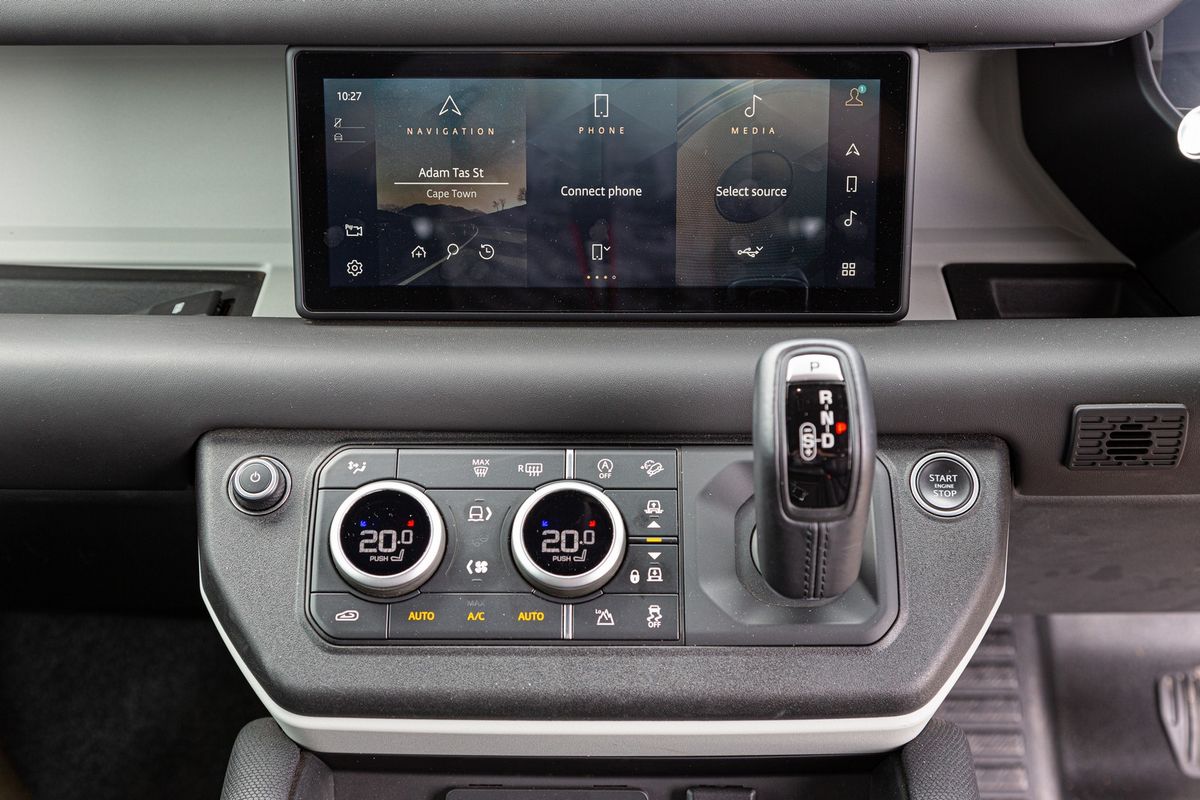
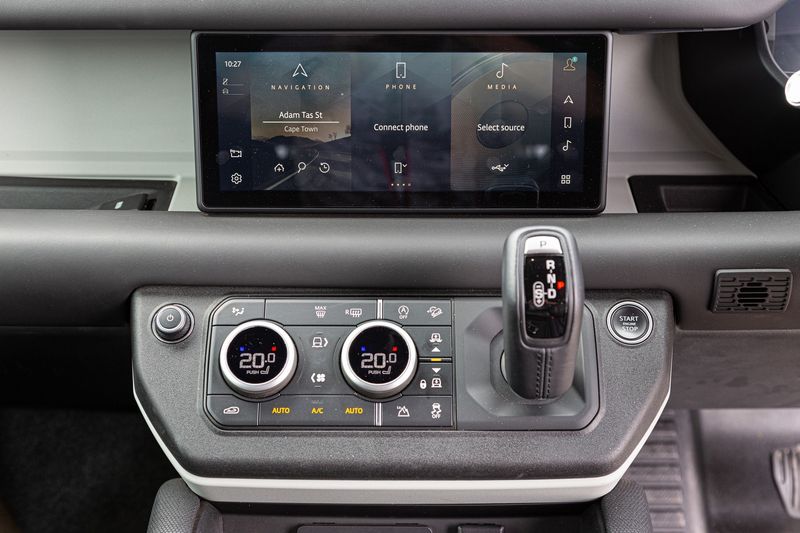
We like the simplicity of this central fascia cluster.
The key here is the 8-speed automatic transmission. There were no gearshift paddles on the steering wheel, but you can manually change up and down by treating the gear selector as the lever of a sequential ‘box. Knock it left, then tap down to change up and tap up to shift down. In reality, however, the ‘box’s software programming and calibration are just so well sorted that it’s highly unlikely you’ll ever feel the need to do the work yourself. Leave it in automatic and trust the tech.
What’s astonishing is that the Defender range offers even more powerful engines, including a supercharged 5.0-litre V8 petrol motor! When it comes to fuel efficiency, the D300 is claimed to consume 7.6 L/100 km, but, given the model’s less-than-aerodynamic shape and heft (it tips the scales at 2.2 tonnes), we came away with an indicated 10.7 L/100 km. The Defender 90 comes with an 89-litre fuel tank, which gives it a theoretical (from full) range of 1 171 km.
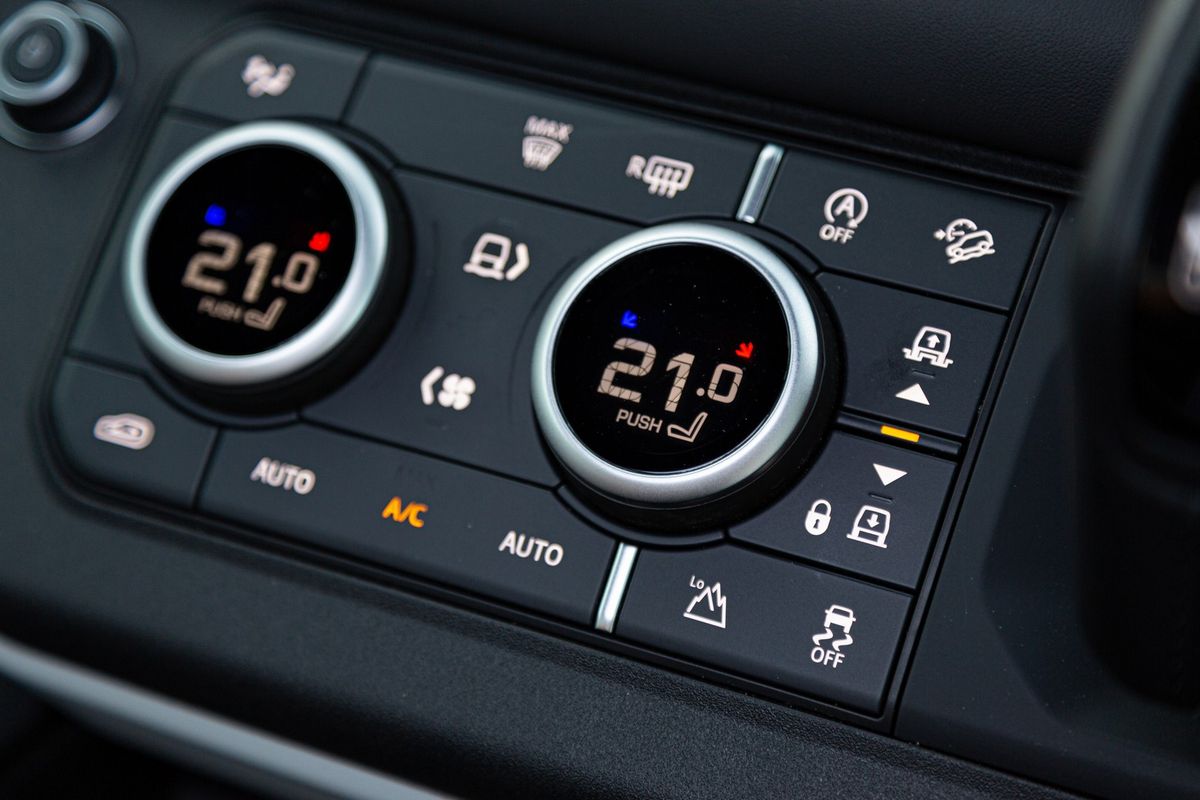
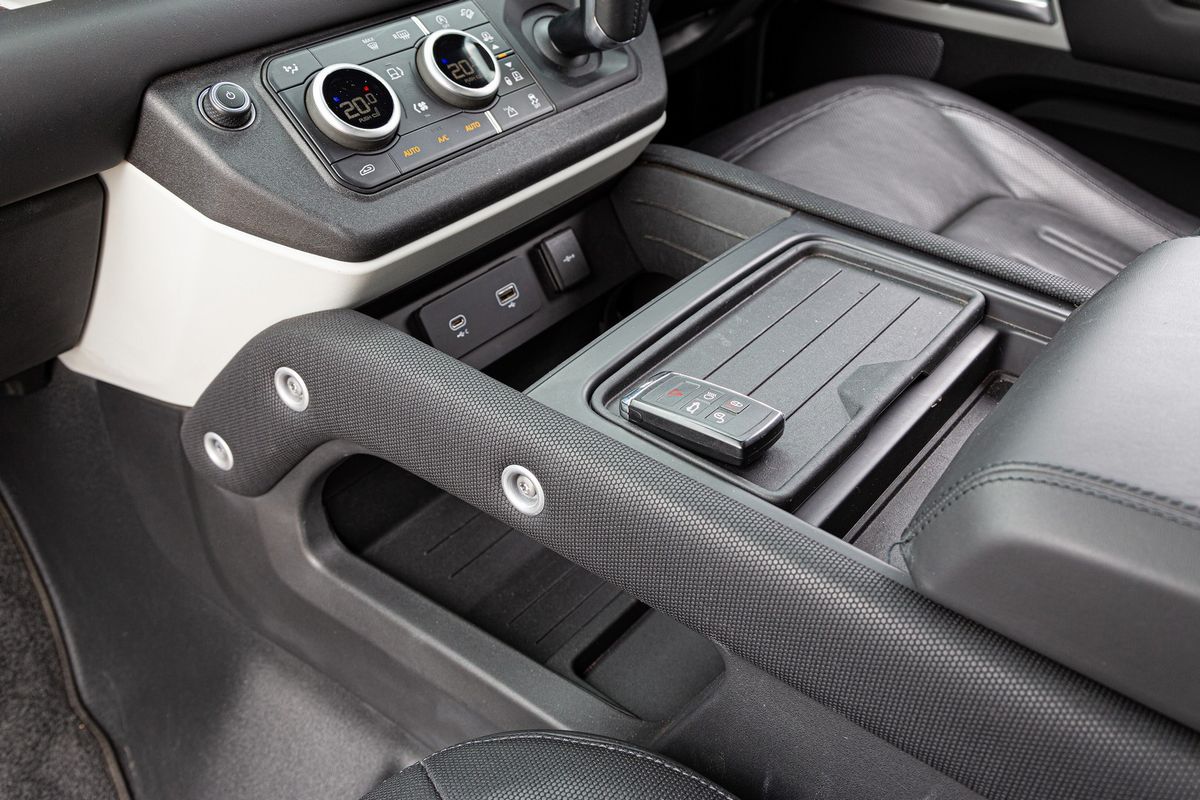
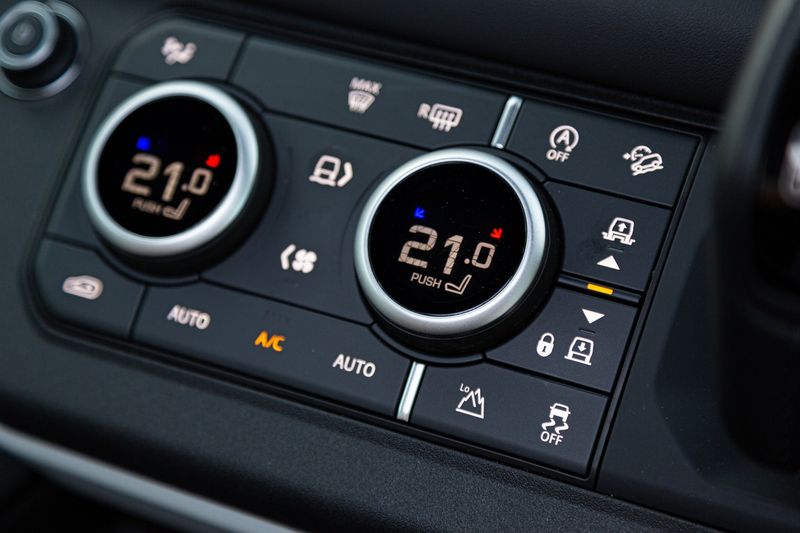
Heated and cool seats, air suspension height control and offroad modes all are accessed from this console.
Comfort and Features
The Defender 90 X-Dynamic comes in either SE and HSE trim and the latter is comprehensively loaded with standard luxury and comfort features. Comfort options fitted to the test unit included the Meridian surround sound system (R17 300), head-up display (R20k), as well as tri-zone climate control (R3600). You can use the online configurator to specify the Landy to your heart’s content, but bear in mind that due to the semiconductor shortage, some extras may be unavailable.
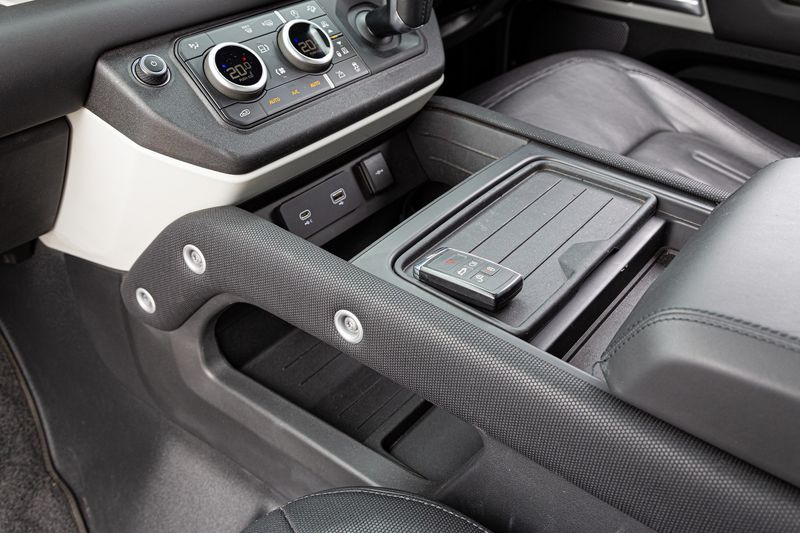
Further USB chargers and a neat storage area under the centre console.
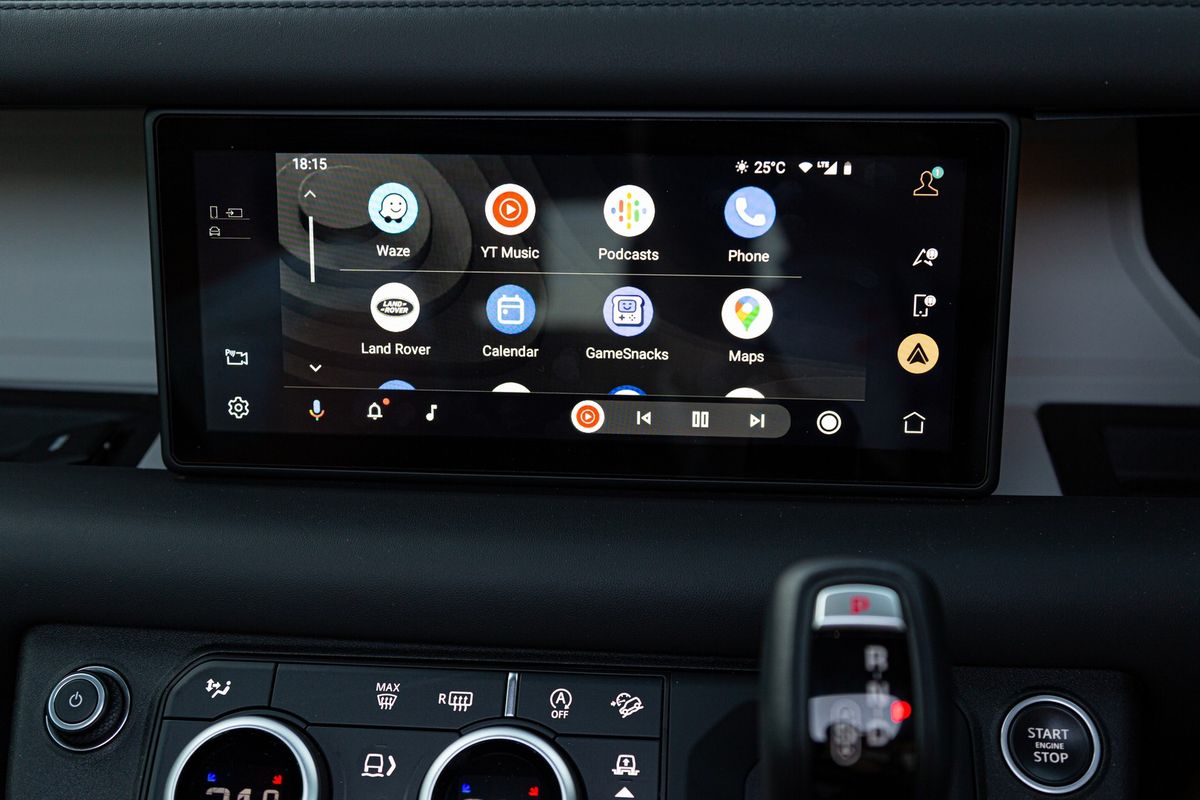
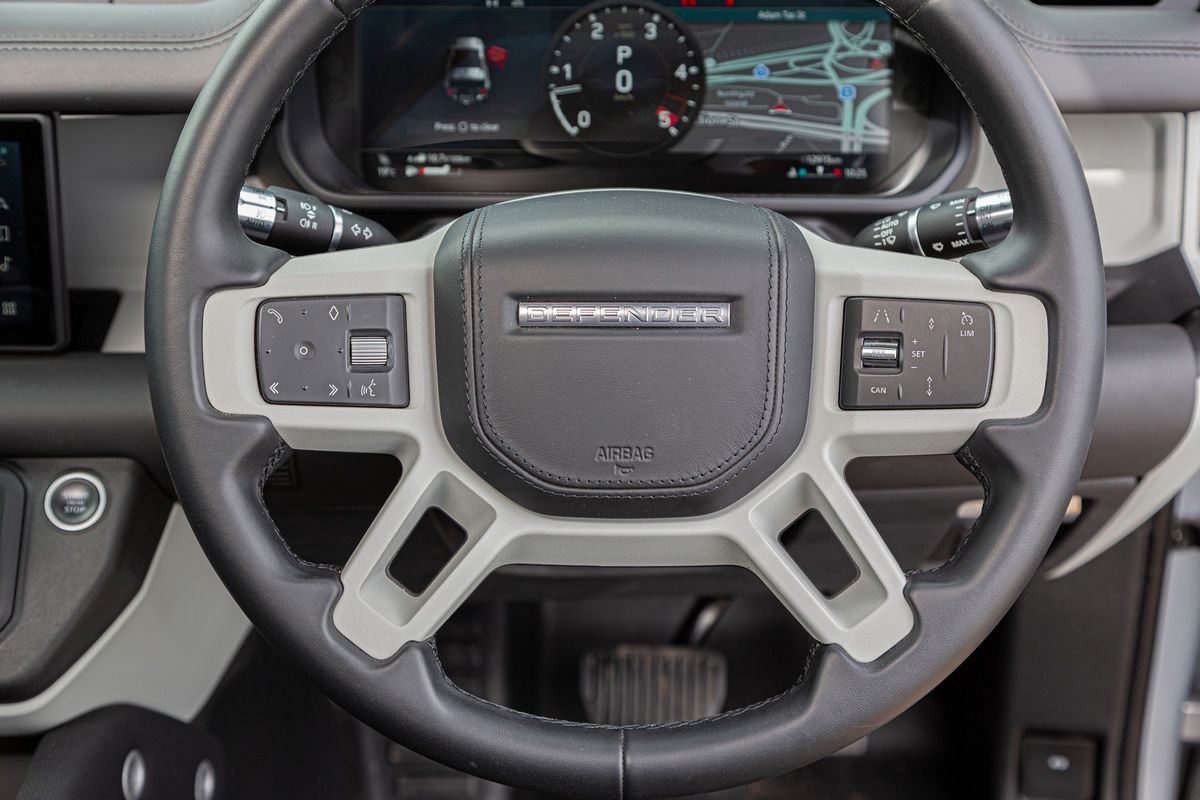
Comfort features are numerous, which is to be expected when you’re forking out around R1.5 million. We’ll just mention a few: heated and cooled leather seats – 14-way electrically adjustable at the front, a leather-trimmed multifunction steering wheel, a drinks refrigerator in the central armrest, a digital instrument cluster replete with smart-looking graphics and themes and, last but not least, the latest Pivi Pro infotainment system that utilises a 10-inch touchscreen.
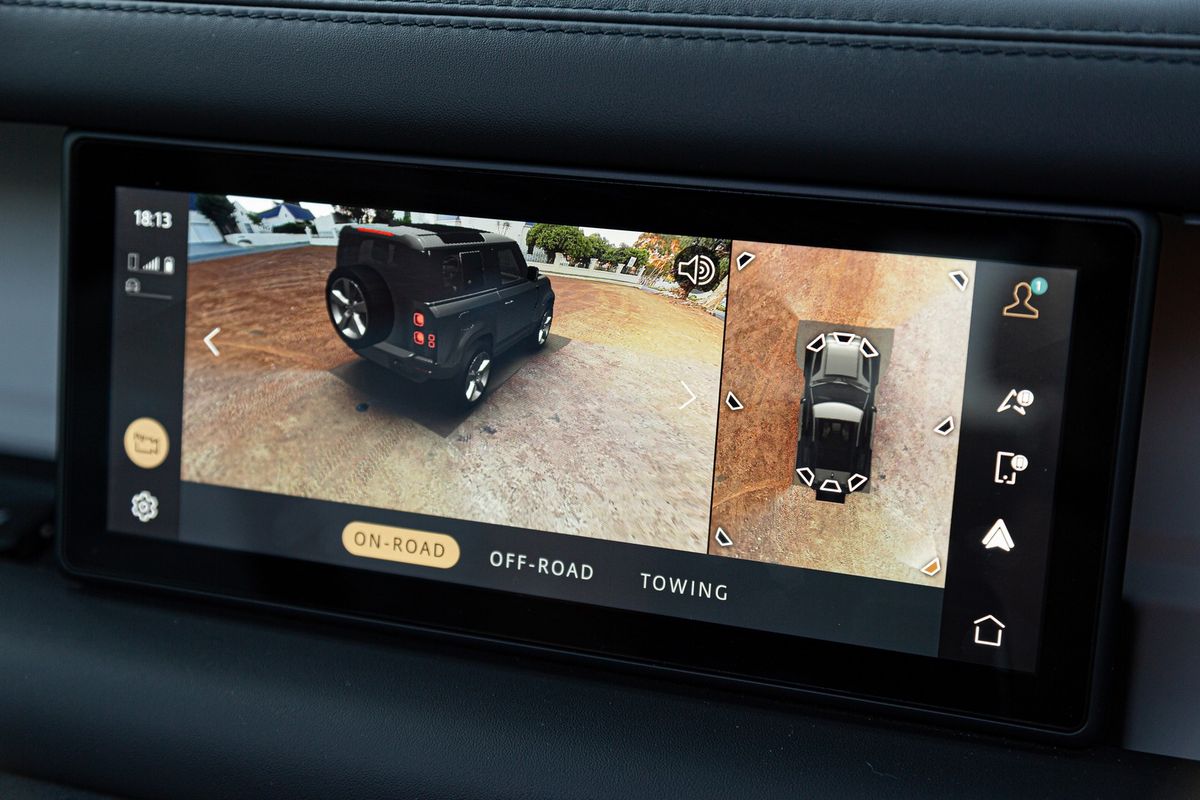
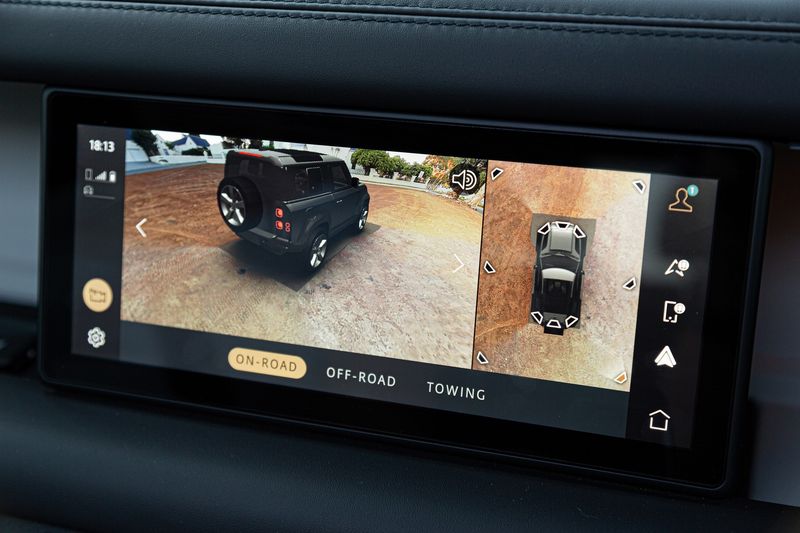
The 360-degree camera system is excellent.
We’ve had considerable experience with this system and it continues to impress with its ease of use, crisp graphics and the fact that it has its own power supply – there are few infotainment systems that we can think of that are fully functional within moments of a vehicle’s being started up – it’s a bonus you didn’t know you needed. The Pivi Pro system is also Android Auto and Apple CarPlay compatible and supports over-the-air software updates, the latter of which is convenient.
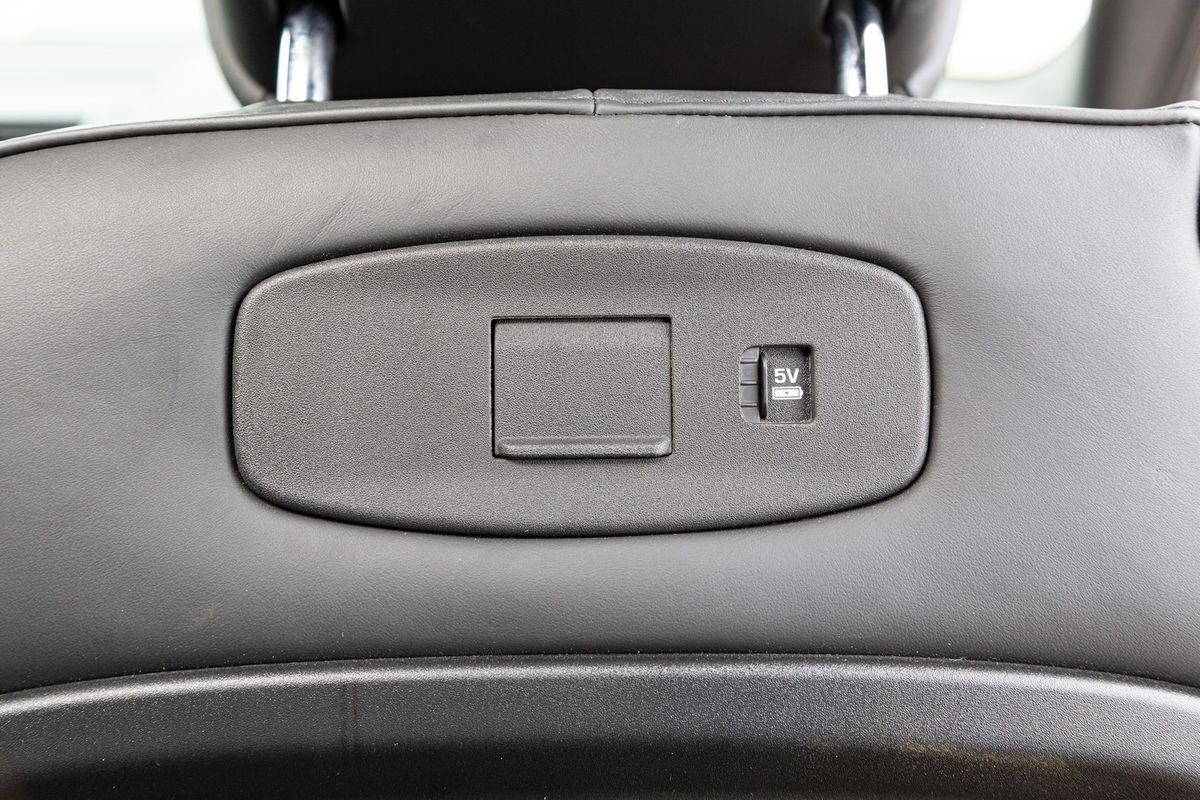
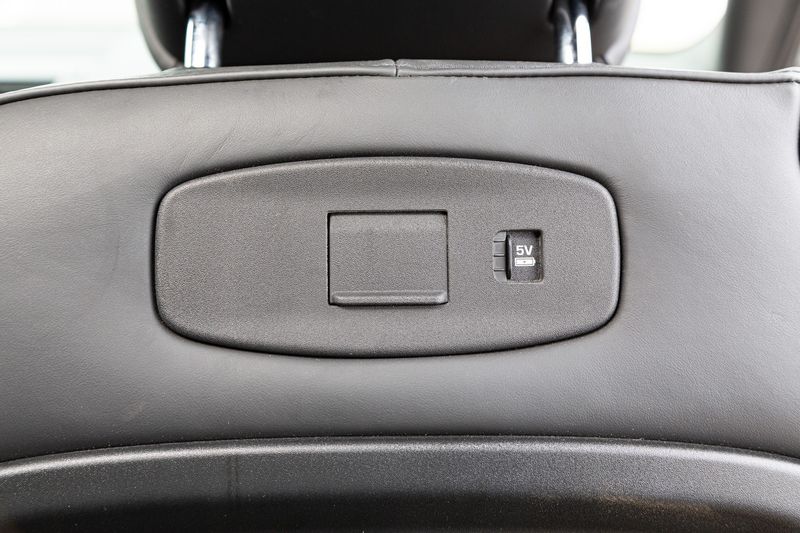
Meanwhile, there are more power outlets and USB ports in the cabin than you’re likely to ever need. For rear passengers, we think the USB ports built into the front seats are a neat touch.
The USB charger and mounting point for a jacket hook (or tablet holder) on the back of the driver’s seat.
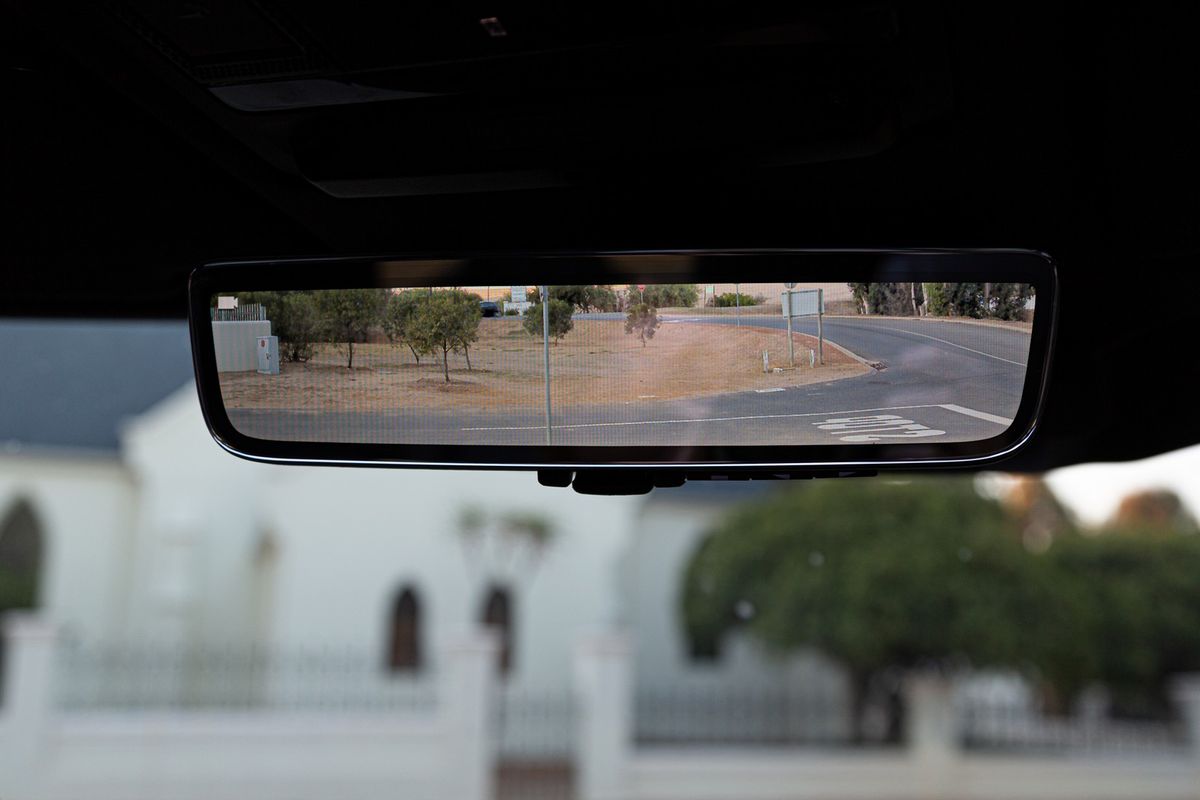
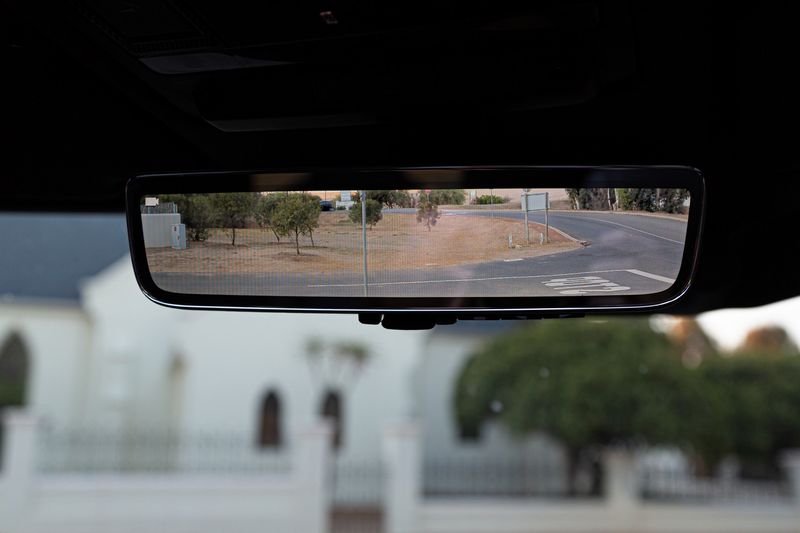
The list of safety and driver-assist features is extensive, to say the least. Among the latter are lane-keep assist, adaptive cruise control and a rear-traffic monitor, to name but a few. One of our favourite features has to be the Clearsight rear-view mirror, which is actually a screen linked to a camera instead of a conventional mirror. The unit’s display quality is really excellent, both in bright sunlight and at night.
The rear-view mirror is, in actual fact, a digital screen that displays the feed from an aft-mounted camera.
Land Rover Defender 90 pricing and after-sales support
The Land Rover Defender recently made a star turn as a baddie-car in the James Bond film No time to die.
The Land Rover Defender 90 range starts from R1 232 294 and goes all the way to R2 488 160 for the V8-powered Carpathian edition. Our test unit was positioned near the middle of the range at R1 471 405 (before optional extras). The vehicle is sold with a 5-year/100 000 km warranty and a 5-year/100 000 maintenance plan.
Verdict
It’s oh-so-cool, but priced the same as the more rounded 110.
Make no mistake, the Land Rover Defender 90 is a very accomplished – and utterly capable – vehicle. Owners will be thrilled by the Solihull-made model’s highly appealing image and, if they’re ever brave enough to venture onto the truly rough stuff, the model’s deeply impressive off-road skillset. There’s luxury and comfort available here that is a far cry from the iconic Defenders of old, but that’s okay in our books. There’s just one tiny problem… and that’s the Defender 110. For very similar money, you can get the more sensible/practical bigger 5-door variant. Decisions, decisions… Do you go with the cool 90 (even cooler because you can choose steel wheels!), or the more family-focused and spacious 110?
So, should you buy one? As terrific as the Land Rover Defender 90 is, our recommendation comes with some caveats. Yes, it’s a distinctively styled premium SUV that pays homage to its legendary predecessor but, unlike the superseded ol’ Landy, it succeeds as a comfortable, tech-laden luxury vehicle. Rear seat access is awkward for anyone over the age of 25, which is a pity, because rear head- and legroom are excellent. Then there’s the load-bay capacity, or to be more precise, lack thereof. Finally, the price puts the 90 far too close to the already capable and desirable Defender 110. What you have here is a cool, but compromised offering that will appeal to somewhat eccentric, nonconformist buyers.
Honda ZR-V Announced to Split HR-V and CR-V
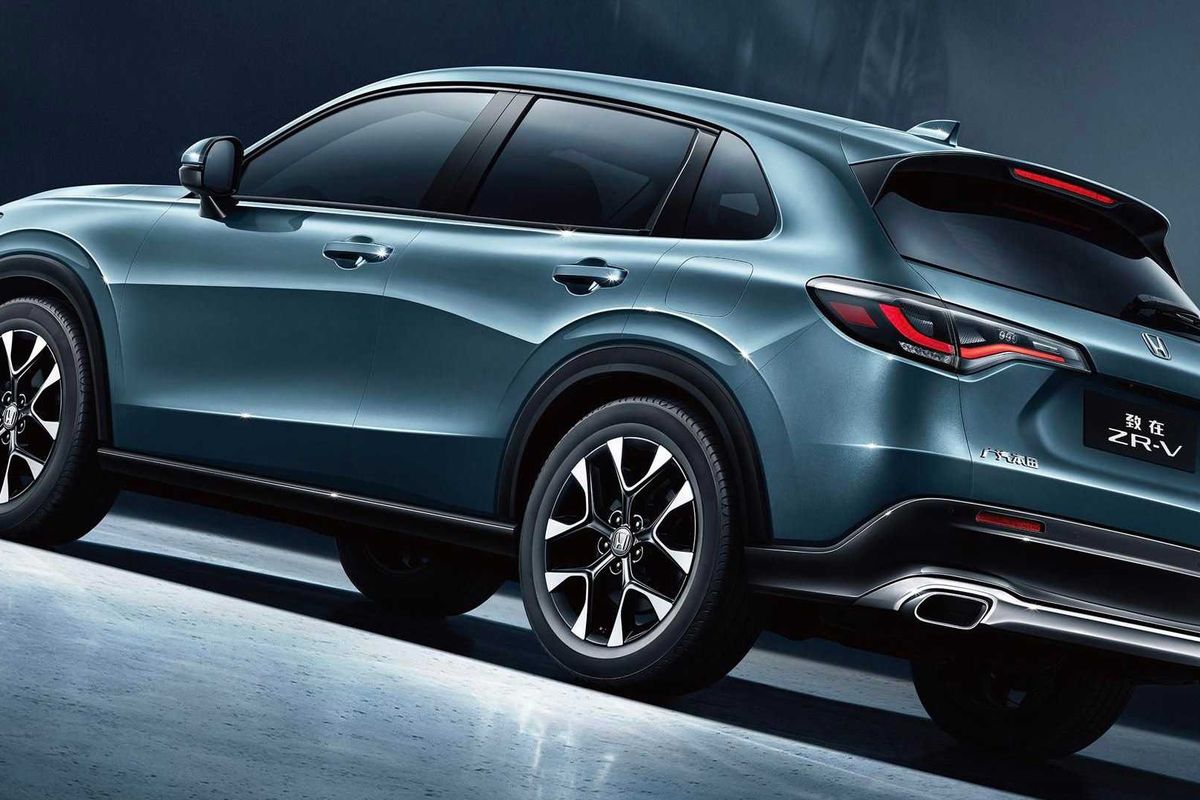
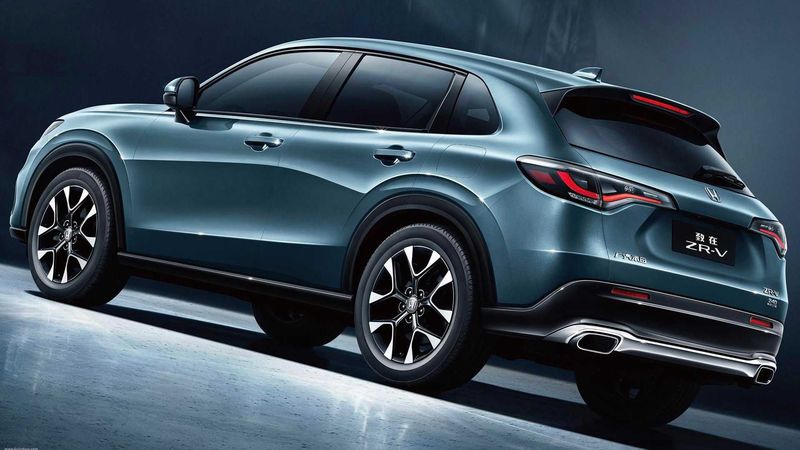
Honda has confirmed it will be launching a new SUV positioned between the HR-V and the CR-V. Here’s what we know about the new Honda ZR-V.
The news comes from Honda Europe and initial details are scarce. Other than a confirmation of the production name and the choice of hybrid powertrains, there’s not much to go on.
However, given Honda’s recent strategy in Europe to replace its current portfolio with hybrid models, we can make some deductions. We know there’s a China-only Honda ZR-V, which you can see in the images. This features a 1.5-litre turbocharged petrol engine paired to a CVT.
Honda has already confirmed that both the new HR-V and CR-V will feature hybrid engines for Europe, but it remains to be seen which motor the ZR-V will adopt. It’s unlikely Honda will build an all-new motor specifically for one model line, the costs would make it unsustainable.
Another nugget of info is that Honda Europe confirmed the new ZR-V will go on sale in 2023, along with the all-new next-generation Honda CR-V, which we know will come with a plug-in hybrid as one of its engine options. As it stands, Honda will have just one product in its lineup that doesn’t feature electrification, and that’s the upcoming Civic Type R which is said to offer an enhanced version of the current 2.0-litre turbocharged petrol engine.
We’ll keep an eye on this one, but for Honda fans in South Africa, the all-new HR-V is due to touch down in the middle of 2022.
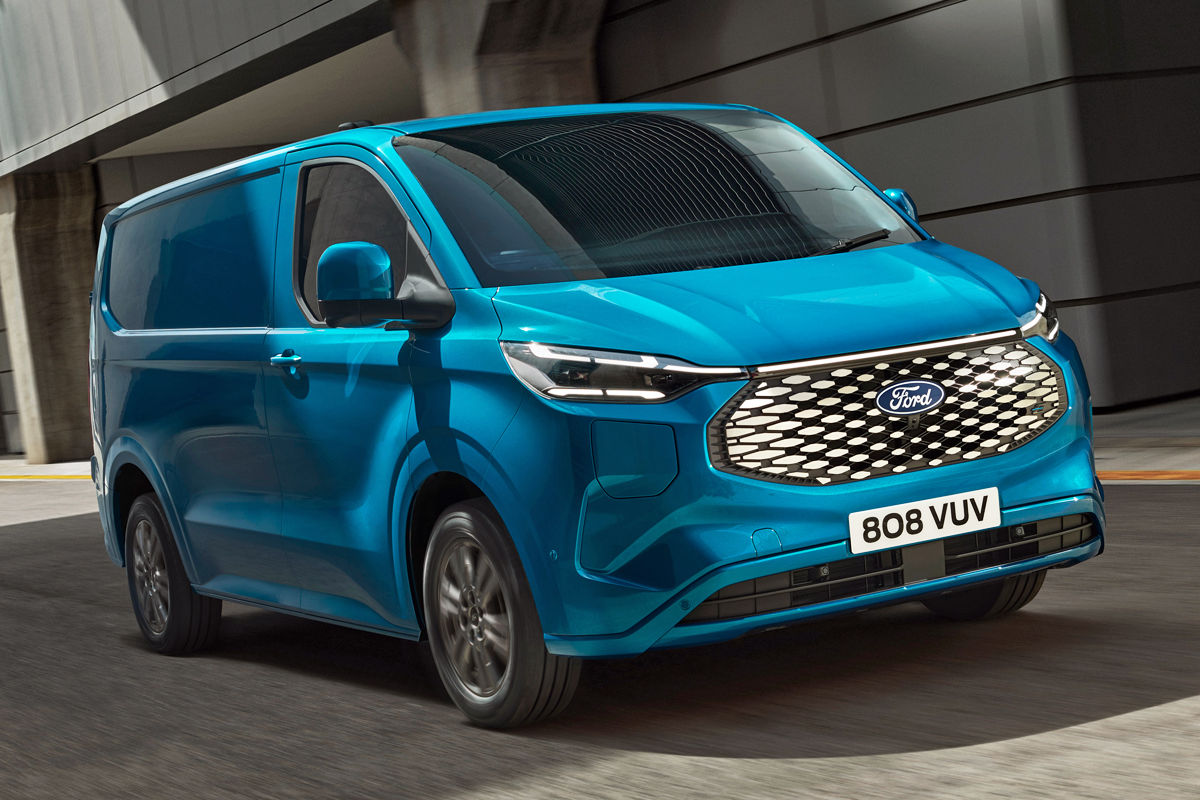
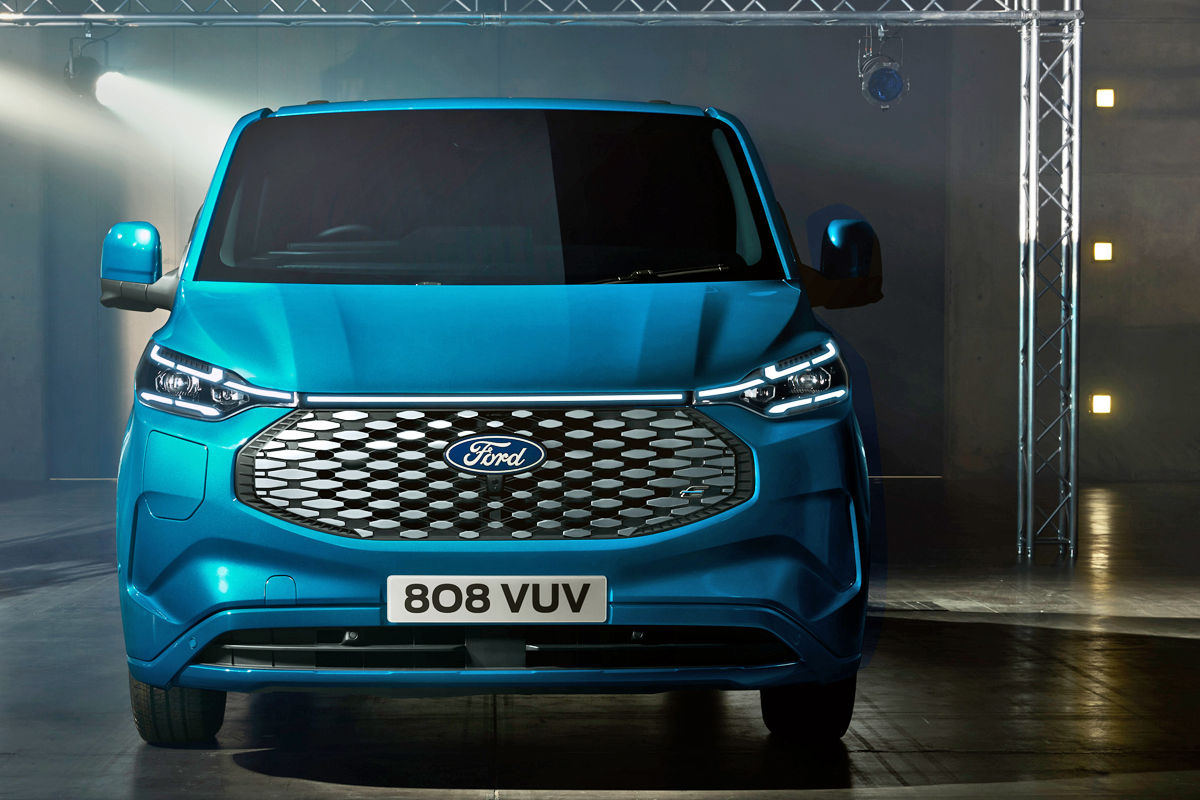
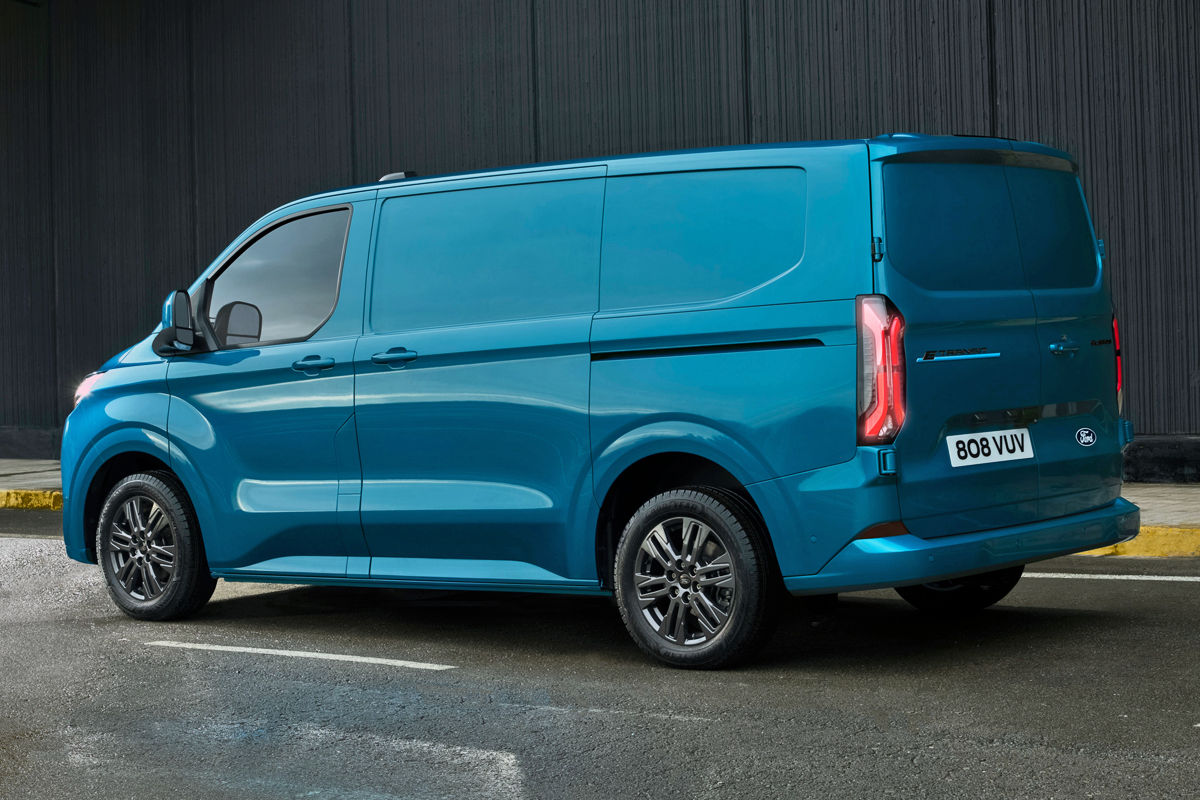
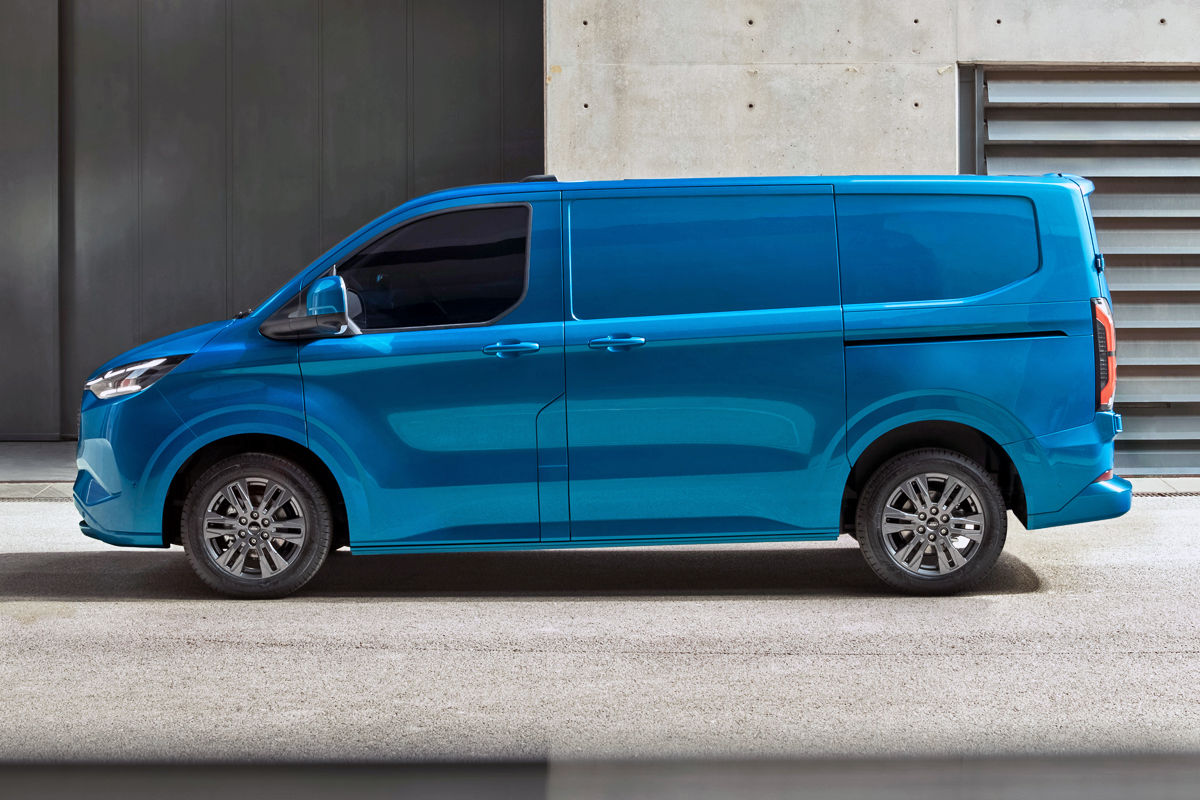
Ford has peeled back the covers from its new E-Transit Custom, an all-electric version of what has become Europe’s best-selling van…
You’re no doubt aware the upcoming Volkswagen Amarok will borrow plenty from the new Ford Ranger. But did you know the strategic global alliance between the two automakers will also result in other commercial vehicles? The latest example is the fully electric Ford E-Transit Custom.
The new E-Transit Custom will be built at Ford’s factory in Turkey from the second half of 2023, with the as-yet-unrevealed next-generation Volkswagen Transporter reportedly also set to be produced at the Otosan facility.
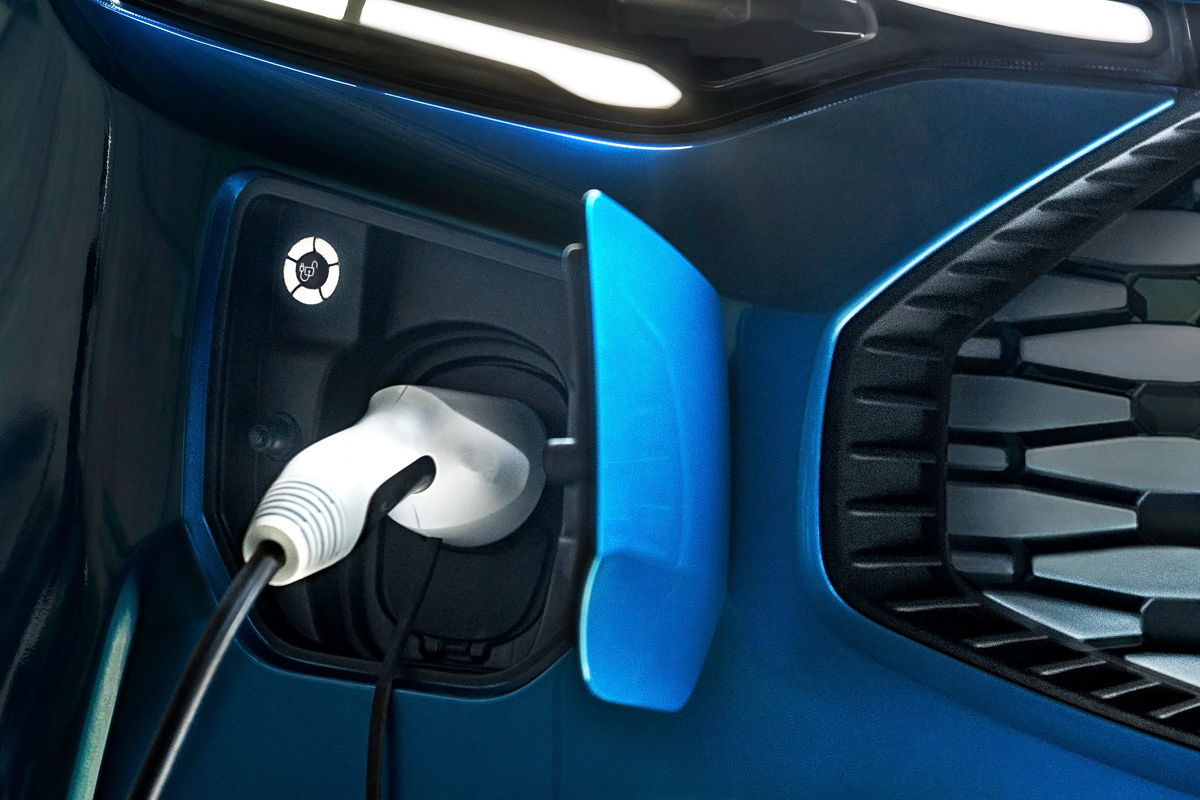
While the Dearborn-based firm has yet to release full technical details, we do know the E-Transit Custom will feature a “targeted driving range” of up to 380 km and what Ford describes as “full towing capability”. Ford furthermore says the van will be able to provide “exportable power” for tools, lights and other devices used on site.
“This is a watershed moment for commercial vehicle operators in Europe, and another hugely significant realisation of our Ford Pro ambitions,” said Hans Schep, general manager of Ford Pro, Europe. “Europe’s best-selling van just went all-electric and – supported by our unique Ford Pro one-stop-shop of productivity-boosting services – the operating benefits this will bring to business across Europe cannot be overstated.”
The Blue Oval brand says the newest addition to its electrified line-up will be a “key component” in its commitment to reach zero emissions for all Ford vehicle sales in Europe and carbon neutrality across its European footprint by 2035.
Its reveal comes after production of the likewise all-electric E-Transit kicked off in March 2022. Other battery-powered commercial vehicles set to be introduced by 2024 include successors to the Transit Courier, Tourneo Custom and Tourneo Courier.
So, considering the current turbodiesel-powered Transit Custom is available in South Africa, are there any concrete plans to introduce the new E-Transit on local shores? Well, Ford Motor Company of Southern Africa would only say the newcomer is “not confirmed for South Africa”…
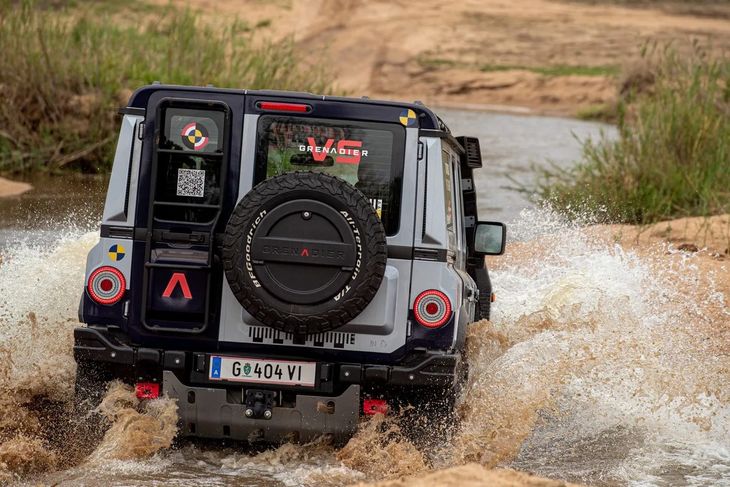
Ineos Grenadier vs Land Rover Defender: Spec Check
So, the Ineos Grenadier will be sold in South Africa and it will go head-to-head with the formidable Land Rover Defender! How does the Grenadier’s specification sheet stack up against the Defender? Let’s take a closer look!
Let’s take a look at some key specification details to see how the Grenadier stacks up against the Defender.
Engine Specs
When it goes on sale in South Africa, the Ineos Grenadier will be powered by BMW’s 210 kW / 450 Nm 3.0-litre turbocharged 6-cylinder petrol engine (B58) as well as a 183 kW / 550 Nm diesel 3.0-litre turbocharged 6-cylinder engine (B57). Both engines will be paired with an 8-speed automatic transmission from ZF.
The Land Rover Defender range also offers both petrol and diesel engines, but with more choice on offer for buyers. The petrol line-up includes a 221 kW / 400 Nm 2.0-litre turbopetrol (P300) as well as a more potent 294 kW / 550 Nm 3.0-litre, 6-cylinder turbopetrol engine. For those seeking ultimate performance, there’s also a 5.0-litre supercharged V8 engine on offer with 386 kW and 625 Nm.
For those seeking a diesel Defender, you can opt for the 177 kW / 500 Nm 2.0-litre turbodiesel engine (D240) or a more powerful 221 kW / 630 Nm 3.0-litre 6-cylinder turbodiesel engine (D300). But that’s not all, Land Rover also offers a P400e Plug-In Hybrid Defender with a 2.0-litre turbopetrol engine working in conjunction with an electric motor to produce total outputs of 297 kW and 640 Nm. All Defenders are paired with an 8-speed automatic transmission.
Key Offroad Features
Both the Grenadier and Defender are designed and built to offer formidable offroading capability and they, therefore, come well equipped to live up to that expectation.
The Grenadier will initially be offered as a 5-seater station wagon and will have a claimed ground clearance of 264 mm and a wading depth of 800mm. More so, permanent four-wheel drive as well as a 2-speed transfer case and a central-locking differential are standard (front and rear differential locks will be optional, but are standard on Trailmaster trim). Ineos will offer a wide range of accessories so that buyers can configure their ideal 4×4 but in addition to the standard Grenadier, the firm will also offer 2 specialised derivatives, TrailMaster and BushMaster, to meet the offroading needs of local buyers. The Grenadier will offer a 36.2-degree approach angle, 28.2-degree breakover angle and a 36.1-degree departure angle. Maximum tow capacity is rated at 3 500 kg.
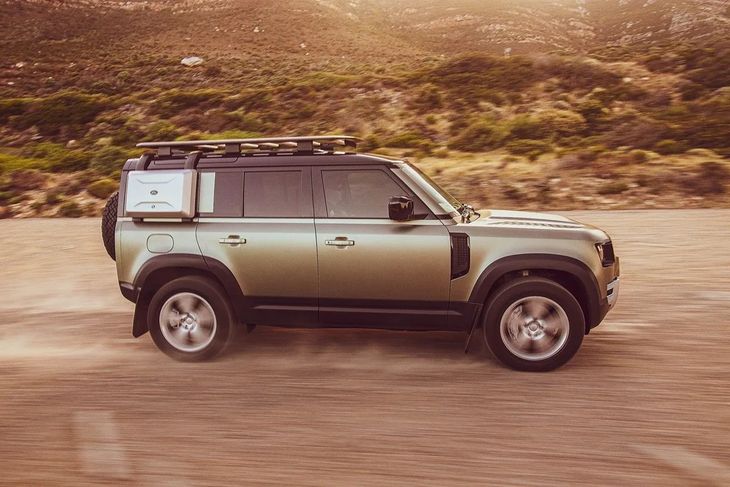
The Land Rover Defender, by comparison, is offered in 2 body styles including the compact Defender 90 and the long-wheelbase Defender 110 (can be specified as a 7-seater). Ground clearance is claimed at a maximum 291 mm (with air suspension) or 225 mm as standard. Depending on the derivative, the Defender’s wading depth varies between 500 mm and 900 mm (with air suspension).
Like the Grenadier, the Defender also offers permanent four-wheel drive, with a twin-speed automatic gearbox, centre differential and an optional active locking rear differential. The Defender 110 offers a comparable approach angle of 38-degree, a breakover angle of 28 degrees and a departure angle of 40-degrees. Land Rover also offers a selection of accessory packs that add more functionality to the Defender package.
The Grenadier’s cabin environment is built for purpose and while it does offer the convenience of a 12.3-inch infotainment system with Android Auto and Apple CarPlay functionality, the overall design execution is decisively old school. Unlike most modern cars, physical buttons dominate the cabin of the Grenadier. Features that offroad enthusiasts will appreciate are the pre-wired auxiliary switches which will make it much easier to connect equipment such as camping gear, external lights or winches, for example. The hard-wearing interior is built to withstand the rigours of the wild and it can be hosed down if necessary (there are drainage plugs in the floor) and the stain-resistant Recaro seats are super durable too, perfect for bashing through the bundus!
By comparison, the new Land Rover Defender adopts a far more modern interior design approach with much of the vehicle’s functionality housed in the firm’s impressive 10-inch Pivi Pro infotainment system that not only takes care of infotainment but also serves as the view for Land Rover’s useful surround camera system which is particularly useful when negotiating difficult terrain. Land Rover also offers a wide range of interior finishes for the Defender, so if you want to be bathed in leather and luxury, your wish can be granted.
Ineos Grenadier and Land Rover Defender Prices in South Africa
Ineos recently released pricing details for the South African market and local pricing is as follows: