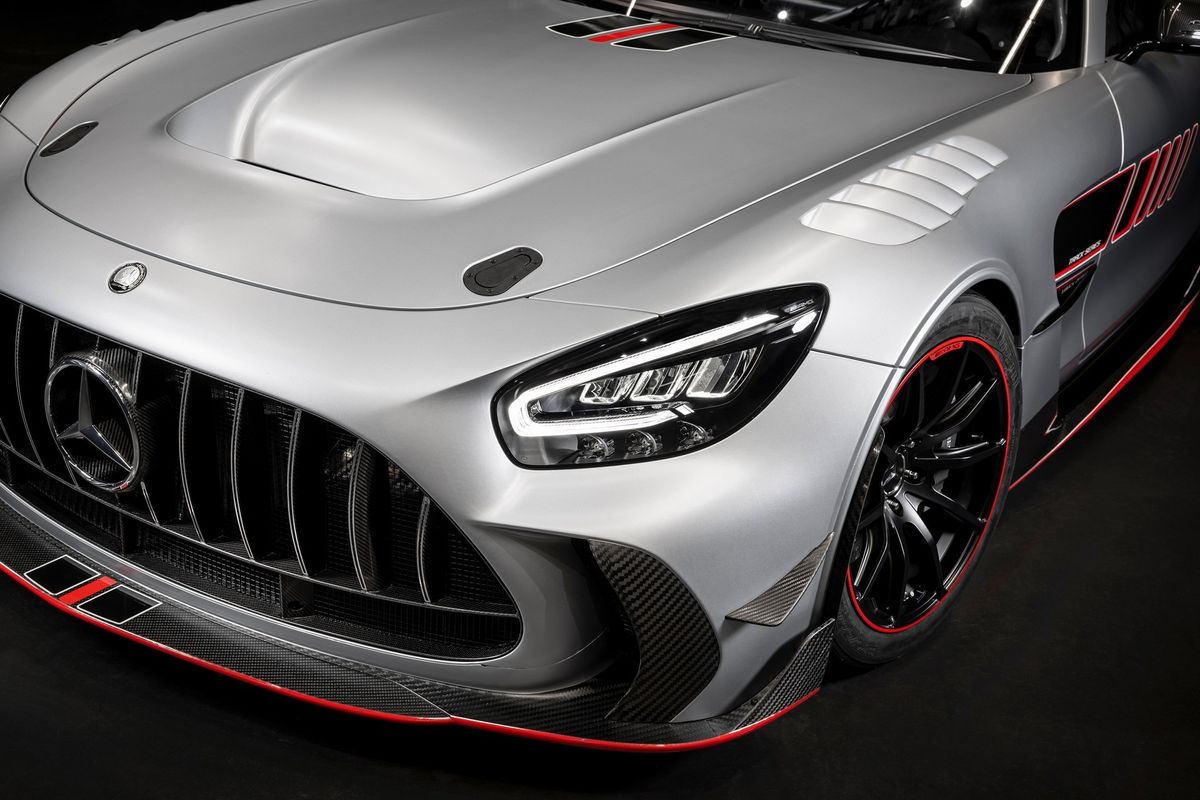
2023 Mercedes-AMG GT Track Series is the most powerful yet
Move over Black Series, you’ve been replaced. This is the ultimate iteration of the Mercedes-AMG GT, but there’s an unfortunate trade-off…
When Mercedes-AMG released the Black Series for the GT sportscar range, we all thought that would be the pinnacle. Mercedes-AMG doesn’t readily release Black Series models as there’s prestige and reputation at stake. Anything with a Black Series badge is usually the most potent of that model line up.
Take the Mercedes-AMG GT Black Series for example. It loses the trademark V8 biturbo rumble that we’ve come to adore and thanks to a flat-plane crank, it loses that AMG sound. This is the only downside as the power bump was significant. 537 kW from 6 700 to 6 900 rpm and 800 Nm of torque from 2 000 to 6 000 rpm – which represent improvements of 107 kW and 100 Nm respectively on the Mercedes-AMG GT R (430 kW/700 Nm).
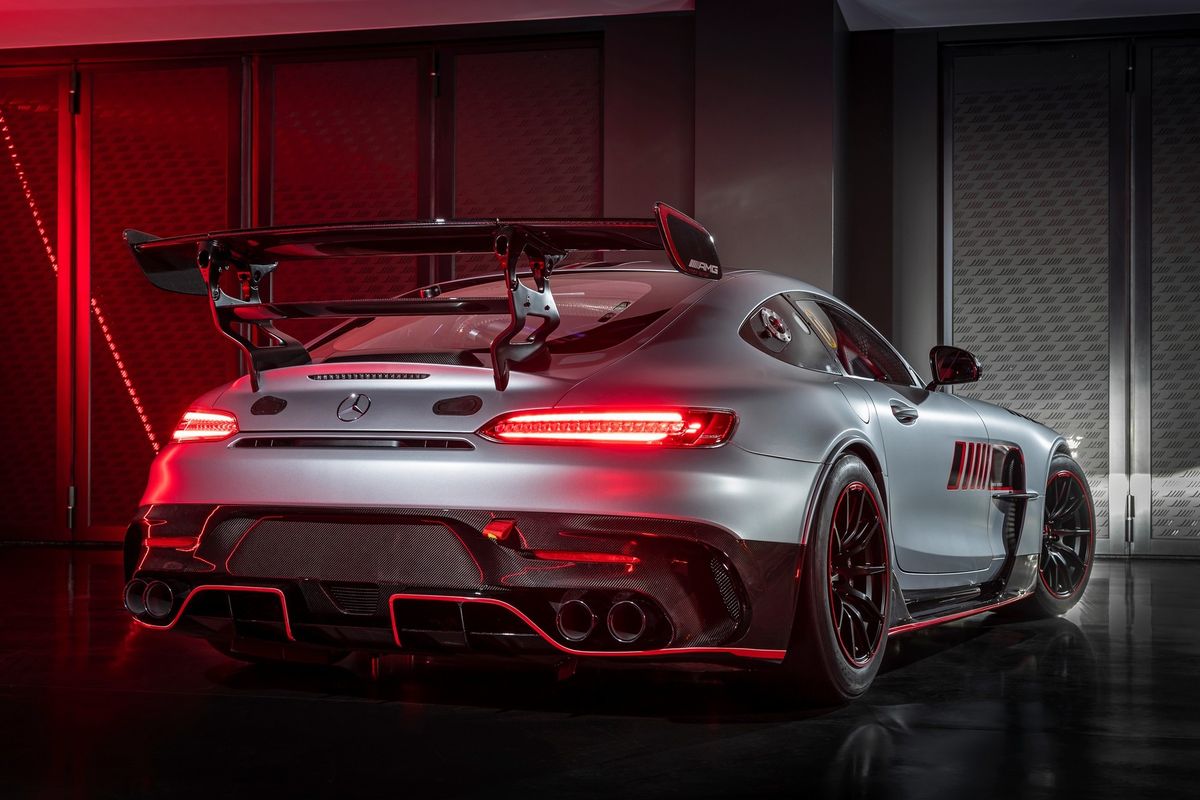
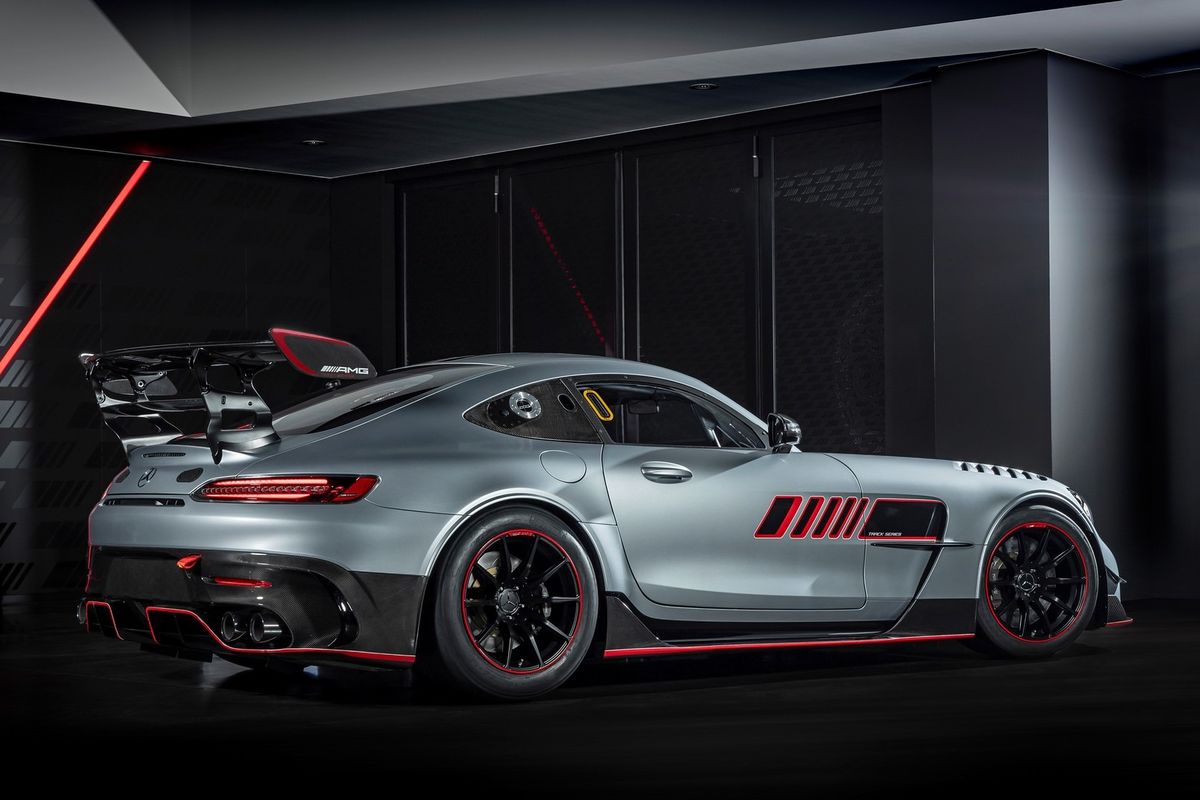
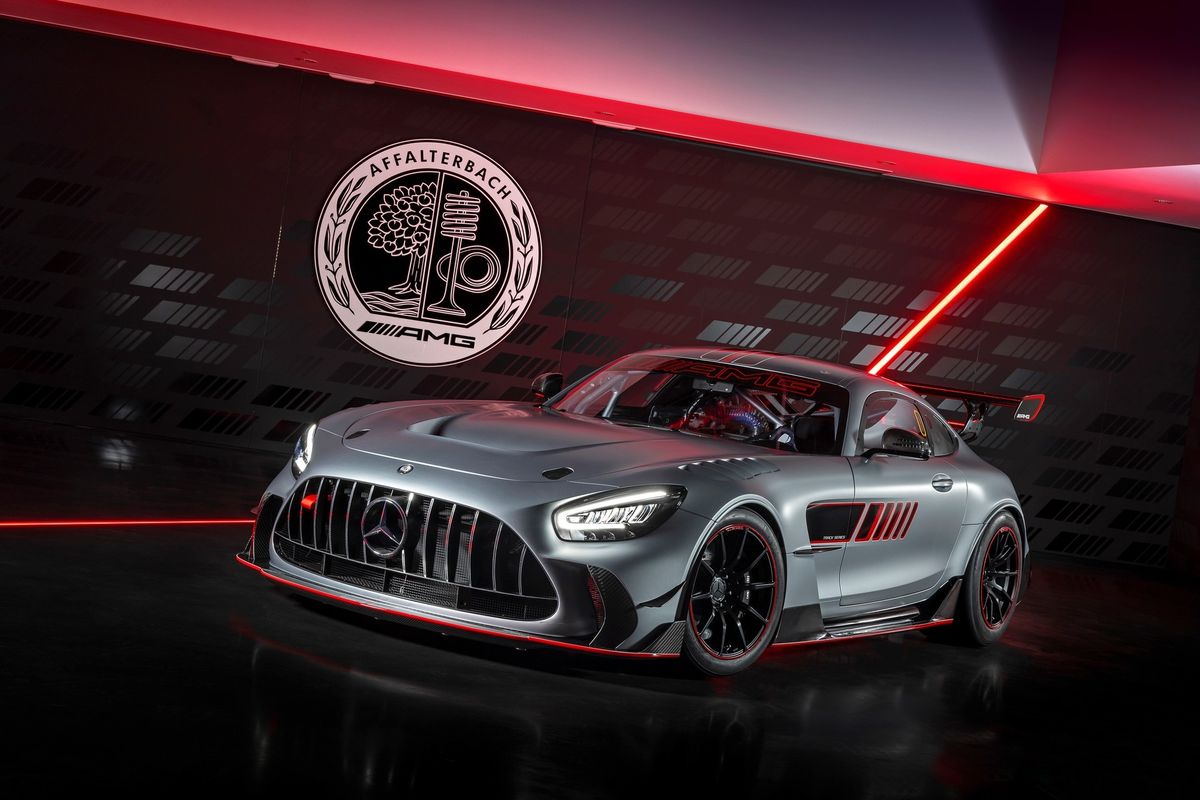
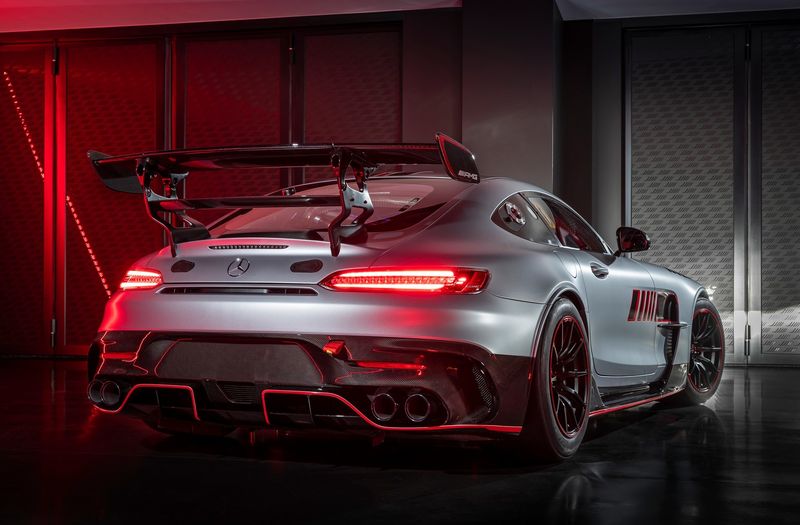
You’d think that would be enough right? Wrong. Meet the 2023 Mercedes-AMG GT Track Series. It’s based on the Black Series and has the same engine, but Mercedes-AMG has fitted new motorsport-grade fuel injectors, recalibrated the ECU and power has been bumped to 540 kW and 850 Nm. Power goes to the rear wheels via a new Hewland six-speed sequential racing gearbox.
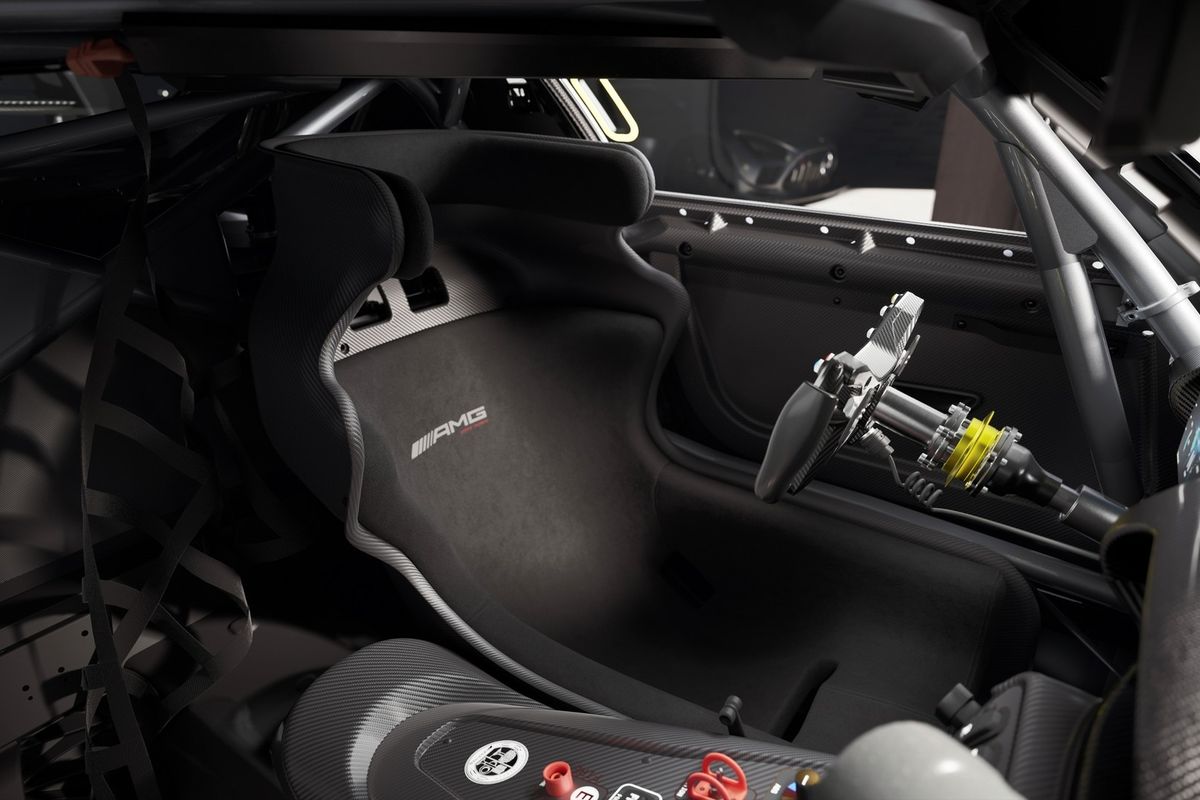
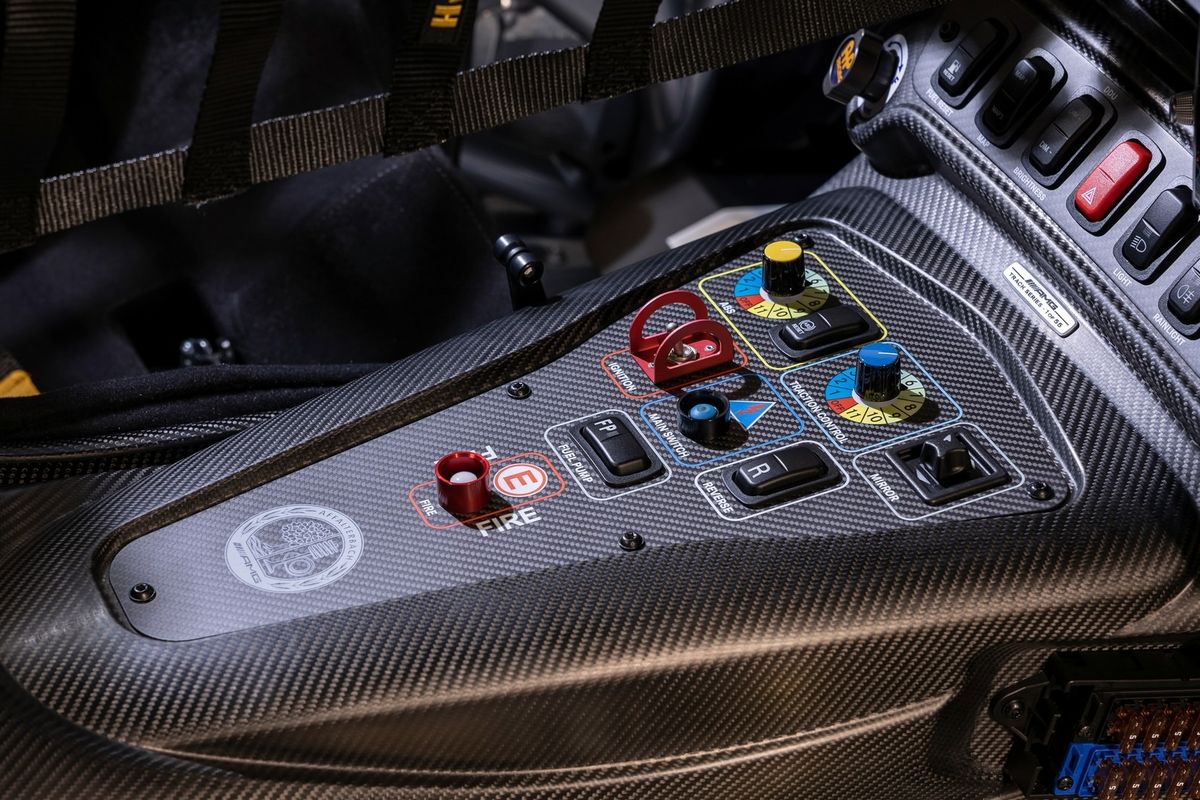
The emphasis is on racing here and the 2023 Mercedes-AMG GT Track Series features tech from the car maker’s GT3 and GT4 racing versions. There are 4-way adjustable Bilstein dampers, steel brakes, 12-mode racing traction control, 120-litre fuel tank, and a stripped-out cabin.
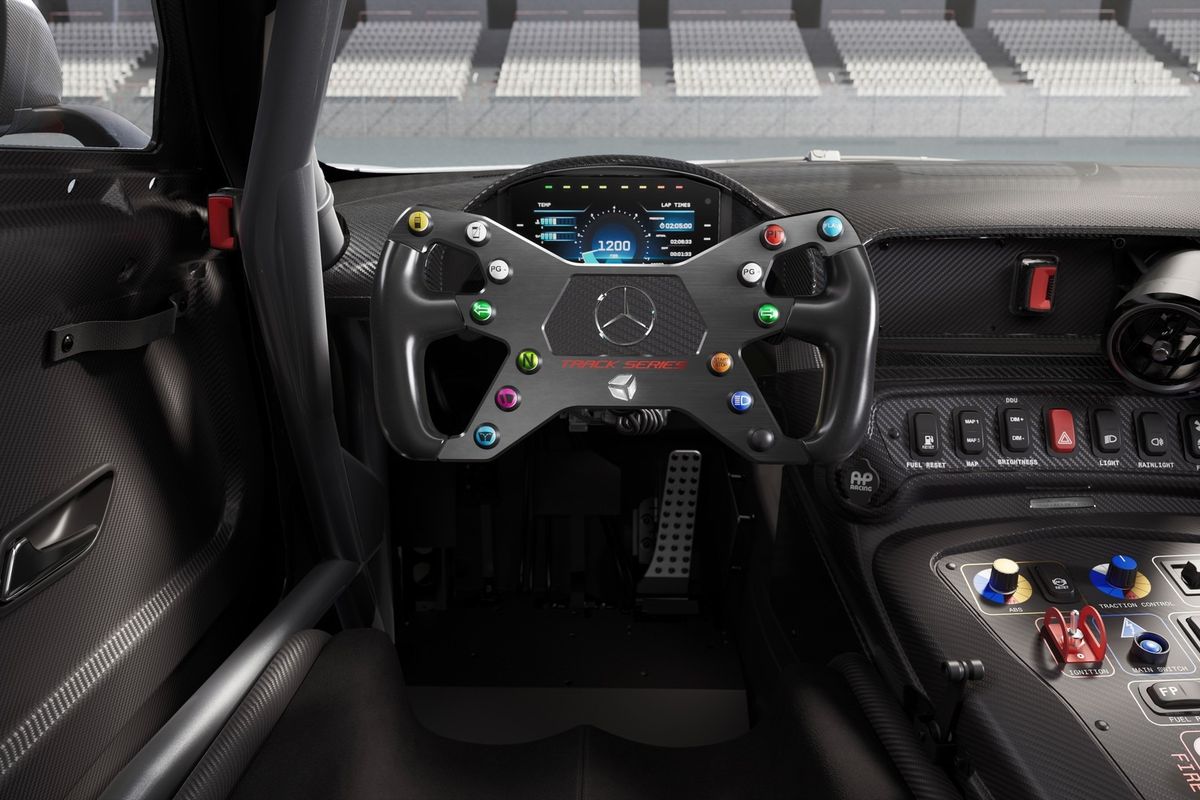
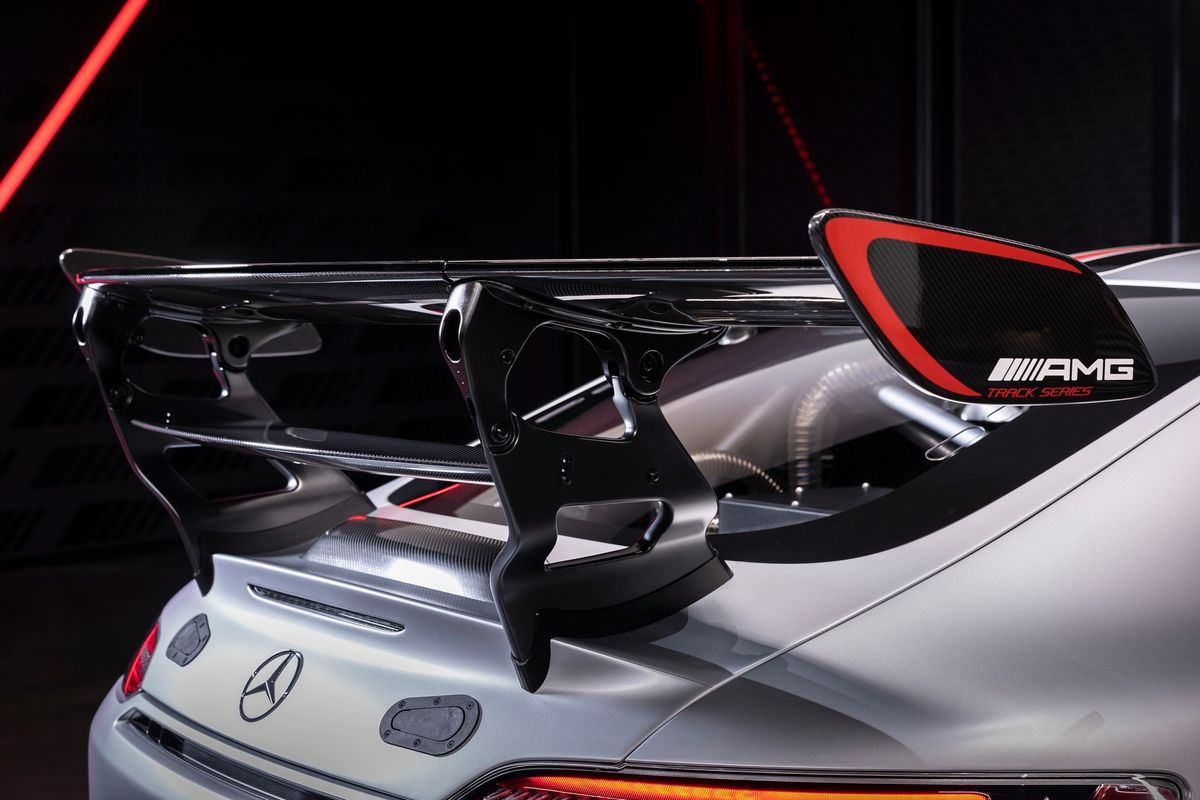
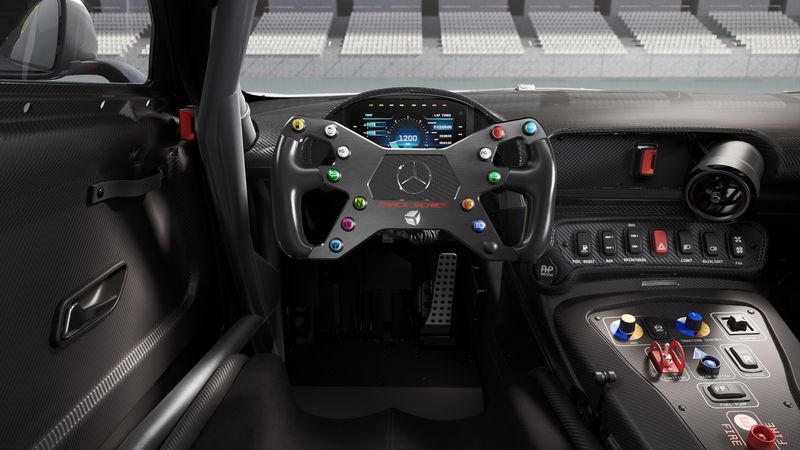
There are more wings on this car than in airports with smart aerodynamics being the order of the day to both aid performance and cooling. Inside, it’s basically a proper race car with a roll cage, plenty of carbon fibre, 5-point racing harness, fire extinguisher system as well as a custom steering wheel and Bosch driving display unit as well as a data logger.
There will be just 55 units built to celebrate 55 years of AMG and this brings us to the downside. The 2023 Mercedes-AMG GT Track Series is only track legal and cannot be driven on a public road. With a price tag of €369,000 (R6 million), it’s not cheap, but you are paying for the performance and the privilege of owning the most powerful AMG GT.
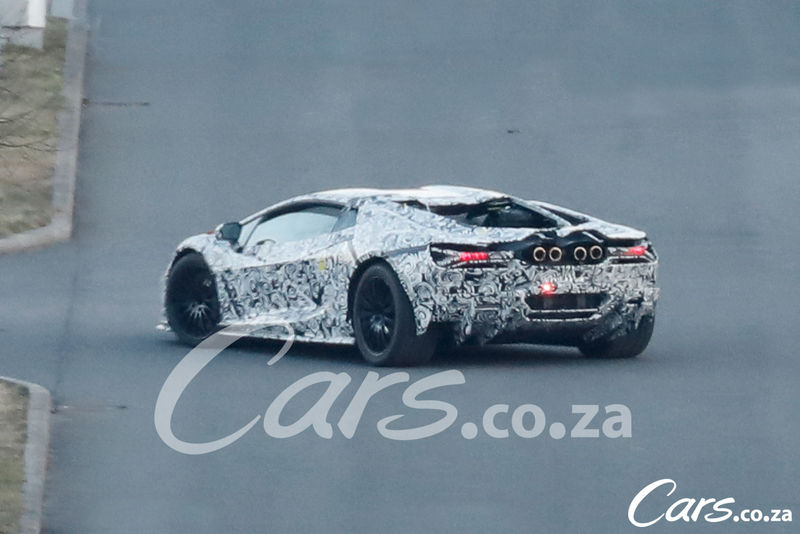
Rumours of the death of the V12-powered hypercar have been greatly exaggerated as these spy shots show the 2023 Lamborghini Aventador. Here’s what we know so far.
Picture credit: S. Baldauf/SB-Medien. We have paid for these photos and at the photographer’s request, have watermarked them.
We’ve been covering the supposed demise of the V12-powered Lamborghini for some time. In fact, in May 2021, Lamborghini held a press conference detailing its electrification plans where it said the last two V12-powered vehicles would be revealed. There was no mention of anything for 2022, and what we see here is likely an electrified V12.
As if the standard Lamborghini Aventador is not powerful enough, electrification should take it even further down the hypercar road. The benefits are immense, not only will the vehicle have an instant torque boost, but if Lamborghini could engineer a pure electric mode, that’ll see it clear some taxing/emission hurdles.
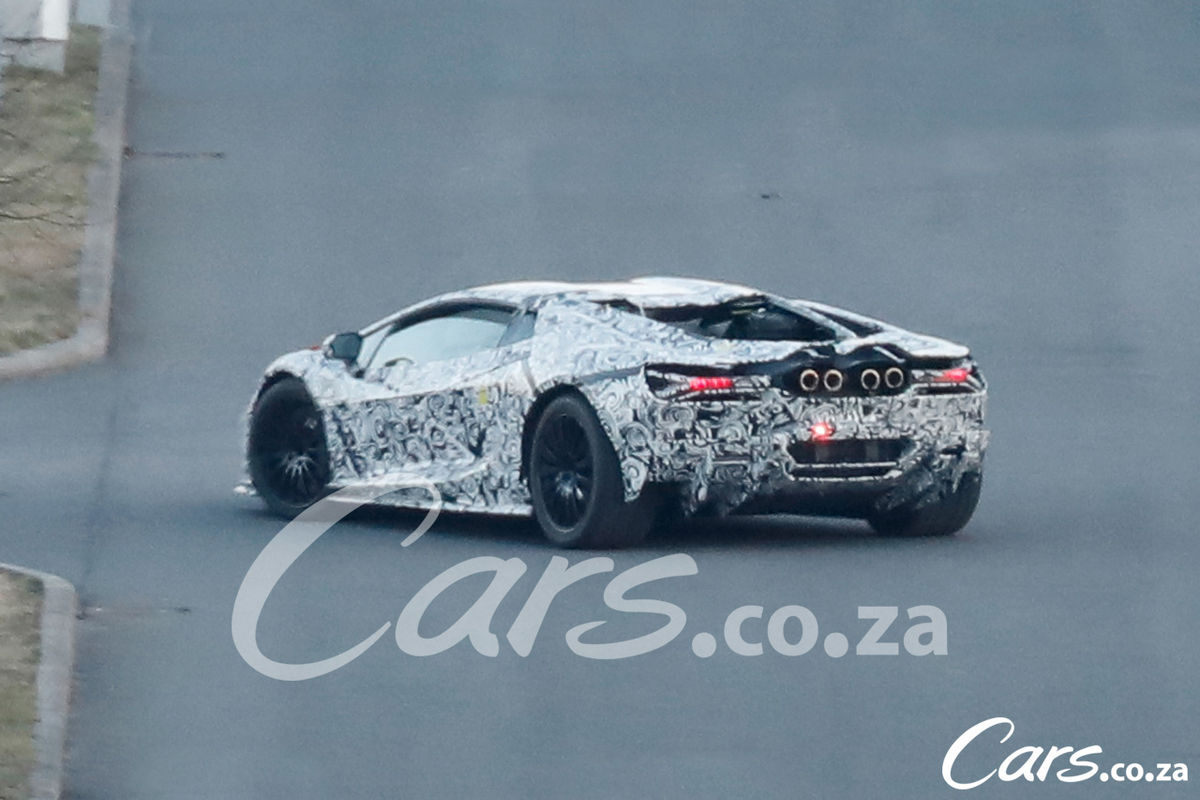
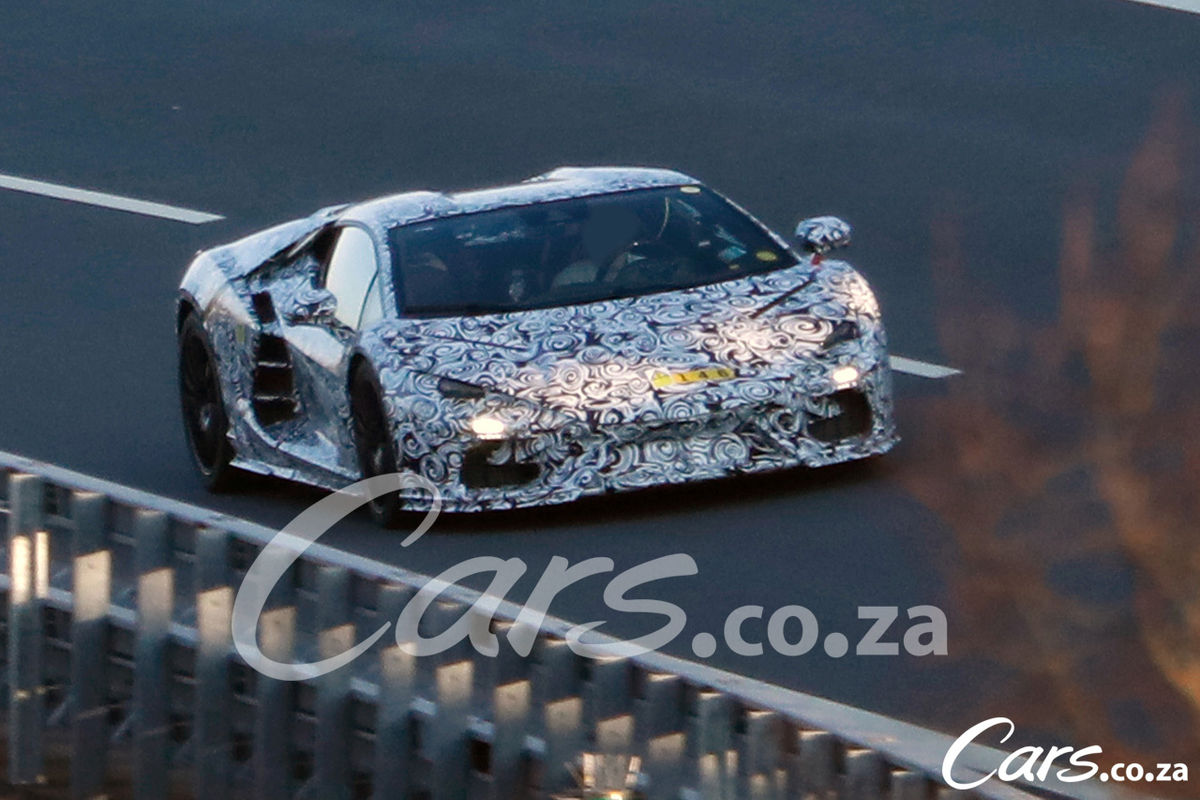
Our spy photographers spotted this 2023 Lamborghini Aventador with yellow stickers on the sides, the giveaway that this model is indeed a hybrid. It’s still heavily camouflaged for now, but the headlights and tail lamps are clearly visible. Also note how gaping those air intakes are.
Power outputs are yet to be confirmed. The last iteration of Aventador was the LP780-4 Ultimae which had a 6.5-litre naturally-aspirated V12 delivering 574 kW and 720 Nm. With electrification in the mix, could we see 600 kW on the table with the 2023 Lamborghini Aventador?
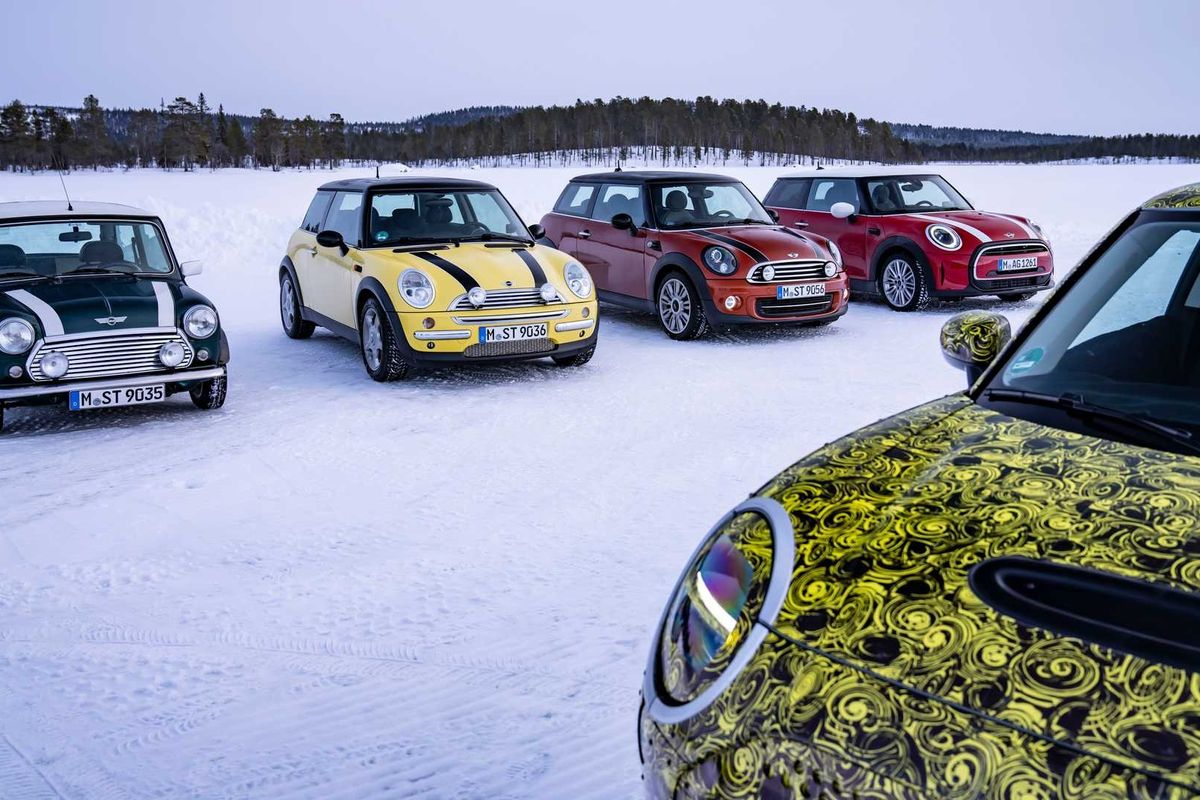
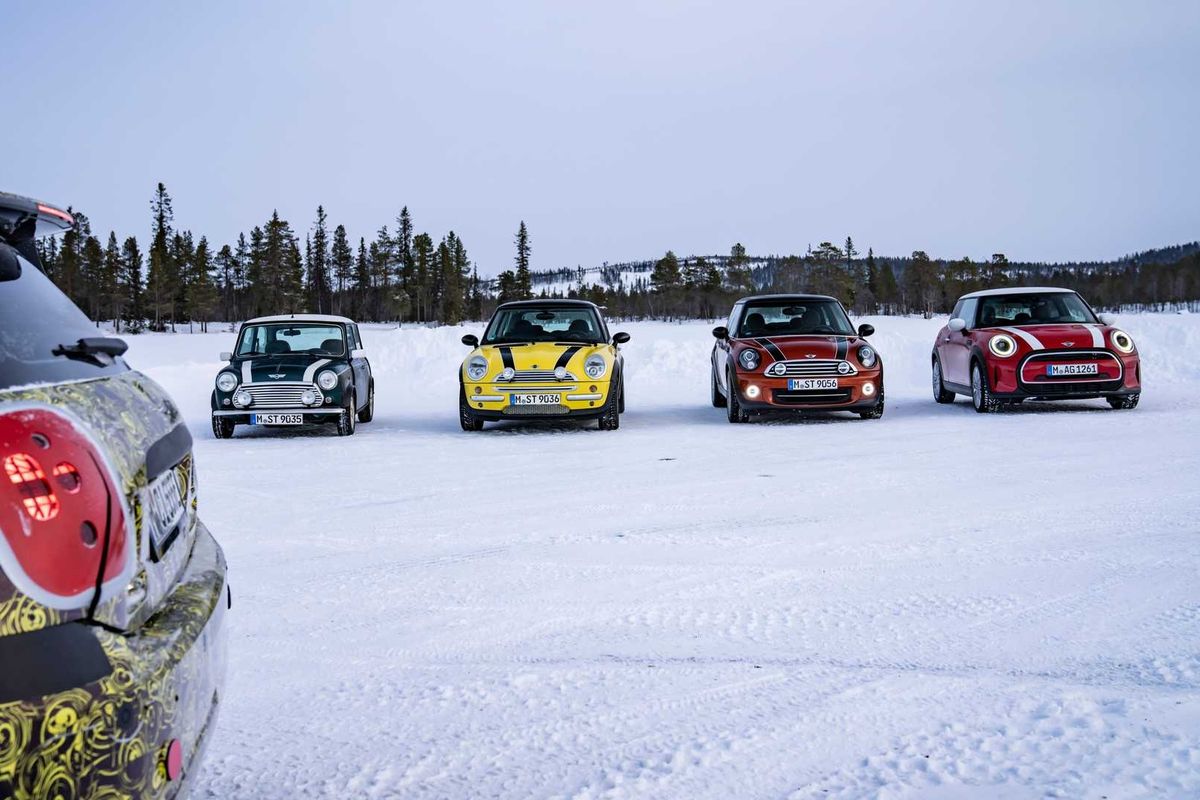
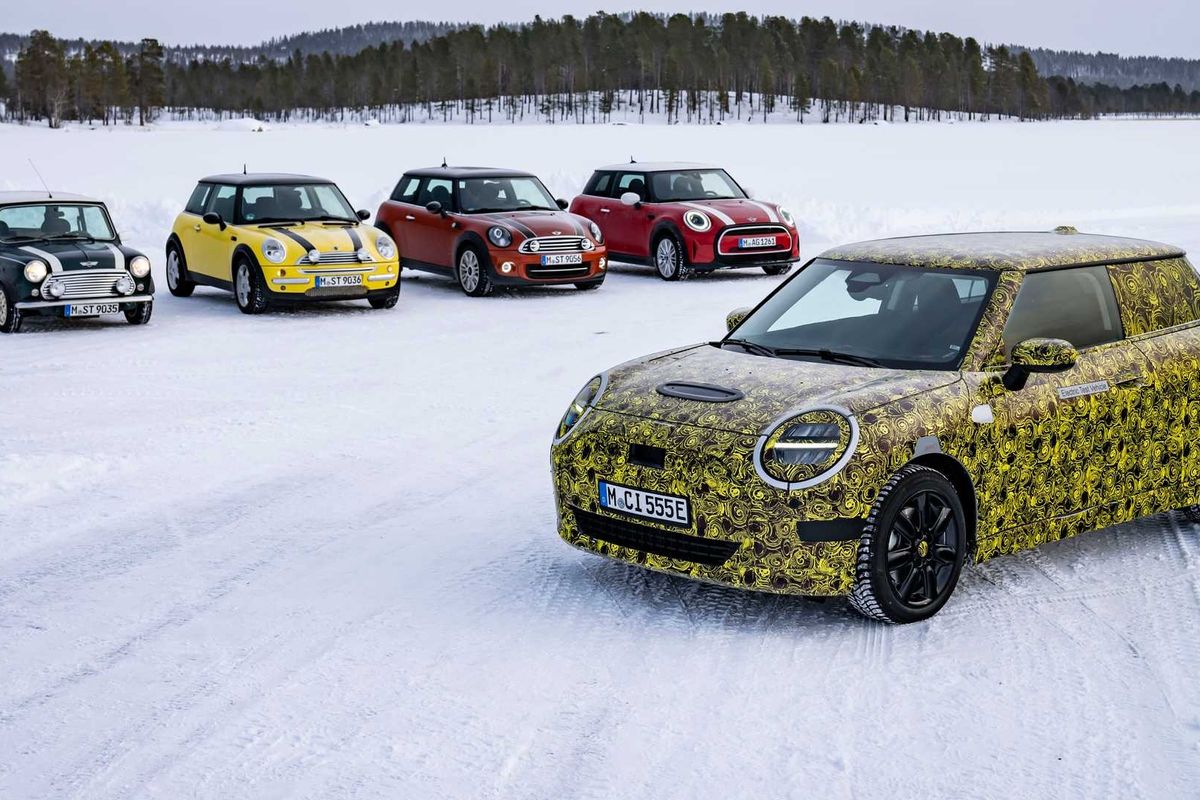
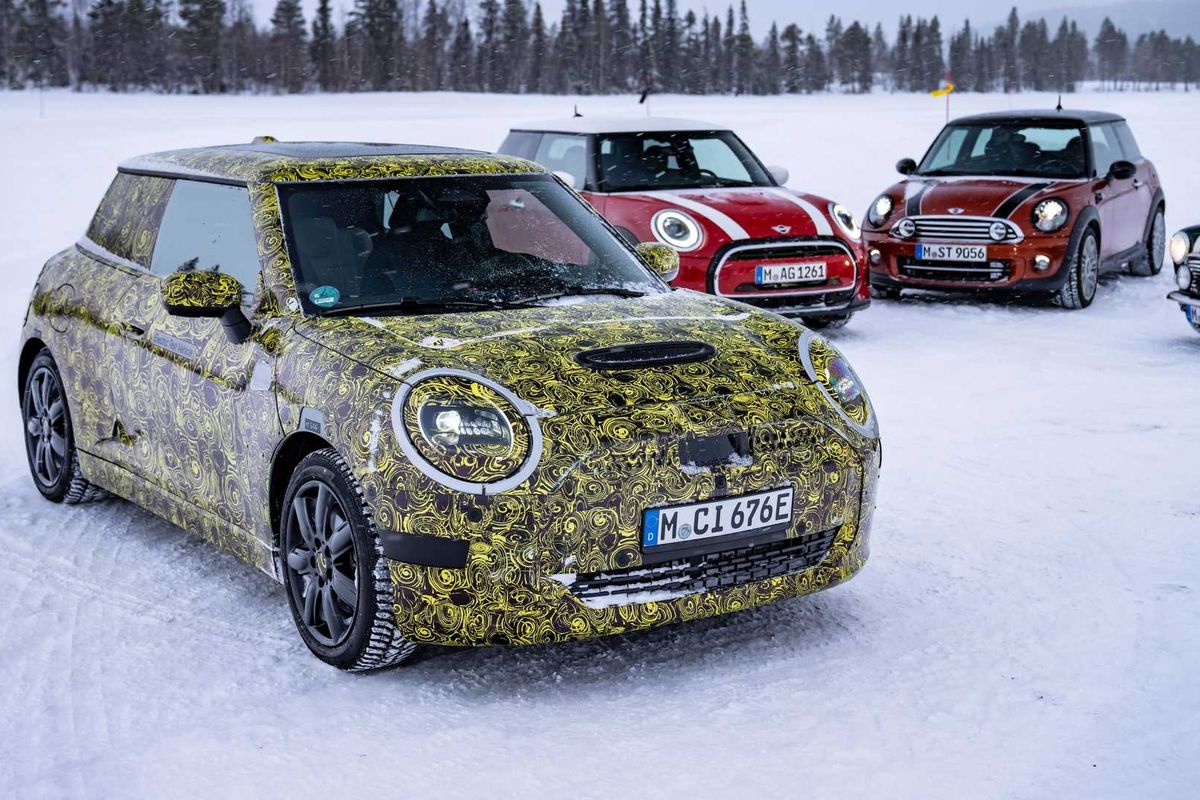
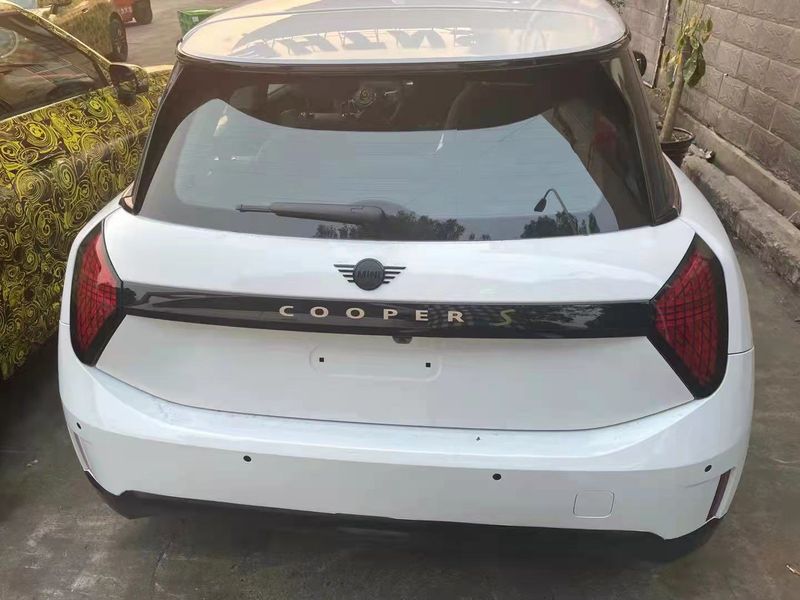
The British carmaker is hard at work putting the finishing touches on the all-new 2023 Mini Cooper. Here we see a prototype joined by all generations of Mini Cooper in Sweden.
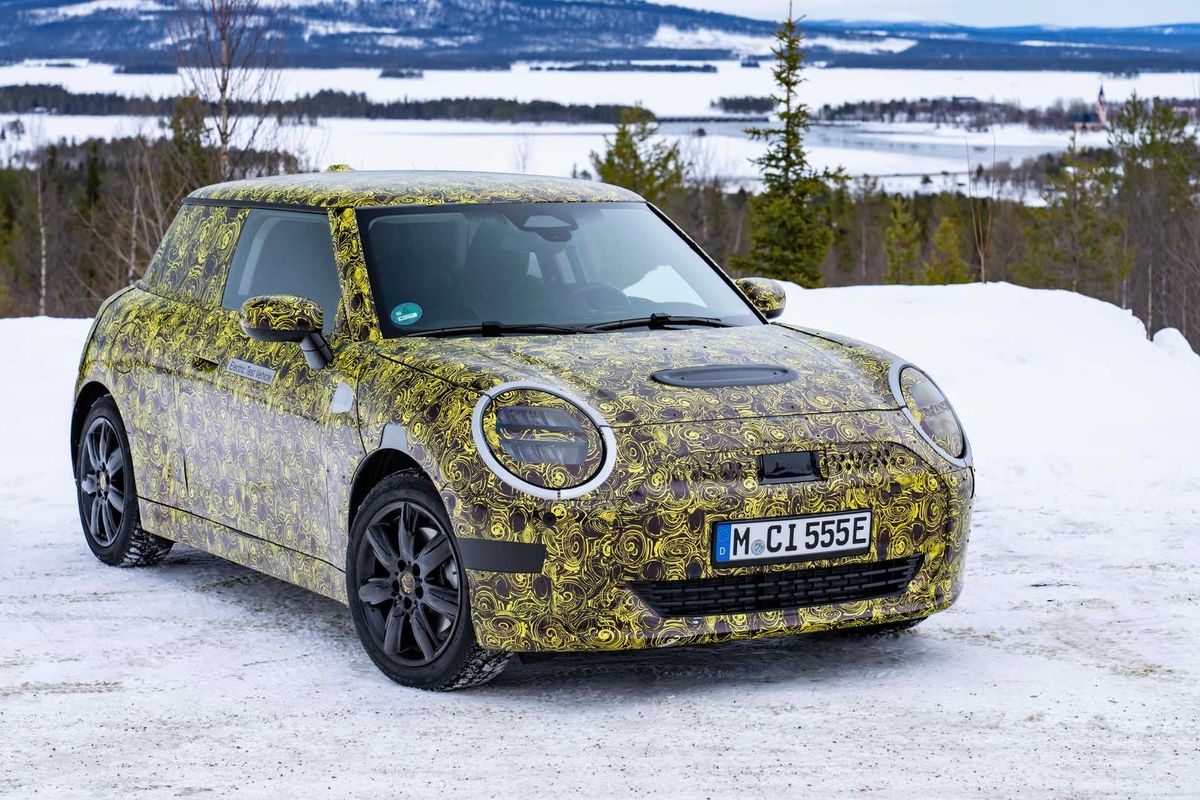
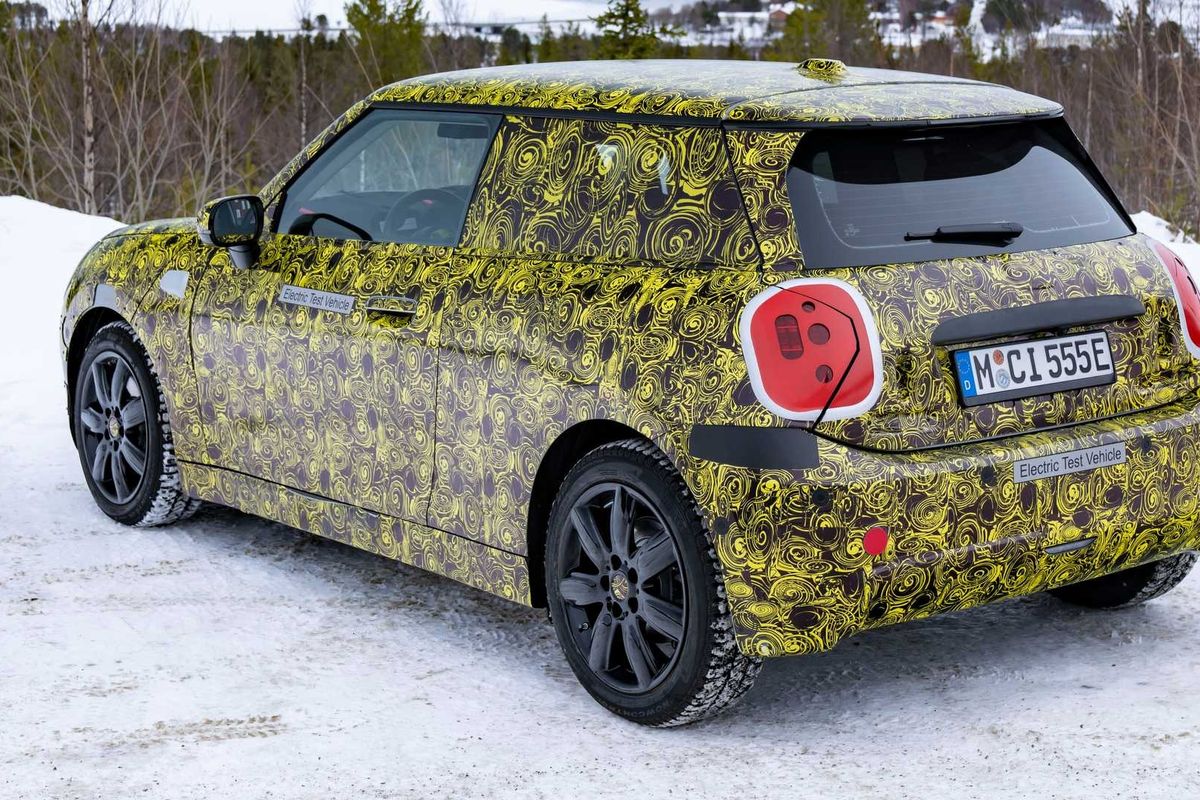
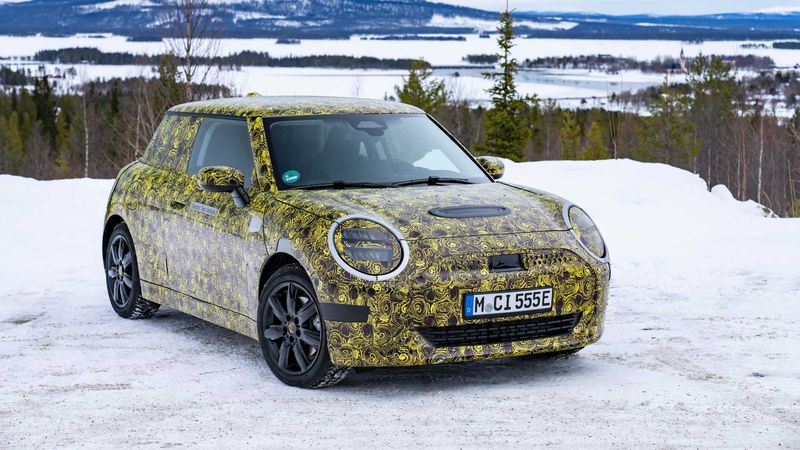
The yellow camouflaged vehicle you see here is the all-new 5th-generation 2023 Mini Cooper and it is a fully electric model. If you’re a fan of the rather excellent petrol engines, you do not need to be worried as they’ll continue to be offered for the all-new model.
Why are they in Sweden, you ask? There are many reasons actually. Firstly, the location is pretty remote and there’s little chance of prying eyes or masses of people. Secondly, there are purpose-built test centres owned by the car companies, complete with race tracks, snow-covered roads, and more. The cold conditions are also a good place to test insulation, engine durability as well as heating systems.
We suspect that most of the hard work has been done already and now the 2023 Mini Cooper’s driving characteristics are being refined with a focus on suspension, steering, and chassis setup. Strangely, as great as the petrol-powered Mini Coopers are, our time with the electric Mini was a grin-inducing affair. Despite its compromised range, it’s arguably the best-driving Mini in the city. If there ever was a brand whose products will be just as good with electrification, it’s Mini.
The good news is that Mini is promising the all-new model will still be great fun to drive and retain all the entertaining traits that have made owners fall in love with their cars over 4 generations. Mini is also working on a new Countryman which is said to grow in size and we reckon it’ll be similar in size to that of the BMW X1.
Although teased today, the new Mini won’t be going on sale until the latter half of 2023. If you can’t wait that long, a leaked image surfaced recently, giving us some idea of the styling.
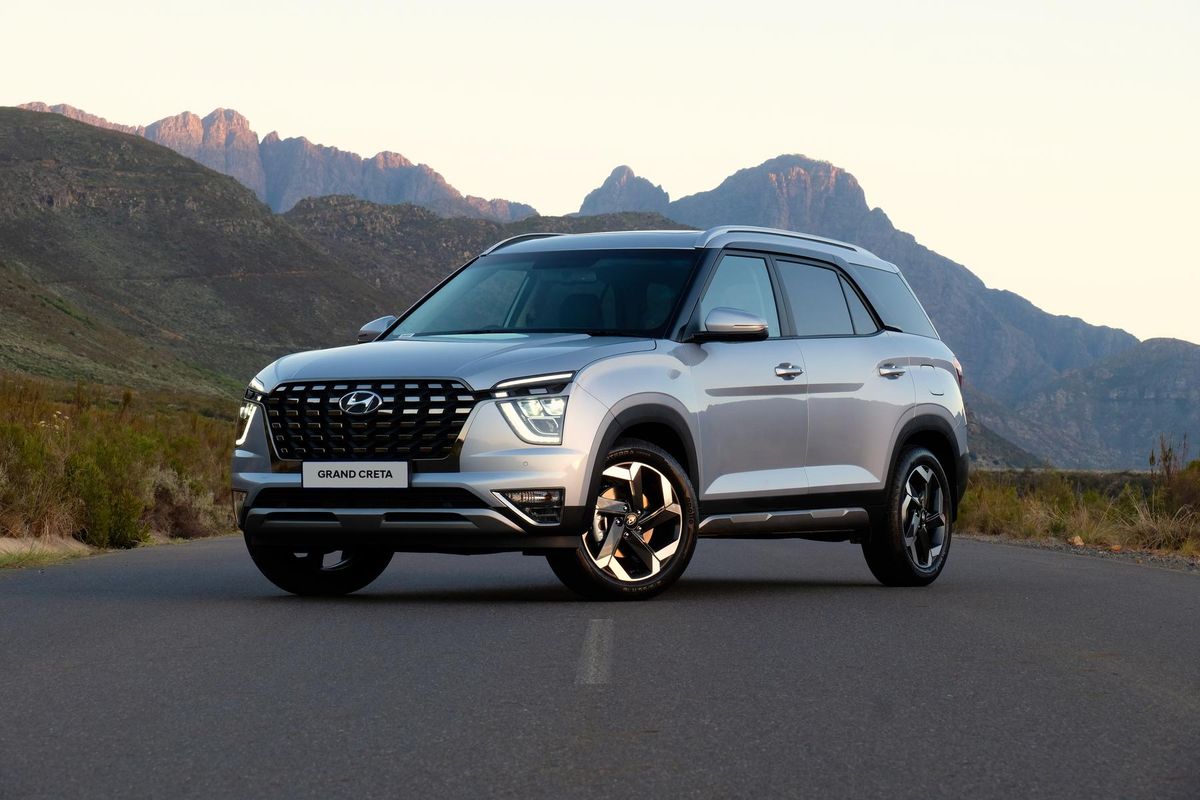
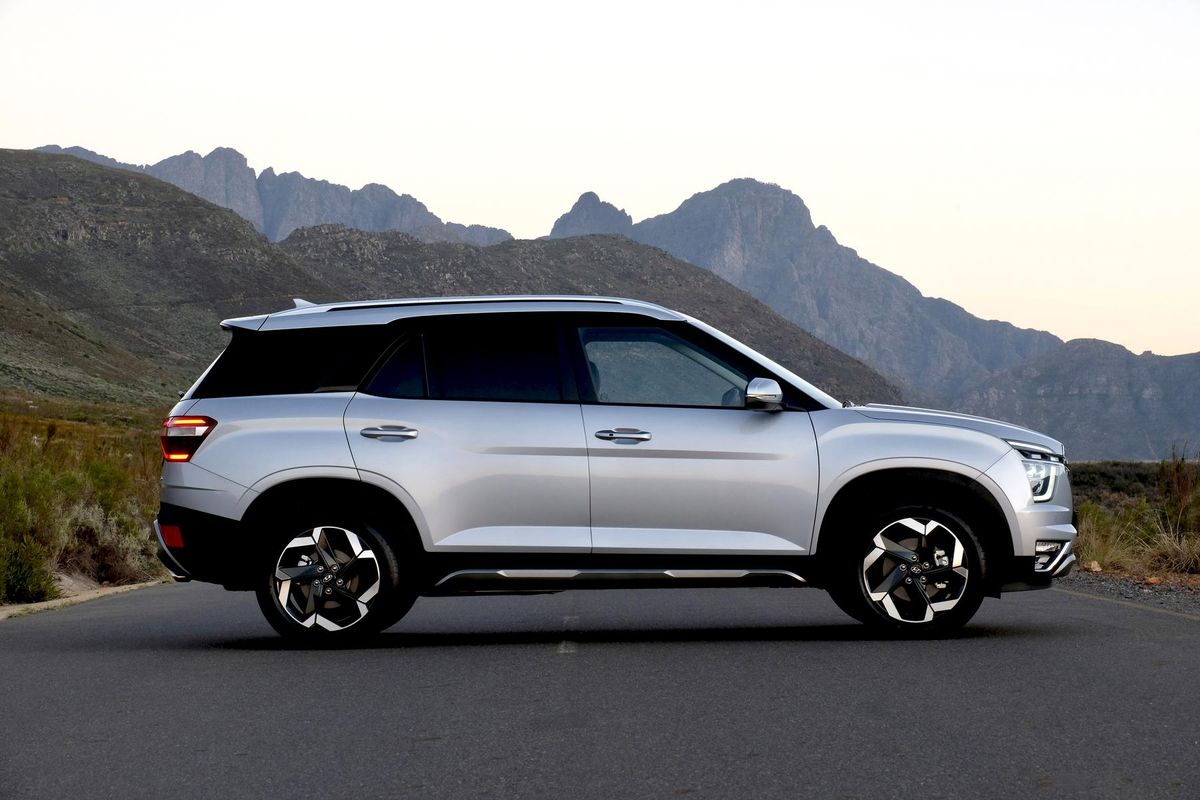
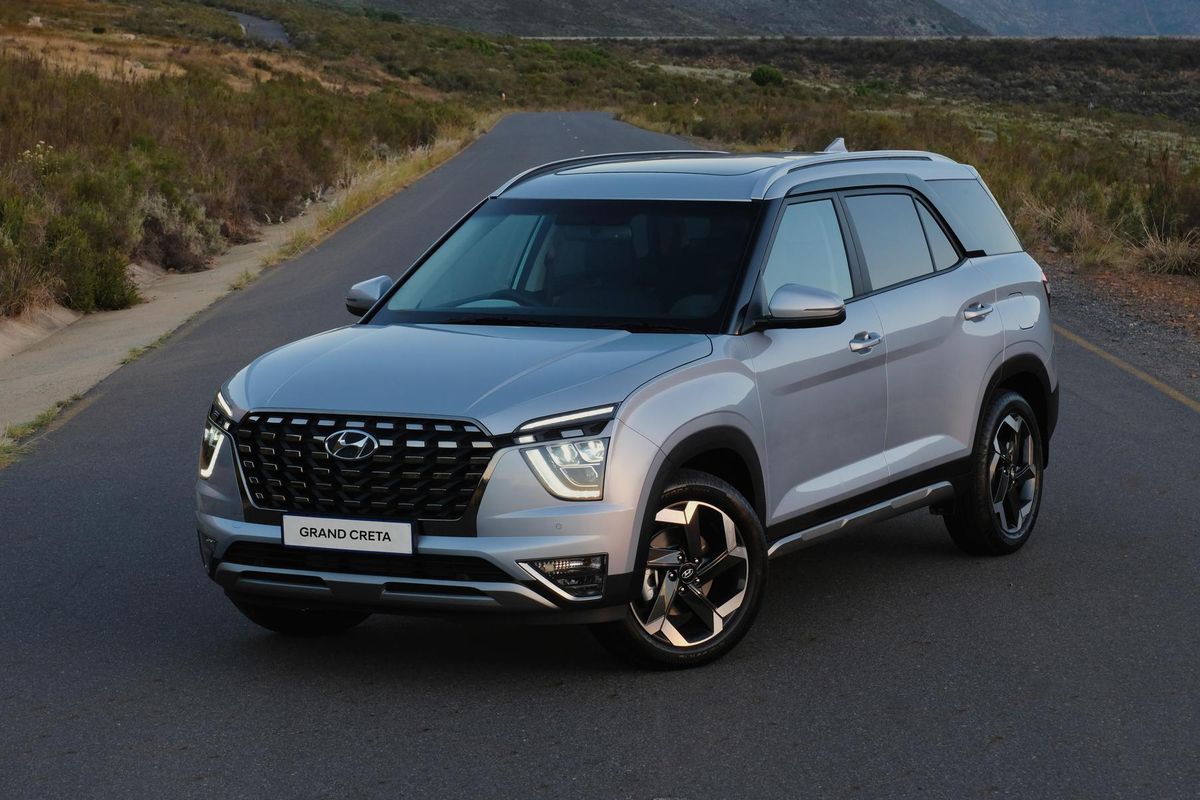
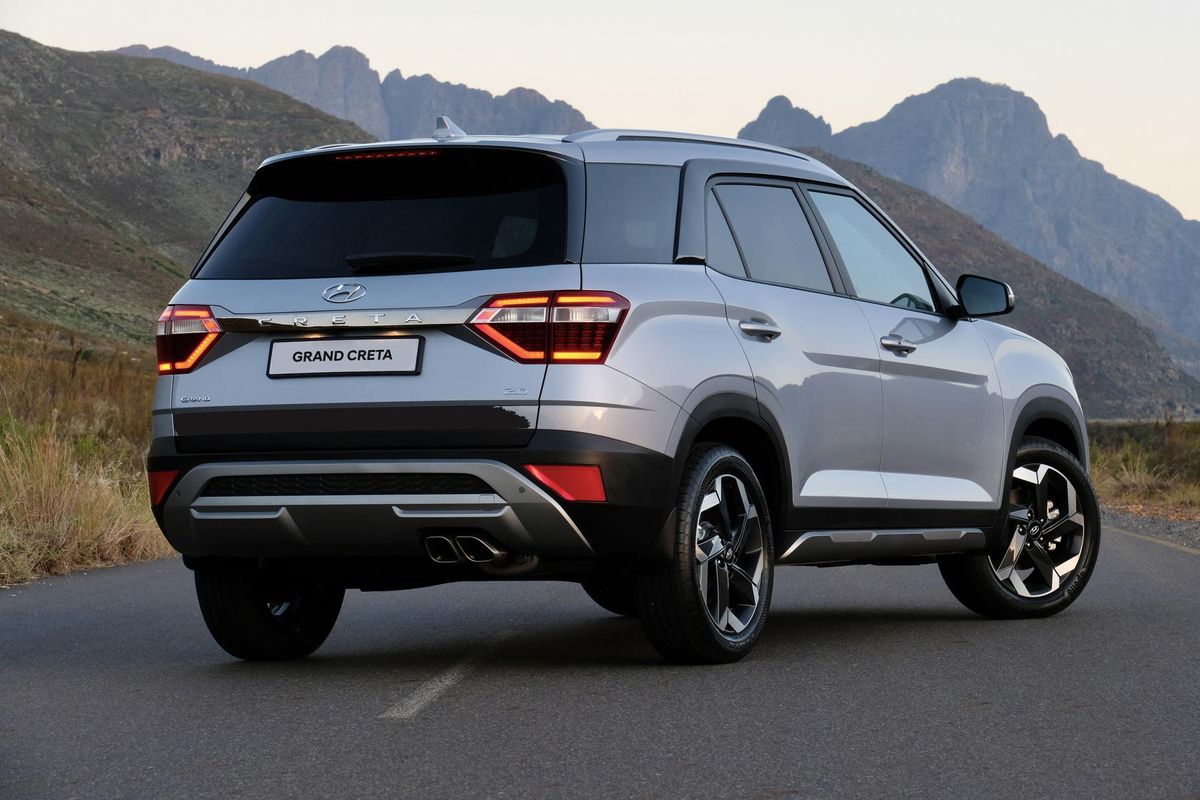
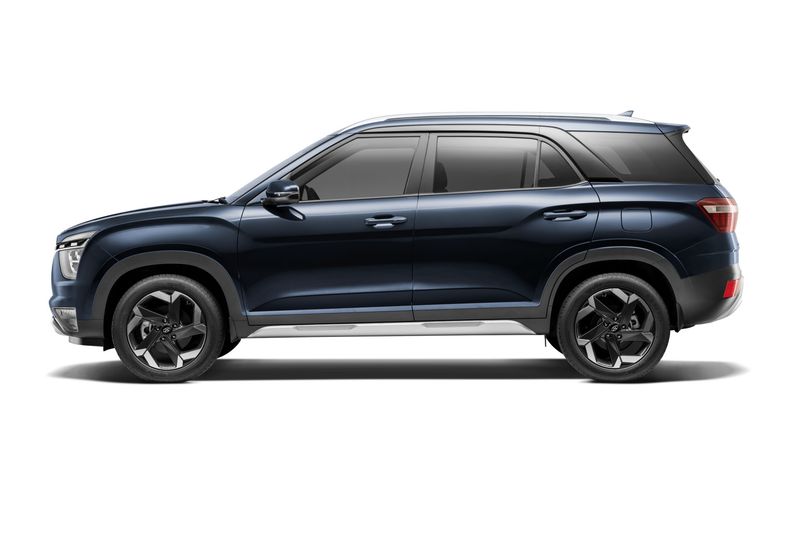
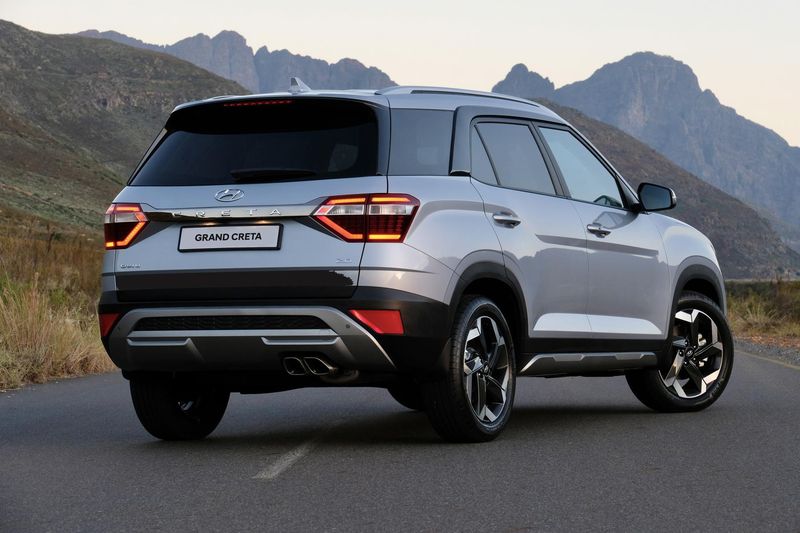
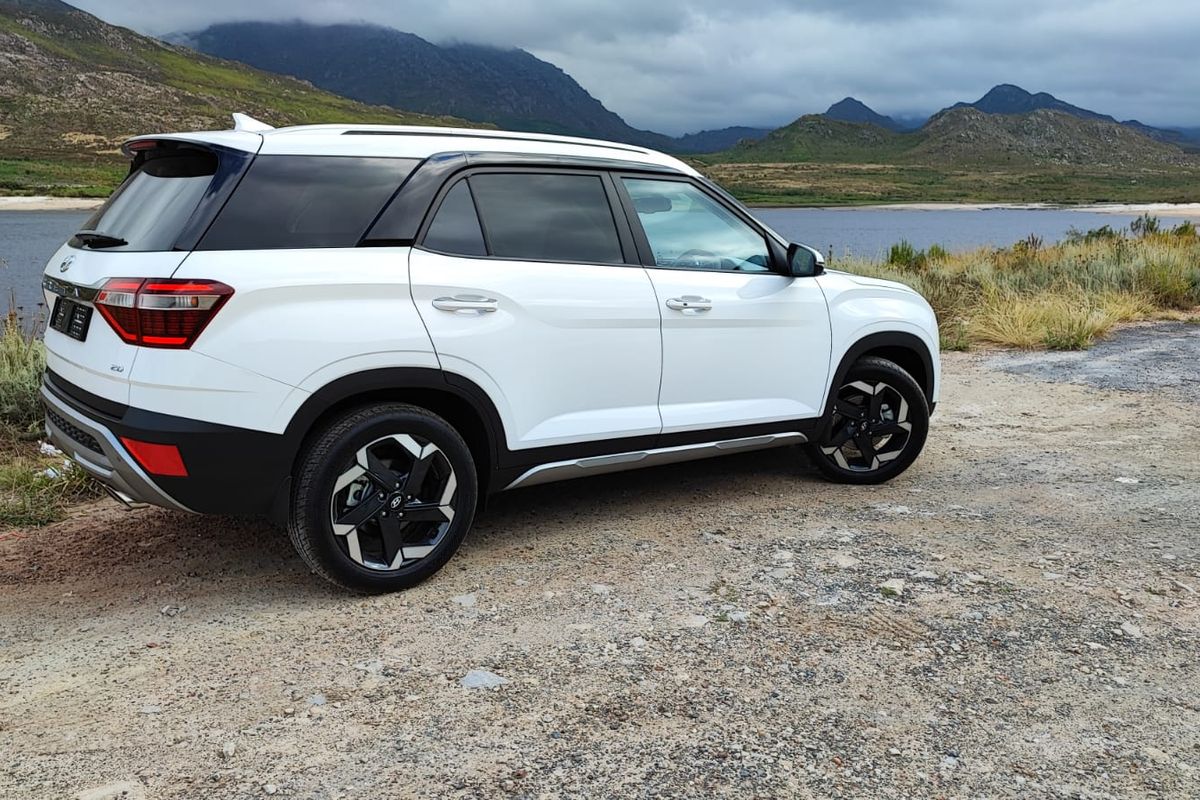
With the arrival of a 7-seater variant of the popular Creta, Hyundai’s local crossover line-up has expanded yet again. Is the Grand Creta worth a look? Where does it fit in the Korean brand’s SUV range? We answer those and other questions here.
Ever since Hyundai introduced its 1st-generation Creta in Mzansi in 2017, the Korean brand’s compact family car/small(ish) crossover has been very popular in our market.
Now in its 2nd generation (which arrived here last year), the Creta still notches up quite a few sales every month, even though the competition (including the Kia Seltos, Haval Jolion and Toyota Corolla Cross) is now much tougher than it was 5 years ago. With a wide choice of powertrains on offer, there really is a Creta for everyone. Well, almost. What if you needed 7 seats or more luggage capacity than what the standard Creta offers?
Enter the Hyundai Grand Creta, a stretched version of the Indian-built Creta. The facelifted Hyundai Creta is due to touch down in SA in the next few months, and that model will be sourced from Indonesia.
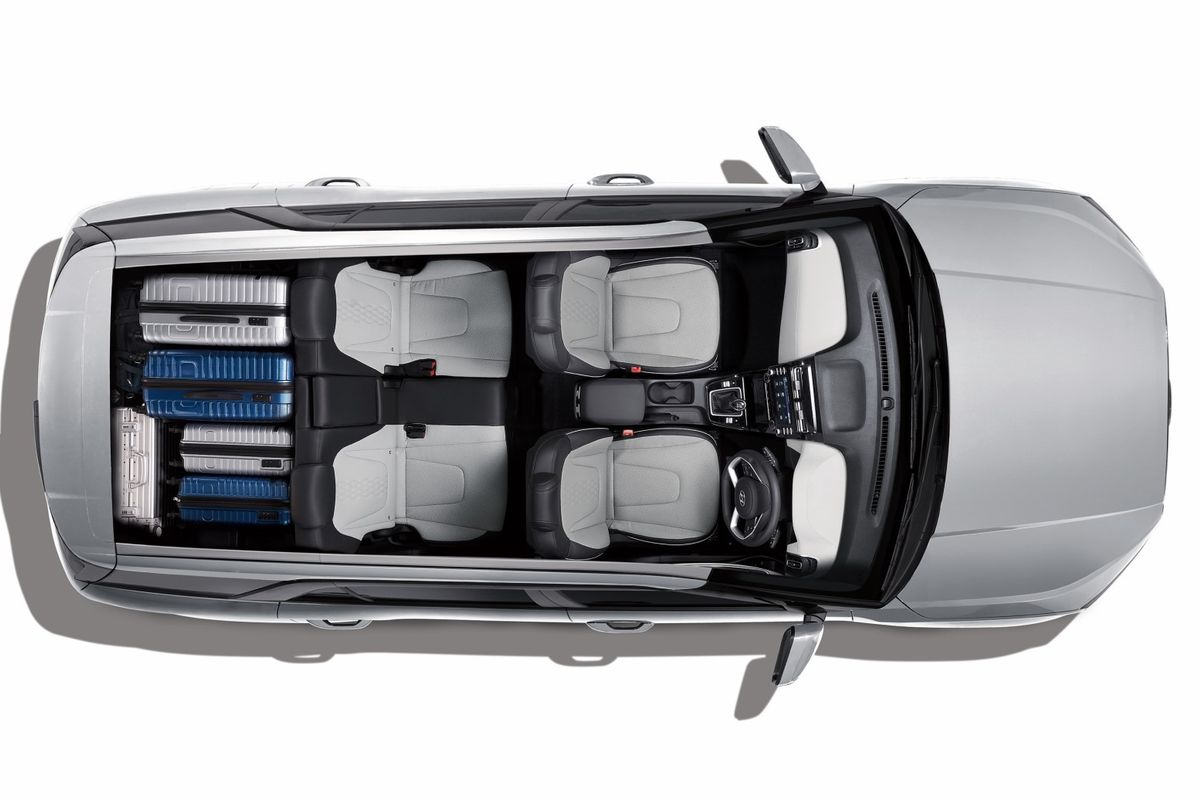
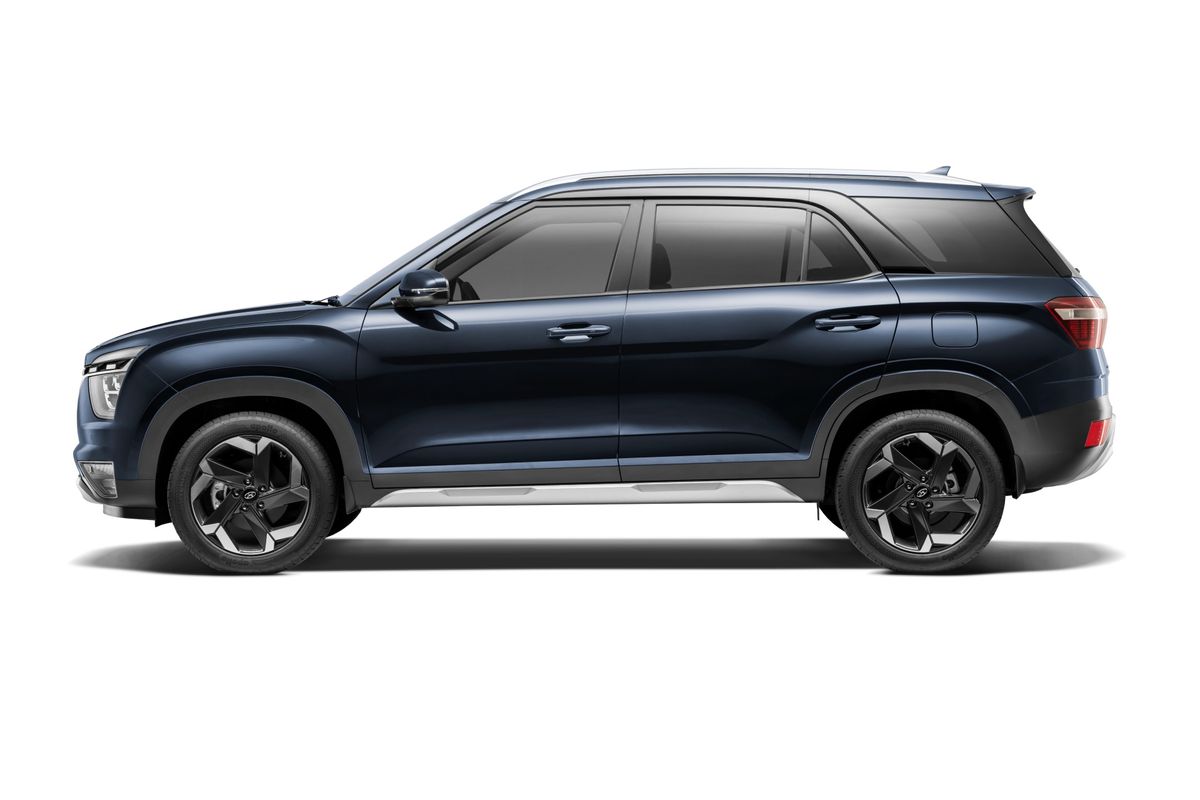
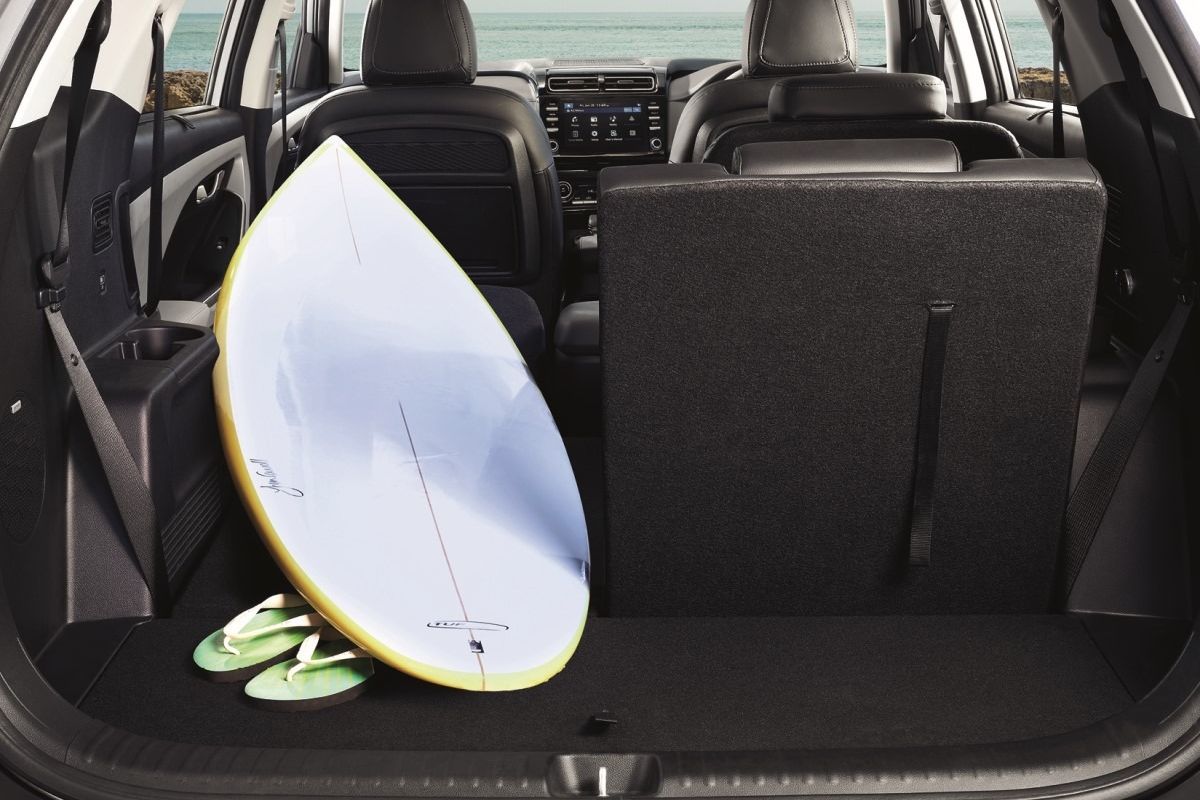
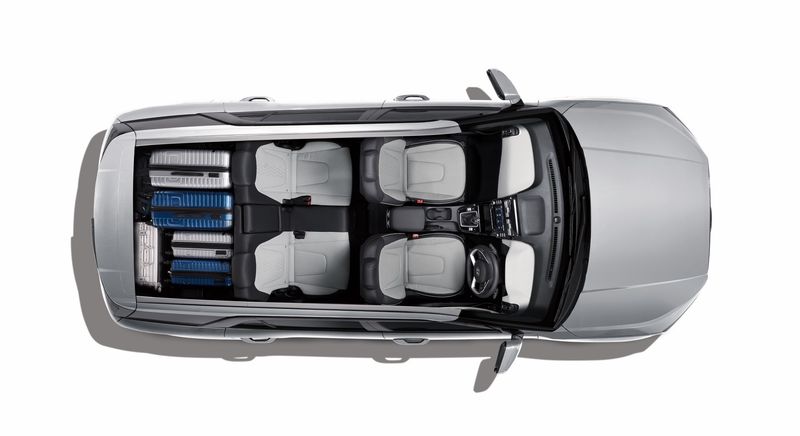
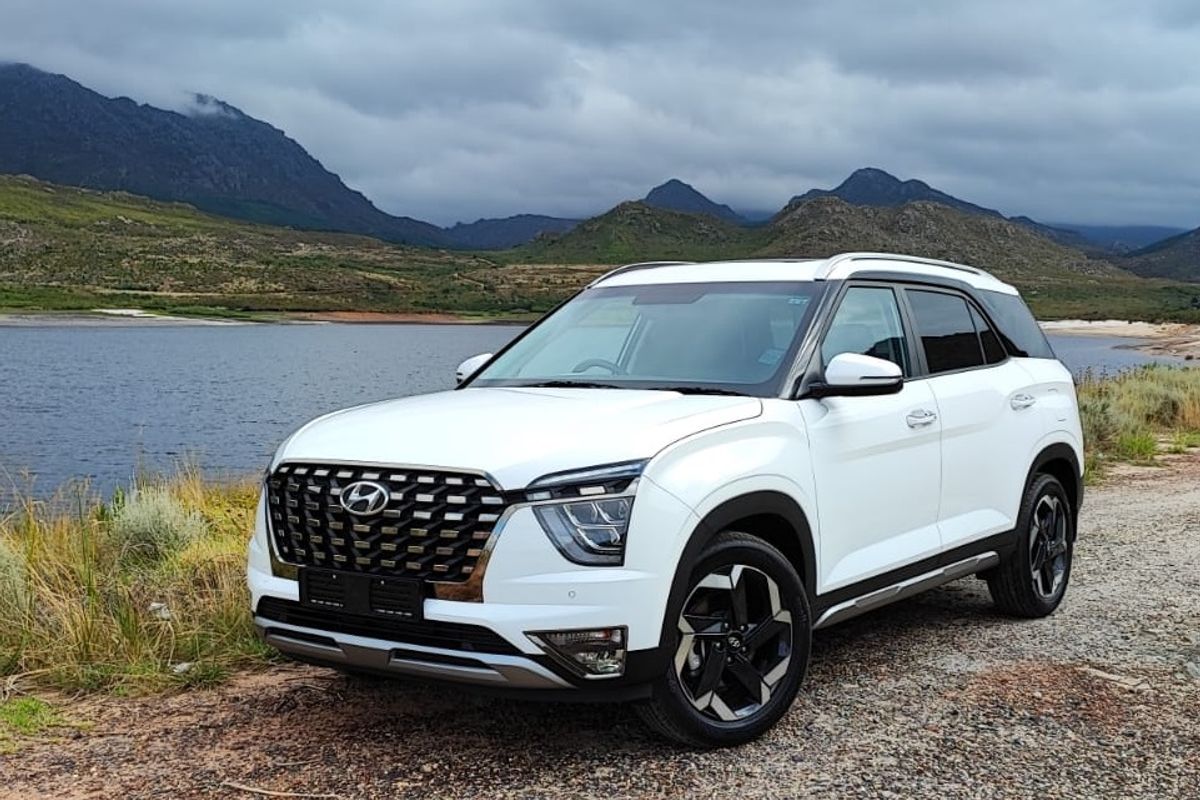
To get from the standard Creta to the Grand Creta, Hyundai reworked its K2 platform. Compared with the Creta, the Grand Creta (known as the Alcazar in its home market) is 200 mm longer, fractionally taller, and has a 150-mm longer wheelbase. Frustratingly, the Korean brand’s spec sheet does not state a standard (5-seater configuration) luggage capacity; it does claim that when the 50/50 split rear seats (which are only suitable for seating children) are in use, the load bay will hold 180 litres, but that number balloons to a generous 1670 litres (of utility space) when the 2nd- and 3rd rows are folded.
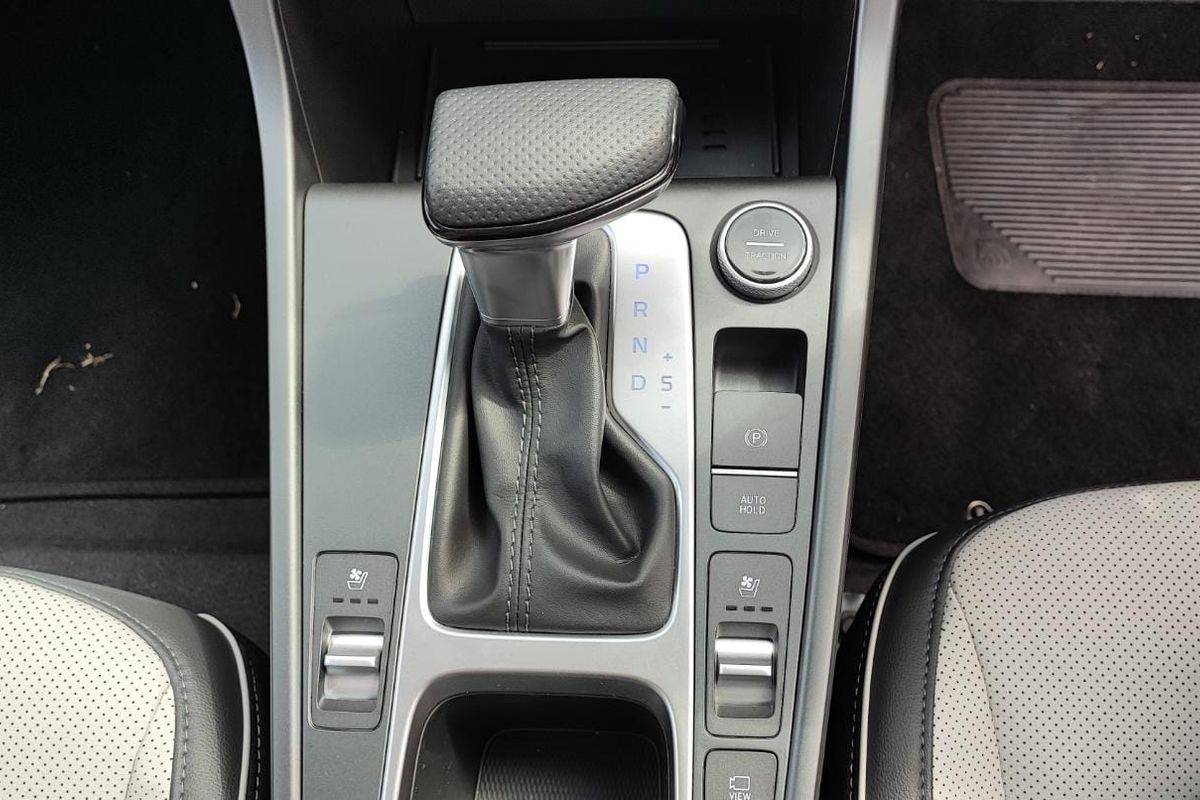
The newcomer’s line-up follows a similar strategy to that of the standard Creta. The engines on offer are a 2.0-litre 4-cylinder naturally aspirated petrol unit with 117 kW and 191 Nm of torque and a 1.5-litre 4-cylinder turbodiesel motor that produces 85 kW and 250 Nm. The entry-level derivative has a 6-speed manual gearbox, while the rest of the range employs a 6-speed automatic transmission.
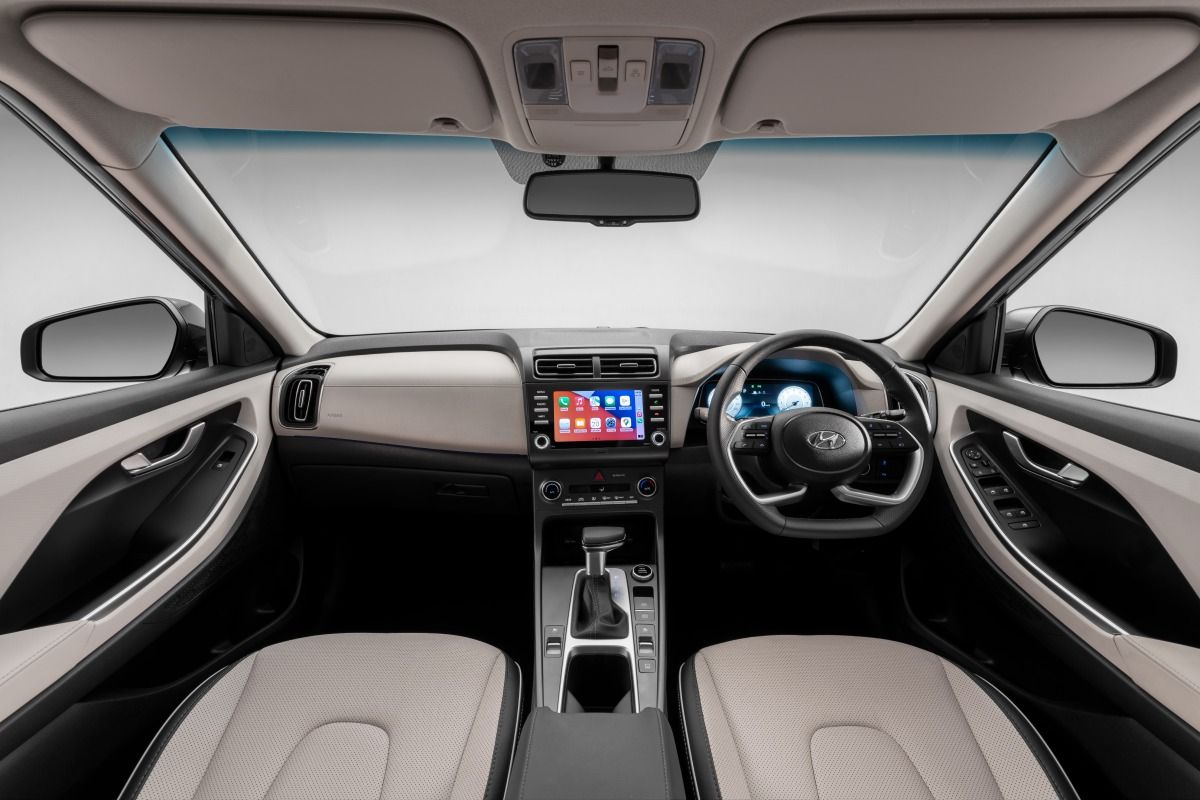
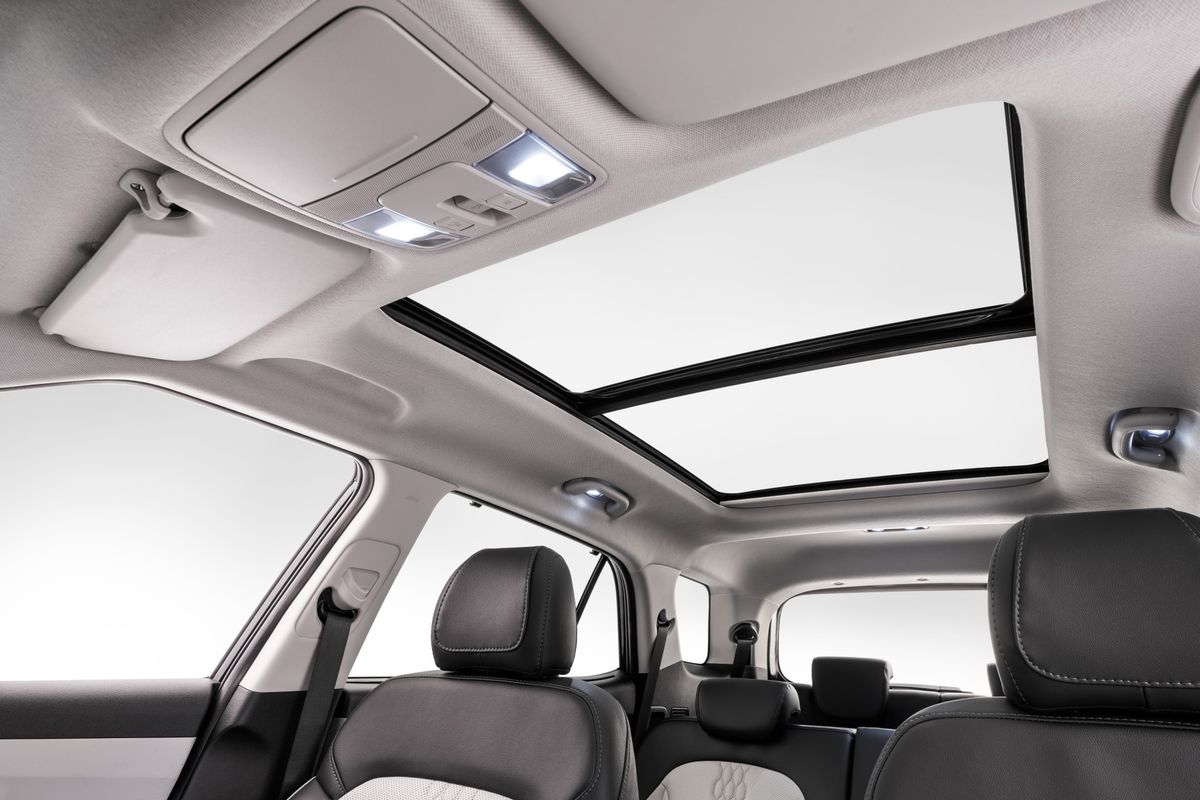
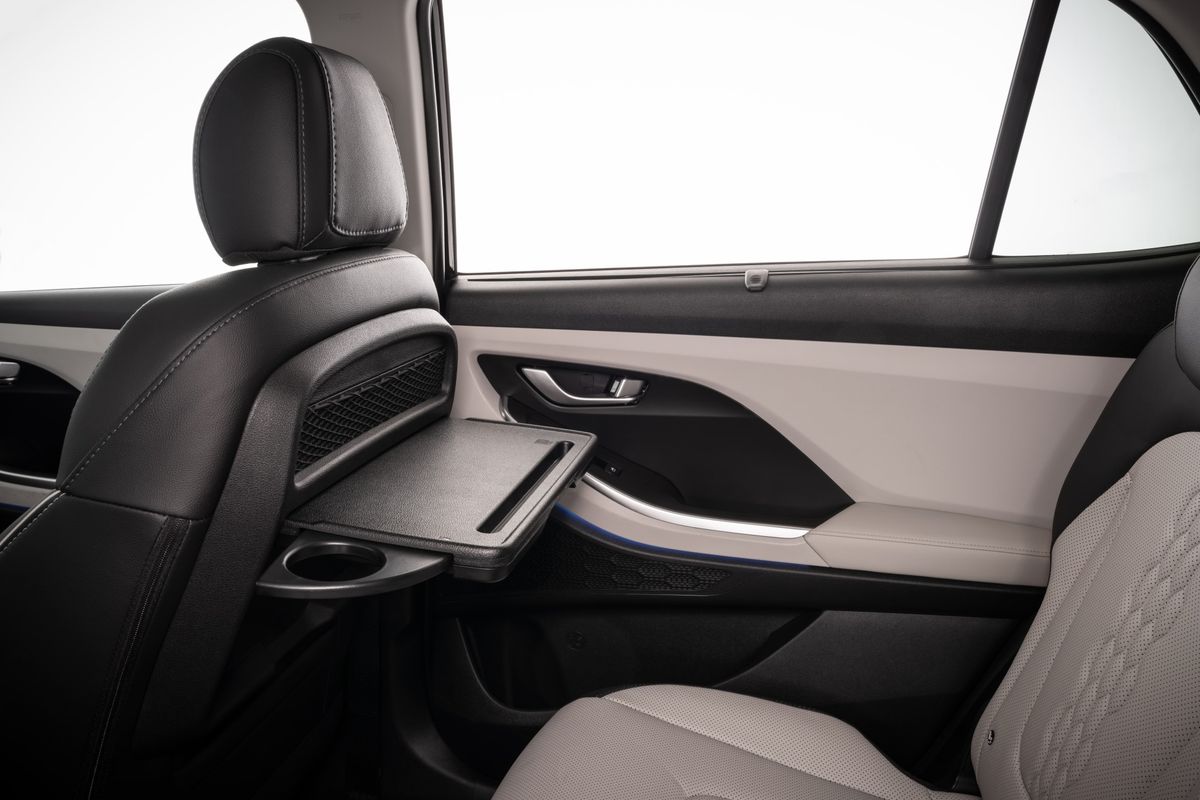
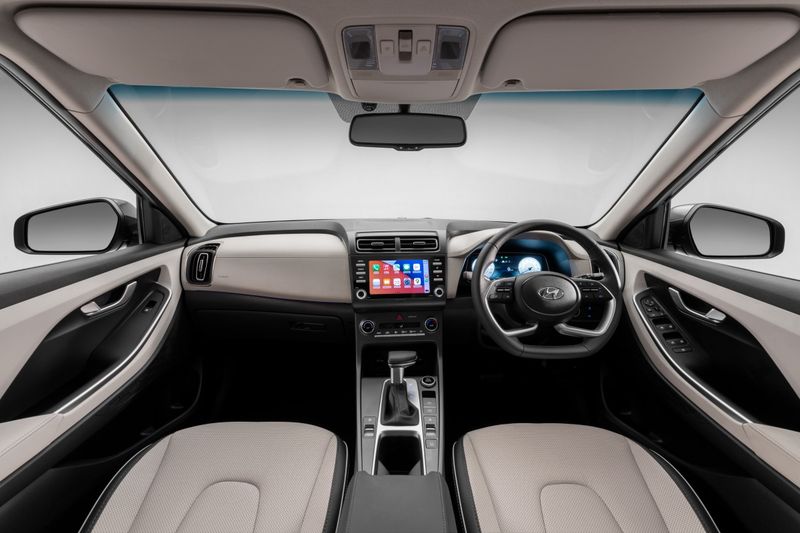
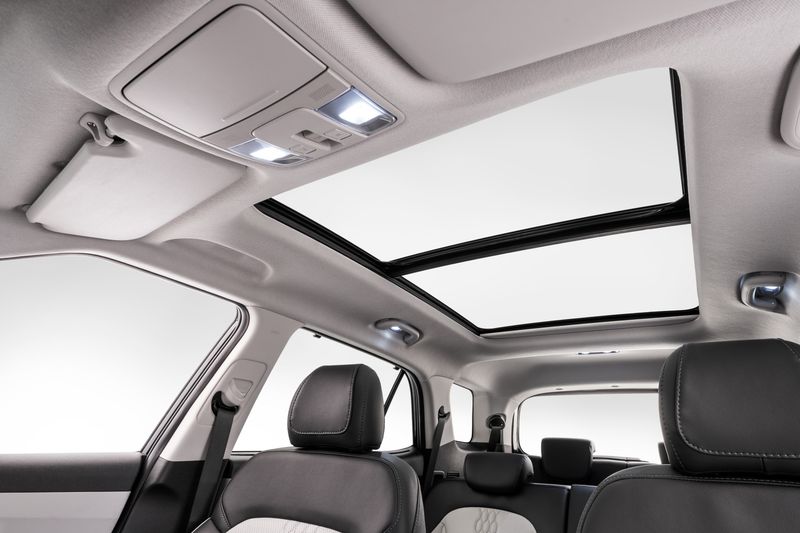
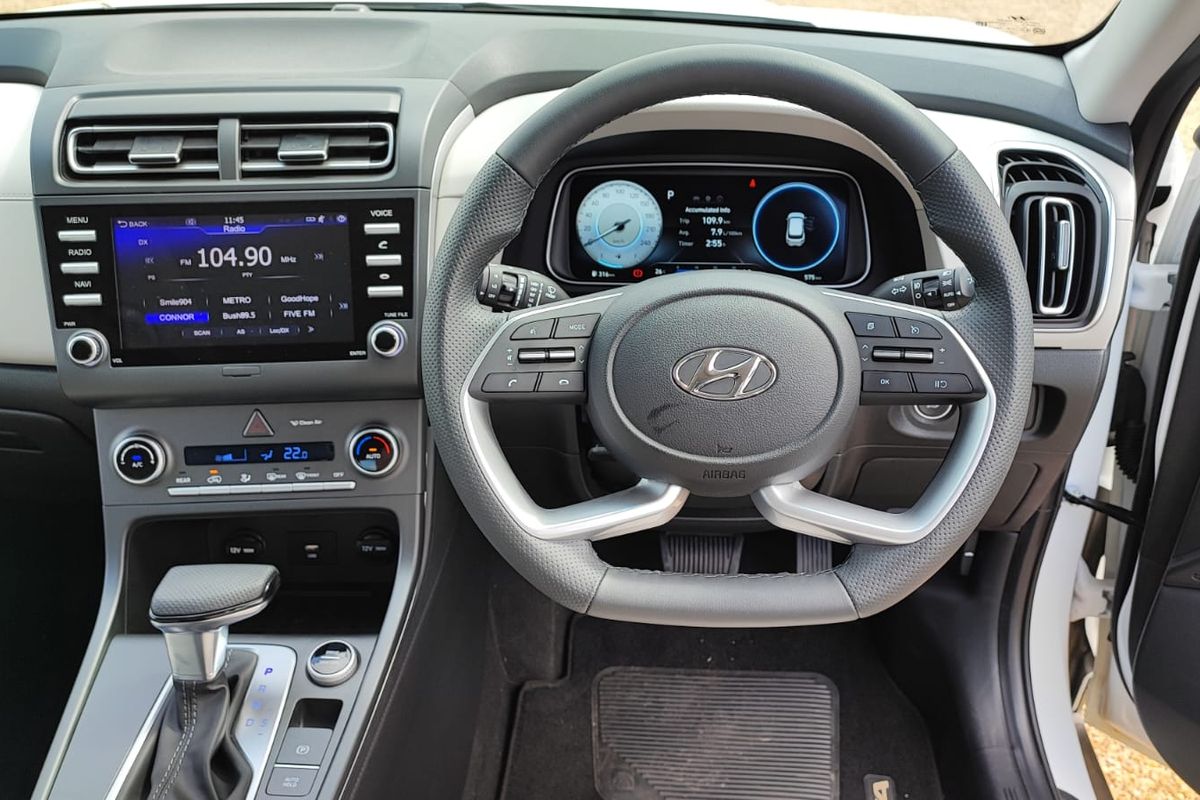
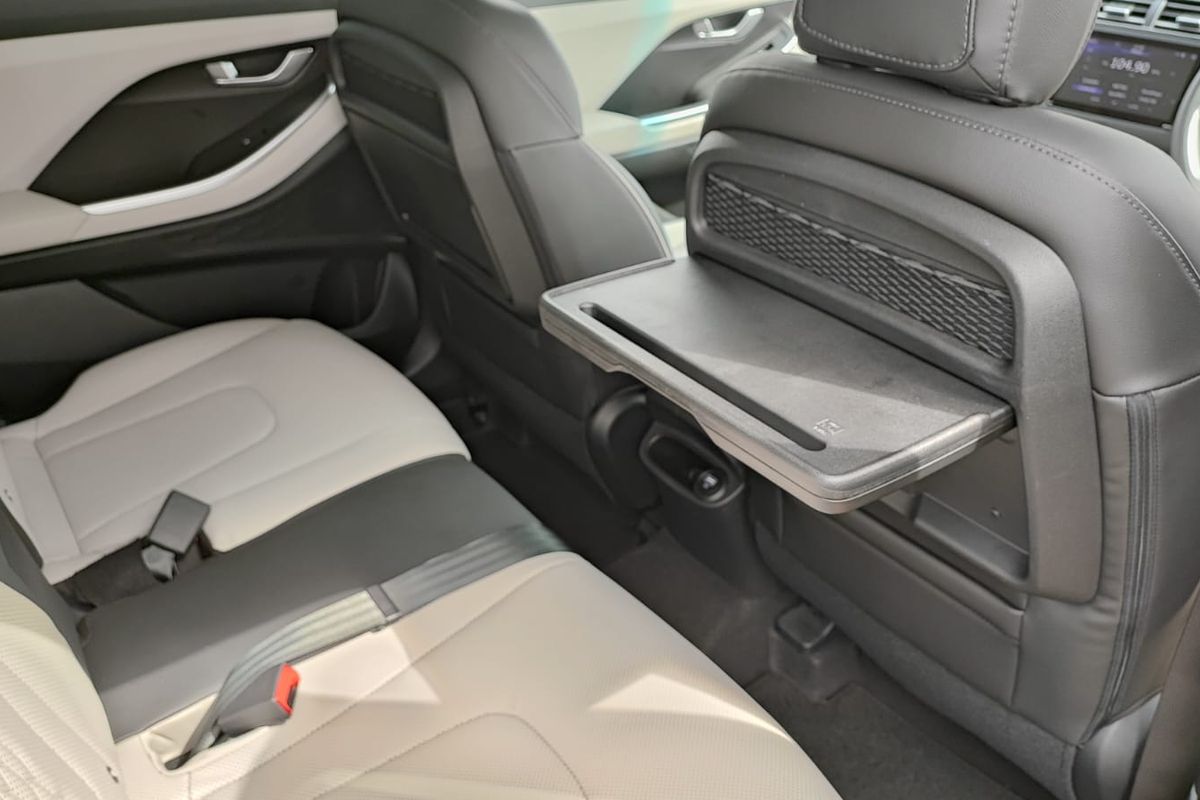
There are two levels of trim: Executive and Elite. The former includes automatic LED headlights, 17-inch alloy wheels, leather trim, touchscreen infotainment system with Apple CarPlay/Android Auto, reverse-view camera and wireless charging pad, while the Elite adds larger (18-inch) wheels, selectable drive modes, panoramic sunroof, keyless entry and push-button start, front and rear parking sensors, and 2 fold-down tray tables for the 2nd-row passengers.
An interesting feature is ventilated seats. Usually, we would expect heated seats, because they take the sting out of wintery conditions, but, given the sometimes sweltering summers we experience in the Republic, we’ve come to realise that seats with a cooling function are actually more appropriate for our market. A surprise omission on the Grand Creta, however, is a retractable luggage cover…
What’s the Grand Creta like to drive?
We’ve considerable experience of the Hyundai Creta (both generations of the model) and the Grand Creta, predictably, feels much the same to drive. During the media launch, we drove a Grand Creta 2.0 Elite automatic and the launch route comprised a fantastically diverse array of roads – the national highway, a mountain pass and plenty of gravel stretches.
It’s worth noting the Hyundai Grand Creta offers 200 mm of ground clearance and some trick “off-road” modes. While we’re sceptical of how effective electronic stability control-based trickery can be in aiding a front-wheel-drive family SUV on low-grip surfaces, there’s no doubting how useful that higher ride height is, especially if you often drive on poorly maintained roads – regrettably, many of us do.
The first thing we noticed about the newcomer was its punchy engine, which revs freely, but the engine note does tend to get a bit loud and coarse in extremis. We’ve become spoilt by the current generation of super-responsive small-capacity turbocharged engines, so the Hyundai’s “old-school” 2.0-litre naturally-aspirated motor initially disappointed us with its lack of low-down urge…
However, to extract urgent overtaking acceleration, all you need to do is rev the motor hard. The 6-speed automatic ‘box operates smoothly; both up- and down changes were executed without hesitation.
Overall, the Grand Creta’s driving experience is characterised by an overwhelming feeling of comfort and solidity. The 7-seat model does feel like it’s set up primarily for on-road refinement – the vehicle feels reasonably well assembled, although we did notice a couple of creaks when our knees pressed against the transmission tunnel.
When the evaluation route changed from asphalt- to dirt roads, we found the Hyundai’s suspension setup pliant; it absorbed most of the ruts and jarring jolts that would otherwise translate to the cabin.
By virtue of its longer wheelbase, the Grand Creta is a bit more composed on the rough stuff, Hyundai says, but we didn’t really notice a major difference between the on-road demeanours of the new model and its perenially popular 5-seater sibling. We’re sure that added ground clearance will come in handy when the Grand Creta’s used to mount pavements during frenetic Saturday morning shopping trips.
Summary
Like its 5-seater sibling, the Grand Creta offers a generous level of specification and a choice of good engines – it’s a solid, well-made product – but it has the added benefit of either two extra seats (for the little ones) or an even more capacious load bay. With the entry-level derivative of the stylish, more upmarket (and slightly bigger) new Hyundai Tucson only retailing for R10k more than the mid-range Grand Creta 1.5 Executive Diesel AT (March 2022), we’d suggest that the best value in the range lies in the 2.0-litre petrol Executive versions.
Still, if spaciousness and the ability to transport up to 6 passengers in pinch is what you’re looking for from a compact family car, Hyundai’s newcomer clearly fits the bill. We’re keen to put the model’s additional practicality to the test soon, but based on our first impressions, the Hyundai Grand Creta is likely to propel the Creta range to even greater local-sales success.
How much does the Hyundai Grand Creta Cost in South Africa?
All Creta derivatives are sold with a 7-year/200 000 km manufacturer’s warranty, 4-year/60 000 km service plan and roadside assistance for 7 years or 150 000 km.
New Ford Ranger’s V6 Turbodiesel Outputs Confirmed
Ford Motor Company of Southern Africa has confirmed the peak outputs of the 3.0-litre V6 turbodiesel that will power the new Ranger and Everest…
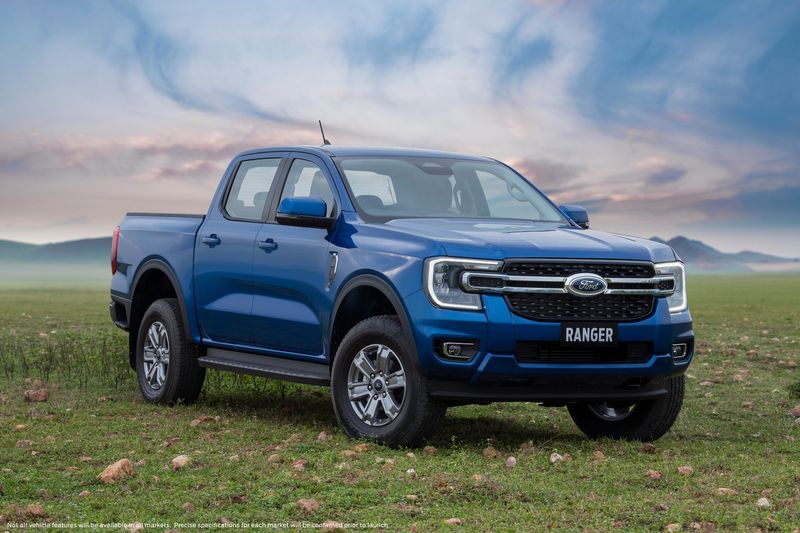
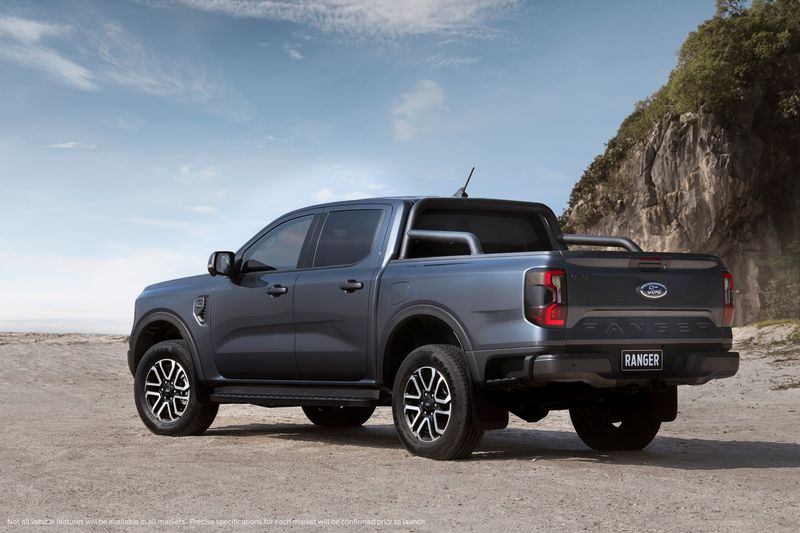
When Ford revealed the new Ranger late in 2021, it confirmed plans to add a 3.0-litre V6 turbodiesel to the range. Now the South African subsidiary of the Blue Oval brand has finally announced the peak outputs of this oil-burning 6-cylinder engine, ahead of the new Ranger’s launch later in 2022.
The V6, which will also be offered at the summit of the new Everest line-up, produces healthy peak outputs of 184 kW and 600 Nm. Ford claims the compacted graphite iron from which the block is fashioned is “around 75% stronger and 75% stiffer” than the iron used in traditional arrangements. The turbodiesel 6-pot will be paired with Ford’s familiar 10-speed automatic transmission.
“We’re offering this engine specifically because some customers told us they wanted more power and torque for towing and extreme off-roading,” said Pritika Maharaj, Ranger and Everest program manager.
“The 3.0-litre V6 turbodiesel delivers. When you drive a Ranger with the V6 turbodiesel, it feels like a much bigger truck. And it feels strong in the sense that it’s got plenty of power and torque, which is exactly what our customers told us they wanted.”
Of course, this engine shouldn’t be confused with the 3.0-litre V6 EcoBoost turbo-petrol lump reserved for the flagship Ranger Raptor.
Rejigged engines and gearboxes
So, what about the rest of the engine line-up? Well, the long-in-the-tooth 3.2-litre, five-cylinder turbodiesel, as well as the entry-level 2.2-litre four-pot, will seemingly fall away, with the single-turbo version of the 2.0-litre turbodiesel set to be offered in two states of tune (both down on the current version’s 132 kW and 420 Nm).
The first will make 110 kW and 350 Nm, while the higher-output version will generate 125 kW and 405 Nm. Interestingly, these engines will be available with either a 6-speed automatic transmission or a new 5- and 6-speed manual gearbox.
The 2.0-litre bi-turbo oil-burner (familiar from high-spec versions of the current Ranger, including the outgoing Raptor), meanwhile, will also carry over to the new range, but its peak power will fall slightly to 155 kW (down two units), with maximum torque remaining at 500 Nm. Like the V6, this powerplant will ship standard with a 10-speed automatic transmission.
R600m investment in Struandale engine plant
The Ford Ranger is one of South Africa’s automotive industry success stories. And in anticipation of the new version, Ford has been investing massively in its local production assets.
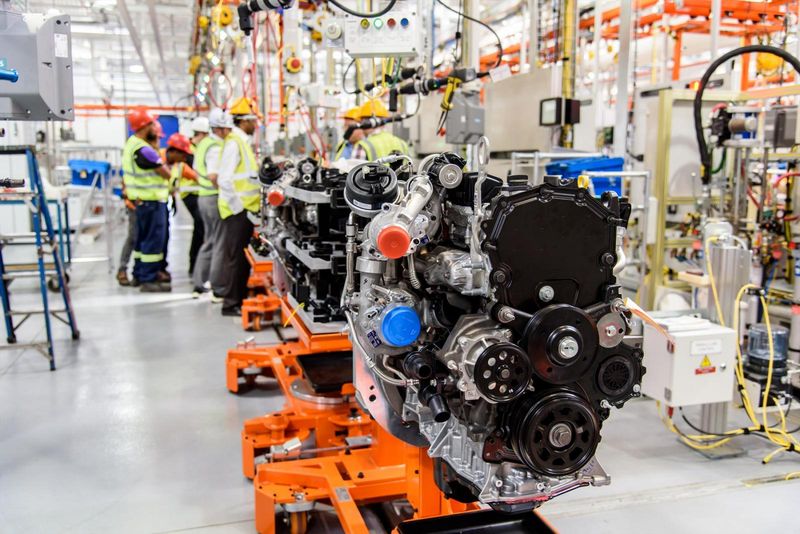
FMCSA runs an interesting production system for the Ranger, with final assembly in Pretoria and engines being built at the Struandale plant, in Gqeberha. Although it seems strange to build engines so far away from a core final assembly plant, Ford has made it work. And it is spending R600-million to ensure that the new Ranger, with its greater powertrain complexity, remains a local assembly success.
The new Ranger will present a total of 13 engine and gearbox choices – four more than the current bakkie product portfolio. To ensure that FMCSA has ample supply of each, tooling at the Struandale plant is being radically updated. It is an exciting project, with Struandale switching from producing only in-line engines, to adding a V6. The most significant engine update for the new Ranger is the 3.0-litre V6 turbodiesel, which is where most of the investment is going.
The Struandale plant will add the V6 to its production matrix while discontinuing the 3.2-litre five-cylinder engine. How many engines will the upgraded Struandale plant produce for the new Ranger? Capacity is scheduled to increase from 320 to 445 engines per day, allowing for a maximum build inventory of 120 000 diesel engines per year.
At the reveal of the new Ranger in late November, it was unclear which engines would be available to South African buyers when it officially launches in Q2 2022. This localised engine build of the V6 clears things up slightly and all but confirms that SA will get a V6 Ranger in some form or other (it may just be for the Raptor, however).
This announcement will also please current Amarok V6 owners, who were uncertain whether a V6 would be available in the upcoming T6.2 model.
Need help to find the right car for you? Screan is an innovative new digital platform that lists a countrywide network of fully independent experts who can help you scope new wheels.
PARTNERED CONTENT
Although the internet has made it possible to use sites such as Cars.co.za to research and look for used cars that suit your needs and budget with a few clicks of a mouse/trackpad (or taps on a smartphone screen), buying a vehicle online still comes with an element of risk.
Take much of the risk out of it
Fortunately, you can manage and reduce that risk by doing your homework and, importantly, relying on the expertise of a professional vehicle inspector. They facilitate better transparency for you (the buyer) and the seller (whether you’re buying privately or from a dealership).
Let’s face it – sometimes you just don’t have time to inspect a vehicle yourself or don’t feel safe or confident enough to do it. What’s more, it can be a hassle to find someone trustworthy who has the necessary experience/expertise to inspect a car (or cars) on your behalf – let alone has the time and opportunity to do it. Think about it this way: if you’re willing to rely on professionals to perform important functions in your life, why would your approach to buying a car – the second most expensive asset you’re likely to purchase – be any different?
Rely on a professional
You can call on a professional – a vehicle inspector is likely to have more knowledge of, and familiarity with, vehicles than most motorists and motoring enthusiasts. They could help you make well-informed decisions, which could save a considerable amount of money.
Even though you may do exhaustive online trawl about your prospective purchase and draw up lists of things to check about the car, it’s nigh impossible to notice everything during an inspection, especially if you become besotted with the vehicle the moment you see it! That, however, is exactly what a professional vehicle inspector does – they can confirm whether a vehicle is in the condition as advertised and potentially identify easy-to-miss issues.
Shop for cars anywhere in SA
Perhaps you’re interested in buying a used vehicle that is located far from where you live? Some regions of South Africa simply offer a greater variety of vehicle stock than others and, sometimes the cars you really want are located elsewhere in Mzansi anyway… Even if you are located in a so-called “used-car mecca”, the vehicle/s might be located at a dealership or at an address in an area that you don’t know well or don’t feel secure travelling to.
For those reasons, many prospective car buyers have shelved the idea of buying a car from “out of town”, but thanks to the introduction of Screan, that no longer needs to be the case…
What is Screan?
Screan is a fast, secure and easy-to-use digital platform that connects people who are looking to buy cars with experts that can vet and check those cars for them for an affordable fee.
Screan is crime-safe – buyers do not need to have an in-person meeting with a seller they have never met at a location they’ve never been to – Screaners do that for them; it’s Covid-19 friendly, because users can make bookings and receive their reports in the comfort of their homes; the platform utilises Payfast – an established, legitimate payment gateway and, lastly, users will be kept updated by Screan during every step of the process via email or Whatsapp.
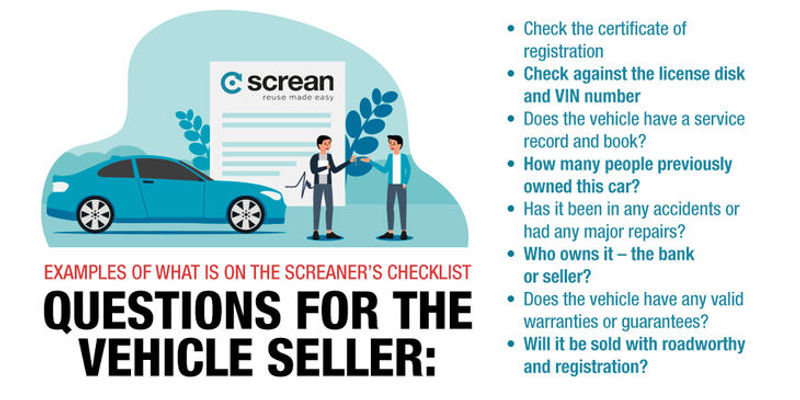
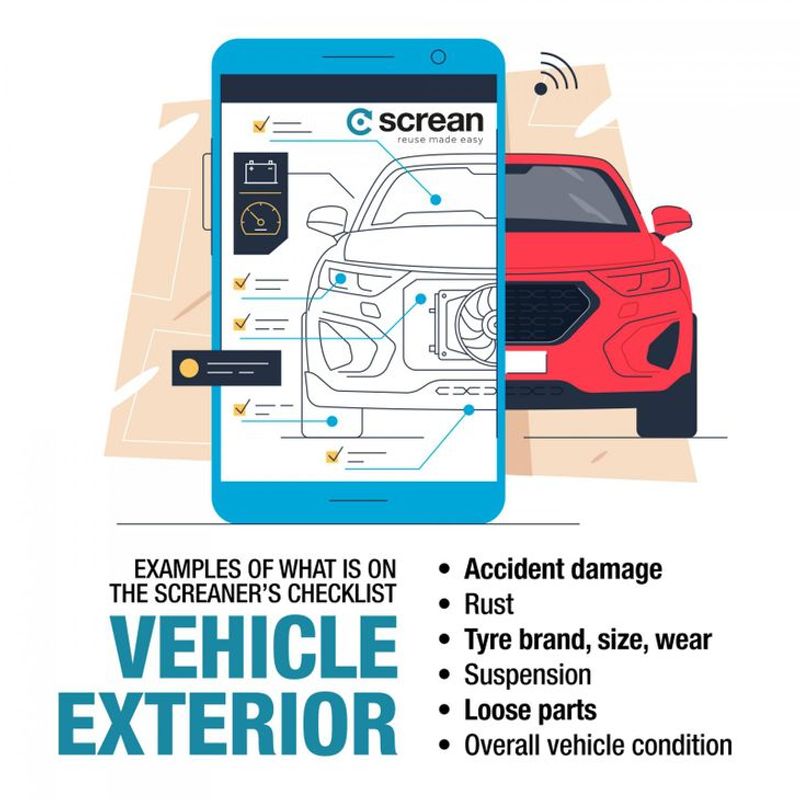
Armed with a 60-point checklist (a summary of which is available here) and a camera, the approved Screaners know how to inspect a used car thoroughly (read about their credentials).
By using the Screan platform, buyers can make informed decisions based on the assigned Screaner’s detailed feedback. Simply book your Screaner and receive their report – it’s easy.
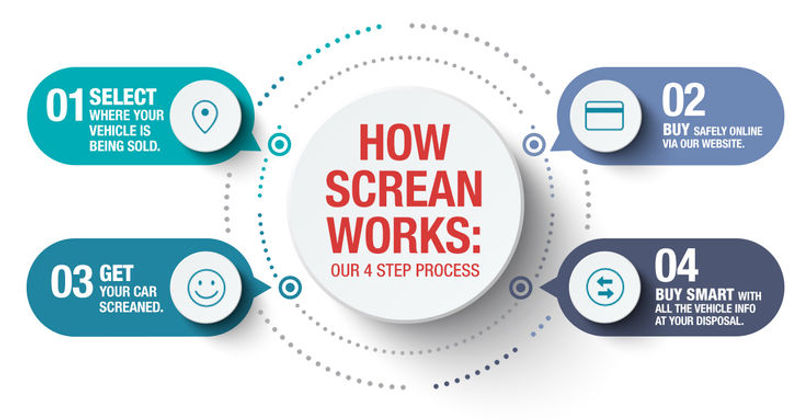
How Screan’s simple 4-step process works
SELECT the area in which the car you’re interested in is offered for sale. You must provide Screan with the location of the vehicle that you require to be inspected and book a Screaning on the platform by entering the vehicle address, advert link and seller contact details.
PAY safely online. The transaction will be processed through Payfast payment gateway on the Screan platform. Once the payment is made, the Screan booking will be confirmed.
SCREANING. The Screaner will make an appointment with the seller and view the used car (depending on Screaner availability at the vehicle’s location, a same-day service is available). They will examine the car according to the checklist, scrutinise its service history and perform a detailed assessment of the vehicle’s exterior-, interior- and mechanical condition.
BUY SMART. The Screaner will then submit their report to you. The final report includes the completed 60-point checklist and a series of 360-degree walk around high-res images. Remember that the Screaner will not make any recommendations, but simply present the state of the vehicle as they have assessed it according to Screan‘s exhaustive checklist.
Based on this information, you alone decide whether you would like to make an offer to buy the vehicle – it’s not the trusted Screaner’s role to convince/deter you. However, you can also ask the Screaner to negotiate with the seller on your behalf – for a small additional fee.
If you want to book your Screaner to negotiate a better price on your behalf, you will have to return to the payment gateway to make a separate booking and payment (for that service). Once the Screaner has done all the checking and you decide to buy the car, you will be sent a “negotiate for me” notification, after which you will be able to order this additional service.
Screaners are dedicated to delivering good customer service; it helps them to get more work. Users are encouraged to leave a positive review if they’re happy with the Screan experience.
Why dealers should welcome Screan
One may imagine that dealers would not be thrilled by the prospect of someone other than a prospective buyer going over their vehicle/s with the proverbial fine-toothed comb; such a person wouldn’t only see the positive traits, but be very wary of any possible shortcomings.
However, Screan does not stand to befit from the sale – or non-sale – of any used vehicle; it exists only to help customers who may buy a vehicle from a dealership. Approved Screaners are usually mechanics, used-car salespeople or seasoned used-car experts, who professionally inspect cars and provide reports that will empower users to make informed decisions.
Bear in mind that by vetting vehicles on dealerships’ lots or showroom floors on behalf of potential customers, Screan facilitates potential business from serious customers (who’ve paid a fee for the inspection of the car/s they’re interested in) from all over the country.
What’s more, dealers can also use Screan – to vet cars all over the country, such as vehicles that they may consider buying to sell on their lots. As is the case for users, Screan‘s report to dealers includes a 60-point checklist and 360-degree walkaround high-res images by Spincar.
Why Screan does what it does
“I started Screan because it solves a problem I have always had when trying to buy a pre-owned car and I loved the idea of being able to shop for a second-hand vehicle nationwide from anywhere,” says Screan founder Mike Schlebach.
“Buying a pre-owned car can be frustrating, time-consuming and costly, so the idea of developing a platform and a service that helps every second-hand car purchaser to alleviate or eliminate those pains, gives me great comfort.
“As we will also soon expand our service to offer more value, it is rewarding to know that many hundreds and eventually thousands of people, our Screaners, will be able to earn an income by offering a much-needed service on products they know a great deal about.
“The Screaners and I look forward to being of service to you,” he concludes.
Hyundai has launched a 7-seater Grand Creta in South Africa! See the specification and pricing details for the newcomer below!
Following the launch of the all-new Hyundai Tucson on local soil, the Korean automotive giant is keeping the product offensive rolling with the introduction of the Grand Creta, a 7-seater compact SUV.
The Hyundai Grand Creta, or Alcazar as it’s known in India, shares the same platform as its Creta sibling, but physically it’s fractionally longer by 30 mm. It also boasts a slightly longer wheelbase to accommodate the third row of seats.
Hyundai says it has enhanced the Creta platform and focused on ride comfort with a reworked suspension setup. Inside, there are sliding seats, armrests and Hyundai is claiming best-in-segment cabin space. The seats can be folded down to increase carrying capacity.
Hyundai is offering the Grand Creta in 2 trim levels namely the Executive and range-topping Elite.
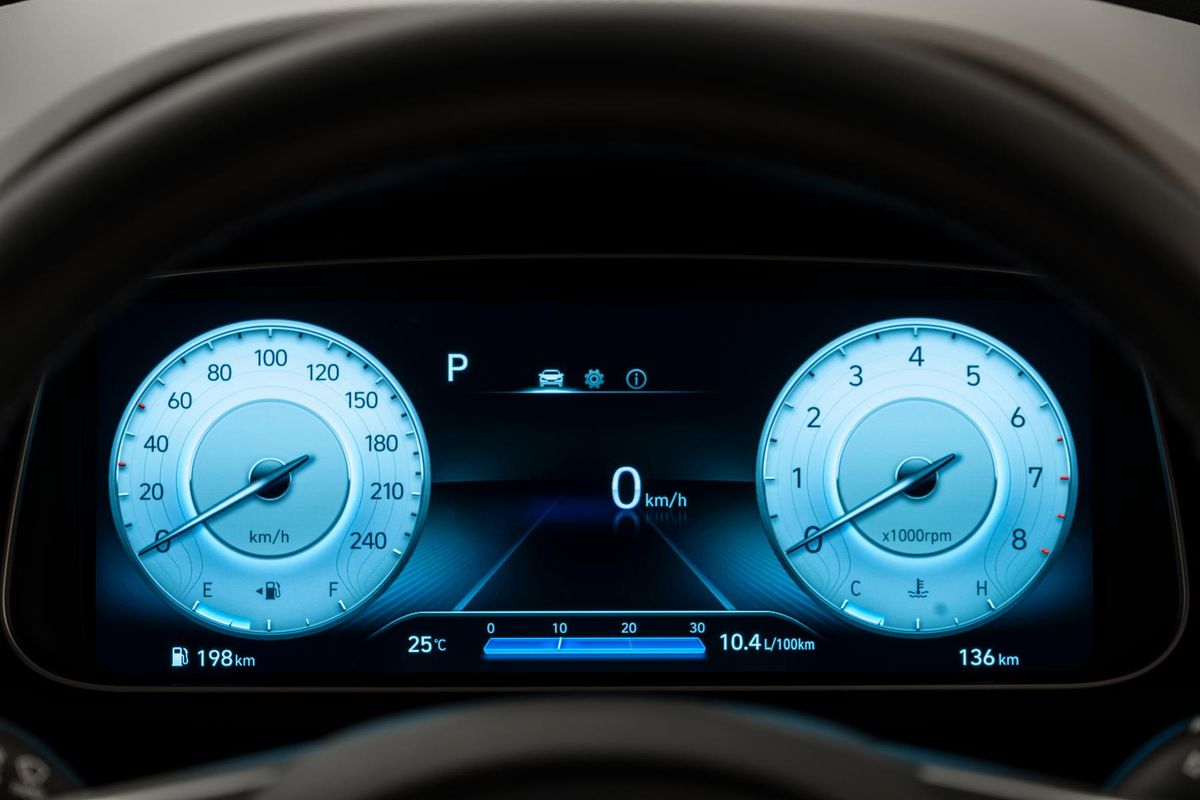
The Grand Creta Executive is equipped with features such as automatic LED headlights with daytime running lights, 17-inch alloy wheels, leather upholstery, 10.25-inch touchscreen infotainment with Android Auto and Apple CarPlay, 7-inch TFT instrument cluster, rear camera, wireless smartphone charger, cruise control and a multifunction leather steering wheel.
the range-topping Grand Creta Elite adds features such as 18-inch alloy wheels, LED fog lights, a panoramic sunroof, larger 10.25-inch TFT instrument cluster, keyless entry and keyless start, electronic parking brake, drive mode select, front and rear parking sensors, rear seat back tables and electronic and ventilated front seats.
What engines power the Hyundai Grand Creta?
Two engine and gearbox combinations are offered for the Grand Creta in South Africa.
When it comes to engine options, Hyundai is offering both petrol and diesel engines, with a choice of 6-speed manual and 6-speed automatic gearboxes. The 2.0-litre, naturally-aspirated petrol engine develops 117 kW and 191 Nm, while the 1.5-litre turbodiesel has 85 kW and 250 Nm.
Look out for our launch report for the Hyundai Grand Creta coming soon!
How much does the Hyundai Grand Creta Cost in South Africa?
What was the best-selling double-cab bakkie in South Africa in 2021? The Naamsa figures we lay our paws on each month don’t provide this level of detail, but we’ve finally managed to uncover the answer…
Every month, we endeavour to bring you a list of South Africa’s top-selling bakkies. But there’s a question that’s often left unanswered: which is the most popular double-cab bakkie?
Well, since Naamsa’s detailed sales figures – as difficult as they are to obtain – don’t include a breakdown of the various bakkie body styles, we’ve had to find another way to bring you this intriguing information. So, thanks to our learned friends over at Lightstone Auto, we’re now able to shed a little light on the matter.
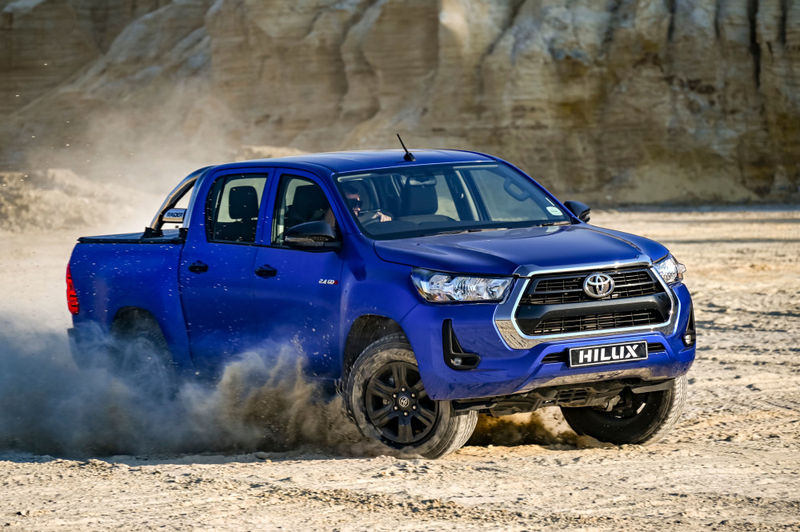
According to Lightstone Auto, out of the 100 039 bakkies sold in South Africa in 2021, more than half (54 977 units, to be precise) took the form of double-cab models. And it was the Toyota Hilux – once again SA’s best-selling vehicle range overall – that won the double-cab sales race, with 17 171 registrations during the year, representing a hefty 31.2% of the dual-cab market.
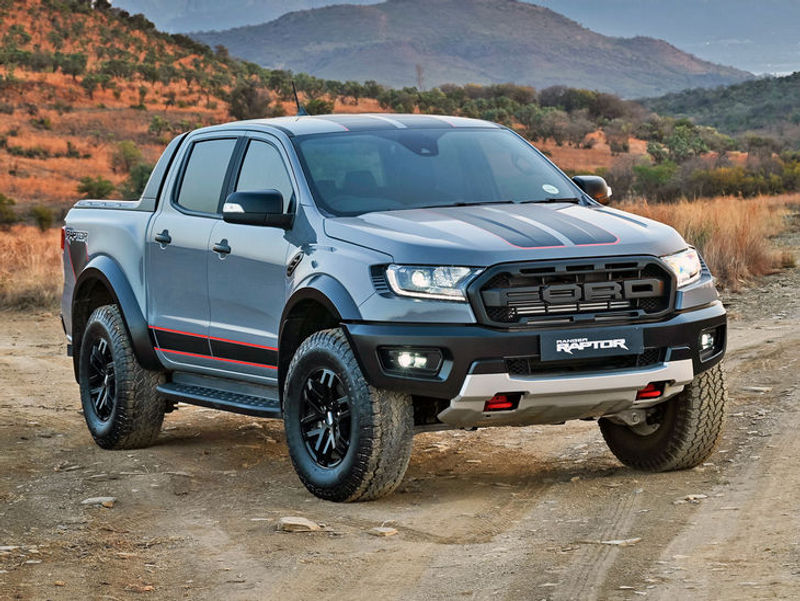
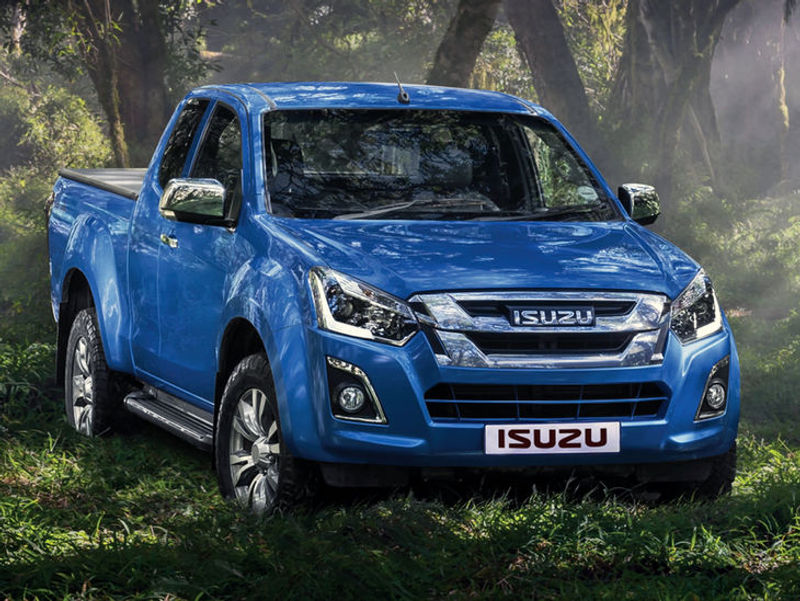
The double-cab version of the Ford Ranger, however, was just 1 843 units off the pace, finishing the year on 15 328 units (an admirable market share of 27.9%). Third place went to the outgoing Isuzu D-Max – which has subsequently rebranded as the Gen 6 and will live on alongside the new model – which saw 8 144 double-cab registrations (14.8% of the market).
What about the single- and extended-cab bakkie markets?
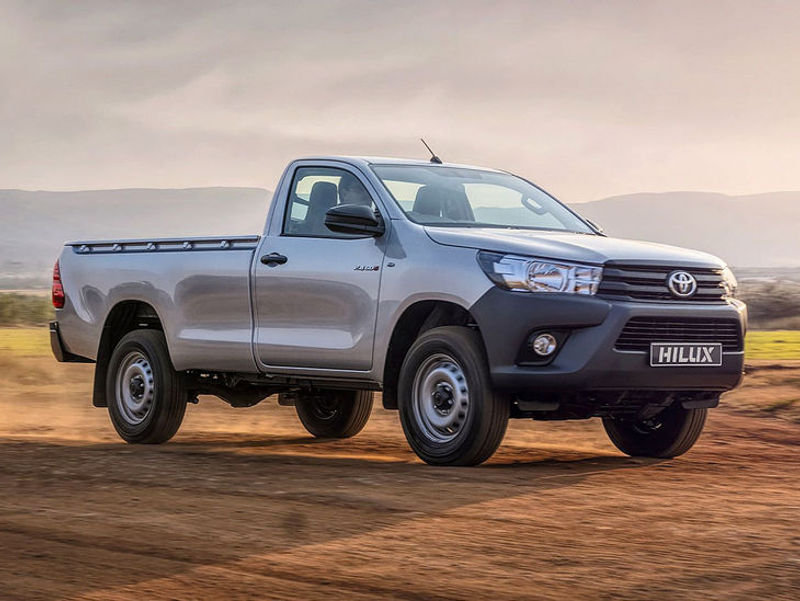
Turning our attention to the single-cab (one-tonne) bakkie segment, we see that the Hilux again dominated, accounting for 12 748 (or a very healthy 35.3%) of the total 36 091 registrations. In this category, the D-Max placed second with 7 235 units, ahead of the Mahindra Pik Up (3 000 units). Interestingly, just 1 976 examples of Ford’s single-cab Ranger were registered locally during the year.
Toyota led the charge in the extended-cab race as well, selling 6 151 units of its Hilux Xtra Cab in a market that totalled 8 971 units (that’s a whopping share of 68.6% for the math fundis in attendance). The Ranger SuperCab (1 773 units) placed second, with the D-Max Extended Cab (1 045 units) completing the podium.
Best-selling double-cab bakkies in South Africa in 2021
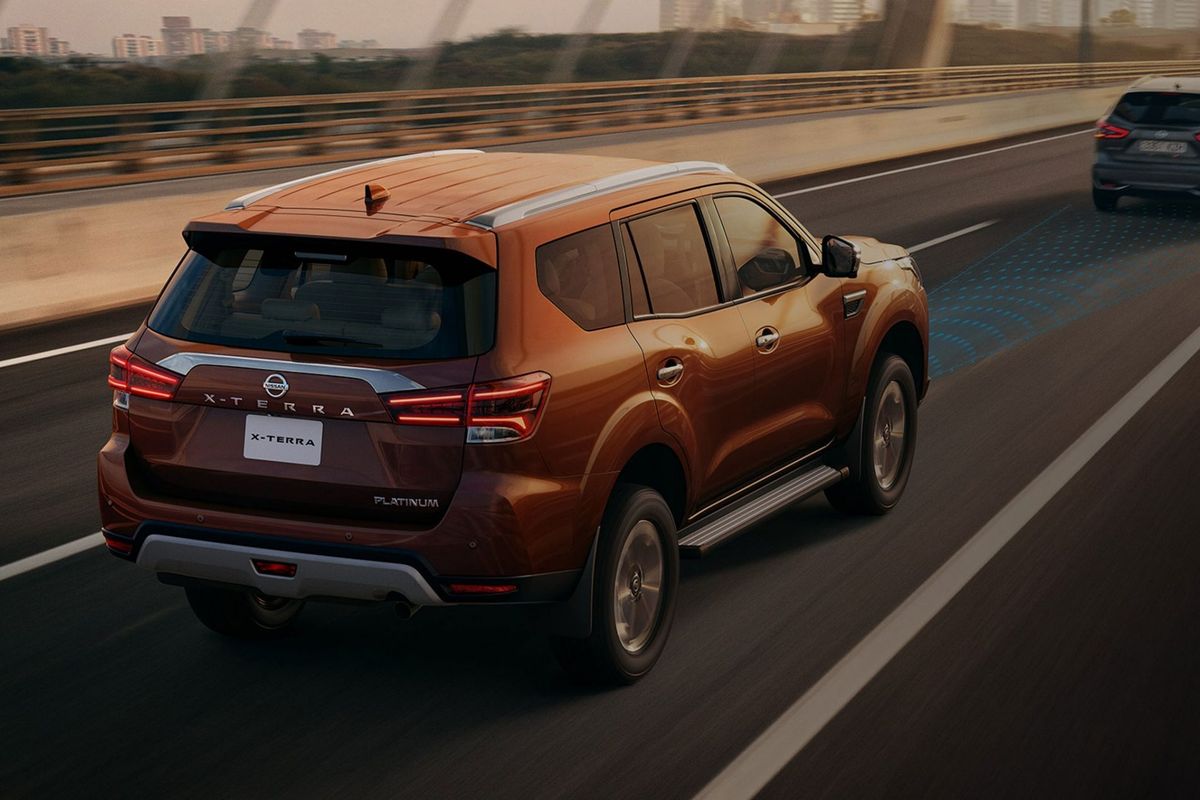
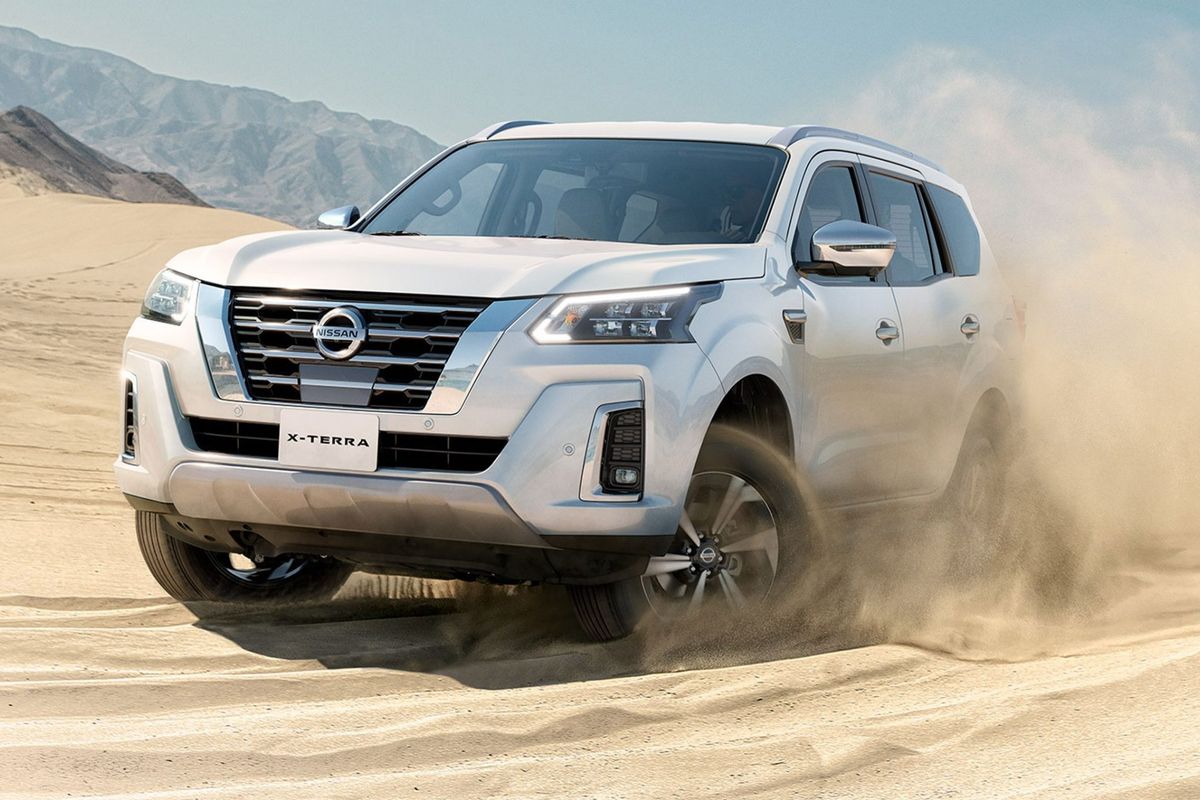
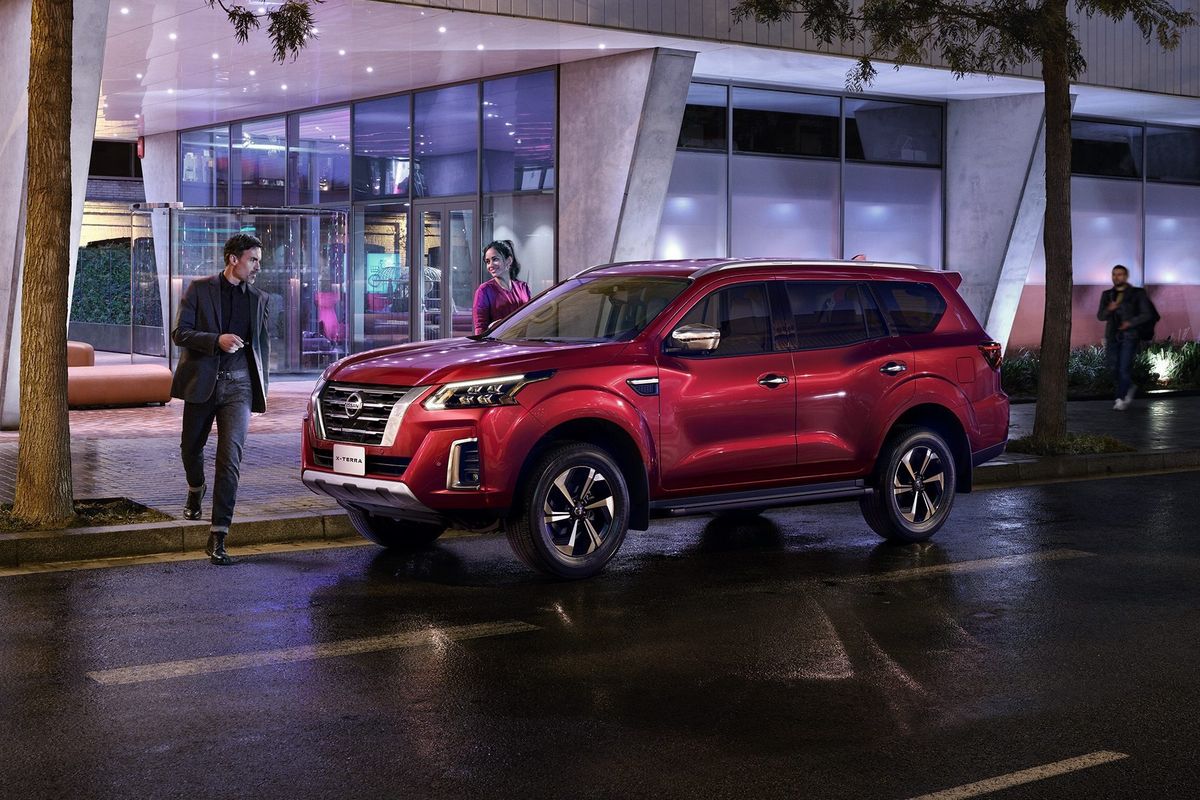
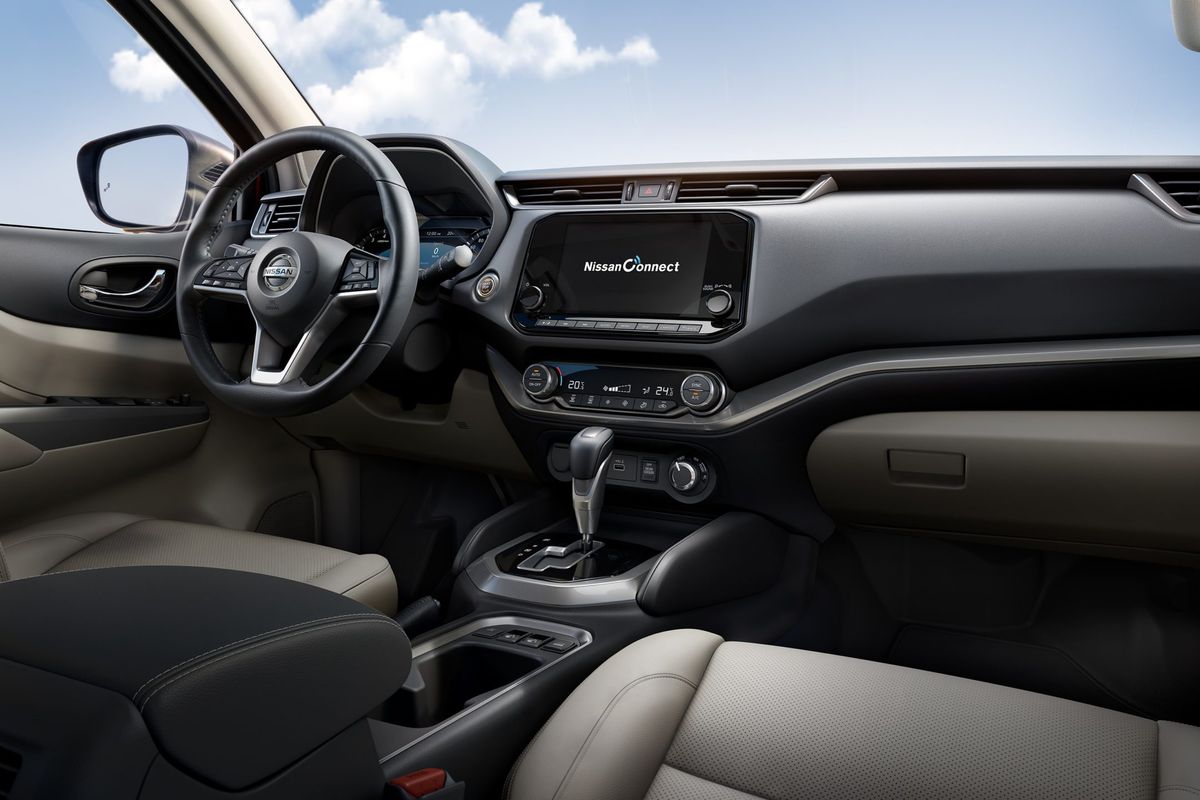
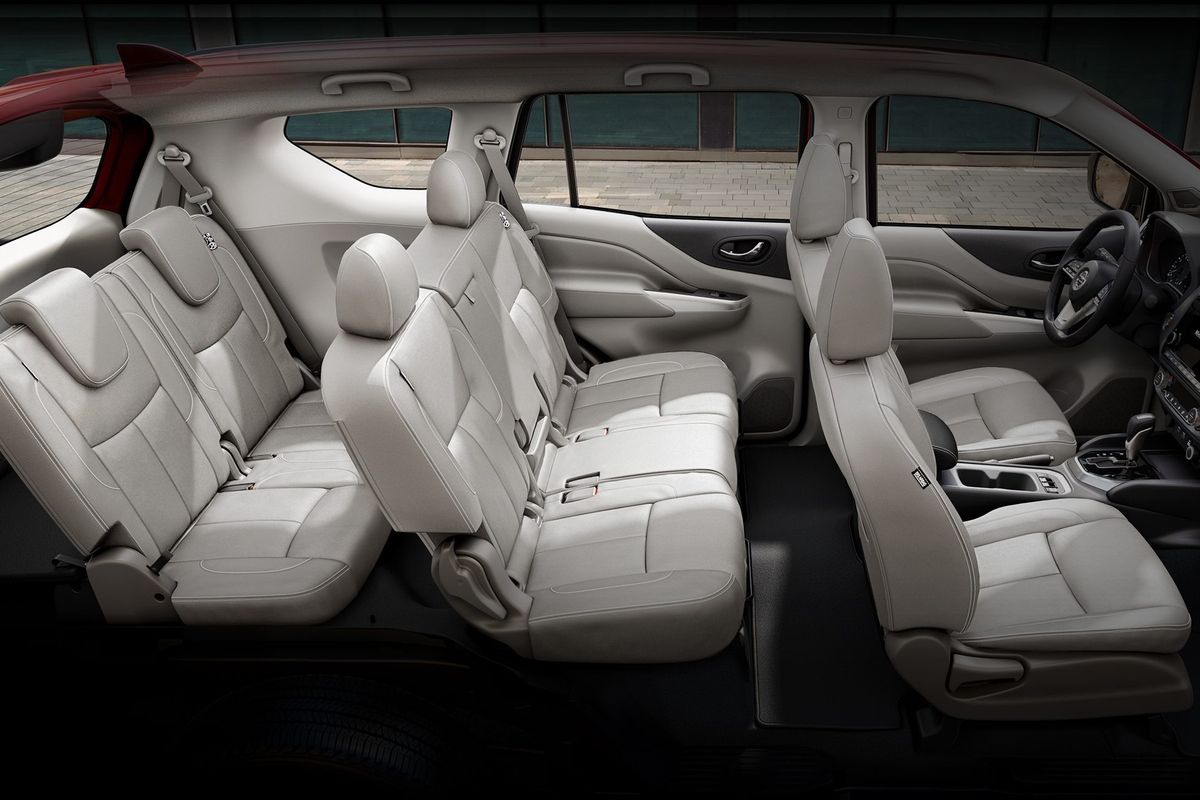
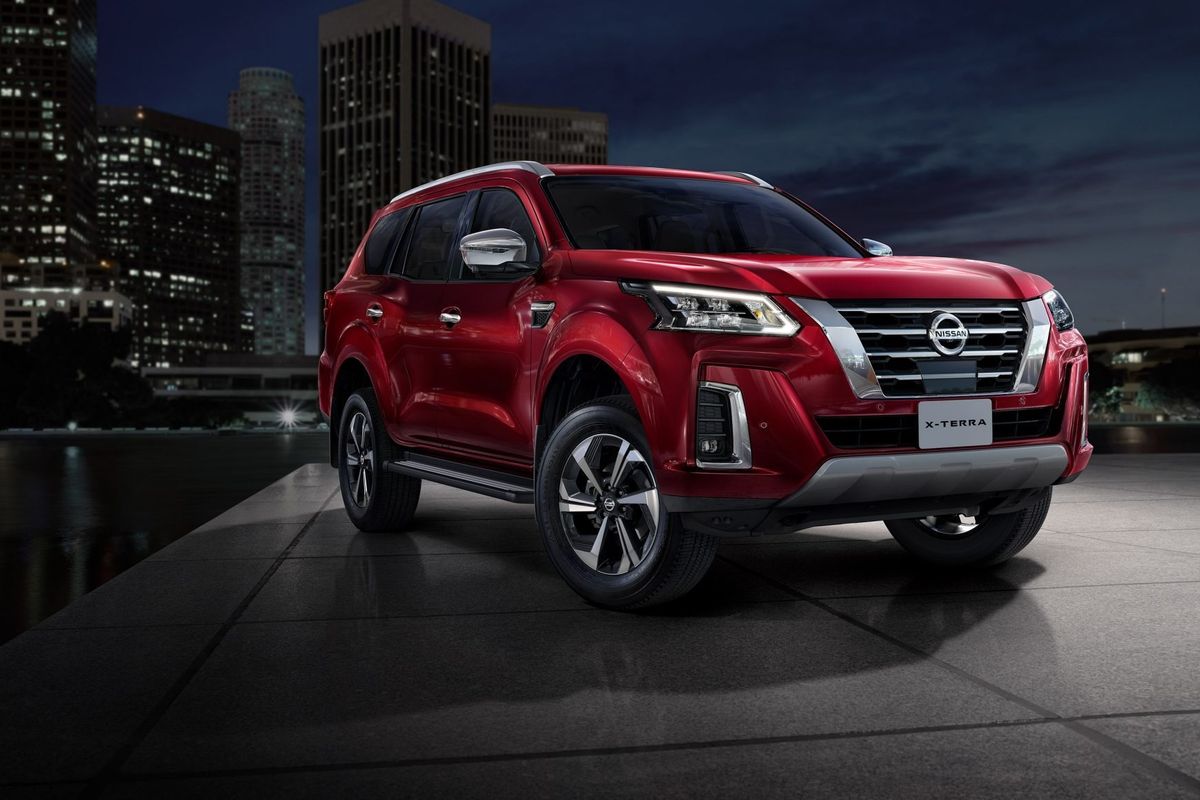
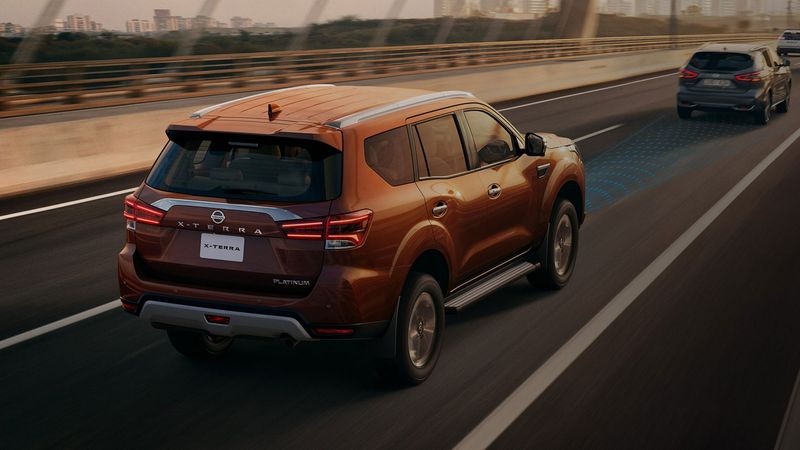
The Nissan Terra arrived quietly in South Africa but the 7-seater Fortuner rival has already sold out and it appears that Nissan won’t be replenishing its local Terra stock.
Update: Despite what appears to be surging demand for Nissan’s 7-seater Terra SUV, the model has already sold out and Nissan is unlikely to keep the model on the market. The official update from Nissan South Africa reads as follows: “As an organisation, Nissan is continuously evaluating its product range to ensure we are meeting the needs of the markets and customers we serve. As part of this ongoing process, Terra availability was limited in South Africa and we can now confirm all remaining vehicles have since been allocated to customers. Nissan will continue bringing its best products and technologies to South Africa including the locally produced NP200 and Navara pickups, which represent six decades of our light commercial vehicle heritage.”
Previously…
The Nissan Pathfinder is sadly no more, and in its place comes the Nissan Terra. While this vehicle has not yet been formally launched, units are slowly making their way onto Nissan dealership floors across South Africa.
From what we’ve been able to ascertain from a source, there’s just one engine across the range. Power comes from the 2.5-litre 4-cylinder turbocharged diesel engine and it produces 140 kW and 450 Nm.
The new Terra features a 78-litre fuel tank, with consumption ranging from 8.3 L/100 km for the entry-level derivative with a manual gearbox to 8.2 L/100 km for the 4×4 automatic.
Customers will be able to choose from either a 6-speed manual gearbox or a 7-speed automatic transmission.
For the offroad-focused, the following stats will be of interest. There’s a ground clearance of 243 mm, an approach angle of 32.3 degrees and a departure angle of 26.6 degrees.
There will be three grades offered: XE, SE and LE.
The addition of the Terra to the market makes the 7-seater bakkie-based SUV segment ever more interesting. We all know the Toyota Fortuner dominates the sales charts, but the all-new Isuzu MU-X is a fairly recent arrival. The Ford Everest will be replaced by an all-new model and if you’re after something different, but still capable, the Haval H9 makes a case for itself.
How much does the Nissan Terra cost in South Africa?
The new Nissan Terra is sold with a 6-year / 150 000 km warranty and a 6-year / 90 000 km service plan.
Terra 2.5 DDTi XE Manual R596 900
Terra 2.5 DDTi XE Auto R606 900
Terra 2.5 DDTi XE 4×4 R629 900
Terra 2.5 DDTi SE R732 900
Terra 2.5 DDTi SE 4×4 R834 900
Terra 2.5 DDTi LE 4×4 R853 900
Drive to Revive Ep1: The start of the Toyota GR Yaris Cup
How to turn a very fast Toyota GR Yaris into a race-winning machine. Our in-house racer takes to the track in the pocket rocket to see if he can still cut it as a racing driver.
Drive to Revive a racing career is a series about our in-house wannabee racer Ashley Oldfield and his attempt to revive his racing career.
Watch as he takes part in the newly formed Toyota GR Yaris Cup series where the cars are mechanically stock standard and everything is identical down to the tyre pressures.
Episode 1 is all about ‘the shakedown’ and building the GR Yaris race cars. Ash gets to turn his first few laps in the car and goes on the hunt for faster lap times.
Has Ash still got any speed left in him or will he be left to fight it out at the back of this newly-formed brat pack?